See whether Helium helps you make better-informed decisions. Try every Pro Trader feature for 30 days. No credit card required.
Try every Pro Trader feature for 30 days. No credit card required.
November 02, 2026 · 0 shares
Neutral wire-service reporting that presents vote counts with direct attribution and labels contested characterizations ("Kremlin-friendly") as the view of political analysts rather than the publisher's own.
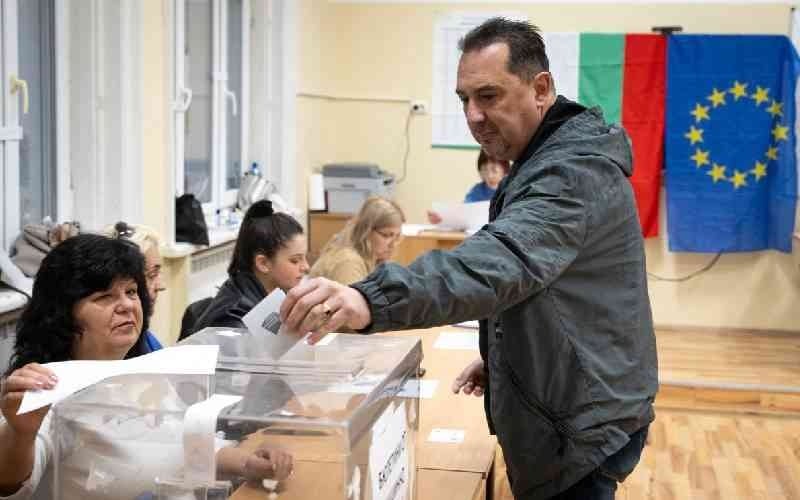
Bulgaria held a presidential runoff because no candidate secured a majority in the October 25 first round, with Iotova having assumed the acting presidency in January.
Automated analysis; not human reviewed.
Limitations: Wire copy with some boilerplate and email-login text interleaved; substantive reporting is clearly separable.
·
15 of 55 available dimensions scored; omitted dimensions are not treated as neutral.
·
Verified supporting quotes for 15 of 15 scored dimensions.
Claim: No discernible ideological framing; purely factual electoral reporting.
“Iotova, formerly vice president, became acting president in January after Radev resigned to enter the parliamentary race” · exact text match
Why: Absence of ideological cues supports neutrality, but limited text caps confidence.
Claim: The report confines itself to verifiable vote counts and attributed statements rather than commentary.
“With 99.95% of precinct protocols processed, the Iotova-Valchev ticket had won 57.58% of the vote” · exact text match
Why: Quantitative results with sourcing indicate objective reporting.
Claim: Framing is measured and free of sensational or emotive language.
“Bulgaria's acting President Iliana Iotova won the presidential runoff election, near-final results from the Central Election Commission showed” · exact text match
Why: Plain declarative phrasing with official attribution.
Claim: Content is routine election-result reporting with limited novelty.
“becoming the country's first elected female head of state amid low voter turnout” · exact text match
Why: Standard wire story; modest human-interest single detail.
Claim: The article describes results without prescribing outcomes or actions.
“About 2.95% of voters chose the "I support no one" option.” · exact text match
Why: Reporting vote shares is descriptive rather than prescriptive.
Claim: Publication leans on facts and quoted assessments rather than editorial opinion.
“many political analysts consider Kremlin-friendly” · exact text match
Why: Evaluative content is attributed, minimizing the publisher's own opinion.
Claim: The subject is an election outcome and political alignment, inherently political.
“Radev supports Iotova and they have both called for a diplomatic end to the Ukraine war.” · exact text match
Why: Content centers on electoral politics and geopolitical alignment.
Claim: Claims rest on official election commission data and named analysts.
“near-final results from the Central Election Commission showed” · exact text match
Why: Reliance on official authority is modest and appropriate for election results.
Claim: Results are framed as near-final pending certification rather than absolute.
“near-final results from the Central Election Commission showed on Monday” · exact text match
Why: Hedging 'near-final' keeps certainty within supplied evidence.
Claim: Reporting is matter-of-fact on official institutions without deference or challenge.
“near-final results from the Central Election Commission showed on Monday” · exact text match
Why: Neutral reliance on official results without clear pro- or anti-establishment tilt.
Claim: Tone is detached and unemotional.
“With 99.95% of precinct protocols processed” · exact text match
Why: Dry statistical reporting conveys no emotional valence.
Claim: Clear sourcing and attribution to the election commission and bylined reporters support credibility.
“(Reporting by Alex Lefkowitz; Writing by Antonis Pothitos; Editing by Clarence Fernandez)” · exact text match
Why: Named reporters, editors, and an official data source indicate standard verifiable practice.
Claim: Article largely avoids forecasting beyond the reported tally.
“Iotova and Valchev led with 34.6% of the vote” · exact text match
Why: Primarily recounts past rounds and results rather than speculating.
Claim: Contested characterizations are attributed rather than asserted, showing fair handling.
“which he won on a ticket many political analysts consider Kremlin-friendly” · exact text match
Why: Attributing the label to analysts preserves honesty and fairness.
Claim: Clear, structured reporting of vote shares and political context.
“The runoff followed a first round on October 25 that gave no candidate the majority needed for an outright victory.” · exact text match
Why: Coherent sequence of electoral facts indicates competent reporting.
Wire copy with some boilerplate and email-login text interleaved; substantive reporting is clearly separable.
November 01, 2026 · 0 shares
Framing foregrounds an EU-skeptic, Ukraine-aid critic’s runoff victory over a pro-Western rival while relying on official vote attributions and some loaded labels such as “so-called coalition.”
Bulgaria is a Black Sea EU and NATO member.
Automated analysis; not human reviewed.
Limitations: The supplied text is a short RT.com excerpt with duplicated headline content and a Gyurov/Gurov spelling inconsistency, limiting fine-grained framing assessment.
·
8 of 55 available dimensions scored; omitted dimensions are not treated as neutral.
·
Verified supporting quotes for 8 of 8 scored dimensions.
Claim: The reported vote count is sourced to election officials rather than presented as the publisher’s judgment.
“according to election officials” · exact text match
“the election commission reported on Monday morning” · exact text match
Why: Results are attributed to official sources, supporting an objective presentation.
Claim: Headline states the result plainly without dramatic or emotional language.
“Ukraine aid critic wins Bulgarian presidential election” · exact text match
Why: The headline is informational rather than sensational.
Claim: Publisher foregrounds opposition to military aid to Ukraine as a central election stake.
“Ukraine aid critic wins Bulgarian presidential election” · exact text match
“If we pour even more money into Ukraine and deliver new, more sophisticated weapons, this will only lead to further destruction and many deaths on both sides” · exact text match
Why: The headline and selected quote emphasize anti-military-aid and peace framing.
Claim: The report is centrally about an election and candidates’ foreign-policy alignments.
“Iliana Iotova has defeated pro-Western rival Andrey Gyurov in Bulgaria’s presidential runoff” · exact text match
Why: The lead and most content concern electoral politics and security alignment.
Claim: Reduces the runoff to a binary between a Ukraine-aid critic and a pro-Western rival.
“Ukraine aid critic wins Bulgarian presidential election” · exact text match
“pro-Western rival Andrey Gyurov” · exact text match
Why: The framing emphasizes a simple contrast between the candidates’ foreign-policy labels.
Claim: Uses skeptical labeling for a Western-led security coalition.
“the so-called coalition of the willing” · exact text match
Why: The phrase “so-called” casts the Western security grouping as questionable.
Claim: Vote figures and candidate quotations are attributed to official election sources and named media.
“according to election officials” · exact text match
“according to Euronews” · exact text match
Why: Sourcing and attribution are visible, though the excerpt is brief and contains a name inconsistency.
Claim: The phrase “so-called” is a loaded label applied to a Western security coalition.
“the so-called coalition of the willing” · exact text match
Why: Loaded wording subtly disparages the coalition rather than describing it neutrally.
The supplied text is a short RT.com excerpt with duplicated headline content and a Gyurov/Gurov spelling inconsistency, limiting fine-grained framing assessment.
November 02, 2026 · 0 shares
Frames Bulgaria’s runoff around its Russia-Ukraine alignment divide, foregrounding Iotova’s Kremlin-dialogue stance while pairing it with pro-Western opposition and expert caution about fear-based campaigning.
Automated analysis; not human reviewed.
Limitations: The supplied text appears internally inconsistent about roles (Iotova is called president and an ally of Prime Minister Radev, who is also said to have stepped down), limiting confidence in some classifications.
·
6 of 55 available dimensions scored; omitted dimensions are not treated as neutral.
·
Verified supporting quotes for 6 of 6 scored dimensions.
Claim: The election contest is described in matter-of-fact terms rather than sensational language.
“The race for the largely ceremonial post had pitted Ms Iotova, an ally of Prime Minister Rumen Radev, against Andrey Gyurov, a banker and former caretaker prime minister backed by the pro-Western opposition.” · exact text match
Why: Neutral descriptive wording and factual candidate descriptions indicate low sensationalism.
Claim: The text primarily reports events and attributed statements rather than prescribing a political choice.
“Ms Iotova gained between 57.4% and 58.2% of the vote, according to estimates from several polling institutes” · exact text match
Why: Reporting vote estimates without advocacy supports a descriptive rather than prescriptive stance.
Claim: The report is centrally framed around a political election and geopolitical alignment.
“Bulgaria's President Iliana Iotova, who favours dialogue with the Kremlin and opposes military aid to Ukraine, has won a presidential runoff vote.” · exact text match
Why: The central subject is a presidential election defined by foreign-policy positions.
Claim: The report cites polling institutes, a named sociologist, and government positions.
“according to estimates from several polling institutes” · exact text match
“said sociologist Boryana Dimitrova of the Alpha Research institute” · exact text match
Why: Named sources and attributed estimates indicate moderate-to-good visible sourcing.
Claim: The report uses attributed polling-estimate ranges rather than asserting precise or unsourced vote counts.
“Ms Iotova gained between 57.4% and 58.2% of the vote, according to estimates from several polling institutes, well ahead of Mr Gyurov, who garnered between 38.6% and 39.6%.” · exact text match
Why: Explicit attribution to multiple polling institutes supports a rational, evidence-bound framing.
Claim: The report includes limited projections and uncertain attributions rather than extensive forecasting.
“Turnout in the second round was projected to be around 27%.” · exact text match
Why: A single turnout projection with no extended forecast supports a low speculation score.
The supplied text appears internally inconsistent about roles (Iotova is called president and an ally of Prime Minister Radev, who is also said to have stepped down), limiting confidence in some classifications.
November 02, 2026 · 0 shares
Neutral wire-service reporting that presents vote counts with direct attribution and labels contested characterizations ("Kremlin-friendly") as the view of political analysts rather than the publisher's own.
Bulgaria held a presidential runoff because no candidate secured a majority in the October 25 first round, with Iotova having assumed the acting presidency in January.
Automated analysis; not human reviewed.
Limitations: Wire copy with some boilerplate and email-login text interleaved; substantive reporting is clearly separable.
·
15 of 55 available dimensions scored; omitted dimensions are not treated as neutral.
·
Verified supporting quotes for 15 of 15 scored dimensions.
Claim: No discernible ideological framing; purely factual electoral reporting.
“Iotova, formerly vice president, became acting president in January after Radev resigned to enter the parliamentary race” · exact text match
Why: Absence of ideological cues supports neutrality, but limited text caps confidence.
Claim: The report confines itself to verifiable vote counts and attributed statements rather than commentary.
“With 99.95% of precinct protocols processed, the Iotova-Valchev ticket had won 57.58% of the vote” · exact text match
Why: Quantitative results with sourcing indicate objective reporting.
Claim: Framing is measured and free of sensational or emotive language.
“Bulgaria's acting President Iliana Iotova won the presidential runoff election, near-final results from the Central Election Commission showed” · exact text match
Why: Plain declarative phrasing with official attribution.
Claim: Content is routine election-result reporting with limited novelty.
“becoming the country's first elected female head of state amid low voter turnout” · exact text match
Why: Standard wire story; modest human-interest single detail.
Claim: The article describes results without prescribing outcomes or actions.
“About 2.95% of voters chose the "I support no one" option.” · exact text match
Why: Reporting vote shares is descriptive rather than prescriptive.
Claim: Publication leans on facts and quoted assessments rather than editorial opinion.
“many political analysts consider Kremlin-friendly” · exact text match
Why: Evaluative content is attributed, minimizing the publisher's own opinion.
Claim: The subject is an election outcome and political alignment, inherently political.
“Radev supports Iotova and they have both called for a diplomatic end to the Ukraine war.” · exact text match
Why: Content centers on electoral politics and geopolitical alignment.
Claim: Claims rest on official election commission data and named analysts.
“near-final results from the Central Election Commission showed” · exact text match
Why: Reliance on official authority is modest and appropriate for election results.
Claim: Results are framed as near-final pending certification rather than absolute.
“near-final results from the Central Election Commission showed on Monday” · exact text match
Why: Hedging 'near-final' keeps certainty within supplied evidence.
Claim: Reporting is matter-of-fact on official institutions without deference or challenge.
“near-final results from the Central Election Commission showed on Monday” · exact text match
Why: Neutral reliance on official results without clear pro- or anti-establishment tilt.
Claim: Tone is detached and unemotional.
“With 99.95% of precinct protocols processed” · exact text match
Why: Dry statistical reporting conveys no emotional valence.
Claim: Clear sourcing and attribution to the election commission and bylined reporters support credibility.
“(Reporting by Alex Lefkowitz; Writing by Antonis Pothitos; Editing by Clarence Fernandez)” · exact text match
Why: Named reporters, editors, and an official data source indicate standard verifiable practice.
Claim: Article largely avoids forecasting beyond the reported tally.
“Iotova and Valchev led with 34.6% of the vote” · exact text match
Why: Primarily recounts past rounds and results rather than speculating.
Claim: Contested characterizations are attributed rather than asserted, showing fair handling.
“which he won on a ticket many political analysts consider Kremlin-friendly” · exact text match
Why: Attributing the label to analysts preserves honesty and fairness.
Claim: Clear, structured reporting of vote shares and political context.
“The runoff followed a first round on October 25 that gave no candidate the majority needed for an outright victory.” · exact text match
Why: Coherent sequence of electoral facts indicates competent reporting.
Wire copy with some boilerplate and email-login text interleaved; substantive reporting is clearly separable.
Bare factual framing foregrounds a historic electoral first while offering no sourcing, date, or contextual detail.
A presidential runoff is a second-round vote held when no candidate secures an outright first-round majority.
Automated analysis; not human reviewed.
Limitations: Only a one-sentence snippet is supplied; vote margin, date, sourcing, and verification are unavailable.
·
3 of 55 available dimensions scored; omitted dimensions are not treated as neutral.
·
Verified supporting quotes for 3 of 3 scored dimensions.
Claim: The report presents the election result as a factual outcome rather than interpretation.
“Iliana Iotova has won Bulgaria's presidential runoff” · exact text match
Why: The sentence states a result directly without evaluative language.
Claim: The wording is plain and non-sensational.
“becoming the country's first elected female” · exact text match
Why: Historic-first phrasing is factual, not emotive or hyperbolic.
Claim: The item concerns electoral politics but does not advance an ideological position.
“Bulgaria's presidential runoff” · exact text match
Why: It reports a political event in neutral terms.
Only a one-sentence snippet is supplied; vote margin, date, sourcing, and verification are unavailable.
November 02, 2026 · 0 shares
Frames Bulgaria’s runoff around its Russia-Ukraine alignment divide, foregrounding Iotova’s Kremlin-dialogue stance while pairing it with pro-Western opposition and expert caution about fear-based campaigning.
Automated analysis; not human reviewed.
Limitations: The supplied text appears internally inconsistent about roles (Iotova is called president and an ally of Prime Minister Radev, who is also said to have stepped down), limiting confidence in some classifications.
·
6 of 55 available dimensions scored; omitted dimensions are not treated as neutral.
·
Verified supporting quotes for 6 of 6 scored dimensions.
Claim: The election contest is described in matter-of-fact terms rather than sensational language.
“The race for the largely ceremonial post had pitted Ms Iotova, an ally of Prime Minister Rumen Radev, against Andrey Gyurov, a banker and former caretaker prime minister backed by the pro-Western opposition.” · exact text match
Why: Neutral descriptive wording and factual candidate descriptions indicate low sensationalism.
Claim: The text primarily reports events and attributed statements rather than prescribing a political choice.
“Ms Iotova gained between 57.4% and 58.2% of the vote, according to estimates from several polling institutes” · exact text match
Why: Reporting vote estimates without advocacy supports a descriptive rather than prescriptive stance.
Claim: The report is centrally framed around a political election and geopolitical alignment.
“Bulgaria's President Iliana Iotova, who favours dialogue with the Kremlin and opposes military aid to Ukraine, has won a presidential runoff vote.” · exact text match
Why: The central subject is a presidential election defined by foreign-policy positions.
Claim: The report cites polling institutes, a named sociologist, and government positions.
“according to estimates from several polling institutes” · exact text match
“said sociologist Boryana Dimitrova of the Alpha Research institute” · exact text match
Why: Named sources and attributed estimates indicate moderate-to-good visible sourcing.
Claim: The report uses attributed polling-estimate ranges rather than asserting precise or unsourced vote counts.
“Ms Iotova gained between 57.4% and 58.2% of the vote, according to estimates from several polling institutes, well ahead of Mr Gyurov, who garnered between 38.6% and 39.6%.” · exact text match
Why: Explicit attribution to multiple polling institutes supports a rational, evidence-bound framing.
Claim: The report includes limited projections and uncertain attributions rather than extensive forecasting.
“Turnout in the second round was projected to be around 27%.” · exact text match
Why: A single turnout projection with no extended forecast supports a low speculation score.
The supplied text appears internally inconsistent about roles (Iotova is called president and an ally of Prime Minister Radev, who is also said to have stepped down), limiting confidence in some classifications.
November 02, 2026 · 0 shares
Frames Bulgaria’s runoff around its Russia-Ukraine alignment divide, foregrounding Iotova’s Kremlin-dialogue stance while pairing it with pro-Western opposition and expert caution about fear-based campaigning.
Automated analysis; not human reviewed.
Limitations: The supplied text appears internally inconsistent about roles (Iotova is called president and an ally of Prime Minister Radev, who is also said to have stepped down), limiting confidence in some classifications.
·
6 of 55 available dimensions scored; omitted dimensions are not treated as neutral.
·
Verified supporting quotes for 6 of 6 scored dimensions.
Claim: The election contest is described in matter-of-fact terms rather than sensational language.
“The race for the largely ceremonial post had pitted Ms Iotova, an ally of Prime Minister Rumen Radev, against Andrey Gyurov, a banker and former caretaker prime minister backed by the pro-Western opposition.” · exact text match
Why: Neutral descriptive wording and factual candidate descriptions indicate low sensationalism.
Claim: The text primarily reports events and attributed statements rather than prescribing a political choice.
“Ms Iotova gained between 57.4% and 58.2% of the vote, according to estimates from several polling institutes” · exact text match
Why: Reporting vote estimates without advocacy supports a descriptive rather than prescriptive stance.
Claim: The report is centrally framed around a political election and geopolitical alignment.
“Bulgaria's President Iliana Iotova, who favours dialogue with the Kremlin and opposes military aid to Ukraine, has won a presidential runoff vote.” · exact text match
Why: The central subject is a presidential election defined by foreign-policy positions.
Claim: The report cites polling institutes, a named sociologist, and government positions.
“according to estimates from several polling institutes” · exact text match
“said sociologist Boryana Dimitrova of the Alpha Research institute” · exact text match
Why: Named sources and attributed estimates indicate moderate-to-good visible sourcing.
Claim: The report uses attributed polling-estimate ranges rather than asserting precise or unsourced vote counts.
“Ms Iotova gained between 57.4% and 58.2% of the vote, according to estimates from several polling institutes, well ahead of Mr Gyurov, who garnered between 38.6% and 39.6%.” · exact text match
Why: Explicit attribution to multiple polling institutes supports a rational, evidence-bound framing.
Claim: The report includes limited projections and uncertain attributions rather than extensive forecasting.
“Turnout in the second round was projected to be around 27%.” · exact text match
Why: A single turnout projection with no extended forecast supports a low speculation score.
The supplied text appears internally inconsistent about roles (Iotova is called president and an ally of Prime Minister Radev, who is also said to have stepped down), limiting confidence in some classifications.
November 01, 2026 · 0 shares
Framing foregrounds an EU-skeptic, Ukraine-aid critic’s runoff victory over a pro-Western rival while relying on official vote attributions and some loaded labels such as “so-called coalition.”
Bulgaria is a Black Sea EU and NATO member.
Automated analysis; not human reviewed.
Limitations: The supplied text is a short RT.com excerpt with duplicated headline content and a Gyurov/Gurov spelling inconsistency, limiting fine-grained framing assessment.
·
8 of 55 available dimensions scored; omitted dimensions are not treated as neutral.
·
Verified supporting quotes for 8 of 8 scored dimensions.
Claim: The reported vote count is sourced to election officials rather than presented as the publisher’s judgment.
“according to election officials” · exact text match
“the election commission reported on Monday morning” · exact text match
Why: Results are attributed to official sources, supporting an objective presentation.
Claim: Headline states the result plainly without dramatic or emotional language.
“Ukraine aid critic wins Bulgarian presidential election” · exact text match
Why: The headline is informational rather than sensational.
Claim: Publisher foregrounds opposition to military aid to Ukraine as a central election stake.
“Ukraine aid critic wins Bulgarian presidential election” · exact text match
“If we pour even more money into Ukraine and deliver new, more sophisticated weapons, this will only lead to further destruction and many deaths on both sides” · exact text match
Why: The headline and selected quote emphasize anti-military-aid and peace framing.
Claim: The report is centrally about an election and candidates’ foreign-policy alignments.
“Iliana Iotova has defeated pro-Western rival Andrey Gyurov in Bulgaria’s presidential runoff” · exact text match
Why: The lead and most content concern electoral politics and security alignment.
Claim: Reduces the runoff to a binary between a Ukraine-aid critic and a pro-Western rival.
“Ukraine aid critic wins Bulgarian presidential election” · exact text match
“pro-Western rival Andrey Gyurov” · exact text match
Why: The framing emphasizes a simple contrast between the candidates’ foreign-policy labels.
Claim: Uses skeptical labeling for a Western-led security coalition.
“the so-called coalition of the willing” · exact text match
Why: The phrase “so-called” casts the Western security grouping as questionable.
Claim: Vote figures and candidate quotations are attributed to official election sources and named media.
“according to election officials” · exact text match
“according to Euronews” · exact text match
Why: Sourcing and attribution are visible, though the excerpt is brief and contains a name inconsistency.
Claim: The phrase “so-called” is a loaded label applied to a Western security coalition.
“the so-called coalition of the willing” · exact text match
Why: Loaded wording subtly disparages the coalition rather than describing it neutrally.
The supplied text is a short RT.com excerpt with duplicated headline content and a Gyurov/Gurov spelling inconsistency, limiting fine-grained framing assessment.
November 02, 2026 · 0 shares
Framing is largely factual and attributed, but the headline and lede inflate a projected exit-poll lead into a 'historic turn' and a 'message of peace and stability'.
Bulgaria held a presidential runoff on November 1 following a first round with record-low 23% turnout; results cited are exit-poll projections pending official confirmation.
Automated analysis; not human reviewed.
Limitations: The article is short and heavily padded with SEO tags and duplicated text, limiting evidence for several dimensions.
·
54 of 55 available dimensions scored; omitted dimensions are not treated as neutral.
·
Verified supporting quotes for 8 of 54 scored dimensions.
Claim: Reporting is largely factual with attributed statements rather than the publisher's own opinion.
“Iotova said Bulgarian voters had chosen peace, stability and a clear path forward.” · exact text match
Why: Statements are attributed to the candidate rather than asserted by the publisher.
Claim: The headline and lede dramatize a projected exit-poll lead as a 'historic turn' and a 'message of peace'.
“Bulgaria's presidential runoff takes a historic turn as Iliana Iotova leads the race.” · exact text match
Why: Elevated, dramatic wording applied to a routine projected result.
Claim: The report is centered on an electoral contest and its political implications.
“the contest also reflects the wider debate over Bulgaria's political direction, relations with the West and support for Ukraine” · exact text match
Why: Content is explicitly about electoral politics and national direction.
Claim: The text is padded with keyword and hashtag lists and duplicated passages.
“#bulgaria, #ilianaiotova, #bulgariaelection, #presidentialelection, #europeanpolitics, #europeanews, #geopolitics” · exact text match
Why: Extensive tag and keyword stuffing unrelated to reporting.
Claim: Sourcing is attributed to exit polls with explicit uncertainty and includes the opponent's concession.
“Gyurov accepted the results, acknowledging that the outcome reflected the choice of Bulgarian voters, despite differences between exit polls and parallel vote counts.” · exact text match
Why: Attribution and hedging are present, though SEO padding and duplication reduce polish.
Claim: Claims are presented with attribution and conditional hedging rather than emotive assertion.
“according to exit polls” · exact text match
Why: Sourcing language supports a measured, rational presentation.
Claim: The report rests on exit polls and conditional projections rather than confirmed results.
“If confirmed by the official count, Iotova will become Bulgaria's first elected female head of state.” · exact text match
Why: Forward-looking conditional framing based on unconfirmed projections.
Claim: Repetitive duplicated blocks and tag spam suggest low-quality automated or template content.
“Bulgaria's presidential runoff takes a historic turn as Iliana Iotova leads the race.” · exact text match
Why: Duplication is weak, ambiguous evidence of automated generation.
The article is short and heavily padded with SEO tags and duplicated text, limiting evidence for several dimensions.
November 01, 2026 · 0 shares
Largely neutral, attribution-heavy wire reporting that balances both candidates' positions and clearly labels allegations as allegations, with occasional framing of the race as a 'peace versus war' contrast drawn from campaign rhetoric.
Bulgaria is an EU and NATO member state historically close to Russia and deeply divided over its relationship with Moscow; its presidency is being filled after Rumen Radev stepped down to run in parliamentary elections.
Automated analysis; not human reviewed.
Limitations: The text is a syndicated AFP wire story republished with heavy subscription and promotional boilerplate repeated verbatim, which complicates attribution of framing to the local publisher.
·
34 of 55 available dimensions scored; omitted dimensions are not treated as neutral.
·
Verified supporting quotes for 15 of 34 scored dimensions.
Claim: The article is predominantly factual and attribution-based rather than subjective commentary.
“his government insists there is so far no evidence directly linking them to Moscow” · exact text match
Why: Explicit attribution of contested claims to sources signals objective framing.
Claim: Tone is measured with no sensational or alarmist language.
“Bulgarians started voting Sunday in a presidential runoff between two candidates with contrasting visions on the war in Ukraine” · exact text match
Why: Plain descriptive lede without sensationalism.
Claim: The article describes the election rather than prescribing a preferred outcome.
“Iotova meanwhile insisted that "peace can come only through negotiations".” · exact text match
Why: Both candidates' positions are reported descriptively without endorsement.
Claim: Opinion is largely confined to attributed quotes, keeping the publisher's own voice mostly factual.
“She has presented herself as a "president of peace" and strongly advocated negotiations with Russia” · not found in supplied text
Why: Characterizations are attributed to the candidate rather than asserted by the publisher.
Claim: The subject matter is squarely political, covering an election and foreign-policy stances.
“Bulgarians started voting Sunday in a presidential runoff” · exact text match
Why: Core content is electoral politics.
Claim: The race is framed partly as a simple peace-versus-war contrast drawn from campaign rhetoric.
“he said the presidential election represented a choice between "peace and war"” · exact text match
Why: The binary framing comes from a quoted actor, limiting oversimplification.
Claim: The article leans on named analysts and officials to support interpretations.
“Sociologist Boriana Dimitrova told AFP the low first-round turnout may have been down to” · exact text match
Why: Frequent reliance on experts for interpretive claims.
Claim: Claims are hedged appropriately, including 'suspected' attribution for the attacks.
“in suspected spillover from the Russia-Ukraine war” · exact text match
Why: Hedged language indicates calibrated certainty.
Claim: Substantive reporting is accompanied by heavy repeated subscription boilerplate.
“Support Independent Journalism” · exact text match
Why: Repetitive promotional blocks add non-editorial fluff.
Claim: Sourcing and attribution are visible and consistent throughout.
“Political analyst Teodor Slavev told AFP” · exact text match
Why: Named sourcing and AFP attribution support credibility.
Claim: The reporting is organized around attributed facts, quotes, and analyst analysis rather than emotional appeal.
“Political analyst Teodor Slavev told AFP that voters were giving their verdict on” · exact text match
Why: Reliance on named analysts and direct quotes indicates rational, evidence-based structure.
Claim: The text includes promotional subscription and app-download appeals.
“Stay Informed, Stay Empowered: Download the Standard ePaper App!” · exact text match
Why: Self-promotional blocks constitute advertorial-style content.
Claim: Some content is forward-looking forecast about runoff turnout.
“However, Dimitrova expects higher turnout for the runoff” · exact text match
Why: Forecast content is attributed but speculative.
Claim: The article presents both candidates' views with limited one-sided framing.
“After the first round, Gyurov said Bulgaria faced a choice "between two personalities, two directions, and two ways of exercising presidential powers".” · exact text match
Why: Balanced quotation of both camps shows little manipulation.
Claim: The substantive text reads as conventional human-written wire copy with natural quotation structure.
“If successful in the runoff, she would become the first woman ever elected president in the country of 6.4 million people.” · exact text match
Why: Consistent AFP-style reporting offers little AI signal, but confidence kept moderate.
Claim: The article fairly labels allegations, denials, and pending appeals.
“The Central Election Commission rejected the allegations, but Gyurov's campaign team is appealing the decision in court.” · not found in supplied text
Why: Presenting both the rejection and the appeal shows balanced, fair handling.
Claim: Reporting stays anchored to verifiable events and stated uncertainties.
“will face Andrey Gyurov, a banker and former caretaker prime minister backed by the pro-Western opposition” · exact text match
Why: Factual descriptions dominate over ungrounded claims.
The text is a syndicated AFP wire story republished with heavy subscription and promotional boilerplate repeated verbatim, which complicates attribution of framing to the local publisher.
November 02, 2026 · 0 shares
Frames Bulgaria’s runoff around its Russia-Ukraine alignment divide, foregrounding Iotova’s Kremlin-dialogue stance while pairing it with pro-Western opposition and expert caution about fear-based campaigning.
Automated analysis; not human reviewed.
Limitations: The supplied text appears internally inconsistent about roles (Iotova is called president and an ally of Prime Minister Radev, who is also said to have stepped down), limiting confidence in some classifications.
·
6 of 55 available dimensions scored; omitted dimensions are not treated as neutral.
·
Verified supporting quotes for 6 of 6 scored dimensions.
Claim: The election contest is described in matter-of-fact terms rather than sensational language.
“The race for the largely ceremonial post had pitted Ms Iotova, an ally of Prime Minister Rumen Radev, against Andrey Gyurov, a banker and former caretaker prime minister backed by the pro-Western opposition.” · exact text match
Why: Neutral descriptive wording and factual candidate descriptions indicate low sensationalism.
Claim: The text primarily reports events and attributed statements rather than prescribing a political choice.
“Ms Iotova gained between 57.4% and 58.2% of the vote, according to estimates from several polling institutes” · exact text match
Why: Reporting vote estimates without advocacy supports a descriptive rather than prescriptive stance.
Claim: The report is centrally framed around a political election and geopolitical alignment.
“Bulgaria's President Iliana Iotova, who favours dialogue with the Kremlin and opposes military aid to Ukraine, has won a presidential runoff vote.” · exact text match
Why: The central subject is a presidential election defined by foreign-policy positions.
Claim: The report cites polling institutes, a named sociologist, and government positions.
“according to estimates from several polling institutes” · exact text match
“said sociologist Boryana Dimitrova of the Alpha Research institute” · exact text match
Why: Named sources and attributed estimates indicate moderate-to-good visible sourcing.
Claim: The report uses attributed polling-estimate ranges rather than asserting precise or unsourced vote counts.
“Ms Iotova gained between 57.4% and 58.2% of the vote, according to estimates from several polling institutes, well ahead of Mr Gyurov, who garnered between 38.6% and 39.6%.” · exact text match
Why: Explicit attribution to multiple polling institutes supports a rational, evidence-bound framing.
Claim: The report includes limited projections and uncertain attributions rather than extensive forecasting.
“Turnout in the second round was projected to be around 27%.” · exact text match
Why: A single turnout projection with no extended forecast supports a low speculation score.
The supplied text appears internally inconsistent about roles (Iotova is called president and an ally of Prime Minister Radev, who is also said to have stepped down), limiting confidence in some classifications.
November 02, 2026 · 0 shares
Framing is largely factual and attributed, but the headline and lede inflate a projected exit-poll lead into a 'historic turn' and a 'message of peace and stability'.
Bulgaria held a presidential runoff on November 1 following a first round with record-low 23% turnout; results cited are exit-poll projections pending official confirmation.
Automated analysis; not human reviewed.
Limitations: The article is short and heavily padded with SEO tags and duplicated text, limiting evidence for several dimensions.
·
54 of 55 available dimensions scored; omitted dimensions are not treated as neutral.
·
Verified supporting quotes for 8 of 54 scored dimensions.
Claim: Reporting is largely factual with attributed statements rather than the publisher's own opinion.
“Iotova said Bulgarian voters had chosen peace, stability and a clear path forward.” · exact text match
Why: Statements are attributed to the candidate rather than asserted by the publisher.
Claim: The headline and lede dramatize a projected exit-poll lead as a 'historic turn' and a 'message of peace'.
“Bulgaria's presidential runoff takes a historic turn as Iliana Iotova leads the race.” · exact text match
Why: Elevated, dramatic wording applied to a routine projected result.
Claim: The report is centered on an electoral contest and its political implications.
“the contest also reflects the wider debate over Bulgaria's political direction, relations with the West and support for Ukraine” · exact text match
Why: Content is explicitly about electoral politics and national direction.
Claim: The text is padded with keyword and hashtag lists and duplicated passages.
“#bulgaria, #ilianaiotova, #bulgariaelection, #presidentialelection, #europeanpolitics, #europeanews, #geopolitics” · exact text match
Why: Extensive tag and keyword stuffing unrelated to reporting.
Claim: Sourcing is attributed to exit polls with explicit uncertainty and includes the opponent's concession.
“Gyurov accepted the results, acknowledging that the outcome reflected the choice of Bulgarian voters, despite differences between exit polls and parallel vote counts.” · exact text match
Why: Attribution and hedging are present, though SEO padding and duplication reduce polish.
Claim: Claims are presented with attribution and conditional hedging rather than emotive assertion.
“according to exit polls” · exact text match
Why: Sourcing language supports a measured, rational presentation.
Claim: The report rests on exit polls and conditional projections rather than confirmed results.
“If confirmed by the official count, Iotova will become Bulgaria's first elected female head of state.” · exact text match
Why: Forward-looking conditional framing based on unconfirmed projections.
Claim: Repetitive duplicated blocks and tag spam suggest low-quality automated or template content.
“Bulgaria's presidential runoff takes a historic turn as Iliana Iotova leads the race.” · exact text match
Why: Duplication is weak, ambiguous evidence of automated generation.
The article is short and heavily padded with SEO tags and duplicated text, limiting evidence for several dimensions.
November 01, 2026 · 0 shares
Largely neutral, attribution-heavy wire reporting that balances both candidates' positions and clearly labels allegations as allegations, with occasional framing of the race as a 'peace versus war' contrast drawn from campaign rhetoric.
Bulgaria is an EU and NATO member state historically close to Russia and deeply divided over its relationship with Moscow; its presidency is being filled after Rumen Radev stepped down to run in parliamentary elections.
Automated analysis; not human reviewed.
Limitations: The text is a syndicated AFP wire story republished with heavy subscription and promotional boilerplate repeated verbatim, which complicates attribution of framing to the local publisher.
·
34 of 55 available dimensions scored; omitted dimensions are not treated as neutral.
·
Verified supporting quotes for 15 of 34 scored dimensions.
Claim: The article is predominantly factual and attribution-based rather than subjective commentary.
“his government insists there is so far no evidence directly linking them to Moscow” · exact text match
Why: Explicit attribution of contested claims to sources signals objective framing.
Claim: Tone is measured with no sensational or alarmist language.
“Bulgarians started voting Sunday in a presidential runoff between two candidates with contrasting visions on the war in Ukraine” · exact text match
Why: Plain descriptive lede without sensationalism.
Claim: The article describes the election rather than prescribing a preferred outcome.
“Iotova meanwhile insisted that "peace can come only through negotiations".” · exact text match
Why: Both candidates' positions are reported descriptively without endorsement.
Claim: Opinion is largely confined to attributed quotes, keeping the publisher's own voice mostly factual.
“She has presented herself as a "president of peace" and strongly advocated negotiations with Russia” · not found in supplied text
Why: Characterizations are attributed to the candidate rather than asserted by the publisher.
Claim: The subject matter is squarely political, covering an election and foreign-policy stances.
“Bulgarians started voting Sunday in a presidential runoff” · exact text match
Why: Core content is electoral politics.
Claim: The race is framed partly as a simple peace-versus-war contrast drawn from campaign rhetoric.
“he said the presidential election represented a choice between "peace and war"” · exact text match
Why: The binary framing comes from a quoted actor, limiting oversimplification.
Claim: The article leans on named analysts and officials to support interpretations.
“Sociologist Boriana Dimitrova told AFP the low first-round turnout may have been down to” · exact text match
Why: Frequent reliance on experts for interpretive claims.
Claim: Claims are hedged appropriately, including 'suspected' attribution for the attacks.
“in suspected spillover from the Russia-Ukraine war” · exact text match
Why: Hedged language indicates calibrated certainty.
Claim: Substantive reporting is accompanied by heavy repeated subscription boilerplate.
“Support Independent Journalism” · exact text match
Why: Repetitive promotional blocks add non-editorial fluff.
Claim: Sourcing and attribution are visible and consistent throughout.
“Political analyst Teodor Slavev told AFP” · exact text match
Why: Named sourcing and AFP attribution support credibility.
Claim: The reporting is organized around attributed facts, quotes, and analyst analysis rather than emotional appeal.
“Political analyst Teodor Slavev told AFP that voters were giving their verdict on” · exact text match
Why: Reliance on named analysts and direct quotes indicates rational, evidence-based structure.
Claim: The text includes promotional subscription and app-download appeals.
“Stay Informed, Stay Empowered: Download the Standard ePaper App!” · exact text match
Why: Self-promotional blocks constitute advertorial-style content.
Claim: Some content is forward-looking forecast about runoff turnout.
“However, Dimitrova expects higher turnout for the runoff” · exact text match
Why: Forecast content is attributed but speculative.
Claim: The article presents both candidates' views with limited one-sided framing.
“After the first round, Gyurov said Bulgaria faced a choice "between two personalities, two directions, and two ways of exercising presidential powers".” · exact text match
Why: Balanced quotation of both camps shows little manipulation.
Claim: The substantive text reads as conventional human-written wire copy with natural quotation structure.
“If successful in the runoff, she would become the first woman ever elected president in the country of 6.4 million people.” · exact text match
Why: Consistent AFP-style reporting offers little AI signal, but confidence kept moderate.
Claim: The article fairly labels allegations, denials, and pending appeals.
“The Central Election Commission rejected the allegations, but Gyurov's campaign team is appealing the decision in court.” · not found in supplied text
Why: Presenting both the rejection and the appeal shows balanced, fair handling.
Claim: Reporting stays anchored to verifiable events and stated uncertainties.
“will face Andrey Gyurov, a banker and former caretaker prime minister backed by the pro-Western opposition” · exact text match
Why: Factual descriptions dominate over ungrounded claims.
The text is a syndicated AFP wire story republished with heavy subscription and promotional boilerplate repeated verbatim, which complicates attribution of framing to the local publisher.
November 01, 2026 · 0 shares
Framing foregrounds an EU-skeptic, Ukraine-aid critic’s runoff victory over a pro-Western rival while relying on official vote attributions and some loaded labels such as “so-called coalition.”
Bulgaria is a Black Sea EU and NATO member.
Automated analysis; not human reviewed.
Limitations: The supplied text is a short RT.com excerpt with duplicated headline content and a Gyurov/Gurov spelling inconsistency, limiting fine-grained framing assessment.
·
8 of 55 available dimensions scored; omitted dimensions are not treated as neutral.
·
Verified supporting quotes for 8 of 8 scored dimensions.
Claim: The reported vote count is sourced to election officials rather than presented as the publisher’s judgment.
“according to election officials” · exact text match
“the election commission reported on Monday morning” · exact text match
Why: Results are attributed to official sources, supporting an objective presentation.
Claim: Headline states the result plainly without dramatic or emotional language.
“Ukraine aid critic wins Bulgarian presidential election” · exact text match
Why: The headline is informational rather than sensational.
Claim: Publisher foregrounds opposition to military aid to Ukraine as a central election stake.
“Ukraine aid critic wins Bulgarian presidential election” · exact text match
“If we pour even more money into Ukraine and deliver new, more sophisticated weapons, this will only lead to further destruction and many deaths on both sides” · exact text match
Why: The headline and selected quote emphasize anti-military-aid and peace framing.
Claim: The report is centrally about an election and candidates’ foreign-policy alignments.
“Iliana Iotova has defeated pro-Western rival Andrey Gyurov in Bulgaria’s presidential runoff” · exact text match
Why: The lead and most content concern electoral politics and security alignment.
Claim: Reduces the runoff to a binary between a Ukraine-aid critic and a pro-Western rival.
“Ukraine aid critic wins Bulgarian presidential election” · exact text match
“pro-Western rival Andrey Gyurov” · exact text match
Why: The framing emphasizes a simple contrast between the candidates’ foreign-policy labels.
Claim: Uses skeptical labeling for a Western-led security coalition.
“the so-called coalition of the willing” · exact text match
Why: The phrase “so-called” casts the Western security grouping as questionable.
Claim: Vote figures and candidate quotations are attributed to official election sources and named media.
“according to election officials” · exact text match
“according to Euronews” · exact text match
Why: Sourcing and attribution are visible, though the excerpt is brief and contains a name inconsistency.
Claim: The phrase “so-called” is a loaded label applied to a Western security coalition.
“the so-called coalition of the willing” · exact text match
Why: Loaded wording subtly disparages the coalition rather than describing it neutrally.
The supplied text is a short RT.com excerpt with duplicated headline content and a Gyurov/Gurov spelling inconsistency, limiting fine-grained framing assessment.
November 01, 2026 · 0 shares
Largely neutral, attribution-heavy wire reporting that balances both candidates' positions and clearly labels allegations as allegations, with occasional framing of the race as a 'peace versus war' contrast drawn from campaign rhetoric.
Bulgaria is an EU and NATO member state historically close to Russia and deeply divided over its relationship with Moscow; its presidency is being filled after Rumen Radev stepped down to run in parliamentary elections.
Automated analysis; not human reviewed.
Limitations: The text is a syndicated AFP wire story republished with heavy subscription and promotional boilerplate repeated verbatim, which complicates attribution of framing to the local publisher.
·
34 of 55 available dimensions scored; omitted dimensions are not treated as neutral.
·
Verified supporting quotes for 15 of 34 scored dimensions.
Claim: The article is predominantly factual and attribution-based rather than subjective commentary.
“his government insists there is so far no evidence directly linking them to Moscow” · exact text match
Why: Explicit attribution of contested claims to sources signals objective framing.
Claim: Tone is measured with no sensational or alarmist language.
“Bulgarians started voting Sunday in a presidential runoff between two candidates with contrasting visions on the war in Ukraine” · exact text match
Why: Plain descriptive lede without sensationalism.
Claim: The article describes the election rather than prescribing a preferred outcome.
“Iotova meanwhile insisted that "peace can come only through negotiations".” · exact text match
Why: Both candidates' positions are reported descriptively without endorsement.
Claim: Opinion is largely confined to attributed quotes, keeping the publisher's own voice mostly factual.
“She has presented herself as a "president of peace" and strongly advocated negotiations with Russia” · not found in supplied text
Why: Characterizations are attributed to the candidate rather than asserted by the publisher.
Claim: The subject matter is squarely political, covering an election and foreign-policy stances.
“Bulgarians started voting Sunday in a presidential runoff” · exact text match
Why: Core content is electoral politics.
Claim: The race is framed partly as a simple peace-versus-war contrast drawn from campaign rhetoric.
“he said the presidential election represented a choice between "peace and war"” · exact text match
Why: The binary framing comes from a quoted actor, limiting oversimplification.
Claim: The article leans on named analysts and officials to support interpretations.
“Sociologist Boriana Dimitrova told AFP the low first-round turnout may have been down to” · exact text match
Why: Frequent reliance on experts for interpretive claims.
Claim: Claims are hedged appropriately, including 'suspected' attribution for the attacks.
“in suspected spillover from the Russia-Ukraine war” · exact text match
Why: Hedged language indicates calibrated certainty.
Claim: Substantive reporting is accompanied by heavy repeated subscription boilerplate.
“Support Independent Journalism” · exact text match
Why: Repetitive promotional blocks add non-editorial fluff.
Claim: Sourcing and attribution are visible and consistent throughout.
“Political analyst Teodor Slavev told AFP” · exact text match
Why: Named sourcing and AFP attribution support credibility.
Claim: The reporting is organized around attributed facts, quotes, and analyst analysis rather than emotional appeal.
“Political analyst Teodor Slavev told AFP that voters were giving their verdict on” · exact text match
Why: Reliance on named analysts and direct quotes indicates rational, evidence-based structure.
Claim: The text includes promotional subscription and app-download appeals.
“Stay Informed, Stay Empowered: Download the Standard ePaper App!” · exact text match
Why: Self-promotional blocks constitute advertorial-style content.
Claim: Some content is forward-looking forecast about runoff turnout.
“However, Dimitrova expects higher turnout for the runoff” · exact text match
Why: Forecast content is attributed but speculative.
Claim: The article presents both candidates' views with limited one-sided framing.
“After the first round, Gyurov said Bulgaria faced a choice "between two personalities, two directions, and two ways of exercising presidential powers".” · exact text match
Why: Balanced quotation of both camps shows little manipulation.
Claim: The substantive text reads as conventional human-written wire copy with natural quotation structure.
“If successful in the runoff, she would become the first woman ever elected president in the country of 6.4 million people.” · exact text match
Why: Consistent AFP-style reporting offers little AI signal, but confidence kept moderate.
Claim: The article fairly labels allegations, denials, and pending appeals.
“The Central Election Commission rejected the allegations, but Gyurov's campaign team is appealing the decision in court.” · not found in supplied text
Why: Presenting both the rejection and the appeal shows balanced, fair handling.
Claim: Reporting stays anchored to verifiable events and stated uncertainties.
“will face Andrey Gyurov, a banker and former caretaker prime minister backed by the pro-Western opposition” · exact text match
Why: Factual descriptions dominate over ungrounded claims.
The text is a syndicated AFP wire story republished with heavy subscription and promotional boilerplate repeated verbatim, which complicates attribution of framing to the local publisher.
November 02, 2026 · 0 shares
Neutral wire-service reporting that presents vote counts with direct attribution and labels contested characterizations ("Kremlin-friendly") as the view of political analysts rather than the publisher's own.
Bulgaria held a presidential runoff because no candidate secured a majority in the October 25 first round, with Iotova having assumed the acting presidency in January.
Automated analysis; not human reviewed. Limitations: Wire copy with some boilerplate and email-login text interleaved; substantive reporting is clearly separable. · 15 of 55 available dimensions scored; omitted dimensions are not treated as neutral. · Verified supporting quotes for 15 of 15 scored dimensions.
Claim: No discernible ideological framing; purely factual electoral reporting.
“Iotova, formerly vice president, became acting president in January after Radev resigned to enter the parliamentary race” · exact text match
Why: Absence of ideological cues supports neutrality, but limited text caps confidence.
Claim: The report confines itself to verifiable vote counts and attributed statements rather than commentary.
“With 99.95% of precinct protocols processed, the Iotova-Valchev ticket had won 57.58% of the vote” · exact text match
Why: Quantitative results with sourcing indicate objective reporting.
Claim: Framing is measured and free of sensational or emotive language.
“Bulgaria's acting President Iliana Iotova won the presidential runoff election, near-final results from the Central Election Commission showed” · exact text match
Why: Plain declarative phrasing with official attribution.
Claim: Content is routine election-result reporting with limited novelty.
“becoming the country's first elected female head of state amid low voter turnout” · exact text match
Why: Standard wire story; modest human-interest single detail.
Claim: The article describes results without prescribing outcomes or actions.
“About 2.95% of voters chose the "I support no one" option.” · exact text match
Why: Reporting vote shares is descriptive rather than prescriptive.
Claim: Publication leans on facts and quoted assessments rather than editorial opinion.
“many political analysts consider Kremlin-friendly” · exact text match
Why: Evaluative content is attributed, minimizing the publisher's own opinion.
Claim: The subject is an election outcome and political alignment, inherently political.
“Radev supports Iotova and they have both called for a diplomatic end to the Ukraine war.” · exact text match
Why: Content centers on electoral politics and geopolitical alignment.
Claim: Claims rest on official election commission data and named analysts.
“near-final results from the Central Election Commission showed” · exact text match
Why: Reliance on official authority is modest and appropriate for election results.
Claim: Results are framed as near-final pending certification rather than absolute.
“near-final results from the Central Election Commission showed on Monday” · exact text match
Why: Hedging 'near-final' keeps certainty within supplied evidence.
Claim: Reporting is matter-of-fact on official institutions without deference or challenge.
“near-final results from the Central Election Commission showed on Monday” · exact text match
Why: Neutral reliance on official results without clear pro- or anti-establishment tilt.
Claim: Tone is detached and unemotional.
“With 99.95% of precinct protocols processed” · exact text match
Why: Dry statistical reporting conveys no emotional valence.
Claim: Clear sourcing and attribution to the election commission and bylined reporters support credibility.
“(Reporting by Alex Lefkowitz; Writing by Antonis Pothitos; Editing by Clarence Fernandez)” · exact text match
Why: Named reporters, editors, and an official data source indicate standard verifiable practice.
Claim: Article largely avoids forecasting beyond the reported tally.
“Iotova and Valchev led with 34.6% of the vote” · exact text match
Why: Primarily recounts past rounds and results rather than speculating.
Claim: Contested characterizations are attributed rather than asserted, showing fair handling.
“which he won on a ticket many political analysts consider Kremlin-friendly” · exact text match
Why: Attributing the label to analysts preserves honesty and fairness.
Claim: Clear, structured reporting of vote shares and political context.
“The runoff followed a first round on October 25 that gave no candidate the majority needed for an outright victory.” · exact text match
Why: Coherent sequence of electoral facts indicates competent reporting.
Wire copy with some boilerplate and email-login text interleaved; substantive reporting is clearly separable.
November 01, 2026 · 0 shares
Framing foregrounds an EU-skeptic, Ukraine-aid critic’s runoff victory over a pro-Western rival while relying on official vote attributions and some loaded labels such as “so-called coalition.”
Bulgaria is a Black Sea EU and NATO member.
Automated analysis; not human reviewed. Limitations: The supplied text is a short RT.com excerpt with duplicated headline content and a Gyurov/Gurov spelling inconsistency, limiting fine-grained framing assessment. · 8 of 55 available dimensions scored; omitted dimensions are not treated as neutral. · Verified supporting quotes for 8 of 8 scored dimensions.
Claim: The reported vote count is sourced to election officials rather than presented as the publisher’s judgment.
“according to election officials” · exact text match
“the election commission reported on Monday morning” · exact text match
Why: Results are attributed to official sources, supporting an objective presentation.
Claim: Headline states the result plainly without dramatic or emotional language.
“Ukraine aid critic wins Bulgarian presidential election” · exact text match
Why: The headline is informational rather than sensational.
Claim: Publisher foregrounds opposition to military aid to Ukraine as a central election stake.
“Ukraine aid critic wins Bulgarian presidential election” · exact text match
“If we pour even more money into Ukraine and deliver new, more sophisticated weapons, this will only lead to further destruction and many deaths on both sides” · exact text match
Why: The headline and selected quote emphasize anti-military-aid and peace framing.
Claim: The report is centrally about an election and candidates’ foreign-policy alignments.
“Iliana Iotova has defeated pro-Western rival Andrey Gyurov in Bulgaria’s presidential runoff” · exact text match
Why: The lead and most content concern electoral politics and security alignment.
Claim: Reduces the runoff to a binary between a Ukraine-aid critic and a pro-Western rival.
“Ukraine aid critic wins Bulgarian presidential election” · exact text match
“pro-Western rival Andrey Gyurov” · exact text match
Why: The framing emphasizes a simple contrast between the candidates’ foreign-policy labels.
Claim: Uses skeptical labeling for a Western-led security coalition.
“the so-called coalition of the willing” · exact text match
Why: The phrase “so-called” casts the Western security grouping as questionable.
Claim: Vote figures and candidate quotations are attributed to official election sources and named media.
“according to election officials” · exact text match
“according to Euronews” · exact text match
Why: Sourcing and attribution are visible, though the excerpt is brief and contains a name inconsistency.
Claim: The phrase “so-called” is a loaded label applied to a Western security coalition.
“the so-called coalition of the willing” · exact text match
Why: Loaded wording subtly disparages the coalition rather than describing it neutrally.
The supplied text is a short RT.com excerpt with duplicated headline content and a Gyurov/Gurov spelling inconsistency, limiting fine-grained framing assessment.
November 01, 2026 · 0 shares
Largely neutral, attribution-heavy wire reporting that balances both candidates' positions and clearly labels allegations as allegations, with occasional framing of the race as a 'peace versus war' contrast drawn from campaign rhetoric.
Bulgaria is an EU and NATO member state historically close to Russia and deeply divided over its relationship with Moscow; its presidency is being filled after Rumen Radev stepped down to run in parliamentary elections.
Automated analysis; not human reviewed. Limitations: The text is a syndicated AFP wire story republished with heavy subscription and promotional boilerplate repeated verbatim, which complicates attribution of framing to the local publisher. · 34 of 55 available dimensions scored; omitted dimensions are not treated as neutral. · Verified supporting quotes for 15 of 34 scored dimensions.
Claim: The article is predominantly factual and attribution-based rather than subjective commentary.
“his government insists there is so far no evidence directly linking them to Moscow” · exact text match
Why: Explicit attribution of contested claims to sources signals objective framing.
Claim: Tone is measured with no sensational or alarmist language.
“Bulgarians started voting Sunday in a presidential runoff between two candidates with contrasting visions on the war in Ukraine” · exact text match
Why: Plain descriptive lede without sensationalism.
Claim: The article describes the election rather than prescribing a preferred outcome.
“Iotova meanwhile insisted that "peace can come only through negotiations".” · exact text match
Why: Both candidates' positions are reported descriptively without endorsement.
Claim: Opinion is largely confined to attributed quotes, keeping the publisher's own voice mostly factual.
“She has presented herself as a "president of peace" and strongly advocated negotiations with Russia” · not found in supplied text
Why: Characterizations are attributed to the candidate rather than asserted by the publisher.
Claim: The subject matter is squarely political, covering an election and foreign-policy stances.
“Bulgarians started voting Sunday in a presidential runoff” · exact text match
Why: Core content is electoral politics.
Claim: The race is framed partly as a simple peace-versus-war contrast drawn from campaign rhetoric.
“he said the presidential election represented a choice between "peace and war"” · exact text match
Why: The binary framing comes from a quoted actor, limiting oversimplification.
Claim: The article leans on named analysts and officials to support interpretations.
“Sociologist Boriana Dimitrova told AFP the low first-round turnout may have been down to” · exact text match
Why: Frequent reliance on experts for interpretive claims.
Claim: Claims are hedged appropriately, including 'suspected' attribution for the attacks.
“in suspected spillover from the Russia-Ukraine war” · exact text match
Why: Hedged language indicates calibrated certainty.
Claim: Substantive reporting is accompanied by heavy repeated subscription boilerplate.
“Support Independent Journalism” · exact text match
Why: Repetitive promotional blocks add non-editorial fluff.
Claim: Sourcing and attribution are visible and consistent throughout.
“Political analyst Teodor Slavev told AFP” · exact text match
Why: Named sourcing and AFP attribution support credibility.
Claim: The reporting is organized around attributed facts, quotes, and analyst analysis rather than emotional appeal.
“Political analyst Teodor Slavev told AFP that voters were giving their verdict on” · exact text match
Why: Reliance on named analysts and direct quotes indicates rational, evidence-based structure.
Claim: The text includes promotional subscription and app-download appeals.
“Stay Informed, Stay Empowered: Download the Standard ePaper App!” · exact text match
Why: Self-promotional blocks constitute advertorial-style content.
Claim: Some content is forward-looking forecast about runoff turnout.
“However, Dimitrova expects higher turnout for the runoff” · exact text match
Why: Forecast content is attributed but speculative.
Claim: The article presents both candidates' views with limited one-sided framing.
“After the first round, Gyurov said Bulgaria faced a choice "between two personalities, two directions, and two ways of exercising presidential powers".” · exact text match
Why: Balanced quotation of both camps shows little manipulation.
Claim: The substantive text reads as conventional human-written wire copy with natural quotation structure.
“If successful in the runoff, she would become the first woman ever elected president in the country of 6.4 million people.” · exact text match
Why: Consistent AFP-style reporting offers little AI signal, but confidence kept moderate.
Claim: The article fairly labels allegations, denials, and pending appeals.
“The Central Election Commission rejected the allegations, but Gyurov's campaign team is appealing the decision in court.” · not found in supplied text
Why: Presenting both the rejection and the appeal shows balanced, fair handling.
Claim: Reporting stays anchored to verifiable events and stated uncertainties.
“will face Andrey Gyurov, a banker and former caretaker prime minister backed by the pro-Western opposition” · exact text match
Why: Factual descriptions dominate over ungrounded claims.
The text is a syndicated AFP wire story republished with heavy subscription and promotional boilerplate repeated verbatim, which complicates attribution of framing to the local publisher.
November 01, 2026 · 0 shares
Framing foregrounds an EU-skeptic, Ukraine-aid critic’s runoff victory over a pro-Western rival while relying on official vote attributions and some loaded labels such as “so-called coalition.”
Bulgaria is a Black Sea EU and NATO member.
Automated analysis; not human reviewed. Limitations: The supplied text is a short RT.com excerpt with duplicated headline content and a Gyurov/Gurov spelling inconsistency, limiting fine-grained framing assessment. · 8 of 55 available dimensions scored; omitted dimensions are not treated as neutral. · Verified supporting quotes for 8 of 8 scored dimensions.
Claim: The reported vote count is sourced to election officials rather than presented as the publisher’s judgment.
“according to election officials” · exact text match
“the election commission reported on Monday morning” · exact text match
Why: Results are attributed to official sources, supporting an objective presentation.
Claim: Headline states the result plainly without dramatic or emotional language.
“Ukraine aid critic wins Bulgarian presidential election” · exact text match
Why: The headline is informational rather than sensational.
Claim: Publisher foregrounds opposition to military aid to Ukraine as a central election stake.
“Ukraine aid critic wins Bulgarian presidential election” · exact text match
“If we pour even more money into Ukraine and deliver new, more sophisticated weapons, this will only lead to further destruction and many deaths on both sides” · exact text match
Why: The headline and selected quote emphasize anti-military-aid and peace framing.
Claim: The report is centrally about an election and candidates’ foreign-policy alignments.
“Iliana Iotova has defeated pro-Western rival Andrey Gyurov in Bulgaria’s presidential runoff” · exact text match
Why: The lead and most content concern electoral politics and security alignment.
Claim: Reduces the runoff to a binary between a Ukraine-aid critic and a pro-Western rival.
“Ukraine aid critic wins Bulgarian presidential election” · exact text match
“pro-Western rival Andrey Gyurov” · exact text match
Why: The framing emphasizes a simple contrast between the candidates’ foreign-policy labels.
Claim: Uses skeptical labeling for a Western-led security coalition.
“the so-called coalition of the willing” · exact text match
Why: The phrase “so-called” casts the Western security grouping as questionable.
Claim: Vote figures and candidate quotations are attributed to official election sources and named media.
“according to election officials” · exact text match
“according to Euronews” · exact text match
Why: Sourcing and attribution are visible, though the excerpt is brief and contains a name inconsistency.
Claim: The phrase “so-called” is a loaded label applied to a Western security coalition.
“the so-called coalition of the willing” · exact text match
Why: Loaded wording subtly disparages the coalition rather than describing it neutrally.
The supplied text is a short RT.com excerpt with duplicated headline content and a Gyurov/Gurov spelling inconsistency, limiting fine-grained framing assessment.
November 01, 2026 · 0 shares
Largely neutral, attribution-heavy wire reporting that balances both candidates' positions and clearly labels allegations as allegations, with occasional framing of the race as a 'peace versus war' contrast drawn from campaign rhetoric.
Bulgaria is an EU and NATO member state historically close to Russia and deeply divided over its relationship with Moscow; its presidency is being filled after Rumen Radev stepped down to run in parliamentary elections.
Automated analysis; not human reviewed. Limitations: The text is a syndicated AFP wire story republished with heavy subscription and promotional boilerplate repeated verbatim, which complicates attribution of framing to the local publisher. · 34 of 55 available dimensions scored; omitted dimensions are not treated as neutral. · Verified supporting quotes for 15 of 34 scored dimensions.
Claim: The article is predominantly factual and attribution-based rather than subjective commentary.
“his government insists there is so far no evidence directly linking them to Moscow” · exact text match
Why: Explicit attribution of contested claims to sources signals objective framing.
Claim: Tone is measured with no sensational or alarmist language.
“Bulgarians started voting Sunday in a presidential runoff between two candidates with contrasting visions on the war in Ukraine” · exact text match
Why: Plain descriptive lede without sensationalism.
Claim: The article describes the election rather than prescribing a preferred outcome.
“Iotova meanwhile insisted that "peace can come only through negotiations".” · exact text match
Why: Both candidates' positions are reported descriptively without endorsement.
Claim: Opinion is largely confined to attributed quotes, keeping the publisher's own voice mostly factual.
“She has presented herself as a "president of peace" and strongly advocated negotiations with Russia” · not found in supplied text
Why: Characterizations are attributed to the candidate rather than asserted by the publisher.
Claim: The subject matter is squarely political, covering an election and foreign-policy stances.
“Bulgarians started voting Sunday in a presidential runoff” · exact text match
Why: Core content is electoral politics.
Claim: The race is framed partly as a simple peace-versus-war contrast drawn from campaign rhetoric.
“he said the presidential election represented a choice between "peace and war"” · exact text match
Why: The binary framing comes from a quoted actor, limiting oversimplification.
Claim: The article leans on named analysts and officials to support interpretations.
“Sociologist Boriana Dimitrova told AFP the low first-round turnout may have been down to” · exact text match
Why: Frequent reliance on experts for interpretive claims.
Claim: Claims are hedged appropriately, including 'suspected' attribution for the attacks.
“in suspected spillover from the Russia-Ukraine war” · exact text match
Why: Hedged language indicates calibrated certainty.
Claim: Substantive reporting is accompanied by heavy repeated subscription boilerplate.
“Support Independent Journalism” · exact text match
Why: Repetitive promotional blocks add non-editorial fluff.
Claim: Sourcing and attribution are visible and consistent throughout.
“Political analyst Teodor Slavev told AFP” · exact text match
Why: Named sourcing and AFP attribution support credibility.
Claim: The reporting is organized around attributed facts, quotes, and analyst analysis rather than emotional appeal.
“Political analyst Teodor Slavev told AFP that voters were giving their verdict on” · exact text match
Why: Reliance on named analysts and direct quotes indicates rational, evidence-based structure.
Claim: The text includes promotional subscription and app-download appeals.
“Stay Informed, Stay Empowered: Download the Standard ePaper App!” · exact text match
Why: Self-promotional blocks constitute advertorial-style content.
Claim: Some content is forward-looking forecast about runoff turnout.
“However, Dimitrova expects higher turnout for the runoff” · exact text match
Why: Forecast content is attributed but speculative.
Claim: The article presents both candidates' views with limited one-sided framing.
“After the first round, Gyurov said Bulgaria faced a choice "between two personalities, two directions, and two ways of exercising presidential powers".” · exact text match
Why: Balanced quotation of both camps shows little manipulation.
Claim: The substantive text reads as conventional human-written wire copy with natural quotation structure.
“If successful in the runoff, she would become the first woman ever elected president in the country of 6.4 million people.” · exact text match
Why: Consistent AFP-style reporting offers little AI signal, but confidence kept moderate.
Claim: The article fairly labels allegations, denials, and pending appeals.
“The Central Election Commission rejected the allegations, but Gyurov's campaign team is appealing the decision in court.” · not found in supplied text
Why: Presenting both the rejection and the appeal shows balanced, fair handling.
Claim: Reporting stays anchored to verifiable events and stated uncertainties.
“will face Andrey Gyurov, a banker and former caretaker prime minister backed by the pro-Western opposition” · exact text match
Why: Factual descriptions dominate over ungrounded claims.
The text is a syndicated AFP wire story republished with heavy subscription and promotional boilerplate repeated verbatim, which complicates attribution of framing to the local publisher.
Helium Bias
November 02, 2026 · 0 shares
Neutral wire-service reporting that presents vote counts with direct attribution and labels contested characterizations ("Kremlin-friendly") as the view of political analysts rather than the publisher's own.
Bulgaria held a presidential runoff because no candidate secured a majority in the October 25 first round, with Iotova having assumed the acting presidency in January.
Automated analysis; not human reviewed. Limitations: Wire copy with some boilerplate and email-login text interleaved; substantive reporting is clearly separable. · 15 of 55 available dimensions scored; omitted dimensions are not treated as neutral. · Verified supporting quotes for 15 of 15 scored dimensions.
Claim: No discernible ideological framing; purely factual electoral reporting.
“Iotova, formerly vice president, became acting president in January after Radev resigned to enter the parliamentary race” · exact text match
Why: Absence of ideological cues supports neutrality, but limited text caps confidence.
Claim: The report confines itself to verifiable vote counts and attributed statements rather than commentary.
“With 99.95% of precinct protocols processed, the Iotova-Valchev ticket had won 57.58% of the vote” · exact text match
Why: Quantitative results with sourcing indicate objective reporting.
Claim: Framing is measured and free of sensational or emotive language.
“Bulgaria's acting President Iliana Iotova won the presidential runoff election, near-final results from the Central Election Commission showed” · exact text match
Why: Plain declarative phrasing with official attribution.
Claim: Content is routine election-result reporting with limited novelty.
“becoming the country's first elected female head of state amid low voter turnout” · exact text match
Why: Standard wire story; modest human-interest single detail.
Claim: The article describes results without prescribing outcomes or actions.
“About 2.95% of voters chose the "I support no one" option.” · exact text match
Why: Reporting vote shares is descriptive rather than prescriptive.
Claim: Publication leans on facts and quoted assessments rather than editorial opinion.
“many political analysts consider Kremlin-friendly” · exact text match
Why: Evaluative content is attributed, minimizing the publisher's own opinion.
Claim: The subject is an election outcome and political alignment, inherently political.
“Radev supports Iotova and they have both called for a diplomatic end to the Ukraine war.” · exact text match
Why: Content centers on electoral politics and geopolitical alignment.
Claim: Claims rest on official election commission data and named analysts.
“near-final results from the Central Election Commission showed” · exact text match
Why: Reliance on official authority is modest and appropriate for election results.
Claim: Results are framed as near-final pending certification rather than absolute.
“near-final results from the Central Election Commission showed on Monday” · exact text match
Why: Hedging 'near-final' keeps certainty within supplied evidence.
Claim: Reporting is matter-of-fact on official institutions without deference or challenge.
“near-final results from the Central Election Commission showed on Monday” · exact text match
Why: Neutral reliance on official results without clear pro- or anti-establishment tilt.
Claim: Tone is detached and unemotional.
“With 99.95% of precinct protocols processed” · exact text match
Why: Dry statistical reporting conveys no emotional valence.
Claim: Clear sourcing and attribution to the election commission and bylined reporters support credibility.
“(Reporting by Alex Lefkowitz; Writing by Antonis Pothitos; Editing by Clarence Fernandez)” · exact text match
Why: Named reporters, editors, and an official data source indicate standard verifiable practice.
Claim: Article largely avoids forecasting beyond the reported tally.
“Iotova and Valchev led with 34.6% of the vote” · exact text match
Why: Primarily recounts past rounds and results rather than speculating.
Claim: Contested characterizations are attributed rather than asserted, showing fair handling.
“which he won on a ticket many political analysts consider Kremlin-friendly” · exact text match
Why: Attributing the label to analysts preserves honesty and fairness.
Claim: Clear, structured reporting of vote shares and political context.
“The runoff followed a first round on October 25 that gave no candidate the majority needed for an outright victory.” · exact text match
Why: Coherent sequence of electoral facts indicates competent reporting.
Wire copy with some boilerplate and email-login text interleaved; substantive reporting is clearly separable.
Story Blindspots
November 02, 2026 · 0 shares
Framing is largely factual and attributed, but the headline and lede inflate a projected exit-poll lead into a 'historic turn' and a 'message of peace and stability'.
Bulgaria held a presidential runoff on November 1 following a first round with record-low 23% turnout; results cited are exit-poll projections pending official confirmation.
Automated analysis; not human reviewed. Limitations: The article is short and heavily padded with SEO tags and duplicated text, limiting evidence for several dimensions. · 54 of 55 available dimensions scored; omitted dimensions are not treated as neutral. · Verified supporting quotes for 8 of 54 scored dimensions.
Claim: Reporting is largely factual with attributed statements rather than the publisher's own opinion.
“Iotova said Bulgarian voters had chosen peace, stability and a clear path forward.” · exact text match
Why: Statements are attributed to the candidate rather than asserted by the publisher.
Claim: The headline and lede dramatize a projected exit-poll lead as a 'historic turn' and a 'message of peace'.
“Bulgaria's presidential runoff takes a historic turn as Iliana Iotova leads the race.” · exact text match
Why: Elevated, dramatic wording applied to a routine projected result.
Claim: The report is centered on an electoral contest and its political implications.
“the contest also reflects the wider debate over Bulgaria's political direction, relations with the West and support for Ukraine” · exact text match
Why: Content is explicitly about electoral politics and national direction.
Claim: The text is padded with keyword and hashtag lists and duplicated passages.
“#bulgaria, #ilianaiotova, #bulgariaelection, #presidentialelection, #europeanpolitics, #europeanews, #geopolitics” · exact text match
Why: Extensive tag and keyword stuffing unrelated to reporting.
Claim: Sourcing is attributed to exit polls with explicit uncertainty and includes the opponent's concession.
“Gyurov accepted the results, acknowledging that the outcome reflected the choice of Bulgarian voters, despite differences between exit polls and parallel vote counts.” · exact text match
Why: Attribution and hedging are present, though SEO padding and duplication reduce polish.
Claim: Claims are presented with attribution and conditional hedging rather than emotive assertion.
“according to exit polls” · exact text match
Why: Sourcing language supports a measured, rational presentation.
Claim: The report rests on exit polls and conditional projections rather than confirmed results.
“If confirmed by the official count, Iotova will become Bulgaria's first elected female head of state.” · exact text match
Why: Forward-looking conditional framing based on unconfirmed projections.
Claim: Repetitive duplicated blocks and tag spam suggest low-quality automated or template content.
“Bulgaria's presidential runoff takes a historic turn as Iliana Iotova leads the race.” · exact text match
Why: Duplication is weak, ambiguous evidence of automated generation.
The article is short and heavily padded with SEO tags and duplicated text, limiting evidence for several dimensions.
November 02, 2026 · 0 shares
Neutral wire-service reporting that presents vote counts with direct attribution and labels contested characterizations ("Kremlin-friendly") as the view of political analysts rather than the publisher's own.
Bulgaria held a presidential runoff because no candidate secured a majority in the October 25 first round, with Iotova having assumed the acting presidency in January.
Automated analysis; not human reviewed. Limitations: Wire copy with some boilerplate and email-login text interleaved; substantive reporting is clearly separable. · 15 of 55 available dimensions scored; omitted dimensions are not treated as neutral. · Verified supporting quotes for 15 of 15 scored dimensions.
Claim: No discernible ideological framing; purely factual electoral reporting.
“Iotova, formerly vice president, became acting president in January after Radev resigned to enter the parliamentary race” · exact text match
Why: Absence of ideological cues supports neutrality, but limited text caps confidence.
Claim: The report confines itself to verifiable vote counts and attributed statements rather than commentary.
“With 99.95% of precinct protocols processed, the Iotova-Valchev ticket had won 57.58% of the vote” · exact text match
Why: Quantitative results with sourcing indicate objective reporting.
Claim: Framing is measured and free of sensational or emotive language.
“Bulgaria's acting President Iliana Iotova won the presidential runoff election, near-final results from the Central Election Commission showed” · exact text match
Why: Plain declarative phrasing with official attribution.
Claim: Content is routine election-result reporting with limited novelty.
“becoming the country's first elected female head of state amid low voter turnout” · exact text match
Why: Standard wire story; modest human-interest single detail.
Claim: The article describes results without prescribing outcomes or actions.
“About 2.95% of voters chose the "I support no one" option.” · exact text match
Why: Reporting vote shares is descriptive rather than prescriptive.
Claim: Publication leans on facts and quoted assessments rather than editorial opinion.
“many political analysts consider Kremlin-friendly” · exact text match
Why: Evaluative content is attributed, minimizing the publisher's own opinion.
Claim: The subject is an election outcome and political alignment, inherently political.
“Radev supports Iotova and they have both called for a diplomatic end to the Ukraine war.” · exact text match
Why: Content centers on electoral politics and geopolitical alignment.
Claim: Claims rest on official election commission data and named analysts.
“near-final results from the Central Election Commission showed” · exact text match
Why: Reliance on official authority is modest and appropriate for election results.
Claim: Results are framed as near-final pending certification rather than absolute.
“near-final results from the Central Election Commission showed on Monday” · exact text match
Why: Hedging 'near-final' keeps certainty within supplied evidence.
Claim: Reporting is matter-of-fact on official institutions without deference or challenge.
“near-final results from the Central Election Commission showed on Monday” · exact text match
Why: Neutral reliance on official results without clear pro- or anti-establishment tilt.
Claim: Tone is detached and unemotional.
“With 99.95% of precinct protocols processed” · exact text match
Why: Dry statistical reporting conveys no emotional valence.
Claim: Clear sourcing and attribution to the election commission and bylined reporters support credibility.
“(Reporting by Alex Lefkowitz; Writing by Antonis Pothitos; Editing by Clarence Fernandez)” · exact text match
Why: Named reporters, editors, and an official data source indicate standard verifiable practice.
Claim: Article largely avoids forecasting beyond the reported tally.
“Iotova and Valchev led with 34.6% of the vote” · exact text match
Why: Primarily recounts past rounds and results rather than speculating.
Claim: Contested characterizations are attributed rather than asserted, showing fair handling.
“which he won on a ticket many political analysts consider Kremlin-friendly” · exact text match
Why: Attributing the label to analysts preserves honesty and fairness.
Claim: Clear, structured reporting of vote shares and political context.
“The runoff followed a first round on October 25 that gave no candidate the majority needed for an outright victory.” · exact text match
Why: Coherent sequence of electoral facts indicates competent reporting.
Wire copy with some boilerplate and email-login text interleaved; substantive reporting is clearly separable.
November 01, 2026 · 0 shares
Largely neutral, attribution-heavy wire reporting that balances both candidates' positions and clearly labels allegations as allegations, with occasional framing of the race as a 'peace versus war' contrast drawn from campaign rhetoric.
Bulgaria is an EU and NATO member state historically close to Russia and deeply divided over its relationship with Moscow; its presidency is being filled after Rumen Radev stepped down to run in parliamentary elections.
Automated analysis; not human reviewed. Limitations: The text is a syndicated AFP wire story republished with heavy subscription and promotional boilerplate repeated verbatim, which complicates attribution of framing to the local publisher. · 34 of 55 available dimensions scored; omitted dimensions are not treated as neutral. · Verified supporting quotes for 15 of 34 scored dimensions.
Claim: The article is predominantly factual and attribution-based rather than subjective commentary.
“his government insists there is so far no evidence directly linking them to Moscow” · exact text match
Why: Explicit attribution of contested claims to sources signals objective framing.
Claim: Tone is measured with no sensational or alarmist language.
“Bulgarians started voting Sunday in a presidential runoff between two candidates with contrasting visions on the war in Ukraine” · exact text match
Why: Plain descriptive lede without sensationalism.
Claim: The article describes the election rather than prescribing a preferred outcome.
“Iotova meanwhile insisted that "peace can come only through negotiations".” · exact text match
Why: Both candidates' positions are reported descriptively without endorsement.
Claim: Opinion is largely confined to attributed quotes, keeping the publisher's own voice mostly factual.
“She has presented herself as a "president of peace" and strongly advocated negotiations with Russia” · not found in supplied text
Why: Characterizations are attributed to the candidate rather than asserted by the publisher.
Claim: The subject matter is squarely political, covering an election and foreign-policy stances.
“Bulgarians started voting Sunday in a presidential runoff” · exact text match
Why: Core content is electoral politics.
Claim: The race is framed partly as a simple peace-versus-war contrast drawn from campaign rhetoric.
“he said the presidential election represented a choice between "peace and war"” · exact text match
Why: The binary framing comes from a quoted actor, limiting oversimplification.
Claim: The article leans on named analysts and officials to support interpretations.
“Sociologist Boriana Dimitrova told AFP the low first-round turnout may have been down to” · exact text match
Why: Frequent reliance on experts for interpretive claims.
Claim: Claims are hedged appropriately, including 'suspected' attribution for the attacks.
“in suspected spillover from the Russia-Ukraine war” · exact text match
Why: Hedged language indicates calibrated certainty.
Claim: Substantive reporting is accompanied by heavy repeated subscription boilerplate.
“Support Independent Journalism” · exact text match
Why: Repetitive promotional blocks add non-editorial fluff.
Claim: Sourcing and attribution are visible and consistent throughout.
“Political analyst Teodor Slavev told AFP” · exact text match
Why: Named sourcing and AFP attribution support credibility.
Claim: The reporting is organized around attributed facts, quotes, and analyst analysis rather than emotional appeal.
“Political analyst Teodor Slavev told AFP that voters were giving their verdict on” · exact text match
Why: Reliance on named analysts and direct quotes indicates rational, evidence-based structure.
Claim: The text includes promotional subscription and app-download appeals.
“Stay Informed, Stay Empowered: Download the Standard ePaper App!” · exact text match
Why: Self-promotional blocks constitute advertorial-style content.
Claim: Some content is forward-looking forecast about runoff turnout.
“However, Dimitrova expects higher turnout for the runoff” · exact text match
Why: Forecast content is attributed but speculative.
Claim: The article presents both candidates' views with limited one-sided framing.
“After the first round, Gyurov said Bulgaria faced a choice "between two personalities, two directions, and two ways of exercising presidential powers".” · exact text match
Why: Balanced quotation of both camps shows little manipulation.
Claim: The substantive text reads as conventional human-written wire copy with natural quotation structure.
“If successful in the runoff, she would become the first woman ever elected president in the country of 6.4 million people.” · exact text match
Why: Consistent AFP-style reporting offers little AI signal, but confidence kept moderate.
Claim: The article fairly labels allegations, denials, and pending appeals.
“The Central Election Commission rejected the allegations, but Gyurov's campaign team is appealing the decision in court.” · not found in supplied text
Why: Presenting both the rejection and the appeal shows balanced, fair handling.
Claim: Reporting stays anchored to verifiable events and stated uncertainties.
“will face Andrey Gyurov, a banker and former caretaker prime minister backed by the pro-Western opposition” · exact text match
Why: Factual descriptions dominate over ungrounded claims.
The text is a syndicated AFP wire story republished with heavy subscription and promotional boilerplate repeated verbatim, which complicates attribution of framing to the local publisher.
November 01, 2026 · 0 shares
Framing foregrounds an EU-skeptic, Ukraine-aid critic’s runoff victory over a pro-Western rival while relying on official vote attributions and some loaded labels such as “so-called coalition.”
Bulgaria is a Black Sea EU and NATO member.
Automated analysis; not human reviewed. Limitations: The supplied text is a short RT.com excerpt with duplicated headline content and a Gyurov/Gurov spelling inconsistency, limiting fine-grained framing assessment. · 8 of 55 available dimensions scored; omitted dimensions are not treated as neutral. · Verified supporting quotes for 8 of 8 scored dimensions.
Claim: The reported vote count is sourced to election officials rather than presented as the publisher’s judgment.
“according to election officials” · exact text match
“the election commission reported on Monday morning” · exact text match
Why: Results are attributed to official sources, supporting an objective presentation.
Claim: Headline states the result plainly without dramatic or emotional language.
“Ukraine aid critic wins Bulgarian presidential election” · exact text match
Why: The headline is informational rather than sensational.
Claim: Publisher foregrounds opposition to military aid to Ukraine as a central election stake.
“Ukraine aid critic wins Bulgarian presidential election” · exact text match
“If we pour even more money into Ukraine and deliver new, more sophisticated weapons, this will only lead to further destruction and many deaths on both sides” · exact text match
Why: The headline and selected quote emphasize anti-military-aid and peace framing.
Claim: The report is centrally about an election and candidates’ foreign-policy alignments.
“Iliana Iotova has defeated pro-Western rival Andrey Gyurov in Bulgaria’s presidential runoff” · exact text match
Why: The lead and most content concern electoral politics and security alignment.
Claim: Reduces the runoff to a binary between a Ukraine-aid critic and a pro-Western rival.
“Ukraine aid critic wins Bulgarian presidential election” · exact text match
“pro-Western rival Andrey Gyurov” · exact text match
Why: The framing emphasizes a simple contrast between the candidates’ foreign-policy labels.
Claim: Uses skeptical labeling for a Western-led security coalition.
“the so-called coalition of the willing” · exact text match
Why: The phrase “so-called” casts the Western security grouping as questionable.
Claim: Vote figures and candidate quotations are attributed to official election sources and named media.
“according to election officials” · exact text match
“according to Euronews” · exact text match
Why: Sourcing and attribution are visible, though the excerpt is brief and contains a name inconsistency.
Claim: The phrase “so-called” is a loaded label applied to a Western security coalition.
“the so-called coalition of the willing” · exact text match
Why: Loaded wording subtly disparages the coalition rather than describing it neutrally.
The supplied text is a short RT.com excerpt with duplicated headline content and a Gyurov/Gurov spelling inconsistency, limiting fine-grained framing assessment.
November 01, 2026 · 0 shares
Largely neutral, attribution-heavy wire reporting that balances both candidates' positions and clearly labels allegations as allegations, with occasional framing of the race as a 'peace versus war' contrast drawn from campaign rhetoric.
Bulgaria is an EU and NATO member state historically close to Russia and deeply divided over its relationship with Moscow; its presidency is being filled after Rumen Radev stepped down to run in parliamentary elections.
Automated analysis; not human reviewed. Limitations: The text is a syndicated AFP wire story republished with heavy subscription and promotional boilerplate repeated verbatim, which complicates attribution of framing to the local publisher. · 34 of 55 available dimensions scored; omitted dimensions are not treated as neutral. · Verified supporting quotes for 15 of 34 scored dimensions.
Claim: The article is predominantly factual and attribution-based rather than subjective commentary.
“his government insists there is so far no evidence directly linking them to Moscow” · exact text match
Why: Explicit attribution of contested claims to sources signals objective framing.
Claim: Tone is measured with no sensational or alarmist language.
“Bulgarians started voting Sunday in a presidential runoff between two candidates with contrasting visions on the war in Ukraine” · exact text match
Why: Plain descriptive lede without sensationalism.
Claim: The article describes the election rather than prescribing a preferred outcome.
“Iotova meanwhile insisted that "peace can come only through negotiations".” · exact text match
Why: Both candidates' positions are reported descriptively without endorsement.
Claim: Opinion is largely confined to attributed quotes, keeping the publisher's own voice mostly factual.
“She has presented herself as a "president of peace" and strongly advocated negotiations with Russia” · not found in supplied text
Why: Characterizations are attributed to the candidate rather than asserted by the publisher.
Claim: The subject matter is squarely political, covering an election and foreign-policy stances.
“Bulgarians started voting Sunday in a presidential runoff” · exact text match
Why: Core content is electoral politics.
Claim: The race is framed partly as a simple peace-versus-war contrast drawn from campaign rhetoric.
“he said the presidential election represented a choice between "peace and war"” · exact text match
Why: The binary framing comes from a quoted actor, limiting oversimplification.
Claim: The article leans on named analysts and officials to support interpretations.
“Sociologist Boriana Dimitrova told AFP the low first-round turnout may have been down to” · exact text match
Why: Frequent reliance on experts for interpretive claims.
Claim: Claims are hedged appropriately, including 'suspected' attribution for the attacks.
“in suspected spillover from the Russia-Ukraine war” · exact text match
Why: Hedged language indicates calibrated certainty.
Claim: Substantive reporting is accompanied by heavy repeated subscription boilerplate.
“Support Independent Journalism” · exact text match
Why: Repetitive promotional blocks add non-editorial fluff.
Claim: Sourcing and attribution are visible and consistent throughout.
“Political analyst Teodor Slavev told AFP” · exact text match
Why: Named sourcing and AFP attribution support credibility.
Claim: The reporting is organized around attributed facts, quotes, and analyst analysis rather than emotional appeal.
“Political analyst Teodor Slavev told AFP that voters were giving their verdict on” · exact text match
Why: Reliance on named analysts and direct quotes indicates rational, evidence-based structure.
Claim: The text includes promotional subscription and app-download appeals.
“Stay Informed, Stay Empowered: Download the Standard ePaper App!” · exact text match
Why: Self-promotional blocks constitute advertorial-style content.
Claim: Some content is forward-looking forecast about runoff turnout.
“However, Dimitrova expects higher turnout for the runoff” · exact text match
Why: Forecast content is attributed but speculative.
Claim: The article presents both candidates' views with limited one-sided framing.
“After the first round, Gyurov said Bulgaria faced a choice "between two personalities, two directions, and two ways of exercising presidential powers".” · exact text match
Why: Balanced quotation of both camps shows little manipulation.
Claim: The substantive text reads as conventional human-written wire copy with natural quotation structure.
“If successful in the runoff, she would become the first woman ever elected president in the country of 6.4 million people.” · exact text match
Why: Consistent AFP-style reporting offers little AI signal, but confidence kept moderate.
Claim: The article fairly labels allegations, denials, and pending appeals.
“The Central Election Commission rejected the allegations, but Gyurov's campaign team is appealing the decision in court.” · not found in supplied text
Why: Presenting both the rejection and the appeal shows balanced, fair handling.
Claim: Reporting stays anchored to verifiable events and stated uncertainties.
“will face Andrey Gyurov, a banker and former caretaker prime minister backed by the pro-Western opposition” · exact text match
Why: Factual descriptions dominate over ungrounded claims.
The text is a syndicated AFP wire story republished with heavy subscription and promotional boilerplate repeated verbatim, which complicates attribution of framing to the local publisher.
November 02, 2026 · 0 shares
Neutral wire-service reporting that presents vote counts with direct attribution and labels contested characterizations ("Kremlin-friendly") as the view of political analysts rather than the publisher's own.
Bulgaria held a presidential runoff because no candidate secured a majority in the October 25 first round, with Iotova having assumed the acting presidency in January.
Automated analysis; not human reviewed. Limitations: Wire copy with some boilerplate and email-login text interleaved; substantive reporting is clearly separable. · 15 of 55 available dimensions scored; omitted dimensions are not treated as neutral. · Verified supporting quotes for 15 of 15 scored dimensions.
Claim: No discernible ideological framing; purely factual electoral reporting.
“Iotova, formerly vice president, became acting president in January after Radev resigned to enter the parliamentary race” · exact text match
Why: Absence of ideological cues supports neutrality, but limited text caps confidence.
Claim: The report confines itself to verifiable vote counts and attributed statements rather than commentary.
“With 99.95% of precinct protocols processed, the Iotova-Valchev ticket had won 57.58% of the vote” · exact text match
Why: Quantitative results with sourcing indicate objective reporting.
Claim: Framing is measured and free of sensational or emotive language.
“Bulgaria's acting President Iliana Iotova won the presidential runoff election, near-final results from the Central Election Commission showed” · exact text match
Why: Plain declarative phrasing with official attribution.
Claim: Content is routine election-result reporting with limited novelty.
“becoming the country's first elected female head of state amid low voter turnout” · exact text match
Why: Standard wire story; modest human-interest single detail.
Claim: The article describes results without prescribing outcomes or actions.
“About 2.95% of voters chose the "I support no one" option.” · exact text match
Why: Reporting vote shares is descriptive rather than prescriptive.
Claim: Publication leans on facts and quoted assessments rather than editorial opinion.
“many political analysts consider Kremlin-friendly” · exact text match
Why: Evaluative content is attributed, minimizing the publisher's own opinion.
Claim: The subject is an election outcome and political alignment, inherently political.
“Radev supports Iotova and they have both called for a diplomatic end to the Ukraine war.” · exact text match
Why: Content centers on electoral politics and geopolitical alignment.
Claim: Claims rest on official election commission data and named analysts.
“near-final results from the Central Election Commission showed” · exact text match
Why: Reliance on official authority is modest and appropriate for election results.
Claim: Results are framed as near-final pending certification rather than absolute.
“near-final results from the Central Election Commission showed on Monday” · exact text match
Why: Hedging 'near-final' keeps certainty within supplied evidence.
Claim: Reporting is matter-of-fact on official institutions without deference or challenge.
“near-final results from the Central Election Commission showed on Monday” · exact text match
Why: Neutral reliance on official results without clear pro- or anti-establishment tilt.
Claim: Tone is detached and unemotional.
“With 99.95% of precinct protocols processed” · exact text match
Why: Dry statistical reporting conveys no emotional valence.
Claim: Clear sourcing and attribution to the election commission and bylined reporters support credibility.
“(Reporting by Alex Lefkowitz; Writing by Antonis Pothitos; Editing by Clarence Fernandez)” · exact text match
Why: Named reporters, editors, and an official data source indicate standard verifiable practice.
Claim: Article largely avoids forecasting beyond the reported tally.
“Iotova and Valchev led with 34.6% of the vote” · exact text match
Why: Primarily recounts past rounds and results rather than speculating.
Claim: Contested characterizations are attributed rather than asserted, showing fair handling.
“which he won on a ticket many political analysts consider Kremlin-friendly” · exact text match
Why: Attributing the label to analysts preserves honesty and fairness.
Claim: Clear, structured reporting of vote shares and political context.
“The runoff followed a first round on October 25 that gave no candidate the majority needed for an outright victory.” · exact text match
Why: Coherent sequence of electoral facts indicates competent reporting.
Wire copy with some boilerplate and email-login text interleaved; substantive reporting is clearly separable.
November 01, 2026 · 0 shares
Framing foregrounds an EU-skeptic, Ukraine-aid critic’s runoff victory over a pro-Western rival while relying on official vote attributions and some loaded labels such as “so-called coalition.”
Bulgaria is a Black Sea EU and NATO member.
Automated analysis; not human reviewed. Limitations: The supplied text is a short RT.com excerpt with duplicated headline content and a Gyurov/Gurov spelling inconsistency, limiting fine-grained framing assessment. · 8 of 55 available dimensions scored; omitted dimensions are not treated as neutral. · Verified supporting quotes for 8 of 8 scored dimensions.
Claim: The reported vote count is sourced to election officials rather than presented as the publisher’s judgment.
“according to election officials” · exact text match
“the election commission reported on Monday morning” · exact text match
Why: Results are attributed to official sources, supporting an objective presentation.
Claim: Headline states the result plainly without dramatic or emotional language.
“Ukraine aid critic wins Bulgarian presidential election” · exact text match
Why: The headline is informational rather than sensational.
Claim: Publisher foregrounds opposition to military aid to Ukraine as a central election stake.
“Ukraine aid critic wins Bulgarian presidential election” · exact text match
“If we pour even more money into Ukraine and deliver new, more sophisticated weapons, this will only lead to further destruction and many deaths on both sides” · exact text match
Why: The headline and selected quote emphasize anti-military-aid and peace framing.
Claim: The report is centrally about an election and candidates’ foreign-policy alignments.
“Iliana Iotova has defeated pro-Western rival Andrey Gyurov in Bulgaria’s presidential runoff” · exact text match
Why: The lead and most content concern electoral politics and security alignment.
Claim: Reduces the runoff to a binary between a Ukraine-aid critic and a pro-Western rival.
“Ukraine aid critic wins Bulgarian presidential election” · exact text match
“pro-Western rival Andrey Gyurov” · exact text match
Why: The framing emphasizes a simple contrast between the candidates’ foreign-policy labels.
Claim: Uses skeptical labeling for a Western-led security coalition.
“the so-called coalition of the willing” · exact text match
Why: The phrase “so-called” casts the Western security grouping as questionable.
Claim: Vote figures and candidate quotations are attributed to official election sources and named media.
“according to election officials” · exact text match
“according to Euronews” · exact text match
Why: Sourcing and attribution are visible, though the excerpt is brief and contains a name inconsistency.
Claim: The phrase “so-called” is a loaded label applied to a Western security coalition.
“the so-called coalition of the willing” · exact text match
Why: Loaded wording subtly disparages the coalition rather than describing it neutrally.
The supplied text is a short RT.com excerpt with duplicated headline content and a Gyurov/Gurov spelling inconsistency, limiting fine-grained framing assessment.
November 02, 2026 · 0 shares
Frames Bulgaria’s runoff around its Russia-Ukraine alignment divide, foregrounding Iotova’s Kremlin-dialogue stance while pairing it with pro-Western opposition and expert caution about fear-based campaigning.
Automated analysis; not human reviewed. Limitations: The supplied text appears internally inconsistent about roles (Iotova is called president and an ally of Prime Minister Radev, who is also said to have stepped down), limiting confidence in some classifications. · 6 of 55 available dimensions scored; omitted dimensions are not treated as neutral. · Verified supporting quotes for 6 of 6 scored dimensions.
Claim: The election contest is described in matter-of-fact terms rather than sensational language.
“The race for the largely ceremonial post had pitted Ms Iotova, an ally of Prime Minister Rumen Radev, against Andrey Gyurov, a banker and former caretaker prime minister backed by the pro-Western opposition.” · exact text match
Why: Neutral descriptive wording and factual candidate descriptions indicate low sensationalism.
Claim: The text primarily reports events and attributed statements rather than prescribing a political choice.
“Ms Iotova gained between 57.4% and 58.2% of the vote, according to estimates from several polling institutes” · exact text match
Why: Reporting vote estimates without advocacy supports a descriptive rather than prescriptive stance.
Claim: The report is centrally framed around a political election and geopolitical alignment.
“Bulgaria's President Iliana Iotova, who favours dialogue with the Kremlin and opposes military aid to Ukraine, has won a presidential runoff vote.” · exact text match
Why: The central subject is a presidential election defined by foreign-policy positions.
Claim: The report cites polling institutes, a named sociologist, and government positions.
“according to estimates from several polling institutes” · exact text match
“said sociologist Boryana Dimitrova of the Alpha Research institute” · exact text match
Why: Named sources and attributed estimates indicate moderate-to-good visible sourcing.
Claim: The report uses attributed polling-estimate ranges rather than asserting precise or unsourced vote counts.
“Ms Iotova gained between 57.4% and 58.2% of the vote, according to estimates from several polling institutes, well ahead of Mr Gyurov, who garnered between 38.6% and 39.6%.” · exact text match
Why: Explicit attribution to multiple polling institutes supports a rational, evidence-bound framing.
Claim: The report includes limited projections and uncertain attributions rather than extensive forecasting.
“Turnout in the second round was projected to be around 27%.” · exact text match
Why: A single turnout projection with no extended forecast supports a low speculation score.
The supplied text appears internally inconsistent about roles (Iotova is called president and an ally of Prime Minister Radev, who is also said to have stepped down), limiting confidence in some classifications.
November 02, 2026 · 0 shares
Framing is largely factual and attributed, but the headline and lede inflate a projected exit-poll lead into a 'historic turn' and a 'message of peace and stability'.
Bulgaria held a presidential runoff on November 1 following a first round with record-low 23% turnout; results cited are exit-poll projections pending official confirmation.
Automated analysis; not human reviewed. Limitations: The article is short and heavily padded with SEO tags and duplicated text, limiting evidence for several dimensions. · 54 of 55 available dimensions scored; omitted dimensions are not treated as neutral. · Verified supporting quotes for 8 of 54 scored dimensions.
Claim: Reporting is largely factual with attributed statements rather than the publisher's own opinion.
“Iotova said Bulgarian voters had chosen peace, stability and a clear path forward.” · exact text match
Why: Statements are attributed to the candidate rather than asserted by the publisher.
Claim: The headline and lede dramatize a projected exit-poll lead as a 'historic turn' and a 'message of peace'.
“Bulgaria's presidential runoff takes a historic turn as Iliana Iotova leads the race.” · exact text match
Why: Elevated, dramatic wording applied to a routine projected result.
Claim: The report is centered on an electoral contest and its political implications.
“the contest also reflects the wider debate over Bulgaria's political direction, relations with the West and support for Ukraine” · exact text match
Why: Content is explicitly about electoral politics and national direction.
Claim: The text is padded with keyword and hashtag lists and duplicated passages.
“#bulgaria, #ilianaiotova, #bulgariaelection, #presidentialelection, #europeanpolitics, #europeanews, #geopolitics” · exact text match
Why: Extensive tag and keyword stuffing unrelated to reporting.
Claim: Sourcing is attributed to exit polls with explicit uncertainty and includes the opponent's concession.
“Gyurov accepted the results, acknowledging that the outcome reflected the choice of Bulgarian voters, despite differences between exit polls and parallel vote counts.” · exact text match
Why: Attribution and hedging are present, though SEO padding and duplication reduce polish.
Claim: Claims are presented with attribution and conditional hedging rather than emotive assertion.
“according to exit polls” · exact text match
Why: Sourcing language supports a measured, rational presentation.
Claim: The report rests on exit polls and conditional projections rather than confirmed results.
“If confirmed by the official count, Iotova will become Bulgaria's first elected female head of state.” · exact text match
Why: Forward-looking conditional framing based on unconfirmed projections.
Claim: Repetitive duplicated blocks and tag spam suggest low-quality automated or template content.
“Bulgaria's presidential runoff takes a historic turn as Iliana Iotova leads the race.” · exact text match
Why: Duplication is weak, ambiguous evidence of automated generation.
The article is short and heavily padded with SEO tags and duplicated text, limiting evidence for several dimensions.
November 02, 2026 · 0 shares
Framing is largely factual and attributed, but the headline and lede inflate a projected exit-poll lead into a 'historic turn' and a 'message of peace and stability'.
Bulgaria held a presidential runoff on November 1 following a first round with record-low 23% turnout; results cited are exit-poll projections pending official confirmation.
Automated analysis; not human reviewed. Limitations: The article is short and heavily padded with SEO tags and duplicated text, limiting evidence for several dimensions. · 54 of 55 available dimensions scored; omitted dimensions are not treated as neutral. · Verified supporting quotes for 8 of 54 scored dimensions.
Claim: Reporting is largely factual with attributed statements rather than the publisher's own opinion.
“Iotova said Bulgarian voters had chosen peace, stability and a clear path forward.” · exact text match
Why: Statements are attributed to the candidate rather than asserted by the publisher.
Claim: The headline and lede dramatize a projected exit-poll lead as a 'historic turn' and a 'message of peace'.
“Bulgaria's presidential runoff takes a historic turn as Iliana Iotova leads the race.” · exact text match
Why: Elevated, dramatic wording applied to a routine projected result.
Claim: The report is centered on an electoral contest and its political implications.
“the contest also reflects the wider debate over Bulgaria's political direction, relations with the West and support for Ukraine” · exact text match
Why: Content is explicitly about electoral politics and national direction.
Claim: The text is padded with keyword and hashtag lists and duplicated passages.
“#bulgaria, #ilianaiotova, #bulgariaelection, #presidentialelection, #europeanpolitics, #europeanews, #geopolitics” · exact text match
Why: Extensive tag and keyword stuffing unrelated to reporting.
Claim: Sourcing is attributed to exit polls with explicit uncertainty and includes the opponent's concession.
“Gyurov accepted the results, acknowledging that the outcome reflected the choice of Bulgarian voters, despite differences between exit polls and parallel vote counts.” · exact text match
Why: Attribution and hedging are present, though SEO padding and duplication reduce polish.
Claim: Claims are presented with attribution and conditional hedging rather than emotive assertion.
“according to exit polls” · exact text match
Why: Sourcing language supports a measured, rational presentation.
Claim: The report rests on exit polls and conditional projections rather than confirmed results.
“If confirmed by the official count, Iotova will become Bulgaria's first elected female head of state.” · exact text match
Why: Forward-looking conditional framing based on unconfirmed projections.
Claim: Repetitive duplicated blocks and tag spam suggest low-quality automated or template content.
“Bulgaria's presidential runoff takes a historic turn as Iliana Iotova leads the race.” · exact text match
Why: Duplication is weak, ambiguous evidence of automated generation.
The article is short and heavily padded with SEO tags and duplicated text, limiting evidence for several dimensions.
November 01, 2026 · 0 shares
Framing foregrounds an EU-skeptic, Ukraine-aid critic’s runoff victory over a pro-Western rival while relying on official vote attributions and some loaded labels such as “so-called coalition.”
Bulgaria is a Black Sea EU and NATO member.
Automated analysis; not human reviewed. Limitations: The supplied text is a short RT.com excerpt with duplicated headline content and a Gyurov/Gurov spelling inconsistency, limiting fine-grained framing assessment. · 8 of 55 available dimensions scored; omitted dimensions are not treated as neutral. · Verified supporting quotes for 8 of 8 scored dimensions.
Claim: The reported vote count is sourced to election officials rather than presented as the publisher’s judgment.
“according to election officials” · exact text match
“the election commission reported on Monday morning” · exact text match
Why: Results are attributed to official sources, supporting an objective presentation.
Claim: Headline states the result plainly without dramatic or emotional language.
“Ukraine aid critic wins Bulgarian presidential election” · exact text match
Why: The headline is informational rather than sensational.
Claim: Publisher foregrounds opposition to military aid to Ukraine as a central election stake.
“Ukraine aid critic wins Bulgarian presidential election” · exact text match
“If we pour even more money into Ukraine and deliver new, more sophisticated weapons, this will only lead to further destruction and many deaths on both sides” · exact text match
Why: The headline and selected quote emphasize anti-military-aid and peace framing.
Claim: The report is centrally about an election and candidates’ foreign-policy alignments.
“Iliana Iotova has defeated pro-Western rival Andrey Gyurov in Bulgaria’s presidential runoff” · exact text match
Why: The lead and most content concern electoral politics and security alignment.
Claim: Reduces the runoff to a binary between a Ukraine-aid critic and a pro-Western rival.
“Ukraine aid critic wins Bulgarian presidential election” · exact text match
“pro-Western rival Andrey Gyurov” · exact text match
Why: The framing emphasizes a simple contrast between the candidates’ foreign-policy labels.
Claim: Uses skeptical labeling for a Western-led security coalition.
“the so-called coalition of the willing” · exact text match
Why: The phrase “so-called” casts the Western security grouping as questionable.
Claim: Vote figures and candidate quotations are attributed to official election sources and named media.
“according to election officials” · exact text match
“according to Euronews” · exact text match
Why: Sourcing and attribution are visible, though the excerpt is brief and contains a name inconsistency.
Claim: The phrase “so-called” is a loaded label applied to a Western security coalition.
“the so-called coalition of the willing” · exact text match
Why: Loaded wording subtly disparages the coalition rather than describing it neutrally.
The supplied text is a short RT.com excerpt with duplicated headline content and a Gyurov/Gurov spelling inconsistency, limiting fine-grained framing assessment.
November 01, 2026 · 0 shares
Largely neutral, attribution-heavy wire reporting that balances both candidates' positions and clearly labels allegations as allegations, with occasional framing of the race as a 'peace versus war' contrast drawn from campaign rhetoric.
Bulgaria is an EU and NATO member state historically close to Russia and deeply divided over its relationship with Moscow; its presidency is being filled after Rumen Radev stepped down to run in parliamentary elections.
Automated analysis; not human reviewed. Limitations: The text is a syndicated AFP wire story republished with heavy subscription and promotional boilerplate repeated verbatim, which complicates attribution of framing to the local publisher. · 34 of 55 available dimensions scored; omitted dimensions are not treated as neutral. · Verified supporting quotes for 15 of 34 scored dimensions.
Claim: The article is predominantly factual and attribution-based rather than subjective commentary.
“his government insists there is so far no evidence directly linking them to Moscow” · exact text match
Why: Explicit attribution of contested claims to sources signals objective framing.
Claim: Tone is measured with no sensational or alarmist language.
“Bulgarians started voting Sunday in a presidential runoff between two candidates with contrasting visions on the war in Ukraine” · exact text match
Why: Plain descriptive lede without sensationalism.
Claim: The article describes the election rather than prescribing a preferred outcome.
“Iotova meanwhile insisted that "peace can come only through negotiations".” · exact text match
Why: Both candidates' positions are reported descriptively without endorsement.
Claim: Opinion is largely confined to attributed quotes, keeping the publisher's own voice mostly factual.
“She has presented herself as a "president of peace" and strongly advocated negotiations with Russia” · not found in supplied text
Why: Characterizations are attributed to the candidate rather than asserted by the publisher.
Claim: The subject matter is squarely political, covering an election and foreign-policy stances.
“Bulgarians started voting Sunday in a presidential runoff” · exact text match
Why: Core content is electoral politics.
Claim: The race is framed partly as a simple peace-versus-war contrast drawn from campaign rhetoric.
“he said the presidential election represented a choice between "peace and war"” · exact text match
Why: The binary framing comes from a quoted actor, limiting oversimplification.
Claim: The article leans on named analysts and officials to support interpretations.
“Sociologist Boriana Dimitrova told AFP the low first-round turnout may have been down to” · exact text match
Why: Frequent reliance on experts for interpretive claims.
Claim: Claims are hedged appropriately, including 'suspected' attribution for the attacks.
“in suspected spillover from the Russia-Ukraine war” · exact text match
Why: Hedged language indicates calibrated certainty.
Claim: Substantive reporting is accompanied by heavy repeated subscription boilerplate.
“Support Independent Journalism” · exact text match
Why: Repetitive promotional blocks add non-editorial fluff.
Claim: Sourcing and attribution are visible and consistent throughout.
“Political analyst Teodor Slavev told AFP” · exact text match
Why: Named sourcing and AFP attribution support credibility.
Claim: The reporting is organized around attributed facts, quotes, and analyst analysis rather than emotional appeal.
“Political analyst Teodor Slavev told AFP that voters were giving their verdict on” · exact text match
Why: Reliance on named analysts and direct quotes indicates rational, evidence-based structure.
Claim: The text includes promotional subscription and app-download appeals.
“Stay Informed, Stay Empowered: Download the Standard ePaper App!” · exact text match
Why: Self-promotional blocks constitute advertorial-style content.
Claim: Some content is forward-looking forecast about runoff turnout.
“However, Dimitrova expects higher turnout for the runoff” · exact text match
Why: Forecast content is attributed but speculative.
Claim: The article presents both candidates' views with limited one-sided framing.
“After the first round, Gyurov said Bulgaria faced a choice "between two personalities, two directions, and two ways of exercising presidential powers".” · exact text match
Why: Balanced quotation of both camps shows little manipulation.
Claim: The substantive text reads as conventional human-written wire copy with natural quotation structure.
“If successful in the runoff, she would become the first woman ever elected president in the country of 6.4 million people.” · exact text match
Why: Consistent AFP-style reporting offers little AI signal, but confidence kept moderate.
Claim: The article fairly labels allegations, denials, and pending appeals.
“The Central Election Commission rejected the allegations, but Gyurov's campaign team is appealing the decision in court.” · not found in supplied text
Why: Presenting both the rejection and the appeal shows balanced, fair handling.
Claim: Reporting stays anchored to verifiable events and stated uncertainties.
“will face Andrey Gyurov, a banker and former caretaker prime minister backed by the pro-Western opposition” · exact text match
Why: Factual descriptions dominate over ungrounded claims.
The text is a syndicated AFP wire story republished with heavy subscription and promotional boilerplate repeated verbatim, which complicates attribution of framing to the local publisher.
November 02, 2026 · 0 shares
Frames Bulgaria’s runoff around its Russia-Ukraine alignment divide, foregrounding Iotova’s Kremlin-dialogue stance while pairing it with pro-Western opposition and expert caution about fear-based campaigning.
Automated analysis; not human reviewed. Limitations: The supplied text appears internally inconsistent about roles (Iotova is called president and an ally of Prime Minister Radev, who is also said to have stepped down), limiting confidence in some classifications. · 6 of 55 available dimensions scored; omitted dimensions are not treated as neutral. · Verified supporting quotes for 6 of 6 scored dimensions.
Claim: The election contest is described in matter-of-fact terms rather than sensational language.
“The race for the largely ceremonial post had pitted Ms Iotova, an ally of Prime Minister Rumen Radev, against Andrey Gyurov, a banker and former caretaker prime minister backed by the pro-Western opposition.” · exact text match
Why: Neutral descriptive wording and factual candidate descriptions indicate low sensationalism.
Claim: The text primarily reports events and attributed statements rather than prescribing a political choice.
“Ms Iotova gained between 57.4% and 58.2% of the vote, according to estimates from several polling institutes” · exact text match
Why: Reporting vote estimates without advocacy supports a descriptive rather than prescriptive stance.
Claim: The report is centrally framed around a political election and geopolitical alignment.
“Bulgaria's President Iliana Iotova, who favours dialogue with the Kremlin and opposes military aid to Ukraine, has won a presidential runoff vote.” · exact text match
Why: The central subject is a presidential election defined by foreign-policy positions.
Claim: The report cites polling institutes, a named sociologist, and government positions.
“according to estimates from several polling institutes” · exact text match
“said sociologist Boryana Dimitrova of the Alpha Research institute” · exact text match
Why: Named sources and attributed estimates indicate moderate-to-good visible sourcing.
Claim: The report uses attributed polling-estimate ranges rather than asserting precise or unsourced vote counts.
“Ms Iotova gained between 57.4% and 58.2% of the vote, according to estimates from several polling institutes, well ahead of Mr Gyurov, who garnered between 38.6% and 39.6%.” · exact text match
Why: Explicit attribution to multiple polling institutes supports a rational, evidence-bound framing.
Claim: The report includes limited projections and uncertain attributions rather than extensive forecasting.
“Turnout in the second round was projected to be around 27%.” · exact text match
Why: A single turnout projection with no extended forecast supports a low speculation score.
The supplied text appears internally inconsistent about roles (Iotova is called president and an ally of Prime Minister Radev, who is also said to have stepped down), limiting confidence in some classifications.
November 01, 2026 · 0 shares
Framing foregrounds an EU-skeptic, Ukraine-aid critic’s runoff victory over a pro-Western rival while relying on official vote attributions and some loaded labels such as “so-called coalition.”
Bulgaria is a Black Sea EU and NATO member.
Automated analysis; not human reviewed. Limitations: The supplied text is a short RT.com excerpt with duplicated headline content and a Gyurov/Gurov spelling inconsistency, limiting fine-grained framing assessment. · 8 of 55 available dimensions scored; omitted dimensions are not treated as neutral. · Verified supporting quotes for 8 of 8 scored dimensions.
Claim: The reported vote count is sourced to election officials rather than presented as the publisher’s judgment.
“according to election officials” · exact text match
“the election commission reported on Monday morning” · exact text match
Why: Results are attributed to official sources, supporting an objective presentation.
Claim: Headline states the result plainly without dramatic or emotional language.
“Ukraine aid critic wins Bulgarian presidential election” · exact text match
Why: The headline is informational rather than sensational.
Claim: Publisher foregrounds opposition to military aid to Ukraine as a central election stake.
“Ukraine aid critic wins Bulgarian presidential election” · exact text match
“If we pour even more money into Ukraine and deliver new, more sophisticated weapons, this will only lead to further destruction and many deaths on both sides” · exact text match
Why: The headline and selected quote emphasize anti-military-aid and peace framing.
Claim: The report is centrally about an election and candidates’ foreign-policy alignments.
“Iliana Iotova has defeated pro-Western rival Andrey Gyurov in Bulgaria’s presidential runoff” · exact text match
Why: The lead and most content concern electoral politics and security alignment.
Claim: Reduces the runoff to a binary between a Ukraine-aid critic and a pro-Western rival.
“Ukraine aid critic wins Bulgarian presidential election” · exact text match
“pro-Western rival Andrey Gyurov” · exact text match
Why: The framing emphasizes a simple contrast between the candidates’ foreign-policy labels.
Claim: Uses skeptical labeling for a Western-led security coalition.
“the so-called coalition of the willing” · exact text match
Why: The phrase “so-called” casts the Western security grouping as questionable.
Claim: Vote figures and candidate quotations are attributed to official election sources and named media.
“according to election officials” · exact text match
“according to Euronews” · exact text match
Why: Sourcing and attribution are visible, though the excerpt is brief and contains a name inconsistency.
Claim: The phrase “so-called” is a loaded label applied to a Western security coalition.
“the so-called coalition of the willing” · exact text match
Why: Loaded wording subtly disparages the coalition rather than describing it neutrally.
The supplied text is a short RT.com excerpt with duplicated headline content and a Gyurov/Gurov spelling inconsistency, limiting fine-grained framing assessment.
November 01, 2026 · 0 shares
Largely neutral, attribution-heavy wire reporting that balances both candidates' positions and clearly labels allegations as allegations, with occasional framing of the race as a 'peace versus war' contrast drawn from campaign rhetoric.
Bulgaria is an EU and NATO member state historically close to Russia and deeply divided over its relationship with Moscow; its presidency is being filled after Rumen Radev stepped down to run in parliamentary elections.
Automated analysis; not human reviewed. Limitations: The text is a syndicated AFP wire story republished with heavy subscription and promotional boilerplate repeated verbatim, which complicates attribution of framing to the local publisher. · 34 of 55 available dimensions scored; omitted dimensions are not treated as neutral. · Verified supporting quotes for 15 of 34 scored dimensions.
Claim: The article is predominantly factual and attribution-based rather than subjective commentary.
“his government insists there is so far no evidence directly linking them to Moscow” · exact text match
Why: Explicit attribution of contested claims to sources signals objective framing.
Claim: Tone is measured with no sensational or alarmist language.
“Bulgarians started voting Sunday in a presidential runoff between two candidates with contrasting visions on the war in Ukraine” · exact text match
Why: Plain descriptive lede without sensationalism.
Claim: The article describes the election rather than prescribing a preferred outcome.
“Iotova meanwhile insisted that "peace can come only through negotiations".” · exact text match
Why: Both candidates' positions are reported descriptively without endorsement.
Claim: Opinion is largely confined to attributed quotes, keeping the publisher's own voice mostly factual.
“She has presented herself as a "president of peace" and strongly advocated negotiations with Russia” · not found in supplied text
Why: Characterizations are attributed to the candidate rather than asserted by the publisher.
Claim: The subject matter is squarely political, covering an election and foreign-policy stances.
“Bulgarians started voting Sunday in a presidential runoff” · exact text match
Why: Core content is electoral politics.
Claim: The race is framed partly as a simple peace-versus-war contrast drawn from campaign rhetoric.
“he said the presidential election represented a choice between "peace and war"” · exact text match
Why: The binary framing comes from a quoted actor, limiting oversimplification.
Claim: The article leans on named analysts and officials to support interpretations.
“Sociologist Boriana Dimitrova told AFP the low first-round turnout may have been down to” · exact text match
Why: Frequent reliance on experts for interpretive claims.
Claim: Claims are hedged appropriately, including 'suspected' attribution for the attacks.
“in suspected spillover from the Russia-Ukraine war” · exact text match
Why: Hedged language indicates calibrated certainty.
Claim: Substantive reporting is accompanied by heavy repeated subscription boilerplate.
“Support Independent Journalism” · exact text match
Why: Repetitive promotional blocks add non-editorial fluff.
Claim: Sourcing and attribution are visible and consistent throughout.
“Political analyst Teodor Slavev told AFP” · exact text match
Why: Named sourcing and AFP attribution support credibility.
Claim: The reporting is organized around attributed facts, quotes, and analyst analysis rather than emotional appeal.
“Political analyst Teodor Slavev told AFP that voters were giving their verdict on” · exact text match
Why: Reliance on named analysts and direct quotes indicates rational, evidence-based structure.
Claim: The text includes promotional subscription and app-download appeals.
“Stay Informed, Stay Empowered: Download the Standard ePaper App!” · exact text match
Why: Self-promotional blocks constitute advertorial-style content.
Claim: Some content is forward-looking forecast about runoff turnout.
“However, Dimitrova expects higher turnout for the runoff” · exact text match
Why: Forecast content is attributed but speculative.
Claim: The article presents both candidates' views with limited one-sided framing.
“After the first round, Gyurov said Bulgaria faced a choice "between two personalities, two directions, and two ways of exercising presidential powers".” · exact text match
Why: Balanced quotation of both camps shows little manipulation.
Claim: The substantive text reads as conventional human-written wire copy with natural quotation structure.
“If successful in the runoff, she would become the first woman ever elected president in the country of 6.4 million people.” · exact text match
Why: Consistent AFP-style reporting offers little AI signal, but confidence kept moderate.
Claim: The article fairly labels allegations, denials, and pending appeals.
“The Central Election Commission rejected the allegations, but Gyurov's campaign team is appealing the decision in court.” · not found in supplied text
Why: Presenting both the rejection and the appeal shows balanced, fair handling.
Claim: Reporting stays anchored to verifiable events and stated uncertainties.
“will face Andrey Gyurov, a banker and former caretaker prime minister backed by the pro-Western opposition” · exact text match
Why: Factual descriptions dominate over ungrounded claims.
The text is a syndicated AFP wire story republished with heavy subscription and promotional boilerplate repeated verbatim, which complicates attribution of framing to the local publisher.
November 02, 2026 · 0 shares
Frames Bulgaria’s runoff around its Russia-Ukraine alignment divide, foregrounding Iotova’s Kremlin-dialogue stance while pairing it with pro-Western opposition and expert caution about fear-based campaigning.
Automated analysis; not human reviewed. Limitations: The supplied text appears internally inconsistent about roles (Iotova is called president and an ally of Prime Minister Radev, who is also said to have stepped down), limiting confidence in some classifications. · 6 of 55 available dimensions scored; omitted dimensions are not treated as neutral. · Verified supporting quotes for 6 of 6 scored dimensions.
Claim: The election contest is described in matter-of-fact terms rather than sensational language.
“The race for the largely ceremonial post had pitted Ms Iotova, an ally of Prime Minister Rumen Radev, against Andrey Gyurov, a banker and former caretaker prime minister backed by the pro-Western opposition.” · exact text match
Why: Neutral descriptive wording and factual candidate descriptions indicate low sensationalism.
Claim: The text primarily reports events and attributed statements rather than prescribing a political choice.
“Ms Iotova gained between 57.4% and 58.2% of the vote, according to estimates from several polling institutes” · exact text match
Why: Reporting vote estimates without advocacy supports a descriptive rather than prescriptive stance.
Claim: The report is centrally framed around a political election and geopolitical alignment.
“Bulgaria's President Iliana Iotova, who favours dialogue with the Kremlin and opposes military aid to Ukraine, has won a presidential runoff vote.” · exact text match
Why: The central subject is a presidential election defined by foreign-policy positions.
Claim: The report cites polling institutes, a named sociologist, and government positions.
“according to estimates from several polling institutes” · exact text match
“said sociologist Boryana Dimitrova of the Alpha Research institute” · exact text match
Why: Named sources and attributed estimates indicate moderate-to-good visible sourcing.
Claim: The report uses attributed polling-estimate ranges rather than asserting precise or unsourced vote counts.
“Ms Iotova gained between 57.4% and 58.2% of the vote, according to estimates from several polling institutes, well ahead of Mr Gyurov, who garnered between 38.6% and 39.6%.” · exact text match
Why: Explicit attribution to multiple polling institutes supports a rational, evidence-bound framing.
Claim: The report includes limited projections and uncertain attributions rather than extensive forecasting.
“Turnout in the second round was projected to be around 27%.” · exact text match
Why: A single turnout projection with no extended forecast supports a low speculation score.
The supplied text appears internally inconsistent about roles (Iotova is called president and an ally of Prime Minister Radev, who is also said to have stepped down), limiting confidence in some classifications.
November 01, 2026 · 0 shares
Largely neutral, attribution-heavy wire reporting that balances both candidates' positions and clearly labels allegations as allegations, with occasional framing of the race as a 'peace versus war' contrast drawn from campaign rhetoric.
Bulgaria is an EU and NATO member state historically close to Russia and deeply divided over its relationship with Moscow; its presidency is being filled after Rumen Radev stepped down to run in parliamentary elections.
Automated analysis; not human reviewed.
Limitations: The text is a syndicated AFP wire story republished with heavy subscription and promotional boilerplate repeated verbatim, which complicates attribution of framing to the local publisher.
·
34 of 55 available dimensions scored; omitted dimensions are not treated as neutral.
·
Verified supporting quotes for 15 of 34 scored dimensions.
Claim: The article is predominantly factual and attribution-based rather than subjective commentary.
“his government insists there is so far no evidence directly linking them to Moscow” · exact text match
Why: Explicit attribution of contested claims to sources signals objective framing.
Claim: Tone is measured with no sensational or alarmist language.
“Bulgarians started voting Sunday in a presidential runoff between two candidates with contrasting visions on the war in Ukraine” · exact text match
Why: Plain descriptive lede without sensationalism.
Claim: The article describes the election rather than prescribing a preferred outcome.
“Iotova meanwhile insisted that "peace can come only through negotiations".” · exact text match
Why: Both candidates' positions are reported descriptively without endorsement.
Claim: Opinion is largely confined to attributed quotes, keeping the publisher's own voice mostly factual.
“She has presented herself as a "president of peace" and strongly advocated negotiations with Russia” · not found in supplied text
Why: Characterizations are attributed to the candidate rather than asserted by the publisher.
Claim: The subject matter is squarely political, covering an election and foreign-policy stances.
“Bulgarians started voting Sunday in a presidential runoff” · exact text match
Why: Core content is electoral politics.
Claim: The race is framed partly as a simple peace-versus-war contrast drawn from campaign rhetoric.
“he said the presidential election represented a choice between "peace and war"” · exact text match
Why: The binary framing comes from a quoted actor, limiting oversimplification.
Claim: The article leans on named analysts and officials to support interpretations.
“Sociologist Boriana Dimitrova told AFP the low first-round turnout may have been down to” · exact text match
Why: Frequent reliance on experts for interpretive claims.
Claim: Claims are hedged appropriately, including 'suspected' attribution for the attacks.
“in suspected spillover from the Russia-Ukraine war” · exact text match
Why: Hedged language indicates calibrated certainty.
Claim: Substantive reporting is accompanied by heavy repeated subscription boilerplate.
“Support Independent Journalism” · exact text match
Why: Repetitive promotional blocks add non-editorial fluff.
Claim: Sourcing and attribution are visible and consistent throughout.
“Political analyst Teodor Slavev told AFP” · exact text match
Why: Named sourcing and AFP attribution support credibility.
Claim: The reporting is organized around attributed facts, quotes, and analyst analysis rather than emotional appeal.
“Political analyst Teodor Slavev told AFP that voters were giving their verdict on” · exact text match
Why: Reliance on named analysts and direct quotes indicates rational, evidence-based structure.
Claim: The text includes promotional subscription and app-download appeals.
“Stay Informed, Stay Empowered: Download the Standard ePaper App!” · exact text match
Why: Self-promotional blocks constitute advertorial-style content.
Claim: Some content is forward-looking forecast about runoff turnout.
“However, Dimitrova expects higher turnout for the runoff” · exact text match
Why: Forecast content is attributed but speculative.
Claim: The article presents both candidates' views with limited one-sided framing.
“After the first round, Gyurov said Bulgaria faced a choice "between two personalities, two directions, and two ways of exercising presidential powers".” · exact text match
Why: Balanced quotation of both camps shows little manipulation.
Claim: The substantive text reads as conventional human-written wire copy with natural quotation structure.
“If successful in the runoff, she would become the first woman ever elected president in the country of 6.4 million people.” · exact text match
Why: Consistent AFP-style reporting offers little AI signal, but confidence kept moderate.
Claim: The article fairly labels allegations, denials, and pending appeals.
“The Central Election Commission rejected the allegations, but Gyurov's campaign team is appealing the decision in court.” · not found in supplied text
Why: Presenting both the rejection and the appeal shows balanced, fair handling.
Claim: Reporting stays anchored to verifiable events and stated uncertainties.
“will face Andrey Gyurov, a banker and former caretaker prime minister backed by the pro-Western opposition” · exact text match
Why: Factual descriptions dominate over ungrounded claims.
The text is a syndicated AFP wire story republished with heavy subscription and promotional boilerplate repeated verbatim, which complicates attribution of framing to the local publisher.
November 01, 2026 · 0 shares
Framing foregrounds an EU-skeptic, Ukraine-aid critic’s runoff victory over a pro-Western rival while relying on official vote attributions and some loaded labels such as “so-called coalition.”
Bulgaria is a Black Sea EU and NATO member.
Automated analysis; not human reviewed.
Limitations: The supplied text is a short RT.com excerpt with duplicated headline content and a Gyurov/Gurov spelling inconsistency, limiting fine-grained framing assessment.
·
8 of 55 available dimensions scored; omitted dimensions are not treated as neutral.
·
Verified supporting quotes for 8 of 8 scored dimensions.
Claim: The reported vote count is sourced to election officials rather than presented as the publisher’s judgment.
“according to election officials” · exact text match
“the election commission reported on Monday morning” · exact text match
Why: Results are attributed to official sources, supporting an objective presentation.
Claim: Headline states the result plainly without dramatic or emotional language.
“Ukraine aid critic wins Bulgarian presidential election” · exact text match
Why: The headline is informational rather than sensational.
Claim: Publisher foregrounds opposition to military aid to Ukraine as a central election stake.
“Ukraine aid critic wins Bulgarian presidential election” · exact text match
“If we pour even more money into Ukraine and deliver new, more sophisticated weapons, this will only lead to further destruction and many deaths on both sides” · exact text match
Why: The headline and selected quote emphasize anti-military-aid and peace framing.
Claim: The report is centrally about an election and candidates’ foreign-policy alignments.
“Iliana Iotova has defeated pro-Western rival Andrey Gyurov in Bulgaria’s presidential runoff” · exact text match
Why: The lead and most content concern electoral politics and security alignment.
Claim: Reduces the runoff to a binary between a Ukraine-aid critic and a pro-Western rival.
“Ukraine aid critic wins Bulgarian presidential election” · exact text match
“pro-Western rival Andrey Gyurov” · exact text match
Why: The framing emphasizes a simple contrast between the candidates’ foreign-policy labels.
Claim: Uses skeptical labeling for a Western-led security coalition.
“the so-called coalition of the willing” · exact text match
Why: The phrase “so-called” casts the Western security grouping as questionable.
Claim: Vote figures and candidate quotations are attributed to official election sources and named media.
“according to election officials” · exact text match
“according to Euronews” · exact text match
Why: Sourcing and attribution are visible, though the excerpt is brief and contains a name inconsistency.
Claim: The phrase “so-called” is a loaded label applied to a Western security coalition.
“the so-called coalition of the willing” · exact text match
Why: Loaded wording subtly disparages the coalition rather than describing it neutrally.
The supplied text is a short RT.com excerpt with duplicated headline content and a Gyurov/Gurov spelling inconsistency, limiting fine-grained framing assessment.
November 01, 2026 · 0 shares
The text frames the election as a clear geopolitical dichotomy, highlighting the tension between aligning Bulgaria with Russia and maintaining pro-Western security ties regarding the conflict in Ukraine.
The Bulgarian presidency serves largely ceremonial duties but does hold powers to appoint interim governments during political crises, serve as commander-in-chief of the armed forces, and veto legislation.
Automated analysis; not human reviewed.
Limitations: The framing of the candidates as either 'Moscow-friendly' or 'pro-Western opposition' introduces a framing bias rooted in existing geopolitical tensions.
·
55 of 55 available dimensions scored; omitted dimensions are not treated as neutral.
·
Verified supporting quotes for 0 of 55 scored dimensions.
The framing of the candidates as either 'Moscow-friendly' or 'pro-Western opposition' introduces a framing bias rooted in existing geopolitical tensions.
November 02, 2026 · 0 shares
Frames Bulgaria’s runoff around its Russia-Ukraine alignment divide, foregrounding Iotova’s Kremlin-dialogue stance while pairing it with pro-Western opposition and expert caution about fear-based campaigning.
Automated analysis; not human reviewed.
Limitations: The supplied text appears internally inconsistent about roles (Iotova is called president and an ally of Prime Minister Radev, who is also said to have stepped down), limiting confidence in some classifications.
·
6 of 55 available dimensions scored; omitted dimensions are not treated as neutral.
·
Verified supporting quotes for 6 of 6 scored dimensions.
Claim: The election contest is described in matter-of-fact terms rather than sensational language.
“The race for the largely ceremonial post had pitted Ms Iotova, an ally of Prime Minister Rumen Radev, against Andrey Gyurov, a banker and former caretaker prime minister backed by the pro-Western opposition.” · exact text match
Why: Neutral descriptive wording and factual candidate descriptions indicate low sensationalism.
Claim: The text primarily reports events and attributed statements rather than prescribing a political choice.
“Ms Iotova gained between 57.4% and 58.2% of the vote, according to estimates from several polling institutes” · exact text match
Why: Reporting vote estimates without advocacy supports a descriptive rather than prescriptive stance.
Claim: The report is centrally framed around a political election and geopolitical alignment.
“Bulgaria's President Iliana Iotova, who favours dialogue with the Kremlin and opposes military aid to Ukraine, has won a presidential runoff vote.” · exact text match
Why: The central subject is a presidential election defined by foreign-policy positions.
Claim: The report cites polling institutes, a named sociologist, and government positions.
“according to estimates from several polling institutes” · exact text match
“said sociologist Boryana Dimitrova of the Alpha Research institute” · exact text match
Why: Named sources and attributed estimates indicate moderate-to-good visible sourcing.
Claim: The report uses attributed polling-estimate ranges rather than asserting precise or unsourced vote counts.
“Ms Iotova gained between 57.4% and 58.2% of the vote, according to estimates from several polling institutes, well ahead of Mr Gyurov, who garnered between 38.6% and 39.6%.” · exact text match
Why: Explicit attribution to multiple polling institutes supports a rational, evidence-bound framing.
Claim: The report includes limited projections and uncertain attributions rather than extensive forecasting.
“Turnout in the second round was projected to be around 27%.” · exact text match
Why: A single turnout projection with no extended forecast supports a low speculation score.
The supplied text appears internally inconsistent about roles (Iotova is called president and an ally of Prime Minister Radev, who is also said to have stepped down), limiting confidence in some classifications.
November 01, 2026 · 0 shares
The piece utilizes a neutral, informational framing to report on Bulgaria's political developments and electoral procedures.
The frequent early parliamentary elections since April 2021 in Bulgaria have been driven by disagreements among political parties regarding coalition arrangements and the inability to establish stable governments.
Automated analysis; not human reviewed.
·
55 of 55 available dimensions scored; omitted dimensions are not treated as neutral.
·
Verified supporting quotes for 0 of 55 scored dimensions.
November 02, 2026 · 0 shares
Frames Bulgaria’s runoff around its Russia-Ukraine alignment divide, foregrounding Iotova’s Kremlin-dialogue stance while pairing it with pro-Western opposition and expert caution about fear-based campaigning.
Automated analysis; not human reviewed.
Limitations: The supplied text appears internally inconsistent about roles (Iotova is called president and an ally of Prime Minister Radev, who is also said to have stepped down), limiting confidence in some classifications.
·
6 of 55 available dimensions scored; omitted dimensions are not treated as neutral.
·
Verified supporting quotes for 6 of 6 scored dimensions.
Claim: The election contest is described in matter-of-fact terms rather than sensational language.
“The race for the largely ceremonial post had pitted Ms Iotova, an ally of Prime Minister Rumen Radev, against Andrey Gyurov, a banker and former caretaker prime minister backed by the pro-Western opposition.” · exact text match
Why: Neutral descriptive wording and factual candidate descriptions indicate low sensationalism.
Claim: The text primarily reports events and attributed statements rather than prescribing a political choice.
“Ms Iotova gained between 57.4% and 58.2% of the vote, according to estimates from several polling institutes” · exact text match
Why: Reporting vote estimates without advocacy supports a descriptive rather than prescriptive stance.
Claim: The report is centrally framed around a political election and geopolitical alignment.
“Bulgaria's President Iliana Iotova, who favours dialogue with the Kremlin and opposes military aid to Ukraine, has won a presidential runoff vote.” · exact text match
Why: The central subject is a presidential election defined by foreign-policy positions.
Claim: The report cites polling institutes, a named sociologist, and government positions.
“according to estimates from several polling institutes” · exact text match
“said sociologist Boryana Dimitrova of the Alpha Research institute” · exact text match
Why: Named sources and attributed estimates indicate moderate-to-good visible sourcing.
Claim: The report uses attributed polling-estimate ranges rather than asserting precise or unsourced vote counts.
“Ms Iotova gained between 57.4% and 58.2% of the vote, according to estimates from several polling institutes, well ahead of Mr Gyurov, who garnered between 38.6% and 39.6%.” · exact text match
Why: Explicit attribution to multiple polling institutes supports a rational, evidence-bound framing.
Claim: The report includes limited projections and uncertain attributions rather than extensive forecasting.
“Turnout in the second round was projected to be around 27%.” · exact text match
Why: A single turnout projection with no extended forecast supports a low speculation score.
The supplied text appears internally inconsistent about roles (Iotova is called president and an ally of Prime Minister Radev, who is also said to have stepped down), limiting confidence in some classifications.
October 29, 2026 · 0 shares
Celebratory advocacy frames Lula’s runoff victory as a victory for democracy and the Amazon and as a transferable playbook against the far right.
Automated analysis; not human reviewed.
Limitations: The supplied text is an opinion/analysis column and appears to name Flavío Bolsonaro as the runoff challenger while later referring to Jair Bolsonaro’s term; scores reflect the supplied text only.
·
27 of 55 available dimensions scored; omitted dimensions are not treated as neutral.
·
Verified supporting quotes for 27 of 27 scored dimensions.
Claim: Frames Lula’s victory as a triumph over the far right and for Amazon protection, aligning with progressive priorities.
“Thank you, Brazil, for demonstrating how the far right can be trounced while protection for the Amazon is strengthened.” · exact text match
Why: Celebratory progressive framing and opposition to the far right indicate a strong liberal direction.
Claim: Emphasizes people, streets, forests and social movements as the driving force against entrenched interests.
“The energy for this came from the streets and the forests.
Social movements organised giant rallies in cities.”
· exact text match
Why: Populist emphasis on popular mobilization rather than elite institutions.
Claim: Advocates regulating digital platforms and expanding state-led social policy.
“We had to overcome foreign interference through digital platforms, which we will have to regulate.” · exact text match
Why: Support for coercive regulation tilts authoritarian/statist on this axis.
Claim: The text is a celebratory lessons column rather than neutral reporting.
“Thank you, Brazil, for demonstrating how the far right can be trounced while protection for the Amazon is strengthened.” · exact text match
Why: Direct evaluative thanks and advocacy make the framing highly subjective.
Claim: Uses emotive imagery such as oceans of rapturous supporters.
“The astonishing comeback victory of Luiz Inácio Lula da Silva in Sunday’s presidential runoff against his extreme right challenger Flavío Bolsonaro has brought oceans of rapturous supporters on to the streets” · exact text match
Why: Sensational language heightens emotional impact beyond neutral description.
Claim: Ends with hope-through-action framing and inspiration for others.
“Brazil has given the world a remarkable example of hope through action.
Now it needs others to follow.”
· exact text match
Why: Explicit hopeful, uplifting conclusion indicates strong optimism.
Claim: Organizes the piece as prescriptive lessons for campaigners elsewhere.
“Here are some initial takeaways:” · exact text match
Why: The structure explicitly recommends tactics rather than only describing events.
Claim: Invokes nature and democracy bleeding out.
“In a world where nature and democracy appeared to be bleeding out in tandem, voters and forest defenders in this global south powerhouse have shown it is possible to staunch the flow.” · exact text match
Why: Threat imagery is used to heighten urgency, though balanced by hopeful outcome.
Claim: Asserts without argument that defeating the far right is the highest environmental priority.
“There is no higher environmental priority than defeating the far right, which is a Trojan horse for extractivist – and often criminal – groups to capture states and erode protections for people, democracy and the environment.” · exact text match
Why: The key normative premise is stated as self-evident and then supports the lessons.
Claim: The piece is openly evaluative and advocacy-driven.
“Thank you, Brazil, for demonstrating how the far right can be trounced while protection for the Amazon is strengthened.” · exact text match
Why: Thanking a country and prescribing lessons is opinion/advocacy, not neutral fact reporting.
Claim: Centers electoral strategy and partisan political conflict.
“The trouncing of the far right provides a playbook for social and environmental movements in other countries facing elections, including the US, Spain and France” · exact text match
Why: Explicitly political electoral analysis.
Claim: Casts the far right as a Trojan horse for criminal/extractivist groups.
“There is no higher environmental priority than defeating the far right, which is a Trojan horse for extractivist – and often criminal – groups to capture states and erode protections for people, democracy and the environment.” · exact text match
Why: Reduces complex political actors to a single threatening category.
Claim: Includes a crude chant and celebratory mockery.
“Hey Meta, vai tomar no cu!” · exact text match
Why: Crude taunt lowers maturity, though it is quoted as a supporter chant.
Claim: Frames nature and democracy as victims of far-right/extractive forces.
“nature and democracy appeared to be bleeding out in tandem” · exact text match
Why: Victim framing of nature/democracy is present but not the sole frame.
Claim: Confidently presents Brazil’s lessons as a transferable playbook.
“This should provide much needed inspiration and, more practically, a playbook for social and environmental movements in other countries facing elections” · exact text match
Why: Strong certainty about transferability exceeds evidence supplied.
Claim: Subordinates analysis to an environmentalist anti-far-right ideological frame.
“There is no higher environmental priority than defeating the far right” · exact text match
Why: A strong ideological priority structures the lessons.
Claim: Overall tone is positive and celebratory toward Lula/Brazil.
“Thank you, Brazil, for demonstrating how the far right can be trounced while protection for the Amazon is strengthened.” · exact text match
Why: Gratitude and celebration indicate positive emotional valence.
Claim: Notes Lula’s destructive projects but treats him as preferable and largely exempt from the critique aimed at Bolsonaro.
“Lula is not, by any means, an environmentalist.
He has approved several destructive projects himself, but he is a people person who listens to the voice of social movements.”
· exact text match
Why: The concession is immediately softened, suggesting asymmetric treatment.
Claim: Includes named actors and attribution such as Meta’s denial, but remains one-sided opinion analysis.
“Meta denied bias but acknowledged technical failures.” · exact text match
Why: Attribution supports some credibility, but the text is advocacy and contains an apparent factual inconsistency.
Claim: Attacks large tech corporations and extractive business interests.
“We cannot have a monstrously large corporation earning millions and billions paying no taxes to this country and trying to steer our election results.” · exact text match
Why: Direct anti-corporate framing.
Claim: Relies on satellite measurements and climate/ecological science.
“lowest level since the start of satellite measurements in 1988” · exact text match
Why: Empirical scientific reference indicates scientific rather than superstitious framing.
Claim: Emphasizes social movements and collective mobilization.
“Social movements organised giant rallies in cities.” · exact text match
Why: Collective actors are central to the explanation.
Claim: Forecasts that Lula’s biggest impact may be lessons for campaigners elsewhere.
“the biggest environmental impact of Lula’s victory may be the lessons it provides for campaigners elsewhere” · exact text match
Why: Explicit forecast/speculation about future effects.
Claim: Uses loaded, one-sided framing to promote a playbook.
“Thank you, Brazil, for demonstrating how the far right can be trounced while protection for the Amazon is strengthened.” · exact text match
Why: Loaded advocacy and asymmetric framing are observable; intent is not inferred.
Claim: Acknowledges Lula is not an environmentalist but quickly softens the concession.
“Lula is not, by any means, an environmentalist.
He has approved several destructive projects himself, but he is a people person who listens to the voice of social movements.”
· exact text match
Why: Qualification shows some fairness, though it is redirected into favorable framing.
Claim: Structured, informed analysis with specific data.
“Just look at the 59.5% surge of Amazon deforestation under the 2019-2022 term of Jair Bolsonaro – the highest level of any four-year presidency in Brazil.” · exact text match
Why: Organized argument and data indicate above-average intelligence.
Claim: Celebrates Brazil as a moral example the world should follow.
“Brazil has given the world a remarkable example of hope through action.
Now it needs others to follow.”
· exact text match
Why: Moralized call to follow Brazil signals virtue signaling.
The supplied text is an opinion/analysis column and appears to name Flavío Bolsonaro as the runoff challenger while later referring to Jair Bolsonaro’s term; scores reflect the supplied text only.
October 29, 2026 · 0 shares
Framing is a terse, attributed news brief that relays a losing candidate's self-declared legitimacy claim without endorsing it, while offering almost no sourcing detail or context within the supplied text.
Automated analysis; not human reviewed.
Limitations: Supplied text is only a short video/social description with no byline, no dates, and no substantive reporting detail, limiting what can be assessed.
·
7 of 55 available dimensions scored; omitted dimensions are not treated as neutral.
·
Verified supporting quotes for 7 of 7 scored dimensions.
Claim: The text states reported events and attributions rather than the publisher's own judgments.
“Reuters correspondent Gabriel Araujo explains his claims and the challenges to overturning the result.” · exact text match
Why: Descriptive attribution to a correspondent rather than evaluative language.
Claim: The headline and lead report the claim plainly without dramatic embellishment.
“After landing in US, Bolsonaro says he's Brazil's rightful leader.” · exact text match
Why: Straightforward declarative headline attributing the claim to the subject.
Claim: No recommendations or prescriptions are offered; the text only describes the claim and its contestation.
“Reuters correspondent Gabriel Araujo explains his claims and the challenges to overturning the result.” · exact text match
Why: Purely descriptive reporting of an event and its context.
Claim: Minimal opinion content; the only evaluative element is an attributed characterization of the claim.
“Bolsonaro says he's Brazil's rightful leader.” · exact text match
Why: The claim is attributed to the subject rather than asserted by the publisher.
Claim: The content is squarely about an electoral dispute and a leadership claim.
“after losing Brazil’s presidential runoff and declaring himself the country’s rightful leader” · exact text match
Why: Subject matter is electoral politics and contested leadership.
Claim: Claims are attributed to a named correspondent and clearly marked as the subject's assertion, though sourcing in the supplied text is thin.
“Reuters correspondent Gabriel Araujo explains his claims” · exact text match
Why: Named attribution is visible, but the snippet offers little verification detail.
Claim: The text frames the matter as claims plus challenges to overturning the result, treating it as a contestable assertion.
“explains his claims and the challenges to overturning the result” · exact text match
Why: Presenting claims alongside the challenges to them is a reasoning-oriented framing.
Supplied text is only a short video/social description with no byline, no dates, and no substantive reporting detail, limiting what can be assessed.
November 02, 2026 · 0 shares
Framing is largely factual and attributed, but the headline and lede inflate a projected exit-poll lead into a 'historic turn' and a 'message of peace and stability'.
Bulgaria held a presidential runoff on November 1 following a first round with record-low 23% turnout; results cited are exit-poll projections pending official confirmation.
Automated analysis; not human reviewed.
Limitations: The article is short and heavily padded with SEO tags and duplicated text, limiting evidence for several dimensions.
·
54 of 55 available dimensions scored; omitted dimensions are not treated as neutral.
·
Verified supporting quotes for 8 of 54 scored dimensions.
Claim: Reporting is largely factual with attributed statements rather than the publisher's own opinion.
“Iotova said Bulgarian voters had chosen peace, stability and a clear path forward.” · exact text match
Why: Statements are attributed to the candidate rather than asserted by the publisher.
Claim: The headline and lede dramatize a projected exit-poll lead as a 'historic turn' and a 'message of peace'.
“Bulgaria's presidential runoff takes a historic turn as Iliana Iotova leads the race.” · exact text match
Why: Elevated, dramatic wording applied to a routine projected result.
Claim: The report is centered on an electoral contest and its political implications.
“the contest also reflects the wider debate over Bulgaria's political direction, relations with the West and support for Ukraine” · exact text match
Why: Content is explicitly about electoral politics and national direction.
Claim: The text is padded with keyword and hashtag lists and duplicated passages.
“#bulgaria, #ilianaiotova, #bulgariaelection, #presidentialelection, #europeanpolitics, #europeanews, #geopolitics” · exact text match
Why: Extensive tag and keyword stuffing unrelated to reporting.
Claim: Sourcing is attributed to exit polls with explicit uncertainty and includes the opponent's concession.
“Gyurov accepted the results, acknowledging that the outcome reflected the choice of Bulgarian voters, despite differences between exit polls and parallel vote counts.” · exact text match
Why: Attribution and hedging are present, though SEO padding and duplication reduce polish.
Claim: Claims are presented with attribution and conditional hedging rather than emotive assertion.
“according to exit polls” · exact text match
Why: Sourcing language supports a measured, rational presentation.
Claim: The report rests on exit polls and conditional projections rather than confirmed results.
“If confirmed by the official count, Iotova will become Bulgaria's first elected female head of state.” · exact text match
Why: Forward-looking conditional framing based on unconfirmed projections.
Claim: Repetitive duplicated blocks and tag spam suggest low-quality automated or template content.
“Bulgaria's presidential runoff takes a historic turn as Iliana Iotova leads the race.” · exact text match
Why: Duplication is weak, ambiguous evidence of automated generation.
The article is short and heavily padded with SEO tags and duplicated text, limiting evidence for several dimensions.
November 02, 2026 · 0 shares
Frames Bulgaria’s runoff around its Russia-Ukraine alignment divide, foregrounding Iotova’s Kremlin-dialogue stance while pairing it with pro-Western opposition and expert caution about fear-based campaigning.
Automated analysis; not human reviewed.
Limitations: The supplied text appears internally inconsistent about roles (Iotova is called president and an ally of Prime Minister Radev, who is also said to have stepped down), limiting confidence in some classifications.
·
6 of 55 available dimensions scored; omitted dimensions are not treated as neutral.
·
Verified supporting quotes for 6 of 6 scored dimensions.
Claim: The election contest is described in matter-of-fact terms rather than sensational language.
“The race for the largely ceremonial post had pitted Ms Iotova, an ally of Prime Minister Rumen Radev, against Andrey Gyurov, a banker and former caretaker prime minister backed by the pro-Western opposition.” · exact text match
Why: Neutral descriptive wording and factual candidate descriptions indicate low sensationalism.
Claim: The text primarily reports events and attributed statements rather than prescribing a political choice.
“Ms Iotova gained between 57.4% and 58.2% of the vote, according to estimates from several polling institutes” · exact text match
Why: Reporting vote estimates without advocacy supports a descriptive rather than prescriptive stance.
Claim: The report is centrally framed around a political election and geopolitical alignment.
“Bulgaria's President Iliana Iotova, who favours dialogue with the Kremlin and opposes military aid to Ukraine, has won a presidential runoff vote.” · exact text match
Why: The central subject is a presidential election defined by foreign-policy positions.
Claim: The report cites polling institutes, a named sociologist, and government positions.
“according to estimates from several polling institutes” · exact text match
“said sociologist Boryana Dimitrova of the Alpha Research institute” · exact text match
Why: Named sources and attributed estimates indicate moderate-to-good visible sourcing.
Claim: The report uses attributed polling-estimate ranges rather than asserting precise or unsourced vote counts.
“Ms Iotova gained between 57.4% and 58.2% of the vote, according to estimates from several polling institutes, well ahead of Mr Gyurov, who garnered between 38.6% and 39.6%.” · exact text match
Why: Explicit attribution to multiple polling institutes supports a rational, evidence-bound framing.
Claim: The report includes limited projections and uncertain attributions rather than extensive forecasting.
“Turnout in the second round was projected to be around 27%.” · exact text match
Why: A single turnout projection with no extended forecast supports a low speculation score.
The supplied text appears internally inconsistent about roles (Iotova is called president and an ally of Prime Minister Radev, who is also said to have stepped down), limiting confidence in some classifications.
November 01, 2026 · 0 shares
Framing foregrounds an EU-skeptic, Ukraine-aid critic’s runoff victory over a pro-Western rival while relying on official vote attributions and some loaded labels such as “so-called coalition.”
Bulgaria is a Black Sea EU and NATO member.
Automated analysis; not human reviewed.
Limitations: The supplied text is a short RT.com excerpt with duplicated headline content and a Gyurov/Gurov spelling inconsistency, limiting fine-grained framing assessment.
·
8 of 55 available dimensions scored; omitted dimensions are not treated as neutral.
·
Verified supporting quotes for 8 of 8 scored dimensions.
Claim: The reported vote count is sourced to election officials rather than presented as the publisher’s judgment.
“according to election officials” · exact text match
“the election commission reported on Monday morning” · exact text match
Why: Results are attributed to official sources, supporting an objective presentation.
Claim: Headline states the result plainly without dramatic or emotional language.
“Ukraine aid critic wins Bulgarian presidential election” · exact text match
Why: The headline is informational rather than sensational.
Claim: Publisher foregrounds opposition to military aid to Ukraine as a central election stake.
“Ukraine aid critic wins Bulgarian presidential election” · exact text match
“If we pour even more money into Ukraine and deliver new, more sophisticated weapons, this will only lead to further destruction and many deaths on both sides” · exact text match
Why: The headline and selected quote emphasize anti-military-aid and peace framing.
Claim: The report is centrally about an election and candidates’ foreign-policy alignments.
“Iliana Iotova has defeated pro-Western rival Andrey Gyurov in Bulgaria’s presidential runoff” · exact text match
Why: The lead and most content concern electoral politics and security alignment.
Claim: Reduces the runoff to a binary between a Ukraine-aid critic and a pro-Western rival.
“Ukraine aid critic wins Bulgarian presidential election” · exact text match
“pro-Western rival Andrey Gyurov” · exact text match
Why: The framing emphasizes a simple contrast between the candidates’ foreign-policy labels.
Claim: Uses skeptical labeling for a Western-led security coalition.
“the so-called coalition of the willing” · exact text match
Why: The phrase “so-called” casts the Western security grouping as questionable.
Claim: Vote figures and candidate quotations are attributed to official election sources and named media.
“according to election officials” · exact text match
“according to Euronews” · exact text match
Why: Sourcing and attribution are visible, though the excerpt is brief and contains a name inconsistency.
Claim: The phrase “so-called” is a loaded label applied to a Western security coalition.
“the so-called coalition of the willing” · exact text match
Why: Loaded wording subtly disparages the coalition rather than describing it neutrally.
The supplied text is a short RT.com excerpt with duplicated headline content and a Gyurov/Gurov spelling inconsistency, limiting fine-grained framing assessment.
November 01, 2026 · 0 shares
Largely neutral, attribution-heavy wire reporting that balances both candidates' positions and clearly labels allegations as allegations, with occasional framing of the race as a 'peace versus war' contrast drawn from campaign rhetoric.
Bulgaria is an EU and NATO member state historically close to Russia and deeply divided over its relationship with Moscow; its presidency is being filled after Rumen Radev stepped down to run in parliamentary elections.
Automated analysis; not human reviewed.
Limitations: The text is a syndicated AFP wire story republished with heavy subscription and promotional boilerplate repeated verbatim, which complicates attribution of framing to the local publisher.
·
34 of 55 available dimensions scored; omitted dimensions are not treated as neutral.
·
Verified supporting quotes for 15 of 34 scored dimensions.
Claim: The article is predominantly factual and attribution-based rather than subjective commentary.
“his government insists there is so far no evidence directly linking them to Moscow” · exact text match
Why: Explicit attribution of contested claims to sources signals objective framing.
Claim: Tone is measured with no sensational or alarmist language.
“Bulgarians started voting Sunday in a presidential runoff between two candidates with contrasting visions on the war in Ukraine” · exact text match
Why: Plain descriptive lede without sensationalism.
Claim: The article describes the election rather than prescribing a preferred outcome.
“Iotova meanwhile insisted that "peace can come only through negotiations".” · exact text match
Why: Both candidates' positions are reported descriptively without endorsement.
Claim: Opinion is largely confined to attributed quotes, keeping the publisher's own voice mostly factual.
“She has presented herself as a "president of peace" and strongly advocated negotiations with Russia” · not found in supplied text
Why: Characterizations are attributed to the candidate rather than asserted by the publisher.
Claim: The subject matter is squarely political, covering an election and foreign-policy stances.
“Bulgarians started voting Sunday in a presidential runoff” · exact text match
Why: Core content is electoral politics.
Claim: The race is framed partly as a simple peace-versus-war contrast drawn from campaign rhetoric.
“he said the presidential election represented a choice between "peace and war"” · exact text match
Why: The binary framing comes from a quoted actor, limiting oversimplification.
Claim: The article leans on named analysts and officials to support interpretations.
“Sociologist Boriana Dimitrova told AFP the low first-round turnout may have been down to” · exact text match
Why: Frequent reliance on experts for interpretive claims.
Claim: Claims are hedged appropriately, including 'suspected' attribution for the attacks.
“in suspected spillover from the Russia-Ukraine war” · exact text match
Why: Hedged language indicates calibrated certainty.
Claim: Substantive reporting is accompanied by heavy repeated subscription boilerplate.
“Support Independent Journalism” · exact text match
Why: Repetitive promotional blocks add non-editorial fluff.
Claim: Sourcing and attribution are visible and consistent throughout.
“Political analyst Teodor Slavev told AFP” · exact text match
Why: Named sourcing and AFP attribution support credibility.
Claim: The reporting is organized around attributed facts, quotes, and analyst analysis rather than emotional appeal.
“Political analyst Teodor Slavev told AFP that voters were giving their verdict on” · exact text match
Why: Reliance on named analysts and direct quotes indicates rational, evidence-based structure.
Claim: The text includes promotional subscription and app-download appeals.
“Stay Informed, Stay Empowered: Download the Standard ePaper App!” · exact text match
Why: Self-promotional blocks constitute advertorial-style content.
Claim: Some content is forward-looking forecast about runoff turnout.
“However, Dimitrova expects higher turnout for the runoff” · exact text match
Why: Forecast content is attributed but speculative.
Claim: The article presents both candidates' views with limited one-sided framing.
“After the first round, Gyurov said Bulgaria faced a choice "between two personalities, two directions, and two ways of exercising presidential powers".” · exact text match
Why: Balanced quotation of both camps shows little manipulation.
Claim: The substantive text reads as conventional human-written wire copy with natural quotation structure.
“If successful in the runoff, she would become the first woman ever elected president in the country of 6.4 million people.” · exact text match
Why: Consistent AFP-style reporting offers little AI signal, but confidence kept moderate.
Claim: The article fairly labels allegations, denials, and pending appeals.
“The Central Election Commission rejected the allegations, but Gyurov's campaign team is appealing the decision in court.” · not found in supplied text
Why: Presenting both the rejection and the appeal shows balanced, fair handling.
Claim: Reporting stays anchored to verifiable events and stated uncertainties.
“will face Andrey Gyurov, a banker and former caretaker prime minister backed by the pro-Western opposition” · exact text match
Why: Factual descriptions dominate over ungrounded claims.
The text is a syndicated AFP wire story republished with heavy subscription and promotional boilerplate repeated verbatim, which complicates attribution of framing to the local publisher.
November 02, 2026 · 0 shares
Frames Bulgaria’s runoff around its Russia-Ukraine alignment divide, foregrounding Iotova’s Kremlin-dialogue stance while pairing it with pro-Western opposition and expert caution about fear-based campaigning.
Automated analysis; not human reviewed.
Limitations: The supplied text appears internally inconsistent about roles (Iotova is called president and an ally of Prime Minister Radev, who is also said to have stepped down), limiting confidence in some classifications.
·
6 of 55 available dimensions scored; omitted dimensions are not treated as neutral.
·
Verified supporting quotes for 6 of 6 scored dimensions.
Claim: The election contest is described in matter-of-fact terms rather than sensational language.
“The race for the largely ceremonial post had pitted Ms Iotova, an ally of Prime Minister Rumen Radev, against Andrey Gyurov, a banker and former caretaker prime minister backed by the pro-Western opposition.” · exact text match
Why: Neutral descriptive wording and factual candidate descriptions indicate low sensationalism.
Claim: The text primarily reports events and attributed statements rather than prescribing a political choice.
“Ms Iotova gained between 57.4% and 58.2% of the vote, according to estimates from several polling institutes” · exact text match
Why: Reporting vote estimates without advocacy supports a descriptive rather than prescriptive stance.
Claim: The report is centrally framed around a political election and geopolitical alignment.
“Bulgaria's President Iliana Iotova, who favours dialogue with the Kremlin and opposes military aid to Ukraine, has won a presidential runoff vote.” · exact text match
Why: The central subject is a presidential election defined by foreign-policy positions.
Claim: The report cites polling institutes, a named sociologist, and government positions.
“according to estimates from several polling institutes” · exact text match
“said sociologist Boryana Dimitrova of the Alpha Research institute” · exact text match
Why: Named sources and attributed estimates indicate moderate-to-good visible sourcing.
Claim: The report uses attributed polling-estimate ranges rather than asserting precise or unsourced vote counts.
“Ms Iotova gained between 57.4% and 58.2% of the vote, according to estimates from several polling institutes, well ahead of Mr Gyurov, who garnered between 38.6% and 39.6%.” · exact text match
Why: Explicit attribution to multiple polling institutes supports a rational, evidence-bound framing.
Claim: The report includes limited projections and uncertain attributions rather than extensive forecasting.
“Turnout in the second round was projected to be around 27%.” · exact text match
Why: A single turnout projection with no extended forecast supports a low speculation score.
The supplied text appears internally inconsistent about roles (Iotova is called president and an ally of Prime Minister Radev, who is also said to have stepped down), limiting confidence in some classifications.
November 01, 2026 · 0 shares
Largely neutral, attribution-heavy wire reporting that balances both candidates' positions and clearly labels allegations as allegations, with occasional framing of the race as a 'peace versus war' contrast drawn from campaign rhetoric.
Bulgaria is an EU and NATO member state historically close to Russia and deeply divided over its relationship with Moscow; its presidency is being filled after Rumen Radev stepped down to run in parliamentary elections.
Automated analysis; not human reviewed. Limitations: The text is a syndicated AFP wire story republished with heavy subscription and promotional boilerplate repeated verbatim, which complicates attribution of framing to the local publisher. · 34 of 55 available dimensions scored; omitted dimensions are not treated as neutral. · Verified supporting quotes for 15 of 34 scored dimensions.
Claim: The article is predominantly factual and attribution-based rather than subjective commentary.
“his government insists there is so far no evidence directly linking them to Moscow” · exact text match
Why: Explicit attribution of contested claims to sources signals objective framing.
Claim: Tone is measured with no sensational or alarmist language.
“Bulgarians started voting Sunday in a presidential runoff between two candidates with contrasting visions on the war in Ukraine” · exact text match
Why: Plain descriptive lede without sensationalism.
Claim: The article describes the election rather than prescribing a preferred outcome.
“Iotova meanwhile insisted that "peace can come only through negotiations".” · exact text match
Why: Both candidates' positions are reported descriptively without endorsement.
Claim: Opinion is largely confined to attributed quotes, keeping the publisher's own voice mostly factual.
“She has presented herself as a "president of peace" and strongly advocated negotiations with Russia” · not found in supplied text
Why: Characterizations are attributed to the candidate rather than asserted by the publisher.
Claim: The subject matter is squarely political, covering an election and foreign-policy stances.
“Bulgarians started voting Sunday in a presidential runoff” · exact text match
Why: Core content is electoral politics.
Claim: The race is framed partly as a simple peace-versus-war contrast drawn from campaign rhetoric.
“he said the presidential election represented a choice between "peace and war"” · exact text match
Why: The binary framing comes from a quoted actor, limiting oversimplification.
Claim: The article leans on named analysts and officials to support interpretations.
“Sociologist Boriana Dimitrova told AFP the low first-round turnout may have been down to” · exact text match
Why: Frequent reliance on experts for interpretive claims.
Claim: Claims are hedged appropriately, including 'suspected' attribution for the attacks.
“in suspected spillover from the Russia-Ukraine war” · exact text match
Why: Hedged language indicates calibrated certainty.
Claim: Substantive reporting is accompanied by heavy repeated subscription boilerplate.
“Support Independent Journalism” · exact text match
Why: Repetitive promotional blocks add non-editorial fluff.
Claim: Sourcing and attribution are visible and consistent throughout.
“Political analyst Teodor Slavev told AFP” · exact text match
Why: Named sourcing and AFP attribution support credibility.
Claim: The reporting is organized around attributed facts, quotes, and analyst analysis rather than emotional appeal.
“Political analyst Teodor Slavev told AFP that voters were giving their verdict on” · exact text match
Why: Reliance on named analysts and direct quotes indicates rational, evidence-based structure.
Claim: The text includes promotional subscription and app-download appeals.
“Stay Informed, Stay Empowered: Download the Standard ePaper App!” · exact text match
Why: Self-promotional blocks constitute advertorial-style content.
Claim: Some content is forward-looking forecast about runoff turnout.
“However, Dimitrova expects higher turnout for the runoff” · exact text match
Why: Forecast content is attributed but speculative.
Claim: The article presents both candidates' views with limited one-sided framing.
“After the first round, Gyurov said Bulgaria faced a choice "between two personalities, two directions, and two ways of exercising presidential powers".” · exact text match
Why: Balanced quotation of both camps shows little manipulation.
Claim: The substantive text reads as conventional human-written wire copy with natural quotation structure.
“If successful in the runoff, she would become the first woman ever elected president in the country of 6.4 million people.” · exact text match
Why: Consistent AFP-style reporting offers little AI signal, but confidence kept moderate.
Claim: The article fairly labels allegations, denials, and pending appeals.
“The Central Election Commission rejected the allegations, but Gyurov's campaign team is appealing the decision in court.” · not found in supplied text
Why: Presenting both the rejection and the appeal shows balanced, fair handling.
Claim: Reporting stays anchored to verifiable events and stated uncertainties.
“will face Andrey Gyurov, a banker and former caretaker prime minister backed by the pro-Western opposition” · exact text match
Why: Factual descriptions dominate over ungrounded claims.
The text is a syndicated AFP wire story republished with heavy subscription and promotional boilerplate repeated verbatim, which complicates attribution of framing to the local publisher.
November 02, 2026 · 0 shares
Frames Bulgaria’s runoff around its Russia-Ukraine alignment divide, foregrounding Iotova’s Kremlin-dialogue stance while pairing it with pro-Western opposition and expert caution about fear-based campaigning.
Automated analysis; not human reviewed. Limitations: The supplied text appears internally inconsistent about roles (Iotova is called president and an ally of Prime Minister Radev, who is also said to have stepped down), limiting confidence in some classifications. · 6 of 55 available dimensions scored; omitted dimensions are not treated as neutral. · Verified supporting quotes for 6 of 6 scored dimensions.
Claim: The election contest is described in matter-of-fact terms rather than sensational language.
“The race for the largely ceremonial post had pitted Ms Iotova, an ally of Prime Minister Rumen Radev, against Andrey Gyurov, a banker and former caretaker prime minister backed by the pro-Western opposition.” · exact text match
Why: Neutral descriptive wording and factual candidate descriptions indicate low sensationalism.
Claim: The text primarily reports events and attributed statements rather than prescribing a political choice.
“Ms Iotova gained between 57.4% and 58.2% of the vote, according to estimates from several polling institutes” · exact text match
Why: Reporting vote estimates without advocacy supports a descriptive rather than prescriptive stance.
Claim: The report is centrally framed around a political election and geopolitical alignment.
“Bulgaria's President Iliana Iotova, who favours dialogue with the Kremlin and opposes military aid to Ukraine, has won a presidential runoff vote.” · exact text match
Why: The central subject is a presidential election defined by foreign-policy positions.
Claim: The report cites polling institutes, a named sociologist, and government positions.
“according to estimates from several polling institutes” · exact text match
“said sociologist Boryana Dimitrova of the Alpha Research institute” · exact text match
Why: Named sources and attributed estimates indicate moderate-to-good visible sourcing.
Claim: The report uses attributed polling-estimate ranges rather than asserting precise or unsourced vote counts.
“Ms Iotova gained between 57.4% and 58.2% of the vote, according to estimates from several polling institutes, well ahead of Mr Gyurov, who garnered between 38.6% and 39.6%.” · exact text match
Why: Explicit attribution to multiple polling institutes supports a rational, evidence-bound framing.
Claim: The report includes limited projections and uncertain attributions rather than extensive forecasting.
“Turnout in the second round was projected to be around 27%.” · exact text match
Why: A single turnout projection with no extended forecast supports a low speculation score.
The supplied text appears internally inconsistent about roles (Iotova is called president and an ally of Prime Minister Radev, who is also said to have stepped down), limiting confidence in some classifications.
November 02, 2026 · 0 shares
Framing is largely factual and attributed, but the headline and lede inflate a projected exit-poll lead into a 'historic turn' and a 'message of peace and stability'.
Bulgaria held a presidential runoff on November 1 following a first round with record-low 23% turnout; results cited are exit-poll projections pending official confirmation.
Automated analysis; not human reviewed. Limitations: The article is short and heavily padded with SEO tags and duplicated text, limiting evidence for several dimensions. · 54 of 55 available dimensions scored; omitted dimensions are not treated as neutral. · Verified supporting quotes for 8 of 54 scored dimensions.
Claim: Reporting is largely factual with attributed statements rather than the publisher's own opinion.
“Iotova said Bulgarian voters had chosen peace, stability and a clear path forward.” · exact text match
Why: Statements are attributed to the candidate rather than asserted by the publisher.
Claim: The headline and lede dramatize a projected exit-poll lead as a 'historic turn' and a 'message of peace'.
“Bulgaria's presidential runoff takes a historic turn as Iliana Iotova leads the race.” · exact text match
Why: Elevated, dramatic wording applied to a routine projected result.
Claim: The report is centered on an electoral contest and its political implications.
“the contest also reflects the wider debate over Bulgaria's political direction, relations with the West and support for Ukraine” · exact text match
Why: Content is explicitly about electoral politics and national direction.
Claim: The text is padded with keyword and hashtag lists and duplicated passages.
“#bulgaria, #ilianaiotova, #bulgariaelection, #presidentialelection, #europeanpolitics, #europeanews, #geopolitics” · exact text match
Why: Extensive tag and keyword stuffing unrelated to reporting.
Claim: Sourcing is attributed to exit polls with explicit uncertainty and includes the opponent's concession.
“Gyurov accepted the results, acknowledging that the outcome reflected the choice of Bulgarian voters, despite differences between exit polls and parallel vote counts.” · exact text match
Why: Attribution and hedging are present, though SEO padding and duplication reduce polish.
Claim: Claims are presented with attribution and conditional hedging rather than emotive assertion.
“according to exit polls” · exact text match
Why: Sourcing language supports a measured, rational presentation.
Claim: The report rests on exit polls and conditional projections rather than confirmed results.
“If confirmed by the official count, Iotova will become Bulgaria's first elected female head of state.” · exact text match
Why: Forward-looking conditional framing based on unconfirmed projections.
Claim: Repetitive duplicated blocks and tag spam suggest low-quality automated or template content.
“Bulgaria's presidential runoff takes a historic turn as Iliana Iotova leads the race.” · exact text match
Why: Duplication is weak, ambiguous evidence of automated generation.
The article is short and heavily padded with SEO tags and duplicated text, limiting evidence for several dimensions.
November 02, 2026 · 0 shares
Neutral wire-service reporting that presents vote counts with direct attribution and labels contested characterizations ("Kremlin-friendly") as the view of political analysts rather than the publisher's own.
Bulgaria held a presidential runoff because no candidate secured a majority in the October 25 first round, with Iotova having assumed the acting presidency in January.
Automated analysis; not human reviewed. Limitations: Wire copy with some boilerplate and email-login text interleaved; substantive reporting is clearly separable. · 15 of 55 available dimensions scored; omitted dimensions are not treated as neutral. · Verified supporting quotes for 15 of 15 scored dimensions.
Claim: No discernible ideological framing; purely factual electoral reporting.
“Iotova, formerly vice president, became acting president in January after Radev resigned to enter the parliamentary race” · exact text match
Why: Absence of ideological cues supports neutrality, but limited text caps confidence.
Claim: The report confines itself to verifiable vote counts and attributed statements rather than commentary.
“With 99.95% of precinct protocols processed, the Iotova-Valchev ticket had won 57.58% of the vote” · exact text match
Why: Quantitative results with sourcing indicate objective reporting.
Claim: Framing is measured and free of sensational or emotive language.
“Bulgaria's acting President Iliana Iotova won the presidential runoff election, near-final results from the Central Election Commission showed” · exact text match
Why: Plain declarative phrasing with official attribution.
Claim: Content is routine election-result reporting with limited novelty.
“becoming the country's first elected female head of state amid low voter turnout” · exact text match
Why: Standard wire story; modest human-interest single detail.
Claim: The article describes results without prescribing outcomes or actions.
“About 2.95% of voters chose the "I support no one" option.” · exact text match
Why: Reporting vote shares is descriptive rather than prescriptive.
Claim: Publication leans on facts and quoted assessments rather than editorial opinion.
“many political analysts consider Kremlin-friendly” · exact text match
Why: Evaluative content is attributed, minimizing the publisher's own opinion.
Claim: The subject is an election outcome and political alignment, inherently political.
“Radev supports Iotova and they have both called for a diplomatic end to the Ukraine war.” · exact text match
Why: Content centers on electoral politics and geopolitical alignment.
Claim: Claims rest on official election commission data and named analysts.
“near-final results from the Central Election Commission showed” · exact text match
Why: Reliance on official authority is modest and appropriate for election results.
Claim: Results are framed as near-final pending certification rather than absolute.
“near-final results from the Central Election Commission showed on Monday” · exact text match
Why: Hedging 'near-final' keeps certainty within supplied evidence.
Claim: Reporting is matter-of-fact on official institutions without deference or challenge.
“near-final results from the Central Election Commission showed on Monday” · exact text match
Why: Neutral reliance on official results without clear pro- or anti-establishment tilt.
Claim: Tone is detached and unemotional.
“With 99.95% of precinct protocols processed” · exact text match
Why: Dry statistical reporting conveys no emotional valence.
Claim: Clear sourcing and attribution to the election commission and bylined reporters support credibility.
“(Reporting by Alex Lefkowitz; Writing by Antonis Pothitos; Editing by Clarence Fernandez)” · exact text match
Why: Named reporters, editors, and an official data source indicate standard verifiable practice.
Claim: Article largely avoids forecasting beyond the reported tally.
“Iotova and Valchev led with 34.6% of the vote” · exact text match
Why: Primarily recounts past rounds and results rather than speculating.
Claim: Contested characterizations are attributed rather than asserted, showing fair handling.
“which he won on a ticket many political analysts consider Kremlin-friendly” · exact text match
Why: Attributing the label to analysts preserves honesty and fairness.
Claim: Clear, structured reporting of vote shares and political context.
“The runoff followed a first round on October 25 that gave no candidate the majority needed for an outright victory.” · exact text match
Why: Coherent sequence of electoral facts indicates competent reporting.
Wire copy with some boilerplate and email-login text interleaved; substantive reporting is clearly separable.

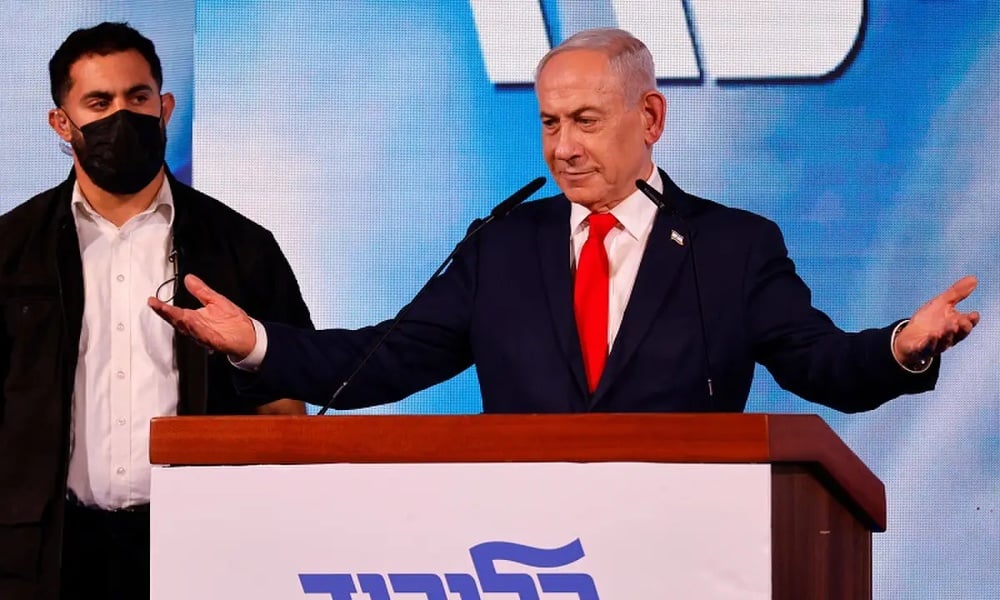

2026 © Helium Trades
Privacy Policy & Disclosure
* Disclaimer: Nothing on this website constitutes investment advice, performance data or any recommendation that any particular security, portfolio of securities, transaction or investment strategy is suitable for any specific person. Helium Trades is not responsible in any way for the accuracy
of any model predictions or price data. Any mention of a particular security and related prediction data is not a recommendation to buy or sell that security. Investments in securities involve the risk of loss. Past performance is no guarantee of future results. Helium Trades is not responsible for any of your investment decisions,
you should consult a financial expert before engaging in any transaction.
Helium Research Assistant

How can I help you today?
Ask any question about this page.


