See whether Helium helps you make better-informed decisions. Try every Pro Trader feature for 30 days. No credit card required.
Try every Pro Trader feature for 30 days. No credit card required.
November 20, 2026 · 0 shares
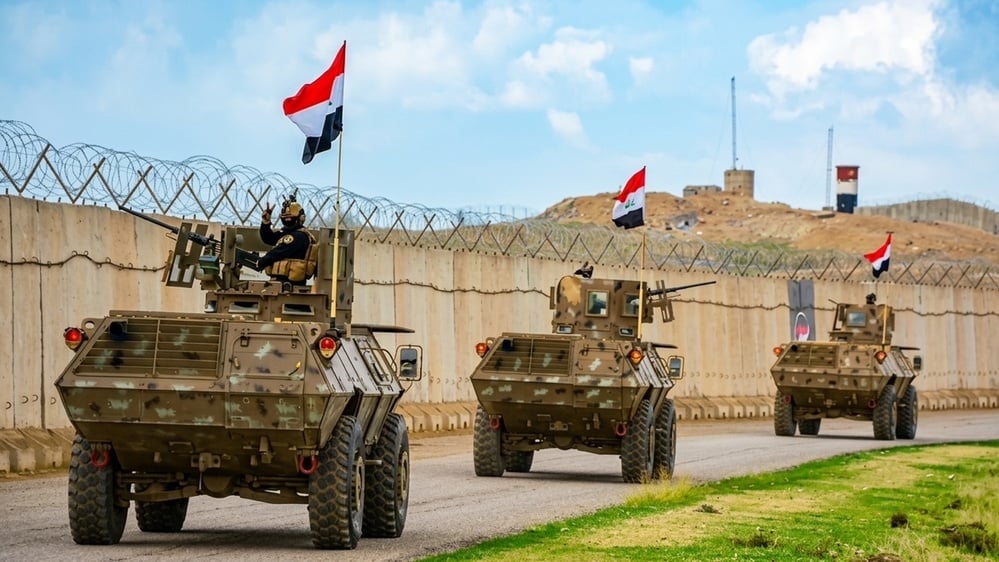
DW's coverage frames the confrontation as a high-stakes test of Iraqi state authority against Iran-aligned militias while carefully attributing contested claims to officials, experts, and anonymous sources.
Helium Analysis
Limitations: The supplied text includes unrelated trailing headlines and relies partly on anonymous-source and rumor-based claims, limiting verification of those details.
·
11 of 56 available dimensions scored; omitted dimensions are not treated as neutral.
·
Verified supporting quotes for 10 of 11 scored dimensions.
Claim: Contested and unverified claims are consistently attributed rather than asserted as the publisher's own conclusions.
“Late Thursday afternoon, the news agency Reuters reported that, according to three anonymous officials, all parties had come to an agreement that would allow government forces to enter Jurf al-Sakhar on Friday.” · exact text match
Why: The sentence explicitly credits Reuters and anonymous officials, showing attribution rather than subjective assertion.
Claim: The headline uses heightened risk language, though the body remains largely measured.
“Iraq's risky standoff: The state vs. Iran-allied militias.” · exact text match
Why: The headline's 'risky standoff' framing is the clearest sensational cue; the rest of the report attributes claims carefully.
Claim: The text is primarily descriptive reporting of events and attributed analysis rather than the publisher's own prescriptions.
“Al-Zaidi then ordered state security forces to surround the area, while Hezbollah reportedly brought in reinforcements.” · exact text match
Why: The sentence reports actions and attributes the reinforcement claim, without prescribing policy.
Claim: The headline emphasizes risk and danger, but the article does not sustain a fearful or rage-baiting register.
“Iraq's risky standoff: The state vs. Iran-allied militias.” · exact text match
Why: The word 'risky' signals threat, but the body is measured and sourced.
Claim: The report is centrally about a political-security confrontation over state authority and Iran-aligned armed groups.
“Iraq's risky standoff: The state vs. Iran-allied militias.” · exact text match
Why: The headline and subject matter are explicitly political and security-focused.
Claim: The report acknowledges partial compromises and complex power networks rather than reducing the standoff to a simple binary.
“"But if one PMF faction simply replaces another while retaining its own networks and autonomy, then Zaidi has redistributed armed influence rather than fundamentally resolved the problem," al-Shakeri concluded.” · exact text match
Why: The quoted analysis distinguishes surface withdrawal from substantive resolution, lowering oversimplification.
Claim: Sensitive claims are attributed to a wire service and named experts, supporting visible sourcing.
“Late Thursday afternoon, the news agency Reuters reported that, according to three anonymous officials, all parties had come to an agreement that would allow government forces to enter Jurf al-Sakhar on Friday.” · exact text match
Why: The report identifies Reuters and notes the anonymous sourcing, which supports credibility while signaling uncertainty.
Claim: The report presents evidence, expert assessment, and competing outcomes in a structured, analytical manner.
“If it did come to actual fighting, the Iraqi military has more resources than Kataib Hezbollah, al-Shakeri explained.” · exact text match
Why: The sentence weighs capabilities and attributes the assessment, indicating rational analysis rather than emotive reasoning.
Claim: The report includes attributed forecasts about likely compromises and consequences.
“"The most likely compromise may be to remove Kataib Hezbollah's monopoly rather than remove the PMF from Jurf al-Sakhar altogether," he continued.” · not found in supplied text
Why: The future-oriented claim is framed as an expert's likely scenario rather than a confirmed outcome.
Claim: The report includes complicating facts that cut against a simple state-versus-militia narrative.
“But how dangerous is Kataib Hezbollah really? After all, al-Zaidi was actually nominated for the prime minister's job by a political bloc known as the Coalition Framework, or CF — these are the politicians who represent the PMF in parliament.” · exact text match
Why: Including the prime minister's political ties to PMF-aligned politicians shows fairness and complexity.
Claim: The report integrates named expert analysis and competing scenarios about military and political outcomes.
“But there would be no easy victory.
Kataib Hezbollah does not need to defeat the Iraqi army conventionally.”
· exact text match
Why: The analysis goes beyond official statements by explaining asymmetric costs and limits of conventional victory.
The supplied text includes unrelated trailing headlines and relies partly on anonymous-source and rumor-based claims, limiting verification of those details.
November 17, 2026 · 0 shares
Factual, attribution-heavy reporting presents official Iraqi investigators' smuggling findings alongside Kataib Hezbollah's denial and notes undisclosed government details.
Helium Analysis
Limitations: The supplied text contains duplicated article content and unrelated teaser headlines; analysis is limited to the substantive Iraqi oil-smuggling report.
·
8 of 56 available dimensions scored; omitted dimensions are not treated as neutral.
·
Verified supporting quotes for 8 of 8 scored dimensions.
Claim: The report is dominated by attributed factual statements and includes the accused group's denial rather than publisher opinion.
“Ali Anhair told the official Iraqi News Agency (INA) that investigators’ reports and thermal imaging showed” · exact text match
“Kataib Hezbollah denied involvement in oil smuggling Sunday” · exact text match
Why: Named attribution and inclusion of a denial support a strongly objective classification (negative score).
Claim: Specific quantities and procedural details are presented without the publisher's own sensational language.
“around 25 tanker trucks, each capable of carrying 36,000 liters” · exact text match
“He did not disclose the deadline or say when troops would enter.” · exact text match
Why: Measured factual detail and acknowledgment of withheld information support an objective rather than sensational framing (negative score).
Claim: The narrative primarily describes investigative findings and government actions rather than prescribing policy.
“The committee will submit its final report after questioning the relevant ministers, Anhair said.” · exact text match
“After reviewing its findings Saturday, he dismissed nine security and administrative officials” · exact text match
Why: The article reports events and next steps; prescriptive language appears only in quoted calls for action, supporting a descriptive classification (negative score).
Claim: The article centrally concerns Iraqi parliamentary, security, and armed-group governance actions.
“Iraqi parliamentary inquiry uncovers evidence of oil smuggling in Jurf al-Sakhar.” · exact text match
“Prime Minister Ali al-Zaidi had ordered troops into Jurf al-Sakhar and given Kataib Hezbollah a deadline to leave.” · exact text match
Why: The content is explicitly about state political and security authority, supporting a high political-content score.
Claim: The report names sources, cites specific evidence, and includes a denial and withheld details.
“Ali Anhair told the official Iraqi News Agency (INA)” · exact text match
“Kataib Hezbollah denied involvement in oil smuggling Sunday” · exact text match
Why: Named attribution, specificity, and balanced inclusion of denial support high credibility, though the report relies on official accounts.
Claim: The report grounds its smuggling finding in specific investigative materials and attributed official statements rather than unsupported speculation.
“documents, photographs and drone footage confirming oil smuggling operations” · exact text match
“Government investigators inspected six sites Friday and found evidence of pipeline tampering and attempts to conceal it” · exact text match
Why: Concrete evidence types and attributed findings support a strongly rational classification (negative score).
Claim: The report includes the accused group's denial and notes undisclosed government details, showing fair handling.
“Kataib Hezbollah denied involvement in oil smuggling Sunday, saying investigators had found no pipeline tampering and that the facilities supplied fuel for military vehicles.” · exact text match
“He did not disclose the deadline or say when troops would enter.” · exact text match
Why: Inclusion of denial and acknowledgment of missing details are observable fairness signals, supporting a high-integrity score.
Claim: The report conveys detailed, structured information with quantities, sources, and context.
“around 25 tanker trucks, each capable of carrying 36,000 liters” · exact text match
“which lies in Babil province and is controlled by the armed group Kataib Hezbollah” · exact text match
Why: Specific data, attribution, and geographic/control context indicate above-average informational quality.
The supplied text contains duplicated article content and unrelated teaser headlines; analysis is limited to the substantive Iraqi oil-smuggling report.
November 16, 2026 · 0 shares
Official Iraqi government claims are reported at length while missing operational details, unstated oil volumes, and unresolved individual responsibility are repeatedly flagged.
Jurf al-Sakhar is an area in Iraq, and Kataib Hezbollah is an armed Iraqi faction; the report concerns state authority over security and suspected oil smuggling.
Helium Analysis
Limitations: Single-source official account; no independent corroboration or Kataib Hezbollah response in the supplied text.
·
8 of 56 available dimensions scored; omitted dimensions are not treated as neutral.
·
Verified supporting quotes for 8 of 8 scored dimensions.
Claim: The report attributes key claims to a named government spokesperson and repeatedly marks uncertainty, keeping framing largely objective.
“The announcement follows findings from a high-level investigative committee that, according to Aboudi, identified interference with oil pipelines and discovered two refineries, a tanker and oil-storage facilities in Jurf al-Sakhar.” · exact text match
“leaving the immediate security arrangements unclear.” · exact text match
Why: Attribution phrases and explicit uncertainty indicate low subjectivity.
Claim: The report uses restrained, procedural language and avoids sensationalizing the security order or oil-smuggling allegations.
“He presented the order as part of a wider government effort to investigate suspected oil smuggling and assert the authority of state security institutions.” · exact text match
“For now, Aboudi's announcement leaves two immediate questions unresolved: when the ordered deployment will take place and whether Kataib Hezbollah will leave Jurf al-Sakhar before the deadline he says has been established.” · exact text match
Why: The language is matter-of-fact and explicitly notes unresolved questions rather than amplifying alarm.
Claim: The report mainly describes official actions and claims without prescribing a policy outcome.
“He presented the order as part of a wider government effort to investigate suspected oil smuggling and assert the authority of state security institutions.” · exact text match
Why: The article recounts what officials said and ordered rather than advocating what should happen.
Claim: The central development is a government security and resource-authority dispute involving armed forces, a militia, and federal-regional relations.
“Iraq's commander-in-chief of the armed forces has ordered government troops to enter Jurf al-Sakhar and set a deadline for Kataib Hezbollah to withdraw from the area, Iraqi government spokesperson Haider Aboudi said on Monday, Nov. 16, 2026.” · exact text match
“Aboudi separately addressed relations between Baghdad and the Kurdistan Region, saying the government was approaching that issue through the constitutional framework governing federal and regional powers.” · exact text match
Why: The content is explicitly about state authority, security forces, militia withdrawal, and federal-regional powers, so it is highly political.
Claim: The report is sourced to a named government spokesperson and flags missing operational and evidentiary details, though it lacks independent corroboration.
“Iraqi government spokesperson Haider Aboudi said on Monday, Nov. 16, 2026.” · exact text match
“He did not provide figures for the volume or value of oil suspected to have been diverted.” · exact text match
Why: Named attribution and explicit caveats support moderate-to-high credibility, while single-source reliance limits it.
Claim: The report separates official assertions from established fact and notes unresolved details rather than drawing unsupported conclusions.
“He did not provide figures for the volume or value of oil suspected to have been diverted.” · exact text match
“Nor did the details he disclosed establish the individual responsibility of those who may have been involved.” · exact text match
Why: Both statements explicitly limit the evidentiary reach of the official account, supporting a rational/low-irrational classification.
Claim: The report discloses material limits of the official account, including missing quantities and unresolved individual responsibility, rather than presenting it as conclusive.
“He did not provide figures for the volume or value of oil suspected to have been diverted.” · exact text match
“Nor did the details he disclosed establish the individual responsibility of those who may have been involved.” · exact text match
Why: Willingness to flag gaps in the primary source supports high internal honesty/fairness.
Claim: The report is analytically careful about the limits of the official account and distinguishes unresolved questions.
“Nor did the details he disclosed establish the individual responsibility of those who may have been involved.” · exact text match
“For now, Aboudi's announcement leaves two immediate questions unresolved: when the ordered deployment will take place and whether Kataib Hezbollah will leave Jurf al-Sakhar before the deadline he says has been established.” · exact text match
Why: The text identifies evidentiary limits and open questions, supporting above-average article intelligence.
Single-source official account; no independent corroboration or Kataib Hezbollah response in the supplied text.
November 17, 2026 · 0 shares
Attribution-heavy security reporting relies on anonymous sources and official statements while repeatedly flagging lack of confirmation and unresolved details.
The Coordination Framework is an Iraqi political coalition of mainly Shia, Iran-aligned parties; the PMF is an Iraqi security umbrella that includes Iran-aligned militias.
Helium Analysis
Limitations: The pasted text includes unrelated headline links after the substantive report, which were excluded from analysis.
·
7 of 56 available dimensions scored; omitted dimensions are not treated as neutral.
·
Verified supporting quotes for 7 of 7 scored dimensions.
Claim: Contested claims are framed as source attributions rather than asserted facts.
“According to the source, the deal is meant to prevent a military operation that the Iraqi government had been preparing in the area.” · exact text match
“Neither the prime minister’s office, the Iranian side, nor Kataib Hezbollah had issued any statement on the meeting or its outcome.” · exact text match
Why: The wording repeatedly attributes claims and flags missing confirmation, supporting an objective framing.
Claim: The report uses measured language and notes unresolved details despite security-threat content.
“The source did not set a specific date for the withdrawal.” · exact text match
“It remains unclear whether the agreement will be implemented before the deadline expires on Friday.” · exact text match
Why: Explicit uncertainty and absence of dramatic language indicate non-sensational presentation.
Claim: The report describes a proposed security arrangement without advocating it.
“The proposal agreed at the meeting would send a joint force of the Popular Mobilization Forces (PMF) and security forces into the sub-district to impose government authority over the area.” · exact text match
Why: The sentence states what the proposal would do, not what should be done.
Claim: The report is centered on political and security decision-making by Iraqi and Iranian actors.
“Iraqi Prime Minister Ali al-Zaidi and Esmail Qaani, commander of the Quds Force of Iran’s Islamic Revolutionary Guard Corps, have reached an agreement” · exact text match
Why: The core subject is a political-security agreement involving government and militia actors.
Claim: Key claims are attributed to sources, with lack of confirmation and the accused group's denial included.
“Neither the prime minister’s office, the Iranian side, nor Kataib Hezbollah had issued any statement on the meeting or its outcome.” · exact text match
“Kataib Hezbollah has denied the smuggling accusation.” · exact text match
Why: Attribution, explicit uncertainty, and inclusion of denial support credibility, though central claims rest on anonymous sources.
Claim: The report flags missing details and uncertainty rather than asserting a confirmed outcome.
“The source did not set a specific date for the withdrawal.” · exact text match
“It remains unclear whether the agreement will be implemented before the deadline expires on Friday.” · exact text match
Why: Caveats and unresolved questions support a rational, evidence-cautious presentation.
Claim: The report includes absent official confirmation and the accused group's denial.
“Neither the prime minister’s office, the Iranian side, nor Kataib Hezbollah had issued any statement on the meeting or its outcome.” · exact text match
“Kataib Hezbollah has denied the smuggling accusation.” · exact text match
Why: Inclusion of missing confirmation and the accused group's denial shows fairness and transparency.
The pasted text includes unrelated headline links after the substantive report, which were excluded from analysis.
November 20, 2026 · 0 shares
The report frames the deployment through official Iraqi government claims of protecting the city and asserting state authority, repeatedly using 'Iran-backed' and 'hardline' labels while attributing the oil-smuggling accusation and Kataib Hezbollah's denial to named or official sources.
Helium Analysis
Limitations: The supplied text includes unrelated related-link headlines after the main report, which were excluded; the main smuggling allegation is attributed to officials and not independently verified within the text.
·
11 of 56 available dimensions scored; omitted dimensions are not treated as neutral.
·
Verified supporting quotes for 11 of 11 scored dimensions.
Claim: The report attributes contested claims to officials or the group rather than presenting them as the publisher's own conclusions.
“which officials accused of running an oil smuggling network” · exact text match
“has rejected the smuggling accusations” · exact text match
Why: Contested smuggling allegations are explicitly framed as official accusations and are immediately balanced with the group's denial, supporting an objective rather than subjective presentation.
Claim: The report uses factual, attributed language rather than sensational or emotive escalation.
“Iraqi security forces hav deployed in Jurf al-Sakhar” · exact text match
“the state news agency reported” · exact text match
Why: The deployment is described in straightforward terms and one key detail is attributed to the state news agency, with no sensational prose.
Claim: The report primarily describes events and arrangements rather than prescribing policy or advocating action.
“A convoy of vehicles flying Iraqi flags made its way towards Jurf al-Sakhar on Friday and soldiers took up positions in the centre” · exact text match
“Under the arrangement, brokered by Shi'ite politicians, Kataib members were expected to withdraw to other parts of Iraq” · exact text match
Why: The text reports movements and deal terms instead of recommending what should be done.
Claim: The report is largely factual but contains some evaluative labeling in its own framing.
“to protect the city from the hardline Kataib Hezbollah armed group” · exact text match
Why: 'Hardline' and 'to protect the city' add evaluative framing, but the bulk of the report remains factual and attributed.
Claim: The reported event is centrally political, involving the prime minister, security forces, militia power, and a brokered deal.
“Prime Minister Ali al-Zaidi this week ordered security forces to move against the heavily armed Kataib Hezbollah” · exact text match
“Under the arrangement, brokered by Shi'ite politicians” · exact text match
Why: The story's core actors and conflict are governmental, militia, and political-negotiation matters.
Claim: The report gives significant positive framing to Iraqi state authority and official government statements.
“to protect the city from the hardline Kataib Hezbollah armed group” · exact text match
“From Jurf al-Sakhar, we begin asserting state authority across all of Iraq” · exact text match
Why: The first sentence casts the deployment as protecting the city, and a prominent official quote frames it as asserting state authority.
Claim: The report relies on named or institutional attribution and includes a denial, supporting credibility.
“officials accused of running an oil smuggling network” · exact text match
“the state news agency reported” · exact text match
Why: Key claims are attributed to officials or state media, and the accused party's denial is included, consistent with credible sourcing in the text.
Claim: The report follows a coherent, evidence-attributed account rather than an irrational or fallacious argument.
“officials accused of running an oil smuggling network” · exact text match
“has rejected the smuggling accusations” · exact text match
Why: The text sets out official claims, the group's denial, and deal terms without obvious logical fallacies.
Claim: The report uses loaded labels and an unattributed protective purpose in the opening framing.
“to protect the city from the hardline Kataib Hezbollah armed group” · exact text match
“Iran's most powerful Shi'ite militia ally in the country” · exact text match
Why: The opening uses evaluative terms and a framing of protection without directly attributing that characterization in the same clause, though the effect is mild.
Claim: The report includes the accused group's denial and attributes contested allegations, showing internal fairness.
“which officials accused of running an oil smuggling network” · exact text match
“has rejected the smuggling accusations” · exact text match
Why: Presenting both the official accusation and the group's rejection is a fairness signal in the supplied text.
Claim: The report organizes complex security and political details with attribution and context.
“under a deal that seeks to limit the reach of Iran's most powerful Shi'ite militia ally in the country without provoking a confrontation” · exact text match
“The deal will include the opening of a security headquarters in Jurf al-Sakhar on Saturday to oversee the handover” · exact text match
Why: It provides compact context on the deal's purpose and implementation, indicating competent news writing.
The supplied text includes unrelated related-link headlines after the main report, which were excluded; the main smuggling allegation is attributed to officials and not independently verified within the text.
November 20, 2026 · 0 shares
Attribution-heavy, measured reporting frames the Jurf al-Sakhar deployment as a negotiated compromise, carefully attributing pressure claims and oil-theft allegations while including Kataib Hezbollah’s denial.
Helium Analysis
Limitations: The supplied text includes scrape artifacts, a malformed leading list, and unrelated footer/link snippets; analysis is limited to the substantive news report.
·
7 of 56 available dimensions scored; omitted dimensions are not treated as neutral.
·
Verified supporting quotes for 7 of 7 scored dimensions.
Claim: The report is predominantly factual and attributed, with evaluative framing tied to named analysts or official statements.
“Baghdad-based security and strategic analyst Fadel Abu Raghif told Al Jazeera that the deal for Iraqi security forces to enter Jurf al-Sakhar came after lengthy and delicate talks with Kataib Hezbollah.” · exact text match
Why: The central characterization of the talks is presented through a named analyst rather than the publisher’s own opinion.
Claim: The language is measured and avoids alarmist or sensational description of the armed-group standoff.
“Iraqi security forces have been deployed to Jurf al-Sakhar, a stronghold of the powerful Iran-aligned Kataib Hezbollah armed group.” · exact text match
Why: The deployment is described in plain factual terms with no dramatic or fear-inducing wording.
Claim: The article reports operational arrangements and official statements without advocating a preferred policy outcome.
“Under the compromise, a combined force comprising an Iraqi army brigade, a Federal Police battalion and an Energy Police regiment will provide protection for oil pipelines in the area.” · exact text match
Why: This is descriptive detail about the deployment rather than prescriptive advocacy.
Claim: The report is centrally concerned with Iraqi state security, armed factions, and US-Iran influence.
“Baghdad has also come under pressure from the US to reduce Iran’s influence in the country.” · exact text match
Why: The article’s core subject is explicitly political and security-related.
Claim: The report supports its account with named officials, a named analyst, an attributed deal, and inclusion of a denial.
“Lieutenant General Ahmed Hatem Hamid said on Friday that a control headquarters had been established in Jurf al-Sakhar and that the Federal Police would control the facility, according to the Iraqi News Agency (INA).” · exact text match
Why: Named official sourcing and attribution are visible, supporting a credibility assessment above neutral.
Claim: The report includes the accused group’s denial and attributes contested oil-theft claims rather than presenting them as established fact.
“Kataib Hezbollah, one of dozens of heavily armed pro-Iranian groups that have semi-official status in Iraq, has denied the allegations of stealing oil.” · exact text match
Why: Including the denial and labeling the claims as allegations indicates fair and transparent handling of a contested matter.
Claim: The report provides contextual detail about the deal, force composition, and regional mediation.
“Highlighting the delicacy of the situation, Esmail Qaani, the commander of Iran’s Islamic Revolutionary Guard Corps’ Quds Force, had visited Iraq earlier this week to help defuse tension and seal the deal.” · exact text match
Why: The article connects the local deployment to wider diplomatic and security dynamics, showing contextual understanding.
The supplied text includes scrape artifacts, a malformed leading list, and unrelated footer/link snippets; analysis is limited to the substantive news report.
November 19, 2026 · 0 shares
Neutral, event-focused framing identifies the IRGC commander and Iraqi ultimatum without evaluative language or explicit sourcing.
Helium Analysis
Limitations: The supplied text is only a headline and one-sentence snippet; sourcing and fuller context cannot be assessed.
·
4 of 56 available dimensions scored; omitted dimensions are not treated as neutral.
·
Verified supporting quotes for 4 of 4 scored dimensions.
Claim: The report presents the event in factual, event-focused terms without subjective commentary.
“IRGC Quds Force commander Esmail Qaani meets Iraqi militia leaders as Baghdad prepares to enforce an ultimatum demanding Kataib Hezbollah's withdrawal.” · exact text match
Why: The sentence describes actors and actions directly, with no evaluative or opinionated language.
Claim: The wording uses standard conflict-reporting descriptors rather than sensational language.
“IRGC Quds Force commander Esmail Qaani meets Iraqi militia leaders as Baghdad prepares to enforce an ultimatum demanding Kataib Hezbollah's withdrawal.” · exact text match
Why: Terms such as 'ultimatum' and 'standoff' are newsworthy but not embellished or alarmist in the supplied text.
Claim: The content is highly political, centering on IRGC command, Iraqi militia leaders, and a Baghdad ultimatum.
“IRGC Commander Qaani intervenes in Iraq standoff with Iran-backed militia.” · exact text match
Why: The subject matter involves state and paramilitary actors in a geopolitical confrontation, making it strongly political.
Claim: The report is a straightforward factual account without visible logical fallacies or emotive reasoning.
“IRGC Quds Force commander Esmail Qaani meets Iraqi militia leaders as Baghdad prepares to enforce an ultimatum demanding Kataib Hezbollah's withdrawal.” · exact text match
Why: The text states the reported event plainly and does not advance an argument through irrational framing.
The supplied text is only a headline and one-sentence snippet; sourcing and fuller context cannot be assessed.
November 17, 2026 · 0 shares
Attribution-heavy security reporting relies on anonymous sources and official statements while repeatedly flagging lack of confirmation and unresolved details.
The Coordination Framework is an Iraqi political coalition of mainly Shia, Iran-aligned parties; the PMF is an Iraqi security umbrella that includes Iran-aligned militias.
Helium Analysis
Limitations: The pasted text includes unrelated headline links after the substantive report, which were excluded from analysis.
·
7 of 56 available dimensions scored; omitted dimensions are not treated as neutral.
·
Verified supporting quotes for 7 of 7 scored dimensions.
Claim: Contested claims are framed as source attributions rather than asserted facts.
“According to the source, the deal is meant to prevent a military operation that the Iraqi government had been preparing in the area.” · exact text match
“Neither the prime minister’s office, the Iranian side, nor Kataib Hezbollah had issued any statement on the meeting or its outcome.” · exact text match
Why: The wording repeatedly attributes claims and flags missing confirmation, supporting an objective framing.
Claim: The report uses measured language and notes unresolved details despite security-threat content.
“The source did not set a specific date for the withdrawal.” · exact text match
“It remains unclear whether the agreement will be implemented before the deadline expires on Friday.” · exact text match
Why: Explicit uncertainty and absence of dramatic language indicate non-sensational presentation.
Claim: The report describes a proposed security arrangement without advocating it.
“The proposal agreed at the meeting would send a joint force of the Popular Mobilization Forces (PMF) and security forces into the sub-district to impose government authority over the area.” · exact text match
Why: The sentence states what the proposal would do, not what should be done.
Claim: The report is centered on political and security decision-making by Iraqi and Iranian actors.
“Iraqi Prime Minister Ali al-Zaidi and Esmail Qaani, commander of the Quds Force of Iran’s Islamic Revolutionary Guard Corps, have reached an agreement” · exact text match
Why: The core subject is a political-security agreement involving government and militia actors.
Claim: Key claims are attributed to sources, with lack of confirmation and the accused group's denial included.
“Neither the prime minister’s office, the Iranian side, nor Kataib Hezbollah had issued any statement on the meeting or its outcome.” · exact text match
“Kataib Hezbollah has denied the smuggling accusation.” · exact text match
Why: Attribution, explicit uncertainty, and inclusion of denial support credibility, though central claims rest on anonymous sources.
Claim: The report flags missing details and uncertainty rather than asserting a confirmed outcome.
“The source did not set a specific date for the withdrawal.” · exact text match
“It remains unclear whether the agreement will be implemented before the deadline expires on Friday.” · exact text match
Why: Caveats and unresolved questions support a rational, evidence-cautious presentation.
Claim: The report includes absent official confirmation and the accused group's denial.
“Neither the prime minister’s office, the Iranian side, nor Kataib Hezbollah had issued any statement on the meeting or its outcome.” · exact text match
“Kataib Hezbollah has denied the smuggling accusation.” · exact text match
Why: Inclusion of missing confirmation and the accused group's denial shows fairness and transparency.
The pasted text includes unrelated headline links after the substantive report, which were excluded from analysis.
November 20, 2026 · 0 shares
The report frames the deployment through official Iraqi government claims of protecting the city and asserting state authority, repeatedly using 'Iran-backed' and 'hardline' labels while attributing the oil-smuggling accusation and Kataib Hezbollah's denial to named or official sources.
Helium Analysis
Limitations: The supplied text includes unrelated related-link headlines after the main report, which were excluded; the main smuggling allegation is attributed to officials and not independently verified within the text.
·
11 of 56 available dimensions scored; omitted dimensions are not treated as neutral.
·
Verified supporting quotes for 11 of 11 scored dimensions.
Claim: The report attributes contested claims to officials or the group rather than presenting them as the publisher's own conclusions.
“which officials accused of running an oil smuggling network” · exact text match
“has rejected the smuggling accusations” · exact text match
Why: Contested smuggling allegations are explicitly framed as official accusations and are immediately balanced with the group's denial, supporting an objective rather than subjective presentation.
Claim: The report uses factual, attributed language rather than sensational or emotive escalation.
“Iraqi security forces hav deployed in Jurf al-Sakhar” · exact text match
“the state news agency reported” · exact text match
Why: The deployment is described in straightforward terms and one key detail is attributed to the state news agency, with no sensational prose.
Claim: The report primarily describes events and arrangements rather than prescribing policy or advocating action.
“A convoy of vehicles flying Iraqi flags made its way towards Jurf al-Sakhar on Friday and soldiers took up positions in the centre” · exact text match
“Under the arrangement, brokered by Shi'ite politicians, Kataib members were expected to withdraw to other parts of Iraq” · exact text match
Why: The text reports movements and deal terms instead of recommending what should be done.
Claim: The report is largely factual but contains some evaluative labeling in its own framing.
“to protect the city from the hardline Kataib Hezbollah armed group” · exact text match
Why: 'Hardline' and 'to protect the city' add evaluative framing, but the bulk of the report remains factual and attributed.
Claim: The reported event is centrally political, involving the prime minister, security forces, militia power, and a brokered deal.
“Prime Minister Ali al-Zaidi this week ordered security forces to move against the heavily armed Kataib Hezbollah” · exact text match
“Under the arrangement, brokered by Shi'ite politicians” · exact text match
Why: The story's core actors and conflict are governmental, militia, and political-negotiation matters.
Claim: The report gives significant positive framing to Iraqi state authority and official government statements.
“to protect the city from the hardline Kataib Hezbollah armed group” · exact text match
“From Jurf al-Sakhar, we begin asserting state authority across all of Iraq” · exact text match
Why: The first sentence casts the deployment as protecting the city, and a prominent official quote frames it as asserting state authority.
Claim: The report relies on named or institutional attribution and includes a denial, supporting credibility.
“officials accused of running an oil smuggling network” · exact text match
“the state news agency reported” · exact text match
Why: Key claims are attributed to officials or state media, and the accused party's denial is included, consistent with credible sourcing in the text.
Claim: The report follows a coherent, evidence-attributed account rather than an irrational or fallacious argument.
“officials accused of running an oil smuggling network” · exact text match
“has rejected the smuggling accusations” · exact text match
Why: The text sets out official claims, the group's denial, and deal terms without obvious logical fallacies.
Claim: The report uses loaded labels and an unattributed protective purpose in the opening framing.
“to protect the city from the hardline Kataib Hezbollah armed group” · exact text match
“Iran's most powerful Shi'ite militia ally in the country” · exact text match
Why: The opening uses evaluative terms and a framing of protection without directly attributing that characterization in the same clause, though the effect is mild.
Claim: The report includes the accused group's denial and attributes contested allegations, showing internal fairness.
“which officials accused of running an oil smuggling network” · exact text match
“has rejected the smuggling accusations” · exact text match
Why: Presenting both the official accusation and the group's rejection is a fairness signal in the supplied text.
Claim: The report organizes complex security and political details with attribution and context.
“under a deal that seeks to limit the reach of Iran's most powerful Shi'ite militia ally in the country without provoking a confrontation” · exact text match
“The deal will include the opening of a security headquarters in Jurf al-Sakhar on Saturday to oversee the handover” · exact text match
Why: It provides compact context on the deal's purpose and implementation, indicating competent news writing.
The supplied text includes unrelated related-link headlines after the main report, which were excluded; the main smuggling allegation is attributed to officials and not independently verified within the text.
November 20, 2026 · 0 shares
Attribution-heavy, measured reporting frames the Jurf al-Sakhar deployment as a negotiated compromise, carefully attributing pressure claims and oil-theft allegations while including Kataib Hezbollah’s denial.
Helium Analysis
Limitations: The supplied text includes scrape artifacts, a malformed leading list, and unrelated footer/link snippets; analysis is limited to the substantive news report.
·
7 of 56 available dimensions scored; omitted dimensions are not treated as neutral.
·
Verified supporting quotes for 7 of 7 scored dimensions.
Claim: The report is predominantly factual and attributed, with evaluative framing tied to named analysts or official statements.
“Baghdad-based security and strategic analyst Fadel Abu Raghif told Al Jazeera that the deal for Iraqi security forces to enter Jurf al-Sakhar came after lengthy and delicate talks with Kataib Hezbollah.” · exact text match
Why: The central characterization of the talks is presented through a named analyst rather than the publisher’s own opinion.
Claim: The language is measured and avoids alarmist or sensational description of the armed-group standoff.
“Iraqi security forces have been deployed to Jurf al-Sakhar, a stronghold of the powerful Iran-aligned Kataib Hezbollah armed group.” · exact text match
Why: The deployment is described in plain factual terms with no dramatic or fear-inducing wording.
Claim: The article reports operational arrangements and official statements without advocating a preferred policy outcome.
“Under the compromise, a combined force comprising an Iraqi army brigade, a Federal Police battalion and an Energy Police regiment will provide protection for oil pipelines in the area.” · exact text match
Why: This is descriptive detail about the deployment rather than prescriptive advocacy.
Claim: The report is centrally concerned with Iraqi state security, armed factions, and US-Iran influence.
“Baghdad has also come under pressure from the US to reduce Iran’s influence in the country.” · exact text match
Why: The article’s core subject is explicitly political and security-related.
Claim: The report supports its account with named officials, a named analyst, an attributed deal, and inclusion of a denial.
“Lieutenant General Ahmed Hatem Hamid said on Friday that a control headquarters had been established in Jurf al-Sakhar and that the Federal Police would control the facility, according to the Iraqi News Agency (INA).” · exact text match
Why: Named official sourcing and attribution are visible, supporting a credibility assessment above neutral.
Claim: The report includes the accused group’s denial and attributes contested oil-theft claims rather than presenting them as established fact.
“Kataib Hezbollah, one of dozens of heavily armed pro-Iranian groups that have semi-official status in Iraq, has denied the allegations of stealing oil.” · exact text match
Why: Including the denial and labeling the claims as allegations indicates fair and transparent handling of a contested matter.
Claim: The report provides contextual detail about the deal, force composition, and regional mediation.
“Highlighting the delicacy of the situation, Esmail Qaani, the commander of Iran’s Islamic Revolutionary Guard Corps’ Quds Force, had visited Iraq earlier this week to help defuse tension and seal the deal.” · exact text match
Why: The article connects the local deployment to wider diplomatic and security dynamics, showing contextual understanding.
The supplied text includes scrape artifacts, a malformed leading list, and unrelated footer/link snippets; analysis is limited to the substantive news report.
November 20, 2026 · 0 shares
The report frames the deployment through official Iraqi government claims of protecting the city and asserting state authority, repeatedly using 'Iran-backed' and 'hardline' labels while attributing the oil-smuggling accusation and Kataib Hezbollah's denial to named or official sources.
Helium Analysis Limitations: The supplied text includes unrelated related-link headlines after the main report, which were excluded; the main smuggling allegation is attributed to officials and not independently verified within the text. · 11 of 56 available dimensions scored; omitted dimensions are not treated as neutral. · Verified supporting quotes for 11 of 11 scored dimensions.
Claim: The report attributes contested claims to officials or the group rather than presenting them as the publisher's own conclusions.
“which officials accused of running an oil smuggling network” · exact text match
“has rejected the smuggling accusations” · exact text match
Why: Contested smuggling allegations are explicitly framed as official accusations and are immediately balanced with the group's denial, supporting an objective rather than subjective presentation.
Claim: The report uses factual, attributed language rather than sensational or emotive escalation.
“Iraqi security forces hav deployed in Jurf al-Sakhar” · exact text match
“the state news agency reported” · exact text match
Why: The deployment is described in straightforward terms and one key detail is attributed to the state news agency, with no sensational prose.
Claim: The report primarily describes events and arrangements rather than prescribing policy or advocating action.
“A convoy of vehicles flying Iraqi flags made its way towards Jurf al-Sakhar on Friday and soldiers took up positions in the centre” · exact text match
“Under the arrangement, brokered by Shi'ite politicians, Kataib members were expected to withdraw to other parts of Iraq” · exact text match
Why: The text reports movements and deal terms instead of recommending what should be done.
Claim: The report is largely factual but contains some evaluative labeling in its own framing.
“to protect the city from the hardline Kataib Hezbollah armed group” · exact text match
Why: 'Hardline' and 'to protect the city' add evaluative framing, but the bulk of the report remains factual and attributed.
Claim: The reported event is centrally political, involving the prime minister, security forces, militia power, and a brokered deal.
“Prime Minister Ali al-Zaidi this week ordered security forces to move against the heavily armed Kataib Hezbollah” · exact text match
“Under the arrangement, brokered by Shi'ite politicians” · exact text match
Why: The story's core actors and conflict are governmental, militia, and political-negotiation matters.
Claim: The report gives significant positive framing to Iraqi state authority and official government statements.
“to protect the city from the hardline Kataib Hezbollah armed group” · exact text match
“From Jurf al-Sakhar, we begin asserting state authority across all of Iraq” · exact text match
Why: The first sentence casts the deployment as protecting the city, and a prominent official quote frames it as asserting state authority.
Claim: The report relies on named or institutional attribution and includes a denial, supporting credibility.
“officials accused of running an oil smuggling network” · exact text match
“the state news agency reported” · exact text match
Why: Key claims are attributed to officials or state media, and the accused party's denial is included, consistent with credible sourcing in the text.
Claim: The report follows a coherent, evidence-attributed account rather than an irrational or fallacious argument.
“officials accused of running an oil smuggling network” · exact text match
“has rejected the smuggling accusations” · exact text match
Why: The text sets out official claims, the group's denial, and deal terms without obvious logical fallacies.
Claim: The report uses loaded labels and an unattributed protective purpose in the opening framing.
“to protect the city from the hardline Kataib Hezbollah armed group” · exact text match
“Iran's most powerful Shi'ite militia ally in the country” · exact text match
Why: The opening uses evaluative terms and a framing of protection without directly attributing that characterization in the same clause, though the effect is mild.
Claim: The report includes the accused group's denial and attributes contested allegations, showing internal fairness.
“which officials accused of running an oil smuggling network” · exact text match
“has rejected the smuggling accusations” · exact text match
Why: Presenting both the official accusation and the group's rejection is a fairness signal in the supplied text.
Claim: The report organizes complex security and political details with attribution and context.
“under a deal that seeks to limit the reach of Iran's most powerful Shi'ite militia ally in the country without provoking a confrontation” · exact text match
“The deal will include the opening of a security headquarters in Jurf al-Sakhar on Saturday to oversee the handover” · exact text match
Why: It provides compact context on the deal's purpose and implementation, indicating competent news writing.
The supplied text includes unrelated related-link headlines after the main report, which were excluded; the main smuggling allegation is attributed to officials and not independently verified within the text.
November 20, 2026 · 0 shares
Attribution-heavy, measured reporting frames the Jurf al-Sakhar deployment as a negotiated compromise, carefully attributing pressure claims and oil-theft allegations while including Kataib Hezbollah’s denial.
Helium Analysis Limitations: The supplied text includes scrape artifacts, a malformed leading list, and unrelated footer/link snippets; analysis is limited to the substantive news report. · 7 of 56 available dimensions scored; omitted dimensions are not treated as neutral. · Verified supporting quotes for 7 of 7 scored dimensions.
Claim: The report is predominantly factual and attributed, with evaluative framing tied to named analysts or official statements.
“Baghdad-based security and strategic analyst Fadel Abu Raghif told Al Jazeera that the deal for Iraqi security forces to enter Jurf al-Sakhar came after lengthy and delicate talks with Kataib Hezbollah.” · exact text match
Why: The central characterization of the talks is presented through a named analyst rather than the publisher’s own opinion.
Claim: The language is measured and avoids alarmist or sensational description of the armed-group standoff.
“Iraqi security forces have been deployed to Jurf al-Sakhar, a stronghold of the powerful Iran-aligned Kataib Hezbollah armed group.” · exact text match
Why: The deployment is described in plain factual terms with no dramatic or fear-inducing wording.
Claim: The article reports operational arrangements and official statements without advocating a preferred policy outcome.
“Under the compromise, a combined force comprising an Iraqi army brigade, a Federal Police battalion and an Energy Police regiment will provide protection for oil pipelines in the area.” · exact text match
Why: This is descriptive detail about the deployment rather than prescriptive advocacy.
Claim: The report is centrally concerned with Iraqi state security, armed factions, and US-Iran influence.
“Baghdad has also come under pressure from the US to reduce Iran’s influence in the country.” · exact text match
Why: The article’s core subject is explicitly political and security-related.
Claim: The report supports its account with named officials, a named analyst, an attributed deal, and inclusion of a denial.
“Lieutenant General Ahmed Hatem Hamid said on Friday that a control headquarters had been established in Jurf al-Sakhar and that the Federal Police would control the facility, according to the Iraqi News Agency (INA).” · exact text match
Why: Named official sourcing and attribution are visible, supporting a credibility assessment above neutral.
Claim: The report includes the accused group’s denial and attributes contested oil-theft claims rather than presenting them as established fact.
“Kataib Hezbollah, one of dozens of heavily armed pro-Iranian groups that have semi-official status in Iraq, has denied the allegations of stealing oil.” · exact text match
Why: Including the denial and labeling the claims as allegations indicates fair and transparent handling of a contested matter.
Claim: The report provides contextual detail about the deal, force composition, and regional mediation.
“Highlighting the delicacy of the situation, Esmail Qaani, the commander of Iran’s Islamic Revolutionary Guard Corps’ Quds Force, had visited Iraq earlier this week to help defuse tension and seal the deal.” · exact text match
Why: The article connects the local deployment to wider diplomatic and security dynamics, showing contextual understanding.
The supplied text includes scrape artifacts, a malformed leading list, and unrelated footer/link snippets; analysis is limited to the substantive news report.
November 17, 2026 · 0 shares
Factual, attribution-heavy reporting presents official Iraqi investigators' smuggling findings alongside Kataib Hezbollah's denial and notes undisclosed government details.
Helium Analysis Limitations: The supplied text contains duplicated article content and unrelated teaser headlines; analysis is limited to the substantive Iraqi oil-smuggling report. · 8 of 56 available dimensions scored; omitted dimensions are not treated as neutral. · Verified supporting quotes for 8 of 8 scored dimensions.
Claim: The report is dominated by attributed factual statements and includes the accused group's denial rather than publisher opinion.
“Ali Anhair told the official Iraqi News Agency (INA) that investigators’ reports and thermal imaging showed” · exact text match
“Kataib Hezbollah denied involvement in oil smuggling Sunday” · exact text match
Why: Named attribution and inclusion of a denial support a strongly objective classification (negative score).
Claim: Specific quantities and procedural details are presented without the publisher's own sensational language.
“around 25 tanker trucks, each capable of carrying 36,000 liters” · exact text match
“He did not disclose the deadline or say when troops would enter.” · exact text match
Why: Measured factual detail and acknowledgment of withheld information support an objective rather than sensational framing (negative score).
Claim: The narrative primarily describes investigative findings and government actions rather than prescribing policy.
“The committee will submit its final report after questioning the relevant ministers, Anhair said.” · exact text match
“After reviewing its findings Saturday, he dismissed nine security and administrative officials” · exact text match
Why: The article reports events and next steps; prescriptive language appears only in quoted calls for action, supporting a descriptive classification (negative score).
Claim: The article centrally concerns Iraqi parliamentary, security, and armed-group governance actions.
“Iraqi parliamentary inquiry uncovers evidence of oil smuggling in Jurf al-Sakhar.” · exact text match
“Prime Minister Ali al-Zaidi had ordered troops into Jurf al-Sakhar and given Kataib Hezbollah a deadline to leave.” · exact text match
Why: The content is explicitly about state political and security authority, supporting a high political-content score.
Claim: The report names sources, cites specific evidence, and includes a denial and withheld details.
“Ali Anhair told the official Iraqi News Agency (INA)” · exact text match
“Kataib Hezbollah denied involvement in oil smuggling Sunday” · exact text match
Why: Named attribution, specificity, and balanced inclusion of denial support high credibility, though the report relies on official accounts.
Claim: The report grounds its smuggling finding in specific investigative materials and attributed official statements rather than unsupported speculation.
“documents, photographs and drone footage confirming oil smuggling operations” · exact text match
“Government investigators inspected six sites Friday and found evidence of pipeline tampering and attempts to conceal it” · exact text match
Why: Concrete evidence types and attributed findings support a strongly rational classification (negative score).
Claim: The report includes the accused group's denial and notes undisclosed government details, showing fair handling.
“Kataib Hezbollah denied involvement in oil smuggling Sunday, saying investigators had found no pipeline tampering and that the facilities supplied fuel for military vehicles.” · exact text match
“He did not disclose the deadline or say when troops would enter.” · exact text match
Why: Inclusion of denial and acknowledgment of missing details are observable fairness signals, supporting a high-integrity score.
Claim: The report conveys detailed, structured information with quantities, sources, and context.
“around 25 tanker trucks, each capable of carrying 36,000 liters” · exact text match
“which lies in Babil province and is controlled by the armed group Kataib Hezbollah” · exact text match
Why: Specific data, attribution, and geographic/control context indicate above-average informational quality.
The supplied text contains duplicated article content and unrelated teaser headlines; analysis is limited to the substantive Iraqi oil-smuggling report.
November 16, 2026 · 0 shares
Official Iraqi government claims are reported at length while missing operational details, unstated oil volumes, and unresolved individual responsibility are repeatedly flagged.
Jurf al-Sakhar is an area in Iraq, and Kataib Hezbollah is an armed Iraqi faction; the report concerns state authority over security and suspected oil smuggling.
Helium Analysis Limitations: Single-source official account; no independent corroboration or Kataib Hezbollah response in the supplied text. · 8 of 56 available dimensions scored; omitted dimensions are not treated as neutral. · Verified supporting quotes for 8 of 8 scored dimensions.
Claim: The report attributes key claims to a named government spokesperson and repeatedly marks uncertainty, keeping framing largely objective.
“The announcement follows findings from a high-level investigative committee that, according to Aboudi, identified interference with oil pipelines and discovered two refineries, a tanker and oil-storage facilities in Jurf al-Sakhar.” · exact text match
“leaving the immediate security arrangements unclear.” · exact text match
Why: Attribution phrases and explicit uncertainty indicate low subjectivity.
Claim: The report uses restrained, procedural language and avoids sensationalizing the security order or oil-smuggling allegations.
“He presented the order as part of a wider government effort to investigate suspected oil smuggling and assert the authority of state security institutions.” · exact text match
“For now, Aboudi's announcement leaves two immediate questions unresolved: when the ordered deployment will take place and whether Kataib Hezbollah will leave Jurf al-Sakhar before the deadline he says has been established.” · exact text match
Why: The language is matter-of-fact and explicitly notes unresolved questions rather than amplifying alarm.
Claim: The report mainly describes official actions and claims without prescribing a policy outcome.
“He presented the order as part of a wider government effort to investigate suspected oil smuggling and assert the authority of state security institutions.” · exact text match
Why: The article recounts what officials said and ordered rather than advocating what should happen.
Claim: The central development is a government security and resource-authority dispute involving armed forces, a militia, and federal-regional relations.
“Iraq's commander-in-chief of the armed forces has ordered government troops to enter Jurf al-Sakhar and set a deadline for Kataib Hezbollah to withdraw from the area, Iraqi government spokesperson Haider Aboudi said on Monday, Nov. 16, 2026.” · exact text match
“Aboudi separately addressed relations between Baghdad and the Kurdistan Region, saying the government was approaching that issue through the constitutional framework governing federal and regional powers.” · exact text match
Why: The content is explicitly about state authority, security forces, militia withdrawal, and federal-regional powers, so it is highly political.
Claim: The report is sourced to a named government spokesperson and flags missing operational and evidentiary details, though it lacks independent corroboration.
“Iraqi government spokesperson Haider Aboudi said on Monday, Nov. 16, 2026.” · exact text match
“He did not provide figures for the volume or value of oil suspected to have been diverted.” · exact text match
Why: Named attribution and explicit caveats support moderate-to-high credibility, while single-source reliance limits it.
Claim: The report separates official assertions from established fact and notes unresolved details rather than drawing unsupported conclusions.
“He did not provide figures for the volume or value of oil suspected to have been diverted.” · exact text match
“Nor did the details he disclosed establish the individual responsibility of those who may have been involved.” · exact text match
Why: Both statements explicitly limit the evidentiary reach of the official account, supporting a rational/low-irrational classification.
Claim: The report discloses material limits of the official account, including missing quantities and unresolved individual responsibility, rather than presenting it as conclusive.
“He did not provide figures for the volume or value of oil suspected to have been diverted.” · exact text match
“Nor did the details he disclosed establish the individual responsibility of those who may have been involved.” · exact text match
Why: Willingness to flag gaps in the primary source supports high internal honesty/fairness.
Claim: The report is analytically careful about the limits of the official account and distinguishes unresolved questions.
“Nor did the details he disclosed establish the individual responsibility of those who may have been involved.” · exact text match
“For now, Aboudi's announcement leaves two immediate questions unresolved: when the ordered deployment will take place and whether Kataib Hezbollah will leave Jurf al-Sakhar before the deadline he says has been established.” · exact text match
Why: The text identifies evidentiary limits and open questions, supporting above-average article intelligence.
Single-source official account; no independent corroboration or Kataib Hezbollah response in the supplied text.
November 20, 2026 · 0 shares
DW's coverage frames the confrontation as a high-stakes test of Iraqi state authority against Iran-aligned militias while carefully attributing contested claims to officials, experts, and anonymous sources.
Helium Analysis Limitations: The supplied text includes unrelated trailing headlines and relies partly on anonymous-source and rumor-based claims, limiting verification of those details. · 11 of 56 available dimensions scored; omitted dimensions are not treated as neutral. · Verified supporting quotes for 10 of 11 scored dimensions.
Claim: Contested and unverified claims are consistently attributed rather than asserted as the publisher's own conclusions.
“Late Thursday afternoon, the news agency Reuters reported that, according to three anonymous officials, all parties had come to an agreement that would allow government forces to enter Jurf al-Sakhar on Friday.” · exact text match
Why: The sentence explicitly credits Reuters and anonymous officials, showing attribution rather than subjective assertion.
Claim: The headline uses heightened risk language, though the body remains largely measured.
“Iraq's risky standoff: The state vs. Iran-allied militias.” · exact text match
Why: The headline's 'risky standoff' framing is the clearest sensational cue; the rest of the report attributes claims carefully.
Claim: The text is primarily descriptive reporting of events and attributed analysis rather than the publisher's own prescriptions.
“Al-Zaidi then ordered state security forces to surround the area, while Hezbollah reportedly brought in reinforcements.” · exact text match
Why: The sentence reports actions and attributes the reinforcement claim, without prescribing policy.
Claim: The headline emphasizes risk and danger, but the article does not sustain a fearful or rage-baiting register.
“Iraq's risky standoff: The state vs. Iran-allied militias.” · exact text match
Why: The word 'risky' signals threat, but the body is measured and sourced.
Claim: The report is centrally about a political-security confrontation over state authority and Iran-aligned armed groups.
“Iraq's risky standoff: The state vs. Iran-allied militias.” · exact text match
Why: The headline and subject matter are explicitly political and security-focused.
Claim: The report acknowledges partial compromises and complex power networks rather than reducing the standoff to a simple binary.
“"But if one PMF faction simply replaces another while retaining its own networks and autonomy, then Zaidi has redistributed armed influence rather than fundamentally resolved the problem," al-Shakeri concluded.” · exact text match
Why: The quoted analysis distinguishes surface withdrawal from substantive resolution, lowering oversimplification.
Claim: Sensitive claims are attributed to a wire service and named experts, supporting visible sourcing.
“Late Thursday afternoon, the news agency Reuters reported that, according to three anonymous officials, all parties had come to an agreement that would allow government forces to enter Jurf al-Sakhar on Friday.” · exact text match
Why: The report identifies Reuters and notes the anonymous sourcing, which supports credibility while signaling uncertainty.
Claim: The report presents evidence, expert assessment, and competing outcomes in a structured, analytical manner.
“If it did come to actual fighting, the Iraqi military has more resources than Kataib Hezbollah, al-Shakeri explained.” · exact text match
Why: The sentence weighs capabilities and attributes the assessment, indicating rational analysis rather than emotive reasoning.
Claim: The report includes attributed forecasts about likely compromises and consequences.
“"The most likely compromise may be to remove Kataib Hezbollah's monopoly rather than remove the PMF from Jurf al-Sakhar altogether," he continued.” · not found in supplied text
Why: The future-oriented claim is framed as an expert's likely scenario rather than a confirmed outcome.
Claim: The report includes complicating facts that cut against a simple state-versus-militia narrative.
“But how dangerous is Kataib Hezbollah really? After all, al-Zaidi was actually nominated for the prime minister's job by a political bloc known as the Coalition Framework, or CF — these are the politicians who represent the PMF in parliament.” · exact text match
Why: Including the prime minister's political ties to PMF-aligned politicians shows fairness and complexity.
Claim: The report integrates named expert analysis and competing scenarios about military and political outcomes.
“But there would be no easy victory. Kataib Hezbollah does not need to defeat the Iraqi army conventionally.” · exact text match
Why: The analysis goes beyond official statements by explaining asymmetric costs and limits of conventional victory.
The supplied text includes unrelated trailing headlines and relies partly on anonymous-source and rumor-based claims, limiting verification of those details.
November 17, 2026 · 0 shares
Attribution-heavy security reporting relies on anonymous sources and official statements while repeatedly flagging lack of confirmation and unresolved details.
The Coordination Framework is an Iraqi political coalition of mainly Shia, Iran-aligned parties; the PMF is an Iraqi security umbrella that includes Iran-aligned militias.
Helium Analysis Limitations: The pasted text includes unrelated headline links after the substantive report, which were excluded from analysis. · 7 of 56 available dimensions scored; omitted dimensions are not treated as neutral. · Verified supporting quotes for 7 of 7 scored dimensions.
Claim: Contested claims are framed as source attributions rather than asserted facts.
“According to the source, the deal is meant to prevent a military operation that the Iraqi government had been preparing in the area.” · exact text match
“Neither the prime minister’s office, the Iranian side, nor Kataib Hezbollah had issued any statement on the meeting or its outcome.” · exact text match
Why: The wording repeatedly attributes claims and flags missing confirmation, supporting an objective framing.
Claim: The report uses measured language and notes unresolved details despite security-threat content.
“The source did not set a specific date for the withdrawal.” · exact text match
“It remains unclear whether the agreement will be implemented before the deadline expires on Friday.” · exact text match
Why: Explicit uncertainty and absence of dramatic language indicate non-sensational presentation.
Claim: The report describes a proposed security arrangement without advocating it.
“The proposal agreed at the meeting would send a joint force of the Popular Mobilization Forces (PMF) and security forces into the sub-district to impose government authority over the area.” · exact text match
Why: The sentence states what the proposal would do, not what should be done.
Claim: The report is centered on political and security decision-making by Iraqi and Iranian actors.
“Iraqi Prime Minister Ali al-Zaidi and Esmail Qaani, commander of the Quds Force of Iran’s Islamic Revolutionary Guard Corps, have reached an agreement” · exact text match
Why: The core subject is a political-security agreement involving government and militia actors.
Claim: Key claims are attributed to sources, with lack of confirmation and the accused group's denial included.
“Neither the prime minister’s office, the Iranian side, nor Kataib Hezbollah had issued any statement on the meeting or its outcome.” · exact text match
“Kataib Hezbollah has denied the smuggling accusation.” · exact text match
Why: Attribution, explicit uncertainty, and inclusion of denial support credibility, though central claims rest on anonymous sources.
Claim: The report flags missing details and uncertainty rather than asserting a confirmed outcome.
“The source did not set a specific date for the withdrawal.” · exact text match
“It remains unclear whether the agreement will be implemented before the deadline expires on Friday.” · exact text match
Why: Caveats and unresolved questions support a rational, evidence-cautious presentation.
Claim: The report includes absent official confirmation and the accused group's denial.
“Neither the prime minister’s office, the Iranian side, nor Kataib Hezbollah had issued any statement on the meeting or its outcome.” · exact text match
“Kataib Hezbollah has denied the smuggling accusation.” · exact text match
Why: Inclusion of missing confirmation and the accused group's denial shows fairness and transparency.
The pasted text includes unrelated headline links after the substantive report, which were excluded from analysis.
November 20, 2026 · 0 shares
Attribution-heavy, measured reporting frames the Jurf al-Sakhar deployment as a negotiated compromise, carefully attributing pressure claims and oil-theft allegations while including Kataib Hezbollah’s denial.
Helium Analysis Limitations: The supplied text includes scrape artifacts, a malformed leading list, and unrelated footer/link snippets; analysis is limited to the substantive news report. · 7 of 56 available dimensions scored; omitted dimensions are not treated as neutral. · Verified supporting quotes for 7 of 7 scored dimensions.
Claim: The report is predominantly factual and attributed, with evaluative framing tied to named analysts or official statements.
“Baghdad-based security and strategic analyst Fadel Abu Raghif told Al Jazeera that the deal for Iraqi security forces to enter Jurf al-Sakhar came after lengthy and delicate talks with Kataib Hezbollah.” · exact text match
Why: The central characterization of the talks is presented through a named analyst rather than the publisher’s own opinion.
Claim: The language is measured and avoids alarmist or sensational description of the armed-group standoff.
“Iraqi security forces have been deployed to Jurf al-Sakhar, a stronghold of the powerful Iran-aligned Kataib Hezbollah armed group.” · exact text match
Why: The deployment is described in plain factual terms with no dramatic or fear-inducing wording.
Claim: The article reports operational arrangements and official statements without advocating a preferred policy outcome.
“Under the compromise, a combined force comprising an Iraqi army brigade, a Federal Police battalion and an Energy Police regiment will provide protection for oil pipelines in the area.” · exact text match
Why: This is descriptive detail about the deployment rather than prescriptive advocacy.
Claim: The report is centrally concerned with Iraqi state security, armed factions, and US-Iran influence.
“Baghdad has also come under pressure from the US to reduce Iran’s influence in the country.” · exact text match
Why: The article’s core subject is explicitly political and security-related.
Claim: The report supports its account with named officials, a named analyst, an attributed deal, and inclusion of a denial.
“Lieutenant General Ahmed Hatem Hamid said on Friday that a control headquarters had been established in Jurf al-Sakhar and that the Federal Police would control the facility, according to the Iraqi News Agency (INA).” · exact text match
Why: Named official sourcing and attribution are visible, supporting a credibility assessment above neutral.
Claim: The report includes the accused group’s denial and attributes contested oil-theft claims rather than presenting them as established fact.
“Kataib Hezbollah, one of dozens of heavily armed pro-Iranian groups that have semi-official status in Iraq, has denied the allegations of stealing oil.” · exact text match
Why: Including the denial and labeling the claims as allegations indicates fair and transparent handling of a contested matter.
Claim: The report provides contextual detail about the deal, force composition, and regional mediation.
“Highlighting the delicacy of the situation, Esmail Qaani, the commander of Iran’s Islamic Revolutionary Guard Corps’ Quds Force, had visited Iraq earlier this week to help defuse tension and seal the deal.” · exact text match
Why: The article connects the local deployment to wider diplomatic and security dynamics, showing contextual understanding.
The supplied text includes scrape artifacts, a malformed leading list, and unrelated footer/link snippets; analysis is limited to the substantive news report.
November 19, 2026 · 0 shares
Neutral, event-focused framing identifies the IRGC commander and Iraqi ultimatum without evaluative language or explicit sourcing.
Helium Analysis Limitations: The supplied text is only a headline and one-sentence snippet; sourcing and fuller context cannot be assessed. · 4 of 56 available dimensions scored; omitted dimensions are not treated as neutral. · Verified supporting quotes for 4 of 4 scored dimensions.
Claim: The report presents the event in factual, event-focused terms without subjective commentary.
“IRGC Quds Force commander Esmail Qaani meets Iraqi militia leaders as Baghdad prepares to enforce an ultimatum demanding Kataib Hezbollah's withdrawal.” · exact text match
Why: The sentence describes actors and actions directly, with no evaluative or opinionated language.
Claim: The wording uses standard conflict-reporting descriptors rather than sensational language.
“IRGC Quds Force commander Esmail Qaani meets Iraqi militia leaders as Baghdad prepares to enforce an ultimatum demanding Kataib Hezbollah's withdrawal.” · exact text match
Why: Terms such as 'ultimatum' and 'standoff' are newsworthy but not embellished or alarmist in the supplied text.
Claim: The content is highly political, centering on IRGC command, Iraqi militia leaders, and a Baghdad ultimatum.
“IRGC Commander Qaani intervenes in Iraq standoff with Iran-backed militia.” · exact text match
Why: The subject matter involves state and paramilitary actors in a geopolitical confrontation, making it strongly political.
Claim: The report is a straightforward factual account without visible logical fallacies or emotive reasoning.
“IRGC Quds Force commander Esmail Qaani meets Iraqi militia leaders as Baghdad prepares to enforce an ultimatum demanding Kataib Hezbollah's withdrawal.” · exact text match
Why: The text states the reported event plainly and does not advance an argument through irrational framing.
The supplied text is only a headline and one-sentence snippet; sourcing and fuller context cannot be assessed.
November 17, 2026 · 0 shares
Attribution-heavy security reporting relies on anonymous sources and official statements while repeatedly flagging lack of confirmation and unresolved details.
The Coordination Framework is an Iraqi political coalition of mainly Shia, Iran-aligned parties; the PMF is an Iraqi security umbrella that includes Iran-aligned militias.
Helium Analysis Limitations: The pasted text includes unrelated headline links after the substantive report, which were excluded from analysis. · 7 of 56 available dimensions scored; omitted dimensions are not treated as neutral. · Verified supporting quotes for 7 of 7 scored dimensions.
Claim: Contested claims are framed as source attributions rather than asserted facts.
“According to the source, the deal is meant to prevent a military operation that the Iraqi government had been preparing in the area.” · exact text match
“Neither the prime minister’s office, the Iranian side, nor Kataib Hezbollah had issued any statement on the meeting or its outcome.” · exact text match
Why: The wording repeatedly attributes claims and flags missing confirmation, supporting an objective framing.
Claim: The report uses measured language and notes unresolved details despite security-threat content.
“The source did not set a specific date for the withdrawal.” · exact text match
“It remains unclear whether the agreement will be implemented before the deadline expires on Friday.” · exact text match
Why: Explicit uncertainty and absence of dramatic language indicate non-sensational presentation.
Claim: The report describes a proposed security arrangement without advocating it.
“The proposal agreed at the meeting would send a joint force of the Popular Mobilization Forces (PMF) and security forces into the sub-district to impose government authority over the area.” · exact text match
Why: The sentence states what the proposal would do, not what should be done.
Claim: The report is centered on political and security decision-making by Iraqi and Iranian actors.
“Iraqi Prime Minister Ali al-Zaidi and Esmail Qaani, commander of the Quds Force of Iran’s Islamic Revolutionary Guard Corps, have reached an agreement” · exact text match
Why: The core subject is a political-security agreement involving government and militia actors.
Claim: Key claims are attributed to sources, with lack of confirmation and the accused group's denial included.
“Neither the prime minister’s office, the Iranian side, nor Kataib Hezbollah had issued any statement on the meeting or its outcome.” · exact text match
“Kataib Hezbollah has denied the smuggling accusation.” · exact text match
Why: Attribution, explicit uncertainty, and inclusion of denial support credibility, though central claims rest on anonymous sources.
Claim: The report flags missing details and uncertainty rather than asserting a confirmed outcome.
“The source did not set a specific date for the withdrawal.” · exact text match
“It remains unclear whether the agreement will be implemented before the deadline expires on Friday.” · exact text match
Why: Caveats and unresolved questions support a rational, evidence-cautious presentation.
Claim: The report includes absent official confirmation and the accused group's denial.
“Neither the prime minister’s office, the Iranian side, nor Kataib Hezbollah had issued any statement on the meeting or its outcome.” · exact text match
“Kataib Hezbollah has denied the smuggling accusation.” · exact text match
Why: Inclusion of missing confirmation and the accused group's denial shows fairness and transparency.
The pasted text includes unrelated headline links after the substantive report, which were excluded from analysis.
Helium Bias
Story Blindspots
November 16, 2026 · 0 shares
Official Iraqi government claims are reported at length while missing operational details, unstated oil volumes, and unresolved individual responsibility are repeatedly flagged.
Jurf al-Sakhar is an area in Iraq, and Kataib Hezbollah is an armed Iraqi faction; the report concerns state authority over security and suspected oil smuggling.
Helium Analysis Limitations: Single-source official account; no independent corroboration or Kataib Hezbollah response in the supplied text. · 8 of 56 available dimensions scored; omitted dimensions are not treated as neutral. · Verified supporting quotes for 8 of 8 scored dimensions.
Claim: The report attributes key claims to a named government spokesperson and repeatedly marks uncertainty, keeping framing largely objective.
“The announcement follows findings from a high-level investigative committee that, according to Aboudi, identified interference with oil pipelines and discovered two refineries, a tanker and oil-storage facilities in Jurf al-Sakhar.” · exact text match
“leaving the immediate security arrangements unclear.” · exact text match
Why: Attribution phrases and explicit uncertainty indicate low subjectivity.
Claim: The report uses restrained, procedural language and avoids sensationalizing the security order or oil-smuggling allegations.
“He presented the order as part of a wider government effort to investigate suspected oil smuggling and assert the authority of state security institutions.” · exact text match
“For now, Aboudi's announcement leaves two immediate questions unresolved: when the ordered deployment will take place and whether Kataib Hezbollah will leave Jurf al-Sakhar before the deadline he says has been established.” · exact text match
Why: The language is matter-of-fact and explicitly notes unresolved questions rather than amplifying alarm.
Claim: The report mainly describes official actions and claims without prescribing a policy outcome.
“He presented the order as part of a wider government effort to investigate suspected oil smuggling and assert the authority of state security institutions.” · exact text match
Why: The article recounts what officials said and ordered rather than advocating what should happen.
Claim: The central development is a government security and resource-authority dispute involving armed forces, a militia, and federal-regional relations.
“Iraq's commander-in-chief of the armed forces has ordered government troops to enter Jurf al-Sakhar and set a deadline for Kataib Hezbollah to withdraw from the area, Iraqi government spokesperson Haider Aboudi said on Monday, Nov. 16, 2026.” · exact text match
“Aboudi separately addressed relations between Baghdad and the Kurdistan Region, saying the government was approaching that issue through the constitutional framework governing federal and regional powers.” · exact text match
Why: The content is explicitly about state authority, security forces, militia withdrawal, and federal-regional powers, so it is highly political.
Claim: The report is sourced to a named government spokesperson and flags missing operational and evidentiary details, though it lacks independent corroboration.
“Iraqi government spokesperson Haider Aboudi said on Monday, Nov. 16, 2026.” · exact text match
“He did not provide figures for the volume or value of oil suspected to have been diverted.” · exact text match
Why: Named attribution and explicit caveats support moderate-to-high credibility, while single-source reliance limits it.
Claim: The report separates official assertions from established fact and notes unresolved details rather than drawing unsupported conclusions.
“He did not provide figures for the volume or value of oil suspected to have been diverted.” · exact text match
“Nor did the details he disclosed establish the individual responsibility of those who may have been involved.” · exact text match
Why: Both statements explicitly limit the evidentiary reach of the official account, supporting a rational/low-irrational classification.
Claim: The report discloses material limits of the official account, including missing quantities and unresolved individual responsibility, rather than presenting it as conclusive.
“He did not provide figures for the volume or value of oil suspected to have been diverted.” · exact text match
“Nor did the details he disclosed establish the individual responsibility of those who may have been involved.” · exact text match
Why: Willingness to flag gaps in the primary source supports high internal honesty/fairness.
Claim: The report is analytically careful about the limits of the official account and distinguishes unresolved questions.
“Nor did the details he disclosed establish the individual responsibility of those who may have been involved.” · exact text match
“For now, Aboudi's announcement leaves two immediate questions unresolved: when the ordered deployment will take place and whether Kataib Hezbollah will leave Jurf al-Sakhar before the deadline he says has been established.” · exact text match
Why: The text identifies evidentiary limits and open questions, supporting above-average article intelligence.
Single-source official account; no independent corroboration or Kataib Hezbollah response in the supplied text.
November 17, 2026 · 0 shares
Attribution-heavy security reporting relies on anonymous sources and official statements while repeatedly flagging lack of confirmation and unresolved details.
The Coordination Framework is an Iraqi political coalition of mainly Shia, Iran-aligned parties; the PMF is an Iraqi security umbrella that includes Iran-aligned militias.
Helium Analysis Limitations: The pasted text includes unrelated headline links after the substantive report, which were excluded from analysis. · 7 of 56 available dimensions scored; omitted dimensions are not treated as neutral. · Verified supporting quotes for 7 of 7 scored dimensions.
Claim: Contested claims are framed as source attributions rather than asserted facts.
“According to the source, the deal is meant to prevent a military operation that the Iraqi government had been preparing in the area.” · exact text match
“Neither the prime minister’s office, the Iranian side, nor Kataib Hezbollah had issued any statement on the meeting or its outcome.” · exact text match
Why: The wording repeatedly attributes claims and flags missing confirmation, supporting an objective framing.
Claim: The report uses measured language and notes unresolved details despite security-threat content.
“The source did not set a specific date for the withdrawal.” · exact text match
“It remains unclear whether the agreement will be implemented before the deadline expires on Friday.” · exact text match
Why: Explicit uncertainty and absence of dramatic language indicate non-sensational presentation.
Claim: The report describes a proposed security arrangement without advocating it.
“The proposal agreed at the meeting would send a joint force of the Popular Mobilization Forces (PMF) and security forces into the sub-district to impose government authority over the area.” · exact text match
Why: The sentence states what the proposal would do, not what should be done.
Claim: The report is centered on political and security decision-making by Iraqi and Iranian actors.
“Iraqi Prime Minister Ali al-Zaidi and Esmail Qaani, commander of the Quds Force of Iran’s Islamic Revolutionary Guard Corps, have reached an agreement” · exact text match
Why: The core subject is a political-security agreement involving government and militia actors.
Claim: Key claims are attributed to sources, with lack of confirmation and the accused group's denial included.
“Neither the prime minister’s office, the Iranian side, nor Kataib Hezbollah had issued any statement on the meeting or its outcome.” · exact text match
“Kataib Hezbollah has denied the smuggling accusation.” · exact text match
Why: Attribution, explicit uncertainty, and inclusion of denial support credibility, though central claims rest on anonymous sources.
Claim: The report flags missing details and uncertainty rather than asserting a confirmed outcome.
“The source did not set a specific date for the withdrawal.” · exact text match
“It remains unclear whether the agreement will be implemented before the deadline expires on Friday.” · exact text match
Why: Caveats and unresolved questions support a rational, evidence-cautious presentation.
Claim: The report includes absent official confirmation and the accused group's denial.
“Neither the prime minister’s office, the Iranian side, nor Kataib Hezbollah had issued any statement on the meeting or its outcome.” · exact text match
“Kataib Hezbollah has denied the smuggling accusation.” · exact text match
Why: Inclusion of missing confirmation and the accused group's denial shows fairness and transparency.
The pasted text includes unrelated headline links after the substantive report, which were excluded from analysis.
November 20, 2026 · 0 shares
DW's coverage frames the confrontation as a high-stakes test of Iraqi state authority against Iran-aligned militias while carefully attributing contested claims to officials, experts, and anonymous sources.
Helium Analysis Limitations: The supplied text includes unrelated trailing headlines and relies partly on anonymous-source and rumor-based claims, limiting verification of those details. · 11 of 56 available dimensions scored; omitted dimensions are not treated as neutral. · Verified supporting quotes for 10 of 11 scored dimensions.
Claim: Contested and unverified claims are consistently attributed rather than asserted as the publisher's own conclusions.
“Late Thursday afternoon, the news agency Reuters reported that, according to three anonymous officials, all parties had come to an agreement that would allow government forces to enter Jurf al-Sakhar on Friday.” · exact text match
Why: The sentence explicitly credits Reuters and anonymous officials, showing attribution rather than subjective assertion.
Claim: The headline uses heightened risk language, though the body remains largely measured.
“Iraq's risky standoff: The state vs. Iran-allied militias.” · exact text match
Why: The headline's 'risky standoff' framing is the clearest sensational cue; the rest of the report attributes claims carefully.
Claim: The text is primarily descriptive reporting of events and attributed analysis rather than the publisher's own prescriptions.
“Al-Zaidi then ordered state security forces to surround the area, while Hezbollah reportedly brought in reinforcements.” · exact text match
Why: The sentence reports actions and attributes the reinforcement claim, without prescribing policy.
Claim: The headline emphasizes risk and danger, but the article does not sustain a fearful or rage-baiting register.
“Iraq's risky standoff: The state vs. Iran-allied militias.” · exact text match
Why: The word 'risky' signals threat, but the body is measured and sourced.
Claim: The report is centrally about a political-security confrontation over state authority and Iran-aligned armed groups.
“Iraq's risky standoff: The state vs. Iran-allied militias.” · exact text match
Why: The headline and subject matter are explicitly political and security-focused.
Claim: The report acknowledges partial compromises and complex power networks rather than reducing the standoff to a simple binary.
“"But if one PMF faction simply replaces another while retaining its own networks and autonomy, then Zaidi has redistributed armed influence rather than fundamentally resolved the problem," al-Shakeri concluded.” · exact text match
Why: The quoted analysis distinguishes surface withdrawal from substantive resolution, lowering oversimplification.
Claim: Sensitive claims are attributed to a wire service and named experts, supporting visible sourcing.
“Late Thursday afternoon, the news agency Reuters reported that, according to three anonymous officials, all parties had come to an agreement that would allow government forces to enter Jurf al-Sakhar on Friday.” · exact text match
Why: The report identifies Reuters and notes the anonymous sourcing, which supports credibility while signaling uncertainty.
Claim: The report presents evidence, expert assessment, and competing outcomes in a structured, analytical manner.
“If it did come to actual fighting, the Iraqi military has more resources than Kataib Hezbollah, al-Shakeri explained.” · exact text match
Why: The sentence weighs capabilities and attributes the assessment, indicating rational analysis rather than emotive reasoning.
Claim: The report includes attributed forecasts about likely compromises and consequences.
“"The most likely compromise may be to remove Kataib Hezbollah's monopoly rather than remove the PMF from Jurf al-Sakhar altogether," he continued.” · not found in supplied text
Why: The future-oriented claim is framed as an expert's likely scenario rather than a confirmed outcome.
Claim: The report includes complicating facts that cut against a simple state-versus-militia narrative.
“But how dangerous is Kataib Hezbollah really? After all, al-Zaidi was actually nominated for the prime minister's job by a political bloc known as the Coalition Framework, or CF — these are the politicians who represent the PMF in parliament.” · exact text match
Why: Including the prime minister's political ties to PMF-aligned politicians shows fairness and complexity.
Claim: The report integrates named expert analysis and competing scenarios about military and political outcomes.
“But there would be no easy victory. Kataib Hezbollah does not need to defeat the Iraqi army conventionally.” · exact text match
Why: The analysis goes beyond official statements by explaining asymmetric costs and limits of conventional victory.
The supplied text includes unrelated trailing headlines and relies partly on anonymous-source and rumor-based claims, limiting verification of those details.
November 17, 2026 · 0 shares
Attribution-heavy security reporting relies on anonymous sources and official statements while repeatedly flagging lack of confirmation and unresolved details.
The Coordination Framework is an Iraqi political coalition of mainly Shia, Iran-aligned parties; the PMF is an Iraqi security umbrella that includes Iran-aligned militias.
Helium Analysis Limitations: The pasted text includes unrelated headline links after the substantive report, which were excluded from analysis. · 7 of 56 available dimensions scored; omitted dimensions are not treated as neutral. · Verified supporting quotes for 7 of 7 scored dimensions.
Claim: Contested claims are framed as source attributions rather than asserted facts.
“According to the source, the deal is meant to prevent a military operation that the Iraqi government had been preparing in the area.” · exact text match
“Neither the prime minister’s office, the Iranian side, nor Kataib Hezbollah had issued any statement on the meeting or its outcome.” · exact text match
Why: The wording repeatedly attributes claims and flags missing confirmation, supporting an objective framing.
Claim: The report uses measured language and notes unresolved details despite security-threat content.
“The source did not set a specific date for the withdrawal.” · exact text match
“It remains unclear whether the agreement will be implemented before the deadline expires on Friday.” · exact text match
Why: Explicit uncertainty and absence of dramatic language indicate non-sensational presentation.
Claim: The report describes a proposed security arrangement without advocating it.
“The proposal agreed at the meeting would send a joint force of the Popular Mobilization Forces (PMF) and security forces into the sub-district to impose government authority over the area.” · exact text match
Why: The sentence states what the proposal would do, not what should be done.
Claim: The report is centered on political and security decision-making by Iraqi and Iranian actors.
“Iraqi Prime Minister Ali al-Zaidi and Esmail Qaani, commander of the Quds Force of Iran’s Islamic Revolutionary Guard Corps, have reached an agreement” · exact text match
Why: The core subject is a political-security agreement involving government and militia actors.
Claim: Key claims are attributed to sources, with lack of confirmation and the accused group's denial included.
“Neither the prime minister’s office, the Iranian side, nor Kataib Hezbollah had issued any statement on the meeting or its outcome.” · exact text match
“Kataib Hezbollah has denied the smuggling accusation.” · exact text match
Why: Attribution, explicit uncertainty, and inclusion of denial support credibility, though central claims rest on anonymous sources.
Claim: The report flags missing details and uncertainty rather than asserting a confirmed outcome.
“The source did not set a specific date for the withdrawal.” · exact text match
“It remains unclear whether the agreement will be implemented before the deadline expires on Friday.” · exact text match
Why: Caveats and unresolved questions support a rational, evidence-cautious presentation.
Claim: The report includes absent official confirmation and the accused group's denial.
“Neither the prime minister’s office, the Iranian side, nor Kataib Hezbollah had issued any statement on the meeting or its outcome.” · exact text match
“Kataib Hezbollah has denied the smuggling accusation.” · exact text match
Why: Inclusion of missing confirmation and the accused group's denial shows fairness and transparency.
The pasted text includes unrelated headline links after the substantive report, which were excluded from analysis.
November 20, 2026 · 0 shares
Attribution-heavy, measured reporting frames the Jurf al-Sakhar deployment as a negotiated compromise, carefully attributing pressure claims and oil-theft allegations while including Kataib Hezbollah’s denial.
Helium Analysis Limitations: The supplied text includes scrape artifacts, a malformed leading list, and unrelated footer/link snippets; analysis is limited to the substantive news report. · 7 of 56 available dimensions scored; omitted dimensions are not treated as neutral. · Verified supporting quotes for 7 of 7 scored dimensions.
Claim: The report is predominantly factual and attributed, with evaluative framing tied to named analysts or official statements.
“Baghdad-based security and strategic analyst Fadel Abu Raghif told Al Jazeera that the deal for Iraqi security forces to enter Jurf al-Sakhar came after lengthy and delicate talks with Kataib Hezbollah.” · exact text match
Why: The central characterization of the talks is presented through a named analyst rather than the publisher’s own opinion.
Claim: The language is measured and avoids alarmist or sensational description of the armed-group standoff.
“Iraqi security forces have been deployed to Jurf al-Sakhar, a stronghold of the powerful Iran-aligned Kataib Hezbollah armed group.” · exact text match
Why: The deployment is described in plain factual terms with no dramatic or fear-inducing wording.
Claim: The article reports operational arrangements and official statements without advocating a preferred policy outcome.
“Under the compromise, a combined force comprising an Iraqi army brigade, a Federal Police battalion and an Energy Police regiment will provide protection for oil pipelines in the area.” · exact text match
Why: This is descriptive detail about the deployment rather than prescriptive advocacy.
Claim: The report is centrally concerned with Iraqi state security, armed factions, and US-Iran influence.
“Baghdad has also come under pressure from the US to reduce Iran’s influence in the country.” · exact text match
Why: The article’s core subject is explicitly political and security-related.
Claim: The report supports its account with named officials, a named analyst, an attributed deal, and inclusion of a denial.
“Lieutenant General Ahmed Hatem Hamid said on Friday that a control headquarters had been established in Jurf al-Sakhar and that the Federal Police would control the facility, according to the Iraqi News Agency (INA).” · exact text match
Why: Named official sourcing and attribution are visible, supporting a credibility assessment above neutral.
Claim: The report includes the accused group’s denial and attributes contested oil-theft claims rather than presenting them as established fact.
“Kataib Hezbollah, one of dozens of heavily armed pro-Iranian groups that have semi-official status in Iraq, has denied the allegations of stealing oil.” · exact text match
Why: Including the denial and labeling the claims as allegations indicates fair and transparent handling of a contested matter.
Claim: The report provides contextual detail about the deal, force composition, and regional mediation.
“Highlighting the delicacy of the situation, Esmail Qaani, the commander of Iran’s Islamic Revolutionary Guard Corps’ Quds Force, had visited Iraq earlier this week to help defuse tension and seal the deal.” · exact text match
Why: The article connects the local deployment to wider diplomatic and security dynamics, showing contextual understanding.
The supplied text includes scrape artifacts, a malformed leading list, and unrelated footer/link snippets; analysis is limited to the substantive news report.
November 17, 2026 · 0 shares
Attribution-heavy security reporting relies on anonymous sources and official statements while repeatedly flagging lack of confirmation and unresolved details.
The Coordination Framework is an Iraqi political coalition of mainly Shia, Iran-aligned parties; the PMF is an Iraqi security umbrella that includes Iran-aligned militias.
Helium Analysis Limitations: The pasted text includes unrelated headline links after the substantive report, which were excluded from analysis. · 7 of 56 available dimensions scored; omitted dimensions are not treated as neutral. · Verified supporting quotes for 7 of 7 scored dimensions.
Claim: Contested claims are framed as source attributions rather than asserted facts.
“According to the source, the deal is meant to prevent a military operation that the Iraqi government had been preparing in the area.” · exact text match
“Neither the prime minister’s office, the Iranian side, nor Kataib Hezbollah had issued any statement on the meeting or its outcome.” · exact text match
Why: The wording repeatedly attributes claims and flags missing confirmation, supporting an objective framing.
Claim: The report uses measured language and notes unresolved details despite security-threat content.
“The source did not set a specific date for the withdrawal.” · exact text match
“It remains unclear whether the agreement will be implemented before the deadline expires on Friday.” · exact text match
Why: Explicit uncertainty and absence of dramatic language indicate non-sensational presentation.
Claim: The report describes a proposed security arrangement without advocating it.
“The proposal agreed at the meeting would send a joint force of the Popular Mobilization Forces (PMF) and security forces into the sub-district to impose government authority over the area.” · exact text match
Why: The sentence states what the proposal would do, not what should be done.
Claim: The report is centered on political and security decision-making by Iraqi and Iranian actors.
“Iraqi Prime Minister Ali al-Zaidi and Esmail Qaani, commander of the Quds Force of Iran’s Islamic Revolutionary Guard Corps, have reached an agreement” · exact text match
Why: The core subject is a political-security agreement involving government and militia actors.
Claim: Key claims are attributed to sources, with lack of confirmation and the accused group's denial included.
“Neither the prime minister’s office, the Iranian side, nor Kataib Hezbollah had issued any statement on the meeting or its outcome.” · exact text match
“Kataib Hezbollah has denied the smuggling accusation.” · exact text match
Why: Attribution, explicit uncertainty, and inclusion of denial support credibility, though central claims rest on anonymous sources.
Claim: The report flags missing details and uncertainty rather than asserting a confirmed outcome.
“The source did not set a specific date for the withdrawal.” · exact text match
“It remains unclear whether the agreement will be implemented before the deadline expires on Friday.” · exact text match
Why: Caveats and unresolved questions support a rational, evidence-cautious presentation.
Claim: The report includes absent official confirmation and the accused group's denial.
“Neither the prime minister’s office, the Iranian side, nor Kataib Hezbollah had issued any statement on the meeting or its outcome.” · exact text match
“Kataib Hezbollah has denied the smuggling accusation.” · exact text match
Why: Inclusion of missing confirmation and the accused group's denial shows fairness and transparency.
The pasted text includes unrelated headline links after the substantive report, which were excluded from analysis.
November 17, 2026 · 0 shares
Factual, attribution-heavy reporting presents official Iraqi investigators' smuggling findings alongside Kataib Hezbollah's denial and notes undisclosed government details.
Helium Analysis Limitations: The supplied text contains duplicated article content and unrelated teaser headlines; analysis is limited to the substantive Iraqi oil-smuggling report. · 8 of 56 available dimensions scored; omitted dimensions are not treated as neutral. · Verified supporting quotes for 8 of 8 scored dimensions.
Claim: The report is dominated by attributed factual statements and includes the accused group's denial rather than publisher opinion.
“Ali Anhair told the official Iraqi News Agency (INA) that investigators’ reports and thermal imaging showed” · exact text match
“Kataib Hezbollah denied involvement in oil smuggling Sunday” · exact text match
Why: Named attribution and inclusion of a denial support a strongly objective classification (negative score).
Claim: Specific quantities and procedural details are presented without the publisher's own sensational language.
“around 25 tanker trucks, each capable of carrying 36,000 liters” · exact text match
“He did not disclose the deadline or say when troops would enter.” · exact text match
Why: Measured factual detail and acknowledgment of withheld information support an objective rather than sensational framing (negative score).
Claim: The narrative primarily describes investigative findings and government actions rather than prescribing policy.
“The committee will submit its final report after questioning the relevant ministers, Anhair said.” · exact text match
“After reviewing its findings Saturday, he dismissed nine security and administrative officials” · exact text match
Why: The article reports events and next steps; prescriptive language appears only in quoted calls for action, supporting a descriptive classification (negative score).
Claim: The article centrally concerns Iraqi parliamentary, security, and armed-group governance actions.
“Iraqi parliamentary inquiry uncovers evidence of oil smuggling in Jurf al-Sakhar.” · exact text match
“Prime Minister Ali al-Zaidi had ordered troops into Jurf al-Sakhar and given Kataib Hezbollah a deadline to leave.” · exact text match
Why: The content is explicitly about state political and security authority, supporting a high political-content score.
Claim: The report names sources, cites specific evidence, and includes a denial and withheld details.
“Ali Anhair told the official Iraqi News Agency (INA)” · exact text match
“Kataib Hezbollah denied involvement in oil smuggling Sunday” · exact text match
Why: Named attribution, specificity, and balanced inclusion of denial support high credibility, though the report relies on official accounts.
Claim: The report grounds its smuggling finding in specific investigative materials and attributed official statements rather than unsupported speculation.
“documents, photographs and drone footage confirming oil smuggling operations” · exact text match
“Government investigators inspected six sites Friday and found evidence of pipeline tampering and attempts to conceal it” · exact text match
Why: Concrete evidence types and attributed findings support a strongly rational classification (negative score).
Claim: The report includes the accused group's denial and notes undisclosed government details, showing fair handling.
“Kataib Hezbollah denied involvement in oil smuggling Sunday, saying investigators had found no pipeline tampering and that the facilities supplied fuel for military vehicles.” · exact text match
“He did not disclose the deadline or say when troops would enter.” · exact text match
Why: Inclusion of denial and acknowledgment of missing details are observable fairness signals, supporting a high-integrity score.
Claim: The report conveys detailed, structured information with quantities, sources, and context.
“around 25 tanker trucks, each capable of carrying 36,000 liters” · exact text match
“which lies in Babil province and is controlled by the armed group Kataib Hezbollah” · exact text match
Why: Specific data, attribution, and geographic/control context indicate above-average informational quality.
The supplied text contains duplicated article content and unrelated teaser headlines; analysis is limited to the substantive Iraqi oil-smuggling report.
November 16, 2026 · 0 shares
Official Iraqi government claims are reported at length while missing operational details, unstated oil volumes, and unresolved individual responsibility are repeatedly flagged.
Jurf al-Sakhar is an area in Iraq, and Kataib Hezbollah is an armed Iraqi faction; the report concerns state authority over security and suspected oil smuggling.
Helium Analysis Limitations: Single-source official account; no independent corroboration or Kataib Hezbollah response in the supplied text. · 8 of 56 available dimensions scored; omitted dimensions are not treated as neutral. · Verified supporting quotes for 8 of 8 scored dimensions.
Claim: The report attributes key claims to a named government spokesperson and repeatedly marks uncertainty, keeping framing largely objective.
“The announcement follows findings from a high-level investigative committee that, according to Aboudi, identified interference with oil pipelines and discovered two refineries, a tanker and oil-storage facilities in Jurf al-Sakhar.” · exact text match
“leaving the immediate security arrangements unclear.” · exact text match
Why: Attribution phrases and explicit uncertainty indicate low subjectivity.
Claim: The report uses restrained, procedural language and avoids sensationalizing the security order or oil-smuggling allegations.
“He presented the order as part of a wider government effort to investigate suspected oil smuggling and assert the authority of state security institutions.” · exact text match
“For now, Aboudi's announcement leaves two immediate questions unresolved: when the ordered deployment will take place and whether Kataib Hezbollah will leave Jurf al-Sakhar before the deadline he says has been established.” · exact text match
Why: The language is matter-of-fact and explicitly notes unresolved questions rather than amplifying alarm.
Claim: The report mainly describes official actions and claims without prescribing a policy outcome.
“He presented the order as part of a wider government effort to investigate suspected oil smuggling and assert the authority of state security institutions.” · exact text match
Why: The article recounts what officials said and ordered rather than advocating what should happen.
Claim: The central development is a government security and resource-authority dispute involving armed forces, a militia, and federal-regional relations.
“Iraq's commander-in-chief of the armed forces has ordered government troops to enter Jurf al-Sakhar and set a deadline for Kataib Hezbollah to withdraw from the area, Iraqi government spokesperson Haider Aboudi said on Monday, Nov. 16, 2026.” · exact text match
“Aboudi separately addressed relations between Baghdad and the Kurdistan Region, saying the government was approaching that issue through the constitutional framework governing federal and regional powers.” · exact text match
Why: The content is explicitly about state authority, security forces, militia withdrawal, and federal-regional powers, so it is highly political.
Claim: The report is sourced to a named government spokesperson and flags missing operational and evidentiary details, though it lacks independent corroboration.
“Iraqi government spokesperson Haider Aboudi said on Monday, Nov. 16, 2026.” · exact text match
“He did not provide figures for the volume or value of oil suspected to have been diverted.” · exact text match
Why: Named attribution and explicit caveats support moderate-to-high credibility, while single-source reliance limits it.
Claim: The report separates official assertions from established fact and notes unresolved details rather than drawing unsupported conclusions.
“He did not provide figures for the volume or value of oil suspected to have been diverted.” · exact text match
“Nor did the details he disclosed establish the individual responsibility of those who may have been involved.” · exact text match
Why: Both statements explicitly limit the evidentiary reach of the official account, supporting a rational/low-irrational classification.
Claim: The report discloses material limits of the official account, including missing quantities and unresolved individual responsibility, rather than presenting it as conclusive.
“He did not provide figures for the volume or value of oil suspected to have been diverted.” · exact text match
“Nor did the details he disclosed establish the individual responsibility of those who may have been involved.” · exact text match
Why: Willingness to flag gaps in the primary source supports high internal honesty/fairness.
Claim: The report is analytically careful about the limits of the official account and distinguishes unresolved questions.
“Nor did the details he disclosed establish the individual responsibility of those who may have been involved.” · exact text match
“For now, Aboudi's announcement leaves two immediate questions unresolved: when the ordered deployment will take place and whether Kataib Hezbollah will leave Jurf al-Sakhar before the deadline he says has been established.” · exact text match
Why: The text identifies evidentiary limits and open questions, supporting above-average article intelligence.
Single-source official account; no independent corroboration or Kataib Hezbollah response in the supplied text.
November 16, 2026 · 0 shares
Official Iraqi government claims are reported at length while missing operational details, unstated oil volumes, and unresolved individual responsibility are repeatedly flagged.
Jurf al-Sakhar is an area in Iraq, and Kataib Hezbollah is an armed Iraqi faction; the report concerns state authority over security and suspected oil smuggling.
Helium Analysis Limitations: Single-source official account; no independent corroboration or Kataib Hezbollah response in the supplied text. · 8 of 56 available dimensions scored; omitted dimensions are not treated as neutral. · Verified supporting quotes for 8 of 8 scored dimensions.
Claim: The report attributes key claims to a named government spokesperson and repeatedly marks uncertainty, keeping framing largely objective.
“The announcement follows findings from a high-level investigative committee that, according to Aboudi, identified interference with oil pipelines and discovered two refineries, a tanker and oil-storage facilities in Jurf al-Sakhar.” · exact text match
“leaving the immediate security arrangements unclear.” · exact text match
Why: Attribution phrases and explicit uncertainty indicate low subjectivity.
Claim: The report uses restrained, procedural language and avoids sensationalizing the security order or oil-smuggling allegations.
“He presented the order as part of a wider government effort to investigate suspected oil smuggling and assert the authority of state security institutions.” · exact text match
“For now, Aboudi's announcement leaves two immediate questions unresolved: when the ordered deployment will take place and whether Kataib Hezbollah will leave Jurf al-Sakhar before the deadline he says has been established.” · exact text match
Why: The language is matter-of-fact and explicitly notes unresolved questions rather than amplifying alarm.
Claim: The report mainly describes official actions and claims without prescribing a policy outcome.
“He presented the order as part of a wider government effort to investigate suspected oil smuggling and assert the authority of state security institutions.” · exact text match
Why: The article recounts what officials said and ordered rather than advocating what should happen.
Claim: The central development is a government security and resource-authority dispute involving armed forces, a militia, and federal-regional relations.
“Iraq's commander-in-chief of the armed forces has ordered government troops to enter Jurf al-Sakhar and set a deadline for Kataib Hezbollah to withdraw from the area, Iraqi government spokesperson Haider Aboudi said on Monday, Nov. 16, 2026.” · exact text match
“Aboudi separately addressed relations between Baghdad and the Kurdistan Region, saying the government was approaching that issue through the constitutional framework governing federal and regional powers.” · exact text match
Why: The content is explicitly about state authority, security forces, militia withdrawal, and federal-regional powers, so it is highly political.
Claim: The report is sourced to a named government spokesperson and flags missing operational and evidentiary details, though it lacks independent corroboration.
“Iraqi government spokesperson Haider Aboudi said on Monday, Nov. 16, 2026.” · exact text match
“He did not provide figures for the volume or value of oil suspected to have been diverted.” · exact text match
Why: Named attribution and explicit caveats support moderate-to-high credibility, while single-source reliance limits it.
Claim: The report separates official assertions from established fact and notes unresolved details rather than drawing unsupported conclusions.
“He did not provide figures for the volume or value of oil suspected to have been diverted.” · exact text match
“Nor did the details he disclosed establish the individual responsibility of those who may have been involved.” · exact text match
Why: Both statements explicitly limit the evidentiary reach of the official account, supporting a rational/low-irrational classification.
Claim: The report discloses material limits of the official account, including missing quantities and unresolved individual responsibility, rather than presenting it as conclusive.
“He did not provide figures for the volume or value of oil suspected to have been diverted.” · exact text match
“Nor did the details he disclosed establish the individual responsibility of those who may have been involved.” · exact text match
Why: Willingness to flag gaps in the primary source supports high internal honesty/fairness.
Claim: The report is analytically careful about the limits of the official account and distinguishes unresolved questions.
“Nor did the details he disclosed establish the individual responsibility of those who may have been involved.” · exact text match
“For now, Aboudi's announcement leaves two immediate questions unresolved: when the ordered deployment will take place and whether Kataib Hezbollah will leave Jurf al-Sakhar before the deadline he says has been established.” · exact text match
Why: The text identifies evidentiary limits and open questions, supporting above-average article intelligence.
Single-source official account; no independent corroboration or Kataib Hezbollah response in the supplied text.
November 17, 2026 · 0 shares
Attribution-heavy security reporting relies on anonymous sources and official statements while repeatedly flagging lack of confirmation and unresolved details.
The Coordination Framework is an Iraqi political coalition of mainly Shia, Iran-aligned parties; the PMF is an Iraqi security umbrella that includes Iran-aligned militias.
Helium Analysis Limitations: The pasted text includes unrelated headline links after the substantive report, which were excluded from analysis. · 7 of 56 available dimensions scored; omitted dimensions are not treated as neutral. · Verified supporting quotes for 7 of 7 scored dimensions.
Claim: Contested claims are framed as source attributions rather than asserted facts.
“According to the source, the deal is meant to prevent a military operation that the Iraqi government had been preparing in the area.” · exact text match
“Neither the prime minister’s office, the Iranian side, nor Kataib Hezbollah had issued any statement on the meeting or its outcome.” · exact text match
Why: The wording repeatedly attributes claims and flags missing confirmation, supporting an objective framing.
Claim: The report uses measured language and notes unresolved details despite security-threat content.
“The source did not set a specific date for the withdrawal.” · exact text match
“It remains unclear whether the agreement will be implemented before the deadline expires on Friday.” · exact text match
Why: Explicit uncertainty and absence of dramatic language indicate non-sensational presentation.
Claim: The report describes a proposed security arrangement without advocating it.
“The proposal agreed at the meeting would send a joint force of the Popular Mobilization Forces (PMF) and security forces into the sub-district to impose government authority over the area.” · exact text match
Why: The sentence states what the proposal would do, not what should be done.
Claim: The report is centered on political and security decision-making by Iraqi and Iranian actors.
“Iraqi Prime Minister Ali al-Zaidi and Esmail Qaani, commander of the Quds Force of Iran’s Islamic Revolutionary Guard Corps, have reached an agreement” · exact text match
Why: The core subject is a political-security agreement involving government and militia actors.
Claim: Key claims are attributed to sources, with lack of confirmation and the accused group's denial included.
“Neither the prime minister’s office, the Iranian side, nor Kataib Hezbollah had issued any statement on the meeting or its outcome.” · exact text match
“Kataib Hezbollah has denied the smuggling accusation.” · exact text match
Why: Attribution, explicit uncertainty, and inclusion of denial support credibility, though central claims rest on anonymous sources.
Claim: The report flags missing details and uncertainty rather than asserting a confirmed outcome.
“The source did not set a specific date for the withdrawal.” · exact text match
“It remains unclear whether the agreement will be implemented before the deadline expires on Friday.” · exact text match
Why: Caveats and unresolved questions support a rational, evidence-cautious presentation.
Claim: The report includes absent official confirmation and the accused group's denial.
“Neither the prime minister’s office, the Iranian side, nor Kataib Hezbollah had issued any statement on the meeting or its outcome.” · exact text match
“Kataib Hezbollah has denied the smuggling accusation.” · exact text match
Why: Inclusion of missing confirmation and the accused group's denial shows fairness and transparency.
The pasted text includes unrelated headline links after the substantive report, which were excluded from analysis.
November 20, 2026 · 0 shares
DW's coverage frames the confrontation as a high-stakes test of Iraqi state authority against Iran-aligned militias while carefully attributing contested claims to officials, experts, and anonymous sources.
Helium Analysis Limitations: The supplied text includes unrelated trailing headlines and relies partly on anonymous-source and rumor-based claims, limiting verification of those details. · 11 of 56 available dimensions scored; omitted dimensions are not treated as neutral. · Verified supporting quotes for 10 of 11 scored dimensions.
Claim: Contested and unverified claims are consistently attributed rather than asserted as the publisher's own conclusions.
“Late Thursday afternoon, the news agency Reuters reported that, according to three anonymous officials, all parties had come to an agreement that would allow government forces to enter Jurf al-Sakhar on Friday.” · exact text match
Why: The sentence explicitly credits Reuters and anonymous officials, showing attribution rather than subjective assertion.
Claim: The headline uses heightened risk language, though the body remains largely measured.
“Iraq's risky standoff: The state vs. Iran-allied militias.” · exact text match
Why: The headline's 'risky standoff' framing is the clearest sensational cue; the rest of the report attributes claims carefully.
Claim: The text is primarily descriptive reporting of events and attributed analysis rather than the publisher's own prescriptions.
“Al-Zaidi then ordered state security forces to surround the area, while Hezbollah reportedly brought in reinforcements.” · exact text match
Why: The sentence reports actions and attributes the reinforcement claim, without prescribing policy.
Claim: The headline emphasizes risk and danger, but the article does not sustain a fearful or rage-baiting register.
“Iraq's risky standoff: The state vs. Iran-allied militias.” · exact text match
Why: The word 'risky' signals threat, but the body is measured and sourced.
Claim: The report is centrally about a political-security confrontation over state authority and Iran-aligned armed groups.
“Iraq's risky standoff: The state vs. Iran-allied militias.” · exact text match
Why: The headline and subject matter are explicitly political and security-focused.
Claim: The report acknowledges partial compromises and complex power networks rather than reducing the standoff to a simple binary.
“"But if one PMF faction simply replaces another while retaining its own networks and autonomy, then Zaidi has redistributed armed influence rather than fundamentally resolved the problem," al-Shakeri concluded.” · exact text match
Why: The quoted analysis distinguishes surface withdrawal from substantive resolution, lowering oversimplification.
Claim: Sensitive claims are attributed to a wire service and named experts, supporting visible sourcing.
“Late Thursday afternoon, the news agency Reuters reported that, according to three anonymous officials, all parties had come to an agreement that would allow government forces to enter Jurf al-Sakhar on Friday.” · exact text match
Why: The report identifies Reuters and notes the anonymous sourcing, which supports credibility while signaling uncertainty.
Claim: The report presents evidence, expert assessment, and competing outcomes in a structured, analytical manner.
“If it did come to actual fighting, the Iraqi military has more resources than Kataib Hezbollah, al-Shakeri explained.” · exact text match
Why: The sentence weighs capabilities and attributes the assessment, indicating rational analysis rather than emotive reasoning.
Claim: The report includes attributed forecasts about likely compromises and consequences.
“"The most likely compromise may be to remove Kataib Hezbollah's monopoly rather than remove the PMF from Jurf al-Sakhar altogether," he continued.” · not found in supplied text
Why: The future-oriented claim is framed as an expert's likely scenario rather than a confirmed outcome.
Claim: The report includes complicating facts that cut against a simple state-versus-militia narrative.
“But how dangerous is Kataib Hezbollah really? After all, al-Zaidi was actually nominated for the prime minister's job by a political bloc known as the Coalition Framework, or CF — these are the politicians who represent the PMF in parliament.” · exact text match
Why: Including the prime minister's political ties to PMF-aligned politicians shows fairness and complexity.
Claim: The report integrates named expert analysis and competing scenarios about military and political outcomes.
“But there would be no easy victory. Kataib Hezbollah does not need to defeat the Iraqi army conventionally.” · exact text match
Why: The analysis goes beyond official statements by explaining asymmetric costs and limits of conventional victory.
The supplied text includes unrelated trailing headlines and relies partly on anonymous-source and rumor-based claims, limiting verification of those details.
November 17, 2026 · 0 shares
Factual, attribution-heavy reporting presents official Iraqi investigators' smuggling findings alongside Kataib Hezbollah's denial and notes undisclosed government details.
Helium Analysis Limitations: The supplied text contains duplicated article content and unrelated teaser headlines; analysis is limited to the substantive Iraqi oil-smuggling report. · 8 of 56 available dimensions scored; omitted dimensions are not treated as neutral. · Verified supporting quotes for 8 of 8 scored dimensions.
Claim: The report is dominated by attributed factual statements and includes the accused group's denial rather than publisher opinion.
“Ali Anhair told the official Iraqi News Agency (INA) that investigators’ reports and thermal imaging showed” · exact text match
“Kataib Hezbollah denied involvement in oil smuggling Sunday” · exact text match
Why: Named attribution and inclusion of a denial support a strongly objective classification (negative score).
Claim: Specific quantities and procedural details are presented without the publisher's own sensational language.
“around 25 tanker trucks, each capable of carrying 36,000 liters” · exact text match
“He did not disclose the deadline or say when troops would enter.” · exact text match
Why: Measured factual detail and acknowledgment of withheld information support an objective rather than sensational framing (negative score).
Claim: The narrative primarily describes investigative findings and government actions rather than prescribing policy.
“The committee will submit its final report after questioning the relevant ministers, Anhair said.” · exact text match
“After reviewing its findings Saturday, he dismissed nine security and administrative officials” · exact text match
Why: The article reports events and next steps; prescriptive language appears only in quoted calls for action, supporting a descriptive classification (negative score).
Claim: The article centrally concerns Iraqi parliamentary, security, and armed-group governance actions.
“Iraqi parliamentary inquiry uncovers evidence of oil smuggling in Jurf al-Sakhar.” · exact text match
“Prime Minister Ali al-Zaidi had ordered troops into Jurf al-Sakhar and given Kataib Hezbollah a deadline to leave.” · exact text match
Why: The content is explicitly about state political and security authority, supporting a high political-content score.
Claim: The report names sources, cites specific evidence, and includes a denial and withheld details.
“Ali Anhair told the official Iraqi News Agency (INA)” · exact text match
“Kataib Hezbollah denied involvement in oil smuggling Sunday” · exact text match
Why: Named attribution, specificity, and balanced inclusion of denial support high credibility, though the report relies on official accounts.
Claim: The report grounds its smuggling finding in specific investigative materials and attributed official statements rather than unsupported speculation.
“documents, photographs and drone footage confirming oil smuggling operations” · exact text match
“Government investigators inspected six sites Friday and found evidence of pipeline tampering and attempts to conceal it” · exact text match
Why: Concrete evidence types and attributed findings support a strongly rational classification (negative score).
Claim: The report includes the accused group's denial and notes undisclosed government details, showing fair handling.
“Kataib Hezbollah denied involvement in oil smuggling Sunday, saying investigators had found no pipeline tampering and that the facilities supplied fuel for military vehicles.” · exact text match
“He did not disclose the deadline or say when troops would enter.” · exact text match
Why: Inclusion of denial and acknowledgment of missing details are observable fairness signals, supporting a high-integrity score.
Claim: The report conveys detailed, structured information with quantities, sources, and context.
“around 25 tanker trucks, each capable of carrying 36,000 liters” · exact text match
“which lies in Babil province and is controlled by the armed group Kataib Hezbollah” · exact text match
Why: Specific data, attribution, and geographic/control context indicate above-average informational quality.
The supplied text contains duplicated article content and unrelated teaser headlines; analysis is limited to the substantive Iraqi oil-smuggling report.
November 16, 2026 · 0 shares
Official Iraqi government claims are reported at length while missing operational details, unstated oil volumes, and unresolved individual responsibility are repeatedly flagged.
Jurf al-Sakhar is an area in Iraq, and Kataib Hezbollah is an armed Iraqi faction; the report concerns state authority over security and suspected oil smuggling.
Helium Analysis Limitations: Single-source official account; no independent corroboration or Kataib Hezbollah response in the supplied text. · 8 of 56 available dimensions scored; omitted dimensions are not treated as neutral. · Verified supporting quotes for 8 of 8 scored dimensions.
Claim: The report attributes key claims to a named government spokesperson and repeatedly marks uncertainty, keeping framing largely objective.
“The announcement follows findings from a high-level investigative committee that, according to Aboudi, identified interference with oil pipelines and discovered two refineries, a tanker and oil-storage facilities in Jurf al-Sakhar.” · exact text match
“leaving the immediate security arrangements unclear.” · exact text match
Why: Attribution phrases and explicit uncertainty indicate low subjectivity.
Claim: The report uses restrained, procedural language and avoids sensationalizing the security order or oil-smuggling allegations.
“He presented the order as part of a wider government effort to investigate suspected oil smuggling and assert the authority of state security institutions.” · exact text match
“For now, Aboudi's announcement leaves two immediate questions unresolved: when the ordered deployment will take place and whether Kataib Hezbollah will leave Jurf al-Sakhar before the deadline he says has been established.” · exact text match
Why: The language is matter-of-fact and explicitly notes unresolved questions rather than amplifying alarm.
Claim: The report mainly describes official actions and claims without prescribing a policy outcome.
“He presented the order as part of a wider government effort to investigate suspected oil smuggling and assert the authority of state security institutions.” · exact text match
Why: The article recounts what officials said and ordered rather than advocating what should happen.
Claim: The central development is a government security and resource-authority dispute involving armed forces, a militia, and federal-regional relations.
“Iraq's commander-in-chief of the armed forces has ordered government troops to enter Jurf al-Sakhar and set a deadline for Kataib Hezbollah to withdraw from the area, Iraqi government spokesperson Haider Aboudi said on Monday, Nov. 16, 2026.” · exact text match
“Aboudi separately addressed relations between Baghdad and the Kurdistan Region, saying the government was approaching that issue through the constitutional framework governing federal and regional powers.” · exact text match
Why: The content is explicitly about state authority, security forces, militia withdrawal, and federal-regional powers, so it is highly political.
Claim: The report is sourced to a named government spokesperson and flags missing operational and evidentiary details, though it lacks independent corroboration.
“Iraqi government spokesperson Haider Aboudi said on Monday, Nov. 16, 2026.” · exact text match
“He did not provide figures for the volume or value of oil suspected to have been diverted.” · exact text match
Why: Named attribution and explicit caveats support moderate-to-high credibility, while single-source reliance limits it.
Claim: The report separates official assertions from established fact and notes unresolved details rather than drawing unsupported conclusions.
“He did not provide figures for the volume or value of oil suspected to have been diverted.” · exact text match
“Nor did the details he disclosed establish the individual responsibility of those who may have been involved.” · exact text match
Why: Both statements explicitly limit the evidentiary reach of the official account, supporting a rational/low-irrational classification.
Claim: The report discloses material limits of the official account, including missing quantities and unresolved individual responsibility, rather than presenting it as conclusive.
“He did not provide figures for the volume or value of oil suspected to have been diverted.” · exact text match
“Nor did the details he disclosed establish the individual responsibility of those who may have been involved.” · exact text match
Why: Willingness to flag gaps in the primary source supports high internal honesty/fairness.
Claim: The report is analytically careful about the limits of the official account and distinguishes unresolved questions.
“Nor did the details he disclosed establish the individual responsibility of those who may have been involved.” · exact text match
“For now, Aboudi's announcement leaves two immediate questions unresolved: when the ordered deployment will take place and whether Kataib Hezbollah will leave Jurf al-Sakhar before the deadline he says has been established.” · exact text match
Why: The text identifies evidentiary limits and open questions, supporting above-average article intelligence.
Single-source official account; no independent corroboration or Kataib Hezbollah response in the supplied text.
November 19, 2026 · 0 shares
Neutral, event-focused framing identifies the IRGC commander and Iraqi ultimatum without evaluative language or explicit sourcing.
Helium Analysis Limitations: The supplied text is only a headline and one-sentence snippet; sourcing and fuller context cannot be assessed. · 4 of 56 available dimensions scored; omitted dimensions are not treated as neutral. · Verified supporting quotes for 4 of 4 scored dimensions.
Claim: The report presents the event in factual, event-focused terms without subjective commentary.
“IRGC Quds Force commander Esmail Qaani meets Iraqi militia leaders as Baghdad prepares to enforce an ultimatum demanding Kataib Hezbollah's withdrawal.” · exact text match
Why: The sentence describes actors and actions directly, with no evaluative or opinionated language.
Claim: The wording uses standard conflict-reporting descriptors rather than sensational language.
“IRGC Quds Force commander Esmail Qaani meets Iraqi militia leaders as Baghdad prepares to enforce an ultimatum demanding Kataib Hezbollah's withdrawal.” · exact text match
Why: Terms such as 'ultimatum' and 'standoff' are newsworthy but not embellished or alarmist in the supplied text.
Claim: The content is highly political, centering on IRGC command, Iraqi militia leaders, and a Baghdad ultimatum.
“IRGC Commander Qaani intervenes in Iraq standoff with Iran-backed militia.” · exact text match
Why: The subject matter involves state and paramilitary actors in a geopolitical confrontation, making it strongly political.
Claim: The report is a straightforward factual account without visible logical fallacies or emotive reasoning.
“IRGC Quds Force commander Esmail Qaani meets Iraqi militia leaders as Baghdad prepares to enforce an ultimatum demanding Kataib Hezbollah's withdrawal.” · exact text match
Why: The text states the reported event plainly and does not advance an argument through irrational framing.
The supplied text is only a headline and one-sentence snippet; sourcing and fuller context cannot be assessed.
November 20, 2026 · 0 shares
Attribution-heavy, measured reporting frames the Jurf al-Sakhar deployment as a negotiated compromise, carefully attributing pressure claims and oil-theft allegations while including Kataib Hezbollah’s denial.
Helium Analysis Limitations: The supplied text includes scrape artifacts, a malformed leading list, and unrelated footer/link snippets; analysis is limited to the substantive news report. · 7 of 56 available dimensions scored; omitted dimensions are not treated as neutral. · Verified supporting quotes for 7 of 7 scored dimensions.
Claim: The report is predominantly factual and attributed, with evaluative framing tied to named analysts or official statements.
“Baghdad-based security and strategic analyst Fadel Abu Raghif told Al Jazeera that the deal for Iraqi security forces to enter Jurf al-Sakhar came after lengthy and delicate talks with Kataib Hezbollah.” · exact text match
Why: The central characterization of the talks is presented through a named analyst rather than the publisher’s own opinion.
Claim: The language is measured and avoids alarmist or sensational description of the armed-group standoff.
“Iraqi security forces have been deployed to Jurf al-Sakhar, a stronghold of the powerful Iran-aligned Kataib Hezbollah armed group.” · exact text match
Why: The deployment is described in plain factual terms with no dramatic or fear-inducing wording.
Claim: The article reports operational arrangements and official statements without advocating a preferred policy outcome.
“Under the compromise, a combined force comprising an Iraqi army brigade, a Federal Police battalion and an Energy Police regiment will provide protection for oil pipelines in the area.” · exact text match
Why: This is descriptive detail about the deployment rather than prescriptive advocacy.
Claim: The report is centrally concerned with Iraqi state security, armed factions, and US-Iran influence.
“Baghdad has also come under pressure from the US to reduce Iran’s influence in the country.” · exact text match
Why: The article’s core subject is explicitly political and security-related.
Claim: The report supports its account with named officials, a named analyst, an attributed deal, and inclusion of a denial.
“Lieutenant General Ahmed Hatem Hamid said on Friday that a control headquarters had been established in Jurf al-Sakhar and that the Federal Police would control the facility, according to the Iraqi News Agency (INA).” · exact text match
Why: Named official sourcing and attribution are visible, supporting a credibility assessment above neutral.
Claim: The report includes the accused group’s denial and attributes contested oil-theft claims rather than presenting them as established fact.
“Kataib Hezbollah, one of dozens of heavily armed pro-Iranian groups that have semi-official status in Iraq, has denied the allegations of stealing oil.” · exact text match
Why: Including the denial and labeling the claims as allegations indicates fair and transparent handling of a contested matter.
Claim: The report provides contextual detail about the deal, force composition, and regional mediation.
“Highlighting the delicacy of the situation, Esmail Qaani, the commander of Iran’s Islamic Revolutionary Guard Corps’ Quds Force, had visited Iraq earlier this week to help defuse tension and seal the deal.” · exact text match
Why: The article connects the local deployment to wider diplomatic and security dynamics, showing contextual understanding.
The supplied text includes scrape artifacts, a malformed leading list, and unrelated footer/link snippets; analysis is limited to the substantive news report.
November 17, 2026 · 0 shares
Attribution-heavy security reporting relies on anonymous sources and official statements while repeatedly flagging lack of confirmation and unresolved details.
The Coordination Framework is an Iraqi political coalition of mainly Shia, Iran-aligned parties; the PMF is an Iraqi security umbrella that includes Iran-aligned militias.
Helium Analysis Limitations: The pasted text includes unrelated headline links after the substantive report, which were excluded from analysis. · 7 of 56 available dimensions scored; omitted dimensions are not treated as neutral. · Verified supporting quotes for 7 of 7 scored dimensions.
Claim: Contested claims are framed as source attributions rather than asserted facts.
“According to the source, the deal is meant to prevent a military operation that the Iraqi government had been preparing in the area.” · exact text match
“Neither the prime minister’s office, the Iranian side, nor Kataib Hezbollah had issued any statement on the meeting or its outcome.” · exact text match
Why: The wording repeatedly attributes claims and flags missing confirmation, supporting an objective framing.
Claim: The report uses measured language and notes unresolved details despite security-threat content.
“The source did not set a specific date for the withdrawal.” · exact text match
“It remains unclear whether the agreement will be implemented before the deadline expires on Friday.” · exact text match
Why: Explicit uncertainty and absence of dramatic language indicate non-sensational presentation.
Claim: The report describes a proposed security arrangement without advocating it.
“The proposal agreed at the meeting would send a joint force of the Popular Mobilization Forces (PMF) and security forces into the sub-district to impose government authority over the area.” · exact text match
Why: The sentence states what the proposal would do, not what should be done.
Claim: The report is centered on political and security decision-making by Iraqi and Iranian actors.
“Iraqi Prime Minister Ali al-Zaidi and Esmail Qaani, commander of the Quds Force of Iran’s Islamic Revolutionary Guard Corps, have reached an agreement” · exact text match
Why: The core subject is a political-security agreement involving government and militia actors.
Claim: Key claims are attributed to sources, with lack of confirmation and the accused group's denial included.
“Neither the prime minister’s office, the Iranian side, nor Kataib Hezbollah had issued any statement on the meeting or its outcome.” · exact text match
“Kataib Hezbollah has denied the smuggling accusation.” · exact text match
Why: Attribution, explicit uncertainty, and inclusion of denial support credibility, though central claims rest on anonymous sources.
Claim: The report flags missing details and uncertainty rather than asserting a confirmed outcome.
“The source did not set a specific date for the withdrawal.” · exact text match
“It remains unclear whether the agreement will be implemented before the deadline expires on Friday.” · exact text match
Why: Caveats and unresolved questions support a rational, evidence-cautious presentation.
Claim: The report includes absent official confirmation and the accused group's denial.
“Neither the prime minister’s office, the Iranian side, nor Kataib Hezbollah had issued any statement on the meeting or its outcome.” · exact text match
“Kataib Hezbollah has denied the smuggling accusation.” · exact text match
Why: Inclusion of missing confirmation and the accused group's denial shows fairness and transparency.
The pasted text includes unrelated headline links after the substantive report, which were excluded from analysis.
November 17, 2026 · 0 shares
Attribution-heavy security reporting relies on anonymous sources and official statements while repeatedly flagging lack of confirmation and unresolved details.
The Coordination Framework is an Iraqi political coalition of mainly Shia, Iran-aligned parties; the PMF is an Iraqi security umbrella that includes Iran-aligned militias.
Helium Analysis Limitations: The pasted text includes unrelated headline links after the substantive report, which were excluded from analysis. · 7 of 56 available dimensions scored; omitted dimensions are not treated as neutral. · Verified supporting quotes for 7 of 7 scored dimensions.
Claim: Contested claims are framed as source attributions rather than asserted facts.
“According to the source, the deal is meant to prevent a military operation that the Iraqi government had been preparing in the area.” · exact text match
“Neither the prime minister’s office, the Iranian side, nor Kataib Hezbollah had issued any statement on the meeting or its outcome.” · exact text match
Why: The wording repeatedly attributes claims and flags missing confirmation, supporting an objective framing.
Claim: The report uses measured language and notes unresolved details despite security-threat content.
“The source did not set a specific date for the withdrawal.” · exact text match
“It remains unclear whether the agreement will be implemented before the deadline expires on Friday.” · exact text match
Why: Explicit uncertainty and absence of dramatic language indicate non-sensational presentation.
Claim: The report describes a proposed security arrangement without advocating it.
“The proposal agreed at the meeting would send a joint force of the Popular Mobilization Forces (PMF) and security forces into the sub-district to impose government authority over the area.” · exact text match
Why: The sentence states what the proposal would do, not what should be done.
Claim: The report is centered on political and security decision-making by Iraqi and Iranian actors.
“Iraqi Prime Minister Ali al-Zaidi and Esmail Qaani, commander of the Quds Force of Iran’s Islamic Revolutionary Guard Corps, have reached an agreement” · exact text match
Why: The core subject is a political-security agreement involving government and militia actors.
Claim: Key claims are attributed to sources, with lack of confirmation and the accused group's denial included.
“Neither the prime minister’s office, the Iranian side, nor Kataib Hezbollah had issued any statement on the meeting or its outcome.” · exact text match
“Kataib Hezbollah has denied the smuggling accusation.” · exact text match
Why: Attribution, explicit uncertainty, and inclusion of denial support credibility, though central claims rest on anonymous sources.
Claim: The report flags missing details and uncertainty rather than asserting a confirmed outcome.
“The source did not set a specific date for the withdrawal.” · exact text match
“It remains unclear whether the agreement will be implemented before the deadline expires on Friday.” · exact text match
Why: Caveats and unresolved questions support a rational, evidence-cautious presentation.
Claim: The report includes absent official confirmation and the accused group's denial.
“Neither the prime minister’s office, the Iranian side, nor Kataib Hezbollah had issued any statement on the meeting or its outcome.” · exact text match
“Kataib Hezbollah has denied the smuggling accusation.” · exact text match
Why: Inclusion of missing confirmation and the accused group's denial shows fairness and transparency.
The pasted text includes unrelated headline links after the substantive report, which were excluded from analysis.
November 20, 2026 · 0 shares
DW's coverage frames the confrontation as a high-stakes test of Iraqi state authority against Iran-aligned militias while carefully attributing contested claims to officials, experts, and anonymous sources.
Helium Analysis Limitations: The supplied text includes unrelated trailing headlines and relies partly on anonymous-source and rumor-based claims, limiting verification of those details. · 11 of 56 available dimensions scored; omitted dimensions are not treated as neutral. · Verified supporting quotes for 10 of 11 scored dimensions.
Claim: Contested and unverified claims are consistently attributed rather than asserted as the publisher's own conclusions.
“Late Thursday afternoon, the news agency Reuters reported that, according to three anonymous officials, all parties had come to an agreement that would allow government forces to enter Jurf al-Sakhar on Friday.” · exact text match
Why: The sentence explicitly credits Reuters and anonymous officials, showing attribution rather than subjective assertion.
Claim: The headline uses heightened risk language, though the body remains largely measured.
“Iraq's risky standoff: The state vs. Iran-allied militias.” · exact text match
Why: The headline's 'risky standoff' framing is the clearest sensational cue; the rest of the report attributes claims carefully.
Claim: The text is primarily descriptive reporting of events and attributed analysis rather than the publisher's own prescriptions.
“Al-Zaidi then ordered state security forces to surround the area, while Hezbollah reportedly brought in reinforcements.” · exact text match
Why: The sentence reports actions and attributes the reinforcement claim, without prescribing policy.
Claim: The headline emphasizes risk and danger, but the article does not sustain a fearful or rage-baiting register.
“Iraq's risky standoff: The state vs. Iran-allied militias.” · exact text match
Why: The word 'risky' signals threat, but the body is measured and sourced.
Claim: The report is centrally about a political-security confrontation over state authority and Iran-aligned armed groups.
“Iraq's risky standoff: The state vs. Iran-allied militias.” · exact text match
Why: The headline and subject matter are explicitly political and security-focused.
Claim: The report acknowledges partial compromises and complex power networks rather than reducing the standoff to a simple binary.
“"But if one PMF faction simply replaces another while retaining its own networks and autonomy, then Zaidi has redistributed armed influence rather than fundamentally resolved the problem," al-Shakeri concluded.” · exact text match
Why: The quoted analysis distinguishes surface withdrawal from substantive resolution, lowering oversimplification.
Claim: Sensitive claims are attributed to a wire service and named experts, supporting visible sourcing.
“Late Thursday afternoon, the news agency Reuters reported that, according to three anonymous officials, all parties had come to an agreement that would allow government forces to enter Jurf al-Sakhar on Friday.” · exact text match
Why: The report identifies Reuters and notes the anonymous sourcing, which supports credibility while signaling uncertainty.
Claim: The report presents evidence, expert assessment, and competing outcomes in a structured, analytical manner.
“If it did come to actual fighting, the Iraqi military has more resources than Kataib Hezbollah, al-Shakeri explained.” · exact text match
Why: The sentence weighs capabilities and attributes the assessment, indicating rational analysis rather than emotive reasoning.
Claim: The report includes attributed forecasts about likely compromises and consequences.
“"The most likely compromise may be to remove Kataib Hezbollah's monopoly rather than remove the PMF from Jurf al-Sakhar altogether," he continued.” · not found in supplied text
Why: The future-oriented claim is framed as an expert's likely scenario rather than a confirmed outcome.
Claim: The report includes complicating facts that cut against a simple state-versus-militia narrative.
“But how dangerous is Kataib Hezbollah really? After all, al-Zaidi was actually nominated for the prime minister's job by a political bloc known as the Coalition Framework, or CF — these are the politicians who represent the PMF in parliament.” · exact text match
Why: Including the prime minister's political ties to PMF-aligned politicians shows fairness and complexity.
Claim: The report integrates named expert analysis and competing scenarios about military and political outcomes.
“But there would be no easy victory. Kataib Hezbollah does not need to defeat the Iraqi army conventionally.” · exact text match
Why: The analysis goes beyond official statements by explaining asymmetric costs and limits of conventional victory.
The supplied text includes unrelated trailing headlines and relies partly on anonymous-source and rumor-based claims, limiting verification of those details.
November 20, 2026 · 0 shares
The report frames the deployment through official Iraqi government claims of protecting the city and asserting state authority, repeatedly using 'Iran-backed' and 'hardline' labels while attributing the oil-smuggling accusation and Kataib Hezbollah's denial to named or official sources.
Helium Analysis
Limitations: The supplied text includes unrelated related-link headlines after the main report, which were excluded; the main smuggling allegation is attributed to officials and not independently verified within the text.
·
11 of 56 available dimensions scored; omitted dimensions are not treated as neutral.
·
Verified supporting quotes for 11 of 11 scored dimensions.
Claim: The report attributes contested claims to officials or the group rather than presenting them as the publisher's own conclusions.
“which officials accused of running an oil smuggling network” · exact text match
“has rejected the smuggling accusations” · exact text match
Why: Contested smuggling allegations are explicitly framed as official accusations and are immediately balanced with the group's denial, supporting an objective rather than subjective presentation.
Claim: The report uses factual, attributed language rather than sensational or emotive escalation.
“Iraqi security forces hav deployed in Jurf al-Sakhar” · exact text match
“the state news agency reported” · exact text match
Why: The deployment is described in straightforward terms and one key detail is attributed to the state news agency, with no sensational prose.
Claim: The report primarily describes events and arrangements rather than prescribing policy or advocating action.
“A convoy of vehicles flying Iraqi flags made its way towards Jurf al-Sakhar on Friday and soldiers took up positions in the centre” · exact text match
“Under the arrangement, brokered by Shi'ite politicians, Kataib members were expected to withdraw to other parts of Iraq” · exact text match
Why: The text reports movements and deal terms instead of recommending what should be done.
Claim: The report is largely factual but contains some evaluative labeling in its own framing.
“to protect the city from the hardline Kataib Hezbollah armed group” · exact text match
Why: 'Hardline' and 'to protect the city' add evaluative framing, but the bulk of the report remains factual and attributed.
Claim: The reported event is centrally political, involving the prime minister, security forces, militia power, and a brokered deal.
“Prime Minister Ali al-Zaidi this week ordered security forces to move against the heavily armed Kataib Hezbollah” · exact text match
“Under the arrangement, brokered by Shi'ite politicians” · exact text match
Why: The story's core actors and conflict are governmental, militia, and political-negotiation matters.
Claim: The report gives significant positive framing to Iraqi state authority and official government statements.
“to protect the city from the hardline Kataib Hezbollah armed group” · exact text match
“From Jurf al-Sakhar, we begin asserting state authority across all of Iraq” · exact text match
Why: The first sentence casts the deployment as protecting the city, and a prominent official quote frames it as asserting state authority.
Claim: The report relies on named or institutional attribution and includes a denial, supporting credibility.
“officials accused of running an oil smuggling network” · exact text match
“the state news agency reported” · exact text match
Why: Key claims are attributed to officials or state media, and the accused party's denial is included, consistent with credible sourcing in the text.
Claim: The report follows a coherent, evidence-attributed account rather than an irrational or fallacious argument.
“officials accused of running an oil smuggling network” · exact text match
“has rejected the smuggling accusations” · exact text match
Why: The text sets out official claims, the group's denial, and deal terms without obvious logical fallacies.
Claim: The report uses loaded labels and an unattributed protective purpose in the opening framing.
“to protect the city from the hardline Kataib Hezbollah armed group” · exact text match
“Iran's most powerful Shi'ite militia ally in the country” · exact text match
Why: The opening uses evaluative terms and a framing of protection without directly attributing that characterization in the same clause, though the effect is mild.
Claim: The report includes the accused group's denial and attributes contested allegations, showing internal fairness.
“which officials accused of running an oil smuggling network” · exact text match
“has rejected the smuggling accusations” · exact text match
Why: Presenting both the official accusation and the group's rejection is a fairness signal in the supplied text.
Claim: The report organizes complex security and political details with attribution and context.
“under a deal that seeks to limit the reach of Iran's most powerful Shi'ite militia ally in the country without provoking a confrontation” · exact text match
“The deal will include the opening of a security headquarters in Jurf al-Sakhar on Saturday to oversee the handover” · exact text match
Why: It provides compact context on the deal's purpose and implementation, indicating competent news writing.
The supplied text includes unrelated related-link headlines after the main report, which were excluded; the main smuggling allegation is attributed to officials and not independently verified within the text.
November 16, 2026 · 0 shares
Official Iraqi government claims are reported at length while missing operational details, unstated oil volumes, and unresolved individual responsibility are repeatedly flagged.
Jurf al-Sakhar is an area in Iraq, and Kataib Hezbollah is an armed Iraqi faction; the report concerns state authority over security and suspected oil smuggling.
Helium Analysis
Limitations: Single-source official account; no independent corroboration or Kataib Hezbollah response in the supplied text.
·
8 of 56 available dimensions scored; omitted dimensions are not treated as neutral.
·
Verified supporting quotes for 8 of 8 scored dimensions.
Claim: The report attributes key claims to a named government spokesperson and repeatedly marks uncertainty, keeping framing largely objective.
“The announcement follows findings from a high-level investigative committee that, according to Aboudi, identified interference with oil pipelines and discovered two refineries, a tanker and oil-storage facilities in Jurf al-Sakhar.” · exact text match
“leaving the immediate security arrangements unclear.” · exact text match
Why: Attribution phrases and explicit uncertainty indicate low subjectivity.
Claim: The report uses restrained, procedural language and avoids sensationalizing the security order or oil-smuggling allegations.
“He presented the order as part of a wider government effort to investigate suspected oil smuggling and assert the authority of state security institutions.” · exact text match
“For now, Aboudi's announcement leaves two immediate questions unresolved: when the ordered deployment will take place and whether Kataib Hezbollah will leave Jurf al-Sakhar before the deadline he says has been established.” · exact text match
Why: The language is matter-of-fact and explicitly notes unresolved questions rather than amplifying alarm.
Claim: The report mainly describes official actions and claims without prescribing a policy outcome.
“He presented the order as part of a wider government effort to investigate suspected oil smuggling and assert the authority of state security institutions.” · exact text match
Why: The article recounts what officials said and ordered rather than advocating what should happen.
Claim: The central development is a government security and resource-authority dispute involving armed forces, a militia, and federal-regional relations.
“Iraq's commander-in-chief of the armed forces has ordered government troops to enter Jurf al-Sakhar and set a deadline for Kataib Hezbollah to withdraw from the area, Iraqi government spokesperson Haider Aboudi said on Monday, Nov. 16, 2026.” · exact text match
“Aboudi separately addressed relations between Baghdad and the Kurdistan Region, saying the government was approaching that issue through the constitutional framework governing federal and regional powers.” · exact text match
Why: The content is explicitly about state authority, security forces, militia withdrawal, and federal-regional powers, so it is highly political.
Claim: The report is sourced to a named government spokesperson and flags missing operational and evidentiary details, though it lacks independent corroboration.
“Iraqi government spokesperson Haider Aboudi said on Monday, Nov. 16, 2026.” · exact text match
“He did not provide figures for the volume or value of oil suspected to have been diverted.” · exact text match
Why: Named attribution and explicit caveats support moderate-to-high credibility, while single-source reliance limits it.
Claim: The report separates official assertions from established fact and notes unresolved details rather than drawing unsupported conclusions.
“He did not provide figures for the volume or value of oil suspected to have been diverted.” · exact text match
“Nor did the details he disclosed establish the individual responsibility of those who may have been involved.” · exact text match
Why: Both statements explicitly limit the evidentiary reach of the official account, supporting a rational/low-irrational classification.
Claim: The report discloses material limits of the official account, including missing quantities and unresolved individual responsibility, rather than presenting it as conclusive.
“He did not provide figures for the volume or value of oil suspected to have been diverted.” · exact text match
“Nor did the details he disclosed establish the individual responsibility of those who may have been involved.” · exact text match
Why: Willingness to flag gaps in the primary source supports high internal honesty/fairness.
Claim: The report is analytically careful about the limits of the official account and distinguishes unresolved questions.
“Nor did the details he disclosed establish the individual responsibility of those who may have been involved.” · exact text match
“For now, Aboudi's announcement leaves two immediate questions unresolved: when the ordered deployment will take place and whether Kataib Hezbollah will leave Jurf al-Sakhar before the deadline he says has been established.” · exact text match
Why: The text identifies evidentiary limits and open questions, supporting above-average article intelligence.
Single-source official account; no independent corroboration or Kataib Hezbollah response in the supplied text.
November 20, 2026 · 0 shares
The report frames the deployment through official Iraqi government claims of protecting the city and asserting state authority, repeatedly using 'Iran-backed' and 'hardline' labels while attributing the oil-smuggling accusation and Kataib Hezbollah's denial to named or official sources.
Helium Analysis
Limitations: The supplied text includes unrelated related-link headlines after the main report, which were excluded; the main smuggling allegation is attributed to officials and not independently verified within the text.
·
11 of 56 available dimensions scored; omitted dimensions are not treated as neutral.
·
Verified supporting quotes for 11 of 11 scored dimensions.
Claim: The report attributes contested claims to officials or the group rather than presenting them as the publisher's own conclusions.
“which officials accused of running an oil smuggling network” · exact text match
“has rejected the smuggling accusations” · exact text match
Why: Contested smuggling allegations are explicitly framed as official accusations and are immediately balanced with the group's denial, supporting an objective rather than subjective presentation.
Claim: The report uses factual, attributed language rather than sensational or emotive escalation.
“Iraqi security forces hav deployed in Jurf al-Sakhar” · exact text match
“the state news agency reported” · exact text match
Why: The deployment is described in straightforward terms and one key detail is attributed to the state news agency, with no sensational prose.
Claim: The report primarily describes events and arrangements rather than prescribing policy or advocating action.
“A convoy of vehicles flying Iraqi flags made its way towards Jurf al-Sakhar on Friday and soldiers took up positions in the centre” · exact text match
“Under the arrangement, brokered by Shi'ite politicians, Kataib members were expected to withdraw to other parts of Iraq” · exact text match
Why: The text reports movements and deal terms instead of recommending what should be done.
Claim: The report is largely factual but contains some evaluative labeling in its own framing.
“to protect the city from the hardline Kataib Hezbollah armed group” · exact text match
Why: 'Hardline' and 'to protect the city' add evaluative framing, but the bulk of the report remains factual and attributed.
Claim: The reported event is centrally political, involving the prime minister, security forces, militia power, and a brokered deal.
“Prime Minister Ali al-Zaidi this week ordered security forces to move against the heavily armed Kataib Hezbollah” · exact text match
“Under the arrangement, brokered by Shi'ite politicians” · exact text match
Why: The story's core actors and conflict are governmental, militia, and political-negotiation matters.
Claim: The report gives significant positive framing to Iraqi state authority and official government statements.
“to protect the city from the hardline Kataib Hezbollah armed group” · exact text match
“From Jurf al-Sakhar, we begin asserting state authority across all of Iraq” · exact text match
Why: The first sentence casts the deployment as protecting the city, and a prominent official quote frames it as asserting state authority.
Claim: The report relies on named or institutional attribution and includes a denial, supporting credibility.
“officials accused of running an oil smuggling network” · exact text match
“the state news agency reported” · exact text match
Why: Key claims are attributed to officials or state media, and the accused party's denial is included, consistent with credible sourcing in the text.
Claim: The report follows a coherent, evidence-attributed account rather than an irrational or fallacious argument.
“officials accused of running an oil smuggling network” · exact text match
“has rejected the smuggling accusations” · exact text match
Why: The text sets out official claims, the group's denial, and deal terms without obvious logical fallacies.
Claim: The report uses loaded labels and an unattributed protective purpose in the opening framing.
“to protect the city from the hardline Kataib Hezbollah armed group” · exact text match
“Iran's most powerful Shi'ite militia ally in the country” · exact text match
Why: The opening uses evaluative terms and a framing of protection without directly attributing that characterization in the same clause, though the effect is mild.
Claim: The report includes the accused group's denial and attributes contested allegations, showing internal fairness.
“which officials accused of running an oil smuggling network” · exact text match
“has rejected the smuggling accusations” · exact text match
Why: Presenting both the official accusation and the group's rejection is a fairness signal in the supplied text.
Claim: The report organizes complex security and political details with attribution and context.
“under a deal that seeks to limit the reach of Iran's most powerful Shi'ite militia ally in the country without provoking a confrontation” · exact text match
“The deal will include the opening of a security headquarters in Jurf al-Sakhar on Saturday to oversee the handover” · exact text match
Why: It provides compact context on the deal's purpose and implementation, indicating competent news writing.
The supplied text includes unrelated related-link headlines after the main report, which were excluded; the main smuggling allegation is attributed to officials and not independently verified within the text.
November 20, 2026 · 0 shares
Attribution-heavy, measured reporting frames the Jurf al-Sakhar deployment as a negotiated compromise, carefully attributing pressure claims and oil-theft allegations while including Kataib Hezbollah’s denial.
Helium Analysis
Limitations: The supplied text includes scrape artifacts, a malformed leading list, and unrelated footer/link snippets; analysis is limited to the substantive news report.
·
7 of 56 available dimensions scored; omitted dimensions are not treated as neutral.
·
Verified supporting quotes for 7 of 7 scored dimensions.
Claim: The report is predominantly factual and attributed, with evaluative framing tied to named analysts or official statements.
“Baghdad-based security and strategic analyst Fadel Abu Raghif told Al Jazeera that the deal for Iraqi security forces to enter Jurf al-Sakhar came after lengthy and delicate talks with Kataib Hezbollah.” · exact text match
Why: The central characterization of the talks is presented through a named analyst rather than the publisher’s own opinion.
Claim: The language is measured and avoids alarmist or sensational description of the armed-group standoff.
“Iraqi security forces have been deployed to Jurf al-Sakhar, a stronghold of the powerful Iran-aligned Kataib Hezbollah armed group.” · exact text match
Why: The deployment is described in plain factual terms with no dramatic or fear-inducing wording.
Claim: The article reports operational arrangements and official statements without advocating a preferred policy outcome.
“Under the compromise, a combined force comprising an Iraqi army brigade, a Federal Police battalion and an Energy Police regiment will provide protection for oil pipelines in the area.” · exact text match
Why: This is descriptive detail about the deployment rather than prescriptive advocacy.
Claim: The report is centrally concerned with Iraqi state security, armed factions, and US-Iran influence.
“Baghdad has also come under pressure from the US to reduce Iran’s influence in the country.” · exact text match
Why: The article’s core subject is explicitly political and security-related.
Claim: The report supports its account with named officials, a named analyst, an attributed deal, and inclusion of a denial.
“Lieutenant General Ahmed Hatem Hamid said on Friday that a control headquarters had been established in Jurf al-Sakhar and that the Federal Police would control the facility, according to the Iraqi News Agency (INA).” · exact text match
Why: Named official sourcing and attribution are visible, supporting a credibility assessment above neutral.
Claim: The report includes the accused group’s denial and attributes contested oil-theft claims rather than presenting them as established fact.
“Kataib Hezbollah, one of dozens of heavily armed pro-Iranian groups that have semi-official status in Iraq, has denied the allegations of stealing oil.” · exact text match
Why: Including the denial and labeling the claims as allegations indicates fair and transparent handling of a contested matter.
Claim: The report provides contextual detail about the deal, force composition, and regional mediation.
“Highlighting the delicacy of the situation, Esmail Qaani, the commander of Iran’s Islamic Revolutionary Guard Corps’ Quds Force, had visited Iraq earlier this week to help defuse tension and seal the deal.” · exact text match
Why: The article connects the local deployment to wider diplomatic and security dynamics, showing contextual understanding.
The supplied text includes scrape artifacts, a malformed leading list, and unrelated footer/link snippets; analysis is limited to the substantive news report.
November 19, 2026 · 0 shares
Neutral, event-focused framing identifies the IRGC commander and Iraqi ultimatum without evaluative language or explicit sourcing.
Helium Analysis
Limitations: The supplied text is only a headline and one-sentence snippet; sourcing and fuller context cannot be assessed.
·
4 of 56 available dimensions scored; omitted dimensions are not treated as neutral.
·
Verified supporting quotes for 4 of 4 scored dimensions.
Claim: The report presents the event in factual, event-focused terms without subjective commentary.
“IRGC Quds Force commander Esmail Qaani meets Iraqi militia leaders as Baghdad prepares to enforce an ultimatum demanding Kataib Hezbollah's withdrawal.” · exact text match
Why: The sentence describes actors and actions directly, with no evaluative or opinionated language.
Claim: The wording uses standard conflict-reporting descriptors rather than sensational language.
“IRGC Quds Force commander Esmail Qaani meets Iraqi militia leaders as Baghdad prepares to enforce an ultimatum demanding Kataib Hezbollah's withdrawal.” · exact text match
Why: Terms such as 'ultimatum' and 'standoff' are newsworthy but not embellished or alarmist in the supplied text.
Claim: The content is highly political, centering on IRGC command, Iraqi militia leaders, and a Baghdad ultimatum.
“IRGC Commander Qaani intervenes in Iraq standoff with Iran-backed militia.” · exact text match
Why: The subject matter involves state and paramilitary actors in a geopolitical confrontation, making it strongly political.
Claim: The report is a straightforward factual account without visible logical fallacies or emotive reasoning.
“IRGC Quds Force commander Esmail Qaani meets Iraqi militia leaders as Baghdad prepares to enforce an ultimatum demanding Kataib Hezbollah's withdrawal.” · exact text match
Why: The text states the reported event plainly and does not advance an argument through irrational framing.
The supplied text is only a headline and one-sentence snippet; sourcing and fuller context cannot be assessed.
November 17, 2026 · 0 shares
Attribution-heavy security reporting relies on anonymous sources and official statements while repeatedly flagging lack of confirmation and unresolved details.
The Coordination Framework is an Iraqi political coalition of mainly Shia, Iran-aligned parties; the PMF is an Iraqi security umbrella that includes Iran-aligned militias.
Helium Analysis
Limitations: The pasted text includes unrelated headline links after the substantive report, which were excluded from analysis.
·
7 of 56 available dimensions scored; omitted dimensions are not treated as neutral.
·
Verified supporting quotes for 7 of 7 scored dimensions.
Claim: Contested claims are framed as source attributions rather than asserted facts.
“According to the source, the deal is meant to prevent a military operation that the Iraqi government had been preparing in the area.” · exact text match
“Neither the prime minister’s office, the Iranian side, nor Kataib Hezbollah had issued any statement on the meeting or its outcome.” · exact text match
Why: The wording repeatedly attributes claims and flags missing confirmation, supporting an objective framing.
Claim: The report uses measured language and notes unresolved details despite security-threat content.
“The source did not set a specific date for the withdrawal.” · exact text match
“It remains unclear whether the agreement will be implemented before the deadline expires on Friday.” · exact text match
Why: Explicit uncertainty and absence of dramatic language indicate non-sensational presentation.
Claim: The report describes a proposed security arrangement without advocating it.
“The proposal agreed at the meeting would send a joint force of the Popular Mobilization Forces (PMF) and security forces into the sub-district to impose government authority over the area.” · exact text match
Why: The sentence states what the proposal would do, not what should be done.
Claim: The report is centered on political and security decision-making by Iraqi and Iranian actors.
“Iraqi Prime Minister Ali al-Zaidi and Esmail Qaani, commander of the Quds Force of Iran’s Islamic Revolutionary Guard Corps, have reached an agreement” · exact text match
Why: The core subject is a political-security agreement involving government and militia actors.
Claim: Key claims are attributed to sources, with lack of confirmation and the accused group's denial included.
“Neither the prime minister’s office, the Iranian side, nor Kataib Hezbollah had issued any statement on the meeting or its outcome.” · exact text match
“Kataib Hezbollah has denied the smuggling accusation.” · exact text match
Why: Attribution, explicit uncertainty, and inclusion of denial support credibility, though central claims rest on anonymous sources.
Claim: The report flags missing details and uncertainty rather than asserting a confirmed outcome.
“The source did not set a specific date for the withdrawal.” · exact text match
“It remains unclear whether the agreement will be implemented before the deadline expires on Friday.” · exact text match
Why: Caveats and unresolved questions support a rational, evidence-cautious presentation.
Claim: The report includes absent official confirmation and the accused group's denial.
“Neither the prime minister’s office, the Iranian side, nor Kataib Hezbollah had issued any statement on the meeting or its outcome.” · exact text match
“Kataib Hezbollah has denied the smuggling accusation.” · exact text match
Why: Inclusion of missing confirmation and the accused group's denial shows fairness and transparency.
The pasted text includes unrelated headline links after the substantive report, which were excluded from analysis.
November 20, 2026 · 0 shares
DW's coverage frames the confrontation as a high-stakes test of Iraqi state authority against Iran-aligned militias while carefully attributing contested claims to officials, experts, and anonymous sources.
Helium Analysis
Limitations: The supplied text includes unrelated trailing headlines and relies partly on anonymous-source and rumor-based claims, limiting verification of those details.
·
11 of 56 available dimensions scored; omitted dimensions are not treated as neutral.
·
Verified supporting quotes for 10 of 11 scored dimensions.
Claim: Contested and unverified claims are consistently attributed rather than asserted as the publisher's own conclusions.
“Late Thursday afternoon, the news agency Reuters reported that, according to three anonymous officials, all parties had come to an agreement that would allow government forces to enter Jurf al-Sakhar on Friday.” · exact text match
Why: The sentence explicitly credits Reuters and anonymous officials, showing attribution rather than subjective assertion.
Claim: The headline uses heightened risk language, though the body remains largely measured.
“Iraq's risky standoff: The state vs. Iran-allied militias.” · exact text match
Why: The headline's 'risky standoff' framing is the clearest sensational cue; the rest of the report attributes claims carefully.
Claim: The text is primarily descriptive reporting of events and attributed analysis rather than the publisher's own prescriptions.
“Al-Zaidi then ordered state security forces to surround the area, while Hezbollah reportedly brought in reinforcements.” · exact text match
Why: The sentence reports actions and attributes the reinforcement claim, without prescribing policy.
Claim: The headline emphasizes risk and danger, but the article does not sustain a fearful or rage-baiting register.
“Iraq's risky standoff: The state vs. Iran-allied militias.” · exact text match
Why: The word 'risky' signals threat, but the body is measured and sourced.
Claim: The report is centrally about a political-security confrontation over state authority and Iran-aligned armed groups.
“Iraq's risky standoff: The state vs. Iran-allied militias.” · exact text match
Why: The headline and subject matter are explicitly political and security-focused.
Claim: The report acknowledges partial compromises and complex power networks rather than reducing the standoff to a simple binary.
“"But if one PMF faction simply replaces another while retaining its own networks and autonomy, then Zaidi has redistributed armed influence rather than fundamentally resolved the problem," al-Shakeri concluded.” · exact text match
Why: The quoted analysis distinguishes surface withdrawal from substantive resolution, lowering oversimplification.
Claim: Sensitive claims are attributed to a wire service and named experts, supporting visible sourcing.
“Late Thursday afternoon, the news agency Reuters reported that, according to three anonymous officials, all parties had come to an agreement that would allow government forces to enter Jurf al-Sakhar on Friday.” · exact text match
Why: The report identifies Reuters and notes the anonymous sourcing, which supports credibility while signaling uncertainty.
Claim: The report presents evidence, expert assessment, and competing outcomes in a structured, analytical manner.
“If it did come to actual fighting, the Iraqi military has more resources than Kataib Hezbollah, al-Shakeri explained.” · exact text match
Why: The sentence weighs capabilities and attributes the assessment, indicating rational analysis rather than emotive reasoning.
Claim: The report includes attributed forecasts about likely compromises and consequences.
“"The most likely compromise may be to remove Kataib Hezbollah's monopoly rather than remove the PMF from Jurf al-Sakhar altogether," he continued.” · not found in supplied text
Why: The future-oriented claim is framed as an expert's likely scenario rather than a confirmed outcome.
Claim: The report includes complicating facts that cut against a simple state-versus-militia narrative.
“But how dangerous is Kataib Hezbollah really? After all, al-Zaidi was actually nominated for the prime minister's job by a political bloc known as the Coalition Framework, or CF — these are the politicians who represent the PMF in parliament.” · exact text match
Why: Including the prime minister's political ties to PMF-aligned politicians shows fairness and complexity.
Claim: The report integrates named expert analysis and competing scenarios about military and political outcomes.
“But there would be no easy victory.
Kataib Hezbollah does not need to defeat the Iraqi army conventionally.”
· exact text match
Why: The analysis goes beyond official statements by explaining asymmetric costs and limits of conventional victory.
The supplied text includes unrelated trailing headlines and relies partly on anonymous-source and rumor-based claims, limiting verification of those details.
November 17, 2026 · 0 shares
Attribution-heavy security reporting relies on anonymous sources and official statements while repeatedly flagging lack of confirmation and unresolved details.
The Coordination Framework is an Iraqi political coalition of mainly Shia, Iran-aligned parties; the PMF is an Iraqi security umbrella that includes Iran-aligned militias.
Helium Analysis
Limitations: The pasted text includes unrelated headline links after the substantive report, which were excluded from analysis.
·
7 of 56 available dimensions scored; omitted dimensions are not treated as neutral.
·
Verified supporting quotes for 7 of 7 scored dimensions.
Claim: Contested claims are framed as source attributions rather than asserted facts.
“According to the source, the deal is meant to prevent a military operation that the Iraqi government had been preparing in the area.” · exact text match
“Neither the prime minister’s office, the Iranian side, nor Kataib Hezbollah had issued any statement on the meeting or its outcome.” · exact text match
Why: The wording repeatedly attributes claims and flags missing confirmation, supporting an objective framing.
Claim: The report uses measured language and notes unresolved details despite security-threat content.
“The source did not set a specific date for the withdrawal.” · exact text match
“It remains unclear whether the agreement will be implemented before the deadline expires on Friday.” · exact text match
Why: Explicit uncertainty and absence of dramatic language indicate non-sensational presentation.
Claim: The report describes a proposed security arrangement without advocating it.
“The proposal agreed at the meeting would send a joint force of the Popular Mobilization Forces (PMF) and security forces into the sub-district to impose government authority over the area.” · exact text match
Why: The sentence states what the proposal would do, not what should be done.
Claim: The report is centered on political and security decision-making by Iraqi and Iranian actors.
“Iraqi Prime Minister Ali al-Zaidi and Esmail Qaani, commander of the Quds Force of Iran’s Islamic Revolutionary Guard Corps, have reached an agreement” · exact text match
Why: The core subject is a political-security agreement involving government and militia actors.
Claim: Key claims are attributed to sources, with lack of confirmation and the accused group's denial included.
“Neither the prime minister’s office, the Iranian side, nor Kataib Hezbollah had issued any statement on the meeting or its outcome.” · exact text match
“Kataib Hezbollah has denied the smuggling accusation.” · exact text match
Why: Attribution, explicit uncertainty, and inclusion of denial support credibility, though central claims rest on anonymous sources.
Claim: The report flags missing details and uncertainty rather than asserting a confirmed outcome.
“The source did not set a specific date for the withdrawal.” · exact text match
“It remains unclear whether the agreement will be implemented before the deadline expires on Friday.” · exact text match
Why: Caveats and unresolved questions support a rational, evidence-cautious presentation.
Claim: The report includes absent official confirmation and the accused group's denial.
“Neither the prime minister’s office, the Iranian side, nor Kataib Hezbollah had issued any statement on the meeting or its outcome.” · exact text match
“Kataib Hezbollah has denied the smuggling accusation.” · exact text match
Why: Inclusion of missing confirmation and the accused group's denial shows fairness and transparency.
The pasted text includes unrelated headline links after the substantive report, which were excluded from analysis.
Neutral, attributed news-brief phrasing reports the developments without evaluative or ideological framing.
Helium Analysis
Limitations: The supplied text is a very short, likely truncated news brief, limiting assessment of most framing dimensions.
·
1 of 56 available dimensions scored; omitted dimensions are not treated as neutral.
·
Verified supporting quotes for 1 of 1 scored dimensions.
Claim: The brief uses neutral, attributed wording rather than subjective commentary.
“alleged oil smuggling” · exact text match
Why: The only contested detail is explicitly qualified as alleged, indicating evidentiary restraint in otherwise declarative reporting.
The supplied text is a very short, likely truncated news brief, limiting assessment of most framing dimensions.
November 16, 2026 · 0 shares
Official Iraqi government claims are reported at length while missing operational details, unstated oil volumes, and unresolved individual responsibility are repeatedly flagged.
Jurf al-Sakhar is an area in Iraq, and Kataib Hezbollah is an armed Iraqi faction; the report concerns state authority over security and suspected oil smuggling.
Helium Analysis
Limitations: Single-source official account; no independent corroboration or Kataib Hezbollah response in the supplied text.
·
8 of 56 available dimensions scored; omitted dimensions are not treated as neutral.
·
Verified supporting quotes for 8 of 8 scored dimensions.
Claim: The report attributes key claims to a named government spokesperson and repeatedly marks uncertainty, keeping framing largely objective.
“The announcement follows findings from a high-level investigative committee that, according to Aboudi, identified interference with oil pipelines and discovered two refineries, a tanker and oil-storage facilities in Jurf al-Sakhar.” · exact text match
“leaving the immediate security arrangements unclear.” · exact text match
Why: Attribution phrases and explicit uncertainty indicate low subjectivity.
Claim: The report uses restrained, procedural language and avoids sensationalizing the security order or oil-smuggling allegations.
“He presented the order as part of a wider government effort to investigate suspected oil smuggling and assert the authority of state security institutions.” · exact text match
“For now, Aboudi's announcement leaves two immediate questions unresolved: when the ordered deployment will take place and whether Kataib Hezbollah will leave Jurf al-Sakhar before the deadline he says has been established.” · exact text match
Why: The language is matter-of-fact and explicitly notes unresolved questions rather than amplifying alarm.
Claim: The report mainly describes official actions and claims without prescribing a policy outcome.
“He presented the order as part of a wider government effort to investigate suspected oil smuggling and assert the authority of state security institutions.” · exact text match
Why: The article recounts what officials said and ordered rather than advocating what should happen.
Claim: The central development is a government security and resource-authority dispute involving armed forces, a militia, and federal-regional relations.
“Iraq's commander-in-chief of the armed forces has ordered government troops to enter Jurf al-Sakhar and set a deadline for Kataib Hezbollah to withdraw from the area, Iraqi government spokesperson Haider Aboudi said on Monday, Nov. 16, 2026.” · exact text match
“Aboudi separately addressed relations between Baghdad and the Kurdistan Region, saying the government was approaching that issue through the constitutional framework governing federal and regional powers.” · exact text match
Why: The content is explicitly about state authority, security forces, militia withdrawal, and federal-regional powers, so it is highly political.
Claim: The report is sourced to a named government spokesperson and flags missing operational and evidentiary details, though it lacks independent corroboration.
“Iraqi government spokesperson Haider Aboudi said on Monday, Nov. 16, 2026.” · exact text match
“He did not provide figures for the volume or value of oil suspected to have been diverted.” · exact text match
Why: Named attribution and explicit caveats support moderate-to-high credibility, while single-source reliance limits it.
Claim: The report separates official assertions from established fact and notes unresolved details rather than drawing unsupported conclusions.
“He did not provide figures for the volume or value of oil suspected to have been diverted.” · exact text match
“Nor did the details he disclosed establish the individual responsibility of those who may have been involved.” · exact text match
Why: Both statements explicitly limit the evidentiary reach of the official account, supporting a rational/low-irrational classification.
Claim: The report discloses material limits of the official account, including missing quantities and unresolved individual responsibility, rather than presenting it as conclusive.
“He did not provide figures for the volume or value of oil suspected to have been diverted.” · exact text match
“Nor did the details he disclosed establish the individual responsibility of those who may have been involved.” · exact text match
Why: Willingness to flag gaps in the primary source supports high internal honesty/fairness.
Claim: The report is analytically careful about the limits of the official account and distinguishes unresolved questions.
“Nor did the details he disclosed establish the individual responsibility of those who may have been involved.” · exact text match
“For now, Aboudi's announcement leaves two immediate questions unresolved: when the ordered deployment will take place and whether Kataib Hezbollah will leave Jurf al-Sakhar before the deadline he says has been established.” · exact text match
Why: The text identifies evidentiary limits and open questions, supporting above-average article intelligence.
Single-source official account; no independent corroboration or Kataib Hezbollah response in the supplied text.
November 20, 2026 · 0 shares
DW's coverage frames the confrontation as a high-stakes test of Iraqi state authority against Iran-aligned militias while carefully attributing contested claims to officials, experts, and anonymous sources.
Helium Analysis Limitations: The supplied text includes unrelated trailing headlines and relies partly on anonymous-source and rumor-based claims, limiting verification of those details. · 11 of 56 available dimensions scored; omitted dimensions are not treated as neutral. · Verified supporting quotes for 10 of 11 scored dimensions.
Claim: Contested and unverified claims are consistently attributed rather than asserted as the publisher's own conclusions.
“Late Thursday afternoon, the news agency Reuters reported that, according to three anonymous officials, all parties had come to an agreement that would allow government forces to enter Jurf al-Sakhar on Friday.” · exact text match
Why: The sentence explicitly credits Reuters and anonymous officials, showing attribution rather than subjective assertion.
Claim: The headline uses heightened risk language, though the body remains largely measured.
“Iraq's risky standoff: The state vs. Iran-allied militias.” · exact text match
Why: The headline's 'risky standoff' framing is the clearest sensational cue; the rest of the report attributes claims carefully.
Claim: The text is primarily descriptive reporting of events and attributed analysis rather than the publisher's own prescriptions.
“Al-Zaidi then ordered state security forces to surround the area, while Hezbollah reportedly brought in reinforcements.” · exact text match
Why: The sentence reports actions and attributes the reinforcement claim, without prescribing policy.
Claim: The headline emphasizes risk and danger, but the article does not sustain a fearful or rage-baiting register.
“Iraq's risky standoff: The state vs. Iran-allied militias.” · exact text match
Why: The word 'risky' signals threat, but the body is measured and sourced.
Claim: The report is centrally about a political-security confrontation over state authority and Iran-aligned armed groups.
“Iraq's risky standoff: The state vs. Iran-allied militias.” · exact text match
Why: The headline and subject matter are explicitly political and security-focused.
Claim: The report acknowledges partial compromises and complex power networks rather than reducing the standoff to a simple binary.
“"But if one PMF faction simply replaces another while retaining its own networks and autonomy, then Zaidi has redistributed armed influence rather than fundamentally resolved the problem," al-Shakeri concluded.” · exact text match
Why: The quoted analysis distinguishes surface withdrawal from substantive resolution, lowering oversimplification.
Claim: Sensitive claims are attributed to a wire service and named experts, supporting visible sourcing.
“Late Thursday afternoon, the news agency Reuters reported that, according to three anonymous officials, all parties had come to an agreement that would allow government forces to enter Jurf al-Sakhar on Friday.” · exact text match
Why: The report identifies Reuters and notes the anonymous sourcing, which supports credibility while signaling uncertainty.
Claim: The report presents evidence, expert assessment, and competing outcomes in a structured, analytical manner.
“If it did come to actual fighting, the Iraqi military has more resources than Kataib Hezbollah, al-Shakeri explained.” · exact text match
Why: The sentence weighs capabilities and attributes the assessment, indicating rational analysis rather than emotive reasoning.
Claim: The report includes attributed forecasts about likely compromises and consequences.
“"The most likely compromise may be to remove Kataib Hezbollah's monopoly rather than remove the PMF from Jurf al-Sakhar altogether," he continued.” · not found in supplied text
Why: The future-oriented claim is framed as an expert's likely scenario rather than a confirmed outcome.
Claim: The report includes complicating facts that cut against a simple state-versus-militia narrative.
“But how dangerous is Kataib Hezbollah really? After all, al-Zaidi was actually nominated for the prime minister's job by a political bloc known as the Coalition Framework, or CF — these are the politicians who represent the PMF in parliament.” · exact text match
Why: Including the prime minister's political ties to PMF-aligned politicians shows fairness and complexity.
Claim: The report integrates named expert analysis and competing scenarios about military and political outcomes.
“But there would be no easy victory. Kataib Hezbollah does not need to defeat the Iraqi army conventionally.” · exact text match
Why: The analysis goes beyond official statements by explaining asymmetric costs and limits of conventional victory.
The supplied text includes unrelated trailing headlines and relies partly on anonymous-source and rumor-based claims, limiting verification of those details.
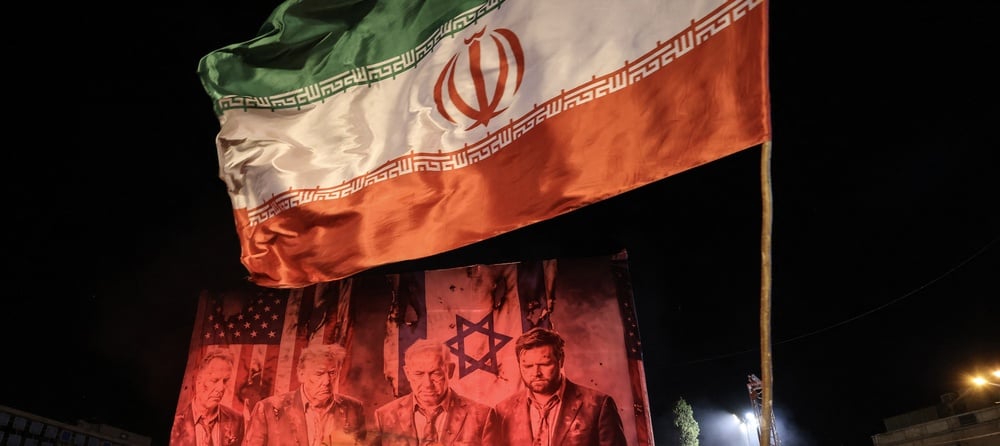
2026 © Helium Trades
Privacy Policy & Disclosure
* Disclaimer: Nothing on this website constitutes investment advice, performance data or any recommendation that any particular security, portfolio of securities, transaction or investment strategy is suitable for any specific person. Helium Trades is not responsible in any way for the accuracy
of any model predictions or price data. Any mention of a particular security and related prediction data is not a recommendation to buy or sell that security. Investments in securities involve the risk of loss. Past performance is no guarantee of future results. Helium Trades is not responsible for any of your investment decisions,
you should consult a financial expert before engaging in any transaction.
Helium Research Assistant

How can I help you today?
Ask any question about this page.


