See whether Helium helps you make better-informed decisions. Try every Pro Trader feature for 30 days. No credit card required.
Try every Pro Trader feature for 30 days. No credit card required.
November 19, 2026 · 0 shares
Official leaders and growth-oriented investment promotion dominate the framing, with minimal critical scrutiny of official claims.
Helium Analysis
Limitations: The supplied text contains duplicated scraped article content and navigation/footer elements, and no named author byline; analysis relies on the substantive APEC report.
·
13 of 56 available dimensions scored; omitted dimensions are not treated as neutral.
·
Verified supporting quotes for 13 of 13 scored dimensions.
Claim: The report frames the summit through heads of state and an international financial official, with no non-elite sources.
“President Ferdinand R. Marcos Jr. joined United States President Donald Trump, Russian President Vladimir Putin and other Asia-Pacific leaders” · exact text match
“International Monetary Fund Managing Director Kristalina Georgieva told APEC leaders” · exact text match
Why: Substantive framing depends on elite official voices, producing a mildly elitist perspective.
Claim: Economic and policy claims are attributed to named officials and presented descriptively rather than as publisher opinion.
“International Monetary Fund Managing Director Kristalina Georgieva told APEC leaders that AI contributed to global growth of 3.1 percent this year, while APEC economies are projected to expand by 3.4 percent.” · exact text match
Why: Named attribution and neutral reporting language indicate an objective presentation.
Claim: The lead and body use restrained newswire language rather than sensational or emotive phrasing.
“SHENZHEN, China – President Ferdinand R. Marcos Jr. joined United States President Donald Trump, Russian President Vladimir Putin and other Asia-Pacific leaders at the 33rd APEC Economic Leaders’ Meeting on Thursday” · exact text match
Why: Dry factual lead with no sensational adjectives supports an objective score.
Claim: The report emphasizes AI and APEC as growth drivers and cites positive expansion projections.
“discussions highlighted artificial intelligence (AI) as a major driver of global economic growth” · exact text match
“AI contributed to global growth of 3.1 percent this year, while APEC economies are projected to expand by 3.4 percent” · exact text match
Counterevidence:
“strengthen safeguards against financial and cybersecurity risks” · exact text match
Why: Growth-focused language and projections mildly skew bullish.
Claim: The report frames Philippine participation around investment, market expansion, and job creation opportunities.
“the Philippines seeks to accelerate its digital transformation, expand markets for Filipino products, and attract investments that generate quality jobs” · exact text match
“the Philippines is open for business.
Invest in the Filipino”
· exact text match
Counterevidence:
“strengthen safeguards against financial and cybersecurity risks” · exact text match
Why: Opportunity-oriented framing is mildly optimistic, though risks are also noted.
Claim: The article describes leaders’ goals and statements rather than prescribing policy outcomes.
“Marcos attended the meeting as the Philippines seeks to accelerate its digital transformation, expand markets for Filipino products, and attract investments that generate quality jobs.” · exact text match
Why: Reporting of aims and quotes is descriptive, not prescriptive.
Claim: The report centers presidential diplomacy and international political leaders.
“On relations with China, Marcos said the Philippines would continue to engage Beijing constructively on trade, investment and people-to-people exchanges while remaining steadfast in protecting its national interests.” · exact text match
Why: Diplomatic and leader-level political content is central to the report.
Claim: Factual and policy claims rely heavily on high-ranking officials and the IMF.
“Chinese President Xi Jinping, who chaired the plenary session, also called for stronger regional cooperation in digital technology and AI” · exact text match
“International Monetary Fund Managing Director Kristalina Georgieva told APEC leaders” · exact text match
Why: Authority-based sourcing dominates the article's claims.
Claim: The article's substantive content is built almost entirely from official leaders and IMF statements.
“President Ferdinand R. Marcos Jr. joined United States President Donald Trump, Russian President Vladimir Putin and other Asia-Pacific leaders” · exact text match
“International Monetary Fund Managing Director Kristalina Georgieva told APEC leaders” · exact text match
Why: Uncritical reliance on establishment sources supports a pro-establishment score.
Claim: The report uses named sourcing, direct quotations, and contextual caveats.
“International Monetary Fund Managing Director Kristalina Georgieva told APEC leaders that AI contributed to global growth of 3.1 percent this year, while APEC economies are projected to expand by 3.4 percent.” · exact text match
“The Philippines and China remain locked in a maritime dispute in the South China Sea, including over areas within the Philippines’ exclusive economic zone (EEZ).” · exact text match
Why: Visible attribution and inclusion of complicating context support credibility.
Claim: The report amplifies a direct investment-promotion pitch without critical framing.
“the Philippines is open for business.
Invest in the Filipino”
· exact text match
Why: Promotional quote included in a government newswire report gives mild advertorial flavor.
Claim: The framing promotes business investment and market access as central benefits.
“the Philippines is open for business.
Invest in the Filipino”
· exact text match
“attract investments that generate quality jobs” · exact text match
Why: Pro-investment and pro-business language mildly favors corporate/business interests.
Claim: The report includes contextual caveats and attributed figures rather than presenting only official talking points.
“The Philippines and China remain locked in a maritime dispute in the South China Sea, including over areas within the Philippines’ exclusive economic zone (EEZ).” · exact text match
“International Monetary Fund Managing Director Kristalina Georgieva told APEC leaders that AI contributed to global growth of 3.1 percent this year” · exact text match
Why: Inclusion of the maritime dispute and named sourcing signals fair, honest reporting.
The supplied text contains duplicated scraped article content and navigation/footer elements, and no named author byline; analysis relies on the substantive APEC report.
November 19, 2026 · 0 shares
A promotional, single-source official framing presents Xi Jinping’s proposals and Chinese funding announcements in uniformly positive terms without independent sourcing or scrutiny.
Helium Analysis
Limitations: The supplied text is a scraped article fragment with formatting artifacts and no byline; the assessment is limited to the visible Xinhua report.
·
4 of 56 available dimensions scored; omitted dimensions are not treated as neutral.
·
Verified supporting quotes for 4 of 4 scored dimensions.
Claim: Evaluative and ceremonial language frames Xi Jinping’s proposals positively rather than neutrally.
“remarkable economic progress” · exact text match
“move toward a brighter future” · exact text match
Why: The report uses positive evaluative and poetic language with no alternative perspective or independent scrutiny.
Claim: The report projects an optimistic outlook for Asia-Pacific cooperation and growth.
“remarkable economic progress” · exact text match
“move toward a brighter future” · exact text match
Why: The language emphasizes progress and a bright future without cautionary or pessimistic framing.
Claim: The article’s central content is a head-of-state policy address and intergovernmental regional proposals.
“Addressing the 33rd APEC Economic Leaders' Meeting in Shenzhen, south China's Guangdong Province, on Thursday, Xi delivered remarks titled “Building an Asia-Pacific Community and Writing a New Chapter of the Asia-Pacific Miracle.”” · exact text match
Why: The report is explicitly organized around political leadership and intergovernmental policy, making it highly political in subject and framing.
Claim: The report centers and amplifies official Chinese government and APEC leadership positions without countervailing voices.
“Chinese President Xi Jinping has called on Asia-Pacific economies to strengthen regional solidarity” · exact text match
“Xi announced that China would provide $20 million to support APEC's practical cooperation.” · exact text match
Why: The content is built from official leader remarks and state announcements, indicating strongly pro-establishment framing.
The supplied text is a scraped article fragment with formatting artifacts and no byline; the assessment is limited to the visible Xinhua report.
The strongest observable framing is an uncritical, attribution-heavy relay of a business-elite APEC initiative that presents cooperation goals as constructive consensus without independent scrutiny.
APEC is a regional economic forum, and its CEO Summit is a business-advisory gathering; the Shenzhen Initiative is therefore a business-community outcome document rather than necessarily a binding government agreement.
Helium Analysis
Limitations: The supplied text is partially duplicated and includes unrelated trailing headlines; analysis was limited to the substantive APEC initiative section.
·
6 of 56 available dimensions scored; omitted dimensions are not treated as neutral.
·
Verified supporting quotes for 6 of 6 scored dimensions.
Claim: The publisher frames the initiative through attributed document language rather than its own subjective advocacy.
“the document indicated” · exact text match
“According to the document” · exact text match
Why: Repeated attribution to the initiative/document keeps the report descriptive and objective.
Claim: The report uses institutional policy language rather than sensational cues.
“guided by four priority areas” · exact text match
Why: The prose is procedural and technical, with no dramatic, alarming, or emotionally charged wording.
Claim: The report uncritically relays the APEC business community's initiative as a constructive regional consensus.
“the Asia-Pacific business community stands ready to work with all economies” · exact text match
Why: The publisher foregrounds the business community's stated readiness and goals without critical or dissenting voices, indicating a pro-establishment framing.
Claim: Visible sourcing and repeated attribution support the report's credibility as a summary of a document.
“According to the document” · exact text match
“the document indicated” · exact text match
Why: The text consistently marks claims as coming from the initiative/document, though it does not include independent verification.
Claim: The report frames the initiative through attributed, procedural policy claims rather than emotive or irrational appeals.
“the document indicated” · exact text match
“According to the document” · exact text match
Why: The text relies on cited document language and avoids inflammatory or logically disconnected assertions.
Claim: The report attributes the initiative's claims to named document and news-agency sources.
“with its text posted by the Xinhua news agency” · exact text match
“(Xinhua/TASS)” · exact text match
Why: Repeated attribution to the document and Xinhua/TASS provides visible sourcing signals, supporting high integrity within the supplied text.
The supplied text is partially duplicated and includes unrelated trailing headlines; analysis was limited to the substantive APEC initiative section.
November 19, 2026 · 0 shares
Official leaders and growth-oriented investment promotion dominate the framing, with minimal critical scrutiny of official claims.
Helium Analysis
Limitations: The supplied text contains duplicated scraped article content and navigation/footer elements, and no named author byline; analysis relies on the substantive APEC report.
·
13 of 56 available dimensions scored; omitted dimensions are not treated as neutral.
·
Verified supporting quotes for 13 of 13 scored dimensions.
Claim: The report frames the summit through heads of state and an international financial official, with no non-elite sources.
“President Ferdinand R. Marcos Jr. joined United States President Donald Trump, Russian President Vladimir Putin and other Asia-Pacific leaders” · exact text match
“International Monetary Fund Managing Director Kristalina Georgieva told APEC leaders” · exact text match
Why: Substantive framing depends on elite official voices, producing a mildly elitist perspective.
Claim: Economic and policy claims are attributed to named officials and presented descriptively rather than as publisher opinion.
“International Monetary Fund Managing Director Kristalina Georgieva told APEC leaders that AI contributed to global growth of 3.1 percent this year, while APEC economies are projected to expand by 3.4 percent.” · exact text match
Why: Named attribution and neutral reporting language indicate an objective presentation.
Claim: The lead and body use restrained newswire language rather than sensational or emotive phrasing.
“SHENZHEN, China – President Ferdinand R. Marcos Jr. joined United States President Donald Trump, Russian President Vladimir Putin and other Asia-Pacific leaders at the 33rd APEC Economic Leaders’ Meeting on Thursday” · exact text match
Why: Dry factual lead with no sensational adjectives supports an objective score.
Claim: The report emphasizes AI and APEC as growth drivers and cites positive expansion projections.
“discussions highlighted artificial intelligence (AI) as a major driver of global economic growth” · exact text match
“AI contributed to global growth of 3.1 percent this year, while APEC economies are projected to expand by 3.4 percent” · exact text match
Counterevidence:
“strengthen safeguards against financial and cybersecurity risks” · exact text match
Why: Growth-focused language and projections mildly skew bullish.
Claim: The report frames Philippine participation around investment, market expansion, and job creation opportunities.
“the Philippines seeks to accelerate its digital transformation, expand markets for Filipino products, and attract investments that generate quality jobs” · exact text match
“the Philippines is open for business.
Invest in the Filipino”
· exact text match
Counterevidence:
“strengthen safeguards against financial and cybersecurity risks” · exact text match
Why: Opportunity-oriented framing is mildly optimistic, though risks are also noted.
Claim: The article describes leaders’ goals and statements rather than prescribing policy outcomes.
“Marcos attended the meeting as the Philippines seeks to accelerate its digital transformation, expand markets for Filipino products, and attract investments that generate quality jobs.” · exact text match
Why: Reporting of aims and quotes is descriptive, not prescriptive.
Claim: The report centers presidential diplomacy and international political leaders.
“On relations with China, Marcos said the Philippines would continue to engage Beijing constructively on trade, investment and people-to-people exchanges while remaining steadfast in protecting its national interests.” · exact text match
Why: Diplomatic and leader-level political content is central to the report.
Claim: Factual and policy claims rely heavily on high-ranking officials and the IMF.
“Chinese President Xi Jinping, who chaired the plenary session, also called for stronger regional cooperation in digital technology and AI” · exact text match
“International Monetary Fund Managing Director Kristalina Georgieva told APEC leaders” · exact text match
Why: Authority-based sourcing dominates the article's claims.
Claim: The article's substantive content is built almost entirely from official leaders and IMF statements.
“President Ferdinand R. Marcos Jr. joined United States President Donald Trump, Russian President Vladimir Putin and other Asia-Pacific leaders” · exact text match
“International Monetary Fund Managing Director Kristalina Georgieva told APEC leaders” · exact text match
Why: Uncritical reliance on establishment sources supports a pro-establishment score.
Claim: The report uses named sourcing, direct quotations, and contextual caveats.
“International Monetary Fund Managing Director Kristalina Georgieva told APEC leaders that AI contributed to global growth of 3.1 percent this year, while APEC economies are projected to expand by 3.4 percent.” · exact text match
“The Philippines and China remain locked in a maritime dispute in the South China Sea, including over areas within the Philippines’ exclusive economic zone (EEZ).” · exact text match
Why: Visible attribution and inclusion of complicating context support credibility.
Claim: The report amplifies a direct investment-promotion pitch without critical framing.
“the Philippines is open for business.
Invest in the Filipino”
· exact text match
Why: Promotional quote included in a government newswire report gives mild advertorial flavor.
Claim: The framing promotes business investment and market access as central benefits.
“the Philippines is open for business.
Invest in the Filipino”
· exact text match
“attract investments that generate quality jobs” · exact text match
Why: Pro-investment and pro-business language mildly favors corporate/business interests.
Claim: The report includes contextual caveats and attributed figures rather than presenting only official talking points.
“The Philippines and China remain locked in a maritime dispute in the South China Sea, including over areas within the Philippines’ exclusive economic zone (EEZ).” · exact text match
“International Monetary Fund Managing Director Kristalina Georgieva told APEC leaders that AI contributed to global growth of 3.1 percent this year” · exact text match
Why: Inclusion of the maritime dispute and named sourcing signals fair, honest reporting.
The supplied text contains duplicated scraped article content and navigation/footer elements, and no named author byline; analysis relies on the substantive APEC report.
November 19, 2026 · 0 shares
Official leaders and growth-oriented investment promotion dominate the framing, with minimal critical scrutiny of official claims.
Helium Analysis
Limitations: The supplied text contains duplicated scraped article content and navigation/footer elements, and no named author byline; analysis relies on the substantive APEC report.
·
13 of 56 available dimensions scored; omitted dimensions are not treated as neutral.
·
Verified supporting quotes for 13 of 13 scored dimensions.
Claim: The report frames the summit through heads of state and an international financial official, with no non-elite sources.
“President Ferdinand R. Marcos Jr. joined United States President Donald Trump, Russian President Vladimir Putin and other Asia-Pacific leaders” · exact text match
“International Monetary Fund Managing Director Kristalina Georgieva told APEC leaders” · exact text match
Why: Substantive framing depends on elite official voices, producing a mildly elitist perspective.
Claim: Economic and policy claims are attributed to named officials and presented descriptively rather than as publisher opinion.
“International Monetary Fund Managing Director Kristalina Georgieva told APEC leaders that AI contributed to global growth of 3.1 percent this year, while APEC economies are projected to expand by 3.4 percent.” · exact text match
Why: Named attribution and neutral reporting language indicate an objective presentation.
Claim: The lead and body use restrained newswire language rather than sensational or emotive phrasing.
“SHENZHEN, China – President Ferdinand R. Marcos Jr. joined United States President Donald Trump, Russian President Vladimir Putin and other Asia-Pacific leaders at the 33rd APEC Economic Leaders’ Meeting on Thursday” · exact text match
Why: Dry factual lead with no sensational adjectives supports an objective score.
Claim: The report emphasizes AI and APEC as growth drivers and cites positive expansion projections.
“discussions highlighted artificial intelligence (AI) as a major driver of global economic growth” · exact text match
“AI contributed to global growth of 3.1 percent this year, while APEC economies are projected to expand by 3.4 percent” · exact text match
Counterevidence:
“strengthen safeguards against financial and cybersecurity risks” · exact text match
Why: Growth-focused language and projections mildly skew bullish.
Claim: The report frames Philippine participation around investment, market expansion, and job creation opportunities.
“the Philippines seeks to accelerate its digital transformation, expand markets for Filipino products, and attract investments that generate quality jobs” · exact text match
“the Philippines is open for business.
Invest in the Filipino”
· exact text match
Counterevidence:
“strengthen safeguards against financial and cybersecurity risks” · exact text match
Why: Opportunity-oriented framing is mildly optimistic, though risks are also noted.
Claim: The article describes leaders’ goals and statements rather than prescribing policy outcomes.
“Marcos attended the meeting as the Philippines seeks to accelerate its digital transformation, expand markets for Filipino products, and attract investments that generate quality jobs.” · exact text match
Why: Reporting of aims and quotes is descriptive, not prescriptive.
Claim: The report centers presidential diplomacy and international political leaders.
“On relations with China, Marcos said the Philippines would continue to engage Beijing constructively on trade, investment and people-to-people exchanges while remaining steadfast in protecting its national interests.” · exact text match
Why: Diplomatic and leader-level political content is central to the report.
Claim: Factual and policy claims rely heavily on high-ranking officials and the IMF.
“Chinese President Xi Jinping, who chaired the plenary session, also called for stronger regional cooperation in digital technology and AI” · exact text match
“International Monetary Fund Managing Director Kristalina Georgieva told APEC leaders” · exact text match
Why: Authority-based sourcing dominates the article's claims.
Claim: The article's substantive content is built almost entirely from official leaders and IMF statements.
“President Ferdinand R. Marcos Jr. joined United States President Donald Trump, Russian President Vladimir Putin and other Asia-Pacific leaders” · exact text match
“International Monetary Fund Managing Director Kristalina Georgieva told APEC leaders” · exact text match
Why: Uncritical reliance on establishment sources supports a pro-establishment score.
Claim: The report uses named sourcing, direct quotations, and contextual caveats.
“International Monetary Fund Managing Director Kristalina Georgieva told APEC leaders that AI contributed to global growth of 3.1 percent this year, while APEC economies are projected to expand by 3.4 percent.” · exact text match
“The Philippines and China remain locked in a maritime dispute in the South China Sea, including over areas within the Philippines’ exclusive economic zone (EEZ).” · exact text match
Why: Visible attribution and inclusion of complicating context support credibility.
Claim: The report amplifies a direct investment-promotion pitch without critical framing.
“the Philippines is open for business.
Invest in the Filipino”
· exact text match
Why: Promotional quote included in a government newswire report gives mild advertorial flavor.
Claim: The framing promotes business investment and market access as central benefits.
“the Philippines is open for business.
Invest in the Filipino”
· exact text match
“attract investments that generate quality jobs” · exact text match
Why: Pro-investment and pro-business language mildly favors corporate/business interests.
Claim: The report includes contextual caveats and attributed figures rather than presenting only official talking points.
“The Philippines and China remain locked in a maritime dispute in the South China Sea, including over areas within the Philippines’ exclusive economic zone (EEZ).” · exact text match
“International Monetary Fund Managing Director Kristalina Georgieva told APEC leaders that AI contributed to global growth of 3.1 percent this year” · exact text match
Why: Inclusion of the maritime dispute and named sourcing signals fair, honest reporting.
The supplied text contains duplicated scraped article content and navigation/footer elements, and no named author byline; analysis relies on the substantive APEC report.
November 18, 2026 · 0 shares
The publisher frames the item as a neutral, factual official-arrival report, with no evaluative or sensational language.
Helium Analysis
Limitations: Only a one-sentence arrival statement remains after related-link/navigation headlines are excluded; no date, sourcing, or fuller APEC coverage is supplied.
·
5 of 56 available dimensions scored; omitted dimensions are not treated as neutral.
·
Verified supporting quotes for 5 of 5 scored dimensions.
Claim: The report presents the arrival as a plain factual statement without subjective commentary.
“President Prabowo Subianto arrived in Shenzhen, China, to attend the 33rd Asia-Pacific Economic Cooperation (APEC)” · exact text match
Why: The sentence states who, where, and why without evaluative or interpretive language.
Claim: The report avoids sensational or dramatic language.
“President Prabowo Subianto arrived in Shenzhen, China, to attend the 33rd Asia-Pacific Economic Cooperation (APEC)” · exact text match
Why: The wording is a straightforward arrival report with no alarmist or dramatic terms.
Claim: The item describes an event without prescribing actions or policies.
“President Prabowo Subianto arrived in Shenzhen, China, to attend the 33rd Asia-Pacific Economic Cooperation (APEC)” · exact text match
Why: It reports an arrival and summit attendance rather than recommending or advocating.
Claim: The item centers on presidential diplomatic summit attendance.
“President Prabowo Subianto arrived in Shenzhen, China, to attend the 33rd Asia-Pacific Economic Cooperation (APEC)” · exact text match
Why: The subject is an official state visit by a president to a multilateral economic forum.
Claim: The report uses a neutral emotional tone.
“President Prabowo Subianto arrived in Shenzhen, China, to attend the 33rd Asia-Pacific Economic Cooperation (APEC)” · exact text match
Why: No positive or negative emotional language is present.
Only a one-sentence arrival statement remains after related-link/navigation headlines are excluded; no date, sourcing, or fuller APEC coverage is supplied.
November 18, 2026 · 0 shares
The framing is a sober, single-source official account that presents Vietnam's leader as promoting investor-friendly cooperation at APEC without evaluative or sensational language.
APEC is an Asia-Pacific economic forum whose Economic Leaders’ Week includes a CEO Summit convening political and business leaders.
Helium Analysis
Limitations: The supplied text is a very short single-source news brief; related-link headlines were not treated as substantive article content.
·
3 of 56 available dimensions scored; omitted dimensions are not treated as neutral.
·
Verified supporting quotes for 3 of 3 scored dimensions.
Claim: The report attributes the central claims to a named speaker and event rather than using the publisher's evaluative voice.
“General Secretary of the Communist Party of Vietnam Central Committee and President To Lam said in his keynote address” · exact text match
Why: Explicit attribution to the speaker indicates descriptive, non-subjective reporting.
Claim: The headline and lead use sober event-based language rather than sensational wording.
“Top leader calls on APEC businesses to expand cooperation with Vietnam.” · exact text match
Why: The headline states an official call without emotional or dramatic language.
Claim: The brief provides named attribution and event context for the reported statement.
“General Secretary of the Communist Party of Vietnam Central Committee and President To Lam said in his keynote address at the APEC CEO Summit 2026” · exact text match
Why: Named sourcing and event placement provide visible attribution, though no independent confirmation is included.
The supplied text is a very short single-source news brief; related-link headlines were not treated as substantive article content.
November 20, 2026 · 0 shares
Official-source framing presents Wang Yi's upbeat assessment of the APEC meeting as the central development, without independent corroboration or alternative perspectives.
APEC is a regional economic forum, and the Free Trade Area of the Asia-Pacific is a proposed regional trade arrangement discussed in APEC settings.
Helium Analysis
Limitations: Only two substantive sentences are available; related headlines and page links were excluded, limiting the evidence base.
·
7 of 56 available dimensions scored; omitted dimensions are not treated as neutral.
·
Verified supporting quotes for 7 of 7 scored dimensions.
Claim: The item's only substantive perspective is a senior government official's.
“Chinese Foreign Minister Wang Yi said Thursday that the 33rd Asia-Pacific Economic Cooperation (APEC) Economic Leaders' Meeting marked a new peak in Asia-Pacific economic cooperation.” · exact text match
Why: The report centers a foreign minister and leaders' meeting, with no populist or grassroots voice.
Claim: The lead claim is an evaluative appraisal rather than a measurable fact.
“marked a new peak in Asia-Pacific economic cooperation” · exact text match
Why: 'New peak' is a subjective assessment attributed to Wang Yi and used as the article's main point.
Claim: The meeting is framed in positive, forward-looking terms.
“injected new momentum into advancing the Free Trade Area of the Asia-Pacific” · exact text match
Why: The phrase 'new momentum' presents cooperation as advancing positively.
Claim: The substantive content is an official's evaluative opinion presented without factual elaboration.
“marked a new peak in Asia-Pacific economic cooperation” · exact text match
Why: The article's main claim is an attributed appraisal rather than a neutral fact.
Claim: The item is centered on a foreign minister's diplomatic assessment of a multilateral leaders' meeting.
“Chinese Foreign Minister Wang Yi said Thursday that the 33rd Asia-Pacific Economic Cooperation (APEC) Economic Leaders' Meeting marked a new peak in Asia-Pacific economic cooperation.” · exact text match
Why: Its central actor and setting are governmental and diplomatic.
Claim: The item's authority rests on a named senior official's statement.
“Chinese Foreign Minister Wang Yi said Thursday that the 33rd Asia-Pacific Economic Cooperation (APEC) Economic Leaders' Meeting marked a new peak in Asia-Pacific economic cooperation.” · exact text match
Why: The report uses Wang Yi's ministerial position as the basis for the meeting's significance.
Claim: The item amplifies the official government assessment without a countervailing source.
“Chinese Foreign Minister Wang Yi said Thursday that the 33rd Asia-Pacific Economic Cooperation (APEC) Economic Leaders' Meeting marked a new peak in Asia-Pacific economic cooperation.” · exact text match
Why: The sole substantive source and framing are official, indicating pro-establishment framing.
Only two substantive sentences are available; related headlines and page links were excluded, limiting the evidence base.
Cross-border scientific cooperation is framed as an unalloyed public good, with APEC-linked forums and expert voices presented in an upbeat, institution-friendly narrative.
Helium Analysis
Limitations: The supplied text lacks a byline and explicit sponsorship disclosure while opening with event-promotion language, creating ambiguity about whether it is standard editorial or sponsored content.
·
10 of 56 available dimensions scored; omitted dimensions are not treated as neutral.
·
Verified supporting quotes for 9 of 10 scored dimensions.
Claim: The report centers university researchers, leading scientists, and international institutions as the principal voices for regional problem-solving.
“four leading scientists around the globe reflected on what they hope the next generation will be free to do.” · exact text match
Counterevidence:
“She sees farmers as teachers a scientist has something to learn from.” · exact text match
Why: The framing privileges credentialed experts and academic institutions, though it also includes farmers' experience.
Claim: The narrative uses editorial, subjective language to frame scientific cooperation as emotionally meaningful and broadly beneficial.
“Few things bring people together quite like discovering that a question they thought was theirs alone has preoccupied someone else's mind an ocean away.” · exact text match
Why: This is an evaluative, lyrical assertion rather than a neutral report of fact, making the feature more subjective.
Claim: The article frames cross-border science and innovation in strongly hopeful terms.
“"My dream is that science can once again be completely borderless," said Wolfgang Baumeister.” · exact text match
“When the young innovators speak about cooperation, there is as much generosity as aspiration in what they say.” · exact text match
Why: The quoted dream and the author's positive characterization of cooperation emphasize optimistic future benefits.
Claim: The piece moves from describing research to endorsing shared knowledge and cross-border collaboration as a desired course.
“They extend much the same invitation to their peers: to share what they know and help shape what comes next.” · not found in supplied text
Why: The phrasing presents cooperation as an invitation/ought-like direction, adding a prescriptive layer.
Claim: The article includes evaluative commentary and editorializing beyond straight reporting.
“Few things bring people together quite like discovering that a question they thought was theirs alone has preoccupied someone else's mind an ocean away.” · exact text match
Why: The line is an opinion-like generalization, indicating a feature with authorial perspective rather than neutral fact reporting.
Claim: The framing centers official APEC-linked forums, UN/World Bank data, and universities as legitimate conveners and authorities.
“For Asia-Pacific Economic Cooperation (APEC) 2026 in Shenzhen, and the Tengchong Scientists Forum invited young innovators from all 21 member economies to share their research stories and hopes for cooperation.” · verified after text normalization
“according to the United Nations Population Fund in Asia and the Pacific” · exact text match
Why: The article's opening and sourcing treat major institutional forums and agencies as authoritative and beneficial venues.
Claim: The feature uses warm, admiring language about cooperation and scientists' generosity.
“When the young innovators speak about cooperation, there is as much generosity as aspiration in what they say.” · exact text match
Why: The positive emotional characterization casts subjects warmly, though the tone is not overwrought.
Claim: The article is generally credible because it names researchers and attributes quantitative claims to institutional sources, though it is one-sided and promotional in tone.
“according to the United Nations Population Fund in Asia and the Pacific” · exact text match
“At Australia's Monash University, Zhao Peishen studies the point where a signaling molecule meets its receptor.” · exact text match
Why: Named institutions, researchers, and attributed data support trustworthiness, while the absence of critical voices limits it.
Claim: The article grounds regional trends and risks in named institutional data and specific research methods.
“By 2050, one in four people in the Asia-Pacific is expected to be 60 or older, according to the United Nations Population Fund in Asia and the Pacific.” · exact text match
“Across the economy, the World Bank estimated losses at $3.1 billion.” · exact text match
Why: Attribution to UN and World Bank estimates and concrete methods supports a strongly rational/empirical framing.
Claim: The article consistently adopts empirical and scientific framing rather than superstitious explanation.
“At the Technological University of Peru, Luis Elias Huatay Salcedo uses AI, satellite imagery and ocean temperature data to study how vegetation responds to El Niño conditions.” · exact text match
“according to the United Nations Population Fund in Asia and the Pacific” · exact text match
Why: Specific empirical methods and official demographic data anchor the claims in science/evidence.
The supplied text lacks a byline and explicit sponsorship disclosure while opening with event-promotion language, creating ambiguity about whether it is standard editorial or sponsored content.
November 19, 2026 · 0 shares
A promotional, single-source official framing presents Xi Jinping’s proposals and Chinese funding announcements in uniformly positive terms without independent sourcing or scrutiny.
Helium Analysis Limitations: The supplied text is a scraped article fragment with formatting artifacts and no byline; the assessment is limited to the visible Xinhua report. · 4 of 56 available dimensions scored; omitted dimensions are not treated as neutral. · Verified supporting quotes for 4 of 4 scored dimensions.
Claim: Evaluative and ceremonial language frames Xi Jinping’s proposals positively rather than neutrally.
“remarkable economic progress” · exact text match
“move toward a brighter future” · exact text match
Why: The report uses positive evaluative and poetic language with no alternative perspective or independent scrutiny.
Claim: The report projects an optimistic outlook for Asia-Pacific cooperation and growth.
“remarkable economic progress” · exact text match
“move toward a brighter future” · exact text match
Why: The language emphasizes progress and a bright future without cautionary or pessimistic framing.
Claim: The article’s central content is a head-of-state policy address and intergovernmental regional proposals.
“Addressing the 33rd APEC Economic Leaders' Meeting in Shenzhen, south China's Guangdong Province, on Thursday, Xi delivered remarks titled “Building an Asia-Pacific Community and Writing a New Chapter of the Asia-Pacific Miracle.”” · exact text match
Why: The report is explicitly organized around political leadership and intergovernmental policy, making it highly political in subject and framing.
Claim: The report centers and amplifies official Chinese government and APEC leadership positions without countervailing voices.
“Chinese President Xi Jinping has called on Asia-Pacific economies to strengthen regional solidarity” · exact text match
“Xi announced that China would provide $20 million to support APEC's practical cooperation.” · exact text match
Why: The content is built from official leader remarks and state announcements, indicating strongly pro-establishment framing.
The supplied text is a scraped article fragment with formatting artifacts and no byline; the assessment is limited to the visible Xinhua report.
The strongest observable framing is an uncritical, attribution-heavy relay of a business-elite APEC initiative that presents cooperation goals as constructive consensus without independent scrutiny.
APEC is a regional economic forum, and its CEO Summit is a business-advisory gathering; the Shenzhen Initiative is therefore a business-community outcome document rather than necessarily a binding government agreement.
Helium Analysis Limitations: The supplied text is partially duplicated and includes unrelated trailing headlines; analysis was limited to the substantive APEC initiative section. · 6 of 56 available dimensions scored; omitted dimensions are not treated as neutral. · Verified supporting quotes for 6 of 6 scored dimensions.
Claim: The publisher frames the initiative through attributed document language rather than its own subjective advocacy.
“the document indicated” · exact text match
“According to the document” · exact text match
Why: Repeated attribution to the initiative/document keeps the report descriptive and objective.
Claim: The report uses institutional policy language rather than sensational cues.
“guided by four priority areas” · exact text match
Why: The prose is procedural and technical, with no dramatic, alarming, or emotionally charged wording.
Claim: The report uncritically relays the APEC business community's initiative as a constructive regional consensus.
“the Asia-Pacific business community stands ready to work with all economies” · exact text match
Why: The publisher foregrounds the business community's stated readiness and goals without critical or dissenting voices, indicating a pro-establishment framing.
Claim: Visible sourcing and repeated attribution support the report's credibility as a summary of a document.
“According to the document” · exact text match
“the document indicated” · exact text match
Why: The text consistently marks claims as coming from the initiative/document, though it does not include independent verification.
Claim: The report frames the initiative through attributed, procedural policy claims rather than emotive or irrational appeals.
“the document indicated” · exact text match
“According to the document” · exact text match
Why: The text relies on cited document language and avoids inflammatory or logically disconnected assertions.
Claim: The report attributes the initiative's claims to named document and news-agency sources.
“with its text posted by the Xinhua news agency” · exact text match
“(Xinhua/TASS)” · exact text match
Why: Repeated attribution to the document and Xinhua/TASS provides visible sourcing signals, supporting high integrity within the supplied text.
The supplied text is partially duplicated and includes unrelated trailing headlines; analysis was limited to the substantive APEC initiative section.
November 19, 2026 · 0 shares
Official leaders and growth-oriented investment promotion dominate the framing, with minimal critical scrutiny of official claims.
Helium Analysis Limitations: The supplied text contains duplicated scraped article content and navigation/footer elements, and no named author byline; analysis relies on the substantive APEC report. · 13 of 56 available dimensions scored; omitted dimensions are not treated as neutral. · Verified supporting quotes for 13 of 13 scored dimensions.
Claim: The report frames the summit through heads of state and an international financial official, with no non-elite sources.
“President Ferdinand R. Marcos Jr. joined United States President Donald Trump, Russian President Vladimir Putin and other Asia-Pacific leaders” · exact text match
“International Monetary Fund Managing Director Kristalina Georgieva told APEC leaders” · exact text match
Why: Substantive framing depends on elite official voices, producing a mildly elitist perspective.
Claim: Economic and policy claims are attributed to named officials and presented descriptively rather than as publisher opinion.
“International Monetary Fund Managing Director Kristalina Georgieva told APEC leaders that AI contributed to global growth of 3.1 percent this year, while APEC economies are projected to expand by 3.4 percent.” · exact text match
Why: Named attribution and neutral reporting language indicate an objective presentation.
Claim: The lead and body use restrained newswire language rather than sensational or emotive phrasing.
“SHENZHEN, China – President Ferdinand R. Marcos Jr. joined United States President Donald Trump, Russian President Vladimir Putin and other Asia-Pacific leaders at the 33rd APEC Economic Leaders’ Meeting on Thursday” · exact text match
Why: Dry factual lead with no sensational adjectives supports an objective score.
Claim: The report emphasizes AI and APEC as growth drivers and cites positive expansion projections.
“discussions highlighted artificial intelligence (AI) as a major driver of global economic growth” · exact text match
“AI contributed to global growth of 3.1 percent this year, while APEC economies are projected to expand by 3.4 percent” · exact text match
Counterevidence:
“strengthen safeguards against financial and cybersecurity risks” · exact text match
Why: Growth-focused language and projections mildly skew bullish.
Claim: The report frames Philippine participation around investment, market expansion, and job creation opportunities.
“the Philippines seeks to accelerate its digital transformation, expand markets for Filipino products, and attract investments that generate quality jobs” · exact text match
“the Philippines is open for business. Invest in the Filipino” · exact text match
Counterevidence:
“strengthen safeguards against financial and cybersecurity risks” · exact text match
Why: Opportunity-oriented framing is mildly optimistic, though risks are also noted.
Claim: The article describes leaders’ goals and statements rather than prescribing policy outcomes.
“Marcos attended the meeting as the Philippines seeks to accelerate its digital transformation, expand markets for Filipino products, and attract investments that generate quality jobs.” · exact text match
Why: Reporting of aims and quotes is descriptive, not prescriptive.
Claim: The report centers presidential diplomacy and international political leaders.
“On relations with China, Marcos said the Philippines would continue to engage Beijing constructively on trade, investment and people-to-people exchanges while remaining steadfast in protecting its national interests.” · exact text match
Why: Diplomatic and leader-level political content is central to the report.
Claim: Factual and policy claims rely heavily on high-ranking officials and the IMF.
“Chinese President Xi Jinping, who chaired the plenary session, also called for stronger regional cooperation in digital technology and AI” · exact text match
“International Monetary Fund Managing Director Kristalina Georgieva told APEC leaders” · exact text match
Why: Authority-based sourcing dominates the article's claims.
Claim: The article's substantive content is built almost entirely from official leaders and IMF statements.
“President Ferdinand R. Marcos Jr. joined United States President Donald Trump, Russian President Vladimir Putin and other Asia-Pacific leaders” · exact text match
“International Monetary Fund Managing Director Kristalina Georgieva told APEC leaders” · exact text match
Why: Uncritical reliance on establishment sources supports a pro-establishment score.
Claim: The report uses named sourcing, direct quotations, and contextual caveats.
“International Monetary Fund Managing Director Kristalina Georgieva told APEC leaders that AI contributed to global growth of 3.1 percent this year, while APEC economies are projected to expand by 3.4 percent.” · exact text match
“The Philippines and China remain locked in a maritime dispute in the South China Sea, including over areas within the Philippines’ exclusive economic zone (EEZ).” · exact text match
Why: Visible attribution and inclusion of complicating context support credibility.
Claim: The report amplifies a direct investment-promotion pitch without critical framing.
“the Philippines is open for business. Invest in the Filipino” · exact text match
Why: Promotional quote included in a government newswire report gives mild advertorial flavor.
Claim: The framing promotes business investment and market access as central benefits.
“the Philippines is open for business. Invest in the Filipino” · exact text match
“attract investments that generate quality jobs” · exact text match
Why: Pro-investment and pro-business language mildly favors corporate/business interests.
Claim: The report includes contextual caveats and attributed figures rather than presenting only official talking points.
“The Philippines and China remain locked in a maritime dispute in the South China Sea, including over areas within the Philippines’ exclusive economic zone (EEZ).” · exact text match
“International Monetary Fund Managing Director Kristalina Georgieva told APEC leaders that AI contributed to global growth of 3.1 percent this year” · exact text match
Why: Inclusion of the maritime dispute and named sourcing signals fair, honest reporting.
The supplied text contains duplicated scraped article content and navigation/footer elements, and no named author byline; analysis relies on the substantive APEC report.
Cross-border scientific cooperation is framed as an unalloyed public good, with APEC-linked forums and expert voices presented in an upbeat, institution-friendly narrative.
Helium Analysis Limitations: The supplied text lacks a byline and explicit sponsorship disclosure while opening with event-promotion language, creating ambiguity about whether it is standard editorial or sponsored content. · 10 of 56 available dimensions scored; omitted dimensions are not treated as neutral. · Verified supporting quotes for 9 of 10 scored dimensions.
Claim: The report centers university researchers, leading scientists, and international institutions as the principal voices for regional problem-solving.
“four leading scientists around the globe reflected on what they hope the next generation will be free to do.” · exact text match
Counterevidence:
“She sees farmers as teachers a scientist has something to learn from.” · exact text match
Why: The framing privileges credentialed experts and academic institutions, though it also includes farmers' experience.
Claim: The narrative uses editorial, subjective language to frame scientific cooperation as emotionally meaningful and broadly beneficial.
“Few things bring people together quite like discovering that a question they thought was theirs alone has preoccupied someone else's mind an ocean away.” · exact text match
Why: This is an evaluative, lyrical assertion rather than a neutral report of fact, making the feature more subjective.
Claim: The article frames cross-border science and innovation in strongly hopeful terms.
“"My dream is that science can once again be completely borderless," said Wolfgang Baumeister.” · exact text match
“When the young innovators speak about cooperation, there is as much generosity as aspiration in what they say.” · exact text match
Why: The quoted dream and the author's positive characterization of cooperation emphasize optimistic future benefits.
Claim: The piece moves from describing research to endorsing shared knowledge and cross-border collaboration as a desired course.
“They extend much the same invitation to their peers: to share what they know and help shape what comes next.” · not found in supplied text
Why: The phrasing presents cooperation as an invitation/ought-like direction, adding a prescriptive layer.
Claim: The article includes evaluative commentary and editorializing beyond straight reporting.
“Few things bring people together quite like discovering that a question they thought was theirs alone has preoccupied someone else's mind an ocean away.” · exact text match
Why: The line is an opinion-like generalization, indicating a feature with authorial perspective rather than neutral fact reporting.
Claim: The framing centers official APEC-linked forums, UN/World Bank data, and universities as legitimate conveners and authorities.
“For Asia-Pacific Economic Cooperation (APEC) 2026 in Shenzhen, and the Tengchong Scientists Forum invited young innovators from all 21 member economies to share their research stories and hopes for cooperation.” · verified after text normalization
“according to the United Nations Population Fund in Asia and the Pacific” · exact text match
Why: The article's opening and sourcing treat major institutional forums and agencies as authoritative and beneficial venues.
Claim: The feature uses warm, admiring language about cooperation and scientists' generosity.
“When the young innovators speak about cooperation, there is as much generosity as aspiration in what they say.” · exact text match
Why: The positive emotional characterization casts subjects warmly, though the tone is not overwrought.
Claim: The article is generally credible because it names researchers and attributes quantitative claims to institutional sources, though it is one-sided and promotional in tone.
“according to the United Nations Population Fund in Asia and the Pacific” · exact text match
“At Australia's Monash University, Zhao Peishen studies the point where a signaling molecule meets its receptor.” · exact text match
Why: Named institutions, researchers, and attributed data support trustworthiness, while the absence of critical voices limits it.
Claim: The article grounds regional trends and risks in named institutional data and specific research methods.
“By 2050, one in four people in the Asia-Pacific is expected to be 60 or older, according to the United Nations Population Fund in Asia and the Pacific.” · exact text match
“Across the economy, the World Bank estimated losses at $3.1 billion.” · exact text match
Why: Attribution to UN and World Bank estimates and concrete methods supports a strongly rational/empirical framing.
Claim: The article consistently adopts empirical and scientific framing rather than superstitious explanation.
“At the Technological University of Peru, Luis Elias Huatay Salcedo uses AI, satellite imagery and ocean temperature data to study how vegetation responds to El Niño conditions.” · exact text match
“according to the United Nations Population Fund in Asia and the Pacific” · exact text match
Why: Specific empirical methods and official demographic data anchor the claims in science/evidence.
The supplied text lacks a byline and explicit sponsorship disclosure while opening with event-promotion language, creating ambiguity about whether it is standard editorial or sponsored content.
November 20, 2026 · 0 shares
Official-source framing presents Wang Yi's upbeat assessment of the APEC meeting as the central development, without independent corroboration or alternative perspectives.
APEC is a regional economic forum, and the Free Trade Area of the Asia-Pacific is a proposed regional trade arrangement discussed in APEC settings.
Helium Analysis Limitations: Only two substantive sentences are available; related headlines and page links were excluded, limiting the evidence base. · 7 of 56 available dimensions scored; omitted dimensions are not treated as neutral. · Verified supporting quotes for 7 of 7 scored dimensions.
Claim: The item's only substantive perspective is a senior government official's.
“Chinese Foreign Minister Wang Yi said Thursday that the 33rd Asia-Pacific Economic Cooperation (APEC) Economic Leaders' Meeting marked a new peak in Asia-Pacific economic cooperation.” · exact text match
Why: The report centers a foreign minister and leaders' meeting, with no populist or grassroots voice.
Claim: The lead claim is an evaluative appraisal rather than a measurable fact.
“marked a new peak in Asia-Pacific economic cooperation” · exact text match
Why: 'New peak' is a subjective assessment attributed to Wang Yi and used as the article's main point.
Claim: The meeting is framed in positive, forward-looking terms.
“injected new momentum into advancing the Free Trade Area of the Asia-Pacific” · exact text match
Why: The phrase 'new momentum' presents cooperation as advancing positively.
Claim: The substantive content is an official's evaluative opinion presented without factual elaboration.
“marked a new peak in Asia-Pacific economic cooperation” · exact text match
Why: The article's main claim is an attributed appraisal rather than a neutral fact.
Claim: The item is centered on a foreign minister's diplomatic assessment of a multilateral leaders' meeting.
“Chinese Foreign Minister Wang Yi said Thursday that the 33rd Asia-Pacific Economic Cooperation (APEC) Economic Leaders' Meeting marked a new peak in Asia-Pacific economic cooperation.” · exact text match
Why: Its central actor and setting are governmental and diplomatic.
Claim: The item's authority rests on a named senior official's statement.
“Chinese Foreign Minister Wang Yi said Thursday that the 33rd Asia-Pacific Economic Cooperation (APEC) Economic Leaders' Meeting marked a new peak in Asia-Pacific economic cooperation.” · exact text match
Why: The report uses Wang Yi's ministerial position as the basis for the meeting's significance.
Claim: The item amplifies the official government assessment without a countervailing source.
“Chinese Foreign Minister Wang Yi said Thursday that the 33rd Asia-Pacific Economic Cooperation (APEC) Economic Leaders' Meeting marked a new peak in Asia-Pacific economic cooperation.” · exact text match
Why: The sole substantive source and framing are official, indicating pro-establishment framing.
Only two substantive sentences are available; related headlines and page links were excluded, limiting the evidence base.
Helium Bias
Story Blindspots
November 19, 2026 · 0 shares
Official leaders and growth-oriented investment promotion dominate the framing, with minimal critical scrutiny of official claims.
Helium Analysis Limitations: The supplied text contains duplicated scraped article content and navigation/footer elements, and no named author byline; analysis relies on the substantive APEC report. · 13 of 56 available dimensions scored; omitted dimensions are not treated as neutral. · Verified supporting quotes for 13 of 13 scored dimensions.
Claim: The report frames the summit through heads of state and an international financial official, with no non-elite sources.
“President Ferdinand R. Marcos Jr. joined United States President Donald Trump, Russian President Vladimir Putin and other Asia-Pacific leaders” · exact text match
“International Monetary Fund Managing Director Kristalina Georgieva told APEC leaders” · exact text match
Why: Substantive framing depends on elite official voices, producing a mildly elitist perspective.
Claim: Economic and policy claims are attributed to named officials and presented descriptively rather than as publisher opinion.
“International Monetary Fund Managing Director Kristalina Georgieva told APEC leaders that AI contributed to global growth of 3.1 percent this year, while APEC economies are projected to expand by 3.4 percent.” · exact text match
Why: Named attribution and neutral reporting language indicate an objective presentation.
Claim: The lead and body use restrained newswire language rather than sensational or emotive phrasing.
“SHENZHEN, China – President Ferdinand R. Marcos Jr. joined United States President Donald Trump, Russian President Vladimir Putin and other Asia-Pacific leaders at the 33rd APEC Economic Leaders’ Meeting on Thursday” · exact text match
Why: Dry factual lead with no sensational adjectives supports an objective score.
Claim: The report emphasizes AI and APEC as growth drivers and cites positive expansion projections.
“discussions highlighted artificial intelligence (AI) as a major driver of global economic growth” · exact text match
“AI contributed to global growth of 3.1 percent this year, while APEC economies are projected to expand by 3.4 percent” · exact text match
Counterevidence:
“strengthen safeguards against financial and cybersecurity risks” · exact text match
Why: Growth-focused language and projections mildly skew bullish.
Claim: The report frames Philippine participation around investment, market expansion, and job creation opportunities.
“the Philippines seeks to accelerate its digital transformation, expand markets for Filipino products, and attract investments that generate quality jobs” · exact text match
“the Philippines is open for business. Invest in the Filipino” · exact text match
Counterevidence:
“strengthen safeguards against financial and cybersecurity risks” · exact text match
Why: Opportunity-oriented framing is mildly optimistic, though risks are also noted.
Claim: The article describes leaders’ goals and statements rather than prescribing policy outcomes.
“Marcos attended the meeting as the Philippines seeks to accelerate its digital transformation, expand markets for Filipino products, and attract investments that generate quality jobs.” · exact text match
Why: Reporting of aims and quotes is descriptive, not prescriptive.
Claim: The report centers presidential diplomacy and international political leaders.
“On relations with China, Marcos said the Philippines would continue to engage Beijing constructively on trade, investment and people-to-people exchanges while remaining steadfast in protecting its national interests.” · exact text match
Why: Diplomatic and leader-level political content is central to the report.
Claim: Factual and policy claims rely heavily on high-ranking officials and the IMF.
“Chinese President Xi Jinping, who chaired the plenary session, also called for stronger regional cooperation in digital technology and AI” · exact text match
“International Monetary Fund Managing Director Kristalina Georgieva told APEC leaders” · exact text match
Why: Authority-based sourcing dominates the article's claims.
Claim: The article's substantive content is built almost entirely from official leaders and IMF statements.
“President Ferdinand R. Marcos Jr. joined United States President Donald Trump, Russian President Vladimir Putin and other Asia-Pacific leaders” · exact text match
“International Monetary Fund Managing Director Kristalina Georgieva told APEC leaders” · exact text match
Why: Uncritical reliance on establishment sources supports a pro-establishment score.
Claim: The report uses named sourcing, direct quotations, and contextual caveats.
“International Monetary Fund Managing Director Kristalina Georgieva told APEC leaders that AI contributed to global growth of 3.1 percent this year, while APEC economies are projected to expand by 3.4 percent.” · exact text match
“The Philippines and China remain locked in a maritime dispute in the South China Sea, including over areas within the Philippines’ exclusive economic zone (EEZ).” · exact text match
Why: Visible attribution and inclusion of complicating context support credibility.
Claim: The report amplifies a direct investment-promotion pitch without critical framing.
“the Philippines is open for business. Invest in the Filipino” · exact text match
Why: Promotional quote included in a government newswire report gives mild advertorial flavor.
Claim: The framing promotes business investment and market access as central benefits.
“the Philippines is open for business. Invest in the Filipino” · exact text match
“attract investments that generate quality jobs” · exact text match
Why: Pro-investment and pro-business language mildly favors corporate/business interests.
Claim: The report includes contextual caveats and attributed figures rather than presenting only official talking points.
“The Philippines and China remain locked in a maritime dispute in the South China Sea, including over areas within the Philippines’ exclusive economic zone (EEZ).” · exact text match
“International Monetary Fund Managing Director Kristalina Georgieva told APEC leaders that AI contributed to global growth of 3.1 percent this year” · exact text match
Why: Inclusion of the maritime dispute and named sourcing signals fair, honest reporting.
The supplied text contains duplicated scraped article content and navigation/footer elements, and no named author byline; analysis relies on the substantive APEC report.
The strongest observable framing is an uncritical, attribution-heavy relay of a business-elite APEC initiative that presents cooperation goals as constructive consensus without independent scrutiny.
APEC is a regional economic forum, and its CEO Summit is a business-advisory gathering; the Shenzhen Initiative is therefore a business-community outcome document rather than necessarily a binding government agreement.
Helium Analysis Limitations: The supplied text is partially duplicated and includes unrelated trailing headlines; analysis was limited to the substantive APEC initiative section. · 6 of 56 available dimensions scored; omitted dimensions are not treated as neutral. · Verified supporting quotes for 6 of 6 scored dimensions.
Claim: The publisher frames the initiative through attributed document language rather than its own subjective advocacy.
“the document indicated” · exact text match
“According to the document” · exact text match
Why: Repeated attribution to the initiative/document keeps the report descriptive and objective.
Claim: The report uses institutional policy language rather than sensational cues.
“guided by four priority areas” · exact text match
Why: The prose is procedural and technical, with no dramatic, alarming, or emotionally charged wording.
Claim: The report uncritically relays the APEC business community's initiative as a constructive regional consensus.
“the Asia-Pacific business community stands ready to work with all economies” · exact text match
Why: The publisher foregrounds the business community's stated readiness and goals without critical or dissenting voices, indicating a pro-establishment framing.
Claim: Visible sourcing and repeated attribution support the report's credibility as a summary of a document.
“According to the document” · exact text match
“the document indicated” · exact text match
Why: The text consistently marks claims as coming from the initiative/document, though it does not include independent verification.
Claim: The report frames the initiative through attributed, procedural policy claims rather than emotive or irrational appeals.
“the document indicated” · exact text match
“According to the document” · exact text match
Why: The text relies on cited document language and avoids inflammatory or logically disconnected assertions.
Claim: The report attributes the initiative's claims to named document and news-agency sources.
“with its text posted by the Xinhua news agency” · exact text match
“(Xinhua/TASS)” · exact text match
Why: Repeated attribution to the document and Xinhua/TASS provides visible sourcing signals, supporting high integrity within the supplied text.
The supplied text is partially duplicated and includes unrelated trailing headlines; analysis was limited to the substantive APEC initiative section.
November 19, 2026 · 0 shares
A promotional, single-source official framing presents Xi Jinping’s proposals and Chinese funding announcements in uniformly positive terms without independent sourcing or scrutiny.
Helium Analysis Limitations: The supplied text is a scraped article fragment with formatting artifacts and no byline; the assessment is limited to the visible Xinhua report. · 4 of 56 available dimensions scored; omitted dimensions are not treated as neutral. · Verified supporting quotes for 4 of 4 scored dimensions.
Claim: Evaluative and ceremonial language frames Xi Jinping’s proposals positively rather than neutrally.
“remarkable economic progress” · exact text match
“move toward a brighter future” · exact text match
Why: The report uses positive evaluative and poetic language with no alternative perspective or independent scrutiny.
Claim: The report projects an optimistic outlook for Asia-Pacific cooperation and growth.
“remarkable economic progress” · exact text match
“move toward a brighter future” · exact text match
Why: The language emphasizes progress and a bright future without cautionary or pessimistic framing.
Claim: The article’s central content is a head-of-state policy address and intergovernmental regional proposals.
“Addressing the 33rd APEC Economic Leaders' Meeting in Shenzhen, south China's Guangdong Province, on Thursday, Xi delivered remarks titled “Building an Asia-Pacific Community and Writing a New Chapter of the Asia-Pacific Miracle.”” · exact text match
Why: The report is explicitly organized around political leadership and intergovernmental policy, making it highly political in subject and framing.
Claim: The report centers and amplifies official Chinese government and APEC leadership positions without countervailing voices.
“Chinese President Xi Jinping has called on Asia-Pacific economies to strengthen regional solidarity” · exact text match
“Xi announced that China would provide $20 million to support APEC's practical cooperation.” · exact text match
Why: The content is built from official leader remarks and state announcements, indicating strongly pro-establishment framing.
The supplied text is a scraped article fragment with formatting artifacts and no byline; the assessment is limited to the visible Xinhua report.
November 20, 2026 · 0 shares
Official-source framing presents Wang Yi's upbeat assessment of the APEC meeting as the central development, without independent corroboration or alternative perspectives.
APEC is a regional economic forum, and the Free Trade Area of the Asia-Pacific is a proposed regional trade arrangement discussed in APEC settings.
Helium Analysis Limitations: Only two substantive sentences are available; related headlines and page links were excluded, limiting the evidence base. · 7 of 56 available dimensions scored; omitted dimensions are not treated as neutral. · Verified supporting quotes for 7 of 7 scored dimensions.
Claim: The item's only substantive perspective is a senior government official's.
“Chinese Foreign Minister Wang Yi said Thursday that the 33rd Asia-Pacific Economic Cooperation (APEC) Economic Leaders' Meeting marked a new peak in Asia-Pacific economic cooperation.” · exact text match
Why: The report centers a foreign minister and leaders' meeting, with no populist or grassroots voice.
Claim: The lead claim is an evaluative appraisal rather than a measurable fact.
“marked a new peak in Asia-Pacific economic cooperation” · exact text match
Why: 'New peak' is a subjective assessment attributed to Wang Yi and used as the article's main point.
Claim: The meeting is framed in positive, forward-looking terms.
“injected new momentum into advancing the Free Trade Area of the Asia-Pacific” · exact text match
Why: The phrase 'new momentum' presents cooperation as advancing positively.
Claim: The substantive content is an official's evaluative opinion presented without factual elaboration.
“marked a new peak in Asia-Pacific economic cooperation” · exact text match
Why: The article's main claim is an attributed appraisal rather than a neutral fact.
Claim: The item is centered on a foreign minister's diplomatic assessment of a multilateral leaders' meeting.
“Chinese Foreign Minister Wang Yi said Thursday that the 33rd Asia-Pacific Economic Cooperation (APEC) Economic Leaders' Meeting marked a new peak in Asia-Pacific economic cooperation.” · exact text match
Why: Its central actor and setting are governmental and diplomatic.
Claim: The item's authority rests on a named senior official's statement.
“Chinese Foreign Minister Wang Yi said Thursday that the 33rd Asia-Pacific Economic Cooperation (APEC) Economic Leaders' Meeting marked a new peak in Asia-Pacific economic cooperation.” · exact text match
Why: The report uses Wang Yi's ministerial position as the basis for the meeting's significance.
Claim: The item amplifies the official government assessment without a countervailing source.
“Chinese Foreign Minister Wang Yi said Thursday that the 33rd Asia-Pacific Economic Cooperation (APEC) Economic Leaders' Meeting marked a new peak in Asia-Pacific economic cooperation.” · exact text match
Why: The sole substantive source and framing are official, indicating pro-establishment framing.
Only two substantive sentences are available; related headlines and page links were excluded, limiting the evidence base.
The strongest observable framing is an uncritical, attribution-heavy relay of a business-elite APEC initiative that presents cooperation goals as constructive consensus without independent scrutiny.
APEC is a regional economic forum, and its CEO Summit is a business-advisory gathering; the Shenzhen Initiative is therefore a business-community outcome document rather than necessarily a binding government agreement.
Helium Analysis Limitations: The supplied text is partially duplicated and includes unrelated trailing headlines; analysis was limited to the substantive APEC initiative section. · 6 of 56 available dimensions scored; omitted dimensions are not treated as neutral. · Verified supporting quotes for 6 of 6 scored dimensions.
Claim: The publisher frames the initiative through attributed document language rather than its own subjective advocacy.
“the document indicated” · exact text match
“According to the document” · exact text match
Why: Repeated attribution to the initiative/document keeps the report descriptive and objective.
Claim: The report uses institutional policy language rather than sensational cues.
“guided by four priority areas” · exact text match
Why: The prose is procedural and technical, with no dramatic, alarming, or emotionally charged wording.
Claim: The report uncritically relays the APEC business community's initiative as a constructive regional consensus.
“the Asia-Pacific business community stands ready to work with all economies” · exact text match
Why: The publisher foregrounds the business community's stated readiness and goals without critical or dissenting voices, indicating a pro-establishment framing.
Claim: Visible sourcing and repeated attribution support the report's credibility as a summary of a document.
“According to the document” · exact text match
“the document indicated” · exact text match
Why: The text consistently marks claims as coming from the initiative/document, though it does not include independent verification.
Claim: The report frames the initiative through attributed, procedural policy claims rather than emotive or irrational appeals.
“the document indicated” · exact text match
“According to the document” · exact text match
Why: The text relies on cited document language and avoids inflammatory or logically disconnected assertions.
Claim: The report attributes the initiative's claims to named document and news-agency sources.
“with its text posted by the Xinhua news agency” · exact text match
“(Xinhua/TASS)” · exact text match
Why: Repeated attribution to the document and Xinhua/TASS provides visible sourcing signals, supporting high integrity within the supplied text.
The supplied text is partially duplicated and includes unrelated trailing headlines; analysis was limited to the substantive APEC initiative section.
November 19, 2026 · 0 shares
Official leaders and growth-oriented investment promotion dominate the framing, with minimal critical scrutiny of official claims.
Helium Analysis Limitations: The supplied text contains duplicated scraped article content and navigation/footer elements, and no named author byline; analysis relies on the substantive APEC report. · 13 of 56 available dimensions scored; omitted dimensions are not treated as neutral. · Verified supporting quotes for 13 of 13 scored dimensions.
Claim: The report frames the summit through heads of state and an international financial official, with no non-elite sources.
“President Ferdinand R. Marcos Jr. joined United States President Donald Trump, Russian President Vladimir Putin and other Asia-Pacific leaders” · exact text match
“International Monetary Fund Managing Director Kristalina Georgieva told APEC leaders” · exact text match
Why: Substantive framing depends on elite official voices, producing a mildly elitist perspective.
Claim: Economic and policy claims are attributed to named officials and presented descriptively rather than as publisher opinion.
“International Monetary Fund Managing Director Kristalina Georgieva told APEC leaders that AI contributed to global growth of 3.1 percent this year, while APEC economies are projected to expand by 3.4 percent.” · exact text match
Why: Named attribution and neutral reporting language indicate an objective presentation.
Claim: The lead and body use restrained newswire language rather than sensational or emotive phrasing.
“SHENZHEN, China – President Ferdinand R. Marcos Jr. joined United States President Donald Trump, Russian President Vladimir Putin and other Asia-Pacific leaders at the 33rd APEC Economic Leaders’ Meeting on Thursday” · exact text match
Why: Dry factual lead with no sensational adjectives supports an objective score.
Claim: The report emphasizes AI and APEC as growth drivers and cites positive expansion projections.
“discussions highlighted artificial intelligence (AI) as a major driver of global economic growth” · exact text match
“AI contributed to global growth of 3.1 percent this year, while APEC economies are projected to expand by 3.4 percent” · exact text match
Counterevidence:
“strengthen safeguards against financial and cybersecurity risks” · exact text match
Why: Growth-focused language and projections mildly skew bullish.
Claim: The report frames Philippine participation around investment, market expansion, and job creation opportunities.
“the Philippines seeks to accelerate its digital transformation, expand markets for Filipino products, and attract investments that generate quality jobs” · exact text match
“the Philippines is open for business. Invest in the Filipino” · exact text match
Counterevidence:
“strengthen safeguards against financial and cybersecurity risks” · exact text match
Why: Opportunity-oriented framing is mildly optimistic, though risks are also noted.
Claim: The article describes leaders’ goals and statements rather than prescribing policy outcomes.
“Marcos attended the meeting as the Philippines seeks to accelerate its digital transformation, expand markets for Filipino products, and attract investments that generate quality jobs.” · exact text match
Why: Reporting of aims and quotes is descriptive, not prescriptive.
Claim: The report centers presidential diplomacy and international political leaders.
“On relations with China, Marcos said the Philippines would continue to engage Beijing constructively on trade, investment and people-to-people exchanges while remaining steadfast in protecting its national interests.” · exact text match
Why: Diplomatic and leader-level political content is central to the report.
Claim: Factual and policy claims rely heavily on high-ranking officials and the IMF.
“Chinese President Xi Jinping, who chaired the plenary session, also called for stronger regional cooperation in digital technology and AI” · exact text match
“International Monetary Fund Managing Director Kristalina Georgieva told APEC leaders” · exact text match
Why: Authority-based sourcing dominates the article's claims.
Claim: The article's substantive content is built almost entirely from official leaders and IMF statements.
“President Ferdinand R. Marcos Jr. joined United States President Donald Trump, Russian President Vladimir Putin and other Asia-Pacific leaders” · exact text match
“International Monetary Fund Managing Director Kristalina Georgieva told APEC leaders” · exact text match
Why: Uncritical reliance on establishment sources supports a pro-establishment score.
Claim: The report uses named sourcing, direct quotations, and contextual caveats.
“International Monetary Fund Managing Director Kristalina Georgieva told APEC leaders that AI contributed to global growth of 3.1 percent this year, while APEC economies are projected to expand by 3.4 percent.” · exact text match
“The Philippines and China remain locked in a maritime dispute in the South China Sea, including over areas within the Philippines’ exclusive economic zone (EEZ).” · exact text match
Why: Visible attribution and inclusion of complicating context support credibility.
Claim: The report amplifies a direct investment-promotion pitch without critical framing.
“the Philippines is open for business. Invest in the Filipino” · exact text match
Why: Promotional quote included in a government newswire report gives mild advertorial flavor.
Claim: The framing promotes business investment and market access as central benefits.
“the Philippines is open for business. Invest in the Filipino” · exact text match
“attract investments that generate quality jobs” · exact text match
Why: Pro-investment and pro-business language mildly favors corporate/business interests.
Claim: The report includes contextual caveats and attributed figures rather than presenting only official talking points.
“The Philippines and China remain locked in a maritime dispute in the South China Sea, including over areas within the Philippines’ exclusive economic zone (EEZ).” · exact text match
“International Monetary Fund Managing Director Kristalina Georgieva told APEC leaders that AI contributed to global growth of 3.1 percent this year” · exact text match
Why: Inclusion of the maritime dispute and named sourcing signals fair, honest reporting.
The supplied text contains duplicated scraped article content and navigation/footer elements, and no named author byline; analysis relies on the substantive APEC report.
November 20, 2026 · 0 shares
Official-source framing presents Wang Yi's upbeat assessment of the APEC meeting as the central development, without independent corroboration or alternative perspectives.
APEC is a regional economic forum, and the Free Trade Area of the Asia-Pacific is a proposed regional trade arrangement discussed in APEC settings.
Helium Analysis
Limitations: Only two substantive sentences are available; related headlines and page links were excluded, limiting the evidence base.
·
7 of 56 available dimensions scored; omitted dimensions are not treated as neutral.
·
Verified supporting quotes for 7 of 7 scored dimensions.
Claim: The item's only substantive perspective is a senior government official's.
“Chinese Foreign Minister Wang Yi said Thursday that the 33rd Asia-Pacific Economic Cooperation (APEC) Economic Leaders' Meeting marked a new peak in Asia-Pacific economic cooperation.” · exact text match
Why: The report centers a foreign minister and leaders' meeting, with no populist or grassroots voice.
Claim: The lead claim is an evaluative appraisal rather than a measurable fact.
“marked a new peak in Asia-Pacific economic cooperation” · exact text match
Why: 'New peak' is a subjective assessment attributed to Wang Yi and used as the article's main point.
Claim: The meeting is framed in positive, forward-looking terms.
“injected new momentum into advancing the Free Trade Area of the Asia-Pacific” · exact text match
Why: The phrase 'new momentum' presents cooperation as advancing positively.
Claim: The substantive content is an official's evaluative opinion presented without factual elaboration.
“marked a new peak in Asia-Pacific economic cooperation” · exact text match
Why: The article's main claim is an attributed appraisal rather than a neutral fact.
Claim: The item is centered on a foreign minister's diplomatic assessment of a multilateral leaders' meeting.
“Chinese Foreign Minister Wang Yi said Thursday that the 33rd Asia-Pacific Economic Cooperation (APEC) Economic Leaders' Meeting marked a new peak in Asia-Pacific economic cooperation.” · exact text match
Why: Its central actor and setting are governmental and diplomatic.
Claim: The item's authority rests on a named senior official's statement.
“Chinese Foreign Minister Wang Yi said Thursday that the 33rd Asia-Pacific Economic Cooperation (APEC) Economic Leaders' Meeting marked a new peak in Asia-Pacific economic cooperation.” · exact text match
Why: The report uses Wang Yi's ministerial position as the basis for the meeting's significance.
Claim: The item amplifies the official government assessment without a countervailing source.
“Chinese Foreign Minister Wang Yi said Thursday that the 33rd Asia-Pacific Economic Cooperation (APEC) Economic Leaders' Meeting marked a new peak in Asia-Pacific economic cooperation.” · exact text match
Why: The sole substantive source and framing are official, indicating pro-establishment framing.
Only two substantive sentences are available; related headlines and page links were excluded, limiting the evidence base.
November 19, 2026 · 0 shares
A promotional, single-source official framing presents Xi Jinping’s proposals and Chinese funding announcements in uniformly positive terms without independent sourcing or scrutiny.
Helium Analysis
Limitations: The supplied text is a scraped article fragment with formatting artifacts and no byline; the assessment is limited to the visible Xinhua report.
·
4 of 56 available dimensions scored; omitted dimensions are not treated as neutral.
·
Verified supporting quotes for 4 of 4 scored dimensions.
Claim: Evaluative and ceremonial language frames Xi Jinping’s proposals positively rather than neutrally.
“remarkable economic progress” · exact text match
“move toward a brighter future” · exact text match
Why: The report uses positive evaluative and poetic language with no alternative perspective or independent scrutiny.
Claim: The report projects an optimistic outlook for Asia-Pacific cooperation and growth.
“remarkable economic progress” · exact text match
“move toward a brighter future” · exact text match
Why: The language emphasizes progress and a bright future without cautionary or pessimistic framing.
Claim: The article’s central content is a head-of-state policy address and intergovernmental regional proposals.
“Addressing the 33rd APEC Economic Leaders' Meeting in Shenzhen, south China's Guangdong Province, on Thursday, Xi delivered remarks titled “Building an Asia-Pacific Community and Writing a New Chapter of the Asia-Pacific Miracle.”” · exact text match
Why: The report is explicitly organized around political leadership and intergovernmental policy, making it highly political in subject and framing.
Claim: The report centers and amplifies official Chinese government and APEC leadership positions without countervailing voices.
“Chinese President Xi Jinping has called on Asia-Pacific economies to strengthen regional solidarity” · exact text match
“Xi announced that China would provide $20 million to support APEC's practical cooperation.” · exact text match
Why: The content is built from official leader remarks and state announcements, indicating strongly pro-establishment framing.
The supplied text is a scraped article fragment with formatting artifacts and no byline; the assessment is limited to the visible Xinhua report.
November 19, 2026 · 0 shares
Official leaders and growth-oriented investment promotion dominate the framing, with minimal critical scrutiny of official claims.
Helium Analysis
Limitations: The supplied text contains duplicated scraped article content and navigation/footer elements, and no named author byline; analysis relies on the substantive APEC report.
·
13 of 56 available dimensions scored; omitted dimensions are not treated as neutral.
·
Verified supporting quotes for 13 of 13 scored dimensions.
Claim: The report frames the summit through heads of state and an international financial official, with no non-elite sources.
“President Ferdinand R. Marcos Jr. joined United States President Donald Trump, Russian President Vladimir Putin and other Asia-Pacific leaders” · exact text match
“International Monetary Fund Managing Director Kristalina Georgieva told APEC leaders” · exact text match
Why: Substantive framing depends on elite official voices, producing a mildly elitist perspective.
Claim: Economic and policy claims are attributed to named officials and presented descriptively rather than as publisher opinion.
“International Monetary Fund Managing Director Kristalina Georgieva told APEC leaders that AI contributed to global growth of 3.1 percent this year, while APEC economies are projected to expand by 3.4 percent.” · exact text match
Why: Named attribution and neutral reporting language indicate an objective presentation.
Claim: The lead and body use restrained newswire language rather than sensational or emotive phrasing.
“SHENZHEN, China – President Ferdinand R. Marcos Jr. joined United States President Donald Trump, Russian President Vladimir Putin and other Asia-Pacific leaders at the 33rd APEC Economic Leaders’ Meeting on Thursday” · exact text match
Why: Dry factual lead with no sensational adjectives supports an objective score.
Claim: The report emphasizes AI and APEC as growth drivers and cites positive expansion projections.
“discussions highlighted artificial intelligence (AI) as a major driver of global economic growth” · exact text match
“AI contributed to global growth of 3.1 percent this year, while APEC economies are projected to expand by 3.4 percent” · exact text match
Counterevidence:
“strengthen safeguards against financial and cybersecurity risks” · exact text match
Why: Growth-focused language and projections mildly skew bullish.
Claim: The report frames Philippine participation around investment, market expansion, and job creation opportunities.
“the Philippines seeks to accelerate its digital transformation, expand markets for Filipino products, and attract investments that generate quality jobs” · exact text match
“the Philippines is open for business.
Invest in the Filipino”
· exact text match
Counterevidence:
“strengthen safeguards against financial and cybersecurity risks” · exact text match
Why: Opportunity-oriented framing is mildly optimistic, though risks are also noted.
Claim: The article describes leaders’ goals and statements rather than prescribing policy outcomes.
“Marcos attended the meeting as the Philippines seeks to accelerate its digital transformation, expand markets for Filipino products, and attract investments that generate quality jobs.” · exact text match
Why: Reporting of aims and quotes is descriptive, not prescriptive.
Claim: The report centers presidential diplomacy and international political leaders.
“On relations with China, Marcos said the Philippines would continue to engage Beijing constructively on trade, investment and people-to-people exchanges while remaining steadfast in protecting its national interests.” · exact text match
Why: Diplomatic and leader-level political content is central to the report.
Claim: Factual and policy claims rely heavily on high-ranking officials and the IMF.
“Chinese President Xi Jinping, who chaired the plenary session, also called for stronger regional cooperation in digital technology and AI” · exact text match
“International Monetary Fund Managing Director Kristalina Georgieva told APEC leaders” · exact text match
Why: Authority-based sourcing dominates the article's claims.
Claim: The article's substantive content is built almost entirely from official leaders and IMF statements.
“President Ferdinand R. Marcos Jr. joined United States President Donald Trump, Russian President Vladimir Putin and other Asia-Pacific leaders” · exact text match
“International Monetary Fund Managing Director Kristalina Georgieva told APEC leaders” · exact text match
Why: Uncritical reliance on establishment sources supports a pro-establishment score.
Claim: The report uses named sourcing, direct quotations, and contextual caveats.
“International Monetary Fund Managing Director Kristalina Georgieva told APEC leaders that AI contributed to global growth of 3.1 percent this year, while APEC economies are projected to expand by 3.4 percent.” · exact text match
“The Philippines and China remain locked in a maritime dispute in the South China Sea, including over areas within the Philippines’ exclusive economic zone (EEZ).” · exact text match
Why: Visible attribution and inclusion of complicating context support credibility.
Claim: The report amplifies a direct investment-promotion pitch without critical framing.
“the Philippines is open for business.
Invest in the Filipino”
· exact text match
Why: Promotional quote included in a government newswire report gives mild advertorial flavor.
Claim: The framing promotes business investment and market access as central benefits.
“the Philippines is open for business.
Invest in the Filipino”
· exact text match
“attract investments that generate quality jobs” · exact text match
Why: Pro-investment and pro-business language mildly favors corporate/business interests.
Claim: The report includes contextual caveats and attributed figures rather than presenting only official talking points.
“The Philippines and China remain locked in a maritime dispute in the South China Sea, including over areas within the Philippines’ exclusive economic zone (EEZ).” · exact text match
“International Monetary Fund Managing Director Kristalina Georgieva told APEC leaders that AI contributed to global growth of 3.1 percent this year” · exact text match
Why: Inclusion of the maritime dispute and named sourcing signals fair, honest reporting.
The supplied text contains duplicated scraped article content and navigation/footer elements, and no named author byline; analysis relies on the substantive APEC report.
November 18, 2026 · 0 shares
The framing is a sober, single-source official account that presents Vietnam's leader as promoting investor-friendly cooperation at APEC without evaluative or sensational language.
APEC is an Asia-Pacific economic forum whose Economic Leaders’ Week includes a CEO Summit convening political and business leaders.
Helium Analysis
Limitations: The supplied text is a very short single-source news brief; related-link headlines were not treated as substantive article content.
·
3 of 56 available dimensions scored; omitted dimensions are not treated as neutral.
·
Verified supporting quotes for 3 of 3 scored dimensions.
Claim: The report attributes the central claims to a named speaker and event rather than using the publisher's evaluative voice.
“General Secretary of the Communist Party of Vietnam Central Committee and President To Lam said in his keynote address” · exact text match
Why: Explicit attribution to the speaker indicates descriptive, non-subjective reporting.
Claim: The headline and lead use sober event-based language rather than sensational wording.
“Top leader calls on APEC businesses to expand cooperation with Vietnam.” · exact text match
Why: The headline states an official call without emotional or dramatic language.
Claim: The brief provides named attribution and event context for the reported statement.
“General Secretary of the Communist Party of Vietnam Central Committee and President To Lam said in his keynote address at the APEC CEO Summit 2026” · exact text match
Why: Named sourcing and event placement provide visible attribution, though no independent confirmation is included.
The supplied text is a very short single-source news brief; related-link headlines were not treated as substantive article content.
November 18, 2026 · 0 shares
The item gives prominent declarative treatment to a single Chinese academic's positive assessment of Vietnam's APEC role, relying on named-source authority rather than multiple perspectives.
Helium Analysis
Limitations: The substantive text is a short lead and attribution, with related-link headlines appended, so the analysis is limited to that snippet.
·
8 of 56 available dimensions scored; omitted dimensions are not treated as neutral.
·
Verified supporting quotes for 8 of 8 scored dimensions.
Claim: The lead presents an evaluative characterization of Vietnam as an emerging bridge-builder.
“Vietnam is gradually emerging as a bridge-builder and proactive initiator of cooperation proposals” · exact text match
Counterevidence:
“This assessment was made by Professor Zhao Weihua, Director of the Centre for China’s Relations with its Neighbouring Countries at Fudan University, China, in a recent interview with the Vietnam News Agency (VNA).” · exact text match
Why: The wording is an evaluative assessment, though the following sentence explicitly attributes it.
Claim: The item reports a described development without prescribing policy action.
“This assessment was made by Professor Zhao Weihua, Director of the Centre for China’s Relations with its Neighbouring Countries at Fudan University, China, in a recent interview with the Vietnam News Agency (VNA).” · exact text match
Why: The text describes an assessment and contains no explicit recommendations or calls to action.
Claim: The article's central content is an expert's assessment rather than independently verified fact.
“This assessment was made by Professor Zhao Weihua, Director of the Centre for China’s Relations with its Neighbouring Countries at Fudan University, China, in a recent interview with the Vietnam News Agency (VNA).” · exact text match
Why: The piece reports a named scholar's evaluative assessment as its main news point.
Claim: The item centers on Vietnam's diplomatic role in the APEC forum.
“cooperation proposals within the Asia-Pacific Economic Cooperation (APEC) forum” · exact text match
Why: APEC diplomacy and cooperation proposals are political/international-relations content.
Claim: The central claim is supported by citing a named academic authority.
“This assessment was made by Professor Zhao Weihua, Director of the Centre for China’s Relations with its Neighbouring Countries at Fudan University, China, in a recent interview with the Vietnam News Agency (VNA).” · exact text match
Why: The item relies on an expert's title and institutional affiliation to lend weight to the APEC-role claim.
Claim: The publisher frames Vietnam's APEC role in positive, establishment-aligned diplomatic terms.
“Vietnam is gradually emerging as a bridge-builder and proactive initiator of cooperation proposals within the Asia-Pacific Economic Cooperation (APEC) forum.” · exact text match
Why: The lead adopts a favorable official diplomatic characterization without presenting critical or alternative views.
Claim: The framing carries a mildly positive valence toward Vietnam's APEC role.
“Vietnam is gradually emerging as a bridge-builder and proactive initiator of cooperation proposals” · exact text match
Why: The descriptors 'bridge-builder' and 'proactive initiator' are favorable but restrained.
Claim: The item provides named-source and institutional attribution for its central claim.
“Professor Zhao Weihua, Director of the Centre for China’s Relations with its Neighbouring Countries at Fudan University, China” · exact text match
“in a recent interview with the Vietnam News Agency (VNA)” · exact text match
Why: The source's name, title, institution, and interview outlet are visible, though the item is a single-source snippet.
The substantive text is a short lead and attribution, with related-link headlines appended, so the analysis is limited to that snippet.
November 19, 2026 · 0 shares
Official leaders and growth-oriented investment promotion dominate the framing, with minimal critical scrutiny of official claims.
Helium Analysis
Limitations: The supplied text contains duplicated scraped article content and navigation/footer elements, and no named author byline; analysis relies on the substantive APEC report.
·
13 of 56 available dimensions scored; omitted dimensions are not treated as neutral.
·
Verified supporting quotes for 13 of 13 scored dimensions.
Claim: The report frames the summit through heads of state and an international financial official, with no non-elite sources.
“President Ferdinand R. Marcos Jr. joined United States President Donald Trump, Russian President Vladimir Putin and other Asia-Pacific leaders” · exact text match
“International Monetary Fund Managing Director Kristalina Georgieva told APEC leaders” · exact text match
Why: Substantive framing depends on elite official voices, producing a mildly elitist perspective.
Claim: Economic and policy claims are attributed to named officials and presented descriptively rather than as publisher opinion.
“International Monetary Fund Managing Director Kristalina Georgieva told APEC leaders that AI contributed to global growth of 3.1 percent this year, while APEC economies are projected to expand by 3.4 percent.” · exact text match
Why: Named attribution and neutral reporting language indicate an objective presentation.
Claim: The lead and body use restrained newswire language rather than sensational or emotive phrasing.
“SHENZHEN, China – President Ferdinand R. Marcos Jr. joined United States President Donald Trump, Russian President Vladimir Putin and other Asia-Pacific leaders at the 33rd APEC Economic Leaders’ Meeting on Thursday” · exact text match
Why: Dry factual lead with no sensational adjectives supports an objective score.
Claim: The report emphasizes AI and APEC as growth drivers and cites positive expansion projections.
“discussions highlighted artificial intelligence (AI) as a major driver of global economic growth” · exact text match
“AI contributed to global growth of 3.1 percent this year, while APEC economies are projected to expand by 3.4 percent” · exact text match
Counterevidence:
“strengthen safeguards against financial and cybersecurity risks” · exact text match
Why: Growth-focused language and projections mildly skew bullish.
Claim: The report frames Philippine participation around investment, market expansion, and job creation opportunities.
“the Philippines seeks to accelerate its digital transformation, expand markets for Filipino products, and attract investments that generate quality jobs” · exact text match
“the Philippines is open for business.
Invest in the Filipino”
· exact text match
Counterevidence:
“strengthen safeguards against financial and cybersecurity risks” · exact text match
Why: Opportunity-oriented framing is mildly optimistic, though risks are also noted.
Claim: The article describes leaders’ goals and statements rather than prescribing policy outcomes.
“Marcos attended the meeting as the Philippines seeks to accelerate its digital transformation, expand markets for Filipino products, and attract investments that generate quality jobs.” · exact text match
Why: Reporting of aims and quotes is descriptive, not prescriptive.
Claim: The report centers presidential diplomacy and international political leaders.
“On relations with China, Marcos said the Philippines would continue to engage Beijing constructively on trade, investment and people-to-people exchanges while remaining steadfast in protecting its national interests.” · exact text match
Why: Diplomatic and leader-level political content is central to the report.
Claim: Factual and policy claims rely heavily on high-ranking officials and the IMF.
“Chinese President Xi Jinping, who chaired the plenary session, also called for stronger regional cooperation in digital technology and AI” · exact text match
“International Monetary Fund Managing Director Kristalina Georgieva told APEC leaders” · exact text match
Why: Authority-based sourcing dominates the article's claims.
Claim: The article's substantive content is built almost entirely from official leaders and IMF statements.
“President Ferdinand R. Marcos Jr. joined United States President Donald Trump, Russian President Vladimir Putin and other Asia-Pacific leaders” · exact text match
“International Monetary Fund Managing Director Kristalina Georgieva told APEC leaders” · exact text match
Why: Uncritical reliance on establishment sources supports a pro-establishment score.
Claim: The report uses named sourcing, direct quotations, and contextual caveats.
“International Monetary Fund Managing Director Kristalina Georgieva told APEC leaders that AI contributed to global growth of 3.1 percent this year, while APEC economies are projected to expand by 3.4 percent.” · exact text match
“The Philippines and China remain locked in a maritime dispute in the South China Sea, including over areas within the Philippines’ exclusive economic zone (EEZ).” · exact text match
Why: Visible attribution and inclusion of complicating context support credibility.
Claim: The report amplifies a direct investment-promotion pitch without critical framing.
“the Philippines is open for business.
Invest in the Filipino”
· exact text match
Why: Promotional quote included in a government newswire report gives mild advertorial flavor.
Claim: The framing promotes business investment and market access as central benefits.
“the Philippines is open for business.
Invest in the Filipino”
· exact text match
“attract investments that generate quality jobs” · exact text match
Why: Pro-investment and pro-business language mildly favors corporate/business interests.
Claim: The report includes contextual caveats and attributed figures rather than presenting only official talking points.
“The Philippines and China remain locked in a maritime dispute in the South China Sea, including over areas within the Philippines’ exclusive economic zone (EEZ).” · exact text match
“International Monetary Fund Managing Director Kristalina Georgieva told APEC leaders that AI contributed to global growth of 3.1 percent this year” · exact text match
Why: Inclusion of the maritime dispute and named sourcing signals fair, honest reporting.
The supplied text contains duplicated scraped article content and navigation/footer elements, and no named author byline; analysis relies on the substantive APEC report.
The strongest observable framing is an uncritical, attribution-heavy relay of a business-elite APEC initiative that presents cooperation goals as constructive consensus without independent scrutiny.
APEC is a regional economic forum, and its CEO Summit is a business-advisory gathering; the Shenzhen Initiative is therefore a business-community outcome document rather than necessarily a binding government agreement.
Helium Analysis
Limitations: The supplied text is partially duplicated and includes unrelated trailing headlines; analysis was limited to the substantive APEC initiative section.
·
6 of 56 available dimensions scored; omitted dimensions are not treated as neutral.
·
Verified supporting quotes for 6 of 6 scored dimensions.
Claim: The publisher frames the initiative through attributed document language rather than its own subjective advocacy.
“the document indicated” · exact text match
“According to the document” · exact text match
Why: Repeated attribution to the initiative/document keeps the report descriptive and objective.
Claim: The report uses institutional policy language rather than sensational cues.
“guided by four priority areas” · exact text match
Why: The prose is procedural and technical, with no dramatic, alarming, or emotionally charged wording.
Claim: The report uncritically relays the APEC business community's initiative as a constructive regional consensus.
“the Asia-Pacific business community stands ready to work with all economies” · exact text match
Why: The publisher foregrounds the business community's stated readiness and goals without critical or dissenting voices, indicating a pro-establishment framing.
Claim: Visible sourcing and repeated attribution support the report's credibility as a summary of a document.
“According to the document” · exact text match
“the document indicated” · exact text match
Why: The text consistently marks claims as coming from the initiative/document, though it does not include independent verification.
Claim: The report frames the initiative through attributed, procedural policy claims rather than emotive or irrational appeals.
“the document indicated” · exact text match
“According to the document” · exact text match
Why: The text relies on cited document language and avoids inflammatory or logically disconnected assertions.
Claim: The report attributes the initiative's claims to named document and news-agency sources.
“with its text posted by the Xinhua news agency” · exact text match
“(Xinhua/TASS)” · exact text match
Why: Repeated attribution to the document and Xinhua/TASS provides visible sourcing signals, supporting high integrity within the supplied text.
The supplied text is partially duplicated and includes unrelated trailing headlines; analysis was limited to the substantive APEC initiative section.
Cross-border scientific cooperation is framed as an unalloyed public good, with APEC-linked forums and expert voices presented in an upbeat, institution-friendly narrative.
Helium Analysis
Limitations: The supplied text lacks a byline and explicit sponsorship disclosure while opening with event-promotion language, creating ambiguity about whether it is standard editorial or sponsored content.
·
10 of 56 available dimensions scored; omitted dimensions are not treated as neutral.
·
Verified supporting quotes for 9 of 10 scored dimensions.
Claim: The report centers university researchers, leading scientists, and international institutions as the principal voices for regional problem-solving.
“four leading scientists around the globe reflected on what they hope the next generation will be free to do.” · exact text match
Counterevidence:
“She sees farmers as teachers a scientist has something to learn from.” · exact text match
Why: The framing privileges credentialed experts and academic institutions, though it also includes farmers' experience.
Claim: The narrative uses editorial, subjective language to frame scientific cooperation as emotionally meaningful and broadly beneficial.
“Few things bring people together quite like discovering that a question they thought was theirs alone has preoccupied someone else's mind an ocean away.” · exact text match
Why: This is an evaluative, lyrical assertion rather than a neutral report of fact, making the feature more subjective.
Claim: The article frames cross-border science and innovation in strongly hopeful terms.
“"My dream is that science can once again be completely borderless," said Wolfgang Baumeister.” · exact text match
“When the young innovators speak about cooperation, there is as much generosity as aspiration in what they say.” · exact text match
Why: The quoted dream and the author's positive characterization of cooperation emphasize optimistic future benefits.
Claim: The piece moves from describing research to endorsing shared knowledge and cross-border collaboration as a desired course.
“They extend much the same invitation to their peers: to share what they know and help shape what comes next.” · not found in supplied text
Why: The phrasing presents cooperation as an invitation/ought-like direction, adding a prescriptive layer.
Claim: The article includes evaluative commentary and editorializing beyond straight reporting.
“Few things bring people together quite like discovering that a question they thought was theirs alone has preoccupied someone else's mind an ocean away.” · exact text match
Why: The line is an opinion-like generalization, indicating a feature with authorial perspective rather than neutral fact reporting.
Claim: The framing centers official APEC-linked forums, UN/World Bank data, and universities as legitimate conveners and authorities.
“For Asia-Pacific Economic Cooperation (APEC) 2026 in Shenzhen, and the Tengchong Scientists Forum invited young innovators from all 21 member economies to share their research stories and hopes for cooperation.” · verified after text normalization
“according to the United Nations Population Fund in Asia and the Pacific” · exact text match
Why: The article's opening and sourcing treat major institutional forums and agencies as authoritative and beneficial venues.
Claim: The feature uses warm, admiring language about cooperation and scientists' generosity.
“When the young innovators speak about cooperation, there is as much generosity as aspiration in what they say.” · exact text match
Why: The positive emotional characterization casts subjects warmly, though the tone is not overwrought.
Claim: The article is generally credible because it names researchers and attributes quantitative claims to institutional sources, though it is one-sided and promotional in tone.
“according to the United Nations Population Fund in Asia and the Pacific” · exact text match
“At Australia's Monash University, Zhao Peishen studies the point where a signaling molecule meets its receptor.” · exact text match
Why: Named institutions, researchers, and attributed data support trustworthiness, while the absence of critical voices limits it.
Claim: The article grounds regional trends and risks in named institutional data and specific research methods.
“By 2050, one in four people in the Asia-Pacific is expected to be 60 or older, according to the United Nations Population Fund in Asia and the Pacific.” · exact text match
“Across the economy, the World Bank estimated losses at $3.1 billion.” · exact text match
Why: Attribution to UN and World Bank estimates and concrete methods supports a strongly rational/empirical framing.
Claim: The article consistently adopts empirical and scientific framing rather than superstitious explanation.
“At the Technological University of Peru, Luis Elias Huatay Salcedo uses AI, satellite imagery and ocean temperature data to study how vegetation responds to El Niño conditions.” · exact text match
“according to the United Nations Population Fund in Asia and the Pacific” · exact text match
Why: Specific empirical methods and official demographic data anchor the claims in science/evidence.
The supplied text lacks a byline and explicit sponsorship disclosure while opening with event-promotion language, creating ambiguity about whether it is standard editorial or sponsored content.
The strongest observable framing is an uncritical, attribution-heavy relay of a business-elite APEC initiative that presents cooperation goals as constructive consensus without independent scrutiny.
APEC is a regional economic forum, and its CEO Summit is a business-advisory gathering; the Shenzhen Initiative is therefore a business-community outcome document rather than necessarily a binding government agreement.
Helium Analysis Limitations: The supplied text is partially duplicated and includes unrelated trailing headlines; analysis was limited to the substantive APEC initiative section. · 6 of 56 available dimensions scored; omitted dimensions are not treated as neutral. · Verified supporting quotes for 6 of 6 scored dimensions.
Claim: The publisher frames the initiative through attributed document language rather than its own subjective advocacy.
“the document indicated” · exact text match
“According to the document” · exact text match
Why: Repeated attribution to the initiative/document keeps the report descriptive and objective.
Claim: The report uses institutional policy language rather than sensational cues.
“guided by four priority areas” · exact text match
Why: The prose is procedural and technical, with no dramatic, alarming, or emotionally charged wording.
Claim: The report uncritically relays the APEC business community's initiative as a constructive regional consensus.
“the Asia-Pacific business community stands ready to work with all economies” · exact text match
Why: The publisher foregrounds the business community's stated readiness and goals without critical or dissenting voices, indicating a pro-establishment framing.
Claim: Visible sourcing and repeated attribution support the report's credibility as a summary of a document.
“According to the document” · exact text match
“the document indicated” · exact text match
Why: The text consistently marks claims as coming from the initiative/document, though it does not include independent verification.
Claim: The report frames the initiative through attributed, procedural policy claims rather than emotive or irrational appeals.
“the document indicated” · exact text match
“According to the document” · exact text match
Why: The text relies on cited document language and avoids inflammatory or logically disconnected assertions.
Claim: The report attributes the initiative's claims to named document and news-agency sources.
“with its text posted by the Xinhua news agency” · exact text match
“(Xinhua/TASS)” · exact text match
Why: Repeated attribution to the document and Xinhua/TASS provides visible sourcing signals, supporting high integrity within the supplied text.
The supplied text is partially duplicated and includes unrelated trailing headlines; analysis was limited to the substantive APEC initiative section.
November 19, 2026 · 0 shares
A promotional, single-source official framing presents Xi Jinping’s proposals and Chinese funding announcements in uniformly positive terms without independent sourcing or scrutiny.
Helium Analysis Limitations: The supplied text is a scraped article fragment with formatting artifacts and no byline; the assessment is limited to the visible Xinhua report. · 4 of 56 available dimensions scored; omitted dimensions are not treated as neutral. · Verified supporting quotes for 4 of 4 scored dimensions.
Claim: Evaluative and ceremonial language frames Xi Jinping’s proposals positively rather than neutrally.
“remarkable economic progress” · exact text match
“move toward a brighter future” · exact text match
Why: The report uses positive evaluative and poetic language with no alternative perspective or independent scrutiny.
Claim: The report projects an optimistic outlook for Asia-Pacific cooperation and growth.
“remarkable economic progress” · exact text match
“move toward a brighter future” · exact text match
Why: The language emphasizes progress and a bright future without cautionary or pessimistic framing.
Claim: The article’s central content is a head-of-state policy address and intergovernmental regional proposals.
“Addressing the 33rd APEC Economic Leaders' Meeting in Shenzhen, south China's Guangdong Province, on Thursday, Xi delivered remarks titled “Building an Asia-Pacific Community and Writing a New Chapter of the Asia-Pacific Miracle.”” · exact text match
Why: The report is explicitly organized around political leadership and intergovernmental policy, making it highly political in subject and framing.
Claim: The report centers and amplifies official Chinese government and APEC leadership positions without countervailing voices.
“Chinese President Xi Jinping has called on Asia-Pacific economies to strengthen regional solidarity” · exact text match
“Xi announced that China would provide $20 million to support APEC's practical cooperation.” · exact text match
Why: The content is built from official leader remarks and state announcements, indicating strongly pro-establishment framing.
The supplied text is a scraped article fragment with formatting artifacts and no byline; the assessment is limited to the visible Xinhua report.
November 19, 2026 · 0 shares
Official leaders and growth-oriented investment promotion dominate the framing, with minimal critical scrutiny of official claims.
Helium Analysis Limitations: The supplied text contains duplicated scraped article content and navigation/footer elements, and no named author byline; analysis relies on the substantive APEC report. · 13 of 56 available dimensions scored; omitted dimensions are not treated as neutral. · Verified supporting quotes for 13 of 13 scored dimensions.
Claim: The report frames the summit through heads of state and an international financial official, with no non-elite sources.
“President Ferdinand R. Marcos Jr. joined United States President Donald Trump, Russian President Vladimir Putin and other Asia-Pacific leaders” · exact text match
“International Monetary Fund Managing Director Kristalina Georgieva told APEC leaders” · exact text match
Why: Substantive framing depends on elite official voices, producing a mildly elitist perspective.
Claim: Economic and policy claims are attributed to named officials and presented descriptively rather than as publisher opinion.
“International Monetary Fund Managing Director Kristalina Georgieva told APEC leaders that AI contributed to global growth of 3.1 percent this year, while APEC economies are projected to expand by 3.4 percent.” · exact text match
Why: Named attribution and neutral reporting language indicate an objective presentation.
Claim: The lead and body use restrained newswire language rather than sensational or emotive phrasing.
“SHENZHEN, China – President Ferdinand R. Marcos Jr. joined United States President Donald Trump, Russian President Vladimir Putin and other Asia-Pacific leaders at the 33rd APEC Economic Leaders’ Meeting on Thursday” · exact text match
Why: Dry factual lead with no sensational adjectives supports an objective score.
Claim: The report emphasizes AI and APEC as growth drivers and cites positive expansion projections.
“discussions highlighted artificial intelligence (AI) as a major driver of global economic growth” · exact text match
“AI contributed to global growth of 3.1 percent this year, while APEC economies are projected to expand by 3.4 percent” · exact text match
Counterevidence:
“strengthen safeguards against financial and cybersecurity risks” · exact text match
Why: Growth-focused language and projections mildly skew bullish.
Claim: The report frames Philippine participation around investment, market expansion, and job creation opportunities.
“the Philippines seeks to accelerate its digital transformation, expand markets for Filipino products, and attract investments that generate quality jobs” · exact text match
“the Philippines is open for business. Invest in the Filipino” · exact text match
Counterevidence:
“strengthen safeguards against financial and cybersecurity risks” · exact text match
Why: Opportunity-oriented framing is mildly optimistic, though risks are also noted.
Claim: The article describes leaders’ goals and statements rather than prescribing policy outcomes.
“Marcos attended the meeting as the Philippines seeks to accelerate its digital transformation, expand markets for Filipino products, and attract investments that generate quality jobs.” · exact text match
Why: Reporting of aims and quotes is descriptive, not prescriptive.
Claim: The report centers presidential diplomacy and international political leaders.
“On relations with China, Marcos said the Philippines would continue to engage Beijing constructively on trade, investment and people-to-people exchanges while remaining steadfast in protecting its national interests.” · exact text match
Why: Diplomatic and leader-level political content is central to the report.
Claim: Factual and policy claims rely heavily on high-ranking officials and the IMF.
“Chinese President Xi Jinping, who chaired the plenary session, also called for stronger regional cooperation in digital technology and AI” · exact text match
“International Monetary Fund Managing Director Kristalina Georgieva told APEC leaders” · exact text match
Why: Authority-based sourcing dominates the article's claims.
Claim: The article's substantive content is built almost entirely from official leaders and IMF statements.
“President Ferdinand R. Marcos Jr. joined United States President Donald Trump, Russian President Vladimir Putin and other Asia-Pacific leaders” · exact text match
“International Monetary Fund Managing Director Kristalina Georgieva told APEC leaders” · exact text match
Why: Uncritical reliance on establishment sources supports a pro-establishment score.
Claim: The report uses named sourcing, direct quotations, and contextual caveats.
“International Monetary Fund Managing Director Kristalina Georgieva told APEC leaders that AI contributed to global growth of 3.1 percent this year, while APEC economies are projected to expand by 3.4 percent.” · exact text match
“The Philippines and China remain locked in a maritime dispute in the South China Sea, including over areas within the Philippines’ exclusive economic zone (EEZ).” · exact text match
Why: Visible attribution and inclusion of complicating context support credibility.
Claim: The report amplifies a direct investment-promotion pitch without critical framing.
“the Philippines is open for business. Invest in the Filipino” · exact text match
Why: Promotional quote included in a government newswire report gives mild advertorial flavor.
Claim: The framing promotes business investment and market access as central benefits.
“the Philippines is open for business. Invest in the Filipino” · exact text match
“attract investments that generate quality jobs” · exact text match
Why: Pro-investment and pro-business language mildly favors corporate/business interests.
Claim: The report includes contextual caveats and attributed figures rather than presenting only official talking points.
“The Philippines and China remain locked in a maritime dispute in the South China Sea, including over areas within the Philippines’ exclusive economic zone (EEZ).” · exact text match
“International Monetary Fund Managing Director Kristalina Georgieva told APEC leaders that AI contributed to global growth of 3.1 percent this year” · exact text match
Why: Inclusion of the maritime dispute and named sourcing signals fair, honest reporting.
The supplied text contains duplicated scraped article content and navigation/footer elements, and no named author byline; analysis relies on the substantive APEC report.
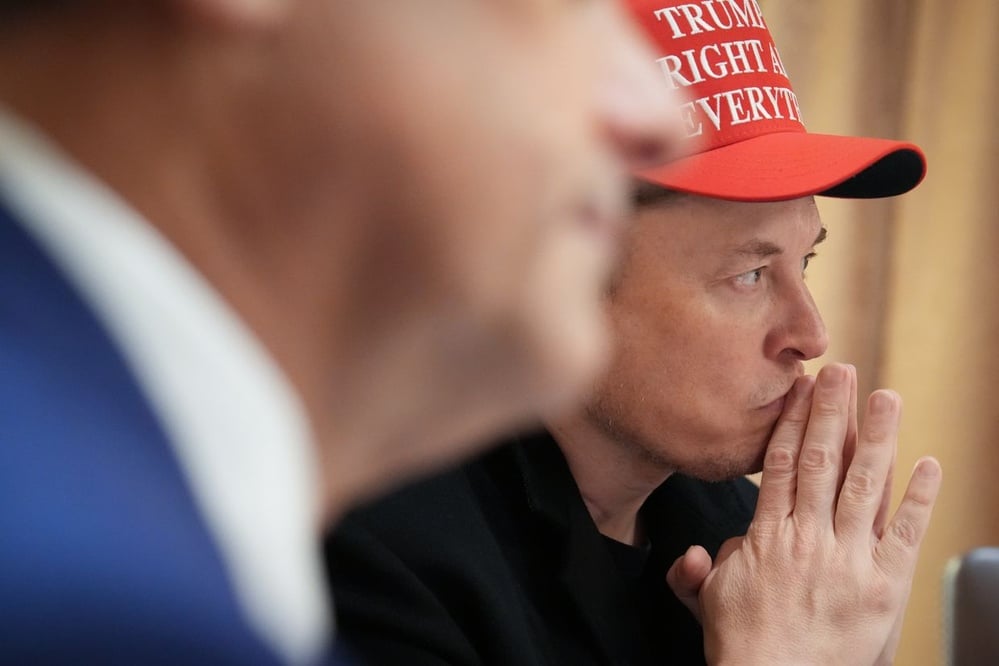
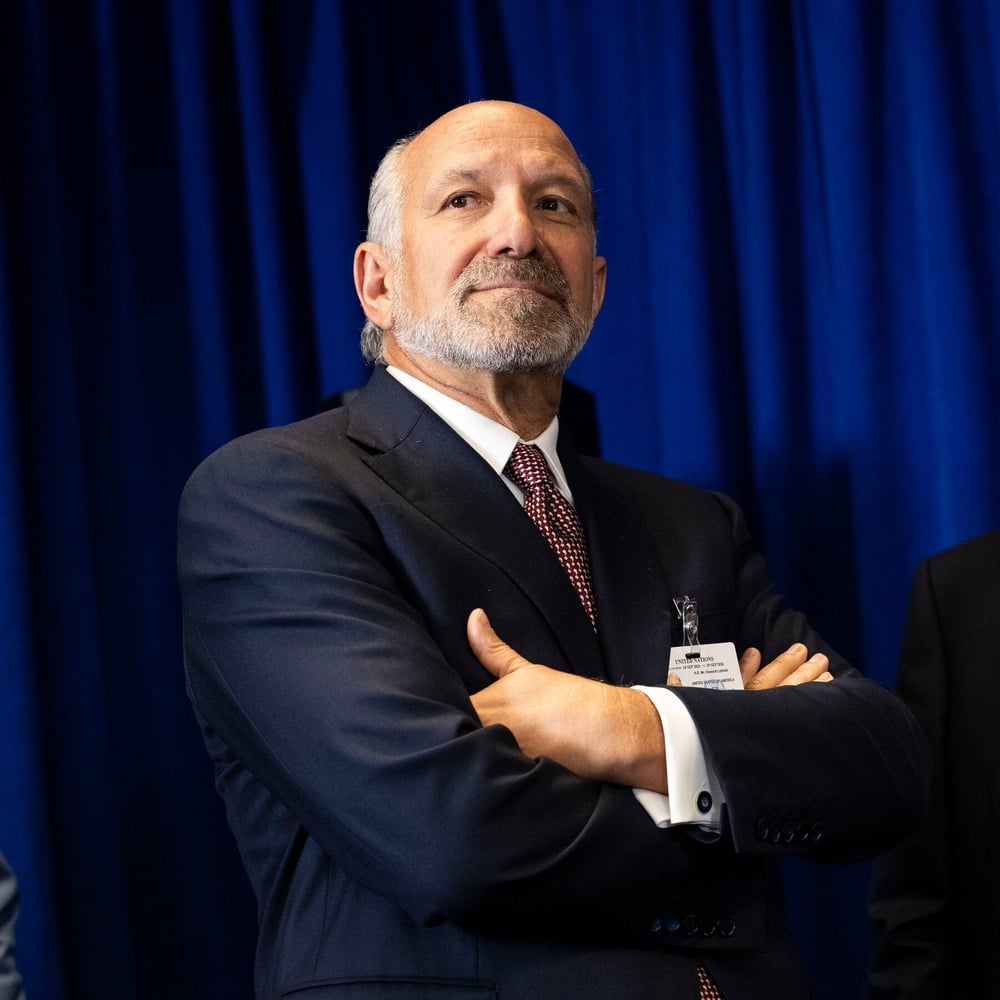

Click points to explore news by date. News sentiment ranges from -10 (very negative) to +10 (very positive) where 0 is neutral.
2026 © Helium Trades
Privacy Policy & Disclosure
* Disclaimer: Nothing on this website constitutes investment advice, performance data or any recommendation that any particular security, portfolio of securities, transaction or investment strategy is suitable for any specific person. Helium Trades is not responsible in any way for the accuracy
of any model predictions or price data. Any mention of a particular security and related prediction data is not a recommendation to buy or sell that security. Investments in securities involve the risk of loss. Past performance is no guarantee of future results. Helium Trades is not responsible for any of your investment decisions,
you should consult a financial expert before engaging in any transaction.
Helium Research Assistant

How can I help you today?
Ask any question about this page.


