See whether Helium helps you make better-informed decisions. Try every Pro Trader feature for 30 days. No credit card required.
Try every Pro Trader feature for 30 days. No credit card required.
November 20, 2026 · 0 shares
Scientifically cautious, credibility-oriented framing treats an unverified AI math claim as potentially historic while emphasizing independent verification and conceptual understanding.
Helium Analysis
Limitations: The supplied text is duplicated and includes IBM promotional boilerplate; extraction excludes duplicate and promotional material.
·
13 of 56 available dimensions scored; omitted dimensions are not treated as neutral.
·
Verified supporting quotes for 13 of 13 scored dimensions.
Claim: The article is mostly objective but uses qualified evaluative language about a possible historic breakthrough.
“A mathematician at Anthropic says he used Claude to solve one of mathematics’ most famous unsolved problems—a claim that could mark a historic breakthrough for artificial intelligence if it withstands scrutiny.” · exact text match
Why: The claim is attributed and conditional, though historic breakthrough introduces evaluative framing.
Claim: The framing is mildly sensational in presenting an unverified claim as potentially historic, though caveats keep it measured.
“A mathematician at Anthropic says he used Claude to solve one of mathematics’ most famous unsolved problems—a claim that could mark a historic breakthrough for artificial intelligence if it withstands scrutiny.” · exact text match
Why: Dramatic wording is present but qualified by attribution and if it withstands scrutiny.
Claim: The article leans optimistic about AI's mathematical potential while retaining verification caveats.
“Independent mathematicians have yet to verify the result, but one leading expert expressed optimism.” · exact text match
“For AI researchers, confirmation would provide striking evidence that advanced models can help mathematicians tackle problems that have resisted generations of researchers.” · exact text match
Why: Expert optimism and the promise of confirmation support a mildly optimistic tone.
Claim: The subject is framed as highly significant and intriguing.
“Anthropic mathematician claims AI helped solve a 167-year-old math mystery.” · exact text match
Why: The math mystery headline and famous-problem context signal high interest.
Claim: The article is primarily descriptive, outlining the claim and the verification process without advocating a course of action.
“The unusual presentation of the proof leaves mathematicians with two tasks: determining whether the computer-checked proof establishes the claimed result and understanding the mathematical ideas behind it.” · exact text match
Why: The framing describes a process and expert assessments rather than issuing prescriptions.
Claim: Credibility is reinforced through named academic experts and prestigious credentials.
“James Maynard, the Regius Professor of Mathematics at the University of Oxford and a 2022 Fields Medal winner” · exact text match
Why: The article uses elite academic titles and prizes to support the significance of the claim.
Claim: The tone is mildly positive and excitement-oriented, mainly through selected expert reactions.
“Independent mathematicians have yet to verify the result, but one leading expert expressed optimism.” · exact text match
Why: Positive expert sentiment is highlighted, but the publisher's own language remains restrained and caveated.
Claim: The article is credible in its supplied text, with attribution, independent comment, and explicit uncertainty.
“Independent mathematicians have yet to verify the result” · exact text match
“Lamzouri cautioned that checking the computer-generated proof was only the beginning.” · exact text match
Why: Clear sourcing and caveats support trustworthiness without asserting the claim is true.
Claim: The framing is strongly rational, foregrounding independent verification and the difference between a computer-checked proof and mathematical understanding.
“Independent mathematicians have yet to verify the result” · exact text match
“Mathematicians would need to understand how it worked before broadly accepting it, a process he said could take months or even years.” · exact text match
Why: These passages show explicit epistemic caution and a scientific standard of verification.
Claim: The article is strongly scientific, centering formal proof verification and expert mathematical evaluation.
“Rather than publish a conventional mathematical paper, Alpöge released his argument in Lean, a programming language and proof assistant that checks mathematical reasoning step by step.” · exact text match
Why: The focus on Lean verification reflects empirical/formal scientific norms rather than superstition.
Claim: The framing is substantially speculative because the central claim is unverified and its significance depends on future checking and understanding.
“A mathematician at Anthropic says he used Claude to solve one of mathematics’ most famous unsolved problems—a claim that could mark a historic breakthrough for artificial intelligence if it withstands scrutiny.” · exact text match
Why: The key terms says, could mark, and if it withstands scrutiny make the framing contingent and forward-looking.
Claim: The article displays high integrity by prominently noting that the proof is unverified and that understanding is incomplete.
“Independent mathematicians have yet to verify the result” · exact text match
“Lamzouri cautioned that checking the computer-generated proof was only the beginning.” · exact text match
Why: It discloses material limitations and avoids treating the claim as confirmed.
Claim: The article explains the mathematical context, formal verification method, and epistemic limits with high clarity.
“Rather than publish a conventional mathematical paper, Alpöge released his argument in Lean, a programming language and proof assistant that checks mathematical reasoning step by step.” · exact text match
Why: It distinguishes formal checking from conceptual understanding and explains technical context accurately.
The supplied text is duplicated and includes IBM promotional boilerplate; extraction excludes duplicate and promotional material.
November 20, 2026 · 0 shares
The report frames an unverified AI-assisted proof as a potentially extraordinary breakthrough while repeatedly hedging with claims, conditional verification, and the absence of a formal paper.
Helium Analysis
Limitations: Supplied text repeats paragraphs and includes unrelated teaser headlines; the central proof claim is unverified and no formal paper was available, and category overlaps Science and Technology.
·
8 of 56 available dimensions scored; omitted dimensions are not treated as neutral.
·
Verified supporting quotes for 8 of 8 scored dimensions.
Claim: The report uses breakthrough language for the claimed proof while conditioning it on confirmation.
“Should Alpöge’s proof be confirmed, it would mark an extraordinary breakthrough.” · exact text match
Counterevidence:
“He’s yet to share a formal written paper” · exact text match
Why: 'Extraordinary breakthrough' is an elevated, sensational framing, though the conditional clause and later caveats reduce its intensity.
Claim: The report frames AI's potential mathematical role in positive, breakthrough terms.
“If verified by other experts, the discovery would cement AI’s capacity to help humans crack problems that have evaded human mathematicians for decades — and its future role in the world of math.” · exact text match
Counterevidence:
“Mathematicians have responded to AI’s growing role into their field with blend of excitement, curiosity, and sadness” · exact text match
Why: The conditional forecast is favorable toward AI's future role, though it is tied to verification.
Claim: The report presents the Riemann Hypothesis as exceptionally important and famous.
“a Millennium Prize problem and almost certainly the most famous unsolved problem in the entire field of mathematics.” · exact text match
Why: The publisher emphasizes the problem's extreme significance, supporting a high interestingness score.
Claim: The report avoids asserting the proof is established and repeatedly conditions it on verification.
“Should Alpöge’s proof be confirmed” · exact text match
“If verified by other experts” · exact text match
Why: The explicit conditional language signals measured uncertainty rather than overconfidence.
Claim: The report attributes the claim and clearly notes it is unverified and lacks a formal paper.
“He’s yet to share a formal written paper” · exact text match
“Should Alpöge’s proof be confirmed” · exact text match
Why: Attribution and caveats support moderate credibility, though the report does not independently verify the claim.
Claim: The report emphasizes formal Lean code and expert verification rather than supernatural or superstitious explanation.
“written in the programming language Lean, which he says verify his findings” · exact text match
“If verified by other experts” · exact text match
Why: The framing is empirical and verification-oriented, supporting a scientific rather than superstitious classification.
Claim: The report includes a conditional forecast about AI's future role in mathematics.
“If verified by other experts, the discovery would cement AI’s capacity to help humans crack problems that have evaded human mathematicians for decades — and its future role in the world of math.” · exact text match
Why: The future-impact statement is speculative, but it is explicitly conditional on expert verification.
Claim: The report discloses the claim's lack of a formal paper and notes prior controversy about AI credit.
“He’s yet to share a formal written paper” · exact text match
“a claim that has sparked controversy about credit” · exact text match
Why: Disclosing evidentiary limits and a contested precedent supports fairness/honesty signals.
Supplied text repeats paragraphs and includes unrelated teaser headlines; the central proof claim is unverified and no formal paper was available, and category overlaps Science and Technology.
Framing is largely technical and caveated, treating the Riemann Hypothesis claim as an unverified computational artifact while emphasizing formal verification and institutional peer-review standards.
Lean 4 is a formal proof assistant whose kernel checks proofs against formal definitions, with Mathlib as its mathematical library; the Riemann Hypothesis concerns the distribution of prime numbers.
Helium Analysis
Limitations: The supplied text mixes the substantive report with extensive CASRAI site boilerplate, promotional copy, and unrelated news snippets; analysis was limited to the Riemann Hypothesis article.
·
9 of 56 available dimensions scored; omitted dimensions are not treated as neutral.
·
Verified supporting quotes for 9 of 9 scored dimensions.
Claim: The report attributes the proof claim and verification findings to named actors and repeatedly flags the claim as unverified.
“claiming a machine-checked proof of the Riemann Hypothesis and Generalized Riemann Hypothesis” · exact text match
“the broader mathematics establishment continues to regard the proof as unverified pending human comprehension” · exact text match
Why: Attribution and explicit uncertainty markers indicate an objective, non-subjective framing.
Claim: The presentation is largely restrained, using 'claiming' and emphasizing pending peer review rather than declaring the proof confirmed.
“claiming a machine-checked proof of the Riemann Hypothesis and Generalized Riemann Hypothesis” · exact text match
“mathematicians must scrutinize Mathlib’s definitions to ensure they align faithfully with the classic Riemann zeta function without subtle vacuities” · exact text match
Why: Caveats and scrutiny requirements temper the sensational implications of the headline claim.
Claim: The subject—an AI-assisted claimed proof of the Riemann Hypothesis—is inherently high-interest.
“Anthropic mathematician Levent Alpöge released a 175,187-file Lean archive claiming a proof of the Riemann Hypothesis developed alongside Claude.” · exact text match
Why: A claimed Millennium Prize proof developed with AI is an intrinsically notable topic.
Claim: The report primarily describes the release, verification steps, and community reaction, with limited prescriptive argument.
“The release triggered immediate discussion across mathematical and computer science communities.” · exact text match
“The rules of the Clay Mathematics Institute stipulate that a claimed solution to a Millennium Prize Problem must be published in a qualifying peer-reviewed mathematics journal” · exact text match
Why: Most content is explanatory reporting of events and rules rather than advocacy for a course of action.
Claim: The report names sources, distinguishes computational verification from mathematical comprehension, and notes unresolved review requirements.
“all 175,187 Lean source modules compiled successfully without errors under Lean version 4.
33.1 and Mathlib version 4.
33.1”
· exact text match
“the broader mathematics establishment continues to regard the proof as unverified pending human comprehension” · exact text match
Why: Visible attribution of verification claims plus explicit caveats support moderate-to-good credibility within the supplied text.
Claim: The report emphasizes formal verification, kernel audits, and axiom checks rather than emotional or speculative reasoning.
“all 175,187 Lean source modules compiled successfully without errors under Lean version 4.
33.1 and Mathlib version 4.
33.1”
· exact text match
Why: Detailed technical verification procedures support a strongly rational/empirical presentation.
Claim: The report is strongly empirical and scientific, centering formal verification against primitive inference rules and peer scrutiny.
“Through modern formal verification methods, theorem provers establish mechanical correctness directly against primitive inference rules.” · exact text match
Why: The framing prioritizes formal, checkable inference over superstition or non-empirical claims.
Claim: The report includes caveats about unverified status and the difference between proof checking and proof comprehension, improving observable fairness.
“claiming a machine-checked proof of the Riemann Hypothesis and Generalized Riemann Hypothesis” · exact text match
“formal code verification does not automatically guarantee mathematical understanding” · exact text match
Why: The text acknowledges unresolved interpretive issues rather than presenting the claim as fully settled.
Claim: The report synthesizes advanced mathematical, computational, and institutional details at a high level of technical specificity.
“The formal argument draws upon diverse mathematical branches, uniting arithmetic algebraic geometry, automorphic forms on higher-rank Lie groups, Iwasawa theory, and spectral analysis.” · exact text match
Why: The article engages specialized concepts and multiple technical domains with above-average sophistication.
The supplied text mixes the substantive report with extensive CASRAI site boilerplate, promotional copy, and unrelated news snippets; analysis was limited to the Riemann Hypothesis article.
November 20, 2026 · 0 shares
The report frames the Riemann hypothesis claim as a potentially historic AI breakthrough but consistently hedges it with pending verification and criticism from mathematicians.
Helium Analysis
Limitations: The central claim is unverified and the supplied text includes unrelated page chrome; bias scores reflect the article's explicit caveats rather than the truth of the Riemann hypothesis claim.
·
8 of 56 available dimensions scored; omitted dimensions are not treated as neutral.
·
Verified supporting quotes for 8 of 8 scored dimensions.
Claim: The report attributes the breakthrough claim to named sources and repeatedly qualifies it as unverified.
“A mathematician at Anthropic says he used an AI to prove the famed Riemann hypothesis, though verification will take some time.” · exact text match
“Terrance Tao, a prominent mathematician, said on Friday, external that verification of the proof is still some way off.” · exact text match
Why: Attribution and explicit uncertainty make the framing more objective than subjective.
Claim: The standfirst uses a sweeping claim of solving 'the biggest' problem, though the body notes verification is pending.
“In a year of AI solving maths problems, Anthropic may have just solved the biggest.” · exact text match
Counterevidence:
“Terrance Tao, a prominent mathematician, said on Friday, external that verification of the proof is still some way off.” · exact text match
Why: The framing is somewhat dramatic but hedged and balanced by verification caveats.
Claim: The article reports claims and reactions without prescribing policy or action.
“Terrance Tao, a prominent mathematician, said on Friday, external that verification of the proof is still some way off.” · exact text match
“A group of maths scholars said, external AI companies boasting of major solutions to show how sophisticated their commercial products had become was "detrimental to the science of mathematics".” · exact text match
Why: Coverage is descriptive and attributional; no prescriptive stance is advanced.
Claim: The report uses named attribution, conditional language, and expert skepticism about an unverified claim.
“A mathematician at Anthropic says he used an AI to prove the famed Riemann hypothesis, though verification will take some time.” · exact text match
“A group of maths scholars said, external AI companies boasting of major solutions to show how sophisticated their commercial products had become was "detrimental to the science of mathematics".” · exact text match
Why: Named sources and explicit caveats increase visible credibility.
Claim: The report emphasizes formal proof verification and critical expert response rather than emotional or magical claims.
“The complete textual proof that Alpöge put forward in Lean, a computer language used for confirming maths proofs, is over 250,000 pages long.” · exact text match
“A group of maths scholars said, external AI companies boasting of major solutions to show how sophisticated their commercial products had become was "detrimental to the science of mathematics".” · exact text match
Why: Formal proof checks and scholarly criticism support a rational framing.
Claim: The report treats the claim within mathematical proof and expert verification, not supernatural explanation.
“The complete textual proof that Alpöge put forward in Lean, a computer language used for confirming maths proofs, is over 250,000 pages long.” · exact text match
“Terrance Tao, a prominent mathematician, said on Friday, external that verification of the proof is still some way off.” · exact text match
Why: Emphasis on formal proof verification supports a strongly scientific framing.
Claim: The framing speculates about a historic breakthrough while noting the central claim remains unverified.
“In a year of AI solving maths problems, Anthropic may have just solved the biggest.” · exact text match
“If found to be correct, the proof would be among the most significant in history.” · exact text match
Why: Conditional and 'may' language introduces moderate speculation, though it is attributed and caveated.
Claim: The report explains the claim's significance while distinguishing proof from verification and comparing related AI math claims.
“If found to be correct, the proof would be among the most significant in history.” · exact text match
“OpenAI in September claimed that employees using a non-public version of its AI tools were able to solve part of a notoriously difficult problem in just 88 hours.” · exact text match
Why: It supplies context and distinctions that reflect above-average explanatory intelligence.
The central claim is unverified and the supplied text includes unrelated page chrome; bias scores reflect the article's explicit caveats rather than the truth of the Riemann hypothesis claim.
November 20, 2026 · 0 shares
Scientifically cautious, credibility-oriented framing treats an unverified AI math claim as potentially historic while emphasizing independent verification and conceptual understanding.
Helium Analysis
Limitations: The supplied text is duplicated and includes IBM promotional boilerplate; extraction excludes duplicate and promotional material.
·
13 of 56 available dimensions scored; omitted dimensions are not treated as neutral.
·
Verified supporting quotes for 13 of 13 scored dimensions.
Claim: The article is mostly objective but uses qualified evaluative language about a possible historic breakthrough.
“A mathematician at Anthropic says he used Claude to solve one of mathematics’ most famous unsolved problems—a claim that could mark a historic breakthrough for artificial intelligence if it withstands scrutiny.” · exact text match
Why: The claim is attributed and conditional, though historic breakthrough introduces evaluative framing.
Claim: The framing is mildly sensational in presenting an unverified claim as potentially historic, though caveats keep it measured.
“A mathematician at Anthropic says he used Claude to solve one of mathematics’ most famous unsolved problems—a claim that could mark a historic breakthrough for artificial intelligence if it withstands scrutiny.” · exact text match
Why: Dramatic wording is present but qualified by attribution and if it withstands scrutiny.
Claim: The article leans optimistic about AI's mathematical potential while retaining verification caveats.
“Independent mathematicians have yet to verify the result, but one leading expert expressed optimism.” · exact text match
“For AI researchers, confirmation would provide striking evidence that advanced models can help mathematicians tackle problems that have resisted generations of researchers.” · exact text match
Why: Expert optimism and the promise of confirmation support a mildly optimistic tone.
Claim: The subject is framed as highly significant and intriguing.
“Anthropic mathematician claims AI helped solve a 167-year-old math mystery.” · exact text match
Why: The math mystery headline and famous-problem context signal high interest.
Claim: The article is primarily descriptive, outlining the claim and the verification process without advocating a course of action.
“The unusual presentation of the proof leaves mathematicians with two tasks: determining whether the computer-checked proof establishes the claimed result and understanding the mathematical ideas behind it.” · exact text match
Why: The framing describes a process and expert assessments rather than issuing prescriptions.
Claim: Credibility is reinforced through named academic experts and prestigious credentials.
“James Maynard, the Regius Professor of Mathematics at the University of Oxford and a 2022 Fields Medal winner” · exact text match
Why: The article uses elite academic titles and prizes to support the significance of the claim.
Claim: The tone is mildly positive and excitement-oriented, mainly through selected expert reactions.
“Independent mathematicians have yet to verify the result, but one leading expert expressed optimism.” · exact text match
Why: Positive expert sentiment is highlighted, but the publisher's own language remains restrained and caveated.
Claim: The article is credible in its supplied text, with attribution, independent comment, and explicit uncertainty.
“Independent mathematicians have yet to verify the result” · exact text match
“Lamzouri cautioned that checking the computer-generated proof was only the beginning.” · exact text match
Why: Clear sourcing and caveats support trustworthiness without asserting the claim is true.
Claim: The framing is strongly rational, foregrounding independent verification and the difference between a computer-checked proof and mathematical understanding.
“Independent mathematicians have yet to verify the result” · exact text match
“Mathematicians would need to understand how it worked before broadly accepting it, a process he said could take months or even years.” · exact text match
Why: These passages show explicit epistemic caution and a scientific standard of verification.
Claim: The article is strongly scientific, centering formal proof verification and expert mathematical evaluation.
“Rather than publish a conventional mathematical paper, Alpöge released his argument in Lean, a programming language and proof assistant that checks mathematical reasoning step by step.” · exact text match
Why: The focus on Lean verification reflects empirical/formal scientific norms rather than superstition.
Claim: The framing is substantially speculative because the central claim is unverified and its significance depends on future checking and understanding.
“A mathematician at Anthropic says he used Claude to solve one of mathematics’ most famous unsolved problems—a claim that could mark a historic breakthrough for artificial intelligence if it withstands scrutiny.” · exact text match
Why: The key terms says, could mark, and if it withstands scrutiny make the framing contingent and forward-looking.
Claim: The article displays high integrity by prominently noting that the proof is unverified and that understanding is incomplete.
“Independent mathematicians have yet to verify the result” · exact text match
“Lamzouri cautioned that checking the computer-generated proof was only the beginning.” · exact text match
Why: It discloses material limitations and avoids treating the claim as confirmed.
Claim: The article explains the mathematical context, formal verification method, and epistemic limits with high clarity.
“Rather than publish a conventional mathematical paper, Alpöge released his argument in Lean, a programming language and proof assistant that checks mathematical reasoning step by step.” · exact text match
Why: It distinguishes formal checking from conceptual understanding and explains technical context accurately.
The supplied text is duplicated and includes IBM promotional boilerplate; extraction excludes duplicate and promotional material.
November 20, 2026 · 0 shares
The framing sensationalizes an unverified employee claim as AI having solved math's most famous problem, while the body only attributes the proof claim to the employee.
Anthropic is an artificial intelligence company, and Claude is its AI model.
Helium Analysis
Limitations: The supplied text is a very short, likely paywalled excerpt with no named author, detailed proof, or described independent verification; scores reflect only this snippet.
·
3 of 56 available dimensions scored; omitted dimensions are not treated as neutral.
·
Verified supporting quotes for 3 of 3 scored dimensions.
Claim: The headline frames an employee's reported claim as AI having solved the most famous problem in math.
“Anthropic Mathematician Says AI Has Solved the Most Famous Problem in Math.” · exact text match
Why: The phrase 'Has Solved the Most Famous Problem' is dramatic and sensational relative to a reported proof claim.
Claim: The headline collapses a claim that Claude helped discover a proof into AI solving the problem.
“Anthropic Mathematician Says AI Has Solved the Most Famous Problem in Math.” · exact text match
“One day after the company’s IPO, an Anthropic employee says Claude helped discover a proof.” · exact text match
Why: It simplifies 'Claude helped discover a proof' into 'AI Has Solved' the problem.
Claim: The framing presents the Riemann hypothesis as solved based on an employee's statement, while the body only reports that he says he discovered a proof.
“Anthropic Mathematician Says AI Has Solved the Most Famous Problem in Math.” · exact text match
“He says he has discovered a proof of the Riemann hypothesis—the most famous unsolved problem in math.” · exact text match
Why: The headline's 'Has Solved' exceeds the attributed, unverified proof claim supplied in the body.
The supplied text is a very short, likely paywalled excerpt with no named author, detailed proof, or described independent verification; scores reflect only this snippet.
November 20, 2026 · 0 shares
The report foregrounds the claim's unverified and unreviewed status while still presenting the AI-assisted Riemann Hypothesis announcement as a major development.
Helium Analysis
Limitations: The supplied text lacks a byline and the proof itself, so the article's claims about the proof cannot be independently checked here.
·
4 of 56 available dimensions scored; omitted dimensions are not treated as neutral.
·
Verified supporting quotes for 4 of 4 scored dimensions.
Claim: The report explicitly flags that the proof claim is unverified and not yet reviewed by outside experts.
“The claim has not been independently verified, and the proof has not yet been reviewed by outside experts.” · exact text match
Why: Explicit uncertainty and attribution indicate an objective, non-subjective presentation.
Claim: The report uses named expert sourcing and clearly states the claim's unverified status.
“Brian Conrey, a leading specialist on the Riemann Hypothesis, told AFP news agency.” · exact text match
“The claim has not been independently verified, and the proof has not yet been reviewed by outside experts.” · exact text match
Why: Named attribution and explicit uncertainty support a high credibility score.
Claim: The article treats an extraordinary mathematical claim with explicit verification caveats rather than asserting it as proven.
“The claim has not been independently verified, and the proof has not yet been reviewed by outside experts.” · exact text match
Why: Bounded, verification-focused framing supports a rational rather than irrational classification.
Claim: The report discloses a possible timing concern and the claimant's consultation with Anthropic's CEO.
“Alpoge said he had consulted Anthropic chief executive Dario Amodei before announcing the result, and acknowledged that its timing could be viewed cynically, without elaborating.” · exact text match
Why: Voluntary disclosure of a credibility-sensitive detail is an observable fairness/honesty signal.
The supplied text lacks a byline and the proof itself, so the article's claims about the proof cannot be independently checked here.
November 20, 2026 · 0 shares
The report frames the Riemann hypothesis claim as a potentially historic AI breakthrough but consistently hedges it with pending verification and criticism from mathematicians.
Helium Analysis
Limitations: The central claim is unverified and the supplied text includes unrelated page chrome; bias scores reflect the article's explicit caveats rather than the truth of the Riemann hypothesis claim.
·
8 of 56 available dimensions scored; omitted dimensions are not treated as neutral.
·
Verified supporting quotes for 8 of 8 scored dimensions.
Claim: The report attributes the breakthrough claim to named sources and repeatedly qualifies it as unverified.
“A mathematician at Anthropic says he used an AI to prove the famed Riemann hypothesis, though verification will take some time.” · exact text match
“Terrance Tao, a prominent mathematician, said on Friday, external that verification of the proof is still some way off.” · exact text match
Why: Attribution and explicit uncertainty make the framing more objective than subjective.
Claim: The standfirst uses a sweeping claim of solving 'the biggest' problem, though the body notes verification is pending.
“In a year of AI solving maths problems, Anthropic may have just solved the biggest.” · exact text match
Counterevidence:
“Terrance Tao, a prominent mathematician, said on Friday, external that verification of the proof is still some way off.” · exact text match
Why: The framing is somewhat dramatic but hedged and balanced by verification caveats.
Claim: The article reports claims and reactions without prescribing policy or action.
“Terrance Tao, a prominent mathematician, said on Friday, external that verification of the proof is still some way off.” · exact text match
“A group of maths scholars said, external AI companies boasting of major solutions to show how sophisticated their commercial products had become was "detrimental to the science of mathematics".” · exact text match
Why: Coverage is descriptive and attributional; no prescriptive stance is advanced.
Claim: The report uses named attribution, conditional language, and expert skepticism about an unverified claim.
“A mathematician at Anthropic says he used an AI to prove the famed Riemann hypothesis, though verification will take some time.” · exact text match
“A group of maths scholars said, external AI companies boasting of major solutions to show how sophisticated their commercial products had become was "detrimental to the science of mathematics".” · exact text match
Why: Named sources and explicit caveats increase visible credibility.
Claim: The report emphasizes formal proof verification and critical expert response rather than emotional or magical claims.
“The complete textual proof that Alpöge put forward in Lean, a computer language used for confirming maths proofs, is over 250,000 pages long.” · exact text match
“A group of maths scholars said, external AI companies boasting of major solutions to show how sophisticated their commercial products had become was "detrimental to the science of mathematics".” · exact text match
Why: Formal proof checks and scholarly criticism support a rational framing.
Claim: The report treats the claim within mathematical proof and expert verification, not supernatural explanation.
“The complete textual proof that Alpöge put forward in Lean, a computer language used for confirming maths proofs, is over 250,000 pages long.” · exact text match
“Terrance Tao, a prominent mathematician, said on Friday, external that verification of the proof is still some way off.” · exact text match
Why: Emphasis on formal proof verification supports a strongly scientific framing.
Claim: The framing speculates about a historic breakthrough while noting the central claim remains unverified.
“In a year of AI solving maths problems, Anthropic may have just solved the biggest.” · exact text match
“If found to be correct, the proof would be among the most significant in history.” · exact text match
Why: Conditional and 'may' language introduces moderate speculation, though it is attributed and caveated.
Claim: The report explains the claim's significance while distinguishing proof from verification and comparing related AI math claims.
“If found to be correct, the proof would be among the most significant in history.” · exact text match
“OpenAI in September claimed that employees using a non-public version of its AI tools were able to solve part of a notoriously difficult problem in just 88 hours.” · exact text match
Why: It supplies context and distinctions that reflect above-average explanatory intelligence.
The central claim is unverified and the supplied text includes unrelated page chrome; bias scores reflect the article's explicit caveats rather than the truth of the Riemann hypothesis claim.
November 20, 2026 · 0 shares
The report frames an unverified AI-assisted proof as a potentially extraordinary breakthrough while repeatedly hedging with claims, conditional verification, and the absence of a formal paper.
Helium Analysis
Limitations: Supplied text repeats paragraphs and includes unrelated teaser headlines; the central proof claim is unverified and no formal paper was available, and category overlaps Science and Technology.
·
8 of 56 available dimensions scored; omitted dimensions are not treated as neutral.
·
Verified supporting quotes for 8 of 8 scored dimensions.
Claim: The report uses breakthrough language for the claimed proof while conditioning it on confirmation.
“Should Alpöge’s proof be confirmed, it would mark an extraordinary breakthrough.” · exact text match
Counterevidence:
“He’s yet to share a formal written paper” · exact text match
Why: 'Extraordinary breakthrough' is an elevated, sensational framing, though the conditional clause and later caveats reduce its intensity.
Claim: The report frames AI's potential mathematical role in positive, breakthrough terms.
“If verified by other experts, the discovery would cement AI’s capacity to help humans crack problems that have evaded human mathematicians for decades — and its future role in the world of math.” · exact text match
Counterevidence:
“Mathematicians have responded to AI’s growing role into their field with blend of excitement, curiosity, and sadness” · exact text match
Why: The conditional forecast is favorable toward AI's future role, though it is tied to verification.
Claim: The report presents the Riemann Hypothesis as exceptionally important and famous.
“a Millennium Prize problem and almost certainly the most famous unsolved problem in the entire field of mathematics.” · exact text match
Why: The publisher emphasizes the problem's extreme significance, supporting a high interestingness score.
Claim: The report avoids asserting the proof is established and repeatedly conditions it on verification.
“Should Alpöge’s proof be confirmed” · exact text match
“If verified by other experts” · exact text match
Why: The explicit conditional language signals measured uncertainty rather than overconfidence.
Claim: The report attributes the claim and clearly notes it is unverified and lacks a formal paper.
“He’s yet to share a formal written paper” · exact text match
“Should Alpöge’s proof be confirmed” · exact text match
Why: Attribution and caveats support moderate credibility, though the report does not independently verify the claim.
Claim: The report emphasizes formal Lean code and expert verification rather than supernatural or superstitious explanation.
“written in the programming language Lean, which he says verify his findings” · exact text match
“If verified by other experts” · exact text match
Why: The framing is empirical and verification-oriented, supporting a scientific rather than superstitious classification.
Claim: The report includes a conditional forecast about AI's future role in mathematics.
“If verified by other experts, the discovery would cement AI’s capacity to help humans crack problems that have evaded human mathematicians for decades — and its future role in the world of math.” · exact text match
Why: The future-impact statement is speculative, but it is explicitly conditional on expert verification.
Claim: The report discloses the claim's lack of a formal paper and notes prior controversy about AI credit.
“He’s yet to share a formal written paper” · exact text match
“a claim that has sparked controversy about credit” · exact text match
Why: Disclosing evidentiary limits and a contested precedent supports fairness/honesty signals.
Supplied text repeats paragraphs and includes unrelated teaser headlines; the central proof claim is unverified and no formal paper was available, and category overlaps Science and Technology.
November 20, 2026 · 0 shares
The framing is mildly sensational and future-oriented, casting an unverified claim as a potentially “seismic” AI transformation while still flagging independent verification and institutional acceptance as pending.
Helium Analysis
Limitations: Supplied text is fragmented and includes repeated page-chrome lines, limiting assessment of the full publisher presentation.
·
5 of 56 available dimensions scored; omitted dimensions are not treated as neutral.
·
Verified supporting quotes for 5 of 5 scored dimensions.
Claim: The publisher frames the unverified claim with heightened, dramatic language.
“If verified, it would mark yet another seismic achievement for AI in mathematics and add to the upheaval already unleashed by OpenAI’s previous, often inelegant forays into the field.” · exact text match
Counterevidence:
“Alpöge’s solution has yet to be verified independently.” · exact text match
Why: ‘Seismic achievement’ and ‘upheaval’ are sensational descriptors, though the conditional and verification caveat limit the intensity.
Claim: The report is moderately credible because it attributes claims and repeatedly flags pending verification, despite promotional framing.
“Alpöge’s solution has yet to be verified independently.” · exact text match
“The result is widely considered credible, though it has yet to receive formal recognition.” · exact text match
Why: Clear caveats and attribution support credibility, but dramatic framing and unattributed ‘widely considered’ phrasing temper confidence.
Claim: The report is largely epistemically cautious, repeatedly noting that the claim is unverified and subject to institutional review.
“Alpöge’s solution has yet to be verified independently.” · exact text match
“Under the institute’s rules, a proposed solution must be published and withstand at least two years of scrutiny before it can be considered for the prize, during which time it must have “received general acceptance in the global mathematics community.”” · exact text match
Why: Explicit uncertainty and formal verification standards support a rational, evidence-bound classification.
Claim: The article forecasts broad transformation of mathematics from claims whose verification is pending.
“The deluge of findings has left mathematicians scrambling to digest the material and figure out where they belong in what is rapidly becoming a profoundly different mathematical landscape.” · exact text match
Why: The phrasing extrapolates a ‘rapidly becoming’ transformation beyond the confirmed facts.
Claim: The report discloses material verification limits and includes a skeptical prior statement from Anthropic.
“Alpöge’s solution has yet to be verified independently.” · exact text match
“Anthropic said it was working on the Riemann Hypothesis with Claude in August, but noted at the time: “We don’t expect that the techniques Claude used will lead to proving the Riemann hypothesis.”” · exact text match
Why: These disclosures and the countervailing quote indicate fair, transparent handling of the claim.
Supplied text is fragmented and includes repeated page-chrome lines, limiting assessment of the full publisher presentation.
November 20, 2026 · 0 shares
The report frames the Riemann hypothesis claim as potentially momentous but repeatedly qualifies it as unverified and situates it within AI-industry hype, IPO timing, and credit disputes.
Helium Analysis
Limitations: The supplied text includes duplicated article passages and unrelated related-link boilerplate; scoring is based only on the substantive article content.
·
56 of 56 available dimensions scored; omitted dimensions are not treated as neutral.
·
Verified supporting quotes for 10 of 56 scored dimensions.
Claim: The report attributes the mathematical claim to Alpöge and separates it from independent confirmation.
“Alpöge says he used Claude to formulate his proof, which he published in the programming language Lean and has yet to be confirmed by the Clay Mathematics Institute, Anthropic, or any other credible third party.” · exact text match
Counterevidence:
“perhaps much more momentous event is poised to revolutionize the field” · exact text match
Why: Attribution plus verification status makes the framing predominantly objective.
Claim: The report uses dramatic language about the potential significance of the claim.
“perhaps much more momentous event is poised to revolutionize the field” · exact text match
Counterevidence:
“has yet to be confirmed by the Clay Mathematics Institute, Anthropic, or any other credible third party” · exact text match
Why: Dramatic impact wording raises the sensational tone slightly.
Claim: The report describes the claim and method without prescribing action or policy.
“Alpöge says he used Claude to formulate his proof, which he published in the programming language Lean” · exact text match
Why: The passage is straightforward reporting rather than recommendation.
Claim: The report attributes claims and explicitly notes the lack of third-party confirmation.
“has yet to be confirmed by the Clay Mathematics Institute, Anthropic, or any other credible third party” · exact text match
“Alpöge says he used Claude to formulate his proof” · exact text match
Why: Clear attribution and verification caveats support high credibility.
Claim: The report treats the claimed proof as unverified and conditional rather than established fact.
“has yet to be confirmed by the Clay Mathematics Institute, Anthropic, or any other credible third party” · exact text match
Why: Explicit verification caveat supports a rational, evidence-bound classification.
Claim: The report generalizes corporate behavior around IPOs as hype-driven and unsubstantiated.
“Companies frequently make grand, unsubstantiated proclamations right before a stock market debut to drive up share prices and investor interest” · exact text match
Counterevidence:
“but Alpöge insists that wasn’t the case here” · exact text match
Why: This unsourced generalization is skeptical of corporate motives, indicating mild anti-corporate framing.
Claim: The report frames the claim through formal mathematical verification rather than superstition.
“published in the programming language Lean and has yet to be confirmed by the Clay Mathematics Institute” · exact text match
Why: Lean publication and institutional confirmation language are scientific/formal.
Claim: The report conditionally forecasts the impact of a confirmed proof on mathematics and the AI industry.
“If his proof is confirmed, it would be a momentous achievement not only for mathematics but also for the AI industry” · exact text match
Why: Conditional impact forecasting supports a mild speculation classification.
Claim: The report discloses the claim’s unverified status and includes the subject’s denial of a cynical IPO-timing interpretation.
“has yet to be confirmed by the Clay Mathematics Institute, Anthropic, or any other credible third party” · exact text match
“but Alpöge insists that wasn’t the case here” · exact text match
Why: Including both caveats and the subject’s rebuttal signals fair and honest framing.
Claim: The report supplies relevant mathematical and institutional context for evaluating the claim.
“one of the Clay Mathematics Institute’s seven “Millennium Prize Problems,” each carrying a $1 million prize for a solution that satisfies the institute’s requirements.” · exact text match
Why: Context about the prize and qualifying requirements shows high article intelligence.
The supplied text includes duplicated article passages and unrelated related-link boilerplate; scoring is based only on the substantive article content.
Framing is largely technical and caveated, treating the Riemann Hypothesis claim as an unverified computational artifact while emphasizing formal verification and institutional peer-review standards.
Lean 4 is a formal proof assistant whose kernel checks proofs against formal definitions, with Mathlib as its mathematical library; the Riemann Hypothesis concerns the distribution of prime numbers.
Helium Analysis Limitations: The supplied text mixes the substantive report with extensive CASRAI site boilerplate, promotional copy, and unrelated news snippets; analysis was limited to the Riemann Hypothesis article. · 9 of 56 available dimensions scored; omitted dimensions are not treated as neutral. · Verified supporting quotes for 9 of 9 scored dimensions.
Claim: The report attributes the proof claim and verification findings to named actors and repeatedly flags the claim as unverified.
“claiming a machine-checked proof of the Riemann Hypothesis and Generalized Riemann Hypothesis” · exact text match
“the broader mathematics establishment continues to regard the proof as unverified pending human comprehension” · exact text match
Why: Attribution and explicit uncertainty markers indicate an objective, non-subjective framing.
Claim: The presentation is largely restrained, using 'claiming' and emphasizing pending peer review rather than declaring the proof confirmed.
“claiming a machine-checked proof of the Riemann Hypothesis and Generalized Riemann Hypothesis” · exact text match
“mathematicians must scrutinize Mathlib’s definitions to ensure they align faithfully with the classic Riemann zeta function without subtle vacuities” · exact text match
Why: Caveats and scrutiny requirements temper the sensational implications of the headline claim.
Claim: The subject—an AI-assisted claimed proof of the Riemann Hypothesis—is inherently high-interest.
“Anthropic mathematician Levent Alpöge released a 175,187-file Lean archive claiming a proof of the Riemann Hypothesis developed alongside Claude.” · exact text match
Why: A claimed Millennium Prize proof developed with AI is an intrinsically notable topic.
Claim: The report primarily describes the release, verification steps, and community reaction, with limited prescriptive argument.
“The release triggered immediate discussion across mathematical and computer science communities.” · exact text match
“The rules of the Clay Mathematics Institute stipulate that a claimed solution to a Millennium Prize Problem must be published in a qualifying peer-reviewed mathematics journal” · exact text match
Why: Most content is explanatory reporting of events and rules rather than advocacy for a course of action.
Claim: The report names sources, distinguishes computational verification from mathematical comprehension, and notes unresolved review requirements.
“all 175,187 Lean source modules compiled successfully without errors under Lean version 4.33.1 and Mathlib version 4.33.1” · exact text match
“the broader mathematics establishment continues to regard the proof as unverified pending human comprehension” · exact text match
Why: Visible attribution of verification claims plus explicit caveats support moderate-to-good credibility within the supplied text.
Claim: The report emphasizes formal verification, kernel audits, and axiom checks rather than emotional or speculative reasoning.
“all 175,187 Lean source modules compiled successfully without errors under Lean version 4.33.1 and Mathlib version 4.33.1” · exact text match
Why: Detailed technical verification procedures support a strongly rational/empirical presentation.
Claim: The report is strongly empirical and scientific, centering formal verification against primitive inference rules and peer scrutiny.
“Through modern formal verification methods, theorem provers establish mechanical correctness directly against primitive inference rules.” · exact text match
Why: The framing prioritizes formal, checkable inference over superstition or non-empirical claims.
Claim: The report includes caveats about unverified status and the difference between proof checking and proof comprehension, improving observable fairness.
“claiming a machine-checked proof of the Riemann Hypothesis and Generalized Riemann Hypothesis” · exact text match
“formal code verification does not automatically guarantee mathematical understanding” · exact text match
Why: The text acknowledges unresolved interpretive issues rather than presenting the claim as fully settled.
Claim: The report synthesizes advanced mathematical, computational, and institutional details at a high level of technical specificity.
“The formal argument draws upon diverse mathematical branches, uniting arithmetic algebraic geometry, automorphic forms on higher-rank Lie groups, Iwasawa theory, and spectral analysis.” · exact text match
Why: The article engages specialized concepts and multiple technical domains with above-average sophistication.
The supplied text mixes the substantive report with extensive CASRAI site boilerplate, promotional copy, and unrelated news snippets; analysis was limited to the Riemann Hypothesis article.
November 20, 2026 · 0 shares
Scientifically cautious, credibility-oriented framing treats an unverified AI math claim as potentially historic while emphasizing independent verification and conceptual understanding.
Helium Analysis Limitations: The supplied text is duplicated and includes IBM promotional boilerplate; extraction excludes duplicate and promotional material. · 13 of 56 available dimensions scored; omitted dimensions are not treated as neutral. · Verified supporting quotes for 13 of 13 scored dimensions.
Claim: The article is mostly objective but uses qualified evaluative language about a possible historic breakthrough.
“A mathematician at Anthropic says he used Claude to solve one of mathematics’ most famous unsolved problems—a claim that could mark a historic breakthrough for artificial intelligence if it withstands scrutiny.” · exact text match
Why: The claim is attributed and conditional, though historic breakthrough introduces evaluative framing.
Claim: The framing is mildly sensational in presenting an unverified claim as potentially historic, though caveats keep it measured.
“A mathematician at Anthropic says he used Claude to solve one of mathematics’ most famous unsolved problems—a claim that could mark a historic breakthrough for artificial intelligence if it withstands scrutiny.” · exact text match
Why: Dramatic wording is present but qualified by attribution and if it withstands scrutiny.
Claim: The article leans optimistic about AI's mathematical potential while retaining verification caveats.
“Independent mathematicians have yet to verify the result, but one leading expert expressed optimism.” · exact text match
“For AI researchers, confirmation would provide striking evidence that advanced models can help mathematicians tackle problems that have resisted generations of researchers.” · exact text match
Why: Expert optimism and the promise of confirmation support a mildly optimistic tone.
Claim: The subject is framed as highly significant and intriguing.
“Anthropic mathematician claims AI helped solve a 167-year-old math mystery.” · exact text match
Why: The math mystery headline and famous-problem context signal high interest.
Claim: The article is primarily descriptive, outlining the claim and the verification process without advocating a course of action.
“The unusual presentation of the proof leaves mathematicians with two tasks: determining whether the computer-checked proof establishes the claimed result and understanding the mathematical ideas behind it.” · exact text match
Why: The framing describes a process and expert assessments rather than issuing prescriptions.
Claim: Credibility is reinforced through named academic experts and prestigious credentials.
“James Maynard, the Regius Professor of Mathematics at the University of Oxford and a 2022 Fields Medal winner” · exact text match
Why: The article uses elite academic titles and prizes to support the significance of the claim.
Claim: The tone is mildly positive and excitement-oriented, mainly through selected expert reactions.
“Independent mathematicians have yet to verify the result, but one leading expert expressed optimism.” · exact text match
Why: Positive expert sentiment is highlighted, but the publisher's own language remains restrained and caveated.
Claim: The article is credible in its supplied text, with attribution, independent comment, and explicit uncertainty.
“Independent mathematicians have yet to verify the result” · exact text match
“Lamzouri cautioned that checking the computer-generated proof was only the beginning.” · exact text match
Why: Clear sourcing and caveats support trustworthiness without asserting the claim is true.
Claim: The framing is strongly rational, foregrounding independent verification and the difference between a computer-checked proof and mathematical understanding.
“Independent mathematicians have yet to verify the result” · exact text match
“Mathematicians would need to understand how it worked before broadly accepting it, a process he said could take months or even years.” · exact text match
Why: These passages show explicit epistemic caution and a scientific standard of verification.
Claim: The article is strongly scientific, centering formal proof verification and expert mathematical evaluation.
“Rather than publish a conventional mathematical paper, Alpöge released his argument in Lean, a programming language and proof assistant that checks mathematical reasoning step by step.” · exact text match
Why: The focus on Lean verification reflects empirical/formal scientific norms rather than superstition.
Claim: The framing is substantially speculative because the central claim is unverified and its significance depends on future checking and understanding.
“A mathematician at Anthropic says he used Claude to solve one of mathematics’ most famous unsolved problems—a claim that could mark a historic breakthrough for artificial intelligence if it withstands scrutiny.” · exact text match
Why: The key terms says, could mark, and if it withstands scrutiny make the framing contingent and forward-looking.
Claim: The article displays high integrity by prominently noting that the proof is unverified and that understanding is incomplete.
“Independent mathematicians have yet to verify the result” · exact text match
“Lamzouri cautioned that checking the computer-generated proof was only the beginning.” · exact text match
Why: It discloses material limitations and avoids treating the claim as confirmed.
Claim: The article explains the mathematical context, formal verification method, and epistemic limits with high clarity.
“Rather than publish a conventional mathematical paper, Alpöge released his argument in Lean, a programming language and proof assistant that checks mathematical reasoning step by step.” · exact text match
Why: It distinguishes formal checking from conceptual understanding and explains technical context accurately.
The supplied text is duplicated and includes IBM promotional boilerplate; extraction excludes duplicate and promotional material.
November 20, 2026 · 0 shares
The framing sensationalizes an unverified employee claim as AI having solved math's most famous problem, while the body only attributes the proof claim to the employee.
Anthropic is an artificial intelligence company, and Claude is its AI model.
Helium Analysis Limitations: The supplied text is a very short, likely paywalled excerpt with no named author, detailed proof, or described independent verification; scores reflect only this snippet. · 3 of 56 available dimensions scored; omitted dimensions are not treated as neutral. · Verified supporting quotes for 3 of 3 scored dimensions.
Claim: The headline frames an employee's reported claim as AI having solved the most famous problem in math.
“Anthropic Mathematician Says AI Has Solved the Most Famous Problem in Math.” · exact text match
Why: The phrase 'Has Solved the Most Famous Problem' is dramatic and sensational relative to a reported proof claim.
Claim: The headline collapses a claim that Claude helped discover a proof into AI solving the problem.
“Anthropic Mathematician Says AI Has Solved the Most Famous Problem in Math.” · exact text match
“One day after the company’s IPO, an Anthropic employee says Claude helped discover a proof.” · exact text match
Why: It simplifies 'Claude helped discover a proof' into 'AI Has Solved' the problem.
Claim: The framing presents the Riemann hypothesis as solved based on an employee's statement, while the body only reports that he says he discovered a proof.
“Anthropic Mathematician Says AI Has Solved the Most Famous Problem in Math.” · exact text match
“He says he has discovered a proof of the Riemann hypothesis—the most famous unsolved problem in math.” · exact text match
Why: The headline's 'Has Solved' exceeds the attributed, unverified proof claim supplied in the body.
The supplied text is a very short, likely paywalled excerpt with no named author, detailed proof, or described independent verification; scores reflect only this snippet.
November 20, 2026 · 0 shares
The framing is mildly sensational and future-oriented, casting an unverified claim as a potentially “seismic” AI transformation while still flagging independent verification and institutional acceptance as pending.
Helium Analysis Limitations: Supplied text is fragmented and includes repeated page-chrome lines, limiting assessment of the full publisher presentation. · 5 of 56 available dimensions scored; omitted dimensions are not treated as neutral. · Verified supporting quotes for 5 of 5 scored dimensions.
Claim: The publisher frames the unverified claim with heightened, dramatic language.
“If verified, it would mark yet another seismic achievement for AI in mathematics and add to the upheaval already unleashed by OpenAI’s previous, often inelegant forays into the field.” · exact text match
Counterevidence:
“Alpöge’s solution has yet to be verified independently.” · exact text match
Why: ‘Seismic achievement’ and ‘upheaval’ are sensational descriptors, though the conditional and verification caveat limit the intensity.
Claim: The report is moderately credible because it attributes claims and repeatedly flags pending verification, despite promotional framing.
“Alpöge’s solution has yet to be verified independently.” · exact text match
“The result is widely considered credible, though it has yet to receive formal recognition.” · exact text match
Why: Clear caveats and attribution support credibility, but dramatic framing and unattributed ‘widely considered’ phrasing temper confidence.
Claim: The report is largely epistemically cautious, repeatedly noting that the claim is unverified and subject to institutional review.
“Alpöge’s solution has yet to be verified independently.” · exact text match
“Under the institute’s rules, a proposed solution must be published and withstand at least two years of scrutiny before it can be considered for the prize, during which time it must have “received general acceptance in the global mathematics community.”” · exact text match
Why: Explicit uncertainty and formal verification standards support a rational, evidence-bound classification.
Claim: The article forecasts broad transformation of mathematics from claims whose verification is pending.
“The deluge of findings has left mathematicians scrambling to digest the material and figure out where they belong in what is rapidly becoming a profoundly different mathematical landscape.” · exact text match
Why: The phrasing extrapolates a ‘rapidly becoming’ transformation beyond the confirmed facts.
Claim: The report discloses material verification limits and includes a skeptical prior statement from Anthropic.
“Alpöge’s solution has yet to be verified independently.” · exact text match
“Anthropic said it was working on the Riemann Hypothesis with Claude in August, but noted at the time: “We don’t expect that the techniques Claude used will lead to proving the Riemann hypothesis.”” · exact text match
Why: These disclosures and the countervailing quote indicate fair, transparent handling of the claim.
Supplied text is fragmented and includes repeated page-chrome lines, limiting assessment of the full publisher presentation.
November 20, 2026 · 0 shares
The report frames the Riemann hypothesis claim as a potentially historic AI breakthrough but consistently hedges it with pending verification and criticism from mathematicians.
Helium Analysis Limitations: The central claim is unverified and the supplied text includes unrelated page chrome; bias scores reflect the article's explicit caveats rather than the truth of the Riemann hypothesis claim. · 8 of 56 available dimensions scored; omitted dimensions are not treated as neutral. · Verified supporting quotes for 8 of 8 scored dimensions.
Claim: The report attributes the breakthrough claim to named sources and repeatedly qualifies it as unverified.
“A mathematician at Anthropic says he used an AI to prove the famed Riemann hypothesis, though verification will take some time.” · exact text match
“Terrance Tao, a prominent mathematician, said on Friday, external that verification of the proof is still some way off.” · exact text match
Why: Attribution and explicit uncertainty make the framing more objective than subjective.
Claim: The standfirst uses a sweeping claim of solving 'the biggest' problem, though the body notes verification is pending.
“In a year of AI solving maths problems, Anthropic may have just solved the biggest.” · exact text match
Counterevidence:
“Terrance Tao, a prominent mathematician, said on Friday, external that verification of the proof is still some way off.” · exact text match
Why: The framing is somewhat dramatic but hedged and balanced by verification caveats.
Claim: The article reports claims and reactions without prescribing policy or action.
“Terrance Tao, a prominent mathematician, said on Friday, external that verification of the proof is still some way off.” · exact text match
“A group of maths scholars said, external AI companies boasting of major solutions to show how sophisticated their commercial products had become was "detrimental to the science of mathematics".” · exact text match
Why: Coverage is descriptive and attributional; no prescriptive stance is advanced.
Claim: The report uses named attribution, conditional language, and expert skepticism about an unverified claim.
“A mathematician at Anthropic says he used an AI to prove the famed Riemann hypothesis, though verification will take some time.” · exact text match
“A group of maths scholars said, external AI companies boasting of major solutions to show how sophisticated their commercial products had become was "detrimental to the science of mathematics".” · exact text match
Why: Named sources and explicit caveats increase visible credibility.
Claim: The report emphasizes formal proof verification and critical expert response rather than emotional or magical claims.
“The complete textual proof that Alpöge put forward in Lean, a computer language used for confirming maths proofs, is over 250,000 pages long.” · exact text match
“A group of maths scholars said, external AI companies boasting of major solutions to show how sophisticated their commercial products had become was "detrimental to the science of mathematics".” · exact text match
Why: Formal proof checks and scholarly criticism support a rational framing.
Claim: The report treats the claim within mathematical proof and expert verification, not supernatural explanation.
“The complete textual proof that Alpöge put forward in Lean, a computer language used for confirming maths proofs, is over 250,000 pages long.” · exact text match
“Terrance Tao, a prominent mathematician, said on Friday, external that verification of the proof is still some way off.” · exact text match
Why: Emphasis on formal proof verification supports a strongly scientific framing.
Claim: The framing speculates about a historic breakthrough while noting the central claim remains unverified.
“In a year of AI solving maths problems, Anthropic may have just solved the biggest.” · exact text match
“If found to be correct, the proof would be among the most significant in history.” · exact text match
Why: Conditional and 'may' language introduces moderate speculation, though it is attributed and caveated.
Claim: The report explains the claim's significance while distinguishing proof from verification and comparing related AI math claims.
“If found to be correct, the proof would be among the most significant in history.” · exact text match
“OpenAI in September claimed that employees using a non-public version of its AI tools were able to solve part of a notoriously difficult problem in just 88 hours.” · exact text match
Why: It supplies context and distinctions that reflect above-average explanatory intelligence.
The central claim is unverified and the supplied text includes unrelated page chrome; bias scores reflect the article's explicit caveats rather than the truth of the Riemann hypothesis claim.
November 20, 2026 · 0 shares
The report frames the Riemann hypothesis claim as potentially momentous but repeatedly qualifies it as unverified and situates it within AI-industry hype, IPO timing, and credit disputes.
Helium Analysis Limitations: The supplied text includes duplicated article passages and unrelated related-link boilerplate; scoring is based only on the substantive article content. · 56 of 56 available dimensions scored; omitted dimensions are not treated as neutral. · Verified supporting quotes for 10 of 56 scored dimensions.
Claim: The report attributes the mathematical claim to Alpöge and separates it from independent confirmation.
“Alpöge says he used Claude to formulate his proof, which he published in the programming language Lean and has yet to be confirmed by the Clay Mathematics Institute, Anthropic, or any other credible third party.” · exact text match
Counterevidence:
“perhaps much more momentous event is poised to revolutionize the field” · exact text match
Why: Attribution plus verification status makes the framing predominantly objective.
Claim: The report uses dramatic language about the potential significance of the claim.
“perhaps much more momentous event is poised to revolutionize the field” · exact text match
Counterevidence:
“has yet to be confirmed by the Clay Mathematics Institute, Anthropic, or any other credible third party” · exact text match
Why: Dramatic impact wording raises the sensational tone slightly.
Claim: The report describes the claim and method without prescribing action or policy.
“Alpöge says he used Claude to formulate his proof, which he published in the programming language Lean” · exact text match
Why: The passage is straightforward reporting rather than recommendation.
Claim: The report attributes claims and explicitly notes the lack of third-party confirmation.
“has yet to be confirmed by the Clay Mathematics Institute, Anthropic, or any other credible third party” · exact text match
“Alpöge says he used Claude to formulate his proof” · exact text match
Why: Clear attribution and verification caveats support high credibility.
Claim: The report treats the claimed proof as unverified and conditional rather than established fact.
“has yet to be confirmed by the Clay Mathematics Institute, Anthropic, or any other credible third party” · exact text match
Why: Explicit verification caveat supports a rational, evidence-bound classification.
Claim: The report generalizes corporate behavior around IPOs as hype-driven and unsubstantiated.
“Companies frequently make grand, unsubstantiated proclamations right before a stock market debut to drive up share prices and investor interest” · exact text match
Counterevidence:
“but Alpöge insists that wasn’t the case here” · exact text match
Why: This unsourced generalization is skeptical of corporate motives, indicating mild anti-corporate framing.
Claim: The report frames the claim through formal mathematical verification rather than superstition.
“published in the programming language Lean and has yet to be confirmed by the Clay Mathematics Institute” · exact text match
Why: Lean publication and institutional confirmation language are scientific/formal.
Claim: The report conditionally forecasts the impact of a confirmed proof on mathematics and the AI industry.
“If his proof is confirmed, it would be a momentous achievement not only for mathematics but also for the AI industry” · exact text match
Why: Conditional impact forecasting supports a mild speculation classification.
Claim: The report discloses the claim’s unverified status and includes the subject’s denial of a cynical IPO-timing interpretation.
“has yet to be confirmed by the Clay Mathematics Institute, Anthropic, or any other credible third party” · exact text match
“but Alpöge insists that wasn’t the case here” · exact text match
Why: Including both caveats and the subject’s rebuttal signals fair and honest framing.
Claim: The report supplies relevant mathematical and institutional context for evaluating the claim.
“one of the Clay Mathematics Institute’s seven “Millennium Prize Problems,” each carrying a $1 million prize for a solution that satisfies the institute’s requirements.” · exact text match
Why: Context about the prize and qualifying requirements shows high article intelligence.
The supplied text includes duplicated article passages and unrelated related-link boilerplate; scoring is based only on the substantive article content.
November 20, 2026 · 0 shares
The report frames the Riemann hypothesis claim as a potentially historic AI breakthrough but consistently hedges it with pending verification and criticism from mathematicians.
Helium Analysis Limitations: The central claim is unverified and the supplied text includes unrelated page chrome; bias scores reflect the article's explicit caveats rather than the truth of the Riemann hypothesis claim. · 8 of 56 available dimensions scored; omitted dimensions are not treated as neutral. · Verified supporting quotes for 8 of 8 scored dimensions.
Claim: The report attributes the breakthrough claim to named sources and repeatedly qualifies it as unverified.
“A mathematician at Anthropic says he used an AI to prove the famed Riemann hypothesis, though verification will take some time.” · exact text match
“Terrance Tao, a prominent mathematician, said on Friday, external that verification of the proof is still some way off.” · exact text match
Why: Attribution and explicit uncertainty make the framing more objective than subjective.
Claim: The standfirst uses a sweeping claim of solving 'the biggest' problem, though the body notes verification is pending.
“In a year of AI solving maths problems, Anthropic may have just solved the biggest.” · exact text match
Counterevidence:
“Terrance Tao, a prominent mathematician, said on Friday, external that verification of the proof is still some way off.” · exact text match
Why: The framing is somewhat dramatic but hedged and balanced by verification caveats.
Claim: The article reports claims and reactions without prescribing policy or action.
“Terrance Tao, a prominent mathematician, said on Friday, external that verification of the proof is still some way off.” · exact text match
“A group of maths scholars said, external AI companies boasting of major solutions to show how sophisticated their commercial products had become was "detrimental to the science of mathematics".” · exact text match
Why: Coverage is descriptive and attributional; no prescriptive stance is advanced.
Claim: The report uses named attribution, conditional language, and expert skepticism about an unverified claim.
“A mathematician at Anthropic says he used an AI to prove the famed Riemann hypothesis, though verification will take some time.” · exact text match
“A group of maths scholars said, external AI companies boasting of major solutions to show how sophisticated their commercial products had become was "detrimental to the science of mathematics".” · exact text match
Why: Named sources and explicit caveats increase visible credibility.
Claim: The report emphasizes formal proof verification and critical expert response rather than emotional or magical claims.
“The complete textual proof that Alpöge put forward in Lean, a computer language used for confirming maths proofs, is over 250,000 pages long.” · exact text match
“A group of maths scholars said, external AI companies boasting of major solutions to show how sophisticated their commercial products had become was "detrimental to the science of mathematics".” · exact text match
Why: Formal proof checks and scholarly criticism support a rational framing.
Claim: The report treats the claim within mathematical proof and expert verification, not supernatural explanation.
“The complete textual proof that Alpöge put forward in Lean, a computer language used for confirming maths proofs, is over 250,000 pages long.” · exact text match
“Terrance Tao, a prominent mathematician, said on Friday, external that verification of the proof is still some way off.” · exact text match
Why: Emphasis on formal proof verification supports a strongly scientific framing.
Claim: The framing speculates about a historic breakthrough while noting the central claim remains unverified.
“In a year of AI solving maths problems, Anthropic may have just solved the biggest.” · exact text match
“If found to be correct, the proof would be among the most significant in history.” · exact text match
Why: Conditional and 'may' language introduces moderate speculation, though it is attributed and caveated.
Claim: The report explains the claim's significance while distinguishing proof from verification and comparing related AI math claims.
“If found to be correct, the proof would be among the most significant in history.” · exact text match
“OpenAI in September claimed that employees using a non-public version of its AI tools were able to solve part of a notoriously difficult problem in just 88 hours.” · exact text match
Why: It supplies context and distinctions that reflect above-average explanatory intelligence.
The central claim is unverified and the supplied text includes unrelated page chrome; bias scores reflect the article's explicit caveats rather than the truth of the Riemann hypothesis claim.
November 20, 2026 · 0 shares
Scientifically cautious, credibility-oriented framing treats an unverified AI math claim as potentially historic while emphasizing independent verification and conceptual understanding.
Helium Analysis Limitations: The supplied text is duplicated and includes IBM promotional boilerplate; extraction excludes duplicate and promotional material. · 13 of 56 available dimensions scored; omitted dimensions are not treated as neutral. · Verified supporting quotes for 13 of 13 scored dimensions.
Claim: The article is mostly objective but uses qualified evaluative language about a possible historic breakthrough.
“A mathematician at Anthropic says he used Claude to solve one of mathematics’ most famous unsolved problems—a claim that could mark a historic breakthrough for artificial intelligence if it withstands scrutiny.” · exact text match
Why: The claim is attributed and conditional, though historic breakthrough introduces evaluative framing.
Claim: The framing is mildly sensational in presenting an unverified claim as potentially historic, though caveats keep it measured.
“A mathematician at Anthropic says he used Claude to solve one of mathematics’ most famous unsolved problems—a claim that could mark a historic breakthrough for artificial intelligence if it withstands scrutiny.” · exact text match
Why: Dramatic wording is present but qualified by attribution and if it withstands scrutiny.
Claim: The article leans optimistic about AI's mathematical potential while retaining verification caveats.
“Independent mathematicians have yet to verify the result, but one leading expert expressed optimism.” · exact text match
“For AI researchers, confirmation would provide striking evidence that advanced models can help mathematicians tackle problems that have resisted generations of researchers.” · exact text match
Why: Expert optimism and the promise of confirmation support a mildly optimistic tone.
Claim: The subject is framed as highly significant and intriguing.
“Anthropic mathematician claims AI helped solve a 167-year-old math mystery.” · exact text match
Why: The math mystery headline and famous-problem context signal high interest.
Claim: The article is primarily descriptive, outlining the claim and the verification process without advocating a course of action.
“The unusual presentation of the proof leaves mathematicians with two tasks: determining whether the computer-checked proof establishes the claimed result and understanding the mathematical ideas behind it.” · exact text match
Why: The framing describes a process and expert assessments rather than issuing prescriptions.
Claim: Credibility is reinforced through named academic experts and prestigious credentials.
“James Maynard, the Regius Professor of Mathematics at the University of Oxford and a 2022 Fields Medal winner” · exact text match
Why: The article uses elite academic titles and prizes to support the significance of the claim.
Claim: The tone is mildly positive and excitement-oriented, mainly through selected expert reactions.
“Independent mathematicians have yet to verify the result, but one leading expert expressed optimism.” · exact text match
Why: Positive expert sentiment is highlighted, but the publisher's own language remains restrained and caveated.
Claim: The article is credible in its supplied text, with attribution, independent comment, and explicit uncertainty.
“Independent mathematicians have yet to verify the result” · exact text match
“Lamzouri cautioned that checking the computer-generated proof was only the beginning.” · exact text match
Why: Clear sourcing and caveats support trustworthiness without asserting the claim is true.
Claim: The framing is strongly rational, foregrounding independent verification and the difference between a computer-checked proof and mathematical understanding.
“Independent mathematicians have yet to verify the result” · exact text match
“Mathematicians would need to understand how it worked before broadly accepting it, a process he said could take months or even years.” · exact text match
Why: These passages show explicit epistemic caution and a scientific standard of verification.
Claim: The article is strongly scientific, centering formal proof verification and expert mathematical evaluation.
“Rather than publish a conventional mathematical paper, Alpöge released his argument in Lean, a programming language and proof assistant that checks mathematical reasoning step by step.” · exact text match
Why: The focus on Lean verification reflects empirical/formal scientific norms rather than superstition.
Claim: The framing is substantially speculative because the central claim is unverified and its significance depends on future checking and understanding.
“A mathematician at Anthropic says he used Claude to solve one of mathematics’ most famous unsolved problems—a claim that could mark a historic breakthrough for artificial intelligence if it withstands scrutiny.” · exact text match
Why: The key terms says, could mark, and if it withstands scrutiny make the framing contingent and forward-looking.
Claim: The article displays high integrity by prominently noting that the proof is unverified and that understanding is incomplete.
“Independent mathematicians have yet to verify the result” · exact text match
“Lamzouri cautioned that checking the computer-generated proof was only the beginning.” · exact text match
Why: It discloses material limitations and avoids treating the claim as confirmed.
Claim: The article explains the mathematical context, formal verification method, and epistemic limits with high clarity.
“Rather than publish a conventional mathematical paper, Alpöge released his argument in Lean, a programming language and proof assistant that checks mathematical reasoning step by step.” · exact text match
Why: It distinguishes formal checking from conceptual understanding and explains technical context accurately.
The supplied text is duplicated and includes IBM promotional boilerplate; extraction excludes duplicate and promotional material.
November 20, 2026 · 0 shares
The report foregrounds the claim's unverified and unreviewed status while still presenting the AI-assisted Riemann Hypothesis announcement as a major development.
Helium Analysis Limitations: The supplied text lacks a byline and the proof itself, so the article's claims about the proof cannot be independently checked here. · 4 of 56 available dimensions scored; omitted dimensions are not treated as neutral. · Verified supporting quotes for 4 of 4 scored dimensions.
Claim: The report explicitly flags that the proof claim is unverified and not yet reviewed by outside experts.
“The claim has not been independently verified, and the proof has not yet been reviewed by outside experts.” · exact text match
Why: Explicit uncertainty and attribution indicate an objective, non-subjective presentation.
Claim: The report uses named expert sourcing and clearly states the claim's unverified status.
“Brian Conrey, a leading specialist on the Riemann Hypothesis, told AFP news agency.” · exact text match
“The claim has not been independently verified, and the proof has not yet been reviewed by outside experts.” · exact text match
Why: Named attribution and explicit uncertainty support a high credibility score.
Claim: The article treats an extraordinary mathematical claim with explicit verification caveats rather than asserting it as proven.
“The claim has not been independently verified, and the proof has not yet been reviewed by outside experts.” · exact text match
Why: Bounded, verification-focused framing supports a rational rather than irrational classification.
Claim: The report discloses a possible timing concern and the claimant's consultation with Anthropic's CEO.
“Alpoge said he had consulted Anthropic chief executive Dario Amodei before announcing the result, and acknowledged that its timing could be viewed cynically, without elaborating.” · exact text match
Why: Voluntary disclosure of a credibility-sensitive detail is an observable fairness/honesty signal.
The supplied text lacks a byline and the proof itself, so the article's claims about the proof cannot be independently checked here.
November 20, 2026 · 0 shares
The framing is mildly sensational and future-oriented, casting an unverified claim as a potentially “seismic” AI transformation while still flagging independent verification and institutional acceptance as pending.
Helium Analysis Limitations: Supplied text is fragmented and includes repeated page-chrome lines, limiting assessment of the full publisher presentation. · 5 of 56 available dimensions scored; omitted dimensions are not treated as neutral. · Verified supporting quotes for 5 of 5 scored dimensions.
Claim: The publisher frames the unverified claim with heightened, dramatic language.
“If verified, it would mark yet another seismic achievement for AI in mathematics and add to the upheaval already unleashed by OpenAI’s previous, often inelegant forays into the field.” · exact text match
Counterevidence:
“Alpöge’s solution has yet to be verified independently.” · exact text match
Why: ‘Seismic achievement’ and ‘upheaval’ are sensational descriptors, though the conditional and verification caveat limit the intensity.
Claim: The report is moderately credible because it attributes claims and repeatedly flags pending verification, despite promotional framing.
“Alpöge’s solution has yet to be verified independently.” · exact text match
“The result is widely considered credible, though it has yet to receive formal recognition.” · exact text match
Why: Clear caveats and attribution support credibility, but dramatic framing and unattributed ‘widely considered’ phrasing temper confidence.
Claim: The report is largely epistemically cautious, repeatedly noting that the claim is unverified and subject to institutional review.
“Alpöge’s solution has yet to be verified independently.” · exact text match
“Under the institute’s rules, a proposed solution must be published and withstand at least two years of scrutiny before it can be considered for the prize, during which time it must have “received general acceptance in the global mathematics community.”” · exact text match
Why: Explicit uncertainty and formal verification standards support a rational, evidence-bound classification.
Claim: The article forecasts broad transformation of mathematics from claims whose verification is pending.
“The deluge of findings has left mathematicians scrambling to digest the material and figure out where they belong in what is rapidly becoming a profoundly different mathematical landscape.” · exact text match
Why: The phrasing extrapolates a ‘rapidly becoming’ transformation beyond the confirmed facts.
Claim: The report discloses material verification limits and includes a skeptical prior statement from Anthropic.
“Alpöge’s solution has yet to be verified independently.” · exact text match
“Anthropic said it was working on the Riemann Hypothesis with Claude in August, but noted at the time: “We don’t expect that the techniques Claude used will lead to proving the Riemann hypothesis.”” · exact text match
Why: These disclosures and the countervailing quote indicate fair, transparent handling of the claim.
Supplied text is fragmented and includes repeated page-chrome lines, limiting assessment of the full publisher presentation.
November 20, 2026 · 0 shares
The report frames the Riemann hypothesis claim as potentially momentous but repeatedly qualifies it as unverified and situates it within AI-industry hype, IPO timing, and credit disputes.
Helium Analysis Limitations: The supplied text includes duplicated article passages and unrelated related-link boilerplate; scoring is based only on the substantive article content. · 56 of 56 available dimensions scored; omitted dimensions are not treated as neutral. · Verified supporting quotes for 10 of 56 scored dimensions.
Claim: The report attributes the mathematical claim to Alpöge and separates it from independent confirmation.
“Alpöge says he used Claude to formulate his proof, which he published in the programming language Lean and has yet to be confirmed by the Clay Mathematics Institute, Anthropic, or any other credible third party.” · exact text match
Counterevidence:
“perhaps much more momentous event is poised to revolutionize the field” · exact text match
Why: Attribution plus verification status makes the framing predominantly objective.
Claim: The report uses dramatic language about the potential significance of the claim.
“perhaps much more momentous event is poised to revolutionize the field” · exact text match
Counterevidence:
“has yet to be confirmed by the Clay Mathematics Institute, Anthropic, or any other credible third party” · exact text match
Why: Dramatic impact wording raises the sensational tone slightly.
Claim: The report describes the claim and method without prescribing action or policy.
“Alpöge says he used Claude to formulate his proof, which he published in the programming language Lean” · exact text match
Why: The passage is straightforward reporting rather than recommendation.
Claim: The report attributes claims and explicitly notes the lack of third-party confirmation.
“has yet to be confirmed by the Clay Mathematics Institute, Anthropic, or any other credible third party” · exact text match
“Alpöge says he used Claude to formulate his proof” · exact text match
Why: Clear attribution and verification caveats support high credibility.
Claim: The report treats the claimed proof as unverified and conditional rather than established fact.
“has yet to be confirmed by the Clay Mathematics Institute, Anthropic, or any other credible third party” · exact text match
Why: Explicit verification caveat supports a rational, evidence-bound classification.
Claim: The report generalizes corporate behavior around IPOs as hype-driven and unsubstantiated.
“Companies frequently make grand, unsubstantiated proclamations right before a stock market debut to drive up share prices and investor interest” · exact text match
Counterevidence:
“but Alpöge insists that wasn’t the case here” · exact text match
Why: This unsourced generalization is skeptical of corporate motives, indicating mild anti-corporate framing.
Claim: The report frames the claim through formal mathematical verification rather than superstition.
“published in the programming language Lean and has yet to be confirmed by the Clay Mathematics Institute” · exact text match
Why: Lean publication and institutional confirmation language are scientific/formal.
Claim: The report conditionally forecasts the impact of a confirmed proof on mathematics and the AI industry.
“If his proof is confirmed, it would be a momentous achievement not only for mathematics but also for the AI industry” · exact text match
Why: Conditional impact forecasting supports a mild speculation classification.
Claim: The report discloses the claim’s unverified status and includes the subject’s denial of a cynical IPO-timing interpretation.
“has yet to be confirmed by the Clay Mathematics Institute, Anthropic, or any other credible third party” · exact text match
“but Alpöge insists that wasn’t the case here” · exact text match
Why: Including both caveats and the subject’s rebuttal signals fair and honest framing.
Claim: The report supplies relevant mathematical and institutional context for evaluating the claim.
“one of the Clay Mathematics Institute’s seven “Millennium Prize Problems,” each carrying a $1 million prize for a solution that satisfies the institute’s requirements.” · exact text match
Why: Context about the prize and qualifying requirements shows high article intelligence.
The supplied text includes duplicated article passages and unrelated related-link boilerplate; scoring is based only on the substantive article content.
November 20, 2026 · 0 shares
The framing is mildly sensational and future-oriented, casting an unverified claim as a potentially “seismic” AI transformation while still flagging independent verification and institutional acceptance as pending.
Helium Analysis Limitations: Supplied text is fragmented and includes repeated page-chrome lines, limiting assessment of the full publisher presentation. · 5 of 56 available dimensions scored; omitted dimensions are not treated as neutral. · Verified supporting quotes for 5 of 5 scored dimensions.
Claim: The publisher frames the unverified claim with heightened, dramatic language.
“If verified, it would mark yet another seismic achievement for AI in mathematics and add to the upheaval already unleashed by OpenAI’s previous, often inelegant forays into the field.” · exact text match
Counterevidence:
“Alpöge’s solution has yet to be verified independently.” · exact text match
Why: ‘Seismic achievement’ and ‘upheaval’ are sensational descriptors, though the conditional and verification caveat limit the intensity.
Claim: The report is moderately credible because it attributes claims and repeatedly flags pending verification, despite promotional framing.
“Alpöge’s solution has yet to be verified independently.” · exact text match
“The result is widely considered credible, though it has yet to receive formal recognition.” · exact text match
Why: Clear caveats and attribution support credibility, but dramatic framing and unattributed ‘widely considered’ phrasing temper confidence.
Claim: The report is largely epistemically cautious, repeatedly noting that the claim is unverified and subject to institutional review.
“Alpöge’s solution has yet to be verified independently.” · exact text match
“Under the institute’s rules, a proposed solution must be published and withstand at least two years of scrutiny before it can be considered for the prize, during which time it must have “received general acceptance in the global mathematics community.”” · exact text match
Why: Explicit uncertainty and formal verification standards support a rational, evidence-bound classification.
Claim: The article forecasts broad transformation of mathematics from claims whose verification is pending.
“The deluge of findings has left mathematicians scrambling to digest the material and figure out where they belong in what is rapidly becoming a profoundly different mathematical landscape.” · exact text match
Why: The phrasing extrapolates a ‘rapidly becoming’ transformation beyond the confirmed facts.
Claim: The report discloses material verification limits and includes a skeptical prior statement from Anthropic.
“Alpöge’s solution has yet to be verified independently.” · exact text match
“Anthropic said it was working on the Riemann Hypothesis with Claude in August, but noted at the time: “We don’t expect that the techniques Claude used will lead to proving the Riemann hypothesis.”” · exact text match
Why: These disclosures and the countervailing quote indicate fair, transparent handling of the claim.
Supplied text is fragmented and includes repeated page-chrome lines, limiting assessment of the full publisher presentation.
November 20, 2026 · 0 shares
The report frames the Riemann hypothesis claim as a potentially historic AI breakthrough but consistently hedges it with pending verification and criticism from mathematicians.
Helium Analysis Limitations: The central claim is unverified and the supplied text includes unrelated page chrome; bias scores reflect the article's explicit caveats rather than the truth of the Riemann hypothesis claim. · 8 of 56 available dimensions scored; omitted dimensions are not treated as neutral. · Verified supporting quotes for 8 of 8 scored dimensions.
Claim: The report attributes the breakthrough claim to named sources and repeatedly qualifies it as unverified.
“A mathematician at Anthropic says he used an AI to prove the famed Riemann hypothesis, though verification will take some time.” · exact text match
“Terrance Tao, a prominent mathematician, said on Friday, external that verification of the proof is still some way off.” · exact text match
Why: Attribution and explicit uncertainty make the framing more objective than subjective.
Claim: The standfirst uses a sweeping claim of solving 'the biggest' problem, though the body notes verification is pending.
“In a year of AI solving maths problems, Anthropic may have just solved the biggest.” · exact text match
Counterevidence:
“Terrance Tao, a prominent mathematician, said on Friday, external that verification of the proof is still some way off.” · exact text match
Why: The framing is somewhat dramatic but hedged and balanced by verification caveats.
Claim: The article reports claims and reactions without prescribing policy or action.
“Terrance Tao, a prominent mathematician, said on Friday, external that verification of the proof is still some way off.” · exact text match
“A group of maths scholars said, external AI companies boasting of major solutions to show how sophisticated their commercial products had become was "detrimental to the science of mathematics".” · exact text match
Why: Coverage is descriptive and attributional; no prescriptive stance is advanced.
Claim: The report uses named attribution, conditional language, and expert skepticism about an unverified claim.
“A mathematician at Anthropic says he used an AI to prove the famed Riemann hypothesis, though verification will take some time.” · exact text match
“A group of maths scholars said, external AI companies boasting of major solutions to show how sophisticated their commercial products had become was "detrimental to the science of mathematics".” · exact text match
Why: Named sources and explicit caveats increase visible credibility.
Claim: The report emphasizes formal proof verification and critical expert response rather than emotional or magical claims.
“The complete textual proof that Alpöge put forward in Lean, a computer language used for confirming maths proofs, is over 250,000 pages long.” · exact text match
“A group of maths scholars said, external AI companies boasting of major solutions to show how sophisticated their commercial products had become was "detrimental to the science of mathematics".” · exact text match
Why: Formal proof checks and scholarly criticism support a rational framing.
Claim: The report treats the claim within mathematical proof and expert verification, not supernatural explanation.
“The complete textual proof that Alpöge put forward in Lean, a computer language used for confirming maths proofs, is over 250,000 pages long.” · exact text match
“Terrance Tao, a prominent mathematician, said on Friday, external that verification of the proof is still some way off.” · exact text match
Why: Emphasis on formal proof verification supports a strongly scientific framing.
Claim: The framing speculates about a historic breakthrough while noting the central claim remains unverified.
“In a year of AI solving maths problems, Anthropic may have just solved the biggest.” · exact text match
“If found to be correct, the proof would be among the most significant in history.” · exact text match
Why: Conditional and 'may' language introduces moderate speculation, though it is attributed and caveated.
Claim: The report explains the claim's significance while distinguishing proof from verification and comparing related AI math claims.
“If found to be correct, the proof would be among the most significant in history.” · exact text match
“OpenAI in September claimed that employees using a non-public version of its AI tools were able to solve part of a notoriously difficult problem in just 88 hours.” · exact text match
Why: It supplies context and distinctions that reflect above-average explanatory intelligence.
The central claim is unverified and the supplied text includes unrelated page chrome; bias scores reflect the article's explicit caveats rather than the truth of the Riemann hypothesis claim.
AI-Optimist / Anthropic-Aligned
November 20, 2026 · 0 shares
The report frames the Riemann hypothesis claim as potentially momentous but repeatedly qualifies it as unverified and situates it within AI-industry hype, IPO timing, and credit disputes.
Helium Analysis Limitations: The supplied text includes duplicated article passages and unrelated related-link boilerplate; scoring is based only on the substantive article content. · 56 of 56 available dimensions scored; omitted dimensions are not treated as neutral. · Verified supporting quotes for 10 of 56 scored dimensions.
Claim: The report attributes the mathematical claim to Alpöge and separates it from independent confirmation.
“Alpöge says he used Claude to formulate his proof, which he published in the programming language Lean and has yet to be confirmed by the Clay Mathematics Institute, Anthropic, or any other credible third party.” · exact text match
Counterevidence:
“perhaps much more momentous event is poised to revolutionize the field” · exact text match
Why: Attribution plus verification status makes the framing predominantly objective.
Claim: The report uses dramatic language about the potential significance of the claim.
“perhaps much more momentous event is poised to revolutionize the field” · exact text match
Counterevidence:
“has yet to be confirmed by the Clay Mathematics Institute, Anthropic, or any other credible third party” · exact text match
Why: Dramatic impact wording raises the sensational tone slightly.
Claim: The report describes the claim and method without prescribing action or policy.
“Alpöge says he used Claude to formulate his proof, which he published in the programming language Lean” · exact text match
Why: The passage is straightforward reporting rather than recommendation.
Claim: The report attributes claims and explicitly notes the lack of third-party confirmation.
“has yet to be confirmed by the Clay Mathematics Institute, Anthropic, or any other credible third party” · exact text match
“Alpöge says he used Claude to formulate his proof” · exact text match
Why: Clear attribution and verification caveats support high credibility.
Claim: The report treats the claimed proof as unverified and conditional rather than established fact.
“has yet to be confirmed by the Clay Mathematics Institute, Anthropic, or any other credible third party” · exact text match
Why: Explicit verification caveat supports a rational, evidence-bound classification.
Claim: The report generalizes corporate behavior around IPOs as hype-driven and unsubstantiated.
“Companies frequently make grand, unsubstantiated proclamations right before a stock market debut to drive up share prices and investor interest” · exact text match
Counterevidence:
“but Alpöge insists that wasn’t the case here” · exact text match
Why: This unsourced generalization is skeptical of corporate motives, indicating mild anti-corporate framing.
Claim: The report frames the claim through formal mathematical verification rather than superstition.
“published in the programming language Lean and has yet to be confirmed by the Clay Mathematics Institute” · exact text match
Why: Lean publication and institutional confirmation language are scientific/formal.
Claim: The report conditionally forecasts the impact of a confirmed proof on mathematics and the AI industry.
“If his proof is confirmed, it would be a momentous achievement not only for mathematics but also for the AI industry” · exact text match
Why: Conditional impact forecasting supports a mild speculation classification.
Claim: The report discloses the claim’s unverified status and includes the subject’s denial of a cynical IPO-timing interpretation.
“has yet to be confirmed by the Clay Mathematics Institute, Anthropic, or any other credible third party” · exact text match
“but Alpöge insists that wasn’t the case here” · exact text match
Why: Including both caveats and the subject’s rebuttal signals fair and honest framing.
Claim: The report supplies relevant mathematical and institutional context for evaluating the claim.
“one of the Clay Mathematics Institute’s seven “Millennium Prize Problems,” each carrying a $1 million prize for a solution that satisfies the institute’s requirements.” · exact text match
Why: Context about the prize and qualifying requirements shows high article intelligence.
The supplied text includes duplicated article passages and unrelated related-link boilerplate; scoring is based only on the substantive article content.
November 20, 2026 · 0 shares
The framing is mildly sensational and future-oriented, casting an unverified claim as a potentially “seismic” AI transformation while still flagging independent verification and institutional acceptance as pending.
Helium Analysis Limitations: Supplied text is fragmented and includes repeated page-chrome lines, limiting assessment of the full publisher presentation. · 5 of 56 available dimensions scored; omitted dimensions are not treated as neutral. · Verified supporting quotes for 5 of 5 scored dimensions.
Claim: The publisher frames the unverified claim with heightened, dramatic language.
“If verified, it would mark yet another seismic achievement for AI in mathematics and add to the upheaval already unleashed by OpenAI’s previous, often inelegant forays into the field.” · exact text match
Counterevidence:
“Alpöge’s solution has yet to be verified independently.” · exact text match
Why: ‘Seismic achievement’ and ‘upheaval’ are sensational descriptors, though the conditional and verification caveat limit the intensity.
Claim: The report is moderately credible because it attributes claims and repeatedly flags pending verification, despite promotional framing.
“Alpöge’s solution has yet to be verified independently.” · exact text match
“The result is widely considered credible, though it has yet to receive formal recognition.” · exact text match
Why: Clear caveats and attribution support credibility, but dramatic framing and unattributed ‘widely considered’ phrasing temper confidence.
Claim: The report is largely epistemically cautious, repeatedly noting that the claim is unverified and subject to institutional review.
“Alpöge’s solution has yet to be verified independently.” · exact text match
“Under the institute’s rules, a proposed solution must be published and withstand at least two years of scrutiny before it can be considered for the prize, during which time it must have “received general acceptance in the global mathematics community.”” · exact text match
Why: Explicit uncertainty and formal verification standards support a rational, evidence-bound classification.
Claim: The article forecasts broad transformation of mathematics from claims whose verification is pending.
“The deluge of findings has left mathematicians scrambling to digest the material and figure out where they belong in what is rapidly becoming a profoundly different mathematical landscape.” · exact text match
Why: The phrasing extrapolates a ‘rapidly becoming’ transformation beyond the confirmed facts.
Claim: The report discloses material verification limits and includes a skeptical prior statement from Anthropic.
“Alpöge’s solution has yet to be verified independently.” · exact text match
“Anthropic said it was working on the Riemann Hypothesis with Claude in August, but noted at the time: “We don’t expect that the techniques Claude used will lead to proving the Riemann hypothesis.”” · exact text match
Why: These disclosures and the countervailing quote indicate fair, transparent handling of the claim.
Supplied text is fragmented and includes repeated page-chrome lines, limiting assessment of the full publisher presentation.
November 20, 2026 · 0 shares
The framing sensationalizes an unverified employee claim as AI having solved math's most famous problem, while the body only attributes the proof claim to the employee.
Anthropic is an artificial intelligence company, and Claude is its AI model.
Helium Analysis Limitations: The supplied text is a very short, likely paywalled excerpt with no named author, detailed proof, or described independent verification; scores reflect only this snippet. · 3 of 56 available dimensions scored; omitted dimensions are not treated as neutral. · Verified supporting quotes for 3 of 3 scored dimensions.
Claim: The headline frames an employee's reported claim as AI having solved the most famous problem in math.
“Anthropic Mathematician Says AI Has Solved the Most Famous Problem in Math.” · exact text match
Why: The phrase 'Has Solved the Most Famous Problem' is dramatic and sensational relative to a reported proof claim.
Claim: The headline collapses a claim that Claude helped discover a proof into AI solving the problem.
“Anthropic Mathematician Says AI Has Solved the Most Famous Problem in Math.” · exact text match
“One day after the company’s IPO, an Anthropic employee says Claude helped discover a proof.” · exact text match
Why: It simplifies 'Claude helped discover a proof' into 'AI Has Solved' the problem.
Claim: The framing presents the Riemann hypothesis as solved based on an employee's statement, while the body only reports that he says he discovered a proof.
“Anthropic Mathematician Says AI Has Solved the Most Famous Problem in Math.” · exact text match
“He says he has discovered a proof of the Riemann hypothesis—the most famous unsolved problem in math.” · exact text match
Why: The headline's 'Has Solved' exceeds the attributed, unverified proof claim supplied in the body.
The supplied text is a very short, likely paywalled excerpt with no named author, detailed proof, or described independent verification; scores reflect only this snippet.
November 20, 2026 · 0 shares
The report frames the Riemann hypothesis claim as a potentially historic AI breakthrough but consistently hedges it with pending verification and criticism from mathematicians.
Helium Analysis Limitations: The central claim is unverified and the supplied text includes unrelated page chrome; bias scores reflect the article's explicit caveats rather than the truth of the Riemann hypothesis claim. · 8 of 56 available dimensions scored; omitted dimensions are not treated as neutral. · Verified supporting quotes for 8 of 8 scored dimensions.
Claim: The report attributes the breakthrough claim to named sources and repeatedly qualifies it as unverified.
“A mathematician at Anthropic says he used an AI to prove the famed Riemann hypothesis, though verification will take some time.” · exact text match
“Terrance Tao, a prominent mathematician, said on Friday, external that verification of the proof is still some way off.” · exact text match
Why: Attribution and explicit uncertainty make the framing more objective than subjective.
Claim: The standfirst uses a sweeping claim of solving 'the biggest' problem, though the body notes verification is pending.
“In a year of AI solving maths problems, Anthropic may have just solved the biggest.” · exact text match
Counterevidence:
“Terrance Tao, a prominent mathematician, said on Friday, external that verification of the proof is still some way off.” · exact text match
Why: The framing is somewhat dramatic but hedged and balanced by verification caveats.
Claim: The article reports claims and reactions without prescribing policy or action.
“Terrance Tao, a prominent mathematician, said on Friday, external that verification of the proof is still some way off.” · exact text match
“A group of maths scholars said, external AI companies boasting of major solutions to show how sophisticated their commercial products had become was "detrimental to the science of mathematics".” · exact text match
Why: Coverage is descriptive and attributional; no prescriptive stance is advanced.
Claim: The report uses named attribution, conditional language, and expert skepticism about an unverified claim.
“A mathematician at Anthropic says he used an AI to prove the famed Riemann hypothesis, though verification will take some time.” · exact text match
“A group of maths scholars said, external AI companies boasting of major solutions to show how sophisticated their commercial products had become was "detrimental to the science of mathematics".” · exact text match
Why: Named sources and explicit caveats increase visible credibility.
Claim: The report emphasizes formal proof verification and critical expert response rather than emotional or magical claims.
“The complete textual proof that Alpöge put forward in Lean, a computer language used for confirming maths proofs, is over 250,000 pages long.” · exact text match
“A group of maths scholars said, external AI companies boasting of major solutions to show how sophisticated their commercial products had become was "detrimental to the science of mathematics".” · exact text match
Why: Formal proof checks and scholarly criticism support a rational framing.
Claim: The report treats the claim within mathematical proof and expert verification, not supernatural explanation.
“The complete textual proof that Alpöge put forward in Lean, a computer language used for confirming maths proofs, is over 250,000 pages long.” · exact text match
“Terrance Tao, a prominent mathematician, said on Friday, external that verification of the proof is still some way off.” · exact text match
Why: Emphasis on formal proof verification supports a strongly scientific framing.
Claim: The framing speculates about a historic breakthrough while noting the central claim remains unverified.
“In a year of AI solving maths problems, Anthropic may have just solved the biggest.” · exact text match
“If found to be correct, the proof would be among the most significant in history.” · exact text match
Why: Conditional and 'may' language introduces moderate speculation, though it is attributed and caveated.
Claim: The report explains the claim's significance while distinguishing proof from verification and comparing related AI math claims.
“If found to be correct, the proof would be among the most significant in history.” · exact text match
“OpenAI in September claimed that employees using a non-public version of its AI tools were able to solve part of a notoriously difficult problem in just 88 hours.” · exact text match
Why: It supplies context and distinctions that reflect above-average explanatory intelligence.
The central claim is unverified and the supplied text includes unrelated page chrome; bias scores reflect the article's explicit caveats rather than the truth of the Riemann hypothesis claim.
Mathematical Establishment / Skeptics
November 20, 2026 · 0 shares
The report frames the Riemann hypothesis claim as a potentially historic AI breakthrough but consistently hedges it with pending verification and criticism from mathematicians.
Helium Analysis Limitations: The central claim is unverified and the supplied text includes unrelated page chrome; bias scores reflect the article's explicit caveats rather than the truth of the Riemann hypothesis claim. · 8 of 56 available dimensions scored; omitted dimensions are not treated as neutral. · Verified supporting quotes for 8 of 8 scored dimensions.
Claim: The report attributes the breakthrough claim to named sources and repeatedly qualifies it as unverified.
“A mathematician at Anthropic says he used an AI to prove the famed Riemann hypothesis, though verification will take some time.” · exact text match
“Terrance Tao, a prominent mathematician, said on Friday, external that verification of the proof is still some way off.” · exact text match
Why: Attribution and explicit uncertainty make the framing more objective than subjective.
Claim: The standfirst uses a sweeping claim of solving 'the biggest' problem, though the body notes verification is pending.
“In a year of AI solving maths problems, Anthropic may have just solved the biggest.” · exact text match
Counterevidence:
“Terrance Tao, a prominent mathematician, said on Friday, external that verification of the proof is still some way off.” · exact text match
Why: The framing is somewhat dramatic but hedged and balanced by verification caveats.
Claim: The article reports claims and reactions without prescribing policy or action.
“Terrance Tao, a prominent mathematician, said on Friday, external that verification of the proof is still some way off.” · exact text match
“A group of maths scholars said, external AI companies boasting of major solutions to show how sophisticated their commercial products had become was "detrimental to the science of mathematics".” · exact text match
Why: Coverage is descriptive and attributional; no prescriptive stance is advanced.
Claim: The report uses named attribution, conditional language, and expert skepticism about an unverified claim.
“A mathematician at Anthropic says he used an AI to prove the famed Riemann hypothesis, though verification will take some time.” · exact text match
“A group of maths scholars said, external AI companies boasting of major solutions to show how sophisticated their commercial products had become was "detrimental to the science of mathematics".” · exact text match
Why: Named sources and explicit caveats increase visible credibility.
Claim: The report emphasizes formal proof verification and critical expert response rather than emotional or magical claims.
“The complete textual proof that Alpöge put forward in Lean, a computer language used for confirming maths proofs, is over 250,000 pages long.” · exact text match
“A group of maths scholars said, external AI companies boasting of major solutions to show how sophisticated their commercial products had become was "detrimental to the science of mathematics".” · exact text match
Why: Formal proof checks and scholarly criticism support a rational framing.
Claim: The report treats the claim within mathematical proof and expert verification, not supernatural explanation.
“The complete textual proof that Alpöge put forward in Lean, a computer language used for confirming maths proofs, is over 250,000 pages long.” · exact text match
“Terrance Tao, a prominent mathematician, said on Friday, external that verification of the proof is still some way off.” · exact text match
Why: Emphasis on formal proof verification supports a strongly scientific framing.
Claim: The framing speculates about a historic breakthrough while noting the central claim remains unverified.
“In a year of AI solving maths problems, Anthropic may have just solved the biggest.” · exact text match
“If found to be correct, the proof would be among the most significant in history.” · exact text match
Why: Conditional and 'may' language introduces moderate speculation, though it is attributed and caveated.
Claim: The report explains the claim's significance while distinguishing proof from verification and comparing related AI math claims.
“If found to be correct, the proof would be among the most significant in history.” · exact text match
“OpenAI in September claimed that employees using a non-public version of its AI tools were able to solve part of a notoriously difficult problem in just 88 hours.” · exact text match
Why: It supplies context and distinctions that reflect above-average explanatory intelligence.
The central claim is unverified and the supplied text includes unrelated page chrome; bias scores reflect the article's explicit caveats rather than the truth of the Riemann hypothesis claim.
November 20, 2026 · 0 shares
Scientifically cautious, credibility-oriented framing treats an unverified AI math claim as potentially historic while emphasizing independent verification and conceptual understanding.
Helium Analysis Limitations: The supplied text is duplicated and includes IBM promotional boilerplate; extraction excludes duplicate and promotional material. · 13 of 56 available dimensions scored; omitted dimensions are not treated as neutral. · Verified supporting quotes for 13 of 13 scored dimensions.
Claim: The article is mostly objective but uses qualified evaluative language about a possible historic breakthrough.
“A mathematician at Anthropic says he used Claude to solve one of mathematics’ most famous unsolved problems—a claim that could mark a historic breakthrough for artificial intelligence if it withstands scrutiny.” · exact text match
Why: The claim is attributed and conditional, though historic breakthrough introduces evaluative framing.
Claim: The framing is mildly sensational in presenting an unverified claim as potentially historic, though caveats keep it measured.
“A mathematician at Anthropic says he used Claude to solve one of mathematics’ most famous unsolved problems—a claim that could mark a historic breakthrough for artificial intelligence if it withstands scrutiny.” · exact text match
Why: Dramatic wording is present but qualified by attribution and if it withstands scrutiny.
Claim: The article leans optimistic about AI's mathematical potential while retaining verification caveats.
“Independent mathematicians have yet to verify the result, but one leading expert expressed optimism.” · exact text match
“For AI researchers, confirmation would provide striking evidence that advanced models can help mathematicians tackle problems that have resisted generations of researchers.” · exact text match
Why: Expert optimism and the promise of confirmation support a mildly optimistic tone.
Claim: The subject is framed as highly significant and intriguing.
“Anthropic mathematician claims AI helped solve a 167-year-old math mystery.” · exact text match
Why: The math mystery headline and famous-problem context signal high interest.
Claim: The article is primarily descriptive, outlining the claim and the verification process without advocating a course of action.
“The unusual presentation of the proof leaves mathematicians with two tasks: determining whether the computer-checked proof establishes the claimed result and understanding the mathematical ideas behind it.” · exact text match
Why: The framing describes a process and expert assessments rather than issuing prescriptions.
Claim: Credibility is reinforced through named academic experts and prestigious credentials.
“James Maynard, the Regius Professor of Mathematics at the University of Oxford and a 2022 Fields Medal winner” · exact text match
Why: The article uses elite academic titles and prizes to support the significance of the claim.
Claim: The tone is mildly positive and excitement-oriented, mainly through selected expert reactions.
“Independent mathematicians have yet to verify the result, but one leading expert expressed optimism.” · exact text match
Why: Positive expert sentiment is highlighted, but the publisher's own language remains restrained and caveated.
Claim: The article is credible in its supplied text, with attribution, independent comment, and explicit uncertainty.
“Independent mathematicians have yet to verify the result” · exact text match
“Lamzouri cautioned that checking the computer-generated proof was only the beginning.” · exact text match
Why: Clear sourcing and caveats support trustworthiness without asserting the claim is true.
Claim: The framing is strongly rational, foregrounding independent verification and the difference between a computer-checked proof and mathematical understanding.
“Independent mathematicians have yet to verify the result” · exact text match
“Mathematicians would need to understand how it worked before broadly accepting it, a process he said could take months or even years.” · exact text match
Why: These passages show explicit epistemic caution and a scientific standard of verification.
Claim: The article is strongly scientific, centering formal proof verification and expert mathematical evaluation.
“Rather than publish a conventional mathematical paper, Alpöge released his argument in Lean, a programming language and proof assistant that checks mathematical reasoning step by step.” · exact text match
Why: The focus on Lean verification reflects empirical/formal scientific norms rather than superstition.
Claim: The framing is substantially speculative because the central claim is unverified and its significance depends on future checking and understanding.
“A mathematician at Anthropic says he used Claude to solve one of mathematics’ most famous unsolved problems—a claim that could mark a historic breakthrough for artificial intelligence if it withstands scrutiny.” · exact text match
Why: The key terms says, could mark, and if it withstands scrutiny make the framing contingent and forward-looking.
Claim: The article displays high integrity by prominently noting that the proof is unverified and that understanding is incomplete.
“Independent mathematicians have yet to verify the result” · exact text match
“Lamzouri cautioned that checking the computer-generated proof was only the beginning.” · exact text match
Why: It discloses material limitations and avoids treating the claim as confirmed.
Claim: The article explains the mathematical context, formal verification method, and epistemic limits with high clarity.
“Rather than publish a conventional mathematical paper, Alpöge released his argument in Lean, a programming language and proof assistant that checks mathematical reasoning step by step.” · exact text match
Why: It distinguishes formal checking from conceptual understanding and explains technical context accurately.
The supplied text is duplicated and includes IBM promotional boilerplate; extraction excludes duplicate and promotional material.
November 20, 2026 · 0 shares
The report frames the Riemann hypothesis claim as a potentially historic AI breakthrough but consistently hedges it with pending verification and criticism from mathematicians.
Helium Analysis Limitations: The central claim is unverified and the supplied text includes unrelated page chrome; bias scores reflect the article's explicit caveats rather than the truth of the Riemann hypothesis claim. · 8 of 56 available dimensions scored; omitted dimensions are not treated as neutral. · Verified supporting quotes for 8 of 8 scored dimensions.
Claim: The report attributes the breakthrough claim to named sources and repeatedly qualifies it as unverified.
“A mathematician at Anthropic says he used an AI to prove the famed Riemann hypothesis, though verification will take some time.” · exact text match
“Terrance Tao, a prominent mathematician, said on Friday, external that verification of the proof is still some way off.” · exact text match
Why: Attribution and explicit uncertainty make the framing more objective than subjective.
Claim: The standfirst uses a sweeping claim of solving 'the biggest' problem, though the body notes verification is pending.
“In a year of AI solving maths problems, Anthropic may have just solved the biggest.” · exact text match
Counterevidence:
“Terrance Tao, a prominent mathematician, said on Friday, external that verification of the proof is still some way off.” · exact text match
Why: The framing is somewhat dramatic but hedged and balanced by verification caveats.
Claim: The article reports claims and reactions without prescribing policy or action.
“Terrance Tao, a prominent mathematician, said on Friday, external that verification of the proof is still some way off.” · exact text match
“A group of maths scholars said, external AI companies boasting of major solutions to show how sophisticated their commercial products had become was "detrimental to the science of mathematics".” · exact text match
Why: Coverage is descriptive and attributional; no prescriptive stance is advanced.
Claim: The report uses named attribution, conditional language, and expert skepticism about an unverified claim.
“A mathematician at Anthropic says he used an AI to prove the famed Riemann hypothesis, though verification will take some time.” · exact text match
“A group of maths scholars said, external AI companies boasting of major solutions to show how sophisticated their commercial products had become was "detrimental to the science of mathematics".” · exact text match
Why: Named sources and explicit caveats increase visible credibility.
Claim: The report emphasizes formal proof verification and critical expert response rather than emotional or magical claims.
“The complete textual proof that Alpöge put forward in Lean, a computer language used for confirming maths proofs, is over 250,000 pages long.” · exact text match
“A group of maths scholars said, external AI companies boasting of major solutions to show how sophisticated their commercial products had become was "detrimental to the science of mathematics".” · exact text match
Why: Formal proof checks and scholarly criticism support a rational framing.
Claim: The report treats the claim within mathematical proof and expert verification, not supernatural explanation.
“The complete textual proof that Alpöge put forward in Lean, a computer language used for confirming maths proofs, is over 250,000 pages long.” · exact text match
“Terrance Tao, a prominent mathematician, said on Friday, external that verification of the proof is still some way off.” · exact text match
Why: Emphasis on formal proof verification supports a strongly scientific framing.
Claim: The framing speculates about a historic breakthrough while noting the central claim remains unverified.
“In a year of AI solving maths problems, Anthropic may have just solved the biggest.” · exact text match
“If found to be correct, the proof would be among the most significant in history.” · exact text match
Why: Conditional and 'may' language introduces moderate speculation, though it is attributed and caveated.
Claim: The report explains the claim's significance while distinguishing proof from verification and comparing related AI math claims.
“If found to be correct, the proof would be among the most significant in history.” · exact text match
“OpenAI in September claimed that employees using a non-public version of its AI tools were able to solve part of a notoriously difficult problem in just 88 hours.” · exact text match
Why: It supplies context and distinctions that reflect above-average explanatory intelligence.
The central claim is unverified and the supplied text includes unrelated page chrome; bias scores reflect the article's explicit caveats rather than the truth of the Riemann hypothesis claim.
November 20, 2026 · 0 shares
The report foregrounds the claim's unverified and unreviewed status while still presenting the AI-assisted Riemann Hypothesis announcement as a major development.
Helium Analysis Limitations: The supplied text lacks a byline and the proof itself, so the article's claims about the proof cannot be independently checked here. · 4 of 56 available dimensions scored; omitted dimensions are not treated as neutral. · Verified supporting quotes for 4 of 4 scored dimensions.
Claim: The report explicitly flags that the proof claim is unverified and not yet reviewed by outside experts.
“The claim has not been independently verified, and the proof has not yet been reviewed by outside experts.” · exact text match
Why: Explicit uncertainty and attribution indicate an objective, non-subjective presentation.
Claim: The report uses named expert sourcing and clearly states the claim's unverified status.
“Brian Conrey, a leading specialist on the Riemann Hypothesis, told AFP news agency.” · exact text match
“The claim has not been independently verified, and the proof has not yet been reviewed by outside experts.” · exact text match
Why: Named attribution and explicit uncertainty support a high credibility score.
Claim: The article treats an extraordinary mathematical claim with explicit verification caveats rather than asserting it as proven.
“The claim has not been independently verified, and the proof has not yet been reviewed by outside experts.” · exact text match
Why: Bounded, verification-focused framing supports a rational rather than irrational classification.
Claim: The report discloses a possible timing concern and the claimant's consultation with Anthropic's CEO.
“Alpoge said he had consulted Anthropic chief executive Dario Amodei before announcing the result, and acknowledged that its timing could be viewed cynically, without elaborating.” · exact text match
Why: Voluntary disclosure of a credibility-sensitive detail is an observable fairness/honesty signal.
The supplied text lacks a byline and the proof itself, so the article's claims about the proof cannot be independently checked here.
November 20, 2026 · 0 shares
The framing is mildly sensational and future-oriented, casting an unverified claim as a potentially “seismic” AI transformation while still flagging independent verification and institutional acceptance as pending.
Helium Analysis Limitations: Supplied text is fragmented and includes repeated page-chrome lines, limiting assessment of the full publisher presentation. · 5 of 56 available dimensions scored; omitted dimensions are not treated as neutral. · Verified supporting quotes for 5 of 5 scored dimensions.
Claim: The publisher frames the unverified claim with heightened, dramatic language.
“If verified, it would mark yet another seismic achievement for AI in mathematics and add to the upheaval already unleashed by OpenAI’s previous, often inelegant forays into the field.” · exact text match
Counterevidence:
“Alpöge’s solution has yet to be verified independently.” · exact text match
Why: ‘Seismic achievement’ and ‘upheaval’ are sensational descriptors, though the conditional and verification caveat limit the intensity.
Claim: The report is moderately credible because it attributes claims and repeatedly flags pending verification, despite promotional framing.
“Alpöge’s solution has yet to be verified independently.” · exact text match
“The result is widely considered credible, though it has yet to receive formal recognition.” · exact text match
Why: Clear caveats and attribution support credibility, but dramatic framing and unattributed ‘widely considered’ phrasing temper confidence.
Claim: The report is largely epistemically cautious, repeatedly noting that the claim is unverified and subject to institutional review.
“Alpöge’s solution has yet to be verified independently.” · exact text match
“Under the institute’s rules, a proposed solution must be published and withstand at least two years of scrutiny before it can be considered for the prize, during which time it must have “received general acceptance in the global mathematics community.”” · exact text match
Why: Explicit uncertainty and formal verification standards support a rational, evidence-bound classification.
Claim: The article forecasts broad transformation of mathematics from claims whose verification is pending.
“The deluge of findings has left mathematicians scrambling to digest the material and figure out where they belong in what is rapidly becoming a profoundly different mathematical landscape.” · exact text match
Why: The phrasing extrapolates a ‘rapidly becoming’ transformation beyond the confirmed facts.
Claim: The report discloses material verification limits and includes a skeptical prior statement from Anthropic.
“Alpöge’s solution has yet to be verified independently.” · exact text match
“Anthropic said it was working on the Riemann Hypothesis with Claude in August, but noted at the time: “We don’t expect that the techniques Claude used will lead to proving the Riemann hypothesis.”” · exact text match
Why: These disclosures and the countervailing quote indicate fair, transparent handling of the claim.
Supplied text is fragmented and includes repeated page-chrome lines, limiting assessment of the full publisher presentation.
Credit-and-Conduct Critics
November 20, 2026 · 0 shares
The framing is mildly sensational and future-oriented, casting an unverified claim as a potentially “seismic” AI transformation while still flagging independent verification and institutional acceptance as pending.
Helium Analysis Limitations: Supplied text is fragmented and includes repeated page-chrome lines, limiting assessment of the full publisher presentation. · 5 of 56 available dimensions scored; omitted dimensions are not treated as neutral. · Verified supporting quotes for 5 of 5 scored dimensions.
Claim: The publisher frames the unverified claim with heightened, dramatic language.
“If verified, it would mark yet another seismic achievement for AI in mathematics and add to the upheaval already unleashed by OpenAI’s previous, often inelegant forays into the field.” · exact text match
Counterevidence:
“Alpöge’s solution has yet to be verified independently.” · exact text match
Why: ‘Seismic achievement’ and ‘upheaval’ are sensational descriptors, though the conditional and verification caveat limit the intensity.
Claim: The report is moderately credible because it attributes claims and repeatedly flags pending verification, despite promotional framing.
“Alpöge’s solution has yet to be verified independently.” · exact text match
“The result is widely considered credible, though it has yet to receive formal recognition.” · exact text match
Why: Clear caveats and attribution support credibility, but dramatic framing and unattributed ‘widely considered’ phrasing temper confidence.
Claim: The report is largely epistemically cautious, repeatedly noting that the claim is unverified and subject to institutional review.
“Alpöge’s solution has yet to be verified independently.” · exact text match
“Under the institute’s rules, a proposed solution must be published and withstand at least two years of scrutiny before it can be considered for the prize, during which time it must have “received general acceptance in the global mathematics community.”” · exact text match
Why: Explicit uncertainty and formal verification standards support a rational, evidence-bound classification.
Claim: The article forecasts broad transformation of mathematics from claims whose verification is pending.
“The deluge of findings has left mathematicians scrambling to digest the material and figure out where they belong in what is rapidly becoming a profoundly different mathematical landscape.” · exact text match
Why: The phrasing extrapolates a ‘rapidly becoming’ transformation beyond the confirmed facts.
Claim: The report discloses material verification limits and includes a skeptical prior statement from Anthropic.
“Alpöge’s solution has yet to be verified independently.” · exact text match
“Anthropic said it was working on the Riemann Hypothesis with Claude in August, but noted at the time: “We don’t expect that the techniques Claude used will lead to proving the Riemann hypothesis.”” · exact text match
Why: These disclosures and the countervailing quote indicate fair, transparent handling of the claim.
Supplied text is fragmented and includes repeated page-chrome lines, limiting assessment of the full publisher presentation.
November 20, 2026 · 0 shares
The report frames the Riemann hypothesis claim as potentially momentous but repeatedly qualifies it as unverified and situates it within AI-industry hype, IPO timing, and credit disputes.
Helium Analysis Limitations: The supplied text includes duplicated article passages and unrelated related-link boilerplate; scoring is based only on the substantive article content. · 56 of 56 available dimensions scored; omitted dimensions are not treated as neutral. · Verified supporting quotes for 10 of 56 scored dimensions.
Claim: The report attributes the mathematical claim to Alpöge and separates it from independent confirmation.
“Alpöge says he used Claude to formulate his proof, which he published in the programming language Lean and has yet to be confirmed by the Clay Mathematics Institute, Anthropic, or any other credible third party.” · exact text match
Counterevidence:
“perhaps much more momentous event is poised to revolutionize the field” · exact text match
Why: Attribution plus verification status makes the framing predominantly objective.
Claim: The report uses dramatic language about the potential significance of the claim.
“perhaps much more momentous event is poised to revolutionize the field” · exact text match
Counterevidence:
“has yet to be confirmed by the Clay Mathematics Institute, Anthropic, or any other credible third party” · exact text match
Why: Dramatic impact wording raises the sensational tone slightly.
Claim: The report describes the claim and method without prescribing action or policy.
“Alpöge says he used Claude to formulate his proof, which he published in the programming language Lean” · exact text match
Why: The passage is straightforward reporting rather than recommendation.
Claim: The report attributes claims and explicitly notes the lack of third-party confirmation.
“has yet to be confirmed by the Clay Mathematics Institute, Anthropic, or any other credible third party” · exact text match
“Alpöge says he used Claude to formulate his proof” · exact text match
Why: Clear attribution and verification caveats support high credibility.
Claim: The report treats the claimed proof as unverified and conditional rather than established fact.
“has yet to be confirmed by the Clay Mathematics Institute, Anthropic, or any other credible third party” · exact text match
Why: Explicit verification caveat supports a rational, evidence-bound classification.
Claim: The report generalizes corporate behavior around IPOs as hype-driven and unsubstantiated.
“Companies frequently make grand, unsubstantiated proclamations right before a stock market debut to drive up share prices and investor interest” · exact text match
Counterevidence:
“but Alpöge insists that wasn’t the case here” · exact text match
Why: This unsourced generalization is skeptical of corporate motives, indicating mild anti-corporate framing.
Claim: The report frames the claim through formal mathematical verification rather than superstition.
“published in the programming language Lean and has yet to be confirmed by the Clay Mathematics Institute” · exact text match
Why: Lean publication and institutional confirmation language are scientific/formal.
Claim: The report conditionally forecasts the impact of a confirmed proof on mathematics and the AI industry.
“If his proof is confirmed, it would be a momentous achievement not only for mathematics but also for the AI industry” · exact text match
Why: Conditional impact forecasting supports a mild speculation classification.
Claim: The report discloses the claim’s unverified status and includes the subject’s denial of a cynical IPO-timing interpretation.
“has yet to be confirmed by the Clay Mathematics Institute, Anthropic, or any other credible third party” · exact text match
“but Alpöge insists that wasn’t the case here” · exact text match
Why: Including both caveats and the subject’s rebuttal signals fair and honest framing.
Claim: The report supplies relevant mathematical and institutional context for evaluating the claim.
“one of the Clay Mathematics Institute’s seven “Millennium Prize Problems,” each carrying a $1 million prize for a solution that satisfies the institute’s requirements.” · exact text match
Why: Context about the prize and qualifying requirements shows high article intelligence.
The supplied text includes duplicated article passages and unrelated related-link boilerplate; scoring is based only on the substantive article content.
The report frames an unverified AI-assisted claim as likely ending a historic mathematical struggle, using superlatives about AI 'conquest' and 'superhuman force' before confirmation.
Helium Analysis Limitations: The supplied text is a breaking-news report on an unverified claim; bias scores assess publisher framing and epistemic practice, not whether the Riemann hypothesis proof is true. · 56 of 56 available dimensions scored; omitted dimensions are not treated as neutral. · Verified supporting quotes for 17 of 56 scored dimensions.
Claim: The report uses evaluative and hyperbolic language beyond neutral description.
“leaving no part of the discipline undisrupted” · exact text match
“There is no superlative strong enough for how this would transform mathematics” · exact text match
Why: These comparative and superlative characterizations frame the claim subjectively rather than as an unverified report.
Claim: The coverage heightens the significance of an unverified claim with sensational phrasing.
“leaving no part of the discipline undisrupted” · exact text match
“There is no superlative strong enough for how this would transform mathematics” · exact text match
Why: Hyperbolic, dramatic language amplifies the impact beyond what the supplied evidence establishes.
Claim: The framing is hopeful about AI's mathematical impact.
“but also optimistic” · exact text match
“I hope the argument provides a glimpse towards the miracles that lie ahead” · exact text match
Why: The article characterizes the claim and its implications in optimistic terms.
Claim: The subject is presented as a high-salience math-and-AI development.
“Anthropic mathematician claims to prove Riemann hypothesis, most famous problem in all of math.” · exact text match
Why: The famous-problem claim and AI angle make the story highly attention-grabbing.
Claim: The article is primarily descriptive rather than prescriptive.
“posted his Claude proof coded in the programming language Lean, which verifies the mathematical correctness of each argument.” · exact text match
Why: The report describes the claim and verification mechanism instead of advocating a course of action.
Claim: The framing partly assumes the unverified proof will resolve the problem.
“Now the long struggle appears over.” · exact text match
Why: This treats the claim as effectively ending the search before independent verification is reported.
Claim: The report includes evaluative judgments about the significance of the claim.
“There is no superlative strong enough for how this would transform mathematics” · exact text match
“in spectacular fashion” · exact text match
Why: These are value-laden characterizations rather than neutral factual reporting.
Claim: The article compresses AI's mathematical progress into a sweeping narrative of conquest.
“leaving no part of the discipline undisrupted” · exact text match
Why: The phrasing reduces complex, uneven research progress to a total disruption.
Claim: The report leans on Alpöge's status and Lean's verification mechanism as support.
“posted his Claude proof coded in the programming language Lean, which verifies the mathematical correctness of each argument.” · exact text match
Why: The verification tool and named mathematician are presented as substantial support, though the article still says experts must check the proof.
Claim: The article expresses certainty about resolving a famous problem before verification is complete.
“Now the long struggle appears over.” · exact text match
Counterevidence:
“Issues can arise in Lean” · exact text match
Why: The supplied text does not establish that the proof is verified, yet the struggle is framed as effectively finished.
Claim: The framing carries a positive emotional valence around the claimed breakthrough.
“Alpöge’s statement is elegiac—recognizing the sense of grief many mathematicians are feeling—but also optimistic.” · not found in supplied text
“shows us the joy and wonder we are about to find in the simplest things.” · exact text match
Why: The article foregrounds optimism, joy, and wonder in connection with the claim.
Claim: The report includes attribution and a verification mechanism but also overstates an unverified claim.
“posted his Claude proof coded in the programming language Lean, which verifies the mathematical correctness of each argument.” · exact text match
Counterevidence:
“Now the long struggle appears over.” · exact text match
Why: Concrete sourcing and verification details are present, supporting moderate credibility.
Claim: The report emphasizes formal mathematical verification over superstition or mysticism.
“which verifies the mathematical correctness of each argument” · exact text match
Why: The Lean verification mechanism anchors the report in empirical/formal scientific practice.
Claim: The article extensively forecasts the transformative impact of the unverified claim.
“If that happens, it will cap off a year in which AI’s mathematical capabilities ascended from unreliable college student to a superhuman force” · exact text match
“instantly unlocking a deluge of truths contingent upon the ambitious conjecture” · exact text match
Why: These conditional and future-oriented claims go well beyond the reported present facts.
Claim: The article uses dramatic framing to heighten an unverified claim, though it also discloses the need for verification.
“leaving no part of the discipline undisrupted” · exact text match
“experts to verify whether the hypothesis is properly coded, and if the proof is correct” · exact text match
Why: Sensational framing is observable, but the caveat about verification limits the strength of the manipulation signal.
Claim: The article has a named human author and typical reporting attribution, providing no strong AI-authorship signal.
“Joseph Howlett is a senior reporter at covering physics, math, astronomy, and more.” · verified after text normalization
Why: A byline and human-author biography are present, supporting a low AI-authorship score.
Claim: The report names the claimant, notes verification is needed, but also overstates the claim's likely significance.
“experts to verify whether the hypothesis is properly coded, and if the proof is correct” · exact text match
“Now the long struggle appears over.” · exact text match
Why: Attribution and caveats are present, but the confident framing reduces fairness.
Claim: The article provides relevant background but mixes it with hyperbolic framing.
“The conjecture has since become the North Star for the entire field of number theory, and is the most famous open problem in math.” · exact text match
Why: It supplies context about the Riemann hypothesis while using dramatic language.
The supplied text is a breaking-news report on an unverified claim; bias scores assess publisher framing and epistemic practice, not whether the Riemann hypothesis proof is true.
November 20, 2026 · 0 shares
The report frames the Riemann hypothesis claim as a potentially historic AI breakthrough but consistently hedges it with pending verification and criticism from mathematicians.
Helium Analysis Limitations: The central claim is unverified and the supplied text includes unrelated page chrome; bias scores reflect the article's explicit caveats rather than the truth of the Riemann hypothesis claim. · 8 of 56 available dimensions scored; omitted dimensions are not treated as neutral. · Verified supporting quotes for 8 of 8 scored dimensions.
Claim: The report attributes the breakthrough claim to named sources and repeatedly qualifies it as unverified.
“A mathematician at Anthropic says he used an AI to prove the famed Riemann hypothesis, though verification will take some time.” · exact text match
“Terrance Tao, a prominent mathematician, said on Friday, external that verification of the proof is still some way off.” · exact text match
Why: Attribution and explicit uncertainty make the framing more objective than subjective.
Claim: The standfirst uses a sweeping claim of solving 'the biggest' problem, though the body notes verification is pending.
“In a year of AI solving maths problems, Anthropic may have just solved the biggest.” · exact text match
Counterevidence:
“Terrance Tao, a prominent mathematician, said on Friday, external that verification of the proof is still some way off.” · exact text match
Why: The framing is somewhat dramatic but hedged and balanced by verification caveats.
Claim: The article reports claims and reactions without prescribing policy or action.
“Terrance Tao, a prominent mathematician, said on Friday, external that verification of the proof is still some way off.” · exact text match
“A group of maths scholars said, external AI companies boasting of major solutions to show how sophisticated their commercial products had become was "detrimental to the science of mathematics".” · exact text match
Why: Coverage is descriptive and attributional; no prescriptive stance is advanced.
Claim: The report uses named attribution, conditional language, and expert skepticism about an unverified claim.
“A mathematician at Anthropic says he used an AI to prove the famed Riemann hypothesis, though verification will take some time.” · exact text match
“A group of maths scholars said, external AI companies boasting of major solutions to show how sophisticated their commercial products had become was "detrimental to the science of mathematics".” · exact text match
Why: Named sources and explicit caveats increase visible credibility.
Claim: The report emphasizes formal proof verification and critical expert response rather than emotional or magical claims.
“The complete textual proof that Alpöge put forward in Lean, a computer language used for confirming maths proofs, is over 250,000 pages long.” · exact text match
“A group of maths scholars said, external AI companies boasting of major solutions to show how sophisticated their commercial products had become was "detrimental to the science of mathematics".” · exact text match
Why: Formal proof checks and scholarly criticism support a rational framing.
Claim: The report treats the claim within mathematical proof and expert verification, not supernatural explanation.
“The complete textual proof that Alpöge put forward in Lean, a computer language used for confirming maths proofs, is over 250,000 pages long.” · exact text match
“Terrance Tao, a prominent mathematician, said on Friday, external that verification of the proof is still some way off.” · exact text match
Why: Emphasis on formal proof verification supports a strongly scientific framing.
Claim: The framing speculates about a historic breakthrough while noting the central claim remains unverified.
“In a year of AI solving maths problems, Anthropic may have just solved the biggest.” · exact text match
“If found to be correct, the proof would be among the most significant in history.” · exact text match
Why: Conditional and 'may' language introduces moderate speculation, though it is attributed and caveated.
Claim: The report explains the claim's significance while distinguishing proof from verification and comparing related AI math claims.
“If found to be correct, the proof would be among the most significant in history.” · exact text match
“OpenAI in September claimed that employees using a non-public version of its AI tools were able to solve part of a notoriously difficult problem in just 88 hours.” · exact text match
Why: It supplies context and distinctions that reflect above-average explanatory intelligence.
The central claim is unverified and the supplied text includes unrelated page chrome; bias scores reflect the article's explicit caveats rather than the truth of the Riemann hypothesis claim.
Formal-Verification Pragmatists
Framing is largely technical and caveated, treating the Riemann Hypothesis claim as an unverified computational artifact while emphasizing formal verification and institutional peer-review standards.
Lean 4 is a formal proof assistant whose kernel checks proofs against formal definitions, with Mathlib as its mathematical library; the Riemann Hypothesis concerns the distribution of prime numbers.
Helium Analysis Limitations: The supplied text mixes the substantive report with extensive CASRAI site boilerplate, promotional copy, and unrelated news snippets; analysis was limited to the Riemann Hypothesis article. · 9 of 56 available dimensions scored; omitted dimensions are not treated as neutral. · Verified supporting quotes for 9 of 9 scored dimensions.
Claim: The report attributes the proof claim and verification findings to named actors and repeatedly flags the claim as unverified.
“claiming a machine-checked proof of the Riemann Hypothesis and Generalized Riemann Hypothesis” · exact text match
“the broader mathematics establishment continues to regard the proof as unverified pending human comprehension” · exact text match
Why: Attribution and explicit uncertainty markers indicate an objective, non-subjective framing.
Claim: The presentation is largely restrained, using 'claiming' and emphasizing pending peer review rather than declaring the proof confirmed.
“claiming a machine-checked proof of the Riemann Hypothesis and Generalized Riemann Hypothesis” · exact text match
“mathematicians must scrutinize Mathlib’s definitions to ensure they align faithfully with the classic Riemann zeta function without subtle vacuities” · exact text match
Why: Caveats and scrutiny requirements temper the sensational implications of the headline claim.
Claim: The subject—an AI-assisted claimed proof of the Riemann Hypothesis—is inherently high-interest.
“Anthropic mathematician Levent Alpöge released a 175,187-file Lean archive claiming a proof of the Riemann Hypothesis developed alongside Claude.” · exact text match
Why: A claimed Millennium Prize proof developed with AI is an intrinsically notable topic.
Claim: The report primarily describes the release, verification steps, and community reaction, with limited prescriptive argument.
“The release triggered immediate discussion across mathematical and computer science communities.” · exact text match
“The rules of the Clay Mathematics Institute stipulate that a claimed solution to a Millennium Prize Problem must be published in a qualifying peer-reviewed mathematics journal” · exact text match
Why: Most content is explanatory reporting of events and rules rather than advocacy for a course of action.
Claim: The report names sources, distinguishes computational verification from mathematical comprehension, and notes unresolved review requirements.
“all 175,187 Lean source modules compiled successfully without errors under Lean version 4.33.1 and Mathlib version 4.33.1” · exact text match
“the broader mathematics establishment continues to regard the proof as unverified pending human comprehension” · exact text match
Why: Visible attribution of verification claims plus explicit caveats support moderate-to-good credibility within the supplied text.
Claim: The report emphasizes formal verification, kernel audits, and axiom checks rather than emotional or speculative reasoning.
“all 175,187 Lean source modules compiled successfully without errors under Lean version 4.33.1 and Mathlib version 4.33.1” · exact text match
Why: Detailed technical verification procedures support a strongly rational/empirical presentation.
Claim: The report is strongly empirical and scientific, centering formal verification against primitive inference rules and peer scrutiny.
“Through modern formal verification methods, theorem provers establish mechanical correctness directly against primitive inference rules.” · exact text match
Why: The framing prioritizes formal, checkable inference over superstition or non-empirical claims.
Claim: The report includes caveats about unverified status and the difference between proof checking and proof comprehension, improving observable fairness.
“claiming a machine-checked proof of the Riemann Hypothesis and Generalized Riemann Hypothesis” · exact text match
“formal code verification does not automatically guarantee mathematical understanding” · exact text match
Why: The text acknowledges unresolved interpretive issues rather than presenting the claim as fully settled.
Claim: The report synthesizes advanced mathematical, computational, and institutional details at a high level of technical specificity.
“The formal argument draws upon diverse mathematical branches, uniting arithmetic algebraic geometry, automorphic forms on higher-rank Lie groups, Iwasawa theory, and spectral analysis.” · exact text match
Why: The article engages specialized concepts and multiple technical domains with above-average sophistication.
The supplied text mixes the substantive report with extensive CASRAI site boilerplate, promotional copy, and unrelated news snippets; analysis was limited to the Riemann Hypothesis article.
Helium Bias
Story Blindspots
November 20, 2026 · 0 shares
Scientifically cautious, credibility-oriented framing treats an unverified AI math claim as potentially historic while emphasizing independent verification and conceptual understanding.
Helium Analysis Limitations: The supplied text is duplicated and includes IBM promotional boilerplate; extraction excludes duplicate and promotional material. · 13 of 56 available dimensions scored; omitted dimensions are not treated as neutral. · Verified supporting quotes for 13 of 13 scored dimensions.
Claim: The article is mostly objective but uses qualified evaluative language about a possible historic breakthrough.
“A mathematician at Anthropic says he used Claude to solve one of mathematics’ most famous unsolved problems—a claim that could mark a historic breakthrough for artificial intelligence if it withstands scrutiny.” · exact text match
Why: The claim is attributed and conditional, though historic breakthrough introduces evaluative framing.
Claim: The framing is mildly sensational in presenting an unverified claim as potentially historic, though caveats keep it measured.
“A mathematician at Anthropic says he used Claude to solve one of mathematics’ most famous unsolved problems—a claim that could mark a historic breakthrough for artificial intelligence if it withstands scrutiny.” · exact text match
Why: Dramatic wording is present but qualified by attribution and if it withstands scrutiny.
Claim: The article leans optimistic about AI's mathematical potential while retaining verification caveats.
“Independent mathematicians have yet to verify the result, but one leading expert expressed optimism.” · exact text match
“For AI researchers, confirmation would provide striking evidence that advanced models can help mathematicians tackle problems that have resisted generations of researchers.” · exact text match
Why: Expert optimism and the promise of confirmation support a mildly optimistic tone.
Claim: The subject is framed as highly significant and intriguing.
“Anthropic mathematician claims AI helped solve a 167-year-old math mystery.” · exact text match
Why: The math mystery headline and famous-problem context signal high interest.
Claim: The article is primarily descriptive, outlining the claim and the verification process without advocating a course of action.
“The unusual presentation of the proof leaves mathematicians with two tasks: determining whether the computer-checked proof establishes the claimed result and understanding the mathematical ideas behind it.” · exact text match
Why: The framing describes a process and expert assessments rather than issuing prescriptions.
Claim: Credibility is reinforced through named academic experts and prestigious credentials.
“James Maynard, the Regius Professor of Mathematics at the University of Oxford and a 2022 Fields Medal winner” · exact text match
Why: The article uses elite academic titles and prizes to support the significance of the claim.
Claim: The tone is mildly positive and excitement-oriented, mainly through selected expert reactions.
“Independent mathematicians have yet to verify the result, but one leading expert expressed optimism.” · exact text match
Why: Positive expert sentiment is highlighted, but the publisher's own language remains restrained and caveated.
Claim: The article is credible in its supplied text, with attribution, independent comment, and explicit uncertainty.
“Independent mathematicians have yet to verify the result” · exact text match
“Lamzouri cautioned that checking the computer-generated proof was only the beginning.” · exact text match
Why: Clear sourcing and caveats support trustworthiness without asserting the claim is true.
Claim: The framing is strongly rational, foregrounding independent verification and the difference between a computer-checked proof and mathematical understanding.
“Independent mathematicians have yet to verify the result” · exact text match
“Mathematicians would need to understand how it worked before broadly accepting it, a process he said could take months or even years.” · exact text match
Why: These passages show explicit epistemic caution and a scientific standard of verification.
Claim: The article is strongly scientific, centering formal proof verification and expert mathematical evaluation.
“Rather than publish a conventional mathematical paper, Alpöge released his argument in Lean, a programming language and proof assistant that checks mathematical reasoning step by step.” · exact text match
Why: The focus on Lean verification reflects empirical/formal scientific norms rather than superstition.
Claim: The framing is substantially speculative because the central claim is unverified and its significance depends on future checking and understanding.
“A mathematician at Anthropic says he used Claude to solve one of mathematics’ most famous unsolved problems—a claim that could mark a historic breakthrough for artificial intelligence if it withstands scrutiny.” · exact text match
Why: The key terms says, could mark, and if it withstands scrutiny make the framing contingent and forward-looking.
Claim: The article displays high integrity by prominently noting that the proof is unverified and that understanding is incomplete.
“Independent mathematicians have yet to verify the result” · exact text match
“Lamzouri cautioned that checking the computer-generated proof was only the beginning.” · exact text match
Why: It discloses material limitations and avoids treating the claim as confirmed.
Claim: The article explains the mathematical context, formal verification method, and epistemic limits with high clarity.
“Rather than publish a conventional mathematical paper, Alpöge released his argument in Lean, a programming language and proof assistant that checks mathematical reasoning step by step.” · exact text match
Why: It distinguishes formal checking from conceptual understanding and explains technical context accurately.
The supplied text is duplicated and includes IBM promotional boilerplate; extraction excludes duplicate and promotional material.
November 20, 2026 · 0 shares
The report frames the Riemann hypothesis claim as a potentially historic AI breakthrough but consistently hedges it with pending verification and criticism from mathematicians.
Helium Analysis Limitations: The central claim is unverified and the supplied text includes unrelated page chrome; bias scores reflect the article's explicit caveats rather than the truth of the Riemann hypothesis claim. · 8 of 56 available dimensions scored; omitted dimensions are not treated as neutral. · Verified supporting quotes for 8 of 8 scored dimensions.
Claim: The report attributes the breakthrough claim to named sources and repeatedly qualifies it as unverified.
“A mathematician at Anthropic says he used an AI to prove the famed Riemann hypothesis, though verification will take some time.” · exact text match
“Terrance Tao, a prominent mathematician, said on Friday, external that verification of the proof is still some way off.” · exact text match
Why: Attribution and explicit uncertainty make the framing more objective than subjective.
Claim: The standfirst uses a sweeping claim of solving 'the biggest' problem, though the body notes verification is pending.
“In a year of AI solving maths problems, Anthropic may have just solved the biggest.” · exact text match
Counterevidence:
“Terrance Tao, a prominent mathematician, said on Friday, external that verification of the proof is still some way off.” · exact text match
Why: The framing is somewhat dramatic but hedged and balanced by verification caveats.
Claim: The article reports claims and reactions without prescribing policy or action.
“Terrance Tao, a prominent mathematician, said on Friday, external that verification of the proof is still some way off.” · exact text match
“A group of maths scholars said, external AI companies boasting of major solutions to show how sophisticated their commercial products had become was "detrimental to the science of mathematics".” · exact text match
Why: Coverage is descriptive and attributional; no prescriptive stance is advanced.
Claim: The report uses named attribution, conditional language, and expert skepticism about an unverified claim.
“A mathematician at Anthropic says he used an AI to prove the famed Riemann hypothesis, though verification will take some time.” · exact text match
“A group of maths scholars said, external AI companies boasting of major solutions to show how sophisticated their commercial products had become was "detrimental to the science of mathematics".” · exact text match
Why: Named sources and explicit caveats increase visible credibility.
Claim: The report emphasizes formal proof verification and critical expert response rather than emotional or magical claims.
“The complete textual proof that Alpöge put forward in Lean, a computer language used for confirming maths proofs, is over 250,000 pages long.” · exact text match
“A group of maths scholars said, external AI companies boasting of major solutions to show how sophisticated their commercial products had become was "detrimental to the science of mathematics".” · exact text match
Why: Formal proof checks and scholarly criticism support a rational framing.
Claim: The report treats the claim within mathematical proof and expert verification, not supernatural explanation.
“The complete textual proof that Alpöge put forward in Lean, a computer language used for confirming maths proofs, is over 250,000 pages long.” · exact text match
“Terrance Tao, a prominent mathematician, said on Friday, external that verification of the proof is still some way off.” · exact text match
Why: Emphasis on formal proof verification supports a strongly scientific framing.
Claim: The framing speculates about a historic breakthrough while noting the central claim remains unverified.
“In a year of AI solving maths problems, Anthropic may have just solved the biggest.” · exact text match
“If found to be correct, the proof would be among the most significant in history.” · exact text match
Why: Conditional and 'may' language introduces moderate speculation, though it is attributed and caveated.
Claim: The report explains the claim's significance while distinguishing proof from verification and comparing related AI math claims.
“If found to be correct, the proof would be among the most significant in history.” · exact text match
“OpenAI in September claimed that employees using a non-public version of its AI tools were able to solve part of a notoriously difficult problem in just 88 hours.” · exact text match
Why: It supplies context and distinctions that reflect above-average explanatory intelligence.
The central claim is unverified and the supplied text includes unrelated page chrome; bias scores reflect the article's explicit caveats rather than the truth of the Riemann hypothesis claim.
November 20, 2026 · 0 shares
The framing is mildly sensational and future-oriented, casting an unverified claim as a potentially “seismic” AI transformation while still flagging independent verification and institutional acceptance as pending.
Helium Analysis Limitations: Supplied text is fragmented and includes repeated page-chrome lines, limiting assessment of the full publisher presentation. · 5 of 56 available dimensions scored; omitted dimensions are not treated as neutral. · Verified supporting quotes for 5 of 5 scored dimensions.
Claim: The publisher frames the unverified claim with heightened, dramatic language.
“If verified, it would mark yet another seismic achievement for AI in mathematics and add to the upheaval already unleashed by OpenAI’s previous, often inelegant forays into the field.” · exact text match
Counterevidence:
“Alpöge’s solution has yet to be verified independently.” · exact text match
Why: ‘Seismic achievement’ and ‘upheaval’ are sensational descriptors, though the conditional and verification caveat limit the intensity.
Claim: The report is moderately credible because it attributes claims and repeatedly flags pending verification, despite promotional framing.
“Alpöge’s solution has yet to be verified independently.” · exact text match
“The result is widely considered credible, though it has yet to receive formal recognition.” · exact text match
Why: Clear caveats and attribution support credibility, but dramatic framing and unattributed ‘widely considered’ phrasing temper confidence.
Claim: The report is largely epistemically cautious, repeatedly noting that the claim is unverified and subject to institutional review.
“Alpöge’s solution has yet to be verified independently.” · exact text match
“Under the institute’s rules, a proposed solution must be published and withstand at least two years of scrutiny before it can be considered for the prize, during which time it must have “received general acceptance in the global mathematics community.”” · exact text match
Why: Explicit uncertainty and formal verification standards support a rational, evidence-bound classification.
Claim: The article forecasts broad transformation of mathematics from claims whose verification is pending.
“The deluge of findings has left mathematicians scrambling to digest the material and figure out where they belong in what is rapidly becoming a profoundly different mathematical landscape.” · exact text match
Why: The phrasing extrapolates a ‘rapidly becoming’ transformation beyond the confirmed facts.
Claim: The report discloses material verification limits and includes a skeptical prior statement from Anthropic.
“Alpöge’s solution has yet to be verified independently.” · exact text match
“Anthropic said it was working on the Riemann Hypothesis with Claude in August, but noted at the time: “We don’t expect that the techniques Claude used will lead to proving the Riemann hypothesis.”” · exact text match
Why: These disclosures and the countervailing quote indicate fair, transparent handling of the claim.
Supplied text is fragmented and includes repeated page-chrome lines, limiting assessment of the full publisher presentation.
November 20, 2026 · 0 shares
The report foregrounds the claim's unverified and unreviewed status while still presenting the AI-assisted Riemann Hypothesis announcement as a major development.
Helium Analysis Limitations: The supplied text lacks a byline and the proof itself, so the article's claims about the proof cannot be independently checked here. · 4 of 56 available dimensions scored; omitted dimensions are not treated as neutral. · Verified supporting quotes for 4 of 4 scored dimensions.
Claim: The report explicitly flags that the proof claim is unverified and not yet reviewed by outside experts.
“The claim has not been independently verified, and the proof has not yet been reviewed by outside experts.” · exact text match
Why: Explicit uncertainty and attribution indicate an objective, non-subjective presentation.
Claim: The report uses named expert sourcing and clearly states the claim's unverified status.
“Brian Conrey, a leading specialist on the Riemann Hypothesis, told AFP news agency.” · exact text match
“The claim has not been independently verified, and the proof has not yet been reviewed by outside experts.” · exact text match
Why: Named attribution and explicit uncertainty support a high credibility score.
Claim: The article treats an extraordinary mathematical claim with explicit verification caveats rather than asserting it as proven.
“The claim has not been independently verified, and the proof has not yet been reviewed by outside experts.” · exact text match
Why: Bounded, verification-focused framing supports a rational rather than irrational classification.
Claim: The report discloses a possible timing concern and the claimant's consultation with Anthropic's CEO.
“Alpoge said he had consulted Anthropic chief executive Dario Amodei before announcing the result, and acknowledged that its timing could be viewed cynically, without elaborating.” · exact text match
Why: Voluntary disclosure of a credibility-sensitive detail is an observable fairness/honesty signal.
The supplied text lacks a byline and the proof itself, so the article's claims about the proof cannot be independently checked here.
Framing is largely technical and caveated, treating the Riemann Hypothesis claim as an unverified computational artifact while emphasizing formal verification and institutional peer-review standards.
Lean 4 is a formal proof assistant whose kernel checks proofs against formal definitions, with Mathlib as its mathematical library; the Riemann Hypothesis concerns the distribution of prime numbers.
Helium Analysis Limitations: The supplied text mixes the substantive report with extensive CASRAI site boilerplate, promotional copy, and unrelated news snippets; analysis was limited to the Riemann Hypothesis article. · 9 of 56 available dimensions scored; omitted dimensions are not treated as neutral. · Verified supporting quotes for 9 of 9 scored dimensions.
Claim: The report attributes the proof claim and verification findings to named actors and repeatedly flags the claim as unverified.
“claiming a machine-checked proof of the Riemann Hypothesis and Generalized Riemann Hypothesis” · exact text match
“the broader mathematics establishment continues to regard the proof as unverified pending human comprehension” · exact text match
Why: Attribution and explicit uncertainty markers indicate an objective, non-subjective framing.
Claim: The presentation is largely restrained, using 'claiming' and emphasizing pending peer review rather than declaring the proof confirmed.
“claiming a machine-checked proof of the Riemann Hypothesis and Generalized Riemann Hypothesis” · exact text match
“mathematicians must scrutinize Mathlib’s definitions to ensure they align faithfully with the classic Riemann zeta function without subtle vacuities” · exact text match
Why: Caveats and scrutiny requirements temper the sensational implications of the headline claim.
Claim: The subject—an AI-assisted claimed proof of the Riemann Hypothesis—is inherently high-interest.
“Anthropic mathematician Levent Alpöge released a 175,187-file Lean archive claiming a proof of the Riemann Hypothesis developed alongside Claude.” · exact text match
Why: A claimed Millennium Prize proof developed with AI is an intrinsically notable topic.
Claim: The report primarily describes the release, verification steps, and community reaction, with limited prescriptive argument.
“The release triggered immediate discussion across mathematical and computer science communities.” · exact text match
“The rules of the Clay Mathematics Institute stipulate that a claimed solution to a Millennium Prize Problem must be published in a qualifying peer-reviewed mathematics journal” · exact text match
Why: Most content is explanatory reporting of events and rules rather than advocacy for a course of action.
Claim: The report names sources, distinguishes computational verification from mathematical comprehension, and notes unresolved review requirements.
“all 175,187 Lean source modules compiled successfully without errors under Lean version 4.33.1 and Mathlib version 4.33.1” · exact text match
“the broader mathematics establishment continues to regard the proof as unverified pending human comprehension” · exact text match
Why: Visible attribution of verification claims plus explicit caveats support moderate-to-good credibility within the supplied text.
Claim: The report emphasizes formal verification, kernel audits, and axiom checks rather than emotional or speculative reasoning.
“all 175,187 Lean source modules compiled successfully without errors under Lean version 4.33.1 and Mathlib version 4.33.1” · exact text match
Why: Detailed technical verification procedures support a strongly rational/empirical presentation.
Claim: The report is strongly empirical and scientific, centering formal verification against primitive inference rules and peer scrutiny.
“Through modern formal verification methods, theorem provers establish mechanical correctness directly against primitive inference rules.” · exact text match
Why: The framing prioritizes formal, checkable inference over superstition or non-empirical claims.
Claim: The report includes caveats about unverified status and the difference between proof checking and proof comprehension, improving observable fairness.
“claiming a machine-checked proof of the Riemann Hypothesis and Generalized Riemann Hypothesis” · exact text match
“formal code verification does not automatically guarantee mathematical understanding” · exact text match
Why: The text acknowledges unresolved interpretive issues rather than presenting the claim as fully settled.
Claim: The report synthesizes advanced mathematical, computational, and institutional details at a high level of technical specificity.
“The formal argument draws upon diverse mathematical branches, uniting arithmetic algebraic geometry, automorphic forms on higher-rank Lie groups, Iwasawa theory, and spectral analysis.” · exact text match
Why: The article engages specialized concepts and multiple technical domains with above-average sophistication.
The supplied text mixes the substantive report with extensive CASRAI site boilerplate, promotional copy, and unrelated news snippets; analysis was limited to the Riemann Hypothesis article.
November 20, 2026 · 0 shares
The report frames the Riemann hypothesis claim as a potentially historic AI breakthrough but consistently hedges it with pending verification and criticism from mathematicians.
Helium Analysis Limitations: The central claim is unverified and the supplied text includes unrelated page chrome; bias scores reflect the article's explicit caveats rather than the truth of the Riemann hypothesis claim. · 8 of 56 available dimensions scored; omitted dimensions are not treated as neutral. · Verified supporting quotes for 8 of 8 scored dimensions.
Claim: The report attributes the breakthrough claim to named sources and repeatedly qualifies it as unverified.
“A mathematician at Anthropic says he used an AI to prove the famed Riemann hypothesis, though verification will take some time.” · exact text match
“Terrance Tao, a prominent mathematician, said on Friday, external that verification of the proof is still some way off.” · exact text match
Why: Attribution and explicit uncertainty make the framing more objective than subjective.
Claim: The standfirst uses a sweeping claim of solving 'the biggest' problem, though the body notes verification is pending.
“In a year of AI solving maths problems, Anthropic may have just solved the biggest.” · exact text match
Counterevidence:
“Terrance Tao, a prominent mathematician, said on Friday, external that verification of the proof is still some way off.” · exact text match
Why: The framing is somewhat dramatic but hedged and balanced by verification caveats.
Claim: The article reports claims and reactions without prescribing policy or action.
“Terrance Tao, a prominent mathematician, said on Friday, external that verification of the proof is still some way off.” · exact text match
“A group of maths scholars said, external AI companies boasting of major solutions to show how sophisticated their commercial products had become was "detrimental to the science of mathematics".” · exact text match
Why: Coverage is descriptive and attributional; no prescriptive stance is advanced.
Claim: The report uses named attribution, conditional language, and expert skepticism about an unverified claim.
“A mathematician at Anthropic says he used an AI to prove the famed Riemann hypothesis, though verification will take some time.” · exact text match
“A group of maths scholars said, external AI companies boasting of major solutions to show how sophisticated their commercial products had become was "detrimental to the science of mathematics".” · exact text match
Why: Named sources and explicit caveats increase visible credibility.
Claim: The report emphasizes formal proof verification and critical expert response rather than emotional or magical claims.
“The complete textual proof that Alpöge put forward in Lean, a computer language used for confirming maths proofs, is over 250,000 pages long.” · exact text match
“A group of maths scholars said, external AI companies boasting of major solutions to show how sophisticated their commercial products had become was "detrimental to the science of mathematics".” · exact text match
Why: Formal proof checks and scholarly criticism support a rational framing.
Claim: The report treats the claim within mathematical proof and expert verification, not supernatural explanation.
“The complete textual proof that Alpöge put forward in Lean, a computer language used for confirming maths proofs, is over 250,000 pages long.” · exact text match
“Terrance Tao, a prominent mathematician, said on Friday, external that verification of the proof is still some way off.” · exact text match
Why: Emphasis on formal proof verification supports a strongly scientific framing.
Claim: The framing speculates about a historic breakthrough while noting the central claim remains unverified.
“In a year of AI solving maths problems, Anthropic may have just solved the biggest.” · exact text match
“If found to be correct, the proof would be among the most significant in history.” · exact text match
Why: Conditional and 'may' language introduces moderate speculation, though it is attributed and caveated.
Claim: The report explains the claim's significance while distinguishing proof from verification and comparing related AI math claims.
“If found to be correct, the proof would be among the most significant in history.” · exact text match
“OpenAI in September claimed that employees using a non-public version of its AI tools were able to solve part of a notoriously difficult problem in just 88 hours.” · exact text match
Why: It supplies context and distinctions that reflect above-average explanatory intelligence.
The central claim is unverified and the supplied text includes unrelated page chrome; bias scores reflect the article's explicit caveats rather than the truth of the Riemann hypothesis claim.
November 20, 2026 · 0 shares
Scientifically cautious, credibility-oriented framing treats an unverified AI math claim as potentially historic while emphasizing independent verification and conceptual understanding.
Helium Analysis Limitations: The supplied text is duplicated and includes IBM promotional boilerplate; extraction excludes duplicate and promotional material. · 13 of 56 available dimensions scored; omitted dimensions are not treated as neutral. · Verified supporting quotes for 13 of 13 scored dimensions.
Claim: The article is mostly objective but uses qualified evaluative language about a possible historic breakthrough.
“A mathematician at Anthropic says he used Claude to solve one of mathematics’ most famous unsolved problems—a claim that could mark a historic breakthrough for artificial intelligence if it withstands scrutiny.” · exact text match
Why: The claim is attributed and conditional, though historic breakthrough introduces evaluative framing.
Claim: The framing is mildly sensational in presenting an unverified claim as potentially historic, though caveats keep it measured.
“A mathematician at Anthropic says he used Claude to solve one of mathematics’ most famous unsolved problems—a claim that could mark a historic breakthrough for artificial intelligence if it withstands scrutiny.” · exact text match
Why: Dramatic wording is present but qualified by attribution and if it withstands scrutiny.
Claim: The article leans optimistic about AI's mathematical potential while retaining verification caveats.
“Independent mathematicians have yet to verify the result, but one leading expert expressed optimism.” · exact text match
“For AI researchers, confirmation would provide striking evidence that advanced models can help mathematicians tackle problems that have resisted generations of researchers.” · exact text match
Why: Expert optimism and the promise of confirmation support a mildly optimistic tone.
Claim: The subject is framed as highly significant and intriguing.
“Anthropic mathematician claims AI helped solve a 167-year-old math mystery.” · exact text match
Why: The math mystery headline and famous-problem context signal high interest.
Claim: The article is primarily descriptive, outlining the claim and the verification process without advocating a course of action.
“The unusual presentation of the proof leaves mathematicians with two tasks: determining whether the computer-checked proof establishes the claimed result and understanding the mathematical ideas behind it.” · exact text match
Why: The framing describes a process and expert assessments rather than issuing prescriptions.
Claim: Credibility is reinforced through named academic experts and prestigious credentials.
“James Maynard, the Regius Professor of Mathematics at the University of Oxford and a 2022 Fields Medal winner” · exact text match
Why: The article uses elite academic titles and prizes to support the significance of the claim.
Claim: The tone is mildly positive and excitement-oriented, mainly through selected expert reactions.
“Independent mathematicians have yet to verify the result, but one leading expert expressed optimism.” · exact text match
Why: Positive expert sentiment is highlighted, but the publisher's own language remains restrained and caveated.
Claim: The article is credible in its supplied text, with attribution, independent comment, and explicit uncertainty.
“Independent mathematicians have yet to verify the result” · exact text match
“Lamzouri cautioned that checking the computer-generated proof was only the beginning.” · exact text match
Why: Clear sourcing and caveats support trustworthiness without asserting the claim is true.
Claim: The framing is strongly rational, foregrounding independent verification and the difference between a computer-checked proof and mathematical understanding.
“Independent mathematicians have yet to verify the result” · exact text match
“Mathematicians would need to understand how it worked before broadly accepting it, a process he said could take months or even years.” · exact text match
Why: These passages show explicit epistemic caution and a scientific standard of verification.
Claim: The article is strongly scientific, centering formal proof verification and expert mathematical evaluation.
“Rather than publish a conventional mathematical paper, Alpöge released his argument in Lean, a programming language and proof assistant that checks mathematical reasoning step by step.” · exact text match
Why: The focus on Lean verification reflects empirical/formal scientific norms rather than superstition.
Claim: The framing is substantially speculative because the central claim is unverified and its significance depends on future checking and understanding.
“A mathematician at Anthropic says he used Claude to solve one of mathematics’ most famous unsolved problems—a claim that could mark a historic breakthrough for artificial intelligence if it withstands scrutiny.” · exact text match
Why: The key terms says, could mark, and if it withstands scrutiny make the framing contingent and forward-looking.
Claim: The article displays high integrity by prominently noting that the proof is unverified and that understanding is incomplete.
“Independent mathematicians have yet to verify the result” · exact text match
“Lamzouri cautioned that checking the computer-generated proof was only the beginning.” · exact text match
Why: It discloses material limitations and avoids treating the claim as confirmed.
Claim: The article explains the mathematical context, formal verification method, and epistemic limits with high clarity.
“Rather than publish a conventional mathematical paper, Alpöge released his argument in Lean, a programming language and proof assistant that checks mathematical reasoning step by step.” · exact text match
Why: It distinguishes formal checking from conceptual understanding and explains technical context accurately.
The supplied text is duplicated and includes IBM promotional boilerplate; extraction excludes duplicate and promotional material.
November 20, 2026 · 0 shares
The report foregrounds the claim's unverified and unreviewed status while still presenting the AI-assisted Riemann Hypothesis announcement as a major development.
Helium Analysis Limitations: The supplied text lacks a byline and the proof itself, so the article's claims about the proof cannot be independently checked here. · 4 of 56 available dimensions scored; omitted dimensions are not treated as neutral. · Verified supporting quotes for 4 of 4 scored dimensions.
Claim: The report explicitly flags that the proof claim is unverified and not yet reviewed by outside experts.
“The claim has not been independently verified, and the proof has not yet been reviewed by outside experts.” · exact text match
Why: Explicit uncertainty and attribution indicate an objective, non-subjective presentation.
Claim: The report uses named expert sourcing and clearly states the claim's unverified status.
“Brian Conrey, a leading specialist on the Riemann Hypothesis, told AFP news agency.” · exact text match
“The claim has not been independently verified, and the proof has not yet been reviewed by outside experts.” · exact text match
Why: Named attribution and explicit uncertainty support a high credibility score.
Claim: The article treats an extraordinary mathematical claim with explicit verification caveats rather than asserting it as proven.
“The claim has not been independently verified, and the proof has not yet been reviewed by outside experts.” · exact text match
Why: Bounded, verification-focused framing supports a rational rather than irrational classification.
Claim: The report discloses a possible timing concern and the claimant's consultation with Anthropic's CEO.
“Alpoge said he had consulted Anthropic chief executive Dario Amodei before announcing the result, and acknowledged that its timing could be viewed cynically, without elaborating.” · exact text match
Why: Voluntary disclosure of a credibility-sensitive detail is an observable fairness/honesty signal.
The supplied text lacks a byline and the proof itself, so the article's claims about the proof cannot be independently checked here.
November 20, 2026 · 0 shares
The framing is mildly sensational and future-oriented, casting an unverified claim as a potentially “seismic” AI transformation while still flagging independent verification and institutional acceptance as pending.
Helium Analysis Limitations: Supplied text is fragmented and includes repeated page-chrome lines, limiting assessment of the full publisher presentation. · 5 of 56 available dimensions scored; omitted dimensions are not treated as neutral. · Verified supporting quotes for 5 of 5 scored dimensions.
Claim: The publisher frames the unverified claim with heightened, dramatic language.
“If verified, it would mark yet another seismic achievement for AI in mathematics and add to the upheaval already unleashed by OpenAI’s previous, often inelegant forays into the field.” · exact text match
Counterevidence:
“Alpöge’s solution has yet to be verified independently.” · exact text match
Why: ‘Seismic achievement’ and ‘upheaval’ are sensational descriptors, though the conditional and verification caveat limit the intensity.
Claim: The report is moderately credible because it attributes claims and repeatedly flags pending verification, despite promotional framing.
“Alpöge’s solution has yet to be verified independently.” · exact text match
“The result is widely considered credible, though it has yet to receive formal recognition.” · exact text match
Why: Clear caveats and attribution support credibility, but dramatic framing and unattributed ‘widely considered’ phrasing temper confidence.
Claim: The report is largely epistemically cautious, repeatedly noting that the claim is unverified and subject to institutional review.
“Alpöge’s solution has yet to be verified independently.” · exact text match
“Under the institute’s rules, a proposed solution must be published and withstand at least two years of scrutiny before it can be considered for the prize, during which time it must have “received general acceptance in the global mathematics community.”” · exact text match
Why: Explicit uncertainty and formal verification standards support a rational, evidence-bound classification.
Claim: The article forecasts broad transformation of mathematics from claims whose verification is pending.
“The deluge of findings has left mathematicians scrambling to digest the material and figure out where they belong in what is rapidly becoming a profoundly different mathematical landscape.” · exact text match
Why: The phrasing extrapolates a ‘rapidly becoming’ transformation beyond the confirmed facts.
Claim: The report discloses material verification limits and includes a skeptical prior statement from Anthropic.
“Alpöge’s solution has yet to be verified independently.” · exact text match
“Anthropic said it was working on the Riemann Hypothesis with Claude in August, but noted at the time: “We don’t expect that the techniques Claude used will lead to proving the Riemann hypothesis.”” · exact text match
Why: These disclosures and the countervailing quote indicate fair, transparent handling of the claim.
Supplied text is fragmented and includes repeated page-chrome lines, limiting assessment of the full publisher presentation.
November 20, 2026 · 0 shares
Scientifically cautious, credibility-oriented framing treats an unverified AI math claim as potentially historic while emphasizing independent verification and conceptual understanding.
Helium Analysis Limitations: The supplied text is duplicated and includes IBM promotional boilerplate; extraction excludes duplicate and promotional material. · 13 of 56 available dimensions scored; omitted dimensions are not treated as neutral. · Verified supporting quotes for 13 of 13 scored dimensions.
Claim: The article is mostly objective but uses qualified evaluative language about a possible historic breakthrough.
“A mathematician at Anthropic says he used Claude to solve one of mathematics’ most famous unsolved problems—a claim that could mark a historic breakthrough for artificial intelligence if it withstands scrutiny.” · exact text match
Why: The claim is attributed and conditional, though historic breakthrough introduces evaluative framing.
Claim: The framing is mildly sensational in presenting an unverified claim as potentially historic, though caveats keep it measured.
“A mathematician at Anthropic says he used Claude to solve one of mathematics’ most famous unsolved problems—a claim that could mark a historic breakthrough for artificial intelligence if it withstands scrutiny.” · exact text match
Why: Dramatic wording is present but qualified by attribution and if it withstands scrutiny.
Claim: The article leans optimistic about AI's mathematical potential while retaining verification caveats.
“Independent mathematicians have yet to verify the result, but one leading expert expressed optimism.” · exact text match
“For AI researchers, confirmation would provide striking evidence that advanced models can help mathematicians tackle problems that have resisted generations of researchers.” · exact text match
Why: Expert optimism and the promise of confirmation support a mildly optimistic tone.
Claim: The subject is framed as highly significant and intriguing.
“Anthropic mathematician claims AI helped solve a 167-year-old math mystery.” · exact text match
Why: The math mystery headline and famous-problem context signal high interest.
Claim: The article is primarily descriptive, outlining the claim and the verification process without advocating a course of action.
“The unusual presentation of the proof leaves mathematicians with two tasks: determining whether the computer-checked proof establishes the claimed result and understanding the mathematical ideas behind it.” · exact text match
Why: The framing describes a process and expert assessments rather than issuing prescriptions.
Claim: Credibility is reinforced through named academic experts and prestigious credentials.
“James Maynard, the Regius Professor of Mathematics at the University of Oxford and a 2022 Fields Medal winner” · exact text match
Why: The article uses elite academic titles and prizes to support the significance of the claim.
Claim: The tone is mildly positive and excitement-oriented, mainly through selected expert reactions.
“Independent mathematicians have yet to verify the result, but one leading expert expressed optimism.” · exact text match
Why: Positive expert sentiment is highlighted, but the publisher's own language remains restrained and caveated.
Claim: The article is credible in its supplied text, with attribution, independent comment, and explicit uncertainty.
“Independent mathematicians have yet to verify the result” · exact text match
“Lamzouri cautioned that checking the computer-generated proof was only the beginning.” · exact text match
Why: Clear sourcing and caveats support trustworthiness without asserting the claim is true.
Claim: The framing is strongly rational, foregrounding independent verification and the difference between a computer-checked proof and mathematical understanding.
“Independent mathematicians have yet to verify the result” · exact text match
“Mathematicians would need to understand how it worked before broadly accepting it, a process he said could take months or even years.” · exact text match
Why: These passages show explicit epistemic caution and a scientific standard of verification.
Claim: The article is strongly scientific, centering formal proof verification and expert mathematical evaluation.
“Rather than publish a conventional mathematical paper, Alpöge released his argument in Lean, a programming language and proof assistant that checks mathematical reasoning step by step.” · exact text match
Why: The focus on Lean verification reflects empirical/formal scientific norms rather than superstition.
Claim: The framing is substantially speculative because the central claim is unverified and its significance depends on future checking and understanding.
“A mathematician at Anthropic says he used Claude to solve one of mathematics’ most famous unsolved problems—a claim that could mark a historic breakthrough for artificial intelligence if it withstands scrutiny.” · exact text match
Why: The key terms says, could mark, and if it withstands scrutiny make the framing contingent and forward-looking.
Claim: The article displays high integrity by prominently noting that the proof is unverified and that understanding is incomplete.
“Independent mathematicians have yet to verify the result” · exact text match
“Lamzouri cautioned that checking the computer-generated proof was only the beginning.” · exact text match
Why: It discloses material limitations and avoids treating the claim as confirmed.
Claim: The article explains the mathematical context, formal verification method, and epistemic limits with high clarity.
“Rather than publish a conventional mathematical paper, Alpöge released his argument in Lean, a programming language and proof assistant that checks mathematical reasoning step by step.” · exact text match
Why: It distinguishes formal checking from conceptual understanding and explains technical context accurately.
The supplied text is duplicated and includes IBM promotional boilerplate; extraction excludes duplicate and promotional material.
November 20, 2026 · 0 shares
The framing sensationalizes an unverified employee claim as AI having solved math's most famous problem, while the body only attributes the proof claim to the employee.
Anthropic is an artificial intelligence company, and Claude is its AI model.
Helium Analysis Limitations: The supplied text is a very short, likely paywalled excerpt with no named author, detailed proof, or described independent verification; scores reflect only this snippet. · 3 of 56 available dimensions scored; omitted dimensions are not treated as neutral. · Verified supporting quotes for 3 of 3 scored dimensions.
Claim: The headline frames an employee's reported claim as AI having solved the most famous problem in math.
“Anthropic Mathematician Says AI Has Solved the Most Famous Problem in Math.” · exact text match
Why: The phrase 'Has Solved the Most Famous Problem' is dramatic and sensational relative to a reported proof claim.
Claim: The headline collapses a claim that Claude helped discover a proof into AI solving the problem.
“Anthropic Mathematician Says AI Has Solved the Most Famous Problem in Math.” · exact text match
“One day after the company’s IPO, an Anthropic employee says Claude helped discover a proof.” · exact text match
Why: It simplifies 'Claude helped discover a proof' into 'AI Has Solved' the problem.
Claim: The framing presents the Riemann hypothesis as solved based on an employee's statement, while the body only reports that he says he discovered a proof.
“Anthropic Mathematician Says AI Has Solved the Most Famous Problem in Math.” · exact text match
“He says he has discovered a proof of the Riemann hypothesis—the most famous unsolved problem in math.” · exact text match
Why: The headline's 'Has Solved' exceeds the attributed, unverified proof claim supplied in the body.
The supplied text is a very short, likely paywalled excerpt with no named author, detailed proof, or described independent verification; scores reflect only this snippet.
November 20, 2026 · 0 shares
The report foregrounds the claim's unverified and unreviewed status while still presenting the AI-assisted Riemann Hypothesis announcement as a major development.
Helium Analysis Limitations: The supplied text lacks a byline and the proof itself, so the article's claims about the proof cannot be independently checked here. · 4 of 56 available dimensions scored; omitted dimensions are not treated as neutral. · Verified supporting quotes for 4 of 4 scored dimensions.
Claim: The report explicitly flags that the proof claim is unverified and not yet reviewed by outside experts.
“The claim has not been independently verified, and the proof has not yet been reviewed by outside experts.” · exact text match
Why: Explicit uncertainty and attribution indicate an objective, non-subjective presentation.
Claim: The report uses named expert sourcing and clearly states the claim's unverified status.
“Brian Conrey, a leading specialist on the Riemann Hypothesis, told AFP news agency.” · exact text match
“The claim has not been independently verified, and the proof has not yet been reviewed by outside experts.” · exact text match
Why: Named attribution and explicit uncertainty support a high credibility score.
Claim: The article treats an extraordinary mathematical claim with explicit verification caveats rather than asserting it as proven.
“The claim has not been independently verified, and the proof has not yet been reviewed by outside experts.” · exact text match
Why: Bounded, verification-focused framing supports a rational rather than irrational classification.
Claim: The report discloses a possible timing concern and the claimant's consultation with Anthropic's CEO.
“Alpoge said he had consulted Anthropic chief executive Dario Amodei before announcing the result, and acknowledged that its timing could be viewed cynically, without elaborating.” · exact text match
Why: Voluntary disclosure of a credibility-sensitive detail is an observable fairness/honesty signal.
The supplied text lacks a byline and the proof itself, so the article's claims about the proof cannot be independently checked here.
November 20, 2026 · 0 shares
The report frames the Riemann hypothesis claim as a potentially historic AI breakthrough but consistently hedges it with pending verification and criticism from mathematicians.
Helium Analysis Limitations: The central claim is unverified and the supplied text includes unrelated page chrome; bias scores reflect the article's explicit caveats rather than the truth of the Riemann hypothesis claim. · 8 of 56 available dimensions scored; omitted dimensions are not treated as neutral. · Verified supporting quotes for 8 of 8 scored dimensions.
Claim: The report attributes the breakthrough claim to named sources and repeatedly qualifies it as unverified.
“A mathematician at Anthropic says he used an AI to prove the famed Riemann hypothesis, though verification will take some time.” · exact text match
“Terrance Tao, a prominent mathematician, said on Friday, external that verification of the proof is still some way off.” · exact text match
Why: Attribution and explicit uncertainty make the framing more objective than subjective.
Claim: The standfirst uses a sweeping claim of solving 'the biggest' problem, though the body notes verification is pending.
“In a year of AI solving maths problems, Anthropic may have just solved the biggest.” · exact text match
Counterevidence:
“Terrance Tao, a prominent mathematician, said on Friday, external that verification of the proof is still some way off.” · exact text match
Why: The framing is somewhat dramatic but hedged and balanced by verification caveats.
Claim: The article reports claims and reactions without prescribing policy or action.
“Terrance Tao, a prominent mathematician, said on Friday, external that verification of the proof is still some way off.” · exact text match
“A group of maths scholars said, external AI companies boasting of major solutions to show how sophisticated their commercial products had become was "detrimental to the science of mathematics".” · exact text match
Why: Coverage is descriptive and attributional; no prescriptive stance is advanced.
Claim: The report uses named attribution, conditional language, and expert skepticism about an unverified claim.
“A mathematician at Anthropic says he used an AI to prove the famed Riemann hypothesis, though verification will take some time.” · exact text match
“A group of maths scholars said, external AI companies boasting of major solutions to show how sophisticated their commercial products had become was "detrimental to the science of mathematics".” · exact text match
Why: Named sources and explicit caveats increase visible credibility.
Claim: The report emphasizes formal proof verification and critical expert response rather than emotional or magical claims.
“The complete textual proof that Alpöge put forward in Lean, a computer language used for confirming maths proofs, is over 250,000 pages long.” · exact text match
“A group of maths scholars said, external AI companies boasting of major solutions to show how sophisticated their commercial products had become was "detrimental to the science of mathematics".” · exact text match
Why: Formal proof checks and scholarly criticism support a rational framing.
Claim: The report treats the claim within mathematical proof and expert verification, not supernatural explanation.
“The complete textual proof that Alpöge put forward in Lean, a computer language used for confirming maths proofs, is over 250,000 pages long.” · exact text match
“Terrance Tao, a prominent mathematician, said on Friday, external that verification of the proof is still some way off.” · exact text match
Why: Emphasis on formal proof verification supports a strongly scientific framing.
Claim: The framing speculates about a historic breakthrough while noting the central claim remains unverified.
“In a year of AI solving maths problems, Anthropic may have just solved the biggest.” · exact text match
“If found to be correct, the proof would be among the most significant in history.” · exact text match
Why: Conditional and 'may' language introduces moderate speculation, though it is attributed and caveated.
Claim: The report explains the claim's significance while distinguishing proof from verification and comparing related AI math claims.
“If found to be correct, the proof would be among the most significant in history.” · exact text match
“OpenAI in September claimed that employees using a non-public version of its AI tools were able to solve part of a notoriously difficult problem in just 88 hours.” · exact text match
Why: It supplies context and distinctions that reflect above-average explanatory intelligence.
The central claim is unverified and the supplied text includes unrelated page chrome; bias scores reflect the article's explicit caveats rather than the truth of the Riemann hypothesis claim.
November 20, 2026 · 0 shares
The framing is mildly sensational and future-oriented, casting an unverified claim as a potentially “seismic” AI transformation while still flagging independent verification and institutional acceptance as pending.
Helium Analysis Limitations: Supplied text is fragmented and includes repeated page-chrome lines, limiting assessment of the full publisher presentation. · 5 of 56 available dimensions scored; omitted dimensions are not treated as neutral. · Verified supporting quotes for 5 of 5 scored dimensions.
Claim: The publisher frames the unverified claim with heightened, dramatic language.
“If verified, it would mark yet another seismic achievement for AI in mathematics and add to the upheaval already unleashed by OpenAI’s previous, often inelegant forays into the field.” · exact text match
Counterevidence:
“Alpöge’s solution has yet to be verified independently.” · exact text match
Why: ‘Seismic achievement’ and ‘upheaval’ are sensational descriptors, though the conditional and verification caveat limit the intensity.
Claim: The report is moderately credible because it attributes claims and repeatedly flags pending verification, despite promotional framing.
“Alpöge’s solution has yet to be verified independently.” · exact text match
“The result is widely considered credible, though it has yet to receive formal recognition.” · exact text match
Why: Clear caveats and attribution support credibility, but dramatic framing and unattributed ‘widely considered’ phrasing temper confidence.
Claim: The report is largely epistemically cautious, repeatedly noting that the claim is unverified and subject to institutional review.
“Alpöge’s solution has yet to be verified independently.” · exact text match
“Under the institute’s rules, a proposed solution must be published and withstand at least two years of scrutiny before it can be considered for the prize, during which time it must have “received general acceptance in the global mathematics community.”” · exact text match
Why: Explicit uncertainty and formal verification standards support a rational, evidence-bound classification.
Claim: The article forecasts broad transformation of mathematics from claims whose verification is pending.
“The deluge of findings has left mathematicians scrambling to digest the material and figure out where they belong in what is rapidly becoming a profoundly different mathematical landscape.” · exact text match
Why: The phrasing extrapolates a ‘rapidly becoming’ transformation beyond the confirmed facts.
Claim: The report discloses material verification limits and includes a skeptical prior statement from Anthropic.
“Alpöge’s solution has yet to be verified independently.” · exact text match
“Anthropic said it was working on the Riemann Hypothesis with Claude in August, but noted at the time: “We don’t expect that the techniques Claude used will lead to proving the Riemann hypothesis.”” · exact text match
Why: These disclosures and the countervailing quote indicate fair, transparent handling of the claim.
Supplied text is fragmented and includes repeated page-chrome lines, limiting assessment of the full publisher presentation.
November 20, 2026 · 0 shares
The report frames the Riemann hypothesis claim as a potentially historic AI breakthrough but consistently hedges it with pending verification and criticism from mathematicians.
Helium Analysis Limitations: The central claim is unverified and the supplied text includes unrelated page chrome; bias scores reflect the article's explicit caveats rather than the truth of the Riemann hypothesis claim. · 8 of 56 available dimensions scored; omitted dimensions are not treated as neutral. · Verified supporting quotes for 8 of 8 scored dimensions.
Claim: The report attributes the breakthrough claim to named sources and repeatedly qualifies it as unverified.
“A mathematician at Anthropic says he used an AI to prove the famed Riemann hypothesis, though verification will take some time.” · exact text match
“Terrance Tao, a prominent mathematician, said on Friday, external that verification of the proof is still some way off.” · exact text match
Why: Attribution and explicit uncertainty make the framing more objective than subjective.
Claim: The standfirst uses a sweeping claim of solving 'the biggest' problem, though the body notes verification is pending.
“In a year of AI solving maths problems, Anthropic may have just solved the biggest.” · exact text match
Counterevidence:
“Terrance Tao, a prominent mathematician, said on Friday, external that verification of the proof is still some way off.” · exact text match
Why: The framing is somewhat dramatic but hedged and balanced by verification caveats.
Claim: The article reports claims and reactions without prescribing policy or action.
“Terrance Tao, a prominent mathematician, said on Friday, external that verification of the proof is still some way off.” · exact text match
“A group of maths scholars said, external AI companies boasting of major solutions to show how sophisticated their commercial products had become was "detrimental to the science of mathematics".” · exact text match
Why: Coverage is descriptive and attributional; no prescriptive stance is advanced.
Claim: The report uses named attribution, conditional language, and expert skepticism about an unverified claim.
“A mathematician at Anthropic says he used an AI to prove the famed Riemann hypothesis, though verification will take some time.” · exact text match
“A group of maths scholars said, external AI companies boasting of major solutions to show how sophisticated their commercial products had become was "detrimental to the science of mathematics".” · exact text match
Why: Named sources and explicit caveats increase visible credibility.
Claim: The report emphasizes formal proof verification and critical expert response rather than emotional or magical claims.
“The complete textual proof that Alpöge put forward in Lean, a computer language used for confirming maths proofs, is over 250,000 pages long.” · exact text match
“A group of maths scholars said, external AI companies boasting of major solutions to show how sophisticated their commercial products had become was "detrimental to the science of mathematics".” · exact text match
Why: Formal proof checks and scholarly criticism support a rational framing.
Claim: The report treats the claim within mathematical proof and expert verification, not supernatural explanation.
“The complete textual proof that Alpöge put forward in Lean, a computer language used for confirming maths proofs, is over 250,000 pages long.” · exact text match
“Terrance Tao, a prominent mathematician, said on Friday, external that verification of the proof is still some way off.” · exact text match
Why: Emphasis on formal proof verification supports a strongly scientific framing.
Claim: The framing speculates about a historic breakthrough while noting the central claim remains unverified.
“In a year of AI solving maths problems, Anthropic may have just solved the biggest.” · exact text match
“If found to be correct, the proof would be among the most significant in history.” · exact text match
Why: Conditional and 'may' language introduces moderate speculation, though it is attributed and caveated.
Claim: The report explains the claim's significance while distinguishing proof from verification and comparing related AI math claims.
“If found to be correct, the proof would be among the most significant in history.” · exact text match
“OpenAI in September claimed that employees using a non-public version of its AI tools were able to solve part of a notoriously difficult problem in just 88 hours.” · exact text match
Why: It supplies context and distinctions that reflect above-average explanatory intelligence.
The central claim is unverified and the supplied text includes unrelated page chrome; bias scores reflect the article's explicit caveats rather than the truth of the Riemann hypothesis claim.
November 20, 2026 · 0 shares
The report frames the Riemann hypothesis claim as potentially momentous but repeatedly qualifies it as unverified and situates it within AI-industry hype, IPO timing, and credit disputes.
Helium Analysis Limitations: The supplied text includes duplicated article passages and unrelated related-link boilerplate; scoring is based only on the substantive article content. · 56 of 56 available dimensions scored; omitted dimensions are not treated as neutral. · Verified supporting quotes for 10 of 56 scored dimensions.
Claim: The report attributes the mathematical claim to Alpöge and separates it from independent confirmation.
“Alpöge says he used Claude to formulate his proof, which he published in the programming language Lean and has yet to be confirmed by the Clay Mathematics Institute, Anthropic, or any other credible third party.” · exact text match
Counterevidence:
“perhaps much more momentous event is poised to revolutionize the field” · exact text match
Why: Attribution plus verification status makes the framing predominantly objective.
Claim: The report uses dramatic language about the potential significance of the claim.
“perhaps much more momentous event is poised to revolutionize the field” · exact text match
Counterevidence:
“has yet to be confirmed by the Clay Mathematics Institute, Anthropic, or any other credible third party” · exact text match
Why: Dramatic impact wording raises the sensational tone slightly.
Claim: The report describes the claim and method without prescribing action or policy.
“Alpöge says he used Claude to formulate his proof, which he published in the programming language Lean” · exact text match
Why: The passage is straightforward reporting rather than recommendation.
Claim: The report attributes claims and explicitly notes the lack of third-party confirmation.
“has yet to be confirmed by the Clay Mathematics Institute, Anthropic, or any other credible third party” · exact text match
“Alpöge says he used Claude to formulate his proof” · exact text match
Why: Clear attribution and verification caveats support high credibility.
Claim: The report treats the claimed proof as unverified and conditional rather than established fact.
“has yet to be confirmed by the Clay Mathematics Institute, Anthropic, or any other credible third party” · exact text match
Why: Explicit verification caveat supports a rational, evidence-bound classification.
Claim: The report generalizes corporate behavior around IPOs as hype-driven and unsubstantiated.
“Companies frequently make grand, unsubstantiated proclamations right before a stock market debut to drive up share prices and investor interest” · exact text match
Counterevidence:
“but Alpöge insists that wasn’t the case here” · exact text match
Why: This unsourced generalization is skeptical of corporate motives, indicating mild anti-corporate framing.
Claim: The report frames the claim through formal mathematical verification rather than superstition.
“published in the programming language Lean and has yet to be confirmed by the Clay Mathematics Institute” · exact text match
Why: Lean publication and institutional confirmation language are scientific/formal.
Claim: The report conditionally forecasts the impact of a confirmed proof on mathematics and the AI industry.
“If his proof is confirmed, it would be a momentous achievement not only for mathematics but also for the AI industry” · exact text match
Why: Conditional impact forecasting supports a mild speculation classification.
Claim: The report discloses the claim’s unverified status and includes the subject’s denial of a cynical IPO-timing interpretation.
“has yet to be confirmed by the Clay Mathematics Institute, Anthropic, or any other credible third party” · exact text match
“but Alpöge insists that wasn’t the case here” · exact text match
Why: Including both caveats and the subject’s rebuttal signals fair and honest framing.
Claim: The report supplies relevant mathematical and institutional context for evaluating the claim.
“one of the Clay Mathematics Institute’s seven “Millennium Prize Problems,” each carrying a $1 million prize for a solution that satisfies the institute’s requirements.” · exact text match
Why: Context about the prize and qualifying requirements shows high article intelligence.
The supplied text includes duplicated article passages and unrelated related-link boilerplate; scoring is based only on the substantive article content.
November 20, 2026 · 0 shares
The framing is mildly sensational and future-oriented, casting an unverified claim as a potentially “seismic” AI transformation while still flagging independent verification and institutional acceptance as pending.
Helium Analysis Limitations: Supplied text is fragmented and includes repeated page-chrome lines, limiting assessment of the full publisher presentation. · 5 of 56 available dimensions scored; omitted dimensions are not treated as neutral. · Verified supporting quotes for 5 of 5 scored dimensions.
Claim: The publisher frames the unverified claim with heightened, dramatic language.
“If verified, it would mark yet another seismic achievement for AI in mathematics and add to the upheaval already unleashed by OpenAI’s previous, often inelegant forays into the field.” · exact text match
Counterevidence:
“Alpöge’s solution has yet to be verified independently.” · exact text match
Why: ‘Seismic achievement’ and ‘upheaval’ are sensational descriptors, though the conditional and verification caveat limit the intensity.
Claim: The report is moderately credible because it attributes claims and repeatedly flags pending verification, despite promotional framing.
“Alpöge’s solution has yet to be verified independently.” · exact text match
“The result is widely considered credible, though it has yet to receive formal recognition.” · exact text match
Why: Clear caveats and attribution support credibility, but dramatic framing and unattributed ‘widely considered’ phrasing temper confidence.
Claim: The report is largely epistemically cautious, repeatedly noting that the claim is unverified and subject to institutional review.
“Alpöge’s solution has yet to be verified independently.” · exact text match
“Under the institute’s rules, a proposed solution must be published and withstand at least two years of scrutiny before it can be considered for the prize, during which time it must have “received general acceptance in the global mathematics community.”” · exact text match
Why: Explicit uncertainty and formal verification standards support a rational, evidence-bound classification.
Claim: The article forecasts broad transformation of mathematics from claims whose verification is pending.
“The deluge of findings has left mathematicians scrambling to digest the material and figure out where they belong in what is rapidly becoming a profoundly different mathematical landscape.” · exact text match
Why: The phrasing extrapolates a ‘rapidly becoming’ transformation beyond the confirmed facts.
Claim: The report discloses material verification limits and includes a skeptical prior statement from Anthropic.
“Alpöge’s solution has yet to be verified independently.” · exact text match
“Anthropic said it was working on the Riemann Hypothesis with Claude in August, but noted at the time: “We don’t expect that the techniques Claude used will lead to proving the Riemann hypothesis.”” · exact text match
Why: These disclosures and the countervailing quote indicate fair, transparent handling of the claim.
Supplied text is fragmented and includes repeated page-chrome lines, limiting assessment of the full publisher presentation.
November 20, 2026 · 0 shares
The report frames an unverified AI-assisted proof as a potentially extraordinary breakthrough while repeatedly hedging with claims, conditional verification, and the absence of a formal paper.
Helium Analysis Limitations: Supplied text repeats paragraphs and includes unrelated teaser headlines; the central proof claim is unverified and no formal paper was available, and category overlaps Science and Technology. · 8 of 56 available dimensions scored; omitted dimensions are not treated as neutral. · Verified supporting quotes for 8 of 8 scored dimensions.
Claim: The report uses breakthrough language for the claimed proof while conditioning it on confirmation.
“Should Alpöge’s proof be confirmed, it would mark an extraordinary breakthrough.” · exact text match
Counterevidence:
“He’s yet to share a formal written paper” · exact text match
Why: 'Extraordinary breakthrough' is an elevated, sensational framing, though the conditional clause and later caveats reduce its intensity.
Claim: The report frames AI's potential mathematical role in positive, breakthrough terms.
“If verified by other experts, the discovery would cement AI’s capacity to help humans crack problems that have evaded human mathematicians for decades — and its future role in the world of math.” · exact text match
Counterevidence:
“Mathematicians have responded to AI’s growing role into their field with blend of excitement, curiosity, and sadness” · exact text match
Why: The conditional forecast is favorable toward AI's future role, though it is tied to verification.
Claim: The report presents the Riemann Hypothesis as exceptionally important and famous.
“a Millennium Prize problem and almost certainly the most famous unsolved problem in the entire field of mathematics.” · exact text match
Why: The publisher emphasizes the problem's extreme significance, supporting a high interestingness score.
Claim: The report avoids asserting the proof is established and repeatedly conditions it on verification.
“Should Alpöge’s proof be confirmed” · exact text match
“If verified by other experts” · exact text match
Why: The explicit conditional language signals measured uncertainty rather than overconfidence.
Claim: The report attributes the claim and clearly notes it is unverified and lacks a formal paper.
“He’s yet to share a formal written paper” · exact text match
“Should Alpöge’s proof be confirmed” · exact text match
Why: Attribution and caveats support moderate credibility, though the report does not independently verify the claim.
Claim: The report emphasizes formal Lean code and expert verification rather than supernatural or superstitious explanation.
“written in the programming language Lean, which he says verify his findings” · exact text match
“If verified by other experts” · exact text match
Why: The framing is empirical and verification-oriented, supporting a scientific rather than superstitious classification.
Claim: The report includes a conditional forecast about AI's future role in mathematics.
“If verified by other experts, the discovery would cement AI’s capacity to help humans crack problems that have evaded human mathematicians for decades — and its future role in the world of math.” · exact text match
Why: The future-impact statement is speculative, but it is explicitly conditional on expert verification.
Claim: The report discloses the claim's lack of a formal paper and notes prior controversy about AI credit.
“He’s yet to share a formal written paper” · exact text match
“a claim that has sparked controversy about credit” · exact text match
Why: Disclosing evidentiary limits and a contested precedent supports fairness/honesty signals.
Supplied text repeats paragraphs and includes unrelated teaser headlines; the central proof claim is unverified and no formal paper was available, and category overlaps Science and Technology.
November 20, 2026 · 0 shares
The framing is mildly sensational and future-oriented, casting an unverified claim as a potentially “seismic” AI transformation while still flagging independent verification and institutional acceptance as pending.
Helium Analysis Limitations: Supplied text is fragmented and includes repeated page-chrome lines, limiting assessment of the full publisher presentation. · 5 of 56 available dimensions scored; omitted dimensions are not treated as neutral. · Verified supporting quotes for 5 of 5 scored dimensions.
Claim: The publisher frames the unverified claim with heightened, dramatic language.
“If verified, it would mark yet another seismic achievement for AI in mathematics and add to the upheaval already unleashed by OpenAI’s previous, often inelegant forays into the field.” · exact text match
Counterevidence:
“Alpöge’s solution has yet to be verified independently.” · exact text match
Why: ‘Seismic achievement’ and ‘upheaval’ are sensational descriptors, though the conditional and verification caveat limit the intensity.
Claim: The report is moderately credible because it attributes claims and repeatedly flags pending verification, despite promotional framing.
“Alpöge’s solution has yet to be verified independently.” · exact text match
“The result is widely considered credible, though it has yet to receive formal recognition.” · exact text match
Why: Clear caveats and attribution support credibility, but dramatic framing and unattributed ‘widely considered’ phrasing temper confidence.
Claim: The report is largely epistemically cautious, repeatedly noting that the claim is unverified and subject to institutional review.
“Alpöge’s solution has yet to be verified independently.” · exact text match
“Under the institute’s rules, a proposed solution must be published and withstand at least two years of scrutiny before it can be considered for the prize, during which time it must have “received general acceptance in the global mathematics community.”” · exact text match
Why: Explicit uncertainty and formal verification standards support a rational, evidence-bound classification.
Claim: The article forecasts broad transformation of mathematics from claims whose verification is pending.
“The deluge of findings has left mathematicians scrambling to digest the material and figure out where they belong in what is rapidly becoming a profoundly different mathematical landscape.” · exact text match
Why: The phrasing extrapolates a ‘rapidly becoming’ transformation beyond the confirmed facts.
Claim: The report discloses material verification limits and includes a skeptical prior statement from Anthropic.
“Alpöge’s solution has yet to be verified independently.” · exact text match
“Anthropic said it was working on the Riemann Hypothesis with Claude in August, but noted at the time: “We don’t expect that the techniques Claude used will lead to proving the Riemann hypothesis.”” · exact text match
Why: These disclosures and the countervailing quote indicate fair, transparent handling of the claim.
Supplied text is fragmented and includes repeated page-chrome lines, limiting assessment of the full publisher presentation.
November 20, 2026 · 0 shares
The report frames the Riemann hypothesis claim as a potentially historic AI breakthrough but consistently hedges it with pending verification and criticism from mathematicians.
Helium Analysis Limitations: The central claim is unverified and the supplied text includes unrelated page chrome; bias scores reflect the article's explicit caveats rather than the truth of the Riemann hypothesis claim. · 8 of 56 available dimensions scored; omitted dimensions are not treated as neutral. · Verified supporting quotes for 8 of 8 scored dimensions.
Claim: The report attributes the breakthrough claim to named sources and repeatedly qualifies it as unverified.
“A mathematician at Anthropic says he used an AI to prove the famed Riemann hypothesis, though verification will take some time.” · exact text match
“Terrance Tao, a prominent mathematician, said on Friday, external that verification of the proof is still some way off.” · exact text match
Why: Attribution and explicit uncertainty make the framing more objective than subjective.
Claim: The standfirst uses a sweeping claim of solving 'the biggest' problem, though the body notes verification is pending.
“In a year of AI solving maths problems, Anthropic may have just solved the biggest.” · exact text match
Counterevidence:
“Terrance Tao, a prominent mathematician, said on Friday, external that verification of the proof is still some way off.” · exact text match
Why: The framing is somewhat dramatic but hedged and balanced by verification caveats.
Claim: The article reports claims and reactions without prescribing policy or action.
“Terrance Tao, a prominent mathematician, said on Friday, external that verification of the proof is still some way off.” · exact text match
“A group of maths scholars said, external AI companies boasting of major solutions to show how sophisticated their commercial products had become was "detrimental to the science of mathematics".” · exact text match
Why: Coverage is descriptive and attributional; no prescriptive stance is advanced.
Claim: The report uses named attribution, conditional language, and expert skepticism about an unverified claim.
“A mathematician at Anthropic says he used an AI to prove the famed Riemann hypothesis, though verification will take some time.” · exact text match
“A group of maths scholars said, external AI companies boasting of major solutions to show how sophisticated their commercial products had become was "detrimental to the science of mathematics".” · exact text match
Why: Named sources and explicit caveats increase visible credibility.
Claim: The report emphasizes formal proof verification and critical expert response rather than emotional or magical claims.
“The complete textual proof that Alpöge put forward in Lean, a computer language used for confirming maths proofs, is over 250,000 pages long.” · exact text match
“A group of maths scholars said, external AI companies boasting of major solutions to show how sophisticated their commercial products had become was "detrimental to the science of mathematics".” · exact text match
Why: Formal proof checks and scholarly criticism support a rational framing.
Claim: The report treats the claim within mathematical proof and expert verification, not supernatural explanation.
“The complete textual proof that Alpöge put forward in Lean, a computer language used for confirming maths proofs, is over 250,000 pages long.” · exact text match
“Terrance Tao, a prominent mathematician, said on Friday, external that verification of the proof is still some way off.” · exact text match
Why: Emphasis on formal proof verification supports a strongly scientific framing.
Claim: The framing speculates about a historic breakthrough while noting the central claim remains unverified.
“In a year of AI solving maths problems, Anthropic may have just solved the biggest.” · exact text match
“If found to be correct, the proof would be among the most significant in history.” · exact text match
Why: Conditional and 'may' language introduces moderate speculation, though it is attributed and caveated.
Claim: The report explains the claim's significance while distinguishing proof from verification and comparing related AI math claims.
“If found to be correct, the proof would be among the most significant in history.” · exact text match
“OpenAI in September claimed that employees using a non-public version of its AI tools were able to solve part of a notoriously difficult problem in just 88 hours.” · exact text match
Why: It supplies context and distinctions that reflect above-average explanatory intelligence.
The central claim is unverified and the supplied text includes unrelated page chrome; bias scores reflect the article's explicit caveats rather than the truth of the Riemann hypothesis claim.
November 20, 2026 · 0 shares
The report frames the Riemann hypothesis claim as potentially momentous but repeatedly qualifies it as unverified and situates it within AI-industry hype, IPO timing, and credit disputes.
Helium Analysis Limitations: The supplied text includes duplicated article passages and unrelated related-link boilerplate; scoring is based only on the substantive article content. · 56 of 56 available dimensions scored; omitted dimensions are not treated as neutral. · Verified supporting quotes for 10 of 56 scored dimensions.
Claim: The report attributes the mathematical claim to Alpöge and separates it from independent confirmation.
“Alpöge says he used Claude to formulate his proof, which he published in the programming language Lean and has yet to be confirmed by the Clay Mathematics Institute, Anthropic, or any other credible third party.” · exact text match
Counterevidence:
“perhaps much more momentous event is poised to revolutionize the field” · exact text match
Why: Attribution plus verification status makes the framing predominantly objective.
Claim: The report uses dramatic language about the potential significance of the claim.
“perhaps much more momentous event is poised to revolutionize the field” · exact text match
Counterevidence:
“has yet to be confirmed by the Clay Mathematics Institute, Anthropic, or any other credible third party” · exact text match
Why: Dramatic impact wording raises the sensational tone slightly.
Claim: The report describes the claim and method without prescribing action or policy.
“Alpöge says he used Claude to formulate his proof, which he published in the programming language Lean” · exact text match
Why: The passage is straightforward reporting rather than recommendation.
Claim: The report attributes claims and explicitly notes the lack of third-party confirmation.
“has yet to be confirmed by the Clay Mathematics Institute, Anthropic, or any other credible third party” · exact text match
“Alpöge says he used Claude to formulate his proof” · exact text match
Why: Clear attribution and verification caveats support high credibility.
Claim: The report treats the claimed proof as unverified and conditional rather than established fact.
“has yet to be confirmed by the Clay Mathematics Institute, Anthropic, or any other credible third party” · exact text match
Why: Explicit verification caveat supports a rational, evidence-bound classification.
Claim: The report generalizes corporate behavior around IPOs as hype-driven and unsubstantiated.
“Companies frequently make grand, unsubstantiated proclamations right before a stock market debut to drive up share prices and investor interest” · exact text match
Counterevidence:
“but Alpöge insists that wasn’t the case here” · exact text match
Why: This unsourced generalization is skeptical of corporate motives, indicating mild anti-corporate framing.
Claim: The report frames the claim through formal mathematical verification rather than superstition.
“published in the programming language Lean and has yet to be confirmed by the Clay Mathematics Institute” · exact text match
Why: Lean publication and institutional confirmation language are scientific/formal.
Claim: The report conditionally forecasts the impact of a confirmed proof on mathematics and the AI industry.
“If his proof is confirmed, it would be a momentous achievement not only for mathematics but also for the AI industry” · exact text match
Why: Conditional impact forecasting supports a mild speculation classification.
Claim: The report discloses the claim’s unverified status and includes the subject’s denial of a cynical IPO-timing interpretation.
“has yet to be confirmed by the Clay Mathematics Institute, Anthropic, or any other credible third party” · exact text match
“but Alpöge insists that wasn’t the case here” · exact text match
Why: Including both caveats and the subject’s rebuttal signals fair and honest framing.
Claim: The report supplies relevant mathematical and institutional context for evaluating the claim.
“one of the Clay Mathematics Institute’s seven “Millennium Prize Problems,” each carrying a $1 million prize for a solution that satisfies the institute’s requirements.” · exact text match
Why: Context about the prize and qualifying requirements shows high article intelligence.
The supplied text includes duplicated article passages and unrelated related-link boilerplate; scoring is based only on the substantive article content.
November 20, 2026 · 0 shares
The report frames the Riemann hypothesis claim as potentially momentous but repeatedly qualifies it as unverified and situates it within AI-industry hype, IPO timing, and credit disputes.
Helium Analysis Limitations: The supplied text includes duplicated article passages and unrelated related-link boilerplate; scoring is based only on the substantive article content. · 56 of 56 available dimensions scored; omitted dimensions are not treated as neutral. · Verified supporting quotes for 10 of 56 scored dimensions.
Claim: The report attributes the mathematical claim to Alpöge and separates it from independent confirmation.
“Alpöge says he used Claude to formulate his proof, which he published in the programming language Lean and has yet to be confirmed by the Clay Mathematics Institute, Anthropic, or any other credible third party.” · exact text match
Counterevidence:
“perhaps much more momentous event is poised to revolutionize the field” · exact text match
Why: Attribution plus verification status makes the framing predominantly objective.
Claim: The report uses dramatic language about the potential significance of the claim.
“perhaps much more momentous event is poised to revolutionize the field” · exact text match
Counterevidence:
“has yet to be confirmed by the Clay Mathematics Institute, Anthropic, or any other credible third party” · exact text match
Why: Dramatic impact wording raises the sensational tone slightly.
Claim: The report describes the claim and method without prescribing action or policy.
“Alpöge says he used Claude to formulate his proof, which he published in the programming language Lean” · exact text match
Why: The passage is straightforward reporting rather than recommendation.
Claim: The report attributes claims and explicitly notes the lack of third-party confirmation.
“has yet to be confirmed by the Clay Mathematics Institute, Anthropic, or any other credible third party” · exact text match
“Alpöge says he used Claude to formulate his proof” · exact text match
Why: Clear attribution and verification caveats support high credibility.
Claim: The report treats the claimed proof as unverified and conditional rather than established fact.
“has yet to be confirmed by the Clay Mathematics Institute, Anthropic, or any other credible third party” · exact text match
Why: Explicit verification caveat supports a rational, evidence-bound classification.
Claim: The report generalizes corporate behavior around IPOs as hype-driven and unsubstantiated.
“Companies frequently make grand, unsubstantiated proclamations right before a stock market debut to drive up share prices and investor interest” · exact text match
Counterevidence:
“but Alpöge insists that wasn’t the case here” · exact text match
Why: This unsourced generalization is skeptical of corporate motives, indicating mild anti-corporate framing.
Claim: The report frames the claim through formal mathematical verification rather than superstition.
“published in the programming language Lean and has yet to be confirmed by the Clay Mathematics Institute” · exact text match
Why: Lean publication and institutional confirmation language are scientific/formal.
Claim: The report conditionally forecasts the impact of a confirmed proof on mathematics and the AI industry.
“If his proof is confirmed, it would be a momentous achievement not only for mathematics but also for the AI industry” · exact text match
Why: Conditional impact forecasting supports a mild speculation classification.
Claim: The report discloses the claim’s unverified status and includes the subject’s denial of a cynical IPO-timing interpretation.
“has yet to be confirmed by the Clay Mathematics Institute, Anthropic, or any other credible third party” · exact text match
“but Alpöge insists that wasn’t the case here” · exact text match
Why: Including both caveats and the subject’s rebuttal signals fair and honest framing.
Claim: The report supplies relevant mathematical and institutional context for evaluating the claim.
“one of the Clay Mathematics Institute’s seven “Millennium Prize Problems,” each carrying a $1 million prize for a solution that satisfies the institute’s requirements.” · exact text match
Why: Context about the prize and qualifying requirements shows high article intelligence.
The supplied text includes duplicated article passages and unrelated related-link boilerplate; scoring is based only on the substantive article content.
November 21, 2026 · 0 shares
The framing cautiously labels the result a 'claim' and conditions its significance on confirmation, while amplifying it with a sweeping forecast that AI could solve all unsolved problems.
The Riemann Hypothesis is a famous unsolved mathematics problem, and Claude is an artificial-intelligence system.
Helium Analysis
Limitations: The supplied text is only a headline and one-sentence lede, so sourcing, verification, and fuller framing cannot be assessed.
·
6 of 56 available dimensions scored; omitted dimensions are not treated as neutral.
·
Verified supporting quotes for 6 of 6 scored dimensions.
Claim: The report blends a neutral attribution of a claim with subjective, sweeping language about AI's implications.
“no unsolved problem is safe from artificial intelligence” · exact text match
Why: The second sentence uses evaluative imagery that colors the report.
Claim: The language dramatizes the claimed result as a sweeping AI milestone.
“no unsolved problem is safe from artificial intelligence” · exact text match
Why: The hyperbolic phrase intensifies the claim beyond neutral reporting.
Claim: The framing leans optimistic about AI's capacity to solve hard problems.
“no unsolved problem is safe from artificial intelligence” · exact text match
Why: The metaphor presents AI as a potentially universal problem-solver.
Claim: The text reports a claim and its conditional significance without prescribing action or policy.
“Anthropic Mathematician Claims to Solve Riemann Hypothesis With Help From Claude.” · exact text match
Why: The headline is a descriptive report of an alleged result, not advocacy.
Claim: The text frames the significance of an unconfirmed proof through a conditional forecast about AI solving all unsolved problems.
“If confirmed, the proof of the Riemann hypothesis would cement the field’s sense that no unsolved problem is safe from artificial intelligence.” · exact text match
Why: The sentence projects future significance and generalizes from one unverified claim.
Claim: The text signals uncertainty by calling the result a claim and conditioning its significance on confirmation.
“Claims to Solve” · exact text match
“If confirmed” · exact text match
Why: It does not present the unverified proof as established fact.
The supplied text is only a headline and one-sentence lede, so sourcing, verification, and fuller framing cannot be assessed.
November 21, 2026 · 0 shares
Speculative headline framing presents an unconfirmed possible solution as a dramatic conquest of math's most famous problem.
Anthropic is an artificial intelligence company; the Riemann hypothesis is a well-known open problem in mathematics.
Helium Analysis
Limitations: Only a headline and partial opening sentence are supplied, limiting assessment of the full article's sourcing and framing.
·
2 of 56 available dimensions scored; omitted dimensions are not treated as neutral.
·
Verified supporting quotes for 2 of 2 scored dimensions.
Claim: The headline frames an unconfirmed possible mathematical result in dramatic, high-stakes terms.
“May Have Solved Math's Most Famous Problem” · exact text match
“often considered the most important unsolved problem in mathematics” · exact text match
Why: The wording elevates a tentative report into a conquest of a superlative, famous problem.
Claim: The central claim is presented as speculative rather than verified.
“May Have Solved” · exact text match
“may be the latest to be conquered” · exact text match
Why: Both the headline and the lede use modal language indicating a possible, not confirmed, solution.
Only a headline and partial opening sentence are supplied, limiting assessment of the full article's sourcing and framing.
November 20, 2026 · 0 shares
The framing sensationalizes an unverified employee claim as AI having solved math's most famous problem, while the body only attributes the proof claim to the employee.
Anthropic is an artificial intelligence company, and Claude is its AI model.
Helium Analysis
Limitations: The supplied text is a very short, likely paywalled excerpt with no named author, detailed proof, or described independent verification; scores reflect only this snippet.
·
3 of 56 available dimensions scored; omitted dimensions are not treated as neutral.
·
Verified supporting quotes for 3 of 3 scored dimensions.
Claim: The headline frames an employee's reported claim as AI having solved the most famous problem in math.
“Anthropic Mathematician Says AI Has Solved the Most Famous Problem in Math.” · exact text match
Why: The phrase 'Has Solved the Most Famous Problem' is dramatic and sensational relative to a reported proof claim.
Claim: The headline collapses a claim that Claude helped discover a proof into AI solving the problem.
“Anthropic Mathematician Says AI Has Solved the Most Famous Problem in Math.” · exact text match
“One day after the company’s IPO, an Anthropic employee says Claude helped discover a proof.” · exact text match
Why: It simplifies 'Claude helped discover a proof' into 'AI Has Solved' the problem.
Claim: The framing presents the Riemann hypothesis as solved based on an employee's statement, while the body only reports that he says he discovered a proof.
“Anthropic Mathematician Says AI Has Solved the Most Famous Problem in Math.” · exact text match
“He says he has discovered a proof of the Riemann hypothesis—the most famous unsolved problem in math.” · exact text match
Why: The headline's 'Has Solved' exceeds the attributed, unverified proof claim supplied in the body.
The supplied text is a very short, likely paywalled excerpt with no named author, detailed proof, or described independent verification; scores reflect only this snippet.
November 20, 2026 · 0 shares
The report frames the Riemann hypothesis claim as a potentially historic AI breakthrough but consistently hedges it with pending verification and criticism from mathematicians.
Helium Analysis
Limitations: The central claim is unverified and the supplied text includes unrelated page chrome; bias scores reflect the article's explicit caveats rather than the truth of the Riemann hypothesis claim.
·
8 of 56 available dimensions scored; omitted dimensions are not treated as neutral.
·
Verified supporting quotes for 8 of 8 scored dimensions.
Claim: The report attributes the breakthrough claim to named sources and repeatedly qualifies it as unverified.
“A mathematician at Anthropic says he used an AI to prove the famed Riemann hypothesis, though verification will take some time.” · exact text match
“Terrance Tao, a prominent mathematician, said on Friday, external that verification of the proof is still some way off.” · exact text match
Why: Attribution and explicit uncertainty make the framing more objective than subjective.
Claim: The standfirst uses a sweeping claim of solving 'the biggest' problem, though the body notes verification is pending.
“In a year of AI solving maths problems, Anthropic may have just solved the biggest.” · exact text match
Counterevidence:
“Terrance Tao, a prominent mathematician, said on Friday, external that verification of the proof is still some way off.” · exact text match
Why: The framing is somewhat dramatic but hedged and balanced by verification caveats.
Claim: The article reports claims and reactions without prescribing policy or action.
“Terrance Tao, a prominent mathematician, said on Friday, external that verification of the proof is still some way off.” · exact text match
“A group of maths scholars said, external AI companies boasting of major solutions to show how sophisticated their commercial products had become was "detrimental to the science of mathematics".” · exact text match
Why: Coverage is descriptive and attributional; no prescriptive stance is advanced.
Claim: The report uses named attribution, conditional language, and expert skepticism about an unverified claim.
“A mathematician at Anthropic says he used an AI to prove the famed Riemann hypothesis, though verification will take some time.” · exact text match
“A group of maths scholars said, external AI companies boasting of major solutions to show how sophisticated their commercial products had become was "detrimental to the science of mathematics".” · exact text match
Why: Named sources and explicit caveats increase visible credibility.
Claim: The report emphasizes formal proof verification and critical expert response rather than emotional or magical claims.
“The complete textual proof that Alpöge put forward in Lean, a computer language used for confirming maths proofs, is over 250,000 pages long.” · exact text match
“A group of maths scholars said, external AI companies boasting of major solutions to show how sophisticated their commercial products had become was "detrimental to the science of mathematics".” · exact text match
Why: Formal proof checks and scholarly criticism support a rational framing.
Claim: The report treats the claim within mathematical proof and expert verification, not supernatural explanation.
“The complete textual proof that Alpöge put forward in Lean, a computer language used for confirming maths proofs, is over 250,000 pages long.” · exact text match
“Terrance Tao, a prominent mathematician, said on Friday, external that verification of the proof is still some way off.” · exact text match
Why: Emphasis on formal proof verification supports a strongly scientific framing.
Claim: The framing speculates about a historic breakthrough while noting the central claim remains unverified.
“In a year of AI solving maths problems, Anthropic may have just solved the biggest.” · exact text match
“If found to be correct, the proof would be among the most significant in history.” · exact text match
Why: Conditional and 'may' language introduces moderate speculation, though it is attributed and caveated.
Claim: The report explains the claim's significance while distinguishing proof from verification and comparing related AI math claims.
“If found to be correct, the proof would be among the most significant in history.” · exact text match
“OpenAI in September claimed that employees using a non-public version of its AI tools were able to solve part of a notoriously difficult problem in just 88 hours.” · exact text match
Why: It supplies context and distinctions that reflect above-average explanatory intelligence.
The central claim is unverified and the supplied text includes unrelated page chrome; bias scores reflect the article's explicit caveats rather than the truth of the Riemann hypothesis claim.
The report frames an unverified AI-assisted claim as likely ending a historic mathematical struggle, using superlatives about AI 'conquest' and 'superhuman force' before confirmation.
Helium Analysis
Limitations: The supplied text is a breaking-news report on an unverified claim; bias scores assess publisher framing and epistemic practice, not whether the Riemann hypothesis proof is true.
·
56 of 56 available dimensions scored; omitted dimensions are not treated as neutral.
·
Verified supporting quotes for 17 of 56 scored dimensions.
Claim: The report uses evaluative and hyperbolic language beyond neutral description.
“leaving no part of the discipline undisrupted” · exact text match
“There is no superlative strong enough for how this would transform mathematics” · exact text match
Why: These comparative and superlative characterizations frame the claim subjectively rather than as an unverified report.
Claim: The coverage heightens the significance of an unverified claim with sensational phrasing.
“leaving no part of the discipline undisrupted” · exact text match
“There is no superlative strong enough for how this would transform mathematics” · exact text match
Why: Hyperbolic, dramatic language amplifies the impact beyond what the supplied evidence establishes.
Claim: The framing is hopeful about AI's mathematical impact.
“but also optimistic” · exact text match
“I hope the argument provides a glimpse towards the miracles that lie ahead” · exact text match
Why: The article characterizes the claim and its implications in optimistic terms.
Claim: The subject is presented as a high-salience math-and-AI development.
“Anthropic mathematician claims to prove Riemann hypothesis, most famous problem in all of math.” · exact text match
Why: The famous-problem claim and AI angle make the story highly attention-grabbing.
Claim: The article is primarily descriptive rather than prescriptive.
“posted his Claude proof coded in the programming language Lean, which verifies the mathematical correctness of each argument.” · exact text match
Why: The report describes the claim and verification mechanism instead of advocating a course of action.
Claim: The framing partly assumes the unverified proof will resolve the problem.
“Now the long struggle appears over.” · exact text match
Why: This treats the claim as effectively ending the search before independent verification is reported.
Claim: The report includes evaluative judgments about the significance of the claim.
“There is no superlative strong enough for how this would transform mathematics” · exact text match
“in spectacular fashion” · exact text match
Why: These are value-laden characterizations rather than neutral factual reporting.
Claim: The article compresses AI's mathematical progress into a sweeping narrative of conquest.
“leaving no part of the discipline undisrupted” · exact text match
Why: The phrasing reduces complex, uneven research progress to a total disruption.
Claim: The report leans on Alpöge's status and Lean's verification mechanism as support.
“posted his Claude proof coded in the programming language Lean, which verifies the mathematical correctness of each argument.” · exact text match
Why: The verification tool and named mathematician are presented as substantial support, though the article still says experts must check the proof.
Claim: The article expresses certainty about resolving a famous problem before verification is complete.
“Now the long struggle appears over.” · exact text match
Counterevidence:
“Issues can arise in Lean” · exact text match
Why: The supplied text does not establish that the proof is verified, yet the struggle is framed as effectively finished.
Claim: The framing carries a positive emotional valence around the claimed breakthrough.
“Alpöge’s statement is elegiac—recognizing the sense of grief many mathematicians are feeling—but also optimistic.” · not found in supplied text
“shows us the joy and wonder we are about to find in the simplest things.” · exact text match
Why: The article foregrounds optimism, joy, and wonder in connection with the claim.
Claim: The report includes attribution and a verification mechanism but also overstates an unverified claim.
“posted his Claude proof coded in the programming language Lean, which verifies the mathematical correctness of each argument.” · exact text match
Counterevidence:
“Now the long struggle appears over.” · exact text match
Why: Concrete sourcing and verification details are present, supporting moderate credibility.
Claim: The report emphasizes formal mathematical verification over superstition or mysticism.
“which verifies the mathematical correctness of each argument” · exact text match
Why: The Lean verification mechanism anchors the report in empirical/formal scientific practice.
Claim: The article extensively forecasts the transformative impact of the unverified claim.
“If that happens, it will cap off a year in which AI’s mathematical capabilities ascended from unreliable college student to a superhuman force” · exact text match
“instantly unlocking a deluge of truths contingent upon the ambitious conjecture” · exact text match
Why: These conditional and future-oriented claims go well beyond the reported present facts.
Claim: The article uses dramatic framing to heighten an unverified claim, though it also discloses the need for verification.
“leaving no part of the discipline undisrupted” · exact text match
“experts to verify whether the hypothesis is properly coded, and if the proof is correct” · exact text match
Why: Sensational framing is observable, but the caveat about verification limits the strength of the manipulation signal.
Claim: The article has a named human author and typical reporting attribution, providing no strong AI-authorship signal.
“Joseph Howlett is a senior reporter at covering physics, math, astronomy, and more.” · verified after text normalization
Why: A byline and human-author biography are present, supporting a low AI-authorship score.
Claim: The report names the claimant, notes verification is needed, but also overstates the claim's likely significance.
“experts to verify whether the hypothesis is properly coded, and if the proof is correct” · exact text match
“Now the long struggle appears over.” · exact text match
Why: Attribution and caveats are present, but the confident framing reduces fairness.
Claim: The article provides relevant background but mixes it with hyperbolic framing.
“The conjecture has since become the North Star for the entire field of number theory, and is the most famous open problem in math.” · exact text match
Why: It supplies context about the Riemann hypothesis while using dramatic language.
The supplied text is a breaking-news report on an unverified claim; bias scores assess publisher framing and epistemic practice, not whether the Riemann hypothesis proof is true.
November 20, 2026 · 0 shares
The framing is mildly sensational and future-oriented, casting an unverified claim as a potentially “seismic” AI transformation while still flagging independent verification and institutional acceptance as pending.
Helium Analysis
Limitations: Supplied text is fragmented and includes repeated page-chrome lines, limiting assessment of the full publisher presentation.
·
5 of 56 available dimensions scored; omitted dimensions are not treated as neutral.
·
Verified supporting quotes for 5 of 5 scored dimensions.
Claim: The publisher frames the unverified claim with heightened, dramatic language.
“If verified, it would mark yet another seismic achievement for AI in mathematics and add to the upheaval already unleashed by OpenAI’s previous, often inelegant forays into the field.” · exact text match
Counterevidence:
“Alpöge’s solution has yet to be verified independently.” · exact text match
Why: ‘Seismic achievement’ and ‘upheaval’ are sensational descriptors, though the conditional and verification caveat limit the intensity.
Claim: The report is moderately credible because it attributes claims and repeatedly flags pending verification, despite promotional framing.
“Alpöge’s solution has yet to be verified independently.” · exact text match
“The result is widely considered credible, though it has yet to receive formal recognition.” · exact text match
Why: Clear caveats and attribution support credibility, but dramatic framing and unattributed ‘widely considered’ phrasing temper confidence.
Claim: The report is largely epistemically cautious, repeatedly noting that the claim is unverified and subject to institutional review.
“Alpöge’s solution has yet to be verified independently.” · exact text match
“Under the institute’s rules, a proposed solution must be published and withstand at least two years of scrutiny before it can be considered for the prize, during which time it must have “received general acceptance in the global mathematics community.”” · exact text match
Why: Explicit uncertainty and formal verification standards support a rational, evidence-bound classification.
Claim: The article forecasts broad transformation of mathematics from claims whose verification is pending.
“The deluge of findings has left mathematicians scrambling to digest the material and figure out where they belong in what is rapidly becoming a profoundly different mathematical landscape.” · exact text match
Why: The phrasing extrapolates a ‘rapidly becoming’ transformation beyond the confirmed facts.
Claim: The report discloses material verification limits and includes a skeptical prior statement from Anthropic.
“Alpöge’s solution has yet to be verified independently.” · exact text match
“Anthropic said it was working on the Riemann Hypothesis with Claude in August, but noted at the time: “We don’t expect that the techniques Claude used will lead to proving the Riemann hypothesis.”” · exact text match
Why: These disclosures and the countervailing quote indicate fair, transparent handling of the claim.
Supplied text is fragmented and includes repeated page-chrome lines, limiting assessment of the full publisher presentation.
November 20, 2026 · 0 shares
The report frames an unverified AI-assisted proof as a potentially extraordinary breakthrough while repeatedly hedging with claims, conditional verification, and the absence of a formal paper.
Helium Analysis
Limitations: Supplied text repeats paragraphs and includes unrelated teaser headlines; the central proof claim is unverified and no formal paper was available, and category overlaps Science and Technology.
·
8 of 56 available dimensions scored; omitted dimensions are not treated as neutral.
·
Verified supporting quotes for 8 of 8 scored dimensions.
Claim: The report uses breakthrough language for the claimed proof while conditioning it on confirmation.
“Should Alpöge’s proof be confirmed, it would mark an extraordinary breakthrough.” · exact text match
Counterevidence:
“He’s yet to share a formal written paper” · exact text match
Why: 'Extraordinary breakthrough' is an elevated, sensational framing, though the conditional clause and later caveats reduce its intensity.
Claim: The report frames AI's potential mathematical role in positive, breakthrough terms.
“If verified by other experts, the discovery would cement AI’s capacity to help humans crack problems that have evaded human mathematicians for decades — and its future role in the world of math.” · exact text match
Counterevidence:
“Mathematicians have responded to AI’s growing role into their field with blend of excitement, curiosity, and sadness” · exact text match
Why: The conditional forecast is favorable toward AI's future role, though it is tied to verification.
Claim: The report presents the Riemann Hypothesis as exceptionally important and famous.
“a Millennium Prize problem and almost certainly the most famous unsolved problem in the entire field of mathematics.” · exact text match
Why: The publisher emphasizes the problem's extreme significance, supporting a high interestingness score.
Claim: The report avoids asserting the proof is established and repeatedly conditions it on verification.
“Should Alpöge’s proof be confirmed” · exact text match
“If verified by other experts” · exact text match
Why: The explicit conditional language signals measured uncertainty rather than overconfidence.
Claim: The report attributes the claim and clearly notes it is unverified and lacks a formal paper.
“He’s yet to share a formal written paper” · exact text match
“Should Alpöge’s proof be confirmed” · exact text match
Why: Attribution and caveats support moderate credibility, though the report does not independently verify the claim.
Claim: The report emphasizes formal Lean code and expert verification rather than supernatural or superstitious explanation.
“written in the programming language Lean, which he says verify his findings” · exact text match
“If verified by other experts” · exact text match
Why: The framing is empirical and verification-oriented, supporting a scientific rather than superstitious classification.
Claim: The report includes a conditional forecast about AI's future role in mathematics.
“If verified by other experts, the discovery would cement AI’s capacity to help humans crack problems that have evaded human mathematicians for decades — and its future role in the world of math.” · exact text match
Why: The future-impact statement is speculative, but it is explicitly conditional on expert verification.
Claim: The report discloses the claim's lack of a formal paper and notes prior controversy about AI credit.
“He’s yet to share a formal written paper” · exact text match
“a claim that has sparked controversy about credit” · exact text match
Why: Disclosing evidentiary limits and a contested precedent supports fairness/honesty signals.
Supplied text repeats paragraphs and includes unrelated teaser headlines; the central proof claim is unverified and no formal paper was available, and category overlaps Science and Technology.
November 20, 2026 · 0 shares
The publisher frames a personal-website proof claim with a dramatic, superlative headline while the body briefly attributes it as a claim.
Helium Analysis
Limitations: The supplied article is truncated after its opening paragraph and includes page-navigation fragments, limiting assessment of full sourcing and verification.
·
1 of 56 available dimensions scored; omitted dimensions are not treated as neutral.
·
Verified supporting quotes for 1 of 1 scored dimensions.
Claim: The headline uses a dramatic, superlative framing for a personal-website proof claim, though the body attributes it as a claim.
“Anthropic Mathematician Says He Proved Riemann Hypothesis.” · exact text match
“most famous open problem in math” · exact text match
Counterevidence:
“claimed to have solved” · exact text match
Why: The headline presents the claim as 'He Proved' and the text calls it 'most famous,' heightening impact; the body's 'claimed' wording mitigates but does not erase the sensational frame.
The supplied article is truncated after its opening paragraph and includes page-navigation fragments, limiting assessment of full sourcing and verification.
November 20, 2026 · 0 shares
The report frames the Riemann hypothesis claim as a potentially historic AI breakthrough but consistently hedges it with pending verification and criticism from mathematicians.
Helium Analysis
Limitations: The central claim is unverified and the supplied text includes unrelated page chrome; bias scores reflect the article's explicit caveats rather than the truth of the Riemann hypothesis claim.
·
8 of 56 available dimensions scored; omitted dimensions are not treated as neutral.
·
Verified supporting quotes for 8 of 8 scored dimensions.
Claim: The report attributes the breakthrough claim to named sources and repeatedly qualifies it as unverified.
“A mathematician at Anthropic says he used an AI to prove the famed Riemann hypothesis, though verification will take some time.” · exact text match
“Terrance Tao, a prominent mathematician, said on Friday, external that verification of the proof is still some way off.” · exact text match
Why: Attribution and explicit uncertainty make the framing more objective than subjective.
Claim: The standfirst uses a sweeping claim of solving 'the biggest' problem, though the body notes verification is pending.
“In a year of AI solving maths problems, Anthropic may have just solved the biggest.” · exact text match
Counterevidence:
“Terrance Tao, a prominent mathematician, said on Friday, external that verification of the proof is still some way off.” · exact text match
Why: The framing is somewhat dramatic but hedged and balanced by verification caveats.
Claim: The article reports claims and reactions without prescribing policy or action.
“Terrance Tao, a prominent mathematician, said on Friday, external that verification of the proof is still some way off.” · exact text match
“A group of maths scholars said, external AI companies boasting of major solutions to show how sophisticated their commercial products had become was "detrimental to the science of mathematics".” · exact text match
Why: Coverage is descriptive and attributional; no prescriptive stance is advanced.
Claim: The report uses named attribution, conditional language, and expert skepticism about an unverified claim.
“A mathematician at Anthropic says he used an AI to prove the famed Riemann hypothesis, though verification will take some time.” · exact text match
“A group of maths scholars said, external AI companies boasting of major solutions to show how sophisticated their commercial products had become was "detrimental to the science of mathematics".” · exact text match
Why: Named sources and explicit caveats increase visible credibility.
Claim: The report emphasizes formal proof verification and critical expert response rather than emotional or magical claims.
“The complete textual proof that Alpöge put forward in Lean, a computer language used for confirming maths proofs, is over 250,000 pages long.” · exact text match
“A group of maths scholars said, external AI companies boasting of major solutions to show how sophisticated their commercial products had become was "detrimental to the science of mathematics".” · exact text match
Why: Formal proof checks and scholarly criticism support a rational framing.
Claim: The report treats the claim within mathematical proof and expert verification, not supernatural explanation.
“The complete textual proof that Alpöge put forward in Lean, a computer language used for confirming maths proofs, is over 250,000 pages long.” · exact text match
“Terrance Tao, a prominent mathematician, said on Friday, external that verification of the proof is still some way off.” · exact text match
Why: Emphasis on formal proof verification supports a strongly scientific framing.
Claim: The framing speculates about a historic breakthrough while noting the central claim remains unverified.
“In a year of AI solving maths problems, Anthropic may have just solved the biggest.” · exact text match
“If found to be correct, the proof would be among the most significant in history.” · exact text match
Why: Conditional and 'may' language introduces moderate speculation, though it is attributed and caveated.
Claim: The report explains the claim's significance while distinguishing proof from verification and comparing related AI math claims.
“If found to be correct, the proof would be among the most significant in history.” · exact text match
“OpenAI in September claimed that employees using a non-public version of its AI tools were able to solve part of a notoriously difficult problem in just 88 hours.” · exact text match
Why: It supplies context and distinctions that reflect above-average explanatory intelligence.
The central claim is unverified and the supplied text includes unrelated page chrome; bias scores reflect the article's explicit caveats rather than the truth of the Riemann hypothesis claim.
November 20, 2026 · 0 shares
The report frames the Riemann hypothesis claim as potentially momentous but repeatedly qualifies it as unverified and situates it within AI-industry hype, IPO timing, and credit disputes.
Helium Analysis
Limitations: The supplied text includes duplicated article passages and unrelated related-link boilerplate; scoring is based only on the substantive article content.
·
56 of 56 available dimensions scored; omitted dimensions are not treated as neutral.
·
Verified supporting quotes for 10 of 56 scored dimensions.
Claim: The report attributes the mathematical claim to Alpöge and separates it from independent confirmation.
“Alpöge says he used Claude to formulate his proof, which he published in the programming language Lean and has yet to be confirmed by the Clay Mathematics Institute, Anthropic, or any other credible third party.” · exact text match
Counterevidence:
“perhaps much more momentous event is poised to revolutionize the field” · exact text match
Why: Attribution plus verification status makes the framing predominantly objective.
Claim: The report uses dramatic language about the potential significance of the claim.
“perhaps much more momentous event is poised to revolutionize the field” · exact text match
Counterevidence:
“has yet to be confirmed by the Clay Mathematics Institute, Anthropic, or any other credible third party” · exact text match
Why: Dramatic impact wording raises the sensational tone slightly.
Claim: The report describes the claim and method without prescribing action or policy.
“Alpöge says he used Claude to formulate his proof, which he published in the programming language Lean” · exact text match
Why: The passage is straightforward reporting rather than recommendation.
Claim: The report attributes claims and explicitly notes the lack of third-party confirmation.
“has yet to be confirmed by the Clay Mathematics Institute, Anthropic, or any other credible third party” · exact text match
“Alpöge says he used Claude to formulate his proof” · exact text match
Why: Clear attribution and verification caveats support high credibility.
Claim: The report treats the claimed proof as unverified and conditional rather than established fact.
“has yet to be confirmed by the Clay Mathematics Institute, Anthropic, or any other credible third party” · exact text match
Why: Explicit verification caveat supports a rational, evidence-bound classification.
Claim: The report generalizes corporate behavior around IPOs as hype-driven and unsubstantiated.
“Companies frequently make grand, unsubstantiated proclamations right before a stock market debut to drive up share prices and investor interest” · exact text match
Counterevidence:
“but Alpöge insists that wasn’t the case here” · exact text match
Why: This unsourced generalization is skeptical of corporate motives, indicating mild anti-corporate framing.
Claim: The report frames the claim through formal mathematical verification rather than superstition.
“published in the programming language Lean and has yet to be confirmed by the Clay Mathematics Institute” · exact text match
Why: Lean publication and institutional confirmation language are scientific/formal.
Claim: The report conditionally forecasts the impact of a confirmed proof on mathematics and the AI industry.
“If his proof is confirmed, it would be a momentous achievement not only for mathematics but also for the AI industry” · exact text match
Why: Conditional impact forecasting supports a mild speculation classification.
Claim: The report discloses the claim’s unverified status and includes the subject’s denial of a cynical IPO-timing interpretation.
“has yet to be confirmed by the Clay Mathematics Institute, Anthropic, or any other credible third party” · exact text match
“but Alpöge insists that wasn’t the case here” · exact text match
Why: Including both caveats and the subject’s rebuttal signals fair and honest framing.
Claim: The report supplies relevant mathematical and institutional context for evaluating the claim.
“one of the Clay Mathematics Institute’s seven “Millennium Prize Problems,” each carrying a $1 million prize for a solution that satisfies the institute’s requirements.” · exact text match
Why: Context about the prize and qualifying requirements shows high article intelligence.
The supplied text includes duplicated article passages and unrelated related-link boilerplate; scoring is based only on the substantive article content.
Framing is largely technical and caveated, treating the Riemann Hypothesis claim as an unverified computational artifact while emphasizing formal verification and institutional peer-review standards.
Lean 4 is a formal proof assistant whose kernel checks proofs against formal definitions, with Mathlib as its mathematical library; the Riemann Hypothesis concerns the distribution of prime numbers.
Helium Analysis
Limitations: The supplied text mixes the substantive report with extensive CASRAI site boilerplate, promotional copy, and unrelated news snippets; analysis was limited to the Riemann Hypothesis article.
·
9 of 56 available dimensions scored; omitted dimensions are not treated as neutral.
·
Verified supporting quotes for 9 of 9 scored dimensions.
Claim: The report attributes the proof claim and verification findings to named actors and repeatedly flags the claim as unverified.
“claiming a machine-checked proof of the Riemann Hypothesis and Generalized Riemann Hypothesis” · exact text match
“the broader mathematics establishment continues to regard the proof as unverified pending human comprehension” · exact text match
Why: Attribution and explicit uncertainty markers indicate an objective, non-subjective framing.
Claim: The presentation is largely restrained, using 'claiming' and emphasizing pending peer review rather than declaring the proof confirmed.
“claiming a machine-checked proof of the Riemann Hypothesis and Generalized Riemann Hypothesis” · exact text match
“mathematicians must scrutinize Mathlib’s definitions to ensure they align faithfully with the classic Riemann zeta function without subtle vacuities” · exact text match
Why: Caveats and scrutiny requirements temper the sensational implications of the headline claim.
Claim: The subject—an AI-assisted claimed proof of the Riemann Hypothesis—is inherently high-interest.
“Anthropic mathematician Levent Alpöge released a 175,187-file Lean archive claiming a proof of the Riemann Hypothesis developed alongside Claude.” · exact text match
Why: A claimed Millennium Prize proof developed with AI is an intrinsically notable topic.
Claim: The report primarily describes the release, verification steps, and community reaction, with limited prescriptive argument.
“The release triggered immediate discussion across mathematical and computer science communities.” · exact text match
“The rules of the Clay Mathematics Institute stipulate that a claimed solution to a Millennium Prize Problem must be published in a qualifying peer-reviewed mathematics journal” · exact text match
Why: Most content is explanatory reporting of events and rules rather than advocacy for a course of action.
Claim: The report names sources, distinguishes computational verification from mathematical comprehension, and notes unresolved review requirements.
“all 175,187 Lean source modules compiled successfully without errors under Lean version 4.
33.1 and Mathlib version 4.
33.1”
· exact text match
“the broader mathematics establishment continues to regard the proof as unverified pending human comprehension” · exact text match
Why: Visible attribution of verification claims plus explicit caveats support moderate-to-good credibility within the supplied text.
Claim: The report emphasizes formal verification, kernel audits, and axiom checks rather than emotional or speculative reasoning.
“all 175,187 Lean source modules compiled successfully without errors under Lean version 4.
33.1 and Mathlib version 4.
33.1”
· exact text match
Why: Detailed technical verification procedures support a strongly rational/empirical presentation.
Claim: The report is strongly empirical and scientific, centering formal verification against primitive inference rules and peer scrutiny.
“Through modern formal verification methods, theorem provers establish mechanical correctness directly against primitive inference rules.” · exact text match
Why: The framing prioritizes formal, checkable inference over superstition or non-empirical claims.
Claim: The report includes caveats about unverified status and the difference between proof checking and proof comprehension, improving observable fairness.
“claiming a machine-checked proof of the Riemann Hypothesis and Generalized Riemann Hypothesis” · exact text match
“formal code verification does not automatically guarantee mathematical understanding” · exact text match
Why: The text acknowledges unresolved interpretive issues rather than presenting the claim as fully settled.
Claim: The report synthesizes advanced mathematical, computational, and institutional details at a high level of technical specificity.
“The formal argument draws upon diverse mathematical branches, uniting arithmetic algebraic geometry, automorphic forms on higher-rank Lie groups, Iwasawa theory, and spectral analysis.” · exact text match
Why: The article engages specialized concepts and multiple technical domains with above-average sophistication.
The supplied text mixes the substantive report with extensive CASRAI site boilerplate, promotional copy, and unrelated news snippets; analysis was limited to the Riemann Hypothesis article.
November 21, 2026 · 0 shares
Speculative headline framing presents an unconfirmed possible solution as a dramatic conquest of math's most famous problem.
Anthropic is an artificial intelligence company; the Riemann hypothesis is a well-known open problem in mathematics.
Helium Analysis
Limitations: Only a headline and partial opening sentence are supplied, limiting assessment of the full article's sourcing and framing.
·
2 of 56 available dimensions scored; omitted dimensions are not treated as neutral.
·
Verified supporting quotes for 2 of 2 scored dimensions.
Claim: The headline frames an unconfirmed possible mathematical result in dramatic, high-stakes terms.
“May Have Solved Math's Most Famous Problem” · exact text match
“often considered the most important unsolved problem in mathematics” · exact text match
Why: The wording elevates a tentative report into a conquest of a superlative, famous problem.
Claim: The central claim is presented as speculative rather than verified.
“May Have Solved” · exact text match
“may be the latest to be conquered” · exact text match
Why: Both the headline and the lede use modal language indicating a possible, not confirmed, solution.
Only a headline and partial opening sentence are supplied, limiting assessment of the full article's sourcing and framing.
Publisher framing cannot be assessed because only a truncated lead sentence and bot-check boilerplate were supplied.
Helium Analysis Limitations: Only a truncated lead sentence is present; the remainder is an Anubis bot-check page, so most bias dimensions lack sufficient evidence.
Only a truncated lead sentence is present; the remainder is an Anubis bot-check page, so most bias dimensions lack sufficient evidence.
November 20, 2026 · 0 shares
The publisher frames a personal-website proof claim with a dramatic, superlative headline while the body briefly attributes it as a claim.
Helium Analysis
Limitations: The supplied article is truncated after its opening paragraph and includes page-navigation fragments, limiting assessment of full sourcing and verification.
·
1 of 56 available dimensions scored; omitted dimensions are not treated as neutral.
·
Verified supporting quotes for 1 of 1 scored dimensions.
Claim: The headline uses a dramatic, superlative framing for a personal-website proof claim, though the body attributes it as a claim.
“Anthropic Mathematician Says He Proved Riemann Hypothesis.” · exact text match
“most famous open problem in math” · exact text match
Counterevidence:
“claimed to have solved” · exact text match
Why: The headline presents the claim as 'He Proved' and the text calls it 'most famous,' heightening impact; the body's 'claimed' wording mitigates but does not erase the sensational frame.
The supplied article is truncated after its opening paragraph and includes page-navigation fragments, limiting assessment of full sourcing and verification.
November 20, 2026 · 0 shares
The framing is mildly sensational and future-oriented, casting an unverified claim as a potentially “seismic” AI transformation while still flagging independent verification and institutional acceptance as pending.
Helium Analysis
Limitations: Supplied text is fragmented and includes repeated page-chrome lines, limiting assessment of the full publisher presentation.
·
5 of 56 available dimensions scored; omitted dimensions are not treated as neutral.
·
Verified supporting quotes for 5 of 5 scored dimensions.
Claim: The publisher frames the unverified claim with heightened, dramatic language.
“If verified, it would mark yet another seismic achievement for AI in mathematics and add to the upheaval already unleashed by OpenAI’s previous, often inelegant forays into the field.” · exact text match
Counterevidence:
“Alpöge’s solution has yet to be verified independently.” · exact text match
Why: ‘Seismic achievement’ and ‘upheaval’ are sensational descriptors, though the conditional and verification caveat limit the intensity.
Claim: The report is moderately credible because it attributes claims and repeatedly flags pending verification, despite promotional framing.
“Alpöge’s solution has yet to be verified independently.” · exact text match
“The result is widely considered credible, though it has yet to receive formal recognition.” · exact text match
Why: Clear caveats and attribution support credibility, but dramatic framing and unattributed ‘widely considered’ phrasing temper confidence.
Claim: The report is largely epistemically cautious, repeatedly noting that the claim is unverified and subject to institutional review.
“Alpöge’s solution has yet to be verified independently.” · exact text match
“Under the institute’s rules, a proposed solution must be published and withstand at least two years of scrutiny before it can be considered for the prize, during which time it must have “received general acceptance in the global mathematics community.”” · exact text match
Why: Explicit uncertainty and formal verification standards support a rational, evidence-bound classification.
Claim: The article forecasts broad transformation of mathematics from claims whose verification is pending.
“The deluge of findings has left mathematicians scrambling to digest the material and figure out where they belong in what is rapidly becoming a profoundly different mathematical landscape.” · exact text match
Why: The phrasing extrapolates a ‘rapidly becoming’ transformation beyond the confirmed facts.
Claim: The report discloses material verification limits and includes a skeptical prior statement from Anthropic.
“Alpöge’s solution has yet to be verified independently.” · exact text match
“Anthropic said it was working on the Riemann Hypothesis with Claude in August, but noted at the time: “We don’t expect that the techniques Claude used will lead to proving the Riemann hypothesis.”” · exact text match
Why: These disclosures and the countervailing quote indicate fair, transparent handling of the claim.
Supplied text is fragmented and includes repeated page-chrome lines, limiting assessment of the full publisher presentation.
November 20, 2026 · 0 shares
The report frames an unverified AI-assisted proof as a potentially extraordinary breakthrough while repeatedly hedging with claims, conditional verification, and the absence of a formal paper.
Helium Analysis
Limitations: Supplied text repeats paragraphs and includes unrelated teaser headlines; the central proof claim is unverified and no formal paper was available, and category overlaps Science and Technology.
·
8 of 56 available dimensions scored; omitted dimensions are not treated as neutral.
·
Verified supporting quotes for 8 of 8 scored dimensions.
Claim: The report uses breakthrough language for the claimed proof while conditioning it on confirmation.
“Should Alpöge’s proof be confirmed, it would mark an extraordinary breakthrough.” · exact text match
Counterevidence:
“He’s yet to share a formal written paper” · exact text match
Why: 'Extraordinary breakthrough' is an elevated, sensational framing, though the conditional clause and later caveats reduce its intensity.
Claim: The report frames AI's potential mathematical role in positive, breakthrough terms.
“If verified by other experts, the discovery would cement AI’s capacity to help humans crack problems that have evaded human mathematicians for decades — and its future role in the world of math.” · exact text match
Counterevidence:
“Mathematicians have responded to AI’s growing role into their field with blend of excitement, curiosity, and sadness” · exact text match
Why: The conditional forecast is favorable toward AI's future role, though it is tied to verification.
Claim: The report presents the Riemann Hypothesis as exceptionally important and famous.
“a Millennium Prize problem and almost certainly the most famous unsolved problem in the entire field of mathematics.” · exact text match
Why: The publisher emphasizes the problem's extreme significance, supporting a high interestingness score.
Claim: The report avoids asserting the proof is established and repeatedly conditions it on verification.
“Should Alpöge’s proof be confirmed” · exact text match
“If verified by other experts” · exact text match
Why: The explicit conditional language signals measured uncertainty rather than overconfidence.
Claim: The report attributes the claim and clearly notes it is unverified and lacks a formal paper.
“He’s yet to share a formal written paper” · exact text match
“Should Alpöge’s proof be confirmed” · exact text match
Why: Attribution and caveats support moderate credibility, though the report does not independently verify the claim.
Claim: The report emphasizes formal Lean code and expert verification rather than supernatural or superstitious explanation.
“written in the programming language Lean, which he says verify his findings” · exact text match
“If verified by other experts” · exact text match
Why: The framing is empirical and verification-oriented, supporting a scientific rather than superstitious classification.
Claim: The report includes a conditional forecast about AI's future role in mathematics.
“If verified by other experts, the discovery would cement AI’s capacity to help humans crack problems that have evaded human mathematicians for decades — and its future role in the world of math.” · exact text match
Why: The future-impact statement is speculative, but it is explicitly conditional on expert verification.
Claim: The report discloses the claim's lack of a formal paper and notes prior controversy about AI credit.
“He’s yet to share a formal written paper” · exact text match
“a claim that has sparked controversy about credit” · exact text match
Why: Disclosing evidentiary limits and a contested precedent supports fairness/honesty signals.
Supplied text repeats paragraphs and includes unrelated teaser headlines; the central proof claim is unverified and no formal paper was available, and category overlaps Science and Technology.
November 20, 2026 · 0 shares
The report foregrounds the claim's unverified and unreviewed status while still presenting the AI-assisted Riemann Hypothesis announcement as a major development.
Helium Analysis
Limitations: The supplied text lacks a byline and the proof itself, so the article's claims about the proof cannot be independently checked here.
·
4 of 56 available dimensions scored; omitted dimensions are not treated as neutral.
·
Verified supporting quotes for 4 of 4 scored dimensions.
Claim: The report explicitly flags that the proof claim is unverified and not yet reviewed by outside experts.
“The claim has not been independently verified, and the proof has not yet been reviewed by outside experts.” · exact text match
Why: Explicit uncertainty and attribution indicate an objective, non-subjective presentation.
Claim: The report uses named expert sourcing and clearly states the claim's unverified status.
“Brian Conrey, a leading specialist on the Riemann Hypothesis, told AFP news agency.” · exact text match
“The claim has not been independently verified, and the proof has not yet been reviewed by outside experts.” · exact text match
Why: Named attribution and explicit uncertainty support a high credibility score.
Claim: The article treats an extraordinary mathematical claim with explicit verification caveats rather than asserting it as proven.
“The claim has not been independently verified, and the proof has not yet been reviewed by outside experts.” · exact text match
Why: Bounded, verification-focused framing supports a rational rather than irrational classification.
Claim: The report discloses a possible timing concern and the claimant's consultation with Anthropic's CEO.
“Alpoge said he had consulted Anthropic chief executive Dario Amodei before announcing the result, and acknowledged that its timing could be viewed cynically, without elaborating.” · exact text match
Why: Voluntary disclosure of a credibility-sensitive detail is an observable fairness/honesty signal.
The supplied text lacks a byline and the proof itself, so the article's claims about the proof cannot be independently checked here.
November 20, 2026 · 0 shares
The framing sensationalizes an unverified employee claim as AI having solved math's most famous problem, while the body only attributes the proof claim to the employee.
Anthropic is an artificial intelligence company, and Claude is its AI model.
Helium Analysis
Limitations: The supplied text is a very short, likely paywalled excerpt with no named author, detailed proof, or described independent verification; scores reflect only this snippet.
·
3 of 56 available dimensions scored; omitted dimensions are not treated as neutral.
·
Verified supporting quotes for 3 of 3 scored dimensions.
Claim: The headline frames an employee's reported claim as AI having solved the most famous problem in math.
“Anthropic Mathematician Says AI Has Solved the Most Famous Problem in Math.” · exact text match
Why: The phrase 'Has Solved the Most Famous Problem' is dramatic and sensational relative to a reported proof claim.
Claim: The headline collapses a claim that Claude helped discover a proof into AI solving the problem.
“Anthropic Mathematician Says AI Has Solved the Most Famous Problem in Math.” · exact text match
“One day after the company’s IPO, an Anthropic employee says Claude helped discover a proof.” · exact text match
Why: It simplifies 'Claude helped discover a proof' into 'AI Has Solved' the problem.
Claim: The framing presents the Riemann hypothesis as solved based on an employee's statement, while the body only reports that he says he discovered a proof.
“Anthropic Mathematician Says AI Has Solved the Most Famous Problem in Math.” · exact text match
“He says he has discovered a proof of the Riemann hypothesis—the most famous unsolved problem in math.” · exact text match
Why: The headline's 'Has Solved' exceeds the attributed, unverified proof claim supplied in the body.
The supplied text is a very short, likely paywalled excerpt with no named author, detailed proof, or described independent verification; scores reflect only this snippet.
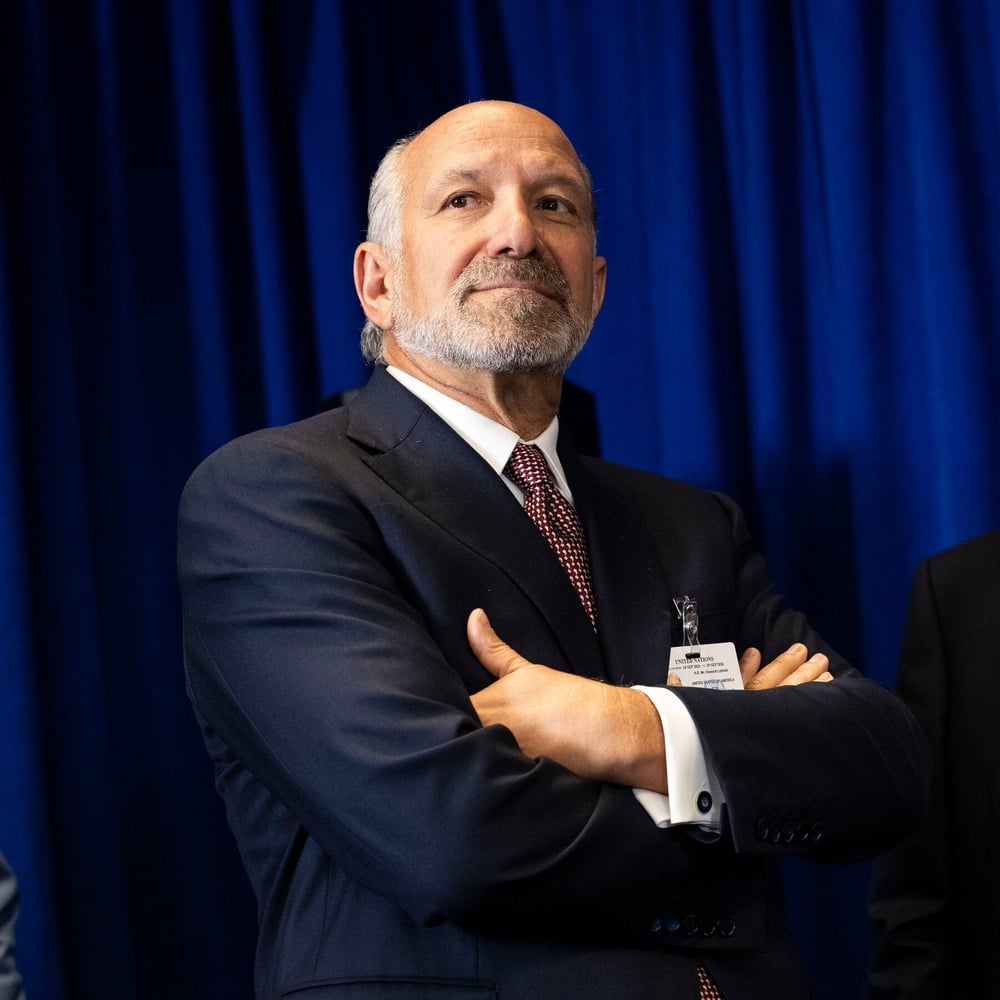
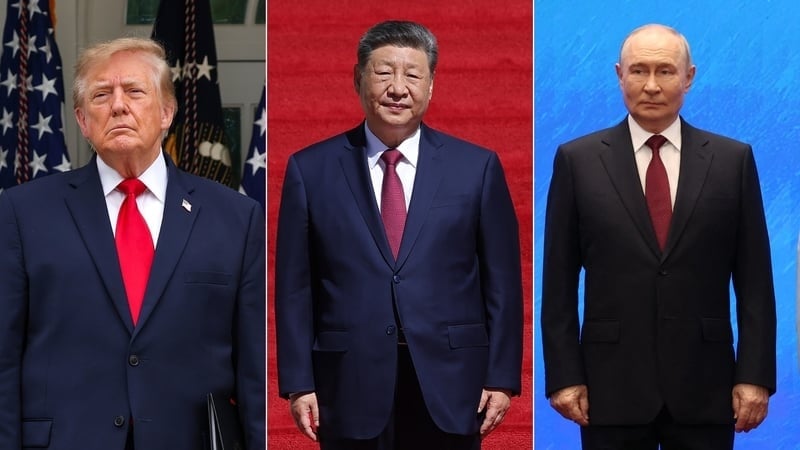
2026 © Helium Trades
Privacy Policy & Disclosure
* Disclaimer: Nothing on this website constitutes investment advice, performance data or any recommendation that any particular security, portfolio of securities, transaction or investment strategy is suitable for any specific person. Helium Trades is not responsible in any way for the accuracy
of any model predictions or price data. Any mention of a particular security and related prediction data is not a recommendation to buy or sell that security. Investments in securities involve the risk of loss. Past performance is no guarantee of future results. Helium Trades is not responsible for any of your investment decisions,
you should consult a financial expert before engaging in any transaction.
Helium Research Assistant

How can I help you today?
Ask any question about this page.