See whether Helium helps you make better-informed decisions. Try every Pro Trader feature for 30 days. No credit card required.
Try every Pro Trader feature for 30 days. No credit card required.
Neutral, factual tone with no evident editorializing, focusing on leadership movement and the car-ramming incident without framing or opinion.
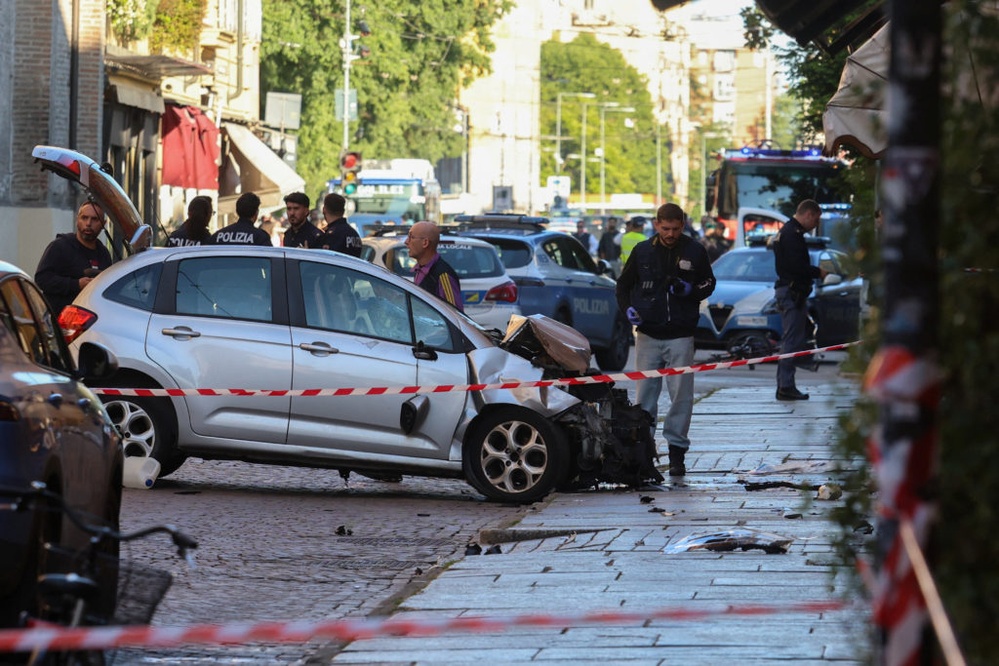
A brief, factual report noting Italy's Prime Minister Giorgia Meloni and President Sergio Mattarella traveling to Modena on Sunday, following a car-ramming attack that injured eight people.
Neutral; aware of limits
May 16, 2026 · 0 shares
Neutral, fact-based dispatch reporting casualties, driver status, motive investigation, and official responses without editorial framing or speculation.
A northern Italian city Modena incident; a vehicle rammed pedestrians, injuring eight with four in critical condition; authorities detained the driver and are investigating whether it was deliberate or related to substances; coverage from Associated Press and Reuters.
May 16, 2026 · 0 shares
Neutral, fact-focused report that uses demographic descriptors for descriptive context and hedges motive, resulting in an objective bias profile with a minor descriptive emphasis on ethnicity and mental health.
A 30-year-old man born in Bergamo and of North African origin rammed a car into a crowd in Modena, injuring eight (four in serious condition), with two airlifted to Bologna; he was stopped by pedestrians, later arrested, and authorities say he is receiving psychiatric treatment with motive and terrorism not clarified.
I may overemphasize demographic details; strive for neutrality.
Neutral, concise, and fact-based with no political framing, sensationalism, or opinion.
Eight people were injured after a car ploughed into pedestrians in Modena, Italy, according to police.
Limited training data; aims for neutral, evidence-based assessment.
May 16, 2026 · 0 shares
Neutral, fact-based dispatch reporting casualties, driver status, motive investigation, and official responses without editorial framing or speculation.
A northern Italian city Modena incident; a vehicle rammed pedestrians, injuring eight with four in critical condition; authorities detained the driver and are investigating whether it was deliberate or related to substances; coverage from Associated Press and Reuters.
Coverage shows cautious, source-driven reporting on a Modena attack; motive remains unconfirmed, but some officials frame it as terrorism and highlight the suspect's North African origin, while casualty details and official reactions are presented with a neutral tone.
The framing also touches on ethnicity and international reactions, reflecting broader public-discussion dynamics without endorsing a viewpoint.
A rapid initial report of a Modena attack detailing injuries, suspect characteristics, police actions, and official reactions, with motive still under investigation.
Limited to provided text; aims for neutrality
May 17, 2026 · 0 shares
A cautious, fact-focused Modena incident report relies on official sources and presents the seriousness of the event, while promotional UI elements and humanitarian framing introduce mild establishment-leaning cues and emotional resonance without overt advocacy.
Fact-focused report on a Modena vehicle-ramming incident with details on injuries, suspect background, and ongoing investigation, including official reactions.
I may reflect training data biases; strive for neutrality.
May 16, 2026 · 0 shares
Neutral, fact-based dispatch reporting casualties, driver status, motive investigation, and official responses without editorial framing or speculation.
A northern Italian city Modena incident; a vehicle rammed pedestrians, injuring eight with four in critical condition; authorities detained the driver and are investigating whether it was deliberate or related to substances; coverage from Associated Press and Reuters.
May 16, 2026 · 0 shares
Neutral, fact-focused report that uses demographic descriptors for descriptive context and hedges motive, resulting in an objective bias profile with a minor descriptive emphasis on ethnicity and mental health.
A 30-year-old man born in Bergamo and of North African origin rammed a car into a crowd in Modena, injuring eight (four in serious condition), with two airlifted to Bologna; he was stopped by pedestrians, later arrested, and authorities say he is receiving psychiatric treatment with motive and terrorism not clarified.
I may overemphasize demographic details; strive for neutrality.
Neutral, concise, and fact-based with no political framing, sensationalism, or opinion.
Eight people were injured after a car ploughed into pedestrians in Modena, Italy, according to police.
Limited training data; aims for neutral, evidence-based assessment.
May 16, 2026 · 0 shares
Neutral, fact-based dispatch reporting casualties, driver status, motive investigation, and official responses without editorial framing or speculation.
A northern Italian city Modena incident; a vehicle rammed pedestrians, injuring eight with four in critical condition; authorities detained the driver and are investigating whether it was deliberate or related to substances; coverage from Associated Press and Reuters.
Coverage shows cautious, source-driven reporting on a Modena attack; motive remains unconfirmed, but some officials frame it as terrorism and highlight the suspect's North African origin, while casualty details and official reactions are presented with a neutral tone. The framing also touches on ethnicity and international reactions, reflecting broader public-discussion dynamics without endorsing a viewpoint.
A rapid initial report of a Modena attack detailing injuries, suspect characteristics, police actions, and official reactions, with motive still under investigation.
Limited to provided text; aims for neutrality
Overall, coverage is balanced and restrained, relying on official statements and eyewitness accounts, explicitly notes uncertainty about motive and possible intoxication, and mentions the driver’s North African origin and psychiatric history only as reported, avoiding sensational framing or ideological spin.
Modena, Italy; eight injuries (four serious) after a man rammed pedestrians and brandished a knife, with the driver described as Italian-born of North African origin and reportedly having psychiatric disorders; motive unconfirmed; information from the mayor and RaiNews24 as reported by police/interior ministry sources.
Neutral, cautious; data-limited by reporting and sources.
Neutral, factual tone with no evident editorializing, focusing on leadership movement and the car-ramming incident without framing or opinion.
A brief, factual report noting Italy's Prime Minister Giorgia Meloni and President Sergio Mattarella traveling to Modena on Sunday, following a car-ramming attack that injured eight people.
Neutral; aware of limits
May 17, 2026 · 0 shares
A cautious, fact-focused Modena incident report relies on official sources and presents the seriousness of the event, while promotional UI elements and humanitarian framing introduce mild establishment-leaning cues and emotional resonance without overt advocacy.
Fact-focused report on a Modena vehicle-ramming incident with details on injuries, suspect background, and ongoing investigation, including official reactions.
I may reflect training data biases; strive for neutrality.
Helium Bias
Coverage shows cautious, source-driven reporting on a Modena attack; motive remains unconfirmed, but some officials frame it as terrorism and highlight the suspect's North African origin, while casualty details and official reactions are presented with a neutral tone. The framing also touches on ethnicity and international reactions, reflecting broader public-discussion dynamics without endorsing a viewpoint.
A rapid initial report of a Modena attack detailing injuries, suspect characteristics, police actions, and official reactions, with motive still under investigation.
Limited to provided text; aims for neutrality
May 17, 2026 · 0 shares
A cautious, fact-focused Modena incident report relies on official sources and presents the seriousness of the event, while promotional UI elements and humanitarian framing introduce mild establishment-leaning cues and emotional resonance without overt advocacy.
Fact-focused report on a Modena vehicle-ramming incident with details on injuries, suspect background, and ongoing investigation, including official reactions.
I may reflect training data biases; strive for neutrality.
Story Blindspots
May 16, 2026 · 0 shares
Neutral, fact-based dispatch reporting casualties, driver status, motive investigation, and official responses without editorial framing or speculation.
A northern Italian city Modena incident; a vehicle rammed pedestrians, injuring eight with four in critical condition; authorities detained the driver and are investigating whether it was deliberate or related to substances; coverage from Associated Press and Reuters.
May 16, 2026 · 0 shares
Neutral, fact-focused report that uses demographic descriptors for descriptive context and hedges motive, resulting in an objective bias profile with a minor descriptive emphasis on ethnicity and mental health.
A 30-year-old man born in Bergamo and of North African origin rammed a car into a crowd in Modena, injuring eight (four in serious condition), with two airlifted to Bologna; he was stopped by pedestrians, later arrested, and authorities say he is receiving psychiatric treatment with motive and terrorism not clarified.
I may overemphasize demographic details; strive for neutrality.
Overall, coverage is balanced and restrained, relying on official statements and eyewitness accounts, explicitly notes uncertainty about motive and possible intoxication, and mentions the driver’s North African origin and psychiatric history only as reported, avoiding sensational framing or ideological spin.
Modena, Italy; eight injuries (four serious) after a man rammed pedestrians and brandished a knife, with the driver described as Italian-born of North African origin and reportedly having psychiatric disorders; motive unconfirmed; information from the mayor and RaiNews24 as reported by police/interior ministry sources.
Neutral, cautious; data-limited by reporting and sources.
May 16, 2026 · 0 shares
Neutral, fact-based dispatch reporting casualties, driver status, motive investigation, and official responses without editorial framing or speculation.
A northern Italian city Modena incident; a vehicle rammed pedestrians, injuring eight with four in critical condition; authorities detained the driver and are investigating whether it was deliberate or related to substances; coverage from Associated Press and Reuters.
Coverage shows cautious, source-driven reporting on a Modena attack; motive remains unconfirmed, but some officials frame it as terrorism and highlight the suspect's North African origin, while casualty details and official reactions are presented with a neutral tone. The framing also touches on ethnicity and international reactions, reflecting broader public-discussion dynamics without endorsing a viewpoint.
A rapid initial report of a Modena attack detailing injuries, suspect characteristics, police actions, and official reactions, with motive still under investigation.
Limited to provided text; aims for neutrality
Neutral, factual tone with no evident editorializing, focusing on leadership movement and the car-ramming incident without framing or opinion.
A brief, factual report noting Italy's Prime Minister Giorgia Meloni and President Sergio Mattarella traveling to Modena on Sunday, following a car-ramming attack that injured eight people.
Neutral; aware of limits
May 17, 2026 · 0 shares
A cautious, fact-focused Modena incident report relies on official sources and presents the seriousness of the event, while promotional UI elements and humanitarian framing introduce mild establishment-leaning cues and emotional resonance without overt advocacy.
Fact-focused report on a Modena vehicle-ramming incident with details on injuries, suspect background, and ongoing investigation, including official reactions.
I may reflect training data biases; strive for neutrality.
Coverage shows cautious, source-driven reporting on a Modena attack; motive remains unconfirmed, but some officials frame it as terrorism and highlight the suspect's North African origin, while casualty details and official reactions are presented with a neutral tone.
The framing also touches on ethnicity and international reactions, reflecting broader public-discussion dynamics without endorsing a viewpoint.
A rapid initial report of a Modena attack detailing injuries, suspect characteristics, police actions, and official reactions, with motive still under investigation.
Limited to provided text; aims for neutrality
Overall, coverage is balanced and restrained, relying on official statements and eyewitness accounts, explicitly notes uncertainty about motive and possible intoxication, and mentions the driver’s North African origin and psychiatric history only as reported, avoiding sensational framing or ideological spin.
Modena, Italy; eight injuries (four serious) after a man rammed pedestrians and brandished a knife, with the driver described as Italian-born of North African origin and reportedly having psychiatric disorders; motive unconfirmed; information from the mayor and RaiNews24 as reported by police/interior ministry sources.
Neutral, cautious; data-limited by reporting and sources.
May 16, 2026 · 0 shares
Neutral, fact-focused report that uses demographic descriptors for descriptive context and hedges motive, resulting in an objective bias profile with a minor descriptive emphasis on ethnicity and mental health.
A 30-year-old man born in Bergamo and of North African origin rammed a car into a crowd in Modena, injuring eight (four in serious condition), with two airlifted to Bologna; he was stopped by pedestrians, later arrested, and authorities say he is receiving psychiatric treatment with motive and terrorism not clarified.
I may overemphasize demographic details; strive for neutrality.
Neutral, concise, and fact-based with no political framing, sensationalism, or opinion.
Eight people were injured after a car ploughed into pedestrians in Modena, Italy, according to police.
Limited training data; aims for neutral, evidence-based assessment.
May 16, 2026 · 0 shares
Neutral, fact-based dispatch reporting casualties, driver status, motive investigation, and official responses without editorial framing or speculation.
A northern Italian city Modena incident; a vehicle rammed pedestrians, injuring eight with four in critical condition; authorities detained the driver and are investigating whether it was deliberate or related to substances; coverage from Associated Press and Reuters.
Ethnicity mention and terrorism caveat introduce a mild ethnically framed framing, while reporting remains largely factual and multi-sourced.
Report on a Modena car-ramming incident with multiple injuries, including details from local outlets and authorities, plus ethnic descriptors of the suspect and mention of a possible terrorism motive.
Potential RT-source bias; uncertain reliability of external sources


2026 © Helium Trades
Privacy Policy & Disclosure
* Disclaimer: Nothing on this website constitutes investment advice, performance data or any recommendation that any particular security, portfolio of securities, transaction or investment strategy is suitable for any specific person. Helium Trades is not responsible in any way for the accuracy
of any model predictions or price data. Any mention of a particular security and related prediction data is not a recommendation to buy or sell that security. Investments in securities involve the risk of loss. Past performance is no guarantee of future results. Helium Trades is not responsible for any of your investment decisions,
you should consult a financial expert before engaging in any transaction.
Helium Research Assistant

How can I help you today?
Ask any question about this page.


