See whether Helium helps you make better-informed decisions. Try every Pro Trader feature for 30 days. No credit card required.
Try every Pro Trader feature for 30 days. No credit card required.
November 22, 2026 · 0 shares
Framing is neutral and schedule-driven, presenting the state visit through official itinerary details and expected outcomes without evaluative or sensational language.
Helium Analysis
Limitations: Analysis is limited to a short itinerary-style report; related-article headlines at the end were treated as page chrome and excluded.
·
5 of 56 available dimensions scored; omitted dimensions are not treated as neutral.
·
Verified supporting quotes for 5 of 5 scored dimensions.
Claim: The report uses factual itinerary and scheduling language rather than evaluative commentary.
“Shah is scheduled to meet Indian External Affairs Minister S Jaishankar on Sunday evening at the Taj Mahal Hotel, where he is staying.” · exact text match
Why: The quoted sentence is a neutral scheduling fact, supporting an objective classification.
Claim: The prose is dry and non-sensational.
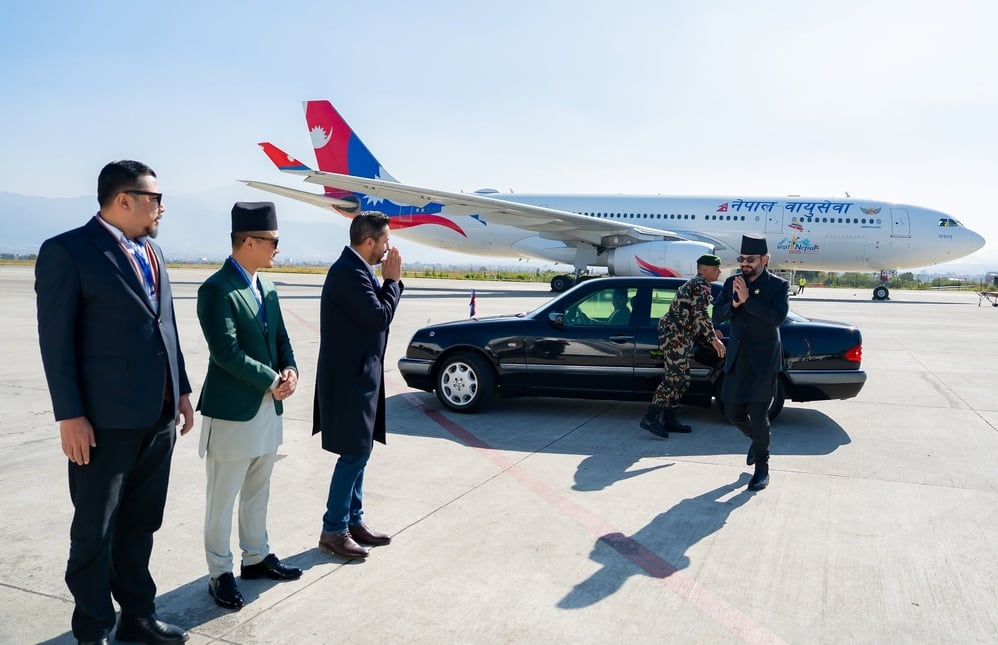
“The prime minister had departed Kathmandu at 2.8 pm on Sunday aboard a regular Nepal Airlines flight for the visit, which is at the invitation of his Indian counterpart Narendra Modi.” · exact text match
Why: It conveys logistics without emotive or dramatic language.
Claim: The report centers on official state diplomacy and high-level political meetings.
“Shah is scheduled to pay a courtesy call on Indian President Droupadi Murmu and hold one-on-one and delegation-level talks with Modi on Monday.” · exact text match
Why: The subject matter is political and diplomatic, though framed neutrally.
Claim: The tone is neutral and unemotional.
“The delegation also includes senior government officials, business representatives and three representatives of state-owned media.” · exact text match
Why: Neutral descriptive detail with no emotive language.
Claim: Specific logistics and attributed details support credibility.
“The prime minister had departed Kathmandu at 2.8 pm on Sunday aboard a regular Nepal Airlines flight for the visit, which is at the invitation of his Indian counterpart Narendra Modi.” · exact text match
Why: Precise itinerary and invitation details are provided, though sourcing remains limited.
Analysis is limited to a short itinerary-style report; related-article headlines at the end were treated as page chrome and excluded.
November 23, 2026 · 0 shares
Official government statements and positive diplomatic language frame the India-Nepal meeting as a productive, future-oriented partnership without independent scrutiny.
Helium Analysis
Limitations: The supplied article text is a fragmented, partially duplicated set of excerpts with empty strings, so the analysis is limited to the remaining substantive content.
·
9 of 56 available dimensions scored; omitted dimensions are not treated as neutral.
·
Verified supporting quotes for 6 of 9 scored dimensions.
Claim: The report presents the India-Nepal meeting in non-ideological, symmetrical diplomatic terms.
“held wide-ranging discussions on bilateral, regional and global issues” · exact text match
Why: The language is neutral and contains no left-right ideological framing or partisan characterization.
Claim: The report is predominantly descriptive, anchored in attributed official statements and meeting details rather than the author's subjective interpretation.
“the MEA wrote on X.” · exact text match
“Nepal's Ministry of Foreign Affairs (MOFA) stated on X.” · not found in supplied text
Why: Both sides' official statements are attributed, with little evaluative narration.
Claim: The report uses formal, low-drama diplomatic language rather than sensational or emotive cues.
“held a meeting with his Nepalese counterpart Balendra Shah at New Delhi's Hyderabad House on Monday” · exact text match
Why: The lead is a plain event report with no sensational adjectives or urgency cues.
Claim: The report describes a bilateral meeting and official positions without prescribing policy actions or advocacy.
“Discussions focused on giving further momentum to bilateral cooperation across trade, investment, infrastructure, development partnership, connectivity, border management, education, culture and people-to-people exchanges” · exact text match
Why: It reports discussion topics rather than urging readers or governments to adopt a course of action.
Claim: The article is centered on high-level political and diplomatic activity between two governments.
“Prime Minister Narendra Modi held a meeting with his Nepalese counterpart Balendra Shah” · exact text match
Why: The subject is a formal meeting of heads of government, with foreign and security officials present.
Claim: The report amplifies official government framing and presents the bilateral meeting in positive, partnership-oriented terms.
“Both leaders adopted a 'Joint Vision for a Viksit Bharat and Samunnat Nepal', laying the roadmap for a future-oriented partnership and shaping a brighter future for India and Nepal.” · exact text match
Why: It directly adopts the official joint-vision language and positive future framing without independent scrutiny.
Claim: The report has a mildly positive diplomatic tone, mainly through official language about partnership and future cooperation.
“shaping a brighter future for India and Nepal” · exact text match
Why: The phrase is positive, but it is embedded in official joint-vision framing and not strongly emotional.
Claim: The supplied report is reasonably credible as an event account because it relies on named official sources and avoids unsupported speculation.
“the Ministry of External Affairs (MEA) posted on X” · exact text match
“Nepal's Ministry of Foreign Affairs (MOFA) stated on X” · not found in supplied text
Why: Official attribution supports reliability, while the lack of independent sourcing limits external verification.
Claim: The report attributes claims to named government ministries and includes both Indian and Nepalese official statements.
“the Ministry of External Affairs (MEA) posted on X” · exact text match
“Nepal's Ministry of Foreign Affairs (MOFA) stated on X” · not found in supplied text
Why: Attribution to both governments is transparent, though the report largely relays official accounts without independent confirmation.
The supplied article text is a fragmented, partially duplicated set of excerpts with empty strings, so the analysis is limited to the remaining substantive content.
November 23, 2026 · 0 shares
The report is a narrowly factual ceremonial and itinerary account, using official titles and schedule details without evaluative or ideological language.
Helium Analysis
Limitations: The substantive report is very short and intermingled with unrelated headline links, so the framing analysis is limited to the ceremonial itinerary.
·
4 of 56 available dimensions scored; omitted dimensions are not treated as neutral.
·
Verified supporting quotes for 4 of 4 scored dimensions.
Claim: The report presents the event through concrete factual details rather than subjective interpretation.
“A contingent of the Indian Army accorded the guard of honour to Prime Minister Shah at the presidential palace on Monday.” · exact text match
Why: The sentence names actors, place, and time without evaluative or subjective language.
Claim: The report uses routine itinerary information rather than sensational emphasis.
“Shah is scheduled to visit Rajghat at 10:40 am to pay floral tributes at Mahatma Gandhi's memorial.” · verified after text normalization
Why: The detail is a plain schedule item with no dramatization or sensational wording.
Claim: The report describes planned events without prescribing actions or outcomes.
“He will meet Modi at Hyderabad House at 11 am, followed by delegation-level talks between the two countries at 11:50 am.” · exact text match
Why: The sentence reports a schedule in descriptive terms and does not recommend or advocate.
Claim: The report is emotionally neutral rather than negative or positive.
“Shah, who arrived in India on Sunday, was welcomed by Indian Prime Minister Narendra Modi at Rashtrapati Bhavan.” · exact text match
Why: The arrival and welcome are stated factually without emotive or evaluative language.
The substantive report is very short and intermingled with unrelated headline links, so the framing analysis is limited to the ceremonial itinerary.
November 23, 2026 · 0 shares
Official government statements and positive diplomatic language frame the India-Nepal meeting as a productive, future-oriented partnership without independent scrutiny.
Helium Analysis
Limitations: The supplied article text is a fragmented, partially duplicated set of excerpts with empty strings, so the analysis is limited to the remaining substantive content.
·
9 of 56 available dimensions scored; omitted dimensions are not treated as neutral.
·
Verified supporting quotes for 6 of 9 scored dimensions.
Claim: The report presents the India-Nepal meeting in non-ideological, symmetrical diplomatic terms.
“held wide-ranging discussions on bilateral, regional and global issues” · exact text match
Why: The language is neutral and contains no left-right ideological framing or partisan characterization.
Claim: The report is predominantly descriptive, anchored in attributed official statements and meeting details rather than the author's subjective interpretation.
“the MEA wrote on X.” · exact text match
“Nepal's Ministry of Foreign Affairs (MOFA) stated on X.” · not found in supplied text
Why: Both sides' official statements are attributed, with little evaluative narration.
Claim: The report uses formal, low-drama diplomatic language rather than sensational or emotive cues.
“held a meeting with his Nepalese counterpart Balendra Shah at New Delhi's Hyderabad House on Monday” · exact text match
Why: The lead is a plain event report with no sensational adjectives or urgency cues.
Claim: The report describes a bilateral meeting and official positions without prescribing policy actions or advocacy.
“Discussions focused on giving further momentum to bilateral cooperation across trade, investment, infrastructure, development partnership, connectivity, border management, education, culture and people-to-people exchanges” · exact text match
Why: It reports discussion topics rather than urging readers or governments to adopt a course of action.
Claim: The article is centered on high-level political and diplomatic activity between two governments.
“Prime Minister Narendra Modi held a meeting with his Nepalese counterpart Balendra Shah” · exact text match
Why: The subject is a formal meeting of heads of government, with foreign and security officials present.
Claim: The report amplifies official government framing and presents the bilateral meeting in positive, partnership-oriented terms.
“Both leaders adopted a 'Joint Vision for a Viksit Bharat and Samunnat Nepal', laying the roadmap for a future-oriented partnership and shaping a brighter future for India and Nepal.” · exact text match
Why: It directly adopts the official joint-vision language and positive future framing without independent scrutiny.
Claim: The report has a mildly positive diplomatic tone, mainly through official language about partnership and future cooperation.
“shaping a brighter future for India and Nepal” · exact text match
Why: The phrase is positive, but it is embedded in official joint-vision framing and not strongly emotional.
Claim: The supplied report is reasonably credible as an event account because it relies on named official sources and avoids unsupported speculation.
“the Ministry of External Affairs (MEA) posted on X” · exact text match
“Nepal's Ministry of Foreign Affairs (MOFA) stated on X” · not found in supplied text
Why: Official attribution supports reliability, while the lack of independent sourcing limits external verification.
Claim: The report attributes claims to named government ministries and includes both Indian and Nepalese official statements.
“the Ministry of External Affairs (MEA) posted on X” · exact text match
“Nepal's Ministry of Foreign Affairs (MOFA) stated on X” · not found in supplied text
Why: Attribution to both governments is transparent, though the report largely relays official accounts without independent confirmation.
The supplied article text is a fragmented, partially duplicated set of excerpts with empty strings, so the analysis is limited to the remaining substantive content.
November 23, 2026 · 0 shares
Official-source diplomatic reporting frames the Modi-Shah talks as producing “many key outcomes” and largely relays leader statements without independent scrutiny.
Helium Analysis
Limitations: The supplied text includes duplicated headline/scrape fragments and publication boilerplate, and no author byline is present.
·
10 of 56 available dimensions scored; omitted dimensions are not treated as neutral.
·
Verified supporting quotes for 10 of 10 scored dimensions.
Claim: The report distinguishes leaders' statements from its own narration.
“the Nepalese leader said in his media statement” · exact text match
“In his remarks, Modi also highlighted the strength of India-Nepal ties” · exact text match
Why: Direct attribution separates quoted claims from reported narration.
Claim: Coverage uses neutral, factual language rather than sensational language.
“The two sides inked several agreements to expand cooperation in specific sectors, including health and education.” · exact text match
Why: The wording is plain and event-focused, without emotive or alarmist framing.
Claim: The report's own wording presents the talks as successful and forward-looking.
“produced many key outcomes to further solidify the bilateral ties” · exact text match
Counterevidence:
“bilateral ties that came under some strain in May following Shah's remarks seeking involvement of China and the United Kingdom” · exact text match
Why: Success-oriented wording is present, but it is qualified by mention of recent bilateral strain.
Claim: The report describes diplomatic actions and agreements without recommending policy.
“The two sides inked several agreements to expand cooperation in specific sectors, including health and education.” · exact text match
Why: The content reports actions rather than advocating or prescribing outcomes.
Claim: The report centers official government leaders and a bilateral diplomatic package.
“Prime Minister Narendra Modi on Monday announced a development package of 24,000 crore Nepalese rupees for Nepal after holding wide-ranging talks with his Nepalese counterpart Balendra Shah” · exact text match
Why: The subject matter and main actors are explicitly governmental and political.
Claim: The report relies heavily on statements by the two national leaders as the basis for its claims.
“In his remarks, Modi also highlighted the strength of India-Nepal ties” · exact text match
“Shah said his talks with PM Modi were aimed at further strengthening and modernising the centuries-old Nepal-India relations.” · exact text match
Why: The article's account is built substantially around attributed claims from high officials.
Claim: The report frames the summit as producing many key outcomes and solidifying ties.
“produced many key outcomes to further solidify the bilateral ties” · exact text match
Why: The publisher's own connective wording casts official talks in a positive, establishment-friendly light.
Claim: Credibility is supported by named officials, direct attribution, and agency sourcing.
“the Nepalese leader said in his media statement” · exact text match
“(Agencies)” · exact text match
Why: The report identifies sources and uses agency material, supporting basic journalistic transparency.
Claim: The report presents concrete diplomatic outcomes and attributed statements rather than irrational claims.
“The two leaders virtually laid the foundation of several India-assisted projects in Nepal and flagged off a cross-border passenger rail link between Ayodhya in Uttar Pradesh and Janakpur Dham in Nepal.” · exact text match
Why: This is specific, factual reporting of announced diplomatic actions.
Claim: The report attributes statements and includes context about prior bilateral strain.
“the Nepalese leader said in his media statement” · exact text match
“bilateral ties that came under some strain in May following Shah's remarks seeking involvement of China and the United Kingdom” · exact text match
Why: Attribution and inclusion of qualifying context indicate fair handling of the diplomatic event.
The supplied text includes duplicated headline/scrape fragments and publication boilerplate, and no author byline is present.
Framing centers the visit as a pragmatic diplomatic opportunity on trade, connectivity and energy, with attributed expert and official voices and measured friction over India’s bargaining position.
Helium Analysis
Limitations: The excerpt is an advance preview with several expected/reportedly claims, limiting certainty about the visit’s outcomes.
·
9 of 56 available dimensions scored; omitted dimensions are not treated as neutral.
·
Verified supporting quotes for 9 of 9 scored dimensions.
Claim: The report is mostly objective, relying on attributed official and expert statements and concrete details.
“Finance Minister Swarnim Wagle said during his remarks at a book launch this week that the RSP government has been working with India to revive dormant bilateral committees” · exact text match
Counterevidence:
“This visit gives New Delhi a chance to size up Nepal’s enigmatic and elusive leader, and for Shah to seek tangible results on trade, connectivity and energy.” · exact text match
Why: Named attribution and factual detail keep the framing mostly objective, though some evaluative phrasing remains.
Claim: The report avoids sensational language and sticks to measured factual descriptions.
“Unlike previous Nepali leaders who took large entourages on extended jaunts, Shah will spend only around 25 hours in India.” · exact text match
Why: The comparison is factual and unexaggerated.
Claim: The report is primarily descriptive, summarizing planned talks and stated positions rather than issuing prescriptions.
“Nepal and India have together drawn up a vision statement to re-energise the partnership that highlights 10 areas of cooperation: economy, connectivity, energy, climate resilience, governance, education, technology, health, agriculture, sports, and tourism.” · exact text match
Counterevidence:
““We need to move beyond viewing connectivity merely in terms of transit access,” adds Apekshya Shah.” · exact text match
Why: The passage catalogs stated plans and areas of cooperation, while prescriptive language appears mainly in attributed quotes.
Claim: The report includes some evaluative framing beyond bare facts.
“This visit gives New Delhi a chance to size up Nepal’s enigmatic and elusive leader, and for Shah to seek tangible results on trade, connectivity and energy.” · exact text match
Why: Phrases like enigmatic and elusive leader are evaluative.
Claim: The report is centrally about a prime ministerial diplomatic visit and bilateral state relations.
“Next week, PM Shah faces an important diplomatic test as he heads to New Delhi for his first bilateral visit since assuming office in March.” · exact text match
Why: The subject is explicitly governmental diplomacy.
Claim: The report demonstrates visible sourcing and attribution through named experts and officials.
““I don't think Nepal needs to explain or redefine its geopolitical position to India,” says Apekshya Shah of the Department of International Relations and Diplomacy at TU.” · exact text match
“Finance Minister Swarnim Wagle said during his remarks at a book launch this week that the RSP government has been working with India to revive dormant bilateral committees” · exact text match
Why: Named sources and attributed claims support credibility.
Claim: The report relies on expectations and reported intentions about an upcoming visit.
“Shah is expected to try to get Indian approval for inbound air routes through Bhairawa and Mahendranagar which are now only outbound.” · exact text match
Why: The sentence explicitly uses expected and concerns future diplomatic requests.
Claim: The report includes information that cuts against a simple pro-Shah or anti-India narrative.
“In a departure from his previous blistering anti-Indian remarks, the prime minister told Parliament in June that Nepal had also encroached on Indian land — causing an uproar in Nepal and astonishment in India.” · exact text match
Why: Including Shah’s admission of Nepali encroachment signals fairness.
Claim: The report includes specific quantitative and institutional details rather than relying on vague generalities.
“Nepal has agreements to export more than 1,300MW of electricity to India and Bangladesh.” · exact text match
Why: Concrete figures and named mechanisms indicate a high level of substantive detail.
The excerpt is an advance preview with several expected/reportedly claims, limiting certainty about the visit’s outcomes.
November 20, 2026 · 0 shares
The report is an official-source-driven, procedural preview that frames the visit around economic diplomacy and private-sector cooperation without critical or oppositional voices.
Helium Analysis
Limitations: The supplied article text is truncated and interleaved with unrelated related-link fragments, so the assessment is limited to the visible substantive report.
·
10 of 56 available dimensions scored; omitted dimensions are not treated as neutral.
·
Verified supporting quotes for 10 of 10 scored dimensions.
Claim: The report relies on named official attribution and concrete itinerary details rather than subjective commentary.
“Foreign Secretary Amrit Bahadur Rai announced the programme during a press briefing at Singha Durbar on Friday, saying a Nepal-India Business Forum would also be organised during the visit.” · exact text match
Why: Attribution to a named official and factual program details make the framing strongly objective.
Claim: The framing is procedural and low-drama, centered on meetings, schedules, and agreements.
“Shah is scheduled to pay a courtesy call on Indian President Droupadi Murmu.” · exact text match
Why: A routine courtesy-call detail is presented without sensational language.
Claim: The report describes scheduled diplomatic activities and planned agreements rather than advocating particular policies.
“The programme also includes a visit to Rajghat in New Delhi, where Shah will pay tribute at the memorial of Mahatma Gandhi.” · exact text match
Why: Itinerary description is descriptive rather than prescriptive.
Claim: The story is explicitly centered on a prime ministerial visit and high-level bilateral political engagement.
“Prime Minister Balendra Shah’s upcoming visit to India will focus not only on high-level political engagements but also on economic diplomacy and expanding cooperation between the private sectors of the two countries.” · exact text match
Why: The subject is a state visit involving prime ministers and foreign ministry officials, making the political dimension explicit.
Claim: Official government framing of warm ties and a strengthening visit is relayed without countervailing perspectives in the substantive article.
“Rai said Nepal and India shared close historical, cultural, civilisational and people-to-people ties, expressing confidence that the high-level visit would further strengthen bilateral relations.” · exact text match
Why: The article gives prominence to an official's positive assessment of bilateral relations and the visit's expected benefits.
Claim: Emotional valence is neutral; the report lists schedule items and attributed expectations without emotive language.
“During the visit, Shah will hold delegation-level talks with Modi, followed by a joint press conference by the two prime ministers.” · exact text match
Why: Neutral procedural wording supports a zero emotional-bias score.
Claim: Credibility is supported by named official sources, specific dates, and attributed expectations.
“Foreign Secretary Amrit Bahadur Rai announced the programme during a press briefing at Singha Durbar on Friday, saying a Nepal-India Business Forum would also be organised during the visit.” · exact text match
Why: Named attribution and concrete details provide visible sourcing, though the report remains a preview with unverified future outcomes.
Claim: The visit is framed through a means-end rationale of official discussions expected to expand trade, investment, and economic cooperation.
“Rai said the discussions were expected to help expand trade, investment and economic cooperation between the two countries.” · exact text match
Why: The report presents the trip in deliberative, policy-rational terms with attributed expectations rather than emotional or illogical appeals.
Claim: The report includes limited forward-looking expectations attributed to an official about expanded trade and investment.
“Rai said the discussions were expected to help expand trade, investment and economic cooperation between the two countries.” · exact text match
Why: The expectation is explicitly attributed, but it is still a forecast about prospective outcomes.
Claim: The report uses named sources and distinguishes reported plans and expectations through attribution.
“The Ministry of Foreign Affairs said memorandums of understanding would be exchanged to expand cooperation in areas including education, health, agriculture, sports, disaster management and human resource development.” · exact text match
Why: Specific ministry attribution and detailed plans support a high-integrity, non-misleading presentation.
The supplied article text is truncated and interleaved with unrelated related-link fragments, so the assessment is limited to the visible substantive report.
November 22, 2026 · 0 shares
Framing is neutral and schedule-driven, presenting the state visit through official itinerary details and expected outcomes without evaluative or sensational language.
Helium Analysis
Limitations: Analysis is limited to a short itinerary-style report; related-article headlines at the end were treated as page chrome and excluded.
·
5 of 56 available dimensions scored; omitted dimensions are not treated as neutral.
·
Verified supporting quotes for 5 of 5 scored dimensions.
Claim: The report uses factual itinerary and scheduling language rather than evaluative commentary.
“Shah is scheduled to meet Indian External Affairs Minister S Jaishankar on Sunday evening at the Taj Mahal Hotel, where he is staying.” · exact text match
Why: The quoted sentence is a neutral scheduling fact, supporting an objective classification.
Claim: The prose is dry and non-sensational.
“The prime minister had departed Kathmandu at 2.8 pm on Sunday aboard a regular Nepal Airlines flight for the visit, which is at the invitation of his Indian counterpart Narendra Modi.” · exact text match
Why: It conveys logistics without emotive or dramatic language.
Claim: The report centers on official state diplomacy and high-level political meetings.
“Shah is scheduled to pay a courtesy call on Indian President Droupadi Murmu and hold one-on-one and delegation-level talks with Modi on Monday.” · exact text match
Why: The subject matter is political and diplomatic, though framed neutrally.
Claim: The tone is neutral and unemotional.
“The delegation also includes senior government officials, business representatives and three representatives of state-owned media.” · exact text match
Why: Neutral descriptive detail with no emotive language.
Claim: Specific logistics and attributed details support credibility.
“The prime minister had departed Kathmandu at 2.8 pm on Sunday aboard a regular Nepal Airlines flight for the visit, which is at the invitation of his Indian counterpart Narendra Modi.” · exact text match
Why: Precise itinerary and invitation details are provided, though sourcing remains limited.
Analysis is limited to a short itinerary-style report; related-article headlines at the end were treated as page chrome and excluded.
November 23, 2026 · 0 shares
Official-source diplomatic reporting frames the Modi-Shah talks as producing “many key outcomes” and largely relays leader statements without independent scrutiny.
Helium Analysis
Limitations: The supplied text includes duplicated headline/scrape fragments and publication boilerplate, and no author byline is present.
·
10 of 56 available dimensions scored; omitted dimensions are not treated as neutral.
·
Verified supporting quotes for 10 of 10 scored dimensions.
Claim: The report distinguishes leaders' statements from its own narration.
“the Nepalese leader said in his media statement” · exact text match
“In his remarks, Modi also highlighted the strength of India-Nepal ties” · exact text match
Why: Direct attribution separates quoted claims from reported narration.
Claim: Coverage uses neutral, factual language rather than sensational language.
“The two sides inked several agreements to expand cooperation in specific sectors, including health and education.” · exact text match
Why: The wording is plain and event-focused, without emotive or alarmist framing.
Claim: The report's own wording presents the talks as successful and forward-looking.
“produced many key outcomes to further solidify the bilateral ties” · exact text match
Counterevidence:
“bilateral ties that came under some strain in May following Shah's remarks seeking involvement of China and the United Kingdom” · exact text match
Why: Success-oriented wording is present, but it is qualified by mention of recent bilateral strain.
Claim: The report describes diplomatic actions and agreements without recommending policy.
“The two sides inked several agreements to expand cooperation in specific sectors, including health and education.” · exact text match
Why: The content reports actions rather than advocating or prescribing outcomes.
Claim: The report centers official government leaders and a bilateral diplomatic package.
“Prime Minister Narendra Modi on Monday announced a development package of 24,000 crore Nepalese rupees for Nepal after holding wide-ranging talks with his Nepalese counterpart Balendra Shah” · exact text match
Why: The subject matter and main actors are explicitly governmental and political.
Claim: The report relies heavily on statements by the two national leaders as the basis for its claims.
“In his remarks, Modi also highlighted the strength of India-Nepal ties” · exact text match
“Shah said his talks with PM Modi were aimed at further strengthening and modernising the centuries-old Nepal-India relations.” · exact text match
Why: The article's account is built substantially around attributed claims from high officials.
Claim: The report frames the summit as producing many key outcomes and solidifying ties.
“produced many key outcomes to further solidify the bilateral ties” · exact text match
Why: The publisher's own connective wording casts official talks in a positive, establishment-friendly light.
Claim: Credibility is supported by named officials, direct attribution, and agency sourcing.
“the Nepalese leader said in his media statement” · exact text match
“(Agencies)” · exact text match
Why: The report identifies sources and uses agency material, supporting basic journalistic transparency.
Claim: The report presents concrete diplomatic outcomes and attributed statements rather than irrational claims.
“The two leaders virtually laid the foundation of several India-assisted projects in Nepal and flagged off a cross-border passenger rail link between Ayodhya in Uttar Pradesh and Janakpur Dham in Nepal.” · exact text match
Why: This is specific, factual reporting of announced diplomatic actions.
Claim: The report attributes statements and includes context about prior bilateral strain.
“the Nepalese leader said in his media statement” · exact text match
“bilateral ties that came under some strain in May following Shah's remarks seeking involvement of China and the United Kingdom” · exact text match
Why: Attribution and inclusion of qualifying context indicate fair handling of the diplomatic event.
The supplied text includes duplicated headline/scrape fragments and publication boilerplate, and no author byline is present.
November 20, 2026 · 0 shares
The report frames Shah’s Delhi visit as a potential reset and a personal diplomatic test, relying on attributed analyst commentary while balancing opportunities against territorial disputes and domestic governance criticisms.
Helium Analysis
Limitations: The supplied text includes unrelated related-link headlines after the main report; those were excluded, and no author byline or email was present.
·
8 of 56 available dimensions scored; omitted dimensions are not treated as neutral.
·
Verified supporting quotes for 8 of 8 scored dimensions.
Claim: Evaluations and forecasts are largely attributed to analysts and observers rather than asserted by the publisher.
“analysts see Shah's visit as an opportunity for a reset.” · exact text match
“But some observers in Nepal believe that Shah's preparations for the high-stake India visit have been less than thorough.” · exact text match
Why: The quoted assessments are presented as external views, supporting an objective rather than subjective framing.
Claim: The report uses measured policy and diplomatic language rather than sensational phrasing.
“The talks are expected to cover a broad range of issues, including economic and energy cooperation, the opening of new air corridors, and a reconstruction assistance package following the devastating flash floods that struck Nepal in August.” · exact text match
Why: The central description is factual and policy-focused; even disaster coverage is reported in a straightforward manner.
Claim: The framing is primarily descriptive of diplomatic developments and expected outcomes rather than advocating a course of action.
“The talks are expected to cover a broad range of issues, including economic and energy cooperation, the opening of new air corridors, and a reconstruction assistance package” · exact text match
“Securing concrete commitments from Delhi on financial aid would be seen as a diplomatic success and could help blunt growing domestic criticism.” · exact text match
Why: It reports expectations and how outcomes would be viewed, not a publisher recommendation.
Claim: The report is centrally concerned with political and diplomatic relations between Nepal and India.
“The talks are expected to cover a broad range of issues, including economic and energy cooperation, the opening of new air corridors, and a reconstruction assistance package” · exact text match
“Shah is already facing criticism over some of his government's recent decisions” · exact text match
Why: Leadership visits, bilateral talks, governance criticism and strategic ties are political content.
Claim: Claims and forecasts are mostly hedged or attributed to named or described sources.
“The talks are expected to cover a broad range of issues” · exact text match
“But some observers in Nepal believe that Shah's preparations for the high-stake India visit have been less than thorough.” · exact text match
Why: Use of hedged expectations and attributed observers supports visible credibility practices.
Claim: The report treats the visit's prospects through attributed analysis and acknowledges competing considerations rather than emotive assertion.
“analysts see Shah's visit as an opportunity for a reset.” · exact text match
“But some observers in Nepal believe that Shah's preparations for the high-stake India visit have been less than thorough.” · exact text match
Why: Both hopeful and critical assessments are attributed, indicating a rational, multi-perspective framing.
Claim: The report includes critical observations about Shah's government and press freedom alongside positive expectations.
“But some observers in Nepal believe that Shah's preparations for the high-stake India visit have been less than thorough.” · exact text match
“Police were sent to some news organisations to detain journalists for their news coverage triggering accusations of curtailing press freedom.” · exact text match
Why: Including critical scrutiny of the subject signals fairness and honesty in framing.
Claim: The report supplies historical, strategic, economic and domestic political context for the visit.
“Bilateral trade exceeds $9bn, heavily skewed in India's favour - a longstanding source of resentment in Kathmandu.” · exact text match
“In 2019, Nepal was furious after India published a map that included areas claimed by Kathmandu, in a western region close to the border with China, as part of its territory.” · exact text match
Why: Multiple contextual layers indicate a relatively intelligent, explanatory treatment.
The supplied text includes unrelated related-link headlines after the main report; those were excluded, and no author byline or email was present.
November 23, 2026 · 0 shares
Official-source diplomatic reporting frames the Modi-Shah talks as producing “many key outcomes” and largely relays leader statements without independent scrutiny.
Helium Analysis Limitations: The supplied text includes duplicated headline/scrape fragments and publication boilerplate, and no author byline is present. · 10 of 56 available dimensions scored; omitted dimensions are not treated as neutral. · Verified supporting quotes for 10 of 10 scored dimensions.
Claim: The report distinguishes leaders' statements from its own narration.
“the Nepalese leader said in his media statement” · exact text match
“In his remarks, Modi also highlighted the strength of India-Nepal ties” · exact text match
Why: Direct attribution separates quoted claims from reported narration.
Claim: Coverage uses neutral, factual language rather than sensational language.
“The two sides inked several agreements to expand cooperation in specific sectors, including health and education.” · exact text match
Why: The wording is plain and event-focused, without emotive or alarmist framing.
Claim: The report's own wording presents the talks as successful and forward-looking.
“produced many key outcomes to further solidify the bilateral ties” · exact text match
Counterevidence:
“bilateral ties that came under some strain in May following Shah's remarks seeking involvement of China and the United Kingdom” · exact text match
Why: Success-oriented wording is present, but it is qualified by mention of recent bilateral strain.
Claim: The report describes diplomatic actions and agreements without recommending policy.
“The two sides inked several agreements to expand cooperation in specific sectors, including health and education.” · exact text match
Why: The content reports actions rather than advocating or prescribing outcomes.
Claim: The report centers official government leaders and a bilateral diplomatic package.
“Prime Minister Narendra Modi on Monday announced a development package of 24,000 crore Nepalese rupees for Nepal after holding wide-ranging talks with his Nepalese counterpart Balendra Shah” · exact text match
Why: The subject matter and main actors are explicitly governmental and political.
Claim: The report relies heavily on statements by the two national leaders as the basis for its claims.
“In his remarks, Modi also highlighted the strength of India-Nepal ties” · exact text match
“Shah said his talks with PM Modi were aimed at further strengthening and modernising the centuries-old Nepal-India relations.” · exact text match
Why: The article's account is built substantially around attributed claims from high officials.
Claim: The report frames the summit as producing many key outcomes and solidifying ties.
“produced many key outcomes to further solidify the bilateral ties” · exact text match
Why: The publisher's own connective wording casts official talks in a positive, establishment-friendly light.
Claim: Credibility is supported by named officials, direct attribution, and agency sourcing.
“the Nepalese leader said in his media statement” · exact text match
“(Agencies)” · exact text match
Why: The report identifies sources and uses agency material, supporting basic journalistic transparency.
Claim: The report presents concrete diplomatic outcomes and attributed statements rather than irrational claims.
“The two leaders virtually laid the foundation of several India-assisted projects in Nepal and flagged off a cross-border passenger rail link between Ayodhya in Uttar Pradesh and Janakpur Dham in Nepal.” · exact text match
Why: This is specific, factual reporting of announced diplomatic actions.
Claim: The report attributes statements and includes context about prior bilateral strain.
“the Nepalese leader said in his media statement” · exact text match
“bilateral ties that came under some strain in May following Shah's remarks seeking involvement of China and the United Kingdom” · exact text match
Why: Attribution and inclusion of qualifying context indicate fair handling of the diplomatic event.
The supplied text includes duplicated headline/scrape fragments and publication boilerplate, and no author byline is present.
November 22, 2026 · 0 shares
Framing is neutral and schedule-driven, presenting the state visit through official itinerary details and expected outcomes without evaluative or sensational language.
Helium Analysis Limitations: Analysis is limited to a short itinerary-style report; related-article headlines at the end were treated as page chrome and excluded. · 5 of 56 available dimensions scored; omitted dimensions are not treated as neutral. · Verified supporting quotes for 5 of 5 scored dimensions.
Claim: The report uses factual itinerary and scheduling language rather than evaluative commentary.
“Shah is scheduled to meet Indian External Affairs Minister S Jaishankar on Sunday evening at the Taj Mahal Hotel, where he is staying.” · exact text match
Why: The quoted sentence is a neutral scheduling fact, supporting an objective classification.
Claim: The prose is dry and non-sensational.
“The prime minister had departed Kathmandu at 2.8 pm on Sunday aboard a regular Nepal Airlines flight for the visit, which is at the invitation of his Indian counterpart Narendra Modi.” · exact text match
Why: It conveys logistics without emotive or dramatic language.
Claim: The report centers on official state diplomacy and high-level political meetings.
“Shah is scheduled to pay a courtesy call on Indian President Droupadi Murmu and hold one-on-one and delegation-level talks with Modi on Monday.” · exact text match
Why: The subject matter is political and diplomatic, though framed neutrally.
Claim: The tone is neutral and unemotional.
“The delegation also includes senior government officials, business representatives and three representatives of state-owned media.” · exact text match
Why: Neutral descriptive detail with no emotive language.
Claim: Specific logistics and attributed details support credibility.
“The prime minister had departed Kathmandu at 2.8 pm on Sunday aboard a regular Nepal Airlines flight for the visit, which is at the invitation of his Indian counterpart Narendra Modi.” · exact text match
Why: Precise itinerary and invitation details are provided, though sourcing remains limited.
Analysis is limited to a short itinerary-style report; related-article headlines at the end were treated as page chrome and excluded.
November 23, 2026 · 0 shares
The report is a narrowly factual ceremonial and itinerary account, using official titles and schedule details without evaluative or ideological language.
Helium Analysis Limitations: The substantive report is very short and intermingled with unrelated headline links, so the framing analysis is limited to the ceremonial itinerary. · 4 of 56 available dimensions scored; omitted dimensions are not treated as neutral. · Verified supporting quotes for 4 of 4 scored dimensions.
Claim: The report presents the event through concrete factual details rather than subjective interpretation.
“A contingent of the Indian Army accorded the guard of honour to Prime Minister Shah at the presidential palace on Monday.” · exact text match
Why: The sentence names actors, place, and time without evaluative or subjective language.
Claim: The report uses routine itinerary information rather than sensational emphasis.
“Shah is scheduled to visit Rajghat at 10:40 am to pay floral tributes at Mahatma Gandhi's memorial.” · verified after text normalization
Why: The detail is a plain schedule item with no dramatization or sensational wording.
Claim: The report describes planned events without prescribing actions or outcomes.
“He will meet Modi at Hyderabad House at 11 am, followed by delegation-level talks between the two countries at 11:50 am.” · exact text match
Why: The sentence reports a schedule in descriptive terms and does not recommend or advocate.
Claim: The report is emotionally neutral rather than negative or positive.
“Shah, who arrived in India on Sunday, was welcomed by Indian Prime Minister Narendra Modi at Rashtrapati Bhavan.” · exact text match
Why: The arrival and welcome are stated factually without emotive or evaluative language.
The substantive report is very short and intermingled with unrelated headline links, so the framing analysis is limited to the ceremonial itinerary.
November 23, 2026 · 0 shares
Official government statements and positive diplomatic language frame the India-Nepal meeting as a productive, future-oriented partnership without independent scrutiny.
Helium Analysis Limitations: The supplied article text is a fragmented, partially duplicated set of excerpts with empty strings, so the analysis is limited to the remaining substantive content. · 9 of 56 available dimensions scored; omitted dimensions are not treated as neutral. · Verified supporting quotes for 6 of 9 scored dimensions.
Claim: The report presents the India-Nepal meeting in non-ideological, symmetrical diplomatic terms.
“held wide-ranging discussions on bilateral, regional and global issues” · exact text match
Why: The language is neutral and contains no left-right ideological framing or partisan characterization.
Claim: The report is predominantly descriptive, anchored in attributed official statements and meeting details rather than the author's subjective interpretation.
“the MEA wrote on X.” · exact text match
“Nepal's Ministry of Foreign Affairs (MOFA) stated on X.” · not found in supplied text
Why: Both sides' official statements are attributed, with little evaluative narration.
Claim: The report uses formal, low-drama diplomatic language rather than sensational or emotive cues.
“held a meeting with his Nepalese counterpart Balendra Shah at New Delhi's Hyderabad House on Monday” · exact text match
Why: The lead is a plain event report with no sensational adjectives or urgency cues.
Claim: The report describes a bilateral meeting and official positions without prescribing policy actions or advocacy.
“Discussions focused on giving further momentum to bilateral cooperation across trade, investment, infrastructure, development partnership, connectivity, border management, education, culture and people-to-people exchanges” · exact text match
Why: It reports discussion topics rather than urging readers or governments to adopt a course of action.
Claim: The article is centered on high-level political and diplomatic activity between two governments.
“Prime Minister Narendra Modi held a meeting with his Nepalese counterpart Balendra Shah” · exact text match
Why: The subject is a formal meeting of heads of government, with foreign and security officials present.
Claim: The report amplifies official government framing and presents the bilateral meeting in positive, partnership-oriented terms.
“Both leaders adopted a 'Joint Vision for a Viksit Bharat and Samunnat Nepal', laying the roadmap for a future-oriented partnership and shaping a brighter future for India and Nepal.” · exact text match
Why: It directly adopts the official joint-vision language and positive future framing without independent scrutiny.
Claim: The report has a mildly positive diplomatic tone, mainly through official language about partnership and future cooperation.
“shaping a brighter future for India and Nepal” · exact text match
Why: The phrase is positive, but it is embedded in official joint-vision framing and not strongly emotional.
Claim: The supplied report is reasonably credible as an event account because it relies on named official sources and avoids unsupported speculation.
“the Ministry of External Affairs (MEA) posted on X” · exact text match
“Nepal's Ministry of Foreign Affairs (MOFA) stated on X” · not found in supplied text
Why: Official attribution supports reliability, while the lack of independent sourcing limits external verification.
Claim: The report attributes claims to named government ministries and includes both Indian and Nepalese official statements.
“the Ministry of External Affairs (MEA) posted on X” · exact text match
“Nepal's Ministry of Foreign Affairs (MOFA) stated on X” · not found in supplied text
Why: Attribution to both governments is transparent, though the report largely relays official accounts without independent confirmation.
The supplied article text is a fragmented, partially duplicated set of excerpts with empty strings, so the analysis is limited to the remaining substantive content.
Framing centers the visit as a pragmatic diplomatic opportunity on trade, connectivity and energy, with attributed expert and official voices and measured friction over India’s bargaining position.
Helium Analysis Limitations: The excerpt is an advance preview with several expected/reportedly claims, limiting certainty about the visit’s outcomes. · 9 of 56 available dimensions scored; omitted dimensions are not treated as neutral. · Verified supporting quotes for 9 of 9 scored dimensions.
Claim: The report is mostly objective, relying on attributed official and expert statements and concrete details.
“Finance Minister Swarnim Wagle said during his remarks at a book launch this week that the RSP government has been working with India to revive dormant bilateral committees” · exact text match
Counterevidence:
“This visit gives New Delhi a chance to size up Nepal’s enigmatic and elusive leader, and for Shah to seek tangible results on trade, connectivity and energy.” · exact text match
Why: Named attribution and factual detail keep the framing mostly objective, though some evaluative phrasing remains.
Claim: The report avoids sensational language and sticks to measured factual descriptions.
“Unlike previous Nepali leaders who took large entourages on extended jaunts, Shah will spend only around 25 hours in India.” · exact text match
Why: The comparison is factual and unexaggerated.
Claim: The report is primarily descriptive, summarizing planned talks and stated positions rather than issuing prescriptions.
“Nepal and India have together drawn up a vision statement to re-energise the partnership that highlights 10 areas of cooperation: economy, connectivity, energy, climate resilience, governance, education, technology, health, agriculture, sports, and tourism.” · exact text match
Counterevidence:
““We need to move beyond viewing connectivity merely in terms of transit access,” adds Apekshya Shah.” · exact text match
Why: The passage catalogs stated plans and areas of cooperation, while prescriptive language appears mainly in attributed quotes.
Claim: The report includes some evaluative framing beyond bare facts.
“This visit gives New Delhi a chance to size up Nepal’s enigmatic and elusive leader, and for Shah to seek tangible results on trade, connectivity and energy.” · exact text match
Why: Phrases like enigmatic and elusive leader are evaluative.
Claim: The report is centrally about a prime ministerial diplomatic visit and bilateral state relations.
“Next week, PM Shah faces an important diplomatic test as he heads to New Delhi for his first bilateral visit since assuming office in March.” · exact text match
Why: The subject is explicitly governmental diplomacy.
Claim: The report demonstrates visible sourcing and attribution through named experts and officials.
““I don't think Nepal needs to explain or redefine its geopolitical position to India,” says Apekshya Shah of the Department of International Relations and Diplomacy at TU.” · exact text match
“Finance Minister Swarnim Wagle said during his remarks at a book launch this week that the RSP government has been working with India to revive dormant bilateral committees” · exact text match
Why: Named sources and attributed claims support credibility.
Claim: The report relies on expectations and reported intentions about an upcoming visit.
“Shah is expected to try to get Indian approval for inbound air routes through Bhairawa and Mahendranagar which are now only outbound.” · exact text match
Why: The sentence explicitly uses expected and concerns future diplomatic requests.
Claim: The report includes information that cuts against a simple pro-Shah or anti-India narrative.
“In a departure from his previous blistering anti-Indian remarks, the prime minister told Parliament in June that Nepal had also encroached on Indian land — causing an uproar in Nepal and astonishment in India.” · exact text match
Why: Including Shah’s admission of Nepali encroachment signals fairness.
Claim: The report includes specific quantitative and institutional details rather than relying on vague generalities.
“Nepal has agreements to export more than 1,300MW of electricity to India and Bangladesh.” · exact text match
Why: Concrete figures and named mechanisms indicate a high level of substantive detail.
The excerpt is an advance preview with several expected/reportedly claims, limiting certainty about the visit’s outcomes.
November 20, 2026 · 0 shares
The report frames Shah’s Delhi visit as a potential reset and a personal diplomatic test, relying on attributed analyst commentary while balancing opportunities against territorial disputes and domestic governance criticisms.
Helium Analysis Limitations: The supplied text includes unrelated related-link headlines after the main report; those were excluded, and no author byline or email was present. · 8 of 56 available dimensions scored; omitted dimensions are not treated as neutral. · Verified supporting quotes for 8 of 8 scored dimensions.
Claim: Evaluations and forecasts are largely attributed to analysts and observers rather than asserted by the publisher.
“analysts see Shah's visit as an opportunity for a reset.” · exact text match
“But some observers in Nepal believe that Shah's preparations for the high-stake India visit have been less than thorough.” · exact text match
Why: The quoted assessments are presented as external views, supporting an objective rather than subjective framing.
Claim: The report uses measured policy and diplomatic language rather than sensational phrasing.
“The talks are expected to cover a broad range of issues, including economic and energy cooperation, the opening of new air corridors, and a reconstruction assistance package following the devastating flash floods that struck Nepal in August.” · exact text match
Why: The central description is factual and policy-focused; even disaster coverage is reported in a straightforward manner.
Claim: The framing is primarily descriptive of diplomatic developments and expected outcomes rather than advocating a course of action.
“The talks are expected to cover a broad range of issues, including economic and energy cooperation, the opening of new air corridors, and a reconstruction assistance package” · exact text match
“Securing concrete commitments from Delhi on financial aid would be seen as a diplomatic success and could help blunt growing domestic criticism.” · exact text match
Why: It reports expectations and how outcomes would be viewed, not a publisher recommendation.
Claim: The report is centrally concerned with political and diplomatic relations between Nepal and India.
“The talks are expected to cover a broad range of issues, including economic and energy cooperation, the opening of new air corridors, and a reconstruction assistance package” · exact text match
“Shah is already facing criticism over some of his government's recent decisions” · exact text match
Why: Leadership visits, bilateral talks, governance criticism and strategic ties are political content.
Claim: Claims and forecasts are mostly hedged or attributed to named or described sources.
“The talks are expected to cover a broad range of issues” · exact text match
“But some observers in Nepal believe that Shah's preparations for the high-stake India visit have been less than thorough.” · exact text match
Why: Use of hedged expectations and attributed observers supports visible credibility practices.
Claim: The report treats the visit's prospects through attributed analysis and acknowledges competing considerations rather than emotive assertion.
“analysts see Shah's visit as an opportunity for a reset.” · exact text match
“But some observers in Nepal believe that Shah's preparations for the high-stake India visit have been less than thorough.” · exact text match
Why: Both hopeful and critical assessments are attributed, indicating a rational, multi-perspective framing.
Claim: The report includes critical observations about Shah's government and press freedom alongside positive expectations.
“But some observers in Nepal believe that Shah's preparations for the high-stake India visit have been less than thorough.” · exact text match
“Police were sent to some news organisations to detain journalists for their news coverage triggering accusations of curtailing press freedom.” · exact text match
Why: Including critical scrutiny of the subject signals fairness and honesty in framing.
Claim: The report supplies historical, strategic, economic and domestic political context for the visit.
“Bilateral trade exceeds $9bn, heavily skewed in India's favour - a longstanding source of resentment in Kathmandu.” · exact text match
“In 2019, Nepal was furious after India published a map that included areas claimed by Kathmandu, in a western region close to the border with China, as part of its territory.” · exact text match
Why: Multiple contextual layers indicate a relatively intelligent, explanatory treatment.
The supplied text includes unrelated related-link headlines after the main report; those were excluded, and no author byline or email was present.
Indian government / MEA framing
November 23, 2026 · 0 shares
Official-source diplomatic reporting frames the Modi-Shah talks as producing “many key outcomes” and largely relays leader statements without independent scrutiny.
Helium Analysis Limitations: The supplied text includes duplicated headline/scrape fragments and publication boilerplate, and no author byline is present. · 10 of 56 available dimensions scored; omitted dimensions are not treated as neutral. · Verified supporting quotes for 10 of 10 scored dimensions.
Claim: The report distinguishes leaders' statements from its own narration.
“the Nepalese leader said in his media statement” · exact text match
“In his remarks, Modi also highlighted the strength of India-Nepal ties” · exact text match
Why: Direct attribution separates quoted claims from reported narration.
Claim: Coverage uses neutral, factual language rather than sensational language.
“The two sides inked several agreements to expand cooperation in specific sectors, including health and education.” · exact text match
Why: The wording is plain and event-focused, without emotive or alarmist framing.
Claim: The report's own wording presents the talks as successful and forward-looking.
“produced many key outcomes to further solidify the bilateral ties” · exact text match
Counterevidence:
“bilateral ties that came under some strain in May following Shah's remarks seeking involvement of China and the United Kingdom” · exact text match
Why: Success-oriented wording is present, but it is qualified by mention of recent bilateral strain.
Claim: The report describes diplomatic actions and agreements without recommending policy.
“The two sides inked several agreements to expand cooperation in specific sectors, including health and education.” · exact text match
Why: The content reports actions rather than advocating or prescribing outcomes.
Claim: The report centers official government leaders and a bilateral diplomatic package.
“Prime Minister Narendra Modi on Monday announced a development package of 24,000 crore Nepalese rupees for Nepal after holding wide-ranging talks with his Nepalese counterpart Balendra Shah” · exact text match
Why: The subject matter and main actors are explicitly governmental and political.
Claim: The report relies heavily on statements by the two national leaders as the basis for its claims.
“In his remarks, Modi also highlighted the strength of India-Nepal ties” · exact text match
“Shah said his talks with PM Modi were aimed at further strengthening and modernising the centuries-old Nepal-India relations.” · exact text match
Why: The article's account is built substantially around attributed claims from high officials.
Claim: The report frames the summit as producing many key outcomes and solidifying ties.
“produced many key outcomes to further solidify the bilateral ties” · exact text match
Why: The publisher's own connective wording casts official talks in a positive, establishment-friendly light.
Claim: Credibility is supported by named officials, direct attribution, and agency sourcing.
“the Nepalese leader said in his media statement” · exact text match
“(Agencies)” · exact text match
Why: The report identifies sources and uses agency material, supporting basic journalistic transparency.
Claim: The report presents concrete diplomatic outcomes and attributed statements rather than irrational claims.
“The two leaders virtually laid the foundation of several India-assisted projects in Nepal and flagged off a cross-border passenger rail link between Ayodhya in Uttar Pradesh and Janakpur Dham in Nepal.” · exact text match
Why: This is specific, factual reporting of announced diplomatic actions.
Claim: The report attributes statements and includes context about prior bilateral strain.
“the Nepalese leader said in his media statement” · exact text match
“bilateral ties that came under some strain in May following Shah's remarks seeking involvement of China and the United Kingdom” · exact text match
Why: Attribution and inclusion of qualifying context indicate fair handling of the diplomatic event.
The supplied text includes duplicated headline/scrape fragments and publication boilerplate, and no author byline is present.
November 23, 2026 · 0 shares
Official government statements and positive diplomatic language frame the India-Nepal meeting as a productive, future-oriented partnership without independent scrutiny.
Helium Analysis Limitations: The supplied article text is a fragmented, partially duplicated set of excerpts with empty strings, so the analysis is limited to the remaining substantive content. · 9 of 56 available dimensions scored; omitted dimensions are not treated as neutral. · Verified supporting quotes for 6 of 9 scored dimensions.
Claim: The report presents the India-Nepal meeting in non-ideological, symmetrical diplomatic terms.
“held wide-ranging discussions on bilateral, regional and global issues” · exact text match
Why: The language is neutral and contains no left-right ideological framing or partisan characterization.
Claim: The report is predominantly descriptive, anchored in attributed official statements and meeting details rather than the author's subjective interpretation.
“the MEA wrote on X.” · exact text match
“Nepal's Ministry of Foreign Affairs (MOFA) stated on X.” · not found in supplied text
Why: Both sides' official statements are attributed, with little evaluative narration.
Claim: The report uses formal, low-drama diplomatic language rather than sensational or emotive cues.
“held a meeting with his Nepalese counterpart Balendra Shah at New Delhi's Hyderabad House on Monday” · exact text match
Why: The lead is a plain event report with no sensational adjectives or urgency cues.
Claim: The report describes a bilateral meeting and official positions without prescribing policy actions or advocacy.
“Discussions focused on giving further momentum to bilateral cooperation across trade, investment, infrastructure, development partnership, connectivity, border management, education, culture and people-to-people exchanges” · exact text match
Why: It reports discussion topics rather than urging readers or governments to adopt a course of action.
Claim: The article is centered on high-level political and diplomatic activity between two governments.
“Prime Minister Narendra Modi held a meeting with his Nepalese counterpart Balendra Shah” · exact text match
Why: The subject is a formal meeting of heads of government, with foreign and security officials present.
Claim: The report amplifies official government framing and presents the bilateral meeting in positive, partnership-oriented terms.
“Both leaders adopted a 'Joint Vision for a Viksit Bharat and Samunnat Nepal', laying the roadmap for a future-oriented partnership and shaping a brighter future for India and Nepal.” · exact text match
Why: It directly adopts the official joint-vision language and positive future framing without independent scrutiny.
Claim: The report has a mildly positive diplomatic tone, mainly through official language about partnership and future cooperation.
“shaping a brighter future for India and Nepal” · exact text match
Why: The phrase is positive, but it is embedded in official joint-vision framing and not strongly emotional.
Claim: The supplied report is reasonably credible as an event account because it relies on named official sources and avoids unsupported speculation.
“the Ministry of External Affairs (MEA) posted on X” · exact text match
“Nepal's Ministry of Foreign Affairs (MOFA) stated on X” · not found in supplied text
Why: Official attribution supports reliability, while the lack of independent sourcing limits external verification.
Claim: The report attributes claims to named government ministries and includes both Indian and Nepalese official statements.
“the Ministry of External Affairs (MEA) posted on X” · exact text match
“Nepal's Ministry of Foreign Affairs (MOFA) stated on X” · not found in supplied text
Why: Attribution to both governments is transparent, though the report largely relays official accounts without independent confirmation.
The supplied article text is a fragmented, partially duplicated set of excerpts with empty strings, so the analysis is limited to the remaining substantive content.
November 21, 2026 · 0 shares
Coverage largely transmits the Indian government’s positive diplomatic framing of cricket ties, relying on a named official source and offering no independent or alternative perspectives.
Helium Analysis Limitations: The supplied text is brief and includes garbled related-headline/page-chrome material after the main report, so scores apply only to the substantive diplomatic report. · 6 of 56 available dimensions scored; omitted dimensions are not treated as neutral. · Verified supporting quotes for 6 of 6 scored dimensions.
Claim: The report is mostly descriptive and attributes stated claims to a named official source.
“"Cricketing links have also become an important connection between India and Nepal," Jaiswal stated” · exact text match
Why: Direct attribution and descriptive reporting support an objective classification.
Claim: The report uses positive language about growing cricket ties and strengthened people-to-people bonds.
“cricket as a vital bridge” · exact text match
“strengthening cultural and people-to-people bonds” · exact text match
Why: Positive diplomatic framing is present but modest and largely tied to official statements.
Claim: The report outlines planned discussion topics without prescribing policies or outcomes.
“discussions will cover longstanding areas such as energy, connectivity, and development cooperation” · exact text match
Why: Agenda description rather than recommendations supports descriptive bias.
Claim: The report centers on a prime ministerial state visit and a foreign ministry briefing.
“Prime Minister Balendra Shah’s upcoming two-day state visit” · exact text match
“Ministry of External Affairs (MEA) spokesperson Randhir Jaiswal emphasized” · exact text match
Why: The subject is explicitly a political/diplomatic state visit and official briefing.
Claim: The report amplifies India’s official diplomatic framing of cricket as a bilateral bridge.
“India has spotlighted cricket as a vital bridge” · exact text match
“Ministry of External Affairs (MEA) spokesperson Randhir Jaiswal emphasized” · exact text match
Why: The lead and sourcing present the MEA’s official framing without independent or alternative perspectives.
Claim: The report provides named attribution and specific scheduling details for the diplomatic event.
“Ministry of External Affairs (MEA) spokesperson Randhir Jaiswal emphasized” · exact text match
“two-day state visit starting this Sunday, November 22” · exact text match
Why: Named sourcing and concrete dates increase visible credibility, though the report is brief and one-sided.
The supplied text is brief and includes garbled related-headline/page-chrome material after the main report, so scores apply only to the substantive diplomatic report.
November 23, 2026 · 0 shares
Official-source diplomatic reporting frames the Modi-Shah talks as producing “many key outcomes” and largely relays leader statements without independent scrutiny.
Helium Analysis Limitations: The supplied text includes duplicated headline/scrape fragments and publication boilerplate, and no author byline is present. · 10 of 56 available dimensions scored; omitted dimensions are not treated as neutral. · Verified supporting quotes for 10 of 10 scored dimensions.
Claim: The report distinguishes leaders' statements from its own narration.
“the Nepalese leader said in his media statement” · exact text match
“In his remarks, Modi also highlighted the strength of India-Nepal ties” · exact text match
Why: Direct attribution separates quoted claims from reported narration.
Claim: Coverage uses neutral, factual language rather than sensational language.
“The two sides inked several agreements to expand cooperation in specific sectors, including health and education.” · exact text match
Why: The wording is plain and event-focused, without emotive or alarmist framing.
Claim: The report's own wording presents the talks as successful and forward-looking.
“produced many key outcomes to further solidify the bilateral ties” · exact text match
Counterevidence:
“bilateral ties that came under some strain in May following Shah's remarks seeking involvement of China and the United Kingdom” · exact text match
Why: Success-oriented wording is present, but it is qualified by mention of recent bilateral strain.
Claim: The report describes diplomatic actions and agreements without recommending policy.
“The two sides inked several agreements to expand cooperation in specific sectors, including health and education.” · exact text match
Why: The content reports actions rather than advocating or prescribing outcomes.
Claim: The report centers official government leaders and a bilateral diplomatic package.
“Prime Minister Narendra Modi on Monday announced a development package of 24,000 crore Nepalese rupees for Nepal after holding wide-ranging talks with his Nepalese counterpart Balendra Shah” · exact text match
Why: The subject matter and main actors are explicitly governmental and political.
Claim: The report relies heavily on statements by the two national leaders as the basis for its claims.
“In his remarks, Modi also highlighted the strength of India-Nepal ties” · exact text match
“Shah said his talks with PM Modi were aimed at further strengthening and modernising the centuries-old Nepal-India relations.” · exact text match
Why: The article's account is built substantially around attributed claims from high officials.
Claim: The report frames the summit as producing many key outcomes and solidifying ties.
“produced many key outcomes to further solidify the bilateral ties” · exact text match
Why: The publisher's own connective wording casts official talks in a positive, establishment-friendly light.
Claim: Credibility is supported by named officials, direct attribution, and agency sourcing.
“the Nepalese leader said in his media statement” · exact text match
“(Agencies)” · exact text match
Why: The report identifies sources and uses agency material, supporting basic journalistic transparency.
Claim: The report presents concrete diplomatic outcomes and attributed statements rather than irrational claims.
“The two leaders virtually laid the foundation of several India-assisted projects in Nepal and flagged off a cross-border passenger rail link between Ayodhya in Uttar Pradesh and Janakpur Dham in Nepal.” · exact text match
Why: This is specific, factual reporting of announced diplomatic actions.
Claim: The report attributes statements and includes context about prior bilateral strain.
“the Nepalese leader said in his media statement” · exact text match
“bilateral ties that came under some strain in May following Shah's remarks seeking involvement of China and the United Kingdom” · exact text match
Why: Attribution and inclusion of qualifying context indicate fair handling of the diplomatic event.
The supplied text includes duplicated headline/scrape fragments and publication boilerplate, and no author byline is present.
Nepali official / RSP government framing
November 20, 2026 · 0 shares
The report is an official-source-driven, procedural preview that frames the visit around economic diplomacy and private-sector cooperation without critical or oppositional voices.
Helium Analysis Limitations: The supplied article text is truncated and interleaved with unrelated related-link fragments, so the assessment is limited to the visible substantive report. · 10 of 56 available dimensions scored; omitted dimensions are not treated as neutral. · Verified supporting quotes for 10 of 10 scored dimensions.
Claim: The report relies on named official attribution and concrete itinerary details rather than subjective commentary.
“Foreign Secretary Amrit Bahadur Rai announced the programme during a press briefing at Singha Durbar on Friday, saying a Nepal-India Business Forum would also be organised during the visit.” · exact text match
Why: Attribution to a named official and factual program details make the framing strongly objective.
Claim: The framing is procedural and low-drama, centered on meetings, schedules, and agreements.
“Shah is scheduled to pay a courtesy call on Indian President Droupadi Murmu.” · exact text match
Why: A routine courtesy-call detail is presented without sensational language.
Claim: The report describes scheduled diplomatic activities and planned agreements rather than advocating particular policies.
“The programme also includes a visit to Rajghat in New Delhi, where Shah will pay tribute at the memorial of Mahatma Gandhi.” · exact text match
Why: Itinerary description is descriptive rather than prescriptive.
Claim: The story is explicitly centered on a prime ministerial visit and high-level bilateral political engagement.
“Prime Minister Balendra Shah’s upcoming visit to India will focus not only on high-level political engagements but also on economic diplomacy and expanding cooperation between the private sectors of the two countries.” · exact text match
Why: The subject is a state visit involving prime ministers and foreign ministry officials, making the political dimension explicit.
Claim: Official government framing of warm ties and a strengthening visit is relayed without countervailing perspectives in the substantive article.
“Rai said Nepal and India shared close historical, cultural, civilisational and people-to-people ties, expressing confidence that the high-level visit would further strengthen bilateral relations.” · exact text match
Why: The article gives prominence to an official's positive assessment of bilateral relations and the visit's expected benefits.
Claim: Emotional valence is neutral; the report lists schedule items and attributed expectations without emotive language.
“During the visit, Shah will hold delegation-level talks with Modi, followed by a joint press conference by the two prime ministers.” · exact text match
Why: Neutral procedural wording supports a zero emotional-bias score.
Claim: Credibility is supported by named official sources, specific dates, and attributed expectations.
“Foreign Secretary Amrit Bahadur Rai announced the programme during a press briefing at Singha Durbar on Friday, saying a Nepal-India Business Forum would also be organised during the visit.” · exact text match
Why: Named attribution and concrete details provide visible sourcing, though the report remains a preview with unverified future outcomes.
Claim: The visit is framed through a means-end rationale of official discussions expected to expand trade, investment, and economic cooperation.
“Rai said the discussions were expected to help expand trade, investment and economic cooperation between the two countries.” · exact text match
Why: The report presents the trip in deliberative, policy-rational terms with attributed expectations rather than emotional or illogical appeals.
Claim: The report includes limited forward-looking expectations attributed to an official about expanded trade and investment.
“Rai said the discussions were expected to help expand trade, investment and economic cooperation between the two countries.” · exact text match
Why: The expectation is explicitly attributed, but it is still a forecast about prospective outcomes.
Claim: The report uses named sources and distinguishes reported plans and expectations through attribution.
“The Ministry of Foreign Affairs said memorandums of understanding would be exchanged to expand cooperation in areas including education, health, agriculture, sports, disaster management and human resource development.” · exact text match
Why: Specific ministry attribution and detailed plans support a high-integrity, non-misleading presentation.
The supplied article text is truncated and interleaved with unrelated related-link fragments, so the assessment is limited to the visible substantive report.
November 23, 2026 · 0 shares
The report is a narrowly factual ceremonial and itinerary account, using official titles and schedule details without evaluative or ideological language.
Helium Analysis Limitations: The substantive report is very short and intermingled with unrelated headline links, so the framing analysis is limited to the ceremonial itinerary. · 4 of 56 available dimensions scored; omitted dimensions are not treated as neutral. · Verified supporting quotes for 4 of 4 scored dimensions.
Claim: The report presents the event through concrete factual details rather than subjective interpretation.
“A contingent of the Indian Army accorded the guard of honour to Prime Minister Shah at the presidential palace on Monday.” · exact text match
Why: The sentence names actors, place, and time without evaluative or subjective language.
Claim: The report uses routine itinerary information rather than sensational emphasis.
“Shah is scheduled to visit Rajghat at 10:40 am to pay floral tributes at Mahatma Gandhi's memorial.” · verified after text normalization
Why: The detail is a plain schedule item with no dramatization or sensational wording.
Claim: The report describes planned events without prescribing actions or outcomes.
“He will meet Modi at Hyderabad House at 11 am, followed by delegation-level talks between the two countries at 11:50 am.” · exact text match
Why: The sentence reports a schedule in descriptive terms and does not recommend or advocate.
Claim: The report is emotionally neutral rather than negative or positive.
“Shah, who arrived in India on Sunday, was welcomed by Indian Prime Minister Narendra Modi at Rashtrapati Bhavan.” · exact text match
Why: The arrival and welcome are stated factually without emotive or evaluative language.
The substantive report is very short and intermingled with unrelated headline links, so the framing analysis is limited to the ceremonial itinerary.
November 22, 2026 · 0 shares
Framing is neutral and schedule-driven, presenting the state visit through official itinerary details and expected outcomes without evaluative or sensational language.
Helium Analysis Limitations: Analysis is limited to a short itinerary-style report; related-article headlines at the end were treated as page chrome and excluded. · 5 of 56 available dimensions scored; omitted dimensions are not treated as neutral. · Verified supporting quotes for 5 of 5 scored dimensions.
Claim: The report uses factual itinerary and scheduling language rather than evaluative commentary.
“Shah is scheduled to meet Indian External Affairs Minister S Jaishankar on Sunday evening at the Taj Mahal Hotel, where he is staying.” · exact text match
Why: The quoted sentence is a neutral scheduling fact, supporting an objective classification.
Claim: The prose is dry and non-sensational.
“The prime minister had departed Kathmandu at 2.8 pm on Sunday aboard a regular Nepal Airlines flight for the visit, which is at the invitation of his Indian counterpart Narendra Modi.” · exact text match
Why: It conveys logistics without emotive or dramatic language.
Claim: The report centers on official state diplomacy and high-level political meetings.
“Shah is scheduled to pay a courtesy call on Indian President Droupadi Murmu and hold one-on-one and delegation-level talks with Modi on Monday.” · exact text match
Why: The subject matter is political and diplomatic, though framed neutrally.
Claim: The tone is neutral and unemotional.
“The delegation also includes senior government officials, business representatives and three representatives of state-owned media.” · exact text match
Why: Neutral descriptive detail with no emotive language.
Claim: Specific logistics and attributed details support credibility.
“The prime minister had departed Kathmandu at 2.8 pm on Sunday aboard a regular Nepal Airlines flight for the visit, which is at the invitation of his Indian counterpart Narendra Modi.” · exact text match
Why: Precise itinerary and invitation details are provided, though sourcing remains limited.
Analysis is limited to a short itinerary-style report; related-article headlines at the end were treated as page chrome and excluded.
The report frames a strong parliamentary mandate as undermined by weak capital-spending delivery, using official budget figures and expert attribution but with evaluative headline language.
Kartik is a month in Nepal's Bikram Sambat calendar; the article reviews the first four months of fiscal year 2083/84 against the same period a year earlier.
Helium Analysis Limitations: The extracted text includes duplicated paragraphs and unrelated headline links, but the substantive budget-reporting content is sufficiently clear for analysis. · 10 of 56 available dimensions scored; omitted dimensions are not treated as neutral. · Verified supporting quotes for 10 of 10 scored dimensions.
Claim: The report is predominantly grounded in official budget figures and attributed expert analysis, with limited evaluative framing.
“According to the Financial Comptroller General Office, the government collected 23.58 percent of its annual revenue target by the end of Kartik.” · exact text match
Counterevidence:
“A strong mandate, weak delivery: Balendra Shah government fails to accelerate capital spending.” · exact text match
Why: Official data and attribution support an objective classification, while the headline adds an evaluative frame.
Claim: The presentation relies on quantitative budget data and avoids sensationalized language, though the headline is pointed.
“Of the Rs 431.10 billion allocated for capital expenditure, the government spent only Rs 32.44 billion in the first four months of the fiscal year.” · exact text match
Counterevidence:
“A strong mandate, weak delivery: Balendra Shah government fails to accelerate capital spending.” · exact text match
Why: Specific budget figures dominate, but the evaluative headline slightly qualifies a fully objective score.
Claim: The overall framing is mildly pessimistic about capital-spending performance while acknowledging some revenue and grant improvements.
“Four months into the current fiscal year, capital expenditure remains sluggish, raising questions about whether the new administration can overcome the implementation failures that have long plagued successive governments.” · exact text match
Counterevidence:
“According to the Financial Comptroller General Office, the government collected 23.58 percent of its annual revenue target by the end of Kartik.” · exact text match
Why: The sluggish-spending framing is negative, but improved revenue collection qualifies the tone.
Claim: The article is mainly descriptive, presenting budget execution figures and attributed explanations rather than advocating specific policies.
“The government has spent just 7.53 percent of its capital budget by mid-kartik of the fiscal year 2083/84.” · exact text match
Why: Most content reports expenditure rates and causes; the concluding challenge is analytical rather than a detailed prescription.
Claim: The headline and framing contain evaluative characterizations of the government’s performance beyond neutral reporting.
“A strong mandate, weak delivery: Balendra Shah government fails to accelerate capital spending.” · exact text match
Why: 'Weak delivery' and 'fails' are evaluative descriptors, though much of the body remains factual.
Claim: The article’s central subject is governmental political performance and the use of a parliamentary majority.
“Despite commanding a strong parliamentary majority of 182 seats, the Balendra Shah-led government has yet to translate its political strength into faster public investment.” · exact text match
Why: This explicitly frames budget implementation through parliamentary politics and government performance.
Claim: The report cites official fiscal data and named expert sources with specific figures and year-on-year comparisons.
“According to the Financial Comptroller General Office, the government collected 23.58 percent of its annual revenue target by the end of Kartik.” · exact text match
“Former Nepal Rastra Bank governor Dipendra Bahadur Kshetri attributed the slow pace of spending partly to dissatisfaction among civil servants, who are responsible for implementing the budget.” · exact text match
Why: Official figures and named-source attribution support high observable credibility.
Claim: The article uses budget data and named expert explanations to analyze spending shortfalls.
“Economist Chandramani Adhikari said several factors could explain why development and capital expenditure have failed to gain momentum despite the government's two-thirds majority.” · exact text match
Why: It applies empirical figures and attributable causal analysis rather than unsupported assertions.
Claim: The report includes comparative figures, named expert attribution, and qualifying data rather than relying on one-sided claims.
“Capital expenditure stood at 6.21 percent during the same period last fiscal year, indicating a modest improvement of 1.32 percentage points this year. However, 92.47 percent of the allocated capital budget remains unspent.” · exact text match
Why: Year-on-year comparison and acknowledgment of improvement indicate fair, transparent handling.
Claim: The article analyzes multiple budget categories and causal explanations from named experts.
“A comparison of the first four months of the current and previous fiscal years reveals a widening gap between revenue mobilisation and budget implementation.” · exact text match
Why: It synthesizes spending, revenue, grants, and expert explanations rather than presenting isolated facts.
The extracted text includes duplicated paragraphs and unrelated headline links, but the substantive budget-reporting content is sufficiently clear for analysis.
Nepali strategic-autonomy / realist view
November 22, 2026 · 0 shares
Frames Nepal’s diplomacy through a sympathetic historical doctrine of balanced non-alignment and closes with a prescriptive call for wiser, Nepal-first statecraft.
Nepal is a landlocked South Asian country bordered by India and China; its foreign policy has long centered on preserving autonomy by balancing the two larger neighbors.
Helium Analysis Limitations: No author byline or publication date is present in the supplied text; the article is expert historical commentary rather than straight news, which limits attribution of its framing. · 11 of 56 available dimensions scored; omitted dimensions are not treated as neutral. · Verified supporting quotes for 11 of 11 scored dimensions.
Claim: The article moves from historical description to an explicitly normative lesson.
“The lesson is not that Nepal should pick either boulder.” · exact text match
Why: The phrase presents an interpretive lesson rather than a neutral restatement of events.
Claim: The tone is restrained and analytical, not sensational.
“Each move made headlines. Few produced lasting results.” · exact text match
Why: The assessment is measured and deflationary rather than dramatic or alarmist.
Claim: The article uses vivid historical doctrine and archival episodes to frame current diplomacy.
“In his Dibya Upadesh, dictated in 1774, Nepal’s founding king Prithvi Narayan Shah opened his advice on foreign affairs with ‘दुई ढुङ्गा बिचको तरुल’ -- a yam between two rocks.” · exact text match
Why: The historical metaphor and archival examples add distinctive narrative interest.
Claim: The closing section prescribes a foreign-policy approach rather than merely reporting events.
“Nepal has to grow alongside both neighbours, with open discussion at home and a clear position abroad, shaped by its own economy, its own needs and its own location.” · exact text match
Why: The language is explicitly advisory and policy-oriented.
Claim: The article is an explicitly argued commentary with a preferred policy conclusion.
“The lesson is not that Nepal should pick either boulder. It cannot, geography has decided that, as it did for Prithvi Narayan Shah. But a yam between two rocks need not stay small or silent.” · exact text match
Why: The passage states a lesson and advocacy position rather than only reporting facts.
Claim: The article's central subject is Nepal's foreign policy and statecraft.
“Prime Minister Balendra Shah flew to New Delhi on Sunday for a visit lasting just over 24 hours” · exact text match
Why: The reported event and surrounding analysis are directly about political diplomacy between states.
Claim: The article treats institutionalized state policy as a safeguard for Nepal's diplomacy.
“That is what the Muluki Ain tried to make permanent: friendship with both, decided on Nepal’s terms, and no single ruler free to gamble it away.” · exact text match
Why: It endorses durable state institutions and official policy continuity over unilateral ruler discretion.
Claim: Credibility is supported by named translations, archives, and scholarly books.
“In Ludwig Stiller’s 1968 translation, Prithwinarayan Shah (illustration, left) in the Light of Dibya Upadesh, the passage reads:” · exact text match
“A letter from 1835, DNA_0004_0100, kept in the National Archives of Nepal, shows what this meant on the ground.” · exact text match
Why: The article cites specific translators and archival documents, increasing visible trustworthiness.
Claim: The article argues from historical examples and geography rather than emotional or partisan appeals.
“The lesson is not that Nepal should pick either boulder. It cannot, geography has decided that, as it did for Prithvi Narayan Shah.” · exact text match
Why: The conclusion is presented as a reasoned inference from historical and geographic constraints.
Claim: Historical claims are grounded in named archives, translations, and scholarly works.
“A letter from 1835, DNA_0004_0100, kept in the National Archives of Nepal, shows what this meant on the ground.” · exact text match
Why: Specific archival identifiers and source references support fair, transparent sourcing.
Claim: The article synthesizes legal history, translation, and contemporary diplomacy into a coherent argument.
“The Muluki Ain of 1854, Nepal’s first legal code, was more than a penal code.” · exact text match
Why: It connects historical legal material to a broader foreign-policy thesis with explanatory depth.
No author byline or publication date is present in the supplied text; the article is expert historical commentary rather than straight news, which limits attribution of its framing.
November 20, 2026 · 0 shares
The report frames Shah’s Delhi visit as a potential reset and a personal diplomatic test, relying on attributed analyst commentary while balancing opportunities against territorial disputes and domestic governance criticisms.
Helium Analysis Limitations: The supplied text includes unrelated related-link headlines after the main report; those were excluded, and no author byline or email was present. · 8 of 56 available dimensions scored; omitted dimensions are not treated as neutral. · Verified supporting quotes for 8 of 8 scored dimensions.
Claim: Evaluations and forecasts are largely attributed to analysts and observers rather than asserted by the publisher.
“analysts see Shah's visit as an opportunity for a reset.” · exact text match
“But some observers in Nepal believe that Shah's preparations for the high-stake India visit have been less than thorough.” · exact text match
Why: The quoted assessments are presented as external views, supporting an objective rather than subjective framing.
Claim: The report uses measured policy and diplomatic language rather than sensational phrasing.
“The talks are expected to cover a broad range of issues, including economic and energy cooperation, the opening of new air corridors, and a reconstruction assistance package following the devastating flash floods that struck Nepal in August.” · exact text match
Why: The central description is factual and policy-focused; even disaster coverage is reported in a straightforward manner.
Claim: The framing is primarily descriptive of diplomatic developments and expected outcomes rather than advocating a course of action.
“The talks are expected to cover a broad range of issues, including economic and energy cooperation, the opening of new air corridors, and a reconstruction assistance package” · exact text match
“Securing concrete commitments from Delhi on financial aid would be seen as a diplomatic success and could help blunt growing domestic criticism.” · exact text match
Why: It reports expectations and how outcomes would be viewed, not a publisher recommendation.
Claim: The report is centrally concerned with political and diplomatic relations between Nepal and India.
“The talks are expected to cover a broad range of issues, including economic and energy cooperation, the opening of new air corridors, and a reconstruction assistance package” · exact text match
“Shah is already facing criticism over some of his government's recent decisions” · exact text match
Why: Leadership visits, bilateral talks, governance criticism and strategic ties are political content.
Claim: Claims and forecasts are mostly hedged or attributed to named or described sources.
“The talks are expected to cover a broad range of issues” · exact text match
“But some observers in Nepal believe that Shah's preparations for the high-stake India visit have been less than thorough.” · exact text match
Why: Use of hedged expectations and attributed observers supports visible credibility practices.
Claim: The report treats the visit's prospects through attributed analysis and acknowledges competing considerations rather than emotive assertion.
“analysts see Shah's visit as an opportunity for a reset.” · exact text match
“But some observers in Nepal believe that Shah's preparations for the high-stake India visit have been less than thorough.” · exact text match
Why: Both hopeful and critical assessments are attributed, indicating a rational, multi-perspective framing.
Claim: The report includes critical observations about Shah's government and press freedom alongside positive expectations.
“But some observers in Nepal believe that Shah's preparations for the high-stake India visit have been less than thorough.” · exact text match
“Police were sent to some news organisations to detain journalists for their news coverage triggering accusations of curtailing press freedom.” · exact text match
Why: Including critical scrutiny of the subject signals fairness and honesty in framing.
Claim: The report supplies historical, strategic, economic and domestic political context for the visit.
“Bilateral trade exceeds $9bn, heavily skewed in India's favour - a longstanding source of resentment in Kathmandu.” · exact text match
“In 2019, Nepal was furious after India published a map that included areas claimed by Kathmandu, in a western region close to the border with China, as part of its territory.” · exact text match
Why: Multiple contextual layers indicate a relatively intelligent, explanatory treatment.
The supplied text includes unrelated related-link headlines after the main report; those were excluded, and no author byline or email was present.
Framing centers the visit as a pragmatic diplomatic opportunity on trade, connectivity and energy, with attributed expert and official voices and measured friction over India’s bargaining position.
Helium Analysis Limitations: The excerpt is an advance preview with several expected/reportedly claims, limiting certainty about the visit’s outcomes. · 9 of 56 available dimensions scored; omitted dimensions are not treated as neutral. · Verified supporting quotes for 9 of 9 scored dimensions.
Claim: The report is mostly objective, relying on attributed official and expert statements and concrete details.
“Finance Minister Swarnim Wagle said during his remarks at a book launch this week that the RSP government has been working with India to revive dormant bilateral committees” · exact text match
Counterevidence:
“This visit gives New Delhi a chance to size up Nepal’s enigmatic and elusive leader, and for Shah to seek tangible results on trade, connectivity and energy.” · exact text match
Why: Named attribution and factual detail keep the framing mostly objective, though some evaluative phrasing remains.
Claim: The report avoids sensational language and sticks to measured factual descriptions.
“Unlike previous Nepali leaders who took large entourages on extended jaunts, Shah will spend only around 25 hours in India.” · exact text match
Why: The comparison is factual and unexaggerated.
Claim: The report is primarily descriptive, summarizing planned talks and stated positions rather than issuing prescriptions.
“Nepal and India have together drawn up a vision statement to re-energise the partnership that highlights 10 areas of cooperation: economy, connectivity, energy, climate resilience, governance, education, technology, health, agriculture, sports, and tourism.” · exact text match
Counterevidence:
““We need to move beyond viewing connectivity merely in terms of transit access,” adds Apekshya Shah.” · exact text match
Why: The passage catalogs stated plans and areas of cooperation, while prescriptive language appears mainly in attributed quotes.
Claim: The report includes some evaluative framing beyond bare facts.
“This visit gives New Delhi a chance to size up Nepal’s enigmatic and elusive leader, and for Shah to seek tangible results on trade, connectivity and energy.” · exact text match
Why: Phrases like enigmatic and elusive leader are evaluative.
Claim: The report is centrally about a prime ministerial diplomatic visit and bilateral state relations.
“Next week, PM Shah faces an important diplomatic test as he heads to New Delhi for his first bilateral visit since assuming office in March.” · exact text match
Why: The subject is explicitly governmental diplomacy.
Claim: The report demonstrates visible sourcing and attribution through named experts and officials.
““I don't think Nepal needs to explain or redefine its geopolitical position to India,” says Apekshya Shah of the Department of International Relations and Diplomacy at TU.” · exact text match
“Finance Minister Swarnim Wagle said during his remarks at a book launch this week that the RSP government has been working with India to revive dormant bilateral committees” · exact text match
Why: Named sources and attributed claims support credibility.
Claim: The report relies on expectations and reported intentions about an upcoming visit.
“Shah is expected to try to get Indian approval for inbound air routes through Bhairawa and Mahendranagar which are now only outbound.” · exact text match
Why: The sentence explicitly uses expected and concerns future diplomatic requests.
Claim: The report includes information that cuts against a simple pro-Shah or anti-India narrative.
“In a departure from his previous blistering anti-Indian remarks, the prime minister told Parliament in June that Nepal had also encroached on Indian land — causing an uproar in Nepal and astonishment in India.” · exact text match
Why: Including Shah’s admission of Nepali encroachment signals fairness.
Claim: The report includes specific quantitative and institutional details rather than relying on vague generalities.
“Nepal has agreements to export more than 1,300MW of electricity to India and Bangladesh.” · exact text match
Why: Concrete figures and named mechanisms indicate a high level of substantive detail.
The excerpt is an advance preview with several expected/reportedly claims, limiting certainty about the visit’s outcomes.
Liberal / press-freedom critic
November 20, 2026 · 0 shares
The report frames Shah’s Delhi visit as a potential reset and a personal diplomatic test, relying on attributed analyst commentary while balancing opportunities against territorial disputes and domestic governance criticisms.
Helium Analysis Limitations: The supplied text includes unrelated related-link headlines after the main report; those were excluded, and no author byline or email was present. · 8 of 56 available dimensions scored; omitted dimensions are not treated as neutral. · Verified supporting quotes for 8 of 8 scored dimensions.
Claim: Evaluations and forecasts are largely attributed to analysts and observers rather than asserted by the publisher.
“analysts see Shah's visit as an opportunity for a reset.” · exact text match
“But some observers in Nepal believe that Shah's preparations for the high-stake India visit have been less than thorough.” · exact text match
Why: The quoted assessments are presented as external views, supporting an objective rather than subjective framing.
Claim: The report uses measured policy and diplomatic language rather than sensational phrasing.
“The talks are expected to cover a broad range of issues, including economic and energy cooperation, the opening of new air corridors, and a reconstruction assistance package following the devastating flash floods that struck Nepal in August.” · exact text match
Why: The central description is factual and policy-focused; even disaster coverage is reported in a straightforward manner.
Claim: The framing is primarily descriptive of diplomatic developments and expected outcomes rather than advocating a course of action.
“The talks are expected to cover a broad range of issues, including economic and energy cooperation, the opening of new air corridors, and a reconstruction assistance package” · exact text match
“Securing concrete commitments from Delhi on financial aid would be seen as a diplomatic success and could help blunt growing domestic criticism.” · exact text match
Why: It reports expectations and how outcomes would be viewed, not a publisher recommendation.
Claim: The report is centrally concerned with political and diplomatic relations between Nepal and India.
“The talks are expected to cover a broad range of issues, including economic and energy cooperation, the opening of new air corridors, and a reconstruction assistance package” · exact text match
“Shah is already facing criticism over some of his government's recent decisions” · exact text match
Why: Leadership visits, bilateral talks, governance criticism and strategic ties are political content.
Claim: Claims and forecasts are mostly hedged or attributed to named or described sources.
“The talks are expected to cover a broad range of issues” · exact text match
“But some observers in Nepal believe that Shah's preparations for the high-stake India visit have been less than thorough.” · exact text match
Why: Use of hedged expectations and attributed observers supports visible credibility practices.
Claim: The report treats the visit's prospects through attributed analysis and acknowledges competing considerations rather than emotive assertion.
“analysts see Shah's visit as an opportunity for a reset.” · exact text match
“But some observers in Nepal believe that Shah's preparations for the high-stake India visit have been less than thorough.” · exact text match
Why: Both hopeful and critical assessments are attributed, indicating a rational, multi-perspective framing.
Claim: The report includes critical observations about Shah's government and press freedom alongside positive expectations.
“But some observers in Nepal believe that Shah's preparations for the high-stake India visit have been less than thorough.” · exact text match
“Police were sent to some news organisations to detain journalists for their news coverage triggering accusations of curtailing press freedom.” · exact text match
Why: Including critical scrutiny of the subject signals fairness and honesty in framing.
Claim: The report supplies historical, strategic, economic and domestic political context for the visit.
“Bilateral trade exceeds $9bn, heavily skewed in India's favour - a longstanding source of resentment in Kathmandu.” · exact text match
“In 2019, Nepal was furious after India published a map that included areas claimed by Kathmandu, in a western region close to the border with China, as part of its territory.” · exact text match
Why: Multiple contextual layers indicate a relatively intelligent, explanatory treatment.
The supplied text includes unrelated related-link headlines after the main report; those were excluded, and no author byline or email was present.
Helium Bias
Story Blindspots
November 23, 2026 · 0 shares
Official government statements and positive diplomatic language frame the India-Nepal meeting as a productive, future-oriented partnership without independent scrutiny.
Helium Analysis Limitations: The supplied article text is a fragmented, partially duplicated set of excerpts with empty strings, so the analysis is limited to the remaining substantive content. · 9 of 56 available dimensions scored; omitted dimensions are not treated as neutral. · Verified supporting quotes for 6 of 9 scored dimensions.
Claim: The report presents the India-Nepal meeting in non-ideological, symmetrical diplomatic terms.
“held wide-ranging discussions on bilateral, regional and global issues” · exact text match
Why: The language is neutral and contains no left-right ideological framing or partisan characterization.
Claim: The report is predominantly descriptive, anchored in attributed official statements and meeting details rather than the author's subjective interpretation.
“the MEA wrote on X.” · exact text match
“Nepal's Ministry of Foreign Affairs (MOFA) stated on X.” · not found in supplied text
Why: Both sides' official statements are attributed, with little evaluative narration.
Claim: The report uses formal, low-drama diplomatic language rather than sensational or emotive cues.
“held a meeting with his Nepalese counterpart Balendra Shah at New Delhi's Hyderabad House on Monday” · exact text match
Why: The lead is a plain event report with no sensational adjectives or urgency cues.
Claim: The report describes a bilateral meeting and official positions without prescribing policy actions or advocacy.
“Discussions focused on giving further momentum to bilateral cooperation across trade, investment, infrastructure, development partnership, connectivity, border management, education, culture and people-to-people exchanges” · exact text match
Why: It reports discussion topics rather than urging readers or governments to adopt a course of action.
Claim: The article is centered on high-level political and diplomatic activity between two governments.
“Prime Minister Narendra Modi held a meeting with his Nepalese counterpart Balendra Shah” · exact text match
Why: The subject is a formal meeting of heads of government, with foreign and security officials present.
Claim: The report amplifies official government framing and presents the bilateral meeting in positive, partnership-oriented terms.
“Both leaders adopted a 'Joint Vision for a Viksit Bharat and Samunnat Nepal', laying the roadmap for a future-oriented partnership and shaping a brighter future for India and Nepal.” · exact text match
Why: It directly adopts the official joint-vision language and positive future framing without independent scrutiny.
Claim: The report has a mildly positive diplomatic tone, mainly through official language about partnership and future cooperation.
“shaping a brighter future for India and Nepal” · exact text match
Why: The phrase is positive, but it is embedded in official joint-vision framing and not strongly emotional.
Claim: The supplied report is reasonably credible as an event account because it relies on named official sources and avoids unsupported speculation.
“the Ministry of External Affairs (MEA) posted on X” · exact text match
“Nepal's Ministry of Foreign Affairs (MOFA) stated on X” · not found in supplied text
Why: Official attribution supports reliability, while the lack of independent sourcing limits external verification.
Claim: The report attributes claims to named government ministries and includes both Indian and Nepalese official statements.
“the Ministry of External Affairs (MEA) posted on X” · exact text match
“Nepal's Ministry of Foreign Affairs (MOFA) stated on X” · not found in supplied text
Why: Attribution to both governments is transparent, though the report largely relays official accounts without independent confirmation.
The supplied article text is a fragmented, partially duplicated set of excerpts with empty strings, so the analysis is limited to the remaining substantive content.
November 23, 2026 · 0 shares
Official-source diplomatic reporting frames the Modi-Shah talks as producing “many key outcomes” and largely relays leader statements without independent scrutiny.
Helium Analysis Limitations: The supplied text includes duplicated headline/scrape fragments and publication boilerplate, and no author byline is present. · 10 of 56 available dimensions scored; omitted dimensions are not treated as neutral. · Verified supporting quotes for 10 of 10 scored dimensions.
Claim: The report distinguishes leaders' statements from its own narration.
“the Nepalese leader said in his media statement” · exact text match
“In his remarks, Modi also highlighted the strength of India-Nepal ties” · exact text match
Why: Direct attribution separates quoted claims from reported narration.
Claim: Coverage uses neutral, factual language rather than sensational language.
“The two sides inked several agreements to expand cooperation in specific sectors, including health and education.” · exact text match
Why: The wording is plain and event-focused, without emotive or alarmist framing.
Claim: The report's own wording presents the talks as successful and forward-looking.
“produced many key outcomes to further solidify the bilateral ties” · exact text match
Counterevidence:
“bilateral ties that came under some strain in May following Shah's remarks seeking involvement of China and the United Kingdom” · exact text match
Why: Success-oriented wording is present, but it is qualified by mention of recent bilateral strain.
Claim: The report describes diplomatic actions and agreements without recommending policy.
“The two sides inked several agreements to expand cooperation in specific sectors, including health and education.” · exact text match
Why: The content reports actions rather than advocating or prescribing outcomes.
Claim: The report centers official government leaders and a bilateral diplomatic package.
“Prime Minister Narendra Modi on Monday announced a development package of 24,000 crore Nepalese rupees for Nepal after holding wide-ranging talks with his Nepalese counterpart Balendra Shah” · exact text match
Why: The subject matter and main actors are explicitly governmental and political.
Claim: The report relies heavily on statements by the two national leaders as the basis for its claims.
“In his remarks, Modi also highlighted the strength of India-Nepal ties” · exact text match
“Shah said his talks with PM Modi were aimed at further strengthening and modernising the centuries-old Nepal-India relations.” · exact text match
Why: The article's account is built substantially around attributed claims from high officials.
Claim: The report frames the summit as producing many key outcomes and solidifying ties.
“produced many key outcomes to further solidify the bilateral ties” · exact text match
Why: The publisher's own connective wording casts official talks in a positive, establishment-friendly light.
Claim: Credibility is supported by named officials, direct attribution, and agency sourcing.
“the Nepalese leader said in his media statement” · exact text match
“(Agencies)” · exact text match
Why: The report identifies sources and uses agency material, supporting basic journalistic transparency.
Claim: The report presents concrete diplomatic outcomes and attributed statements rather than irrational claims.
“The two leaders virtually laid the foundation of several India-assisted projects in Nepal and flagged off a cross-border passenger rail link between Ayodhya in Uttar Pradesh and Janakpur Dham in Nepal.” · exact text match
Why: This is specific, factual reporting of announced diplomatic actions.
Claim: The report attributes statements and includes context about prior bilateral strain.
“the Nepalese leader said in his media statement” · exact text match
“bilateral ties that came under some strain in May following Shah's remarks seeking involvement of China and the United Kingdom” · exact text match
Why: Attribution and inclusion of qualifying context indicate fair handling of the diplomatic event.
The supplied text includes duplicated headline/scrape fragments and publication boilerplate, and no author byline is present.
November 20, 2026 · 0 shares
The report is an official-source-driven, procedural preview that frames the visit around economic diplomacy and private-sector cooperation without critical or oppositional voices.
Helium Analysis Limitations: The supplied article text is truncated and interleaved with unrelated related-link fragments, so the assessment is limited to the visible substantive report. · 10 of 56 available dimensions scored; omitted dimensions are not treated as neutral. · Verified supporting quotes for 10 of 10 scored dimensions.
Claim: The report relies on named official attribution and concrete itinerary details rather than subjective commentary.
“Foreign Secretary Amrit Bahadur Rai announced the programme during a press briefing at Singha Durbar on Friday, saying a Nepal-India Business Forum would also be organised during the visit.” · exact text match
Why: Attribution to a named official and factual program details make the framing strongly objective.
Claim: The framing is procedural and low-drama, centered on meetings, schedules, and agreements.
“Shah is scheduled to pay a courtesy call on Indian President Droupadi Murmu.” · exact text match
Why: A routine courtesy-call detail is presented without sensational language.
Claim: The report describes scheduled diplomatic activities and planned agreements rather than advocating particular policies.
“The programme also includes a visit to Rajghat in New Delhi, where Shah will pay tribute at the memorial of Mahatma Gandhi.” · exact text match
Why: Itinerary description is descriptive rather than prescriptive.
Claim: The story is explicitly centered on a prime ministerial visit and high-level bilateral political engagement.
“Prime Minister Balendra Shah’s upcoming visit to India will focus not only on high-level political engagements but also on economic diplomacy and expanding cooperation between the private sectors of the two countries.” · exact text match
Why: The subject is a state visit involving prime ministers and foreign ministry officials, making the political dimension explicit.
Claim: Official government framing of warm ties and a strengthening visit is relayed without countervailing perspectives in the substantive article.
“Rai said Nepal and India shared close historical, cultural, civilisational and people-to-people ties, expressing confidence that the high-level visit would further strengthen bilateral relations.” · exact text match
Why: The article gives prominence to an official's positive assessment of bilateral relations and the visit's expected benefits.
Claim: Emotional valence is neutral; the report lists schedule items and attributed expectations without emotive language.
“During the visit, Shah will hold delegation-level talks with Modi, followed by a joint press conference by the two prime ministers.” · exact text match
Why: Neutral procedural wording supports a zero emotional-bias score.
Claim: Credibility is supported by named official sources, specific dates, and attributed expectations.
“Foreign Secretary Amrit Bahadur Rai announced the programme during a press briefing at Singha Durbar on Friday, saying a Nepal-India Business Forum would also be organised during the visit.” · exact text match
Why: Named attribution and concrete details provide visible sourcing, though the report remains a preview with unverified future outcomes.
Claim: The visit is framed through a means-end rationale of official discussions expected to expand trade, investment, and economic cooperation.
“Rai said the discussions were expected to help expand trade, investment and economic cooperation between the two countries.” · exact text match
Why: The report presents the trip in deliberative, policy-rational terms with attributed expectations rather than emotional or illogical appeals.
Claim: The report includes limited forward-looking expectations attributed to an official about expanded trade and investment.
“Rai said the discussions were expected to help expand trade, investment and economic cooperation between the two countries.” · exact text match
Why: The expectation is explicitly attributed, but it is still a forecast about prospective outcomes.
Claim: The report uses named sources and distinguishes reported plans and expectations through attribution.
“The Ministry of Foreign Affairs said memorandums of understanding would be exchanged to expand cooperation in areas including education, health, agriculture, sports, disaster management and human resource development.” · exact text match
Why: Specific ministry attribution and detailed plans support a high-integrity, non-misleading presentation.
The supplied article text is truncated and interleaved with unrelated related-link fragments, so the assessment is limited to the visible substantive report.
November 23, 2026 · 0 shares
Official-source diplomatic reporting frames the Modi-Shah talks as producing “many key outcomes” and largely relays leader statements without independent scrutiny.
Helium Analysis Limitations: The supplied text includes duplicated headline/scrape fragments and publication boilerplate, and no author byline is present. · 10 of 56 available dimensions scored; omitted dimensions are not treated as neutral. · Verified supporting quotes for 10 of 10 scored dimensions.
Claim: The report distinguishes leaders' statements from its own narration.
“the Nepalese leader said in his media statement” · exact text match
“In his remarks, Modi also highlighted the strength of India-Nepal ties” · exact text match
Why: Direct attribution separates quoted claims from reported narration.
Claim: Coverage uses neutral, factual language rather than sensational language.
“The two sides inked several agreements to expand cooperation in specific sectors, including health and education.” · exact text match
Why: The wording is plain and event-focused, without emotive or alarmist framing.
Claim: The report's own wording presents the talks as successful and forward-looking.
“produced many key outcomes to further solidify the bilateral ties” · exact text match
Counterevidence:
“bilateral ties that came under some strain in May following Shah's remarks seeking involvement of China and the United Kingdom” · exact text match
Why: Success-oriented wording is present, but it is qualified by mention of recent bilateral strain.
Claim: The report describes diplomatic actions and agreements without recommending policy.
“The two sides inked several agreements to expand cooperation in specific sectors, including health and education.” · exact text match
Why: The content reports actions rather than advocating or prescribing outcomes.
Claim: The report centers official government leaders and a bilateral diplomatic package.
“Prime Minister Narendra Modi on Monday announced a development package of 24,000 crore Nepalese rupees for Nepal after holding wide-ranging talks with his Nepalese counterpart Balendra Shah” · exact text match
Why: The subject matter and main actors are explicitly governmental and political.
Claim: The report relies heavily on statements by the two national leaders as the basis for its claims.
“In his remarks, Modi also highlighted the strength of India-Nepal ties” · exact text match
“Shah said his talks with PM Modi were aimed at further strengthening and modernising the centuries-old Nepal-India relations.” · exact text match
Why: The article's account is built substantially around attributed claims from high officials.
Claim: The report frames the summit as producing many key outcomes and solidifying ties.
“produced many key outcomes to further solidify the bilateral ties” · exact text match
Why: The publisher's own connective wording casts official talks in a positive, establishment-friendly light.
Claim: Credibility is supported by named officials, direct attribution, and agency sourcing.
“the Nepalese leader said in his media statement” · exact text match
“(Agencies)” · exact text match
Why: The report identifies sources and uses agency material, supporting basic journalistic transparency.
Claim: The report presents concrete diplomatic outcomes and attributed statements rather than irrational claims.
“The two leaders virtually laid the foundation of several India-assisted projects in Nepal and flagged off a cross-border passenger rail link between Ayodhya in Uttar Pradesh and Janakpur Dham in Nepal.” · exact text match
Why: This is specific, factual reporting of announced diplomatic actions.
Claim: The report attributes statements and includes context about prior bilateral strain.
“the Nepalese leader said in his media statement” · exact text match
“bilateral ties that came under some strain in May following Shah's remarks seeking involvement of China and the United Kingdom” · exact text match
Why: Attribution and inclusion of qualifying context indicate fair handling of the diplomatic event.
The supplied text includes duplicated headline/scrape fragments and publication boilerplate, and no author byline is present.
November 21, 2026 · 0 shares
Coverage largely transmits the Indian government’s positive diplomatic framing of cricket ties, relying on a named official source and offering no independent or alternative perspectives.
Helium Analysis Limitations: The supplied text is brief and includes garbled related-headline/page-chrome material after the main report, so scores apply only to the substantive diplomatic report. · 6 of 56 available dimensions scored; omitted dimensions are not treated as neutral. · Verified supporting quotes for 6 of 6 scored dimensions.
Claim: The report is mostly descriptive and attributes stated claims to a named official source.
“"Cricketing links have also become an important connection between India and Nepal," Jaiswal stated” · exact text match
Why: Direct attribution and descriptive reporting support an objective classification.
Claim: The report uses positive language about growing cricket ties and strengthened people-to-people bonds.
“cricket as a vital bridge” · exact text match
“strengthening cultural and people-to-people bonds” · exact text match
Why: Positive diplomatic framing is present but modest and largely tied to official statements.
Claim: The report outlines planned discussion topics without prescribing policies or outcomes.
“discussions will cover longstanding areas such as energy, connectivity, and development cooperation” · exact text match
Why: Agenda description rather than recommendations supports descriptive bias.
Claim: The report centers on a prime ministerial state visit and a foreign ministry briefing.
“Prime Minister Balendra Shah’s upcoming two-day state visit” · exact text match
“Ministry of External Affairs (MEA) spokesperson Randhir Jaiswal emphasized” · exact text match
Why: The subject is explicitly a political/diplomatic state visit and official briefing.
Claim: The report amplifies India’s official diplomatic framing of cricket as a bilateral bridge.
“India has spotlighted cricket as a vital bridge” · exact text match
“Ministry of External Affairs (MEA) spokesperson Randhir Jaiswal emphasized” · exact text match
Why: The lead and sourcing present the MEA’s official framing without independent or alternative perspectives.
Claim: The report provides named attribution and specific scheduling details for the diplomatic event.
“Ministry of External Affairs (MEA) spokesperson Randhir Jaiswal emphasized” · exact text match
“two-day state visit starting this Sunday, November 22” · exact text match
Why: Named sourcing and concrete dates increase visible credibility, though the report is brief and one-sided.
The supplied text is brief and includes garbled related-headline/page-chrome material after the main report, so scores apply only to the substantive diplomatic report.
November 23, 2026 · 0 shares
Official-source diplomatic reporting frames the Modi-Shah talks as producing “many key outcomes” and largely relays leader statements without independent scrutiny.
Helium Analysis Limitations: The supplied text includes duplicated headline/scrape fragments and publication boilerplate, and no author byline is present. · 10 of 56 available dimensions scored; omitted dimensions are not treated as neutral. · Verified supporting quotes for 10 of 10 scored dimensions.
Claim: The report distinguishes leaders' statements from its own narration.
“the Nepalese leader said in his media statement” · exact text match
“In his remarks, Modi also highlighted the strength of India-Nepal ties” · exact text match
Why: Direct attribution separates quoted claims from reported narration.
Claim: Coverage uses neutral, factual language rather than sensational language.
“The two sides inked several agreements to expand cooperation in specific sectors, including health and education.” · exact text match
Why: The wording is plain and event-focused, without emotive or alarmist framing.
Claim: The report's own wording presents the talks as successful and forward-looking.
“produced many key outcomes to further solidify the bilateral ties” · exact text match
Counterevidence:
“bilateral ties that came under some strain in May following Shah's remarks seeking involvement of China and the United Kingdom” · exact text match
Why: Success-oriented wording is present, but it is qualified by mention of recent bilateral strain.
Claim: The report describes diplomatic actions and agreements without recommending policy.
“The two sides inked several agreements to expand cooperation in specific sectors, including health and education.” · exact text match
Why: The content reports actions rather than advocating or prescribing outcomes.
Claim: The report centers official government leaders and a bilateral diplomatic package.
“Prime Minister Narendra Modi on Monday announced a development package of 24,000 crore Nepalese rupees for Nepal after holding wide-ranging talks with his Nepalese counterpart Balendra Shah” · exact text match
Why: The subject matter and main actors are explicitly governmental and political.
Claim: The report relies heavily on statements by the two national leaders as the basis for its claims.
“In his remarks, Modi also highlighted the strength of India-Nepal ties” · exact text match
“Shah said his talks with PM Modi were aimed at further strengthening and modernising the centuries-old Nepal-India relations.” · exact text match
Why: The article's account is built substantially around attributed claims from high officials.
Claim: The report frames the summit as producing many key outcomes and solidifying ties.
“produced many key outcomes to further solidify the bilateral ties” · exact text match
Why: The publisher's own connective wording casts official talks in a positive, establishment-friendly light.
Claim: Credibility is supported by named officials, direct attribution, and agency sourcing.
“the Nepalese leader said in his media statement” · exact text match
“(Agencies)” · exact text match
Why: The report identifies sources and uses agency material, supporting basic journalistic transparency.
Claim: The report presents concrete diplomatic outcomes and attributed statements rather than irrational claims.
“The two leaders virtually laid the foundation of several India-assisted projects in Nepal and flagged off a cross-border passenger rail link between Ayodhya in Uttar Pradesh and Janakpur Dham in Nepal.” · exact text match
Why: This is specific, factual reporting of announced diplomatic actions.
Claim: The report attributes statements and includes context about prior bilateral strain.
“the Nepalese leader said in his media statement” · exact text match
“bilateral ties that came under some strain in May following Shah's remarks seeking involvement of China and the United Kingdom” · exact text match
Why: Attribution and inclusion of qualifying context indicate fair handling of the diplomatic event.
The supplied text includes duplicated headline/scrape fragments and publication boilerplate, and no author byline is present.
November 20, 2026 · 0 shares
The report is an official-source-driven, procedural preview that frames the visit around economic diplomacy and private-sector cooperation without critical or oppositional voices.
Helium Analysis Limitations: The supplied article text is truncated and interleaved with unrelated related-link fragments, so the assessment is limited to the visible substantive report. · 10 of 56 available dimensions scored; omitted dimensions are not treated as neutral. · Verified supporting quotes for 10 of 10 scored dimensions.
Claim: The report relies on named official attribution and concrete itinerary details rather than subjective commentary.
“Foreign Secretary Amrit Bahadur Rai announced the programme during a press briefing at Singha Durbar on Friday, saying a Nepal-India Business Forum would also be organised during the visit.” · exact text match
Why: Attribution to a named official and factual program details make the framing strongly objective.
Claim: The framing is procedural and low-drama, centered on meetings, schedules, and agreements.
“Shah is scheduled to pay a courtesy call on Indian President Droupadi Murmu.” · exact text match
Why: A routine courtesy-call detail is presented without sensational language.
Claim: The report describes scheduled diplomatic activities and planned agreements rather than advocating particular policies.
“The programme also includes a visit to Rajghat in New Delhi, where Shah will pay tribute at the memorial of Mahatma Gandhi.” · exact text match
Why: Itinerary description is descriptive rather than prescriptive.
Claim: The story is explicitly centered on a prime ministerial visit and high-level bilateral political engagement.
“Prime Minister Balendra Shah’s upcoming visit to India will focus not only on high-level political engagements but also on economic diplomacy and expanding cooperation between the private sectors of the two countries.” · exact text match
Why: The subject is a state visit involving prime ministers and foreign ministry officials, making the political dimension explicit.
Claim: Official government framing of warm ties and a strengthening visit is relayed without countervailing perspectives in the substantive article.
“Rai said Nepal and India shared close historical, cultural, civilisational and people-to-people ties, expressing confidence that the high-level visit would further strengthen bilateral relations.” · exact text match
Why: The article gives prominence to an official's positive assessment of bilateral relations and the visit's expected benefits.
Claim: Emotional valence is neutral; the report lists schedule items and attributed expectations without emotive language.
“During the visit, Shah will hold delegation-level talks with Modi, followed by a joint press conference by the two prime ministers.” · exact text match
Why: Neutral procedural wording supports a zero emotional-bias score.
Claim: Credibility is supported by named official sources, specific dates, and attributed expectations.
“Foreign Secretary Amrit Bahadur Rai announced the programme during a press briefing at Singha Durbar on Friday, saying a Nepal-India Business Forum would also be organised during the visit.” · exact text match
Why: Named attribution and concrete details provide visible sourcing, though the report remains a preview with unverified future outcomes.
Claim: The visit is framed through a means-end rationale of official discussions expected to expand trade, investment, and economic cooperation.
“Rai said the discussions were expected to help expand trade, investment and economic cooperation between the two countries.” · exact text match
Why: The report presents the trip in deliberative, policy-rational terms with attributed expectations rather than emotional or illogical appeals.
Claim: The report includes limited forward-looking expectations attributed to an official about expanded trade and investment.
“Rai said the discussions were expected to help expand trade, investment and economic cooperation between the two countries.” · exact text match
Why: The expectation is explicitly attributed, but it is still a forecast about prospective outcomes.
Claim: The report uses named sources and distinguishes reported plans and expectations through attribution.
“The Ministry of Foreign Affairs said memorandums of understanding would be exchanged to expand cooperation in areas including education, health, agriculture, sports, disaster management and human resource development.” · exact text match
Why: Specific ministry attribution and detailed plans support a high-integrity, non-misleading presentation.
The supplied article text is truncated and interleaved with unrelated related-link fragments, so the assessment is limited to the visible substantive report.
November 23, 2026 · 0 shares
Official-source diplomatic reporting frames the Modi-Shah talks as producing “many key outcomes” and largely relays leader statements without independent scrutiny.
Helium Analysis Limitations: The supplied text includes duplicated headline/scrape fragments and publication boilerplate, and no author byline is present. · 10 of 56 available dimensions scored; omitted dimensions are not treated as neutral. · Verified supporting quotes for 10 of 10 scored dimensions.
Claim: The report distinguishes leaders' statements from its own narration.
“the Nepalese leader said in his media statement” · exact text match
“In his remarks, Modi also highlighted the strength of India-Nepal ties” · exact text match
Why: Direct attribution separates quoted claims from reported narration.
Claim: Coverage uses neutral, factual language rather than sensational language.
“The two sides inked several agreements to expand cooperation in specific sectors, including health and education.” · exact text match
Why: The wording is plain and event-focused, without emotive or alarmist framing.
Claim: The report's own wording presents the talks as successful and forward-looking.
“produced many key outcomes to further solidify the bilateral ties” · exact text match
Counterevidence:
“bilateral ties that came under some strain in May following Shah's remarks seeking involvement of China and the United Kingdom” · exact text match
Why: Success-oriented wording is present, but it is qualified by mention of recent bilateral strain.
Claim: The report describes diplomatic actions and agreements without recommending policy.
“The two sides inked several agreements to expand cooperation in specific sectors, including health and education.” · exact text match
Why: The content reports actions rather than advocating or prescribing outcomes.
Claim: The report centers official government leaders and a bilateral diplomatic package.
“Prime Minister Narendra Modi on Monday announced a development package of 24,000 crore Nepalese rupees for Nepal after holding wide-ranging talks with his Nepalese counterpart Balendra Shah” · exact text match
Why: The subject matter and main actors are explicitly governmental and political.
Claim: The report relies heavily on statements by the two national leaders as the basis for its claims.
“In his remarks, Modi also highlighted the strength of India-Nepal ties” · exact text match
“Shah said his talks with PM Modi were aimed at further strengthening and modernising the centuries-old Nepal-India relations.” · exact text match
Why: The article's account is built substantially around attributed claims from high officials.
Claim: The report frames the summit as producing many key outcomes and solidifying ties.
“produced many key outcomes to further solidify the bilateral ties” · exact text match
Why: The publisher's own connective wording casts official talks in a positive, establishment-friendly light.
Claim: Credibility is supported by named officials, direct attribution, and agency sourcing.
“the Nepalese leader said in his media statement” · exact text match
“(Agencies)” · exact text match
Why: The report identifies sources and uses agency material, supporting basic journalistic transparency.
Claim: The report presents concrete diplomatic outcomes and attributed statements rather than irrational claims.
“The two leaders virtually laid the foundation of several India-assisted projects in Nepal and flagged off a cross-border passenger rail link between Ayodhya in Uttar Pradesh and Janakpur Dham in Nepal.” · exact text match
Why: This is specific, factual reporting of announced diplomatic actions.
Claim: The report attributes statements and includes context about prior bilateral strain.
“the Nepalese leader said in his media statement” · exact text match
“bilateral ties that came under some strain in May following Shah's remarks seeking involvement of China and the United Kingdom” · exact text match
Why: Attribution and inclusion of qualifying context indicate fair handling of the diplomatic event.
The supplied text includes duplicated headline/scrape fragments and publication boilerplate, and no author byline is present.
November 20, 2026 · 0 shares
The report frames Shah’s Delhi visit as a potential reset and a personal diplomatic test, relying on attributed analyst commentary while balancing opportunities against territorial disputes and domestic governance criticisms.
Helium Analysis Limitations: The supplied text includes unrelated related-link headlines after the main report; those were excluded, and no author byline or email was present. · 8 of 56 available dimensions scored; omitted dimensions are not treated as neutral. · Verified supporting quotes for 8 of 8 scored dimensions.
Claim: Evaluations and forecasts are largely attributed to analysts and observers rather than asserted by the publisher.
“analysts see Shah's visit as an opportunity for a reset.” · exact text match
“But some observers in Nepal believe that Shah's preparations for the high-stake India visit have been less than thorough.” · exact text match
Why: The quoted assessments are presented as external views, supporting an objective rather than subjective framing.
Claim: The report uses measured policy and diplomatic language rather than sensational phrasing.
“The talks are expected to cover a broad range of issues, including economic and energy cooperation, the opening of new air corridors, and a reconstruction assistance package following the devastating flash floods that struck Nepal in August.” · exact text match
Why: The central description is factual and policy-focused; even disaster coverage is reported in a straightforward manner.
Claim: The framing is primarily descriptive of diplomatic developments and expected outcomes rather than advocating a course of action.
“The talks are expected to cover a broad range of issues, including economic and energy cooperation, the opening of new air corridors, and a reconstruction assistance package” · exact text match
“Securing concrete commitments from Delhi on financial aid would be seen as a diplomatic success and could help blunt growing domestic criticism.” · exact text match
Why: It reports expectations and how outcomes would be viewed, not a publisher recommendation.
Claim: The report is centrally concerned with political and diplomatic relations between Nepal and India.
“The talks are expected to cover a broad range of issues, including economic and energy cooperation, the opening of new air corridors, and a reconstruction assistance package” · exact text match
“Shah is already facing criticism over some of his government's recent decisions” · exact text match
Why: Leadership visits, bilateral talks, governance criticism and strategic ties are political content.
Claim: Claims and forecasts are mostly hedged or attributed to named or described sources.
“The talks are expected to cover a broad range of issues” · exact text match
“But some observers in Nepal believe that Shah's preparations for the high-stake India visit have been less than thorough.” · exact text match
Why: Use of hedged expectations and attributed observers supports visible credibility practices.
Claim: The report treats the visit's prospects through attributed analysis and acknowledges competing considerations rather than emotive assertion.
“analysts see Shah's visit as an opportunity for a reset.” · exact text match
“But some observers in Nepal believe that Shah's preparations for the high-stake India visit have been less than thorough.” · exact text match
Why: Both hopeful and critical assessments are attributed, indicating a rational, multi-perspective framing.
Claim: The report includes critical observations about Shah's government and press freedom alongside positive expectations.
“But some observers in Nepal believe that Shah's preparations for the high-stake India visit have been less than thorough.” · exact text match
“Police were sent to some news organisations to detain journalists for their news coverage triggering accusations of curtailing press freedom.” · exact text match
Why: Including critical scrutiny of the subject signals fairness and honesty in framing.
Claim: The report supplies historical, strategic, economic and domestic political context for the visit.
“Bilateral trade exceeds $9bn, heavily skewed in India's favour - a longstanding source of resentment in Kathmandu.” · exact text match
“In 2019, Nepal was furious after India published a map that included areas claimed by Kathmandu, in a western region close to the border with China, as part of its territory.” · exact text match
Why: Multiple contextual layers indicate a relatively intelligent, explanatory treatment.
The supplied text includes unrelated related-link headlines after the main report; those were excluded, and no author byline or email was present.
November 23, 2026 · 0 shares
Official-source diplomatic reporting frames the Modi-Shah talks as producing “many key outcomes” and largely relays leader statements without independent scrutiny.
Helium Analysis
Limitations: The supplied text includes duplicated headline/scrape fragments and publication boilerplate, and no author byline is present.
·
10 of 56 available dimensions scored; omitted dimensions are not treated as neutral.
·
Verified supporting quotes for 10 of 10 scored dimensions.
Claim: The report distinguishes leaders' statements from its own narration.
“the Nepalese leader said in his media statement” · exact text match
“In his remarks, Modi also highlighted the strength of India-Nepal ties” · exact text match
Why: Direct attribution separates quoted claims from reported narration.
Claim: Coverage uses neutral, factual language rather than sensational language.
“The two sides inked several agreements to expand cooperation in specific sectors, including health and education.” · exact text match
Why: The wording is plain and event-focused, without emotive or alarmist framing.
Claim: The report's own wording presents the talks as successful and forward-looking.
“produced many key outcomes to further solidify the bilateral ties” · exact text match
Counterevidence:
“bilateral ties that came under some strain in May following Shah's remarks seeking involvement of China and the United Kingdom” · exact text match
Why: Success-oriented wording is present, but it is qualified by mention of recent bilateral strain.
Claim: The report describes diplomatic actions and agreements without recommending policy.
“The two sides inked several agreements to expand cooperation in specific sectors, including health and education.” · exact text match
Why: The content reports actions rather than advocating or prescribing outcomes.
Claim: The report centers official government leaders and a bilateral diplomatic package.
“Prime Minister Narendra Modi on Monday announced a development package of 24,000 crore Nepalese rupees for Nepal after holding wide-ranging talks with his Nepalese counterpart Balendra Shah” · exact text match
Why: The subject matter and main actors are explicitly governmental and political.
Claim: The report relies heavily on statements by the two national leaders as the basis for its claims.
“In his remarks, Modi also highlighted the strength of India-Nepal ties” · exact text match
“Shah said his talks with PM Modi were aimed at further strengthening and modernising the centuries-old Nepal-India relations.” · exact text match
Why: The article's account is built substantially around attributed claims from high officials.
Claim: The report frames the summit as producing many key outcomes and solidifying ties.
“produced many key outcomes to further solidify the bilateral ties” · exact text match
Why: The publisher's own connective wording casts official talks in a positive, establishment-friendly light.
Claim: Credibility is supported by named officials, direct attribution, and agency sourcing.
“the Nepalese leader said in his media statement” · exact text match
“(Agencies)” · exact text match
Why: The report identifies sources and uses agency material, supporting basic journalistic transparency.
Claim: The report presents concrete diplomatic outcomes and attributed statements rather than irrational claims.
“The two leaders virtually laid the foundation of several India-assisted projects in Nepal and flagged off a cross-border passenger rail link between Ayodhya in Uttar Pradesh and Janakpur Dham in Nepal.” · exact text match
Why: This is specific, factual reporting of announced diplomatic actions.
Claim: The report attributes statements and includes context about prior bilateral strain.
“the Nepalese leader said in his media statement” · exact text match
“bilateral ties that came under some strain in May following Shah's remarks seeking involvement of China and the United Kingdom” · exact text match
Why: Attribution and inclusion of qualifying context indicate fair handling of the diplomatic event.
The supplied text includes duplicated headline/scrape fragments and publication boilerplate, and no author byline is present.
November 23, 2026 · 0 shares
Official government statements and positive diplomatic language frame the India-Nepal meeting as a productive, future-oriented partnership without independent scrutiny.
Helium Analysis
Limitations: The supplied article text is a fragmented, partially duplicated set of excerpts with empty strings, so the analysis is limited to the remaining substantive content.
·
9 of 56 available dimensions scored; omitted dimensions are not treated as neutral.
·
Verified supporting quotes for 6 of 9 scored dimensions.
Claim: The report presents the India-Nepal meeting in non-ideological, symmetrical diplomatic terms.
“held wide-ranging discussions on bilateral, regional and global issues” · exact text match
Why: The language is neutral and contains no left-right ideological framing or partisan characterization.
Claim: The report is predominantly descriptive, anchored in attributed official statements and meeting details rather than the author's subjective interpretation.
“the MEA wrote on X.” · exact text match
“Nepal's Ministry of Foreign Affairs (MOFA) stated on X.” · not found in supplied text
Why: Both sides' official statements are attributed, with little evaluative narration.
Claim: The report uses formal, low-drama diplomatic language rather than sensational or emotive cues.
“held a meeting with his Nepalese counterpart Balendra Shah at New Delhi's Hyderabad House on Monday” · exact text match
Why: The lead is a plain event report with no sensational adjectives or urgency cues.
Claim: The report describes a bilateral meeting and official positions without prescribing policy actions or advocacy.
“Discussions focused on giving further momentum to bilateral cooperation across trade, investment, infrastructure, development partnership, connectivity, border management, education, culture and people-to-people exchanges” · exact text match
Why: It reports discussion topics rather than urging readers or governments to adopt a course of action.
Claim: The article is centered on high-level political and diplomatic activity between two governments.
“Prime Minister Narendra Modi held a meeting with his Nepalese counterpart Balendra Shah” · exact text match
Why: The subject is a formal meeting of heads of government, with foreign and security officials present.
Claim: The report amplifies official government framing and presents the bilateral meeting in positive, partnership-oriented terms.
“Both leaders adopted a 'Joint Vision for a Viksit Bharat and Samunnat Nepal', laying the roadmap for a future-oriented partnership and shaping a brighter future for India and Nepal.” · exact text match
Why: It directly adopts the official joint-vision language and positive future framing without independent scrutiny.
Claim: The report has a mildly positive diplomatic tone, mainly through official language about partnership and future cooperation.
“shaping a brighter future for India and Nepal” · exact text match
Why: The phrase is positive, but it is embedded in official joint-vision framing and not strongly emotional.
Claim: The supplied report is reasonably credible as an event account because it relies on named official sources and avoids unsupported speculation.
“the Ministry of External Affairs (MEA) posted on X” · exact text match
“Nepal's Ministry of Foreign Affairs (MOFA) stated on X” · not found in supplied text
Why: Official attribution supports reliability, while the lack of independent sourcing limits external verification.
Claim: The report attributes claims to named government ministries and includes both Indian and Nepalese official statements.
“the Ministry of External Affairs (MEA) posted on X” · exact text match
“Nepal's Ministry of Foreign Affairs (MOFA) stated on X” · not found in supplied text
Why: Attribution to both governments is transparent, though the report largely relays official accounts without independent confirmation.
The supplied article text is a fragmented, partially duplicated set of excerpts with empty strings, so the analysis is limited to the remaining substantive content.
November 20, 2026 · 0 shares
The report is an official-source-driven, procedural preview that frames the visit around economic diplomacy and private-sector cooperation without critical or oppositional voices.
Helium Analysis
Limitations: The supplied article text is truncated and interleaved with unrelated related-link fragments, so the assessment is limited to the visible substantive report.
·
10 of 56 available dimensions scored; omitted dimensions are not treated as neutral.
·
Verified supporting quotes for 10 of 10 scored dimensions.
Claim: The report relies on named official attribution and concrete itinerary details rather than subjective commentary.
“Foreign Secretary Amrit Bahadur Rai announced the programme during a press briefing at Singha Durbar on Friday, saying a Nepal-India Business Forum would also be organised during the visit.” · exact text match
Why: Attribution to a named official and factual program details make the framing strongly objective.
Claim: The framing is procedural and low-drama, centered on meetings, schedules, and agreements.
“Shah is scheduled to pay a courtesy call on Indian President Droupadi Murmu.” · exact text match
Why: A routine courtesy-call detail is presented without sensational language.
Claim: The report describes scheduled diplomatic activities and planned agreements rather than advocating particular policies.
“The programme also includes a visit to Rajghat in New Delhi, where Shah will pay tribute at the memorial of Mahatma Gandhi.” · exact text match
Why: Itinerary description is descriptive rather than prescriptive.
Claim: The story is explicitly centered on a prime ministerial visit and high-level bilateral political engagement.
“Prime Minister Balendra Shah’s upcoming visit to India will focus not only on high-level political engagements but also on economic diplomacy and expanding cooperation between the private sectors of the two countries.” · exact text match
Why: The subject is a state visit involving prime ministers and foreign ministry officials, making the political dimension explicit.
Claim: Official government framing of warm ties and a strengthening visit is relayed without countervailing perspectives in the substantive article.
“Rai said Nepal and India shared close historical, cultural, civilisational and people-to-people ties, expressing confidence that the high-level visit would further strengthen bilateral relations.” · exact text match
Why: The article gives prominence to an official's positive assessment of bilateral relations and the visit's expected benefits.
Claim: Emotional valence is neutral; the report lists schedule items and attributed expectations without emotive language.
“During the visit, Shah will hold delegation-level talks with Modi, followed by a joint press conference by the two prime ministers.” · exact text match
Why: Neutral procedural wording supports a zero emotional-bias score.
Claim: Credibility is supported by named official sources, specific dates, and attributed expectations.
“Foreign Secretary Amrit Bahadur Rai announced the programme during a press briefing at Singha Durbar on Friday, saying a Nepal-India Business Forum would also be organised during the visit.” · exact text match
Why: Named attribution and concrete details provide visible sourcing, though the report remains a preview with unverified future outcomes.
Claim: The visit is framed through a means-end rationale of official discussions expected to expand trade, investment, and economic cooperation.
“Rai said the discussions were expected to help expand trade, investment and economic cooperation between the two countries.” · exact text match
Why: The report presents the trip in deliberative, policy-rational terms with attributed expectations rather than emotional or illogical appeals.
Claim: The report includes limited forward-looking expectations attributed to an official about expanded trade and investment.
“Rai said the discussions were expected to help expand trade, investment and economic cooperation between the two countries.” · exact text match
Why: The expectation is explicitly attributed, but it is still a forecast about prospective outcomes.
Claim: The report uses named sources and distinguishes reported plans and expectations through attribution.
“The Ministry of Foreign Affairs said memorandums of understanding would be exchanged to expand cooperation in areas including education, health, agriculture, sports, disaster management and human resource development.” · exact text match
Why: Specific ministry attribution and detailed plans support a high-integrity, non-misleading presentation.
The supplied article text is truncated and interleaved with unrelated related-link fragments, so the assessment is limited to the visible substantive report.
November 23, 2026 · 0 shares
The report is a narrowly factual ceremonial and itinerary account, using official titles and schedule details without evaluative or ideological language.
Helium Analysis
Limitations: The substantive report is very short and intermingled with unrelated headline links, so the framing analysis is limited to the ceremonial itinerary.
·
4 of 56 available dimensions scored; omitted dimensions are not treated as neutral.
·
Verified supporting quotes for 4 of 4 scored dimensions.
Claim: The report presents the event through concrete factual details rather than subjective interpretation.
“A contingent of the Indian Army accorded the guard of honour to Prime Minister Shah at the presidential palace on Monday.” · exact text match
Why: The sentence names actors, place, and time without evaluative or subjective language.
Claim: The report uses routine itinerary information rather than sensational emphasis.
“Shah is scheduled to visit Rajghat at 10:40 am to pay floral tributes at Mahatma Gandhi's memorial.” · verified after text normalization
Why: The detail is a plain schedule item with no dramatization or sensational wording.
Claim: The report describes planned events without prescribing actions or outcomes.
“He will meet Modi at Hyderabad House at 11 am, followed by delegation-level talks between the two countries at 11:50 am.” · exact text match
Why: The sentence reports a schedule in descriptive terms and does not recommend or advocate.
Claim: The report is emotionally neutral rather than negative or positive.
“Shah, who arrived in India on Sunday, was welcomed by Indian Prime Minister Narendra Modi at Rashtrapati Bhavan.” · exact text match
Why: The arrival and welcome are stated factually without emotive or evaluative language.
The substantive report is very short and intermingled with unrelated headline links, so the framing analysis is limited to the ceremonial itinerary.
November 20, 2026 · 0 shares
The report frames Shah’s Delhi visit as a potential reset and a personal diplomatic test, relying on attributed analyst commentary while balancing opportunities against territorial disputes and domestic governance criticisms.
Helium Analysis
Limitations: The supplied text includes unrelated related-link headlines after the main report; those were excluded, and no author byline or email was present.
·
8 of 56 available dimensions scored; omitted dimensions are not treated as neutral.
·
Verified supporting quotes for 8 of 8 scored dimensions.
Claim: Evaluations and forecasts are largely attributed to analysts and observers rather than asserted by the publisher.
“analysts see Shah's visit as an opportunity for a reset.” · exact text match
“But some observers in Nepal believe that Shah's preparations for the high-stake India visit have been less than thorough.” · exact text match
Why: The quoted assessments are presented as external views, supporting an objective rather than subjective framing.
Claim: The report uses measured policy and diplomatic language rather than sensational phrasing.
“The talks are expected to cover a broad range of issues, including economic and energy cooperation, the opening of new air corridors, and a reconstruction assistance package following the devastating flash floods that struck Nepal in August.” · exact text match
Why: The central description is factual and policy-focused; even disaster coverage is reported in a straightforward manner.
Claim: The framing is primarily descriptive of diplomatic developments and expected outcomes rather than advocating a course of action.
“The talks are expected to cover a broad range of issues, including economic and energy cooperation, the opening of new air corridors, and a reconstruction assistance package” · exact text match
“Securing concrete commitments from Delhi on financial aid would be seen as a diplomatic success and could help blunt growing domestic criticism.” · exact text match
Why: It reports expectations and how outcomes would be viewed, not a publisher recommendation.
Claim: The report is centrally concerned with political and diplomatic relations between Nepal and India.
“The talks are expected to cover a broad range of issues, including economic and energy cooperation, the opening of new air corridors, and a reconstruction assistance package” · exact text match
“Shah is already facing criticism over some of his government's recent decisions” · exact text match
Why: Leadership visits, bilateral talks, governance criticism and strategic ties are political content.
Claim: Claims and forecasts are mostly hedged or attributed to named or described sources.
“The talks are expected to cover a broad range of issues” · exact text match
“But some observers in Nepal believe that Shah's preparations for the high-stake India visit have been less than thorough.” · exact text match
Why: Use of hedged expectations and attributed observers supports visible credibility practices.
Claim: The report treats the visit's prospects through attributed analysis and acknowledges competing considerations rather than emotive assertion.
“analysts see Shah's visit as an opportunity for a reset.” · exact text match
“But some observers in Nepal believe that Shah's preparations for the high-stake India visit have been less than thorough.” · exact text match
Why: Both hopeful and critical assessments are attributed, indicating a rational, multi-perspective framing.
Claim: The report includes critical observations about Shah's government and press freedom alongside positive expectations.
“But some observers in Nepal believe that Shah's preparations for the high-stake India visit have been less than thorough.” · exact text match
“Police were sent to some news organisations to detain journalists for their news coverage triggering accusations of curtailing press freedom.” · exact text match
Why: Including critical scrutiny of the subject signals fairness and honesty in framing.
Claim: The report supplies historical, strategic, economic and domestic political context for the visit.
“Bilateral trade exceeds $9bn, heavily skewed in India's favour - a longstanding source of resentment in Kathmandu.” · exact text match
“In 2019, Nepal was furious after India published a map that included areas claimed by Kathmandu, in a western region close to the border with China, as part of its territory.” · exact text match
Why: Multiple contextual layers indicate a relatively intelligent, explanatory treatment.
The supplied text includes unrelated related-link headlines after the main report; those were excluded, and no author byline or email was present.
November 22, 2026 · 0 shares
Frames Nepal’s diplomacy through a sympathetic historical doctrine of balanced non-alignment and closes with a prescriptive call for wiser, Nepal-first statecraft.
Nepal is a landlocked South Asian country bordered by India and China; its foreign policy has long centered on preserving autonomy by balancing the two larger neighbors.
Helium Analysis
Limitations: No author byline or publication date is present in the supplied text; the article is expert historical commentary rather than straight news, which limits attribution of its framing.
·
11 of 56 available dimensions scored; omitted dimensions are not treated as neutral.
·
Verified supporting quotes for 11 of 11 scored dimensions.
Claim: The article moves from historical description to an explicitly normative lesson.
“The lesson is not that Nepal should pick either boulder.” · exact text match
Why: The phrase presents an interpretive lesson rather than a neutral restatement of events.
Claim: The tone is restrained and analytical, not sensational.
“Each move made headlines.
Few produced lasting results.”
· exact text match
Why: The assessment is measured and deflationary rather than dramatic or alarmist.
Claim: The article uses vivid historical doctrine and archival episodes to frame current diplomacy.
“In his Dibya Upadesh, dictated in 1774, Nepal’s founding king Prithvi Narayan Shah opened his advice on foreign affairs with ‘दुई ढुङ्गा बिचको तरुल’ -- a yam between two rocks.” · exact text match
Why: The historical metaphor and archival examples add distinctive narrative interest.
Claim: The closing section prescribes a foreign-policy approach rather than merely reporting events.
“Nepal has to grow alongside both neighbours, with open discussion at home and a clear position abroad, shaped by its own economy, its own needs and its own location.” · exact text match
Why: The language is explicitly advisory and policy-oriented.
Claim: The article is an explicitly argued commentary with a preferred policy conclusion.
“The lesson is not that Nepal should pick either boulder.
It cannot, geography has decided that, as it did for Prithvi Narayan Shah.
But a yam between two rocks need not stay small or silent.”
· exact text match
Why: The passage states a lesson and advocacy position rather than only reporting facts.
Claim: The article's central subject is Nepal's foreign policy and statecraft.
“Prime Minister Balendra Shah flew to New Delhi on Sunday for a visit lasting just over 24 hours” · exact text match
Why: The reported event and surrounding analysis are directly about political diplomacy between states.
Claim: The article treats institutionalized state policy as a safeguard for Nepal's diplomacy.
“That is what the Muluki Ain tried to make permanent: friendship with both, decided on Nepal’s terms, and no single ruler free to gamble it away.” · exact text match
Why: It endorses durable state institutions and official policy continuity over unilateral ruler discretion.
Claim: Credibility is supported by named translations, archives, and scholarly books.
“In Ludwig Stiller’s 1968 translation, Prithwinarayan Shah (illustration, left) in the Light of Dibya Upadesh, the passage reads:” · exact text match
“A letter from 1835, DNA_0004_0100, kept in the National Archives of Nepal, shows what this meant on the ground.” · exact text match
Why: The article cites specific translators and archival documents, increasing visible trustworthiness.
Claim: The article argues from historical examples and geography rather than emotional or partisan appeals.
“The lesson is not that Nepal should pick either boulder.
It cannot, geography has decided that, as it did for Prithvi Narayan Shah.”
· exact text match
Why: The conclusion is presented as a reasoned inference from historical and geographic constraints.
Claim: Historical claims are grounded in named archives, translations, and scholarly works.
“A letter from 1835, DNA_0004_0100, kept in the National Archives of Nepal, shows what this meant on the ground.” · exact text match
Why: Specific archival identifiers and source references support fair, transparent sourcing.
Claim: The article synthesizes legal history, translation, and contemporary diplomacy into a coherent argument.
“The Muluki Ain of 1854, Nepal’s first legal code, was more than a penal code.” · exact text match
Why: It connects historical legal material to a broader foreign-policy thesis with explanatory depth.
No author byline or publication date is present in the supplied text; the article is expert historical commentary rather than straight news, which limits attribution of its framing.
November 21, 2026 · 0 shares
Coverage largely transmits the Indian government’s positive diplomatic framing of cricket ties, relying on a named official source and offering no independent or alternative perspectives.
Helium Analysis
Limitations: The supplied text is brief and includes garbled related-headline/page-chrome material after the main report, so scores apply only to the substantive diplomatic report.
·
6 of 56 available dimensions scored; omitted dimensions are not treated as neutral.
·
Verified supporting quotes for 6 of 6 scored dimensions.
Claim: The report is mostly descriptive and attributes stated claims to a named official source.
“"Cricketing links have also become an important connection between India and Nepal," Jaiswal stated” · exact text match
Why: Direct attribution and descriptive reporting support an objective classification.
Claim: The report uses positive language about growing cricket ties and strengthened people-to-people bonds.
“cricket as a vital bridge” · exact text match
“strengthening cultural and people-to-people bonds” · exact text match
Why: Positive diplomatic framing is present but modest and largely tied to official statements.
Claim: The report outlines planned discussion topics without prescribing policies or outcomes.
“discussions will cover longstanding areas such as energy, connectivity, and development cooperation” · exact text match
Why: Agenda description rather than recommendations supports descriptive bias.
Claim: The report centers on a prime ministerial state visit and a foreign ministry briefing.
“Prime Minister Balendra Shah’s upcoming two-day state visit” · exact text match
“Ministry of External Affairs (MEA) spokesperson Randhir Jaiswal emphasized” · exact text match
Why: The subject is explicitly a political/diplomatic state visit and official briefing.
Claim: The report amplifies India’s official diplomatic framing of cricket as a bilateral bridge.
“India has spotlighted cricket as a vital bridge” · exact text match
“Ministry of External Affairs (MEA) spokesperson Randhir Jaiswal emphasized” · exact text match
Why: The lead and sourcing present the MEA’s official framing without independent or alternative perspectives.
Claim: The report provides named attribution and specific scheduling details for the diplomatic event.
“Ministry of External Affairs (MEA) spokesperson Randhir Jaiswal emphasized” · exact text match
“two-day state visit starting this Sunday, November 22” · exact text match
Why: Named sourcing and concrete dates increase visible credibility, though the report is brief and one-sided.
The supplied text is brief and includes garbled related-headline/page-chrome material after the main report, so scores apply only to the substantive diplomatic report.
The report frames a strong parliamentary mandate as undermined by weak capital-spending delivery, using official budget figures and expert attribution but with evaluative headline language.
Kartik is a month in Nepal's Bikram Sambat calendar; the article reviews the first four months of fiscal year 2083/84 against the same period a year earlier.
Helium Analysis
Limitations: The extracted text includes duplicated paragraphs and unrelated headline links, but the substantive budget-reporting content is sufficiently clear for analysis.
·
10 of 56 available dimensions scored; omitted dimensions are not treated as neutral.
·
Verified supporting quotes for 10 of 10 scored dimensions.
Claim: The report is predominantly grounded in official budget figures and attributed expert analysis, with limited evaluative framing.
“According to the Financial Comptroller General Office, the government collected 23.58 percent of its annual revenue target by the end of Kartik.” · exact text match
Counterevidence:
“A strong mandate, weak delivery: Balendra Shah government fails to accelerate capital spending.” · exact text match
Why: Official data and attribution support an objective classification, while the headline adds an evaluative frame.
Claim: The presentation relies on quantitative budget data and avoids sensationalized language, though the headline is pointed.
“Of the Rs 431.10 billion allocated for capital expenditure, the government spent only Rs 32.44 billion in the first four months of the fiscal year.” · exact text match
Counterevidence:
“A strong mandate, weak delivery: Balendra Shah government fails to accelerate capital spending.” · exact text match
Why: Specific budget figures dominate, but the evaluative headline slightly qualifies a fully objective score.
Claim: The overall framing is mildly pessimistic about capital-spending performance while acknowledging some revenue and grant improvements.
“Four months into the current fiscal year, capital expenditure remains sluggish, raising questions about whether the new administration can overcome the implementation failures that have long plagued successive governments.” · exact text match
Counterevidence:
“According to the Financial Comptroller General Office, the government collected 23.58 percent of its annual revenue target by the end of Kartik.” · exact text match
Why: The sluggish-spending framing is negative, but improved revenue collection qualifies the tone.
Claim: The article is mainly descriptive, presenting budget execution figures and attributed explanations rather than advocating specific policies.
“The government has spent just 7.53 percent of its capital budget by mid-kartik of the fiscal year 2083/84.” · exact text match
Why: Most content reports expenditure rates and causes; the concluding challenge is analytical rather than a detailed prescription.
Claim: The headline and framing contain evaluative characterizations of the government’s performance beyond neutral reporting.
“A strong mandate, weak delivery: Balendra Shah government fails to accelerate capital spending.” · exact text match
Why: 'Weak delivery' and 'fails' are evaluative descriptors, though much of the body remains factual.
Claim: The article’s central subject is governmental political performance and the use of a parliamentary majority.
“Despite commanding a strong parliamentary majority of 182 seats, the Balendra Shah-led government has yet to translate its political strength into faster public investment.” · exact text match
Why: This explicitly frames budget implementation through parliamentary politics and government performance.
Claim: The report cites official fiscal data and named expert sources with specific figures and year-on-year comparisons.
“According to the Financial Comptroller General Office, the government collected 23.58 percent of its annual revenue target by the end of Kartik.” · exact text match
“Former Nepal Rastra Bank governor Dipendra Bahadur Kshetri attributed the slow pace of spending partly to dissatisfaction among civil servants, who are responsible for implementing the budget.” · exact text match
Why: Official figures and named-source attribution support high observable credibility.
Claim: The article uses budget data and named expert explanations to analyze spending shortfalls.
“Economist Chandramani Adhikari said several factors could explain why development and capital expenditure have failed to gain momentum despite the government's two-thirds majority.” · exact text match
Why: It applies empirical figures and attributable causal analysis rather than unsupported assertions.
Claim: The report includes comparative figures, named expert attribution, and qualifying data rather than relying on one-sided claims.
“Capital expenditure stood at 6.21 percent during the same period last fiscal year, indicating a modest improvement of 1.32 percentage points this year.
However, 92.47 percent of the allocated capital budget remains unspent.”
· exact text match
Why: Year-on-year comparison and acknowledgment of improvement indicate fair, transparent handling.
Claim: The article analyzes multiple budget categories and causal explanations from named experts.
“A comparison of the first four months of the current and previous fiscal years reveals a widening gap between revenue mobilisation and budget implementation.” · exact text match
Why: It synthesizes spending, revenue, grants, and expert explanations rather than presenting isolated facts.
The extracted text includes duplicated paragraphs and unrelated headline links, but the substantive budget-reporting content is sufficiently clear for analysis.
November 22, 2026 · 0 shares
Framing is neutral and schedule-driven, presenting the state visit through official itinerary details and expected outcomes without evaluative or sensational language.
Helium Analysis
Limitations: Analysis is limited to a short itinerary-style report; related-article headlines at the end were treated as page chrome and excluded.
·
5 of 56 available dimensions scored; omitted dimensions are not treated as neutral.
·
Verified supporting quotes for 5 of 5 scored dimensions.
Claim: The report uses factual itinerary and scheduling language rather than evaluative commentary.
“Shah is scheduled to meet Indian External Affairs Minister S Jaishankar on Sunday evening at the Taj Mahal Hotel, where he is staying.” · exact text match
Why: The quoted sentence is a neutral scheduling fact, supporting an objective classification.
Claim: The prose is dry and non-sensational.
“The prime minister had departed Kathmandu at 2.8 pm on Sunday aboard a regular Nepal Airlines flight for the visit, which is at the invitation of his Indian counterpart Narendra Modi.” · exact text match
Why: It conveys logistics without emotive or dramatic language.
Claim: The report centers on official state diplomacy and high-level political meetings.
“Shah is scheduled to pay a courtesy call on Indian President Droupadi Murmu and hold one-on-one and delegation-level talks with Modi on Monday.” · exact text match
Why: The subject matter is political and diplomatic, though framed neutrally.
Claim: The tone is neutral and unemotional.
“The delegation also includes senior government officials, business representatives and three representatives of state-owned media.” · exact text match
Why: Neutral descriptive detail with no emotive language.
Claim: Specific logistics and attributed details support credibility.
“The prime minister had departed Kathmandu at 2.8 pm on Sunday aboard a regular Nepal Airlines flight for the visit, which is at the invitation of his Indian counterpart Narendra Modi.” · exact text match
Why: Precise itinerary and invitation details are provided, though sourcing remains limited.
Analysis is limited to a short itinerary-style report; related-article headlines at the end were treated as page chrome and excluded.
November 23, 2026 · 0 shares
Official-source diplomatic reporting frames the Modi-Shah talks as producing “many key outcomes” and largely relays leader statements without independent scrutiny.
Helium Analysis
Limitations: The supplied text includes duplicated headline/scrape fragments and publication boilerplate, and no author byline is present.
·
10 of 56 available dimensions scored; omitted dimensions are not treated as neutral.
·
Verified supporting quotes for 10 of 10 scored dimensions.
Claim: The report distinguishes leaders' statements from its own narration.
“the Nepalese leader said in his media statement” · exact text match
“In his remarks, Modi also highlighted the strength of India-Nepal ties” · exact text match
Why: Direct attribution separates quoted claims from reported narration.
Claim: Coverage uses neutral, factual language rather than sensational language.
“The two sides inked several agreements to expand cooperation in specific sectors, including health and education.” · exact text match
Why: The wording is plain and event-focused, without emotive or alarmist framing.
Claim: The report's own wording presents the talks as successful and forward-looking.
“produced many key outcomes to further solidify the bilateral ties” · exact text match
Counterevidence:
“bilateral ties that came under some strain in May following Shah's remarks seeking involvement of China and the United Kingdom” · exact text match
Why: Success-oriented wording is present, but it is qualified by mention of recent bilateral strain.
Claim: The report describes diplomatic actions and agreements without recommending policy.
“The two sides inked several agreements to expand cooperation in specific sectors, including health and education.” · exact text match
Why: The content reports actions rather than advocating or prescribing outcomes.
Claim: The report centers official government leaders and a bilateral diplomatic package.
“Prime Minister Narendra Modi on Monday announced a development package of 24,000 crore Nepalese rupees for Nepal after holding wide-ranging talks with his Nepalese counterpart Balendra Shah” · exact text match
Why: The subject matter and main actors are explicitly governmental and political.
Claim: The report relies heavily on statements by the two national leaders as the basis for its claims.
“In his remarks, Modi also highlighted the strength of India-Nepal ties” · exact text match
“Shah said his talks with PM Modi were aimed at further strengthening and modernising the centuries-old Nepal-India relations.” · exact text match
Why: The article's account is built substantially around attributed claims from high officials.
Claim: The report frames the summit as producing many key outcomes and solidifying ties.
“produced many key outcomes to further solidify the bilateral ties” · exact text match
Why: The publisher's own connective wording casts official talks in a positive, establishment-friendly light.
Claim: Credibility is supported by named officials, direct attribution, and agency sourcing.
“the Nepalese leader said in his media statement” · exact text match
“(Agencies)” · exact text match
Why: The report identifies sources and uses agency material, supporting basic journalistic transparency.
Claim: The report presents concrete diplomatic outcomes and attributed statements rather than irrational claims.
“The two leaders virtually laid the foundation of several India-assisted projects in Nepal and flagged off a cross-border passenger rail link between Ayodhya in Uttar Pradesh and Janakpur Dham in Nepal.” · exact text match
Why: This is specific, factual reporting of announced diplomatic actions.
Claim: The report attributes statements and includes context about prior bilateral strain.
“the Nepalese leader said in his media statement” · exact text match
“bilateral ties that came under some strain in May following Shah's remarks seeking involvement of China and the United Kingdom” · exact text match
Why: Attribution and inclusion of qualifying context indicate fair handling of the diplomatic event.
The supplied text includes duplicated headline/scrape fragments and publication boilerplate, and no author byline is present.
Framing centers the visit as a pragmatic diplomatic opportunity on trade, connectivity and energy, with attributed expert and official voices and measured friction over India’s bargaining position.
Helium Analysis
Limitations: The excerpt is an advance preview with several expected/reportedly claims, limiting certainty about the visit’s outcomes.
·
9 of 56 available dimensions scored; omitted dimensions are not treated as neutral.
·
Verified supporting quotes for 9 of 9 scored dimensions.
Claim: The report is mostly objective, relying on attributed official and expert statements and concrete details.
“Finance Minister Swarnim Wagle said during his remarks at a book launch this week that the RSP government has been working with India to revive dormant bilateral committees” · exact text match
Counterevidence:
“This visit gives New Delhi a chance to size up Nepal’s enigmatic and elusive leader, and for Shah to seek tangible results on trade, connectivity and energy.” · exact text match
Why: Named attribution and factual detail keep the framing mostly objective, though some evaluative phrasing remains.
Claim: The report avoids sensational language and sticks to measured factual descriptions.
“Unlike previous Nepali leaders who took large entourages on extended jaunts, Shah will spend only around 25 hours in India.” · exact text match
Why: The comparison is factual and unexaggerated.
Claim: The report is primarily descriptive, summarizing planned talks and stated positions rather than issuing prescriptions.
“Nepal and India have together drawn up a vision statement to re-energise the partnership that highlights 10 areas of cooperation: economy, connectivity, energy, climate resilience, governance, education, technology, health, agriculture, sports, and tourism.” · exact text match
Counterevidence:
““We need to move beyond viewing connectivity merely in terms of transit access,” adds Apekshya Shah.” · exact text match
Why: The passage catalogs stated plans and areas of cooperation, while prescriptive language appears mainly in attributed quotes.
Claim: The report includes some evaluative framing beyond bare facts.
“This visit gives New Delhi a chance to size up Nepal’s enigmatic and elusive leader, and for Shah to seek tangible results on trade, connectivity and energy.” · exact text match
Why: Phrases like enigmatic and elusive leader are evaluative.
Claim: The report is centrally about a prime ministerial diplomatic visit and bilateral state relations.
“Next week, PM Shah faces an important diplomatic test as he heads to New Delhi for his first bilateral visit since assuming office in March.” · exact text match
Why: The subject is explicitly governmental diplomacy.
Claim: The report demonstrates visible sourcing and attribution through named experts and officials.
““I don't think Nepal needs to explain or redefine its geopolitical position to India,” says Apekshya Shah of the Department of International Relations and Diplomacy at TU.” · exact text match
“Finance Minister Swarnim Wagle said during his remarks at a book launch this week that the RSP government has been working with India to revive dormant bilateral committees” · exact text match
Why: Named sources and attributed claims support credibility.
Claim: The report relies on expectations and reported intentions about an upcoming visit.
“Shah is expected to try to get Indian approval for inbound air routes through Bhairawa and Mahendranagar which are now only outbound.” · exact text match
Why: The sentence explicitly uses expected and concerns future diplomatic requests.
Claim: The report includes information that cuts against a simple pro-Shah or anti-India narrative.
“In a departure from his previous blistering anti-Indian remarks, the prime minister told Parliament in June that Nepal had also encroached on Indian land — causing an uproar in Nepal and astonishment in India.” · exact text match
Why: Including Shah’s admission of Nepali encroachment signals fairness.
Claim: The report includes specific quantitative and institutional details rather than relying on vague generalities.
“Nepal has agreements to export more than 1,300MW of electricity to India and Bangladesh.” · exact text match
Why: Concrete figures and named mechanisms indicate a high level of substantive detail.
The excerpt is an advance preview with several expected/reportedly claims, limiting certainty about the visit’s outcomes.
November 20, 2026 · 0 shares
The report frames Shah’s Delhi visit as a potential reset and a personal diplomatic test, relying on attributed analyst commentary while balancing opportunities against territorial disputes and domestic governance criticisms.
Helium Analysis Limitations: The supplied text includes unrelated related-link headlines after the main report; those were excluded, and no author byline or email was present. · 8 of 56 available dimensions scored; omitted dimensions are not treated as neutral. · Verified supporting quotes for 8 of 8 scored dimensions.
Claim: Evaluations and forecasts are largely attributed to analysts and observers rather than asserted by the publisher.
“analysts see Shah's visit as an opportunity for a reset.” · exact text match
“But some observers in Nepal believe that Shah's preparations for the high-stake India visit have been less than thorough.” · exact text match
Why: The quoted assessments are presented as external views, supporting an objective rather than subjective framing.
Claim: The report uses measured policy and diplomatic language rather than sensational phrasing.
“The talks are expected to cover a broad range of issues, including economic and energy cooperation, the opening of new air corridors, and a reconstruction assistance package following the devastating flash floods that struck Nepal in August.” · exact text match
Why: The central description is factual and policy-focused; even disaster coverage is reported in a straightforward manner.
Claim: The framing is primarily descriptive of diplomatic developments and expected outcomes rather than advocating a course of action.
“The talks are expected to cover a broad range of issues, including economic and energy cooperation, the opening of new air corridors, and a reconstruction assistance package” · exact text match
“Securing concrete commitments from Delhi on financial aid would be seen as a diplomatic success and could help blunt growing domestic criticism.” · exact text match
Why: It reports expectations and how outcomes would be viewed, not a publisher recommendation.
Claim: The report is centrally concerned with political and diplomatic relations between Nepal and India.
“The talks are expected to cover a broad range of issues, including economic and energy cooperation, the opening of new air corridors, and a reconstruction assistance package” · exact text match
“Shah is already facing criticism over some of his government's recent decisions” · exact text match
Why: Leadership visits, bilateral talks, governance criticism and strategic ties are political content.
Claim: Claims and forecasts are mostly hedged or attributed to named or described sources.
“The talks are expected to cover a broad range of issues” · exact text match
“But some observers in Nepal believe that Shah's preparations for the high-stake India visit have been less than thorough.” · exact text match
Why: Use of hedged expectations and attributed observers supports visible credibility practices.
Claim: The report treats the visit's prospects through attributed analysis and acknowledges competing considerations rather than emotive assertion.
“analysts see Shah's visit as an opportunity for a reset.” · exact text match
“But some observers in Nepal believe that Shah's preparations for the high-stake India visit have been less than thorough.” · exact text match
Why: Both hopeful and critical assessments are attributed, indicating a rational, multi-perspective framing.
Claim: The report includes critical observations about Shah's government and press freedom alongside positive expectations.
“But some observers in Nepal believe that Shah's preparations for the high-stake India visit have been less than thorough.” · exact text match
“Police were sent to some news organisations to detain journalists for their news coverage triggering accusations of curtailing press freedom.” · exact text match
Why: Including critical scrutiny of the subject signals fairness and honesty in framing.
Claim: The report supplies historical, strategic, economic and domestic political context for the visit.
“Bilateral trade exceeds $9bn, heavily skewed in India's favour - a longstanding source of resentment in Kathmandu.” · exact text match
“In 2019, Nepal was furious after India published a map that included areas claimed by Kathmandu, in a western region close to the border with China, as part of its territory.” · exact text match
Why: Multiple contextual layers indicate a relatively intelligent, explanatory treatment.
The supplied text includes unrelated related-link headlines after the main report; those were excluded, and no author byline or email was present.
Framing centers the visit as a pragmatic diplomatic opportunity on trade, connectivity and energy, with attributed expert and official voices and measured friction over India’s bargaining position.
Helium Analysis Limitations: The excerpt is an advance preview with several expected/reportedly claims, limiting certainty about the visit’s outcomes. · 9 of 56 available dimensions scored; omitted dimensions are not treated as neutral. · Verified supporting quotes for 9 of 9 scored dimensions.
Claim: The report is mostly objective, relying on attributed official and expert statements and concrete details.
“Finance Minister Swarnim Wagle said during his remarks at a book launch this week that the RSP government has been working with India to revive dormant bilateral committees” · exact text match
Counterevidence:
“This visit gives New Delhi a chance to size up Nepal’s enigmatic and elusive leader, and for Shah to seek tangible results on trade, connectivity and energy.” · exact text match
Why: Named attribution and factual detail keep the framing mostly objective, though some evaluative phrasing remains.
Claim: The report avoids sensational language and sticks to measured factual descriptions.
“Unlike previous Nepali leaders who took large entourages on extended jaunts, Shah will spend only around 25 hours in India.” · exact text match
Why: The comparison is factual and unexaggerated.
Claim: The report is primarily descriptive, summarizing planned talks and stated positions rather than issuing prescriptions.
“Nepal and India have together drawn up a vision statement to re-energise the partnership that highlights 10 areas of cooperation: economy, connectivity, energy, climate resilience, governance, education, technology, health, agriculture, sports, and tourism.” · exact text match
Counterevidence:
““We need to move beyond viewing connectivity merely in terms of transit access,” adds Apekshya Shah.” · exact text match
Why: The passage catalogs stated plans and areas of cooperation, while prescriptive language appears mainly in attributed quotes.
Claim: The report includes some evaluative framing beyond bare facts.
“This visit gives New Delhi a chance to size up Nepal’s enigmatic and elusive leader, and for Shah to seek tangible results on trade, connectivity and energy.” · exact text match
Why: Phrases like enigmatic and elusive leader are evaluative.
Claim: The report is centrally about a prime ministerial diplomatic visit and bilateral state relations.
“Next week, PM Shah faces an important diplomatic test as he heads to New Delhi for his first bilateral visit since assuming office in March.” · exact text match
Why: The subject is explicitly governmental diplomacy.
Claim: The report demonstrates visible sourcing and attribution through named experts and officials.
““I don't think Nepal needs to explain or redefine its geopolitical position to India,” says Apekshya Shah of the Department of International Relations and Diplomacy at TU.” · exact text match
“Finance Minister Swarnim Wagle said during his remarks at a book launch this week that the RSP government has been working with India to revive dormant bilateral committees” · exact text match
Why: Named sources and attributed claims support credibility.
Claim: The report relies on expectations and reported intentions about an upcoming visit.
“Shah is expected to try to get Indian approval for inbound air routes through Bhairawa and Mahendranagar which are now only outbound.” · exact text match
Why: The sentence explicitly uses expected and concerns future diplomatic requests.
Claim: The report includes information that cuts against a simple pro-Shah or anti-India narrative.
“In a departure from his previous blistering anti-Indian remarks, the prime minister told Parliament in June that Nepal had also encroached on Indian land — causing an uproar in Nepal and astonishment in India.” · exact text match
Why: Including Shah’s admission of Nepali encroachment signals fairness.
Claim: The report includes specific quantitative and institutional details rather than relying on vague generalities.
“Nepal has agreements to export more than 1,300MW of electricity to India and Bangladesh.” · exact text match
Why: Concrete figures and named mechanisms indicate a high level of substantive detail.
The excerpt is an advance preview with several expected/reportedly claims, limiting certainty about the visit’s outcomes.
November 23, 2026 · 0 shares
Official-source diplomatic reporting frames the Modi-Shah talks as producing “many key outcomes” and largely relays leader statements without independent scrutiny.
Helium Analysis Limitations: The supplied text includes duplicated headline/scrape fragments and publication boilerplate, and no author byline is present. · 10 of 56 available dimensions scored; omitted dimensions are not treated as neutral. · Verified supporting quotes for 10 of 10 scored dimensions.
Claim: The report distinguishes leaders' statements from its own narration.
“the Nepalese leader said in his media statement” · exact text match
“In his remarks, Modi also highlighted the strength of India-Nepal ties” · exact text match
Why: Direct attribution separates quoted claims from reported narration.
Claim: Coverage uses neutral, factual language rather than sensational language.
“The two sides inked several agreements to expand cooperation in specific sectors, including health and education.” · exact text match
Why: The wording is plain and event-focused, without emotive or alarmist framing.
Claim: The report's own wording presents the talks as successful and forward-looking.
“produced many key outcomes to further solidify the bilateral ties” · exact text match
Counterevidence:
“bilateral ties that came under some strain in May following Shah's remarks seeking involvement of China and the United Kingdom” · exact text match
Why: Success-oriented wording is present, but it is qualified by mention of recent bilateral strain.
Claim: The report describes diplomatic actions and agreements without recommending policy.
“The two sides inked several agreements to expand cooperation in specific sectors, including health and education.” · exact text match
Why: The content reports actions rather than advocating or prescribing outcomes.
Claim: The report centers official government leaders and a bilateral diplomatic package.
“Prime Minister Narendra Modi on Monday announced a development package of 24,000 crore Nepalese rupees for Nepal after holding wide-ranging talks with his Nepalese counterpart Balendra Shah” · exact text match
Why: The subject matter and main actors are explicitly governmental and political.
Claim: The report relies heavily on statements by the two national leaders as the basis for its claims.
“In his remarks, Modi also highlighted the strength of India-Nepal ties” · exact text match
“Shah said his talks with PM Modi were aimed at further strengthening and modernising the centuries-old Nepal-India relations.” · exact text match
Why: The article's account is built substantially around attributed claims from high officials.
Claim: The report frames the summit as producing many key outcomes and solidifying ties.
“produced many key outcomes to further solidify the bilateral ties” · exact text match
Why: The publisher's own connective wording casts official talks in a positive, establishment-friendly light.
Claim: Credibility is supported by named officials, direct attribution, and agency sourcing.
“the Nepalese leader said in his media statement” · exact text match
“(Agencies)” · exact text match
Why: The report identifies sources and uses agency material, supporting basic journalistic transparency.
Claim: The report presents concrete diplomatic outcomes and attributed statements rather than irrational claims.
“The two leaders virtually laid the foundation of several India-assisted projects in Nepal and flagged off a cross-border passenger rail link between Ayodhya in Uttar Pradesh and Janakpur Dham in Nepal.” · exact text match
Why: This is specific, factual reporting of announced diplomatic actions.
Claim: The report attributes statements and includes context about prior bilateral strain.
“the Nepalese leader said in his media statement” · exact text match
“bilateral ties that came under some strain in May following Shah's remarks seeking involvement of China and the United Kingdom” · exact text match
Why: Attribution and inclusion of qualifying context indicate fair handling of the diplomatic event.
The supplied text includes duplicated headline/scrape fragments and publication boilerplate, and no author byline is present.
November 20, 2026 · 0 shares
The report frames Shah’s Delhi visit as a potential reset and a personal diplomatic test, relying on attributed analyst commentary while balancing opportunities against territorial disputes and domestic governance criticisms.
Helium Analysis Limitations: The supplied text includes unrelated related-link headlines after the main report; those were excluded, and no author byline or email was present. · 8 of 56 available dimensions scored; omitted dimensions are not treated as neutral. · Verified supporting quotes for 8 of 8 scored dimensions.
Claim: Evaluations and forecasts are largely attributed to analysts and observers rather than asserted by the publisher.
“analysts see Shah's visit as an opportunity for a reset.” · exact text match
“But some observers in Nepal believe that Shah's preparations for the high-stake India visit have been less than thorough.” · exact text match
Why: The quoted assessments are presented as external views, supporting an objective rather than subjective framing.
Claim: The report uses measured policy and diplomatic language rather than sensational phrasing.
“The talks are expected to cover a broad range of issues, including economic and energy cooperation, the opening of new air corridors, and a reconstruction assistance package following the devastating flash floods that struck Nepal in August.” · exact text match
Why: The central description is factual and policy-focused; even disaster coverage is reported in a straightforward manner.
Claim: The framing is primarily descriptive of diplomatic developments and expected outcomes rather than advocating a course of action.
“The talks are expected to cover a broad range of issues, including economic and energy cooperation, the opening of new air corridors, and a reconstruction assistance package” · exact text match
“Securing concrete commitments from Delhi on financial aid would be seen as a diplomatic success and could help blunt growing domestic criticism.” · exact text match
Why: It reports expectations and how outcomes would be viewed, not a publisher recommendation.
Claim: The report is centrally concerned with political and diplomatic relations between Nepal and India.
“The talks are expected to cover a broad range of issues, including economic and energy cooperation, the opening of new air corridors, and a reconstruction assistance package” · exact text match
“Shah is already facing criticism over some of his government's recent decisions” · exact text match
Why: Leadership visits, bilateral talks, governance criticism and strategic ties are political content.
Claim: Claims and forecasts are mostly hedged or attributed to named or described sources.
“The talks are expected to cover a broad range of issues” · exact text match
“But some observers in Nepal believe that Shah's preparations for the high-stake India visit have been less than thorough.” · exact text match
Why: Use of hedged expectations and attributed observers supports visible credibility practices.
Claim: The report treats the visit's prospects through attributed analysis and acknowledges competing considerations rather than emotive assertion.
“analysts see Shah's visit as an opportunity for a reset.” · exact text match
“But some observers in Nepal believe that Shah's preparations for the high-stake India visit have been less than thorough.” · exact text match
Why: Both hopeful and critical assessments are attributed, indicating a rational, multi-perspective framing.
Claim: The report includes critical observations about Shah's government and press freedom alongside positive expectations.
“But some observers in Nepal believe that Shah's preparations for the high-stake India visit have been less than thorough.” · exact text match
“Police were sent to some news organisations to detain journalists for their news coverage triggering accusations of curtailing press freedom.” · exact text match
Why: Including critical scrutiny of the subject signals fairness and honesty in framing.
Claim: The report supplies historical, strategic, economic and domestic political context for the visit.
“Bilateral trade exceeds $9bn, heavily skewed in India's favour - a longstanding source of resentment in Kathmandu.” · exact text match
“In 2019, Nepal was furious after India published a map that included areas claimed by Kathmandu, in a western region close to the border with China, as part of its territory.” · exact text match
Why: Multiple contextual layers indicate a relatively intelligent, explanatory treatment.
The supplied text includes unrelated related-link headlines after the main report; those were excluded, and no author byline or email was present.
November 22, 2026 · 0 shares
Frames Nepal’s diplomacy through a sympathetic historical doctrine of balanced non-alignment and closes with a prescriptive call for wiser, Nepal-first statecraft.
Nepal is a landlocked South Asian country bordered by India and China; its foreign policy has long centered on preserving autonomy by balancing the two larger neighbors.
Helium Analysis Limitations: No author byline or publication date is present in the supplied text; the article is expert historical commentary rather than straight news, which limits attribution of its framing. · 11 of 56 available dimensions scored; omitted dimensions are not treated as neutral. · Verified supporting quotes for 11 of 11 scored dimensions.
Claim: The article moves from historical description to an explicitly normative lesson.
“The lesson is not that Nepal should pick either boulder.” · exact text match
Why: The phrase presents an interpretive lesson rather than a neutral restatement of events.
Claim: The tone is restrained and analytical, not sensational.
“Each move made headlines. Few produced lasting results.” · exact text match
Why: The assessment is measured and deflationary rather than dramatic or alarmist.
Claim: The article uses vivid historical doctrine and archival episodes to frame current diplomacy.
“In his Dibya Upadesh, dictated in 1774, Nepal’s founding king Prithvi Narayan Shah opened his advice on foreign affairs with ‘दुई ढुङ्गा बिचको तरुल’ -- a yam between two rocks.” · exact text match
Why: The historical metaphor and archival examples add distinctive narrative interest.
Claim: The closing section prescribes a foreign-policy approach rather than merely reporting events.
“Nepal has to grow alongside both neighbours, with open discussion at home and a clear position abroad, shaped by its own economy, its own needs and its own location.” · exact text match
Why: The language is explicitly advisory and policy-oriented.
Claim: The article is an explicitly argued commentary with a preferred policy conclusion.
“The lesson is not that Nepal should pick either boulder. It cannot, geography has decided that, as it did for Prithvi Narayan Shah. But a yam between two rocks need not stay small or silent.” · exact text match
Why: The passage states a lesson and advocacy position rather than only reporting facts.
Claim: The article's central subject is Nepal's foreign policy and statecraft.
“Prime Minister Balendra Shah flew to New Delhi on Sunday for a visit lasting just over 24 hours” · exact text match
Why: The reported event and surrounding analysis are directly about political diplomacy between states.
Claim: The article treats institutionalized state policy as a safeguard for Nepal's diplomacy.
“That is what the Muluki Ain tried to make permanent: friendship with both, decided on Nepal’s terms, and no single ruler free to gamble it away.” · exact text match
Why: It endorses durable state institutions and official policy continuity over unilateral ruler discretion.
Claim: Credibility is supported by named translations, archives, and scholarly books.
“In Ludwig Stiller’s 1968 translation, Prithwinarayan Shah (illustration, left) in the Light of Dibya Upadesh, the passage reads:” · exact text match
“A letter from 1835, DNA_0004_0100, kept in the National Archives of Nepal, shows what this meant on the ground.” · exact text match
Why: The article cites specific translators and archival documents, increasing visible trustworthiness.
Claim: The article argues from historical examples and geography rather than emotional or partisan appeals.
“The lesson is not that Nepal should pick either boulder. It cannot, geography has decided that, as it did for Prithvi Narayan Shah.” · exact text match
Why: The conclusion is presented as a reasoned inference from historical and geographic constraints.
Claim: Historical claims are grounded in named archives, translations, and scholarly works.
“A letter from 1835, DNA_0004_0100, kept in the National Archives of Nepal, shows what this meant on the ground.” · exact text match
Why: Specific archival identifiers and source references support fair, transparent sourcing.
Claim: The article synthesizes legal history, translation, and contemporary diplomacy into a coherent argument.
“The Muluki Ain of 1854, Nepal’s first legal code, was more than a penal code.” · exact text match
Why: It connects historical legal material to a broader foreign-policy thesis with explanatory depth.
No author byline or publication date is present in the supplied text; the article is expert historical commentary rather than straight news, which limits attribution of its framing.


2026 © Helium Trades
Privacy Policy & Disclosure
* Disclaimer: Nothing on this website constitutes investment advice, performance data or any recommendation that any particular security, portfolio of securities, transaction or investment strategy is suitable for any specific person. Helium Trades is not responsible in any way for the accuracy
of any model predictions or price data. Any mention of a particular security and related prediction data is not a recommendation to buy or sell that security. Investments in securities involve the risk of loss. Past performance is no guarantee of future results. Helium Trades is not responsible for any of your investment decisions,
you should consult a financial expert before engaging in any transaction.
Helium Research Assistant

How can I help you today?
Ask any question about this page.