See whether Helium helps you make better-informed decisions. Try every Pro Trader feature for 30 days. No credit card required.
Try every Pro Trader feature for 30 days. No credit card required.
October 22, 2026 · 0 shares
Framing presents the outbreak as a symptom of systemic institutional and infrastructural collapse, emphasizing municipal procurement and maintenance failures while relying on official and expert evidence.
Automated analysis; not human reviewed.
Limitations: Supplied text contains duplicated passages and unrelated footer items, so analysis is limited to the substantive water-crisis report.
·
11 of 55 available dimensions scored; omitted dimensions are not treated as neutral.
·
Verified supporting quotes for 11 of 11 scored dimensions.
Claim: The policy discussion emphasizes stronger state enforcement and licensing over municipal water providers.
“grant the DWS enforcement powers and require water service providers to hold operating licences, which can be revoked after persistent failure” · exact text match
Why: Supports expanded regulatory authority and revocation powers, a regulatory-authoritarian direction.
Claim: The central incident is reported with dates, counts, named officials, and attributed allegations.
“Between 7 and 18 October, at least 408 residents in northern Gauteng, predominantly children under the age of four, contracted gastrointestinal illnesses after consuming tap water.” · exact text match
Why: Concrete detail and attribution indicate objective reporting.
Claim: Despite a crisis headline, the body includes mitigating outcomes and avoids emotive escalation.
“Although most affected individuals were rehydrated and discharged within a day, and no deaths were reported by Health Minister Aaron Motsoaledi” · exact text match
Why: Explicitly notes limited severity and no deaths, reducing sensationalism.
Claim: The article frames the situation as a systemic and existential threat.
“Dr Turton argued that the current situation is an existential threat to the national economy and water security” · exact text match
Why: Selects a quote emphasizing severe, broad decline and threat.
Claim: The article advances an interpretive diagnosis of systemic collapse.
“The chlorine shortage is symptomatic of a deeper institutional and infrastructural collapse.” · exact text match
Why: This is an analytical judgment beyond the raw incident facts.
Claim: The report centers governance, procurement, and accountability politics.
“requiring the removal of political appointees and the prosecution of "water mafias" that have exploited procurement systems.” · exact text match
Why: Focuses on political appointments and procurement accountability.
Claim: The report is sourced to named officials, experts, and a national audit.
“Water management expert Dr Anthony Turton explained that South Africa's national water system operates on an "indirect reuse model,"” · exact text match
Why: Attribution to named experts and reports supports credibility.
Claim: The report grounds its account in quantified audit data rather than assertion.
“Only 14 of these-less than 2%-achieved the top certification requiring a score of at least 90%.” · exact text match
Why: Uses specific compliance figures from a named national report to support its claims.
Claim: The account relies on empirical compliance metrics and expert explanation.
“The national average for microbiological compliance in effluent discharge is just 35%” · exact text match
Why: Uses measurable water-quality data rather than superstition or anecdote.
Claim: The report includes official caveats, named sources, and quantified evidence.
“no deaths were reported by Health Minister Aaron Motsoaledi” · exact text match
“The 2025 Green Drop Report, conducted by the DWS, assessed 848 municipal wastewater systems.” · exact text match
Why: Caveats and named data sources show fair, evidence-bound reporting.
Claim: The report connects local incident details to national audit data and policy context.
“396 systems (47%) were in a critical state, including 159 that were formally disqualified.” · exact text match
Why: Integrates multiple evidence layers and structural context.
Supplied text contains duplicated passages and unrelated footer items, so analysis is limited to the substantive water-crisis report.
October 23, 2026 · 0 shares
Coverage is factual and source-attributed, scrutinizing municipal water-management failures through official records and direct quotes while largely avoiding sensational or partisan framing.
Automated analysis; not human reviewed.
Limitations: No author byline is present; unrelated sidebar headlines were excluded, so analysis is limited to the main water-crisis report.
·
10 of 55 available dimensions scored; omitted dimensions are not treated as neutral.
·
Verified supporting quotes for 10 of 10 scored dimensions.
Claim: The report is predominantly objective, using attributed statements and documentary records rather than subjective commentary.
“Muir said the city’s initial warning to residents on October 13 focused on high turbidity but did not explicitly communicate the danger associated with the absence of chlorination.” · exact text match
“Billy Sepuru, acting group head of the water and sanitation business unit in Tshwane, told the committee the Bronkhorstspruit treatment works had not consistently produced water compliant with drinking-water standards since October 2025.” · exact text match
Why: Claims are attributed to named officials and records, and competing city explanations are included.
Claim: The report uses measured official language and concrete figures rather than sensationalized prose.
“The City of Tshwane is facing a criminal case over its handling of the Bronkhorstspruit water crisis, where the department of health reported 595 cases of gastrointestinal illness in Tshwane’s Subdistrict 7 by October 19.” · exact text match
Why: Even a serious public-health case is presented through official case counts and legal process rather than emotive or alarmist language.
Claim: The report describes events, findings, and official positions without prescribing policy remedies.
“Rand Water said it was confident that compliant water could be restored to the system within a week, with a broader programme to optimise the plant’s full capacity expected to take 14 to 16 weeks.” · exact text match
Why: The article reports an operational timeline and does not add recommendations or normative commands.
Claim: The report is politically situated through parliamentary and municipal accountability processes, but lacks partisan framing.
“Anet Muir, the department of water and sanitation’s (DWS) chief director for water use compliance and enforcement, told the portfolio committee on health in parliament on Friday that the crisis was not an isolated incident, but the culmination of persistent non-compliance.” · exact text match
Why: Government institutions and accountability are central, so political content is present, while no party-political preference is expressed.
Claim: The report presents a multi-causal account rather than a single simplified explanation.
“The municipality cited difficulties securing chlorine supplies, saying disagreements with its existing supplier had slowed deliveries.” · exact text match
“It also revealed that two previous tender processes had failed to attract competent bidders for the full refurbishment.” · exact text match
Why: It attributes the failure to supply, operational, and procurement problems, reducing oversimplification.
Claim: The report is highly sourced, citing named officials, records, and multiple institutional accounts.
“Operational records showed that chlorine was last used on September 23, with the system continuing to operate for another 21 days before shutting down.” · exact text match
“Billy Sepuru, acting group head of the water and sanitation business unit in Tshwane, told the committee the Bronkhorstspruit treatment works had not consistently produced water compliant with drinking-water standards since October 2025.” · exact text match
Why: Direct attribution, documentary records, and inclusion of the city’s response support high visible credibility.
Claim: The report’s claims are built on records, testing, and attributed official findings rather than irrational assertions.
“Operational records showed that chlorine was last used on September 23, with the system continuing to operate for another 21 days before shutting down.” · exact text match
“Subsequent water testing detected high levels of E. coli throughout the supply system, confirming the microbiological risk facing residents.” · exact text match
Why: Use of dated operational records and laboratory testing supports a strongly rational classification.
Claim: The report relies on empirical water testing and chlorination science rather than superstition.
“Subsequent water testing detected high levels of E. coli throughout the supply system, confirming the microbiological risk facing residents.” · exact text match
Why: The causal concern is grounded in test results and microbiological risk, supporting a scientific/empirical classification.
Claim: The report includes the municipality’s explanations and acknowledges its own corrective commitments, indicating internal fairness.
“Sepuru said the city had communicated with affected communities about the water being unsuitable for drinking, although much of the previous communication had focused on high turbidity.” · exact text match
“Tshwane has since appointed Rand Water to take over the management of the treatment works and consolidate outstanding maintenance and refurbishment projects.” · exact text match
Why: The article gives space to the city’s account and remediation steps alongside the DWS findings.
Claim: The report is detailed and explanatory, linking operational failures to multiple technical and procurement causes.
“The plan included commitments to secure treatment chemicals, refurbish filtration equipment, address raw-water pumping problems, commission high-lift pumps and recruit critical staff responsible for operating the treatment works.” · exact text match
Why: The article lays out specific technical commitments and operational context rather than treating the crisis as a simple scandal.
No author byline is present; unrelated sidebar headlines were excluded, so analysis is limited to the main water-crisis report.
The report is predominantly neutral and attribution-driven, framing the suspension and investigation through official statements, procedural detail, and qualified findings.
Automated analysis; not human reviewed.
Limitations: No byline or publication date is supplied, and the mayor's surname appears as both Moyo and Moya; scoring is limited to the provided text.
·
10 of 55 available dimensions scored; omitted dimensions are not treated as neutral.
·
Verified supporting quotes for 6 of 10 scored dimensions.
Claim: The report separates attributed official statements from factual findings and rarely adopts evaluative language in its own voice.
“Moya said she had directed that an independent external investigation be commissioned to establish the full circumstances surrounding the failures, identify any additional administrative shortcomings and determine where responsibility lay.” · exact text match
Why: The statement is clearly attributed to the mayor, supporting an objective rather than subjective framing.
Claim: Even serious contamination and illness details are reported in measured, factual terms.
“Water-quality tests conducted on October 14 detected extremely high levels of E. coli and total coliforms” · exact text match
Why: The contamination detail is technical and attributed rather than sensationalized.
Claim: The report centers on municipal political accountability and official action by a mayor.
“Moya said she had accepted overall political responsibility for the city's response to the crisis” · exact text match
Why: The focus on political responsibility and mayoral action makes the subject strongly political.
Claim: Named institutions, attributed findings, and uncertainty markers provide visible sourcing.
“A joint investigation by the Department of Water and Sanitation, health authorities and the city found” · exact text match
Why: Specific institutional attribution supports a high credibility assessment.
Claim: The account uses procedural, cause-and-effect reporting and explicitly marks unresolved matters.
“pending further investigation” · exact text match
“alleged failure to escalate the risks and warn residents timeously” · exact text match
Why: Qualifiers such as 'pending further investigation' and 'alleged' show cautious, rational handling of unresolved responsibility.
Claim: The report includes attribution, conditional language, and accountability conditions rather than asserting unproven responsibility.
“alleged failure to escalate the risks and warn residents timeously” · exact text match
“where negligence or misconduct is established” · exact text match
Why: The conditional and attributed wording signals internal fairness and honesty in handling allegations.
No byline or publication date is supplied, and the mayor's surname appears as both Moyo and Moya; scoring is limited to the provided text.
October 22, 2026 · 0 shares
Framing presents the outbreak as a symptom of systemic institutional and infrastructural collapse, emphasizing municipal procurement and maintenance failures while relying on official and expert evidence.
Automated analysis; not human reviewed.
Limitations: Supplied text contains duplicated passages and unrelated footer items, so analysis is limited to the substantive water-crisis report.
·
11 of 55 available dimensions scored; omitted dimensions are not treated as neutral.
·
Verified supporting quotes for 11 of 11 scored dimensions.
Claim: The policy discussion emphasizes stronger state enforcement and licensing over municipal water providers.
“grant the DWS enforcement powers and require water service providers to hold operating licences, which can be revoked after persistent failure” · exact text match
Why: Supports expanded regulatory authority and revocation powers, a regulatory-authoritarian direction.
Claim: The central incident is reported with dates, counts, named officials, and attributed allegations.
“Between 7 and 18 October, at least 408 residents in northern Gauteng, predominantly children under the age of four, contracted gastrointestinal illnesses after consuming tap water.” · exact text match
Why: Concrete detail and attribution indicate objective reporting.
Claim: Despite a crisis headline, the body includes mitigating outcomes and avoids emotive escalation.
“Although most affected individuals were rehydrated and discharged within a day, and no deaths were reported by Health Minister Aaron Motsoaledi” · exact text match
Why: Explicitly notes limited severity and no deaths, reducing sensationalism.
Claim: The article frames the situation as a systemic and existential threat.
“Dr Turton argued that the current situation is an existential threat to the national economy and water security” · exact text match
Why: Selects a quote emphasizing severe, broad decline and threat.
Claim: The article advances an interpretive diagnosis of systemic collapse.
“The chlorine shortage is symptomatic of a deeper institutional and infrastructural collapse.” · exact text match
Why: This is an analytical judgment beyond the raw incident facts.
Claim: The report centers governance, procurement, and accountability politics.
“requiring the removal of political appointees and the prosecution of "water mafias" that have exploited procurement systems.” · exact text match
Why: Focuses on political appointments and procurement accountability.
Claim: The report is sourced to named officials, experts, and a national audit.
“Water management expert Dr Anthony Turton explained that South Africa's national water system operates on an "indirect reuse model,"” · exact text match
Why: Attribution to named experts and reports supports credibility.
Claim: The report grounds its account in quantified audit data rather than assertion.
“Only 14 of these-less than 2%-achieved the top certification requiring a score of at least 90%.” · exact text match
Why: Uses specific compliance figures from a named national report to support its claims.
Claim: The account relies on empirical compliance metrics and expert explanation.
“The national average for microbiological compliance in effluent discharge is just 35%” · exact text match
Why: Uses measurable water-quality data rather than superstition or anecdote.
Claim: The report includes official caveats, named sources, and quantified evidence.
“no deaths were reported by Health Minister Aaron Motsoaledi” · exact text match
“The 2025 Green Drop Report, conducted by the DWS, assessed 848 municipal wastewater systems.” · exact text match
Why: Caveats and named data sources show fair, evidence-bound reporting.
Claim: The report connects local incident details to national audit data and policy context.
“396 systems (47%) were in a critical state, including 159 that were formally disqualified.” · exact text match
Why: Integrates multiple evidence layers and structural context.
Supplied text contains duplicated passages and unrelated footer items, so analysis is limited to the substantive water-crisis report.
October 23, 2026 · 0 shares
Coverage is factual and source-attributed, scrutinizing municipal water-management failures through official records and direct quotes while largely avoiding sensational or partisan framing.
Automated analysis; not human reviewed.
Limitations: No author byline is present; unrelated sidebar headlines were excluded, so analysis is limited to the main water-crisis report.
·
10 of 55 available dimensions scored; omitted dimensions are not treated as neutral.
·
Verified supporting quotes for 10 of 10 scored dimensions.
Claim: The report is predominantly objective, using attributed statements and documentary records rather than subjective commentary.
“Muir said the city’s initial warning to residents on October 13 focused on high turbidity but did not explicitly communicate the danger associated with the absence of chlorination.” · exact text match
“Billy Sepuru, acting group head of the water and sanitation business unit in Tshwane, told the committee the Bronkhorstspruit treatment works had not consistently produced water compliant with drinking-water standards since October 2025.” · exact text match
Why: Claims are attributed to named officials and records, and competing city explanations are included.
Claim: The report uses measured official language and concrete figures rather than sensationalized prose.
“The City of Tshwane is facing a criminal case over its handling of the Bronkhorstspruit water crisis, where the department of health reported 595 cases of gastrointestinal illness in Tshwane’s Subdistrict 7 by October 19.” · exact text match
Why: Even a serious public-health case is presented through official case counts and legal process rather than emotive or alarmist language.
Claim: The report describes events, findings, and official positions without prescribing policy remedies.
“Rand Water said it was confident that compliant water could be restored to the system within a week, with a broader programme to optimise the plant’s full capacity expected to take 14 to 16 weeks.” · exact text match
Why: The article reports an operational timeline and does not add recommendations or normative commands.
Claim: The report is politically situated through parliamentary and municipal accountability processes, but lacks partisan framing.
“Anet Muir, the department of water and sanitation’s (DWS) chief director for water use compliance and enforcement, told the portfolio committee on health in parliament on Friday that the crisis was not an isolated incident, but the culmination of persistent non-compliance.” · exact text match
Why: Government institutions and accountability are central, so political content is present, while no party-political preference is expressed.
Claim: The report presents a multi-causal account rather than a single simplified explanation.
“The municipality cited difficulties securing chlorine supplies, saying disagreements with its existing supplier had slowed deliveries.” · exact text match
“It also revealed that two previous tender processes had failed to attract competent bidders for the full refurbishment.” · exact text match
Why: It attributes the failure to supply, operational, and procurement problems, reducing oversimplification.
Claim: The report is highly sourced, citing named officials, records, and multiple institutional accounts.
“Operational records showed that chlorine was last used on September 23, with the system continuing to operate for another 21 days before shutting down.” · exact text match
“Billy Sepuru, acting group head of the water and sanitation business unit in Tshwane, told the committee the Bronkhorstspruit treatment works had not consistently produced water compliant with drinking-water standards since October 2025.” · exact text match
Why: Direct attribution, documentary records, and inclusion of the city’s response support high visible credibility.
Claim: The report’s claims are built on records, testing, and attributed official findings rather than irrational assertions.
“Operational records showed that chlorine was last used on September 23, with the system continuing to operate for another 21 days before shutting down.” · exact text match
“Subsequent water testing detected high levels of E. coli throughout the supply system, confirming the microbiological risk facing residents.” · exact text match
Why: Use of dated operational records and laboratory testing supports a strongly rational classification.
Claim: The report relies on empirical water testing and chlorination science rather than superstition.
“Subsequent water testing detected high levels of E. coli throughout the supply system, confirming the microbiological risk facing residents.” · exact text match
Why: The causal concern is grounded in test results and microbiological risk, supporting a scientific/empirical classification.
Claim: The report includes the municipality’s explanations and acknowledges its own corrective commitments, indicating internal fairness.
“Sepuru said the city had communicated with affected communities about the water being unsuitable for drinking, although much of the previous communication had focused on high turbidity.” · exact text match
“Tshwane has since appointed Rand Water to take over the management of the treatment works and consolidate outstanding maintenance and refurbishment projects.” · exact text match
Why: The article gives space to the city’s account and remediation steps alongside the DWS findings.
Claim: The report is detailed and explanatory, linking operational failures to multiple technical and procurement causes.
“The plan included commitments to secure treatment chemicals, refurbish filtration equipment, address raw-water pumping problems, commission high-lift pumps and recruit critical staff responsible for operating the treatment works.” · exact text match
Why: The article lays out specific technical commitments and operational context rather than treating the crisis as a simple scandal.
No author byline is present; unrelated sidebar headlines were excluded, so analysis is limited to the main water-crisis report.
October 24, 2026 · 0 shares
The framing is alarmist and accountability-driven, using a hyperbolic “deadly” headline and crisis language that outpaces the report’s own caveat that no deaths were reported.
Automated analysis; not human reviewed.
Limitations: No byline or publication date is supplied, and some strong evaluative language appears in quoted expert statements rather than the publisher’s own prose.
·
16 of 55 available dimensions scored; omitted dimensions are not treated as neutral.
·
Verified supporting quotes for 16 of 16 scored dimensions.
Claim: The headline and lead use hyperbolic alarm (“toxic”, “deadly”, “outrage”) that exceeds the article’s own report of no deaths.
“Toxic taps expose Tshwane's deadly water failures.” · exact text match
“No deaths have been reported.” · exact text match
Why: The loaded headline overstates confirmed harm and gives the report a sensational cast.
Claim: The article presents the crisis as part of a persistent infrastructure failure likely to recur.
“This is a real timebomb and the fuse is smouldering.” · exact text match
“You’re going to get a Bronkhorstspruit, then you’re going to get another [outbreak] in a spruit somewhere else and then you will get one in another part of a city.” · exact text match
Why: The chosen quotes project a bleak and worsening trajectory.
Claim: The report combines a public-health emergency, expert criticism, and accountability questions in a high-stakes narrative.
“This is a real timebomb and the fuse is smouldering.” · exact text match
“More than 400 people fell ill as contaminated supplies reached homes unchecked” · exact text match
Why: High human stakes and conflict make the account notably engaging.
Claim: The report includes explicit calls for systemic overhaul and independent investigation beyond describing events.
“She called for an overhaul of municipal systems, including independent oversight.” · exact text match
“an independent investigation must establish whether there are grounds for criminal charges.” · exact text match
Why: Prescriptive remedies are integrated into the article's accountability framing.
Claim: The article emphasizes ongoing danger and future catastrophe through crisis and timebomb language.
“This is a real timebomb and the fuse is smouldering.” · exact text match
“tap water remained unsafe for all uses other than flushing toilets.” · exact text match
Why: The selected language and warnings evoke fear and imminent threat.
Claim: Strong evaluative expert opinion drives the narrative around management failure.
“There has been a serious dereliction of duty and an independent investigation must establish whether there are grounds for criminal charges.” · exact text match
“What breaks my heart, as a public health person and a person who’s done a lot of research in environmental health, is we see a certain pattern over and over again” · exact text match
Why: Opinionated quotes are used prominently to characterize the incident.
Claim: The report centers municipal oversight, political interference, and accountability as its core frame.
“raising urgent questions about municipal oversight, public warnings and accountability” · exact text match
“free of political inter-ference because everything in South Africa at the moment survives by political grace and favour.” · exact text match
Why: The selection and wording foreground governance and political responsibility.
Claim: The headline asserts “deadly” water failures as fact despite the article's own statement that no deaths were reported.
“Toxic taps expose Tshwane's deadly water failures.” · exact text match
“No deaths have been reported.” · exact text match
Why: The headline's certainty exceeds the harm established in the report.
Claim: The framing is critical of municipal and political establishment performance and calls for external oversight.
“there is no chain of command, there’s no checking up and there’s no supervision” · exact text match
“They need inspectors because there is no oversight” · exact text match
Why: The article selects and amplifies anti-establishment accountability criticisms.
Claim: The article carries a strongly negative emotional charge through outrage, heartbreak, and crisis language.
“sparking outrage over municipal oversight and accountability” · exact text match
“What breaks my heart, as a public health person and a person who’s done a lot of research in environmental health, is we see a certain pattern over and over again” · exact text match
Why: The selected wording and quotes emphasize negative emotional responses.
Claim: Credibility is supported by named experts, official findings, laboratory results, and acknowledgment of nonresponse, but weakened by the overstated headline.
“A department of water and sanitation investigation found that the City of Tshwane’s Bronkhorstspruit water treatment works supplied water without chlorination from 24 September to 14 October” · exact text match
“It did not respond to the Mail & Guardian’s enquiries.” · exact text match
Why: Visible sourcing and attribution make the report credible despite the headline issue.
Claim: The report is mostly evidence-based, citing investigations, laboratory tests, and named experts, though its headline overstates the evidence.
“Tests of water from the treatment works and the Ekandustria and Zithobeni reservoirs found high levels of E. coli and total coliforms.” · exact text match
“No deaths have been reported.” · exact text match
Why: Empirical sourcing supports a rational score, but the misleading headline tempers it.
Claim: The article grounds its claims in laboratory tests and public-health evidence rather than superstition.
“Stool samples from patients detected norovirus, campylobacter and shigella in three of the four specimens analysed.” · exact text match
“Tests of water from the treatment works and the Ekandustria and Zithobeni reservoirs found high levels of E. coli and total coliforms.” · exact text match
Why: The report relies on empirical testing and scientific attribution.
Claim: The headline uses loaded “toxic” and “deadly” terms even though the article reports no deaths, heightening alarm beyond the confirmed harm.
“Toxic taps expose Tshwane's deadly water failures.” · exact text match
“No deaths have been reported.” · exact text match
Why: Loaded headline framing creates disproportionate alarm relative to the stated death toll.
Claim: The report shows transparent attribution but a headline inconsistent with its own no-deaths caveat.
“No deaths have been reported.” · exact text match
“Toxic taps expose Tshwane's deadly water failures.” · exact text match
Why: Strong sourcing coexists with a misleading headline, producing mixed integrity signals.
Claim: The report synthesizes investigation findings, laboratory evidence, historical context, and expert analysis with clear attribution.
“A joint government statement said residents were not warned that the water was unsafe.” · exact text match
“The South African Human Rights Commission (SAHRC), which has investigated complaints about wastewater treatment works including Rooiwal, Temba and Baviaanspoort since 2018, found in a 2021 report that malfunctioning works were polluting the Apies, Tolwane, Pienaar and Hennops rivers, as well as the Roodeplaat and Leeukraal dams.” · exact text match
Why: The article integrates multiple evidentiary layers and context intelligently.
No byline or publication date is supplied, and some strong evaluative language appears in quoted expert statements rather than the publisher’s own prose.
October 23, 2026 · 0 shares
Coverage is factual and source-attributed, scrutinizing municipal water-management failures through official records and direct quotes while largely avoiding sensational or partisan framing.
Automated analysis; not human reviewed.
Limitations: No author byline is present; unrelated sidebar headlines were excluded, so analysis is limited to the main water-crisis report.
·
10 of 55 available dimensions scored; omitted dimensions are not treated as neutral.
·
Verified supporting quotes for 10 of 10 scored dimensions.
Claim: The report is predominantly objective, using attributed statements and documentary records rather than subjective commentary.
“Muir said the city’s initial warning to residents on October 13 focused on high turbidity but did not explicitly communicate the danger associated with the absence of chlorination.” · exact text match
“Billy Sepuru, acting group head of the water and sanitation business unit in Tshwane, told the committee the Bronkhorstspruit treatment works had not consistently produced water compliant with drinking-water standards since October 2025.” · exact text match
Why: Claims are attributed to named officials and records, and competing city explanations are included.
Claim: The report uses measured official language and concrete figures rather than sensationalized prose.
“The City of Tshwane is facing a criminal case over its handling of the Bronkhorstspruit water crisis, where the department of health reported 595 cases of gastrointestinal illness in Tshwane’s Subdistrict 7 by October 19.” · exact text match
Why: Even a serious public-health case is presented through official case counts and legal process rather than emotive or alarmist language.
Claim: The report describes events, findings, and official positions without prescribing policy remedies.
“Rand Water said it was confident that compliant water could be restored to the system within a week, with a broader programme to optimise the plant’s full capacity expected to take 14 to 16 weeks.” · exact text match
Why: The article reports an operational timeline and does not add recommendations or normative commands.
Claim: The report is politically situated through parliamentary and municipal accountability processes, but lacks partisan framing.
“Anet Muir, the department of water and sanitation’s (DWS) chief director for water use compliance and enforcement, told the portfolio committee on health in parliament on Friday that the crisis was not an isolated incident, but the culmination of persistent non-compliance.” · exact text match
Why: Government institutions and accountability are central, so political content is present, while no party-political preference is expressed.
Claim: The report presents a multi-causal account rather than a single simplified explanation.
“The municipality cited difficulties securing chlorine supplies, saying disagreements with its existing supplier had slowed deliveries.” · exact text match
“It also revealed that two previous tender processes had failed to attract competent bidders for the full refurbishment.” · exact text match
Why: It attributes the failure to supply, operational, and procurement problems, reducing oversimplification.
Claim: The report is highly sourced, citing named officials, records, and multiple institutional accounts.
“Operational records showed that chlorine was last used on September 23, with the system continuing to operate for another 21 days before shutting down.” · exact text match
“Billy Sepuru, acting group head of the water and sanitation business unit in Tshwane, told the committee the Bronkhorstspruit treatment works had not consistently produced water compliant with drinking-water standards since October 2025.” · exact text match
Why: Direct attribution, documentary records, and inclusion of the city’s response support high visible credibility.
Claim: The report’s claims are built on records, testing, and attributed official findings rather than irrational assertions.
“Operational records showed that chlorine was last used on September 23, with the system continuing to operate for another 21 days before shutting down.” · exact text match
“Subsequent water testing detected high levels of E. coli throughout the supply system, confirming the microbiological risk facing residents.” · exact text match
Why: Use of dated operational records and laboratory testing supports a strongly rational classification.
Claim: The report relies on empirical water testing and chlorination science rather than superstition.
“Subsequent water testing detected high levels of E. coli throughout the supply system, confirming the microbiological risk facing residents.” · exact text match
Why: The causal concern is grounded in test results and microbiological risk, supporting a scientific/empirical classification.
Claim: The report includes the municipality’s explanations and acknowledges its own corrective commitments, indicating internal fairness.
“Sepuru said the city had communicated with affected communities about the water being unsuitable for drinking, although much of the previous communication had focused on high turbidity.” · exact text match
“Tshwane has since appointed Rand Water to take over the management of the treatment works and consolidate outstanding maintenance and refurbishment projects.” · exact text match
Why: The article gives space to the city’s account and remediation steps alongside the DWS findings.
Claim: The report is detailed and explanatory, linking operational failures to multiple technical and procurement causes.
“The plan included commitments to secure treatment chemicals, refurbish filtration equipment, address raw-water pumping problems, commission high-lift pumps and recruit critical staff responsible for operating the treatment works.” · exact text match
Why: The article lays out specific technical commitments and operational context rather than treating the crisis as a simple scandal.
No author byline is present; unrelated sidebar headlines were excluded, so analysis is limited to the main water-crisis report.
The report is predominantly neutral and attribution-driven, framing the suspension and investigation through official statements, procedural detail, and qualified findings.
Automated analysis; not human reviewed.
Limitations: No byline or publication date is supplied, and the mayor's surname appears as both Moyo and Moya; scoring is limited to the provided text.
·
10 of 55 available dimensions scored; omitted dimensions are not treated as neutral.
·
Verified supporting quotes for 6 of 10 scored dimensions.
Claim: The report separates attributed official statements from factual findings and rarely adopts evaluative language in its own voice.
“Moya said she had directed that an independent external investigation be commissioned to establish the full circumstances surrounding the failures, identify any additional administrative shortcomings and determine where responsibility lay.” · exact text match
Why: The statement is clearly attributed to the mayor, supporting an objective rather than subjective framing.
Claim: Even serious contamination and illness details are reported in measured, factual terms.
“Water-quality tests conducted on October 14 detected extremely high levels of E. coli and total coliforms” · exact text match
Why: The contamination detail is technical and attributed rather than sensationalized.
Claim: The report centers on municipal political accountability and official action by a mayor.
“Moya said she had accepted overall political responsibility for the city's response to the crisis” · exact text match
Why: The focus on political responsibility and mayoral action makes the subject strongly political.
Claim: Named institutions, attributed findings, and uncertainty markers provide visible sourcing.
“A joint investigation by the Department of Water and Sanitation, health authorities and the city found” · exact text match
Why: Specific institutional attribution supports a high credibility assessment.
Claim: The account uses procedural, cause-and-effect reporting and explicitly marks unresolved matters.
“pending further investigation” · exact text match
“alleged failure to escalate the risks and warn residents timeously” · exact text match
Why: Qualifiers such as 'pending further investigation' and 'alleged' show cautious, rational handling of unresolved responsibility.
Claim: The report includes attribution, conditional language, and accountability conditions rather than asserting unproven responsibility.
“alleged failure to escalate the risks and warn residents timeously” · exact text match
“where negligence or misconduct is established” · exact text match
Why: The conditional and attributed wording signals internal fairness and honesty in handling allegations.
No byline or publication date is supplied, and the mayor's surname appears as both Moyo and Moya; scoring is limited to the provided text.
Official-source-driven and measured framing presents municipal lab results and mayoral assurances as the basis for lifting the advisory while noting the ongoing investigation and repair caveats.
Automated analysis; not human reviewed.
Limitations: The supplied text interleaves body copy with related-article headlines, and the date is given as 24 October 2026; categorization and framing are based on the main water-safety narrative only.
·
4 of 55 available dimensions scored; omitted dimensions are not treated as neutral.
·
Verified supporting quotes for 4 of 4 scored dimensions.
Claim: The report is framed objectively through attributed test results and official statements rather than subjective commentary.
“According to Moya, the latest microbiological tests found no detectable E. coli or total coliform bacteria at the Findlay Reservoir.” · exact text match
Why: The safety claim is tied to named-source laboratory results and attribution, not the reporter's opinion.
Claim: The main water-safety report uses measured, technical language and avoids sensational drama.
“The latest microbiological tests confirmed that the water complied with the applicable quality standards.” · exact text match
Why: The headline and body emphasize compliance and test results in neutral terms.
Claim: The article is highly credible in its visible sourcing and attribution.
“Tshwane Mayor Nasiphi Moya confirmed on Saturday, 24 October 2026, that residents in the CBD and surrounding suburbs no longer needed to boil their tap water before drinking or using it.” · exact text match
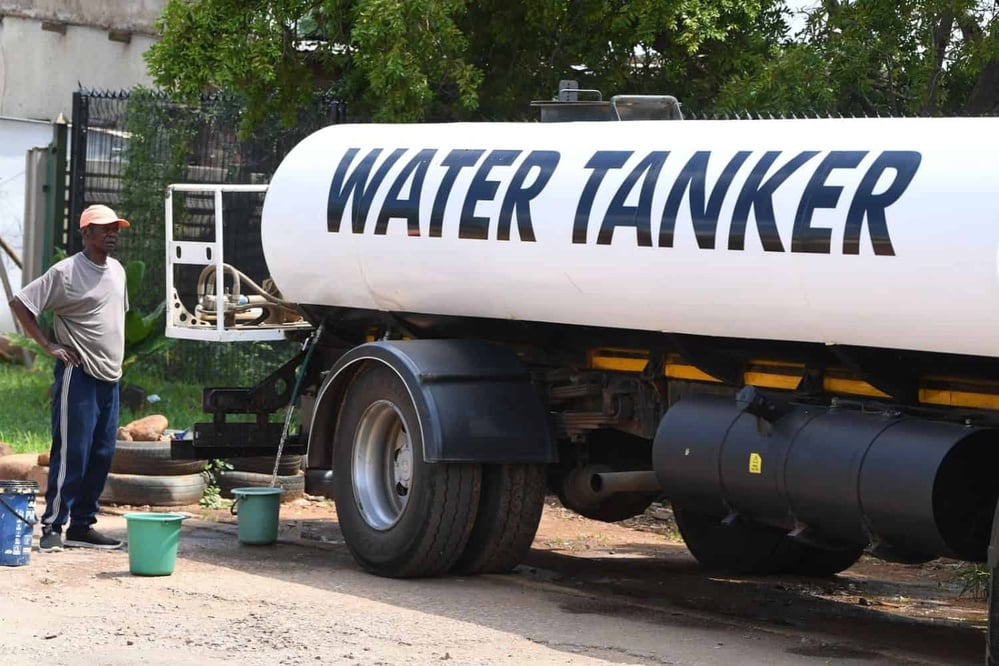
“According to Tshwane MMC for Human Settlements Aaron Maluleke, the tanker supply was sourced independently of the affected Bronkhorstspruit water system and remained subject to ongoing quality-control procedures.” · exact text match
Why: It names officials and attributes specific claims, while distinguishing official assertions from confirmed test results.
Claim: The report includes caveats and accountability details rather than presenting the mayor's reassurance without qualification.
“This, however, does not mean all work related to the Fountains springs contamination has been completed.” · exact text match
“The investigation will seek to establish what led to the incident, whether negligence played a role and why warnings were not communicated to residents timeously.” · exact text match
Why: It notes unresolved repair work and probes negligence and warning failures, indicating fair and transparent reporting.
The supplied text interleaves body copy with related-article headlines, and the date is given as 24 October 2026; categorization and framing are based on the main water-safety narrative only.
October 23, 2026 · 0 shares
The reporting adopts a highly skeptical and investigative stance, highlighting systemic municipal failures and formal government oversight responses to infrastructure crises.
Automated analysis; not human reviewed.
·
55 of 55 available dimensions scored; omitted dimensions are not treated as neutral.
·
Verified supporting quotes for 0 of 55 scored dimensions.
October 23, 2026 · 0 shares
Coverage is factual and source-attributed, scrutinizing municipal water-management failures through official records and direct quotes while largely avoiding sensational or partisan framing.
Automated analysis; not human reviewed.
Limitations: No author byline is present; unrelated sidebar headlines were excluded, so analysis is limited to the main water-crisis report.
·
10 of 55 available dimensions scored; omitted dimensions are not treated as neutral.
·
Verified supporting quotes for 10 of 10 scored dimensions.
Claim: The report is predominantly objective, using attributed statements and documentary records rather than subjective commentary.
“Muir said the city’s initial warning to residents on October 13 focused on high turbidity but did not explicitly communicate the danger associated with the absence of chlorination.” · exact text match
“Billy Sepuru, acting group head of the water and sanitation business unit in Tshwane, told the committee the Bronkhorstspruit treatment works had not consistently produced water compliant with drinking-water standards since October 2025.” · exact text match
Why: Claims are attributed to named officials and records, and competing city explanations are included.
Claim: The report uses measured official language and concrete figures rather than sensationalized prose.
“The City of Tshwane is facing a criminal case over its handling of the Bronkhorstspruit water crisis, where the department of health reported 595 cases of gastrointestinal illness in Tshwane’s Subdistrict 7 by October 19.” · exact text match
Why: Even a serious public-health case is presented through official case counts and legal process rather than emotive or alarmist language.
Claim: The report describes events, findings, and official positions without prescribing policy remedies.
“Rand Water said it was confident that compliant water could be restored to the system within a week, with a broader programme to optimise the plant’s full capacity expected to take 14 to 16 weeks.” · exact text match
Why: The article reports an operational timeline and does not add recommendations or normative commands.
Claim: The report is politically situated through parliamentary and municipal accountability processes, but lacks partisan framing.
“Anet Muir, the department of water and sanitation’s (DWS) chief director for water use compliance and enforcement, told the portfolio committee on health in parliament on Friday that the crisis was not an isolated incident, but the culmination of persistent non-compliance.” · exact text match
Why: Government institutions and accountability are central, so political content is present, while no party-political preference is expressed.
Claim: The report presents a multi-causal account rather than a single simplified explanation.
“The municipality cited difficulties securing chlorine supplies, saying disagreements with its existing supplier had slowed deliveries.” · exact text match
“It also revealed that two previous tender processes had failed to attract competent bidders for the full refurbishment.” · exact text match
Why: It attributes the failure to supply, operational, and procurement problems, reducing oversimplification.
Claim: The report is highly sourced, citing named officials, records, and multiple institutional accounts.
“Operational records showed that chlorine was last used on September 23, with the system continuing to operate for another 21 days before shutting down.” · exact text match
“Billy Sepuru, acting group head of the water and sanitation business unit in Tshwane, told the committee the Bronkhorstspruit treatment works had not consistently produced water compliant with drinking-water standards since October 2025.” · exact text match
Why: Direct attribution, documentary records, and inclusion of the city’s response support high visible credibility.
Claim: The report’s claims are built on records, testing, and attributed official findings rather than irrational assertions.
“Operational records showed that chlorine was last used on September 23, with the system continuing to operate for another 21 days before shutting down.” · exact text match
“Subsequent water testing detected high levels of E. coli throughout the supply system, confirming the microbiological risk facing residents.” · exact text match
Why: Use of dated operational records and laboratory testing supports a strongly rational classification.
Claim: The report relies on empirical water testing and chlorination science rather than superstition.
“Subsequent water testing detected high levels of E. coli throughout the supply system, confirming the microbiological risk facing residents.” · exact text match
Why: The causal concern is grounded in test results and microbiological risk, supporting a scientific/empirical classification.
Claim: The report includes the municipality’s explanations and acknowledges its own corrective commitments, indicating internal fairness.
“Sepuru said the city had communicated with affected communities about the water being unsuitable for drinking, although much of the previous communication had focused on high turbidity.” · exact text match
“Tshwane has since appointed Rand Water to take over the management of the treatment works and consolidate outstanding maintenance and refurbishment projects.” · exact text match
Why: The article gives space to the city’s account and remediation steps alongside the DWS findings.
Claim: The report is detailed and explanatory, linking operational failures to multiple technical and procurement causes.
“The plan included commitments to secure treatment chemicals, refurbish filtration equipment, address raw-water pumping problems, commission high-lift pumps and recruit critical staff responsible for operating the treatment works.” · exact text match
Why: The article lays out specific technical commitments and operational context rather than treating the crisis as a simple scandal.
No author byline is present; unrelated sidebar headlines were excluded, so analysis is limited to the main water-crisis report.
Framing is limited to a bare, uncritical announcement headline naming an appointee and its stated goal without elaboration, sourcing, or caveats.
Rand Water is a South African bulk water utility; the Bronkhorstspruit plant is a water treatment facility.
Automated analysis; not human reviewed.
Limitations: Only a headline-length brief was supplied, so most dimensions lack evidence.
·
6 of 55 available dimensions scored; omitted dimensions are not treated as neutral.
·
Verified supporting quotes for 2 of 6 scored dimensions.
Claim: The brief states the appointment and its stated purpose factually without evaluative language.
“Rand Water appointed to accelerate Bronkhorstspruit plant rehabilitation” · exact text match
Why: A plain announcement phrased as fact, with no opinion or interpretation.
Claim: Tone is flat and non-sensational, with no emotive or dramatic language.
“Rand Water appointed to accelerate Bronkhorstspruit plant rehabilitation” · exact text match
Why: Neutral announcement wording rather than dramatic framing.
Only a headline-length brief was supplied, so most dimensions lack evidence.
Official-source-driven and measured framing presents municipal lab results and mayoral assurances as the basis for lifting the advisory while noting the ongoing investigation and repair caveats.
Automated analysis; not human reviewed.
Limitations: The supplied text interleaves body copy with related-article headlines, and the date is given as 24 October 2026; categorization and framing are based on the main water-safety narrative only.
·
4 of 55 available dimensions scored; omitted dimensions are not treated as neutral.
·
Verified supporting quotes for 4 of 4 scored dimensions.
Claim: The report is framed objectively through attributed test results and official statements rather than subjective commentary.
“According to Moya, the latest microbiological tests found no detectable E. coli or total coliform bacteria at the Findlay Reservoir.” · exact text match
Why: The safety claim is tied to named-source laboratory results and attribution, not the reporter's opinion.
Claim: The main water-safety report uses measured, technical language and avoids sensational drama.
“The latest microbiological tests confirmed that the water complied with the applicable quality standards.” · exact text match
Why: The headline and body emphasize compliance and test results in neutral terms.
Claim: The article is highly credible in its visible sourcing and attribution.
“Tshwane Mayor Nasiphi Moya confirmed on Saturday, 24 October 2026, that residents in the CBD and surrounding suburbs no longer needed to boil their tap water before drinking or using it.” · exact text match
“According to Tshwane MMC for Human Settlements Aaron Maluleke, the tanker supply was sourced independently of the affected Bronkhorstspruit water system and remained subject to ongoing quality-control procedures.” · exact text match
Why: It names officials and attributes specific claims, while distinguishing official assertions from confirmed test results.
Claim: The report includes caveats and accountability details rather than presenting the mayor's reassurance without qualification.
“This, however, does not mean all work related to the Fountains springs contamination has been completed.” · exact text match
“The investigation will seek to establish what led to the incident, whether negligence played a role and why warnings were not communicated to residents timeously.” · exact text match
Why: It notes unresolved repair work and probes negligence and warning failures, indicating fair and transparent reporting.
The supplied text interleaves body copy with related-article headlines, and the date is given as 24 October 2026; categorization and framing are based on the main water-safety narrative only.
October 27, 2026 · 0 shares
Framing is a neutral municipal service announcement dominated by official mayoral statements and specific operational details, with little independent scrutiny or sensational language.
Automated analysis; not human reviewed.
Limitations: The supplied text is duplicated and truncated at 'Following the isolatio', and includes unrelated headline fragments; scores reflect only the available substantive municipal water report.
·
8 of 55 available dimensions scored; omitted dimensions are not treated as neutral.
·
Verified supporting quotes for 8 of 8 scored dimensions.
Claim: Framing is predominantly factual and operational rather than subjective.
“The City of Tshwane is implementing targeted overnight water restrictions at 14 reservoirs to reduce high consumption and ease pressure on Rand Water’s upstream supply system.” · exact text match
Why: The lead is a specific operational statement attributed to the city, not evaluative commentary.
Claim: The report avoids sensational or emotive language.
“We recognise that these interventions will cause temporary inconvenience to additional residents.” · exact text match
Why: Even the mayoral quote frames impact in measured terms as temporary inconvenience.
Claim: The report is mostly descriptive, with prescriptive elements limited to quoted official advisories.
“Residents in these areas must continue using authorised alternative water supplies until the water has been confirmed safe” · exact text match
Why: The main content describes measures and statements, while the prescriptive language appears within attributed official guidance.
Claim: Most factual assertions are anchored in the mayor’s authority.
“said Tshwane mayor Nasiphi Moya” · exact text match
Why: The article repeatedly attributes developments and assurances to the mayor rather than independent documentation.
Claim: The report amplifies the official municipal perspective without independent scrutiny.
“According to Moya, the city has made important progress in resolving the contamination incident affecting Findlay Reservoir and the Pretoria CBD.” · exact text match
Why: Progress is presented through the mayor’s account, with no independent or critical source included.
Claim: Attribution and specific operational details support visible credibility.
“the water was confirmed safe for consumption and the boil-water advisory was lifted on 24 October” · exact text match
Why: The report gives a specific date and attributes the safety confirmation to the mayor’s account.
Claim: The article presents a rational, technical management response.
“bringing together the city’s senior officials and technical teams to assess these challenges collectively, co-ordinate interventions and monitor progress across the different water systems” · exact text match
Why: It describes coordinated technical assessment and monitoring rather than emotive or irrational framing.
Claim: The report relies on water-quality testing and public-health monitoring rather than superstition.
“awaiting water-quality testing before being brought into use” · exact text match
Why: Operational safety is framed around testing and monitoring procedures.
The supplied text is duplicated and truncated at 'Following the isolatio', and includes unrelated headline fragments; scores reflect only the available substantive municipal water report.
October 26, 2026 · 0 shares
Frames South Africa’s water failures through a constitutional human-rights and accountability lens, relying heavily on SAHRC and academic voices.
Automated analysis; not human reviewed.
Limitations: Scores are based on a single advocacy-oriented report; left-right and establishment dimensions rely on framing cues rather than explicit partisan statements.
·
21 of 55 available dimensions scored; omitted dimensions are not treated as neutral.
·
Verified supporting quotes for 19 of 21 scored dimensions.
Claim: Uses a human-rights and government-accountability frame associated with progressive policy concerns.
“The Tracker draws on 85 indicators to assess water services through a human rights lens” · exact text match
“holding the government accountable” · exact text match
Why: Human-rights and public-accountability framing is a progressive-leaning cue, though not explicitly partisan.
Claim: Frames the project through academic and institutional expert authority.
“Professor Tracy-Lynn Field, the chair in Earth Justice and Stewardship and lead researcher, said the project synthesised information from several datasets” · exact text match
“Through the HRC’s amazing convening powers, we engaged with, over the course of a year, more than 170 officials” · exact text match
Why: The report foregrounds academics, commissioners, and institutional convening capacity as the basis for assessing water services.
Claim: Presents findings largely through attributed statements and documented sources rather than the publisher’s own assertions.
“The new research project, developed by the SAHRC and the Claude Leon Chair in Earth Justice and Stewardship at the University of the Witwatersrand, found that 107 of South Africa’s 144 water services authorities are in a poor or critical state, Boshoff said.” · exact text match
“Citing the 2025 General Household Survey” · exact text match
Why: Attribution to named officials, institutions, and surveys supports objective reporting.
Claim: Uses measured, methodological detail rather than sensational language.
“The project synthesised information from several datasets” · not found in supplied text
Why: The article emphasizes research methods and data sources instead of sensational wording.
Claim: Presents a predominantly negative assessment of water-service conditions.
“107 of South Africa’s 144 water services authorities are in a poor or critical state” · exact text match
“millions of people continue to struggle to access sufficient, safe and affordable water” · exact text match
Why: The central findings focus on widespread failure and ongoing access problems.
Claim: Mostly describes findings but includes a prescriptive accountability purpose.
“providing a framework for identifying failures and holding the government accountable” · exact text match
Why: The accountability framing moves beyond description toward recommending corrective action.
Claim: Includes normative quotations about the urgency and status of water rights.
“We cannot afford to bury our heads in the sand but we must tackle the water crisis head-on.” · exact text match
“Access to sufficient water is not a privilege or a political promise” · exact text match
Why: Normative statements are quoted and integrated into the article’s framing.
Claim: Ties the water-services issue to elections, constitutional accountability, and government responsibility.
“As South Africa approaches the 2026 local government elections, the researchers hope the Tracker will help put water services and constitutional accountability at the centre of public debate.” · exact text match
Why: Explicitly connects the tracker to electoral and constitutional political debate.
Claim: Acknowledges complexity and multiple determinants of water provision.
“water provision was a complex function whose success depended on the effective delivery of other services and varied considerably between municipalities.” · exact text match
Why: The article explicitly cautions against monocausal assessment.
Claim: Relies heavily on SAHRC and academic authorities to establish findings.
“SAHRC commissioner Henk Boshoff said” · exact text match
“Professor Tracy-Lynn Field, the chair in Earth Justice and Stewardship and lead researcher, said the project synthesised information from several datasets” · exact text match
Why: Main claims are voiced through named institutional and academic authorities.
Claim: Foregrounds affected communities and human-rights harms.
“more than 800 people suffered gastrointestinal illness after their exposure to sewage-contaminated water” · exact text match
“millions of people continue to struggle to access sufficient, safe and affordable water” · exact text match
Why: The framing centers suffering and rights violations from service failures.
Claim: Applies a human-rights framework consistently to the issue.
“puts everything in a human rights framing” · exact text match
Why: The article explicitly adopts a human-rights interpretive lens.
Claim: Uses negative emotional framing around crisis impacts.
“The water crisis is impacting lives and livelihoods.” · exact text match
Why: The language emphasizes harm and urgency rather than neutral technical description.
Claim: Major claims are attributed to named officials, surveys, and documented research methods.
“Citing the 2025 General Household Survey” · exact text match
“The Tracker draws on 85 indicators to assess water services through a human rights lens” · exact text match
Why: Specific attributions and data sources support trustworthiness within the supplied text.
Claim: Emphasizes systematic indicators, datasets, and research methodology.
“The Tracker draws on 85 indicators to assess water services through a human rights lens” · exact text match
“the project synthesised information from several datasets” · exact text match
Why: Detailed indicator and dataset references show a strongly evidence-oriented approach.
Claim: Uses empirical indicators, datasets, and research synthesis rather than superstition.
“The Tracker draws on 85 indicators to assess water services through a human rights lens” · exact text match
“the project synthesised information from several datasets” · exact text match
Why: The report is grounded in measurable indicators and data synthesis.
Claim: Emphasizes state obligations and collective rights to water.
“requires the state to take reasonable legislative and other measures” · exact text match
Why: The constitutional-rights framing assigns a collective delivery obligation to the state.
Claim: Includes limited forward-looking hope about future political debate.
“researchers hope the Tracker will help put water services and constitutional accountability at the centre of public debate.” · exact text match
Why: The article includes a modest forecast about the tracker’s future political effect.
Claim: Shows transparent sourcing and attribution for major factual claims.
“Citing the 2025 General Household Survey” · exact text match
“The Tracker draws on 85 indicators to assess water services through a human rights lens” · exact text match
Why: Specific surveys and indicator counts are cited rather than left vague.
Claim: Synthesizes research design, multiple datasets, and policy context.
“the project synthesised information from several datasets” · exact text match
“The Tracker draws on 85 indicators to assess water services through a human rights lens” · exact text match
Why: The report integrates methodology, data, and governance context in a substantive way.
Claim: Framing is evidence-seeking rather than delusion-seeking.
“The project synthesised information from several datasets” · not found in supplied text
“Citing the 2025 General Household Survey” · exact text match
Why: Claims are tied to surveys and datasets rather than speculative or delusional assertions.
Scores are based on a single advocacy-oriented report; left-right and establishment dimensions rely on framing cues rather than explicit partisan statements.
October 23, 2026 · 0 shares
Framing centers on human-rights and government-accountability language, relying heavily on academic and human-rights-institution voices while treating the water crisis as a rights violation.
Automated analysis; not human reviewed.
Limitations: Single IOL report based largely on a launch event and quoted officials; no independent verification or full opposing political perspective is supplied.
·
11 of 55 available dimensions scored; omitted dimensions are not treated as neutral.
·
Verified supporting quotes for 11 of 11 scored dimensions.
Claim: No clear left-right ideological direction is evident in the supplied report.
“The EFF in Gauteng, which holds two portfolios in Tshwane's mayoral committee, has called for Moya to step down.” · exact text match
Why: Political actors are reported, but the text does not adopt a consistent liberal or conservative ideological stance.
Claim: The report is largely attributive and descriptive, presenting contested or normative claims through named speakers rather than as the publisher's own assertions.
“Professor Tracy-Lynn Field, the Claude Leon Chair for Earth Justice and Stewardship, said the water suspension followed cases of gastrointestinal illness, indicating microbiological non-compliance and an impact on the quality element of the human right to water.” · exact text match
Counterevidence:
“The water crisis in Bronkhorstspruit was highlighted at the launch of the Water Rights Tracker (WRT) at the Wits University School of Law on Wednesday as a stark example of the violation of the human right to water.” · exact text match
Why: Most normative claims are attributed to experts, though the article's own wording includes a rights-violation frame.
Claim: The report presents the illness outbreak and official response in measured, factual terms without sensational language.
“The launch followed reports earlier this week that at least 408 people, mostly children under four, were treated for gastrointestinal illnesses after drinking tap water from Bronkhorstspruit Water Treatment Works (BWTW), which had operated without chlorination.” · exact text match
Why: Quantified, attributed reporting of the outbreak is consistent with objective rather than sensational framing.
Claim: The report is predominantly descriptive, explaining the tracker and reported events rather than issuing its own policy prescriptions.
“The tracker is a tool for assessing progress on the right to water by profiling all 144 Water Services Authorities across the country.” · exact text match
Why: This descriptive explanation of the tracker supports a descriptive rather than prescriptive classification.
Claim: The report engages local political conflict and governance accountability, including a party's call for the mayor to step down.
“The EFF in Gauteng, which holds two portfolios in Tshwane's mayoral committee, has called for Moya to step down.” · exact text match
Why: Explicit party and mayoral accountability content supports a moderate political-content score.
Claim: Interpretive claims are anchored in the authority of a named professor and a human-rights commissioner.
“Dr Henk Boshoff, commissioner of the South African Human Rights Commission, weighed in on the Bronkhorstspruit water crisis” · exact text match
Why: Institutional authority is used to frame the significance of the incident, though such sourcing is standard for event reporting.
Claim: The report's claims are largely attributed to named sources and include specific regulatory figures.
“The Department of Water and Sanitation only steps in when you score 51% or lower.” · exact text match
Why: Attributed specifics and quoted documentation support high visible credibility in the supplied text.
Claim: The report grounds its account in specific historical regulatory data and named expert interpretation.
“Since 2011, the average Blue Drop rating for the City of Tshwane has been steadily decreasing from about 90% to 83% in the last assessment” · exact text match
Why: Use of quantified trend data supports a rational/evidence-oriented classification.
Claim: The report emphasizes empirical water-quality standards and microbiological monitoring rather than non-scientific explanation.
“Field said water service authorities are required to conduct regular checks, including monitoring for E. coli and other harmful bacteria, and for populations over 100 000 must maintain a 98% microbiological compliance rate, with anything below that considered unacceptable.” · exact text match
Why: Explicit use of microbiological compliance standards strongly supports a scientific/empirical classification.
Claim: The report attributes official statements to named officials and includes both crisis and response.
“While infections were reportedly declining, Tshwane Mayor Nasiphi Moya said anyone experiencing symptoms such as stomach cramps and diarrhoea should present themselves to the nearest clinic.” · exact text match
Why: Named attribution and inclusion of official response support fairness and honesty signals in the supplied text.
Claim: The report provides detailed regulatory and historical context, including Blue Drop scores and compliance thresholds.
“In the last 2023 Blue Drop assessment, BWTW scored 43%, which was also unusual for Tshwane's water treatment works; however, this did not trigger regulatory action by the Department of Water and Sanitation, according to Field.” · exact text match
Why: Specific historical and regulatory detail indicates above-average article intelligence.
Single IOL report based largely on a launch event and quoted officials; no independent verification or full opposing political perspective is supplied.
October 23, 2026 · 0 shares
Coverage is factual and source-attributed, scrutinizing municipal water-management failures through official records and direct quotes while largely avoiding sensational or partisan framing.
Automated analysis; not human reviewed. Limitations: No author byline is present; unrelated sidebar headlines were excluded, so analysis is limited to the main water-crisis report. · 10 of 55 available dimensions scored; omitted dimensions are not treated as neutral. · Verified supporting quotes for 10 of 10 scored dimensions.
Claim: The report is predominantly objective, using attributed statements and documentary records rather than subjective commentary.
“Muir said the city’s initial warning to residents on October 13 focused on high turbidity but did not explicitly communicate the danger associated with the absence of chlorination.” · exact text match
“Billy Sepuru, acting group head of the water and sanitation business unit in Tshwane, told the committee the Bronkhorstspruit treatment works had not consistently produced water compliant with drinking-water standards since October 2025.” · exact text match
Why: Claims are attributed to named officials and records, and competing city explanations are included.
Claim: The report uses measured official language and concrete figures rather than sensationalized prose.
“The City of Tshwane is facing a criminal case over its handling of the Bronkhorstspruit water crisis, where the department of health reported 595 cases of gastrointestinal illness in Tshwane’s Subdistrict 7 by October 19.” · exact text match
Why: Even a serious public-health case is presented through official case counts and legal process rather than emotive or alarmist language.
Claim: The report describes events, findings, and official positions without prescribing policy remedies.
“Rand Water said it was confident that compliant water could be restored to the system within a week, with a broader programme to optimise the plant’s full capacity expected to take 14 to 16 weeks.” · exact text match
Why: The article reports an operational timeline and does not add recommendations or normative commands.
Claim: The report is politically situated through parliamentary and municipal accountability processes, but lacks partisan framing.
“Anet Muir, the department of water and sanitation’s (DWS) chief director for water use compliance and enforcement, told the portfolio committee on health in parliament on Friday that the crisis was not an isolated incident, but the culmination of persistent non-compliance.” · exact text match
Why: Government institutions and accountability are central, so political content is present, while no party-political preference is expressed.
Claim: The report presents a multi-causal account rather than a single simplified explanation.
“The municipality cited difficulties securing chlorine supplies, saying disagreements with its existing supplier had slowed deliveries.” · exact text match
“It also revealed that two previous tender processes had failed to attract competent bidders for the full refurbishment.” · exact text match
Why: It attributes the failure to supply, operational, and procurement problems, reducing oversimplification.
Claim: The report is highly sourced, citing named officials, records, and multiple institutional accounts.
“Operational records showed that chlorine was last used on September 23, with the system continuing to operate for another 21 days before shutting down.” · exact text match
“Billy Sepuru, acting group head of the water and sanitation business unit in Tshwane, told the committee the Bronkhorstspruit treatment works had not consistently produced water compliant with drinking-water standards since October 2025.” · exact text match
Why: Direct attribution, documentary records, and inclusion of the city’s response support high visible credibility.
Claim: The report’s claims are built on records, testing, and attributed official findings rather than irrational assertions.
“Operational records showed that chlorine was last used on September 23, with the system continuing to operate for another 21 days before shutting down.” · exact text match
“Subsequent water testing detected high levels of E. coli throughout the supply system, confirming the microbiological risk facing residents.” · exact text match
Why: Use of dated operational records and laboratory testing supports a strongly rational classification.
Claim: The report relies on empirical water testing and chlorination science rather than superstition.
“Subsequent water testing detected high levels of E. coli throughout the supply system, confirming the microbiological risk facing residents.” · exact text match
Why: The causal concern is grounded in test results and microbiological risk, supporting a scientific/empirical classification.
Claim: The report includes the municipality’s explanations and acknowledges its own corrective commitments, indicating internal fairness.
“Sepuru said the city had communicated with affected communities about the water being unsuitable for drinking, although much of the previous communication had focused on high turbidity.” · exact text match
“Tshwane has since appointed Rand Water to take over the management of the treatment works and consolidate outstanding maintenance and refurbishment projects.” · exact text match
Why: The article gives space to the city’s account and remediation steps alongside the DWS findings.
Claim: The report is detailed and explanatory, linking operational failures to multiple technical and procurement causes.
“The plan included commitments to secure treatment chemicals, refurbish filtration equipment, address raw-water pumping problems, commission high-lift pumps and recruit critical staff responsible for operating the treatment works.” · exact text match
Why: The article lays out specific technical commitments and operational context rather than treating the crisis as a simple scandal.
No author byline is present; unrelated sidebar headlines were excluded, so analysis is limited to the main water-crisis report.
October 22, 2026 · 0 shares
Framing presents the outbreak as a symptom of systemic institutional and infrastructural collapse, emphasizing municipal procurement and maintenance failures while relying on official and expert evidence.
Automated analysis; not human reviewed. Limitations: Supplied text contains duplicated passages and unrelated footer items, so analysis is limited to the substantive water-crisis report. · 11 of 55 available dimensions scored; omitted dimensions are not treated as neutral. · Verified supporting quotes for 11 of 11 scored dimensions.
Claim: The policy discussion emphasizes stronger state enforcement and licensing over municipal water providers.
“grant the DWS enforcement powers and require water service providers to hold operating licences, which can be revoked after persistent failure” · exact text match
Why: Supports expanded regulatory authority and revocation powers, a regulatory-authoritarian direction.
Claim: The central incident is reported with dates, counts, named officials, and attributed allegations.
“Between 7 and 18 October, at least 408 residents in northern Gauteng, predominantly children under the age of four, contracted gastrointestinal illnesses after consuming tap water.” · exact text match
Why: Concrete detail and attribution indicate objective reporting.
Claim: Despite a crisis headline, the body includes mitigating outcomes and avoids emotive escalation.
“Although most affected individuals were rehydrated and discharged within a day, and no deaths were reported by Health Minister Aaron Motsoaledi” · exact text match
Why: Explicitly notes limited severity and no deaths, reducing sensationalism.
Claim: The article frames the situation as a systemic and existential threat.
“Dr Turton argued that the current situation is an existential threat to the national economy and water security” · exact text match
Why: Selects a quote emphasizing severe, broad decline and threat.
Claim: The article advances an interpretive diagnosis of systemic collapse.
“The chlorine shortage is symptomatic of a deeper institutional and infrastructural collapse.” · exact text match
Why: This is an analytical judgment beyond the raw incident facts.
Claim: The report centers governance, procurement, and accountability politics.
“requiring the removal of political appointees and the prosecution of "water mafias" that have exploited procurement systems.” · exact text match
Why: Focuses on political appointments and procurement accountability.
Claim: The report is sourced to named officials, experts, and a national audit.
“Water management expert Dr Anthony Turton explained that South Africa's national water system operates on an "indirect reuse model,"” · exact text match
Why: Attribution to named experts and reports supports credibility.
Claim: The report grounds its account in quantified audit data rather than assertion.
“Only 14 of these-less than 2%-achieved the top certification requiring a score of at least 90%.” · exact text match
Why: Uses specific compliance figures from a named national report to support its claims.
Claim: The account relies on empirical compliance metrics and expert explanation.
“The national average for microbiological compliance in effluent discharge is just 35%” · exact text match
Why: Uses measurable water-quality data rather than superstition or anecdote.
Claim: The report includes official caveats, named sources, and quantified evidence.
“no deaths were reported by Health Minister Aaron Motsoaledi” · exact text match
“The 2025 Green Drop Report, conducted by the DWS, assessed 848 municipal wastewater systems.” · exact text match
Why: Caveats and named data sources show fair, evidence-bound reporting.
Claim: The report connects local incident details to national audit data and policy context.
“396 systems (47%) were in a critical state, including 159 that were formally disqualified.” · exact text match
Why: Integrates multiple evidence layers and structural context.
Supplied text contains duplicated passages and unrelated footer items, so analysis is limited to the substantive water-crisis report.
The report is predominantly neutral and attribution-driven, framing the suspension and investigation through official statements, procedural detail, and qualified findings.
Automated analysis; not human reviewed. Limitations: No byline or publication date is supplied, and the mayor's surname appears as both Moyo and Moya; scoring is limited to the provided text. · 10 of 55 available dimensions scored; omitted dimensions are not treated as neutral. · Verified supporting quotes for 6 of 10 scored dimensions.
Claim: The report separates attributed official statements from factual findings and rarely adopts evaluative language in its own voice.
“Moya said she had directed that an independent external investigation be commissioned to establish the full circumstances surrounding the failures, identify any additional administrative shortcomings and determine where responsibility lay.” · exact text match
Why: The statement is clearly attributed to the mayor, supporting an objective rather than subjective framing.
Claim: Even serious contamination and illness details are reported in measured, factual terms.
“Water-quality tests conducted on October 14 detected extremely high levels of E. coli and total coliforms” · exact text match
Why: The contamination detail is technical and attributed rather than sensationalized.
Claim: The report centers on municipal political accountability and official action by a mayor.
“Moya said she had accepted overall political responsibility for the city's response to the crisis” · exact text match
Why: The focus on political responsibility and mayoral action makes the subject strongly political.
Claim: Named institutions, attributed findings, and uncertainty markers provide visible sourcing.
“A joint investigation by the Department of Water and Sanitation, health authorities and the city found” · exact text match
Why: Specific institutional attribution supports a high credibility assessment.
Claim: The account uses procedural, cause-and-effect reporting and explicitly marks unresolved matters.
“pending further investigation” · exact text match
“alleged failure to escalate the risks and warn residents timeously” · exact text match
Why: Qualifiers such as 'pending further investigation' and 'alleged' show cautious, rational handling of unresolved responsibility.
Claim: The report includes attribution, conditional language, and accountability conditions rather than asserting unproven responsibility.
“alleged failure to escalate the risks and warn residents timeously” · exact text match
“where negligence or misconduct is established” · exact text match
Why: The conditional and attributed wording signals internal fairness and honesty in handling allegations.
No byline or publication date is supplied, and the mayor's surname appears as both Moyo and Moya; scoring is limited to the provided text.
October 23, 2026 · 0 shares
The reporting adopts a highly skeptical and investigative stance, highlighting systemic municipal failures and formal government oversight responses to infrastructure crises.
Automated analysis; not human reviewed. · 55 of 55 available dimensions scored; omitted dimensions are not treated as neutral. · Verified supporting quotes for 0 of 55 scored dimensions.
October 23, 2026 · 0 shares
Coverage is factual and source-attributed, scrutinizing municipal water-management failures through official records and direct quotes while largely avoiding sensational or partisan framing.
Automated analysis; not human reviewed. Limitations: No author byline is present; unrelated sidebar headlines were excluded, so analysis is limited to the main water-crisis report. · 10 of 55 available dimensions scored; omitted dimensions are not treated as neutral. · Verified supporting quotes for 10 of 10 scored dimensions.
Claim: The report is predominantly objective, using attributed statements and documentary records rather than subjective commentary.
“Muir said the city’s initial warning to residents on October 13 focused on high turbidity but did not explicitly communicate the danger associated with the absence of chlorination.” · exact text match
“Billy Sepuru, acting group head of the water and sanitation business unit in Tshwane, told the committee the Bronkhorstspruit treatment works had not consistently produced water compliant with drinking-water standards since October 2025.” · exact text match
Why: Claims are attributed to named officials and records, and competing city explanations are included.
Claim: The report uses measured official language and concrete figures rather than sensationalized prose.
“The City of Tshwane is facing a criminal case over its handling of the Bronkhorstspruit water crisis, where the department of health reported 595 cases of gastrointestinal illness in Tshwane’s Subdistrict 7 by October 19.” · exact text match
Why: Even a serious public-health case is presented through official case counts and legal process rather than emotive or alarmist language.
Claim: The report describes events, findings, and official positions without prescribing policy remedies.
“Rand Water said it was confident that compliant water could be restored to the system within a week, with a broader programme to optimise the plant’s full capacity expected to take 14 to 16 weeks.” · exact text match
Why: The article reports an operational timeline and does not add recommendations or normative commands.
Claim: The report is politically situated through parliamentary and municipal accountability processes, but lacks partisan framing.
“Anet Muir, the department of water and sanitation’s (DWS) chief director for water use compliance and enforcement, told the portfolio committee on health in parliament on Friday that the crisis was not an isolated incident, but the culmination of persistent non-compliance.” · exact text match
Why: Government institutions and accountability are central, so political content is present, while no party-political preference is expressed.
Claim: The report presents a multi-causal account rather than a single simplified explanation.
“The municipality cited difficulties securing chlorine supplies, saying disagreements with its existing supplier had slowed deliveries.” · exact text match
“It also revealed that two previous tender processes had failed to attract competent bidders for the full refurbishment.” · exact text match
Why: It attributes the failure to supply, operational, and procurement problems, reducing oversimplification.
Claim: The report is highly sourced, citing named officials, records, and multiple institutional accounts.
“Operational records showed that chlorine was last used on September 23, with the system continuing to operate for another 21 days before shutting down.” · exact text match
“Billy Sepuru, acting group head of the water and sanitation business unit in Tshwane, told the committee the Bronkhorstspruit treatment works had not consistently produced water compliant with drinking-water standards since October 2025.” · exact text match
Why: Direct attribution, documentary records, and inclusion of the city’s response support high visible credibility.
Claim: The report’s claims are built on records, testing, and attributed official findings rather than irrational assertions.
“Operational records showed that chlorine was last used on September 23, with the system continuing to operate for another 21 days before shutting down.” · exact text match
“Subsequent water testing detected high levels of E. coli throughout the supply system, confirming the microbiological risk facing residents.” · exact text match
Why: Use of dated operational records and laboratory testing supports a strongly rational classification.
Claim: The report relies on empirical water testing and chlorination science rather than superstition.
“Subsequent water testing detected high levels of E. coli throughout the supply system, confirming the microbiological risk facing residents.” · exact text match
Why: The causal concern is grounded in test results and microbiological risk, supporting a scientific/empirical classification.
Claim: The report includes the municipality’s explanations and acknowledges its own corrective commitments, indicating internal fairness.
“Sepuru said the city had communicated with affected communities about the water being unsuitable for drinking, although much of the previous communication had focused on high turbidity.” · exact text match
“Tshwane has since appointed Rand Water to take over the management of the treatment works and consolidate outstanding maintenance and refurbishment projects.” · exact text match
Why: The article gives space to the city’s account and remediation steps alongside the DWS findings.
Claim: The report is detailed and explanatory, linking operational failures to multiple technical and procurement causes.
“The plan included commitments to secure treatment chemicals, refurbish filtration equipment, address raw-water pumping problems, commission high-lift pumps and recruit critical staff responsible for operating the treatment works.” · exact text match
Why: The article lays out specific technical commitments and operational context rather than treating the crisis as a simple scandal.
No author byline is present; unrelated sidebar headlines were excluded, so analysis is limited to the main water-crisis report.
Framing is limited to a bare, uncritical announcement headline naming an appointee and its stated goal without elaboration, sourcing, or caveats.
Rand Water is a South African bulk water utility; the Bronkhorstspruit plant is a water treatment facility.
Automated analysis; not human reviewed. Limitations: Only a headline-length brief was supplied, so most dimensions lack evidence. · 6 of 55 available dimensions scored; omitted dimensions are not treated as neutral. · Verified supporting quotes for 2 of 6 scored dimensions.
Claim: The brief states the appointment and its stated purpose factually without evaluative language.
“Rand Water appointed to accelerate Bronkhorstspruit plant rehabilitation” · exact text match
Why: A plain announcement phrased as fact, with no opinion or interpretation.
Claim: Tone is flat and non-sensational, with no emotive or dramatic language.
“Rand Water appointed to accelerate Bronkhorstspruit plant rehabilitation” · exact text match
Why: Neutral announcement wording rather than dramatic framing.
Only a headline-length brief was supplied, so most dimensions lack evidence.
October 26, 2026 · 0 shares
Frames South Africa’s water failures through a constitutional human-rights and accountability lens, relying heavily on SAHRC and academic voices.
Automated analysis; not human reviewed. Limitations: Scores are based on a single advocacy-oriented report; left-right and establishment dimensions rely on framing cues rather than explicit partisan statements. · 21 of 55 available dimensions scored; omitted dimensions are not treated as neutral. · Verified supporting quotes for 19 of 21 scored dimensions.
Claim: Uses a human-rights and government-accountability frame associated with progressive policy concerns.
“The Tracker draws on 85 indicators to assess water services through a human rights lens” · exact text match
“holding the government accountable” · exact text match
Why: Human-rights and public-accountability framing is a progressive-leaning cue, though not explicitly partisan.
Claim: Frames the project through academic and institutional expert authority.
“Professor Tracy-Lynn Field, the chair in Earth Justice and Stewardship and lead researcher, said the project synthesised information from several datasets” · exact text match
“Through the HRC’s amazing convening powers, we engaged with, over the course of a year, more than 170 officials” · exact text match
Why: The report foregrounds academics, commissioners, and institutional convening capacity as the basis for assessing water services.
Claim: Presents findings largely through attributed statements and documented sources rather than the publisher’s own assertions.
“The new research project, developed by the SAHRC and the Claude Leon Chair in Earth Justice and Stewardship at the University of the Witwatersrand, found that 107 of South Africa’s 144 water services authorities are in a poor or critical state, Boshoff said.” · exact text match
“Citing the 2025 General Household Survey” · exact text match
Why: Attribution to named officials, institutions, and surveys supports objective reporting.
Claim: Uses measured, methodological detail rather than sensational language.
“The project synthesised information from several datasets” · not found in supplied text
Why: The article emphasizes research methods and data sources instead of sensational wording.
Claim: Presents a predominantly negative assessment of water-service conditions.
“107 of South Africa’s 144 water services authorities are in a poor or critical state” · exact text match
“millions of people continue to struggle to access sufficient, safe and affordable water” · exact text match
Why: The central findings focus on widespread failure and ongoing access problems.
Claim: Mostly describes findings but includes a prescriptive accountability purpose.
“providing a framework for identifying failures and holding the government accountable” · exact text match
Why: The accountability framing moves beyond description toward recommending corrective action.
Claim: Includes normative quotations about the urgency and status of water rights.
“We cannot afford to bury our heads in the sand but we must tackle the water crisis head-on.” · exact text match
“Access to sufficient water is not a privilege or a political promise” · exact text match
Why: Normative statements are quoted and integrated into the article’s framing.
Claim: Ties the water-services issue to elections, constitutional accountability, and government responsibility.
“As South Africa approaches the 2026 local government elections, the researchers hope the Tracker will help put water services and constitutional accountability at the centre of public debate.” · exact text match
Why: Explicitly connects the tracker to electoral and constitutional political debate.
Claim: Acknowledges complexity and multiple determinants of water provision.
“water provision was a complex function whose success depended on the effective delivery of other services and varied considerably between municipalities.” · exact text match
Why: The article explicitly cautions against monocausal assessment.
Claim: Relies heavily on SAHRC and academic authorities to establish findings.
“SAHRC commissioner Henk Boshoff said” · exact text match
“Professor Tracy-Lynn Field, the chair in Earth Justice and Stewardship and lead researcher, said the project synthesised information from several datasets” · exact text match
Why: Main claims are voiced through named institutional and academic authorities.
Claim: Foregrounds affected communities and human-rights harms.
“more than 800 people suffered gastrointestinal illness after their exposure to sewage-contaminated water” · exact text match
“millions of people continue to struggle to access sufficient, safe and affordable water” · exact text match
Why: The framing centers suffering and rights violations from service failures.
Claim: Applies a human-rights framework consistently to the issue.
“puts everything in a human rights framing” · exact text match
Why: The article explicitly adopts a human-rights interpretive lens.
Claim: Uses negative emotional framing around crisis impacts.
“The water crisis is impacting lives and livelihoods.” · exact text match
Why: The language emphasizes harm and urgency rather than neutral technical description.
Claim: Major claims are attributed to named officials, surveys, and documented research methods.
“Citing the 2025 General Household Survey” · exact text match
“The Tracker draws on 85 indicators to assess water services through a human rights lens” · exact text match
Why: Specific attributions and data sources support trustworthiness within the supplied text.
Claim: Emphasizes systematic indicators, datasets, and research methodology.
“The Tracker draws on 85 indicators to assess water services through a human rights lens” · exact text match
“the project synthesised information from several datasets” · exact text match
Why: Detailed indicator and dataset references show a strongly evidence-oriented approach.
Claim: Uses empirical indicators, datasets, and research synthesis rather than superstition.
“The Tracker draws on 85 indicators to assess water services through a human rights lens” · exact text match
“the project synthesised information from several datasets” · exact text match
Why: The report is grounded in measurable indicators and data synthesis.
Claim: Emphasizes state obligations and collective rights to water.
“requires the state to take reasonable legislative and other measures” · exact text match
Why: The constitutional-rights framing assigns a collective delivery obligation to the state.
Claim: Includes limited forward-looking hope about future political debate.
“researchers hope the Tracker will help put water services and constitutional accountability at the centre of public debate.” · exact text match
Why: The article includes a modest forecast about the tracker’s future political effect.
Claim: Shows transparent sourcing and attribution for major factual claims.
“Citing the 2025 General Household Survey” · exact text match
“The Tracker draws on 85 indicators to assess water services through a human rights lens” · exact text match
Why: Specific surveys and indicator counts are cited rather than left vague.
Claim: Synthesizes research design, multiple datasets, and policy context.
“the project synthesised information from several datasets” · exact text match
“The Tracker draws on 85 indicators to assess water services through a human rights lens” · exact text match
Why: The report integrates methodology, data, and governance context in a substantive way.
Claim: Framing is evidence-seeking rather than delusion-seeking.
“The project synthesised information from several datasets” · not found in supplied text
“Citing the 2025 General Household Survey” · exact text match
Why: Claims are tied to surveys and datasets rather than speculative or delusional assertions.
Scores are based on a single advocacy-oriented report; left-right and establishment dimensions rely on framing cues rather than explicit partisan statements.
October 23, 2026 · 0 shares
Framing centers on human-rights and government-accountability language, relying heavily on academic and human-rights-institution voices while treating the water crisis as a rights violation.
Automated analysis; not human reviewed. Limitations: Single IOL report based largely on a launch event and quoted officials; no independent verification or full opposing political perspective is supplied. · 11 of 55 available dimensions scored; omitted dimensions are not treated as neutral. · Verified supporting quotes for 11 of 11 scored dimensions.
Claim: No clear left-right ideological direction is evident in the supplied report.
“The EFF in Gauteng, which holds two portfolios in Tshwane's mayoral committee, has called for Moya to step down.” · exact text match
Why: Political actors are reported, but the text does not adopt a consistent liberal or conservative ideological stance.
Claim: The report is largely attributive and descriptive, presenting contested or normative claims through named speakers rather than as the publisher's own assertions.
“Professor Tracy-Lynn Field, the Claude Leon Chair for Earth Justice and Stewardship, said the water suspension followed cases of gastrointestinal illness, indicating microbiological non-compliance and an impact on the quality element of the human right to water.” · exact text match
Counterevidence:
“The water crisis in Bronkhorstspruit was highlighted at the launch of the Water Rights Tracker (WRT) at the Wits University School of Law on Wednesday as a stark example of the violation of the human right to water.” · exact text match
Why: Most normative claims are attributed to experts, though the article's own wording includes a rights-violation frame.
Claim: The report presents the illness outbreak and official response in measured, factual terms without sensational language.
“The launch followed reports earlier this week that at least 408 people, mostly children under four, were treated for gastrointestinal illnesses after drinking tap water from Bronkhorstspruit Water Treatment Works (BWTW), which had operated without chlorination.” · exact text match
Why: Quantified, attributed reporting of the outbreak is consistent with objective rather than sensational framing.
Claim: The report is predominantly descriptive, explaining the tracker and reported events rather than issuing its own policy prescriptions.
“The tracker is a tool for assessing progress on the right to water by profiling all 144 Water Services Authorities across the country.” · exact text match
Why: This descriptive explanation of the tracker supports a descriptive rather than prescriptive classification.
Claim: The report engages local political conflict and governance accountability, including a party's call for the mayor to step down.
“The EFF in Gauteng, which holds two portfolios in Tshwane's mayoral committee, has called for Moya to step down.” · exact text match
Why: Explicit party and mayoral accountability content supports a moderate political-content score.
Claim: Interpretive claims are anchored in the authority of a named professor and a human-rights commissioner.
“Dr Henk Boshoff, commissioner of the South African Human Rights Commission, weighed in on the Bronkhorstspruit water crisis” · exact text match
Why: Institutional authority is used to frame the significance of the incident, though such sourcing is standard for event reporting.
Claim: The report's claims are largely attributed to named sources and include specific regulatory figures.
“The Department of Water and Sanitation only steps in when you score 51% or lower.” · exact text match
Why: Attributed specifics and quoted documentation support high visible credibility in the supplied text.
Claim: The report grounds its account in specific historical regulatory data and named expert interpretation.
“Since 2011, the average Blue Drop rating for the City of Tshwane has been steadily decreasing from about 90% to 83% in the last assessment” · exact text match
Why: Use of quantified trend data supports a rational/evidence-oriented classification.
Claim: The report emphasizes empirical water-quality standards and microbiological monitoring rather than non-scientific explanation.
“Field said water service authorities are required to conduct regular checks, including monitoring for E. coli and other harmful bacteria, and for populations over 100 000 must maintain a 98% microbiological compliance rate, with anything below that considered unacceptable.” · exact text match
Why: Explicit use of microbiological compliance standards strongly supports a scientific/empirical classification.
Claim: The report attributes official statements to named officials and includes both crisis and response.
“While infections were reportedly declining, Tshwane Mayor Nasiphi Moya said anyone experiencing symptoms such as stomach cramps and diarrhoea should present themselves to the nearest clinic.” · exact text match
Why: Named attribution and inclusion of official response support fairness and honesty signals in the supplied text.
Claim: The report provides detailed regulatory and historical context, including Blue Drop scores and compliance thresholds.
“In the last 2023 Blue Drop assessment, BWTW scored 43%, which was also unusual for Tshwane's water treatment works; however, this did not trigger regulatory action by the Department of Water and Sanitation, according to Field.” · exact text match
Why: Specific historical and regulatory detail indicates above-average article intelligence.
Single IOL report based largely on a launch event and quoted officials; no independent verification or full opposing political perspective is supplied.
October 24, 2026 · 0 shares
The framing is alarmist and accountability-driven, using a hyperbolic “deadly” headline and crisis language that outpaces the report’s own caveat that no deaths were reported.
Automated analysis; not human reviewed. Limitations: No byline or publication date is supplied, and some strong evaluative language appears in quoted expert statements rather than the publisher’s own prose. · 16 of 55 available dimensions scored; omitted dimensions are not treated as neutral. · Verified supporting quotes for 16 of 16 scored dimensions.
Claim: The headline and lead use hyperbolic alarm (“toxic”, “deadly”, “outrage”) that exceeds the article’s own report of no deaths.
“Toxic taps expose Tshwane's deadly water failures.” · exact text match
“No deaths have been reported.” · exact text match
Why: The loaded headline overstates confirmed harm and gives the report a sensational cast.
Claim: The article presents the crisis as part of a persistent infrastructure failure likely to recur.
“This is a real timebomb and the fuse is smouldering.” · exact text match
“You’re going to get a Bronkhorstspruit, then you’re going to get another [outbreak] in a spruit somewhere else and then you will get one in another part of a city.” · exact text match
Why: The chosen quotes project a bleak and worsening trajectory.
Claim: The report combines a public-health emergency, expert criticism, and accountability questions in a high-stakes narrative.
“This is a real timebomb and the fuse is smouldering.” · exact text match
“More than 400 people fell ill as contaminated supplies reached homes unchecked” · exact text match
Why: High human stakes and conflict make the account notably engaging.
Claim: The report includes explicit calls for systemic overhaul and independent investigation beyond describing events.
“She called for an overhaul of municipal systems, including independent oversight.” · exact text match
“an independent investigation must establish whether there are grounds for criminal charges.” · exact text match
Why: Prescriptive remedies are integrated into the article's accountability framing.
Claim: The article emphasizes ongoing danger and future catastrophe through crisis and timebomb language.
“This is a real timebomb and the fuse is smouldering.” · exact text match
“tap water remained unsafe for all uses other than flushing toilets.” · exact text match
Why: The selected language and warnings evoke fear and imminent threat.
Claim: Strong evaluative expert opinion drives the narrative around management failure.
“There has been a serious dereliction of duty and an independent investigation must establish whether there are grounds for criminal charges.” · exact text match
“What breaks my heart, as a public health person and a person who’s done a lot of research in environmental health, is we see a certain pattern over and over again” · exact text match
Why: Opinionated quotes are used prominently to characterize the incident.
Claim: The report centers municipal oversight, political interference, and accountability as its core frame.
“raising urgent questions about municipal oversight, public warnings and accountability” · exact text match
“free of political inter-ference because everything in South Africa at the moment survives by political grace and favour.” · exact text match
Why: The selection and wording foreground governance and political responsibility.
Claim: The headline asserts “deadly” water failures as fact despite the article's own statement that no deaths were reported.
“Toxic taps expose Tshwane's deadly water failures.” · exact text match
“No deaths have been reported.” · exact text match
Why: The headline's certainty exceeds the harm established in the report.
Claim: The framing is critical of municipal and political establishment performance and calls for external oversight.
“there is no chain of command, there’s no checking up and there’s no supervision” · exact text match
“They need inspectors because there is no oversight” · exact text match
Why: The article selects and amplifies anti-establishment accountability criticisms.
Claim: The article carries a strongly negative emotional charge through outrage, heartbreak, and crisis language.
“sparking outrage over municipal oversight and accountability” · exact text match
“What breaks my heart, as a public health person and a person who’s done a lot of research in environmental health, is we see a certain pattern over and over again” · exact text match
Why: The selected wording and quotes emphasize negative emotional responses.
Claim: Credibility is supported by named experts, official findings, laboratory results, and acknowledgment of nonresponse, but weakened by the overstated headline.
“A department of water and sanitation investigation found that the City of Tshwane’s Bronkhorstspruit water treatment works supplied water without chlorination from 24 September to 14 October” · exact text match
“It did not respond to the Mail & Guardian’s enquiries.” · exact text match
Why: Visible sourcing and attribution make the report credible despite the headline issue.
Claim: The report is mostly evidence-based, citing investigations, laboratory tests, and named experts, though its headline overstates the evidence.
“Tests of water from the treatment works and the Ekandustria and Zithobeni reservoirs found high levels of E. coli and total coliforms.” · exact text match
“No deaths have been reported.” · exact text match
Why: Empirical sourcing supports a rational score, but the misleading headline tempers it.
Claim: The article grounds its claims in laboratory tests and public-health evidence rather than superstition.
“Stool samples from patients detected norovirus, campylobacter and shigella in three of the four specimens analysed.” · exact text match
“Tests of water from the treatment works and the Ekandustria and Zithobeni reservoirs found high levels of E. coli and total coliforms.” · exact text match
Why: The report relies on empirical testing and scientific attribution.
Claim: The headline uses loaded “toxic” and “deadly” terms even though the article reports no deaths, heightening alarm beyond the confirmed harm.
“Toxic taps expose Tshwane's deadly water failures.” · exact text match
“No deaths have been reported.” · exact text match
Why: Loaded headline framing creates disproportionate alarm relative to the stated death toll.
Claim: The report shows transparent attribution but a headline inconsistent with its own no-deaths caveat.
“No deaths have been reported.” · exact text match
“Toxic taps expose Tshwane's deadly water failures.” · exact text match
Why: Strong sourcing coexists with a misleading headline, producing mixed integrity signals.
Claim: The report synthesizes investigation findings, laboratory evidence, historical context, and expert analysis with clear attribution.
“A joint government statement said residents were not warned that the water was unsafe.” · exact text match
“The South African Human Rights Commission (SAHRC), which has investigated complaints about wastewater treatment works including Rooiwal, Temba and Baviaanspoort since 2018, found in a 2021 report that malfunctioning works were polluting the Apies, Tolwane, Pienaar and Hennops rivers, as well as the Roodeplaat and Leeukraal dams.” · exact text match
Why: The article integrates multiple evidentiary layers and context intelligently.
No byline or publication date is supplied, and some strong evaluative language appears in quoted expert statements rather than the publisher’s own prose.
October 22, 2026 · 0 shares
Framing presents the outbreak as a symptom of systemic institutional and infrastructural collapse, emphasizing municipal procurement and maintenance failures while relying on official and expert evidence.
Automated analysis; not human reviewed. Limitations: Supplied text contains duplicated passages and unrelated footer items, so analysis is limited to the substantive water-crisis report. · 11 of 55 available dimensions scored; omitted dimensions are not treated as neutral. · Verified supporting quotes for 11 of 11 scored dimensions.
Claim: The policy discussion emphasizes stronger state enforcement and licensing over municipal water providers.
“grant the DWS enforcement powers and require water service providers to hold operating licences, which can be revoked after persistent failure” · exact text match
Why: Supports expanded regulatory authority and revocation powers, a regulatory-authoritarian direction.
Claim: The central incident is reported with dates, counts, named officials, and attributed allegations.
“Between 7 and 18 October, at least 408 residents in northern Gauteng, predominantly children under the age of four, contracted gastrointestinal illnesses after consuming tap water.” · exact text match
Why: Concrete detail and attribution indicate objective reporting.
Claim: Despite a crisis headline, the body includes mitigating outcomes and avoids emotive escalation.
“Although most affected individuals were rehydrated and discharged within a day, and no deaths were reported by Health Minister Aaron Motsoaledi” · exact text match
Why: Explicitly notes limited severity and no deaths, reducing sensationalism.
Claim: The article frames the situation as a systemic and existential threat.
“Dr Turton argued that the current situation is an existential threat to the national economy and water security” · exact text match
Why: Selects a quote emphasizing severe, broad decline and threat.
Claim: The article advances an interpretive diagnosis of systemic collapse.
“The chlorine shortage is symptomatic of a deeper institutional and infrastructural collapse.” · exact text match
Why: This is an analytical judgment beyond the raw incident facts.
Claim: The report centers governance, procurement, and accountability politics.
“requiring the removal of political appointees and the prosecution of "water mafias" that have exploited procurement systems.” · exact text match
Why: Focuses on political appointments and procurement accountability.
Claim: The report is sourced to named officials, experts, and a national audit.
“Water management expert Dr Anthony Turton explained that South Africa's national water system operates on an "indirect reuse model,"” · exact text match
Why: Attribution to named experts and reports supports credibility.
Claim: The report grounds its account in quantified audit data rather than assertion.
“Only 14 of these-less than 2%-achieved the top certification requiring a score of at least 90%.” · exact text match
Why: Uses specific compliance figures from a named national report to support its claims.
Claim: The account relies on empirical compliance metrics and expert explanation.
“The national average for microbiological compliance in effluent discharge is just 35%” · exact text match
Why: Uses measurable water-quality data rather than superstition or anecdote.
Claim: The report includes official caveats, named sources, and quantified evidence.
“no deaths were reported by Health Minister Aaron Motsoaledi” · exact text match
“The 2025 Green Drop Report, conducted by the DWS, assessed 848 municipal wastewater systems.” · exact text match
Why: Caveats and named data sources show fair, evidence-bound reporting.
Claim: The report connects local incident details to national audit data and policy context.
“396 systems (47%) were in a critical state, including 159 that were formally disqualified.” · exact text match
Why: Integrates multiple evidence layers and structural context.
Supplied text contains duplicated passages and unrelated footer items, so analysis is limited to the substantive water-crisis report.
Municipal/Government (Moya administration)
October 22, 2026 · 0 shares
Framing presents the outbreak as a symptom of systemic institutional and infrastructural collapse, emphasizing municipal procurement and maintenance failures while relying on official and expert evidence.
Automated analysis; not human reviewed. Limitations: Supplied text contains duplicated passages and unrelated footer items, so analysis is limited to the substantive water-crisis report. · 11 of 55 available dimensions scored; omitted dimensions are not treated as neutral. · Verified supporting quotes for 11 of 11 scored dimensions.
Claim: The policy discussion emphasizes stronger state enforcement and licensing over municipal water providers.
“grant the DWS enforcement powers and require water service providers to hold operating licences, which can be revoked after persistent failure” · exact text match
Why: Supports expanded regulatory authority and revocation powers, a regulatory-authoritarian direction.
Claim: The central incident is reported with dates, counts, named officials, and attributed allegations.
“Between 7 and 18 October, at least 408 residents in northern Gauteng, predominantly children under the age of four, contracted gastrointestinal illnesses after consuming tap water.” · exact text match
Why: Concrete detail and attribution indicate objective reporting.
Claim: Despite a crisis headline, the body includes mitigating outcomes and avoids emotive escalation.
“Although most affected individuals were rehydrated and discharged within a day, and no deaths were reported by Health Minister Aaron Motsoaledi” · exact text match
Why: Explicitly notes limited severity and no deaths, reducing sensationalism.
Claim: The article frames the situation as a systemic and existential threat.
“Dr Turton argued that the current situation is an existential threat to the national economy and water security” · exact text match
Why: Selects a quote emphasizing severe, broad decline and threat.
Claim: The article advances an interpretive diagnosis of systemic collapse.
“The chlorine shortage is symptomatic of a deeper institutional and infrastructural collapse.” · exact text match
Why: This is an analytical judgment beyond the raw incident facts.
Claim: The report centers governance, procurement, and accountability politics.
“requiring the removal of political appointees and the prosecution of "water mafias" that have exploited procurement systems.” · exact text match
Why: Focuses on political appointments and procurement accountability.
Claim: The report is sourced to named officials, experts, and a national audit.
“Water management expert Dr Anthony Turton explained that South Africa's national water system operates on an "indirect reuse model,"” · exact text match
Why: Attribution to named experts and reports supports credibility.
Claim: The report grounds its account in quantified audit data rather than assertion.
“Only 14 of these-less than 2%-achieved the top certification requiring a score of at least 90%.” · exact text match
Why: Uses specific compliance figures from a named national report to support its claims.
Claim: The account relies on empirical compliance metrics and expert explanation.
“The national average for microbiological compliance in effluent discharge is just 35%” · exact text match
Why: Uses measurable water-quality data rather than superstition or anecdote.
Claim: The report includes official caveats, named sources, and quantified evidence.
“no deaths were reported by Health Minister Aaron Motsoaledi” · exact text match
“The 2025 Green Drop Report, conducted by the DWS, assessed 848 municipal wastewater systems.” · exact text match
Why: Caveats and named data sources show fair, evidence-bound reporting.
Claim: The report connects local incident details to national audit data and policy context.
“396 systems (47%) were in a critical state, including 159 that were formally disqualified.” · exact text match
Why: Integrates multiple evidence layers and structural context.
Supplied text contains duplicated passages and unrelated footer items, so analysis is limited to the substantive water-crisis report.
The report is predominantly neutral and attribution-driven, framing the suspension and investigation through official statements, procedural detail, and qualified findings.
Automated analysis; not human reviewed. Limitations: No byline or publication date is supplied, and the mayor's surname appears as both Moyo and Moya; scoring is limited to the provided text. · 10 of 55 available dimensions scored; omitted dimensions are not treated as neutral. · Verified supporting quotes for 6 of 10 scored dimensions.
Claim: The report separates attributed official statements from factual findings and rarely adopts evaluative language in its own voice.
“Moya said she had directed that an independent external investigation be commissioned to establish the full circumstances surrounding the failures, identify any additional administrative shortcomings and determine where responsibility lay.” · exact text match
Why: The statement is clearly attributed to the mayor, supporting an objective rather than subjective framing.
Claim: Even serious contamination and illness details are reported in measured, factual terms.
“Water-quality tests conducted on October 14 detected extremely high levels of E. coli and total coliforms” · exact text match
Why: The contamination detail is technical and attributed rather than sensationalized.
Claim: The report centers on municipal political accountability and official action by a mayor.
“Moya said she had accepted overall political responsibility for the city's response to the crisis” · exact text match
Why: The focus on political responsibility and mayoral action makes the subject strongly political.
Claim: Named institutions, attributed findings, and uncertainty markers provide visible sourcing.
“A joint investigation by the Department of Water and Sanitation, health authorities and the city found” · exact text match
Why: Specific institutional attribution supports a high credibility assessment.
Claim: The account uses procedural, cause-and-effect reporting and explicitly marks unresolved matters.
“pending further investigation” · exact text match
“alleged failure to escalate the risks and warn residents timeously” · exact text match
Why: Qualifiers such as 'pending further investigation' and 'alleged' show cautious, rational handling of unresolved responsibility.
Claim: The report includes attribution, conditional language, and accountability conditions rather than asserting unproven responsibility.
“alleged failure to escalate the risks and warn residents timeously” · exact text match
“where negligence or misconduct is established” · exact text match
Why: The conditional and attributed wording signals internal fairness and honesty in handling allegations.
No byline or publication date is supplied, and the mayor's surname appears as both Moyo and Moya; scoring is limited to the provided text.
October 23, 2026 · 0 shares
Framing centers on human-rights and government-accountability language, relying heavily on academic and human-rights-institution voices while treating the water crisis as a rights violation.
Automated analysis; not human reviewed. Limitations: Single IOL report based largely on a launch event and quoted officials; no independent verification or full opposing political perspective is supplied. · 11 of 55 available dimensions scored; omitted dimensions are not treated as neutral. · Verified supporting quotes for 11 of 11 scored dimensions.
Claim: No clear left-right ideological direction is evident in the supplied report.
“The EFF in Gauteng, which holds two portfolios in Tshwane's mayoral committee, has called for Moya to step down.” · exact text match
Why: Political actors are reported, but the text does not adopt a consistent liberal or conservative ideological stance.
Claim: The report is largely attributive and descriptive, presenting contested or normative claims through named speakers rather than as the publisher's own assertions.
“Professor Tracy-Lynn Field, the Claude Leon Chair for Earth Justice and Stewardship, said the water suspension followed cases of gastrointestinal illness, indicating microbiological non-compliance and an impact on the quality element of the human right to water.” · exact text match
Counterevidence:
“The water crisis in Bronkhorstspruit was highlighted at the launch of the Water Rights Tracker (WRT) at the Wits University School of Law on Wednesday as a stark example of the violation of the human right to water.” · exact text match
Why: Most normative claims are attributed to experts, though the article's own wording includes a rights-violation frame.
Claim: The report presents the illness outbreak and official response in measured, factual terms without sensational language.
“The launch followed reports earlier this week that at least 408 people, mostly children under four, were treated for gastrointestinal illnesses after drinking tap water from Bronkhorstspruit Water Treatment Works (BWTW), which had operated without chlorination.” · exact text match
Why: Quantified, attributed reporting of the outbreak is consistent with objective rather than sensational framing.
Claim: The report is predominantly descriptive, explaining the tracker and reported events rather than issuing its own policy prescriptions.
“The tracker is a tool for assessing progress on the right to water by profiling all 144 Water Services Authorities across the country.” · exact text match
Why: This descriptive explanation of the tracker supports a descriptive rather than prescriptive classification.
Claim: The report engages local political conflict and governance accountability, including a party's call for the mayor to step down.
“The EFF in Gauteng, which holds two portfolios in Tshwane's mayoral committee, has called for Moya to step down.” · exact text match
Why: Explicit party and mayoral accountability content supports a moderate political-content score.
Claim: Interpretive claims are anchored in the authority of a named professor and a human-rights commissioner.
“Dr Henk Boshoff, commissioner of the South African Human Rights Commission, weighed in on the Bronkhorstspruit water crisis” · exact text match
Why: Institutional authority is used to frame the significance of the incident, though such sourcing is standard for event reporting.
Claim: The report's claims are largely attributed to named sources and include specific regulatory figures.
“The Department of Water and Sanitation only steps in when you score 51% or lower.” · exact text match
Why: Attributed specifics and quoted documentation support high visible credibility in the supplied text.
Claim: The report grounds its account in specific historical regulatory data and named expert interpretation.
“Since 2011, the average Blue Drop rating for the City of Tshwane has been steadily decreasing from about 90% to 83% in the last assessment” · exact text match
Why: Use of quantified trend data supports a rational/evidence-oriented classification.
Claim: The report emphasizes empirical water-quality standards and microbiological monitoring rather than non-scientific explanation.
“Field said water service authorities are required to conduct regular checks, including monitoring for E. coli and other harmful bacteria, and for populations over 100 000 must maintain a 98% microbiological compliance rate, with anything below that considered unacceptable.” · exact text match
Why: Explicit use of microbiological compliance standards strongly supports a scientific/empirical classification.
Claim: The report attributes official statements to named officials and includes both crisis and response.
“While infections were reportedly declining, Tshwane Mayor Nasiphi Moya said anyone experiencing symptoms such as stomach cramps and diarrhoea should present themselves to the nearest clinic.” · exact text match
Why: Named attribution and inclusion of official response support fairness and honesty signals in the supplied text.
Claim: The report provides detailed regulatory and historical context, including Blue Drop scores and compliance thresholds.
“In the last 2023 Blue Drop assessment, BWTW scored 43%, which was also unusual for Tshwane's water treatment works; however, this did not trigger regulatory action by the Department of Water and Sanitation, according to Field.” · exact text match
Why: Specific historical and regulatory detail indicates above-average article intelligence.
Single IOL report based largely on a launch event and quoted officials; no independent verification or full opposing political perspective is supplied.
October 23, 2026 · 0 shares
Coverage is factual and source-attributed, scrutinizing municipal water-management failures through official records and direct quotes while largely avoiding sensational or partisan framing.
Automated analysis; not human reviewed. Limitations: No author byline is present; unrelated sidebar headlines were excluded, so analysis is limited to the main water-crisis report. · 10 of 55 available dimensions scored; omitted dimensions are not treated as neutral. · Verified supporting quotes for 10 of 10 scored dimensions.
Claim: The report is predominantly objective, using attributed statements and documentary records rather than subjective commentary.
“Muir said the city’s initial warning to residents on October 13 focused on high turbidity but did not explicitly communicate the danger associated with the absence of chlorination.” · exact text match
“Billy Sepuru, acting group head of the water and sanitation business unit in Tshwane, told the committee the Bronkhorstspruit treatment works had not consistently produced water compliant with drinking-water standards since October 2025.” · exact text match
Why: Claims are attributed to named officials and records, and competing city explanations are included.
Claim: The report uses measured official language and concrete figures rather than sensationalized prose.
“The City of Tshwane is facing a criminal case over its handling of the Bronkhorstspruit water crisis, where the department of health reported 595 cases of gastrointestinal illness in Tshwane’s Subdistrict 7 by October 19.” · exact text match
Why: Even a serious public-health case is presented through official case counts and legal process rather than emotive or alarmist language.
Claim: The report describes events, findings, and official positions without prescribing policy remedies.
“Rand Water said it was confident that compliant water could be restored to the system within a week, with a broader programme to optimise the plant’s full capacity expected to take 14 to 16 weeks.” · exact text match
Why: The article reports an operational timeline and does not add recommendations or normative commands.
Claim: The report is politically situated through parliamentary and municipal accountability processes, but lacks partisan framing.
“Anet Muir, the department of water and sanitation’s (DWS) chief director for water use compliance and enforcement, told the portfolio committee on health in parliament on Friday that the crisis was not an isolated incident, but the culmination of persistent non-compliance.” · exact text match
Why: Government institutions and accountability are central, so political content is present, while no party-political preference is expressed.
Claim: The report presents a multi-causal account rather than a single simplified explanation.
“The municipality cited difficulties securing chlorine supplies, saying disagreements with its existing supplier had slowed deliveries.” · exact text match
“It also revealed that two previous tender processes had failed to attract competent bidders for the full refurbishment.” · exact text match
Why: It attributes the failure to supply, operational, and procurement problems, reducing oversimplification.
Claim: The report is highly sourced, citing named officials, records, and multiple institutional accounts.
“Operational records showed that chlorine was last used on September 23, with the system continuing to operate for another 21 days before shutting down.” · exact text match
“Billy Sepuru, acting group head of the water and sanitation business unit in Tshwane, told the committee the Bronkhorstspruit treatment works had not consistently produced water compliant with drinking-water standards since October 2025.” · exact text match
Why: Direct attribution, documentary records, and inclusion of the city’s response support high visible credibility.
Claim: The report’s claims are built on records, testing, and attributed official findings rather than irrational assertions.
“Operational records showed that chlorine was last used on September 23, with the system continuing to operate for another 21 days before shutting down.” · exact text match
“Subsequent water testing detected high levels of E. coli throughout the supply system, confirming the microbiological risk facing residents.” · exact text match
Why: Use of dated operational records and laboratory testing supports a strongly rational classification.
Claim: The report relies on empirical water testing and chlorination science rather than superstition.
“Subsequent water testing detected high levels of E. coli throughout the supply system, confirming the microbiological risk facing residents.” · exact text match
Why: The causal concern is grounded in test results and microbiological risk, supporting a scientific/empirical classification.
Claim: The report includes the municipality’s explanations and acknowledges its own corrective commitments, indicating internal fairness.
“Sepuru said the city had communicated with affected communities about the water being unsuitable for drinking, although much of the previous communication had focused on high turbidity.” · exact text match
“Tshwane has since appointed Rand Water to take over the management of the treatment works and consolidate outstanding maintenance and refurbishment projects.” · exact text match
Why: The article gives space to the city’s account and remediation steps alongside the DWS findings.
Claim: The report is detailed and explanatory, linking operational failures to multiple technical and procurement causes.
“The plan included commitments to secure treatment chemicals, refurbish filtration equipment, address raw-water pumping problems, commission high-lift pumps and recruit critical staff responsible for operating the treatment works.” · exact text match
Why: The article lays out specific technical commitments and operational context rather than treating the crisis as a simple scandal.
No author byline is present; unrelated sidebar headlines were excluded, so analysis is limited to the main water-crisis report.
Official-source-driven and measured framing presents municipal lab results and mayoral assurances as the basis for lifting the advisory while noting the ongoing investigation and repair caveats.
Automated analysis; not human reviewed. Limitations: The supplied text interleaves body copy with related-article headlines, and the date is given as 24 October 2026; categorization and framing are based on the main water-safety narrative only. · 4 of 55 available dimensions scored; omitted dimensions are not treated as neutral. · Verified supporting quotes for 4 of 4 scored dimensions.
Claim: The report is framed objectively through attributed test results and official statements rather than subjective commentary.
“According to Moya, the latest microbiological tests found no detectable E. coli or total coliform bacteria at the Findlay Reservoir.” · exact text match
Why: The safety claim is tied to named-source laboratory results and attribution, not the reporter's opinion.
Claim: The main water-safety report uses measured, technical language and avoids sensational drama.
“The latest microbiological tests confirmed that the water complied with the applicable quality standards.” · exact text match
Why: The headline and body emphasize compliance and test results in neutral terms.
Claim: The article is highly credible in its visible sourcing and attribution.
“Tshwane Mayor Nasiphi Moya confirmed on Saturday, 24 October 2026, that residents in the CBD and surrounding suburbs no longer needed to boil their tap water before drinking or using it.” · exact text match
“According to Tshwane MMC for Human Settlements Aaron Maluleke, the tanker supply was sourced independently of the affected Bronkhorstspruit water system and remained subject to ongoing quality-control procedures.” · exact text match
Why: It names officials and attributes specific claims, while distinguishing official assertions from confirmed test results.
Claim: The report includes caveats and accountability details rather than presenting the mayor's reassurance without qualification.
“This, however, does not mean all work related to the Fountains springs contamination has been completed.” · exact text match
“The investigation will seek to establish what led to the incident, whether negligence played a role and why warnings were not communicated to residents timeously.” · exact text match
Why: It notes unresolved repair work and probes negligence and warning failures, indicating fair and transparent reporting.
The supplied text interleaves body copy with related-article headlines, and the date is given as 24 October 2026; categorization and framing are based on the main water-safety narrative only.
The report is predominantly neutral and attribution-driven, framing the suspension and investigation through official statements, procedural detail, and qualified findings.
Automated analysis; not human reviewed. Limitations: No byline or publication date is supplied, and the mayor's surname appears as both Moyo and Moya; scoring is limited to the provided text. · 10 of 55 available dimensions scored; omitted dimensions are not treated as neutral. · Verified supporting quotes for 6 of 10 scored dimensions.
Claim: The report separates attributed official statements from factual findings and rarely adopts evaluative language in its own voice.
“Moya said she had directed that an independent external investigation be commissioned to establish the full circumstances surrounding the failures, identify any additional administrative shortcomings and determine where responsibility lay.” · exact text match
Why: The statement is clearly attributed to the mayor, supporting an objective rather than subjective framing.
Claim: Even serious contamination and illness details are reported in measured, factual terms.
“Water-quality tests conducted on October 14 detected extremely high levels of E. coli and total coliforms” · exact text match
Why: The contamination detail is technical and attributed rather than sensationalized.
Claim: The report centers on municipal political accountability and official action by a mayor.
“Moya said she had accepted overall political responsibility for the city's response to the crisis” · exact text match
Why: The focus on political responsibility and mayoral action makes the subject strongly political.
Claim: Named institutions, attributed findings, and uncertainty markers provide visible sourcing.
“A joint investigation by the Department of Water and Sanitation, health authorities and the city found” · exact text match
Why: Specific institutional attribution supports a high credibility assessment.
Claim: The account uses procedural, cause-and-effect reporting and explicitly marks unresolved matters.
“pending further investigation” · exact text match
“alleged failure to escalate the risks and warn residents timeously” · exact text match
Why: Qualifiers such as 'pending further investigation' and 'alleged' show cautious, rational handling of unresolved responsibility.
Claim: The report includes attribution, conditional language, and accountability conditions rather than asserting unproven responsibility.
“alleged failure to escalate the risks and warn residents timeously” · exact text match
“where negligence or misconduct is established” · exact text match
Why: The conditional and attributed wording signals internal fairness and honesty in handling allegations.
No byline or publication date is supplied, and the mayor's surname appears as both Moyo and Moya; scoring is limited to the provided text.
National oversight (DWS, Parliament, Public Protector)
October 23, 2026 · 0 shares
Coverage is factual and source-attributed, scrutinizing municipal water-management failures through official records and direct quotes while largely avoiding sensational or partisan framing.
Automated analysis; not human reviewed. Limitations: No author byline is present; unrelated sidebar headlines were excluded, so analysis is limited to the main water-crisis report. · 10 of 55 available dimensions scored; omitted dimensions are not treated as neutral. · Verified supporting quotes for 10 of 10 scored dimensions.
Claim: The report is predominantly objective, using attributed statements and documentary records rather than subjective commentary.
“Muir said the city’s initial warning to residents on October 13 focused on high turbidity but did not explicitly communicate the danger associated with the absence of chlorination.” · exact text match
“Billy Sepuru, acting group head of the water and sanitation business unit in Tshwane, told the committee the Bronkhorstspruit treatment works had not consistently produced water compliant with drinking-water standards since October 2025.” · exact text match
Why: Claims are attributed to named officials and records, and competing city explanations are included.
Claim: The report uses measured official language and concrete figures rather than sensationalized prose.
“The City of Tshwane is facing a criminal case over its handling of the Bronkhorstspruit water crisis, where the department of health reported 595 cases of gastrointestinal illness in Tshwane’s Subdistrict 7 by October 19.” · exact text match
Why: Even a serious public-health case is presented through official case counts and legal process rather than emotive or alarmist language.
Claim: The report describes events, findings, and official positions without prescribing policy remedies.
“Rand Water said it was confident that compliant water could be restored to the system within a week, with a broader programme to optimise the plant’s full capacity expected to take 14 to 16 weeks.” · exact text match
Why: The article reports an operational timeline and does not add recommendations or normative commands.
Claim: The report is politically situated through parliamentary and municipal accountability processes, but lacks partisan framing.
“Anet Muir, the department of water and sanitation’s (DWS) chief director for water use compliance and enforcement, told the portfolio committee on health in parliament on Friday that the crisis was not an isolated incident, but the culmination of persistent non-compliance.” · exact text match
Why: Government institutions and accountability are central, so political content is present, while no party-political preference is expressed.
Claim: The report presents a multi-causal account rather than a single simplified explanation.
“The municipality cited difficulties securing chlorine supplies, saying disagreements with its existing supplier had slowed deliveries.” · exact text match
“It also revealed that two previous tender processes had failed to attract competent bidders for the full refurbishment.” · exact text match
Why: It attributes the failure to supply, operational, and procurement problems, reducing oversimplification.
Claim: The report is highly sourced, citing named officials, records, and multiple institutional accounts.
“Operational records showed that chlorine was last used on September 23, with the system continuing to operate for another 21 days before shutting down.” · exact text match
“Billy Sepuru, acting group head of the water and sanitation business unit in Tshwane, told the committee the Bronkhorstspruit treatment works had not consistently produced water compliant with drinking-water standards since October 2025.” · exact text match
Why: Direct attribution, documentary records, and inclusion of the city’s response support high visible credibility.
Claim: The report’s claims are built on records, testing, and attributed official findings rather than irrational assertions.
“Operational records showed that chlorine was last used on September 23, with the system continuing to operate for another 21 days before shutting down.” · exact text match
“Subsequent water testing detected high levels of E. coli throughout the supply system, confirming the microbiological risk facing residents.” · exact text match
Why: Use of dated operational records and laboratory testing supports a strongly rational classification.
Claim: The report relies on empirical water testing and chlorination science rather than superstition.
“Subsequent water testing detected high levels of E. coli throughout the supply system, confirming the microbiological risk facing residents.” · exact text match
Why: The causal concern is grounded in test results and microbiological risk, supporting a scientific/empirical classification.
Claim: The report includes the municipality’s explanations and acknowledges its own corrective commitments, indicating internal fairness.
“Sepuru said the city had communicated with affected communities about the water being unsuitable for drinking, although much of the previous communication had focused on high turbidity.” · exact text match
“Tshwane has since appointed Rand Water to take over the management of the treatment works and consolidate outstanding maintenance and refurbishment projects.” · exact text match
Why: The article gives space to the city’s account and remediation steps alongside the DWS findings.
Claim: The report is detailed and explanatory, linking operational failures to multiple technical and procurement causes.
“The plan included commitments to secure treatment chemicals, refurbish filtration equipment, address raw-water pumping problems, commission high-lift pumps and recruit critical staff responsible for operating the treatment works.” · exact text match
Why: The article lays out specific technical commitments and operational context rather than treating the crisis as a simple scandal.
No author byline is present; unrelated sidebar headlines were excluded, so analysis is limited to the main water-crisis report.
October 23, 2026 · 0 shares
The reporting adopts a highly skeptical and investigative stance, highlighting systemic municipal failures and formal government oversight responses to infrastructure crises.
Automated analysis; not human reviewed. · 55 of 55 available dimensions scored; omitted dimensions are not treated as neutral. · Verified supporting quotes for 0 of 55 scored dimensions.
October 22, 2026 · 0 shares
Framing presents the outbreak as a symptom of systemic institutional and infrastructural collapse, emphasizing municipal procurement and maintenance failures while relying on official and expert evidence.
Automated analysis; not human reviewed. Limitations: Supplied text contains duplicated passages and unrelated footer items, so analysis is limited to the substantive water-crisis report. · 11 of 55 available dimensions scored; omitted dimensions are not treated as neutral. · Verified supporting quotes for 11 of 11 scored dimensions.
Claim: The policy discussion emphasizes stronger state enforcement and licensing over municipal water providers.
“grant the DWS enforcement powers and require water service providers to hold operating licences, which can be revoked after persistent failure” · exact text match
Why: Supports expanded regulatory authority and revocation powers, a regulatory-authoritarian direction.
Claim: The central incident is reported with dates, counts, named officials, and attributed allegations.
“Between 7 and 18 October, at least 408 residents in northern Gauteng, predominantly children under the age of four, contracted gastrointestinal illnesses after consuming tap water.” · exact text match
Why: Concrete detail and attribution indicate objective reporting.
Claim: Despite a crisis headline, the body includes mitigating outcomes and avoids emotive escalation.
“Although most affected individuals were rehydrated and discharged within a day, and no deaths were reported by Health Minister Aaron Motsoaledi” · exact text match
Why: Explicitly notes limited severity and no deaths, reducing sensationalism.
Claim: The article frames the situation as a systemic and existential threat.
“Dr Turton argued that the current situation is an existential threat to the national economy and water security” · exact text match
Why: Selects a quote emphasizing severe, broad decline and threat.
Claim: The article advances an interpretive diagnosis of systemic collapse.
“The chlorine shortage is symptomatic of a deeper institutional and infrastructural collapse.” · exact text match
Why: This is an analytical judgment beyond the raw incident facts.
Claim: The report centers governance, procurement, and accountability politics.
“requiring the removal of political appointees and the prosecution of "water mafias" that have exploited procurement systems.” · exact text match
Why: Focuses on political appointments and procurement accountability.
Claim: The report is sourced to named officials, experts, and a national audit.
“Water management expert Dr Anthony Turton explained that South Africa's national water system operates on an "indirect reuse model,"” · exact text match
Why: Attribution to named experts and reports supports credibility.
Claim: The report grounds its account in quantified audit data rather than assertion.
“Only 14 of these-less than 2%-achieved the top certification requiring a score of at least 90%.” · exact text match
Why: Uses specific compliance figures from a named national report to support its claims.
Claim: The account relies on empirical compliance metrics and expert explanation.
“The national average for microbiological compliance in effluent discharge is just 35%” · exact text match
Why: Uses measurable water-quality data rather than superstition or anecdote.
Claim: The report includes official caveats, named sources, and quantified evidence.
“no deaths were reported by Health Minister Aaron Motsoaledi” · exact text match
“The 2025 Green Drop Report, conducted by the DWS, assessed 848 municipal wastewater systems.” · exact text match
Why: Caveats and named data sources show fair, evidence-bound reporting.
Claim: The report connects local incident details to national audit data and policy context.
“396 systems (47%) were in a critical state, including 159 that were formally disqualified.” · exact text match
Why: Integrates multiple evidence layers and structural context.
Supplied text contains duplicated passages and unrelated footer items, so analysis is limited to the substantive water-crisis report.
Human-rights/accountability civil society
October 26, 2026 · 0 shares
Frames South Africa’s water failures through a constitutional human-rights and accountability lens, relying heavily on SAHRC and academic voices.
Automated analysis; not human reviewed. Limitations: Scores are based on a single advocacy-oriented report; left-right and establishment dimensions rely on framing cues rather than explicit partisan statements. · 21 of 55 available dimensions scored; omitted dimensions are not treated as neutral. · Verified supporting quotes for 19 of 21 scored dimensions.
Claim: Uses a human-rights and government-accountability frame associated with progressive policy concerns.
“The Tracker draws on 85 indicators to assess water services through a human rights lens” · exact text match
“holding the government accountable” · exact text match
Why: Human-rights and public-accountability framing is a progressive-leaning cue, though not explicitly partisan.
Claim: Frames the project through academic and institutional expert authority.
“Professor Tracy-Lynn Field, the chair in Earth Justice and Stewardship and lead researcher, said the project synthesised information from several datasets” · exact text match
“Through the HRC’s amazing convening powers, we engaged with, over the course of a year, more than 170 officials” · exact text match
Why: The report foregrounds academics, commissioners, and institutional convening capacity as the basis for assessing water services.
Claim: Presents findings largely through attributed statements and documented sources rather than the publisher’s own assertions.
“The new research project, developed by the SAHRC and the Claude Leon Chair in Earth Justice and Stewardship at the University of the Witwatersrand, found that 107 of South Africa’s 144 water services authorities are in a poor or critical state, Boshoff said.” · exact text match
“Citing the 2025 General Household Survey” · exact text match
Why: Attribution to named officials, institutions, and surveys supports objective reporting.
Claim: Uses measured, methodological detail rather than sensational language.
“The project synthesised information from several datasets” · not found in supplied text
Why: The article emphasizes research methods and data sources instead of sensational wording.
Claim: Presents a predominantly negative assessment of water-service conditions.
“107 of South Africa’s 144 water services authorities are in a poor or critical state” · exact text match
“millions of people continue to struggle to access sufficient, safe and affordable water” · exact text match
Why: The central findings focus on widespread failure and ongoing access problems.
Claim: Mostly describes findings but includes a prescriptive accountability purpose.
“providing a framework for identifying failures and holding the government accountable” · exact text match
Why: The accountability framing moves beyond description toward recommending corrective action.
Claim: Includes normative quotations about the urgency and status of water rights.
“We cannot afford to bury our heads in the sand but we must tackle the water crisis head-on.” · exact text match
“Access to sufficient water is not a privilege or a political promise” · exact text match
Why: Normative statements are quoted and integrated into the article’s framing.
Claim: Ties the water-services issue to elections, constitutional accountability, and government responsibility.
“As South Africa approaches the 2026 local government elections, the researchers hope the Tracker will help put water services and constitutional accountability at the centre of public debate.” · exact text match
Why: Explicitly connects the tracker to electoral and constitutional political debate.
Claim: Acknowledges complexity and multiple determinants of water provision.
“water provision was a complex function whose success depended on the effective delivery of other services and varied considerably between municipalities.” · exact text match
Why: The article explicitly cautions against monocausal assessment.
Claim: Relies heavily on SAHRC and academic authorities to establish findings.
“SAHRC commissioner Henk Boshoff said” · exact text match
“Professor Tracy-Lynn Field, the chair in Earth Justice and Stewardship and lead researcher, said the project synthesised information from several datasets” · exact text match
Why: Main claims are voiced through named institutional and academic authorities.
Claim: Foregrounds affected communities and human-rights harms.
“more than 800 people suffered gastrointestinal illness after their exposure to sewage-contaminated water” · exact text match
“millions of people continue to struggle to access sufficient, safe and affordable water” · exact text match
Why: The framing centers suffering and rights violations from service failures.
Claim: Applies a human-rights framework consistently to the issue.
“puts everything in a human rights framing” · exact text match
Why: The article explicitly adopts a human-rights interpretive lens.
Claim: Uses negative emotional framing around crisis impacts.
“The water crisis is impacting lives and livelihoods.” · exact text match
Why: The language emphasizes harm and urgency rather than neutral technical description.
Claim: Major claims are attributed to named officials, surveys, and documented research methods.
“Citing the 2025 General Household Survey” · exact text match
“The Tracker draws on 85 indicators to assess water services through a human rights lens” · exact text match
Why: Specific attributions and data sources support trustworthiness within the supplied text.
Claim: Emphasizes systematic indicators, datasets, and research methodology.
“The Tracker draws on 85 indicators to assess water services through a human rights lens” · exact text match
“the project synthesised information from several datasets” · exact text match
Why: Detailed indicator and dataset references show a strongly evidence-oriented approach.
Claim: Uses empirical indicators, datasets, and research synthesis rather than superstition.
“The Tracker draws on 85 indicators to assess water services through a human rights lens” · exact text match
“the project synthesised information from several datasets” · exact text match
Why: The report is grounded in measurable indicators and data synthesis.
Claim: Emphasizes state obligations and collective rights to water.
“requires the state to take reasonable legislative and other measures” · exact text match
Why: The constitutional-rights framing assigns a collective delivery obligation to the state.
Claim: Includes limited forward-looking hope about future political debate.
“researchers hope the Tracker will help put water services and constitutional accountability at the centre of public debate.” · exact text match
Why: The article includes a modest forecast about the tracker’s future political effect.
Claim: Shows transparent sourcing and attribution for major factual claims.
“Citing the 2025 General Household Survey” · exact text match
“The Tracker draws on 85 indicators to assess water services through a human rights lens” · exact text match
Why: Specific surveys and indicator counts are cited rather than left vague.
Claim: Synthesizes research design, multiple datasets, and policy context.
“the project synthesised information from several datasets” · exact text match
“The Tracker draws on 85 indicators to assess water services through a human rights lens” · exact text match
Why: The report integrates methodology, data, and governance context in a substantive way.
Claim: Framing is evidence-seeking rather than delusion-seeking.
“The project synthesised information from several datasets” · not found in supplied text
“Citing the 2025 General Household Survey” · exact text match
Why: Claims are tied to surveys and datasets rather than speculative or delusional assertions.
Scores are based on a single advocacy-oriented report; left-right and establishment dimensions rely on framing cues rather than explicit partisan statements.
October 23, 2026 · 0 shares
Framing centers on human-rights and government-accountability language, relying heavily on academic and human-rights-institution voices while treating the water crisis as a rights violation.
Automated analysis; not human reviewed. Limitations: Single IOL report based largely on a launch event and quoted officials; no independent verification or full opposing political perspective is supplied. · 11 of 55 available dimensions scored; omitted dimensions are not treated as neutral. · Verified supporting quotes for 11 of 11 scored dimensions.
Claim: No clear left-right ideological direction is evident in the supplied report.
“The EFF in Gauteng, which holds two portfolios in Tshwane's mayoral committee, has called for Moya to step down.” · exact text match
Why: Political actors are reported, but the text does not adopt a consistent liberal or conservative ideological stance.
Claim: The report is largely attributive and descriptive, presenting contested or normative claims through named speakers rather than as the publisher's own assertions.
“Professor Tracy-Lynn Field, the Claude Leon Chair for Earth Justice and Stewardship, said the water suspension followed cases of gastrointestinal illness, indicating microbiological non-compliance and an impact on the quality element of the human right to water.” · exact text match
Counterevidence:
“The water crisis in Bronkhorstspruit was highlighted at the launch of the Water Rights Tracker (WRT) at the Wits University School of Law on Wednesday as a stark example of the violation of the human right to water.” · exact text match
Why: Most normative claims are attributed to experts, though the article's own wording includes a rights-violation frame.
Claim: The report presents the illness outbreak and official response in measured, factual terms without sensational language.
“The launch followed reports earlier this week that at least 408 people, mostly children under four, were treated for gastrointestinal illnesses after drinking tap water from Bronkhorstspruit Water Treatment Works (BWTW), which had operated without chlorination.” · exact text match
Why: Quantified, attributed reporting of the outbreak is consistent with objective rather than sensational framing.
Claim: The report is predominantly descriptive, explaining the tracker and reported events rather than issuing its own policy prescriptions.
“The tracker is a tool for assessing progress on the right to water by profiling all 144 Water Services Authorities across the country.” · exact text match
Why: This descriptive explanation of the tracker supports a descriptive rather than prescriptive classification.
Claim: The report engages local political conflict and governance accountability, including a party's call for the mayor to step down.
“The EFF in Gauteng, which holds two portfolios in Tshwane's mayoral committee, has called for Moya to step down.” · exact text match
Why: Explicit party and mayoral accountability content supports a moderate political-content score.
Claim: Interpretive claims are anchored in the authority of a named professor and a human-rights commissioner.
“Dr Henk Boshoff, commissioner of the South African Human Rights Commission, weighed in on the Bronkhorstspruit water crisis” · exact text match
Why: Institutional authority is used to frame the significance of the incident, though such sourcing is standard for event reporting.
Claim: The report's claims are largely attributed to named sources and include specific regulatory figures.
“The Department of Water and Sanitation only steps in when you score 51% or lower.” · exact text match
Why: Attributed specifics and quoted documentation support high visible credibility in the supplied text.
Claim: The report grounds its account in specific historical regulatory data and named expert interpretation.
“Since 2011, the average Blue Drop rating for the City of Tshwane has been steadily decreasing from about 90% to 83% in the last assessment” · exact text match
Why: Use of quantified trend data supports a rational/evidence-oriented classification.
Claim: The report emphasizes empirical water-quality standards and microbiological monitoring rather than non-scientific explanation.
“Field said water service authorities are required to conduct regular checks, including monitoring for E. coli and other harmful bacteria, and for populations over 100 000 must maintain a 98% microbiological compliance rate, with anything below that considered unacceptable.” · exact text match
Why: Explicit use of microbiological compliance standards strongly supports a scientific/empirical classification.
Claim: The report attributes official statements to named officials and includes both crisis and response.
“While infections were reportedly declining, Tshwane Mayor Nasiphi Moya said anyone experiencing symptoms such as stomach cramps and diarrhoea should present themselves to the nearest clinic.” · exact text match
Why: Named attribution and inclusion of official response support fairness and honesty signals in the supplied text.
Claim: The report provides detailed regulatory and historical context, including Blue Drop scores and compliance thresholds.
“In the last 2023 Blue Drop assessment, BWTW scored 43%, which was also unusual for Tshwane's water treatment works; however, this did not trigger regulatory action by the Department of Water and Sanitation, according to Field.” · exact text match
Why: Specific historical and regulatory detail indicates above-average article intelligence.
Single IOL report based largely on a launch event and quoted officials; no independent verification or full opposing political perspective is supplied.
October 24, 2026 · 0 shares
The framing is alarmist and accountability-driven, using a hyperbolic “deadly” headline and crisis language that outpaces the report’s own caveat that no deaths were reported.
Automated analysis; not human reviewed. Limitations: No byline or publication date is supplied, and some strong evaluative language appears in quoted expert statements rather than the publisher’s own prose. · 16 of 55 available dimensions scored; omitted dimensions are not treated as neutral. · Verified supporting quotes for 16 of 16 scored dimensions.
Claim: The headline and lead use hyperbolic alarm (“toxic”, “deadly”, “outrage”) that exceeds the article’s own report of no deaths.
“Toxic taps expose Tshwane's deadly water failures.” · exact text match
“No deaths have been reported.” · exact text match
Why: The loaded headline overstates confirmed harm and gives the report a sensational cast.
Claim: The article presents the crisis as part of a persistent infrastructure failure likely to recur.
“This is a real timebomb and the fuse is smouldering.” · exact text match
“You’re going to get a Bronkhorstspruit, then you’re going to get another [outbreak] in a spruit somewhere else and then you will get one in another part of a city.” · exact text match
Why: The chosen quotes project a bleak and worsening trajectory.
Claim: The report combines a public-health emergency, expert criticism, and accountability questions in a high-stakes narrative.
“This is a real timebomb and the fuse is smouldering.” · exact text match
“More than 400 people fell ill as contaminated supplies reached homes unchecked” · exact text match
Why: High human stakes and conflict make the account notably engaging.
Claim: The report includes explicit calls for systemic overhaul and independent investigation beyond describing events.
“She called for an overhaul of municipal systems, including independent oversight.” · exact text match
“an independent investigation must establish whether there are grounds for criminal charges.” · exact text match
Why: Prescriptive remedies are integrated into the article's accountability framing.
Claim: The article emphasizes ongoing danger and future catastrophe through crisis and timebomb language.
“This is a real timebomb and the fuse is smouldering.” · exact text match
“tap water remained unsafe for all uses other than flushing toilets.” · exact text match
Why: The selected language and warnings evoke fear and imminent threat.
Claim: Strong evaluative expert opinion drives the narrative around management failure.
“There has been a serious dereliction of duty and an independent investigation must establish whether there are grounds for criminal charges.” · exact text match
“What breaks my heart, as a public health person and a person who’s done a lot of research in environmental health, is we see a certain pattern over and over again” · exact text match
Why: Opinionated quotes are used prominently to characterize the incident.
Claim: The report centers municipal oversight, political interference, and accountability as its core frame.
“raising urgent questions about municipal oversight, public warnings and accountability” · exact text match
“free of political inter-ference because everything in South Africa at the moment survives by political grace and favour.” · exact text match
Why: The selection and wording foreground governance and political responsibility.
Claim: The headline asserts “deadly” water failures as fact despite the article's own statement that no deaths were reported.
“Toxic taps expose Tshwane's deadly water failures.” · exact text match
“No deaths have been reported.” · exact text match
Why: The headline's certainty exceeds the harm established in the report.
Claim: The framing is critical of municipal and political establishment performance and calls for external oversight.
“there is no chain of command, there’s no checking up and there’s no supervision” · exact text match
“They need inspectors because there is no oversight” · exact text match
Why: The article selects and amplifies anti-establishment accountability criticisms.
Claim: The article carries a strongly negative emotional charge through outrage, heartbreak, and crisis language.
“sparking outrage over municipal oversight and accountability” · exact text match
“What breaks my heart, as a public health person and a person who’s done a lot of research in environmental health, is we see a certain pattern over and over again” · exact text match
Why: The selected wording and quotes emphasize negative emotional responses.
Claim: Credibility is supported by named experts, official findings, laboratory results, and acknowledgment of nonresponse, but weakened by the overstated headline.
“A department of water and sanitation investigation found that the City of Tshwane’s Bronkhorstspruit water treatment works supplied water without chlorination from 24 September to 14 October” · exact text match
“It did not respond to the Mail & Guardian’s enquiries.” · exact text match
Why: Visible sourcing and attribution make the report credible despite the headline issue.
Claim: The report is mostly evidence-based, citing investigations, laboratory tests, and named experts, though its headline overstates the evidence.
“Tests of water from the treatment works and the Ekandustria and Zithobeni reservoirs found high levels of E. coli and total coliforms.” · exact text match
“No deaths have been reported.” · exact text match
Why: Empirical sourcing supports a rational score, but the misleading headline tempers it.
Claim: The article grounds its claims in laboratory tests and public-health evidence rather than superstition.
“Stool samples from patients detected norovirus, campylobacter and shigella in three of the four specimens analysed.” · exact text match
“Tests of water from the treatment works and the Ekandustria and Zithobeni reservoirs found high levels of E. coli and total coliforms.” · exact text match
Why: The report relies on empirical testing and scientific attribution.
Claim: The headline uses loaded “toxic” and “deadly” terms even though the article reports no deaths, heightening alarm beyond the confirmed harm.
“Toxic taps expose Tshwane's deadly water failures.” · exact text match
“No deaths have been reported.” · exact text match
Why: Loaded headline framing creates disproportionate alarm relative to the stated death toll.
Claim: The report shows transparent attribution but a headline inconsistent with its own no-deaths caveat.
“No deaths have been reported.” · exact text match
“Toxic taps expose Tshwane's deadly water failures.” · exact text match
Why: Strong sourcing coexists with a misleading headline, producing mixed integrity signals.
Claim: The report synthesizes investigation findings, laboratory evidence, historical context, and expert analysis with clear attribution.
“A joint government statement said residents were not warned that the water was unsafe.” · exact text match
“The South African Human Rights Commission (SAHRC), which has investigated complaints about wastewater treatment works including Rooiwal, Temba and Baviaanspoort since 2018, found in a 2021 report that malfunctioning works were polluting the Apies, Tolwane, Pienaar and Hennops rivers, as well as the Roodeplaat and Leeukraal dams.” · exact text match
Why: The article integrates multiple evidentiary layers and context intelligently.
No byline or publication date is supplied, and some strong evaluative language appears in quoted expert statements rather than the publisher’s own prose.
Public-health/epidemiological caution
October 22, 2026 · 0 shares
Framing presents the outbreak as a symptom of systemic institutional and infrastructural collapse, emphasizing municipal procurement and maintenance failures while relying on official and expert evidence.
Automated analysis; not human reviewed. Limitations: Supplied text contains duplicated passages and unrelated footer items, so analysis is limited to the substantive water-crisis report. · 11 of 55 available dimensions scored; omitted dimensions are not treated as neutral. · Verified supporting quotes for 11 of 11 scored dimensions.
Claim: The policy discussion emphasizes stronger state enforcement and licensing over municipal water providers.
“grant the DWS enforcement powers and require water service providers to hold operating licences, which can be revoked after persistent failure” · exact text match
Why: Supports expanded regulatory authority and revocation powers, a regulatory-authoritarian direction.
Claim: The central incident is reported with dates, counts, named officials, and attributed allegations.
“Between 7 and 18 October, at least 408 residents in northern Gauteng, predominantly children under the age of four, contracted gastrointestinal illnesses after consuming tap water.” · exact text match
Why: Concrete detail and attribution indicate objective reporting.
Claim: Despite a crisis headline, the body includes mitigating outcomes and avoids emotive escalation.
“Although most affected individuals were rehydrated and discharged within a day, and no deaths were reported by Health Minister Aaron Motsoaledi” · exact text match
Why: Explicitly notes limited severity and no deaths, reducing sensationalism.
Claim: The article frames the situation as a systemic and existential threat.
“Dr Turton argued that the current situation is an existential threat to the national economy and water security” · exact text match
Why: Selects a quote emphasizing severe, broad decline and threat.
Claim: The article advances an interpretive diagnosis of systemic collapse.
“The chlorine shortage is symptomatic of a deeper institutional and infrastructural collapse.” · exact text match
Why: This is an analytical judgment beyond the raw incident facts.
Claim: The report centers governance, procurement, and accountability politics.
“requiring the removal of political appointees and the prosecution of "water mafias" that have exploited procurement systems.” · exact text match
Why: Focuses on political appointments and procurement accountability.
Claim: The report is sourced to named officials, experts, and a national audit.
“Water management expert Dr Anthony Turton explained that South Africa's national water system operates on an "indirect reuse model,"” · exact text match
Why: Attribution to named experts and reports supports credibility.
Claim: The report grounds its account in quantified audit data rather than assertion.
“Only 14 of these-less than 2%-achieved the top certification requiring a score of at least 90%.” · exact text match
Why: Uses specific compliance figures from a named national report to support its claims.
Claim: The account relies on empirical compliance metrics and expert explanation.
“The national average for microbiological compliance in effluent discharge is just 35%” · exact text match
Why: Uses measurable water-quality data rather than superstition or anecdote.
Claim: The report includes official caveats, named sources, and quantified evidence.
“no deaths were reported by Health Minister Aaron Motsoaledi” · exact text match
“The 2025 Green Drop Report, conducted by the DWS, assessed 848 municipal wastewater systems.” · exact text match
Why: Caveats and named data sources show fair, evidence-bound reporting.
Claim: The report connects local incident details to national audit data and policy context.
“396 systems (47%) were in a critical state, including 159 that were formally disqualified.” · exact text match
Why: Integrates multiple evidence layers and structural context.
Supplied text contains duplicated passages and unrelated footer items, so analysis is limited to the substantive water-crisis report.
October 24, 2026 · 0 shares
The framing is alarmist and accountability-driven, using a hyperbolic “deadly” headline and crisis language that outpaces the report’s own caveat that no deaths were reported.
Automated analysis; not human reviewed. Limitations: No byline or publication date is supplied, and some strong evaluative language appears in quoted expert statements rather than the publisher’s own prose. · 16 of 55 available dimensions scored; omitted dimensions are not treated as neutral. · Verified supporting quotes for 16 of 16 scored dimensions.
Claim: The headline and lead use hyperbolic alarm (“toxic”, “deadly”, “outrage”) that exceeds the article’s own report of no deaths.
“Toxic taps expose Tshwane's deadly water failures.” · exact text match
“No deaths have been reported.” · exact text match
Why: The loaded headline overstates confirmed harm and gives the report a sensational cast.
Claim: The article presents the crisis as part of a persistent infrastructure failure likely to recur.
“This is a real timebomb and the fuse is smouldering.” · exact text match
“You’re going to get a Bronkhorstspruit, then you’re going to get another [outbreak] in a spruit somewhere else and then you will get one in another part of a city.” · exact text match
Why: The chosen quotes project a bleak and worsening trajectory.
Claim: The report combines a public-health emergency, expert criticism, and accountability questions in a high-stakes narrative.
“This is a real timebomb and the fuse is smouldering.” · exact text match
“More than 400 people fell ill as contaminated supplies reached homes unchecked” · exact text match
Why: High human stakes and conflict make the account notably engaging.
Claim: The report includes explicit calls for systemic overhaul and independent investigation beyond describing events.
“She called for an overhaul of municipal systems, including independent oversight.” · exact text match
“an independent investigation must establish whether there are grounds for criminal charges.” · exact text match
Why: Prescriptive remedies are integrated into the article's accountability framing.
Claim: The article emphasizes ongoing danger and future catastrophe through crisis and timebomb language.
“This is a real timebomb and the fuse is smouldering.” · exact text match
“tap water remained unsafe for all uses other than flushing toilets.” · exact text match
Why: The selected language and warnings evoke fear and imminent threat.
Claim: Strong evaluative expert opinion drives the narrative around management failure.
“There has been a serious dereliction of duty and an independent investigation must establish whether there are grounds for criminal charges.” · exact text match
“What breaks my heart, as a public health person and a person who’s done a lot of research in environmental health, is we see a certain pattern over and over again” · exact text match
Why: Opinionated quotes are used prominently to characterize the incident.
Claim: The report centers municipal oversight, political interference, and accountability as its core frame.
“raising urgent questions about municipal oversight, public warnings and accountability” · exact text match
“free of political inter-ference because everything in South Africa at the moment survives by political grace and favour.” · exact text match
Why: The selection and wording foreground governance and political responsibility.
Claim: The headline asserts “deadly” water failures as fact despite the article's own statement that no deaths were reported.
“Toxic taps expose Tshwane's deadly water failures.” · exact text match
“No deaths have been reported.” · exact text match
Why: The headline's certainty exceeds the harm established in the report.
Claim: The framing is critical of municipal and political establishment performance and calls for external oversight.
“there is no chain of command, there’s no checking up and there’s no supervision” · exact text match
“They need inspectors because there is no oversight” · exact text match
Why: The article selects and amplifies anti-establishment accountability criticisms.
Claim: The article carries a strongly negative emotional charge through outrage, heartbreak, and crisis language.
“sparking outrage over municipal oversight and accountability” · exact text match
“What breaks my heart, as a public health person and a person who’s done a lot of research in environmental health, is we see a certain pattern over and over again” · exact text match
Why: The selected wording and quotes emphasize negative emotional responses.
Claim: Credibility is supported by named experts, official findings, laboratory results, and acknowledgment of nonresponse, but weakened by the overstated headline.
“A department of water and sanitation investigation found that the City of Tshwane’s Bronkhorstspruit water treatment works supplied water without chlorination from 24 September to 14 October” · exact text match
“It did not respond to the Mail & Guardian’s enquiries.” · exact text match
Why: Visible sourcing and attribution make the report credible despite the headline issue.
Claim: The report is mostly evidence-based, citing investigations, laboratory tests, and named experts, though its headline overstates the evidence.
“Tests of water from the treatment works and the Ekandustria and Zithobeni reservoirs found high levels of E. coli and total coliforms.” · exact text match
“No deaths have been reported.” · exact text match
Why: Empirical sourcing supports a rational score, but the misleading headline tempers it.
Claim: The article grounds its claims in laboratory tests and public-health evidence rather than superstition.
“Stool samples from patients detected norovirus, campylobacter and shigella in three of the four specimens analysed.” · exact text match
“Tests of water from the treatment works and the Ekandustria and Zithobeni reservoirs found high levels of E. coli and total coliforms.” · exact text match
Why: The report relies on empirical testing and scientific attribution.
Claim: The headline uses loaded “toxic” and “deadly” terms even though the article reports no deaths, heightening alarm beyond the confirmed harm.
“Toxic taps expose Tshwane's deadly water failures.” · exact text match
“No deaths have been reported.” · exact text match
Why: Loaded headline framing creates disproportionate alarm relative to the stated death toll.
Claim: The report shows transparent attribution but a headline inconsistent with its own no-deaths caveat.
“No deaths have been reported.” · exact text match
“Toxic taps expose Tshwane's deadly water failures.” · exact text match
Why: Strong sourcing coexists with a misleading headline, producing mixed integrity signals.
Claim: The report synthesizes investigation findings, laboratory evidence, historical context, and expert analysis with clear attribution.
“A joint government statement said residents were not warned that the water was unsafe.” · exact text match
“The South African Human Rights Commission (SAHRC), which has investigated complaints about wastewater treatment works including Rooiwal, Temba and Baviaanspoort since 2018, found in a 2021 report that malfunctioning works were polluting the Apies, Tolwane, Pienaar and Hennops rivers, as well as the Roodeplaat and Leeukraal dams.” · exact text match
Why: The article integrates multiple evidentiary layers and context intelligently.
No byline or publication date is supplied, and some strong evaluative language appears in quoted expert statements rather than the publisher’s own prose.
October 22, 2026 · 0 shares
Framing presents the outbreak as a symptom of systemic institutional and infrastructural collapse, emphasizing municipal procurement and maintenance failures while relying on official and expert evidence.
Automated analysis; not human reviewed. Limitations: Supplied text contains duplicated passages and unrelated footer items, so analysis is limited to the substantive water-crisis report. · 11 of 55 available dimensions scored; omitted dimensions are not treated as neutral. · Verified supporting quotes for 11 of 11 scored dimensions.
Claim: The policy discussion emphasizes stronger state enforcement and licensing over municipal water providers.
“grant the DWS enforcement powers and require water service providers to hold operating licences, which can be revoked after persistent failure” · exact text match
Why: Supports expanded regulatory authority and revocation powers, a regulatory-authoritarian direction.
Claim: The central incident is reported with dates, counts, named officials, and attributed allegations.
“Between 7 and 18 October, at least 408 residents in northern Gauteng, predominantly children under the age of four, contracted gastrointestinal illnesses after consuming tap water.” · exact text match
Why: Concrete detail and attribution indicate objective reporting.
Claim: Despite a crisis headline, the body includes mitigating outcomes and avoids emotive escalation.
“Although most affected individuals were rehydrated and discharged within a day, and no deaths were reported by Health Minister Aaron Motsoaledi” · exact text match
Why: Explicitly notes limited severity and no deaths, reducing sensationalism.
Claim: The article frames the situation as a systemic and existential threat.
“Dr Turton argued that the current situation is an existential threat to the national economy and water security” · exact text match
Why: Selects a quote emphasizing severe, broad decline and threat.
Claim: The article advances an interpretive diagnosis of systemic collapse.
“The chlorine shortage is symptomatic of a deeper institutional and infrastructural collapse.” · exact text match
Why: This is an analytical judgment beyond the raw incident facts.
Claim: The report centers governance, procurement, and accountability politics.
“requiring the removal of political appointees and the prosecution of "water mafias" that have exploited procurement systems.” · exact text match
Why: Focuses on political appointments and procurement accountability.
Claim: The report is sourced to named officials, experts, and a national audit.
“Water management expert Dr Anthony Turton explained that South Africa's national water system operates on an "indirect reuse model,"” · exact text match
Why: Attribution to named experts and reports supports credibility.
Claim: The report grounds its account in quantified audit data rather than assertion.
“Only 14 of these-less than 2%-achieved the top certification requiring a score of at least 90%.” · exact text match
Why: Uses specific compliance figures from a named national report to support its claims.
Claim: The account relies on empirical compliance metrics and expert explanation.
“The national average for microbiological compliance in effluent discharge is just 35%” · exact text match
Why: Uses measurable water-quality data rather than superstition or anecdote.
Claim: The report includes official caveats, named sources, and quantified evidence.
“no deaths were reported by Health Minister Aaron Motsoaledi” · exact text match
“The 2025 Green Drop Report, conducted by the DWS, assessed 848 municipal wastewater systems.” · exact text match
Why: Caveats and named data sources show fair, evidence-bound reporting.
Claim: The report connects local incident details to national audit data and policy context.
“396 systems (47%) were in a critical state, including 159 that were formally disqualified.” · exact text match
Why: Integrates multiple evidence layers and structural context.
Supplied text contains duplicated passages and unrelated footer items, so analysis is limited to the substantive water-crisis report.
October 23, 2026 · 0 shares
Coverage is factual and source-attributed, scrutinizing municipal water-management failures through official records and direct quotes while largely avoiding sensational or partisan framing.
Automated analysis; not human reviewed. Limitations: No author byline is present; unrelated sidebar headlines were excluded, so analysis is limited to the main water-crisis report. · 10 of 55 available dimensions scored; omitted dimensions are not treated as neutral. · Verified supporting quotes for 10 of 10 scored dimensions.
Claim: The report is predominantly objective, using attributed statements and documentary records rather than subjective commentary.
“Muir said the city’s initial warning to residents on October 13 focused on high turbidity but did not explicitly communicate the danger associated with the absence of chlorination.” · exact text match
“Billy Sepuru, acting group head of the water and sanitation business unit in Tshwane, told the committee the Bronkhorstspruit treatment works had not consistently produced water compliant with drinking-water standards since October 2025.” · exact text match
Why: Claims are attributed to named officials and records, and competing city explanations are included.
Claim: The report uses measured official language and concrete figures rather than sensationalized prose.
“The City of Tshwane is facing a criminal case over its handling of the Bronkhorstspruit water crisis, where the department of health reported 595 cases of gastrointestinal illness in Tshwane’s Subdistrict 7 by October 19.” · exact text match
Why: Even a serious public-health case is presented through official case counts and legal process rather than emotive or alarmist language.
Claim: The report describes events, findings, and official positions without prescribing policy remedies.
“Rand Water said it was confident that compliant water could be restored to the system within a week, with a broader programme to optimise the plant’s full capacity expected to take 14 to 16 weeks.” · exact text match
Why: The article reports an operational timeline and does not add recommendations or normative commands.
Claim: The report is politically situated through parliamentary and municipal accountability processes, but lacks partisan framing.
“Anet Muir, the department of water and sanitation’s (DWS) chief director for water use compliance and enforcement, told the portfolio committee on health in parliament on Friday that the crisis was not an isolated incident, but the culmination of persistent non-compliance.” · exact text match
Why: Government institutions and accountability are central, so political content is present, while no party-political preference is expressed.
Claim: The report presents a multi-causal account rather than a single simplified explanation.
“The municipality cited difficulties securing chlorine supplies, saying disagreements with its existing supplier had slowed deliveries.” · exact text match
“It also revealed that two previous tender processes had failed to attract competent bidders for the full refurbishment.” · exact text match
Why: It attributes the failure to supply, operational, and procurement problems, reducing oversimplification.
Claim: The report is highly sourced, citing named officials, records, and multiple institutional accounts.
“Operational records showed that chlorine was last used on September 23, with the system continuing to operate for another 21 days before shutting down.” · exact text match
“Billy Sepuru, acting group head of the water and sanitation business unit in Tshwane, told the committee the Bronkhorstspruit treatment works had not consistently produced water compliant with drinking-water standards since October 2025.” · exact text match
Why: Direct attribution, documentary records, and inclusion of the city’s response support high visible credibility.
Claim: The report’s claims are built on records, testing, and attributed official findings rather than irrational assertions.
“Operational records showed that chlorine was last used on September 23, with the system continuing to operate for another 21 days before shutting down.” · exact text match
“Subsequent water testing detected high levels of E. coli throughout the supply system, confirming the microbiological risk facing residents.” · exact text match
Why: Use of dated operational records and laboratory testing supports a strongly rational classification.
Claim: The report relies on empirical water testing and chlorination science rather than superstition.
“Subsequent water testing detected high levels of E. coli throughout the supply system, confirming the microbiological risk facing residents.” · exact text match
Why: The causal concern is grounded in test results and microbiological risk, supporting a scientific/empirical classification.
Claim: The report includes the municipality’s explanations and acknowledges its own corrective commitments, indicating internal fairness.
“Sepuru said the city had communicated with affected communities about the water being unsuitable for drinking, although much of the previous communication had focused on high turbidity.” · exact text match
“Tshwane has since appointed Rand Water to take over the management of the treatment works and consolidate outstanding maintenance and refurbishment projects.” · exact text match
Why: The article gives space to the city’s account and remediation steps alongside the DWS findings.
Claim: The report is detailed and explanatory, linking operational failures to multiple technical and procurement causes.
“The plan included commitments to secure treatment chemicals, refurbish filtration equipment, address raw-water pumping problems, commission high-lift pumps and recruit critical staff responsible for operating the treatment works.” · exact text match
Why: The article lays out specific technical commitments and operational context rather than treating the crisis as a simple scandal.
No author byline is present; unrelated sidebar headlines were excluded, so analysis is limited to the main water-crisis report.
October 26, 2026 · 0 shares
Frames South Africa’s water failures through a constitutional human-rights and accountability lens, relying heavily on SAHRC and academic voices.
Automated analysis; not human reviewed. Limitations: Scores are based on a single advocacy-oriented report; left-right and establishment dimensions rely on framing cues rather than explicit partisan statements. · 21 of 55 available dimensions scored; omitted dimensions are not treated as neutral. · Verified supporting quotes for 19 of 21 scored dimensions.
Claim: Uses a human-rights and government-accountability frame associated with progressive policy concerns.
“The Tracker draws on 85 indicators to assess water services through a human rights lens” · exact text match
“holding the government accountable” · exact text match
Why: Human-rights and public-accountability framing is a progressive-leaning cue, though not explicitly partisan.
Claim: Frames the project through academic and institutional expert authority.
“Professor Tracy-Lynn Field, the chair in Earth Justice and Stewardship and lead researcher, said the project synthesised information from several datasets” · exact text match
“Through the HRC’s amazing convening powers, we engaged with, over the course of a year, more than 170 officials” · exact text match
Why: The report foregrounds academics, commissioners, and institutional convening capacity as the basis for assessing water services.
Claim: Presents findings largely through attributed statements and documented sources rather than the publisher’s own assertions.
“The new research project, developed by the SAHRC and the Claude Leon Chair in Earth Justice and Stewardship at the University of the Witwatersrand, found that 107 of South Africa’s 144 water services authorities are in a poor or critical state, Boshoff said.” · exact text match
“Citing the 2025 General Household Survey” · exact text match
Why: Attribution to named officials, institutions, and surveys supports objective reporting.
Claim: Uses measured, methodological detail rather than sensational language.
“The project synthesised information from several datasets” · not found in supplied text
Why: The article emphasizes research methods and data sources instead of sensational wording.
Claim: Presents a predominantly negative assessment of water-service conditions.
“107 of South Africa’s 144 water services authorities are in a poor or critical state” · exact text match
“millions of people continue to struggle to access sufficient, safe and affordable water” · exact text match
Why: The central findings focus on widespread failure and ongoing access problems.
Claim: Mostly describes findings but includes a prescriptive accountability purpose.
“providing a framework for identifying failures and holding the government accountable” · exact text match
Why: The accountability framing moves beyond description toward recommending corrective action.
Claim: Includes normative quotations about the urgency and status of water rights.
“We cannot afford to bury our heads in the sand but we must tackle the water crisis head-on.” · exact text match
“Access to sufficient water is not a privilege or a political promise” · exact text match
Why: Normative statements are quoted and integrated into the article’s framing.
Claim: Ties the water-services issue to elections, constitutional accountability, and government responsibility.
“As South Africa approaches the 2026 local government elections, the researchers hope the Tracker will help put water services and constitutional accountability at the centre of public debate.” · exact text match
Why: Explicitly connects the tracker to electoral and constitutional political debate.
Claim: Acknowledges complexity and multiple determinants of water provision.
“water provision was a complex function whose success depended on the effective delivery of other services and varied considerably between municipalities.” · exact text match
Why: The article explicitly cautions against monocausal assessment.
Claim: Relies heavily on SAHRC and academic authorities to establish findings.
“SAHRC commissioner Henk Boshoff said” · exact text match
“Professor Tracy-Lynn Field, the chair in Earth Justice and Stewardship and lead researcher, said the project synthesised information from several datasets” · exact text match
Why: Main claims are voiced through named institutional and academic authorities.
Claim: Foregrounds affected communities and human-rights harms.
“more than 800 people suffered gastrointestinal illness after their exposure to sewage-contaminated water” · exact text match
“millions of people continue to struggle to access sufficient, safe and affordable water” · exact text match
Why: The framing centers suffering and rights violations from service failures.
Claim: Applies a human-rights framework consistently to the issue.
“puts everything in a human rights framing” · exact text match
Why: The article explicitly adopts a human-rights interpretive lens.
Claim: Uses negative emotional framing around crisis impacts.
“The water crisis is impacting lives and livelihoods.” · exact text match
Why: The language emphasizes harm and urgency rather than neutral technical description.
Claim: Major claims are attributed to named officials, surveys, and documented research methods.
“Citing the 2025 General Household Survey” · exact text match
“The Tracker draws on 85 indicators to assess water services through a human rights lens” · exact text match
Why: Specific attributions and data sources support trustworthiness within the supplied text.
Claim: Emphasizes systematic indicators, datasets, and research methodology.
“The Tracker draws on 85 indicators to assess water services through a human rights lens” · exact text match
“the project synthesised information from several datasets” · exact text match
Why: Detailed indicator and dataset references show a strongly evidence-oriented approach.
Claim: Uses empirical indicators, datasets, and research synthesis rather than superstition.
“The Tracker draws on 85 indicators to assess water services through a human rights lens” · exact text match
“the project synthesised information from several datasets” · exact text match
Why: The report is grounded in measurable indicators and data synthesis.
Claim: Emphasizes state obligations and collective rights to water.
“requires the state to take reasonable legislative and other measures” · exact text match
Why: The constitutional-rights framing assigns a collective delivery obligation to the state.
Claim: Includes limited forward-looking hope about future political debate.
“researchers hope the Tracker will help put water services and constitutional accountability at the centre of public debate.” · exact text match
Why: The article includes a modest forecast about the tracker’s future political effect.
Claim: Shows transparent sourcing and attribution for major factual claims.
“Citing the 2025 General Household Survey” · exact text match
“The Tracker draws on 85 indicators to assess water services through a human rights lens” · exact text match
Why: Specific surveys and indicator counts are cited rather than left vague.
Claim: Synthesizes research design, multiple datasets, and policy context.
“the project synthesised information from several datasets” · exact text match
“The Tracker draws on 85 indicators to assess water services through a human rights lens” · exact text match
Why: The report integrates methodology, data, and governance context in a substantive way.
Claim: Framing is evidence-seeking rather than delusion-seeking.
“The project synthesised information from several datasets” · not found in supplied text
“Citing the 2025 General Household Survey” · exact text match
Why: Claims are tied to surveys and datasets rather than speculative or delusional assertions.
Scores are based on a single advocacy-oriented report; left-right and establishment dimensions rely on framing cues rather than explicit partisan statements.
Political opposition (EFF)
October 23, 2026 · 0 shares
Framing centers on human-rights and government-accountability language, relying heavily on academic and human-rights-institution voices while treating the water crisis as a rights violation.
Automated analysis; not human reviewed. Limitations: Single IOL report based largely on a launch event and quoted officials; no independent verification or full opposing political perspective is supplied. · 11 of 55 available dimensions scored; omitted dimensions are not treated as neutral. · Verified supporting quotes for 11 of 11 scored dimensions.
Claim: No clear left-right ideological direction is evident in the supplied report.
“The EFF in Gauteng, which holds two portfolios in Tshwane's mayoral committee, has called for Moya to step down.” · exact text match
Why: Political actors are reported, but the text does not adopt a consistent liberal or conservative ideological stance.
Claim: The report is largely attributive and descriptive, presenting contested or normative claims through named speakers rather than as the publisher's own assertions.
“Professor Tracy-Lynn Field, the Claude Leon Chair for Earth Justice and Stewardship, said the water suspension followed cases of gastrointestinal illness, indicating microbiological non-compliance and an impact on the quality element of the human right to water.” · exact text match
Counterevidence:
“The water crisis in Bronkhorstspruit was highlighted at the launch of the Water Rights Tracker (WRT) at the Wits University School of Law on Wednesday as a stark example of the violation of the human right to water.” · exact text match
Why: Most normative claims are attributed to experts, though the article's own wording includes a rights-violation frame.
Claim: The report presents the illness outbreak and official response in measured, factual terms without sensational language.
“The launch followed reports earlier this week that at least 408 people, mostly children under four, were treated for gastrointestinal illnesses after drinking tap water from Bronkhorstspruit Water Treatment Works (BWTW), which had operated without chlorination.” · exact text match
Why: Quantified, attributed reporting of the outbreak is consistent with objective rather than sensational framing.
Claim: The report is predominantly descriptive, explaining the tracker and reported events rather than issuing its own policy prescriptions.
“The tracker is a tool for assessing progress on the right to water by profiling all 144 Water Services Authorities across the country.” · exact text match
Why: This descriptive explanation of the tracker supports a descriptive rather than prescriptive classification.
Claim: The report engages local political conflict and governance accountability, including a party's call for the mayor to step down.
“The EFF in Gauteng, which holds two portfolios in Tshwane's mayoral committee, has called for Moya to step down.” · exact text match
Why: Explicit party and mayoral accountability content supports a moderate political-content score.
Claim: Interpretive claims are anchored in the authority of a named professor and a human-rights commissioner.
“Dr Henk Boshoff, commissioner of the South African Human Rights Commission, weighed in on the Bronkhorstspruit water crisis” · exact text match
Why: Institutional authority is used to frame the significance of the incident, though such sourcing is standard for event reporting.
Claim: The report's claims are largely attributed to named sources and include specific regulatory figures.
“The Department of Water and Sanitation only steps in when you score 51% or lower.” · exact text match
Why: Attributed specifics and quoted documentation support high visible credibility in the supplied text.
Claim: The report grounds its account in specific historical regulatory data and named expert interpretation.
“Since 2011, the average Blue Drop rating for the City of Tshwane has been steadily decreasing from about 90% to 83% in the last assessment” · exact text match
Why: Use of quantified trend data supports a rational/evidence-oriented classification.
Claim: The report emphasizes empirical water-quality standards and microbiological monitoring rather than non-scientific explanation.
“Field said water service authorities are required to conduct regular checks, including monitoring for E. coli and other harmful bacteria, and for populations over 100 000 must maintain a 98% microbiological compliance rate, with anything below that considered unacceptable.” · exact text match
Why: Explicit use of microbiological compliance standards strongly supports a scientific/empirical classification.
Claim: The report attributes official statements to named officials and includes both crisis and response.
“While infections were reportedly declining, Tshwane Mayor Nasiphi Moya said anyone experiencing symptoms such as stomach cramps and diarrhoea should present themselves to the nearest clinic.” · exact text match
Why: Named attribution and inclusion of official response support fairness and honesty signals in the supplied text.
Claim: The report provides detailed regulatory and historical context, including Blue Drop scores and compliance thresholds.
“In the last 2023 Blue Drop assessment, BWTW scored 43%, which was also unusual for Tshwane's water treatment works; however, this did not trigger regulatory action by the Department of Water and Sanitation, according to Field.” · exact text match
Why: Specific historical and regulatory detail indicates above-average article intelligence.
Single IOL report based largely on a launch event and quoted officials; no independent verification or full opposing political perspective is supplied.
Media framing spectrum
October 24, 2026 · 0 shares
The framing is alarmist and accountability-driven, using a hyperbolic “deadly” headline and crisis language that outpaces the report’s own caveat that no deaths were reported.
Automated analysis; not human reviewed. Limitations: No byline or publication date is supplied, and some strong evaluative language appears in quoted expert statements rather than the publisher’s own prose. · 16 of 55 available dimensions scored; omitted dimensions are not treated as neutral. · Verified supporting quotes for 16 of 16 scored dimensions.
Claim: The headline and lead use hyperbolic alarm (“toxic”, “deadly”, “outrage”) that exceeds the article’s own report of no deaths.
“Toxic taps expose Tshwane's deadly water failures.” · exact text match
“No deaths have been reported.” · exact text match
Why: The loaded headline overstates confirmed harm and gives the report a sensational cast.
Claim: The article presents the crisis as part of a persistent infrastructure failure likely to recur.
“This is a real timebomb and the fuse is smouldering.” · exact text match
“You’re going to get a Bronkhorstspruit, then you’re going to get another [outbreak] in a spruit somewhere else and then you will get one in another part of a city.” · exact text match
Why: The chosen quotes project a bleak and worsening trajectory.
Claim: The report combines a public-health emergency, expert criticism, and accountability questions in a high-stakes narrative.
“This is a real timebomb and the fuse is smouldering.” · exact text match
“More than 400 people fell ill as contaminated supplies reached homes unchecked” · exact text match
Why: High human stakes and conflict make the account notably engaging.
Claim: The report includes explicit calls for systemic overhaul and independent investigation beyond describing events.
“She called for an overhaul of municipal systems, including independent oversight.” · exact text match
“an independent investigation must establish whether there are grounds for criminal charges.” · exact text match
Why: Prescriptive remedies are integrated into the article's accountability framing.
Claim: The article emphasizes ongoing danger and future catastrophe through crisis and timebomb language.
“This is a real timebomb and the fuse is smouldering.” · exact text match
“tap water remained unsafe for all uses other than flushing toilets.” · exact text match
Why: The selected language and warnings evoke fear and imminent threat.
Claim: Strong evaluative expert opinion drives the narrative around management failure.
“There has been a serious dereliction of duty and an independent investigation must establish whether there are grounds for criminal charges.” · exact text match
“What breaks my heart, as a public health person and a person who’s done a lot of research in environmental health, is we see a certain pattern over and over again” · exact text match
Why: Opinionated quotes are used prominently to characterize the incident.
Claim: The report centers municipal oversight, political interference, and accountability as its core frame.
“raising urgent questions about municipal oversight, public warnings and accountability” · exact text match
“free of political inter-ference because everything in South Africa at the moment survives by political grace and favour.” · exact text match
Why: The selection and wording foreground governance and political responsibility.
Claim: The headline asserts “deadly” water failures as fact despite the article's own statement that no deaths were reported.
“Toxic taps expose Tshwane's deadly water failures.” · exact text match
“No deaths have been reported.” · exact text match
Why: The headline's certainty exceeds the harm established in the report.
Claim: The framing is critical of municipal and political establishment performance and calls for external oversight.
“there is no chain of command, there’s no checking up and there’s no supervision” · exact text match
“They need inspectors because there is no oversight” · exact text match
Why: The article selects and amplifies anti-establishment accountability criticisms.
Claim: The article carries a strongly negative emotional charge through outrage, heartbreak, and crisis language.
“sparking outrage over municipal oversight and accountability” · exact text match
“What breaks my heart, as a public health person and a person who’s done a lot of research in environmental health, is we see a certain pattern over and over again” · exact text match
Why: The selected wording and quotes emphasize negative emotional responses.
Claim: Credibility is supported by named experts, official findings, laboratory results, and acknowledgment of nonresponse, but weakened by the overstated headline.
“A department of water and sanitation investigation found that the City of Tshwane’s Bronkhorstspruit water treatment works supplied water without chlorination from 24 September to 14 October” · exact text match
“It did not respond to the Mail & Guardian’s enquiries.” · exact text match
Why: Visible sourcing and attribution make the report credible despite the headline issue.
Claim: The report is mostly evidence-based, citing investigations, laboratory tests, and named experts, though its headline overstates the evidence.
“Tests of water from the treatment works and the Ekandustria and Zithobeni reservoirs found high levels of E. coli and total coliforms.” · exact text match
“No deaths have been reported.” · exact text match
Why: Empirical sourcing supports a rational score, but the misleading headline tempers it.
Claim: The article grounds its claims in laboratory tests and public-health evidence rather than superstition.
“Stool samples from patients detected norovirus, campylobacter and shigella in three of the four specimens analysed.” · exact text match
“Tests of water from the treatment works and the Ekandustria and Zithobeni reservoirs found high levels of E. coli and total coliforms.” · exact text match
Why: The report relies on empirical testing and scientific attribution.
Claim: The headline uses loaded “toxic” and “deadly” terms even though the article reports no deaths, heightening alarm beyond the confirmed harm.
“Toxic taps expose Tshwane's deadly water failures.” · exact text match
“No deaths have been reported.” · exact text match
Why: Loaded headline framing creates disproportionate alarm relative to the stated death toll.
Claim: The report shows transparent attribution but a headline inconsistent with its own no-deaths caveat.
“No deaths have been reported.” · exact text match
“Toxic taps expose Tshwane's deadly water failures.” · exact text match
Why: Strong sourcing coexists with a misleading headline, producing mixed integrity signals.
Claim: The report synthesizes investigation findings, laboratory evidence, historical context, and expert analysis with clear attribution.
“A joint government statement said residents were not warned that the water was unsafe.” · exact text match
“The South African Human Rights Commission (SAHRC), which has investigated complaints about wastewater treatment works including Rooiwal, Temba and Baviaanspoort since 2018, found in a 2021 report that malfunctioning works were polluting the Apies, Tolwane, Pienaar and Hennops rivers, as well as the Roodeplaat and Leeukraal dams.” · exact text match
Why: The article integrates multiple evidentiary layers and context intelligently.
No byline or publication date is supplied, and some strong evaluative language appears in quoted expert statements rather than the publisher’s own prose.
October 27, 2026 · 0 shares
Framing is a neutral municipal service announcement dominated by official mayoral statements and specific operational details, with little independent scrutiny or sensational language.
Automated analysis; not human reviewed. Limitations: The supplied text is duplicated and truncated at 'Following the isolatio', and includes unrelated headline fragments; scores reflect only the available substantive municipal water report. · 8 of 55 available dimensions scored; omitted dimensions are not treated as neutral. · Verified supporting quotes for 8 of 8 scored dimensions.
Claim: Framing is predominantly factual and operational rather than subjective.
“The City of Tshwane is implementing targeted overnight water restrictions at 14 reservoirs to reduce high consumption and ease pressure on Rand Water’s upstream supply system.” · exact text match
Why: The lead is a specific operational statement attributed to the city, not evaluative commentary.
Claim: The report avoids sensational or emotive language.
“We recognise that these interventions will cause temporary inconvenience to additional residents.” · exact text match
Why: Even the mayoral quote frames impact in measured terms as temporary inconvenience.
Claim: The report is mostly descriptive, with prescriptive elements limited to quoted official advisories.
“Residents in these areas must continue using authorised alternative water supplies until the water has been confirmed safe” · exact text match
Why: The main content describes measures and statements, while the prescriptive language appears within attributed official guidance.
Claim: Most factual assertions are anchored in the mayor’s authority.
“said Tshwane mayor Nasiphi Moya” · exact text match
Why: The article repeatedly attributes developments and assurances to the mayor rather than independent documentation.
Claim: The report amplifies the official municipal perspective without independent scrutiny.
“According to Moya, the city has made important progress in resolving the contamination incident affecting Findlay Reservoir and the Pretoria CBD.” · exact text match
Why: Progress is presented through the mayor’s account, with no independent or critical source included.
Claim: Attribution and specific operational details support visible credibility.
“the water was confirmed safe for consumption and the boil-water advisory was lifted on 24 October” · exact text match
Why: The report gives a specific date and attributes the safety confirmation to the mayor’s account.
Claim: The article presents a rational, technical management response.
“bringing together the city’s senior officials and technical teams to assess these challenges collectively, co-ordinate interventions and monitor progress across the different water systems” · exact text match
Why: It describes coordinated technical assessment and monitoring rather than emotive or irrational framing.
Claim: The report relies on water-quality testing and public-health monitoring rather than superstition.
“awaiting water-quality testing before being brought into use” · exact text match
Why: Operational safety is framed around testing and monitoring procedures.
The supplied text is duplicated and truncated at 'Following the isolatio', and includes unrelated headline fragments; scores reflect only the available substantive municipal water report.
Official-source-driven and measured framing presents municipal lab results and mayoral assurances as the basis for lifting the advisory while noting the ongoing investigation and repair caveats.
Automated analysis; not human reviewed. Limitations: The supplied text interleaves body copy with related-article headlines, and the date is given as 24 October 2026; categorization and framing are based on the main water-safety narrative only. · 4 of 55 available dimensions scored; omitted dimensions are not treated as neutral. · Verified supporting quotes for 4 of 4 scored dimensions.
Claim: The report is framed objectively through attributed test results and official statements rather than subjective commentary.
“According to Moya, the latest microbiological tests found no detectable E. coli or total coliform bacteria at the Findlay Reservoir.” · exact text match
Why: The safety claim is tied to named-source laboratory results and attribution, not the reporter's opinion.
Claim: The main water-safety report uses measured, technical language and avoids sensational drama.
“The latest microbiological tests confirmed that the water complied with the applicable quality standards.” · exact text match
Why: The headline and body emphasize compliance and test results in neutral terms.
Claim: The article is highly credible in its visible sourcing and attribution.
“Tshwane Mayor Nasiphi Moya confirmed on Saturday, 24 October 2026, that residents in the CBD and surrounding suburbs no longer needed to boil their tap water before drinking or using it.” · exact text match
“According to Tshwane MMC for Human Settlements Aaron Maluleke, the tanker supply was sourced independently of the affected Bronkhorstspruit water system and remained subject to ongoing quality-control procedures.” · exact text match
Why: It names officials and attributes specific claims, while distinguishing official assertions from confirmed test results.
Claim: The report includes caveats and accountability details rather than presenting the mayor's reassurance without qualification.
“This, however, does not mean all work related to the Fountains springs contamination has been completed.” · exact text match
“The investigation will seek to establish what led to the incident, whether negligence played a role and why warnings were not communicated to residents timeously.” · exact text match
Why: It notes unresolved repair work and probes negligence and warning failures, indicating fair and transparent reporting.
The supplied text interleaves body copy with related-article headlines, and the date is given as 24 October 2026; categorization and framing are based on the main water-safety narrative only.
October 23, 2026 · 0 shares
The reporting adopts a highly skeptical and investigative stance, highlighting systemic municipal failures and formal government oversight responses to infrastructure crises.
Automated analysis; not human reviewed. · 55 of 55 available dimensions scored; omitted dimensions are not treated as neutral. · Verified supporting quotes for 0 of 55 scored dimensions.
October 24, 2026 · 0 shares
The framing is alarmist and accountability-driven, using a hyperbolic “deadly” headline and crisis language that outpaces the report’s own caveat that no deaths were reported.
Automated analysis; not human reviewed. Limitations: No byline or publication date is supplied, and some strong evaluative language appears in quoted expert statements rather than the publisher’s own prose. · 16 of 55 available dimensions scored; omitted dimensions are not treated as neutral. · Verified supporting quotes for 16 of 16 scored dimensions.
Claim: The headline and lead use hyperbolic alarm (“toxic”, “deadly”, “outrage”) that exceeds the article’s own report of no deaths.
“Toxic taps expose Tshwane's deadly water failures.” · exact text match
“No deaths have been reported.” · exact text match
Why: The loaded headline overstates confirmed harm and gives the report a sensational cast.
Claim: The article presents the crisis as part of a persistent infrastructure failure likely to recur.
“This is a real timebomb and the fuse is smouldering.” · exact text match
“You’re going to get a Bronkhorstspruit, then you’re going to get another [outbreak] in a spruit somewhere else and then you will get one in another part of a city.” · exact text match
Why: The chosen quotes project a bleak and worsening trajectory.
Claim: The report combines a public-health emergency, expert criticism, and accountability questions in a high-stakes narrative.
“This is a real timebomb and the fuse is smouldering.” · exact text match
“More than 400 people fell ill as contaminated supplies reached homes unchecked” · exact text match
Why: High human stakes and conflict make the account notably engaging.
Claim: The report includes explicit calls for systemic overhaul and independent investigation beyond describing events.
“She called for an overhaul of municipal systems, including independent oversight.” · exact text match
“an independent investigation must establish whether there are grounds for criminal charges.” · exact text match
Why: Prescriptive remedies are integrated into the article's accountability framing.
Claim: The article emphasizes ongoing danger and future catastrophe through crisis and timebomb language.
“This is a real timebomb and the fuse is smouldering.” · exact text match
“tap water remained unsafe for all uses other than flushing toilets.” · exact text match
Why: The selected language and warnings evoke fear and imminent threat.
Claim: Strong evaluative expert opinion drives the narrative around management failure.
“There has been a serious dereliction of duty and an independent investigation must establish whether there are grounds for criminal charges.” · exact text match
“What breaks my heart, as a public health person and a person who’s done a lot of research in environmental health, is we see a certain pattern over and over again” · exact text match
Why: Opinionated quotes are used prominently to characterize the incident.
Claim: The report centers municipal oversight, political interference, and accountability as its core frame.
“raising urgent questions about municipal oversight, public warnings and accountability” · exact text match
“free of political inter-ference because everything in South Africa at the moment survives by political grace and favour.” · exact text match
Why: The selection and wording foreground governance and political responsibility.
Claim: The headline asserts “deadly” water failures as fact despite the article's own statement that no deaths were reported.
“Toxic taps expose Tshwane's deadly water failures.” · exact text match
“No deaths have been reported.” · exact text match
Why: The headline's certainty exceeds the harm established in the report.
Claim: The framing is critical of municipal and political establishment performance and calls for external oversight.
“there is no chain of command, there’s no checking up and there’s no supervision” · exact text match
“They need inspectors because there is no oversight” · exact text match
Why: The article selects and amplifies anti-establishment accountability criticisms.
Claim: The article carries a strongly negative emotional charge through outrage, heartbreak, and crisis language.
“sparking outrage over municipal oversight and accountability” · exact text match
“What breaks my heart, as a public health person and a person who’s done a lot of research in environmental health, is we see a certain pattern over and over again” · exact text match
Why: The selected wording and quotes emphasize negative emotional responses.
Claim: Credibility is supported by named experts, official findings, laboratory results, and acknowledgment of nonresponse, but weakened by the overstated headline.
“A department of water and sanitation investigation found that the City of Tshwane’s Bronkhorstspruit water treatment works supplied water without chlorination from 24 September to 14 October” · exact text match
“It did not respond to the Mail & Guardian’s enquiries.” · exact text match
Why: Visible sourcing and attribution make the report credible despite the headline issue.
Claim: The report is mostly evidence-based, citing investigations, laboratory tests, and named experts, though its headline overstates the evidence.
“Tests of water from the treatment works and the Ekandustria and Zithobeni reservoirs found high levels of E. coli and total coliforms.” · exact text match
“No deaths have been reported.” · exact text match
Why: Empirical sourcing supports a rational score, but the misleading headline tempers it.
Claim: The article grounds its claims in laboratory tests and public-health evidence rather than superstition.
“Stool samples from patients detected norovirus, campylobacter and shigella in three of the four specimens analysed.” · exact text match
“Tests of water from the treatment works and the Ekandustria and Zithobeni reservoirs found high levels of E. coli and total coliforms.” · exact text match
Why: The report relies on empirical testing and scientific attribution.
Claim: The headline uses loaded “toxic” and “deadly” terms even though the article reports no deaths, heightening alarm beyond the confirmed harm.
“Toxic taps expose Tshwane's deadly water failures.” · exact text match
“No deaths have been reported.” · exact text match
Why: Loaded headline framing creates disproportionate alarm relative to the stated death toll.
Claim: The report shows transparent attribution but a headline inconsistent with its own no-deaths caveat.
“No deaths have been reported.” · exact text match
“Toxic taps expose Tshwane's deadly water failures.” · exact text match
Why: Strong sourcing coexists with a misleading headline, producing mixed integrity signals.
Claim: The report synthesizes investigation findings, laboratory evidence, historical context, and expert analysis with clear attribution.
“A joint government statement said residents were not warned that the water was unsafe.” · exact text match
“The South African Human Rights Commission (SAHRC), which has investigated complaints about wastewater treatment works including Rooiwal, Temba and Baviaanspoort since 2018, found in a 2021 report that malfunctioning works were polluting the Apies, Tolwane, Pienaar and Hennops rivers, as well as the Roodeplaat and Leeukraal dams.” · exact text match
Why: The article integrates multiple evidentiary layers and context intelligently.
No byline or publication date is supplied, and some strong evaluative language appears in quoted expert statements rather than the publisher’s own prose.
Helium Bias
Story Blindspots
October 22, 2026 · 0 shares
Framing presents the outbreak as a symptom of systemic institutional and infrastructural collapse, emphasizing municipal procurement and maintenance failures while relying on official and expert evidence.
Automated analysis; not human reviewed. Limitations: Supplied text contains duplicated passages and unrelated footer items, so analysis is limited to the substantive water-crisis report. · 11 of 55 available dimensions scored; omitted dimensions are not treated as neutral. · Verified supporting quotes for 11 of 11 scored dimensions.
Claim: The policy discussion emphasizes stronger state enforcement and licensing over municipal water providers.
“grant the DWS enforcement powers and require water service providers to hold operating licences, which can be revoked after persistent failure” · exact text match
Why: Supports expanded regulatory authority and revocation powers, a regulatory-authoritarian direction.
Claim: The central incident is reported with dates, counts, named officials, and attributed allegations.
“Between 7 and 18 October, at least 408 residents in northern Gauteng, predominantly children under the age of four, contracted gastrointestinal illnesses after consuming tap water.” · exact text match
Why: Concrete detail and attribution indicate objective reporting.
Claim: Despite a crisis headline, the body includes mitigating outcomes and avoids emotive escalation.
“Although most affected individuals were rehydrated and discharged within a day, and no deaths were reported by Health Minister Aaron Motsoaledi” · exact text match
Why: Explicitly notes limited severity and no deaths, reducing sensationalism.
Claim: The article frames the situation as a systemic and existential threat.
“Dr Turton argued that the current situation is an existential threat to the national economy and water security” · exact text match
Why: Selects a quote emphasizing severe, broad decline and threat.
Claim: The article advances an interpretive diagnosis of systemic collapse.
“The chlorine shortage is symptomatic of a deeper institutional and infrastructural collapse.” · exact text match
Why: This is an analytical judgment beyond the raw incident facts.
Claim: The report centers governance, procurement, and accountability politics.
“requiring the removal of political appointees and the prosecution of "water mafias" that have exploited procurement systems.” · exact text match
Why: Focuses on political appointments and procurement accountability.
Claim: The report is sourced to named officials, experts, and a national audit.
“Water management expert Dr Anthony Turton explained that South Africa's national water system operates on an "indirect reuse model,"” · exact text match
Why: Attribution to named experts and reports supports credibility.
Claim: The report grounds its account in quantified audit data rather than assertion.
“Only 14 of these-less than 2%-achieved the top certification requiring a score of at least 90%.” · exact text match
Why: Uses specific compliance figures from a named national report to support its claims.
Claim: The account relies on empirical compliance metrics and expert explanation.
“The national average for microbiological compliance in effluent discharge is just 35%” · exact text match
Why: Uses measurable water-quality data rather than superstition or anecdote.
Claim: The report includes official caveats, named sources, and quantified evidence.
“no deaths were reported by Health Minister Aaron Motsoaledi” · exact text match
“The 2025 Green Drop Report, conducted by the DWS, assessed 848 municipal wastewater systems.” · exact text match
Why: Caveats and named data sources show fair, evidence-bound reporting.
Claim: The report connects local incident details to national audit data and policy context.
“396 systems (47%) were in a critical state, including 159 that were formally disqualified.” · exact text match
Why: Integrates multiple evidence layers and structural context.
Supplied text contains duplicated passages and unrelated footer items, so analysis is limited to the substantive water-crisis report.
October 24, 2026 · 0 shares
The framing is alarmist and accountability-driven, using a hyperbolic “deadly” headline and crisis language that outpaces the report’s own caveat that no deaths were reported.
Automated analysis; not human reviewed. Limitations: No byline or publication date is supplied, and some strong evaluative language appears in quoted expert statements rather than the publisher’s own prose. · 16 of 55 available dimensions scored; omitted dimensions are not treated as neutral. · Verified supporting quotes for 16 of 16 scored dimensions.
Claim: The headline and lead use hyperbolic alarm (“toxic”, “deadly”, “outrage”) that exceeds the article’s own report of no deaths.
“Toxic taps expose Tshwane's deadly water failures.” · exact text match
“No deaths have been reported.” · exact text match
Why: The loaded headline overstates confirmed harm and gives the report a sensational cast.
Claim: The article presents the crisis as part of a persistent infrastructure failure likely to recur.
“This is a real timebomb and the fuse is smouldering.” · exact text match
“You’re going to get a Bronkhorstspruit, then you’re going to get another [outbreak] in a spruit somewhere else and then you will get one in another part of a city.” · exact text match
Why: The chosen quotes project a bleak and worsening trajectory.
Claim: The report combines a public-health emergency, expert criticism, and accountability questions in a high-stakes narrative.
“This is a real timebomb and the fuse is smouldering.” · exact text match
“More than 400 people fell ill as contaminated supplies reached homes unchecked” · exact text match
Why: High human stakes and conflict make the account notably engaging.
Claim: The report includes explicit calls for systemic overhaul and independent investigation beyond describing events.
“She called for an overhaul of municipal systems, including independent oversight.” · exact text match
“an independent investigation must establish whether there are grounds for criminal charges.” · exact text match
Why: Prescriptive remedies are integrated into the article's accountability framing.
Claim: The article emphasizes ongoing danger and future catastrophe through crisis and timebomb language.
“This is a real timebomb and the fuse is smouldering.” · exact text match
“tap water remained unsafe for all uses other than flushing toilets.” · exact text match
Why: The selected language and warnings evoke fear and imminent threat.
Claim: Strong evaluative expert opinion drives the narrative around management failure.
“There has been a serious dereliction of duty and an independent investigation must establish whether there are grounds for criminal charges.” · exact text match
“What breaks my heart, as a public health person and a person who’s done a lot of research in environmental health, is we see a certain pattern over and over again” · exact text match
Why: Opinionated quotes are used prominently to characterize the incident.
Claim: The report centers municipal oversight, political interference, and accountability as its core frame.
“raising urgent questions about municipal oversight, public warnings and accountability” · exact text match
“free of political inter-ference because everything in South Africa at the moment survives by political grace and favour.” · exact text match
Why: The selection and wording foreground governance and political responsibility.
Claim: The headline asserts “deadly” water failures as fact despite the article's own statement that no deaths were reported.
“Toxic taps expose Tshwane's deadly water failures.” · exact text match
“No deaths have been reported.” · exact text match
Why: The headline's certainty exceeds the harm established in the report.
Claim: The framing is critical of municipal and political establishment performance and calls for external oversight.
“there is no chain of command, there’s no checking up and there’s no supervision” · exact text match
“They need inspectors because there is no oversight” · exact text match
Why: The article selects and amplifies anti-establishment accountability criticisms.
Claim: The article carries a strongly negative emotional charge through outrage, heartbreak, and crisis language.
“sparking outrage over municipal oversight and accountability” · exact text match
“What breaks my heart, as a public health person and a person who’s done a lot of research in environmental health, is we see a certain pattern over and over again” · exact text match
Why: The selected wording and quotes emphasize negative emotional responses.
Claim: Credibility is supported by named experts, official findings, laboratory results, and acknowledgment of nonresponse, but weakened by the overstated headline.
“A department of water and sanitation investigation found that the City of Tshwane’s Bronkhorstspruit water treatment works supplied water without chlorination from 24 September to 14 October” · exact text match
“It did not respond to the Mail & Guardian’s enquiries.” · exact text match
Why: Visible sourcing and attribution make the report credible despite the headline issue.
Claim: The report is mostly evidence-based, citing investigations, laboratory tests, and named experts, though its headline overstates the evidence.
“Tests of water from the treatment works and the Ekandustria and Zithobeni reservoirs found high levels of E. coli and total coliforms.” · exact text match
“No deaths have been reported.” · exact text match
Why: Empirical sourcing supports a rational score, but the misleading headline tempers it.
Claim: The article grounds its claims in laboratory tests and public-health evidence rather than superstition.
“Stool samples from patients detected norovirus, campylobacter and shigella in three of the four specimens analysed.” · exact text match
“Tests of water from the treatment works and the Ekandustria and Zithobeni reservoirs found high levels of E. coli and total coliforms.” · exact text match
Why: The report relies on empirical testing and scientific attribution.
Claim: The headline uses loaded “toxic” and “deadly” terms even though the article reports no deaths, heightening alarm beyond the confirmed harm.
“Toxic taps expose Tshwane's deadly water failures.” · exact text match
“No deaths have been reported.” · exact text match
Why: Loaded headline framing creates disproportionate alarm relative to the stated death toll.
Claim: The report shows transparent attribution but a headline inconsistent with its own no-deaths caveat.
“No deaths have been reported.” · exact text match
“Toxic taps expose Tshwane's deadly water failures.” · exact text match
Why: Strong sourcing coexists with a misleading headline, producing mixed integrity signals.
Claim: The report synthesizes investigation findings, laboratory evidence, historical context, and expert analysis with clear attribution.
“A joint government statement said residents were not warned that the water was unsafe.” · exact text match
“The South African Human Rights Commission (SAHRC), which has investigated complaints about wastewater treatment works including Rooiwal, Temba and Baviaanspoort since 2018, found in a 2021 report that malfunctioning works were polluting the Apies, Tolwane, Pienaar and Hennops rivers, as well as the Roodeplaat and Leeukraal dams.” · exact text match
Why: The article integrates multiple evidentiary layers and context intelligently.
No byline or publication date is supplied, and some strong evaluative language appears in quoted expert statements rather than the publisher’s own prose.
October 22, 2026 · 0 shares
Framing presents the outbreak as a symptom of systemic institutional and infrastructural collapse, emphasizing municipal procurement and maintenance failures while relying on official and expert evidence.
Automated analysis; not human reviewed. Limitations: Supplied text contains duplicated passages and unrelated footer items, so analysis is limited to the substantive water-crisis report. · 11 of 55 available dimensions scored; omitted dimensions are not treated as neutral. · Verified supporting quotes for 11 of 11 scored dimensions.
Claim: The policy discussion emphasizes stronger state enforcement and licensing over municipal water providers.
“grant the DWS enforcement powers and require water service providers to hold operating licences, which can be revoked after persistent failure” · exact text match
Why: Supports expanded regulatory authority and revocation powers, a regulatory-authoritarian direction.
Claim: The central incident is reported with dates, counts, named officials, and attributed allegations.
“Between 7 and 18 October, at least 408 residents in northern Gauteng, predominantly children under the age of four, contracted gastrointestinal illnesses after consuming tap water.” · exact text match
Why: Concrete detail and attribution indicate objective reporting.
Claim: Despite a crisis headline, the body includes mitigating outcomes and avoids emotive escalation.
“Although most affected individuals were rehydrated and discharged within a day, and no deaths were reported by Health Minister Aaron Motsoaledi” · exact text match
Why: Explicitly notes limited severity and no deaths, reducing sensationalism.
Claim: The article frames the situation as a systemic and existential threat.
“Dr Turton argued that the current situation is an existential threat to the national economy and water security” · exact text match
Why: Selects a quote emphasizing severe, broad decline and threat.
Claim: The article advances an interpretive diagnosis of systemic collapse.
“The chlorine shortage is symptomatic of a deeper institutional and infrastructural collapse.” · exact text match
Why: This is an analytical judgment beyond the raw incident facts.
Claim: The report centers governance, procurement, and accountability politics.
“requiring the removal of political appointees and the prosecution of "water mafias" that have exploited procurement systems.” · exact text match
Why: Focuses on political appointments and procurement accountability.
Claim: The report is sourced to named officials, experts, and a national audit.
“Water management expert Dr Anthony Turton explained that South Africa's national water system operates on an "indirect reuse model,"” · exact text match
Why: Attribution to named experts and reports supports credibility.
Claim: The report grounds its account in quantified audit data rather than assertion.
“Only 14 of these-less than 2%-achieved the top certification requiring a score of at least 90%.” · exact text match
Why: Uses specific compliance figures from a named national report to support its claims.
Claim: The account relies on empirical compliance metrics and expert explanation.
“The national average for microbiological compliance in effluent discharge is just 35%” · exact text match
Why: Uses measurable water-quality data rather than superstition or anecdote.
Claim: The report includes official caveats, named sources, and quantified evidence.
“no deaths were reported by Health Minister Aaron Motsoaledi” · exact text match
“The 2025 Green Drop Report, conducted by the DWS, assessed 848 municipal wastewater systems.” · exact text match
Why: Caveats and named data sources show fair, evidence-bound reporting.
Claim: The report connects local incident details to national audit data and policy context.
“396 systems (47%) were in a critical state, including 159 that were formally disqualified.” · exact text match
Why: Integrates multiple evidence layers and structural context.
Supplied text contains duplicated passages and unrelated footer items, so analysis is limited to the substantive water-crisis report.
October 23, 2026 · 0 shares
Coverage is factual and source-attributed, scrutinizing municipal water-management failures through official records and direct quotes while largely avoiding sensational or partisan framing.
Automated analysis; not human reviewed. Limitations: No author byline is present; unrelated sidebar headlines were excluded, so analysis is limited to the main water-crisis report. · 10 of 55 available dimensions scored; omitted dimensions are not treated as neutral. · Verified supporting quotes for 10 of 10 scored dimensions.
Claim: The report is predominantly objective, using attributed statements and documentary records rather than subjective commentary.
“Muir said the city’s initial warning to residents on October 13 focused on high turbidity but did not explicitly communicate the danger associated with the absence of chlorination.” · exact text match
“Billy Sepuru, acting group head of the water and sanitation business unit in Tshwane, told the committee the Bronkhorstspruit treatment works had not consistently produced water compliant with drinking-water standards since October 2025.” · exact text match
Why: Claims are attributed to named officials and records, and competing city explanations are included.
Claim: The report uses measured official language and concrete figures rather than sensationalized prose.
“The City of Tshwane is facing a criminal case over its handling of the Bronkhorstspruit water crisis, where the department of health reported 595 cases of gastrointestinal illness in Tshwane’s Subdistrict 7 by October 19.” · exact text match
Why: Even a serious public-health case is presented through official case counts and legal process rather than emotive or alarmist language.
Claim: The report describes events, findings, and official positions without prescribing policy remedies.
“Rand Water said it was confident that compliant water could be restored to the system within a week, with a broader programme to optimise the plant’s full capacity expected to take 14 to 16 weeks.” · exact text match
Why: The article reports an operational timeline and does not add recommendations or normative commands.
Claim: The report is politically situated through parliamentary and municipal accountability processes, but lacks partisan framing.
“Anet Muir, the department of water and sanitation’s (DWS) chief director for water use compliance and enforcement, told the portfolio committee on health in parliament on Friday that the crisis was not an isolated incident, but the culmination of persistent non-compliance.” · exact text match
Why: Government institutions and accountability are central, so political content is present, while no party-political preference is expressed.
Claim: The report presents a multi-causal account rather than a single simplified explanation.
“The municipality cited difficulties securing chlorine supplies, saying disagreements with its existing supplier had slowed deliveries.” · exact text match
“It also revealed that two previous tender processes had failed to attract competent bidders for the full refurbishment.” · exact text match
Why: It attributes the failure to supply, operational, and procurement problems, reducing oversimplification.
Claim: The report is highly sourced, citing named officials, records, and multiple institutional accounts.
“Operational records showed that chlorine was last used on September 23, with the system continuing to operate for another 21 days before shutting down.” · exact text match
“Billy Sepuru, acting group head of the water and sanitation business unit in Tshwane, told the committee the Bronkhorstspruit treatment works had not consistently produced water compliant with drinking-water standards since October 2025.” · exact text match
Why: Direct attribution, documentary records, and inclusion of the city’s response support high visible credibility.
Claim: The report’s claims are built on records, testing, and attributed official findings rather than irrational assertions.
“Operational records showed that chlorine was last used on September 23, with the system continuing to operate for another 21 days before shutting down.” · exact text match
“Subsequent water testing detected high levels of E. coli throughout the supply system, confirming the microbiological risk facing residents.” · exact text match
Why: Use of dated operational records and laboratory testing supports a strongly rational classification.
Claim: The report relies on empirical water testing and chlorination science rather than superstition.
“Subsequent water testing detected high levels of E. coli throughout the supply system, confirming the microbiological risk facing residents.” · exact text match
Why: The causal concern is grounded in test results and microbiological risk, supporting a scientific/empirical classification.
Claim: The report includes the municipality’s explanations and acknowledges its own corrective commitments, indicating internal fairness.
“Sepuru said the city had communicated with affected communities about the water being unsuitable for drinking, although much of the previous communication had focused on high turbidity.” · exact text match
“Tshwane has since appointed Rand Water to take over the management of the treatment works and consolidate outstanding maintenance and refurbishment projects.” · exact text match
Why: The article gives space to the city’s account and remediation steps alongside the DWS findings.
Claim: The report is detailed and explanatory, linking operational failures to multiple technical and procurement causes.
“The plan included commitments to secure treatment chemicals, refurbish filtration equipment, address raw-water pumping problems, commission high-lift pumps and recruit critical staff responsible for operating the treatment works.” · exact text match
Why: The article lays out specific technical commitments and operational context rather than treating the crisis as a simple scandal.
No author byline is present; unrelated sidebar headlines were excluded, so analysis is limited to the main water-crisis report.
October 26, 2026 · 0 shares
Frames South Africa’s water failures through a constitutional human-rights and accountability lens, relying heavily on SAHRC and academic voices.
Automated analysis; not human reviewed. Limitations: Scores are based on a single advocacy-oriented report; left-right and establishment dimensions rely on framing cues rather than explicit partisan statements. · 21 of 55 available dimensions scored; omitted dimensions are not treated as neutral. · Verified supporting quotes for 19 of 21 scored dimensions.
Claim: Uses a human-rights and government-accountability frame associated with progressive policy concerns.
“The Tracker draws on 85 indicators to assess water services through a human rights lens” · exact text match
“holding the government accountable” · exact text match
Why: Human-rights and public-accountability framing is a progressive-leaning cue, though not explicitly partisan.
Claim: Frames the project through academic and institutional expert authority.
“Professor Tracy-Lynn Field, the chair in Earth Justice and Stewardship and lead researcher, said the project synthesised information from several datasets” · exact text match
“Through the HRC’s amazing convening powers, we engaged with, over the course of a year, more than 170 officials” · exact text match
Why: The report foregrounds academics, commissioners, and institutional convening capacity as the basis for assessing water services.
Claim: Presents findings largely through attributed statements and documented sources rather than the publisher’s own assertions.
“The new research project, developed by the SAHRC and the Claude Leon Chair in Earth Justice and Stewardship at the University of the Witwatersrand, found that 107 of South Africa’s 144 water services authorities are in a poor or critical state, Boshoff said.” · exact text match
“Citing the 2025 General Household Survey” · exact text match
Why: Attribution to named officials, institutions, and surveys supports objective reporting.
Claim: Uses measured, methodological detail rather than sensational language.
“The project synthesised information from several datasets” · not found in supplied text
Why: The article emphasizes research methods and data sources instead of sensational wording.
Claim: Presents a predominantly negative assessment of water-service conditions.
“107 of South Africa’s 144 water services authorities are in a poor or critical state” · exact text match
“millions of people continue to struggle to access sufficient, safe and affordable water” · exact text match
Why: The central findings focus on widespread failure and ongoing access problems.
Claim: Mostly describes findings but includes a prescriptive accountability purpose.
“providing a framework for identifying failures and holding the government accountable” · exact text match
Why: The accountability framing moves beyond description toward recommending corrective action.
Claim: Includes normative quotations about the urgency and status of water rights.
“We cannot afford to bury our heads in the sand but we must tackle the water crisis head-on.” · exact text match
“Access to sufficient water is not a privilege or a political promise” · exact text match
Why: Normative statements are quoted and integrated into the article’s framing.
Claim: Ties the water-services issue to elections, constitutional accountability, and government responsibility.
“As South Africa approaches the 2026 local government elections, the researchers hope the Tracker will help put water services and constitutional accountability at the centre of public debate.” · exact text match
Why: Explicitly connects the tracker to electoral and constitutional political debate.
Claim: Acknowledges complexity and multiple determinants of water provision.
“water provision was a complex function whose success depended on the effective delivery of other services and varied considerably between municipalities.” · exact text match
Why: The article explicitly cautions against monocausal assessment.
Claim: Relies heavily on SAHRC and academic authorities to establish findings.
“SAHRC commissioner Henk Boshoff said” · exact text match
“Professor Tracy-Lynn Field, the chair in Earth Justice and Stewardship and lead researcher, said the project synthesised information from several datasets” · exact text match
Why: Main claims are voiced through named institutional and academic authorities.
Claim: Foregrounds affected communities and human-rights harms.
“more than 800 people suffered gastrointestinal illness after their exposure to sewage-contaminated water” · exact text match
“millions of people continue to struggle to access sufficient, safe and affordable water” · exact text match
Why: The framing centers suffering and rights violations from service failures.
Claim: Applies a human-rights framework consistently to the issue.
“puts everything in a human rights framing” · exact text match
Why: The article explicitly adopts a human-rights interpretive lens.
Claim: Uses negative emotional framing around crisis impacts.
“The water crisis is impacting lives and livelihoods.” · exact text match
Why: The language emphasizes harm and urgency rather than neutral technical description.
Claim: Major claims are attributed to named officials, surveys, and documented research methods.
“Citing the 2025 General Household Survey” · exact text match
“The Tracker draws on 85 indicators to assess water services through a human rights lens” · exact text match
Why: Specific attributions and data sources support trustworthiness within the supplied text.
Claim: Emphasizes systematic indicators, datasets, and research methodology.
“The Tracker draws on 85 indicators to assess water services through a human rights lens” · exact text match
“the project synthesised information from several datasets” · exact text match
Why: Detailed indicator and dataset references show a strongly evidence-oriented approach.
Claim: Uses empirical indicators, datasets, and research synthesis rather than superstition.
“The Tracker draws on 85 indicators to assess water services through a human rights lens” · exact text match
“the project synthesised information from several datasets” · exact text match
Why: The report is grounded in measurable indicators and data synthesis.
Claim: Emphasizes state obligations and collective rights to water.
“requires the state to take reasonable legislative and other measures” · exact text match
Why: The constitutional-rights framing assigns a collective delivery obligation to the state.
Claim: Includes limited forward-looking hope about future political debate.
“researchers hope the Tracker will help put water services and constitutional accountability at the centre of public debate.” · exact text match
Why: The article includes a modest forecast about the tracker’s future political effect.
Claim: Shows transparent sourcing and attribution for major factual claims.
“Citing the 2025 General Household Survey” · exact text match
“The Tracker draws on 85 indicators to assess water services through a human rights lens” · exact text match
Why: Specific surveys and indicator counts are cited rather than left vague.
Claim: Synthesizes research design, multiple datasets, and policy context.
“the project synthesised information from several datasets” · exact text match
“The Tracker draws on 85 indicators to assess water services through a human rights lens” · exact text match
Why: The report integrates methodology, data, and governance context in a substantive way.
Claim: Framing is evidence-seeking rather than delusion-seeking.
“The project synthesised information from several datasets” · not found in supplied text
“Citing the 2025 General Household Survey” · exact text match
Why: Claims are tied to surveys and datasets rather than speculative or delusional assertions.
Scores are based on a single advocacy-oriented report; left-right and establishment dimensions rely on framing cues rather than explicit partisan statements.
October 22, 2026 · 0 shares
Framing presents the outbreak as a symptom of systemic institutional and infrastructural collapse, emphasizing municipal procurement and maintenance failures while relying on official and expert evidence.
Automated analysis; not human reviewed. Limitations: Supplied text contains duplicated passages and unrelated footer items, so analysis is limited to the substantive water-crisis report. · 11 of 55 available dimensions scored; omitted dimensions are not treated as neutral. · Verified supporting quotes for 11 of 11 scored dimensions.
Claim: The policy discussion emphasizes stronger state enforcement and licensing over municipal water providers.
“grant the DWS enforcement powers and require water service providers to hold operating licences, which can be revoked after persistent failure” · exact text match
Why: Supports expanded regulatory authority and revocation powers, a regulatory-authoritarian direction.
Claim: The central incident is reported with dates, counts, named officials, and attributed allegations.
“Between 7 and 18 October, at least 408 residents in northern Gauteng, predominantly children under the age of four, contracted gastrointestinal illnesses after consuming tap water.” · exact text match
Why: Concrete detail and attribution indicate objective reporting.
Claim: Despite a crisis headline, the body includes mitigating outcomes and avoids emotive escalation.
“Although most affected individuals were rehydrated and discharged within a day, and no deaths were reported by Health Minister Aaron Motsoaledi” · exact text match
Why: Explicitly notes limited severity and no deaths, reducing sensationalism.
Claim: The article frames the situation as a systemic and existential threat.
“Dr Turton argued that the current situation is an existential threat to the national economy and water security” · exact text match
Why: Selects a quote emphasizing severe, broad decline and threat.
Claim: The article advances an interpretive diagnosis of systemic collapse.
“The chlorine shortage is symptomatic of a deeper institutional and infrastructural collapse.” · exact text match
Why: This is an analytical judgment beyond the raw incident facts.
Claim: The report centers governance, procurement, and accountability politics.
“requiring the removal of political appointees and the prosecution of "water mafias" that have exploited procurement systems.” · exact text match
Why: Focuses on political appointments and procurement accountability.
Claim: The report is sourced to named officials, experts, and a national audit.
“Water management expert Dr Anthony Turton explained that South Africa's national water system operates on an "indirect reuse model,"” · exact text match
Why: Attribution to named experts and reports supports credibility.
Claim: The report grounds its account in quantified audit data rather than assertion.
“Only 14 of these-less than 2%-achieved the top certification requiring a score of at least 90%.” · exact text match
Why: Uses specific compliance figures from a named national report to support its claims.
Claim: The account relies on empirical compliance metrics and expert explanation.
“The national average for microbiological compliance in effluent discharge is just 35%” · exact text match
Why: Uses measurable water-quality data rather than superstition or anecdote.
Claim: The report includes official caveats, named sources, and quantified evidence.
“no deaths were reported by Health Minister Aaron Motsoaledi” · exact text match
“The 2025 Green Drop Report, conducted by the DWS, assessed 848 municipal wastewater systems.” · exact text match
Why: Caveats and named data sources show fair, evidence-bound reporting.
Claim: The report connects local incident details to national audit data and policy context.
“396 systems (47%) were in a critical state, including 159 that were formally disqualified.” · exact text match
Why: Integrates multiple evidence layers and structural context.
Supplied text contains duplicated passages and unrelated footer items, so analysis is limited to the substantive water-crisis report.
October 23, 2026 · 0 shares
Framing centers on human-rights and government-accountability language, relying heavily on academic and human-rights-institution voices while treating the water crisis as a rights violation.
Automated analysis; not human reviewed. Limitations: Single IOL report based largely on a launch event and quoted officials; no independent verification or full opposing political perspective is supplied. · 11 of 55 available dimensions scored; omitted dimensions are not treated as neutral. · Verified supporting quotes for 11 of 11 scored dimensions.
Claim: No clear left-right ideological direction is evident in the supplied report.
“The EFF in Gauteng, which holds two portfolios in Tshwane's mayoral committee, has called for Moya to step down.” · exact text match
Why: Political actors are reported, but the text does not adopt a consistent liberal or conservative ideological stance.
Claim: The report is largely attributive and descriptive, presenting contested or normative claims through named speakers rather than as the publisher's own assertions.
“Professor Tracy-Lynn Field, the Claude Leon Chair for Earth Justice and Stewardship, said the water suspension followed cases of gastrointestinal illness, indicating microbiological non-compliance and an impact on the quality element of the human right to water.” · exact text match
Counterevidence:
“The water crisis in Bronkhorstspruit was highlighted at the launch of the Water Rights Tracker (WRT) at the Wits University School of Law on Wednesday as a stark example of the violation of the human right to water.” · exact text match
Why: Most normative claims are attributed to experts, though the article's own wording includes a rights-violation frame.
Claim: The report presents the illness outbreak and official response in measured, factual terms without sensational language.
“The launch followed reports earlier this week that at least 408 people, mostly children under four, were treated for gastrointestinal illnesses after drinking tap water from Bronkhorstspruit Water Treatment Works (BWTW), which had operated without chlorination.” · exact text match
Why: Quantified, attributed reporting of the outbreak is consistent with objective rather than sensational framing.
Claim: The report is predominantly descriptive, explaining the tracker and reported events rather than issuing its own policy prescriptions.
“The tracker is a tool for assessing progress on the right to water by profiling all 144 Water Services Authorities across the country.” · exact text match
Why: This descriptive explanation of the tracker supports a descriptive rather than prescriptive classification.
Claim: The report engages local political conflict and governance accountability, including a party's call for the mayor to step down.
“The EFF in Gauteng, which holds two portfolios in Tshwane's mayoral committee, has called for Moya to step down.” · exact text match
Why: Explicit party and mayoral accountability content supports a moderate political-content score.
Claim: Interpretive claims are anchored in the authority of a named professor and a human-rights commissioner.
“Dr Henk Boshoff, commissioner of the South African Human Rights Commission, weighed in on the Bronkhorstspruit water crisis” · exact text match
Why: Institutional authority is used to frame the significance of the incident, though such sourcing is standard for event reporting.
Claim: The report's claims are largely attributed to named sources and include specific regulatory figures.
“The Department of Water and Sanitation only steps in when you score 51% or lower.” · exact text match
Why: Attributed specifics and quoted documentation support high visible credibility in the supplied text.
Claim: The report grounds its account in specific historical regulatory data and named expert interpretation.
“Since 2011, the average Blue Drop rating for the City of Tshwane has been steadily decreasing from about 90% to 83% in the last assessment” · exact text match
Why: Use of quantified trend data supports a rational/evidence-oriented classification.
Claim: The report emphasizes empirical water-quality standards and microbiological monitoring rather than non-scientific explanation.
“Field said water service authorities are required to conduct regular checks, including monitoring for E. coli and other harmful bacteria, and for populations over 100 000 must maintain a 98% microbiological compliance rate, with anything below that considered unacceptable.” · exact text match
Why: Explicit use of microbiological compliance standards strongly supports a scientific/empirical classification.
Claim: The report attributes official statements to named officials and includes both crisis and response.
“While infections were reportedly declining, Tshwane Mayor Nasiphi Moya said anyone experiencing symptoms such as stomach cramps and diarrhoea should present themselves to the nearest clinic.” · exact text match
Why: Named attribution and inclusion of official response support fairness and honesty signals in the supplied text.
Claim: The report provides detailed regulatory and historical context, including Blue Drop scores and compliance thresholds.
“In the last 2023 Blue Drop assessment, BWTW scored 43%, which was also unusual for Tshwane's water treatment works; however, this did not trigger regulatory action by the Department of Water and Sanitation, according to Field.” · exact text match
Why: Specific historical and regulatory detail indicates above-average article intelligence.
Single IOL report based largely on a launch event and quoted officials; no independent verification or full opposing political perspective is supplied.
The report is predominantly neutral and attribution-driven, framing the suspension and investigation through official statements, procedural detail, and qualified findings.
Automated analysis; not human reviewed. Limitations: No byline or publication date is supplied, and the mayor's surname appears as both Moyo and Moya; scoring is limited to the provided text. · 10 of 55 available dimensions scored; omitted dimensions are not treated as neutral. · Verified supporting quotes for 6 of 10 scored dimensions.
Claim: The report separates attributed official statements from factual findings and rarely adopts evaluative language in its own voice.
“Moya said she had directed that an independent external investigation be commissioned to establish the full circumstances surrounding the failures, identify any additional administrative shortcomings and determine where responsibility lay.” · exact text match
Why: The statement is clearly attributed to the mayor, supporting an objective rather than subjective framing.
Claim: Even serious contamination and illness details are reported in measured, factual terms.
“Water-quality tests conducted on October 14 detected extremely high levels of E. coli and total coliforms” · exact text match
Why: The contamination detail is technical and attributed rather than sensationalized.
Claim: The report centers on municipal political accountability and official action by a mayor.
“Moya said she had accepted overall political responsibility for the city's response to the crisis” · exact text match
Why: The focus on political responsibility and mayoral action makes the subject strongly political.
Claim: Named institutions, attributed findings, and uncertainty markers provide visible sourcing.
“A joint investigation by the Department of Water and Sanitation, health authorities and the city found” · exact text match
Why: Specific institutional attribution supports a high credibility assessment.
Claim: The account uses procedural, cause-and-effect reporting and explicitly marks unresolved matters.
“pending further investigation” · exact text match
“alleged failure to escalate the risks and warn residents timeously” · exact text match
Why: Qualifiers such as 'pending further investigation' and 'alleged' show cautious, rational handling of unresolved responsibility.
Claim: The report includes attribution, conditional language, and accountability conditions rather than asserting unproven responsibility.
“alleged failure to escalate the risks and warn residents timeously” · exact text match
“where negligence or misconduct is established” · exact text match
Why: The conditional and attributed wording signals internal fairness and honesty in handling allegations.
No byline or publication date is supplied, and the mayor's surname appears as both Moyo and Moya; scoring is limited to the provided text.
October 23, 2026 · 0 shares
Coverage is factual and source-attributed, scrutinizing municipal water-management failures through official records and direct quotes while largely avoiding sensational or partisan framing.
Automated analysis; not human reviewed. Limitations: No author byline is present; unrelated sidebar headlines were excluded, so analysis is limited to the main water-crisis report. · 10 of 55 available dimensions scored; omitted dimensions are not treated as neutral. · Verified supporting quotes for 10 of 10 scored dimensions.
Claim: The report is predominantly objective, using attributed statements and documentary records rather than subjective commentary.
“Muir said the city’s initial warning to residents on October 13 focused on high turbidity but did not explicitly communicate the danger associated with the absence of chlorination.” · exact text match
“Billy Sepuru, acting group head of the water and sanitation business unit in Tshwane, told the committee the Bronkhorstspruit treatment works had not consistently produced water compliant with drinking-water standards since October 2025.” · exact text match
Why: Claims are attributed to named officials and records, and competing city explanations are included.
Claim: The report uses measured official language and concrete figures rather than sensationalized prose.
“The City of Tshwane is facing a criminal case over its handling of the Bronkhorstspruit water crisis, where the department of health reported 595 cases of gastrointestinal illness in Tshwane’s Subdistrict 7 by October 19.” · exact text match
Why: Even a serious public-health case is presented through official case counts and legal process rather than emotive or alarmist language.
Claim: The report describes events, findings, and official positions without prescribing policy remedies.
“Rand Water said it was confident that compliant water could be restored to the system within a week, with a broader programme to optimise the plant’s full capacity expected to take 14 to 16 weeks.” · exact text match
Why: The article reports an operational timeline and does not add recommendations or normative commands.
Claim: The report is politically situated through parliamentary and municipal accountability processes, but lacks partisan framing.
“Anet Muir, the department of water and sanitation’s (DWS) chief director for water use compliance and enforcement, told the portfolio committee on health in parliament on Friday that the crisis was not an isolated incident, but the culmination of persistent non-compliance.” · exact text match
Why: Government institutions and accountability are central, so political content is present, while no party-political preference is expressed.
Claim: The report presents a multi-causal account rather than a single simplified explanation.
“The municipality cited difficulties securing chlorine supplies, saying disagreements with its existing supplier had slowed deliveries.” · exact text match
“It also revealed that two previous tender processes had failed to attract competent bidders for the full refurbishment.” · exact text match
Why: It attributes the failure to supply, operational, and procurement problems, reducing oversimplification.
Claim: The report is highly sourced, citing named officials, records, and multiple institutional accounts.
“Operational records showed that chlorine was last used on September 23, with the system continuing to operate for another 21 days before shutting down.” · exact text match
“Billy Sepuru, acting group head of the water and sanitation business unit in Tshwane, told the committee the Bronkhorstspruit treatment works had not consistently produced water compliant with drinking-water standards since October 2025.” · exact text match
Why: Direct attribution, documentary records, and inclusion of the city’s response support high visible credibility.
Claim: The report’s claims are built on records, testing, and attributed official findings rather than irrational assertions.
“Operational records showed that chlorine was last used on September 23, with the system continuing to operate for another 21 days before shutting down.” · exact text match
“Subsequent water testing detected high levels of E. coli throughout the supply system, confirming the microbiological risk facing residents.” · exact text match
Why: Use of dated operational records and laboratory testing supports a strongly rational classification.
Claim: The report relies on empirical water testing and chlorination science rather than superstition.
“Subsequent water testing detected high levels of E. coli throughout the supply system, confirming the microbiological risk facing residents.” · exact text match
Why: The causal concern is grounded in test results and microbiological risk, supporting a scientific/empirical classification.
Claim: The report includes the municipality’s explanations and acknowledges its own corrective commitments, indicating internal fairness.
“Sepuru said the city had communicated with affected communities about the water being unsuitable for drinking, although much of the previous communication had focused on high turbidity.” · exact text match
“Tshwane has since appointed Rand Water to take over the management of the treatment works and consolidate outstanding maintenance and refurbishment projects.” · exact text match
Why: The article gives space to the city’s account and remediation steps alongside the DWS findings.
Claim: The report is detailed and explanatory, linking operational failures to multiple technical and procurement causes.
“The plan included commitments to secure treatment chemicals, refurbish filtration equipment, address raw-water pumping problems, commission high-lift pumps and recruit critical staff responsible for operating the treatment works.” · exact text match
Why: The article lays out specific technical commitments and operational context rather than treating the crisis as a simple scandal.
No author byline is present; unrelated sidebar headlines were excluded, so analysis is limited to the main water-crisis report.
October 23, 2026 · 0 shares
The reporting adopts a highly skeptical and investigative stance, highlighting systemic municipal failures and formal government oversight responses to infrastructure crises.
Automated analysis; not human reviewed. · 55 of 55 available dimensions scored; omitted dimensions are not treated as neutral. · Verified supporting quotes for 0 of 55 scored dimensions.
October 22, 2026 · 0 shares
Framing presents the outbreak as a symptom of systemic institutional and infrastructural collapse, emphasizing municipal procurement and maintenance failures while relying on official and expert evidence.
Automated analysis; not human reviewed. Limitations: Supplied text contains duplicated passages and unrelated footer items, so analysis is limited to the substantive water-crisis report. · 11 of 55 available dimensions scored; omitted dimensions are not treated as neutral. · Verified supporting quotes for 11 of 11 scored dimensions.
Claim: The policy discussion emphasizes stronger state enforcement and licensing over municipal water providers.
“grant the DWS enforcement powers and require water service providers to hold operating licences, which can be revoked after persistent failure” · exact text match
Why: Supports expanded regulatory authority and revocation powers, a regulatory-authoritarian direction.
Claim: The central incident is reported with dates, counts, named officials, and attributed allegations.
“Between 7 and 18 October, at least 408 residents in northern Gauteng, predominantly children under the age of four, contracted gastrointestinal illnesses after consuming tap water.” · exact text match
Why: Concrete detail and attribution indicate objective reporting.
Claim: Despite a crisis headline, the body includes mitigating outcomes and avoids emotive escalation.
“Although most affected individuals were rehydrated and discharged within a day, and no deaths were reported by Health Minister Aaron Motsoaledi” · exact text match
Why: Explicitly notes limited severity and no deaths, reducing sensationalism.
Claim: The article frames the situation as a systemic and existential threat.
“Dr Turton argued that the current situation is an existential threat to the national economy and water security” · exact text match
Why: Selects a quote emphasizing severe, broad decline and threat.
Claim: The article advances an interpretive diagnosis of systemic collapse.
“The chlorine shortage is symptomatic of a deeper institutional and infrastructural collapse.” · exact text match
Why: This is an analytical judgment beyond the raw incident facts.
Claim: The report centers governance, procurement, and accountability politics.
“requiring the removal of political appointees and the prosecution of "water mafias" that have exploited procurement systems.” · exact text match
Why: Focuses on political appointments and procurement accountability.
Claim: The report is sourced to named officials, experts, and a national audit.
“Water management expert Dr Anthony Turton explained that South Africa's national water system operates on an "indirect reuse model,"” · exact text match
Why: Attribution to named experts and reports supports credibility.
Claim: The report grounds its account in quantified audit data rather than assertion.
“Only 14 of these-less than 2%-achieved the top certification requiring a score of at least 90%.” · exact text match
Why: Uses specific compliance figures from a named national report to support its claims.
Claim: The account relies on empirical compliance metrics and expert explanation.
“The national average for microbiological compliance in effluent discharge is just 35%” · exact text match
Why: Uses measurable water-quality data rather than superstition or anecdote.
Claim: The report includes official caveats, named sources, and quantified evidence.
“no deaths were reported by Health Minister Aaron Motsoaledi” · exact text match
“The 2025 Green Drop Report, conducted by the DWS, assessed 848 municipal wastewater systems.” · exact text match
Why: Caveats and named data sources show fair, evidence-bound reporting.
Claim: The report connects local incident details to national audit data and policy context.
“396 systems (47%) were in a critical state, including 159 that were formally disqualified.” · exact text match
Why: Integrates multiple evidence layers and structural context.
Supplied text contains duplicated passages and unrelated footer items, so analysis is limited to the substantive water-crisis report.
October 24, 2026 · 0 shares
The framing is alarmist and accountability-driven, using a hyperbolic “deadly” headline and crisis language that outpaces the report’s own caveat that no deaths were reported.
Automated analysis; not human reviewed. Limitations: No byline or publication date is supplied, and some strong evaluative language appears in quoted expert statements rather than the publisher’s own prose. · 16 of 55 available dimensions scored; omitted dimensions are not treated as neutral. · Verified supporting quotes for 16 of 16 scored dimensions.
Claim: The headline and lead use hyperbolic alarm (“toxic”, “deadly”, “outrage”) that exceeds the article’s own report of no deaths.
“Toxic taps expose Tshwane's deadly water failures.” · exact text match
“No deaths have been reported.” · exact text match
Why: The loaded headline overstates confirmed harm and gives the report a sensational cast.
Claim: The article presents the crisis as part of a persistent infrastructure failure likely to recur.
“This is a real timebomb and the fuse is smouldering.” · exact text match
“You’re going to get a Bronkhorstspruit, then you’re going to get another [outbreak] in a spruit somewhere else and then you will get one in another part of a city.” · exact text match
Why: The chosen quotes project a bleak and worsening trajectory.
Claim: The report combines a public-health emergency, expert criticism, and accountability questions in a high-stakes narrative.
“This is a real timebomb and the fuse is smouldering.” · exact text match
“More than 400 people fell ill as contaminated supplies reached homes unchecked” · exact text match
Why: High human stakes and conflict make the account notably engaging.
Claim: The report includes explicit calls for systemic overhaul and independent investigation beyond describing events.
“She called for an overhaul of municipal systems, including independent oversight.” · exact text match
“an independent investigation must establish whether there are grounds for criminal charges.” · exact text match
Why: Prescriptive remedies are integrated into the article's accountability framing.
Claim: The article emphasizes ongoing danger and future catastrophe through crisis and timebomb language.
“This is a real timebomb and the fuse is smouldering.” · exact text match
“tap water remained unsafe for all uses other than flushing toilets.” · exact text match
Why: The selected language and warnings evoke fear and imminent threat.
Claim: Strong evaluative expert opinion drives the narrative around management failure.
“There has been a serious dereliction of duty and an independent investigation must establish whether there are grounds for criminal charges.” · exact text match
“What breaks my heart, as a public health person and a person who’s done a lot of research in environmental health, is we see a certain pattern over and over again” · exact text match
Why: Opinionated quotes are used prominently to characterize the incident.
Claim: The report centers municipal oversight, political interference, and accountability as its core frame.
“raising urgent questions about municipal oversight, public warnings and accountability” · exact text match
“free of political inter-ference because everything in South Africa at the moment survives by political grace and favour.” · exact text match
Why: The selection and wording foreground governance and political responsibility.
Claim: The headline asserts “deadly” water failures as fact despite the article's own statement that no deaths were reported.
“Toxic taps expose Tshwane's deadly water failures.” · exact text match
“No deaths have been reported.” · exact text match
Why: The headline's certainty exceeds the harm established in the report.
Claim: The framing is critical of municipal and political establishment performance and calls for external oversight.
“there is no chain of command, there’s no checking up and there’s no supervision” · exact text match
“They need inspectors because there is no oversight” · exact text match
Why: The article selects and amplifies anti-establishment accountability criticisms.
Claim: The article carries a strongly negative emotional charge through outrage, heartbreak, and crisis language.
“sparking outrage over municipal oversight and accountability” · exact text match
“What breaks my heart, as a public health person and a person who’s done a lot of research in environmental health, is we see a certain pattern over and over again” · exact text match
Why: The selected wording and quotes emphasize negative emotional responses.
Claim: Credibility is supported by named experts, official findings, laboratory results, and acknowledgment of nonresponse, but weakened by the overstated headline.
“A department of water and sanitation investigation found that the City of Tshwane’s Bronkhorstspruit water treatment works supplied water without chlorination from 24 September to 14 October” · exact text match
“It did not respond to the Mail & Guardian’s enquiries.” · exact text match
Why: Visible sourcing and attribution make the report credible despite the headline issue.
Claim: The report is mostly evidence-based, citing investigations, laboratory tests, and named experts, though its headline overstates the evidence.
“Tests of water from the treatment works and the Ekandustria and Zithobeni reservoirs found high levels of E. coli and total coliforms.” · exact text match
“No deaths have been reported.” · exact text match
Why: Empirical sourcing supports a rational score, but the misleading headline tempers it.
Claim: The article grounds its claims in laboratory tests and public-health evidence rather than superstition.
“Stool samples from patients detected norovirus, campylobacter and shigella in three of the four specimens analysed.” · exact text match
“Tests of water from the treatment works and the Ekandustria and Zithobeni reservoirs found high levels of E. coli and total coliforms.” · exact text match
Why: The report relies on empirical testing and scientific attribution.
Claim: The headline uses loaded “toxic” and “deadly” terms even though the article reports no deaths, heightening alarm beyond the confirmed harm.
“Toxic taps expose Tshwane's deadly water failures.” · exact text match
“No deaths have been reported.” · exact text match
Why: Loaded headline framing creates disproportionate alarm relative to the stated death toll.
Claim: The report shows transparent attribution but a headline inconsistent with its own no-deaths caveat.
“No deaths have been reported.” · exact text match
“Toxic taps expose Tshwane's deadly water failures.” · exact text match
Why: Strong sourcing coexists with a misleading headline, producing mixed integrity signals.
Claim: The report synthesizes investigation findings, laboratory evidence, historical context, and expert analysis with clear attribution.
“A joint government statement said residents were not warned that the water was unsafe.” · exact text match
“The South African Human Rights Commission (SAHRC), which has investigated complaints about wastewater treatment works including Rooiwal, Temba and Baviaanspoort since 2018, found in a 2021 report that malfunctioning works were polluting the Apies, Tolwane, Pienaar and Hennops rivers, as well as the Roodeplaat and Leeukraal dams.” · exact text match
Why: The article integrates multiple evidentiary layers and context intelligently.
No byline or publication date is supplied, and some strong evaluative language appears in quoted expert statements rather than the publisher’s own prose.
October 23, 2026 · 0 shares
Coverage is factual and source-attributed, scrutinizing municipal water-management failures through official records and direct quotes while largely avoiding sensational or partisan framing.
Automated analysis; not human reviewed. Limitations: No author byline is present; unrelated sidebar headlines were excluded, so analysis is limited to the main water-crisis report. · 10 of 55 available dimensions scored; omitted dimensions are not treated as neutral. · Verified supporting quotes for 10 of 10 scored dimensions.
Claim: The report is predominantly objective, using attributed statements and documentary records rather than subjective commentary.
“Muir said the city’s initial warning to residents on October 13 focused on high turbidity but did not explicitly communicate the danger associated with the absence of chlorination.” · exact text match
“Billy Sepuru, acting group head of the water and sanitation business unit in Tshwane, told the committee the Bronkhorstspruit treatment works had not consistently produced water compliant with drinking-water standards since October 2025.” · exact text match
Why: Claims are attributed to named officials and records, and competing city explanations are included.
Claim: The report uses measured official language and concrete figures rather than sensationalized prose.
“The City of Tshwane is facing a criminal case over its handling of the Bronkhorstspruit water crisis, where the department of health reported 595 cases of gastrointestinal illness in Tshwane’s Subdistrict 7 by October 19.” · exact text match
Why: Even a serious public-health case is presented through official case counts and legal process rather than emotive or alarmist language.
Claim: The report describes events, findings, and official positions without prescribing policy remedies.
“Rand Water said it was confident that compliant water could be restored to the system within a week, with a broader programme to optimise the plant’s full capacity expected to take 14 to 16 weeks.” · exact text match
Why: The article reports an operational timeline and does not add recommendations or normative commands.
Claim: The report is politically situated through parliamentary and municipal accountability processes, but lacks partisan framing.
“Anet Muir, the department of water and sanitation’s (DWS) chief director for water use compliance and enforcement, told the portfolio committee on health in parliament on Friday that the crisis was not an isolated incident, but the culmination of persistent non-compliance.” · exact text match
Why: Government institutions and accountability are central, so political content is present, while no party-political preference is expressed.
Claim: The report presents a multi-causal account rather than a single simplified explanation.
“The municipality cited difficulties securing chlorine supplies, saying disagreements with its existing supplier had slowed deliveries.” · exact text match
“It also revealed that two previous tender processes had failed to attract competent bidders for the full refurbishment.” · exact text match
Why: It attributes the failure to supply, operational, and procurement problems, reducing oversimplification.
Claim: The report is highly sourced, citing named officials, records, and multiple institutional accounts.
“Operational records showed that chlorine was last used on September 23, with the system continuing to operate for another 21 days before shutting down.” · exact text match
“Billy Sepuru, acting group head of the water and sanitation business unit in Tshwane, told the committee the Bronkhorstspruit treatment works had not consistently produced water compliant with drinking-water standards since October 2025.” · exact text match
Why: Direct attribution, documentary records, and inclusion of the city’s response support high visible credibility.
Claim: The report’s claims are built on records, testing, and attributed official findings rather than irrational assertions.
“Operational records showed that chlorine was last used on September 23, with the system continuing to operate for another 21 days before shutting down.” · exact text match
“Subsequent water testing detected high levels of E. coli throughout the supply system, confirming the microbiological risk facing residents.” · exact text match
Why: Use of dated operational records and laboratory testing supports a strongly rational classification.
Claim: The report relies on empirical water testing and chlorination science rather than superstition.
“Subsequent water testing detected high levels of E. coli throughout the supply system, confirming the microbiological risk facing residents.” · exact text match
Why: The causal concern is grounded in test results and microbiological risk, supporting a scientific/empirical classification.
Claim: The report includes the municipality’s explanations and acknowledges its own corrective commitments, indicating internal fairness.
“Sepuru said the city had communicated with affected communities about the water being unsuitable for drinking, although much of the previous communication had focused on high turbidity.” · exact text match
“Tshwane has since appointed Rand Water to take over the management of the treatment works and consolidate outstanding maintenance and refurbishment projects.” · exact text match
Why: The article gives space to the city’s account and remediation steps alongside the DWS findings.
Claim: The report is detailed and explanatory, linking operational failures to multiple technical and procurement causes.
“The plan included commitments to secure treatment chemicals, refurbish filtration equipment, address raw-water pumping problems, commission high-lift pumps and recruit critical staff responsible for operating the treatment works.” · exact text match
Why: The article lays out specific technical commitments and operational context rather than treating the crisis as a simple scandal.
No author byline is present; unrelated sidebar headlines were excluded, so analysis is limited to the main water-crisis report.
October 26, 2026 · 0 shares
Frames South Africa’s water failures through a constitutional human-rights and accountability lens, relying heavily on SAHRC and academic voices.
Automated analysis; not human reviewed. Limitations: Scores are based on a single advocacy-oriented report; left-right and establishment dimensions rely on framing cues rather than explicit partisan statements. · 21 of 55 available dimensions scored; omitted dimensions are not treated as neutral. · Verified supporting quotes for 19 of 21 scored dimensions.
Claim: Uses a human-rights and government-accountability frame associated with progressive policy concerns.
“The Tracker draws on 85 indicators to assess water services through a human rights lens” · exact text match
“holding the government accountable” · exact text match
Why: Human-rights and public-accountability framing is a progressive-leaning cue, though not explicitly partisan.
Claim: Frames the project through academic and institutional expert authority.
“Professor Tracy-Lynn Field, the chair in Earth Justice and Stewardship and lead researcher, said the project synthesised information from several datasets” · exact text match
“Through the HRC’s amazing convening powers, we engaged with, over the course of a year, more than 170 officials” · exact text match
Why: The report foregrounds academics, commissioners, and institutional convening capacity as the basis for assessing water services.
Claim: Presents findings largely through attributed statements and documented sources rather than the publisher’s own assertions.
“The new research project, developed by the SAHRC and the Claude Leon Chair in Earth Justice and Stewardship at the University of the Witwatersrand, found that 107 of South Africa’s 144 water services authorities are in a poor or critical state, Boshoff said.” · exact text match
“Citing the 2025 General Household Survey” · exact text match
Why: Attribution to named officials, institutions, and surveys supports objective reporting.
Claim: Uses measured, methodological detail rather than sensational language.
“The project synthesised information from several datasets” · not found in supplied text
Why: The article emphasizes research methods and data sources instead of sensational wording.
Claim: Presents a predominantly negative assessment of water-service conditions.
“107 of South Africa’s 144 water services authorities are in a poor or critical state” · exact text match
“millions of people continue to struggle to access sufficient, safe and affordable water” · exact text match
Why: The central findings focus on widespread failure and ongoing access problems.
Claim: Mostly describes findings but includes a prescriptive accountability purpose.
“providing a framework for identifying failures and holding the government accountable” · exact text match
Why: The accountability framing moves beyond description toward recommending corrective action.
Claim: Includes normative quotations about the urgency and status of water rights.
“We cannot afford to bury our heads in the sand but we must tackle the water crisis head-on.” · exact text match
“Access to sufficient water is not a privilege or a political promise” · exact text match
Why: Normative statements are quoted and integrated into the article’s framing.
Claim: Ties the water-services issue to elections, constitutional accountability, and government responsibility.
“As South Africa approaches the 2026 local government elections, the researchers hope the Tracker will help put water services and constitutional accountability at the centre of public debate.” · exact text match
Why: Explicitly connects the tracker to electoral and constitutional political debate.
Claim: Acknowledges complexity and multiple determinants of water provision.
“water provision was a complex function whose success depended on the effective delivery of other services and varied considerably between municipalities.” · exact text match
Why: The article explicitly cautions against monocausal assessment.
Claim: Relies heavily on SAHRC and academic authorities to establish findings.
“SAHRC commissioner Henk Boshoff said” · exact text match
“Professor Tracy-Lynn Field, the chair in Earth Justice and Stewardship and lead researcher, said the project synthesised information from several datasets” · exact text match
Why: Main claims are voiced through named institutional and academic authorities.
Claim: Foregrounds affected communities and human-rights harms.
“more than 800 people suffered gastrointestinal illness after their exposure to sewage-contaminated water” · exact text match
“millions of people continue to struggle to access sufficient, safe and affordable water” · exact text match
Why: The framing centers suffering and rights violations from service failures.
Claim: Applies a human-rights framework consistently to the issue.
“puts everything in a human rights framing” · exact text match
Why: The article explicitly adopts a human-rights interpretive lens.
Claim: Uses negative emotional framing around crisis impacts.
“The water crisis is impacting lives and livelihoods.” · exact text match
Why: The language emphasizes harm and urgency rather than neutral technical description.
Claim: Major claims are attributed to named officials, surveys, and documented research methods.
“Citing the 2025 General Household Survey” · exact text match
“The Tracker draws on 85 indicators to assess water services through a human rights lens” · exact text match
Why: Specific attributions and data sources support trustworthiness within the supplied text.
Claim: Emphasizes systematic indicators, datasets, and research methodology.
“The Tracker draws on 85 indicators to assess water services through a human rights lens” · exact text match
“the project synthesised information from several datasets” · exact text match
Why: Detailed indicator and dataset references show a strongly evidence-oriented approach.
Claim: Uses empirical indicators, datasets, and research synthesis rather than superstition.
“The Tracker draws on 85 indicators to assess water services through a human rights lens” · exact text match
“the project synthesised information from several datasets” · exact text match
Why: The report is grounded in measurable indicators and data synthesis.
Claim: Emphasizes state obligations and collective rights to water.
“requires the state to take reasonable legislative and other measures” · exact text match
Why: The constitutional-rights framing assigns a collective delivery obligation to the state.
Claim: Includes limited forward-looking hope about future political debate.
“researchers hope the Tracker will help put water services and constitutional accountability at the centre of public debate.” · exact text match
Why: The article includes a modest forecast about the tracker’s future political effect.
Claim: Shows transparent sourcing and attribution for major factual claims.
“Citing the 2025 General Household Survey” · exact text match
“The Tracker draws on 85 indicators to assess water services through a human rights lens” · exact text match
Why: Specific surveys and indicator counts are cited rather than left vague.
Claim: Synthesizes research design, multiple datasets, and policy context.
“the project synthesised information from several datasets” · exact text match
“The Tracker draws on 85 indicators to assess water services through a human rights lens” · exact text match
Why: The report integrates methodology, data, and governance context in a substantive way.
Claim: Framing is evidence-seeking rather than delusion-seeking.
“The project synthesised information from several datasets” · not found in supplied text
“Citing the 2025 General Household Survey” · exact text match
Why: Claims are tied to surveys and datasets rather than speculative or delusional assertions.
Scores are based on a single advocacy-oriented report; left-right and establishment dimensions rely on framing cues rather than explicit partisan statements.
October 22, 2026 · 0 shares
Framing presents the outbreak as a symptom of systemic institutional and infrastructural collapse, emphasizing municipal procurement and maintenance failures while relying on official and expert evidence.
Automated analysis; not human reviewed. Limitations: Supplied text contains duplicated passages and unrelated footer items, so analysis is limited to the substantive water-crisis report. · 11 of 55 available dimensions scored; omitted dimensions are not treated as neutral. · Verified supporting quotes for 11 of 11 scored dimensions.
Claim: The policy discussion emphasizes stronger state enforcement and licensing over municipal water providers.
“grant the DWS enforcement powers and require water service providers to hold operating licences, which can be revoked after persistent failure” · exact text match
Why: Supports expanded regulatory authority and revocation powers, a regulatory-authoritarian direction.
Claim: The central incident is reported with dates, counts, named officials, and attributed allegations.
“Between 7 and 18 October, at least 408 residents in northern Gauteng, predominantly children under the age of four, contracted gastrointestinal illnesses after consuming tap water.” · exact text match
Why: Concrete detail and attribution indicate objective reporting.
Claim: Despite a crisis headline, the body includes mitigating outcomes and avoids emotive escalation.
“Although most affected individuals were rehydrated and discharged within a day, and no deaths were reported by Health Minister Aaron Motsoaledi” · exact text match
Why: Explicitly notes limited severity and no deaths, reducing sensationalism.
Claim: The article frames the situation as a systemic and existential threat.
“Dr Turton argued that the current situation is an existential threat to the national economy and water security” · exact text match
Why: Selects a quote emphasizing severe, broad decline and threat.
Claim: The article advances an interpretive diagnosis of systemic collapse.
“The chlorine shortage is symptomatic of a deeper institutional and infrastructural collapse.” · exact text match
Why: This is an analytical judgment beyond the raw incident facts.
Claim: The report centers governance, procurement, and accountability politics.
“requiring the removal of political appointees and the prosecution of "water mafias" that have exploited procurement systems.” · exact text match
Why: Focuses on political appointments and procurement accountability.
Claim: The report is sourced to named officials, experts, and a national audit.
“Water management expert Dr Anthony Turton explained that South Africa's national water system operates on an "indirect reuse model,"” · exact text match
Why: Attribution to named experts and reports supports credibility.
Claim: The report grounds its account in quantified audit data rather than assertion.
“Only 14 of these-less than 2%-achieved the top certification requiring a score of at least 90%.” · exact text match
Why: Uses specific compliance figures from a named national report to support its claims.
Claim: The account relies on empirical compliance metrics and expert explanation.
“The national average for microbiological compliance in effluent discharge is just 35%” · exact text match
Why: Uses measurable water-quality data rather than superstition or anecdote.
Claim: The report includes official caveats, named sources, and quantified evidence.
“no deaths were reported by Health Minister Aaron Motsoaledi” · exact text match
“The 2025 Green Drop Report, conducted by the DWS, assessed 848 municipal wastewater systems.” · exact text match
Why: Caveats and named data sources show fair, evidence-bound reporting.
Claim: The report connects local incident details to national audit data and policy context.
“396 systems (47%) were in a critical state, including 159 that were formally disqualified.” · exact text match
Why: Integrates multiple evidence layers and structural context.
Supplied text contains duplicated passages and unrelated footer items, so analysis is limited to the substantive water-crisis report.
October 27, 2026 · 0 shares
Framing is a neutral municipal service announcement dominated by official mayoral statements and specific operational details, with little independent scrutiny or sensational language.
Automated analysis; not human reviewed. Limitations: The supplied text is duplicated and truncated at 'Following the isolatio', and includes unrelated headline fragments; scores reflect only the available substantive municipal water report. · 8 of 55 available dimensions scored; omitted dimensions are not treated as neutral. · Verified supporting quotes for 8 of 8 scored dimensions.
Claim: Framing is predominantly factual and operational rather than subjective.
“The City of Tshwane is implementing targeted overnight water restrictions at 14 reservoirs to reduce high consumption and ease pressure on Rand Water’s upstream supply system.” · exact text match
Why: The lead is a specific operational statement attributed to the city, not evaluative commentary.
Claim: The report avoids sensational or emotive language.
“We recognise that these interventions will cause temporary inconvenience to additional residents.” · exact text match
Why: Even the mayoral quote frames impact in measured terms as temporary inconvenience.
Claim: The report is mostly descriptive, with prescriptive elements limited to quoted official advisories.
“Residents in these areas must continue using authorised alternative water supplies until the water has been confirmed safe” · exact text match
Why: The main content describes measures and statements, while the prescriptive language appears within attributed official guidance.
Claim: Most factual assertions are anchored in the mayor’s authority.
“said Tshwane mayor Nasiphi Moya” · exact text match
Why: The article repeatedly attributes developments and assurances to the mayor rather than independent documentation.
Claim: The report amplifies the official municipal perspective without independent scrutiny.
“According to Moya, the city has made important progress in resolving the contamination incident affecting Findlay Reservoir and the Pretoria CBD.” · exact text match
Why: Progress is presented through the mayor’s account, with no independent or critical source included.
Claim: Attribution and specific operational details support visible credibility.
“the water was confirmed safe for consumption and the boil-water advisory was lifted on 24 October” · exact text match
Why: The report gives a specific date and attributes the safety confirmation to the mayor’s account.
Claim: The article presents a rational, technical management response.
“bringing together the city’s senior officials and technical teams to assess these challenges collectively, co-ordinate interventions and monitor progress across the different water systems” · exact text match
Why: It describes coordinated technical assessment and monitoring rather than emotive or irrational framing.
Claim: The report relies on water-quality testing and public-health monitoring rather than superstition.
“awaiting water-quality testing before being brought into use” · exact text match
Why: Operational safety is framed around testing and monitoring procedures.
The supplied text is duplicated and truncated at 'Following the isolatio', and includes unrelated headline fragments; scores reflect only the available substantive municipal water report.
Official-source-driven and measured framing presents municipal lab results and mayoral assurances as the basis for lifting the advisory while noting the ongoing investigation and repair caveats.
Automated analysis; not human reviewed. Limitations: The supplied text interleaves body copy with related-article headlines, and the date is given as 24 October 2026; categorization and framing are based on the main water-safety narrative only. · 4 of 55 available dimensions scored; omitted dimensions are not treated as neutral. · Verified supporting quotes for 4 of 4 scored dimensions.
Claim: The report is framed objectively through attributed test results and official statements rather than subjective commentary.
“According to Moya, the latest microbiological tests found no detectable E. coli or total coliform bacteria at the Findlay Reservoir.” · exact text match
Why: The safety claim is tied to named-source laboratory results and attribution, not the reporter's opinion.
Claim: The main water-safety report uses measured, technical language and avoids sensational drama.
“The latest microbiological tests confirmed that the water complied with the applicable quality standards.” · exact text match
Why: The headline and body emphasize compliance and test results in neutral terms.
Claim: The article is highly credible in its visible sourcing and attribution.
“Tshwane Mayor Nasiphi Moya confirmed on Saturday, 24 October 2026, that residents in the CBD and surrounding suburbs no longer needed to boil their tap water before drinking or using it.” · exact text match
“According to Tshwane MMC for Human Settlements Aaron Maluleke, the tanker supply was sourced independently of the affected Bronkhorstspruit water system and remained subject to ongoing quality-control procedures.” · exact text match
Why: It names officials and attributes specific claims, while distinguishing official assertions from confirmed test results.
Claim: The report includes caveats and accountability details rather than presenting the mayor's reassurance without qualification.
“This, however, does not mean all work related to the Fountains springs contamination has been completed.” · exact text match
“The investigation will seek to establish what led to the incident, whether negligence played a role and why warnings were not communicated to residents timeously.” · exact text match
Why: It notes unresolved repair work and probes negligence and warning failures, indicating fair and transparent reporting.
The supplied text interleaves body copy with related-article headlines, and the date is given as 24 October 2026; categorization and framing are based on the main water-safety narrative only.
October 23, 2026 · 0 shares
Coverage is factual and source-attributed, scrutinizing municipal water-management failures through official records and direct quotes while largely avoiding sensational or partisan framing.
Automated analysis; not human reviewed. Limitations: No author byline is present; unrelated sidebar headlines were excluded, so analysis is limited to the main water-crisis report. · 10 of 55 available dimensions scored; omitted dimensions are not treated as neutral. · Verified supporting quotes for 10 of 10 scored dimensions.
Claim: The report is predominantly objective, using attributed statements and documentary records rather than subjective commentary.
“Muir said the city’s initial warning to residents on October 13 focused on high turbidity but did not explicitly communicate the danger associated with the absence of chlorination.” · exact text match
“Billy Sepuru, acting group head of the water and sanitation business unit in Tshwane, told the committee the Bronkhorstspruit treatment works had not consistently produced water compliant with drinking-water standards since October 2025.” · exact text match
Why: Claims are attributed to named officials and records, and competing city explanations are included.
Claim: The report uses measured official language and concrete figures rather than sensationalized prose.
“The City of Tshwane is facing a criminal case over its handling of the Bronkhorstspruit water crisis, where the department of health reported 595 cases of gastrointestinal illness in Tshwane’s Subdistrict 7 by October 19.” · exact text match
Why: Even a serious public-health case is presented through official case counts and legal process rather than emotive or alarmist language.
Claim: The report describes events, findings, and official positions without prescribing policy remedies.
“Rand Water said it was confident that compliant water could be restored to the system within a week, with a broader programme to optimise the plant’s full capacity expected to take 14 to 16 weeks.” · exact text match
Why: The article reports an operational timeline and does not add recommendations or normative commands.
Claim: The report is politically situated through parliamentary and municipal accountability processes, but lacks partisan framing.
“Anet Muir, the department of water and sanitation’s (DWS) chief director for water use compliance and enforcement, told the portfolio committee on health in parliament on Friday that the crisis was not an isolated incident, but the culmination of persistent non-compliance.” · exact text match
Why: Government institutions and accountability are central, so political content is present, while no party-political preference is expressed.
Claim: The report presents a multi-causal account rather than a single simplified explanation.
“The municipality cited difficulties securing chlorine supplies, saying disagreements with its existing supplier had slowed deliveries.” · exact text match
“It also revealed that two previous tender processes had failed to attract competent bidders for the full refurbishment.” · exact text match
Why: It attributes the failure to supply, operational, and procurement problems, reducing oversimplification.
Claim: The report is highly sourced, citing named officials, records, and multiple institutional accounts.
“Operational records showed that chlorine was last used on September 23, with the system continuing to operate for another 21 days before shutting down.” · exact text match
“Billy Sepuru, acting group head of the water and sanitation business unit in Tshwane, told the committee the Bronkhorstspruit treatment works had not consistently produced water compliant with drinking-water standards since October 2025.” · exact text match
Why: Direct attribution, documentary records, and inclusion of the city’s response support high visible credibility.
Claim: The report’s claims are built on records, testing, and attributed official findings rather than irrational assertions.
“Operational records showed that chlorine was last used on September 23, with the system continuing to operate for another 21 days before shutting down.” · exact text match
“Subsequent water testing detected high levels of E. coli throughout the supply system, confirming the microbiological risk facing residents.” · exact text match
Why: Use of dated operational records and laboratory testing supports a strongly rational classification.
Claim: The report relies on empirical water testing and chlorination science rather than superstition.
“Subsequent water testing detected high levels of E. coli throughout the supply system, confirming the microbiological risk facing residents.” · exact text match
Why: The causal concern is grounded in test results and microbiological risk, supporting a scientific/empirical classification.
Claim: The report includes the municipality’s explanations and acknowledges its own corrective commitments, indicating internal fairness.
“Sepuru said the city had communicated with affected communities about the water being unsuitable for drinking, although much of the previous communication had focused on high turbidity.” · exact text match
“Tshwane has since appointed Rand Water to take over the management of the treatment works and consolidate outstanding maintenance and refurbishment projects.” · exact text match
Why: The article gives space to the city’s account and remediation steps alongside the DWS findings.
Claim: The report is detailed and explanatory, linking operational failures to multiple technical and procurement causes.
“The plan included commitments to secure treatment chemicals, refurbish filtration equipment, address raw-water pumping problems, commission high-lift pumps and recruit critical staff responsible for operating the treatment works.” · exact text match
Why: The article lays out specific technical commitments and operational context rather than treating the crisis as a simple scandal.
No author byline is present; unrelated sidebar headlines were excluded, so analysis is limited to the main water-crisis report.
October 22, 2026 · 0 shares
Framing presents the outbreak as a symptom of systemic institutional and infrastructural collapse, emphasizing municipal procurement and maintenance failures while relying on official and expert evidence.
Automated analysis; not human reviewed. Limitations: Supplied text contains duplicated passages and unrelated footer items, so analysis is limited to the substantive water-crisis report. · 11 of 55 available dimensions scored; omitted dimensions are not treated as neutral. · Verified supporting quotes for 11 of 11 scored dimensions.
Claim: The policy discussion emphasizes stronger state enforcement and licensing over municipal water providers.
“grant the DWS enforcement powers and require water service providers to hold operating licences, which can be revoked after persistent failure” · exact text match
Why: Supports expanded regulatory authority and revocation powers, a regulatory-authoritarian direction.
Claim: The central incident is reported with dates, counts, named officials, and attributed allegations.
“Between 7 and 18 October, at least 408 residents in northern Gauteng, predominantly children under the age of four, contracted gastrointestinal illnesses after consuming tap water.” · exact text match
Why: Concrete detail and attribution indicate objective reporting.
Claim: Despite a crisis headline, the body includes mitigating outcomes and avoids emotive escalation.
“Although most affected individuals were rehydrated and discharged within a day, and no deaths were reported by Health Minister Aaron Motsoaledi” · exact text match
Why: Explicitly notes limited severity and no deaths, reducing sensationalism.
Claim: The article frames the situation as a systemic and existential threat.
“Dr Turton argued that the current situation is an existential threat to the national economy and water security” · exact text match
Why: Selects a quote emphasizing severe, broad decline and threat.
Claim: The article advances an interpretive diagnosis of systemic collapse.
“The chlorine shortage is symptomatic of a deeper institutional and infrastructural collapse.” · exact text match
Why: This is an analytical judgment beyond the raw incident facts.
Claim: The report centers governance, procurement, and accountability politics.
“requiring the removal of political appointees and the prosecution of "water mafias" that have exploited procurement systems.” · exact text match
Why: Focuses on political appointments and procurement accountability.
Claim: The report is sourced to named officials, experts, and a national audit.
“Water management expert Dr Anthony Turton explained that South Africa's national water system operates on an "indirect reuse model,"” · exact text match
Why: Attribution to named experts and reports supports credibility.
Claim: The report grounds its account in quantified audit data rather than assertion.
“Only 14 of these-less than 2%-achieved the top certification requiring a score of at least 90%.” · exact text match
Why: Uses specific compliance figures from a named national report to support its claims.
Claim: The account relies on empirical compliance metrics and expert explanation.
“The national average for microbiological compliance in effluent discharge is just 35%” · exact text match
Why: Uses measurable water-quality data rather than superstition or anecdote.
Claim: The report includes official caveats, named sources, and quantified evidence.
“no deaths were reported by Health Minister Aaron Motsoaledi” · exact text match
“The 2025 Green Drop Report, conducted by the DWS, assessed 848 municipal wastewater systems.” · exact text match
Why: Caveats and named data sources show fair, evidence-bound reporting.
Claim: The report connects local incident details to national audit data and policy context.
“396 systems (47%) were in a critical state, including 159 that were formally disqualified.” · exact text match
Why: Integrates multiple evidence layers and structural context.
Supplied text contains duplicated passages and unrelated footer items, so analysis is limited to the substantive water-crisis report.
October 24, 2026 · 0 shares
The framing is alarmist and accountability-driven, using a hyperbolic “deadly” headline and crisis language that outpaces the report’s own caveat that no deaths were reported.
Automated analysis; not human reviewed.
Limitations: No byline or publication date is supplied, and some strong evaluative language appears in quoted expert statements rather than the publisher’s own prose.
·
16 of 55 available dimensions scored; omitted dimensions are not treated as neutral.
·
Verified supporting quotes for 16 of 16 scored dimensions.
Claim: The headline and lead use hyperbolic alarm (“toxic”, “deadly”, “outrage”) that exceeds the article’s own report of no deaths.
“Toxic taps expose Tshwane's deadly water failures.” · exact text match
“No deaths have been reported.” · exact text match
Why: The loaded headline overstates confirmed harm and gives the report a sensational cast.
Claim: The article presents the crisis as part of a persistent infrastructure failure likely to recur.
“This is a real timebomb and the fuse is smouldering.” · exact text match
“You’re going to get a Bronkhorstspruit, then you’re going to get another [outbreak] in a spruit somewhere else and then you will get one in another part of a city.” · exact text match
Why: The chosen quotes project a bleak and worsening trajectory.
Claim: The report combines a public-health emergency, expert criticism, and accountability questions in a high-stakes narrative.
“This is a real timebomb and the fuse is smouldering.” · exact text match
“More than 400 people fell ill as contaminated supplies reached homes unchecked” · exact text match
Why: High human stakes and conflict make the account notably engaging.
Claim: The report includes explicit calls for systemic overhaul and independent investigation beyond describing events.
“She called for an overhaul of municipal systems, including independent oversight.” · exact text match
“an independent investigation must establish whether there are grounds for criminal charges.” · exact text match
Why: Prescriptive remedies are integrated into the article's accountability framing.
Claim: The article emphasizes ongoing danger and future catastrophe through crisis and timebomb language.
“This is a real timebomb and the fuse is smouldering.” · exact text match
“tap water remained unsafe for all uses other than flushing toilets.” · exact text match
Why: The selected language and warnings evoke fear and imminent threat.
Claim: Strong evaluative expert opinion drives the narrative around management failure.
“There has been a serious dereliction of duty and an independent investigation must establish whether there are grounds for criminal charges.” · exact text match
“What breaks my heart, as a public health person and a person who’s done a lot of research in environmental health, is we see a certain pattern over and over again” · exact text match
Why: Opinionated quotes are used prominently to characterize the incident.
Claim: The report centers municipal oversight, political interference, and accountability as its core frame.
“raising urgent questions about municipal oversight, public warnings and accountability” · exact text match
“free of political inter-ference because everything in South Africa at the moment survives by political grace and favour.” · exact text match
Why: The selection and wording foreground governance and political responsibility.
Claim: The headline asserts “deadly” water failures as fact despite the article's own statement that no deaths were reported.
“Toxic taps expose Tshwane's deadly water failures.” · exact text match
“No deaths have been reported.” · exact text match
Why: The headline's certainty exceeds the harm established in the report.
Claim: The framing is critical of municipal and political establishment performance and calls for external oversight.
“there is no chain of command, there’s no checking up and there’s no supervision” · exact text match
“They need inspectors because there is no oversight” · exact text match
Why: The article selects and amplifies anti-establishment accountability criticisms.
Claim: The article carries a strongly negative emotional charge through outrage, heartbreak, and crisis language.
“sparking outrage over municipal oversight and accountability” · exact text match
“What breaks my heart, as a public health person and a person who’s done a lot of research in environmental health, is we see a certain pattern over and over again” · exact text match
Why: The selected wording and quotes emphasize negative emotional responses.
Claim: Credibility is supported by named experts, official findings, laboratory results, and acknowledgment of nonresponse, but weakened by the overstated headline.
“A department of water and sanitation investigation found that the City of Tshwane’s Bronkhorstspruit water treatment works supplied water without chlorination from 24 September to 14 October” · exact text match
“It did not respond to the Mail & Guardian’s enquiries.” · exact text match
Why: Visible sourcing and attribution make the report credible despite the headline issue.
Claim: The report is mostly evidence-based, citing investigations, laboratory tests, and named experts, though its headline overstates the evidence.
“Tests of water from the treatment works and the Ekandustria and Zithobeni reservoirs found high levels of E. coli and total coliforms.” · exact text match
“No deaths have been reported.” · exact text match
Why: Empirical sourcing supports a rational score, but the misleading headline tempers it.
Claim: The article grounds its claims in laboratory tests and public-health evidence rather than superstition.
“Stool samples from patients detected norovirus, campylobacter and shigella in three of the four specimens analysed.” · exact text match
“Tests of water from the treatment works and the Ekandustria and Zithobeni reservoirs found high levels of E. coli and total coliforms.” · exact text match
Why: The report relies on empirical testing and scientific attribution.
Claim: The headline uses loaded “toxic” and “deadly” terms even though the article reports no deaths, heightening alarm beyond the confirmed harm.
“Toxic taps expose Tshwane's deadly water failures.” · exact text match
“No deaths have been reported.” · exact text match
Why: Loaded headline framing creates disproportionate alarm relative to the stated death toll.
Claim: The report shows transparent attribution but a headline inconsistent with its own no-deaths caveat.
“No deaths have been reported.” · exact text match
“Toxic taps expose Tshwane's deadly water failures.” · exact text match
Why: Strong sourcing coexists with a misleading headline, producing mixed integrity signals.
Claim: The report synthesizes investigation findings, laboratory evidence, historical context, and expert analysis with clear attribution.
“A joint government statement said residents were not warned that the water was unsafe.” · exact text match
“The South African Human Rights Commission (SAHRC), which has investigated complaints about wastewater treatment works including Rooiwal, Temba and Baviaanspoort since 2018, found in a 2021 report that malfunctioning works were polluting the Apies, Tolwane, Pienaar and Hennops rivers, as well as the Roodeplaat and Leeukraal dams.” · exact text match
Why: The article integrates multiple evidentiary layers and context intelligently.
No byline or publication date is supplied, and some strong evaluative language appears in quoted expert statements rather than the publisher’s own prose.
October 23, 2026 · 0 shares
Coverage is factual and source-attributed, scrutinizing municipal water-management failures through official records and direct quotes while largely avoiding sensational or partisan framing.
Automated analysis; not human reviewed.
Limitations: No author byline is present; unrelated sidebar headlines were excluded, so analysis is limited to the main water-crisis report.
·
10 of 55 available dimensions scored; omitted dimensions are not treated as neutral.
·
Verified supporting quotes for 10 of 10 scored dimensions.
Claim: The report is predominantly objective, using attributed statements and documentary records rather than subjective commentary.
“Muir said the city’s initial warning to residents on October 13 focused on high turbidity but did not explicitly communicate the danger associated with the absence of chlorination.” · exact text match
“Billy Sepuru, acting group head of the water and sanitation business unit in Tshwane, told the committee the Bronkhorstspruit treatment works had not consistently produced water compliant with drinking-water standards since October 2025.” · exact text match
Why: Claims are attributed to named officials and records, and competing city explanations are included.
Claim: The report uses measured official language and concrete figures rather than sensationalized prose.
“The City of Tshwane is facing a criminal case over its handling of the Bronkhorstspruit water crisis, where the department of health reported 595 cases of gastrointestinal illness in Tshwane’s Subdistrict 7 by October 19.” · exact text match
Why: Even a serious public-health case is presented through official case counts and legal process rather than emotive or alarmist language.
Claim: The report describes events, findings, and official positions without prescribing policy remedies.
“Rand Water said it was confident that compliant water could be restored to the system within a week, with a broader programme to optimise the plant’s full capacity expected to take 14 to 16 weeks.” · exact text match
Why: The article reports an operational timeline and does not add recommendations or normative commands.
Claim: The report is politically situated through parliamentary and municipal accountability processes, but lacks partisan framing.
“Anet Muir, the department of water and sanitation’s (DWS) chief director for water use compliance and enforcement, told the portfolio committee on health in parliament on Friday that the crisis was not an isolated incident, but the culmination of persistent non-compliance.” · exact text match
Why: Government institutions and accountability are central, so political content is present, while no party-political preference is expressed.
Claim: The report presents a multi-causal account rather than a single simplified explanation.
“The municipality cited difficulties securing chlorine supplies, saying disagreements with its existing supplier had slowed deliveries.” · exact text match
“It also revealed that two previous tender processes had failed to attract competent bidders for the full refurbishment.” · exact text match
Why: It attributes the failure to supply, operational, and procurement problems, reducing oversimplification.
Claim: The report is highly sourced, citing named officials, records, and multiple institutional accounts.
“Operational records showed that chlorine was last used on September 23, with the system continuing to operate for another 21 days before shutting down.” · exact text match
“Billy Sepuru, acting group head of the water and sanitation business unit in Tshwane, told the committee the Bronkhorstspruit treatment works had not consistently produced water compliant with drinking-water standards since October 2025.” · exact text match
Why: Direct attribution, documentary records, and inclusion of the city’s response support high visible credibility.
Claim: The report’s claims are built on records, testing, and attributed official findings rather than irrational assertions.
“Operational records showed that chlorine was last used on September 23, with the system continuing to operate for another 21 days before shutting down.” · exact text match
“Subsequent water testing detected high levels of E. coli throughout the supply system, confirming the microbiological risk facing residents.” · exact text match
Why: Use of dated operational records and laboratory testing supports a strongly rational classification.
Claim: The report relies on empirical water testing and chlorination science rather than superstition.
“Subsequent water testing detected high levels of E. coli throughout the supply system, confirming the microbiological risk facing residents.” · exact text match
Why: The causal concern is grounded in test results and microbiological risk, supporting a scientific/empirical classification.
Claim: The report includes the municipality’s explanations and acknowledges its own corrective commitments, indicating internal fairness.
“Sepuru said the city had communicated with affected communities about the water being unsuitable for drinking, although much of the previous communication had focused on high turbidity.” · exact text match
“Tshwane has since appointed Rand Water to take over the management of the treatment works and consolidate outstanding maintenance and refurbishment projects.” · exact text match
Why: The article gives space to the city’s account and remediation steps alongside the DWS findings.
Claim: The report is detailed and explanatory, linking operational failures to multiple technical and procurement causes.
“The plan included commitments to secure treatment chemicals, refurbish filtration equipment, address raw-water pumping problems, commission high-lift pumps and recruit critical staff responsible for operating the treatment works.” · exact text match
Why: The article lays out specific technical commitments and operational context rather than treating the crisis as a simple scandal.
No author byline is present; unrelated sidebar headlines were excluded, so analysis is limited to the main water-crisis report.
The report is predominantly neutral and attribution-driven, framing the suspension and investigation through official statements, procedural detail, and qualified findings.
Automated analysis; not human reviewed.
Limitations: No byline or publication date is supplied, and the mayor's surname appears as both Moyo and Moya; scoring is limited to the provided text.
·
10 of 55 available dimensions scored; omitted dimensions are not treated as neutral.
·
Verified supporting quotes for 6 of 10 scored dimensions.
Claim: The report separates attributed official statements from factual findings and rarely adopts evaluative language in its own voice.
“Moya said she had directed that an independent external investigation be commissioned to establish the full circumstances surrounding the failures, identify any additional administrative shortcomings and determine where responsibility lay.” · exact text match
Why: The statement is clearly attributed to the mayor, supporting an objective rather than subjective framing.
Claim: Even serious contamination and illness details are reported in measured, factual terms.
“Water-quality tests conducted on October 14 detected extremely high levels of E. coli and total coliforms” · exact text match
Why: The contamination detail is technical and attributed rather than sensationalized.
Claim: The report centers on municipal political accountability and official action by a mayor.
“Moya said she had accepted overall political responsibility for the city's response to the crisis” · exact text match
Why: The focus on political responsibility and mayoral action makes the subject strongly political.
Claim: Named institutions, attributed findings, and uncertainty markers provide visible sourcing.
“A joint investigation by the Department of Water and Sanitation, health authorities and the city found” · exact text match
Why: Specific institutional attribution supports a high credibility assessment.
Claim: The account uses procedural, cause-and-effect reporting and explicitly marks unresolved matters.
“pending further investigation” · exact text match
“alleged failure to escalate the risks and warn residents timeously” · exact text match
Why: Qualifiers such as 'pending further investigation' and 'alleged' show cautious, rational handling of unresolved responsibility.
Claim: The report includes attribution, conditional language, and accountability conditions rather than asserting unproven responsibility.
“alleged failure to escalate the risks and warn residents timeously” · exact text match
“where negligence or misconduct is established” · exact text match
Why: The conditional and attributed wording signals internal fairness and honesty in handling allegations.
No byline or publication date is supplied, and the mayor's surname appears as both Moyo and Moya; scoring is limited to the provided text.
Official-source-driven and measured framing presents municipal lab results and mayoral assurances as the basis for lifting the advisory while noting the ongoing investigation and repair caveats.
Automated analysis; not human reviewed.
Limitations: The supplied text interleaves body copy with related-article headlines, and the date is given as 24 October 2026; categorization and framing are based on the main water-safety narrative only.
·
4 of 55 available dimensions scored; omitted dimensions are not treated as neutral.
·
Verified supporting quotes for 4 of 4 scored dimensions.
Claim: The report is framed objectively through attributed test results and official statements rather than subjective commentary.
“According to Moya, the latest microbiological tests found no detectable E. coli or total coliform bacteria at the Findlay Reservoir.” · exact text match
Why: The safety claim is tied to named-source laboratory results and attribution, not the reporter's opinion.
Claim: The main water-safety report uses measured, technical language and avoids sensational drama.
“The latest microbiological tests confirmed that the water complied with the applicable quality standards.” · exact text match
Why: The headline and body emphasize compliance and test results in neutral terms.
Claim: The article is highly credible in its visible sourcing and attribution.
“Tshwane Mayor Nasiphi Moya confirmed on Saturday, 24 October 2026, that residents in the CBD and surrounding suburbs no longer needed to boil their tap water before drinking or using it.” · exact text match
“According to Tshwane MMC for Human Settlements Aaron Maluleke, the tanker supply was sourced independently of the affected Bronkhorstspruit water system and remained subject to ongoing quality-control procedures.” · exact text match
Why: It names officials and attributes specific claims, while distinguishing official assertions from confirmed test results.
Claim: The report includes caveats and accountability details rather than presenting the mayor's reassurance without qualification.
“This, however, does not mean all work related to the Fountains springs contamination has been completed.” · exact text match
“The investigation will seek to establish what led to the incident, whether negligence played a role and why warnings were not communicated to residents timeously.” · exact text match
Why: It notes unresolved repair work and probes negligence and warning failures, indicating fair and transparent reporting.
The supplied text interleaves body copy with related-article headlines, and the date is given as 24 October 2026; categorization and framing are based on the main water-safety narrative only.
October 27, 2026 · 0 shares
Framing is a neutral municipal service announcement dominated by official mayoral statements and specific operational details, with little independent scrutiny or sensational language.
Automated analysis; not human reviewed.
Limitations: The supplied text is duplicated and truncated at 'Following the isolatio', and includes unrelated headline fragments; scores reflect only the available substantive municipal water report.
·
8 of 55 available dimensions scored; omitted dimensions are not treated as neutral.
·
Verified supporting quotes for 8 of 8 scored dimensions.
Claim: Framing is predominantly factual and operational rather than subjective.
“The City of Tshwane is implementing targeted overnight water restrictions at 14 reservoirs to reduce high consumption and ease pressure on Rand Water’s upstream supply system.” · exact text match
Why: The lead is a specific operational statement attributed to the city, not evaluative commentary.
Claim: The report avoids sensational or emotive language.
“We recognise that these interventions will cause temporary inconvenience to additional residents.” · exact text match
Why: Even the mayoral quote frames impact in measured terms as temporary inconvenience.
Claim: The report is mostly descriptive, with prescriptive elements limited to quoted official advisories.
“Residents in these areas must continue using authorised alternative water supplies until the water has been confirmed safe” · exact text match
Why: The main content describes measures and statements, while the prescriptive language appears within attributed official guidance.
Claim: Most factual assertions are anchored in the mayor’s authority.
“said Tshwane mayor Nasiphi Moya” · exact text match
Why: The article repeatedly attributes developments and assurances to the mayor rather than independent documentation.
Claim: The report amplifies the official municipal perspective without independent scrutiny.
“According to Moya, the city has made important progress in resolving the contamination incident affecting Findlay Reservoir and the Pretoria CBD.” · exact text match
Why: Progress is presented through the mayor’s account, with no independent or critical source included.
Claim: Attribution and specific operational details support visible credibility.
“the water was confirmed safe for consumption and the boil-water advisory was lifted on 24 October” · exact text match
Why: The report gives a specific date and attributes the safety confirmation to the mayor’s account.
Claim: The article presents a rational, technical management response.
“bringing together the city’s senior officials and technical teams to assess these challenges collectively, co-ordinate interventions and monitor progress across the different water systems” · exact text match
Why: It describes coordinated technical assessment and monitoring rather than emotive or irrational framing.
Claim: The report relies on water-quality testing and public-health monitoring rather than superstition.
“awaiting water-quality testing before being brought into use” · exact text match
Why: Operational safety is framed around testing and monitoring procedures.
The supplied text is duplicated and truncated at 'Following the isolatio', and includes unrelated headline fragments; scores reflect only the available substantive municipal water report.
October 26, 2026 · 0 shares
Frames South Africa’s water failures through a constitutional human-rights and accountability lens, relying heavily on SAHRC and academic voices.
Automated analysis; not human reviewed.
Limitations: Scores are based on a single advocacy-oriented report; left-right and establishment dimensions rely on framing cues rather than explicit partisan statements.
·
21 of 55 available dimensions scored; omitted dimensions are not treated as neutral.
·
Verified supporting quotes for 19 of 21 scored dimensions.
Claim: Uses a human-rights and government-accountability frame associated with progressive policy concerns.
“The Tracker draws on 85 indicators to assess water services through a human rights lens” · exact text match
“holding the government accountable” · exact text match
Why: Human-rights and public-accountability framing is a progressive-leaning cue, though not explicitly partisan.
Claim: Frames the project through academic and institutional expert authority.
“Professor Tracy-Lynn Field, the chair in Earth Justice and Stewardship and lead researcher, said the project synthesised information from several datasets” · exact text match
“Through the HRC’s amazing convening powers, we engaged with, over the course of a year, more than 170 officials” · exact text match
Why: The report foregrounds academics, commissioners, and institutional convening capacity as the basis for assessing water services.
Claim: Presents findings largely through attributed statements and documented sources rather than the publisher’s own assertions.
“The new research project, developed by the SAHRC and the Claude Leon Chair in Earth Justice and Stewardship at the University of the Witwatersrand, found that 107 of South Africa’s 144 water services authorities are in a poor or critical state, Boshoff said.” · exact text match
“Citing the 2025 General Household Survey” · exact text match
Why: Attribution to named officials, institutions, and surveys supports objective reporting.
Claim: Uses measured, methodological detail rather than sensational language.
“The project synthesised information from several datasets” · not found in supplied text
Why: The article emphasizes research methods and data sources instead of sensational wording.
Claim: Presents a predominantly negative assessment of water-service conditions.
“107 of South Africa’s 144 water services authorities are in a poor or critical state” · exact text match
“millions of people continue to struggle to access sufficient, safe and affordable water” · exact text match
Why: The central findings focus on widespread failure and ongoing access problems.
Claim: Mostly describes findings but includes a prescriptive accountability purpose.
“providing a framework for identifying failures and holding the government accountable” · exact text match
Why: The accountability framing moves beyond description toward recommending corrective action.
Claim: Includes normative quotations about the urgency and status of water rights.
“We cannot afford to bury our heads in the sand but we must tackle the water crisis head-on.” · exact text match
“Access to sufficient water is not a privilege or a political promise” · exact text match
Why: Normative statements are quoted and integrated into the article’s framing.
Claim: Ties the water-services issue to elections, constitutional accountability, and government responsibility.
“As South Africa approaches the 2026 local government elections, the researchers hope the Tracker will help put water services and constitutional accountability at the centre of public debate.” · exact text match
Why: Explicitly connects the tracker to electoral and constitutional political debate.
Claim: Acknowledges complexity and multiple determinants of water provision.
“water provision was a complex function whose success depended on the effective delivery of other services and varied considerably between municipalities.” · exact text match
Why: The article explicitly cautions against monocausal assessment.
Claim: Relies heavily on SAHRC and academic authorities to establish findings.
“SAHRC commissioner Henk Boshoff said” · exact text match
“Professor Tracy-Lynn Field, the chair in Earth Justice and Stewardship and lead researcher, said the project synthesised information from several datasets” · exact text match
Why: Main claims are voiced through named institutional and academic authorities.
Claim: Foregrounds affected communities and human-rights harms.
“more than 800 people suffered gastrointestinal illness after their exposure to sewage-contaminated water” · exact text match
“millions of people continue to struggle to access sufficient, safe and affordable water” · exact text match
Why: The framing centers suffering and rights violations from service failures.
Claim: Applies a human-rights framework consistently to the issue.
“puts everything in a human rights framing” · exact text match
Why: The article explicitly adopts a human-rights interpretive lens.
Claim: Uses negative emotional framing around crisis impacts.
“The water crisis is impacting lives and livelihoods.” · exact text match
Why: The language emphasizes harm and urgency rather than neutral technical description.
Claim: Major claims are attributed to named officials, surveys, and documented research methods.
“Citing the 2025 General Household Survey” · exact text match
“The Tracker draws on 85 indicators to assess water services through a human rights lens” · exact text match
Why: Specific attributions and data sources support trustworthiness within the supplied text.
Claim: Emphasizes systematic indicators, datasets, and research methodology.
“The Tracker draws on 85 indicators to assess water services through a human rights lens” · exact text match
“the project synthesised information from several datasets” · exact text match
Why: Detailed indicator and dataset references show a strongly evidence-oriented approach.
Claim: Uses empirical indicators, datasets, and research synthesis rather than superstition.
“The Tracker draws on 85 indicators to assess water services through a human rights lens” · exact text match
“the project synthesised information from several datasets” · exact text match
Why: The report is grounded in measurable indicators and data synthesis.
Claim: Emphasizes state obligations and collective rights to water.
“requires the state to take reasonable legislative and other measures” · exact text match
Why: The constitutional-rights framing assigns a collective delivery obligation to the state.
Claim: Includes limited forward-looking hope about future political debate.
“researchers hope the Tracker will help put water services and constitutional accountability at the centre of public debate.” · exact text match
Why: The article includes a modest forecast about the tracker’s future political effect.
Claim: Shows transparent sourcing and attribution for major factual claims.
“Citing the 2025 General Household Survey” · exact text match
“The Tracker draws on 85 indicators to assess water services through a human rights lens” · exact text match
Why: Specific surveys and indicator counts are cited rather than left vague.
Claim: Synthesizes research design, multiple datasets, and policy context.
“the project synthesised information from several datasets” · exact text match
“The Tracker draws on 85 indicators to assess water services through a human rights lens” · exact text match
Why: The report integrates methodology, data, and governance context in a substantive way.
Claim: Framing is evidence-seeking rather than delusion-seeking.
“The project synthesised information from several datasets” · not found in supplied text
“Citing the 2025 General Household Survey” · exact text match
Why: Claims are tied to surveys and datasets rather than speculative or delusional assertions.
Scores are based on a single advocacy-oriented report; left-right and establishment dimensions rely on framing cues rather than explicit partisan statements.
October 23, 2026 · 0 shares
Framing centers on human-rights and government-accountability language, relying heavily on academic and human-rights-institution voices while treating the water crisis as a rights violation.
Automated analysis; not human reviewed.
Limitations: Single IOL report based largely on a launch event and quoted officials; no independent verification or full opposing political perspective is supplied.
·
11 of 55 available dimensions scored; omitted dimensions are not treated as neutral.
·
Verified supporting quotes for 11 of 11 scored dimensions.
Claim: No clear left-right ideological direction is evident in the supplied report.
“The EFF in Gauteng, which holds two portfolios in Tshwane's mayoral committee, has called for Moya to step down.” · exact text match
Why: Political actors are reported, but the text does not adopt a consistent liberal or conservative ideological stance.
Claim: The report is largely attributive and descriptive, presenting contested or normative claims through named speakers rather than as the publisher's own assertions.
“Professor Tracy-Lynn Field, the Claude Leon Chair for Earth Justice and Stewardship, said the water suspension followed cases of gastrointestinal illness, indicating microbiological non-compliance and an impact on the quality element of the human right to water.” · exact text match
Counterevidence:
“The water crisis in Bronkhorstspruit was highlighted at the launch of the Water Rights Tracker (WRT) at the Wits University School of Law on Wednesday as a stark example of the violation of the human right to water.” · exact text match
Why: Most normative claims are attributed to experts, though the article's own wording includes a rights-violation frame.
Claim: The report presents the illness outbreak and official response in measured, factual terms without sensational language.
“The launch followed reports earlier this week that at least 408 people, mostly children under four, were treated for gastrointestinal illnesses after drinking tap water from Bronkhorstspruit Water Treatment Works (BWTW), which had operated without chlorination.” · exact text match
Why: Quantified, attributed reporting of the outbreak is consistent with objective rather than sensational framing.
Claim: The report is predominantly descriptive, explaining the tracker and reported events rather than issuing its own policy prescriptions.
“The tracker is a tool for assessing progress on the right to water by profiling all 144 Water Services Authorities across the country.” · exact text match
Why: This descriptive explanation of the tracker supports a descriptive rather than prescriptive classification.
Claim: The report engages local political conflict and governance accountability, including a party's call for the mayor to step down.
“The EFF in Gauteng, which holds two portfolios in Tshwane's mayoral committee, has called for Moya to step down.” · exact text match
Why: Explicit party and mayoral accountability content supports a moderate political-content score.
Claim: Interpretive claims are anchored in the authority of a named professor and a human-rights commissioner.
“Dr Henk Boshoff, commissioner of the South African Human Rights Commission, weighed in on the Bronkhorstspruit water crisis” · exact text match
Why: Institutional authority is used to frame the significance of the incident, though such sourcing is standard for event reporting.
Claim: The report's claims are largely attributed to named sources and include specific regulatory figures.
“The Department of Water and Sanitation only steps in when you score 51% or lower.” · exact text match
Why: Attributed specifics and quoted documentation support high visible credibility in the supplied text.
Claim: The report grounds its account in specific historical regulatory data and named expert interpretation.
“Since 2011, the average Blue Drop rating for the City of Tshwane has been steadily decreasing from about 90% to 83% in the last assessment” · exact text match
Why: Use of quantified trend data supports a rational/evidence-oriented classification.
Claim: The report emphasizes empirical water-quality standards and microbiological monitoring rather than non-scientific explanation.
“Field said water service authorities are required to conduct regular checks, including monitoring for E. coli and other harmful bacteria, and for populations over 100 000 must maintain a 98% microbiological compliance rate, with anything below that considered unacceptable.” · exact text match
Why: Explicit use of microbiological compliance standards strongly supports a scientific/empirical classification.
Claim: The report attributes official statements to named officials and includes both crisis and response.
“While infections were reportedly declining, Tshwane Mayor Nasiphi Moya said anyone experiencing symptoms such as stomach cramps and diarrhoea should present themselves to the nearest clinic.” · exact text match
Why: Named attribution and inclusion of official response support fairness and honesty signals in the supplied text.
Claim: The report provides detailed regulatory and historical context, including Blue Drop scores and compliance thresholds.
“In the last 2023 Blue Drop assessment, BWTW scored 43%, which was also unusual for Tshwane's water treatment works; however, this did not trigger regulatory action by the Department of Water and Sanitation, according to Field.” · exact text match
Why: Specific historical and regulatory detail indicates above-average article intelligence.
Single IOL report based largely on a launch event and quoted officials; no independent verification or full opposing political perspective is supplied.
October 24, 2026 · 0 shares
The framing is alarmist and accountability-driven, using a hyperbolic “deadly” headline and crisis language that outpaces the report’s own caveat that no deaths were reported.
Automated analysis; not human reviewed.
Limitations: No byline or publication date is supplied, and some strong evaluative language appears in quoted expert statements rather than the publisher’s own prose.
·
16 of 55 available dimensions scored; omitted dimensions are not treated as neutral.
·
Verified supporting quotes for 16 of 16 scored dimensions.
Claim: The headline and lead use hyperbolic alarm (“toxic”, “deadly”, “outrage”) that exceeds the article’s own report of no deaths.
“Toxic taps expose Tshwane's deadly water failures.” · exact text match
“No deaths have been reported.” · exact text match
Why: The loaded headline overstates confirmed harm and gives the report a sensational cast.
Claim: The article presents the crisis as part of a persistent infrastructure failure likely to recur.
“This is a real timebomb and the fuse is smouldering.” · exact text match
“You’re going to get a Bronkhorstspruit, then you’re going to get another [outbreak] in a spruit somewhere else and then you will get one in another part of a city.” · exact text match
Why: The chosen quotes project a bleak and worsening trajectory.
Claim: The report combines a public-health emergency, expert criticism, and accountability questions in a high-stakes narrative.
“This is a real timebomb and the fuse is smouldering.” · exact text match
“More than 400 people fell ill as contaminated supplies reached homes unchecked” · exact text match
Why: High human stakes and conflict make the account notably engaging.
Claim: The report includes explicit calls for systemic overhaul and independent investigation beyond describing events.
“She called for an overhaul of municipal systems, including independent oversight.” · exact text match
“an independent investigation must establish whether there are grounds for criminal charges.” · exact text match
Why: Prescriptive remedies are integrated into the article's accountability framing.
Claim: The article emphasizes ongoing danger and future catastrophe through crisis and timebomb language.
“This is a real timebomb and the fuse is smouldering.” · exact text match
“tap water remained unsafe for all uses other than flushing toilets.” · exact text match
Why: The selected language and warnings evoke fear and imminent threat.
Claim: Strong evaluative expert opinion drives the narrative around management failure.
“There has been a serious dereliction of duty and an independent investigation must establish whether there are grounds for criminal charges.” · exact text match
“What breaks my heart, as a public health person and a person who’s done a lot of research in environmental health, is we see a certain pattern over and over again” · exact text match
Why: Opinionated quotes are used prominently to characterize the incident.
Claim: The report centers municipal oversight, political interference, and accountability as its core frame.
“raising urgent questions about municipal oversight, public warnings and accountability” · exact text match
“free of political inter-ference because everything in South Africa at the moment survives by political grace and favour.” · exact text match
Why: The selection and wording foreground governance and political responsibility.
Claim: The headline asserts “deadly” water failures as fact despite the article's own statement that no deaths were reported.
“Toxic taps expose Tshwane's deadly water failures.” · exact text match
“No deaths have been reported.” · exact text match
Why: The headline's certainty exceeds the harm established in the report.
Claim: The framing is critical of municipal and political establishment performance and calls for external oversight.
“there is no chain of command, there’s no checking up and there’s no supervision” · exact text match
“They need inspectors because there is no oversight” · exact text match
Why: The article selects and amplifies anti-establishment accountability criticisms.
Claim: The article carries a strongly negative emotional charge through outrage, heartbreak, and crisis language.
“sparking outrage over municipal oversight and accountability” · exact text match
“What breaks my heart, as a public health person and a person who’s done a lot of research in environmental health, is we see a certain pattern over and over again” · exact text match
Why: The selected wording and quotes emphasize negative emotional responses.
Claim: Credibility is supported by named experts, official findings, laboratory results, and acknowledgment of nonresponse, but weakened by the overstated headline.
“A department of water and sanitation investigation found that the City of Tshwane’s Bronkhorstspruit water treatment works supplied water without chlorination from 24 September to 14 October” · exact text match
“It did not respond to the Mail & Guardian’s enquiries.” · exact text match
Why: Visible sourcing and attribution make the report credible despite the headline issue.
Claim: The report is mostly evidence-based, citing investigations, laboratory tests, and named experts, though its headline overstates the evidence.
“Tests of water from the treatment works and the Ekandustria and Zithobeni reservoirs found high levels of E. coli and total coliforms.” · exact text match
“No deaths have been reported.” · exact text match
Why: Empirical sourcing supports a rational score, but the misleading headline tempers it.
Claim: The article grounds its claims in laboratory tests and public-health evidence rather than superstition.
“Stool samples from patients detected norovirus, campylobacter and shigella in three of the four specimens analysed.” · exact text match
“Tests of water from the treatment works and the Ekandustria and Zithobeni reservoirs found high levels of E. coli and total coliforms.” · exact text match
Why: The report relies on empirical testing and scientific attribution.
Claim: The headline uses loaded “toxic” and “deadly” terms even though the article reports no deaths, heightening alarm beyond the confirmed harm.
“Toxic taps expose Tshwane's deadly water failures.” · exact text match
“No deaths have been reported.” · exact text match
Why: Loaded headline framing creates disproportionate alarm relative to the stated death toll.
Claim: The report shows transparent attribution but a headline inconsistent with its own no-deaths caveat.
“No deaths have been reported.” · exact text match
“Toxic taps expose Tshwane's deadly water failures.” · exact text match
Why: Strong sourcing coexists with a misleading headline, producing mixed integrity signals.
Claim: The report synthesizes investigation findings, laboratory evidence, historical context, and expert analysis with clear attribution.
“A joint government statement said residents were not warned that the water was unsafe.” · exact text match
“The South African Human Rights Commission (SAHRC), which has investigated complaints about wastewater treatment works including Rooiwal, Temba and Baviaanspoort since 2018, found in a 2021 report that malfunctioning works were polluting the Apies, Tolwane, Pienaar and Hennops rivers, as well as the Roodeplaat and Leeukraal dams.” · exact text match
Why: The article integrates multiple evidentiary layers and context intelligently.
No byline or publication date is supplied, and some strong evaluative language appears in quoted expert statements rather than the publisher’s own prose.
Framing is limited to a bare, uncritical announcement headline naming an appointee and its stated goal without elaboration, sourcing, or caveats.
Rand Water is a South African bulk water utility; the Bronkhorstspruit plant is a water treatment facility.
Automated analysis; not human reviewed.
Limitations: Only a headline-length brief was supplied, so most dimensions lack evidence.
·
6 of 55 available dimensions scored; omitted dimensions are not treated as neutral.
·
Verified supporting quotes for 2 of 6 scored dimensions.
Claim: The brief states the appointment and its stated purpose factually without evaluative language.
“Rand Water appointed to accelerate Bronkhorstspruit plant rehabilitation” · exact text match
Why: A plain announcement phrased as fact, with no opinion or interpretation.
Claim: Tone is flat and non-sensational, with no emotive or dramatic language.
“Rand Water appointed to accelerate Bronkhorstspruit plant rehabilitation” · exact text match
Why: Neutral announcement wording rather than dramatic framing.
Only a headline-length brief was supplied, so most dimensions lack evidence.
October 22, 2026 · 0 shares
Framing presents the outbreak as a symptom of systemic institutional and infrastructural collapse, emphasizing municipal procurement and maintenance failures while relying on official and expert evidence.
Automated analysis; not human reviewed.
Limitations: Supplied text contains duplicated passages and unrelated footer items, so analysis is limited to the substantive water-crisis report.
·
11 of 55 available dimensions scored; omitted dimensions are not treated as neutral.
·
Verified supporting quotes for 11 of 11 scored dimensions.
Claim: The policy discussion emphasizes stronger state enforcement and licensing over municipal water providers.
“grant the DWS enforcement powers and require water service providers to hold operating licences, which can be revoked after persistent failure” · exact text match
Why: Supports expanded regulatory authority and revocation powers, a regulatory-authoritarian direction.
Claim: The central incident is reported with dates, counts, named officials, and attributed allegations.
“Between 7 and 18 October, at least 408 residents in northern Gauteng, predominantly children under the age of four, contracted gastrointestinal illnesses after consuming tap water.” · exact text match
Why: Concrete detail and attribution indicate objective reporting.
Claim: Despite a crisis headline, the body includes mitigating outcomes and avoids emotive escalation.
“Although most affected individuals were rehydrated and discharged within a day, and no deaths were reported by Health Minister Aaron Motsoaledi” · exact text match
Why: Explicitly notes limited severity and no deaths, reducing sensationalism.
Claim: The article frames the situation as a systemic and existential threat.
“Dr Turton argued that the current situation is an existential threat to the national economy and water security” · exact text match
Why: Selects a quote emphasizing severe, broad decline and threat.
Claim: The article advances an interpretive diagnosis of systemic collapse.
“The chlorine shortage is symptomatic of a deeper institutional and infrastructural collapse.” · exact text match
Why: This is an analytical judgment beyond the raw incident facts.
Claim: The report centers governance, procurement, and accountability politics.
“requiring the removal of political appointees and the prosecution of "water mafias" that have exploited procurement systems.” · exact text match
Why: Focuses on political appointments and procurement accountability.
Claim: The report is sourced to named officials, experts, and a national audit.
“Water management expert Dr Anthony Turton explained that South Africa's national water system operates on an "indirect reuse model,"” · exact text match
Why: Attribution to named experts and reports supports credibility.
Claim: The report grounds its account in quantified audit data rather than assertion.
“Only 14 of these-less than 2%-achieved the top certification requiring a score of at least 90%.” · exact text match
Why: Uses specific compliance figures from a named national report to support its claims.
Claim: The account relies on empirical compliance metrics and expert explanation.
“The national average for microbiological compliance in effluent discharge is just 35%” · exact text match
Why: Uses measurable water-quality data rather than superstition or anecdote.
Claim: The report includes official caveats, named sources, and quantified evidence.
“no deaths were reported by Health Minister Aaron Motsoaledi” · exact text match
“The 2025 Green Drop Report, conducted by the DWS, assessed 848 municipal wastewater systems.” · exact text match
Why: Caveats and named data sources show fair, evidence-bound reporting.
Claim: The report connects local incident details to national audit data and policy context.
“396 systems (47%) were in a critical state, including 159 that were formally disqualified.” · exact text match
Why: Integrates multiple evidence layers and structural context.
Supplied text contains duplicated passages and unrelated footer items, so analysis is limited to the substantive water-crisis report.
October 23, 2026 · 0 shares
Framing centers on human-rights and government-accountability language, relying heavily on academic and human-rights-institution voices while treating the water crisis as a rights violation.
Automated analysis; not human reviewed.
Limitations: Single IOL report based largely on a launch event and quoted officials; no independent verification or full opposing political perspective is supplied.
·
11 of 55 available dimensions scored; omitted dimensions are not treated as neutral.
·
Verified supporting quotes for 11 of 11 scored dimensions.
Claim: No clear left-right ideological direction is evident in the supplied report.
“The EFF in Gauteng, which holds two portfolios in Tshwane's mayoral committee, has called for Moya to step down.” · exact text match
Why: Political actors are reported, but the text does not adopt a consistent liberal or conservative ideological stance.
Claim: The report is largely attributive and descriptive, presenting contested or normative claims through named speakers rather than as the publisher's own assertions.
“Professor Tracy-Lynn Field, the Claude Leon Chair for Earth Justice and Stewardship, said the water suspension followed cases of gastrointestinal illness, indicating microbiological non-compliance and an impact on the quality element of the human right to water.” · exact text match
Counterevidence:
“The water crisis in Bronkhorstspruit was highlighted at the launch of the Water Rights Tracker (WRT) at the Wits University School of Law on Wednesday as a stark example of the violation of the human right to water.” · exact text match
Why: Most normative claims are attributed to experts, though the article's own wording includes a rights-violation frame.
Claim: The report presents the illness outbreak and official response in measured, factual terms without sensational language.
“The launch followed reports earlier this week that at least 408 people, mostly children under four, were treated for gastrointestinal illnesses after drinking tap water from Bronkhorstspruit Water Treatment Works (BWTW), which had operated without chlorination.” · exact text match
Why: Quantified, attributed reporting of the outbreak is consistent with objective rather than sensational framing.
Claim: The report is predominantly descriptive, explaining the tracker and reported events rather than issuing its own policy prescriptions.
“The tracker is a tool for assessing progress on the right to water by profiling all 144 Water Services Authorities across the country.” · exact text match
Why: This descriptive explanation of the tracker supports a descriptive rather than prescriptive classification.
Claim: The report engages local political conflict and governance accountability, including a party's call for the mayor to step down.
“The EFF in Gauteng, which holds two portfolios in Tshwane's mayoral committee, has called for Moya to step down.” · exact text match
Why: Explicit party and mayoral accountability content supports a moderate political-content score.
Claim: Interpretive claims are anchored in the authority of a named professor and a human-rights commissioner.
“Dr Henk Boshoff, commissioner of the South African Human Rights Commission, weighed in on the Bronkhorstspruit water crisis” · exact text match
Why: Institutional authority is used to frame the significance of the incident, though such sourcing is standard for event reporting.
Claim: The report's claims are largely attributed to named sources and include specific regulatory figures.
“The Department of Water and Sanitation only steps in when you score 51% or lower.” · exact text match
Why: Attributed specifics and quoted documentation support high visible credibility in the supplied text.
Claim: The report grounds its account in specific historical regulatory data and named expert interpretation.
“Since 2011, the average Blue Drop rating for the City of Tshwane has been steadily decreasing from about 90% to 83% in the last assessment” · exact text match
Why: Use of quantified trend data supports a rational/evidence-oriented classification.
Claim: The report emphasizes empirical water-quality standards and microbiological monitoring rather than non-scientific explanation.
“Field said water service authorities are required to conduct regular checks, including monitoring for E. coli and other harmful bacteria, and for populations over 100 000 must maintain a 98% microbiological compliance rate, with anything below that considered unacceptable.” · exact text match
Why: Explicit use of microbiological compliance standards strongly supports a scientific/empirical classification.
Claim: The report attributes official statements to named officials and includes both crisis and response.
“While infections were reportedly declining, Tshwane Mayor Nasiphi Moya said anyone experiencing symptoms such as stomach cramps and diarrhoea should present themselves to the nearest clinic.” · exact text match
Why: Named attribution and inclusion of official response support fairness and honesty signals in the supplied text.
Claim: The report provides detailed regulatory and historical context, including Blue Drop scores and compliance thresholds.
“In the last 2023 Blue Drop assessment, BWTW scored 43%, which was also unusual for Tshwane's water treatment works; however, this did not trigger regulatory action by the Department of Water and Sanitation, according to Field.” · exact text match
Why: Specific historical and regulatory detail indicates above-average article intelligence.
Single IOL report based largely on a launch event and quoted officials; no independent verification or full opposing political perspective is supplied.
October 22, 2026 · 0 shares
Framing presents the outbreak as a symptom of systemic institutional and infrastructural collapse, emphasizing municipal procurement and maintenance failures while relying on official and expert evidence.
Automated analysis; not human reviewed.
Limitations: Supplied text contains duplicated passages and unrelated footer items, so analysis is limited to the substantive water-crisis report.
·
11 of 55 available dimensions scored; omitted dimensions are not treated as neutral.
·
Verified supporting quotes for 11 of 11 scored dimensions.
Claim: The policy discussion emphasizes stronger state enforcement and licensing over municipal water providers.
“grant the DWS enforcement powers and require water service providers to hold operating licences, which can be revoked after persistent failure” · exact text match
Why: Supports expanded regulatory authority and revocation powers, a regulatory-authoritarian direction.
Claim: The central incident is reported with dates, counts, named officials, and attributed allegations.
“Between 7 and 18 October, at least 408 residents in northern Gauteng, predominantly children under the age of four, contracted gastrointestinal illnesses after consuming tap water.” · exact text match
Why: Concrete detail and attribution indicate objective reporting.
Claim: Despite a crisis headline, the body includes mitigating outcomes and avoids emotive escalation.
“Although most affected individuals were rehydrated and discharged within a day, and no deaths were reported by Health Minister Aaron Motsoaledi” · exact text match
Why: Explicitly notes limited severity and no deaths, reducing sensationalism.
Claim: The article frames the situation as a systemic and existential threat.
“Dr Turton argued that the current situation is an existential threat to the national economy and water security” · exact text match
Why: Selects a quote emphasizing severe, broad decline and threat.
Claim: The article advances an interpretive diagnosis of systemic collapse.
“The chlorine shortage is symptomatic of a deeper institutional and infrastructural collapse.” · exact text match
Why: This is an analytical judgment beyond the raw incident facts.
Claim: The report centers governance, procurement, and accountability politics.
“requiring the removal of political appointees and the prosecution of "water mafias" that have exploited procurement systems.” · exact text match
Why: Focuses on political appointments and procurement accountability.
Claim: The report is sourced to named officials, experts, and a national audit.
“Water management expert Dr Anthony Turton explained that South Africa's national water system operates on an "indirect reuse model,"” · exact text match
Why: Attribution to named experts and reports supports credibility.
Claim: The report grounds its account in quantified audit data rather than assertion.
“Only 14 of these-less than 2%-achieved the top certification requiring a score of at least 90%.” · exact text match
Why: Uses specific compliance figures from a named national report to support its claims.
Claim: The account relies on empirical compliance metrics and expert explanation.
“The national average for microbiological compliance in effluent discharge is just 35%” · exact text match
Why: Uses measurable water-quality data rather than superstition or anecdote.
Claim: The report includes official caveats, named sources, and quantified evidence.
“no deaths were reported by Health Minister Aaron Motsoaledi” · exact text match
“The 2025 Green Drop Report, conducted by the DWS, assessed 848 municipal wastewater systems.” · exact text match
Why: Caveats and named data sources show fair, evidence-bound reporting.
Claim: The report connects local incident details to national audit data and policy context.
“396 systems (47%) were in a critical state, including 159 that were formally disqualified.” · exact text match
Why: Integrates multiple evidence layers and structural context.
Supplied text contains duplicated passages and unrelated footer items, so analysis is limited to the substantive water-crisis report.
October 23, 2026 · 0 shares
Coverage is factual and source-attributed, scrutinizing municipal water-management failures through official records and direct quotes while largely avoiding sensational or partisan framing.
Automated analysis; not human reviewed.
Limitations: No author byline is present; unrelated sidebar headlines were excluded, so analysis is limited to the main water-crisis report.
·
10 of 55 available dimensions scored; omitted dimensions are not treated as neutral.
·
Verified supporting quotes for 10 of 10 scored dimensions.
Claim: The report is predominantly objective, using attributed statements and documentary records rather than subjective commentary.
“Muir said the city’s initial warning to residents on October 13 focused on high turbidity but did not explicitly communicate the danger associated with the absence of chlorination.” · exact text match
“Billy Sepuru, acting group head of the water and sanitation business unit in Tshwane, told the committee the Bronkhorstspruit treatment works had not consistently produced water compliant with drinking-water standards since October 2025.” · exact text match
Why: Claims are attributed to named officials and records, and competing city explanations are included.
Claim: The report uses measured official language and concrete figures rather than sensationalized prose.
“The City of Tshwane is facing a criminal case over its handling of the Bronkhorstspruit water crisis, where the department of health reported 595 cases of gastrointestinal illness in Tshwane’s Subdistrict 7 by October 19.” · exact text match
Why: Even a serious public-health case is presented through official case counts and legal process rather than emotive or alarmist language.
Claim: The report describes events, findings, and official positions without prescribing policy remedies.
“Rand Water said it was confident that compliant water could be restored to the system within a week, with a broader programme to optimise the plant’s full capacity expected to take 14 to 16 weeks.” · exact text match
Why: The article reports an operational timeline and does not add recommendations or normative commands.
Claim: The report is politically situated through parliamentary and municipal accountability processes, but lacks partisan framing.
“Anet Muir, the department of water and sanitation’s (DWS) chief director for water use compliance and enforcement, told the portfolio committee on health in parliament on Friday that the crisis was not an isolated incident, but the culmination of persistent non-compliance.” · exact text match
Why: Government institutions and accountability are central, so political content is present, while no party-political preference is expressed.
Claim: The report presents a multi-causal account rather than a single simplified explanation.
“The municipality cited difficulties securing chlorine supplies, saying disagreements with its existing supplier had slowed deliveries.” · exact text match
“It also revealed that two previous tender processes had failed to attract competent bidders for the full refurbishment.” · exact text match
Why: It attributes the failure to supply, operational, and procurement problems, reducing oversimplification.
Claim: The report is highly sourced, citing named officials, records, and multiple institutional accounts.
“Operational records showed that chlorine was last used on September 23, with the system continuing to operate for another 21 days before shutting down.” · exact text match
“Billy Sepuru, acting group head of the water and sanitation business unit in Tshwane, told the committee the Bronkhorstspruit treatment works had not consistently produced water compliant with drinking-water standards since October 2025.” · exact text match
Why: Direct attribution, documentary records, and inclusion of the city’s response support high visible credibility.
Claim: The report’s claims are built on records, testing, and attributed official findings rather than irrational assertions.
“Operational records showed that chlorine was last used on September 23, with the system continuing to operate for another 21 days before shutting down.” · exact text match
“Subsequent water testing detected high levels of E. coli throughout the supply system, confirming the microbiological risk facing residents.” · exact text match
Why: Use of dated operational records and laboratory testing supports a strongly rational classification.
Claim: The report relies on empirical water testing and chlorination science rather than superstition.
“Subsequent water testing detected high levels of E. coli throughout the supply system, confirming the microbiological risk facing residents.” · exact text match
Why: The causal concern is grounded in test results and microbiological risk, supporting a scientific/empirical classification.
Claim: The report includes the municipality’s explanations and acknowledges its own corrective commitments, indicating internal fairness.
“Sepuru said the city had communicated with affected communities about the water being unsuitable for drinking, although much of the previous communication had focused on high turbidity.” · exact text match
“Tshwane has since appointed Rand Water to take over the management of the treatment works and consolidate outstanding maintenance and refurbishment projects.” · exact text match
Why: The article gives space to the city’s account and remediation steps alongside the DWS findings.
Claim: The report is detailed and explanatory, linking operational failures to multiple technical and procurement causes.
“The plan included commitments to secure treatment chemicals, refurbish filtration equipment, address raw-water pumping problems, commission high-lift pumps and recruit critical staff responsible for operating the treatment works.” · exact text match
Why: The article lays out specific technical commitments and operational context rather than treating the crisis as a simple scandal.
No author byline is present; unrelated sidebar headlines were excluded, so analysis is limited to the main water-crisis report.
October 24, 2026 · 0 shares
The framing is alarmist and accountability-driven, using a hyperbolic “deadly” headline and crisis language that outpaces the report’s own caveat that no deaths were reported.
Automated analysis; not human reviewed.
Limitations: No byline or publication date is supplied, and some strong evaluative language appears in quoted expert statements rather than the publisher’s own prose.
·
16 of 55 available dimensions scored; omitted dimensions are not treated as neutral.
·
Verified supporting quotes for 16 of 16 scored dimensions.
Claim: The headline and lead use hyperbolic alarm (“toxic”, “deadly”, “outrage”) that exceeds the article’s own report of no deaths.
“Toxic taps expose Tshwane's deadly water failures.” · exact text match
“No deaths have been reported.” · exact text match
Why: The loaded headline overstates confirmed harm and gives the report a sensational cast.
Claim: The article presents the crisis as part of a persistent infrastructure failure likely to recur.
“This is a real timebomb and the fuse is smouldering.” · exact text match
“You’re going to get a Bronkhorstspruit, then you’re going to get another [outbreak] in a spruit somewhere else and then you will get one in another part of a city.” · exact text match
Why: The chosen quotes project a bleak and worsening trajectory.
Claim: The report combines a public-health emergency, expert criticism, and accountability questions in a high-stakes narrative.
“This is a real timebomb and the fuse is smouldering.” · exact text match
“More than 400 people fell ill as contaminated supplies reached homes unchecked” · exact text match
Why: High human stakes and conflict make the account notably engaging.
Claim: The report includes explicit calls for systemic overhaul and independent investigation beyond describing events.
“She called for an overhaul of municipal systems, including independent oversight.” · exact text match
“an independent investigation must establish whether there are grounds for criminal charges.” · exact text match
Why: Prescriptive remedies are integrated into the article's accountability framing.
Claim: The article emphasizes ongoing danger and future catastrophe through crisis and timebomb language.
“This is a real timebomb and the fuse is smouldering.” · exact text match
“tap water remained unsafe for all uses other than flushing toilets.” · exact text match
Why: The selected language and warnings evoke fear and imminent threat.
Claim: Strong evaluative expert opinion drives the narrative around management failure.
“There has been a serious dereliction of duty and an independent investigation must establish whether there are grounds for criminal charges.” · exact text match
“What breaks my heart, as a public health person and a person who’s done a lot of research in environmental health, is we see a certain pattern over and over again” · exact text match
Why: Opinionated quotes are used prominently to characterize the incident.
Claim: The report centers municipal oversight, political interference, and accountability as its core frame.
“raising urgent questions about municipal oversight, public warnings and accountability” · exact text match
“free of political inter-ference because everything in South Africa at the moment survives by political grace and favour.” · exact text match
Why: The selection and wording foreground governance and political responsibility.
Claim: The headline asserts “deadly” water failures as fact despite the article's own statement that no deaths were reported.
“Toxic taps expose Tshwane's deadly water failures.” · exact text match
“No deaths have been reported.” · exact text match
Why: The headline's certainty exceeds the harm established in the report.
Claim: The framing is critical of municipal and political establishment performance and calls for external oversight.
“there is no chain of command, there’s no checking up and there’s no supervision” · exact text match
“They need inspectors because there is no oversight” · exact text match
Why: The article selects and amplifies anti-establishment accountability criticisms.
Claim: The article carries a strongly negative emotional charge through outrage, heartbreak, and crisis language.
“sparking outrage over municipal oversight and accountability” · exact text match
“What breaks my heart, as a public health person and a person who’s done a lot of research in environmental health, is we see a certain pattern over and over again” · exact text match
Why: The selected wording and quotes emphasize negative emotional responses.
Claim: Credibility is supported by named experts, official findings, laboratory results, and acknowledgment of nonresponse, but weakened by the overstated headline.
“A department of water and sanitation investigation found that the City of Tshwane’s Bronkhorstspruit water treatment works supplied water without chlorination from 24 September to 14 October” · exact text match
“It did not respond to the Mail & Guardian’s enquiries.” · exact text match
Why: Visible sourcing and attribution make the report credible despite the headline issue.
Claim: The report is mostly evidence-based, citing investigations, laboratory tests, and named experts, though its headline overstates the evidence.
“Tests of water from the treatment works and the Ekandustria and Zithobeni reservoirs found high levels of E. coli and total coliforms.” · exact text match
“No deaths have been reported.” · exact text match
Why: Empirical sourcing supports a rational score, but the misleading headline tempers it.
Claim: The article grounds its claims in laboratory tests and public-health evidence rather than superstition.
“Stool samples from patients detected norovirus, campylobacter and shigella in three of the four specimens analysed.” · exact text match
“Tests of water from the treatment works and the Ekandustria and Zithobeni reservoirs found high levels of E. coli and total coliforms.” · exact text match
Why: The report relies on empirical testing and scientific attribution.
Claim: The headline uses loaded “toxic” and “deadly” terms even though the article reports no deaths, heightening alarm beyond the confirmed harm.
“Toxic taps expose Tshwane's deadly water failures.” · exact text match
“No deaths have been reported.” · exact text match
Why: Loaded headline framing creates disproportionate alarm relative to the stated death toll.
Claim: The report shows transparent attribution but a headline inconsistent with its own no-deaths caveat.
“No deaths have been reported.” · exact text match
“Toxic taps expose Tshwane's deadly water failures.” · exact text match
Why: Strong sourcing coexists with a misleading headline, producing mixed integrity signals.
Claim: The report synthesizes investigation findings, laboratory evidence, historical context, and expert analysis with clear attribution.
“A joint government statement said residents were not warned that the water was unsafe.” · exact text match
“The South African Human Rights Commission (SAHRC), which has investigated complaints about wastewater treatment works including Rooiwal, Temba and Baviaanspoort since 2018, found in a 2021 report that malfunctioning works were polluting the Apies, Tolwane, Pienaar and Hennops rivers, as well as the Roodeplaat and Leeukraal dams.” · exact text match
Why: The article integrates multiple evidentiary layers and context intelligently.
No byline or publication date is supplied, and some strong evaluative language appears in quoted expert statements rather than the publisher’s own prose.
October 22, 2026 · 0 shares
Framing presents the outbreak as a symptom of systemic institutional and infrastructural collapse, emphasizing municipal procurement and maintenance failures while relying on official and expert evidence.
Automated analysis; not human reviewed.
Limitations: Supplied text contains duplicated passages and unrelated footer items, so analysis is limited to the substantive water-crisis report.
·
11 of 55 available dimensions scored; omitted dimensions are not treated as neutral.
·
Verified supporting quotes for 11 of 11 scored dimensions.
Claim: The policy discussion emphasizes stronger state enforcement and licensing over municipal water providers.
“grant the DWS enforcement powers and require water service providers to hold operating licences, which can be revoked after persistent failure” · exact text match
Why: Supports expanded regulatory authority and revocation powers, a regulatory-authoritarian direction.
Claim: The central incident is reported with dates, counts, named officials, and attributed allegations.
“Between 7 and 18 October, at least 408 residents in northern Gauteng, predominantly children under the age of four, contracted gastrointestinal illnesses after consuming tap water.” · exact text match
Why: Concrete detail and attribution indicate objective reporting.
Claim: Despite a crisis headline, the body includes mitigating outcomes and avoids emotive escalation.
“Although most affected individuals were rehydrated and discharged within a day, and no deaths were reported by Health Minister Aaron Motsoaledi” · exact text match
Why: Explicitly notes limited severity and no deaths, reducing sensationalism.
Claim: The article frames the situation as a systemic and existential threat.
“Dr Turton argued that the current situation is an existential threat to the national economy and water security” · exact text match
Why: Selects a quote emphasizing severe, broad decline and threat.
Claim: The article advances an interpretive diagnosis of systemic collapse.
“The chlorine shortage is symptomatic of a deeper institutional and infrastructural collapse.” · exact text match
Why: This is an analytical judgment beyond the raw incident facts.
Claim: The report centers governance, procurement, and accountability politics.
“requiring the removal of political appointees and the prosecution of "water mafias" that have exploited procurement systems.” · exact text match
Why: Focuses on political appointments and procurement accountability.
Claim: The report is sourced to named officials, experts, and a national audit.
“Water management expert Dr Anthony Turton explained that South Africa's national water system operates on an "indirect reuse model,"” · exact text match
Why: Attribution to named experts and reports supports credibility.
Claim: The report grounds its account in quantified audit data rather than assertion.
“Only 14 of these-less than 2%-achieved the top certification requiring a score of at least 90%.” · exact text match
Why: Uses specific compliance figures from a named national report to support its claims.
Claim: The account relies on empirical compliance metrics and expert explanation.
“The national average for microbiological compliance in effluent discharge is just 35%” · exact text match
Why: Uses measurable water-quality data rather than superstition or anecdote.
Claim: The report includes official caveats, named sources, and quantified evidence.
“no deaths were reported by Health Minister Aaron Motsoaledi” · exact text match
“The 2025 Green Drop Report, conducted by the DWS, assessed 848 municipal wastewater systems.” · exact text match
Why: Caveats and named data sources show fair, evidence-bound reporting.
Claim: The report connects local incident details to national audit data and policy context.
“396 systems (47%) were in a critical state, including 159 that were formally disqualified.” · exact text match
Why: Integrates multiple evidence layers and structural context.
Supplied text contains duplicated passages and unrelated footer items, so analysis is limited to the substantive water-crisis report.
Official-source-driven and measured framing presents municipal lab results and mayoral assurances as the basis for lifting the advisory while noting the ongoing investigation and repair caveats.
Automated analysis; not human reviewed.
Limitations: The supplied text interleaves body copy with related-article headlines, and the date is given as 24 October 2026; categorization and framing are based on the main water-safety narrative only.
·
4 of 55 available dimensions scored; omitted dimensions are not treated as neutral.
·
Verified supporting quotes for 4 of 4 scored dimensions.
Claim: The report is framed objectively through attributed test results and official statements rather than subjective commentary.
“According to Moya, the latest microbiological tests found no detectable E. coli or total coliform bacteria at the Findlay Reservoir.” · exact text match
Why: The safety claim is tied to named-source laboratory results and attribution, not the reporter's opinion.
Claim: The main water-safety report uses measured, technical language and avoids sensational drama.
“The latest microbiological tests confirmed that the water complied with the applicable quality standards.” · exact text match
Why: The headline and body emphasize compliance and test results in neutral terms.
Claim: The article is highly credible in its visible sourcing and attribution.
“Tshwane Mayor Nasiphi Moya confirmed on Saturday, 24 October 2026, that residents in the CBD and surrounding suburbs no longer needed to boil their tap water before drinking or using it.” · exact text match
“According to Tshwane MMC for Human Settlements Aaron Maluleke, the tanker supply was sourced independently of the affected Bronkhorstspruit water system and remained subject to ongoing quality-control procedures.” · exact text match
Why: It names officials and attributes specific claims, while distinguishing official assertions from confirmed test results.
Claim: The report includes caveats and accountability details rather than presenting the mayor's reassurance without qualification.
“This, however, does not mean all work related to the Fountains springs contamination has been completed.” · exact text match
“The investigation will seek to establish what led to the incident, whether negligence played a role and why warnings were not communicated to residents timeously.” · exact text match
Why: It notes unresolved repair work and probes negligence and warning failures, indicating fair and transparent reporting.
The supplied text interleaves body copy with related-article headlines, and the date is given as 24 October 2026; categorization and framing are based on the main water-safety narrative only.
October 22, 2026 · 0 shares
Framing presents the outbreak as a symptom of systemic institutional and infrastructural collapse, emphasizing municipal procurement and maintenance failures while relying on official and expert evidence.
Automated analysis; not human reviewed. Limitations: Supplied text contains duplicated passages and unrelated footer items, so analysis is limited to the substantive water-crisis report. · 11 of 55 available dimensions scored; omitted dimensions are not treated as neutral. · Verified supporting quotes for 11 of 11 scored dimensions.
Claim: The policy discussion emphasizes stronger state enforcement and licensing over municipal water providers.
“grant the DWS enforcement powers and require water service providers to hold operating licences, which can be revoked after persistent failure” · exact text match
Why: Supports expanded regulatory authority and revocation powers, a regulatory-authoritarian direction.
Claim: The central incident is reported with dates, counts, named officials, and attributed allegations.
“Between 7 and 18 October, at least 408 residents in northern Gauteng, predominantly children under the age of four, contracted gastrointestinal illnesses after consuming tap water.” · exact text match
Why: Concrete detail and attribution indicate objective reporting.
Claim: Despite a crisis headline, the body includes mitigating outcomes and avoids emotive escalation.
“Although most affected individuals were rehydrated and discharged within a day, and no deaths were reported by Health Minister Aaron Motsoaledi” · exact text match
Why: Explicitly notes limited severity and no deaths, reducing sensationalism.
Claim: The article frames the situation as a systemic and existential threat.
“Dr Turton argued that the current situation is an existential threat to the national economy and water security” · exact text match
Why: Selects a quote emphasizing severe, broad decline and threat.
Claim: The article advances an interpretive diagnosis of systemic collapse.
“The chlorine shortage is symptomatic of a deeper institutional and infrastructural collapse.” · exact text match
Why: This is an analytical judgment beyond the raw incident facts.
Claim: The report centers governance, procurement, and accountability politics.
“requiring the removal of political appointees and the prosecution of "water mafias" that have exploited procurement systems.” · exact text match
Why: Focuses on political appointments and procurement accountability.
Claim: The report is sourced to named officials, experts, and a national audit.
“Water management expert Dr Anthony Turton explained that South Africa's national water system operates on an "indirect reuse model,"” · exact text match
Why: Attribution to named experts and reports supports credibility.
Claim: The report grounds its account in quantified audit data rather than assertion.
“Only 14 of these-less than 2%-achieved the top certification requiring a score of at least 90%.” · exact text match
Why: Uses specific compliance figures from a named national report to support its claims.
Claim: The account relies on empirical compliance metrics and expert explanation.
“The national average for microbiological compliance in effluent discharge is just 35%” · exact text match
Why: Uses measurable water-quality data rather than superstition or anecdote.
Claim: The report includes official caveats, named sources, and quantified evidence.
“no deaths were reported by Health Minister Aaron Motsoaledi” · exact text match
“The 2025 Green Drop Report, conducted by the DWS, assessed 848 municipal wastewater systems.” · exact text match
Why: Caveats and named data sources show fair, evidence-bound reporting.
Claim: The report connects local incident details to national audit data and policy context.
“396 systems (47%) were in a critical state, including 159 that were formally disqualified.” · exact text match
Why: Integrates multiple evidence layers and structural context.
Supplied text contains duplicated passages and unrelated footer items, so analysis is limited to the substantive water-crisis report.
October 23, 2026 · 0 shares
Coverage is factual and source-attributed, scrutinizing municipal water-management failures through official records and direct quotes while largely avoiding sensational or partisan framing.
Automated analysis; not human reviewed. Limitations: No author byline is present; unrelated sidebar headlines were excluded, so analysis is limited to the main water-crisis report. · 10 of 55 available dimensions scored; omitted dimensions are not treated as neutral. · Verified supporting quotes for 10 of 10 scored dimensions.
Claim: The report is predominantly objective, using attributed statements and documentary records rather than subjective commentary.
“Muir said the city’s initial warning to residents on October 13 focused on high turbidity but did not explicitly communicate the danger associated with the absence of chlorination.” · exact text match
“Billy Sepuru, acting group head of the water and sanitation business unit in Tshwane, told the committee the Bronkhorstspruit treatment works had not consistently produced water compliant with drinking-water standards since October 2025.” · exact text match
Why: Claims are attributed to named officials and records, and competing city explanations are included.
Claim: The report uses measured official language and concrete figures rather than sensationalized prose.
“The City of Tshwane is facing a criminal case over its handling of the Bronkhorstspruit water crisis, where the department of health reported 595 cases of gastrointestinal illness in Tshwane’s Subdistrict 7 by October 19.” · exact text match
Why: Even a serious public-health case is presented through official case counts and legal process rather than emotive or alarmist language.
Claim: The report describes events, findings, and official positions without prescribing policy remedies.
“Rand Water said it was confident that compliant water could be restored to the system within a week, with a broader programme to optimise the plant’s full capacity expected to take 14 to 16 weeks.” · exact text match
Why: The article reports an operational timeline and does not add recommendations or normative commands.
Claim: The report is politically situated through parliamentary and municipal accountability processes, but lacks partisan framing.
“Anet Muir, the department of water and sanitation’s (DWS) chief director for water use compliance and enforcement, told the portfolio committee on health in parliament on Friday that the crisis was not an isolated incident, but the culmination of persistent non-compliance.” · exact text match
Why: Government institutions and accountability are central, so political content is present, while no party-political preference is expressed.
Claim: The report presents a multi-causal account rather than a single simplified explanation.
“The municipality cited difficulties securing chlorine supplies, saying disagreements with its existing supplier had slowed deliveries.” · exact text match
“It also revealed that two previous tender processes had failed to attract competent bidders for the full refurbishment.” · exact text match
Why: It attributes the failure to supply, operational, and procurement problems, reducing oversimplification.
Claim: The report is highly sourced, citing named officials, records, and multiple institutional accounts.
“Operational records showed that chlorine was last used on September 23, with the system continuing to operate for another 21 days before shutting down.” · exact text match
“Billy Sepuru, acting group head of the water and sanitation business unit in Tshwane, told the committee the Bronkhorstspruit treatment works had not consistently produced water compliant with drinking-water standards since October 2025.” · exact text match
Why: Direct attribution, documentary records, and inclusion of the city’s response support high visible credibility.
Claim: The report’s claims are built on records, testing, and attributed official findings rather than irrational assertions.
“Operational records showed that chlorine was last used on September 23, with the system continuing to operate for another 21 days before shutting down.” · exact text match
“Subsequent water testing detected high levels of E. coli throughout the supply system, confirming the microbiological risk facing residents.” · exact text match
Why: Use of dated operational records and laboratory testing supports a strongly rational classification.
Claim: The report relies on empirical water testing and chlorination science rather than superstition.
“Subsequent water testing detected high levels of E. coli throughout the supply system, confirming the microbiological risk facing residents.” · exact text match
Why: The causal concern is grounded in test results and microbiological risk, supporting a scientific/empirical classification.
Claim: The report includes the municipality’s explanations and acknowledges its own corrective commitments, indicating internal fairness.
“Sepuru said the city had communicated with affected communities about the water being unsuitable for drinking, although much of the previous communication had focused on high turbidity.” · exact text match
“Tshwane has since appointed Rand Water to take over the management of the treatment works and consolidate outstanding maintenance and refurbishment projects.” · exact text match
Why: The article gives space to the city’s account and remediation steps alongside the DWS findings.
Claim: The report is detailed and explanatory, linking operational failures to multiple technical and procurement causes.
“The plan included commitments to secure treatment chemicals, refurbish filtration equipment, address raw-water pumping problems, commission high-lift pumps and recruit critical staff responsible for operating the treatment works.” · exact text match
Why: The article lays out specific technical commitments and operational context rather than treating the crisis as a simple scandal.
No author byline is present; unrelated sidebar headlines were excluded, so analysis is limited to the main water-crisis report.
October 23, 2026 · 0 shares
Framing centers on human-rights and government-accountability language, relying heavily on academic and human-rights-institution voices while treating the water crisis as a rights violation.
Automated analysis; not human reviewed. Limitations: Single IOL report based largely on a launch event and quoted officials; no independent verification or full opposing political perspective is supplied. · 11 of 55 available dimensions scored; omitted dimensions are not treated as neutral. · Verified supporting quotes for 11 of 11 scored dimensions.
Claim: No clear left-right ideological direction is evident in the supplied report.
“The EFF in Gauteng, which holds two portfolios in Tshwane's mayoral committee, has called for Moya to step down.” · exact text match
Why: Political actors are reported, but the text does not adopt a consistent liberal or conservative ideological stance.
Claim: The report is largely attributive and descriptive, presenting contested or normative claims through named speakers rather than as the publisher's own assertions.
“Professor Tracy-Lynn Field, the Claude Leon Chair for Earth Justice and Stewardship, said the water suspension followed cases of gastrointestinal illness, indicating microbiological non-compliance and an impact on the quality element of the human right to water.” · exact text match
Counterevidence:
“The water crisis in Bronkhorstspruit was highlighted at the launch of the Water Rights Tracker (WRT) at the Wits University School of Law on Wednesday as a stark example of the violation of the human right to water.” · exact text match
Why: Most normative claims are attributed to experts, though the article's own wording includes a rights-violation frame.
Claim: The report presents the illness outbreak and official response in measured, factual terms without sensational language.
“The launch followed reports earlier this week that at least 408 people, mostly children under four, were treated for gastrointestinal illnesses after drinking tap water from Bronkhorstspruit Water Treatment Works (BWTW), which had operated without chlorination.” · exact text match
Why: Quantified, attributed reporting of the outbreak is consistent with objective rather than sensational framing.
Claim: The report is predominantly descriptive, explaining the tracker and reported events rather than issuing its own policy prescriptions.
“The tracker is a tool for assessing progress on the right to water by profiling all 144 Water Services Authorities across the country.” · exact text match
Why: This descriptive explanation of the tracker supports a descriptive rather than prescriptive classification.
Claim: The report engages local political conflict and governance accountability, including a party's call for the mayor to step down.
“The EFF in Gauteng, which holds two portfolios in Tshwane's mayoral committee, has called for Moya to step down.” · exact text match
Why: Explicit party and mayoral accountability content supports a moderate political-content score.
Claim: Interpretive claims are anchored in the authority of a named professor and a human-rights commissioner.
“Dr Henk Boshoff, commissioner of the South African Human Rights Commission, weighed in on the Bronkhorstspruit water crisis” · exact text match
Why: Institutional authority is used to frame the significance of the incident, though such sourcing is standard for event reporting.
Claim: The report's claims are largely attributed to named sources and include specific regulatory figures.
“The Department of Water and Sanitation only steps in when you score 51% or lower.” · exact text match
Why: Attributed specifics and quoted documentation support high visible credibility in the supplied text.
Claim: The report grounds its account in specific historical regulatory data and named expert interpretation.
“Since 2011, the average Blue Drop rating for the City of Tshwane has been steadily decreasing from about 90% to 83% in the last assessment” · exact text match
Why: Use of quantified trend data supports a rational/evidence-oriented classification.
Claim: The report emphasizes empirical water-quality standards and microbiological monitoring rather than non-scientific explanation.
“Field said water service authorities are required to conduct regular checks, including monitoring for E. coli and other harmful bacteria, and for populations over 100 000 must maintain a 98% microbiological compliance rate, with anything below that considered unacceptable.” · exact text match
Why: Explicit use of microbiological compliance standards strongly supports a scientific/empirical classification.
Claim: The report attributes official statements to named officials and includes both crisis and response.
“While infections were reportedly declining, Tshwane Mayor Nasiphi Moya said anyone experiencing symptoms such as stomach cramps and diarrhoea should present themselves to the nearest clinic.” · exact text match
Why: Named attribution and inclusion of official response support fairness and honesty signals in the supplied text.
Claim: The report provides detailed regulatory and historical context, including Blue Drop scores and compliance thresholds.
“In the last 2023 Blue Drop assessment, BWTW scored 43%, which was also unusual for Tshwane's water treatment works; however, this did not trigger regulatory action by the Department of Water and Sanitation, according to Field.” · exact text match
Why: Specific historical and regulatory detail indicates above-average article intelligence.
Single IOL report based largely on a launch event and quoted officials; no independent verification or full opposing political perspective is supplied.
October 24, 2026 · 0 shares
The framing is alarmist and accountability-driven, using a hyperbolic “deadly” headline and crisis language that outpaces the report’s own caveat that no deaths were reported.
Automated analysis; not human reviewed. Limitations: No byline or publication date is supplied, and some strong evaluative language appears in quoted expert statements rather than the publisher’s own prose. · 16 of 55 available dimensions scored; omitted dimensions are not treated as neutral. · Verified supporting quotes for 16 of 16 scored dimensions.
Claim: The headline and lead use hyperbolic alarm (“toxic”, “deadly”, “outrage”) that exceeds the article’s own report of no deaths.
“Toxic taps expose Tshwane's deadly water failures.” · exact text match
“No deaths have been reported.” · exact text match
Why: The loaded headline overstates confirmed harm and gives the report a sensational cast.
Claim: The article presents the crisis as part of a persistent infrastructure failure likely to recur.
“This is a real timebomb and the fuse is smouldering.” · exact text match
“You’re going to get a Bronkhorstspruit, then you’re going to get another [outbreak] in a spruit somewhere else and then you will get one in another part of a city.” · exact text match
Why: The chosen quotes project a bleak and worsening trajectory.
Claim: The report combines a public-health emergency, expert criticism, and accountability questions in a high-stakes narrative.
“This is a real timebomb and the fuse is smouldering.” · exact text match
“More than 400 people fell ill as contaminated supplies reached homes unchecked” · exact text match
Why: High human stakes and conflict make the account notably engaging.
Claim: The report includes explicit calls for systemic overhaul and independent investigation beyond describing events.
“She called for an overhaul of municipal systems, including independent oversight.” · exact text match
“an independent investigation must establish whether there are grounds for criminal charges.” · exact text match
Why: Prescriptive remedies are integrated into the article's accountability framing.
Claim: The article emphasizes ongoing danger and future catastrophe through crisis and timebomb language.
“This is a real timebomb and the fuse is smouldering.” · exact text match
“tap water remained unsafe for all uses other than flushing toilets.” · exact text match
Why: The selected language and warnings evoke fear and imminent threat.
Claim: Strong evaluative expert opinion drives the narrative around management failure.
“There has been a serious dereliction of duty and an independent investigation must establish whether there are grounds for criminal charges.” · exact text match
“What breaks my heart, as a public health person and a person who’s done a lot of research in environmental health, is we see a certain pattern over and over again” · exact text match
Why: Opinionated quotes are used prominently to characterize the incident.
Claim: The report centers municipal oversight, political interference, and accountability as its core frame.
“raising urgent questions about municipal oversight, public warnings and accountability” · exact text match
“free of political inter-ference because everything in South Africa at the moment survives by political grace and favour.” · exact text match
Why: The selection and wording foreground governance and political responsibility.
Claim: The headline asserts “deadly” water failures as fact despite the article's own statement that no deaths were reported.
“Toxic taps expose Tshwane's deadly water failures.” · exact text match
“No deaths have been reported.” · exact text match
Why: The headline's certainty exceeds the harm established in the report.
Claim: The framing is critical of municipal and political establishment performance and calls for external oversight.
“there is no chain of command, there’s no checking up and there’s no supervision” · exact text match
“They need inspectors because there is no oversight” · exact text match
Why: The article selects and amplifies anti-establishment accountability criticisms.
Claim: The article carries a strongly negative emotional charge through outrage, heartbreak, and crisis language.
“sparking outrage over municipal oversight and accountability” · exact text match
“What breaks my heart, as a public health person and a person who’s done a lot of research in environmental health, is we see a certain pattern over and over again” · exact text match
Why: The selected wording and quotes emphasize negative emotional responses.
Claim: Credibility is supported by named experts, official findings, laboratory results, and acknowledgment of nonresponse, but weakened by the overstated headline.
“A department of water and sanitation investigation found that the City of Tshwane’s Bronkhorstspruit water treatment works supplied water without chlorination from 24 September to 14 October” · exact text match
“It did not respond to the Mail & Guardian’s enquiries.” · exact text match
Why: Visible sourcing and attribution make the report credible despite the headline issue.
Claim: The report is mostly evidence-based, citing investigations, laboratory tests, and named experts, though its headline overstates the evidence.
“Tests of water from the treatment works and the Ekandustria and Zithobeni reservoirs found high levels of E. coli and total coliforms.” · exact text match
“No deaths have been reported.” · exact text match
Why: Empirical sourcing supports a rational score, but the misleading headline tempers it.
Claim: The article grounds its claims in laboratory tests and public-health evidence rather than superstition.
“Stool samples from patients detected norovirus, campylobacter and shigella in three of the four specimens analysed.” · exact text match
“Tests of water from the treatment works and the Ekandustria and Zithobeni reservoirs found high levels of E. coli and total coliforms.” · exact text match
Why: The report relies on empirical testing and scientific attribution.
Claim: The headline uses loaded “toxic” and “deadly” terms even though the article reports no deaths, heightening alarm beyond the confirmed harm.
“Toxic taps expose Tshwane's deadly water failures.” · exact text match
“No deaths have been reported.” · exact text match
Why: Loaded headline framing creates disproportionate alarm relative to the stated death toll.
Claim: The report shows transparent attribution but a headline inconsistent with its own no-deaths caveat.
“No deaths have been reported.” · exact text match
“Toxic taps expose Tshwane's deadly water failures.” · exact text match
Why: Strong sourcing coexists with a misleading headline, producing mixed integrity signals.
Claim: The report synthesizes investigation findings, laboratory evidence, historical context, and expert analysis with clear attribution.
“A joint government statement said residents were not warned that the water was unsafe.” · exact text match
“The South African Human Rights Commission (SAHRC), which has investigated complaints about wastewater treatment works including Rooiwal, Temba and Baviaanspoort since 2018, found in a 2021 report that malfunctioning works were polluting the Apies, Tolwane, Pienaar and Hennops rivers, as well as the Roodeplaat and Leeukraal dams.” · exact text match
Why: The article integrates multiple evidentiary layers and context intelligently.
No byline or publication date is supplied, and some strong evaluative language appears in quoted expert statements rather than the publisher’s own prose.
October 26, 2026 · 0 shares
Frames South Africa’s water failures through a constitutional human-rights and accountability lens, relying heavily on SAHRC and academic voices.
Automated analysis; not human reviewed. Limitations: Scores are based on a single advocacy-oriented report; left-right and establishment dimensions rely on framing cues rather than explicit partisan statements. · 21 of 55 available dimensions scored; omitted dimensions are not treated as neutral. · Verified supporting quotes for 19 of 21 scored dimensions.
Claim: Uses a human-rights and government-accountability frame associated with progressive policy concerns.
“The Tracker draws on 85 indicators to assess water services through a human rights lens” · exact text match
“holding the government accountable” · exact text match
Why: Human-rights and public-accountability framing is a progressive-leaning cue, though not explicitly partisan.
Claim: Frames the project through academic and institutional expert authority.
“Professor Tracy-Lynn Field, the chair in Earth Justice and Stewardship and lead researcher, said the project synthesised information from several datasets” · exact text match
“Through the HRC’s amazing convening powers, we engaged with, over the course of a year, more than 170 officials” · exact text match
Why: The report foregrounds academics, commissioners, and institutional convening capacity as the basis for assessing water services.
Claim: Presents findings largely through attributed statements and documented sources rather than the publisher’s own assertions.
“The new research project, developed by the SAHRC and the Claude Leon Chair in Earth Justice and Stewardship at the University of the Witwatersrand, found that 107 of South Africa’s 144 water services authorities are in a poor or critical state, Boshoff said.” · exact text match
“Citing the 2025 General Household Survey” · exact text match
Why: Attribution to named officials, institutions, and surveys supports objective reporting.
Claim: Uses measured, methodological detail rather than sensational language.
“The project synthesised information from several datasets” · not found in supplied text
Why: The article emphasizes research methods and data sources instead of sensational wording.
Claim: Presents a predominantly negative assessment of water-service conditions.
“107 of South Africa’s 144 water services authorities are in a poor or critical state” · exact text match
“millions of people continue to struggle to access sufficient, safe and affordable water” · exact text match
Why: The central findings focus on widespread failure and ongoing access problems.
Claim: Mostly describes findings but includes a prescriptive accountability purpose.
“providing a framework for identifying failures and holding the government accountable” · exact text match
Why: The accountability framing moves beyond description toward recommending corrective action.
Claim: Includes normative quotations about the urgency and status of water rights.
“We cannot afford to bury our heads in the sand but we must tackle the water crisis head-on.” · exact text match
“Access to sufficient water is not a privilege or a political promise” · exact text match
Why: Normative statements are quoted and integrated into the article’s framing.
Claim: Ties the water-services issue to elections, constitutional accountability, and government responsibility.
“As South Africa approaches the 2026 local government elections, the researchers hope the Tracker will help put water services and constitutional accountability at the centre of public debate.” · exact text match
Why: Explicitly connects the tracker to electoral and constitutional political debate.
Claim: Acknowledges complexity and multiple determinants of water provision.
“water provision was a complex function whose success depended on the effective delivery of other services and varied considerably between municipalities.” · exact text match
Why: The article explicitly cautions against monocausal assessment.
Claim: Relies heavily on SAHRC and academic authorities to establish findings.
“SAHRC commissioner Henk Boshoff said” · exact text match
“Professor Tracy-Lynn Field, the chair in Earth Justice and Stewardship and lead researcher, said the project synthesised information from several datasets” · exact text match
Why: Main claims are voiced through named institutional and academic authorities.
Claim: Foregrounds affected communities and human-rights harms.
“more than 800 people suffered gastrointestinal illness after their exposure to sewage-contaminated water” · exact text match
“millions of people continue to struggle to access sufficient, safe and affordable water” · exact text match
Why: The framing centers suffering and rights violations from service failures.
Claim: Applies a human-rights framework consistently to the issue.
“puts everything in a human rights framing” · exact text match
Why: The article explicitly adopts a human-rights interpretive lens.
Claim: Uses negative emotional framing around crisis impacts.
“The water crisis is impacting lives and livelihoods.” · exact text match
Why: The language emphasizes harm and urgency rather than neutral technical description.
Claim: Major claims are attributed to named officials, surveys, and documented research methods.
“Citing the 2025 General Household Survey” · exact text match
“The Tracker draws on 85 indicators to assess water services through a human rights lens” · exact text match
Why: Specific attributions and data sources support trustworthiness within the supplied text.
Claim: Emphasizes systematic indicators, datasets, and research methodology.
“The Tracker draws on 85 indicators to assess water services through a human rights lens” · exact text match
“the project synthesised information from several datasets” · exact text match
Why: Detailed indicator and dataset references show a strongly evidence-oriented approach.
Claim: Uses empirical indicators, datasets, and research synthesis rather than superstition.
“The Tracker draws on 85 indicators to assess water services through a human rights lens” · exact text match
“the project synthesised information from several datasets” · exact text match
Why: The report is grounded in measurable indicators and data synthesis.
Claim: Emphasizes state obligations and collective rights to water.
“requires the state to take reasonable legislative and other measures” · exact text match
Why: The constitutional-rights framing assigns a collective delivery obligation to the state.
Claim: Includes limited forward-looking hope about future political debate.
“researchers hope the Tracker will help put water services and constitutional accountability at the centre of public debate.” · exact text match
Why: The article includes a modest forecast about the tracker’s future political effect.
Claim: Shows transparent sourcing and attribution for major factual claims.
“Citing the 2025 General Household Survey” · exact text match
“The Tracker draws on 85 indicators to assess water services through a human rights lens” · exact text match
Why: Specific surveys and indicator counts are cited rather than left vague.
Claim: Synthesizes research design, multiple datasets, and policy context.
“the project synthesised information from several datasets” · exact text match
“The Tracker draws on 85 indicators to assess water services through a human rights lens” · exact text match
Why: The report integrates methodology, data, and governance context in a substantive way.
Claim: Framing is evidence-seeking rather than delusion-seeking.
“The project synthesised information from several datasets” · not found in supplied text
“Citing the 2025 General Household Survey” · exact text match
Why: Claims are tied to surveys and datasets rather than speculative or delusional assertions.
Scores are based on a single advocacy-oriented report; left-right and establishment dimensions rely on framing cues rather than explicit partisan statements.
October 23, 2026 · 0 shares
Coverage is factual and source-attributed, scrutinizing municipal water-management failures through official records and direct quotes while largely avoiding sensational or partisan framing.
Automated analysis; not human reviewed. Limitations: No author byline is present; unrelated sidebar headlines were excluded, so analysis is limited to the main water-crisis report. · 10 of 55 available dimensions scored; omitted dimensions are not treated as neutral. · Verified supporting quotes for 10 of 10 scored dimensions.
Claim: The report is predominantly objective, using attributed statements and documentary records rather than subjective commentary.
“Muir said the city’s initial warning to residents on October 13 focused on high turbidity but did not explicitly communicate the danger associated with the absence of chlorination.” · exact text match
“Billy Sepuru, acting group head of the water and sanitation business unit in Tshwane, told the committee the Bronkhorstspruit treatment works had not consistently produced water compliant with drinking-water standards since October 2025.” · exact text match
Why: Claims are attributed to named officials and records, and competing city explanations are included.
Claim: The report uses measured official language and concrete figures rather than sensationalized prose.
“The City of Tshwane is facing a criminal case over its handling of the Bronkhorstspruit water crisis, where the department of health reported 595 cases of gastrointestinal illness in Tshwane’s Subdistrict 7 by October 19.” · exact text match
Why: Even a serious public-health case is presented through official case counts and legal process rather than emotive or alarmist language.
Claim: The report describes events, findings, and official positions without prescribing policy remedies.
“Rand Water said it was confident that compliant water could be restored to the system within a week, with a broader programme to optimise the plant’s full capacity expected to take 14 to 16 weeks.” · exact text match
Why: The article reports an operational timeline and does not add recommendations or normative commands.
Claim: The report is politically situated through parliamentary and municipal accountability processes, but lacks partisan framing.
“Anet Muir, the department of water and sanitation’s (DWS) chief director for water use compliance and enforcement, told the portfolio committee on health in parliament on Friday that the crisis was not an isolated incident, but the culmination of persistent non-compliance.” · exact text match
Why: Government institutions and accountability are central, so political content is present, while no party-political preference is expressed.
Claim: The report presents a multi-causal account rather than a single simplified explanation.
“The municipality cited difficulties securing chlorine supplies, saying disagreements with its existing supplier had slowed deliveries.” · exact text match
“It also revealed that two previous tender processes had failed to attract competent bidders for the full refurbishment.” · exact text match
Why: It attributes the failure to supply, operational, and procurement problems, reducing oversimplification.
Claim: The report is highly sourced, citing named officials, records, and multiple institutional accounts.
“Operational records showed that chlorine was last used on September 23, with the system continuing to operate for another 21 days before shutting down.” · exact text match
“Billy Sepuru, acting group head of the water and sanitation business unit in Tshwane, told the committee the Bronkhorstspruit treatment works had not consistently produced water compliant with drinking-water standards since October 2025.” · exact text match
Why: Direct attribution, documentary records, and inclusion of the city’s response support high visible credibility.
Claim: The report’s claims are built on records, testing, and attributed official findings rather than irrational assertions.
“Operational records showed that chlorine was last used on September 23, with the system continuing to operate for another 21 days before shutting down.” · exact text match
“Subsequent water testing detected high levels of E. coli throughout the supply system, confirming the microbiological risk facing residents.” · exact text match
Why: Use of dated operational records and laboratory testing supports a strongly rational classification.
Claim: The report relies on empirical water testing and chlorination science rather than superstition.
“Subsequent water testing detected high levels of E. coli throughout the supply system, confirming the microbiological risk facing residents.” · exact text match
Why: The causal concern is grounded in test results and microbiological risk, supporting a scientific/empirical classification.
Claim: The report includes the municipality’s explanations and acknowledges its own corrective commitments, indicating internal fairness.
“Sepuru said the city had communicated with affected communities about the water being unsuitable for drinking, although much of the previous communication had focused on high turbidity.” · exact text match
“Tshwane has since appointed Rand Water to take over the management of the treatment works and consolidate outstanding maintenance and refurbishment projects.” · exact text match
Why: The article gives space to the city’s account and remediation steps alongside the DWS findings.
Claim: The report is detailed and explanatory, linking operational failures to multiple technical and procurement causes.
“The plan included commitments to secure treatment chemicals, refurbish filtration equipment, address raw-water pumping problems, commission high-lift pumps and recruit critical staff responsible for operating the treatment works.” · exact text match
Why: The article lays out specific technical commitments and operational context rather than treating the crisis as a simple scandal.
No author byline is present; unrelated sidebar headlines were excluded, so analysis is limited to the main water-crisis report.
October 23, 2026 · 0 shares
The reporting adopts a highly skeptical and investigative stance, highlighting systemic municipal failures and formal government oversight responses to infrastructure crises.
Automated analysis; not human reviewed. · 55 of 55 available dimensions scored; omitted dimensions are not treated as neutral. · Verified supporting quotes for 0 of 55 scored dimensions.
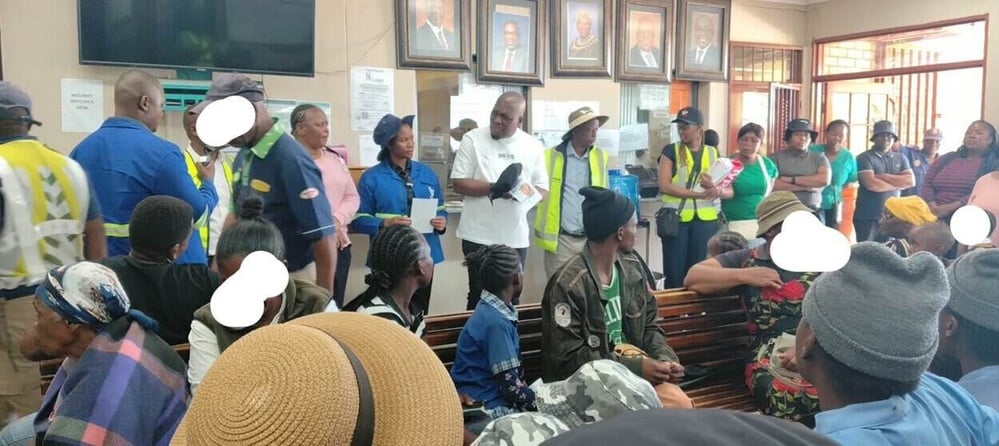


2026 © Helium Trades
Privacy Policy & Disclosure
* Disclaimer: Nothing on this website constitutes investment advice, performance data or any recommendation that any particular security, portfolio of securities, transaction or investment strategy is suitable for any specific person. Helium Trades is not responsible in any way for the accuracy
of any model predictions or price data. Any mention of a particular security and related prediction data is not a recommendation to buy or sell that security. Investments in securities involve the risk of loss. Past performance is no guarantee of future results. Helium Trades is not responsible for any of your investment decisions,
you should consult a financial expert before engaging in any transaction.
Helium Research Assistant

How can I help you today?
Ask any question about this page.


