See whether Helium helps you make better-informed decisions. Try every Pro Trader feature for 30 days. No credit card required.
Try every Pro Trader feature for 30 days. No credit card required.
October 14, 2026 · 0 shares
Fully attributed wire-style disaster coverage that confines all emotional language to quoted officials and villagers and draws no editorial conclusions of its own.
Automated analysis; not human reviewed.
Limitations: The supplied text mixes the wire report with duplicated lead sentences and unrelated host-site headlines, which were excluded as page chrome; no author byline or dateline is provided in the text itself.
·
9 of 55 available dimensions scored; omitted dimensions are not treated as neutral.
·
Verified supporting quotes for 9 of 9 scored dimensions.
Claim: Political figures' statements are relayed without editorial endorsement or criticism.
““The loss of lives in the boat capsizing incident in Vaishali, Bihar is deeply painful,” Modi said in a statement on Wednesday, announcing compensation for their families.” · exact text match
Why: The prime minister's response is reported plainly alongside official and witness accounts, with no political framing in either direction.
Claim: The report states facts with immediate attribution and confines evaluation to quoted speakers.
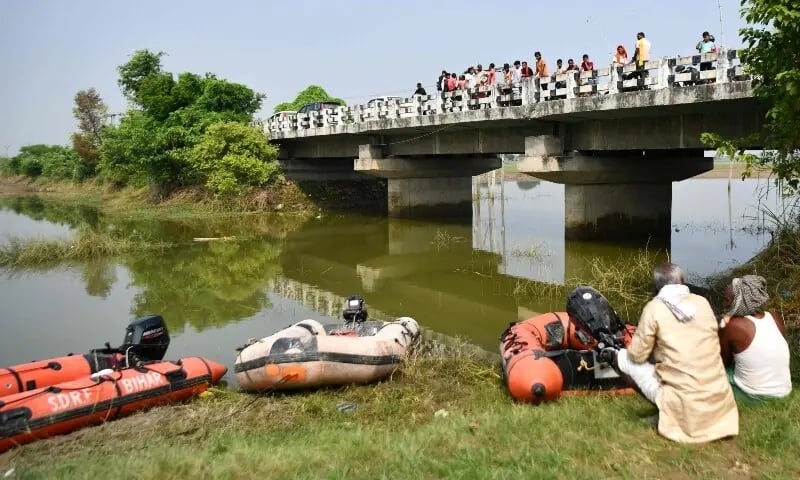
“Rescuers dragged out 13 dead children from India’s Ganges river after an overloaded boat capsized en route to a Hindu festival, officials said Wednesday” · exact text match
Why: The lead's claims are attributed to officials and the publisher offers no opinion of its own.
Claim: Stark facts are stated in plain reportorial language, with emotional content only inside quotes.
“The boat overturned late Tuesday in Vaishali district in eastern Bihar state” · exact text match
Counterevidence:
“Rescuers dragged out 13 dead children from India’s Ganges river” · exact text match
Why: The publisher's prose is restrained; dramatic material comes from quoted witnesses, not framing.
Claim: The report centers on a high-death-toll disaster involving children with vivid eyewitness detail.
““It was dark when we suddenly heard children screaming and crying for help as the boat capsized,” Ravi Yadav, a young villager who joined the rescue effort, told AFP.” · exact text match
Why: Mass-casualty tragedy plus first-person rescue narrative yields strong human interest.
Claim: The report describes the accident and recurring causes without demanding action or remedies.
“Boat accidents are common on Indian waterways, often blamed on overcrowding, poor enforcement of safety norms and inadequate life-saving equipment.” · exact text match
Why: The closing context is descriptive and attributed ('often blamed on') rather than prescriptive.
Claim: The publisher's own voice is unemotional; evaluative language appears only within attributed quotes.
““It is devastating — a few families have lost all their children,” he said.” · exact text match
Why: The strongest emotional wording is a villager's quoted words, not the report's framing, supporting a neutral overall tone.
Claim: The 13-death toll is corroborated by distinct named sources.
“Vaishali district magistrate Varsha Singh told AFP 13 bodies had been recovered.” · exact text match
““We tried our best to revive them… but 13 were already dead,” Kumar said.” · exact text match
Why: Consistent figures from an official and a medic, plus AFP attribution, strengthen visible reliability.
Claim: Key figures and characterizations are attributed to named officials, a medic, and witnesses rather than asserted.
“Vaishali district magistrate Varsha Singh told AFP 13 bodies had been recovered.” · exact text match
“Medic Nirmal Kumar, from the local health centre, said four children and two adults were sent to the district hospital.” · exact text match
Why: Systematic sourcing with consistent cross-checked figures reflects evidence-based reporting.
Claim: Casualty figures and uncertain items are handled with attribution and hedging.
“Six people were pulled out alive, including two children reported to be in critical condition.” · exact text match
Why: 'Reported to be' hedges the survivors' condition, and contested characterizations are sourced to named witnesses, indicating honest presentation.
The supplied text mixes the wire report with duplicated lead sentences and unrelated host-site headlines, which were excluded as page chrome; no author byline or dateline is provided in the text itself.
October 14, 2026 · 0 shares
Fully attributed wire-style disaster coverage that confines all emotional language to quoted officials and villagers and draws no editorial conclusions of its own.
Automated analysis; not human reviewed.
Limitations: The supplied text mixes the wire report with duplicated lead sentences and unrelated host-site headlines, which were excluded as page chrome; no author byline or dateline is provided in the text itself.
·
9 of 55 available dimensions scored; omitted dimensions are not treated as neutral.
·
Verified supporting quotes for 9 of 9 scored dimensions.
Claim: Political figures' statements are relayed without editorial endorsement or criticism.
““The loss of lives in the boat capsizing incident in Vaishali, Bihar is deeply painful,” Modi said in a statement on Wednesday, announcing compensation for their families.” · exact text match
Why: The prime minister's response is reported plainly alongside official and witness accounts, with no political framing in either direction.
Claim: The report states facts with immediate attribution and confines evaluation to quoted speakers.
“Rescuers dragged out 13 dead children from India’s Ganges river after an overloaded boat capsized en route to a Hindu festival, officials said Wednesday” · exact text match
Why: The lead's claims are attributed to officials and the publisher offers no opinion of its own.
Claim: Stark facts are stated in plain reportorial language, with emotional content only inside quotes.
“The boat overturned late Tuesday in Vaishali district in eastern Bihar state” · exact text match
Counterevidence:
“Rescuers dragged out 13 dead children from India’s Ganges river” · exact text match
Why: The publisher's prose is restrained; dramatic material comes from quoted witnesses, not framing.
Claim: The report centers on a high-death-toll disaster involving children with vivid eyewitness detail.
““It was dark when we suddenly heard children screaming and crying for help as the boat capsized,” Ravi Yadav, a young villager who joined the rescue effort, told AFP.” · exact text match
Why: Mass-casualty tragedy plus first-person rescue narrative yields strong human interest.
Claim: The report describes the accident and recurring causes without demanding action or remedies.
“Boat accidents are common on Indian waterways, often blamed on overcrowding, poor enforcement of safety norms and inadequate life-saving equipment.” · exact text match
Why: The closing context is descriptive and attributed ('often blamed on') rather than prescriptive.
Claim: The publisher's own voice is unemotional; evaluative language appears only within attributed quotes.
““It is devastating — a few families have lost all their children,” he said.” · exact text match
Why: The strongest emotional wording is a villager's quoted words, not the report's framing, supporting a neutral overall tone.
Claim: The 13-death toll is corroborated by distinct named sources.
“Vaishali district magistrate Varsha Singh told AFP 13 bodies had been recovered.” · exact text match
““We tried our best to revive them… but 13 were already dead,” Kumar said.” · exact text match
Why: Consistent figures from an official and a medic, plus AFP attribution, strengthen visible reliability.
Claim: Key figures and characterizations are attributed to named officials, a medic, and witnesses rather than asserted.
“Vaishali district magistrate Varsha Singh told AFP 13 bodies had been recovered.” · exact text match
“Medic Nirmal Kumar, from the local health centre, said four children and two adults were sent to the district hospital.” · exact text match
Why: Systematic sourcing with consistent cross-checked figures reflects evidence-based reporting.
Claim: Casualty figures and uncertain items are handled with attribution and hedging.
“Six people were pulled out alive, including two children reported to be in critical condition.” · exact text match
Why: 'Reported to be' hedges the survivors' condition, and contested characterizations are sourced to named witnesses, indicating honest presentation.
The supplied text mixes the wire report with duplicated lead sentences and unrelated host-site headlines, which were excluded as page chrome; no author byline or dateline is provided in the text itself.
Restrained wire-style disaster coverage that frames the mass-casualty capsize almost entirely through official condolences and compensation announcements rather than causes or safety questions.
Automated analysis; not human reviewed.
Limitations: Casualty and occupancy figures conflict across sources (13 vs 14 bodies; around 20 children vs around 30 aboard) and the text contains duplicated copy plus a consent-notice artifact, so final figures cannot be verified from this text alone.
·
9 of 55 available dimensions scored; omitted dimensions are not treated as neutral.
·
Verified supporting quotes for 9 of 9 scored dimensions.
Claim: The dispatch gives equal, neutral play to ruling-coalition figures and the opposition leader's statements.
“Prime Minister Narendra Modi also expressed grief over the loss of multiple lives” · exact text match
“Leader of Opposition (LoP) in Bihar Assembly and Raghopur MLA Tejashwi Yadav expressed grief over the incident.” · exact text match
Why: Government (President, PM, CM) and opposition (Yadav) responses are reported in the same factual register with no slanted wording.
Claim: The report states events through attributed official statements with minimal publisher characterization.
“According to Vaishali District Magistrate Varsha Singh, seven people were rescued and taken to Nalanda Medical College and Hospital (NMCH), where their condition was stable.” · exact text match
Counterevidence:
“when an overcrowded boat carrying around 20 children capsized” · exact text match
Why: Key figures are sourced to named officials; only mild unattributed descriptors like 'overcrowded' appear.
Claim: Framing is restrained wire style with only conventional emotive labels rather than sensational amplification.
“Bihar: Bodies of 13 children killed in Vaishali boat capsize tragedy taken for cremation” · exact text match
Why: 'Tragedy' is a standard fatality descriptor and no graphic, urgent, or exaggerating language appears elsewhere.
Claim: The event's scale — a mass-casualty capsizing killing children — makes the report inherently high-interest.
“at least 13 children aged 15 years or below died in the tragedy” · exact text match
Why: A mass fatality of minors in a single accident is a major human-interest and public-safety event.
Claim: The dispatch only reports events and official reactions without advocating any measure or remedy.
“The State Disaster Response Force (SDRF) launched a massive search and rescue operation in the Ganga River following the tragedy.” · exact text match
Why: No editorial recommendation, cause attribution, or call for action appears in the copy.
Claim: Selection emphasizes official condolences and compensation announcements over the incident's causes.
“Prime Minister Narendra Modi also expressed grief over the loss of multiple lives and announced an ex-gratia of Rs 2 lakh” · exact text match
Counterevidence:
“On Tuesday, Leader of Opposition (LoP) in Bihar Assembly and Raghopur MLA Tejashwi Yadav expressed grief over the incident.” · exact text match
Why: Most paragraphs relay state functionaries' statements, mildly weighting the institutional response, though the opposition leader is also quoted.
Claim: Casualty and rescue figures are attributed to named officials with hedged estimates, though conflicting tolls are left unreconciled.
“at least 13 children aged 15 years or below died in the tragedy” · exact text match
Counterevidence:
“Fourteen bodies have been recovered so far, six have been referred to the hospital, and three people are safe” · exact text match
Why: Attribution and hedging support reliability, but the 13 vs 14 body counts and 20 vs ~30 occupancy figures are presented without note.
Claim: The copy preserves attribution and hedging for uncertain figures rather than asserting them as fact.
“Yadav said around 30 people were reportedly aboard the boat when it capsized” · exact text match
Why: 'Reportedly' and attributed quotes signal honest handling of unverified claims.
Claim: The dispatch is a competent, multi-source wire report covering toll, rescue, and relief responses.
“According to Vaishali District Magistrate Varsha Singh, seven people were rescued and taken to Nalanda Medical College and Hospital (NMCH), where their condition was stable.” · exact text match
Why: It efficiently aggregates named official sources and quantified details, though it leaves figure discrepancies unreconciled.
Casualty and occupancy figures conflict across sources (13 vs 14 bodies; around 20 children vs around 30 aboard) and the text contains duplicated copy plus a consent-notice artifact, so final figures cannot be verified from this text alone.
October 14, 2026 · 0 shares
Plainly attributed wire-style disaster reporting whose wording stays neutral and non-sensational despite the heavy subject matter, with no discernible editorial slant.
Automated analysis; not human reviewed.
Limitations: The supplied text is partially garbled with duplicated caption fragments (likely a scrape artifact) and lacks a byline, total passenger count, and cause-of-capsize details, limiting verification.
·
7 of 55 available dimensions scored; omitted dimensions are not treated as neutral.
·
Verified supporting quotes for 7 of 7 scored dimensions.
Claim: All key claims are attributed to officials or named villagers with no publisher editorializing.
“officials said on Wednesday” · exact text match
“said Ravi Yadav, a young villager who joined the rescue effort” · exact text match
Why: The death toll and eyewitness details are sourced to officials and a named villager, with concrete time and place and no evaluative language from the publisher.
Claim: The mass-casualty event is conveyed in plain declarative wording without emotive or alarmist language from the publisher.
“13 children die after overloaded boat capsizes in India” · exact text match
Why: The headline states the fact without loaded adjectives; vivid detail appears only inside quoted villager speech.
Claim: The child mass-casualty event with vivid firsthand rescue detail carries high human interest.
“suddenly heard children screaming and crying for help” · exact text match
Why: A rare mass death of children combined with dramatic nighttime rescue detail makes the story highly newsworthy.
Claim: Coverage reports the event and reactions without prescribing any policy, remedy, or reform.
“The boat overturned late on Tuesday in Vaishali district in eastern Bihar state” · exact text match
Why: The text confines itself to what happened and who said what, with no call to action or accountability demand.
Claim: Main claims are sourced to officials and a named eyewitness, though the officials are unnamed and the text appears truncated.
“officials said on Wednesday” · exact text match
“said Ravi Yadav, a young villager who joined the rescue effort” · exact text match
Why: Visible attribution supports trust in the core claims, but reliance on unnamed officials and the incomplete supplied text cap the score.
Claim: Core claims are consistently attributed to identifiable sources rather than asserted bare.
“officials said on Wednesday” · exact text match
“said Ravi Yadav, a young villager who joined the rescue effort” · exact text match
Why: Sourcing the death toll to officials and eyewitness detail to a named villager are observable honesty signals; the 'overloaded' detail has no explicitly quoted source, tempering the score.
Claim: The report efficiently conveys who, what, when, where, and official reaction in compact form.
“The boat overturned late on Tuesday in Vaishali district in eastern Bihar state” · exact text match
Why: Specific, attributed facts pack the key journalistic elements; duplicated caption fragments appear to be formatting artifacts rather than substantive content.
The supplied text is partially garbled with duplicated caption fragments (likely a scrape artifact) and lacks a byline, total passenger count, and cause-of-capsize details, limiting verification.
October 14, 2026 · 0 shares
Neutral wire-style disaster coverage in which every casualty figure and emotive remark is attributed to named officials, leaving no observable publisher slant.
Automated analysis; not human reviewed.
Limitations: All casualty and passenger figures rest solely on district-official statements still being verified; the supplied text offers no independent, eyewitness, or cause-related sourcing.
·
9 of 55 available dimensions scored; omitted dimensions are not treated as neutral.
·
Verified supporting quotes for 9 of 9 scored dimensions.
Claim: Political leaders appear only as officials reacting to the disaster, covered without partisan or ideological valence.
“Indian Prime Minister Narendra Modi described the tragedy as "deeply painful" and announced compensation for the bereaved families.” · exact text match
Why: The only political content is a neutral report of the prime minister's condolence and compensation announcement, with no partisan framing in either direction.
Claim: Every factual claim and reaction is attributed to named officials or their posts, with no publisher opinion.
“At least 13 people, all of them children aged 15 or younger, have died after a passenger boat capsized on the Ganges River in eastern India's Bihar state, local authorities confirmed.” · exact text match
Why: Casualty figures, passenger counts, and reactions are all sourced to identifiable officials; the publisher offers no evaluative commentary of its own.
Claim: The headline and body state the death toll plainly, without lurid or urgency-driven language.
“At least 13 children drown after boat capsizes in India's Bihar state.” · exact text match
Why: The headline is a flat factual statement, and the most emotive wording appears only inside quoted official statements rather than in publisher text.
Claim: A mass-casualty capsize killing only children, drawing a prime-ministerial response, is high-interest breaking news.
“At least 13 people, all of them children aged 15 or younger, have died” · exact text match
Why: A rare mass-casualty disaster involving children plus top-level government reaction gives the brief substantial reader interest despite its plain execution.
Claim: The report describes the event and official reactions without advocating safety measures or policy changes.
“announced compensation for the bereaved families” · exact text match
Why: Even the government response is relayed as reported fact; no recommendation, criticism, or call to action appears anywhere in the text.
Claim: Publisher voice stays unemotional; all emotive language sits inside attributed official statements.
“The news of the innocent lives lost in the boat accident in Raghoopur, Vaishali, is extremely heartbreaking and soul-wrenching” · exact text match
Why: The most charged wording occurs in Choudhary's quoted X post, not in the publisher's own sentences, which remain factual.
Claim: Each key fact is attributed to a named district official, and unverified details are explicitly marked as pending.
“District Magistrate Varsha Singh told reporters” · exact text match
“as the exact passenger tally is verified” · exact text match
Why: Visible sourcing to identifiable officials plus disclosed uncertainty are the strongest credibility signals available in the supplied text.
Claim: Uncertain figures are reported as ranges consistent with official verification still underway.
“carrying between 15 and 20 passengers” · exact text match
“whilst between six and seven passengers were pulled alive from the water” · exact text match
Why: Preserving ranged, explicitly unverified counts rather than asserting precise totals reflects calibrated reasoning.
Claim: The report discloses that the passenger tally is unverified and the search incomplete rather than presenting settled totals.
“search operations remain ongoing to account for everyone on board as the exact passenger tally is verified” · exact text match
Why: Transparently flagging uncertainty and attributing all figures to named officials are visible honesty practices in the supplied text.
All casualty and passenger figures rest solely on district-official statements still being verified; the supplied text offers no independent, eyewitness, or cause-related sourcing.
The report is largely factual and attribution-driven, relying on IOM and AP figures with neutral wording, though it briefly frames migration in economic-opportunity terms.
The route from the Horn of Africa to the Arabian Peninsula is a common migration corridor used by migrants seeking work in Gulf nations.
Automated analysis; not human reviewed.
·
53 of 55 available dimensions scored; omitted dimensions are not treated as neutral.
·
Verified supporting quotes for 9 of 53 scored dimensions.
Claim: The account is dominated by attributed numbers and official statements.
“Of the 109 bodies recovered, 52 were men, 42 were women and 15 were children, including nine girls and six boys.” · exact text match
Why: Specific breakdowns and attributions reflect observational, not interpretive, reporting.
Claim: The report uses measured wording rather than sensationalistic emphasis.
“Djiboutian authorities are continuing search and rescue operations amid growing fears for those still missing.” · exact text match
Why: It notes ongoing uncertainty without evocative or alarmist language.
Claim: The piece describes events and official responses without prescribing policy.
“Local authorities are also providing medical care to survivors and arranging dignified burials for those who died.” · exact text match
Why: It reports actions taken rather than recommending changes.
Claim: The report relies heavily on IOM and AP attributions.
“The boat was travelling from Djibouti to Yemen when it capsized near Guhere, north of Obock, during the night of October 8–9, according to the IOM.” · exact text match
Why: Repeated reliance on institutional sources is an appeal-to-authority pattern.
Claim: The report foregrounds institutional response and assistance efforts.
“The IOM is assisting 64 survivors at its Obock Migrant Response Centre (MRC), providing healthcare, psychosocial assistance, protection services, temporary shelter, food assistance and support to help them reconnect with their families.” · exact text match
Why: Much of the piece describes the IOM and local authority response.
Claim: The report frames migrants as victims of a perilous crossing.
“This tragedy is a stark reminder of the dangers faced by migrants along this migration corridor as they seek economic opportunities” · exact text match
Why: It emphasizes migrant vulnerability and loss without overt advocacy.
Claim: The report uses named institutional sources and precise figures.
“In 2025, more than 900 migrants died or went missing along the sea route to Yemen and the number attempting the journey increased by 18 percent, it said.” · exact text match
Why: Attribution and specific stats support high credibility.
Claim: The report presents death, missing and survivor figures with clear attribution rather than emotional speculation.
“At least 139 migrants, including children, died after a boat sank off the coast of Djibouti, the International Organisation for Migration (IOM) said on Sunday.” · exact text match
Why: The framing cites the IOM and specifies the event without melodrama or unsupported inference.
Claim: The report names sources and provides precise figures.
“More than 80 people survived the shipwreck, all of them Ethiopian nationals.” · exact text match
Why: Specific, sourced detail signals fairness and honesty in reporting.
The report is a terse, attribution-based factual account relying on a single UN agency source with no interpretation or evaluative framing.
Automated analysis; not human reviewed.
Limitations: Extremely brief snippet: no named UN agency, date, source link, or independent verification is provided, limiting assessment.
·
1 of 55 available dimensions scored; omitted dimensions are not treated as neutral.
·
Verified supporting quotes for 1 of 1 scored dimensions.
Claim: The report attributes casualty figures to a single UN agency without naming it or providing further sourcing.
“a United Nations agency has reported” · exact text match
Why: Clear attribution to an institutional source supports credibility but the lack of a named agency limits full transparency.
Extremely brief snippet: no named UN agency, date, source link, or independent verification is provided, limiting assessment.
October 11, 2026 · 0 shares
Framing is a sober, attribution-heavy tragedy narrative that foregrounds child deaths, UN/IOM authority, and migrant victimhood while including a quoted call for safe legal pathways.
Automated analysis; not human reviewed.
Limitations: No author byline or publication date is provided; the text includes an embedded IOM tweet and CBC accessibility footer, which are not part of the core report.
·
13 of 55 available dimensions scored; omitted dimensions are not treated as neutral.
·
Verified supporting quotes for 12 of 13 scored dimensions.
Claim: The report relies on international organization officials for its main sourcing and interpretation.
“the International Organization for Migration said Sunday” · exact text match
“Alexandre Coissac, IOM chief of mission in Djibouti, told The Associated Press.” · exact text match
Why: Sourcing and quotes come from IOM officials, indicating an elite/institutional perspective.
Claim: The article's central claims are presented as factual attributions to official sources.
“At least 139 people, including children, have died after a boat carrying more than 300 migrants capsized off the coast of Djibouti in East Africa, the International Organization for Migration said Sunday.” · exact text match
Why: Attributed factual reporting dominates over subjective commentary.
Claim: The headline emphasizes child deaths to heighten emotional impact.
“Children among at least 139 dead after migrant boat capsizes off Djibouti coast.” · exact text match
Why: Inclusion of children in the headline is factually true but frames the story sensationally.
Claim: The article is dominated by death, missing persons, and shock.
“At least 139 people, including children, have died after a boat carrying more than 300 migrants capsized off the coast of Djibouti in East Africa, the International Organization for Migration said Sunday.” · exact text match
“The death toll from the #Djibouti shipwreck has risen to 139, with 84 people still missing.” · exact text match
Why: The content focuses on fatalities and ongoing risk, producing a strongly pessimistic tone.
Claim: The article primarily reports events and attributed facts rather than issuing prescriptions.
“The boat was travelling from Djibouti to Yemen when it capsized on Thursday night or Friday morning, according to the IOM. More than 80 people survived, all of them Ethiopian nationals, it said.” · exact text match
Counterevidence:
“Safe and legal pathways save lives.
I am asking governments and donors to act before the next boat goes down.”
· exact text match
Why: Descriptive reporting of the shipwreck dominates, though a quoted official later calls for action.
Claim: The article includes political context about the Yemen conflict and migration policy.
“In recent weeks, at least 2,000 Yemenis have received aid in Djibouti as the fighting has escalated in Yemen between the Saudi-backed, internationally recognized government and Iran-backed Houthi rebels.” · exact text match
“Safe and legal pathways save lives.
I am asking governments and donors to act before the next boat goes down.”
· exact text match
Why: References to warring factions and calls for government action make the story politically framed.
Claim: The article repeatedly relies on IOM and UN officials as authoritative sources.
“the International Organization for Migration said Sunday” · exact text match
“Alexandre Coissac, IOM chief of mission in Djibouti, told The Associated Press.” · exact text match
Why: Official institutional voices supply the main facts and interpretation.
Claim: The article centers the suffering and vulnerability of the migrants.
“They all have a mother, a father, and we may never learn what happened.” · exact text match
“They're all in a state of shock” · not found in supplied text
Why: Emphasis on shock and unnamed dead frames the migrants primarily as victims.
Claim: The article uses emotionally negative quotes and descriptors.
“What is terrible is that they were buried with no names, in a common grave, like in a war situation” · exact text match
“This is a devastating loss of life” · exact text match
Why: Tragic language and quotes evoke sadness and loss.
Claim: The article cites named officials and specific figures from established organizations.
“The Geneva-based UN migration agency said the vessel had 305 people on board and warned that the death toll could still rise.” · exact text match
“Over 900 migrants died or went missing along the route last year, according to IOM's Missing Migrants Project.” · exact text match
Why: Clear attribution and quantified data support high credibility.
Claim: The article includes a forecast about the death toll rising.
“warned that the death toll could still rise” · exact text match
Why: The IOM warns the toll may increase, a modest speculative element.
Claim: The report transparently qualifies the official death toll and notes unverified burials.
“That number only includes those buried by authorities in Djibouti.
Others have been buried by the migrants themselves, but they won't be added to the official count until authorities can verify the bodies, Alexandre Coissac, IOM chief of mission in Djibouti, told The Associated Press.”
· exact text match
Why: Explicit caveats about the count and sourcing indicate high integrity.
Claim: The article is well-structured, sourced, and context-rich.
“The Geneva-based UN migration agency said the vessel had 305 people on board and warned that the death toll could still rise.” · exact text match
“Over 900 migrants died or went missing along the route last year, according to IOM's Missing Migrants Project.” · exact text match
Why: Clear reporting with quantified details and context indicates high intelligence.
No author byline or publication date is provided; the text includes an embedded IOM tweet and CBC accessibility footer, which are not part of the core report.
October 11, 2026 · 0 shares
The coverage is a straightforward, agency-sourced humanitarian news report on a migrant boat disaster, largely reproducing IOM statements with minimal publisher-added framing.
Migrants from the Horn of Africa, including Ethiopia, cross the Bab el-Mandeb Strait toward Yemen and Gulf countries, despite Yemen's ongoing civil war, driven by poverty, insecurity, and climate change impacts.
Automated analysis; not human reviewed.
Limitations: The provided text includes an aggregated headline list and apparent paywall/boilerplate fragments, which may not represent the full original article; analysis is limited to the quoted IOM-sourced content.
·
55 of 55 available dimensions scored; omitted dimensions are not treated as neutral.
·
Verified supporting quotes for 10 of 55 scored dimensions.
Claim: No discernible liberal or conservative ideological framing is present in the supplied text.
“Djibouti boat capsize: Children among 109 dead with 116 still missing, UN says.” · exact text match
Why: The report focuses on factual casualties and agency statements without ideological cues.
Claim: No clear populist or elitist framing is evident.
“IOM's Djibouti mission chief Alexandre Coissac called the tragedy a "stark reminder" of the dangers migrants face while seeking a new life elsewhere.” · not found in supplied text
Why: Elite agency voices are cited for factual updates, not as a populist or elitist argument.
Claim: No clear libertarian or authoritarian policy stance is present.
“IOM said it is providing assistance to 64 of the survivors at its response centre in Obock, including healthcare and support to "restore contact with their families".” · exact text match
Why: The text reports humanitarian assistance without advocating state control or individual liberty positions.
Claim: The framing is objective, relying on attributed IOM figures and statements.
“At least 109 migrants including 15 children have died and dozens more are still missing after a boat sank off the coast of Djibouti, the International Organization for Migration (IOM) has said.” · exact text match
Why: Claims are attributed to a specific international organization rather than subjective commentary.
Claim: The tone is matter-of-fact rather than sensational.
“"This is a devastating loss of life," Coissac said.” · exact text match
Why: Even the emotional quote is directly attributed and does not use hyperbolic publisher language.
Claim: The content is non-political, focusing on a humanitarian disaster.
“The UN agency is working in "close collaboration" with local authorities to help migrants and "prevent deaths at sea and on land", it added.” · exact text match
Why: There is no partisan political framing or policy advocacy.
Claim: The report is predominantly neutral, with no strong positive or negative emotional coloring beyond the tragic facts.
“"Our thoughts are with the survivors and the families who have lost loved ones or remain without news of their relatives," he added.” · exact text match
Why: Empathy is expressed through a quoted official, not through the publisher's own emotive framing.
Claim: The article is credible, consistently attributing figures to the IOM and UN.
“According to IOM figures, more than 900 migrants died or went missing taking the same route in 2025, with an 18% increase in the number of people attempting the journey.” · exact text match
Why: Specific statistics are sourced to a named agency, and official quotes are used.
Claim: The text relies on standard reporting and official statements, showing no irrational framing.
“The boat was travelling from Djibouti to Yemen with 350 people on board, when it capsized near the port town of Obock on Thursday night.” · exact text match
Why: Events are described with concrete details and attribution.
Claim: The text appears to be human-written, with natural journalistic phrasing and specific quotes.
“IOM's Djibouti mission chief Alexandre Coissac called the tragedy a "stark reminder" of the dangers migrants face while seeking a new life elsewhere.” · not found in supplied text
Why: The style lacks obvious AI-generated patterns and includes direct quotes and varied sentence structure.
Claim: The reporting is clear and informative, suitable for a general audience.
“Local authorities are also arranging burials for those who have died, while the survivors - all Ethiopian nationals - have medical care readily available to them.” · exact text match
Why: Context and follow-up information are provided in a concise manner.
The provided text includes an aggregated headline list and apparent paywall/boilerplate fragments, which may not represent the full original article; analysis is limited to the quoted IOM-sourced content.
October 11, 2026 · 0 shares
The report relies on institutional attribution from the UN migration agency without independent verification, while briefly inserting a contested geopolitical causal claim about regional instability.
The Bab al-Mandeb corridor between Djibouti and Yemen is a heavily used migration route for people from the Horn of Africa seeking work or safety in Gulf countries; regional instability involving Yemen, the Houthis, and Iran-related conflict increases the risks of such crossings.
Automated analysis; not human reviewed.
Limitations: The supplied text is a truncated aggregation of quotes and wire-style copy, so sources, origin, and some contextual claims cannot be fully verified from the excerpt alone.
·
55 of 55 available dimensions scored; omitted dimensions are not treated as neutral.
·
Verified supporting quotes for 11 of 55 scored dimensions.
Claim: The report frames the incident through official institutional statements rather than migrant or grassroots voices.
“In a statement on Sunday, the International Organization for Migration (IOM) quoted survivors as saying” · exact text match
Why: Institutional attribution dominates the account, with little direct migrant voice.
Claim: The headline and casualty figures create a somber but not gratuitously alarmist tone.
“At least 109 dead, over 100 missing as migrant boat capsizes off Djibouti.” · exact text match
Why: The event itself is tragic, and the framing is sober rather than lurid.
Claim: Key facts are grounded in IOM statements and official quotes.
““Our teams are on the ground alongside local authorities to provide emergency assistance,” IOM Chief of Mission in Djibouti Alexandre Coissac said” · exact text match
Why: Authority is repeatedly invoked as the basis for the reported facts.
Claim: The article foregrounds migrant deaths and the dangers faced by migrants, with sympathetic framing.
“This tragedy is a stark reminder of the dangers faced by migrants along this migration corridor as they seek economic opportunities.” · exact text match
Why: The piece emphasizes migrant vulnerability and loss, though without political blame.
Claim: The framing relies on and elevates UN/IOM authority as the central source.
“In a statement on Sunday, the International Organization for Migration (IOM) quoted survivors as saying” · exact text match
Why: The account is organized around official institutional statements, reflecting establishment trust.
Claim: The tone is sad but relatively restrained, avoiding inflammatory language.
“lamenting the “devastating loss of life”.” · exact text match
Why: The only strong emotional language is attributed to an official quote rather than the publisher's narration.
Claim: The report uses named institutional sourcing and specific figures, supporting credibility.
“At least 109 people, including 15 children, have died and more than 116 are missing” · exact text match
Why: Specific figures and named agency attribution support a credible classification.
Claim: The account stays largely factual and attributed, with limited emotive or logically fallacious framing despite the deaths.
“At least 109 people, including 15 children, have died and more than 116 are missing after a boat capsized” · exact text match
Why: The core reporting is numerical and attribution-based rather than irrational or emotive.
Claim: The text draws a causal link to regional instability without direct evidence for this capsize.
“undeterred by the rising instability in the region due to the US-Israel war on Iran and the resumption of fighting in Yemen” · exact text match
Why: An indirect contextual causal claim is offered without direct attribution to the incident.
Claim: The structure, repeated phrases, and wire-style aggregation show weak signs of AI compilation, though not definitive.
“News|Migration At least 109 people, including 15 children, have died and more than 116 are missing after a boat capsized” · exact text match
Why: Repeated fragments and aggregation suggest low-confidence AI or scraped compilation patterns.
Claim: The report transparently attributes figures and survivor accounts to IOM and names an official source.
“according to the United Nations migration agency” · exact text match
Why: Clear sourcing and attributed claims signal relatively high integrity.
The supplied text is a truncated aggregation of quotes and wire-style copy, so sources, origin, and some contextual claims cannot be fully verified from the excerpt alone.
October 11, 2026 · 0 shares
The report is a tightly attributed, IOM/Guardian-sourced factual account that frames the disaster through neutral humanitarian concern without political or ideological advocacy.
Automated analysis; not human reviewed.
Limitations: The supplied text is short and contains malformed nested metadata; no author byline or publication context is provided.
·
10 of 55 available dimensions scored; omitted dimensions are not treated as neutral.
·
Verified supporting quotes for 10 of 10 scored dimensions.
Claim: No left-right ideological framing or partisan actors are present; sourcing is neutral.
“according to the International Organization for Migration” · exact text match
Why: The article attributes the death toll to an international agency and avoids partisan policy language.
Claim: The report cites UN and local officials without populist anti-elite rhetoric or elitist advocacy.
“The UN migration agency described the incident as one of the deadliest recorded along the eastern migration route” · exact text match
Why: Institutional sourcing is used descriptively, not to advance a populist or elitist agenda.
Claim: Authorities are mentioned only in a factual rescue-and-response role, not as advocacy for state control.
“Authorities are continuing search and rescue operations” · exact text match
Why: No policy preferences about liberty or authoritarian control are expressed.
Claim: The report is source-attributed and avoids personal commentary or subjective interpretation.
“According to The Guardian another 84 people remain missing, while 82 Ethiopian nationals survived the disaster.” · exact text match
Why: Figures and missing/survivor details are explicitly attributed to external sources.
Claim: Tragic details are reported factually without publisher-added sensational language.
“At least 139 migrants, including 15 children, have died” · exact text match
Why: The child-death detail is factual and not embellished with emotive adjectives by the publisher.
Claim: The report describes the disaster and response without prescribing policy remedies.
“Authorities are continuing search and rescue operations, while local officials are providing medical treatment to survivors and arranging burials for victims.” · exact text match
Why: The response is narrated descriptively; no recommendations or prescriptions are made.
Claim: Major facts and characterizations are attributed to named international and news sources.
“The UN migration agency described the incident as one of the deadliest recorded along the eastern migration route connecting the Horn of Africa to the Arabian peninsula.” · exact text match
Why: Attribution to IOM and The Guardian supports visible credibility in the supplied text.
Claim: The report relies on attributed, quantified facts and avoids speculative causal claims.
“At least 139 migrants, including 15 children, have died after a boat carrying 305 people capsized off the coast of Djibouti, according to the International Organization for Migration” · exact text match
Why: Quantified figures are attributed to IOM and no irrational causation or conspiracy is asserted.
Claim: The report transparently distinguishes sources and avoids overclaiming beyond attributed figures.
“According to The Guardian another 84 people remain missing, while 82 Ethiopian nationals survived the disaster.” · exact text match
Why: It separates IOM and Guardian sourcing and reports survivor/missing counts without asserting unsupported certainty.
Claim: The report provides relevant geographic, route, and migration-flow context.
“The eastern route is used by hundreds of thousands of migrants annually, mainly from Ethiopia and Somalia, seeking employment and better opportunities in Gulf countries, particularly Saudi Arabia.” · exact text match
Why: It contextualizes the incident within the Horn of Africa-to-Gulf migration route.
The supplied text is short and contains malformed nested metadata; no author byline or publication context is provided.
October 11, 2026 · 0 shares
Framing is humanitarian and institutional: the report centers UN/IOM casualty figures and sympathetic quotes about migrant danger and loss, treating migration as a perilous search for safety and work without scrutinizing smuggling networks or policy responses.
Automated analysis; not human reviewed.
Limitations: The supplied text includes unrelated page links after the main report; analysis is limited to the Djibouti boat-capsizing article, whose casualty figures rely on IOM/UN reporting without independent verification details.
·
17 of 55 available dimensions scored; omitted dimensions are not treated as neutral.
·
Verified supporting quotes for 17 of 17 scored dimensions.
Claim: The report frames migration through humanitarian and climate-related push factors, a slight liberal tilt.
“dangers migrants face when seeking a new life elsewhere” · exact text match
“driven by poverty, insecurity and the growing impacts of climate change” · exact text match
Why: Sympathetic migrant framing and climate-driver emphasis are commonly associated with liberal framing.
Claim: The report mixes factual reporting with emotive quotes and human-interest framing, creating a slight subjective tilt.
“This is a devastating loss of life” · exact text match
“stark reminder” · exact text match
Why: Emotive official quotes and human-impact language add subjective framing to an otherwise factual report.
Claim: The report is mostly objective and restrained, not sensational.
“At least 139 migrants including 15 children have died and dozens more are still missing” · exact text match
“Around 82 people were rescued, the International Organization for Migration (IOM) said.” · exact text match
Why: The article reports figures and attributions without sensational language or dramatic embellishment.
Claim: The report is framed pessimistically around death, loss, and danger.
“devastating loss of life” · exact text match
“dozens more are still missing” · exact text match
Why: Emphasis on fatalities and missing persons produces a pessimistic tone.
Claim: The report is primarily descriptive, though it includes quoted calls to prevent deaths.
“prevent deaths at sea and on land” · exact text match
Why: The main text reports events and responses rather than prescribing policy.
Claim: The report contains mild fear-inducing content through death, missing persons, and danger.
“dozens more are still missing” · exact text match
“dangers migrants face” · exact text match
Why: It reports frightening facts but does not use alarmist or rage-baiting language.
Claim: The report is mostly factual, with limited opinion conveyed through quoted officials.
“stark reminder” · exact text match
“This is a devastating loss of life” · exact text match
Why: Opinion appears mainly in attributed quotes rather than publisher's own voice.
Claim: The report engages political context through Yemen's civil war and regional instability.
“Yemen remains engulfed in a devastating civil war that has lasted more than a decade.” · exact text match
“Houthi fighters and the Saudi-backed Yemeni government” · exact text match
Why: Conflict actors and regional instability give the report political relevance, though it remains primarily humanitarian.
Claim: The report leans heavily on UN and IOM authorities for facts and interpretation.
“the UN's migration office has said” · exact text match
“according to IOM statistics” · exact text match
Why: Casualty figures, context, and interpretation are repeatedly attributed to international authorities.
Claim: The report foregrounds migrants as victims of dangerous journeys and broader crises.
“dangers migrants face when seeking a new life elsewhere” · exact text match
“devastating loss of life” · exact text match
Why: The framing centers on migrant suffering and loss without exploring other dimensions.
Claim: The report is institutionally oriented, relying on UN/IOM and local authorities.
“the UN's migration office has said” · exact text match
“close collaboration” · exact text match
Why: Official institutions frame the event and response.
Claim: The report's tone is negative, focused on tragedy and loss.
“devastating loss of life” · exact text match
“Our thoughts are with the survivors and the families who have lost loved ones” · exact text match
Why: Quotes and framing emphasize grief and tragedy.
Claim: The report appears credible, with clear sourcing and acknowledgment of revised figures.
“the UN's migration office has said” · exact text match
“The organisation revised its toll from 109 on Sunday after 30 more bodies were recovered.” · exact text match
Why: Attribution, quantification, and correction signals support high credibility.
Claim: The report is largely rational and evidence-bound, using attributed statistics and cautious language.
“according to IOM statistics” · exact text match
“At least 139 migrants including 15 children have died” · exact text match
Why: Claims are attributed and casualty figures use hedging rather than unsupported certainty.
Claim: The report is empirical, relying on agency statistics and attributed data rather than superstition.
“according to IOM statistics” · exact text match
“the UN's migration office has said” · exact text match
Why: Quantitative and institutional sources are used to support claims.
Claim: The report demonstrates high integrity through clear attribution and transparent revision of figures.
“the UN's migration office has said” · exact text match
“The organisation revised its toll from 109 on Sunday after 30 more bodies were recovered.” · exact text match
Why: Attribution to IOM/UN and disclosure of revised toll indicate fair, transparent reporting.
Claim: The report is reasonably intelligent and informative, synthesizing casualty figures, context, and response.
“Displacement Tracking Matrix had observed more than 20,000” · exact text match
“More than 900 migrants died or went missing taking the same route in 2025” · exact text match
Why: It integrates multiple data points and contextual facts into a coherent report.
The supplied text includes unrelated page links after the main report; analysis is limited to the Djibouti boat-capsizing article, whose casualty figures rely on IOM/UN reporting without independent verification details.
October 12, 2026 · 0 shares
Neutral wire-service framing that attributes casualty figures, cause, and rescue details to IOM officials, with emotional and policy appeals kept inside direct quotes.
Automated analysis; not human reviewed.
Limitations: No author byline is present, so publisher/author bias is assessed only from wire-service copy and quoted IOM statements.
·
11 of 55 available dimensions scored; omitted dimensions are not treated as neutral.
·
Verified supporting quotes for 11 of 11 scored dimensions.
Claim: The article's own framing is ideologically neutral on left-right politics.
“At least 139 people, including children, have died after a boat carrying more than 300 migrants capsized off the coast of Djibouti in east Africa, the International Organization for Migration said Sunday.” · exact text match
Why: The central passage is a factual, attributed report without left/right ideological advocacy.
Claim: The article is predominantly objective, separating factual reporting from quoted subjective reactions.
“The boat was traveling from Djibouti to Yemen when it capsized on Thursday night or Friday morning, according to the IOM.” · exact text match
Why: The publisher's own voice reports verifiable details and attribution rather than personal commentary.
Claim: The article is more objective than sensational, though the death toll and missing-person details are stark.
“At least 139 people, including children, have died after a boat carrying more than 300 migrants capsized off the coast of Djibouti in east Africa, the International Organization for Migration said Sunday.” · exact text match
Why: The framing is sober and attributed; the stark numbers are factual rather than sensationalized.
Claim: The article's own framing is descriptive rather than prescriptive.
“More than 80 people survived, all of them Ethiopian nationals, it said.” · exact text match
Why: The publisher reports facts and attributed statements without issuing its own recommendations.
Claim: The article's emotional tone is negative, reflecting the tragedy, but remains measured and attributed.
“Rescue work continued as fears grew for the missing.” · exact text match
Why: The negative valence comes from the reported deaths and missing persons rather than publisher invective.
Claim: The article is highly credible due to consistent attribution and named sourcing.
“The Geneva-based U.N. migration agency said the vessel had 305 people on board and warned that the death toll could still rise.” · exact text match
Why: Figures and warnings are attributed to the IOM, with additional named official quotes and AP phone interview.
Claim: The report is rational and evidence-based, using attributed facts rather than irrational appeals.
“The Geneva-based U.N. migration agency said the vessel had 305 people on board and warned that the death toll could still rise.” · exact text match
Why: It presents specific attributed figures and an uncertainty warning without emotional or illogical assertions.
Claim: The article includes a small amount of speculative forecasting about the death toll.
“warned that the death toll could still rise” · exact text match
Why: This is a forecast attributed to the IOM, not presented as established fact.
Claim: The text shows strong indicators of human authorship rather than AI generation.
“Alexandre Coissac, IOM Chief of Mission in Djibouti, told the AP via the phone.” · exact text match
Why: Specific named sourcing and a phone-interview quote are typical human wire-reporting features.
Claim: The article shows high integrity through clear attribution and sourcing.
“Alexandre Coissac, IOM Chief of Mission in Djibouti, told the AP via the phone.” · exact text match
Why: Named sources and explicit attribution signal honest reporting practice.
Claim: The article is intelligent in structure and factual specificity.
“At least 139 people, including children, have died after a boat carrying more than 300 migrants capsized off the coast of Djibouti in east Africa, the International Organization for Migration said Sunday.” · exact text match
Why: It clearly conveys key facts, numbers, and attribution in a concise lede.
No author byline is present, so publisher/author bias is assessed only from wire-service copy and quoted IOM statements.
October 14, 2026 · 0 shares
Fully attributed wire-style disaster coverage that confines all emotional language to quoted officials and villagers and draws no editorial conclusions of its own.
Automated analysis; not human reviewed. Limitations: The supplied text mixes the wire report with duplicated lead sentences and unrelated host-site headlines, which were excluded as page chrome; no author byline or dateline is provided in the text itself. · 9 of 55 available dimensions scored; omitted dimensions are not treated as neutral. · Verified supporting quotes for 9 of 9 scored dimensions.
Claim: Political figures' statements are relayed without editorial endorsement or criticism.
““The loss of lives in the boat capsizing incident in Vaishali, Bihar is deeply painful,” Modi said in a statement on Wednesday, announcing compensation for their families.” · exact text match
Why: The prime minister's response is reported plainly alongside official and witness accounts, with no political framing in either direction.
Claim: The report states facts with immediate attribution and confines evaluation to quoted speakers.
“Rescuers dragged out 13 dead children from India’s Ganges river after an overloaded boat capsized en route to a Hindu festival, officials said Wednesday” · exact text match
Why: The lead's claims are attributed to officials and the publisher offers no opinion of its own.
Claim: Stark facts are stated in plain reportorial language, with emotional content only inside quotes.
“The boat overturned late Tuesday in Vaishali district in eastern Bihar state” · exact text match
Counterevidence:
“Rescuers dragged out 13 dead children from India’s Ganges river” · exact text match
Why: The publisher's prose is restrained; dramatic material comes from quoted witnesses, not framing.
Claim: The report centers on a high-death-toll disaster involving children with vivid eyewitness detail.
““It was dark when we suddenly heard children screaming and crying for help as the boat capsized,” Ravi Yadav, a young villager who joined the rescue effort, told AFP.” · exact text match
Why: Mass-casualty tragedy plus first-person rescue narrative yields strong human interest.
Claim: The report describes the accident and recurring causes without demanding action or remedies.
“Boat accidents are common on Indian waterways, often blamed on overcrowding, poor enforcement of safety norms and inadequate life-saving equipment.” · exact text match
Why: The closing context is descriptive and attributed ('often blamed on') rather than prescriptive.
Claim: The publisher's own voice is unemotional; evaluative language appears only within attributed quotes.
““It is devastating — a few families have lost all their children,” he said.” · exact text match
Why: The strongest emotional wording is a villager's quoted words, not the report's framing, supporting a neutral overall tone.
Claim: The 13-death toll is corroborated by distinct named sources.
“Vaishali district magistrate Varsha Singh told AFP 13 bodies had been recovered.” · exact text match
““We tried our best to revive them… but 13 were already dead,” Kumar said.” · exact text match
Why: Consistent figures from an official and a medic, plus AFP attribution, strengthen visible reliability.
Claim: Key figures and characterizations are attributed to named officials, a medic, and witnesses rather than asserted.
“Vaishali district magistrate Varsha Singh told AFP 13 bodies had been recovered.” · exact text match
“Medic Nirmal Kumar, from the local health centre, said four children and two adults were sent to the district hospital.” · exact text match
Why: Systematic sourcing with consistent cross-checked figures reflects evidence-based reporting.
Claim: Casualty figures and uncertain items are handled with attribution and hedging.
“Six people were pulled out alive, including two children reported to be in critical condition.” · exact text match
Why: 'Reported to be' hedges the survivors' condition, and contested characterizations are sourced to named witnesses, indicating honest presentation.
The supplied text mixes the wire report with duplicated lead sentences and unrelated host-site headlines, which were excluded as page chrome; no author byline or dateline is provided in the text itself.
October 14, 2026 · 0 shares
Fully attributed wire-style disaster coverage that confines all emotional language to quoted officials and villagers and draws no editorial conclusions of its own.
Automated analysis; not human reviewed. Limitations: The supplied text mixes the wire report with duplicated lead sentences and unrelated host-site headlines, which were excluded as page chrome; no author byline or dateline is provided in the text itself. · 9 of 55 available dimensions scored; omitted dimensions are not treated as neutral. · Verified supporting quotes for 9 of 9 scored dimensions.
Claim: Political figures' statements are relayed without editorial endorsement or criticism.
““The loss of lives in the boat capsizing incident in Vaishali, Bihar is deeply painful,” Modi said in a statement on Wednesday, announcing compensation for their families.” · exact text match
Why: The prime minister's response is reported plainly alongside official and witness accounts, with no political framing in either direction.
Claim: The report states facts with immediate attribution and confines evaluation to quoted speakers.
“Rescuers dragged out 13 dead children from India’s Ganges river after an overloaded boat capsized en route to a Hindu festival, officials said Wednesday” · exact text match
Why: The lead's claims are attributed to officials and the publisher offers no opinion of its own.
Claim: Stark facts are stated in plain reportorial language, with emotional content only inside quotes.
“The boat overturned late Tuesday in Vaishali district in eastern Bihar state” · exact text match
Counterevidence:
“Rescuers dragged out 13 dead children from India’s Ganges river” · exact text match
Why: The publisher's prose is restrained; dramatic material comes from quoted witnesses, not framing.
Claim: The report centers on a high-death-toll disaster involving children with vivid eyewitness detail.
““It was dark when we suddenly heard children screaming and crying for help as the boat capsized,” Ravi Yadav, a young villager who joined the rescue effort, told AFP.” · exact text match
Why: Mass-casualty tragedy plus first-person rescue narrative yields strong human interest.
Claim: The report describes the accident and recurring causes without demanding action or remedies.
“Boat accidents are common on Indian waterways, often blamed on overcrowding, poor enforcement of safety norms and inadequate life-saving equipment.” · exact text match
Why: The closing context is descriptive and attributed ('often blamed on') rather than prescriptive.
Claim: The publisher's own voice is unemotional; evaluative language appears only within attributed quotes.
““It is devastating — a few families have lost all their children,” he said.” · exact text match
Why: The strongest emotional wording is a villager's quoted words, not the report's framing, supporting a neutral overall tone.
Claim: The 13-death toll is corroborated by distinct named sources.
“Vaishali district magistrate Varsha Singh told AFP 13 bodies had been recovered.” · exact text match
““We tried our best to revive them… but 13 were already dead,” Kumar said.” · exact text match
Why: Consistent figures from an official and a medic, plus AFP attribution, strengthen visible reliability.
Claim: Key figures and characterizations are attributed to named officials, a medic, and witnesses rather than asserted.
“Vaishali district magistrate Varsha Singh told AFP 13 bodies had been recovered.” · exact text match
“Medic Nirmal Kumar, from the local health centre, said four children and two adults were sent to the district hospital.” · exact text match
Why: Systematic sourcing with consistent cross-checked figures reflects evidence-based reporting.
Claim: Casualty figures and uncertain items are handled with attribution and hedging.
“Six people were pulled out alive, including two children reported to be in critical condition.” · exact text match
Why: 'Reported to be' hedges the survivors' condition, and contested characterizations are sourced to named witnesses, indicating honest presentation.
The supplied text mixes the wire report with duplicated lead sentences and unrelated host-site headlines, which were excluded as page chrome; no author byline or dateline is provided in the text itself.
Restrained wire-style disaster coverage that frames the mass-casualty capsize almost entirely through official condolences and compensation announcements rather than causes or safety questions.
Automated analysis; not human reviewed. Limitations: Casualty and occupancy figures conflict across sources (13 vs 14 bodies; around 20 children vs around 30 aboard) and the text contains duplicated copy plus a consent-notice artifact, so final figures cannot be verified from this text alone. · 9 of 55 available dimensions scored; omitted dimensions are not treated as neutral. · Verified supporting quotes for 9 of 9 scored dimensions.
Claim: The dispatch gives equal, neutral play to ruling-coalition figures and the opposition leader's statements.
“Prime Minister Narendra Modi also expressed grief over the loss of multiple lives” · exact text match
“Leader of Opposition (LoP) in Bihar Assembly and Raghopur MLA Tejashwi Yadav expressed grief over the incident.” · exact text match
Why: Government (President, PM, CM) and opposition (Yadav) responses are reported in the same factual register with no slanted wording.
Claim: The report states events through attributed official statements with minimal publisher characterization.
“According to Vaishali District Magistrate Varsha Singh, seven people were rescued and taken to Nalanda Medical College and Hospital (NMCH), where their condition was stable.” · exact text match
Counterevidence:
“when an overcrowded boat carrying around 20 children capsized” · exact text match
Why: Key figures are sourced to named officials; only mild unattributed descriptors like 'overcrowded' appear.
Claim: Framing is restrained wire style with only conventional emotive labels rather than sensational amplification.
“Bihar: Bodies of 13 children killed in Vaishali boat capsize tragedy taken for cremation” · exact text match
Why: 'Tragedy' is a standard fatality descriptor and no graphic, urgent, or exaggerating language appears elsewhere.
Claim: The event's scale — a mass-casualty capsizing killing children — makes the report inherently high-interest.
“at least 13 children aged 15 years or below died in the tragedy” · exact text match
Why: A mass fatality of minors in a single accident is a major human-interest and public-safety event.
Claim: The dispatch only reports events and official reactions without advocating any measure or remedy.
“The State Disaster Response Force (SDRF) launched a massive search and rescue operation in the Ganga River following the tragedy.” · exact text match
Why: No editorial recommendation, cause attribution, or call for action appears in the copy.
Claim: Selection emphasizes official condolences and compensation announcements over the incident's causes.
“Prime Minister Narendra Modi also expressed grief over the loss of multiple lives and announced an ex-gratia of Rs 2 lakh” · exact text match
Counterevidence:
“On Tuesday, Leader of Opposition (LoP) in Bihar Assembly and Raghopur MLA Tejashwi Yadav expressed grief over the incident.” · exact text match
Why: Most paragraphs relay state functionaries' statements, mildly weighting the institutional response, though the opposition leader is also quoted.
Claim: Casualty and rescue figures are attributed to named officials with hedged estimates, though conflicting tolls are left unreconciled.
“at least 13 children aged 15 years or below died in the tragedy” · exact text match
Counterevidence:
“Fourteen bodies have been recovered so far, six have been referred to the hospital, and three people are safe” · exact text match
Why: Attribution and hedging support reliability, but the 13 vs 14 body counts and 20 vs ~30 occupancy figures are presented without note.
Claim: The copy preserves attribution and hedging for uncertain figures rather than asserting them as fact.
“Yadav said around 30 people were reportedly aboard the boat when it capsized” · exact text match
Why: 'Reportedly' and attributed quotes signal honest handling of unverified claims.
Claim: The dispatch is a competent, multi-source wire report covering toll, rescue, and relief responses.
“According to Vaishali District Magistrate Varsha Singh, seven people were rescued and taken to Nalanda Medical College and Hospital (NMCH), where their condition was stable.” · exact text match
Why: It efficiently aggregates named official sources and quantified details, though it leaves figure discrepancies unreconciled.
Casualty and occupancy figures conflict across sources (13 vs 14 bodies; around 20 children vs around 30 aboard) and the text contains duplicated copy plus a consent-notice artifact, so final figures cannot be verified from this text alone.
October 14, 2026 · 0 shares
Plainly attributed wire-style disaster reporting whose wording stays neutral and non-sensational despite the heavy subject matter, with no discernible editorial slant.
Automated analysis; not human reviewed. Limitations: The supplied text is partially garbled with duplicated caption fragments (likely a scrape artifact) and lacks a byline, total passenger count, and cause-of-capsize details, limiting verification. · 7 of 55 available dimensions scored; omitted dimensions are not treated as neutral. · Verified supporting quotes for 7 of 7 scored dimensions.
Claim: All key claims are attributed to officials or named villagers with no publisher editorializing.
“officials said on Wednesday” · exact text match
“said Ravi Yadav, a young villager who joined the rescue effort” · exact text match
Why: The death toll and eyewitness details are sourced to officials and a named villager, with concrete time and place and no evaluative language from the publisher.
Claim: The mass-casualty event is conveyed in plain declarative wording without emotive or alarmist language from the publisher.
“13 children die after overloaded boat capsizes in India” · exact text match
Why: The headline states the fact without loaded adjectives; vivid detail appears only inside quoted villager speech.
Claim: The child mass-casualty event with vivid firsthand rescue detail carries high human interest.
“suddenly heard children screaming and crying for help” · exact text match
Why: A rare mass death of children combined with dramatic nighttime rescue detail makes the story highly newsworthy.
Claim: Coverage reports the event and reactions without prescribing any policy, remedy, or reform.
“The boat overturned late on Tuesday in Vaishali district in eastern Bihar state” · exact text match
Why: The text confines itself to what happened and who said what, with no call to action or accountability demand.
Claim: Main claims are sourced to officials and a named eyewitness, though the officials are unnamed and the text appears truncated.
“officials said on Wednesday” · exact text match
“said Ravi Yadav, a young villager who joined the rescue effort” · exact text match
Why: Visible attribution supports trust in the core claims, but reliance on unnamed officials and the incomplete supplied text cap the score.
Claim: Core claims are consistently attributed to identifiable sources rather than asserted bare.
“officials said on Wednesday” · exact text match
“said Ravi Yadav, a young villager who joined the rescue effort” · exact text match
Why: Sourcing the death toll to officials and eyewitness detail to a named villager are observable honesty signals; the 'overloaded' detail has no explicitly quoted source, tempering the score.
Claim: The report efficiently conveys who, what, when, where, and official reaction in compact form.
“The boat overturned late on Tuesday in Vaishali district in eastern Bihar state” · exact text match
Why: Specific, attributed facts pack the key journalistic elements; duplicated caption fragments appear to be formatting artifacts rather than substantive content.
The supplied text is partially garbled with duplicated caption fragments (likely a scrape artifact) and lacks a byline, total passenger count, and cause-of-capsize details, limiting verification.
October 14, 2026 · 0 shares
Neutral wire-style disaster coverage in which every casualty figure and emotive remark is attributed to named officials, leaving no observable publisher slant.
Automated analysis; not human reviewed. Limitations: All casualty and passenger figures rest solely on district-official statements still being verified; the supplied text offers no independent, eyewitness, or cause-related sourcing. · 9 of 55 available dimensions scored; omitted dimensions are not treated as neutral. · Verified supporting quotes for 9 of 9 scored dimensions.
Claim: Political leaders appear only as officials reacting to the disaster, covered without partisan or ideological valence.
“Indian Prime Minister Narendra Modi described the tragedy as "deeply painful" and announced compensation for the bereaved families.” · exact text match
Why: The only political content is a neutral report of the prime minister's condolence and compensation announcement, with no partisan framing in either direction.
Claim: Every factual claim and reaction is attributed to named officials or their posts, with no publisher opinion.
“At least 13 people, all of them children aged 15 or younger, have died after a passenger boat capsized on the Ganges River in eastern India's Bihar state, local authorities confirmed.” · exact text match
Why: Casualty figures, passenger counts, and reactions are all sourced to identifiable officials; the publisher offers no evaluative commentary of its own.
Claim: The headline and body state the death toll plainly, without lurid or urgency-driven language.
“At least 13 children drown after boat capsizes in India's Bihar state.” · exact text match
Why: The headline is a flat factual statement, and the most emotive wording appears only inside quoted official statements rather than in publisher text.
Claim: A mass-casualty capsize killing only children, drawing a prime-ministerial response, is high-interest breaking news.
“At least 13 people, all of them children aged 15 or younger, have died” · exact text match
Why: A rare mass-casualty disaster involving children plus top-level government reaction gives the brief substantial reader interest despite its plain execution.
Claim: The report describes the event and official reactions without advocating safety measures or policy changes.
“announced compensation for the bereaved families” · exact text match
Why: Even the government response is relayed as reported fact; no recommendation, criticism, or call to action appears anywhere in the text.
Claim: Publisher voice stays unemotional; all emotive language sits inside attributed official statements.
“The news of the innocent lives lost in the boat accident in Raghoopur, Vaishali, is extremely heartbreaking and soul-wrenching” · exact text match
Why: The most charged wording occurs in Choudhary's quoted X post, not in the publisher's own sentences, which remain factual.
Claim: Each key fact is attributed to a named district official, and unverified details are explicitly marked as pending.
“District Magistrate Varsha Singh told reporters” · exact text match
“as the exact passenger tally is verified” · exact text match
Why: Visible sourcing to identifiable officials plus disclosed uncertainty are the strongest credibility signals available in the supplied text.
Claim: Uncertain figures are reported as ranges consistent with official verification still underway.
“carrying between 15 and 20 passengers” · exact text match
“whilst between six and seven passengers were pulled alive from the water” · exact text match
Why: Preserving ranged, explicitly unverified counts rather than asserting precise totals reflects calibrated reasoning.
Claim: The report discloses that the passenger tally is unverified and the search incomplete rather than presenting settled totals.
“search operations remain ongoing to account for everyone on board as the exact passenger tally is verified” · exact text match
Why: Transparently flagging uncertainty and attributing all figures to named officials are visible honesty practices in the supplied text.
All casualty and passenger figures rest solely on district-official statements still being verified; the supplied text offers no independent, eyewitness, or cause-related sourcing.
The report is largely factual and attribution-driven, relying on IOM and AP figures with neutral wording, though it briefly frames migration in economic-opportunity terms.
The route from the Horn of Africa to the Arabian Peninsula is a common migration corridor used by migrants seeking work in Gulf nations.
Automated analysis; not human reviewed. · 53 of 55 available dimensions scored; omitted dimensions are not treated as neutral. · Verified supporting quotes for 9 of 53 scored dimensions.
Claim: The account is dominated by attributed numbers and official statements.
“Of the 109 bodies recovered, 52 were men, 42 were women and 15 were children, including nine girls and six boys.” · exact text match
Why: Specific breakdowns and attributions reflect observational, not interpretive, reporting.
Claim: The report uses measured wording rather than sensationalistic emphasis.
“Djiboutian authorities are continuing search and rescue operations amid growing fears for those still missing.” · exact text match
Why: It notes ongoing uncertainty without evocative or alarmist language.
Claim: The piece describes events and official responses without prescribing policy.
“Local authorities are also providing medical care to survivors and arranging dignified burials for those who died.” · exact text match
Why: It reports actions taken rather than recommending changes.
Claim: The report relies heavily on IOM and AP attributions.
“The boat was travelling from Djibouti to Yemen when it capsized near Guhere, north of Obock, during the night of October 8–9, according to the IOM.” · exact text match
Why: Repeated reliance on institutional sources is an appeal-to-authority pattern.
Claim: The report foregrounds institutional response and assistance efforts.
“The IOM is assisting 64 survivors at its Obock Migrant Response Centre (MRC), providing healthcare, psychosocial assistance, protection services, temporary shelter, food assistance and support to help them reconnect with their families.” · exact text match
Why: Much of the piece describes the IOM and local authority response.
Claim: The report frames migrants as victims of a perilous crossing.
“This tragedy is a stark reminder of the dangers faced by migrants along this migration corridor as they seek economic opportunities” · exact text match
Why: It emphasizes migrant vulnerability and loss without overt advocacy.
Claim: The report uses named institutional sources and precise figures.
“In 2025, more than 900 migrants died or went missing along the sea route to Yemen and the number attempting the journey increased by 18 percent, it said.” · exact text match
Why: Attribution and specific stats support high credibility.
Claim: The report presents death, missing and survivor figures with clear attribution rather than emotional speculation.
“At least 139 migrants, including children, died after a boat sank off the coast of Djibouti, the International Organisation for Migration (IOM) said on Sunday.” · exact text match
Why: The framing cites the IOM and specifies the event without melodrama or unsupported inference.
Claim: The report names sources and provides precise figures.
“More than 80 people survived the shipwreck, all of them Ethiopian nationals.” · exact text match
Why: Specific, sourced detail signals fairness and honesty in reporting.
October 11, 2026 · 0 shares
Framing is a sober, attribution-heavy tragedy narrative that foregrounds child deaths, UN/IOM authority, and migrant victimhood while including a quoted call for safe legal pathways.
Automated analysis; not human reviewed. Limitations: No author byline or publication date is provided; the text includes an embedded IOM tweet and CBC accessibility footer, which are not part of the core report. · 13 of 55 available dimensions scored; omitted dimensions are not treated as neutral. · Verified supporting quotes for 12 of 13 scored dimensions.
Claim: The report relies on international organization officials for its main sourcing and interpretation.
“the International Organization for Migration said Sunday” · exact text match
“Alexandre Coissac, IOM chief of mission in Djibouti, told The Associated Press.” · exact text match
Why: Sourcing and quotes come from IOM officials, indicating an elite/institutional perspective.
Claim: The article's central claims are presented as factual attributions to official sources.
“At least 139 people, including children, have died after a boat carrying more than 300 migrants capsized off the coast of Djibouti in East Africa, the International Organization for Migration said Sunday.” · exact text match
Why: Attributed factual reporting dominates over subjective commentary.
Claim: The headline emphasizes child deaths to heighten emotional impact.
“Children among at least 139 dead after migrant boat capsizes off Djibouti coast.” · exact text match
Why: Inclusion of children in the headline is factually true but frames the story sensationally.
Claim: The article is dominated by death, missing persons, and shock.
“At least 139 people, including children, have died after a boat carrying more than 300 migrants capsized off the coast of Djibouti in East Africa, the International Organization for Migration said Sunday.” · exact text match
“The death toll from the #Djibouti shipwreck has risen to 139, with 84 people still missing.” · exact text match
Why: The content focuses on fatalities and ongoing risk, producing a strongly pessimistic tone.
Claim: The article primarily reports events and attributed facts rather than issuing prescriptions.
“The boat was travelling from Djibouti to Yemen when it capsized on Thursday night or Friday morning, according to the IOM. More than 80 people survived, all of them Ethiopian nationals, it said.” · exact text match
Counterevidence:
“Safe and legal pathways save lives. I am asking governments and donors to act before the next boat goes down.” · exact text match
Why: Descriptive reporting of the shipwreck dominates, though a quoted official later calls for action.
Claim: The article includes political context about the Yemen conflict and migration policy.
“In recent weeks, at least 2,000 Yemenis have received aid in Djibouti as the fighting has escalated in Yemen between the Saudi-backed, internationally recognized government and Iran-backed Houthi rebels.” · exact text match
“Safe and legal pathways save lives. I am asking governments and donors to act before the next boat goes down.” · exact text match
Why: References to warring factions and calls for government action make the story politically framed.
Claim: The article repeatedly relies on IOM and UN officials as authoritative sources.
“the International Organization for Migration said Sunday” · exact text match
“Alexandre Coissac, IOM chief of mission in Djibouti, told The Associated Press.” · exact text match
Why: Official institutional voices supply the main facts and interpretation.
Claim: The article centers the suffering and vulnerability of the migrants.
“They all have a mother, a father, and we may never learn what happened.” · exact text match
“They're all in a state of shock” · not found in supplied text
Why: Emphasis on shock and unnamed dead frames the migrants primarily as victims.
Claim: The article uses emotionally negative quotes and descriptors.
“What is terrible is that they were buried with no names, in a common grave, like in a war situation” · exact text match
“This is a devastating loss of life” · exact text match
Why: Tragic language and quotes evoke sadness and loss.
Claim: The article cites named officials and specific figures from established organizations.
“The Geneva-based UN migration agency said the vessel had 305 people on board and warned that the death toll could still rise.” · exact text match
“Over 900 migrants died or went missing along the route last year, according to IOM's Missing Migrants Project.” · exact text match
Why: Clear attribution and quantified data support high credibility.
Claim: The article includes a forecast about the death toll rising.
“warned that the death toll could still rise” · exact text match
Why: The IOM warns the toll may increase, a modest speculative element.
Claim: The report transparently qualifies the official death toll and notes unverified burials.
“That number only includes those buried by authorities in Djibouti. Others have been buried by the migrants themselves, but they won't be added to the official count until authorities can verify the bodies, Alexandre Coissac, IOM chief of mission in Djibouti, told The Associated Press.” · exact text match
Why: Explicit caveats about the count and sourcing indicate high integrity.
Claim: The article is well-structured, sourced, and context-rich.
“The Geneva-based UN migration agency said the vessel had 305 people on board and warned that the death toll could still rise.” · exact text match
“Over 900 migrants died or went missing along the route last year, according to IOM's Missing Migrants Project.” · exact text match
Why: Clear reporting with quantified details and context indicates high intelligence.
No author byline or publication date is provided; the text includes an embedded IOM tweet and CBC accessibility footer, which are not part of the core report.
October 11, 2026 · 0 shares
The coverage is a straightforward, agency-sourced humanitarian news report on a migrant boat disaster, largely reproducing IOM statements with minimal publisher-added framing.
Migrants from the Horn of Africa, including Ethiopia, cross the Bab el-Mandeb Strait toward Yemen and Gulf countries, despite Yemen's ongoing civil war, driven by poverty, insecurity, and climate change impacts.
Automated analysis; not human reviewed. Limitations: The provided text includes an aggregated headline list and apparent paywall/boilerplate fragments, which may not represent the full original article; analysis is limited to the quoted IOM-sourced content. · 55 of 55 available dimensions scored; omitted dimensions are not treated as neutral. · Verified supporting quotes for 10 of 55 scored dimensions.
Claim: No discernible liberal or conservative ideological framing is present in the supplied text.
“Djibouti boat capsize: Children among 109 dead with 116 still missing, UN says.” · exact text match
Why: The report focuses on factual casualties and agency statements without ideological cues.
Claim: No clear populist or elitist framing is evident.
“IOM's Djibouti mission chief Alexandre Coissac called the tragedy a "stark reminder" of the dangers migrants face while seeking a new life elsewhere.” · not found in supplied text
Why: Elite agency voices are cited for factual updates, not as a populist or elitist argument.
Claim: No clear libertarian or authoritarian policy stance is present.
“IOM said it is providing assistance to 64 of the survivors at its response centre in Obock, including healthcare and support to "restore contact with their families".” · exact text match
Why: The text reports humanitarian assistance without advocating state control or individual liberty positions.
Claim: The framing is objective, relying on attributed IOM figures and statements.
“At least 109 migrants including 15 children have died and dozens more are still missing after a boat sank off the coast of Djibouti, the International Organization for Migration (IOM) has said.” · exact text match
Why: Claims are attributed to a specific international organization rather than subjective commentary.
Claim: The tone is matter-of-fact rather than sensational.
“"This is a devastating loss of life," Coissac said.” · exact text match
Why: Even the emotional quote is directly attributed and does not use hyperbolic publisher language.
Claim: The content is non-political, focusing on a humanitarian disaster.
“The UN agency is working in "close collaboration" with local authorities to help migrants and "prevent deaths at sea and on land", it added.” · exact text match
Why: There is no partisan political framing or policy advocacy.
Claim: The report is predominantly neutral, with no strong positive or negative emotional coloring beyond the tragic facts.
“"Our thoughts are with the survivors and the families who have lost loved ones or remain without news of their relatives," he added.” · exact text match
Why: Empathy is expressed through a quoted official, not through the publisher's own emotive framing.
Claim: The article is credible, consistently attributing figures to the IOM and UN.
“According to IOM figures, more than 900 migrants died or went missing taking the same route in 2025, with an 18% increase in the number of people attempting the journey.” · exact text match
Why: Specific statistics are sourced to a named agency, and official quotes are used.
Claim: The text relies on standard reporting and official statements, showing no irrational framing.
“The boat was travelling from Djibouti to Yemen with 350 people on board, when it capsized near the port town of Obock on Thursday night.” · exact text match
Why: Events are described with concrete details and attribution.
Claim: The text appears to be human-written, with natural journalistic phrasing and specific quotes.
“IOM's Djibouti mission chief Alexandre Coissac called the tragedy a "stark reminder" of the dangers migrants face while seeking a new life elsewhere.” · not found in supplied text
Why: The style lacks obvious AI-generated patterns and includes direct quotes and varied sentence structure.
Claim: The reporting is clear and informative, suitable for a general audience.
“Local authorities are also arranging burials for those who have died, while the survivors - all Ethiopian nationals - have medical care readily available to them.” · exact text match
Why: Context and follow-up information are provided in a concise manner.
The provided text includes an aggregated headline list and apparent paywall/boilerplate fragments, which may not represent the full original article; analysis is limited to the quoted IOM-sourced content.
October 11, 2026 · 0 shares
The report is a tightly attributed, IOM/Guardian-sourced factual account that frames the disaster through neutral humanitarian concern without political or ideological advocacy.
Automated analysis; not human reviewed. Limitations: The supplied text is short and contains malformed nested metadata; no author byline or publication context is provided. · 10 of 55 available dimensions scored; omitted dimensions are not treated as neutral. · Verified supporting quotes for 10 of 10 scored dimensions.
Claim: No left-right ideological framing or partisan actors are present; sourcing is neutral.
“according to the International Organization for Migration” · exact text match
Why: The article attributes the death toll to an international agency and avoids partisan policy language.
Claim: The report cites UN and local officials without populist anti-elite rhetoric or elitist advocacy.
“The UN migration agency described the incident as one of the deadliest recorded along the eastern migration route” · exact text match
Why: Institutional sourcing is used descriptively, not to advance a populist or elitist agenda.
Claim: Authorities are mentioned only in a factual rescue-and-response role, not as advocacy for state control.
“Authorities are continuing search and rescue operations” · exact text match
Why: No policy preferences about liberty or authoritarian control are expressed.
Claim: The report is source-attributed and avoids personal commentary or subjective interpretation.
“According to The Guardian another 84 people remain missing, while 82 Ethiopian nationals survived the disaster.” · exact text match
Why: Figures and missing/survivor details are explicitly attributed to external sources.
Claim: Tragic details are reported factually without publisher-added sensational language.
“At least 139 migrants, including 15 children, have died” · exact text match
Why: The child-death detail is factual and not embellished with emotive adjectives by the publisher.
Claim: The report describes the disaster and response without prescribing policy remedies.
“Authorities are continuing search and rescue operations, while local officials are providing medical treatment to survivors and arranging burials for victims.” · exact text match
Why: The response is narrated descriptively; no recommendations or prescriptions are made.
Claim: Major facts and characterizations are attributed to named international and news sources.
“The UN migration agency described the incident as one of the deadliest recorded along the eastern migration route connecting the Horn of Africa to the Arabian peninsula.” · exact text match
Why: Attribution to IOM and The Guardian supports visible credibility in the supplied text.
Claim: The report relies on attributed, quantified facts and avoids speculative causal claims.
“At least 139 migrants, including 15 children, have died after a boat carrying 305 people capsized off the coast of Djibouti, according to the International Organization for Migration” · exact text match
Why: Quantified figures are attributed to IOM and no irrational causation or conspiracy is asserted.
Claim: The report transparently distinguishes sources and avoids overclaiming beyond attributed figures.
“According to The Guardian another 84 people remain missing, while 82 Ethiopian nationals survived the disaster.” · exact text match
Why: It separates IOM and Guardian sourcing and reports survivor/missing counts without asserting unsupported certainty.
Claim: The report provides relevant geographic, route, and migration-flow context.
“The eastern route is used by hundreds of thousands of migrants annually, mainly from Ethiopia and Somalia, seeking employment and better opportunities in Gulf countries, particularly Saudi Arabia.” · exact text match
Why: It contextualizes the incident within the Horn of Africa-to-Gulf migration route.
The supplied text is short and contains malformed nested metadata; no author byline or publication context is provided.
October 11, 2026 · 0 shares
Framing is humanitarian and institutional: the report centers UN/IOM casualty figures and sympathetic quotes about migrant danger and loss, treating migration as a perilous search for safety and work without scrutinizing smuggling networks or policy responses.
Automated analysis; not human reviewed. Limitations: The supplied text includes unrelated page links after the main report; analysis is limited to the Djibouti boat-capsizing article, whose casualty figures rely on IOM/UN reporting without independent verification details. · 17 of 55 available dimensions scored; omitted dimensions are not treated as neutral. · Verified supporting quotes for 17 of 17 scored dimensions.
Claim: The report frames migration through humanitarian and climate-related push factors, a slight liberal tilt.
“dangers migrants face when seeking a new life elsewhere” · exact text match
“driven by poverty, insecurity and the growing impacts of climate change” · exact text match
Why: Sympathetic migrant framing and climate-driver emphasis are commonly associated with liberal framing.
Claim: The report mixes factual reporting with emotive quotes and human-interest framing, creating a slight subjective tilt.
“This is a devastating loss of life” · exact text match
“stark reminder” · exact text match
Why: Emotive official quotes and human-impact language add subjective framing to an otherwise factual report.
Claim: The report is mostly objective and restrained, not sensational.
“At least 139 migrants including 15 children have died and dozens more are still missing” · exact text match
“Around 82 people were rescued, the International Organization for Migration (IOM) said.” · exact text match
Why: The article reports figures and attributions without sensational language or dramatic embellishment.
Claim: The report is framed pessimistically around death, loss, and danger.
“devastating loss of life” · exact text match
“dozens more are still missing” · exact text match
Why: Emphasis on fatalities and missing persons produces a pessimistic tone.
Claim: The report is primarily descriptive, though it includes quoted calls to prevent deaths.
“prevent deaths at sea and on land” · exact text match
Why: The main text reports events and responses rather than prescribing policy.
Claim: The report contains mild fear-inducing content through death, missing persons, and danger.
“dozens more are still missing” · exact text match
“dangers migrants face” · exact text match
Why: It reports frightening facts but does not use alarmist or rage-baiting language.
Claim: The report is mostly factual, with limited opinion conveyed through quoted officials.
“stark reminder” · exact text match
“This is a devastating loss of life” · exact text match
Why: Opinion appears mainly in attributed quotes rather than publisher's own voice.
Claim: The report engages political context through Yemen's civil war and regional instability.
“Yemen remains engulfed in a devastating civil war that has lasted more than a decade.” · exact text match
“Houthi fighters and the Saudi-backed Yemeni government” · exact text match
Why: Conflict actors and regional instability give the report political relevance, though it remains primarily humanitarian.
Claim: The report leans heavily on UN and IOM authorities for facts and interpretation.
“the UN's migration office has said” · exact text match
“according to IOM statistics” · exact text match
Why: Casualty figures, context, and interpretation are repeatedly attributed to international authorities.
Claim: The report foregrounds migrants as victims of dangerous journeys and broader crises.
“dangers migrants face when seeking a new life elsewhere” · exact text match
“devastating loss of life” · exact text match
Why: The framing centers on migrant suffering and loss without exploring other dimensions.
Claim: The report is institutionally oriented, relying on UN/IOM and local authorities.
“the UN's migration office has said” · exact text match
“close collaboration” · exact text match
Why: Official institutions frame the event and response.
Claim: The report's tone is negative, focused on tragedy and loss.
“devastating loss of life” · exact text match
“Our thoughts are with the survivors and the families who have lost loved ones” · exact text match
Why: Quotes and framing emphasize grief and tragedy.
Claim: The report appears credible, with clear sourcing and acknowledgment of revised figures.
“the UN's migration office has said” · exact text match
“The organisation revised its toll from 109 on Sunday after 30 more bodies were recovered.” · exact text match
Why: Attribution, quantification, and correction signals support high credibility.
Claim: The report is largely rational and evidence-bound, using attributed statistics and cautious language.
“according to IOM statistics” · exact text match
“At least 139 migrants including 15 children have died” · exact text match
Why: Claims are attributed and casualty figures use hedging rather than unsupported certainty.
Claim: The report is empirical, relying on agency statistics and attributed data rather than superstition.
“according to IOM statistics” · exact text match
“the UN's migration office has said” · exact text match
Why: Quantitative and institutional sources are used to support claims.
Claim: The report demonstrates high integrity through clear attribution and transparent revision of figures.
“the UN's migration office has said” · exact text match
“The organisation revised its toll from 109 on Sunday after 30 more bodies were recovered.” · exact text match
Why: Attribution to IOM/UN and disclosure of revised toll indicate fair, transparent reporting.
Claim: The report is reasonably intelligent and informative, synthesizing casualty figures, context, and response.
“Displacement Tracking Matrix had observed more than 20,000” · exact text match
“More than 900 migrants died or went missing taking the same route in 2025” · exact text match
Why: It integrates multiple data points and contextual facts into a coherent report.
The supplied text includes unrelated page links after the main report; analysis is limited to the Djibouti boat-capsizing article, whose casualty figures rely on IOM/UN reporting without independent verification details.
October 12, 2026 · 0 shares
Neutral wire-service framing that attributes casualty figures, cause, and rescue details to IOM officials, with emotional and policy appeals kept inside direct quotes.
Automated analysis; not human reviewed. Limitations: No author byline is present, so publisher/author bias is assessed only from wire-service copy and quoted IOM statements. · 11 of 55 available dimensions scored; omitted dimensions are not treated as neutral. · Verified supporting quotes for 11 of 11 scored dimensions.
Claim: The article's own framing is ideologically neutral on left-right politics.
“At least 139 people, including children, have died after a boat carrying more than 300 migrants capsized off the coast of Djibouti in east Africa, the International Organization for Migration said Sunday.” · exact text match
Why: The central passage is a factual, attributed report without left/right ideological advocacy.
Claim: The article is predominantly objective, separating factual reporting from quoted subjective reactions.
“The boat was traveling from Djibouti to Yemen when it capsized on Thursday night or Friday morning, according to the IOM.” · exact text match
Why: The publisher's own voice reports verifiable details and attribution rather than personal commentary.
Claim: The article is more objective than sensational, though the death toll and missing-person details are stark.
“At least 139 people, including children, have died after a boat carrying more than 300 migrants capsized off the coast of Djibouti in east Africa, the International Organization for Migration said Sunday.” · exact text match
Why: The framing is sober and attributed; the stark numbers are factual rather than sensationalized.
Claim: The article's own framing is descriptive rather than prescriptive.
“More than 80 people survived, all of them Ethiopian nationals, it said.” · exact text match
Why: The publisher reports facts and attributed statements without issuing its own recommendations.
Claim: The article's emotional tone is negative, reflecting the tragedy, but remains measured and attributed.
“Rescue work continued as fears grew for the missing.” · exact text match
Why: The negative valence comes from the reported deaths and missing persons rather than publisher invective.
Claim: The article is highly credible due to consistent attribution and named sourcing.
“The Geneva-based U.N. migration agency said the vessel had 305 people on board and warned that the death toll could still rise.” · exact text match
Why: Figures and warnings are attributed to the IOM, with additional named official quotes and AP phone interview.
Claim: The report is rational and evidence-based, using attributed facts rather than irrational appeals.
“The Geneva-based U.N. migration agency said the vessel had 305 people on board and warned that the death toll could still rise.” · exact text match
Why: It presents specific attributed figures and an uncertainty warning without emotional or illogical assertions.
Claim: The article includes a small amount of speculative forecasting about the death toll.
“warned that the death toll could still rise” · exact text match
Why: This is a forecast attributed to the IOM, not presented as established fact.
Claim: The text shows strong indicators of human authorship rather than AI generation.
“Alexandre Coissac, IOM Chief of Mission in Djibouti, told the AP via the phone.” · exact text match
Why: Specific named sourcing and a phone-interview quote are typical human wire-reporting features.
Claim: The article shows high integrity through clear attribution and sourcing.
“Alexandre Coissac, IOM Chief of Mission in Djibouti, told the AP via the phone.” · exact text match
Why: Named sources and explicit attribution signal honest reporting practice.
Claim: The article is intelligent in structure and factual specificity.
“At least 139 people, including children, have died after a boat carrying more than 300 migrants capsized off the coast of Djibouti in east Africa, the International Organization for Migration said Sunday.” · exact text match
Why: It clearly conveys key facts, numbers, and attribution in a concise lede.
No author byline is present, so publisher/author bias is assessed only from wire-service copy and quoted IOM statements.
Helium Bias
Story Blindspots
October 11, 2026 · 0 shares
Framing is a sober, attribution-heavy tragedy narrative that foregrounds child deaths, UN/IOM authority, and migrant victimhood while including a quoted call for safe legal pathways.
Automated analysis; not human reviewed. Limitations: No author byline or publication date is provided; the text includes an embedded IOM tweet and CBC accessibility footer, which are not part of the core report. · 13 of 55 available dimensions scored; omitted dimensions are not treated as neutral. · Verified supporting quotes for 12 of 13 scored dimensions.
Claim: The report relies on international organization officials for its main sourcing and interpretation.
“the International Organization for Migration said Sunday” · exact text match
“Alexandre Coissac, IOM chief of mission in Djibouti, told The Associated Press.” · exact text match
Why: Sourcing and quotes come from IOM officials, indicating an elite/institutional perspective.
Claim: The article's central claims are presented as factual attributions to official sources.
“At least 139 people, including children, have died after a boat carrying more than 300 migrants capsized off the coast of Djibouti in East Africa, the International Organization for Migration said Sunday.” · exact text match
Why: Attributed factual reporting dominates over subjective commentary.
Claim: The headline emphasizes child deaths to heighten emotional impact.
“Children among at least 139 dead after migrant boat capsizes off Djibouti coast.” · exact text match
Why: Inclusion of children in the headline is factually true but frames the story sensationally.
Claim: The article is dominated by death, missing persons, and shock.
“At least 139 people, including children, have died after a boat carrying more than 300 migrants capsized off the coast of Djibouti in East Africa, the International Organization for Migration said Sunday.” · exact text match
“The death toll from the #Djibouti shipwreck has risen to 139, with 84 people still missing.” · exact text match
Why: The content focuses on fatalities and ongoing risk, producing a strongly pessimistic tone.
Claim: The article primarily reports events and attributed facts rather than issuing prescriptions.
“The boat was travelling from Djibouti to Yemen when it capsized on Thursday night or Friday morning, according to the IOM. More than 80 people survived, all of them Ethiopian nationals, it said.” · exact text match
Counterevidence:
“Safe and legal pathways save lives. I am asking governments and donors to act before the next boat goes down.” · exact text match
Why: Descriptive reporting of the shipwreck dominates, though a quoted official later calls for action.
Claim: The article includes political context about the Yemen conflict and migration policy.
“In recent weeks, at least 2,000 Yemenis have received aid in Djibouti as the fighting has escalated in Yemen between the Saudi-backed, internationally recognized government and Iran-backed Houthi rebels.” · exact text match
“Safe and legal pathways save lives. I am asking governments and donors to act before the next boat goes down.” · exact text match
Why: References to warring factions and calls for government action make the story politically framed.
Claim: The article repeatedly relies on IOM and UN officials as authoritative sources.
“the International Organization for Migration said Sunday” · exact text match
“Alexandre Coissac, IOM chief of mission in Djibouti, told The Associated Press.” · exact text match
Why: Official institutional voices supply the main facts and interpretation.
Claim: The article centers the suffering and vulnerability of the migrants.
“They all have a mother, a father, and we may never learn what happened.” · exact text match
“They're all in a state of shock” · not found in supplied text
Why: Emphasis on shock and unnamed dead frames the migrants primarily as victims.
Claim: The article uses emotionally negative quotes and descriptors.
“What is terrible is that they were buried with no names, in a common grave, like in a war situation” · exact text match
“This is a devastating loss of life” · exact text match
Why: Tragic language and quotes evoke sadness and loss.
Claim: The article cites named officials and specific figures from established organizations.
“The Geneva-based UN migration agency said the vessel had 305 people on board and warned that the death toll could still rise.” · exact text match
“Over 900 migrants died or went missing along the route last year, according to IOM's Missing Migrants Project.” · exact text match
Why: Clear attribution and quantified data support high credibility.
Claim: The article includes a forecast about the death toll rising.
“warned that the death toll could still rise” · exact text match
Why: The IOM warns the toll may increase, a modest speculative element.
Claim: The report transparently qualifies the official death toll and notes unverified burials.
“That number only includes those buried by authorities in Djibouti. Others have been buried by the migrants themselves, but they won't be added to the official count until authorities can verify the bodies, Alexandre Coissac, IOM chief of mission in Djibouti, told The Associated Press.” · exact text match
Why: Explicit caveats about the count and sourcing indicate high integrity.
Claim: The article is well-structured, sourced, and context-rich.
“The Geneva-based UN migration agency said the vessel had 305 people on board and warned that the death toll could still rise.” · exact text match
“Over 900 migrants died or went missing along the route last year, according to IOM's Missing Migrants Project.” · exact text match
Why: Clear reporting with quantified details and context indicates high intelligence.
No author byline or publication date is provided; the text includes an embedded IOM tweet and CBC accessibility footer, which are not part of the core report.
October 11, 2026 · 0 shares
Framing is humanitarian and institutional: the report centers UN/IOM casualty figures and sympathetic quotes about migrant danger and loss, treating migration as a perilous search for safety and work without scrutinizing smuggling networks or policy responses.
Automated analysis; not human reviewed. Limitations: The supplied text includes unrelated page links after the main report; analysis is limited to the Djibouti boat-capsizing article, whose casualty figures rely on IOM/UN reporting without independent verification details. · 17 of 55 available dimensions scored; omitted dimensions are not treated as neutral. · Verified supporting quotes for 17 of 17 scored dimensions.
Claim: The report frames migration through humanitarian and climate-related push factors, a slight liberal tilt.
“dangers migrants face when seeking a new life elsewhere” · exact text match
“driven by poverty, insecurity and the growing impacts of climate change” · exact text match
Why: Sympathetic migrant framing and climate-driver emphasis are commonly associated with liberal framing.
Claim: The report mixes factual reporting with emotive quotes and human-interest framing, creating a slight subjective tilt.
“This is a devastating loss of life” · exact text match
“stark reminder” · exact text match
Why: Emotive official quotes and human-impact language add subjective framing to an otherwise factual report.
Claim: The report is mostly objective and restrained, not sensational.
“At least 139 migrants including 15 children have died and dozens more are still missing” · exact text match
“Around 82 people were rescued, the International Organization for Migration (IOM) said.” · exact text match
Why: The article reports figures and attributions without sensational language or dramatic embellishment.
Claim: The report is framed pessimistically around death, loss, and danger.
“devastating loss of life” · exact text match
“dozens more are still missing” · exact text match
Why: Emphasis on fatalities and missing persons produces a pessimistic tone.
Claim: The report is primarily descriptive, though it includes quoted calls to prevent deaths.
“prevent deaths at sea and on land” · exact text match
Why: The main text reports events and responses rather than prescribing policy.
Claim: The report contains mild fear-inducing content through death, missing persons, and danger.
“dozens more are still missing” · exact text match
“dangers migrants face” · exact text match
Why: It reports frightening facts but does not use alarmist or rage-baiting language.
Claim: The report is mostly factual, with limited opinion conveyed through quoted officials.
“stark reminder” · exact text match
“This is a devastating loss of life” · exact text match
Why: Opinion appears mainly in attributed quotes rather than publisher's own voice.
Claim: The report engages political context through Yemen's civil war and regional instability.
“Yemen remains engulfed in a devastating civil war that has lasted more than a decade.” · exact text match
“Houthi fighters and the Saudi-backed Yemeni government” · exact text match
Why: Conflict actors and regional instability give the report political relevance, though it remains primarily humanitarian.
Claim: The report leans heavily on UN and IOM authorities for facts and interpretation.
“the UN's migration office has said” · exact text match
“according to IOM statistics” · exact text match
Why: Casualty figures, context, and interpretation are repeatedly attributed to international authorities.
Claim: The report foregrounds migrants as victims of dangerous journeys and broader crises.
“dangers migrants face when seeking a new life elsewhere” · exact text match
“devastating loss of life” · exact text match
Why: The framing centers on migrant suffering and loss without exploring other dimensions.
Claim: The report is institutionally oriented, relying on UN/IOM and local authorities.
“the UN's migration office has said” · exact text match
“close collaboration” · exact text match
Why: Official institutions frame the event and response.
Claim: The report's tone is negative, focused on tragedy and loss.
“devastating loss of life” · exact text match
“Our thoughts are with the survivors and the families who have lost loved ones” · exact text match
Why: Quotes and framing emphasize grief and tragedy.
Claim: The report appears credible, with clear sourcing and acknowledgment of revised figures.
“the UN's migration office has said” · exact text match
“The organisation revised its toll from 109 on Sunday after 30 more bodies were recovered.” · exact text match
Why: Attribution, quantification, and correction signals support high credibility.
Claim: The report is largely rational and evidence-bound, using attributed statistics and cautious language.
“according to IOM statistics” · exact text match
“At least 139 migrants including 15 children have died” · exact text match
Why: Claims are attributed and casualty figures use hedging rather than unsupported certainty.
Claim: The report is empirical, relying on agency statistics and attributed data rather than superstition.
“according to IOM statistics” · exact text match
“the UN's migration office has said” · exact text match
Why: Quantitative and institutional sources are used to support claims.
Claim: The report demonstrates high integrity through clear attribution and transparent revision of figures.
“the UN's migration office has said” · exact text match
“The organisation revised its toll from 109 on Sunday after 30 more bodies were recovered.” · exact text match
Why: Attribution to IOM/UN and disclosure of revised toll indicate fair, transparent reporting.
Claim: The report is reasonably intelligent and informative, synthesizing casualty figures, context, and response.
“Displacement Tracking Matrix had observed more than 20,000” · exact text match
“More than 900 migrants died or went missing taking the same route in 2025” · exact text match
Why: It integrates multiple data points and contextual facts into a coherent report.
The supplied text includes unrelated page links after the main report; analysis is limited to the Djibouti boat-capsizing article, whose casualty figures rely on IOM/UN reporting without independent verification details.
October 14, 2026 · 0 shares
Fully attributed wire-style disaster coverage that confines all emotional language to quoted officials and villagers and draws no editorial conclusions of its own.
Automated analysis; not human reviewed. Limitations: The supplied text mixes the wire report with duplicated lead sentences and unrelated host-site headlines, which were excluded as page chrome; no author byline or dateline is provided in the text itself. · 9 of 55 available dimensions scored; omitted dimensions are not treated as neutral. · Verified supporting quotes for 9 of 9 scored dimensions.
Claim: Political figures' statements are relayed without editorial endorsement or criticism.
““The loss of lives in the boat capsizing incident in Vaishali, Bihar is deeply painful,” Modi said in a statement on Wednesday, announcing compensation for their families.” · exact text match
Why: The prime minister's response is reported plainly alongside official and witness accounts, with no political framing in either direction.
Claim: The report states facts with immediate attribution and confines evaluation to quoted speakers.
“Rescuers dragged out 13 dead children from India’s Ganges river after an overloaded boat capsized en route to a Hindu festival, officials said Wednesday” · exact text match
Why: The lead's claims are attributed to officials and the publisher offers no opinion of its own.
Claim: Stark facts are stated in plain reportorial language, with emotional content only inside quotes.
“The boat overturned late Tuesday in Vaishali district in eastern Bihar state” · exact text match
Counterevidence:
“Rescuers dragged out 13 dead children from India’s Ganges river” · exact text match
Why: The publisher's prose is restrained; dramatic material comes from quoted witnesses, not framing.
Claim: The report centers on a high-death-toll disaster involving children with vivid eyewitness detail.
““It was dark when we suddenly heard children screaming and crying for help as the boat capsized,” Ravi Yadav, a young villager who joined the rescue effort, told AFP.” · exact text match
Why: Mass-casualty tragedy plus first-person rescue narrative yields strong human interest.
Claim: The report describes the accident and recurring causes without demanding action or remedies.
“Boat accidents are common on Indian waterways, often blamed on overcrowding, poor enforcement of safety norms and inadequate life-saving equipment.” · exact text match
Why: The closing context is descriptive and attributed ('often blamed on') rather than prescriptive.
Claim: The publisher's own voice is unemotional; evaluative language appears only within attributed quotes.
““It is devastating — a few families have lost all their children,” he said.” · exact text match
Why: The strongest emotional wording is a villager's quoted words, not the report's framing, supporting a neutral overall tone.
Claim: The 13-death toll is corroborated by distinct named sources.
“Vaishali district magistrate Varsha Singh told AFP 13 bodies had been recovered.” · exact text match
““We tried our best to revive them… but 13 were already dead,” Kumar said.” · exact text match
Why: Consistent figures from an official and a medic, plus AFP attribution, strengthen visible reliability.
Claim: Key figures and characterizations are attributed to named officials, a medic, and witnesses rather than asserted.
“Vaishali district magistrate Varsha Singh told AFP 13 bodies had been recovered.” · exact text match
“Medic Nirmal Kumar, from the local health centre, said four children and two adults were sent to the district hospital.” · exact text match
Why: Systematic sourcing with consistent cross-checked figures reflects evidence-based reporting.
Claim: Casualty figures and uncertain items are handled with attribution and hedging.
“Six people were pulled out alive, including two children reported to be in critical condition.” · exact text match
Why: 'Reported to be' hedges the survivors' condition, and contested characterizations are sourced to named witnesses, indicating honest presentation.
The supplied text mixes the wire report with duplicated lead sentences and unrelated host-site headlines, which were excluded as page chrome; no author byline or dateline is provided in the text itself.
October 14, 2026 · 0 shares
Fully attributed wire-style disaster coverage that confines all emotional language to quoted officials and villagers and draws no editorial conclusions of its own.
Automated analysis; not human reviewed. Limitations: The supplied text mixes the wire report with duplicated lead sentences and unrelated host-site headlines, which were excluded as page chrome; no author byline or dateline is provided in the text itself. · 9 of 55 available dimensions scored; omitted dimensions are not treated as neutral. · Verified supporting quotes for 9 of 9 scored dimensions.
Claim: Political figures' statements are relayed without editorial endorsement or criticism.
““The loss of lives in the boat capsizing incident in Vaishali, Bihar is deeply painful,” Modi said in a statement on Wednesday, announcing compensation for their families.” · exact text match
Why: The prime minister's response is reported plainly alongside official and witness accounts, with no political framing in either direction.
Claim: The report states facts with immediate attribution and confines evaluation to quoted speakers.
“Rescuers dragged out 13 dead children from India’s Ganges river after an overloaded boat capsized en route to a Hindu festival, officials said Wednesday” · exact text match
Why: The lead's claims are attributed to officials and the publisher offers no opinion of its own.
Claim: Stark facts are stated in plain reportorial language, with emotional content only inside quotes.
“The boat overturned late Tuesday in Vaishali district in eastern Bihar state” · exact text match
Counterevidence:
“Rescuers dragged out 13 dead children from India’s Ganges river” · exact text match
Why: The publisher's prose is restrained; dramatic material comes from quoted witnesses, not framing.
Claim: The report centers on a high-death-toll disaster involving children with vivid eyewitness detail.
““It was dark when we suddenly heard children screaming and crying for help as the boat capsized,” Ravi Yadav, a young villager who joined the rescue effort, told AFP.” · exact text match
Why: Mass-casualty tragedy plus first-person rescue narrative yields strong human interest.
Claim: The report describes the accident and recurring causes without demanding action or remedies.
“Boat accidents are common on Indian waterways, often blamed on overcrowding, poor enforcement of safety norms and inadequate life-saving equipment.” · exact text match
Why: The closing context is descriptive and attributed ('often blamed on') rather than prescriptive.
Claim: The publisher's own voice is unemotional; evaluative language appears only within attributed quotes.
““It is devastating — a few families have lost all their children,” he said.” · exact text match
Why: The strongest emotional wording is a villager's quoted words, not the report's framing, supporting a neutral overall tone.
Claim: The 13-death toll is corroborated by distinct named sources.
“Vaishali district magistrate Varsha Singh told AFP 13 bodies had been recovered.” · exact text match
““We tried our best to revive them… but 13 were already dead,” Kumar said.” · exact text match
Why: Consistent figures from an official and a medic, plus AFP attribution, strengthen visible reliability.
Claim: Key figures and characterizations are attributed to named officials, a medic, and witnesses rather than asserted.
“Vaishali district magistrate Varsha Singh told AFP 13 bodies had been recovered.” · exact text match
“Medic Nirmal Kumar, from the local health centre, said four children and two adults were sent to the district hospital.” · exact text match
Why: Systematic sourcing with consistent cross-checked figures reflects evidence-based reporting.
Claim: Casualty figures and uncertain items are handled with attribution and hedging.
“Six people were pulled out alive, including two children reported to be in critical condition.” · exact text match
Why: 'Reported to be' hedges the survivors' condition, and contested characterizations are sourced to named witnesses, indicating honest presentation.
The supplied text mixes the wire report with duplicated lead sentences and unrelated host-site headlines, which were excluded as page chrome; no author byline or dateline is provided in the text itself.
Restrained wire-style disaster coverage that frames the mass-casualty capsize almost entirely through official condolences and compensation announcements rather than causes or safety questions.
Automated analysis; not human reviewed. Limitations: Casualty and occupancy figures conflict across sources (13 vs 14 bodies; around 20 children vs around 30 aboard) and the text contains duplicated copy plus a consent-notice artifact, so final figures cannot be verified from this text alone. · 9 of 55 available dimensions scored; omitted dimensions are not treated as neutral. · Verified supporting quotes for 9 of 9 scored dimensions.
Claim: The dispatch gives equal, neutral play to ruling-coalition figures and the opposition leader's statements.
“Prime Minister Narendra Modi also expressed grief over the loss of multiple lives” · exact text match
“Leader of Opposition (LoP) in Bihar Assembly and Raghopur MLA Tejashwi Yadav expressed grief over the incident.” · exact text match
Why: Government (President, PM, CM) and opposition (Yadav) responses are reported in the same factual register with no slanted wording.
Claim: The report states events through attributed official statements with minimal publisher characterization.
“According to Vaishali District Magistrate Varsha Singh, seven people were rescued and taken to Nalanda Medical College and Hospital (NMCH), where their condition was stable.” · exact text match
Counterevidence:
“when an overcrowded boat carrying around 20 children capsized” · exact text match
Why: Key figures are sourced to named officials; only mild unattributed descriptors like 'overcrowded' appear.
Claim: Framing is restrained wire style with only conventional emotive labels rather than sensational amplification.
“Bihar: Bodies of 13 children killed in Vaishali boat capsize tragedy taken for cremation” · exact text match
Why: 'Tragedy' is a standard fatality descriptor and no graphic, urgent, or exaggerating language appears elsewhere.
Claim: The event's scale — a mass-casualty capsizing killing children — makes the report inherently high-interest.
“at least 13 children aged 15 years or below died in the tragedy” · exact text match
Why: A mass fatality of minors in a single accident is a major human-interest and public-safety event.
Claim: The dispatch only reports events and official reactions without advocating any measure or remedy.
“The State Disaster Response Force (SDRF) launched a massive search and rescue operation in the Ganga River following the tragedy.” · exact text match
Why: No editorial recommendation, cause attribution, or call for action appears in the copy.
Claim: Selection emphasizes official condolences and compensation announcements over the incident's causes.
“Prime Minister Narendra Modi also expressed grief over the loss of multiple lives and announced an ex-gratia of Rs 2 lakh” · exact text match
Counterevidence:
“On Tuesday, Leader of Opposition (LoP) in Bihar Assembly and Raghopur MLA Tejashwi Yadav expressed grief over the incident.” · exact text match
Why: Most paragraphs relay state functionaries' statements, mildly weighting the institutional response, though the opposition leader is also quoted.
Claim: Casualty and rescue figures are attributed to named officials with hedged estimates, though conflicting tolls are left unreconciled.
“at least 13 children aged 15 years or below died in the tragedy” · exact text match
Counterevidence:
“Fourteen bodies have been recovered so far, six have been referred to the hospital, and three people are safe” · exact text match
Why: Attribution and hedging support reliability, but the 13 vs 14 body counts and 20 vs ~30 occupancy figures are presented without note.
Claim: The copy preserves attribution and hedging for uncertain figures rather than asserting them as fact.
“Yadav said around 30 people were reportedly aboard the boat when it capsized” · exact text match
Why: 'Reportedly' and attributed quotes signal honest handling of unverified claims.
Claim: The dispatch is a competent, multi-source wire report covering toll, rescue, and relief responses.
“According to Vaishali District Magistrate Varsha Singh, seven people were rescued and taken to Nalanda Medical College and Hospital (NMCH), where their condition was stable.” · exact text match
Why: It efficiently aggregates named official sources and quantified details, though it leaves figure discrepancies unreconciled.
Casualty and occupancy figures conflict across sources (13 vs 14 bodies; around 20 children vs around 30 aboard) and the text contains duplicated copy plus a consent-notice artifact, so final figures cannot be verified from this text alone.
October 11, 2026 · 0 shares
Framing is a sober, attribution-heavy tragedy narrative that foregrounds child deaths, UN/IOM authority, and migrant victimhood while including a quoted call for safe legal pathways.
Automated analysis; not human reviewed. Limitations: No author byline or publication date is provided; the text includes an embedded IOM tweet and CBC accessibility footer, which are not part of the core report. · 13 of 55 available dimensions scored; omitted dimensions are not treated as neutral. · Verified supporting quotes for 12 of 13 scored dimensions.
Claim: The report relies on international organization officials for its main sourcing and interpretation.
“the International Organization for Migration said Sunday” · exact text match
“Alexandre Coissac, IOM chief of mission in Djibouti, told The Associated Press.” · exact text match
Why: Sourcing and quotes come from IOM officials, indicating an elite/institutional perspective.
Claim: The article's central claims are presented as factual attributions to official sources.
“At least 139 people, including children, have died after a boat carrying more than 300 migrants capsized off the coast of Djibouti in East Africa, the International Organization for Migration said Sunday.” · exact text match
Why: Attributed factual reporting dominates over subjective commentary.
Claim: The headline emphasizes child deaths to heighten emotional impact.
“Children among at least 139 dead after migrant boat capsizes off Djibouti coast.” · exact text match
Why: Inclusion of children in the headline is factually true but frames the story sensationally.
Claim: The article is dominated by death, missing persons, and shock.
“At least 139 people, including children, have died after a boat carrying more than 300 migrants capsized off the coast of Djibouti in East Africa, the International Organization for Migration said Sunday.” · exact text match
“The death toll from the #Djibouti shipwreck has risen to 139, with 84 people still missing.” · exact text match
Why: The content focuses on fatalities and ongoing risk, producing a strongly pessimistic tone.
Claim: The article primarily reports events and attributed facts rather than issuing prescriptions.
“The boat was travelling from Djibouti to Yemen when it capsized on Thursday night or Friday morning, according to the IOM. More than 80 people survived, all of them Ethiopian nationals, it said.” · exact text match
Counterevidence:
“Safe and legal pathways save lives. I am asking governments and donors to act before the next boat goes down.” · exact text match
Why: Descriptive reporting of the shipwreck dominates, though a quoted official later calls for action.
Claim: The article includes political context about the Yemen conflict and migration policy.
“In recent weeks, at least 2,000 Yemenis have received aid in Djibouti as the fighting has escalated in Yemen between the Saudi-backed, internationally recognized government and Iran-backed Houthi rebels.” · exact text match
“Safe and legal pathways save lives. I am asking governments and donors to act before the next boat goes down.” · exact text match
Why: References to warring factions and calls for government action make the story politically framed.
Claim: The article repeatedly relies on IOM and UN officials as authoritative sources.
“the International Organization for Migration said Sunday” · exact text match
“Alexandre Coissac, IOM chief of mission in Djibouti, told The Associated Press.” · exact text match
Why: Official institutional voices supply the main facts and interpretation.
Claim: The article centers the suffering and vulnerability of the migrants.
“They all have a mother, a father, and we may never learn what happened.” · exact text match
“They're all in a state of shock” · not found in supplied text
Why: Emphasis on shock and unnamed dead frames the migrants primarily as victims.
Claim: The article uses emotionally negative quotes and descriptors.
“What is terrible is that they were buried with no names, in a common grave, like in a war situation” · exact text match
“This is a devastating loss of life” · exact text match
Why: Tragic language and quotes evoke sadness and loss.
Claim: The article cites named officials and specific figures from established organizations.
“The Geneva-based UN migration agency said the vessel had 305 people on board and warned that the death toll could still rise.” · exact text match
“Over 900 migrants died or went missing along the route last year, according to IOM's Missing Migrants Project.” · exact text match
Why: Clear attribution and quantified data support high credibility.
Claim: The article includes a forecast about the death toll rising.
“warned that the death toll could still rise” · exact text match
Why: The IOM warns the toll may increase, a modest speculative element.
Claim: The report transparently qualifies the official death toll and notes unverified burials.
“That number only includes those buried by authorities in Djibouti. Others have been buried by the migrants themselves, but they won't be added to the official count until authorities can verify the bodies, Alexandre Coissac, IOM chief of mission in Djibouti, told The Associated Press.” · exact text match
Why: Explicit caveats about the count and sourcing indicate high integrity.
Claim: The article is well-structured, sourced, and context-rich.
“The Geneva-based UN migration agency said the vessel had 305 people on board and warned that the death toll could still rise.” · exact text match
“Over 900 migrants died or went missing along the route last year, according to IOM's Missing Migrants Project.” · exact text match
Why: Clear reporting with quantified details and context indicates high intelligence.
No author byline or publication date is provided; the text includes an embedded IOM tweet and CBC accessibility footer, which are not part of the core report.
October 11, 2026 · 0 shares
Framing is humanitarian and institutional: the report centers UN/IOM casualty figures and sympathetic quotes about migrant danger and loss, treating migration as a perilous search for safety and work without scrutinizing smuggling networks or policy responses.
Automated analysis; not human reviewed. Limitations: The supplied text includes unrelated page links after the main report; analysis is limited to the Djibouti boat-capsizing article, whose casualty figures rely on IOM/UN reporting without independent verification details. · 17 of 55 available dimensions scored; omitted dimensions are not treated as neutral. · Verified supporting quotes for 17 of 17 scored dimensions.
Claim: The report frames migration through humanitarian and climate-related push factors, a slight liberal tilt.
“dangers migrants face when seeking a new life elsewhere” · exact text match
“driven by poverty, insecurity and the growing impacts of climate change” · exact text match
Why: Sympathetic migrant framing and climate-driver emphasis are commonly associated with liberal framing.
Claim: The report mixes factual reporting with emotive quotes and human-interest framing, creating a slight subjective tilt.
“This is a devastating loss of life” · exact text match
“stark reminder” · exact text match
Why: Emotive official quotes and human-impact language add subjective framing to an otherwise factual report.
Claim: The report is mostly objective and restrained, not sensational.
“At least 139 migrants including 15 children have died and dozens more are still missing” · exact text match
“Around 82 people were rescued, the International Organization for Migration (IOM) said.” · exact text match
Why: The article reports figures and attributions without sensational language or dramatic embellishment.
Claim: The report is framed pessimistically around death, loss, and danger.
“devastating loss of life” · exact text match
“dozens more are still missing” · exact text match
Why: Emphasis on fatalities and missing persons produces a pessimistic tone.
Claim: The report is primarily descriptive, though it includes quoted calls to prevent deaths.
“prevent deaths at sea and on land” · exact text match
Why: The main text reports events and responses rather than prescribing policy.
Claim: The report contains mild fear-inducing content through death, missing persons, and danger.
“dozens more are still missing” · exact text match
“dangers migrants face” · exact text match
Why: It reports frightening facts but does not use alarmist or rage-baiting language.
Claim: The report is mostly factual, with limited opinion conveyed through quoted officials.
“stark reminder” · exact text match
“This is a devastating loss of life” · exact text match
Why: Opinion appears mainly in attributed quotes rather than publisher's own voice.
Claim: The report engages political context through Yemen's civil war and regional instability.
“Yemen remains engulfed in a devastating civil war that has lasted more than a decade.” · exact text match
“Houthi fighters and the Saudi-backed Yemeni government” · exact text match
Why: Conflict actors and regional instability give the report political relevance, though it remains primarily humanitarian.
Claim: The report leans heavily on UN and IOM authorities for facts and interpretation.
“the UN's migration office has said” · exact text match
“according to IOM statistics” · exact text match
Why: Casualty figures, context, and interpretation are repeatedly attributed to international authorities.
Claim: The report foregrounds migrants as victims of dangerous journeys and broader crises.
“dangers migrants face when seeking a new life elsewhere” · exact text match
“devastating loss of life” · exact text match
Why: The framing centers on migrant suffering and loss without exploring other dimensions.
Claim: The report is institutionally oriented, relying on UN/IOM and local authorities.
“the UN's migration office has said” · exact text match
“close collaboration” · exact text match
Why: Official institutions frame the event and response.
Claim: The report's tone is negative, focused on tragedy and loss.
“devastating loss of life” · exact text match
“Our thoughts are with the survivors and the families who have lost loved ones” · exact text match
Why: Quotes and framing emphasize grief and tragedy.
Claim: The report appears credible, with clear sourcing and acknowledgment of revised figures.
“the UN's migration office has said” · exact text match
“The organisation revised its toll from 109 on Sunday after 30 more bodies were recovered.” · exact text match
Why: Attribution, quantification, and correction signals support high credibility.
Claim: The report is largely rational and evidence-bound, using attributed statistics and cautious language.
“according to IOM statistics” · exact text match
“At least 139 migrants including 15 children have died” · exact text match
Why: Claims are attributed and casualty figures use hedging rather than unsupported certainty.
Claim: The report is empirical, relying on agency statistics and attributed data rather than superstition.
“according to IOM statistics” · exact text match
“the UN's migration office has said” · exact text match
Why: Quantitative and institutional sources are used to support claims.
Claim: The report demonstrates high integrity through clear attribution and transparent revision of figures.
“the UN's migration office has said” · exact text match
“The organisation revised its toll from 109 on Sunday after 30 more bodies were recovered.” · exact text match
Why: Attribution to IOM/UN and disclosure of revised toll indicate fair, transparent reporting.
Claim: The report is reasonably intelligent and informative, synthesizing casualty figures, context, and response.
“Displacement Tracking Matrix had observed more than 20,000” · exact text match
“More than 900 migrants died or went missing taking the same route in 2025” · exact text match
Why: It integrates multiple data points and contextual facts into a coherent report.
The supplied text includes unrelated page links after the main report; analysis is limited to the Djibouti boat-capsizing article, whose casualty figures rely on IOM/UN reporting without independent verification details.
October 12, 2026 · 0 shares
Neutral wire-service framing that attributes casualty figures, cause, and rescue details to IOM officials, with emotional and policy appeals kept inside direct quotes.
Automated analysis; not human reviewed. Limitations: No author byline is present, so publisher/author bias is assessed only from wire-service copy and quoted IOM statements. · 11 of 55 available dimensions scored; omitted dimensions are not treated as neutral. · Verified supporting quotes for 11 of 11 scored dimensions.
Claim: The article's own framing is ideologically neutral on left-right politics.
“At least 139 people, including children, have died after a boat carrying more than 300 migrants capsized off the coast of Djibouti in east Africa, the International Organization for Migration said Sunday.” · exact text match
Why: The central passage is a factual, attributed report without left/right ideological advocacy.
Claim: The article is predominantly objective, separating factual reporting from quoted subjective reactions.
“The boat was traveling from Djibouti to Yemen when it capsized on Thursday night or Friday morning, according to the IOM.” · exact text match
Why: The publisher's own voice reports verifiable details and attribution rather than personal commentary.
Claim: The article is more objective than sensational, though the death toll and missing-person details are stark.
“At least 139 people, including children, have died after a boat carrying more than 300 migrants capsized off the coast of Djibouti in east Africa, the International Organization for Migration said Sunday.” · exact text match
Why: The framing is sober and attributed; the stark numbers are factual rather than sensationalized.
Claim: The article's own framing is descriptive rather than prescriptive.
“More than 80 people survived, all of them Ethiopian nationals, it said.” · exact text match
Why: The publisher reports facts and attributed statements without issuing its own recommendations.
Claim: The article's emotional tone is negative, reflecting the tragedy, but remains measured and attributed.
“Rescue work continued as fears grew for the missing.” · exact text match
Why: The negative valence comes from the reported deaths and missing persons rather than publisher invective.
Claim: The article is highly credible due to consistent attribution and named sourcing.
“The Geneva-based U.N. migration agency said the vessel had 305 people on board and warned that the death toll could still rise.” · exact text match
Why: Figures and warnings are attributed to the IOM, with additional named official quotes and AP phone interview.
Claim: The report is rational and evidence-based, using attributed facts rather than irrational appeals.
“The Geneva-based U.N. migration agency said the vessel had 305 people on board and warned that the death toll could still rise.” · exact text match
Why: It presents specific attributed figures and an uncertainty warning without emotional or illogical assertions.
Claim: The article includes a small amount of speculative forecasting about the death toll.
“warned that the death toll could still rise” · exact text match
Why: This is a forecast attributed to the IOM, not presented as established fact.
Claim: The text shows strong indicators of human authorship rather than AI generation.
“Alexandre Coissac, IOM Chief of Mission in Djibouti, told the AP via the phone.” · exact text match
Why: Specific named sourcing and a phone-interview quote are typical human wire-reporting features.
Claim: The article shows high integrity through clear attribution and sourcing.
“Alexandre Coissac, IOM Chief of Mission in Djibouti, told the AP via the phone.” · exact text match
Why: Named sources and explicit attribution signal honest reporting practice.
Claim: The article is intelligent in structure and factual specificity.
“At least 139 people, including children, have died after a boat carrying more than 300 migrants capsized off the coast of Djibouti in east Africa, the International Organization for Migration said Sunday.” · exact text match
Why: It clearly conveys key facts, numbers, and attribution in a concise lede.
No author byline is present, so publisher/author bias is assessed only from wire-service copy and quoted IOM statements.
October 14, 2026 · 0 shares
Fully attributed wire-style disaster coverage that confines all emotional language to quoted officials and villagers and draws no editorial conclusions of its own.
Automated analysis; not human reviewed. Limitations: The supplied text mixes the wire report with duplicated lead sentences and unrelated host-site headlines, which were excluded as page chrome; no author byline or dateline is provided in the text itself. · 9 of 55 available dimensions scored; omitted dimensions are not treated as neutral. · Verified supporting quotes for 9 of 9 scored dimensions.
Claim: Political figures' statements are relayed without editorial endorsement or criticism.
““The loss of lives in the boat capsizing incident in Vaishali, Bihar is deeply painful,” Modi said in a statement on Wednesday, announcing compensation for their families.” · exact text match
Why: The prime minister's response is reported plainly alongside official and witness accounts, with no political framing in either direction.
Claim: The report states facts with immediate attribution and confines evaluation to quoted speakers.
“Rescuers dragged out 13 dead children from India’s Ganges river after an overloaded boat capsized en route to a Hindu festival, officials said Wednesday” · exact text match
Why: The lead's claims are attributed to officials and the publisher offers no opinion of its own.
Claim: Stark facts are stated in plain reportorial language, with emotional content only inside quotes.
“The boat overturned late Tuesday in Vaishali district in eastern Bihar state” · exact text match
Counterevidence:
“Rescuers dragged out 13 dead children from India’s Ganges river” · exact text match
Why: The publisher's prose is restrained; dramatic material comes from quoted witnesses, not framing.
Claim: The report centers on a high-death-toll disaster involving children with vivid eyewitness detail.
““It was dark when we suddenly heard children screaming and crying for help as the boat capsized,” Ravi Yadav, a young villager who joined the rescue effort, told AFP.” · exact text match
Why: Mass-casualty tragedy plus first-person rescue narrative yields strong human interest.
Claim: The report describes the accident and recurring causes without demanding action or remedies.
“Boat accidents are common on Indian waterways, often blamed on overcrowding, poor enforcement of safety norms and inadequate life-saving equipment.” · exact text match
Why: The closing context is descriptive and attributed ('often blamed on') rather than prescriptive.
Claim: The publisher's own voice is unemotional; evaluative language appears only within attributed quotes.
““It is devastating — a few families have lost all their children,” he said.” · exact text match
Why: The strongest emotional wording is a villager's quoted words, not the report's framing, supporting a neutral overall tone.
Claim: The 13-death toll is corroborated by distinct named sources.
“Vaishali district magistrate Varsha Singh told AFP 13 bodies had been recovered.” · exact text match
““We tried our best to revive them… but 13 were already dead,” Kumar said.” · exact text match
Why: Consistent figures from an official and a medic, plus AFP attribution, strengthen visible reliability.
Claim: Key figures and characterizations are attributed to named officials, a medic, and witnesses rather than asserted.
“Vaishali district magistrate Varsha Singh told AFP 13 bodies had been recovered.” · exact text match
“Medic Nirmal Kumar, from the local health centre, said four children and two adults were sent to the district hospital.” · exact text match
Why: Systematic sourcing with consistent cross-checked figures reflects evidence-based reporting.
Claim: Casualty figures and uncertain items are handled with attribution and hedging.
“Six people were pulled out alive, including two children reported to be in critical condition.” · exact text match
Why: 'Reported to be' hedges the survivors' condition, and contested characterizations are sourced to named witnesses, indicating honest presentation.
The supplied text mixes the wire report with duplicated lead sentences and unrelated host-site headlines, which were excluded as page chrome; no author byline or dateline is provided in the text itself.
October 14, 2026 · 0 shares
Fully attributed wire-style disaster coverage that confines all emotional language to quoted officials and villagers and draws no editorial conclusions of its own.
Automated analysis; not human reviewed. Limitations: The supplied text mixes the wire report with duplicated lead sentences and unrelated host-site headlines, which were excluded as page chrome; no author byline or dateline is provided in the text itself. · 9 of 55 available dimensions scored; omitted dimensions are not treated as neutral. · Verified supporting quotes for 9 of 9 scored dimensions.
Claim: Political figures' statements are relayed without editorial endorsement or criticism.
““The loss of lives in the boat capsizing incident in Vaishali, Bihar is deeply painful,” Modi said in a statement on Wednesday, announcing compensation for their families.” · exact text match
Why: The prime minister's response is reported plainly alongside official and witness accounts, with no political framing in either direction.
Claim: The report states facts with immediate attribution and confines evaluation to quoted speakers.
“Rescuers dragged out 13 dead children from India’s Ganges river after an overloaded boat capsized en route to a Hindu festival, officials said Wednesday” · exact text match
Why: The lead's claims are attributed to officials and the publisher offers no opinion of its own.
Claim: Stark facts are stated in plain reportorial language, with emotional content only inside quotes.
“The boat overturned late Tuesday in Vaishali district in eastern Bihar state” · exact text match
Counterevidence:
“Rescuers dragged out 13 dead children from India’s Ganges river” · exact text match
Why: The publisher's prose is restrained; dramatic material comes from quoted witnesses, not framing.
Claim: The report centers on a high-death-toll disaster involving children with vivid eyewitness detail.
““It was dark when we suddenly heard children screaming and crying for help as the boat capsized,” Ravi Yadav, a young villager who joined the rescue effort, told AFP.” · exact text match
Why: Mass-casualty tragedy plus first-person rescue narrative yields strong human interest.
Claim: The report describes the accident and recurring causes without demanding action or remedies.
“Boat accidents are common on Indian waterways, often blamed on overcrowding, poor enforcement of safety norms and inadequate life-saving equipment.” · exact text match
Why: The closing context is descriptive and attributed ('often blamed on') rather than prescriptive.
Claim: The publisher's own voice is unemotional; evaluative language appears only within attributed quotes.
““It is devastating — a few families have lost all their children,” he said.” · exact text match
Why: The strongest emotional wording is a villager's quoted words, not the report's framing, supporting a neutral overall tone.
Claim: The 13-death toll is corroborated by distinct named sources.
“Vaishali district magistrate Varsha Singh told AFP 13 bodies had been recovered.” · exact text match
““We tried our best to revive them… but 13 were already dead,” Kumar said.” · exact text match
Why: Consistent figures from an official and a medic, plus AFP attribution, strengthen visible reliability.
Claim: Key figures and characterizations are attributed to named officials, a medic, and witnesses rather than asserted.
“Vaishali district magistrate Varsha Singh told AFP 13 bodies had been recovered.” · exact text match
“Medic Nirmal Kumar, from the local health centre, said four children and two adults were sent to the district hospital.” · exact text match
Why: Systematic sourcing with consistent cross-checked figures reflects evidence-based reporting.
Claim: Casualty figures and uncertain items are handled with attribution and hedging.
“Six people were pulled out alive, including two children reported to be in critical condition.” · exact text match
Why: 'Reported to be' hedges the survivors' condition, and contested characterizations are sourced to named witnesses, indicating honest presentation.
The supplied text mixes the wire report with duplicated lead sentences and unrelated host-site headlines, which were excluded as page chrome; no author byline or dateline is provided in the text itself.
October 14, 2026 · 0 shares
Plainly attributed wire-style disaster reporting whose wording stays neutral and non-sensational despite the heavy subject matter, with no discernible editorial slant.
Automated analysis; not human reviewed. Limitations: The supplied text is partially garbled with duplicated caption fragments (likely a scrape artifact) and lacks a byline, total passenger count, and cause-of-capsize details, limiting verification. · 7 of 55 available dimensions scored; omitted dimensions are not treated as neutral. · Verified supporting quotes for 7 of 7 scored dimensions.
Claim: All key claims are attributed to officials or named villagers with no publisher editorializing.
“officials said on Wednesday” · exact text match
“said Ravi Yadav, a young villager who joined the rescue effort” · exact text match
Why: The death toll and eyewitness details are sourced to officials and a named villager, with concrete time and place and no evaluative language from the publisher.
Claim: The mass-casualty event is conveyed in plain declarative wording without emotive or alarmist language from the publisher.
“13 children die after overloaded boat capsizes in India” · exact text match
Why: The headline states the fact without loaded adjectives; vivid detail appears only inside quoted villager speech.
Claim: The child mass-casualty event with vivid firsthand rescue detail carries high human interest.
“suddenly heard children screaming and crying for help” · exact text match
Why: A rare mass death of children combined with dramatic nighttime rescue detail makes the story highly newsworthy.
Claim: Coverage reports the event and reactions without prescribing any policy, remedy, or reform.
“The boat overturned late on Tuesday in Vaishali district in eastern Bihar state” · exact text match
Why: The text confines itself to what happened and who said what, with no call to action or accountability demand.
Claim: Main claims are sourced to officials and a named eyewitness, though the officials are unnamed and the text appears truncated.
“officials said on Wednesday” · exact text match
“said Ravi Yadav, a young villager who joined the rescue effort” · exact text match
Why: Visible attribution supports trust in the core claims, but reliance on unnamed officials and the incomplete supplied text cap the score.
Claim: Core claims are consistently attributed to identifiable sources rather than asserted bare.
“officials said on Wednesday” · exact text match
“said Ravi Yadav, a young villager who joined the rescue effort” · exact text match
Why: Sourcing the death toll to officials and eyewitness detail to a named villager are observable honesty signals; the 'overloaded' detail has no explicitly quoted source, tempering the score.
Claim: The report efficiently conveys who, what, when, where, and official reaction in compact form.
“The boat overturned late on Tuesday in Vaishali district in eastern Bihar state” · exact text match
Why: Specific, attributed facts pack the key journalistic elements; duplicated caption fragments appear to be formatting artifacts rather than substantive content.
The supplied text is partially garbled with duplicated caption fragments (likely a scrape artifact) and lacks a byline, total passenger count, and cause-of-capsize details, limiting verification.
October 11, 2026 · 0 shares
Framing is a sober, attribution-heavy tragedy narrative that foregrounds child deaths, UN/IOM authority, and migrant victimhood while including a quoted call for safe legal pathways.
Automated analysis; not human reviewed. Limitations: No author byline or publication date is provided; the text includes an embedded IOM tweet and CBC accessibility footer, which are not part of the core report. · 13 of 55 available dimensions scored; omitted dimensions are not treated as neutral. · Verified supporting quotes for 12 of 13 scored dimensions.
Claim: The report relies on international organization officials for its main sourcing and interpretation.
“the International Organization for Migration said Sunday” · exact text match
“Alexandre Coissac, IOM chief of mission in Djibouti, told The Associated Press.” · exact text match
Why: Sourcing and quotes come from IOM officials, indicating an elite/institutional perspective.
Claim: The article's central claims are presented as factual attributions to official sources.
“At least 139 people, including children, have died after a boat carrying more than 300 migrants capsized off the coast of Djibouti in East Africa, the International Organization for Migration said Sunday.” · exact text match
Why: Attributed factual reporting dominates over subjective commentary.
Claim: The headline emphasizes child deaths to heighten emotional impact.
“Children among at least 139 dead after migrant boat capsizes off Djibouti coast.” · exact text match
Why: Inclusion of children in the headline is factually true but frames the story sensationally.
Claim: The article is dominated by death, missing persons, and shock.
“At least 139 people, including children, have died after a boat carrying more than 300 migrants capsized off the coast of Djibouti in East Africa, the International Organization for Migration said Sunday.” · exact text match
“The death toll from the #Djibouti shipwreck has risen to 139, with 84 people still missing.” · exact text match
Why: The content focuses on fatalities and ongoing risk, producing a strongly pessimistic tone.
Claim: The article primarily reports events and attributed facts rather than issuing prescriptions.
“The boat was travelling from Djibouti to Yemen when it capsized on Thursday night or Friday morning, according to the IOM. More than 80 people survived, all of them Ethiopian nationals, it said.” · exact text match
Counterevidence:
“Safe and legal pathways save lives. I am asking governments and donors to act before the next boat goes down.” · exact text match
Why: Descriptive reporting of the shipwreck dominates, though a quoted official later calls for action.
Claim: The article includes political context about the Yemen conflict and migration policy.
“In recent weeks, at least 2,000 Yemenis have received aid in Djibouti as the fighting has escalated in Yemen between the Saudi-backed, internationally recognized government and Iran-backed Houthi rebels.” · exact text match
“Safe and legal pathways save lives. I am asking governments and donors to act before the next boat goes down.” · exact text match
Why: References to warring factions and calls for government action make the story politically framed.
Claim: The article repeatedly relies on IOM and UN officials as authoritative sources.
“the International Organization for Migration said Sunday” · exact text match
“Alexandre Coissac, IOM chief of mission in Djibouti, told The Associated Press.” · exact text match
Why: Official institutional voices supply the main facts and interpretation.
Claim: The article centers the suffering and vulnerability of the migrants.
“They all have a mother, a father, and we may never learn what happened.” · exact text match
“They're all in a state of shock” · not found in supplied text
Why: Emphasis on shock and unnamed dead frames the migrants primarily as victims.
Claim: The article uses emotionally negative quotes and descriptors.
“What is terrible is that they were buried with no names, in a common grave, like in a war situation” · exact text match
“This is a devastating loss of life” · exact text match
Why: Tragic language and quotes evoke sadness and loss.
Claim: The article cites named officials and specific figures from established organizations.
“The Geneva-based UN migration agency said the vessel had 305 people on board and warned that the death toll could still rise.” · exact text match
“Over 900 migrants died or went missing along the route last year, according to IOM's Missing Migrants Project.” · exact text match
Why: Clear attribution and quantified data support high credibility.
Claim: The article includes a forecast about the death toll rising.
“warned that the death toll could still rise” · exact text match
Why: The IOM warns the toll may increase, a modest speculative element.
Claim: The report transparently qualifies the official death toll and notes unverified burials.
“That number only includes those buried by authorities in Djibouti. Others have been buried by the migrants themselves, but they won't be added to the official count until authorities can verify the bodies, Alexandre Coissac, IOM chief of mission in Djibouti, told The Associated Press.” · exact text match
Why: Explicit caveats about the count and sourcing indicate high integrity.
Claim: The article is well-structured, sourced, and context-rich.
“The Geneva-based UN migration agency said the vessel had 305 people on board and warned that the death toll could still rise.” · exact text match
“Over 900 migrants died or went missing along the route last year, according to IOM's Missing Migrants Project.” · exact text match
Why: Clear reporting with quantified details and context indicates high intelligence.
No author byline or publication date is provided; the text includes an embedded IOM tweet and CBC accessibility footer, which are not part of the core report.
October 11, 2026 · 0 shares
The report is a tightly attributed, IOM/Guardian-sourced factual account that frames the disaster through neutral humanitarian concern without political or ideological advocacy.
Automated analysis; not human reviewed. Limitations: The supplied text is short and contains malformed nested metadata; no author byline or publication context is provided. · 10 of 55 available dimensions scored; omitted dimensions are not treated as neutral. · Verified supporting quotes for 10 of 10 scored dimensions.
Claim: No left-right ideological framing or partisan actors are present; sourcing is neutral.
“according to the International Organization for Migration” · exact text match
Why: The article attributes the death toll to an international agency and avoids partisan policy language.
Claim: The report cites UN and local officials without populist anti-elite rhetoric or elitist advocacy.
“The UN migration agency described the incident as one of the deadliest recorded along the eastern migration route” · exact text match
Why: Institutional sourcing is used descriptively, not to advance a populist or elitist agenda.
Claim: Authorities are mentioned only in a factual rescue-and-response role, not as advocacy for state control.
“Authorities are continuing search and rescue operations” · exact text match
Why: No policy preferences about liberty or authoritarian control are expressed.
Claim: The report is source-attributed and avoids personal commentary or subjective interpretation.
“According to The Guardian another 84 people remain missing, while 82 Ethiopian nationals survived the disaster.” · exact text match
Why: Figures and missing/survivor details are explicitly attributed to external sources.
Claim: Tragic details are reported factually without publisher-added sensational language.
“At least 139 migrants, including 15 children, have died” · exact text match
Why: The child-death detail is factual and not embellished with emotive adjectives by the publisher.
Claim: The report describes the disaster and response without prescribing policy remedies.
“Authorities are continuing search and rescue operations, while local officials are providing medical treatment to survivors and arranging burials for victims.” · exact text match
Why: The response is narrated descriptively; no recommendations or prescriptions are made.
Claim: Major facts and characterizations are attributed to named international and news sources.
“The UN migration agency described the incident as one of the deadliest recorded along the eastern migration route connecting the Horn of Africa to the Arabian peninsula.” · exact text match
Why: Attribution to IOM and The Guardian supports visible credibility in the supplied text.
Claim: The report relies on attributed, quantified facts and avoids speculative causal claims.
“At least 139 migrants, including 15 children, have died after a boat carrying 305 people capsized off the coast of Djibouti, according to the International Organization for Migration” · exact text match
Why: Quantified figures are attributed to IOM and no irrational causation or conspiracy is asserted.
Claim: The report transparently distinguishes sources and avoids overclaiming beyond attributed figures.
“According to The Guardian another 84 people remain missing, while 82 Ethiopian nationals survived the disaster.” · exact text match
Why: It separates IOM and Guardian sourcing and reports survivor/missing counts without asserting unsupported certainty.
Claim: The report provides relevant geographic, route, and migration-flow context.
“The eastern route is used by hundreds of thousands of migrants annually, mainly from Ethiopia and Somalia, seeking employment and better opportunities in Gulf countries, particularly Saudi Arabia.” · exact text match
Why: It contextualizes the incident within the Horn of Africa-to-Gulf migration route.
The supplied text is short and contains malformed nested metadata; no author byline or publication context is provided.
October 11, 2026 · 0 shares
Framing is humanitarian and institutional: the report centers UN/IOM casualty figures and sympathetic quotes about migrant danger and loss, treating migration as a perilous search for safety and work without scrutinizing smuggling networks or policy responses.
Automated analysis; not human reviewed. Limitations: The supplied text includes unrelated page links after the main report; analysis is limited to the Djibouti boat-capsizing article, whose casualty figures rely on IOM/UN reporting without independent verification details. · 17 of 55 available dimensions scored; omitted dimensions are not treated as neutral. · Verified supporting quotes for 17 of 17 scored dimensions.
Claim: The report frames migration through humanitarian and climate-related push factors, a slight liberal tilt.
“dangers migrants face when seeking a new life elsewhere” · exact text match
“driven by poverty, insecurity and the growing impacts of climate change” · exact text match
Why: Sympathetic migrant framing and climate-driver emphasis are commonly associated with liberal framing.
Claim: The report mixes factual reporting with emotive quotes and human-interest framing, creating a slight subjective tilt.
“This is a devastating loss of life” · exact text match
“stark reminder” · exact text match
Why: Emotive official quotes and human-impact language add subjective framing to an otherwise factual report.
Claim: The report is mostly objective and restrained, not sensational.
“At least 139 migrants including 15 children have died and dozens more are still missing” · exact text match
“Around 82 people were rescued, the International Organization for Migration (IOM) said.” · exact text match
Why: The article reports figures and attributions without sensational language or dramatic embellishment.
Claim: The report is framed pessimistically around death, loss, and danger.
“devastating loss of life” · exact text match
“dozens more are still missing” · exact text match
Why: Emphasis on fatalities and missing persons produces a pessimistic tone.
Claim: The report is primarily descriptive, though it includes quoted calls to prevent deaths.
“prevent deaths at sea and on land” · exact text match
Why: The main text reports events and responses rather than prescribing policy.
Claim: The report contains mild fear-inducing content through death, missing persons, and danger.
“dozens more are still missing” · exact text match
“dangers migrants face” · exact text match
Why: It reports frightening facts but does not use alarmist or rage-baiting language.
Claim: The report is mostly factual, with limited opinion conveyed through quoted officials.
“stark reminder” · exact text match
“This is a devastating loss of life” · exact text match
Why: Opinion appears mainly in attributed quotes rather than publisher's own voice.
Claim: The report engages political context through Yemen's civil war and regional instability.
“Yemen remains engulfed in a devastating civil war that has lasted more than a decade.” · exact text match
“Houthi fighters and the Saudi-backed Yemeni government” · exact text match
Why: Conflict actors and regional instability give the report political relevance, though it remains primarily humanitarian.
Claim: The report leans heavily on UN and IOM authorities for facts and interpretation.
“the UN's migration office has said” · exact text match
“according to IOM statistics” · exact text match
Why: Casualty figures, context, and interpretation are repeatedly attributed to international authorities.
Claim: The report foregrounds migrants as victims of dangerous journeys and broader crises.
“dangers migrants face when seeking a new life elsewhere” · exact text match
“devastating loss of life” · exact text match
Why: The framing centers on migrant suffering and loss without exploring other dimensions.
Claim: The report is institutionally oriented, relying on UN/IOM and local authorities.
“the UN's migration office has said” · exact text match
“close collaboration” · exact text match
Why: Official institutions frame the event and response.
Claim: The report's tone is negative, focused on tragedy and loss.
“devastating loss of life” · exact text match
“Our thoughts are with the survivors and the families who have lost loved ones” · exact text match
Why: Quotes and framing emphasize grief and tragedy.
Claim: The report appears credible, with clear sourcing and acknowledgment of revised figures.
“the UN's migration office has said” · exact text match
“The organisation revised its toll from 109 on Sunday after 30 more bodies were recovered.” · exact text match
Why: Attribution, quantification, and correction signals support high credibility.
Claim: The report is largely rational and evidence-bound, using attributed statistics and cautious language.
“according to IOM statistics” · exact text match
“At least 139 migrants including 15 children have died” · exact text match
Why: Claims are attributed and casualty figures use hedging rather than unsupported certainty.
Claim: The report is empirical, relying on agency statistics and attributed data rather than superstition.
“according to IOM statistics” · exact text match
“the UN's migration office has said” · exact text match
Why: Quantitative and institutional sources are used to support claims.
Claim: The report demonstrates high integrity through clear attribution and transparent revision of figures.
“the UN's migration office has said” · exact text match
“The organisation revised its toll from 109 on Sunday after 30 more bodies were recovered.” · exact text match
Why: Attribution to IOM/UN and disclosure of revised toll indicate fair, transparent reporting.
Claim: The report is reasonably intelligent and informative, synthesizing casualty figures, context, and response.
“Displacement Tracking Matrix had observed more than 20,000” · exact text match
“More than 900 migrants died or went missing taking the same route in 2025” · exact text match
Why: It integrates multiple data points and contextual facts into a coherent report.
The supplied text includes unrelated page links after the main report; analysis is limited to the Djibouti boat-capsizing article, whose casualty figures rely on IOM/UN reporting without independent verification details.
October 14, 2026 · 0 shares
Fully attributed wire-style disaster coverage that confines all emotional language to quoted officials and villagers and draws no editorial conclusions of its own.
Automated analysis; not human reviewed. Limitations: The supplied text mixes the wire report with duplicated lead sentences and unrelated host-site headlines, which were excluded as page chrome; no author byline or dateline is provided in the text itself. · 9 of 55 available dimensions scored; omitted dimensions are not treated as neutral. · Verified supporting quotes for 9 of 9 scored dimensions.
Claim: Political figures' statements are relayed without editorial endorsement or criticism.
““The loss of lives in the boat capsizing incident in Vaishali, Bihar is deeply painful,” Modi said in a statement on Wednesday, announcing compensation for their families.” · exact text match
Why: The prime minister's response is reported plainly alongside official and witness accounts, with no political framing in either direction.
Claim: The report states facts with immediate attribution and confines evaluation to quoted speakers.
“Rescuers dragged out 13 dead children from India’s Ganges river after an overloaded boat capsized en route to a Hindu festival, officials said Wednesday” · exact text match
Why: The lead's claims are attributed to officials and the publisher offers no opinion of its own.
Claim: Stark facts are stated in plain reportorial language, with emotional content only inside quotes.
“The boat overturned late Tuesday in Vaishali district in eastern Bihar state” · exact text match
Counterevidence:
“Rescuers dragged out 13 dead children from India’s Ganges river” · exact text match
Why: The publisher's prose is restrained; dramatic material comes from quoted witnesses, not framing.
Claim: The report centers on a high-death-toll disaster involving children with vivid eyewitness detail.
““It was dark when we suddenly heard children screaming and crying for help as the boat capsized,” Ravi Yadav, a young villager who joined the rescue effort, told AFP.” · exact text match
Why: Mass-casualty tragedy plus first-person rescue narrative yields strong human interest.
Claim: The report describes the accident and recurring causes without demanding action or remedies.
“Boat accidents are common on Indian waterways, often blamed on overcrowding, poor enforcement of safety norms and inadequate life-saving equipment.” · exact text match
Why: The closing context is descriptive and attributed ('often blamed on') rather than prescriptive.
Claim: The publisher's own voice is unemotional; evaluative language appears only within attributed quotes.
““It is devastating — a few families have lost all their children,” he said.” · exact text match
Why: The strongest emotional wording is a villager's quoted words, not the report's framing, supporting a neutral overall tone.
Claim: The 13-death toll is corroborated by distinct named sources.
“Vaishali district magistrate Varsha Singh told AFP 13 bodies had been recovered.” · exact text match
““We tried our best to revive them… but 13 were already dead,” Kumar said.” · exact text match
Why: Consistent figures from an official and a medic, plus AFP attribution, strengthen visible reliability.
Claim: Key figures and characterizations are attributed to named officials, a medic, and witnesses rather than asserted.
“Vaishali district magistrate Varsha Singh told AFP 13 bodies had been recovered.” · exact text match
“Medic Nirmal Kumar, from the local health centre, said four children and two adults were sent to the district hospital.” · exact text match
Why: Systematic sourcing with consistent cross-checked figures reflects evidence-based reporting.
Claim: Casualty figures and uncertain items are handled with attribution and hedging.
“Six people were pulled out alive, including two children reported to be in critical condition.” · exact text match
Why: 'Reported to be' hedges the survivors' condition, and contested characterizations are sourced to named witnesses, indicating honest presentation.
The supplied text mixes the wire report with duplicated lead sentences and unrelated host-site headlines, which were excluded as page chrome; no author byline or dateline is provided in the text itself.
Restrained wire-style disaster coverage that frames the mass-casualty capsize almost entirely through official condolences and compensation announcements rather than causes or safety questions.
Automated analysis; not human reviewed. Limitations: Casualty and occupancy figures conflict across sources (13 vs 14 bodies; around 20 children vs around 30 aboard) and the text contains duplicated copy plus a consent-notice artifact, so final figures cannot be verified from this text alone. · 9 of 55 available dimensions scored; omitted dimensions are not treated as neutral. · Verified supporting quotes for 9 of 9 scored dimensions.
Claim: The dispatch gives equal, neutral play to ruling-coalition figures and the opposition leader's statements.
“Prime Minister Narendra Modi also expressed grief over the loss of multiple lives” · exact text match
“Leader of Opposition (LoP) in Bihar Assembly and Raghopur MLA Tejashwi Yadav expressed grief over the incident.” · exact text match
Why: Government (President, PM, CM) and opposition (Yadav) responses are reported in the same factual register with no slanted wording.
Claim: The report states events through attributed official statements with minimal publisher characterization.
“According to Vaishali District Magistrate Varsha Singh, seven people were rescued and taken to Nalanda Medical College and Hospital (NMCH), where their condition was stable.” · exact text match
Counterevidence:
“when an overcrowded boat carrying around 20 children capsized” · exact text match
Why: Key figures are sourced to named officials; only mild unattributed descriptors like 'overcrowded' appear.
Claim: Framing is restrained wire style with only conventional emotive labels rather than sensational amplification.
“Bihar: Bodies of 13 children killed in Vaishali boat capsize tragedy taken for cremation” · exact text match
Why: 'Tragedy' is a standard fatality descriptor and no graphic, urgent, or exaggerating language appears elsewhere.
Claim: The event's scale — a mass-casualty capsizing killing children — makes the report inherently high-interest.
“at least 13 children aged 15 years or below died in the tragedy” · exact text match
Why: A mass fatality of minors in a single accident is a major human-interest and public-safety event.
Claim: The dispatch only reports events and official reactions without advocating any measure or remedy.
“The State Disaster Response Force (SDRF) launched a massive search and rescue operation in the Ganga River following the tragedy.” · exact text match
Why: No editorial recommendation, cause attribution, or call for action appears in the copy.
Claim: Selection emphasizes official condolences and compensation announcements over the incident's causes.
“Prime Minister Narendra Modi also expressed grief over the loss of multiple lives and announced an ex-gratia of Rs 2 lakh” · exact text match
Counterevidence:
“On Tuesday, Leader of Opposition (LoP) in Bihar Assembly and Raghopur MLA Tejashwi Yadav expressed grief over the incident.” · exact text match
Why: Most paragraphs relay state functionaries' statements, mildly weighting the institutional response, though the opposition leader is also quoted.
Claim: Casualty and rescue figures are attributed to named officials with hedged estimates, though conflicting tolls are left unreconciled.
“at least 13 children aged 15 years or below died in the tragedy” · exact text match
Counterevidence:
“Fourteen bodies have been recovered so far, six have been referred to the hospital, and three people are safe” · exact text match
Why: Attribution and hedging support reliability, but the 13 vs 14 body counts and 20 vs ~30 occupancy figures are presented without note.
Claim: The copy preserves attribution and hedging for uncertain figures rather than asserting them as fact.
“Yadav said around 30 people were reportedly aboard the boat when it capsized” · exact text match
Why: 'Reportedly' and attributed quotes signal honest handling of unverified claims.
Claim: The dispatch is a competent, multi-source wire report covering toll, rescue, and relief responses.
“According to Vaishali District Magistrate Varsha Singh, seven people were rescued and taken to Nalanda Medical College and Hospital (NMCH), where their condition was stable.” · exact text match
Why: It efficiently aggregates named official sources and quantified details, though it leaves figure discrepancies unreconciled.
Casualty and occupancy figures conflict across sources (13 vs 14 bodies; around 20 children vs around 30 aboard) and the text contains duplicated copy plus a consent-notice artifact, so final figures cannot be verified from this text alone.
October 14, 2026 · 0 shares
Plainly attributed wire-style disaster reporting whose wording stays neutral and non-sensational despite the heavy subject matter, with no discernible editorial slant.
Automated analysis; not human reviewed. Limitations: The supplied text is partially garbled with duplicated caption fragments (likely a scrape artifact) and lacks a byline, total passenger count, and cause-of-capsize details, limiting verification. · 7 of 55 available dimensions scored; omitted dimensions are not treated as neutral. · Verified supporting quotes for 7 of 7 scored dimensions.
Claim: All key claims are attributed to officials or named villagers with no publisher editorializing.
“officials said on Wednesday” · exact text match
“said Ravi Yadav, a young villager who joined the rescue effort” · exact text match
Why: The death toll and eyewitness details are sourced to officials and a named villager, with concrete time and place and no evaluative language from the publisher.
Claim: The mass-casualty event is conveyed in plain declarative wording without emotive or alarmist language from the publisher.
“13 children die after overloaded boat capsizes in India” · exact text match
Why: The headline states the fact without loaded adjectives; vivid detail appears only inside quoted villager speech.
Claim: The child mass-casualty event with vivid firsthand rescue detail carries high human interest.
“suddenly heard children screaming and crying for help” · exact text match
Why: A rare mass death of children combined with dramatic nighttime rescue detail makes the story highly newsworthy.
Claim: Coverage reports the event and reactions without prescribing any policy, remedy, or reform.
“The boat overturned late on Tuesday in Vaishali district in eastern Bihar state” · exact text match
Why: The text confines itself to what happened and who said what, with no call to action or accountability demand.
Claim: Main claims are sourced to officials and a named eyewitness, though the officials are unnamed and the text appears truncated.
“officials said on Wednesday” · exact text match
“said Ravi Yadav, a young villager who joined the rescue effort” · exact text match
Why: Visible attribution supports trust in the core claims, but reliance on unnamed officials and the incomplete supplied text cap the score.
Claim: Core claims are consistently attributed to identifiable sources rather than asserted bare.
“officials said on Wednesday” · exact text match
“said Ravi Yadav, a young villager who joined the rescue effort” · exact text match
Why: Sourcing the death toll to officials and eyewitness detail to a named villager are observable honesty signals; the 'overloaded' detail has no explicitly quoted source, tempering the score.
Claim: The report efficiently conveys who, what, when, where, and official reaction in compact form.
“The boat overturned late on Tuesday in Vaishali district in eastern Bihar state” · exact text match
Why: Specific, attributed facts pack the key journalistic elements; duplicated caption fragments appear to be formatting artifacts rather than substantive content.
The supplied text is partially garbled with duplicated caption fragments (likely a scrape artifact) and lacks a byline, total passenger count, and cause-of-capsize details, limiting verification.
October 11, 2026 · 0 shares
Framing is a sober, attribution-heavy tragedy narrative that foregrounds child deaths, UN/IOM authority, and migrant victimhood while including a quoted call for safe legal pathways.
Automated analysis; not human reviewed. Limitations: No author byline or publication date is provided; the text includes an embedded IOM tweet and CBC accessibility footer, which are not part of the core report. · 13 of 55 available dimensions scored; omitted dimensions are not treated as neutral. · Verified supporting quotes for 12 of 13 scored dimensions.
Claim: The report relies on international organization officials for its main sourcing and interpretation.
“the International Organization for Migration said Sunday” · exact text match
“Alexandre Coissac, IOM chief of mission in Djibouti, told The Associated Press.” · exact text match
Why: Sourcing and quotes come from IOM officials, indicating an elite/institutional perspective.
Claim: The article's central claims are presented as factual attributions to official sources.
“At least 139 people, including children, have died after a boat carrying more than 300 migrants capsized off the coast of Djibouti in East Africa, the International Organization for Migration said Sunday.” · exact text match
Why: Attributed factual reporting dominates over subjective commentary.
Claim: The headline emphasizes child deaths to heighten emotional impact.
“Children among at least 139 dead after migrant boat capsizes off Djibouti coast.” · exact text match
Why: Inclusion of children in the headline is factually true but frames the story sensationally.
Claim: The article is dominated by death, missing persons, and shock.
“At least 139 people, including children, have died after a boat carrying more than 300 migrants capsized off the coast of Djibouti in East Africa, the International Organization for Migration said Sunday.” · exact text match
“The death toll from the #Djibouti shipwreck has risen to 139, with 84 people still missing.” · exact text match
Why: The content focuses on fatalities and ongoing risk, producing a strongly pessimistic tone.
Claim: The article primarily reports events and attributed facts rather than issuing prescriptions.
“The boat was travelling from Djibouti to Yemen when it capsized on Thursday night or Friday morning, according to the IOM. More than 80 people survived, all of them Ethiopian nationals, it said.” · exact text match
Counterevidence:
“Safe and legal pathways save lives. I am asking governments and donors to act before the next boat goes down.” · exact text match
Why: Descriptive reporting of the shipwreck dominates, though a quoted official later calls for action.
Claim: The article includes political context about the Yemen conflict and migration policy.
“In recent weeks, at least 2,000 Yemenis have received aid in Djibouti as the fighting has escalated in Yemen between the Saudi-backed, internationally recognized government and Iran-backed Houthi rebels.” · exact text match
“Safe and legal pathways save lives. I am asking governments and donors to act before the next boat goes down.” · exact text match
Why: References to warring factions and calls for government action make the story politically framed.
Claim: The article repeatedly relies on IOM and UN officials as authoritative sources.
“the International Organization for Migration said Sunday” · exact text match
“Alexandre Coissac, IOM chief of mission in Djibouti, told The Associated Press.” · exact text match
Why: Official institutional voices supply the main facts and interpretation.
Claim: The article centers the suffering and vulnerability of the migrants.
“They all have a mother, a father, and we may never learn what happened.” · exact text match
“They're all in a state of shock” · not found in supplied text
Why: Emphasis on shock and unnamed dead frames the migrants primarily as victims.
Claim: The article uses emotionally negative quotes and descriptors.
“What is terrible is that they were buried with no names, in a common grave, like in a war situation” · exact text match
“This is a devastating loss of life” · exact text match
Why: Tragic language and quotes evoke sadness and loss.
Claim: The article cites named officials and specific figures from established organizations.
“The Geneva-based UN migration agency said the vessel had 305 people on board and warned that the death toll could still rise.” · exact text match
“Over 900 migrants died or went missing along the route last year, according to IOM's Missing Migrants Project.” · exact text match
Why: Clear attribution and quantified data support high credibility.
Claim: The article includes a forecast about the death toll rising.
“warned that the death toll could still rise” · exact text match
Why: The IOM warns the toll may increase, a modest speculative element.
Claim: The report transparently qualifies the official death toll and notes unverified burials.
“That number only includes those buried by authorities in Djibouti. Others have been buried by the migrants themselves, but they won't be added to the official count until authorities can verify the bodies, Alexandre Coissac, IOM chief of mission in Djibouti, told The Associated Press.” · exact text match
Why: Explicit caveats about the count and sourcing indicate high integrity.
Claim: The article is well-structured, sourced, and context-rich.
“The Geneva-based UN migration agency said the vessel had 305 people on board and warned that the death toll could still rise.” · exact text match
“Over 900 migrants died or went missing along the route last year, according to IOM's Missing Migrants Project.” · exact text match
Why: Clear reporting with quantified details and context indicates high intelligence.
No author byline or publication date is provided; the text includes an embedded IOM tweet and CBC accessibility footer, which are not part of the core report.
October 11, 2026 · 0 shares
The coverage is a straightforward, agency-sourced humanitarian news report on a migrant boat disaster, largely reproducing IOM statements with minimal publisher-added framing.
Migrants from the Horn of Africa, including Ethiopia, cross the Bab el-Mandeb Strait toward Yemen and Gulf countries, despite Yemen's ongoing civil war, driven by poverty, insecurity, and climate change impacts.
Automated analysis; not human reviewed. Limitations: The provided text includes an aggregated headline list and apparent paywall/boilerplate fragments, which may not represent the full original article; analysis is limited to the quoted IOM-sourced content. · 55 of 55 available dimensions scored; omitted dimensions are not treated as neutral. · Verified supporting quotes for 10 of 55 scored dimensions.
Claim: No discernible liberal or conservative ideological framing is present in the supplied text.
“Djibouti boat capsize: Children among 109 dead with 116 still missing, UN says.” · exact text match
Why: The report focuses on factual casualties and agency statements without ideological cues.
Claim: No clear populist or elitist framing is evident.
“IOM's Djibouti mission chief Alexandre Coissac called the tragedy a "stark reminder" of the dangers migrants face while seeking a new life elsewhere.” · not found in supplied text
Why: Elite agency voices are cited for factual updates, not as a populist or elitist argument.
Claim: No clear libertarian or authoritarian policy stance is present.
“IOM said it is providing assistance to 64 of the survivors at its response centre in Obock, including healthcare and support to "restore contact with their families".” · exact text match
Why: The text reports humanitarian assistance without advocating state control or individual liberty positions.
Claim: The framing is objective, relying on attributed IOM figures and statements.
“At least 109 migrants including 15 children have died and dozens more are still missing after a boat sank off the coast of Djibouti, the International Organization for Migration (IOM) has said.” · exact text match
Why: Claims are attributed to a specific international organization rather than subjective commentary.
Claim: The tone is matter-of-fact rather than sensational.
“"This is a devastating loss of life," Coissac said.” · exact text match
Why: Even the emotional quote is directly attributed and does not use hyperbolic publisher language.
Claim: The content is non-political, focusing on a humanitarian disaster.
“The UN agency is working in "close collaboration" with local authorities to help migrants and "prevent deaths at sea and on land", it added.” · exact text match
Why: There is no partisan political framing or policy advocacy.
Claim: The report is predominantly neutral, with no strong positive or negative emotional coloring beyond the tragic facts.
“"Our thoughts are with the survivors and the families who have lost loved ones or remain without news of their relatives," he added.” · exact text match
Why: Empathy is expressed through a quoted official, not through the publisher's own emotive framing.
Claim: The article is credible, consistently attributing figures to the IOM and UN.
“According to IOM figures, more than 900 migrants died or went missing taking the same route in 2025, with an 18% increase in the number of people attempting the journey.” · exact text match
Why: Specific statistics are sourced to a named agency, and official quotes are used.
Claim: The text relies on standard reporting and official statements, showing no irrational framing.
“The boat was travelling from Djibouti to Yemen with 350 people on board, when it capsized near the port town of Obock on Thursday night.” · exact text match
Why: Events are described with concrete details and attribution.
Claim: The text appears to be human-written, with natural journalistic phrasing and specific quotes.
“IOM's Djibouti mission chief Alexandre Coissac called the tragedy a "stark reminder" of the dangers migrants face while seeking a new life elsewhere.” · not found in supplied text
Why: The style lacks obvious AI-generated patterns and includes direct quotes and varied sentence structure.
Claim: The reporting is clear and informative, suitable for a general audience.
“Local authorities are also arranging burials for those who have died, while the survivors - all Ethiopian nationals - have medical care readily available to them.” · exact text match
Why: Context and follow-up information are provided in a concise manner.
The provided text includes an aggregated headline list and apparent paywall/boilerplate fragments, which may not represent the full original article; analysis is limited to the quoted IOM-sourced content.
October 11, 2026 · 0 shares
The report is a tightly attributed, IOM/Guardian-sourced factual account that frames the disaster through neutral humanitarian concern without political or ideological advocacy.
Automated analysis; not human reviewed. Limitations: The supplied text is short and contains malformed nested metadata; no author byline or publication context is provided. · 10 of 55 available dimensions scored; omitted dimensions are not treated as neutral. · Verified supporting quotes for 10 of 10 scored dimensions.
Claim: No left-right ideological framing or partisan actors are present; sourcing is neutral.
“according to the International Organization for Migration” · exact text match
Why: The article attributes the death toll to an international agency and avoids partisan policy language.
Claim: The report cites UN and local officials without populist anti-elite rhetoric or elitist advocacy.
“The UN migration agency described the incident as one of the deadliest recorded along the eastern migration route” · exact text match
Why: Institutional sourcing is used descriptively, not to advance a populist or elitist agenda.
Claim: Authorities are mentioned only in a factual rescue-and-response role, not as advocacy for state control.
“Authorities are continuing search and rescue operations” · exact text match
Why: No policy preferences about liberty or authoritarian control are expressed.
Claim: The report is source-attributed and avoids personal commentary or subjective interpretation.
“According to The Guardian another 84 people remain missing, while 82 Ethiopian nationals survived the disaster.” · exact text match
Why: Figures and missing/survivor details are explicitly attributed to external sources.
Claim: Tragic details are reported factually without publisher-added sensational language.
“At least 139 migrants, including 15 children, have died” · exact text match
Why: The child-death detail is factual and not embellished with emotive adjectives by the publisher.
Claim: The report describes the disaster and response without prescribing policy remedies.
“Authorities are continuing search and rescue operations, while local officials are providing medical treatment to survivors and arranging burials for victims.” · exact text match
Why: The response is narrated descriptively; no recommendations or prescriptions are made.
Claim: Major facts and characterizations are attributed to named international and news sources.
“The UN migration agency described the incident as one of the deadliest recorded along the eastern migration route connecting the Horn of Africa to the Arabian peninsula.” · exact text match
Why: Attribution to IOM and The Guardian supports visible credibility in the supplied text.
Claim: The report relies on attributed, quantified facts and avoids speculative causal claims.
“At least 139 migrants, including 15 children, have died after a boat carrying 305 people capsized off the coast of Djibouti, according to the International Organization for Migration” · exact text match
Why: Quantified figures are attributed to IOM and no irrational causation or conspiracy is asserted.
Claim: The report transparently distinguishes sources and avoids overclaiming beyond attributed figures.
“According to The Guardian another 84 people remain missing, while 82 Ethiopian nationals survived the disaster.” · exact text match
Why: It separates IOM and Guardian sourcing and reports survivor/missing counts without asserting unsupported certainty.
Claim: The report provides relevant geographic, route, and migration-flow context.
“The eastern route is used by hundreds of thousands of migrants annually, mainly from Ethiopia and Somalia, seeking employment and better opportunities in Gulf countries, particularly Saudi Arabia.” · exact text match
Why: It contextualizes the incident within the Horn of Africa-to-Gulf migration route.
The supplied text is short and contains malformed nested metadata; no author byline or publication context is provided.
October 14, 2026 · 0 shares
Fully attributed wire-style disaster coverage that confines all emotional language to quoted officials and villagers and draws no editorial conclusions of its own.
Automated analysis; not human reviewed.
Limitations: The supplied text mixes the wire report with duplicated lead sentences and unrelated host-site headlines, which were excluded as page chrome; no author byline or dateline is provided in the text itself.
·
9 of 55 available dimensions scored; omitted dimensions are not treated as neutral.
·
Verified supporting quotes for 9 of 9 scored dimensions.
Claim: Political figures' statements are relayed without editorial endorsement or criticism.
““The loss of lives in the boat capsizing incident in Vaishali, Bihar is deeply painful,” Modi said in a statement on Wednesday, announcing compensation for their families.” · exact text match
Why: The prime minister's response is reported plainly alongside official and witness accounts, with no political framing in either direction.
Claim: The report states facts with immediate attribution and confines evaluation to quoted speakers.
“Rescuers dragged out 13 dead children from India’s Ganges river after an overloaded boat capsized en route to a Hindu festival, officials said Wednesday” · exact text match
Why: The lead's claims are attributed to officials and the publisher offers no opinion of its own.
Claim: Stark facts are stated in plain reportorial language, with emotional content only inside quotes.
“The boat overturned late Tuesday in Vaishali district in eastern Bihar state” · exact text match
Counterevidence:
“Rescuers dragged out 13 dead children from India’s Ganges river” · exact text match
Why: The publisher's prose is restrained; dramatic material comes from quoted witnesses, not framing.
Claim: The report centers on a high-death-toll disaster involving children with vivid eyewitness detail.
““It was dark when we suddenly heard children screaming and crying for help as the boat capsized,” Ravi Yadav, a young villager who joined the rescue effort, told AFP.” · exact text match
Why: Mass-casualty tragedy plus first-person rescue narrative yields strong human interest.
Claim: The report describes the accident and recurring causes without demanding action or remedies.
“Boat accidents are common on Indian waterways, often blamed on overcrowding, poor enforcement of safety norms and inadequate life-saving equipment.” · exact text match
Why: The closing context is descriptive and attributed ('often blamed on') rather than prescriptive.
Claim: The publisher's own voice is unemotional; evaluative language appears only within attributed quotes.
““It is devastating — a few families have lost all their children,” he said.” · exact text match
Why: The strongest emotional wording is a villager's quoted words, not the report's framing, supporting a neutral overall tone.
Claim: The 13-death toll is corroborated by distinct named sources.
“Vaishali district magistrate Varsha Singh told AFP 13 bodies had been recovered.” · exact text match
““We tried our best to revive them… but 13 were already dead,” Kumar said.” · exact text match
Why: Consistent figures from an official and a medic, plus AFP attribution, strengthen visible reliability.
Claim: Key figures and characterizations are attributed to named officials, a medic, and witnesses rather than asserted.
“Vaishali district magistrate Varsha Singh told AFP 13 bodies had been recovered.” · exact text match
“Medic Nirmal Kumar, from the local health centre, said four children and two adults were sent to the district hospital.” · exact text match
Why: Systematic sourcing with consistent cross-checked figures reflects evidence-based reporting.
Claim: Casualty figures and uncertain items are handled with attribution and hedging.
“Six people were pulled out alive, including two children reported to be in critical condition.” · exact text match
Why: 'Reported to be' hedges the survivors' condition, and contested characterizations are sourced to named witnesses, indicating honest presentation.
The supplied text mixes the wire report with duplicated lead sentences and unrelated host-site headlines, which were excluded as page chrome; no author byline or dateline is provided in the text itself.
October 14, 2026 · 0 shares
Fully attributed wire-style disaster coverage that confines all emotional language to quoted officials and villagers and draws no editorial conclusions of its own.
Automated analysis; not human reviewed.
Limitations: The supplied text mixes the wire report with duplicated lead sentences and unrelated host-site headlines, which were excluded as page chrome; no author byline or dateline is provided in the text itself.
·
9 of 55 available dimensions scored; omitted dimensions are not treated as neutral.
·
Verified supporting quotes for 9 of 9 scored dimensions.
Claim: Political figures' statements are relayed without editorial endorsement or criticism.
““The loss of lives in the boat capsizing incident in Vaishali, Bihar is deeply painful,” Modi said in a statement on Wednesday, announcing compensation for their families.” · exact text match
Why: The prime minister's response is reported plainly alongside official and witness accounts, with no political framing in either direction.
Claim: The report states facts with immediate attribution and confines evaluation to quoted speakers.
“Rescuers dragged out 13 dead children from India’s Ganges river after an overloaded boat capsized en route to a Hindu festival, officials said Wednesday” · exact text match
Why: The lead's claims are attributed to officials and the publisher offers no opinion of its own.
Claim: Stark facts are stated in plain reportorial language, with emotional content only inside quotes.
“The boat overturned late Tuesday in Vaishali district in eastern Bihar state” · exact text match
Counterevidence:
“Rescuers dragged out 13 dead children from India’s Ganges river” · exact text match
Why: The publisher's prose is restrained; dramatic material comes from quoted witnesses, not framing.
Claim: The report centers on a high-death-toll disaster involving children with vivid eyewitness detail.
““It was dark when we suddenly heard children screaming and crying for help as the boat capsized,” Ravi Yadav, a young villager who joined the rescue effort, told AFP.” · exact text match
Why: Mass-casualty tragedy plus first-person rescue narrative yields strong human interest.
Claim: The report describes the accident and recurring causes without demanding action or remedies.
“Boat accidents are common on Indian waterways, often blamed on overcrowding, poor enforcement of safety norms and inadequate life-saving equipment.” · exact text match
Why: The closing context is descriptive and attributed ('often blamed on') rather than prescriptive.
Claim: The publisher's own voice is unemotional; evaluative language appears only within attributed quotes.
““It is devastating — a few families have lost all their children,” he said.” · exact text match
Why: The strongest emotional wording is a villager's quoted words, not the report's framing, supporting a neutral overall tone.
Claim: The 13-death toll is corroborated by distinct named sources.
“Vaishali district magistrate Varsha Singh told AFP 13 bodies had been recovered.” · exact text match
““We tried our best to revive them… but 13 were already dead,” Kumar said.” · exact text match
Why: Consistent figures from an official and a medic, plus AFP attribution, strengthen visible reliability.
Claim: Key figures and characterizations are attributed to named officials, a medic, and witnesses rather than asserted.
“Vaishali district magistrate Varsha Singh told AFP 13 bodies had been recovered.” · exact text match
“Medic Nirmal Kumar, from the local health centre, said four children and two adults were sent to the district hospital.” · exact text match
Why: Systematic sourcing with consistent cross-checked figures reflects evidence-based reporting.
Claim: Casualty figures and uncertain items are handled with attribution and hedging.
“Six people were pulled out alive, including two children reported to be in critical condition.” · exact text match
Why: 'Reported to be' hedges the survivors' condition, and contested characterizations are sourced to named witnesses, indicating honest presentation.
The supplied text mixes the wire report with duplicated lead sentences and unrelated host-site headlines, which were excluded as page chrome; no author byline or dateline is provided in the text itself.
October 14, 2026 · 0 shares
Plainly attributed wire-style disaster reporting whose wording stays neutral and non-sensational despite the heavy subject matter, with no discernible editorial slant.
Automated analysis; not human reviewed.
Limitations: The supplied text is partially garbled with duplicated caption fragments (likely a scrape artifact) and lacks a byline, total passenger count, and cause-of-capsize details, limiting verification.
·
7 of 55 available dimensions scored; omitted dimensions are not treated as neutral.
·
Verified supporting quotes for 7 of 7 scored dimensions.
Claim: All key claims are attributed to officials or named villagers with no publisher editorializing.
“officials said on Wednesday” · exact text match
“said Ravi Yadav, a young villager who joined the rescue effort” · exact text match
Why: The death toll and eyewitness details are sourced to officials and a named villager, with concrete time and place and no evaluative language from the publisher.
Claim: The mass-casualty event is conveyed in plain declarative wording without emotive or alarmist language from the publisher.
“13 children die after overloaded boat capsizes in India” · exact text match
Why: The headline states the fact without loaded adjectives; vivid detail appears only inside quoted villager speech.
Claim: The child mass-casualty event with vivid firsthand rescue detail carries high human interest.
“suddenly heard children screaming and crying for help” · exact text match
Why: A rare mass death of children combined with dramatic nighttime rescue detail makes the story highly newsworthy.
Claim: Coverage reports the event and reactions without prescribing any policy, remedy, or reform.
“The boat overturned late on Tuesday in Vaishali district in eastern Bihar state” · exact text match
Why: The text confines itself to what happened and who said what, with no call to action or accountability demand.
Claim: Main claims are sourced to officials and a named eyewitness, though the officials are unnamed and the text appears truncated.
“officials said on Wednesday” · exact text match
“said Ravi Yadav, a young villager who joined the rescue effort” · exact text match
Why: Visible attribution supports trust in the core claims, but reliance on unnamed officials and the incomplete supplied text cap the score.
Claim: Core claims are consistently attributed to identifiable sources rather than asserted bare.
“officials said on Wednesday” · exact text match
“said Ravi Yadav, a young villager who joined the rescue effort” · exact text match
Why: Sourcing the death toll to officials and eyewitness detail to a named villager are observable honesty signals; the 'overloaded' detail has no explicitly quoted source, tempering the score.
Claim: The report efficiently conveys who, what, when, where, and official reaction in compact form.
“The boat overturned late on Tuesday in Vaishali district in eastern Bihar state” · exact text match
Why: Specific, attributed facts pack the key journalistic elements; duplicated caption fragments appear to be formatting artifacts rather than substantive content.
The supplied text is partially garbled with duplicated caption fragments (likely a scrape artifact) and lacks a byline, total passenger count, and cause-of-capsize details, limiting verification.
Restrained wire-style disaster coverage that frames the mass-casualty capsize almost entirely through official condolences and compensation announcements rather than causes or safety questions.
Automated analysis; not human reviewed.
Limitations: Casualty and occupancy figures conflict across sources (13 vs 14 bodies; around 20 children vs around 30 aboard) and the text contains duplicated copy plus a consent-notice artifact, so final figures cannot be verified from this text alone.
·
9 of 55 available dimensions scored; omitted dimensions are not treated as neutral.
·
Verified supporting quotes for 9 of 9 scored dimensions.
Claim: The dispatch gives equal, neutral play to ruling-coalition figures and the opposition leader's statements.
“Prime Minister Narendra Modi also expressed grief over the loss of multiple lives” · exact text match
“Leader of Opposition (LoP) in Bihar Assembly and Raghopur MLA Tejashwi Yadav expressed grief over the incident.” · exact text match
Why: Government (President, PM, CM) and opposition (Yadav) responses are reported in the same factual register with no slanted wording.
Claim: The report states events through attributed official statements with minimal publisher characterization.
“According to Vaishali District Magistrate Varsha Singh, seven people were rescued and taken to Nalanda Medical College and Hospital (NMCH), where their condition was stable.” · exact text match
Counterevidence:
“when an overcrowded boat carrying around 20 children capsized” · exact text match
Why: Key figures are sourced to named officials; only mild unattributed descriptors like 'overcrowded' appear.
Claim: Framing is restrained wire style with only conventional emotive labels rather than sensational amplification.
“Bihar: Bodies of 13 children killed in Vaishali boat capsize tragedy taken for cremation” · exact text match
Why: 'Tragedy' is a standard fatality descriptor and no graphic, urgent, or exaggerating language appears elsewhere.
Claim: The event's scale — a mass-casualty capsizing killing children — makes the report inherently high-interest.
“at least 13 children aged 15 years or below died in the tragedy” · exact text match
Why: A mass fatality of minors in a single accident is a major human-interest and public-safety event.
Claim: The dispatch only reports events and official reactions without advocating any measure or remedy.
“The State Disaster Response Force (SDRF) launched a massive search and rescue operation in the Ganga River following the tragedy.” · exact text match
Why: No editorial recommendation, cause attribution, or call for action appears in the copy.
Claim: Selection emphasizes official condolences and compensation announcements over the incident's causes.
“Prime Minister Narendra Modi also expressed grief over the loss of multiple lives and announced an ex-gratia of Rs 2 lakh” · exact text match
Counterevidence:
“On Tuesday, Leader of Opposition (LoP) in Bihar Assembly and Raghopur MLA Tejashwi Yadav expressed grief over the incident.” · exact text match
Why: Most paragraphs relay state functionaries' statements, mildly weighting the institutional response, though the opposition leader is also quoted.
Claim: Casualty and rescue figures are attributed to named officials with hedged estimates, though conflicting tolls are left unreconciled.
“at least 13 children aged 15 years or below died in the tragedy” · exact text match
Counterevidence:
“Fourteen bodies have been recovered so far, six have been referred to the hospital, and three people are safe” · exact text match
Why: Attribution and hedging support reliability, but the 13 vs 14 body counts and 20 vs ~30 occupancy figures are presented without note.
Claim: The copy preserves attribution and hedging for uncertain figures rather than asserting them as fact.
“Yadav said around 30 people were reportedly aboard the boat when it capsized” · exact text match
Why: 'Reportedly' and attributed quotes signal honest handling of unverified claims.
Claim: The dispatch is a competent, multi-source wire report covering toll, rescue, and relief responses.
“According to Vaishali District Magistrate Varsha Singh, seven people were rescued and taken to Nalanda Medical College and Hospital (NMCH), where their condition was stable.” · exact text match
Why: It efficiently aggregates named official sources and quantified details, though it leaves figure discrepancies unreconciled.
Casualty and occupancy figures conflict across sources (13 vs 14 bodies; around 20 children vs around 30 aboard) and the text contains duplicated copy plus a consent-notice artifact, so final figures cannot be verified from this text alone.
October 14, 2026 · 0 shares
Neutral wire-style disaster coverage in which every casualty figure and emotive remark is attributed to named officials, leaving no observable publisher slant.
Automated analysis; not human reviewed.
Limitations: All casualty and passenger figures rest solely on district-official statements still being verified; the supplied text offers no independent, eyewitness, or cause-related sourcing.
·
9 of 55 available dimensions scored; omitted dimensions are not treated as neutral.
·
Verified supporting quotes for 9 of 9 scored dimensions.
Claim: Political leaders appear only as officials reacting to the disaster, covered without partisan or ideological valence.
“Indian Prime Minister Narendra Modi described the tragedy as "deeply painful" and announced compensation for the bereaved families.” · exact text match
Why: The only political content is a neutral report of the prime minister's condolence and compensation announcement, with no partisan framing in either direction.
Claim: Every factual claim and reaction is attributed to named officials or their posts, with no publisher opinion.
“At least 13 people, all of them children aged 15 or younger, have died after a passenger boat capsized on the Ganges River in eastern India's Bihar state, local authorities confirmed.” · exact text match
Why: Casualty figures, passenger counts, and reactions are all sourced to identifiable officials; the publisher offers no evaluative commentary of its own.
Claim: The headline and body state the death toll plainly, without lurid or urgency-driven language.
“At least 13 children drown after boat capsizes in India's Bihar state.” · exact text match
Why: The headline is a flat factual statement, and the most emotive wording appears only inside quoted official statements rather than in publisher text.
Claim: A mass-casualty capsize killing only children, drawing a prime-ministerial response, is high-interest breaking news.
“At least 13 people, all of them children aged 15 or younger, have died” · exact text match
Why: A rare mass-casualty disaster involving children plus top-level government reaction gives the brief substantial reader interest despite its plain execution.
Claim: The report describes the event and official reactions without advocating safety measures or policy changes.
“announced compensation for the bereaved families” · exact text match
Why: Even the government response is relayed as reported fact; no recommendation, criticism, or call to action appears anywhere in the text.
Claim: Publisher voice stays unemotional; all emotive language sits inside attributed official statements.
“The news of the innocent lives lost in the boat accident in Raghoopur, Vaishali, is extremely heartbreaking and soul-wrenching” · exact text match
Why: The most charged wording occurs in Choudhary's quoted X post, not in the publisher's own sentences, which remain factual.
Claim: Each key fact is attributed to a named district official, and unverified details are explicitly marked as pending.
“District Magistrate Varsha Singh told reporters” · exact text match
“as the exact passenger tally is verified” · exact text match
Why: Visible sourcing to identifiable officials plus disclosed uncertainty are the strongest credibility signals available in the supplied text.
Claim: Uncertain figures are reported as ranges consistent with official verification still underway.
“carrying between 15 and 20 passengers” · exact text match
“whilst between six and seven passengers were pulled alive from the water” · exact text match
Why: Preserving ranged, explicitly unverified counts rather than asserting precise totals reflects calibrated reasoning.
Claim: The report discloses that the passenger tally is unverified and the search incomplete rather than presenting settled totals.
“search operations remain ongoing to account for everyone on board as the exact passenger tally is verified” · exact text match
Why: Transparently flagging uncertainty and attributing all figures to named officials are visible honesty practices in the supplied text.
All casualty and passenger figures rest solely on district-official statements still being verified; the supplied text offers no independent, eyewitness, or cause-related sourcing.
The report is largely factual and attribution-driven, relying on IOM and AP figures with neutral wording, though it briefly frames migration in economic-opportunity terms.
The route from the Horn of Africa to the Arabian Peninsula is a common migration corridor used by migrants seeking work in Gulf nations.
Automated analysis; not human reviewed.
·
53 of 55 available dimensions scored; omitted dimensions are not treated as neutral.
·
Verified supporting quotes for 9 of 53 scored dimensions.
Claim: The account is dominated by attributed numbers and official statements.
“Of the 109 bodies recovered, 52 were men, 42 were women and 15 were children, including nine girls and six boys.” · exact text match
Why: Specific breakdowns and attributions reflect observational, not interpretive, reporting.
Claim: The report uses measured wording rather than sensationalistic emphasis.
“Djiboutian authorities are continuing search and rescue operations amid growing fears for those still missing.” · exact text match
Why: It notes ongoing uncertainty without evocative or alarmist language.
Claim: The piece describes events and official responses without prescribing policy.
“Local authorities are also providing medical care to survivors and arranging dignified burials for those who died.” · exact text match
Why: It reports actions taken rather than recommending changes.
Claim: The report relies heavily on IOM and AP attributions.
“The boat was travelling from Djibouti to Yemen when it capsized near Guhere, north of Obock, during the night of October 8–9, according to the IOM.” · exact text match
Why: Repeated reliance on institutional sources is an appeal-to-authority pattern.
Claim: The report foregrounds institutional response and assistance efforts.
“The IOM is assisting 64 survivors at its Obock Migrant Response Centre (MRC), providing healthcare, psychosocial assistance, protection services, temporary shelter, food assistance and support to help them reconnect with their families.” · exact text match
Why: Much of the piece describes the IOM and local authority response.
Claim: The report frames migrants as victims of a perilous crossing.
“This tragedy is a stark reminder of the dangers faced by migrants along this migration corridor as they seek economic opportunities” · exact text match
Why: It emphasizes migrant vulnerability and loss without overt advocacy.
Claim: The report uses named institutional sources and precise figures.
“In 2025, more than 900 migrants died or went missing along the sea route to Yemen and the number attempting the journey increased by 18 percent, it said.” · exact text match
Why: Attribution and specific stats support high credibility.
Claim: The report presents death, missing and survivor figures with clear attribution rather than emotional speculation.
“At least 139 migrants, including children, died after a boat sank off the coast of Djibouti, the International Organisation for Migration (IOM) said on Sunday.” · exact text match
Why: The framing cites the IOM and specifies the event without melodrama or unsupported inference.
Claim: The report names sources and provides precise figures.
“More than 80 people survived the shipwreck, all of them Ethiopian nationals.” · exact text match
Why: Specific, sourced detail signals fairness and honesty in reporting.
October 11, 2026 · 0 shares
Framing is a sober, attribution-heavy tragedy narrative that foregrounds child deaths, UN/IOM authority, and migrant victimhood while including a quoted call for safe legal pathways.
Automated analysis; not human reviewed.
Limitations: No author byline or publication date is provided; the text includes an embedded IOM tweet and CBC accessibility footer, which are not part of the core report.
·
13 of 55 available dimensions scored; omitted dimensions are not treated as neutral.
·
Verified supporting quotes for 12 of 13 scored dimensions.
Claim: The report relies on international organization officials for its main sourcing and interpretation.
“the International Organization for Migration said Sunday” · exact text match
“Alexandre Coissac, IOM chief of mission in Djibouti, told The Associated Press.” · exact text match
Why: Sourcing and quotes come from IOM officials, indicating an elite/institutional perspective.
Claim: The article's central claims are presented as factual attributions to official sources.
“At least 139 people, including children, have died after a boat carrying more than 300 migrants capsized off the coast of Djibouti in East Africa, the International Organization for Migration said Sunday.” · exact text match
Why: Attributed factual reporting dominates over subjective commentary.
Claim: The headline emphasizes child deaths to heighten emotional impact.
“Children among at least 139 dead after migrant boat capsizes off Djibouti coast.” · exact text match
Why: Inclusion of children in the headline is factually true but frames the story sensationally.
Claim: The article is dominated by death, missing persons, and shock.
“At least 139 people, including children, have died after a boat carrying more than 300 migrants capsized off the coast of Djibouti in East Africa, the International Organization for Migration said Sunday.” · exact text match
“The death toll from the #Djibouti shipwreck has risen to 139, with 84 people still missing.” · exact text match
Why: The content focuses on fatalities and ongoing risk, producing a strongly pessimistic tone.
Claim: The article primarily reports events and attributed facts rather than issuing prescriptions.
“The boat was travelling from Djibouti to Yemen when it capsized on Thursday night or Friday morning, according to the IOM. More than 80 people survived, all of them Ethiopian nationals, it said.” · exact text match
Counterevidence:
“Safe and legal pathways save lives.
I am asking governments and donors to act before the next boat goes down.”
· exact text match
Why: Descriptive reporting of the shipwreck dominates, though a quoted official later calls for action.
Claim: The article includes political context about the Yemen conflict and migration policy.
“In recent weeks, at least 2,000 Yemenis have received aid in Djibouti as the fighting has escalated in Yemen between the Saudi-backed, internationally recognized government and Iran-backed Houthi rebels.” · exact text match
“Safe and legal pathways save lives.
I am asking governments and donors to act before the next boat goes down.”
· exact text match
Why: References to warring factions and calls for government action make the story politically framed.
Claim: The article repeatedly relies on IOM and UN officials as authoritative sources.
“the International Organization for Migration said Sunday” · exact text match
“Alexandre Coissac, IOM chief of mission in Djibouti, told The Associated Press.” · exact text match
Why: Official institutional voices supply the main facts and interpretation.
Claim: The article centers the suffering and vulnerability of the migrants.
“They all have a mother, a father, and we may never learn what happened.” · exact text match
“They're all in a state of shock” · not found in supplied text
Why: Emphasis on shock and unnamed dead frames the migrants primarily as victims.
Claim: The article uses emotionally negative quotes and descriptors.
“What is terrible is that they were buried with no names, in a common grave, like in a war situation” · exact text match
“This is a devastating loss of life” · exact text match
Why: Tragic language and quotes evoke sadness and loss.
Claim: The article cites named officials and specific figures from established organizations.
“The Geneva-based UN migration agency said the vessel had 305 people on board and warned that the death toll could still rise.” · exact text match
“Over 900 migrants died or went missing along the route last year, according to IOM's Missing Migrants Project.” · exact text match
Why: Clear attribution and quantified data support high credibility.
Claim: The article includes a forecast about the death toll rising.
“warned that the death toll could still rise” · exact text match
Why: The IOM warns the toll may increase, a modest speculative element.
Claim: The report transparently qualifies the official death toll and notes unverified burials.
“That number only includes those buried by authorities in Djibouti.
Others have been buried by the migrants themselves, but they won't be added to the official count until authorities can verify the bodies, Alexandre Coissac, IOM chief of mission in Djibouti, told The Associated Press.”
· exact text match
Why: Explicit caveats about the count and sourcing indicate high integrity.
Claim: The article is well-structured, sourced, and context-rich.
“The Geneva-based UN migration agency said the vessel had 305 people on board and warned that the death toll could still rise.” · exact text match
“Over 900 migrants died or went missing along the route last year, according to IOM's Missing Migrants Project.” · exact text match
Why: Clear reporting with quantified details and context indicates high intelligence.
No author byline or publication date is provided; the text includes an embedded IOM tweet and CBC accessibility footer, which are not part of the core report.
October 11, 2026 · 0 shares
The coverage is a straightforward, agency-sourced humanitarian news report on a migrant boat disaster, largely reproducing IOM statements with minimal publisher-added framing.
Migrants from the Horn of Africa, including Ethiopia, cross the Bab el-Mandeb Strait toward Yemen and Gulf countries, despite Yemen's ongoing civil war, driven by poverty, insecurity, and climate change impacts.
Automated analysis; not human reviewed.
Limitations: The provided text includes an aggregated headline list and apparent paywall/boilerplate fragments, which may not represent the full original article; analysis is limited to the quoted IOM-sourced content.
·
55 of 55 available dimensions scored; omitted dimensions are not treated as neutral.
·
Verified supporting quotes for 10 of 55 scored dimensions.
Claim: No discernible liberal or conservative ideological framing is present in the supplied text.
“Djibouti boat capsize: Children among 109 dead with 116 still missing, UN says.” · exact text match
Why: The report focuses on factual casualties and agency statements without ideological cues.
Claim: No clear populist or elitist framing is evident.
“IOM's Djibouti mission chief Alexandre Coissac called the tragedy a "stark reminder" of the dangers migrants face while seeking a new life elsewhere.” · not found in supplied text
Why: Elite agency voices are cited for factual updates, not as a populist or elitist argument.
Claim: No clear libertarian or authoritarian policy stance is present.
“IOM said it is providing assistance to 64 of the survivors at its response centre in Obock, including healthcare and support to "restore contact with their families".” · exact text match
Why: The text reports humanitarian assistance without advocating state control or individual liberty positions.
Claim: The framing is objective, relying on attributed IOM figures and statements.
“At least 109 migrants including 15 children have died and dozens more are still missing after a boat sank off the coast of Djibouti, the International Organization for Migration (IOM) has said.” · exact text match
Why: Claims are attributed to a specific international organization rather than subjective commentary.
Claim: The tone is matter-of-fact rather than sensational.
“"This is a devastating loss of life," Coissac said.” · exact text match
Why: Even the emotional quote is directly attributed and does not use hyperbolic publisher language.
Claim: The content is non-political, focusing on a humanitarian disaster.
“The UN agency is working in "close collaboration" with local authorities to help migrants and "prevent deaths at sea and on land", it added.” · exact text match
Why: There is no partisan political framing or policy advocacy.
Claim: The report is predominantly neutral, with no strong positive or negative emotional coloring beyond the tragic facts.
“"Our thoughts are with the survivors and the families who have lost loved ones or remain without news of their relatives," he added.” · exact text match
Why: Empathy is expressed through a quoted official, not through the publisher's own emotive framing.
Claim: The article is credible, consistently attributing figures to the IOM and UN.
“According to IOM figures, more than 900 migrants died or went missing taking the same route in 2025, with an 18% increase in the number of people attempting the journey.” · exact text match
Why: Specific statistics are sourced to a named agency, and official quotes are used.
Claim: The text relies on standard reporting and official statements, showing no irrational framing.
“The boat was travelling from Djibouti to Yemen with 350 people on board, when it capsized near the port town of Obock on Thursday night.” · exact text match
Why: Events are described with concrete details and attribution.
Claim: The text appears to be human-written, with natural journalistic phrasing and specific quotes.
“IOM's Djibouti mission chief Alexandre Coissac called the tragedy a "stark reminder" of the dangers migrants face while seeking a new life elsewhere.” · not found in supplied text
Why: The style lacks obvious AI-generated patterns and includes direct quotes and varied sentence structure.
Claim: The reporting is clear and informative, suitable for a general audience.
“Local authorities are also arranging burials for those who have died, while the survivors - all Ethiopian nationals - have medical care readily available to them.” · exact text match
Why: Context and follow-up information are provided in a concise manner.
The provided text includes an aggregated headline list and apparent paywall/boilerplate fragments, which may not represent the full original article; analysis is limited to the quoted IOM-sourced content.
October 11, 2026 · 0 shares
The report is a tightly attributed, IOM/Guardian-sourced factual account that frames the disaster through neutral humanitarian concern without political or ideological advocacy.
Automated analysis; not human reviewed.
Limitations: The supplied text is short and contains malformed nested metadata; no author byline or publication context is provided.
·
10 of 55 available dimensions scored; omitted dimensions are not treated as neutral.
·
Verified supporting quotes for 10 of 10 scored dimensions.
Claim: No left-right ideological framing or partisan actors are present; sourcing is neutral.
“according to the International Organization for Migration” · exact text match
Why: The article attributes the death toll to an international agency and avoids partisan policy language.
Claim: The report cites UN and local officials without populist anti-elite rhetoric or elitist advocacy.
“The UN migration agency described the incident as one of the deadliest recorded along the eastern migration route” · exact text match
Why: Institutional sourcing is used descriptively, not to advance a populist or elitist agenda.
Claim: Authorities are mentioned only in a factual rescue-and-response role, not as advocacy for state control.
“Authorities are continuing search and rescue operations” · exact text match
Why: No policy preferences about liberty or authoritarian control are expressed.
Claim: The report is source-attributed and avoids personal commentary or subjective interpretation.
“According to The Guardian another 84 people remain missing, while 82 Ethiopian nationals survived the disaster.” · exact text match
Why: Figures and missing/survivor details are explicitly attributed to external sources.
Claim: Tragic details are reported factually without publisher-added sensational language.
“At least 139 migrants, including 15 children, have died” · exact text match
Why: The child-death detail is factual and not embellished with emotive adjectives by the publisher.
Claim: The report describes the disaster and response without prescribing policy remedies.
“Authorities are continuing search and rescue operations, while local officials are providing medical treatment to survivors and arranging burials for victims.” · exact text match
Why: The response is narrated descriptively; no recommendations or prescriptions are made.
Claim: Major facts and characterizations are attributed to named international and news sources.
“The UN migration agency described the incident as one of the deadliest recorded along the eastern migration route connecting the Horn of Africa to the Arabian peninsula.” · exact text match
Why: Attribution to IOM and The Guardian supports visible credibility in the supplied text.
Claim: The report relies on attributed, quantified facts and avoids speculative causal claims.
“At least 139 migrants, including 15 children, have died after a boat carrying 305 people capsized off the coast of Djibouti, according to the International Organization for Migration” · exact text match
Why: Quantified figures are attributed to IOM and no irrational causation or conspiracy is asserted.
Claim: The report transparently distinguishes sources and avoids overclaiming beyond attributed figures.
“According to The Guardian another 84 people remain missing, while 82 Ethiopian nationals survived the disaster.” · exact text match
Why: It separates IOM and Guardian sourcing and reports survivor/missing counts without asserting unsupported certainty.
Claim: The report provides relevant geographic, route, and migration-flow context.
“The eastern route is used by hundreds of thousands of migrants annually, mainly from Ethiopia and Somalia, seeking employment and better opportunities in Gulf countries, particularly Saudi Arabia.” · exact text match
Why: It contextualizes the incident within the Horn of Africa-to-Gulf migration route.
The supplied text is short and contains malformed nested metadata; no author byline or publication context is provided.
October 11, 2026 · 0 shares
Framing is humanitarian and institutional: the report centers UN/IOM casualty figures and sympathetic quotes about migrant danger and loss, treating migration as a perilous search for safety and work without scrutinizing smuggling networks or policy responses.
Automated analysis; not human reviewed.
Limitations: The supplied text includes unrelated page links after the main report; analysis is limited to the Djibouti boat-capsizing article, whose casualty figures rely on IOM/UN reporting without independent verification details.
·
17 of 55 available dimensions scored; omitted dimensions are not treated as neutral.
·
Verified supporting quotes for 17 of 17 scored dimensions.
Claim: The report frames migration through humanitarian and climate-related push factors, a slight liberal tilt.
“dangers migrants face when seeking a new life elsewhere” · exact text match
“driven by poverty, insecurity and the growing impacts of climate change” · exact text match
Why: Sympathetic migrant framing and climate-driver emphasis are commonly associated with liberal framing.
Claim: The report mixes factual reporting with emotive quotes and human-interest framing, creating a slight subjective tilt.
“This is a devastating loss of life” · exact text match
“stark reminder” · exact text match
Why: Emotive official quotes and human-impact language add subjective framing to an otherwise factual report.
Claim: The report is mostly objective and restrained, not sensational.
“At least 139 migrants including 15 children have died and dozens more are still missing” · exact text match
“Around 82 people were rescued, the International Organization for Migration (IOM) said.” · exact text match
Why: The article reports figures and attributions without sensational language or dramatic embellishment.
Claim: The report is framed pessimistically around death, loss, and danger.
“devastating loss of life” · exact text match
“dozens more are still missing” · exact text match
Why: Emphasis on fatalities and missing persons produces a pessimistic tone.
Claim: The report is primarily descriptive, though it includes quoted calls to prevent deaths.
“prevent deaths at sea and on land” · exact text match
Why: The main text reports events and responses rather than prescribing policy.
Claim: The report contains mild fear-inducing content through death, missing persons, and danger.
“dozens more are still missing” · exact text match
“dangers migrants face” · exact text match
Why: It reports frightening facts but does not use alarmist or rage-baiting language.
Claim: The report is mostly factual, with limited opinion conveyed through quoted officials.
“stark reminder” · exact text match
“This is a devastating loss of life” · exact text match
Why: Opinion appears mainly in attributed quotes rather than publisher's own voice.
Claim: The report engages political context through Yemen's civil war and regional instability.
“Yemen remains engulfed in a devastating civil war that has lasted more than a decade.” · exact text match
“Houthi fighters and the Saudi-backed Yemeni government” · exact text match
Why: Conflict actors and regional instability give the report political relevance, though it remains primarily humanitarian.
Claim: The report leans heavily on UN and IOM authorities for facts and interpretation.
“the UN's migration office has said” · exact text match
“according to IOM statistics” · exact text match
Why: Casualty figures, context, and interpretation are repeatedly attributed to international authorities.
Claim: The report foregrounds migrants as victims of dangerous journeys and broader crises.
“dangers migrants face when seeking a new life elsewhere” · exact text match
“devastating loss of life” · exact text match
Why: The framing centers on migrant suffering and loss without exploring other dimensions.
Claim: The report is institutionally oriented, relying on UN/IOM and local authorities.
“the UN's migration office has said” · exact text match
“close collaboration” · exact text match
Why: Official institutions frame the event and response.
Claim: The report's tone is negative, focused on tragedy and loss.
“devastating loss of life” · exact text match
“Our thoughts are with the survivors and the families who have lost loved ones” · exact text match
Why: Quotes and framing emphasize grief and tragedy.
Claim: The report appears credible, with clear sourcing and acknowledgment of revised figures.
“the UN's migration office has said” · exact text match
“The organisation revised its toll from 109 on Sunday after 30 more bodies were recovered.” · exact text match
Why: Attribution, quantification, and correction signals support high credibility.
Claim: The report is largely rational and evidence-bound, using attributed statistics and cautious language.
“according to IOM statistics” · exact text match
“At least 139 migrants including 15 children have died” · exact text match
Why: Claims are attributed and casualty figures use hedging rather than unsupported certainty.
Claim: The report is empirical, relying on agency statistics and attributed data rather than superstition.
“according to IOM statistics” · exact text match
“the UN's migration office has said” · exact text match
Why: Quantitative and institutional sources are used to support claims.
Claim: The report demonstrates high integrity through clear attribution and transparent revision of figures.
“the UN's migration office has said” · exact text match
“The organisation revised its toll from 109 on Sunday after 30 more bodies were recovered.” · exact text match
Why: Attribution to IOM/UN and disclosure of revised toll indicate fair, transparent reporting.
Claim: The report is reasonably intelligent and informative, synthesizing casualty figures, context, and response.
“Displacement Tracking Matrix had observed more than 20,000” · exact text match
“More than 900 migrants died or went missing taking the same route in 2025” · exact text match
Why: It integrates multiple data points and contextual facts into a coherent report.
The supplied text includes unrelated page links after the main report; analysis is limited to the Djibouti boat-capsizing article, whose casualty figures rely on IOM/UN reporting without independent verification details.
October 12, 2026 · 0 shares
Neutral wire-service framing that attributes casualty figures, cause, and rescue details to IOM officials, with emotional and policy appeals kept inside direct quotes.
Automated analysis; not human reviewed.
Limitations: No author byline is present, so publisher/author bias is assessed only from wire-service copy and quoted IOM statements.
·
11 of 55 available dimensions scored; omitted dimensions are not treated as neutral.
·
Verified supporting quotes for 11 of 11 scored dimensions.
Claim: The article's own framing is ideologically neutral on left-right politics.
“At least 139 people, including children, have died after a boat carrying more than 300 migrants capsized off the coast of Djibouti in east Africa, the International Organization for Migration said Sunday.” · exact text match
Why: The central passage is a factual, attributed report without left/right ideological advocacy.
Claim: The article is predominantly objective, separating factual reporting from quoted subjective reactions.
“The boat was traveling from Djibouti to Yemen when it capsized on Thursday night or Friday morning, according to the IOM.” · exact text match
Why: The publisher's own voice reports verifiable details and attribution rather than personal commentary.
Claim: The article is more objective than sensational, though the death toll and missing-person details are stark.
“At least 139 people, including children, have died after a boat carrying more than 300 migrants capsized off the coast of Djibouti in east Africa, the International Organization for Migration said Sunday.” · exact text match
Why: The framing is sober and attributed; the stark numbers are factual rather than sensationalized.
Claim: The article's own framing is descriptive rather than prescriptive.
“More than 80 people survived, all of them Ethiopian nationals, it said.” · exact text match
Why: The publisher reports facts and attributed statements without issuing its own recommendations.
Claim: The article's emotional tone is negative, reflecting the tragedy, but remains measured and attributed.
“Rescue work continued as fears grew for the missing.” · exact text match
Why: The negative valence comes from the reported deaths and missing persons rather than publisher invective.
Claim: The article is highly credible due to consistent attribution and named sourcing.
“The Geneva-based U.N. migration agency said the vessel had 305 people on board and warned that the death toll could still rise.” · exact text match
Why: Figures and warnings are attributed to the IOM, with additional named official quotes and AP phone interview.
Claim: The report is rational and evidence-based, using attributed facts rather than irrational appeals.
“The Geneva-based U.N. migration agency said the vessel had 305 people on board and warned that the death toll could still rise.” · exact text match
Why: It presents specific attributed figures and an uncertainty warning without emotional or illogical assertions.
Claim: The article includes a small amount of speculative forecasting about the death toll.
“warned that the death toll could still rise” · exact text match
Why: This is a forecast attributed to the IOM, not presented as established fact.
Claim: The text shows strong indicators of human authorship rather than AI generation.
“Alexandre Coissac, IOM Chief of Mission in Djibouti, told the AP via the phone.” · exact text match
Why: Specific named sourcing and a phone-interview quote are typical human wire-reporting features.
Claim: The article shows high integrity through clear attribution and sourcing.
“Alexandre Coissac, IOM Chief of Mission in Djibouti, told the AP via the phone.” · exact text match
Why: Named sources and explicit attribution signal honest reporting practice.
Claim: The article is intelligent in structure and factual specificity.
“At least 139 people, including children, have died after a boat carrying more than 300 migrants capsized off the coast of Djibouti in east Africa, the International Organization for Migration said Sunday.” · exact text match
Why: It clearly conveys key facts, numbers, and attribution in a concise lede.
No author byline is present, so publisher/author bias is assessed only from wire-service copy and quoted IOM statements.
October 11, 2026 · 0 shares
Framing is a sober, attribution-heavy tragedy narrative that foregrounds child deaths, UN/IOM authority, and migrant victimhood while including a quoted call for safe legal pathways.
Automated analysis; not human reviewed.
Limitations: No author byline or publication date is provided; the text includes an embedded IOM tweet and CBC accessibility footer, which are not part of the core report.
·
13 of 55 available dimensions scored; omitted dimensions are not treated as neutral.
·
Verified supporting quotes for 12 of 13 scored dimensions.
Claim: The report relies on international organization officials for its main sourcing and interpretation.
“the International Organization for Migration said Sunday” · exact text match
“Alexandre Coissac, IOM chief of mission in Djibouti, told The Associated Press.” · exact text match
Why: Sourcing and quotes come from IOM officials, indicating an elite/institutional perspective.
Claim: The article's central claims are presented as factual attributions to official sources.
“At least 139 people, including children, have died after a boat carrying more than 300 migrants capsized off the coast of Djibouti in East Africa, the International Organization for Migration said Sunday.” · exact text match
Why: Attributed factual reporting dominates over subjective commentary.
Claim: The headline emphasizes child deaths to heighten emotional impact.
“Children among at least 139 dead after migrant boat capsizes off Djibouti coast.” · exact text match
Why: Inclusion of children in the headline is factually true but frames the story sensationally.
Claim: The article is dominated by death, missing persons, and shock.
“At least 139 people, including children, have died after a boat carrying more than 300 migrants capsized off the coast of Djibouti in East Africa, the International Organization for Migration said Sunday.” · exact text match
“The death toll from the #Djibouti shipwreck has risen to 139, with 84 people still missing.” · exact text match
Why: The content focuses on fatalities and ongoing risk, producing a strongly pessimistic tone.
Claim: The article primarily reports events and attributed facts rather than issuing prescriptions.
“The boat was travelling from Djibouti to Yemen when it capsized on Thursday night or Friday morning, according to the IOM. More than 80 people survived, all of them Ethiopian nationals, it said.” · exact text match
Counterevidence:
“Safe and legal pathways save lives.
I am asking governments and donors to act before the next boat goes down.”
· exact text match
Why: Descriptive reporting of the shipwreck dominates, though a quoted official later calls for action.
Claim: The article includes political context about the Yemen conflict and migration policy.
“In recent weeks, at least 2,000 Yemenis have received aid in Djibouti as the fighting has escalated in Yemen between the Saudi-backed, internationally recognized government and Iran-backed Houthi rebels.” · exact text match
“Safe and legal pathways save lives.
I am asking governments and donors to act before the next boat goes down.”
· exact text match
Why: References to warring factions and calls for government action make the story politically framed.
Claim: The article repeatedly relies on IOM and UN officials as authoritative sources.
“the International Organization for Migration said Sunday” · exact text match
“Alexandre Coissac, IOM chief of mission in Djibouti, told The Associated Press.” · exact text match
Why: Official institutional voices supply the main facts and interpretation.
Claim: The article centers the suffering and vulnerability of the migrants.
“They all have a mother, a father, and we may never learn what happened.” · exact text match
“They're all in a state of shock” · not found in supplied text
Why: Emphasis on shock and unnamed dead frames the migrants primarily as victims.
Claim: The article uses emotionally negative quotes and descriptors.
“What is terrible is that they were buried with no names, in a common grave, like in a war situation” · exact text match
“This is a devastating loss of life” · exact text match
Why: Tragic language and quotes evoke sadness and loss.
Claim: The article cites named officials and specific figures from established organizations.
“The Geneva-based UN migration agency said the vessel had 305 people on board and warned that the death toll could still rise.” · exact text match
“Over 900 migrants died or went missing along the route last year, according to IOM's Missing Migrants Project.” · exact text match
Why: Clear attribution and quantified data support high credibility.
Claim: The article includes a forecast about the death toll rising.
“warned that the death toll could still rise” · exact text match
Why: The IOM warns the toll may increase, a modest speculative element.
Claim: The report transparently qualifies the official death toll and notes unverified burials.
“That number only includes those buried by authorities in Djibouti.
Others have been buried by the migrants themselves, but they won't be added to the official count until authorities can verify the bodies, Alexandre Coissac, IOM chief of mission in Djibouti, told The Associated Press.”
· exact text match
Why: Explicit caveats about the count and sourcing indicate high integrity.
Claim: The article is well-structured, sourced, and context-rich.
“The Geneva-based UN migration agency said the vessel had 305 people on board and warned that the death toll could still rise.” · exact text match
“Over 900 migrants died or went missing along the route last year, according to IOM's Missing Migrants Project.” · exact text match
Why: Clear reporting with quantified details and context indicates high intelligence.
No author byline or publication date is provided; the text includes an embedded IOM tweet and CBC accessibility footer, which are not part of the core report.
October 11, 2026 · 0 shares
The report relies on institutional attribution from the UN migration agency without independent verification, while briefly inserting a contested geopolitical causal claim about regional instability.
The Bab al-Mandeb corridor between Djibouti and Yemen is a heavily used migration route for people from the Horn of Africa seeking work or safety in Gulf countries; regional instability involving Yemen, the Houthis, and Iran-related conflict increases the risks of such crossings.
Automated analysis; not human reviewed.
Limitations: The supplied text is a truncated aggregation of quotes and wire-style copy, so sources, origin, and some contextual claims cannot be fully verified from the excerpt alone.
·
55 of 55 available dimensions scored; omitted dimensions are not treated as neutral.
·
Verified supporting quotes for 11 of 55 scored dimensions.
Claim: The report frames the incident through official institutional statements rather than migrant or grassroots voices.
“In a statement on Sunday, the International Organization for Migration (IOM) quoted survivors as saying” · exact text match
Why: Institutional attribution dominates the account, with little direct migrant voice.
Claim: The headline and casualty figures create a somber but not gratuitously alarmist tone.
“At least 109 dead, over 100 missing as migrant boat capsizes off Djibouti.” · exact text match
Why: The event itself is tragic, and the framing is sober rather than lurid.
Claim: Key facts are grounded in IOM statements and official quotes.
““Our teams are on the ground alongside local authorities to provide emergency assistance,” IOM Chief of Mission in Djibouti Alexandre Coissac said” · exact text match
Why: Authority is repeatedly invoked as the basis for the reported facts.
Claim: The article foregrounds migrant deaths and the dangers faced by migrants, with sympathetic framing.
“This tragedy is a stark reminder of the dangers faced by migrants along this migration corridor as they seek economic opportunities.” · exact text match
Why: The piece emphasizes migrant vulnerability and loss, though without political blame.
Claim: The framing relies on and elevates UN/IOM authority as the central source.
“In a statement on Sunday, the International Organization for Migration (IOM) quoted survivors as saying” · exact text match
Why: The account is organized around official institutional statements, reflecting establishment trust.
Claim: The tone is sad but relatively restrained, avoiding inflammatory language.
“lamenting the “devastating loss of life”.” · exact text match
Why: The only strong emotional language is attributed to an official quote rather than the publisher's narration.
Claim: The report uses named institutional sourcing and specific figures, supporting credibility.
“At least 109 people, including 15 children, have died and more than 116 are missing” · exact text match
Why: Specific figures and named agency attribution support a credible classification.
Claim: The account stays largely factual and attributed, with limited emotive or logically fallacious framing despite the deaths.
“At least 109 people, including 15 children, have died and more than 116 are missing after a boat capsized” · exact text match
Why: The core reporting is numerical and attribution-based rather than irrational or emotive.
Claim: The text draws a causal link to regional instability without direct evidence for this capsize.
“undeterred by the rising instability in the region due to the US-Israel war on Iran and the resumption of fighting in Yemen” · exact text match
Why: An indirect contextual causal claim is offered without direct attribution to the incident.
Claim: The structure, repeated phrases, and wire-style aggregation show weak signs of AI compilation, though not definitive.
“News|Migration At least 109 people, including 15 children, have died and more than 116 are missing after a boat capsized” · exact text match
Why: Repeated fragments and aggregation suggest low-confidence AI or scraped compilation patterns.
Claim: The report transparently attributes figures and survivor accounts to IOM and names an official source.
“according to the United Nations migration agency” · exact text match
Why: Clear sourcing and attributed claims signal relatively high integrity.
The supplied text is a truncated aggregation of quotes and wire-style copy, so sources, origin, and some contextual claims cannot be fully verified from the excerpt alone.
October 11, 2026 · 0 shares
Framing is a sober, attribution-heavy tragedy narrative that foregrounds child deaths, UN/IOM authority, and migrant victimhood while including a quoted call for safe legal pathways.
Automated analysis; not human reviewed.
Limitations: No author byline or publication date is provided; the text includes an embedded IOM tweet and CBC accessibility footer, which are not part of the core report.
·
13 of 55 available dimensions scored; omitted dimensions are not treated as neutral.
·
Verified supporting quotes for 12 of 13 scored dimensions.
Claim: The report relies on international organization officials for its main sourcing and interpretation.
“the International Organization for Migration said Sunday” · exact text match
“Alexandre Coissac, IOM chief of mission in Djibouti, told The Associated Press.” · exact text match
Why: Sourcing and quotes come from IOM officials, indicating an elite/institutional perspective.
Claim: The article's central claims are presented as factual attributions to official sources.
“At least 139 people, including children, have died after a boat carrying more than 300 migrants capsized off the coast of Djibouti in East Africa, the International Organization for Migration said Sunday.” · exact text match
Why: Attributed factual reporting dominates over subjective commentary.
Claim: The headline emphasizes child deaths to heighten emotional impact.
“Children among at least 139 dead after migrant boat capsizes off Djibouti coast.” · exact text match
Why: Inclusion of children in the headline is factually true but frames the story sensationally.
Claim: The article is dominated by death, missing persons, and shock.
“At least 139 people, including children, have died after a boat carrying more than 300 migrants capsized off the coast of Djibouti in East Africa, the International Organization for Migration said Sunday.” · exact text match
“The death toll from the #Djibouti shipwreck has risen to 139, with 84 people still missing.” · exact text match
Why: The content focuses on fatalities and ongoing risk, producing a strongly pessimistic tone.
Claim: The article primarily reports events and attributed facts rather than issuing prescriptions.
“The boat was travelling from Djibouti to Yemen when it capsized on Thursday night or Friday morning, according to the IOM. More than 80 people survived, all of them Ethiopian nationals, it said.” · exact text match
Counterevidence:
“Safe and legal pathways save lives.
I am asking governments and donors to act before the next boat goes down.”
· exact text match
Why: Descriptive reporting of the shipwreck dominates, though a quoted official later calls for action.
Claim: The article includes political context about the Yemen conflict and migration policy.
“In recent weeks, at least 2,000 Yemenis have received aid in Djibouti as the fighting has escalated in Yemen between the Saudi-backed, internationally recognized government and Iran-backed Houthi rebels.” · exact text match
“Safe and legal pathways save lives.
I am asking governments and donors to act before the next boat goes down.”
· exact text match
Why: References to warring factions and calls for government action make the story politically framed.
Claim: The article repeatedly relies on IOM and UN officials as authoritative sources.
“the International Organization for Migration said Sunday” · exact text match
“Alexandre Coissac, IOM chief of mission in Djibouti, told The Associated Press.” · exact text match
Why: Official institutional voices supply the main facts and interpretation.
Claim: The article centers the suffering and vulnerability of the migrants.
“They all have a mother, a father, and we may never learn what happened.” · exact text match
“They're all in a state of shock” · not found in supplied text
Why: Emphasis on shock and unnamed dead frames the migrants primarily as victims.
Claim: The article uses emotionally negative quotes and descriptors.
“What is terrible is that they were buried with no names, in a common grave, like in a war situation” · exact text match
“This is a devastating loss of life” · exact text match
Why: Tragic language and quotes evoke sadness and loss.
Claim: The article cites named officials and specific figures from established organizations.
“The Geneva-based UN migration agency said the vessel had 305 people on board and warned that the death toll could still rise.” · exact text match
“Over 900 migrants died or went missing along the route last year, according to IOM's Missing Migrants Project.” · exact text match
Why: Clear attribution and quantified data support high credibility.
Claim: The article includes a forecast about the death toll rising.
“warned that the death toll could still rise” · exact text match
Why: The IOM warns the toll may increase, a modest speculative element.
Claim: The report transparently qualifies the official death toll and notes unverified burials.
“That number only includes those buried by authorities in Djibouti.
Others have been buried by the migrants themselves, but they won't be added to the official count until authorities can verify the bodies, Alexandre Coissac, IOM chief of mission in Djibouti, told The Associated Press.”
· exact text match
Why: Explicit caveats about the count and sourcing indicate high integrity.
Claim: The article is well-structured, sourced, and context-rich.
“The Geneva-based UN migration agency said the vessel had 305 people on board and warned that the death toll could still rise.” · exact text match
“Over 900 migrants died or went missing along the route last year, according to IOM's Missing Migrants Project.” · exact text match
Why: Clear reporting with quantified details and context indicates high intelligence.
No author byline or publication date is provided; the text includes an embedded IOM tweet and CBC accessibility footer, which are not part of the core report.
2026 © Helium Trades
Privacy Policy & Disclosure
* Disclaimer: Nothing on this website constitutes investment advice, performance data or any recommendation that any particular security, portfolio of securities, transaction or investment strategy is suitable for any specific person. Helium Trades is not responsible in any way for the accuracy
of any model predictions or price data. Any mention of a particular security and related prediction data is not a recommendation to buy or sell that security. Investments in securities involve the risk of loss. Past performance is no guarantee of future results. Helium Trades is not responsible for any of your investment decisions,
you should consult a financial expert before engaging in any transaction.
Helium Research Assistant

How can I help you today?
Ask any question about this page.