See whether Helium helps you make better-informed decisions. Try every Pro Trader feature for 30 days. No credit card required.
Try every Pro Trader feature for 30 days. No credit card required.
November 01, 2026 · 0 shares
The report frames the Senate race primarily through a pro-Israel lens, foregrounding El-Sayed's ties to Hasan Piker and antisemitism allegations while labeling critics with ideological tags such as 'far-left'.
Automated analysis; not human reviewed.
Limitations: The source is a niche Israel-focused wire whose stated editorial focus aligns with the story's central Israel/antisemitism angle, and no author byline is supplied.
·
22 of 55 available dimensions scored; omitted dimensions are not treated as neutral.
·
Verified supporting quotes for 21 of 22 scored dimensions.
Claim: The article uses ideologically loaded labels for the left-leaning actors while giving favorable space to Rogers's establishment endorsements.
“a co-founder of the far-left group The Young Turks and Piker’s uncle” · exact text match
“The Detroit News endorsed Rogers in September, calling him “the prototype of a United States Senator.”” · exact text match
Why: Derogatory ideological labeling of one side plus uncritical inclusion of praise for the Republican candidate indicate a modest conservative-directional framing.
Claim: Framing centers on party leaders, institutional endorsements, and elected officials rather than ordinary-voter or anti-elite appeals.
“Senate Minority Leader Chuck Schumer (D-N.Y.) described Stevens’s decision as “a despicable betrayal.”” · exact text match
Why: Prominence of leadership and institutional reactions suggests a mild establishment-oriented rather than populist frame.
Claim: The account is largely built from attributable statements and biographical facts rather than the reporter's own evaluations.
“Rogers previously represented Michigan in the U.S. House for 14 years, rising to chairman of the House Intelligence Committee.” · exact text match
Why: Verifiable background and attributed quotes dominate, indicating a mostly objective register.
Claim: The report adopts a mostly measured tone with some dramatic framing around the defection.
“The endorsement triggered an immediate backlash from prominent Democrats.” · exact text match
Why: 'Triggered an immediate backlash' adds mild dramatic coloring to an otherwise factual account.
Claim: The report describes the endorsement and reactions rather than urging a course of action.
“The endorsement followed an escalating dispute with Democratic nominee Abdul El-Sayed, to whom she lost in the party’s primary, over Israel and antisemitism.” · exact text match
Why: Content is expository reporting of events and statements, not advocacy.
Claim: The article amplifies safety-anxiety framing about Jewish residents.
“Jewish Democrats are calling me, afraid for their children to stay in the state of Michigan” · exact text match
Why: Quoted fear for children's safety is prominently placed, adding an anxiety-inducing element, though it is attributed.
Claim: Mostly reported, with a limited amount of evaluative characterization by the outlet.
“Piker, a prominent left-wing streamer whose rhetoric about Israel and Jews has drawn accusations of antisemitism” · exact text match
Why: Characterizations like 'left-wing streamer' and 'far-left group' introduce mild evaluative framing amid otherwise factual reporting.
Claim: The content is entirely about electoral and partisan conflict.
“Democrat Haley Stevens endorses Republican Mike Rogers in Michigan Senate race.” · exact text match
Why: The subject matter is explicitly partisan political competition.
Claim: The dispute is condensed into an Israel/antisemitism axis with limited exploration of other policy drivers.
“The dispute has highlighted broader tensions between El-Sayed and some Jewish Democrats over his positions on Israel.” · exact text match
Why: Reducing a multi-factor intraparty rift to a single issue axis is a modest simplification.
Claim: Credibility is lent through endorsements and official reactions.
“U.S. President Donald Trump, who has endorsed Rogers, praised Stevens on Sunday for crossing party lines, calling her decision an act of “bravery”” · exact text match
Why: Weight is given to statements by high-status figures rather than independent verification.
Claim: The article gives space to El-Sayed's and his campaign's responses to the allegations.
“El-Sayed dismissed Stevens’s decision at a press conference on Sunday.
“At the end of the day I actually don’t think about Haley Stevens,” he said.”
· exact text match
Why: Direct inclusion of the criticized party's rebuttals shows response coverage.
Claim: The Jewish community is portrayed as threatened and in need of protection from a political nominee.
“saying El-Sayed’s rhetoric on Israel had made the Jewish community less safe” · exact text match
Why: Framing around communal endangerment is present, though attributed to named individuals.
Claim: Causal claims about the endorsement are asserted with limited hedging.
“The endorsement followed an escalating dispute with Democratic nominee Abdul El-Sayed” · exact text match
Why: 'Followed' asserts sequence as explanation without explicitly establishing causation, a mild certainty step.
Claim: The story is structured around an ideological litmus test on Israel rather than a pluralistic account of the race.
““We can’t stand with hate.
We can’t stand with Hasan Piker,” she said.”
· exact text match
Why: Sustained focus on one ideological axis suggests a somewhat doctrinaire frame.
Claim: Institutional validators—party leaders, newspaper endorsements, a civic group, and the president—are woven into the account.
“ActJew, a nonpartisan Jewish civic-engagement organization focused on combating antisemitism, has also endorsed Rogers.” · exact text match
Why: Reliance on institutional endorsement framing leans mildly pro-establishment.
Claim: The report names sources, attributes reports to other outlets, and includes competing statements.
“Stevens’s chief of staff, Justin German, resigned on Sunday, with additional resignations expected, The Washington Post reported.” · exact text match
Why: Clear attribution and inclusion of opposing statements support moderate credibility in the supplied text.
Claim: Events are presented in a sequential, attributed manner with each side's statements quoted.
“El-Sayed said the advertisement was not produced by his campaign and that he disagreed with its contents.” · exact text match
Why: Inclusion of the subject's direct rebuttal reflects a comparatively reasoned, evidence-attentive presentation.
Claim: Forward-looking electoral consequences are noted without detailed forecasting.
“in a race with implications for control of the Senate” · exact text match
Why: Brief implication framing introduces limited speculation about outcomes.
Claim: Selective emphasis on one controversy thread shapes interpretation without explicit falsehood.
“Stevens called on El-Sayed to condemn the advertisement.” · exact text match
Why: Heavy emphasis on one issue sequence is a mild framing technique rather than overt manipulation.
Claim: Formatting and style are largely conventional wire reporting with no strong AI-specific markers.
“El-Sayed, a former Michigan public health official and the son of Egyptian immigrants, would become the first Muslim elected to the U.S. Senate if he wins.” · exact text match
Why: Standard journalistic prose and quoted material give little independent evidence of AI authorship.
Claim: The article attributes contested claims, names sources for staff resignations, and includes the accused party's denials.
“Stevens’s chief of staff, Justin German, resigned on Sunday, with additional resignations expected, The Washington Post reported.” · exact text match
“El-Sayed condemned the remarks.” · exact text match
Why: Sourcing attributions and inclusion of rebuttals show observable fairness practices.
The source is a niche Israel-focused wire whose stated editorial focus aligns with the story's central Israel/antisemitism angle, and no author byline is supplied.
November 02, 2026 · 0 shares
Framing foregrounds Democratic condemnation and dramatic “betrayal” language around Haley Stevens’s endorsement while giving only quoted praise from Donald Trump.
Automated analysis; not human reviewed.
Limitations: Analysis is limited to one news report with many quoted reactions; bias scores reflect selection and wording rather than verifying quoted claims.
·
55 of 55 available dimensions scored; omitted dimensions are not treated as neutral.
·
Verified supporting quotes for 9 of 55 scored dimensions.
Claim: Selection and wording foreground Democratic criticism of Stevens’s endorsement while giving less space to Republican rationale.
“The endorsement was met with immediate pushback from Democrats, who condemned Stevens for her “betrayal”.” · exact text match
Counterevidence:
“But Stevens’s political pivot earned her praise from Donald Trump, someone whose policies she has an entire page on her website dedicated to denouncing.” · exact text match
Why: Focus on Democratic backlash and Schumer’s party-unity statement indicates a left-leaning selection, though balanced by Trump praise.
Claim: Language is evaluative rather than purely descriptive.
“in an extraordinary rebuke” · exact text match
Why: The adjective “extraordinary” characterizes the endorsement subjectively.
Claim: Dramatic descriptors heighten the event.
“in an extraordinary rebuke” · exact text match
“As the vicious political firestorm has unfolded” · exact text match
Why: Loaded words such as “extraordinary,” “vicious,” and “firestorm” give the report a sensational tone.
Claim: Article mostly narrates events and quotes reactions rather than prescribing a course.
“Her endorsement came in a video posted to X after she attended an event with Rogers at the predominantly Black Perfecting church in Detroit on Sunday.” · exact text match
Why: The text is predominantly descriptive reporting of actions and reactions.
Claim: Personal relationships are included as side detail.
“Stevens’s fiance, Jason Turkish, has been condemning El-Sayed publicly while supporting Rogers.” · exact text match
Why: The fiance’s political activity adds personal-relationship detail beyond the core endorsement.
Claim: The report is entirely about electoral party politics.
“one of the most fiercely contested Senate contests of the cycle” · exact text match
Why: The subject is a Senate race, party primary fallout, and endorsements.
Claim: Negative valence language frames the dispute emotionally.
“vicious political firestorm” · exact text match
Why: The phrase carries a negative emotional charge about the political fallout.
Claim: Multiple named sources and attributed statements support the reporting.
“according to CNN correspondent Manu Raju” · exact text match
“Schumer’s campaign account called it a “despicable betrayal” from Stevens in a statement” · exact text match
Why: Named attribution and explicit sourcing are visible in the supplied text.
Claim: Supplies causal background connecting the feud to Israel and a campaign-ad dispute.
“Later last week, Stevens, a staunch supporter of Israel, made clear that her appearance alongside El-Sayed was preconditioned on his denouncing of an outside group’s campaign ad that had blamed US support of Israel for the rising cost of living.” · exact text match
Why: The report explains a substantive policy and campaign precondition behind the rupture.
Analysis is limited to one news report with many quoted reactions; bias scores reflect selection and wording rather than verifying quoted claims.
Presents Haley Stevens's endorsement of Mike Rogers through a selection of voices that amplify Republican praise and characterizations of Abdul El-Sayed as running a 'campaign based on hate' or a 'radical, terrorist-sympathizing agenda,' while Democratic criticism is quoted but not weighed against them.
El-Sayed and Stevens had publicly clashed over differing stances on Israel before the primary and general election.
Automated analysis; not human reviewed.
Limitations: The supplied text contains duplicated paragraph blocks and truncated quotations, and no byline is present, limiting author attribution and some context checks.
·
55 of 55 available dimensions scored; omitted dimensions are not treated as neutral.
·
Verified supporting quotes for 15 of 55 scored dimensions.
Claim: The article's selection of sources and framing tilts toward a Republican-favorable reading of Stevens's endorsement.
“President Donald Trump likewise quickly waded into the Sunday firestorm, posting to Truth Social his approval of Stevens’s “bravery.”” · exact text match
Why: Lengthy, unchallenged Republican praise and characterization of El-Sayed are given prominent space while Democratic criticism is quoted more briefly.
Claim: The report uses evaluative, scene-setting language rather than purely descriptive phrasing.
“the congresswoman shocked observers by calling on her constituents to vote for the Rogers” · exact text match
Why: 'Shocked observers' injects an unsourced evaluative reaction into otherwise attributed reporting.
Claim: Framing leans on dramatic, conflict-heightening language and quoted attack lines.
““This is a despicable betrayal from Rep. Stevens,” he wrote Sunday.” · exact text match
Why: Quotations of 'despicable betrayal' and 'firestorm' framing heighten drama, though they are attributed.
Claim: The piece includes alarming, security-tinged characterization of a candidate via quoted attack language.
“terrorist-sympathizing agenda” · exact text match
Why: Fear-laden language appears only inside attributed quotations, so the signal is limited.
Claim: Considerable space is given to reactions, online posts, and personality conflicts.
“El-Sayed and Stevens have been caught sniping each other over their differing stances on Israel, firing statements back and forth online” · exact text match
Why: The reporting emphasizes interpersonal feuding and social-media reactions.
Claim: The article is entirely about electoral and partisan politics.
“Democratic Rep. Haley Stevens broke with both former rival for Michigan’s open Senate seat Abdul El-Sayed as well as their party Sunday to endorse the Republican nominee, Mike Rogers” · exact text match
Why: The central subject is a partisan Senate race endorsement.
Claim: The argument largely rests on quoted statements from party leaders and officials.
“Senate Minority Leader Chuck Schumer similarly expressed his disapproval” · exact text match
Why: Authority figures are cited as the evidentiary backbone of the reactions.
Claim: The piece is structured around partisan conflict framing rather than open analysis.
“(RELATED: Democratic Coalition Appears To Break Down Days Ahead Of Michigan Senate Seat Election)” · exact text match
Why: Parenthetical partisan framing cues frame the event as a coalition collapse, though most content remains attributed reporting.
Claim: Emotional tone is mixed, with both praise and condemnation quoted.
““I’m still a very proud Democrat and very much believe in everything I voted for.”” · exact text match
Why: Both positive and negative emotional statements are attributed, keeping tone near neutral.
Claim: Stevens's earlier criticism of Rogers is noted but not developed against her reversal.
“Many Democrats have called Mike Rogers “a rubber stamp for Trump’s dangerous agenda,” including Stevens who posted as much two months earlier.” · exact text match
Why: The reversal is mentioned, but the piece does not press the inconsistency beyond a brief note.
Claim: Sourcing is largely attributed to named officials and quoted statements, though presentation includes duplication and cut quotes.
“The News Foundation reached out to Stevens, as well as the El-Sayed and Rogers campaigns, for comment.” · verified after text normalization
Why: Named attribution and a comment request are visible, but duplicated blocks and truncated quotations reduce polish.
Claim: The piece includes forward-looking speculation about political consequences.
“having the prospects of his becoming the majority leader possibly threatened by Stevens’s move” · not found in supplied text
Why: An unhedged-by-source conjecture about leadership prospects introduces forecasting.
Claim: The article promotes unqualified attack characterizations of one candidate by placement without publisher scrutiny.
“radical, terrorist-sympathizing agenda” · exact text match
Why: A loaded characterization is carried in an attributed quote with no contextual counterweight in that passage.
Claim: Text shows duplicated blocks typical of scraped rather than AI-authored content.
“Editor’s note: This breaking news report was updated with a statement by Rogers.” · exact text match
Why: Editor's note and inconsistent duplication point to human-written newsroom output.
Claim: Reporting largely preserves attribution and identifies statements as quotes rather than adopting them as fact.
““I’m honored to earn Congresswoman Stevens’ endorsement and her vote,” Rogers posted Sunday evening to X.” · exact text match
Why: Statements are consistently attributed to their speakers, supporting a modestly positive integrity score.
Claim: The article highlights an inconsistency in a way that invites a hypocrisy read of the subject.
“With Stevens’s 180-degree turn, however, members of the Republican Party are now praising her.” · exact text match
Why: Framing emphasizes a reversal, though it is arguably descriptive of the subject rather than a publisher double standard.
The supplied text contains duplicated paragraph blocks and truncated quotations, and no byline is present, limiting author attribution and some context checks.
Neutral, attribution-based news framing reports a cross-party endorsement without evaluative or sensational language.
Automated analysis; not human reviewed.
Limitations: Short excerpt; no independent verification of Stevens' stated reason or El-Sayed campaign response.
·
55 of 55 available dimensions scored; omitted dimensions are not treated as neutral.
·
Verified supporting quotes for 8 of 55 scored dimensions.
Claim: The report presents a cross-party endorsement without ideological praise or criticism.
“Democrat Haley Stevens endorses GOP's Mike Rogers” · exact text match
Why: The cross-party endorsement is reported factually without ideological characterization.
Claim: The report attributes the stated reason to Stevens rather than asserting it in the publisher's voice.
“Stevens made the announcement in a video posted on X saying Abdul El-Sayed, the Democratic nominee, said she was no longer welcome in his campaign.” · exact text match
Why: The claim is framed as Stevens' statement, not as the publisher's own assertion.
Claim: The wording is plain and avoids sensational descriptors.
“Stevens made the announcement in a video posted on X saying Abdul El-Sayed, the Democratic nominee, said she was no longer welcome in his campaign.” · exact text match
Why: The sentence uses straightforward reporting language without dramatic or loaded terms.
Claim: The report describes the endorsement and stated reason without prescribing a course of action.
“Stevens made the announcement in a video posted on X saying Abdul El-Sayed, the Democratic nominee, said she was no longer welcome in his campaign.” · exact text match
Why: The text is descriptive and contains no recommendations or prescriptions.
Claim: The article is centrally about an electoral endorsement in a Senate race.
“Democrat Haley Stevens endorses GOP's Mike Rogers in Michigan Senate race, 2 days before election.” · exact text match
Why: The subject is explicitly electoral politics and a Senate campaign.
Claim: The report provides a specific attribution for the announcement but no independent confirmation of the stated reason.
“in a video posted on X” · exact text match
Why: A specific platform is cited, but the stated reason is not independently verified in the excerpt.
Claim: The report sticks to attributed factual statements rather than emotional or speculative reasoning.
“Stevens made the announcement in a video posted on X saying Abdul El-Sayed, the Democratic nominee, said she was no longer welcome in his campaign.” · exact text match
Why: The stated reason is attributed to Stevens and presented without embellishment.
Claim: The report attributes the endorsement and stated reason to a specific source without editorializing.
“Stevens made the announcement in a video posted on X saying Abdul El-Sayed, the Democratic nominee, said she was no longer welcome in his campaign.” · exact text match
Why: Attribution to a video statement supports fair, transparent reporting.
Short excerpt; no independent verification of Stevens' stated reason or El-Sayed campaign response.
Presents Haley Stevens's endorsement of Mike Rogers through a selection of voices that amplify Republican praise and characterizations of Abdul El-Sayed as running a 'campaign based on hate' or a 'radical, terrorist-sympathizing agenda,' while Democratic criticism is quoted but not weighed against them.
El-Sayed and Stevens had publicly clashed over differing stances on Israel before the primary and general election.
Automated analysis; not human reviewed.
Limitations: The supplied text contains duplicated paragraph blocks and truncated quotations, and no byline is present, limiting author attribution and some context checks.
·
55 of 55 available dimensions scored; omitted dimensions are not treated as neutral.
·
Verified supporting quotes for 15 of 55 scored dimensions.
Claim: The article's selection of sources and framing tilts toward a Republican-favorable reading of Stevens's endorsement.
“President Donald Trump likewise quickly waded into the Sunday firestorm, posting to Truth Social his approval of Stevens’s “bravery.”” · exact text match
Why: Lengthy, unchallenged Republican praise and characterization of El-Sayed are given prominent space while Democratic criticism is quoted more briefly.
Claim: The report uses evaluative, scene-setting language rather than purely descriptive phrasing.
“the congresswoman shocked observers by calling on her constituents to vote for the Rogers” · exact text match
Why: 'Shocked observers' injects an unsourced evaluative reaction into otherwise attributed reporting.
Claim: Framing leans on dramatic, conflict-heightening language and quoted attack lines.
““This is a despicable betrayal from Rep. Stevens,” he wrote Sunday.” · exact text match
Why: Quotations of 'despicable betrayal' and 'firestorm' framing heighten drama, though they are attributed.
Claim: The piece includes alarming, security-tinged characterization of a candidate via quoted attack language.
“terrorist-sympathizing agenda” · exact text match
Why: Fear-laden language appears only inside attributed quotations, so the signal is limited.
Claim: Considerable space is given to reactions, online posts, and personality conflicts.
“El-Sayed and Stevens have been caught sniping each other over their differing stances on Israel, firing statements back and forth online” · exact text match
Why: The reporting emphasizes interpersonal feuding and social-media reactions.
Claim: The article is entirely about electoral and partisan politics.
“Democratic Rep. Haley Stevens broke with both former rival for Michigan’s open Senate seat Abdul El-Sayed as well as their party Sunday to endorse the Republican nominee, Mike Rogers” · exact text match
Why: The central subject is a partisan Senate race endorsement.
Claim: The argument largely rests on quoted statements from party leaders and officials.
“Senate Minority Leader Chuck Schumer similarly expressed his disapproval” · exact text match
Why: Authority figures are cited as the evidentiary backbone of the reactions.
Claim: The piece is structured around partisan conflict framing rather than open analysis.
“(RELATED: Democratic Coalition Appears To Break Down Days Ahead Of Michigan Senate Seat Election)” · exact text match
Why: Parenthetical partisan framing cues frame the event as a coalition collapse, though most content remains attributed reporting.
Claim: Emotional tone is mixed, with both praise and condemnation quoted.
““I’m still a very proud Democrat and very much believe in everything I voted for.”” · exact text match
Why: Both positive and negative emotional statements are attributed, keeping tone near neutral.
Claim: Stevens's earlier criticism of Rogers is noted but not developed against her reversal.
“Many Democrats have called Mike Rogers “a rubber stamp for Trump’s dangerous agenda,” including Stevens who posted as much two months earlier.” · exact text match
Why: The reversal is mentioned, but the piece does not press the inconsistency beyond a brief note.
Claim: Sourcing is largely attributed to named officials and quoted statements, though presentation includes duplication and cut quotes.
“The News Foundation reached out to Stevens, as well as the El-Sayed and Rogers campaigns, for comment.” · verified after text normalization
Why: Named attribution and a comment request are visible, but duplicated blocks and truncated quotations reduce polish.
Claim: The piece includes forward-looking speculation about political consequences.
“having the prospects of his becoming the majority leader possibly threatened by Stevens’s move” · not found in supplied text
Why: An unhedged-by-source conjecture about leadership prospects introduces forecasting.
Claim: The article promotes unqualified attack characterizations of one candidate by placement without publisher scrutiny.
“radical, terrorist-sympathizing agenda” · exact text match
Why: A loaded characterization is carried in an attributed quote with no contextual counterweight in that passage.
Claim: Text shows duplicated blocks typical of scraped rather than AI-authored content.
“Editor’s note: This breaking news report was updated with a statement by Rogers.” · exact text match
Why: Editor's note and inconsistent duplication point to human-written newsroom output.
Claim: Reporting largely preserves attribution and identifies statements as quotes rather than adopting them as fact.
““I’m honored to earn Congresswoman Stevens’ endorsement and her vote,” Rogers posted Sunday evening to X.” · exact text match
Why: Statements are consistently attributed to their speakers, supporting a modestly positive integrity score.
Claim: The article highlights an inconsistency in a way that invites a hypocrisy read of the subject.
“With Stevens’s 180-degree turn, however, members of the Republican Party are now praising her.” · exact text match
Why: Framing emphasizes a reversal, though it is arguably descriptive of the subject rather than a publisher double standard.
The supplied text contains duplicated paragraph blocks and truncated quotations, and no byline is present, limiting author attribution and some context checks.
November 01, 2026 · 0 shares
The report frames the Senate race primarily through a pro-Israel lens, foregrounding El-Sayed's ties to Hasan Piker and antisemitism allegations while labeling critics with ideological tags such as 'far-left'.
Automated analysis; not human reviewed.
Limitations: The source is a niche Israel-focused wire whose stated editorial focus aligns with the story's central Israel/antisemitism angle, and no author byline is supplied.
·
22 of 55 available dimensions scored; omitted dimensions are not treated as neutral.
·
Verified supporting quotes for 21 of 22 scored dimensions.
Claim: The article uses ideologically loaded labels for the left-leaning actors while giving favorable space to Rogers's establishment endorsements.
“a co-founder of the far-left group The Young Turks and Piker’s uncle” · exact text match
“The Detroit News endorsed Rogers in September, calling him “the prototype of a United States Senator.”” · exact text match
Why: Derogatory ideological labeling of one side plus uncritical inclusion of praise for the Republican candidate indicate a modest conservative-directional framing.
Claim: Framing centers on party leaders, institutional endorsements, and elected officials rather than ordinary-voter or anti-elite appeals.
“Senate Minority Leader Chuck Schumer (D-N.Y.) described Stevens’s decision as “a despicable betrayal.”” · exact text match
Why: Prominence of leadership and institutional reactions suggests a mild establishment-oriented rather than populist frame.
Claim: The account is largely built from attributable statements and biographical facts rather than the reporter's own evaluations.
“Rogers previously represented Michigan in the U.S. House for 14 years, rising to chairman of the House Intelligence Committee.” · exact text match
Why: Verifiable background and attributed quotes dominate, indicating a mostly objective register.
Claim: The report adopts a mostly measured tone with some dramatic framing around the defection.
“The endorsement triggered an immediate backlash from prominent Democrats.” · exact text match
Why: 'Triggered an immediate backlash' adds mild dramatic coloring to an otherwise factual account.
Claim: The report describes the endorsement and reactions rather than urging a course of action.
“The endorsement followed an escalating dispute with Democratic nominee Abdul El-Sayed, to whom she lost in the party’s primary, over Israel and antisemitism.” · exact text match
Why: Content is expository reporting of events and statements, not advocacy.
Claim: The article amplifies safety-anxiety framing about Jewish residents.
“Jewish Democrats are calling me, afraid for their children to stay in the state of Michigan” · exact text match
Why: Quoted fear for children's safety is prominently placed, adding an anxiety-inducing element, though it is attributed.
Claim: Mostly reported, with a limited amount of evaluative characterization by the outlet.
“Piker, a prominent left-wing streamer whose rhetoric about Israel and Jews has drawn accusations of antisemitism” · exact text match
Why: Characterizations like 'left-wing streamer' and 'far-left group' introduce mild evaluative framing amid otherwise factual reporting.
Claim: The content is entirely about electoral and partisan conflict.
“Democrat Haley Stevens endorses Republican Mike Rogers in Michigan Senate race.” · exact text match
Why: The subject matter is explicitly partisan political competition.
Claim: The dispute is condensed into an Israel/antisemitism axis with limited exploration of other policy drivers.
“The dispute has highlighted broader tensions between El-Sayed and some Jewish Democrats over his positions on Israel.” · exact text match
Why: Reducing a multi-factor intraparty rift to a single issue axis is a modest simplification.
Claim: Credibility is lent through endorsements and official reactions.
“U.S. President Donald Trump, who has endorsed Rogers, praised Stevens on Sunday for crossing party lines, calling her decision an act of “bravery”” · exact text match
Why: Weight is given to statements by high-status figures rather than independent verification.
Claim: The article gives space to El-Sayed's and his campaign's responses to the allegations.
“El-Sayed dismissed Stevens’s decision at a press conference on Sunday.
“At the end of the day I actually don’t think about Haley Stevens,” he said.”
· exact text match
Why: Direct inclusion of the criticized party's rebuttals shows response coverage.
Claim: The Jewish community is portrayed as threatened and in need of protection from a political nominee.
“saying El-Sayed’s rhetoric on Israel had made the Jewish community less safe” · exact text match
Why: Framing around communal endangerment is present, though attributed to named individuals.
Claim: Causal claims about the endorsement are asserted with limited hedging.
“The endorsement followed an escalating dispute with Democratic nominee Abdul El-Sayed” · exact text match
Why: 'Followed' asserts sequence as explanation without explicitly establishing causation, a mild certainty step.
Claim: The story is structured around an ideological litmus test on Israel rather than a pluralistic account of the race.
““We can’t stand with hate.
We can’t stand with Hasan Piker,” she said.”
· exact text match
Why: Sustained focus on one ideological axis suggests a somewhat doctrinaire frame.
Claim: Institutional validators—party leaders, newspaper endorsements, a civic group, and the president—are woven into the account.
“ActJew, a nonpartisan Jewish civic-engagement organization focused on combating antisemitism, has also endorsed Rogers.” · exact text match
Why: Reliance on institutional endorsement framing leans mildly pro-establishment.
Claim: The report names sources, attributes reports to other outlets, and includes competing statements.
“Stevens’s chief of staff, Justin German, resigned on Sunday, with additional resignations expected, The Washington Post reported.” · exact text match
Why: Clear attribution and inclusion of opposing statements support moderate credibility in the supplied text.
Claim: Events are presented in a sequential, attributed manner with each side's statements quoted.
“El-Sayed said the advertisement was not produced by his campaign and that he disagreed with its contents.” · exact text match
Why: Inclusion of the subject's direct rebuttal reflects a comparatively reasoned, evidence-attentive presentation.
Claim: Forward-looking electoral consequences are noted without detailed forecasting.
“in a race with implications for control of the Senate” · exact text match
Why: Brief implication framing introduces limited speculation about outcomes.
Claim: Selective emphasis on one controversy thread shapes interpretation without explicit falsehood.
“Stevens called on El-Sayed to condemn the advertisement.” · exact text match
Why: Heavy emphasis on one issue sequence is a mild framing technique rather than overt manipulation.
Claim: Formatting and style are largely conventional wire reporting with no strong AI-specific markers.
“El-Sayed, a former Michigan public health official and the son of Egyptian immigrants, would become the first Muslim elected to the U.S. Senate if he wins.” · exact text match
Why: Standard journalistic prose and quoted material give little independent evidence of AI authorship.
Claim: The article attributes contested claims, names sources for staff resignations, and includes the accused party's denials.
“Stevens’s chief of staff, Justin German, resigned on Sunday, with additional resignations expected, The Washington Post reported.” · exact text match
“El-Sayed condemned the remarks.” · exact text match
Why: Sourcing attributions and inclusion of rebuttals show observable fairness practices.
The source is a niche Israel-focused wire whose stated editorial focus aligns with the story's central Israel/antisemitism angle, and no author byline is supplied.
Frames the Michigan Senate race around Jewish voter anxiety and El-Sayed’s Israel-related controversies, using emotive tension language while mostly attributing competing claims to named actors.
Automated analysis; not human reviewed.
Limitations: The supplied text includes aggregated JTA/Forward copy plus related-link and promotional material; analysis is limited to the substantive political report.
·
5 of 55 available dimensions scored; omitted dimensions are not treated as neutral.
·
Verified supporting quotes for 5 of 5 scored dimensions.
Claim: The headline uses emotive tension framing about Jewish voters.
“puts Michigan Jews on edge” · exact text match
Why: The phrase frames the political feud as an alarming communal condition rather than a neutral campaign development.
Claim: The framing emphasizes anxiety and tension among Jewish voters.
“puts Michigan Jews on edge” · exact text match
“further exacerbating tensions between Jewish voters and the nominee” · exact text match
Why: The language foregrounds communal alarm and conflict, though it does not use extreme fear-baiting.
Claim: Some verbs carry evaluative color beyond neutral reporting.
“Stevens, who represents a large Jewish district in suburban Detroit, unloaded on El-Sayed Friday in a series of interviews with the New York Times published early Saturday morning.” · exact text match
Why: “Unloaded” is a loaded characterization, though the piece otherwise relies on attributed statements.
Claim: The report is centrally about electoral politics and Senate control.
“Michigan is locked in a tight race that could help determine which party controls the Senate.” · exact text match
Why: The article’s focus and framing are explicitly electoral and partisan-strategic.
Claim: The report attributes claims to named actors and notes a no-comment response.
“Stevens and Turkish did not return a JTA request for comment.” · exact text match
“In a statement sent to the Jewish Telegraphic Agency and other outlets Friday, El-Sayed accused Stevens of “relitigating a primary that ended three months ago.”” · exact text match
Why: Attribution, direct quotations, and disclosure of non-response are visible credibility practices.
The supplied text includes aggregated JTA/Forward copy plus related-link and promotional material; analysis is limited to the substantive political report.
November 01, 2026 · 0 shares
The report is largely neutral and attributed, though it uses mildly dramatic framing such as 'sharp reversal,' 'fallout,' and 'rupture' to narrate Democratic Party conflict.
Automated analysis; not human reviewed.
Limitations: The supplied text mixes the substantive report with app-promotion and related-link boilerplate; bias scores rely on the substantive political report.
·
55 of 55 available dimensions scored; omitted dimensions are not treated as neutral.
·
Verified supporting quotes for 16 of 55 scored dimensions.
Claim: The report presents both the Stevens/Rogers and El-Sayed/Schumer sides without endorsing either.
“Senate Democrats are united in our support for Abdul El-Sayed, because we know he will fight for the economic interests of working families in Michigan” · exact text match
“Stevens, appearing with Rogers at a separate news conference, acknowledged anger over her decision but defended the endorsement as a matter of leadership and integrity.” · exact text match
Why: Both party factions receive direct quotation and framing space, supporting measured neutrality.
Claim: Mostly factual and attributed, but some evaluative framing appears.
“The endorsement marked a sharp reversal for Stevens” · exact text match
“The fallout was immediate.” · exact text match
Why: Evaluative characterizations slightly reduce strict objectivity.
Claim: Dramatic verbs and scene-setting mildly heighten the political conflict.
“The fallout was immediate.” · exact text match
“The rupture played out against dueling church appearances.” · exact text match
Why: Mildly dramatized language is present but not sensational.
Claim: The report describes political events without prescribing a course of action.
“El-Sayed sought to steer questions away from Stevens and toward the cost of groceries and gas, health care, schools and environmental conditions.” · exact text match
Why: The article reports what actors said and did rather than advocating policy.
Claim: Personal and church-scene details are included around the political dispute.
“Stevens and her fiancé, Jason Turkish, attended Perfecting Church with Rogers and his wife, Kristi.” · exact text match
Why: Personal details add a mild gossip-style element to political reporting.
Claim: Mild evaluative characterization appears in otherwise factual reporting.
“The endorsement marked a sharp reversal for Stevens” · exact text match
Why: The phrase is interpretive rather than purely descriptive.
Claim: The article is centrally about electoral and party politics.
“an election that could help determine control of the Senate” · exact text match
Why: The subject is a Senate race and party conflict.
Claim: The report includes competing explanations and avoids reducing the dispute to a single cause.
“The public dispute centered on an outside group's advertisement linking U.S. support for Israel to grocery prices, a claim El-Sayed said he did not agree with.” · exact text match
Why: Multiple actors and claims are presented, limiting oversimplification.
Claim: Officials are quoted, but the report does not rely on authority alone.
“Senate Minority Leader Chuck Schumer reiterated Senate Democrats’ support for El-Sayed.” · exact text match
Why: Quoting officials is normal sourcing, not excessive appeal to authority.
Claim: The report includes El-Sayed’s response to the controversy.
“El-Sayed did not directly answer.” · exact text match
Why: The article covers the response, though not exhaustively.
Claim: Claims are mostly attributed rather than asserted with unsupported certainty.
“sources told CNN” · exact text match
Why: Attribution lowers overconfidence.
Claim: The report is mostly event-driven rather than ideologically framed.
“I’m just less interested in the politics of it all than I am in the policy of it all” · exact text match
Why: The article centers tactical politics and quotes rather than a rigid ideology.
Claim: The report gives prominence to party leaders and institutional reactions.
“Senate Minority Leader Chuck Schumer reiterated Senate Democrats’ support for El-Sayed.” · exact text match
Why: Establishment figures are central sources, though the report does not explicitly favor them.
Claim: The report is structured around attributed statements and factual chronology rather than emotional argument.
“Stevens’ chief of staff and communications director quit, sources told CNN” · exact text match
Why: Attribution to sources and chronological narration indicate rational, evidence-based reporting.
Claim: The report attributes contested details and includes responses from both sides.
“Stevens’ chief of staff and communications director quit, sources told CNN” · exact text match
“El-Sayed did not directly answer.” · exact text match
Why: Attribution and inclusion of non-answer behavior show observable fairness signals.
Claim: There is minor self-promotional framing in the supplied text.
“No manipulation.
No bias.
No agenda.”
· exact text match
Why: The publisher’s promotional language mildly signals virtue, but it is page chrome rather than article framing.
The supplied text mixes the substantive report with app-promotion and related-link boilerplate; bias scores rely on the substantive political report.
November 02, 2026 · 0 shares
Framing foregrounds Democratic condemnation and dramatic “betrayal” language around Haley Stevens’s endorsement while giving only quoted praise from Donald Trump.
Automated analysis; not human reviewed.
Limitations: Analysis is limited to one news report with many quoted reactions; bias scores reflect selection and wording rather than verifying quoted claims.
·
55 of 55 available dimensions scored; omitted dimensions are not treated as neutral.
·
Verified supporting quotes for 9 of 55 scored dimensions.
Claim: Selection and wording foreground Democratic criticism of Stevens’s endorsement while giving less space to Republican rationale.
“The endorsement was met with immediate pushback from Democrats, who condemned Stevens for her “betrayal”.” · exact text match
Counterevidence:
“But Stevens’s political pivot earned her praise from Donald Trump, someone whose policies she has an entire page on her website dedicated to denouncing.” · exact text match
Why: Focus on Democratic backlash and Schumer’s party-unity statement indicates a left-leaning selection, though balanced by Trump praise.
Claim: Language is evaluative rather than purely descriptive.
“in an extraordinary rebuke” · exact text match
Why: The adjective “extraordinary” characterizes the endorsement subjectively.
Claim: Dramatic descriptors heighten the event.
“in an extraordinary rebuke” · exact text match
“As the vicious political firestorm has unfolded” · exact text match
Why: Loaded words such as “extraordinary,” “vicious,” and “firestorm” give the report a sensational tone.
Claim: Article mostly narrates events and quotes reactions rather than prescribing a course.
“Her endorsement came in a video posted to X after she attended an event with Rogers at the predominantly Black Perfecting church in Detroit on Sunday.” · exact text match
Why: The text is predominantly descriptive reporting of actions and reactions.
Claim: Personal relationships are included as side detail.
“Stevens’s fiance, Jason Turkish, has been condemning El-Sayed publicly while supporting Rogers.” · exact text match
Why: The fiance’s political activity adds personal-relationship detail beyond the core endorsement.
Claim: The report is entirely about electoral party politics.
“one of the most fiercely contested Senate contests of the cycle” · exact text match
Why: The subject is a Senate race, party primary fallout, and endorsements.
Claim: Negative valence language frames the dispute emotionally.
“vicious political firestorm” · exact text match
Why: The phrase carries a negative emotional charge about the political fallout.
Claim: Multiple named sources and attributed statements support the reporting.
“according to CNN correspondent Manu Raju” · exact text match
“Schumer’s campaign account called it a “despicable betrayal” from Stevens in a statement” · exact text match
Why: Named attribution and explicit sourcing are visible in the supplied text.
Claim: Supplies causal background connecting the feud to Israel and a campaign-ad dispute.
“Later last week, Stevens, a staunch supporter of Israel, made clear that her appearance alongside El-Sayed was preconditioned on his denouncing of an outside group’s campaign ad that had blamed US support of Israel for the rising cost of living.” · exact text match
Why: The report explains a substantive policy and campaign precondition behind the rupture.
Analysis is limited to one news report with many quoted reactions; bias scores reflect selection and wording rather than verifying quoted claims.
Presents Haley Stevens's endorsement of Mike Rogers through a selection of voices that amplify Republican praise and characterizations of Abdul El-Sayed as running a 'campaign based on hate' or a 'radical, terrorist-sympathizing agenda,' while Democratic criticism is quoted but not weighed against them.
El-Sayed and Stevens had publicly clashed over differing stances on Israel before the primary and general election.
Automated analysis; not human reviewed.
Limitations: The supplied text contains duplicated paragraph blocks and truncated quotations, and no byline is present, limiting author attribution and some context checks.
·
55 of 55 available dimensions scored; omitted dimensions are not treated as neutral.
·
Verified supporting quotes for 15 of 55 scored dimensions.
Claim: The article's selection of sources and framing tilts toward a Republican-favorable reading of Stevens's endorsement.
“President Donald Trump likewise quickly waded into the Sunday firestorm, posting to Truth Social his approval of Stevens’s “bravery.”” · exact text match
Why: Lengthy, unchallenged Republican praise and characterization of El-Sayed are given prominent space while Democratic criticism is quoted more briefly.
Claim: The report uses evaluative, scene-setting language rather than purely descriptive phrasing.
“the congresswoman shocked observers by calling on her constituents to vote for the Rogers” · exact text match
Why: 'Shocked observers' injects an unsourced evaluative reaction into otherwise attributed reporting.
Claim: Framing leans on dramatic, conflict-heightening language and quoted attack lines.
““This is a despicable betrayal from Rep. Stevens,” he wrote Sunday.” · exact text match
Why: Quotations of 'despicable betrayal' and 'firestorm' framing heighten drama, though they are attributed.
Claim: The piece includes alarming, security-tinged characterization of a candidate via quoted attack language.
“terrorist-sympathizing agenda” · exact text match
Why: Fear-laden language appears only inside attributed quotations, so the signal is limited.
Claim: Considerable space is given to reactions, online posts, and personality conflicts.
“El-Sayed and Stevens have been caught sniping each other over their differing stances on Israel, firing statements back and forth online” · exact text match
Why: The reporting emphasizes interpersonal feuding and social-media reactions.
Claim: The article is entirely about electoral and partisan politics.
“Democratic Rep. Haley Stevens broke with both former rival for Michigan’s open Senate seat Abdul El-Sayed as well as their party Sunday to endorse the Republican nominee, Mike Rogers” · exact text match
Why: The central subject is a partisan Senate race endorsement.
Claim: The argument largely rests on quoted statements from party leaders and officials.
“Senate Minority Leader Chuck Schumer similarly expressed his disapproval” · exact text match
Why: Authority figures are cited as the evidentiary backbone of the reactions.
Claim: The piece is structured around partisan conflict framing rather than open analysis.
“(RELATED: Democratic Coalition Appears To Break Down Days Ahead Of Michigan Senate Seat Election)” · exact text match
Why: Parenthetical partisan framing cues frame the event as a coalition collapse, though most content remains attributed reporting.
Claim: Emotional tone is mixed, with both praise and condemnation quoted.
““I’m still a very proud Democrat and very much believe in everything I voted for.”” · exact text match
Why: Both positive and negative emotional statements are attributed, keeping tone near neutral.
Claim: Stevens's earlier criticism of Rogers is noted but not developed against her reversal.
“Many Democrats have called Mike Rogers “a rubber stamp for Trump’s dangerous agenda,” including Stevens who posted as much two months earlier.” · exact text match
Why: The reversal is mentioned, but the piece does not press the inconsistency beyond a brief note.
Claim: Sourcing is largely attributed to named officials and quoted statements, though presentation includes duplication and cut quotes.
“The News Foundation reached out to Stevens, as well as the El-Sayed and Rogers campaigns, for comment.” · verified after text normalization
Why: Named attribution and a comment request are visible, but duplicated blocks and truncated quotations reduce polish.
Claim: The piece includes forward-looking speculation about political consequences.
“having the prospects of his becoming the majority leader possibly threatened by Stevens’s move” · not found in supplied text
Why: An unhedged-by-source conjecture about leadership prospects introduces forecasting.
Claim: The article promotes unqualified attack characterizations of one candidate by placement without publisher scrutiny.
“radical, terrorist-sympathizing agenda” · exact text match
Why: A loaded characterization is carried in an attributed quote with no contextual counterweight in that passage.
Claim: Text shows duplicated blocks typical of scraped rather than AI-authored content.
“Editor’s note: This breaking news report was updated with a statement by Rogers.” · exact text match
Why: Editor's note and inconsistent duplication point to human-written newsroom output.
Claim: Reporting largely preserves attribution and identifies statements as quotes rather than adopting them as fact.
““I’m honored to earn Congresswoman Stevens’ endorsement and her vote,” Rogers posted Sunday evening to X.” · exact text match
Why: Statements are consistently attributed to their speakers, supporting a modestly positive integrity score.
Claim: The article highlights an inconsistency in a way that invites a hypocrisy read of the subject.
“With Stevens’s 180-degree turn, however, members of the Republican Party are now praising her.” · exact text match
Why: Framing emphasizes a reversal, though it is arguably descriptive of the subject rather than a publisher double standard.
The supplied text contains duplicated paragraph blocks and truncated quotations, and no byline is present, limiting author attribution and some context checks.
November 02, 2026 · 0 shares
A brief, largely attributed political report uses mildly dramatic framing ('dramatic development') while otherwise relying on descriptive statements and acknowledged uncertainty.
Automated analysis; not human reviewed.
Limitations: Very short excerpt/transcript limits assessment of sourcing depth and broader publisher framing.
·
5 of 55 available dimensions scored; omitted dimensions are not treated as neutral.
·
Verified supporting quotes for 5 of 5 scored dimensions.
Claim: Publisher uses mildly dramatic language to frame the endorsement.
“In a dramatic development ahead of the US midterm elections” · exact text match
Why: The phrase 'dramatic development' adds subjective emphasis to an otherwise factual report.
Claim: Framing includes mild dramatic emphasis but avoids sustained sensationalism.
“In a dramatic development ahead of the US midterm elections” · exact text match
Why: The single dramatic phrase is noticeable but not repeated or amplified into sensational coverage.
Claim: Report is framed as description of political developments, not prescription.
“Rogers has welcomed the support, although it remains unclear whether the endorsement will influence voters” · exact text match
Why: The text reports actions and uncertainty without recommending an outcome.
Claim: Content is centrally about electoral politics and a party endorsement.
“Michigan Dem Haley Stevens endorses Republican Senate candidate Mike Rogers.” · exact text match
Why: The lead and entire report concern a Senate race and party endorsement.
Claim: Report attributes its account to a named correspondent and flags uncertainty about electoral impact.
“Al Jazeera's Richard Gaisford reports from Southfield, Michigan.” · exact text match
“although it remains unclear whether the endorsement will influence voters” · exact text match
Why: Attribution and explicit uncertainty support moderate credibility, though sourcing depth is limited in the supplied text.
Very short excerpt/transcript limits assessment of sourcing depth and broader publisher framing.
November 01, 2026 · 0 shares
The report frames the Senate race primarily through a pro-Israel lens, foregrounding El-Sayed's ties to Hasan Piker and antisemitism allegations while labeling critics with ideological tags such as 'far-left'.
Automated analysis; not human reviewed.
Limitations: The source is a niche Israel-focused wire whose stated editorial focus aligns with the story's central Israel/antisemitism angle, and no author byline is supplied.
·
22 of 55 available dimensions scored; omitted dimensions are not treated as neutral.
·
Verified supporting quotes for 21 of 22 scored dimensions.
Claim: The article uses ideologically loaded labels for the left-leaning actors while giving favorable space to Rogers's establishment endorsements.
“a co-founder of the far-left group The Young Turks and Piker’s uncle” · exact text match
“The Detroit News endorsed Rogers in September, calling him “the prototype of a United States Senator.”” · exact text match
Why: Derogatory ideological labeling of one side plus uncritical inclusion of praise for the Republican candidate indicate a modest conservative-directional framing.
Claim: Framing centers on party leaders, institutional endorsements, and elected officials rather than ordinary-voter or anti-elite appeals.
“Senate Minority Leader Chuck Schumer (D-N.Y.) described Stevens’s decision as “a despicable betrayal.”” · exact text match
Why: Prominence of leadership and institutional reactions suggests a mild establishment-oriented rather than populist frame.
Claim: The account is largely built from attributable statements and biographical facts rather than the reporter's own evaluations.
“Rogers previously represented Michigan in the U.S. House for 14 years, rising to chairman of the House Intelligence Committee.” · exact text match
Why: Verifiable background and attributed quotes dominate, indicating a mostly objective register.
Claim: The report adopts a mostly measured tone with some dramatic framing around the defection.
“The endorsement triggered an immediate backlash from prominent Democrats.” · exact text match
Why: 'Triggered an immediate backlash' adds mild dramatic coloring to an otherwise factual account.
Claim: The report describes the endorsement and reactions rather than urging a course of action.
“The endorsement followed an escalating dispute with Democratic nominee Abdul El-Sayed, to whom she lost in the party’s primary, over Israel and antisemitism.” · exact text match
Why: Content is expository reporting of events and statements, not advocacy.
Claim: The article amplifies safety-anxiety framing about Jewish residents.
“Jewish Democrats are calling me, afraid for their children to stay in the state of Michigan” · exact text match
Why: Quoted fear for children's safety is prominently placed, adding an anxiety-inducing element, though it is attributed.
Claim: Mostly reported, with a limited amount of evaluative characterization by the outlet.
“Piker, a prominent left-wing streamer whose rhetoric about Israel and Jews has drawn accusations of antisemitism” · exact text match
Why: Characterizations like 'left-wing streamer' and 'far-left group' introduce mild evaluative framing amid otherwise factual reporting.
Claim: The content is entirely about electoral and partisan conflict.
“Democrat Haley Stevens endorses Republican Mike Rogers in Michigan Senate race.” · exact text match
Why: The subject matter is explicitly partisan political competition.
Claim: The dispute is condensed into an Israel/antisemitism axis with limited exploration of other policy drivers.
“The dispute has highlighted broader tensions between El-Sayed and some Jewish Democrats over his positions on Israel.” · exact text match
Why: Reducing a multi-factor intraparty rift to a single issue axis is a modest simplification.
Claim: Credibility is lent through endorsements and official reactions.
“U.S. President Donald Trump, who has endorsed Rogers, praised Stevens on Sunday for crossing party lines, calling her decision an act of “bravery”” · exact text match
Why: Weight is given to statements by high-status figures rather than independent verification.
Claim: The article gives space to El-Sayed's and his campaign's responses to the allegations.
“El-Sayed dismissed Stevens’s decision at a press conference on Sunday.
“At the end of the day I actually don’t think about Haley Stevens,” he said.”
· exact text match
Why: Direct inclusion of the criticized party's rebuttals shows response coverage.
Claim: The Jewish community is portrayed as threatened and in need of protection from a political nominee.
“saying El-Sayed’s rhetoric on Israel had made the Jewish community less safe” · exact text match
Why: Framing around communal endangerment is present, though attributed to named individuals.
Claim: Causal claims about the endorsement are asserted with limited hedging.
“The endorsement followed an escalating dispute with Democratic nominee Abdul El-Sayed” · exact text match
Why: 'Followed' asserts sequence as explanation without explicitly establishing causation, a mild certainty step.
Claim: The story is structured around an ideological litmus test on Israel rather than a pluralistic account of the race.
““We can’t stand with hate.
We can’t stand with Hasan Piker,” she said.”
· exact text match
Why: Sustained focus on one ideological axis suggests a somewhat doctrinaire frame.
Claim: Institutional validators—party leaders, newspaper endorsements, a civic group, and the president—are woven into the account.
“ActJew, a nonpartisan Jewish civic-engagement organization focused on combating antisemitism, has also endorsed Rogers.” · exact text match
Why: Reliance on institutional endorsement framing leans mildly pro-establishment.
Claim: The report names sources, attributes reports to other outlets, and includes competing statements.
“Stevens’s chief of staff, Justin German, resigned on Sunday, with additional resignations expected, The Washington Post reported.” · exact text match
Why: Clear attribution and inclusion of opposing statements support moderate credibility in the supplied text.
Claim: Events are presented in a sequential, attributed manner with each side's statements quoted.
“El-Sayed said the advertisement was not produced by his campaign and that he disagreed with its contents.” · exact text match
Why: Inclusion of the subject's direct rebuttal reflects a comparatively reasoned, evidence-attentive presentation.
Claim: Forward-looking electoral consequences are noted without detailed forecasting.
“in a race with implications for control of the Senate” · exact text match
Why: Brief implication framing introduces limited speculation about outcomes.
Claim: Selective emphasis on one controversy thread shapes interpretation without explicit falsehood.
“Stevens called on El-Sayed to condemn the advertisement.” · exact text match
Why: Heavy emphasis on one issue sequence is a mild framing technique rather than overt manipulation.
Claim: Formatting and style are largely conventional wire reporting with no strong AI-specific markers.
“El-Sayed, a former Michigan public health official and the son of Egyptian immigrants, would become the first Muslim elected to the U.S. Senate if he wins.” · exact text match
Why: Standard journalistic prose and quoted material give little independent evidence of AI authorship.
Claim: The article attributes contested claims, names sources for staff resignations, and includes the accused party's denials.
“Stevens’s chief of staff, Justin German, resigned on Sunday, with additional resignations expected, The Washington Post reported.” · exact text match
“El-Sayed condemned the remarks.” · exact text match
Why: Sourcing attributions and inclusion of rebuttals show observable fairness practices.
The source is a niche Israel-focused wire whose stated editorial focus aligns with the story's central Israel/antisemitism angle, and no author byline is supplied.
November 01, 2026 · 0 shares
Publisher framing is celebratory and partisan, using hyperbolic headlines and loaded labels to cast a Democratic defection as a dramatic political event while deriding the Left.
Automated analysis; not human reviewed.
Limitations: The supplied text mixes article body with embedded social-media posts, related headlines, and promotional copy, making it hard to separate publisher framing from quoted or page-chrome material.
·
10 of 55 available dimensions scored; omitted dimensions are not treated as neutral.
·
Verified supporting quotes for 10 of 10 scored dimensions.
Claim: The publisher uses anti-Democratic language to praise a Democrat who endorses a Republican.
“Unlike nearly every Democratic hack in Michigan, Haley Stevens has principles bigger than the party line.” · exact text match
Why: The phrase disparages Democrats collectively while praising the Republican-endorsing Democrat.
Claim: The framing is evaluative rather than neutral.
“This is an absolutely amazing sight.
Political earthquake happening in MI”
· exact text match
Why: The selected language offers subjective praise and dramatic judgment.
Claim: The endorsement is framed with dramatic, all-caps breaking-news language.
“🚨 MAJOR BREAKING: HALEY STEVENS (D) ENDORSES MIKE ROGERS (R) FOR MICHIGAN US SENATE” · exact text match
Why: All-caps breaking-news styling heightens the event’s perceived drama.
Claim: The article includes overt opinion about Democratic politicians.
“Unlike nearly every Democratic hack in Michigan, Haley Stevens has principles bigger than the party line.” · exact text match
Why: The statement is an evaluative opinion rather than a factual report.
Claim: The article is wholly focused on electoral politics and party control.
“The election could influence which party controls the Senate.” · exact text match
Why: The subject and framing are explicitly about partisan electoral stakes.
Claim: The article reduces Democratic politicians to a negative stereotype.
“Unlike nearly every Democratic hack in Michigan, Haley Stevens has principles bigger than the party line.” · exact text match
Why: It generalizes about nearly all Michigan Democrats as hacks.
Claim: The selected framing asserts a dramatic political shift with certainty.
“This is an absolutely amazing sight.
Political earthquake happening in MI”
· exact text match
Why: The language presents the endorsement as a certain political earthquake rather than a contingent event.
Claim: The article uses ideologically charged framing against the Left.
“The Left Has a Complete and Total Meltdown Over Haley Stevens Endorsing Mike Rogers” · exact text match
Why: The headline frames the event through a strongly anti-Left ideological lens.
Claim: The selected framing is positively celebratory toward the endorsement.
“This is an absolutely amazing sight.
Political earthquake happening in MI”
· exact text match
Why: The wording conveys enthusiastic approval.
Claim: Loaded labels and dramatic framing shape interpretation of the event.
“Unlike nearly every Democratic hack in Michigan, Haley Stevens has principles bigger than the party line.” · exact text match
Why: The loaded term hack and the contrast with principles push a favorable interpretation.
The supplied text mixes article body with embedded social-media posts, related headlines, and promotional copy, making it hard to separate publisher framing from quoted or page-chrome material.
November 02, 2026 · 0 shares
Framing foregrounds Democratic condemnation and dramatic “betrayal” language around Haley Stevens’s endorsement while giving only quoted praise from Donald Trump.
Automated analysis; not human reviewed. Limitations: Analysis is limited to one news report with many quoted reactions; bias scores reflect selection and wording rather than verifying quoted claims. · 55 of 55 available dimensions scored; omitted dimensions are not treated as neutral. · Verified supporting quotes for 9 of 55 scored dimensions.
Claim: Selection and wording foreground Democratic criticism of Stevens’s endorsement while giving less space to Republican rationale.
“The endorsement was met with immediate pushback from Democrats, who condemned Stevens for her “betrayal”.” · exact text match
Counterevidence:
“But Stevens’s political pivot earned her praise from Donald Trump, someone whose policies she has an entire page on her website dedicated to denouncing.” · exact text match
Why: Focus on Democratic backlash and Schumer’s party-unity statement indicates a left-leaning selection, though balanced by Trump praise.
Claim: Language is evaluative rather than purely descriptive.
“in an extraordinary rebuke” · exact text match
Why: The adjective “extraordinary” characterizes the endorsement subjectively.
Claim: Dramatic descriptors heighten the event.
“in an extraordinary rebuke” · exact text match
“As the vicious political firestorm has unfolded” · exact text match
Why: Loaded words such as “extraordinary,” “vicious,” and “firestorm” give the report a sensational tone.
Claim: Article mostly narrates events and quotes reactions rather than prescribing a course.
“Her endorsement came in a video posted to X after she attended an event with Rogers at the predominantly Black Perfecting church in Detroit on Sunday.” · exact text match
Why: The text is predominantly descriptive reporting of actions and reactions.
Claim: Personal relationships are included as side detail.
“Stevens’s fiance, Jason Turkish, has been condemning El-Sayed publicly while supporting Rogers.” · exact text match
Why: The fiance’s political activity adds personal-relationship detail beyond the core endorsement.
Claim: The report is entirely about electoral party politics.
“one of the most fiercely contested Senate contests of the cycle” · exact text match
Why: The subject is a Senate race, party primary fallout, and endorsements.
Claim: Negative valence language frames the dispute emotionally.
“vicious political firestorm” · exact text match
Why: The phrase carries a negative emotional charge about the political fallout.
Claim: Multiple named sources and attributed statements support the reporting.
“according to CNN correspondent Manu Raju” · exact text match
“Schumer’s campaign account called it a “despicable betrayal” from Stevens in a statement” · exact text match
Why: Named attribution and explicit sourcing are visible in the supplied text.
Claim: Supplies causal background connecting the feud to Israel and a campaign-ad dispute.
“Later last week, Stevens, a staunch supporter of Israel, made clear that her appearance alongside El-Sayed was preconditioned on his denouncing of an outside group’s campaign ad that had blamed US support of Israel for the rising cost of living.” · exact text match
Why: The report explains a substantive policy and campaign precondition behind the rupture.
Analysis is limited to one news report with many quoted reactions; bias scores reflect selection and wording rather than verifying quoted claims.
Presents Haley Stevens's endorsement of Mike Rogers through a selection of voices that amplify Republican praise and characterizations of Abdul El-Sayed as running a 'campaign based on hate' or a 'radical, terrorist-sympathizing agenda,' while Democratic criticism is quoted but not weighed against them.
El-Sayed and Stevens had publicly clashed over differing stances on Israel before the primary and general election.
Automated analysis; not human reviewed. Limitations: The supplied text contains duplicated paragraph blocks and truncated quotations, and no byline is present, limiting author attribution and some context checks. · 55 of 55 available dimensions scored; omitted dimensions are not treated as neutral. · Verified supporting quotes for 15 of 55 scored dimensions.
Claim: The article's selection of sources and framing tilts toward a Republican-favorable reading of Stevens's endorsement.
“President Donald Trump likewise quickly waded into the Sunday firestorm, posting to Truth Social his approval of Stevens’s “bravery.”” · exact text match
Why: Lengthy, unchallenged Republican praise and characterization of El-Sayed are given prominent space while Democratic criticism is quoted more briefly.
Claim: The report uses evaluative, scene-setting language rather than purely descriptive phrasing.
“the congresswoman shocked observers by calling on her constituents to vote for the Rogers” · exact text match
Why: 'Shocked observers' injects an unsourced evaluative reaction into otherwise attributed reporting.
Claim: Framing leans on dramatic, conflict-heightening language and quoted attack lines.
““This is a despicable betrayal from Rep. Stevens,” he wrote Sunday.” · exact text match
Why: Quotations of 'despicable betrayal' and 'firestorm' framing heighten drama, though they are attributed.
Claim: The piece includes alarming, security-tinged characterization of a candidate via quoted attack language.
“terrorist-sympathizing agenda” · exact text match
Why: Fear-laden language appears only inside attributed quotations, so the signal is limited.
Claim: Considerable space is given to reactions, online posts, and personality conflicts.
“El-Sayed and Stevens have been caught sniping each other over their differing stances on Israel, firing statements back and forth online” · exact text match
Why: The reporting emphasizes interpersonal feuding and social-media reactions.
Claim: The article is entirely about electoral and partisan politics.
“Democratic Rep. Haley Stevens broke with both former rival for Michigan’s open Senate seat Abdul El-Sayed as well as their party Sunday to endorse the Republican nominee, Mike Rogers” · exact text match
Why: The central subject is a partisan Senate race endorsement.
Claim: The argument largely rests on quoted statements from party leaders and officials.
“Senate Minority Leader Chuck Schumer similarly expressed his disapproval” · exact text match
Why: Authority figures are cited as the evidentiary backbone of the reactions.
Claim: The piece is structured around partisan conflict framing rather than open analysis.
“(RELATED: Democratic Coalition Appears To Break Down Days Ahead Of Michigan Senate Seat Election)” · exact text match
Why: Parenthetical partisan framing cues frame the event as a coalition collapse, though most content remains attributed reporting.
Claim: Emotional tone is mixed, with both praise and condemnation quoted.
““I’m still a very proud Democrat and very much believe in everything I voted for.”” · exact text match
Why: Both positive and negative emotional statements are attributed, keeping tone near neutral.
Claim: Stevens's earlier criticism of Rogers is noted but not developed against her reversal.
“Many Democrats have called Mike Rogers “a rubber stamp for Trump’s dangerous agenda,” including Stevens who posted as much two months earlier.” · exact text match
Why: The reversal is mentioned, but the piece does not press the inconsistency beyond a brief note.
Claim: Sourcing is largely attributed to named officials and quoted statements, though presentation includes duplication and cut quotes.
“The News Foundation reached out to Stevens, as well as the El-Sayed and Rogers campaigns, for comment.” · verified after text normalization
Why: Named attribution and a comment request are visible, but duplicated blocks and truncated quotations reduce polish.
Claim: The piece includes forward-looking speculation about political consequences.
“having the prospects of his becoming the majority leader possibly threatened by Stevens’s move” · not found in supplied text
Why: An unhedged-by-source conjecture about leadership prospects introduces forecasting.
Claim: The article promotes unqualified attack characterizations of one candidate by placement without publisher scrutiny.
“radical, terrorist-sympathizing agenda” · exact text match
Why: A loaded characterization is carried in an attributed quote with no contextual counterweight in that passage.
Claim: Text shows duplicated blocks typical of scraped rather than AI-authored content.
“Editor’s note: This breaking news report was updated with a statement by Rogers.” · exact text match
Why: Editor's note and inconsistent duplication point to human-written newsroom output.
Claim: Reporting largely preserves attribution and identifies statements as quotes rather than adopting them as fact.
““I’m honored to earn Congresswoman Stevens’ endorsement and her vote,” Rogers posted Sunday evening to X.” · exact text match
Why: Statements are consistently attributed to their speakers, supporting a modestly positive integrity score.
Claim: The article highlights an inconsistency in a way that invites a hypocrisy read of the subject.
“With Stevens’s 180-degree turn, however, members of the Republican Party are now praising her.” · exact text match
Why: Framing emphasizes a reversal, though it is arguably descriptive of the subject rather than a publisher double standard.
The supplied text contains duplicated paragraph blocks and truncated quotations, and no byline is present, limiting author attribution and some context checks.
Neutral, attribution-based news framing reports a cross-party endorsement without evaluative or sensational language.
Automated analysis; not human reviewed. Limitations: Short excerpt; no independent verification of Stevens' stated reason or El-Sayed campaign response. · 55 of 55 available dimensions scored; omitted dimensions are not treated as neutral. · Verified supporting quotes for 8 of 55 scored dimensions.
Claim: The report presents a cross-party endorsement without ideological praise or criticism.
“Democrat Haley Stevens endorses GOP's Mike Rogers” · exact text match
Why: The cross-party endorsement is reported factually without ideological characterization.
Claim: The report attributes the stated reason to Stevens rather than asserting it in the publisher's voice.
“Stevens made the announcement in a video posted on X saying Abdul El-Sayed, the Democratic nominee, said she was no longer welcome in his campaign.” · exact text match
Why: The claim is framed as Stevens' statement, not as the publisher's own assertion.
Claim: The wording is plain and avoids sensational descriptors.
“Stevens made the announcement in a video posted on X saying Abdul El-Sayed, the Democratic nominee, said she was no longer welcome in his campaign.” · exact text match
Why: The sentence uses straightforward reporting language without dramatic or loaded terms.
Claim: The report describes the endorsement and stated reason without prescribing a course of action.
“Stevens made the announcement in a video posted on X saying Abdul El-Sayed, the Democratic nominee, said she was no longer welcome in his campaign.” · exact text match
Why: The text is descriptive and contains no recommendations or prescriptions.
Claim: The article is centrally about an electoral endorsement in a Senate race.
“Democrat Haley Stevens endorses GOP's Mike Rogers in Michigan Senate race, 2 days before election.” · exact text match
Why: The subject is explicitly electoral politics and a Senate campaign.
Claim: The report provides a specific attribution for the announcement but no independent confirmation of the stated reason.
“in a video posted on X” · exact text match
Why: A specific platform is cited, but the stated reason is not independently verified in the excerpt.
Claim: The report sticks to attributed factual statements rather than emotional or speculative reasoning.
“Stevens made the announcement in a video posted on X saying Abdul El-Sayed, the Democratic nominee, said she was no longer welcome in his campaign.” · exact text match
Why: The stated reason is attributed to Stevens and presented without embellishment.
Claim: The report attributes the endorsement and stated reason to a specific source without editorializing.
“Stevens made the announcement in a video posted on X saying Abdul El-Sayed, the Democratic nominee, said she was no longer welcome in his campaign.” · exact text match
Why: Attribution to a video statement supports fair, transparent reporting.
Short excerpt; no independent verification of Stevens' stated reason or El-Sayed campaign response.
November 01, 2026 · 0 shares
The report frames the Senate race primarily through a pro-Israel lens, foregrounding El-Sayed's ties to Hasan Piker and antisemitism allegations while labeling critics with ideological tags such as 'far-left'.
Automated analysis; not human reviewed. Limitations: The source is a niche Israel-focused wire whose stated editorial focus aligns with the story's central Israel/antisemitism angle, and no author byline is supplied. · 22 of 55 available dimensions scored; omitted dimensions are not treated as neutral. · Verified supporting quotes for 21 of 22 scored dimensions.
Claim: The article uses ideologically loaded labels for the left-leaning actors while giving favorable space to Rogers's establishment endorsements.
“a co-founder of the far-left group The Young Turks and Piker’s uncle” · exact text match
“The Detroit News endorsed Rogers in September, calling him “the prototype of a United States Senator.”” · exact text match
Why: Derogatory ideological labeling of one side plus uncritical inclusion of praise for the Republican candidate indicate a modest conservative-directional framing.
Claim: Framing centers on party leaders, institutional endorsements, and elected officials rather than ordinary-voter or anti-elite appeals.
“Senate Minority Leader Chuck Schumer (D-N.Y.) described Stevens’s decision as “a despicable betrayal.”” · exact text match
Why: Prominence of leadership and institutional reactions suggests a mild establishment-oriented rather than populist frame.
Claim: The account is largely built from attributable statements and biographical facts rather than the reporter's own evaluations.
“Rogers previously represented Michigan in the U.S. House for 14 years, rising to chairman of the House Intelligence Committee.” · exact text match
Why: Verifiable background and attributed quotes dominate, indicating a mostly objective register.
Claim: The report adopts a mostly measured tone with some dramatic framing around the defection.
“The endorsement triggered an immediate backlash from prominent Democrats.” · exact text match
Why: 'Triggered an immediate backlash' adds mild dramatic coloring to an otherwise factual account.
Claim: The report describes the endorsement and reactions rather than urging a course of action.
“The endorsement followed an escalating dispute with Democratic nominee Abdul El-Sayed, to whom she lost in the party’s primary, over Israel and antisemitism.” · exact text match
Why: Content is expository reporting of events and statements, not advocacy.
Claim: The article amplifies safety-anxiety framing about Jewish residents.
“Jewish Democrats are calling me, afraid for their children to stay in the state of Michigan” · exact text match
Why: Quoted fear for children's safety is prominently placed, adding an anxiety-inducing element, though it is attributed.
Claim: Mostly reported, with a limited amount of evaluative characterization by the outlet.
“Piker, a prominent left-wing streamer whose rhetoric about Israel and Jews has drawn accusations of antisemitism” · exact text match
Why: Characterizations like 'left-wing streamer' and 'far-left group' introduce mild evaluative framing amid otherwise factual reporting.
Claim: The content is entirely about electoral and partisan conflict.
“Democrat Haley Stevens endorses Republican Mike Rogers in Michigan Senate race.” · exact text match
Why: The subject matter is explicitly partisan political competition.
Claim: The dispute is condensed into an Israel/antisemitism axis with limited exploration of other policy drivers.
“The dispute has highlighted broader tensions between El-Sayed and some Jewish Democrats over his positions on Israel.” · exact text match
Why: Reducing a multi-factor intraparty rift to a single issue axis is a modest simplification.
Claim: Credibility is lent through endorsements and official reactions.
“U.S. President Donald Trump, who has endorsed Rogers, praised Stevens on Sunday for crossing party lines, calling her decision an act of “bravery”” · exact text match
Why: Weight is given to statements by high-status figures rather than independent verification.
Claim: The article gives space to El-Sayed's and his campaign's responses to the allegations.
“El-Sayed dismissed Stevens’s decision at a press conference on Sunday. “At the end of the day I actually don’t think about Haley Stevens,” he said.” · exact text match
Why: Direct inclusion of the criticized party's rebuttals shows response coverage.
Claim: The Jewish community is portrayed as threatened and in need of protection from a political nominee.
“saying El-Sayed’s rhetoric on Israel had made the Jewish community less safe” · exact text match
Why: Framing around communal endangerment is present, though attributed to named individuals.
Claim: Causal claims about the endorsement are asserted with limited hedging.
“The endorsement followed an escalating dispute with Democratic nominee Abdul El-Sayed” · exact text match
Why: 'Followed' asserts sequence as explanation without explicitly establishing causation, a mild certainty step.
Claim: The story is structured around an ideological litmus test on Israel rather than a pluralistic account of the race.
““We can’t stand with hate. We can’t stand with Hasan Piker,” she said.” · exact text match
Why: Sustained focus on one ideological axis suggests a somewhat doctrinaire frame.
Claim: Institutional validators—party leaders, newspaper endorsements, a civic group, and the president—are woven into the account.
“ActJew, a nonpartisan Jewish civic-engagement organization focused on combating antisemitism, has also endorsed Rogers.” · exact text match
Why: Reliance on institutional endorsement framing leans mildly pro-establishment.
Claim: The report names sources, attributes reports to other outlets, and includes competing statements.
“Stevens’s chief of staff, Justin German, resigned on Sunday, with additional resignations expected, The Washington Post reported.” · exact text match
Why: Clear attribution and inclusion of opposing statements support moderate credibility in the supplied text.
Claim: Events are presented in a sequential, attributed manner with each side's statements quoted.
“El-Sayed said the advertisement was not produced by his campaign and that he disagreed with its contents.” · exact text match
Why: Inclusion of the subject's direct rebuttal reflects a comparatively reasoned, evidence-attentive presentation.
Claim: Forward-looking electoral consequences are noted without detailed forecasting.
“in a race with implications for control of the Senate” · exact text match
Why: Brief implication framing introduces limited speculation about outcomes.
Claim: Selective emphasis on one controversy thread shapes interpretation without explicit falsehood.
“Stevens called on El-Sayed to condemn the advertisement.” · exact text match
Why: Heavy emphasis on one issue sequence is a mild framing technique rather than overt manipulation.
Claim: Formatting and style are largely conventional wire reporting with no strong AI-specific markers.
“El-Sayed, a former Michigan public health official and the son of Egyptian immigrants, would become the first Muslim elected to the U.S. Senate if he wins.” · exact text match
Why: Standard journalistic prose and quoted material give little independent evidence of AI authorship.
Claim: The article attributes contested claims, names sources for staff resignations, and includes the accused party's denials.
“Stevens’s chief of staff, Justin German, resigned on Sunday, with additional resignations expected, The Washington Post reported.” · exact text match
“El-Sayed condemned the remarks.” · exact text match
Why: Sourcing attributions and inclusion of rebuttals show observable fairness practices.
The source is a niche Israel-focused wire whose stated editorial focus aligns with the story's central Israel/antisemitism angle, and no author byline is supplied.
Frames the Michigan Senate race around Jewish voter anxiety and El-Sayed’s Israel-related controversies, using emotive tension language while mostly attributing competing claims to named actors.
Automated analysis; not human reviewed. Limitations: The supplied text includes aggregated JTA/Forward copy plus related-link and promotional material; analysis is limited to the substantive political report. · 5 of 55 available dimensions scored; omitted dimensions are not treated as neutral. · Verified supporting quotes for 5 of 5 scored dimensions.
Claim: The headline uses emotive tension framing about Jewish voters.
“puts Michigan Jews on edge” · exact text match
Why: The phrase frames the political feud as an alarming communal condition rather than a neutral campaign development.
Claim: The framing emphasizes anxiety and tension among Jewish voters.
“puts Michigan Jews on edge” · exact text match
“further exacerbating tensions between Jewish voters and the nominee” · exact text match
Why: The language foregrounds communal alarm and conflict, though it does not use extreme fear-baiting.
Claim: Some verbs carry evaluative color beyond neutral reporting.
“Stevens, who represents a large Jewish district in suburban Detroit, unloaded on El-Sayed Friday in a series of interviews with the New York Times published early Saturday morning.” · exact text match
Why: “Unloaded” is a loaded characterization, though the piece otherwise relies on attributed statements.
Claim: The report is centrally about electoral politics and Senate control.
“Michigan is locked in a tight race that could help determine which party controls the Senate.” · exact text match
Why: The article’s focus and framing are explicitly electoral and partisan-strategic.
Claim: The report attributes claims to named actors and notes a no-comment response.
“Stevens and Turkish did not return a JTA request for comment.” · exact text match
“In a statement sent to the Jewish Telegraphic Agency and other outlets Friday, El-Sayed accused Stevens of “relitigating a primary that ended three months ago.”” · exact text match
Why: Attribution, direct quotations, and disclosure of non-response are visible credibility practices.
The supplied text includes aggregated JTA/Forward copy plus related-link and promotional material; analysis is limited to the substantive political report.
November 01, 2026 · 0 shares
The report is largely neutral and attributed, though it uses mildly dramatic framing such as 'sharp reversal,' 'fallout,' and 'rupture' to narrate Democratic Party conflict.
Automated analysis; not human reviewed. Limitations: The supplied text mixes the substantive report with app-promotion and related-link boilerplate; bias scores rely on the substantive political report. · 55 of 55 available dimensions scored; omitted dimensions are not treated as neutral. · Verified supporting quotes for 16 of 55 scored dimensions.
Claim: The report presents both the Stevens/Rogers and El-Sayed/Schumer sides without endorsing either.
“Senate Democrats are united in our support for Abdul El-Sayed, because we know he will fight for the economic interests of working families in Michigan” · exact text match
“Stevens, appearing with Rogers at a separate news conference, acknowledged anger over her decision but defended the endorsement as a matter of leadership and integrity.” · exact text match
Why: Both party factions receive direct quotation and framing space, supporting measured neutrality.
Claim: Mostly factual and attributed, but some evaluative framing appears.
“The endorsement marked a sharp reversal for Stevens” · exact text match
“The fallout was immediate.” · exact text match
Why: Evaluative characterizations slightly reduce strict objectivity.
Claim: Dramatic verbs and scene-setting mildly heighten the political conflict.
“The fallout was immediate.” · exact text match
“The rupture played out against dueling church appearances.” · exact text match
Why: Mildly dramatized language is present but not sensational.
Claim: The report describes political events without prescribing a course of action.
“El-Sayed sought to steer questions away from Stevens and toward the cost of groceries and gas, health care, schools and environmental conditions.” · exact text match
Why: The article reports what actors said and did rather than advocating policy.
Claim: Personal and church-scene details are included around the political dispute.
“Stevens and her fiancé, Jason Turkish, attended Perfecting Church with Rogers and his wife, Kristi.” · exact text match
Why: Personal details add a mild gossip-style element to political reporting.
Claim: Mild evaluative characterization appears in otherwise factual reporting.
“The endorsement marked a sharp reversal for Stevens” · exact text match
Why: The phrase is interpretive rather than purely descriptive.
Claim: The article is centrally about electoral and party politics.
“an election that could help determine control of the Senate” · exact text match
Why: The subject is a Senate race and party conflict.
Claim: The report includes competing explanations and avoids reducing the dispute to a single cause.
“The public dispute centered on an outside group's advertisement linking U.S. support for Israel to grocery prices, a claim El-Sayed said he did not agree with.” · exact text match
Why: Multiple actors and claims are presented, limiting oversimplification.
Claim: Officials are quoted, but the report does not rely on authority alone.
“Senate Minority Leader Chuck Schumer reiterated Senate Democrats’ support for El-Sayed.” · exact text match
Why: Quoting officials is normal sourcing, not excessive appeal to authority.
Claim: The report includes El-Sayed’s response to the controversy.
“El-Sayed did not directly answer.” · exact text match
Why: The article covers the response, though not exhaustively.
Claim: Claims are mostly attributed rather than asserted with unsupported certainty.
“sources told CNN” · exact text match
Why: Attribution lowers overconfidence.
Claim: The report is mostly event-driven rather than ideologically framed.
“I’m just less interested in the politics of it all than I am in the policy of it all” · exact text match
Why: The article centers tactical politics and quotes rather than a rigid ideology.
Claim: The report gives prominence to party leaders and institutional reactions.
“Senate Minority Leader Chuck Schumer reiterated Senate Democrats’ support for El-Sayed.” · exact text match
Why: Establishment figures are central sources, though the report does not explicitly favor them.
Claim: The report is structured around attributed statements and factual chronology rather than emotional argument.
“Stevens’ chief of staff and communications director quit, sources told CNN” · exact text match
Why: Attribution to sources and chronological narration indicate rational, evidence-based reporting.
Claim: The report attributes contested details and includes responses from both sides.
“Stevens’ chief of staff and communications director quit, sources told CNN” · exact text match
“El-Sayed did not directly answer.” · exact text match
Why: Attribution and inclusion of non-answer behavior show observable fairness signals.
Claim: There is minor self-promotional framing in the supplied text.
“No manipulation. No bias. No agenda.” · exact text match
Why: The publisher’s promotional language mildly signals virtue, but it is page chrome rather than article framing.
The supplied text mixes the substantive report with app-promotion and related-link boilerplate; bias scores rely on the substantive political report.
Presents Haley Stevens's endorsement of Mike Rogers through a selection of voices that amplify Republican praise and characterizations of Abdul El-Sayed as running a 'campaign based on hate' or a 'radical, terrorist-sympathizing agenda,' while Democratic criticism is quoted but not weighed against them.
El-Sayed and Stevens had publicly clashed over differing stances on Israel before the primary and general election.
Automated analysis; not human reviewed. Limitations: The supplied text contains duplicated paragraph blocks and truncated quotations, and no byline is present, limiting author attribution and some context checks. · 55 of 55 available dimensions scored; omitted dimensions are not treated as neutral. · Verified supporting quotes for 15 of 55 scored dimensions.
Claim: The article's selection of sources and framing tilts toward a Republican-favorable reading of Stevens's endorsement.
“President Donald Trump likewise quickly waded into the Sunday firestorm, posting to Truth Social his approval of Stevens’s “bravery.”” · exact text match
Why: Lengthy, unchallenged Republican praise and characterization of El-Sayed are given prominent space while Democratic criticism is quoted more briefly.
Claim: The report uses evaluative, scene-setting language rather than purely descriptive phrasing.
“the congresswoman shocked observers by calling on her constituents to vote for the Rogers” · exact text match
Why: 'Shocked observers' injects an unsourced evaluative reaction into otherwise attributed reporting.
Claim: Framing leans on dramatic, conflict-heightening language and quoted attack lines.
““This is a despicable betrayal from Rep. Stevens,” he wrote Sunday.” · exact text match
Why: Quotations of 'despicable betrayal' and 'firestorm' framing heighten drama, though they are attributed.
Claim: The piece includes alarming, security-tinged characterization of a candidate via quoted attack language.
“terrorist-sympathizing agenda” · exact text match
Why: Fear-laden language appears only inside attributed quotations, so the signal is limited.
Claim: Considerable space is given to reactions, online posts, and personality conflicts.
“El-Sayed and Stevens have been caught sniping each other over their differing stances on Israel, firing statements back and forth online” · exact text match
Why: The reporting emphasizes interpersonal feuding and social-media reactions.
Claim: The article is entirely about electoral and partisan politics.
“Democratic Rep. Haley Stevens broke with both former rival for Michigan’s open Senate seat Abdul El-Sayed as well as their party Sunday to endorse the Republican nominee, Mike Rogers” · exact text match
Why: The central subject is a partisan Senate race endorsement.
Claim: The argument largely rests on quoted statements from party leaders and officials.
“Senate Minority Leader Chuck Schumer similarly expressed his disapproval” · exact text match
Why: Authority figures are cited as the evidentiary backbone of the reactions.
Claim: The piece is structured around partisan conflict framing rather than open analysis.
“(RELATED: Democratic Coalition Appears To Break Down Days Ahead Of Michigan Senate Seat Election)” · exact text match
Why: Parenthetical partisan framing cues frame the event as a coalition collapse, though most content remains attributed reporting.
Claim: Emotional tone is mixed, with both praise and condemnation quoted.
““I’m still a very proud Democrat and very much believe in everything I voted for.”” · exact text match
Why: Both positive and negative emotional statements are attributed, keeping tone near neutral.
Claim: Stevens's earlier criticism of Rogers is noted but not developed against her reversal.
“Many Democrats have called Mike Rogers “a rubber stamp for Trump’s dangerous agenda,” including Stevens who posted as much two months earlier.” · exact text match
Why: The reversal is mentioned, but the piece does not press the inconsistency beyond a brief note.
Claim: Sourcing is largely attributed to named officials and quoted statements, though presentation includes duplication and cut quotes.
“The News Foundation reached out to Stevens, as well as the El-Sayed and Rogers campaigns, for comment.” · verified after text normalization
Why: Named attribution and a comment request are visible, but duplicated blocks and truncated quotations reduce polish.
Claim: The piece includes forward-looking speculation about political consequences.
“having the prospects of his becoming the majority leader possibly threatened by Stevens’s move” · not found in supplied text
Why: An unhedged-by-source conjecture about leadership prospects introduces forecasting.
Claim: The article promotes unqualified attack characterizations of one candidate by placement without publisher scrutiny.
“radical, terrorist-sympathizing agenda” · exact text match
Why: A loaded characterization is carried in an attributed quote with no contextual counterweight in that passage.
Claim: Text shows duplicated blocks typical of scraped rather than AI-authored content.
“Editor’s note: This breaking news report was updated with a statement by Rogers.” · exact text match
Why: Editor's note and inconsistent duplication point to human-written newsroom output.
Claim: Reporting largely preserves attribution and identifies statements as quotes rather than adopting them as fact.
““I’m honored to earn Congresswoman Stevens’ endorsement and her vote,” Rogers posted Sunday evening to X.” · exact text match
Why: Statements are consistently attributed to their speakers, supporting a modestly positive integrity score.
Claim: The article highlights an inconsistency in a way that invites a hypocrisy read of the subject.
“With Stevens’s 180-degree turn, however, members of the Republican Party are now praising her.” · exact text match
Why: Framing emphasizes a reversal, though it is arguably descriptive of the subject rather than a publisher double standard.
The supplied text contains duplicated paragraph blocks and truncated quotations, and no byline is present, limiting author attribution and some context checks.
November 02, 2026 · 0 shares
Framing foregrounds Democratic condemnation and dramatic “betrayal” language around Haley Stevens’s endorsement while giving only quoted praise from Donald Trump.
Automated analysis; not human reviewed. Limitations: Analysis is limited to one news report with many quoted reactions; bias scores reflect selection and wording rather than verifying quoted claims. · 55 of 55 available dimensions scored; omitted dimensions are not treated as neutral. · Verified supporting quotes for 9 of 55 scored dimensions.
Claim: Selection and wording foreground Democratic criticism of Stevens’s endorsement while giving less space to Republican rationale.
“The endorsement was met with immediate pushback from Democrats, who condemned Stevens for her “betrayal”.” · exact text match
Counterevidence:
“But Stevens’s political pivot earned her praise from Donald Trump, someone whose policies she has an entire page on her website dedicated to denouncing.” · exact text match
Why: Focus on Democratic backlash and Schumer’s party-unity statement indicates a left-leaning selection, though balanced by Trump praise.
Claim: Language is evaluative rather than purely descriptive.
“in an extraordinary rebuke” · exact text match
Why: The adjective “extraordinary” characterizes the endorsement subjectively.
Claim: Dramatic descriptors heighten the event.
“in an extraordinary rebuke” · exact text match
“As the vicious political firestorm has unfolded” · exact text match
Why: Loaded words such as “extraordinary,” “vicious,” and “firestorm” give the report a sensational tone.
Claim: Article mostly narrates events and quotes reactions rather than prescribing a course.
“Her endorsement came in a video posted to X after she attended an event with Rogers at the predominantly Black Perfecting church in Detroit on Sunday.” · exact text match
Why: The text is predominantly descriptive reporting of actions and reactions.
Claim: Personal relationships are included as side detail.
“Stevens’s fiance, Jason Turkish, has been condemning El-Sayed publicly while supporting Rogers.” · exact text match
Why: The fiance’s political activity adds personal-relationship detail beyond the core endorsement.
Claim: The report is entirely about electoral party politics.
“one of the most fiercely contested Senate contests of the cycle” · exact text match
Why: The subject is a Senate race, party primary fallout, and endorsements.
Claim: Negative valence language frames the dispute emotionally.
“vicious political firestorm” · exact text match
Why: The phrase carries a negative emotional charge about the political fallout.
Claim: Multiple named sources and attributed statements support the reporting.
“according to CNN correspondent Manu Raju” · exact text match
“Schumer’s campaign account called it a “despicable betrayal” from Stevens in a statement” · exact text match
Why: Named attribution and explicit sourcing are visible in the supplied text.
Claim: Supplies causal background connecting the feud to Israel and a campaign-ad dispute.
“Later last week, Stevens, a staunch supporter of Israel, made clear that her appearance alongside El-Sayed was preconditioned on his denouncing of an outside group’s campaign ad that had blamed US support of Israel for the rising cost of living.” · exact text match
Why: The report explains a substantive policy and campaign precondition behind the rupture.
Analysis is limited to one news report with many quoted reactions; bias scores reflect selection and wording rather than verifying quoted claims.
November 02, 2026 · 0 shares
A brief, largely attributed political report uses mildly dramatic framing ('dramatic development') while otherwise relying on descriptive statements and acknowledged uncertainty.
Automated analysis; not human reviewed. Limitations: Very short excerpt/transcript limits assessment of sourcing depth and broader publisher framing. · 5 of 55 available dimensions scored; omitted dimensions are not treated as neutral. · Verified supporting quotes for 5 of 5 scored dimensions.
Claim: Publisher uses mildly dramatic language to frame the endorsement.
“In a dramatic development ahead of the US midterm elections” · exact text match
Why: The phrase 'dramatic development' adds subjective emphasis to an otherwise factual report.
Claim: Framing includes mild dramatic emphasis but avoids sustained sensationalism.
“In a dramatic development ahead of the US midterm elections” · exact text match
Why: The single dramatic phrase is noticeable but not repeated or amplified into sensational coverage.
Claim: Report is framed as description of political developments, not prescription.
“Rogers has welcomed the support, although it remains unclear whether the endorsement will influence voters” · exact text match
Why: The text reports actions and uncertainty without recommending an outcome.
Claim: Content is centrally about electoral politics and a party endorsement.
“Michigan Dem Haley Stevens endorses Republican Senate candidate Mike Rogers.” · exact text match
Why: The lead and entire report concern a Senate race and party endorsement.
Claim: Report attributes its account to a named correspondent and flags uncertainty about electoral impact.
“Al Jazeera's Richard Gaisford reports from Southfield, Michigan.” · exact text match
“although it remains unclear whether the endorsement will influence voters” · exact text match
Why: Attribution and explicit uncertainty support moderate credibility, though sourcing depth is limited in the supplied text.
Very short excerpt/transcript limits assessment of sourcing depth and broader publisher framing.
November 01, 2026 · 0 shares
Publisher framing is celebratory and partisan, using hyperbolic headlines and loaded labels to cast a Democratic defection as a dramatic political event while deriding the Left.
Automated analysis; not human reviewed. Limitations: The supplied text mixes article body with embedded social-media posts, related headlines, and promotional copy, making it hard to separate publisher framing from quoted or page-chrome material. · 10 of 55 available dimensions scored; omitted dimensions are not treated as neutral. · Verified supporting quotes for 10 of 10 scored dimensions.
Claim: The publisher uses anti-Democratic language to praise a Democrat who endorses a Republican.
“Unlike nearly every Democratic hack in Michigan, Haley Stevens has principles bigger than the party line.” · exact text match
Why: The phrase disparages Democrats collectively while praising the Republican-endorsing Democrat.
Claim: The framing is evaluative rather than neutral.
“This is an absolutely amazing sight. Political earthquake happening in MI” · exact text match
Why: The selected language offers subjective praise and dramatic judgment.
Claim: The endorsement is framed with dramatic, all-caps breaking-news language.
“🚨 MAJOR BREAKING: HALEY STEVENS (D) ENDORSES MIKE ROGERS (R) FOR MICHIGAN US SENATE” · exact text match
Why: All-caps breaking-news styling heightens the event’s perceived drama.
Claim: The article includes overt opinion about Democratic politicians.
“Unlike nearly every Democratic hack in Michigan, Haley Stevens has principles bigger than the party line.” · exact text match
Why: The statement is an evaluative opinion rather than a factual report.
Claim: The article is wholly focused on electoral politics and party control.
“The election could influence which party controls the Senate.” · exact text match
Why: The subject and framing are explicitly about partisan electoral stakes.
Claim: The article reduces Democratic politicians to a negative stereotype.
“Unlike nearly every Democratic hack in Michigan, Haley Stevens has principles bigger than the party line.” · exact text match
Why: It generalizes about nearly all Michigan Democrats as hacks.
Claim: The selected framing asserts a dramatic political shift with certainty.
“This is an absolutely amazing sight. Political earthquake happening in MI” · exact text match
Why: The language presents the endorsement as a certain political earthquake rather than a contingent event.
Claim: The article uses ideologically charged framing against the Left.
“The Left Has a Complete and Total Meltdown Over Haley Stevens Endorsing Mike Rogers” · exact text match
Why: The headline frames the event through a strongly anti-Left ideological lens.
Claim: The selected framing is positively celebratory toward the endorsement.
“This is an absolutely amazing sight. Political earthquake happening in MI” · exact text match
Why: The wording conveys enthusiastic approval.
Claim: Loaded labels and dramatic framing shape interpretation of the event.
“Unlike nearly every Democratic hack in Michigan, Haley Stevens has principles bigger than the party line.” · exact text match
Why: The loaded term hack and the contrast with principles push a favorable interpretation.
The supplied text mixes article body with embedded social-media posts, related headlines, and promotional copy, making it hard to separate publisher framing from quoted or page-chrome material.
November 01, 2026 · 0 shares
The report frames the Senate race primarily through a pro-Israel lens, foregrounding El-Sayed's ties to Hasan Piker and antisemitism allegations while labeling critics with ideological tags such as 'far-left'.
Automated analysis; not human reviewed. Limitations: The source is a niche Israel-focused wire whose stated editorial focus aligns with the story's central Israel/antisemitism angle, and no author byline is supplied. · 22 of 55 available dimensions scored; omitted dimensions are not treated as neutral. · Verified supporting quotes for 21 of 22 scored dimensions.
Claim: The article uses ideologically loaded labels for the left-leaning actors while giving favorable space to Rogers's establishment endorsements.
“a co-founder of the far-left group The Young Turks and Piker’s uncle” · exact text match
“The Detroit News endorsed Rogers in September, calling him “the prototype of a United States Senator.”” · exact text match
Why: Derogatory ideological labeling of one side plus uncritical inclusion of praise for the Republican candidate indicate a modest conservative-directional framing.
Claim: Framing centers on party leaders, institutional endorsements, and elected officials rather than ordinary-voter or anti-elite appeals.
“Senate Minority Leader Chuck Schumer (D-N.Y.) described Stevens’s decision as “a despicable betrayal.”” · exact text match
Why: Prominence of leadership and institutional reactions suggests a mild establishment-oriented rather than populist frame.
Claim: The account is largely built from attributable statements and biographical facts rather than the reporter's own evaluations.
“Rogers previously represented Michigan in the U.S. House for 14 years, rising to chairman of the House Intelligence Committee.” · exact text match
Why: Verifiable background and attributed quotes dominate, indicating a mostly objective register.
Claim: The report adopts a mostly measured tone with some dramatic framing around the defection.
“The endorsement triggered an immediate backlash from prominent Democrats.” · exact text match
Why: 'Triggered an immediate backlash' adds mild dramatic coloring to an otherwise factual account.
Claim: The report describes the endorsement and reactions rather than urging a course of action.
“The endorsement followed an escalating dispute with Democratic nominee Abdul El-Sayed, to whom she lost in the party’s primary, over Israel and antisemitism.” · exact text match
Why: Content is expository reporting of events and statements, not advocacy.
Claim: The article amplifies safety-anxiety framing about Jewish residents.
“Jewish Democrats are calling me, afraid for their children to stay in the state of Michigan” · exact text match
Why: Quoted fear for children's safety is prominently placed, adding an anxiety-inducing element, though it is attributed.
Claim: Mostly reported, with a limited amount of evaluative characterization by the outlet.
“Piker, a prominent left-wing streamer whose rhetoric about Israel and Jews has drawn accusations of antisemitism” · exact text match
Why: Characterizations like 'left-wing streamer' and 'far-left group' introduce mild evaluative framing amid otherwise factual reporting.
Claim: The content is entirely about electoral and partisan conflict.
“Democrat Haley Stevens endorses Republican Mike Rogers in Michigan Senate race.” · exact text match
Why: The subject matter is explicitly partisan political competition.
Claim: The dispute is condensed into an Israel/antisemitism axis with limited exploration of other policy drivers.
“The dispute has highlighted broader tensions between El-Sayed and some Jewish Democrats over his positions on Israel.” · exact text match
Why: Reducing a multi-factor intraparty rift to a single issue axis is a modest simplification.
Claim: Credibility is lent through endorsements and official reactions.
“U.S. President Donald Trump, who has endorsed Rogers, praised Stevens on Sunday for crossing party lines, calling her decision an act of “bravery”” · exact text match
Why: Weight is given to statements by high-status figures rather than independent verification.
Claim: The article gives space to El-Sayed's and his campaign's responses to the allegations.
“El-Sayed dismissed Stevens’s decision at a press conference on Sunday. “At the end of the day I actually don’t think about Haley Stevens,” he said.” · exact text match
Why: Direct inclusion of the criticized party's rebuttals shows response coverage.
Claim: The Jewish community is portrayed as threatened and in need of protection from a political nominee.
“saying El-Sayed’s rhetoric on Israel had made the Jewish community less safe” · exact text match
Why: Framing around communal endangerment is present, though attributed to named individuals.
Claim: Causal claims about the endorsement are asserted with limited hedging.
“The endorsement followed an escalating dispute with Democratic nominee Abdul El-Sayed” · exact text match
Why: 'Followed' asserts sequence as explanation without explicitly establishing causation, a mild certainty step.
Claim: The story is structured around an ideological litmus test on Israel rather than a pluralistic account of the race.
““We can’t stand with hate. We can’t stand with Hasan Piker,” she said.” · exact text match
Why: Sustained focus on one ideological axis suggests a somewhat doctrinaire frame.
Claim: Institutional validators—party leaders, newspaper endorsements, a civic group, and the president—are woven into the account.
“ActJew, a nonpartisan Jewish civic-engagement organization focused on combating antisemitism, has also endorsed Rogers.” · exact text match
Why: Reliance on institutional endorsement framing leans mildly pro-establishment.
Claim: The report names sources, attributes reports to other outlets, and includes competing statements.
“Stevens’s chief of staff, Justin German, resigned on Sunday, with additional resignations expected, The Washington Post reported.” · exact text match
Why: Clear attribution and inclusion of opposing statements support moderate credibility in the supplied text.
Claim: Events are presented in a sequential, attributed manner with each side's statements quoted.
“El-Sayed said the advertisement was not produced by his campaign and that he disagreed with its contents.” · exact text match
Why: Inclusion of the subject's direct rebuttal reflects a comparatively reasoned, evidence-attentive presentation.
Claim: Forward-looking electoral consequences are noted without detailed forecasting.
“in a race with implications for control of the Senate” · exact text match
Why: Brief implication framing introduces limited speculation about outcomes.
Claim: Selective emphasis on one controversy thread shapes interpretation without explicit falsehood.
“Stevens called on El-Sayed to condemn the advertisement.” · exact text match
Why: Heavy emphasis on one issue sequence is a mild framing technique rather than overt manipulation.
Claim: Formatting and style are largely conventional wire reporting with no strong AI-specific markers.
“El-Sayed, a former Michigan public health official and the son of Egyptian immigrants, would become the first Muslim elected to the U.S. Senate if he wins.” · exact text match
Why: Standard journalistic prose and quoted material give little independent evidence of AI authorship.
Claim: The article attributes contested claims, names sources for staff resignations, and includes the accused party's denials.
“Stevens’s chief of staff, Justin German, resigned on Sunday, with additional resignations expected, The Washington Post reported.” · exact text match
“El-Sayed condemned the remarks.” · exact text match
Why: Sourcing attributions and inclusion of rebuttals show observable fairness practices.
The source is a niche Israel-focused wire whose stated editorial focus aligns with the story's central Israel/antisemitism angle, and no author byline is supplied.
Neutral/wire framing
November 02, 2026 · 0 shares
A brief, largely attributed political report uses mildly dramatic framing ('dramatic development') while otherwise relying on descriptive statements and acknowledged uncertainty.
Automated analysis; not human reviewed. Limitations: Very short excerpt/transcript limits assessment of sourcing depth and broader publisher framing. · 5 of 55 available dimensions scored; omitted dimensions are not treated as neutral. · Verified supporting quotes for 5 of 5 scored dimensions.
Claim: Publisher uses mildly dramatic language to frame the endorsement.
“In a dramatic development ahead of the US midterm elections” · exact text match
Why: The phrase 'dramatic development' adds subjective emphasis to an otherwise factual report.
Claim: Framing includes mild dramatic emphasis but avoids sustained sensationalism.
“In a dramatic development ahead of the US midterm elections” · exact text match
Why: The single dramatic phrase is noticeable but not repeated or amplified into sensational coverage.
Claim: Report is framed as description of political developments, not prescription.
“Rogers has welcomed the support, although it remains unclear whether the endorsement will influence voters” · exact text match
Why: The text reports actions and uncertainty without recommending an outcome.
Claim: Content is centrally about electoral politics and a party endorsement.
“Michigan Dem Haley Stevens endorses Republican Senate candidate Mike Rogers.” · exact text match
Why: The lead and entire report concern a Senate race and party endorsement.
Claim: Report attributes its account to a named correspondent and flags uncertainty about electoral impact.
“Al Jazeera's Richard Gaisford reports from Southfield, Michigan.” · exact text match
“although it remains unclear whether the endorsement will influence voters” · exact text match
Why: Attribution and explicit uncertainty support moderate credibility, though sourcing depth is limited in the supplied text.
Very short excerpt/transcript limits assessment of sourcing depth and broader publisher framing.
November 01, 2026 · 0 shares
Frames a Democratic congresswoman's Republican endorsement as a plain factual defection, with no evaluative or sensational language.
Automated analysis; not human reviewed. Limitations: The supplied substantive text is a single sentence amid promotional/navigation fragments, so several dimensions lack enough evidence to score. · 4 of 55 available dimensions scored; omitted dimensions are not treated as neutral. · Verified supporting quotes for 4 of 4 scored dimensions.
Claim: The item reports a cross-party endorsement without conservative or liberal evaluative language.
“broke with the Democratic Party and endorsed former Congressman Mike Rogers, a Republican” · exact text match
Why: The only ideological signals are party labels, and no left-right judgment is added.
Claim: The endorsement is stated as a factual event without subjective interpretation.
“broke with the Democratic Party and endorsed former Congressman Mike Rogers, a Republican” · exact text match
Why: The sentence uses neutral reportorial phrasing and no evaluative adjectives.
Claim: The report avoids sensational or dramatic framing.
“broke with the Democratic Party and endorsed former Congressman Mike Rogers, a Republican” · exact text match
Why: The language is plain and factual rather than emotionally heightened.
Claim: The content is explicitly political, concerning a congressional endorsement in a Senate race.
“Congresswoman Haley Stevens. (D-MI) broke with the Democratic Party and endorsed former Congressman Mike Rogers, a Republican, for Michigan’s Senate” · verified after text normalization
Why: It reports a partisan electoral endorsement, making the item inherently political.
The supplied substantive text is a single sentence amid promotional/navigation fragments, so several dimensions lack enough evidence to score.
November 01, 2026 · 0 shares
The report is largely neutral and attributed, though it uses mildly dramatic framing such as 'sharp reversal,' 'fallout,' and 'rupture' to narrate Democratic Party conflict.
Automated analysis; not human reviewed. Limitations: The supplied text mixes the substantive report with app-promotion and related-link boilerplate; bias scores rely on the substantive political report. · 55 of 55 available dimensions scored; omitted dimensions are not treated as neutral. · Verified supporting quotes for 16 of 55 scored dimensions.
Claim: The report presents both the Stevens/Rogers and El-Sayed/Schumer sides without endorsing either.
“Senate Democrats are united in our support for Abdul El-Sayed, because we know he will fight for the economic interests of working families in Michigan” · exact text match
“Stevens, appearing with Rogers at a separate news conference, acknowledged anger over her decision but defended the endorsement as a matter of leadership and integrity.” · exact text match
Why: Both party factions receive direct quotation and framing space, supporting measured neutrality.
Claim: Mostly factual and attributed, but some evaluative framing appears.
“The endorsement marked a sharp reversal for Stevens” · exact text match
“The fallout was immediate.” · exact text match
Why: Evaluative characterizations slightly reduce strict objectivity.
Claim: Dramatic verbs and scene-setting mildly heighten the political conflict.
“The fallout was immediate.” · exact text match
“The rupture played out against dueling church appearances.” · exact text match
Why: Mildly dramatized language is present but not sensational.
Claim: The report describes political events without prescribing a course of action.
“El-Sayed sought to steer questions away from Stevens and toward the cost of groceries and gas, health care, schools and environmental conditions.” · exact text match
Why: The article reports what actors said and did rather than advocating policy.
Claim: Personal and church-scene details are included around the political dispute.
“Stevens and her fiancé, Jason Turkish, attended Perfecting Church with Rogers and his wife, Kristi.” · exact text match
Why: Personal details add a mild gossip-style element to political reporting.
Claim: Mild evaluative characterization appears in otherwise factual reporting.
“The endorsement marked a sharp reversal for Stevens” · exact text match
Why: The phrase is interpretive rather than purely descriptive.
Claim: The article is centrally about electoral and party politics.
“an election that could help determine control of the Senate” · exact text match
Why: The subject is a Senate race and party conflict.
Claim: The report includes competing explanations and avoids reducing the dispute to a single cause.
“The public dispute centered on an outside group's advertisement linking U.S. support for Israel to grocery prices, a claim El-Sayed said he did not agree with.” · exact text match
Why: Multiple actors and claims are presented, limiting oversimplification.
Claim: Officials are quoted, but the report does not rely on authority alone.
“Senate Minority Leader Chuck Schumer reiterated Senate Democrats’ support for El-Sayed.” · exact text match
Why: Quoting officials is normal sourcing, not excessive appeal to authority.
Claim: The report includes El-Sayed’s response to the controversy.
“El-Sayed did not directly answer.” · exact text match
Why: The article covers the response, though not exhaustively.
Claim: Claims are mostly attributed rather than asserted with unsupported certainty.
“sources told CNN” · exact text match
Why: Attribution lowers overconfidence.
Claim: The report is mostly event-driven rather than ideologically framed.
“I’m just less interested in the politics of it all than I am in the policy of it all” · exact text match
Why: The article centers tactical politics and quotes rather than a rigid ideology.
Claim: The report gives prominence to party leaders and institutional reactions.
“Senate Minority Leader Chuck Schumer reiterated Senate Democrats’ support for El-Sayed.” · exact text match
Why: Establishment figures are central sources, though the report does not explicitly favor them.
Claim: The report is structured around attributed statements and factual chronology rather than emotional argument.
“Stevens’ chief of staff and communications director quit, sources told CNN” · exact text match
Why: Attribution to sources and chronological narration indicate rational, evidence-based reporting.
Claim: The report attributes contested details and includes responses from both sides.
“Stevens’ chief of staff and communications director quit, sources told CNN” · exact text match
“El-Sayed did not directly answer.” · exact text match
Why: Attribution and inclusion of non-answer behavior show observable fairness signals.
Claim: There is minor self-promotional framing in the supplied text.
“No manipulation. No bias. No agenda.” · exact text match
Why: The publisher’s promotional language mildly signals virtue, but it is page chrome rather than article framing.
The supplied text mixes the substantive report with app-promotion and related-link boilerplate; bias scores rely on the substantive political report.
Helium Bias
Frames the Michigan Senate race around Jewish voter anxiety and El-Sayed’s Israel-related controversies, using emotive tension language while mostly attributing competing claims to named actors.
Automated analysis; not human reviewed. Limitations: The supplied text includes aggregated JTA/Forward copy plus related-link and promotional material; analysis is limited to the substantive political report. · 5 of 55 available dimensions scored; omitted dimensions are not treated as neutral. · Verified supporting quotes for 5 of 5 scored dimensions.
Claim: The headline uses emotive tension framing about Jewish voters.
“puts Michigan Jews on edge” · exact text match
Why: The phrase frames the political feud as an alarming communal condition rather than a neutral campaign development.
Claim: The framing emphasizes anxiety and tension among Jewish voters.
“puts Michigan Jews on edge” · exact text match
“further exacerbating tensions between Jewish voters and the nominee” · exact text match
Why: The language foregrounds communal alarm and conflict, though it does not use extreme fear-baiting.
Claim: Some verbs carry evaluative color beyond neutral reporting.
“Stevens, who represents a large Jewish district in suburban Detroit, unloaded on El-Sayed Friday in a series of interviews with the New York Times published early Saturday morning.” · exact text match
Why: “Unloaded” is a loaded characterization, though the piece otherwise relies on attributed statements.
Claim: The report is centrally about electoral politics and Senate control.
“Michigan is locked in a tight race that could help determine which party controls the Senate.” · exact text match
Why: The article’s focus and framing are explicitly electoral and partisan-strategic.
Claim: The report attributes claims to named actors and notes a no-comment response.
“Stevens and Turkish did not return a JTA request for comment.” · exact text match
“In a statement sent to the Jewish Telegraphic Agency and other outlets Friday, El-Sayed accused Stevens of “relitigating a primary that ended three months ago.”” · exact text match
Why: Attribution, direct quotations, and disclosure of non-response are visible credibility practices.
The supplied text includes aggregated JTA/Forward copy plus related-link and promotional material; analysis is limited to the substantive political report.
Story Blindspots
November 01, 2026 · 0 shares
The report frames the Senate race primarily through a pro-Israel lens, foregrounding El-Sayed's ties to Hasan Piker and antisemitism allegations while labeling critics with ideological tags such as 'far-left'.
Automated analysis; not human reviewed. Limitations: The source is a niche Israel-focused wire whose stated editorial focus aligns with the story's central Israel/antisemitism angle, and no author byline is supplied. · 22 of 55 available dimensions scored; omitted dimensions are not treated as neutral. · Verified supporting quotes for 21 of 22 scored dimensions.
Claim: The article uses ideologically loaded labels for the left-leaning actors while giving favorable space to Rogers's establishment endorsements.
“a co-founder of the far-left group The Young Turks and Piker’s uncle” · exact text match
“The Detroit News endorsed Rogers in September, calling him “the prototype of a United States Senator.”” · exact text match
Why: Derogatory ideological labeling of one side plus uncritical inclusion of praise for the Republican candidate indicate a modest conservative-directional framing.
Claim: Framing centers on party leaders, institutional endorsements, and elected officials rather than ordinary-voter or anti-elite appeals.
“Senate Minority Leader Chuck Schumer (D-N.Y.) described Stevens’s decision as “a despicable betrayal.”” · exact text match
Why: Prominence of leadership and institutional reactions suggests a mild establishment-oriented rather than populist frame.
Claim: The account is largely built from attributable statements and biographical facts rather than the reporter's own evaluations.
“Rogers previously represented Michigan in the U.S. House for 14 years, rising to chairman of the House Intelligence Committee.” · exact text match
Why: Verifiable background and attributed quotes dominate, indicating a mostly objective register.
Claim: The report adopts a mostly measured tone with some dramatic framing around the defection.
“The endorsement triggered an immediate backlash from prominent Democrats.” · exact text match
Why: 'Triggered an immediate backlash' adds mild dramatic coloring to an otherwise factual account.
Claim: The report describes the endorsement and reactions rather than urging a course of action.
“The endorsement followed an escalating dispute with Democratic nominee Abdul El-Sayed, to whom she lost in the party’s primary, over Israel and antisemitism.” · exact text match
Why: Content is expository reporting of events and statements, not advocacy.
Claim: The article amplifies safety-anxiety framing about Jewish residents.
“Jewish Democrats are calling me, afraid for their children to stay in the state of Michigan” · exact text match
Why: Quoted fear for children's safety is prominently placed, adding an anxiety-inducing element, though it is attributed.
Claim: Mostly reported, with a limited amount of evaluative characterization by the outlet.
“Piker, a prominent left-wing streamer whose rhetoric about Israel and Jews has drawn accusations of antisemitism” · exact text match
Why: Characterizations like 'left-wing streamer' and 'far-left group' introduce mild evaluative framing amid otherwise factual reporting.
Claim: The content is entirely about electoral and partisan conflict.
“Democrat Haley Stevens endorses Republican Mike Rogers in Michigan Senate race.” · exact text match
Why: The subject matter is explicitly partisan political competition.
Claim: The dispute is condensed into an Israel/antisemitism axis with limited exploration of other policy drivers.
“The dispute has highlighted broader tensions between El-Sayed and some Jewish Democrats over his positions on Israel.” · exact text match
Why: Reducing a multi-factor intraparty rift to a single issue axis is a modest simplification.
Claim: Credibility is lent through endorsements and official reactions.
“U.S. President Donald Trump, who has endorsed Rogers, praised Stevens on Sunday for crossing party lines, calling her decision an act of “bravery”” · exact text match
Why: Weight is given to statements by high-status figures rather than independent verification.
Claim: The article gives space to El-Sayed's and his campaign's responses to the allegations.
“El-Sayed dismissed Stevens’s decision at a press conference on Sunday. “At the end of the day I actually don’t think about Haley Stevens,” he said.” · exact text match
Why: Direct inclusion of the criticized party's rebuttals shows response coverage.
Claim: The Jewish community is portrayed as threatened and in need of protection from a political nominee.
“saying El-Sayed’s rhetoric on Israel had made the Jewish community less safe” · exact text match
Why: Framing around communal endangerment is present, though attributed to named individuals.
Claim: Causal claims about the endorsement are asserted with limited hedging.
“The endorsement followed an escalating dispute with Democratic nominee Abdul El-Sayed” · exact text match
Why: 'Followed' asserts sequence as explanation without explicitly establishing causation, a mild certainty step.
Claim: The story is structured around an ideological litmus test on Israel rather than a pluralistic account of the race.
““We can’t stand with hate. We can’t stand with Hasan Piker,” she said.” · exact text match
Why: Sustained focus on one ideological axis suggests a somewhat doctrinaire frame.
Claim: Institutional validators—party leaders, newspaper endorsements, a civic group, and the president—are woven into the account.
“ActJew, a nonpartisan Jewish civic-engagement organization focused on combating antisemitism, has also endorsed Rogers.” · exact text match
Why: Reliance on institutional endorsement framing leans mildly pro-establishment.
Claim: The report names sources, attributes reports to other outlets, and includes competing statements.
“Stevens’s chief of staff, Justin German, resigned on Sunday, with additional resignations expected, The Washington Post reported.” · exact text match
Why: Clear attribution and inclusion of opposing statements support moderate credibility in the supplied text.
Claim: Events are presented in a sequential, attributed manner with each side's statements quoted.
“El-Sayed said the advertisement was not produced by his campaign and that he disagreed with its contents.” · exact text match
Why: Inclusion of the subject's direct rebuttal reflects a comparatively reasoned, evidence-attentive presentation.
Claim: Forward-looking electoral consequences are noted without detailed forecasting.
“in a race with implications for control of the Senate” · exact text match
Why: Brief implication framing introduces limited speculation about outcomes.
Claim: Selective emphasis on one controversy thread shapes interpretation without explicit falsehood.
“Stevens called on El-Sayed to condemn the advertisement.” · exact text match
Why: Heavy emphasis on one issue sequence is a mild framing technique rather than overt manipulation.
Claim: Formatting and style are largely conventional wire reporting with no strong AI-specific markers.
“El-Sayed, a former Michigan public health official and the son of Egyptian immigrants, would become the first Muslim elected to the U.S. Senate if he wins.” · exact text match
Why: Standard journalistic prose and quoted material give little independent evidence of AI authorship.
Claim: The article attributes contested claims, names sources for staff resignations, and includes the accused party's denials.
“Stevens’s chief of staff, Justin German, resigned on Sunday, with additional resignations expected, The Washington Post reported.” · exact text match
“El-Sayed condemned the remarks.” · exact text match
Why: Sourcing attributions and inclusion of rebuttals show observable fairness practices.
The source is a niche Israel-focused wire whose stated editorial focus aligns with the story's central Israel/antisemitism angle, and no author byline is supplied.
November 02, 2026 · 0 shares
Framing foregrounds Democratic condemnation and dramatic “betrayal” language around Haley Stevens’s endorsement while giving only quoted praise from Donald Trump.
Automated analysis; not human reviewed. Limitations: Analysis is limited to one news report with many quoted reactions; bias scores reflect selection and wording rather than verifying quoted claims. · 55 of 55 available dimensions scored; omitted dimensions are not treated as neutral. · Verified supporting quotes for 9 of 55 scored dimensions.
Claim: Selection and wording foreground Democratic criticism of Stevens’s endorsement while giving less space to Republican rationale.
“The endorsement was met with immediate pushback from Democrats, who condemned Stevens for her “betrayal”.” · exact text match
Counterevidence:
“But Stevens’s political pivot earned her praise from Donald Trump, someone whose policies she has an entire page on her website dedicated to denouncing.” · exact text match
Why: Focus on Democratic backlash and Schumer’s party-unity statement indicates a left-leaning selection, though balanced by Trump praise.
Claim: Language is evaluative rather than purely descriptive.
“in an extraordinary rebuke” · exact text match
Why: The adjective “extraordinary” characterizes the endorsement subjectively.
Claim: Dramatic descriptors heighten the event.
“in an extraordinary rebuke” · exact text match
“As the vicious political firestorm has unfolded” · exact text match
Why: Loaded words such as “extraordinary,” “vicious,” and “firestorm” give the report a sensational tone.
Claim: Article mostly narrates events and quotes reactions rather than prescribing a course.
“Her endorsement came in a video posted to X after she attended an event with Rogers at the predominantly Black Perfecting church in Detroit on Sunday.” · exact text match
Why: The text is predominantly descriptive reporting of actions and reactions.
Claim: Personal relationships are included as side detail.
“Stevens’s fiance, Jason Turkish, has been condemning El-Sayed publicly while supporting Rogers.” · exact text match
Why: The fiance’s political activity adds personal-relationship detail beyond the core endorsement.
Claim: The report is entirely about electoral party politics.
“one of the most fiercely contested Senate contests of the cycle” · exact text match
Why: The subject is a Senate race, party primary fallout, and endorsements.
Claim: Negative valence language frames the dispute emotionally.
“vicious political firestorm” · exact text match
Why: The phrase carries a negative emotional charge about the political fallout.
Claim: Multiple named sources and attributed statements support the reporting.
“according to CNN correspondent Manu Raju” · exact text match
“Schumer’s campaign account called it a “despicable betrayal” from Stevens in a statement” · exact text match
Why: Named attribution and explicit sourcing are visible in the supplied text.
Claim: Supplies causal background connecting the feud to Israel and a campaign-ad dispute.
“Later last week, Stevens, a staunch supporter of Israel, made clear that her appearance alongside El-Sayed was preconditioned on his denouncing of an outside group’s campaign ad that had blamed US support of Israel for the rising cost of living.” · exact text match
Why: The report explains a substantive policy and campaign precondition behind the rupture.
Analysis is limited to one news report with many quoted reactions; bias scores reflect selection and wording rather than verifying quoted claims.
Frames the Michigan Senate race around Jewish voter anxiety and El-Sayed’s Israel-related controversies, using emotive tension language while mostly attributing competing claims to named actors.
Automated analysis; not human reviewed. Limitations: The supplied text includes aggregated JTA/Forward copy plus related-link and promotional material; analysis is limited to the substantive political report. · 5 of 55 available dimensions scored; omitted dimensions are not treated as neutral. · Verified supporting quotes for 5 of 5 scored dimensions.
Claim: The headline uses emotive tension framing about Jewish voters.
“puts Michigan Jews on edge” · exact text match
Why: The phrase frames the political feud as an alarming communal condition rather than a neutral campaign development.
Claim: The framing emphasizes anxiety and tension among Jewish voters.
“puts Michigan Jews on edge” · exact text match
“further exacerbating tensions between Jewish voters and the nominee” · exact text match
Why: The language foregrounds communal alarm and conflict, though it does not use extreme fear-baiting.
Claim: Some verbs carry evaluative color beyond neutral reporting.
“Stevens, who represents a large Jewish district in suburban Detroit, unloaded on El-Sayed Friday in a series of interviews with the New York Times published early Saturday morning.” · exact text match
Why: “Unloaded” is a loaded characterization, though the piece otherwise relies on attributed statements.
Claim: The report is centrally about electoral politics and Senate control.
“Michigan is locked in a tight race that could help determine which party controls the Senate.” · exact text match
Why: The article’s focus and framing are explicitly electoral and partisan-strategic.
Claim: The report attributes claims to named actors and notes a no-comment response.
“Stevens and Turkish did not return a JTA request for comment.” · exact text match
“In a statement sent to the Jewish Telegraphic Agency and other outlets Friday, El-Sayed accused Stevens of “relitigating a primary that ended three months ago.”” · exact text match
Why: Attribution, direct quotations, and disclosure of non-response are visible credibility practices.
The supplied text includes aggregated JTA/Forward copy plus related-link and promotional material; analysis is limited to the substantive political report.
November 01, 2026 · 0 shares
The report frames the Senate race primarily through a pro-Israel lens, foregrounding El-Sayed's ties to Hasan Piker and antisemitism allegations while labeling critics with ideological tags such as 'far-left'.
Automated analysis; not human reviewed. Limitations: The source is a niche Israel-focused wire whose stated editorial focus aligns with the story's central Israel/antisemitism angle, and no author byline is supplied. · 22 of 55 available dimensions scored; omitted dimensions are not treated as neutral. · Verified supporting quotes for 21 of 22 scored dimensions.
Claim: The article uses ideologically loaded labels for the left-leaning actors while giving favorable space to Rogers's establishment endorsements.
“a co-founder of the far-left group The Young Turks and Piker’s uncle” · exact text match
“The Detroit News endorsed Rogers in September, calling him “the prototype of a United States Senator.”” · exact text match
Why: Derogatory ideological labeling of one side plus uncritical inclusion of praise for the Republican candidate indicate a modest conservative-directional framing.
Claim: Framing centers on party leaders, institutional endorsements, and elected officials rather than ordinary-voter or anti-elite appeals.
“Senate Minority Leader Chuck Schumer (D-N.Y.) described Stevens’s decision as “a despicable betrayal.”” · exact text match
Why: Prominence of leadership and institutional reactions suggests a mild establishment-oriented rather than populist frame.
Claim: The account is largely built from attributable statements and biographical facts rather than the reporter's own evaluations.
“Rogers previously represented Michigan in the U.S. House for 14 years, rising to chairman of the House Intelligence Committee.” · exact text match
Why: Verifiable background and attributed quotes dominate, indicating a mostly objective register.
Claim: The report adopts a mostly measured tone with some dramatic framing around the defection.
“The endorsement triggered an immediate backlash from prominent Democrats.” · exact text match
Why: 'Triggered an immediate backlash' adds mild dramatic coloring to an otherwise factual account.
Claim: The report describes the endorsement and reactions rather than urging a course of action.
“The endorsement followed an escalating dispute with Democratic nominee Abdul El-Sayed, to whom she lost in the party’s primary, over Israel and antisemitism.” · exact text match
Why: Content is expository reporting of events and statements, not advocacy.
Claim: The article amplifies safety-anxiety framing about Jewish residents.
“Jewish Democrats are calling me, afraid for their children to stay in the state of Michigan” · exact text match
Why: Quoted fear for children's safety is prominently placed, adding an anxiety-inducing element, though it is attributed.
Claim: Mostly reported, with a limited amount of evaluative characterization by the outlet.
“Piker, a prominent left-wing streamer whose rhetoric about Israel and Jews has drawn accusations of antisemitism” · exact text match
Why: Characterizations like 'left-wing streamer' and 'far-left group' introduce mild evaluative framing amid otherwise factual reporting.
Claim: The content is entirely about electoral and partisan conflict.
“Democrat Haley Stevens endorses Republican Mike Rogers in Michigan Senate race.” · exact text match
Why: The subject matter is explicitly partisan political competition.
Claim: The dispute is condensed into an Israel/antisemitism axis with limited exploration of other policy drivers.
“The dispute has highlighted broader tensions between El-Sayed and some Jewish Democrats over his positions on Israel.” · exact text match
Why: Reducing a multi-factor intraparty rift to a single issue axis is a modest simplification.
Claim: Credibility is lent through endorsements and official reactions.
“U.S. President Donald Trump, who has endorsed Rogers, praised Stevens on Sunday for crossing party lines, calling her decision an act of “bravery”” · exact text match
Why: Weight is given to statements by high-status figures rather than independent verification.
Claim: The article gives space to El-Sayed's and his campaign's responses to the allegations.
“El-Sayed dismissed Stevens’s decision at a press conference on Sunday. “At the end of the day I actually don’t think about Haley Stevens,” he said.” · exact text match
Why: Direct inclusion of the criticized party's rebuttals shows response coverage.
Claim: The Jewish community is portrayed as threatened and in need of protection from a political nominee.
“saying El-Sayed’s rhetoric on Israel had made the Jewish community less safe” · exact text match
Why: Framing around communal endangerment is present, though attributed to named individuals.
Claim: Causal claims about the endorsement are asserted with limited hedging.
“The endorsement followed an escalating dispute with Democratic nominee Abdul El-Sayed” · exact text match
Why: 'Followed' asserts sequence as explanation without explicitly establishing causation, a mild certainty step.
Claim: The story is structured around an ideological litmus test on Israel rather than a pluralistic account of the race.
““We can’t stand with hate. We can’t stand with Hasan Piker,” she said.” · exact text match
Why: Sustained focus on one ideological axis suggests a somewhat doctrinaire frame.
Claim: Institutional validators—party leaders, newspaper endorsements, a civic group, and the president—are woven into the account.
“ActJew, a nonpartisan Jewish civic-engagement organization focused on combating antisemitism, has also endorsed Rogers.” · exact text match
Why: Reliance on institutional endorsement framing leans mildly pro-establishment.
Claim: The report names sources, attributes reports to other outlets, and includes competing statements.
“Stevens’s chief of staff, Justin German, resigned on Sunday, with additional resignations expected, The Washington Post reported.” · exact text match
Why: Clear attribution and inclusion of opposing statements support moderate credibility in the supplied text.
Claim: Events are presented in a sequential, attributed manner with each side's statements quoted.
“El-Sayed said the advertisement was not produced by his campaign and that he disagreed with its contents.” · exact text match
Why: Inclusion of the subject's direct rebuttal reflects a comparatively reasoned, evidence-attentive presentation.
Claim: Forward-looking electoral consequences are noted without detailed forecasting.
“in a race with implications for control of the Senate” · exact text match
Why: Brief implication framing introduces limited speculation about outcomes.
Claim: Selective emphasis on one controversy thread shapes interpretation without explicit falsehood.
“Stevens called on El-Sayed to condemn the advertisement.” · exact text match
Why: Heavy emphasis on one issue sequence is a mild framing technique rather than overt manipulation.
Claim: Formatting and style are largely conventional wire reporting with no strong AI-specific markers.
“El-Sayed, a former Michigan public health official and the son of Egyptian immigrants, would become the first Muslim elected to the U.S. Senate if he wins.” · exact text match
Why: Standard journalistic prose and quoted material give little independent evidence of AI authorship.
Claim: The article attributes contested claims, names sources for staff resignations, and includes the accused party's denials.
“Stevens’s chief of staff, Justin German, resigned on Sunday, with additional resignations expected, The Washington Post reported.” · exact text match
“El-Sayed condemned the remarks.” · exact text match
Why: Sourcing attributions and inclusion of rebuttals show observable fairness practices.
The source is a niche Israel-focused wire whose stated editorial focus aligns with the story's central Israel/antisemitism angle, and no author byline is supplied.
Presents Haley Stevens's endorsement of Mike Rogers through a selection of voices that amplify Republican praise and characterizations of Abdul El-Sayed as running a 'campaign based on hate' or a 'radical, terrorist-sympathizing agenda,' while Democratic criticism is quoted but not weighed against them.
El-Sayed and Stevens had publicly clashed over differing stances on Israel before the primary and general election.
Automated analysis; not human reviewed. Limitations: The supplied text contains duplicated paragraph blocks and truncated quotations, and no byline is present, limiting author attribution and some context checks. · 55 of 55 available dimensions scored; omitted dimensions are not treated as neutral. · Verified supporting quotes for 15 of 55 scored dimensions.
Claim: The article's selection of sources and framing tilts toward a Republican-favorable reading of Stevens's endorsement.
“President Donald Trump likewise quickly waded into the Sunday firestorm, posting to Truth Social his approval of Stevens’s “bravery.”” · exact text match
Why: Lengthy, unchallenged Republican praise and characterization of El-Sayed are given prominent space while Democratic criticism is quoted more briefly.
Claim: The report uses evaluative, scene-setting language rather than purely descriptive phrasing.
“the congresswoman shocked observers by calling on her constituents to vote for the Rogers” · exact text match
Why: 'Shocked observers' injects an unsourced evaluative reaction into otherwise attributed reporting.
Claim: Framing leans on dramatic, conflict-heightening language and quoted attack lines.
““This is a despicable betrayal from Rep. Stevens,” he wrote Sunday.” · exact text match
Why: Quotations of 'despicable betrayal' and 'firestorm' framing heighten drama, though they are attributed.
Claim: The piece includes alarming, security-tinged characterization of a candidate via quoted attack language.
“terrorist-sympathizing agenda” · exact text match
Why: Fear-laden language appears only inside attributed quotations, so the signal is limited.
Claim: Considerable space is given to reactions, online posts, and personality conflicts.
“El-Sayed and Stevens have been caught sniping each other over their differing stances on Israel, firing statements back and forth online” · exact text match
Why: The reporting emphasizes interpersonal feuding and social-media reactions.
Claim: The article is entirely about electoral and partisan politics.
“Democratic Rep. Haley Stevens broke with both former rival for Michigan’s open Senate seat Abdul El-Sayed as well as their party Sunday to endorse the Republican nominee, Mike Rogers” · exact text match
Why: The central subject is a partisan Senate race endorsement.
Claim: The argument largely rests on quoted statements from party leaders and officials.
“Senate Minority Leader Chuck Schumer similarly expressed his disapproval” · exact text match
Why: Authority figures are cited as the evidentiary backbone of the reactions.
Claim: The piece is structured around partisan conflict framing rather than open analysis.
“(RELATED: Democratic Coalition Appears To Break Down Days Ahead Of Michigan Senate Seat Election)” · exact text match
Why: Parenthetical partisan framing cues frame the event as a coalition collapse, though most content remains attributed reporting.
Claim: Emotional tone is mixed, with both praise and condemnation quoted.
““I’m still a very proud Democrat and very much believe in everything I voted for.”” · exact text match
Why: Both positive and negative emotional statements are attributed, keeping tone near neutral.
Claim: Stevens's earlier criticism of Rogers is noted but not developed against her reversal.
“Many Democrats have called Mike Rogers “a rubber stamp for Trump’s dangerous agenda,” including Stevens who posted as much two months earlier.” · exact text match
Why: The reversal is mentioned, but the piece does not press the inconsistency beyond a brief note.
Claim: Sourcing is largely attributed to named officials and quoted statements, though presentation includes duplication and cut quotes.
“The News Foundation reached out to Stevens, as well as the El-Sayed and Rogers campaigns, for comment.” · verified after text normalization
Why: Named attribution and a comment request are visible, but duplicated blocks and truncated quotations reduce polish.
Claim: The piece includes forward-looking speculation about political consequences.
“having the prospects of his becoming the majority leader possibly threatened by Stevens’s move” · not found in supplied text
Why: An unhedged-by-source conjecture about leadership prospects introduces forecasting.
Claim: The article promotes unqualified attack characterizations of one candidate by placement without publisher scrutiny.
“radical, terrorist-sympathizing agenda” · exact text match
Why: A loaded characterization is carried in an attributed quote with no contextual counterweight in that passage.
Claim: Text shows duplicated blocks typical of scraped rather than AI-authored content.
“Editor’s note: This breaking news report was updated with a statement by Rogers.” · exact text match
Why: Editor's note and inconsistent duplication point to human-written newsroom output.
Claim: Reporting largely preserves attribution and identifies statements as quotes rather than adopting them as fact.
““I’m honored to earn Congresswoman Stevens’ endorsement and her vote,” Rogers posted Sunday evening to X.” · exact text match
Why: Statements are consistently attributed to their speakers, supporting a modestly positive integrity score.
Claim: The article highlights an inconsistency in a way that invites a hypocrisy read of the subject.
“With Stevens’s 180-degree turn, however, members of the Republican Party are now praising her.” · exact text match
Why: Framing emphasizes a reversal, though it is arguably descriptive of the subject rather than a publisher double standard.
The supplied text contains duplicated paragraph blocks and truncated quotations, and no byline is present, limiting author attribution and some context checks.
November 02, 2026 · 0 shares
A brief, largely attributed political report uses mildly dramatic framing ('dramatic development') while otherwise relying on descriptive statements and acknowledged uncertainty.
Automated analysis; not human reviewed. Limitations: Very short excerpt/transcript limits assessment of sourcing depth and broader publisher framing. · 5 of 55 available dimensions scored; omitted dimensions are not treated as neutral. · Verified supporting quotes for 5 of 5 scored dimensions.
Claim: Publisher uses mildly dramatic language to frame the endorsement.
“In a dramatic development ahead of the US midterm elections” · exact text match
Why: The phrase 'dramatic development' adds subjective emphasis to an otherwise factual report.
Claim: Framing includes mild dramatic emphasis but avoids sustained sensationalism.
“In a dramatic development ahead of the US midterm elections” · exact text match
Why: The single dramatic phrase is noticeable but not repeated or amplified into sensational coverage.
Claim: Report is framed as description of political developments, not prescription.
“Rogers has welcomed the support, although it remains unclear whether the endorsement will influence voters” · exact text match
Why: The text reports actions and uncertainty without recommending an outcome.
Claim: Content is centrally about electoral politics and a party endorsement.
“Michigan Dem Haley Stevens endorses Republican Senate candidate Mike Rogers.” · exact text match
Why: The lead and entire report concern a Senate race and party endorsement.
Claim: Report attributes its account to a named correspondent and flags uncertainty about electoral impact.
“Al Jazeera's Richard Gaisford reports from Southfield, Michigan.” · exact text match
“although it remains unclear whether the endorsement will influence voters” · exact text match
Why: Attribution and explicit uncertainty support moderate credibility, though sourcing depth is limited in the supplied text.
Very short excerpt/transcript limits assessment of sourcing depth and broader publisher framing.
Presents Haley Stevens's endorsement of Mike Rogers through a selection of voices that amplify Republican praise and characterizations of Abdul El-Sayed as running a 'campaign based on hate' or a 'radical, terrorist-sympathizing agenda,' while Democratic criticism is quoted but not weighed against them.
El-Sayed and Stevens had publicly clashed over differing stances on Israel before the primary and general election.
Automated analysis; not human reviewed. Limitations: The supplied text contains duplicated paragraph blocks and truncated quotations, and no byline is present, limiting author attribution and some context checks. · 55 of 55 available dimensions scored; omitted dimensions are not treated as neutral. · Verified supporting quotes for 15 of 55 scored dimensions.
Claim: The article's selection of sources and framing tilts toward a Republican-favorable reading of Stevens's endorsement.
“President Donald Trump likewise quickly waded into the Sunday firestorm, posting to Truth Social his approval of Stevens’s “bravery.”” · exact text match
Why: Lengthy, unchallenged Republican praise and characterization of El-Sayed are given prominent space while Democratic criticism is quoted more briefly.
Claim: The report uses evaluative, scene-setting language rather than purely descriptive phrasing.
“the congresswoman shocked observers by calling on her constituents to vote for the Rogers” · exact text match
Why: 'Shocked observers' injects an unsourced evaluative reaction into otherwise attributed reporting.
Claim: Framing leans on dramatic, conflict-heightening language and quoted attack lines.
““This is a despicable betrayal from Rep. Stevens,” he wrote Sunday.” · exact text match
Why: Quotations of 'despicable betrayal' and 'firestorm' framing heighten drama, though they are attributed.
Claim: The piece includes alarming, security-tinged characterization of a candidate via quoted attack language.
“terrorist-sympathizing agenda” · exact text match
Why: Fear-laden language appears only inside attributed quotations, so the signal is limited.
Claim: Considerable space is given to reactions, online posts, and personality conflicts.
“El-Sayed and Stevens have been caught sniping each other over their differing stances on Israel, firing statements back and forth online” · exact text match
Why: The reporting emphasizes interpersonal feuding and social-media reactions.
Claim: The article is entirely about electoral and partisan politics.
“Democratic Rep. Haley Stevens broke with both former rival for Michigan’s open Senate seat Abdul El-Sayed as well as their party Sunday to endorse the Republican nominee, Mike Rogers” · exact text match
Why: The central subject is a partisan Senate race endorsement.
Claim: The argument largely rests on quoted statements from party leaders and officials.
“Senate Minority Leader Chuck Schumer similarly expressed his disapproval” · exact text match
Why: Authority figures are cited as the evidentiary backbone of the reactions.
Claim: The piece is structured around partisan conflict framing rather than open analysis.
“(RELATED: Democratic Coalition Appears To Break Down Days Ahead Of Michigan Senate Seat Election)” · exact text match
Why: Parenthetical partisan framing cues frame the event as a coalition collapse, though most content remains attributed reporting.
Claim: Emotional tone is mixed, with both praise and condemnation quoted.
““I’m still a very proud Democrat and very much believe in everything I voted for.”” · exact text match
Why: Both positive and negative emotional statements are attributed, keeping tone near neutral.
Claim: Stevens's earlier criticism of Rogers is noted but not developed against her reversal.
“Many Democrats have called Mike Rogers “a rubber stamp for Trump’s dangerous agenda,” including Stevens who posted as much two months earlier.” · exact text match
Why: The reversal is mentioned, but the piece does not press the inconsistency beyond a brief note.
Claim: Sourcing is largely attributed to named officials and quoted statements, though presentation includes duplication and cut quotes.
“The News Foundation reached out to Stevens, as well as the El-Sayed and Rogers campaigns, for comment.” · verified after text normalization
Why: Named attribution and a comment request are visible, but duplicated blocks and truncated quotations reduce polish.
Claim: The piece includes forward-looking speculation about political consequences.
“having the prospects of his becoming the majority leader possibly threatened by Stevens’s move” · not found in supplied text
Why: An unhedged-by-source conjecture about leadership prospects introduces forecasting.
Claim: The article promotes unqualified attack characterizations of one candidate by placement without publisher scrutiny.
“radical, terrorist-sympathizing agenda” · exact text match
Why: A loaded characterization is carried in an attributed quote with no contextual counterweight in that passage.
Claim: Text shows duplicated blocks typical of scraped rather than AI-authored content.
“Editor’s note: This breaking news report was updated with a statement by Rogers.” · exact text match
Why: Editor's note and inconsistent duplication point to human-written newsroom output.
Claim: Reporting largely preserves attribution and identifies statements as quotes rather than adopting them as fact.
““I’m honored to earn Congresswoman Stevens’ endorsement and her vote,” Rogers posted Sunday evening to X.” · exact text match
Why: Statements are consistently attributed to their speakers, supporting a modestly positive integrity score.
Claim: The article highlights an inconsistency in a way that invites a hypocrisy read of the subject.
“With Stevens’s 180-degree turn, however, members of the Republican Party are now praising her.” · exact text match
Why: Framing emphasizes a reversal, though it is arguably descriptive of the subject rather than a publisher double standard.
The supplied text contains duplicated paragraph blocks and truncated quotations, and no byline is present, limiting author attribution and some context checks.
November 01, 2026 · 0 shares
The report frames the Senate race primarily through a pro-Israel lens, foregrounding El-Sayed's ties to Hasan Piker and antisemitism allegations while labeling critics with ideological tags such as 'far-left'.
Automated analysis; not human reviewed. Limitations: The source is a niche Israel-focused wire whose stated editorial focus aligns with the story's central Israel/antisemitism angle, and no author byline is supplied. · 22 of 55 available dimensions scored; omitted dimensions are not treated as neutral. · Verified supporting quotes for 21 of 22 scored dimensions.
Claim: The article uses ideologically loaded labels for the left-leaning actors while giving favorable space to Rogers's establishment endorsements.
“a co-founder of the far-left group The Young Turks and Piker’s uncle” · exact text match
“The Detroit News endorsed Rogers in September, calling him “the prototype of a United States Senator.”” · exact text match
Why: Derogatory ideological labeling of one side plus uncritical inclusion of praise for the Republican candidate indicate a modest conservative-directional framing.
Claim: Framing centers on party leaders, institutional endorsements, and elected officials rather than ordinary-voter or anti-elite appeals.
“Senate Minority Leader Chuck Schumer (D-N.Y.) described Stevens’s decision as “a despicable betrayal.”” · exact text match
Why: Prominence of leadership and institutional reactions suggests a mild establishment-oriented rather than populist frame.
Claim: The account is largely built from attributable statements and biographical facts rather than the reporter's own evaluations.
“Rogers previously represented Michigan in the U.S. House for 14 years, rising to chairman of the House Intelligence Committee.” · exact text match
Why: Verifiable background and attributed quotes dominate, indicating a mostly objective register.
Claim: The report adopts a mostly measured tone with some dramatic framing around the defection.
“The endorsement triggered an immediate backlash from prominent Democrats.” · exact text match
Why: 'Triggered an immediate backlash' adds mild dramatic coloring to an otherwise factual account.
Claim: The report describes the endorsement and reactions rather than urging a course of action.
“The endorsement followed an escalating dispute with Democratic nominee Abdul El-Sayed, to whom she lost in the party’s primary, over Israel and antisemitism.” · exact text match
Why: Content is expository reporting of events and statements, not advocacy.
Claim: The article amplifies safety-anxiety framing about Jewish residents.
“Jewish Democrats are calling me, afraid for their children to stay in the state of Michigan” · exact text match
Why: Quoted fear for children's safety is prominently placed, adding an anxiety-inducing element, though it is attributed.
Claim: Mostly reported, with a limited amount of evaluative characterization by the outlet.
“Piker, a prominent left-wing streamer whose rhetoric about Israel and Jews has drawn accusations of antisemitism” · exact text match
Why: Characterizations like 'left-wing streamer' and 'far-left group' introduce mild evaluative framing amid otherwise factual reporting.
Claim: The content is entirely about electoral and partisan conflict.
“Democrat Haley Stevens endorses Republican Mike Rogers in Michigan Senate race.” · exact text match
Why: The subject matter is explicitly partisan political competition.
Claim: The dispute is condensed into an Israel/antisemitism axis with limited exploration of other policy drivers.
“The dispute has highlighted broader tensions between El-Sayed and some Jewish Democrats over his positions on Israel.” · exact text match
Why: Reducing a multi-factor intraparty rift to a single issue axis is a modest simplification.
Claim: Credibility is lent through endorsements and official reactions.
“U.S. President Donald Trump, who has endorsed Rogers, praised Stevens on Sunday for crossing party lines, calling her decision an act of “bravery”” · exact text match
Why: Weight is given to statements by high-status figures rather than independent verification.
Claim: The article gives space to El-Sayed's and his campaign's responses to the allegations.
“El-Sayed dismissed Stevens’s decision at a press conference on Sunday. “At the end of the day I actually don’t think about Haley Stevens,” he said.” · exact text match
Why: Direct inclusion of the criticized party's rebuttals shows response coverage.
Claim: The Jewish community is portrayed as threatened and in need of protection from a political nominee.
“saying El-Sayed’s rhetoric on Israel had made the Jewish community less safe” · exact text match
Why: Framing around communal endangerment is present, though attributed to named individuals.
Claim: Causal claims about the endorsement are asserted with limited hedging.
“The endorsement followed an escalating dispute with Democratic nominee Abdul El-Sayed” · exact text match
Why: 'Followed' asserts sequence as explanation without explicitly establishing causation, a mild certainty step.
Claim: The story is structured around an ideological litmus test on Israel rather than a pluralistic account of the race.
““We can’t stand with hate. We can’t stand with Hasan Piker,” she said.” · exact text match
Why: Sustained focus on one ideological axis suggests a somewhat doctrinaire frame.
Claim: Institutional validators—party leaders, newspaper endorsements, a civic group, and the president—are woven into the account.
“ActJew, a nonpartisan Jewish civic-engagement organization focused on combating antisemitism, has also endorsed Rogers.” · exact text match
Why: Reliance on institutional endorsement framing leans mildly pro-establishment.
Claim: The report names sources, attributes reports to other outlets, and includes competing statements.
“Stevens’s chief of staff, Justin German, resigned on Sunday, with additional resignations expected, The Washington Post reported.” · exact text match
Why: Clear attribution and inclusion of opposing statements support moderate credibility in the supplied text.
Claim: Events are presented in a sequential, attributed manner with each side's statements quoted.
“El-Sayed said the advertisement was not produced by his campaign and that he disagreed with its contents.” · exact text match
Why: Inclusion of the subject's direct rebuttal reflects a comparatively reasoned, evidence-attentive presentation.
Claim: Forward-looking electoral consequences are noted without detailed forecasting.
“in a race with implications for control of the Senate” · exact text match
Why: Brief implication framing introduces limited speculation about outcomes.
Claim: Selective emphasis on one controversy thread shapes interpretation without explicit falsehood.
“Stevens called on El-Sayed to condemn the advertisement.” · exact text match
Why: Heavy emphasis on one issue sequence is a mild framing technique rather than overt manipulation.
Claim: Formatting and style are largely conventional wire reporting with no strong AI-specific markers.
“El-Sayed, a former Michigan public health official and the son of Egyptian immigrants, would become the first Muslim elected to the U.S. Senate if he wins.” · exact text match
Why: Standard journalistic prose and quoted material give little independent evidence of AI authorship.
Claim: The article attributes contested claims, names sources for staff resignations, and includes the accused party's denials.
“Stevens’s chief of staff, Justin German, resigned on Sunday, with additional resignations expected, The Washington Post reported.” · exact text match
“El-Sayed condemned the remarks.” · exact text match
Why: Sourcing attributions and inclusion of rebuttals show observable fairness practices.
The source is a niche Israel-focused wire whose stated editorial focus aligns with the story's central Israel/antisemitism angle, and no author byline is supplied.
Frames the Michigan Senate race around Jewish voter anxiety and El-Sayed’s Israel-related controversies, using emotive tension language while mostly attributing competing claims to named actors.
Automated analysis; not human reviewed. Limitations: The supplied text includes aggregated JTA/Forward copy plus related-link and promotional material; analysis is limited to the substantive political report. · 5 of 55 available dimensions scored; omitted dimensions are not treated as neutral. · Verified supporting quotes for 5 of 5 scored dimensions.
Claim: The headline uses emotive tension framing about Jewish voters.
“puts Michigan Jews on edge” · exact text match
Why: The phrase frames the political feud as an alarming communal condition rather than a neutral campaign development.
Claim: The framing emphasizes anxiety and tension among Jewish voters.
“puts Michigan Jews on edge” · exact text match
“further exacerbating tensions between Jewish voters and the nominee” · exact text match
Why: The language foregrounds communal alarm and conflict, though it does not use extreme fear-baiting.
Claim: Some verbs carry evaluative color beyond neutral reporting.
“Stevens, who represents a large Jewish district in suburban Detroit, unloaded on El-Sayed Friday in a series of interviews with the New York Times published early Saturday morning.” · exact text match
Why: “Unloaded” is a loaded characterization, though the piece otherwise relies on attributed statements.
Claim: The report is centrally about electoral politics and Senate control.
“Michigan is locked in a tight race that could help determine which party controls the Senate.” · exact text match
Why: The article’s focus and framing are explicitly electoral and partisan-strategic.
Claim: The report attributes claims to named actors and notes a no-comment response.
“Stevens and Turkish did not return a JTA request for comment.” · exact text match
“In a statement sent to the Jewish Telegraphic Agency and other outlets Friday, El-Sayed accused Stevens of “relitigating a primary that ended three months ago.”” · exact text match
Why: Attribution, direct quotations, and disclosure of non-response are visible credibility practices.
The supplied text includes aggregated JTA/Forward copy plus related-link and promotional material; analysis is limited to the substantive political report.
November 01, 2026 · 0 shares
The report is largely neutral and attributed, though it uses mildly dramatic framing such as 'sharp reversal,' 'fallout,' and 'rupture' to narrate Democratic Party conflict.
Automated analysis; not human reviewed. Limitations: The supplied text mixes the substantive report with app-promotion and related-link boilerplate; bias scores rely on the substantive political report. · 55 of 55 available dimensions scored; omitted dimensions are not treated as neutral. · Verified supporting quotes for 16 of 55 scored dimensions.
Claim: The report presents both the Stevens/Rogers and El-Sayed/Schumer sides without endorsing either.
“Senate Democrats are united in our support for Abdul El-Sayed, because we know he will fight for the economic interests of working families in Michigan” · exact text match
“Stevens, appearing with Rogers at a separate news conference, acknowledged anger over her decision but defended the endorsement as a matter of leadership and integrity.” · exact text match
Why: Both party factions receive direct quotation and framing space, supporting measured neutrality.
Claim: Mostly factual and attributed, but some evaluative framing appears.
“The endorsement marked a sharp reversal for Stevens” · exact text match
“The fallout was immediate.” · exact text match
Why: Evaluative characterizations slightly reduce strict objectivity.
Claim: Dramatic verbs and scene-setting mildly heighten the political conflict.
“The fallout was immediate.” · exact text match
“The rupture played out against dueling church appearances.” · exact text match
Why: Mildly dramatized language is present but not sensational.
Claim: The report describes political events without prescribing a course of action.
“El-Sayed sought to steer questions away from Stevens and toward the cost of groceries and gas, health care, schools and environmental conditions.” · exact text match
Why: The article reports what actors said and did rather than advocating policy.
Claim: Personal and church-scene details are included around the political dispute.
“Stevens and her fiancé, Jason Turkish, attended Perfecting Church with Rogers and his wife, Kristi.” · exact text match
Why: Personal details add a mild gossip-style element to political reporting.
Claim: Mild evaluative characterization appears in otherwise factual reporting.
“The endorsement marked a sharp reversal for Stevens” · exact text match
Why: The phrase is interpretive rather than purely descriptive.
Claim: The article is centrally about electoral and party politics.
“an election that could help determine control of the Senate” · exact text match
Why: The subject is a Senate race and party conflict.
Claim: The report includes competing explanations and avoids reducing the dispute to a single cause.
“The public dispute centered on an outside group's advertisement linking U.S. support for Israel to grocery prices, a claim El-Sayed said he did not agree with.” · exact text match
Why: Multiple actors and claims are presented, limiting oversimplification.
Claim: Officials are quoted, but the report does not rely on authority alone.
“Senate Minority Leader Chuck Schumer reiterated Senate Democrats’ support for El-Sayed.” · exact text match
Why: Quoting officials is normal sourcing, not excessive appeal to authority.
Claim: The report includes El-Sayed’s response to the controversy.
“El-Sayed did not directly answer.” · exact text match
Why: The article covers the response, though not exhaustively.
Claim: Claims are mostly attributed rather than asserted with unsupported certainty.
“sources told CNN” · exact text match
Why: Attribution lowers overconfidence.
Claim: The report is mostly event-driven rather than ideologically framed.
“I’m just less interested in the politics of it all than I am in the policy of it all” · exact text match
Why: The article centers tactical politics and quotes rather than a rigid ideology.
Claim: The report gives prominence to party leaders and institutional reactions.
“Senate Minority Leader Chuck Schumer reiterated Senate Democrats’ support for El-Sayed.” · exact text match
Why: Establishment figures are central sources, though the report does not explicitly favor them.
Claim: The report is structured around attributed statements and factual chronology rather than emotional argument.
“Stevens’ chief of staff and communications director quit, sources told CNN” · exact text match
Why: Attribution to sources and chronological narration indicate rational, evidence-based reporting.
Claim: The report attributes contested details and includes responses from both sides.
“Stevens’ chief of staff and communications director quit, sources told CNN” · exact text match
“El-Sayed did not directly answer.” · exact text match
Why: Attribution and inclusion of non-answer behavior show observable fairness signals.
Claim: There is minor self-promotional framing in the supplied text.
“No manipulation. No bias. No agenda.” · exact text match
Why: The publisher’s promotional language mildly signals virtue, but it is page chrome rather than article framing.
The supplied text mixes the substantive report with app-promotion and related-link boilerplate; bias scores rely on the substantive political report.
November 02, 2026 · 0 shares
Framing foregrounds Democratic condemnation and dramatic “betrayal” language around Haley Stevens’s endorsement while giving only quoted praise from Donald Trump.
Automated analysis; not human reviewed. Limitations: Analysis is limited to one news report with many quoted reactions; bias scores reflect selection and wording rather than verifying quoted claims. · 55 of 55 available dimensions scored; omitted dimensions are not treated as neutral. · Verified supporting quotes for 9 of 55 scored dimensions.
Claim: Selection and wording foreground Democratic criticism of Stevens’s endorsement while giving less space to Republican rationale.
“The endorsement was met with immediate pushback from Democrats, who condemned Stevens for her “betrayal”.” · exact text match
Counterevidence:
“But Stevens’s political pivot earned her praise from Donald Trump, someone whose policies she has an entire page on her website dedicated to denouncing.” · exact text match
Why: Focus on Democratic backlash and Schumer’s party-unity statement indicates a left-leaning selection, though balanced by Trump praise.
Claim: Language is evaluative rather than purely descriptive.
“in an extraordinary rebuke” · exact text match
Why: The adjective “extraordinary” characterizes the endorsement subjectively.
Claim: Dramatic descriptors heighten the event.
“in an extraordinary rebuke” · exact text match
“As the vicious political firestorm has unfolded” · exact text match
Why: Loaded words such as “extraordinary,” “vicious,” and “firestorm” give the report a sensational tone.
Claim: Article mostly narrates events and quotes reactions rather than prescribing a course.
“Her endorsement came in a video posted to X after she attended an event with Rogers at the predominantly Black Perfecting church in Detroit on Sunday.” · exact text match
Why: The text is predominantly descriptive reporting of actions and reactions.
Claim: Personal relationships are included as side detail.
“Stevens’s fiance, Jason Turkish, has been condemning El-Sayed publicly while supporting Rogers.” · exact text match
Why: The fiance’s political activity adds personal-relationship detail beyond the core endorsement.
Claim: The report is entirely about electoral party politics.
“one of the most fiercely contested Senate contests of the cycle” · exact text match
Why: The subject is a Senate race, party primary fallout, and endorsements.
Claim: Negative valence language frames the dispute emotionally.
“vicious political firestorm” · exact text match
Why: The phrase carries a negative emotional charge about the political fallout.
Claim: Multiple named sources and attributed statements support the reporting.
“according to CNN correspondent Manu Raju” · exact text match
“Schumer’s campaign account called it a “despicable betrayal” from Stevens in a statement” · exact text match
Why: Named attribution and explicit sourcing are visible in the supplied text.
Claim: Supplies causal background connecting the feud to Israel and a campaign-ad dispute.
“Later last week, Stevens, a staunch supporter of Israel, made clear that her appearance alongside El-Sayed was preconditioned on his denouncing of an outside group’s campaign ad that had blamed US support of Israel for the rising cost of living.” · exact text match
Why: The report explains a substantive policy and campaign precondition behind the rupture.
Analysis is limited to one news report with many quoted reactions; bias scores reflect selection and wording rather than verifying quoted claims.
November 01, 2026 · 0 shares
The report is largely neutral and attributed, though it uses mildly dramatic framing such as 'sharp reversal,' 'fallout,' and 'rupture' to narrate Democratic Party conflict.
Automated analysis; not human reviewed. Limitations: The supplied text mixes the substantive report with app-promotion and related-link boilerplate; bias scores rely on the substantive political report. · 55 of 55 available dimensions scored; omitted dimensions are not treated as neutral. · Verified supporting quotes for 16 of 55 scored dimensions.
Claim: The report presents both the Stevens/Rogers and El-Sayed/Schumer sides without endorsing either.
“Senate Democrats are united in our support for Abdul El-Sayed, because we know he will fight for the economic interests of working families in Michigan” · exact text match
“Stevens, appearing with Rogers at a separate news conference, acknowledged anger over her decision but defended the endorsement as a matter of leadership and integrity.” · exact text match
Why: Both party factions receive direct quotation and framing space, supporting measured neutrality.
Claim: Mostly factual and attributed, but some evaluative framing appears.
“The endorsement marked a sharp reversal for Stevens” · exact text match
“The fallout was immediate.” · exact text match
Why: Evaluative characterizations slightly reduce strict objectivity.
Claim: Dramatic verbs and scene-setting mildly heighten the political conflict.
“The fallout was immediate.” · exact text match
“The rupture played out against dueling church appearances.” · exact text match
Why: Mildly dramatized language is present but not sensational.
Claim: The report describes political events without prescribing a course of action.
“El-Sayed sought to steer questions away from Stevens and toward the cost of groceries and gas, health care, schools and environmental conditions.” · exact text match
Why: The article reports what actors said and did rather than advocating policy.
Claim: Personal and church-scene details are included around the political dispute.
“Stevens and her fiancé, Jason Turkish, attended Perfecting Church with Rogers and his wife, Kristi.” · exact text match
Why: Personal details add a mild gossip-style element to political reporting.
Claim: Mild evaluative characterization appears in otherwise factual reporting.
“The endorsement marked a sharp reversal for Stevens” · exact text match
Why: The phrase is interpretive rather than purely descriptive.
Claim: The article is centrally about electoral and party politics.
“an election that could help determine control of the Senate” · exact text match
Why: The subject is a Senate race and party conflict.
Claim: The report includes competing explanations and avoids reducing the dispute to a single cause.
“The public dispute centered on an outside group's advertisement linking U.S. support for Israel to grocery prices, a claim El-Sayed said he did not agree with.” · exact text match
Why: Multiple actors and claims are presented, limiting oversimplification.
Claim: Officials are quoted, but the report does not rely on authority alone.
“Senate Minority Leader Chuck Schumer reiterated Senate Democrats’ support for El-Sayed.” · exact text match
Why: Quoting officials is normal sourcing, not excessive appeal to authority.
Claim: The report includes El-Sayed’s response to the controversy.
“El-Sayed did not directly answer.” · exact text match
Why: The article covers the response, though not exhaustively.
Claim: Claims are mostly attributed rather than asserted with unsupported certainty.
“sources told CNN” · exact text match
Why: Attribution lowers overconfidence.
Claim: The report is mostly event-driven rather than ideologically framed.
“I’m just less interested in the politics of it all than I am in the policy of it all” · exact text match
Why: The article centers tactical politics and quotes rather than a rigid ideology.
Claim: The report gives prominence to party leaders and institutional reactions.
“Senate Minority Leader Chuck Schumer reiterated Senate Democrats’ support for El-Sayed.” · exact text match
Why: Establishment figures are central sources, though the report does not explicitly favor them.
Claim: The report is structured around attributed statements and factual chronology rather than emotional argument.
“Stevens’ chief of staff and communications director quit, sources told CNN” · exact text match
Why: Attribution to sources and chronological narration indicate rational, evidence-based reporting.
Claim: The report attributes contested details and includes responses from both sides.
“Stevens’ chief of staff and communications director quit, sources told CNN” · exact text match
“El-Sayed did not directly answer.” · exact text match
Why: Attribution and inclusion of non-answer behavior show observable fairness signals.
Claim: There is minor self-promotional framing in the supplied text.
“No manipulation. No bias. No agenda.” · exact text match
Why: The publisher’s promotional language mildly signals virtue, but it is page chrome rather than article framing.
The supplied text mixes the substantive report with app-promotion and related-link boilerplate; bias scores rely on the substantive political report.
November 01, 2026 · 0 shares
Publisher framing is celebratory and partisan, using hyperbolic headlines and loaded labels to cast a Democratic defection as a dramatic political event while deriding the Left.
Automated analysis; not human reviewed. Limitations: The supplied text mixes article body with embedded social-media posts, related headlines, and promotional copy, making it hard to separate publisher framing from quoted or page-chrome material. · 10 of 55 available dimensions scored; omitted dimensions are not treated as neutral. · Verified supporting quotes for 10 of 10 scored dimensions.
Claim: The publisher uses anti-Democratic language to praise a Democrat who endorses a Republican.
“Unlike nearly every Democratic hack in Michigan, Haley Stevens has principles bigger than the party line.” · exact text match
Why: The phrase disparages Democrats collectively while praising the Republican-endorsing Democrat.
Claim: The framing is evaluative rather than neutral.
“This is an absolutely amazing sight. Political earthquake happening in MI” · exact text match
Why: The selected language offers subjective praise and dramatic judgment.
Claim: The endorsement is framed with dramatic, all-caps breaking-news language.
“🚨 MAJOR BREAKING: HALEY STEVENS (D) ENDORSES MIKE ROGERS (R) FOR MICHIGAN US SENATE” · exact text match
Why: All-caps breaking-news styling heightens the event’s perceived drama.
Claim: The article includes overt opinion about Democratic politicians.
“Unlike nearly every Democratic hack in Michigan, Haley Stevens has principles bigger than the party line.” · exact text match
Why: The statement is an evaluative opinion rather than a factual report.
Claim: The article is wholly focused on electoral politics and party control.
“The election could influence which party controls the Senate.” · exact text match
Why: The subject and framing are explicitly about partisan electoral stakes.
Claim: The article reduces Democratic politicians to a negative stereotype.
“Unlike nearly every Democratic hack in Michigan, Haley Stevens has principles bigger than the party line.” · exact text match
Why: It generalizes about nearly all Michigan Democrats as hacks.
Claim: The selected framing asserts a dramatic political shift with certainty.
“This is an absolutely amazing sight. Political earthquake happening in MI” · exact text match
Why: The language presents the endorsement as a certain political earthquake rather than a contingent event.
Claim: The article uses ideologically charged framing against the Left.
“The Left Has a Complete and Total Meltdown Over Haley Stevens Endorsing Mike Rogers” · exact text match
Why: The headline frames the event through a strongly anti-Left ideological lens.
Claim: The selected framing is positively celebratory toward the endorsement.
“This is an absolutely amazing sight. Political earthquake happening in MI” · exact text match
Why: The wording conveys enthusiastic approval.
Claim: Loaded labels and dramatic framing shape interpretation of the event.
“Unlike nearly every Democratic hack in Michigan, Haley Stevens has principles bigger than the party line.” · exact text match
Why: The loaded term hack and the contrast with principles push a favorable interpretation.
The supplied text mixes article body with embedded social-media posts, related headlines, and promotional copy, making it hard to separate publisher framing from quoted or page-chrome material.
November 02, 2026 · 0 shares
A brief, largely attributed political report uses mildly dramatic framing ('dramatic development') while otherwise relying on descriptive statements and acknowledged uncertainty.
Automated analysis; not human reviewed. Limitations: Very short excerpt/transcript limits assessment of sourcing depth and broader publisher framing. · 5 of 55 available dimensions scored; omitted dimensions are not treated as neutral. · Verified supporting quotes for 5 of 5 scored dimensions.
Claim: Publisher uses mildly dramatic language to frame the endorsement.
“In a dramatic development ahead of the US midterm elections” · exact text match
Why: The phrase 'dramatic development' adds subjective emphasis to an otherwise factual report.
Claim: Framing includes mild dramatic emphasis but avoids sustained sensationalism.
“In a dramatic development ahead of the US midterm elections” · exact text match
Why: The single dramatic phrase is noticeable but not repeated or amplified into sensational coverage.
Claim: Report is framed as description of political developments, not prescription.
“Rogers has welcomed the support, although it remains unclear whether the endorsement will influence voters” · exact text match
Why: The text reports actions and uncertainty without recommending an outcome.
Claim: Content is centrally about electoral politics and a party endorsement.
“Michigan Dem Haley Stevens endorses Republican Senate candidate Mike Rogers.” · exact text match
Why: The lead and entire report concern a Senate race and party endorsement.
Claim: Report attributes its account to a named correspondent and flags uncertainty about electoral impact.
“Al Jazeera's Richard Gaisford reports from Southfield, Michigan.” · exact text match
“although it remains unclear whether the endorsement will influence voters” · exact text match
Why: Attribution and explicit uncertainty support moderate credibility, though sourcing depth is limited in the supplied text.
Very short excerpt/transcript limits assessment of sourcing depth and broader publisher framing.
November 01, 2026 · 0 shares
The report frames the Senate race primarily through a pro-Israel lens, foregrounding El-Sayed's ties to Hasan Piker and antisemitism allegations while labeling critics with ideological tags such as 'far-left'.
Automated analysis; not human reviewed. Limitations: The source is a niche Israel-focused wire whose stated editorial focus aligns with the story's central Israel/antisemitism angle, and no author byline is supplied. · 22 of 55 available dimensions scored; omitted dimensions are not treated as neutral. · Verified supporting quotes for 21 of 22 scored dimensions.
Claim: The article uses ideologically loaded labels for the left-leaning actors while giving favorable space to Rogers's establishment endorsements.
“a co-founder of the far-left group The Young Turks and Piker’s uncle” · exact text match
“The Detroit News endorsed Rogers in September, calling him “the prototype of a United States Senator.”” · exact text match
Why: Derogatory ideological labeling of one side plus uncritical inclusion of praise for the Republican candidate indicate a modest conservative-directional framing.
Claim: Framing centers on party leaders, institutional endorsements, and elected officials rather than ordinary-voter or anti-elite appeals.
“Senate Minority Leader Chuck Schumer (D-N.Y.) described Stevens’s decision as “a despicable betrayal.”” · exact text match
Why: Prominence of leadership and institutional reactions suggests a mild establishment-oriented rather than populist frame.
Claim: The account is largely built from attributable statements and biographical facts rather than the reporter's own evaluations.
“Rogers previously represented Michigan in the U.S. House for 14 years, rising to chairman of the House Intelligence Committee.” · exact text match
Why: Verifiable background and attributed quotes dominate, indicating a mostly objective register.
Claim: The report adopts a mostly measured tone with some dramatic framing around the defection.
“The endorsement triggered an immediate backlash from prominent Democrats.” · exact text match
Why: 'Triggered an immediate backlash' adds mild dramatic coloring to an otherwise factual account.
Claim: The report describes the endorsement and reactions rather than urging a course of action.
“The endorsement followed an escalating dispute with Democratic nominee Abdul El-Sayed, to whom she lost in the party’s primary, over Israel and antisemitism.” · exact text match
Why: Content is expository reporting of events and statements, not advocacy.
Claim: The article amplifies safety-anxiety framing about Jewish residents.
“Jewish Democrats are calling me, afraid for their children to stay in the state of Michigan” · exact text match
Why: Quoted fear for children's safety is prominently placed, adding an anxiety-inducing element, though it is attributed.
Claim: Mostly reported, with a limited amount of evaluative characterization by the outlet.
“Piker, a prominent left-wing streamer whose rhetoric about Israel and Jews has drawn accusations of antisemitism” · exact text match
Why: Characterizations like 'left-wing streamer' and 'far-left group' introduce mild evaluative framing amid otherwise factual reporting.
Claim: The content is entirely about electoral and partisan conflict.
“Democrat Haley Stevens endorses Republican Mike Rogers in Michigan Senate race.” · exact text match
Why: The subject matter is explicitly partisan political competition.
Claim: The dispute is condensed into an Israel/antisemitism axis with limited exploration of other policy drivers.
“The dispute has highlighted broader tensions between El-Sayed and some Jewish Democrats over his positions on Israel.” · exact text match
Why: Reducing a multi-factor intraparty rift to a single issue axis is a modest simplification.
Claim: Credibility is lent through endorsements and official reactions.
“U.S. President Donald Trump, who has endorsed Rogers, praised Stevens on Sunday for crossing party lines, calling her decision an act of “bravery”” · exact text match
Why: Weight is given to statements by high-status figures rather than independent verification.
Claim: The article gives space to El-Sayed's and his campaign's responses to the allegations.
“El-Sayed dismissed Stevens’s decision at a press conference on Sunday. “At the end of the day I actually don’t think about Haley Stevens,” he said.” · exact text match
Why: Direct inclusion of the criticized party's rebuttals shows response coverage.
Claim: The Jewish community is portrayed as threatened and in need of protection from a political nominee.
“saying El-Sayed’s rhetoric on Israel had made the Jewish community less safe” · exact text match
Why: Framing around communal endangerment is present, though attributed to named individuals.
Claim: Causal claims about the endorsement are asserted with limited hedging.
“The endorsement followed an escalating dispute with Democratic nominee Abdul El-Sayed” · exact text match
Why: 'Followed' asserts sequence as explanation without explicitly establishing causation, a mild certainty step.
Claim: The story is structured around an ideological litmus test on Israel rather than a pluralistic account of the race.
““We can’t stand with hate. We can’t stand with Hasan Piker,” she said.” · exact text match
Why: Sustained focus on one ideological axis suggests a somewhat doctrinaire frame.
Claim: Institutional validators—party leaders, newspaper endorsements, a civic group, and the president—are woven into the account.
“ActJew, a nonpartisan Jewish civic-engagement organization focused on combating antisemitism, has also endorsed Rogers.” · exact text match
Why: Reliance on institutional endorsement framing leans mildly pro-establishment.
Claim: The report names sources, attributes reports to other outlets, and includes competing statements.
“Stevens’s chief of staff, Justin German, resigned on Sunday, with additional resignations expected, The Washington Post reported.” · exact text match
Why: Clear attribution and inclusion of opposing statements support moderate credibility in the supplied text.
Claim: Events are presented in a sequential, attributed manner with each side's statements quoted.
“El-Sayed said the advertisement was not produced by his campaign and that he disagreed with its contents.” · exact text match
Why: Inclusion of the subject's direct rebuttal reflects a comparatively reasoned, evidence-attentive presentation.
Claim: Forward-looking electoral consequences are noted without detailed forecasting.
“in a race with implications for control of the Senate” · exact text match
Why: Brief implication framing introduces limited speculation about outcomes.
Claim: Selective emphasis on one controversy thread shapes interpretation without explicit falsehood.
“Stevens called on El-Sayed to condemn the advertisement.” · exact text match
Why: Heavy emphasis on one issue sequence is a mild framing technique rather than overt manipulation.
Claim: Formatting and style are largely conventional wire reporting with no strong AI-specific markers.
“El-Sayed, a former Michigan public health official and the son of Egyptian immigrants, would become the first Muslim elected to the U.S. Senate if he wins.” · exact text match
Why: Standard journalistic prose and quoted material give little independent evidence of AI authorship.
Claim: The article attributes contested claims, names sources for staff resignations, and includes the accused party's denials.
“Stevens’s chief of staff, Justin German, resigned on Sunday, with additional resignations expected, The Washington Post reported.” · exact text match
“El-Sayed condemned the remarks.” · exact text match
Why: Sourcing attributions and inclusion of rebuttals show observable fairness practices.
The source is a niche Israel-focused wire whose stated editorial focus aligns with the story's central Israel/antisemitism angle, and no author byline is supplied.
Frames the Michigan Senate race around Jewish voter anxiety and El-Sayed’s Israel-related controversies, using emotive tension language while mostly attributing competing claims to named actors.
Automated analysis; not human reviewed. Limitations: The supplied text includes aggregated JTA/Forward copy plus related-link and promotional material; analysis is limited to the substantive political report. · 5 of 55 available dimensions scored; omitted dimensions are not treated as neutral. · Verified supporting quotes for 5 of 5 scored dimensions.
Claim: The headline uses emotive tension framing about Jewish voters.
“puts Michigan Jews on edge” · exact text match
Why: The phrase frames the political feud as an alarming communal condition rather than a neutral campaign development.
Claim: The framing emphasizes anxiety and tension among Jewish voters.
“puts Michigan Jews on edge” · exact text match
“further exacerbating tensions between Jewish voters and the nominee” · exact text match
Why: The language foregrounds communal alarm and conflict, though it does not use extreme fear-baiting.
Claim: Some verbs carry evaluative color beyond neutral reporting.
“Stevens, who represents a large Jewish district in suburban Detroit, unloaded on El-Sayed Friday in a series of interviews with the New York Times published early Saturday morning.” · exact text match
Why: “Unloaded” is a loaded characterization, though the piece otherwise relies on attributed statements.
Claim: The report is centrally about electoral politics and Senate control.
“Michigan is locked in a tight race that could help determine which party controls the Senate.” · exact text match
Why: The article’s focus and framing are explicitly electoral and partisan-strategic.
Claim: The report attributes claims to named actors and notes a no-comment response.
“Stevens and Turkish did not return a JTA request for comment.” · exact text match
“In a statement sent to the Jewish Telegraphic Agency and other outlets Friday, El-Sayed accused Stevens of “relitigating a primary that ended three months ago.”” · exact text match
Why: Attribution, direct quotations, and disclosure of non-response are visible credibility practices.
The supplied text includes aggregated JTA/Forward copy plus related-link and promotional material; analysis is limited to the substantive political report.
November 01, 2026 · 0 shares
Publisher framing is celebratory and partisan, using hyperbolic headlines and loaded labels to cast a Democratic defection as a dramatic political event while deriding the Left.
Automated analysis; not human reviewed.
Limitations: The supplied text mixes article body with embedded social-media posts, related headlines, and promotional copy, making it hard to separate publisher framing from quoted or page-chrome material.
·
10 of 55 available dimensions scored; omitted dimensions are not treated as neutral.
·
Verified supporting quotes for 10 of 10 scored dimensions.
Claim: The publisher uses anti-Democratic language to praise a Democrat who endorses a Republican.
“Unlike nearly every Democratic hack in Michigan, Haley Stevens has principles bigger than the party line.” · exact text match
Why: The phrase disparages Democrats collectively while praising the Republican-endorsing Democrat.
Claim: The framing is evaluative rather than neutral.
“This is an absolutely amazing sight.
Political earthquake happening in MI”
· exact text match
Why: The selected language offers subjective praise and dramatic judgment.
Claim: The endorsement is framed with dramatic, all-caps breaking-news language.
“🚨 MAJOR BREAKING: HALEY STEVENS (D) ENDORSES MIKE ROGERS (R) FOR MICHIGAN US SENATE” · exact text match
Why: All-caps breaking-news styling heightens the event’s perceived drama.
Claim: The article includes overt opinion about Democratic politicians.
“Unlike nearly every Democratic hack in Michigan, Haley Stevens has principles bigger than the party line.” · exact text match
Why: The statement is an evaluative opinion rather than a factual report.
Claim: The article is wholly focused on electoral politics and party control.
“The election could influence which party controls the Senate.” · exact text match
Why: The subject and framing are explicitly about partisan electoral stakes.
Claim: The article reduces Democratic politicians to a negative stereotype.
“Unlike nearly every Democratic hack in Michigan, Haley Stevens has principles bigger than the party line.” · exact text match
Why: It generalizes about nearly all Michigan Democrats as hacks.
Claim: The selected framing asserts a dramatic political shift with certainty.
“This is an absolutely amazing sight.
Political earthquake happening in MI”
· exact text match
Why: The language presents the endorsement as a certain political earthquake rather than a contingent event.
Claim: The article uses ideologically charged framing against the Left.
“The Left Has a Complete and Total Meltdown Over Haley Stevens Endorsing Mike Rogers” · exact text match
Why: The headline frames the event through a strongly anti-Left ideological lens.
Claim: The selected framing is positively celebratory toward the endorsement.
“This is an absolutely amazing sight.
Political earthquake happening in MI”
· exact text match
Why: The wording conveys enthusiastic approval.
Claim: Loaded labels and dramatic framing shape interpretation of the event.
“Unlike nearly every Democratic hack in Michigan, Haley Stevens has principles bigger than the party line.” · exact text match
Why: The loaded term hack and the contrast with principles push a favorable interpretation.
The supplied text mixes article body with embedded social-media posts, related headlines, and promotional copy, making it hard to separate publisher framing from quoted or page-chrome material.
Presents Haley Stevens's endorsement of Mike Rogers through a selection of voices that amplify Republican praise and characterizations of Abdul El-Sayed as running a 'campaign based on hate' or a 'radical, terrorist-sympathizing agenda,' while Democratic criticism is quoted but not weighed against them.
El-Sayed and Stevens had publicly clashed over differing stances on Israel before the primary and general election.
Automated analysis; not human reviewed.
Limitations: The supplied text contains duplicated paragraph blocks and truncated quotations, and no byline is present, limiting author attribution and some context checks.
·
55 of 55 available dimensions scored; omitted dimensions are not treated as neutral.
·
Verified supporting quotes for 15 of 55 scored dimensions.
Claim: The article's selection of sources and framing tilts toward a Republican-favorable reading of Stevens's endorsement.
“President Donald Trump likewise quickly waded into the Sunday firestorm, posting to Truth Social his approval of Stevens’s “bravery.”” · exact text match
Why: Lengthy, unchallenged Republican praise and characterization of El-Sayed are given prominent space while Democratic criticism is quoted more briefly.
Claim: The report uses evaluative, scene-setting language rather than purely descriptive phrasing.
“the congresswoman shocked observers by calling on her constituents to vote for the Rogers” · exact text match
Why: 'Shocked observers' injects an unsourced evaluative reaction into otherwise attributed reporting.
Claim: Framing leans on dramatic, conflict-heightening language and quoted attack lines.
““This is a despicable betrayal from Rep. Stevens,” he wrote Sunday.” · exact text match
Why: Quotations of 'despicable betrayal' and 'firestorm' framing heighten drama, though they are attributed.
Claim: The piece includes alarming, security-tinged characterization of a candidate via quoted attack language.
“terrorist-sympathizing agenda” · exact text match
Why: Fear-laden language appears only inside attributed quotations, so the signal is limited.
Claim: Considerable space is given to reactions, online posts, and personality conflicts.
“El-Sayed and Stevens have been caught sniping each other over their differing stances on Israel, firing statements back and forth online” · exact text match
Why: The reporting emphasizes interpersonal feuding and social-media reactions.
Claim: The article is entirely about electoral and partisan politics.
“Democratic Rep. Haley Stevens broke with both former rival for Michigan’s open Senate seat Abdul El-Sayed as well as their party Sunday to endorse the Republican nominee, Mike Rogers” · exact text match
Why: The central subject is a partisan Senate race endorsement.
Claim: The argument largely rests on quoted statements from party leaders and officials.
“Senate Minority Leader Chuck Schumer similarly expressed his disapproval” · exact text match
Why: Authority figures are cited as the evidentiary backbone of the reactions.
Claim: The piece is structured around partisan conflict framing rather than open analysis.
“(RELATED: Democratic Coalition Appears To Break Down Days Ahead Of Michigan Senate Seat Election)” · exact text match
Why: Parenthetical partisan framing cues frame the event as a coalition collapse, though most content remains attributed reporting.
Claim: Emotional tone is mixed, with both praise and condemnation quoted.
““I’m still a very proud Democrat and very much believe in everything I voted for.”” · exact text match
Why: Both positive and negative emotional statements are attributed, keeping tone near neutral.
Claim: Stevens's earlier criticism of Rogers is noted but not developed against her reversal.
“Many Democrats have called Mike Rogers “a rubber stamp for Trump’s dangerous agenda,” including Stevens who posted as much two months earlier.” · exact text match
Why: The reversal is mentioned, but the piece does not press the inconsistency beyond a brief note.
Claim: Sourcing is largely attributed to named officials and quoted statements, though presentation includes duplication and cut quotes.
“The News Foundation reached out to Stevens, as well as the El-Sayed and Rogers campaigns, for comment.” · verified after text normalization
Why: Named attribution and a comment request are visible, but duplicated blocks and truncated quotations reduce polish.
Claim: The piece includes forward-looking speculation about political consequences.
“having the prospects of his becoming the majority leader possibly threatened by Stevens’s move” · not found in supplied text
Why: An unhedged-by-source conjecture about leadership prospects introduces forecasting.
Claim: The article promotes unqualified attack characterizations of one candidate by placement without publisher scrutiny.
“radical, terrorist-sympathizing agenda” · exact text match
Why: A loaded characterization is carried in an attributed quote with no contextual counterweight in that passage.
Claim: Text shows duplicated blocks typical of scraped rather than AI-authored content.
“Editor’s note: This breaking news report was updated with a statement by Rogers.” · exact text match
Why: Editor's note and inconsistent duplication point to human-written newsroom output.
Claim: Reporting largely preserves attribution and identifies statements as quotes rather than adopting them as fact.
““I’m honored to earn Congresswoman Stevens’ endorsement and her vote,” Rogers posted Sunday evening to X.” · exact text match
Why: Statements are consistently attributed to their speakers, supporting a modestly positive integrity score.
Claim: The article highlights an inconsistency in a way that invites a hypocrisy read of the subject.
“With Stevens’s 180-degree turn, however, members of the Republican Party are now praising her.” · exact text match
Why: Framing emphasizes a reversal, though it is arguably descriptive of the subject rather than a publisher double standard.
The supplied text contains duplicated paragraph blocks and truncated quotations, and no byline is present, limiting author attribution and some context checks.
November 02, 2026 · 0 shares
Framing foregrounds Democratic condemnation and dramatic “betrayal” language around Haley Stevens’s endorsement while giving only quoted praise from Donald Trump.
Automated analysis; not human reviewed.
Limitations: Analysis is limited to one news report with many quoted reactions; bias scores reflect selection and wording rather than verifying quoted claims.
·
55 of 55 available dimensions scored; omitted dimensions are not treated as neutral.
·
Verified supporting quotes for 9 of 55 scored dimensions.
Claim: Selection and wording foreground Democratic criticism of Stevens’s endorsement while giving less space to Republican rationale.
“The endorsement was met with immediate pushback from Democrats, who condemned Stevens for her “betrayal”.” · exact text match
Counterevidence:
“But Stevens’s political pivot earned her praise from Donald Trump, someone whose policies she has an entire page on her website dedicated to denouncing.” · exact text match
Why: Focus on Democratic backlash and Schumer’s party-unity statement indicates a left-leaning selection, though balanced by Trump praise.
Claim: Language is evaluative rather than purely descriptive.
“in an extraordinary rebuke” · exact text match
Why: The adjective “extraordinary” characterizes the endorsement subjectively.
Claim: Dramatic descriptors heighten the event.
“in an extraordinary rebuke” · exact text match
“As the vicious political firestorm has unfolded” · exact text match
Why: Loaded words such as “extraordinary,” “vicious,” and “firestorm” give the report a sensational tone.
Claim: Article mostly narrates events and quotes reactions rather than prescribing a course.
“Her endorsement came in a video posted to X after she attended an event with Rogers at the predominantly Black Perfecting church in Detroit on Sunday.” · exact text match
Why: The text is predominantly descriptive reporting of actions and reactions.
Claim: Personal relationships are included as side detail.
“Stevens’s fiance, Jason Turkish, has been condemning El-Sayed publicly while supporting Rogers.” · exact text match
Why: The fiance’s political activity adds personal-relationship detail beyond the core endorsement.
Claim: The report is entirely about electoral party politics.
“one of the most fiercely contested Senate contests of the cycle” · exact text match
Why: The subject is a Senate race, party primary fallout, and endorsements.
Claim: Negative valence language frames the dispute emotionally.
“vicious political firestorm” · exact text match
Why: The phrase carries a negative emotional charge about the political fallout.
Claim: Multiple named sources and attributed statements support the reporting.
“according to CNN correspondent Manu Raju” · exact text match
“Schumer’s campaign account called it a “despicable betrayal” from Stevens in a statement” · exact text match
Why: Named attribution and explicit sourcing are visible in the supplied text.
Claim: Supplies causal background connecting the feud to Israel and a campaign-ad dispute.
“Later last week, Stevens, a staunch supporter of Israel, made clear that her appearance alongside El-Sayed was preconditioned on his denouncing of an outside group’s campaign ad that had blamed US support of Israel for the rising cost of living.” · exact text match
Why: The report explains a substantive policy and campaign precondition behind the rupture.
Analysis is limited to one news report with many quoted reactions; bias scores reflect selection and wording rather than verifying quoted claims.
Frames the Michigan Senate race around Jewish voter anxiety and El-Sayed’s Israel-related controversies, using emotive tension language while mostly attributing competing claims to named actors.
Automated analysis; not human reviewed.
Limitations: The supplied text includes aggregated JTA/Forward copy plus related-link and promotional material; analysis is limited to the substantive political report.
·
5 of 55 available dimensions scored; omitted dimensions are not treated as neutral.
·
Verified supporting quotes for 5 of 5 scored dimensions.
Claim: The headline uses emotive tension framing about Jewish voters.
“puts Michigan Jews on edge” · exact text match
Why: The phrase frames the political feud as an alarming communal condition rather than a neutral campaign development.
Claim: The framing emphasizes anxiety and tension among Jewish voters.
“puts Michigan Jews on edge” · exact text match
“further exacerbating tensions between Jewish voters and the nominee” · exact text match
Why: The language foregrounds communal alarm and conflict, though it does not use extreme fear-baiting.
Claim: Some verbs carry evaluative color beyond neutral reporting.
“Stevens, who represents a large Jewish district in suburban Detroit, unloaded on El-Sayed Friday in a series of interviews with the New York Times published early Saturday morning.” · exact text match
Why: “Unloaded” is a loaded characterization, though the piece otherwise relies on attributed statements.
Claim: The report is centrally about electoral politics and Senate control.
“Michigan is locked in a tight race that could help determine which party controls the Senate.” · exact text match
Why: The article’s focus and framing are explicitly electoral and partisan-strategic.
Claim: The report attributes claims to named actors and notes a no-comment response.
“Stevens and Turkish did not return a JTA request for comment.” · exact text match
“In a statement sent to the Jewish Telegraphic Agency and other outlets Friday, El-Sayed accused Stevens of “relitigating a primary that ended three months ago.”” · exact text match
Why: Attribution, direct quotations, and disclosure of non-response are visible credibility practices.
The supplied text includes aggregated JTA/Forward copy plus related-link and promotional material; analysis is limited to the substantive political report.
November 01, 2026 · 0 shares
The report frames the Senate race primarily through a pro-Israel lens, foregrounding El-Sayed's ties to Hasan Piker and antisemitism allegations while labeling critics with ideological tags such as 'far-left'.
Automated analysis; not human reviewed.
Limitations: The source is a niche Israel-focused wire whose stated editorial focus aligns with the story's central Israel/antisemitism angle, and no author byline is supplied.
·
22 of 55 available dimensions scored; omitted dimensions are not treated as neutral.
·
Verified supporting quotes for 21 of 22 scored dimensions.
Claim: The article uses ideologically loaded labels for the left-leaning actors while giving favorable space to Rogers's establishment endorsements.
“a co-founder of the far-left group The Young Turks and Piker’s uncle” · exact text match
“The Detroit News endorsed Rogers in September, calling him “the prototype of a United States Senator.”” · exact text match
Why: Derogatory ideological labeling of one side plus uncritical inclusion of praise for the Republican candidate indicate a modest conservative-directional framing.
Claim: Framing centers on party leaders, institutional endorsements, and elected officials rather than ordinary-voter or anti-elite appeals.
“Senate Minority Leader Chuck Schumer (D-N.Y.) described Stevens’s decision as “a despicable betrayal.”” · exact text match
Why: Prominence of leadership and institutional reactions suggests a mild establishment-oriented rather than populist frame.
Claim: The account is largely built from attributable statements and biographical facts rather than the reporter's own evaluations.
“Rogers previously represented Michigan in the U.S. House for 14 years, rising to chairman of the House Intelligence Committee.” · exact text match
Why: Verifiable background and attributed quotes dominate, indicating a mostly objective register.
Claim: The report adopts a mostly measured tone with some dramatic framing around the defection.
“The endorsement triggered an immediate backlash from prominent Democrats.” · exact text match
Why: 'Triggered an immediate backlash' adds mild dramatic coloring to an otherwise factual account.
Claim: The report describes the endorsement and reactions rather than urging a course of action.
“The endorsement followed an escalating dispute with Democratic nominee Abdul El-Sayed, to whom she lost in the party’s primary, over Israel and antisemitism.” · exact text match
Why: Content is expository reporting of events and statements, not advocacy.
Claim: The article amplifies safety-anxiety framing about Jewish residents.
“Jewish Democrats are calling me, afraid for their children to stay in the state of Michigan” · exact text match
Why: Quoted fear for children's safety is prominently placed, adding an anxiety-inducing element, though it is attributed.
Claim: Mostly reported, with a limited amount of evaluative characterization by the outlet.
“Piker, a prominent left-wing streamer whose rhetoric about Israel and Jews has drawn accusations of antisemitism” · exact text match
Why: Characterizations like 'left-wing streamer' and 'far-left group' introduce mild evaluative framing amid otherwise factual reporting.
Claim: The content is entirely about electoral and partisan conflict.
“Democrat Haley Stevens endorses Republican Mike Rogers in Michigan Senate race.” · exact text match
Why: The subject matter is explicitly partisan political competition.
Claim: The dispute is condensed into an Israel/antisemitism axis with limited exploration of other policy drivers.
“The dispute has highlighted broader tensions between El-Sayed and some Jewish Democrats over his positions on Israel.” · exact text match
Why: Reducing a multi-factor intraparty rift to a single issue axis is a modest simplification.
Claim: Credibility is lent through endorsements and official reactions.
“U.S. President Donald Trump, who has endorsed Rogers, praised Stevens on Sunday for crossing party lines, calling her decision an act of “bravery”” · exact text match
Why: Weight is given to statements by high-status figures rather than independent verification.
Claim: The article gives space to El-Sayed's and his campaign's responses to the allegations.
“El-Sayed dismissed Stevens’s decision at a press conference on Sunday.
“At the end of the day I actually don’t think about Haley Stevens,” he said.”
· exact text match
Why: Direct inclusion of the criticized party's rebuttals shows response coverage.
Claim: The Jewish community is portrayed as threatened and in need of protection from a political nominee.
“saying El-Sayed’s rhetoric on Israel had made the Jewish community less safe” · exact text match
Why: Framing around communal endangerment is present, though attributed to named individuals.
Claim: Causal claims about the endorsement are asserted with limited hedging.
“The endorsement followed an escalating dispute with Democratic nominee Abdul El-Sayed” · exact text match
Why: 'Followed' asserts sequence as explanation without explicitly establishing causation, a mild certainty step.
Claim: The story is structured around an ideological litmus test on Israel rather than a pluralistic account of the race.
““We can’t stand with hate.
We can’t stand with Hasan Piker,” she said.”
· exact text match
Why: Sustained focus on one ideological axis suggests a somewhat doctrinaire frame.
Claim: Institutional validators—party leaders, newspaper endorsements, a civic group, and the president—are woven into the account.
“ActJew, a nonpartisan Jewish civic-engagement organization focused on combating antisemitism, has also endorsed Rogers.” · exact text match
Why: Reliance on institutional endorsement framing leans mildly pro-establishment.
Claim: The report names sources, attributes reports to other outlets, and includes competing statements.
“Stevens’s chief of staff, Justin German, resigned on Sunday, with additional resignations expected, The Washington Post reported.” · exact text match
Why: Clear attribution and inclusion of opposing statements support moderate credibility in the supplied text.
Claim: Events are presented in a sequential, attributed manner with each side's statements quoted.
“El-Sayed said the advertisement was not produced by his campaign and that he disagreed with its contents.” · exact text match
Why: Inclusion of the subject's direct rebuttal reflects a comparatively reasoned, evidence-attentive presentation.
Claim: Forward-looking electoral consequences are noted without detailed forecasting.
“in a race with implications for control of the Senate” · exact text match
Why: Brief implication framing introduces limited speculation about outcomes.
Claim: Selective emphasis on one controversy thread shapes interpretation without explicit falsehood.
“Stevens called on El-Sayed to condemn the advertisement.” · exact text match
Why: Heavy emphasis on one issue sequence is a mild framing technique rather than overt manipulation.
Claim: Formatting and style are largely conventional wire reporting with no strong AI-specific markers.
“El-Sayed, a former Michigan public health official and the son of Egyptian immigrants, would become the first Muslim elected to the U.S. Senate if he wins.” · exact text match
Why: Standard journalistic prose and quoted material give little independent evidence of AI authorship.
Claim: The article attributes contested claims, names sources for staff resignations, and includes the accused party's denials.
“Stevens’s chief of staff, Justin German, resigned on Sunday, with additional resignations expected, The Washington Post reported.” · exact text match
“El-Sayed condemned the remarks.” · exact text match
Why: Sourcing attributions and inclusion of rebuttals show observable fairness practices.
The source is a niche Israel-focused wire whose stated editorial focus aligns with the story's central Israel/antisemitism angle, and no author byline is supplied.
November 01, 2026 · 0 shares
The report is largely neutral and attributed, though it uses mildly dramatic framing such as 'sharp reversal,' 'fallout,' and 'rupture' to narrate Democratic Party conflict.
Automated analysis; not human reviewed.
Limitations: The supplied text mixes the substantive report with app-promotion and related-link boilerplate; bias scores rely on the substantive political report.
·
55 of 55 available dimensions scored; omitted dimensions are not treated as neutral.
·
Verified supporting quotes for 16 of 55 scored dimensions.
Claim: The report presents both the Stevens/Rogers and El-Sayed/Schumer sides without endorsing either.
“Senate Democrats are united in our support for Abdul El-Sayed, because we know he will fight for the economic interests of working families in Michigan” · exact text match
“Stevens, appearing with Rogers at a separate news conference, acknowledged anger over her decision but defended the endorsement as a matter of leadership and integrity.” · exact text match
Why: Both party factions receive direct quotation and framing space, supporting measured neutrality.
Claim: Mostly factual and attributed, but some evaluative framing appears.
“The endorsement marked a sharp reversal for Stevens” · exact text match
“The fallout was immediate.” · exact text match
Why: Evaluative characterizations slightly reduce strict objectivity.
Claim: Dramatic verbs and scene-setting mildly heighten the political conflict.
“The fallout was immediate.” · exact text match
“The rupture played out against dueling church appearances.” · exact text match
Why: Mildly dramatized language is present but not sensational.
Claim: The report describes political events without prescribing a course of action.
“El-Sayed sought to steer questions away from Stevens and toward the cost of groceries and gas, health care, schools and environmental conditions.” · exact text match
Why: The article reports what actors said and did rather than advocating policy.
Claim: Personal and church-scene details are included around the political dispute.
“Stevens and her fiancé, Jason Turkish, attended Perfecting Church with Rogers and his wife, Kristi.” · exact text match
Why: Personal details add a mild gossip-style element to political reporting.
Claim: Mild evaluative characterization appears in otherwise factual reporting.
“The endorsement marked a sharp reversal for Stevens” · exact text match
Why: The phrase is interpretive rather than purely descriptive.
Claim: The article is centrally about electoral and party politics.
“an election that could help determine control of the Senate” · exact text match
Why: The subject is a Senate race and party conflict.
Claim: The report includes competing explanations and avoids reducing the dispute to a single cause.
“The public dispute centered on an outside group's advertisement linking U.S. support for Israel to grocery prices, a claim El-Sayed said he did not agree with.” · exact text match
Why: Multiple actors and claims are presented, limiting oversimplification.
Claim: Officials are quoted, but the report does not rely on authority alone.
“Senate Minority Leader Chuck Schumer reiterated Senate Democrats’ support for El-Sayed.” · exact text match
Why: Quoting officials is normal sourcing, not excessive appeal to authority.
Claim: The report includes El-Sayed’s response to the controversy.
“El-Sayed did not directly answer.” · exact text match
Why: The article covers the response, though not exhaustively.
Claim: Claims are mostly attributed rather than asserted with unsupported certainty.
“sources told CNN” · exact text match
Why: Attribution lowers overconfidence.
Claim: The report is mostly event-driven rather than ideologically framed.
“I’m just less interested in the politics of it all than I am in the policy of it all” · exact text match
Why: The article centers tactical politics and quotes rather than a rigid ideology.
Claim: The report gives prominence to party leaders and institutional reactions.
“Senate Minority Leader Chuck Schumer reiterated Senate Democrats’ support for El-Sayed.” · exact text match
Why: Establishment figures are central sources, though the report does not explicitly favor them.
Claim: The report is structured around attributed statements and factual chronology rather than emotional argument.
“Stevens’ chief of staff and communications director quit, sources told CNN” · exact text match
Why: Attribution to sources and chronological narration indicate rational, evidence-based reporting.
Claim: The report attributes contested details and includes responses from both sides.
“Stevens’ chief of staff and communications director quit, sources told CNN” · exact text match
“El-Sayed did not directly answer.” · exact text match
Why: Attribution and inclusion of non-answer behavior show observable fairness signals.
Claim: There is minor self-promotional framing in the supplied text.
“No manipulation.
No bias.
No agenda.”
· exact text match
Why: The publisher’s promotional language mildly signals virtue, but it is page chrome rather than article framing.
The supplied text mixes the substantive report with app-promotion and related-link boilerplate; bias scores rely on the substantive political report.
November 01, 2026 · 0 shares
Frames a Democratic congresswoman's Republican endorsement as a plain factual defection, with no evaluative or sensational language.
Automated analysis; not human reviewed.
Limitations: The supplied substantive text is a single sentence amid promotional/navigation fragments, so several dimensions lack enough evidence to score.
·
4 of 55 available dimensions scored; omitted dimensions are not treated as neutral.
·
Verified supporting quotes for 4 of 4 scored dimensions.
Claim: The item reports a cross-party endorsement without conservative or liberal evaluative language.
“broke with the Democratic Party and endorsed former Congressman Mike Rogers, a Republican” · exact text match
Why: The only ideological signals are party labels, and no left-right judgment is added.
Claim: The endorsement is stated as a factual event without subjective interpretation.
“broke with the Democratic Party and endorsed former Congressman Mike Rogers, a Republican” · exact text match
Why: The sentence uses neutral reportorial phrasing and no evaluative adjectives.
Claim: The report avoids sensational or dramatic framing.
“broke with the Democratic Party and endorsed former Congressman Mike Rogers, a Republican” · exact text match
Why: The language is plain and factual rather than emotionally heightened.
Claim: The content is explicitly political, concerning a congressional endorsement in a Senate race.
“Congresswoman Haley Stevens.
(D-MI) broke with the Democratic Party and endorsed former Congressman Mike Rogers, a Republican, for Michigan’s Senate”
· verified after text normalization
Why: It reports a partisan electoral endorsement, making the item inherently political.
The supplied substantive text is a single sentence amid promotional/navigation fragments, so several dimensions lack enough evidence to score.
November 02, 2026 · 0 shares
A brief, largely attributed political report uses mildly dramatic framing ('dramatic development') while otherwise relying on descriptive statements and acknowledged uncertainty.
Automated analysis; not human reviewed.
Limitations: Very short excerpt/transcript limits assessment of sourcing depth and broader publisher framing.
·
5 of 55 available dimensions scored; omitted dimensions are not treated as neutral.
·
Verified supporting quotes for 5 of 5 scored dimensions.
Claim: Publisher uses mildly dramatic language to frame the endorsement.
“In a dramatic development ahead of the US midterm elections” · exact text match
Why: The phrase 'dramatic development' adds subjective emphasis to an otherwise factual report.
Claim: Framing includes mild dramatic emphasis but avoids sustained sensationalism.
“In a dramatic development ahead of the US midterm elections” · exact text match
Why: The single dramatic phrase is noticeable but not repeated or amplified into sensational coverage.
Claim: Report is framed as description of political developments, not prescription.
“Rogers has welcomed the support, although it remains unclear whether the endorsement will influence voters” · exact text match
Why: The text reports actions and uncertainty without recommending an outcome.
Claim: Content is centrally about electoral politics and a party endorsement.
“Michigan Dem Haley Stevens endorses Republican Senate candidate Mike Rogers.” · exact text match
Why: The lead and entire report concern a Senate race and party endorsement.
Claim: Report attributes its account to a named correspondent and flags uncertainty about electoral impact.
“Al Jazeera's Richard Gaisford reports from Southfield, Michigan.” · exact text match
“although it remains unclear whether the endorsement will influence voters” · exact text match
Why: Attribution and explicit uncertainty support moderate credibility, though sourcing depth is limited in the supplied text.
Very short excerpt/transcript limits assessment of sourcing depth and broader publisher framing.
November 01, 2026 · 0 shares
Frames Haley Stevens’s shift from fierce critic to endorser of Mike Rogers as a notable political reversal, using the loaded verb “bashed” and the dramatic “until” construction.
Automated analysis; not human reviewed.
Limitations: Only a headline and two-sentence excerpt are supplied, so framing and sourcing cannot be fully assessed.
·
4 of 55 available dimensions scored; omitted dimensions are not treated as neutral.
·
Verified supporting quotes for 4 of 4 scored dimensions.
Claim: The headline and lede use evaluative language rather than a neutral description of criticism.
“Bashed” · exact text match
“fiercest critics” · exact text match
Why: Loaded verbs and intensifiers frame the political reversal subjectively.
Claim: The headline heightens political conflict through a dramatic reversal construction.
“Bashed Mike Rogers in Michigan Senate Race Until She Endorsed Him” · exact text match
Why: The charged verb and “until” structure make the item more dramatic than a neutral report.
Claim: The item’s framing implies a judgment about Stevens’s consistency.
“Until She Endorsed Him” · exact text match
Why: The temporal construction suggests a noteworthy reversal without stating an explicit conclusion.
Claim: The report is centered on electoral conflict and a candidate endorsement.
“Haley Stevens Bashed Mike Rogers in Michigan Senate Race Until She Endorsed Him.” · exact text match
Why: The subject is explicitly a Senate race, primary result, criticism, and endorsement.
Only a headline and two-sentence excerpt are supplied, so framing and sourcing cannot be fully assessed.
Frames the Michigan Senate race around Jewish voter anxiety and El-Sayed’s Israel-related controversies, using emotive tension language while mostly attributing competing claims to named actors.
Automated analysis; not human reviewed.
Limitations: The supplied text includes aggregated JTA/Forward copy plus related-link and promotional material; analysis is limited to the substantive political report.
·
5 of 55 available dimensions scored; omitted dimensions are not treated as neutral.
·
Verified supporting quotes for 5 of 5 scored dimensions.
Claim: The headline uses emotive tension framing about Jewish voters.
“puts Michigan Jews on edge” · exact text match
Why: The phrase frames the political feud as an alarming communal condition rather than a neutral campaign development.
Claim: The framing emphasizes anxiety and tension among Jewish voters.
“puts Michigan Jews on edge” · exact text match
“further exacerbating tensions between Jewish voters and the nominee” · exact text match
Why: The language foregrounds communal alarm and conflict, though it does not use extreme fear-baiting.
Claim: Some verbs carry evaluative color beyond neutral reporting.
“Stevens, who represents a large Jewish district in suburban Detroit, unloaded on El-Sayed Friday in a series of interviews with the New York Times published early Saturday morning.” · exact text match
Why: “Unloaded” is a loaded characterization, though the piece otherwise relies on attributed statements.
Claim: The report is centrally about electoral politics and Senate control.
“Michigan is locked in a tight race that could help determine which party controls the Senate.” · exact text match
Why: The article’s focus and framing are explicitly electoral and partisan-strategic.
Claim: The report attributes claims to named actors and notes a no-comment response.
“Stevens and Turkish did not return a JTA request for comment.” · exact text match
“In a statement sent to the Jewish Telegraphic Agency and other outlets Friday, El-Sayed accused Stevens of “relitigating a primary that ended three months ago.”” · exact text match
Why: Attribution, direct quotations, and disclosure of non-response are visible credibility practices.
The supplied text includes aggregated JTA/Forward copy plus related-link and promotional material; analysis is limited to the substantive political report.
November 02, 2026 · 0 shares
A brief, largely attributed political report uses mildly dramatic framing ('dramatic development') while otherwise relying on descriptive statements and acknowledged uncertainty.
Automated analysis; not human reviewed.
Limitations: Very short excerpt/transcript limits assessment of sourcing depth and broader publisher framing.
·
5 of 55 available dimensions scored; omitted dimensions are not treated as neutral.
·
Verified supporting quotes for 5 of 5 scored dimensions.
Claim: Publisher uses mildly dramatic language to frame the endorsement.
“In a dramatic development ahead of the US midterm elections” · exact text match
Why: The phrase 'dramatic development' adds subjective emphasis to an otherwise factual report.
Claim: Framing includes mild dramatic emphasis but avoids sustained sensationalism.
“In a dramatic development ahead of the US midterm elections” · exact text match
Why: The single dramatic phrase is noticeable but not repeated or amplified into sensational coverage.
Claim: Report is framed as description of political developments, not prescription.
“Rogers has welcomed the support, although it remains unclear whether the endorsement will influence voters” · exact text match
Why: The text reports actions and uncertainty without recommending an outcome.
Claim: Content is centrally about electoral politics and a party endorsement.
“Michigan Dem Haley Stevens endorses Republican Senate candidate Mike Rogers.” · exact text match
Why: The lead and entire report concern a Senate race and party endorsement.
Claim: Report attributes its account to a named correspondent and flags uncertainty about electoral impact.
“Al Jazeera's Richard Gaisford reports from Southfield, Michigan.” · exact text match
“although it remains unclear whether the endorsement will influence voters” · exact text match
Why: Attribution and explicit uncertainty support moderate credibility, though sourcing depth is limited in the supplied text.
Very short excerpt/transcript limits assessment of sourcing depth and broader publisher framing.
November 01, 2026 · 0 shares
Publisher framing is celebratory and partisan, using hyperbolic headlines and loaded labels to cast a Democratic defection as a dramatic political event while deriding the Left.
Automated analysis; not human reviewed.
Limitations: The supplied text mixes article body with embedded social-media posts, related headlines, and promotional copy, making it hard to separate publisher framing from quoted or page-chrome material.
·
10 of 55 available dimensions scored; omitted dimensions are not treated as neutral.
·
Verified supporting quotes for 10 of 10 scored dimensions.
Claim: The publisher uses anti-Democratic language to praise a Democrat who endorses a Republican.
“Unlike nearly every Democratic hack in Michigan, Haley Stevens has principles bigger than the party line.” · exact text match
Why: The phrase disparages Democrats collectively while praising the Republican-endorsing Democrat.
Claim: The framing is evaluative rather than neutral.
“This is an absolutely amazing sight.
Political earthquake happening in MI”
· exact text match
Why: The selected language offers subjective praise and dramatic judgment.
Claim: The endorsement is framed with dramatic, all-caps breaking-news language.
“🚨 MAJOR BREAKING: HALEY STEVENS (D) ENDORSES MIKE ROGERS (R) FOR MICHIGAN US SENATE” · exact text match
Why: All-caps breaking-news styling heightens the event’s perceived drama.
Claim: The article includes overt opinion about Democratic politicians.
“Unlike nearly every Democratic hack in Michigan, Haley Stevens has principles bigger than the party line.” · exact text match
Why: The statement is an evaluative opinion rather than a factual report.
Claim: The article is wholly focused on electoral politics and party control.
“The election could influence which party controls the Senate.” · exact text match
Why: The subject and framing are explicitly about partisan electoral stakes.
Claim: The article reduces Democratic politicians to a negative stereotype.
“Unlike nearly every Democratic hack in Michigan, Haley Stevens has principles bigger than the party line.” · exact text match
Why: It generalizes about nearly all Michigan Democrats as hacks.
Claim: The selected framing asserts a dramatic political shift with certainty.
“This is an absolutely amazing sight.
Political earthquake happening in MI”
· exact text match
Why: The language presents the endorsement as a certain political earthquake rather than a contingent event.
Claim: The article uses ideologically charged framing against the Left.
“The Left Has a Complete and Total Meltdown Over Haley Stevens Endorsing Mike Rogers” · exact text match
Why: The headline frames the event through a strongly anti-Left ideological lens.
Claim: The selected framing is positively celebratory toward the endorsement.
“This is an absolutely amazing sight.
Political earthquake happening in MI”
· exact text match
Why: The wording conveys enthusiastic approval.
Claim: Loaded labels and dramatic framing shape interpretation of the event.
“Unlike nearly every Democratic hack in Michigan, Haley Stevens has principles bigger than the party line.” · exact text match
Why: The loaded term hack and the contrast with principles push a favorable interpretation.
The supplied text mixes article body with embedded social-media posts, related headlines, and promotional copy, making it hard to separate publisher framing from quoted or page-chrome material.

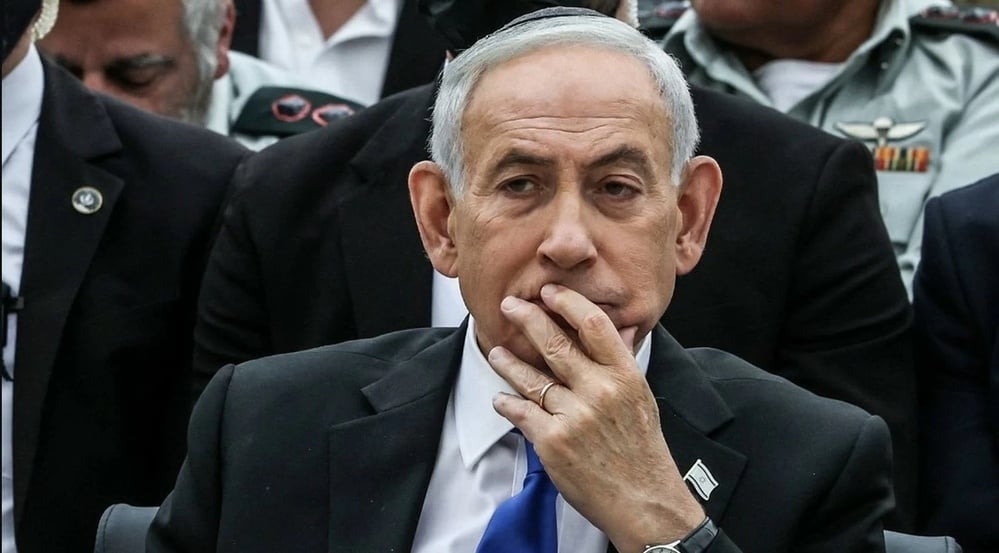

2026 © Helium Trades
Privacy Policy & Disclosure
* Disclaimer: Nothing on this website constitutes investment advice, performance data or any recommendation that any particular security, portfolio of securities, transaction or investment strategy is suitable for any specific person. Helium Trades is not responsible in any way for the accuracy
of any model predictions or price data. Any mention of a particular security and related prediction data is not a recommendation to buy or sell that security. Investments in securities involve the risk of loss. Past performance is no guarantee of future results. Helium Trades is not responsible for any of your investment decisions,
you should consult a financial expert before engaging in any transaction.
Helium Research Assistant

How can I help you today?
Ask any question about this page.


