See whether Helium helps you make better-informed decisions. Try every Pro Trader feature for 30 days. No credit card required.
Try every Pro Trader feature for 30 days. No credit card required.
October 08, 2026 · 0 shares
The coverage adopts a celebratory, team-sympathetic framing of Red Bull Ford Powertrains' first win, presenting the power-unit gamble as a validated underdog triumph while downplaying engineering limitations.
Formula 1 introduced a new 2026 power unit regulation era requiring manufacturers including Red Bull to build their own V6 hybrid engines after Red Bull lost Honda as a supplier and abandoned a Porsche deal.
Automated analysis; not human reviewed. Limitations: The article text includes navigation, related-article links, and author bio fragments mixed with the main body, making precise attribution of some framing elements difficult.
The article text includes navigation, related-article links, and author bio fragments mixed with the main body, making precise attribution of some framing elements difficult.
October 09, 2026 · 0 shares
Framing is celebratory and personality-centered, adopting Red Bull's preferred 'belief over expectation' narrative with little critical scrutiny of internal inconsistencies in the article's factual claims.
Formula One introduced new power unit regulations for the 2026 season, prompting Red Bull to build its own engine in partnership with Ford after previously using engines supplied by other manufacturers.
Automated analysis; not human reviewed.
Limitations: The article contains evident factual errors (Bahrain GP described as in Malaysia, and references to 2026 events as past) that make event dating and location unreliable.
·
55 of 55 available dimensions scored; omitted dimensions are not treated as neutral.
·
Verified supporting quotes for 0 of 55 scored dimensions.
The article contains evident factual errors (Bahrain GP described as in Malaysia, and references to 2026 events as past) that make event dating and location unreliable.
October 09, 2026 · 0 shares
Straightforward, source-attributed motorsport reporting focused on qualifying results with minimal interpretive framing.
Singapore Grand Prix sprint weekend at Marina Bay Street Circuit; Verstappen had never previously won a qualifying session at this track.
Automated analysis; not human reviewed.
Limitations: Potential external context about the yellow flag investigation and FIA software glitch is not fully explained in the article.
·
44 of 55 available dimensions scored; omitted dimensions are not treated as neutral.
·
Verified supporting quotes for 2 of 44 scored dimensions.
Claim: Reporting is measured and stat-driven rather than sensationalized.
“Verstappen eventually went fastest in 1m33.477s, nearly half a second slower than his own FP1 benchmark on the same medium tyre.” · exact text match
Why: The article conveys results through lap times and placings, avoiding emotive or hyperbolic language.
Claim: Tone is neutral, neither optimistic nor pessimistic, focused on factual outcomes.
“Antonelli ended up seventh, 0.693s down on Verstappen, with Lawson, Hadjar and Gasly making up the top 10.” · exact text match
Why: The framing presents performance gaps without evaluative language.
Potential external context about the yellow flag investigation and FIA software glitch is not fully explained in the article.
October 09, 2026 · 0 shares
The report maintains a factually neutral, attribution-heavy sports-news register with no discernible ideological or sensational framing.
The Singapore Grand Prix sprint qualifying followed the Malaysian Grand Prix, where a formation-lap software bug reduced cars to crawling speed in wet conditions; the FIA provides engine settings to all teams.
Automated analysis; not human reviewed.
Limitations: The article text is a scrape that includes navigation links and headline teasers, which were excluded from analysis; the sports report itself is otherwise complete.
·
55 of 55 available dimensions scored; omitted dimensions are not treated as neutral.
·
Verified supporting quotes for 5 of 55 scored dimensions.
Claim: The report covers a contentious qualifying session with drivers complaining about unequal conditions.
“"There was another software issue and we were on the bad end of it, and for whatever reason, the FIA, like in Malaysia, again didn't decide to do sporting equity” · not found in supplied text
Why: The dispute and technical fairness issue add moderate interest.
Claim: The report relies on the FIA statement and official explanations to establish what happened during the glitch.
“The FIA system automatically disables overtake mode when there is a red flag.
A pop-up then appears on the screen asking whether officials want to re-enable it.”
· exact text match
Why: The explanation comes from the governing body's own account rather than independent corroboration, though this is normal sports reporting.
Claim: The report uses multiple named sources, direct quotes, and official statements, with clear attribution.
“The FIA acknowledges that this unfortunate human error had an impact on the performance of certain cars based on the timing of their run and their position around the lap.” · exact text match
Why: Clear sourcing and attribution support high credibility.
Claim: The report notes driver uncertainty about forthcoming qualifying without forecasting outcomes.
“"Qualifying tomorrow is still the main goal and for us the start is always a critical point but at least a positive end to our day."” · not found in supplied text
Why: Minor forward-looking quotes but no publisher speculation.
Claim: The prose shows some repetitive and clipped construction typical of aggregation.
“Red Bull's Max Verstappen beats Mercedes driver George Russell to sprint pole at the Singapore Grand Prix.” · exact text match
Why: Weak indicator only; not enough independent features to classify higher.
Claim: The report attributes disputed claims, quotes the FIA statement, and separates confirmed facts from allegations.
“The FIA said in a statement: "During the first period of sprint qualifying there was a human error in race control unrelated to the timing issue also encountered in SQ1.” · exact text match
Why: Directly quoting the regulator and attributing driver statements indicates fair, transparent internal practice.
Claim: The report presents a coherent technical and competitive account of the session.
“It involved overtake mode - which allows an extra 0.5MJ of energy to be harvested - being switched on and off again in the space of 28 seconds.” · exact text match
Why: Technical detail and structured attribution indicate above-average clarity.
The article text is a scrape that includes navigation links and headline teasers, which were excluded from analysis; the sports report itself is otherwise complete.
October 09, 2026 · 0 shares
The sports report is largely straight news, though it contains a factual error (misstating the Bahrain Grand Prix as held in Malaysia) and relies on unchecked radio allegations about Verstappen.
The Singapore Grand Prix sprint format features a shorter Saturday race, with grid positions set by a separate sprint qualifying session.
Automated analysis; not human reviewed.
Limitations: The text contains a clear factual inconsistency (the 'Bahrain Grand Prix held in Malaysia') that may indicate a copyediting or sourcing issue.
·
52 of 55 available dimensions scored; omitted dimensions are not treated as neutral.
·
Verified supporting quotes for 13 of 52 scored dimensions.
Claim: The report is dominated by factual race results rather than commentary or opinion.
“Max Verstappen lit up the streets of Singapore to pip George Russell to sprint pole.” · exact text match
Why: The sentence states a verifiable qualifying outcome with no evaluative judgment.
Claim: The tone is neutral and event-based, with minimal sensationalism.
“Russell saved his best until last but was unable to topple the four-time world champion, finishing 0.120 seconds adrift as he bumped Ferrari’s Charles Leclerc down the third.” · exact text match
Why: Precise timing and factual description replace emotive language.
Claim: The report is moderately engaging due to race drama and championship context.
“There was a delay to the start of the second part of sprint qualifying after the FIA discovered an issue with the timing system, with some times in the opening session not initially registered.” · exact text match
Why: Unexpected disruptions and title implications add interest.
Claim: The article is descriptive, focusing on what happened rather than what should happen.
“Verstappen, having claimed a first pole of any kind in Singapore, said: “You’re pushing as hard as you think is possible, close to the walls in places.” · exact text match
Why: The quote and surrounding text report events without prescribing action.
Claim: The article is mostly fact-based, with minimal opinion.
“The Dutchman, who claimed his first win of the season at the Bahrain Grand Prix held in Malaysia last weekend, was in imperious form again as his Red Bull showed further signs of progress.” · exact text match
Why: 'Imperious form' and 'further signs of progress' are mildly evaluative, but the overall content is factual.
Claim: The report simplifies some technical and competitive nuance, but remains largely factual.
“Runaway championship leader Kimi Antonelli was off the pace throughout the session and could manage only seventh – 0.693 seconds off the pace to raise further doubts over the upgrade Mercedes brought last weekend.” · exact text match
Why: It attributes performance issues to upgrade doubts without exploring alternative causes, but the claim is framed as a raised doubt rather than a conclusion.
Claim: The article mostly reports statements from authorities such as the FIA without endorsing them.
“The governing body confirmed it was “investigating whether we can proceed with the rest of the session”.” · exact text match
Why: The FIA's statement is reported neutrally, not used as an appeal to authority for a broader argument.
Claim: The tone is professional and mature, not rage-baiting or sensational.
“Thankfully it could, after a 16-minute halt before the crowds gathered under the lights around the Marina Bay Circuit had cars back on track.” · exact text match
Why: The language is calm and descriptive even when reporting disruption.
Claim: The report occasionally makes confident assertions about implications, slightly beyond the evidence given.
“Antonelli has one hand on the title, after team-mate Russell’s power-unit failure in the closing stages last week gave the Italian an 84-point lead with just seven rounds to run.” · exact text match
Why: The phrase 'one hand on the title' asserts a strong conclusion from a points lead, which is opinion-based.
Claim: Credibility is moderate, with factual details and quotes but undermined by the location error.
“The Dutchman, who claimed his first win of the season at the Bahrain Grand Prix held in Malaysia last weekend, was in imperious form again as his Red Bull showed further signs of progress.” · exact text match
Why: Direct quotes and specific data support trust, but a clear factual mistake reduces reliability.
Claim: The article is informational, with only mild promotional framing of the sport.
“Max Verstappen continues fine form by taking Singapore sprint pole.” · exact text match
Why: The headline is factual, not advertorial; any promotional tone is minimal and typical for sports coverage.
Claim: The report is largely non-speculative, with only minor forward-looking statements.
“Verstappen will hope to continue his step forward with sprint victory on Saturday.” · not found in supplied text
Why: The mention of hope is a light speculative element, but the bulk of the article reports past events.
Claim: The report is generally fair, though it contains a factual inconsistency about the Bahrain Grand Prix location.
“The Dutchman, who claimed his first win of the season at the Bahrain Grand Prix held in Malaysia last weekend, was in imperious form again as his Red Bull showed further signs of progress.” · exact text match
Why: A clear factual error undermines accuracy despite otherwise straightforward reporting.
Claim: The article shows average intelligence with technical details and quotes, but the factual error lowers analytical quality.
“Further to the timing issue, the FIA revealed after sprint qualifying that during the first session a “human error” resulted in overtake mode on the cars being disabled following the red flag, before being reactivated for 27 seconds.” · exact text match
Why: The inclusion of precise regulatory details indicates competence, but the Bahrain/Malaysia error reduces the score.
The text contains a clear factual inconsistency (the 'Bahrain Grand Prix held in Malaysia') that may indicate a copyediting or sourcing issue.
October 09, 2026 · 0 shares
Straightforward motorsport reporting that lays out the yellow-flag incident and its unresolved question, with restrained technical sourcing and few loaded words.
Singapore Grand Prix sprint qualifying determined the grid for the sprint race; yellow flags require drivers to slow and not overtake, and stewards can impose grid penalties for breaches.
Automated analysis; not human reviewed.
Limitations: The supplied article text includes several headline and promo fragments from the same site, which slightly inflates spam/advertorial-like signals; the core report is otherwise clear.
·
55 of 55 available dimensions scored; omitted dimensions are not treated as neutral.
·
Verified supporting quotes for 18 of 55 scored dimensions.
Claim: The article relies on reported facts, quotes, and procedural outcomes rather than authorial opinion or subjective interpretation.
“Verstappen’s race engineer Gianpiero Lambiase told him “you’re in yellows” then reiterated, “single yellows”.” · exact text match
Why: Attribution to the race engineer and direct quotations keep the account objective rather than subjective.
Claim: Coverage is framed neutrally around a potential sporting penalty, without hyperbolic or sensational language.
“If Verstappen’s found guilty, he’s highly likely to lose his sprint pole, with a grid penalty the usual punishment for such offences.” · exact text match
Why: The consequence is stated as a procedural likelihood rather than dramatized or sensationalized.
Claim: The piece concerns a live sporting dispute with a potential penalty affecting the sprint grid.
“Verstappen sprint pole in jeopardy over Hamilton yellow flag incident.” · exact text match
Why: A possible penalty to a top driver over a disputed overtake is inherently newsworthy in motorsport.
Claim: The report describes the incident and likely process without prescribing what should be done.
“That will be decided in a stewards' hearing with Verstappen and Hamilton, which will take place 10.15pm local time in Singapore.” · exact text match
Why: The outcome is described as a scheduled decision by the stewards, not as a recommendation by the publisher.
Claim: The article is overwhelmingly factual, with little authorial opinion.
“Verstappen has been summoned to the stewards at Formula 1’s Singapore Grand Prix for potentially overtaking Lewis Hamilton under yellow flags during sprint qualifying.” · exact text match
Why: The framing is explanatory and attributional rather than evaluative.
Claim: The issue is explained with some technical nuance rather than flatly reduced to a simple verdict.
“The off-board view certainly shows they’re out when Verstappen is alongside Hamilton's Ferrari, but the key question will be if they were present before Verstappen passed him.” · exact text match
Why: It preserves the timing distinction that determines whether the overtake was under yellow flags.
Claim: It cites procedural authority and race control context rather than relying on impersonal assertions.
“That will be decided in a stewards' hearing with Verstappen and Hamilton, which will take place 10.15pm local time in Singapore.” · exact text match
Why: The decision is properly attributed to the stewards, but that is contextual rather than a strong appeal to authority.
Claim: The report is measured, leaving the likely penalty conditional on a guilty finding.
“If Verstappen’s found guilty, he’s highly likely to lose his sprint pole, with a grid penalty the usual punishment for such offences.” · exact text match
Why: Certainty is limited by an explicit conditional and standard-practice language.
Claim: The page includes repetitive promotional headline fragments and a house ad, though the main report is substantive.
“The Race is the world’s leading independent media company covering F1 and MotoGP, connecting global audiences with the racing, business and culture of motorsport.” · exact text match
Why: A self-promotional publisher blurb and repeated headline listings add advertorial-like fluff around the reporting.
Claim: The article uses named individuals, direct quotes, specific times and locations, and clear attribution to hearings and technical limitations.
“The incident took place in SQ1 when Sergio Perez nosed his Cadillac into the barriers at the Turn 5 right-hander, damaging his front wing.” · exact text match
Why: Specific, attributable detail and clear sourcing support a credible report.
Claim: The report presents disputed events, technical limitations, and the stewards' hearing in a structured, evidence-led way.
“The off-board view certainly shows they’re out when Verstappen is alongside Hamilton's Ferrari, but the key question will be if they were present before Verstappen passed him.” · exact text match
Why: This quote separates observable evidence from the unresolved key question, showing rational, non-promotional handling of the facts.
Claim: The account is technical and procedural, not superstitious.
“Technical issues mean onboard cameras weren't available to determine when exactly the yellow flags were deployed.” · exact text match
Why: The reference to technical evidence and limitations is empirical rather than superstitious.
Claim: It includes some forward-looking likelihood about penalty but is mostly grounded in reported events.
“If Verstappen’s found guilty, he’s highly likely to lose his sprint pole, with a grid penalty the usual punishment for such offences.” · exact text match
Why: The future consequence is explicitly conditional and framed by precedent rather than presented as fact.
Claim: There is minimal observable manipulation; the report avoids false urgency and names both sides of the unresolved question.
“The red flag is then thrown and Verstappen continues, “I think I passed him before the yellow, but I just wanted to be safe”.” · exact text match
Why: Including the driver's own radio explanation without endorsing or attacking it supports a non-manipulative presentation.
Claim: The article labels unknowns, attributes radio messages and technical limitations, and avoids asserting a verdict.
“Technical issues mean onboard cameras weren't available to determine when exactly the yellow flags were deployed.” · exact text match
Why: Explicitly noting the missing onboard evidence is a fairness and honesty signal.
Claim: The article handles technical and procedural nuances clearly and with appropriate context.
“Verstappen caught and passed Hamilton between Turn 7 and Turn 8, where there were single-waved yellows deployed for Perez’s debris.” · exact text match
Why: Precise circuit locations and flag conditions demonstrate knowledgeable, context-rich reporting.
Claim: The report is truth-seeking, distinguishing what is known from what remains undetermined.
“The off-board view certainly shows they’re out when Verstappen is alongside Hamilton's Ferrari, but the key question will be if they were present before Verstappen passed him.” · exact text match
Why: It does not overstate a conclusion and identifies the actual factual dispute.
Claim: No incompatible standards are applied to comparable cases.
“If Verstappen’s found guilty, he’s highly likely to lose his sprint pole, with a grid penalty the usual punishment for such offences.” · exact text match
Why: The article states a uniform penalty expectation rather than treating comparable incidents differently.
The supplied article text includes several headline and promo fragments from the same site, which slightly inflates spam/advertorial-like signals; the core report is otherwise clear.
October 09, 2026 · 0 shares
Straightforward motorsport reporting that lays out the yellow-flag incident and its unresolved question, with restrained technical sourcing and few loaded words.
Singapore Grand Prix sprint qualifying determined the grid for the sprint race; yellow flags require drivers to slow and not overtake, and stewards can impose grid penalties for breaches.
Automated analysis; not human reviewed.
Limitations: The supplied article text includes several headline and promo fragments from the same site, which slightly inflates spam/advertorial-like signals; the core report is otherwise clear.
·
55 of 55 available dimensions scored; omitted dimensions are not treated as neutral.
·
Verified supporting quotes for 18 of 55 scored dimensions.
Claim: The article relies on reported facts, quotes, and procedural outcomes rather than authorial opinion or subjective interpretation.
“Verstappen’s race engineer Gianpiero Lambiase told him “you’re in yellows” then reiterated, “single yellows”.” · exact text match
Why: Attribution to the race engineer and direct quotations keep the account objective rather than subjective.
Claim: Coverage is framed neutrally around a potential sporting penalty, without hyperbolic or sensational language.
“If Verstappen’s found guilty, he’s highly likely to lose his sprint pole, with a grid penalty the usual punishment for such offences.” · exact text match
Why: The consequence is stated as a procedural likelihood rather than dramatized or sensationalized.
Claim: The piece concerns a live sporting dispute with a potential penalty affecting the sprint grid.
“Verstappen sprint pole in jeopardy over Hamilton yellow flag incident.” · exact text match
Why: A possible penalty to a top driver over a disputed overtake is inherently newsworthy in motorsport.
Claim: The report describes the incident and likely process without prescribing what should be done.
“That will be decided in a stewards' hearing with Verstappen and Hamilton, which will take place 10.15pm local time in Singapore.” · exact text match
Why: The outcome is described as a scheduled decision by the stewards, not as a recommendation by the publisher.
Claim: The article is overwhelmingly factual, with little authorial opinion.
“Verstappen has been summoned to the stewards at Formula 1’s Singapore Grand Prix for potentially overtaking Lewis Hamilton under yellow flags during sprint qualifying.” · exact text match
Why: The framing is explanatory and attributional rather than evaluative.
Claim: The issue is explained with some technical nuance rather than flatly reduced to a simple verdict.
“The off-board view certainly shows they’re out when Verstappen is alongside Hamilton's Ferrari, but the key question will be if they were present before Verstappen passed him.” · exact text match
Why: It preserves the timing distinction that determines whether the overtake was under yellow flags.
Claim: It cites procedural authority and race control context rather than relying on impersonal assertions.
“That will be decided in a stewards' hearing with Verstappen and Hamilton, which will take place 10.15pm local time in Singapore.” · exact text match
Why: The decision is properly attributed to the stewards, but that is contextual rather than a strong appeal to authority.
Claim: The report is measured, leaving the likely penalty conditional on a guilty finding.
“If Verstappen’s found guilty, he’s highly likely to lose his sprint pole, with a grid penalty the usual punishment for such offences.” · exact text match
Why: Certainty is limited by an explicit conditional and standard-practice language.
Claim: The page includes repetitive promotional headline fragments and a house ad, though the main report is substantive.
“The Race is the world’s leading independent media company covering F1 and MotoGP, connecting global audiences with the racing, business and culture of motorsport.” · exact text match
Why: A self-promotional publisher blurb and repeated headline listings add advertorial-like fluff around the reporting.
Claim: The article uses named individuals, direct quotes, specific times and locations, and clear attribution to hearings and technical limitations.
“The incident took place in SQ1 when Sergio Perez nosed his Cadillac into the barriers at the Turn 5 right-hander, damaging his front wing.” · exact text match
Why: Specific, attributable detail and clear sourcing support a credible report.
Claim: The report presents disputed events, technical limitations, and the stewards' hearing in a structured, evidence-led way.
“The off-board view certainly shows they’re out when Verstappen is alongside Hamilton's Ferrari, but the key question will be if they were present before Verstappen passed him.” · exact text match
Why: This quote separates observable evidence from the unresolved key question, showing rational, non-promotional handling of the facts.
Claim: The account is technical and procedural, not superstitious.
“Technical issues mean onboard cameras weren't available to determine when exactly the yellow flags were deployed.” · exact text match
Why: The reference to technical evidence and limitations is empirical rather than superstitious.
Claim: It includes some forward-looking likelihood about penalty but is mostly grounded in reported events.
“If Verstappen’s found guilty, he’s highly likely to lose his sprint pole, with a grid penalty the usual punishment for such offences.” · exact text match
Why: The future consequence is explicitly conditional and framed by precedent rather than presented as fact.
Claim: There is minimal observable manipulation; the report avoids false urgency and names both sides of the unresolved question.
“The red flag is then thrown and Verstappen continues, “I think I passed him before the yellow, but I just wanted to be safe”.” · exact text match
Why: Including the driver's own radio explanation without endorsing or attacking it supports a non-manipulative presentation.
Claim: The article labels unknowns, attributes radio messages and technical limitations, and avoids asserting a verdict.
“Technical issues mean onboard cameras weren't available to determine when exactly the yellow flags were deployed.” · exact text match
Why: Explicitly noting the missing onboard evidence is a fairness and honesty signal.
Claim: The article handles technical and procedural nuances clearly and with appropriate context.
“Verstappen caught and passed Hamilton between Turn 7 and Turn 8, where there were single-waved yellows deployed for Perez’s debris.” · exact text match
Why: Precise circuit locations and flag conditions demonstrate knowledgeable, context-rich reporting.
Claim: The report is truth-seeking, distinguishing what is known from what remains undetermined.
“The off-board view certainly shows they’re out when Verstappen is alongside Hamilton's Ferrari, but the key question will be if they were present before Verstappen passed him.” · exact text match
Why: It does not overstate a conclusion and identifies the actual factual dispute.
Claim: No incompatible standards are applied to comparable cases.
“If Verstappen’s found guilty, he’s highly likely to lose his sprint pole, with a grid penalty the usual punishment for such offences.” · exact text match
Why: The article states a uniform penalty expectation rather than treating comparable incidents differently.
The supplied article text includes several headline and promo fragments from the same site, which slightly inflates spam/advertorial-like signals; the core report is otherwise clear.
October 09, 2026 · 0 shares
The report is a straightforward, evidence-based account of an FIA stewards' decision, quoting the official ruling at length.
SQ1 is the first segment of Formula 1 sprint qualifying; yellow flags require drivers to slow and not overtake, and the incident triggered a red flag.
Automated analysis; not human reviewed.
·
54 of 55 available dimensions scored; omitted dimensions are not treated as neutral.
·
Verified supporting quotes for 9 of 54 scored dimensions.
Claim: The article relies on the official stewards' verdict and direct quotations, presenting a factual account of the incident and decision.
“Max Verstappen has been cleared of any wrongdoing regarding his potential yellow-flag breach in sprint qualifying at Formula 1's Singapore Grand Prix.” · verified after text normalization
Why: The framing is factual and sourced to the official decision, with no authorial opinion.
Claim: The article avoids sensational language, presenting the stewards' verdict and rationale in a measured tone.
“Verstappen will therefore keep pole position for the sprint race at Marina Bay Street Circuit, with no grid penalty or any other sanction.” · exact text match
Why: The reporting is factual and free of sensational or inflammatory language.
Claim: The article describes the stewards' decision and reasoning without prescribing any course of action.
“Verstappen was reported to have overtaken Lewis Hamilton in a yellow-flag zone in SQ1, after Sergio Perez crashed in Turn 5 and ended up losing his front wing on the racing line.” · exact text match
Why: The article is purely descriptive of events and the official ruling.
Claim: The article relies heavily on the authority of the FIA stewards' statement to explain the decision.
“The Stewards determined that the Driver of Car 3 breached the yellow flag regulation by overtaking Car 44. However, the Stewards were satisfied that the overtake was an unfortunate consequence of the significant closing speed differential and, in these circumstances, determined not to impose a penalty.” · exact text match
Why: The article's core is the steward's official authority and ruling, so appeal to authority is present but appropriate for sports officiating coverage.
Claim: The article presents the established FIA stewards' decision as authoritative and does not challenge it, showing a mild pro-establishment stance.
“FIA stewards believe Verstappen to have sufficiently slowed down for the yellow flag by fully lifting off the throttle; they have deemed the speed differential between the Red Bull and the Ferrari to have been too substantial for the Dutchman to brake safely, with Hamilton 70km/h slower.” · exact text match
Why: The article accepts the official verdict without questioning it, which is standard for sports reporting but reflects a pro-establishment tilt.
Claim: The article provides direct quotations from the official stewards' statement and cites specific evidence reviewed, indicating high credibility.
“The Stewards heard from the driver of Car 3 (Max Verstappen), the driver of Car 44 (Lewis Hamilton), team representatives and reviewed positioning/marshalling system data, video, timing, telemetry, team radio and in-car video evidence.” · exact text match
Why: Transparent sourcing and direct quotation of the official ruling support high credibility.
Claim: The article focuses on the official FIA stewards' evidence-based ruling, quoting telemetry and video data to explain the decision.
“The Stewards heard from the driver of Car 3 (Max Verstappen), the driver of Car 44 (Lewis Hamilton), team representatives and reviewed positioning/marshalling system data, video, timing, telemetry, team radio and in-car video evidence.” · exact text match
Why: The article centers on documented evidence and official reasoning rather than emotional or speculative framing.
Claim: The article quotes the full stewards' statement and attributes all findings to the official ruling, demonstrating high integrity.
“The Stewards were satisfied that the Driver of Car 3 reacted appropriately to the yellow flag by lifting off throttle and reducing speed.” · exact text match
Why: Attribution is clear and the official statement is quoted at length, supporting high integrity.
Claim: The article presents a clear, detailed account of the incident and decision with appropriate context.
“The Driver of Car 3 explained that he was on throttle exiting turn 7 and then saw the yellow flag and lifted.
This was confirmed by telemetry.
Within approximately 40 metres of entering the yellow flag sector, the Driver of Car 3 had lifted fully off throttle.”
· exact text match
Why: The article conveys technical details and official reasoning intelligently.
October 10, 2026 · 0 shares
Neutral, event-focused F1 race reporting with mild dramatic phrasing and attributed driver quotes, rather than ideological or advocacy framing.
Formula One race weekends can include a shorter sprint race before the main Grand Prix, and sprint results contribute championship points.
Automated analysis; not human reviewed.
Limitations: No author byline is supplied, and the text includes duplicated headline fragments and an empty string element; analysis is limited to the substantive F1 race-report content.
·
3 of 55 available dimensions scored; omitted dimensions are not treated as neutral.
·
Verified supporting quotes for 3 of 3 scored dimensions.
Claim: The report is predominantly objective but includes some subjective evaluative phrasing.
“There was more disappointment for Australian driver Oscar Piastri” · exact text match
“badly misjudged it” · exact text match
Why: Subjective descriptors frame the race outcome but do not dominate the factual reporting.
Claim: The report uses mildly dramatic language while remaining largely factual.
“rain-marred Singapore Grand Prix sprint race” · exact text match
“In a chaotic race on Saturday” · exact text match
Why: Words like rain-marred and chaotic add mild sensational coloring to an otherwise factual race report.
Claim: The report shows credible sourcing through attributed radio messages and driver comments alongside specific race details.
“he told Mercedes over the radio” · exact text match
“Verstappen said Red Bull will need to work on its "horrendous" starts” · exact text match
Why: Direct attribution and specific race details support trustworthiness.
No author byline is supplied, and the text includes duplicated headline fragments and an empty string element; analysis is limited to the substantive F1 race-report content.
Dramatic race-action framing and Sky Sports F1 promotional cues predominate, while the account remains largely factual, quote-attributed sports reporting.
Automated analysis; not human reviewed.
Limitations: The supplied text includes video-player and subscription page chrome; analysis focused on the substantive race-report paragraphs.
·
7 of 55 available dimensions scored; omitted dimensions are not treated as neutral.
·
Verified supporting quotes for 7 of 7 scored dimensions.
Claim: Mostly objective race reporting is lightly colored by dramatic, evaluative framing.
“George Russell dramatically crashed out from the lead.” · exact text match
Why: The adverb 'dramatically' adds subjective emphasis to an otherwise factual crash report.
Claim: The report uses dramatic, chaotic race-action language.
“Amidst the chaos, Racing Bulls' Liam Lawson claimed an impressive fifth” · exact text match
“George Russell dramatically crashed out from the lead.” · exact text match
Why: Words like 'chaos' and 'dramatically' sensationalize the race action.
Claim: The report is predominantly descriptive of race events rather than prescriptive.
“Max Verstappen won a rain-affected Singapore Grand Prix Sprint after George Russell dramatically crashed out from the lead.” · exact text match
Why: The core sentence states results and events without policy or normative prescriptions.
Claim: Some evaluative opinions are embedded in the race report.
“The crash felt like the final straw in a torrid week for Russell” · exact text match
“Racing Bulls' Liam Lawson claimed an impressive fifth” · exact text match
Why: These are evaluative characterizations beyond neutral race facts.
Claim: The report is substantially credible in visible sourcing, attribution, and factual specificity.
“Russell told Sky Sports F1: "A miscalculation.
I came through the corner, had more battery deployment than I thought, pushed me a bit wider than I hoped and I went on the white line.
Silly mistake, big consequences.
A shame."”
· exact text match
Why: Quotes are attributed to Sky Sports F1 and race outcomes are listed specifically.
Claim: The report's reasoning is grounded in documented race events and attributed quotes rather than irrational speculation.
“Russell told Sky Sports F1: "A miscalculation.
I came through the corner, had more battery deployment than I thought, pushed me a bit wider than I hoped and I went on the white line.
Silly mistake, big consequences.
A shame."”
· exact text match
Why: The article relies on attributed driver explanation and specific race chronology, not irrational inference.
Claim: The report includes promotional cues for Sky Sports F1 broadcast coverage.
“watch Qualifying later on Saturday at 2.30pm ahead of the Singapore Grand Prix itself at 1pm on Sunday, live on Sky Sports F1” · exact text match
Why: The text directs readers to Sky's live coverage, a promotional element.
The supplied text includes video-player and subscription page chrome; analysis focused on the substantive race-report paragraphs.
October 09, 2026 · 0 shares
The report maintains a factually neutral, attribution-heavy sports-news register with no discernible ideological or sensational framing.
The Singapore Grand Prix sprint qualifying followed the Malaysian Grand Prix, where a formation-lap software bug reduced cars to crawling speed in wet conditions; the FIA provides engine settings to all teams.
Automated analysis; not human reviewed.
Limitations: The article text is a scrape that includes navigation links and headline teasers, which were excluded from analysis; the sports report itself is otherwise complete.
·
55 of 55 available dimensions scored; omitted dimensions are not treated as neutral.
·
Verified supporting quotes for 5 of 55 scored dimensions.
Claim: The report covers a contentious qualifying session with drivers complaining about unequal conditions.
“"There was another software issue and we were on the bad end of it, and for whatever reason, the FIA, like in Malaysia, again didn't decide to do sporting equity” · not found in supplied text
Why: The dispute and technical fairness issue add moderate interest.
Claim: The report relies on the FIA statement and official explanations to establish what happened during the glitch.
“The FIA system automatically disables overtake mode when there is a red flag.
A pop-up then appears on the screen asking whether officials want to re-enable it.”
· exact text match
Why: The explanation comes from the governing body's own account rather than independent corroboration, though this is normal sports reporting.
Claim: The report uses multiple named sources, direct quotes, and official statements, with clear attribution.
“The FIA acknowledges that this unfortunate human error had an impact on the performance of certain cars based on the timing of their run and their position around the lap.” · exact text match
Why: Clear sourcing and attribution support high credibility.
Claim: The report notes driver uncertainty about forthcoming qualifying without forecasting outcomes.
“"Qualifying tomorrow is still the main goal and for us the start is always a critical point but at least a positive end to our day."” · not found in supplied text
Why: Minor forward-looking quotes but no publisher speculation.
Claim: The prose shows some repetitive and clipped construction typical of aggregation.
“Red Bull's Max Verstappen beats Mercedes driver George Russell to sprint pole at the Singapore Grand Prix.” · exact text match
Why: Weak indicator only; not enough independent features to classify higher.
Claim: The report attributes disputed claims, quotes the FIA statement, and separates confirmed facts from allegations.
“The FIA said in a statement: "During the first period of sprint qualifying there was a human error in race control unrelated to the timing issue also encountered in SQ1.” · exact text match
Why: Directly quoting the regulator and attributing driver statements indicates fair, transparent internal practice.
Claim: The report presents a coherent technical and competitive account of the session.
“It involved overtake mode - which allows an extra 0.5MJ of energy to be harvested - being switched on and off again in the space of 28 seconds.” · exact text match
Why: Technical detail and structured attribution indicate above-average clarity.
The article text is a scrape that includes navigation links and headline teasers, which were excluded from analysis; the sports report itself is otherwise complete.
October 10, 2026 · 0 shares
Neutral, event-focused F1 race reporting with mild dramatic phrasing and attributed driver quotes, rather than ideological or advocacy framing.
Formula One race weekends can include a shorter sprint race before the main Grand Prix, and sprint results contribute championship points.
Automated analysis; not human reviewed.
Limitations: No author byline is supplied, and the text includes duplicated headline fragments and an empty string element; analysis is limited to the substantive F1 race-report content.
·
3 of 55 available dimensions scored; omitted dimensions are not treated as neutral.
·
Verified supporting quotes for 3 of 3 scored dimensions.
Claim: The report is predominantly objective but includes some subjective evaluative phrasing.
“There was more disappointment for Australian driver Oscar Piastri” · exact text match
“badly misjudged it” · exact text match
Why: Subjective descriptors frame the race outcome but do not dominate the factual reporting.
Claim: The report uses mildly dramatic language while remaining largely factual.
“rain-marred Singapore Grand Prix sprint race” · exact text match
“In a chaotic race on Saturday” · exact text match
Why: Words like rain-marred and chaotic add mild sensational coloring to an otherwise factual race report.
Claim: The report shows credible sourcing through attributed radio messages and driver comments alongside specific race details.
“he told Mercedes over the radio” · exact text match
“Verstappen said Red Bull will need to work on its "horrendous" starts” · exact text match
Why: Direct attribution and specific race details support trustworthiness.
No author byline is supplied, and the text includes duplicated headline fragments and an empty string element; analysis is limited to the substantive F1 race-report content.
October 09, 2026 · 0 shares
Straightforward, source-attributed motorsport reporting focused on qualifying results with minimal interpretive framing.
Singapore Grand Prix sprint weekend at Marina Bay Street Circuit; Verstappen had never previously won a qualifying session at this track.
Automated analysis; not human reviewed. Limitations: Potential external context about the yellow flag investigation and FIA software glitch is not fully explained in the article. · 44 of 55 available dimensions scored; omitted dimensions are not treated as neutral. · Verified supporting quotes for 2 of 44 scored dimensions.
Claim: Reporting is measured and stat-driven rather than sensationalized.
“Verstappen eventually went fastest in 1m33.477s, nearly half a second slower than his own FP1 benchmark on the same medium tyre.” · exact text match
Why: The article conveys results through lap times and placings, avoiding emotive or hyperbolic language.
Claim: Tone is neutral, neither optimistic nor pessimistic, focused on factual outcomes.
“Antonelli ended up seventh, 0.693s down on Verstappen, with Lawson, Hadjar and Gasly making up the top 10.” · exact text match
Why: The framing presents performance gaps without evaluative language.
Potential external context about the yellow flag investigation and FIA software glitch is not fully explained in the article.
October 09, 2026 · 0 shares
The report maintains a factually neutral, attribution-heavy sports-news register with no discernible ideological or sensational framing.
The Singapore Grand Prix sprint qualifying followed the Malaysian Grand Prix, where a formation-lap software bug reduced cars to crawling speed in wet conditions; the FIA provides engine settings to all teams.
Automated analysis; not human reviewed. Limitations: The article text is a scrape that includes navigation links and headline teasers, which were excluded from analysis; the sports report itself is otherwise complete. · 55 of 55 available dimensions scored; omitted dimensions are not treated as neutral. · Verified supporting quotes for 5 of 55 scored dimensions.
Claim: The report covers a contentious qualifying session with drivers complaining about unequal conditions.
“"There was another software issue and we were on the bad end of it, and for whatever reason, the FIA, like in Malaysia, again didn't decide to do sporting equity” · not found in supplied text
Why: The dispute and technical fairness issue add moderate interest.
Claim: The report relies on the FIA statement and official explanations to establish what happened during the glitch.
“The FIA system automatically disables overtake mode when there is a red flag. A pop-up then appears on the screen asking whether officials want to re-enable it.” · exact text match
Why: The explanation comes from the governing body's own account rather than independent corroboration, though this is normal sports reporting.
Claim: The report uses multiple named sources, direct quotes, and official statements, with clear attribution.
“The FIA acknowledges that this unfortunate human error had an impact on the performance of certain cars based on the timing of their run and their position around the lap.” · exact text match
Why: Clear sourcing and attribution support high credibility.
Claim: The report notes driver uncertainty about forthcoming qualifying without forecasting outcomes.
“"Qualifying tomorrow is still the main goal and for us the start is always a critical point but at least a positive end to our day."” · not found in supplied text
Why: Minor forward-looking quotes but no publisher speculation.
Claim: The prose shows some repetitive and clipped construction typical of aggregation.
“Red Bull's Max Verstappen beats Mercedes driver George Russell to sprint pole at the Singapore Grand Prix.” · exact text match
Why: Weak indicator only; not enough independent features to classify higher.
Claim: The report attributes disputed claims, quotes the FIA statement, and separates confirmed facts from allegations.
“The FIA said in a statement: "During the first period of sprint qualifying there was a human error in race control unrelated to the timing issue also encountered in SQ1.” · exact text match
Why: Directly quoting the regulator and attributing driver statements indicates fair, transparent internal practice.
Claim: The report presents a coherent technical and competitive account of the session.
“It involved overtake mode - which allows an extra 0.5MJ of energy to be harvested - being switched on and off again in the space of 28 seconds.” · exact text match
Why: Technical detail and structured attribution indicate above-average clarity.
The article text is a scrape that includes navigation links and headline teasers, which were excluded from analysis; the sports report itself is otherwise complete.
October 09, 2026 · 0 shares
The report is a straightforward, evidence-based account of an FIA stewards' decision, quoting the official ruling at length.
SQ1 is the first segment of Formula 1 sprint qualifying; yellow flags require drivers to slow and not overtake, and the incident triggered a red flag.
Automated analysis; not human reviewed. · 54 of 55 available dimensions scored; omitted dimensions are not treated as neutral. · Verified supporting quotes for 9 of 54 scored dimensions.
Claim: The article relies on the official stewards' verdict and direct quotations, presenting a factual account of the incident and decision.
“Max Verstappen has been cleared of any wrongdoing regarding his potential yellow-flag breach in sprint qualifying at Formula 1's Singapore Grand Prix.” · verified after text normalization
Why: The framing is factual and sourced to the official decision, with no authorial opinion.
Claim: The article avoids sensational language, presenting the stewards' verdict and rationale in a measured tone.
“Verstappen will therefore keep pole position for the sprint race at Marina Bay Street Circuit, with no grid penalty or any other sanction.” · exact text match
Why: The reporting is factual and free of sensational or inflammatory language.
Claim: The article describes the stewards' decision and reasoning without prescribing any course of action.
“Verstappen was reported to have overtaken Lewis Hamilton in a yellow-flag zone in SQ1, after Sergio Perez crashed in Turn 5 and ended up losing his front wing on the racing line.” · exact text match
Why: The article is purely descriptive of events and the official ruling.
Claim: The article relies heavily on the authority of the FIA stewards' statement to explain the decision.
“The Stewards determined that the Driver of Car 3 breached the yellow flag regulation by overtaking Car 44. However, the Stewards were satisfied that the overtake was an unfortunate consequence of the significant closing speed differential and, in these circumstances, determined not to impose a penalty.” · exact text match
Why: The article's core is the steward's official authority and ruling, so appeal to authority is present but appropriate for sports officiating coverage.
Claim: The article presents the established FIA stewards' decision as authoritative and does not challenge it, showing a mild pro-establishment stance.
“FIA stewards believe Verstappen to have sufficiently slowed down for the yellow flag by fully lifting off the throttle; they have deemed the speed differential between the Red Bull and the Ferrari to have been too substantial for the Dutchman to brake safely, with Hamilton 70km/h slower.” · exact text match
Why: The article accepts the official verdict without questioning it, which is standard for sports reporting but reflects a pro-establishment tilt.
Claim: The article provides direct quotations from the official stewards' statement and cites specific evidence reviewed, indicating high credibility.
“The Stewards heard from the driver of Car 3 (Max Verstappen), the driver of Car 44 (Lewis Hamilton), team representatives and reviewed positioning/marshalling system data, video, timing, telemetry, team radio and in-car video evidence.” · exact text match
Why: Transparent sourcing and direct quotation of the official ruling support high credibility.
Claim: The article focuses on the official FIA stewards' evidence-based ruling, quoting telemetry and video data to explain the decision.
“The Stewards heard from the driver of Car 3 (Max Verstappen), the driver of Car 44 (Lewis Hamilton), team representatives and reviewed positioning/marshalling system data, video, timing, telemetry, team radio and in-car video evidence.” · exact text match
Why: The article centers on documented evidence and official reasoning rather than emotional or speculative framing.
Claim: The article quotes the full stewards' statement and attributes all findings to the official ruling, demonstrating high integrity.
“The Stewards were satisfied that the Driver of Car 3 reacted appropriately to the yellow flag by lifting off throttle and reducing speed.” · exact text match
Why: Attribution is clear and the official statement is quoted at length, supporting high integrity.
Claim: The article presents a clear, detailed account of the incident and decision with appropriate context.
“The Driver of Car 3 explained that he was on throttle exiting turn 7 and then saw the yellow flag and lifted. This was confirmed by telemetry. Within approximately 40 metres of entering the yellow flag sector, the Driver of Car 3 had lifted fully off throttle.” · exact text match
Why: The article conveys technical details and official reasoning intelligently.
October 10, 2026 · 0 shares
Neutral, event-focused F1 race reporting with mild dramatic phrasing and attributed driver quotes, rather than ideological or advocacy framing.
Formula One race weekends can include a shorter sprint race before the main Grand Prix, and sprint results contribute championship points.
Automated analysis; not human reviewed. Limitations: No author byline is supplied, and the text includes duplicated headline fragments and an empty string element; analysis is limited to the substantive F1 race-report content. · 3 of 55 available dimensions scored; omitted dimensions are not treated as neutral. · Verified supporting quotes for 3 of 3 scored dimensions.
Claim: The report is predominantly objective but includes some subjective evaluative phrasing.
“There was more disappointment for Australian driver Oscar Piastri” · exact text match
“badly misjudged it” · exact text match
Why: Subjective descriptors frame the race outcome but do not dominate the factual reporting.
Claim: The report uses mildly dramatic language while remaining largely factual.
“rain-marred Singapore Grand Prix sprint race” · exact text match
“In a chaotic race on Saturday” · exact text match
Why: Words like rain-marred and chaotic add mild sensational coloring to an otherwise factual race report.
Claim: The report shows credible sourcing through attributed radio messages and driver comments alongside specific race details.
“he told Mercedes over the radio” · exact text match
“Verstappen said Red Bull will need to work on its "horrendous" starts” · exact text match
Why: Direct attribution and specific race details support trustworthiness.
No author byline is supplied, and the text includes duplicated headline fragments and an empty string element; analysis is limited to the substantive F1 race-report content.
Dramatic race-action framing and Sky Sports F1 promotional cues predominate, while the account remains largely factual, quote-attributed sports reporting.
Automated analysis; not human reviewed. Limitations: The supplied text includes video-player and subscription page chrome; analysis focused on the substantive race-report paragraphs. · 7 of 55 available dimensions scored; omitted dimensions are not treated as neutral. · Verified supporting quotes for 7 of 7 scored dimensions.
Claim: Mostly objective race reporting is lightly colored by dramatic, evaluative framing.
“George Russell dramatically crashed out from the lead.” · exact text match
Why: The adverb 'dramatically' adds subjective emphasis to an otherwise factual crash report.
Claim: The report uses dramatic, chaotic race-action language.
“Amidst the chaos, Racing Bulls' Liam Lawson claimed an impressive fifth” · exact text match
“George Russell dramatically crashed out from the lead.” · exact text match
Why: Words like 'chaos' and 'dramatically' sensationalize the race action.
Claim: The report is predominantly descriptive of race events rather than prescriptive.
“Max Verstappen won a rain-affected Singapore Grand Prix Sprint after George Russell dramatically crashed out from the lead.” · exact text match
Why: The core sentence states results and events without policy or normative prescriptions.
Claim: Some evaluative opinions are embedded in the race report.
“The crash felt like the final straw in a torrid week for Russell” · exact text match
“Racing Bulls' Liam Lawson claimed an impressive fifth” · exact text match
Why: These are evaluative characterizations beyond neutral race facts.
Claim: The report is substantially credible in visible sourcing, attribution, and factual specificity.
“Russell told Sky Sports F1: "A miscalculation. I came through the corner, had more battery deployment than I thought, pushed me a bit wider than I hoped and I went on the white line. Silly mistake, big consequences. A shame."” · exact text match
Why: Quotes are attributed to Sky Sports F1 and race outcomes are listed specifically.
Claim: The report's reasoning is grounded in documented race events and attributed quotes rather than irrational speculation.
“Russell told Sky Sports F1: "A miscalculation. I came through the corner, had more battery deployment than I thought, pushed me a bit wider than I hoped and I went on the white line. Silly mistake, big consequences. A shame."” · exact text match
Why: The article relies on attributed driver explanation and specific race chronology, not irrational inference.
Claim: The report includes promotional cues for Sky Sports F1 broadcast coverage.
“watch Qualifying later on Saturday at 2.30pm ahead of the Singapore Grand Prix itself at 1pm on Sunday, live on Sky Sports F1” · exact text match
Why: The text directs readers to Sky's live coverage, a promotional element.
The supplied text includes video-player and subscription page chrome; analysis focused on the substantive race-report paragraphs.
Red Bull / Verstappen camp
October 09, 2026 · 0 shares
Framing is celebratory and personality-centered, adopting Red Bull's preferred 'belief over expectation' narrative with little critical scrutiny of internal inconsistencies in the article's factual claims.
Formula One introduced new power unit regulations for the 2026 season, prompting Red Bull to build its own engine in partnership with Ford after previously using engines supplied by other manufacturers.
Automated analysis; not human reviewed. Limitations: The article contains evident factual errors (Bahrain GP described as in Malaysia, and references to 2026 events as past) that make event dating and location unreliable. · 55 of 55 available dimensions scored; omitted dimensions are not treated as neutral. · Verified supporting quotes for 0 of 55 scored dimensions.
The article contains evident factual errors (Bahrain GP described as in Malaysia, and references to 2026 events as past) that make event dating and location unreliable.
October 08, 2026 · 0 shares
The coverage adopts a celebratory, team-sympathetic framing of Red Bull Ford Powertrains' first win, presenting the power-unit gamble as a validated underdog triumph while downplaying engineering limitations.
Formula 1 introduced a new 2026 power unit regulation era requiring manufacturers including Red Bull to build their own V6 hybrid engines after Red Bull lost Honda as a supplier and abandoned a Porsche deal.
Automated analysis; not human reviewed. Limitations: The article text includes navigation, related-article links, and author bio fragments mixed with the main body, making precise attribution of some framing elements difficult.
The article text includes navigation, related-article links, and author bio fragments mixed with the main body, making precise attribution of some framing elements difficult.
October 07, 2026 · 0 shares
Sky Sports leads with Max Verstappen's own language—'less stressful' and 'not as spicy'—to frame Horner's departure as easing paddock tension, and links Horner's possible return and Ferrari talk to Verstappen's future.
The article assumes readers know that Christian Horner recently left Red Bull; it does not explain why he left or what the 'tension between people' refers to.
Automated analysis; not human reviewed. Limitations: The supplied text has no byline and includes promotional/subscription artifacts; the phrase 'Bahrain Grand Prix in Malaysia' is internally inconsistent. · 4 of 55 available dimensions scored; omitted dimensions are not treated as neutral. · Verified supporting quotes for 2 of 4 scored dimensions.
Claim: The article is predominantly objective, relying on attributed direct quotes and factual context rather than editorial opinion.
“In an interview with the Press Association, Verstappen said: "To be honest, I like to see people get on. It is not nice when you constantly have tension between people."” · not found in supplied text
Why: The main claims are attributed to Verstappen or stated as reported facts, with no explicit publisher opinion.
Claim: The presentation uses a mildly dramatic, quote-led framing but does not exaggerate the underlying facts.
“Max Verstappen says the Formula 1 paddock is "less stressful" following Christian Horner's exit because "it is not nice when you constantly have tension between people".” · exact text match
“It is not as spicy, but I obviously quite like how things are going at the moment with everyone's behaviour, let's put it like that.” · not found in supplied text
Why: The lead selects emotionally resonant language from Verstappen's quotes, but the body retains straightforward reporting.
Claim: The article gives prominence to personnel friction, rumours, and possible team switches rather than race results.
“Horner has been consistently linked with a return to the sport, saying he has "unfinished business" and that leading Ferrari would be a "dream".” · exact text match
“Any comeback could see him spar with fellow bosses Toto Wolff (Mercedes) and Zak Brown (McLaren) once again.” · exact text match
Why: The framing highlights Horner's possible return and interpersonal dynamics, which is gossip-like but still within sports reporting.
Claim: The article includes clearly hypothetical speculation about Horner's possible return.
“Any comeback could see him spar with fellow bosses Toto Wolff (Mercedes) and Zak Brown (McLaren) once again.” · exact text match
Why: The conditional 'could see' explicitly marks the statement as speculation about a possible future event.
The supplied text has no byline and includes promotional/subscription artifacts; the phrase 'Bahrain Grand Prix in Malaysia' is internally inconsistent.
Dramatic race-action framing and Sky Sports F1 promotional cues predominate, while the account remains largely factual, quote-attributed sports reporting.
Automated analysis; not human reviewed. Limitations: The supplied text includes video-player and subscription page chrome; analysis focused on the substantive race-report paragraphs. · 7 of 55 available dimensions scored; omitted dimensions are not treated as neutral. · Verified supporting quotes for 7 of 7 scored dimensions.
Claim: Mostly objective race reporting is lightly colored by dramatic, evaluative framing.
“George Russell dramatically crashed out from the lead.” · exact text match
Why: The adverb 'dramatically' adds subjective emphasis to an otherwise factual crash report.
Claim: The report uses dramatic, chaotic race-action language.
“Amidst the chaos, Racing Bulls' Liam Lawson claimed an impressive fifth” · exact text match
“George Russell dramatically crashed out from the lead.” · exact text match
Why: Words like 'chaos' and 'dramatically' sensationalize the race action.
Claim: The report is predominantly descriptive of race events rather than prescriptive.
“Max Verstappen won a rain-affected Singapore Grand Prix Sprint after George Russell dramatically crashed out from the lead.” · exact text match
Why: The core sentence states results and events without policy or normative prescriptions.
Claim: Some evaluative opinions are embedded in the race report.
“The crash felt like the final straw in a torrid week for Russell” · exact text match
“Racing Bulls' Liam Lawson claimed an impressive fifth” · exact text match
Why: These are evaluative characterizations beyond neutral race facts.
Claim: The report is substantially credible in visible sourcing, attribution, and factual specificity.
“Russell told Sky Sports F1: "A miscalculation. I came through the corner, had more battery deployment than I thought, pushed me a bit wider than I hoped and I went on the white line. Silly mistake, big consequences. A shame."” · exact text match
Why: Quotes are attributed to Sky Sports F1 and race outcomes are listed specifically.
Claim: The report's reasoning is grounded in documented race events and attributed quotes rather than irrational speculation.
“Russell told Sky Sports F1: "A miscalculation. I came through the corner, had more battery deployment than I thought, pushed me a bit wider than I hoped and I went on the white line. Silly mistake, big consequences. A shame."” · exact text match
Why: The article relies on attributed driver explanation and specific race chronology, not irrational inference.
Claim: The report includes promotional cues for Sky Sports F1 broadcast coverage.
“watch Qualifying later on Saturday at 2.30pm ahead of the Singapore Grand Prix itself at 1pm on Sunday, live on Sky Sports F1” · exact text match
Why: The text directs readers to Sky's live coverage, a promotional element.
The supplied text includes video-player and subscription page chrome; analysis focused on the substantive race-report paragraphs.
Mercedes / Russell camp
October 10, 2026 · 0 shares
Neutral, event-focused F1 race reporting with mild dramatic phrasing and attributed driver quotes, rather than ideological or advocacy framing.
Formula One race weekends can include a shorter sprint race before the main Grand Prix, and sprint results contribute championship points.
Automated analysis; not human reviewed. Limitations: No author byline is supplied, and the text includes duplicated headline fragments and an empty string element; analysis is limited to the substantive F1 race-report content. · 3 of 55 available dimensions scored; omitted dimensions are not treated as neutral. · Verified supporting quotes for 3 of 3 scored dimensions.
Claim: The report is predominantly objective but includes some subjective evaluative phrasing.
“There was more disappointment for Australian driver Oscar Piastri” · exact text match
“badly misjudged it” · exact text match
Why: Subjective descriptors frame the race outcome but do not dominate the factual reporting.
Claim: The report uses mildly dramatic language while remaining largely factual.
“rain-marred Singapore Grand Prix sprint race” · exact text match
“In a chaotic race on Saturday” · exact text match
Why: Words like rain-marred and chaotic add mild sensational coloring to an otherwise factual race report.
Claim: The report shows credible sourcing through attributed radio messages and driver comments alongside specific race details.
“he told Mercedes over the radio” · exact text match
“Verstappen said Red Bull will need to work on its "horrendous" starts” · exact text match
Why: Direct attribution and specific race details support trustworthiness.
No author byline is supplied, and the text includes duplicated headline fragments and an empty string element; analysis is limited to the substantive F1 race-report content.
Dramatic race-action framing and Sky Sports F1 promotional cues predominate, while the account remains largely factual, quote-attributed sports reporting.
Automated analysis; not human reviewed. Limitations: The supplied text includes video-player and subscription page chrome; analysis focused on the substantive race-report paragraphs. · 7 of 55 available dimensions scored; omitted dimensions are not treated as neutral. · Verified supporting quotes for 7 of 7 scored dimensions.
Claim: Mostly objective race reporting is lightly colored by dramatic, evaluative framing.
“George Russell dramatically crashed out from the lead.” · exact text match
Why: The adverb 'dramatically' adds subjective emphasis to an otherwise factual crash report.
Claim: The report uses dramatic, chaotic race-action language.
“Amidst the chaos, Racing Bulls' Liam Lawson claimed an impressive fifth” · exact text match
“George Russell dramatically crashed out from the lead.” · exact text match
Why: Words like 'chaos' and 'dramatically' sensationalize the race action.
Claim: The report is predominantly descriptive of race events rather than prescriptive.
“Max Verstappen won a rain-affected Singapore Grand Prix Sprint after George Russell dramatically crashed out from the lead.” · exact text match
Why: The core sentence states results and events without policy or normative prescriptions.
Claim: Some evaluative opinions are embedded in the race report.
“The crash felt like the final straw in a torrid week for Russell” · exact text match
“Racing Bulls' Liam Lawson claimed an impressive fifth” · exact text match
Why: These are evaluative characterizations beyond neutral race facts.
Claim: The report is substantially credible in visible sourcing, attribution, and factual specificity.
“Russell told Sky Sports F1: "A miscalculation. I came through the corner, had more battery deployment than I thought, pushed me a bit wider than I hoped and I went on the white line. Silly mistake, big consequences. A shame."” · exact text match
Why: Quotes are attributed to Sky Sports F1 and race outcomes are listed specifically.
Claim: The report's reasoning is grounded in documented race events and attributed quotes rather than irrational speculation.
“Russell told Sky Sports F1: "A miscalculation. I came through the corner, had more battery deployment than I thought, pushed me a bit wider than I hoped and I went on the white line. Silly mistake, big consequences. A shame."” · exact text match
Why: The article relies on attributed driver explanation and specific race chronology, not irrational inference.
Claim: The report includes promotional cues for Sky Sports F1 broadcast coverage.
“watch Qualifying later on Saturday at 2.30pm ahead of the Singapore Grand Prix itself at 1pm on Sunday, live on Sky Sports F1” · exact text match
Why: The text directs readers to Sky's live coverage, a promotional element.
The supplied text includes video-player and subscription page chrome; analysis focused on the substantive race-report paragraphs.
October 09, 2026 · 0 shares
The report maintains a factually neutral, attribution-heavy sports-news register with no discernible ideological or sensational framing.
The Singapore Grand Prix sprint qualifying followed the Malaysian Grand Prix, where a formation-lap software bug reduced cars to crawling speed in wet conditions; the FIA provides engine settings to all teams.
Automated analysis; not human reviewed. Limitations: The article text is a scrape that includes navigation links and headline teasers, which were excluded from analysis; the sports report itself is otherwise complete. · 55 of 55 available dimensions scored; omitted dimensions are not treated as neutral. · Verified supporting quotes for 5 of 55 scored dimensions.
Claim: The report covers a contentious qualifying session with drivers complaining about unequal conditions.
“"There was another software issue and we were on the bad end of it, and for whatever reason, the FIA, like in Malaysia, again didn't decide to do sporting equity” · not found in supplied text
Why: The dispute and technical fairness issue add moderate interest.
Claim: The report relies on the FIA statement and official explanations to establish what happened during the glitch.
“The FIA system automatically disables overtake mode when there is a red flag. A pop-up then appears on the screen asking whether officials want to re-enable it.” · exact text match
Why: The explanation comes from the governing body's own account rather than independent corroboration, though this is normal sports reporting.
Claim: The report uses multiple named sources, direct quotes, and official statements, with clear attribution.
“The FIA acknowledges that this unfortunate human error had an impact on the performance of certain cars based on the timing of their run and their position around the lap.” · exact text match
Why: Clear sourcing and attribution support high credibility.
Claim: The report notes driver uncertainty about forthcoming qualifying without forecasting outcomes.
“"Qualifying tomorrow is still the main goal and for us the start is always a critical point but at least a positive end to our day."” · not found in supplied text
Why: Minor forward-looking quotes but no publisher speculation.
Claim: The prose shows some repetitive and clipped construction typical of aggregation.
“Red Bull's Max Verstappen beats Mercedes driver George Russell to sprint pole at the Singapore Grand Prix.” · exact text match
Why: Weak indicator only; not enough independent features to classify higher.
Claim: The report attributes disputed claims, quotes the FIA statement, and separates confirmed facts from allegations.
“The FIA said in a statement: "During the first period of sprint qualifying there was a human error in race control unrelated to the timing issue also encountered in SQ1.” · exact text match
Why: Directly quoting the regulator and attributing driver statements indicates fair, transparent internal practice.
Claim: The report presents a coherent technical and competitive account of the session.
“It involved overtake mode - which allows an extra 0.5MJ of energy to be harvested - being switched on and off again in the space of 28 seconds.” · exact text match
Why: Technical detail and structured attribution indicate above-average clarity.
The article text is a scrape that includes navigation links and headline teasers, which were excluded from analysis; the sports report itself is otherwise complete.
October 09, 2026 · 0 shares
The report is a measured, statistics-driven practice-session recap that leads on Russell's headline time while immediately qualifying it with Verstappen's superior medium-tyre pace and the session's unrepresentative conditions.
Singapore hosts a sprint-format Formula 1 weekend, meaning only one free practice session; the Grand Prix itself is held at night, so daytime running is not representative for qualifying or race setup.
Automated analysis; not human reviewed. · 3 of 55 available dimensions scored; omitted dimensions are not treated as neutral. · Verified supporting quotes for 3 of 3 scored dimensions.
Claim: The report is sober, statistically grounded, and avoids sensational framing.
“This was the only non-competitive running on the sprint Singapore weekend, albeit held in unrepresentative conditions – 53C track temperature” · exact text match
Why: Flagging unrepresentative conditions and reporting precise times is descriptive and downplays sensationalism.
Claim: The report is predominantly factual with only minor forward-looking qualifying/race framing.
“with regards to both upcoming qualifying sessions and the main race, which will be held at night” · exact text match
Why: The forward-looking element is a conditional caveat rather than substantive forecasting.
Claim: The prose shows strong human-authored technical reporting characteristics.
“Hulkenberg however stopped on the main straight with 20 minutes remaining, indicating on the radio: “Something bad happened on the gearbox.”” · exact text match
Why: Specific radio quotes, paddock context, and naturalistic technical detail indicate human authorship.
October 09, 2026 · 0 shares
The report maintains a factually neutral, attribution-heavy sports-news register with no discernible ideological or sensational framing.
The Singapore Grand Prix sprint qualifying followed the Malaysian Grand Prix, where a formation-lap software bug reduced cars to crawling speed in wet conditions; the FIA provides engine settings to all teams.
Automated analysis; not human reviewed. Limitations: The article text is a scrape that includes navigation links and headline teasers, which were excluded from analysis; the sports report itself is otherwise complete. · 55 of 55 available dimensions scored; omitted dimensions are not treated as neutral. · Verified supporting quotes for 5 of 55 scored dimensions.
Claim: The report covers a contentious qualifying session with drivers complaining about unequal conditions.
“"There was another software issue and we were on the bad end of it, and for whatever reason, the FIA, like in Malaysia, again didn't decide to do sporting equity” · not found in supplied text
Why: The dispute and technical fairness issue add moderate interest.
Claim: The report relies on the FIA statement and official explanations to establish what happened during the glitch.
“The FIA system automatically disables overtake mode when there is a red flag. A pop-up then appears on the screen asking whether officials want to re-enable it.” · exact text match
Why: The explanation comes from the governing body's own account rather than independent corroboration, though this is normal sports reporting.
Claim: The report uses multiple named sources, direct quotes, and official statements, with clear attribution.
“The FIA acknowledges that this unfortunate human error had an impact on the performance of certain cars based on the timing of their run and their position around the lap.” · exact text match
Why: Clear sourcing and attribution support high credibility.
Claim: The report notes driver uncertainty about forthcoming qualifying without forecasting outcomes.
“"Qualifying tomorrow is still the main goal and for us the start is always a critical point but at least a positive end to our day."” · not found in supplied text
Why: Minor forward-looking quotes but no publisher speculation.
Claim: The prose shows some repetitive and clipped construction typical of aggregation.
“Red Bull's Max Verstappen beats Mercedes driver George Russell to sprint pole at the Singapore Grand Prix.” · exact text match
Why: Weak indicator only; not enough independent features to classify higher.
Claim: The report attributes disputed claims, quotes the FIA statement, and separates confirmed facts from allegations.
“The FIA said in a statement: "During the first period of sprint qualifying there was a human error in race control unrelated to the timing issue also encountered in SQ1.” · exact text match
Why: Directly quoting the regulator and attributing driver statements indicates fair, transparent internal practice.
Claim: The report presents a coherent technical and competitive account of the session.
“It involved overtake mode - which allows an extra 0.5MJ of energy to be harvested - being switched on and off again in the space of 28 seconds.” · exact text match
Why: Technical detail and structured attribution indicate above-average clarity.
The article text is a scrape that includes navigation links and headline teasers, which were excluded from analysis; the sports report itself is otherwise complete.
McLaren / Piastri-Norris angle
October 10, 2026 · 0 shares
Neutral, event-focused F1 race reporting with mild dramatic phrasing and attributed driver quotes, rather than ideological or advocacy framing.
Formula One race weekends can include a shorter sprint race before the main Grand Prix, and sprint results contribute championship points.
Automated analysis; not human reviewed. Limitations: No author byline is supplied, and the text includes duplicated headline fragments and an empty string element; analysis is limited to the substantive F1 race-report content. · 3 of 55 available dimensions scored; omitted dimensions are not treated as neutral. · Verified supporting quotes for 3 of 3 scored dimensions.
Claim: The report is predominantly objective but includes some subjective evaluative phrasing.
“There was more disappointment for Australian driver Oscar Piastri” · exact text match
“badly misjudged it” · exact text match
Why: Subjective descriptors frame the race outcome but do not dominate the factual reporting.
Claim: The report uses mildly dramatic language while remaining largely factual.
“rain-marred Singapore Grand Prix sprint race” · exact text match
“In a chaotic race on Saturday” · exact text match
Why: Words like rain-marred and chaotic add mild sensational coloring to an otherwise factual race report.
Claim: The report shows credible sourcing through attributed radio messages and driver comments alongside specific race details.
“he told Mercedes over the radio” · exact text match
“Verstappen said Red Bull will need to work on its "horrendous" starts” · exact text match
Why: Direct attribution and specific race details support trustworthiness.
No author byline is supplied, and the text includes duplicated headline fragments and an empty string element; analysis is limited to the substantive F1 race-report content.
Dramatic race-action framing and Sky Sports F1 promotional cues predominate, while the account remains largely factual, quote-attributed sports reporting.
Automated analysis; not human reviewed. Limitations: The supplied text includes video-player and subscription page chrome; analysis focused on the substantive race-report paragraphs. · 7 of 55 available dimensions scored; omitted dimensions are not treated as neutral. · Verified supporting quotes for 7 of 7 scored dimensions.
Claim: Mostly objective race reporting is lightly colored by dramatic, evaluative framing.
“George Russell dramatically crashed out from the lead.” · exact text match
Why: The adverb 'dramatically' adds subjective emphasis to an otherwise factual crash report.
Claim: The report uses dramatic, chaotic race-action language.
“Amidst the chaos, Racing Bulls' Liam Lawson claimed an impressive fifth” · exact text match
“George Russell dramatically crashed out from the lead.” · exact text match
Why: Words like 'chaos' and 'dramatically' sensationalize the race action.
Claim: The report is predominantly descriptive of race events rather than prescriptive.
“Max Verstappen won a rain-affected Singapore Grand Prix Sprint after George Russell dramatically crashed out from the lead.” · exact text match
Why: The core sentence states results and events without policy or normative prescriptions.
Claim: Some evaluative opinions are embedded in the race report.
“The crash felt like the final straw in a torrid week for Russell” · exact text match
“Racing Bulls' Liam Lawson claimed an impressive fifth” · exact text match
Why: These are evaluative characterizations beyond neutral race facts.
Claim: The report is substantially credible in visible sourcing, attribution, and factual specificity.
“Russell told Sky Sports F1: "A miscalculation. I came through the corner, had more battery deployment than I thought, pushed me a bit wider than I hoped and I went on the white line. Silly mistake, big consequences. A shame."” · exact text match
Why: Quotes are attributed to Sky Sports F1 and race outcomes are listed specifically.
Claim: The report's reasoning is grounded in documented race events and attributed quotes rather than irrational speculation.
“Russell told Sky Sports F1: "A miscalculation. I came through the corner, had more battery deployment than I thought, pushed me a bit wider than I hoped and I went on the white line. Silly mistake, big consequences. A shame."” · exact text match
Why: The article relies on attributed driver explanation and specific race chronology, not irrational inference.
Claim: The report includes promotional cues for Sky Sports F1 broadcast coverage.
“watch Qualifying later on Saturday at 2.30pm ahead of the Singapore Grand Prix itself at 1pm on Sunday, live on Sky Sports F1” · exact text match
Why: The text directs readers to Sky's live coverage, a promotional element.
The supplied text includes video-player and subscription page chrome; analysis focused on the substantive race-report paragraphs.
October 10, 2026 · 0 shares
Neutral, event-focused F1 race reporting with mild dramatic phrasing and attributed driver quotes, rather than ideological or advocacy framing.
Formula One race weekends can include a shorter sprint race before the main Grand Prix, and sprint results contribute championship points.
Automated analysis; not human reviewed. Limitations: No author byline is supplied, and the text includes duplicated headline fragments and an empty string element; analysis is limited to the substantive F1 race-report content. · 3 of 55 available dimensions scored; omitted dimensions are not treated as neutral. · Verified supporting quotes for 3 of 3 scored dimensions.
Claim: The report is predominantly objective but includes some subjective evaluative phrasing.
“There was more disappointment for Australian driver Oscar Piastri” · exact text match
“badly misjudged it” · exact text match
Why: Subjective descriptors frame the race outcome but do not dominate the factual reporting.
Claim: The report uses mildly dramatic language while remaining largely factual.
“rain-marred Singapore Grand Prix sprint race” · exact text match
“In a chaotic race on Saturday” · exact text match
Why: Words like rain-marred and chaotic add mild sensational coloring to an otherwise factual race report.
Claim: The report shows credible sourcing through attributed radio messages and driver comments alongside specific race details.
“he told Mercedes over the radio” · exact text match
“Verstappen said Red Bull will need to work on its "horrendous" starts” · exact text match
Why: Direct attribution and specific race details support trustworthiness.
No author byline is supplied, and the text includes duplicated headline fragments and an empty string element; analysis is limited to the substantive F1 race-report content.
Helium Bias
October 08, 2026 · 0 shares
The coverage adopts a celebratory, team-sympathetic framing of Red Bull Ford Powertrains' first win, presenting the power-unit gamble as a validated underdog triumph while downplaying engineering limitations.
Formula 1 introduced a new 2026 power unit regulation era requiring manufacturers including Red Bull to build their own V6 hybrid engines after Red Bull lost Honda as a supplier and abandoned a Porsche deal.
Automated analysis; not human reviewed. Limitations: The article text includes navigation, related-article links, and author bio fragments mixed with the main body, making precise attribution of some framing elements difficult.
The article text includes navigation, related-article links, and author bio fragments mixed with the main body, making precise attribution of some framing elements difficult.
October 09, 2026 · 0 shares
The sports report is largely straight news, though it contains a factual error (misstating the Bahrain Grand Prix as held in Malaysia) and relies on unchecked radio allegations about Verstappen.
The Singapore Grand Prix sprint format features a shorter Saturday race, with grid positions set by a separate sprint qualifying session.
Automated analysis; not human reviewed. Limitations: The text contains a clear factual inconsistency (the 'Bahrain Grand Prix held in Malaysia') that may indicate a copyediting or sourcing issue. · 52 of 55 available dimensions scored; omitted dimensions are not treated as neutral. · Verified supporting quotes for 13 of 52 scored dimensions.
Claim: The report is dominated by factual race results rather than commentary or opinion.
“Max Verstappen lit up the streets of Singapore to pip George Russell to sprint pole.” · exact text match
Why: The sentence states a verifiable qualifying outcome with no evaluative judgment.
Claim: The tone is neutral and event-based, with minimal sensationalism.
“Russell saved his best until last but was unable to topple the four-time world champion, finishing 0.120 seconds adrift as he bumped Ferrari’s Charles Leclerc down the third.” · exact text match
Why: Precise timing and factual description replace emotive language.
Claim: The report is moderately engaging due to race drama and championship context.
“There was a delay to the start of the second part of sprint qualifying after the FIA discovered an issue with the timing system, with some times in the opening session not initially registered.” · exact text match
Why: Unexpected disruptions and title implications add interest.
Claim: The article is descriptive, focusing on what happened rather than what should happen.
“Verstappen, having claimed a first pole of any kind in Singapore, said: “You’re pushing as hard as you think is possible, close to the walls in places.” · exact text match
Why: The quote and surrounding text report events without prescribing action.
Claim: The article is mostly fact-based, with minimal opinion.
“The Dutchman, who claimed his first win of the season at the Bahrain Grand Prix held in Malaysia last weekend, was in imperious form again as his Red Bull showed further signs of progress.” · exact text match
Why: 'Imperious form' and 'further signs of progress' are mildly evaluative, but the overall content is factual.
Claim: The report simplifies some technical and competitive nuance, but remains largely factual.
“Runaway championship leader Kimi Antonelli was off the pace throughout the session and could manage only seventh – 0.693 seconds off the pace to raise further doubts over the upgrade Mercedes brought last weekend.” · exact text match
Why: It attributes performance issues to upgrade doubts without exploring alternative causes, but the claim is framed as a raised doubt rather than a conclusion.
Claim: The article mostly reports statements from authorities such as the FIA without endorsing them.
“The governing body confirmed it was “investigating whether we can proceed with the rest of the session”.” · exact text match
Why: The FIA's statement is reported neutrally, not used as an appeal to authority for a broader argument.
Claim: The tone is professional and mature, not rage-baiting or sensational.
“Thankfully it could, after a 16-minute halt before the crowds gathered under the lights around the Marina Bay Circuit had cars back on track.” · exact text match
Why: The language is calm and descriptive even when reporting disruption.
Claim: The report occasionally makes confident assertions about implications, slightly beyond the evidence given.
“Antonelli has one hand on the title, after team-mate Russell’s power-unit failure in the closing stages last week gave the Italian an 84-point lead with just seven rounds to run.” · exact text match
Why: The phrase 'one hand on the title' asserts a strong conclusion from a points lead, which is opinion-based.
Claim: Credibility is moderate, with factual details and quotes but undermined by the location error.
“The Dutchman, who claimed his first win of the season at the Bahrain Grand Prix held in Malaysia last weekend, was in imperious form again as his Red Bull showed further signs of progress.” · exact text match
Why: Direct quotes and specific data support trust, but a clear factual mistake reduces reliability.
Claim: The article is informational, with only mild promotional framing of the sport.
“Max Verstappen continues fine form by taking Singapore sprint pole.” · exact text match
Why: The headline is factual, not advertorial; any promotional tone is minimal and typical for sports coverage.
Claim: The report is largely non-speculative, with only minor forward-looking statements.
“Verstappen will hope to continue his step forward with sprint victory on Saturday.” · not found in supplied text
Why: The mention of hope is a light speculative element, but the bulk of the article reports past events.
Claim: The report is generally fair, though it contains a factual inconsistency about the Bahrain Grand Prix location.
“The Dutchman, who claimed his first win of the season at the Bahrain Grand Prix held in Malaysia last weekend, was in imperious form again as his Red Bull showed further signs of progress.” · exact text match
Why: A clear factual error undermines accuracy despite otherwise straightforward reporting.
Claim: The article shows average intelligence with technical details and quotes, but the factual error lowers analytical quality.
“Further to the timing issue, the FIA revealed after sprint qualifying that during the first session a “human error” resulted in overtake mode on the cars being disabled following the red flag, before being reactivated for 27 seconds.” · exact text match
Why: The inclusion of precise regulatory details indicates competence, but the Bahrain/Malaysia error reduces the score.
The text contains a clear factual inconsistency (the 'Bahrain Grand Prix held in Malaysia') that may indicate a copyediting or sourcing issue.
Story Blindspots
October 09, 2026 · 0 shares
The report maintains a factually neutral, attribution-heavy sports-news register with no discernible ideological or sensational framing.
The Singapore Grand Prix sprint qualifying followed the Malaysian Grand Prix, where a formation-lap software bug reduced cars to crawling speed in wet conditions; the FIA provides engine settings to all teams.
Automated analysis; not human reviewed. Limitations: The article text is a scrape that includes navigation links and headline teasers, which were excluded from analysis; the sports report itself is otherwise complete. · 55 of 55 available dimensions scored; omitted dimensions are not treated as neutral. · Verified supporting quotes for 5 of 55 scored dimensions.
Claim: The report covers a contentious qualifying session with drivers complaining about unequal conditions.
“"There was another software issue and we were on the bad end of it, and for whatever reason, the FIA, like in Malaysia, again didn't decide to do sporting equity” · not found in supplied text
Why: The dispute and technical fairness issue add moderate interest.
Claim: The report relies on the FIA statement and official explanations to establish what happened during the glitch.
“The FIA system automatically disables overtake mode when there is a red flag. A pop-up then appears on the screen asking whether officials want to re-enable it.” · exact text match
Why: The explanation comes from the governing body's own account rather than independent corroboration, though this is normal sports reporting.
Claim: The report uses multiple named sources, direct quotes, and official statements, with clear attribution.
“The FIA acknowledges that this unfortunate human error had an impact on the performance of certain cars based on the timing of their run and their position around the lap.” · exact text match
Why: Clear sourcing and attribution support high credibility.
Claim: The report notes driver uncertainty about forthcoming qualifying without forecasting outcomes.
“"Qualifying tomorrow is still the main goal and for us the start is always a critical point but at least a positive end to our day."” · not found in supplied text
Why: Minor forward-looking quotes but no publisher speculation.
Claim: The prose shows some repetitive and clipped construction typical of aggregation.
“Red Bull's Max Verstappen beats Mercedes driver George Russell to sprint pole at the Singapore Grand Prix.” · exact text match
Why: Weak indicator only; not enough independent features to classify higher.
Claim: The report attributes disputed claims, quotes the FIA statement, and separates confirmed facts from allegations.
“The FIA said in a statement: "During the first period of sprint qualifying there was a human error in race control unrelated to the timing issue also encountered in SQ1.” · exact text match
Why: Directly quoting the regulator and attributing driver statements indicates fair, transparent internal practice.
Claim: The report presents a coherent technical and competitive account of the session.
“It involved overtake mode - which allows an extra 0.5MJ of energy to be harvested - being switched on and off again in the space of 28 seconds.” · exact text match
Why: Technical detail and structured attribution indicate above-average clarity.
The article text is a scrape that includes navigation links and headline teasers, which were excluded from analysis; the sports report itself is otherwise complete.
October 08, 2026 · 0 shares
The coverage adopts a celebratory, team-sympathetic framing of Red Bull Ford Powertrains' first win, presenting the power-unit gamble as a validated underdog triumph while downplaying engineering limitations.
Formula 1 introduced a new 2026 power unit regulation era requiring manufacturers including Red Bull to build their own V6 hybrid engines after Red Bull lost Honda as a supplier and abandoned a Porsche deal.
Automated analysis; not human reviewed. Limitations: The article text includes navigation, related-article links, and author bio fragments mixed with the main body, making precise attribution of some framing elements difficult.
The article text includes navigation, related-article links, and author bio fragments mixed with the main body, making precise attribution of some framing elements difficult.
October 09, 2026 · 0 shares
The sports report is largely straight news, though it contains a factual error (misstating the Bahrain Grand Prix as held in Malaysia) and relies on unchecked radio allegations about Verstappen.
The Singapore Grand Prix sprint format features a shorter Saturday race, with grid positions set by a separate sprint qualifying session.
Automated analysis; not human reviewed. Limitations: The text contains a clear factual inconsistency (the 'Bahrain Grand Prix held in Malaysia') that may indicate a copyediting or sourcing issue. · 52 of 55 available dimensions scored; omitted dimensions are not treated as neutral. · Verified supporting quotes for 13 of 52 scored dimensions.
Claim: The report is dominated by factual race results rather than commentary or opinion.
“Max Verstappen lit up the streets of Singapore to pip George Russell to sprint pole.” · exact text match
Why: The sentence states a verifiable qualifying outcome with no evaluative judgment.
Claim: The tone is neutral and event-based, with minimal sensationalism.
“Russell saved his best until last but was unable to topple the four-time world champion, finishing 0.120 seconds adrift as he bumped Ferrari’s Charles Leclerc down the third.” · exact text match
Why: Precise timing and factual description replace emotive language.
Claim: The report is moderately engaging due to race drama and championship context.
“There was a delay to the start of the second part of sprint qualifying after the FIA discovered an issue with the timing system, with some times in the opening session not initially registered.” · exact text match
Why: Unexpected disruptions and title implications add interest.
Claim: The article is descriptive, focusing on what happened rather than what should happen.
“Verstappen, having claimed a first pole of any kind in Singapore, said: “You’re pushing as hard as you think is possible, close to the walls in places.” · exact text match
Why: The quote and surrounding text report events without prescribing action.
Claim: The article is mostly fact-based, with minimal opinion.
“The Dutchman, who claimed his first win of the season at the Bahrain Grand Prix held in Malaysia last weekend, was in imperious form again as his Red Bull showed further signs of progress.” · exact text match
Why: 'Imperious form' and 'further signs of progress' are mildly evaluative, but the overall content is factual.
Claim: The report simplifies some technical and competitive nuance, but remains largely factual.
“Runaway championship leader Kimi Antonelli was off the pace throughout the session and could manage only seventh – 0.693 seconds off the pace to raise further doubts over the upgrade Mercedes brought last weekend.” · exact text match
Why: It attributes performance issues to upgrade doubts without exploring alternative causes, but the claim is framed as a raised doubt rather than a conclusion.
Claim: The article mostly reports statements from authorities such as the FIA without endorsing them.
“The governing body confirmed it was “investigating whether we can proceed with the rest of the session”.” · exact text match
Why: The FIA's statement is reported neutrally, not used as an appeal to authority for a broader argument.
Claim: The tone is professional and mature, not rage-baiting or sensational.
“Thankfully it could, after a 16-minute halt before the crowds gathered under the lights around the Marina Bay Circuit had cars back on track.” · exact text match
Why: The language is calm and descriptive even when reporting disruption.
Claim: The report occasionally makes confident assertions about implications, slightly beyond the evidence given.
“Antonelli has one hand on the title, after team-mate Russell’s power-unit failure in the closing stages last week gave the Italian an 84-point lead with just seven rounds to run.” · exact text match
Why: The phrase 'one hand on the title' asserts a strong conclusion from a points lead, which is opinion-based.
Claim: Credibility is moderate, with factual details and quotes but undermined by the location error.
“The Dutchman, who claimed his first win of the season at the Bahrain Grand Prix held in Malaysia last weekend, was in imperious form again as his Red Bull showed further signs of progress.” · exact text match
Why: Direct quotes and specific data support trust, but a clear factual mistake reduces reliability.
Claim: The article is informational, with only mild promotional framing of the sport.
“Max Verstappen continues fine form by taking Singapore sprint pole.” · exact text match
Why: The headline is factual, not advertorial; any promotional tone is minimal and typical for sports coverage.
Claim: The report is largely non-speculative, with only minor forward-looking statements.
“Verstappen will hope to continue his step forward with sprint victory on Saturday.” · not found in supplied text
Why: The mention of hope is a light speculative element, but the bulk of the article reports past events.
Claim: The report is generally fair, though it contains a factual inconsistency about the Bahrain Grand Prix location.
“The Dutchman, who claimed his first win of the season at the Bahrain Grand Prix held in Malaysia last weekend, was in imperious form again as his Red Bull showed further signs of progress.” · exact text match
Why: A clear factual error undermines accuracy despite otherwise straightforward reporting.
Claim: The article shows average intelligence with technical details and quotes, but the factual error lowers analytical quality.
“Further to the timing issue, the FIA revealed after sprint qualifying that during the first session a “human error” resulted in overtake mode on the cars being disabled following the red flag, before being reactivated for 27 seconds.” · exact text match
Why: The inclusion of precise regulatory details indicates competence, but the Bahrain/Malaysia error reduces the score.
The text contains a clear factual inconsistency (the 'Bahrain Grand Prix held in Malaysia') that may indicate a copyediting or sourcing issue.
Dramatic race-action framing and Sky Sports F1 promotional cues predominate, while the account remains largely factual, quote-attributed sports reporting.
Automated analysis; not human reviewed. Limitations: The supplied text includes video-player and subscription page chrome; analysis focused on the substantive race-report paragraphs. · 7 of 55 available dimensions scored; omitted dimensions are not treated as neutral. · Verified supporting quotes for 7 of 7 scored dimensions.
Claim: Mostly objective race reporting is lightly colored by dramatic, evaluative framing.
“George Russell dramatically crashed out from the lead.” · exact text match
Why: The adverb 'dramatically' adds subjective emphasis to an otherwise factual crash report.
Claim: The report uses dramatic, chaotic race-action language.
“Amidst the chaos, Racing Bulls' Liam Lawson claimed an impressive fifth” · exact text match
“George Russell dramatically crashed out from the lead.” · exact text match
Why: Words like 'chaos' and 'dramatically' sensationalize the race action.
Claim: The report is predominantly descriptive of race events rather than prescriptive.
“Max Verstappen won a rain-affected Singapore Grand Prix Sprint after George Russell dramatically crashed out from the lead.” · exact text match
Why: The core sentence states results and events without policy or normative prescriptions.
Claim: Some evaluative opinions are embedded in the race report.
“The crash felt like the final straw in a torrid week for Russell” · exact text match
“Racing Bulls' Liam Lawson claimed an impressive fifth” · exact text match
Why: These are evaluative characterizations beyond neutral race facts.
Claim: The report is substantially credible in visible sourcing, attribution, and factual specificity.
“Russell told Sky Sports F1: "A miscalculation. I came through the corner, had more battery deployment than I thought, pushed me a bit wider than I hoped and I went on the white line. Silly mistake, big consequences. A shame."” · exact text match
Why: Quotes are attributed to Sky Sports F1 and race outcomes are listed specifically.
Claim: The report's reasoning is grounded in documented race events and attributed quotes rather than irrational speculation.
“Russell told Sky Sports F1: "A miscalculation. I came through the corner, had more battery deployment than I thought, pushed me a bit wider than I hoped and I went on the white line. Silly mistake, big consequences. A shame."” · exact text match
Why: The article relies on attributed driver explanation and specific race chronology, not irrational inference.
Claim: The report includes promotional cues for Sky Sports F1 broadcast coverage.
“watch Qualifying later on Saturday at 2.30pm ahead of the Singapore Grand Prix itself at 1pm on Sunday, live on Sky Sports F1” · exact text match
Why: The text directs readers to Sky's live coverage, a promotional element.
The supplied text includes video-player and subscription page chrome; analysis focused on the substantive race-report paragraphs.
October 09, 2026 · 0 shares
Straightforward motorsport reporting that lays out the yellow-flag incident and its unresolved question, with restrained technical sourcing and few loaded words.
Singapore Grand Prix sprint qualifying determined the grid for the sprint race; yellow flags require drivers to slow and not overtake, and stewards can impose grid penalties for breaches.
Automated analysis; not human reviewed. Limitations: The supplied article text includes several headline and promo fragments from the same site, which slightly inflates spam/advertorial-like signals; the core report is otherwise clear. · 55 of 55 available dimensions scored; omitted dimensions are not treated as neutral. · Verified supporting quotes for 18 of 55 scored dimensions.
Claim: The article relies on reported facts, quotes, and procedural outcomes rather than authorial opinion or subjective interpretation.
“Verstappen’s race engineer Gianpiero Lambiase told him “you’re in yellows” then reiterated, “single yellows”.” · exact text match
Why: Attribution to the race engineer and direct quotations keep the account objective rather than subjective.
Claim: Coverage is framed neutrally around a potential sporting penalty, without hyperbolic or sensational language.
“If Verstappen’s found guilty, he’s highly likely to lose his sprint pole, with a grid penalty the usual punishment for such offences.” · exact text match
Why: The consequence is stated as a procedural likelihood rather than dramatized or sensationalized.
Claim: The piece concerns a live sporting dispute with a potential penalty affecting the sprint grid.
“Verstappen sprint pole in jeopardy over Hamilton yellow flag incident.” · exact text match
Why: A possible penalty to a top driver over a disputed overtake is inherently newsworthy in motorsport.
Claim: The report describes the incident and likely process without prescribing what should be done.
“That will be decided in a stewards' hearing with Verstappen and Hamilton, which will take place 10.15pm local time in Singapore.” · exact text match
Why: The outcome is described as a scheduled decision by the stewards, not as a recommendation by the publisher.
Claim: The article is overwhelmingly factual, with little authorial opinion.
“Verstappen has been summoned to the stewards at Formula 1’s Singapore Grand Prix for potentially overtaking Lewis Hamilton under yellow flags during sprint qualifying.” · exact text match
Why: The framing is explanatory and attributional rather than evaluative.
Claim: The issue is explained with some technical nuance rather than flatly reduced to a simple verdict.
“The off-board view certainly shows they’re out when Verstappen is alongside Hamilton's Ferrari, but the key question will be if they were present before Verstappen passed him.” · exact text match
Why: It preserves the timing distinction that determines whether the overtake was under yellow flags.
Claim: It cites procedural authority and race control context rather than relying on impersonal assertions.
“That will be decided in a stewards' hearing with Verstappen and Hamilton, which will take place 10.15pm local time in Singapore.” · exact text match
Why: The decision is properly attributed to the stewards, but that is contextual rather than a strong appeal to authority.
Claim: The report is measured, leaving the likely penalty conditional on a guilty finding.
“If Verstappen’s found guilty, he’s highly likely to lose his sprint pole, with a grid penalty the usual punishment for such offences.” · exact text match
Why: Certainty is limited by an explicit conditional and standard-practice language.
Claim: The page includes repetitive promotional headline fragments and a house ad, though the main report is substantive.
“The Race is the world’s leading independent media company covering F1 and MotoGP, connecting global audiences with the racing, business and culture of motorsport.” · exact text match
Why: A self-promotional publisher blurb and repeated headline listings add advertorial-like fluff around the reporting.
Claim: The article uses named individuals, direct quotes, specific times and locations, and clear attribution to hearings and technical limitations.
“The incident took place in SQ1 when Sergio Perez nosed his Cadillac into the barriers at the Turn 5 right-hander, damaging his front wing.” · exact text match
Why: Specific, attributable detail and clear sourcing support a credible report.
Claim: The report presents disputed events, technical limitations, and the stewards' hearing in a structured, evidence-led way.
“The off-board view certainly shows they’re out when Verstappen is alongside Hamilton's Ferrari, but the key question will be if they were present before Verstappen passed him.” · exact text match
Why: This quote separates observable evidence from the unresolved key question, showing rational, non-promotional handling of the facts.
Claim: The account is technical and procedural, not superstitious.
“Technical issues mean onboard cameras weren't available to determine when exactly the yellow flags were deployed.” · exact text match
Why: The reference to technical evidence and limitations is empirical rather than superstitious.
Claim: It includes some forward-looking likelihood about penalty but is mostly grounded in reported events.
“If Verstappen’s found guilty, he’s highly likely to lose his sprint pole, with a grid penalty the usual punishment for such offences.” · exact text match
Why: The future consequence is explicitly conditional and framed by precedent rather than presented as fact.
Claim: There is minimal observable manipulation; the report avoids false urgency and names both sides of the unresolved question.
“The red flag is then thrown and Verstappen continues, “I think I passed him before the yellow, but I just wanted to be safe”.” · exact text match
Why: Including the driver's own radio explanation without endorsing or attacking it supports a non-manipulative presentation.
Claim: The article labels unknowns, attributes radio messages and technical limitations, and avoids asserting a verdict.
“Technical issues mean onboard cameras weren't available to determine when exactly the yellow flags were deployed.” · exact text match
Why: Explicitly noting the missing onboard evidence is a fairness and honesty signal.
Claim: The article handles technical and procedural nuances clearly and with appropriate context.
“Verstappen caught and passed Hamilton between Turn 7 and Turn 8, where there were single-waved yellows deployed for Perez’s debris.” · exact text match
Why: Precise circuit locations and flag conditions demonstrate knowledgeable, context-rich reporting.
Claim: The report is truth-seeking, distinguishing what is known from what remains undetermined.
“The off-board view certainly shows they’re out when Verstappen is alongside Hamilton's Ferrari, but the key question will be if they were present before Verstappen passed him.” · exact text match
Why: It does not overstate a conclusion and identifies the actual factual dispute.
Claim: No incompatible standards are applied to comparable cases.
“If Verstappen’s found guilty, he’s highly likely to lose his sprint pole, with a grid penalty the usual punishment for such offences.” · exact text match
Why: The article states a uniform penalty expectation rather than treating comparable incidents differently.
The supplied article text includes several headline and promo fragments from the same site, which slightly inflates spam/advertorial-like signals; the core report is otherwise clear.
October 09, 2026 · 0 shares
The report is a straightforward, evidence-based account of an FIA stewards' decision, quoting the official ruling at length.
SQ1 is the first segment of Formula 1 sprint qualifying; yellow flags require drivers to slow and not overtake, and the incident triggered a red flag.
Automated analysis; not human reviewed. · 54 of 55 available dimensions scored; omitted dimensions are not treated as neutral. · Verified supporting quotes for 9 of 54 scored dimensions.
Claim: The article relies on the official stewards' verdict and direct quotations, presenting a factual account of the incident and decision.
“Max Verstappen has been cleared of any wrongdoing regarding his potential yellow-flag breach in sprint qualifying at Formula 1's Singapore Grand Prix.” · verified after text normalization
Why: The framing is factual and sourced to the official decision, with no authorial opinion.
Claim: The article avoids sensational language, presenting the stewards' verdict and rationale in a measured tone.
“Verstappen will therefore keep pole position for the sprint race at Marina Bay Street Circuit, with no grid penalty or any other sanction.” · exact text match
Why: The reporting is factual and free of sensational or inflammatory language.
Claim: The article describes the stewards' decision and reasoning without prescribing any course of action.
“Verstappen was reported to have overtaken Lewis Hamilton in a yellow-flag zone in SQ1, after Sergio Perez crashed in Turn 5 and ended up losing his front wing on the racing line.” · exact text match
Why: The article is purely descriptive of events and the official ruling.
Claim: The article relies heavily on the authority of the FIA stewards' statement to explain the decision.
“The Stewards determined that the Driver of Car 3 breached the yellow flag regulation by overtaking Car 44. However, the Stewards were satisfied that the overtake was an unfortunate consequence of the significant closing speed differential and, in these circumstances, determined not to impose a penalty.” · exact text match
Why: The article's core is the steward's official authority and ruling, so appeal to authority is present but appropriate for sports officiating coverage.
Claim: The article presents the established FIA stewards' decision as authoritative and does not challenge it, showing a mild pro-establishment stance.
“FIA stewards believe Verstappen to have sufficiently slowed down for the yellow flag by fully lifting off the throttle; they have deemed the speed differential between the Red Bull and the Ferrari to have been too substantial for the Dutchman to brake safely, with Hamilton 70km/h slower.” · exact text match
Why: The article accepts the official verdict without questioning it, which is standard for sports reporting but reflects a pro-establishment tilt.
Claim: The article provides direct quotations from the official stewards' statement and cites specific evidence reviewed, indicating high credibility.
“The Stewards heard from the driver of Car 3 (Max Verstappen), the driver of Car 44 (Lewis Hamilton), team representatives and reviewed positioning/marshalling system data, video, timing, telemetry, team radio and in-car video evidence.” · exact text match
Why: Transparent sourcing and direct quotation of the official ruling support high credibility.
Claim: The article focuses on the official FIA stewards' evidence-based ruling, quoting telemetry and video data to explain the decision.
“The Stewards heard from the driver of Car 3 (Max Verstappen), the driver of Car 44 (Lewis Hamilton), team representatives and reviewed positioning/marshalling system data, video, timing, telemetry, team radio and in-car video evidence.” · exact text match
Why: The article centers on documented evidence and official reasoning rather than emotional or speculative framing.
Claim: The article quotes the full stewards' statement and attributes all findings to the official ruling, demonstrating high integrity.
“The Stewards were satisfied that the Driver of Car 3 reacted appropriately to the yellow flag by lifting off throttle and reducing speed.” · exact text match
Why: Attribution is clear and the official statement is quoted at length, supporting high integrity.
Claim: The article presents a clear, detailed account of the incident and decision with appropriate context.
“The Driver of Car 3 explained that he was on throttle exiting turn 7 and then saw the yellow flag and lifted. This was confirmed by telemetry. Within approximately 40 metres of entering the yellow flag sector, the Driver of Car 3 had lifted fully off throttle.” · exact text match
Why: The article conveys technical details and official reasoning intelligently.
October 10, 2026 · 0 shares
Neutral, event-focused F1 race reporting with mild dramatic phrasing and attributed driver quotes, rather than ideological or advocacy framing.
Formula One race weekends can include a shorter sprint race before the main Grand Prix, and sprint results contribute championship points.
Automated analysis; not human reviewed. Limitations: No author byline is supplied, and the text includes duplicated headline fragments and an empty string element; analysis is limited to the substantive F1 race-report content. · 3 of 55 available dimensions scored; omitted dimensions are not treated as neutral. · Verified supporting quotes for 3 of 3 scored dimensions.
Claim: The report is predominantly objective but includes some subjective evaluative phrasing.
“There was more disappointment for Australian driver Oscar Piastri” · exact text match
“badly misjudged it” · exact text match
Why: Subjective descriptors frame the race outcome but do not dominate the factual reporting.
Claim: The report uses mildly dramatic language while remaining largely factual.
“rain-marred Singapore Grand Prix sprint race” · exact text match
“In a chaotic race on Saturday” · exact text match
Why: Words like rain-marred and chaotic add mild sensational coloring to an otherwise factual race report.
Claim: The report shows credible sourcing through attributed radio messages and driver comments alongside specific race details.
“he told Mercedes over the radio” · exact text match
“Verstappen said Red Bull will need to work on its "horrendous" starts” · exact text match
Why: Direct attribution and specific race details support trustworthiness.
No author byline is supplied, and the text includes duplicated headline fragments and an empty string element; analysis is limited to the substantive F1 race-report content.
Dramatic race-action framing and Sky Sports F1 promotional cues predominate, while the account remains largely factual, quote-attributed sports reporting.
Automated analysis; not human reviewed. Limitations: The supplied text includes video-player and subscription page chrome; analysis focused on the substantive race-report paragraphs. · 7 of 55 available dimensions scored; omitted dimensions are not treated as neutral. · Verified supporting quotes for 7 of 7 scored dimensions.
Claim: Mostly objective race reporting is lightly colored by dramatic, evaluative framing.
“George Russell dramatically crashed out from the lead.” · exact text match
Why: The adverb 'dramatically' adds subjective emphasis to an otherwise factual crash report.
Claim: The report uses dramatic, chaotic race-action language.
“Amidst the chaos, Racing Bulls' Liam Lawson claimed an impressive fifth” · exact text match
“George Russell dramatically crashed out from the lead.” · exact text match
Why: Words like 'chaos' and 'dramatically' sensationalize the race action.
Claim: The report is predominantly descriptive of race events rather than prescriptive.
“Max Verstappen won a rain-affected Singapore Grand Prix Sprint after George Russell dramatically crashed out from the lead.” · exact text match
Why: The core sentence states results and events without policy or normative prescriptions.
Claim: Some evaluative opinions are embedded in the race report.
“The crash felt like the final straw in a torrid week for Russell” · exact text match
“Racing Bulls' Liam Lawson claimed an impressive fifth” · exact text match
Why: These are evaluative characterizations beyond neutral race facts.
Claim: The report is substantially credible in visible sourcing, attribution, and factual specificity.
“Russell told Sky Sports F1: "A miscalculation. I came through the corner, had more battery deployment than I thought, pushed me a bit wider than I hoped and I went on the white line. Silly mistake, big consequences. A shame."” · exact text match
Why: Quotes are attributed to Sky Sports F1 and race outcomes are listed specifically.
Claim: The report's reasoning is grounded in documented race events and attributed quotes rather than irrational speculation.
“Russell told Sky Sports F1: "A miscalculation. I came through the corner, had more battery deployment than I thought, pushed me a bit wider than I hoped and I went on the white line. Silly mistake, big consequences. A shame."” · exact text match
Why: The article relies on attributed driver explanation and specific race chronology, not irrational inference.
Claim: The report includes promotional cues for Sky Sports F1 broadcast coverage.
“watch Qualifying later on Saturday at 2.30pm ahead of the Singapore Grand Prix itself at 1pm on Sunday, live on Sky Sports F1” · exact text match
Why: The text directs readers to Sky's live coverage, a promotional element.
The supplied text includes video-player and subscription page chrome; analysis focused on the substantive race-report paragraphs.
October 10, 2026 · 0 shares
Neutral, event-focused F1 race reporting with mild dramatic phrasing and attributed driver quotes, rather than ideological or advocacy framing.
Formula One race weekends can include a shorter sprint race before the main Grand Prix, and sprint results contribute championship points.
Automated analysis; not human reviewed. Limitations: No author byline is supplied, and the text includes duplicated headline fragments and an empty string element; analysis is limited to the substantive F1 race-report content. · 3 of 55 available dimensions scored; omitted dimensions are not treated as neutral. · Verified supporting quotes for 3 of 3 scored dimensions.
Claim: The report is predominantly objective but includes some subjective evaluative phrasing.
“There was more disappointment for Australian driver Oscar Piastri” · exact text match
“badly misjudged it” · exact text match
Why: Subjective descriptors frame the race outcome but do not dominate the factual reporting.
Claim: The report uses mildly dramatic language while remaining largely factual.
“rain-marred Singapore Grand Prix sprint race” · exact text match
“In a chaotic race on Saturday” · exact text match
Why: Words like rain-marred and chaotic add mild sensational coloring to an otherwise factual race report.
Claim: The report shows credible sourcing through attributed radio messages and driver comments alongside specific race details.
“he told Mercedes over the radio” · exact text match
“Verstappen said Red Bull will need to work on its "horrendous" starts” · exact text match
Why: Direct attribution and specific race details support trustworthiness.
No author byline is supplied, and the text includes duplicated headline fragments and an empty string element; analysis is limited to the substantive F1 race-report content.
Dramatic race-action framing and Sky Sports F1 promotional cues predominate, while the account remains largely factual, quote-attributed sports reporting.
Automated analysis; not human reviewed. Limitations: The supplied text includes video-player and subscription page chrome; analysis focused on the substantive race-report paragraphs. · 7 of 55 available dimensions scored; omitted dimensions are not treated as neutral. · Verified supporting quotes for 7 of 7 scored dimensions.
Claim: Mostly objective race reporting is lightly colored by dramatic, evaluative framing.
“George Russell dramatically crashed out from the lead.” · exact text match
Why: The adverb 'dramatically' adds subjective emphasis to an otherwise factual crash report.
Claim: The report uses dramatic, chaotic race-action language.
“Amidst the chaos, Racing Bulls' Liam Lawson claimed an impressive fifth” · exact text match
“George Russell dramatically crashed out from the lead.” · exact text match
Why: Words like 'chaos' and 'dramatically' sensationalize the race action.
Claim: The report is predominantly descriptive of race events rather than prescriptive.
“Max Verstappen won a rain-affected Singapore Grand Prix Sprint after George Russell dramatically crashed out from the lead.” · exact text match
Why: The core sentence states results and events without policy or normative prescriptions.
Claim: Some evaluative opinions are embedded in the race report.
“The crash felt like the final straw in a torrid week for Russell” · exact text match
“Racing Bulls' Liam Lawson claimed an impressive fifth” · exact text match
Why: These are evaluative characterizations beyond neutral race facts.
Claim: The report is substantially credible in visible sourcing, attribution, and factual specificity.
“Russell told Sky Sports F1: "A miscalculation. I came through the corner, had more battery deployment than I thought, pushed me a bit wider than I hoped and I went on the white line. Silly mistake, big consequences. A shame."” · exact text match
Why: Quotes are attributed to Sky Sports F1 and race outcomes are listed specifically.
Claim: The report's reasoning is grounded in documented race events and attributed quotes rather than irrational speculation.
“Russell told Sky Sports F1: "A miscalculation. I came through the corner, had more battery deployment than I thought, pushed me a bit wider than I hoped and I went on the white line. Silly mistake, big consequences. A shame."” · exact text match
Why: The article relies on attributed driver explanation and specific race chronology, not irrational inference.
Claim: The report includes promotional cues for Sky Sports F1 broadcast coverage.
“watch Qualifying later on Saturday at 2.30pm ahead of the Singapore Grand Prix itself at 1pm on Sunday, live on Sky Sports F1” · exact text match
Why: The text directs readers to Sky's live coverage, a promotional element.
The supplied text includes video-player and subscription page chrome; analysis focused on the substantive race-report paragraphs.
October 09, 2026 · 0 shares
The report maintains a factually neutral, attribution-heavy sports-news register with no discernible ideological or sensational framing.
The Singapore Grand Prix sprint qualifying followed the Malaysian Grand Prix, where a formation-lap software bug reduced cars to crawling speed in wet conditions; the FIA provides engine settings to all teams.
Automated analysis; not human reviewed. Limitations: The article text is a scrape that includes navigation links and headline teasers, which were excluded from analysis; the sports report itself is otherwise complete. · 55 of 55 available dimensions scored; omitted dimensions are not treated as neutral. · Verified supporting quotes for 5 of 55 scored dimensions.
Claim: The report covers a contentious qualifying session with drivers complaining about unequal conditions.
“"There was another software issue and we were on the bad end of it, and for whatever reason, the FIA, like in Malaysia, again didn't decide to do sporting equity” · not found in supplied text
Why: The dispute and technical fairness issue add moderate interest.
Claim: The report relies on the FIA statement and official explanations to establish what happened during the glitch.
“The FIA system automatically disables overtake mode when there is a red flag. A pop-up then appears on the screen asking whether officials want to re-enable it.” · exact text match
Why: The explanation comes from the governing body's own account rather than independent corroboration, though this is normal sports reporting.
Claim: The report uses multiple named sources, direct quotes, and official statements, with clear attribution.
“The FIA acknowledges that this unfortunate human error had an impact on the performance of certain cars based on the timing of their run and their position around the lap.” · exact text match
Why: Clear sourcing and attribution support high credibility.
Claim: The report notes driver uncertainty about forthcoming qualifying without forecasting outcomes.
“"Qualifying tomorrow is still the main goal and for us the start is always a critical point but at least a positive end to our day."” · not found in supplied text
Why: Minor forward-looking quotes but no publisher speculation.
Claim: The prose shows some repetitive and clipped construction typical of aggregation.
“Red Bull's Max Verstappen beats Mercedes driver George Russell to sprint pole at the Singapore Grand Prix.” · exact text match
Why: Weak indicator only; not enough independent features to classify higher.
Claim: The report attributes disputed claims, quotes the FIA statement, and separates confirmed facts from allegations.
“The FIA said in a statement: "During the first period of sprint qualifying there was a human error in race control unrelated to the timing issue also encountered in SQ1.” · exact text match
Why: Directly quoting the regulator and attributing driver statements indicates fair, transparent internal practice.
Claim: The report presents a coherent technical and competitive account of the session.
“It involved overtake mode - which allows an extra 0.5MJ of energy to be harvested - being switched on and off again in the space of 28 seconds.” · exact text match
Why: Technical detail and structured attribution indicate above-average clarity.
The article text is a scrape that includes navigation links and headline teasers, which were excluded from analysis; the sports report itself is otherwise complete.
Dramatic race-action framing and Sky Sports F1 promotional cues predominate, while the account remains largely factual, quote-attributed sports reporting.
Automated analysis; not human reviewed.
Limitations: The supplied text includes video-player and subscription page chrome; analysis focused on the substantive race-report paragraphs.
·
7 of 55 available dimensions scored; omitted dimensions are not treated as neutral.
·
Verified supporting quotes for 7 of 7 scored dimensions.
Claim: Mostly objective race reporting is lightly colored by dramatic, evaluative framing.
“George Russell dramatically crashed out from the lead.” · exact text match
Why: The adverb 'dramatically' adds subjective emphasis to an otherwise factual crash report.
Claim: The report uses dramatic, chaotic race-action language.
“Amidst the chaos, Racing Bulls' Liam Lawson claimed an impressive fifth” · exact text match
“George Russell dramatically crashed out from the lead.” · exact text match
Why: Words like 'chaos' and 'dramatically' sensationalize the race action.
Claim: The report is predominantly descriptive of race events rather than prescriptive.
“Max Verstappen won a rain-affected Singapore Grand Prix Sprint after George Russell dramatically crashed out from the lead.” · exact text match
Why: The core sentence states results and events without policy or normative prescriptions.
Claim: Some evaluative opinions are embedded in the race report.
“The crash felt like the final straw in a torrid week for Russell” · exact text match
“Racing Bulls' Liam Lawson claimed an impressive fifth” · exact text match
Why: These are evaluative characterizations beyond neutral race facts.
Claim: The report is substantially credible in visible sourcing, attribution, and factual specificity.
“Russell told Sky Sports F1: "A miscalculation.
I came through the corner, had more battery deployment than I thought, pushed me a bit wider than I hoped and I went on the white line.
Silly mistake, big consequences.
A shame."”
· exact text match
Why: Quotes are attributed to Sky Sports F1 and race outcomes are listed specifically.
Claim: The report's reasoning is grounded in documented race events and attributed quotes rather than irrational speculation.
“Russell told Sky Sports F1: "A miscalculation.
I came through the corner, had more battery deployment than I thought, pushed me a bit wider than I hoped and I went on the white line.
Silly mistake, big consequences.
A shame."”
· exact text match
Why: The article relies on attributed driver explanation and specific race chronology, not irrational inference.
Claim: The report includes promotional cues for Sky Sports F1 broadcast coverage.
“watch Qualifying later on Saturday at 2.30pm ahead of the Singapore Grand Prix itself at 1pm on Sunday, live on Sky Sports F1” · exact text match
Why: The text directs readers to Sky's live coverage, a promotional element.
The supplied text includes video-player and subscription page chrome; analysis focused on the substantive race-report paragraphs.
October 09, 2026 · 0 shares
Framing is celebratory and personality-centered, adopting Red Bull's preferred 'belief over expectation' narrative with little critical scrutiny of internal inconsistencies in the article's factual claims.
Formula One introduced new power unit regulations for the 2026 season, prompting Red Bull to build its own engine in partnership with Ford after previously using engines supplied by other manufacturers.
Automated analysis; not human reviewed.
Limitations: The article contains evident factual errors (Bahrain GP described as in Malaysia, and references to 2026 events as past) that make event dating and location unreliable.
·
55 of 55 available dimensions scored; omitted dimensions are not treated as neutral.
·
Verified supporting quotes for 0 of 55 scored dimensions.
The article contains evident factual errors (Bahrain GP described as in Malaysia, and references to 2026 events as past) that make event dating and location unreliable.
October 10, 2026 · 0 shares
Neutral, event-focused F1 race reporting with mild dramatic phrasing and attributed driver quotes, rather than ideological or advocacy framing.
Formula One race weekends can include a shorter sprint race before the main Grand Prix, and sprint results contribute championship points.
Automated analysis; not human reviewed.
Limitations: No author byline is supplied, and the text includes duplicated headline fragments and an empty string element; analysis is limited to the substantive F1 race-report content.
·
3 of 55 available dimensions scored; omitted dimensions are not treated as neutral.
·
Verified supporting quotes for 3 of 3 scored dimensions.
Claim: The report is predominantly objective but includes some subjective evaluative phrasing.
“There was more disappointment for Australian driver Oscar Piastri” · exact text match
“badly misjudged it” · exact text match
Why: Subjective descriptors frame the race outcome but do not dominate the factual reporting.
Claim: The report uses mildly dramatic language while remaining largely factual.
“rain-marred Singapore Grand Prix sprint race” · exact text match
“In a chaotic race on Saturday” · exact text match
Why: Words like rain-marred and chaotic add mild sensational coloring to an otherwise factual race report.
Claim: The report shows credible sourcing through attributed radio messages and driver comments alongside specific race details.
“he told Mercedes over the radio” · exact text match
“Verstappen said Red Bull will need to work on its "horrendous" starts” · exact text match
Why: Direct attribution and specific race details support trustworthiness.
No author byline is supplied, and the text includes duplicated headline fragments and an empty string element; analysis is limited to the substantive F1 race-report content.
October 10, 2026 · 0 shares
Neutral, event-focused F1 race reporting with mild dramatic phrasing and attributed driver quotes, rather than ideological or advocacy framing.
Formula One race weekends can include a shorter sprint race before the main Grand Prix, and sprint results contribute championship points.
Automated analysis; not human reviewed.
Limitations: No author byline is supplied, and the text includes duplicated headline fragments and an empty string element; analysis is limited to the substantive F1 race-report content.
·
3 of 55 available dimensions scored; omitted dimensions are not treated as neutral.
·
Verified supporting quotes for 3 of 3 scored dimensions.
Claim: The report is predominantly objective but includes some subjective evaluative phrasing.
“There was more disappointment for Australian driver Oscar Piastri” · exact text match
“badly misjudged it” · exact text match
Why: Subjective descriptors frame the race outcome but do not dominate the factual reporting.
Claim: The report uses mildly dramatic language while remaining largely factual.
“rain-marred Singapore Grand Prix sprint race” · exact text match
“In a chaotic race on Saturday” · exact text match
Why: Words like rain-marred and chaotic add mild sensational coloring to an otherwise factual race report.
Claim: The report shows credible sourcing through attributed radio messages and driver comments alongside specific race details.
“he told Mercedes over the radio” · exact text match
“Verstappen said Red Bull will need to work on its "horrendous" starts” · exact text match
Why: Direct attribution and specific race details support trustworthiness.
No author byline is supplied, and the text includes duplicated headline fragments and an empty string element; analysis is limited to the substantive F1 race-report content.
October 09, 2026 · 0 shares
The report maintains a factually neutral, attribution-heavy sports-news register with no discernible ideological or sensational framing.
The Singapore Grand Prix sprint qualifying followed the Malaysian Grand Prix, where a formation-lap software bug reduced cars to crawling speed in wet conditions; the FIA provides engine settings to all teams.
Automated analysis; not human reviewed.
Limitations: The article text is a scrape that includes navigation links and headline teasers, which were excluded from analysis; the sports report itself is otherwise complete.
·
55 of 55 available dimensions scored; omitted dimensions are not treated as neutral.
·
Verified supporting quotes for 5 of 55 scored dimensions.
Claim: The report covers a contentious qualifying session with drivers complaining about unequal conditions.
“"There was another software issue and we were on the bad end of it, and for whatever reason, the FIA, like in Malaysia, again didn't decide to do sporting equity” · not found in supplied text
Why: The dispute and technical fairness issue add moderate interest.
Claim: The report relies on the FIA statement and official explanations to establish what happened during the glitch.
“The FIA system automatically disables overtake mode when there is a red flag.
A pop-up then appears on the screen asking whether officials want to re-enable it.”
· exact text match
Why: The explanation comes from the governing body's own account rather than independent corroboration, though this is normal sports reporting.
Claim: The report uses multiple named sources, direct quotes, and official statements, with clear attribution.
“The FIA acknowledges that this unfortunate human error had an impact on the performance of certain cars based on the timing of their run and their position around the lap.” · exact text match
Why: Clear sourcing and attribution support high credibility.
Claim: The report notes driver uncertainty about forthcoming qualifying without forecasting outcomes.
“"Qualifying tomorrow is still the main goal and for us the start is always a critical point but at least a positive end to our day."” · not found in supplied text
Why: Minor forward-looking quotes but no publisher speculation.
Claim: The prose shows some repetitive and clipped construction typical of aggregation.
“Red Bull's Max Verstappen beats Mercedes driver George Russell to sprint pole at the Singapore Grand Prix.” · exact text match
Why: Weak indicator only; not enough independent features to classify higher.
Claim: The report attributes disputed claims, quotes the FIA statement, and separates confirmed facts from allegations.
“The FIA said in a statement: "During the first period of sprint qualifying there was a human error in race control unrelated to the timing issue also encountered in SQ1.” · exact text match
Why: Directly quoting the regulator and attributing driver statements indicates fair, transparent internal practice.
Claim: The report presents a coherent technical and competitive account of the session.
“It involved overtake mode - which allows an extra 0.5MJ of energy to be harvested - being switched on and off again in the space of 28 seconds.” · exact text match
Why: Technical detail and structured attribution indicate above-average clarity.
The article text is a scrape that includes navigation links and headline teasers, which were excluded from analysis; the sports report itself is otherwise complete.
October 09, 2026 · 0 shares
Straightforward motorsport reporting that lays out the yellow-flag incident and its unresolved question, with restrained technical sourcing and few loaded words.
Singapore Grand Prix sprint qualifying determined the grid for the sprint race; yellow flags require drivers to slow and not overtake, and stewards can impose grid penalties for breaches.
Automated analysis; not human reviewed.
Limitations: The supplied article text includes several headline and promo fragments from the same site, which slightly inflates spam/advertorial-like signals; the core report is otherwise clear.
·
55 of 55 available dimensions scored; omitted dimensions are not treated as neutral.
·
Verified supporting quotes for 18 of 55 scored dimensions.
Claim: The article relies on reported facts, quotes, and procedural outcomes rather than authorial opinion or subjective interpretation.
“Verstappen’s race engineer Gianpiero Lambiase told him “you’re in yellows” then reiterated, “single yellows”.” · exact text match
Why: Attribution to the race engineer and direct quotations keep the account objective rather than subjective.
Claim: Coverage is framed neutrally around a potential sporting penalty, without hyperbolic or sensational language.
“If Verstappen’s found guilty, he’s highly likely to lose his sprint pole, with a grid penalty the usual punishment for such offences.” · exact text match
Why: The consequence is stated as a procedural likelihood rather than dramatized or sensationalized.
Claim: The piece concerns a live sporting dispute with a potential penalty affecting the sprint grid.
“Verstappen sprint pole in jeopardy over Hamilton yellow flag incident.” · exact text match
Why: A possible penalty to a top driver over a disputed overtake is inherently newsworthy in motorsport.
Claim: The report describes the incident and likely process without prescribing what should be done.
“That will be decided in a stewards' hearing with Verstappen and Hamilton, which will take place 10.15pm local time in Singapore.” · exact text match
Why: The outcome is described as a scheduled decision by the stewards, not as a recommendation by the publisher.
Claim: The article is overwhelmingly factual, with little authorial opinion.
“Verstappen has been summoned to the stewards at Formula 1’s Singapore Grand Prix for potentially overtaking Lewis Hamilton under yellow flags during sprint qualifying.” · exact text match
Why: The framing is explanatory and attributional rather than evaluative.
Claim: The issue is explained with some technical nuance rather than flatly reduced to a simple verdict.
“The off-board view certainly shows they’re out when Verstappen is alongside Hamilton's Ferrari, but the key question will be if they were present before Verstappen passed him.” · exact text match
Why: It preserves the timing distinction that determines whether the overtake was under yellow flags.
Claim: It cites procedural authority and race control context rather than relying on impersonal assertions.
“That will be decided in a stewards' hearing with Verstappen and Hamilton, which will take place 10.15pm local time in Singapore.” · exact text match
Why: The decision is properly attributed to the stewards, but that is contextual rather than a strong appeal to authority.
Claim: The report is measured, leaving the likely penalty conditional on a guilty finding.
“If Verstappen’s found guilty, he’s highly likely to lose his sprint pole, with a grid penalty the usual punishment for such offences.” · exact text match
Why: Certainty is limited by an explicit conditional and standard-practice language.
Claim: The page includes repetitive promotional headline fragments and a house ad, though the main report is substantive.
“The Race is the world’s leading independent media company covering F1 and MotoGP, connecting global audiences with the racing, business and culture of motorsport.” · exact text match
Why: A self-promotional publisher blurb and repeated headline listings add advertorial-like fluff around the reporting.
Claim: The article uses named individuals, direct quotes, specific times and locations, and clear attribution to hearings and technical limitations.
“The incident took place in SQ1 when Sergio Perez nosed his Cadillac into the barriers at the Turn 5 right-hander, damaging his front wing.” · exact text match
Why: Specific, attributable detail and clear sourcing support a credible report.
Claim: The report presents disputed events, technical limitations, and the stewards' hearing in a structured, evidence-led way.
“The off-board view certainly shows they’re out when Verstappen is alongside Hamilton's Ferrari, but the key question will be if they were present before Verstappen passed him.” · exact text match
Why: This quote separates observable evidence from the unresolved key question, showing rational, non-promotional handling of the facts.
Claim: The account is technical and procedural, not superstitious.
“Technical issues mean onboard cameras weren't available to determine when exactly the yellow flags were deployed.” · exact text match
Why: The reference to technical evidence and limitations is empirical rather than superstitious.
Claim: It includes some forward-looking likelihood about penalty but is mostly grounded in reported events.
“If Verstappen’s found guilty, he’s highly likely to lose his sprint pole, with a grid penalty the usual punishment for such offences.” · exact text match
Why: The future consequence is explicitly conditional and framed by precedent rather than presented as fact.
Claim: There is minimal observable manipulation; the report avoids false urgency and names both sides of the unresolved question.
“The red flag is then thrown and Verstappen continues, “I think I passed him before the yellow, but I just wanted to be safe”.” · exact text match
Why: Including the driver's own radio explanation without endorsing or attacking it supports a non-manipulative presentation.
Claim: The article labels unknowns, attributes radio messages and technical limitations, and avoids asserting a verdict.
“Technical issues mean onboard cameras weren't available to determine when exactly the yellow flags were deployed.” · exact text match
Why: Explicitly noting the missing onboard evidence is a fairness and honesty signal.
Claim: The article handles technical and procedural nuances clearly and with appropriate context.
“Verstappen caught and passed Hamilton between Turn 7 and Turn 8, where there were single-waved yellows deployed for Perez’s debris.” · exact text match
Why: Precise circuit locations and flag conditions demonstrate knowledgeable, context-rich reporting.
Claim: The report is truth-seeking, distinguishing what is known from what remains undetermined.
“The off-board view certainly shows they’re out when Verstappen is alongside Hamilton's Ferrari, but the key question will be if they were present before Verstappen passed him.” · exact text match
Why: It does not overstate a conclusion and identifies the actual factual dispute.
Claim: No incompatible standards are applied to comparable cases.
“If Verstappen’s found guilty, he’s highly likely to lose his sprint pole, with a grid penalty the usual punishment for such offences.” · exact text match
Why: The article states a uniform penalty expectation rather than treating comparable incidents differently.
The supplied article text includes several headline and promo fragments from the same site, which slightly inflates spam/advertorial-like signals; the core report is otherwise clear.
October 08, 2026 · 0 shares
The coverage adopts a celebratory, team-sympathetic framing of Red Bull Ford Powertrains' first win, presenting the power-unit gamble as a validated underdog triumph while downplaying engineering limitations.
Formula 1 introduced a new 2026 power unit regulation era requiring manufacturers including Red Bull to build their own V6 hybrid engines after Red Bull lost Honda as a supplier and abandoned a Porsche deal.
Automated analysis; not human reviewed. Limitations: The article text includes navigation, related-article links, and author bio fragments mixed with the main body, making precise attribution of some framing elements difficult.
The article text includes navigation, related-article links, and author bio fragments mixed with the main body, making precise attribution of some framing elements difficult.
October 09, 2026 · 0 shares
The sports report is largely straight news, though it contains a factual error (misstating the Bahrain Grand Prix as held in Malaysia) and relies on unchecked radio allegations about Verstappen.
The Singapore Grand Prix sprint format features a shorter Saturday race, with grid positions set by a separate sprint qualifying session.
Automated analysis; not human reviewed.
Limitations: The text contains a clear factual inconsistency (the 'Bahrain Grand Prix held in Malaysia') that may indicate a copyediting or sourcing issue.
·
52 of 55 available dimensions scored; omitted dimensions are not treated as neutral.
·
Verified supporting quotes for 13 of 52 scored dimensions.
Claim: The report is dominated by factual race results rather than commentary or opinion.
“Max Verstappen lit up the streets of Singapore to pip George Russell to sprint pole.” · exact text match
Why: The sentence states a verifiable qualifying outcome with no evaluative judgment.
Claim: The tone is neutral and event-based, with minimal sensationalism.
“Russell saved his best until last but was unable to topple the four-time world champion, finishing 0.120 seconds adrift as he bumped Ferrari’s Charles Leclerc down the third.” · exact text match
Why: Precise timing and factual description replace emotive language.
Claim: The report is moderately engaging due to race drama and championship context.
“There was a delay to the start of the second part of sprint qualifying after the FIA discovered an issue with the timing system, with some times in the opening session not initially registered.” · exact text match
Why: Unexpected disruptions and title implications add interest.
Claim: The article is descriptive, focusing on what happened rather than what should happen.
“Verstappen, having claimed a first pole of any kind in Singapore, said: “You’re pushing as hard as you think is possible, close to the walls in places.” · exact text match
Why: The quote and surrounding text report events without prescribing action.
Claim: The article is mostly fact-based, with minimal opinion.
“The Dutchman, who claimed his first win of the season at the Bahrain Grand Prix held in Malaysia last weekend, was in imperious form again as his Red Bull showed further signs of progress.” · exact text match
Why: 'Imperious form' and 'further signs of progress' are mildly evaluative, but the overall content is factual.
Claim: The report simplifies some technical and competitive nuance, but remains largely factual.
“Runaway championship leader Kimi Antonelli was off the pace throughout the session and could manage only seventh – 0.693 seconds off the pace to raise further doubts over the upgrade Mercedes brought last weekend.” · exact text match
Why: It attributes performance issues to upgrade doubts without exploring alternative causes, but the claim is framed as a raised doubt rather than a conclusion.
Claim: The article mostly reports statements from authorities such as the FIA without endorsing them.
“The governing body confirmed it was “investigating whether we can proceed with the rest of the session”.” · exact text match
Why: The FIA's statement is reported neutrally, not used as an appeal to authority for a broader argument.
Claim: The tone is professional and mature, not rage-baiting or sensational.
“Thankfully it could, after a 16-minute halt before the crowds gathered under the lights around the Marina Bay Circuit had cars back on track.” · exact text match
Why: The language is calm and descriptive even when reporting disruption.
Claim: The report occasionally makes confident assertions about implications, slightly beyond the evidence given.
“Antonelli has one hand on the title, after team-mate Russell’s power-unit failure in the closing stages last week gave the Italian an 84-point lead with just seven rounds to run.” · exact text match
Why: The phrase 'one hand on the title' asserts a strong conclusion from a points lead, which is opinion-based.
Claim: Credibility is moderate, with factual details and quotes but undermined by the location error.
“The Dutchman, who claimed his first win of the season at the Bahrain Grand Prix held in Malaysia last weekend, was in imperious form again as his Red Bull showed further signs of progress.” · exact text match
Why: Direct quotes and specific data support trust, but a clear factual mistake reduces reliability.
Claim: The article is informational, with only mild promotional framing of the sport.
“Max Verstappen continues fine form by taking Singapore sprint pole.” · exact text match
Why: The headline is factual, not advertorial; any promotional tone is minimal and typical for sports coverage.
Claim: The report is largely non-speculative, with only minor forward-looking statements.
“Verstappen will hope to continue his step forward with sprint victory on Saturday.” · not found in supplied text
Why: The mention of hope is a light speculative element, but the bulk of the article reports past events.
Claim: The report is generally fair, though it contains a factual inconsistency about the Bahrain Grand Prix location.
“The Dutchman, who claimed his first win of the season at the Bahrain Grand Prix held in Malaysia last weekend, was in imperious form again as his Red Bull showed further signs of progress.” · exact text match
Why: A clear factual error undermines accuracy despite otherwise straightforward reporting.
Claim: The article shows average intelligence with technical details and quotes, but the factual error lowers analytical quality.
“Further to the timing issue, the FIA revealed after sprint qualifying that during the first session a “human error” resulted in overtake mode on the cars being disabled following the red flag, before being reactivated for 27 seconds.” · exact text match
Why: The inclusion of precise regulatory details indicates competence, but the Bahrain/Malaysia error reduces the score.
The text contains a clear factual inconsistency (the 'Bahrain Grand Prix held in Malaysia') that may indicate a copyediting or sourcing issue.
October 09, 2026 · 0 shares
The report is a straightforward, evidence-based account of an FIA stewards' decision, quoting the official ruling at length.
SQ1 is the first segment of Formula 1 sprint qualifying; yellow flags require drivers to slow and not overtake, and the incident triggered a red flag.
Automated analysis; not human reviewed.
·
54 of 55 available dimensions scored; omitted dimensions are not treated as neutral.
·
Verified supporting quotes for 9 of 54 scored dimensions.
Claim: The article relies on the official stewards' verdict and direct quotations, presenting a factual account of the incident and decision.
“Max Verstappen has been cleared of any wrongdoing regarding his potential yellow-flag breach in sprint qualifying at Formula 1's Singapore Grand Prix.” · verified after text normalization
Why: The framing is factual and sourced to the official decision, with no authorial opinion.
Claim: The article avoids sensational language, presenting the stewards' verdict and rationale in a measured tone.
“Verstappen will therefore keep pole position for the sprint race at Marina Bay Street Circuit, with no grid penalty or any other sanction.” · exact text match
Why: The reporting is factual and free of sensational or inflammatory language.
Claim: The article describes the stewards' decision and reasoning without prescribing any course of action.
“Verstappen was reported to have overtaken Lewis Hamilton in a yellow-flag zone in SQ1, after Sergio Perez crashed in Turn 5 and ended up losing his front wing on the racing line.” · exact text match
Why: The article is purely descriptive of events and the official ruling.
Claim: The article relies heavily on the authority of the FIA stewards' statement to explain the decision.
“The Stewards determined that the Driver of Car 3 breached the yellow flag regulation by overtaking Car 44. However, the Stewards were satisfied that the overtake was an unfortunate consequence of the significant closing speed differential and, in these circumstances, determined not to impose a penalty.” · exact text match
Why: The article's core is the steward's official authority and ruling, so appeal to authority is present but appropriate for sports officiating coverage.
Claim: The article presents the established FIA stewards' decision as authoritative and does not challenge it, showing a mild pro-establishment stance.
“FIA stewards believe Verstappen to have sufficiently slowed down for the yellow flag by fully lifting off the throttle; they have deemed the speed differential between the Red Bull and the Ferrari to have been too substantial for the Dutchman to brake safely, with Hamilton 70km/h slower.” · exact text match
Why: The article accepts the official verdict without questioning it, which is standard for sports reporting but reflects a pro-establishment tilt.
Claim: The article provides direct quotations from the official stewards' statement and cites specific evidence reviewed, indicating high credibility.
“The Stewards heard from the driver of Car 3 (Max Verstappen), the driver of Car 44 (Lewis Hamilton), team representatives and reviewed positioning/marshalling system data, video, timing, telemetry, team radio and in-car video evidence.” · exact text match
Why: Transparent sourcing and direct quotation of the official ruling support high credibility.
Claim: The article focuses on the official FIA stewards' evidence-based ruling, quoting telemetry and video data to explain the decision.
“The Stewards heard from the driver of Car 3 (Max Verstappen), the driver of Car 44 (Lewis Hamilton), team representatives and reviewed positioning/marshalling system data, video, timing, telemetry, team radio and in-car video evidence.” · exact text match
Why: The article centers on documented evidence and official reasoning rather than emotional or speculative framing.
Claim: The article quotes the full stewards' statement and attributes all findings to the official ruling, demonstrating high integrity.
“The Stewards were satisfied that the Driver of Car 3 reacted appropriately to the yellow flag by lifting off throttle and reducing speed.” · exact text match
Why: Attribution is clear and the official statement is quoted at length, supporting high integrity.
Claim: The article presents a clear, detailed account of the incident and decision with appropriate context.
“The Driver of Car 3 explained that he was on throttle exiting turn 7 and then saw the yellow flag and lifted.
This was confirmed by telemetry.
Within approximately 40 metres of entering the yellow flag sector, the Driver of Car 3 had lifted fully off throttle.”
· exact text match
Why: The article conveys technical details and official reasoning intelligently.
October 08, 2026 · 0 shares
Neutral, balanced reporting of a split among F1 drivers is paired with mildly dramatic weather phrasing but no overt editorializing.
Automated analysis; not human reviewed.
Limitations: The supplied article is only a short headline and lede, limiting evidence for nuanced bias classification.
·
3 of 55 available dimensions scored; omitted dimensions are not treated as neutral.
·
Verified supporting quotes for 3 of 3 scored dimensions.
Claim: The report is highly objective, presenting the driver split as a factual development without subjective commentary.
“Formula One drivers are split on whether to embrace cooling vest technology as they prepare to battle soaring temperatures at this weekend’s Singapore Grand Prix, with four-times champion Max Verstappen leading the sceptics.” · exact text match
Why: The text reports the split and names a leading sceptic without interjecting the publisher's own evaluation or opinion.
Claim: The report uses mildly dramatic weather language that heightens the sense of extreme conditions.
“battle soaring temperatures” · exact text match
“sweltering conditions loom” · exact text match
Why: The phrases 'battle soaring temperatures' and 'sweltering conditions loom' are vivid, somewhat dramatic word choices beyond neutral temperature reporting.
Claim: The report is descriptive rather than prescriptive, stating the debate and conditions without recommending any action.
“Drivers divided on cooling vests as sweltering conditions loom in Singapore.” · exact text match
Why: The article describes a division among drivers and upcoming weather but offers no prescriptions or calls to action.
The supplied article is only a short headline and lede, limiting evidence for nuanced bias classification.
October 09, 2026 · 0 shares
The sports report is largely straight news, though it contains a factual error (misstating the Bahrain Grand Prix as held in Malaysia) and relies on unchecked radio allegations about Verstappen.
The Singapore Grand Prix sprint format features a shorter Saturday race, with grid positions set by a separate sprint qualifying session.
Automated analysis; not human reviewed.
Limitations: The text contains a clear factual inconsistency (the 'Bahrain Grand Prix held in Malaysia') that may indicate a copyediting or sourcing issue.
·
52 of 55 available dimensions scored; omitted dimensions are not treated as neutral.
·
Verified supporting quotes for 13 of 52 scored dimensions.
Claim: The report is dominated by factual race results rather than commentary or opinion.
“Max Verstappen lit up the streets of Singapore to pip George Russell to sprint pole.” · exact text match
Why: The sentence states a verifiable qualifying outcome with no evaluative judgment.
Claim: The tone is neutral and event-based, with minimal sensationalism.
“Russell saved his best until last but was unable to topple the four-time world champion, finishing 0.120 seconds adrift as he bumped Ferrari’s Charles Leclerc down the third.” · exact text match
Why: Precise timing and factual description replace emotive language.
Claim: The report is moderately engaging due to race drama and championship context.
“There was a delay to the start of the second part of sprint qualifying after the FIA discovered an issue with the timing system, with some times in the opening session not initially registered.” · exact text match
Why: Unexpected disruptions and title implications add interest.
Claim: The article is descriptive, focusing on what happened rather than what should happen.
“Verstappen, having claimed a first pole of any kind in Singapore, said: “You’re pushing as hard as you think is possible, close to the walls in places.” · exact text match
Why: The quote and surrounding text report events without prescribing action.
Claim: The article is mostly fact-based, with minimal opinion.
“The Dutchman, who claimed his first win of the season at the Bahrain Grand Prix held in Malaysia last weekend, was in imperious form again as his Red Bull showed further signs of progress.” · exact text match
Why: 'Imperious form' and 'further signs of progress' are mildly evaluative, but the overall content is factual.
Claim: The report simplifies some technical and competitive nuance, but remains largely factual.
“Runaway championship leader Kimi Antonelli was off the pace throughout the session and could manage only seventh – 0.693 seconds off the pace to raise further doubts over the upgrade Mercedes brought last weekend.” · exact text match
Why: It attributes performance issues to upgrade doubts without exploring alternative causes, but the claim is framed as a raised doubt rather than a conclusion.
Claim: The article mostly reports statements from authorities such as the FIA without endorsing them.
“The governing body confirmed it was “investigating whether we can proceed with the rest of the session”.” · exact text match
Why: The FIA's statement is reported neutrally, not used as an appeal to authority for a broader argument.
Claim: The tone is professional and mature, not rage-baiting or sensational.
“Thankfully it could, after a 16-minute halt before the crowds gathered under the lights around the Marina Bay Circuit had cars back on track.” · exact text match
Why: The language is calm and descriptive even when reporting disruption.
Claim: The report occasionally makes confident assertions about implications, slightly beyond the evidence given.
“Antonelli has one hand on the title, after team-mate Russell’s power-unit failure in the closing stages last week gave the Italian an 84-point lead with just seven rounds to run.” · exact text match
Why: The phrase 'one hand on the title' asserts a strong conclusion from a points lead, which is opinion-based.
Claim: Credibility is moderate, with factual details and quotes but undermined by the location error.
“The Dutchman, who claimed his first win of the season at the Bahrain Grand Prix held in Malaysia last weekend, was in imperious form again as his Red Bull showed further signs of progress.” · exact text match
Why: Direct quotes and specific data support trust, but a clear factual mistake reduces reliability.
Claim: The article is informational, with only mild promotional framing of the sport.
“Max Verstappen continues fine form by taking Singapore sprint pole.” · exact text match
Why: The headline is factual, not advertorial; any promotional tone is minimal and typical for sports coverage.
Claim: The report is largely non-speculative, with only minor forward-looking statements.
“Verstappen will hope to continue his step forward with sprint victory on Saturday.” · not found in supplied text
Why: The mention of hope is a light speculative element, but the bulk of the article reports past events.
Claim: The report is generally fair, though it contains a factual inconsistency about the Bahrain Grand Prix location.
“The Dutchman, who claimed his first win of the season at the Bahrain Grand Prix held in Malaysia last weekend, was in imperious form again as his Red Bull showed further signs of progress.” · exact text match
Why: A clear factual error undermines accuracy despite otherwise straightforward reporting.
Claim: The article shows average intelligence with technical details and quotes, but the factual error lowers analytical quality.
“Further to the timing issue, the FIA revealed after sprint qualifying that during the first session a “human error” resulted in overtake mode on the cars being disabled following the red flag, before being reactivated for 27 seconds.” · exact text match
Why: The inclusion of precise regulatory details indicates competence, but the Bahrain/Malaysia error reduces the score.
The text contains a clear factual inconsistency (the 'Bahrain Grand Prix held in Malaysia') that may indicate a copyediting or sourcing issue.


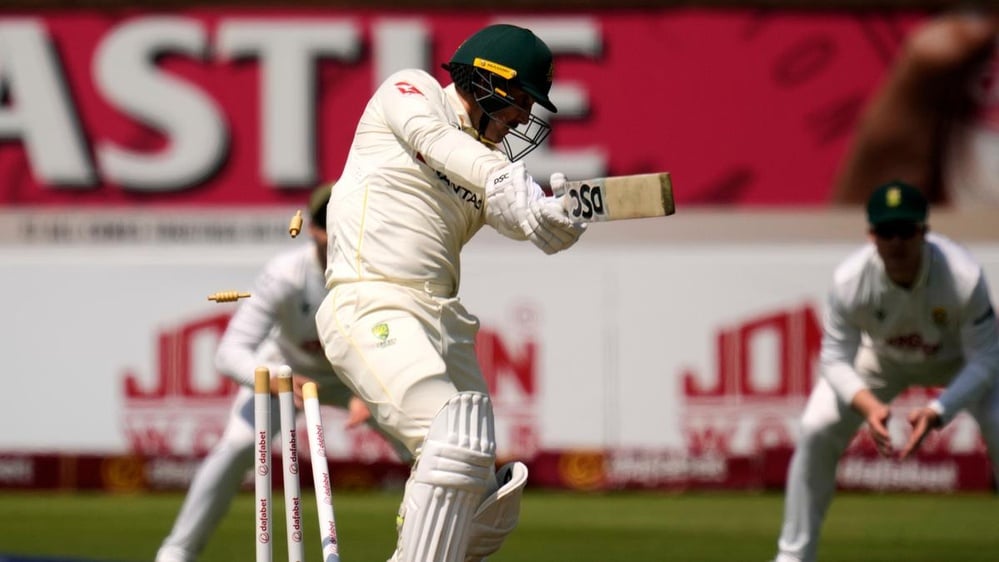
2026 © Helium Trades
Privacy Policy & Disclosure
* Disclaimer: Nothing on this website constitutes investment advice, performance data or any recommendation that any particular security, portfolio of securities, transaction or investment strategy is suitable for any specific person. Helium Trades is not responsible in any way for the accuracy
of any model predictions or price data. Any mention of a particular security and related prediction data is not a recommendation to buy or sell that security. Investments in securities involve the risk of loss. Past performance is no guarantee of future results. Helium Trades is not responsible for any of your investment decisions,
you should consult a financial expert before engaging in any transaction.
Helium Research Assistant

How can I help you today?
Ask any question about this page.


