See whether Helium helps you make better-informed decisions. Try every Pro Trader feature for 30 days. No credit card required.
Try every Pro Trader feature for 30 days. No credit card required.
October 03, 2026 · 0 shares
The report's framing centers government-aligned military statements, leading with an unverified casualty claim while noting the army spokesman did not provide government-casualty figures.
Yemen's civil war began when Houthi forces took Sanaa in 2014, forcing the internationally recognized government to operate from Aden; a Saudi-led coalition has supported the government, though this external dimension is not discussed in the supplied text.
Automated analysis; not human reviewed.
Limitations: The supplied text is a scraped excerpt with duplicated paragraphs, embedded related-article headlines, and at least one truncated sentence; the publisher and full original text are not included, limiting verification.
·
6 of 55 available dimensions scored; omitted dimensions are not treated as neutral.
·
Verified supporting quotes for 6 of 6 scored dimensions.
Claim: Casualty and operational claims are consistently attributed to named officials and correspondents rather than asserted by the report itself.
“Earlier, al-Nazili said Yemen’s internationally recognised government forces carried out nearly 500 military operations, killing or wounding 1,540 Houthi rebels in the past 24 hours.” · exact text match
“The army spokesman did not mention any casualties among government forces.” · exact text match
Why: The report uses reported-speech constructions and flags an evidentiary gap, keeping its own voice descriptive.
Claim: The report tempers a dramatic casualty figure by labeling it a claim rather than presenting it as certain fact.
“Yemen's army claims over 1,500 Houthi casualties in past 24 hours.” · exact text match
Why: The headline's 'claims' and the repeated use of 'al-Nazili said' and 'according to the military' reduce sensational assertion.
Claim: The text describes events and attributed statements without issuing recommendations or calls to action.
“A fragile truce struck between the government and the Houthis in 2022 collapsed in July this year, and fighting in Yemen has escalated significantly since then.” · exact text match
Why: The passage is a factual summary in the report’s own voice, with no 'should' or policy advocacy.
Claim: Distressing material is reported with neutral, non-emotional wording.
“Residents are appealing for evacuation as the shelling continues, Ali reported, adding that there have been civilian casualties in the fighting, including from a shell that hit a residential area in Dhubab, killing a baby who died from shrapnel injuries.” · exact text match
Why: The baby's death and residents' appeals are stated plainly through the correspondent, without emotional adjectives or editorializing.
Claim: The article names sources, attributes claims, and explicitly notes an omission in the military's statement.
“Earlier, al-Nazili said Yemen’s internationally recognised government forces carried out nearly 500 military operations, killing or wounding 1,540 Houthi rebels in the past 24 hours.” · exact text match
“The army spokesman did not mention any casualties among government forces.” · exact text match
Why: Named officials and a named reporter provide attribution, but the casualty count is one-sided and not independently verified.
Claim: The article signals fairness by marking the casualty count as a claim and highlighting the lack of government-casualty figures.
“Yemen's army claims over 1,500 Houthi casualties in past 24 hours.” · exact text match
“The army spokesman did not mention any casualties among government forces.” · exact text match
Why: The framing openly identifies the source and the evidentiary gap rather than presenting the statistic as unqualified fact.
The supplied text is a scraped excerpt with duplicated paragraphs, embedded related-article headlines, and at least one truncated sentence; the publisher and full original text are not included, limiting verification.
Framing is anchored to Yemen's internationally recognized government and Saudi-led coalition sources, describing Houthis as Iran-backed rebels, while an explicit verification caveat and agency-sourced casualty data keep the account measured.
Automated analysis; not human reviewed.
Limitations: The supplied text contains page-chrome membership prompts and no author byline or absolute date, so temporal references such as 'Monday' and 'Sunday' cannot be independently anchored.
·
5 of 55 available dimensions scored; omitted dimensions are not treated as neutral.
·
Verified supporting quotes for 4 of 5 scored dimensions.
Claim: Reporting is objectivizing: it attributes claims and explicitly flags that the campaign could not be independently verified.
“The campaign and its details could not be immediately independently verified.” · exact text match
Why: An explicit verification caveat and reliance on attributed sources indicate objective reporting rather than subjective assertion.
Claim: The article presents war developments with restrained, news-led language rather than sensational dramatization.
“Forces of Yemen’s internationally recognized government began a major offensive Monday against the Iranian-backed Houthis rebels on the country's Red Sea coast, under an intensified air campaign by the Saudi-led coalition.” · exact text match
Why: The lead sentence is measured and factual, and casualty figures are attributed to agencies like the WHO.
Claim: The article is descriptive, reporting announcements and operations without prescribing policy.
“Forces of Yemen’s internationally recognized government began a major offensive Monday against the Iranian-backed Houthis rebels on the country's Red Sea coast, under an intensified air campaign by the Saudi-led coalition.” · exact text match
Why: The sentence describes a military operation rather than recommending a course of action.
Claim: Framing treats the internationally recognized government and Saudi-led coalition as the legitimate reference point for the conflict.
“Forces of Yemen’s internationally recognized government began a major offensive Monday against the Iranian-backed Houthis rebels on the country's Red Sea coast, under an intensified air campaign by the Saudi-led coalition.” · exact text match
Why: Repeated use of 'internationally recognized government' and 'Iran-backed Houthi rebels' aligns the account with establishment-aligned sources.
Claim: Visible sourcing and uncertainty practices support high credibility.
“The campaign and its details could not be immediately independently verified.” · exact text match
“The latest violence has killed at least 959 people and wounded over 4,200 others, according to the World Health Organization.” · not found in supplied text
Why: The text explicitly acknowledges unverified campaign details and attributes casualty and displacement figures to WHO and U.N. agencies.
The supplied text contains page-chrome membership prompts and no author byline or absolute date, so temporal references such as 'Monday' and 'Sunday' cannot be independently anchored.
October 03, 2026 · 0 shares
The report's framing centers government-aligned military statements, leading with an unverified casualty claim while noting the army spokesman did not provide government-casualty figures.
Yemen's civil war began when Houthi forces took Sanaa in 2014, forcing the internationally recognized government to operate from Aden; a Saudi-led coalition has supported the government, though this external dimension is not discussed in the supplied text.
Automated analysis; not human reviewed.
Limitations: The supplied text is a scraped excerpt with duplicated paragraphs, embedded related-article headlines, and at least one truncated sentence; the publisher and full original text are not included, limiting verification.
·
6 of 55 available dimensions scored; omitted dimensions are not treated as neutral.
·
Verified supporting quotes for 6 of 6 scored dimensions.
Claim: Casualty and operational claims are consistently attributed to named officials and correspondents rather than asserted by the report itself.
“Earlier, al-Nazili said Yemen’s internationally recognised government forces carried out nearly 500 military operations, killing or wounding 1,540 Houthi rebels in the past 24 hours.” · exact text match
“The army spokesman did not mention any casualties among government forces.” · exact text match
Why: The report uses reported-speech constructions and flags an evidentiary gap, keeping its own voice descriptive.
Claim: The report tempers a dramatic casualty figure by labeling it a claim rather than presenting it as certain fact.
“Yemen's army claims over 1,500 Houthi casualties in past 24 hours.” · exact text match
Why: The headline's 'claims' and the repeated use of 'al-Nazili said' and 'according to the military' reduce sensational assertion.
Claim: The text describes events and attributed statements without issuing recommendations or calls to action.
“A fragile truce struck between the government and the Houthis in 2022 collapsed in July this year, and fighting in Yemen has escalated significantly since then.” · exact text match
Why: The passage is a factual summary in the report’s own voice, with no 'should' or policy advocacy.
Claim: Distressing material is reported with neutral, non-emotional wording.
“Residents are appealing for evacuation as the shelling continues, Ali reported, adding that there have been civilian casualties in the fighting, including from a shell that hit a residential area in Dhubab, killing a baby who died from shrapnel injuries.” · exact text match
Why: The baby's death and residents' appeals are stated plainly through the correspondent, without emotional adjectives or editorializing.
Claim: The article names sources, attributes claims, and explicitly notes an omission in the military's statement.
“Earlier, al-Nazili said Yemen’s internationally recognised government forces carried out nearly 500 military operations, killing or wounding 1,540 Houthi rebels in the past 24 hours.” · exact text match
“The army spokesman did not mention any casualties among government forces.” · exact text match
Why: Named officials and a named reporter provide attribution, but the casualty count is one-sided and not independently verified.
Claim: The article signals fairness by marking the casualty count as a claim and highlighting the lack of government-casualty figures.
“Yemen's army claims over 1,500 Houthi casualties in past 24 hours.” · exact text match
“The army spokesman did not mention any casualties among government forces.” · exact text match
Why: The framing openly identifies the source and the evidentiary gap rather than presenting the statistic as unqualified fact.
The supplied text is a scraped excerpt with duplicated paragraphs, embedded related-article headlines, and at least one truncated sentence; the publisher and full original text are not included, limiting verification.
Framing is anchored to Yemen's internationally recognized government and Saudi-led coalition sources, describing Houthis as Iran-backed rebels, while an explicit verification caveat and agency-sourced casualty data keep the account measured.
Automated analysis; not human reviewed.
Limitations: The supplied text contains page-chrome membership prompts and no author byline or absolute date, so temporal references such as 'Monday' and 'Sunday' cannot be independently anchored.
·
5 of 55 available dimensions scored; omitted dimensions are not treated as neutral.
·
Verified supporting quotes for 4 of 5 scored dimensions.
Claim: Reporting is objectivizing: it attributes claims and explicitly flags that the campaign could not be independently verified.
“The campaign and its details could not be immediately independently verified.” · exact text match
Why: An explicit verification caveat and reliance on attributed sources indicate objective reporting rather than subjective assertion.
Claim: The article presents war developments with restrained, news-led language rather than sensational dramatization.
“Forces of Yemen’s internationally recognized government began a major offensive Monday against the Iranian-backed Houthis rebels on the country's Red Sea coast, under an intensified air campaign by the Saudi-led coalition.” · exact text match
Why: The lead sentence is measured and factual, and casualty figures are attributed to agencies like the WHO.
Claim: The article is descriptive, reporting announcements and operations without prescribing policy.
“Forces of Yemen’s internationally recognized government began a major offensive Monday against the Iranian-backed Houthis rebels on the country's Red Sea coast, under an intensified air campaign by the Saudi-led coalition.” · exact text match
Why: The sentence describes a military operation rather than recommending a course of action.
Claim: Framing treats the internationally recognized government and Saudi-led coalition as the legitimate reference point for the conflict.
“Forces of Yemen’s internationally recognized government began a major offensive Monday against the Iranian-backed Houthis rebels on the country's Red Sea coast, under an intensified air campaign by the Saudi-led coalition.” · exact text match
Why: Repeated use of 'internationally recognized government' and 'Iran-backed Houthi rebels' aligns the account with establishment-aligned sources.
Claim: Visible sourcing and uncertainty practices support high credibility.
“The campaign and its details could not be immediately independently verified.” · exact text match
“The latest violence has killed at least 959 people and wounded over 4,200 others, according to the World Health Organization.” · not found in supplied text
Why: The text explicitly acknowledges unverified campaign details and attributes casualty and displacement figures to WHO and U.N. agencies.
The supplied text contains page-chrome membership prompts and no author byline or absolute date, so temporal references such as 'Monday' and 'Sunday' cannot be independently anchored.
October 06, 2026 · 0 shares
The coverage centers the Saudi-led coalition's warnings, military operations, and international support while treating Houthi actions as claimed threats.
Bab Al Mandeb is a strategic strait linking the Red Sea to the Gulf of Aden, a key global shipping chokepoint.
Automated analysis; not human reviewed.
Limitations: The supplied text mixes the core article with duplicate passages and appended headlines, so the article body was inferred from recurring paragraphs.
·
4 of 55 available dimensions scored; omitted dimensions are not treated as neutral.
·
Verified supporting quotes for 4 of 4 scored dimensions.
Claim: The publisher presents military action against the Houthis as effective and legitimate.
“Operation "Yemen Dawn" saw 100 coalition fighter jets destroy 324 "high-value" Houthi targets, with naval forces also conducting operations in Hodeidah.” · exact text match
“Saudi Arabia has right to defend itself from Houthis, Marco Rubio says” · exact text match
Why: The lead includes the Saudi warning, coalition operational statistics, and a supportive U.S. senator's statement without a countervailing perspective; however, the article remains largely factual.
Claim: The publisher anchors legitimacy to the Saudi-backed, UN-recognized Yemeni government.
“Saudi-backed Presidential Leadership Council, which is also recognised by the United Nations, has since the Houthi takeover controlled parts of the south and east of the country” · exact text match
“an air campaign aimed at restoring the internationally recognised government.” · exact text match
Why: The report treats UN recognition and restoration of the internationally recognised government as the reference point for legitimacy, without weighing the Houthis' position.
Claim: Houthi actions are framed as unverified claims while coalition operations are stated as established facts.
“Houthi rebels claimed to have targeted several Saudi locations” · exact text match
“Operation "Yemen Dawn" saw 100 coalition fighter jets destroy 324 "high-value" Houthi targets” · exact text match
Why: Houthi attacks are explicitly labeled 'claimed,' while the coalition operation is reported with the unhedged verb 'saw,' applying different epistemic standards.
Claim: The report attributes information to named officials and includes conflict background.
“Saudi Arabia's Interior Ministry said in a statement.” · exact text match
“Maj Gen Turki Al Malki, spokesman for a Saudi-led coalition fighting the Houthis, said” · exact text match
Why: Quotes and statements are attributed and basic conflict context is supplied, but the report relies heavily on coalition and government sources without independent verification.
The supplied text mixes the core article with duplicate passages and appended headlines, so the article body was inferred from recurring paragraphs.
October 06, 2026 · 0 shares
Saudi-backed Yemeni government forces are framed as legitimately recapturing territory from Iran-backed rebels, while Houthi counterclaims are attributed rather than asserted.
Yemen's civil war escalated in 2014 when Houthi forces took Sanaa, and a Saudi-led coalition intervened in 2015 on behalf of the internationally recognized government.
Bab el-Mandeb is a strategic shipping chokepoint connecting the Red Sea and the Gulf of Aden.
Automated analysis; not human reviewed.
Limitations: The supplied text is partially garbled and mixed with repeated related-content blocks, leaving some ambiguity about the exact substantive article boundary.
·
5 of 55 available dimensions scored; omitted dimensions are not treated as neutral.
·
Verified supporting quotes for 5 of 5 scored dimensions.
Claim: The article is largely objective, using attributed sourcing and conditional claim language rather than editorial assertion.
“Houthis claimed attacks on Saudi oil facilities, airports and military bases” · exact text match
“said the officials, who spoke on condition of anonymity because they were not authorized to speak to reporters” · exact text match
Counterevidence:
“Iran-backed Houthi rebels” · exact text match
Why: Events are presented mainly through attributed statements from officials, witnesses, and claimants, but the unqualified label 'Iran-backed Houthi rebels' adds a framing element.
Claim: The reporting is restrained and unsensational, describing the offensive through attributed facts rather than dramatic language.
“The government push came as part of a major offensive launched early Monday under air cover by a Saudi military coalition.” · exact text match
Why: The language is factual and process-oriented, with no hyperbolic descriptors or emotional appeals.
Claim: The article's selection of labels aligns with the official Yemeni government and Saudi-led coalition framing of the conflict.
“Forces loyal to Yemen’s internationally recognised government, backed by a Saudi-led coalition” · exact text match
“Iran-backed Houthi rebels” · exact text match
Why: The government is described as 'internationally recognised' and the Houthis as 'Iran-backed rebels,' a framing consistent with establishment/official positions, though the article does not explicitly endorse military action.
Claim: The article provides visible sourcing, including officials, anonymous officials, witnesses, and attributed Houthi claims.
“said the officials, who spoke on condition of anonymity because they were not authorized to speak to reporters” · exact text match
“Witnesses said they saw government tanks and forces entering the towns.” · exact text match
Why: The report identifies source categories, notes anonymity restrictions, and marks uncertain or contested actions as claims, supporting credibility.
Claim: The report signals fairness by attributing claims to both government-aligned sources and Houthi claimants rather than presenting Houthi actions as independently verified facts.
“Houthis claimed attacks on Saudi oil facilities, airports and military bases” · exact text match
“Yemeni officials said Monday” · exact text match
Counterevidence:
“Iran-backed Houthi rebels” · exact text match
Why: Attribution and inclusion of the other side's claims support high integrity, though the 'Iran-backed rebels' label slightly undercuts full neutrality.
The supplied text is partially garbled and mixed with repeated related-content blocks, leaving some ambiguity about the exact substantive article boundary.
October 06, 2026 · 0 shares
The update is framed geopolitically, identifying the combatants by their Saudi and Iranian backers and treating the recapture as an attributed official development.
Yemen's internationally recognized government, backed by a Saudi-led coalition, has been fighting the Houthi movement since the conflict escalated in 2015; Bab al-Mandab is a strategic strait linking the Red Sea to the Gulf of Aden.
Automated analysis; not human reviewed.
Limitations: Only a two-sentence excerpt was provided; no full article body, byline, or date beyond 'Monday' was available.
·
3 of 55 available dimensions scored; omitted dimensions are not treated as neutral.
·
Verified supporting quotes for 3 of 3 scored dimensions.
Claim: The recapture claim is reported as an attributed official assertion rather than as the reporter's own judgment.
“Yemeni officials said on Monday” · exact text match
Why: The central claim is explicitly attributed and the wording is plain, indicating an objective news brief rather than subjective commentary.
Claim: The event is framed primarily through the geopolitical backers of each side.
“Saudi-backed government forces” · exact text match
“Iran-backed Houthi rebels” · exact text match
Why: Identifying the combatants by their external patrons makes the international political dimension central to the report.
Claim: The report's visible sourcing is an official statement attributed to Yemeni officials, supplemented by footage.
“Yemeni officials said on Monday” · exact text match
“Footage shows Saudi-backed government forces near Houthi captured territories” · exact text match
Why: Attribution to officials and a visual claim provide identifiable sourcing signals, but the excerpt lacks named sources and independent verification.
Only a two-sentence excerpt was provided; no full article body, byline, or date beyond 'Monday' was available.
October 03, 2026 · 0 shares
The report's framing centers government-aligned military statements, leading with an unverified casualty claim while noting the army spokesman did not provide government-casualty figures.
Yemen's civil war began when Houthi forces took Sanaa in 2014, forcing the internationally recognized government to operate from Aden; a Saudi-led coalition has supported the government, though this external dimension is not discussed in the supplied text.
Automated analysis; not human reviewed.
Limitations: The supplied text is a scraped excerpt with duplicated paragraphs, embedded related-article headlines, and at least one truncated sentence; the publisher and full original text are not included, limiting verification.
·
6 of 55 available dimensions scored; omitted dimensions are not treated as neutral.
·
Verified supporting quotes for 6 of 6 scored dimensions.
Claim: Casualty and operational claims are consistently attributed to named officials and correspondents rather than asserted by the report itself.
“Earlier, al-Nazili said Yemen’s internationally recognised government forces carried out nearly 500 military operations, killing or wounding 1,540 Houthi rebels in the past 24 hours.” · exact text match
“The army spokesman did not mention any casualties among government forces.” · exact text match
Why: The report uses reported-speech constructions and flags an evidentiary gap, keeping its own voice descriptive.
Claim: The report tempers a dramatic casualty figure by labeling it a claim rather than presenting it as certain fact.
“Yemen's army claims over 1,500 Houthi casualties in past 24 hours.” · exact text match
Why: The headline's 'claims' and the repeated use of 'al-Nazili said' and 'according to the military' reduce sensational assertion.
Claim: The text describes events and attributed statements without issuing recommendations or calls to action.
“A fragile truce struck between the government and the Houthis in 2022 collapsed in July this year, and fighting in Yemen has escalated significantly since then.” · exact text match
Why: The passage is a factual summary in the report’s own voice, with no 'should' or policy advocacy.
Claim: Distressing material is reported with neutral, non-emotional wording.
“Residents are appealing for evacuation as the shelling continues, Ali reported, adding that there have been civilian casualties in the fighting, including from a shell that hit a residential area in Dhubab, killing a baby who died from shrapnel injuries.” · exact text match
Why: The baby's death and residents' appeals are stated plainly through the correspondent, without emotional adjectives or editorializing.
Claim: The article names sources, attributes claims, and explicitly notes an omission in the military's statement.
“Earlier, al-Nazili said Yemen’s internationally recognised government forces carried out nearly 500 military operations, killing or wounding 1,540 Houthi rebels in the past 24 hours.” · exact text match
“The army spokesman did not mention any casualties among government forces.” · exact text match
Why: Named officials and a named reporter provide attribution, but the casualty count is one-sided and not independently verified.
Claim: The article signals fairness by marking the casualty count as a claim and highlighting the lack of government-casualty figures.
“Yemen's army claims over 1,500 Houthi casualties in past 24 hours.” · exact text match
“The army spokesman did not mention any casualties among government forces.” · exact text match
Why: The framing openly identifies the source and the evidentiary gap rather than presenting the statistic as unqualified fact.
The supplied text is a scraped excerpt with duplicated paragraphs, embedded related-article headlines, and at least one truncated sentence; the publisher and full original text are not included, limiting verification.
October 06, 2026 · 0 shares
The coverage centers the Saudi-led coalition's warnings, military operations, and international support while treating Houthi actions as claimed threats.
Bab Al Mandeb is a strategic strait linking the Red Sea to the Gulf of Aden, a key global shipping chokepoint.
Automated analysis; not human reviewed.
Limitations: The supplied text mixes the core article with duplicate passages and appended headlines, so the article body was inferred from recurring paragraphs.
·
4 of 55 available dimensions scored; omitted dimensions are not treated as neutral.
·
Verified supporting quotes for 4 of 4 scored dimensions.
Claim: The publisher presents military action against the Houthis as effective and legitimate.
“Operation "Yemen Dawn" saw 100 coalition fighter jets destroy 324 "high-value" Houthi targets, with naval forces also conducting operations in Hodeidah.” · exact text match
“Saudi Arabia has right to defend itself from Houthis, Marco Rubio says” · exact text match
Why: The lead includes the Saudi warning, coalition operational statistics, and a supportive U.S. senator's statement without a countervailing perspective; however, the article remains largely factual.
Claim: The publisher anchors legitimacy to the Saudi-backed, UN-recognized Yemeni government.
“Saudi-backed Presidential Leadership Council, which is also recognised by the United Nations, has since the Houthi takeover controlled parts of the south and east of the country” · exact text match
“an air campaign aimed at restoring the internationally recognised government.” · exact text match
Why: The report treats UN recognition and restoration of the internationally recognised government as the reference point for legitimacy, without weighing the Houthis' position.
Claim: Houthi actions are framed as unverified claims while coalition operations are stated as established facts.
“Houthi rebels claimed to have targeted several Saudi locations” · exact text match
“Operation "Yemen Dawn" saw 100 coalition fighter jets destroy 324 "high-value" Houthi targets” · exact text match
Why: Houthi attacks are explicitly labeled 'claimed,' while the coalition operation is reported with the unhedged verb 'saw,' applying different epistemic standards.
Claim: The report attributes information to named officials and includes conflict background.
“Saudi Arabia's Interior Ministry said in a statement.” · exact text match
“Maj Gen Turki Al Malki, spokesman for a Saudi-led coalition fighting the Houthis, said” · exact text match
Why: Quotes and statements are attributed and basic conflict context is supplied, but the report relies heavily on coalition and government sources without independent verification.
The supplied text mixes the core article with duplicate passages and appended headlines, so the article body was inferred from recurring paragraphs.
October 07, 2026 · 0 shares
Framing treats the Houthi missile fire as an 'Assault' by 'rebels' while describing the government campaign as an offensive to 'reclaim' Bab al-Mandab, positioning the government as restoring legitimate control.
Bab al-Mandab is a strategic strait connecting the Red Sea to the Gulf of Aden, and the Houthi movement has been fighting Yemen's internationally recognized government and a Saudi-led coalition in a years-long civil war.
Automated analysis; not human reviewed.
Limitations: Input was a two-sentence headline with no publication name, byline, date, or body text; bias judgments rely on that limited wording.
·
3 of 55 available dimensions scored; omitted dimensions are not treated as neutral.
·
Verified supporting quotes for 3 of 3 scored dimensions.
Claim: The headline reports events in declarative, matter-of-fact terms rather than as personal judgement.
“Houthi rebels target Riyadh and Aden in new missile barrage.” · exact text match
Why: The sentence states actors, action, and targets without explicit praise, blame, or policy recommendation, though the label 'rebels' carries mild framing.
Claim: The wording is restrained rather than sensational despite the dramatic subject.
“Assault comes days after government forces announced major offensive to reclaim strategic Bab al-Mandab waterway” · exact text match
Why: The text uses clipped, news-agency phrasing and no hyperbolic modifiers or emotive appeals; 'barrage' and 'Assault' describe a reported missile attack.
Claim: The text describes what happened and what was announced without recommending a course of action.
“Houthi rebels target Riyadh and Aden in new missile barrage.” · exact text match
“Assault comes days after government forces announced major offensive to reclaim strategic Bab al-Mandab waterway” · exact text match
Why: Both clauses are factual statements about events or announcements; no imperative, recommendation, or normative prescription appears.
Input was a two-sentence headline with no publication name, byline, date, or body text; bias judgments rely on that limited wording.
The framing treats a possible refinery smoke event as a Houthi attack and a prelude to wider Gulf escalation, using alarming headlines and unverified 'breaking' social-media clips.
The Saudi-led coalition and Iran-backed Houthi movement have been in an ongoing conflict since 2015, and Houthi missile and drone attacks have periodically targeted Saudi territory and oil infrastructure.
Automated analysis; not human reviewed.
Limitations: The supplied text repeats the same passage twice and embeds what appear to be social-media posts without clear quote formatting, making attribution of specific assertions to the publisher partly ambiguous.
·
3 of 55 available dimensions scored; omitted dimensions are not treated as neutral.
·
Verified supporting quotes for 3 of 3 scored dimensions.
Claim: The publisher uses alarming, attack-oriented framing despite labeling the underlying reports unverified.
“Black Smoke Reported Over Critical Aramco Refinery As Saudis Weigh Major Assault On Houthi Rebels.” · exact text match
“More unconfirmed close-up footage showcasing the ongoing fire inside Saudi ARAMCO Riyadh Refinery, Riyadh Province, Saudi Arabia.” · exact text match
Why: The headline foregrounds 'black smoke,' 'critical,' and 'major assault,' and the body calls footage unconfirmed while describing an 'ongoing fire.'
Claim: The article's visible sourcing, attribution, and hedging support moderate trustworthiness.
“The cause and any impact on operations remain unclear.” · exact text match
“Turkish news outlet Türkiye Today cites NASA's FIRMS satellite monitoring system, which shows higher-intensity VIIRS thermal hits across Aramco's Riyadh refinery” · exact text match
“Separately, Axios reports that Saudi Arabia is preparing a major offensive against Iran-backed Houthis in the coming days.” · exact text match
Why: It names sources and repeatedly flags uncertainty, though it also amplifies unverified social-media 'BREAKING' posts.
Claim: The article presents future military operations and conflict continuation as likely based on attributed reports and an expert warning.
“Separately, Axios reports that Saudi Arabia is preparing a major offensive against Iran-backed Houthis in the coming days.” · exact text match
“President Trump's comments last week that a bombing campaign against Tehran could resume after the midterm elections add to signs that the Gulf conflict remains far from any near-term resolution.” · exact text match
Why: The first sentence reports a planned offensive; the second draws an interpretive projection about the conflict's trajectory from separate attributed reports.
The supplied text repeats the same passage twice and embeds what appear to be social-media posts without clear quote formatting, making attribution of specific assertions to the publisher partly ambiguous.
Framing is anchored to Yemen's internationally recognized government and Saudi-led coalition sources, describing Houthis as Iran-backed rebels, while an explicit verification caveat and agency-sourced casualty data keep the account measured.
Automated analysis; not human reviewed.
Limitations: The supplied text contains page-chrome membership prompts and no author byline or absolute date, so temporal references such as 'Monday' and 'Sunday' cannot be independently anchored.
·
5 of 55 available dimensions scored; omitted dimensions are not treated as neutral.
·
Verified supporting quotes for 4 of 5 scored dimensions.
Claim: Reporting is objectivizing: it attributes claims and explicitly flags that the campaign could not be independently verified.
“The campaign and its details could not be immediately independently verified.” · exact text match
Why: An explicit verification caveat and reliance on attributed sources indicate objective reporting rather than subjective assertion.
Claim: The article presents war developments with restrained, news-led language rather than sensational dramatization.
“Forces of Yemen’s internationally recognized government began a major offensive Monday against the Iranian-backed Houthis rebels on the country's Red Sea coast, under an intensified air campaign by the Saudi-led coalition.” · exact text match
Why: The lead sentence is measured and factual, and casualty figures are attributed to agencies like the WHO.
Claim: The article is descriptive, reporting announcements and operations without prescribing policy.
“Forces of Yemen’s internationally recognized government began a major offensive Monday against the Iranian-backed Houthis rebels on the country's Red Sea coast, under an intensified air campaign by the Saudi-led coalition.” · exact text match
Why: The sentence describes a military operation rather than recommending a course of action.
Claim: Framing treats the internationally recognized government and Saudi-led coalition as the legitimate reference point for the conflict.
“Forces of Yemen’s internationally recognized government began a major offensive Monday against the Iranian-backed Houthis rebels on the country's Red Sea coast, under an intensified air campaign by the Saudi-led coalition.” · exact text match
Why: Repeated use of 'internationally recognized government' and 'Iran-backed Houthi rebels' aligns the account with establishment-aligned sources.
Claim: Visible sourcing and uncertainty practices support high credibility.
“The campaign and its details could not be immediately independently verified.” · exact text match
“The latest violence has killed at least 959 people and wounded over 4,200 others, according to the World Health Organization.” · not found in supplied text
Why: The text explicitly acknowledges unverified campaign details and attributes casualty and displacement figures to WHO and U.N. agencies.
The supplied text contains page-chrome membership prompts and no author byline or absolute date, so temporal references such as 'Monday' and 'Sunday' cannot be independently anchored.
October 06, 2026 · 0 shares
The coverage centers the Saudi-led coalition's warnings, military operations, and international support while treating Houthi actions as claimed threats.
Bab Al Mandeb is a strategic strait linking the Red Sea to the Gulf of Aden, a key global shipping chokepoint.
Automated analysis; not human reviewed.
Limitations: The supplied text mixes the core article with duplicate passages and appended headlines, so the article body was inferred from recurring paragraphs.
·
4 of 55 available dimensions scored; omitted dimensions are not treated as neutral.
·
Verified supporting quotes for 4 of 4 scored dimensions.
Claim: The publisher presents military action against the Houthis as effective and legitimate.
“Operation "Yemen Dawn" saw 100 coalition fighter jets destroy 324 "high-value" Houthi targets, with naval forces also conducting operations in Hodeidah.” · exact text match
“Saudi Arabia has right to defend itself from Houthis, Marco Rubio says” · exact text match
Why: The lead includes the Saudi warning, coalition operational statistics, and a supportive U.S. senator's statement without a countervailing perspective; however, the article remains largely factual.
Claim: The publisher anchors legitimacy to the Saudi-backed, UN-recognized Yemeni government.
“Saudi-backed Presidential Leadership Council, which is also recognised by the United Nations, has since the Houthi takeover controlled parts of the south and east of the country” · exact text match
“an air campaign aimed at restoring the internationally recognised government.” · exact text match
Why: The report treats UN recognition and restoration of the internationally recognised government as the reference point for legitimacy, without weighing the Houthis' position.
Claim: Houthi actions are framed as unverified claims while coalition operations are stated as established facts.
“Houthi rebels claimed to have targeted several Saudi locations” · exact text match
“Operation "Yemen Dawn" saw 100 coalition fighter jets destroy 324 "high-value" Houthi targets” · exact text match
Why: Houthi attacks are explicitly labeled 'claimed,' while the coalition operation is reported with the unhedged verb 'saw,' applying different epistemic standards.
Claim: The report attributes information to named officials and includes conflict background.
“Saudi Arabia's Interior Ministry said in a statement.” · exact text match
“Maj Gen Turki Al Malki, spokesman for a Saudi-led coalition fighting the Houthis, said” · exact text match
Why: Quotes and statements are attributed and basic conflict context is supplied, but the report relies heavily on coalition and government sources without independent verification.
The supplied text mixes the core article with duplicate passages and appended headlines, so the article body was inferred from recurring paragraphs.
October 06, 2026 · 0 shares
The coverage centers the Saudi-led coalition's warnings, military operations, and international support while treating Houthi actions as claimed threats.
Bab Al Mandeb is a strategic strait linking the Red Sea to the Gulf of Aden, a key global shipping chokepoint.
Automated analysis; not human reviewed.
Limitations: The supplied text mixes the core article with duplicate passages and appended headlines, so the article body was inferred from recurring paragraphs.
·
4 of 55 available dimensions scored; omitted dimensions are not treated as neutral.
·
Verified supporting quotes for 4 of 4 scored dimensions.
Claim: The publisher presents military action against the Houthis as effective and legitimate.
“Operation "Yemen Dawn" saw 100 coalition fighter jets destroy 324 "high-value" Houthi targets, with naval forces also conducting operations in Hodeidah.” · exact text match
“Saudi Arabia has right to defend itself from Houthis, Marco Rubio says” · exact text match
Why: The lead includes the Saudi warning, coalition operational statistics, and a supportive U.S. senator's statement without a countervailing perspective; however, the article remains largely factual.
Claim: The publisher anchors legitimacy to the Saudi-backed, UN-recognized Yemeni government.
“Saudi-backed Presidential Leadership Council, which is also recognised by the United Nations, has since the Houthi takeover controlled parts of the south and east of the country” · exact text match
“an air campaign aimed at restoring the internationally recognised government.” · exact text match
Why: The report treats UN recognition and restoration of the internationally recognised government as the reference point for legitimacy, without weighing the Houthis' position.
Claim: Houthi actions are framed as unverified claims while coalition operations are stated as established facts.
“Houthi rebels claimed to have targeted several Saudi locations” · exact text match
“Operation "Yemen Dawn" saw 100 coalition fighter jets destroy 324 "high-value" Houthi targets” · exact text match
Why: Houthi attacks are explicitly labeled 'claimed,' while the coalition operation is reported with the unhedged verb 'saw,' applying different epistemic standards.
Claim: The report attributes information to named officials and includes conflict background.
“Saudi Arabia's Interior Ministry said in a statement.” · exact text match
“Maj Gen Turki Al Malki, spokesman for a Saudi-led coalition fighting the Houthis, said” · exact text match
Why: Quotes and statements are attributed and basic conflict context is supplied, but the report relies heavily on coalition and government sources without independent verification.
The supplied text mixes the core article with duplicate passages and appended headlines, so the article body was inferred from recurring paragraphs.
October 06, 2026 · 0 shares
Saudi-backed Yemeni government forces are framed as legitimately recapturing territory from Iran-backed rebels, while Houthi counterclaims are attributed rather than asserted.
Yemen's civil war escalated in 2014 when Houthi forces took Sanaa, and a Saudi-led coalition intervened in 2015 on behalf of the internationally recognized government. Bab el-Mandeb is a strategic shipping chokepoint connecting the Red Sea and the Gulf of Aden.
Automated analysis; not human reviewed. Limitations: The supplied text is partially garbled and mixed with repeated related-content blocks, leaving some ambiguity about the exact substantive article boundary. · 5 of 55 available dimensions scored; omitted dimensions are not treated as neutral. · Verified supporting quotes for 5 of 5 scored dimensions.
Claim: The article is largely objective, using attributed sourcing and conditional claim language rather than editorial assertion.
“Houthis claimed attacks on Saudi oil facilities, airports and military bases” · exact text match
“said the officials, who spoke on condition of anonymity because they were not authorized to speak to reporters” · exact text match
Counterevidence:
“Iran-backed Houthi rebels” · exact text match
Why: Events are presented mainly through attributed statements from officials, witnesses, and claimants, but the unqualified label 'Iran-backed Houthi rebels' adds a framing element.
Claim: The reporting is restrained and unsensational, describing the offensive through attributed facts rather than dramatic language.
“The government push came as part of a major offensive launched early Monday under air cover by a Saudi military coalition.” · exact text match
Why: The language is factual and process-oriented, with no hyperbolic descriptors or emotional appeals.
Claim: The article's selection of labels aligns with the official Yemeni government and Saudi-led coalition framing of the conflict.
“Forces loyal to Yemen’s internationally recognised government, backed by a Saudi-led coalition” · exact text match
“Iran-backed Houthi rebels” · exact text match
Why: The government is described as 'internationally recognised' and the Houthis as 'Iran-backed rebels,' a framing consistent with establishment/official positions, though the article does not explicitly endorse military action.
Claim: The article provides visible sourcing, including officials, anonymous officials, witnesses, and attributed Houthi claims.
“said the officials, who spoke on condition of anonymity because they were not authorized to speak to reporters” · exact text match
“Witnesses said they saw government tanks and forces entering the towns.” · exact text match
Why: The report identifies source categories, notes anonymity restrictions, and marks uncertain or contested actions as claims, supporting credibility.
Claim: The report signals fairness by attributing claims to both government-aligned sources and Houthi claimants rather than presenting Houthi actions as independently verified facts.
“Houthis claimed attacks on Saudi oil facilities, airports and military bases” · exact text match
“Yemeni officials said Monday” · exact text match
Counterevidence:
“Iran-backed Houthi rebels” · exact text match
Why: Attribution and inclusion of the other side's claims support high integrity, though the 'Iran-backed rebels' label slightly undercuts full neutrality.
The supplied text is partially garbled and mixed with repeated related-content blocks, leaving some ambiguity about the exact substantive article boundary.
October 06, 2026 · 0 shares
The update is framed geopolitically, identifying the combatants by their Saudi and Iranian backers and treating the recapture as an attributed official development.
Yemen's internationally recognized government, backed by a Saudi-led coalition, has been fighting the Houthi movement since the conflict escalated in 2015; Bab al-Mandab is a strategic strait linking the Red Sea to the Gulf of Aden.
Automated analysis; not human reviewed. Limitations: Only a two-sentence excerpt was provided; no full article body, byline, or date beyond 'Monday' was available. · 3 of 55 available dimensions scored; omitted dimensions are not treated as neutral. · Verified supporting quotes for 3 of 3 scored dimensions.
Claim: The recapture claim is reported as an attributed official assertion rather than as the reporter's own judgment.
“Yemeni officials said on Monday” · exact text match
Why: The central claim is explicitly attributed and the wording is plain, indicating an objective news brief rather than subjective commentary.
Claim: The event is framed primarily through the geopolitical backers of each side.
“Saudi-backed government forces” · exact text match
“Iran-backed Houthi rebels” · exact text match
Why: Identifying the combatants by their external patrons makes the international political dimension central to the report.
Claim: The report's visible sourcing is an official statement attributed to Yemeni officials, supplemented by footage.
“Yemeni officials said on Monday” · exact text match
“Footage shows Saudi-backed government forces near Houthi captured territories” · exact text match
Why: Attribution to officials and a visual claim provide identifiable sourcing signals, but the excerpt lacks named sources and independent verification.
Only a two-sentence excerpt was provided; no full article body, byline, or date beyond 'Monday' was available.
October 06, 2026 · 0 shares
The coverage centers the Saudi-led coalition's warnings, military operations, and international support while treating Houthi actions as claimed threats.
Bab Al Mandeb is a strategic strait linking the Red Sea to the Gulf of Aden, a key global shipping chokepoint.
Automated analysis; not human reviewed. Limitations: The supplied text mixes the core article with duplicate passages and appended headlines, so the article body was inferred from recurring paragraphs. · 4 of 55 available dimensions scored; omitted dimensions are not treated as neutral. · Verified supporting quotes for 4 of 4 scored dimensions.
Claim: The publisher presents military action against the Houthis as effective and legitimate.
“Operation "Yemen Dawn" saw 100 coalition fighter jets destroy 324 "high-value" Houthi targets, with naval forces also conducting operations in Hodeidah.” · exact text match
“Saudi Arabia has right to defend itself from Houthis, Marco Rubio says” · exact text match
Why: The lead includes the Saudi warning, coalition operational statistics, and a supportive U.S. senator's statement without a countervailing perspective; however, the article remains largely factual.
Claim: The publisher anchors legitimacy to the Saudi-backed, UN-recognized Yemeni government.
“Saudi-backed Presidential Leadership Council, which is also recognised by the United Nations, has since the Houthi takeover controlled parts of the south and east of the country” · exact text match
“an air campaign aimed at restoring the internationally recognised government.” · exact text match
Why: The report treats UN recognition and restoration of the internationally recognised government as the reference point for legitimacy, without weighing the Houthis' position.
Claim: Houthi actions are framed as unverified claims while coalition operations are stated as established facts.
“Houthi rebels claimed to have targeted several Saudi locations” · exact text match
“Operation "Yemen Dawn" saw 100 coalition fighter jets destroy 324 "high-value" Houthi targets” · exact text match
Why: Houthi attacks are explicitly labeled 'claimed,' while the coalition operation is reported with the unhedged verb 'saw,' applying different epistemic standards.
Claim: The report attributes information to named officials and includes conflict background.
“Saudi Arabia's Interior Ministry said in a statement.” · exact text match
“Maj Gen Turki Al Malki, spokesman for a Saudi-led coalition fighting the Houthis, said” · exact text match
Why: Quotes and statements are attributed and basic conflict context is supplied, but the report relies heavily on coalition and government sources without independent verification.
The supplied text mixes the core article with duplicate passages and appended headlines, so the article body was inferred from recurring paragraphs.
Framing is anchored to Yemen's internationally recognized government and Saudi-led coalition sources, describing Houthis as Iran-backed rebels, while an explicit verification caveat and agency-sourced casualty data keep the account measured.
Automated analysis; not human reviewed. Limitations: The supplied text contains page-chrome membership prompts and no author byline or absolute date, so temporal references such as 'Monday' and 'Sunday' cannot be independently anchored. · 5 of 55 available dimensions scored; omitted dimensions are not treated as neutral. · Verified supporting quotes for 4 of 5 scored dimensions.
Claim: Reporting is objectivizing: it attributes claims and explicitly flags that the campaign could not be independently verified.
“The campaign and its details could not be immediately independently verified.” · exact text match
Why: An explicit verification caveat and reliance on attributed sources indicate objective reporting rather than subjective assertion.
Claim: The article presents war developments with restrained, news-led language rather than sensational dramatization.
“Forces of Yemen’s internationally recognized government began a major offensive Monday against the Iranian-backed Houthis rebels on the country's Red Sea coast, under an intensified air campaign by the Saudi-led coalition.” · exact text match
Why: The lead sentence is measured and factual, and casualty figures are attributed to agencies like the WHO.
Claim: The article is descriptive, reporting announcements and operations without prescribing policy.
“Forces of Yemen’s internationally recognized government began a major offensive Monday against the Iranian-backed Houthis rebels on the country's Red Sea coast, under an intensified air campaign by the Saudi-led coalition.” · exact text match
Why: The sentence describes a military operation rather than recommending a course of action.
Claim: Framing treats the internationally recognized government and Saudi-led coalition as the legitimate reference point for the conflict.
“Forces of Yemen’s internationally recognized government began a major offensive Monday against the Iranian-backed Houthis rebels on the country's Red Sea coast, under an intensified air campaign by the Saudi-led coalition.” · exact text match
Why: Repeated use of 'internationally recognized government' and 'Iran-backed Houthi rebels' aligns the account with establishment-aligned sources.
Claim: Visible sourcing and uncertainty practices support high credibility.
“The campaign and its details could not be immediately independently verified.” · exact text match
“The latest violence has killed at least 959 people and wounded over 4,200 others, according to the World Health Organization.” · not found in supplied text
Why: The text explicitly acknowledges unverified campaign details and attributes casualty and displacement figures to WHO and U.N. agencies.
The supplied text contains page-chrome membership prompts and no author byline or absolute date, so temporal references such as 'Monday' and 'Sunday' cannot be independently anchored.
Helium Bias
October 03, 2026 · 0 shares
The report's framing centers government-aligned military statements, leading with an unverified casualty claim while noting the army spokesman did not provide government-casualty figures.
Yemen's civil war began when Houthi forces took Sanaa in 2014, forcing the internationally recognized government to operate from Aden; a Saudi-led coalition has supported the government, though this external dimension is not discussed in the supplied text.
Automated analysis; not human reviewed. Limitations: The supplied text is a scraped excerpt with duplicated paragraphs, embedded related-article headlines, and at least one truncated sentence; the publisher and full original text are not included, limiting verification. · 6 of 55 available dimensions scored; omitted dimensions are not treated as neutral. · Verified supporting quotes for 6 of 6 scored dimensions.
Claim: Casualty and operational claims are consistently attributed to named officials and correspondents rather than asserted by the report itself.
“Earlier, al-Nazili said Yemen’s internationally recognised government forces carried out nearly 500 military operations, killing or wounding 1,540 Houthi rebels in the past 24 hours.” · exact text match
“The army spokesman did not mention any casualties among government forces.” · exact text match
Why: The report uses reported-speech constructions and flags an evidentiary gap, keeping its own voice descriptive.
Claim: The report tempers a dramatic casualty figure by labeling it a claim rather than presenting it as certain fact.
“Yemen's army claims over 1,500 Houthi casualties in past 24 hours.” · exact text match
Why: The headline's 'claims' and the repeated use of 'al-Nazili said' and 'according to the military' reduce sensational assertion.
Claim: The text describes events and attributed statements without issuing recommendations or calls to action.
“A fragile truce struck between the government and the Houthis in 2022 collapsed in July this year, and fighting in Yemen has escalated significantly since then.” · exact text match
Why: The passage is a factual summary in the report’s own voice, with no 'should' or policy advocacy.
Claim: Distressing material is reported with neutral, non-emotional wording.
“Residents are appealing for evacuation as the shelling continues, Ali reported, adding that there have been civilian casualties in the fighting, including from a shell that hit a residential area in Dhubab, killing a baby who died from shrapnel injuries.” · exact text match
Why: The baby's death and residents' appeals are stated plainly through the correspondent, without emotional adjectives or editorializing.
Claim: The article names sources, attributes claims, and explicitly notes an omission in the military's statement.
“Earlier, al-Nazili said Yemen’s internationally recognised government forces carried out nearly 500 military operations, killing or wounding 1,540 Houthi rebels in the past 24 hours.” · exact text match
“The army spokesman did not mention any casualties among government forces.” · exact text match
Why: Named officials and a named reporter provide attribution, but the casualty count is one-sided and not independently verified.
Claim: The article signals fairness by marking the casualty count as a claim and highlighting the lack of government-casualty figures.
“Yemen's army claims over 1,500 Houthi casualties in past 24 hours.” · exact text match
“The army spokesman did not mention any casualties among government forces.” · exact text match
Why: The framing openly identifies the source and the evidentiary gap rather than presenting the statistic as unqualified fact.
The supplied text is a scraped excerpt with duplicated paragraphs, embedded related-article headlines, and at least one truncated sentence; the publisher and full original text are not included, limiting verification.
Story Blindspots
October 06, 2026 · 0 shares
Saudi-backed Yemeni government forces are framed as legitimately recapturing territory from Iran-backed rebels, while Houthi counterclaims are attributed rather than asserted.
Yemen's civil war escalated in 2014 when Houthi forces took Sanaa, and a Saudi-led coalition intervened in 2015 on behalf of the internationally recognized government. Bab el-Mandeb is a strategic shipping chokepoint connecting the Red Sea and the Gulf of Aden.
Automated analysis; not human reviewed. Limitations: The supplied text is partially garbled and mixed with repeated related-content blocks, leaving some ambiguity about the exact substantive article boundary. · 5 of 55 available dimensions scored; omitted dimensions are not treated as neutral. · Verified supporting quotes for 5 of 5 scored dimensions.
Claim: The article is largely objective, using attributed sourcing and conditional claim language rather than editorial assertion.
“Houthis claimed attacks on Saudi oil facilities, airports and military bases” · exact text match
“said the officials, who spoke on condition of anonymity because they were not authorized to speak to reporters” · exact text match
Counterevidence:
“Iran-backed Houthi rebels” · exact text match
Why: Events are presented mainly through attributed statements from officials, witnesses, and claimants, but the unqualified label 'Iran-backed Houthi rebels' adds a framing element.
Claim: The reporting is restrained and unsensational, describing the offensive through attributed facts rather than dramatic language.
“The government push came as part of a major offensive launched early Monday under air cover by a Saudi military coalition.” · exact text match
Why: The language is factual and process-oriented, with no hyperbolic descriptors or emotional appeals.
Claim: The article's selection of labels aligns with the official Yemeni government and Saudi-led coalition framing of the conflict.
“Forces loyal to Yemen’s internationally recognised government, backed by a Saudi-led coalition” · exact text match
“Iran-backed Houthi rebels” · exact text match
Why: The government is described as 'internationally recognised' and the Houthis as 'Iran-backed rebels,' a framing consistent with establishment/official positions, though the article does not explicitly endorse military action.
Claim: The article provides visible sourcing, including officials, anonymous officials, witnesses, and attributed Houthi claims.
“said the officials, who spoke on condition of anonymity because they were not authorized to speak to reporters” · exact text match
“Witnesses said they saw government tanks and forces entering the towns.” · exact text match
Why: The report identifies source categories, notes anonymity restrictions, and marks uncertain or contested actions as claims, supporting credibility.
Claim: The report signals fairness by attributing claims to both government-aligned sources and Houthi claimants rather than presenting Houthi actions as independently verified facts.
“Houthis claimed attacks on Saudi oil facilities, airports and military bases” · exact text match
“Yemeni officials said Monday” · exact text match
Counterevidence:
“Iran-backed Houthi rebels” · exact text match
Why: Attribution and inclusion of the other side's claims support high integrity, though the 'Iran-backed rebels' label slightly undercuts full neutrality.
The supplied text is partially garbled and mixed with repeated related-content blocks, leaving some ambiguity about the exact substantive article boundary.
October 03, 2026 · 0 shares
The report's framing centers government-aligned military statements, leading with an unverified casualty claim while noting the army spokesman did not provide government-casualty figures.
Yemen's civil war began when Houthi forces took Sanaa in 2014, forcing the internationally recognized government to operate from Aden; a Saudi-led coalition has supported the government, though this external dimension is not discussed in the supplied text.
Automated analysis; not human reviewed. Limitations: The supplied text is a scraped excerpt with duplicated paragraphs, embedded related-article headlines, and at least one truncated sentence; the publisher and full original text are not included, limiting verification. · 6 of 55 available dimensions scored; omitted dimensions are not treated as neutral. · Verified supporting quotes for 6 of 6 scored dimensions.
Claim: Casualty and operational claims are consistently attributed to named officials and correspondents rather than asserted by the report itself.
“Earlier, al-Nazili said Yemen’s internationally recognised government forces carried out nearly 500 military operations, killing or wounding 1,540 Houthi rebels in the past 24 hours.” · exact text match
“The army spokesman did not mention any casualties among government forces.” · exact text match
Why: The report uses reported-speech constructions and flags an evidentiary gap, keeping its own voice descriptive.
Claim: The report tempers a dramatic casualty figure by labeling it a claim rather than presenting it as certain fact.
“Yemen's army claims over 1,500 Houthi casualties in past 24 hours.” · exact text match
Why: The headline's 'claims' and the repeated use of 'al-Nazili said' and 'according to the military' reduce sensational assertion.
Claim: The text describes events and attributed statements without issuing recommendations or calls to action.
“A fragile truce struck between the government and the Houthis in 2022 collapsed in July this year, and fighting in Yemen has escalated significantly since then.” · exact text match
Why: The passage is a factual summary in the report’s own voice, with no 'should' or policy advocacy.
Claim: Distressing material is reported with neutral, non-emotional wording.
“Residents are appealing for evacuation as the shelling continues, Ali reported, adding that there have been civilian casualties in the fighting, including from a shell that hit a residential area in Dhubab, killing a baby who died from shrapnel injuries.” · exact text match
Why: The baby's death and residents' appeals are stated plainly through the correspondent, without emotional adjectives or editorializing.
Claim: The article names sources, attributes claims, and explicitly notes an omission in the military's statement.
“Earlier, al-Nazili said Yemen’s internationally recognised government forces carried out nearly 500 military operations, killing or wounding 1,540 Houthi rebels in the past 24 hours.” · exact text match
“The army spokesman did not mention any casualties among government forces.” · exact text match
Why: Named officials and a named reporter provide attribution, but the casualty count is one-sided and not independently verified.
Claim: The article signals fairness by marking the casualty count as a claim and highlighting the lack of government-casualty figures.
“Yemen's army claims over 1,500 Houthi casualties in past 24 hours.” · exact text match
“The army spokesman did not mention any casualties among government forces.” · exact text match
Why: The framing openly identifies the source and the evidentiary gap rather than presenting the statistic as unqualified fact.
The supplied text is a scraped excerpt with duplicated paragraphs, embedded related-article headlines, and at least one truncated sentence; the publisher and full original text are not included, limiting verification.
October 05, 2026 · 0 shares
Framing treats the Saudi-backed government's offensive as a legitimate security restoration while presenting Houthi actions as aggressive and destabilizing.
Automated analysis; not human reviewed. Limitations: The article text includes page-chrome and promotional material and lacks a byline or dateline; analysis is based on the substantive news paragraphs only.
The article text includes page-chrome and promotional material and lacks a byline or dateline; analysis is based on the substantive news paragraphs only.
October 05, 2026 · 0 shares
Framing treats the Saudi-backed government's offensive as a legitimate security restoration while presenting Houthi actions as aggressive and destabilizing.
Automated analysis; not human reviewed. Limitations: The article text includes page-chrome and promotional material and lacks a byline or dateline; analysis is based on the substantive news paragraphs only.
The article text includes page-chrome and promotional material and lacks a byline or dateline; analysis is based on the substantive news paragraphs only.
The framing treats a possible refinery smoke event as a Houthi attack and a prelude to wider Gulf escalation, using alarming headlines and unverified 'breaking' social-media clips.
The Saudi-led coalition and Iran-backed Houthi movement have been in an ongoing conflict since 2015, and Houthi missile and drone attacks have periodically targeted Saudi territory and oil infrastructure.
Automated analysis; not human reviewed. Limitations: The supplied text repeats the same passage twice and embeds what appear to be social-media posts without clear quote formatting, making attribution of specific assertions to the publisher partly ambiguous. · 3 of 55 available dimensions scored; omitted dimensions are not treated as neutral. · Verified supporting quotes for 3 of 3 scored dimensions.
Claim: The publisher uses alarming, attack-oriented framing despite labeling the underlying reports unverified.
“Black Smoke Reported Over Critical Aramco Refinery As Saudis Weigh Major Assault On Houthi Rebels.” · exact text match
“More unconfirmed close-up footage showcasing the ongoing fire inside Saudi ARAMCO Riyadh Refinery, Riyadh Province, Saudi Arabia.” · exact text match
Why: The headline foregrounds 'black smoke,' 'critical,' and 'major assault,' and the body calls footage unconfirmed while describing an 'ongoing fire.'
Claim: The article's visible sourcing, attribution, and hedging support moderate trustworthiness.
“The cause and any impact on operations remain unclear.” · exact text match
“Turkish news outlet Türkiye Today cites NASA's FIRMS satellite monitoring system, which shows higher-intensity VIIRS thermal hits across Aramco's Riyadh refinery” · exact text match
“Separately, Axios reports that Saudi Arabia is preparing a major offensive against Iran-backed Houthis in the coming days.” · exact text match
Why: It names sources and repeatedly flags uncertainty, though it also amplifies unverified social-media 'BREAKING' posts.
Claim: The article presents future military operations and conflict continuation as likely based on attributed reports and an expert warning.
“Separately, Axios reports that Saudi Arabia is preparing a major offensive against Iran-backed Houthis in the coming days.” · exact text match
“President Trump's comments last week that a bombing campaign against Tehran could resume after the midterm elections add to signs that the Gulf conflict remains far from any near-term resolution.” · exact text match
Why: The first sentence reports a planned offensive; the second draws an interpretive projection about the conflict's trajectory from separate attributed reports.
The supplied text repeats the same passage twice and embeds what appear to be social-media posts without clear quote formatting, making attribution of specific assertions to the publisher partly ambiguous.
A plainly worded, attributed law-enforcement brief that relays an FBI arrest announcement and uses 'allegedly' to avoid asserting guilt.
Automated analysis; not human reviewed. Limitations: The supplied text is truncated mid-sentence at 'for allegedly.', leaving the offense phrase incomplete; the headline supplies the alleged offense. · 3 of 55 available dimensions scored; omitted dimensions are not treated as neutral. · Verified supporting quotes for 3 of 3 scored dimensions.
Claim: The report is politically neutral.
“The FBI announced it arrested a Department of Energy employee at a nuclear site in Washington, for allegedly.” · exact text match
Why: The sentence relays an official announcement with no partisan, ideological, or evaluative language.
Claim: The report is objective rather than subjective.
“The FBI announced it arrested a Department of Energy employee at a nuclear site in Washington, for allegedly.” · exact text match
Why: It states a discrete event attributed to an official source, without commentary, emotion, or opinion.
Claim: The report is non-sensational and factual.
“The FBI announced it arrested a Department of Energy employee at a nuclear site in Washington, for allegedly.” · exact text match
Why: No emotive, dramatic, or fear-inducing language is used; the wording is plain and attributed.
The supplied text is truncated mid-sentence at 'for allegedly.', leaving the offense phrase incomplete; the headline supplies the alleged offense.
October 03, 2026 · 0 shares
The report's framing centers government-aligned military statements, leading with an unverified casualty claim while noting the army spokesman did not provide government-casualty figures.
Yemen's civil war began when Houthi forces took Sanaa in 2014, forcing the internationally recognized government to operate from Aden; a Saudi-led coalition has supported the government, though this external dimension is not discussed in the supplied text.
Automated analysis; not human reviewed. Limitations: The supplied text is a scraped excerpt with duplicated paragraphs, embedded related-article headlines, and at least one truncated sentence; the publisher and full original text are not included, limiting verification. · 6 of 55 available dimensions scored; omitted dimensions are not treated as neutral. · Verified supporting quotes for 6 of 6 scored dimensions.
Claim: Casualty and operational claims are consistently attributed to named officials and correspondents rather than asserted by the report itself.
“Earlier, al-Nazili said Yemen’s internationally recognised government forces carried out nearly 500 military operations, killing or wounding 1,540 Houthi rebels in the past 24 hours.” · exact text match
“The army spokesman did not mention any casualties among government forces.” · exact text match
Why: The report uses reported-speech constructions and flags an evidentiary gap, keeping its own voice descriptive.
Claim: The report tempers a dramatic casualty figure by labeling it a claim rather than presenting it as certain fact.
“Yemen's army claims over 1,500 Houthi casualties in past 24 hours.” · exact text match
Why: The headline's 'claims' and the repeated use of 'al-Nazili said' and 'according to the military' reduce sensational assertion.
Claim: The text describes events and attributed statements without issuing recommendations or calls to action.
“A fragile truce struck between the government and the Houthis in 2022 collapsed in July this year, and fighting in Yemen has escalated significantly since then.” · exact text match
Why: The passage is a factual summary in the report’s own voice, with no 'should' or policy advocacy.
Claim: Distressing material is reported with neutral, non-emotional wording.
“Residents are appealing for evacuation as the shelling continues, Ali reported, adding that there have been civilian casualties in the fighting, including from a shell that hit a residential area in Dhubab, killing a baby who died from shrapnel injuries.” · exact text match
Why: The baby's death and residents' appeals are stated plainly through the correspondent, without emotional adjectives or editorializing.
Claim: The article names sources, attributes claims, and explicitly notes an omission in the military's statement.
“Earlier, al-Nazili said Yemen’s internationally recognised government forces carried out nearly 500 military operations, killing or wounding 1,540 Houthi rebels in the past 24 hours.” · exact text match
“The army spokesman did not mention any casualties among government forces.” · exact text match
Why: Named officials and a named reporter provide attribution, but the casualty count is one-sided and not independently verified.
Claim: The article signals fairness by marking the casualty count as a claim and highlighting the lack of government-casualty figures.
“Yemen's army claims over 1,500 Houthi casualties in past 24 hours.” · exact text match
“The army spokesman did not mention any casualties among government forces.” · exact text match
Why: The framing openly identifies the source and the evidentiary gap rather than presenting the statistic as unqualified fact.
The supplied text is a scraped excerpt with duplicated paragraphs, embedded related-article headlines, and at least one truncated sentence; the publisher and full original text are not included, limiting verification.
Framing is anchored to Yemen's internationally recognized government and Saudi-led coalition sources, describing Houthis as Iran-backed rebels, while an explicit verification caveat and agency-sourced casualty data keep the account measured.
Automated analysis; not human reviewed. Limitations: The supplied text contains page-chrome membership prompts and no author byline or absolute date, so temporal references such as 'Monday' and 'Sunday' cannot be independently anchored. · 5 of 55 available dimensions scored; omitted dimensions are not treated as neutral. · Verified supporting quotes for 4 of 5 scored dimensions.
Claim: Reporting is objectivizing: it attributes claims and explicitly flags that the campaign could not be independently verified.
“The campaign and its details could not be immediately independently verified.” · exact text match
Why: An explicit verification caveat and reliance on attributed sources indicate objective reporting rather than subjective assertion.
Claim: The article presents war developments with restrained, news-led language rather than sensational dramatization.
“Forces of Yemen’s internationally recognized government began a major offensive Monday against the Iranian-backed Houthis rebels on the country's Red Sea coast, under an intensified air campaign by the Saudi-led coalition.” · exact text match
Why: The lead sentence is measured and factual, and casualty figures are attributed to agencies like the WHO.
Claim: The article is descriptive, reporting announcements and operations without prescribing policy.
“Forces of Yemen’s internationally recognized government began a major offensive Monday against the Iranian-backed Houthis rebels on the country's Red Sea coast, under an intensified air campaign by the Saudi-led coalition.” · exact text match
Why: The sentence describes a military operation rather than recommending a course of action.
Claim: Framing treats the internationally recognized government and Saudi-led coalition as the legitimate reference point for the conflict.
“Forces of Yemen’s internationally recognized government began a major offensive Monday against the Iranian-backed Houthis rebels on the country's Red Sea coast, under an intensified air campaign by the Saudi-led coalition.” · exact text match
Why: Repeated use of 'internationally recognized government' and 'Iran-backed Houthi rebels' aligns the account with establishment-aligned sources.
Claim: Visible sourcing and uncertainty practices support high credibility.
“The campaign and its details could not be immediately independently verified.” · exact text match
“The latest violence has killed at least 959 people and wounded over 4,200 others, according to the World Health Organization.” · not found in supplied text
Why: The text explicitly acknowledges unverified campaign details and attributes casualty and displacement figures to WHO and U.N. agencies.
The supplied text contains page-chrome membership prompts and no author byline or absolute date, so temporal references such as 'Monday' and 'Sunday' cannot be independently anchored.
October 05, 2026 · 0 shares
Framing treats the Saudi-backed government's offensive as a legitimate security restoration while presenting Houthi actions as aggressive and destabilizing.
Automated analysis; not human reviewed. Limitations: The article text includes page-chrome and promotional material and lacks a byline or dateline; analysis is based on the substantive news paragraphs only.
The article text includes page-chrome and promotional material and lacks a byline or dateline; analysis is based on the substantive news paragraphs only.
October 03, 2026 · 0 shares
The report's framing centers government-aligned military statements, leading with an unverified casualty claim while noting the army spokesman did not provide government-casualty figures.
Yemen's civil war began when Houthi forces took Sanaa in 2014, forcing the internationally recognized government to operate from Aden; a Saudi-led coalition has supported the government, though this external dimension is not discussed in the supplied text.
Automated analysis; not human reviewed. Limitations: The supplied text is a scraped excerpt with duplicated paragraphs, embedded related-article headlines, and at least one truncated sentence; the publisher and full original text are not included, limiting verification. · 6 of 55 available dimensions scored; omitted dimensions are not treated as neutral. · Verified supporting quotes for 6 of 6 scored dimensions.
Claim: Casualty and operational claims are consistently attributed to named officials and correspondents rather than asserted by the report itself.
“Earlier, al-Nazili said Yemen’s internationally recognised government forces carried out nearly 500 military operations, killing or wounding 1,540 Houthi rebels in the past 24 hours.” · exact text match
“The army spokesman did not mention any casualties among government forces.” · exact text match
Why: The report uses reported-speech constructions and flags an evidentiary gap, keeping its own voice descriptive.
Claim: The report tempers a dramatic casualty figure by labeling it a claim rather than presenting it as certain fact.
“Yemen's army claims over 1,500 Houthi casualties in past 24 hours.” · exact text match
Why: The headline's 'claims' and the repeated use of 'al-Nazili said' and 'according to the military' reduce sensational assertion.
Claim: The text describes events and attributed statements without issuing recommendations or calls to action.
“A fragile truce struck between the government and the Houthis in 2022 collapsed in July this year, and fighting in Yemen has escalated significantly since then.” · exact text match
Why: The passage is a factual summary in the report’s own voice, with no 'should' or policy advocacy.
Claim: Distressing material is reported with neutral, non-emotional wording.
“Residents are appealing for evacuation as the shelling continues, Ali reported, adding that there have been civilian casualties in the fighting, including from a shell that hit a residential area in Dhubab, killing a baby who died from shrapnel injuries.” · exact text match
Why: The baby's death and residents' appeals are stated plainly through the correspondent, without emotional adjectives or editorializing.
Claim: The article names sources, attributes claims, and explicitly notes an omission in the military's statement.
“Earlier, al-Nazili said Yemen’s internationally recognised government forces carried out nearly 500 military operations, killing or wounding 1,540 Houthi rebels in the past 24 hours.” · exact text match
“The army spokesman did not mention any casualties among government forces.” · exact text match
Why: Named officials and a named reporter provide attribution, but the casualty count is one-sided and not independently verified.
Claim: The article signals fairness by marking the casualty count as a claim and highlighting the lack of government-casualty figures.
“Yemen's army claims over 1,500 Houthi casualties in past 24 hours.” · exact text match
“The army spokesman did not mention any casualties among government forces.” · exact text match
Why: The framing openly identifies the source and the evidentiary gap rather than presenting the statistic as unqualified fact.
The supplied text is a scraped excerpt with duplicated paragraphs, embedded related-article headlines, and at least one truncated sentence; the publisher and full original text are not included, limiting verification.
Framing is anchored to Yemen's internationally recognized government and Saudi-led coalition sources, describing Houthis as Iran-backed rebels, while an explicit verification caveat and agency-sourced casualty data keep the account measured.
Automated analysis; not human reviewed. Limitations: The supplied text contains page-chrome membership prompts and no author byline or absolute date, so temporal references such as 'Monday' and 'Sunday' cannot be independently anchored. · 5 of 55 available dimensions scored; omitted dimensions are not treated as neutral. · Verified supporting quotes for 4 of 5 scored dimensions.
Claim: Reporting is objectivizing: it attributes claims and explicitly flags that the campaign could not be independently verified.
“The campaign and its details could not be immediately independently verified.” · exact text match
Why: An explicit verification caveat and reliance on attributed sources indicate objective reporting rather than subjective assertion.
Claim: The article presents war developments with restrained, news-led language rather than sensational dramatization.
“Forces of Yemen’s internationally recognized government began a major offensive Monday against the Iranian-backed Houthis rebels on the country's Red Sea coast, under an intensified air campaign by the Saudi-led coalition.” · exact text match
Why: The lead sentence is measured and factual, and casualty figures are attributed to agencies like the WHO.
Claim: The article is descriptive, reporting announcements and operations without prescribing policy.
“Forces of Yemen’s internationally recognized government began a major offensive Monday against the Iranian-backed Houthis rebels on the country's Red Sea coast, under an intensified air campaign by the Saudi-led coalition.” · exact text match
Why: The sentence describes a military operation rather than recommending a course of action.
Claim: Framing treats the internationally recognized government and Saudi-led coalition as the legitimate reference point for the conflict.
“Forces of Yemen’s internationally recognized government began a major offensive Monday against the Iranian-backed Houthis rebels on the country's Red Sea coast, under an intensified air campaign by the Saudi-led coalition.” · exact text match
Why: Repeated use of 'internationally recognized government' and 'Iran-backed Houthi rebels' aligns the account with establishment-aligned sources.
Claim: Visible sourcing and uncertainty practices support high credibility.
“The campaign and its details could not be immediately independently verified.” · exact text match
“The latest violence has killed at least 959 people and wounded over 4,200 others, according to the World Health Organization.” · not found in supplied text
Why: The text explicitly acknowledges unverified campaign details and attributes casualty and displacement figures to WHO and U.N. agencies.
The supplied text contains page-chrome membership prompts and no author byline or absolute date, so temporal references such as 'Monday' and 'Sunday' cannot be independently anchored.
October 05, 2026 · 0 shares
Framing treats the Saudi-backed government's offensive as a legitimate security restoration while presenting Houthi actions as aggressive and destabilizing.
Automated analysis; not human reviewed. Limitations: The article text includes page-chrome and promotional material and lacks a byline or dateline; analysis is based on the substantive news paragraphs only.
The article text includes page-chrome and promotional material and lacks a byline or dateline; analysis is based on the substantive news paragraphs only.
Framing is anchored to Yemen's internationally recognized government and Saudi-led coalition sources, describing Houthis as Iran-backed rebels, while an explicit verification caveat and agency-sourced casualty data keep the account measured.
Automated analysis; not human reviewed. Limitations: The supplied text contains page-chrome membership prompts and no author byline or absolute date, so temporal references such as 'Monday' and 'Sunday' cannot be independently anchored. · 5 of 55 available dimensions scored; omitted dimensions are not treated as neutral. · Verified supporting quotes for 4 of 5 scored dimensions.
Claim: Reporting is objectivizing: it attributes claims and explicitly flags that the campaign could not be independently verified.
“The campaign and its details could not be immediately independently verified.” · exact text match
Why: An explicit verification caveat and reliance on attributed sources indicate objective reporting rather than subjective assertion.
Claim: The article presents war developments with restrained, news-led language rather than sensational dramatization.
“Forces of Yemen’s internationally recognized government began a major offensive Monday against the Iranian-backed Houthis rebels on the country's Red Sea coast, under an intensified air campaign by the Saudi-led coalition.” · exact text match
Why: The lead sentence is measured and factual, and casualty figures are attributed to agencies like the WHO.
Claim: The article is descriptive, reporting announcements and operations without prescribing policy.
“Forces of Yemen’s internationally recognized government began a major offensive Monday against the Iranian-backed Houthis rebels on the country's Red Sea coast, under an intensified air campaign by the Saudi-led coalition.” · exact text match
Why: The sentence describes a military operation rather than recommending a course of action.
Claim: Framing treats the internationally recognized government and Saudi-led coalition as the legitimate reference point for the conflict.
“Forces of Yemen’s internationally recognized government began a major offensive Monday against the Iranian-backed Houthis rebels on the country's Red Sea coast, under an intensified air campaign by the Saudi-led coalition.” · exact text match
Why: Repeated use of 'internationally recognized government' and 'Iran-backed Houthi rebels' aligns the account with establishment-aligned sources.
Claim: Visible sourcing and uncertainty practices support high credibility.
“The campaign and its details could not be immediately independently verified.” · exact text match
“The latest violence has killed at least 959 people and wounded over 4,200 others, according to the World Health Organization.” · not found in supplied text
Why: The text explicitly acknowledges unverified campaign details and attributes casualty and displacement figures to WHO and U.N. agencies.
The supplied text contains page-chrome membership prompts and no author byline or absolute date, so temporal references such as 'Monday' and 'Sunday' cannot be independently anchored.
October 05, 2026 · 0 shares
Framing treats the Saudi-backed government's offensive as a legitimate security restoration while presenting Houthi actions as aggressive and destabilizing.
Automated analysis; not human reviewed. Limitations: The article text includes page-chrome and promotional material and lacks a byline or dateline; analysis is based on the substantive news paragraphs only.
The article text includes page-chrome and promotional material and lacks a byline or dateline; analysis is based on the substantive news paragraphs only.
October 07, 2026 · 0 shares
Framing treats the Houthi missile fire as an 'Assault' by 'rebels' while describing the government campaign as an offensive to 'reclaim' Bab al-Mandab, positioning the government as restoring legitimate control.
Bab al-Mandab is a strategic strait connecting the Red Sea to the Gulf of Aden, and the Houthi movement has been fighting Yemen's internationally recognized government and a Saudi-led coalition in a years-long civil war.
Automated analysis; not human reviewed.
Limitations: Input was a two-sentence headline with no publication name, byline, date, or body text; bias judgments rely on that limited wording.
·
3 of 55 available dimensions scored; omitted dimensions are not treated as neutral.
·
Verified supporting quotes for 3 of 3 scored dimensions.
Claim: The headline reports events in declarative, matter-of-fact terms rather than as personal judgement.
“Houthi rebels target Riyadh and Aden in new missile barrage.” · exact text match
Why: The sentence states actors, action, and targets without explicit praise, blame, or policy recommendation, though the label 'rebels' carries mild framing.
Claim: The wording is restrained rather than sensational despite the dramatic subject.
“Assault comes days after government forces announced major offensive to reclaim strategic Bab al-Mandab waterway” · exact text match
Why: The text uses clipped, news-agency phrasing and no hyperbolic modifiers or emotive appeals; 'barrage' and 'Assault' describe a reported missile attack.
Claim: The text describes what happened and what was announced without recommending a course of action.
“Houthi rebels target Riyadh and Aden in new missile barrage.” · exact text match
“Assault comes days after government forces announced major offensive to reclaim strategic Bab al-Mandab waterway” · exact text match
Why: Both clauses are factual statements about events or announcements; no imperative, recommendation, or normative prescription appears.
Input was a two-sentence headline with no publication name, byline, date, or body text; bias judgments rely on that limited wording.
October 06, 2026 · 0 shares
The coverage centers the Saudi-led coalition's warnings, military operations, and international support while treating Houthi actions as claimed threats.
Bab Al Mandeb is a strategic strait linking the Red Sea to the Gulf of Aden, a key global shipping chokepoint.
Automated analysis; not human reviewed.
Limitations: The supplied text mixes the core article with duplicate passages and appended headlines, so the article body was inferred from recurring paragraphs.
·
4 of 55 available dimensions scored; omitted dimensions are not treated as neutral.
·
Verified supporting quotes for 4 of 4 scored dimensions.
Claim: The publisher presents military action against the Houthis as effective and legitimate.
“Operation "Yemen Dawn" saw 100 coalition fighter jets destroy 324 "high-value" Houthi targets, with naval forces also conducting operations in Hodeidah.” · exact text match
“Saudi Arabia has right to defend itself from Houthis, Marco Rubio says” · exact text match
Why: The lead includes the Saudi warning, coalition operational statistics, and a supportive U.S. senator's statement without a countervailing perspective; however, the article remains largely factual.
Claim: The publisher anchors legitimacy to the Saudi-backed, UN-recognized Yemeni government.
“Saudi-backed Presidential Leadership Council, which is also recognised by the United Nations, has since the Houthi takeover controlled parts of the south and east of the country” · exact text match
“an air campaign aimed at restoring the internationally recognised government.” · exact text match
Why: The report treats UN recognition and restoration of the internationally recognised government as the reference point for legitimacy, without weighing the Houthis' position.
Claim: Houthi actions are framed as unverified claims while coalition operations are stated as established facts.
“Houthi rebels claimed to have targeted several Saudi locations” · exact text match
“Operation "Yemen Dawn" saw 100 coalition fighter jets destroy 324 "high-value" Houthi targets” · exact text match
Why: Houthi attacks are explicitly labeled 'claimed,' while the coalition operation is reported with the unhedged verb 'saw,' applying different epistemic standards.
Claim: The report attributes information to named officials and includes conflict background.
“Saudi Arabia's Interior Ministry said in a statement.” · exact text match
“Maj Gen Turki Al Malki, spokesman for a Saudi-led coalition fighting the Houthis, said” · exact text match
Why: Quotes and statements are attributed and basic conflict context is supplied, but the report relies heavily on coalition and government sources without independent verification.
The supplied text mixes the core article with duplicate passages and appended headlines, so the article body was inferred from recurring paragraphs.
October 06, 2026 · 0 shares
The update is framed geopolitically, identifying the combatants by their Saudi and Iranian backers and treating the recapture as an attributed official development.
Yemen's internationally recognized government, backed by a Saudi-led coalition, has been fighting the Houthi movement since the conflict escalated in 2015; Bab al-Mandab is a strategic strait linking the Red Sea to the Gulf of Aden.
Automated analysis; not human reviewed.
Limitations: Only a two-sentence excerpt was provided; no full article body, byline, or date beyond 'Monday' was available.
·
3 of 55 available dimensions scored; omitted dimensions are not treated as neutral.
·
Verified supporting quotes for 3 of 3 scored dimensions.
Claim: The recapture claim is reported as an attributed official assertion rather than as the reporter's own judgment.
“Yemeni officials said on Monday” · exact text match
Why: The central claim is explicitly attributed and the wording is plain, indicating an objective news brief rather than subjective commentary.
Claim: The event is framed primarily through the geopolitical backers of each side.
“Saudi-backed government forces” · exact text match
“Iran-backed Houthi rebels” · exact text match
Why: Identifying the combatants by their external patrons makes the international political dimension central to the report.
Claim: The report's visible sourcing is an official statement attributed to Yemeni officials, supplemented by footage.
“Yemeni officials said on Monday” · exact text match
“Footage shows Saudi-backed government forces near Houthi captured territories” · exact text match
Why: Attribution to officials and a visual claim provide identifiable sourcing signals, but the excerpt lacks named sources and independent verification.
Only a two-sentence excerpt was provided; no full article body, byline, or date beyond 'Monday' was available.
October 03, 2026 · 0 shares
The report's framing centers government-aligned military statements, leading with an unverified casualty claim while noting the army spokesman did not provide government-casualty figures.
Yemen's civil war began when Houthi forces took Sanaa in 2014, forcing the internationally recognized government to operate from Aden; a Saudi-led coalition has supported the government, though this external dimension is not discussed in the supplied text.
Automated analysis; not human reviewed.
Limitations: The supplied text is a scraped excerpt with duplicated paragraphs, embedded related-article headlines, and at least one truncated sentence; the publisher and full original text are not included, limiting verification.
·
6 of 55 available dimensions scored; omitted dimensions are not treated as neutral.
·
Verified supporting quotes for 6 of 6 scored dimensions.
Claim: Casualty and operational claims are consistently attributed to named officials and correspondents rather than asserted by the report itself.
“Earlier, al-Nazili said Yemen’s internationally recognised government forces carried out nearly 500 military operations, killing or wounding 1,540 Houthi rebels in the past 24 hours.” · exact text match
“The army spokesman did not mention any casualties among government forces.” · exact text match
Why: The report uses reported-speech constructions and flags an evidentiary gap, keeping its own voice descriptive.
Claim: The report tempers a dramatic casualty figure by labeling it a claim rather than presenting it as certain fact.
“Yemen's army claims over 1,500 Houthi casualties in past 24 hours.” · exact text match
Why: The headline's 'claims' and the repeated use of 'al-Nazili said' and 'according to the military' reduce sensational assertion.
Claim: The text describes events and attributed statements without issuing recommendations or calls to action.
“A fragile truce struck between the government and the Houthis in 2022 collapsed in July this year, and fighting in Yemen has escalated significantly since then.” · exact text match
Why: The passage is a factual summary in the report’s own voice, with no 'should' or policy advocacy.
Claim: Distressing material is reported with neutral, non-emotional wording.
“Residents are appealing for evacuation as the shelling continues, Ali reported, adding that there have been civilian casualties in the fighting, including from a shell that hit a residential area in Dhubab, killing a baby who died from shrapnel injuries.” · exact text match
Why: The baby's death and residents' appeals are stated plainly through the correspondent, without emotional adjectives or editorializing.
Claim: The article names sources, attributes claims, and explicitly notes an omission in the military's statement.
“Earlier, al-Nazili said Yemen’s internationally recognised government forces carried out nearly 500 military operations, killing or wounding 1,540 Houthi rebels in the past 24 hours.” · exact text match
“The army spokesman did not mention any casualties among government forces.” · exact text match
Why: Named officials and a named reporter provide attribution, but the casualty count is one-sided and not independently verified.
Claim: The article signals fairness by marking the casualty count as a claim and highlighting the lack of government-casualty figures.
“Yemen's army claims over 1,500 Houthi casualties in past 24 hours.” · exact text match
“The army spokesman did not mention any casualties among government forces.” · exact text match
Why: The framing openly identifies the source and the evidentiary gap rather than presenting the statistic as unqualified fact.
The supplied text is a scraped excerpt with duplicated paragraphs, embedded related-article headlines, and at least one truncated sentence; the publisher and full original text are not included, limiting verification.
The framing treats a possible refinery smoke event as a Houthi attack and a prelude to wider Gulf escalation, using alarming headlines and unverified 'breaking' social-media clips.
The Saudi-led coalition and Iran-backed Houthi movement have been in an ongoing conflict since 2015, and Houthi missile and drone attacks have periodically targeted Saudi territory and oil infrastructure.
Automated analysis; not human reviewed.
Limitations: The supplied text repeats the same passage twice and embeds what appear to be social-media posts without clear quote formatting, making attribution of specific assertions to the publisher partly ambiguous.
·
3 of 55 available dimensions scored; omitted dimensions are not treated as neutral.
·
Verified supporting quotes for 3 of 3 scored dimensions.
Claim: The publisher uses alarming, attack-oriented framing despite labeling the underlying reports unverified.
“Black Smoke Reported Over Critical Aramco Refinery As Saudis Weigh Major Assault On Houthi Rebels.” · exact text match
“More unconfirmed close-up footage showcasing the ongoing fire inside Saudi ARAMCO Riyadh Refinery, Riyadh Province, Saudi Arabia.” · exact text match
Why: The headline foregrounds 'black smoke,' 'critical,' and 'major assault,' and the body calls footage unconfirmed while describing an 'ongoing fire.'
Claim: The article's visible sourcing, attribution, and hedging support moderate trustworthiness.
“The cause and any impact on operations remain unclear.” · exact text match
“Turkish news outlet Türkiye Today cites NASA's FIRMS satellite monitoring system, which shows higher-intensity VIIRS thermal hits across Aramco's Riyadh refinery” · exact text match
“Separately, Axios reports that Saudi Arabia is preparing a major offensive against Iran-backed Houthis in the coming days.” · exact text match
Why: It names sources and repeatedly flags uncertainty, though it also amplifies unverified social-media 'BREAKING' posts.
Claim: The article presents future military operations and conflict continuation as likely based on attributed reports and an expert warning.
“Separately, Axios reports that Saudi Arabia is preparing a major offensive against Iran-backed Houthis in the coming days.” · exact text match
“President Trump's comments last week that a bombing campaign against Tehran could resume after the midterm elections add to signs that the Gulf conflict remains far from any near-term resolution.” · exact text match
Why: The first sentence reports a planned offensive; the second draws an interpretive projection about the conflict's trajectory from separate attributed reports.
The supplied text repeats the same passage twice and embeds what appear to be social-media posts without clear quote formatting, making attribution of specific assertions to the publisher partly ambiguous.
October 06, 2026 · 0 shares
Saudi-backed Yemeni government forces are framed as legitimately recapturing territory from Iran-backed rebels, while Houthi counterclaims are attributed rather than asserted.
Yemen's civil war escalated in 2014 when Houthi forces took Sanaa, and a Saudi-led coalition intervened in 2015 on behalf of the internationally recognized government.
Bab el-Mandeb is a strategic shipping chokepoint connecting the Red Sea and the Gulf of Aden.
Automated analysis; not human reviewed.
Limitations: The supplied text is partially garbled and mixed with repeated related-content blocks, leaving some ambiguity about the exact substantive article boundary.
·
5 of 55 available dimensions scored; omitted dimensions are not treated as neutral.
·
Verified supporting quotes for 5 of 5 scored dimensions.
Claim: The article is largely objective, using attributed sourcing and conditional claim language rather than editorial assertion.
“Houthis claimed attacks on Saudi oil facilities, airports and military bases” · exact text match
“said the officials, who spoke on condition of anonymity because they were not authorized to speak to reporters” · exact text match
Counterevidence:
“Iran-backed Houthi rebels” · exact text match
Why: Events are presented mainly through attributed statements from officials, witnesses, and claimants, but the unqualified label 'Iran-backed Houthi rebels' adds a framing element.
Claim: The reporting is restrained and unsensational, describing the offensive through attributed facts rather than dramatic language.
“The government push came as part of a major offensive launched early Monday under air cover by a Saudi military coalition.” · exact text match
Why: The language is factual and process-oriented, with no hyperbolic descriptors or emotional appeals.
Claim: The article's selection of labels aligns with the official Yemeni government and Saudi-led coalition framing of the conflict.
“Forces loyal to Yemen’s internationally recognised government, backed by a Saudi-led coalition” · exact text match
“Iran-backed Houthi rebels” · exact text match
Why: The government is described as 'internationally recognised' and the Houthis as 'Iran-backed rebels,' a framing consistent with establishment/official positions, though the article does not explicitly endorse military action.
Claim: The article provides visible sourcing, including officials, anonymous officials, witnesses, and attributed Houthi claims.
“said the officials, who spoke on condition of anonymity because they were not authorized to speak to reporters” · exact text match
“Witnesses said they saw government tanks and forces entering the towns.” · exact text match
Why: The report identifies source categories, notes anonymity restrictions, and marks uncertain or contested actions as claims, supporting credibility.
Claim: The report signals fairness by attributing claims to both government-aligned sources and Houthi claimants rather than presenting Houthi actions as independently verified facts.
“Houthis claimed attacks on Saudi oil facilities, airports and military bases” · exact text match
“Yemeni officials said Monday” · exact text match
Counterevidence:
“Iran-backed Houthi rebels” · exact text match
Why: Attribution and inclusion of the other side's claims support high integrity, though the 'Iran-backed rebels' label slightly undercuts full neutrality.
The supplied text is partially garbled and mixed with repeated related-content blocks, leaving some ambiguity about the exact substantive article boundary.
October 05, 2026 · 0 shares
A terse wire-style account that states the coalition airstrike as fact but marks the Houthi territorial advance as an attributed claim.
The report concerns the Yemeni civil war, in which a Saudi-led coalition has supported Yemen's internationally recognized government against the Iran-aligned Houthi movement.
Automated analysis; not human reviewed. Limitations: The supplied text is a two-sentence excerpt without publication context, source attribution, or the original article body, so framing and bias cannot be fully assessed.
The supplied text is a two-sentence excerpt without publication context, source attribution, or the original article body, so framing and bias cannot be fully assessed.
October 06, 2026 · 0 shares
Saudi-backed Yemeni government forces are framed as legitimately recapturing territory from Iran-backed rebels, while Houthi counterclaims are attributed rather than asserted.
Yemen's civil war escalated in 2014 when Houthi forces took Sanaa, and a Saudi-led coalition intervened in 2015 on behalf of the internationally recognized government.
Bab el-Mandeb is a strategic shipping chokepoint connecting the Red Sea and the Gulf of Aden.
Automated analysis; not human reviewed.
Limitations: The supplied text is partially garbled and mixed with repeated related-content blocks, leaving some ambiguity about the exact substantive article boundary.
·
5 of 55 available dimensions scored; omitted dimensions are not treated as neutral.
·
Verified supporting quotes for 5 of 5 scored dimensions.
Claim: The article is largely objective, using attributed sourcing and conditional claim language rather than editorial assertion.
“Houthis claimed attacks on Saudi oil facilities, airports and military bases” · exact text match
“said the officials, who spoke on condition of anonymity because they were not authorized to speak to reporters” · exact text match
Counterevidence:
“Iran-backed Houthi rebels” · exact text match
Why: Events are presented mainly through attributed statements from officials, witnesses, and claimants, but the unqualified label 'Iran-backed Houthi rebels' adds a framing element.
Claim: The reporting is restrained and unsensational, describing the offensive through attributed facts rather than dramatic language.
“The government push came as part of a major offensive launched early Monday under air cover by a Saudi military coalition.” · exact text match
Why: The language is factual and process-oriented, with no hyperbolic descriptors or emotional appeals.
Claim: The article's selection of labels aligns with the official Yemeni government and Saudi-led coalition framing of the conflict.
“Forces loyal to Yemen’s internationally recognised government, backed by a Saudi-led coalition” · exact text match
“Iran-backed Houthi rebels” · exact text match
Why: The government is described as 'internationally recognised' and the Houthis as 'Iran-backed rebels,' a framing consistent with establishment/official positions, though the article does not explicitly endorse military action.
Claim: The article provides visible sourcing, including officials, anonymous officials, witnesses, and attributed Houthi claims.
“said the officials, who spoke on condition of anonymity because they were not authorized to speak to reporters” · exact text match
“Witnesses said they saw government tanks and forces entering the towns.” · exact text match
Why: The report identifies source categories, notes anonymity restrictions, and marks uncertain or contested actions as claims, supporting credibility.
Claim: The report signals fairness by attributing claims to both government-aligned sources and Houthi claimants rather than presenting Houthi actions as independently verified facts.
“Houthis claimed attacks on Saudi oil facilities, airports and military bases” · exact text match
“Yemeni officials said Monday” · exact text match
Counterevidence:
“Iran-backed Houthi rebels” · exact text match
Why: Attribution and inclusion of the other side's claims support high integrity, though the 'Iran-backed rebels' label slightly undercuts full neutrality.
The supplied text is partially garbled and mixed with repeated related-content blocks, leaving some ambiguity about the exact substantive article boundary.
A plainly worded, attributed law-enforcement brief that relays an FBI arrest announcement and uses 'allegedly' to avoid asserting guilt.
Automated analysis; not human reviewed.
Limitations: The supplied text is truncated mid-sentence at 'for allegedly.', leaving the offense phrase incomplete; the headline supplies the alleged offense.
·
3 of 55 available dimensions scored; omitted dimensions are not treated as neutral.
·
Verified supporting quotes for 3 of 3 scored dimensions.
Claim: The report is politically neutral.
“The FBI announced it arrested a Department of Energy employee at a nuclear site in Washington, for allegedly.” · exact text match
Why: The sentence relays an official announcement with no partisan, ideological, or evaluative language.
Claim: The report is objective rather than subjective.
“The FBI announced it arrested a Department of Energy employee at a nuclear site in Washington, for allegedly.” · exact text match
Why: It states a discrete event attributed to an official source, without commentary, emotion, or opinion.
Claim: The report is non-sensational and factual.
“The FBI announced it arrested a Department of Energy employee at a nuclear site in Washington, for allegedly.” · exact text match
Why: No emotive, dramatic, or fear-inducing language is used; the wording is plain and attributed.
The supplied text is truncated mid-sentence at 'for allegedly.', leaving the offense phrase incomplete; the headline supplies the alleged offense.
October 03, 2026 · 0 shares
The report's framing centers government-aligned military statements, leading with an unverified casualty claim while noting the army spokesman did not provide government-casualty figures.
Yemen's civil war began when Houthi forces took Sanaa in 2014, forcing the internationally recognized government to operate from Aden; a Saudi-led coalition has supported the government, though this external dimension is not discussed in the supplied text.
Automated analysis; not human reviewed. Limitations: The supplied text is a scraped excerpt with duplicated paragraphs, embedded related-article headlines, and at least one truncated sentence; the publisher and full original text are not included, limiting verification. · 6 of 55 available dimensions scored; omitted dimensions are not treated as neutral. · Verified supporting quotes for 6 of 6 scored dimensions.
Claim: Casualty and operational claims are consistently attributed to named officials and correspondents rather than asserted by the report itself.
“Earlier, al-Nazili said Yemen’s internationally recognised government forces carried out nearly 500 military operations, killing or wounding 1,540 Houthi rebels in the past 24 hours.” · exact text match
“The army spokesman did not mention any casualties among government forces.” · exact text match
Why: The report uses reported-speech constructions and flags an evidentiary gap, keeping its own voice descriptive.
Claim: The report tempers a dramatic casualty figure by labeling it a claim rather than presenting it as certain fact.
“Yemen's army claims over 1,500 Houthi casualties in past 24 hours.” · exact text match
Why: The headline's 'claims' and the repeated use of 'al-Nazili said' and 'according to the military' reduce sensational assertion.
Claim: The text describes events and attributed statements without issuing recommendations or calls to action.
“A fragile truce struck between the government and the Houthis in 2022 collapsed in July this year, and fighting in Yemen has escalated significantly since then.” · exact text match
Why: The passage is a factual summary in the report’s own voice, with no 'should' or policy advocacy.
Claim: Distressing material is reported with neutral, non-emotional wording.
“Residents are appealing for evacuation as the shelling continues, Ali reported, adding that there have been civilian casualties in the fighting, including from a shell that hit a residential area in Dhubab, killing a baby who died from shrapnel injuries.” · exact text match
Why: The baby's death and residents' appeals are stated plainly through the correspondent, without emotional adjectives or editorializing.
Claim: The article names sources, attributes claims, and explicitly notes an omission in the military's statement.
“Earlier, al-Nazili said Yemen’s internationally recognised government forces carried out nearly 500 military operations, killing or wounding 1,540 Houthi rebels in the past 24 hours.” · exact text match
“The army spokesman did not mention any casualties among government forces.” · exact text match
Why: Named officials and a named reporter provide attribution, but the casualty count is one-sided and not independently verified.
Claim: The article signals fairness by marking the casualty count as a claim and highlighting the lack of government-casualty figures.
“Yemen's army claims over 1,500 Houthi casualties in past 24 hours.” · exact text match
“The army spokesman did not mention any casualties among government forces.” · exact text match
Why: The framing openly identifies the source and the evidentiary gap rather than presenting the statistic as unqualified fact.
The supplied text is a scraped excerpt with duplicated paragraphs, embedded related-article headlines, and at least one truncated sentence; the publisher and full original text are not included, limiting verification.
Framing is anchored to Yemen's internationally recognized government and Saudi-led coalition sources, describing Houthis as Iran-backed rebels, while an explicit verification caveat and agency-sourced casualty data keep the account measured.
Automated analysis; not human reviewed. Limitations: The supplied text contains page-chrome membership prompts and no author byline or absolute date, so temporal references such as 'Monday' and 'Sunday' cannot be independently anchored. · 5 of 55 available dimensions scored; omitted dimensions are not treated as neutral. · Verified supporting quotes for 4 of 5 scored dimensions.
Claim: Reporting is objectivizing: it attributes claims and explicitly flags that the campaign could not be independently verified.
“The campaign and its details could not be immediately independently verified.” · exact text match
Why: An explicit verification caveat and reliance on attributed sources indicate objective reporting rather than subjective assertion.
Claim: The article presents war developments with restrained, news-led language rather than sensational dramatization.
“Forces of Yemen’s internationally recognized government began a major offensive Monday against the Iranian-backed Houthis rebels on the country's Red Sea coast, under an intensified air campaign by the Saudi-led coalition.” · exact text match
Why: The lead sentence is measured and factual, and casualty figures are attributed to agencies like the WHO.
Claim: The article is descriptive, reporting announcements and operations without prescribing policy.
“Forces of Yemen’s internationally recognized government began a major offensive Monday against the Iranian-backed Houthis rebels on the country's Red Sea coast, under an intensified air campaign by the Saudi-led coalition.” · exact text match
Why: The sentence describes a military operation rather than recommending a course of action.
Claim: Framing treats the internationally recognized government and Saudi-led coalition as the legitimate reference point for the conflict.
“Forces of Yemen’s internationally recognized government began a major offensive Monday against the Iranian-backed Houthis rebels on the country's Red Sea coast, under an intensified air campaign by the Saudi-led coalition.” · exact text match
Why: Repeated use of 'internationally recognized government' and 'Iran-backed Houthi rebels' aligns the account with establishment-aligned sources.
Claim: Visible sourcing and uncertainty practices support high credibility.
“The campaign and its details could not be immediately independently verified.” · exact text match
“The latest violence has killed at least 959 people and wounded over 4,200 others, according to the World Health Organization.” · not found in supplied text
Why: The text explicitly acknowledges unverified campaign details and attributes casualty and displacement figures to WHO and U.N. agencies.
The supplied text contains page-chrome membership prompts and no author byline or absolute date, so temporal references such as 'Monday' and 'Sunday' cannot be independently anchored.
Framing is anchored to Yemen's internationally recognized government and Saudi-led coalition sources, describing Houthis as Iran-backed rebels, while an explicit verification caveat and agency-sourced casualty data keep the account measured.
Automated analysis; not human reviewed. Limitations: The supplied text contains page-chrome membership prompts and no author byline or absolute date, so temporal references such as 'Monday' and 'Sunday' cannot be independently anchored. · 5 of 55 available dimensions scored; omitted dimensions are not treated as neutral. · Verified supporting quotes for 4 of 5 scored dimensions.
Claim: Reporting is objectivizing: it attributes claims and explicitly flags that the campaign could not be independently verified.
“The campaign and its details could not be immediately independently verified.” · exact text match
Why: An explicit verification caveat and reliance on attributed sources indicate objective reporting rather than subjective assertion.
Claim: The article presents war developments with restrained, news-led language rather than sensational dramatization.
“Forces of Yemen’s internationally recognized government began a major offensive Monday against the Iranian-backed Houthis rebels on the country's Red Sea coast, under an intensified air campaign by the Saudi-led coalition.” · exact text match
Why: The lead sentence is measured and factual, and casualty figures are attributed to agencies like the WHO.
Claim: The article is descriptive, reporting announcements and operations without prescribing policy.
“Forces of Yemen’s internationally recognized government began a major offensive Monday against the Iranian-backed Houthis rebels on the country's Red Sea coast, under an intensified air campaign by the Saudi-led coalition.” · exact text match
Why: The sentence describes a military operation rather than recommending a course of action.
Claim: Framing treats the internationally recognized government and Saudi-led coalition as the legitimate reference point for the conflict.
“Forces of Yemen’s internationally recognized government began a major offensive Monday against the Iranian-backed Houthis rebels on the country's Red Sea coast, under an intensified air campaign by the Saudi-led coalition.” · exact text match
Why: Repeated use of 'internationally recognized government' and 'Iran-backed Houthi rebels' aligns the account with establishment-aligned sources.
Claim: Visible sourcing and uncertainty practices support high credibility.
“The campaign and its details could not be immediately independently verified.” · exact text match
“The latest violence has killed at least 959 people and wounded over 4,200 others, according to the World Health Organization.” · not found in supplied text
Why: The text explicitly acknowledges unverified campaign details and attributes casualty and displacement figures to WHO and U.N. agencies.
The supplied text contains page-chrome membership prompts and no author byline or absolute date, so temporal references such as 'Monday' and 'Sunday' cannot be independently anchored.
October 05, 2026 · 0 shares
Framing treats the Saudi-backed government's offensive as a legitimate security restoration while presenting Houthi actions as aggressive and destabilizing.
Automated analysis; not human reviewed. Limitations: The article text includes page-chrome and promotional material and lacks a byline or dateline; analysis is based on the substantive news paragraphs only.
The article text includes page-chrome and promotional material and lacks a byline or dateline; analysis is based on the substantive news paragraphs only.
Framing is anchored to Yemen's internationally recognized government and Saudi-led coalition sources, describing Houthis as Iran-backed rebels, while an explicit verification caveat and agency-sourced casualty data keep the account measured.
Automated analysis; not human reviewed. Limitations: The supplied text contains page-chrome membership prompts and no author byline or absolute date, so temporal references such as 'Monday' and 'Sunday' cannot be independently anchored. · 5 of 55 available dimensions scored; omitted dimensions are not treated as neutral. · Verified supporting quotes for 4 of 5 scored dimensions.
Claim: Reporting is objectivizing: it attributes claims and explicitly flags that the campaign could not be independently verified.
“The campaign and its details could not be immediately independently verified.” · exact text match
Why: An explicit verification caveat and reliance on attributed sources indicate objective reporting rather than subjective assertion.
Claim: The article presents war developments with restrained, news-led language rather than sensational dramatization.
“Forces of Yemen’s internationally recognized government began a major offensive Monday against the Iranian-backed Houthis rebels on the country's Red Sea coast, under an intensified air campaign by the Saudi-led coalition.” · exact text match
Why: The lead sentence is measured and factual, and casualty figures are attributed to agencies like the WHO.
Claim: The article is descriptive, reporting announcements and operations without prescribing policy.
“Forces of Yemen’s internationally recognized government began a major offensive Monday against the Iranian-backed Houthis rebels on the country's Red Sea coast, under an intensified air campaign by the Saudi-led coalition.” · exact text match
Why: The sentence describes a military operation rather than recommending a course of action.
Claim: Framing treats the internationally recognized government and Saudi-led coalition as the legitimate reference point for the conflict.
“Forces of Yemen’s internationally recognized government began a major offensive Monday against the Iranian-backed Houthis rebels on the country's Red Sea coast, under an intensified air campaign by the Saudi-led coalition.” · exact text match
Why: Repeated use of 'internationally recognized government' and 'Iran-backed Houthi rebels' aligns the account with establishment-aligned sources.
Claim: Visible sourcing and uncertainty practices support high credibility.
“The campaign and its details could not be immediately independently verified.” · exact text match
“The latest violence has killed at least 959 people and wounded over 4,200 others, according to the World Health Organization.” · not found in supplied text
Why: The text explicitly acknowledges unverified campaign details and attributes casualty and displacement figures to WHO and U.N. agencies.
The supplied text contains page-chrome membership prompts and no author byline or absolute date, so temporal references such as 'Monday' and 'Sunday' cannot be independently anchored.


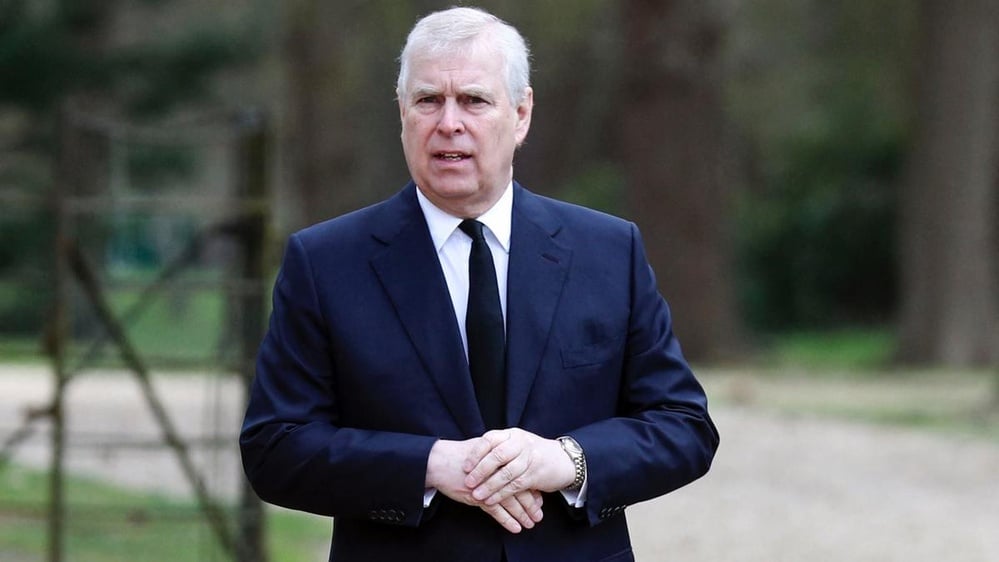
2026 © Helium Trades
Privacy Policy & Disclosure
* Disclaimer: Nothing on this website constitutes investment advice, performance data or any recommendation that any particular security, portfolio of securities, transaction or investment strategy is suitable for any specific person. Helium Trades is not responsible in any way for the accuracy
of any model predictions or price data. Any mention of a particular security and related prediction data is not a recommendation to buy or sell that security. Investments in securities involve the risk of loss. Past performance is no guarantee of future results. Helium Trades is not responsible for any of your investment decisions,
you should consult a financial expert before engaging in any transaction.
Helium Research Assistant

How can I help you today?
Ask any question about this page.