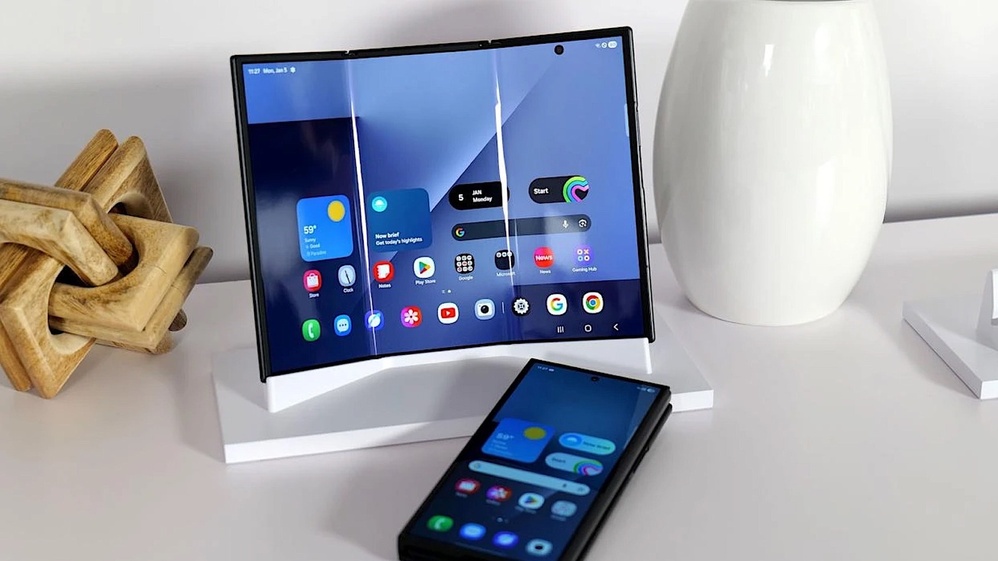
See whether Helium helps you make better-informed decisions. Try every Pro Trader feature for 30 days. No credit card required.
Try every Pro Trader feature for 30 days. No credit card required.
July 22, 2026 · 0 shares
The piece largely functions as promotional product reporting, foregrounding preorder deals, pricing, and color/storage options for Samsung's Galaxy Z Fold 8 family while including limited hands-on impressions, resulting in a mild promotional tilt with factual details and some evaluative language.
Tech news detailing preorder pricing, storage/color options, and deals for Samsung Galaxy Z Fold 8 family and Z Flip 8, with brief hands-on impressions.
Automated analysis; not human reviewed.
·
52 of 52 available dimensions scored; omitted dimensions are not treated as neutral.
·
Verified supporting quotes for 2 of 52 scored dimensions.
Claim: Presence of hands-on impressions and evaluative statements within a descriptive tech report
“We’re still in the process of testing all three foldables, but after spending a few hours with them, we’ve shared our early hands-on impressions of the Galaxy Z Flip 8, Galaxy Z Fold 8, and Galaxy Z Fold 8 Ultra.” · exact text match
“If you’re after Samsung’s most capable foldable, the Galaxy Z Fold 8 Ultra is the one to preorder.” · exact text match
Counterevidence:
“The piece also provides specifications, prices, and release dates, grounding the report in factual data.” · not found in supplied text
Why: Concrete specs and prices anchor claims; evaluative language bracketed by data.
Claim: Promotional, deal-centric framing with preorder gifts and targeted promotions
“Preorders for Samsung's new Z Fold and Flip 8 come with up to $350 in gift cards.” · exact text match
“Amazon is including a $350 gift card with preorders of the Galaxy Z Fold 8 Ultra, while Best Buy is offering a $200 gift card.” · exact text match
“Samsung, meanwhile, is throwing in $200 in Samsung credit, plus the $30 reservation credit for those who reserved, and you can also save $100 with code PAYPAL100.” · exact text match
Counterevidence:
“We’re still in the process of testing all three foldables, but after spending a few hours with them, we’ve shared our early hands-on impressions of the Galaxy Z Flip 8, Galaxy Z Fold 8, and Galaxy Z Fold 8 Ultra.” · exact text match
“Update, July 22nd: Added information about Verizon and AT&T’s deals.” · exact text match
Why: Promotional deal mentions anchor the narrative toward commercial incentives, while hands-on content and updates indicate some independent assessment.
Promotional tilt risk; some hands-on balancing content.
Forward-looking, positive framing of Samsung's foldable strategy and the future of foldables, tempered by acknowledgment of competition from Apple and industry speculation.
Concise, factful, accurate, balanced context for the article in one sentence.
Automated analysis; not human reviewed.
Limitations: Concise, case-specific limitations and plausible alternative interpretations.
·
1 of 52 available dimensions scored; omitted dimensions are not treated as neutral.
·
Verified supporting quotes for 0 of 1 scored dimensions.
Claim: Tone and framing are positively skewed toward Samsung's foldable strategy and future potential.
“Samsung’s bold design shift shows how consumer needs are reshaping the foldables category.
I was among the first outside Samsung to see its new lineup in Korea.”
· exact text match
“The new Fold gives you the best of both worlds, both from a productivity perspective, but more so from a content consumption perspective.” · not found in supplied text
“Back at Samsung’s headquarters, I realized I’d gotten an early peek at what could be a pivotal moment for foldables — not just for Samsung, but for the wider category.” · exact text match
Counterevidence:
“That trend may be shifting.” · exact text match
“Notably, the rumored foldable iPhone could also be called the iPhone Ultra, helping to position it as a high-end device among Apple’s smartphone lineup.” · exact text match
Why: Frequent positive framing about design and future potential dominates, with hedging about competition.
July 22, 2026 · 0 shares
Mostly neutral tech reporting with detailed specs and pricing, though occasional evaluative language about price ('eye-watering') introduces mild framing without political or ideological content.
Tech coverage detailing Samsung Galaxy Z Fold 8 Ultra specifications, price, preorder availability, and August shipping.
Automated analysis; not human reviewed. Limitations: Based solely on provided text; lacks cross-sourcing; affiliate disclosure may influence framing; no political content.
Tech product focus; affiliate disclosure may influence framing; limited data.
July 22, 2026 · 0 shares
The piece largely functions as promotional product reporting, foregrounding preorder deals, pricing, and color/storage options for Samsung's Galaxy Z Fold 8 family while including limited hands-on impressions, resulting in a mild promotional tilt with factual details and some evaluative language.
Tech news detailing preorder pricing, storage/color options, and deals for Samsung Galaxy Z Fold 8 family and Z Flip 8, with brief hands-on impressions.
Automated analysis; not human reviewed.
·
52 of 52 available dimensions scored; omitted dimensions are not treated as neutral.
·
Verified supporting quotes for 2 of 52 scored dimensions.
Claim: Presence of hands-on impressions and evaluative statements within a descriptive tech report
“We’re still in the process of testing all three foldables, but after spending a few hours with them, we’ve shared our early hands-on impressions of the Galaxy Z Flip 8, Galaxy Z Fold 8, and Galaxy Z Fold 8 Ultra.” · exact text match
“If you’re after Samsung’s most capable foldable, the Galaxy Z Fold 8 Ultra is the one to preorder.” · exact text match
Counterevidence:
“The piece also provides specifications, prices, and release dates, grounding the report in factual data.” · not found in supplied text
Why: Concrete specs and prices anchor claims; evaluative language bracketed by data.
Claim: Promotional, deal-centric framing with preorder gifts and targeted promotions
“Preorders for Samsung's new Z Fold and Flip 8 come with up to $350 in gift cards.” · exact text match
“Amazon is including a $350 gift card with preorders of the Galaxy Z Fold 8 Ultra, while Best Buy is offering a $200 gift card.” · exact text match
“Samsung, meanwhile, is throwing in $200 in Samsung credit, plus the $30 reservation credit for those who reserved, and you can also save $100 with code PAYPAL100.” · exact text match
Counterevidence:
“We’re still in the process of testing all three foldables, but after spending a few hours with them, we’ve shared our early hands-on impressions of the Galaxy Z Flip 8, Galaxy Z Fold 8, and Galaxy Z Fold 8 Ultra.” · exact text match
“Update, July 22nd: Added information about Verizon and AT&T’s deals.” · exact text match
Why: Promotional deal mentions anchor the narrative toward commercial incentives, while hands-on content and updates indicate some independent assessment.
Promotional tilt risk; some hands-on balancing content.
July 22, 2026 · 0 shares
Mostly neutral tech reporting with detailed specs and pricing, though occasional evaluative language about price ('eye-watering') introduces mild framing without political or ideological content.
Tech coverage detailing Samsung Galaxy Z Fold 8 Ultra specifications, price, preorder availability, and August shipping.
Automated analysis; not human reviewed. Limitations: Based solely on provided text; lacks cross-sourcing; affiliate disclosure may influence framing; no political content.
Tech product focus; affiliate disclosure may influence framing; limited data.
Neutral, data-driven briefing on Samsung's Galaxy Z Fold 8 series production plans, citing ETNews with minimal editorial framing.
Neutral, evidence-based tech reporting on leaked Galaxy Z Fold 8 lineup with mild hedging and speculative lines.
Tech reporting on leaked Samsung Galaxy Z Fold 8 lineup with images, specs, production targets, pricing, and event timing.
Automated analysis; not human reviewed.
Limitations: Concise, case-specific limitations and plausible alternative interpretations.
·
52 of 52 available dimensions scored; omitted dimensions are not treated as neutral.
·
Verified supporting quotes for 4 of 52 scored dimensions.
Claim: Neutral political orientation; no ideological tilt in coverage.
“Massive Samsung leak reveals official Galaxy Z Fold 8, Fold 8 Ultra, and Flip 8 images ahead of Unpacked” · exact text match
“Here at Tom’s Guide our expert editors are committed to bringing you the best news, reviews and guides to help you stay informed and ahead of the curve!” · exact text match
Counterevidence:
“We are a little over two days away from Galaxy Unpacked, which should see Samsung unveil the next wave of foldable Galaxy phones.” · exact text match
Why: No political framing; coverage centers on devices and event details.
Claim: Contains mild authorial opinion on pricing and design.
“I'm also hoping that the Z Fold 8 will be significantly cheaper than the Z Fold 8 Ultra, which is rumored to have a starting price of $2,099 — $100 more than the Z Fold 7.” · exact text match
Why: Personal pricing expectation embedded in reporting.
Claim: Slight hedging and uncertainty in parts of the article.
“I suspect that the design might have something to do with it.” · exact text match
“It's not entirely clear why, but I suspect that the design might have something to do with it.” · exact text match
Counterevidence:
“The article still provides concrete specs and production numbers.” · not found in supplied text
Why: Hedging language alongside measurable details.
Claim: Contains speculative language about design and market demand.
“I suspect that the design might have something to do with it.” · exact text match
“it's not entirely clear why, but I suspect that the design might have something to do with it.” · not found in supplied text
Counterevidence:
“Past rumors suggest screens sizes; numbers like 5.5-inch cover display and 7.6-inch foldable display are claimed.” · not found in supplied text
Why: Speculation present but anchored with leaks.
Claim: Article draws on credible leak sources and industry reporting.
“Blass is well known for publishing this sort of material close to big launch events” · exact text match
“According to industry sources speaking to ET News, Samsung has set a production target of 2.8 million Z Fold 8 units.” · exact text match
Why: Cites credible leak sources and industry reporting.
Ambiguities around battery/camera specs; hedging language.
July 22, 2026 · 0 shares
Coverage remains neutral and descriptive, presenting Gemini AI integration across Samsung devices with balanced caveats about app support and data access, while including comparisons to Siri without advocating for either side.
Tech coverage of Samsung's Unpacked 2026 focusing on Gemini AI integration across Galaxy devices, cross-ecosystem comparisons, and user-control/privacy considerations.
Automated analysis; not human reviewed.
Limitations: Concise, case-specific limitations and plausible alternative interpretations.
·
52 of 52 available dimensions scored; omitted dimensions are not treated as neutral.
·
Verified supporting quotes for 1 of 52 scored dimensions.
Claim: Score reflects a neutral, credible, and balanced presentation of Gemini AI integration.
“In a blog post, Google said that Gemini Intelligence can help users complete digital tasks, such as purchasing concert tickets, ordering dinner, or booking a travel experience.” · exact text match
“Samsung Unpacked was as much about software as it was hardware.” · exact text match
“Google explained that users will still have control over Gemini's process, allowing them to view its progress, pause an upcoming task, and verify that the AI is doing what they want it to.” · exact text match
Counterevidence:
“It's unclear whether Samsung will allow Gemini to request the same access to Galaxy users' devices.” · exact text match
Why: Descriptive sourcing and explicit caveats indicate balanced reporting rather than advocacy.
Ambiguity about Gemini data access and app support timeline; limited quotes.
Neutral, data-driven briefing on Samsung's Galaxy Z Fold 8 series production plans, citing ETNews with minimal editorial framing.
July 22, 2026 · 0 shares
Subjective personal tech writing that blends enthusiasm for TriFold with price, availability, and durability concerns, signaling a nonneutral framing despite factual device data.
Opinionated technology article examining Samsung Galaxy Z TriFold and Fold 8 lineup, focusing on design choices, pricing, release timing, durability, and potential future iterations.
Automated analysis; not human reviewed.
Limitations: Concise, case-specific limitations and plausible alternative interpretations.
·
9 of 52 available dimensions scored; omitted dimensions are not treated as neutral.
·
Verified supporting quotes for 6 of 9 scored dimensions.
Claim: Framing uses subjective judgments but anchored by data.
“I'm not sold on the squarish aspect ratio of most current foldables, which feel like technical compromises rather than a practical choice of screen size.” · exact text match
“The Galaxy Z TriFold officially went on sale in the US on January 30, 2026, following a limited release in South Korea last year.” · exact text match
“It cost $2,900 at launch — and that was before RAMaggedon.” · exact text match
Counterevidence:
“The base Z Fold 8 may be the standout, with a less squarish 7.6-inch main screen that's better built for reading and web browsing.” · exact text match
“The first two iterations of the Fold series were priced just below $2,000, but dropped several hundred dollars in subsequent models.” · exact text match
Why: Subjective framing coexists with verifiable facts, indicating partial objectivity.
Claim: There are occasional sensational framing markers around price and novelty.
“If Samsung brought back the TriFold, the retail price would be even more jaw-dropping.” · exact text match
Counterevidence:
“The article also provides concrete data like sale dates and prices to ground claims.” · not found in supplied text
Why: A single sensational phrase is balanced by multiple factual details.
Claim: The piece shows cautious sentiment toward TriFold viability, citing price and durability concerns.
“The drawbacks (and reasons why the TriFold didn't stay on sale long) remain.
Samsung's new foldables unveiled this week are more expensive across the board.”
· exact text match
“If Samsung brought back the TriFold, the retail price would be even more jaw-dropping.” · exact text match
“By March, Samsung ended production.” · exact text match
Counterevidence:
“I still want Samsung's discontinued Galaxy Z TriFold.” · exact text match
“Unfolding a full-sized screen from your pocket felt like a taste of the near-future.” · exact text match
Why: Balanced signals of both caution and desire indicate nuanced sentiment rather than a strict bias.
Claim: The piece relies on first-person perspective and subjective judgments to frame the topic.
“I still want Samsung's discontinued Galaxy Z TriFold.” · exact text match
“I'm not sold on the squarish aspect ratio of most current foldables, which feel like technical compromises rather than a practical choice of screen size.” · exact text match
“The Galaxy Z TriFold officially went on sale in the US on January 30, 2026, following a limited release in South Korea last year.” · exact text match
Counterevidence:
“The base Z Fold 8 may be the standout, with a less squarish 7.6-inch main screen that's better built for reading and web browsing.” · exact text match
“It cost $2,900 at launch — and that was before RAMaggedon.” · exact text match
Why: Subjective framing is present through personal aspirations, but factual price/date data anchor some claims.
Claim: The article blends hedging with concrete data, showing both rational and speculative elements.
“The TriFold, if continued, could pick up similar discounts as the technology and manufacturing scaled.
Maybe.”
· exact text match
“The window to buy the TriFold was a tiny one: It didn't go on sale in many places (like here in the UK, where this week's Unpacked event is being hosted).” · exact text match
Counterevidence:
“There are several concrete data points about launch price, sale date, and production status.” · not found in supplied text
Why: Hedging language paired with explicit data demonstrates mixed rationality.
Claim: Speculative framing about future pricing and availability is present.
“The TriFold, if continued, could pick up similar discounts as the technology and manufacturing scaled.
Maybe.”
· exact text match
“The window to buy the TriFold was a tiny one: It didn't go on sale in many places (like here in the UK, where this week's Unpacked event is being hosted).” · exact text match
Counterevidence:
“There are concrete data points about launch price, sale date, and production status.” · not found in supplied text
Why: Hedged speculation is present but anchored by actual data points.
Case-specific uncertainties and hedging due to reliance on article text.
July 22, 2026 · 0 shares
Coverage remains neutral and descriptive, presenting Gemini AI integration across Samsung devices with balanced caveats about app support and data access, while including comparisons to Siri without advocating for either side.
Tech coverage of Samsung's Unpacked 2026 focusing on Gemini AI integration across Galaxy devices, cross-ecosystem comparisons, and user-control/privacy considerations.
Automated analysis; not human reviewed.
Limitations: Concise, case-specific limitations and plausible alternative interpretations.
·
52 of 52 available dimensions scored; omitted dimensions are not treated as neutral.
·
Verified supporting quotes for 1 of 52 scored dimensions.
Claim: Score reflects a neutral, credible, and balanced presentation of Gemini AI integration.
“In a blog post, Google said that Gemini Intelligence can help users complete digital tasks, such as purchasing concert tickets, ordering dinner, or booking a travel experience.” · exact text match
“Samsung Unpacked was as much about software as it was hardware.” · exact text match
“Google explained that users will still have control over Gemini's process, allowing them to view its progress, pause an upcoming task, and verify that the AI is doing what they want it to.” · exact text match
Counterevidence:
“It's unclear whether Samsung will allow Gemini to request the same access to Galaxy users' devices.” · exact text match
Why: Descriptive sourcing and explicit caveats indicate balanced reporting rather than advocacy.
Ambiguity about Gemini data access and app support timeline; limited quotes.
July 22, 2026 · 0 shares
The piece largely functions as promotional product reporting, foregrounding preorder deals, pricing, and color/storage options for Samsung's Galaxy Z Fold 8 family while including limited hands-on impressions, resulting in a mild promotional tilt with factual details and some evaluative language.
Tech news detailing preorder pricing, storage/color options, and deals for Samsung Galaxy Z Fold 8 family and Z Flip 8, with brief hands-on impressions.
Automated analysis; not human reviewed. · 52 of 52 available dimensions scored; omitted dimensions are not treated as neutral. · Verified supporting quotes for 2 of 52 scored dimensions.
Claim: Presence of hands-on impressions and evaluative statements within a descriptive tech report
“We’re still in the process of testing all three foldables, but after spending a few hours with them, we’ve shared our early hands-on impressions of the Galaxy Z Flip 8, Galaxy Z Fold 8, and Galaxy Z Fold 8 Ultra.” · exact text match
“If you’re after Samsung’s most capable foldable, the Galaxy Z Fold 8 Ultra is the one to preorder.” · exact text match
Counterevidence:
“The piece also provides specifications, prices, and release dates, grounding the report in factual data.” · not found in supplied text
Why: Concrete specs and prices anchor claims; evaluative language bracketed by data.
Claim: Promotional, deal-centric framing with preorder gifts and targeted promotions
“Preorders for Samsung's new Z Fold and Flip 8 come with up to $350 in gift cards.” · exact text match
“Amazon is including a $350 gift card with preorders of the Galaxy Z Fold 8 Ultra, while Best Buy is offering a $200 gift card.” · exact text match
“Samsung, meanwhile, is throwing in $200 in Samsung credit, plus the $30 reservation credit for those who reserved, and you can also save $100 with code PAYPAL100.” · exact text match
Counterevidence:
“We’re still in the process of testing all three foldables, but after spending a few hours with them, we’ve shared our early hands-on impressions of the Galaxy Z Flip 8, Galaxy Z Fold 8, and Galaxy Z Fold 8 Ultra.” · exact text match
“Update, July 22nd: Added information about Verizon and AT&T’s deals.” · exact text match
Why: Promotional deal mentions anchor the narrative toward commercial incentives, while hands-on content and updates indicate some independent assessment.
Promotional tilt risk; some hands-on balancing content.
July 22, 2026 · 0 shares
Mostly neutral tech reporting with detailed specs and pricing, though occasional evaluative language about price ('eye-watering') introduces mild framing without political or ideological content.
Tech coverage detailing Samsung Galaxy Z Fold 8 Ultra specifications, price, preorder availability, and August shipping.
Automated analysis; not human reviewed. Limitations: Based solely on provided text; lacks cross-sourcing; affiliate disclosure may influence framing; no political content.
Tech product focus; affiliate disclosure may influence framing; limited data.
Neutral, data-driven briefing on Samsung's Galaxy Z Fold 8 series production plans, citing ETNews with minimal editorial framing.
Forward-looking, positive framing of Samsung's foldable strategy and the future of foldables, tempered by acknowledgment of competition from Apple and industry speculation.
Concise, factful, accurate, balanced context for the article in one sentence.
Automated analysis; not human reviewed. Limitations: Concise, case-specific limitations and plausible alternative interpretations. · 1 of 52 available dimensions scored; omitted dimensions are not treated as neutral. · Verified supporting quotes for 0 of 1 scored dimensions.
Claim: Tone and framing are positively skewed toward Samsung's foldable strategy and future potential.
“Samsung’s bold design shift shows how consumer needs are reshaping the foldables category. I was among the first outside Samsung to see its new lineup in Korea.” · exact text match
“The new Fold gives you the best of both worlds, both from a productivity perspective, but more so from a content consumption perspective.” · not found in supplied text
“Back at Samsung’s headquarters, I realized I’d gotten an early peek at what could be a pivotal moment for foldables — not just for Samsung, but for the wider category.” · exact text match
Counterevidence:
“That trend may be shifting.” · exact text match
“Notably, the rumored foldable iPhone could also be called the iPhone Ultra, helping to position it as a high-end device among Apple’s smartphone lineup.” · exact text match
Why: Frequent positive framing about design and future potential dominates, with hedging about competition.
Neutral, data-driven briefing on Samsung's Galaxy Z Fold 8 series production plans, citing ETNews with minimal editorial framing.
Neutral, evidence-based tech reporting on leaked Galaxy Z Fold 8 lineup with mild hedging and speculative lines.
Tech reporting on leaked Samsung Galaxy Z Fold 8 lineup with images, specs, production targets, pricing, and event timing.
Automated analysis; not human reviewed. Limitations: Concise, case-specific limitations and plausible alternative interpretations. · 52 of 52 available dimensions scored; omitted dimensions are not treated as neutral. · Verified supporting quotes for 4 of 52 scored dimensions.
Claim: Neutral political orientation; no ideological tilt in coverage.
“Massive Samsung leak reveals official Galaxy Z Fold 8, Fold 8 Ultra, and Flip 8 images ahead of Unpacked” · exact text match
“Here at Tom’s Guide our expert editors are committed to bringing you the best news, reviews and guides to help you stay informed and ahead of the curve!” · exact text match
Counterevidence:
“We are a little over two days away from Galaxy Unpacked, which should see Samsung unveil the next wave of foldable Galaxy phones.” · exact text match
Why: No political framing; coverage centers on devices and event details.
Claim: Contains mild authorial opinion on pricing and design.
“I'm also hoping that the Z Fold 8 will be significantly cheaper than the Z Fold 8 Ultra, which is rumored to have a starting price of $2,099 — $100 more than the Z Fold 7.” · exact text match
Why: Personal pricing expectation embedded in reporting.
Claim: Slight hedging and uncertainty in parts of the article.
“I suspect that the design might have something to do with it.” · exact text match
“It's not entirely clear why, but I suspect that the design might have something to do with it.” · exact text match
Counterevidence:
“The article still provides concrete specs and production numbers.” · not found in supplied text
Why: Hedging language alongside measurable details.
Claim: Contains speculative language about design and market demand.
“I suspect that the design might have something to do with it.” · exact text match
“it's not entirely clear why, but I suspect that the design might have something to do with it.” · not found in supplied text
Counterevidence:
“Past rumors suggest screens sizes; numbers like 5.5-inch cover display and 7.6-inch foldable display are claimed.” · not found in supplied text
Why: Speculation present but anchored with leaks.
Claim: Article draws on credible leak sources and industry reporting.
“Blass is well known for publishing this sort of material close to big launch events” · exact text match
“According to industry sources speaking to ET News, Samsung has set a production target of 2.8 million Z Fold 8 units.” · exact text match
Why: Cites credible leak sources and industry reporting.
Ambiguities around battery/camera specs; hedging language.
July 22, 2026 · 0 shares
Coverage remains neutral and descriptive, presenting Gemini AI integration across Samsung devices with balanced caveats about app support and data access, while including comparisons to Siri without advocating for either side.
Tech coverage of Samsung's Unpacked 2026 focusing on Gemini AI integration across Galaxy devices, cross-ecosystem comparisons, and user-control/privacy considerations.
Automated analysis; not human reviewed. Limitations: Concise, case-specific limitations and plausible alternative interpretations. · 52 of 52 available dimensions scored; omitted dimensions are not treated as neutral. · Verified supporting quotes for 1 of 52 scored dimensions.
Claim: Score reflects a neutral, credible, and balanced presentation of Gemini AI integration.
“In a blog post, Google said that Gemini Intelligence can help users complete digital tasks, such as purchasing concert tickets, ordering dinner, or booking a travel experience.” · exact text match
“Samsung Unpacked was as much about software as it was hardware.” · exact text match
“Google explained that users will still have control over Gemini's process, allowing them to view its progress, pause an upcoming task, and verify that the AI is doing what they want it to.” · exact text match
Counterevidence:
“It's unclear whether Samsung will allow Gemini to request the same access to Galaxy users' devices.” · exact text match
Why: Descriptive sourcing and explicit caveats indicate balanced reporting rather than advocacy.
Ambiguity about Gemini data access and app support timeline; limited quotes.
Calibration against the prior prediction
Neutral, data-driven briefing on Samsung's Galaxy Z Fold 8 series production plans, citing ETNews with minimal editorial framing.
Forward-looking, positive framing of Samsung's foldable strategy and the future of foldables, tempered by acknowledgment of competition from Apple and industry speculation.
Concise, factful, accurate, balanced context for the article in one sentence.
Automated analysis; not human reviewed. Limitations: Concise, case-specific limitations and plausible alternative interpretations. · 1 of 52 available dimensions scored; omitted dimensions are not treated as neutral. · Verified supporting quotes for 0 of 1 scored dimensions.
Claim: Tone and framing are positively skewed toward Samsung's foldable strategy and future potential.
“Samsung’s bold design shift shows how consumer needs are reshaping the foldables category. I was among the first outside Samsung to see its new lineup in Korea.” · exact text match
“The new Fold gives you the best of both worlds, both from a productivity perspective, but more so from a content consumption perspective.” · not found in supplied text
“Back at Samsung’s headquarters, I realized I’d gotten an early peek at what could be a pivotal moment for foldables — not just for Samsung, but for the wider category.” · exact text match
Counterevidence:
“That trend may be shifting.” · exact text match
“Notably, the rumored foldable iPhone could also be called the iPhone Ultra, helping to position it as a high-end device among Apple’s smartphone lineup.” · exact text match
Why: Frequent positive framing about design and future potential dominates, with hedging about competition.
Neutral, data-driven briefing on Samsung's Galaxy Z Fold 8 series production plans, citing ETNews with minimal editorial framing.
July 22, 2026 · 0 shares
The piece largely functions as promotional product reporting, foregrounding preorder deals, pricing, and color/storage options for Samsung's Galaxy Z Fold 8 family while including limited hands-on impressions, resulting in a mild promotional tilt with factual details and some evaluative language.
Tech news detailing preorder pricing, storage/color options, and deals for Samsung Galaxy Z Fold 8 family and Z Flip 8, with brief hands-on impressions.
Automated analysis; not human reviewed. · 52 of 52 available dimensions scored; omitted dimensions are not treated as neutral. · Verified supporting quotes for 2 of 52 scored dimensions.
Claim: Presence of hands-on impressions and evaluative statements within a descriptive tech report
“We’re still in the process of testing all three foldables, but after spending a few hours with them, we’ve shared our early hands-on impressions of the Galaxy Z Flip 8, Galaxy Z Fold 8, and Galaxy Z Fold 8 Ultra.” · exact text match
“If you’re after Samsung’s most capable foldable, the Galaxy Z Fold 8 Ultra is the one to preorder.” · exact text match
Counterevidence:
“The piece also provides specifications, prices, and release dates, grounding the report in factual data.” · not found in supplied text
Why: Concrete specs and prices anchor claims; evaluative language bracketed by data.
Claim: Promotional, deal-centric framing with preorder gifts and targeted promotions
“Preorders for Samsung's new Z Fold and Flip 8 come with up to $350 in gift cards.” · exact text match
“Amazon is including a $350 gift card with preorders of the Galaxy Z Fold 8 Ultra, while Best Buy is offering a $200 gift card.” · exact text match
“Samsung, meanwhile, is throwing in $200 in Samsung credit, plus the $30 reservation credit for those who reserved, and you can also save $100 with code PAYPAL100.” · exact text match
Counterevidence:
“We’re still in the process of testing all three foldables, but after spending a few hours with them, we’ve shared our early hands-on impressions of the Galaxy Z Flip 8, Galaxy Z Fold 8, and Galaxy Z Fold 8 Ultra.” · exact text match
“Update, July 22nd: Added information about Verizon and AT&T’s deals.” · exact text match
Why: Promotional deal mentions anchor the narrative toward commercial incentives, while hands-on content and updates indicate some independent assessment.
Promotional tilt risk; some hands-on balancing content.
July 22, 2026 · 0 shares
Coverage remains neutral and descriptive, presenting Gemini AI integration across Samsung devices with balanced caveats about app support and data access, while including comparisons to Siri without advocating for either side.
Tech coverage of Samsung's Unpacked 2026 focusing on Gemini AI integration across Galaxy devices, cross-ecosystem comparisons, and user-control/privacy considerations.
Automated analysis; not human reviewed. Limitations: Concise, case-specific limitations and plausible alternative interpretations. · 52 of 52 available dimensions scored; omitted dimensions are not treated as neutral. · Verified supporting quotes for 1 of 52 scored dimensions.
Claim: Score reflects a neutral, credible, and balanced presentation of Gemini AI integration.
“In a blog post, Google said that Gemini Intelligence can help users complete digital tasks, such as purchasing concert tickets, ordering dinner, or booking a travel experience.” · exact text match
“Samsung Unpacked was as much about software as it was hardware.” · exact text match
“Google explained that users will still have control over Gemini's process, allowing them to view its progress, pause an upcoming task, and verify that the AI is doing what they want it to.” · exact text match
Counterevidence:
“It's unclear whether Samsung will allow Gemini to request the same access to Galaxy users' devices.” · exact text match
Why: Descriptive sourcing and explicit caveats indicate balanced reporting rather than advocacy.
Ambiguity about Gemini data access and app support timeline; limited quotes.
Helium Bias
Neutral, data-driven briefing on Samsung's Galaxy Z Fold 8 series production plans, citing ETNews with minimal editorial framing.
July 22, 2026 · 0 shares
The piece largely functions as promotional product reporting, foregrounding preorder deals, pricing, and color/storage options for Samsung's Galaxy Z Fold 8 family while including limited hands-on impressions, resulting in a mild promotional tilt with factual details and some evaluative language.
Tech news detailing preorder pricing, storage/color options, and deals for Samsung Galaxy Z Fold 8 family and Z Flip 8, with brief hands-on impressions.
Automated analysis; not human reviewed. · 52 of 52 available dimensions scored; omitted dimensions are not treated as neutral. · Verified supporting quotes for 2 of 52 scored dimensions.
Claim: Presence of hands-on impressions and evaluative statements within a descriptive tech report
“We’re still in the process of testing all three foldables, but after spending a few hours with them, we’ve shared our early hands-on impressions of the Galaxy Z Flip 8, Galaxy Z Fold 8, and Galaxy Z Fold 8 Ultra.” · exact text match
“If you’re after Samsung’s most capable foldable, the Galaxy Z Fold 8 Ultra is the one to preorder.” · exact text match
Counterevidence:
“The piece also provides specifications, prices, and release dates, grounding the report in factual data.” · not found in supplied text
Why: Concrete specs and prices anchor claims; evaluative language bracketed by data.
Claim: Promotional, deal-centric framing with preorder gifts and targeted promotions
“Preorders for Samsung's new Z Fold and Flip 8 come with up to $350 in gift cards.” · exact text match
“Amazon is including a $350 gift card with preorders of the Galaxy Z Fold 8 Ultra, while Best Buy is offering a $200 gift card.” · exact text match
“Samsung, meanwhile, is throwing in $200 in Samsung credit, plus the $30 reservation credit for those who reserved, and you can also save $100 with code PAYPAL100.” · exact text match
Counterevidence:
“We’re still in the process of testing all three foldables, but after spending a few hours with them, we’ve shared our early hands-on impressions of the Galaxy Z Flip 8, Galaxy Z Fold 8, and Galaxy Z Fold 8 Ultra.” · exact text match
“Update, July 22nd: Added information about Verizon and AT&T’s deals.” · exact text match
Why: Promotional deal mentions anchor the narrative toward commercial incentives, while hands-on content and updates indicate some independent assessment.
Promotional tilt risk; some hands-on balancing content.
Forward-looking, positive framing of Samsung's foldable strategy and the future of foldables, tempered by acknowledgment of competition from Apple and industry speculation.
Concise, factful, accurate, balanced context for the article in one sentence.
Automated analysis; not human reviewed. Limitations: Concise, case-specific limitations and plausible alternative interpretations. · 1 of 52 available dimensions scored; omitted dimensions are not treated as neutral. · Verified supporting quotes for 0 of 1 scored dimensions.
Claim: Tone and framing are positively skewed toward Samsung's foldable strategy and future potential.
“Samsung’s bold design shift shows how consumer needs are reshaping the foldables category. I was among the first outside Samsung to see its new lineup in Korea.” · exact text match
“The new Fold gives you the best of both worlds, both from a productivity perspective, but more so from a content consumption perspective.” · not found in supplied text
“Back at Samsung’s headquarters, I realized I’d gotten an early peek at what could be a pivotal moment for foldables — not just for Samsung, but for the wider category.” · exact text match
Counterevidence:
“That trend may be shifting.” · exact text match
“Notably, the rumored foldable iPhone could also be called the iPhone Ultra, helping to position it as a high-end device among Apple’s smartphone lineup.” · exact text match
Why: Frequent positive framing about design and future potential dominates, with hedging about competition.
Story Blindspots
Neutral, data-driven briefing on Samsung's Galaxy Z Fold 8 series production plans, citing ETNews with minimal editorial framing.
Neutral, evidence-based tech reporting on leaked Galaxy Z Fold 8 lineup with mild hedging and speculative lines.
Tech reporting on leaked Samsung Galaxy Z Fold 8 lineup with images, specs, production targets, pricing, and event timing.
Automated analysis; not human reviewed. Limitations: Concise, case-specific limitations and plausible alternative interpretations. · 52 of 52 available dimensions scored; omitted dimensions are not treated as neutral. · Verified supporting quotes for 4 of 52 scored dimensions.
Claim: Neutral political orientation; no ideological tilt in coverage.
“Massive Samsung leak reveals official Galaxy Z Fold 8, Fold 8 Ultra, and Flip 8 images ahead of Unpacked” · exact text match
“Here at Tom’s Guide our expert editors are committed to bringing you the best news, reviews and guides to help you stay informed and ahead of the curve!” · exact text match
Counterevidence:
“We are a little over two days away from Galaxy Unpacked, which should see Samsung unveil the next wave of foldable Galaxy phones.” · exact text match
Why: No political framing; coverage centers on devices and event details.
Claim: Contains mild authorial opinion on pricing and design.
“I'm also hoping that the Z Fold 8 will be significantly cheaper than the Z Fold 8 Ultra, which is rumored to have a starting price of $2,099 — $100 more than the Z Fold 7.” · exact text match
Why: Personal pricing expectation embedded in reporting.
Claim: Slight hedging and uncertainty in parts of the article.
“I suspect that the design might have something to do with it.” · exact text match
“It's not entirely clear why, but I suspect that the design might have something to do with it.” · exact text match
Counterevidence:
“The article still provides concrete specs and production numbers.” · not found in supplied text
Why: Hedging language alongside measurable details.
Claim: Contains speculative language about design and market demand.
“I suspect that the design might have something to do with it.” · exact text match
“it's not entirely clear why, but I suspect that the design might have something to do with it.” · not found in supplied text
Counterevidence:
“Past rumors suggest screens sizes; numbers like 5.5-inch cover display and 7.6-inch foldable display are claimed.” · not found in supplied text
Why: Speculation present but anchored with leaks.
Claim: Article draws on credible leak sources and industry reporting.
“Blass is well known for publishing this sort of material close to big launch events” · exact text match
“According to industry sources speaking to ET News, Samsung has set a production target of 2.8 million Z Fold 8 units.” · exact text match
Why: Cites credible leak sources and industry reporting.
Ambiguities around battery/camera specs; hedging language.
July 22, 2026 · 0 shares
The piece largely functions as promotional product reporting, foregrounding preorder deals, pricing, and color/storage options for Samsung's Galaxy Z Fold 8 family while including limited hands-on impressions, resulting in a mild promotional tilt with factual details and some evaluative language.
Tech news detailing preorder pricing, storage/color options, and deals for Samsung Galaxy Z Fold 8 family and Z Flip 8, with brief hands-on impressions.
Automated analysis; not human reviewed. · 52 of 52 available dimensions scored; omitted dimensions are not treated as neutral. · Verified supporting quotes for 2 of 52 scored dimensions.
Claim: Presence of hands-on impressions and evaluative statements within a descriptive tech report
“We’re still in the process of testing all three foldables, but after spending a few hours with them, we’ve shared our early hands-on impressions of the Galaxy Z Flip 8, Galaxy Z Fold 8, and Galaxy Z Fold 8 Ultra.” · exact text match
“If you’re after Samsung’s most capable foldable, the Galaxy Z Fold 8 Ultra is the one to preorder.” · exact text match
Counterevidence:
“The piece also provides specifications, prices, and release dates, grounding the report in factual data.” · not found in supplied text
Why: Concrete specs and prices anchor claims; evaluative language bracketed by data.
Claim: Promotional, deal-centric framing with preorder gifts and targeted promotions
“Preorders for Samsung's new Z Fold and Flip 8 come with up to $350 in gift cards.” · exact text match
“Amazon is including a $350 gift card with preorders of the Galaxy Z Fold 8 Ultra, while Best Buy is offering a $200 gift card.” · exact text match
“Samsung, meanwhile, is throwing in $200 in Samsung credit, plus the $30 reservation credit for those who reserved, and you can also save $100 with code PAYPAL100.” · exact text match
Counterevidence:
“We’re still in the process of testing all three foldables, but after spending a few hours with them, we’ve shared our early hands-on impressions of the Galaxy Z Flip 8, Galaxy Z Fold 8, and Galaxy Z Fold 8 Ultra.” · exact text match
“Update, July 22nd: Added information about Verizon and AT&T’s deals.” · exact text match
Why: Promotional deal mentions anchor the narrative toward commercial incentives, while hands-on content and updates indicate some independent assessment.
Promotional tilt risk; some hands-on balancing content.
Forward-looking, positive framing of Samsung's foldable strategy and the future of foldables, tempered by acknowledgment of competition from Apple and industry speculation.
Concise, factful, accurate, balanced context for the article in one sentence.
Automated analysis; not human reviewed. Limitations: Concise, case-specific limitations and plausible alternative interpretations. · 1 of 52 available dimensions scored; omitted dimensions are not treated as neutral. · Verified supporting quotes for 0 of 1 scored dimensions.
Claim: Tone and framing are positively skewed toward Samsung's foldable strategy and future potential.
“Samsung’s bold design shift shows how consumer needs are reshaping the foldables category. I was among the first outside Samsung to see its new lineup in Korea.” · exact text match
“The new Fold gives you the best of both worlds, both from a productivity perspective, but more so from a content consumption perspective.” · not found in supplied text
“Back at Samsung’s headquarters, I realized I’d gotten an early peek at what could be a pivotal moment for foldables — not just for Samsung, but for the wider category.” · exact text match
Counterevidence:
“That trend may be shifting.” · exact text match
“Notably, the rumored foldable iPhone could also be called the iPhone Ultra, helping to position it as a high-end device among Apple’s smartphone lineup.” · exact text match
Why: Frequent positive framing about design and future potential dominates, with hedging about competition.
Neutral, data-driven briefing on Samsung's Galaxy Z Fold 8 series production plans, citing ETNews with minimal editorial framing.
Forward-looking, positive framing of Samsung's foldable strategy and the future of foldables, tempered by acknowledgment of competition from Apple and industry speculation.
Concise, factful, accurate, balanced context for the article in one sentence.
Automated analysis; not human reviewed. Limitations: Concise, case-specific limitations and plausible alternative interpretations. · 1 of 52 available dimensions scored; omitted dimensions are not treated as neutral. · Verified supporting quotes for 0 of 1 scored dimensions.
Claim: Tone and framing are positively skewed toward Samsung's foldable strategy and future potential.
“Samsung’s bold design shift shows how consumer needs are reshaping the foldables category. I was among the first outside Samsung to see its new lineup in Korea.” · exact text match
“The new Fold gives you the best of both worlds, both from a productivity perspective, but more so from a content consumption perspective.” · not found in supplied text
“Back at Samsung’s headquarters, I realized I’d gotten an early peek at what could be a pivotal moment for foldables — not just for Samsung, but for the wider category.” · exact text match
Counterevidence:
“That trend may be shifting.” · exact text match
“Notably, the rumored foldable iPhone could also be called the iPhone Ultra, helping to position it as a high-end device among Apple’s smartphone lineup.” · exact text match
Why: Frequent positive framing about design and future potential dominates, with hedging about competition.
Neutral, data-driven briefing on Samsung's Galaxy Z Fold 8 series production plans, citing ETNews with minimal editorial framing.
July 22, 2026 · 0 shares
The piece largely functions as promotional product reporting, foregrounding preorder deals, pricing, and color/storage options for Samsung's Galaxy Z Fold 8 family while including limited hands-on impressions, resulting in a mild promotional tilt with factual details and some evaluative language.
Tech news detailing preorder pricing, storage/color options, and deals for Samsung Galaxy Z Fold 8 family and Z Flip 8, with brief hands-on impressions.
Automated analysis; not human reviewed. · 52 of 52 available dimensions scored; omitted dimensions are not treated as neutral. · Verified supporting quotes for 2 of 52 scored dimensions.
Claim: Presence of hands-on impressions and evaluative statements within a descriptive tech report
“We’re still in the process of testing all three foldables, but after spending a few hours with them, we’ve shared our early hands-on impressions of the Galaxy Z Flip 8, Galaxy Z Fold 8, and Galaxy Z Fold 8 Ultra.” · exact text match
“If you’re after Samsung’s most capable foldable, the Galaxy Z Fold 8 Ultra is the one to preorder.” · exact text match
Counterevidence:
“The piece also provides specifications, prices, and release dates, grounding the report in factual data.” · not found in supplied text
Why: Concrete specs and prices anchor claims; evaluative language bracketed by data.
Claim: Promotional, deal-centric framing with preorder gifts and targeted promotions
“Preorders for Samsung's new Z Fold and Flip 8 come with up to $350 in gift cards.” · exact text match
“Amazon is including a $350 gift card with preorders of the Galaxy Z Fold 8 Ultra, while Best Buy is offering a $200 gift card.” · exact text match
“Samsung, meanwhile, is throwing in $200 in Samsung credit, plus the $30 reservation credit for those who reserved, and you can also save $100 with code PAYPAL100.” · exact text match
Counterevidence:
“We’re still in the process of testing all three foldables, but after spending a few hours with them, we’ve shared our early hands-on impressions of the Galaxy Z Flip 8, Galaxy Z Fold 8, and Galaxy Z Fold 8 Ultra.” · exact text match
“Update, July 22nd: Added information about Verizon and AT&T’s deals.” · exact text match
Why: Promotional deal mentions anchor the narrative toward commercial incentives, while hands-on content and updates indicate some independent assessment.
Promotional tilt risk; some hands-on balancing content.
July 22, 2026 · 0 shares
Mostly neutral tech reporting with detailed specs and pricing, though occasional evaluative language about price ('eye-watering') introduces mild framing without political or ideological content.
Tech coverage detailing Samsung Galaxy Z Fold 8 Ultra specifications, price, preorder availability, and August shipping.
Automated analysis; not human reviewed. Limitations: Based solely on provided text; lacks cross-sourcing; affiliate disclosure may influence framing; no political content.
Tech product focus; affiliate disclosure may influence framing; limited data.
July 22, 2026 · 0 shares
The piece largely functions as promotional product reporting, foregrounding preorder deals, pricing, and color/storage options for Samsung's Galaxy Z Fold 8 family while including limited hands-on impressions, resulting in a mild promotional tilt with factual details and some evaluative language.
Tech news detailing preorder pricing, storage/color options, and deals for Samsung Galaxy Z Fold 8 family and Z Flip 8, with brief hands-on impressions.
Automated analysis; not human reviewed. · 52 of 52 available dimensions scored; omitted dimensions are not treated as neutral. · Verified supporting quotes for 2 of 52 scored dimensions.
Claim: Presence of hands-on impressions and evaluative statements within a descriptive tech report
“We’re still in the process of testing all three foldables, but after spending a few hours with them, we’ve shared our early hands-on impressions of the Galaxy Z Flip 8, Galaxy Z Fold 8, and Galaxy Z Fold 8 Ultra.” · exact text match
“If you’re after Samsung’s most capable foldable, the Galaxy Z Fold 8 Ultra is the one to preorder.” · exact text match
Counterevidence:
“The piece also provides specifications, prices, and release dates, grounding the report in factual data.” · not found in supplied text
Why: Concrete specs and prices anchor claims; evaluative language bracketed by data.
Claim: Promotional, deal-centric framing with preorder gifts and targeted promotions
“Preorders for Samsung's new Z Fold and Flip 8 come with up to $350 in gift cards.” · exact text match
“Amazon is including a $350 gift card with preorders of the Galaxy Z Fold 8 Ultra, while Best Buy is offering a $200 gift card.” · exact text match
“Samsung, meanwhile, is throwing in $200 in Samsung credit, plus the $30 reservation credit for those who reserved, and you can also save $100 with code PAYPAL100.” · exact text match
Counterevidence:
“We’re still in the process of testing all three foldables, but after spending a few hours with them, we’ve shared our early hands-on impressions of the Galaxy Z Flip 8, Galaxy Z Fold 8, and Galaxy Z Fold 8 Ultra.” · exact text match
“Update, July 22nd: Added information about Verizon and AT&T’s deals.” · exact text match
Why: Promotional deal mentions anchor the narrative toward commercial incentives, while hands-on content and updates indicate some independent assessment.
Promotional tilt risk; some hands-on balancing content.
July 22, 2026 · 0 shares
Subjective personal tech writing that blends enthusiasm for TriFold with price, availability, and durability concerns, signaling a nonneutral framing despite factual device data.
Opinionated technology article examining Samsung Galaxy Z TriFold and Fold 8 lineup, focusing on design choices, pricing, release timing, durability, and potential future iterations.
Automated analysis; not human reviewed. Limitations: Concise, case-specific limitations and plausible alternative interpretations. · 9 of 52 available dimensions scored; omitted dimensions are not treated as neutral. · Verified supporting quotes for 6 of 9 scored dimensions.
Claim: Framing uses subjective judgments but anchored by data.
“I'm not sold on the squarish aspect ratio of most current foldables, which feel like technical compromises rather than a practical choice of screen size.” · exact text match
“The Galaxy Z TriFold officially went on sale in the US on January 30, 2026, following a limited release in South Korea last year.” · exact text match
“It cost $2,900 at launch — and that was before RAMaggedon.” · exact text match
Counterevidence:
“The base Z Fold 8 may be the standout, with a less squarish 7.6-inch main screen that's better built for reading and web browsing.” · exact text match
“The first two iterations of the Fold series were priced just below $2,000, but dropped several hundred dollars in subsequent models.” · exact text match
Why: Subjective framing coexists with verifiable facts, indicating partial objectivity.
Claim: There are occasional sensational framing markers around price and novelty.
“If Samsung brought back the TriFold, the retail price would be even more jaw-dropping.” · exact text match
Counterevidence:
“The article also provides concrete data like sale dates and prices to ground claims.” · not found in supplied text
Why: A single sensational phrase is balanced by multiple factual details.
Claim: The piece shows cautious sentiment toward TriFold viability, citing price and durability concerns.
“The drawbacks (and reasons why the TriFold didn't stay on sale long) remain. Samsung's new foldables unveiled this week are more expensive across the board.” · exact text match
“If Samsung brought back the TriFold, the retail price would be even more jaw-dropping.” · exact text match
“By March, Samsung ended production.” · exact text match
Counterevidence:
“I still want Samsung's discontinued Galaxy Z TriFold.” · exact text match
“Unfolding a full-sized screen from your pocket felt like a taste of the near-future.” · exact text match
Why: Balanced signals of both caution and desire indicate nuanced sentiment rather than a strict bias.
Claim: The piece relies on first-person perspective and subjective judgments to frame the topic.
“I still want Samsung's discontinued Galaxy Z TriFold.” · exact text match
“I'm not sold on the squarish aspect ratio of most current foldables, which feel like technical compromises rather than a practical choice of screen size.” · exact text match
“The Galaxy Z TriFold officially went on sale in the US on January 30, 2026, following a limited release in South Korea last year.” · exact text match
Counterevidence:
“The base Z Fold 8 may be the standout, with a less squarish 7.6-inch main screen that's better built for reading and web browsing.” · exact text match
“It cost $2,900 at launch — and that was before RAMaggedon.” · exact text match
Why: Subjective framing is present through personal aspirations, but factual price/date data anchor some claims.
Claim: The article blends hedging with concrete data, showing both rational and speculative elements.
“The TriFold, if continued, could pick up similar discounts as the technology and manufacturing scaled. Maybe.” · exact text match
“The window to buy the TriFold was a tiny one: It didn't go on sale in many places (like here in the UK, where this week's Unpacked event is being hosted).” · exact text match
Counterevidence:
“There are several concrete data points about launch price, sale date, and production status.” · not found in supplied text
Why: Hedging language paired with explicit data demonstrates mixed rationality.
Claim: Speculative framing about future pricing and availability is present.
“The TriFold, if continued, could pick up similar discounts as the technology and manufacturing scaled. Maybe.” · exact text match
“The window to buy the TriFold was a tiny one: It didn't go on sale in many places (like here in the UK, where this week's Unpacked event is being hosted).” · exact text match
Counterevidence:
“There are concrete data points about launch price, sale date, and production status.” · not found in supplied text
Why: Hedged speculation is present but anchored by actual data points.
Case-specific uncertainties and hedging due to reliance on article text.
July 22, 2026 · 0 shares
Subjective personal tech writing that blends enthusiasm for TriFold with price, availability, and durability concerns, signaling a nonneutral framing despite factual device data.
Opinionated technology article examining Samsung Galaxy Z TriFold and Fold 8 lineup, focusing on design choices, pricing, release timing, durability, and potential future iterations.
Automated analysis; not human reviewed. Limitations: Concise, case-specific limitations and plausible alternative interpretations. · 9 of 52 available dimensions scored; omitted dimensions are not treated as neutral. · Verified supporting quotes for 6 of 9 scored dimensions.
Claim: Framing uses subjective judgments but anchored by data.
“I'm not sold on the squarish aspect ratio of most current foldables, which feel like technical compromises rather than a practical choice of screen size.” · exact text match
“The Galaxy Z TriFold officially went on sale in the US on January 30, 2026, following a limited release in South Korea last year.” · exact text match
“It cost $2,900 at launch — and that was before RAMaggedon.” · exact text match
Counterevidence:
“The base Z Fold 8 may be the standout, with a less squarish 7.6-inch main screen that's better built for reading and web browsing.” · exact text match
“The first two iterations of the Fold series were priced just below $2,000, but dropped several hundred dollars in subsequent models.” · exact text match
Why: Subjective framing coexists with verifiable facts, indicating partial objectivity.
Claim: There are occasional sensational framing markers around price and novelty.
“If Samsung brought back the TriFold, the retail price would be even more jaw-dropping.” · exact text match
Counterevidence:
“The article also provides concrete data like sale dates and prices to ground claims.” · not found in supplied text
Why: A single sensational phrase is balanced by multiple factual details.
Claim: The piece shows cautious sentiment toward TriFold viability, citing price and durability concerns.
“The drawbacks (and reasons why the TriFold didn't stay on sale long) remain. Samsung's new foldables unveiled this week are more expensive across the board.” · exact text match
“If Samsung brought back the TriFold, the retail price would be even more jaw-dropping.” · exact text match
“By March, Samsung ended production.” · exact text match
Counterevidence:
“I still want Samsung's discontinued Galaxy Z TriFold.” · exact text match
“Unfolding a full-sized screen from your pocket felt like a taste of the near-future.” · exact text match
Why: Balanced signals of both caution and desire indicate nuanced sentiment rather than a strict bias.
Claim: The piece relies on first-person perspective and subjective judgments to frame the topic.
“I still want Samsung's discontinued Galaxy Z TriFold.” · exact text match
“I'm not sold on the squarish aspect ratio of most current foldables, which feel like technical compromises rather than a practical choice of screen size.” · exact text match
“The Galaxy Z TriFold officially went on sale in the US on January 30, 2026, following a limited release in South Korea last year.” · exact text match
Counterevidence:
“The base Z Fold 8 may be the standout, with a less squarish 7.6-inch main screen that's better built for reading and web browsing.” · exact text match
“It cost $2,900 at launch — and that was before RAMaggedon.” · exact text match
Why: Subjective framing is present through personal aspirations, but factual price/date data anchor some claims.
Claim: The article blends hedging with concrete data, showing both rational and speculative elements.
“The TriFold, if continued, could pick up similar discounts as the technology and manufacturing scaled. Maybe.” · exact text match
“The window to buy the TriFold was a tiny one: It didn't go on sale in many places (like here in the UK, where this week's Unpacked event is being hosted).” · exact text match
Counterevidence:
“There are several concrete data points about launch price, sale date, and production status.” · not found in supplied text
Why: Hedging language paired with explicit data demonstrates mixed rationality.
Claim: Speculative framing about future pricing and availability is present.
“The TriFold, if continued, could pick up similar discounts as the technology and manufacturing scaled. Maybe.” · exact text match
“The window to buy the TriFold was a tiny one: It didn't go on sale in many places (like here in the UK, where this week's Unpacked event is being hosted).” · exact text match
Counterevidence:
“There are concrete data points about launch price, sale date, and production status.” · not found in supplied text
Why: Hedged speculation is present but anchored by actual data points.
Case-specific uncertainties and hedging due to reliance on article text.
July 22, 2026 · 0 shares
Coverage remains neutral and descriptive, presenting Gemini AI integration across Samsung devices with balanced caveats about app support and data access, while including comparisons to Siri without advocating for either side.
Tech coverage of Samsung's Unpacked 2026 focusing on Gemini AI integration across Galaxy devices, cross-ecosystem comparisons, and user-control/privacy considerations.
Automated analysis; not human reviewed. Limitations: Concise, case-specific limitations and plausible alternative interpretations. · 52 of 52 available dimensions scored; omitted dimensions are not treated as neutral. · Verified supporting quotes for 1 of 52 scored dimensions.
Claim: Score reflects a neutral, credible, and balanced presentation of Gemini AI integration.
“In a blog post, Google said that Gemini Intelligence can help users complete digital tasks, such as purchasing concert tickets, ordering dinner, or booking a travel experience.” · exact text match
“Samsung Unpacked was as much about software as it was hardware.” · exact text match
“Google explained that users will still have control over Gemini's process, allowing them to view its progress, pause an upcoming task, and verify that the AI is doing what they want it to.” · exact text match
Counterevidence:
“It's unclear whether Samsung will allow Gemini to request the same access to Galaxy users' devices.” · exact text match
Why: Descriptive sourcing and explicit caveats indicate balanced reporting rather than advocacy.
Ambiguity about Gemini data access and app support timeline; limited quotes.
July 22, 2026 · 0 shares
Coverage remains neutral and descriptive, presenting Gemini AI integration across Samsung devices with balanced caveats about app support and data access, while including comparisons to Siri without advocating for either side.
Tech coverage of Samsung's Unpacked 2026 focusing on Gemini AI integration across Galaxy devices, cross-ecosystem comparisons, and user-control/privacy considerations.
Automated analysis; not human reviewed. Limitations: Concise, case-specific limitations and plausible alternative interpretations. · 52 of 52 available dimensions scored; omitted dimensions are not treated as neutral. · Verified supporting quotes for 1 of 52 scored dimensions.
Claim: Score reflects a neutral, credible, and balanced presentation of Gemini AI integration.
“In a blog post, Google said that Gemini Intelligence can help users complete digital tasks, such as purchasing concert tickets, ordering dinner, or booking a travel experience.” · exact text match
“Samsung Unpacked was as much about software as it was hardware.” · exact text match
“Google explained that users will still have control over Gemini's process, allowing them to view its progress, pause an upcoming task, and verify that the AI is doing what they want it to.” · exact text match
Counterevidence:
“It's unclear whether Samsung will allow Gemini to request the same access to Galaxy users' devices.” · exact text match
Why: Descriptive sourcing and explicit caveats indicate balanced reporting rather than advocacy.
Ambiguity about Gemini data access and app support timeline; limited quotes.
July 22, 2026 · 0 shares
Coverage remains neutral and descriptive, presenting Gemini AI integration across Samsung devices with balanced caveats about app support and data access, while including comparisons to Siri without advocating for either side.
Tech coverage of Samsung's Unpacked 2026 focusing on Gemini AI integration across Galaxy devices, cross-ecosystem comparisons, and user-control/privacy considerations.
Automated analysis; not human reviewed. Limitations: Concise, case-specific limitations and plausible alternative interpretations. · 52 of 52 available dimensions scored; omitted dimensions are not treated as neutral. · Verified supporting quotes for 1 of 52 scored dimensions.
Claim: Score reflects a neutral, credible, and balanced presentation of Gemini AI integration.
“In a blog post, Google said that Gemini Intelligence can help users complete digital tasks, such as purchasing concert tickets, ordering dinner, or booking a travel experience.” · exact text match
“Samsung Unpacked was as much about software as it was hardware.” · exact text match
“Google explained that users will still have control over Gemini's process, allowing them to view its progress, pause an upcoming task, and verify that the AI is doing what they want it to.” · exact text match
Counterevidence:
“It's unclear whether Samsung will allow Gemini to request the same access to Galaxy users' devices.” · exact text match
Why: Descriptive sourcing and explicit caveats indicate balanced reporting rather than advocacy.
Ambiguity about Gemini data access and app support timeline; limited quotes.
Neutral, data-driven briefing on Samsung's Galaxy Z Fold 8 series production plans, citing ETNews with minimal editorial framing.
July 22, 2026 · 0 shares
Subjective personal tech writing that blends enthusiasm for TriFold with price, availability, and durability concerns, signaling a nonneutral framing despite factual device data.
Opinionated technology article examining Samsung Galaxy Z TriFold and Fold 8 lineup, focusing on design choices, pricing, release timing, durability, and potential future iterations.
Automated analysis; not human reviewed. Limitations: Concise, case-specific limitations and plausible alternative interpretations. · 9 of 52 available dimensions scored; omitted dimensions are not treated as neutral. · Verified supporting quotes for 6 of 9 scored dimensions.
Claim: Framing uses subjective judgments but anchored by data.
“I'm not sold on the squarish aspect ratio of most current foldables, which feel like technical compromises rather than a practical choice of screen size.” · exact text match
“The Galaxy Z TriFold officially went on sale in the US on January 30, 2026, following a limited release in South Korea last year.” · exact text match
“It cost $2,900 at launch — and that was before RAMaggedon.” · exact text match
Counterevidence:
“The base Z Fold 8 may be the standout, with a less squarish 7.6-inch main screen that's better built for reading and web browsing.” · exact text match
“The first two iterations of the Fold series were priced just below $2,000, but dropped several hundred dollars in subsequent models.” · exact text match
Why: Subjective framing coexists with verifiable facts, indicating partial objectivity.
Claim: There are occasional sensational framing markers around price and novelty.
“If Samsung brought back the TriFold, the retail price would be even more jaw-dropping.” · exact text match
Counterevidence:
“The article also provides concrete data like sale dates and prices to ground claims.” · not found in supplied text
Why: A single sensational phrase is balanced by multiple factual details.
Claim: The piece shows cautious sentiment toward TriFold viability, citing price and durability concerns.
“The drawbacks (and reasons why the TriFold didn't stay on sale long) remain. Samsung's new foldables unveiled this week are more expensive across the board.” · exact text match
“If Samsung brought back the TriFold, the retail price would be even more jaw-dropping.” · exact text match
“By March, Samsung ended production.” · exact text match
Counterevidence:
“I still want Samsung's discontinued Galaxy Z TriFold.” · exact text match
“Unfolding a full-sized screen from your pocket felt like a taste of the near-future.” · exact text match
Why: Balanced signals of both caution and desire indicate nuanced sentiment rather than a strict bias.
Claim: The piece relies on first-person perspective and subjective judgments to frame the topic.
“I still want Samsung's discontinued Galaxy Z TriFold.” · exact text match
“I'm not sold on the squarish aspect ratio of most current foldables, which feel like technical compromises rather than a practical choice of screen size.” · exact text match
“The Galaxy Z TriFold officially went on sale in the US on January 30, 2026, following a limited release in South Korea last year.” · exact text match
Counterevidence:
“The base Z Fold 8 may be the standout, with a less squarish 7.6-inch main screen that's better built for reading and web browsing.” · exact text match
“It cost $2,900 at launch — and that was before RAMaggedon.” · exact text match
Why: Subjective framing is present through personal aspirations, but factual price/date data anchor some claims.
Claim: The article blends hedging with concrete data, showing both rational and speculative elements.
“The TriFold, if continued, could pick up similar discounts as the technology and manufacturing scaled. Maybe.” · exact text match
“The window to buy the TriFold was a tiny one: It didn't go on sale in many places (like here in the UK, where this week's Unpacked event is being hosted).” · exact text match
Counterevidence:
“There are several concrete data points about launch price, sale date, and production status.” · not found in supplied text
Why: Hedging language paired with explicit data demonstrates mixed rationality.
Claim: Speculative framing about future pricing and availability is present.
“The TriFold, if continued, could pick up similar discounts as the technology and manufacturing scaled. Maybe.” · exact text match
“The window to buy the TriFold was a tiny one: It didn't go on sale in many places (like here in the UK, where this week's Unpacked event is being hosted).” · exact text match
Counterevidence:
“There are concrete data points about launch price, sale date, and production status.” · not found in supplied text
Why: Hedged speculation is present but anchored by actual data points.
Case-specific uncertainties and hedging due to reliance on article text.
July 22, 2026 · 0 shares
The piece largely functions as promotional product reporting, foregrounding preorder deals, pricing, and color/storage options for Samsung's Galaxy Z Fold 8 family while including limited hands-on impressions, resulting in a mild promotional tilt with factual details and some evaluative language.
Tech news detailing preorder pricing, storage/color options, and deals for Samsung Galaxy Z Fold 8 family and Z Flip 8, with brief hands-on impressions.
Automated analysis; not human reviewed. · 52 of 52 available dimensions scored; omitted dimensions are not treated as neutral. · Verified supporting quotes for 2 of 52 scored dimensions.
Claim: Presence of hands-on impressions and evaluative statements within a descriptive tech report
“We’re still in the process of testing all three foldables, but after spending a few hours with them, we’ve shared our early hands-on impressions of the Galaxy Z Flip 8, Galaxy Z Fold 8, and Galaxy Z Fold 8 Ultra.” · exact text match
“If you’re after Samsung’s most capable foldable, the Galaxy Z Fold 8 Ultra is the one to preorder.” · exact text match
Counterevidence:
“The piece also provides specifications, prices, and release dates, grounding the report in factual data.” · not found in supplied text
Why: Concrete specs and prices anchor claims; evaluative language bracketed by data.
Claim: Promotional, deal-centric framing with preorder gifts and targeted promotions
“Preorders for Samsung's new Z Fold and Flip 8 come with up to $350 in gift cards.” · exact text match
“Amazon is including a $350 gift card with preorders of the Galaxy Z Fold 8 Ultra, while Best Buy is offering a $200 gift card.” · exact text match
“Samsung, meanwhile, is throwing in $200 in Samsung credit, plus the $30 reservation credit for those who reserved, and you can also save $100 with code PAYPAL100.” · exact text match
Counterevidence:
“We’re still in the process of testing all three foldables, but after spending a few hours with them, we’ve shared our early hands-on impressions of the Galaxy Z Flip 8, Galaxy Z Fold 8, and Galaxy Z Fold 8 Ultra.” · exact text match
“Update, July 22nd: Added information about Verizon and AT&T’s deals.” · exact text match
Why: Promotional deal mentions anchor the narrative toward commercial incentives, while hands-on content and updates indicate some independent assessment.
Promotional tilt risk; some hands-on balancing content.
Neutral, data-driven briefing on Samsung's Galaxy Z Fold 8 series production plans, citing ETNews with minimal editorial framing.
Forward-looking, positive framing of Samsung's foldable strategy and the future of foldables, tempered by acknowledgment of competition from Apple and industry speculation.
Concise, factful, accurate, balanced context for the article in one sentence.
Automated analysis; not human reviewed.
Limitations: Concise, case-specific limitations and plausible alternative interpretations.
·
1 of 52 available dimensions scored; omitted dimensions are not treated as neutral.
·
Verified supporting quotes for 0 of 1 scored dimensions.
Claim: Tone and framing are positively skewed toward Samsung's foldable strategy and future potential.
“Samsung’s bold design shift shows how consumer needs are reshaping the foldables category.
I was among the first outside Samsung to see its new lineup in Korea.”
· exact text match
“The new Fold gives you the best of both worlds, both from a productivity perspective, but more so from a content consumption perspective.” · not found in supplied text
“Back at Samsung’s headquarters, I realized I’d gotten an early peek at what could be a pivotal moment for foldables — not just for Samsung, but for the wider category.” · exact text match
Counterevidence:
“That trend may be shifting.” · exact text match
“Notably, the rumored foldable iPhone could also be called the iPhone Ultra, helping to position it as a high-end device among Apple’s smartphone lineup.” · exact text match
Why: Frequent positive framing about design and future potential dominates, with hedging about competition.
Neutral, data-driven briefing on Samsung's Galaxy Z Fold 8 series production plans, citing ETNews with minimal editorial framing.
July 22, 2026 · 0 shares
The piece largely functions as promotional product reporting, foregrounding preorder deals, pricing, and color/storage options for Samsung's Galaxy Z Fold 8 family while including limited hands-on impressions, resulting in a mild promotional tilt with factual details and some evaluative language.
Tech news detailing preorder pricing, storage/color options, and deals for Samsung Galaxy Z Fold 8 family and Z Flip 8, with brief hands-on impressions.
Automated analysis; not human reviewed.
·
52 of 52 available dimensions scored; omitted dimensions are not treated as neutral.
·
Verified supporting quotes for 2 of 52 scored dimensions.
Claim: Presence of hands-on impressions and evaluative statements within a descriptive tech report
“We’re still in the process of testing all three foldables, but after spending a few hours with them, we’ve shared our early hands-on impressions of the Galaxy Z Flip 8, Galaxy Z Fold 8, and Galaxy Z Fold 8 Ultra.” · exact text match
“If you’re after Samsung’s most capable foldable, the Galaxy Z Fold 8 Ultra is the one to preorder.” · exact text match
Counterevidence:
“The piece also provides specifications, prices, and release dates, grounding the report in factual data.” · not found in supplied text
Why: Concrete specs and prices anchor claims; evaluative language bracketed by data.
Claim: Promotional, deal-centric framing with preorder gifts and targeted promotions
“Preorders for Samsung's new Z Fold and Flip 8 come with up to $350 in gift cards.” · exact text match
“Amazon is including a $350 gift card with preorders of the Galaxy Z Fold 8 Ultra, while Best Buy is offering a $200 gift card.” · exact text match
“Samsung, meanwhile, is throwing in $200 in Samsung credit, plus the $30 reservation credit for those who reserved, and you can also save $100 with code PAYPAL100.” · exact text match
Counterevidence:
“We’re still in the process of testing all three foldables, but after spending a few hours with them, we’ve shared our early hands-on impressions of the Galaxy Z Flip 8, Galaxy Z Fold 8, and Galaxy Z Fold 8 Ultra.” · exact text match
“Update, July 22nd: Added information about Verizon and AT&T’s deals.” · exact text match
Why: Promotional deal mentions anchor the narrative toward commercial incentives, while hands-on content and updates indicate some independent assessment.
Promotional tilt risk; some hands-on balancing content.
July 22, 2026 · 0 shares
Mostly neutral tech reporting with detailed specs and pricing, though occasional evaluative language about price ('eye-watering') introduces mild framing without political or ideological content.
Tech coverage detailing Samsung Galaxy Z Fold 8 Ultra specifications, price, preorder availability, and August shipping.
Automated analysis; not human reviewed. Limitations: Based solely on provided text; lacks cross-sourcing; affiliate disclosure may influence framing; no political content.
Tech product focus; affiliate disclosure may influence framing; limited data.
July 22, 2026 · 0 shares
Subjective personal tech writing that blends enthusiasm for TriFold with price, availability, and durability concerns, signaling a nonneutral framing despite factual device data.
Opinionated technology article examining Samsung Galaxy Z TriFold and Fold 8 lineup, focusing on design choices, pricing, release timing, durability, and potential future iterations.
Automated analysis; not human reviewed.
Limitations: Concise, case-specific limitations and plausible alternative interpretations.
·
9 of 52 available dimensions scored; omitted dimensions are not treated as neutral.
·
Verified supporting quotes for 6 of 9 scored dimensions.
Claim: Framing uses subjective judgments but anchored by data.
“I'm not sold on the squarish aspect ratio of most current foldables, which feel like technical compromises rather than a practical choice of screen size.” · exact text match
“The Galaxy Z TriFold officially went on sale in the US on January 30, 2026, following a limited release in South Korea last year.” · exact text match
“It cost $2,900 at launch — and that was before RAMaggedon.” · exact text match
Counterevidence:
“The base Z Fold 8 may be the standout, with a less squarish 7.6-inch main screen that's better built for reading and web browsing.” · exact text match
“The first two iterations of the Fold series were priced just below $2,000, but dropped several hundred dollars in subsequent models.” · exact text match
Why: Subjective framing coexists with verifiable facts, indicating partial objectivity.
Claim: There are occasional sensational framing markers around price and novelty.
“If Samsung brought back the TriFold, the retail price would be even more jaw-dropping.” · exact text match
Counterevidence:
“The article also provides concrete data like sale dates and prices to ground claims.” · not found in supplied text
Why: A single sensational phrase is balanced by multiple factual details.
Claim: The piece shows cautious sentiment toward TriFold viability, citing price and durability concerns.
“The drawbacks (and reasons why the TriFold didn't stay on sale long) remain.
Samsung's new foldables unveiled this week are more expensive across the board.”
· exact text match
“If Samsung brought back the TriFold, the retail price would be even more jaw-dropping.” · exact text match
“By March, Samsung ended production.” · exact text match
Counterevidence:
“I still want Samsung's discontinued Galaxy Z TriFold.” · exact text match
“Unfolding a full-sized screen from your pocket felt like a taste of the near-future.” · exact text match
Why: Balanced signals of both caution and desire indicate nuanced sentiment rather than a strict bias.
Claim: The piece relies on first-person perspective and subjective judgments to frame the topic.
“I still want Samsung's discontinued Galaxy Z TriFold.” · exact text match
“I'm not sold on the squarish aspect ratio of most current foldables, which feel like technical compromises rather than a practical choice of screen size.” · exact text match
“The Galaxy Z TriFold officially went on sale in the US on January 30, 2026, following a limited release in South Korea last year.” · exact text match
Counterevidence:
“The base Z Fold 8 may be the standout, with a less squarish 7.6-inch main screen that's better built for reading and web browsing.” · exact text match
“It cost $2,900 at launch — and that was before RAMaggedon.” · exact text match
Why: Subjective framing is present through personal aspirations, but factual price/date data anchor some claims.
Claim: The article blends hedging with concrete data, showing both rational and speculative elements.
“The TriFold, if continued, could pick up similar discounts as the technology and manufacturing scaled.
Maybe.”
· exact text match
“The window to buy the TriFold was a tiny one: It didn't go on sale in many places (like here in the UK, where this week's Unpacked event is being hosted).” · exact text match
Counterevidence:
“There are several concrete data points about launch price, sale date, and production status.” · not found in supplied text
Why: Hedging language paired with explicit data demonstrates mixed rationality.
Claim: Speculative framing about future pricing and availability is present.
“The TriFold, if continued, could pick up similar discounts as the technology and manufacturing scaled.
Maybe.”
· exact text match
“The window to buy the TriFold was a tiny one: It didn't go on sale in many places (like here in the UK, where this week's Unpacked event is being hosted).” · exact text match
Counterevidence:
“There are concrete data points about launch price, sale date, and production status.” · not found in supplied text
Why: Hedged speculation is present but anchored by actual data points.
Case-specific uncertainties and hedging due to reliance on article text.
July 17, 2026 · 0 shares
Leak-based tech coverage with a standard affiliate disclosure provides Galaxy Z Fold 8 Ultra specs and release timing in a descriptive frame, relying on Evleaks and avoiding opinionated framing.
Tech-news note summarizing leaked press renders and spec details for Samsung Galaxy Z Fold 8 Ultra ahead of its 22 July 2026 unveiling, citing Evleaks and reporting potential preorder storage upgrade.
Automated analysis; not human reviewed.
Limitations: Concise, case-specific limitations and plausible alternative interpretations.
·
52 of 52 available dimensions scored; omitted dimensions are not treated as neutral.
·
Verified supporting quotes for 2 of 52 scored dimensions.
Claim: Affiliate disclosures indicate potential promotional framing.
“SamMobile has affiliate and sponsored partnerships, we may earn a commission.” · exact text match
Why: Disclosure signals promotional context but not explicit advertising.
Claim: Use of speculative language about future features and release timing indicate speculation.
“Reports also claim that Samsung will offer a free upgrade from 256GB to 512GB of storage for preorders.” · exact text match
“The phone could reach store shelves starting August 5, 2026.” · exact text match
Why: Phrasing indicates rumor-based or future-timing language.
Ambiguities: limited excerpt; uncertain context; evidence gaps.
July 20, 2026 · 0 shares
Neutral tech coverage relies on leaks and a BTS partnership, hedging early reveal claims and noting branding ambiguity.
Tech news outlet Mashable reports on Galaxy Z Fold 8 Wide using leak-based specs and BTS partnership ahead of a London Unpacked event.
Automated analysis; not human reviewed. Limitations: Concise, case-specific limitations and plausible alternative interpretations.
Ambiguity due to leaks and BTS tie-ins; lacks independent verification.
Neutral, evidence-based tech reporting on leaked Galaxy Z Fold 8 lineup with mild hedging and speculative lines.
Tech reporting on leaked Samsung Galaxy Z Fold 8 lineup with images, specs, production targets, pricing, and event timing.
Automated analysis; not human reviewed.
Limitations: Concise, case-specific limitations and plausible alternative interpretations.
·
52 of 52 available dimensions scored; omitted dimensions are not treated as neutral.
·
Verified supporting quotes for 4 of 52 scored dimensions.
Claim: Neutral political orientation; no ideological tilt in coverage.
“Massive Samsung leak reveals official Galaxy Z Fold 8, Fold 8 Ultra, and Flip 8 images ahead of Unpacked” · exact text match
“Here at Tom’s Guide our expert editors are committed to bringing you the best news, reviews and guides to help you stay informed and ahead of the curve!” · exact text match
Counterevidence:
“We are a little over two days away from Galaxy Unpacked, which should see Samsung unveil the next wave of foldable Galaxy phones.” · exact text match
Why: No political framing; coverage centers on devices and event details.
Claim: Contains mild authorial opinion on pricing and design.
“I'm also hoping that the Z Fold 8 will be significantly cheaper than the Z Fold 8 Ultra, which is rumored to have a starting price of $2,099 — $100 more than the Z Fold 7.” · exact text match
Why: Personal pricing expectation embedded in reporting.
Claim: Slight hedging and uncertainty in parts of the article.
“I suspect that the design might have something to do with it.” · exact text match
“It's not entirely clear why, but I suspect that the design might have something to do with it.” · exact text match
Counterevidence:
“The article still provides concrete specs and production numbers.” · not found in supplied text
Why: Hedging language alongside measurable details.
Claim: Contains speculative language about design and market demand.
“I suspect that the design might have something to do with it.” · exact text match
“it's not entirely clear why, but I suspect that the design might have something to do with it.” · not found in supplied text
Counterevidence:
“Past rumors suggest screens sizes; numbers like 5.5-inch cover display and 7.6-inch foldable display are claimed.” · not found in supplied text
Why: Speculation present but anchored with leaks.
Claim: Article draws on credible leak sources and industry reporting.
“Blass is well known for publishing this sort of material close to big launch events” · exact text match
“According to industry sources speaking to ET News, Samsung has set a production target of 2.8 million Z Fold 8 units.” · exact text match
Why: Cites credible leak sources and industry reporting.
Ambiguities around battery/camera specs; hedging language.
July 22, 2026 · 0 shares
Coverage remains neutral and descriptive, presenting Gemini AI integration across Samsung devices with balanced caveats about app support and data access, while including comparisons to Siri without advocating for either side.
Tech coverage of Samsung's Unpacked 2026 focusing on Gemini AI integration across Galaxy devices, cross-ecosystem comparisons, and user-control/privacy considerations.
Automated analysis; not human reviewed.
Limitations: Concise, case-specific limitations and plausible alternative interpretations.
·
52 of 52 available dimensions scored; omitted dimensions are not treated as neutral.
·
Verified supporting quotes for 1 of 52 scored dimensions.
Claim: Score reflects a neutral, credible, and balanced presentation of Gemini AI integration.
“In a blog post, Google said that Gemini Intelligence can help users complete digital tasks, such as purchasing concert tickets, ordering dinner, or booking a travel experience.” · exact text match
“Samsung Unpacked was as much about software as it was hardware.” · exact text match
“Google explained that users will still have control over Gemini's process, allowing them to view its progress, pause an upcoming task, and verify that the AI is doing what they want it to.” · exact text match
Counterevidence:
“It's unclear whether Samsung will allow Gemini to request the same access to Galaxy users' devices.” · exact text match
Why: Descriptive sourcing and explicit caveats indicate balanced reporting rather than advocacy.
Ambiguity about Gemini data access and app support timeline; limited quotes.
July 17, 2026 · 0 shares
Leak-based tech coverage with a standard affiliate disclosure provides Galaxy Z Fold 8 Ultra specs and release timing in a descriptive frame, relying on Evleaks and avoiding opinionated framing.
Tech-news note summarizing leaked press renders and spec details for Samsung Galaxy Z Fold 8 Ultra ahead of its 22 July 2026 unveiling, citing Evleaks and reporting potential preorder storage upgrade.
Automated analysis; not human reviewed.
Limitations: Concise, case-specific limitations and plausible alternative interpretations.
·
52 of 52 available dimensions scored; omitted dimensions are not treated as neutral.
·
Verified supporting quotes for 2 of 52 scored dimensions.
Claim: Affiliate disclosures indicate potential promotional framing.
“SamMobile has affiliate and sponsored partnerships, we may earn a commission.” · exact text match
Why: Disclosure signals promotional context but not explicit advertising.
Claim: Use of speculative language about future features and release timing indicate speculation.
“Reports also claim that Samsung will offer a free upgrade from 256GB to 512GB of storage for preorders.” · exact text match
“The phone could reach store shelves starting August 5, 2026.” · exact text match
Why: Phrasing indicates rumor-based or future-timing language.
Ambiguities: limited excerpt; uncertain context; evidence gaps.
July 22, 2026 · 0 shares
The piece largely functions as promotional product reporting, foregrounding preorder deals, pricing, and color/storage options for Samsung's Galaxy Z Fold 8 family while including limited hands-on impressions, resulting in a mild promotional tilt with factual details and some evaluative language.
Tech news detailing preorder pricing, storage/color options, and deals for Samsung Galaxy Z Fold 8 family and Z Flip 8, with brief hands-on impressions.
Automated analysis; not human reviewed.
·
52 of 52 available dimensions scored; omitted dimensions are not treated as neutral.
·
Verified supporting quotes for 2 of 52 scored dimensions.
Claim: Presence of hands-on impressions and evaluative statements within a descriptive tech report
“We’re still in the process of testing all three foldables, but after spending a few hours with them, we’ve shared our early hands-on impressions of the Galaxy Z Flip 8, Galaxy Z Fold 8, and Galaxy Z Fold 8 Ultra.” · exact text match
“If you’re after Samsung’s most capable foldable, the Galaxy Z Fold 8 Ultra is the one to preorder.” · exact text match
Counterevidence:
“The piece also provides specifications, prices, and release dates, grounding the report in factual data.” · not found in supplied text
Why: Concrete specs and prices anchor claims; evaluative language bracketed by data.
Claim: Promotional, deal-centric framing with preorder gifts and targeted promotions
“Preorders for Samsung's new Z Fold and Flip 8 come with up to $350 in gift cards.” · exact text match
“Amazon is including a $350 gift card with preorders of the Galaxy Z Fold 8 Ultra, while Best Buy is offering a $200 gift card.” · exact text match
“Samsung, meanwhile, is throwing in $200 in Samsung credit, plus the $30 reservation credit for those who reserved, and you can also save $100 with code PAYPAL100.” · exact text match
Counterevidence:
“We’re still in the process of testing all three foldables, but after spending a few hours with them, we’ve shared our early hands-on impressions of the Galaxy Z Flip 8, Galaxy Z Fold 8, and Galaxy Z Fold 8 Ultra.” · exact text match
“Update, July 22nd: Added information about Verizon and AT&T’s deals.” · exact text match
Why: Promotional deal mentions anchor the narrative toward commercial incentives, while hands-on content and updates indicate some independent assessment.
Promotional tilt risk; some hands-on balancing content.
July 22, 2026 · 0 shares
Mostly neutral tech reporting with detailed specs and pricing, though occasional evaluative language about price ('eye-watering') introduces mild framing without political or ideological content.
Tech coverage detailing Samsung Galaxy Z Fold 8 Ultra specifications, price, preorder availability, and August shipping.
Automated analysis; not human reviewed. Limitations: Based solely on provided text; lacks cross-sourcing; affiliate disclosure may influence framing; no political content.
Tech product focus; affiliate disclosure may influence framing; limited data.
Neutral, data-driven briefing on Samsung's Galaxy Z Fold 8 series production plans, citing ETNews with minimal editorial framing.
July 22, 2026 · 0 shares
The piece largely functions as promotional product reporting, foregrounding preorder deals, pricing, and color/storage options for Samsung's Galaxy Z Fold 8 family while including limited hands-on impressions, resulting in a mild promotional tilt with factual details and some evaluative language.
Tech news detailing preorder pricing, storage/color options, and deals for Samsung Galaxy Z Fold 8 family and Z Flip 8, with brief hands-on impressions.
Automated analysis; not human reviewed. · 52 of 52 available dimensions scored; omitted dimensions are not treated as neutral. · Verified supporting quotes for 2 of 52 scored dimensions.
Claim: Presence of hands-on impressions and evaluative statements within a descriptive tech report
“We’re still in the process of testing all three foldables, but after spending a few hours with them, we’ve shared our early hands-on impressions of the Galaxy Z Flip 8, Galaxy Z Fold 8, and Galaxy Z Fold 8 Ultra.” · exact text match
“If you’re after Samsung’s most capable foldable, the Galaxy Z Fold 8 Ultra is the one to preorder.” · exact text match
Counterevidence:
“The piece also provides specifications, prices, and release dates, grounding the report in factual data.” · not found in supplied text
Why: Concrete specs and prices anchor claims; evaluative language bracketed by data.
Claim: Promotional, deal-centric framing with preorder gifts and targeted promotions
“Preorders for Samsung's new Z Fold and Flip 8 come with up to $350 in gift cards.” · exact text match
“Amazon is including a $350 gift card with preorders of the Galaxy Z Fold 8 Ultra, while Best Buy is offering a $200 gift card.” · exact text match
“Samsung, meanwhile, is throwing in $200 in Samsung credit, plus the $30 reservation credit for those who reserved, and you can also save $100 with code PAYPAL100.” · exact text match
Counterevidence:
“We’re still in the process of testing all three foldables, but after spending a few hours with them, we’ve shared our early hands-on impressions of the Galaxy Z Flip 8, Galaxy Z Fold 8, and Galaxy Z Fold 8 Ultra.” · exact text match
“Update, July 22nd: Added information about Verizon and AT&T’s deals.” · exact text match
Why: Promotional deal mentions anchor the narrative toward commercial incentives, while hands-on content and updates indicate some independent assessment.
Promotional tilt risk; some hands-on balancing content.
July 22, 2026 · 0 shares
Coverage remains neutral and descriptive, presenting Gemini AI integration across Samsung devices with balanced caveats about app support and data access, while including comparisons to Siri without advocating for either side.
Tech coverage of Samsung's Unpacked 2026 focusing on Gemini AI integration across Galaxy devices, cross-ecosystem comparisons, and user-control/privacy considerations.
Automated analysis; not human reviewed. Limitations: Concise, case-specific limitations and plausible alternative interpretations. · 52 of 52 available dimensions scored; omitted dimensions are not treated as neutral. · Verified supporting quotes for 1 of 52 scored dimensions.
Claim: Score reflects a neutral, credible, and balanced presentation of Gemini AI integration.
“In a blog post, Google said that Gemini Intelligence can help users complete digital tasks, such as purchasing concert tickets, ordering dinner, or booking a travel experience.” · exact text match
“Samsung Unpacked was as much about software as it was hardware.” · exact text match
“Google explained that users will still have control over Gemini's process, allowing them to view its progress, pause an upcoming task, and verify that the AI is doing what they want it to.” · exact text match
Counterevidence:
“It's unclear whether Samsung will allow Gemini to request the same access to Galaxy users' devices.” · exact text match
Why: Descriptive sourcing and explicit caveats indicate balanced reporting rather than advocacy.
Ambiguity about Gemini data access and app support timeline; limited quotes.

2026 © Helium Trades
Privacy Policy & Disclosure
* Disclaimer: Nothing on this website constitutes investment advice, performance data or any recommendation that any particular security, portfolio of securities, transaction or investment strategy is suitable for any specific person. Helium Trades is not responsible in any way for the accuracy
of any model predictions or price data. Any mention of a particular security and related prediction data is not a recommendation to buy or sell that security. Investments in securities involve the risk of loss. Past performance is no guarantee of future results. Helium Trades is not responsible for any of your investment decisions,
you should consult a financial expert before engaging in any transaction.
Helium Research Assistant

How can I help you today?
Ask any question about this page.