See whether Helium helps you make better-informed decisions. Try every Pro Trader feature for 30 days. No credit card required.
Try every Pro Trader feature for 30 days. No credit card required.
July 21, 2026 · 0 shares
Neutral, evidence-based framing emphasizes misinformation surrounding AI-generated images of Spanish World Cup players with Palestinian flags, avoiding endorsement of any political stance.
Concise, factful description: reports that fake AI-generated images involving Spanish World Cup players and Palestinian flags circulated online, noting one image is AI-generated and that a claim about Pedro Porro is false.
Automated analysis; not human reviewed.
Limitations: Concise, case-specific limitations and plausible alternative interpretations.
·
52 of 52 available dimensions scored; omitted dimensions are not treated as neutral.
·
Verified supporting quotes for 2 of 52 scored dimensions.
Claim: The reporting shows no detectable ideological tilt and frames the issue as misinformation.
“Fake images circulate of Spanish World Cup players draped in Palestinian flags.” · exact text match
“An image generated by artificial intelligence shows Spanish footballer Lamine Yamal celebrating his World Cup win while draped in a Palestinian flag.” · exact text match
“People have also been circulating an image of player Pedro Porro, who they falsely claim is wearing a Palestinian flag around his waist.” · exact text match
Why: Neutral framing and explicit labeling of misinformation indicate minimal ideological tilt.
Claim: Descriptive and non-evaluative language suggests objectivity.
“Fake images circulate...” · not found in supplied text
“falsely claim” · exact text match
Why: Neutral descriptors imply objectivity.
Claim: The piece demonstrates careful framing and uses explicit qualifiers to discuss misinfo.
“Fake images circulate of Spanish World Cup players draped in Palestinian flags.” · exact text match
“An image generated by artificial intelligence shows Spanish footballer Lamine Yamal celebrating his World Cup win while draped in a Palestinian flag.” · exact text match
“they falsely claim is wearing a Palestinian flag around his waist.” · exact text match
Why: Use of cautious language and attribution of claims to misinfo supports credibility.
Limited context; no source details; possible alternative readings.
July 20, 2026 · 0 shares
Neutral, verification-focused framing around misinformation about the World Cup final, emphasizing distinguishing real from fake and citing BBC Verify (Aisha Sembhi) without endorsing any actor or viewpoint.
BBC Verify explains how to distinguish real from fake content surrounding the World Cup final, with examples of misinformation about Trump and Lamine Yamal.
Automated analysis; not human reviewed.
Limitations: Concise, case-specific limitations and plausible alternative interpretations.
·
52 of 52 available dimensions scored; omitted dimensions are not treated as neutral.
·
Verified supporting quotes for 4 of 52 scored dimensions.
Claim: Descriptive, neutral framing with no ideological tilt.
“Misleading posts about Trump at World Cup final viewed by millions.” · exact text match
“Fake and misleading images from the World Cup final have been gaining tens of millions of views on social media.” · exact text match
“BBC Verify has been looking into how we know the real from the fake - as Aisha Sembhi explains.” · exact text match
Why: Framing centers on verification and debunking rather than advocating a political position.
Claim: No evident anti- or pro-establishment stance; relies on verification by a mainstream outlet.
“BBC Verify has been looking into how we know the real from the fake - as Aisha Sembhi explains.” · exact text match
Why: Reference to a verification program from a mainstream outlet suggests no clear establishment bias.
Claim: Credibility supported by explicit sourcing and verification framing.
“BBC Verify has been looking into how we know the real from the fake - as Aisha Sembhi explains.” · exact text match
Why: Attribution to a named verification program and presenter signals sourcing and reliability.
Claim: Fair presentation of misinformation without endorsement of actors discussed.
“Misleading posts about Trump at World Cup final viewed by millions.” · exact text match
Why: Describes misinformation neutrally and emphasizes verification rather than advocacy.
Ambiguity due to fragmentary text; context gaps could alter interpretation.
July 19, 2026 · 0 shares
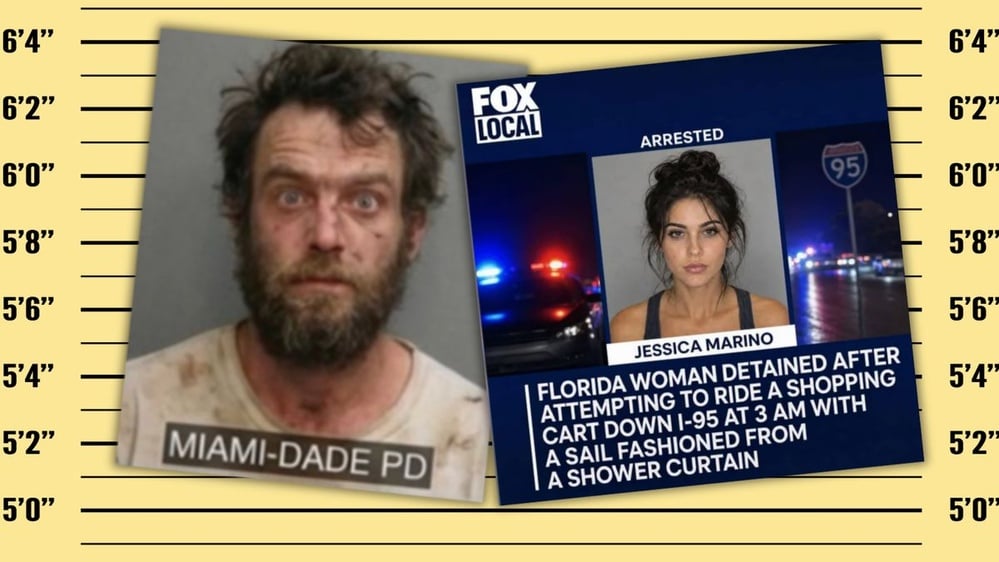
Neutral-to-cautious framing, emphasizing debunking misinformation, referencing AI-generated and misused mug shots, and presenting 13 examples to illustrate readers' potential confusion, with no evident advocacy or political spin.
A report debunking 13 misrepresented arrest stories that used misused mug shots, noting AI-generated images and misattributed identities.
Automated analysis; not human reviewed. Limitations: Concise, case-specific limitations and plausible alternative interpretations.
Neutral, fact-focused reporting on a missing Calgary boy that emphasizes the harms of online misinformation and documents official responses without partisan framing.
Calgary police describe misinformation as a key challenge in the search for Parker, providing details on the investigation, Amber Alert nuances, and public guidance.
Automated analysis; not human reviewed.
Limitations: Concise, case-specific limitations and plausible alternative interpretations.
·
52 of 52 available dimensions scored; omitted dimensions are not treated as neutral.
·
Verified supporting quotes for 3 of 52 scored dimensions.
Claim: Reporting shows no political leaning and relies on official sources.
“"Misinformation spreading online about a missing boy with autism in Calgary is taking away resources in finding him, police said Monday as the search entered its fifth day."” · exact text match
“"An Amber Alert was issued for Parker two days after he disappeared.
Disappearances do not meet the legal criteria for such an alert, but the Alberta government granted an exemption due to the circumstances of the case."”
· exact text match
“"More than 300 Calgary police officers have been involved in the search for Parker, in addition to 120 trained volunteers co-ordinated through Search and Rescue Alberta."” · exact text match
Counterevidence:
“"The internet is a big, wild place and, as an organization, we don’t have the ability to stop bad information from going out."” · not found in supplied text
Why: Lack of partisan framing and emphasis on official statements suggest neutrality, tempered by acknowledgement of misinformation.
Claim: Public guidance is explicitly framed as necessary actions.
“"Calgary police also took to social media to ask people to refrain from sharing altered images of Parker."” · exact text match
“"Anywhere where Parker could fit, we need the people to check and keep checking until we find him," Guterson said.” · verified after text normalization
Counterevidence:
“"We are exploring all avenues, but at this point there is no evidence to indicate that anyone has taken Parker," Guterson said.” · verified after text normalization
Why: Explicit calls for action introduce normative guidance alongside reporting.
Claim: The piece presents credible details from authorities with numeric totals.
“"We’ve had about 175 tips come in from the public that we are currently investigating,"” · verified after text normalization
“"More than 300 Calgary police officers have been involved in the search for Parker, in addition to 120 trained volunteers co-ordinated through Search and Rescue Alberta."” · exact text match
Counterevidence:
“"One false report said the boy had been found dead."” · exact text match
Why: Quantified numbers and direct quotes from authorities support credibility, but misinformation anecdotes present potential misperception risk.
Claim: Reporting maintains fairness by presenting official statements and caution about misinformation.
“"The internet is a big, wild place and, as an organization, we don’t have the ability to stop bad information from going out."” · not found in supplied text
“"Calgary police also took to social media to ask people to refrain from sharing altered images of Parker."” · exact text match
Counterevidence:
“"One false report said the boy had been found dead."” · exact text match
Why: Inclusion of official sources and guidance about misinformation suggests fair framing, though the false report introduces risk of sensationalism.
Case-specific uncertainties and limited context; evidence relies on quoted statements.
Neutral, evidence-based market analysis of a World Cup bronze-final amid misinformation, with embedded Vera marketing that could affect perceived credibility.
Concise, factual framing of a misinfo event and its relation to prediction-market pricing, including official confirmation and embedded Vera marketing.
Automated analysis; not human reviewed.
Limitations: Concise, case-specific limitations and plausible alternative interpretations.
·
3 of 52 available dimensions scored; omitted dimensions are not treated as neutral.
·
Verified supporting quotes for 3 of 3 scored dimensions.
Claim: Overall credibility is tempered by standard disclaimers and marketing content.
“This article contains analysis of publicly available information and market data and is for informational purposes only.” · exact text match
“It does not constitute investment advice or a recommendation to buy, sell, or hold any asset or contract.” · exact text match
Counterevidence:
“Get live prediction-market analysis, powered by Vera.” · exact text match
“Vera — AI-powered prediction market intelligence, built for serious analysts.” · exact text match
Why: Explicit disclaimers about informational purpose reduce certainty of actionable claims, while marketing content could influence perceived credibility.
Claim: Presence of Vera marketing content indicates advertising bias within the article.
“Get live prediction-market analysis, powered by Vera.” · exact text match
“Vera — AI-powered prediction market intelligence, built for serious analysts.” · exact text match
Counterevidence:
“This article contains analysis of publicly available information and market data and is for informational purposes only.” · exact text match
“All content is for informational purposes only and does not constitute investment advice.” · exact text match
Why: Direct Vera marketing lines within the text suggest promotional framing that could influence perceived objectivity.
Claim: Corporate influence from Vera marketing content signals corporate bias in reporting.
“Vera — AI-powered prediction market intelligence, built for serious analysts.” · exact text match
“Get live prediction-market analysis, powered by Vera.” · exact text match
Counterevidence:
“This article contains analysis of publicly available information and market data and is for informational purposes only.” · exact text match
“All content is for informational purposes only and does not constitute investment advice.” · exact text match
Why: Direct marketing content from a corporate product constitutes a potential corporate-bias signal, mitigated by disclaimers.
Vera promo content may bias perception; evidence gaps remain.
Mostly informational coverage of a Ghanaian NGO-led anti-misinformation initiative with regional journalist training and an AI-backed fact-checking platform, incorporating some promotional framing around Penplusbyte and the GADC project.
Overview of Penplusbyte’s Ghana Anti-Disinformation Coalition and related training efforts, with a stream of additional headlines included.
Automated analysis; not human reviewed.
Limitations: Concise, case-specific limitations and plausible alternative interpretations.
·
47 of 52 available dimensions scored; omitted dimensions are not treated as neutral.
·
Verified supporting quotes for 2 of 47 scored dimensions.
Claim: Descriptive-prescriptive framing via calls to act against misinformation.
“Journalists urged to strengthen fact-checking to combat misinformation.” · exact text match
“The three-year initiative seeks to reduce the spread and impact of misinformation and disinformation through collaboration, research and the use of artificial intelligence-driven solutions.” · exact text match
“The workshop focused on equipping participants with the skills and tools needed to identify, verify and combat false information at both the local and national levels.” · exact text match
Why: Explicit calls to act (urged, equip, implement) indicate prescriptive framing layered on descriptive reporting.
Claim: Mild opinionated framing through normative language advocating fact-checking and training.
“"urged journalists to become familiar with fact-checking tools and techniques to help curb the spread of false information"” · not found in supplied text
“"They pledged to apply the knowledge gained and replicate the training in their respective media organisations to help reduce the spread of misinformation, disinformation and malinformation."” · exact text match
Why: Phrasing that promotes actions towards misinformation countermeasures signals normative stance rather than neutral reporting.
Claim: Moderate alignment with formal institutions due to involvement of Information Services Department staff.
“staff of the Information Services Department drawn from the Northern, North East, Savannah, Upper West and Upper East regions” · exact text match
Why: References to the Information Services Department imply institutional links, though the framing presents NGO-led activity.
Limited context; mixed content with headlines; risk of NGO-promotional framing.
A government-backed, corporate-supported framing promotes reading as a professional skill to counter AI misinformation, presenting balanced expert voices while signaling establishment alignment and acknowledging AI risks.
Singapore-based, government-aligned initiative to boost AI literacy through reading in professional settings, featuring expert quotes and polling data on verification habits.
Automated analysis; not human reviewed.
Limitations: Concise, case-specific limitations and plausible alternative interpretations.
·
51 of 52 available dimensions scored; omitted dimensions are not treated as neutral.
·
Verified supporting quotes for 3 of 51 scored dimensions.
Claim: Measured neutrality on liberal-conservative axis.
“The programme promotes reading as a workplace skill as AI-generated content becomes more common in daily work.” · exact text match
“The organisers frame the initiative around the idea that reading remains a core way to develop judgement, context and scrutiny in knowledge work.” · exact text match
Counterevidence:
“Launched with the involvement of Singapore's Ministry of Digital Development and Information, it is expected to reach more than 2,000 professionals, managers, executives and technicians, along with business leaders.” · exact text match
Why: Framing centers on professional development and institutions rather than ideological stance.
Claim: Prescriptive framing (reading as a workplace skill).
“The programme promotes reading as a workplace skill as AI-generated content becomes more common in daily work.” · exact text match
“The organisers frame the initiative around the idea that reading remains a core way to develop judgement, context and scrutiny in knowledge work.” · exact text match
“The programme includes talks, interactive activities and resources designed to help professionals evaluate information more critically.” · exact text match
Counterevidence:
“The findings come as companies across sectors decide how far to rely on generative AI and other automated tools in research, drafting and decision-making.” · exact text match
Why: Text presents reading as an actionable practice for professionals.
Claim: Establishment alignment due to government involvement.
“Launched with the involvement of Singapore's Ministry of Digital Development and Information, it is expected to reach more than 2,000 professionals, managers, executives and technicians, along with business leaders.” · exact text match
Counterevidence:
“The emphasis on reading as a workplace skill reflects a broader concern that professionals may become more efficient without becoming better informed.” · exact text match
Why: Government ministry involvement indicates alignment with establishment goals, with some critical framing present.
Claim: Credibility supported by data and named institutions.
“The dipstick poll surveyed 1,150 PMETs and found that only 40% were confident in distinguishing AI-generated misinformation.” · not found in supplied text
“The poll examined whether professionals critically evaluate information as AI-generated outputs become more widespread.” · exact text match
Counterevidence:
“Technology-tag lines at the bottom could signal promotional content, potentially affecting perceived neutrality.” · not found in supplied text
Why: Uses verifiable data and named institutions, but context is promotional in nature.
Claim: Moderate article intelligence due to multiple expert voices and data.
“Quotes from five named experts and polling data are presented.” · not found in supplied text
Why: Diverse sourcing supports credibility but depth of analysis is limited by format.
Case-specific: possibly promotional tone; limited critical scrutiny toward sponsors.
July 20, 2026 · 0 shares
A balanced report on a government study labeling anti-LGBTQ+ narratives as misinformation, presenting the study's methodology and examples while noting Conservative criticisms and government denials; the piece integrates official statements and reader comments, showing a contested framing rather than a clear editorial stance.
News analysis of a government-commissioned 136-page study that labels anti-LGBTQ+ narratives as misinformation, outlines 11 categories, provides an example (Imane Khelif) and cites political reactions and reader commentary.
Automated analysis; not human reviewed.
·
47 of 52 available dimensions scored; omitted dimensions are not treated as neutral.
·
Verified supporting quotes for 2 of 47 scored dimensions.
Claim: No clear tilt to liberal or conservative reporting; coverage includes Conservative critique but also government denial.
“The Conservatives, urging Andy Burnham to condemn the document, have likened its proposals to the activities of the Thought Police in George Orwell’s 1984, and called it an “outrageous attack on our rights”.” · not found in supplied text
“The Government insisted on Sunday that the report was “independent” and did not represent official policy.” · exact text match
Counterevidence:
“The Conservative criticisms show political framing but government denial is also noted.” · not found in supplied text
Why: Conservative criticisms present but balanced by government denial; sourcing is mixed.
Claim: Anti-establishment sentiment appears in reader comments; weak signal of populist vs elitist orientation in reporting itself.
“The civil service is the enforcement arm of a potnetially fascist government.” · exact text match
“But, maybe government is the enforcement arm of a fascist communist civil service.” · exact text match
“More like the laundering arm that makes a fascist system appear democratic.” · exact text match
Counterevidence:
“Government statements emphasize independence and non-official policy.” · not found in supplied text
Why: Reader remarks show anti-government rhetoric; main body remains descriptive.
Claim: Use of sensational descriptors like Orwellian framing indicates some sensationalism in the framing.
“have likened its proposals to the activities of the Thought Police in George Orwell’s 1984, and called it an “outrageous attack on our rights”.” · exact text match
“The list suggests that saying “Imane Khelif is a man” would be an example of “racist/Islamophobic misinformation”.” · exact text match
Counterevidence:
“Government statements provide neutral information about the report’s independence.” · not found in supplied text
Why: Vivid descriptors appear but are balanced by factual details present in the article.
Ambiguity about publisher framing; quotes dominate; comments may bias; limited data.
July 21, 2026 · 0 shares
Polemical critique arguing that a government misinformation report on gender issues has a gender blind spot, misrepresents gender-critical feminists and their critics, and calls for more neutral, evidence-based engagement and media literacy, while highlighting a high-profile boxing case to illustrate perceived mischaracterizations.
Opinion piece challenging a government misinformation report on gender issues, arguing it has a gender blind spot and urging neutral, reader-focused media literacy.
Automated analysis; not human reviewed.
·
8 of 52 available dimensions scored; omitted dimensions are not treated as neutral.
·
Verified supporting quotes for 5 of 8 scored dimensions.
Claim: The article is opinionated and interprets events through a particular lens rather than presenting neutral facts.
“Given the degree to which any criticism of gender identity ideology in schools or the involvement of male athletes in female sports tends to be recast as “hate”.” · not found in supplied text
“In the end, all it shows is that you’ve found another way to lie.” · exact text match
Counterevidence:
“The author also acknowledges legitimate concerns about misinformation and distortions.” · not found in supplied text
Why: Strong normative judgments and framing indicate subjective bias, albeit with some acknowledged nuance.
Claim: Language amplifies perceived threats and emphasizes distortions.
“dangerous distortions to flourish” · exact text match
“false and misleading information” · exact text match
“these boxers to speak out” · exact text match
Counterevidence:
“The piece also advocates for neutral, evidence-based reading and media literacy.” · not found in supplied text
Why: Use of alarmist phrasing and loaded terms signals moderate sensational framing.
Claim: The piece both describes the problem and prescribes actions to improve discourse and literacy.
“What I’d want is some neutral encouragement for people to read what others are actually writing and listen to what they’re actually saying.” · exact text match
“Conflating the spread of untruths with that of things you’d like to be untruths does nothing to promote media literacy.” · exact text match
Counterevidence:
“The author’s prescriptions are framed as corrective rather than descriptive.” · not found in supplied text
Why: Mixes description of issues with explicit recommended actions to readers.
Claim: The piece expresses clear opinions and normative judgments about misinformation, bias, and media literacy.
“What I’d want is some neutral encouragement for people to read what others are actually writing” · exact text match
“Conflating ... does nothing to promote media literacy” · not found in supplied text
“you’ve found another way to lie” · exact text match
Counterevidence:
“There is acknowledgment of concerns about distortions in information.” · not found in supplied text
Why: Strongly opinionated language and prescriptive judgments dominate the text.
Claim: The piece frames gender debates within political/ideological contestation and shows a stance toward 'Left' and 'progressive' causes.
“the Left doesn’t understand economics” · exact text match
“debates over sex and gender ... 'gender ideology' claims ... 'Pride' controversies” · not found in supplied text
“cherished “progressive” cause” · exact text match
Counterevidence:
“The author calls for neutral reading and literacy rather than policy prescriptions.” · not found in supplied text
Why: Explicit framing of debates as political/ideological and alignment with counter-perspectives indicates political bias.
Claim: The piece argues the government report has a gender blind spot and neglects misinformation about gender-critical feminists.
“Government misinformation report has a gender blind spot.” · exact text match
“But nowhere does it mention the spreading of lies about gender-critical feminists, despite the severe impact this has had on the fight for women’s rights.” · exact text match
“Ironically, the “false and misleading information” report does not challenge any of these claims.” · exact text match
Counterevidence:
“Are we dealing with genuine misinformation about the issues themselves? Or is the report spreading misinformation about those casting a critical eye over a cherished “progressive” cause?” · exact text match
“I do not disagree with the report’s central claim that the way in which information is shared today makes it easier for dangerous distortions to flourish.” · exact text match
Why: Direct statements accuse the government report of bias and omissions, but hedged questions and brief acknowledgement of distortions introduce nuance.
Claim: Reasoned critique coexists with strong value-laden judgments.
“I do not disagree with the report’s central claim that the way in which information is shared today makes it easier for dangerous distortions to flourish.” · exact text match
Counterevidence:
“The rhetorical tone occasionally shifts to absolute claims, suggesting certainty beyond the provided evidence.” · not found in supplied text
Why: Balanced presentation of reasoned critique with occasional certainty-laden statements.
Claim: The article positions itself as seeking fair, neutral discourse and calls for balanced examination of opposing views.
“What I’d want is some neutral encouragement for people to read what others are actually writing and listen to what they’re actually saying.” · exact text match
“Conflating the spread of untruths with that of things you’d like to be untruths does nothing to promote media literacy.” · exact text match
Counterevidence:
“The piece uses strong language and accusatory framing (e.g., 'lie'), which can reflect its own biases.” · not found in supplied text
“There is no explicit external corroboration of claims beyond the author's assertions.” · not found in supplied text
Why: Aims for fairness and literacy but relies on normative language; limited external sourcing.
May overstate author perspective; limited to a single outlet's lens.
A strongly pro-Free Speech Union piece that denounces Guardian reporting as misinformation, portrays mainstream media and the political class as biased or coordinated against free speech, and employs loaded, adversarial rhetoric.
An opinionated defense of the Free Speech Union contending Guardian reporting on U.S. grants is misinformation and arguing for free speech rights against perceived media and political elite bias.
Automated analysis; not human reviewed.
Limitations: Case-specific; relies on quoted material; alternative interpretations exist; lacks independent corroboration.
·
15 of 52 available dimensions scored; omitted dimensions are not treated as neutral.
·
Verified supporting quotes for 0 of 15 scored dimensions.
Claim: Framing Guardian reporting as misinformation and portraying FSU as non-partisan/rights-friendly presents a conservative defense narrative.
“Guardian Publishes Misinformation About the Free Speech Union, Sir Jacob Rees-Mogg and Me. The Guardian has published a story claiming the Trump administration is about to award $12 million to the Free Speech Union and a think tank co-founded by Sir Jacob Rees-Mogg.
Trouble is, it’s not true.”
· exact text match
“We describe your organisation as “a rallying point for ‘anti-woke’ grievance” which “frequently allies itself with rightwing causes”” · not found in supplied text
Counterevidence:
“Free Speech Union International ... universal human right” · not found in supplied text
“non-partisan organisations” · exact text match
Why: Text frames Guardian reporting as false and positions FSUs as nonpartisan rights defenders, indicating a conservative framing.
Claim: Depicts the political/media class as self-interested and conspiratorially coordinating against FSUs.
“Campaigns have intensified ... against FSU, Reform UK and individuals who dare to disagree with the political class.” · not found in supplied text
“It seems certain that State organisations (possibly the NCA) released innocent information to the press ... the left have used to mislead readers.” · not found in supplied text
“coordination between them all, including Labour and Tory parties while LibDems will be told the line to follow.” · exact text match
Counterevidence:
“FSU umbrella groups sit within a network; universal human right” · not found in supplied text
Why: Language emphasizes a 'political class' and coordination, signaling populist anti-elite framing.
Claim: Advocates for free speech and critiques of process point toward libertarian orientation; invokes censorship comparisons.
“"defend the right to freedom of expression"” · not found in supplied text
“"The state department says that its grant to FSU will 'support campaigns promoting free speech'"” · not found in supplied text
“"Soviet-style censorship in the UK"” · not found in supplied text
Counterevidence:
“"sole source" grants described as unusual, implying centralized discretion.” · not found in supplied text
Why: Free speech emphasis aligns with libertarian values; references to centralized grant processes add nuance.
Claim: Text relies on subjective framing, not neutral presentation.
“"a rallying point for ‘anti-woke’ grievance"” · verified after text normalization
“"disgusting rag of Marxist filth"” · not found in supplied text
“"grauniadista types"” · not found in supplied text
Counterevidence:
“"fully and fairly reflect your point of view"” · not found in supplied text
Why: Loaded language and ad hominem indicate subjective framing.
Claim: Uses sensational language to provoke response rather than purely factual reporting.
“"Guardian has published misinformation"” · not found in supplied text
“"disgusting rag of Marxist filth"” · not found in supplied text
“"Soviet-style censorship"” · not found in supplied text
Counterevidence:
“"universal human right"” · not found in supplied text
Why: Dramatic descriptors contribute to sensational framing.
Claim: Contains provocative claims that invite scrutiny and debate.
“"Tarbell Fellowship is funded by Coefficient Giving et al"” · not found in supplied text
“"the Guardian piece is misinformed and ignorant"” · not found in supplied text
Counterevidence:
“"We would like to fully and fairly reflect your point of view"” · not found in supplied text
Why: Contestation of a major media outlet and allegations of funding sources generate interest.
Claim: Imposes normative judgments and prescribes a favorable view of FSUs.
“"It is rare for the US government to fund partisan political organisations in western countries."” · not found in supplied text
“"We depend on your donations to keep this site going.
Please give what you can."”
· exact text match
Counterevidence:
“"universal human right"” · not found in supplied text
Why: Normative statements and calls to donation indicate prescriptive stance.
Claim: Overwhelmingly opinionated rather than strictly factual.
“"disgusting rag of Marxist filth"” · not found in supplied text
“"Guardian piece misinformed and ignorant"” · not found in supplied text
“"grauniadista types"” · not found in supplied text
Counterevidence:
“"We would like to fully and fairly reflect your point of view"” · not found in supplied text
Why: Stimulative language dominates; presents judgments as facts.
Claim: Strong alignment with Free Speech Union; opposition to Guardian reporting.
“"Trump administration to grant $12m to groups founded by UK conservatives"” · not found in supplied text
“"anti-woke grievance"” · not found in supplied text
“"non-partisan organisations" defending free speech” · not found in supplied text
Counterevidence:
“"universal human right"” · not found in supplied text
Why: Explicit support for FSUs and criticism of Guardian/establishment media.
Claim: Conflates complex grant processes with simple misconduct; labels reporting as misinformation.
“"sole source grants" ... "unusual for a highly regulated process"” · not found in supplied text
“"Guardian piece misinformed and ignorant"” · not found in supplied text
Counterevidence:
“"This lack of process has been criticised as outrageous and absurd"” · not found in supplied text
Why: Simplifies grant processes into a dichotomy of truth vs. misinformation.
Claim: Assertive certainty about Guardian misinformation without presenting balanced data.
“"Trouble is, it’s not true."” · not found in supplied text
“"It seems libelous"” · not found in supplied text
“"The Guardian piece is misinformed and ignorant"” · not found in supplied text
Counterevidence:
“"We would like to fully and fairly reflect your point of view"” · not found in supplied text
Why: Strong certainty expressed without balanced sourcing.
Claim: Frames Guardian and Westminster parties as out-of-touch or antagonistic to FSUs.
“"Typical of the grauniad"” · not found in supplied text
“"the old Westminster Parties" against FSU” · not found in supplied text
“"political class"” · not found in supplied text
Counterevidence:
“"non-partisan organisations"” · not found in supplied text
Why: Anti-establishment framing is explicit in wording about media and political elites.
Claim: Loaded adjectives and certainty indicate irrational framing rather than measured analysis.
“"outrageous and absurd"” · verified after text normalization
“"gross incompetence" and "horrible stewardship"” · verified after text normalization
“"disgusting rag of Marxist filth"” · not found in supplied text
Counterevidence:
“"We would like to fully and fairly reflect your point of view"” · not found in supplied text
Why: Emphatic, pejorative terms suggest bias beyond neutral analysis.
Claim: Questions Guardian integrity and accuracy; portrays reporting as illegitimate.
“"the Guardian piece misinformed and ignorant"” · not found in supplied text
“"It seems libelous"” · not found in supplied text
“"read the exchange of emails"” · not found in supplied text
Counterevidence:
“"We would like to fully and fairly reflect your point of view"” · not found in supplied text
Why: Direct allegations of misinformation/illegality imply perceived integrity concerns.
Claim: Hints at coordinated manipulation among media and political parties.
“"coordination between them all, including Labour and Tory parties"” · not found in supplied text
“"State organisations (possibly the NCA) released innocent information to the press"” · not found in supplied text
Counterevidence:
“"We would like to fully and fairly reflect your point of view"” · not found in supplied text
Why: Suggests conspiratorial coordination without conclusive evidence.
Case-specific: may overstate anti-establishment stance; quotes could be contested.
Regulatory framing dominates coverage, portraying Bar Council of India's social media guidelines as necessary to protect dignity and confidentiality while allowing curated educational content, indicating establishment-aligned bias in reporting.
Concise, factful, balanced context for the article describing a July 17 circular by the Bar Council of India regulating social media use by legal professionals to curb misinformation while upholding ethics.
Automated analysis; not human reviewed.
Limitations: Concise, case-specific limitations and plausible alternative interpretations.
·
51 of 52 available dimensions scored; omitted dimensions are not treated as neutral.
·
Verified supporting quotes for 0 of 51 scored dimensions.
Claim: Narrative emphasizes regulatory control by a professional council and dignity/ethics standards, signaling establishment-conservative framing.
““dignity, restraint and professional ethics”” · exact text match
““stringent guidelines to maintain “dignity, restraint and professional ethics” in the use of social media by advocates, law students and legal interns” · not found in supplied text
““positive use of social media is not prohibited, including short-form legal education through reels, shorts, videos, podcasts or similar formats, provided such content is accurate, contextual, non-soliciting, does not disclose confidential information and does not reduce complex legal issues to misleading assurances of outcomes”” · not found in supplied text
Counterevidence:
“"positive use of social media is not prohibited", including short-form legal education through reels, shorts, videos, podcasts or similar formats, provided such content is accurate, contextual, non-soliciting, does not disclose confidential information and does not reduce complex legal issues to misleading assurances of outcomes” · not found in supplied text
Why: Language framing the guidelines as protecting dignity and ethics points to establishment/conservative framing, though allowances introduce nuance.
Claim: Coverage centers on elite institutions and their regulatory actions, with emphasis on professional standards rather than broad public concerns.
“"Bar Council of India (BCI) issued stringent guidelines"” · not found in supplied text
“"Centres of Legal Education and State Bar Councils"” · not found in supplied text
“"Advocates Act, 1961, and the Bar Council of India Rules"” · not found in supplied text
Counterevidence:
“"positive use of social media is not prohibited"” · not found in supplied text
Why: Focus on a regulatory body and professional education centers suggests an elitist framing, though referenced sources lend credibility.
Claim: Regulatory restrictions and enforcement directives indicate an authoritarian leaning toward controlling speech.
“"The circular proscribes advocates and law students from engaging with social media and artificial intelligence-generated material that trivialises the courtroom proceedings"” · not found in supplied text
“"stringent guidelines"” · not found in supplied text
“"circulate it and ensure that the provisions mentioned in it are implemented"” · not found in supplied text
Counterevidence:
“"positive use of social media is not prohibited"” · not found in supplied text
Why: Explicit prohibitions and implementation directives reflect authoritarian regulatory posture; allowances present a measured balance.
Claim: Reporting aims for objectivity by citing multiple sources and including direct quotes; minimal editorial stance.
“"The move comes in response to curb social media misuse"” · not found in supplied text
“"as per a report by Times of India"” · not found in supplied text
“"The Hindu reported"” · not found in supplied text
Counterevidence:
“"stringent guidelines"” · not found in supplied text
Why: Use of quoted material and multiple sources supports objective framing, despite some normative descriptors.
Claim: Descriptive reportage with moderate normative wording; not highly sensational.
“"Digital Space Increasingly Used for Misinformation: Bar Council of India Issues Strict Social Media Guidelines"” · not found in supplied text
“"stringent guidelines"” · not found in supplied text
Counterevidence:
“"positive use of social media is not prohibited"” · not found in supplied text
Why: Headlines and diction are informative rather than sensational; claims remain anchored in citations.
Claim: The piece both describes regulatory content and repeats prescriptive directives.
“"proscribes advocates and law students from engaging with social media..."” · not found in supplied text
“"circulate it and ensure that the provisions... are implemented"” · not found in supplied text
“"educative, preventive and proportionate manner"” · not found in supplied text
Counterevidence:
“"positive use of social media is not prohibited"” · not found in supplied text
Why: Direct description of restrictions plus explicit directives to implement illustrate combined descriptive-prescriptive framing.
Claim: Narrative presents guidelines as prudent, established procedure under existing statutory/BCI rules.
“"remaining consistent with the Advocates Act, 1961, and the Bar Council of India Rules"” · not found in supplied text
“"Circulate to Centres of Legal Education and State Bar Councils"” · not found in supplied text
Counterevidence:
“"positive use of social media is not prohibited"” · not found in supplied text
Why: Emphasis on established bodies and formal rules signals establishment alignment; allowances add nuance.
Claim: Article uses official statements and credible outlets, relies on verifiable references, showing rational framing.
“"as per a report by Times of India"” · not found in supplied text
“"The Hindu reported"” · not found in supplied text
“"The circular proscribes advocates and law students from engaging with social media"” · not found in supplied text
Counterevidence:
“"stringent guidelines"” · not found in supplied text
Why: Primarily sourced from official statements; language is descriptive with normative terms.
Claim: The article demonstrates fairness by citing multiple sources and presenting both restrictions and allowances.
“"The circular proscribes..."” · not found in supplied text
“"The digital space is increasingly being used..."” · not found in supplied text
“"The Hindu reported"” · not found in supplied text
Counterevidence:
“"The Wire is now on WhatsApp"” · not found in supplied text
Why: Multiple sources and direct quotes support credibility; no detected misrepresentation.
Claim: Article demonstrates conscientious sourcing and clear attribution to reputable outlets and official bodies.
“"Times of India"” · not found in supplied text
“"The Hindu"” · not found in supplied text
“"Advocates Act, 1961"” · not found in supplied text
Counterevidence:
“"The Wire is now on WhatsApp"” · not found in supplied text
Why: Use of recognized sources and official citations supports perceived intelligence.
Limited excerpt; broader context and opposing views not shown.
July 21, 2026 · 0 shares
Neutral, evidence-based framing emphasizes misinformation surrounding AI-generated images of Spanish World Cup players with Palestinian flags, avoiding endorsement of any political stance.
Concise, factful description: reports that fake AI-generated images involving Spanish World Cup players and Palestinian flags circulated online, noting one image is AI-generated and that a claim about Pedro Porro is false.
Automated analysis; not human reviewed. Limitations: Concise, case-specific limitations and plausible alternative interpretations. · 52 of 52 available dimensions scored; omitted dimensions are not treated as neutral. · Verified supporting quotes for 2 of 52 scored dimensions.
Claim: The reporting shows no detectable ideological tilt and frames the issue as misinformation.
“Fake images circulate of Spanish World Cup players draped in Palestinian flags.” · exact text match
“An image generated by artificial intelligence shows Spanish footballer Lamine Yamal celebrating his World Cup win while draped in a Palestinian flag.” · exact text match
“People have also been circulating an image of player Pedro Porro, who they falsely claim is wearing a Palestinian flag around his waist.” · exact text match
Why: Neutral framing and explicit labeling of misinformation indicate minimal ideological tilt.
Claim: Descriptive and non-evaluative language suggests objectivity.
“Fake images circulate...” · not found in supplied text
“falsely claim” · exact text match
Why: Neutral descriptors imply objectivity.
Claim: The piece demonstrates careful framing and uses explicit qualifiers to discuss misinfo.
“Fake images circulate of Spanish World Cup players draped in Palestinian flags.” · exact text match
“An image generated by artificial intelligence shows Spanish footballer Lamine Yamal celebrating his World Cup win while draped in a Palestinian flag.” · exact text match
“they falsely claim is wearing a Palestinian flag around his waist.” · exact text match
Why: Use of cautious language and attribution of claims to misinfo supports credibility.
Limited context; no source details; possible alternative readings.
Neutral, fact-focused reporting on a missing Calgary boy that emphasizes the harms of online misinformation and documents official responses without partisan framing.
Calgary police describe misinformation as a key challenge in the search for Parker, providing details on the investigation, Amber Alert nuances, and public guidance.
Automated analysis; not human reviewed. Limitations: Concise, case-specific limitations and plausible alternative interpretations. · 52 of 52 available dimensions scored; omitted dimensions are not treated as neutral. · Verified supporting quotes for 3 of 52 scored dimensions.
Claim: Reporting shows no political leaning and relies on official sources.
“"Misinformation spreading online about a missing boy with autism in Calgary is taking away resources in finding him, police said Monday as the search entered its fifth day."” · exact text match
“"An Amber Alert was issued for Parker two days after he disappeared. Disappearances do not meet the legal criteria for such an alert, but the Alberta government granted an exemption due to the circumstances of the case."” · exact text match
“"More than 300 Calgary police officers have been involved in the search for Parker, in addition to 120 trained volunteers co-ordinated through Search and Rescue Alberta."” · exact text match
Counterevidence:
“"The internet is a big, wild place and, as an organization, we don’t have the ability to stop bad information from going out."” · not found in supplied text
Why: Lack of partisan framing and emphasis on official statements suggest neutrality, tempered by acknowledgement of misinformation.
Claim: Public guidance is explicitly framed as necessary actions.
“"Calgary police also took to social media to ask people to refrain from sharing altered images of Parker."” · exact text match
“"Anywhere where Parker could fit, we need the people to check and keep checking until we find him," Guterson said.” · verified after text normalization
Counterevidence:
“"We are exploring all avenues, but at this point there is no evidence to indicate that anyone has taken Parker," Guterson said.” · verified after text normalization
Why: Explicit calls for action introduce normative guidance alongside reporting.
Claim: The piece presents credible details from authorities with numeric totals.
“"We’ve had about 175 tips come in from the public that we are currently investigating,"” · verified after text normalization
“"More than 300 Calgary police officers have been involved in the search for Parker, in addition to 120 trained volunteers co-ordinated through Search and Rescue Alberta."” · exact text match
Counterevidence:
“"One false report said the boy had been found dead."” · exact text match
Why: Quantified numbers and direct quotes from authorities support credibility, but misinformation anecdotes present potential misperception risk.
Claim: Reporting maintains fairness by presenting official statements and caution about misinformation.
“"The internet is a big, wild place and, as an organization, we don’t have the ability to stop bad information from going out."” · not found in supplied text
“"Calgary police also took to social media to ask people to refrain from sharing altered images of Parker."” · exact text match
Counterevidence:
“"One false report said the boy had been found dead."” · exact text match
Why: Inclusion of official sources and guidance about misinformation suggests fair framing, though the false report introduces risk of sensationalism.
Case-specific uncertainties and limited context; evidence relies on quoted statements.
July 19, 2026 · 0 shares
Neutral-to-cautious framing, emphasizing debunking misinformation, referencing AI-generated and misused mug shots, and presenting 13 examples to illustrate readers' potential confusion, with no evident advocacy or political spin.
A report debunking 13 misrepresented arrest stories that used misused mug shots, noting AI-generated images and misattributed identities.
Automated analysis; not human reviewed. Limitations: Concise, case-specific limitations and plausible alternative interpretations.
Fact-checking, verification, and digital literacy emphasis
July 20, 2026 · 0 shares
Neutral, verification-focused framing around misinformation about the World Cup final, emphasizing distinguishing real from fake and citing BBC Verify (Aisha Sembhi) without endorsing any actor or viewpoint.
BBC Verify explains how to distinguish real from fake content surrounding the World Cup final, with examples of misinformation about Trump and Lamine Yamal.
Automated analysis; not human reviewed. Limitations: Concise, case-specific limitations and plausible alternative interpretations. · 52 of 52 available dimensions scored; omitted dimensions are not treated as neutral. · Verified supporting quotes for 4 of 52 scored dimensions.
Claim: Descriptive, neutral framing with no ideological tilt.
“Misleading posts about Trump at World Cup final viewed by millions.” · exact text match
“Fake and misleading images from the World Cup final have been gaining tens of millions of views on social media.” · exact text match
“BBC Verify has been looking into how we know the real from the fake - as Aisha Sembhi explains.” · exact text match
Why: Framing centers on verification and debunking rather than advocating a political position.
Claim: No evident anti- or pro-establishment stance; relies on verification by a mainstream outlet.
“BBC Verify has been looking into how we know the real from the fake - as Aisha Sembhi explains.” · exact text match
Why: Reference to a verification program from a mainstream outlet suggests no clear establishment bias.
Claim: Credibility supported by explicit sourcing and verification framing.
“BBC Verify has been looking into how we know the real from the fake - as Aisha Sembhi explains.” · exact text match
Why: Attribution to a named verification program and presenter signals sourcing and reliability.
Claim: Fair presentation of misinformation without endorsement of actors discussed.
“Misleading posts about Trump at World Cup final viewed by millions.” · exact text match
Why: Describes misinformation neutrally and emphasizes verification rather than advocacy.
Ambiguity due to fragmentary text; context gaps could alter interpretation.
July 19, 2026 · 0 shares
Neutral-to-cautious framing, emphasizing debunking misinformation, referencing AI-generated and misused mug shots, and presenting 13 examples to illustrate readers' potential confusion, with no evident advocacy or political spin.
A report debunking 13 misrepresented arrest stories that used misused mug shots, noting AI-generated images and misattributed identities.
Automated analysis; not human reviewed. Limitations: Concise, case-specific limitations and plausible alternative interpretations.
Mostly informational coverage of a Ghanaian NGO-led anti-misinformation initiative with regional journalist training and an AI-backed fact-checking platform, incorporating some promotional framing around Penplusbyte and the GADC project.
Overview of Penplusbyte’s Ghana Anti-Disinformation Coalition and related training efforts, with a stream of additional headlines included.
Automated analysis; not human reviewed. Limitations: Concise, case-specific limitations and plausible alternative interpretations. · 47 of 52 available dimensions scored; omitted dimensions are not treated as neutral. · Verified supporting quotes for 2 of 47 scored dimensions.
Claim: Descriptive-prescriptive framing via calls to act against misinformation.
“Journalists urged to strengthen fact-checking to combat misinformation.” · exact text match
“The three-year initiative seeks to reduce the spread and impact of misinformation and disinformation through collaboration, research and the use of artificial intelligence-driven solutions.” · exact text match
“The workshop focused on equipping participants with the skills and tools needed to identify, verify and combat false information at both the local and national levels.” · exact text match
Why: Explicit calls to act (urged, equip, implement) indicate prescriptive framing layered on descriptive reporting.
Claim: Mild opinionated framing through normative language advocating fact-checking and training.
“"urged journalists to become familiar with fact-checking tools and techniques to help curb the spread of false information"” · not found in supplied text
“"They pledged to apply the knowledge gained and replicate the training in their respective media organisations to help reduce the spread of misinformation, disinformation and malinformation."” · exact text match
Why: Phrasing that promotes actions towards misinformation countermeasures signals normative stance rather than neutral reporting.
Claim: Moderate alignment with formal institutions due to involvement of Information Services Department staff.
“staff of the Information Services Department drawn from the Northern, North East, Savannah, Upper West and Upper East regions” · exact text match
Why: References to the Information Services Department imply institutional links, though the framing presents NGO-led activity.
Limited context; mixed content with headlines; risk of NGO-promotional framing.
A government-backed, corporate-supported framing promotes reading as a professional skill to counter AI misinformation, presenting balanced expert voices while signaling establishment alignment and acknowledging AI risks.
Singapore-based, government-aligned initiative to boost AI literacy through reading in professional settings, featuring expert quotes and polling data on verification habits.
Automated analysis; not human reviewed. Limitations: Concise, case-specific limitations and plausible alternative interpretations. · 51 of 52 available dimensions scored; omitted dimensions are not treated as neutral. · Verified supporting quotes for 3 of 51 scored dimensions.
Claim: Measured neutrality on liberal-conservative axis.
“The programme promotes reading as a workplace skill as AI-generated content becomes more common in daily work.” · exact text match
“The organisers frame the initiative around the idea that reading remains a core way to develop judgement, context and scrutiny in knowledge work.” · exact text match
Counterevidence:
“Launched with the involvement of Singapore's Ministry of Digital Development and Information, it is expected to reach more than 2,000 professionals, managers, executives and technicians, along with business leaders.” · exact text match
Why: Framing centers on professional development and institutions rather than ideological stance.
Claim: Prescriptive framing (reading as a workplace skill).
“The programme promotes reading as a workplace skill as AI-generated content becomes more common in daily work.” · exact text match
“The organisers frame the initiative around the idea that reading remains a core way to develop judgement, context and scrutiny in knowledge work.” · exact text match
“The programme includes talks, interactive activities and resources designed to help professionals evaluate information more critically.” · exact text match
Counterevidence:
“The findings come as companies across sectors decide how far to rely on generative AI and other automated tools in research, drafting and decision-making.” · exact text match
Why: Text presents reading as an actionable practice for professionals.
Claim: Establishment alignment due to government involvement.
“Launched with the involvement of Singapore's Ministry of Digital Development and Information, it is expected to reach more than 2,000 professionals, managers, executives and technicians, along with business leaders.” · exact text match
Counterevidence:
“The emphasis on reading as a workplace skill reflects a broader concern that professionals may become more efficient without becoming better informed.” · exact text match
Why: Government ministry involvement indicates alignment with establishment goals, with some critical framing present.
Claim: Credibility supported by data and named institutions.
“The dipstick poll surveyed 1,150 PMETs and found that only 40% were confident in distinguishing AI-generated misinformation.” · not found in supplied text
“The poll examined whether professionals critically evaluate information as AI-generated outputs become more widespread.” · exact text match
Counterevidence:
“Technology-tag lines at the bottom could signal promotional content, potentially affecting perceived neutrality.” · not found in supplied text
Why: Uses verifiable data and named institutions, but context is promotional in nature.
Claim: Moderate article intelligence due to multiple expert voices and data.
“Quotes from five named experts and polling data are presented.” · not found in supplied text
Why: Diverse sourcing supports credibility but depth of analysis is limited by format.
Case-specific: possibly promotional tone; limited critical scrutiny toward sponsors.
July 21, 2026 · 0 shares
Neutral, technical framing with no evident political or ideological bias; emphasis on open-source tooling and transparent workflows, with misinformation and emotional reasoning cited only as examples.
Technical article detailing a modular, open-source verification framework for multi-agent systems (Tiles, Soda) with YAML-based domain descriptions, guaranteed termination, and examples including misinformation and emotional reasoning, plus a Labs section describing openness and privacy values.
Automated analysis; not human reviewed. Limitations: Concise, case-specific limitations and plausible alternative interpretations.
Ambiguity: sparse political content; potential bias from Labs openness/privacy framing.
July 20, 2026 · 0 shares
Neutral, verification-focused framing around misinformation about the World Cup final, emphasizing distinguishing real from fake and citing BBC Verify (Aisha Sembhi) without endorsing any actor or viewpoint.
BBC Verify explains how to distinguish real from fake content surrounding the World Cup final, with examples of misinformation about Trump and Lamine Yamal.
Automated analysis; not human reviewed. Limitations: Concise, case-specific limitations and plausible alternative interpretations. · 52 of 52 available dimensions scored; omitted dimensions are not treated as neutral. · Verified supporting quotes for 4 of 52 scored dimensions.
Claim: Descriptive, neutral framing with no ideological tilt.
“Misleading posts about Trump at World Cup final viewed by millions.” · exact text match
“Fake and misleading images from the World Cup final have been gaining tens of millions of views on social media.” · exact text match
“BBC Verify has been looking into how we know the real from the fake - as Aisha Sembhi explains.” · exact text match
Why: Framing centers on verification and debunking rather than advocating a political position.
Claim: No evident anti- or pro-establishment stance; relies on verification by a mainstream outlet.
“BBC Verify has been looking into how we know the real from the fake - as Aisha Sembhi explains.” · exact text match
Why: Reference to a verification program from a mainstream outlet suggests no clear establishment bias.
Claim: Credibility supported by explicit sourcing and verification framing.
“BBC Verify has been looking into how we know the real from the fake - as Aisha Sembhi explains.” · exact text match
Why: Attribution to a named verification program and presenter signals sourcing and reliability.
Claim: Fair presentation of misinformation without endorsement of actors discussed.
“Misleading posts about Trump at World Cup final viewed by millions.” · exact text match
Why: Describes misinformation neutrally and emphasizes verification rather than advocacy.
Ambiguity due to fragmentary text; context gaps could alter interpretation.
July 19, 2026 · 0 shares
Neutral-to-cautious framing, emphasizing debunking misinformation, referencing AI-generated and misused mug shots, and presenting 13 examples to illustrate readers' potential confusion, with no evident advocacy or political spin.
A report debunking 13 misrepresented arrest stories that used misused mug shots, noting AI-generated images and misattributed identities.
Automated analysis; not human reviewed. Limitations: Concise, case-specific limitations and plausible alternative interpretations.
Mostly informational coverage of a Ghanaian NGO-led anti-misinformation initiative with regional journalist training and an AI-backed fact-checking platform, incorporating some promotional framing around Penplusbyte and the GADC project.
Overview of Penplusbyte’s Ghana Anti-Disinformation Coalition and related training efforts, with a stream of additional headlines included.
Automated analysis; not human reviewed. Limitations: Concise, case-specific limitations and plausible alternative interpretations. · 47 of 52 available dimensions scored; omitted dimensions are not treated as neutral. · Verified supporting quotes for 2 of 47 scored dimensions.
Claim: Descriptive-prescriptive framing via calls to act against misinformation.
“Journalists urged to strengthen fact-checking to combat misinformation.” · exact text match
“The three-year initiative seeks to reduce the spread and impact of misinformation and disinformation through collaboration, research and the use of artificial intelligence-driven solutions.” · exact text match
“The workshop focused on equipping participants with the skills and tools needed to identify, verify and combat false information at both the local and national levels.” · exact text match
Why: Explicit calls to act (urged, equip, implement) indicate prescriptive framing layered on descriptive reporting.
Claim: Mild opinionated framing through normative language advocating fact-checking and training.
“"urged journalists to become familiar with fact-checking tools and techniques to help curb the spread of false information"” · not found in supplied text
“"They pledged to apply the knowledge gained and replicate the training in their respective media organisations to help reduce the spread of misinformation, disinformation and malinformation."” · exact text match
Why: Phrasing that promotes actions towards misinformation countermeasures signals normative stance rather than neutral reporting.
Claim: Moderate alignment with formal institutions due to involvement of Information Services Department staff.
“staff of the Information Services Department drawn from the Northern, North East, Savannah, Upper West and Upper East regions” · exact text match
Why: References to the Information Services Department imply institutional links, though the framing presents NGO-led activity.
Limited context; mixed content with headlines; risk of NGO-promotional framing.
Legal/regulatory and harm-reduction emphasis
Neutral, fact-focused reporting on a missing Calgary boy that emphasizes the harms of online misinformation and documents official responses without partisan framing.
Calgary police describe misinformation as a key challenge in the search for Parker, providing details on the investigation, Amber Alert nuances, and public guidance.
Automated analysis; not human reviewed. Limitations: Concise, case-specific limitations and plausible alternative interpretations. · 52 of 52 available dimensions scored; omitted dimensions are not treated as neutral. · Verified supporting quotes for 3 of 52 scored dimensions.
Claim: Reporting shows no political leaning and relies on official sources.
“"Misinformation spreading online about a missing boy with autism in Calgary is taking away resources in finding him, police said Monday as the search entered its fifth day."” · exact text match
“"An Amber Alert was issued for Parker two days after he disappeared. Disappearances do not meet the legal criteria for such an alert, but the Alberta government granted an exemption due to the circumstances of the case."” · exact text match
“"More than 300 Calgary police officers have been involved in the search for Parker, in addition to 120 trained volunteers co-ordinated through Search and Rescue Alberta."” · exact text match
Counterevidence:
“"The internet is a big, wild place and, as an organization, we don’t have the ability to stop bad information from going out."” · not found in supplied text
Why: Lack of partisan framing and emphasis on official statements suggest neutrality, tempered by acknowledgement of misinformation.
Claim: Public guidance is explicitly framed as necessary actions.
“"Calgary police also took to social media to ask people to refrain from sharing altered images of Parker."” · exact text match
“"Anywhere where Parker could fit, we need the people to check and keep checking until we find him," Guterson said.” · verified after text normalization
Counterevidence:
“"We are exploring all avenues, but at this point there is no evidence to indicate that anyone has taken Parker," Guterson said.” · verified after text normalization
Why: Explicit calls for action introduce normative guidance alongside reporting.
Claim: The piece presents credible details from authorities with numeric totals.
“"We’ve had about 175 tips come in from the public that we are currently investigating,"” · verified after text normalization
“"More than 300 Calgary police officers have been involved in the search for Parker, in addition to 120 trained volunteers co-ordinated through Search and Rescue Alberta."” · exact text match
Counterevidence:
“"One false report said the boy had been found dead."” · exact text match
Why: Quantified numbers and direct quotes from authorities support credibility, but misinformation anecdotes present potential misperception risk.
Claim: Reporting maintains fairness by presenting official statements and caution about misinformation.
“"The internet is a big, wild place and, as an organization, we don’t have the ability to stop bad information from going out."” · not found in supplied text
“"Calgary police also took to social media to ask people to refrain from sharing altered images of Parker."” · exact text match
Counterevidence:
“"One false report said the boy had been found dead."” · exact text match
Why: Inclusion of official sources and guidance about misinformation suggests fair framing, though the false report introduces risk of sensationalism.
Case-specific uncertainties and limited context; evidence relies on quoted statements.
Nuanced, establishment-leaning framing that emphasizes journalism standards and cautions against policy-driven online-speech restrictions while acknowledging punitive responses to misinformation.
Accra Circuit Court's sentencing of Camilla Alhassan for false news about a Ghanaian president is used to discuss misinformation, journalistic discipline, and regional online-speech governance in West Africa.
Automated analysis; not human reviewed. Limitations: Concise, case-specific limitations and plausible alternative interpretations. · 21 of 52 available dimensions scored; omitted dimensions are not treated as neutral. · Verified supporting quotes for 0 of 21 scored dimensions.
Claim: Article emphasizes guardrails and press-freedom safeguards over broad online restrictions.
“"Content creators who fail to distinguish between opinion, satire and unverified allegation give such government’s easy justification to expand those powers further, at a cost to legitimate press freedom."” · not found in supplied text
“"Verification, sourcing, the distinction between allegation and fact, and an understanding of libel and public order law are not bureaucratic obstacles; they are the guardrails that protect content creators from becoming defendants."” · not found in supplied text
“"The reach that platforms like TikTok grant ordinary citizens is real power, but power exercised carelessly, or maliciously, invites exactly the kind of state response now playing out in Accra."” · not found in supplied text
Counterevidence:
“"Ghana's government has signaled it is drafting a specific framework to address false communication online"” · not found in supplied text
“"the two cases point to a state increasingly willing to use existing criminal statutes against online offenders"” · not found in supplied text
Why: Centers on guardrails and press freedom, signaling a liberal-leaning emphasis on liberty and protection from overreach.
Claim: Describes a 'growing class' of content creators needing training and professional pathways.
“"a broader failure of understanding among a growing class of social media content creators across Ghana and the wider West African sub-region"” · not found in supplied text
“"the old assumption that anyone with a phone is automatically a journalist has proven dangerous"” · not found in supplied text
“"Institutions across the region, and international bodies such as the Al Jazeera Media Institute, now offer structured pathways into social media journalism"” · not found in supplied text
Counterevidence:
“"Across the Sahel and coastal West Africa alike, influencers with tens of thousands of followers now shape public perception on matters as serious as elections, security operations and public health, often without a single source check."” · not found in supplied text
Why: Frames professional journalism as necessary and elites as guides to standards.
Claim: Notes government tightening controls on online speech and the potential for restrictions.
“"Governments from Mali to Nigeria are already tightening control over online speech, sometimes in ways that blur the line between fighting disinformation and suppressing dissent."” · not found in supplied text
“"Ghana's government has signaled it is drafting a specific framework to address false communication online, but until that law exists, prosecutors are relying on older statutes never designed with TikTok or Facebook in mind."” · not found in supplied text
Counterevidence:
“"the two cases point to a state increasingly willing to use existing criminal statutes against online offenders"” · not found in supplied text
Why: Explicit reference to state regulation and enforcement of online speech.
Claim: Contains normative judgments about journalism training and governance.
“"A broader failure of understanding"” · not found in supplied text
“"guardrails that protect content creators from becoming defendants"” · not found in supplied text
“"Anyone building an audience... would do well to treat that audience with the same rigour"” · not found in supplied text
Counterevidence:
“"The article also presents factual sentencing details"” · not found in supplied text
Why: Blends normative guidance with description of events.
Claim: Offers prescriptive recommendations for training and standards.
“"formal training in journalism... becomes indispensable"” · not found in supplied text
“"Anyone building an audience around news, politics or public affairs commentary would do well to treat that audience with the same rigour a trained reporter is expected to apply"” · not found in supplied text
“"guardrails that protect content creators from becoming defendants"” · not found in supplied text
Counterevidence:
“"The article also summarizes legal case details rather than dialectical arguments."” · not found in supplied text
Why: Explicit recommendations for professional standards.
Claim: Expresses normative positions about journalism and online governance.
“"the very discipline journalism training exists to instill"” · not found in supplied text
“"The reach that platforms like TikTok grant ordinary citizens is real power"” · not found in supplied text
Counterevidence:
“"Court records show she was charged..." (facts)” · not found in supplied text
Why: Normative statements accompany factual reporting.
Claim: Positive framing toward established media institutions and professional pathways.
“"Institutions across the region, and international bodies such as the Al Jazeera Media Institute, now offer structured pathways into social media journalism"” · not found in supplied text
“"guardrails that protect content creators from becoming defendants"” · not found in supplied text
Counterevidence:
“"The article critiques government overreach, which limits full establishment-bias framing."” · not found in supplied text
Why: References established organizations and formal education pathways.
Claim: Uses evidence-based, procedural language (guardrails) and explicit calls for verification.
“"Verification, sourcing, the distinction between allegation and fact, and an understanding of libel and public order law are not bureaucratic obstacles; they are the guardrails that protect content creators from becoming defendants."” · not found in supplied text
“"Anyone building an audience around news, politics or public affairs commentary would do well to treat that audience with the same rigour a trained reporter is expected to apply."” · not found in supplied text
“"the very discipline journalism training exists to instill"” · not found in supplied text
Counterevidence:
“"The reach that platforms like TikTok grant ordinary citizens is real power..."” · not found in supplied text
Why: Prefers evidence-based norms and professional standards; rational framing overall.
Unclear source credibility; extraneous text; potential ambiguities in context
Nuanced, establishment-leaning framing that emphasizes journalism standards and cautions against policy-driven online-speech restrictions while acknowledging punitive responses to misinformation.
Accra Circuit Court's sentencing of Camilla Alhassan for false news about a Ghanaian president is used to discuss misinformation, journalistic discipline, and regional online-speech governance in West Africa.
Automated analysis; not human reviewed. Limitations: Concise, case-specific limitations and plausible alternative interpretations. · 21 of 52 available dimensions scored; omitted dimensions are not treated as neutral. · Verified supporting quotes for 0 of 21 scored dimensions.
Claim: Article emphasizes guardrails and press-freedom safeguards over broad online restrictions.
“"Content creators who fail to distinguish between opinion, satire and unverified allegation give such government’s easy justification to expand those powers further, at a cost to legitimate press freedom."” · not found in supplied text
“"Verification, sourcing, the distinction between allegation and fact, and an understanding of libel and public order law are not bureaucratic obstacles; they are the guardrails that protect content creators from becoming defendants."” · not found in supplied text
“"The reach that platforms like TikTok grant ordinary citizens is real power, but power exercised carelessly, or maliciously, invites exactly the kind of state response now playing out in Accra."” · not found in supplied text
Counterevidence:
“"Ghana's government has signaled it is drafting a specific framework to address false communication online"” · not found in supplied text
“"the two cases point to a state increasingly willing to use existing criminal statutes against online offenders"” · not found in supplied text
Why: Centers on guardrails and press freedom, signaling a liberal-leaning emphasis on liberty and protection from overreach.
Claim: Describes a 'growing class' of content creators needing training and professional pathways.
“"a broader failure of understanding among a growing class of social media content creators across Ghana and the wider West African sub-region"” · not found in supplied text
“"the old assumption that anyone with a phone is automatically a journalist has proven dangerous"” · not found in supplied text
“"Institutions across the region, and international bodies such as the Al Jazeera Media Institute, now offer structured pathways into social media journalism"” · not found in supplied text
Counterevidence:
“"Across the Sahel and coastal West Africa alike, influencers with tens of thousands of followers now shape public perception on matters as serious as elections, security operations and public health, often without a single source check."” · not found in supplied text
Why: Frames professional journalism as necessary and elites as guides to standards.
Claim: Notes government tightening controls on online speech and the potential for restrictions.
“"Governments from Mali to Nigeria are already tightening control over online speech, sometimes in ways that blur the line between fighting disinformation and suppressing dissent."” · not found in supplied text
“"Ghana's government has signaled it is drafting a specific framework to address false communication online, but until that law exists, prosecutors are relying on older statutes never designed with TikTok or Facebook in mind."” · not found in supplied text
Counterevidence:
“"the two cases point to a state increasingly willing to use existing criminal statutes against online offenders"” · not found in supplied text
Why: Explicit reference to state regulation and enforcement of online speech.
Claim: Contains normative judgments about journalism training and governance.
“"A broader failure of understanding"” · not found in supplied text
“"guardrails that protect content creators from becoming defendants"” · not found in supplied text
“"Anyone building an audience... would do well to treat that audience with the same rigour"” · not found in supplied text
Counterevidence:
“"The article also presents factual sentencing details"” · not found in supplied text
Why: Blends normative guidance with description of events.
Claim: Offers prescriptive recommendations for training and standards.
“"formal training in journalism... becomes indispensable"” · not found in supplied text
“"Anyone building an audience around news, politics or public affairs commentary would do well to treat that audience with the same rigour a trained reporter is expected to apply"” · not found in supplied text
“"guardrails that protect content creators from becoming defendants"” · not found in supplied text
Counterevidence:
“"The article also summarizes legal case details rather than dialectical arguments."” · not found in supplied text
Why: Explicit recommendations for professional standards.
Claim: Expresses normative positions about journalism and online governance.
“"the very discipline journalism training exists to instill"” · not found in supplied text
“"The reach that platforms like TikTok grant ordinary citizens is real power"” · not found in supplied text
Counterevidence:
“"Court records show she was charged..." (facts)” · not found in supplied text
Why: Normative statements accompany factual reporting.
Claim: Positive framing toward established media institutions and professional pathways.
“"Institutions across the region, and international bodies such as the Al Jazeera Media Institute, now offer structured pathways into social media journalism"” · not found in supplied text
“"guardrails that protect content creators from becoming defendants"” · not found in supplied text
Counterevidence:
“"The article critiques government overreach, which limits full establishment-bias framing."” · not found in supplied text
Why: References established organizations and formal education pathways.
Claim: Uses evidence-based, procedural language (guardrails) and explicit calls for verification.
“"Verification, sourcing, the distinction between allegation and fact, and an understanding of libel and public order law are not bureaucratic obstacles; they are the guardrails that protect content creators from becoming defendants."” · not found in supplied text
“"Anyone building an audience around news, politics or public affairs commentary would do well to treat that audience with the same rigour a trained reporter is expected to apply."” · not found in supplied text
“"the very discipline journalism training exists to instill"” · not found in supplied text
Counterevidence:
“"The reach that platforms like TikTok grant ordinary citizens is real power..."” · not found in supplied text
Why: Prefers evidence-based norms and professional standards; rational framing overall.
Unclear source credibility; extraneous text; potential ambiguities in context
Regulatory framing dominates coverage, portraying Bar Council of India's social media guidelines as necessary to protect dignity and confidentiality while allowing curated educational content, indicating establishment-aligned bias in reporting.
Concise, factful, balanced context for the article describing a July 17 circular by the Bar Council of India regulating social media use by legal professionals to curb misinformation while upholding ethics.
Automated analysis; not human reviewed. Limitations: Concise, case-specific limitations and plausible alternative interpretations. · 51 of 52 available dimensions scored; omitted dimensions are not treated as neutral. · Verified supporting quotes for 0 of 51 scored dimensions.
Claim: Narrative emphasizes regulatory control by a professional council and dignity/ethics standards, signaling establishment-conservative framing.
““dignity, restraint and professional ethics”” · exact text match
““stringent guidelines to maintain “dignity, restraint and professional ethics” in the use of social media by advocates, law students and legal interns” · not found in supplied text
““positive use of social media is not prohibited, including short-form legal education through reels, shorts, videos, podcasts or similar formats, provided such content is accurate, contextual, non-soliciting, does not disclose confidential information and does not reduce complex legal issues to misleading assurances of outcomes”” · not found in supplied text
Counterevidence:
“"positive use of social media is not prohibited", including short-form legal education through reels, shorts, videos, podcasts or similar formats, provided such content is accurate, contextual, non-soliciting, does not disclose confidential information and does not reduce complex legal issues to misleading assurances of outcomes” · not found in supplied text
Why: Language framing the guidelines as protecting dignity and ethics points to establishment/conservative framing, though allowances introduce nuance.
Claim: Coverage centers on elite institutions and their regulatory actions, with emphasis on professional standards rather than broad public concerns.
“"Bar Council of India (BCI) issued stringent guidelines"” · not found in supplied text
“"Centres of Legal Education and State Bar Councils"” · not found in supplied text
“"Advocates Act, 1961, and the Bar Council of India Rules"” · not found in supplied text
Counterevidence:
“"positive use of social media is not prohibited"” · not found in supplied text
Why: Focus on a regulatory body and professional education centers suggests an elitist framing, though referenced sources lend credibility.
Claim: Regulatory restrictions and enforcement directives indicate an authoritarian leaning toward controlling speech.
“"The circular proscribes advocates and law students from engaging with social media and artificial intelligence-generated material that trivialises the courtroom proceedings"” · not found in supplied text
“"stringent guidelines"” · not found in supplied text
“"circulate it and ensure that the provisions mentioned in it are implemented"” · not found in supplied text
Counterevidence:
“"positive use of social media is not prohibited"” · not found in supplied text
Why: Explicit prohibitions and implementation directives reflect authoritarian regulatory posture; allowances present a measured balance.
Claim: Reporting aims for objectivity by citing multiple sources and including direct quotes; minimal editorial stance.
“"The move comes in response to curb social media misuse"” · not found in supplied text
“"as per a report by Times of India"” · not found in supplied text
“"The Hindu reported"” · not found in supplied text
Counterevidence:
“"stringent guidelines"” · not found in supplied text
Why: Use of quoted material and multiple sources supports objective framing, despite some normative descriptors.
Claim: Descriptive reportage with moderate normative wording; not highly sensational.
“"Digital Space Increasingly Used for Misinformation: Bar Council of India Issues Strict Social Media Guidelines"” · not found in supplied text
“"stringent guidelines"” · not found in supplied text
Counterevidence:
“"positive use of social media is not prohibited"” · not found in supplied text
Why: Headlines and diction are informative rather than sensational; claims remain anchored in citations.
Claim: The piece both describes regulatory content and repeats prescriptive directives.
“"proscribes advocates and law students from engaging with social media..."” · not found in supplied text
“"circulate it and ensure that the provisions... are implemented"” · not found in supplied text
“"educative, preventive and proportionate manner"” · not found in supplied text
Counterevidence:
“"positive use of social media is not prohibited"” · not found in supplied text
Why: Direct description of restrictions plus explicit directives to implement illustrate combined descriptive-prescriptive framing.
Claim: Narrative presents guidelines as prudent, established procedure under existing statutory/BCI rules.
“"remaining consistent with the Advocates Act, 1961, and the Bar Council of India Rules"” · not found in supplied text
“"Circulate to Centres of Legal Education and State Bar Councils"” · not found in supplied text
Counterevidence:
“"positive use of social media is not prohibited"” · not found in supplied text
Why: Emphasis on established bodies and formal rules signals establishment alignment; allowances add nuance.
Claim: Article uses official statements and credible outlets, relies on verifiable references, showing rational framing.
“"as per a report by Times of India"” · not found in supplied text
“"The Hindu reported"” · not found in supplied text
“"The circular proscribes advocates and law students from engaging with social media"” · not found in supplied text
Counterevidence:
“"stringent guidelines"” · not found in supplied text
Why: Primarily sourced from official statements; language is descriptive with normative terms.
Claim: The article demonstrates fairness by citing multiple sources and presenting both restrictions and allowances.
“"The circular proscribes..."” · not found in supplied text
“"The digital space is increasingly being used..."” · not found in supplied text
“"The Hindu reported"” · not found in supplied text
Counterevidence:
“"The Wire is now on WhatsApp"” · not found in supplied text
Why: Multiple sources and direct quotes support credibility; no detected misrepresentation.
Claim: Article demonstrates conscientious sourcing and clear attribution to reputable outlets and official bodies.
“"Times of India"” · not found in supplied text
“"The Hindu"” · not found in supplied text
“"Advocates Act, 1961"” · not found in supplied text
Counterevidence:
“"The Wire is now on WhatsApp"” · not found in supplied text
Why: Use of recognized sources and official citations supports perceived intelligence.
Limited excerpt; broader context and opposing views not shown.
Nuanced, establishment-leaning framing that emphasizes journalism standards and cautions against policy-driven online-speech restrictions while acknowledging punitive responses to misinformation.
Accra Circuit Court's sentencing of Camilla Alhassan for false news about a Ghanaian president is used to discuss misinformation, journalistic discipline, and regional online-speech governance in West Africa.
Automated analysis; not human reviewed. Limitations: Concise, case-specific limitations and plausible alternative interpretations. · 21 of 52 available dimensions scored; omitted dimensions are not treated as neutral. · Verified supporting quotes for 0 of 21 scored dimensions.
Claim: Article emphasizes guardrails and press-freedom safeguards over broad online restrictions.
“"Content creators who fail to distinguish between opinion, satire and unverified allegation give such government’s easy justification to expand those powers further, at a cost to legitimate press freedom."” · not found in supplied text
“"Verification, sourcing, the distinction between allegation and fact, and an understanding of libel and public order law are not bureaucratic obstacles; they are the guardrails that protect content creators from becoming defendants."” · not found in supplied text
“"The reach that platforms like TikTok grant ordinary citizens is real power, but power exercised carelessly, or maliciously, invites exactly the kind of state response now playing out in Accra."” · not found in supplied text
Counterevidence:
“"Ghana's government has signaled it is drafting a specific framework to address false communication online"” · not found in supplied text
“"the two cases point to a state increasingly willing to use existing criminal statutes against online offenders"” · not found in supplied text
Why: Centers on guardrails and press freedom, signaling a liberal-leaning emphasis on liberty and protection from overreach.
Claim: Describes a 'growing class' of content creators needing training and professional pathways.
“"a broader failure of understanding among a growing class of social media content creators across Ghana and the wider West African sub-region"” · not found in supplied text
“"the old assumption that anyone with a phone is automatically a journalist has proven dangerous"” · not found in supplied text
“"Institutions across the region, and international bodies such as the Al Jazeera Media Institute, now offer structured pathways into social media journalism"” · not found in supplied text
Counterevidence:
“"Across the Sahel and coastal West Africa alike, influencers with tens of thousands of followers now shape public perception on matters as serious as elections, security operations and public health, often without a single source check."” · not found in supplied text
Why: Frames professional journalism as necessary and elites as guides to standards.
Claim: Notes government tightening controls on online speech and the potential for restrictions.
“"Governments from Mali to Nigeria are already tightening control over online speech, sometimes in ways that blur the line between fighting disinformation and suppressing dissent."” · not found in supplied text
“"Ghana's government has signaled it is drafting a specific framework to address false communication online, but until that law exists, prosecutors are relying on older statutes never designed with TikTok or Facebook in mind."” · not found in supplied text
Counterevidence:
“"the two cases point to a state increasingly willing to use existing criminal statutes against online offenders"” · not found in supplied text
Why: Explicit reference to state regulation and enforcement of online speech.
Claim: Contains normative judgments about journalism training and governance.
“"A broader failure of understanding"” · not found in supplied text
“"guardrails that protect content creators from becoming defendants"” · not found in supplied text
“"Anyone building an audience... would do well to treat that audience with the same rigour"” · not found in supplied text
Counterevidence:
“"The article also presents factual sentencing details"” · not found in supplied text
Why: Blends normative guidance with description of events.
Claim: Offers prescriptive recommendations for training and standards.
“"formal training in journalism... becomes indispensable"” · not found in supplied text
“"Anyone building an audience around news, politics or public affairs commentary would do well to treat that audience with the same rigour a trained reporter is expected to apply"” · not found in supplied text
“"guardrails that protect content creators from becoming defendants"” · not found in supplied text
Counterevidence:
“"The article also summarizes legal case details rather than dialectical arguments."” · not found in supplied text
Why: Explicit recommendations for professional standards.
Claim: Expresses normative positions about journalism and online governance.
“"the very discipline journalism training exists to instill"” · not found in supplied text
“"The reach that platforms like TikTok grant ordinary citizens is real power"” · not found in supplied text
Counterevidence:
“"Court records show she was charged..." (facts)” · not found in supplied text
Why: Normative statements accompany factual reporting.
Claim: Positive framing toward established media institutions and professional pathways.
“"Institutions across the region, and international bodies such as the Al Jazeera Media Institute, now offer structured pathways into social media journalism"” · not found in supplied text
“"guardrails that protect content creators from becoming defendants"” · not found in supplied text
Counterevidence:
“"The article critiques government overreach, which limits full establishment-bias framing."” · not found in supplied text
Why: References established organizations and formal education pathways.
Claim: Uses evidence-based, procedural language (guardrails) and explicit calls for verification.
“"Verification, sourcing, the distinction between allegation and fact, and an understanding of libel and public order law are not bureaucratic obstacles; they are the guardrails that protect content creators from becoming defendants."” · not found in supplied text
“"Anyone building an audience around news, politics or public affairs commentary would do well to treat that audience with the same rigour a trained reporter is expected to apply."” · not found in supplied text
“"the very discipline journalism training exists to instill"” · not found in supplied text
Counterevidence:
“"The reach that platforms like TikTok grant ordinary citizens is real power..."” · not found in supplied text
Why: Prefers evidence-based norms and professional standards; rational framing overall.
Unclear source credibility; extraneous text; potential ambiguities in context
Regulatory framing dominates coverage, portraying Bar Council of India's social media guidelines as necessary to protect dignity and confidentiality while allowing curated educational content, indicating establishment-aligned bias in reporting.
Concise, factful, balanced context for the article describing a July 17 circular by the Bar Council of India regulating social media use by legal professionals to curb misinformation while upholding ethics.
Automated analysis; not human reviewed. Limitations: Concise, case-specific limitations and plausible alternative interpretations. · 51 of 52 available dimensions scored; omitted dimensions are not treated as neutral. · Verified supporting quotes for 0 of 51 scored dimensions.
Claim: Narrative emphasizes regulatory control by a professional council and dignity/ethics standards, signaling establishment-conservative framing.
““dignity, restraint and professional ethics”” · exact text match
““stringent guidelines to maintain “dignity, restraint and professional ethics” in the use of social media by advocates, law students and legal interns” · not found in supplied text
““positive use of social media is not prohibited, including short-form legal education through reels, shorts, videos, podcasts or similar formats, provided such content is accurate, contextual, non-soliciting, does not disclose confidential information and does not reduce complex legal issues to misleading assurances of outcomes”” · not found in supplied text
Counterevidence:
“"positive use of social media is not prohibited", including short-form legal education through reels, shorts, videos, podcasts or similar formats, provided such content is accurate, contextual, non-soliciting, does not disclose confidential information and does not reduce complex legal issues to misleading assurances of outcomes” · not found in supplied text
Why: Language framing the guidelines as protecting dignity and ethics points to establishment/conservative framing, though allowances introduce nuance.
Claim: Coverage centers on elite institutions and their regulatory actions, with emphasis on professional standards rather than broad public concerns.
“"Bar Council of India (BCI) issued stringent guidelines"” · not found in supplied text
“"Centres of Legal Education and State Bar Councils"” · not found in supplied text
“"Advocates Act, 1961, and the Bar Council of India Rules"” · not found in supplied text
Counterevidence:
“"positive use of social media is not prohibited"” · not found in supplied text
Why: Focus on a regulatory body and professional education centers suggests an elitist framing, though referenced sources lend credibility.
Claim: Regulatory restrictions and enforcement directives indicate an authoritarian leaning toward controlling speech.
“"The circular proscribes advocates and law students from engaging with social media and artificial intelligence-generated material that trivialises the courtroom proceedings"” · not found in supplied text
“"stringent guidelines"” · not found in supplied text
“"circulate it and ensure that the provisions mentioned in it are implemented"” · not found in supplied text
Counterevidence:
“"positive use of social media is not prohibited"” · not found in supplied text
Why: Explicit prohibitions and implementation directives reflect authoritarian regulatory posture; allowances present a measured balance.
Claim: Reporting aims for objectivity by citing multiple sources and including direct quotes; minimal editorial stance.
“"The move comes in response to curb social media misuse"” · not found in supplied text
“"as per a report by Times of India"” · not found in supplied text
“"The Hindu reported"” · not found in supplied text
Counterevidence:
“"stringent guidelines"” · not found in supplied text
Why: Use of quoted material and multiple sources supports objective framing, despite some normative descriptors.
Claim: Descriptive reportage with moderate normative wording; not highly sensational.
“"Digital Space Increasingly Used for Misinformation: Bar Council of India Issues Strict Social Media Guidelines"” · not found in supplied text
“"stringent guidelines"” · not found in supplied text
Counterevidence:
“"positive use of social media is not prohibited"” · not found in supplied text
Why: Headlines and diction are informative rather than sensational; claims remain anchored in citations.
Claim: The piece both describes regulatory content and repeats prescriptive directives.
“"proscribes advocates and law students from engaging with social media..."” · not found in supplied text
“"circulate it and ensure that the provisions... are implemented"” · not found in supplied text
“"educative, preventive and proportionate manner"” · not found in supplied text
Counterevidence:
“"positive use of social media is not prohibited"” · not found in supplied text
Why: Direct description of restrictions plus explicit directives to implement illustrate combined descriptive-prescriptive framing.
Claim: Narrative presents guidelines as prudent, established procedure under existing statutory/BCI rules.
“"remaining consistent with the Advocates Act, 1961, and the Bar Council of India Rules"” · not found in supplied text
“"Circulate to Centres of Legal Education and State Bar Councils"” · not found in supplied text
Counterevidence:
“"positive use of social media is not prohibited"” · not found in supplied text
Why: Emphasis on established bodies and formal rules signals establishment alignment; allowances add nuance.
Claim: Article uses official statements and credible outlets, relies on verifiable references, showing rational framing.
“"as per a report by Times of India"” · not found in supplied text
“"The Hindu reported"” · not found in supplied text
“"The circular proscribes advocates and law students from engaging with social media"” · not found in supplied text
Counterevidence:
“"stringent guidelines"” · not found in supplied text
Why: Primarily sourced from official statements; language is descriptive with normative terms.
Claim: The article demonstrates fairness by citing multiple sources and presenting both restrictions and allowances.
“"The circular proscribes..."” · not found in supplied text
“"The digital space is increasingly being used..."” · not found in supplied text
“"The Hindu reported"” · not found in supplied text
Counterevidence:
“"The Wire is now on WhatsApp"” · not found in supplied text
Why: Multiple sources and direct quotes support credibility; no detected misrepresentation.
Claim: Article demonstrates conscientious sourcing and clear attribution to reputable outlets and official bodies.
“"Times of India"” · not found in supplied text
“"The Hindu"” · not found in supplied text
“"Advocates Act, 1961"” · not found in supplied text
Counterevidence:
“"The Wire is now on WhatsApp"” · not found in supplied text
Why: Use of recognized sources and official citations supports perceived intelligence.
Limited excerpt; broader context and opposing views not shown.
Skepticism about labeling, censorship risk, and contested definitions
July 20, 2026 · 0 shares
A balanced report on a government study labeling anti-LGBTQ+ narratives as misinformation, presenting the study's methodology and examples while noting Conservative criticisms and government denials; the piece integrates official statements and reader comments, showing a contested framing rather than a clear editorial stance.
News analysis of a government-commissioned 136-page study that labels anti-LGBTQ+ narratives as misinformation, outlines 11 categories, provides an example (Imane Khelif) and cites political reactions and reader commentary.
Automated analysis; not human reviewed. · 47 of 52 available dimensions scored; omitted dimensions are not treated as neutral. · Verified supporting quotes for 2 of 47 scored dimensions.
Claim: No clear tilt to liberal or conservative reporting; coverage includes Conservative critique but also government denial.
“The Conservatives, urging Andy Burnham to condemn the document, have likened its proposals to the activities of the Thought Police in George Orwell’s 1984, and called it an “outrageous attack on our rights”.” · not found in supplied text
“The Government insisted on Sunday that the report was “independent” and did not represent official policy.” · exact text match
Counterevidence:
“The Conservative criticisms show political framing but government denial is also noted.” · not found in supplied text
Why: Conservative criticisms present but balanced by government denial; sourcing is mixed.
Claim: Anti-establishment sentiment appears in reader comments; weak signal of populist vs elitist orientation in reporting itself.
“The civil service is the enforcement arm of a potnetially fascist government.” · exact text match
“But, maybe government is the enforcement arm of a fascist communist civil service.” · exact text match
“More like the laundering arm that makes a fascist system appear democratic.” · exact text match
Counterevidence:
“Government statements emphasize independence and non-official policy.” · not found in supplied text
Why: Reader remarks show anti-government rhetoric; main body remains descriptive.
Claim: Use of sensational descriptors like Orwellian framing indicates some sensationalism in the framing.
“have likened its proposals to the activities of the Thought Police in George Orwell’s 1984, and called it an “outrageous attack on our rights”.” · exact text match
“The list suggests that saying “Imane Khelif is a man” would be an example of “racist/Islamophobic misinformation”.” · exact text match
Counterevidence:
“Government statements provide neutral information about the report’s independence.” · not found in supplied text
Why: Vivid descriptors appear but are balanced by factual details present in the article.
Ambiguity about publisher framing; quotes dominate; comments may bias; limited data.
July 21, 2026 · 0 shares
Polemical critique arguing that a government misinformation report on gender issues has a gender blind spot, misrepresents gender-critical feminists and their critics, and calls for more neutral, evidence-based engagement and media literacy, while highlighting a high-profile boxing case to illustrate perceived mischaracterizations.
Opinion piece challenging a government misinformation report on gender issues, arguing it has a gender blind spot and urging neutral, reader-focused media literacy.
Automated analysis; not human reviewed. · 8 of 52 available dimensions scored; omitted dimensions are not treated as neutral. · Verified supporting quotes for 5 of 8 scored dimensions.
Claim: The article is opinionated and interprets events through a particular lens rather than presenting neutral facts.
“Given the degree to which any criticism of gender identity ideology in schools or the involvement of male athletes in female sports tends to be recast as “hate”.” · not found in supplied text
“In the end, all it shows is that you’ve found another way to lie.” · exact text match
Counterevidence:
“The author also acknowledges legitimate concerns about misinformation and distortions.” · not found in supplied text
Why: Strong normative judgments and framing indicate subjective bias, albeit with some acknowledged nuance.
Claim: Language amplifies perceived threats and emphasizes distortions.
“dangerous distortions to flourish” · exact text match
“false and misleading information” · exact text match
“these boxers to speak out” · exact text match
Counterevidence:
“The piece also advocates for neutral, evidence-based reading and media literacy.” · not found in supplied text
Why: Use of alarmist phrasing and loaded terms signals moderate sensational framing.
Claim: The piece both describes the problem and prescribes actions to improve discourse and literacy.
“What I’d want is some neutral encouragement for people to read what others are actually writing and listen to what they’re actually saying.” · exact text match
“Conflating the spread of untruths with that of things you’d like to be untruths does nothing to promote media literacy.” · exact text match
Counterevidence:
“The author’s prescriptions are framed as corrective rather than descriptive.” · not found in supplied text
Why: Mixes description of issues with explicit recommended actions to readers.
Claim: The piece expresses clear opinions and normative judgments about misinformation, bias, and media literacy.
“What I’d want is some neutral encouragement for people to read what others are actually writing” · exact text match
“Conflating ... does nothing to promote media literacy” · not found in supplied text
“you’ve found another way to lie” · exact text match
Counterevidence:
“There is acknowledgment of concerns about distortions in information.” · not found in supplied text
Why: Strongly opinionated language and prescriptive judgments dominate the text.
Claim: The piece frames gender debates within political/ideological contestation and shows a stance toward 'Left' and 'progressive' causes.
“the Left doesn’t understand economics” · exact text match
“debates over sex and gender ... 'gender ideology' claims ... 'Pride' controversies” · not found in supplied text
“cherished “progressive” cause” · exact text match
Counterevidence:
“The author calls for neutral reading and literacy rather than policy prescriptions.” · not found in supplied text
Why: Explicit framing of debates as political/ideological and alignment with counter-perspectives indicates political bias.
Claim: The piece argues the government report has a gender blind spot and neglects misinformation about gender-critical feminists.
“Government misinformation report has a gender blind spot.” · exact text match
“But nowhere does it mention the spreading of lies about gender-critical feminists, despite the severe impact this has had on the fight for women’s rights.” · exact text match
“Ironically, the “false and misleading information” report does not challenge any of these claims.” · exact text match
Counterevidence:
“Are we dealing with genuine misinformation about the issues themselves? Or is the report spreading misinformation about those casting a critical eye over a cherished “progressive” cause?” · exact text match
“I do not disagree with the report’s central claim that the way in which information is shared today makes it easier for dangerous distortions to flourish.” · exact text match
Why: Direct statements accuse the government report of bias and omissions, but hedged questions and brief acknowledgement of distortions introduce nuance.
Claim: Reasoned critique coexists with strong value-laden judgments.
“I do not disagree with the report’s central claim that the way in which information is shared today makes it easier for dangerous distortions to flourish.” · exact text match
Counterevidence:
“The rhetorical tone occasionally shifts to absolute claims, suggesting certainty beyond the provided evidence.” · not found in supplied text
Why: Balanced presentation of reasoned critique with occasional certainty-laden statements.
Claim: The article positions itself as seeking fair, neutral discourse and calls for balanced examination of opposing views.
“What I’d want is some neutral encouragement for people to read what others are actually writing and listen to what they’re actually saying.” · exact text match
“Conflating the spread of untruths with that of things you’d like to be untruths does nothing to promote media literacy.” · exact text match
Counterevidence:
“The piece uses strong language and accusatory framing (e.g., 'lie'), which can reflect its own biases.” · not found in supplied text
“There is no explicit external corroboration of claims beyond the author's assertions.” · not found in supplied text
Why: Aims for fairness and literacy but relies on normative language; limited external sourcing.
May overstate author perspective; limited to a single outlet's lens.
A strongly pro-Free Speech Union piece that denounces Guardian reporting as misinformation, portrays mainstream media and the political class as biased or coordinated against free speech, and employs loaded, adversarial rhetoric.
An opinionated defense of the Free Speech Union contending Guardian reporting on U.S. grants is misinformation and arguing for free speech rights against perceived media and political elite bias.
Automated analysis; not human reviewed. Limitations: Case-specific; relies on quoted material; alternative interpretations exist; lacks independent corroboration. · 15 of 52 available dimensions scored; omitted dimensions are not treated as neutral. · Verified supporting quotes for 0 of 15 scored dimensions.
Claim: Framing Guardian reporting as misinformation and portraying FSU as non-partisan/rights-friendly presents a conservative defense narrative.
“Guardian Publishes Misinformation About the Free Speech Union, Sir Jacob Rees-Mogg and Me. The Guardian has published a story claiming the Trump administration is about to award $12 million to the Free Speech Union and a think tank co-founded by Sir Jacob Rees-Mogg. Trouble is, it’s not true.” · exact text match
“We describe your organisation as “a rallying point for ‘anti-woke’ grievance” which “frequently allies itself with rightwing causes”” · not found in supplied text
Counterevidence:
“Free Speech Union International ... universal human right” · not found in supplied text
“non-partisan organisations” · exact text match
Why: Text frames Guardian reporting as false and positions FSUs as nonpartisan rights defenders, indicating a conservative framing.
Claim: Depicts the political/media class as self-interested and conspiratorially coordinating against FSUs.
“Campaigns have intensified ... against FSU, Reform UK and individuals who dare to disagree with the political class.” · not found in supplied text
“It seems certain that State organisations (possibly the NCA) released innocent information to the press ... the left have used to mislead readers.” · not found in supplied text
“coordination between them all, including Labour and Tory parties while LibDems will be told the line to follow.” · exact text match
Counterevidence:
“FSU umbrella groups sit within a network; universal human right” · not found in supplied text
Why: Language emphasizes a 'political class' and coordination, signaling populist anti-elite framing.
Claim: Advocates for free speech and critiques of process point toward libertarian orientation; invokes censorship comparisons.
“"defend the right to freedom of expression"” · not found in supplied text
“"The state department says that its grant to FSU will 'support campaigns promoting free speech'"” · not found in supplied text
“"Soviet-style censorship in the UK"” · not found in supplied text
Counterevidence:
“"sole source" grants described as unusual, implying centralized discretion.” · not found in supplied text
Why: Free speech emphasis aligns with libertarian values; references to centralized grant processes add nuance.
Claim: Text relies on subjective framing, not neutral presentation.
“"a rallying point for ‘anti-woke’ grievance"” · verified after text normalization
“"disgusting rag of Marxist filth"” · not found in supplied text
“"grauniadista types"” · not found in supplied text
Counterevidence:
“"fully and fairly reflect your point of view"” · not found in supplied text
Why: Loaded language and ad hominem indicate subjective framing.
Claim: Uses sensational language to provoke response rather than purely factual reporting.
“"Guardian has published misinformation"” · not found in supplied text
“"disgusting rag of Marxist filth"” · not found in supplied text
“"Soviet-style censorship"” · not found in supplied text
Counterevidence:
“"universal human right"” · not found in supplied text
Why: Dramatic descriptors contribute to sensational framing.
Claim: Contains provocative claims that invite scrutiny and debate.
“"Tarbell Fellowship is funded by Coefficient Giving et al"” · not found in supplied text
“"the Guardian piece is misinformed and ignorant"” · not found in supplied text
Counterevidence:
“"We would like to fully and fairly reflect your point of view"” · not found in supplied text
Why: Contestation of a major media outlet and allegations of funding sources generate interest.
Claim: Imposes normative judgments and prescribes a favorable view of FSUs.
“"It is rare for the US government to fund partisan political organisations in western countries."” · not found in supplied text
“"We depend on your donations to keep this site going. Please give what you can."” · exact text match
Counterevidence:
“"universal human right"” · not found in supplied text
Why: Normative statements and calls to donation indicate prescriptive stance.
Claim: Overwhelmingly opinionated rather than strictly factual.
“"disgusting rag of Marxist filth"” · not found in supplied text
“"Guardian piece misinformed and ignorant"” · not found in supplied text
“"grauniadista types"” · not found in supplied text
Counterevidence:
“"We would like to fully and fairly reflect your point of view"” · not found in supplied text
Why: Stimulative language dominates; presents judgments as facts.
Claim: Strong alignment with Free Speech Union; opposition to Guardian reporting.
“"Trump administration to grant $12m to groups founded by UK conservatives"” · not found in supplied text
“"anti-woke grievance"” · not found in supplied text
“"non-partisan organisations" defending free speech” · not found in supplied text
Counterevidence:
“"universal human right"” · not found in supplied text
Why: Explicit support for FSUs and criticism of Guardian/establishment media.
Claim: Conflates complex grant processes with simple misconduct; labels reporting as misinformation.
“"sole source grants" ... "unusual for a highly regulated process"” · not found in supplied text
“"Guardian piece misinformed and ignorant"” · not found in supplied text
Counterevidence:
“"This lack of process has been criticised as outrageous and absurd"” · not found in supplied text
Why: Simplifies grant processes into a dichotomy of truth vs. misinformation.
Claim: Assertive certainty about Guardian misinformation without presenting balanced data.
“"Trouble is, it’s not true."” · not found in supplied text
“"It seems libelous"” · not found in supplied text
“"The Guardian piece is misinformed and ignorant"” · not found in supplied text
Counterevidence:
“"We would like to fully and fairly reflect your point of view"” · not found in supplied text
Why: Strong certainty expressed without balanced sourcing.
Claim: Frames Guardian and Westminster parties as out-of-touch or antagonistic to FSUs.
“"Typical of the grauniad"” · not found in supplied text
“"the old Westminster Parties" against FSU” · not found in supplied text
“"political class"” · not found in supplied text
Counterevidence:
“"non-partisan organisations"” · not found in supplied text
Why: Anti-establishment framing is explicit in wording about media and political elites.
Claim: Loaded adjectives and certainty indicate irrational framing rather than measured analysis.
“"outrageous and absurd"” · verified after text normalization
“"gross incompetence" and "horrible stewardship"” · verified after text normalization
“"disgusting rag of Marxist filth"” · not found in supplied text
Counterevidence:
“"We would like to fully and fairly reflect your point of view"” · not found in supplied text
Why: Emphatic, pejorative terms suggest bias beyond neutral analysis.
Claim: Questions Guardian integrity and accuracy; portrays reporting as illegitimate.
“"the Guardian piece misinformed and ignorant"” · not found in supplied text
“"It seems libelous"” · not found in supplied text
“"read the exchange of emails"” · not found in supplied text
Counterevidence:
“"We would like to fully and fairly reflect your point of view"” · not found in supplied text
Why: Direct allegations of misinformation/illegality imply perceived integrity concerns.
Claim: Hints at coordinated manipulation among media and political parties.
“"coordination between them all, including Labour and Tory parties"” · not found in supplied text
“"State organisations (possibly the NCA) released innocent information to the press"” · not found in supplied text
Counterevidence:
“"We would like to fully and fairly reflect your point of view"” · not found in supplied text
Why: Suggests conspiratorial coordination without conclusive evidence.
Case-specific: may overstate anti-establishment stance; quotes could be contested.
July 20, 2026 · 0 shares
A balanced report on a government study labeling anti-LGBTQ+ narratives as misinformation, presenting the study's methodology and examples while noting Conservative criticisms and government denials; the piece integrates official statements and reader comments, showing a contested framing rather than a clear editorial stance.
News analysis of a government-commissioned 136-page study that labels anti-LGBTQ+ narratives as misinformation, outlines 11 categories, provides an example (Imane Khelif) and cites political reactions and reader commentary.
Automated analysis; not human reviewed. · 47 of 52 available dimensions scored; omitted dimensions are not treated as neutral. · Verified supporting quotes for 2 of 47 scored dimensions.
Claim: No clear tilt to liberal or conservative reporting; coverage includes Conservative critique but also government denial.
“The Conservatives, urging Andy Burnham to condemn the document, have likened its proposals to the activities of the Thought Police in George Orwell’s 1984, and called it an “outrageous attack on our rights”.” · not found in supplied text
“The Government insisted on Sunday that the report was “independent” and did not represent official policy.” · exact text match
Counterevidence:
“The Conservative criticisms show political framing but government denial is also noted.” · not found in supplied text
Why: Conservative criticisms present but balanced by government denial; sourcing is mixed.
Claim: Anti-establishment sentiment appears in reader comments; weak signal of populist vs elitist orientation in reporting itself.
“The civil service is the enforcement arm of a potnetially fascist government.” · exact text match
“But, maybe government is the enforcement arm of a fascist communist civil service.” · exact text match
“More like the laundering arm that makes a fascist system appear democratic.” · exact text match
Counterevidence:
“Government statements emphasize independence and non-official policy.” · not found in supplied text
Why: Reader remarks show anti-government rhetoric; main body remains descriptive.
Claim: Use of sensational descriptors like Orwellian framing indicates some sensationalism in the framing.
“have likened its proposals to the activities of the Thought Police in George Orwell’s 1984, and called it an “outrageous attack on our rights”.” · exact text match
“The list suggests that saying “Imane Khelif is a man” would be an example of “racist/Islamophobic misinformation”.” · exact text match
Counterevidence:
“Government statements provide neutral information about the report’s independence.” · not found in supplied text
Why: Vivid descriptors appear but are balanced by factual details present in the article.
Ambiguity about publisher framing; quotes dominate; comments may bias; limited data.
July 21, 2026 · 0 shares
Polemical critique arguing that a government misinformation report on gender issues has a gender blind spot, misrepresents gender-critical feminists and their critics, and calls for more neutral, evidence-based engagement and media literacy, while highlighting a high-profile boxing case to illustrate perceived mischaracterizations.
Opinion piece challenging a government misinformation report on gender issues, arguing it has a gender blind spot and urging neutral, reader-focused media literacy.
Automated analysis; not human reviewed. · 8 of 52 available dimensions scored; omitted dimensions are not treated as neutral. · Verified supporting quotes for 5 of 8 scored dimensions.
Claim: The article is opinionated and interprets events through a particular lens rather than presenting neutral facts.
“Given the degree to which any criticism of gender identity ideology in schools or the involvement of male athletes in female sports tends to be recast as “hate”.” · not found in supplied text
“In the end, all it shows is that you’ve found another way to lie.” · exact text match
Counterevidence:
“The author also acknowledges legitimate concerns about misinformation and distortions.” · not found in supplied text
Why: Strong normative judgments and framing indicate subjective bias, albeit with some acknowledged nuance.
Claim: Language amplifies perceived threats and emphasizes distortions.
“dangerous distortions to flourish” · exact text match
“false and misleading information” · exact text match
“these boxers to speak out” · exact text match
Counterevidence:
“The piece also advocates for neutral, evidence-based reading and media literacy.” · not found in supplied text
Why: Use of alarmist phrasing and loaded terms signals moderate sensational framing.
Claim: The piece both describes the problem and prescribes actions to improve discourse and literacy.
“What I’d want is some neutral encouragement for people to read what others are actually writing and listen to what they’re actually saying.” · exact text match
“Conflating the spread of untruths with that of things you’d like to be untruths does nothing to promote media literacy.” · exact text match
Counterevidence:
“The author’s prescriptions are framed as corrective rather than descriptive.” · not found in supplied text
Why: Mixes description of issues with explicit recommended actions to readers.
Claim: The piece expresses clear opinions and normative judgments about misinformation, bias, and media literacy.
“What I’d want is some neutral encouragement for people to read what others are actually writing” · exact text match
“Conflating ... does nothing to promote media literacy” · not found in supplied text
“you’ve found another way to lie” · exact text match
Counterevidence:
“There is acknowledgment of concerns about distortions in information.” · not found in supplied text
Why: Strongly opinionated language and prescriptive judgments dominate the text.
Claim: The piece frames gender debates within political/ideological contestation and shows a stance toward 'Left' and 'progressive' causes.
“the Left doesn’t understand economics” · exact text match
“debates over sex and gender ... 'gender ideology' claims ... 'Pride' controversies” · not found in supplied text
“cherished “progressive” cause” · exact text match
Counterevidence:
“The author calls for neutral reading and literacy rather than policy prescriptions.” · not found in supplied text
Why: Explicit framing of debates as political/ideological and alignment with counter-perspectives indicates political bias.
Claim: The piece argues the government report has a gender blind spot and neglects misinformation about gender-critical feminists.
“Government misinformation report has a gender blind spot.” · exact text match
“But nowhere does it mention the spreading of lies about gender-critical feminists, despite the severe impact this has had on the fight for women’s rights.” · exact text match
“Ironically, the “false and misleading information” report does not challenge any of these claims.” · exact text match
Counterevidence:
“Are we dealing with genuine misinformation about the issues themselves? Or is the report spreading misinformation about those casting a critical eye over a cherished “progressive” cause?” · exact text match
“I do not disagree with the report’s central claim that the way in which information is shared today makes it easier for dangerous distortions to flourish.” · exact text match
Why: Direct statements accuse the government report of bias and omissions, but hedged questions and brief acknowledgement of distortions introduce nuance.
Claim: Reasoned critique coexists with strong value-laden judgments.
“I do not disagree with the report’s central claim that the way in which information is shared today makes it easier for dangerous distortions to flourish.” · exact text match
Counterevidence:
“The rhetorical tone occasionally shifts to absolute claims, suggesting certainty beyond the provided evidence.” · not found in supplied text
Why: Balanced presentation of reasoned critique with occasional certainty-laden statements.
Claim: The article positions itself as seeking fair, neutral discourse and calls for balanced examination of opposing views.
“What I’d want is some neutral encouragement for people to read what others are actually writing and listen to what they’re actually saying.” · exact text match
“Conflating the spread of untruths with that of things you’d like to be untruths does nothing to promote media literacy.” · exact text match
Counterevidence:
“The piece uses strong language and accusatory framing (e.g., 'lie'), which can reflect its own biases.” · not found in supplied text
“There is no explicit external corroboration of claims beyond the author's assertions.” · not found in supplied text
Why: Aims for fairness and literacy but relies on normative language; limited external sourcing.
May overstate author perspective; limited to a single outlet's lens.
A strongly pro-Free Speech Union piece that denounces Guardian reporting as misinformation, portrays mainstream media and the political class as biased or coordinated against free speech, and employs loaded, adversarial rhetoric.
An opinionated defense of the Free Speech Union contending Guardian reporting on U.S. grants is misinformation and arguing for free speech rights against perceived media and political elite bias.
Automated analysis; not human reviewed. Limitations: Case-specific; relies on quoted material; alternative interpretations exist; lacks independent corroboration. · 15 of 52 available dimensions scored; omitted dimensions are not treated as neutral. · Verified supporting quotes for 0 of 15 scored dimensions.
Claim: Framing Guardian reporting as misinformation and portraying FSU as non-partisan/rights-friendly presents a conservative defense narrative.
“Guardian Publishes Misinformation About the Free Speech Union, Sir Jacob Rees-Mogg and Me. The Guardian has published a story claiming the Trump administration is about to award $12 million to the Free Speech Union and a think tank co-founded by Sir Jacob Rees-Mogg. Trouble is, it’s not true.” · exact text match
“We describe your organisation as “a rallying point for ‘anti-woke’ grievance” which “frequently allies itself with rightwing causes”” · not found in supplied text
Counterevidence:
“Free Speech Union International ... universal human right” · not found in supplied text
“non-partisan organisations” · exact text match
Why: Text frames Guardian reporting as false and positions FSUs as nonpartisan rights defenders, indicating a conservative framing.
Claim: Depicts the political/media class as self-interested and conspiratorially coordinating against FSUs.
“Campaigns have intensified ... against FSU, Reform UK and individuals who dare to disagree with the political class.” · not found in supplied text
“It seems certain that State organisations (possibly the NCA) released innocent information to the press ... the left have used to mislead readers.” · not found in supplied text
“coordination between them all, including Labour and Tory parties while LibDems will be told the line to follow.” · exact text match
Counterevidence:
“FSU umbrella groups sit within a network; universal human right” · not found in supplied text
Why: Language emphasizes a 'political class' and coordination, signaling populist anti-elite framing.
Claim: Advocates for free speech and critiques of process point toward libertarian orientation; invokes censorship comparisons.
“"defend the right to freedom of expression"” · not found in supplied text
“"The state department says that its grant to FSU will 'support campaigns promoting free speech'"” · not found in supplied text
“"Soviet-style censorship in the UK"” · not found in supplied text
Counterevidence:
“"sole source" grants described as unusual, implying centralized discretion.” · not found in supplied text
Why: Free speech emphasis aligns with libertarian values; references to centralized grant processes add nuance.
Claim: Text relies on subjective framing, not neutral presentation.
“"a rallying point for ‘anti-woke’ grievance"” · verified after text normalization
“"disgusting rag of Marxist filth"” · not found in supplied text
“"grauniadista types"” · not found in supplied text
Counterevidence:
“"fully and fairly reflect your point of view"” · not found in supplied text
Why: Loaded language and ad hominem indicate subjective framing.
Claim: Uses sensational language to provoke response rather than purely factual reporting.
“"Guardian has published misinformation"” · not found in supplied text
“"disgusting rag of Marxist filth"” · not found in supplied text
“"Soviet-style censorship"” · not found in supplied text
Counterevidence:
“"universal human right"” · not found in supplied text
Why: Dramatic descriptors contribute to sensational framing.
Claim: Contains provocative claims that invite scrutiny and debate.
“"Tarbell Fellowship is funded by Coefficient Giving et al"” · not found in supplied text
“"the Guardian piece is misinformed and ignorant"” · not found in supplied text
Counterevidence:
“"We would like to fully and fairly reflect your point of view"” · not found in supplied text
Why: Contestation of a major media outlet and allegations of funding sources generate interest.
Claim: Imposes normative judgments and prescribes a favorable view of FSUs.
“"It is rare for the US government to fund partisan political organisations in western countries."” · not found in supplied text
“"We depend on your donations to keep this site going. Please give what you can."” · exact text match
Counterevidence:
“"universal human right"” · not found in supplied text
Why: Normative statements and calls to donation indicate prescriptive stance.
Claim: Overwhelmingly opinionated rather than strictly factual.
“"disgusting rag of Marxist filth"” · not found in supplied text
“"Guardian piece misinformed and ignorant"” · not found in supplied text
“"grauniadista types"” · not found in supplied text
Counterevidence:
“"We would like to fully and fairly reflect your point of view"” · not found in supplied text
Why: Stimulative language dominates; presents judgments as facts.
Claim: Strong alignment with Free Speech Union; opposition to Guardian reporting.
“"Trump administration to grant $12m to groups founded by UK conservatives"” · not found in supplied text
“"anti-woke grievance"” · not found in supplied text
“"non-partisan organisations" defending free speech” · not found in supplied text
Counterevidence:
“"universal human right"” · not found in supplied text
Why: Explicit support for FSUs and criticism of Guardian/establishment media.
Claim: Conflates complex grant processes with simple misconduct; labels reporting as misinformation.
“"sole source grants" ... "unusual for a highly regulated process"” · not found in supplied text
“"Guardian piece misinformed and ignorant"” · not found in supplied text
Counterevidence:
“"This lack of process has been criticised as outrageous and absurd"” · not found in supplied text
Why: Simplifies grant processes into a dichotomy of truth vs. misinformation.
Claim: Assertive certainty about Guardian misinformation without presenting balanced data.
“"Trouble is, it’s not true."” · not found in supplied text
“"It seems libelous"” · not found in supplied text
“"The Guardian piece is misinformed and ignorant"” · not found in supplied text
Counterevidence:
“"We would like to fully and fairly reflect your point of view"” · not found in supplied text
Why: Strong certainty expressed without balanced sourcing.
Claim: Frames Guardian and Westminster parties as out-of-touch or antagonistic to FSUs.
“"Typical of the grauniad"” · not found in supplied text
“"the old Westminster Parties" against FSU” · not found in supplied text
“"political class"” · not found in supplied text
Counterevidence:
“"non-partisan organisations"” · not found in supplied text
Why: Anti-establishment framing is explicit in wording about media and political elites.
Claim: Loaded adjectives and certainty indicate irrational framing rather than measured analysis.
“"outrageous and absurd"” · verified after text normalization
“"gross incompetence" and "horrible stewardship"” · verified after text normalization
“"disgusting rag of Marxist filth"” · not found in supplied text
Counterevidence:
“"We would like to fully and fairly reflect your point of view"” · not found in supplied text
Why: Emphatic, pejorative terms suggest bias beyond neutral analysis.
Claim: Questions Guardian integrity and accuracy; portrays reporting as illegitimate.
“"the Guardian piece misinformed and ignorant"” · not found in supplied text
“"It seems libelous"” · not found in supplied text
“"read the exchange of emails"” · not found in supplied text
Counterevidence:
“"We would like to fully and fairly reflect your point of view"” · not found in supplied text
Why: Direct allegations of misinformation/illegality imply perceived integrity concerns.
Claim: Hints at coordinated manipulation among media and political parties.
“"coordination between them all, including Labour and Tory parties"” · not found in supplied text
“"State organisations (possibly the NCA) released innocent information to the press"” · not found in supplied text
Counterevidence:
“"We would like to fully and fairly reflect your point of view"” · not found in supplied text
Why: Suggests conspiratorial coordination without conclusive evidence.
Case-specific: may overstate anti-establishment stance; quotes could be contested.
Helium Bias
July 20, 2026 · 0 shares
Neutral, verification-focused framing around misinformation about the World Cup final, emphasizing distinguishing real from fake and citing BBC Verify (Aisha Sembhi) without endorsing any actor or viewpoint.
BBC Verify explains how to distinguish real from fake content surrounding the World Cup final, with examples of misinformation about Trump and Lamine Yamal.
Automated analysis; not human reviewed. Limitations: Concise, case-specific limitations and plausible alternative interpretations. · 52 of 52 available dimensions scored; omitted dimensions are not treated as neutral. · Verified supporting quotes for 4 of 52 scored dimensions.
Claim: Descriptive, neutral framing with no ideological tilt.
“Misleading posts about Trump at World Cup final viewed by millions.” · exact text match
“Fake and misleading images from the World Cup final have been gaining tens of millions of views on social media.” · exact text match
“BBC Verify has been looking into how we know the real from the fake - as Aisha Sembhi explains.” · exact text match
Why: Framing centers on verification and debunking rather than advocating a political position.
Claim: No evident anti- or pro-establishment stance; relies on verification by a mainstream outlet.
“BBC Verify has been looking into how we know the real from the fake - as Aisha Sembhi explains.” · exact text match
Why: Reference to a verification program from a mainstream outlet suggests no clear establishment bias.
Claim: Credibility supported by explicit sourcing and verification framing.
“BBC Verify has been looking into how we know the real from the fake - as Aisha Sembhi explains.” · exact text match
Why: Attribution to a named verification program and presenter signals sourcing and reliability.
Claim: Fair presentation of misinformation without endorsement of actors discussed.
“Misleading posts about Trump at World Cup final viewed by millions.” · exact text match
Why: Describes misinformation neutrally and emphasizes verification rather than advocacy.
Ambiguity due to fragmentary text; context gaps could alter interpretation.
July 20, 2026 · 0 shares
A balanced report on a government study labeling anti-LGBTQ+ narratives as misinformation, presenting the study's methodology and examples while noting Conservative criticisms and government denials; the piece integrates official statements and reader comments, showing a contested framing rather than a clear editorial stance.
News analysis of a government-commissioned 136-page study that labels anti-LGBTQ+ narratives as misinformation, outlines 11 categories, provides an example (Imane Khelif) and cites political reactions and reader commentary.
Automated analysis; not human reviewed. · 47 of 52 available dimensions scored; omitted dimensions are not treated as neutral. · Verified supporting quotes for 2 of 47 scored dimensions.
Claim: No clear tilt to liberal or conservative reporting; coverage includes Conservative critique but also government denial.
“The Conservatives, urging Andy Burnham to condemn the document, have likened its proposals to the activities of the Thought Police in George Orwell’s 1984, and called it an “outrageous attack on our rights”.” · not found in supplied text
“The Government insisted on Sunday that the report was “independent” and did not represent official policy.” · exact text match
Counterevidence:
“The Conservative criticisms show political framing but government denial is also noted.” · not found in supplied text
Why: Conservative criticisms present but balanced by government denial; sourcing is mixed.
Claim: Anti-establishment sentiment appears in reader comments; weak signal of populist vs elitist orientation in reporting itself.
“The civil service is the enforcement arm of a potnetially fascist government.” · exact text match
“But, maybe government is the enforcement arm of a fascist communist civil service.” · exact text match
“More like the laundering arm that makes a fascist system appear democratic.” · exact text match
Counterevidence:
“Government statements emphasize independence and non-official policy.” · not found in supplied text
Why: Reader remarks show anti-government rhetoric; main body remains descriptive.
Claim: Use of sensational descriptors like Orwellian framing indicates some sensationalism in the framing.
“have likened its proposals to the activities of the Thought Police in George Orwell’s 1984, and called it an “outrageous attack on our rights”.” · exact text match
“The list suggests that saying “Imane Khelif is a man” would be an example of “racist/Islamophobic misinformation”.” · exact text match
Counterevidence:
“Government statements provide neutral information about the report’s independence.” · not found in supplied text
Why: Vivid descriptors appear but are balanced by factual details present in the article.
Ambiguity about publisher framing; quotes dominate; comments may bias; limited data.
Story Blindspots
July 20, 2026 · 0 shares
Neutral, verification-focused framing around misinformation about the World Cup final, emphasizing distinguishing real from fake and citing BBC Verify (Aisha Sembhi) without endorsing any actor or viewpoint.
BBC Verify explains how to distinguish real from fake content surrounding the World Cup final, with examples of misinformation about Trump and Lamine Yamal.
Automated analysis; not human reviewed. Limitations: Concise, case-specific limitations and plausible alternative interpretations. · 52 of 52 available dimensions scored; omitted dimensions are not treated as neutral. · Verified supporting quotes for 4 of 52 scored dimensions.
Claim: Descriptive, neutral framing with no ideological tilt.
“Misleading posts about Trump at World Cup final viewed by millions.” · exact text match
“Fake and misleading images from the World Cup final have been gaining tens of millions of views on social media.” · exact text match
“BBC Verify has been looking into how we know the real from the fake - as Aisha Sembhi explains.” · exact text match
Why: Framing centers on verification and debunking rather than advocating a political position.
Claim: No evident anti- or pro-establishment stance; relies on verification by a mainstream outlet.
“BBC Verify has been looking into how we know the real from the fake - as Aisha Sembhi explains.” · exact text match
Why: Reference to a verification program from a mainstream outlet suggests no clear establishment bias.
Claim: Credibility supported by explicit sourcing and verification framing.
“BBC Verify has been looking into how we know the real from the fake - as Aisha Sembhi explains.” · exact text match
Why: Attribution to a named verification program and presenter signals sourcing and reliability.
Claim: Fair presentation of misinformation without endorsement of actors discussed.
“Misleading posts about Trump at World Cup final viewed by millions.” · exact text match
Why: Describes misinformation neutrally and emphasizes verification rather than advocacy.
Ambiguity due to fragmentary text; context gaps could alter interpretation.
July 19, 2026 · 0 shares
Neutral-to-cautious framing, emphasizing debunking misinformation, referencing AI-generated and misused mug shots, and presenting 13 examples to illustrate readers' potential confusion, with no evident advocacy or political spin.
A report debunking 13 misrepresented arrest stories that used misused mug shots, noting AI-generated images and misattributed identities.
Automated analysis; not human reviewed. Limitations: Concise, case-specific limitations and plausible alternative interpretations.
Neutral, fact-focused reporting on a missing Calgary boy that emphasizes the harms of online misinformation and documents official responses without partisan framing.
Calgary police describe misinformation as a key challenge in the search for Parker, providing details on the investigation, Amber Alert nuances, and public guidance.
Automated analysis; not human reviewed. Limitations: Concise, case-specific limitations and plausible alternative interpretations. · 52 of 52 available dimensions scored; omitted dimensions are not treated as neutral. · Verified supporting quotes for 3 of 52 scored dimensions.
Claim: Reporting shows no political leaning and relies on official sources.
“"Misinformation spreading online about a missing boy with autism in Calgary is taking away resources in finding him, police said Monday as the search entered its fifth day."” · exact text match
“"An Amber Alert was issued for Parker two days after he disappeared. Disappearances do not meet the legal criteria for such an alert, but the Alberta government granted an exemption due to the circumstances of the case."” · exact text match
“"More than 300 Calgary police officers have been involved in the search for Parker, in addition to 120 trained volunteers co-ordinated through Search and Rescue Alberta."” · exact text match
Counterevidence:
“"The internet is a big, wild place and, as an organization, we don’t have the ability to stop bad information from going out."” · not found in supplied text
Why: Lack of partisan framing and emphasis on official statements suggest neutrality, tempered by acknowledgement of misinformation.
Claim: Public guidance is explicitly framed as necessary actions.
“"Calgary police also took to social media to ask people to refrain from sharing altered images of Parker."” · exact text match
“"Anywhere where Parker could fit, we need the people to check and keep checking until we find him," Guterson said.” · verified after text normalization
Counterevidence:
“"We are exploring all avenues, but at this point there is no evidence to indicate that anyone has taken Parker," Guterson said.” · verified after text normalization
Why: Explicit calls for action introduce normative guidance alongside reporting.
Claim: The piece presents credible details from authorities with numeric totals.
“"We’ve had about 175 tips come in from the public that we are currently investigating,"” · verified after text normalization
“"More than 300 Calgary police officers have been involved in the search for Parker, in addition to 120 trained volunteers co-ordinated through Search and Rescue Alberta."” · exact text match
Counterevidence:
“"One false report said the boy had been found dead."” · exact text match
Why: Quantified numbers and direct quotes from authorities support credibility, but misinformation anecdotes present potential misperception risk.
Claim: Reporting maintains fairness by presenting official statements and caution about misinformation.
“"The internet is a big, wild place and, as an organization, we don’t have the ability to stop bad information from going out."” · not found in supplied text
“"Calgary police also took to social media to ask people to refrain from sharing altered images of Parker."” · exact text match
Counterevidence:
“"One false report said the boy had been found dead."” · exact text match
Why: Inclusion of official sources and guidance about misinformation suggests fair framing, though the false report introduces risk of sensationalism.
Case-specific uncertainties and limited context; evidence relies on quoted statements.
July 20, 2026 · 0 shares
A balanced report on a government study labeling anti-LGBTQ+ narratives as misinformation, presenting the study's methodology and examples while noting Conservative criticisms and government denials; the piece integrates official statements and reader comments, showing a contested framing rather than a clear editorial stance.
News analysis of a government-commissioned 136-page study that labels anti-LGBTQ+ narratives as misinformation, outlines 11 categories, provides an example (Imane Khelif) and cites political reactions and reader commentary.
Automated analysis; not human reviewed. · 47 of 52 available dimensions scored; omitted dimensions are not treated as neutral. · Verified supporting quotes for 2 of 47 scored dimensions.
Claim: No clear tilt to liberal or conservative reporting; coverage includes Conservative critique but also government denial.
“The Conservatives, urging Andy Burnham to condemn the document, have likened its proposals to the activities of the Thought Police in George Orwell’s 1984, and called it an “outrageous attack on our rights”.” · not found in supplied text
“The Government insisted on Sunday that the report was “independent” and did not represent official policy.” · exact text match
Counterevidence:
“The Conservative criticisms show political framing but government denial is also noted.” · not found in supplied text
Why: Conservative criticisms present but balanced by government denial; sourcing is mixed.
Claim: Anti-establishment sentiment appears in reader comments; weak signal of populist vs elitist orientation in reporting itself.
“The civil service is the enforcement arm of a potnetially fascist government.” · exact text match
“But, maybe government is the enforcement arm of a fascist communist civil service.” · exact text match
“More like the laundering arm that makes a fascist system appear democratic.” · exact text match
Counterevidence:
“Government statements emphasize independence and non-official policy.” · not found in supplied text
Why: Reader remarks show anti-government rhetoric; main body remains descriptive.
Claim: Use of sensational descriptors like Orwellian framing indicates some sensationalism in the framing.
“have likened its proposals to the activities of the Thought Police in George Orwell’s 1984, and called it an “outrageous attack on our rights”.” · exact text match
“The list suggests that saying “Imane Khelif is a man” would be an example of “racist/Islamophobic misinformation”.” · exact text match
Counterevidence:
“Government statements provide neutral information about the report’s independence.” · not found in supplied text
Why: Vivid descriptors appear but are balanced by factual details present in the article.
Ambiguity about publisher framing; quotes dominate; comments may bias; limited data.
July 20, 2026 · 0 shares
Neutral, verification-focused framing around misinformation about the World Cup final, emphasizing distinguishing real from fake and citing BBC Verify (Aisha Sembhi) without endorsing any actor or viewpoint.
BBC Verify explains how to distinguish real from fake content surrounding the World Cup final, with examples of misinformation about Trump and Lamine Yamal.
Automated analysis; not human reviewed. Limitations: Concise, case-specific limitations and plausible alternative interpretations. · 52 of 52 available dimensions scored; omitted dimensions are not treated as neutral. · Verified supporting quotes for 4 of 52 scored dimensions.
Claim: Descriptive, neutral framing with no ideological tilt.
“Misleading posts about Trump at World Cup final viewed by millions.” · exact text match
“Fake and misleading images from the World Cup final have been gaining tens of millions of views on social media.” · exact text match
“BBC Verify has been looking into how we know the real from the fake - as Aisha Sembhi explains.” · exact text match
Why: Framing centers on verification and debunking rather than advocating a political position.
Claim: No evident anti- or pro-establishment stance; relies on verification by a mainstream outlet.
“BBC Verify has been looking into how we know the real from the fake - as Aisha Sembhi explains.” · exact text match
Why: Reference to a verification program from a mainstream outlet suggests no clear establishment bias.
Claim: Credibility supported by explicit sourcing and verification framing.
“BBC Verify has been looking into how we know the real from the fake - as Aisha Sembhi explains.” · exact text match
Why: Attribution to a named verification program and presenter signals sourcing and reliability.
Claim: Fair presentation of misinformation without endorsement of actors discussed.
“Misleading posts about Trump at World Cup final viewed by millions.” · exact text match
Why: Describes misinformation neutrally and emphasizes verification rather than advocacy.
Ambiguity due to fragmentary text; context gaps could alter interpretation.
July 21, 2026 · 0 shares
Neutral, evidence-based framing emphasizes misinformation surrounding AI-generated images of Spanish World Cup players with Palestinian flags, avoiding endorsement of any political stance.
Concise, factful description: reports that fake AI-generated images involving Spanish World Cup players and Palestinian flags circulated online, noting one image is AI-generated and that a claim about Pedro Porro is false.
Automated analysis; not human reviewed. Limitations: Concise, case-specific limitations and plausible alternative interpretations. · 52 of 52 available dimensions scored; omitted dimensions are not treated as neutral. · Verified supporting quotes for 2 of 52 scored dimensions.
Claim: The reporting shows no detectable ideological tilt and frames the issue as misinformation.
“Fake images circulate of Spanish World Cup players draped in Palestinian flags.” · exact text match
“An image generated by artificial intelligence shows Spanish footballer Lamine Yamal celebrating his World Cup win while draped in a Palestinian flag.” · exact text match
“People have also been circulating an image of player Pedro Porro, who they falsely claim is wearing a Palestinian flag around his waist.” · exact text match
Why: Neutral framing and explicit labeling of misinformation indicate minimal ideological tilt.
Claim: Descriptive and non-evaluative language suggests objectivity.
“Fake images circulate...” · not found in supplied text
“falsely claim” · exact text match
Why: Neutral descriptors imply objectivity.
Claim: The piece demonstrates careful framing and uses explicit qualifiers to discuss misinfo.
“Fake images circulate of Spanish World Cup players draped in Palestinian flags.” · exact text match
“An image generated by artificial intelligence shows Spanish footballer Lamine Yamal celebrating his World Cup win while draped in a Palestinian flag.” · exact text match
“they falsely claim is wearing a Palestinian flag around his waist.” · exact text match
Why: Use of cautious language and attribution of claims to misinfo supports credibility.
Limited context; no source details; possible alternative readings.
Neutral, evidence-based market analysis of a World Cup bronze-final amid misinformation, with embedded Vera marketing that could affect perceived credibility.
Concise, factual framing of a misinfo event and its relation to prediction-market pricing, including official confirmation and embedded Vera marketing.
Automated analysis; not human reviewed. Limitations: Concise, case-specific limitations and plausible alternative interpretations. · 3 of 52 available dimensions scored; omitted dimensions are not treated as neutral. · Verified supporting quotes for 3 of 3 scored dimensions.
Claim: Overall credibility is tempered by standard disclaimers and marketing content.
“This article contains analysis of publicly available information and market data and is for informational purposes only.” · exact text match
“It does not constitute investment advice or a recommendation to buy, sell, or hold any asset or contract.” · exact text match
Counterevidence:
“Get live prediction-market analysis, powered by Vera.” · exact text match
“Vera — AI-powered prediction market intelligence, built for serious analysts.” · exact text match
Why: Explicit disclaimers about informational purpose reduce certainty of actionable claims, while marketing content could influence perceived credibility.
Claim: Presence of Vera marketing content indicates advertising bias within the article.
“Get live prediction-market analysis, powered by Vera.” · exact text match
“Vera — AI-powered prediction market intelligence, built for serious analysts.” · exact text match
Counterevidence:
“This article contains analysis of publicly available information and market data and is for informational purposes only.” · exact text match
“All content is for informational purposes only and does not constitute investment advice.” · exact text match
Why: Direct Vera marketing lines within the text suggest promotional framing that could influence perceived objectivity.
Claim: Corporate influence from Vera marketing content signals corporate bias in reporting.
“Vera — AI-powered prediction market intelligence, built for serious analysts.” · exact text match
“Get live prediction-market analysis, powered by Vera.” · exact text match
Counterevidence:
“This article contains analysis of publicly available information and market data and is for informational purposes only.” · exact text match
“All content is for informational purposes only and does not constitute investment advice.” · exact text match
Why: Direct marketing content from a corporate product constitutes a potential corporate-bias signal, mitigated by disclaimers.
Vera promo content may bias perception; evidence gaps remain.
Neutral, fact-focused reporting on a missing Calgary boy that emphasizes the harms of online misinformation and documents official responses without partisan framing.
Calgary police describe misinformation as a key challenge in the search for Parker, providing details on the investigation, Amber Alert nuances, and public guidance.
Automated analysis; not human reviewed. Limitations: Concise, case-specific limitations and plausible alternative interpretations. · 52 of 52 available dimensions scored; omitted dimensions are not treated as neutral. · Verified supporting quotes for 3 of 52 scored dimensions.
Claim: Reporting shows no political leaning and relies on official sources.
“"Misinformation spreading online about a missing boy with autism in Calgary is taking away resources in finding him, police said Monday as the search entered its fifth day."” · exact text match
“"An Amber Alert was issued for Parker two days after he disappeared. Disappearances do not meet the legal criteria for such an alert, but the Alberta government granted an exemption due to the circumstances of the case."” · exact text match
“"More than 300 Calgary police officers have been involved in the search for Parker, in addition to 120 trained volunteers co-ordinated through Search and Rescue Alberta."” · exact text match
Counterevidence:
“"The internet is a big, wild place and, as an organization, we don’t have the ability to stop bad information from going out."” · not found in supplied text
Why: Lack of partisan framing and emphasis on official statements suggest neutrality, tempered by acknowledgement of misinformation.
Claim: Public guidance is explicitly framed as necessary actions.
“"Calgary police also took to social media to ask people to refrain from sharing altered images of Parker."” · exact text match
“"Anywhere where Parker could fit, we need the people to check and keep checking until we find him," Guterson said.” · verified after text normalization
Counterevidence:
“"We are exploring all avenues, but at this point there is no evidence to indicate that anyone has taken Parker," Guterson said.” · verified after text normalization
Why: Explicit calls for action introduce normative guidance alongside reporting.
Claim: The piece presents credible details from authorities with numeric totals.
“"We’ve had about 175 tips come in from the public that we are currently investigating,"” · verified after text normalization
“"More than 300 Calgary police officers have been involved in the search for Parker, in addition to 120 trained volunteers co-ordinated through Search and Rescue Alberta."” · exact text match
Counterevidence:
“"One false report said the boy had been found dead."” · exact text match
Why: Quantified numbers and direct quotes from authorities support credibility, but misinformation anecdotes present potential misperception risk.
Claim: Reporting maintains fairness by presenting official statements and caution about misinformation.
“"The internet is a big, wild place and, as an organization, we don’t have the ability to stop bad information from going out."” · not found in supplied text
“"Calgary police also took to social media to ask people to refrain from sharing altered images of Parker."” · exact text match
Counterevidence:
“"One false report said the boy had been found dead."” · exact text match
Why: Inclusion of official sources and guidance about misinformation suggests fair framing, though the false report introduces risk of sensationalism.
Case-specific uncertainties and limited context; evidence relies on quoted statements.
Nuanced, establishment-leaning framing that emphasizes journalism standards and cautions against policy-driven online-speech restrictions while acknowledging punitive responses to misinformation.
Accra Circuit Court's sentencing of Camilla Alhassan for false news about a Ghanaian president is used to discuss misinformation, journalistic discipline, and regional online-speech governance in West Africa.
Automated analysis; not human reviewed. Limitations: Concise, case-specific limitations and plausible alternative interpretations. · 21 of 52 available dimensions scored; omitted dimensions are not treated as neutral. · Verified supporting quotes for 0 of 21 scored dimensions.
Claim: Article emphasizes guardrails and press-freedom safeguards over broad online restrictions.
“"Content creators who fail to distinguish between opinion, satire and unverified allegation give such government’s easy justification to expand those powers further, at a cost to legitimate press freedom."” · not found in supplied text
“"Verification, sourcing, the distinction between allegation and fact, and an understanding of libel and public order law are not bureaucratic obstacles; they are the guardrails that protect content creators from becoming defendants."” · not found in supplied text
“"The reach that platforms like TikTok grant ordinary citizens is real power, but power exercised carelessly, or maliciously, invites exactly the kind of state response now playing out in Accra."” · not found in supplied text
Counterevidence:
“"Ghana's government has signaled it is drafting a specific framework to address false communication online"” · not found in supplied text
“"the two cases point to a state increasingly willing to use existing criminal statutes against online offenders"” · not found in supplied text
Why: Centers on guardrails and press freedom, signaling a liberal-leaning emphasis on liberty and protection from overreach.
Claim: Describes a 'growing class' of content creators needing training and professional pathways.
“"a broader failure of understanding among a growing class of social media content creators across Ghana and the wider West African sub-region"” · not found in supplied text
“"the old assumption that anyone with a phone is automatically a journalist has proven dangerous"” · not found in supplied text
“"Institutions across the region, and international bodies such as the Al Jazeera Media Institute, now offer structured pathways into social media journalism"” · not found in supplied text
Counterevidence:
“"Across the Sahel and coastal West Africa alike, influencers with tens of thousands of followers now shape public perception on matters as serious as elections, security operations and public health, often without a single source check."” · not found in supplied text
Why: Frames professional journalism as necessary and elites as guides to standards.
Claim: Notes government tightening controls on online speech and the potential for restrictions.
“"Governments from Mali to Nigeria are already tightening control over online speech, sometimes in ways that blur the line between fighting disinformation and suppressing dissent."” · not found in supplied text
“"Ghana's government has signaled it is drafting a specific framework to address false communication online, but until that law exists, prosecutors are relying on older statutes never designed with TikTok or Facebook in mind."” · not found in supplied text
Counterevidence:
“"the two cases point to a state increasingly willing to use existing criminal statutes against online offenders"” · not found in supplied text
Why: Explicit reference to state regulation and enforcement of online speech.
Claim: Contains normative judgments about journalism training and governance.
“"A broader failure of understanding"” · not found in supplied text
“"guardrails that protect content creators from becoming defendants"” · not found in supplied text
“"Anyone building an audience... would do well to treat that audience with the same rigour"” · not found in supplied text
Counterevidence:
“"The article also presents factual sentencing details"” · not found in supplied text
Why: Blends normative guidance with description of events.
Claim: Offers prescriptive recommendations for training and standards.
“"formal training in journalism... becomes indispensable"” · not found in supplied text
“"Anyone building an audience around news, politics or public affairs commentary would do well to treat that audience with the same rigour a trained reporter is expected to apply"” · not found in supplied text
“"guardrails that protect content creators from becoming defendants"” · not found in supplied text
Counterevidence:
“"The article also summarizes legal case details rather than dialectical arguments."” · not found in supplied text
Why: Explicit recommendations for professional standards.
Claim: Expresses normative positions about journalism and online governance.
“"the very discipline journalism training exists to instill"” · not found in supplied text
“"The reach that platforms like TikTok grant ordinary citizens is real power"” · not found in supplied text
Counterevidence:
“"Court records show she was charged..." (facts)” · not found in supplied text
Why: Normative statements accompany factual reporting.
Claim: Positive framing toward established media institutions and professional pathways.
“"Institutions across the region, and international bodies such as the Al Jazeera Media Institute, now offer structured pathways into social media journalism"” · not found in supplied text
“"guardrails that protect content creators from becoming defendants"” · not found in supplied text
Counterevidence:
“"The article critiques government overreach, which limits full establishment-bias framing."” · not found in supplied text
Why: References established organizations and formal education pathways.
Claim: Uses evidence-based, procedural language (guardrails) and explicit calls for verification.
“"Verification, sourcing, the distinction between allegation and fact, and an understanding of libel and public order law are not bureaucratic obstacles; they are the guardrails that protect content creators from becoming defendants."” · not found in supplied text
“"Anyone building an audience around news, politics or public affairs commentary would do well to treat that audience with the same rigour a trained reporter is expected to apply."” · not found in supplied text
“"the very discipline journalism training exists to instill"” · not found in supplied text
Counterevidence:
“"The reach that platforms like TikTok grant ordinary citizens is real power..."” · not found in supplied text
Why: Prefers evidence-based norms and professional standards; rational framing overall.
Unclear source credibility; extraneous text; potential ambiguities in context
July 20, 2026 · 0 shares
Neutral, verification-focused framing around misinformation about the World Cup final, emphasizing distinguishing real from fake and citing BBC Verify (Aisha Sembhi) without endorsing any actor or viewpoint.
BBC Verify explains how to distinguish real from fake content surrounding the World Cup final, with examples of misinformation about Trump and Lamine Yamal.
Automated analysis; not human reviewed.
Limitations: Concise, case-specific limitations and plausible alternative interpretations.
·
52 of 52 available dimensions scored; omitted dimensions are not treated as neutral.
·
Verified supporting quotes for 4 of 52 scored dimensions.
Claim: Descriptive, neutral framing with no ideological tilt.
“Misleading posts about Trump at World Cup final viewed by millions.” · exact text match
“Fake and misleading images from the World Cup final have been gaining tens of millions of views on social media.” · exact text match
“BBC Verify has been looking into how we know the real from the fake - as Aisha Sembhi explains.” · exact text match
Why: Framing centers on verification and debunking rather than advocating a political position.
Claim: No evident anti- or pro-establishment stance; relies on verification by a mainstream outlet.
“BBC Verify has been looking into how we know the real from the fake - as Aisha Sembhi explains.” · exact text match
Why: Reference to a verification program from a mainstream outlet suggests no clear establishment bias.
Claim: Credibility supported by explicit sourcing and verification framing.
“BBC Verify has been looking into how we know the real from the fake - as Aisha Sembhi explains.” · exact text match
Why: Attribution to a named verification program and presenter signals sourcing and reliability.
Claim: Fair presentation of misinformation without endorsement of actors discussed.
“Misleading posts about Trump at World Cup final viewed by millions.” · exact text match
Why: Describes misinformation neutrally and emphasizes verification rather than advocacy.
Ambiguity due to fragmentary text; context gaps could alter interpretation.
Mostly informational coverage of a Ghanaian NGO-led anti-misinformation initiative with regional journalist training and an AI-backed fact-checking platform, incorporating some promotional framing around Penplusbyte and the GADC project.
Overview of Penplusbyte’s Ghana Anti-Disinformation Coalition and related training efforts, with a stream of additional headlines included.
Automated analysis; not human reviewed.
Limitations: Concise, case-specific limitations and plausible alternative interpretations.
·
47 of 52 available dimensions scored; omitted dimensions are not treated as neutral.
·
Verified supporting quotes for 2 of 47 scored dimensions.
Claim: Descriptive-prescriptive framing via calls to act against misinformation.
“Journalists urged to strengthen fact-checking to combat misinformation.” · exact text match
“The three-year initiative seeks to reduce the spread and impact of misinformation and disinformation through collaboration, research and the use of artificial intelligence-driven solutions.” · exact text match
“The workshop focused on equipping participants with the skills and tools needed to identify, verify and combat false information at both the local and national levels.” · exact text match
Why: Explicit calls to act (urged, equip, implement) indicate prescriptive framing layered on descriptive reporting.
Claim: Mild opinionated framing through normative language advocating fact-checking and training.
“"urged journalists to become familiar with fact-checking tools and techniques to help curb the spread of false information"” · not found in supplied text
“"They pledged to apply the knowledge gained and replicate the training in their respective media organisations to help reduce the spread of misinformation, disinformation and malinformation."” · exact text match
Why: Phrasing that promotes actions towards misinformation countermeasures signals normative stance rather than neutral reporting.
Claim: Moderate alignment with formal institutions due to involvement of Information Services Department staff.
“staff of the Information Services Department drawn from the Northern, North East, Savannah, Upper West and Upper East regions” · exact text match
Why: References to the Information Services Department imply institutional links, though the framing presents NGO-led activity.
Limited context; mixed content with headlines; risk of NGO-promotional framing.
A government-backed, corporate-supported framing promotes reading as a professional skill to counter AI misinformation, presenting balanced expert voices while signaling establishment alignment and acknowledging AI risks.
Singapore-based, government-aligned initiative to boost AI literacy through reading in professional settings, featuring expert quotes and polling data on verification habits.
Automated analysis; not human reviewed.
Limitations: Concise, case-specific limitations and plausible alternative interpretations.
·
51 of 52 available dimensions scored; omitted dimensions are not treated as neutral.
·
Verified supporting quotes for 3 of 51 scored dimensions.
Claim: Measured neutrality on liberal-conservative axis.
“The programme promotes reading as a workplace skill as AI-generated content becomes more common in daily work.” · exact text match
“The organisers frame the initiative around the idea that reading remains a core way to develop judgement, context and scrutiny in knowledge work.” · exact text match
Counterevidence:
“Launched with the involvement of Singapore's Ministry of Digital Development and Information, it is expected to reach more than 2,000 professionals, managers, executives and technicians, along with business leaders.” · exact text match
Why: Framing centers on professional development and institutions rather than ideological stance.
Claim: Prescriptive framing (reading as a workplace skill).
“The programme promotes reading as a workplace skill as AI-generated content becomes more common in daily work.” · exact text match
“The organisers frame the initiative around the idea that reading remains a core way to develop judgement, context and scrutiny in knowledge work.” · exact text match
“The programme includes talks, interactive activities and resources designed to help professionals evaluate information more critically.” · exact text match
Counterevidence:
“The findings come as companies across sectors decide how far to rely on generative AI and other automated tools in research, drafting and decision-making.” · exact text match
Why: Text presents reading as an actionable practice for professionals.
Claim: Establishment alignment due to government involvement.
“Launched with the involvement of Singapore's Ministry of Digital Development and Information, it is expected to reach more than 2,000 professionals, managers, executives and technicians, along with business leaders.” · exact text match
Counterevidence:
“The emphasis on reading as a workplace skill reflects a broader concern that professionals may become more efficient without becoming better informed.” · exact text match
Why: Government ministry involvement indicates alignment with establishment goals, with some critical framing present.
Claim: Credibility supported by data and named institutions.
“The dipstick poll surveyed 1,150 PMETs and found that only 40% were confident in distinguishing AI-generated misinformation.” · not found in supplied text
“The poll examined whether professionals critically evaluate information as AI-generated outputs become more widespread.” · exact text match
Counterevidence:
“Technology-tag lines at the bottom could signal promotional content, potentially affecting perceived neutrality.” · not found in supplied text
Why: Uses verifiable data and named institutions, but context is promotional in nature.
Claim: Moderate article intelligence due to multiple expert voices and data.
“Quotes from five named experts and polling data are presented.” · not found in supplied text
Why: Diverse sourcing supports credibility but depth of analysis is limited by format.
Case-specific: possibly promotional tone; limited critical scrutiny toward sponsors.
Neutral, fact-focused reporting on a missing Calgary boy that emphasizes the harms of online misinformation and documents official responses without partisan framing.
Calgary police describe misinformation as a key challenge in the search for Parker, providing details on the investigation, Amber Alert nuances, and public guidance.
Automated analysis; not human reviewed.
Limitations: Concise, case-specific limitations and plausible alternative interpretations.
·
52 of 52 available dimensions scored; omitted dimensions are not treated as neutral.
·
Verified supporting quotes for 3 of 52 scored dimensions.
Claim: Reporting shows no political leaning and relies on official sources.
“"Misinformation spreading online about a missing boy with autism in Calgary is taking away resources in finding him, police said Monday as the search entered its fifth day."” · exact text match
“"An Amber Alert was issued for Parker two days after he disappeared.
Disappearances do not meet the legal criteria for such an alert, but the Alberta government granted an exemption due to the circumstances of the case."”
· exact text match
“"More than 300 Calgary police officers have been involved in the search for Parker, in addition to 120 trained volunteers co-ordinated through Search and Rescue Alberta."” · exact text match
Counterevidence:
“"The internet is a big, wild place and, as an organization, we don’t have the ability to stop bad information from going out."” · not found in supplied text
Why: Lack of partisan framing and emphasis on official statements suggest neutrality, tempered by acknowledgement of misinformation.
Claim: Public guidance is explicitly framed as necessary actions.
“"Calgary police also took to social media to ask people to refrain from sharing altered images of Parker."” · exact text match
“"Anywhere where Parker could fit, we need the people to check and keep checking until we find him," Guterson said.” · verified after text normalization
Counterevidence:
“"We are exploring all avenues, but at this point there is no evidence to indicate that anyone has taken Parker," Guterson said.” · verified after text normalization
Why: Explicit calls for action introduce normative guidance alongside reporting.
Claim: The piece presents credible details from authorities with numeric totals.
“"We’ve had about 175 tips come in from the public that we are currently investigating,"” · verified after text normalization
“"More than 300 Calgary police officers have been involved in the search for Parker, in addition to 120 trained volunteers co-ordinated through Search and Rescue Alberta."” · exact text match
Counterevidence:
“"One false report said the boy had been found dead."” · exact text match
Why: Quantified numbers and direct quotes from authorities support credibility, but misinformation anecdotes present potential misperception risk.
Claim: Reporting maintains fairness by presenting official statements and caution about misinformation.
“"The internet is a big, wild place and, as an organization, we don’t have the ability to stop bad information from going out."” · not found in supplied text
“"Calgary police also took to social media to ask people to refrain from sharing altered images of Parker."” · exact text match
Counterevidence:
“"One false report said the boy had been found dead."” · exact text match
Why: Inclusion of official sources and guidance about misinformation suggests fair framing, though the false report introduces risk of sensationalism.
Case-specific uncertainties and limited context; evidence relies on quoted statements.
July 19, 2026 · 0 shares
Neutral-to-cautious framing, emphasizing debunking misinformation, referencing AI-generated and misused mug shots, and presenting 13 examples to illustrate readers' potential confusion, with no evident advocacy or political spin.
A report debunking 13 misrepresented arrest stories that used misused mug shots, noting AI-generated images and misattributed identities.
Automated analysis; not human reviewed. Limitations: Concise, case-specific limitations and plausible alternative interpretations.
Regulatory framing dominates coverage, portraying Bar Council of India's social media guidelines as necessary to protect dignity and confidentiality while allowing curated educational content, indicating establishment-aligned bias in reporting.
Concise, factful, balanced context for the article describing a July 17 circular by the Bar Council of India regulating social media use by legal professionals to curb misinformation while upholding ethics.
Automated analysis; not human reviewed.
Limitations: Concise, case-specific limitations and plausible alternative interpretations.
·
51 of 52 available dimensions scored; omitted dimensions are not treated as neutral.
·
Verified supporting quotes for 0 of 51 scored dimensions.
Claim: Narrative emphasizes regulatory control by a professional council and dignity/ethics standards, signaling establishment-conservative framing.
““dignity, restraint and professional ethics”” · exact text match
““stringent guidelines to maintain “dignity, restraint and professional ethics” in the use of social media by advocates, law students and legal interns” · not found in supplied text
““positive use of social media is not prohibited, including short-form legal education through reels, shorts, videos, podcasts or similar formats, provided such content is accurate, contextual, non-soliciting, does not disclose confidential information and does not reduce complex legal issues to misleading assurances of outcomes”” · not found in supplied text
Counterevidence:
“"positive use of social media is not prohibited", including short-form legal education through reels, shorts, videos, podcasts or similar formats, provided such content is accurate, contextual, non-soliciting, does not disclose confidential information and does not reduce complex legal issues to misleading assurances of outcomes” · not found in supplied text
Why: Language framing the guidelines as protecting dignity and ethics points to establishment/conservative framing, though allowances introduce nuance.
Claim: Coverage centers on elite institutions and their regulatory actions, with emphasis on professional standards rather than broad public concerns.
“"Bar Council of India (BCI) issued stringent guidelines"” · not found in supplied text
“"Centres of Legal Education and State Bar Councils"” · not found in supplied text
“"Advocates Act, 1961, and the Bar Council of India Rules"” · not found in supplied text
Counterevidence:
“"positive use of social media is not prohibited"” · not found in supplied text
Why: Focus on a regulatory body and professional education centers suggests an elitist framing, though referenced sources lend credibility.
Claim: Regulatory restrictions and enforcement directives indicate an authoritarian leaning toward controlling speech.
“"The circular proscribes advocates and law students from engaging with social media and artificial intelligence-generated material that trivialises the courtroom proceedings"” · not found in supplied text
“"stringent guidelines"” · not found in supplied text
“"circulate it and ensure that the provisions mentioned in it are implemented"” · not found in supplied text
Counterevidence:
“"positive use of social media is not prohibited"” · not found in supplied text
Why: Explicit prohibitions and implementation directives reflect authoritarian regulatory posture; allowances present a measured balance.
Claim: Reporting aims for objectivity by citing multiple sources and including direct quotes; minimal editorial stance.
“"The move comes in response to curb social media misuse"” · not found in supplied text
“"as per a report by Times of India"” · not found in supplied text
“"The Hindu reported"” · not found in supplied text
Counterevidence:
“"stringent guidelines"” · not found in supplied text
Why: Use of quoted material and multiple sources supports objective framing, despite some normative descriptors.
Claim: Descriptive reportage with moderate normative wording; not highly sensational.
“"Digital Space Increasingly Used for Misinformation: Bar Council of India Issues Strict Social Media Guidelines"” · not found in supplied text
“"stringent guidelines"” · not found in supplied text
Counterevidence:
“"positive use of social media is not prohibited"” · not found in supplied text
Why: Headlines and diction are informative rather than sensational; claims remain anchored in citations.
Claim: The piece both describes regulatory content and repeats prescriptive directives.
“"proscribes advocates and law students from engaging with social media..."” · not found in supplied text
“"circulate it and ensure that the provisions... are implemented"” · not found in supplied text
“"educative, preventive and proportionate manner"” · not found in supplied text
Counterevidence:
“"positive use of social media is not prohibited"” · not found in supplied text
Why: Direct description of restrictions plus explicit directives to implement illustrate combined descriptive-prescriptive framing.
Claim: Narrative presents guidelines as prudent, established procedure under existing statutory/BCI rules.
“"remaining consistent with the Advocates Act, 1961, and the Bar Council of India Rules"” · not found in supplied text
“"Circulate to Centres of Legal Education and State Bar Councils"” · not found in supplied text
Counterevidence:
“"positive use of social media is not prohibited"” · not found in supplied text
Why: Emphasis on established bodies and formal rules signals establishment alignment; allowances add nuance.
Claim: Article uses official statements and credible outlets, relies on verifiable references, showing rational framing.
“"as per a report by Times of India"” · not found in supplied text
“"The Hindu reported"” · not found in supplied text
“"The circular proscribes advocates and law students from engaging with social media"” · not found in supplied text
Counterevidence:
“"stringent guidelines"” · not found in supplied text
Why: Primarily sourced from official statements; language is descriptive with normative terms.
Claim: The article demonstrates fairness by citing multiple sources and presenting both restrictions and allowances.
“"The circular proscribes..."” · not found in supplied text
“"The digital space is increasingly being used..."” · not found in supplied text
“"The Hindu reported"” · not found in supplied text
Counterevidence:
“"The Wire is now on WhatsApp"” · not found in supplied text
Why: Multiple sources and direct quotes support credibility; no detected misrepresentation.
Claim: Article demonstrates conscientious sourcing and clear attribution to reputable outlets and official bodies.
“"Times of India"” · not found in supplied text
“"The Hindu"” · not found in supplied text
“"Advocates Act, 1961"” · not found in supplied text
Counterevidence:
“"The Wire is now on WhatsApp"” · not found in supplied text
Why: Use of recognized sources and official citations supports perceived intelligence.
Limited excerpt; broader context and opposing views not shown.
Nuanced, establishment-leaning framing that emphasizes journalism standards and cautions against policy-driven online-speech restrictions while acknowledging punitive responses to misinformation.
Accra Circuit Court's sentencing of Camilla Alhassan for false news about a Ghanaian president is used to discuss misinformation, journalistic discipline, and regional online-speech governance in West Africa.
Automated analysis; not human reviewed.
Limitations: Concise, case-specific limitations and plausible alternative interpretations.
·
21 of 52 available dimensions scored; omitted dimensions are not treated as neutral.
·
Verified supporting quotes for 0 of 21 scored dimensions.
Claim: Article emphasizes guardrails and press-freedom safeguards over broad online restrictions.
“"Content creators who fail to distinguish between opinion, satire and unverified allegation give such government’s easy justification to expand those powers further, at a cost to legitimate press freedom."” · not found in supplied text
“"Verification, sourcing, the distinction between allegation and fact, and an understanding of libel and public order law are not bureaucratic obstacles; they are the guardrails that protect content creators from becoming defendants."” · not found in supplied text
“"The reach that platforms like TikTok grant ordinary citizens is real power, but power exercised carelessly, or maliciously, invites exactly the kind of state response now playing out in Accra."” · not found in supplied text
Counterevidence:
“"Ghana's government has signaled it is drafting a specific framework to address false communication online"” · not found in supplied text
“"the two cases point to a state increasingly willing to use existing criminal statutes against online offenders"” · not found in supplied text
Why: Centers on guardrails and press freedom, signaling a liberal-leaning emphasis on liberty and protection from overreach.
Claim: Describes a 'growing class' of content creators needing training and professional pathways.
“"a broader failure of understanding among a growing class of social media content creators across Ghana and the wider West African sub-region"” · not found in supplied text
“"the old assumption that anyone with a phone is automatically a journalist has proven dangerous"” · not found in supplied text
“"Institutions across the region, and international bodies such as the Al Jazeera Media Institute, now offer structured pathways into social media journalism"” · not found in supplied text
Counterevidence:
“"Across the Sahel and coastal West Africa alike, influencers with tens of thousands of followers now shape public perception on matters as serious as elections, security operations and public health, often without a single source check."” · not found in supplied text
Why: Frames professional journalism as necessary and elites as guides to standards.
Claim: Notes government tightening controls on online speech and the potential for restrictions.
“"Governments from Mali to Nigeria are already tightening control over online speech, sometimes in ways that blur the line between fighting disinformation and suppressing dissent."” · not found in supplied text
“"Ghana's government has signaled it is drafting a specific framework to address false communication online, but until that law exists, prosecutors are relying on older statutes never designed with TikTok or Facebook in mind."” · not found in supplied text
Counterevidence:
“"the two cases point to a state increasingly willing to use existing criminal statutes against online offenders"” · not found in supplied text
Why: Explicit reference to state regulation and enforcement of online speech.
Claim: Contains normative judgments about journalism training and governance.
“"A broader failure of understanding"” · not found in supplied text
“"guardrails that protect content creators from becoming defendants"” · not found in supplied text
“"Anyone building an audience... would do well to treat that audience with the same rigour"” · not found in supplied text
Counterevidence:
“"The article also presents factual sentencing details"” · not found in supplied text
Why: Blends normative guidance with description of events.
Claim: Offers prescriptive recommendations for training and standards.
“"formal training in journalism... becomes indispensable"” · not found in supplied text
“"Anyone building an audience around news, politics or public affairs commentary would do well to treat that audience with the same rigour a trained reporter is expected to apply"” · not found in supplied text
“"guardrails that protect content creators from becoming defendants"” · not found in supplied text
Counterevidence:
“"The article also summarizes legal case details rather than dialectical arguments."” · not found in supplied text
Why: Explicit recommendations for professional standards.
Claim: Expresses normative positions about journalism and online governance.
“"the very discipline journalism training exists to instill"” · not found in supplied text
“"The reach that platforms like TikTok grant ordinary citizens is real power"” · not found in supplied text
Counterevidence:
“"Court records show she was charged..." (facts)” · not found in supplied text
Why: Normative statements accompany factual reporting.
Claim: Positive framing toward established media institutions and professional pathways.
“"Institutions across the region, and international bodies such as the Al Jazeera Media Institute, now offer structured pathways into social media journalism"” · not found in supplied text
“"guardrails that protect content creators from becoming defendants"” · not found in supplied text
Counterevidence:
“"The article critiques government overreach, which limits full establishment-bias framing."” · not found in supplied text
Why: References established organizations and formal education pathways.
Claim: Uses evidence-based, procedural language (guardrails) and explicit calls for verification.
“"Verification, sourcing, the distinction between allegation and fact, and an understanding of libel and public order law are not bureaucratic obstacles; they are the guardrails that protect content creators from becoming defendants."” · not found in supplied text
“"Anyone building an audience around news, politics or public affairs commentary would do well to treat that audience with the same rigour a trained reporter is expected to apply."” · not found in supplied text
“"the very discipline journalism training exists to instill"” · not found in supplied text
Counterevidence:
“"The reach that platforms like TikTok grant ordinary citizens is real power..."” · not found in supplied text
Why: Prefers evidence-based norms and professional standards; rational framing overall.
Unclear source credibility; extraneous text; potential ambiguities in context
July 20, 2026 · 0 shares
A balanced report on a government study labeling anti-LGBTQ+ narratives as misinformation, presenting the study's methodology and examples while noting Conservative criticisms and government denials; the piece integrates official statements and reader comments, showing a contested framing rather than a clear editorial stance.
News analysis of a government-commissioned 136-page study that labels anti-LGBTQ+ narratives as misinformation, outlines 11 categories, provides an example (Imane Khelif) and cites political reactions and reader commentary.
Automated analysis; not human reviewed.
·
47 of 52 available dimensions scored; omitted dimensions are not treated as neutral.
·
Verified supporting quotes for 2 of 47 scored dimensions.
Claim: No clear tilt to liberal or conservative reporting; coverage includes Conservative critique but also government denial.
“The Conservatives, urging Andy Burnham to condemn the document, have likened its proposals to the activities of the Thought Police in George Orwell’s 1984, and called it an “outrageous attack on our rights”.” · not found in supplied text
“The Government insisted on Sunday that the report was “independent” and did not represent official policy.” · exact text match
Counterevidence:
“The Conservative criticisms show political framing but government denial is also noted.” · not found in supplied text
Why: Conservative criticisms present but balanced by government denial; sourcing is mixed.
Claim: Anti-establishment sentiment appears in reader comments; weak signal of populist vs elitist orientation in reporting itself.
“The civil service is the enforcement arm of a potnetially fascist government.” · exact text match
“But, maybe government is the enforcement arm of a fascist communist civil service.” · exact text match
“More like the laundering arm that makes a fascist system appear democratic.” · exact text match
Counterevidence:
“Government statements emphasize independence and non-official policy.” · not found in supplied text
Why: Reader remarks show anti-government rhetoric; main body remains descriptive.
Claim: Use of sensational descriptors like Orwellian framing indicates some sensationalism in the framing.
“have likened its proposals to the activities of the Thought Police in George Orwell’s 1984, and called it an “outrageous attack on our rights”.” · exact text match
“The list suggests that saying “Imane Khelif is a man” would be an example of “racist/Islamophobic misinformation”.” · exact text match
Counterevidence:
“Government statements provide neutral information about the report’s independence.” · not found in supplied text
Why: Vivid descriptors appear but are balanced by factual details present in the article.
Ambiguity about publisher framing; quotes dominate; comments may bias; limited data.
July 21, 2026 · 0 shares
Polemical critique arguing that a government misinformation report on gender issues has a gender blind spot, misrepresents gender-critical feminists and their critics, and calls for more neutral, evidence-based engagement and media literacy, while highlighting a high-profile boxing case to illustrate perceived mischaracterizations.
Opinion piece challenging a government misinformation report on gender issues, arguing it has a gender blind spot and urging neutral, reader-focused media literacy.
Automated analysis; not human reviewed.
·
8 of 52 available dimensions scored; omitted dimensions are not treated as neutral.
·
Verified supporting quotes for 5 of 8 scored dimensions.
Claim: The article is opinionated and interprets events through a particular lens rather than presenting neutral facts.
“Given the degree to which any criticism of gender identity ideology in schools or the involvement of male athletes in female sports tends to be recast as “hate”.” · not found in supplied text
“In the end, all it shows is that you’ve found another way to lie.” · exact text match
Counterevidence:
“The author also acknowledges legitimate concerns about misinformation and distortions.” · not found in supplied text
Why: Strong normative judgments and framing indicate subjective bias, albeit with some acknowledged nuance.
Claim: Language amplifies perceived threats and emphasizes distortions.
“dangerous distortions to flourish” · exact text match
“false and misleading information” · exact text match
“these boxers to speak out” · exact text match
Counterevidence:
“The piece also advocates for neutral, evidence-based reading and media literacy.” · not found in supplied text
Why: Use of alarmist phrasing and loaded terms signals moderate sensational framing.
Claim: The piece both describes the problem and prescribes actions to improve discourse and literacy.
“What I’d want is some neutral encouragement for people to read what others are actually writing and listen to what they’re actually saying.” · exact text match
“Conflating the spread of untruths with that of things you’d like to be untruths does nothing to promote media literacy.” · exact text match
Counterevidence:
“The author’s prescriptions are framed as corrective rather than descriptive.” · not found in supplied text
Why: Mixes description of issues with explicit recommended actions to readers.
Claim: The piece expresses clear opinions and normative judgments about misinformation, bias, and media literacy.
“What I’d want is some neutral encouragement for people to read what others are actually writing” · exact text match
“Conflating ... does nothing to promote media literacy” · not found in supplied text
“you’ve found another way to lie” · exact text match
Counterevidence:
“There is acknowledgment of concerns about distortions in information.” · not found in supplied text
Why: Strongly opinionated language and prescriptive judgments dominate the text.
Claim: The piece frames gender debates within political/ideological contestation and shows a stance toward 'Left' and 'progressive' causes.
“the Left doesn’t understand economics” · exact text match
“debates over sex and gender ... 'gender ideology' claims ... 'Pride' controversies” · not found in supplied text
“cherished “progressive” cause” · exact text match
Counterevidence:
“The author calls for neutral reading and literacy rather than policy prescriptions.” · not found in supplied text
Why: Explicit framing of debates as political/ideological and alignment with counter-perspectives indicates political bias.
Claim: The piece argues the government report has a gender blind spot and neglects misinformation about gender-critical feminists.
“Government misinformation report has a gender blind spot.” · exact text match
“But nowhere does it mention the spreading of lies about gender-critical feminists, despite the severe impact this has had on the fight for women’s rights.” · exact text match
“Ironically, the “false and misleading information” report does not challenge any of these claims.” · exact text match
Counterevidence:
“Are we dealing with genuine misinformation about the issues themselves? Or is the report spreading misinformation about those casting a critical eye over a cherished “progressive” cause?” · exact text match
“I do not disagree with the report’s central claim that the way in which information is shared today makes it easier for dangerous distortions to flourish.” · exact text match
Why: Direct statements accuse the government report of bias and omissions, but hedged questions and brief acknowledgement of distortions introduce nuance.
Claim: Reasoned critique coexists with strong value-laden judgments.
“I do not disagree with the report’s central claim that the way in which information is shared today makes it easier for dangerous distortions to flourish.” · exact text match
Counterevidence:
“The rhetorical tone occasionally shifts to absolute claims, suggesting certainty beyond the provided evidence.” · not found in supplied text
Why: Balanced presentation of reasoned critique with occasional certainty-laden statements.
Claim: The article positions itself as seeking fair, neutral discourse and calls for balanced examination of opposing views.
“What I’d want is some neutral encouragement for people to read what others are actually writing and listen to what they’re actually saying.” · exact text match
“Conflating the spread of untruths with that of things you’d like to be untruths does nothing to promote media literacy.” · exact text match
Counterevidence:
“The piece uses strong language and accusatory framing (e.g., 'lie'), which can reflect its own biases.” · not found in supplied text
“There is no explicit external corroboration of claims beyond the author's assertions.” · not found in supplied text
Why: Aims for fairness and literacy but relies on normative language; limited external sourcing.
May overstate author perspective; limited to a single outlet's lens.
A strongly pro-Free Speech Union piece that denounces Guardian reporting as misinformation, portrays mainstream media and the political class as biased or coordinated against free speech, and employs loaded, adversarial rhetoric.
An opinionated defense of the Free Speech Union contending Guardian reporting on U.S. grants is misinformation and arguing for free speech rights against perceived media and political elite bias.
Automated analysis; not human reviewed.
Limitations: Case-specific; relies on quoted material; alternative interpretations exist; lacks independent corroboration.
·
15 of 52 available dimensions scored; omitted dimensions are not treated as neutral.
·
Verified supporting quotes for 0 of 15 scored dimensions.
Claim: Framing Guardian reporting as misinformation and portraying FSU as non-partisan/rights-friendly presents a conservative defense narrative.
“Guardian Publishes Misinformation About the Free Speech Union, Sir Jacob Rees-Mogg and Me. The Guardian has published a story claiming the Trump administration is about to award $12 million to the Free Speech Union and a think tank co-founded by Sir Jacob Rees-Mogg.
Trouble is, it’s not true.”
· exact text match
“We describe your organisation as “a rallying point for ‘anti-woke’ grievance” which “frequently allies itself with rightwing causes”” · not found in supplied text
Counterevidence:
“Free Speech Union International ... universal human right” · not found in supplied text
“non-partisan organisations” · exact text match
Why: Text frames Guardian reporting as false and positions FSUs as nonpartisan rights defenders, indicating a conservative framing.
Claim: Depicts the political/media class as self-interested and conspiratorially coordinating against FSUs.
“Campaigns have intensified ... against FSU, Reform UK and individuals who dare to disagree with the political class.” · not found in supplied text
“It seems certain that State organisations (possibly the NCA) released innocent information to the press ... the left have used to mislead readers.” · not found in supplied text
“coordination between them all, including Labour and Tory parties while LibDems will be told the line to follow.” · exact text match
Counterevidence:
“FSU umbrella groups sit within a network; universal human right” · not found in supplied text
Why: Language emphasizes a 'political class' and coordination, signaling populist anti-elite framing.
Claim: Advocates for free speech and critiques of process point toward libertarian orientation; invokes censorship comparisons.
“"defend the right to freedom of expression"” · not found in supplied text
“"The state department says that its grant to FSU will 'support campaigns promoting free speech'"” · not found in supplied text
“"Soviet-style censorship in the UK"” · not found in supplied text
Counterevidence:
“"sole source" grants described as unusual, implying centralized discretion.” · not found in supplied text
Why: Free speech emphasis aligns with libertarian values; references to centralized grant processes add nuance.
Claim: Text relies on subjective framing, not neutral presentation.
“"a rallying point for ‘anti-woke’ grievance"” · verified after text normalization
“"disgusting rag of Marxist filth"” · not found in supplied text
“"grauniadista types"” · not found in supplied text
Counterevidence:
“"fully and fairly reflect your point of view"” · not found in supplied text
Why: Loaded language and ad hominem indicate subjective framing.
Claim: Uses sensational language to provoke response rather than purely factual reporting.
“"Guardian has published misinformation"” · not found in supplied text
“"disgusting rag of Marxist filth"” · not found in supplied text
“"Soviet-style censorship"” · not found in supplied text
Counterevidence:
“"universal human right"” · not found in supplied text
Why: Dramatic descriptors contribute to sensational framing.
Claim: Contains provocative claims that invite scrutiny and debate.
“"Tarbell Fellowship is funded by Coefficient Giving et al"” · not found in supplied text
“"the Guardian piece is misinformed and ignorant"” · not found in supplied text
Counterevidence:
“"We would like to fully and fairly reflect your point of view"” · not found in supplied text
Why: Contestation of a major media outlet and allegations of funding sources generate interest.
Claim: Imposes normative judgments and prescribes a favorable view of FSUs.
“"It is rare for the US government to fund partisan political organisations in western countries."” · not found in supplied text
“"We depend on your donations to keep this site going.
Please give what you can."”
· exact text match
Counterevidence:
“"universal human right"” · not found in supplied text
Why: Normative statements and calls to donation indicate prescriptive stance.
Claim: Overwhelmingly opinionated rather than strictly factual.
“"disgusting rag of Marxist filth"” · not found in supplied text
“"Guardian piece misinformed and ignorant"” · not found in supplied text
“"grauniadista types"” · not found in supplied text
Counterevidence:
“"We would like to fully and fairly reflect your point of view"” · not found in supplied text
Why: Stimulative language dominates; presents judgments as facts.
Claim: Strong alignment with Free Speech Union; opposition to Guardian reporting.
“"Trump administration to grant $12m to groups founded by UK conservatives"” · not found in supplied text
“"anti-woke grievance"” · not found in supplied text
“"non-partisan organisations" defending free speech” · not found in supplied text
Counterevidence:
“"universal human right"” · not found in supplied text
Why: Explicit support for FSUs and criticism of Guardian/establishment media.
Claim: Conflates complex grant processes with simple misconduct; labels reporting as misinformation.
“"sole source grants" ... "unusual for a highly regulated process"” · not found in supplied text
“"Guardian piece misinformed and ignorant"” · not found in supplied text
Counterevidence:
“"This lack of process has been criticised as outrageous and absurd"” · not found in supplied text
Why: Simplifies grant processes into a dichotomy of truth vs. misinformation.
Claim: Assertive certainty about Guardian misinformation without presenting balanced data.
“"Trouble is, it’s not true."” · not found in supplied text
“"It seems libelous"” · not found in supplied text
“"The Guardian piece is misinformed and ignorant"” · not found in supplied text
Counterevidence:
“"We would like to fully and fairly reflect your point of view"” · not found in supplied text
Why: Strong certainty expressed without balanced sourcing.
Claim: Frames Guardian and Westminster parties as out-of-touch or antagonistic to FSUs.
“"Typical of the grauniad"” · not found in supplied text
“"the old Westminster Parties" against FSU” · not found in supplied text
“"political class"” · not found in supplied text
Counterevidence:
“"non-partisan organisations"” · not found in supplied text
Why: Anti-establishment framing is explicit in wording about media and political elites.
Claim: Loaded adjectives and certainty indicate irrational framing rather than measured analysis.
“"outrageous and absurd"” · verified after text normalization
“"gross incompetence" and "horrible stewardship"” · verified after text normalization
“"disgusting rag of Marxist filth"” · not found in supplied text
Counterevidence:
“"We would like to fully and fairly reflect your point of view"” · not found in supplied text
Why: Emphatic, pejorative terms suggest bias beyond neutral analysis.
Claim: Questions Guardian integrity and accuracy; portrays reporting as illegitimate.
“"the Guardian piece misinformed and ignorant"” · not found in supplied text
“"It seems libelous"” · not found in supplied text
“"read the exchange of emails"” · not found in supplied text
Counterevidence:
“"We would like to fully and fairly reflect your point of view"” · not found in supplied text
Why: Direct allegations of misinformation/illegality imply perceived integrity concerns.
Claim: Hints at coordinated manipulation among media and political parties.
“"coordination between them all, including Labour and Tory parties"” · not found in supplied text
“"State organisations (possibly the NCA) released innocent information to the press"” · not found in supplied text
Counterevidence:
“"We would like to fully and fairly reflect your point of view"” · not found in supplied text
Why: Suggests conspiratorial coordination without conclusive evidence.
Case-specific: may overstate anti-establishment stance; quotes could be contested.
July 20, 2026 · 0 shares
Neutral, verification-focused framing around misinformation about the World Cup final, emphasizing distinguishing real from fake and citing BBC Verify (Aisha Sembhi) without endorsing any actor or viewpoint.
BBC Verify explains how to distinguish real from fake content surrounding the World Cup final, with examples of misinformation about Trump and Lamine Yamal.
Automated analysis; not human reviewed.
Limitations: Concise, case-specific limitations and plausible alternative interpretations.
·
52 of 52 available dimensions scored; omitted dimensions are not treated as neutral.
·
Verified supporting quotes for 4 of 52 scored dimensions.
Claim: Descriptive, neutral framing with no ideological tilt.
“Misleading posts about Trump at World Cup final viewed by millions.” · exact text match
“Fake and misleading images from the World Cup final have been gaining tens of millions of views on social media.” · exact text match
“BBC Verify has been looking into how we know the real from the fake - as Aisha Sembhi explains.” · exact text match
Why: Framing centers on verification and debunking rather than advocating a political position.
Claim: No evident anti- or pro-establishment stance; relies on verification by a mainstream outlet.
“BBC Verify has been looking into how we know the real from the fake - as Aisha Sembhi explains.” · exact text match
Why: Reference to a verification program from a mainstream outlet suggests no clear establishment bias.
Claim: Credibility supported by explicit sourcing and verification framing.
“BBC Verify has been looking into how we know the real from the fake - as Aisha Sembhi explains.” · exact text match
Why: Attribution to a named verification program and presenter signals sourcing and reliability.
Claim: Fair presentation of misinformation without endorsement of actors discussed.
“Misleading posts about Trump at World Cup final viewed by millions.” · exact text match
Why: Describes misinformation neutrally and emphasizes verification rather than advocacy.
Ambiguity due to fragmentary text; context gaps could alter interpretation.
July 21, 2026 · 0 shares
Neutral, evidence-based framing emphasizes misinformation surrounding AI-generated images of Spanish World Cup players with Palestinian flags, avoiding endorsement of any political stance.
Concise, factful description: reports that fake AI-generated images involving Spanish World Cup players and Palestinian flags circulated online, noting one image is AI-generated and that a claim about Pedro Porro is false.
Automated analysis; not human reviewed.
Limitations: Concise, case-specific limitations and plausible alternative interpretations.
·
52 of 52 available dimensions scored; omitted dimensions are not treated as neutral.
·
Verified supporting quotes for 2 of 52 scored dimensions.
Claim: The reporting shows no detectable ideological tilt and frames the issue as misinformation.
“Fake images circulate of Spanish World Cup players draped in Palestinian flags.” · exact text match
“An image generated by artificial intelligence shows Spanish footballer Lamine Yamal celebrating his World Cup win while draped in a Palestinian flag.” · exact text match
“People have also been circulating an image of player Pedro Porro, who they falsely claim is wearing a Palestinian flag around his waist.” · exact text match
Why: Neutral framing and explicit labeling of misinformation indicate minimal ideological tilt.
Claim: Descriptive and non-evaluative language suggests objectivity.
“Fake images circulate...” · not found in supplied text
“falsely claim” · exact text match
Why: Neutral descriptors imply objectivity.
Claim: The piece demonstrates careful framing and uses explicit qualifiers to discuss misinfo.
“Fake images circulate of Spanish World Cup players draped in Palestinian flags.” · exact text match
“An image generated by artificial intelligence shows Spanish footballer Lamine Yamal celebrating his World Cup win while draped in a Palestinian flag.” · exact text match
“they falsely claim is wearing a Palestinian flag around his waist.” · exact text match
Why: Use of cautious language and attribution of claims to misinfo supports credibility.
Limited context; no source details; possible alternative readings.
Neutral, fact-focused reporting on a missing Calgary boy that emphasizes the harms of online misinformation and documents official responses without partisan framing.
Calgary police describe misinformation as a key challenge in the search for Parker, providing details on the investigation, Amber Alert nuances, and public guidance.
Automated analysis; not human reviewed.
Limitations: Concise, case-specific limitations and plausible alternative interpretations.
·
52 of 52 available dimensions scored; omitted dimensions are not treated as neutral.
·
Verified supporting quotes for 3 of 52 scored dimensions.
Claim: Reporting shows no political leaning and relies on official sources.
“"Misinformation spreading online about a missing boy with autism in Calgary is taking away resources in finding him, police said Monday as the search entered its fifth day."” · exact text match
“"An Amber Alert was issued for Parker two days after he disappeared.
Disappearances do not meet the legal criteria for such an alert, but the Alberta government granted an exemption due to the circumstances of the case."”
· exact text match
“"More than 300 Calgary police officers have been involved in the search for Parker, in addition to 120 trained volunteers co-ordinated through Search and Rescue Alberta."” · exact text match
Counterevidence:
“"The internet is a big, wild place and, as an organization, we don’t have the ability to stop bad information from going out."” · not found in supplied text
Why: Lack of partisan framing and emphasis on official statements suggest neutrality, tempered by acknowledgement of misinformation.
Claim: Public guidance is explicitly framed as necessary actions.
“"Calgary police also took to social media to ask people to refrain from sharing altered images of Parker."” · exact text match
“"Anywhere where Parker could fit, we need the people to check and keep checking until we find him," Guterson said.” · verified after text normalization
Counterevidence:
“"We are exploring all avenues, but at this point there is no evidence to indicate that anyone has taken Parker," Guterson said.” · verified after text normalization
Why: Explicit calls for action introduce normative guidance alongside reporting.
Claim: The piece presents credible details from authorities with numeric totals.
“"We’ve had about 175 tips come in from the public that we are currently investigating,"” · verified after text normalization
“"More than 300 Calgary police officers have been involved in the search for Parker, in addition to 120 trained volunteers co-ordinated through Search and Rescue Alberta."” · exact text match
Counterevidence:
“"One false report said the boy had been found dead."” · exact text match
Why: Quantified numbers and direct quotes from authorities support credibility, but misinformation anecdotes present potential misperception risk.
Claim: Reporting maintains fairness by presenting official statements and caution about misinformation.
“"The internet is a big, wild place and, as an organization, we don’t have the ability to stop bad information from going out."” · not found in supplied text
“"Calgary police also took to social media to ask people to refrain from sharing altered images of Parker."” · exact text match
Counterevidence:
“"One false report said the boy had been found dead."” · exact text match
Why: Inclusion of official sources and guidance about misinformation suggests fair framing, though the false report introduces risk of sensationalism.
Case-specific uncertainties and limited context; evidence relies on quoted statements.
Mostly informational coverage of a Ghanaian NGO-led anti-misinformation initiative with regional journalist training and an AI-backed fact-checking platform, incorporating some promotional framing around Penplusbyte and the GADC project.
Overview of Penplusbyte’s Ghana Anti-Disinformation Coalition and related training efforts, with a stream of additional headlines included.
Automated analysis; not human reviewed.
Limitations: Concise, case-specific limitations and plausible alternative interpretations.
·
47 of 52 available dimensions scored; omitted dimensions are not treated as neutral.
·
Verified supporting quotes for 2 of 47 scored dimensions.
Claim: Descriptive-prescriptive framing via calls to act against misinformation.
“Journalists urged to strengthen fact-checking to combat misinformation.” · exact text match
“The three-year initiative seeks to reduce the spread and impact of misinformation and disinformation through collaboration, research and the use of artificial intelligence-driven solutions.” · exact text match
“The workshop focused on equipping participants with the skills and tools needed to identify, verify and combat false information at both the local and national levels.” · exact text match
Why: Explicit calls to act (urged, equip, implement) indicate prescriptive framing layered on descriptive reporting.
Claim: Mild opinionated framing through normative language advocating fact-checking and training.
“"urged journalists to become familiar with fact-checking tools and techniques to help curb the spread of false information"” · not found in supplied text
“"They pledged to apply the knowledge gained and replicate the training in their respective media organisations to help reduce the spread of misinformation, disinformation and malinformation."” · exact text match
Why: Phrasing that promotes actions towards misinformation countermeasures signals normative stance rather than neutral reporting.
Claim: Moderate alignment with formal institutions due to involvement of Information Services Department staff.
“staff of the Information Services Department drawn from the Northern, North East, Savannah, Upper West and Upper East regions” · exact text match
Why: References to the Information Services Department imply institutional links, though the framing presents NGO-led activity.
Limited context; mixed content with headlines; risk of NGO-promotional framing.
A government-backed, corporate-supported framing promotes reading as a professional skill to counter AI misinformation, presenting balanced expert voices while signaling establishment alignment and acknowledging AI risks.
Singapore-based, government-aligned initiative to boost AI literacy through reading in professional settings, featuring expert quotes and polling data on verification habits.
Automated analysis; not human reviewed.
Limitations: Concise, case-specific limitations and plausible alternative interpretations.
·
51 of 52 available dimensions scored; omitted dimensions are not treated as neutral.
·
Verified supporting quotes for 3 of 51 scored dimensions.
Claim: Measured neutrality on liberal-conservative axis.
“The programme promotes reading as a workplace skill as AI-generated content becomes more common in daily work.” · exact text match
“The organisers frame the initiative around the idea that reading remains a core way to develop judgement, context and scrutiny in knowledge work.” · exact text match
Counterevidence:
“Launched with the involvement of Singapore's Ministry of Digital Development and Information, it is expected to reach more than 2,000 professionals, managers, executives and technicians, along with business leaders.” · exact text match
Why: Framing centers on professional development and institutions rather than ideological stance.
Claim: Prescriptive framing (reading as a workplace skill).
“The programme promotes reading as a workplace skill as AI-generated content becomes more common in daily work.” · exact text match
“The organisers frame the initiative around the idea that reading remains a core way to develop judgement, context and scrutiny in knowledge work.” · exact text match
“The programme includes talks, interactive activities and resources designed to help professionals evaluate information more critically.” · exact text match
Counterevidence:
“The findings come as companies across sectors decide how far to rely on generative AI and other automated tools in research, drafting and decision-making.” · exact text match
Why: Text presents reading as an actionable practice for professionals.
Claim: Establishment alignment due to government involvement.
“Launched with the involvement of Singapore's Ministry of Digital Development and Information, it is expected to reach more than 2,000 professionals, managers, executives and technicians, along with business leaders.” · exact text match
Counterevidence:
“The emphasis on reading as a workplace skill reflects a broader concern that professionals may become more efficient without becoming better informed.” · exact text match
Why: Government ministry involvement indicates alignment with establishment goals, with some critical framing present.
Claim: Credibility supported by data and named institutions.
“The dipstick poll surveyed 1,150 PMETs and found that only 40% were confident in distinguishing AI-generated misinformation.” · not found in supplied text
“The poll examined whether professionals critically evaluate information as AI-generated outputs become more widespread.” · exact text match
Counterevidence:
“Technology-tag lines at the bottom could signal promotional content, potentially affecting perceived neutrality.” · not found in supplied text
Why: Uses verifiable data and named institutions, but context is promotional in nature.
Claim: Moderate article intelligence due to multiple expert voices and data.
“Quotes from five named experts and polling data are presented.” · not found in supplied text
Why: Diverse sourcing supports credibility but depth of analysis is limited by format.
Case-specific: possibly promotional tone; limited critical scrutiny toward sponsors.
July 20, 2026 · 0 shares
Neutral, verification-focused framing around misinformation about the World Cup final, emphasizing distinguishing real from fake and citing BBC Verify (Aisha Sembhi) without endorsing any actor or viewpoint.
BBC Verify explains how to distinguish real from fake content surrounding the World Cup final, with examples of misinformation about Trump and Lamine Yamal.
Automated analysis; not human reviewed. Limitations: Concise, case-specific limitations and plausible alternative interpretations. · 52 of 52 available dimensions scored; omitted dimensions are not treated as neutral. · Verified supporting quotes for 4 of 52 scored dimensions.
Claim: Descriptive, neutral framing with no ideological tilt.
“Misleading posts about Trump at World Cup final viewed by millions.” · exact text match
“Fake and misleading images from the World Cup final have been gaining tens of millions of views on social media.” · exact text match
“BBC Verify has been looking into how we know the real from the fake - as Aisha Sembhi explains.” · exact text match
Why: Framing centers on verification and debunking rather than advocating a political position.
Claim: No evident anti- or pro-establishment stance; relies on verification by a mainstream outlet.
“BBC Verify has been looking into how we know the real from the fake - as Aisha Sembhi explains.” · exact text match
Why: Reference to a verification program from a mainstream outlet suggests no clear establishment bias.
Claim: Credibility supported by explicit sourcing and verification framing.
“BBC Verify has been looking into how we know the real from the fake - as Aisha Sembhi explains.” · exact text match
Why: Attribution to a named verification program and presenter signals sourcing and reliability.
Claim: Fair presentation of misinformation without endorsement of actors discussed.
“Misleading posts about Trump at World Cup final viewed by millions.” · exact text match
Why: Describes misinformation neutrally and emphasizes verification rather than advocacy.
Ambiguity due to fragmentary text; context gaps could alter interpretation.
July 21, 2026 · 0 shares
Neutral, evidence-based framing emphasizes misinformation surrounding AI-generated images of Spanish World Cup players with Palestinian flags, avoiding endorsement of any political stance.
Concise, factful description: reports that fake AI-generated images involving Spanish World Cup players and Palestinian flags circulated online, noting one image is AI-generated and that a claim about Pedro Porro is false.
Automated analysis; not human reviewed. Limitations: Concise, case-specific limitations and plausible alternative interpretations. · 52 of 52 available dimensions scored; omitted dimensions are not treated as neutral. · Verified supporting quotes for 2 of 52 scored dimensions.
Claim: The reporting shows no detectable ideological tilt and frames the issue as misinformation.
“Fake images circulate of Spanish World Cup players draped in Palestinian flags.” · exact text match
“An image generated by artificial intelligence shows Spanish footballer Lamine Yamal celebrating his World Cup win while draped in a Palestinian flag.” · exact text match
“People have also been circulating an image of player Pedro Porro, who they falsely claim is wearing a Palestinian flag around his waist.” · exact text match
Why: Neutral framing and explicit labeling of misinformation indicate minimal ideological tilt.
Claim: Descriptive and non-evaluative language suggests objectivity.
“Fake images circulate...” · not found in supplied text
“falsely claim” · exact text match
Why: Neutral descriptors imply objectivity.
Claim: The piece demonstrates careful framing and uses explicit qualifiers to discuss misinfo.
“Fake images circulate of Spanish World Cup players draped in Palestinian flags.” · exact text match
“An image generated by artificial intelligence shows Spanish footballer Lamine Yamal celebrating his World Cup win while draped in a Palestinian flag.” · exact text match
“they falsely claim is wearing a Palestinian flag around his waist.” · exact text match
Why: Use of cautious language and attribution of claims to misinfo supports credibility.
Limited context; no source details; possible alternative readings.
Neutral, fact-focused reporting on a missing Calgary boy that emphasizes the harms of online misinformation and documents official responses without partisan framing.
Calgary police describe misinformation as a key challenge in the search for Parker, providing details on the investigation, Amber Alert nuances, and public guidance.
Automated analysis; not human reviewed. Limitations: Concise, case-specific limitations and plausible alternative interpretations. · 52 of 52 available dimensions scored; omitted dimensions are not treated as neutral. · Verified supporting quotes for 3 of 52 scored dimensions.
Claim: Reporting shows no political leaning and relies on official sources.
“"Misinformation spreading online about a missing boy with autism in Calgary is taking away resources in finding him, police said Monday as the search entered its fifth day."” · exact text match
“"An Amber Alert was issued for Parker two days after he disappeared. Disappearances do not meet the legal criteria for such an alert, but the Alberta government granted an exemption due to the circumstances of the case."” · exact text match
“"More than 300 Calgary police officers have been involved in the search for Parker, in addition to 120 trained volunteers co-ordinated through Search and Rescue Alberta."” · exact text match
Counterevidence:
“"The internet is a big, wild place and, as an organization, we don’t have the ability to stop bad information from going out."” · not found in supplied text
Why: Lack of partisan framing and emphasis on official statements suggest neutrality, tempered by acknowledgement of misinformation.
Claim: Public guidance is explicitly framed as necessary actions.
“"Calgary police also took to social media to ask people to refrain from sharing altered images of Parker."” · exact text match
“"Anywhere where Parker could fit, we need the people to check and keep checking until we find him," Guterson said.” · verified after text normalization
Counterevidence:
“"We are exploring all avenues, but at this point there is no evidence to indicate that anyone has taken Parker," Guterson said.” · verified after text normalization
Why: Explicit calls for action introduce normative guidance alongside reporting.
Claim: The piece presents credible details from authorities with numeric totals.
“"We’ve had about 175 tips come in from the public that we are currently investigating,"” · verified after text normalization
“"More than 300 Calgary police officers have been involved in the search for Parker, in addition to 120 trained volunteers co-ordinated through Search and Rescue Alberta."” · exact text match
Counterevidence:
“"One false report said the boy had been found dead."” · exact text match
Why: Quantified numbers and direct quotes from authorities support credibility, but misinformation anecdotes present potential misperception risk.
Claim: Reporting maintains fairness by presenting official statements and caution about misinformation.
“"The internet is a big, wild place and, as an organization, we don’t have the ability to stop bad information from going out."” · not found in supplied text
“"Calgary police also took to social media to ask people to refrain from sharing altered images of Parker."” · exact text match
Counterevidence:
“"One false report said the boy had been found dead."” · exact text match
Why: Inclusion of official sources and guidance about misinformation suggests fair framing, though the false report introduces risk of sensationalism.
Case-specific uncertainties and limited context; evidence relies on quoted statements.
Mostly informational coverage of a Ghanaian NGO-led anti-misinformation initiative with regional journalist training and an AI-backed fact-checking platform, incorporating some promotional framing around Penplusbyte and the GADC project.
Overview of Penplusbyte’s Ghana Anti-Disinformation Coalition and related training efforts, with a stream of additional headlines included.
Automated analysis; not human reviewed. Limitations: Concise, case-specific limitations and plausible alternative interpretations. · 47 of 52 available dimensions scored; omitted dimensions are not treated as neutral. · Verified supporting quotes for 2 of 47 scored dimensions.
Claim: Descriptive-prescriptive framing via calls to act against misinformation.
“Journalists urged to strengthen fact-checking to combat misinformation.” · exact text match
“The three-year initiative seeks to reduce the spread and impact of misinformation and disinformation through collaboration, research and the use of artificial intelligence-driven solutions.” · exact text match
“The workshop focused on equipping participants with the skills and tools needed to identify, verify and combat false information at both the local and national levels.” · exact text match
Why: Explicit calls to act (urged, equip, implement) indicate prescriptive framing layered on descriptive reporting.
Claim: Mild opinionated framing through normative language advocating fact-checking and training.
“"urged journalists to become familiar with fact-checking tools and techniques to help curb the spread of false information"” · not found in supplied text
“"They pledged to apply the knowledge gained and replicate the training in their respective media organisations to help reduce the spread of misinformation, disinformation and malinformation."” · exact text match
Why: Phrasing that promotes actions towards misinformation countermeasures signals normative stance rather than neutral reporting.
Claim: Moderate alignment with formal institutions due to involvement of Information Services Department staff.
“staff of the Information Services Department drawn from the Northern, North East, Savannah, Upper West and Upper East regions” · exact text match
Why: References to the Information Services Department imply institutional links, though the framing presents NGO-led activity.
Limited context; mixed content with headlines; risk of NGO-promotional framing.
A government-backed, corporate-supported framing promotes reading as a professional skill to counter AI misinformation, presenting balanced expert voices while signaling establishment alignment and acknowledging AI risks.
Singapore-based, government-aligned initiative to boost AI literacy through reading in professional settings, featuring expert quotes and polling data on verification habits.
Automated analysis; not human reviewed. Limitations: Concise, case-specific limitations and plausible alternative interpretations. · 51 of 52 available dimensions scored; omitted dimensions are not treated as neutral. · Verified supporting quotes for 3 of 51 scored dimensions.
Claim: Measured neutrality on liberal-conservative axis.
“The programme promotes reading as a workplace skill as AI-generated content becomes more common in daily work.” · exact text match
“The organisers frame the initiative around the idea that reading remains a core way to develop judgement, context and scrutiny in knowledge work.” · exact text match
Counterevidence:
“Launched with the involvement of Singapore's Ministry of Digital Development and Information, it is expected to reach more than 2,000 professionals, managers, executives and technicians, along with business leaders.” · exact text match
Why: Framing centers on professional development and institutions rather than ideological stance.
Claim: Prescriptive framing (reading as a workplace skill).
“The programme promotes reading as a workplace skill as AI-generated content becomes more common in daily work.” · exact text match
“The organisers frame the initiative around the idea that reading remains a core way to develop judgement, context and scrutiny in knowledge work.” · exact text match
“The programme includes talks, interactive activities and resources designed to help professionals evaluate information more critically.” · exact text match
Counterevidence:
“The findings come as companies across sectors decide how far to rely on generative AI and other automated tools in research, drafting and decision-making.” · exact text match
Why: Text presents reading as an actionable practice for professionals.
Claim: Establishment alignment due to government involvement.
“Launched with the involvement of Singapore's Ministry of Digital Development and Information, it is expected to reach more than 2,000 professionals, managers, executives and technicians, along with business leaders.” · exact text match
Counterevidence:
“The emphasis on reading as a workplace skill reflects a broader concern that professionals may become more efficient without becoming better informed.” · exact text match
Why: Government ministry involvement indicates alignment with establishment goals, with some critical framing present.
Claim: Credibility supported by data and named institutions.
“The dipstick poll surveyed 1,150 PMETs and found that only 40% were confident in distinguishing AI-generated misinformation.” · not found in supplied text
“The poll examined whether professionals critically evaluate information as AI-generated outputs become more widespread.” · exact text match
Counterevidence:
“Technology-tag lines at the bottom could signal promotional content, potentially affecting perceived neutrality.” · not found in supplied text
Why: Uses verifiable data and named institutions, but context is promotional in nature.
Claim: Moderate article intelligence due to multiple expert voices and data.
“Quotes from five named experts and polling data are presented.” · not found in supplied text
Why: Diverse sourcing supports credibility but depth of analysis is limited by format.
Case-specific: possibly promotional tone; limited critical scrutiny toward sponsors.
July 20, 2026 · 0 shares
A balanced report on a government study labeling anti-LGBTQ+ narratives as misinformation, presenting the study's methodology and examples while noting Conservative criticisms and government denials; the piece integrates official statements and reader comments, showing a contested framing rather than a clear editorial stance.
News analysis of a government-commissioned 136-page study that labels anti-LGBTQ+ narratives as misinformation, outlines 11 categories, provides an example (Imane Khelif) and cites political reactions and reader commentary.
Automated analysis; not human reviewed. · 47 of 52 available dimensions scored; omitted dimensions are not treated as neutral. · Verified supporting quotes for 2 of 47 scored dimensions.
Claim: No clear tilt to liberal or conservative reporting; coverage includes Conservative critique but also government denial.
“The Conservatives, urging Andy Burnham to condemn the document, have likened its proposals to the activities of the Thought Police in George Orwell’s 1984, and called it an “outrageous attack on our rights”.” · not found in supplied text
“The Government insisted on Sunday that the report was “independent” and did not represent official policy.” · exact text match
Counterevidence:
“The Conservative criticisms show political framing but government denial is also noted.” · not found in supplied text
Why: Conservative criticisms present but balanced by government denial; sourcing is mixed.
Claim: Anti-establishment sentiment appears in reader comments; weak signal of populist vs elitist orientation in reporting itself.
“The civil service is the enforcement arm of a potnetially fascist government.” · exact text match
“But, maybe government is the enforcement arm of a fascist communist civil service.” · exact text match
“More like the laundering arm that makes a fascist system appear democratic.” · exact text match
Counterevidence:
“Government statements emphasize independence and non-official policy.” · not found in supplied text
Why: Reader remarks show anti-government rhetoric; main body remains descriptive.
Claim: Use of sensational descriptors like Orwellian framing indicates some sensationalism in the framing.
“have likened its proposals to the activities of the Thought Police in George Orwell’s 1984, and called it an “outrageous attack on our rights”.” · exact text match
“The list suggests that saying “Imane Khelif is a man” would be an example of “racist/Islamophobic misinformation”.” · exact text match
Counterevidence:
“Government statements provide neutral information about the report’s independence.” · not found in supplied text
Why: Vivid descriptors appear but are balanced by factual details present in the article.
Ambiguity about publisher framing; quotes dominate; comments may bias; limited data.
Regulatory framing dominates coverage, portraying Bar Council of India's social media guidelines as necessary to protect dignity and confidentiality while allowing curated educational content, indicating establishment-aligned bias in reporting.
Concise, factful, balanced context for the article describing a July 17 circular by the Bar Council of India regulating social media use by legal professionals to curb misinformation while upholding ethics.
Automated analysis; not human reviewed. Limitations: Concise, case-specific limitations and plausible alternative interpretations. · 51 of 52 available dimensions scored; omitted dimensions are not treated as neutral. · Verified supporting quotes for 0 of 51 scored dimensions.
Claim: Narrative emphasizes regulatory control by a professional council and dignity/ethics standards, signaling establishment-conservative framing.
““dignity, restraint and professional ethics”” · exact text match
““stringent guidelines to maintain “dignity, restraint and professional ethics” in the use of social media by advocates, law students and legal interns” · not found in supplied text
““positive use of social media is not prohibited, including short-form legal education through reels, shorts, videos, podcasts or similar formats, provided such content is accurate, contextual, non-soliciting, does not disclose confidential information and does not reduce complex legal issues to misleading assurances of outcomes”” · not found in supplied text
Counterevidence:
“"positive use of social media is not prohibited", including short-form legal education through reels, shorts, videos, podcasts or similar formats, provided such content is accurate, contextual, non-soliciting, does not disclose confidential information and does not reduce complex legal issues to misleading assurances of outcomes” · not found in supplied text
Why: Language framing the guidelines as protecting dignity and ethics points to establishment/conservative framing, though allowances introduce nuance.
Claim: Coverage centers on elite institutions and their regulatory actions, with emphasis on professional standards rather than broad public concerns.
“"Bar Council of India (BCI) issued stringent guidelines"” · not found in supplied text
“"Centres of Legal Education and State Bar Councils"” · not found in supplied text
“"Advocates Act, 1961, and the Bar Council of India Rules"” · not found in supplied text
Counterevidence:
“"positive use of social media is not prohibited"” · not found in supplied text
Why: Focus on a regulatory body and professional education centers suggests an elitist framing, though referenced sources lend credibility.
Claim: Regulatory restrictions and enforcement directives indicate an authoritarian leaning toward controlling speech.
“"The circular proscribes advocates and law students from engaging with social media and artificial intelligence-generated material that trivialises the courtroom proceedings"” · not found in supplied text
“"stringent guidelines"” · not found in supplied text
“"circulate it and ensure that the provisions mentioned in it are implemented"” · not found in supplied text
Counterevidence:
“"positive use of social media is not prohibited"” · not found in supplied text
Why: Explicit prohibitions and implementation directives reflect authoritarian regulatory posture; allowances present a measured balance.
Claim: Reporting aims for objectivity by citing multiple sources and including direct quotes; minimal editorial stance.
“"The move comes in response to curb social media misuse"” · not found in supplied text
“"as per a report by Times of India"” · not found in supplied text
“"The Hindu reported"” · not found in supplied text
Counterevidence:
“"stringent guidelines"” · not found in supplied text
Why: Use of quoted material and multiple sources supports objective framing, despite some normative descriptors.
Claim: Descriptive reportage with moderate normative wording; not highly sensational.
“"Digital Space Increasingly Used for Misinformation: Bar Council of India Issues Strict Social Media Guidelines"” · not found in supplied text
“"stringent guidelines"” · not found in supplied text
Counterevidence:
“"positive use of social media is not prohibited"” · not found in supplied text
Why: Headlines and diction are informative rather than sensational; claims remain anchored in citations.
Claim: The piece both describes regulatory content and repeats prescriptive directives.
“"proscribes advocates and law students from engaging with social media..."” · not found in supplied text
“"circulate it and ensure that the provisions... are implemented"” · not found in supplied text
“"educative, preventive and proportionate manner"” · not found in supplied text
Counterevidence:
“"positive use of social media is not prohibited"” · not found in supplied text
Why: Direct description of restrictions plus explicit directives to implement illustrate combined descriptive-prescriptive framing.
Claim: Narrative presents guidelines as prudent, established procedure under existing statutory/BCI rules.
“"remaining consistent with the Advocates Act, 1961, and the Bar Council of India Rules"” · not found in supplied text
“"Circulate to Centres of Legal Education and State Bar Councils"” · not found in supplied text
Counterevidence:
“"positive use of social media is not prohibited"” · not found in supplied text
Why: Emphasis on established bodies and formal rules signals establishment alignment; allowances add nuance.
Claim: Article uses official statements and credible outlets, relies on verifiable references, showing rational framing.
“"as per a report by Times of India"” · not found in supplied text
“"The Hindu reported"” · not found in supplied text
“"The circular proscribes advocates and law students from engaging with social media"” · not found in supplied text
Counterevidence:
“"stringent guidelines"” · not found in supplied text
Why: Primarily sourced from official statements; language is descriptive with normative terms.
Claim: The article demonstrates fairness by citing multiple sources and presenting both restrictions and allowances.
“"The circular proscribes..."” · not found in supplied text
“"The digital space is increasingly being used..."” · not found in supplied text
“"The Hindu reported"” · not found in supplied text
Counterevidence:
“"The Wire is now on WhatsApp"” · not found in supplied text
Why: Multiple sources and direct quotes support credibility; no detected misrepresentation.
Claim: Article demonstrates conscientious sourcing and clear attribution to reputable outlets and official bodies.
“"Times of India"” · not found in supplied text
“"The Hindu"” · not found in supplied text
“"Advocates Act, 1961"” · not found in supplied text
Counterevidence:
“"The Wire is now on WhatsApp"” · not found in supplied text
Why: Use of recognized sources and official citations supports perceived intelligence.
Limited excerpt; broader context and opposing views not shown.

2026 © Helium Trades
Privacy Policy & Disclosure
* Disclaimer: Nothing on this website constitutes investment advice, performance data or any recommendation that any particular security, portfolio of securities, transaction or investment strategy is suitable for any specific person. Helium Trades is not responsible in any way for the accuracy
of any model predictions or price data. Any mention of a particular security and related prediction data is not a recommendation to buy or sell that security. Investments in securities involve the risk of loss. Past performance is no guarantee of future results. Helium Trades is not responsible for any of your investment decisions,
you should consult a financial expert before engaging in any transaction.
Helium Research Assistant

How can I help you today?
Ask any question about this page.