See whether Helium helps you make better-informed decisions. Try every Pro Trader feature for 30 days. No credit card required.
Try every Pro Trader feature for 30 days. No credit card required.
The report is predominantly factual and attribution-driven, though it groups separate technology outages under a broad disruption narrative and relies on company statements for non-cyber causation.
Helium Analysis
Limitations: Supplied article text contains apparent scrape artifacts, duplicated promotional lines, and no byline; core reporting is brief.
·
7 of 56 available dimensions scored; omitted dimensions are not treated as neutral.
·
Verified supporting quotes for 7 of 7 scored dimensions.
Claim: The report presents the outage information as attributed facts rather than evaluative commentary.
“United Airlines said it fixed a "technology issue" that delayed departing flights after earlier reporting a "widespread system outage."” · exact text match
Why: The sentence attributes the claim to United and reports the event without subjective language.
Claim: The report is mostly measured, with specific figures and caveats, despite occasional dramatic wording.
“United had 592 delayed flights on Monday, according to the flight tracking site FlightAware.” · exact text match
Counterevidence:
“Last week, a massive outage at Microsoft disrupted access to its 365 tools, including Outlook, Teams, and Copilot.” · exact text match
Why: Specific attributed data and caveats reduce sensationalism, while 'massive outage' is a mildly dramatic phrase.
Claim: The report describes events and statements without recommending actions or policies.
“United had 592 delayed flights on Monday, according to the flight tracking site FlightAware.” · exact text match
Why: The content is factual reporting with no prescriptive recommendations.
Claim: The report maintains a neutral emotional tone in describing disruptions.
“While some flights were delayed, there was no impact on flights in progress, or on United Express flights” · exact text match
Why: The wording reports operational impact without emotive language.
Claim: Credibility is supported by named sources, direct statements, and specific delay figures, though the report lacks byline and causal depth.
“United had 592 delayed flights on Monday, according to the flight tracking site FlightAware.” · exact text match
“Microsoft said the issue was "technical" and "not related to cyber or AI/agents."” · exact text match
Why: Visible attribution and quantified data raise credibility; limited independent verification and formatting artifacts temper the score.
Claim: The report distinguishes separate incidents and preserves official attributions rather than asserting a single cause.
“There was no indication that the incidents were related.” · exact text match
“Federal officials said the ground stop was not related to cybersecurity or AI.” · exact text match
Why: It separates the United, FAA, bank, and Microsoft outages and attributes non-cyber claims to officials.
Claim: The report attributes outage claims and figures to named companies, officials, and FlightAware.
“United had 592 delayed flights on Monday, according to the flight tracking site FlightAware.” · exact text match
“Chase said it was a temporary issue and there was "no evidence this is cyber-related."” · exact text match
Why: Named sourcing and direct attribution support fairness and honesty signals.
Supplied article text contains apparent scrape artifacts, duplicated promotional lines, and no byline; core reporting is brief.
The framing treats recent outages as a 'troubling wave' warranting household stockpiling while still flagging that official investigators have not tied the disruptions to cyberattacks.
Helium Analysis
Limitations: The supplied text includes related-link headlines, a poll prompt, and duplicated/embedded quote artifacts that appear to be page or scrape content; analysis concentrates on the main narrative and treats those elements as non-substantive.
·
5 of 56 available dimensions scored; omitted dimensions are not treated as neutral.
·
Verified supporting quotes for 5 of 5 scored dimensions.
Claim: The report uses evaluative alarm language to frame the outages as a broad technology crisis.
“as a troubling wave of technology failures continues to disrupt airlines, financial institutions and critical infrastructure across the United States.” · exact text match
Why: The phrase 'troubling wave' is the publisher's framing, not merely a quoted official statement, and it casts disparate outages as an alarming pattern.
Claim: The report frames the outages through government officials and a proposed infrastructure-funding response, giving it a political dimension.
“Duffy has called for $50 billion to modernize America’s aging air traffic control infrastructure, arguing that existing systems require significant upgrades.” · exact text match
Why: A cabinet secretary's funding proposal is a policy/political frame, though the article is not primarily ideological.
Claim: The report attributes quantitative disruption figures to a named tracking source and explicitly notes unresolved official findings.
“According to FlightAware, United had recorded 22 cancellations and 460 delays by approximately 6 p.m. Eastern on Monday.” · exact text match
“Despite growing speculation surrounding the string of outages, authorities have not established that the airline disruptions were caused by cyberattacks or that the incidents were connected.” · exact text match
Why: Sourcing and explicit caveats support moderate credibility despite some sensational framing.
Claim: The report includes explicit epistemic caution about unresolved causes and unproven links.
“However, officials had not determined precisely what caused the communications failure.” · exact text match
“Despite growing speculation surrounding the string of outages, authorities have not established that the airline disruptions were caused by cyberattacks or that the incidents were connected.” · exact text match
Why: These passages distinguish official uncertainty from speculation, supporting a slightly rational rather than irrational framing.
Claim: The selected Watters quote promotes household self-reliance and personal contingency planning.
““If we do go off the grid for 90 days, we have everything we need,” Watters said.
“So this is a good opportunity for everybody to have a plan at home in case something happens.””
· exact text match
Why: The publisher highlights a call for families to prepare independently rather than relying on collective or institutional response.
The supplied text includes related-link headlines, a poll prompt, and duplicated/embedded quote artifacts that appear to be page or scrape content; analysis concentrates on the main narrative and treats those elements as non-substantive.
November 16, 2026 · 0 shares
Framing is measured and technical, foregrounding attributed outage reports and explicitly distinguishing technical failures from cyberattacks.
Helium Analysis
Limitations: The supplied text contains significant navigation and related-link clutter around the substantive article.
·
10 of 56 available dimensions scored; omitted dimensions are not treated as neutral.
·
Verified supporting quotes for 10 of 10 scored dimensions.
Claim: The report relies on named sources and attributed reports rather than the author’s evaluation.
“According to CBS News, the affected institutions included JPMorgan Chase, Bank of America, U.S. Bank, Wells Fargo, Capital One and Truist.” · exact text match
Why: Attribution to CBS News and other sources supports an objective presentation.
Claim: The article avoids sensational alarm about the bank outages.
“The bank explained that some transactions were taking longer than usual, while customers could still access their accounts and funds.” · exact text match
Why: It includes mitigating details and technical context rather than alarming language.
Claim: The article is mostly descriptive but closes with prescriptive resilience guidance.
“Business continuity plans, dependency mapping, alternative communication channels, incident response procedures and clear customer communication all matter when essential services become unavailable.” · exact text match
Why: This recommendation is prescriptive, though limited to a concluding professional takeaway.
Claim: The article includes limited authorial analysis/advice alongside reported facts.
“For security professionals, the incidents offer a useful reminder: service availability is a security and operational resilience issue, even when no attacker is involved.” · exact text match
Why: The phrase 'useful reminder' is an evaluative takeaway, but it is confined to a short analytical section.
Claim: The article calibrates certainty by explicitly noting the absence of evidence for a common cause.
“However, the available information doesn’t establish a connection between the incidents, and there is no evidence that the banking disruptions were caused by a coordinated cyberattack.” · exact text match
Why: It states uncertainty rather than asserting a causal link, indicating low overconfidence.
Claim: The report is credible due to named sourcing, specific figures, and explicit uncertainty.
“By 2 p.m. Eastern Time, Downdetector had received nearly 4,800 reports concerning Chase alone, making it the bank with the highest number of reported problems.” · exact text match
“However, the available information doesn’t establish a connection between the incidents, and there is no evidence that the banking disruptions were caused by a coordinated cyberattack.” · exact text match
Why: Specific attributed data and caveats support trustworthiness.
Claim: The article is calibrated and evidence-bound in its causal claims.
“However, the available information doesn’t establish a connection between the incidents, and there is no evidence that the banking disruptions were caused by a coordinated cyberattack.” · exact text match
Why: It explicitly withholds causal conclusions absent evidence, supporting a rational framing.
Claim: The article briefly raises a possible common cause but immediately limits it.
“The timing has inevitably raised concerns about whether these incidents might share a common cause, particularly given the importance of Microsoft services, telecommunications and third-party technology providers to critical business operations.” · exact text match
“However, the available information doesn’t establish a connection between the incidents, and there is no evidence that the banking disruptions were caused by a coordinated cyberattack.” · exact text match
Why: It notes concern about a possible link but explicitly declines to establish it, making speculation limited.
Claim: The article signals high integrity through source attribution and uncertainty disclosure.
“However, the available information doesn’t establish a connection between the incidents, and there is no evidence that the banking disruptions were caused by a coordinated cyberattack.” · exact text match
“According to CBS News, the affected institutions included JPMorgan Chase, Bank of America, U.S. Bank, Wells Fargo, Capital One and Truist.” · exact text match
Why: It attributes facts and explicitly states the limits of available evidence.
Claim: The article is analytically intelligent in distinguishing technical failures from cyberattacks and explaining dependency risk.
“A system doesn’t need to be compromised to become unavailable, and customers don’t care much about the distinction when they can’t access their money.” · exact text match
Why: This synthesizes technical and operational implications clearly.
The supplied text contains significant navigation and related-link clutter around the substantive article.
The report is predominantly factual and attribution-driven, though it groups separate technology outages under a broad disruption narrative and relies on company statements for non-cyber causation.
Helium Analysis
Limitations: Supplied article text contains apparent scrape artifacts, duplicated promotional lines, and no byline; core reporting is brief.
·
7 of 56 available dimensions scored; omitted dimensions are not treated as neutral.
·
Verified supporting quotes for 7 of 7 scored dimensions.
Claim: The report presents the outage information as attributed facts rather than evaluative commentary.
“United Airlines said it fixed a "technology issue" that delayed departing flights after earlier reporting a "widespread system outage."” · exact text match
Why: The sentence attributes the claim to United and reports the event without subjective language.
Claim: The report is mostly measured, with specific figures and caveats, despite occasional dramatic wording.
“United had 592 delayed flights on Monday, according to the flight tracking site FlightAware.” · exact text match
Counterevidence:
“Last week, a massive outage at Microsoft disrupted access to its 365 tools, including Outlook, Teams, and Copilot.” · exact text match
Why: Specific attributed data and caveats reduce sensationalism, while 'massive outage' is a mildly dramatic phrase.
Claim: The report describes events and statements without recommending actions or policies.
“United had 592 delayed flights on Monday, according to the flight tracking site FlightAware.” · exact text match
Why: The content is factual reporting with no prescriptive recommendations.
Claim: The report maintains a neutral emotional tone in describing disruptions.
“While some flights were delayed, there was no impact on flights in progress, or on United Express flights” · exact text match
Why: The wording reports operational impact without emotive language.
Claim: Credibility is supported by named sources, direct statements, and specific delay figures, though the report lacks byline and causal depth.
“United had 592 delayed flights on Monday, according to the flight tracking site FlightAware.” · exact text match
“Microsoft said the issue was "technical" and "not related to cyber or AI/agents."” · exact text match
Why: Visible attribution and quantified data raise credibility; limited independent verification and formatting artifacts temper the score.
Claim: The report distinguishes separate incidents and preserves official attributions rather than asserting a single cause.
“There was no indication that the incidents were related.” · exact text match
“Federal officials said the ground stop was not related to cybersecurity or AI.” · exact text match
Why: It separates the United, FAA, bank, and Microsoft outages and attributes non-cyber claims to officials.
Claim: The report attributes outage claims and figures to named companies, officials, and FlightAware.
“United had 592 delayed flights on Monday, according to the flight tracking site FlightAware.” · exact text match
“Chase said it was a temporary issue and there was "no evidence this is cyber-related."” · exact text match
Why: Named sourcing and direct attribution support fairness and honesty signals.
Supplied article text contains apparent scrape artifacts, duplicated promotional lines, and no byline; core reporting is brief.
November 16, 2026 · 0 shares
A bare, attributed headline-level claim provides no substantive publisher framing, sourcing, or evaluative language by which to judge bias.
Helium Analysis Limitations: Only a single-sentence Reddit submission title is available; no article body or sourcing details are present, limiting any framing or bias assessment.
Only a single-sentence Reddit submission title is available; no article body or sourcing details are present, limiting any framing or bias assessment.
November 18, 2026 · 0 shares
A brief, attributed technology-outage report that uses mostly factual language and only lightly connects Apple's disruption to a broader recent surge in technical problems.
Helium Analysis
Limitations: The substantive article is extremely brief and surrounded by unrelated related-content headlines; the analysis therefore relies only on the short Apple-outage report and cannot assess fuller context, sourcing, or correction practices.
·
8 of 56 available dimensions scored; omitted dimensions are not treated as neutral.
·
Verified supporting quotes for 8 of 8 scored dimensions.
Claim: The report contains no discernible left-right ideological framing.
“Apple hit by widespread outages as tech problems continue.” · exact text match
Why: The headline and body are limited to a technology-service outage and contain no partisan or ideological terminology.
Claim: The report presents the outage in factual, attribution-based terms rather than subjective commentary.
“Apple Business, AppleCare, the App Store, Apple Music and other popular consumer-facing services were impacted by outages” · exact text match
Why: It lists affected services and attributes the report to a correspondent without evaluative commentary.
Claim: The language is largely factual rather than sensational, despite the word 'widespread' in the headline.
“Apple hit by widespread outages as tech problems continue.” · exact text match
Why: The headline uses a scope adjective but no hyperbolic, emotive, or fear-based language.
Claim: The report is descriptive and contains no recommendation or call to action.
“Apple Business, AppleCare, the App Store, Apple Music and other popular consumer-facing services were impacted by outages” · exact text match
Why: It describes service disruptions without prescribing policy, behavior, or remedies.
Claim: The tone is neutral and unemotional.
“were impacted by outages” · exact text match
Why: The phrasing reports service disruption without emotive or evaluative language.
Claim: Credibility is moderate: the report names specific affected services and a correspondent but offers no primary source or cause/duration details.
“News’ Tom Costello reports.” · exact text match
Why: Attribution and specificity support credibility, while the thin sourcing and lack of detail limit it.
Claim: The account is rationally organized around observable outage effects rather than emotionally charged or illogical assertions.
“Apple Business, AppleCare, the App Store, Apple Music and other popular consumer-facing services were impacted by outages” · exact text match
Why: It makes a limited factual claim about affected services and attributes the report, without causal or emotional leaps.
Claim: The report shows basic fairness and restraint by attributing the account and avoiding accusation or loaded characterization.
“News’ Tom Costello reports.” · exact text match
Why: Attribution is present and the affected services are listed without speculation about blame.
The substantive article is extremely brief and surrounded by unrelated related-content headlines; the analysis therefore relies only on the short Apple-outage report and cannot assess fuller context, sourcing, or correction practices.
November 18, 2026 · 0 shares
A multi-story television news rundown presents mostly attributed headline summaries with limited explicit editorializing, though several segment labels use dramatic or alarm-oriented wording.
Helium Analysis
Limitations: The supplied text is a brief multi-story broadcast rundown, not full segment transcripts, which limits assessment of detailed framing and context.
·
7 of 56 available dimensions scored; omitted dimensions are not treated as neutral.
·
Verified supporting quotes for 7 of 7 scored dimensions.
Claim: The summary attributes contested or causal statements to named sources rather than asserting them in the publisher’s voice.
“Apple says the issues were not caused by a cyber attack.” · exact text match
“The CDC now reports more than 5,400 cases.” · exact text match
Why: Named-source attribution reduces subjective assertion.
Claim: Some segment labels use vivid, alarm-oriented wording.
“Massive plume erupts from a Southern California landfill” · exact text match
“Trump warns Iran over report of ‘dirty bomb’ plot” · exact text match
Why: Dramatic wording in segment titles heightens alarm beyond neutral description.
Claim: The text reports events and attributed statements without advocating a course of action.
“California bans Waymo vehicles from freeways” · exact text match
“The CDC now reports more than 5,400 cases.” · exact text match
Why: No prescriptive or advocacy language is present.
Claim: The rundown includes alarm-oriented headlines about security and toxic exposure.
“Trump warns Iran over report of ‘dirty bomb’ plot” · exact text match
“Families nearby evacuated, concerned the gas shooting into the air could be toxic.” · exact text match
Why: Security and toxicity warnings can evoke fear, though they are reported factually.
Claim: Political content appears as one segment in a broader multi-topic rundown.
“Trump warns Iran over report of ‘dirty bomb’ plot” · exact text match
Why: Only one of several segments is explicitly political.
Claim: The text shows visible sourcing and attribution for major claims.
“Apple says the issues were not caused by a cyber attack.” · exact text match
“The CDC now reports more than 5,400 cases.” · exact text match
Why: Named sources and direct attribution support credibility.
Claim: The summary uses named-source attribution for key claims and quotes a sensitive term rather than asserting the claim outright.
“NVIDIA says Jensen Huang will not return as CEO” · exact text match
“Apple says the issues were not caused by a cyber attack.” · exact text match
Why: Attribution and caution around sensitive claims are integrity signals.
The supplied text is a brief multi-story broadcast rundown, not full segment transcripts, which limits assessment of detailed framing and context.
November 17, 2026 · 0 shares
Coverage balances Google’s denial with Downdetector user reports and explicitly notes no evidence linking the Gmail complaints to other outages.
Helium Analysis
Limitations: Only the Gmail item is substantive; the trailing list of unrelated headlines is treated as page chrome and excluded.
·
16 of 56 available dimensions scored; omitted dimensions are not treated as neutral.
·
Verified supporting quotes for 16 of 16 scored dimensions.
Claim: The report does not adopt a left-right ideological frame.
“Google said Tuesday that it had found no evidence of a widespread disruption to its Gmail service, despite thousands of users reporting problems accessing or receiving emails.” · exact text match
Why: It balances a corporate denial with user complaints using nonpartisan language.
Claim: The account is framed around attributed statements and measurable reports rather than subjective impressions.
“a Google spokesperson told Anadolu” · exact text match
“Downdetector recorded more than 2,800 reports of problems with Gmail” · exact text match
Why: Attribution and a numeric tracker report support an objective presentation.
Claim: The headline and body avoid sensational language.
“Google says no evidence of widespread Gmail outage despite user complaints” · exact text match
Why: The headline states the core claim and contrast without alarmist wording.
Claim: The report describes events and does not prescribe actions.
“There is no evidence that the reported Gmail problems are connected to those incidents.” · exact text match
Why: It stays descriptive and avoids recommendations or advocacy.
Claim: The report is factual rather than opinionated.
“Most complaints reportedly involved difficulties receiving emails, while some users pointed to problems accessing the service.” · exact text match
Why: It presents reported complaint types without editorial judgment.
Claim: The content is nonpolitical.
“Google said Tuesday that it had found no evidence of a widespread disruption to its Gmail service” · exact text match
Why: No political actors, policies, or ideological claims are present.
Claim: The report preserves uncertainty around whether a broad outage occurred.
“We’re not currently seeing evidence of a broad Gmail service disruption.” · exact text match
“There is no evidence that the reported Gmail problems are connected to those incidents.” · exact text match
Why: It uses attributed 'no evidence' language rather than asserting certainty.
Claim: The report is free of ideological framing.
“There is no evidence that the reported Gmail problems are connected to those incidents.” · exact text match
Why: It sticks to technology-service reporting.
Claim: The tone is neutral and unemotional.
“Google said Tuesday that it had found no evidence of a widespread disruption to its Gmail service, despite thousands of users reporting problems accessing or receiving emails.” · exact text match
Why: The language is factual with no emotional valence.
Claim: The report includes multiple named sources and a verifiable status check.
“a Google spokesperson told Anadolu” · exact text match
“Google’s official Workspace Status Dashboard did not list any active Gmail disruptions as of 1.45 pm ET” · exact text match
“There is no evidence that the reported Gmail problems are connected to those incidents.” · exact text match
Why: Attribution to Google, Downdetector, and the official dashboard supports credibility in the supplied text.
Claim: The report relies on named monitoring sources rather than speculation.
“outage-tracking website Downdetector recorded more than 2,800 reports of problems with Gmail by 12 noon US Eastern Time (1700GMT)” · exact text match
“Google’s official Workspace Status Dashboard did not list any active Gmail disruptions as of 1.45 pm ET” · exact text match
Why: It compares an independent tracker with an official status dashboard to assess the outage reports.
Claim: The report provides clear source attribution and distinguishes Google’s statement from user reports.
“a Google spokesperson told Anadolu” · exact text match
“outage-tracking website Downdetector recorded more than 2,800 reports” · exact text match
Why: Named attribution and a status-dashboard check support observable fairness and transparency.
Claim: The report is clear, sourced, and context-aware.
“The reports come amid a series of technology disruptions across the US in recent days” · exact text match
“There is no evidence that the reported Gmail problems are connected to those incidents.” · exact text match
Why: It contextualizes the outage reports while carefully avoiding unsupported linkage.
Only the Gmail item is substantive; the trailing list of unrelated headlines is treated as page chrome and excluded.
November 20, 2026 · 0 shares
Framing is largely neutral and attribution-driven, presenting the cyber director’s departure as a personnel change alongside recent outages without alleging a causal link.
Helium Analysis
Limitations: The supplied text is brief, includes duplicated passages and boilerplate, and lacks a byline; the assessment is limited to the visible news framing.
·
9 of 56 available dimensions scored; omitted dimensions are not treated as neutral.
·
Verified supporting quotes for 5 of 9 scored dimensions.
Claim: No clear liberal or conservative ideological framing appears in the report.
“The role, which advises the president on cybersecurity and coordinates U.S. cyber policy across federal agencies, has been handed to Pentagon chief information officer Davies on an interim basis.” · exact text match
Why: The text describes institutional procedure without partisan or ideological characterizations.
Claim: Contested internal claims are attributed to Axios and anonymous officials rather than adopted as the outlet's own voice.
“Axios first reported Cairncross's exit, citing two White House officials who said President Donald Trump's chief of staff Stephen Miller pushed for his departure.” · not found in supplied text
“A White House official confirmed Cairncross's departure to NBC News and CBS News on Thursday.” · exact text match
Why: Attribution distinguishes reported allegations from confirmed fact and supports objective framing.
Claim: The article reports alarming-sounding outages in measured terms, including the White House denial of a coordinated attack.
“The White House has insisted that there are no indications of a coordinated cyberattack, state-sponsored activity or malign actor behind recent tech outages.” · exact text match
Why: It contextualizes outages with an official denial rather than amplifying fear.
Claim: The text explains the institutional role and confirmation process without advocating a policy outcome.
“The role, which advises the president on cybersecurity and coordinates U.S. cyber policy across federal agencies, has been handed to Pentagon chief information officer Davies on an interim basis.” · exact text match
“A permanent national cyber director must first be nominated by the president and then confirmed by the Senate.” · exact text match
Why: Procedural description dominates and no prescription is offered.
Claim: The report includes insider personnel conflict sourced to anonymous officials.
“Axios first reported Cairncross's exit, citing two White House officials who said President Donald Trump's chief of staff Stephen Miller pushed for his departure.” · not found in supplied text
Why: The internal push narrative is insider-oriented, though brief and attributed.
Claim: The story is fundamentally about White House staffing and internal political pressure.
“White House national cyber director Sean Cairncross is leaving his post” · exact text match
“President Donald Trump's chief of staff Stephen Miller pushed for his departure” · not found in supplied text
Why: The focus is on administration personnel and political actors.
Claim: Visible attribution to named outlets and official confirmation supports credibility, with a caveat of anonymous sourcing for motive.
“Axios first reported Cairncross's exit, citing two White House officials who said President Donald Trump's chief of staff Stephen Miller pushed for his departure.” · not found in supplied text
“A White House official confirmed Cairncross's departure to NBC News and CBS News on Thursday.” · exact text match
Why: Multiple sourcing and explicit attribution support trustworthiness, though key motive remains anonymously sourced.
Claim: The report keeps the outages as chronological context rather than asserting causation for the departure.
“It comes after a series of technology outages, including a nationwide aviation ground stop, a worldwide Microsoft Outlook outage and a reported blackout of the National Security Agency's classified communications network.” · exact text match
Why: Temporal wording avoids a causal claim, supporting measured reasoning.
Claim: The report notes nonresponse and corroborating official confirmation, indicating fair sourcing practice.
“The White House and the Office of the National Cyber Director did not immediately respond to a request for comment.” · verified after text normalization
“A White House official confirmed Cairncross's departure to NBC News and CBS News on Thursday.” · exact text match
Why: Disclosure of nonresponse and confirmation from other outlets supports honesty and fairness.
The supplied text is brief, includes duplicated passages and boilerplate, and lacks a byline; the assessment is limited to the visible news framing.
November 20, 2026 · 0 shares
Central claims rest on a single unnamed White House source and a 'following widespread outages' frame, while the prose remains mostly descriptive.
Helium Analysis
Limitations: The supplied text includes duplicated main-copy paragraphs and unrelated sidebar/headline snippets; analysis is limited to the identifiable White House cybersecurity article.
·
5 of 56 available dimensions scored; omitted dimensions are not treated as neutral.
·
Verified supporting quotes for 5 of 5 scored dimensions.
Claim: Key claims about the dismissal, motive, and replacement are explicitly attributed to an unnamed source rather than presented as the publisher's own conclusions.
“a source close to the White House told AFP” · exact text match
“the source said” · exact text match
Why: Repeated attribution to a source makes the account more objective/descriptive, though anonymity limits verification.
Claim: The report narrates personnel actions and official statements rather than urging a policy response.
“Cyber security chief Sean Cairncross was fired from his post, a source close to the White House told AFP on Thursday” · exact text match
Why: The prose is declarative reporting of an event and replacement plan, with no prescriptive advocacy.
Claim: The article's central subject is a White House personnel decision involving President Trump and Secretary of State Marco Rubio.
“US President Donald Trump fully supported the firing because Cairncross lacked proper credentials to perform the job, the source said.” · exact text match
“Secretary of State Marco Rubio congratulated Davies on X” · exact text match
Why: The report centers on executive-branch staffing and political officials, making its political content clear.
Claim: The report transparently attributes its central claims to a single anonymous source and supplies no independent corroboration in the supplied text.
“a source close to the White House told AFP” · exact text match
“the source said” · exact text match
Why: Clear source attribution aids credibility, but reliance on one unnamed source limits it.
Claim: The report juxtaposes the firing with recent major outages and AI-threat concerns in a way that implies relevance without stating an official causal finding.
“following major outages and growing concerns about AI threats” · exact text match
“major outages in America have disrupted travel, communications and e-commerce for countless users” · exact text match
Why: The 'following' framing and outage context link the events temporally and suggestively, while the only stated reason is lack of credentials.
The supplied text includes duplicated main-copy paragraphs and unrelated sidebar/headline snippets; analysis is limited to the identifiable White House cybersecurity article.
November 20, 2026 · 0 shares
Framing is largely neutral and attribution-driven, presenting the cyber director’s departure as a personnel change alongside recent outages without alleging a causal link.
Helium Analysis
Limitations: The supplied text is brief, includes duplicated passages and boilerplate, and lacks a byline; the assessment is limited to the visible news framing.
·
9 of 56 available dimensions scored; omitted dimensions are not treated as neutral.
·
Verified supporting quotes for 5 of 9 scored dimensions.
Claim: No clear liberal or conservative ideological framing appears in the report.
“The role, which advises the president on cybersecurity and coordinates U.S. cyber policy across federal agencies, has been handed to Pentagon chief information officer Davies on an interim basis.” · exact text match
Why: The text describes institutional procedure without partisan or ideological characterizations.
Claim: Contested internal claims are attributed to Axios and anonymous officials rather than adopted as the outlet's own voice.
“Axios first reported Cairncross's exit, citing two White House officials who said President Donald Trump's chief of staff Stephen Miller pushed for his departure.” · not found in supplied text
“A White House official confirmed Cairncross's departure to NBC News and CBS News on Thursday.” · exact text match
Why: Attribution distinguishes reported allegations from confirmed fact and supports objective framing.
Claim: The article reports alarming-sounding outages in measured terms, including the White House denial of a coordinated attack.
“The White House has insisted that there are no indications of a coordinated cyberattack, state-sponsored activity or malign actor behind recent tech outages.” · exact text match
Why: It contextualizes outages with an official denial rather than amplifying fear.
Claim: The text explains the institutional role and confirmation process without advocating a policy outcome.
“The role, which advises the president on cybersecurity and coordinates U.S. cyber policy across federal agencies, has been handed to Pentagon chief information officer Davies on an interim basis.” · exact text match
“A permanent national cyber director must first be nominated by the president and then confirmed by the Senate.” · exact text match
Why: Procedural description dominates and no prescription is offered.
Claim: The report includes insider personnel conflict sourced to anonymous officials.
“Axios first reported Cairncross's exit, citing two White House officials who said President Donald Trump's chief of staff Stephen Miller pushed for his departure.” · not found in supplied text
Why: The internal push narrative is insider-oriented, though brief and attributed.
Claim: The story is fundamentally about White House staffing and internal political pressure.
“White House national cyber director Sean Cairncross is leaving his post” · exact text match
“President Donald Trump's chief of staff Stephen Miller pushed for his departure” · not found in supplied text
Why: The focus is on administration personnel and political actors.
Claim: Visible attribution to named outlets and official confirmation supports credibility, with a caveat of anonymous sourcing for motive.
“Axios first reported Cairncross's exit, citing two White House officials who said President Donald Trump's chief of staff Stephen Miller pushed for his departure.” · not found in supplied text
“A White House official confirmed Cairncross's departure to NBC News and CBS News on Thursday.” · exact text match
Why: Multiple sourcing and explicit attribution support trustworthiness, though key motive remains anonymously sourced.
Claim: The report keeps the outages as chronological context rather than asserting causation for the departure.
“It comes after a series of technology outages, including a nationwide aviation ground stop, a worldwide Microsoft Outlook outage and a reported blackout of the National Security Agency's classified communications network.” · exact text match
Why: Temporal wording avoids a causal claim, supporting measured reasoning.
Claim: The report notes nonresponse and corroborating official confirmation, indicating fair sourcing practice.
“The White House and the Office of the National Cyber Director did not immediately respond to a request for comment.” · verified after text normalization
“A White House official confirmed Cairncross's departure to NBC News and CBS News on Thursday.” · exact text match
Why: Disclosure of nonresponse and confirmation from other outlets supports honesty and fairness.
The supplied text is brief, includes duplicated passages and boilerplate, and lacks a byline; the assessment is limited to the visible news framing.
November 16, 2026 · 0 shares
Framing is measured and technical, foregrounding attributed outage reports and explicitly distinguishing technical failures from cyberattacks.
Helium Analysis
Limitations: The supplied text contains significant navigation and related-link clutter around the substantive article.
·
10 of 56 available dimensions scored; omitted dimensions are not treated as neutral.
·
Verified supporting quotes for 10 of 10 scored dimensions.
Claim: The report relies on named sources and attributed reports rather than the author’s evaluation.
“According to CBS News, the affected institutions included JPMorgan Chase, Bank of America, U.S. Bank, Wells Fargo, Capital One and Truist.” · exact text match
Why: Attribution to CBS News and other sources supports an objective presentation.
Claim: The article avoids sensational alarm about the bank outages.
“The bank explained that some transactions were taking longer than usual, while customers could still access their accounts and funds.” · exact text match
Why: It includes mitigating details and technical context rather than alarming language.
Claim: The article is mostly descriptive but closes with prescriptive resilience guidance.
“Business continuity plans, dependency mapping, alternative communication channels, incident response procedures and clear customer communication all matter when essential services become unavailable.” · exact text match
Why: This recommendation is prescriptive, though limited to a concluding professional takeaway.
Claim: The article includes limited authorial analysis/advice alongside reported facts.
“For security professionals, the incidents offer a useful reminder: service availability is a security and operational resilience issue, even when no attacker is involved.” · exact text match
Why: The phrase 'useful reminder' is an evaluative takeaway, but it is confined to a short analytical section.
Claim: The article calibrates certainty by explicitly noting the absence of evidence for a common cause.
“However, the available information doesn’t establish a connection between the incidents, and there is no evidence that the banking disruptions were caused by a coordinated cyberattack.” · exact text match
Why: It states uncertainty rather than asserting a causal link, indicating low overconfidence.
Claim: The report is credible due to named sourcing, specific figures, and explicit uncertainty.
“By 2 p.m. Eastern Time, Downdetector had received nearly 4,800 reports concerning Chase alone, making it the bank with the highest number of reported problems.” · exact text match
“However, the available information doesn’t establish a connection between the incidents, and there is no evidence that the banking disruptions were caused by a coordinated cyberattack.” · exact text match
Why: Specific attributed data and caveats support trustworthiness.
Claim: The article is calibrated and evidence-bound in its causal claims.
“However, the available information doesn’t establish a connection between the incidents, and there is no evidence that the banking disruptions were caused by a coordinated cyberattack.” · exact text match
Why: It explicitly withholds causal conclusions absent evidence, supporting a rational framing.
Claim: The article briefly raises a possible common cause but immediately limits it.
“The timing has inevitably raised concerns about whether these incidents might share a common cause, particularly given the importance of Microsoft services, telecommunications and third-party technology providers to critical business operations.” · exact text match
“However, the available information doesn’t establish a connection between the incidents, and there is no evidence that the banking disruptions were caused by a coordinated cyberattack.” · exact text match
Why: It notes concern about a possible link but explicitly declines to establish it, making speculation limited.
Claim: The article signals high integrity through source attribution and uncertainty disclosure.
“However, the available information doesn’t establish a connection between the incidents, and there is no evidence that the banking disruptions were caused by a coordinated cyberattack.” · exact text match
“According to CBS News, the affected institutions included JPMorgan Chase, Bank of America, U.S. Bank, Wells Fargo, Capital One and Truist.” · exact text match
Why: It attributes facts and explicitly states the limits of available evidence.
Claim: The article is analytically intelligent in distinguishing technical failures from cyberattacks and explaining dependency risk.
“A system doesn’t need to be compromised to become unavailable, and customers don’t care much about the distinction when they can’t access their money.” · exact text match
Why: This synthesizes technical and operational implications clearly.
The supplied text contains significant navigation and related-link clutter around the substantive article.
The framing treats recent outages as a 'troubling wave' warranting household stockpiling while still flagging that official investigators have not tied the disruptions to cyberattacks.
Helium Analysis Limitations: The supplied text includes related-link headlines, a poll prompt, and duplicated/embedded quote artifacts that appear to be page or scrape content; analysis concentrates on the main narrative and treats those elements as non-substantive. · 5 of 56 available dimensions scored; omitted dimensions are not treated as neutral. · Verified supporting quotes for 5 of 5 scored dimensions.
Claim: The report uses evaluative alarm language to frame the outages as a broad technology crisis.
“as a troubling wave of technology failures continues to disrupt airlines, financial institutions and critical infrastructure across the United States.” · exact text match
Why: The phrase 'troubling wave' is the publisher's framing, not merely a quoted official statement, and it casts disparate outages as an alarming pattern.
Claim: The report frames the outages through government officials and a proposed infrastructure-funding response, giving it a political dimension.
“Duffy has called for $50 billion to modernize America’s aging air traffic control infrastructure, arguing that existing systems require significant upgrades.” · exact text match
Why: A cabinet secretary's funding proposal is a policy/political frame, though the article is not primarily ideological.
Claim: The report attributes quantitative disruption figures to a named tracking source and explicitly notes unresolved official findings.
“According to FlightAware, United had recorded 22 cancellations and 460 delays by approximately 6 p.m. Eastern on Monday.” · exact text match
“Despite growing speculation surrounding the string of outages, authorities have not established that the airline disruptions were caused by cyberattacks or that the incidents were connected.” · exact text match
Why: Sourcing and explicit caveats support moderate credibility despite some sensational framing.
Claim: The report includes explicit epistemic caution about unresolved causes and unproven links.
“However, officials had not determined precisely what caused the communications failure.” · exact text match
“Despite growing speculation surrounding the string of outages, authorities have not established that the airline disruptions were caused by cyberattacks or that the incidents were connected.” · exact text match
Why: These passages distinguish official uncertainty from speculation, supporting a slightly rational rather than irrational framing.
Claim: The selected Watters quote promotes household self-reliance and personal contingency planning.
““If we do go off the grid for 90 days, we have everything we need,” Watters said. “So this is a good opportunity for everybody to have a plan at home in case something happens.”” · exact text match
Why: The publisher highlights a call for families to prepare independently rather than relying on collective or institutional response.
The supplied text includes related-link headlines, a poll prompt, and duplicated/embedded quote artifacts that appear to be page or scrape content; analysis concentrates on the main narrative and treats those elements as non-substantive.
The report is predominantly factual and attribution-driven, though it groups separate technology outages under a broad disruption narrative and relies on company statements for non-cyber causation.
Helium Analysis Limitations: Supplied article text contains apparent scrape artifacts, duplicated promotional lines, and no byline; core reporting is brief. · 7 of 56 available dimensions scored; omitted dimensions are not treated as neutral. · Verified supporting quotes for 7 of 7 scored dimensions.
Claim: The report presents the outage information as attributed facts rather than evaluative commentary.
“United Airlines said it fixed a "technology issue" that delayed departing flights after earlier reporting a "widespread system outage."” · exact text match
Why: The sentence attributes the claim to United and reports the event without subjective language.
Claim: The report is mostly measured, with specific figures and caveats, despite occasional dramatic wording.
“United had 592 delayed flights on Monday, according to the flight tracking site FlightAware.” · exact text match
Counterevidence:
“Last week, a massive outage at Microsoft disrupted access to its 365 tools, including Outlook, Teams, and Copilot.” · exact text match
Why: Specific attributed data and caveats reduce sensationalism, while 'massive outage' is a mildly dramatic phrase.
Claim: The report describes events and statements without recommending actions or policies.
“United had 592 delayed flights on Monday, according to the flight tracking site FlightAware.” · exact text match
Why: The content is factual reporting with no prescriptive recommendations.
Claim: The report maintains a neutral emotional tone in describing disruptions.
“While some flights were delayed, there was no impact on flights in progress, or on United Express flights” · exact text match
Why: The wording reports operational impact without emotive language.
Claim: Credibility is supported by named sources, direct statements, and specific delay figures, though the report lacks byline and causal depth.
“United had 592 delayed flights on Monday, according to the flight tracking site FlightAware.” · exact text match
“Microsoft said the issue was "technical" and "not related to cyber or AI/agents."” · exact text match
Why: Visible attribution and quantified data raise credibility; limited independent verification and formatting artifacts temper the score.
Claim: The report distinguishes separate incidents and preserves official attributions rather than asserting a single cause.
“There was no indication that the incidents were related.” · exact text match
“Federal officials said the ground stop was not related to cybersecurity or AI.” · exact text match
Why: It separates the United, FAA, bank, and Microsoft outages and attributes non-cyber claims to officials.
Claim: The report attributes outage claims and figures to named companies, officials, and FlightAware.
“United had 592 delayed flights on Monday, according to the flight tracking site FlightAware.” · exact text match
“Chase said it was a temporary issue and there was "no evidence this is cyber-related."” · exact text match
Why: Named sourcing and direct attribution support fairness and honesty signals.
Supplied article text contains apparent scrape artifacts, duplicated promotional lines, and no byline; core reporting is brief.
November 20, 2026 · 0 shares
Framing is largely neutral and attribution-driven, presenting the cyber director’s departure as a personnel change alongside recent outages without alleging a causal link.
Helium Analysis Limitations: The supplied text is brief, includes duplicated passages and boilerplate, and lacks a byline; the assessment is limited to the visible news framing. · 9 of 56 available dimensions scored; omitted dimensions are not treated as neutral. · Verified supporting quotes for 5 of 9 scored dimensions.
Claim: No clear liberal or conservative ideological framing appears in the report.
“The role, which advises the president on cybersecurity and coordinates U.S. cyber policy across federal agencies, has been handed to Pentagon chief information officer Davies on an interim basis.” · exact text match
Why: The text describes institutional procedure without partisan or ideological characterizations.
Claim: Contested internal claims are attributed to Axios and anonymous officials rather than adopted as the outlet's own voice.
“Axios first reported Cairncross's exit, citing two White House officials who said President Donald Trump's chief of staff Stephen Miller pushed for his departure.” · not found in supplied text
“A White House official confirmed Cairncross's departure to NBC News and CBS News on Thursday.” · exact text match
Why: Attribution distinguishes reported allegations from confirmed fact and supports objective framing.
Claim: The article reports alarming-sounding outages in measured terms, including the White House denial of a coordinated attack.
“The White House has insisted that there are no indications of a coordinated cyberattack, state-sponsored activity or malign actor behind recent tech outages.” · exact text match
Why: It contextualizes outages with an official denial rather than amplifying fear.
Claim: The text explains the institutional role and confirmation process without advocating a policy outcome.
“The role, which advises the president on cybersecurity and coordinates U.S. cyber policy across federal agencies, has been handed to Pentagon chief information officer Davies on an interim basis.” · exact text match
“A permanent national cyber director must first be nominated by the president and then confirmed by the Senate.” · exact text match
Why: Procedural description dominates and no prescription is offered.
Claim: The report includes insider personnel conflict sourced to anonymous officials.
“Axios first reported Cairncross's exit, citing two White House officials who said President Donald Trump's chief of staff Stephen Miller pushed for his departure.” · not found in supplied text
Why: The internal push narrative is insider-oriented, though brief and attributed.
Claim: The story is fundamentally about White House staffing and internal political pressure.
“White House national cyber director Sean Cairncross is leaving his post” · exact text match
“President Donald Trump's chief of staff Stephen Miller pushed for his departure” · not found in supplied text
Why: The focus is on administration personnel and political actors.
Claim: Visible attribution to named outlets and official confirmation supports credibility, with a caveat of anonymous sourcing for motive.
“Axios first reported Cairncross's exit, citing two White House officials who said President Donald Trump's chief of staff Stephen Miller pushed for his departure.” · not found in supplied text
“A White House official confirmed Cairncross's departure to NBC News and CBS News on Thursday.” · exact text match
Why: Multiple sourcing and explicit attribution support trustworthiness, though key motive remains anonymously sourced.
Claim: The report keeps the outages as chronological context rather than asserting causation for the departure.
“It comes after a series of technology outages, including a nationwide aviation ground stop, a worldwide Microsoft Outlook outage and a reported blackout of the National Security Agency's classified communications network.” · exact text match
Why: Temporal wording avoids a causal claim, supporting measured reasoning.
Claim: The report notes nonresponse and corroborating official confirmation, indicating fair sourcing practice.
“The White House and the Office of the National Cyber Director did not immediately respond to a request for comment.” · verified after text normalization
“A White House official confirmed Cairncross's departure to NBC News and CBS News on Thursday.” · exact text match
Why: Disclosure of nonresponse and confirmation from other outlets supports honesty and fairness.
The supplied text is brief, includes duplicated passages and boilerplate, and lacks a byline; the assessment is limited to the visible news framing.
November 20, 2026 · 0 shares
Central claims rest on a single unnamed White House source and a 'following widespread outages' frame, while the prose remains mostly descriptive.
Helium Analysis Limitations: The supplied text includes duplicated main-copy paragraphs and unrelated sidebar/headline snippets; analysis is limited to the identifiable White House cybersecurity article. · 5 of 56 available dimensions scored; omitted dimensions are not treated as neutral. · Verified supporting quotes for 5 of 5 scored dimensions.
Claim: Key claims about the dismissal, motive, and replacement are explicitly attributed to an unnamed source rather than presented as the publisher's own conclusions.
“a source close to the White House told AFP” · exact text match
“the source said” · exact text match
Why: Repeated attribution to a source makes the account more objective/descriptive, though anonymity limits verification.
Claim: The report narrates personnel actions and official statements rather than urging a policy response.
“Cyber security chief Sean Cairncross was fired from his post, a source close to the White House told AFP on Thursday” · exact text match
Why: The prose is declarative reporting of an event and replacement plan, with no prescriptive advocacy.
Claim: The article's central subject is a White House personnel decision involving President Trump and Secretary of State Marco Rubio.
“US President Donald Trump fully supported the firing because Cairncross lacked proper credentials to perform the job, the source said.” · exact text match
“Secretary of State Marco Rubio congratulated Davies on X” · exact text match
Why: The report centers on executive-branch staffing and political officials, making its political content clear.
Claim: The report transparently attributes its central claims to a single anonymous source and supplies no independent corroboration in the supplied text.
“a source close to the White House told AFP” · exact text match
“the source said” · exact text match
Why: Clear source attribution aids credibility, but reliance on one unnamed source limits it.
Claim: The report juxtaposes the firing with recent major outages and AI-threat concerns in a way that implies relevance without stating an official causal finding.
“following major outages and growing concerns about AI threats” · exact text match
“major outages in America have disrupted travel, communications and e-commerce for countless users” · exact text match
Why: The 'following' framing and outage context link the events temporally and suggestively, while the only stated reason is lack of credentials.
The supplied text includes duplicated main-copy paragraphs and unrelated sidebar/headline snippets; analysis is limited to the identifiable White House cybersecurity article.
Administration/Official View
November 20, 2026 · 0 shares
Framing is largely neutral and attribution-driven, presenting the cyber director’s departure as a personnel change alongside recent outages without alleging a causal link.
Helium Analysis Limitations: The supplied text is brief, includes duplicated passages and boilerplate, and lacks a byline; the assessment is limited to the visible news framing. · 9 of 56 available dimensions scored; omitted dimensions are not treated as neutral. · Verified supporting quotes for 5 of 9 scored dimensions.
Claim: No clear liberal or conservative ideological framing appears in the report.
“The role, which advises the president on cybersecurity and coordinates U.S. cyber policy across federal agencies, has been handed to Pentagon chief information officer Davies on an interim basis.” · exact text match
Why: The text describes institutional procedure without partisan or ideological characterizations.
Claim: Contested internal claims are attributed to Axios and anonymous officials rather than adopted as the outlet's own voice.
“Axios first reported Cairncross's exit, citing two White House officials who said President Donald Trump's chief of staff Stephen Miller pushed for his departure.” · not found in supplied text
“A White House official confirmed Cairncross's departure to NBC News and CBS News on Thursday.” · exact text match
Why: Attribution distinguishes reported allegations from confirmed fact and supports objective framing.
Claim: The article reports alarming-sounding outages in measured terms, including the White House denial of a coordinated attack.
“The White House has insisted that there are no indications of a coordinated cyberattack, state-sponsored activity or malign actor behind recent tech outages.” · exact text match
Why: It contextualizes outages with an official denial rather than amplifying fear.
Claim: The text explains the institutional role and confirmation process without advocating a policy outcome.
“The role, which advises the president on cybersecurity and coordinates U.S. cyber policy across federal agencies, has been handed to Pentagon chief information officer Davies on an interim basis.” · exact text match
“A permanent national cyber director must first be nominated by the president and then confirmed by the Senate.” · exact text match
Why: Procedural description dominates and no prescription is offered.
Claim: The report includes insider personnel conflict sourced to anonymous officials.
“Axios first reported Cairncross's exit, citing two White House officials who said President Donald Trump's chief of staff Stephen Miller pushed for his departure.” · not found in supplied text
Why: The internal push narrative is insider-oriented, though brief and attributed.
Claim: The story is fundamentally about White House staffing and internal political pressure.
“White House national cyber director Sean Cairncross is leaving his post” · exact text match
“President Donald Trump's chief of staff Stephen Miller pushed for his departure” · not found in supplied text
Why: The focus is on administration personnel and political actors.
Claim: Visible attribution to named outlets and official confirmation supports credibility, with a caveat of anonymous sourcing for motive.
“Axios first reported Cairncross's exit, citing two White House officials who said President Donald Trump's chief of staff Stephen Miller pushed for his departure.” · not found in supplied text
“A White House official confirmed Cairncross's departure to NBC News and CBS News on Thursday.” · exact text match
Why: Multiple sourcing and explicit attribution support trustworthiness, though key motive remains anonymously sourced.
Claim: The report keeps the outages as chronological context rather than asserting causation for the departure.
“It comes after a series of technology outages, including a nationwide aviation ground stop, a worldwide Microsoft Outlook outage and a reported blackout of the National Security Agency's classified communications network.” · exact text match
Why: Temporal wording avoids a causal claim, supporting measured reasoning.
Claim: The report notes nonresponse and corroborating official confirmation, indicating fair sourcing practice.
“The White House and the Office of the National Cyber Director did not immediately respond to a request for comment.” · verified after text normalization
“A White House official confirmed Cairncross's departure to NBC News and CBS News on Thursday.” · exact text match
Why: Disclosure of nonresponse and confirmation from other outlets supports honesty and fairness.
The supplied text is brief, includes duplicated passages and boilerplate, and lacks a byline; the assessment is limited to the visible news framing.
The framing treats recent outages as a 'troubling wave' warranting household stockpiling while still flagging that official investigators have not tied the disruptions to cyberattacks.
Helium Analysis Limitations: The supplied text includes related-link headlines, a poll prompt, and duplicated/embedded quote artifacts that appear to be page or scrape content; analysis concentrates on the main narrative and treats those elements as non-substantive. · 5 of 56 available dimensions scored; omitted dimensions are not treated as neutral. · Verified supporting quotes for 5 of 5 scored dimensions.
Claim: The report uses evaluative alarm language to frame the outages as a broad technology crisis.
“as a troubling wave of technology failures continues to disrupt airlines, financial institutions and critical infrastructure across the United States.” · exact text match
Why: The phrase 'troubling wave' is the publisher's framing, not merely a quoted official statement, and it casts disparate outages as an alarming pattern.
Claim: The report frames the outages through government officials and a proposed infrastructure-funding response, giving it a political dimension.
“Duffy has called for $50 billion to modernize America’s aging air traffic control infrastructure, arguing that existing systems require significant upgrades.” · exact text match
Why: A cabinet secretary's funding proposal is a policy/political frame, though the article is not primarily ideological.
Claim: The report attributes quantitative disruption figures to a named tracking source and explicitly notes unresolved official findings.
“According to FlightAware, United had recorded 22 cancellations and 460 delays by approximately 6 p.m. Eastern on Monday.” · exact text match
“Despite growing speculation surrounding the string of outages, authorities have not established that the airline disruptions were caused by cyberattacks or that the incidents were connected.” · exact text match
Why: Sourcing and explicit caveats support moderate credibility despite some sensational framing.
Claim: The report includes explicit epistemic caution about unresolved causes and unproven links.
“However, officials had not determined precisely what caused the communications failure.” · exact text match
“Despite growing speculation surrounding the string of outages, authorities have not established that the airline disruptions were caused by cyberattacks or that the incidents were connected.” · exact text match
Why: These passages distinguish official uncertainty from speculation, supporting a slightly rational rather than irrational framing.
Claim: The selected Watters quote promotes household self-reliance and personal contingency planning.
““If we do go off the grid for 90 days, we have everything we need,” Watters said. “So this is a good opportunity for everybody to have a plan at home in case something happens.”” · exact text match
Why: The publisher highlights a call for families to prepare independently rather than relying on collective or institutional response.
The supplied text includes related-link headlines, a poll prompt, and duplicated/embedded quote artifacts that appear to be page or scrape content; analysis concentrates on the main narrative and treats those elements as non-substantive.
Skeptical/Preparedness View
The framing treats recent outages as a 'troubling wave' warranting household stockpiling while still flagging that official investigators have not tied the disruptions to cyberattacks.
Helium Analysis Limitations: The supplied text includes related-link headlines, a poll prompt, and duplicated/embedded quote artifacts that appear to be page or scrape content; analysis concentrates on the main narrative and treats those elements as non-substantive. · 5 of 56 available dimensions scored; omitted dimensions are not treated as neutral. · Verified supporting quotes for 5 of 5 scored dimensions.
Claim: The report uses evaluative alarm language to frame the outages as a broad technology crisis.
“as a troubling wave of technology failures continues to disrupt airlines, financial institutions and critical infrastructure across the United States.” · exact text match
Why: The phrase 'troubling wave' is the publisher's framing, not merely a quoted official statement, and it casts disparate outages as an alarming pattern.
Claim: The report frames the outages through government officials and a proposed infrastructure-funding response, giving it a political dimension.
“Duffy has called for $50 billion to modernize America’s aging air traffic control infrastructure, arguing that existing systems require significant upgrades.” · exact text match
Why: A cabinet secretary's funding proposal is a policy/political frame, though the article is not primarily ideological.
Claim: The report attributes quantitative disruption figures to a named tracking source and explicitly notes unresolved official findings.
“According to FlightAware, United had recorded 22 cancellations and 460 delays by approximately 6 p.m. Eastern on Monday.” · exact text match
“Despite growing speculation surrounding the string of outages, authorities have not established that the airline disruptions were caused by cyberattacks or that the incidents were connected.” · exact text match
Why: Sourcing and explicit caveats support moderate credibility despite some sensational framing.
Claim: The report includes explicit epistemic caution about unresolved causes and unproven links.
“However, officials had not determined precisely what caused the communications failure.” · exact text match
“Despite growing speculation surrounding the string of outages, authorities have not established that the airline disruptions were caused by cyberattacks or that the incidents were connected.” · exact text match
Why: These passages distinguish official uncertainty from speculation, supporting a slightly rational rather than irrational framing.
Claim: The selected Watters quote promotes household self-reliance and personal contingency planning.
““If we do go off the grid for 90 days, we have everything we need,” Watters said. “So this is a good opportunity for everybody to have a plan at home in case something happens.”” · exact text match
Why: The publisher highlights a call for families to prepare independently rather than relying on collective or institutional response.
The supplied text includes related-link headlines, a poll prompt, and duplicated/embedded quote artifacts that appear to be page or scrape content; analysis concentrates on the main narrative and treats those elements as non-substantive.
Mainstream Technical Reporting
November 18, 2026 · 0 shares
The strongest observable framing is a vague, mildly dramatized characterization of tech outages as a broad, life-halting disruption.
Helium Analysis Limitations: The supplied text is a very brief CNBC video/news brief with no named services, dates, causes, or specific effects, limiting bias assessment. · 3 of 56 available dimensions scored; omitted dimensions are not treated as neutral. · Verified supporting quotes for 3 of 3 scored dimensions.
Claim: The report uses subjective language to characterize the tech disruptions.
“It’s been a tough few days for the technology world” · exact text match
Why: 'tough' is an evaluative characterization rather than a neutral factual descriptor.
Claim: The report frames the outages in broad, dramatic terms.
“after a series of widespread disruptions brought different parts of life to a halt.” · exact text match
Why: The sweeping phrase 'brought different parts of life to a halt' dramatizes impact without specifying services or concrete consequences.
Claim: The report makes a sweeping claim about widespread disruption without naming services, causes, dates, or specific effects.
“after a series of widespread disruptions brought different parts of life to a halt.” · exact text match
Why: The broad characterization compresses an unspecified complex event into a generalized halt on daily life.
The supplied text is a very brief CNBC video/news brief with no named services, dates, causes, or specific effects, limiting bias assessment.
The report is predominantly factual and attribution-driven, though it groups separate technology outages under a broad disruption narrative and relies on company statements for non-cyber causation.
Helium Analysis Limitations: Supplied article text contains apparent scrape artifacts, duplicated promotional lines, and no byline; core reporting is brief. · 7 of 56 available dimensions scored; omitted dimensions are not treated as neutral. · Verified supporting quotes for 7 of 7 scored dimensions.
Claim: The report presents the outage information as attributed facts rather than evaluative commentary.
“United Airlines said it fixed a "technology issue" that delayed departing flights after earlier reporting a "widespread system outage."” · exact text match
Why: The sentence attributes the claim to United and reports the event without subjective language.
Claim: The report is mostly measured, with specific figures and caveats, despite occasional dramatic wording.
“United had 592 delayed flights on Monday, according to the flight tracking site FlightAware.” · exact text match
Counterevidence:
“Last week, a massive outage at Microsoft disrupted access to its 365 tools, including Outlook, Teams, and Copilot.” · exact text match
Why: Specific attributed data and caveats reduce sensationalism, while 'massive outage' is a mildly dramatic phrase.
Claim: The report describes events and statements without recommending actions or policies.
“United had 592 delayed flights on Monday, according to the flight tracking site FlightAware.” · exact text match
Why: The content is factual reporting with no prescriptive recommendations.
Claim: The report maintains a neutral emotional tone in describing disruptions.
“While some flights were delayed, there was no impact on flights in progress, or on United Express flights” · exact text match
Why: The wording reports operational impact without emotive language.
Claim: Credibility is supported by named sources, direct statements, and specific delay figures, though the report lacks byline and causal depth.
“United had 592 delayed flights on Monday, according to the flight tracking site FlightAware.” · exact text match
“Microsoft said the issue was "technical" and "not related to cyber or AI/agents."” · exact text match
Why: Visible attribution and quantified data raise credibility; limited independent verification and formatting artifacts temper the score.
Claim: The report distinguishes separate incidents and preserves official attributions rather than asserting a single cause.
“There was no indication that the incidents were related.” · exact text match
“Federal officials said the ground stop was not related to cybersecurity or AI.” · exact text match
Why: It separates the United, FAA, bank, and Microsoft outages and attributes non-cyber claims to officials.
Claim: The report attributes outage claims and figures to named companies, officials, and FlightAware.
“United had 592 delayed flights on Monday, according to the flight tracking site FlightAware.” · exact text match
“Chase said it was a temporary issue and there was "no evidence this is cyber-related."” · exact text match
Why: Named sourcing and direct attribution support fairness and honesty signals.
Supplied article text contains apparent scrape artifacts, duplicated promotional lines, and no byline; core reporting is brief.
November 18, 2026 · 0 shares
A brief, attributed technology-outage report that uses mostly factual language and only lightly connects Apple's disruption to a broader recent surge in technical problems.
Helium Analysis Limitations: The substantive article is extremely brief and surrounded by unrelated related-content headlines; the analysis therefore relies only on the short Apple-outage report and cannot assess fuller context, sourcing, or correction practices. · 8 of 56 available dimensions scored; omitted dimensions are not treated as neutral. · Verified supporting quotes for 8 of 8 scored dimensions.
Claim: The report contains no discernible left-right ideological framing.
“Apple hit by widespread outages as tech problems continue.” · exact text match
Why: The headline and body are limited to a technology-service outage and contain no partisan or ideological terminology.
Claim: The report presents the outage in factual, attribution-based terms rather than subjective commentary.
“Apple Business, AppleCare, the App Store, Apple Music and other popular consumer-facing services were impacted by outages” · exact text match
Why: It lists affected services and attributes the report to a correspondent without evaluative commentary.
Claim: The language is largely factual rather than sensational, despite the word 'widespread' in the headline.
“Apple hit by widespread outages as tech problems continue.” · exact text match
Why: The headline uses a scope adjective but no hyperbolic, emotive, or fear-based language.
Claim: The report is descriptive and contains no recommendation or call to action.
“Apple Business, AppleCare, the App Store, Apple Music and other popular consumer-facing services were impacted by outages” · exact text match
Why: It describes service disruptions without prescribing policy, behavior, or remedies.
Claim: The tone is neutral and unemotional.
“were impacted by outages” · exact text match
Why: The phrasing reports service disruption without emotive or evaluative language.
Claim: Credibility is moderate: the report names specific affected services and a correspondent but offers no primary source or cause/duration details.
“News’ Tom Costello reports.” · exact text match
Why: Attribution and specificity support credibility, while the thin sourcing and lack of detail limit it.
Claim: The account is rationally organized around observable outage effects rather than emotionally charged or illogical assertions.
“Apple Business, AppleCare, the App Store, Apple Music and other popular consumer-facing services were impacted by outages” · exact text match
Why: It makes a limited factual claim about affected services and attributes the report, without causal or emotional leaps.
Claim: The report shows basic fairness and restraint by attributing the account and avoiding accusation or loaded characterization.
“News’ Tom Costello reports.” · exact text match
Why: Attribution is present and the affected services are listed without speculation about blame.
The substantive article is extremely brief and surrounded by unrelated related-content headlines; the analysis therefore relies only on the short Apple-outage report and cannot assess fuller context, sourcing, or correction practices.
November 16, 2026 · 0 shares
Framing is measured and technical, foregrounding attributed outage reports and explicitly distinguishing technical failures from cyberattacks.
Helium Analysis Limitations: The supplied text contains significant navigation and related-link clutter around the substantive article. · 10 of 56 available dimensions scored; omitted dimensions are not treated as neutral. · Verified supporting quotes for 10 of 10 scored dimensions.
Claim: The report relies on named sources and attributed reports rather than the author’s evaluation.
“According to CBS News, the affected institutions included JPMorgan Chase, Bank of America, U.S. Bank, Wells Fargo, Capital One and Truist.” · exact text match
Why: Attribution to CBS News and other sources supports an objective presentation.
Claim: The article avoids sensational alarm about the bank outages.
“The bank explained that some transactions were taking longer than usual, while customers could still access their accounts and funds.” · exact text match
Why: It includes mitigating details and technical context rather than alarming language.
Claim: The article is mostly descriptive but closes with prescriptive resilience guidance.
“Business continuity plans, dependency mapping, alternative communication channels, incident response procedures and clear customer communication all matter when essential services become unavailable.” · exact text match
Why: This recommendation is prescriptive, though limited to a concluding professional takeaway.
Claim: The article includes limited authorial analysis/advice alongside reported facts.
“For security professionals, the incidents offer a useful reminder: service availability is a security and operational resilience issue, even when no attacker is involved.” · exact text match
Why: The phrase 'useful reminder' is an evaluative takeaway, but it is confined to a short analytical section.
Claim: The article calibrates certainty by explicitly noting the absence of evidence for a common cause.
“However, the available information doesn’t establish a connection between the incidents, and there is no evidence that the banking disruptions were caused by a coordinated cyberattack.” · exact text match
Why: It states uncertainty rather than asserting a causal link, indicating low overconfidence.
Claim: The report is credible due to named sourcing, specific figures, and explicit uncertainty.
“By 2 p.m. Eastern Time, Downdetector had received nearly 4,800 reports concerning Chase alone, making it the bank with the highest number of reported problems.” · exact text match
“However, the available information doesn’t establish a connection between the incidents, and there is no evidence that the banking disruptions were caused by a coordinated cyberattack.” · exact text match
Why: Specific attributed data and caveats support trustworthiness.
Claim: The article is calibrated and evidence-bound in its causal claims.
“However, the available information doesn’t establish a connection between the incidents, and there is no evidence that the banking disruptions were caused by a coordinated cyberattack.” · exact text match
Why: It explicitly withholds causal conclusions absent evidence, supporting a rational framing.
Claim: The article briefly raises a possible common cause but immediately limits it.
“The timing has inevitably raised concerns about whether these incidents might share a common cause, particularly given the importance of Microsoft services, telecommunications and third-party technology providers to critical business operations.” · exact text match
“However, the available information doesn’t establish a connection between the incidents, and there is no evidence that the banking disruptions were caused by a coordinated cyberattack.” · exact text match
Why: It notes concern about a possible link but explicitly declines to establish it, making speculation limited.
Claim: The article signals high integrity through source attribution and uncertainty disclosure.
“However, the available information doesn’t establish a connection between the incidents, and there is no evidence that the banking disruptions were caused by a coordinated cyberattack.” · exact text match
“According to CBS News, the affected institutions included JPMorgan Chase, Bank of America, U.S. Bank, Wells Fargo, Capital One and Truist.” · exact text match
Why: It attributes facts and explicitly states the limits of available evidence.
Claim: The article is analytically intelligent in distinguishing technical failures from cyberattacks and explaining dependency risk.
“A system doesn’t need to be compromised to become unavailable, and customers don’t care much about the distinction when they can’t access their money.” · exact text match
Why: This synthesizes technical and operational implications clearly.
The supplied text contains significant navigation and related-link clutter around the substantive article.
Helium Bias
Story Blindspots
November 20, 2026 · 0 shares
Framing is largely neutral and attribution-driven, presenting the cyber director’s departure as a personnel change alongside recent outages without alleging a causal link.
Helium Analysis Limitations: The supplied text is brief, includes duplicated passages and boilerplate, and lacks a byline; the assessment is limited to the visible news framing. · 9 of 56 available dimensions scored; omitted dimensions are not treated as neutral. · Verified supporting quotes for 5 of 9 scored dimensions.
Claim: No clear liberal or conservative ideological framing appears in the report.
“The role, which advises the president on cybersecurity and coordinates U.S. cyber policy across federal agencies, has been handed to Pentagon chief information officer Davies on an interim basis.” · exact text match
Why: The text describes institutional procedure without partisan or ideological characterizations.
Claim: Contested internal claims are attributed to Axios and anonymous officials rather than adopted as the outlet's own voice.
“Axios first reported Cairncross's exit, citing two White House officials who said President Donald Trump's chief of staff Stephen Miller pushed for his departure.” · not found in supplied text
“A White House official confirmed Cairncross's departure to NBC News and CBS News on Thursday.” · exact text match
Why: Attribution distinguishes reported allegations from confirmed fact and supports objective framing.
Claim: The article reports alarming-sounding outages in measured terms, including the White House denial of a coordinated attack.
“The White House has insisted that there are no indications of a coordinated cyberattack, state-sponsored activity or malign actor behind recent tech outages.” · exact text match
Why: It contextualizes outages with an official denial rather than amplifying fear.
Claim: The text explains the institutional role and confirmation process without advocating a policy outcome.
“The role, which advises the president on cybersecurity and coordinates U.S. cyber policy across federal agencies, has been handed to Pentagon chief information officer Davies on an interim basis.” · exact text match
“A permanent national cyber director must first be nominated by the president and then confirmed by the Senate.” · exact text match
Why: Procedural description dominates and no prescription is offered.
Claim: The report includes insider personnel conflict sourced to anonymous officials.
“Axios first reported Cairncross's exit, citing two White House officials who said President Donald Trump's chief of staff Stephen Miller pushed for his departure.” · not found in supplied text
Why: The internal push narrative is insider-oriented, though brief and attributed.
Claim: The story is fundamentally about White House staffing and internal political pressure.
“White House national cyber director Sean Cairncross is leaving his post” · exact text match
“President Donald Trump's chief of staff Stephen Miller pushed for his departure” · not found in supplied text
Why: The focus is on administration personnel and political actors.
Claim: Visible attribution to named outlets and official confirmation supports credibility, with a caveat of anonymous sourcing for motive.
“Axios first reported Cairncross's exit, citing two White House officials who said President Donald Trump's chief of staff Stephen Miller pushed for his departure.” · not found in supplied text
“A White House official confirmed Cairncross's departure to NBC News and CBS News on Thursday.” · exact text match
Why: Multiple sourcing and explicit attribution support trustworthiness, though key motive remains anonymously sourced.
Claim: The report keeps the outages as chronological context rather than asserting causation for the departure.
“It comes after a series of technology outages, including a nationwide aviation ground stop, a worldwide Microsoft Outlook outage and a reported blackout of the National Security Agency's classified communications network.” · exact text match
Why: Temporal wording avoids a causal claim, supporting measured reasoning.
Claim: The report notes nonresponse and corroborating official confirmation, indicating fair sourcing practice.
“The White House and the Office of the National Cyber Director did not immediately respond to a request for comment.” · verified after text normalization
“A White House official confirmed Cairncross's departure to NBC News and CBS News on Thursday.” · exact text match
Why: Disclosure of nonresponse and confirmation from other outlets supports honesty and fairness.
The supplied text is brief, includes duplicated passages and boilerplate, and lacks a byline; the assessment is limited to the visible news framing.
November 20, 2026 · 0 shares
Central claims rest on a single unnamed White House source and a 'following widespread outages' frame, while the prose remains mostly descriptive.
Helium Analysis Limitations: The supplied text includes duplicated main-copy paragraphs and unrelated sidebar/headline snippets; analysis is limited to the identifiable White House cybersecurity article. · 5 of 56 available dimensions scored; omitted dimensions are not treated as neutral. · Verified supporting quotes for 5 of 5 scored dimensions.
Claim: Key claims about the dismissal, motive, and replacement are explicitly attributed to an unnamed source rather than presented as the publisher's own conclusions.
“a source close to the White House told AFP” · exact text match
“the source said” · exact text match
Why: Repeated attribution to a source makes the account more objective/descriptive, though anonymity limits verification.
Claim: The report narrates personnel actions and official statements rather than urging a policy response.
“Cyber security chief Sean Cairncross was fired from his post, a source close to the White House told AFP on Thursday” · exact text match
Why: The prose is declarative reporting of an event and replacement plan, with no prescriptive advocacy.
Claim: The article's central subject is a White House personnel decision involving President Trump and Secretary of State Marco Rubio.
“US President Donald Trump fully supported the firing because Cairncross lacked proper credentials to perform the job, the source said.” · exact text match
“Secretary of State Marco Rubio congratulated Davies on X” · exact text match
Why: The report centers on executive-branch staffing and political officials, making its political content clear.
Claim: The report transparently attributes its central claims to a single anonymous source and supplies no independent corroboration in the supplied text.
“a source close to the White House told AFP” · exact text match
“the source said” · exact text match
Why: Clear source attribution aids credibility, but reliance on one unnamed source limits it.
Claim: The report juxtaposes the firing with recent major outages and AI-threat concerns in a way that implies relevance without stating an official causal finding.
“following major outages and growing concerns about AI threats” · exact text match
“major outages in America have disrupted travel, communications and e-commerce for countless users” · exact text match
Why: The 'following' framing and outage context link the events temporally and suggestively, while the only stated reason is lack of credentials.
The supplied text includes duplicated main-copy paragraphs and unrelated sidebar/headline snippets; analysis is limited to the identifiable White House cybersecurity article.
November 16, 2026 · 0 shares
Framing is measured and technical, foregrounding attributed outage reports and explicitly distinguishing technical failures from cyberattacks.
Helium Analysis Limitations: The supplied text contains significant navigation and related-link clutter around the substantive article. · 10 of 56 available dimensions scored; omitted dimensions are not treated as neutral. · Verified supporting quotes for 10 of 10 scored dimensions.
Claim: The report relies on named sources and attributed reports rather than the author’s evaluation.
“According to CBS News, the affected institutions included JPMorgan Chase, Bank of America, U.S. Bank, Wells Fargo, Capital One and Truist.” · exact text match
Why: Attribution to CBS News and other sources supports an objective presentation.
Claim: The article avoids sensational alarm about the bank outages.
“The bank explained that some transactions were taking longer than usual, while customers could still access their accounts and funds.” · exact text match
Why: It includes mitigating details and technical context rather than alarming language.
Claim: The article is mostly descriptive but closes with prescriptive resilience guidance.
“Business continuity plans, dependency mapping, alternative communication channels, incident response procedures and clear customer communication all matter when essential services become unavailable.” · exact text match
Why: This recommendation is prescriptive, though limited to a concluding professional takeaway.
Claim: The article includes limited authorial analysis/advice alongside reported facts.
“For security professionals, the incidents offer a useful reminder: service availability is a security and operational resilience issue, even when no attacker is involved.” · exact text match
Why: The phrase 'useful reminder' is an evaluative takeaway, but it is confined to a short analytical section.
Claim: The article calibrates certainty by explicitly noting the absence of evidence for a common cause.
“However, the available information doesn’t establish a connection between the incidents, and there is no evidence that the banking disruptions were caused by a coordinated cyberattack.” · exact text match
Why: It states uncertainty rather than asserting a causal link, indicating low overconfidence.
Claim: The report is credible due to named sourcing, specific figures, and explicit uncertainty.
“By 2 p.m. Eastern Time, Downdetector had received nearly 4,800 reports concerning Chase alone, making it the bank with the highest number of reported problems.” · exact text match
“However, the available information doesn’t establish a connection between the incidents, and there is no evidence that the banking disruptions were caused by a coordinated cyberattack.” · exact text match
Why: Specific attributed data and caveats support trustworthiness.
Claim: The article is calibrated and evidence-bound in its causal claims.
“However, the available information doesn’t establish a connection between the incidents, and there is no evidence that the banking disruptions were caused by a coordinated cyberattack.” · exact text match
Why: It explicitly withholds causal conclusions absent evidence, supporting a rational framing.
Claim: The article briefly raises a possible common cause but immediately limits it.
“The timing has inevitably raised concerns about whether these incidents might share a common cause, particularly given the importance of Microsoft services, telecommunications and third-party technology providers to critical business operations.” · exact text match
“However, the available information doesn’t establish a connection between the incidents, and there is no evidence that the banking disruptions were caused by a coordinated cyberattack.” · exact text match
Why: It notes concern about a possible link but explicitly declines to establish it, making speculation limited.
Claim: The article signals high integrity through source attribution and uncertainty disclosure.
“However, the available information doesn’t establish a connection between the incidents, and there is no evidence that the banking disruptions were caused by a coordinated cyberattack.” · exact text match
“According to CBS News, the affected institutions included JPMorgan Chase, Bank of America, U.S. Bank, Wells Fargo, Capital One and Truist.” · exact text match
Why: It attributes facts and explicitly states the limits of available evidence.
Claim: The article is analytically intelligent in distinguishing technical failures from cyberattacks and explaining dependency risk.
“A system doesn’t need to be compromised to become unavailable, and customers don’t care much about the distinction when they can’t access their money.” · exact text match
Why: This synthesizes technical and operational implications clearly.
The supplied text contains significant navigation and related-link clutter around the substantive article.
November 17, 2026 · 0 shares
Coverage balances Google’s denial with Downdetector user reports and explicitly notes no evidence linking the Gmail complaints to other outages.
Helium Analysis Limitations: Only the Gmail item is substantive; the trailing list of unrelated headlines is treated as page chrome and excluded. · 16 of 56 available dimensions scored; omitted dimensions are not treated as neutral. · Verified supporting quotes for 16 of 16 scored dimensions.
Claim: The report does not adopt a left-right ideological frame.
“Google said Tuesday that it had found no evidence of a widespread disruption to its Gmail service, despite thousands of users reporting problems accessing or receiving emails.” · exact text match
Why: It balances a corporate denial with user complaints using nonpartisan language.
Claim: The account is framed around attributed statements and measurable reports rather than subjective impressions.
“a Google spokesperson told Anadolu” · exact text match
“Downdetector recorded more than 2,800 reports of problems with Gmail” · exact text match
Why: Attribution and a numeric tracker report support an objective presentation.
Claim: The headline and body avoid sensational language.
“Google says no evidence of widespread Gmail outage despite user complaints” · exact text match
Why: The headline states the core claim and contrast without alarmist wording.
Claim: The report describes events and does not prescribe actions.
“There is no evidence that the reported Gmail problems are connected to those incidents.” · exact text match
Why: It stays descriptive and avoids recommendations or advocacy.
Claim: The report is factual rather than opinionated.
“Most complaints reportedly involved difficulties receiving emails, while some users pointed to problems accessing the service.” · exact text match
Why: It presents reported complaint types without editorial judgment.
Claim: The content is nonpolitical.
“Google said Tuesday that it had found no evidence of a widespread disruption to its Gmail service” · exact text match
Why: No political actors, policies, or ideological claims are present.
Claim: The report preserves uncertainty around whether a broad outage occurred.
“We’re not currently seeing evidence of a broad Gmail service disruption.” · exact text match
“There is no evidence that the reported Gmail problems are connected to those incidents.” · exact text match
Why: It uses attributed 'no evidence' language rather than asserting certainty.
Claim: The report is free of ideological framing.
“There is no evidence that the reported Gmail problems are connected to those incidents.” · exact text match
Why: It sticks to technology-service reporting.
Claim: The tone is neutral and unemotional.
“Google said Tuesday that it had found no evidence of a widespread disruption to its Gmail service, despite thousands of users reporting problems accessing or receiving emails.” · exact text match
Why: The language is factual with no emotional valence.
Claim: The report includes multiple named sources and a verifiable status check.
“a Google spokesperson told Anadolu” · exact text match
“Google’s official Workspace Status Dashboard did not list any active Gmail disruptions as of 1.45 pm ET” · exact text match
“There is no evidence that the reported Gmail problems are connected to those incidents.” · exact text match
Why: Attribution to Google, Downdetector, and the official dashboard supports credibility in the supplied text.
Claim: The report relies on named monitoring sources rather than speculation.
“outage-tracking website Downdetector recorded more than 2,800 reports of problems with Gmail by 12 noon US Eastern Time (1700GMT)” · exact text match
“Google’s official Workspace Status Dashboard did not list any active Gmail disruptions as of 1.45 pm ET” · exact text match
Why: It compares an independent tracker with an official status dashboard to assess the outage reports.
Claim: The report provides clear source attribution and distinguishes Google’s statement from user reports.
“a Google spokesperson told Anadolu” · exact text match
“outage-tracking website Downdetector recorded more than 2,800 reports” · exact text match
Why: Named attribution and a status-dashboard check support observable fairness and transparency.
Claim: The report is clear, sourced, and context-aware.
“The reports come amid a series of technology disruptions across the US in recent days” · exact text match
“There is no evidence that the reported Gmail problems are connected to those incidents.” · exact text match
Why: It contextualizes the outage reports while carefully avoiding unsupported linkage.
Only the Gmail item is substantive; the trailing list of unrelated headlines is treated as page chrome and excluded.
November 20, 2026 · 0 shares
Framing is largely neutral and attribution-driven, presenting the cyber director’s departure as a personnel change alongside recent outages without alleging a causal link.
Helium Analysis Limitations: The supplied text is brief, includes duplicated passages and boilerplate, and lacks a byline; the assessment is limited to the visible news framing. · 9 of 56 available dimensions scored; omitted dimensions are not treated as neutral. · Verified supporting quotes for 5 of 9 scored dimensions.
Claim: No clear liberal or conservative ideological framing appears in the report.
“The role, which advises the president on cybersecurity and coordinates U.S. cyber policy across federal agencies, has been handed to Pentagon chief information officer Davies on an interim basis.” · exact text match
Why: The text describes institutional procedure without partisan or ideological characterizations.
Claim: Contested internal claims are attributed to Axios and anonymous officials rather than adopted as the outlet's own voice.
“Axios first reported Cairncross's exit, citing two White House officials who said President Donald Trump's chief of staff Stephen Miller pushed for his departure.” · not found in supplied text
“A White House official confirmed Cairncross's departure to NBC News and CBS News on Thursday.” · exact text match
Why: Attribution distinguishes reported allegations from confirmed fact and supports objective framing.
Claim: The article reports alarming-sounding outages in measured terms, including the White House denial of a coordinated attack.
“The White House has insisted that there are no indications of a coordinated cyberattack, state-sponsored activity or malign actor behind recent tech outages.” · exact text match
Why: It contextualizes outages with an official denial rather than amplifying fear.
Claim: The text explains the institutional role and confirmation process without advocating a policy outcome.
“The role, which advises the president on cybersecurity and coordinates U.S. cyber policy across federal agencies, has been handed to Pentagon chief information officer Davies on an interim basis.” · exact text match
“A permanent national cyber director must first be nominated by the president and then confirmed by the Senate.” · exact text match
Why: Procedural description dominates and no prescription is offered.
Claim: The report includes insider personnel conflict sourced to anonymous officials.
“Axios first reported Cairncross's exit, citing two White House officials who said President Donald Trump's chief of staff Stephen Miller pushed for his departure.” · not found in supplied text
Why: The internal push narrative is insider-oriented, though brief and attributed.
Claim: The story is fundamentally about White House staffing and internal political pressure.
“White House national cyber director Sean Cairncross is leaving his post” · exact text match
“President Donald Trump's chief of staff Stephen Miller pushed for his departure” · not found in supplied text
Why: The focus is on administration personnel and political actors.
Claim: Visible attribution to named outlets and official confirmation supports credibility, with a caveat of anonymous sourcing for motive.
“Axios first reported Cairncross's exit, citing two White House officials who said President Donald Trump's chief of staff Stephen Miller pushed for his departure.” · not found in supplied text
“A White House official confirmed Cairncross's departure to NBC News and CBS News on Thursday.” · exact text match
Why: Multiple sourcing and explicit attribution support trustworthiness, though key motive remains anonymously sourced.
Claim: The report keeps the outages as chronological context rather than asserting causation for the departure.
“It comes after a series of technology outages, including a nationwide aviation ground stop, a worldwide Microsoft Outlook outage and a reported blackout of the National Security Agency's classified communications network.” · exact text match
Why: Temporal wording avoids a causal claim, supporting measured reasoning.
Claim: The report notes nonresponse and corroborating official confirmation, indicating fair sourcing practice.
“The White House and the Office of the National Cyber Director did not immediately respond to a request for comment.” · verified after text normalization
“A White House official confirmed Cairncross's departure to NBC News and CBS News on Thursday.” · exact text match
Why: Disclosure of nonresponse and confirmation from other outlets supports honesty and fairness.
The supplied text is brief, includes duplicated passages and boilerplate, and lacks a byline; the assessment is limited to the visible news framing.
The report is predominantly factual and attribution-driven, though it groups separate technology outages under a broad disruption narrative and relies on company statements for non-cyber causation.
Helium Analysis Limitations: Supplied article text contains apparent scrape artifacts, duplicated promotional lines, and no byline; core reporting is brief. · 7 of 56 available dimensions scored; omitted dimensions are not treated as neutral. · Verified supporting quotes for 7 of 7 scored dimensions.
Claim: The report presents the outage information as attributed facts rather than evaluative commentary.
“United Airlines said it fixed a "technology issue" that delayed departing flights after earlier reporting a "widespread system outage."” · exact text match
Why: The sentence attributes the claim to United and reports the event without subjective language.
Claim: The report is mostly measured, with specific figures and caveats, despite occasional dramatic wording.
“United had 592 delayed flights on Monday, according to the flight tracking site FlightAware.” · exact text match
Counterevidence:
“Last week, a massive outage at Microsoft disrupted access to its 365 tools, including Outlook, Teams, and Copilot.” · exact text match
Why: Specific attributed data and caveats reduce sensationalism, while 'massive outage' is a mildly dramatic phrase.
Claim: The report describes events and statements without recommending actions or policies.
“United had 592 delayed flights on Monday, according to the flight tracking site FlightAware.” · exact text match
Why: The content is factual reporting with no prescriptive recommendations.
Claim: The report maintains a neutral emotional tone in describing disruptions.
“While some flights were delayed, there was no impact on flights in progress, or on United Express flights” · exact text match
Why: The wording reports operational impact without emotive language.
Claim: Credibility is supported by named sources, direct statements, and specific delay figures, though the report lacks byline and causal depth.
“United had 592 delayed flights on Monday, according to the flight tracking site FlightAware.” · exact text match
“Microsoft said the issue was "technical" and "not related to cyber or AI/agents."” · exact text match
Why: Visible attribution and quantified data raise credibility; limited independent verification and formatting artifacts temper the score.
Claim: The report distinguishes separate incidents and preserves official attributions rather than asserting a single cause.
“There was no indication that the incidents were related.” · exact text match
“Federal officials said the ground stop was not related to cybersecurity or AI.” · exact text match
Why: It separates the United, FAA, bank, and Microsoft outages and attributes non-cyber claims to officials.
Claim: The report attributes outage claims and figures to named companies, officials, and FlightAware.
“United had 592 delayed flights on Monday, according to the flight tracking site FlightAware.” · exact text match
“Chase said it was a temporary issue and there was "no evidence this is cyber-related."” · exact text match
Why: Named sourcing and direct attribution support fairness and honesty signals.
Supplied article text contains apparent scrape artifacts, duplicated promotional lines, and no byline; core reporting is brief.
November 18, 2026 · 0 shares
A brief, attributed technology-outage report that uses mostly factual language and only lightly connects Apple's disruption to a broader recent surge in technical problems.
Helium Analysis Limitations: The substantive article is extremely brief and surrounded by unrelated related-content headlines; the analysis therefore relies only on the short Apple-outage report and cannot assess fuller context, sourcing, or correction practices. · 8 of 56 available dimensions scored; omitted dimensions are not treated as neutral. · Verified supporting quotes for 8 of 8 scored dimensions.
Claim: The report contains no discernible left-right ideological framing.
“Apple hit by widespread outages as tech problems continue.” · exact text match
Why: The headline and body are limited to a technology-service outage and contain no partisan or ideological terminology.
Claim: The report presents the outage in factual, attribution-based terms rather than subjective commentary.
“Apple Business, AppleCare, the App Store, Apple Music and other popular consumer-facing services were impacted by outages” · exact text match
Why: It lists affected services and attributes the report to a correspondent without evaluative commentary.
Claim: The language is largely factual rather than sensational, despite the word 'widespread' in the headline.
“Apple hit by widespread outages as tech problems continue.” · exact text match
Why: The headline uses a scope adjective but no hyperbolic, emotive, or fear-based language.
Claim: The report is descriptive and contains no recommendation or call to action.
“Apple Business, AppleCare, the App Store, Apple Music and other popular consumer-facing services were impacted by outages” · exact text match
Why: It describes service disruptions without prescribing policy, behavior, or remedies.
Claim: The tone is neutral and unemotional.
“were impacted by outages” · exact text match
Why: The phrasing reports service disruption without emotive or evaluative language.
Claim: Credibility is moderate: the report names specific affected services and a correspondent but offers no primary source or cause/duration details.
“News’ Tom Costello reports.” · exact text match
Why: Attribution and specificity support credibility, while the thin sourcing and lack of detail limit it.
Claim: The account is rationally organized around observable outage effects rather than emotionally charged or illogical assertions.
“Apple Business, AppleCare, the App Store, Apple Music and other popular consumer-facing services were impacted by outages” · exact text match
Why: It makes a limited factual claim about affected services and attributes the report, without causal or emotional leaps.
Claim: The report shows basic fairness and restraint by attributing the account and avoiding accusation or loaded characterization.
“News’ Tom Costello reports.” · exact text match
Why: Attribution is present and the affected services are listed without speculation about blame.
The substantive article is extremely brief and surrounded by unrelated related-content headlines; the analysis therefore relies only on the short Apple-outage report and cannot assess fuller context, sourcing, or correction practices.
November 16, 2026 · 0 shares
Framing is measured and technical, foregrounding attributed outage reports and explicitly distinguishing technical failures from cyberattacks.
Helium Analysis Limitations: The supplied text contains significant navigation and related-link clutter around the substantive article. · 10 of 56 available dimensions scored; omitted dimensions are not treated as neutral. · Verified supporting quotes for 10 of 10 scored dimensions.
Claim: The report relies on named sources and attributed reports rather than the author’s evaluation.
“According to CBS News, the affected institutions included JPMorgan Chase, Bank of America, U.S. Bank, Wells Fargo, Capital One and Truist.” · exact text match
Why: Attribution to CBS News and other sources supports an objective presentation.
Claim: The article avoids sensational alarm about the bank outages.
“The bank explained that some transactions were taking longer than usual, while customers could still access their accounts and funds.” · exact text match
Why: It includes mitigating details and technical context rather than alarming language.
Claim: The article is mostly descriptive but closes with prescriptive resilience guidance.
“Business continuity plans, dependency mapping, alternative communication channels, incident response procedures and clear customer communication all matter when essential services become unavailable.” · exact text match
Why: This recommendation is prescriptive, though limited to a concluding professional takeaway.
Claim: The article includes limited authorial analysis/advice alongside reported facts.
“For security professionals, the incidents offer a useful reminder: service availability is a security and operational resilience issue, even when no attacker is involved.” · exact text match
Why: The phrase 'useful reminder' is an evaluative takeaway, but it is confined to a short analytical section.
Claim: The article calibrates certainty by explicitly noting the absence of evidence for a common cause.
“However, the available information doesn’t establish a connection between the incidents, and there is no evidence that the banking disruptions were caused by a coordinated cyberattack.” · exact text match
Why: It states uncertainty rather than asserting a causal link, indicating low overconfidence.
Claim: The report is credible due to named sourcing, specific figures, and explicit uncertainty.
“By 2 p.m. Eastern Time, Downdetector had received nearly 4,800 reports concerning Chase alone, making it the bank with the highest number of reported problems.” · exact text match
“However, the available information doesn’t establish a connection between the incidents, and there is no evidence that the banking disruptions were caused by a coordinated cyberattack.” · exact text match
Why: Specific attributed data and caveats support trustworthiness.
Claim: The article is calibrated and evidence-bound in its causal claims.
“However, the available information doesn’t establish a connection between the incidents, and there is no evidence that the banking disruptions were caused by a coordinated cyberattack.” · exact text match
Why: It explicitly withholds causal conclusions absent evidence, supporting a rational framing.
Claim: The article briefly raises a possible common cause but immediately limits it.
“The timing has inevitably raised concerns about whether these incidents might share a common cause, particularly given the importance of Microsoft services, telecommunications and third-party technology providers to critical business operations.” · exact text match
“However, the available information doesn’t establish a connection between the incidents, and there is no evidence that the banking disruptions were caused by a coordinated cyberattack.” · exact text match
Why: It notes concern about a possible link but explicitly declines to establish it, making speculation limited.
Claim: The article signals high integrity through source attribution and uncertainty disclosure.
“However, the available information doesn’t establish a connection between the incidents, and there is no evidence that the banking disruptions were caused by a coordinated cyberattack.” · exact text match
“According to CBS News, the affected institutions included JPMorgan Chase, Bank of America, U.S. Bank, Wells Fargo, Capital One and Truist.” · exact text match
Why: It attributes facts and explicitly states the limits of available evidence.
Claim: The article is analytically intelligent in distinguishing technical failures from cyberattacks and explaining dependency risk.
“A system doesn’t need to be compromised to become unavailable, and customers don’t care much about the distinction when they can’t access their money.” · exact text match
Why: This synthesizes technical and operational implications clearly.
The supplied text contains significant navigation and related-link clutter around the substantive article.
November 20, 2026 · 0 shares
Framing is largely neutral and attribution-driven, presenting the cyber director’s departure as a personnel change alongside recent outages without alleging a causal link.
Helium Analysis Limitations: The supplied text is brief, includes duplicated passages and boilerplate, and lacks a byline; the assessment is limited to the visible news framing. · 9 of 56 available dimensions scored; omitted dimensions are not treated as neutral. · Verified supporting quotes for 5 of 9 scored dimensions.
Claim: No clear liberal or conservative ideological framing appears in the report.
“The role, which advises the president on cybersecurity and coordinates U.S. cyber policy across federal agencies, has been handed to Pentagon chief information officer Davies on an interim basis.” · exact text match
Why: The text describes institutional procedure without partisan or ideological characterizations.
Claim: Contested internal claims are attributed to Axios and anonymous officials rather than adopted as the outlet's own voice.
“Axios first reported Cairncross's exit, citing two White House officials who said President Donald Trump's chief of staff Stephen Miller pushed for his departure.” · not found in supplied text
“A White House official confirmed Cairncross's departure to NBC News and CBS News on Thursday.” · exact text match
Why: Attribution distinguishes reported allegations from confirmed fact and supports objective framing.
Claim: The article reports alarming-sounding outages in measured terms, including the White House denial of a coordinated attack.
“The White House has insisted that there are no indications of a coordinated cyberattack, state-sponsored activity or malign actor behind recent tech outages.” · exact text match
Why: It contextualizes outages with an official denial rather than amplifying fear.
Claim: The text explains the institutional role and confirmation process without advocating a policy outcome.
“The role, which advises the president on cybersecurity and coordinates U.S. cyber policy across federal agencies, has been handed to Pentagon chief information officer Davies on an interim basis.” · exact text match
“A permanent national cyber director must first be nominated by the president and then confirmed by the Senate.” · exact text match
Why: Procedural description dominates and no prescription is offered.
Claim: The report includes insider personnel conflict sourced to anonymous officials.
“Axios first reported Cairncross's exit, citing two White House officials who said President Donald Trump's chief of staff Stephen Miller pushed for his departure.” · not found in supplied text
Why: The internal push narrative is insider-oriented, though brief and attributed.
Claim: The story is fundamentally about White House staffing and internal political pressure.
“White House national cyber director Sean Cairncross is leaving his post” · exact text match
“President Donald Trump's chief of staff Stephen Miller pushed for his departure” · not found in supplied text
Why: The focus is on administration personnel and political actors.
Claim: Visible attribution to named outlets and official confirmation supports credibility, with a caveat of anonymous sourcing for motive.
“Axios first reported Cairncross's exit, citing two White House officials who said President Donald Trump's chief of staff Stephen Miller pushed for his departure.” · not found in supplied text
“A White House official confirmed Cairncross's departure to NBC News and CBS News on Thursday.” · exact text match
Why: Multiple sourcing and explicit attribution support trustworthiness, though key motive remains anonymously sourced.
Claim: The report keeps the outages as chronological context rather than asserting causation for the departure.
“It comes after a series of technology outages, including a nationwide aviation ground stop, a worldwide Microsoft Outlook outage and a reported blackout of the National Security Agency's classified communications network.” · exact text match
Why: Temporal wording avoids a causal claim, supporting measured reasoning.
Claim: The report notes nonresponse and corroborating official confirmation, indicating fair sourcing practice.
“The White House and the Office of the National Cyber Director did not immediately respond to a request for comment.” · verified after text normalization
“A White House official confirmed Cairncross's departure to NBC News and CBS News on Thursday.” · exact text match
Why: Disclosure of nonresponse and confirmation from other outlets supports honesty and fairness.
The supplied text is brief, includes duplicated passages and boilerplate, and lacks a byline; the assessment is limited to the visible news framing.
November 20, 2026 · 0 shares
Central claims rest on a single unnamed White House source and a 'following widespread outages' frame, while the prose remains mostly descriptive.
Helium Analysis Limitations: The supplied text includes duplicated main-copy paragraphs and unrelated sidebar/headline snippets; analysis is limited to the identifiable White House cybersecurity article. · 5 of 56 available dimensions scored; omitted dimensions are not treated as neutral. · Verified supporting quotes for 5 of 5 scored dimensions.
Claim: Key claims about the dismissal, motive, and replacement are explicitly attributed to an unnamed source rather than presented as the publisher's own conclusions.
“a source close to the White House told AFP” · exact text match
“the source said” · exact text match
Why: Repeated attribution to a source makes the account more objective/descriptive, though anonymity limits verification.
Claim: The report narrates personnel actions and official statements rather than urging a policy response.
“Cyber security chief Sean Cairncross was fired from his post, a source close to the White House told AFP on Thursday” · exact text match
Why: The prose is declarative reporting of an event and replacement plan, with no prescriptive advocacy.
Claim: The article's central subject is a White House personnel decision involving President Trump and Secretary of State Marco Rubio.
“US President Donald Trump fully supported the firing because Cairncross lacked proper credentials to perform the job, the source said.” · exact text match
“Secretary of State Marco Rubio congratulated Davies on X” · exact text match
Why: The report centers on executive-branch staffing and political officials, making its political content clear.
Claim: The report transparently attributes its central claims to a single anonymous source and supplies no independent corroboration in the supplied text.
“a source close to the White House told AFP” · exact text match
“the source said” · exact text match
Why: Clear source attribution aids credibility, but reliance on one unnamed source limits it.
Claim: The report juxtaposes the firing with recent major outages and AI-threat concerns in a way that implies relevance without stating an official causal finding.
“following major outages and growing concerns about AI threats” · exact text match
“major outages in America have disrupted travel, communications and e-commerce for countless users” · exact text match
Why: The 'following' framing and outage context link the events temporally and suggestively, while the only stated reason is lack of credentials.
The supplied text includes duplicated main-copy paragraphs and unrelated sidebar/headline snippets; analysis is limited to the identifiable White House cybersecurity article.
November 20, 2026 · 0 shares
Central claims rest on a single unnamed White House source and a 'following widespread outages' frame, while the prose remains mostly descriptive.
Helium Analysis
Limitations: The supplied text includes duplicated main-copy paragraphs and unrelated sidebar/headline snippets; analysis is limited to the identifiable White House cybersecurity article.
·
5 of 56 available dimensions scored; omitted dimensions are not treated as neutral.
·
Verified supporting quotes for 5 of 5 scored dimensions.
Claim: Key claims about the dismissal, motive, and replacement are explicitly attributed to an unnamed source rather than presented as the publisher's own conclusions.
“a source close to the White House told AFP” · exact text match
“the source said” · exact text match
Why: Repeated attribution to a source makes the account more objective/descriptive, though anonymity limits verification.
Claim: The report narrates personnel actions and official statements rather than urging a policy response.
“Cyber security chief Sean Cairncross was fired from his post, a source close to the White House told AFP on Thursday” · exact text match
Why: The prose is declarative reporting of an event and replacement plan, with no prescriptive advocacy.
Claim: The article's central subject is a White House personnel decision involving President Trump and Secretary of State Marco Rubio.
“US President Donald Trump fully supported the firing because Cairncross lacked proper credentials to perform the job, the source said.” · exact text match
“Secretary of State Marco Rubio congratulated Davies on X” · exact text match
Why: The report centers on executive-branch staffing and political officials, making its political content clear.
Claim: The report transparently attributes its central claims to a single anonymous source and supplies no independent corroboration in the supplied text.
“a source close to the White House told AFP” · exact text match
“the source said” · exact text match
Why: Clear source attribution aids credibility, but reliance on one unnamed source limits it.
Claim: The report juxtaposes the firing with recent major outages and AI-threat concerns in a way that implies relevance without stating an official causal finding.
“following major outages and growing concerns about AI threats” · exact text match
“major outages in America have disrupted travel, communications and e-commerce for countless users” · exact text match
Why: The 'following' framing and outage context link the events temporally and suggestively, while the only stated reason is lack of credentials.
The supplied text includes duplicated main-copy paragraphs and unrelated sidebar/headline snippets; analysis is limited to the identifiable White House cybersecurity article.
November 18, 2026 · 0 shares
The strongest observable framing is a vague, mildly dramatized characterization of tech outages as a broad, life-halting disruption.
Helium Analysis
Limitations: The supplied text is a very brief CNBC video/news brief with no named services, dates, causes, or specific effects, limiting bias assessment.
·
3 of 56 available dimensions scored; omitted dimensions are not treated as neutral.
·
Verified supporting quotes for 3 of 3 scored dimensions.
Claim: The report uses subjective language to characterize the tech disruptions.
“It’s been a tough few days for the technology world” · exact text match
Why: 'tough' is an evaluative characterization rather than a neutral factual descriptor.
Claim: The report frames the outages in broad, dramatic terms.
“after a series of widespread disruptions brought different parts of life to a halt.” · exact text match
Why: The sweeping phrase 'brought different parts of life to a halt' dramatizes impact without specifying services or concrete consequences.
Claim: The report makes a sweeping claim about widespread disruption without naming services, causes, dates, or specific effects.
“after a series of widespread disruptions brought different parts of life to a halt.” · exact text match
Why: The broad characterization compresses an unspecified complex event into a generalized halt on daily life.
The supplied text is a very brief CNBC video/news brief with no named services, dates, causes, or specific effects, limiting bias assessment.
The report is predominantly factual and attribution-driven, though it groups separate technology outages under a broad disruption narrative and relies on company statements for non-cyber causation.
Helium Analysis
Limitations: Supplied article text contains apparent scrape artifacts, duplicated promotional lines, and no byline; core reporting is brief.
·
7 of 56 available dimensions scored; omitted dimensions are not treated as neutral.
·
Verified supporting quotes for 7 of 7 scored dimensions.
Claim: The report presents the outage information as attributed facts rather than evaluative commentary.
“United Airlines said it fixed a "technology issue" that delayed departing flights after earlier reporting a "widespread system outage."” · exact text match
Why: The sentence attributes the claim to United and reports the event without subjective language.
Claim: The report is mostly measured, with specific figures and caveats, despite occasional dramatic wording.
“United had 592 delayed flights on Monday, according to the flight tracking site FlightAware.” · exact text match
Counterevidence:
“Last week, a massive outage at Microsoft disrupted access to its 365 tools, including Outlook, Teams, and Copilot.” · exact text match
Why: Specific attributed data and caveats reduce sensationalism, while 'massive outage' is a mildly dramatic phrase.
Claim: The report describes events and statements without recommending actions or policies.
“United had 592 delayed flights on Monday, according to the flight tracking site FlightAware.” · exact text match
Why: The content is factual reporting with no prescriptive recommendations.
Claim: The report maintains a neutral emotional tone in describing disruptions.
“While some flights were delayed, there was no impact on flights in progress, or on United Express flights” · exact text match
Why: The wording reports operational impact without emotive language.
Claim: Credibility is supported by named sources, direct statements, and specific delay figures, though the report lacks byline and causal depth.
“United had 592 delayed flights on Monday, according to the flight tracking site FlightAware.” · exact text match
“Microsoft said the issue was "technical" and "not related to cyber or AI/agents."” · exact text match
Why: Visible attribution and quantified data raise credibility; limited independent verification and formatting artifacts temper the score.
Claim: The report distinguishes separate incidents and preserves official attributions rather than asserting a single cause.
“There was no indication that the incidents were related.” · exact text match
“Federal officials said the ground stop was not related to cybersecurity or AI.” · exact text match
Why: It separates the United, FAA, bank, and Microsoft outages and attributes non-cyber claims to officials.
Claim: The report attributes outage claims and figures to named companies, officials, and FlightAware.
“United had 592 delayed flights on Monday, according to the flight tracking site FlightAware.” · exact text match
“Chase said it was a temporary issue and there was "no evidence this is cyber-related."” · exact text match
Why: Named sourcing and direct attribution support fairness and honesty signals.
Supplied article text contains apparent scrape artifacts, duplicated promotional lines, and no byline; core reporting is brief.
November 18, 2026 · 0 shares
A brief, attributed technology-outage report that uses mostly factual language and only lightly connects Apple's disruption to a broader recent surge in technical problems.
Helium Analysis
Limitations: The substantive article is extremely brief and surrounded by unrelated related-content headlines; the analysis therefore relies only on the short Apple-outage report and cannot assess fuller context, sourcing, or correction practices.
·
8 of 56 available dimensions scored; omitted dimensions are not treated as neutral.
·
Verified supporting quotes for 8 of 8 scored dimensions.
Claim: The report contains no discernible left-right ideological framing.
“Apple hit by widespread outages as tech problems continue.” · exact text match
Why: The headline and body are limited to a technology-service outage and contain no partisan or ideological terminology.
Claim: The report presents the outage in factual, attribution-based terms rather than subjective commentary.
“Apple Business, AppleCare, the App Store, Apple Music and other popular consumer-facing services were impacted by outages” · exact text match
Why: It lists affected services and attributes the report to a correspondent without evaluative commentary.
Claim: The language is largely factual rather than sensational, despite the word 'widespread' in the headline.
“Apple hit by widespread outages as tech problems continue.” · exact text match
Why: The headline uses a scope adjective but no hyperbolic, emotive, or fear-based language.
Claim: The report is descriptive and contains no recommendation or call to action.
“Apple Business, AppleCare, the App Store, Apple Music and other popular consumer-facing services were impacted by outages” · exact text match
Why: It describes service disruptions without prescribing policy, behavior, or remedies.
Claim: The tone is neutral and unemotional.
“were impacted by outages” · exact text match
Why: The phrasing reports service disruption without emotive or evaluative language.
Claim: Credibility is moderate: the report names specific affected services and a correspondent but offers no primary source or cause/duration details.
“News’ Tom Costello reports.” · exact text match
Why: Attribution and specificity support credibility, while the thin sourcing and lack of detail limit it.
Claim: The account is rationally organized around observable outage effects rather than emotionally charged or illogical assertions.
“Apple Business, AppleCare, the App Store, Apple Music and other popular consumer-facing services were impacted by outages” · exact text match
Why: It makes a limited factual claim about affected services and attributes the report, without causal or emotional leaps.
Claim: The report shows basic fairness and restraint by attributing the account and avoiding accusation or loaded characterization.
“News’ Tom Costello reports.” · exact text match
Why: Attribution is present and the affected services are listed without speculation about blame.
The substantive article is extremely brief and surrounded by unrelated related-content headlines; the analysis therefore relies only on the short Apple-outage report and cannot assess fuller context, sourcing, or correction practices.
November 18, 2026 · 0 shares
A brief, attributed technology-outage report that uses mostly factual language and only lightly connects Apple's disruption to a broader recent surge in technical problems.
Helium Analysis
Limitations: The substantive article is extremely brief and surrounded by unrelated related-content headlines; the analysis therefore relies only on the short Apple-outage report and cannot assess fuller context, sourcing, or correction practices.
·
8 of 56 available dimensions scored; omitted dimensions are not treated as neutral.
·
Verified supporting quotes for 8 of 8 scored dimensions.
Claim: The report contains no discernible left-right ideological framing.
“Apple hit by widespread outages as tech problems continue.” · exact text match
Why: The headline and body are limited to a technology-service outage and contain no partisan or ideological terminology.
Claim: The report presents the outage in factual, attribution-based terms rather than subjective commentary.
“Apple Business, AppleCare, the App Store, Apple Music and other popular consumer-facing services were impacted by outages” · exact text match
Why: It lists affected services and attributes the report to a correspondent without evaluative commentary.
Claim: The language is largely factual rather than sensational, despite the word 'widespread' in the headline.
“Apple hit by widespread outages as tech problems continue.” · exact text match
Why: The headline uses a scope adjective but no hyperbolic, emotive, or fear-based language.
Claim: The report is descriptive and contains no recommendation or call to action.
“Apple Business, AppleCare, the App Store, Apple Music and other popular consumer-facing services were impacted by outages” · exact text match
Why: It describes service disruptions without prescribing policy, behavior, or remedies.
Claim: The tone is neutral and unemotional.
“were impacted by outages” · exact text match
Why: The phrasing reports service disruption without emotive or evaluative language.
Claim: Credibility is moderate: the report names specific affected services and a correspondent but offers no primary source or cause/duration details.
“News’ Tom Costello reports.” · exact text match
Why: Attribution and specificity support credibility, while the thin sourcing and lack of detail limit it.
Claim: The account is rationally organized around observable outage effects rather than emotionally charged or illogical assertions.
“Apple Business, AppleCare, the App Store, Apple Music and other popular consumer-facing services were impacted by outages” · exact text match
Why: It makes a limited factual claim about affected services and attributes the report, without causal or emotional leaps.
Claim: The report shows basic fairness and restraint by attributing the account and avoiding accusation or loaded characterization.
“News’ Tom Costello reports.” · exact text match
Why: Attribution is present and the affected services are listed without speculation about blame.
The substantive article is extremely brief and surrounded by unrelated related-content headlines; the analysis therefore relies only on the short Apple-outage report and cannot assess fuller context, sourcing, or correction practices.
The framing treats recent outages as a 'troubling wave' warranting household stockpiling while still flagging that official investigators have not tied the disruptions to cyberattacks.
Helium Analysis
Limitations: The supplied text includes related-link headlines, a poll prompt, and duplicated/embedded quote artifacts that appear to be page or scrape content; analysis concentrates on the main narrative and treats those elements as non-substantive.
·
5 of 56 available dimensions scored; omitted dimensions are not treated as neutral.
·
Verified supporting quotes for 5 of 5 scored dimensions.
Claim: The report uses evaluative alarm language to frame the outages as a broad technology crisis.
“as a troubling wave of technology failures continues to disrupt airlines, financial institutions and critical infrastructure across the United States.” · exact text match
Why: The phrase 'troubling wave' is the publisher's framing, not merely a quoted official statement, and it casts disparate outages as an alarming pattern.
Claim: The report frames the outages through government officials and a proposed infrastructure-funding response, giving it a political dimension.
“Duffy has called for $50 billion to modernize America’s aging air traffic control infrastructure, arguing that existing systems require significant upgrades.” · exact text match
Why: A cabinet secretary's funding proposal is a policy/political frame, though the article is not primarily ideological.
Claim: The report attributes quantitative disruption figures to a named tracking source and explicitly notes unresolved official findings.
“According to FlightAware, United had recorded 22 cancellations and 460 delays by approximately 6 p.m. Eastern on Monday.” · exact text match
“Despite growing speculation surrounding the string of outages, authorities have not established that the airline disruptions were caused by cyberattacks or that the incidents were connected.” · exact text match
Why: Sourcing and explicit caveats support moderate credibility despite some sensational framing.
Claim: The report includes explicit epistemic caution about unresolved causes and unproven links.
“However, officials had not determined precisely what caused the communications failure.” · exact text match
“Despite growing speculation surrounding the string of outages, authorities have not established that the airline disruptions were caused by cyberattacks or that the incidents were connected.” · exact text match
Why: These passages distinguish official uncertainty from speculation, supporting a slightly rational rather than irrational framing.
Claim: The selected Watters quote promotes household self-reliance and personal contingency planning.
““If we do go off the grid for 90 days, we have everything we need,” Watters said.
“So this is a good opportunity for everybody to have a plan at home in case something happens.””
· exact text match
Why: The publisher highlights a call for families to prepare independently rather than relying on collective or institutional response.
The supplied text includes related-link headlines, a poll prompt, and duplicated/embedded quote artifacts that appear to be page or scrape content; analysis concentrates on the main narrative and treats those elements as non-substantive.
November 20, 2026 · 0 shares
Framing is largely neutral and attribution-driven, presenting the cyber director’s departure as a personnel change alongside recent outages without alleging a causal link.
Helium Analysis
Limitations: The supplied text is brief, includes duplicated passages and boilerplate, and lacks a byline; the assessment is limited to the visible news framing.
·
9 of 56 available dimensions scored; omitted dimensions are not treated as neutral.
·
Verified supporting quotes for 5 of 9 scored dimensions.
Claim: No clear liberal or conservative ideological framing appears in the report.
“The role, which advises the president on cybersecurity and coordinates U.S. cyber policy across federal agencies, has been handed to Pentagon chief information officer Davies on an interim basis.” · exact text match
Why: The text describes institutional procedure without partisan or ideological characterizations.
Claim: Contested internal claims are attributed to Axios and anonymous officials rather than adopted as the outlet's own voice.
“Axios first reported Cairncross's exit, citing two White House officials who said President Donald Trump's chief of staff Stephen Miller pushed for his departure.” · not found in supplied text
“A White House official confirmed Cairncross's departure to NBC News and CBS News on Thursday.” · exact text match
Why: Attribution distinguishes reported allegations from confirmed fact and supports objective framing.
Claim: The article reports alarming-sounding outages in measured terms, including the White House denial of a coordinated attack.
“The White House has insisted that there are no indications of a coordinated cyberattack, state-sponsored activity or malign actor behind recent tech outages.” · exact text match
Why: It contextualizes outages with an official denial rather than amplifying fear.
Claim: The text explains the institutional role and confirmation process without advocating a policy outcome.
“The role, which advises the president on cybersecurity and coordinates U.S. cyber policy across federal agencies, has been handed to Pentagon chief information officer Davies on an interim basis.” · exact text match
“A permanent national cyber director must first be nominated by the president and then confirmed by the Senate.” · exact text match
Why: Procedural description dominates and no prescription is offered.
Claim: The report includes insider personnel conflict sourced to anonymous officials.
“Axios first reported Cairncross's exit, citing two White House officials who said President Donald Trump's chief of staff Stephen Miller pushed for his departure.” · not found in supplied text
Why: The internal push narrative is insider-oriented, though brief and attributed.
Claim: The story is fundamentally about White House staffing and internal political pressure.
“White House national cyber director Sean Cairncross is leaving his post” · exact text match
“President Donald Trump's chief of staff Stephen Miller pushed for his departure” · not found in supplied text
Why: The focus is on administration personnel and political actors.
Claim: Visible attribution to named outlets and official confirmation supports credibility, with a caveat of anonymous sourcing for motive.
“Axios first reported Cairncross's exit, citing two White House officials who said President Donald Trump's chief of staff Stephen Miller pushed for his departure.” · not found in supplied text
“A White House official confirmed Cairncross's departure to NBC News and CBS News on Thursday.” · exact text match
Why: Multiple sourcing and explicit attribution support trustworthiness, though key motive remains anonymously sourced.
Claim: The report keeps the outages as chronological context rather than asserting causation for the departure.
“It comes after a series of technology outages, including a nationwide aviation ground stop, a worldwide Microsoft Outlook outage and a reported blackout of the National Security Agency's classified communications network.” · exact text match
Why: Temporal wording avoids a causal claim, supporting measured reasoning.
Claim: The report notes nonresponse and corroborating official confirmation, indicating fair sourcing practice.
“The White House and the Office of the National Cyber Director did not immediately respond to a request for comment.” · verified after text normalization
“A White House official confirmed Cairncross's departure to NBC News and CBS News on Thursday.” · exact text match
Why: Disclosure of nonresponse and confirmation from other outlets supports honesty and fairness.
The supplied text is brief, includes duplicated passages and boilerplate, and lacks a byline; the assessment is limited to the visible news framing.
November 20, 2026 · 0 shares
Central claims rest on a single unnamed White House source and a 'following widespread outages' frame, while the prose remains mostly descriptive.
Helium Analysis
Limitations: The supplied text includes duplicated main-copy paragraphs and unrelated sidebar/headline snippets; analysis is limited to the identifiable White House cybersecurity article.
·
5 of 56 available dimensions scored; omitted dimensions are not treated as neutral.
·
Verified supporting quotes for 5 of 5 scored dimensions.
Claim: Key claims about the dismissal, motive, and replacement are explicitly attributed to an unnamed source rather than presented as the publisher's own conclusions.
“a source close to the White House told AFP” · exact text match
“the source said” · exact text match
Why: Repeated attribution to a source makes the account more objective/descriptive, though anonymity limits verification.
Claim: The report narrates personnel actions and official statements rather than urging a policy response.
“Cyber security chief Sean Cairncross was fired from his post, a source close to the White House told AFP on Thursday” · exact text match
Why: The prose is declarative reporting of an event and replacement plan, with no prescriptive advocacy.
Claim: The article's central subject is a White House personnel decision involving President Trump and Secretary of State Marco Rubio.
“US President Donald Trump fully supported the firing because Cairncross lacked proper credentials to perform the job, the source said.” · exact text match
“Secretary of State Marco Rubio congratulated Davies on X” · exact text match
Why: The report centers on executive-branch staffing and political officials, making its political content clear.
Claim: The report transparently attributes its central claims to a single anonymous source and supplies no independent corroboration in the supplied text.
“a source close to the White House told AFP” · exact text match
“the source said” · exact text match
Why: Clear source attribution aids credibility, but reliance on one unnamed source limits it.
Claim: The report juxtaposes the firing with recent major outages and AI-threat concerns in a way that implies relevance without stating an official causal finding.
“following major outages and growing concerns about AI threats” · exact text match
“major outages in America have disrupted travel, communications and e-commerce for countless users” · exact text match
Why: The 'following' framing and outage context link the events temporally and suggestively, while the only stated reason is lack of credentials.
The supplied text includes duplicated main-copy paragraphs and unrelated sidebar/headline snippets; analysis is limited to the identifiable White House cybersecurity article.
November 17, 2026 · 0 shares
Coverage balances Google’s denial with Downdetector user reports and explicitly notes no evidence linking the Gmail complaints to other outages.
Helium Analysis
Limitations: Only the Gmail item is substantive; the trailing list of unrelated headlines is treated as page chrome and excluded.
·
16 of 56 available dimensions scored; omitted dimensions are not treated as neutral.
·
Verified supporting quotes for 16 of 16 scored dimensions.
Claim: The report does not adopt a left-right ideological frame.
“Google said Tuesday that it had found no evidence of a widespread disruption to its Gmail service, despite thousands of users reporting problems accessing or receiving emails.” · exact text match
Why: It balances a corporate denial with user complaints using nonpartisan language.
Claim: The account is framed around attributed statements and measurable reports rather than subjective impressions.
“a Google spokesperson told Anadolu” · exact text match
“Downdetector recorded more than 2,800 reports of problems with Gmail” · exact text match
Why: Attribution and a numeric tracker report support an objective presentation.
Claim: The headline and body avoid sensational language.
“Google says no evidence of widespread Gmail outage despite user complaints” · exact text match
Why: The headline states the core claim and contrast without alarmist wording.
Claim: The report describes events and does not prescribe actions.
“There is no evidence that the reported Gmail problems are connected to those incidents.” · exact text match
Why: It stays descriptive and avoids recommendations or advocacy.
Claim: The report is factual rather than opinionated.
“Most complaints reportedly involved difficulties receiving emails, while some users pointed to problems accessing the service.” · exact text match
Why: It presents reported complaint types without editorial judgment.
Claim: The content is nonpolitical.
“Google said Tuesday that it had found no evidence of a widespread disruption to its Gmail service” · exact text match
Why: No political actors, policies, or ideological claims are present.
Claim: The report preserves uncertainty around whether a broad outage occurred.
“We’re not currently seeing evidence of a broad Gmail service disruption.” · exact text match
“There is no evidence that the reported Gmail problems are connected to those incidents.” · exact text match
Why: It uses attributed 'no evidence' language rather than asserting certainty.
Claim: The report is free of ideological framing.
“There is no evidence that the reported Gmail problems are connected to those incidents.” · exact text match
Why: It sticks to technology-service reporting.
Claim: The tone is neutral and unemotional.
“Google said Tuesday that it had found no evidence of a widespread disruption to its Gmail service, despite thousands of users reporting problems accessing or receiving emails.” · exact text match
Why: The language is factual with no emotional valence.
Claim: The report includes multiple named sources and a verifiable status check.
“a Google spokesperson told Anadolu” · exact text match
“Google’s official Workspace Status Dashboard did not list any active Gmail disruptions as of 1.45 pm ET” · exact text match
“There is no evidence that the reported Gmail problems are connected to those incidents.” · exact text match
Why: Attribution to Google, Downdetector, and the official dashboard supports credibility in the supplied text.
Claim: The report relies on named monitoring sources rather than speculation.
“outage-tracking website Downdetector recorded more than 2,800 reports of problems with Gmail by 12 noon US Eastern Time (1700GMT)” · exact text match
“Google’s official Workspace Status Dashboard did not list any active Gmail disruptions as of 1.45 pm ET” · exact text match
Why: It compares an independent tracker with an official status dashboard to assess the outage reports.
Claim: The report provides clear source attribution and distinguishes Google’s statement from user reports.
“a Google spokesperson told Anadolu” · exact text match
“outage-tracking website Downdetector recorded more than 2,800 reports” · exact text match
Why: Named attribution and a status-dashboard check support observable fairness and transparency.
Claim: The report is clear, sourced, and context-aware.
“The reports come amid a series of technology disruptions across the US in recent days” · exact text match
“There is no evidence that the reported Gmail problems are connected to those incidents.” · exact text match
Why: It contextualizes the outage reports while carefully avoiding unsupported linkage.
Only the Gmail item is substantive; the trailing list of unrelated headlines is treated as page chrome and excluded.
November 18, 2026 · 0 shares
A multi-story television news rundown presents mostly attributed headline summaries with limited explicit editorializing, though several segment labels use dramatic or alarm-oriented wording.
Helium Analysis
Limitations: The supplied text is a brief multi-story broadcast rundown, not full segment transcripts, which limits assessment of detailed framing and context.
·
7 of 56 available dimensions scored; omitted dimensions are not treated as neutral.
·
Verified supporting quotes for 7 of 7 scored dimensions.
Claim: The summary attributes contested or causal statements to named sources rather than asserting them in the publisher’s voice.
“Apple says the issues were not caused by a cyber attack.” · exact text match
“The CDC now reports more than 5,400 cases.” · exact text match
Why: Named-source attribution reduces subjective assertion.
Claim: Some segment labels use vivid, alarm-oriented wording.
“Massive plume erupts from a Southern California landfill” · exact text match
“Trump warns Iran over report of ‘dirty bomb’ plot” · exact text match
Why: Dramatic wording in segment titles heightens alarm beyond neutral description.
Claim: The text reports events and attributed statements without advocating a course of action.
“California bans Waymo vehicles from freeways” · exact text match
“The CDC now reports more than 5,400 cases.” · exact text match
Why: No prescriptive or advocacy language is present.
Claim: The rundown includes alarm-oriented headlines about security and toxic exposure.
“Trump warns Iran over report of ‘dirty bomb’ plot” · exact text match
“Families nearby evacuated, concerned the gas shooting into the air could be toxic.” · exact text match
Why: Security and toxicity warnings can evoke fear, though they are reported factually.
Claim: Political content appears as one segment in a broader multi-topic rundown.
“Trump warns Iran over report of ‘dirty bomb’ plot” · exact text match
Why: Only one of several segments is explicitly political.
Claim: The text shows visible sourcing and attribution for major claims.
“Apple says the issues were not caused by a cyber attack.” · exact text match
“The CDC now reports more than 5,400 cases.” · exact text match
Why: Named sources and direct attribution support credibility.
Claim: The summary uses named-source attribution for key claims and quotes a sensitive term rather than asserting the claim outright.
“NVIDIA says Jensen Huang will not return as CEO” · exact text match
“Apple says the issues were not caused by a cyber attack.” · exact text match
Why: Attribution and caution around sensitive claims are integrity signals.
The supplied text is a brief multi-story broadcast rundown, not full segment transcripts, which limits assessment of detailed framing and context.
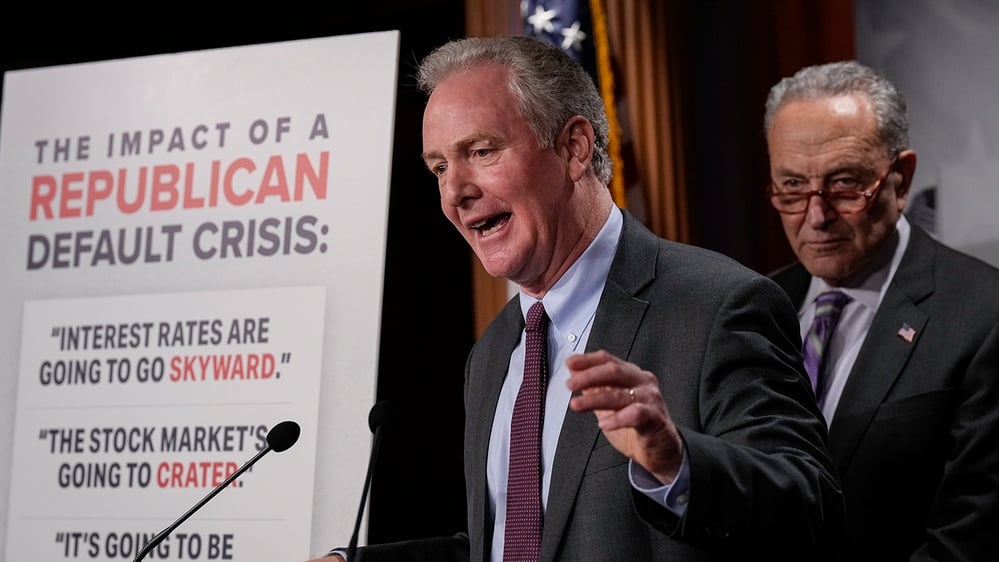

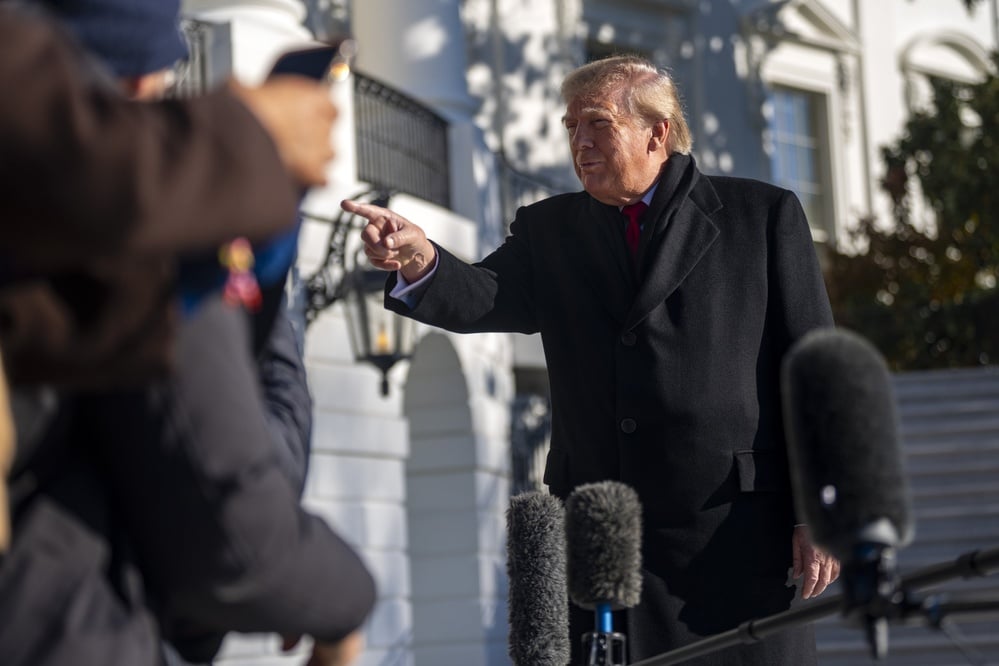
2026 © Helium Trades
Privacy Policy & Disclosure
* Disclaimer: Nothing on this website constitutes investment advice, performance data or any recommendation that any particular security, portfolio of securities, transaction or investment strategy is suitable for any specific person. Helium Trades is not responsible in any way for the accuracy
of any model predictions or price data. Any mention of a particular security and related prediction data is not a recommendation to buy or sell that security. Investments in securities involve the risk of loss. Past performance is no guarantee of future results. Helium Trades is not responsible for any of your investment decisions,
you should consult a financial expert before engaging in any transaction.
Helium Research Assistant

How can I help you today?
Ask any question about this page.