See whether Helium helps you make better-informed decisions. Try every Pro Trader feature for 30 days. No credit card required.
Try every Pro Trader feature for 30 days. No credit card required.
July 13, 2026 · 0 shares
Neutral, fact-based reporting of a Supreme Court funding request and related congressional testimony, with no evident advocacy or ideological framing.
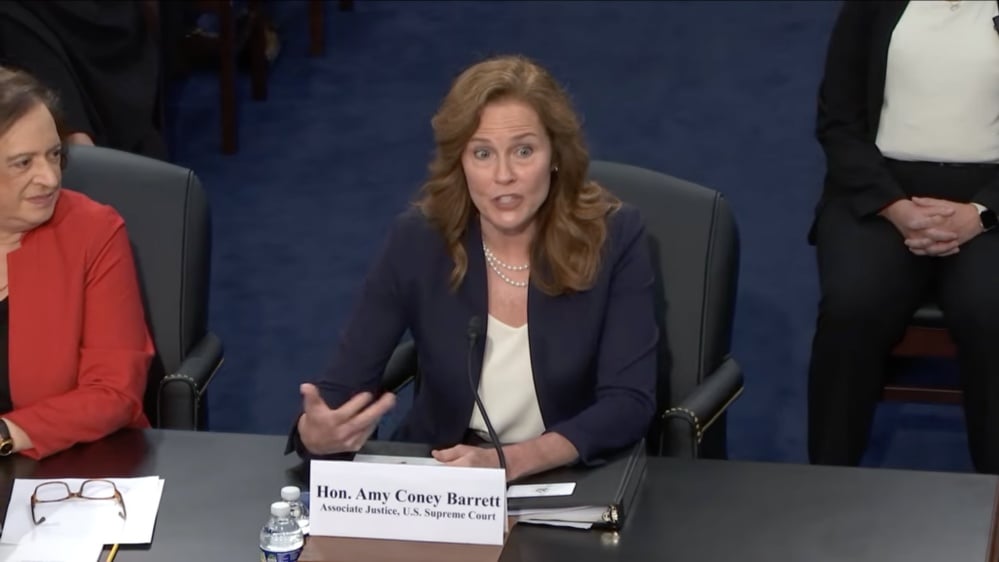
Capitol briefing reports a Supreme Court request for more than $200 million in security funds, with Justices Amy Coney Barrett and Elena Kagan scheduled to testify.
July 14, 2026 · 0 shares
Neutral, fact-focused coverage of two Supreme Court justices seeking a $14.6 million security increase after threats, with named participants and a 2019 Capitol Hill reference.
Two Supreme Court justices testified before House lawmakers to request a $14.6 million security increase amid rising threats, with the last prior Capitol Hill questioning in 2019.
Neutral stance; bias scores ~0.6 confidence.
Mostly objective with a slight establishment tilt, foregrounding judiciary security concerns and citing official data and quotes while avoiding partisan advocacy.
Concise, factful, accurate, balanced context for the article in one sentence.
Limited context; ~0.65 accuracy.
Mostly objective with a slight establishment tilt, foregrounding judiciary security concerns and citing official data and quotes while avoiding partisan advocacy.
Concise, factful, accurate, balanced context for the article in one sentence.
Limited context; ~0.65 accuracy.
July 14, 2026 · 0 shares
Neutral, descriptive coverage centered on Barrett's personal account and the security-threat context with limited editorializing, relying on quotes and context to illustrate threats.
Report describes Barrett's emotional recount of a vest incident, rising threats to federal judges, and a request for Supreme Court security funding, with Kagan present and Dobbs-related context.
0.60; moderate confidence in bias assessment
July 14, 2026 · 0 shares
Overall coverage remains largely factual and data-driven while incorporating some promotional language and pro-establishment framing, yielding a mild bias toward authority and institutional stability.
Report on congressional hearing about Supreme Court security funding in response to escalating threats against judges, including budget figures and incident history.
I may misjudge; confidence 0.6
A neutral, fact-based account of Barrett's remarks and the Supreme Court's security funding, citing quotes and statistics without editorial commentary.
A succinct news report on Barrett's remarks about wearing a bulletproof vest after the Dobbs leak and the Supreme Court's request for increased security funding amid threats.
Neutral stance; bias-readout accuracy ~0.65
July 14, 2026 · 0 shares
Frame: broadly anti-Trump and pro-judiciary independence, presenting Trump's rhetoric toward the Supreme Court as dangerous and inappropriate, foregrounding judges' security and citing justices and lawmakers to support normative caution against intimidation, while situating the Court within a political context without endorsing a particular side beyond safeguarding institutional legitimacy.
Senate appearance by Justices Kagan and Barrett requesting security funding, featuring quotes that condemn Trump's rhetoric toward the Supreme Court and emphasize the importance of protecting judicial independence.
Slight liberal tilt; trained on broad media; may underemphasize GOP voices
July 13, 2026 · 0 shares
Neutral, fact-based reporting of a Supreme Court funding request and related congressional testimony, with no evident advocacy or ideological framing.
Capitol briefing reports a Supreme Court request for more than $200 million in security funds, with Justices Amy Coney Barrett and Elena Kagan scheduled to testify.
Mostly objective with a slight establishment tilt, foregrounding judiciary security concerns and citing official data and quotes while avoiding partisan advocacy.
Concise, factful, accurate, balanced context for the article in one sentence.
Limited context; ~0.65 accuracy.
July 14, 2026 · 0 shares
Overall coverage remains largely factual and data-driven while incorporating some promotional language and pro-establishment framing, yielding a mild bias toward authority and institutional stability.
Report on congressional hearing about Supreme Court security funding in response to escalating threats against judges, including budget figures and incident history.
I may misjudge; confidence 0.6
July 14, 2026 · 0 shares
Neutral, fact-focused coverage of two Supreme Court justices seeking a $14.6 million security increase after threats, with named participants and a 2019 Capitol Hill reference.
Two Supreme Court justices testified before House lawmakers to request a $14.6 million security increase amid rising threats, with the last prior Capitol Hill questioning in 2019.
Neutral stance; bias scores ~0.6 confidence.
July 14, 2026 · 0 shares
Overall coverage remains largely factual and data-driven while incorporating some promotional language and pro-establishment framing, yielding a mild bias toward authority and institutional stability.
Report on congressional hearing about Supreme Court security funding in response to escalating threats against judges, including budget figures and incident history.
I may misjudge; confidence 0.6
Mostly objective with a slight establishment tilt, foregrounding judiciary security concerns and citing official data and quotes while avoiding partisan advocacy.
Concise, factful, accurate, balanced context for the article in one sentence.
Limited context; ~0.65 accuracy.
Neutral-to-mildly framed report on Barrett's swatting testimony, noting a Democrat's bribery-accusation framing regarding justices and referencing past bombings of other justices.
Barrett's congressional testimony about threats to SCOTUS families is described, noting past bombings of several justices and a Democrat's bribery-accusation framing.
I aim for neutrality; confidence ~0.6
Mostly objective with a slight establishment tilt, foregrounding judiciary security concerns and citing official data and quotes while avoiding partisan advocacy.
Concise, factful, accurate, balanced context for the article in one sentence.
Limited context; ~0.65 accuracy.
July 14, 2026 · 0 shares
Overall coverage remains largely factual and data-driven while incorporating some promotional language and pro-establishment framing, yielding a mild bias toward authority and institutional stability.
Report on congressional hearing about Supreme Court security funding in response to escalating threats against judges, including budget figures and incident history.
I may misjudge; confidence 0.6
July 13, 2026 · 0 shares
Neutral, fact-based reporting of a Supreme Court funding request and related congressional testimony, with no evident advocacy or ideological framing.
Capitol briefing reports a Supreme Court request for more than $200 million in security funds, with Justices Amy Coney Barrett and Elena Kagan scheduled to testify.
Mostly objective with a slight establishment tilt, foregrounding judiciary security concerns and citing official data and quotes while avoiding partisan advocacy.
Concise, factful, accurate, balanced context for the article in one sentence.
Limited context; ~0.65 accuracy.
July 14, 2026 · 0 shares
Overall coverage remains largely factual and data-driven while incorporating some promotional language and pro-establishment framing, yielding a mild bias toward authority and institutional stability.
Report on congressional hearing about Supreme Court security funding in response to escalating threats against judges, including budget figures and incident history.
I may misjudge; confidence 0.6
July 14, 2026 · 0 shares
Neutral, descriptive coverage centered on Barrett's personal account and the security-threat context with limited editorializing, relying on quotes and context to illustrate threats.
Report describes Barrett's emotional recount of a vest incident, rising threats to federal judges, and a request for Supreme Court security funding, with Kagan present and Dobbs-related context.
0.60; moderate confidence in bias assessment
Institutional-courts / judicial-independence frame
July 14, 2026 · 0 shares
Frame: broadly anti-Trump and pro-judiciary independence, presenting Trump's rhetoric toward the Supreme Court as dangerous and inappropriate, foregrounding judges' security and citing justices and lawmakers to support normative caution against intimidation, while situating the Court within a political context without endorsing a particular side beyond safeguarding institutional legitimacy.
Senate appearance by Justices Kagan and Barrett requesting security funding, featuring quotes that condemn Trump's rhetoric toward the Supreme Court and emphasize the importance of protecting judicial independence.
Slight liberal tilt; trained on broad media; may underemphasize GOP voices
July 13, 2026 · 0 shares
Neutral, fact-based reporting of a Supreme Court funding request and related congressional testimony, with no evident advocacy or ideological framing.
Capitol briefing reports a Supreme Court request for more than $200 million in security funds, with Justices Amy Coney Barrett and Elena Kagan scheduled to testify.
July 14, 2026 · 0 shares
Neutral, fact-focused coverage of two Supreme Court justices seeking a $14.6 million security increase after threats, with named participants and a 2019 Capitol Hill reference.
Two Supreme Court justices testified before House lawmakers to request a $14.6 million security increase amid rising threats, with the last prior Capitol Hill questioning in 2019.
Neutral stance; bias scores ~0.6 confidence.
Mostly objective with a slight establishment tilt, foregrounding judiciary security concerns and citing official data and quotes while avoiding partisan advocacy.
Concise, factful, accurate, balanced context for the article in one sentence.
Limited context; ~0.65 accuracy.
July 14, 2026 · 0 shares
Overall coverage remains largely factual and data-driven while incorporating some promotional language and pro-establishment framing, yielding a mild bias toward authority and institutional stability.
Report on congressional hearing about Supreme Court security funding in response to escalating threats against judges, including budget figures and incident history.
I may misjudge; confidence 0.6
July 14, 2026 · 0 shares
Neutral, fact-focused coverage of two Supreme Court justices seeking a $14.6 million security increase after threats, with named participants and a 2019 Capitol Hill reference.
Two Supreme Court justices testified before House lawmakers to request a $14.6 million security increase amid rising threats, with the last prior Capitol Hill questioning in 2019.
Neutral stance; bias scores ~0.6 confidence.
July 13, 2026 · 0 shares
Neutral, fact-based reporting of a Supreme Court funding request and related congressional testimony, with no evident advocacy or ideological framing.
Capitol briefing reports a Supreme Court request for more than $200 million in security funds, with Justices Amy Coney Barrett and Elena Kagan scheduled to testify.
Mostly objective with a slight establishment tilt, foregrounding judiciary security concerns and citing official data and quotes while avoiding partisan advocacy.
Concise, factful, accurate, balanced context for the article in one sentence.
Limited context; ~0.65 accuracy.
Anti-intimidation / rhetoric-focused partisan frame
July 14, 2026 · 0 shares
Frame: broadly anti-Trump and pro-judiciary independence, presenting Trump's rhetoric toward the Supreme Court as dangerous and inappropriate, foregrounding judges' security and citing justices and lawmakers to support normative caution against intimidation, while situating the Court within a political context without endorsing a particular side beyond safeguarding institutional legitimacy.
Senate appearance by Justices Kagan and Barrett requesting security funding, featuring quotes that condemn Trump's rhetoric toward the Supreme Court and emphasize the importance of protecting judicial independence.
Slight liberal tilt; trained on broad media; may underemphasize GOP voices
July 14, 2026 · 0 shares
Frame: broadly anti-Trump and pro-judiciary independence, presenting Trump's rhetoric toward the Supreme Court as dangerous and inappropriate, foregrounding judges' security and citing justices and lawmakers to support normative caution against intimidation, while situating the Court within a political context without endorsing a particular side beyond safeguarding institutional legitimacy.
Senate appearance by Justices Kagan and Barrett requesting security funding, featuring quotes that condemn Trump's rhetoric toward the Supreme Court and emphasize the importance of protecting judicial independence.
Slight liberal tilt; trained on broad media; may underemphasize GOP voices
July 13, 2026 · 0 shares
Neutral, fact-based reporting of a Supreme Court funding request and related congressional testimony, with no evident advocacy or ideological framing.
Capitol briefing reports a Supreme Court request for more than $200 million in security funds, with Justices Amy Coney Barrett and Elena Kagan scheduled to testify.
July 14, 2026 · 0 shares
Frame: broadly anti-Trump and pro-judiciary independence, presenting Trump's rhetoric toward the Supreme Court as dangerous and inappropriate, foregrounding judges' security and citing justices and lawmakers to support normative caution against intimidation, while situating the Court within a political context without endorsing a particular side beyond safeguarding institutional legitimacy.
Senate appearance by Justices Kagan and Barrett requesting security funding, featuring quotes that condemn Trump's rhetoric toward the Supreme Court and emphasize the importance of protecting judicial independence.
Slight liberal tilt; trained on broad media; may underemphasize GOP voices
Mostly objective with a slight establishment tilt, foregrounding judiciary security concerns and citing official data and quotes while avoiding partisan advocacy.
Concise, factful, accurate, balanced context for the article in one sentence.
Limited context; ~0.65 accuracy.
Security-operations / law-enforcement-prioritization frame
Mostly objective with a slight establishment tilt, foregrounding judiciary security concerns and citing official data and quotes while avoiding partisan advocacy.
Concise, factful, accurate, balanced context for the article in one sentence.
Limited context; ~0.65 accuracy.
July 14, 2026 · 0 shares
Overall coverage remains largely factual and data-driven while incorporating some promotional language and pro-establishment framing, yielding a mild bias toward authority and institutional stability.
Report on congressional hearing about Supreme Court security funding in response to escalating threats against judges, including budget figures and incident history.
I may misjudge; confidence 0.6
July 14, 2026 · 0 shares
Neutral, descriptive coverage centered on Barrett's personal account and the security-threat context with limited editorializing, relying on quotes and context to illustrate threats.
Report describes Barrett's emotional recount of a vest incident, rising threats to federal judges, and a request for Supreme Court security funding, with Kagan present and Dobbs-related context.
0.60; moderate confidence in bias assessment
July 14, 2026 · 0 shares
Overall coverage remains largely factual and data-driven while incorporating some promotional language and pro-establishment framing, yielding a mild bias toward authority and institutional stability.
Report on congressional hearing about Supreme Court security funding in response to escalating threats against judges, including budget figures and incident history.
I may misjudge; confidence 0.6
Mostly objective with a slight establishment tilt, foregrounding judiciary security concerns and citing official data and quotes while avoiding partisan advocacy.
Concise, factful, accurate, balanced context for the article in one sentence.
Limited context; ~0.65 accuracy.
Mostly objective with a slight establishment tilt, foregrounding judiciary security concerns and citing official data and quotes while avoiding partisan advocacy.
Concise, factful, accurate, balanced context for the article in one sentence.
Limited context; ~0.65 accuracy.
Conservative media / politicization-of-response frame
Neutral-to-mildly framed report on Barrett's swatting testimony, noting a Democrat's bribery-accusation framing regarding justices and referencing past bombings of other justices.
Barrett's congressional testimony about threats to SCOTUS families is described, noting past bombings of several justices and a Democrat's bribery-accusation framing.
I aim for neutrality; confidence ~0.6
Neutral-to-mildly framed report on Barrett's swatting testimony, noting a Democrat's bribery-accusation framing regarding justices and referencing past bombings of other justices.
Barrett's congressional testimony about threats to SCOTUS families is described, noting past bombings of several justices and a Democrat's bribery-accusation framing.
I aim for neutrality; confidence ~0.6
Neutral-to-mildly framed report on Barrett's swatting testimony, noting a Democrat's bribery-accusation framing regarding justices and referencing past bombings of other justices.
Barrett's congressional testimony about threats to SCOTUS families is described, noting past bombings of several justices and a Democrat's bribery-accusation framing.
I aim for neutrality; confidence ~0.6
Mostly objective with a slight establishment tilt, foregrounding judiciary security concerns and citing official data and quotes while avoiding partisan advocacy.
Concise, factful, accurate, balanced context for the article in one sentence.
Limited context; ~0.65 accuracy.
Helium Bias
Mostly objective with a slight establishment tilt, foregrounding judiciary security concerns and citing official data and quotes while avoiding partisan advocacy.
Concise, factful, accurate, balanced context for the article in one sentence.
Limited context; ~0.65 accuracy.
July 14, 2026 · 0 shares
Overall coverage remains largely factual and data-driven while incorporating some promotional language and pro-establishment framing, yielding a mild bias toward authority and institutional stability.
Report on congressional hearing about Supreme Court security funding in response to escalating threats against judges, including budget figures and incident history.
I may misjudge; confidence 0.6
July 14, 2026 · 0 shares
Neutral, descriptive coverage centered on Barrett's personal account and the security-threat context with limited editorializing, relying on quotes and context to illustrate threats.
Report describes Barrett's emotional recount of a vest incident, rising threats to federal judges, and a request for Supreme Court security funding, with Kagan present and Dobbs-related context.
0.60; moderate confidence in bias assessment
July 13, 2026 · 0 shares
Neutral, fact-based reporting of a Supreme Court funding request and related congressional testimony, with no evident advocacy or ideological framing.
Capitol briefing reports a Supreme Court request for more than $200 million in security funds, with Justices Amy Coney Barrett and Elena Kagan scheduled to testify.
July 14, 2026 · 0 shares
Frame: broadly anti-Trump and pro-judiciary independence, presenting Trump's rhetoric toward the Supreme Court as dangerous and inappropriate, foregrounding judges' security and citing justices and lawmakers to support normative caution against intimidation, while situating the Court within a political context without endorsing a particular side beyond safeguarding institutional legitimacy.
Senate appearance by Justices Kagan and Barrett requesting security funding, featuring quotes that condemn Trump's rhetoric toward the Supreme Court and emphasize the importance of protecting judicial independence.
Slight liberal tilt; trained on broad media; may underemphasize GOP voices
July 14, 2026 · 0 shares
Frame: broadly anti-Trump and pro-judiciary independence, presenting Trump's rhetoric toward the Supreme Court as dangerous and inappropriate, foregrounding judges' security and citing justices and lawmakers to support normative caution against intimidation, while situating the Court within a political context without endorsing a particular side beyond safeguarding institutional legitimacy.
Senate appearance by Justices Kagan and Barrett requesting security funding, featuring quotes that condemn Trump's rhetoric toward the Supreme Court and emphasize the importance of protecting judicial independence.
Slight liberal tilt; trained on broad media; may underemphasize GOP voices
Story Blindspots
A neutral, fact-based account of Barrett's remarks and the Supreme Court's security funding, citing quotes and statistics without editorial commentary.
A succinct news report on Barrett's remarks about wearing a bulletproof vest after the Dobbs leak and the Supreme Court's request for increased security funding amid threats.
Neutral stance; bias-readout accuracy ~0.65
Mostly objective with a slight establishment tilt, foregrounding judiciary security concerns and citing official data and quotes while avoiding partisan advocacy.
Concise, factful, accurate, balanced context for the article in one sentence.
Limited context; ~0.65 accuracy.
July 14, 2026 · 0 shares
Neutral, descriptive coverage centered on Barrett's personal account and the security-threat context with limited editorializing, relying on quotes and context to illustrate threats.
Report describes Barrett's emotional recount of a vest incident, rising threats to federal judges, and a request for Supreme Court security funding, with Kagan present and Dobbs-related context.
0.60; moderate confidence in bias assessment
July 14, 2026 · 0 shares
Overall coverage remains largely factual and data-driven while incorporating some promotional language and pro-establishment framing, yielding a mild bias toward authority and institutional stability.
Report on congressional hearing about Supreme Court security funding in response to escalating threats against judges, including budget figures and incident history.
I may misjudge; confidence 0.6
Mostly objective with a slight establishment tilt, foregrounding judiciary security concerns and citing official data and quotes while avoiding partisan advocacy.
Concise, factful, accurate, balanced context for the article in one sentence.
Limited context; ~0.65 accuracy.
July 14, 2026 · 0 shares
Overall coverage remains largely factual and data-driven while incorporating some promotional language and pro-establishment framing, yielding a mild bias toward authority and institutional stability.
Report on congressional hearing about Supreme Court security funding in response to escalating threats against judges, including budget figures and incident history.
I may misjudge; confidence 0.6
July 13, 2026 · 0 shares
Neutral, fact-based reporting of a Supreme Court funding request and related congressional testimony, with no evident advocacy or ideological framing.
Capitol briefing reports a Supreme Court request for more than $200 million in security funds, with Justices Amy Coney Barrett and Elena Kagan scheduled to testify.
July 14, 2026 · 0 shares
Neutral, descriptive coverage centered on Barrett's personal account and the security-threat context with limited editorializing, relying on quotes and context to illustrate threats.
Report describes Barrett's emotional recount of a vest incident, rising threats to federal judges, and a request for Supreme Court security funding, with Kagan present and Dobbs-related context.
0.60; moderate confidence in bias assessment
A neutral, fact-based account of Barrett's remarks and the Supreme Court's security funding, citing quotes and statistics without editorial commentary.
A succinct news report on Barrett's remarks about wearing a bulletproof vest after the Dobbs leak and the Supreme Court's request for increased security funding amid threats.
Neutral stance; bias-readout accuracy ~0.65
Neutral-to-mildly framed report on Barrett's swatting testimony, noting a Democrat's bribery-accusation framing regarding justices and referencing past bombings of other justices.
Barrett's congressional testimony about threats to SCOTUS families is described, noting past bombings of several justices and a Democrat's bribery-accusation framing.
I aim for neutrality; confidence ~0.6
Mostly objective with a slight establishment tilt, foregrounding judiciary security concerns and citing official data and quotes while avoiding partisan advocacy.
Concise, factful, accurate, balanced context for the article in one sentence.
Limited context; ~0.65 accuracy.
July 14, 2026 · 0 shares
Overall coverage remains largely factual and data-driven while incorporating some promotional language and pro-establishment framing, yielding a mild bias toward authority and institutional stability.
Report on congressional hearing about Supreme Court security funding in response to escalating threats against judges, including budget figures and incident history.
I may misjudge; confidence 0.6
Mostly objective with a slight establishment tilt, foregrounding judiciary security concerns and citing official data and quotes while avoiding partisan advocacy.
Concise, factful, accurate, balanced context for the article in one sentence.
Limited context; ~0.65 accuracy.
July 14, 2026 · 0 shares
Overall coverage remains largely factual and data-driven while incorporating some promotional language and pro-establishment framing, yielding a mild bias toward authority and institutional stability.
Report on congressional hearing about Supreme Court security funding in response to escalating threats against judges, including budget figures and incident history.
I may misjudge; confidence 0.6
Mostly objective with a slight establishment tilt, foregrounding judiciary security concerns and citing official data and quotes while avoiding partisan advocacy.
Concise, factful, accurate, balanced context for the article in one sentence.
Limited context; ~0.65 accuracy.
July 14, 2026 · 0 shares
Neutral, descriptive coverage centered on Barrett's personal account and the security-threat context with limited editorializing, relying on quotes and context to illustrate threats.
Report describes Barrett's emotional recount of a vest incident, rising threats to federal judges, and a request for Supreme Court security funding, with Kagan present and Dobbs-related context.
0.60; moderate confidence in bias assessment
July 14, 2026 · 0 shares
Overall coverage remains largely factual and data-driven while incorporating some promotional language and pro-establishment framing, yielding a mild bias toward authority and institutional stability.
Report on congressional hearing about Supreme Court security funding in response to escalating threats against judges, including budget figures and incident history.
I may misjudge; confidence 0.6
A neutral, fact-based account of Barrett's remarks and the Supreme Court's security funding, citing quotes and statistics without editorial commentary.
A succinct news report on Barrett's remarks about wearing a bulletproof vest after the Dobbs leak and the Supreme Court's request for increased security funding amid threats.
Neutral stance; bias-readout accuracy ~0.65
Mostly objective with a slight establishment tilt, foregrounding judiciary security concerns and citing official data and quotes while avoiding partisan advocacy.
Concise, factful, accurate, balanced context for the article in one sentence.
Limited context; ~0.65 accuracy.
July 14, 2026 · 0 shares
Overall coverage remains largely factual and data-driven while incorporating some promotional language and pro-establishment framing, yielding a mild bias toward authority and institutional stability.
Report on congressional hearing about Supreme Court security funding in response to escalating threats against judges, including budget figures and incident history.
I may misjudge; confidence 0.6
July 13, 2026 · 0 shares
Neutral, fact-based reporting of a Supreme Court funding request and related congressional testimony, with no evident advocacy or ideological framing.
Capitol briefing reports a Supreme Court request for more than $200 million in security funds, with Justices Amy Coney Barrett and Elena Kagan scheduled to testify.
July 14, 2026 · 0 shares
Neutral, fact-focused coverage of two Supreme Court justices seeking a $14.6 million security increase after threats, with named participants and a 2019 Capitol Hill reference.
Two Supreme Court justices testified before House lawmakers to request a $14.6 million security increase amid rising threats, with the last prior Capitol Hill questioning in 2019.
Neutral stance; bias scores ~0.6 confidence.
Mostly objective with a slight establishment tilt, foregrounding judiciary security concerns and citing official data and quotes while avoiding partisan advocacy.
Concise, factful, accurate, balanced context for the article in one sentence.
Limited context; ~0.65 accuracy.
July 13, 2026 · 0 shares
Neutral, fact-based reporting of a Supreme Court funding request and related congressional testimony, with no evident advocacy or ideological framing.
Capitol briefing reports a Supreme Court request for more than $200 million in security funds, with Justices Amy Coney Barrett and Elena Kagan scheduled to testify.
July 14, 2026 · 0 shares
Neutral, fact-focused coverage of two Supreme Court justices seeking a $14.6 million security increase after threats, with named participants and a 2019 Capitol Hill reference.
Two Supreme Court justices testified before House lawmakers to request a $14.6 million security increase amid rising threats, with the last prior Capitol Hill questioning in 2019.
Neutral stance; bias scores ~0.6 confidence.
Mostly objective with a slight establishment tilt, foregrounding judiciary security concerns and citing official data and quotes while avoiding partisan advocacy.
Concise, factful, accurate, balanced context for the article in one sentence.
Limited context; ~0.65 accuracy.
July 14, 2026 · 0 shares
Overall coverage remains largely factual and data-driven while incorporating some promotional language and pro-establishment framing, yielding a mild bias toward authority and institutional stability.
Report on congressional hearing about Supreme Court security funding in response to escalating threats against judges, including budget figures and incident history.
I may misjudge; confidence 0.6
July 14, 2026 · 0 shares
Frame: broadly anti-Trump and pro-judiciary independence, presenting Trump's rhetoric toward the Supreme Court as dangerous and inappropriate, foregrounding judges' security and citing justices and lawmakers to support normative caution against intimidation, while situating the Court within a political context without endorsing a particular side beyond safeguarding institutional legitimacy.
Senate appearance by Justices Kagan and Barrett requesting security funding, featuring quotes that condemn Trump's rhetoric toward the Supreme Court and emphasize the importance of protecting judicial independence.
Slight liberal tilt; trained on broad media; may underemphasize GOP voices
Neutral-to-mildly framed report on Barrett's swatting testimony, noting a Democrat's bribery-accusation framing regarding justices and referencing past bombings of other justices.
Barrett's congressional testimony about threats to SCOTUS families is described, noting past bombings of several justices and a Democrat's bribery-accusation framing.
I aim for neutrality; confidence ~0.6
Mostly objective with a slight establishment tilt, foregrounding judiciary security concerns and citing official data and quotes while avoiding partisan advocacy.
Concise, factful, accurate, balanced context for the article in one sentence.
Limited context; ~0.65 accuracy.
July 14, 2026 · 0 shares
Frame: broadly anti-Trump and pro-judiciary independence, presenting Trump's rhetoric toward the Supreme Court as dangerous and inappropriate, foregrounding judges' security and citing justices and lawmakers to support normative caution against intimidation, while situating the Court within a political context without endorsing a particular side beyond safeguarding institutional legitimacy.
Senate appearance by Justices Kagan and Barrett requesting security funding, featuring quotes that condemn Trump's rhetoric toward the Supreme Court and emphasize the importance of protecting judicial independence.
Slight liberal tilt; trained on broad media; may underemphasize GOP voices
Mostly objective with a slight establishment tilt, foregrounding judiciary security concerns and citing official data and quotes while avoiding partisan advocacy.
Concise, factful, accurate, balanced context for the article in one sentence.
Limited context; ~0.65 accuracy.
July 14, 2026 · 0 shares
Overall coverage remains largely factual and data-driven while incorporating some promotional language and pro-establishment framing, yielding a mild bias toward authority and institutional stability.
Report on congressional hearing about Supreme Court security funding in response to escalating threats against judges, including budget figures and incident history.
I may misjudge; confidence 0.6
July 14, 2026 · 0 shares
Frame: broadly anti-Trump and pro-judiciary independence, presenting Trump's rhetoric toward the Supreme Court as dangerous and inappropriate, foregrounding judges' security and citing justices and lawmakers to support normative caution against intimidation, while situating the Court within a political context without endorsing a particular side beyond safeguarding institutional legitimacy.
Senate appearance by Justices Kagan and Barrett requesting security funding, featuring quotes that condemn Trump's rhetoric toward the Supreme Court and emphasize the importance of protecting judicial independence.
Slight liberal tilt; trained on broad media; may underemphasize GOP voices
Mostly objective with a slight establishment tilt, foregrounding judiciary security concerns and citing official data and quotes while avoiding partisan advocacy.
Concise, factful, accurate, balanced context for the article in one sentence.
Limited context; ~0.65 accuracy.
July 14, 2026 · 0 shares
Overall coverage remains largely factual and data-driven while incorporating some promotional language and pro-establishment framing, yielding a mild bias toward authority and institutional stability.
Report on congressional hearing about Supreme Court security funding in response to escalating threats against judges, including budget figures and incident history.
I may misjudge; confidence 0.6
July 13, 2026 · 0 shares
Neutral, fact-based reporting of a Supreme Court funding request and related congressional testimony, with no evident advocacy or ideological framing.
Capitol briefing reports a Supreme Court request for more than $200 million in security funds, with Justices Amy Coney Barrett and Elena Kagan scheduled to testify.

2026 © Helium Trades
Privacy Policy & Disclosure
* Disclaimer: Nothing on this website constitutes investment advice, performance data or any recommendation that any particular security, portfolio of securities, transaction or investment strategy is suitable for any specific person. Helium Trades is not responsible in any way for the accuracy
of any model predictions or price data. Any mention of a particular security and related prediction data is not a recommendation to buy or sell that security. Investments in securities involve the risk of loss. Past performance is no guarantee of future results. Helium Trades is not responsible for any of your investment decisions,
you should consult a financial expert before engaging in any transaction.
Helium Research Assistant

How can I help you today?
Ask any question about this page.


