See whether Helium helps you make better-informed decisions. Try every Pro Trader feature for 30 days. No credit card required.
Try every Pro Trader feature for 30 days. No credit card required.
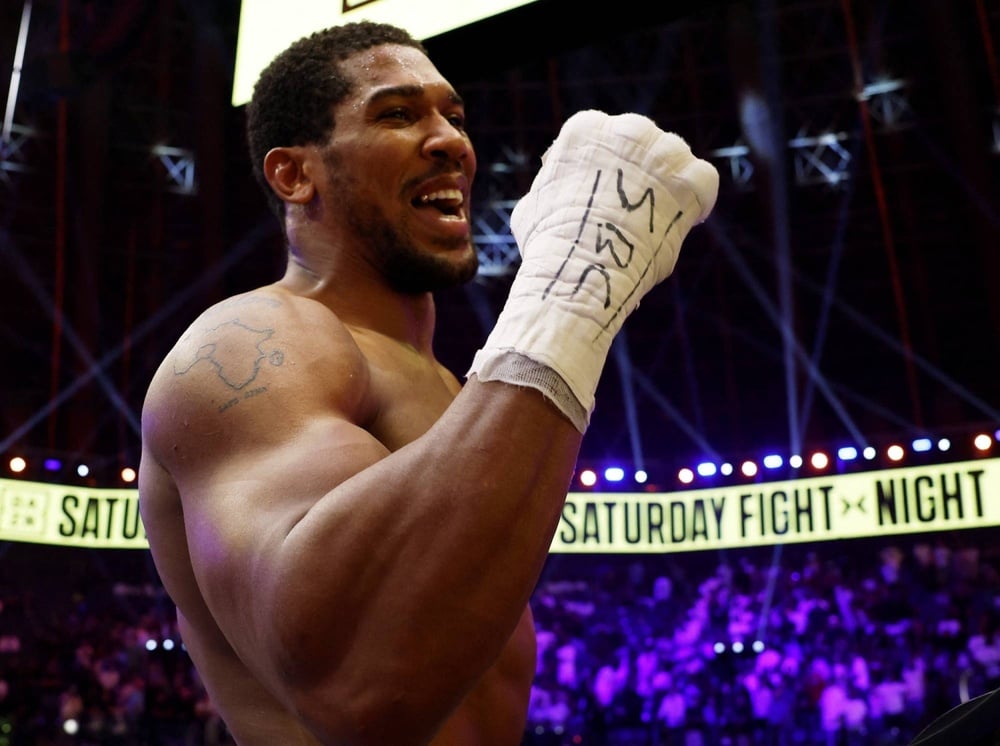
Fury's seven-round stoppage of Wach in Pattaya is framed as a low-profile warm-up for a looming Fury–Joshua clash, emphasizing secrecy, modest attendance, and the opponent's veteran status to build anticipation for the heavyweight showdown.
Tyson Fury defeated Mariusz Wach in seven rounds in Pattaya, Thailand, in a low-profile warm-up ahead of a potential heavyweight bout with Anthony Joshua later this year, with Joshua preparing for Kristian Prenga in Saudi Arabia.
Automated analysis; not human reviewed. Limitations: Case-specific analysis based solely on the supplied article text; broader context may alter interpretation.
Ambiguities: limited quotes and context; framing may vary with fuller coverage.
Publisher frames Fury-Wach and the looming Joshua showdown as a blockbuster, narrative-driven event, foregrounding hype, matchmaking logistics, and Netflix tie-ins over critical context.
Fury's win is presented as a stepping stone to a high-profile Fury–Joshua bout, with Joshua facing Kristian Prenga next and discussions of venue and schedule including Wembley and Saudi timing.
Automated analysis; not human reviewed. Limitations: Concise, case-specific limitations and plausible alternative interpretations.
Ambiguities: sports framing dominates; no independent sourcing.
July 26, 2026 · 0 shares
The publisher frames Joshua's comeback as a resilience-driven, emotionally charged narrative and casts the Prenga bout as a springboard to a future all-British Joshua–Fury showdown.
A Saudi Arabia non-title heavyweight bout frames Joshua's comeback and a potential all-British showdown with Fury, set against his December Nigerian car crash and the deaths of two friends.
Ambiguities on exact date/year; relies on framing in a single source.
Sun framing treats Fury’s untelevised Thai stoppage as a national, philanthropic spectacle wrapped in blockbuster-promotional language and a Netflix-exclusive broadcast footprint to prime readers for a Fury–Joshua showdown.
The Sun frames Fury's Thailand bout as a prelude to a peak Fury–Joshua blockbuster, mixing coverage of crowd energy, philanthropy, and broadcast idiosyncrasies to signal spectacle and exclusivity.
Automated analysis; not human reviewed.
·
27 of 52 available dimensions scored; omitted dimensions are not treated as neutral.
·
Verified supporting quotes for 2 of 27 scored dimensions.
Claim: Sun framing treats Fury–Joshua as a defining British boxing moment aligned with national-sports narratives.
“Now the biggest headliner British boxing has spent 13 years waiting for rests firmly in AJ’s hands.” · exact text match
“We’ve had the Thrilla in Manila and the Rumble in the Jungle – then came the Punch-Up in Pattaya.” · exact text match
Counterevidence:
“Philanthropic coverage shows broader humanitarian intent beyond nationalist framing.” · not found in supplied text
Why: Framing emphasizes national significance and prestige, aligning with conservative cultural narratives.
Claim: Coverage elevates Fury and Joshua to blockbuster, elite-status figures central to a marquee national event.
“the richest and biggest fight British boxing has ever seen.” · exact text match
Counterevidence:
“Philanthropy coverage shows broader appeal beyond elitist prestige.” · not found in supplied text
Why: Language centers elite-level promotion and star-power in the boxing narrative.
July 26, 2026 · 0 shares
Publisher framing centers Joshua's comeback and a forthcoming Fury showdown while signaling monetization and editorial gatekeeping through subscription prompts and sponsor disclosures.
Joshua's comeback win in Jeddah over Albanian Prenga, his first since a December Nigeria car crash that killed two friends, sets up a Fury rematch later this year.
Automated analysis; not human reviewed.
Limitations: Case-specific; limited excerpt; quotes may reflect standard sports journalism and sponsorship disclosures; alternative interpretations could view as routine sports coverage or attempt to legitimize monetization.
·
1 of 52 available dimensions scored; omitted dimensions are not treated as neutral.
·
Verified supporting quotes for 1 of 1 scored dimensions.
Claim: Mild pro-establishment framing evidenced by emphasis on quality journalism and sponsor disclosures.
“In a time of both misinformation and too much information, quality journalism is more crucial than ever.” · exact text match
“Sponsored contents planned and edited by JT Media Enterprise Division.” · exact text match
Why: Direct quotes indicate trust in established journalism norms and corporate sponsorship.
Date specifics sparse; framing favors conventional journalism.
BBC Sport frames the Fury–Joshua saga as a high-stakes, promotional-driven countdown centered on a two-day cross-continental window, foregrounding spectacle, personal tragedy, and insider speculation.
The piece frames a cross-continental scheduling showdown with a focus on the promotional hype, personal tragedy around Joshua, and the involvement of promoters and broadcasters shaping the Fury–Joshua fight.
Automated analysis; not human reviewed. Limitations: Concise, case-specific limitations and plausible alternative interpretations.
Publisher framing emphasizes drama and rivalry through provocative quotes and selective context to hype the Fury-Joshua matchup while presenting outcomes as imminent.
The report describes Fury's post-fight remarks and the status of a potential Fury–Joshua bout.
Automated analysis; not human reviewed.
Limitations: Concise, case-specific limitations and plausible alternative interpretations.
·
47 of 52 available dimensions scored; omitted dimensions are not treated as neutral.
·
Verified supporting quotes for 1 of 47 scored dimensions.
Claim: The publisher uses direct quotes and sensational phrasing, indicating subjective framing rather than neutral reporting.
“Tyson Fury has challenged Anthony Joshua to show the world “how big his balls are” and go through with their planned showdown.” · exact text match
“The biggest test of it all is how big his balls are. I think he’s a big s***house.” · exact text match
“He never had the guts to get in the ring and face me.” · exact text match
Why: Direct quotes and provocative language signal subjective framing rather than a purely factual account.
Claim: The piece emphasizes drama through sensational language and provocative quotes to hype the upcoming bout.
“Tyson Fury has challenged Anthony Joshua to show the world “how big his balls are” and go through with their planned showdown.” · exact text match
““I’ve been away in training camp for 10 weeks.
I was away before that for four months.””
· not found in supplied text
“Fury piles pressure on Joshua after stopping Wach in comfortable win” · exact text match
Why: Quotes and sensational language indicate focus on drama over neutral reporting.
Narrow excerpt; quotes may be miscontextualized; no independent verification.
Publisher frames Fury-Wach and the looming Joshua showdown as a blockbuster, narrative-driven event, foregrounding hype, matchmaking logistics, and Netflix tie-ins over critical context.
Fury's win is presented as a stepping stone to a high-profile Fury–Joshua bout, with Joshua facing Kristian Prenga next and discussions of venue and schedule including Wembley and Saudi timing.
Automated analysis; not human reviewed. Limitations: Concise, case-specific limitations and plausible alternative interpretations.
Ambiguities: sports framing dominates; no independent sourcing.
BBC Sport frames the Fury–Joshua saga as a high-stakes, promotional-driven countdown centered on a two-day cross-continental window, foregrounding spectacle, personal tragedy, and insider speculation.
The piece frames a cross-continental scheduling showdown with a focus on the promotional hype, personal tragedy around Joshua, and the involvement of promoters and broadcasters shaping the Fury–Joshua fight.
Automated analysis; not human reviewed. Limitations: Concise, case-specific limitations and plausible alternative interpretations.
Fury's seven-round stoppage of Wach in Pattaya is framed as a low-profile warm-up for a looming Fury–Joshua clash, emphasizing secrecy, modest attendance, and the opponent's veteran status to build anticipation for the heavyweight showdown.
Tyson Fury defeated Mariusz Wach in seven rounds in Pattaya, Thailand, in a low-profile warm-up ahead of a potential heavyweight bout with Anthony Joshua later this year, with Joshua preparing for Kristian Prenga in Saudi Arabia.
Automated analysis; not human reviewed. Limitations: Case-specific analysis based solely on the supplied article text; broader context may alter interpretation.
Ambiguities: limited quotes and context; framing may vary with fuller coverage.
July 26, 2026 · 0 shares
The publisher frames Joshua's comeback as a resilience-driven, emotionally charged narrative and casts the Prenga bout as a springboard to a future all-British Joshua–Fury showdown.
A Saudi Arabia non-title heavyweight bout frames Joshua's comeback and a potential all-British showdown with Fury, set against his December Nigerian car crash and the deaths of two friends.
Ambiguities on exact date/year; relies on framing in a single source.
July 22, 2026 · 0 shares
Neutral, fact-based coverage relying on quotes and BBC Sport attribution to report Anthony Joshua coping with the deaths of two close friends while preparing for a scheduled fight, with no evident editorial slant.
A BBC Sport report about Anthony Joshua coping with the death of two friends while preparing for a fight against Kristian Prenga.
Automated analysis; not human reviewed.
Limitations: Concise, case-specific limitations and plausible alternative interpretations.
·
1 of 52 available dimensions scored; omitted dimensions are not treated as neutral.
·
Verified supporting quotes for 0 of 1 scored dimensions.
Claim: The article's credibility is supported by direct quotes and BBC Sport attribution, indicating reliable sourcing.
“The 36-year-old told BBC Sport: "It's tough, every time I think about it, it hurts."” · not found in supplied text
“"It's competition at the highest level," he added.” · not found in supplied text
“"I want to perform for my team, I want to make them proud and make myself proud."” · exact text match
Why: Direct quotes and attribution to a reputable outlet support credibility; absence of sensational language suggests a measured, factual frame.
Ambiguity: limited explicit bias detected; nothing clearly ideological or propagandistic.
Fury's seven-round stoppage of Wach in Pattaya is framed as a low-profile warm-up for a looming Fury–Joshua clash, emphasizing secrecy, modest attendance, and the opponent's veteran status to build anticipation for the heavyweight showdown.
Tyson Fury defeated Mariusz Wach in seven rounds in Pattaya, Thailand, in a low-profile warm-up ahead of a potential heavyweight bout with Anthony Joshua later this year, with Joshua preparing for Kristian Prenga in Saudi Arabia.
Automated analysis; not human reviewed. Limitations: Case-specific analysis based solely on the supplied article text; broader context may alter interpretation.
Ambiguities: limited quotes and context; framing may vary with fuller coverage.
Publisher frames Fury-Wach and the looming Joshua showdown as a blockbuster, narrative-driven event, foregrounding hype, matchmaking logistics, and Netflix tie-ins over critical context.
Fury's win is presented as a stepping stone to a high-profile Fury–Joshua bout, with Joshua facing Kristian Prenga next and discussions of venue and schedule including Wembley and Saudi timing.
Automated analysis; not human reviewed. Limitations: Concise, case-specific limitations and plausible alternative interpretations.
Ambiguities: sports framing dominates; no independent sourcing.
July 26, 2026 · 0 shares
The publisher frames Joshua's comeback as a resilience-driven, emotionally charged narrative and casts the Prenga bout as a springboard to a future all-British Joshua–Fury showdown.
A Saudi Arabia non-title heavyweight bout frames Joshua's comeback and a potential all-British showdown with Fury, set against his December Nigerian car crash and the deaths of two friends.
Ambiguities on exact date/year; relies on framing in a single source.
Sun framing treats Fury’s untelevised Thai stoppage as a national, philanthropic spectacle wrapped in blockbuster-promotional language and a Netflix-exclusive broadcast footprint to prime readers for a Fury–Joshua showdown.
The Sun frames Fury's Thailand bout as a prelude to a peak Fury–Joshua blockbuster, mixing coverage of crowd energy, philanthropy, and broadcast idiosyncrasies to signal spectacle and exclusivity.
Automated analysis; not human reviewed. · 27 of 52 available dimensions scored; omitted dimensions are not treated as neutral. · Verified supporting quotes for 2 of 27 scored dimensions.
Claim: Sun framing treats Fury–Joshua as a defining British boxing moment aligned with national-sports narratives.
“Now the biggest headliner British boxing has spent 13 years waiting for rests firmly in AJ’s hands.” · exact text match
“We’ve had the Thrilla in Manila and the Rumble in the Jungle – then came the Punch-Up in Pattaya.” · exact text match
Counterevidence:
“Philanthropic coverage shows broader humanitarian intent beyond nationalist framing.” · not found in supplied text
Why: Framing emphasizes national significance and prestige, aligning with conservative cultural narratives.
Claim: Coverage elevates Fury and Joshua to blockbuster, elite-status figures central to a marquee national event.
“the richest and biggest fight British boxing has ever seen.” · exact text match
Counterevidence:
“Philanthropy coverage shows broader appeal beyond elitist prestige.” · not found in supplied text
Why: Language centers elite-level promotion and star-power in the boxing narrative.
July 26, 2026 · 0 shares
Publisher framing centers Joshua's comeback and a forthcoming Fury showdown while signaling monetization and editorial gatekeeping through subscription prompts and sponsor disclosures.
Joshua's comeback win in Jeddah over Albanian Prenga, his first since a December Nigeria car crash that killed two friends, sets up a Fury rematch later this year.
Automated analysis; not human reviewed. Limitations: Case-specific; limited excerpt; quotes may reflect standard sports journalism and sponsorship disclosures; alternative interpretations could view as routine sports coverage or attempt to legitimize monetization. · 1 of 52 available dimensions scored; omitted dimensions are not treated as neutral. · Verified supporting quotes for 1 of 1 scored dimensions.
Claim: Mild pro-establishment framing evidenced by emphasis on quality journalism and sponsor disclosures.
“In a time of both misinformation and too much information, quality journalism is more crucial than ever.” · exact text match
“Sponsored contents planned and edited by JT Media Enterprise Division.” · exact text match
Why: Direct quotes indicate trust in established journalism norms and corporate sponsorship.
Date specifics sparse; framing favors conventional journalism.
BBC Sport frames the Fury–Joshua saga as a high-stakes, promotional-driven countdown centered on a two-day cross-continental window, foregrounding spectacle, personal tragedy, and insider speculation.
The piece frames a cross-continental scheduling showdown with a focus on the promotional hype, personal tragedy around Joshua, and the involvement of promoters and broadcasters shaping the Fury–Joshua fight.
Automated analysis; not human reviewed. Limitations: Concise, case-specific limitations and plausible alternative interpretations.
Publisher framing emphasizes drama and rivalry through provocative quotes and selective context to hype the Fury-Joshua matchup while presenting outcomes as imminent.
The report describes Fury's post-fight remarks and the status of a potential Fury–Joshua bout.
Automated analysis; not human reviewed. Limitations: Concise, case-specific limitations and plausible alternative interpretations. · 47 of 52 available dimensions scored; omitted dimensions are not treated as neutral. · Verified supporting quotes for 1 of 47 scored dimensions.
Claim: The publisher uses direct quotes and sensational phrasing, indicating subjective framing rather than neutral reporting.
“Tyson Fury has challenged Anthony Joshua to show the world “how big his balls are” and go through with their planned showdown.” · exact text match
“The biggest test of it all is how big his balls are. I think he’s a big s***house.” · exact text match
“He never had the guts to get in the ring and face me.” · exact text match
Why: Direct quotes and provocative language signal subjective framing rather than a purely factual account.
Claim: The piece emphasizes drama through sensational language and provocative quotes to hype the upcoming bout.
“Tyson Fury has challenged Anthony Joshua to show the world “how big his balls are” and go through with their planned showdown.” · exact text match
““I’ve been away in training camp for 10 weeks. I was away before that for four months.”” · not found in supplied text
“Fury piles pressure on Joshua after stopping Wach in comfortable win” · exact text match
Why: Quotes and sensational language indicate focus on drama over neutral reporting.
Narrow excerpt; quotes may be miscontextualized; no independent verification.
Publisher frames Fury-Wach and the looming Joshua showdown as a blockbuster, narrative-driven event, foregrounding hype, matchmaking logistics, and Netflix tie-ins over critical context.
Fury's win is presented as a stepping stone to a high-profile Fury–Joshua bout, with Joshua facing Kristian Prenga next and discussions of venue and schedule including Wembley and Saudi timing.
Automated analysis; not human reviewed. Limitations: Concise, case-specific limitations and plausible alternative interpretations.
Ambiguities: sports framing dominates; no independent sourcing.
BBC Sport frames the Fury–Joshua saga as a high-stakes, promotional-driven countdown centered on a two-day cross-continental window, foregrounding spectacle, personal tragedy, and insider speculation.
The piece frames a cross-continental scheduling showdown with a focus on the promotional hype, personal tragedy around Joshua, and the involvement of promoters and broadcasters shaping the Fury–Joshua fight.
Automated analysis; not human reviewed. Limitations: Concise, case-specific limitations and plausible alternative interpretations.
Sporting assessment
Fury's seven-round stoppage of Wach in Pattaya is framed as a low-profile warm-up for a looming Fury–Joshua clash, emphasizing secrecy, modest attendance, and the opponent's veteran status to build anticipation for the heavyweight showdown.
Tyson Fury defeated Mariusz Wach in seven rounds in Pattaya, Thailand, in a low-profile warm-up ahead of a potential heavyweight bout with Anthony Joshua later this year, with Joshua preparing for Kristian Prenga in Saudi Arabia.
Automated analysis; not human reviewed. Limitations: Case-specific analysis based solely on the supplied article text; broader context may alter interpretation.
Ambiguities: limited quotes and context; framing may vary with fuller coverage.
Publisher frames Fury-Wach and the looming Joshua showdown as a blockbuster, narrative-driven event, foregrounding hype, matchmaking logistics, and Netflix tie-ins over critical context.
Fury's win is presented as a stepping stone to a high-profile Fury–Joshua bout, with Joshua facing Kristian Prenga next and discussions of venue and schedule including Wembley and Saudi timing.
Automated analysis; not human reviewed. Limitations: Concise, case-specific limitations and plausible alternative interpretations.
Ambiguities: sports framing dominates; no independent sourcing.
July 26, 2026 · 0 shares
The publisher frames Joshua's comeback as a resilience-driven, emotionally charged narrative and casts the Prenga bout as a springboard to a future all-British Joshua–Fury showdown.
A Saudi Arabia non-title heavyweight bout frames Joshua's comeback and a potential all-British showdown with Fury, set against his December Nigerian car crash and the deaths of two friends.
Ambiguities on exact date/year; relies on framing in a single source.
July 26, 2026 · 0 shares
The publisher frames Joshua's comeback as a resilience-driven, emotionally charged narrative and casts the Prenga bout as a springboard to a future all-British Joshua–Fury showdown.
A Saudi Arabia non-title heavyweight bout frames Joshua's comeback and a potential all-British showdown with Fury, set against his December Nigerian car crash and the deaths of two friends.
Ambiguities on exact date/year; relies on framing in a single source.
July 26, 2026 · 0 shares
The publisher frames Joshua's comeback as a resilience-driven, emotionally charged narrative and casts the Prenga bout as a springboard to a future all-British Joshua–Fury showdown.
A Saudi Arabia non-title heavyweight bout frames Joshua's comeback and a potential all-British showdown with Fury, set against his December Nigerian car crash and the deaths of two friends.
Ambiguities on exact date/year; relies on framing in a single source.
Fury's seven-round stoppage of Wach in Pattaya is framed as a low-profile warm-up for a looming Fury–Joshua clash, emphasizing secrecy, modest attendance, and the opponent's veteran status to build anticipation for the heavyweight showdown.
Tyson Fury defeated Mariusz Wach in seven rounds in Pattaya, Thailand, in a low-profile warm-up ahead of a potential heavyweight bout with Anthony Joshua later this year, with Joshua preparing for Kristian Prenga in Saudi Arabia.
Automated analysis; not human reviewed. Limitations: Case-specific analysis based solely on the supplied article text; broader context may alter interpretation.
Ambiguities: limited quotes and context; framing may vary with fuller coverage.
Helium Bias
Fury's seven-round stoppage of Wach in Pattaya is framed as a low-profile warm-up for a looming Fury–Joshua clash, emphasizing secrecy, modest attendance, and the opponent's veteran status to build anticipation for the heavyweight showdown.
Tyson Fury defeated Mariusz Wach in seven rounds in Pattaya, Thailand, in a low-profile warm-up ahead of a potential heavyweight bout with Anthony Joshua later this year, with Joshua preparing for Kristian Prenga in Saudi Arabia.
Automated analysis; not human reviewed. Limitations: Case-specific analysis based solely on the supplied article text; broader context may alter interpretation.
Ambiguities: limited quotes and context; framing may vary with fuller coverage.
July 26, 2026 · 0 shares
The publisher frames Joshua's comeback as a resilience-driven, emotionally charged narrative and casts the Prenga bout as a springboard to a future all-British Joshua–Fury showdown.
A Saudi Arabia non-title heavyweight bout frames Joshua's comeback and a potential all-British showdown with Fury, set against his December Nigerian car crash and the deaths of two friends.
Ambiguities on exact date/year; relies on framing in a single source.
BBC Sport frames the Fury–Joshua saga as a high-stakes, promotional-driven countdown centered on a two-day cross-continental window, foregrounding spectacle, personal tragedy, and insider speculation.
The piece frames a cross-continental scheduling showdown with a focus on the promotional hype, personal tragedy around Joshua, and the involvement of promoters and broadcasters shaping the Fury–Joshua fight.
Automated analysis; not human reviewed. Limitations: Concise, case-specific limitations and plausible alternative interpretations.
Story Blindspots
Fury's seven-round stoppage of Wach in Pattaya is framed as a low-profile warm-up for a looming Fury–Joshua clash, emphasizing secrecy, modest attendance, and the opponent's veteran status to build anticipation for the heavyweight showdown.
Tyson Fury defeated Mariusz Wach in seven rounds in Pattaya, Thailand, in a low-profile warm-up ahead of a potential heavyweight bout with Anthony Joshua later this year, with Joshua preparing for Kristian Prenga in Saudi Arabia.
Automated analysis; not human reviewed. Limitations: Case-specific analysis based solely on the supplied article text; broader context may alter interpretation.
Ambiguities: limited quotes and context; framing may vary with fuller coverage.
July 26, 2026 · 0 shares
The publisher frames Joshua's comeback as a resilience-driven, emotionally charged narrative and casts the Prenga bout as a springboard to a future all-British Joshua–Fury showdown.
A Saudi Arabia non-title heavyweight bout frames Joshua's comeback and a potential all-British showdown with Fury, set against his December Nigerian car crash and the deaths of two friends.
Ambiguities on exact date/year; relies on framing in a single source.
Sun framing treats Fury’s untelevised Thai stoppage as a national, philanthropic spectacle wrapped in blockbuster-promotional language and a Netflix-exclusive broadcast footprint to prime readers for a Fury–Joshua showdown.
The Sun frames Fury's Thailand bout as a prelude to a peak Fury–Joshua blockbuster, mixing coverage of crowd energy, philanthropy, and broadcast idiosyncrasies to signal spectacle and exclusivity.
Automated analysis; not human reviewed. · 27 of 52 available dimensions scored; omitted dimensions are not treated as neutral. · Verified supporting quotes for 2 of 27 scored dimensions.
Claim: Sun framing treats Fury–Joshua as a defining British boxing moment aligned with national-sports narratives.
“Now the biggest headliner British boxing has spent 13 years waiting for rests firmly in AJ’s hands.” · exact text match
“We’ve had the Thrilla in Manila and the Rumble in the Jungle – then came the Punch-Up in Pattaya.” · exact text match
Counterevidence:
“Philanthropic coverage shows broader humanitarian intent beyond nationalist framing.” · not found in supplied text
Why: Framing emphasizes national significance and prestige, aligning with conservative cultural narratives.
Claim: Coverage elevates Fury and Joshua to blockbuster, elite-status figures central to a marquee national event.
“the richest and biggest fight British boxing has ever seen.” · exact text match
Counterevidence:
“Philanthropy coverage shows broader appeal beyond elitist prestige.” · not found in supplied text
Why: Language centers elite-level promotion and star-power in the boxing narrative.
BBC Sport frames the Fury–Joshua saga as a high-stakes, promotional-driven countdown centered on a two-day cross-continental window, foregrounding spectacle, personal tragedy, and insider speculation.
The piece frames a cross-continental scheduling showdown with a focus on the promotional hype, personal tragedy around Joshua, and the involvement of promoters and broadcasters shaping the Fury–Joshua fight.
Automated analysis; not human reviewed. Limitations: Concise, case-specific limitations and plausible alternative interpretations.
Fury's seven-round stoppage of Wach in Pattaya is framed as a low-profile warm-up for a looming Fury–Joshua clash, emphasizing secrecy, modest attendance, and the opponent's veteran status to build anticipation for the heavyweight showdown.
Tyson Fury defeated Mariusz Wach in seven rounds in Pattaya, Thailand, in a low-profile warm-up ahead of a potential heavyweight bout with Anthony Joshua later this year, with Joshua preparing for Kristian Prenga in Saudi Arabia.
Automated analysis; not human reviewed. Limitations: Case-specific analysis based solely on the supplied article text; broader context may alter interpretation.
Ambiguities: limited quotes and context; framing may vary with fuller coverage.
Publisher frames Fury-Wach and the looming Joshua showdown as a blockbuster, narrative-driven event, foregrounding hype, matchmaking logistics, and Netflix tie-ins over critical context.
Fury's win is presented as a stepping stone to a high-profile Fury–Joshua bout, with Joshua facing Kristian Prenga next and discussions of venue and schedule including Wembley and Saudi timing.
Automated analysis; not human reviewed. Limitations: Concise, case-specific limitations and plausible alternative interpretations.
Ambiguities: sports framing dominates; no independent sourcing.
July 26, 2026 · 0 shares
The publisher frames Joshua's comeback as a resilience-driven, emotionally charged narrative and casts the Prenga bout as a springboard to a future all-British Joshua–Fury showdown.
A Saudi Arabia non-title heavyweight bout frames Joshua's comeback and a potential all-British showdown with Fury, set against his December Nigerian car crash and the deaths of two friends.
Ambiguities on exact date/year; relies on framing in a single source.
Sun framing treats Fury’s untelevised Thai stoppage as a national, philanthropic spectacle wrapped in blockbuster-promotional language and a Netflix-exclusive broadcast footprint to prime readers for a Fury–Joshua showdown.
The Sun frames Fury's Thailand bout as a prelude to a peak Fury–Joshua blockbuster, mixing coverage of crowd energy, philanthropy, and broadcast idiosyncrasies to signal spectacle and exclusivity.
Automated analysis; not human reviewed. · 27 of 52 available dimensions scored; omitted dimensions are not treated as neutral. · Verified supporting quotes for 2 of 27 scored dimensions.
Claim: Sun framing treats Fury–Joshua as a defining British boxing moment aligned with national-sports narratives.
“Now the biggest headliner British boxing has spent 13 years waiting for rests firmly in AJ’s hands.” · exact text match
“We’ve had the Thrilla in Manila and the Rumble in the Jungle – then came the Punch-Up in Pattaya.” · exact text match
Counterevidence:
“Philanthropic coverage shows broader humanitarian intent beyond nationalist framing.” · not found in supplied text
Why: Framing emphasizes national significance and prestige, aligning with conservative cultural narratives.
Claim: Coverage elevates Fury and Joshua to blockbuster, elite-status figures central to a marquee national event.
“the richest and biggest fight British boxing has ever seen.” · exact text match
Counterevidence:
“Philanthropy coverage shows broader appeal beyond elitist prestige.” · not found in supplied text
Why: Language centers elite-level promotion and star-power in the boxing narrative.
July 26, 2026 · 0 shares
Publisher framing centers Joshua's comeback and a forthcoming Fury showdown while signaling monetization and editorial gatekeeping through subscription prompts and sponsor disclosures.
Joshua's comeback win in Jeddah over Albanian Prenga, his first since a December Nigeria car crash that killed two friends, sets up a Fury rematch later this year.
Automated analysis; not human reviewed. Limitations: Case-specific; limited excerpt; quotes may reflect standard sports journalism and sponsorship disclosures; alternative interpretations could view as routine sports coverage or attempt to legitimize monetization. · 1 of 52 available dimensions scored; omitted dimensions are not treated as neutral. · Verified supporting quotes for 1 of 1 scored dimensions.
Claim: Mild pro-establishment framing evidenced by emphasis on quality journalism and sponsor disclosures.
“In a time of both misinformation and too much information, quality journalism is more crucial than ever.” · exact text match
“Sponsored contents planned and edited by JT Media Enterprise Division.” · exact text match
Why: Direct quotes indicate trust in established journalism norms and corporate sponsorship.
Date specifics sparse; framing favors conventional journalism.
July 26, 2026 · 0 shares
Publisher framing centers Joshua's comeback and a forthcoming Fury showdown while signaling monetization and editorial gatekeeping through subscription prompts and sponsor disclosures.
Joshua's comeback win in Jeddah over Albanian Prenga, his first since a December Nigeria car crash that killed two friends, sets up a Fury rematch later this year.
Automated analysis; not human reviewed. Limitations: Case-specific; limited excerpt; quotes may reflect standard sports journalism and sponsorship disclosures; alternative interpretations could view as routine sports coverage or attempt to legitimize monetization. · 1 of 52 available dimensions scored; omitted dimensions are not treated as neutral. · Verified supporting quotes for 1 of 1 scored dimensions.
Claim: Mild pro-establishment framing evidenced by emphasis on quality journalism and sponsor disclosures.
“In a time of both misinformation and too much information, quality journalism is more crucial than ever.” · exact text match
“Sponsored contents planned and edited by JT Media Enterprise Division.” · exact text match
Why: Direct quotes indicate trust in established journalism norms and corporate sponsorship.
Date specifics sparse; framing favors conventional journalism.
BBC Sport frames the Fury–Joshua saga as a high-stakes, promotional-driven countdown centered on a two-day cross-continental window, foregrounding spectacle, personal tragedy, and insider speculation.
The piece frames a cross-continental scheduling showdown with a focus on the promotional hype, personal tragedy around Joshua, and the involvement of promoters and broadcasters shaping the Fury–Joshua fight.
Automated analysis; not human reviewed. Limitations: Concise, case-specific limitations and plausible alternative interpretations.
July 26, 2026 · 0 shares
The publisher frames Joshua's comeback as a resilience-driven, emotionally charged narrative and casts the Prenga bout as a springboard to a future all-British Joshua–Fury showdown.
A Saudi Arabia non-title heavyweight bout frames Joshua's comeback and a potential all-British showdown with Fury, set against his December Nigerian car crash and the deaths of two friends.
Ambiguities on exact date/year; relies on framing in a single source.
July 26, 2026 · 0 shares
The publisher frames Joshua's comeback as a resilience-driven, emotionally charged narrative and casts the Prenga bout as a springboard to a future all-British Joshua–Fury showdown.
A Saudi Arabia non-title heavyweight bout frames Joshua's comeback and a potential all-British showdown with Fury, set against his December Nigerian car crash and the deaths of two friends.
Ambiguities on exact date/year; relies on framing in a single source.
Publisher framing centers on Joshua's weigh-in metrics and hype around a potential Fury blockbuster, portraying Joshua's sidestepping of Fury questions as part of a promotional, high-stakes boxing narrative rather than a neutral technical report.
Joshua's comeback follows a Nigerian car crash that killed two close friends Latif 'Latz' Ayodele and Sina Ghami.
Automated analysis; not human reviewed. Limitations: Concise, case-specific limitations and plausible alternative interpretations.
Publisher framing emphasizes drama and rivalry through provocative quotes and selective context to hype the Fury-Joshua matchup while presenting outcomes as imminent.
The report describes Fury's post-fight remarks and the status of a potential Fury–Joshua bout.
Automated analysis; not human reviewed. Limitations: Concise, case-specific limitations and plausible alternative interpretations. · 47 of 52 available dimensions scored; omitted dimensions are not treated as neutral. · Verified supporting quotes for 1 of 47 scored dimensions.
Claim: The publisher uses direct quotes and sensational phrasing, indicating subjective framing rather than neutral reporting.
“Tyson Fury has challenged Anthony Joshua to show the world “how big his balls are” and go through with their planned showdown.” · exact text match
“The biggest test of it all is how big his balls are. I think he’s a big s***house.” · exact text match
“He never had the guts to get in the ring and face me.” · exact text match
Why: Direct quotes and provocative language signal subjective framing rather than a purely factual account.
Claim: The piece emphasizes drama through sensational language and provocative quotes to hype the upcoming bout.
“Tyson Fury has challenged Anthony Joshua to show the world “how big his balls are” and go through with their planned showdown.” · exact text match
““I’ve been away in training camp for 10 weeks. I was away before that for four months.”” · not found in supplied text
“Fury piles pressure on Joshua after stopping Wach in comfortable win” · exact text match
Why: Quotes and sensational language indicate focus on drama over neutral reporting.
Narrow excerpt; quotes may be miscontextualized; no independent verification.
Publisher frames Fury-Wach and the looming Joshua showdown as a blockbuster, narrative-driven event, foregrounding hype, matchmaking logistics, and Netflix tie-ins over critical context.
Fury's win is presented as a stepping stone to a high-profile Fury–Joshua bout, with Joshua facing Kristian Prenga next and discussions of venue and schedule including Wembley and Saudi timing.
Automated analysis; not human reviewed. Limitations: Concise, case-specific limitations and plausible alternative interpretations.
Ambiguities: sports framing dominates; no independent sourcing.
BBC Sport frames the Fury–Joshua saga as a high-stakes, promotional-driven countdown centered on a two-day cross-continental window, foregrounding spectacle, personal tragedy, and insider speculation.
The piece frames a cross-continental scheduling showdown with a focus on the promotional hype, personal tragedy around Joshua, and the involvement of promoters and broadcasters shaping the Fury–Joshua fight.
Automated analysis; not human reviewed. Limitations: Concise, case-specific limitations and plausible alternative interpretations.
Sun framing emphasizes Anthony Joshua as a British boxing hero and driver of spectacle, pairing a feel-good gift narrative to Jim White with promotional, affiliate-linked content and hints of a blockbuster comeback.
Sun-branded boxing coverage focusing on Joshua's comeback and a gift to Jim White, with promotional asides and affiliate disclosures.
Automated analysis; not human reviewed. Limitations: Concise, case-specific limitations and plausible alternative interpretations.
July 26, 2026 · 0 shares
The publisher frames Joshua's comeback as a resilience-driven, emotionally charged narrative and casts the Prenga bout as a springboard to a future all-British Joshua–Fury showdown.
A Saudi Arabia non-title heavyweight bout frames Joshua's comeback and a potential all-British showdown with Fury, set against his December Nigerian car crash and the deaths of two friends.
Ambiguities on exact date/year; relies on framing in a single source.
July 22, 2026 · 0 shares
Neutral, fact-based coverage relying on quotes and BBC Sport attribution to report Anthony Joshua coping with the deaths of two close friends while preparing for a scheduled fight, with no evident editorial slant.
A BBC Sport report about Anthony Joshua coping with the death of two friends while preparing for a fight against Kristian Prenga.
Automated analysis; not human reviewed. Limitations: Concise, case-specific limitations and plausible alternative interpretations. · 1 of 52 available dimensions scored; omitted dimensions are not treated as neutral. · Verified supporting quotes for 0 of 1 scored dimensions.
Claim: The article's credibility is supported by direct quotes and BBC Sport attribution, indicating reliable sourcing.
“The 36-year-old told BBC Sport: "It's tough, every time I think about it, it hurts."” · not found in supplied text
“"It's competition at the highest level," he added.” · not found in supplied text
“"I want to perform for my team, I want to make them proud and make myself proud."” · exact text match
Why: Direct quotes and attribution to a reputable outlet support credibility; absence of sensational language suggests a measured, factual frame.
Ambiguity: limited explicit bias detected; nothing clearly ideological or propagandistic.
July 22, 2026 · 0 shares
Neutral, fact-based coverage relying on quotes and BBC Sport attribution to report Anthony Joshua coping with the deaths of two close friends while preparing for a scheduled fight, with no evident editorial slant.
A BBC Sport report about Anthony Joshua coping with the death of two friends while preparing for a fight against Kristian Prenga.
Automated analysis; not human reviewed. Limitations: Concise, case-specific limitations and plausible alternative interpretations. · 1 of 52 available dimensions scored; omitted dimensions are not treated as neutral. · Verified supporting quotes for 0 of 1 scored dimensions.
Claim: The article's credibility is supported by direct quotes and BBC Sport attribution, indicating reliable sourcing.
“The 36-year-old told BBC Sport: "It's tough, every time I think about it, it hurts."” · not found in supplied text
“"It's competition at the highest level," he added.” · not found in supplied text
“"I want to perform for my team, I want to make them proud and make myself proud."” · exact text match
Why: Direct quotes and attribution to a reputable outlet support credibility; absence of sensational language suggests a measured, factual frame.
Ambiguity: limited explicit bias detected; nothing clearly ideological or propagandistic.
Sun framing treats Fury’s untelevised Thai stoppage as a national, philanthropic spectacle wrapped in blockbuster-promotional language and a Netflix-exclusive broadcast footprint to prime readers for a Fury–Joshua showdown.
The Sun frames Fury's Thailand bout as a prelude to a peak Fury–Joshua blockbuster, mixing coverage of crowd energy, philanthropy, and broadcast idiosyncrasies to signal spectacle and exclusivity.
Automated analysis; not human reviewed. · 27 of 52 available dimensions scored; omitted dimensions are not treated as neutral. · Verified supporting quotes for 2 of 27 scored dimensions.
Claim: Sun framing treats Fury–Joshua as a defining British boxing moment aligned with national-sports narratives.
“Now the biggest headliner British boxing has spent 13 years waiting for rests firmly in AJ’s hands.” · exact text match
“We’ve had the Thrilla in Manila and the Rumble in the Jungle – then came the Punch-Up in Pattaya.” · exact text match
Counterevidence:
“Philanthropic coverage shows broader humanitarian intent beyond nationalist framing.” · not found in supplied text
Why: Framing emphasizes national significance and prestige, aligning with conservative cultural narratives.
Claim: Coverage elevates Fury and Joshua to blockbuster, elite-status figures central to a marquee national event.
“the richest and biggest fight British boxing has ever seen.” · exact text match
Counterevidence:
“Philanthropy coverage shows broader appeal beyond elitist prestige.” · not found in supplied text
Why: Language centers elite-level promotion and star-power in the boxing narrative.
Publisher framing emphasizes drama and rivalry through provocative quotes and selective context to hype the Fury-Joshua matchup while presenting outcomes as imminent.
The report describes Fury's post-fight remarks and the status of a potential Fury–Joshua bout.
Automated analysis; not human reviewed. Limitations: Concise, case-specific limitations and plausible alternative interpretations. · 47 of 52 available dimensions scored; omitted dimensions are not treated as neutral. · Verified supporting quotes for 1 of 47 scored dimensions.
Claim: The publisher uses direct quotes and sensational phrasing, indicating subjective framing rather than neutral reporting.
“Tyson Fury has challenged Anthony Joshua to show the world “how big his balls are” and go through with their planned showdown.” · exact text match
“The biggest test of it all is how big his balls are. I think he’s a big s***house.” · exact text match
“He never had the guts to get in the ring and face me.” · exact text match
Why: Direct quotes and provocative language signal subjective framing rather than a purely factual account.
Claim: The piece emphasizes drama through sensational language and provocative quotes to hype the upcoming bout.
“Tyson Fury has challenged Anthony Joshua to show the world “how big his balls are” and go through with their planned showdown.” · exact text match
““I’ve been away in training camp for 10 weeks. I was away before that for four months.”” · not found in supplied text
“Fury piles pressure on Joshua after stopping Wach in comfortable win” · exact text match
Why: Quotes and sensational language indicate focus on drama over neutral reporting.
Narrow excerpt; quotes may be miscontextualized; no independent verification.
BBC Sport frames the Fury–Joshua saga as a high-stakes, promotional-driven countdown centered on a two-day cross-continental window, foregrounding spectacle, personal tragedy, and insider speculation.
The piece frames a cross-continental scheduling showdown with a focus on the promotional hype, personal tragedy around Joshua, and the involvement of promoters and broadcasters shaping the Fury–Joshua fight.
Automated analysis; not human reviewed. Limitations: Concise, case-specific limitations and plausible alternative interpretations.
BBC Sport frames the Fury–Joshua saga as a high-stakes, promotional-driven countdown centered on a two-day cross-continental window, foregrounding spectacle, personal tragedy, and insider speculation.
The piece frames a cross-continental scheduling showdown with a focus on the promotional hype, personal tragedy around Joshua, and the involvement of promoters and broadcasters shaping the Fury–Joshua fight.
Automated analysis; not human reviewed. Limitations: Concise, case-specific limitations and plausible alternative interpretations.
Fury's seven-round stoppage of Wach in Pattaya is framed as a low-profile warm-up for a looming Fury–Joshua clash, emphasizing secrecy, modest attendance, and the opponent's veteran status to build anticipation for the heavyweight showdown.
Tyson Fury defeated Mariusz Wach in seven rounds in Pattaya, Thailand, in a low-profile warm-up ahead of a potential heavyweight bout with Anthony Joshua later this year, with Joshua preparing for Kristian Prenga in Saudi Arabia.
Automated analysis; not human reviewed. Limitations: Case-specific analysis based solely on the supplied article text; broader context may alter interpretation.
Ambiguities: limited quotes and context; framing may vary with fuller coverage.
Minimal framing; neutral, factual sports-oriented update relying on named sources and platform without evident editorializing or sensationalism.
Brief, factual sports news note about a change in plans by a high-profile boxer, with Barry Hearn and DAZN named as sources.
Automated analysis; not human reviewed. Limitations: Case-specific; limited context; can't assess broader editorial stance beyond this excerpt.
Case-limited excerpt; conclusions rely on minimal context.
Sun framing treats Fury’s untelevised Thai stoppage as a national, philanthropic spectacle wrapped in blockbuster-promotional language and a Netflix-exclusive broadcast footprint to prime readers for a Fury–Joshua showdown.
The Sun frames Fury's Thailand bout as a prelude to a peak Fury–Joshua blockbuster, mixing coverage of crowd energy, philanthropy, and broadcast idiosyncrasies to signal spectacle and exclusivity.
Automated analysis; not human reviewed.
·
27 of 52 available dimensions scored; omitted dimensions are not treated as neutral.
·
Verified supporting quotes for 2 of 27 scored dimensions.
Claim: Sun framing treats Fury–Joshua as a defining British boxing moment aligned with national-sports narratives.
“Now the biggest headliner British boxing has spent 13 years waiting for rests firmly in AJ’s hands.” · exact text match
“We’ve had the Thrilla in Manila and the Rumble in the Jungle – then came the Punch-Up in Pattaya.” · exact text match
Counterevidence:
“Philanthropic coverage shows broader humanitarian intent beyond nationalist framing.” · not found in supplied text
Why: Framing emphasizes national significance and prestige, aligning with conservative cultural narratives.
Claim: Coverage elevates Fury and Joshua to blockbuster, elite-status figures central to a marquee national event.
“the richest and biggest fight British boxing has ever seen.” · exact text match
Counterevidence:
“Philanthropy coverage shows broader appeal beyond elitist prestige.” · not found in supplied text
Why: Language centers elite-level promotion and star-power in the boxing narrative.
Publisher framing emphasizes drama and rivalry through provocative quotes and selective context to hype the Fury-Joshua matchup while presenting outcomes as imminent.
The report describes Fury's post-fight remarks and the status of a potential Fury–Joshua bout.
Automated analysis; not human reviewed.
Limitations: Concise, case-specific limitations and plausible alternative interpretations.
·
47 of 52 available dimensions scored; omitted dimensions are not treated as neutral.
·
Verified supporting quotes for 1 of 47 scored dimensions.
Claim: The publisher uses direct quotes and sensational phrasing, indicating subjective framing rather than neutral reporting.
“Tyson Fury has challenged Anthony Joshua to show the world “how big his balls are” and go through with their planned showdown.” · exact text match
“The biggest test of it all is how big his balls are. I think he’s a big s***house.” · exact text match
“He never had the guts to get in the ring and face me.” · exact text match
Why: Direct quotes and provocative language signal subjective framing rather than a purely factual account.
Claim: The piece emphasizes drama through sensational language and provocative quotes to hype the upcoming bout.
“Tyson Fury has challenged Anthony Joshua to show the world “how big his balls are” and go through with their planned showdown.” · exact text match
““I’ve been away in training camp for 10 weeks.
I was away before that for four months.””
· not found in supplied text
“Fury piles pressure on Joshua after stopping Wach in comfortable win” · exact text match
Why: Quotes and sensational language indicate focus on drama over neutral reporting.
Narrow excerpt; quotes may be miscontextualized; no independent verification.
July 26, 2026 · 0 shares
Publisher framing centers Joshua's comeback and a forthcoming Fury showdown while signaling monetization and editorial gatekeeping through subscription prompts and sponsor disclosures.
Joshua's comeback win in Jeddah over Albanian Prenga, his first since a December Nigeria car crash that killed two friends, sets up a Fury rematch later this year.
Automated analysis; not human reviewed.
Limitations: Case-specific; limited excerpt; quotes may reflect standard sports journalism and sponsorship disclosures; alternative interpretations could view as routine sports coverage or attempt to legitimize monetization.
·
1 of 52 available dimensions scored; omitted dimensions are not treated as neutral.
·
Verified supporting quotes for 1 of 1 scored dimensions.
Claim: Mild pro-establishment framing evidenced by emphasis on quality journalism and sponsor disclosures.
“In a time of both misinformation and too much information, quality journalism is more crucial than ever.” · exact text match
“Sponsored contents planned and edited by JT Media Enterprise Division.” · exact text match
Why: Direct quotes indicate trust in established journalism norms and corporate sponsorship.
Date specifics sparse; framing favors conventional journalism.
Publisher frames Fury-Wach and the looming Joshua showdown as a blockbuster, narrative-driven event, foregrounding hype, matchmaking logistics, and Netflix tie-ins over critical context.
Fury's win is presented as a stepping stone to a high-profile Fury–Joshua bout, with Joshua facing Kristian Prenga next and discussions of venue and schedule including Wembley and Saudi timing.
Automated analysis; not human reviewed. Limitations: Concise, case-specific limitations and plausible alternative interpretations.
Ambiguities: sports framing dominates; no independent sourcing.
Sun framing treats Fury’s untelevised Thai stoppage as a national, philanthropic spectacle wrapped in blockbuster-promotional language and a Netflix-exclusive broadcast footprint to prime readers for a Fury–Joshua showdown.
The Sun frames Fury's Thailand bout as a prelude to a peak Fury–Joshua blockbuster, mixing coverage of crowd energy, philanthropy, and broadcast idiosyncrasies to signal spectacle and exclusivity.
Automated analysis; not human reviewed.
·
27 of 52 available dimensions scored; omitted dimensions are not treated as neutral.
·
Verified supporting quotes for 2 of 27 scored dimensions.
Claim: Sun framing treats Fury–Joshua as a defining British boxing moment aligned with national-sports narratives.
“Now the biggest headliner British boxing has spent 13 years waiting for rests firmly in AJ’s hands.” · exact text match
“We’ve had the Thrilla in Manila and the Rumble in the Jungle – then came the Punch-Up in Pattaya.” · exact text match
Counterevidence:
“Philanthropic coverage shows broader humanitarian intent beyond nationalist framing.” · not found in supplied text
Why: Framing emphasizes national significance and prestige, aligning with conservative cultural narratives.
Claim: Coverage elevates Fury and Joshua to blockbuster, elite-status figures central to a marquee national event.
“the richest and biggest fight British boxing has ever seen.” · exact text match
Counterevidence:
“Philanthropy coverage shows broader appeal beyond elitist prestige.” · not found in supplied text
Why: Language centers elite-level promotion and star-power in the boxing narrative.
July 26, 2026 · 0 shares
The publisher frames Joshua's comeback as a resilience-driven, emotionally charged narrative and casts the Prenga bout as a springboard to a future all-British Joshua–Fury showdown.
A Saudi Arabia non-title heavyweight bout frames Joshua's comeback and a potential all-British showdown with Fury, set against his December Nigerian car crash and the deaths of two friends.
Ambiguities on exact date/year; relies on framing in a single source.
July 26, 2026 · 0 shares
Publisher framing centers Joshua's comeback and a forthcoming Fury showdown while signaling monetization and editorial gatekeeping through subscription prompts and sponsor disclosures.
Joshua's comeback win in Jeddah over Albanian Prenga, his first since a December Nigeria car crash that killed two friends, sets up a Fury rematch later this year.
Automated analysis; not human reviewed.
Limitations: Case-specific; limited excerpt; quotes may reflect standard sports journalism and sponsorship disclosures; alternative interpretations could view as routine sports coverage or attempt to legitimize monetization.
·
1 of 52 available dimensions scored; omitted dimensions are not treated as neutral.
·
Verified supporting quotes for 1 of 1 scored dimensions.
Claim: Mild pro-establishment framing evidenced by emphasis on quality journalism and sponsor disclosures.
“In a time of both misinformation and too much information, quality journalism is more crucial than ever.” · exact text match
“Sponsored contents planned and edited by JT Media Enterprise Division.” · exact text match
Why: Direct quotes indicate trust in established journalism norms and corporate sponsorship.
Date specifics sparse; framing favors conventional journalism.
July 22, 2026 · 0 shares
Neutral, fact-based coverage relying on quotes and BBC Sport attribution to report Anthony Joshua coping with the deaths of two close friends while preparing for a scheduled fight, with no evident editorial slant.
A BBC Sport report about Anthony Joshua coping with the death of two friends while preparing for a fight against Kristian Prenga.
Automated analysis; not human reviewed.
Limitations: Concise, case-specific limitations and plausible alternative interpretations.
·
1 of 52 available dimensions scored; omitted dimensions are not treated as neutral.
·
Verified supporting quotes for 0 of 1 scored dimensions.
Claim: The article's credibility is supported by direct quotes and BBC Sport attribution, indicating reliable sourcing.
“The 36-year-old told BBC Sport: "It's tough, every time I think about it, it hurts."” · not found in supplied text
“"It's competition at the highest level," he added.” · not found in supplied text
“"I want to perform for my team, I want to make them proud and make myself proud."” · exact text match
Why: Direct quotes and attribution to a reputable outlet support credibility; absence of sensational language suggests a measured, factual frame.
Ambiguity: limited explicit bias detected; nothing clearly ideological or propagandistic.
BBC Sport frames the Fury–Joshua saga as a high-stakes, promotional-driven countdown centered on a two-day cross-continental window, foregrounding spectacle, personal tragedy, and insider speculation.
The piece frames a cross-continental scheduling showdown with a focus on the promotional hype, personal tragedy around Joshua, and the involvement of promoters and broadcasters shaping the Fury–Joshua fight.
Automated analysis; not human reviewed. Limitations: Concise, case-specific limitations and plausible alternative interpretations.
Fury's seven-round stoppage of Wach in Pattaya is framed as a low-profile warm-up for a looming Fury–Joshua clash, emphasizing secrecy, modest attendance, and the opponent's veteran status to build anticipation for the heavyweight showdown.
Tyson Fury defeated Mariusz Wach in seven rounds in Pattaya, Thailand, in a low-profile warm-up ahead of a potential heavyweight bout with Anthony Joshua later this year, with Joshua preparing for Kristian Prenga in Saudi Arabia.
Automated analysis; not human reviewed. Limitations: Case-specific analysis based solely on the supplied article text; broader context may alter interpretation.
Ambiguities: limited quotes and context; framing may vary with fuller coverage.
July 26, 2026 · 0 shares
The publisher frames Joshua's comeback as a resilience-driven, emotionally charged narrative and casts the Prenga bout as a springboard to a future all-British Joshua–Fury showdown.
A Saudi Arabia non-title heavyweight bout frames Joshua's comeback and a potential all-British showdown with Fury, set against his December Nigerian car crash and the deaths of two friends.
Ambiguities on exact date/year; relies on framing in a single source.
Sun framing emphasizes Anthony Joshua as a British boxing hero and driver of spectacle, pairing a feel-good gift narrative to Jim White with promotional, affiliate-linked content and hints of a blockbuster comeback.
Sun-branded boxing coverage focusing on Joshua's comeback and a gift to Jim White, with promotional asides and affiliate disclosures.
Automated analysis; not human reviewed. Limitations: Concise, case-specific limitations and plausible alternative interpretations.
July 26, 2026 · 0 shares
The publisher frames Joshua's comeback as a resilience-driven, emotionally charged narrative and casts the Prenga bout as a springboard to a future all-British Joshua–Fury showdown.
A Saudi Arabia non-title heavyweight bout frames Joshua's comeback and a potential all-British showdown with Fury, set against his December Nigerian car crash and the deaths of two friends.
Ambiguities on exact date/year; relies on framing in a single source.
Minimal framing; neutral, factual sports-oriented update relying on named sources and platform without evident editorializing or sensationalism.
Brief, factual sports news note about a change in plans by a high-profile boxer, with Barry Hearn and DAZN named as sources.
Automated analysis; not human reviewed. Limitations: Case-specific; limited context; can't assess broader editorial stance beyond this excerpt.
Case-limited excerpt; conclusions rely on minimal context.
Fury's seven-round stoppage of Wach in Pattaya is framed as a low-profile warm-up for a looming Fury–Joshua clash, emphasizing secrecy, modest attendance, and the opponent's veteran status to build anticipation for the heavyweight showdown.
Tyson Fury defeated Mariusz Wach in seven rounds in Pattaya, Thailand, in a low-profile warm-up ahead of a potential heavyweight bout with Anthony Joshua later this year, with Joshua preparing for Kristian Prenga in Saudi Arabia.
Automated analysis; not human reviewed. Limitations: Case-specific analysis based solely on the supplied article text; broader context may alter interpretation.
Ambiguities: limited quotes and context; framing may vary with fuller coverage.
July 26, 2026 · 0 shares
The publisher frames Joshua's comeback as a resilience-driven, emotionally charged narrative and casts the Prenga bout as a springboard to a future all-British Joshua–Fury showdown.
A Saudi Arabia non-title heavyweight bout frames Joshua's comeback and a potential all-British showdown with Fury, set against his December Nigerian car crash and the deaths of two friends.
Ambiguities on exact date/year; relies on framing in a single source.
BBC Sport frames the Fury–Joshua saga as a high-stakes, promotional-driven countdown centered on a two-day cross-continental window, foregrounding spectacle, personal tragedy, and insider speculation.
The piece frames a cross-continental scheduling showdown with a focus on the promotional hype, personal tragedy around Joshua, and the involvement of promoters and broadcasters shaping the Fury–Joshua fight.
Automated analysis; not human reviewed. Limitations: Concise, case-specific limitations and plausible alternative interpretations.

2026 © Helium Trades
Privacy Policy & Disclosure
* Disclaimer: Nothing on this website constitutes investment advice, performance data or any recommendation that any particular security, portfolio of securities, transaction or investment strategy is suitable for any specific person. Helium Trades is not responsible in any way for the accuracy
of any model predictions or price data. Any mention of a particular security and related prediction data is not a recommendation to buy or sell that security. Investments in securities involve the risk of loss. Past performance is no guarantee of future results. Helium Trades is not responsible for any of your investment decisions,
you should consult a financial expert before engaging in any transaction.
Helium Research Assistant

How can I help you today?
Ask any question about this page.


