See whether Helium helps you make better-informed decisions. Try every Pro Trader feature for 30 days. No credit card required.
Try every Pro Trader feature for 30 days. No credit card required.
October 14, 2026 · 0 shares
Restrained wire-style reporting that hedges every allegation as alleged, balances the university president's statements against student, faculty, donor, and alumni criticism, and relays the Trump-James prosecutorial dispute without taking sides.
Automated analysis; not human reviewed.
Limitations: Input is a wire report republished by Vietnam's Tuoi Tre with Reuters photo credits; the alleged assault's 2024 date, the lawsuit's September filing, and the 2026 photo datelines leave the timeline partly implicit, and all allegations remain unproven pending litigation.
·
13 of 55 available dimensions scored; omitted dimensions are not treated as neutral.
·
Verified supporting quotes for 11 of 13 scored dimensions.
Claim: The report balances official statements, protest criticism, and a presidential political intervention without ideological endorsement.
“None of the men named in the lawsuit have been criminally charged.” · exact text match
“President Donald Trump repeated on Tuesday his call to take James, his longtime critic and an elected Democrat, off the case.” · exact text match
Why: Allegations are consistently hedged, both university leadership and its critics are quoted, and Trump's demand is relayed without endorsement, supporting a centrist classification.
Claim: Coverage gives comparable space to grassroots protest pressure and institutional leadership responses without framing either side as elites or the people.
“the Cornell administration has faced student protests, a pending no-confidence resolution from faculty, criticism by alumni” · exact text match
“I have spent the past weeks listening to students, faculty, staff, parents, alumni, and trustees” · exact text match
Why: Both the protest movement and the university president are presented through attributed quotes with no populist or elitist framing by the publisher.
Claim: The report consistently attributes statements and labels the central allegation as unproven.
“The measure is the strongest reaction yet from Cornell's leadership to a lawsuit filed by a former undergraduate, Jane Doe, alleging seven men sexually assaulted her during a party.” · exact text match
Why: The core claim is framed as a lawsuit allegation rather than established fact, and all evaluative language comes from quoted sources.
Claim: The headline and body state events plainly without emotive intensifiers.
“Cornell bans fraternity parties for rest of academic year after alleged gang rape” · exact text match
Why: Even with inherently grave subject matter, the wording stays factual and preserves the 'alleged' qualifier.
Claim: The story combines an elite university's sweeping social-life ban, an unresolved gang-rape lawsuit, and a president's demand to remove the special prosecutor.
“President Donald Trump repeated on Tuesday his call to take James, his longtime critic and an elected Democrat, off the case.” · exact text match
Why: Multiple unusual, consequential developments intersect: campus policy, criminal investigation, and national politics.
Claim: The report relays decisions, quotes, and survey data without prescribing outcomes.
“Cornell will also work with New York State Police to investigate incidents, he said, and accelerate previous recommendations put forward by a task force on sexual violence.” · not found in supplied text
Why: Actions and recommendations are attributed to named officials; the publisher adds no editorial recommendation of its own.
Claim: Political actors and a partisan dispute over the special prosecutor appear within an otherwise campus-focused report.
“New York state Governor Kathy Hochul appointed New York Attorney General Letitia James as an independent special prosecutor in the case” · exact text match
“Trump first questioned James' appointment in early October, but his comments did not prompt any action by officials.” · not found in supplied text
Why: A gubernatorial appointment and presidential pressure are reported, giving the story a real political dimension, though the publisher stays non-partisan.
Claim: The report presents the university's institutional response and the criticism directed at it in parallel.
“Over the last several weeks, the Ivy League school in Ithaca, New York, and its president, Michael Kotlikoff, have come under heavy criticism from students, faculty and donors over its response to the allegations.” · exact text match
“These measures will provide time for a thorough review of fraternity life at Cornell to determine whether and how it can safely continue,” · exact text match
Why: Institutional accountability pressure and the administration's conciliatory action are both covered factually, with no pro- or anti-establishment slant visible.
Claim: The report maintains a flat, unemotional register despite grave subject matter.
“Thirty-five percent of undergraduate women reported experiencing non-consensual sexual contact involving force or incapacitation since entering Cornell, according to a university survey conducted in 2025 and published on its website.” · exact text match
Why: Emotive material is presented as attributed data or quoted speech; the publisher's own prose stays neutral.
Claim: Sourcing is dense and transparent: named officials, disclosed non-responses, and a dated university survey.
“according to a university survey conducted in 2025 and published on its website” · exact text match
“The offices of Hochul and the attorney general did not immediately reply to requests for comment.” · exact text match
Why: Attribution, hedging, and disclosure of non-responses are visible hallmarks of credible wire reporting within the supplied text.
Claim: Claims are tied to named sources and official actions, with no unsupported causal leaps.
“Prosecutors reopened the investigation into the alleged gang rape after the lawsuit was filed.” · exact text match
Why: The sequence of events is reported with explicit sourcing and hedged language rather than assertion.
Claim: The report preserves presumption of innocence and discloses unanswered comment requests.
“None of the men named in the lawsuit have been criminally charged.” · exact text match
“The Cornell Interfraternity Council did not immediately reply to a request for comment.” · exact text match
Why: Fairness signals include hedged allegations, explicit acknowledgment that no charges exist, and transparency about non-responses from the parties approached.
Claim: The report is well-structured, appropriately hedged, and includes quantitative context.
“Thirty-five percent of undergraduate women reported experiencing non-consensual sexual contact involving force or incapacitation since entering Cornell” · exact text match
“The measure is the strongest reaction yet from Cornell's leadership to a lawsuit filed by a former undergraduate, Jane Doe” · exact text match
Why: Clear sequencing of the ban, lawsuit, political reaction, and survey data reflects competent, above-average reporting craft without deeper analysis.
Input is a wire report republished by Vietnam's Tuoi Tre with Reuters photo credits; the alleged assault's 2024 date, the lawsuit's September filing, and the 2026 photo datelines leave the timeline partly implicit, and all allegations remain unproven pending litigation.
October 14, 2026 · 0 shares
Neutral, tightly attributed coverage hedges the rape claim as an unproven allegation, notes that no criminal charges have been filed, and presents both the university's crackdown and Trump's demand to remove the special prosecutor without endorsing either side.
Automated analysis; not human reviewed.
Limitations: The text is a byline-free, undated list-format scrape that may omit context; the central allegation comes from an unadjudicated civil lawsuit, so guilt and the causal link to the ban cannot be verified from the supplied text.
·
12 of 55 available dimensions scored; omitted dimensions are not treated as neutral.
·
Verified supporting quotes for 12 of 12 scored dimensions.
Claim: The report presents Trump's demand and Democratic officials' actions as attributed facts without favoring either side.
“"The governor should take James off this case, immediately," Mr Trump posted on Truth Social.” · exact text match
“New York state Governor Kathy Hochul appointed New York Attorney General Letitia James as an independent special prosecutor in the case, citing the earlier failure to protect the alleged victim.” · exact text match
Why: Both the Republican president's intervention and the Democratic governor's appointment are reported as attributed facts with no editorial endorsement of either.
Claim: Contested claims are consistently attributed and the rape claim is hedged as alleged.
“The measure is the strongest reaction yet from Cornell's leadership to a lawsuit filed by a former undergraduate, Jane Doe, alleging seven men sexually assaulted her during a party.” · exact text match
Why: The publisher frames the assault claim as a lawsuit allegation rather than established fact, keeping its own voice out of the account.
Claim: The grave subject matter is presented in plain, hedged language without inflammatory embellishment.
“US college suspends frat parties after alleged gang rape” · exact text match
Why: Even the headline hedges the allegation and states the institutional action factually, avoiding graphic or emotive amplification.
Claim: The mix of a serious criminal allegation, Ivy League institutions, and multi-stakeholder conflict gives the story above-average newsworthiness.
“the Cornell administration has faced student protests, a pending no-confidence resolution from faculty, criticism by alumni and a public assembly” · exact text match
Why: Escalating conflict among students, faculty, alumni, and the administration, plus a presidential intervention, elevates the story beyond routine campus news.
Claim: The report states what happened and who said what without urging any course of action.
“The suspension of parties and social events will apply to Interfraternity Council houses.” · exact text match
Why: Coverage stays on institutional actions, statements, and reactions, with no prescriptive recommendations from the publisher.
Claim: The account consists of attributed facts and quotations with no discernible editorial voice.
“Cornell University will ban parties and social events at fraternity houses until the end of the academic year, its president has said” · exact text match
Why: Even the lead claim is attributed to the president rather than asserted by the publisher.
Claim: Political figures appear only in a secondary subplot about the special prosecutor.
“"The governor should take James off this case, immediately," Mr Trump posted on Truth Social.” · exact text match
Why: The core subject is the university's response to the lawsuit; Trump's demand and the governor's appointment are peripheral political elements.
Claim: Certainty is kept within the limits of the evidence, with unproven claims labeled as alleged.
“responding to the outcry over an alleged gang rape on campus in 2024” · exact text match
Why: The publisher repeats the 'alleged' qualifier and reports the absence of charges instead of asserting guilt or causation beyond the supplied facts.
Claim: Emotionally charged material appears only inside attributed quotes while the narrative voice stays neutral.
“"Women on our campus continue to question whether they are safe," he said” · exact text match
Why: Fear, anger, and sympathy are reported through quoted speakers rather than expressed by the publisher itself.
Claim: The report cites named officials, specific dates, and a sourced university statistic.
“According to a university survey conducted in 2025 and published on its website, 35% of undergraduate women reported experiencing non-consensual sexual contact involving force or incapacitation since entering Cornell.” · exact text match
Why: Named actors, dated events, and a specifically sourced statistic indicate strong verification and attribution practices within the supplied text.
Claim: The reporting relies on procedural facts, sourced data, and attributed statements rather than assertion.
“Prosecutors reopened the investigation into the alleged gang rape after the lawsuit was filed.” · exact text match
Why: Concrete, checkable process facts and consistently attributed claims reflect evidence-based rather than emotive or illogical framing.
Claim: The report voluntarily includes the exculpatory fact that no criminal charges have been filed.
“None of the men named in the lawsuit have been criminally charged.” · exact text match
Why: Balancing a serious allegation with the absence of charges is an observable fairness and honesty signal.
The text is a byline-free, undated list-format scrape that may omit context; the central allegation comes from an unadjudicated civil lawsuit, so guilt and the causal link to the ban cannot be verified from the supplied text.
October 13, 2026 · 0 shares
Persistent 'alleged' hedging keeps the rape lawsuit carefully attributed, but closing on the district attorney's statement that the accuser described her conduct as consensual and labeling the governor 'Democratic' tilt the framing toward skepticism of the accusation.
Automated analysis; not human reviewed.
Limitations: The supplied text is a duplicated, truncated scrape: source attribution after 'according to' is cut off, the outlet's name is partially missing, and a '(RELATED:' teaser is embedded, limiting full verification of sourcing and publication context.
·
7 of 55 available dimensions scored; omitted dimensions are not treated as neutral.
·
Verified supporting quotes for 7 of 7 scored dimensions.
Claim: Framing leans mildly conservative via a party label for the governor and a closing consent counter-narrative, while the allegation itself is consistently hedged.
“at the direction of Democratic New York Gov. Kathy Hochul” · exact text match
“Jane Doe’s statement described her participation in drug use and sexual conduct as voluntary, conscious, and consensual,” · exact text match
Counterevidence:
“though the case remains under investigation” · exact text match
Why: The partisan label and the choice to end the report on the consent statement are publisher framing choices; repeated 'alleged' hedging limits the lean to mild.
Claim: Reporting keeps editorial voice minimal, attributing characterizations and flagging unresolved investigative status.
“The campus president also described the alleged actions of the seven Chi Phi brothers as sexual violence, though the case remains under investigation.” · exact text match
“according to the lawsuit” · exact text match
Why: The report attributes the president's characterization and the lawsuit's claims to named sources and notes the case is unresolved rather than asserting outcomes.
Claim: The lede foregrounds the salacious allegation and its national attention, a mild traffic-oriented cue, while the headline stays factual.
“as an alleged 2024 gang rape continues to receive national attention” · exact text match
Why: Opening by citing national attention around a gang-rape allegation is a mild attention-driving choice, but the allegation is hedged and the body is sourced.
Claim: The story combines an Ivy League-wide party ban, an unresolved gang-rape lawsuit, and state-level political involvement, making it broadly notable.
“examining whether its Greek life system should continue” · exact text match
“took over the case as special prosecutor on Oct. 1” · exact text match
Why: Unusual elements — a campus-wide ban until fall 2027 and an attorney general taking over as special prosecutor — raise the story beyond routine campus news.
Claim: Overt political cueing is limited to a party label for the governor in an otherwise administrative and criminal-justice story.
“at the direction of Democratic New York Gov. Kathy Hochul” · exact text match
Why: The party adjective is the only explicit political marker in the supplied text.
Claim: Sourcing practices are visible and standard: primary quotes, dated releases, attribution, and disclosure of the university's non-response.
“according to the lawsuit” · exact text match
“Cornell did not immediately respond” · exact text match
Why: Attribution to the president's letter, the lawsuit, and a dated DA press release, plus disclosure that Cornell did not comment, supports above-average reliability within the supplied text.
Claim: The report efficiently aggregates primary-source quotes, dates, and named officials in a compact brief.
“All parties and social events in Interfraternity Council (IFC) houses at Cornell will be suspended for the remainder of the 2026-2027 academic year.” · exact text match
Why: Direct quotation of the president's letter with specific policy language and dates indicates competent, above-average news construction.
The supplied text is a duplicated, truncated scrape: source attribution after 'according to' is cut off, the outlet's name is partially missing, and a '(RELATED:' teaser is embedded, limiting full verification of sourcing and publication context.
October 14, 2026 · 0 shares
Restrained wire-style reporting that hedges every allegation as alleged, balances the university president's statements against student, faculty, donor, and alumni criticism, and relays the Trump-James prosecutorial dispute without taking sides.
Automated analysis; not human reviewed.
Limitations: Input is a wire report republished by Vietnam's Tuoi Tre with Reuters photo credits; the alleged assault's 2024 date, the lawsuit's September filing, and the 2026 photo datelines leave the timeline partly implicit, and all allegations remain unproven pending litigation.
·
13 of 55 available dimensions scored; omitted dimensions are not treated as neutral.
·
Verified supporting quotes for 11 of 13 scored dimensions.
Claim: The report balances official statements, protest criticism, and a presidential political intervention without ideological endorsement.
“None of the men named in the lawsuit have been criminally charged.” · exact text match
“President Donald Trump repeated on Tuesday his call to take James, his longtime critic and an elected Democrat, off the case.” · exact text match
Why: Allegations are consistently hedged, both university leadership and its critics are quoted, and Trump's demand is relayed without endorsement, supporting a centrist classification.
Claim: Coverage gives comparable space to grassroots protest pressure and institutional leadership responses without framing either side as elites or the people.
“the Cornell administration has faced student protests, a pending no-confidence resolution from faculty, criticism by alumni” · exact text match
“I have spent the past weeks listening to students, faculty, staff, parents, alumni, and trustees” · exact text match
Why: Both the protest movement and the university president are presented through attributed quotes with no populist or elitist framing by the publisher.
Claim: The report consistently attributes statements and labels the central allegation as unproven.
“The measure is the strongest reaction yet from Cornell's leadership to a lawsuit filed by a former undergraduate, Jane Doe, alleging seven men sexually assaulted her during a party.” · exact text match
Why: The core claim is framed as a lawsuit allegation rather than established fact, and all evaluative language comes from quoted sources.
Claim: The headline and body state events plainly without emotive intensifiers.
“Cornell bans fraternity parties for rest of academic year after alleged gang rape” · exact text match
Why: Even with inherently grave subject matter, the wording stays factual and preserves the 'alleged' qualifier.
Claim: The story combines an elite university's sweeping social-life ban, an unresolved gang-rape lawsuit, and a president's demand to remove the special prosecutor.
“President Donald Trump repeated on Tuesday his call to take James, his longtime critic and an elected Democrat, off the case.” · exact text match
Why: Multiple unusual, consequential developments intersect: campus policy, criminal investigation, and national politics.
Claim: The report relays decisions, quotes, and survey data without prescribing outcomes.
“Cornell will also work with New York State Police to investigate incidents, he said, and accelerate previous recommendations put forward by a task force on sexual violence.” · not found in supplied text
Why: Actions and recommendations are attributed to named officials; the publisher adds no editorial recommendation of its own.
Claim: Political actors and a partisan dispute over the special prosecutor appear within an otherwise campus-focused report.
“New York state Governor Kathy Hochul appointed New York Attorney General Letitia James as an independent special prosecutor in the case” · exact text match
“Trump first questioned James' appointment in early October, but his comments did not prompt any action by officials.” · not found in supplied text
Why: A gubernatorial appointment and presidential pressure are reported, giving the story a real political dimension, though the publisher stays non-partisan.
Claim: The report presents the university's institutional response and the criticism directed at it in parallel.
“Over the last several weeks, the Ivy League school in Ithaca, New York, and its president, Michael Kotlikoff, have come under heavy criticism from students, faculty and donors over its response to the allegations.” · exact text match
“These measures will provide time for a thorough review of fraternity life at Cornell to determine whether and how it can safely continue,” · exact text match
Why: Institutional accountability pressure and the administration's conciliatory action are both covered factually, with no pro- or anti-establishment slant visible.
Claim: The report maintains a flat, unemotional register despite grave subject matter.
“Thirty-five percent of undergraduate women reported experiencing non-consensual sexual contact involving force or incapacitation since entering Cornell, according to a university survey conducted in 2025 and published on its website.” · exact text match
Why: Emotive material is presented as attributed data or quoted speech; the publisher's own prose stays neutral.
Claim: Sourcing is dense and transparent: named officials, disclosed non-responses, and a dated university survey.
“according to a university survey conducted in 2025 and published on its website” · exact text match
“The offices of Hochul and the attorney general did not immediately reply to requests for comment.” · exact text match
Why: Attribution, hedging, and disclosure of non-responses are visible hallmarks of credible wire reporting within the supplied text.
Claim: Claims are tied to named sources and official actions, with no unsupported causal leaps.
“Prosecutors reopened the investigation into the alleged gang rape after the lawsuit was filed.” · exact text match
Why: The sequence of events is reported with explicit sourcing and hedged language rather than assertion.
Claim: The report preserves presumption of innocence and discloses unanswered comment requests.
“None of the men named in the lawsuit have been criminally charged.” · exact text match
“The Cornell Interfraternity Council did not immediately reply to a request for comment.” · exact text match
Why: Fairness signals include hedged allegations, explicit acknowledgment that no charges exist, and transparency about non-responses from the parties approached.
Claim: The report is well-structured, appropriately hedged, and includes quantitative context.
“Thirty-five percent of undergraduate women reported experiencing non-consensual sexual contact involving force or incapacitation since entering Cornell” · exact text match
“The measure is the strongest reaction yet from Cornell's leadership to a lawsuit filed by a former undergraduate, Jane Doe” · exact text match
Why: Clear sequencing of the ban, lawsuit, political reaction, and survey data reflects competent, above-average reporting craft without deeper analysis.
Input is a wire report republished by Vietnam's Tuoi Tre with Reuters photo credits; the alleged assault's 2024 date, the lawsuit's September filing, and the 2026 photo datelines leave the timeline partly implicit, and all allegations remain unproven pending litigation.
Heavily attributed, fact-centered news framing that presents the assault allegation, the accused men's denials and uncharged status, and official university and state responses without evident publisher slant.
Automated analysis; not human reviewed.
Limitations: The supplied text omits the publisher's name and byline and contains duplicated passages, likely from capture, so publisher identification and completeness of the report are limited.
·
7 of 55 available dimensions scored; omitted dimensions are not treated as neutral.
·
Verified supporting quotes for 7 of 7 scored dimensions.
Claim: No ideological slant appears; both the complainant's allegation and the accused men's defense are reported with neutral attribution on a politically charged campus-safety topic.
“alleges she was sexually assaulted and plied with drugs” · exact text match
“Attorneys for four of the men have said their clients deny sexually assaulting Jane Doe or coercing her with drugs.” · exact text match
Why: The framing stays procedural (lawsuit, investigations, sanctions) and gives the allegation, denials, and legal status equal factual treatment without advocacy.
Claim: Reporting is fact-centered and consistently attributed rather than opinion-driven.
“Cornell University said Tuesday it is suspending all “parties and social events” at fraternity houses” · exact text match
“None of the seven has been criminally charged.” · exact text match
Why: Claims are sourced to the university, court documents, attorneys, and named officials, while the reporter's own voice states verifiable facts and preserves legal status.
Claim: Language is calibrated and the headline marks the assault as alleged, avoiding sensational escalation.
“amid investigation into alleged sexual assault” · exact text match
“None of the seven has been criminally charged.” · exact text match
Counterevidence:
“amid an uproar over a former student’s allegation” · exact text match
Why: Consistent 'alleged/alleges' qualifiers and neutral phrasing dominate; 'uproar' is mild color but not sensationalism.
Claim: The story spans university sanctions, civil litigation, and state-level oversight, giving it above-average newsworthiness.
“New York Gov. Kathy Hochul has appointed state Attorney General Letitia James to oversee the case going forward.” · exact text match
Why: Involvement of a university, prosecutor, governor, and two attorneys general elevates the item beyond a campus-only event.
Claim: Visible sourcing, hedging, and disclosure of gaps support high credibility within the supplied text.
“The three other men have not responded to requests for comment.” · exact text match
“with the prosecutor saying his office was not provided with all the materials from the campus police investigation” · exact text match
Why: Named officials, documented legal status, disclosure of non-responses, and conflicting accounts reflect transparent reporting practice.
Claim: The report preserves the accused men's denials and uncharged status alongside the allegation, an internal fairness signal.
“Attorneys for four of the men have said their clients deny sexually assaulting Jane Doe or coercing her with drugs.” · exact text match
“None of the seven has been criminally charged.” · exact text match
Why: Balancing the accusation with defense statements and accurate legal status reflects honesty and fairness in the visible reporting.
Claim: The report efficiently connects the suspension, the lawsuit, prior investigations, and multiple oversight appointments into a coherent account.
“Jane Doe’s lawsuit put renewed scrutiny on the Cornell University Police Department’s handling of the 2024 probe and the local district attorney office’s decision not to bring criminal charges.” · exact text match
Why: Dense, well-organized procedural context is conveyed in few sentences without confusion.
The supplied text omits the publisher's name and byline and contains duplicated passages, likely from capture, so publisher identification and completeness of the report are limited.
October 13, 2026 · 0 shares
Persistent 'alleged' hedging keeps the rape lawsuit carefully attributed, but closing on the district attorney's statement that the accuser described her conduct as consensual and labeling the governor 'Democratic' tilt the framing toward skepticism of the accusation.
Automated analysis; not human reviewed.
Limitations: The supplied text is a duplicated, truncated scrape: source attribution after 'according to' is cut off, the outlet's name is partially missing, and a '(RELATED:' teaser is embedded, limiting full verification of sourcing and publication context.
·
7 of 55 available dimensions scored; omitted dimensions are not treated as neutral.
·
Verified supporting quotes for 7 of 7 scored dimensions.
Claim: Framing leans mildly conservative via a party label for the governor and a closing consent counter-narrative, while the allegation itself is consistently hedged.
“at the direction of Democratic New York Gov. Kathy Hochul” · exact text match
“Jane Doe’s statement described her participation in drug use and sexual conduct as voluntary, conscious, and consensual,” · exact text match
Counterevidence:
“though the case remains under investigation” · exact text match
Why: The partisan label and the choice to end the report on the consent statement are publisher framing choices; repeated 'alleged' hedging limits the lean to mild.
Claim: Reporting keeps editorial voice minimal, attributing characterizations and flagging unresolved investigative status.
“The campus president also described the alleged actions of the seven Chi Phi brothers as sexual violence, though the case remains under investigation.” · exact text match
“according to the lawsuit” · exact text match
Why: The report attributes the president's characterization and the lawsuit's claims to named sources and notes the case is unresolved rather than asserting outcomes.
Claim: The lede foregrounds the salacious allegation and its national attention, a mild traffic-oriented cue, while the headline stays factual.
“as an alleged 2024 gang rape continues to receive national attention” · exact text match
Why: Opening by citing national attention around a gang-rape allegation is a mild attention-driving choice, but the allegation is hedged and the body is sourced.
Claim: The story combines an Ivy League-wide party ban, an unresolved gang-rape lawsuit, and state-level political involvement, making it broadly notable.
“examining whether its Greek life system should continue” · exact text match
“took over the case as special prosecutor on Oct. 1” · exact text match
Why: Unusual elements — a campus-wide ban until fall 2027 and an attorney general taking over as special prosecutor — raise the story beyond routine campus news.
Claim: Overt political cueing is limited to a party label for the governor in an otherwise administrative and criminal-justice story.
“at the direction of Democratic New York Gov. Kathy Hochul” · exact text match
Why: The party adjective is the only explicit political marker in the supplied text.
Claim: Sourcing practices are visible and standard: primary quotes, dated releases, attribution, and disclosure of the university's non-response.
“according to the lawsuit” · exact text match
“Cornell did not immediately respond” · exact text match
Why: Attribution to the president's letter, the lawsuit, and a dated DA press release, plus disclosure that Cornell did not comment, supports above-average reliability within the supplied text.
Claim: The report efficiently aggregates primary-source quotes, dates, and named officials in a compact brief.
“All parties and social events in Interfraternity Council (IFC) houses at Cornell will be suspended for the remainder of the 2026-2027 academic year.” · exact text match
Why: Direct quotation of the president's letter with specific policy language and dates indicates competent, above-average news construction.
The supplied text is a duplicated, truncated scrape: source attribution after 'according to' is cut off, the outlet's name is partially missing, and a '(RELATED:' teaser is embedded, limiting full verification of sourcing and publication context.
Heavily attributed, fact-centered news framing that presents the assault allegation, the accused men's denials and uncharged status, and official university and state responses without evident publisher slant.
Automated analysis; not human reviewed.
Limitations: The supplied text omits the publisher's name and byline and contains duplicated passages, likely from capture, so publisher identification and completeness of the report are limited.
·
7 of 55 available dimensions scored; omitted dimensions are not treated as neutral.
·
Verified supporting quotes for 7 of 7 scored dimensions.
Claim: No ideological slant appears; both the complainant's allegation and the accused men's defense are reported with neutral attribution on a politically charged campus-safety topic.
“alleges she was sexually assaulted and plied with drugs” · exact text match
“Attorneys for four of the men have said their clients deny sexually assaulting Jane Doe or coercing her with drugs.” · exact text match
Why: The framing stays procedural (lawsuit, investigations, sanctions) and gives the allegation, denials, and legal status equal factual treatment without advocacy.
Claim: Reporting is fact-centered and consistently attributed rather than opinion-driven.
“Cornell University said Tuesday it is suspending all “parties and social events” at fraternity houses” · exact text match
“None of the seven has been criminally charged.” · exact text match
Why: Claims are sourced to the university, court documents, attorneys, and named officials, while the reporter's own voice states verifiable facts and preserves legal status.
Claim: Language is calibrated and the headline marks the assault as alleged, avoiding sensational escalation.
“amid investigation into alleged sexual assault” · exact text match
“None of the seven has been criminally charged.” · exact text match
Counterevidence:
“amid an uproar over a former student’s allegation” · exact text match
Why: Consistent 'alleged/alleges' qualifiers and neutral phrasing dominate; 'uproar' is mild color but not sensationalism.
Claim: The story spans university sanctions, civil litigation, and state-level oversight, giving it above-average newsworthiness.
“New York Gov. Kathy Hochul has appointed state Attorney General Letitia James to oversee the case going forward.” · exact text match
Why: Involvement of a university, prosecutor, governor, and two attorneys general elevates the item beyond a campus-only event.
Claim: Visible sourcing, hedging, and disclosure of gaps support high credibility within the supplied text.
“The three other men have not responded to requests for comment.” · exact text match
“with the prosecutor saying his office was not provided with all the materials from the campus police investigation” · exact text match
Why: Named officials, documented legal status, disclosure of non-responses, and conflicting accounts reflect transparent reporting practice.
Claim: The report preserves the accused men's denials and uncharged status alongside the allegation, an internal fairness signal.
“Attorneys for four of the men have said their clients deny sexually assaulting Jane Doe or coercing her with drugs.” · exact text match
“None of the seven has been criminally charged.” · exact text match
Why: Balancing the accusation with defense statements and accurate legal status reflects honesty and fairness in the visible reporting.
Claim: The report efficiently connects the suspension, the lawsuit, prior investigations, and multiple oversight appointments into a coherent account.
“Jane Doe’s lawsuit put renewed scrutiny on the Cornell University Police Department’s handling of the 2024 probe and the local district attorney office’s decision not to bring criminal charges.” · exact text match
Why: Dense, well-organized procedural context is conveyed in few sentences without confusion.
The supplied text omits the publisher's name and byline and contains duplicated passages, likely from capture, so publisher identification and completeness of the report are limited.
October 14, 2026 · 0 shares
Largely attributed wire-style reporting whose strongest observable tilt is mild pro-accuser, institutional-failure emphasis, including one unattributed publisher generalization that fraternities are 'notorious' for binge-drinking and hazing.
Automated analysis; not human reviewed.
Limitations: The supplied text ends with truncated copyright text and several unrelated story teasers (Six Flags, Tupac Shakur case, Bank of America), so article-body boundaries are ambiguous and the publisher is not named in the text.
·
10 of 55 available dimensions scored; omitted dimensions are not treated as neutral.
·
Verified supporting quotes for 10 of 10 scored dimensions.
Claim: Publisher framing tilts mildly liberal through an unattributed negative generalization of fraternity culture and emphasis on survivor protection and institutional accountability.
“Over the years, the groups have become notorious for binge-drinking, partying and dangerous hazing rituals.” · exact text match
Counterevidence:
“In a statement on Tuesday, Cornell's president, Michael Kotlikoff, announced a series of measures responding to the alleged assault” · exact text match
Why: The only editorialized characterization targets fraternities and story emphasis centers accuser safety and institutional failure, but attribution remains balanced across parties.
Claim: The report separates allegations from established fact and quotes the university, the accuser's lawyer, the district attorney, and state officials.
“as it faces a backlash over its handling of an alleged sexual assault on campus two years ago” · exact text match
Counterevidence:
“Over the years, the groups have become notorious for binge-drinking, partying and dangerous hazing rituals.” · exact text match
Why: Repeated 'alleged' hedging and multi-party attribution indicate objective practice, qualified by one editorialized background generalization.
Claim: Headline and body state developments without dramatic amplification.
“Cornell bans all fraternity parties over gang sex assault allegations” · exact text match
Why: The strong 'gang sex assault' wording mirrors the lawsuit's allegations and the reported policy change rather than adding embellishment.
Claim: The story layers an institutional party ban, a faculty no-confidence debate, and a state attorney general investigation.
“New York Governor Kathy Hochul has appointed the state's attorney general, Letitia James, to investigate the case.” · exact text match
Why: Escalating institutional stakes give the report narrative weight beyond a single incident.
Claim: Publisher text narrates measures and disputes without itself urging action.
“He said the steps were the first toward "systematic change" on campus.” · exact text match
Why: Even prescriptive language about 'systematic change' is attributed to the president rather than adopted in the publisher's voice.
Claim: The only notable editorializing is an unattributed generalization about fraternities.
“Over the years, the groups have become notorious for binge-drinking, partying and dangerous hazing rituals.” · exact text match
Why: The characterization appears in the publisher's own voice without attribution or sourcing.
Claim: Named sources, consistent allegation hedging, and explicit uncertainty markers support high credibility.
“The issue is expected to be put to a vote in due course, though a majority no-confidence vote would be a largely symbolic gesture.” · exact text match
Why: The report flags the limits of the faculty vote and attributes contested points, showing visible epistemic care within the supplied text.
Claim: Reporting rests on attributed allegations, official statements, and documented evidence rather than rhetoric or conjecture.
“a woman known as Jane Doe filed a lawsuit alleging she was plied with drugs and raped by several men in 2024” · exact text match
Why: Claims are consistently framed as allegations with named sources and procedural detail, with no speculative embellishment.
Claim: The report surfaces criticism of the university and the district attorney alongside official responses.
“State officials have also criticised Van Houten's decision not to bring charges or interview victims and witnesses himself.” · exact text match
Why: Including the state's criticism of the DA, the accuser's lawyer's position, and the president's statement signals evenhanded presentation of all sides.
Claim: The report supplies legal and procedural context, including Title IX obligations and the evidence-disclosure dispute.
“Through Title IX, the federal law that governs how universities handle sexual assault claims, universities are required to provide measures of support to help survivors continue with their studies after assaults.” · exact text match
Why: Explaining the governing federal law and the DA's limited evidence adds interpretive depth beyond event narration.
The supplied text ends with truncated copyright text and several unrelated story teasers (Six Flags, Tupac Shakur case, Bank of America), so article-body boundaries are ambiguous and the publisher is not named in the text.
October 13, 2026 · 0 shares
Persistent 'alleged' hedging keeps the rape lawsuit carefully attributed, but closing on the district attorney's statement that the accuser described her conduct as consensual and labeling the governor 'Democratic' tilt the framing toward skepticism of the accusation.
Automated analysis; not human reviewed.
Limitations: The supplied text is a duplicated, truncated scrape: source attribution after 'according to' is cut off, the outlet's name is partially missing, and a '(RELATED:' teaser is embedded, limiting full verification of sourcing and publication context.
·
7 of 55 available dimensions scored; omitted dimensions are not treated as neutral.
·
Verified supporting quotes for 7 of 7 scored dimensions.
Claim: Framing leans mildly conservative via a party label for the governor and a closing consent counter-narrative, while the allegation itself is consistently hedged.
“at the direction of Democratic New York Gov. Kathy Hochul” · exact text match
“Jane Doe’s statement described her participation in drug use and sexual conduct as voluntary, conscious, and consensual,” · exact text match
Counterevidence:
“though the case remains under investigation” · exact text match
Why: The partisan label and the choice to end the report on the consent statement are publisher framing choices; repeated 'alleged' hedging limits the lean to mild.
Claim: Reporting keeps editorial voice minimal, attributing characterizations and flagging unresolved investigative status.
“The campus president also described the alleged actions of the seven Chi Phi brothers as sexual violence, though the case remains under investigation.” · exact text match
“according to the lawsuit” · exact text match
Why: The report attributes the president's characterization and the lawsuit's claims to named sources and notes the case is unresolved rather than asserting outcomes.
Claim: The lede foregrounds the salacious allegation and its national attention, a mild traffic-oriented cue, while the headline stays factual.
“as an alleged 2024 gang rape continues to receive national attention” · exact text match
Why: Opening by citing national attention around a gang-rape allegation is a mild attention-driving choice, but the allegation is hedged and the body is sourced.
Claim: The story combines an Ivy League-wide party ban, an unresolved gang-rape lawsuit, and state-level political involvement, making it broadly notable.
“examining whether its Greek life system should continue” · exact text match
“took over the case as special prosecutor on Oct. 1” · exact text match
Why: Unusual elements — a campus-wide ban until fall 2027 and an attorney general taking over as special prosecutor — raise the story beyond routine campus news.
Claim: Overt political cueing is limited to a party label for the governor in an otherwise administrative and criminal-justice story.
“at the direction of Democratic New York Gov. Kathy Hochul” · exact text match
Why: The party adjective is the only explicit political marker in the supplied text.
Claim: Sourcing practices are visible and standard: primary quotes, dated releases, attribution, and disclosure of the university's non-response.
“according to the lawsuit” · exact text match
“Cornell did not immediately respond” · exact text match
Why: Attribution to the president's letter, the lawsuit, and a dated DA press release, plus disclosure that Cornell did not comment, supports above-average reliability within the supplied text.
Claim: The report efficiently aggregates primary-source quotes, dates, and named officials in a compact brief.
“All parties and social events in Interfraternity Council (IFC) houses at Cornell will be suspended for the remainder of the 2026-2027 academic year.” · exact text match
Why: Direct quotation of the president's letter with specific policy language and dates indicates competent, above-average news construction.
The supplied text is a duplicated, truncated scrape: source attribution after 'according to' is cut off, the outlet's name is partially missing, and a '(RELATED:' teaser is embedded, limiting full verification of sourcing and publication context.
October 14, 2026 · 0 shares
Neutral, tightly attributed coverage hedges the rape claim as an unproven allegation, notes that no criminal charges have been filed, and presents both the university's crackdown and Trump's demand to remove the special prosecutor without endorsing either side.
Automated analysis; not human reviewed.
Limitations: The text is a byline-free, undated list-format scrape that may omit context; the central allegation comes from an unadjudicated civil lawsuit, so guilt and the causal link to the ban cannot be verified from the supplied text.
·
12 of 55 available dimensions scored; omitted dimensions are not treated as neutral.
·
Verified supporting quotes for 12 of 12 scored dimensions.
Claim: The report presents Trump's demand and Democratic officials' actions as attributed facts without favoring either side.
“"The governor should take James off this case, immediately," Mr Trump posted on Truth Social.” · exact text match
“New York state Governor Kathy Hochul appointed New York Attorney General Letitia James as an independent special prosecutor in the case, citing the earlier failure to protect the alleged victim.” · exact text match
Why: Both the Republican president's intervention and the Democratic governor's appointment are reported as attributed facts with no editorial endorsement of either.
Claim: Contested claims are consistently attributed and the rape claim is hedged as alleged.
“The measure is the strongest reaction yet from Cornell's leadership to a lawsuit filed by a former undergraduate, Jane Doe, alleging seven men sexually assaulted her during a party.” · exact text match
Why: The publisher frames the assault claim as a lawsuit allegation rather than established fact, keeping its own voice out of the account.
Claim: The grave subject matter is presented in plain, hedged language without inflammatory embellishment.
“US college suspends frat parties after alleged gang rape” · exact text match
Why: Even the headline hedges the allegation and states the institutional action factually, avoiding graphic or emotive amplification.
Claim: The mix of a serious criminal allegation, Ivy League institutions, and multi-stakeholder conflict gives the story above-average newsworthiness.
“the Cornell administration has faced student protests, a pending no-confidence resolution from faculty, criticism by alumni and a public assembly” · exact text match
Why: Escalating conflict among students, faculty, alumni, and the administration, plus a presidential intervention, elevates the story beyond routine campus news.
Claim: The report states what happened and who said what without urging any course of action.
“The suspension of parties and social events will apply to Interfraternity Council houses.” · exact text match
Why: Coverage stays on institutional actions, statements, and reactions, with no prescriptive recommendations from the publisher.
Claim: The account consists of attributed facts and quotations with no discernible editorial voice.
“Cornell University will ban parties and social events at fraternity houses until the end of the academic year, its president has said” · exact text match
Why: Even the lead claim is attributed to the president rather than asserted by the publisher.
Claim: Political figures appear only in a secondary subplot about the special prosecutor.
“"The governor should take James off this case, immediately," Mr Trump posted on Truth Social.” · exact text match
Why: The core subject is the university's response to the lawsuit; Trump's demand and the governor's appointment are peripheral political elements.
Claim: Certainty is kept within the limits of the evidence, with unproven claims labeled as alleged.
“responding to the outcry over an alleged gang rape on campus in 2024” · exact text match
Why: The publisher repeats the 'alleged' qualifier and reports the absence of charges instead of asserting guilt or causation beyond the supplied facts.
Claim: Emotionally charged material appears only inside attributed quotes while the narrative voice stays neutral.
“"Women on our campus continue to question whether they are safe," he said” · exact text match
Why: Fear, anger, and sympathy are reported through quoted speakers rather than expressed by the publisher itself.
Claim: The report cites named officials, specific dates, and a sourced university statistic.
“According to a university survey conducted in 2025 and published on its website, 35% of undergraduate women reported experiencing non-consensual sexual contact involving force or incapacitation since entering Cornell.” · exact text match
Why: Named actors, dated events, and a specifically sourced statistic indicate strong verification and attribution practices within the supplied text.
Claim: The reporting relies on procedural facts, sourced data, and attributed statements rather than assertion.
“Prosecutors reopened the investigation into the alleged gang rape after the lawsuit was filed.” · exact text match
Why: Concrete, checkable process facts and consistently attributed claims reflect evidence-based rather than emotive or illogical framing.
Claim: The report voluntarily includes the exculpatory fact that no criminal charges have been filed.
“None of the men named in the lawsuit have been criminally charged.” · exact text match
Why: Balancing a serious allegation with the absence of charges is an observable fairness and honesty signal.
The text is a byline-free, undated list-format scrape that may omit context; the central allegation comes from an unadjudicated civil lawsuit, so guilt and the causal link to the ban cannot be verified from the supplied text.
October 14, 2026 · 0 shares
Restrained wire-style reporting that hedges every allegation as alleged, balances the university president's statements against student, faculty, donor, and alumni criticism, and relays the Trump-James prosecutorial dispute without taking sides.
Automated analysis; not human reviewed.
Limitations: Input is a wire report republished by Vietnam's Tuoi Tre with Reuters photo credits; the alleged assault's 2024 date, the lawsuit's September filing, and the 2026 photo datelines leave the timeline partly implicit, and all allegations remain unproven pending litigation.
·
13 of 55 available dimensions scored; omitted dimensions are not treated as neutral.
·
Verified supporting quotes for 11 of 13 scored dimensions.
Claim: The report balances official statements, protest criticism, and a presidential political intervention without ideological endorsement.
“None of the men named in the lawsuit have been criminally charged.” · exact text match
“President Donald Trump repeated on Tuesday his call to take James, his longtime critic and an elected Democrat, off the case.” · exact text match
Why: Allegations are consistently hedged, both university leadership and its critics are quoted, and Trump's demand is relayed without endorsement, supporting a centrist classification.
Claim: Coverage gives comparable space to grassroots protest pressure and institutional leadership responses without framing either side as elites or the people.
“the Cornell administration has faced student protests, a pending no-confidence resolution from faculty, criticism by alumni” · exact text match
“I have spent the past weeks listening to students, faculty, staff, parents, alumni, and trustees” · exact text match
Why: Both the protest movement and the university president are presented through attributed quotes with no populist or elitist framing by the publisher.
Claim: The report consistently attributes statements and labels the central allegation as unproven.
“The measure is the strongest reaction yet from Cornell's leadership to a lawsuit filed by a former undergraduate, Jane Doe, alleging seven men sexually assaulted her during a party.” · exact text match
Why: The core claim is framed as a lawsuit allegation rather than established fact, and all evaluative language comes from quoted sources.
Claim: The headline and body state events plainly without emotive intensifiers.
“Cornell bans fraternity parties for rest of academic year after alleged gang rape” · exact text match
Why: Even with inherently grave subject matter, the wording stays factual and preserves the 'alleged' qualifier.
Claim: The story combines an elite university's sweeping social-life ban, an unresolved gang-rape lawsuit, and a president's demand to remove the special prosecutor.
“President Donald Trump repeated on Tuesday his call to take James, his longtime critic and an elected Democrat, off the case.” · exact text match
Why: Multiple unusual, consequential developments intersect: campus policy, criminal investigation, and national politics.
Claim: The report relays decisions, quotes, and survey data without prescribing outcomes.
“Cornell will also work with New York State Police to investigate incidents, he said, and accelerate previous recommendations put forward by a task force on sexual violence.” · not found in supplied text
Why: Actions and recommendations are attributed to named officials; the publisher adds no editorial recommendation of its own.
Claim: Political actors and a partisan dispute over the special prosecutor appear within an otherwise campus-focused report.
“New York state Governor Kathy Hochul appointed New York Attorney General Letitia James as an independent special prosecutor in the case” · exact text match
“Trump first questioned James' appointment in early October, but his comments did not prompt any action by officials.” · not found in supplied text
Why: A gubernatorial appointment and presidential pressure are reported, giving the story a real political dimension, though the publisher stays non-partisan.
Claim: The report presents the university's institutional response and the criticism directed at it in parallel.
“Over the last several weeks, the Ivy League school in Ithaca, New York, and its president, Michael Kotlikoff, have come under heavy criticism from students, faculty and donors over its response to the allegations.” · exact text match
“These measures will provide time for a thorough review of fraternity life at Cornell to determine whether and how it can safely continue,” · exact text match
Why: Institutional accountability pressure and the administration's conciliatory action are both covered factually, with no pro- or anti-establishment slant visible.
Claim: The report maintains a flat, unemotional register despite grave subject matter.
“Thirty-five percent of undergraduate women reported experiencing non-consensual sexual contact involving force or incapacitation since entering Cornell, according to a university survey conducted in 2025 and published on its website.” · exact text match
Why: Emotive material is presented as attributed data or quoted speech; the publisher's own prose stays neutral.
Claim: Sourcing is dense and transparent: named officials, disclosed non-responses, and a dated university survey.
“according to a university survey conducted in 2025 and published on its website” · exact text match
“The offices of Hochul and the attorney general did not immediately reply to requests for comment.” · exact text match
Why: Attribution, hedging, and disclosure of non-responses are visible hallmarks of credible wire reporting within the supplied text.
Claim: Claims are tied to named sources and official actions, with no unsupported causal leaps.
“Prosecutors reopened the investigation into the alleged gang rape after the lawsuit was filed.” · exact text match
Why: The sequence of events is reported with explicit sourcing and hedged language rather than assertion.
Claim: The report preserves presumption of innocence and discloses unanswered comment requests.
“None of the men named in the lawsuit have been criminally charged.” · exact text match
“The Cornell Interfraternity Council did not immediately reply to a request for comment.” · exact text match
Why: Fairness signals include hedged allegations, explicit acknowledgment that no charges exist, and transparency about non-responses from the parties approached.
Claim: The report is well-structured, appropriately hedged, and includes quantitative context.
“Thirty-five percent of undergraduate women reported experiencing non-consensual sexual contact involving force or incapacitation since entering Cornell” · exact text match
“The measure is the strongest reaction yet from Cornell's leadership to a lawsuit filed by a former undergraduate, Jane Doe” · exact text match
Why: Clear sequencing of the ban, lawsuit, political reaction, and survey data reflects competent, above-average reporting craft without deeper analysis.
Input is a wire report republished by Vietnam's Tuoi Tre with Reuters photo credits; the alleged assault's 2024 date, the lawsuit's September filing, and the 2026 photo datelines leave the timeline partly implicit, and all allegations remain unproven pending litigation.
Heavily attributed, fact-centered news framing that presents the assault allegation, the accused men's denials and uncharged status, and official university and state responses without evident publisher slant.
Automated analysis; not human reviewed.
Limitations: The supplied text omits the publisher's name and byline and contains duplicated passages, likely from capture, so publisher identification and completeness of the report are limited.
·
7 of 55 available dimensions scored; omitted dimensions are not treated as neutral.
·
Verified supporting quotes for 7 of 7 scored dimensions.
Claim: No ideological slant appears; both the complainant's allegation and the accused men's defense are reported with neutral attribution on a politically charged campus-safety topic.
“alleges she was sexually assaulted and plied with drugs” · exact text match
“Attorneys for four of the men have said their clients deny sexually assaulting Jane Doe or coercing her with drugs.” · exact text match
Why: The framing stays procedural (lawsuit, investigations, sanctions) and gives the allegation, denials, and legal status equal factual treatment without advocacy.
Claim: Reporting is fact-centered and consistently attributed rather than opinion-driven.
“Cornell University said Tuesday it is suspending all “parties and social events” at fraternity houses” · exact text match
“None of the seven has been criminally charged.” · exact text match
Why: Claims are sourced to the university, court documents, attorneys, and named officials, while the reporter's own voice states verifiable facts and preserves legal status.
Claim: Language is calibrated and the headline marks the assault as alleged, avoiding sensational escalation.
“amid investigation into alleged sexual assault” · exact text match
“None of the seven has been criminally charged.” · exact text match
Counterevidence:
“amid an uproar over a former student’s allegation” · exact text match
Why: Consistent 'alleged/alleges' qualifiers and neutral phrasing dominate; 'uproar' is mild color but not sensationalism.
Claim: The story spans university sanctions, civil litigation, and state-level oversight, giving it above-average newsworthiness.
“New York Gov. Kathy Hochul has appointed state Attorney General Letitia James to oversee the case going forward.” · exact text match
Why: Involvement of a university, prosecutor, governor, and two attorneys general elevates the item beyond a campus-only event.
Claim: Visible sourcing, hedging, and disclosure of gaps support high credibility within the supplied text.
“The three other men have not responded to requests for comment.” · exact text match
“with the prosecutor saying his office was not provided with all the materials from the campus police investigation” · exact text match
Why: Named officials, documented legal status, disclosure of non-responses, and conflicting accounts reflect transparent reporting practice.
Claim: The report preserves the accused men's denials and uncharged status alongside the allegation, an internal fairness signal.
“Attorneys for four of the men have said their clients deny sexually assaulting Jane Doe or coercing her with drugs.” · exact text match
“None of the seven has been criminally charged.” · exact text match
Why: Balancing the accusation with defense statements and accurate legal status reflects honesty and fairness in the visible reporting.
Claim: The report efficiently connects the suspension, the lawsuit, prior investigations, and multiple oversight appointments into a coherent account.
“Jane Doe’s lawsuit put renewed scrutiny on the Cornell University Police Department’s handling of the 2024 probe and the local district attorney office’s decision not to bring criminal charges.” · exact text match
Why: Dense, well-organized procedural context is conveyed in few sentences without confusion.
The supplied text omits the publisher's name and byline and contains duplicated passages, likely from capture, so publisher identification and completeness of the report are limited.
October 13, 2026 · 0 shares
Persistent 'alleged' hedging keeps the rape lawsuit carefully attributed, but closing on the district attorney's statement that the accuser described her conduct as consensual and labeling the governor 'Democratic' tilt the framing toward skepticism of the accusation.
Automated analysis; not human reviewed.
Limitations: The supplied text is a duplicated, truncated scrape: source attribution after 'according to' is cut off, the outlet's name is partially missing, and a '(RELATED:' teaser is embedded, limiting full verification of sourcing and publication context.
·
7 of 55 available dimensions scored; omitted dimensions are not treated as neutral.
·
Verified supporting quotes for 7 of 7 scored dimensions.
Claim: Framing leans mildly conservative via a party label for the governor and a closing consent counter-narrative, while the allegation itself is consistently hedged.
“at the direction of Democratic New York Gov. Kathy Hochul” · exact text match
“Jane Doe’s statement described her participation in drug use and sexual conduct as voluntary, conscious, and consensual,” · exact text match
Counterevidence:
“though the case remains under investigation” · exact text match
Why: The partisan label and the choice to end the report on the consent statement are publisher framing choices; repeated 'alleged' hedging limits the lean to mild.
Claim: Reporting keeps editorial voice minimal, attributing characterizations and flagging unresolved investigative status.
“The campus president also described the alleged actions of the seven Chi Phi brothers as sexual violence, though the case remains under investigation.” · exact text match
“according to the lawsuit” · exact text match
Why: The report attributes the president's characterization and the lawsuit's claims to named sources and notes the case is unresolved rather than asserting outcomes.
Claim: The lede foregrounds the salacious allegation and its national attention, a mild traffic-oriented cue, while the headline stays factual.
“as an alleged 2024 gang rape continues to receive national attention” · exact text match
Why: Opening by citing national attention around a gang-rape allegation is a mild attention-driving choice, but the allegation is hedged and the body is sourced.
Claim: The story combines an Ivy League-wide party ban, an unresolved gang-rape lawsuit, and state-level political involvement, making it broadly notable.
“examining whether its Greek life system should continue” · exact text match
“took over the case as special prosecutor on Oct. 1” · exact text match
Why: Unusual elements — a campus-wide ban until fall 2027 and an attorney general taking over as special prosecutor — raise the story beyond routine campus news.
Claim: Overt political cueing is limited to a party label for the governor in an otherwise administrative and criminal-justice story.
“at the direction of Democratic New York Gov. Kathy Hochul” · exact text match
Why: The party adjective is the only explicit political marker in the supplied text.
Claim: Sourcing practices are visible and standard: primary quotes, dated releases, attribution, and disclosure of the university's non-response.
“according to the lawsuit” · exact text match
“Cornell did not immediately respond” · exact text match
Why: Attribution to the president's letter, the lawsuit, and a dated DA press release, plus disclosure that Cornell did not comment, supports above-average reliability within the supplied text.
Claim: The report efficiently aggregates primary-source quotes, dates, and named officials in a compact brief.
“All parties and social events in Interfraternity Council (IFC) houses at Cornell will be suspended for the remainder of the 2026-2027 academic year.” · exact text match
Why: Direct quotation of the president's letter with specific policy language and dates indicates competent, above-average news construction.
The supplied text is a duplicated, truncated scrape: source attribution after 'according to' is cut off, the outlet's name is partially missing, and a '(RELATED:' teaser is embedded, limiting full verification of sourcing and publication context.
October 14, 2026 · 0 shares
Neutral, tightly attributed coverage hedges the rape claim as an unproven allegation, notes that no criminal charges have been filed, and presents both the university's crackdown and Trump's demand to remove the special prosecutor without endorsing either side.
Automated analysis; not human reviewed.
Limitations: The text is a byline-free, undated list-format scrape that may omit context; the central allegation comes from an unadjudicated civil lawsuit, so guilt and the causal link to the ban cannot be verified from the supplied text.
·
12 of 55 available dimensions scored; omitted dimensions are not treated as neutral.
·
Verified supporting quotes for 12 of 12 scored dimensions.
Claim: The report presents Trump's demand and Democratic officials' actions as attributed facts without favoring either side.
“"The governor should take James off this case, immediately," Mr Trump posted on Truth Social.” · exact text match
“New York state Governor Kathy Hochul appointed New York Attorney General Letitia James as an independent special prosecutor in the case, citing the earlier failure to protect the alleged victim.” · exact text match
Why: Both the Republican president's intervention and the Democratic governor's appointment are reported as attributed facts with no editorial endorsement of either.
Claim: Contested claims are consistently attributed and the rape claim is hedged as alleged.
“The measure is the strongest reaction yet from Cornell's leadership to a lawsuit filed by a former undergraduate, Jane Doe, alleging seven men sexually assaulted her during a party.” · exact text match
Why: The publisher frames the assault claim as a lawsuit allegation rather than established fact, keeping its own voice out of the account.
Claim: The grave subject matter is presented in plain, hedged language without inflammatory embellishment.
“US college suspends frat parties after alleged gang rape” · exact text match
Why: Even the headline hedges the allegation and states the institutional action factually, avoiding graphic or emotive amplification.
Claim: The mix of a serious criminal allegation, Ivy League institutions, and multi-stakeholder conflict gives the story above-average newsworthiness.
“the Cornell administration has faced student protests, a pending no-confidence resolution from faculty, criticism by alumni and a public assembly” · exact text match
Why: Escalating conflict among students, faculty, alumni, and the administration, plus a presidential intervention, elevates the story beyond routine campus news.
Claim: The report states what happened and who said what without urging any course of action.
“The suspension of parties and social events will apply to Interfraternity Council houses.” · exact text match
Why: Coverage stays on institutional actions, statements, and reactions, with no prescriptive recommendations from the publisher.
Claim: The account consists of attributed facts and quotations with no discernible editorial voice.
“Cornell University will ban parties and social events at fraternity houses until the end of the academic year, its president has said” · exact text match
Why: Even the lead claim is attributed to the president rather than asserted by the publisher.
Claim: Political figures appear only in a secondary subplot about the special prosecutor.
“"The governor should take James off this case, immediately," Mr Trump posted on Truth Social.” · exact text match
Why: The core subject is the university's response to the lawsuit; Trump's demand and the governor's appointment are peripheral political elements.
Claim: Certainty is kept within the limits of the evidence, with unproven claims labeled as alleged.
“responding to the outcry over an alleged gang rape on campus in 2024” · exact text match
Why: The publisher repeats the 'alleged' qualifier and reports the absence of charges instead of asserting guilt or causation beyond the supplied facts.
Claim: Emotionally charged material appears only inside attributed quotes while the narrative voice stays neutral.
“"Women on our campus continue to question whether they are safe," he said” · exact text match
Why: Fear, anger, and sympathy are reported through quoted speakers rather than expressed by the publisher itself.
Claim: The report cites named officials, specific dates, and a sourced university statistic.
“According to a university survey conducted in 2025 and published on its website, 35% of undergraduate women reported experiencing non-consensual sexual contact involving force or incapacitation since entering Cornell.” · exact text match
Why: Named actors, dated events, and a specifically sourced statistic indicate strong verification and attribution practices within the supplied text.
Claim: The reporting relies on procedural facts, sourced data, and attributed statements rather than assertion.
“Prosecutors reopened the investigation into the alleged gang rape after the lawsuit was filed.” · exact text match
Why: Concrete, checkable process facts and consistently attributed claims reflect evidence-based rather than emotive or illogical framing.
Claim: The report voluntarily includes the exculpatory fact that no criminal charges have been filed.
“None of the men named in the lawsuit have been criminally charged.” · exact text match
Why: Balancing a serious allegation with the absence of charges is an observable fairness and honesty signal.
The text is a byline-free, undated list-format scrape that may omit context; the central allegation comes from an unadjudicated civil lawsuit, so guilt and the causal link to the ban cannot be verified from the supplied text.
October 14, 2026 · 0 shares
Restrained wire-style reporting that hedges every allegation as alleged, balances the university president's statements against student, faculty, donor, and alumni criticism, and relays the Trump-James prosecutorial dispute without taking sides.
Automated analysis; not human reviewed.
Limitations: Input is a wire report republished by Vietnam's Tuoi Tre with Reuters photo credits; the alleged assault's 2024 date, the lawsuit's September filing, and the 2026 photo datelines leave the timeline partly implicit, and all allegations remain unproven pending litigation.
·
13 of 55 available dimensions scored; omitted dimensions are not treated as neutral.
·
Verified supporting quotes for 11 of 13 scored dimensions.
Claim: The report balances official statements, protest criticism, and a presidential political intervention without ideological endorsement.
“None of the men named in the lawsuit have been criminally charged.” · exact text match
“President Donald Trump repeated on Tuesday his call to take James, his longtime critic and an elected Democrat, off the case.” · exact text match
Why: Allegations are consistently hedged, both university leadership and its critics are quoted, and Trump's demand is relayed without endorsement, supporting a centrist classification.
Claim: Coverage gives comparable space to grassroots protest pressure and institutional leadership responses without framing either side as elites or the people.
“the Cornell administration has faced student protests, a pending no-confidence resolution from faculty, criticism by alumni” · exact text match
“I have spent the past weeks listening to students, faculty, staff, parents, alumni, and trustees” · exact text match
Why: Both the protest movement and the university president are presented through attributed quotes with no populist or elitist framing by the publisher.
Claim: The report consistently attributes statements and labels the central allegation as unproven.
“The measure is the strongest reaction yet from Cornell's leadership to a lawsuit filed by a former undergraduate, Jane Doe, alleging seven men sexually assaulted her during a party.” · exact text match
Why: The core claim is framed as a lawsuit allegation rather than established fact, and all evaluative language comes from quoted sources.
Claim: The headline and body state events plainly without emotive intensifiers.
“Cornell bans fraternity parties for rest of academic year after alleged gang rape” · exact text match
Why: Even with inherently grave subject matter, the wording stays factual and preserves the 'alleged' qualifier.
Claim: The story combines an elite university's sweeping social-life ban, an unresolved gang-rape lawsuit, and a president's demand to remove the special prosecutor.
“President Donald Trump repeated on Tuesday his call to take James, his longtime critic and an elected Democrat, off the case.” · exact text match
Why: Multiple unusual, consequential developments intersect: campus policy, criminal investigation, and national politics.
Claim: The report relays decisions, quotes, and survey data without prescribing outcomes.
“Cornell will also work with New York State Police to investigate incidents, he said, and accelerate previous recommendations put forward by a task force on sexual violence.” · not found in supplied text
Why: Actions and recommendations are attributed to named officials; the publisher adds no editorial recommendation of its own.
Claim: Political actors and a partisan dispute over the special prosecutor appear within an otherwise campus-focused report.
“New York state Governor Kathy Hochul appointed New York Attorney General Letitia James as an independent special prosecutor in the case” · exact text match
“Trump first questioned James' appointment in early October, but his comments did not prompt any action by officials.” · not found in supplied text
Why: A gubernatorial appointment and presidential pressure are reported, giving the story a real political dimension, though the publisher stays non-partisan.
Claim: The report presents the university's institutional response and the criticism directed at it in parallel.
“Over the last several weeks, the Ivy League school in Ithaca, New York, and its president, Michael Kotlikoff, have come under heavy criticism from students, faculty and donors over its response to the allegations.” · exact text match
“These measures will provide time for a thorough review of fraternity life at Cornell to determine whether and how it can safely continue,” · exact text match
Why: Institutional accountability pressure and the administration's conciliatory action are both covered factually, with no pro- or anti-establishment slant visible.
Claim: The report maintains a flat, unemotional register despite grave subject matter.
“Thirty-five percent of undergraduate women reported experiencing non-consensual sexual contact involving force or incapacitation since entering Cornell, according to a university survey conducted in 2025 and published on its website.” · exact text match
Why: Emotive material is presented as attributed data or quoted speech; the publisher's own prose stays neutral.
Claim: Sourcing is dense and transparent: named officials, disclosed non-responses, and a dated university survey.
“according to a university survey conducted in 2025 and published on its website” · exact text match
“The offices of Hochul and the attorney general did not immediately reply to requests for comment.” · exact text match
Why: Attribution, hedging, and disclosure of non-responses are visible hallmarks of credible wire reporting within the supplied text.
Claim: Claims are tied to named sources and official actions, with no unsupported causal leaps.
“Prosecutors reopened the investigation into the alleged gang rape after the lawsuit was filed.” · exact text match
Why: The sequence of events is reported with explicit sourcing and hedged language rather than assertion.
Claim: The report preserves presumption of innocence and discloses unanswered comment requests.
“None of the men named in the lawsuit have been criminally charged.” · exact text match
“The Cornell Interfraternity Council did not immediately reply to a request for comment.” · exact text match
Why: Fairness signals include hedged allegations, explicit acknowledgment that no charges exist, and transparency about non-responses from the parties approached.
Claim: The report is well-structured, appropriately hedged, and includes quantitative context.
“Thirty-five percent of undergraduate women reported experiencing non-consensual sexual contact involving force or incapacitation since entering Cornell” · exact text match
“The measure is the strongest reaction yet from Cornell's leadership to a lawsuit filed by a former undergraduate, Jane Doe” · exact text match
Why: Clear sequencing of the ban, lawsuit, political reaction, and survey data reflects competent, above-average reporting craft without deeper analysis.
Input is a wire report republished by Vietnam's Tuoi Tre with Reuters photo credits; the alleged assault's 2024 date, the lawsuit's September filing, and the 2026 photo datelines leave the timeline partly implicit, and all allegations remain unproven pending litigation.
October 14, 2026 · 0 shares
A flat, attribution-led crime brief that relays university statements, consistently labels the assault as alleged, and withholds the uncharged person's identity without embellishment.
Automated analysis; not human reviewed.
Limitations: Short wire-style brief with unrelated related-story links embedded; no direct police statement or precise date is supplied, so the school's evidence claims cannot be independently weighed from the text alone.
·
10 of 55 available dimensions scored; omitted dimensions are not treated as neutral.
·
Verified supporting quotes for 10 of 10 scored dimensions.
Claim: Claims are consistently attributed rather than asserted by the publisher.
“the school said in a statement Tuesday” · exact text match
“A woman says she was being assaulted when someone intervened, and the suspect took off.” · exact text match
Why: The school, the woman, and AEPi are named as sources for every substantive claim, keeping the reporting descriptive rather than subjective.
Claim: Plain headline and body language without lurid or urgency framing.
“Person of interest identified in reported sexual assault at UChicago frat house” · exact text match
Why: The headline states the development flatly and the body avoids dramatizing adjectives or alarm cues despite the serious subject.
Claim: Routine local crime brief of moderate public-interest value.
“Person of interest identified following reported sexual assault at University of Chicago frat house” · exact text match
Why: A campus-safety development of local relevance presented as a short wire item without distinctive depth.
Claim: Purely descriptive reporting with no recommendations or calls to action.
“AEPi said it is cooperating with the investigation, and the chapter has been told not to hold events or programs as the investigation continues.” · exact text match
Why: The text reports actions and official statements without advocating any course of action for readers or institutions.
Claim: Content is limited to attributed facts and official statements.
“The university said its Department of Safety & Security shared that evidence with Chicago police.” · exact text match
Why: No evaluative or editorial language from the publisher appears in the text.
Claim: Non-political crime and campus-safety subject matter.
“CHICAGO -- A person of interest has been identified in the investigation into an alleged sexual assault at a University of Chicago fraternity house” · exact text match
Why: The content concerns a criminal investigation with no political actors, policy, or ideology invoked.
Claim: Certainty is calibrated to the available evidence through hedged terminology.
“The school said the person of interest's identity was corroborated by key witness statements and video evidence from university cameras and license plate readers.” · exact text match
Why: Findings are framed as the school's statements about corroboration and an uncharged 'person of interest,' not as established guilt.
Claim: Neutral, unemotional wording throughout.
“The reported attack happened during a party at the Alpha Epsilon Pi house in Chicago's Hyde Park neighborhood early Sunday morning.” · exact text match
Why: Factual scene-setting without emotive adjectives or charged language.
Claim: Multiple specific sources and concrete evidence types support the central claims.
“The school said the person of interest's identity was corroborated by key witness statements and video evidence from university cameras and license plate readers.” · exact text match
Why: Named institutional sources and specific evidence types strengthen verifiability, though no direct police quote or independent confirmation appears in the supplied text.
Claim: The report preserves the allegation/charge distinction and withholds identification of the uncharged person.
“Because no charges have been filed, school officials have not publicly identified the person of interest” · exact text match
Why: Fair-handling signals include labeling the assault alleged and explicitly tying non-identification to the absence of charges.
Short wire-style brief with unrelated related-story links embedded; no direct police statement or precise date is supplied, so the school's evidence claims cannot be independently weighed from the text alone.
October 14, 2026 · 0 shares
Restrained wire-style reporting that hedges every allegation as alleged, balances the university president's statements against student, faculty, donor, and alumni criticism, and relays the Trump-James prosecutorial dispute without taking sides.
Automated analysis; not human reviewed. Limitations: Input is a wire report republished by Vietnam's Tuoi Tre with Reuters photo credits; the alleged assault's 2024 date, the lawsuit's September filing, and the 2026 photo datelines leave the timeline partly implicit, and all allegations remain unproven pending litigation. · 13 of 55 available dimensions scored; omitted dimensions are not treated as neutral. · Verified supporting quotes for 11 of 13 scored dimensions.
Claim: The report balances official statements, protest criticism, and a presidential political intervention without ideological endorsement.
“None of the men named in the lawsuit have been criminally charged.” · exact text match
“President Donald Trump repeated on Tuesday his call to take James, his longtime critic and an elected Democrat, off the case.” · exact text match
Why: Allegations are consistently hedged, both university leadership and its critics are quoted, and Trump's demand is relayed without endorsement, supporting a centrist classification.
Claim: Coverage gives comparable space to grassroots protest pressure and institutional leadership responses without framing either side as elites or the people.
“the Cornell administration has faced student protests, a pending no-confidence resolution from faculty, criticism by alumni” · exact text match
“I have spent the past weeks listening to students, faculty, staff, parents, alumni, and trustees” · exact text match
Why: Both the protest movement and the university president are presented through attributed quotes with no populist or elitist framing by the publisher.
Claim: The report consistently attributes statements and labels the central allegation as unproven.
“The measure is the strongest reaction yet from Cornell's leadership to a lawsuit filed by a former undergraduate, Jane Doe, alleging seven men sexually assaulted her during a party.” · exact text match
Why: The core claim is framed as a lawsuit allegation rather than established fact, and all evaluative language comes from quoted sources.
Claim: The headline and body state events plainly without emotive intensifiers.
“Cornell bans fraternity parties for rest of academic year after alleged gang rape” · exact text match
Why: Even with inherently grave subject matter, the wording stays factual and preserves the 'alleged' qualifier.
Claim: The story combines an elite university's sweeping social-life ban, an unresolved gang-rape lawsuit, and a president's demand to remove the special prosecutor.
“President Donald Trump repeated on Tuesday his call to take James, his longtime critic and an elected Democrat, off the case.” · exact text match
Why: Multiple unusual, consequential developments intersect: campus policy, criminal investigation, and national politics.
Claim: The report relays decisions, quotes, and survey data without prescribing outcomes.
“Cornell will also work with New York State Police to investigate incidents, he said, and accelerate previous recommendations put forward by a task force on sexual violence.” · not found in supplied text
Why: Actions and recommendations are attributed to named officials; the publisher adds no editorial recommendation of its own.
Claim: Political actors and a partisan dispute over the special prosecutor appear within an otherwise campus-focused report.
“New York state Governor Kathy Hochul appointed New York Attorney General Letitia James as an independent special prosecutor in the case” · exact text match
“Trump first questioned James' appointment in early October, but his comments did not prompt any action by officials.” · not found in supplied text
Why: A gubernatorial appointment and presidential pressure are reported, giving the story a real political dimension, though the publisher stays non-partisan.
Claim: The report presents the university's institutional response and the criticism directed at it in parallel.
“Over the last several weeks, the Ivy League school in Ithaca, New York, and its president, Michael Kotlikoff, have come under heavy criticism from students, faculty and donors over its response to the allegations.” · exact text match
“These measures will provide time for a thorough review of fraternity life at Cornell to determine whether and how it can safely continue,” · exact text match
Why: Institutional accountability pressure and the administration's conciliatory action are both covered factually, with no pro- or anti-establishment slant visible.
Claim: The report maintains a flat, unemotional register despite grave subject matter.
“Thirty-five percent of undergraduate women reported experiencing non-consensual sexual contact involving force or incapacitation since entering Cornell, according to a university survey conducted in 2025 and published on its website.” · exact text match
Why: Emotive material is presented as attributed data or quoted speech; the publisher's own prose stays neutral.
Claim: Sourcing is dense and transparent: named officials, disclosed non-responses, and a dated university survey.
“according to a university survey conducted in 2025 and published on its website” · exact text match
“The offices of Hochul and the attorney general did not immediately reply to requests for comment.” · exact text match
Why: Attribution, hedging, and disclosure of non-responses are visible hallmarks of credible wire reporting within the supplied text.
Claim: Claims are tied to named sources and official actions, with no unsupported causal leaps.
“Prosecutors reopened the investigation into the alleged gang rape after the lawsuit was filed.” · exact text match
Why: The sequence of events is reported with explicit sourcing and hedged language rather than assertion.
Claim: The report preserves presumption of innocence and discloses unanswered comment requests.
“None of the men named in the lawsuit have been criminally charged.” · exact text match
“The Cornell Interfraternity Council did not immediately reply to a request for comment.” · exact text match
Why: Fairness signals include hedged allegations, explicit acknowledgment that no charges exist, and transparency about non-responses from the parties approached.
Claim: The report is well-structured, appropriately hedged, and includes quantitative context.
“Thirty-five percent of undergraduate women reported experiencing non-consensual sexual contact involving force or incapacitation since entering Cornell” · exact text match
“The measure is the strongest reaction yet from Cornell's leadership to a lawsuit filed by a former undergraduate, Jane Doe” · exact text match
Why: Clear sequencing of the ban, lawsuit, political reaction, and survey data reflects competent, above-average reporting craft without deeper analysis.
Input is a wire report republished by Vietnam's Tuoi Tre with Reuters photo credits; the alleged assault's 2024 date, the lawsuit's September filing, and the 2026 photo datelines leave the timeline partly implicit, and all allegations remain unproven pending litigation.
October 13, 2026 · 0 shares
Persistent 'alleged' hedging keeps the rape lawsuit carefully attributed, but closing on the district attorney's statement that the accuser described her conduct as consensual and labeling the governor 'Democratic' tilt the framing toward skepticism of the accusation.
Automated analysis; not human reviewed. Limitations: The supplied text is a duplicated, truncated scrape: source attribution after 'according to' is cut off, the outlet's name is partially missing, and a '(RELATED:' teaser is embedded, limiting full verification of sourcing and publication context. · 7 of 55 available dimensions scored; omitted dimensions are not treated as neutral. · Verified supporting quotes for 7 of 7 scored dimensions.
Claim: Framing leans mildly conservative via a party label for the governor and a closing consent counter-narrative, while the allegation itself is consistently hedged.
“at the direction of Democratic New York Gov. Kathy Hochul” · exact text match
“Jane Doe’s statement described her participation in drug use and sexual conduct as voluntary, conscious, and consensual,” · exact text match
Counterevidence:
“though the case remains under investigation” · exact text match
Why: The partisan label and the choice to end the report on the consent statement are publisher framing choices; repeated 'alleged' hedging limits the lean to mild.
Claim: Reporting keeps editorial voice minimal, attributing characterizations and flagging unresolved investigative status.
“The campus president also described the alleged actions of the seven Chi Phi brothers as sexual violence, though the case remains under investigation.” · exact text match
“according to the lawsuit” · exact text match
Why: The report attributes the president's characterization and the lawsuit's claims to named sources and notes the case is unresolved rather than asserting outcomes.
Claim: The lede foregrounds the salacious allegation and its national attention, a mild traffic-oriented cue, while the headline stays factual.
“as an alleged 2024 gang rape continues to receive national attention” · exact text match
Why: Opening by citing national attention around a gang-rape allegation is a mild attention-driving choice, but the allegation is hedged and the body is sourced.
Claim: The story combines an Ivy League-wide party ban, an unresolved gang-rape lawsuit, and state-level political involvement, making it broadly notable.
“examining whether its Greek life system should continue” · exact text match
“took over the case as special prosecutor on Oct. 1” · exact text match
Why: Unusual elements — a campus-wide ban until fall 2027 and an attorney general taking over as special prosecutor — raise the story beyond routine campus news.
Claim: Overt political cueing is limited to a party label for the governor in an otherwise administrative and criminal-justice story.
“at the direction of Democratic New York Gov. Kathy Hochul” · exact text match
Why: The party adjective is the only explicit political marker in the supplied text.
Claim: Sourcing practices are visible and standard: primary quotes, dated releases, attribution, and disclosure of the university's non-response.
“according to the lawsuit” · exact text match
“Cornell did not immediately respond” · exact text match
Why: Attribution to the president's letter, the lawsuit, and a dated DA press release, plus disclosure that Cornell did not comment, supports above-average reliability within the supplied text.
Claim: The report efficiently aggregates primary-source quotes, dates, and named officials in a compact brief.
“All parties and social events in Interfraternity Council (IFC) houses at Cornell will be suspended for the remainder of the 2026-2027 academic year.” · exact text match
Why: Direct quotation of the president's letter with specific policy language and dates indicates competent, above-average news construction.
The supplied text is a duplicated, truncated scrape: source attribution after 'according to' is cut off, the outlet's name is partially missing, and a '(RELATED:' teaser is embedded, limiting full verification of sourcing and publication context.
October 14, 2026 · 0 shares
Neutral, tightly attributed coverage hedges the rape claim as an unproven allegation, notes that no criminal charges have been filed, and presents both the university's crackdown and Trump's demand to remove the special prosecutor without endorsing either side.
Automated analysis; not human reviewed. Limitations: The text is a byline-free, undated list-format scrape that may omit context; the central allegation comes from an unadjudicated civil lawsuit, so guilt and the causal link to the ban cannot be verified from the supplied text. · 12 of 55 available dimensions scored; omitted dimensions are not treated as neutral. · Verified supporting quotes for 12 of 12 scored dimensions.
Claim: The report presents Trump's demand and Democratic officials' actions as attributed facts without favoring either side.
“"The governor should take James off this case, immediately," Mr Trump posted on Truth Social.” · exact text match
“New York state Governor Kathy Hochul appointed New York Attorney General Letitia James as an independent special prosecutor in the case, citing the earlier failure to protect the alleged victim.” · exact text match
Why: Both the Republican president's intervention and the Democratic governor's appointment are reported as attributed facts with no editorial endorsement of either.
Claim: Contested claims are consistently attributed and the rape claim is hedged as alleged.
“The measure is the strongest reaction yet from Cornell's leadership to a lawsuit filed by a former undergraduate, Jane Doe, alleging seven men sexually assaulted her during a party.” · exact text match
Why: The publisher frames the assault claim as a lawsuit allegation rather than established fact, keeping its own voice out of the account.
Claim: The grave subject matter is presented in plain, hedged language without inflammatory embellishment.
“US college suspends frat parties after alleged gang rape” · exact text match
Why: Even the headline hedges the allegation and states the institutional action factually, avoiding graphic or emotive amplification.
Claim: The mix of a serious criminal allegation, Ivy League institutions, and multi-stakeholder conflict gives the story above-average newsworthiness.
“the Cornell administration has faced student protests, a pending no-confidence resolution from faculty, criticism by alumni and a public assembly” · exact text match
Why: Escalating conflict among students, faculty, alumni, and the administration, plus a presidential intervention, elevates the story beyond routine campus news.
Claim: The report states what happened and who said what without urging any course of action.
“The suspension of parties and social events will apply to Interfraternity Council houses.” · exact text match
Why: Coverage stays on institutional actions, statements, and reactions, with no prescriptive recommendations from the publisher.
Claim: The account consists of attributed facts and quotations with no discernible editorial voice.
“Cornell University will ban parties and social events at fraternity houses until the end of the academic year, its president has said” · exact text match
Why: Even the lead claim is attributed to the president rather than asserted by the publisher.
Claim: Political figures appear only in a secondary subplot about the special prosecutor.
“"The governor should take James off this case, immediately," Mr Trump posted on Truth Social.” · exact text match
Why: The core subject is the university's response to the lawsuit; Trump's demand and the governor's appointment are peripheral political elements.
Claim: Certainty is kept within the limits of the evidence, with unproven claims labeled as alleged.
“responding to the outcry over an alleged gang rape on campus in 2024” · exact text match
Why: The publisher repeats the 'alleged' qualifier and reports the absence of charges instead of asserting guilt or causation beyond the supplied facts.
Claim: Emotionally charged material appears only inside attributed quotes while the narrative voice stays neutral.
“"Women on our campus continue to question whether they are safe," he said” · exact text match
Why: Fear, anger, and sympathy are reported through quoted speakers rather than expressed by the publisher itself.
Claim: The report cites named officials, specific dates, and a sourced university statistic.
“According to a university survey conducted in 2025 and published on its website, 35% of undergraduate women reported experiencing non-consensual sexual contact involving force or incapacitation since entering Cornell.” · exact text match
Why: Named actors, dated events, and a specifically sourced statistic indicate strong verification and attribution practices within the supplied text.
Claim: The reporting relies on procedural facts, sourced data, and attributed statements rather than assertion.
“Prosecutors reopened the investigation into the alleged gang rape after the lawsuit was filed.” · exact text match
Why: Concrete, checkable process facts and consistently attributed claims reflect evidence-based rather than emotive or illogical framing.
Claim: The report voluntarily includes the exculpatory fact that no criminal charges have been filed.
“None of the men named in the lawsuit have been criminally charged.” · exact text match
Why: Balancing a serious allegation with the absence of charges is an observable fairness and honesty signal.
The text is a byline-free, undated list-format scrape that may omit context; the central allegation comes from an unadjudicated civil lawsuit, so guilt and the causal link to the ban cannot be verified from the supplied text.
Heavily attributed, fact-centered news framing that presents the assault allegation, the accused men's denials and uncharged status, and official university and state responses without evident publisher slant.
Automated analysis; not human reviewed. Limitations: The supplied text omits the publisher's name and byline and contains duplicated passages, likely from capture, so publisher identification and completeness of the report are limited. · 7 of 55 available dimensions scored; omitted dimensions are not treated as neutral. · Verified supporting quotes for 7 of 7 scored dimensions.
Claim: No ideological slant appears; both the complainant's allegation and the accused men's defense are reported with neutral attribution on a politically charged campus-safety topic.
“alleges she was sexually assaulted and plied with drugs” · exact text match
“Attorneys for four of the men have said their clients deny sexually assaulting Jane Doe or coercing her with drugs.” · exact text match
Why: The framing stays procedural (lawsuit, investigations, sanctions) and gives the allegation, denials, and legal status equal factual treatment without advocacy.
Claim: Reporting is fact-centered and consistently attributed rather than opinion-driven.
“Cornell University said Tuesday it is suspending all “parties and social events” at fraternity houses” · exact text match
“None of the seven has been criminally charged.” · exact text match
Why: Claims are sourced to the university, court documents, attorneys, and named officials, while the reporter's own voice states verifiable facts and preserves legal status.
Claim: Language is calibrated and the headline marks the assault as alleged, avoiding sensational escalation.
“amid investigation into alleged sexual assault” · exact text match
“None of the seven has been criminally charged.” · exact text match
Counterevidence:
“amid an uproar over a former student’s allegation” · exact text match
Why: Consistent 'alleged/alleges' qualifiers and neutral phrasing dominate; 'uproar' is mild color but not sensationalism.
Claim: The story spans university sanctions, civil litigation, and state-level oversight, giving it above-average newsworthiness.
“New York Gov. Kathy Hochul has appointed state Attorney General Letitia James to oversee the case going forward.” · exact text match
Why: Involvement of a university, prosecutor, governor, and two attorneys general elevates the item beyond a campus-only event.
Claim: Visible sourcing, hedging, and disclosure of gaps support high credibility within the supplied text.
“The three other men have not responded to requests for comment.” · exact text match
“with the prosecutor saying his office was not provided with all the materials from the campus police investigation” · exact text match
Why: Named officials, documented legal status, disclosure of non-responses, and conflicting accounts reflect transparent reporting practice.
Claim: The report preserves the accused men's denials and uncharged status alongside the allegation, an internal fairness signal.
“Attorneys for four of the men have said their clients deny sexually assaulting Jane Doe or coercing her with drugs.” · exact text match
“None of the seven has been criminally charged.” · exact text match
Why: Balancing the accusation with defense statements and accurate legal status reflects honesty and fairness in the visible reporting.
Claim: The report efficiently connects the suspension, the lawsuit, prior investigations, and multiple oversight appointments into a coherent account.
“Jane Doe’s lawsuit put renewed scrutiny on the Cornell University Police Department’s handling of the 2024 probe and the local district attorney office’s decision not to bring criminal charges.” · exact text match
Why: Dense, well-organized procedural context is conveyed in few sentences without confusion.
The supplied text omits the publisher's name and byline and contains duplicated passages, likely from capture, so publisher identification and completeness of the report are limited.
October 13, 2026 · 0 shares
Persistent 'alleged' hedging keeps the rape lawsuit carefully attributed, but closing on the district attorney's statement that the accuser described her conduct as consensual and labeling the governor 'Democratic' tilt the framing toward skepticism of the accusation.
Automated analysis; not human reviewed. Limitations: The supplied text is a duplicated, truncated scrape: source attribution after 'according to' is cut off, the outlet's name is partially missing, and a '(RELATED:' teaser is embedded, limiting full verification of sourcing and publication context. · 7 of 55 available dimensions scored; omitted dimensions are not treated as neutral. · Verified supporting quotes for 7 of 7 scored dimensions.
Claim: Framing leans mildly conservative via a party label for the governor and a closing consent counter-narrative, while the allegation itself is consistently hedged.
“at the direction of Democratic New York Gov. Kathy Hochul” · exact text match
“Jane Doe’s statement described her participation in drug use and sexual conduct as voluntary, conscious, and consensual,” · exact text match
Counterevidence:
“though the case remains under investigation” · exact text match
Why: The partisan label and the choice to end the report on the consent statement are publisher framing choices; repeated 'alleged' hedging limits the lean to mild.
Claim: Reporting keeps editorial voice minimal, attributing characterizations and flagging unresolved investigative status.
“The campus president also described the alleged actions of the seven Chi Phi brothers as sexual violence, though the case remains under investigation.” · exact text match
“according to the lawsuit” · exact text match
Why: The report attributes the president's characterization and the lawsuit's claims to named sources and notes the case is unresolved rather than asserting outcomes.
Claim: The lede foregrounds the salacious allegation and its national attention, a mild traffic-oriented cue, while the headline stays factual.
“as an alleged 2024 gang rape continues to receive national attention” · exact text match
Why: Opening by citing national attention around a gang-rape allegation is a mild attention-driving choice, but the allegation is hedged and the body is sourced.
Claim: The story combines an Ivy League-wide party ban, an unresolved gang-rape lawsuit, and state-level political involvement, making it broadly notable.
“examining whether its Greek life system should continue” · exact text match
“took over the case as special prosecutor on Oct. 1” · exact text match
Why: Unusual elements — a campus-wide ban until fall 2027 and an attorney general taking over as special prosecutor — raise the story beyond routine campus news.
Claim: Overt political cueing is limited to a party label for the governor in an otherwise administrative and criminal-justice story.
“at the direction of Democratic New York Gov. Kathy Hochul” · exact text match
Why: The party adjective is the only explicit political marker in the supplied text.
Claim: Sourcing practices are visible and standard: primary quotes, dated releases, attribution, and disclosure of the university's non-response.
“according to the lawsuit” · exact text match
“Cornell did not immediately respond” · exact text match
Why: Attribution to the president's letter, the lawsuit, and a dated DA press release, plus disclosure that Cornell did not comment, supports above-average reliability within the supplied text.
Claim: The report efficiently aggregates primary-source quotes, dates, and named officials in a compact brief.
“All parties and social events in Interfraternity Council (IFC) houses at Cornell will be suspended for the remainder of the 2026-2027 academic year.” · exact text match
Why: Direct quotation of the president's letter with specific policy language and dates indicates competent, above-average news construction.
The supplied text is a duplicated, truncated scrape: source attribution after 'according to' is cut off, the outlet's name is partially missing, and a '(RELATED:' teaser is embedded, limiting full verification of sourcing and publication context.
October 14, 2026 · 0 shares
Largely attributed wire-style reporting whose strongest observable tilt is mild pro-accuser, institutional-failure emphasis, including one unattributed publisher generalization that fraternities are 'notorious' for binge-drinking and hazing.
Automated analysis; not human reviewed. Limitations: The supplied text ends with truncated copyright text and several unrelated story teasers (Six Flags, Tupac Shakur case, Bank of America), so article-body boundaries are ambiguous and the publisher is not named in the text. · 10 of 55 available dimensions scored; omitted dimensions are not treated as neutral. · Verified supporting quotes for 10 of 10 scored dimensions.
Claim: Publisher framing tilts mildly liberal through an unattributed negative generalization of fraternity culture and emphasis on survivor protection and institutional accountability.
“Over the years, the groups have become notorious for binge-drinking, partying and dangerous hazing rituals.” · exact text match
Counterevidence:
“In a statement on Tuesday, Cornell's president, Michael Kotlikoff, announced a series of measures responding to the alleged assault” · exact text match
Why: The only editorialized characterization targets fraternities and story emphasis centers accuser safety and institutional failure, but attribution remains balanced across parties.
Claim: The report separates allegations from established fact and quotes the university, the accuser's lawyer, the district attorney, and state officials.
“as it faces a backlash over its handling of an alleged sexual assault on campus two years ago” · exact text match
Counterevidence:
“Over the years, the groups have become notorious for binge-drinking, partying and dangerous hazing rituals.” · exact text match
Why: Repeated 'alleged' hedging and multi-party attribution indicate objective practice, qualified by one editorialized background generalization.
Claim: Headline and body state developments without dramatic amplification.
“Cornell bans all fraternity parties over gang sex assault allegations” · exact text match
Why: The strong 'gang sex assault' wording mirrors the lawsuit's allegations and the reported policy change rather than adding embellishment.
Claim: The story layers an institutional party ban, a faculty no-confidence debate, and a state attorney general investigation.
“New York Governor Kathy Hochul has appointed the state's attorney general, Letitia James, to investigate the case.” · exact text match
Why: Escalating institutional stakes give the report narrative weight beyond a single incident.
Claim: Publisher text narrates measures and disputes without itself urging action.
“He said the steps were the first toward "systematic change" on campus.” · exact text match
Why: Even prescriptive language about 'systematic change' is attributed to the president rather than adopted in the publisher's voice.
Claim: The only notable editorializing is an unattributed generalization about fraternities.
“Over the years, the groups have become notorious for binge-drinking, partying and dangerous hazing rituals.” · exact text match
Why: The characterization appears in the publisher's own voice without attribution or sourcing.
Claim: Named sources, consistent allegation hedging, and explicit uncertainty markers support high credibility.
“The issue is expected to be put to a vote in due course, though a majority no-confidence vote would be a largely symbolic gesture.” · exact text match
Why: The report flags the limits of the faculty vote and attributes contested points, showing visible epistemic care within the supplied text.
Claim: Reporting rests on attributed allegations, official statements, and documented evidence rather than rhetoric or conjecture.
“a woman known as Jane Doe filed a lawsuit alleging she was plied with drugs and raped by several men in 2024” · exact text match
Why: Claims are consistently framed as allegations with named sources and procedural detail, with no speculative embellishment.
Claim: The report surfaces criticism of the university and the district attorney alongside official responses.
“State officials have also criticised Van Houten's decision not to bring charges or interview victims and witnesses himself.” · exact text match
Why: Including the state's criticism of the DA, the accuser's lawyer's position, and the president's statement signals evenhanded presentation of all sides.
Claim: The report supplies legal and procedural context, including Title IX obligations and the evidence-disclosure dispute.
“Through Title IX, the federal law that governs how universities handle sexual assault claims, universities are required to provide measures of support to help survivors continue with their studies after assaults.” · exact text match
Why: Explaining the governing federal law and the DA's limited evidence adds interpretive depth beyond event narration.
The supplied text ends with truncated copyright text and several unrelated story teasers (Six Flags, Tupac Shakur case, Bank of America), so article-body boundaries are ambiguous and the publisher is not named in the text.
Heavily attributed, fact-centered news framing that presents the assault allegation, the accused men's denials and uncharged status, and official university and state responses without evident publisher slant.
Automated analysis; not human reviewed. Limitations: The supplied text omits the publisher's name and byline and contains duplicated passages, likely from capture, so publisher identification and completeness of the report are limited. · 7 of 55 available dimensions scored; omitted dimensions are not treated as neutral. · Verified supporting quotes for 7 of 7 scored dimensions.
Claim: No ideological slant appears; both the complainant's allegation and the accused men's defense are reported with neutral attribution on a politically charged campus-safety topic.
“alleges she was sexually assaulted and plied with drugs” · exact text match
“Attorneys for four of the men have said their clients deny sexually assaulting Jane Doe or coercing her with drugs.” · exact text match
Why: The framing stays procedural (lawsuit, investigations, sanctions) and gives the allegation, denials, and legal status equal factual treatment without advocacy.
Claim: Reporting is fact-centered and consistently attributed rather than opinion-driven.
“Cornell University said Tuesday it is suspending all “parties and social events” at fraternity houses” · exact text match
“None of the seven has been criminally charged.” · exact text match
Why: Claims are sourced to the university, court documents, attorneys, and named officials, while the reporter's own voice states verifiable facts and preserves legal status.
Claim: Language is calibrated and the headline marks the assault as alleged, avoiding sensational escalation.
“amid investigation into alleged sexual assault” · exact text match
“None of the seven has been criminally charged.” · exact text match
Counterevidence:
“amid an uproar over a former student’s allegation” · exact text match
Why: Consistent 'alleged/alleges' qualifiers and neutral phrasing dominate; 'uproar' is mild color but not sensationalism.
Claim: The story spans university sanctions, civil litigation, and state-level oversight, giving it above-average newsworthiness.
“New York Gov. Kathy Hochul has appointed state Attorney General Letitia James to oversee the case going forward.” · exact text match
Why: Involvement of a university, prosecutor, governor, and two attorneys general elevates the item beyond a campus-only event.
Claim: Visible sourcing, hedging, and disclosure of gaps support high credibility within the supplied text.
“The three other men have not responded to requests for comment.” · exact text match
“with the prosecutor saying his office was not provided with all the materials from the campus police investigation” · exact text match
Why: Named officials, documented legal status, disclosure of non-responses, and conflicting accounts reflect transparent reporting practice.
Claim: The report preserves the accused men's denials and uncharged status alongside the allegation, an internal fairness signal.
“Attorneys for four of the men have said their clients deny sexually assaulting Jane Doe or coercing her with drugs.” · exact text match
“None of the seven has been criminally charged.” · exact text match
Why: Balancing the accusation with defense statements and accurate legal status reflects honesty and fairness in the visible reporting.
Claim: The report efficiently connects the suspension, the lawsuit, prior investigations, and multiple oversight appointments into a coherent account.
“Jane Doe’s lawsuit put renewed scrutiny on the Cornell University Police Department’s handling of the 2024 probe and the local district attorney office’s decision not to bring criminal charges.” · exact text match
Why: Dense, well-organized procedural context is conveyed in few sentences without confusion.
The supplied text omits the publisher's name and byline and contains duplicated passages, likely from capture, so publisher identification and completeness of the report are limited.
October 14, 2026 · 0 shares
Neutral, tightly attributed coverage hedges the rape claim as an unproven allegation, notes that no criminal charges have been filed, and presents both the university's crackdown and Trump's demand to remove the special prosecutor without endorsing either side.
Automated analysis; not human reviewed. Limitations: The text is a byline-free, undated list-format scrape that may omit context; the central allegation comes from an unadjudicated civil lawsuit, so guilt and the causal link to the ban cannot be verified from the supplied text. · 12 of 55 available dimensions scored; omitted dimensions are not treated as neutral. · Verified supporting quotes for 12 of 12 scored dimensions.
Claim: The report presents Trump's demand and Democratic officials' actions as attributed facts without favoring either side.
“"The governor should take James off this case, immediately," Mr Trump posted on Truth Social.” · exact text match
“New York state Governor Kathy Hochul appointed New York Attorney General Letitia James as an independent special prosecutor in the case, citing the earlier failure to protect the alleged victim.” · exact text match
Why: Both the Republican president's intervention and the Democratic governor's appointment are reported as attributed facts with no editorial endorsement of either.
Claim: Contested claims are consistently attributed and the rape claim is hedged as alleged.
“The measure is the strongest reaction yet from Cornell's leadership to a lawsuit filed by a former undergraduate, Jane Doe, alleging seven men sexually assaulted her during a party.” · exact text match
Why: The publisher frames the assault claim as a lawsuit allegation rather than established fact, keeping its own voice out of the account.
Claim: The grave subject matter is presented in plain, hedged language without inflammatory embellishment.
“US college suspends frat parties after alleged gang rape” · exact text match
Why: Even the headline hedges the allegation and states the institutional action factually, avoiding graphic or emotive amplification.
Claim: The mix of a serious criminal allegation, Ivy League institutions, and multi-stakeholder conflict gives the story above-average newsworthiness.
“the Cornell administration has faced student protests, a pending no-confidence resolution from faculty, criticism by alumni and a public assembly” · exact text match
Why: Escalating conflict among students, faculty, alumni, and the administration, plus a presidential intervention, elevates the story beyond routine campus news.
Claim: The report states what happened and who said what without urging any course of action.
“The suspension of parties and social events will apply to Interfraternity Council houses.” · exact text match
Why: Coverage stays on institutional actions, statements, and reactions, with no prescriptive recommendations from the publisher.
Claim: The account consists of attributed facts and quotations with no discernible editorial voice.
“Cornell University will ban parties and social events at fraternity houses until the end of the academic year, its president has said” · exact text match
Why: Even the lead claim is attributed to the president rather than asserted by the publisher.
Claim: Political figures appear only in a secondary subplot about the special prosecutor.
“"The governor should take James off this case, immediately," Mr Trump posted on Truth Social.” · exact text match
Why: The core subject is the university's response to the lawsuit; Trump's demand and the governor's appointment are peripheral political elements.
Claim: Certainty is kept within the limits of the evidence, with unproven claims labeled as alleged.
“responding to the outcry over an alleged gang rape on campus in 2024” · exact text match
Why: The publisher repeats the 'alleged' qualifier and reports the absence of charges instead of asserting guilt or causation beyond the supplied facts.
Claim: Emotionally charged material appears only inside attributed quotes while the narrative voice stays neutral.
“"Women on our campus continue to question whether they are safe," he said” · exact text match
Why: Fear, anger, and sympathy are reported through quoted speakers rather than expressed by the publisher itself.
Claim: The report cites named officials, specific dates, and a sourced university statistic.
“According to a university survey conducted in 2025 and published on its website, 35% of undergraduate women reported experiencing non-consensual sexual contact involving force or incapacitation since entering Cornell.” · exact text match
Why: Named actors, dated events, and a specifically sourced statistic indicate strong verification and attribution practices within the supplied text.
Claim: The reporting relies on procedural facts, sourced data, and attributed statements rather than assertion.
“Prosecutors reopened the investigation into the alleged gang rape after the lawsuit was filed.” · exact text match
Why: Concrete, checkable process facts and consistently attributed claims reflect evidence-based rather than emotive or illogical framing.
Claim: The report voluntarily includes the exculpatory fact that no criminal charges have been filed.
“None of the men named in the lawsuit have been criminally charged.” · exact text match
Why: Balancing a serious allegation with the absence of charges is an observable fairness and honesty signal.
The text is a byline-free, undated list-format scrape that may omit context; the central allegation comes from an unadjudicated civil lawsuit, so guilt and the causal link to the ban cannot be verified from the supplied text.
October 14, 2026 · 0 shares
Restrained wire-style reporting that hedges every allegation as alleged, balances the university president's statements against student, faculty, donor, and alumni criticism, and relays the Trump-James prosecutorial dispute without taking sides.
Automated analysis; not human reviewed. Limitations: Input is a wire report republished by Vietnam's Tuoi Tre with Reuters photo credits; the alleged assault's 2024 date, the lawsuit's September filing, and the 2026 photo datelines leave the timeline partly implicit, and all allegations remain unproven pending litigation. · 13 of 55 available dimensions scored; omitted dimensions are not treated as neutral. · Verified supporting quotes for 11 of 13 scored dimensions.
Claim: The report balances official statements, protest criticism, and a presidential political intervention without ideological endorsement.
“None of the men named in the lawsuit have been criminally charged.” · exact text match
“President Donald Trump repeated on Tuesday his call to take James, his longtime critic and an elected Democrat, off the case.” · exact text match
Why: Allegations are consistently hedged, both university leadership and its critics are quoted, and Trump's demand is relayed without endorsement, supporting a centrist classification.
Claim: Coverage gives comparable space to grassroots protest pressure and institutional leadership responses without framing either side as elites or the people.
“the Cornell administration has faced student protests, a pending no-confidence resolution from faculty, criticism by alumni” · exact text match
“I have spent the past weeks listening to students, faculty, staff, parents, alumni, and trustees” · exact text match
Why: Both the protest movement and the university president are presented through attributed quotes with no populist or elitist framing by the publisher.
Claim: The report consistently attributes statements and labels the central allegation as unproven.
“The measure is the strongest reaction yet from Cornell's leadership to a lawsuit filed by a former undergraduate, Jane Doe, alleging seven men sexually assaulted her during a party.” · exact text match
Why: The core claim is framed as a lawsuit allegation rather than established fact, and all evaluative language comes from quoted sources.
Claim: The headline and body state events plainly without emotive intensifiers.
“Cornell bans fraternity parties for rest of academic year after alleged gang rape” · exact text match
Why: Even with inherently grave subject matter, the wording stays factual and preserves the 'alleged' qualifier.
Claim: The story combines an elite university's sweeping social-life ban, an unresolved gang-rape lawsuit, and a president's demand to remove the special prosecutor.
“President Donald Trump repeated on Tuesday his call to take James, his longtime critic and an elected Democrat, off the case.” · exact text match
Why: Multiple unusual, consequential developments intersect: campus policy, criminal investigation, and national politics.
Claim: The report relays decisions, quotes, and survey data without prescribing outcomes.
“Cornell will also work with New York State Police to investigate incidents, he said, and accelerate previous recommendations put forward by a task force on sexual violence.” · not found in supplied text
Why: Actions and recommendations are attributed to named officials; the publisher adds no editorial recommendation of its own.
Claim: Political actors and a partisan dispute over the special prosecutor appear within an otherwise campus-focused report.
“New York state Governor Kathy Hochul appointed New York Attorney General Letitia James as an independent special prosecutor in the case” · exact text match
“Trump first questioned James' appointment in early October, but his comments did not prompt any action by officials.” · not found in supplied text
Why: A gubernatorial appointment and presidential pressure are reported, giving the story a real political dimension, though the publisher stays non-partisan.
Claim: The report presents the university's institutional response and the criticism directed at it in parallel.
“Over the last several weeks, the Ivy League school in Ithaca, New York, and its president, Michael Kotlikoff, have come under heavy criticism from students, faculty and donors over its response to the allegations.” · exact text match
“These measures will provide time for a thorough review of fraternity life at Cornell to determine whether and how it can safely continue,” · exact text match
Why: Institutional accountability pressure and the administration's conciliatory action are both covered factually, with no pro- or anti-establishment slant visible.
Claim: The report maintains a flat, unemotional register despite grave subject matter.
“Thirty-five percent of undergraduate women reported experiencing non-consensual sexual contact involving force or incapacitation since entering Cornell, according to a university survey conducted in 2025 and published on its website.” · exact text match
Why: Emotive material is presented as attributed data or quoted speech; the publisher's own prose stays neutral.
Claim: Sourcing is dense and transparent: named officials, disclosed non-responses, and a dated university survey.
“according to a university survey conducted in 2025 and published on its website” · exact text match
“The offices of Hochul and the attorney general did not immediately reply to requests for comment.” · exact text match
Why: Attribution, hedging, and disclosure of non-responses are visible hallmarks of credible wire reporting within the supplied text.
Claim: Claims are tied to named sources and official actions, with no unsupported causal leaps.
“Prosecutors reopened the investigation into the alleged gang rape after the lawsuit was filed.” · exact text match
Why: The sequence of events is reported with explicit sourcing and hedged language rather than assertion.
Claim: The report preserves presumption of innocence and discloses unanswered comment requests.
“None of the men named in the lawsuit have been criminally charged.” · exact text match
“The Cornell Interfraternity Council did not immediately reply to a request for comment.” · exact text match
Why: Fairness signals include hedged allegations, explicit acknowledgment that no charges exist, and transparency about non-responses from the parties approached.
Claim: The report is well-structured, appropriately hedged, and includes quantitative context.
“Thirty-five percent of undergraduate women reported experiencing non-consensual sexual contact involving force or incapacitation since entering Cornell” · exact text match
“The measure is the strongest reaction yet from Cornell's leadership to a lawsuit filed by a former undergraduate, Jane Doe” · exact text match
Why: Clear sequencing of the ban, lawsuit, political reaction, and survey data reflects competent, above-average reporting craft without deeper analysis.
Input is a wire report republished by Vietnam's Tuoi Tre with Reuters photo credits; the alleged assault's 2024 date, the lawsuit's September filing, and the 2026 photo datelines leave the timeline partly implicit, and all allegations remain unproven pending litigation.
October 14, 2026 · 0 shares
Restrained wire-style reporting that hedges every allegation as alleged, balances the university president's statements against student, faculty, donor, and alumni criticism, and relays the Trump-James prosecutorial dispute without taking sides.
Automated analysis; not human reviewed. Limitations: Input is a wire report republished by Vietnam's Tuoi Tre with Reuters photo credits; the alleged assault's 2024 date, the lawsuit's September filing, and the 2026 photo datelines leave the timeline partly implicit, and all allegations remain unproven pending litigation. · 13 of 55 available dimensions scored; omitted dimensions are not treated as neutral. · Verified supporting quotes for 11 of 13 scored dimensions.
Claim: The report balances official statements, protest criticism, and a presidential political intervention without ideological endorsement.
“None of the men named in the lawsuit have been criminally charged.” · exact text match
“President Donald Trump repeated on Tuesday his call to take James, his longtime critic and an elected Democrat, off the case.” · exact text match
Why: Allegations are consistently hedged, both university leadership and its critics are quoted, and Trump's demand is relayed without endorsement, supporting a centrist classification.
Claim: Coverage gives comparable space to grassroots protest pressure and institutional leadership responses without framing either side as elites or the people.
“the Cornell administration has faced student protests, a pending no-confidence resolution from faculty, criticism by alumni” · exact text match
“I have spent the past weeks listening to students, faculty, staff, parents, alumni, and trustees” · exact text match
Why: Both the protest movement and the university president are presented through attributed quotes with no populist or elitist framing by the publisher.
Claim: The report consistently attributes statements and labels the central allegation as unproven.
“The measure is the strongest reaction yet from Cornell's leadership to a lawsuit filed by a former undergraduate, Jane Doe, alleging seven men sexually assaulted her during a party.” · exact text match
Why: The core claim is framed as a lawsuit allegation rather than established fact, and all evaluative language comes from quoted sources.
Claim: The headline and body state events plainly without emotive intensifiers.
“Cornell bans fraternity parties for rest of academic year after alleged gang rape” · exact text match
Why: Even with inherently grave subject matter, the wording stays factual and preserves the 'alleged' qualifier.
Claim: The story combines an elite university's sweeping social-life ban, an unresolved gang-rape lawsuit, and a president's demand to remove the special prosecutor.
“President Donald Trump repeated on Tuesday his call to take James, his longtime critic and an elected Democrat, off the case.” · exact text match
Why: Multiple unusual, consequential developments intersect: campus policy, criminal investigation, and national politics.
Claim: The report relays decisions, quotes, and survey data without prescribing outcomes.
“Cornell will also work with New York State Police to investigate incidents, he said, and accelerate previous recommendations put forward by a task force on sexual violence.” · not found in supplied text
Why: Actions and recommendations are attributed to named officials; the publisher adds no editorial recommendation of its own.
Claim: Political actors and a partisan dispute over the special prosecutor appear within an otherwise campus-focused report.
“New York state Governor Kathy Hochul appointed New York Attorney General Letitia James as an independent special prosecutor in the case” · exact text match
“Trump first questioned James' appointment in early October, but his comments did not prompt any action by officials.” · not found in supplied text
Why: A gubernatorial appointment and presidential pressure are reported, giving the story a real political dimension, though the publisher stays non-partisan.
Claim: The report presents the university's institutional response and the criticism directed at it in parallel.
“Over the last several weeks, the Ivy League school in Ithaca, New York, and its president, Michael Kotlikoff, have come under heavy criticism from students, faculty and donors over its response to the allegations.” · exact text match
“These measures will provide time for a thorough review of fraternity life at Cornell to determine whether and how it can safely continue,” · exact text match
Why: Institutional accountability pressure and the administration's conciliatory action are both covered factually, with no pro- or anti-establishment slant visible.
Claim: The report maintains a flat, unemotional register despite grave subject matter.
“Thirty-five percent of undergraduate women reported experiencing non-consensual sexual contact involving force or incapacitation since entering Cornell, according to a university survey conducted in 2025 and published on its website.” · exact text match
Why: Emotive material is presented as attributed data or quoted speech; the publisher's own prose stays neutral.
Claim: Sourcing is dense and transparent: named officials, disclosed non-responses, and a dated university survey.
“according to a university survey conducted in 2025 and published on its website” · exact text match
“The offices of Hochul and the attorney general did not immediately reply to requests for comment.” · exact text match
Why: Attribution, hedging, and disclosure of non-responses are visible hallmarks of credible wire reporting within the supplied text.
Claim: Claims are tied to named sources and official actions, with no unsupported causal leaps.
“Prosecutors reopened the investigation into the alleged gang rape after the lawsuit was filed.” · exact text match
Why: The sequence of events is reported with explicit sourcing and hedged language rather than assertion.
Claim: The report preserves presumption of innocence and discloses unanswered comment requests.
“None of the men named in the lawsuit have been criminally charged.” · exact text match
“The Cornell Interfraternity Council did not immediately reply to a request for comment.” · exact text match
Why: Fairness signals include hedged allegations, explicit acknowledgment that no charges exist, and transparency about non-responses from the parties approached.
Claim: The report is well-structured, appropriately hedged, and includes quantitative context.
“Thirty-five percent of undergraduate women reported experiencing non-consensual sexual contact involving force or incapacitation since entering Cornell” · exact text match
“The measure is the strongest reaction yet from Cornell's leadership to a lawsuit filed by a former undergraduate, Jane Doe” · exact text match
Why: Clear sequencing of the ban, lawsuit, political reaction, and survey data reflects competent, above-average reporting craft without deeper analysis.
Input is a wire report republished by Vietnam's Tuoi Tre with Reuters photo credits; the alleged assault's 2024 date, the lawsuit's September filing, and the 2026 photo datelines leave the timeline partly implicit, and all allegations remain unproven pending litigation.
October 14, 2026 · 0 shares
Neutral, tightly attributed coverage hedges the rape claim as an unproven allegation, notes that no criminal charges have been filed, and presents both the university's crackdown and Trump's demand to remove the special prosecutor without endorsing either side.
Automated analysis; not human reviewed. Limitations: The text is a byline-free, undated list-format scrape that may omit context; the central allegation comes from an unadjudicated civil lawsuit, so guilt and the causal link to the ban cannot be verified from the supplied text. · 12 of 55 available dimensions scored; omitted dimensions are not treated as neutral. · Verified supporting quotes for 12 of 12 scored dimensions.
Claim: The report presents Trump's demand and Democratic officials' actions as attributed facts without favoring either side.
“"The governor should take James off this case, immediately," Mr Trump posted on Truth Social.” · exact text match
“New York state Governor Kathy Hochul appointed New York Attorney General Letitia James as an independent special prosecutor in the case, citing the earlier failure to protect the alleged victim.” · exact text match
Why: Both the Republican president's intervention and the Democratic governor's appointment are reported as attributed facts with no editorial endorsement of either.
Claim: Contested claims are consistently attributed and the rape claim is hedged as alleged.
“The measure is the strongest reaction yet from Cornell's leadership to a lawsuit filed by a former undergraduate, Jane Doe, alleging seven men sexually assaulted her during a party.” · exact text match
Why: The publisher frames the assault claim as a lawsuit allegation rather than established fact, keeping its own voice out of the account.
Claim: The grave subject matter is presented in plain, hedged language without inflammatory embellishment.
“US college suspends frat parties after alleged gang rape” · exact text match
Why: Even the headline hedges the allegation and states the institutional action factually, avoiding graphic or emotive amplification.
Claim: The mix of a serious criminal allegation, Ivy League institutions, and multi-stakeholder conflict gives the story above-average newsworthiness.
“the Cornell administration has faced student protests, a pending no-confidence resolution from faculty, criticism by alumni and a public assembly” · exact text match
Why: Escalating conflict among students, faculty, alumni, and the administration, plus a presidential intervention, elevates the story beyond routine campus news.
Claim: The report states what happened and who said what without urging any course of action.
“The suspension of parties and social events will apply to Interfraternity Council houses.” · exact text match
Why: Coverage stays on institutional actions, statements, and reactions, with no prescriptive recommendations from the publisher.
Claim: The account consists of attributed facts and quotations with no discernible editorial voice.
“Cornell University will ban parties and social events at fraternity houses until the end of the academic year, its president has said” · exact text match
Why: Even the lead claim is attributed to the president rather than asserted by the publisher.
Claim: Political figures appear only in a secondary subplot about the special prosecutor.
“"The governor should take James off this case, immediately," Mr Trump posted on Truth Social.” · exact text match
Why: The core subject is the university's response to the lawsuit; Trump's demand and the governor's appointment are peripheral political elements.
Claim: Certainty is kept within the limits of the evidence, with unproven claims labeled as alleged.
“responding to the outcry over an alleged gang rape on campus in 2024” · exact text match
Why: The publisher repeats the 'alleged' qualifier and reports the absence of charges instead of asserting guilt or causation beyond the supplied facts.
Claim: Emotionally charged material appears only inside attributed quotes while the narrative voice stays neutral.
“"Women on our campus continue to question whether they are safe," he said” · exact text match
Why: Fear, anger, and sympathy are reported through quoted speakers rather than expressed by the publisher itself.
Claim: The report cites named officials, specific dates, and a sourced university statistic.
“According to a university survey conducted in 2025 and published on its website, 35% of undergraduate women reported experiencing non-consensual sexual contact involving force or incapacitation since entering Cornell.” · exact text match
Why: Named actors, dated events, and a specifically sourced statistic indicate strong verification and attribution practices within the supplied text.
Claim: The reporting relies on procedural facts, sourced data, and attributed statements rather than assertion.
“Prosecutors reopened the investigation into the alleged gang rape after the lawsuit was filed.” · exact text match
Why: Concrete, checkable process facts and consistently attributed claims reflect evidence-based rather than emotive or illogical framing.
Claim: The report voluntarily includes the exculpatory fact that no criminal charges have been filed.
“None of the men named in the lawsuit have been criminally charged.” · exact text match
Why: Balancing a serious allegation with the absence of charges is an observable fairness and honesty signal.
The text is a byline-free, undated list-format scrape that may omit context; the central allegation comes from an unadjudicated civil lawsuit, so guilt and the causal link to the ban cannot be verified from the supplied text.
University Administration / Kotlikoff
October 14, 2026 · 0 shares
Neutral, tightly attributed coverage hedges the rape claim as an unproven allegation, notes that no criminal charges have been filed, and presents both the university's crackdown and Trump's demand to remove the special prosecutor without endorsing either side.
Automated analysis; not human reviewed. Limitations: The text is a byline-free, undated list-format scrape that may omit context; the central allegation comes from an unadjudicated civil lawsuit, so guilt and the causal link to the ban cannot be verified from the supplied text. · 12 of 55 available dimensions scored; omitted dimensions are not treated as neutral. · Verified supporting quotes for 12 of 12 scored dimensions.
Claim: The report presents Trump's demand and Democratic officials' actions as attributed facts without favoring either side.
“"The governor should take James off this case, immediately," Mr Trump posted on Truth Social.” · exact text match
“New York state Governor Kathy Hochul appointed New York Attorney General Letitia James as an independent special prosecutor in the case, citing the earlier failure to protect the alleged victim.” · exact text match
Why: Both the Republican president's intervention and the Democratic governor's appointment are reported as attributed facts with no editorial endorsement of either.
Claim: Contested claims are consistently attributed and the rape claim is hedged as alleged.
“The measure is the strongest reaction yet from Cornell's leadership to a lawsuit filed by a former undergraduate, Jane Doe, alleging seven men sexually assaulted her during a party.” · exact text match
Why: The publisher frames the assault claim as a lawsuit allegation rather than established fact, keeping its own voice out of the account.
Claim: The grave subject matter is presented in plain, hedged language without inflammatory embellishment.
“US college suspends frat parties after alleged gang rape” · exact text match
Why: Even the headline hedges the allegation and states the institutional action factually, avoiding graphic or emotive amplification.
Claim: The mix of a serious criminal allegation, Ivy League institutions, and multi-stakeholder conflict gives the story above-average newsworthiness.
“the Cornell administration has faced student protests, a pending no-confidence resolution from faculty, criticism by alumni and a public assembly” · exact text match
Why: Escalating conflict among students, faculty, alumni, and the administration, plus a presidential intervention, elevates the story beyond routine campus news.
Claim: The report states what happened and who said what without urging any course of action.
“The suspension of parties and social events will apply to Interfraternity Council houses.” · exact text match
Why: Coverage stays on institutional actions, statements, and reactions, with no prescriptive recommendations from the publisher.
Claim: The account consists of attributed facts and quotations with no discernible editorial voice.
“Cornell University will ban parties and social events at fraternity houses until the end of the academic year, its president has said” · exact text match
Why: Even the lead claim is attributed to the president rather than asserted by the publisher.
Claim: Political figures appear only in a secondary subplot about the special prosecutor.
“"The governor should take James off this case, immediately," Mr Trump posted on Truth Social.” · exact text match
Why: The core subject is the university's response to the lawsuit; Trump's demand and the governor's appointment are peripheral political elements.
Claim: Certainty is kept within the limits of the evidence, with unproven claims labeled as alleged.
“responding to the outcry over an alleged gang rape on campus in 2024” · exact text match
Why: The publisher repeats the 'alleged' qualifier and reports the absence of charges instead of asserting guilt or causation beyond the supplied facts.
Claim: Emotionally charged material appears only inside attributed quotes while the narrative voice stays neutral.
“"Women on our campus continue to question whether they are safe," he said” · exact text match
Why: Fear, anger, and sympathy are reported through quoted speakers rather than expressed by the publisher itself.
Claim: The report cites named officials, specific dates, and a sourced university statistic.
“According to a university survey conducted in 2025 and published on its website, 35% of undergraduate women reported experiencing non-consensual sexual contact involving force or incapacitation since entering Cornell.” · exact text match
Why: Named actors, dated events, and a specifically sourced statistic indicate strong verification and attribution practices within the supplied text.
Claim: The reporting relies on procedural facts, sourced data, and attributed statements rather than assertion.
“Prosecutors reopened the investigation into the alleged gang rape after the lawsuit was filed.” · exact text match
Why: Concrete, checkable process facts and consistently attributed claims reflect evidence-based rather than emotive or illogical framing.
Claim: The report voluntarily includes the exculpatory fact that no criminal charges have been filed.
“None of the men named in the lawsuit have been criminally charged.” · exact text match
Why: Balancing a serious allegation with the absence of charges is an observable fairness and honesty signal.
The text is a byline-free, undated list-format scrape that may omit context; the central allegation comes from an unadjudicated civil lawsuit, so guilt and the causal link to the ban cannot be verified from the supplied text.
October 14, 2026 · 0 shares
Restrained wire-style reporting that hedges every allegation as alleged, balances the university president's statements against student, faculty, donor, and alumni criticism, and relays the Trump-James prosecutorial dispute without taking sides.
Automated analysis; not human reviewed. Limitations: Input is a wire report republished by Vietnam's Tuoi Tre with Reuters photo credits; the alleged assault's 2024 date, the lawsuit's September filing, and the 2026 photo datelines leave the timeline partly implicit, and all allegations remain unproven pending litigation. · 13 of 55 available dimensions scored; omitted dimensions are not treated as neutral. · Verified supporting quotes for 11 of 13 scored dimensions.
Claim: The report balances official statements, protest criticism, and a presidential political intervention without ideological endorsement.
“None of the men named in the lawsuit have been criminally charged.” · exact text match
“President Donald Trump repeated on Tuesday his call to take James, his longtime critic and an elected Democrat, off the case.” · exact text match
Why: Allegations are consistently hedged, both university leadership and its critics are quoted, and Trump's demand is relayed without endorsement, supporting a centrist classification.
Claim: Coverage gives comparable space to grassroots protest pressure and institutional leadership responses without framing either side as elites or the people.
“the Cornell administration has faced student protests, a pending no-confidence resolution from faculty, criticism by alumni” · exact text match
“I have spent the past weeks listening to students, faculty, staff, parents, alumni, and trustees” · exact text match
Why: Both the protest movement and the university president are presented through attributed quotes with no populist or elitist framing by the publisher.
Claim: The report consistently attributes statements and labels the central allegation as unproven.
“The measure is the strongest reaction yet from Cornell's leadership to a lawsuit filed by a former undergraduate, Jane Doe, alleging seven men sexually assaulted her during a party.” · exact text match
Why: The core claim is framed as a lawsuit allegation rather than established fact, and all evaluative language comes from quoted sources.
Claim: The headline and body state events plainly without emotive intensifiers.
“Cornell bans fraternity parties for rest of academic year after alleged gang rape” · exact text match
Why: Even with inherently grave subject matter, the wording stays factual and preserves the 'alleged' qualifier.
Claim: The story combines an elite university's sweeping social-life ban, an unresolved gang-rape lawsuit, and a president's demand to remove the special prosecutor.
“President Donald Trump repeated on Tuesday his call to take James, his longtime critic and an elected Democrat, off the case.” · exact text match
Why: Multiple unusual, consequential developments intersect: campus policy, criminal investigation, and national politics.
Claim: The report relays decisions, quotes, and survey data without prescribing outcomes.
“Cornell will also work with New York State Police to investigate incidents, he said, and accelerate previous recommendations put forward by a task force on sexual violence.” · not found in supplied text
Why: Actions and recommendations are attributed to named officials; the publisher adds no editorial recommendation of its own.
Claim: Political actors and a partisan dispute over the special prosecutor appear within an otherwise campus-focused report.
“New York state Governor Kathy Hochul appointed New York Attorney General Letitia James as an independent special prosecutor in the case” · exact text match
“Trump first questioned James' appointment in early October, but his comments did not prompt any action by officials.” · not found in supplied text
Why: A gubernatorial appointment and presidential pressure are reported, giving the story a real political dimension, though the publisher stays non-partisan.
Claim: The report presents the university's institutional response and the criticism directed at it in parallel.
“Over the last several weeks, the Ivy League school in Ithaca, New York, and its president, Michael Kotlikoff, have come under heavy criticism from students, faculty and donors over its response to the allegations.” · exact text match
“These measures will provide time for a thorough review of fraternity life at Cornell to determine whether and how it can safely continue,” · exact text match
Why: Institutional accountability pressure and the administration's conciliatory action are both covered factually, with no pro- or anti-establishment slant visible.
Claim: The report maintains a flat, unemotional register despite grave subject matter.
“Thirty-five percent of undergraduate women reported experiencing non-consensual sexual contact involving force or incapacitation since entering Cornell, according to a university survey conducted in 2025 and published on its website.” · exact text match
Why: Emotive material is presented as attributed data or quoted speech; the publisher's own prose stays neutral.
Claim: Sourcing is dense and transparent: named officials, disclosed non-responses, and a dated university survey.
“according to a university survey conducted in 2025 and published on its website” · exact text match
“The offices of Hochul and the attorney general did not immediately reply to requests for comment.” · exact text match
Why: Attribution, hedging, and disclosure of non-responses are visible hallmarks of credible wire reporting within the supplied text.
Claim: Claims are tied to named sources and official actions, with no unsupported causal leaps.
“Prosecutors reopened the investigation into the alleged gang rape after the lawsuit was filed.” · exact text match
Why: The sequence of events is reported with explicit sourcing and hedged language rather than assertion.
Claim: The report preserves presumption of innocence and discloses unanswered comment requests.
“None of the men named in the lawsuit have been criminally charged.” · exact text match
“The Cornell Interfraternity Council did not immediately reply to a request for comment.” · exact text match
Why: Fairness signals include hedged allegations, explicit acknowledgment that no charges exist, and transparency about non-responses from the parties approached.
Claim: The report is well-structured, appropriately hedged, and includes quantitative context.
“Thirty-five percent of undergraduate women reported experiencing non-consensual sexual contact involving force or incapacitation since entering Cornell” · exact text match
“The measure is the strongest reaction yet from Cornell's leadership to a lawsuit filed by a former undergraduate, Jane Doe” · exact text match
Why: Clear sequencing of the ban, lawsuit, political reaction, and survey data reflects competent, above-average reporting craft without deeper analysis.
Input is a wire report republished by Vietnam's Tuoi Tre with Reuters photo credits; the alleged assault's 2024 date, the lawsuit's September filing, and the 2026 photo datelines leave the timeline partly implicit, and all allegations remain unproven pending litigation.
October 14, 2026 · 0 shares
Restrained wire-style reporting that hedges every allegation as alleged, balances the university president's statements against student, faculty, donor, and alumni criticism, and relays the Trump-James prosecutorial dispute without taking sides.
Automated analysis; not human reviewed. Limitations: Input is a wire report republished by Vietnam's Tuoi Tre with Reuters photo credits; the alleged assault's 2024 date, the lawsuit's September filing, and the 2026 photo datelines leave the timeline partly implicit, and all allegations remain unproven pending litigation. · 13 of 55 available dimensions scored; omitted dimensions are not treated as neutral. · Verified supporting quotes for 11 of 13 scored dimensions.
Claim: The report balances official statements, protest criticism, and a presidential political intervention without ideological endorsement.
“None of the men named in the lawsuit have been criminally charged.” · exact text match
“President Donald Trump repeated on Tuesday his call to take James, his longtime critic and an elected Democrat, off the case.” · exact text match
Why: Allegations are consistently hedged, both university leadership and its critics are quoted, and Trump's demand is relayed without endorsement, supporting a centrist classification.
Claim: Coverage gives comparable space to grassroots protest pressure and institutional leadership responses without framing either side as elites or the people.
“the Cornell administration has faced student protests, a pending no-confidence resolution from faculty, criticism by alumni” · exact text match
“I have spent the past weeks listening to students, faculty, staff, parents, alumni, and trustees” · exact text match
Why: Both the protest movement and the university president are presented through attributed quotes with no populist or elitist framing by the publisher.
Claim: The report consistently attributes statements and labels the central allegation as unproven.
“The measure is the strongest reaction yet from Cornell's leadership to a lawsuit filed by a former undergraduate, Jane Doe, alleging seven men sexually assaulted her during a party.” · exact text match
Why: The core claim is framed as a lawsuit allegation rather than established fact, and all evaluative language comes from quoted sources.
Claim: The headline and body state events plainly without emotive intensifiers.
“Cornell bans fraternity parties for rest of academic year after alleged gang rape” · exact text match
Why: Even with inherently grave subject matter, the wording stays factual and preserves the 'alleged' qualifier.
Claim: The story combines an elite university's sweeping social-life ban, an unresolved gang-rape lawsuit, and a president's demand to remove the special prosecutor.
“President Donald Trump repeated on Tuesday his call to take James, his longtime critic and an elected Democrat, off the case.” · exact text match
Why: Multiple unusual, consequential developments intersect: campus policy, criminal investigation, and national politics.
Claim: The report relays decisions, quotes, and survey data without prescribing outcomes.
“Cornell will also work with New York State Police to investigate incidents, he said, and accelerate previous recommendations put forward by a task force on sexual violence.” · not found in supplied text
Why: Actions and recommendations are attributed to named officials; the publisher adds no editorial recommendation of its own.
Claim: Political actors and a partisan dispute over the special prosecutor appear within an otherwise campus-focused report.
“New York state Governor Kathy Hochul appointed New York Attorney General Letitia James as an independent special prosecutor in the case” · exact text match
“Trump first questioned James' appointment in early October, but his comments did not prompt any action by officials.” · not found in supplied text
Why: A gubernatorial appointment and presidential pressure are reported, giving the story a real political dimension, though the publisher stays non-partisan.
Claim: The report presents the university's institutional response and the criticism directed at it in parallel.
“Over the last several weeks, the Ivy League school in Ithaca, New York, and its president, Michael Kotlikoff, have come under heavy criticism from students, faculty and donors over its response to the allegations.” · exact text match
“These measures will provide time for a thorough review of fraternity life at Cornell to determine whether and how it can safely continue,” · exact text match
Why: Institutional accountability pressure and the administration's conciliatory action are both covered factually, with no pro- or anti-establishment slant visible.
Claim: The report maintains a flat, unemotional register despite grave subject matter.
“Thirty-five percent of undergraduate women reported experiencing non-consensual sexual contact involving force or incapacitation since entering Cornell, according to a university survey conducted in 2025 and published on its website.” · exact text match
Why: Emotive material is presented as attributed data or quoted speech; the publisher's own prose stays neutral.
Claim: Sourcing is dense and transparent: named officials, disclosed non-responses, and a dated university survey.
“according to a university survey conducted in 2025 and published on its website” · exact text match
“The offices of Hochul and the attorney general did not immediately reply to requests for comment.” · exact text match
Why: Attribution, hedging, and disclosure of non-responses are visible hallmarks of credible wire reporting within the supplied text.
Claim: Claims are tied to named sources and official actions, with no unsupported causal leaps.
“Prosecutors reopened the investigation into the alleged gang rape after the lawsuit was filed.” · exact text match
Why: The sequence of events is reported with explicit sourcing and hedged language rather than assertion.
Claim: The report preserves presumption of innocence and discloses unanswered comment requests.
“None of the men named in the lawsuit have been criminally charged.” · exact text match
“The Cornell Interfraternity Council did not immediately reply to a request for comment.” · exact text match
Why: Fairness signals include hedged allegations, explicit acknowledgment that no charges exist, and transparency about non-responses from the parties approached.
Claim: The report is well-structured, appropriately hedged, and includes quantitative context.
“Thirty-five percent of undergraduate women reported experiencing non-consensual sexual contact involving force or incapacitation since entering Cornell” · exact text match
“The measure is the strongest reaction yet from Cornell's leadership to a lawsuit filed by a former undergraduate, Jane Doe” · exact text match
Why: Clear sequencing of the ban, lawsuit, political reaction, and survey data reflects competent, above-average reporting craft without deeper analysis.
Input is a wire report republished by Vietnam's Tuoi Tre with Reuters photo credits; the alleged assault's 2024 date, the lawsuit's September filing, and the 2026 photo datelines leave the timeline partly implicit, and all allegations remain unproven pending litigation.
October 14, 2026 · 0 shares
Largely attributed wire-style reporting whose strongest observable tilt is mild pro-accuser, institutional-failure emphasis, including one unattributed publisher generalization that fraternities are 'notorious' for binge-drinking and hazing.
Automated analysis; not human reviewed. Limitations: The supplied text ends with truncated copyright text and several unrelated story teasers (Six Flags, Tupac Shakur case, Bank of America), so article-body boundaries are ambiguous and the publisher is not named in the text. · 10 of 55 available dimensions scored; omitted dimensions are not treated as neutral. · Verified supporting quotes for 10 of 10 scored dimensions.
Claim: Publisher framing tilts mildly liberal through an unattributed negative generalization of fraternity culture and emphasis on survivor protection and institutional accountability.
“Over the years, the groups have become notorious for binge-drinking, partying and dangerous hazing rituals.” · exact text match
Counterevidence:
“In a statement on Tuesday, Cornell's president, Michael Kotlikoff, announced a series of measures responding to the alleged assault” · exact text match
Why: The only editorialized characterization targets fraternities and story emphasis centers accuser safety and institutional failure, but attribution remains balanced across parties.
Claim: The report separates allegations from established fact and quotes the university, the accuser's lawyer, the district attorney, and state officials.
“as it faces a backlash over its handling of an alleged sexual assault on campus two years ago” · exact text match
Counterevidence:
“Over the years, the groups have become notorious for binge-drinking, partying and dangerous hazing rituals.” · exact text match
Why: Repeated 'alleged' hedging and multi-party attribution indicate objective practice, qualified by one editorialized background generalization.
Claim: Headline and body state developments without dramatic amplification.
“Cornell bans all fraternity parties over gang sex assault allegations” · exact text match
Why: The strong 'gang sex assault' wording mirrors the lawsuit's allegations and the reported policy change rather than adding embellishment.
Claim: The story layers an institutional party ban, a faculty no-confidence debate, and a state attorney general investigation.
“New York Governor Kathy Hochul has appointed the state's attorney general, Letitia James, to investigate the case.” · exact text match
Why: Escalating institutional stakes give the report narrative weight beyond a single incident.
Claim: Publisher text narrates measures and disputes without itself urging action.
“He said the steps were the first toward "systematic change" on campus.” · exact text match
Why: Even prescriptive language about 'systematic change' is attributed to the president rather than adopted in the publisher's voice.
Claim: The only notable editorializing is an unattributed generalization about fraternities.
“Over the years, the groups have become notorious for binge-drinking, partying and dangerous hazing rituals.” · exact text match
Why: The characterization appears in the publisher's own voice without attribution or sourcing.
Claim: Named sources, consistent allegation hedging, and explicit uncertainty markers support high credibility.
“The issue is expected to be put to a vote in due course, though a majority no-confidence vote would be a largely symbolic gesture.” · exact text match
Why: The report flags the limits of the faculty vote and attributes contested points, showing visible epistemic care within the supplied text.
Claim: Reporting rests on attributed allegations, official statements, and documented evidence rather than rhetoric or conjecture.
“a woman known as Jane Doe filed a lawsuit alleging she was plied with drugs and raped by several men in 2024” · exact text match
Why: Claims are consistently framed as allegations with named sources and procedural detail, with no speculative embellishment.
Claim: The report surfaces criticism of the university and the district attorney alongside official responses.
“State officials have also criticised Van Houten's decision not to bring charges or interview victims and witnesses himself.” · exact text match
Why: Including the state's criticism of the DA, the accuser's lawyer's position, and the president's statement signals evenhanded presentation of all sides.
Claim: The report supplies legal and procedural context, including Title IX obligations and the evidence-disclosure dispute.
“Through Title IX, the federal law that governs how universities handle sexual assault claims, universities are required to provide measures of support to help survivors continue with their studies after assaults.” · exact text match
Why: Explaining the governing federal law and the DA's limited evidence adds interpretive depth beyond event narration.
The supplied text ends with truncated copyright text and several unrelated story teasers (Six Flags, Tupac Shakur case, Bank of America), so article-body boundaries are ambiguous and the publisher is not named in the text.
October 13, 2026 · 0 shares
Institutional-response framing that relays the university's own 'disturbing' characterization and centers the president's apology and party ban while the alleged 2024 rape remains carefully attributed as an accusation.
Automated analysis; not human reviewed. Limitations: Only a headline and one-sentence summary were supplied; absence of the full article limits assessment of sourcing, disciplinary findings, and framing depth, and the alleged rape's veracity cannot be evaluated from this text. · 7 of 55 available dimensions scored; omitted dimensions are not treated as neutral. · Verified supporting quotes for 6 of 7 scored dimensions.
Claim: The report attributes the assault claim to the student and marks evaluative language as quoted institutional wording.
“alleges she was raped by several men at a fraternity house in 2024” · exact text match
“vows to address 'disturbing' campus culture” · exact text match
Why: The word 'alleges' preserves the unverified status of the claim, and quotation marks around 'disturbing' signal it is the university's characterization, keeping the publisher's own voice factual.
Claim: Emotionally loaded language appears only inside quotation marks attributed to the university, not as publisher amplification.
“vows to address 'disturbing' campus culture” · exact text match
Why: The charged word 'disturbing' is presented as quoted institutional language rather than the publisher's own dramatization, though it is featured prominently in the headline.
Claim: The combination of a sweeping party ban, a presidential apology, and an alleged gang rape makes the item moderately newsworthy.
“Cornell University bans frat parties, vows to address 'disturbing' campus culture” · exact text match
Why: An unusual institutional sanction paired with a serious alleged crime gives the story above-average reader interest.
Claim: The text only reports actions taken and contains no editorial prescription about what should happen.
“Cornell University bans frat parties” · exact text match
Why: Every clause states a fact or action (ban, apology, promise) with no recommendations or 'should' framing from the publisher.
Claim: The story is framed entirely through the university administration's own words and actions, with no independent or skeptical voice.
“In a letter, Cornell's president apologized for what happened” · exact text match
“promised 'meaningful action'” · not found in supplied text
Why: The president's letter is the sole source of characterization and response, mildly favoring the institutional perspective.
Claim: Visible attribution to a named institutional actor and careful allegation framing support basic credibility, within the limits of a very short snippet.
“In a letter, Cornell's president apologized” · exact text match
Why: Sourcing to the president's letter and attributed allegation show standard attribution practice, though the snippet's brevity limits deeper verification.
Claim: The report frames the alleged rape as an accusation rather than an established fact.
“the student who alleges she was raped by several men” · exact text match
Why: Attribution via 'alleges' is a visible fairness signal that preserves the presumption of innocence for the accused.
Only a headline and one-sentence summary were supplied; absence of the full article limits assessment of sourcing, disciplinary findings, and framing depth, and the alleged rape's veracity cannot be evaluated from this text.
Trump / Conservative Populist Angle
October 14, 2026 · 0 shares
Neutral, tightly attributed coverage hedges the rape claim as an unproven allegation, notes that no criminal charges have been filed, and presents both the university's crackdown and Trump's demand to remove the special prosecutor without endorsing either side.
Automated analysis; not human reviewed. Limitations: The text is a byline-free, undated list-format scrape that may omit context; the central allegation comes from an unadjudicated civil lawsuit, so guilt and the causal link to the ban cannot be verified from the supplied text. · 12 of 55 available dimensions scored; omitted dimensions are not treated as neutral. · Verified supporting quotes for 12 of 12 scored dimensions.
Claim: The report presents Trump's demand and Democratic officials' actions as attributed facts without favoring either side.
“"The governor should take James off this case, immediately," Mr Trump posted on Truth Social.” · exact text match
“New York state Governor Kathy Hochul appointed New York Attorney General Letitia James as an independent special prosecutor in the case, citing the earlier failure to protect the alleged victim.” · exact text match
Why: Both the Republican president's intervention and the Democratic governor's appointment are reported as attributed facts with no editorial endorsement of either.
Claim: Contested claims are consistently attributed and the rape claim is hedged as alleged.
“The measure is the strongest reaction yet from Cornell's leadership to a lawsuit filed by a former undergraduate, Jane Doe, alleging seven men sexually assaulted her during a party.” · exact text match
Why: The publisher frames the assault claim as a lawsuit allegation rather than established fact, keeping its own voice out of the account.
Claim: The grave subject matter is presented in plain, hedged language without inflammatory embellishment.
“US college suspends frat parties after alleged gang rape” · exact text match
Why: Even the headline hedges the allegation and states the institutional action factually, avoiding graphic or emotive amplification.
Claim: The mix of a serious criminal allegation, Ivy League institutions, and multi-stakeholder conflict gives the story above-average newsworthiness.
“the Cornell administration has faced student protests, a pending no-confidence resolution from faculty, criticism by alumni and a public assembly” · exact text match
Why: Escalating conflict among students, faculty, alumni, and the administration, plus a presidential intervention, elevates the story beyond routine campus news.
Claim: The report states what happened and who said what without urging any course of action.
“The suspension of parties and social events will apply to Interfraternity Council houses.” · exact text match
Why: Coverage stays on institutional actions, statements, and reactions, with no prescriptive recommendations from the publisher.
Claim: The account consists of attributed facts and quotations with no discernible editorial voice.
“Cornell University will ban parties and social events at fraternity houses until the end of the academic year, its president has said” · exact text match
Why: Even the lead claim is attributed to the president rather than asserted by the publisher.
Claim: Political figures appear only in a secondary subplot about the special prosecutor.
“"The governor should take James off this case, immediately," Mr Trump posted on Truth Social.” · exact text match
Why: The core subject is the university's response to the lawsuit; Trump's demand and the governor's appointment are peripheral political elements.
Claim: Certainty is kept within the limits of the evidence, with unproven claims labeled as alleged.
“responding to the outcry over an alleged gang rape on campus in 2024” · exact text match
Why: The publisher repeats the 'alleged' qualifier and reports the absence of charges instead of asserting guilt or causation beyond the supplied facts.
Claim: Emotionally charged material appears only inside attributed quotes while the narrative voice stays neutral.
“"Women on our campus continue to question whether they are safe," he said” · exact text match
Why: Fear, anger, and sympathy are reported through quoted speakers rather than expressed by the publisher itself.
Claim: The report cites named officials, specific dates, and a sourced university statistic.
“According to a university survey conducted in 2025 and published on its website, 35% of undergraduate women reported experiencing non-consensual sexual contact involving force or incapacitation since entering Cornell.” · exact text match
Why: Named actors, dated events, and a specifically sourced statistic indicate strong verification and attribution practices within the supplied text.
Claim: The reporting relies on procedural facts, sourced data, and attributed statements rather than assertion.
“Prosecutors reopened the investigation into the alleged gang rape after the lawsuit was filed.” · exact text match
Why: Concrete, checkable process facts and consistently attributed claims reflect evidence-based rather than emotive or illogical framing.
Claim: The report voluntarily includes the exculpatory fact that no criminal charges have been filed.
“None of the men named in the lawsuit have been criminally charged.” · exact text match
Why: Balancing a serious allegation with the absence of charges is an observable fairness and honesty signal.
The text is a byline-free, undated list-format scrape that may omit context; the central allegation comes from an unadjudicated civil lawsuit, so guilt and the causal link to the ban cannot be verified from the supplied text.
October 14, 2026 · 0 shares
Restrained wire-style reporting that hedges every allegation as alleged, balances the university president's statements against student, faculty, donor, and alumni criticism, and relays the Trump-James prosecutorial dispute without taking sides.
Automated analysis; not human reviewed. Limitations: Input is a wire report republished by Vietnam's Tuoi Tre with Reuters photo credits; the alleged assault's 2024 date, the lawsuit's September filing, and the 2026 photo datelines leave the timeline partly implicit, and all allegations remain unproven pending litigation. · 13 of 55 available dimensions scored; omitted dimensions are not treated as neutral. · Verified supporting quotes for 11 of 13 scored dimensions.
Claim: The report balances official statements, protest criticism, and a presidential political intervention without ideological endorsement.
“None of the men named in the lawsuit have been criminally charged.” · exact text match
“President Donald Trump repeated on Tuesday his call to take James, his longtime critic and an elected Democrat, off the case.” · exact text match
Why: Allegations are consistently hedged, both university leadership and its critics are quoted, and Trump's demand is relayed without endorsement, supporting a centrist classification.
Claim: Coverage gives comparable space to grassroots protest pressure and institutional leadership responses without framing either side as elites or the people.
“the Cornell administration has faced student protests, a pending no-confidence resolution from faculty, criticism by alumni” · exact text match
“I have spent the past weeks listening to students, faculty, staff, parents, alumni, and trustees” · exact text match
Why: Both the protest movement and the university president are presented through attributed quotes with no populist or elitist framing by the publisher.
Claim: The report consistently attributes statements and labels the central allegation as unproven.
“The measure is the strongest reaction yet from Cornell's leadership to a lawsuit filed by a former undergraduate, Jane Doe, alleging seven men sexually assaulted her during a party.” · exact text match
Why: The core claim is framed as a lawsuit allegation rather than established fact, and all evaluative language comes from quoted sources.
Claim: The headline and body state events plainly without emotive intensifiers.
“Cornell bans fraternity parties for rest of academic year after alleged gang rape” · exact text match
Why: Even with inherently grave subject matter, the wording stays factual and preserves the 'alleged' qualifier.
Claim: The story combines an elite university's sweeping social-life ban, an unresolved gang-rape lawsuit, and a president's demand to remove the special prosecutor.
“President Donald Trump repeated on Tuesday his call to take James, his longtime critic and an elected Democrat, off the case.” · exact text match
Why: Multiple unusual, consequential developments intersect: campus policy, criminal investigation, and national politics.
Claim: The report relays decisions, quotes, and survey data without prescribing outcomes.
“Cornell will also work with New York State Police to investigate incidents, he said, and accelerate previous recommendations put forward by a task force on sexual violence.” · not found in supplied text
Why: Actions and recommendations are attributed to named officials; the publisher adds no editorial recommendation of its own.
Claim: Political actors and a partisan dispute over the special prosecutor appear within an otherwise campus-focused report.
“New York state Governor Kathy Hochul appointed New York Attorney General Letitia James as an independent special prosecutor in the case” · exact text match
“Trump first questioned James' appointment in early October, but his comments did not prompt any action by officials.” · not found in supplied text
Why: A gubernatorial appointment and presidential pressure are reported, giving the story a real political dimension, though the publisher stays non-partisan.
Claim: The report presents the university's institutional response and the criticism directed at it in parallel.
“Over the last several weeks, the Ivy League school in Ithaca, New York, and its president, Michael Kotlikoff, have come under heavy criticism from students, faculty and donors over its response to the allegations.” · exact text match
“These measures will provide time for a thorough review of fraternity life at Cornell to determine whether and how it can safely continue,” · exact text match
Why: Institutional accountability pressure and the administration's conciliatory action are both covered factually, with no pro- or anti-establishment slant visible.
Claim: The report maintains a flat, unemotional register despite grave subject matter.
“Thirty-five percent of undergraduate women reported experiencing non-consensual sexual contact involving force or incapacitation since entering Cornell, according to a university survey conducted in 2025 and published on its website.” · exact text match
Why: Emotive material is presented as attributed data or quoted speech; the publisher's own prose stays neutral.
Claim: Sourcing is dense and transparent: named officials, disclosed non-responses, and a dated university survey.
“according to a university survey conducted in 2025 and published on its website” · exact text match
“The offices of Hochul and the attorney general did not immediately reply to requests for comment.” · exact text match
Why: Attribution, hedging, and disclosure of non-responses are visible hallmarks of credible wire reporting within the supplied text.
Claim: Claims are tied to named sources and official actions, with no unsupported causal leaps.
“Prosecutors reopened the investigation into the alleged gang rape after the lawsuit was filed.” · exact text match
Why: The sequence of events is reported with explicit sourcing and hedged language rather than assertion.
Claim: The report preserves presumption of innocence and discloses unanswered comment requests.
“None of the men named in the lawsuit have been criminally charged.” · exact text match
“The Cornell Interfraternity Council did not immediately reply to a request for comment.” · exact text match
Why: Fairness signals include hedged allegations, explicit acknowledgment that no charges exist, and transparency about non-responses from the parties approached.
Claim: The report is well-structured, appropriately hedged, and includes quantitative context.
“Thirty-five percent of undergraduate women reported experiencing non-consensual sexual contact involving force or incapacitation since entering Cornell” · exact text match
“The measure is the strongest reaction yet from Cornell's leadership to a lawsuit filed by a former undergraduate, Jane Doe” · exact text match
Why: Clear sequencing of the ban, lawsuit, political reaction, and survey data reflects competent, above-average reporting craft without deeper analysis.
Input is a wire report republished by Vietnam's Tuoi Tre with Reuters photo credits; the alleged assault's 2024 date, the lawsuit's September filing, and the 2026 photo datelines leave the timeline partly implicit, and all allegations remain unproven pending litigation.
Helium Bias
October 13, 2026 · 0 shares
Persistent 'alleged' hedging keeps the rape lawsuit carefully attributed, but closing on the district attorney's statement that the accuser described her conduct as consensual and labeling the governor 'Democratic' tilt the framing toward skepticism of the accusation.
Automated analysis; not human reviewed. Limitations: The supplied text is a duplicated, truncated scrape: source attribution after 'according to' is cut off, the outlet's name is partially missing, and a '(RELATED:' teaser is embedded, limiting full verification of sourcing and publication context. · 7 of 55 available dimensions scored; omitted dimensions are not treated as neutral. · Verified supporting quotes for 7 of 7 scored dimensions.
Claim: Framing leans mildly conservative via a party label for the governor and a closing consent counter-narrative, while the allegation itself is consistently hedged.
“at the direction of Democratic New York Gov. Kathy Hochul” · exact text match
“Jane Doe’s statement described her participation in drug use and sexual conduct as voluntary, conscious, and consensual,” · exact text match
Counterevidence:
“though the case remains under investigation” · exact text match
Why: The partisan label and the choice to end the report on the consent statement are publisher framing choices; repeated 'alleged' hedging limits the lean to mild.
Claim: Reporting keeps editorial voice minimal, attributing characterizations and flagging unresolved investigative status.
“The campus president also described the alleged actions of the seven Chi Phi brothers as sexual violence, though the case remains under investigation.” · exact text match
“according to the lawsuit” · exact text match
Why: The report attributes the president's characterization and the lawsuit's claims to named sources and notes the case is unresolved rather than asserting outcomes.
Claim: The lede foregrounds the salacious allegation and its national attention, a mild traffic-oriented cue, while the headline stays factual.
“as an alleged 2024 gang rape continues to receive national attention” · exact text match
Why: Opening by citing national attention around a gang-rape allegation is a mild attention-driving choice, but the allegation is hedged and the body is sourced.
Claim: The story combines an Ivy League-wide party ban, an unresolved gang-rape lawsuit, and state-level political involvement, making it broadly notable.
“examining whether its Greek life system should continue” · exact text match
“took over the case as special prosecutor on Oct. 1” · exact text match
Why: Unusual elements — a campus-wide ban until fall 2027 and an attorney general taking over as special prosecutor — raise the story beyond routine campus news.
Claim: Overt political cueing is limited to a party label for the governor in an otherwise administrative and criminal-justice story.
“at the direction of Democratic New York Gov. Kathy Hochul” · exact text match
Why: The party adjective is the only explicit political marker in the supplied text.
Claim: Sourcing practices are visible and standard: primary quotes, dated releases, attribution, and disclosure of the university's non-response.
“according to the lawsuit” · exact text match
“Cornell did not immediately respond” · exact text match
Why: Attribution to the president's letter, the lawsuit, and a dated DA press release, plus disclosure that Cornell did not comment, supports above-average reliability within the supplied text.
Claim: The report efficiently aggregates primary-source quotes, dates, and named officials in a compact brief.
“All parties and social events in Interfraternity Council (IFC) houses at Cornell will be suspended for the remainder of the 2026-2027 academic year.” · exact text match
Why: Direct quotation of the president's letter with specific policy language and dates indicates competent, above-average news construction.
The supplied text is a duplicated, truncated scrape: source attribution after 'according to' is cut off, the outlet's name is partially missing, and a '(RELATED:' teaser is embedded, limiting full verification of sourcing and publication context.
Heavily attributed, fact-centered news framing that presents the assault allegation, the accused men's denials and uncharged status, and official university and state responses without evident publisher slant.
Automated analysis; not human reviewed. Limitations: The supplied text omits the publisher's name and byline and contains duplicated passages, likely from capture, so publisher identification and completeness of the report are limited. · 7 of 55 available dimensions scored; omitted dimensions are not treated as neutral. · Verified supporting quotes for 7 of 7 scored dimensions.
Claim: No ideological slant appears; both the complainant's allegation and the accused men's defense are reported with neutral attribution on a politically charged campus-safety topic.
“alleges she was sexually assaulted and plied with drugs” · exact text match
“Attorneys for four of the men have said their clients deny sexually assaulting Jane Doe or coercing her with drugs.” · exact text match
Why: The framing stays procedural (lawsuit, investigations, sanctions) and gives the allegation, denials, and legal status equal factual treatment without advocacy.
Claim: Reporting is fact-centered and consistently attributed rather than opinion-driven.
“Cornell University said Tuesday it is suspending all “parties and social events” at fraternity houses” · exact text match
“None of the seven has been criminally charged.” · exact text match
Why: Claims are sourced to the university, court documents, attorneys, and named officials, while the reporter's own voice states verifiable facts and preserves legal status.
Claim: Language is calibrated and the headline marks the assault as alleged, avoiding sensational escalation.
“amid investigation into alleged sexual assault” · exact text match
“None of the seven has been criminally charged.” · exact text match
Counterevidence:
“amid an uproar over a former student’s allegation” · exact text match
Why: Consistent 'alleged/alleges' qualifiers and neutral phrasing dominate; 'uproar' is mild color but not sensationalism.
Claim: The story spans university sanctions, civil litigation, and state-level oversight, giving it above-average newsworthiness.
“New York Gov. Kathy Hochul has appointed state Attorney General Letitia James to oversee the case going forward.” · exact text match
Why: Involvement of a university, prosecutor, governor, and two attorneys general elevates the item beyond a campus-only event.
Claim: Visible sourcing, hedging, and disclosure of gaps support high credibility within the supplied text.
“The three other men have not responded to requests for comment.” · exact text match
“with the prosecutor saying his office was not provided with all the materials from the campus police investigation” · exact text match
Why: Named officials, documented legal status, disclosure of non-responses, and conflicting accounts reflect transparent reporting practice.
Claim: The report preserves the accused men's denials and uncharged status alongside the allegation, an internal fairness signal.
“Attorneys for four of the men have said their clients deny sexually assaulting Jane Doe or coercing her with drugs.” · exact text match
“None of the seven has been criminally charged.” · exact text match
Why: Balancing the accusation with defense statements and accurate legal status reflects honesty and fairness in the visible reporting.
Claim: The report efficiently connects the suspension, the lawsuit, prior investigations, and multiple oversight appointments into a coherent account.
“Jane Doe’s lawsuit put renewed scrutiny on the Cornell University Police Department’s handling of the 2024 probe and the local district attorney office’s decision not to bring criminal charges.” · exact text match
Why: Dense, well-organized procedural context is conveyed in few sentences without confusion.
The supplied text omits the publisher's name and byline and contains duplicated passages, likely from capture, so publisher identification and completeness of the report are limited.
Story Blindspots
October 14, 2026 · 0 shares
Largely attributed wire-style reporting whose strongest observable tilt is mild pro-accuser, institutional-failure emphasis, including one unattributed publisher generalization that fraternities are 'notorious' for binge-drinking and hazing.
Automated analysis; not human reviewed. Limitations: The supplied text ends with truncated copyright text and several unrelated story teasers (Six Flags, Tupac Shakur case, Bank of America), so article-body boundaries are ambiguous and the publisher is not named in the text. · 10 of 55 available dimensions scored; omitted dimensions are not treated as neutral. · Verified supporting quotes for 10 of 10 scored dimensions.
Claim: Publisher framing tilts mildly liberal through an unattributed negative generalization of fraternity culture and emphasis on survivor protection and institutional accountability.
“Over the years, the groups have become notorious for binge-drinking, partying and dangerous hazing rituals.” · exact text match
Counterevidence:
“In a statement on Tuesday, Cornell's president, Michael Kotlikoff, announced a series of measures responding to the alleged assault” · exact text match
Why: The only editorialized characterization targets fraternities and story emphasis centers accuser safety and institutional failure, but attribution remains balanced across parties.
Claim: The report separates allegations from established fact and quotes the university, the accuser's lawyer, the district attorney, and state officials.
“as it faces a backlash over its handling of an alleged sexual assault on campus two years ago” · exact text match
Counterevidence:
“Over the years, the groups have become notorious for binge-drinking, partying and dangerous hazing rituals.” · exact text match
Why: Repeated 'alleged' hedging and multi-party attribution indicate objective practice, qualified by one editorialized background generalization.
Claim: Headline and body state developments without dramatic amplification.
“Cornell bans all fraternity parties over gang sex assault allegations” · exact text match
Why: The strong 'gang sex assault' wording mirrors the lawsuit's allegations and the reported policy change rather than adding embellishment.
Claim: The story layers an institutional party ban, a faculty no-confidence debate, and a state attorney general investigation.
“New York Governor Kathy Hochul has appointed the state's attorney general, Letitia James, to investigate the case.” · exact text match
Why: Escalating institutional stakes give the report narrative weight beyond a single incident.
Claim: Publisher text narrates measures and disputes without itself urging action.
“He said the steps were the first toward "systematic change" on campus.” · exact text match
Why: Even prescriptive language about 'systematic change' is attributed to the president rather than adopted in the publisher's voice.
Claim: The only notable editorializing is an unattributed generalization about fraternities.
“Over the years, the groups have become notorious for binge-drinking, partying and dangerous hazing rituals.” · exact text match
Why: The characterization appears in the publisher's own voice without attribution or sourcing.
Claim: Named sources, consistent allegation hedging, and explicit uncertainty markers support high credibility.
“The issue is expected to be put to a vote in due course, though a majority no-confidence vote would be a largely symbolic gesture.” · exact text match
Why: The report flags the limits of the faculty vote and attributes contested points, showing visible epistemic care within the supplied text.
Claim: Reporting rests on attributed allegations, official statements, and documented evidence rather than rhetoric or conjecture.
“a woman known as Jane Doe filed a lawsuit alleging she was plied with drugs and raped by several men in 2024” · exact text match
Why: Claims are consistently framed as allegations with named sources and procedural detail, with no speculative embellishment.
Claim: The report surfaces criticism of the university and the district attorney alongside official responses.
“State officials have also criticised Van Houten's decision not to bring charges or interview victims and witnesses himself.” · exact text match
Why: Including the state's criticism of the DA, the accuser's lawyer's position, and the president's statement signals evenhanded presentation of all sides.
Claim: The report supplies legal and procedural context, including Title IX obligations and the evidence-disclosure dispute.
“Through Title IX, the federal law that governs how universities handle sexual assault claims, universities are required to provide measures of support to help survivors continue with their studies after assaults.” · exact text match
Why: Explaining the governing federal law and the DA's limited evidence adds interpretive depth beyond event narration.
The supplied text ends with truncated copyright text and several unrelated story teasers (Six Flags, Tupac Shakur case, Bank of America), so article-body boundaries are ambiguous and the publisher is not named in the text.
October 14, 2026 · 0 shares
A flat, attribution-led crime brief that relays university statements, consistently labels the assault as alleged, and withholds the uncharged person's identity without embellishment.
Automated analysis; not human reviewed. Limitations: Short wire-style brief with unrelated related-story links embedded; no direct police statement or precise date is supplied, so the school's evidence claims cannot be independently weighed from the text alone. · 10 of 55 available dimensions scored; omitted dimensions are not treated as neutral. · Verified supporting quotes for 10 of 10 scored dimensions.
Claim: Claims are consistently attributed rather than asserted by the publisher.
“the school said in a statement Tuesday” · exact text match
“A woman says she was being assaulted when someone intervened, and the suspect took off.” · exact text match
Why: The school, the woman, and AEPi are named as sources for every substantive claim, keeping the reporting descriptive rather than subjective.
Claim: Plain headline and body language without lurid or urgency framing.
“Person of interest identified in reported sexual assault at UChicago frat house” · exact text match
Why: The headline states the development flatly and the body avoids dramatizing adjectives or alarm cues despite the serious subject.
Claim: Routine local crime brief of moderate public-interest value.
“Person of interest identified following reported sexual assault at University of Chicago frat house” · exact text match
Why: A campus-safety development of local relevance presented as a short wire item without distinctive depth.
Claim: Purely descriptive reporting with no recommendations or calls to action.
“AEPi said it is cooperating with the investigation, and the chapter has been told not to hold events or programs as the investigation continues.” · exact text match
Why: The text reports actions and official statements without advocating any course of action for readers or institutions.
Claim: Content is limited to attributed facts and official statements.
“The university said its Department of Safety & Security shared that evidence with Chicago police.” · exact text match
Why: No evaluative or editorial language from the publisher appears in the text.
Claim: Non-political crime and campus-safety subject matter.
“CHICAGO -- A person of interest has been identified in the investigation into an alleged sexual assault at a University of Chicago fraternity house” · exact text match
Why: The content concerns a criminal investigation with no political actors, policy, or ideology invoked.
Claim: Certainty is calibrated to the available evidence through hedged terminology.
“The school said the person of interest's identity was corroborated by key witness statements and video evidence from university cameras and license plate readers.” · exact text match
Why: Findings are framed as the school's statements about corroboration and an uncharged 'person of interest,' not as established guilt.
Claim: Neutral, unemotional wording throughout.
“The reported attack happened during a party at the Alpha Epsilon Pi house in Chicago's Hyde Park neighborhood early Sunday morning.” · exact text match
Why: Factual scene-setting without emotive adjectives or charged language.
Claim: Multiple specific sources and concrete evidence types support the central claims.
“The school said the person of interest's identity was corroborated by key witness statements and video evidence from university cameras and license plate readers.” · exact text match
Why: Named institutional sources and specific evidence types strengthen verifiability, though no direct police quote or independent confirmation appears in the supplied text.
Claim: The report preserves the allegation/charge distinction and withholds identification of the uncharged person.
“Because no charges have been filed, school officials have not publicly identified the person of interest” · exact text match
Why: Fair-handling signals include labeling the assault alleged and explicitly tying non-identification to the absence of charges.
Short wire-style brief with unrelated related-story links embedded; no direct police statement or precise date is supplied, so the school's evidence claims cannot be independently weighed from the text alone.
October 14, 2026 · 0 shares
Restrained wire-style reporting that hedges every allegation as alleged, balances the university president's statements against student, faculty, donor, and alumni criticism, and relays the Trump-James prosecutorial dispute without taking sides.
Automated analysis; not human reviewed. Limitations: Input is a wire report republished by Vietnam's Tuoi Tre with Reuters photo credits; the alleged assault's 2024 date, the lawsuit's September filing, and the 2026 photo datelines leave the timeline partly implicit, and all allegations remain unproven pending litigation. · 13 of 55 available dimensions scored; omitted dimensions are not treated as neutral. · Verified supporting quotes for 11 of 13 scored dimensions.
Claim: The report balances official statements, protest criticism, and a presidential political intervention without ideological endorsement.
“None of the men named in the lawsuit have been criminally charged.” · exact text match
“President Donald Trump repeated on Tuesday his call to take James, his longtime critic and an elected Democrat, off the case.” · exact text match
Why: Allegations are consistently hedged, both university leadership and its critics are quoted, and Trump's demand is relayed without endorsement, supporting a centrist classification.
Claim: Coverage gives comparable space to grassroots protest pressure and institutional leadership responses without framing either side as elites or the people.
“the Cornell administration has faced student protests, a pending no-confidence resolution from faculty, criticism by alumni” · exact text match
“I have spent the past weeks listening to students, faculty, staff, parents, alumni, and trustees” · exact text match
Why: Both the protest movement and the university president are presented through attributed quotes with no populist or elitist framing by the publisher.
Claim: The report consistently attributes statements and labels the central allegation as unproven.
“The measure is the strongest reaction yet from Cornell's leadership to a lawsuit filed by a former undergraduate, Jane Doe, alleging seven men sexually assaulted her during a party.” · exact text match
Why: The core claim is framed as a lawsuit allegation rather than established fact, and all evaluative language comes from quoted sources.
Claim: The headline and body state events plainly without emotive intensifiers.
“Cornell bans fraternity parties for rest of academic year after alleged gang rape” · exact text match
Why: Even with inherently grave subject matter, the wording stays factual and preserves the 'alleged' qualifier.
Claim: The story combines an elite university's sweeping social-life ban, an unresolved gang-rape lawsuit, and a president's demand to remove the special prosecutor.
“President Donald Trump repeated on Tuesday his call to take James, his longtime critic and an elected Democrat, off the case.” · exact text match
Why: Multiple unusual, consequential developments intersect: campus policy, criminal investigation, and national politics.
Claim: The report relays decisions, quotes, and survey data without prescribing outcomes.
“Cornell will also work with New York State Police to investigate incidents, he said, and accelerate previous recommendations put forward by a task force on sexual violence.” · not found in supplied text
Why: Actions and recommendations are attributed to named officials; the publisher adds no editorial recommendation of its own.
Claim: Political actors and a partisan dispute over the special prosecutor appear within an otherwise campus-focused report.
“New York state Governor Kathy Hochul appointed New York Attorney General Letitia James as an independent special prosecutor in the case” · exact text match
“Trump first questioned James' appointment in early October, but his comments did not prompt any action by officials.” · not found in supplied text
Why: A gubernatorial appointment and presidential pressure are reported, giving the story a real political dimension, though the publisher stays non-partisan.
Claim: The report presents the university's institutional response and the criticism directed at it in parallel.
“Over the last several weeks, the Ivy League school in Ithaca, New York, and its president, Michael Kotlikoff, have come under heavy criticism from students, faculty and donors over its response to the allegations.” · exact text match
“These measures will provide time for a thorough review of fraternity life at Cornell to determine whether and how it can safely continue,” · exact text match
Why: Institutional accountability pressure and the administration's conciliatory action are both covered factually, with no pro- or anti-establishment slant visible.
Claim: The report maintains a flat, unemotional register despite grave subject matter.
“Thirty-five percent of undergraduate women reported experiencing non-consensual sexual contact involving force or incapacitation since entering Cornell, according to a university survey conducted in 2025 and published on its website.” · exact text match
Why: Emotive material is presented as attributed data or quoted speech; the publisher's own prose stays neutral.
Claim: Sourcing is dense and transparent: named officials, disclosed non-responses, and a dated university survey.
“according to a university survey conducted in 2025 and published on its website” · exact text match
“The offices of Hochul and the attorney general did not immediately reply to requests for comment.” · exact text match
Why: Attribution, hedging, and disclosure of non-responses are visible hallmarks of credible wire reporting within the supplied text.
Claim: Claims are tied to named sources and official actions, with no unsupported causal leaps.
“Prosecutors reopened the investigation into the alleged gang rape after the lawsuit was filed.” · exact text match
Why: The sequence of events is reported with explicit sourcing and hedged language rather than assertion.
Claim: The report preserves presumption of innocence and discloses unanswered comment requests.
“None of the men named in the lawsuit have been criminally charged.” · exact text match
“The Cornell Interfraternity Council did not immediately reply to a request for comment.” · exact text match
Why: Fairness signals include hedged allegations, explicit acknowledgment that no charges exist, and transparency about non-responses from the parties approached.
Claim: The report is well-structured, appropriately hedged, and includes quantitative context.
“Thirty-five percent of undergraduate women reported experiencing non-consensual sexual contact involving force or incapacitation since entering Cornell” · exact text match
“The measure is the strongest reaction yet from Cornell's leadership to a lawsuit filed by a former undergraduate, Jane Doe” · exact text match
Why: Clear sequencing of the ban, lawsuit, political reaction, and survey data reflects competent, above-average reporting craft without deeper analysis.
Input is a wire report republished by Vietnam's Tuoi Tre with Reuters photo credits; the alleged assault's 2024 date, the lawsuit's September filing, and the 2026 photo datelines leave the timeline partly implicit, and all allegations remain unproven pending litigation.
October 14, 2026 · 0 shares
Neutral, tightly attributed coverage hedges the rape claim as an unproven allegation, notes that no criminal charges have been filed, and presents both the university's crackdown and Trump's demand to remove the special prosecutor without endorsing either side.
Automated analysis; not human reviewed. Limitations: The text is a byline-free, undated list-format scrape that may omit context; the central allegation comes from an unadjudicated civil lawsuit, so guilt and the causal link to the ban cannot be verified from the supplied text. · 12 of 55 available dimensions scored; omitted dimensions are not treated as neutral. · Verified supporting quotes for 12 of 12 scored dimensions.
Claim: The report presents Trump's demand and Democratic officials' actions as attributed facts without favoring either side.
“"The governor should take James off this case, immediately," Mr Trump posted on Truth Social.” · exact text match
“New York state Governor Kathy Hochul appointed New York Attorney General Letitia James as an independent special prosecutor in the case, citing the earlier failure to protect the alleged victim.” · exact text match
Why: Both the Republican president's intervention and the Democratic governor's appointment are reported as attributed facts with no editorial endorsement of either.
Claim: Contested claims are consistently attributed and the rape claim is hedged as alleged.
“The measure is the strongest reaction yet from Cornell's leadership to a lawsuit filed by a former undergraduate, Jane Doe, alleging seven men sexually assaulted her during a party.” · exact text match
Why: The publisher frames the assault claim as a lawsuit allegation rather than established fact, keeping its own voice out of the account.
Claim: The grave subject matter is presented in plain, hedged language without inflammatory embellishment.
“US college suspends frat parties after alleged gang rape” · exact text match
Why: Even the headline hedges the allegation and states the institutional action factually, avoiding graphic or emotive amplification.
Claim: The mix of a serious criminal allegation, Ivy League institutions, and multi-stakeholder conflict gives the story above-average newsworthiness.
“the Cornell administration has faced student protests, a pending no-confidence resolution from faculty, criticism by alumni and a public assembly” · exact text match
Why: Escalating conflict among students, faculty, alumni, and the administration, plus a presidential intervention, elevates the story beyond routine campus news.
Claim: The report states what happened and who said what without urging any course of action.
“The suspension of parties and social events will apply to Interfraternity Council houses.” · exact text match
Why: Coverage stays on institutional actions, statements, and reactions, with no prescriptive recommendations from the publisher.
Claim: The account consists of attributed facts and quotations with no discernible editorial voice.
“Cornell University will ban parties and social events at fraternity houses until the end of the academic year, its president has said” · exact text match
Why: Even the lead claim is attributed to the president rather than asserted by the publisher.
Claim: Political figures appear only in a secondary subplot about the special prosecutor.
“"The governor should take James off this case, immediately," Mr Trump posted on Truth Social.” · exact text match
Why: The core subject is the university's response to the lawsuit; Trump's demand and the governor's appointment are peripheral political elements.
Claim: Certainty is kept within the limits of the evidence, with unproven claims labeled as alleged.
“responding to the outcry over an alleged gang rape on campus in 2024” · exact text match
Why: The publisher repeats the 'alleged' qualifier and reports the absence of charges instead of asserting guilt or causation beyond the supplied facts.
Claim: Emotionally charged material appears only inside attributed quotes while the narrative voice stays neutral.
“"Women on our campus continue to question whether they are safe," he said” · exact text match
Why: Fear, anger, and sympathy are reported through quoted speakers rather than expressed by the publisher itself.
Claim: The report cites named officials, specific dates, and a sourced university statistic.
“According to a university survey conducted in 2025 and published on its website, 35% of undergraduate women reported experiencing non-consensual sexual contact involving force or incapacitation since entering Cornell.” · exact text match
Why: Named actors, dated events, and a specifically sourced statistic indicate strong verification and attribution practices within the supplied text.
Claim: The reporting relies on procedural facts, sourced data, and attributed statements rather than assertion.
“Prosecutors reopened the investigation into the alleged gang rape after the lawsuit was filed.” · exact text match
Why: Concrete, checkable process facts and consistently attributed claims reflect evidence-based rather than emotive or illogical framing.
Claim: The report voluntarily includes the exculpatory fact that no criminal charges have been filed.
“None of the men named in the lawsuit have been criminally charged.” · exact text match
Why: Balancing a serious allegation with the absence of charges is an observable fairness and honesty signal.
The text is a byline-free, undated list-format scrape that may omit context; the central allegation comes from an unadjudicated civil lawsuit, so guilt and the causal link to the ban cannot be verified from the supplied text.
October 14, 2026 · 0 shares
Restrained wire-style reporting that hedges every allegation as alleged, balances the university president's statements against student, faculty, donor, and alumni criticism, and relays the Trump-James prosecutorial dispute without taking sides.
Automated analysis; not human reviewed. Limitations: Input is a wire report republished by Vietnam's Tuoi Tre with Reuters photo credits; the alleged assault's 2024 date, the lawsuit's September filing, and the 2026 photo datelines leave the timeline partly implicit, and all allegations remain unproven pending litigation. · 13 of 55 available dimensions scored; omitted dimensions are not treated as neutral. · Verified supporting quotes for 11 of 13 scored dimensions.
Claim: The report balances official statements, protest criticism, and a presidential political intervention without ideological endorsement.
“None of the men named in the lawsuit have been criminally charged.” · exact text match
“President Donald Trump repeated on Tuesday his call to take James, his longtime critic and an elected Democrat, off the case.” · exact text match
Why: Allegations are consistently hedged, both university leadership and its critics are quoted, and Trump's demand is relayed without endorsement, supporting a centrist classification.
Claim: Coverage gives comparable space to grassroots protest pressure and institutional leadership responses without framing either side as elites or the people.
“the Cornell administration has faced student protests, a pending no-confidence resolution from faculty, criticism by alumni” · exact text match
“I have spent the past weeks listening to students, faculty, staff, parents, alumni, and trustees” · exact text match
Why: Both the protest movement and the university president are presented through attributed quotes with no populist or elitist framing by the publisher.
Claim: The report consistently attributes statements and labels the central allegation as unproven.
“The measure is the strongest reaction yet from Cornell's leadership to a lawsuit filed by a former undergraduate, Jane Doe, alleging seven men sexually assaulted her during a party.” · exact text match
Why: The core claim is framed as a lawsuit allegation rather than established fact, and all evaluative language comes from quoted sources.
Claim: The headline and body state events plainly without emotive intensifiers.
“Cornell bans fraternity parties for rest of academic year after alleged gang rape” · exact text match
Why: Even with inherently grave subject matter, the wording stays factual and preserves the 'alleged' qualifier.
Claim: The story combines an elite university's sweeping social-life ban, an unresolved gang-rape lawsuit, and a president's demand to remove the special prosecutor.
“President Donald Trump repeated on Tuesday his call to take James, his longtime critic and an elected Democrat, off the case.” · exact text match
Why: Multiple unusual, consequential developments intersect: campus policy, criminal investigation, and national politics.
Claim: The report relays decisions, quotes, and survey data without prescribing outcomes.
“Cornell will also work with New York State Police to investigate incidents, he said, and accelerate previous recommendations put forward by a task force on sexual violence.” · not found in supplied text
Why: Actions and recommendations are attributed to named officials; the publisher adds no editorial recommendation of its own.
Claim: Political actors and a partisan dispute over the special prosecutor appear within an otherwise campus-focused report.
“New York state Governor Kathy Hochul appointed New York Attorney General Letitia James as an independent special prosecutor in the case” · exact text match
“Trump first questioned James' appointment in early October, but his comments did not prompt any action by officials.” · not found in supplied text
Why: A gubernatorial appointment and presidential pressure are reported, giving the story a real political dimension, though the publisher stays non-partisan.
Claim: The report presents the university's institutional response and the criticism directed at it in parallel.
“Over the last several weeks, the Ivy League school in Ithaca, New York, and its president, Michael Kotlikoff, have come under heavy criticism from students, faculty and donors over its response to the allegations.” · exact text match
“These measures will provide time for a thorough review of fraternity life at Cornell to determine whether and how it can safely continue,” · exact text match
Why: Institutional accountability pressure and the administration's conciliatory action are both covered factually, with no pro- or anti-establishment slant visible.
Claim: The report maintains a flat, unemotional register despite grave subject matter.
“Thirty-five percent of undergraduate women reported experiencing non-consensual sexual contact involving force or incapacitation since entering Cornell, according to a university survey conducted in 2025 and published on its website.” · exact text match
Why: Emotive material is presented as attributed data or quoted speech; the publisher's own prose stays neutral.
Claim: Sourcing is dense and transparent: named officials, disclosed non-responses, and a dated university survey.
“according to a university survey conducted in 2025 and published on its website” · exact text match
“The offices of Hochul and the attorney general did not immediately reply to requests for comment.” · exact text match
Why: Attribution, hedging, and disclosure of non-responses are visible hallmarks of credible wire reporting within the supplied text.
Claim: Claims are tied to named sources and official actions, with no unsupported causal leaps.
“Prosecutors reopened the investigation into the alleged gang rape after the lawsuit was filed.” · exact text match
Why: The sequence of events is reported with explicit sourcing and hedged language rather than assertion.
Claim: The report preserves presumption of innocence and discloses unanswered comment requests.
“None of the men named in the lawsuit have been criminally charged.” · exact text match
“The Cornell Interfraternity Council did not immediately reply to a request for comment.” · exact text match
Why: Fairness signals include hedged allegations, explicit acknowledgment that no charges exist, and transparency about non-responses from the parties approached.
Claim: The report is well-structured, appropriately hedged, and includes quantitative context.
“Thirty-five percent of undergraduate women reported experiencing non-consensual sexual contact involving force or incapacitation since entering Cornell” · exact text match
“The measure is the strongest reaction yet from Cornell's leadership to a lawsuit filed by a former undergraduate, Jane Doe” · exact text match
Why: Clear sequencing of the ban, lawsuit, political reaction, and survey data reflects competent, above-average reporting craft without deeper analysis.
Input is a wire report republished by Vietnam's Tuoi Tre with Reuters photo credits; the alleged assault's 2024 date, the lawsuit's September filing, and the 2026 photo datelines leave the timeline partly implicit, and all allegations remain unproven pending litigation.
October 13, 2026 · 0 shares
Persistent 'alleged' hedging keeps the rape lawsuit carefully attributed, but closing on the district attorney's statement that the accuser described her conduct as consensual and labeling the governor 'Democratic' tilt the framing toward skepticism of the accusation.
Automated analysis; not human reviewed. Limitations: The supplied text is a duplicated, truncated scrape: source attribution after 'according to' is cut off, the outlet's name is partially missing, and a '(RELATED:' teaser is embedded, limiting full verification of sourcing and publication context. · 7 of 55 available dimensions scored; omitted dimensions are not treated as neutral. · Verified supporting quotes for 7 of 7 scored dimensions.
Claim: Framing leans mildly conservative via a party label for the governor and a closing consent counter-narrative, while the allegation itself is consistently hedged.
“at the direction of Democratic New York Gov. Kathy Hochul” · exact text match
“Jane Doe’s statement described her participation in drug use and sexual conduct as voluntary, conscious, and consensual,” · exact text match
Counterevidence:
“though the case remains under investigation” · exact text match
Why: The partisan label and the choice to end the report on the consent statement are publisher framing choices; repeated 'alleged' hedging limits the lean to mild.
Claim: Reporting keeps editorial voice minimal, attributing characterizations and flagging unresolved investigative status.
“The campus president also described the alleged actions of the seven Chi Phi brothers as sexual violence, though the case remains under investigation.” · exact text match
“according to the lawsuit” · exact text match
Why: The report attributes the president's characterization and the lawsuit's claims to named sources and notes the case is unresolved rather than asserting outcomes.
Claim: The lede foregrounds the salacious allegation and its national attention, a mild traffic-oriented cue, while the headline stays factual.
“as an alleged 2024 gang rape continues to receive national attention” · exact text match
Why: Opening by citing national attention around a gang-rape allegation is a mild attention-driving choice, but the allegation is hedged and the body is sourced.
Claim: The story combines an Ivy League-wide party ban, an unresolved gang-rape lawsuit, and state-level political involvement, making it broadly notable.
“examining whether its Greek life system should continue” · exact text match
“took over the case as special prosecutor on Oct. 1” · exact text match
Why: Unusual elements — a campus-wide ban until fall 2027 and an attorney general taking over as special prosecutor — raise the story beyond routine campus news.
Claim: Overt political cueing is limited to a party label for the governor in an otherwise administrative and criminal-justice story.
“at the direction of Democratic New York Gov. Kathy Hochul” · exact text match
Why: The party adjective is the only explicit political marker in the supplied text.
Claim: Sourcing practices are visible and standard: primary quotes, dated releases, attribution, and disclosure of the university's non-response.
“according to the lawsuit” · exact text match
“Cornell did not immediately respond” · exact text match
Why: Attribution to the president's letter, the lawsuit, and a dated DA press release, plus disclosure that Cornell did not comment, supports above-average reliability within the supplied text.
Claim: The report efficiently aggregates primary-source quotes, dates, and named officials in a compact brief.
“All parties and social events in Interfraternity Council (IFC) houses at Cornell will be suspended for the remainder of the 2026-2027 academic year.” · exact text match
Why: Direct quotation of the president's letter with specific policy language and dates indicates competent, above-average news construction.
The supplied text is a duplicated, truncated scrape: source attribution after 'according to' is cut off, the outlet's name is partially missing, and a '(RELATED:' teaser is embedded, limiting full verification of sourcing and publication context.
October 14, 2026 · 0 shares
Neutral, tightly attributed coverage hedges the rape claim as an unproven allegation, notes that no criminal charges have been filed, and presents both the university's crackdown and Trump's demand to remove the special prosecutor without endorsing either side.
Automated analysis; not human reviewed. Limitations: The text is a byline-free, undated list-format scrape that may omit context; the central allegation comes from an unadjudicated civil lawsuit, so guilt and the causal link to the ban cannot be verified from the supplied text. · 12 of 55 available dimensions scored; omitted dimensions are not treated as neutral. · Verified supporting quotes for 12 of 12 scored dimensions.
Claim: The report presents Trump's demand and Democratic officials' actions as attributed facts without favoring either side.
“"The governor should take James off this case, immediately," Mr Trump posted on Truth Social.” · exact text match
“New York state Governor Kathy Hochul appointed New York Attorney General Letitia James as an independent special prosecutor in the case, citing the earlier failure to protect the alleged victim.” · exact text match
Why: Both the Republican president's intervention and the Democratic governor's appointment are reported as attributed facts with no editorial endorsement of either.
Claim: Contested claims are consistently attributed and the rape claim is hedged as alleged.
“The measure is the strongest reaction yet from Cornell's leadership to a lawsuit filed by a former undergraduate, Jane Doe, alleging seven men sexually assaulted her during a party.” · exact text match
Why: The publisher frames the assault claim as a lawsuit allegation rather than established fact, keeping its own voice out of the account.
Claim: The grave subject matter is presented in plain, hedged language without inflammatory embellishment.
“US college suspends frat parties after alleged gang rape” · exact text match
Why: Even the headline hedges the allegation and states the institutional action factually, avoiding graphic or emotive amplification.
Claim: The mix of a serious criminal allegation, Ivy League institutions, and multi-stakeholder conflict gives the story above-average newsworthiness.
“the Cornell administration has faced student protests, a pending no-confidence resolution from faculty, criticism by alumni and a public assembly” · exact text match
Why: Escalating conflict among students, faculty, alumni, and the administration, plus a presidential intervention, elevates the story beyond routine campus news.
Claim: The report states what happened and who said what without urging any course of action.
“The suspension of parties and social events will apply to Interfraternity Council houses.” · exact text match
Why: Coverage stays on institutional actions, statements, and reactions, with no prescriptive recommendations from the publisher.
Claim: The account consists of attributed facts and quotations with no discernible editorial voice.
“Cornell University will ban parties and social events at fraternity houses until the end of the academic year, its president has said” · exact text match
Why: Even the lead claim is attributed to the president rather than asserted by the publisher.
Claim: Political figures appear only in a secondary subplot about the special prosecutor.
“"The governor should take James off this case, immediately," Mr Trump posted on Truth Social.” · exact text match
Why: The core subject is the university's response to the lawsuit; Trump's demand and the governor's appointment are peripheral political elements.
Claim: Certainty is kept within the limits of the evidence, with unproven claims labeled as alleged.
“responding to the outcry over an alleged gang rape on campus in 2024” · exact text match
Why: The publisher repeats the 'alleged' qualifier and reports the absence of charges instead of asserting guilt or causation beyond the supplied facts.
Claim: Emotionally charged material appears only inside attributed quotes while the narrative voice stays neutral.
“"Women on our campus continue to question whether they are safe," he said” · exact text match
Why: Fear, anger, and sympathy are reported through quoted speakers rather than expressed by the publisher itself.
Claim: The report cites named officials, specific dates, and a sourced university statistic.
“According to a university survey conducted in 2025 and published on its website, 35% of undergraduate women reported experiencing non-consensual sexual contact involving force or incapacitation since entering Cornell.” · exact text match
Why: Named actors, dated events, and a specifically sourced statistic indicate strong verification and attribution practices within the supplied text.
Claim: The reporting relies on procedural facts, sourced data, and attributed statements rather than assertion.
“Prosecutors reopened the investigation into the alleged gang rape after the lawsuit was filed.” · exact text match
Why: Concrete, checkable process facts and consistently attributed claims reflect evidence-based rather than emotive or illogical framing.
Claim: The report voluntarily includes the exculpatory fact that no criminal charges have been filed.
“None of the men named in the lawsuit have been criminally charged.” · exact text match
Why: Balancing a serious allegation with the absence of charges is an observable fairness and honesty signal.
The text is a byline-free, undated list-format scrape that may omit context; the central allegation comes from an unadjudicated civil lawsuit, so guilt and the causal link to the ban cannot be verified from the supplied text.
Heavily attributed, fact-centered news framing that presents the assault allegation, the accused men's denials and uncharged status, and official university and state responses without evident publisher slant.
Automated analysis; not human reviewed. Limitations: The supplied text omits the publisher's name and byline and contains duplicated passages, likely from capture, so publisher identification and completeness of the report are limited. · 7 of 55 available dimensions scored; omitted dimensions are not treated as neutral. · Verified supporting quotes for 7 of 7 scored dimensions.
Claim: No ideological slant appears; both the complainant's allegation and the accused men's defense are reported with neutral attribution on a politically charged campus-safety topic.
“alleges she was sexually assaulted and plied with drugs” · exact text match
“Attorneys for four of the men have said their clients deny sexually assaulting Jane Doe or coercing her with drugs.” · exact text match
Why: The framing stays procedural (lawsuit, investigations, sanctions) and gives the allegation, denials, and legal status equal factual treatment without advocacy.
Claim: Reporting is fact-centered and consistently attributed rather than opinion-driven.
“Cornell University said Tuesday it is suspending all “parties and social events” at fraternity houses” · exact text match
“None of the seven has been criminally charged.” · exact text match
Why: Claims are sourced to the university, court documents, attorneys, and named officials, while the reporter's own voice states verifiable facts and preserves legal status.
Claim: Language is calibrated and the headline marks the assault as alleged, avoiding sensational escalation.
“amid investigation into alleged sexual assault” · exact text match
“None of the seven has been criminally charged.” · exact text match
Counterevidence:
“amid an uproar over a former student’s allegation” · exact text match
Why: Consistent 'alleged/alleges' qualifiers and neutral phrasing dominate; 'uproar' is mild color but not sensationalism.
Claim: The story spans university sanctions, civil litigation, and state-level oversight, giving it above-average newsworthiness.
“New York Gov. Kathy Hochul has appointed state Attorney General Letitia James to oversee the case going forward.” · exact text match
Why: Involvement of a university, prosecutor, governor, and two attorneys general elevates the item beyond a campus-only event.
Claim: Visible sourcing, hedging, and disclosure of gaps support high credibility within the supplied text.
“The three other men have not responded to requests for comment.” · exact text match
“with the prosecutor saying his office was not provided with all the materials from the campus police investigation” · exact text match
Why: Named officials, documented legal status, disclosure of non-responses, and conflicting accounts reflect transparent reporting practice.
Claim: The report preserves the accused men's denials and uncharged status alongside the allegation, an internal fairness signal.
“Attorneys for four of the men have said their clients deny sexually assaulting Jane Doe or coercing her with drugs.” · exact text match
“None of the seven has been criminally charged.” · exact text match
Why: Balancing the accusation with defense statements and accurate legal status reflects honesty and fairness in the visible reporting.
Claim: The report efficiently connects the suspension, the lawsuit, prior investigations, and multiple oversight appointments into a coherent account.
“Jane Doe’s lawsuit put renewed scrutiny on the Cornell University Police Department’s handling of the 2024 probe and the local district attorney office’s decision not to bring criminal charges.” · exact text match
Why: Dense, well-organized procedural context is conveyed in few sentences without confusion.
The supplied text omits the publisher's name and byline and contains duplicated passages, likely from capture, so publisher identification and completeness of the report are limited.
October 13, 2026 · 0 shares
Persistent 'alleged' hedging keeps the rape lawsuit carefully attributed, but closing on the district attorney's statement that the accuser described her conduct as consensual and labeling the governor 'Democratic' tilt the framing toward skepticism of the accusation.
Automated analysis; not human reviewed. Limitations: The supplied text is a duplicated, truncated scrape: source attribution after 'according to' is cut off, the outlet's name is partially missing, and a '(RELATED:' teaser is embedded, limiting full verification of sourcing and publication context. · 7 of 55 available dimensions scored; omitted dimensions are not treated as neutral. · Verified supporting quotes for 7 of 7 scored dimensions.
Claim: Framing leans mildly conservative via a party label for the governor and a closing consent counter-narrative, while the allegation itself is consistently hedged.
“at the direction of Democratic New York Gov. Kathy Hochul” · exact text match
“Jane Doe’s statement described her participation in drug use and sexual conduct as voluntary, conscious, and consensual,” · exact text match
Counterevidence:
“though the case remains under investigation” · exact text match
Why: The partisan label and the choice to end the report on the consent statement are publisher framing choices; repeated 'alleged' hedging limits the lean to mild.
Claim: Reporting keeps editorial voice minimal, attributing characterizations and flagging unresolved investigative status.
“The campus president also described the alleged actions of the seven Chi Phi brothers as sexual violence, though the case remains under investigation.” · exact text match
“according to the lawsuit” · exact text match
Why: The report attributes the president's characterization and the lawsuit's claims to named sources and notes the case is unresolved rather than asserting outcomes.
Claim: The lede foregrounds the salacious allegation and its national attention, a mild traffic-oriented cue, while the headline stays factual.
“as an alleged 2024 gang rape continues to receive national attention” · exact text match
Why: Opening by citing national attention around a gang-rape allegation is a mild attention-driving choice, but the allegation is hedged and the body is sourced.
Claim: The story combines an Ivy League-wide party ban, an unresolved gang-rape lawsuit, and state-level political involvement, making it broadly notable.
“examining whether its Greek life system should continue” · exact text match
“took over the case as special prosecutor on Oct. 1” · exact text match
Why: Unusual elements — a campus-wide ban until fall 2027 and an attorney general taking over as special prosecutor — raise the story beyond routine campus news.
Claim: Overt political cueing is limited to a party label for the governor in an otherwise administrative and criminal-justice story.
“at the direction of Democratic New York Gov. Kathy Hochul” · exact text match
Why: The party adjective is the only explicit political marker in the supplied text.
Claim: Sourcing practices are visible and standard: primary quotes, dated releases, attribution, and disclosure of the university's non-response.
“according to the lawsuit” · exact text match
“Cornell did not immediately respond” · exact text match
Why: Attribution to the president's letter, the lawsuit, and a dated DA press release, plus disclosure that Cornell did not comment, supports above-average reliability within the supplied text.
Claim: The report efficiently aggregates primary-source quotes, dates, and named officials in a compact brief.
“All parties and social events in Interfraternity Council (IFC) houses at Cornell will be suspended for the remainder of the 2026-2027 academic year.” · exact text match
Why: Direct quotation of the president's letter with specific policy language and dates indicates competent, above-average news construction.
The supplied text is a duplicated, truncated scrape: source attribution after 'according to' is cut off, the outlet's name is partially missing, and a '(RELATED:' teaser is embedded, limiting full verification of sourcing and publication context.
October 14, 2026 · 0 shares
Restrained wire-style reporting that hedges every allegation as alleged, balances the university president's statements against student, faculty, donor, and alumni criticism, and relays the Trump-James prosecutorial dispute without taking sides.
Automated analysis; not human reviewed. Limitations: Input is a wire report republished by Vietnam's Tuoi Tre with Reuters photo credits; the alleged assault's 2024 date, the lawsuit's September filing, and the 2026 photo datelines leave the timeline partly implicit, and all allegations remain unproven pending litigation. · 13 of 55 available dimensions scored; omitted dimensions are not treated as neutral. · Verified supporting quotes for 11 of 13 scored dimensions.
Claim: The report balances official statements, protest criticism, and a presidential political intervention without ideological endorsement.
“None of the men named in the lawsuit have been criminally charged.” · exact text match
“President Donald Trump repeated on Tuesday his call to take James, his longtime critic and an elected Democrat, off the case.” · exact text match
Why: Allegations are consistently hedged, both university leadership and its critics are quoted, and Trump's demand is relayed without endorsement, supporting a centrist classification.
Claim: Coverage gives comparable space to grassroots protest pressure and institutional leadership responses without framing either side as elites or the people.
“the Cornell administration has faced student protests, a pending no-confidence resolution from faculty, criticism by alumni” · exact text match
“I have spent the past weeks listening to students, faculty, staff, parents, alumni, and trustees” · exact text match
Why: Both the protest movement and the university president are presented through attributed quotes with no populist or elitist framing by the publisher.
Claim: The report consistently attributes statements and labels the central allegation as unproven.
“The measure is the strongest reaction yet from Cornell's leadership to a lawsuit filed by a former undergraduate, Jane Doe, alleging seven men sexually assaulted her during a party.” · exact text match
Why: The core claim is framed as a lawsuit allegation rather than established fact, and all evaluative language comes from quoted sources.
Claim: The headline and body state events plainly without emotive intensifiers.
“Cornell bans fraternity parties for rest of academic year after alleged gang rape” · exact text match
Why: Even with inherently grave subject matter, the wording stays factual and preserves the 'alleged' qualifier.
Claim: The story combines an elite university's sweeping social-life ban, an unresolved gang-rape lawsuit, and a president's demand to remove the special prosecutor.
“President Donald Trump repeated on Tuesday his call to take James, his longtime critic and an elected Democrat, off the case.” · exact text match
Why: Multiple unusual, consequential developments intersect: campus policy, criminal investigation, and national politics.
Claim: The report relays decisions, quotes, and survey data without prescribing outcomes.
“Cornell will also work with New York State Police to investigate incidents, he said, and accelerate previous recommendations put forward by a task force on sexual violence.” · not found in supplied text
Why: Actions and recommendations are attributed to named officials; the publisher adds no editorial recommendation of its own.
Claim: Political actors and a partisan dispute over the special prosecutor appear within an otherwise campus-focused report.
“New York state Governor Kathy Hochul appointed New York Attorney General Letitia James as an independent special prosecutor in the case” · exact text match
“Trump first questioned James' appointment in early October, but his comments did not prompt any action by officials.” · not found in supplied text
Why: A gubernatorial appointment and presidential pressure are reported, giving the story a real political dimension, though the publisher stays non-partisan.
Claim: The report presents the university's institutional response and the criticism directed at it in parallel.
“Over the last several weeks, the Ivy League school in Ithaca, New York, and its president, Michael Kotlikoff, have come under heavy criticism from students, faculty and donors over its response to the allegations.” · exact text match
“These measures will provide time for a thorough review of fraternity life at Cornell to determine whether and how it can safely continue,” · exact text match
Why: Institutional accountability pressure and the administration's conciliatory action are both covered factually, with no pro- or anti-establishment slant visible.
Claim: The report maintains a flat, unemotional register despite grave subject matter.
“Thirty-five percent of undergraduate women reported experiencing non-consensual sexual contact involving force or incapacitation since entering Cornell, according to a university survey conducted in 2025 and published on its website.” · exact text match
Why: Emotive material is presented as attributed data or quoted speech; the publisher's own prose stays neutral.
Claim: Sourcing is dense and transparent: named officials, disclosed non-responses, and a dated university survey.
“according to a university survey conducted in 2025 and published on its website” · exact text match
“The offices of Hochul and the attorney general did not immediately reply to requests for comment.” · exact text match
Why: Attribution, hedging, and disclosure of non-responses are visible hallmarks of credible wire reporting within the supplied text.
Claim: Claims are tied to named sources and official actions, with no unsupported causal leaps.
“Prosecutors reopened the investigation into the alleged gang rape after the lawsuit was filed.” · exact text match
Why: The sequence of events is reported with explicit sourcing and hedged language rather than assertion.
Claim: The report preserves presumption of innocence and discloses unanswered comment requests.
“None of the men named in the lawsuit have been criminally charged.” · exact text match
“The Cornell Interfraternity Council did not immediately reply to a request for comment.” · exact text match
Why: Fairness signals include hedged allegations, explicit acknowledgment that no charges exist, and transparency about non-responses from the parties approached.
Claim: The report is well-structured, appropriately hedged, and includes quantitative context.
“Thirty-five percent of undergraduate women reported experiencing non-consensual sexual contact involving force or incapacitation since entering Cornell” · exact text match
“The measure is the strongest reaction yet from Cornell's leadership to a lawsuit filed by a former undergraduate, Jane Doe” · exact text match
Why: Clear sequencing of the ban, lawsuit, political reaction, and survey data reflects competent, above-average reporting craft without deeper analysis.
Input is a wire report republished by Vietnam's Tuoi Tre with Reuters photo credits; the alleged assault's 2024 date, the lawsuit's September filing, and the 2026 photo datelines leave the timeline partly implicit, and all allegations remain unproven pending litigation.
Heavily attributed, fact-centered news framing that presents the assault allegation, the accused men's denials and uncharged status, and official university and state responses without evident publisher slant.
Automated analysis; not human reviewed. Limitations: The supplied text omits the publisher's name and byline and contains duplicated passages, likely from capture, so publisher identification and completeness of the report are limited. · 7 of 55 available dimensions scored; omitted dimensions are not treated as neutral. · Verified supporting quotes for 7 of 7 scored dimensions.
Claim: No ideological slant appears; both the complainant's allegation and the accused men's defense are reported with neutral attribution on a politically charged campus-safety topic.
“alleges she was sexually assaulted and plied with drugs” · exact text match
“Attorneys for four of the men have said their clients deny sexually assaulting Jane Doe or coercing her with drugs.” · exact text match
Why: The framing stays procedural (lawsuit, investigations, sanctions) and gives the allegation, denials, and legal status equal factual treatment without advocacy.
Claim: Reporting is fact-centered and consistently attributed rather than opinion-driven.
“Cornell University said Tuesday it is suspending all “parties and social events” at fraternity houses” · exact text match
“None of the seven has been criminally charged.” · exact text match
Why: Claims are sourced to the university, court documents, attorneys, and named officials, while the reporter's own voice states verifiable facts and preserves legal status.
Claim: Language is calibrated and the headline marks the assault as alleged, avoiding sensational escalation.
“amid investigation into alleged sexual assault” · exact text match
“None of the seven has been criminally charged.” · exact text match
Counterevidence:
“amid an uproar over a former student’s allegation” · exact text match
Why: Consistent 'alleged/alleges' qualifiers and neutral phrasing dominate; 'uproar' is mild color but not sensationalism.
Claim: The story spans university sanctions, civil litigation, and state-level oversight, giving it above-average newsworthiness.
“New York Gov. Kathy Hochul has appointed state Attorney General Letitia James to oversee the case going forward.” · exact text match
Why: Involvement of a university, prosecutor, governor, and two attorneys general elevates the item beyond a campus-only event.
Claim: Visible sourcing, hedging, and disclosure of gaps support high credibility within the supplied text.
“The three other men have not responded to requests for comment.” · exact text match
“with the prosecutor saying his office was not provided with all the materials from the campus police investigation” · exact text match
Why: Named officials, documented legal status, disclosure of non-responses, and conflicting accounts reflect transparent reporting practice.
Claim: The report preserves the accused men's denials and uncharged status alongside the allegation, an internal fairness signal.
“Attorneys for four of the men have said their clients deny sexually assaulting Jane Doe or coercing her with drugs.” · exact text match
“None of the seven has been criminally charged.” · exact text match
Why: Balancing the accusation with defense statements and accurate legal status reflects honesty and fairness in the visible reporting.
Claim: The report efficiently connects the suspension, the lawsuit, prior investigations, and multiple oversight appointments into a coherent account.
“Jane Doe’s lawsuit put renewed scrutiny on the Cornell University Police Department’s handling of the 2024 probe and the local district attorney office’s decision not to bring criminal charges.” · exact text match
Why: Dense, well-organized procedural context is conveyed in few sentences without confusion.
The supplied text omits the publisher's name and byline and contains duplicated passages, likely from capture, so publisher identification and completeness of the report are limited.
October 13, 2026 · 0 shares
Persistent 'alleged' hedging keeps the rape lawsuit carefully attributed, but closing on the district attorney's statement that the accuser described her conduct as consensual and labeling the governor 'Democratic' tilt the framing toward skepticism of the accusation.
Automated analysis; not human reviewed. Limitations: The supplied text is a duplicated, truncated scrape: source attribution after 'according to' is cut off, the outlet's name is partially missing, and a '(RELATED:' teaser is embedded, limiting full verification of sourcing and publication context. · 7 of 55 available dimensions scored; omitted dimensions are not treated as neutral. · Verified supporting quotes for 7 of 7 scored dimensions.
Claim: Framing leans mildly conservative via a party label for the governor and a closing consent counter-narrative, while the allegation itself is consistently hedged.
“at the direction of Democratic New York Gov. Kathy Hochul” · exact text match
“Jane Doe’s statement described her participation in drug use and sexual conduct as voluntary, conscious, and consensual,” · exact text match
Counterevidence:
“though the case remains under investigation” · exact text match
Why: The partisan label and the choice to end the report on the consent statement are publisher framing choices; repeated 'alleged' hedging limits the lean to mild.
Claim: Reporting keeps editorial voice minimal, attributing characterizations and flagging unresolved investigative status.
“The campus president also described the alleged actions of the seven Chi Phi brothers as sexual violence, though the case remains under investigation.” · exact text match
“according to the lawsuit” · exact text match
Why: The report attributes the president's characterization and the lawsuit's claims to named sources and notes the case is unresolved rather than asserting outcomes.
Claim: The lede foregrounds the salacious allegation and its national attention, a mild traffic-oriented cue, while the headline stays factual.
“as an alleged 2024 gang rape continues to receive national attention” · exact text match
Why: Opening by citing national attention around a gang-rape allegation is a mild attention-driving choice, but the allegation is hedged and the body is sourced.
Claim: The story combines an Ivy League-wide party ban, an unresolved gang-rape lawsuit, and state-level political involvement, making it broadly notable.
“examining whether its Greek life system should continue” · exact text match
“took over the case as special prosecutor on Oct. 1” · exact text match
Why: Unusual elements — a campus-wide ban until fall 2027 and an attorney general taking over as special prosecutor — raise the story beyond routine campus news.
Claim: Overt political cueing is limited to a party label for the governor in an otherwise administrative and criminal-justice story.
“at the direction of Democratic New York Gov. Kathy Hochul” · exact text match
Why: The party adjective is the only explicit political marker in the supplied text.
Claim: Sourcing practices are visible and standard: primary quotes, dated releases, attribution, and disclosure of the university's non-response.
“according to the lawsuit” · exact text match
“Cornell did not immediately respond” · exact text match
Why: Attribution to the president's letter, the lawsuit, and a dated DA press release, plus disclosure that Cornell did not comment, supports above-average reliability within the supplied text.
Claim: The report efficiently aggregates primary-source quotes, dates, and named officials in a compact brief.
“All parties and social events in Interfraternity Council (IFC) houses at Cornell will be suspended for the remainder of the 2026-2027 academic year.” · exact text match
Why: Direct quotation of the president's letter with specific policy language and dates indicates competent, above-average news construction.
The supplied text is a duplicated, truncated scrape: source attribution after 'according to' is cut off, the outlet's name is partially missing, and a '(RELATED:' teaser is embedded, limiting full verification of sourcing and publication context.
October 14, 2026 · 0 shares
Neutral, tightly attributed coverage hedges the rape claim as an unproven allegation, notes that no criminal charges have been filed, and presents both the university's crackdown and Trump's demand to remove the special prosecutor without endorsing either side.
Automated analysis; not human reviewed. Limitations: The text is a byline-free, undated list-format scrape that may omit context; the central allegation comes from an unadjudicated civil lawsuit, so guilt and the causal link to the ban cannot be verified from the supplied text. · 12 of 55 available dimensions scored; omitted dimensions are not treated as neutral. · Verified supporting quotes for 12 of 12 scored dimensions.
Claim: The report presents Trump's demand and Democratic officials' actions as attributed facts without favoring either side.
“"The governor should take James off this case, immediately," Mr Trump posted on Truth Social.” · exact text match
“New York state Governor Kathy Hochul appointed New York Attorney General Letitia James as an independent special prosecutor in the case, citing the earlier failure to protect the alleged victim.” · exact text match
Why: Both the Republican president's intervention and the Democratic governor's appointment are reported as attributed facts with no editorial endorsement of either.
Claim: Contested claims are consistently attributed and the rape claim is hedged as alleged.
“The measure is the strongest reaction yet from Cornell's leadership to a lawsuit filed by a former undergraduate, Jane Doe, alleging seven men sexually assaulted her during a party.” · exact text match
Why: The publisher frames the assault claim as a lawsuit allegation rather than established fact, keeping its own voice out of the account.
Claim: The grave subject matter is presented in plain, hedged language without inflammatory embellishment.
“US college suspends frat parties after alleged gang rape” · exact text match
Why: Even the headline hedges the allegation and states the institutional action factually, avoiding graphic or emotive amplification.
Claim: The mix of a serious criminal allegation, Ivy League institutions, and multi-stakeholder conflict gives the story above-average newsworthiness.
“the Cornell administration has faced student protests, a pending no-confidence resolution from faculty, criticism by alumni and a public assembly” · exact text match
Why: Escalating conflict among students, faculty, alumni, and the administration, plus a presidential intervention, elevates the story beyond routine campus news.
Claim: The report states what happened and who said what without urging any course of action.
“The suspension of parties and social events will apply to Interfraternity Council houses.” · exact text match
Why: Coverage stays on institutional actions, statements, and reactions, with no prescriptive recommendations from the publisher.
Claim: The account consists of attributed facts and quotations with no discernible editorial voice.
“Cornell University will ban parties and social events at fraternity houses until the end of the academic year, its president has said” · exact text match
Why: Even the lead claim is attributed to the president rather than asserted by the publisher.
Claim: Political figures appear only in a secondary subplot about the special prosecutor.
“"The governor should take James off this case, immediately," Mr Trump posted on Truth Social.” · exact text match
Why: The core subject is the university's response to the lawsuit; Trump's demand and the governor's appointment are peripheral political elements.
Claim: Certainty is kept within the limits of the evidence, with unproven claims labeled as alleged.
“responding to the outcry over an alleged gang rape on campus in 2024” · exact text match
Why: The publisher repeats the 'alleged' qualifier and reports the absence of charges instead of asserting guilt or causation beyond the supplied facts.
Claim: Emotionally charged material appears only inside attributed quotes while the narrative voice stays neutral.
“"Women on our campus continue to question whether they are safe," he said” · exact text match
Why: Fear, anger, and sympathy are reported through quoted speakers rather than expressed by the publisher itself.
Claim: The report cites named officials, specific dates, and a sourced university statistic.
“According to a university survey conducted in 2025 and published on its website, 35% of undergraduate women reported experiencing non-consensual sexual contact involving force or incapacitation since entering Cornell.” · exact text match
Why: Named actors, dated events, and a specifically sourced statistic indicate strong verification and attribution practices within the supplied text.
Claim: The reporting relies on procedural facts, sourced data, and attributed statements rather than assertion.
“Prosecutors reopened the investigation into the alleged gang rape after the lawsuit was filed.” · exact text match
Why: Concrete, checkable process facts and consistently attributed claims reflect evidence-based rather than emotive or illogical framing.
Claim: The report voluntarily includes the exculpatory fact that no criminal charges have been filed.
“None of the men named in the lawsuit have been criminally charged.” · exact text match
Why: Balancing a serious allegation with the absence of charges is an observable fairness and honesty signal.
The text is a byline-free, undated list-format scrape that may omit context; the central allegation comes from an unadjudicated civil lawsuit, so guilt and the causal link to the ban cannot be verified from the supplied text.
October 14, 2026 · 0 shares
Restrained wire-style reporting that hedges every allegation as alleged, balances the university president's statements against student, faculty, donor, and alumni criticism, and relays the Trump-James prosecutorial dispute without taking sides.
Automated analysis; not human reviewed. Limitations: Input is a wire report republished by Vietnam's Tuoi Tre with Reuters photo credits; the alleged assault's 2024 date, the lawsuit's September filing, and the 2026 photo datelines leave the timeline partly implicit, and all allegations remain unproven pending litigation. · 13 of 55 available dimensions scored; omitted dimensions are not treated as neutral. · Verified supporting quotes for 11 of 13 scored dimensions.
Claim: The report balances official statements, protest criticism, and a presidential political intervention without ideological endorsement.
“None of the men named in the lawsuit have been criminally charged.” · exact text match
“President Donald Trump repeated on Tuesday his call to take James, his longtime critic and an elected Democrat, off the case.” · exact text match
Why: Allegations are consistently hedged, both university leadership and its critics are quoted, and Trump's demand is relayed without endorsement, supporting a centrist classification.
Claim: Coverage gives comparable space to grassroots protest pressure and institutional leadership responses without framing either side as elites or the people.
“the Cornell administration has faced student protests, a pending no-confidence resolution from faculty, criticism by alumni” · exact text match
“I have spent the past weeks listening to students, faculty, staff, parents, alumni, and trustees” · exact text match
Why: Both the protest movement and the university president are presented through attributed quotes with no populist or elitist framing by the publisher.
Claim: The report consistently attributes statements and labels the central allegation as unproven.
“The measure is the strongest reaction yet from Cornell's leadership to a lawsuit filed by a former undergraduate, Jane Doe, alleging seven men sexually assaulted her during a party.” · exact text match
Why: The core claim is framed as a lawsuit allegation rather than established fact, and all evaluative language comes from quoted sources.
Claim: The headline and body state events plainly without emotive intensifiers.
“Cornell bans fraternity parties for rest of academic year after alleged gang rape” · exact text match
Why: Even with inherently grave subject matter, the wording stays factual and preserves the 'alleged' qualifier.
Claim: The story combines an elite university's sweeping social-life ban, an unresolved gang-rape lawsuit, and a president's demand to remove the special prosecutor.
“President Donald Trump repeated on Tuesday his call to take James, his longtime critic and an elected Democrat, off the case.” · exact text match
Why: Multiple unusual, consequential developments intersect: campus policy, criminal investigation, and national politics.
Claim: The report relays decisions, quotes, and survey data without prescribing outcomes.
“Cornell will also work with New York State Police to investigate incidents, he said, and accelerate previous recommendations put forward by a task force on sexual violence.” · not found in supplied text
Why: Actions and recommendations are attributed to named officials; the publisher adds no editorial recommendation of its own.
Claim: Political actors and a partisan dispute over the special prosecutor appear within an otherwise campus-focused report.
“New York state Governor Kathy Hochul appointed New York Attorney General Letitia James as an independent special prosecutor in the case” · exact text match
“Trump first questioned James' appointment in early October, but his comments did not prompt any action by officials.” · not found in supplied text
Why: A gubernatorial appointment and presidential pressure are reported, giving the story a real political dimension, though the publisher stays non-partisan.
Claim: The report presents the university's institutional response and the criticism directed at it in parallel.
“Over the last several weeks, the Ivy League school in Ithaca, New York, and its president, Michael Kotlikoff, have come under heavy criticism from students, faculty and donors over its response to the allegations.” · exact text match
“These measures will provide time for a thorough review of fraternity life at Cornell to determine whether and how it can safely continue,” · exact text match
Why: Institutional accountability pressure and the administration's conciliatory action are both covered factually, with no pro- or anti-establishment slant visible.
Claim: The report maintains a flat, unemotional register despite grave subject matter.
“Thirty-five percent of undergraduate women reported experiencing non-consensual sexual contact involving force or incapacitation since entering Cornell, according to a university survey conducted in 2025 and published on its website.” · exact text match
Why: Emotive material is presented as attributed data or quoted speech; the publisher's own prose stays neutral.
Claim: Sourcing is dense and transparent: named officials, disclosed non-responses, and a dated university survey.
“according to a university survey conducted in 2025 and published on its website” · exact text match
“The offices of Hochul and the attorney general did not immediately reply to requests for comment.” · exact text match
Why: Attribution, hedging, and disclosure of non-responses are visible hallmarks of credible wire reporting within the supplied text.
Claim: Claims are tied to named sources and official actions, with no unsupported causal leaps.
“Prosecutors reopened the investigation into the alleged gang rape after the lawsuit was filed.” · exact text match
Why: The sequence of events is reported with explicit sourcing and hedged language rather than assertion.
Claim: The report preserves presumption of innocence and discloses unanswered comment requests.
“None of the men named in the lawsuit have been criminally charged.” · exact text match
“The Cornell Interfraternity Council did not immediately reply to a request for comment.” · exact text match
Why: Fairness signals include hedged allegations, explicit acknowledgment that no charges exist, and transparency about non-responses from the parties approached.
Claim: The report is well-structured, appropriately hedged, and includes quantitative context.
“Thirty-five percent of undergraduate women reported experiencing non-consensual sexual contact involving force or incapacitation since entering Cornell” · exact text match
“The measure is the strongest reaction yet from Cornell's leadership to a lawsuit filed by a former undergraduate, Jane Doe” · exact text match
Why: Clear sequencing of the ban, lawsuit, political reaction, and survey data reflects competent, above-average reporting craft without deeper analysis.
Input is a wire report republished by Vietnam's Tuoi Tre with Reuters photo credits; the alleged assault's 2024 date, the lawsuit's September filing, and the 2026 photo datelines leave the timeline partly implicit, and all allegations remain unproven pending litigation.
Heavily attributed, fact-centered news framing that presents the assault allegation, the accused men's denials and uncharged status, and official university and state responses without evident publisher slant.
Automated analysis; not human reviewed. Limitations: The supplied text omits the publisher's name and byline and contains duplicated passages, likely from capture, so publisher identification and completeness of the report are limited. · 7 of 55 available dimensions scored; omitted dimensions are not treated as neutral. · Verified supporting quotes for 7 of 7 scored dimensions.
Claim: No ideological slant appears; both the complainant's allegation and the accused men's defense are reported with neutral attribution on a politically charged campus-safety topic.
“alleges she was sexually assaulted and plied with drugs” · exact text match
“Attorneys for four of the men have said their clients deny sexually assaulting Jane Doe or coercing her with drugs.” · exact text match
Why: The framing stays procedural (lawsuit, investigations, sanctions) and gives the allegation, denials, and legal status equal factual treatment without advocacy.
Claim: Reporting is fact-centered and consistently attributed rather than opinion-driven.
“Cornell University said Tuesday it is suspending all “parties and social events” at fraternity houses” · exact text match
“None of the seven has been criminally charged.” · exact text match
Why: Claims are sourced to the university, court documents, attorneys, and named officials, while the reporter's own voice states verifiable facts and preserves legal status.
Claim: Language is calibrated and the headline marks the assault as alleged, avoiding sensational escalation.
“amid investigation into alleged sexual assault” · exact text match
“None of the seven has been criminally charged.” · exact text match
Counterevidence:
“amid an uproar over a former student’s allegation” · exact text match
Why: Consistent 'alleged/alleges' qualifiers and neutral phrasing dominate; 'uproar' is mild color but not sensationalism.
Claim: The story spans university sanctions, civil litigation, and state-level oversight, giving it above-average newsworthiness.
“New York Gov. Kathy Hochul has appointed state Attorney General Letitia James to oversee the case going forward.” · exact text match
Why: Involvement of a university, prosecutor, governor, and two attorneys general elevates the item beyond a campus-only event.
Claim: Visible sourcing, hedging, and disclosure of gaps support high credibility within the supplied text.
“The three other men have not responded to requests for comment.” · exact text match
“with the prosecutor saying his office was not provided with all the materials from the campus police investigation” · exact text match
Why: Named officials, documented legal status, disclosure of non-responses, and conflicting accounts reflect transparent reporting practice.
Claim: The report preserves the accused men's denials and uncharged status alongside the allegation, an internal fairness signal.
“Attorneys for four of the men have said their clients deny sexually assaulting Jane Doe or coercing her with drugs.” · exact text match
“None of the seven has been criminally charged.” · exact text match
Why: Balancing the accusation with defense statements and accurate legal status reflects honesty and fairness in the visible reporting.
Claim: The report efficiently connects the suspension, the lawsuit, prior investigations, and multiple oversight appointments into a coherent account.
“Jane Doe’s lawsuit put renewed scrutiny on the Cornell University Police Department’s handling of the 2024 probe and the local district attorney office’s decision not to bring criminal charges.” · exact text match
Why: Dense, well-organized procedural context is conveyed in few sentences without confusion.
The supplied text omits the publisher's name and byline and contains duplicated passages, likely from capture, so publisher identification and completeness of the report are limited.
October 14, 2026 · 0 shares
Neutral, tightly attributed coverage hedges the rape claim as an unproven allegation, notes that no criminal charges have been filed, and presents both the university's crackdown and Trump's demand to remove the special prosecutor without endorsing either side.
Automated analysis; not human reviewed. Limitations: The text is a byline-free, undated list-format scrape that may omit context; the central allegation comes from an unadjudicated civil lawsuit, so guilt and the causal link to the ban cannot be verified from the supplied text. · 12 of 55 available dimensions scored; omitted dimensions are not treated as neutral. · Verified supporting quotes for 12 of 12 scored dimensions.
Claim: The report presents Trump's demand and Democratic officials' actions as attributed facts without favoring either side.
“"The governor should take James off this case, immediately," Mr Trump posted on Truth Social.” · exact text match
“New York state Governor Kathy Hochul appointed New York Attorney General Letitia James as an independent special prosecutor in the case, citing the earlier failure to protect the alleged victim.” · exact text match
Why: Both the Republican president's intervention and the Democratic governor's appointment are reported as attributed facts with no editorial endorsement of either.
Claim: Contested claims are consistently attributed and the rape claim is hedged as alleged.
“The measure is the strongest reaction yet from Cornell's leadership to a lawsuit filed by a former undergraduate, Jane Doe, alleging seven men sexually assaulted her during a party.” · exact text match
Why: The publisher frames the assault claim as a lawsuit allegation rather than established fact, keeping its own voice out of the account.
Claim: The grave subject matter is presented in plain, hedged language without inflammatory embellishment.
“US college suspends frat parties after alleged gang rape” · exact text match
Why: Even the headline hedges the allegation and states the institutional action factually, avoiding graphic or emotive amplification.
Claim: The mix of a serious criminal allegation, Ivy League institutions, and multi-stakeholder conflict gives the story above-average newsworthiness.
“the Cornell administration has faced student protests, a pending no-confidence resolution from faculty, criticism by alumni and a public assembly” · exact text match
Why: Escalating conflict among students, faculty, alumni, and the administration, plus a presidential intervention, elevates the story beyond routine campus news.
Claim: The report states what happened and who said what without urging any course of action.
“The suspension of parties and social events will apply to Interfraternity Council houses.” · exact text match
Why: Coverage stays on institutional actions, statements, and reactions, with no prescriptive recommendations from the publisher.
Claim: The account consists of attributed facts and quotations with no discernible editorial voice.
“Cornell University will ban parties and social events at fraternity houses until the end of the academic year, its president has said” · exact text match
Why: Even the lead claim is attributed to the president rather than asserted by the publisher.
Claim: Political figures appear only in a secondary subplot about the special prosecutor.
“"The governor should take James off this case, immediately," Mr Trump posted on Truth Social.” · exact text match
Why: The core subject is the university's response to the lawsuit; Trump's demand and the governor's appointment are peripheral political elements.
Claim: Certainty is kept within the limits of the evidence, with unproven claims labeled as alleged.
“responding to the outcry over an alleged gang rape on campus in 2024” · exact text match
Why: The publisher repeats the 'alleged' qualifier and reports the absence of charges instead of asserting guilt or causation beyond the supplied facts.
Claim: Emotionally charged material appears only inside attributed quotes while the narrative voice stays neutral.
“"Women on our campus continue to question whether they are safe," he said” · exact text match
Why: Fear, anger, and sympathy are reported through quoted speakers rather than expressed by the publisher itself.
Claim: The report cites named officials, specific dates, and a sourced university statistic.
“According to a university survey conducted in 2025 and published on its website, 35% of undergraduate women reported experiencing non-consensual sexual contact involving force or incapacitation since entering Cornell.” · exact text match
Why: Named actors, dated events, and a specifically sourced statistic indicate strong verification and attribution practices within the supplied text.
Claim: The reporting relies on procedural facts, sourced data, and attributed statements rather than assertion.
“Prosecutors reopened the investigation into the alleged gang rape after the lawsuit was filed.” · exact text match
Why: Concrete, checkable process facts and consistently attributed claims reflect evidence-based rather than emotive or illogical framing.
Claim: The report voluntarily includes the exculpatory fact that no criminal charges have been filed.
“None of the men named in the lawsuit have been criminally charged.” · exact text match
Why: Balancing a serious allegation with the absence of charges is an observable fairness and honesty signal.
The text is a byline-free, undated list-format scrape that may omit context; the central allegation comes from an unadjudicated civil lawsuit, so guilt and the causal link to the ban cannot be verified from the supplied text.
October 13, 2026 · 0 shares
Persistent 'alleged' hedging keeps the rape lawsuit carefully attributed, but closing on the district attorney's statement that the accuser described her conduct as consensual and labeling the governor 'Democratic' tilt the framing toward skepticism of the accusation.
Automated analysis; not human reviewed. Limitations: The supplied text is a duplicated, truncated scrape: source attribution after 'according to' is cut off, the outlet's name is partially missing, and a '(RELATED:' teaser is embedded, limiting full verification of sourcing and publication context. · 7 of 55 available dimensions scored; omitted dimensions are not treated as neutral. · Verified supporting quotes for 7 of 7 scored dimensions.
Claim: Framing leans mildly conservative via a party label for the governor and a closing consent counter-narrative, while the allegation itself is consistently hedged.
“at the direction of Democratic New York Gov. Kathy Hochul” · exact text match
“Jane Doe’s statement described her participation in drug use and sexual conduct as voluntary, conscious, and consensual,” · exact text match
Counterevidence:
“though the case remains under investigation” · exact text match
Why: The partisan label and the choice to end the report on the consent statement are publisher framing choices; repeated 'alleged' hedging limits the lean to mild.
Claim: Reporting keeps editorial voice minimal, attributing characterizations and flagging unresolved investigative status.
“The campus president also described the alleged actions of the seven Chi Phi brothers as sexual violence, though the case remains under investigation.” · exact text match
“according to the lawsuit” · exact text match
Why: The report attributes the president's characterization and the lawsuit's claims to named sources and notes the case is unresolved rather than asserting outcomes.
Claim: The lede foregrounds the salacious allegation and its national attention, a mild traffic-oriented cue, while the headline stays factual.
“as an alleged 2024 gang rape continues to receive national attention” · exact text match
Why: Opening by citing national attention around a gang-rape allegation is a mild attention-driving choice, but the allegation is hedged and the body is sourced.
Claim: The story combines an Ivy League-wide party ban, an unresolved gang-rape lawsuit, and state-level political involvement, making it broadly notable.
“examining whether its Greek life system should continue” · exact text match
“took over the case as special prosecutor on Oct. 1” · exact text match
Why: Unusual elements — a campus-wide ban until fall 2027 and an attorney general taking over as special prosecutor — raise the story beyond routine campus news.
Claim: Overt political cueing is limited to a party label for the governor in an otherwise administrative and criminal-justice story.
“at the direction of Democratic New York Gov. Kathy Hochul” · exact text match
Why: The party adjective is the only explicit political marker in the supplied text.
Claim: Sourcing practices are visible and standard: primary quotes, dated releases, attribution, and disclosure of the university's non-response.
“according to the lawsuit” · exact text match
“Cornell did not immediately respond” · exact text match
Why: Attribution to the president's letter, the lawsuit, and a dated DA press release, plus disclosure that Cornell did not comment, supports above-average reliability within the supplied text.
Claim: The report efficiently aggregates primary-source quotes, dates, and named officials in a compact brief.
“All parties and social events in Interfraternity Council (IFC) houses at Cornell will be suspended for the remainder of the 2026-2027 academic year.” · exact text match
Why: Direct quotation of the president's letter with specific policy language and dates indicates competent, above-average news construction.
The supplied text is a duplicated, truncated scrape: source attribution after 'according to' is cut off, the outlet's name is partially missing, and a '(RELATED:' teaser is embedded, limiting full verification of sourcing and publication context.
October 14, 2026 · 0 shares
Largely attributed wire-style reporting whose strongest observable tilt is mild pro-accuser, institutional-failure emphasis, including one unattributed publisher generalization that fraternities are 'notorious' for binge-drinking and hazing.
Automated analysis; not human reviewed.
Limitations: The supplied text ends with truncated copyright text and several unrelated story teasers (Six Flags, Tupac Shakur case, Bank of America), so article-body boundaries are ambiguous and the publisher is not named in the text.
·
10 of 55 available dimensions scored; omitted dimensions are not treated as neutral.
·
Verified supporting quotes for 10 of 10 scored dimensions.
Claim: Publisher framing tilts mildly liberal through an unattributed negative generalization of fraternity culture and emphasis on survivor protection and institutional accountability.
“Over the years, the groups have become notorious for binge-drinking, partying and dangerous hazing rituals.” · exact text match
Counterevidence:
“In a statement on Tuesday, Cornell's president, Michael Kotlikoff, announced a series of measures responding to the alleged assault” · exact text match
Why: The only editorialized characterization targets fraternities and story emphasis centers accuser safety and institutional failure, but attribution remains balanced across parties.
Claim: The report separates allegations from established fact and quotes the university, the accuser's lawyer, the district attorney, and state officials.
“as it faces a backlash over its handling of an alleged sexual assault on campus two years ago” · exact text match
Counterevidence:
“Over the years, the groups have become notorious for binge-drinking, partying and dangerous hazing rituals.” · exact text match
Why: Repeated 'alleged' hedging and multi-party attribution indicate objective practice, qualified by one editorialized background generalization.
Claim: Headline and body state developments without dramatic amplification.
“Cornell bans all fraternity parties over gang sex assault allegations” · exact text match
Why: The strong 'gang sex assault' wording mirrors the lawsuit's allegations and the reported policy change rather than adding embellishment.
Claim: The story layers an institutional party ban, a faculty no-confidence debate, and a state attorney general investigation.
“New York Governor Kathy Hochul has appointed the state's attorney general, Letitia James, to investigate the case.” · exact text match
Why: Escalating institutional stakes give the report narrative weight beyond a single incident.
Claim: Publisher text narrates measures and disputes without itself urging action.
“He said the steps were the first toward "systematic change" on campus.” · exact text match
Why: Even prescriptive language about 'systematic change' is attributed to the president rather than adopted in the publisher's voice.
Claim: The only notable editorializing is an unattributed generalization about fraternities.
“Over the years, the groups have become notorious for binge-drinking, partying and dangerous hazing rituals.” · exact text match
Why: The characterization appears in the publisher's own voice without attribution or sourcing.
Claim: Named sources, consistent allegation hedging, and explicit uncertainty markers support high credibility.
“The issue is expected to be put to a vote in due course, though a majority no-confidence vote would be a largely symbolic gesture.” · exact text match
Why: The report flags the limits of the faculty vote and attributes contested points, showing visible epistemic care within the supplied text.
Claim: Reporting rests on attributed allegations, official statements, and documented evidence rather than rhetoric or conjecture.
“a woman known as Jane Doe filed a lawsuit alleging she was plied with drugs and raped by several men in 2024” · exact text match
Why: Claims are consistently framed as allegations with named sources and procedural detail, with no speculative embellishment.
Claim: The report surfaces criticism of the university and the district attorney alongside official responses.
“State officials have also criticised Van Houten's decision not to bring charges or interview victims and witnesses himself.” · exact text match
Why: Including the state's criticism of the DA, the accuser's lawyer's position, and the president's statement signals evenhanded presentation of all sides.
Claim: The report supplies legal and procedural context, including Title IX obligations and the evidence-disclosure dispute.
“Through Title IX, the federal law that governs how universities handle sexual assault claims, universities are required to provide measures of support to help survivors continue with their studies after assaults.” · exact text match
Why: Explaining the governing federal law and the DA's limited evidence adds interpretive depth beyond event narration.
The supplied text ends with truncated copyright text and several unrelated story teasers (Six Flags, Tupac Shakur case, Bank of America), so article-body boundaries are ambiguous and the publisher is not named in the text.
October 13, 2026 · 0 shares
Institutional-response framing that relays the university's own 'disturbing' characterization and centers the president's apology and party ban while the alleged 2024 rape remains carefully attributed as an accusation.
Automated analysis; not human reviewed.
Limitations: Only a headline and one-sentence summary were supplied; absence of the full article limits assessment of sourcing, disciplinary findings, and framing depth, and the alleged rape's veracity cannot be evaluated from this text.
·
7 of 55 available dimensions scored; omitted dimensions are not treated as neutral.
·
Verified supporting quotes for 6 of 7 scored dimensions.
Claim: The report attributes the assault claim to the student and marks evaluative language as quoted institutional wording.
“alleges she was raped by several men at a fraternity house in 2024” · exact text match
“vows to address 'disturbing' campus culture” · exact text match
Why: The word 'alleges' preserves the unverified status of the claim, and quotation marks around 'disturbing' signal it is the university's characterization, keeping the publisher's own voice factual.
Claim: Emotionally loaded language appears only inside quotation marks attributed to the university, not as publisher amplification.
“vows to address 'disturbing' campus culture” · exact text match
Why: The charged word 'disturbing' is presented as quoted institutional language rather than the publisher's own dramatization, though it is featured prominently in the headline.
Claim: The combination of a sweeping party ban, a presidential apology, and an alleged gang rape makes the item moderately newsworthy.
“Cornell University bans frat parties, vows to address 'disturbing' campus culture” · exact text match
Why: An unusual institutional sanction paired with a serious alleged crime gives the story above-average reader interest.
Claim: The text only reports actions taken and contains no editorial prescription about what should happen.
“Cornell University bans frat parties” · exact text match
Why: Every clause states a fact or action (ban, apology, promise) with no recommendations or 'should' framing from the publisher.
Claim: The story is framed entirely through the university administration's own words and actions, with no independent or skeptical voice.
“In a letter, Cornell's president apologized for what happened” · exact text match
“promised 'meaningful action'” · not found in supplied text
Why: The president's letter is the sole source of characterization and response, mildly favoring the institutional perspective.
Claim: Visible attribution to a named institutional actor and careful allegation framing support basic credibility, within the limits of a very short snippet.
“In a letter, Cornell's president apologized” · exact text match
Why: Sourcing to the president's letter and attributed allegation show standard attribution practice, though the snippet's brevity limits deeper verification.
Claim: The report frames the alleged rape as an accusation rather than an established fact.
“the student who alleges she was raped by several men” · exact text match
Why: Attribution via 'alleges' is a visible fairness signal that preserves the presumption of innocence for the accused.
Only a headline and one-sentence summary were supplied; absence of the full article limits assessment of sourcing, disciplinary findings, and framing depth, and the alleged rape's veracity cannot be evaluated from this text.
Heavily attributed, fact-centered news framing that presents the assault allegation, the accused men's denials and uncharged status, and official university and state responses without evident publisher slant.
Automated analysis; not human reviewed.
Limitations: The supplied text omits the publisher's name and byline and contains duplicated passages, likely from capture, so publisher identification and completeness of the report are limited.
·
7 of 55 available dimensions scored; omitted dimensions are not treated as neutral.
·
Verified supporting quotes for 7 of 7 scored dimensions.
Claim: No ideological slant appears; both the complainant's allegation and the accused men's defense are reported with neutral attribution on a politically charged campus-safety topic.
“alleges she was sexually assaulted and plied with drugs” · exact text match
“Attorneys for four of the men have said their clients deny sexually assaulting Jane Doe or coercing her with drugs.” · exact text match
Why: The framing stays procedural (lawsuit, investigations, sanctions) and gives the allegation, denials, and legal status equal factual treatment without advocacy.
Claim: Reporting is fact-centered and consistently attributed rather than opinion-driven.
“Cornell University said Tuesday it is suspending all “parties and social events” at fraternity houses” · exact text match
“None of the seven has been criminally charged.” · exact text match
Why: Claims are sourced to the university, court documents, attorneys, and named officials, while the reporter's own voice states verifiable facts and preserves legal status.
Claim: Language is calibrated and the headline marks the assault as alleged, avoiding sensational escalation.
“amid investigation into alleged sexual assault” · exact text match
“None of the seven has been criminally charged.” · exact text match
Counterevidence:
“amid an uproar over a former student’s allegation” · exact text match
Why: Consistent 'alleged/alleges' qualifiers and neutral phrasing dominate; 'uproar' is mild color but not sensationalism.
Claim: The story spans university sanctions, civil litigation, and state-level oversight, giving it above-average newsworthiness.
“New York Gov. Kathy Hochul has appointed state Attorney General Letitia James to oversee the case going forward.” · exact text match
Why: Involvement of a university, prosecutor, governor, and two attorneys general elevates the item beyond a campus-only event.
Claim: Visible sourcing, hedging, and disclosure of gaps support high credibility within the supplied text.
“The three other men have not responded to requests for comment.” · exact text match
“with the prosecutor saying his office was not provided with all the materials from the campus police investigation” · exact text match
Why: Named officials, documented legal status, disclosure of non-responses, and conflicting accounts reflect transparent reporting practice.
Claim: The report preserves the accused men's denials and uncharged status alongside the allegation, an internal fairness signal.
“Attorneys for four of the men have said their clients deny sexually assaulting Jane Doe or coercing her with drugs.” · exact text match
“None of the seven has been criminally charged.” · exact text match
Why: Balancing the accusation with defense statements and accurate legal status reflects honesty and fairness in the visible reporting.
Claim: The report efficiently connects the suspension, the lawsuit, prior investigations, and multiple oversight appointments into a coherent account.
“Jane Doe’s lawsuit put renewed scrutiny on the Cornell University Police Department’s handling of the 2024 probe and the local district attorney office’s decision not to bring criminal charges.” · exact text match
Why: Dense, well-organized procedural context is conveyed in few sentences without confusion.
The supplied text omits the publisher's name and byline and contains duplicated passages, likely from capture, so publisher identification and completeness of the report are limited.
Framing is minimal and neutral: the fraternity-party ban is relayed with attribution to Cornell's president and a single quoted safety rationale, without publisher commentary or a stated triggering cause.
Automated analysis; not human reviewed.
Limitations: The supplied text is a fragment: it omits the reason for the ban, any incident details, the president's name, and the publisher, and includes stray boilerplate ("Learn more about Bluesky..."), so framing and verification analysis rest on only two sentences.
·
3 of 55 available dimensions scored; omitted dimensions are not treated as neutral.
·
Verified supporting quotes for 3 of 3 scored dimensions.
Claim: The publisher relays the ban and the president's safety quote descriptively, with no evaluative or opinion language of its own.
“Cornell University banned its fraternity houses from hosting parties and social events for the remainder of the school year” · exact text match
““It is clear that women on our campus continue to question whether they are safe,” he said.” · exact text match
Why: The only emotive language appears inside an attributed quotation; the surrounding text is a plain announcement with attribution, supporting a lean toward objective.
Claim: The announcement is stated in plain procedural language without alarmist or charged wording.
“banned its fraternity houses from hosting parties and social events for the remainder of the school year” · exact text match
Why: The factual description contains no dramatizing adjectives or urgency framing; the safety-fear language is confined to the president's attributed quote.
Claim: The ban is attributed to the university president and his statement is quoted directly, showing visible sourcing.
“its university president” · exact text match
““It is clear that women on our campus continue to question whether they are safe,” he said.” · exact text match
Why: Direct attribution to a named institutional role plus verbatim quotation are visible sourcing practices, though the fragment lacks the official's name and incident context.
The supplied text is a fragment: it omits the reason for the ban, any incident details, the president's name, and the publisher, and includes stray boilerplate ("Learn more about Bluesky..."), so framing and verification analysis rest on only two sentences.
October 14, 2026 · 0 shares
Neutral, tightly attributed coverage hedges the rape claim as an unproven allegation, notes that no criminal charges have been filed, and presents both the university's crackdown and Trump's demand to remove the special prosecutor without endorsing either side.
Automated analysis; not human reviewed.
Limitations: The text is a byline-free, undated list-format scrape that may omit context; the central allegation comes from an unadjudicated civil lawsuit, so guilt and the causal link to the ban cannot be verified from the supplied text.
·
12 of 55 available dimensions scored; omitted dimensions are not treated as neutral.
·
Verified supporting quotes for 12 of 12 scored dimensions.
Claim: The report presents Trump's demand and Democratic officials' actions as attributed facts without favoring either side.
“"The governor should take James off this case, immediately," Mr Trump posted on Truth Social.” · exact text match
“New York state Governor Kathy Hochul appointed New York Attorney General Letitia James as an independent special prosecutor in the case, citing the earlier failure to protect the alleged victim.” · exact text match
Why: Both the Republican president's intervention and the Democratic governor's appointment are reported as attributed facts with no editorial endorsement of either.
Claim: Contested claims are consistently attributed and the rape claim is hedged as alleged.
“The measure is the strongest reaction yet from Cornell's leadership to a lawsuit filed by a former undergraduate, Jane Doe, alleging seven men sexually assaulted her during a party.” · exact text match
Why: The publisher frames the assault claim as a lawsuit allegation rather than established fact, keeping its own voice out of the account.
Claim: The grave subject matter is presented in plain, hedged language without inflammatory embellishment.
“US college suspends frat parties after alleged gang rape” · exact text match
Why: Even the headline hedges the allegation and states the institutional action factually, avoiding graphic or emotive amplification.
Claim: The mix of a serious criminal allegation, Ivy League institutions, and multi-stakeholder conflict gives the story above-average newsworthiness.
“the Cornell administration has faced student protests, a pending no-confidence resolution from faculty, criticism by alumni and a public assembly” · exact text match
Why: Escalating conflict among students, faculty, alumni, and the administration, plus a presidential intervention, elevates the story beyond routine campus news.
Claim: The report states what happened and who said what without urging any course of action.
“The suspension of parties and social events will apply to Interfraternity Council houses.” · exact text match
Why: Coverage stays on institutional actions, statements, and reactions, with no prescriptive recommendations from the publisher.
Claim: The account consists of attributed facts and quotations with no discernible editorial voice.
“Cornell University will ban parties and social events at fraternity houses until the end of the academic year, its president has said” · exact text match
Why: Even the lead claim is attributed to the president rather than asserted by the publisher.
Claim: Political figures appear only in a secondary subplot about the special prosecutor.
“"The governor should take James off this case, immediately," Mr Trump posted on Truth Social.” · exact text match
Why: The core subject is the university's response to the lawsuit; Trump's demand and the governor's appointment are peripheral political elements.
Claim: Certainty is kept within the limits of the evidence, with unproven claims labeled as alleged.
“responding to the outcry over an alleged gang rape on campus in 2024” · exact text match
Why: The publisher repeats the 'alleged' qualifier and reports the absence of charges instead of asserting guilt or causation beyond the supplied facts.
Claim: Emotionally charged material appears only inside attributed quotes while the narrative voice stays neutral.
“"Women on our campus continue to question whether they are safe," he said” · exact text match
Why: Fear, anger, and sympathy are reported through quoted speakers rather than expressed by the publisher itself.
Claim: The report cites named officials, specific dates, and a sourced university statistic.
“According to a university survey conducted in 2025 and published on its website, 35% of undergraduate women reported experiencing non-consensual sexual contact involving force or incapacitation since entering Cornell.” · exact text match
Why: Named actors, dated events, and a specifically sourced statistic indicate strong verification and attribution practices within the supplied text.
Claim: The reporting relies on procedural facts, sourced data, and attributed statements rather than assertion.
“Prosecutors reopened the investigation into the alleged gang rape after the lawsuit was filed.” · exact text match
Why: Concrete, checkable process facts and consistently attributed claims reflect evidence-based rather than emotive or illogical framing.
Claim: The report voluntarily includes the exculpatory fact that no criminal charges have been filed.
“None of the men named in the lawsuit have been criminally charged.” · exact text match
Why: Balancing a serious allegation with the absence of charges is an observable fairness and honesty signal.
The text is a byline-free, undated list-format scrape that may omit context; the central allegation comes from an unadjudicated civil lawsuit, so guilt and the causal link to the ban cannot be verified from the supplied text.
October 14, 2026 · 0 shares
Largely attributed wire-style reporting whose strongest observable tilt is mild pro-accuser, institutional-failure emphasis, including one unattributed publisher generalization that fraternities are 'notorious' for binge-drinking and hazing.
Automated analysis; not human reviewed.
Limitations: The supplied text ends with truncated copyright text and several unrelated story teasers (Six Flags, Tupac Shakur case, Bank of America), so article-body boundaries are ambiguous and the publisher is not named in the text.
·
10 of 55 available dimensions scored; omitted dimensions are not treated as neutral.
·
Verified supporting quotes for 10 of 10 scored dimensions.
Claim: Publisher framing tilts mildly liberal through an unattributed negative generalization of fraternity culture and emphasis on survivor protection and institutional accountability.
“Over the years, the groups have become notorious for binge-drinking, partying and dangerous hazing rituals.” · exact text match
Counterevidence:
“In a statement on Tuesday, Cornell's president, Michael Kotlikoff, announced a series of measures responding to the alleged assault” · exact text match
Why: The only editorialized characterization targets fraternities and story emphasis centers accuser safety and institutional failure, but attribution remains balanced across parties.
Claim: The report separates allegations from established fact and quotes the university, the accuser's lawyer, the district attorney, and state officials.
“as it faces a backlash over its handling of an alleged sexual assault on campus two years ago” · exact text match
Counterevidence:
“Over the years, the groups have become notorious for binge-drinking, partying and dangerous hazing rituals.” · exact text match
Why: Repeated 'alleged' hedging and multi-party attribution indicate objective practice, qualified by one editorialized background generalization.
Claim: Headline and body state developments without dramatic amplification.
“Cornell bans all fraternity parties over gang sex assault allegations” · exact text match
Why: The strong 'gang sex assault' wording mirrors the lawsuit's allegations and the reported policy change rather than adding embellishment.
Claim: The story layers an institutional party ban, a faculty no-confidence debate, and a state attorney general investigation.
“New York Governor Kathy Hochul has appointed the state's attorney general, Letitia James, to investigate the case.” · exact text match
Why: Escalating institutional stakes give the report narrative weight beyond a single incident.
Claim: Publisher text narrates measures and disputes without itself urging action.
“He said the steps were the first toward "systematic change" on campus.” · exact text match
Why: Even prescriptive language about 'systematic change' is attributed to the president rather than adopted in the publisher's voice.
Claim: The only notable editorializing is an unattributed generalization about fraternities.
“Over the years, the groups have become notorious for binge-drinking, partying and dangerous hazing rituals.” · exact text match
Why: The characterization appears in the publisher's own voice without attribution or sourcing.
Claim: Named sources, consistent allegation hedging, and explicit uncertainty markers support high credibility.
“The issue is expected to be put to a vote in due course, though a majority no-confidence vote would be a largely symbolic gesture.” · exact text match
Why: The report flags the limits of the faculty vote and attributes contested points, showing visible epistemic care within the supplied text.
Claim: Reporting rests on attributed allegations, official statements, and documented evidence rather than rhetoric or conjecture.
“a woman known as Jane Doe filed a lawsuit alleging she was plied with drugs and raped by several men in 2024” · exact text match
Why: Claims are consistently framed as allegations with named sources and procedural detail, with no speculative embellishment.
Claim: The report surfaces criticism of the university and the district attorney alongside official responses.
“State officials have also criticised Van Houten's decision not to bring charges or interview victims and witnesses himself.” · exact text match
Why: Including the state's criticism of the DA, the accuser's lawyer's position, and the president's statement signals evenhanded presentation of all sides.
Claim: The report supplies legal and procedural context, including Title IX obligations and the evidence-disclosure dispute.
“Through Title IX, the federal law that governs how universities handle sexual assault claims, universities are required to provide measures of support to help survivors continue with their studies after assaults.” · exact text match
Why: Explaining the governing federal law and the DA's limited evidence adds interpretive depth beyond event narration.
The supplied text ends with truncated copyright text and several unrelated story teasers (Six Flags, Tupac Shakur case, Bank of America), so article-body boundaries are ambiguous and the publisher is not named in the text.
October 13, 2026 · 0 shares
Persistent 'alleged' hedging keeps the rape lawsuit carefully attributed, but closing on the district attorney's statement that the accuser described her conduct as consensual and labeling the governor 'Democratic' tilt the framing toward skepticism of the accusation.
Automated analysis; not human reviewed.
Limitations: The supplied text is a duplicated, truncated scrape: source attribution after 'according to' is cut off, the outlet's name is partially missing, and a '(RELATED:' teaser is embedded, limiting full verification of sourcing and publication context.
·
7 of 55 available dimensions scored; omitted dimensions are not treated as neutral.
·
Verified supporting quotes for 7 of 7 scored dimensions.
Claim: Framing leans mildly conservative via a party label for the governor and a closing consent counter-narrative, while the allegation itself is consistently hedged.
“at the direction of Democratic New York Gov. Kathy Hochul” · exact text match
“Jane Doe’s statement described her participation in drug use and sexual conduct as voluntary, conscious, and consensual,” · exact text match
Counterevidence:
“though the case remains under investigation” · exact text match
Why: The partisan label and the choice to end the report on the consent statement are publisher framing choices; repeated 'alleged' hedging limits the lean to mild.
Claim: Reporting keeps editorial voice minimal, attributing characterizations and flagging unresolved investigative status.
“The campus president also described the alleged actions of the seven Chi Phi brothers as sexual violence, though the case remains under investigation.” · exact text match
“according to the lawsuit” · exact text match
Why: The report attributes the president's characterization and the lawsuit's claims to named sources and notes the case is unresolved rather than asserting outcomes.
Claim: The lede foregrounds the salacious allegation and its national attention, a mild traffic-oriented cue, while the headline stays factual.
“as an alleged 2024 gang rape continues to receive national attention” · exact text match
Why: Opening by citing national attention around a gang-rape allegation is a mild attention-driving choice, but the allegation is hedged and the body is sourced.
Claim: The story combines an Ivy League-wide party ban, an unresolved gang-rape lawsuit, and state-level political involvement, making it broadly notable.
“examining whether its Greek life system should continue” · exact text match
“took over the case as special prosecutor on Oct. 1” · exact text match
Why: Unusual elements — a campus-wide ban until fall 2027 and an attorney general taking over as special prosecutor — raise the story beyond routine campus news.
Claim: Overt political cueing is limited to a party label for the governor in an otherwise administrative and criminal-justice story.
“at the direction of Democratic New York Gov. Kathy Hochul” · exact text match
Why: The party adjective is the only explicit political marker in the supplied text.
Claim: Sourcing practices are visible and standard: primary quotes, dated releases, attribution, and disclosure of the university's non-response.
“according to the lawsuit” · exact text match
“Cornell did not immediately respond” · exact text match
Why: Attribution to the president's letter, the lawsuit, and a dated DA press release, plus disclosure that Cornell did not comment, supports above-average reliability within the supplied text.
Claim: The report efficiently aggregates primary-source quotes, dates, and named officials in a compact brief.
“All parties and social events in Interfraternity Council (IFC) houses at Cornell will be suspended for the remainder of the 2026-2027 academic year.” · exact text match
Why: Direct quotation of the president's letter with specific policy language and dates indicates competent, above-average news construction.
The supplied text is a duplicated, truncated scrape: source attribution after 'according to' is cut off, the outlet's name is partially missing, and a '(RELATED:' teaser is embedded, limiting full verification of sourcing and publication context.
October 13, 2026 · 0 shares
Persistent 'alleged' hedging keeps the rape lawsuit carefully attributed, but closing on the district attorney's statement that the accuser described her conduct as consensual and labeling the governor 'Democratic' tilt the framing toward skepticism of the accusation.
Automated analysis; not human reviewed.
Limitations: The supplied text is a duplicated, truncated scrape: source attribution after 'according to' is cut off, the outlet's name is partially missing, and a '(RELATED:' teaser is embedded, limiting full verification of sourcing and publication context.
·
7 of 55 available dimensions scored; omitted dimensions are not treated as neutral.
·
Verified supporting quotes for 7 of 7 scored dimensions.
Claim: Framing leans mildly conservative via a party label for the governor and a closing consent counter-narrative, while the allegation itself is consistently hedged.
“at the direction of Democratic New York Gov. Kathy Hochul” · exact text match
“Jane Doe’s statement described her participation in drug use and sexual conduct as voluntary, conscious, and consensual,” · exact text match
Counterevidence:
“though the case remains under investigation” · exact text match
Why: The partisan label and the choice to end the report on the consent statement are publisher framing choices; repeated 'alleged' hedging limits the lean to mild.
Claim: Reporting keeps editorial voice minimal, attributing characterizations and flagging unresolved investigative status.
“The campus president also described the alleged actions of the seven Chi Phi brothers as sexual violence, though the case remains under investigation.” · exact text match
“according to the lawsuit” · exact text match
Why: The report attributes the president's characterization and the lawsuit's claims to named sources and notes the case is unresolved rather than asserting outcomes.
Claim: The lede foregrounds the salacious allegation and its national attention, a mild traffic-oriented cue, while the headline stays factual.
“as an alleged 2024 gang rape continues to receive national attention” · exact text match
Why: Opening by citing national attention around a gang-rape allegation is a mild attention-driving choice, but the allegation is hedged and the body is sourced.
Claim: The story combines an Ivy League-wide party ban, an unresolved gang-rape lawsuit, and state-level political involvement, making it broadly notable.
“examining whether its Greek life system should continue” · exact text match
“took over the case as special prosecutor on Oct. 1” · exact text match
Why: Unusual elements — a campus-wide ban until fall 2027 and an attorney general taking over as special prosecutor — raise the story beyond routine campus news.
Claim: Overt political cueing is limited to a party label for the governor in an otherwise administrative and criminal-justice story.
“at the direction of Democratic New York Gov. Kathy Hochul” · exact text match
Why: The party adjective is the only explicit political marker in the supplied text.
Claim: Sourcing practices are visible and standard: primary quotes, dated releases, attribution, and disclosure of the university's non-response.
“according to the lawsuit” · exact text match
“Cornell did not immediately respond” · exact text match
Why: Attribution to the president's letter, the lawsuit, and a dated DA press release, plus disclosure that Cornell did not comment, supports above-average reliability within the supplied text.
Claim: The report efficiently aggregates primary-source quotes, dates, and named officials in a compact brief.
“All parties and social events in Interfraternity Council (IFC) houses at Cornell will be suspended for the remainder of the 2026-2027 academic year.” · exact text match
Why: Direct quotation of the president's letter with specific policy language and dates indicates competent, above-average news construction.
The supplied text is a duplicated, truncated scrape: source attribution after 'according to' is cut off, the outlet's name is partially missing, and a '(RELATED:' teaser is embedded, limiting full verification of sourcing and publication context.
Heavily attributed, fact-centered news framing that presents the assault allegation, the accused men's denials and uncharged status, and official university and state responses without evident publisher slant.
Automated analysis; not human reviewed.
Limitations: The supplied text omits the publisher's name and byline and contains duplicated passages, likely from capture, so publisher identification and completeness of the report are limited.
·
7 of 55 available dimensions scored; omitted dimensions are not treated as neutral.
·
Verified supporting quotes for 7 of 7 scored dimensions.
Claim: No ideological slant appears; both the complainant's allegation and the accused men's defense are reported with neutral attribution on a politically charged campus-safety topic.
“alleges she was sexually assaulted and plied with drugs” · exact text match
“Attorneys for four of the men have said their clients deny sexually assaulting Jane Doe or coercing her with drugs.” · exact text match
Why: The framing stays procedural (lawsuit, investigations, sanctions) and gives the allegation, denials, and legal status equal factual treatment without advocacy.
Claim: Reporting is fact-centered and consistently attributed rather than opinion-driven.
“Cornell University said Tuesday it is suspending all “parties and social events” at fraternity houses” · exact text match
“None of the seven has been criminally charged.” · exact text match
Why: Claims are sourced to the university, court documents, attorneys, and named officials, while the reporter's own voice states verifiable facts and preserves legal status.
Claim: Language is calibrated and the headline marks the assault as alleged, avoiding sensational escalation.
“amid investigation into alleged sexual assault” · exact text match
“None of the seven has been criminally charged.” · exact text match
Counterevidence:
“amid an uproar over a former student’s allegation” · exact text match
Why: Consistent 'alleged/alleges' qualifiers and neutral phrasing dominate; 'uproar' is mild color but not sensationalism.
Claim: The story spans university sanctions, civil litigation, and state-level oversight, giving it above-average newsworthiness.
“New York Gov. Kathy Hochul has appointed state Attorney General Letitia James to oversee the case going forward.” · exact text match
Why: Involvement of a university, prosecutor, governor, and two attorneys general elevates the item beyond a campus-only event.
Claim: Visible sourcing, hedging, and disclosure of gaps support high credibility within the supplied text.
“The three other men have not responded to requests for comment.” · exact text match
“with the prosecutor saying his office was not provided with all the materials from the campus police investigation” · exact text match
Why: Named officials, documented legal status, disclosure of non-responses, and conflicting accounts reflect transparent reporting practice.
Claim: The report preserves the accused men's denials and uncharged status alongside the allegation, an internal fairness signal.
“Attorneys for four of the men have said their clients deny sexually assaulting Jane Doe or coercing her with drugs.” · exact text match
“None of the seven has been criminally charged.” · exact text match
Why: Balancing the accusation with defense statements and accurate legal status reflects honesty and fairness in the visible reporting.
Claim: The report efficiently connects the suspension, the lawsuit, prior investigations, and multiple oversight appointments into a coherent account.
“Jane Doe’s lawsuit put renewed scrutiny on the Cornell University Police Department’s handling of the 2024 probe and the local district attorney office’s decision not to bring criminal charges.” · exact text match
Why: Dense, well-organized procedural context is conveyed in few sentences without confusion.
The supplied text omits the publisher's name and byline and contains duplicated passages, likely from capture, so publisher identification and completeness of the report are limited.
October 13, 2026 · 0 shares
Institutional-response framing that relays the university's own 'disturbing' characterization and centers the president's apology and party ban while the alleged 2024 rape remains carefully attributed as an accusation.
Automated analysis; not human reviewed.
Limitations: Only a headline and one-sentence summary were supplied; absence of the full article limits assessment of sourcing, disciplinary findings, and framing depth, and the alleged rape's veracity cannot be evaluated from this text.
·
7 of 55 available dimensions scored; omitted dimensions are not treated as neutral.
·
Verified supporting quotes for 6 of 7 scored dimensions.
Claim: The report attributes the assault claim to the student and marks evaluative language as quoted institutional wording.
“alleges she was raped by several men at a fraternity house in 2024” · exact text match
“vows to address 'disturbing' campus culture” · exact text match
Why: The word 'alleges' preserves the unverified status of the claim, and quotation marks around 'disturbing' signal it is the university's characterization, keeping the publisher's own voice factual.
Claim: Emotionally loaded language appears only inside quotation marks attributed to the university, not as publisher amplification.
“vows to address 'disturbing' campus culture” · exact text match
Why: The charged word 'disturbing' is presented as quoted institutional language rather than the publisher's own dramatization, though it is featured prominently in the headline.
Claim: The combination of a sweeping party ban, a presidential apology, and an alleged gang rape makes the item moderately newsworthy.
“Cornell University bans frat parties, vows to address 'disturbing' campus culture” · exact text match
Why: An unusual institutional sanction paired with a serious alleged crime gives the story above-average reader interest.
Claim: The text only reports actions taken and contains no editorial prescription about what should happen.
“Cornell University bans frat parties” · exact text match
Why: Every clause states a fact or action (ban, apology, promise) with no recommendations or 'should' framing from the publisher.
Claim: The story is framed entirely through the university administration's own words and actions, with no independent or skeptical voice.
“In a letter, Cornell's president apologized for what happened” · exact text match
“promised 'meaningful action'” · not found in supplied text
Why: The president's letter is the sole source of characterization and response, mildly favoring the institutional perspective.
Claim: Visible attribution to a named institutional actor and careful allegation framing support basic credibility, within the limits of a very short snippet.
“In a letter, Cornell's president apologized” · exact text match
Why: Sourcing to the president's letter and attributed allegation show standard attribution practice, though the snippet's brevity limits deeper verification.
Claim: The report frames the alleged rape as an accusation rather than an established fact.
“the student who alleges she was raped by several men” · exact text match
Why: Attribution via 'alleges' is a visible fairness signal that preserves the presumption of innocence for the accused.
Only a headline and one-sentence summary were supplied; absence of the full article limits assessment of sourcing, disciplinary findings, and framing depth, and the alleged rape's veracity cannot be evaluated from this text.
October 14, 2026 · 0 shares
A flat, attribution-led crime brief that relays university statements, consistently labels the assault as alleged, and withholds the uncharged person's identity without embellishment.
Automated analysis; not human reviewed.
Limitations: Short wire-style brief with unrelated related-story links embedded; no direct police statement or precise date is supplied, so the school's evidence claims cannot be independently weighed from the text alone.
·
10 of 55 available dimensions scored; omitted dimensions are not treated as neutral.
·
Verified supporting quotes for 10 of 10 scored dimensions.
Claim: Claims are consistently attributed rather than asserted by the publisher.
“the school said in a statement Tuesday” · exact text match
“A woman says she was being assaulted when someone intervened, and the suspect took off.” · exact text match
Why: The school, the woman, and AEPi are named as sources for every substantive claim, keeping the reporting descriptive rather than subjective.
Claim: Plain headline and body language without lurid or urgency framing.
“Person of interest identified in reported sexual assault at UChicago frat house” · exact text match
Why: The headline states the development flatly and the body avoids dramatizing adjectives or alarm cues despite the serious subject.
Claim: Routine local crime brief of moderate public-interest value.
“Person of interest identified following reported sexual assault at University of Chicago frat house” · exact text match
Why: A campus-safety development of local relevance presented as a short wire item without distinctive depth.
Claim: Purely descriptive reporting with no recommendations or calls to action.
“AEPi said it is cooperating with the investigation, and the chapter has been told not to hold events or programs as the investigation continues.” · exact text match
Why: The text reports actions and official statements without advocating any course of action for readers or institutions.
Claim: Content is limited to attributed facts and official statements.
“The university said its Department of Safety & Security shared that evidence with Chicago police.” · exact text match
Why: No evaluative or editorial language from the publisher appears in the text.
Claim: Non-political crime and campus-safety subject matter.
“CHICAGO -- A person of interest has been identified in the investigation into an alleged sexual assault at a University of Chicago fraternity house” · exact text match
Why: The content concerns a criminal investigation with no political actors, policy, or ideology invoked.
Claim: Certainty is calibrated to the available evidence through hedged terminology.
“The school said the person of interest's identity was corroborated by key witness statements and video evidence from university cameras and license plate readers.” · exact text match
Why: Findings are framed as the school's statements about corroboration and an uncharged 'person of interest,' not as established guilt.
Claim: Neutral, unemotional wording throughout.
“The reported attack happened during a party at the Alpha Epsilon Pi house in Chicago's Hyde Park neighborhood early Sunday morning.” · exact text match
Why: Factual scene-setting without emotive adjectives or charged language.
Claim: Multiple specific sources and concrete evidence types support the central claims.
“The school said the person of interest's identity was corroborated by key witness statements and video evidence from university cameras and license plate readers.” · exact text match
Why: Named institutional sources and specific evidence types strengthen verifiability, though no direct police quote or independent confirmation appears in the supplied text.
Claim: The report preserves the allegation/charge distinction and withholds identification of the uncharged person.
“Because no charges have been filed, school officials have not publicly identified the person of interest” · exact text match
Why: Fair-handling signals include labeling the assault alleged and explicitly tying non-identification to the absence of charges.
Short wire-style brief with unrelated related-story links embedded; no direct police statement or precise date is supplied, so the school's evidence claims cannot be independently weighed from the text alone.
October 14, 2026 · 0 shares
Largely attributed wire-style reporting whose strongest observable tilt is mild pro-accuser, institutional-failure emphasis, including one unattributed publisher generalization that fraternities are 'notorious' for binge-drinking and hazing.
Automated analysis; not human reviewed. Limitations: The supplied text ends with truncated copyright text and several unrelated story teasers (Six Flags, Tupac Shakur case, Bank of America), so article-body boundaries are ambiguous and the publisher is not named in the text. · 10 of 55 available dimensions scored; omitted dimensions are not treated as neutral. · Verified supporting quotes for 10 of 10 scored dimensions.
Claim: Publisher framing tilts mildly liberal through an unattributed negative generalization of fraternity culture and emphasis on survivor protection and institutional accountability.
“Over the years, the groups have become notorious for binge-drinking, partying and dangerous hazing rituals.” · exact text match
Counterevidence:
“In a statement on Tuesday, Cornell's president, Michael Kotlikoff, announced a series of measures responding to the alleged assault” · exact text match
Why: The only editorialized characterization targets fraternities and story emphasis centers accuser safety and institutional failure, but attribution remains balanced across parties.
Claim: The report separates allegations from established fact and quotes the university, the accuser's lawyer, the district attorney, and state officials.
“as it faces a backlash over its handling of an alleged sexual assault on campus two years ago” · exact text match
Counterevidence:
“Over the years, the groups have become notorious for binge-drinking, partying and dangerous hazing rituals.” · exact text match
Why: Repeated 'alleged' hedging and multi-party attribution indicate objective practice, qualified by one editorialized background generalization.
Claim: Headline and body state developments without dramatic amplification.
“Cornell bans all fraternity parties over gang sex assault allegations” · exact text match
Why: The strong 'gang sex assault' wording mirrors the lawsuit's allegations and the reported policy change rather than adding embellishment.
Claim: The story layers an institutional party ban, a faculty no-confidence debate, and a state attorney general investigation.
“New York Governor Kathy Hochul has appointed the state's attorney general, Letitia James, to investigate the case.” · exact text match
Why: Escalating institutional stakes give the report narrative weight beyond a single incident.
Claim: Publisher text narrates measures and disputes without itself urging action.
“He said the steps were the first toward "systematic change" on campus.” · exact text match
Why: Even prescriptive language about 'systematic change' is attributed to the president rather than adopted in the publisher's voice.
Claim: The only notable editorializing is an unattributed generalization about fraternities.
“Over the years, the groups have become notorious for binge-drinking, partying and dangerous hazing rituals.” · exact text match
Why: The characterization appears in the publisher's own voice without attribution or sourcing.
Claim: Named sources, consistent allegation hedging, and explicit uncertainty markers support high credibility.
“The issue is expected to be put to a vote in due course, though a majority no-confidence vote would be a largely symbolic gesture.” · exact text match
Why: The report flags the limits of the faculty vote and attributes contested points, showing visible epistemic care within the supplied text.
Claim: Reporting rests on attributed allegations, official statements, and documented evidence rather than rhetoric or conjecture.
“a woman known as Jane Doe filed a lawsuit alleging she was plied with drugs and raped by several men in 2024” · exact text match
Why: Claims are consistently framed as allegations with named sources and procedural detail, with no speculative embellishment.
Claim: The report surfaces criticism of the university and the district attorney alongside official responses.
“State officials have also criticised Van Houten's decision not to bring charges or interview victims and witnesses himself.” · exact text match
Why: Including the state's criticism of the DA, the accuser's lawyer's position, and the president's statement signals evenhanded presentation of all sides.
Claim: The report supplies legal and procedural context, including Title IX obligations and the evidence-disclosure dispute.
“Through Title IX, the federal law that governs how universities handle sexual assault claims, universities are required to provide measures of support to help survivors continue with their studies after assaults.” · exact text match
Why: Explaining the governing federal law and the DA's limited evidence adds interpretive depth beyond event narration.
The supplied text ends with truncated copyright text and several unrelated story teasers (Six Flags, Tupac Shakur case, Bank of America), so article-body boundaries are ambiguous and the publisher is not named in the text.
Heavily attributed, fact-centered news framing that presents the assault allegation, the accused men's denials and uncharged status, and official university and state responses without evident publisher slant.
Automated analysis; not human reviewed. Limitations: The supplied text omits the publisher's name and byline and contains duplicated passages, likely from capture, so publisher identification and completeness of the report are limited. · 7 of 55 available dimensions scored; omitted dimensions are not treated as neutral. · Verified supporting quotes for 7 of 7 scored dimensions.
Claim: No ideological slant appears; both the complainant's allegation and the accused men's defense are reported with neutral attribution on a politically charged campus-safety topic.
“alleges she was sexually assaulted and plied with drugs” · exact text match
“Attorneys for four of the men have said their clients deny sexually assaulting Jane Doe or coercing her with drugs.” · exact text match
Why: The framing stays procedural (lawsuit, investigations, sanctions) and gives the allegation, denials, and legal status equal factual treatment without advocacy.
Claim: Reporting is fact-centered and consistently attributed rather than opinion-driven.
“Cornell University said Tuesday it is suspending all “parties and social events” at fraternity houses” · exact text match
“None of the seven has been criminally charged.” · exact text match
Why: Claims are sourced to the university, court documents, attorneys, and named officials, while the reporter's own voice states verifiable facts and preserves legal status.
Claim: Language is calibrated and the headline marks the assault as alleged, avoiding sensational escalation.
“amid investigation into alleged sexual assault” · exact text match
“None of the seven has been criminally charged.” · exact text match
Counterevidence:
“amid an uproar over a former student’s allegation” · exact text match
Why: Consistent 'alleged/alleges' qualifiers and neutral phrasing dominate; 'uproar' is mild color but not sensationalism.
Claim: The story spans university sanctions, civil litigation, and state-level oversight, giving it above-average newsworthiness.
“New York Gov. Kathy Hochul has appointed state Attorney General Letitia James to oversee the case going forward.” · exact text match
Why: Involvement of a university, prosecutor, governor, and two attorneys general elevates the item beyond a campus-only event.
Claim: Visible sourcing, hedging, and disclosure of gaps support high credibility within the supplied text.
“The three other men have not responded to requests for comment.” · exact text match
“with the prosecutor saying his office was not provided with all the materials from the campus police investigation” · exact text match
Why: Named officials, documented legal status, disclosure of non-responses, and conflicting accounts reflect transparent reporting practice.
Claim: The report preserves the accused men's denials and uncharged status alongside the allegation, an internal fairness signal.
“Attorneys for four of the men have said their clients deny sexually assaulting Jane Doe or coercing her with drugs.” · exact text match
“None of the seven has been criminally charged.” · exact text match
Why: Balancing the accusation with defense statements and accurate legal status reflects honesty and fairness in the visible reporting.
Claim: The report efficiently connects the suspension, the lawsuit, prior investigations, and multiple oversight appointments into a coherent account.
“Jane Doe’s lawsuit put renewed scrutiny on the Cornell University Police Department’s handling of the 2024 probe and the local district attorney office’s decision not to bring criminal charges.” · exact text match
Why: Dense, well-organized procedural context is conveyed in few sentences without confusion.
The supplied text omits the publisher's name and byline and contains duplicated passages, likely from capture, so publisher identification and completeness of the report are limited.
October 13, 2026 · 0 shares
Persistent 'alleged' hedging keeps the rape lawsuit carefully attributed, but closing on the district attorney's statement that the accuser described her conduct as consensual and labeling the governor 'Democratic' tilt the framing toward skepticism of the accusation.
Automated analysis; not human reviewed. Limitations: The supplied text is a duplicated, truncated scrape: source attribution after 'according to' is cut off, the outlet's name is partially missing, and a '(RELATED:' teaser is embedded, limiting full verification of sourcing and publication context. · 7 of 55 available dimensions scored; omitted dimensions are not treated as neutral. · Verified supporting quotes for 7 of 7 scored dimensions.
Claim: Framing leans mildly conservative via a party label for the governor and a closing consent counter-narrative, while the allegation itself is consistently hedged.
“at the direction of Democratic New York Gov. Kathy Hochul” · exact text match
“Jane Doe’s statement described her participation in drug use and sexual conduct as voluntary, conscious, and consensual,” · exact text match
Counterevidence:
“though the case remains under investigation” · exact text match
Why: The partisan label and the choice to end the report on the consent statement are publisher framing choices; repeated 'alleged' hedging limits the lean to mild.
Claim: Reporting keeps editorial voice minimal, attributing characterizations and flagging unresolved investigative status.
“The campus president also described the alleged actions of the seven Chi Phi brothers as sexual violence, though the case remains under investigation.” · exact text match
“according to the lawsuit” · exact text match
Why: The report attributes the president's characterization and the lawsuit's claims to named sources and notes the case is unresolved rather than asserting outcomes.
Claim: The lede foregrounds the salacious allegation and its national attention, a mild traffic-oriented cue, while the headline stays factual.
“as an alleged 2024 gang rape continues to receive national attention” · exact text match
Why: Opening by citing national attention around a gang-rape allegation is a mild attention-driving choice, but the allegation is hedged and the body is sourced.
Claim: The story combines an Ivy League-wide party ban, an unresolved gang-rape lawsuit, and state-level political involvement, making it broadly notable.
“examining whether its Greek life system should continue” · exact text match
“took over the case as special prosecutor on Oct. 1” · exact text match
Why: Unusual elements — a campus-wide ban until fall 2027 and an attorney general taking over as special prosecutor — raise the story beyond routine campus news.
Claim: Overt political cueing is limited to a party label for the governor in an otherwise administrative and criminal-justice story.
“at the direction of Democratic New York Gov. Kathy Hochul” · exact text match
Why: The party adjective is the only explicit political marker in the supplied text.
Claim: Sourcing practices are visible and standard: primary quotes, dated releases, attribution, and disclosure of the university's non-response.
“according to the lawsuit” · exact text match
“Cornell did not immediately respond” · exact text match
Why: Attribution to the president's letter, the lawsuit, and a dated DA press release, plus disclosure that Cornell did not comment, supports above-average reliability within the supplied text.
Claim: The report efficiently aggregates primary-source quotes, dates, and named officials in a compact brief.
“All parties and social events in Interfraternity Council (IFC) houses at Cornell will be suspended for the remainder of the 2026-2027 academic year.” · exact text match
Why: Direct quotation of the president's letter with specific policy language and dates indicates competent, above-average news construction.
The supplied text is a duplicated, truncated scrape: source attribution after 'according to' is cut off, the outlet's name is partially missing, and a '(RELATED:' teaser is embedded, limiting full verification of sourcing and publication context.
October 14, 2026 · 0 shares
Restrained wire-style reporting that hedges every allegation as alleged, balances the university president's statements against student, faculty, donor, and alumni criticism, and relays the Trump-James prosecutorial dispute without taking sides.
Automated analysis; not human reviewed. Limitations: Input is a wire report republished by Vietnam's Tuoi Tre with Reuters photo credits; the alleged assault's 2024 date, the lawsuit's September filing, and the 2026 photo datelines leave the timeline partly implicit, and all allegations remain unproven pending litigation. · 13 of 55 available dimensions scored; omitted dimensions are not treated as neutral. · Verified supporting quotes for 11 of 13 scored dimensions.
Claim: The report balances official statements, protest criticism, and a presidential political intervention without ideological endorsement.
“None of the men named in the lawsuit have been criminally charged.” · exact text match
“President Donald Trump repeated on Tuesday his call to take James, his longtime critic and an elected Democrat, off the case.” · exact text match
Why: Allegations are consistently hedged, both university leadership and its critics are quoted, and Trump's demand is relayed without endorsement, supporting a centrist classification.
Claim: Coverage gives comparable space to grassroots protest pressure and institutional leadership responses without framing either side as elites or the people.
“the Cornell administration has faced student protests, a pending no-confidence resolution from faculty, criticism by alumni” · exact text match
“I have spent the past weeks listening to students, faculty, staff, parents, alumni, and trustees” · exact text match
Why: Both the protest movement and the university president are presented through attributed quotes with no populist or elitist framing by the publisher.
Claim: The report consistently attributes statements and labels the central allegation as unproven.
“The measure is the strongest reaction yet from Cornell's leadership to a lawsuit filed by a former undergraduate, Jane Doe, alleging seven men sexually assaulted her during a party.” · exact text match
Why: The core claim is framed as a lawsuit allegation rather than established fact, and all evaluative language comes from quoted sources.
Claim: The headline and body state events plainly without emotive intensifiers.
“Cornell bans fraternity parties for rest of academic year after alleged gang rape” · exact text match
Why: Even with inherently grave subject matter, the wording stays factual and preserves the 'alleged' qualifier.
Claim: The story combines an elite university's sweeping social-life ban, an unresolved gang-rape lawsuit, and a president's demand to remove the special prosecutor.
“President Donald Trump repeated on Tuesday his call to take James, his longtime critic and an elected Democrat, off the case.” · exact text match
Why: Multiple unusual, consequential developments intersect: campus policy, criminal investigation, and national politics.
Claim: The report relays decisions, quotes, and survey data without prescribing outcomes.
“Cornell will also work with New York State Police to investigate incidents, he said, and accelerate previous recommendations put forward by a task force on sexual violence.” · not found in supplied text
Why: Actions and recommendations are attributed to named officials; the publisher adds no editorial recommendation of its own.
Claim: Political actors and a partisan dispute over the special prosecutor appear within an otherwise campus-focused report.
“New York state Governor Kathy Hochul appointed New York Attorney General Letitia James as an independent special prosecutor in the case” · exact text match
“Trump first questioned James' appointment in early October, but his comments did not prompt any action by officials.” · not found in supplied text
Why: A gubernatorial appointment and presidential pressure are reported, giving the story a real political dimension, though the publisher stays non-partisan.
Claim: The report presents the university's institutional response and the criticism directed at it in parallel.
“Over the last several weeks, the Ivy League school in Ithaca, New York, and its president, Michael Kotlikoff, have come under heavy criticism from students, faculty and donors over its response to the allegations.” · exact text match
“These measures will provide time for a thorough review of fraternity life at Cornell to determine whether and how it can safely continue,” · exact text match
Why: Institutional accountability pressure and the administration's conciliatory action are both covered factually, with no pro- or anti-establishment slant visible.
Claim: The report maintains a flat, unemotional register despite grave subject matter.
“Thirty-five percent of undergraduate women reported experiencing non-consensual sexual contact involving force or incapacitation since entering Cornell, according to a university survey conducted in 2025 and published on its website.” · exact text match
Why: Emotive material is presented as attributed data or quoted speech; the publisher's own prose stays neutral.
Claim: Sourcing is dense and transparent: named officials, disclosed non-responses, and a dated university survey.
“according to a university survey conducted in 2025 and published on its website” · exact text match
“The offices of Hochul and the attorney general did not immediately reply to requests for comment.” · exact text match
Why: Attribution, hedging, and disclosure of non-responses are visible hallmarks of credible wire reporting within the supplied text.
Claim: Claims are tied to named sources and official actions, with no unsupported causal leaps.
“Prosecutors reopened the investigation into the alleged gang rape after the lawsuit was filed.” · exact text match
Why: The sequence of events is reported with explicit sourcing and hedged language rather than assertion.
Claim: The report preserves presumption of innocence and discloses unanswered comment requests.
“None of the men named in the lawsuit have been criminally charged.” · exact text match
“The Cornell Interfraternity Council did not immediately reply to a request for comment.” · exact text match
Why: Fairness signals include hedged allegations, explicit acknowledgment that no charges exist, and transparency about non-responses from the parties approached.
Claim: The report is well-structured, appropriately hedged, and includes quantitative context.
“Thirty-five percent of undergraduate women reported experiencing non-consensual sexual contact involving force or incapacitation since entering Cornell” · exact text match
“The measure is the strongest reaction yet from Cornell's leadership to a lawsuit filed by a former undergraduate, Jane Doe” · exact text match
Why: Clear sequencing of the ban, lawsuit, political reaction, and survey data reflects competent, above-average reporting craft without deeper analysis.
Input is a wire report republished by Vietnam's Tuoi Tre with Reuters photo credits; the alleged assault's 2024 date, the lawsuit's September filing, and the 2026 photo datelines leave the timeline partly implicit, and all allegations remain unproven pending litigation.
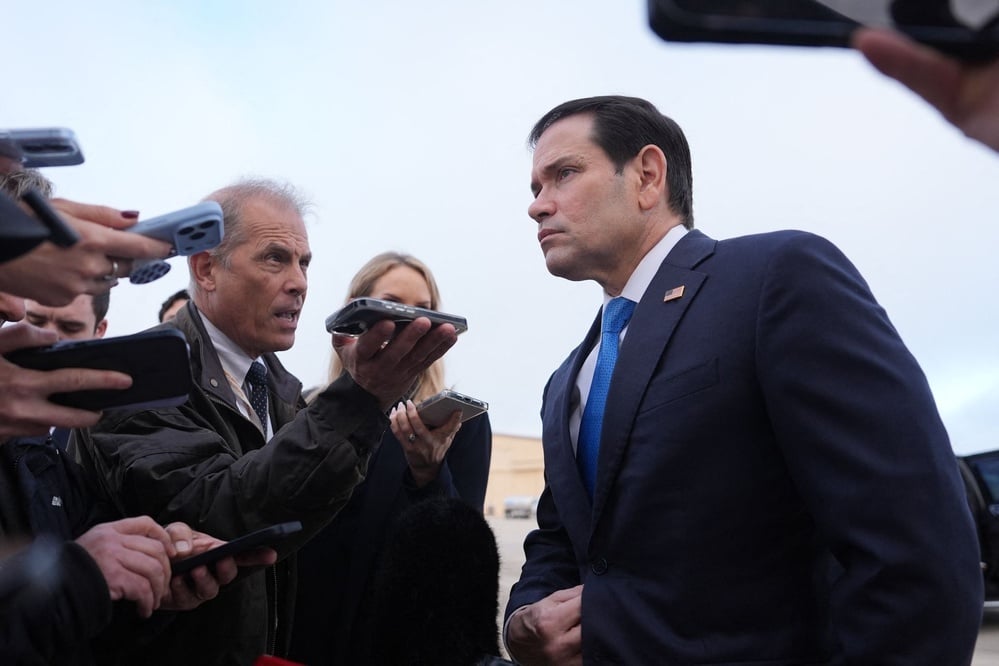


2026 © Helium Trades
Privacy Policy & Disclosure
* Disclaimer: Nothing on this website constitutes investment advice, performance data or any recommendation that any particular security, portfolio of securities, transaction or investment strategy is suitable for any specific person. Helium Trades is not responsible in any way for the accuracy
of any model predictions or price data. Any mention of a particular security and related prediction data is not a recommendation to buy or sell that security. Investments in securities involve the risk of loss. Past performance is no guarantee of future results. Helium Trades is not responsible for any of your investment decisions,
you should consult a financial expert before engaging in any transaction.
Helium Research Assistant

How can I help you today?
Ask any question about this page.