See whether Helium helps you make better-informed decisions. Try every Pro Trader feature for 30 days. No credit card required.
Try every Pro Trader feature for 30 days. No credit card required.
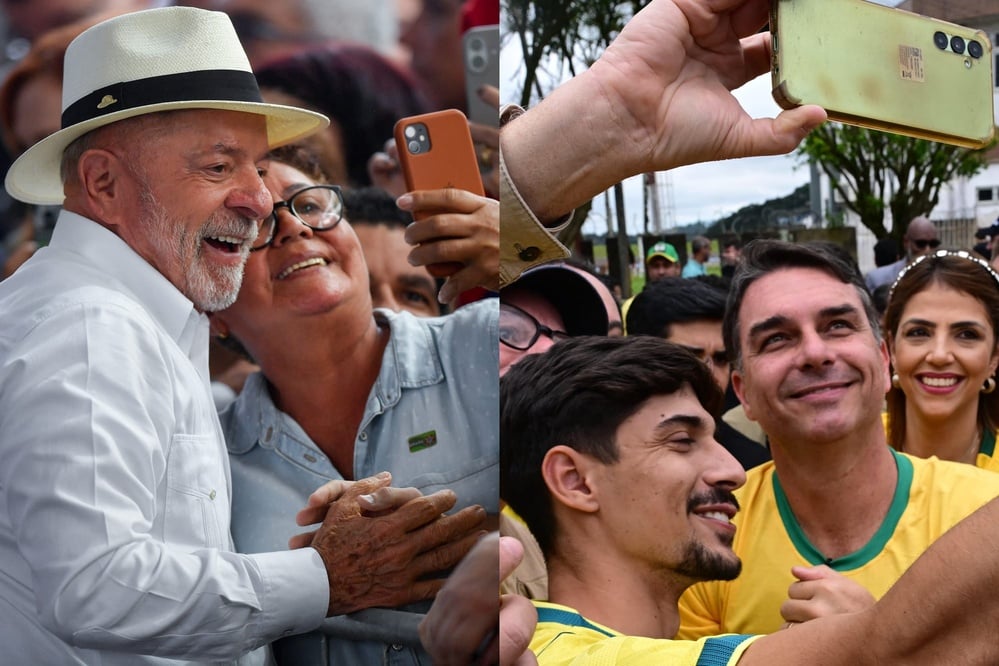
The Q&A excerpt centers Lula's socioeconomic achievements and treats U.S. intervention and the regional rightward shift as the key risks, with little comparable scrutiny of the left-wing incumbent's own record.
Automated analysis; not human reviewed.
Limitations: The supplied text is an edited excerpt from a podcast Q&A, so expert opinions may be more attributable to Adam Tooze than to the publisher; the exclusion of the full conversation limits context.
·
10 of 55 available dimensions scored; omitted dimensions are not treated as neutral.
·
Verified supporting quotes for 9 of 10 scored dimensions.
Claim: The Q&A frames Lula's left-wing record as clearly beneficial to ordinary Brazilians and ties conservative fiscal concerns to elite interests.
“Lula administrations in Brazil are very good for ordinary Brazilians and especially Brazilians at the bottom end of the extremely skewed income and wealth distribution.” · exact text match
Why: The selected expert asserts a strongly favorable assessment of Lula's administration and characterizes conservative fiscal anxiety as elite-driven, indicating a left-leaning framing.
Claim: The piece is an opinion-oriented Q&A in which the expert makes evaluative judgments.
“it’s just quite clear that if you actually have the interests of average Brazilians in mind, you vote for Lula administrations.” · exact text match
Why: This statement directly blends factual assessment with a subjective electoral recommendation.
Claim: The text shifts from describing policy results to recommending how voters should decide.
“if you actually have the interests of average Brazilians in mind, you vote for Lula administrations.” · exact text match
Why: The line is an explicit prescription in favor of voting for Lula.
Claim: The piece treats U.S. intervention in Brazil's election as illegitimate and aggressive.
“What we are seeing is a level of massively aggressive and intrusive intervention by the Trump administration in Brazil’s democratic processes.” · exact text match
Why: The characterization of U.S. actions as aggressive and intrusive signals an anti-interventionist, dovish framing.
Claim: The article is a curated expert interview with overt evaluative claims.
“Lula administrations are bona fide reformist administrations in a society afflicted by very large inequality and quite rank class differentiation that’s also then quite heavily racialized.” · exact text match
Why: The core content consists of the columnist's personal assessments rather than neutral reporting.
Claim: The article explicitly analyzes a presidential race and its geopolitical implications.
“Brazilians go to the polls on Oct. 4 in what looks to be a very close presidential race between left-wing President Luiz Inácio Lula da Silva and right-wing Sen. Flávio Bolsonaro.” · exact text match
Why: The central topic is electoral politics, campaign issues, and foreign-policy alignment.
Claim: The expert asserts some conclusions with certainty beyond what the assembled data can prove.
“And the facts on this are just completely undeniable.” · exact text match
Why: The categorical phrasing overstates the conclusiveness of the supporting data, though the surrounding text does offer evidence.
Claim: The analysis uses quantitative indicators and conditional reasoning rather than emotional appeals.
“The incomes of working people are up by really dramatic numbers, about 20 percent since 2022.” · exact text match
Why: The article supports its central claims with data points and acknowledges countervailing fiscal concerns, reflecting a generally rational-analytic approach.
Claim: The article includes caveats and alternative perspectives that complicate its favorable assessment.
“It’s a checkered record not when you look at the socioeconomic data” · not found in supplied text
“If you follow the financial press, however, if you follow commentary from Western media on Brazil, you’ll hear a different story.” · exact text match
Why: The text acknowledges fiscal concerns, corruption allegations, and Western-media criticism rather than presenting a one-sided brief.
Claim: The Q&A engages complex, multi-factor analysis of economy, race, security, and geopolitics.
“And though overall public opinion appears to be balanced on preferring China or the United States, it’s actually highly partisan.” · exact text match
Why: The conversation weaves socio-economic data, historical context, and geopolitical nuance, indicating high analytical complexity.
The supplied text is an edited excerpt from a podcast Q&A, so expert opinions may be more attributable to Adam Tooze than to the publisher; the exclusion of the full conversation limits context.
October 01, 2026 · 0 shares
Brazil’s election is framed as a high-stakes choice between Lula’s sovereignty-and-development path and a Bolsonaro victory that would subordinate Brazil to U.S. interests, with Washington’s pressure depicted as coercive and Lula’s coalition as the only plausible progressive option.
Automated analysis; not human reviewed.
Limitations: The analysis is based solely on the supplied text, which is a single opinion article; polling reliability, the authenticity of the cited U.S. draft and Prosperity Partnership memo, and the accuracy of economic statistics cannot be independently checked from the supplied text.
·
13 of 55 available dimensions scored; omitted dimensions are not treated as neutral.
·
Verified supporting quotes for 13 of 13 scored dimensions.
Claim: The piece endorses Lula’s coalition and opposes Bolsonaro’s U.S.-aligned programme, reflecting a left/progressive political stance.
“But only Lula’s coalition seems interested in attempting it.” · exact text match
“A Flávio victory, meanwhile, will lead to an economy subordinated to US interests and averse to other partnerships, such as with China” · exact text match
Why: The conclusion explicitly favors Lula’s policy direction and frames a Bolsonaro win as subordination to U.S. interests, a clear center-left/progressive stance.
Claim: The article blends data with explicit value judgments about candidates, U.S. pressure, and future outcomes.
“A Flávio victory, meanwhile, will lead to an economy subordinated to US interests and averse to other partnerships, such as with China” · exact text match
“But only Lula’s coalition seems interested in attempting it.” · exact text match
Why: These are subjective evaluations and categorical predictions rather than neutral factual reporting.
Claim: The piece moves from description to explicit policy prescriptions for Brazil’s next government.
“Tax progressivity must go further, and spending on health, education and urban transport, which directly lowers the cost of living, has to rise.” · exact text match
“Ambitious, well-designed industrial policy must work with public investment to upgrade the country’s productive structure.” · exact text match
Why: The use of ‘must’ and ‘has to’ makes the article strongly prescriptive about policy choices.
Claim: The article is a strongly opinionated analysis rather than neutral news reporting.
“But only Lula’s coalition seems interested in attempting it.” · exact text match
“A Flávio victory, meanwhile, will lead to an economy subordinated to US interests” · exact text match
Why: It asserts a preferred path and predicts negative consequences under the opponent with little hedging.
Claim: The article is focused on a presidential election and partisan/geopolitical stakes throughout.
“For Latin America, it will reveal whether we are in a new era of overwhelming US influence.” · exact text match
“Globally, it could mark another step towards the erosion of middle powers’ sovereignty.” · exact text match
Why: The content is expressly about electoral politics, partisan competition, and national sovereignty.
Claim: The article frames the election outcome as a binary of development and sovereignty versus stagnation and subordination.
“Brazil may once again be the country of the future – offering a preview of their own fate: development and sovereignty, or stagnation and subordination.” · exact text match
Why: This dichotomous framing compresses a complex range of outcomes into two opposing futures.
Claim: The article predicts with certainty a specific consequence of a Flávio Bolsonaro victory.
“A Flávio victory, meanwhile, will lead to an economy subordinated to US interests and averse to other partnerships” · exact text match
Why: Although conditional on his victory, ‘will lead to’ expresses stronger certainty than campaign pledges and a memo can fully support.
Claim: The article is consistently framed by an ideology favoring state-led development, tax progressivity, and resistance to U.S. influence.
“Tax progressivity must go further, and spending on health, education and urban transport, which directly lowers the cost of living, has to rise.” · exact text match
“Ambitious, well-designed industrial policy must work with public investment to upgrade the country’s productive structure.” · exact text match
Why: The article advances a coherent ideological program, not just isolated policy preferences.
Claim: The article shows visible sourcing and attribution through specific statistics, dated documents, and an identified expert author.
“Annual inflation has dropped to 4.2%, while GDP has grown by close to 3% a year since 2023.” · exact text match
“A US draft sent to Brazilian negotiators in October 2025 and recently made public listed 21 conditions for tariff relief.” · exact text match
Why: Specific quantitative claims and a dated document support credibility, though the article’s one-sided interpretation limits full trust.
Claim: The analysis is evidence-based, relying on economic indicators, named institutions, and attributed documents.
“Annual inflation has dropped to 4.2%, while GDP has grown by close to 3% a year since 2023.” · exact text match
“A US draft sent to Brazilian negotiators in October 2025 and recently made public listed 21 conditions for tariff relief.” · exact text match
Why: Specific statistics and a dated document support the argument, indicating reasoned analysis despite its opinionated character.
Claim: The article is critical of corporate interests, particularly U.S. card networks and privileged access for U.S. firms to Brazilian resources.
“The US objects to the very features that made Pix work, in effect treating a free public system as unfair competition for private US card networks.” · exact text match
“privileged access for US firms to Brazilian critical minerals” · exact text match
Why: The piece portrays private corporate competition as a U.S. pressure motive and frames public systems positively.
Claim: The article favors collective/public solutions over private market arrangements.
“spending on health, education and urban transport, which directly lowers the cost of living, has to rise” · exact text match
“Ambitious, well-designed industrial policy must work with public investment” · exact text match
Why: It calls for expanded public spending and state-led industrial policy rather than individual or market-based remedies.
Claim: The article synthesizes economic data, political events, and historical context into a coherent analysis.
“The deep recession of 2015-16, the impeachment of president Dilma Rousseff, Lula’s trial and imprisonment (widely viewed as politically motivated), and the authoritarianism of the Bolsonaro government between 2019 and 2023 had all taken their toll.” · exact text match
“Brazil holds about 23% of the world’s known rare-earth reserves, second only to China.” · exact text match
Why: It connects macroeconomics, geopolitics, and domestic politics with specific data, indicating intellectual sophistication.
The analysis is based solely on the supplied text, which is a single opinion article; polling reliability, the authenticity of the cited U.S. draft and Prosperity Partnership memo, and the accuracy of economic statistics cannot be independently checked from the supplied text.
October 02, 2026 · 0 shares
A fatalistic, irony-driven analysis that frames Brazil’s breakdown as the self-inflicted consequence of anti-corruption crusades and judicial overreach.
Automated analysis; not human reviewed.
Limitations: The supplied text is an opinion essay with many unsourced factual claims and strong rhetorical framing; I cannot independently verify those claims.
·
12 of 55 available dimensions scored; omitted dimensions are not treated as neutral.
·
Verified supporting quotes for 10 of 12 scored dimensions.
Claim: The article uses overtly subjective, interpretive language to characterize political actors and events.
“No one really rules Brazil.” · not found in supplied text
“Who elected them anyway?” · exact text match
Why: These are value-laden assertions rather than verifiable observations.
Claim: The outlook for Brazil’s politics is presented as bleak and hopeless.
“the country suffers a crisis of legitimacy and a void of political authority.” · exact text match
“Whoever wins October’s election will not really rule Brazil.” · exact text match
Why: Declarations of institutional void and the futility of elections express strong pessimism.
Claim: Personal, titillating details about elites are included as part of the narrative.
“He hosted bunga-bunga parties in New York for Brazil’s financial and political elite and traveled on one of his multiple private jets to Courchevel...” · not found in supplied text
Why: The focus on private jets, parties, and personal relationships resembles gossip reporting.
Claim: The text mostly advances the author’s judgments and interpretations rather than neutral reporting.
“It is the old versus the not-quite-new.” · exact text match
“Whoever wins October’s election will not really rule Brazil.” · exact text match
Why: These statements assert subjective characterizations and predictions as fact, typical of opinionated analysis.
Claim: The text is centered on partisan competition, institutions, and election strategy.
“Brazil’s upcoming election pits President Lula da Silva, eighty, against Senator Flávio Bolsonaro, forty-five.” · exact text match
Why: The subject matter is explicitly electoral and institutional, with continuous political evaluation.
Claim: A complex institutional crisis is reduced to a single cause: anti-corruption crusades.
“This is the institutional razed earth of the anti-corruption crusade, its long hangover.” · exact text match
Why: The metaphor attributes the entire political breakdown to one prior movement.
Claim: Sweeping historical generalisations are stated without supporting evidence.
“The history of development around the world shows that there is no order before progress.” · exact text match
Why: A universal causal claim about world development is presented as established fact.
Claim: The text is hostile to established political and economic institutions.
“Who elected them anyway?” · exact text match
“Finance, agribusiness, and the extractive industries will win again.” · exact text match
Why: It challenges judicial authority and portrays economic elites as triumphant over the public.
Claim: The tone is negative and cynical, with emotionally loaded descriptions.
“it came to a head in a degrading spectacle” · exact text match
“a very bad bit of cinema.” · exact text match
Why: Terms like 'degrading spectacle' and 'bad bit of cinema' carry contemptuous emotional coloring.
Claim: The text shows some sourcing and hedging but rests largely on unverifiable assertions.
“According to pollster Datafolha, nearly half the population feel the Supreme Court and Master scandal will influence their vote” · exact text match
“Moraes’s phone was not seized, meaning his replies are unknown and the justice’s complicity is unproven.” · exact text match
Why: It cites a named pollster and explicitly marks unresolved facts, lending partial credibility.
Claim: The article includes speculative projections about electoral and political consequences.
“If the scandal helps to put an end to Lula’s political career, it would be the most ironic, and bathetic, of denouements.” · exact text match
Why: It reasons from a conditional that is explicitly hypothetical.
Claim: The text integrates historical details and causal ironies into a sophisticated analytical structure.
“The second ironic reversal was the revelation in 2019 that the anti-corruption campaign was itself corrupted.” · exact text match
Why: It connects multiple events and reversals rather than reporting in isolation.
The supplied text is an opinion essay with many unsourced factual claims and strong rhetorical framing; I cannot independently verify those claims.
October 03, 2026 · 0 shares
Framing treats Brazil's runoff as a stark struggle between a Trump-aligned right-wing heir and an 80-year-old Lula, characterizes Latin American conservative-populist leaders as a disreputable 'shady lot,' and casts Lula as the last barrier to national failure.
Automated analysis; not human reviewed.
Limitations: Analysis is based solely on the supplied opinion column, which asserts unverified claims about Brazilian voter attitudes, media effects, and regional politics.
·
12 of 55 available dimensions scored; omitted dimensions are not treated as neutral.
·
Verified supporting quotes for 12 of 12 scored dimensions.
Claim: The article uses negative labeling of right-wing populists and a sympathetic framing of Lula.
“A shady lot, you might say, and they are all selling the same deal: prosperity and security in return for obedience.” · exact text match
“All that really stands between it and failure is one 80-year-old man – but he is a very tough old man, and if his health holds he may be able to pull it off.” · exact text match
Why: Right-wing leaders are called 'shady' and 'hard right,' while Lula is presented as Brazil's sole barrier to failure.
Claim: The column speaks from a detached, elite perspective about voters and populist movements.
“Whatever your opinion is now, it will likely be the same next year, because little else is getting through.” · exact text match
“relatively speaking, Brazilians should not have much to complain about” · exact text match
Why: It implies voters are locked into fixed opinions by manipulated media and tells Brazilians their grievances are not substantial.
Claim: The article is strongly anti-authoritarian.
“Jair served it as an active-service officer and has praised its torturers (“The dictatorship’s mistake was to torture but not kill”).” · exact text match
“A shady lot, you might say, and they are all selling the same deal: prosperity and security in return for obedience.” · exact text match
Why: It condemns the military dictatorship, torture, and the authoritarian bargain, placing it on the anti-authoritarian side of the scale.
Claim: The article is predominantly subjective commentary.
“Actually there was terror, lies and legalized looting, but we need not re-litigate that here.” · exact text match
“There will be tears before bedtime.” · exact text match
Why: Personal judgments and rhetorical predictions are presented as established truth.
Claim: The article uses colorful, exaggerated characterizations.
“President Javier Milei of Argentina is a chainsaw-wielding ‘anarcho-capitalist paleo-libertarian’.” · exact text match
“Delcy Rodriguez, once vice-president of Venezuela under Maduro, has switched to being leach president under Trump and signed over the country’s oil.” · exact text match
Why: Epithets such as 'chainsaw-wielding' and 'leach president' are vivid and inflammatory rather than neutral description.
Claim: The piece forecasts a bleak future and frames Brazil as near failure.
“There will be tears before bedtime.” · exact text match
“Brazil in the south is teetering on the brink.” · exact text match
Why: The dominant outlook is pessimistic, with hope resting only on one man's health.
Claim: The article is heavily opinionated rather than fact-only.
“A shady lot, you might say” · exact text match
“There will be tears before bedtime.” · exact text match
Why: The text uses first-person evaluative phrasing and rhetorical predictions.
Claim: The article is explicitly about an electoral and ideological contest and takes sides.
“And next Sunday, Oct. 4, the junior Bolsonaro faces Lula in another presidential election.” · exact text match
“The president portrays that as a threat, and traditionally the vast majority of Brazilians would have agreed, but both Flávio and his imprisoned father Jair would see it almost as a happy ending.” · exact text match
Why: It frames the election as a battle over sovereignty and treats Bolsonaro's camp as aligned with dictatorship nostalgia.
Claim: The article reduces regional politics to a single uniform populist wave driven by media silos.
“A shady lot, you might say, and they are all selling the same deal: prosperity and security in return for obedience.” · exact text match
“Most Brazilians have abandoned ‘legacy media’ and get all their information from a vast network of alternative news sites, YouTube channels, social media influencers, Facebook pages, WhatsApp groups and legions of bots.” · exact text match
Why: Diverse leaders and countries are lumped into one deal, and vote stability is attributed to one cause.
Claim: The article makes certain predictions despite acknowledging polling uncertainty.
“There will be tears before bedtime.” · exact text match
“All that really stands between it and failure is one 80-year-old man – but he is a very tough old man, and if his health holds he may be able to pull it off.” · exact text match
Counterevidence:
“It is difficult to anticipate what that outcome will be, because the two men have been only one or two points apart (i.e. ‘within the margin of error’) in every opinion poll for months.” · exact text match
Why: It acknowledges uncertainty in polls but still states categorical forecasts.
Claim: The article shows moderate credibility through attribution and uncertainty, but also unverified generalizations.
“It is difficult to anticipate what that outcome will be, because the two men have been only one or two points apart (i.e. ‘within the margin of error’) in every opinion poll for months.” · exact text match
“Lula recently warned on ‘X’ that Flávio Bolsonaro will “hand our natural resources over to the United States…If it’s up to him, Brazil will become a colony again.”” · exact text match
Why: Quotes are attributed and polling uncertainty is noted, but sweeping claims about voters and regional leaders are not sourced.
Claim: The article indulges in speculative forecasts about political trajectories.
“There will be tears before bedtime.” · exact text match
“Cuba awaits its fate at Trump’s hands.” · exact text match
Why: Future outcomes are presented as impending certainties.
Analysis is based solely on the supplied opinion column, which asserts unverified claims about Brazilian voter attitudes, media effects, and regional politics.
September 29, 2026 · 0 shares
Frames Brazil's election as a struggle between Lula-led democratic forces and a reactionary Bolsonaro bloc, using pejorative labels for the right and qualified sympathy for Lula.
Brazilian presidential elections use a two-round system: if no candidate wins a majority in the first round, the two leading candidates compete in a runoff.
Automated analysis; not human reviewed.
Limitations: The source is an openly opinionated essay; polling claims lack named pollsters, dates, margins, and sample sizes, so I cannot independently assess their reliability.
·
12 of 55 available dimensions scored; omitted dimensions are not treated as neutral.
·
Verified supporting quotes for 12 of 12 scored dimensions.
Claim: The publisher frames the election as a clash between Lula-led democratic forces and a reactionary bloc, with consistently negative labels for right-wing candidates.
“It is a struggle between Brazil’s democratic forces and the return to power of a reactionary bloc.” · exact text match
“Flávio Bolsonaro, who is more civilized in style but no less vile in substance than his father” · exact text match
Why: The binary framing and pejorative characterizations assign the right to a reactionary pole and Lula to the democratic pole.
Claim: The report's central claim is an interpretive political judgment rather than a neutral statement of facts.
“This election does not merely pit two opposing candidates against each other.
It is a struggle between Brazil’s democratic forces and the return to power of a reactionary bloc.”
· exact text match
Why: Presents an evaluation as the essential meaning of the race.
Claim: The piece is pessimistic about Lula's position and the left's future, describing his appeal as 'tepid' and his fourth term as a possible 'bridge too far.'
“This amounts to a tepid appeal that is not enough for many younger voters” · exact text match
“The results of the upcoming election will reveal whether this proves to be a bridge too far in his long career.” · exact text match
Why: Uses negative metaphors for Lula's current standing while noting the tight race.
Claim: The text is an opinion/analysis essay, using evaluative language and interpretive claims throughout.
“It is a struggle between Brazil’s democratic forces and the return to power of a reactionary bloc.” · exact text match
“more civilized in style but no less vile in substance than his father” · exact text match
Why: Core content is subjective evaluation, not neutral news reporting.
Claim: The article is entirely focused on electoral politics and frames the candidates in political-moral terms.
“It is a struggle between Brazil’s democratic forces and the return to power of a reactionary bloc.” · exact text match
Why: The subject and framing are explicitly political with no non-political dimension.
Claim: It collapses all opposition candidates into a single 'spectrum of the Brazilian right' and reduces their policies to caricatures.
“All of those candidates are right-wingers of one kind or another” · exact text match
“In practice, this would mean privatizing all social services and dismantling state institutions before selling them to the highest bidder.” · exact text match
Why: Summarizes distinct candidacies under a uniform right-wing label and states their likely effect as certain.
Claim: It states disputed political consequences as certain fact, notably what a libertarian party's policies would mean in practice.
“In practice, this would mean privatizing all social services and dismantling state institutions before selling them to the highest bidder.” · exact text match
Why: No evidence or qualification is offered for a categorical prediction.
Claim: The analysis is shaped by a coherent left political ideology, judging candidates by their relation to Lula and the 'Left.'
“It is a struggle between Brazil’s democratic forces and the return to power of a reactionary bloc.” · exact text match
“The traditional neoliberal political forces in Brazil have collapsed in the face of the Bolsonarist far right” · exact text match
Why: The categories 'democratic forces,' 'reactionary bloc,' and 'neoliberal' are applied as ideological judgments.
Claim: The framing is anti-establishment, casting financial-system backing, U.S. support, and the Centrão as illegitimate forces.
“He also has the backing of many figures within Brazil’s financial system, not to mention open support from the United States.” · exact text match
“the large, nonideological, profit-based section of Congress composed of figures who care only about preserving their own power” · exact text match
Why: Portrays mainstream money and power centers as opposed to democratic interests.
Claim: The language is emotionally negative toward the Bolsonaro camp.
“no less vile in substance than his father” · exact text match
“His crypto-fascistic stances” · exact text match
Why: Uses moral condemnation and charged epithets.
Claim: The framing is hostile to corporate and financial power, including agribusiness and financial-system figures backing Bolsonaro.
“He also has the backing of many figures within Brazil’s financial system, not to mention open support from the United States.” · exact text match
“This bloc comprises a handful of large landowners whose properties often dwarf small countries in acreage, and who are determined to go on clearing rainforest” · exact text match
Why: Portrays financial and agribusiness elites as opponents of Lula's environmental and social agenda.
Claim: The article sides with collective social provision and state institutions over individualist/libertarian privatization.
“His government lifted millions out of poverty with social programs like Bolsa Familia” · exact text match
“In practice, this would mean privatizing all social services and dismantling state institutions before selling them to the highest bidder.” · exact text match
Why: Praises welfare-state expansion and treats privatization as destructive.
The source is an openly opinionated essay; polling claims lack named pollsters, dates, margins, and sample sizes, so I cannot independently assess their reliability.
Uses documentary evidence and attributed statements to present the patron-saint claim as false while balancing responses from Bolsonaro, bishops, and Lula.
Brazilian presidential elections proceed to a runoff if no candidate receives a majority in the first round.
Automated analysis; not human reviewed.
Limitations: The source text included extraction artifacts such as empty quoted strings, but the substantive paragraphs were analyzable.
·
7 of 55 available dimensions scored; omitted dimensions are not treated as neutral.
·
Verified supporting quotes for 7 of 7 scored dimensions.
Claim: The publisher shows no partisan preference, giving comparable weight to claims affecting both Bolsonaro and Lula.
“The Quaest poll published on Monday gave Lula 39% and Bolsonaro 34% in the first round, and a 42% tie in a prospective October 25 runoff.” · exact text match
“in 2018 a claim circulated that Workers' Party candidate Fernando Haddad would distribute material on sexual diversity in schools, and in 2022 that Lula would close churches; in both cases the party went to the electoral courts to have them removed.” · exact text match
Why: The report includes a neutral poll and cites falsehoods affecting both major-party camps, indicating even-handed coverage rather than partisan framing.
Claim: The report relies on verifiable facts, named legal actors, and attributed statements.
“The claim has no basis.
It rests on a bill introduced in 2007 by an evangelical deputy, which was shelved the following year.”
· exact text match
Why: The publisher supports its 'falsehood' label with a concrete legislative record and attributes other claims to named officials and bodies.
Claim: The article is mostly sober and factual, though its lede uses a conflict frame.
“A falsehood about Brazil's patron saint pits Supreme Court justices against each other mid-campaign.” · exact text match
Counterevidence:
“The claim has no basis.
It rests on a bill introduced in 2007 by an evangelical deputy, which was shelved the following year.”
· exact text match
Why: The opening is dramatic, but the body quickly turns to procedural detail and attributed facts, reducing sensationalism.
Claim: The report describes events and statements rather than prescribing actions or policy.
“The episode was amplified by a post from comedian Antonio Tabet which, without naming the candidate, associated his family with a supposed attack on the patron saint.” · exact text match
Why: The sentence is a factual account of what happened, with no recommendation or normative demand.
Claim: The article shows high credibility through named institutions, a named poll, and specific legislative detail.
“The Quaest poll published on Monday gave Lula 39% and Bolsonaro 34% in the first round, and a 42% tie in a prospective October 25 runoff.” · exact text match
“The claim has no basis.
It rests on a bill introduced in 2007 by an evangelical deputy, which was shelved the following year.”
· exact text match
Why: Specific poll numbers, named justices, a named comedian, and a concrete bill citation all provide verifiable sourcing.
Claim: The framing is evidence-based and debunks the rumor with documented legislative history.
“The claim has no basis.
It rests on a bill introduced in 2007 by an evangelical deputy, which was shelved the following year.”
· exact text match
Why: The central assertion is supported by a specific, falsifiable source rather than emotion or unsupported assertion.
Claim: The text is transparent about sourcing, includes denials and corrections, and does not obscure the basis for its core claim.
“The claim has no basis.
It rests on a bill introduced in 2007 by an evangelical deputy, which was shelved the following year.”
· exact text match
“The body denied it in a note stating that “a lie is not fought with another lie”.” · exact text match
Why: The publisher names the disproof, attributes responses, and reproduces the bishops' denial rather than presenting one side as unqualified fact.
The source text included extraction artifacts such as empty quoted strings, but the substantive paragraphs were analyzable.
October 01, 2026 · 0 shares
Brazil’s election is framed as a high-stakes choice between Lula’s sovereignty-and-development path and a Bolsonaro victory that would subordinate Brazil to U.S. interests, with Washington’s pressure depicted as coercive and Lula’s coalition as the only plausible progressive option.
Automated analysis; not human reviewed.
Limitations: The analysis is based solely on the supplied text, which is a single opinion article; polling reliability, the authenticity of the cited U.S. draft and Prosperity Partnership memo, and the accuracy of economic statistics cannot be independently checked from the supplied text.
·
13 of 55 available dimensions scored; omitted dimensions are not treated as neutral.
·
Verified supporting quotes for 13 of 13 scored dimensions.
Claim: The piece endorses Lula’s coalition and opposes Bolsonaro’s U.S.-aligned programme, reflecting a left/progressive political stance.
“But only Lula’s coalition seems interested in attempting it.” · exact text match
“A Flávio victory, meanwhile, will lead to an economy subordinated to US interests and averse to other partnerships, such as with China” · exact text match
Why: The conclusion explicitly favors Lula’s policy direction and frames a Bolsonaro win as subordination to U.S. interests, a clear center-left/progressive stance.
Claim: The article blends data with explicit value judgments about candidates, U.S. pressure, and future outcomes.
“A Flávio victory, meanwhile, will lead to an economy subordinated to US interests and averse to other partnerships, such as with China” · exact text match
“But only Lula’s coalition seems interested in attempting it.” · exact text match
Why: These are subjective evaluations and categorical predictions rather than neutral factual reporting.
Claim: The piece moves from description to explicit policy prescriptions for Brazil’s next government.
“Tax progressivity must go further, and spending on health, education and urban transport, which directly lowers the cost of living, has to rise.” · exact text match
“Ambitious, well-designed industrial policy must work with public investment to upgrade the country’s productive structure.” · exact text match
Why: The use of ‘must’ and ‘has to’ makes the article strongly prescriptive about policy choices.
Claim: The article is a strongly opinionated analysis rather than neutral news reporting.
“But only Lula’s coalition seems interested in attempting it.” · exact text match
“A Flávio victory, meanwhile, will lead to an economy subordinated to US interests” · exact text match
Why: It asserts a preferred path and predicts negative consequences under the opponent with little hedging.
Claim: The article is focused on a presidential election and partisan/geopolitical stakes throughout.
“For Latin America, it will reveal whether we are in a new era of overwhelming US influence.” · exact text match
“Globally, it could mark another step towards the erosion of middle powers’ sovereignty.” · exact text match
Why: The content is expressly about electoral politics, partisan competition, and national sovereignty.
Claim: The article frames the election outcome as a binary of development and sovereignty versus stagnation and subordination.
“Brazil may once again be the country of the future – offering a preview of their own fate: development and sovereignty, or stagnation and subordination.” · exact text match
Why: This dichotomous framing compresses a complex range of outcomes into two opposing futures.
Claim: The article predicts with certainty a specific consequence of a Flávio Bolsonaro victory.
“A Flávio victory, meanwhile, will lead to an economy subordinated to US interests and averse to other partnerships” · exact text match
Why: Although conditional on his victory, ‘will lead to’ expresses stronger certainty than campaign pledges and a memo can fully support.
Claim: The article is consistently framed by an ideology favoring state-led development, tax progressivity, and resistance to U.S. influence.
“Tax progressivity must go further, and spending on health, education and urban transport, which directly lowers the cost of living, has to rise.” · exact text match
“Ambitious, well-designed industrial policy must work with public investment to upgrade the country’s productive structure.” · exact text match
Why: The article advances a coherent ideological program, not just isolated policy preferences.
Claim: The article shows visible sourcing and attribution through specific statistics, dated documents, and an identified expert author.
“Annual inflation has dropped to 4.2%, while GDP has grown by close to 3% a year since 2023.” · exact text match
“A US draft sent to Brazilian negotiators in October 2025 and recently made public listed 21 conditions for tariff relief.” · exact text match
Why: Specific quantitative claims and a dated document support credibility, though the article’s one-sided interpretation limits full trust.
Claim: The analysis is evidence-based, relying on economic indicators, named institutions, and attributed documents.
“Annual inflation has dropped to 4.2%, while GDP has grown by close to 3% a year since 2023.” · exact text match
“A US draft sent to Brazilian negotiators in October 2025 and recently made public listed 21 conditions for tariff relief.” · exact text match
Why: Specific statistics and a dated document support the argument, indicating reasoned analysis despite its opinionated character.
Claim: The article is critical of corporate interests, particularly U.S. card networks and privileged access for U.S. firms to Brazilian resources.
“The US objects to the very features that made Pix work, in effect treating a free public system as unfair competition for private US card networks.” · exact text match
“privileged access for US firms to Brazilian critical minerals” · exact text match
Why: The piece portrays private corporate competition as a U.S. pressure motive and frames public systems positively.
Claim: The article favors collective/public solutions over private market arrangements.
“spending on health, education and urban transport, which directly lowers the cost of living, has to rise” · exact text match
“Ambitious, well-designed industrial policy must work with public investment” · exact text match
Why: It calls for expanded public spending and state-led industrial policy rather than individual or market-based remedies.
Claim: The article synthesizes economic data, political events, and historical context into a coherent analysis.
“The deep recession of 2015-16, the impeachment of president Dilma Rousseff, Lula’s trial and imprisonment (widely viewed as politically motivated), and the authoritarianism of the Bolsonaro government between 2019 and 2023 had all taken their toll.” · exact text match
“Brazil holds about 23% of the world’s known rare-earth reserves, second only to China.” · exact text match
Why: It connects macroeconomics, geopolitics, and domestic politics with specific data, indicating intellectual sophistication.
The analysis is based solely on the supplied text, which is a single opinion article; polling reliability, the authenticity of the cited U.S. draft and Prosperity Partnership memo, and the accuracy of economic statistics cannot be independently checked from the supplied text.
October 03, 2026 · 0 shares
A strongly left-wing anti-imperialist polemic that frames Brazil’s election as a battle between US-backed right-wing authoritarianism and Lula’s working-class coalition.
Automated analysis; not human reviewed.
Limitations: The supplied text is a single, openly opinionated source; no independent or countervailing reporting is available to verify claims of US interference or the election’s direction.
·
11 of 55 available dimensions scored; omitted dimensions are not treated as neutral.
·
Verified supporting quotes for 10 of 11 scored dimensions.
Claim: Article is strongly left-wing in its framing of the Brazilian election.
“Polls show left-wing president Luiz Inácio Lula da Silva neck and neck with the ultraconservative Flávio Bolsonaro” · exact text match
“While Lula’s third stint in government has offered a sense of normality and economic gains for Brazil’s working class” · exact text match
Why: The piece uses left/ultraconservative labels and evaluates Lula favorably while presenting Bolsonaro’s camp as sinister.
Claim: Article is oriented against elites and in favor of working-class interests.
“economic gains for Brazil’s working class” · exact text match
“Flávio is a stand-in for various sinister interests — the gambling lobby, banking fraudsters, imperial Miami, organized crime, and social-security scammers.” · exact text match
Why: The framing contrasts working-class welfare with a web of elite and imperial interests, a populist division.
Claim: Article is a subjective, interpretive analysis rather than neutral reporting.
“As I have argued in , anti-corruption politics can lead to “a cycle of diminishing expectations, producing apathy and political demoralization.”” · exact text match
“his real program is basically about handing over Brazil’s critical minerals and sovereignty to Trump and Rubio in order to free his dad.” · exact text match
Why: First-person argumentation and unqualified interpretive assertions dominate the text.
Claim: Article uses sensational and alarmist wording.
“Perhaps the most dangerous move was designating Brazil’s two largest criminal factions” · exact text match
“the sheer scale and depravity of the political fixers and influence peddlers” · exact text match
Why: Superlatives and charged characterizations push beyond sober reporting.
Claim: Article is pessimistic about Brazil’s and the region’s trajectory.
“If Brazil does follow the recent right-wing trend, the region’s future is grim.” · exact text match
Counterevidence:
“All that can be said, hopefully, is that the die has not yet been cast, and Lula could still repel Miami’s invasion” · exact text match
Why: The overall threat-framing is pessimistic, though a closing hopeful caveat tempers it.
Claim: Article is highly opinionated.
“his real program is basically about handing over Brazil’s critical minerals and sovereignty to Trump and Rubio in order to free his dad.” · exact text match
“This is an election perhaps best defined by “apathetic polarization”” · not found in supplied text
Why: Unqualified evaluative and interpretive claims are pervasive.
Claim: Article is heavily political in focus and framing.
“Not only is Brazilian democracy again on the line, but the region more widely is increasingly subject to right-wing authoritarians in thrall to Donald Trump and Marco Rubio.” · exact text match
Why: The election is framed almost entirely in partisan and geopolitical terms.
Claim: Article interprets events through a leftist ideological lens.
“reflecting the fragmentation of Brazilian society under late neoliberalism and the destructive effects of the attention economy” · exact text match
“a means for imperial Miami under Trump and Rubio to assert their dominance over Latin America” · exact text match
Why: It uses ideological vocabulary such as “late neoliberalism” and “imperial Miami” to explain the contest.
Claim: Article is strongly anti-establishment and anti-imperialist.
“US intervention in favor of Flávio Bolsonaro has been brazen” · exact text match
“Flávio is a stand-in for various sinister interests — the gambling lobby, banking fraudsters, imperial Miami, organized crime, and social-security scammers.” · exact text match
Why: It attacks US power, Brazilian institutional actors, and elite lobbies, positioning itself against established power centers.
Claim: Article speculates about decisive US meddling.
“US intervention really may be decisive, as we have already seen in Peru, Colombia, and Honduras, where right-wingers won with less than 1 percent advantage.” · exact text match
Why: It converts a possibility into a causal comparison without direct evidence linking those outcomes to US intervention.
Claim: Article displays high conceptual and analytic sophistication.
“Something deeper and more paradigmatic is going on, reflecting the fragmentation of Brazilian society under late neoliberalism and the destructive effects of the attention economy.” · exact text match
“hyper-individualisation of politics and the privileging of online participation over offline organising” · exact text match
Why: It integrates structural analysis and theoretical concepts with specific political developments.
The supplied text is a single, openly opinionated source; no independent or countervailing reporting is available to verify claims of US interference or the election’s direction.
October 03, 2026 · 0 shares
Framing treats Brazil's runoff as a stark struggle between a Trump-aligned right-wing heir and an 80-year-old Lula, characterizes Latin American conservative-populist leaders as a disreputable 'shady lot,' and casts Lula as the last barrier to national failure.
Automated analysis; not human reviewed.
Limitations: Analysis is based solely on the supplied opinion column, which asserts unverified claims about Brazilian voter attitudes, media effects, and regional politics.
·
12 of 55 available dimensions scored; omitted dimensions are not treated as neutral.
·
Verified supporting quotes for 12 of 12 scored dimensions.
Claim: The article uses negative labeling of right-wing populists and a sympathetic framing of Lula.
“A shady lot, you might say, and they are all selling the same deal: prosperity and security in return for obedience.” · exact text match
“All that really stands between it and failure is one 80-year-old man – but he is a very tough old man, and if his health holds he may be able to pull it off.” · exact text match
Why: Right-wing leaders are called 'shady' and 'hard right,' while Lula is presented as Brazil's sole barrier to failure.
Claim: The column speaks from a detached, elite perspective about voters and populist movements.
“Whatever your opinion is now, it will likely be the same next year, because little else is getting through.” · exact text match
“relatively speaking, Brazilians should not have much to complain about” · exact text match
Why: It implies voters are locked into fixed opinions by manipulated media and tells Brazilians their grievances are not substantial.
Claim: The article is strongly anti-authoritarian.
“Jair served it as an active-service officer and has praised its torturers (“The dictatorship’s mistake was to torture but not kill”).” · exact text match
“A shady lot, you might say, and they are all selling the same deal: prosperity and security in return for obedience.” · exact text match
Why: It condemns the military dictatorship, torture, and the authoritarian bargain, placing it on the anti-authoritarian side of the scale.
Claim: The article is predominantly subjective commentary.
“Actually there was terror, lies and legalized looting, but we need not re-litigate that here.” · exact text match
“There will be tears before bedtime.” · exact text match
Why: Personal judgments and rhetorical predictions are presented as established truth.
Claim: The article uses colorful, exaggerated characterizations.
“President Javier Milei of Argentina is a chainsaw-wielding ‘anarcho-capitalist paleo-libertarian’.” · exact text match
“Delcy Rodriguez, once vice-president of Venezuela under Maduro, has switched to being leach president under Trump and signed over the country’s oil.” · exact text match
Why: Epithets such as 'chainsaw-wielding' and 'leach president' are vivid and inflammatory rather than neutral description.
Claim: The piece forecasts a bleak future and frames Brazil as near failure.
“There will be tears before bedtime.” · exact text match
“Brazil in the south is teetering on the brink.” · exact text match
Why: The dominant outlook is pessimistic, with hope resting only on one man's health.
Claim: The article is heavily opinionated rather than fact-only.
“A shady lot, you might say” · exact text match
“There will be tears before bedtime.” · exact text match
Why: The text uses first-person evaluative phrasing and rhetorical predictions.
Claim: The article is explicitly about an electoral and ideological contest and takes sides.
“And next Sunday, Oct. 4, the junior Bolsonaro faces Lula in another presidential election.” · exact text match
“The president portrays that as a threat, and traditionally the vast majority of Brazilians would have agreed, but both Flávio and his imprisoned father Jair would see it almost as a happy ending.” · exact text match
Why: It frames the election as a battle over sovereignty and treats Bolsonaro's camp as aligned with dictatorship nostalgia.
Claim: The article reduces regional politics to a single uniform populist wave driven by media silos.
“A shady lot, you might say, and they are all selling the same deal: prosperity and security in return for obedience.” · exact text match
“Most Brazilians have abandoned ‘legacy media’ and get all their information from a vast network of alternative news sites, YouTube channels, social media influencers, Facebook pages, WhatsApp groups and legions of bots.” · exact text match
Why: Diverse leaders and countries are lumped into one deal, and vote stability is attributed to one cause.
Claim: The article makes certain predictions despite acknowledging polling uncertainty.
“There will be tears before bedtime.” · exact text match
“All that really stands between it and failure is one 80-year-old man – but he is a very tough old man, and if his health holds he may be able to pull it off.” · exact text match
Counterevidence:
“It is difficult to anticipate what that outcome will be, because the two men have been only one or two points apart (i.e. ‘within the margin of error’) in every opinion poll for months.” · exact text match
Why: It acknowledges uncertainty in polls but still states categorical forecasts.
Claim: The article shows moderate credibility through attribution and uncertainty, but also unverified generalizations.
“It is difficult to anticipate what that outcome will be, because the two men have been only one or two points apart (i.e. ‘within the margin of error’) in every opinion poll for months.” · exact text match
“Lula recently warned on ‘X’ that Flávio Bolsonaro will “hand our natural resources over to the United States…If it’s up to him, Brazil will become a colony again.”” · exact text match
Why: Quotes are attributed and polling uncertainty is noted, but sweeping claims about voters and regional leaders are not sourced.
Claim: The article indulges in speculative forecasts about political trajectories.
“There will be tears before bedtime.” · exact text match
“Cuba awaits its fate at Trump’s hands.” · exact text match
Why: Future outcomes are presented as impending certainties.
Analysis is based solely on the supplied opinion column, which asserts unverified claims about Brazilian voter attitudes, media effects, and regional politics.
October 02, 2026 · 0 shares
The publisher frames the canceled debate as a strategic snub by both front-runners, balancing candidate quotes with court explanations and expert commentary.
Brazilian presidential elections require a majority of valid votes to win outright; if no candidate reaches that threshold, the top two candidates meet in a runoff.
The article refers to a possible Oct. 25 runoff and to debates organized since Aug.
23.
Automated analysis; not human reviewed.
Limitations: The supplied text is an AP-style wire story embedded in Newsday page chrome; there is no author byline, and the article may be truncated by promotional material.
·
6 of 55 available dimensions scored; omitted dimensions are not treated as neutral.
·
Verified supporting quotes for 6 of 6 scored dimensions.
Claim: The report keeps a neutral stance between the two leading candidates.
“Lula said Wednesday he would not attend the TV Globo debate that was scheduled to include Bolsonaro and two other candidates.” · exact text match
“Bolsonaro, during a live broadcast Thursday on his social medial channels, said his last-minute cancellation was about “censorship imposed by the electoral court,” in a reference to the decision that stopped the broadcaster from keeping Lula's empty seat on stage.” · exact text match
Why: Both candidates' statements are included without evaluative adjectives, and no candidate is endorsed.
Claim: The article relies on attributed facts and direct quotes rather than subjective editorializing.
“The broadcaster said in a statement that the debate was canceled because two rulings, one from the country’s electoral court and the other from Brazil’s Supreme Court, had created “legal uncertainty” about the event.” · exact text match
“The first decision ordered TV Globo to remove an empty seat that was reserved for Lula, who would have been the focus of questions from his rivals in attendance.
The latter ruling forced the broadcaster to invite candidate Renan Santos, a critic of the president and the top opposition candidate.”
· exact text match
Why: The account is built from the broadcaster's statement and factual descriptions of rulings, not from the writer's opinion.
Claim: There is no sensationalist or exaggerated language.
“The cancellation marks the first time in 20 years that Brazil's leading candidates have rejected any public confrontation.” · exact text match
Why: Even the notable 'first time in 20 years' fact is stated plainly as context, not as melodrama.
Claim: The report describes what happened and quotes participants; it makes no recommendations.
“Recent polls show the two men as the only candidates with a real chance of reaching the second round or scoring an outright win.” · exact text match
“Both candidates made online broadcasts at the same time as the debate was scheduled.” · exact text match
Why: Sentences are statements of fact or attributed remarks; no directive or normative advice is present.
Claim: The visible sourcing, named expert, and explicit dates support a high degree of credibility.
“Carlos Melo, a political science professor at Insper university in Sao Paulo, said the snub from the front-runners and the cancellation of a once high-stakes debate show how turbulent these elections are.” · exact text match
“Lula on Wednesday repeated the argument he has used to reject attending other debates prior to first-round voting.” · exact text match
Why: The article identifies sources, uses direct quotes, and gives dates; the main contested events are reported through attributed statements.
Claim: Campaign behavior is explained through strategic calculation rather than emotion or speculation.
“Analysts say Lula and Bolsonaro have both conducted a strategy of avoiding direct confrontations on stage before the first round of voting.” · exact text match
““Going to debates has become a part of a calculation in Brazil.
For those who have a better chance of being in the runoff, to miss a big debate is to avoid tripping and giving ground away,” he added.”
· exact text match
Why: The article attributes the cancellation to a calculated strategy by both campaigns, using an expert's analysis.
The supplied text is an AP-style wire story embedded in Newsday page chrome; there is no author byline, and the article may be truncated by promotional material.
October 02, 2026 · 0 shares
A fatalistic, irony-driven analysis that frames Brazil’s breakdown as the self-inflicted consequence of anti-corruption crusades and judicial overreach.
Automated analysis; not human reviewed.
Limitations: The supplied text is an opinion essay with many unsourced factual claims and strong rhetorical framing; I cannot independently verify those claims.
·
12 of 55 available dimensions scored; omitted dimensions are not treated as neutral.
·
Verified supporting quotes for 10 of 12 scored dimensions.
Claim: The article uses overtly subjective, interpretive language to characterize political actors and events.
“No one really rules Brazil.” · not found in supplied text
“Who elected them anyway?” · exact text match
Why: These are value-laden assertions rather than verifiable observations.
Claim: The outlook for Brazil’s politics is presented as bleak and hopeless.
“the country suffers a crisis of legitimacy and a void of political authority.” · exact text match
“Whoever wins October’s election will not really rule Brazil.” · exact text match
Why: Declarations of institutional void and the futility of elections express strong pessimism.
Claim: Personal, titillating details about elites are included as part of the narrative.
“He hosted bunga-bunga parties in New York for Brazil’s financial and political elite and traveled on one of his multiple private jets to Courchevel...” · not found in supplied text
Why: The focus on private jets, parties, and personal relationships resembles gossip reporting.
Claim: The text mostly advances the author’s judgments and interpretations rather than neutral reporting.
“It is the old versus the not-quite-new.” · exact text match
“Whoever wins October’s election will not really rule Brazil.” · exact text match
Why: These statements assert subjective characterizations and predictions as fact, typical of opinionated analysis.
Claim: The text is centered on partisan competition, institutions, and election strategy.
“Brazil’s upcoming election pits President Lula da Silva, eighty, against Senator Flávio Bolsonaro, forty-five.” · exact text match
Why: The subject matter is explicitly electoral and institutional, with continuous political evaluation.
Claim: A complex institutional crisis is reduced to a single cause: anti-corruption crusades.
“This is the institutional razed earth of the anti-corruption crusade, its long hangover.” · exact text match
Why: The metaphor attributes the entire political breakdown to one prior movement.
Claim: Sweeping historical generalisations are stated without supporting evidence.
“The history of development around the world shows that there is no order before progress.” · exact text match
Why: A universal causal claim about world development is presented as established fact.
Claim: The text is hostile to established political and economic institutions.
“Who elected them anyway?” · exact text match
“Finance, agribusiness, and the extractive industries will win again.” · exact text match
Why: It challenges judicial authority and portrays economic elites as triumphant over the public.
Claim: The tone is negative and cynical, with emotionally loaded descriptions.
“it came to a head in a degrading spectacle” · exact text match
“a very bad bit of cinema.” · exact text match
Why: Terms like 'degrading spectacle' and 'bad bit of cinema' carry contemptuous emotional coloring.
Claim: The text shows some sourcing and hedging but rests largely on unverifiable assertions.
“According to pollster Datafolha, nearly half the population feel the Supreme Court and Master scandal will influence their vote” · exact text match
“Moraes’s phone was not seized, meaning his replies are unknown and the justice’s complicity is unproven.” · exact text match
Why: It cites a named pollster and explicitly marks unresolved facts, lending partial credibility.
Claim: The article includes speculative projections about electoral and political consequences.
“If the scandal helps to put an end to Lula’s political career, it would be the most ironic, and bathetic, of denouements.” · exact text match
Why: It reasons from a conditional that is explicitly hypothetical.
Claim: The text integrates historical details and causal ironies into a sophisticated analytical structure.
“The second ironic reversal was the revelation in 2019 that the anti-corruption campaign was itself corrupted.” · exact text match
Why: It connects multiple events and reversals rather than reporting in isolation.
The supplied text is an opinion essay with many unsourced factual claims and strong rhetorical framing; I cannot independently verify those claims.
Uses documentary evidence and attributed statements to present the patron-saint claim as false while balancing responses from Bolsonaro, bishops, and Lula.
Brazilian presidential elections proceed to a runoff if no candidate receives a majority in the first round.
Automated analysis; not human reviewed.
Limitations: The source text included extraction artifacts such as empty quoted strings, but the substantive paragraphs were analyzable.
·
7 of 55 available dimensions scored; omitted dimensions are not treated as neutral.
·
Verified supporting quotes for 7 of 7 scored dimensions.
Claim: The publisher shows no partisan preference, giving comparable weight to claims affecting both Bolsonaro and Lula.
“The Quaest poll published on Monday gave Lula 39% and Bolsonaro 34% in the first round, and a 42% tie in a prospective October 25 runoff.” · exact text match
“in 2018 a claim circulated that Workers' Party candidate Fernando Haddad would distribute material on sexual diversity in schools, and in 2022 that Lula would close churches; in both cases the party went to the electoral courts to have them removed.” · exact text match
Why: The report includes a neutral poll and cites falsehoods affecting both major-party camps, indicating even-handed coverage rather than partisan framing.
Claim: The report relies on verifiable facts, named legal actors, and attributed statements.
“The claim has no basis.
It rests on a bill introduced in 2007 by an evangelical deputy, which was shelved the following year.”
· exact text match
Why: The publisher supports its 'falsehood' label with a concrete legislative record and attributes other claims to named officials and bodies.
Claim: The article is mostly sober and factual, though its lede uses a conflict frame.
“A falsehood about Brazil's patron saint pits Supreme Court justices against each other mid-campaign.” · exact text match
Counterevidence:
“The claim has no basis.
It rests on a bill introduced in 2007 by an evangelical deputy, which was shelved the following year.”
· exact text match
Why: The opening is dramatic, but the body quickly turns to procedural detail and attributed facts, reducing sensationalism.
Claim: The report describes events and statements rather than prescribing actions or policy.
“The episode was amplified by a post from comedian Antonio Tabet which, without naming the candidate, associated his family with a supposed attack on the patron saint.” · exact text match
Why: The sentence is a factual account of what happened, with no recommendation or normative demand.
Claim: The article shows high credibility through named institutions, a named poll, and specific legislative detail.
“The Quaest poll published on Monday gave Lula 39% and Bolsonaro 34% in the first round, and a 42% tie in a prospective October 25 runoff.” · exact text match
“The claim has no basis.
It rests on a bill introduced in 2007 by an evangelical deputy, which was shelved the following year.”
· exact text match
Why: Specific poll numbers, named justices, a named comedian, and a concrete bill citation all provide verifiable sourcing.
Claim: The framing is evidence-based and debunks the rumor with documented legislative history.
“The claim has no basis.
It rests on a bill introduced in 2007 by an evangelical deputy, which was shelved the following year.”
· exact text match
Why: The central assertion is supported by a specific, falsifiable source rather than emotion or unsupported assertion.
Claim: The text is transparent about sourcing, includes denials and corrections, and does not obscure the basis for its core claim.
“The claim has no basis.
It rests on a bill introduced in 2007 by an evangelical deputy, which was shelved the following year.”
· exact text match
“The body denied it in a note stating that “a lie is not fought with another lie”.” · exact text match
Why: The publisher names the disproof, attributes responses, and reproduces the bishops' denial rather than presenting one side as unqualified fact.
The source text included extraction artifacts such as empty quoted strings, but the substantive paragraphs were analyzable.
Uses documentary evidence and attributed statements to present the patron-saint claim as false while balancing responses from Bolsonaro, bishops, and Lula.
Brazilian presidential elections proceed to a runoff if no candidate receives a majority in the first round.
Automated analysis; not human reviewed. Limitations: The source text included extraction artifacts such as empty quoted strings, but the substantive paragraphs were analyzable. · 7 of 55 available dimensions scored; omitted dimensions are not treated as neutral. · Verified supporting quotes for 7 of 7 scored dimensions.
Claim: The publisher shows no partisan preference, giving comparable weight to claims affecting both Bolsonaro and Lula.
“The Quaest poll published on Monday gave Lula 39% and Bolsonaro 34% in the first round, and a 42% tie in a prospective October 25 runoff.” · exact text match
“in 2018 a claim circulated that Workers' Party candidate Fernando Haddad would distribute material on sexual diversity in schools, and in 2022 that Lula would close churches; in both cases the party went to the electoral courts to have them removed.” · exact text match
Why: The report includes a neutral poll and cites falsehoods affecting both major-party camps, indicating even-handed coverage rather than partisan framing.
Claim: The report relies on verifiable facts, named legal actors, and attributed statements.
“The claim has no basis. It rests on a bill introduced in 2007 by an evangelical deputy, which was shelved the following year.” · exact text match
Why: The publisher supports its 'falsehood' label with a concrete legislative record and attributes other claims to named officials and bodies.
Claim: The article is mostly sober and factual, though its lede uses a conflict frame.
“A falsehood about Brazil's patron saint pits Supreme Court justices against each other mid-campaign.” · exact text match
Counterevidence:
“The claim has no basis. It rests on a bill introduced in 2007 by an evangelical deputy, which was shelved the following year.” · exact text match
Why: The opening is dramatic, but the body quickly turns to procedural detail and attributed facts, reducing sensationalism.
Claim: The report describes events and statements rather than prescribing actions or policy.
“The episode was amplified by a post from comedian Antonio Tabet which, without naming the candidate, associated his family with a supposed attack on the patron saint.” · exact text match
Why: The sentence is a factual account of what happened, with no recommendation or normative demand.
Claim: The article shows high credibility through named institutions, a named poll, and specific legislative detail.
“The Quaest poll published on Monday gave Lula 39% and Bolsonaro 34% in the first round, and a 42% tie in a prospective October 25 runoff.” · exact text match
“The claim has no basis. It rests on a bill introduced in 2007 by an evangelical deputy, which was shelved the following year.” · exact text match
Why: Specific poll numbers, named justices, a named comedian, and a concrete bill citation all provide verifiable sourcing.
Claim: The framing is evidence-based and debunks the rumor with documented legislative history.
“The claim has no basis. It rests on a bill introduced in 2007 by an evangelical deputy, which was shelved the following year.” · exact text match
Why: The central assertion is supported by a specific, falsifiable source rather than emotion or unsupported assertion.
Claim: The text is transparent about sourcing, includes denials and corrections, and does not obscure the basis for its core claim.
“The claim has no basis. It rests on a bill introduced in 2007 by an evangelical deputy, which was shelved the following year.” · exact text match
“The body denied it in a note stating that “a lie is not fought with another lie”.” · exact text match
Why: The publisher names the disproof, attributes responses, and reproduces the bishops' denial rather than presenting one side as unqualified fact.
The source text included extraction artifacts such as empty quoted strings, but the substantive paragraphs were analyzable.
October 02, 2026 · 0 shares
The publisher frames the canceled debate as a strategic snub by both front-runners, balancing candidate quotes with court explanations and expert commentary.
Brazilian presidential elections require a majority of valid votes to win outright; if no candidate reaches that threshold, the top two candidates meet in a runoff. The article refers to a possible Oct. 25 runoff and to debates organized since Aug. 23.
Automated analysis; not human reviewed. Limitations: The supplied text is an AP-style wire story embedded in Newsday page chrome; there is no author byline, and the article may be truncated by promotional material. · 6 of 55 available dimensions scored; omitted dimensions are not treated as neutral. · Verified supporting quotes for 6 of 6 scored dimensions.
Claim: The report keeps a neutral stance between the two leading candidates.
“Lula said Wednesday he would not attend the TV Globo debate that was scheduled to include Bolsonaro and two other candidates.” · exact text match
“Bolsonaro, during a live broadcast Thursday on his social medial channels, said his last-minute cancellation was about “censorship imposed by the electoral court,” in a reference to the decision that stopped the broadcaster from keeping Lula's empty seat on stage.” · exact text match
Why: Both candidates' statements are included without evaluative adjectives, and no candidate is endorsed.
Claim: The article relies on attributed facts and direct quotes rather than subjective editorializing.
“The broadcaster said in a statement that the debate was canceled because two rulings, one from the country’s electoral court and the other from Brazil’s Supreme Court, had created “legal uncertainty” about the event.” · exact text match
“The first decision ordered TV Globo to remove an empty seat that was reserved for Lula, who would have been the focus of questions from his rivals in attendance. The latter ruling forced the broadcaster to invite candidate Renan Santos, a critic of the president and the top opposition candidate.” · exact text match
Why: The account is built from the broadcaster's statement and factual descriptions of rulings, not from the writer's opinion.
Claim: There is no sensationalist or exaggerated language.
“The cancellation marks the first time in 20 years that Brazil's leading candidates have rejected any public confrontation.” · exact text match
Why: Even the notable 'first time in 20 years' fact is stated plainly as context, not as melodrama.
Claim: The report describes what happened and quotes participants; it makes no recommendations.
“Recent polls show the two men as the only candidates with a real chance of reaching the second round or scoring an outright win.” · exact text match
“Both candidates made online broadcasts at the same time as the debate was scheduled.” · exact text match
Why: Sentences are statements of fact or attributed remarks; no directive or normative advice is present.
Claim: The visible sourcing, named expert, and explicit dates support a high degree of credibility.
“Carlos Melo, a political science professor at Insper university in Sao Paulo, said the snub from the front-runners and the cancellation of a once high-stakes debate show how turbulent these elections are.” · exact text match
“Lula on Wednesday repeated the argument he has used to reject attending other debates prior to first-round voting.” · exact text match
Why: The article identifies sources, uses direct quotes, and gives dates; the main contested events are reported through attributed statements.
Claim: Campaign behavior is explained through strategic calculation rather than emotion or speculation.
“Analysts say Lula and Bolsonaro have both conducted a strategy of avoiding direct confrontations on stage before the first round of voting.” · exact text match
““Going to debates has become a part of a calculation in Brazil. For those who have a better chance of being in the runoff, to miss a big debate is to avoid tripping and giving ground away,” he added.” · exact text match
Why: The article attributes the cancellation to a calculated strategy by both campaigns, using an expert's analysis.
The supplied text is an AP-style wire story embedded in Newsday page chrome; there is no author byline, and the article may be truncated by promotional material.
October 01, 2026 · 0 shares
Brazil’s election is framed as a high-stakes choice between Lula’s sovereignty-and-development path and a Bolsonaro victory that would subordinate Brazil to U.S. interests, with Washington’s pressure depicted as coercive and Lula’s coalition as the only plausible progressive option.
Automated analysis; not human reviewed. Limitations: The analysis is based solely on the supplied text, which is a single opinion article; polling reliability, the authenticity of the cited U.S. draft and Prosperity Partnership memo, and the accuracy of economic statistics cannot be independently checked from the supplied text. · 13 of 55 available dimensions scored; omitted dimensions are not treated as neutral. · Verified supporting quotes for 13 of 13 scored dimensions.
Claim: The piece endorses Lula’s coalition and opposes Bolsonaro’s U.S.-aligned programme, reflecting a left/progressive political stance.
“But only Lula’s coalition seems interested in attempting it.” · exact text match
“A Flávio victory, meanwhile, will lead to an economy subordinated to US interests and averse to other partnerships, such as with China” · exact text match
Why: The conclusion explicitly favors Lula’s policy direction and frames a Bolsonaro win as subordination to U.S. interests, a clear center-left/progressive stance.
Claim: The article blends data with explicit value judgments about candidates, U.S. pressure, and future outcomes.
“A Flávio victory, meanwhile, will lead to an economy subordinated to US interests and averse to other partnerships, such as with China” · exact text match
“But only Lula’s coalition seems interested in attempting it.” · exact text match
Why: These are subjective evaluations and categorical predictions rather than neutral factual reporting.
Claim: The piece moves from description to explicit policy prescriptions for Brazil’s next government.
“Tax progressivity must go further, and spending on health, education and urban transport, which directly lowers the cost of living, has to rise.” · exact text match
“Ambitious, well-designed industrial policy must work with public investment to upgrade the country’s productive structure.” · exact text match
Why: The use of ‘must’ and ‘has to’ makes the article strongly prescriptive about policy choices.
Claim: The article is a strongly opinionated analysis rather than neutral news reporting.
“But only Lula’s coalition seems interested in attempting it.” · exact text match
“A Flávio victory, meanwhile, will lead to an economy subordinated to US interests” · exact text match
Why: It asserts a preferred path and predicts negative consequences under the opponent with little hedging.
Claim: The article is focused on a presidential election and partisan/geopolitical stakes throughout.
“For Latin America, it will reveal whether we are in a new era of overwhelming US influence.” · exact text match
“Globally, it could mark another step towards the erosion of middle powers’ sovereignty.” · exact text match
Why: The content is expressly about electoral politics, partisan competition, and national sovereignty.
Claim: The article frames the election outcome as a binary of development and sovereignty versus stagnation and subordination.
“Brazil may once again be the country of the future – offering a preview of their own fate: development and sovereignty, or stagnation and subordination.” · exact text match
Why: This dichotomous framing compresses a complex range of outcomes into two opposing futures.
Claim: The article predicts with certainty a specific consequence of a Flávio Bolsonaro victory.
“A Flávio victory, meanwhile, will lead to an economy subordinated to US interests and averse to other partnerships” · exact text match
Why: Although conditional on his victory, ‘will lead to’ expresses stronger certainty than campaign pledges and a memo can fully support.
Claim: The article is consistently framed by an ideology favoring state-led development, tax progressivity, and resistance to U.S. influence.
“Tax progressivity must go further, and spending on health, education and urban transport, which directly lowers the cost of living, has to rise.” · exact text match
“Ambitious, well-designed industrial policy must work with public investment to upgrade the country’s productive structure.” · exact text match
Why: The article advances a coherent ideological program, not just isolated policy preferences.
Claim: The article shows visible sourcing and attribution through specific statistics, dated documents, and an identified expert author.
“Annual inflation has dropped to 4.2%, while GDP has grown by close to 3% a year since 2023.” · exact text match
“A US draft sent to Brazilian negotiators in October 2025 and recently made public listed 21 conditions for tariff relief.” · exact text match
Why: Specific quantitative claims and a dated document support credibility, though the article’s one-sided interpretation limits full trust.
Claim: The analysis is evidence-based, relying on economic indicators, named institutions, and attributed documents.
“Annual inflation has dropped to 4.2%, while GDP has grown by close to 3% a year since 2023.” · exact text match
“A US draft sent to Brazilian negotiators in October 2025 and recently made public listed 21 conditions for tariff relief.” · exact text match
Why: Specific statistics and a dated document support the argument, indicating reasoned analysis despite its opinionated character.
Claim: The article is critical of corporate interests, particularly U.S. card networks and privileged access for U.S. firms to Brazilian resources.
“The US objects to the very features that made Pix work, in effect treating a free public system as unfair competition for private US card networks.” · exact text match
“privileged access for US firms to Brazilian critical minerals” · exact text match
Why: The piece portrays private corporate competition as a U.S. pressure motive and frames public systems positively.
Claim: The article favors collective/public solutions over private market arrangements.
“spending on health, education and urban transport, which directly lowers the cost of living, has to rise” · exact text match
“Ambitious, well-designed industrial policy must work with public investment” · exact text match
Why: It calls for expanded public spending and state-led industrial policy rather than individual or market-based remedies.
Claim: The article synthesizes economic data, political events, and historical context into a coherent analysis.
“The deep recession of 2015-16, the impeachment of president Dilma Rousseff, Lula’s trial and imprisonment (widely viewed as politically motivated), and the authoritarianism of the Bolsonaro government between 2019 and 2023 had all taken their toll.” · exact text match
“Brazil holds about 23% of the world’s known rare-earth reserves, second only to China.” · exact text match
Why: It connects macroeconomics, geopolitics, and domestic politics with specific data, indicating intellectual sophistication.
The analysis is based solely on the supplied text, which is a single opinion article; polling reliability, the authenticity of the cited U.S. draft and Prosperity Partnership memo, and the accuracy of economic statistics cannot be independently checked from the supplied text.
October 03, 2026 · 0 shares
A strongly left-wing anti-imperialist polemic that frames Brazil’s election as a battle between US-backed right-wing authoritarianism and Lula’s working-class coalition.
Automated analysis; not human reviewed. Limitations: The supplied text is a single, openly opinionated source; no independent or countervailing reporting is available to verify claims of US interference or the election’s direction. · 11 of 55 available dimensions scored; omitted dimensions are not treated as neutral. · Verified supporting quotes for 10 of 11 scored dimensions.
Claim: Article is strongly left-wing in its framing of the Brazilian election.
“Polls show left-wing president Luiz Inácio Lula da Silva neck and neck with the ultraconservative Flávio Bolsonaro” · exact text match
“While Lula’s third stint in government has offered a sense of normality and economic gains for Brazil’s working class” · exact text match
Why: The piece uses left/ultraconservative labels and evaluates Lula favorably while presenting Bolsonaro’s camp as sinister.
Claim: Article is oriented against elites and in favor of working-class interests.
“economic gains for Brazil’s working class” · exact text match
“Flávio is a stand-in for various sinister interests — the gambling lobby, banking fraudsters, imperial Miami, organized crime, and social-security scammers.” · exact text match
Why: The framing contrasts working-class welfare with a web of elite and imperial interests, a populist division.
Claim: Article is a subjective, interpretive analysis rather than neutral reporting.
“As I have argued in , anti-corruption politics can lead to “a cycle of diminishing expectations, producing apathy and political demoralization.”” · exact text match
“his real program is basically about handing over Brazil’s critical minerals and sovereignty to Trump and Rubio in order to free his dad.” · exact text match
Why: First-person argumentation and unqualified interpretive assertions dominate the text.
Claim: Article uses sensational and alarmist wording.
“Perhaps the most dangerous move was designating Brazil’s two largest criminal factions” · exact text match
“the sheer scale and depravity of the political fixers and influence peddlers” · exact text match
Why: Superlatives and charged characterizations push beyond sober reporting.
Claim: Article is pessimistic about Brazil’s and the region’s trajectory.
“If Brazil does follow the recent right-wing trend, the region’s future is grim.” · exact text match
Counterevidence:
“All that can be said, hopefully, is that the die has not yet been cast, and Lula could still repel Miami’s invasion” · exact text match
Why: The overall threat-framing is pessimistic, though a closing hopeful caveat tempers it.
Claim: Article is highly opinionated.
“his real program is basically about handing over Brazil’s critical minerals and sovereignty to Trump and Rubio in order to free his dad.” · exact text match
“This is an election perhaps best defined by “apathetic polarization”” · not found in supplied text
Why: Unqualified evaluative and interpretive claims are pervasive.
Claim: Article is heavily political in focus and framing.
“Not only is Brazilian democracy again on the line, but the region more widely is increasingly subject to right-wing authoritarians in thrall to Donald Trump and Marco Rubio.” · exact text match
Why: The election is framed almost entirely in partisan and geopolitical terms.
Claim: Article interprets events through a leftist ideological lens.
“reflecting the fragmentation of Brazilian society under late neoliberalism and the destructive effects of the attention economy” · exact text match
“a means for imperial Miami under Trump and Rubio to assert their dominance over Latin America” · exact text match
Why: It uses ideological vocabulary such as “late neoliberalism” and “imperial Miami” to explain the contest.
Claim: Article is strongly anti-establishment and anti-imperialist.
“US intervention in favor of Flávio Bolsonaro has been brazen” · exact text match
“Flávio is a stand-in for various sinister interests — the gambling lobby, banking fraudsters, imperial Miami, organized crime, and social-security scammers.” · exact text match
Why: It attacks US power, Brazilian institutional actors, and elite lobbies, positioning itself against established power centers.
Claim: Article speculates about decisive US meddling.
“US intervention really may be decisive, as we have already seen in Peru, Colombia, and Honduras, where right-wingers won with less than 1 percent advantage.” · exact text match
Why: It converts a possibility into a causal comparison without direct evidence linking those outcomes to US intervention.
Claim: Article displays high conceptual and analytic sophistication.
“Something deeper and more paradigmatic is going on, reflecting the fragmentation of Brazilian society under late neoliberalism and the destructive effects of the attention economy.” · exact text match
“hyper-individualisation of politics and the privileging of online participation over offline organising” · exact text match
Why: It integrates structural analysis and theoretical concepts with specific political developments.
The supplied text is a single, openly opinionated source; no independent or countervailing reporting is available to verify claims of US interference or the election’s direction.
Helium Bias
October 01, 2026 · 0 shares
Brazil’s election is framed as a high-stakes choice between Lula’s sovereignty-and-development path and a Bolsonaro victory that would subordinate Brazil to U.S. interests, with Washington’s pressure depicted as coercive and Lula’s coalition as the only plausible progressive option.
Automated analysis; not human reviewed. Limitations: The analysis is based solely on the supplied text, which is a single opinion article; polling reliability, the authenticity of the cited U.S. draft and Prosperity Partnership memo, and the accuracy of economic statistics cannot be independently checked from the supplied text. · 13 of 55 available dimensions scored; omitted dimensions are not treated as neutral. · Verified supporting quotes for 13 of 13 scored dimensions.
Claim: The piece endorses Lula’s coalition and opposes Bolsonaro’s U.S.-aligned programme, reflecting a left/progressive political stance.
“But only Lula’s coalition seems interested in attempting it.” · exact text match
“A Flávio victory, meanwhile, will lead to an economy subordinated to US interests and averse to other partnerships, such as with China” · exact text match
Why: The conclusion explicitly favors Lula’s policy direction and frames a Bolsonaro win as subordination to U.S. interests, a clear center-left/progressive stance.
Claim: The article blends data with explicit value judgments about candidates, U.S. pressure, and future outcomes.
“A Flávio victory, meanwhile, will lead to an economy subordinated to US interests and averse to other partnerships, such as with China” · exact text match
“But only Lula’s coalition seems interested in attempting it.” · exact text match
Why: These are subjective evaluations and categorical predictions rather than neutral factual reporting.
Claim: The piece moves from description to explicit policy prescriptions for Brazil’s next government.
“Tax progressivity must go further, and spending on health, education and urban transport, which directly lowers the cost of living, has to rise.” · exact text match
“Ambitious, well-designed industrial policy must work with public investment to upgrade the country’s productive structure.” · exact text match
Why: The use of ‘must’ and ‘has to’ makes the article strongly prescriptive about policy choices.
Claim: The article is a strongly opinionated analysis rather than neutral news reporting.
“But only Lula’s coalition seems interested in attempting it.” · exact text match
“A Flávio victory, meanwhile, will lead to an economy subordinated to US interests” · exact text match
Why: It asserts a preferred path and predicts negative consequences under the opponent with little hedging.
Claim: The article is focused on a presidential election and partisan/geopolitical stakes throughout.
“For Latin America, it will reveal whether we are in a new era of overwhelming US influence.” · exact text match
“Globally, it could mark another step towards the erosion of middle powers’ sovereignty.” · exact text match
Why: The content is expressly about electoral politics, partisan competition, and national sovereignty.
Claim: The article frames the election outcome as a binary of development and sovereignty versus stagnation and subordination.
“Brazil may once again be the country of the future – offering a preview of their own fate: development and sovereignty, or stagnation and subordination.” · exact text match
Why: This dichotomous framing compresses a complex range of outcomes into two opposing futures.
Claim: The article predicts with certainty a specific consequence of a Flávio Bolsonaro victory.
“A Flávio victory, meanwhile, will lead to an economy subordinated to US interests and averse to other partnerships” · exact text match
Why: Although conditional on his victory, ‘will lead to’ expresses stronger certainty than campaign pledges and a memo can fully support.
Claim: The article is consistently framed by an ideology favoring state-led development, tax progressivity, and resistance to U.S. influence.
“Tax progressivity must go further, and spending on health, education and urban transport, which directly lowers the cost of living, has to rise.” · exact text match
“Ambitious, well-designed industrial policy must work with public investment to upgrade the country’s productive structure.” · exact text match
Why: The article advances a coherent ideological program, not just isolated policy preferences.
Claim: The article shows visible sourcing and attribution through specific statistics, dated documents, and an identified expert author.
“Annual inflation has dropped to 4.2%, while GDP has grown by close to 3% a year since 2023.” · exact text match
“A US draft sent to Brazilian negotiators in October 2025 and recently made public listed 21 conditions for tariff relief.” · exact text match
Why: Specific quantitative claims and a dated document support credibility, though the article’s one-sided interpretation limits full trust.
Claim: The analysis is evidence-based, relying on economic indicators, named institutions, and attributed documents.
“Annual inflation has dropped to 4.2%, while GDP has grown by close to 3% a year since 2023.” · exact text match
“A US draft sent to Brazilian negotiators in October 2025 and recently made public listed 21 conditions for tariff relief.” · exact text match
Why: Specific statistics and a dated document support the argument, indicating reasoned analysis despite its opinionated character.
Claim: The article is critical of corporate interests, particularly U.S. card networks and privileged access for U.S. firms to Brazilian resources.
“The US objects to the very features that made Pix work, in effect treating a free public system as unfair competition for private US card networks.” · exact text match
“privileged access for US firms to Brazilian critical minerals” · exact text match
Why: The piece portrays private corporate competition as a U.S. pressure motive and frames public systems positively.
Claim: The article favors collective/public solutions over private market arrangements.
“spending on health, education and urban transport, which directly lowers the cost of living, has to rise” · exact text match
“Ambitious, well-designed industrial policy must work with public investment” · exact text match
Why: It calls for expanded public spending and state-led industrial policy rather than individual or market-based remedies.
Claim: The article synthesizes economic data, political events, and historical context into a coherent analysis.
“The deep recession of 2015-16, the impeachment of president Dilma Rousseff, Lula’s trial and imprisonment (widely viewed as politically motivated), and the authoritarianism of the Bolsonaro government between 2019 and 2023 had all taken their toll.” · exact text match
“Brazil holds about 23% of the world’s known rare-earth reserves, second only to China.” · exact text match
Why: It connects macroeconomics, geopolitics, and domestic politics with specific data, indicating intellectual sophistication.
The analysis is based solely on the supplied text, which is a single opinion article; polling reliability, the authenticity of the cited U.S. draft and Prosperity Partnership memo, and the accuracy of economic statistics cannot be independently checked from the supplied text.
October 03, 2026 · 0 shares
A strongly left-wing anti-imperialist polemic that frames Brazil’s election as a battle between US-backed right-wing authoritarianism and Lula’s working-class coalition.
Automated analysis; not human reviewed. Limitations: The supplied text is a single, openly opinionated source; no independent or countervailing reporting is available to verify claims of US interference or the election’s direction. · 11 of 55 available dimensions scored; omitted dimensions are not treated as neutral. · Verified supporting quotes for 10 of 11 scored dimensions.
Claim: Article is strongly left-wing in its framing of the Brazilian election.
“Polls show left-wing president Luiz Inácio Lula da Silva neck and neck with the ultraconservative Flávio Bolsonaro” · exact text match
“While Lula’s third stint in government has offered a sense of normality and economic gains for Brazil’s working class” · exact text match
Why: The piece uses left/ultraconservative labels and evaluates Lula favorably while presenting Bolsonaro’s camp as sinister.
Claim: Article is oriented against elites and in favor of working-class interests.
“economic gains for Brazil’s working class” · exact text match
“Flávio is a stand-in for various sinister interests — the gambling lobby, banking fraudsters, imperial Miami, organized crime, and social-security scammers.” · exact text match
Why: The framing contrasts working-class welfare with a web of elite and imperial interests, a populist division.
Claim: Article is a subjective, interpretive analysis rather than neutral reporting.
“As I have argued in , anti-corruption politics can lead to “a cycle of diminishing expectations, producing apathy and political demoralization.”” · exact text match
“his real program is basically about handing over Brazil’s critical minerals and sovereignty to Trump and Rubio in order to free his dad.” · exact text match
Why: First-person argumentation and unqualified interpretive assertions dominate the text.
Claim: Article uses sensational and alarmist wording.
“Perhaps the most dangerous move was designating Brazil’s two largest criminal factions” · exact text match
“the sheer scale and depravity of the political fixers and influence peddlers” · exact text match
Why: Superlatives and charged characterizations push beyond sober reporting.
Claim: Article is pessimistic about Brazil’s and the region’s trajectory.
“If Brazil does follow the recent right-wing trend, the region’s future is grim.” · exact text match
Counterevidence:
“All that can be said, hopefully, is that the die has not yet been cast, and Lula could still repel Miami’s invasion” · exact text match
Why: The overall threat-framing is pessimistic, though a closing hopeful caveat tempers it.
Claim: Article is highly opinionated.
“his real program is basically about handing over Brazil’s critical minerals and sovereignty to Trump and Rubio in order to free his dad.” · exact text match
“This is an election perhaps best defined by “apathetic polarization”” · not found in supplied text
Why: Unqualified evaluative and interpretive claims are pervasive.
Claim: Article is heavily political in focus and framing.
“Not only is Brazilian democracy again on the line, but the region more widely is increasingly subject to right-wing authoritarians in thrall to Donald Trump and Marco Rubio.” · exact text match
Why: The election is framed almost entirely in partisan and geopolitical terms.
Claim: Article interprets events through a leftist ideological lens.
“reflecting the fragmentation of Brazilian society under late neoliberalism and the destructive effects of the attention economy” · exact text match
“a means for imperial Miami under Trump and Rubio to assert their dominance over Latin America” · exact text match
Why: It uses ideological vocabulary such as “late neoliberalism” and “imperial Miami” to explain the contest.
Claim: Article is strongly anti-establishment and anti-imperialist.
“US intervention in favor of Flávio Bolsonaro has been brazen” · exact text match
“Flávio is a stand-in for various sinister interests — the gambling lobby, banking fraudsters, imperial Miami, organized crime, and social-security scammers.” · exact text match
Why: It attacks US power, Brazilian institutional actors, and elite lobbies, positioning itself against established power centers.
Claim: Article speculates about decisive US meddling.
“US intervention really may be decisive, as we have already seen in Peru, Colombia, and Honduras, where right-wingers won with less than 1 percent advantage.” · exact text match
Why: It converts a possibility into a causal comparison without direct evidence linking those outcomes to US intervention.
Claim: Article displays high conceptual and analytic sophistication.
“Something deeper and more paradigmatic is going on, reflecting the fragmentation of Brazilian society under late neoliberalism and the destructive effects of the attention economy.” · exact text match
“hyper-individualisation of politics and the privileging of online participation over offline organising” · exact text match
Why: It integrates structural analysis and theoretical concepts with specific political developments.
The supplied text is a single, openly opinionated source; no independent or countervailing reporting is available to verify claims of US interference or the election’s direction.
Story Blindspots
October 03, 2026 · 0 shares
A strongly left-wing anti-imperialist polemic that frames Brazil’s election as a battle between US-backed right-wing authoritarianism and Lula’s working-class coalition.
Automated analysis; not human reviewed. Limitations: The supplied text is a single, openly opinionated source; no independent or countervailing reporting is available to verify claims of US interference or the election’s direction. · 11 of 55 available dimensions scored; omitted dimensions are not treated as neutral. · Verified supporting quotes for 10 of 11 scored dimensions.
Claim: Article is strongly left-wing in its framing of the Brazilian election.
“Polls show left-wing president Luiz Inácio Lula da Silva neck and neck with the ultraconservative Flávio Bolsonaro” · exact text match
“While Lula’s third stint in government has offered a sense of normality and economic gains for Brazil’s working class” · exact text match
Why: The piece uses left/ultraconservative labels and evaluates Lula favorably while presenting Bolsonaro’s camp as sinister.
Claim: Article is oriented against elites and in favor of working-class interests.
“economic gains for Brazil’s working class” · exact text match
“Flávio is a stand-in for various sinister interests — the gambling lobby, banking fraudsters, imperial Miami, organized crime, and social-security scammers.” · exact text match
Why: The framing contrasts working-class welfare with a web of elite and imperial interests, a populist division.
Claim: Article is a subjective, interpretive analysis rather than neutral reporting.
“As I have argued in , anti-corruption politics can lead to “a cycle of diminishing expectations, producing apathy and political demoralization.”” · exact text match
“his real program is basically about handing over Brazil’s critical minerals and sovereignty to Trump and Rubio in order to free his dad.” · exact text match
Why: First-person argumentation and unqualified interpretive assertions dominate the text.
Claim: Article uses sensational and alarmist wording.
“Perhaps the most dangerous move was designating Brazil’s two largest criminal factions” · exact text match
“the sheer scale and depravity of the political fixers and influence peddlers” · exact text match
Why: Superlatives and charged characterizations push beyond sober reporting.
Claim: Article is pessimistic about Brazil’s and the region’s trajectory.
“If Brazil does follow the recent right-wing trend, the region’s future is grim.” · exact text match
Counterevidence:
“All that can be said, hopefully, is that the die has not yet been cast, and Lula could still repel Miami’s invasion” · exact text match
Why: The overall threat-framing is pessimistic, though a closing hopeful caveat tempers it.
Claim: Article is highly opinionated.
“his real program is basically about handing over Brazil’s critical minerals and sovereignty to Trump and Rubio in order to free his dad.” · exact text match
“This is an election perhaps best defined by “apathetic polarization”” · not found in supplied text
Why: Unqualified evaluative and interpretive claims are pervasive.
Claim: Article is heavily political in focus and framing.
“Not only is Brazilian democracy again on the line, but the region more widely is increasingly subject to right-wing authoritarians in thrall to Donald Trump and Marco Rubio.” · exact text match
Why: The election is framed almost entirely in partisan and geopolitical terms.
Claim: Article interprets events through a leftist ideological lens.
“reflecting the fragmentation of Brazilian society under late neoliberalism and the destructive effects of the attention economy” · exact text match
“a means for imperial Miami under Trump and Rubio to assert their dominance over Latin America” · exact text match
Why: It uses ideological vocabulary such as “late neoliberalism” and “imperial Miami” to explain the contest.
Claim: Article is strongly anti-establishment and anti-imperialist.
“US intervention in favor of Flávio Bolsonaro has been brazen” · exact text match
“Flávio is a stand-in for various sinister interests — the gambling lobby, banking fraudsters, imperial Miami, organized crime, and social-security scammers.” · exact text match
Why: It attacks US power, Brazilian institutional actors, and elite lobbies, positioning itself against established power centers.
Claim: Article speculates about decisive US meddling.
“US intervention really may be decisive, as we have already seen in Peru, Colombia, and Honduras, where right-wingers won with less than 1 percent advantage.” · exact text match
Why: It converts a possibility into a causal comparison without direct evidence linking those outcomes to US intervention.
Claim: Article displays high conceptual and analytic sophistication.
“Something deeper and more paradigmatic is going on, reflecting the fragmentation of Brazilian society under late neoliberalism and the destructive effects of the attention economy.” · exact text match
“hyper-individualisation of politics and the privileging of online participation over offline organising” · exact text match
Why: It integrates structural analysis and theoretical concepts with specific political developments.
The supplied text is a single, openly opinionated source; no independent or countervailing reporting is available to verify claims of US interference or the election’s direction.
Framing treats Brazil's election chiefly as a geopolitical test of Latin American sentiment toward U.S. policy, repeatedly characterizing the Trump administration's regional posture as 'aggressive' and 'hard-line.'
Brazilian presidential elections require a runoff if no candidate wins a majority; Lula defeated Jair Bolsonaro in the 2022 election, and Jair Bolsonaro is under house arrest for an alleged coup plot. The report is set while Donald Trump is U.S. president.
Automated analysis; not human reviewed. Limitations: The supplied text contains repeated browser-error artifacts, truncated passages, and no explicit election year, so parts of the original article were unavailable for analysis. · 3 of 55 available dimensions scored; omitted dimensions are not treated as neutral. · Verified supporting quotes for 3 of 3 scored dimensions.
Claim: The publisher uses negatively loaded terms to describe U.S. regional security policy and allied initiatives.
“The contest is set to be one of the biggest tests yet of how Latin Americans are feeling about U.S. President Donald Trump’s aggressive policies toward the region.” · exact text match
“All countries have pro-Trump leaders and participate in the hard-line Shield of the Americas security initiative.” · exact text match
Why: The article's own descriptors characterize U.S. regional posture as 'aggressive' and allied security cooperation as 'hard-line,' tilting coverage toward a dovish, critical register.
Claim: The coverage is structured almost entirely around electoral politics, campaigns, and government action.
“On Sunday, Brazilians will vote in general elections.” · exact text match
“The contest is set to be one of the biggest tests yet of how Latin Americans are feeling about U.S. President Donald Trump’s aggressive policies toward the region.” · exact text match
Why: Nearly every substantive section concerns elections, parties, candidates, sanctions, or security policy, with no non-political framing or balance.
Claim: The article shows visible sourcing, attribution, and hedging appropriate to its reporting.
“political scientist Jairo Nicolau said last week.” · exact text match
“Gangs still control up to 90 percent of Haiti’s capital, Port-au-Prince, by some estimates.” · exact text match
Why: The text names expert sources, attributes statements, uses hedges such as 'by some estimates' and 'polls suggest,' and distinguishes allegations from verified facts.
The supplied text contains repeated browser-error artifacts, truncated passages, and no explicit election year, so parts of the original article were unavailable for analysis.
October 03, 2026 · 0 shares
Framing treats Brazil's runoff as a stark struggle between a Trump-aligned right-wing heir and an 80-year-old Lula, characterizes Latin American conservative-populist leaders as a disreputable 'shady lot,' and casts Lula as the last barrier to national failure.
Automated analysis; not human reviewed. Limitations: Analysis is based solely on the supplied opinion column, which asserts unverified claims about Brazilian voter attitudes, media effects, and regional politics. · 12 of 55 available dimensions scored; omitted dimensions are not treated as neutral. · Verified supporting quotes for 12 of 12 scored dimensions.
Claim: The article uses negative labeling of right-wing populists and a sympathetic framing of Lula.
“A shady lot, you might say, and they are all selling the same deal: prosperity and security in return for obedience.” · exact text match
“All that really stands between it and failure is one 80-year-old man – but he is a very tough old man, and if his health holds he may be able to pull it off.” · exact text match
Why: Right-wing leaders are called 'shady' and 'hard right,' while Lula is presented as Brazil's sole barrier to failure.
Claim: The column speaks from a detached, elite perspective about voters and populist movements.
“Whatever your opinion is now, it will likely be the same next year, because little else is getting through.” · exact text match
“relatively speaking, Brazilians should not have much to complain about” · exact text match
Why: It implies voters are locked into fixed opinions by manipulated media and tells Brazilians their grievances are not substantial.
Claim: The article is strongly anti-authoritarian.
“Jair served it as an active-service officer and has praised its torturers (“The dictatorship’s mistake was to torture but not kill”).” · exact text match
“A shady lot, you might say, and they are all selling the same deal: prosperity and security in return for obedience.” · exact text match
Why: It condemns the military dictatorship, torture, and the authoritarian bargain, placing it on the anti-authoritarian side of the scale.
Claim: The article is predominantly subjective commentary.
“Actually there was terror, lies and legalized looting, but we need not re-litigate that here.” · exact text match
“There will be tears before bedtime.” · exact text match
Why: Personal judgments and rhetorical predictions are presented as established truth.
Claim: The article uses colorful, exaggerated characterizations.
“President Javier Milei of Argentina is a chainsaw-wielding ‘anarcho-capitalist paleo-libertarian’.” · exact text match
“Delcy Rodriguez, once vice-president of Venezuela under Maduro, has switched to being leach president under Trump and signed over the country’s oil.” · exact text match
Why: Epithets such as 'chainsaw-wielding' and 'leach president' are vivid and inflammatory rather than neutral description.
Claim: The piece forecasts a bleak future and frames Brazil as near failure.
“There will be tears before bedtime.” · exact text match
“Brazil in the south is teetering on the brink.” · exact text match
Why: The dominant outlook is pessimistic, with hope resting only on one man's health.
Claim: The article is heavily opinionated rather than fact-only.
“A shady lot, you might say” · exact text match
“There will be tears before bedtime.” · exact text match
Why: The text uses first-person evaluative phrasing and rhetorical predictions.
Claim: The article is explicitly about an electoral and ideological contest and takes sides.
“And next Sunday, Oct. 4, the junior Bolsonaro faces Lula in another presidential election.” · exact text match
“The president portrays that as a threat, and traditionally the vast majority of Brazilians would have agreed, but both Flávio and his imprisoned father Jair would see it almost as a happy ending.” · exact text match
Why: It frames the election as a battle over sovereignty and treats Bolsonaro's camp as aligned with dictatorship nostalgia.
Claim: The article reduces regional politics to a single uniform populist wave driven by media silos.
“A shady lot, you might say, and they are all selling the same deal: prosperity and security in return for obedience.” · exact text match
“Most Brazilians have abandoned ‘legacy media’ and get all their information from a vast network of alternative news sites, YouTube channels, social media influencers, Facebook pages, WhatsApp groups and legions of bots.” · exact text match
Why: Diverse leaders and countries are lumped into one deal, and vote stability is attributed to one cause.
Claim: The article makes certain predictions despite acknowledging polling uncertainty.
“There will be tears before bedtime.” · exact text match
“All that really stands between it and failure is one 80-year-old man – but he is a very tough old man, and if his health holds he may be able to pull it off.” · exact text match
Counterevidence:
“It is difficult to anticipate what that outcome will be, because the two men have been only one or two points apart (i.e. ‘within the margin of error’) in every opinion poll for months.” · exact text match
Why: It acknowledges uncertainty in polls but still states categorical forecasts.
Claim: The article shows moderate credibility through attribution and uncertainty, but also unverified generalizations.
“It is difficult to anticipate what that outcome will be, because the two men have been only one or two points apart (i.e. ‘within the margin of error’) in every opinion poll for months.” · exact text match
“Lula recently warned on ‘X’ that Flávio Bolsonaro will “hand our natural resources over to the United States…If it’s up to him, Brazil will become a colony again.”” · exact text match
Why: Quotes are attributed and polling uncertainty is noted, but sweeping claims about voters and regional leaders are not sourced.
Claim: The article indulges in speculative forecasts about political trajectories.
“There will be tears before bedtime.” · exact text match
“Cuba awaits its fate at Trump’s hands.” · exact text match
Why: Future outcomes are presented as impending certainties.
Analysis is based solely on the supplied opinion column, which asserts unverified claims about Brazilian voter attitudes, media effects, and regional politics.
Uses documentary evidence and attributed statements to present the patron-saint claim as false while balancing responses from Bolsonaro, bishops, and Lula.
Brazilian presidential elections proceed to a runoff if no candidate receives a majority in the first round.
Automated analysis; not human reviewed. Limitations: The source text included extraction artifacts such as empty quoted strings, but the substantive paragraphs were analyzable. · 7 of 55 available dimensions scored; omitted dimensions are not treated as neutral. · Verified supporting quotes for 7 of 7 scored dimensions.
Claim: The publisher shows no partisan preference, giving comparable weight to claims affecting both Bolsonaro and Lula.
“The Quaest poll published on Monday gave Lula 39% and Bolsonaro 34% in the first round, and a 42% tie in a prospective October 25 runoff.” · exact text match
“in 2018 a claim circulated that Workers' Party candidate Fernando Haddad would distribute material on sexual diversity in schools, and in 2022 that Lula would close churches; in both cases the party went to the electoral courts to have them removed.” · exact text match
Why: The report includes a neutral poll and cites falsehoods affecting both major-party camps, indicating even-handed coverage rather than partisan framing.
Claim: The report relies on verifiable facts, named legal actors, and attributed statements.
“The claim has no basis. It rests on a bill introduced in 2007 by an evangelical deputy, which was shelved the following year.” · exact text match
Why: The publisher supports its 'falsehood' label with a concrete legislative record and attributes other claims to named officials and bodies.
Claim: The article is mostly sober and factual, though its lede uses a conflict frame.
“A falsehood about Brazil's patron saint pits Supreme Court justices against each other mid-campaign.” · exact text match
Counterevidence:
“The claim has no basis. It rests on a bill introduced in 2007 by an evangelical deputy, which was shelved the following year.” · exact text match
Why: The opening is dramatic, but the body quickly turns to procedural detail and attributed facts, reducing sensationalism.
Claim: The report describes events and statements rather than prescribing actions or policy.
“The episode was amplified by a post from comedian Antonio Tabet which, without naming the candidate, associated his family with a supposed attack on the patron saint.” · exact text match
Why: The sentence is a factual account of what happened, with no recommendation or normative demand.
Claim: The article shows high credibility through named institutions, a named poll, and specific legislative detail.
“The Quaest poll published on Monday gave Lula 39% and Bolsonaro 34% in the first round, and a 42% tie in a prospective October 25 runoff.” · exact text match
“The claim has no basis. It rests on a bill introduced in 2007 by an evangelical deputy, which was shelved the following year.” · exact text match
Why: Specific poll numbers, named justices, a named comedian, and a concrete bill citation all provide verifiable sourcing.
Claim: The framing is evidence-based and debunks the rumor with documented legislative history.
“The claim has no basis. It rests on a bill introduced in 2007 by an evangelical deputy, which was shelved the following year.” · exact text match
Why: The central assertion is supported by a specific, falsifiable source rather than emotion or unsupported assertion.
Claim: The text is transparent about sourcing, includes denials and corrections, and does not obscure the basis for its core claim.
“The claim has no basis. It rests on a bill introduced in 2007 by an evangelical deputy, which was shelved the following year.” · exact text match
“The body denied it in a note stating that “a lie is not fought with another lie”.” · exact text match
Why: The publisher names the disproof, attributes responses, and reproduces the bishops' denial rather than presenting one side as unqualified fact.
The source text included extraction artifacts such as empty quoted strings, but the substantive paragraphs were analyzable.
September 29, 2026 · 0 shares
Frames Brazil's election as a struggle between Lula-led democratic forces and a reactionary Bolsonaro bloc, using pejorative labels for the right and qualified sympathy for Lula.
Brazilian presidential elections use a two-round system: if no candidate wins a majority in the first round, the two leading candidates compete in a runoff.
Automated analysis; not human reviewed. Limitations: The source is an openly opinionated essay; polling claims lack named pollsters, dates, margins, and sample sizes, so I cannot independently assess their reliability. · 12 of 55 available dimensions scored; omitted dimensions are not treated as neutral. · Verified supporting quotes for 12 of 12 scored dimensions.
Claim: The publisher frames the election as a clash between Lula-led democratic forces and a reactionary bloc, with consistently negative labels for right-wing candidates.
“It is a struggle between Brazil’s democratic forces and the return to power of a reactionary bloc.” · exact text match
“Flávio Bolsonaro, who is more civilized in style but no less vile in substance than his father” · exact text match
Why: The binary framing and pejorative characterizations assign the right to a reactionary pole and Lula to the democratic pole.
Claim: The report's central claim is an interpretive political judgment rather than a neutral statement of facts.
“This election does not merely pit two opposing candidates against each other. It is a struggle between Brazil’s democratic forces and the return to power of a reactionary bloc.” · exact text match
Why: Presents an evaluation as the essential meaning of the race.
Claim: The piece is pessimistic about Lula's position and the left's future, describing his appeal as 'tepid' and his fourth term as a possible 'bridge too far.'
“This amounts to a tepid appeal that is not enough for many younger voters” · exact text match
“The results of the upcoming election will reveal whether this proves to be a bridge too far in his long career.” · exact text match
Why: Uses negative metaphors for Lula's current standing while noting the tight race.
Claim: The text is an opinion/analysis essay, using evaluative language and interpretive claims throughout.
“It is a struggle between Brazil’s democratic forces and the return to power of a reactionary bloc.” · exact text match
“more civilized in style but no less vile in substance than his father” · exact text match
Why: Core content is subjective evaluation, not neutral news reporting.
Claim: The article is entirely focused on electoral politics and frames the candidates in political-moral terms.
“It is a struggle between Brazil’s democratic forces and the return to power of a reactionary bloc.” · exact text match
Why: The subject and framing are explicitly political with no non-political dimension.
Claim: It collapses all opposition candidates into a single 'spectrum of the Brazilian right' and reduces their policies to caricatures.
“All of those candidates are right-wingers of one kind or another” · exact text match
“In practice, this would mean privatizing all social services and dismantling state institutions before selling them to the highest bidder.” · exact text match
Why: Summarizes distinct candidacies under a uniform right-wing label and states their likely effect as certain.
Claim: It states disputed political consequences as certain fact, notably what a libertarian party's policies would mean in practice.
“In practice, this would mean privatizing all social services and dismantling state institutions before selling them to the highest bidder.” · exact text match
Why: No evidence or qualification is offered for a categorical prediction.
Claim: The analysis is shaped by a coherent left political ideology, judging candidates by their relation to Lula and the 'Left.'
“It is a struggle between Brazil’s democratic forces and the return to power of a reactionary bloc.” · exact text match
“The traditional neoliberal political forces in Brazil have collapsed in the face of the Bolsonarist far right” · exact text match
Why: The categories 'democratic forces,' 'reactionary bloc,' and 'neoliberal' are applied as ideological judgments.
Claim: The framing is anti-establishment, casting financial-system backing, U.S. support, and the Centrão as illegitimate forces.
“He also has the backing of many figures within Brazil’s financial system, not to mention open support from the United States.” · exact text match
“the large, nonideological, profit-based section of Congress composed of figures who care only about preserving their own power” · exact text match
Why: Portrays mainstream money and power centers as opposed to democratic interests.
Claim: The language is emotionally negative toward the Bolsonaro camp.
“no less vile in substance than his father” · exact text match
“His crypto-fascistic stances” · exact text match
Why: Uses moral condemnation and charged epithets.
Claim: The framing is hostile to corporate and financial power, including agribusiness and financial-system figures backing Bolsonaro.
“He also has the backing of many figures within Brazil’s financial system, not to mention open support from the United States.” · exact text match
“This bloc comprises a handful of large landowners whose properties often dwarf small countries in acreage, and who are determined to go on clearing rainforest” · exact text match
Why: Portrays financial and agribusiness elites as opponents of Lula's environmental and social agenda.
Claim: The article sides with collective social provision and state institutions over individualist/libertarian privatization.
“His government lifted millions out of poverty with social programs like Bolsa Familia” · exact text match
“In practice, this would mean privatizing all social services and dismantling state institutions before selling them to the highest bidder.” · exact text match
Why: Praises welfare-state expansion and treats privatization as destructive.
The source is an openly opinionated essay; polling claims lack named pollsters, dates, margins, and sample sizes, so I cannot independently assess their reliability.
October 01, 2026 · 0 shares
Brazil’s election is framed as a high-stakes choice between Lula’s sovereignty-and-development path and a Bolsonaro victory that would subordinate Brazil to U.S. interests, with Washington’s pressure depicted as coercive and Lula’s coalition as the only plausible progressive option.
Automated analysis; not human reviewed. Limitations: The analysis is based solely on the supplied text, which is a single opinion article; polling reliability, the authenticity of the cited U.S. draft and Prosperity Partnership memo, and the accuracy of economic statistics cannot be independently checked from the supplied text. · 13 of 55 available dimensions scored; omitted dimensions are not treated as neutral. · Verified supporting quotes for 13 of 13 scored dimensions.
Claim: The piece endorses Lula’s coalition and opposes Bolsonaro’s U.S.-aligned programme, reflecting a left/progressive political stance.
“But only Lula’s coalition seems interested in attempting it.” · exact text match
“A Flávio victory, meanwhile, will lead to an economy subordinated to US interests and averse to other partnerships, such as with China” · exact text match
Why: The conclusion explicitly favors Lula’s policy direction and frames a Bolsonaro win as subordination to U.S. interests, a clear center-left/progressive stance.
Claim: The article blends data with explicit value judgments about candidates, U.S. pressure, and future outcomes.
“A Flávio victory, meanwhile, will lead to an economy subordinated to US interests and averse to other partnerships, such as with China” · exact text match
“But only Lula’s coalition seems interested in attempting it.” · exact text match
Why: These are subjective evaluations and categorical predictions rather than neutral factual reporting.
Claim: The piece moves from description to explicit policy prescriptions for Brazil’s next government.
“Tax progressivity must go further, and spending on health, education and urban transport, which directly lowers the cost of living, has to rise.” · exact text match
“Ambitious, well-designed industrial policy must work with public investment to upgrade the country’s productive structure.” · exact text match
Why: The use of ‘must’ and ‘has to’ makes the article strongly prescriptive about policy choices.
Claim: The article is a strongly opinionated analysis rather than neutral news reporting.
“But only Lula’s coalition seems interested in attempting it.” · exact text match
“A Flávio victory, meanwhile, will lead to an economy subordinated to US interests” · exact text match
Why: It asserts a preferred path and predicts negative consequences under the opponent with little hedging.
Claim: The article is focused on a presidential election and partisan/geopolitical stakes throughout.
“For Latin America, it will reveal whether we are in a new era of overwhelming US influence.” · exact text match
“Globally, it could mark another step towards the erosion of middle powers’ sovereignty.” · exact text match
Why: The content is expressly about electoral politics, partisan competition, and national sovereignty.
Claim: The article frames the election outcome as a binary of development and sovereignty versus stagnation and subordination.
“Brazil may once again be the country of the future – offering a preview of their own fate: development and sovereignty, or stagnation and subordination.” · exact text match
Why: This dichotomous framing compresses a complex range of outcomes into two opposing futures.
Claim: The article predicts with certainty a specific consequence of a Flávio Bolsonaro victory.
“A Flávio victory, meanwhile, will lead to an economy subordinated to US interests and averse to other partnerships” · exact text match
Why: Although conditional on his victory, ‘will lead to’ expresses stronger certainty than campaign pledges and a memo can fully support.
Claim: The article is consistently framed by an ideology favoring state-led development, tax progressivity, and resistance to U.S. influence.
“Tax progressivity must go further, and spending on health, education and urban transport, which directly lowers the cost of living, has to rise.” · exact text match
“Ambitious, well-designed industrial policy must work with public investment to upgrade the country’s productive structure.” · exact text match
Why: The article advances a coherent ideological program, not just isolated policy preferences.
Claim: The article shows visible sourcing and attribution through specific statistics, dated documents, and an identified expert author.
“Annual inflation has dropped to 4.2%, while GDP has grown by close to 3% a year since 2023.” · exact text match
“A US draft sent to Brazilian negotiators in October 2025 and recently made public listed 21 conditions for tariff relief.” · exact text match
Why: Specific quantitative claims and a dated document support credibility, though the article’s one-sided interpretation limits full trust.
Claim: The analysis is evidence-based, relying on economic indicators, named institutions, and attributed documents.
“Annual inflation has dropped to 4.2%, while GDP has grown by close to 3% a year since 2023.” · exact text match
“A US draft sent to Brazilian negotiators in October 2025 and recently made public listed 21 conditions for tariff relief.” · exact text match
Why: Specific statistics and a dated document support the argument, indicating reasoned analysis despite its opinionated character.
Claim: The article is critical of corporate interests, particularly U.S. card networks and privileged access for U.S. firms to Brazilian resources.
“The US objects to the very features that made Pix work, in effect treating a free public system as unfair competition for private US card networks.” · exact text match
“privileged access for US firms to Brazilian critical minerals” · exact text match
Why: The piece portrays private corporate competition as a U.S. pressure motive and frames public systems positively.
Claim: The article favors collective/public solutions over private market arrangements.
“spending on health, education and urban transport, which directly lowers the cost of living, has to rise” · exact text match
“Ambitious, well-designed industrial policy must work with public investment” · exact text match
Why: It calls for expanded public spending and state-led industrial policy rather than individual or market-based remedies.
Claim: The article synthesizes economic data, political events, and historical context into a coherent analysis.
“The deep recession of 2015-16, the impeachment of president Dilma Rousseff, Lula’s trial and imprisonment (widely viewed as politically motivated), and the authoritarianism of the Bolsonaro government between 2019 and 2023 had all taken their toll.” · exact text match
“Brazil holds about 23% of the world’s known rare-earth reserves, second only to China.” · exact text match
Why: It connects macroeconomics, geopolitics, and domestic politics with specific data, indicating intellectual sophistication.
The analysis is based solely on the supplied text, which is a single opinion article; polling reliability, the authenticity of the cited U.S. draft and Prosperity Partnership memo, and the accuracy of economic statistics cannot be independently checked from the supplied text.
October 03, 2026 · 0 shares
A strongly left-wing anti-imperialist polemic that frames Brazil’s election as a battle between US-backed right-wing authoritarianism and Lula’s working-class coalition.
Automated analysis; not human reviewed. Limitations: The supplied text is a single, openly opinionated source; no independent or countervailing reporting is available to verify claims of US interference or the election’s direction. · 11 of 55 available dimensions scored; omitted dimensions are not treated as neutral. · Verified supporting quotes for 10 of 11 scored dimensions.
Claim: Article is strongly left-wing in its framing of the Brazilian election.
“Polls show left-wing president Luiz Inácio Lula da Silva neck and neck with the ultraconservative Flávio Bolsonaro” · exact text match
“While Lula’s third stint in government has offered a sense of normality and economic gains for Brazil’s working class” · exact text match
Why: The piece uses left/ultraconservative labels and evaluates Lula favorably while presenting Bolsonaro’s camp as sinister.
Claim: Article is oriented against elites and in favor of working-class interests.
“economic gains for Brazil’s working class” · exact text match
“Flávio is a stand-in for various sinister interests — the gambling lobby, banking fraudsters, imperial Miami, organized crime, and social-security scammers.” · exact text match
Why: The framing contrasts working-class welfare with a web of elite and imperial interests, a populist division.
Claim: Article is a subjective, interpretive analysis rather than neutral reporting.
“As I have argued in , anti-corruption politics can lead to “a cycle of diminishing expectations, producing apathy and political demoralization.”” · exact text match
“his real program is basically about handing over Brazil’s critical minerals and sovereignty to Trump and Rubio in order to free his dad.” · exact text match
Why: First-person argumentation and unqualified interpretive assertions dominate the text.
Claim: Article uses sensational and alarmist wording.
“Perhaps the most dangerous move was designating Brazil’s two largest criminal factions” · exact text match
“the sheer scale and depravity of the political fixers and influence peddlers” · exact text match
Why: Superlatives and charged characterizations push beyond sober reporting.
Claim: Article is pessimistic about Brazil’s and the region’s trajectory.
“If Brazil does follow the recent right-wing trend, the region’s future is grim.” · exact text match
Counterevidence:
“All that can be said, hopefully, is that the die has not yet been cast, and Lula could still repel Miami’s invasion” · exact text match
Why: The overall threat-framing is pessimistic, though a closing hopeful caveat tempers it.
Claim: Article is highly opinionated.
“his real program is basically about handing over Brazil’s critical minerals and sovereignty to Trump and Rubio in order to free his dad.” · exact text match
“This is an election perhaps best defined by “apathetic polarization”” · not found in supplied text
Why: Unqualified evaluative and interpretive claims are pervasive.
Claim: Article is heavily political in focus and framing.
“Not only is Brazilian democracy again on the line, but the region more widely is increasingly subject to right-wing authoritarians in thrall to Donald Trump and Marco Rubio.” · exact text match
Why: The election is framed almost entirely in partisan and geopolitical terms.
Claim: Article interprets events through a leftist ideological lens.
“reflecting the fragmentation of Brazilian society under late neoliberalism and the destructive effects of the attention economy” · exact text match
“a means for imperial Miami under Trump and Rubio to assert their dominance over Latin America” · exact text match
Why: It uses ideological vocabulary such as “late neoliberalism” and “imperial Miami” to explain the contest.
Claim: Article is strongly anti-establishment and anti-imperialist.
“US intervention in favor of Flávio Bolsonaro has been brazen” · exact text match
“Flávio is a stand-in for various sinister interests — the gambling lobby, banking fraudsters, imperial Miami, organized crime, and social-security scammers.” · exact text match
Why: It attacks US power, Brazilian institutional actors, and elite lobbies, positioning itself against established power centers.
Claim: Article speculates about decisive US meddling.
“US intervention really may be decisive, as we have already seen in Peru, Colombia, and Honduras, where right-wingers won with less than 1 percent advantage.” · exact text match
Why: It converts a possibility into a causal comparison without direct evidence linking those outcomes to US intervention.
Claim: Article displays high conceptual and analytic sophistication.
“Something deeper and more paradigmatic is going on, reflecting the fragmentation of Brazilian society under late neoliberalism and the destructive effects of the attention economy.” · exact text match
“hyper-individualisation of politics and the privileging of online participation over offline organising” · exact text match
Why: It integrates structural analysis and theoretical concepts with specific political developments.
The supplied text is a single, openly opinionated source; no independent or countervailing reporting is available to verify claims of US interference or the election’s direction.
October 01, 2026 · 0 shares
Brazil’s election is framed as a high-stakes choice between Lula’s sovereignty-and-development path and a Bolsonaro victory that would subordinate Brazil to U.S. interests, with Washington’s pressure depicted as coercive and Lula’s coalition as the only plausible progressive option.
Automated analysis; not human reviewed. Limitations: The analysis is based solely on the supplied text, which is a single opinion article; polling reliability, the authenticity of the cited U.S. draft and Prosperity Partnership memo, and the accuracy of economic statistics cannot be independently checked from the supplied text. · 13 of 55 available dimensions scored; omitted dimensions are not treated as neutral. · Verified supporting quotes for 13 of 13 scored dimensions.
Claim: The piece endorses Lula’s coalition and opposes Bolsonaro’s U.S.-aligned programme, reflecting a left/progressive political stance.
“But only Lula’s coalition seems interested in attempting it.” · exact text match
“A Flávio victory, meanwhile, will lead to an economy subordinated to US interests and averse to other partnerships, such as with China” · exact text match
Why: The conclusion explicitly favors Lula’s policy direction and frames a Bolsonaro win as subordination to U.S. interests, a clear center-left/progressive stance.
Claim: The article blends data with explicit value judgments about candidates, U.S. pressure, and future outcomes.
“A Flávio victory, meanwhile, will lead to an economy subordinated to US interests and averse to other partnerships, such as with China” · exact text match
“But only Lula’s coalition seems interested in attempting it.” · exact text match
Why: These are subjective evaluations and categorical predictions rather than neutral factual reporting.
Claim: The piece moves from description to explicit policy prescriptions for Brazil’s next government.
“Tax progressivity must go further, and spending on health, education and urban transport, which directly lowers the cost of living, has to rise.” · exact text match
“Ambitious, well-designed industrial policy must work with public investment to upgrade the country’s productive structure.” · exact text match
Why: The use of ‘must’ and ‘has to’ makes the article strongly prescriptive about policy choices.
Claim: The article is a strongly opinionated analysis rather than neutral news reporting.
“But only Lula’s coalition seems interested in attempting it.” · exact text match
“A Flávio victory, meanwhile, will lead to an economy subordinated to US interests” · exact text match
Why: It asserts a preferred path and predicts negative consequences under the opponent with little hedging.
Claim: The article is focused on a presidential election and partisan/geopolitical stakes throughout.
“For Latin America, it will reveal whether we are in a new era of overwhelming US influence.” · exact text match
“Globally, it could mark another step towards the erosion of middle powers’ sovereignty.” · exact text match
Why: The content is expressly about electoral politics, partisan competition, and national sovereignty.
Claim: The article frames the election outcome as a binary of development and sovereignty versus stagnation and subordination.
“Brazil may once again be the country of the future – offering a preview of their own fate: development and sovereignty, or stagnation and subordination.” · exact text match
Why: This dichotomous framing compresses a complex range of outcomes into two opposing futures.
Claim: The article predicts with certainty a specific consequence of a Flávio Bolsonaro victory.
“A Flávio victory, meanwhile, will lead to an economy subordinated to US interests and averse to other partnerships” · exact text match
Why: Although conditional on his victory, ‘will lead to’ expresses stronger certainty than campaign pledges and a memo can fully support.
Claim: The article is consistently framed by an ideology favoring state-led development, tax progressivity, and resistance to U.S. influence.
“Tax progressivity must go further, and spending on health, education and urban transport, which directly lowers the cost of living, has to rise.” · exact text match
“Ambitious, well-designed industrial policy must work with public investment to upgrade the country’s productive structure.” · exact text match
Why: The article advances a coherent ideological program, not just isolated policy preferences.
Claim: The article shows visible sourcing and attribution through specific statistics, dated documents, and an identified expert author.
“Annual inflation has dropped to 4.2%, while GDP has grown by close to 3% a year since 2023.” · exact text match
“A US draft sent to Brazilian negotiators in October 2025 and recently made public listed 21 conditions for tariff relief.” · exact text match
Why: Specific quantitative claims and a dated document support credibility, though the article’s one-sided interpretation limits full trust.
Claim: The analysis is evidence-based, relying on economic indicators, named institutions, and attributed documents.
“Annual inflation has dropped to 4.2%, while GDP has grown by close to 3% a year since 2023.” · exact text match
“A US draft sent to Brazilian negotiators in October 2025 and recently made public listed 21 conditions for tariff relief.” · exact text match
Why: Specific statistics and a dated document support the argument, indicating reasoned analysis despite its opinionated character.
Claim: The article is critical of corporate interests, particularly U.S. card networks and privileged access for U.S. firms to Brazilian resources.
“The US objects to the very features that made Pix work, in effect treating a free public system as unfair competition for private US card networks.” · exact text match
“privileged access for US firms to Brazilian critical minerals” · exact text match
Why: The piece portrays private corporate competition as a U.S. pressure motive and frames public systems positively.
Claim: The article favors collective/public solutions over private market arrangements.
“spending on health, education and urban transport, which directly lowers the cost of living, has to rise” · exact text match
“Ambitious, well-designed industrial policy must work with public investment” · exact text match
Why: It calls for expanded public spending and state-led industrial policy rather than individual or market-based remedies.
Claim: The article synthesizes economic data, political events, and historical context into a coherent analysis.
“The deep recession of 2015-16, the impeachment of president Dilma Rousseff, Lula’s trial and imprisonment (widely viewed as politically motivated), and the authoritarianism of the Bolsonaro government between 2019 and 2023 had all taken their toll.” · exact text match
“Brazil holds about 23% of the world’s known rare-earth reserves, second only to China.” · exact text match
Why: It connects macroeconomics, geopolitics, and domestic politics with specific data, indicating intellectual sophistication.
The analysis is based solely on the supplied text, which is a single opinion article; polling reliability, the authenticity of the cited U.S. draft and Prosperity Partnership memo, and the accuracy of economic statistics cannot be independently checked from the supplied text.
October 03, 2026 · 0 shares
A strongly left-wing anti-imperialist polemic that frames Brazil’s election as a battle between US-backed right-wing authoritarianism and Lula’s working-class coalition.
Automated analysis; not human reviewed. Limitations: The supplied text is a single, openly opinionated source; no independent or countervailing reporting is available to verify claims of US interference or the election’s direction. · 11 of 55 available dimensions scored; omitted dimensions are not treated as neutral. · Verified supporting quotes for 10 of 11 scored dimensions.
Claim: Article is strongly left-wing in its framing of the Brazilian election.
“Polls show left-wing president Luiz Inácio Lula da Silva neck and neck with the ultraconservative Flávio Bolsonaro” · exact text match
“While Lula’s third stint in government has offered a sense of normality and economic gains for Brazil’s working class” · exact text match
Why: The piece uses left/ultraconservative labels and evaluates Lula favorably while presenting Bolsonaro’s camp as sinister.
Claim: Article is oriented against elites and in favor of working-class interests.
“economic gains for Brazil’s working class” · exact text match
“Flávio is a stand-in for various sinister interests — the gambling lobby, banking fraudsters, imperial Miami, organized crime, and social-security scammers.” · exact text match
Why: The framing contrasts working-class welfare with a web of elite and imperial interests, a populist division.
Claim: Article is a subjective, interpretive analysis rather than neutral reporting.
“As I have argued in , anti-corruption politics can lead to “a cycle of diminishing expectations, producing apathy and political demoralization.”” · exact text match
“his real program is basically about handing over Brazil’s critical minerals and sovereignty to Trump and Rubio in order to free his dad.” · exact text match
Why: First-person argumentation and unqualified interpretive assertions dominate the text.
Claim: Article uses sensational and alarmist wording.
“Perhaps the most dangerous move was designating Brazil’s two largest criminal factions” · exact text match
“the sheer scale and depravity of the political fixers and influence peddlers” · exact text match
Why: Superlatives and charged characterizations push beyond sober reporting.
Claim: Article is pessimistic about Brazil’s and the region’s trajectory.
“If Brazil does follow the recent right-wing trend, the region’s future is grim.” · exact text match
Counterevidence:
“All that can be said, hopefully, is that the die has not yet been cast, and Lula could still repel Miami’s invasion” · exact text match
Why: The overall threat-framing is pessimistic, though a closing hopeful caveat tempers it.
Claim: Article is highly opinionated.
“his real program is basically about handing over Brazil’s critical minerals and sovereignty to Trump and Rubio in order to free his dad.” · exact text match
“This is an election perhaps best defined by “apathetic polarization”” · not found in supplied text
Why: Unqualified evaluative and interpretive claims are pervasive.
Claim: Article is heavily political in focus and framing.
“Not only is Brazilian democracy again on the line, but the region more widely is increasingly subject to right-wing authoritarians in thrall to Donald Trump and Marco Rubio.” · exact text match
Why: The election is framed almost entirely in partisan and geopolitical terms.
Claim: Article interprets events through a leftist ideological lens.
“reflecting the fragmentation of Brazilian society under late neoliberalism and the destructive effects of the attention economy” · exact text match
“a means for imperial Miami under Trump and Rubio to assert their dominance over Latin America” · exact text match
Why: It uses ideological vocabulary such as “late neoliberalism” and “imperial Miami” to explain the contest.
Claim: Article is strongly anti-establishment and anti-imperialist.
“US intervention in favor of Flávio Bolsonaro has been brazen” · exact text match
“Flávio is a stand-in for various sinister interests — the gambling lobby, banking fraudsters, imperial Miami, organized crime, and social-security scammers.” · exact text match
Why: It attacks US power, Brazilian institutional actors, and elite lobbies, positioning itself against established power centers.
Claim: Article speculates about decisive US meddling.
“US intervention really may be decisive, as we have already seen in Peru, Colombia, and Honduras, where right-wingers won with less than 1 percent advantage.” · exact text match
Why: It converts a possibility into a causal comparison without direct evidence linking those outcomes to US intervention.
Claim: Article displays high conceptual and analytic sophistication.
“Something deeper and more paradigmatic is going on, reflecting the fragmentation of Brazilian society under late neoliberalism and the destructive effects of the attention economy.” · exact text match
“hyper-individualisation of politics and the privileging of online participation over offline organising” · exact text match
Why: It integrates structural analysis and theoretical concepts with specific political developments.
The supplied text is a single, openly opinionated source; no independent or countervailing reporting is available to verify claims of US interference or the election’s direction.
October 02, 2026 · 0 shares
A fatalistic, irony-driven analysis that frames Brazil’s breakdown as the self-inflicted consequence of anti-corruption crusades and judicial overreach.
Automated analysis; not human reviewed. Limitations: The supplied text is an opinion essay with many unsourced factual claims and strong rhetorical framing; I cannot independently verify those claims. · 12 of 55 available dimensions scored; omitted dimensions are not treated as neutral. · Verified supporting quotes for 10 of 12 scored dimensions.
Claim: The article uses overtly subjective, interpretive language to characterize political actors and events.
“No one really rules Brazil.” · not found in supplied text
“Who elected them anyway?” · exact text match
Why: These are value-laden assertions rather than verifiable observations.
Claim: The outlook for Brazil’s politics is presented as bleak and hopeless.
“the country suffers a crisis of legitimacy and a void of political authority.” · exact text match
“Whoever wins October’s election will not really rule Brazil.” · exact text match
Why: Declarations of institutional void and the futility of elections express strong pessimism.
Claim: Personal, titillating details about elites are included as part of the narrative.
“He hosted bunga-bunga parties in New York for Brazil’s financial and political elite and traveled on one of his multiple private jets to Courchevel...” · not found in supplied text
Why: The focus on private jets, parties, and personal relationships resembles gossip reporting.
Claim: The text mostly advances the author’s judgments and interpretations rather than neutral reporting.
“It is the old versus the not-quite-new.” · exact text match
“Whoever wins October’s election will not really rule Brazil.” · exact text match
Why: These statements assert subjective characterizations and predictions as fact, typical of opinionated analysis.
Claim: The text is centered on partisan competition, institutions, and election strategy.
“Brazil’s upcoming election pits President Lula da Silva, eighty, against Senator Flávio Bolsonaro, forty-five.” · exact text match
Why: The subject matter is explicitly electoral and institutional, with continuous political evaluation.
Claim: A complex institutional crisis is reduced to a single cause: anti-corruption crusades.
“This is the institutional razed earth of the anti-corruption crusade, its long hangover.” · exact text match
Why: The metaphor attributes the entire political breakdown to one prior movement.
Claim: Sweeping historical generalisations are stated without supporting evidence.
“The history of development around the world shows that there is no order before progress.” · exact text match
Why: A universal causal claim about world development is presented as established fact.
Claim: The text is hostile to established political and economic institutions.
“Who elected them anyway?” · exact text match
“Finance, agribusiness, and the extractive industries will win again.” · exact text match
Why: It challenges judicial authority and portrays economic elites as triumphant over the public.
Claim: The tone is negative and cynical, with emotionally loaded descriptions.
“it came to a head in a degrading spectacle” · exact text match
“a very bad bit of cinema.” · exact text match
Why: Terms like 'degrading spectacle' and 'bad bit of cinema' carry contemptuous emotional coloring.
Claim: The text shows some sourcing and hedging but rests largely on unverifiable assertions.
“According to pollster Datafolha, nearly half the population feel the Supreme Court and Master scandal will influence their vote” · exact text match
“Moraes’s phone was not seized, meaning his replies are unknown and the justice’s complicity is unproven.” · exact text match
Why: It cites a named pollster and explicitly marks unresolved facts, lending partial credibility.
Claim: The article includes speculative projections about electoral and political consequences.
“If the scandal helps to put an end to Lula’s political career, it would be the most ironic, and bathetic, of denouements.” · exact text match
Why: It reasons from a conditional that is explicitly hypothetical.
Claim: The text integrates historical details and causal ironies into a sophisticated analytical structure.
“The second ironic reversal was the revelation in 2019 that the anti-corruption campaign was itself corrupted.” · exact text match
Why: It connects multiple events and reversals rather than reporting in isolation.
The supplied text is an opinion essay with many unsourced factual claims and strong rhetorical framing; I cannot independently verify those claims.
October 03, 2026 · 0 shares
A strongly left-wing anti-imperialist polemic that frames Brazil’s election as a battle between US-backed right-wing authoritarianism and Lula’s working-class coalition.
Automated analysis; not human reviewed. Limitations: The supplied text is a single, openly opinionated source; no independent or countervailing reporting is available to verify claims of US interference or the election’s direction. · 11 of 55 available dimensions scored; omitted dimensions are not treated as neutral. · Verified supporting quotes for 10 of 11 scored dimensions.
Claim: Article is strongly left-wing in its framing of the Brazilian election.
“Polls show left-wing president Luiz Inácio Lula da Silva neck and neck with the ultraconservative Flávio Bolsonaro” · exact text match
“While Lula’s third stint in government has offered a sense of normality and economic gains for Brazil’s working class” · exact text match
Why: The piece uses left/ultraconservative labels and evaluates Lula favorably while presenting Bolsonaro’s camp as sinister.
Claim: Article is oriented against elites and in favor of working-class interests.
“economic gains for Brazil’s working class” · exact text match
“Flávio is a stand-in for various sinister interests — the gambling lobby, banking fraudsters, imperial Miami, organized crime, and social-security scammers.” · exact text match
Why: The framing contrasts working-class welfare with a web of elite and imperial interests, a populist division.
Claim: Article is a subjective, interpretive analysis rather than neutral reporting.
“As I have argued in , anti-corruption politics can lead to “a cycle of diminishing expectations, producing apathy and political demoralization.”” · exact text match
“his real program is basically about handing over Brazil’s critical minerals and sovereignty to Trump and Rubio in order to free his dad.” · exact text match
Why: First-person argumentation and unqualified interpretive assertions dominate the text.
Claim: Article uses sensational and alarmist wording.
“Perhaps the most dangerous move was designating Brazil’s two largest criminal factions” · exact text match
“the sheer scale and depravity of the political fixers and influence peddlers” · exact text match
Why: Superlatives and charged characterizations push beyond sober reporting.
Claim: Article is pessimistic about Brazil’s and the region’s trajectory.
“If Brazil does follow the recent right-wing trend, the region’s future is grim.” · exact text match
Counterevidence:
“All that can be said, hopefully, is that the die has not yet been cast, and Lula could still repel Miami’s invasion” · exact text match
Why: The overall threat-framing is pessimistic, though a closing hopeful caveat tempers it.
Claim: Article is highly opinionated.
“his real program is basically about handing over Brazil’s critical minerals and sovereignty to Trump and Rubio in order to free his dad.” · exact text match
“This is an election perhaps best defined by “apathetic polarization”” · not found in supplied text
Why: Unqualified evaluative and interpretive claims are pervasive.
Claim: Article is heavily political in focus and framing.
“Not only is Brazilian democracy again on the line, but the region more widely is increasingly subject to right-wing authoritarians in thrall to Donald Trump and Marco Rubio.” · exact text match
Why: The election is framed almost entirely in partisan and geopolitical terms.
Claim: Article interprets events through a leftist ideological lens.
“reflecting the fragmentation of Brazilian society under late neoliberalism and the destructive effects of the attention economy” · exact text match
“a means for imperial Miami under Trump and Rubio to assert their dominance over Latin America” · exact text match
Why: It uses ideological vocabulary such as “late neoliberalism” and “imperial Miami” to explain the contest.
Claim: Article is strongly anti-establishment and anti-imperialist.
“US intervention in favor of Flávio Bolsonaro has been brazen” · exact text match
“Flávio is a stand-in for various sinister interests — the gambling lobby, banking fraudsters, imperial Miami, organized crime, and social-security scammers.” · exact text match
Why: It attacks US power, Brazilian institutional actors, and elite lobbies, positioning itself against established power centers.
Claim: Article speculates about decisive US meddling.
“US intervention really may be decisive, as we have already seen in Peru, Colombia, and Honduras, where right-wingers won with less than 1 percent advantage.” · exact text match
Why: It converts a possibility into a causal comparison without direct evidence linking those outcomes to US intervention.
Claim: Article displays high conceptual and analytic sophistication.
“Something deeper and more paradigmatic is going on, reflecting the fragmentation of Brazilian society under late neoliberalism and the destructive effects of the attention economy.” · exact text match
“hyper-individualisation of politics and the privileging of online participation over offline organising” · exact text match
Why: It integrates structural analysis and theoretical concepts with specific political developments.
The supplied text is a single, openly opinionated source; no independent or countervailing reporting is available to verify claims of US interference or the election’s direction.
Uses documentary evidence and attributed statements to present the patron-saint claim as false while balancing responses from Bolsonaro, bishops, and Lula.
Brazilian presidential elections proceed to a runoff if no candidate receives a majority in the first round.
Automated analysis; not human reviewed. Limitations: The source text included extraction artifacts such as empty quoted strings, but the substantive paragraphs were analyzable. · 7 of 55 available dimensions scored; omitted dimensions are not treated as neutral. · Verified supporting quotes for 7 of 7 scored dimensions.
Claim: The publisher shows no partisan preference, giving comparable weight to claims affecting both Bolsonaro and Lula.
“The Quaest poll published on Monday gave Lula 39% and Bolsonaro 34% in the first round, and a 42% tie in a prospective October 25 runoff.” · exact text match
“in 2018 a claim circulated that Workers' Party candidate Fernando Haddad would distribute material on sexual diversity in schools, and in 2022 that Lula would close churches; in both cases the party went to the electoral courts to have them removed.” · exact text match
Why: The report includes a neutral poll and cites falsehoods affecting both major-party camps, indicating even-handed coverage rather than partisan framing.
Claim: The report relies on verifiable facts, named legal actors, and attributed statements.
“The claim has no basis. It rests on a bill introduced in 2007 by an evangelical deputy, which was shelved the following year.” · exact text match
Why: The publisher supports its 'falsehood' label with a concrete legislative record and attributes other claims to named officials and bodies.
Claim: The article is mostly sober and factual, though its lede uses a conflict frame.
“A falsehood about Brazil's patron saint pits Supreme Court justices against each other mid-campaign.” · exact text match
Counterevidence:
“The claim has no basis. It rests on a bill introduced in 2007 by an evangelical deputy, which was shelved the following year.” · exact text match
Why: The opening is dramatic, but the body quickly turns to procedural detail and attributed facts, reducing sensationalism.
Claim: The report describes events and statements rather than prescribing actions or policy.
“The episode was amplified by a post from comedian Antonio Tabet which, without naming the candidate, associated his family with a supposed attack on the patron saint.” · exact text match
Why: The sentence is a factual account of what happened, with no recommendation or normative demand.
Claim: The article shows high credibility through named institutions, a named poll, and specific legislative detail.
“The Quaest poll published on Monday gave Lula 39% and Bolsonaro 34% in the first round, and a 42% tie in a prospective October 25 runoff.” · exact text match
“The claim has no basis. It rests on a bill introduced in 2007 by an evangelical deputy, which was shelved the following year.” · exact text match
Why: Specific poll numbers, named justices, a named comedian, and a concrete bill citation all provide verifiable sourcing.
Claim: The framing is evidence-based and debunks the rumor with documented legislative history.
“The claim has no basis. It rests on a bill introduced in 2007 by an evangelical deputy, which was shelved the following year.” · exact text match
Why: The central assertion is supported by a specific, falsifiable source rather than emotion or unsupported assertion.
Claim: The text is transparent about sourcing, includes denials and corrections, and does not obscure the basis for its core claim.
“The claim has no basis. It rests on a bill introduced in 2007 by an evangelical deputy, which was shelved the following year.” · exact text match
“The body denied it in a note stating that “a lie is not fought with another lie”.” · exact text match
Why: The publisher names the disproof, attributes responses, and reproduces the bishops' denial rather than presenting one side as unqualified fact.
The source text included extraction artifacts such as empty quoted strings, but the substantive paragraphs were analyzable.
October 02, 2026 · 0 shares
The publisher frames the canceled debate as a strategic snub by both front-runners, balancing candidate quotes with court explanations and expert commentary.
Brazilian presidential elections require a majority of valid votes to win outright; if no candidate reaches that threshold, the top two candidates meet in a runoff. The article refers to a possible Oct. 25 runoff and to debates organized since Aug. 23.
Automated analysis; not human reviewed. Limitations: The supplied text is an AP-style wire story embedded in Newsday page chrome; there is no author byline, and the article may be truncated by promotional material. · 6 of 55 available dimensions scored; omitted dimensions are not treated as neutral. · Verified supporting quotes for 6 of 6 scored dimensions.
Claim: The report keeps a neutral stance between the two leading candidates.
“Lula said Wednesday he would not attend the TV Globo debate that was scheduled to include Bolsonaro and two other candidates.” · exact text match
“Bolsonaro, during a live broadcast Thursday on his social medial channels, said his last-minute cancellation was about “censorship imposed by the electoral court,” in a reference to the decision that stopped the broadcaster from keeping Lula's empty seat on stage.” · exact text match
Why: Both candidates' statements are included without evaluative adjectives, and no candidate is endorsed.
Claim: The article relies on attributed facts and direct quotes rather than subjective editorializing.
“The broadcaster said in a statement that the debate was canceled because two rulings, one from the country’s electoral court and the other from Brazil’s Supreme Court, had created “legal uncertainty” about the event.” · exact text match
“The first decision ordered TV Globo to remove an empty seat that was reserved for Lula, who would have been the focus of questions from his rivals in attendance. The latter ruling forced the broadcaster to invite candidate Renan Santos, a critic of the president and the top opposition candidate.” · exact text match
Why: The account is built from the broadcaster's statement and factual descriptions of rulings, not from the writer's opinion.
Claim: There is no sensationalist or exaggerated language.
“The cancellation marks the first time in 20 years that Brazil's leading candidates have rejected any public confrontation.” · exact text match
Why: Even the notable 'first time in 20 years' fact is stated plainly as context, not as melodrama.
Claim: The report describes what happened and quotes participants; it makes no recommendations.
“Recent polls show the two men as the only candidates with a real chance of reaching the second round or scoring an outright win.” · exact text match
“Both candidates made online broadcasts at the same time as the debate was scheduled.” · exact text match
Why: Sentences are statements of fact or attributed remarks; no directive or normative advice is present.
Claim: The visible sourcing, named expert, and explicit dates support a high degree of credibility.
“Carlos Melo, a political science professor at Insper university in Sao Paulo, said the snub from the front-runners and the cancellation of a once high-stakes debate show how turbulent these elections are.” · exact text match
“Lula on Wednesday repeated the argument he has used to reject attending other debates prior to first-round voting.” · exact text match
Why: The article identifies sources, uses direct quotes, and gives dates; the main contested events are reported through attributed statements.
Claim: Campaign behavior is explained through strategic calculation rather than emotion or speculation.
“Analysts say Lula and Bolsonaro have both conducted a strategy of avoiding direct confrontations on stage before the first round of voting.” · exact text match
““Going to debates has become a part of a calculation in Brazil. For those who have a better chance of being in the runoff, to miss a big debate is to avoid tripping and giving ground away,” he added.” · exact text match
Why: The article attributes the cancellation to a calculated strategy by both campaigns, using an expert's analysis.
The supplied text is an AP-style wire story embedded in Newsday page chrome; there is no author byline, and the article may be truncated by promotional material.
October 03, 2026 · 0 shares
A strongly left-wing anti-imperialist polemic that frames Brazil’s election as a battle between US-backed right-wing authoritarianism and Lula’s working-class coalition.
Automated analysis; not human reviewed.
Limitations: The supplied text is a single, openly opinionated source; no independent or countervailing reporting is available to verify claims of US interference or the election’s direction.
·
11 of 55 available dimensions scored; omitted dimensions are not treated as neutral.
·
Verified supporting quotes for 10 of 11 scored dimensions.
Claim: Article is strongly left-wing in its framing of the Brazilian election.
“Polls show left-wing president Luiz Inácio Lula da Silva neck and neck with the ultraconservative Flávio Bolsonaro” · exact text match
“While Lula’s third stint in government has offered a sense of normality and economic gains for Brazil’s working class” · exact text match
Why: The piece uses left/ultraconservative labels and evaluates Lula favorably while presenting Bolsonaro’s camp as sinister.
Claim: Article is oriented against elites and in favor of working-class interests.
“economic gains for Brazil’s working class” · exact text match
“Flávio is a stand-in for various sinister interests — the gambling lobby, banking fraudsters, imperial Miami, organized crime, and social-security scammers.” · exact text match
Why: The framing contrasts working-class welfare with a web of elite and imperial interests, a populist division.
Claim: Article is a subjective, interpretive analysis rather than neutral reporting.
“As I have argued in , anti-corruption politics can lead to “a cycle of diminishing expectations, producing apathy and political demoralization.”” · exact text match
“his real program is basically about handing over Brazil’s critical minerals and sovereignty to Trump and Rubio in order to free his dad.” · exact text match
Why: First-person argumentation and unqualified interpretive assertions dominate the text.
Claim: Article uses sensational and alarmist wording.
“Perhaps the most dangerous move was designating Brazil’s two largest criminal factions” · exact text match
“the sheer scale and depravity of the political fixers and influence peddlers” · exact text match
Why: Superlatives and charged characterizations push beyond sober reporting.
Claim: Article is pessimistic about Brazil’s and the region’s trajectory.
“If Brazil does follow the recent right-wing trend, the region’s future is grim.” · exact text match
Counterevidence:
“All that can be said, hopefully, is that the die has not yet been cast, and Lula could still repel Miami’s invasion” · exact text match
Why: The overall threat-framing is pessimistic, though a closing hopeful caveat tempers it.
Claim: Article is highly opinionated.
“his real program is basically about handing over Brazil’s critical minerals and sovereignty to Trump and Rubio in order to free his dad.” · exact text match
“This is an election perhaps best defined by “apathetic polarization”” · not found in supplied text
Why: Unqualified evaluative and interpretive claims are pervasive.
Claim: Article is heavily political in focus and framing.
“Not only is Brazilian democracy again on the line, but the region more widely is increasingly subject to right-wing authoritarians in thrall to Donald Trump and Marco Rubio.” · exact text match
Why: The election is framed almost entirely in partisan and geopolitical terms.
Claim: Article interprets events through a leftist ideological lens.
“reflecting the fragmentation of Brazilian society under late neoliberalism and the destructive effects of the attention economy” · exact text match
“a means for imperial Miami under Trump and Rubio to assert their dominance over Latin America” · exact text match
Why: It uses ideological vocabulary such as “late neoliberalism” and “imperial Miami” to explain the contest.
Claim: Article is strongly anti-establishment and anti-imperialist.
“US intervention in favor of Flávio Bolsonaro has been brazen” · exact text match
“Flávio is a stand-in for various sinister interests — the gambling lobby, banking fraudsters, imperial Miami, organized crime, and social-security scammers.” · exact text match
Why: It attacks US power, Brazilian institutional actors, and elite lobbies, positioning itself against established power centers.
Claim: Article speculates about decisive US meddling.
“US intervention really may be decisive, as we have already seen in Peru, Colombia, and Honduras, where right-wingers won with less than 1 percent advantage.” · exact text match
Why: It converts a possibility into a causal comparison without direct evidence linking those outcomes to US intervention.
Claim: Article displays high conceptual and analytic sophistication.
“Something deeper and more paradigmatic is going on, reflecting the fragmentation of Brazilian society under late neoliberalism and the destructive effects of the attention economy.” · exact text match
“hyper-individualisation of politics and the privileging of online participation over offline organising” · exact text match
Why: It integrates structural analysis and theoretical concepts with specific political developments.
The supplied text is a single, openly opinionated source; no independent or countervailing reporting is available to verify claims of US interference or the election’s direction.
October 01, 2026 · 0 shares
Brazil’s election is framed as a high-stakes choice between Lula’s sovereignty-and-development path and a Bolsonaro victory that would subordinate Brazil to U.S. interests, with Washington’s pressure depicted as coercive and Lula’s coalition as the only plausible progressive option.
Automated analysis; not human reviewed.
Limitations: The analysis is based solely on the supplied text, which is a single opinion article; polling reliability, the authenticity of the cited U.S. draft and Prosperity Partnership memo, and the accuracy of economic statistics cannot be independently checked from the supplied text.
·
13 of 55 available dimensions scored; omitted dimensions are not treated as neutral.
·
Verified supporting quotes for 13 of 13 scored dimensions.
Claim: The piece endorses Lula’s coalition and opposes Bolsonaro’s U.S.-aligned programme, reflecting a left/progressive political stance.
“But only Lula’s coalition seems interested in attempting it.” · exact text match
“A Flávio victory, meanwhile, will lead to an economy subordinated to US interests and averse to other partnerships, such as with China” · exact text match
Why: The conclusion explicitly favors Lula’s policy direction and frames a Bolsonaro win as subordination to U.S. interests, a clear center-left/progressive stance.
Claim: The article blends data with explicit value judgments about candidates, U.S. pressure, and future outcomes.
“A Flávio victory, meanwhile, will lead to an economy subordinated to US interests and averse to other partnerships, such as with China” · exact text match
“But only Lula’s coalition seems interested in attempting it.” · exact text match
Why: These are subjective evaluations and categorical predictions rather than neutral factual reporting.
Claim: The piece moves from description to explicit policy prescriptions for Brazil’s next government.
“Tax progressivity must go further, and spending on health, education and urban transport, which directly lowers the cost of living, has to rise.” · exact text match
“Ambitious, well-designed industrial policy must work with public investment to upgrade the country’s productive structure.” · exact text match
Why: The use of ‘must’ and ‘has to’ makes the article strongly prescriptive about policy choices.
Claim: The article is a strongly opinionated analysis rather than neutral news reporting.
“But only Lula’s coalition seems interested in attempting it.” · exact text match
“A Flávio victory, meanwhile, will lead to an economy subordinated to US interests” · exact text match
Why: It asserts a preferred path and predicts negative consequences under the opponent with little hedging.
Claim: The article is focused on a presidential election and partisan/geopolitical stakes throughout.
“For Latin America, it will reveal whether we are in a new era of overwhelming US influence.” · exact text match
“Globally, it could mark another step towards the erosion of middle powers’ sovereignty.” · exact text match
Why: The content is expressly about electoral politics, partisan competition, and national sovereignty.
Claim: The article frames the election outcome as a binary of development and sovereignty versus stagnation and subordination.
“Brazil may once again be the country of the future – offering a preview of their own fate: development and sovereignty, or stagnation and subordination.” · exact text match
Why: This dichotomous framing compresses a complex range of outcomes into two opposing futures.
Claim: The article predicts with certainty a specific consequence of a Flávio Bolsonaro victory.
“A Flávio victory, meanwhile, will lead to an economy subordinated to US interests and averse to other partnerships” · exact text match
Why: Although conditional on his victory, ‘will lead to’ expresses stronger certainty than campaign pledges and a memo can fully support.
Claim: The article is consistently framed by an ideology favoring state-led development, tax progressivity, and resistance to U.S. influence.
“Tax progressivity must go further, and spending on health, education and urban transport, which directly lowers the cost of living, has to rise.” · exact text match
“Ambitious, well-designed industrial policy must work with public investment to upgrade the country’s productive structure.” · exact text match
Why: The article advances a coherent ideological program, not just isolated policy preferences.
Claim: The article shows visible sourcing and attribution through specific statistics, dated documents, and an identified expert author.
“Annual inflation has dropped to 4.2%, while GDP has grown by close to 3% a year since 2023.” · exact text match
“A US draft sent to Brazilian negotiators in October 2025 and recently made public listed 21 conditions for tariff relief.” · exact text match
Why: Specific quantitative claims and a dated document support credibility, though the article’s one-sided interpretation limits full trust.
Claim: The analysis is evidence-based, relying on economic indicators, named institutions, and attributed documents.
“Annual inflation has dropped to 4.2%, while GDP has grown by close to 3% a year since 2023.” · exact text match
“A US draft sent to Brazilian negotiators in October 2025 and recently made public listed 21 conditions for tariff relief.” · exact text match
Why: Specific statistics and a dated document support the argument, indicating reasoned analysis despite its opinionated character.
Claim: The article is critical of corporate interests, particularly U.S. card networks and privileged access for U.S. firms to Brazilian resources.
“The US objects to the very features that made Pix work, in effect treating a free public system as unfair competition for private US card networks.” · exact text match
“privileged access for US firms to Brazilian critical minerals” · exact text match
Why: The piece portrays private corporate competition as a U.S. pressure motive and frames public systems positively.
Claim: The article favors collective/public solutions over private market arrangements.
“spending on health, education and urban transport, which directly lowers the cost of living, has to rise” · exact text match
“Ambitious, well-designed industrial policy must work with public investment” · exact text match
Why: It calls for expanded public spending and state-led industrial policy rather than individual or market-based remedies.
Claim: The article synthesizes economic data, political events, and historical context into a coherent analysis.
“The deep recession of 2015-16, the impeachment of president Dilma Rousseff, Lula’s trial and imprisonment (widely viewed as politically motivated), and the authoritarianism of the Bolsonaro government between 2019 and 2023 had all taken their toll.” · exact text match
“Brazil holds about 23% of the world’s known rare-earth reserves, second only to China.” · exact text match
Why: It connects macroeconomics, geopolitics, and domestic politics with specific data, indicating intellectual sophistication.
The analysis is based solely on the supplied text, which is a single opinion article; polling reliability, the authenticity of the cited U.S. draft and Prosperity Partnership memo, and the accuracy of economic statistics cannot be independently checked from the supplied text.
October 02, 2026 · 0 shares
A dramatic claim by Lula that he alone can stop 'fascism' under Bolsonaro's son leads, while 'says,' 'claimed,' and 'believed' keep it attributed rather than endorsed.
Automated analysis; not human reviewed.
Limitations: The supplied text is only a headline and a two-sentence excerpt, with no date or additional article context, limiting confidence in broader bias classifications.
·
2 of 55 available dimensions scored; omitted dimensions are not treated as neutral.
·
Verified supporting quotes for 2 of 2 scored dimensions.
Claim: The report is politically neutral in its framing, attributing Lula's ideological claims to him rather than asserting them.
“has claimed he is the only thing standing in the way of far-right “fascists” reclaiming power” · exact text match
“he believed only he could prevent the family of his rightwing rival, Flávio Bolsonaro, returning to government” · exact text match
Why: The charged 'fascism' and 'only he can stop' framing is placed inside Lula's own claim ('has claimed', 'he believed'), and 'fascists' appears in scare quotes, signaling that the publisher is reporting rather than endorsing the characterization.
Claim: The article is factful rather than opinionated because it reports Lula's opinion as an attributed claim.
“has claimed he is the only thing standing in the way of far-right “fascists” reclaiming power” · exact text match
“he believed only he could prevent the family of his rightwing rival, Flávio Bolsonaro, returning to government” · exact text match
Why: Lula's assertion is introduced with 'has claimed' and 'he believed', which clearly marks the opinion as the subject's rather than the publisher's.
The supplied text is only a headline and a two-sentence excerpt, with no date or additional article context, limiting confidence in broader bias classifications.
October 03, 2026 · 0 shares
Framing treats Brazil's runoff as a stark struggle between a Trump-aligned right-wing heir and an 80-year-old Lula, characterizes Latin American conservative-populist leaders as a disreputable 'shady lot,' and casts Lula as the last barrier to national failure.
Automated analysis; not human reviewed.
Limitations: Analysis is based solely on the supplied opinion column, which asserts unverified claims about Brazilian voter attitudes, media effects, and regional politics.
·
12 of 55 available dimensions scored; omitted dimensions are not treated as neutral.
·
Verified supporting quotes for 12 of 12 scored dimensions.
Claim: The article uses negative labeling of right-wing populists and a sympathetic framing of Lula.
“A shady lot, you might say, and they are all selling the same deal: prosperity and security in return for obedience.” · exact text match
“All that really stands between it and failure is one 80-year-old man – but he is a very tough old man, and if his health holds he may be able to pull it off.” · exact text match
Why: Right-wing leaders are called 'shady' and 'hard right,' while Lula is presented as Brazil's sole barrier to failure.
Claim: The column speaks from a detached, elite perspective about voters and populist movements.
“Whatever your opinion is now, it will likely be the same next year, because little else is getting through.” · exact text match
“relatively speaking, Brazilians should not have much to complain about” · exact text match
Why: It implies voters are locked into fixed opinions by manipulated media and tells Brazilians their grievances are not substantial.
Claim: The article is strongly anti-authoritarian.
“Jair served it as an active-service officer and has praised its torturers (“The dictatorship’s mistake was to torture but not kill”).” · exact text match
“A shady lot, you might say, and they are all selling the same deal: prosperity and security in return for obedience.” · exact text match
Why: It condemns the military dictatorship, torture, and the authoritarian bargain, placing it on the anti-authoritarian side of the scale.
Claim: The article is predominantly subjective commentary.
“Actually there was terror, lies and legalized looting, but we need not re-litigate that here.” · exact text match
“There will be tears before bedtime.” · exact text match
Why: Personal judgments and rhetorical predictions are presented as established truth.
Claim: The article uses colorful, exaggerated characterizations.
“President Javier Milei of Argentina is a chainsaw-wielding ‘anarcho-capitalist paleo-libertarian’.” · exact text match
“Delcy Rodriguez, once vice-president of Venezuela under Maduro, has switched to being leach president under Trump and signed over the country’s oil.” · exact text match
Why: Epithets such as 'chainsaw-wielding' and 'leach president' are vivid and inflammatory rather than neutral description.
Claim: The piece forecasts a bleak future and frames Brazil as near failure.
“There will be tears before bedtime.” · exact text match
“Brazil in the south is teetering on the brink.” · exact text match
Why: The dominant outlook is pessimistic, with hope resting only on one man's health.
Claim: The article is heavily opinionated rather than fact-only.
“A shady lot, you might say” · exact text match
“There will be tears before bedtime.” · exact text match
Why: The text uses first-person evaluative phrasing and rhetorical predictions.
Claim: The article is explicitly about an electoral and ideological contest and takes sides.
“And next Sunday, Oct. 4, the junior Bolsonaro faces Lula in another presidential election.” · exact text match
“The president portrays that as a threat, and traditionally the vast majority of Brazilians would have agreed, but both Flávio and his imprisoned father Jair would see it almost as a happy ending.” · exact text match
Why: It frames the election as a battle over sovereignty and treats Bolsonaro's camp as aligned with dictatorship nostalgia.
Claim: The article reduces regional politics to a single uniform populist wave driven by media silos.
“A shady lot, you might say, and they are all selling the same deal: prosperity and security in return for obedience.” · exact text match
“Most Brazilians have abandoned ‘legacy media’ and get all their information from a vast network of alternative news sites, YouTube channels, social media influencers, Facebook pages, WhatsApp groups and legions of bots.” · exact text match
Why: Diverse leaders and countries are lumped into one deal, and vote stability is attributed to one cause.
Claim: The article makes certain predictions despite acknowledging polling uncertainty.
“There will be tears before bedtime.” · exact text match
“All that really stands between it and failure is one 80-year-old man – but he is a very tough old man, and if his health holds he may be able to pull it off.” · exact text match
Counterevidence:
“It is difficult to anticipate what that outcome will be, because the two men have been only one or two points apart (i.e. ‘within the margin of error’) in every opinion poll for months.” · exact text match
Why: It acknowledges uncertainty in polls but still states categorical forecasts.
Claim: The article shows moderate credibility through attribution and uncertainty, but also unverified generalizations.
“It is difficult to anticipate what that outcome will be, because the two men have been only one or two points apart (i.e. ‘within the margin of error’) in every opinion poll for months.” · exact text match
“Lula recently warned on ‘X’ that Flávio Bolsonaro will “hand our natural resources over to the United States…If it’s up to him, Brazil will become a colony again.”” · exact text match
Why: Quotes are attributed and polling uncertainty is noted, but sweeping claims about voters and regional leaders are not sourced.
Claim: The article indulges in speculative forecasts about political trajectories.
“There will be tears before bedtime.” · exact text match
“Cuba awaits its fate at Trump’s hands.” · exact text match
Why: Future outcomes are presented as impending certainties.
Analysis is based solely on the supplied opinion column, which asserts unverified claims about Brazilian voter attitudes, media effects, and regional politics.
October 02, 2026 · 0 shares
A fatalistic, irony-driven analysis that frames Brazil’s breakdown as the self-inflicted consequence of anti-corruption crusades and judicial overreach.
Automated analysis; not human reviewed.
Limitations: The supplied text is an opinion essay with many unsourced factual claims and strong rhetorical framing; I cannot independently verify those claims.
·
12 of 55 available dimensions scored; omitted dimensions are not treated as neutral.
·
Verified supporting quotes for 10 of 12 scored dimensions.
Claim: The article uses overtly subjective, interpretive language to characterize political actors and events.
“No one really rules Brazil.” · not found in supplied text
“Who elected them anyway?” · exact text match
Why: These are value-laden assertions rather than verifiable observations.
Claim: The outlook for Brazil’s politics is presented as bleak and hopeless.
“the country suffers a crisis of legitimacy and a void of political authority.” · exact text match
“Whoever wins October’s election will not really rule Brazil.” · exact text match
Why: Declarations of institutional void and the futility of elections express strong pessimism.
Claim: Personal, titillating details about elites are included as part of the narrative.
“He hosted bunga-bunga parties in New York for Brazil’s financial and political elite and traveled on one of his multiple private jets to Courchevel...” · not found in supplied text
Why: The focus on private jets, parties, and personal relationships resembles gossip reporting.
Claim: The text mostly advances the author’s judgments and interpretations rather than neutral reporting.
“It is the old versus the not-quite-new.” · exact text match
“Whoever wins October’s election will not really rule Brazil.” · exact text match
Why: These statements assert subjective characterizations and predictions as fact, typical of opinionated analysis.
Claim: The text is centered on partisan competition, institutions, and election strategy.
“Brazil’s upcoming election pits President Lula da Silva, eighty, against Senator Flávio Bolsonaro, forty-five.” · exact text match
Why: The subject matter is explicitly electoral and institutional, with continuous political evaluation.
Claim: A complex institutional crisis is reduced to a single cause: anti-corruption crusades.
“This is the institutional razed earth of the anti-corruption crusade, its long hangover.” · exact text match
Why: The metaphor attributes the entire political breakdown to one prior movement.
Claim: Sweeping historical generalisations are stated without supporting evidence.
“The history of development around the world shows that there is no order before progress.” · exact text match
Why: A universal causal claim about world development is presented as established fact.
Claim: The text is hostile to established political and economic institutions.
“Who elected them anyway?” · exact text match
“Finance, agribusiness, and the extractive industries will win again.” · exact text match
Why: It challenges judicial authority and portrays economic elites as triumphant over the public.
Claim: The tone is negative and cynical, with emotionally loaded descriptions.
“it came to a head in a degrading spectacle” · exact text match
“a very bad bit of cinema.” · exact text match
Why: Terms like 'degrading spectacle' and 'bad bit of cinema' carry contemptuous emotional coloring.
Claim: The text shows some sourcing and hedging but rests largely on unverifiable assertions.
“According to pollster Datafolha, nearly half the population feel the Supreme Court and Master scandal will influence their vote” · exact text match
“Moraes’s phone was not seized, meaning his replies are unknown and the justice’s complicity is unproven.” · exact text match
Why: It cites a named pollster and explicitly marks unresolved facts, lending partial credibility.
Claim: The article includes speculative projections about electoral and political consequences.
“If the scandal helps to put an end to Lula’s political career, it would be the most ironic, and bathetic, of denouements.” · exact text match
Why: It reasons from a conditional that is explicitly hypothetical.
Claim: The text integrates historical details and causal ironies into a sophisticated analytical structure.
“The second ironic reversal was the revelation in 2019 that the anti-corruption campaign was itself corrupted.” · exact text match
Why: It connects multiple events and reversals rather than reporting in isolation.
The supplied text is an opinion essay with many unsourced factual claims and strong rhetorical framing; I cannot independently verify those claims.
The Q&A excerpt centers Lula's socioeconomic achievements and treats U.S. intervention and the regional rightward shift as the key risks, with little comparable scrutiny of the left-wing incumbent's own record.
Automated analysis; not human reviewed.
Limitations: The supplied text is an edited excerpt from a podcast Q&A, so expert opinions may be more attributable to Adam Tooze than to the publisher; the exclusion of the full conversation limits context.
·
10 of 55 available dimensions scored; omitted dimensions are not treated as neutral.
·
Verified supporting quotes for 9 of 10 scored dimensions.
Claim: The Q&A frames Lula's left-wing record as clearly beneficial to ordinary Brazilians and ties conservative fiscal concerns to elite interests.
“Lula administrations in Brazil are very good for ordinary Brazilians and especially Brazilians at the bottom end of the extremely skewed income and wealth distribution.” · exact text match
Why: The selected expert asserts a strongly favorable assessment of Lula's administration and characterizes conservative fiscal anxiety as elite-driven, indicating a left-leaning framing.
Claim: The piece is an opinion-oriented Q&A in which the expert makes evaluative judgments.
“it’s just quite clear that if you actually have the interests of average Brazilians in mind, you vote for Lula administrations.” · exact text match
Why: This statement directly blends factual assessment with a subjective electoral recommendation.
Claim: The text shifts from describing policy results to recommending how voters should decide.
“if you actually have the interests of average Brazilians in mind, you vote for Lula administrations.” · exact text match
Why: The line is an explicit prescription in favor of voting for Lula.
Claim: The piece treats U.S. intervention in Brazil's election as illegitimate and aggressive.
“What we are seeing is a level of massively aggressive and intrusive intervention by the Trump administration in Brazil’s democratic processes.” · exact text match
Why: The characterization of U.S. actions as aggressive and intrusive signals an anti-interventionist, dovish framing.
Claim: The article is a curated expert interview with overt evaluative claims.
“Lula administrations are bona fide reformist administrations in a society afflicted by very large inequality and quite rank class differentiation that’s also then quite heavily racialized.” · exact text match
Why: The core content consists of the columnist's personal assessments rather than neutral reporting.
Claim: The article explicitly analyzes a presidential race and its geopolitical implications.
“Brazilians go to the polls on Oct. 4 in what looks to be a very close presidential race between left-wing President Luiz Inácio Lula da Silva and right-wing Sen. Flávio Bolsonaro.” · exact text match
Why: The central topic is electoral politics, campaign issues, and foreign-policy alignment.
Claim: The expert asserts some conclusions with certainty beyond what the assembled data can prove.
“And the facts on this are just completely undeniable.” · exact text match
Why: The categorical phrasing overstates the conclusiveness of the supporting data, though the surrounding text does offer evidence.
Claim: The analysis uses quantitative indicators and conditional reasoning rather than emotional appeals.
“The incomes of working people are up by really dramatic numbers, about 20 percent since 2022.” · exact text match
Why: The article supports its central claims with data points and acknowledges countervailing fiscal concerns, reflecting a generally rational-analytic approach.
Claim: The article includes caveats and alternative perspectives that complicate its favorable assessment.
“It’s a checkered record not when you look at the socioeconomic data” · not found in supplied text
“If you follow the financial press, however, if you follow commentary from Western media on Brazil, you’ll hear a different story.” · exact text match
Why: The text acknowledges fiscal concerns, corruption allegations, and Western-media criticism rather than presenting a one-sided brief.
Claim: The Q&A engages complex, multi-factor analysis of economy, race, security, and geopolitics.
“And though overall public opinion appears to be balanced on preferring China or the United States, it’s actually highly partisan.” · exact text match
Why: The conversation weaves socio-economic data, historical context, and geopolitical nuance, indicating high analytical complexity.
The supplied text is an edited excerpt from a podcast Q&A, so expert opinions may be more attributable to Adam Tooze than to the publisher; the exclusion of the full conversation limits context.
Framing treats Brazil's election chiefly as a geopolitical test of Latin American sentiment toward U.S. policy, repeatedly characterizing the Trump administration's regional posture as 'aggressive' and 'hard-line.'
Brazilian presidential elections require a runoff if no candidate wins a majority; Lula defeated Jair Bolsonaro in the 2022 election, and Jair Bolsonaro is under house arrest for an alleged coup plot.
The report is set while Donald Trump is U.S. president.
Automated analysis; not human reviewed.
Limitations: The supplied text contains repeated browser-error artifacts, truncated passages, and no explicit election year, so parts of the original article were unavailable for analysis.
·
3 of 55 available dimensions scored; omitted dimensions are not treated as neutral.
·
Verified supporting quotes for 3 of 3 scored dimensions.
Claim: The publisher uses negatively loaded terms to describe U.S. regional security policy and allied initiatives.
“The contest is set to be one of the biggest tests yet of how Latin Americans are feeling about U.S. President Donald Trump’s aggressive policies toward the region.” · exact text match
“All countries have pro-Trump leaders and participate in the hard-line Shield of the Americas security initiative.” · exact text match
Why: The article's own descriptors characterize U.S. regional posture as 'aggressive' and allied security cooperation as 'hard-line,' tilting coverage toward a dovish, critical register.
Claim: The coverage is structured almost entirely around electoral politics, campaigns, and government action.
“On Sunday, Brazilians will vote in general elections.” · exact text match
“The contest is set to be one of the biggest tests yet of how Latin Americans are feeling about U.S. President Donald Trump’s aggressive policies toward the region.” · exact text match
Why: Nearly every substantive section concerns elections, parties, candidates, sanctions, or security policy, with no non-political framing or balance.
Claim: The article shows visible sourcing, attribution, and hedging appropriate to its reporting.
“political scientist Jairo Nicolau said last week.” · exact text match
“Gangs still control up to 90 percent of Haiti’s capital, Port-au-Prince, by some estimates.” · exact text match
Why: The text names expert sources, attributes statements, uses hedges such as 'by some estimates' and 'polls suggest,' and distinguishes allegations from verified facts.
The supplied text contains repeated browser-error artifacts, truncated passages, and no explicit election year, so parts of the original article were unavailable for analysis.
October 02, 2026 · 0 shares
The election is framed as an environmental-stakes story, foregrounding expert warnings that a Bolsonaro victory could reverse Lula-era anti-deforestation gains while noting the candidate's pledge without detailed scrutiny.
Automated analysis; not human reviewed.
Limitations: Input is a truncated AP brief with related-link page chrome; the original article's full sourcing, candidate context, and election timing were not provided.
·
7 of 55 available dimensions scored; omitted dimensions are not treated as neutral.
·
Verified supporting quotes for 7 of 7 scored dimensions.
Claim: News brief is fact- and attribution-led rather than opinion-driven.
“During Jair Bolsonaro’s presidency, Amazon deforestation surged by about 60%. Lula reinstated an anti-deforestation plan in 2023, reducing deforestation by 45%.” · exact text match
“Flávio Bolsonaro pledges to end illegal deforestation by 2029 but has not detailed how.” · exact text match
Why: Concrete figures and the candidate's pledge are reported without editorializing; the warning is attributed to experts.
Claim: The tone is restrained and non-sensational.
“Concerns remain about potential weakening of environmental protections.” · exact text match
“Experts warn a Bolsonaro victory could reverse deforestation-control policies restored by President Luiz Inácio Lula da Silva.” · exact text match
Why: Cautions are expressed as attributed warnings and residual concerns, not alarmist imagery.
Claim: The brief leads with risk and downside possibilities, giving it a mildly pessimistic cast.
“Brazil’s upcoming presidential election could reshape the Amazon’s future.” · exact text match
“Concerns remain about potential weakening of environmental protections.” · exact text match
Why: The outcome is framed as a threat to existing environmental gains; no countervailing positive scenario is developed.
Claim: The text describes risks and pledges instead of telling readers what should be done.
“Flávio Bolsonaro pledges to end illegal deforestation by 2029 but has not detailed how.” · exact text match
“Concerns remain about potential weakening of environmental protections.” · exact text match
Why: No imperative or recommended policy is issued; the only normative element is a reported 'concern.'
Claim: The key risk claim is supported by citing 'experts' rather than naming or supplying their evidence.
“Experts warn a Bolsonaro victory could reverse deforestation-control policies restored by President Luiz Inácio Lula da Silva.” · exact text match
Why: The warning is loaded onto anonymous experts; no credentials, study, or data are given for that specific forecast.
Claim: Visible attribution, numeric specifics, and caveats support credibility.
“SAO PAULO (AP)” · exact text match
“Flávio Bolsonaro pledges to end illegal deforestation by 2029 but has not detailed how.” · exact text match
“During Jair Bolsonaro’s presidency, Amazon deforestation surged by about 60%.” · exact text match
Why: An AP dateline and precise figures lend verifiability, while 'has not detailed how' avoids overstating the pledge; anonymous experts slightly limit confidence.
Claim: Future election outcomes are discussed in explicitly conditional terms.
“Control of the country, which contains about 60% of the rainforest, could pass to Sen. Flávio Bolsonaro, son of former President Jair Bolsonaro.” · exact text match
“Experts warn a Bolsonaro victory could reverse deforestation-control policies restored by President Luiz Inácio Lula da Silva.” · exact text match
Why: Projections are flagged with 'could' and attributed to experts, so the piece is speculative only in its forward-looking scenario framing.
Input is a truncated AP brief with related-link page chrome; the original article's full sourcing, candidate context, and election timing were not provided.
October 02, 2026 · 0 shares
The publisher frames the canceled debate as a strategic snub by both front-runners, balancing candidate quotes with court explanations and expert commentary.
Brazilian presidential elections require a majority of valid votes to win outright; if no candidate reaches that threshold, the top two candidates meet in a runoff.
The article refers to a possible Oct. 25 runoff and to debates organized since Aug.
23.
Automated analysis; not human reviewed.
Limitations: The supplied text is an AP-style wire story embedded in Newsday page chrome; there is no author byline, and the article may be truncated by promotional material.
·
6 of 55 available dimensions scored; omitted dimensions are not treated as neutral.
·
Verified supporting quotes for 6 of 6 scored dimensions.
Claim: The report keeps a neutral stance between the two leading candidates.
“Lula said Wednesday he would not attend the TV Globo debate that was scheduled to include Bolsonaro and two other candidates.” · exact text match
“Bolsonaro, during a live broadcast Thursday on his social medial channels, said his last-minute cancellation was about “censorship imposed by the electoral court,” in a reference to the decision that stopped the broadcaster from keeping Lula's empty seat on stage.” · exact text match
Why: Both candidates' statements are included without evaluative adjectives, and no candidate is endorsed.
Claim: The article relies on attributed facts and direct quotes rather than subjective editorializing.
“The broadcaster said in a statement that the debate was canceled because two rulings, one from the country’s electoral court and the other from Brazil’s Supreme Court, had created “legal uncertainty” about the event.” · exact text match
“The first decision ordered TV Globo to remove an empty seat that was reserved for Lula, who would have been the focus of questions from his rivals in attendance.
The latter ruling forced the broadcaster to invite candidate Renan Santos, a critic of the president and the top opposition candidate.”
· exact text match
Why: The account is built from the broadcaster's statement and factual descriptions of rulings, not from the writer's opinion.
Claim: There is no sensationalist or exaggerated language.
“The cancellation marks the first time in 20 years that Brazil's leading candidates have rejected any public confrontation.” · exact text match
Why: Even the notable 'first time in 20 years' fact is stated plainly as context, not as melodrama.
Claim: The report describes what happened and quotes participants; it makes no recommendations.
“Recent polls show the two men as the only candidates with a real chance of reaching the second round or scoring an outright win.” · exact text match
“Both candidates made online broadcasts at the same time as the debate was scheduled.” · exact text match
Why: Sentences are statements of fact or attributed remarks; no directive or normative advice is present.
Claim: The visible sourcing, named expert, and explicit dates support a high degree of credibility.
“Carlos Melo, a political science professor at Insper university in Sao Paulo, said the snub from the front-runners and the cancellation of a once high-stakes debate show how turbulent these elections are.” · exact text match
“Lula on Wednesday repeated the argument he has used to reject attending other debates prior to first-round voting.” · exact text match
Why: The article identifies sources, uses direct quotes, and gives dates; the main contested events are reported through attributed statements.
Claim: Campaign behavior is explained through strategic calculation rather than emotion or speculation.
“Analysts say Lula and Bolsonaro have both conducted a strategy of avoiding direct confrontations on stage before the first round of voting.” · exact text match
““Going to debates has become a part of a calculation in Brazil.
For those who have a better chance of being in the runoff, to miss a big debate is to avoid tripping and giving ground away,” he added.”
· exact text match
Why: The article attributes the cancellation to a calculated strategy by both campaigns, using an expert's analysis.
The supplied text is an AP-style wire story embedded in Newsday page chrome; there is no author byline, and the article may be truncated by promotional material.
October 03, 2026 · 0 shares
Framing treats Brazil's runoff as a stark struggle between a Trump-aligned right-wing heir and an 80-year-old Lula, characterizes Latin American conservative-populist leaders as a disreputable 'shady lot,' and casts Lula as the last barrier to national failure.
Automated analysis; not human reviewed.
Limitations: Analysis is based solely on the supplied opinion column, which asserts unverified claims about Brazilian voter attitudes, media effects, and regional politics.
·
12 of 55 available dimensions scored; omitted dimensions are not treated as neutral.
·
Verified supporting quotes for 12 of 12 scored dimensions.
Claim: The article uses negative labeling of right-wing populists and a sympathetic framing of Lula.
“A shady lot, you might say, and they are all selling the same deal: prosperity and security in return for obedience.” · exact text match
“All that really stands between it and failure is one 80-year-old man – but he is a very tough old man, and if his health holds he may be able to pull it off.” · exact text match
Why: Right-wing leaders are called 'shady' and 'hard right,' while Lula is presented as Brazil's sole barrier to failure.
Claim: The column speaks from a detached, elite perspective about voters and populist movements.
“Whatever your opinion is now, it will likely be the same next year, because little else is getting through.” · exact text match
“relatively speaking, Brazilians should not have much to complain about” · exact text match
Why: It implies voters are locked into fixed opinions by manipulated media and tells Brazilians their grievances are not substantial.
Claim: The article is strongly anti-authoritarian.
“Jair served it as an active-service officer and has praised its torturers (“The dictatorship’s mistake was to torture but not kill”).” · exact text match
“A shady lot, you might say, and they are all selling the same deal: prosperity and security in return for obedience.” · exact text match
Why: It condemns the military dictatorship, torture, and the authoritarian bargain, placing it on the anti-authoritarian side of the scale.
Claim: The article is predominantly subjective commentary.
“Actually there was terror, lies and legalized looting, but we need not re-litigate that here.” · exact text match
“There will be tears before bedtime.” · exact text match
Why: Personal judgments and rhetorical predictions are presented as established truth.
Claim: The article uses colorful, exaggerated characterizations.
“President Javier Milei of Argentina is a chainsaw-wielding ‘anarcho-capitalist paleo-libertarian’.” · exact text match
“Delcy Rodriguez, once vice-president of Venezuela under Maduro, has switched to being leach president under Trump and signed over the country’s oil.” · exact text match
Why: Epithets such as 'chainsaw-wielding' and 'leach president' are vivid and inflammatory rather than neutral description.
Claim: The piece forecasts a bleak future and frames Brazil as near failure.
“There will be tears before bedtime.” · exact text match
“Brazil in the south is teetering on the brink.” · exact text match
Why: The dominant outlook is pessimistic, with hope resting only on one man's health.
Claim: The article is heavily opinionated rather than fact-only.
“A shady lot, you might say” · exact text match
“There will be tears before bedtime.” · exact text match
Why: The text uses first-person evaluative phrasing and rhetorical predictions.
Claim: The article is explicitly about an electoral and ideological contest and takes sides.
“And next Sunday, Oct. 4, the junior Bolsonaro faces Lula in another presidential election.” · exact text match
“The president portrays that as a threat, and traditionally the vast majority of Brazilians would have agreed, but both Flávio and his imprisoned father Jair would see it almost as a happy ending.” · exact text match
Why: It frames the election as a battle over sovereignty and treats Bolsonaro's camp as aligned with dictatorship nostalgia.
Claim: The article reduces regional politics to a single uniform populist wave driven by media silos.
“A shady lot, you might say, and they are all selling the same deal: prosperity and security in return for obedience.” · exact text match
“Most Brazilians have abandoned ‘legacy media’ and get all their information from a vast network of alternative news sites, YouTube channels, social media influencers, Facebook pages, WhatsApp groups and legions of bots.” · exact text match
Why: Diverse leaders and countries are lumped into one deal, and vote stability is attributed to one cause.
Claim: The article makes certain predictions despite acknowledging polling uncertainty.
“There will be tears before bedtime.” · exact text match
“All that really stands between it and failure is one 80-year-old man – but he is a very tough old man, and if his health holds he may be able to pull it off.” · exact text match
Counterevidence:
“It is difficult to anticipate what that outcome will be, because the two men have been only one or two points apart (i.e. ‘within the margin of error’) in every opinion poll for months.” · exact text match
Why: It acknowledges uncertainty in polls but still states categorical forecasts.
Claim: The article shows moderate credibility through attribution and uncertainty, but also unverified generalizations.
“It is difficult to anticipate what that outcome will be, because the two men have been only one or two points apart (i.e. ‘within the margin of error’) in every opinion poll for months.” · exact text match
“Lula recently warned on ‘X’ that Flávio Bolsonaro will “hand our natural resources over to the United States…If it’s up to him, Brazil will become a colony again.”” · exact text match
Why: Quotes are attributed and polling uncertainty is noted, but sweeping claims about voters and regional leaders are not sourced.
Claim: The article indulges in speculative forecasts about political trajectories.
“There will be tears before bedtime.” · exact text match
“Cuba awaits its fate at Trump’s hands.” · exact text match
Why: Future outcomes are presented as impending certainties.
Analysis is based solely on the supplied opinion column, which asserts unverified claims about Brazilian voter attitudes, media effects, and regional politics.
October 01, 2026 · 0 shares
Brazil’s election is framed as a high-stakes choice between Lula’s sovereignty-and-development path and a Bolsonaro victory that would subordinate Brazil to U.S. interests, with Washington’s pressure depicted as coercive and Lula’s coalition as the only plausible progressive option.
Automated analysis; not human reviewed. Limitations: The analysis is based solely on the supplied text, which is a single opinion article; polling reliability, the authenticity of the cited U.S. draft and Prosperity Partnership memo, and the accuracy of economic statistics cannot be independently checked from the supplied text. · 13 of 55 available dimensions scored; omitted dimensions are not treated as neutral. · Verified supporting quotes for 13 of 13 scored dimensions.
Claim: The piece endorses Lula’s coalition and opposes Bolsonaro’s U.S.-aligned programme, reflecting a left/progressive political stance.
“But only Lula’s coalition seems interested in attempting it.” · exact text match
“A Flávio victory, meanwhile, will lead to an economy subordinated to US interests and averse to other partnerships, such as with China” · exact text match
Why: The conclusion explicitly favors Lula’s policy direction and frames a Bolsonaro win as subordination to U.S. interests, a clear center-left/progressive stance.
Claim: The article blends data with explicit value judgments about candidates, U.S. pressure, and future outcomes.
“A Flávio victory, meanwhile, will lead to an economy subordinated to US interests and averse to other partnerships, such as with China” · exact text match
“But only Lula’s coalition seems interested in attempting it.” · exact text match
Why: These are subjective evaluations and categorical predictions rather than neutral factual reporting.
Claim: The piece moves from description to explicit policy prescriptions for Brazil’s next government.
“Tax progressivity must go further, and spending on health, education and urban transport, which directly lowers the cost of living, has to rise.” · exact text match
“Ambitious, well-designed industrial policy must work with public investment to upgrade the country’s productive structure.” · exact text match
Why: The use of ‘must’ and ‘has to’ makes the article strongly prescriptive about policy choices.
Claim: The article is a strongly opinionated analysis rather than neutral news reporting.
“But only Lula’s coalition seems interested in attempting it.” · exact text match
“A Flávio victory, meanwhile, will lead to an economy subordinated to US interests” · exact text match
Why: It asserts a preferred path and predicts negative consequences under the opponent with little hedging.
Claim: The article is focused on a presidential election and partisan/geopolitical stakes throughout.
“For Latin America, it will reveal whether we are in a new era of overwhelming US influence.” · exact text match
“Globally, it could mark another step towards the erosion of middle powers’ sovereignty.” · exact text match
Why: The content is expressly about electoral politics, partisan competition, and national sovereignty.
Claim: The article frames the election outcome as a binary of development and sovereignty versus stagnation and subordination.
“Brazil may once again be the country of the future – offering a preview of their own fate: development and sovereignty, or stagnation and subordination.” · exact text match
Why: This dichotomous framing compresses a complex range of outcomes into two opposing futures.
Claim: The article predicts with certainty a specific consequence of a Flávio Bolsonaro victory.
“A Flávio victory, meanwhile, will lead to an economy subordinated to US interests and averse to other partnerships” · exact text match
Why: Although conditional on his victory, ‘will lead to’ expresses stronger certainty than campaign pledges and a memo can fully support.
Claim: The article is consistently framed by an ideology favoring state-led development, tax progressivity, and resistance to U.S. influence.
“Tax progressivity must go further, and spending on health, education and urban transport, which directly lowers the cost of living, has to rise.” · exact text match
“Ambitious, well-designed industrial policy must work with public investment to upgrade the country’s productive structure.” · exact text match
Why: The article advances a coherent ideological program, not just isolated policy preferences.
Claim: The article shows visible sourcing and attribution through specific statistics, dated documents, and an identified expert author.
“Annual inflation has dropped to 4.2%, while GDP has grown by close to 3% a year since 2023.” · exact text match
“A US draft sent to Brazilian negotiators in October 2025 and recently made public listed 21 conditions for tariff relief.” · exact text match
Why: Specific quantitative claims and a dated document support credibility, though the article’s one-sided interpretation limits full trust.
Claim: The analysis is evidence-based, relying on economic indicators, named institutions, and attributed documents.
“Annual inflation has dropped to 4.2%, while GDP has grown by close to 3% a year since 2023.” · exact text match
“A US draft sent to Brazilian negotiators in October 2025 and recently made public listed 21 conditions for tariff relief.” · exact text match
Why: Specific statistics and a dated document support the argument, indicating reasoned analysis despite its opinionated character.
Claim: The article is critical of corporate interests, particularly U.S. card networks and privileged access for U.S. firms to Brazilian resources.
“The US objects to the very features that made Pix work, in effect treating a free public system as unfair competition for private US card networks.” · exact text match
“privileged access for US firms to Brazilian critical minerals” · exact text match
Why: The piece portrays private corporate competition as a U.S. pressure motive and frames public systems positively.
Claim: The article favors collective/public solutions over private market arrangements.
“spending on health, education and urban transport, which directly lowers the cost of living, has to rise” · exact text match
“Ambitious, well-designed industrial policy must work with public investment” · exact text match
Why: It calls for expanded public spending and state-led industrial policy rather than individual or market-based remedies.
Claim: The article synthesizes economic data, political events, and historical context into a coherent analysis.
“The deep recession of 2015-16, the impeachment of president Dilma Rousseff, Lula’s trial and imprisonment (widely viewed as politically motivated), and the authoritarianism of the Bolsonaro government between 2019 and 2023 had all taken their toll.” · exact text match
“Brazil holds about 23% of the world’s known rare-earth reserves, second only to China.” · exact text match
Why: It connects macroeconomics, geopolitics, and domestic politics with specific data, indicating intellectual sophistication.
The analysis is based solely on the supplied text, which is a single opinion article; polling reliability, the authenticity of the cited U.S. draft and Prosperity Partnership memo, and the accuracy of economic statistics cannot be independently checked from the supplied text.
October 03, 2026 · 0 shares
A strongly left-wing anti-imperialist polemic that frames Brazil’s election as a battle between US-backed right-wing authoritarianism and Lula’s working-class coalition.
Automated analysis; not human reviewed. Limitations: The supplied text is a single, openly opinionated source; no independent or countervailing reporting is available to verify claims of US interference or the election’s direction. · 11 of 55 available dimensions scored; omitted dimensions are not treated as neutral. · Verified supporting quotes for 10 of 11 scored dimensions.
Claim: Article is strongly left-wing in its framing of the Brazilian election.
“Polls show left-wing president Luiz Inácio Lula da Silva neck and neck with the ultraconservative Flávio Bolsonaro” · exact text match
“While Lula’s third stint in government has offered a sense of normality and economic gains for Brazil’s working class” · exact text match
Why: The piece uses left/ultraconservative labels and evaluates Lula favorably while presenting Bolsonaro’s camp as sinister.
Claim: Article is oriented against elites and in favor of working-class interests.
“economic gains for Brazil’s working class” · exact text match
“Flávio is a stand-in for various sinister interests — the gambling lobby, banking fraudsters, imperial Miami, organized crime, and social-security scammers.” · exact text match
Why: The framing contrasts working-class welfare with a web of elite and imperial interests, a populist division.
Claim: Article is a subjective, interpretive analysis rather than neutral reporting.
“As I have argued in , anti-corruption politics can lead to “a cycle of diminishing expectations, producing apathy and political demoralization.”” · exact text match
“his real program is basically about handing over Brazil’s critical minerals and sovereignty to Trump and Rubio in order to free his dad.” · exact text match
Why: First-person argumentation and unqualified interpretive assertions dominate the text.
Claim: Article uses sensational and alarmist wording.
“Perhaps the most dangerous move was designating Brazil’s two largest criminal factions” · exact text match
“the sheer scale and depravity of the political fixers and influence peddlers” · exact text match
Why: Superlatives and charged characterizations push beyond sober reporting.
Claim: Article is pessimistic about Brazil’s and the region’s trajectory.
“If Brazil does follow the recent right-wing trend, the region’s future is grim.” · exact text match
Counterevidence:
“All that can be said, hopefully, is that the die has not yet been cast, and Lula could still repel Miami’s invasion” · exact text match
Why: The overall threat-framing is pessimistic, though a closing hopeful caveat tempers it.
Claim: Article is highly opinionated.
“his real program is basically about handing over Brazil’s critical minerals and sovereignty to Trump and Rubio in order to free his dad.” · exact text match
“This is an election perhaps best defined by “apathetic polarization”” · not found in supplied text
Why: Unqualified evaluative and interpretive claims are pervasive.
Claim: Article is heavily political in focus and framing.
“Not only is Brazilian democracy again on the line, but the region more widely is increasingly subject to right-wing authoritarians in thrall to Donald Trump and Marco Rubio.” · exact text match
Why: The election is framed almost entirely in partisan and geopolitical terms.
Claim: Article interprets events through a leftist ideological lens.
“reflecting the fragmentation of Brazilian society under late neoliberalism and the destructive effects of the attention economy” · exact text match
“a means for imperial Miami under Trump and Rubio to assert their dominance over Latin America” · exact text match
Why: It uses ideological vocabulary such as “late neoliberalism” and “imperial Miami” to explain the contest.
Claim: Article is strongly anti-establishment and anti-imperialist.
“US intervention in favor of Flávio Bolsonaro has been brazen” · exact text match
“Flávio is a stand-in for various sinister interests — the gambling lobby, banking fraudsters, imperial Miami, organized crime, and social-security scammers.” · exact text match
Why: It attacks US power, Brazilian institutional actors, and elite lobbies, positioning itself against established power centers.
Claim: Article speculates about decisive US meddling.
“US intervention really may be decisive, as we have already seen in Peru, Colombia, and Honduras, where right-wingers won with less than 1 percent advantage.” · exact text match
Why: It converts a possibility into a causal comparison without direct evidence linking those outcomes to US intervention.
Claim: Article displays high conceptual and analytic sophistication.
“Something deeper and more paradigmatic is going on, reflecting the fragmentation of Brazilian society under late neoliberalism and the destructive effects of the attention economy.” · exact text match
“hyper-individualisation of politics and the privileging of online participation over offline organising” · exact text match
Why: It integrates structural analysis and theoretical concepts with specific political developments.
The supplied text is a single, openly opinionated source; no independent or countervailing reporting is available to verify claims of US interference or the election’s direction.
October 02, 2026 · 0 shares
A fatalistic, irony-driven analysis that frames Brazil’s breakdown as the self-inflicted consequence of anti-corruption crusades and judicial overreach.
Automated analysis; not human reviewed. Limitations: The supplied text is an opinion essay with many unsourced factual claims and strong rhetorical framing; I cannot independently verify those claims. · 12 of 55 available dimensions scored; omitted dimensions are not treated as neutral. · Verified supporting quotes for 10 of 12 scored dimensions.
Claim: The article uses overtly subjective, interpretive language to characterize political actors and events.
“No one really rules Brazil.” · not found in supplied text
“Who elected them anyway?” · exact text match
Why: These are value-laden assertions rather than verifiable observations.
Claim: The outlook for Brazil’s politics is presented as bleak and hopeless.
“the country suffers a crisis of legitimacy and a void of political authority.” · exact text match
“Whoever wins October’s election will not really rule Brazil.” · exact text match
Why: Declarations of institutional void and the futility of elections express strong pessimism.
Claim: Personal, titillating details about elites are included as part of the narrative.
“He hosted bunga-bunga parties in New York for Brazil’s financial and political elite and traveled on one of his multiple private jets to Courchevel...” · not found in supplied text
Why: The focus on private jets, parties, and personal relationships resembles gossip reporting.
Claim: The text mostly advances the author’s judgments and interpretations rather than neutral reporting.
“It is the old versus the not-quite-new.” · exact text match
“Whoever wins October’s election will not really rule Brazil.” · exact text match
Why: These statements assert subjective characterizations and predictions as fact, typical of opinionated analysis.
Claim: The text is centered on partisan competition, institutions, and election strategy.
“Brazil’s upcoming election pits President Lula da Silva, eighty, against Senator Flávio Bolsonaro, forty-five.” · exact text match
Why: The subject matter is explicitly electoral and institutional, with continuous political evaluation.
Claim: A complex institutional crisis is reduced to a single cause: anti-corruption crusades.
“This is the institutional razed earth of the anti-corruption crusade, its long hangover.” · exact text match
Why: The metaphor attributes the entire political breakdown to one prior movement.
Claim: Sweeping historical generalisations are stated without supporting evidence.
“The history of development around the world shows that there is no order before progress.” · exact text match
Why: A universal causal claim about world development is presented as established fact.
Claim: The text is hostile to established political and economic institutions.
“Who elected them anyway?” · exact text match
“Finance, agribusiness, and the extractive industries will win again.” · exact text match
Why: It challenges judicial authority and portrays economic elites as triumphant over the public.
Claim: The tone is negative and cynical, with emotionally loaded descriptions.
“it came to a head in a degrading spectacle” · exact text match
“a very bad bit of cinema.” · exact text match
Why: Terms like 'degrading spectacle' and 'bad bit of cinema' carry contemptuous emotional coloring.
Claim: The text shows some sourcing and hedging but rests largely on unverifiable assertions.
“According to pollster Datafolha, nearly half the population feel the Supreme Court and Master scandal will influence their vote” · exact text match
“Moraes’s phone was not seized, meaning his replies are unknown and the justice’s complicity is unproven.” · exact text match
Why: It cites a named pollster and explicitly marks unresolved facts, lending partial credibility.
Claim: The article includes speculative projections about electoral and political consequences.
“If the scandal helps to put an end to Lula’s political career, it would be the most ironic, and bathetic, of denouements.” · exact text match
Why: It reasons from a conditional that is explicitly hypothetical.
Claim: The text integrates historical details and causal ironies into a sophisticated analytical structure.
“The second ironic reversal was the revelation in 2019 that the anti-corruption campaign was itself corrupted.” · exact text match
Why: It connects multiple events and reversals rather than reporting in isolation.
The supplied text is an opinion essay with many unsourced factual claims and strong rhetorical framing; I cannot independently verify those claims.
October 03, 2026 · 0 shares
Framing treats Brazil's runoff as a stark struggle between a Trump-aligned right-wing heir and an 80-year-old Lula, characterizes Latin American conservative-populist leaders as a disreputable 'shady lot,' and casts Lula as the last barrier to national failure.
Automated analysis; not human reviewed. Limitations: Analysis is based solely on the supplied opinion column, which asserts unverified claims about Brazilian voter attitudes, media effects, and regional politics. · 12 of 55 available dimensions scored; omitted dimensions are not treated as neutral. · Verified supporting quotes for 12 of 12 scored dimensions.
Claim: The article uses negative labeling of right-wing populists and a sympathetic framing of Lula.
“A shady lot, you might say, and they are all selling the same deal: prosperity and security in return for obedience.” · exact text match
“All that really stands between it and failure is one 80-year-old man – but he is a very tough old man, and if his health holds he may be able to pull it off.” · exact text match
Why: Right-wing leaders are called 'shady' and 'hard right,' while Lula is presented as Brazil's sole barrier to failure.
Claim: The column speaks from a detached, elite perspective about voters and populist movements.
“Whatever your opinion is now, it will likely be the same next year, because little else is getting through.” · exact text match
“relatively speaking, Brazilians should not have much to complain about” · exact text match
Why: It implies voters are locked into fixed opinions by manipulated media and tells Brazilians their grievances are not substantial.
Claim: The article is strongly anti-authoritarian.
“Jair served it as an active-service officer and has praised its torturers (“The dictatorship’s mistake was to torture but not kill”).” · exact text match
“A shady lot, you might say, and they are all selling the same deal: prosperity and security in return for obedience.” · exact text match
Why: It condemns the military dictatorship, torture, and the authoritarian bargain, placing it on the anti-authoritarian side of the scale.
Claim: The article is predominantly subjective commentary.
“Actually there was terror, lies and legalized looting, but we need not re-litigate that here.” · exact text match
“There will be tears before bedtime.” · exact text match
Why: Personal judgments and rhetorical predictions are presented as established truth.
Claim: The article uses colorful, exaggerated characterizations.
“President Javier Milei of Argentina is a chainsaw-wielding ‘anarcho-capitalist paleo-libertarian’.” · exact text match
“Delcy Rodriguez, once vice-president of Venezuela under Maduro, has switched to being leach president under Trump and signed over the country’s oil.” · exact text match
Why: Epithets such as 'chainsaw-wielding' and 'leach president' are vivid and inflammatory rather than neutral description.
Claim: The piece forecasts a bleak future and frames Brazil as near failure.
“There will be tears before bedtime.” · exact text match
“Brazil in the south is teetering on the brink.” · exact text match
Why: The dominant outlook is pessimistic, with hope resting only on one man's health.
Claim: The article is heavily opinionated rather than fact-only.
“A shady lot, you might say” · exact text match
“There will be tears before bedtime.” · exact text match
Why: The text uses first-person evaluative phrasing and rhetorical predictions.
Claim: The article is explicitly about an electoral and ideological contest and takes sides.
“And next Sunday, Oct. 4, the junior Bolsonaro faces Lula in another presidential election.” · exact text match
“The president portrays that as a threat, and traditionally the vast majority of Brazilians would have agreed, but both Flávio and his imprisoned father Jair would see it almost as a happy ending.” · exact text match
Why: It frames the election as a battle over sovereignty and treats Bolsonaro's camp as aligned with dictatorship nostalgia.
Claim: The article reduces regional politics to a single uniform populist wave driven by media silos.
“A shady lot, you might say, and they are all selling the same deal: prosperity and security in return for obedience.” · exact text match
“Most Brazilians have abandoned ‘legacy media’ and get all their information from a vast network of alternative news sites, YouTube channels, social media influencers, Facebook pages, WhatsApp groups and legions of bots.” · exact text match
Why: Diverse leaders and countries are lumped into one deal, and vote stability is attributed to one cause.
Claim: The article makes certain predictions despite acknowledging polling uncertainty.
“There will be tears before bedtime.” · exact text match
“All that really stands between it and failure is one 80-year-old man – but he is a very tough old man, and if his health holds he may be able to pull it off.” · exact text match
Counterevidence:
“It is difficult to anticipate what that outcome will be, because the two men have been only one or two points apart (i.e. ‘within the margin of error’) in every opinion poll for months.” · exact text match
Why: It acknowledges uncertainty in polls but still states categorical forecasts.
Claim: The article shows moderate credibility through attribution and uncertainty, but also unverified generalizations.
“It is difficult to anticipate what that outcome will be, because the two men have been only one or two points apart (i.e. ‘within the margin of error’) in every opinion poll for months.” · exact text match
“Lula recently warned on ‘X’ that Flávio Bolsonaro will “hand our natural resources over to the United States…If it’s up to him, Brazil will become a colony again.”” · exact text match
Why: Quotes are attributed and polling uncertainty is noted, but sweeping claims about voters and regional leaders are not sourced.
Claim: The article indulges in speculative forecasts about political trajectories.
“There will be tears before bedtime.” · exact text match
“Cuba awaits its fate at Trump’s hands.” · exact text match
Why: Future outcomes are presented as impending certainties.
Analysis is based solely on the supplied opinion column, which asserts unverified claims about Brazilian voter attitudes, media effects, and regional politics.
The Q&A excerpt centers Lula's socioeconomic achievements and treats U.S. intervention and the regional rightward shift as the key risks, with little comparable scrutiny of the left-wing incumbent's own record.
Automated analysis; not human reviewed. Limitations: The supplied text is an edited excerpt from a podcast Q&A, so expert opinions may be more attributable to Adam Tooze than to the publisher; the exclusion of the full conversation limits context. · 10 of 55 available dimensions scored; omitted dimensions are not treated as neutral. · Verified supporting quotes for 9 of 10 scored dimensions.
Claim: The Q&A frames Lula's left-wing record as clearly beneficial to ordinary Brazilians and ties conservative fiscal concerns to elite interests.
“Lula administrations in Brazil are very good for ordinary Brazilians and especially Brazilians at the bottom end of the extremely skewed income and wealth distribution.” · exact text match
Why: The selected expert asserts a strongly favorable assessment of Lula's administration and characterizes conservative fiscal anxiety as elite-driven, indicating a left-leaning framing.
Claim: The piece is an opinion-oriented Q&A in which the expert makes evaluative judgments.
“it’s just quite clear that if you actually have the interests of average Brazilians in mind, you vote for Lula administrations.” · exact text match
Why: This statement directly blends factual assessment with a subjective electoral recommendation.
Claim: The text shifts from describing policy results to recommending how voters should decide.
“if you actually have the interests of average Brazilians in mind, you vote for Lula administrations.” · exact text match
Why: The line is an explicit prescription in favor of voting for Lula.
Claim: The piece treats U.S. intervention in Brazil's election as illegitimate and aggressive.
“What we are seeing is a level of massively aggressive and intrusive intervention by the Trump administration in Brazil’s democratic processes.” · exact text match
Why: The characterization of U.S. actions as aggressive and intrusive signals an anti-interventionist, dovish framing.
Claim: The article is a curated expert interview with overt evaluative claims.
“Lula administrations are bona fide reformist administrations in a society afflicted by very large inequality and quite rank class differentiation that’s also then quite heavily racialized.” · exact text match
Why: The core content consists of the columnist's personal assessments rather than neutral reporting.
Claim: The article explicitly analyzes a presidential race and its geopolitical implications.
“Brazilians go to the polls on Oct. 4 in what looks to be a very close presidential race between left-wing President Luiz Inácio Lula da Silva and right-wing Sen. Flávio Bolsonaro.” · exact text match
Why: The central topic is electoral politics, campaign issues, and foreign-policy alignment.
Claim: The expert asserts some conclusions with certainty beyond what the assembled data can prove.
“And the facts on this are just completely undeniable.” · exact text match
Why: The categorical phrasing overstates the conclusiveness of the supporting data, though the surrounding text does offer evidence.
Claim: The analysis uses quantitative indicators and conditional reasoning rather than emotional appeals.
“The incomes of working people are up by really dramatic numbers, about 20 percent since 2022.” · exact text match
Why: The article supports its central claims with data points and acknowledges countervailing fiscal concerns, reflecting a generally rational-analytic approach.
Claim: The article includes caveats and alternative perspectives that complicate its favorable assessment.
“It’s a checkered record not when you look at the socioeconomic data” · not found in supplied text
“If you follow the financial press, however, if you follow commentary from Western media on Brazil, you’ll hear a different story.” · exact text match
Why: The text acknowledges fiscal concerns, corruption allegations, and Western-media criticism rather than presenting a one-sided brief.
Claim: The Q&A engages complex, multi-factor analysis of economy, race, security, and geopolitics.
“And though overall public opinion appears to be balanced on preferring China or the United States, it’s actually highly partisan.” · exact text match
Why: The conversation weaves socio-economic data, historical context, and geopolitical nuance, indicating high analytical complexity.
The supplied text is an edited excerpt from a podcast Q&A, so expert opinions may be more attributable to Adam Tooze than to the publisher; the exclusion of the full conversation limits context.
October 01, 2026 · 0 shares
Brazil’s election is framed as a high-stakes choice between Lula’s sovereignty-and-development path and a Bolsonaro victory that would subordinate Brazil to U.S. interests, with Washington’s pressure depicted as coercive and Lula’s coalition as the only plausible progressive option.
Automated analysis; not human reviewed. Limitations: The analysis is based solely on the supplied text, which is a single opinion article; polling reliability, the authenticity of the cited U.S. draft and Prosperity Partnership memo, and the accuracy of economic statistics cannot be independently checked from the supplied text. · 13 of 55 available dimensions scored; omitted dimensions are not treated as neutral. · Verified supporting quotes for 13 of 13 scored dimensions.
Claim: The piece endorses Lula’s coalition and opposes Bolsonaro’s U.S.-aligned programme, reflecting a left/progressive political stance.
“But only Lula’s coalition seems interested in attempting it.” · exact text match
“A Flávio victory, meanwhile, will lead to an economy subordinated to US interests and averse to other partnerships, such as with China” · exact text match
Why: The conclusion explicitly favors Lula’s policy direction and frames a Bolsonaro win as subordination to U.S. interests, a clear center-left/progressive stance.
Claim: The article blends data with explicit value judgments about candidates, U.S. pressure, and future outcomes.
“A Flávio victory, meanwhile, will lead to an economy subordinated to US interests and averse to other partnerships, such as with China” · exact text match
“But only Lula’s coalition seems interested in attempting it.” · exact text match
Why: These are subjective evaluations and categorical predictions rather than neutral factual reporting.
Claim: The piece moves from description to explicit policy prescriptions for Brazil’s next government.
“Tax progressivity must go further, and spending on health, education and urban transport, which directly lowers the cost of living, has to rise.” · exact text match
“Ambitious, well-designed industrial policy must work with public investment to upgrade the country’s productive structure.” · exact text match
Why: The use of ‘must’ and ‘has to’ makes the article strongly prescriptive about policy choices.
Claim: The article is a strongly opinionated analysis rather than neutral news reporting.
“But only Lula’s coalition seems interested in attempting it.” · exact text match
“A Flávio victory, meanwhile, will lead to an economy subordinated to US interests” · exact text match
Why: It asserts a preferred path and predicts negative consequences under the opponent with little hedging.
Claim: The article is focused on a presidential election and partisan/geopolitical stakes throughout.
“For Latin America, it will reveal whether we are in a new era of overwhelming US influence.” · exact text match
“Globally, it could mark another step towards the erosion of middle powers’ sovereignty.” · exact text match
Why: The content is expressly about electoral politics, partisan competition, and national sovereignty.
Claim: The article frames the election outcome as a binary of development and sovereignty versus stagnation and subordination.
“Brazil may once again be the country of the future – offering a preview of their own fate: development and sovereignty, or stagnation and subordination.” · exact text match
Why: This dichotomous framing compresses a complex range of outcomes into two opposing futures.
Claim: The article predicts with certainty a specific consequence of a Flávio Bolsonaro victory.
“A Flávio victory, meanwhile, will lead to an economy subordinated to US interests and averse to other partnerships” · exact text match
Why: Although conditional on his victory, ‘will lead to’ expresses stronger certainty than campaign pledges and a memo can fully support.
Claim: The article is consistently framed by an ideology favoring state-led development, tax progressivity, and resistance to U.S. influence.
“Tax progressivity must go further, and spending on health, education and urban transport, which directly lowers the cost of living, has to rise.” · exact text match
“Ambitious, well-designed industrial policy must work with public investment to upgrade the country’s productive structure.” · exact text match
Why: The article advances a coherent ideological program, not just isolated policy preferences.
Claim: The article shows visible sourcing and attribution through specific statistics, dated documents, and an identified expert author.
“Annual inflation has dropped to 4.2%, while GDP has grown by close to 3% a year since 2023.” · exact text match
“A US draft sent to Brazilian negotiators in October 2025 and recently made public listed 21 conditions for tariff relief.” · exact text match
Why: Specific quantitative claims and a dated document support credibility, though the article’s one-sided interpretation limits full trust.
Claim: The analysis is evidence-based, relying on economic indicators, named institutions, and attributed documents.
“Annual inflation has dropped to 4.2%, while GDP has grown by close to 3% a year since 2023.” · exact text match
“A US draft sent to Brazilian negotiators in October 2025 and recently made public listed 21 conditions for tariff relief.” · exact text match
Why: Specific statistics and a dated document support the argument, indicating reasoned analysis despite its opinionated character.
Claim: The article is critical of corporate interests, particularly U.S. card networks and privileged access for U.S. firms to Brazilian resources.
“The US objects to the very features that made Pix work, in effect treating a free public system as unfair competition for private US card networks.” · exact text match
“privileged access for US firms to Brazilian critical minerals” · exact text match
Why: The piece portrays private corporate competition as a U.S. pressure motive and frames public systems positively.
Claim: The article favors collective/public solutions over private market arrangements.
“spending on health, education and urban transport, which directly lowers the cost of living, has to rise” · exact text match
“Ambitious, well-designed industrial policy must work with public investment” · exact text match
Why: It calls for expanded public spending and state-led industrial policy rather than individual or market-based remedies.
Claim: The article synthesizes economic data, political events, and historical context into a coherent analysis.
“The deep recession of 2015-16, the impeachment of president Dilma Rousseff, Lula’s trial and imprisonment (widely viewed as politically motivated), and the authoritarianism of the Bolsonaro government between 2019 and 2023 had all taken their toll.” · exact text match
“Brazil holds about 23% of the world’s known rare-earth reserves, second only to China.” · exact text match
Why: It connects macroeconomics, geopolitics, and domestic politics with specific data, indicating intellectual sophistication.
The analysis is based solely on the supplied text, which is a single opinion article; polling reliability, the authenticity of the cited U.S. draft and Prosperity Partnership memo, and the accuracy of economic statistics cannot be independently checked from the supplied text.
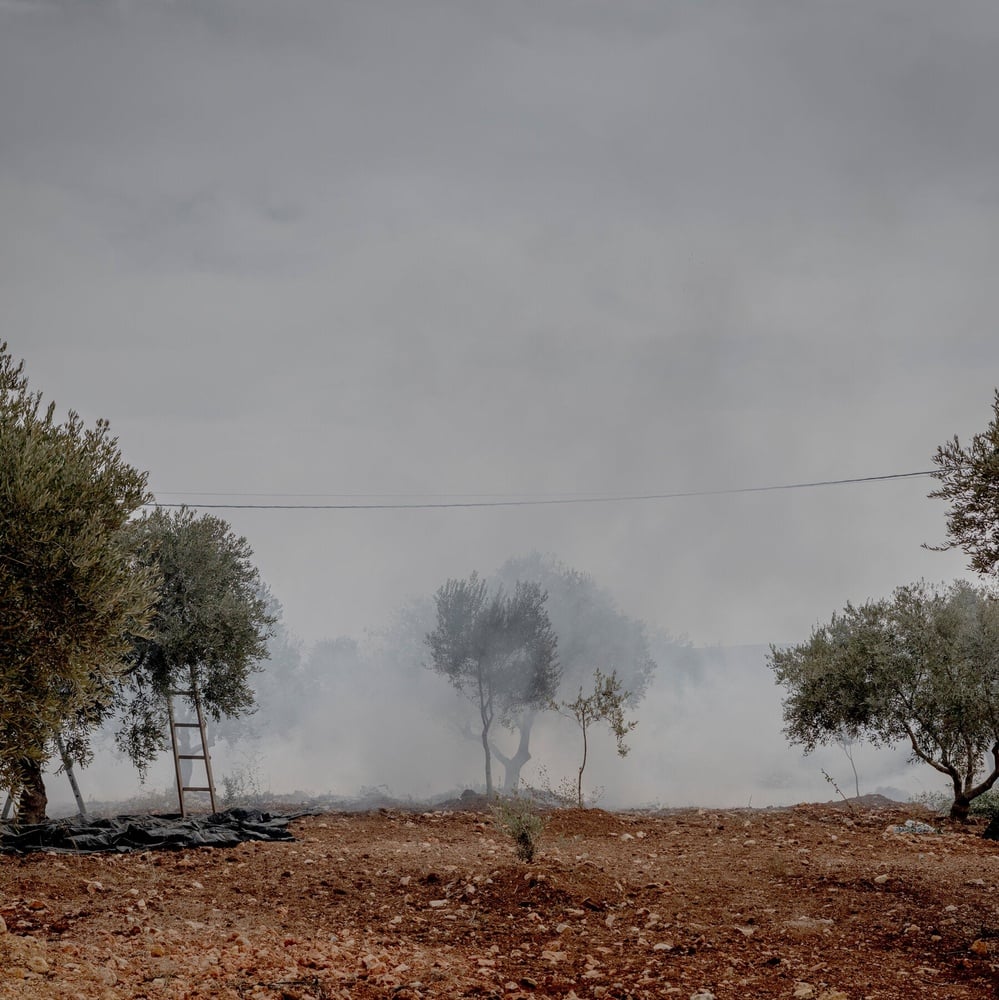

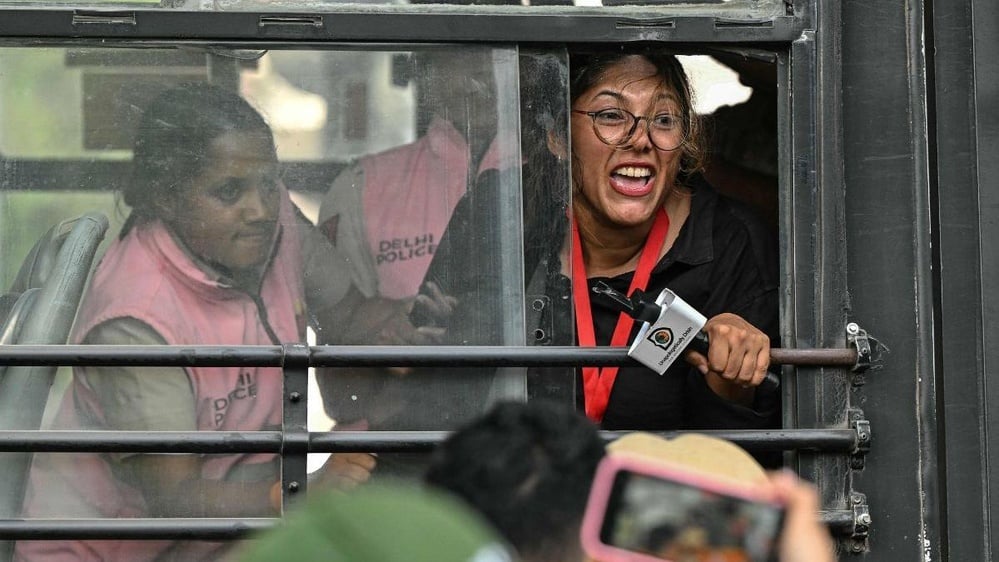
2026 © Helium Trades
Privacy Policy & Disclosure
* Disclaimer: Nothing on this website constitutes investment advice, performance data or any recommendation that any particular security, portfolio of securities, transaction or investment strategy is suitable for any specific person. Helium Trades is not responsible in any way for the accuracy
of any model predictions or price data. Any mention of a particular security and related prediction data is not a recommendation to buy or sell that security. Investments in securities involve the risk of loss. Past performance is no guarantee of future results. Helium Trades is not responsible for any of your investment decisions,
you should consult a financial expert before engaging in any transaction.
Helium Research Assistant

How can I help you today?
Ask any question about this page.


