See whether Helium helps you make better-informed decisions. Try every Pro Trader feature for 30 days. No credit card required.
Try every Pro Trader feature for 30 days. No credit card required.
October 18, 2026 · 0 shares
Coverage foregrounds official condemnations of settler violence and the journalist's injuries while attributing contested responsibility and including the Netanyahu office's caveat.
Automated analysis; not human reviewed.
Limitations: The supplied text is partly truncated and includes unrelated promotional headlines, limiting completeness.
·
55 of 55 available dimensions scored; omitted dimensions are not treated as neutral.
·
Verified supporting quotes for 5 of 55 scored dimensions.
Claim: The report attributes contested details to named sources rather than presenting them as the publisher's own subjective assertion.
“Heidi Levine of The Washington Post suffered serious injuries when she was attacked by Israeli settlers on Friday morning, the newspaper’s executive editor, Matt Murray, said.” · exact text match
Why: Attributing the injury account to the newspaper and its editor supports an objective presentation.
Claim: Graphic injury details are presented factually and without sensational emphasis.
“Photos showed her lying on a trolley with a wound dressing on the left leg and a gash on her right knee, among other injuries.” · exact text match
Why: The injury description is concrete and restrained rather than sensational.
Claim: The report is centrally framed around diplomatic condemnations, state responses, and international sanctions.
“US ambassador to Israel Mike Huckabee has condemned an Israeli settler attack on an American photojournalist in the occupied West Bank, demanding a full investigation, arrests and the prosecution of those responsible.” · exact text match
Why: The core subject is a political and diplomatic response to the attack.
Claim: Multiple named official responses and a caveat are included, supporting visible sourcing and balance.
“Israeli President Isaac Herzog called Ms Levine to apologise for the attack and urged an investigation.” · exact text match
“The Israeli military described the violence as intolerable and said the incidents would be investigated.” · exact text match
Why: Named official sources and a contested official caveat make the sourcing visible and comparatively balanced.
Claim: The report includes an official Israeli caveat that contests responsibility even while foregrounding the attack.
“Benjamin Netanyahu’s office said the circumstances remained unclear and more evidence was needed before responsibility could be established.” · exact text match
Why: Including a caveat from the Israeli prime minister's office supports fairness and internal honesty signals.
The supplied text is partly truncated and includes unrelated promotional headlines, limiting completeness.
October 18, 2026 · 0 shares
The report uses a largely factual wire-service tone but foregrounds victim suffering and critical official quotes while also including Israeli government responses.
Automated analysis; not human reviewed.
Limitations: The supplied text is duplicated, truncated mid-sentence, and followed by unrelated headlines; analysis is limited to the substantive West Bank report and cannot verify the underlying events.
·
55 of 55 available dimensions scored; omitted dimensions are not treated as neutral.
·
Verified supporting quotes for 9 of 55 scored dimensions.
Claim: The report frames the violence as driven by Netanyahu’s pro-settlement right-wing base and states settlers have stolen land, a critical stance toward the Israeli right.
“after months of attacks in which settlers have stolen land and property” · exact text match
“as Prime Minister Benjamin Netanyahu seeks to shore up his pro-settlement right-wing base” · exact text match
Counterevidence:
“Israel’s foreign ministry condemned the attack on the diplomats and Israeli police promised to open an investigation.” · exact text match
Why: Critical framing of Israeli right and settlers, with sympathetic context for Palestinians, leans left in the Israeli-Palestinian political divide, though official Israeli responses are included.
Claim: Mostly attributed reporting, but uses evaluative labels such as 'brutal attack' and 'Extremist Israelis'.
“American photojournalist was injured in a brutal attack” · exact text match
“Extremist Israelis have issued calls” · exact text match
Why: Contains some evaluative wording but largely relies on witnesses and officials.
Claim: Dramatic wording heightens the sense of surging violence without tabloid excess.
“Violence is surging ahead of bitterly fought October 27 elections” · exact text match
“American photojournalist was injured in a brutal attack” · exact text match
Why: Slight sensational framing via 'surging' and 'brutal'.
Claim: Uses crisis and surging language around violence.
“warned against a brewing “crisis” in the territory” · exact text match
“Violence is surging” · exact text match
Why: Some fear-adjacent framing but not rage-bait.
Claim: The report is centered on West Bank violence, Israeli elections, Netanyahu’s coalition, and diplomatic responses.
“Violence is surging ahead of bitterly fought October 27 elections” · exact text match
“Prime Minister Benjamin Netanyahu seeks to shore up his pro-settlement right-wing base” · exact text match
Why: Directly political conflict and election content.
Claim: Foregrounds suffering of the attacked mayor, photographer, and Palestinians.
“Those who continue to suffer the most are those who are here.” · exact text match
“The West Bank violence has shocked much of the world” · exact text match
Why: Sympathetic victim framing is present but tied to reported events.
Claim: Negative emotional tone through descriptions of beating and official shock.
“brutal attack” · exact text match
“outrageous and shocking” · exact text match
Why: Predominantly negative valence but restrained wire style.
Claim: Attributed wire reporting with witnesses, AFP, and named officials; includes Israeli responses.
“witnesses said” · exact text match
“told AFP after he was attacked” · exact text match
Why: Sourcing and attribution support credibility; supplied text is truncated and duplicated.
Claim: Includes attribution to witnesses and AFP and presents Israeli government and settler-group responses alongside condemnations.
“witnesses said” · exact text match
“Israel Gantz, head of an umbrella settler group, blamed recent incidents on “groups of provocateurs and terrorists” but implicitly acknowledged some Israelis’ responsibility.” · exact text match
Why: Visible sourcing and inclusion of countervailing official responses indicate high integrity.
The supplied text is duplicated, truncated mid-sentence, and followed by unrelated headlines; analysis is limited to the substantive West Bank report and cannot verify the underlying events.
October 19, 2026 · 0 shares
The report frames the matter as a law-enforcement and accountability test over settler violence, using heavy attribution and official statements while applying a critical 'far-right nationalist' label to Ben-Gvir and including Netanyahu's defensive response.
Automated analysis; not human reviewed.
Limitations: The supplied text includes duplicated scraped fragments, navigation, and promotional boilerplate; analysis is limited to the substantive news report.
·
55 of 55 available dimensions scored; omitted dimensions are not treated as neutral.
·
Verified supporting quotes for 8 of 55 scored dimensions.
Claim: The report uses a critical ideological label for a far-right Israeli minister and frames settler violence as a state accountability problem, though it includes Netanyahu's defensive response.
“Itamar Ben-Gvir, a far-right nationalist who has not made clamping down on settler violence a priority” · exact text match
Counterevidence:
“We will not allow disputed incidents to be exploited to demonize the hundreds of thousands of law-abiding Jewish residents of Judea and Samaria” · exact text match
Why: The explicit 'far-right nationalist' label and critical priority statement lean slightly left/critical of the Israeli right, while Netanyahu's quoted defense limits the lean.
Claim: The account is structured around attributed statements, hospital findings, and official documents rather than the reporter's personal judgments.
“The statement said the suspects were arrested during a special pre-dawn operation conducted by the district’s Central Investigations Unit and transferred to police stations in the area for questioning.” · exact text match
“was beaten, according to witnesses who spoke to international media” · exact text match
Why: Attribution to a police statement and to witnesses supports an objective, non-subjective presentation.
Claim: Violent events are reported with clinical details and qualified language rather than publisher-driven sensational adjectives.
“which reported that she was in moderate condition with lacerations across her body, a broken rib and four broken vertebrae” · exact text match
“some 538 alleged incidents” · exact text match
Why: Hospital-reported conditions and 'alleged incidents' are presented factually, not as emotional amplification.
Claim: The report mainly describes arrests, attacks, investigations, and official reactions rather than advocating a policy outcome.
“The statement said the suspects were arrested during a special pre-dawn operation conducted by the district’s Central Investigations Unit and transferred to police stations in the area for questioning.” · exact text match
Why: The dominant mode is event and statement reporting; prescriptive elements appear only as attributed official proposals.
Claim: The story centers on Israeli politics, law enforcement, settlement policy, election context, and official reactions.
“Netanyahu, who is in the midst of a closely contested election campaign to retain power” · exact text match
“Israel’s police force is under the authority of the National Security Ministry headed by Itamar Ben-Gvir, a far-right nationalist” · exact text match
Why: The report explicitly discusses electoral competition, ministerial authority, and West Bank law enforcement.
Claim: The report names sources, quotes official statements, cites organizational data, and distinguishes allegations from confirmed findings.
“Data collected by Israeli human rights organization Yesh Din and published on Sunday showed some 538 alleged incidents of settler and soldier violence” · exact text match
“the police said in a statement” · exact text match
Why: Specific attribution and qualification of allegations support high visible credibility.
Claim: The report qualifies disputed claims and attributes statements to police, officials, witnesses, and organizations rather than asserting them as settled fact.
“At this stage, it is unclear what the detainees are suspected of” · exact text match
“Data collected by Israeli human rights organization Yesh Din and published on Sunday showed some 538 alleged incidents of settler and soldier violence” · exact text match
Why: The noted uncertainty and the use of 'alleged' show measured handling of disputed events.
Claim: The report includes multiple official and civil-society voices, notes uncertainty, and presents Netanyahu's defensive response alongside condemnations.
“At this stage, it is unclear what the detainees are suspected of” · exact text match
“Netanyahu, who is in the midst of a closely contested election campaign to retain power, condemned violence generally, but also stated that the circumstances of the attack “remain unclear.”” · exact text match
Why: Acknowledging uncertainty and including the prime minister's qualified response indicate fair, internally honest reporting.
The supplied text includes duplicated scraped fragments, navigation, and promotional boilerplate; analysis is limited to the substantive news report.
October 18, 2026 · 0 shares
The caption frames the event through Palestinian victimhood and local Palestinian sources, with no Israeli response or explicit attribution in the lead attack statement.
Automated analysis; not human reviewed.
Limitations: Very short AP video caption; no Israeli response is included, so publisher framing assessment is limited to selection, wording, and attribution.
·
55 of 55 available dimensions scored; omitted dimensions are not treated as neutral.
·
Verified supporting quotes for 23 of 55 scored dimensions.
Claim: The caption's one-sided Palestinian-victim framing mildly leans in a left-of-center direction in conflict coverage.
“Palestinians attacked by Israeli settlers in occupied West Bank during olive harvest.” · exact text match
Why: The framing centers Palestinian suffering and omits Israeli perspective, a common left-leaning selection pattern, though the evidence is weak in such a brief caption.
Claim: No clear populist or elitist framing is present.
“Local officials and the Palestine Red Crescent Society reported attacks in at least eight villages in the northern West Bank” · exact text match
Why: The text relies on local and humanitarian sources without an evident populist or elitist appeal.
Claim: The caption mostly reports observable events and attributed claims rather than subjective commentary.
“Local officials and the Palestine Red Crescent Society reported attacks in at least eight villages in the northern West Bank” · exact text match
Why: Attribution to named organizations and an AP video credit support an objective presentation.
Claim: The language is direct but not heavily sensationalized.
“settlers attacked the village while Israeli military was seen raiding into the village and throwing tear gas” · exact text match
Why: The wording describes violence without sensational adjectives or exclamatory framing.
Claim: The report has moderate news interest due to violence and economic impact.
“tens of thousands of Palestinian families depend on them for income.” · exact text match
Why: The combination of attack reports and livelihood impact gives the item some news interest.
Claim: The text describes events without recommending any policy or action.
“settlers attacked the village while Israeli military was seen raiding into the village and throwing tear gas” · exact text match
Why: No prescriptive or advocacy language appears in the caption.
Claim: The caption reports violence but does not heavily amplify fear.
“throwing tear gas” · exact text match
Why: Tear gas and attack language are present, but the tone remains factual rather than fear-mongering.
Claim: The item is mostly factual with limited opinion language.
“Palestinians attacked by Israeli settlers in occupied West Bank during olive harvest.” · exact text match
Why: The lead uses a direct characterization of the event, but the rest is attributed reporting.
Claim: The report is centrally about Israeli-Palestinian conflict and military action in the West Bank.
“Palestinians attacked by Israeli settlers in occupied West Bank” · exact text match
Why: The subject matter is explicitly political and conflict-related.
Claim: A multi-actor conflict incident is condensed into a brief caption with only one side's source attribution.
“Local officials and the Palestine Red Crescent Society reported attacks in at least eight villages in the northern West Bank” · exact text match
Why: The short format and one-sided sourcing simplify a complex conflict episode.
Claim: The report relies on local officials and the Palestine Red Crescent Society for the scope of attacks.
“Local officials and the Palestine Red Crescent Society reported attacks in at least eight villages in the northern West Bank” · exact text match
Why: Named authorities are the basis for the reported attack count.
Claim: The caption does not include any Israeli military or settler response.
“Local officials and the Palestine Red Crescent Society reported attacks in at least eight villages in the northern West Bank” · exact text match
Why: Only Palestinian sources are reflected, leaving the response side uncovered.
Claim: The framing emphasizes Palestinians as targets and economically vulnerable.
“Palestinians attacked by Israeli settlers in occupied West Bank during olive harvest.” · exact text match
“tens of thousands of Palestinian families depend on them for income.” · exact text match
Why: The selection foregrounds Palestinian victimhood and livelihood dependence.
Claim: The lead asserts that settlers attacked Palestinians as fact before later attributing village attack reports to local sources.
“Palestinians attacked by Israeli settlers in occupied West Bank during olive harvest.” · exact text match
Why: The unqualified opening goes beyond the attributed sourcing that follows.
Claim: The item carries a mild ideological framing through one-sided conflict selection.
“Palestinians attacked by Israeli settlers in occupied West Bank during olive harvest.” · exact text match
Why: The framing aligns with a Palestinian-victim narrative but does not state an explicit ideology.
Claim: The language and selection create a negative valence around Palestinian suffering.
“Palestinians attacked by Israeli settlers in occupied West Bank during olive harvest.” · exact text match
“tens of thousands of Palestinian families depend on them for income.” · exact text match
Why: Attack, tear gas, and livelihood vulnerability produce a clearly negative emotional tone.
Claim: Only Palestinian suffering and sources are presented, with no comparable Israeli account.
“Palestinians attacked by Israeli settlers in occupied West Bank during olive harvest.” · exact text match
Why: The one-sided selection creates an asymmetric standard, though the short format limits certainty.
Claim: Attributed sourcing and AP video support credibility, while the absence of Israeli comment limits balance.
“Local officials and the Palestine Red Crescent Society reported attacks in at least eight villages in the northern West Bank” · exact text match
Why: The report uses identifiable sources and video credit, but remains one-sided.
Claim: The report is mostly factual and attributed, with little irrational framing.
“Local officials and the Palestine Red Crescent Society reported attacks in at least eight villages in the northern West Bank” · exact text match
Why: Direct event reporting and named sources indicate rational presentation, though the lead is unqualified.
Claim: The caption omits any Israeli response while leading with an unqualified attack statement.
“Palestinians attacked by Israeli settlers in occupied West Bank during olive harvest.” · exact text match
“Local officials and the Palestine Red Crescent Society reported attacks in at least eight villages in the northern West Bank” · exact text match
Why: Selective inclusion and an unqualified lead are observable framing techniques, though brevity may explain the omission.
Claim: No strong AI-authorship indicators are present in this brief AP video caption.
“(AP video/Leo Correa)” · exact text match
Why: The text is a short credited video caption with no stylistic markers suggesting AI generation.
Claim: Named organizational sources and a video credit are present, but there is no Israeli response.
“Local officials and the Palestine Red Crescent Society reported attacks in at least eight villages in the northern West Bank” · exact text match
Why: Attribution and video sourcing support integrity, while one-sided sourcing limits it.
Claim: Israeli settlers are presented as the actors responsible for the attack.
“settlers attacked the village” · exact text match
Why: Responsibility is assigned to settlers, though this is a direct report rather than a broader scapegoating narrative.
Very short AP video caption; no Israeli response is included, so publisher framing assessment is limited to selection, wording, and attribution.
Declarative framing foregrounds Israeli settler violence against Palestinians and ties its reported surge to Israel's election while omitting sourcing details and Israeli response in the supplied text.
Automated analysis; not human reviewed.
Limitations: The supplied text is only a two-sentence AP excerpt with no full sourcing details or Israeli response.
·
5 of 55 available dimensions scored; omitted dimensions are not treated as neutral.
·
Verified supporting quotes for 5 of 5 scored dimensions.
Claim: The supplied report uses factual, attributed news style with limited overt subjectivity.
“ABU FALAH, West Bank (AP) — Settler violence against Palestinians has soared this year and spiked further in the weeks leading up to Israel's election on Oct.
27.”
· exact text match
Why: The dateline attributes the report to AP and presents the development as a factual account, though 'soared' is a strong characterization.
Claim: The report explicitly situates the violence in Israeli electoral politics.
“spiked further in the weeks leading up to Israel's election on Oct.
27.”
· exact text match
Why: Directly linking the reported violence trend to an election makes the framing highly political.
Claim: The framing foregrounds Palestinian harm from the violence.
“disrupting Palestinians' olive harvest.” · exact text match
Why: The concrete consequence is stated as harm to Palestinians, centering victim impact.
Claim: The report asserts a broad trend without quoting a source, data, or method in the supplied text.
“Settler violence against Palestinians has soared this year” · exact text match
Why: The unsourced trend claim uses certainty beyond what the two-sentence excerpt documents.
Claim: The excerpt has moderate credibility signals: AP attribution and a specific dateline, but limited sourcing for the trend claim.
“ABU FALAH, West Bank (AP)” · exact text match
“Settler violence against Palestinians has soared this year” · exact text match
Why: Attribution and specificity support credibility, while the unsourced trend limits it in the supplied excerpt.
The supplied text is only a two-sentence AP excerpt with no full sourcing details or Israeli response.
The lead labels West Bank settlers "extremist" and asserts attacks in the headline while the body hedges with "claimed" and gives substantial space to Netanyahu's evidence-demanding rebuttal.
Judea and Samaria is the Israeli government term for the West Bank; the annual olive harvest is a period of heightened tension between Palestinians and Israeli settlers.
Automated analysis; not human reviewed.
Limitations: The supplied text contains stray unrelated headlines and empty scraped fragments; only the coherent EU and Israeli government statements were analyzed.
·
8 of 55 available dimensions scored; omitted dimensions are not treated as neutral.
·
Verified supporting quotes for 8 of 8 scored dimensions.
Claim: The publisher uses a loaded descriptor in its own narration while also attributing the claim.
“claimed to have been attacked by Jewish settler extremists on Saturday” · exact text match
Why: The phrase "Jewish settler extremists" is evaluative publisher wording, though "claimed" hedges attribution.
Claim: The report is centered on a political dispute between EU officials and the Israeli government over West Bank violence.
“EU condemns West Bank settler attacks targeting diplomats, Palestinians during olive harvest.” · exact text match
Why: The quoted headline and official statements make the article explicitly political.
Claim: The article devotes substantial text to the Israeli government's response to the EU condemnation.
“Following the report, Prime Minister Benjamin Netanyahu released a statement saying that "serious accusations require serious evidence."” · exact text match
Why: A large share of the report reproduces Netanyahu's and the Prime Minister's Office's response.
Claim: The headline asserts settler attacks as established while the body describes a claim and calls for evidence.
“EU condemns West Bank settler attacks targeting diplomats, Palestinians during olive harvest.” · exact text match
“claimed to have been attacked by Jewish settler extremists on Saturday” · exact text match
Why: The headline's certainty exceeds the hedged and contested account in the body.
Claim: The report names official sources, uses attribution verbs, and includes uncertainty from both sides.
“claimed to have been attacked by Jewish settler extremists on Saturday” · exact text match
“serious accusations require serious evidence” · exact text match
Why: Attribution and inclusion of contested evidence support moderate credibility despite the assertive headline.
Claim: Loaded labeling and headline assertion frame the incident before the evidentiary caveats appear.
“attacks by extremist settlers in the West Bank” · exact text match
“EU condemns West Bank settler attacks targeting diplomats, Palestinians during olive harvest.” · exact text match
Why: The loaded term "extremist" and assertive headline are observable framing techniques, though countervailing quotes limit the score.
Claim: The article includes the accused government's response and notes Israeli representatives who condemned the attacks.
“We take positive note of statements by several Israeli representatives who condemned the attacks” · exact text match
“serious accusations require serious evidence” · exact text match
Why: Including opposing official statements and evidence demands shows internal fairness, though the loaded lead tempers it.
Claim: The report presents competing official statements and includes a caution about premature conclusions.
“The more serious the accusation, the greater the demand for compelling evidence” · exact text match
“We take positive note of statements by several Israeli representatives who condemned the attacks” · exact text match
Why: Quoting both EU and Israeli government positions with explicit evidentiary caution indicates moderate analytical complexity.
The supplied text contains stray unrelated headlines and empty scraped fragments; only the coherent EU and Israeli government statements were analyzed.
October 18, 2026 · 0 shares
Coverage foregrounds official condemnations of settler violence and the journalist's injuries while attributing contested responsibility and including the Netanyahu office's caveat.
Automated analysis; not human reviewed.
Limitations: The supplied text is partly truncated and includes unrelated promotional headlines, limiting completeness.
·
55 of 55 available dimensions scored; omitted dimensions are not treated as neutral.
·
Verified supporting quotes for 5 of 55 scored dimensions.
Claim: The report attributes contested details to named sources rather than presenting them as the publisher's own subjective assertion.
“Heidi Levine of The Washington Post suffered serious injuries when she was attacked by Israeli settlers on Friday morning, the newspaper’s executive editor, Matt Murray, said.” · exact text match
Why: Attributing the injury account to the newspaper and its editor supports an objective presentation.
Claim: Graphic injury details are presented factually and without sensational emphasis.
“Photos showed her lying on a trolley with a wound dressing on the left leg and a gash on her right knee, among other injuries.” · exact text match
Why: The injury description is concrete and restrained rather than sensational.
Claim: The report is centrally framed around diplomatic condemnations, state responses, and international sanctions.
“US ambassador to Israel Mike Huckabee has condemned an Israeli settler attack on an American photojournalist in the occupied West Bank, demanding a full investigation, arrests and the prosecution of those responsible.” · exact text match
Why: The core subject is a political and diplomatic response to the attack.
Claim: Multiple named official responses and a caveat are included, supporting visible sourcing and balance.
“Israeli President Isaac Herzog called Ms Levine to apologise for the attack and urged an investigation.” · exact text match
“The Israeli military described the violence as intolerable and said the incidents would be investigated.” · exact text match
Why: Named official sources and a contested official caveat make the sourcing visible and comparatively balanced.
Claim: The report includes an official Israeli caveat that contests responsibility even while foregrounding the attack.
“Benjamin Netanyahu’s office said the circumstances remained unclear and more evidence was needed before responsibility could be established.” · exact text match
Why: Including a caveat from the Israeli prime minister's office supports fairness and internal honesty signals.
The supplied text is partly truncated and includes unrelated promotional headlines, limiting completeness.
October 19, 2026 · 0 shares
The report frames the matter as a law-enforcement and accountability test over settler violence, using heavy attribution and official statements while applying a critical 'far-right nationalist' label to Ben-Gvir and including Netanyahu's defensive response.
Automated analysis; not human reviewed.
Limitations: The supplied text includes duplicated scraped fragments, navigation, and promotional boilerplate; analysis is limited to the substantive news report.
·
55 of 55 available dimensions scored; omitted dimensions are not treated as neutral.
·
Verified supporting quotes for 8 of 55 scored dimensions.
Claim: The report uses a critical ideological label for a far-right Israeli minister and frames settler violence as a state accountability problem, though it includes Netanyahu's defensive response.
“Itamar Ben-Gvir, a far-right nationalist who has not made clamping down on settler violence a priority” · exact text match
Counterevidence:
“We will not allow disputed incidents to be exploited to demonize the hundreds of thousands of law-abiding Jewish residents of Judea and Samaria” · exact text match
Why: The explicit 'far-right nationalist' label and critical priority statement lean slightly left/critical of the Israeli right, while Netanyahu's quoted defense limits the lean.
Claim: The account is structured around attributed statements, hospital findings, and official documents rather than the reporter's personal judgments.
“The statement said the suspects were arrested during a special pre-dawn operation conducted by the district’s Central Investigations Unit and transferred to police stations in the area for questioning.” · exact text match
“was beaten, according to witnesses who spoke to international media” · exact text match
Why: Attribution to a police statement and to witnesses supports an objective, non-subjective presentation.
Claim: Violent events are reported with clinical details and qualified language rather than publisher-driven sensational adjectives.
“which reported that she was in moderate condition with lacerations across her body, a broken rib and four broken vertebrae” · exact text match
“some 538 alleged incidents” · exact text match
Why: Hospital-reported conditions and 'alleged incidents' are presented factually, not as emotional amplification.
Claim: The report mainly describes arrests, attacks, investigations, and official reactions rather than advocating a policy outcome.
“The statement said the suspects were arrested during a special pre-dawn operation conducted by the district’s Central Investigations Unit and transferred to police stations in the area for questioning.” · exact text match
Why: The dominant mode is event and statement reporting; prescriptive elements appear only as attributed official proposals.
Claim: The story centers on Israeli politics, law enforcement, settlement policy, election context, and official reactions.
“Netanyahu, who is in the midst of a closely contested election campaign to retain power” · exact text match
“Israel’s police force is under the authority of the National Security Ministry headed by Itamar Ben-Gvir, a far-right nationalist” · exact text match
Why: The report explicitly discusses electoral competition, ministerial authority, and West Bank law enforcement.
Claim: The report names sources, quotes official statements, cites organizational data, and distinguishes allegations from confirmed findings.
“Data collected by Israeli human rights organization Yesh Din and published on Sunday showed some 538 alleged incidents of settler and soldier violence” · exact text match
“the police said in a statement” · exact text match
Why: Specific attribution and qualification of allegations support high visible credibility.
Claim: The report qualifies disputed claims and attributes statements to police, officials, witnesses, and organizations rather than asserting them as settled fact.
“At this stage, it is unclear what the detainees are suspected of” · exact text match
“Data collected by Israeli human rights organization Yesh Din and published on Sunday showed some 538 alleged incidents of settler and soldier violence” · exact text match
Why: The noted uncertainty and the use of 'alleged' show measured handling of disputed events.
Claim: The report includes multiple official and civil-society voices, notes uncertainty, and presents Netanyahu's defensive response alongside condemnations.
“At this stage, it is unclear what the detainees are suspected of” · exact text match
“Netanyahu, who is in the midst of a closely contested election campaign to retain power, condemned violence generally, but also stated that the circumstances of the attack “remain unclear.”” · exact text match
Why: Acknowledging uncertainty and including the prime minister's qualified response indicate fair, internally honest reporting.
The supplied text includes duplicated scraped fragments, navigation, and promotional boilerplate; analysis is limited to the substantive news report.
October 21, 2026 · 0 shares
Frames settler violence as a documented problem requiring Israeli security action, drawing on official Israeli statements and international condemnation while giving little space to settler perspectives.
Automated analysis; not human reviewed.
Limitations: The supplied text includes some page chrome and related-link headlines; analysis relies on the main reported article.
·
7 of 55 available dimensions scored; omitted dimensions are not treated as neutral.
·
Verified supporting quotes for 7 of 7 scored dimensions.
Claim: The report highlights violent settler attacks and international pressure on Israel, a framing that leans toward liberal criticism of settlement activity.
“taking decisive action against violent settler attacks” · exact text match
Why: Critical framing of settler violence and emphasis on international condemnation gives a modest liberal-leaning cast.
Claim: The report is anchored in attributed statements and named sourcing.
“he told the Jewish Telegraphic Agency” · exact text match
Why: Direct attribution to named sources supports an objective rather than subjective framing.
Claim: The headline uses charged conflict terms, but the body is largely measured reporting.
“Herzog calls for crackdown on violent West Bank settlers as olive harvest tensions mount.” · exact text match
Why: Conflict-laden headline language slightly raises sensational framing without dominating the body.
Claim: The report recounts official actions and statements rather than issuing its own policy prescription.
“Herzog pointed to a meeting he held earlier this month with the IDF’s West Bank division commander and other senior officers.” · exact text match
Why: The text mainly describes events and quoted positions.
Claim: The report centers on Israeli-Palestinian political conflict and diplomatic relations.
“Herzog calls for crackdown on violent West Bank settlers as olive harvest tensions mount.” · exact text match
Why: The subject matter is explicitly political and institutional.
Claim: Multiple named sources and cross-outlet attribution support credibility.
“he told the Jewish Telegraphic Agency” · exact text match
“Haaretz reported on Wednesday” · exact text match
Why: Named sourcing and attribution are visible in the supplied text.
Claim: The report attributes specific details to named outlets and avoids unsupported inference.
“Nine of those suspects were released from custody, Haaretz reported on Wednesday.” · exact text match
Why: Cross-outlet attribution supports a rational, evidence-bound presentation.
The supplied text includes some page chrome and related-link headlines; analysis relies on the main reported article.
The lead labels West Bank settlers "extremist" and asserts attacks in the headline while the body hedges with "claimed" and gives substantial space to Netanyahu's evidence-demanding rebuttal.
Judea and Samaria is the Israeli government term for the West Bank; the annual olive harvest is a period of heightened tension between Palestinians and Israeli settlers.
Automated analysis; not human reviewed.
Limitations: The supplied text contains stray unrelated headlines and empty scraped fragments; only the coherent EU and Israeli government statements were analyzed.
·
8 of 55 available dimensions scored; omitted dimensions are not treated as neutral.
·
Verified supporting quotes for 8 of 8 scored dimensions.
Claim: The publisher uses a loaded descriptor in its own narration while also attributing the claim.
“claimed to have been attacked by Jewish settler extremists on Saturday” · exact text match
Why: The phrase "Jewish settler extremists" is evaluative publisher wording, though "claimed" hedges attribution.
Claim: The report is centered on a political dispute between EU officials and the Israeli government over West Bank violence.
“EU condemns West Bank settler attacks targeting diplomats, Palestinians during olive harvest.” · exact text match
Why: The quoted headline and official statements make the article explicitly political.
Claim: The article devotes substantial text to the Israeli government's response to the EU condemnation.
“Following the report, Prime Minister Benjamin Netanyahu released a statement saying that "serious accusations require serious evidence."” · exact text match
Why: A large share of the report reproduces Netanyahu's and the Prime Minister's Office's response.
Claim: The headline asserts settler attacks as established while the body describes a claim and calls for evidence.
“EU condemns West Bank settler attacks targeting diplomats, Palestinians during olive harvest.” · exact text match
“claimed to have been attacked by Jewish settler extremists on Saturday” · exact text match
Why: The headline's certainty exceeds the hedged and contested account in the body.
Claim: The report names official sources, uses attribution verbs, and includes uncertainty from both sides.
“claimed to have been attacked by Jewish settler extremists on Saturday” · exact text match
“serious accusations require serious evidence” · exact text match
Why: Attribution and inclusion of contested evidence support moderate credibility despite the assertive headline.
Claim: Loaded labeling and headline assertion frame the incident before the evidentiary caveats appear.
“attacks by extremist settlers in the West Bank” · exact text match
“EU condemns West Bank settler attacks targeting diplomats, Palestinians during olive harvest.” · exact text match
Why: The loaded term "extremist" and assertive headline are observable framing techniques, though countervailing quotes limit the score.
Claim: The article includes the accused government's response and notes Israeli representatives who condemned the attacks.
“We take positive note of statements by several Israeli representatives who condemned the attacks” · exact text match
“serious accusations require serious evidence” · exact text match
Why: Including opposing official statements and evidence demands shows internal fairness, though the loaded lead tempers it.
Claim: The report presents competing official statements and includes a caution about premature conclusions.
“The more serious the accusation, the greater the demand for compelling evidence” · exact text match
“We take positive note of statements by several Israeli representatives who condemned the attacks” · exact text match
Why: Quoting both EU and Israeli government positions with explicit evidentiary caution indicates moderate analytical complexity.
The supplied text contains stray unrelated headlines and empty scraped fragments; only the coherent EU and Israeli government statements were analyzed.
October 18, 2026 · 0 shares
The report uses a largely factual wire-service tone but foregrounds victim suffering and critical official quotes while also including Israeli government responses.
Automated analysis; not human reviewed.
Limitations: The supplied text is duplicated, truncated mid-sentence, and followed by unrelated headlines; analysis is limited to the substantive West Bank report and cannot verify the underlying events.
·
55 of 55 available dimensions scored; omitted dimensions are not treated as neutral.
·
Verified supporting quotes for 9 of 55 scored dimensions.
Claim: The report frames the violence as driven by Netanyahu’s pro-settlement right-wing base and states settlers have stolen land, a critical stance toward the Israeli right.
“after months of attacks in which settlers have stolen land and property” · exact text match
“as Prime Minister Benjamin Netanyahu seeks to shore up his pro-settlement right-wing base” · exact text match
Counterevidence:
“Israel’s foreign ministry condemned the attack on the diplomats and Israeli police promised to open an investigation.” · exact text match
Why: Critical framing of Israeli right and settlers, with sympathetic context for Palestinians, leans left in the Israeli-Palestinian political divide, though official Israeli responses are included.
Claim: Mostly attributed reporting, but uses evaluative labels such as 'brutal attack' and 'Extremist Israelis'.
“American photojournalist was injured in a brutal attack” · exact text match
“Extremist Israelis have issued calls” · exact text match
Why: Contains some evaluative wording but largely relies on witnesses and officials.
Claim: Dramatic wording heightens the sense of surging violence without tabloid excess.
“Violence is surging ahead of bitterly fought October 27 elections” · exact text match
“American photojournalist was injured in a brutal attack” · exact text match
Why: Slight sensational framing via 'surging' and 'brutal'.
Claim: Uses crisis and surging language around violence.
“warned against a brewing “crisis” in the territory” · exact text match
“Violence is surging” · exact text match
Why: Some fear-adjacent framing but not rage-bait.
Claim: The report is centered on West Bank violence, Israeli elections, Netanyahu’s coalition, and diplomatic responses.
“Violence is surging ahead of bitterly fought October 27 elections” · exact text match
“Prime Minister Benjamin Netanyahu seeks to shore up his pro-settlement right-wing base” · exact text match
Why: Directly political conflict and election content.
Claim: Foregrounds suffering of the attacked mayor, photographer, and Palestinians.
“Those who continue to suffer the most are those who are here.” · exact text match
“The West Bank violence has shocked much of the world” · exact text match
Why: Sympathetic victim framing is present but tied to reported events.
Claim: Negative emotional tone through descriptions of beating and official shock.
“brutal attack” · exact text match
“outrageous and shocking” · exact text match
Why: Predominantly negative valence but restrained wire style.
Claim: Attributed wire reporting with witnesses, AFP, and named officials; includes Israeli responses.
“witnesses said” · exact text match
“told AFP after he was attacked” · exact text match
Why: Sourcing and attribution support credibility; supplied text is truncated and duplicated.
Claim: Includes attribution to witnesses and AFP and presents Israeli government and settler-group responses alongside condemnations.
“witnesses said” · exact text match
“Israel Gantz, head of an umbrella settler group, blamed recent incidents on “groups of provocateurs and terrorists” but implicitly acknowledged some Israelis’ responsibility.” · exact text match
Why: Visible sourcing and inclusion of countervailing official responses indicate high integrity.
The supplied text is duplicated, truncated mid-sentence, and followed by unrelated headlines; analysis is limited to the substantive West Bank report and cannot verify the underlying events.
October 19, 2026 · 0 shares
The report frames the matter as a law-enforcement and accountability test over settler violence, using heavy attribution and official statements while applying a critical 'far-right nationalist' label to Ben-Gvir and including Netanyahu's defensive response.
Automated analysis; not human reviewed.
Limitations: The supplied text includes duplicated scraped fragments, navigation, and promotional boilerplate; analysis is limited to the substantive news report.
·
55 of 55 available dimensions scored; omitted dimensions are not treated as neutral.
·
Verified supporting quotes for 8 of 55 scored dimensions.
Claim: The report uses a critical ideological label for a far-right Israeli minister and frames settler violence as a state accountability problem, though it includes Netanyahu's defensive response.
“Itamar Ben-Gvir, a far-right nationalist who has not made clamping down on settler violence a priority” · exact text match
Counterevidence:
“We will not allow disputed incidents to be exploited to demonize the hundreds of thousands of law-abiding Jewish residents of Judea and Samaria” · exact text match
Why: The explicit 'far-right nationalist' label and critical priority statement lean slightly left/critical of the Israeli right, while Netanyahu's quoted defense limits the lean.
Claim: The account is structured around attributed statements, hospital findings, and official documents rather than the reporter's personal judgments.
“The statement said the suspects were arrested during a special pre-dawn operation conducted by the district’s Central Investigations Unit and transferred to police stations in the area for questioning.” · exact text match
“was beaten, according to witnesses who spoke to international media” · exact text match
Why: Attribution to a police statement and to witnesses supports an objective, non-subjective presentation.
Claim: Violent events are reported with clinical details and qualified language rather than publisher-driven sensational adjectives.
“which reported that she was in moderate condition with lacerations across her body, a broken rib and four broken vertebrae” · exact text match
“some 538 alleged incidents” · exact text match
Why: Hospital-reported conditions and 'alleged incidents' are presented factually, not as emotional amplification.
Claim: The report mainly describes arrests, attacks, investigations, and official reactions rather than advocating a policy outcome.
“The statement said the suspects were arrested during a special pre-dawn operation conducted by the district’s Central Investigations Unit and transferred to police stations in the area for questioning.” · exact text match
Why: The dominant mode is event and statement reporting; prescriptive elements appear only as attributed official proposals.
Claim: The story centers on Israeli politics, law enforcement, settlement policy, election context, and official reactions.
“Netanyahu, who is in the midst of a closely contested election campaign to retain power” · exact text match
“Israel’s police force is under the authority of the National Security Ministry headed by Itamar Ben-Gvir, a far-right nationalist” · exact text match
Why: The report explicitly discusses electoral competition, ministerial authority, and West Bank law enforcement.
Claim: The report names sources, quotes official statements, cites organizational data, and distinguishes allegations from confirmed findings.
“Data collected by Israeli human rights organization Yesh Din and published on Sunday showed some 538 alleged incidents of settler and soldier violence” · exact text match
“the police said in a statement” · exact text match
Why: Specific attribution and qualification of allegations support high visible credibility.
Claim: The report qualifies disputed claims and attributes statements to police, officials, witnesses, and organizations rather than asserting them as settled fact.
“At this stage, it is unclear what the detainees are suspected of” · exact text match
“Data collected by Israeli human rights organization Yesh Din and published on Sunday showed some 538 alleged incidents of settler and soldier violence” · exact text match
Why: The noted uncertainty and the use of 'alleged' show measured handling of disputed events.
Claim: The report includes multiple official and civil-society voices, notes uncertainty, and presents Netanyahu's defensive response alongside condemnations.
“At this stage, it is unclear what the detainees are suspected of” · exact text match
“Netanyahu, who is in the midst of a closely contested election campaign to retain power, condemned violence generally, but also stated that the circumstances of the attack “remain unclear.”” · exact text match
Why: Acknowledging uncertainty and including the prime minister's qualified response indicate fair, internally honest reporting.
The supplied text includes duplicated scraped fragments, navigation, and promotional boilerplate; analysis is limited to the substantive news report.
The article frames the detention as a consequence of political activism and the ongoing Israeli occupation, emphasizing human rights critiques of state action.
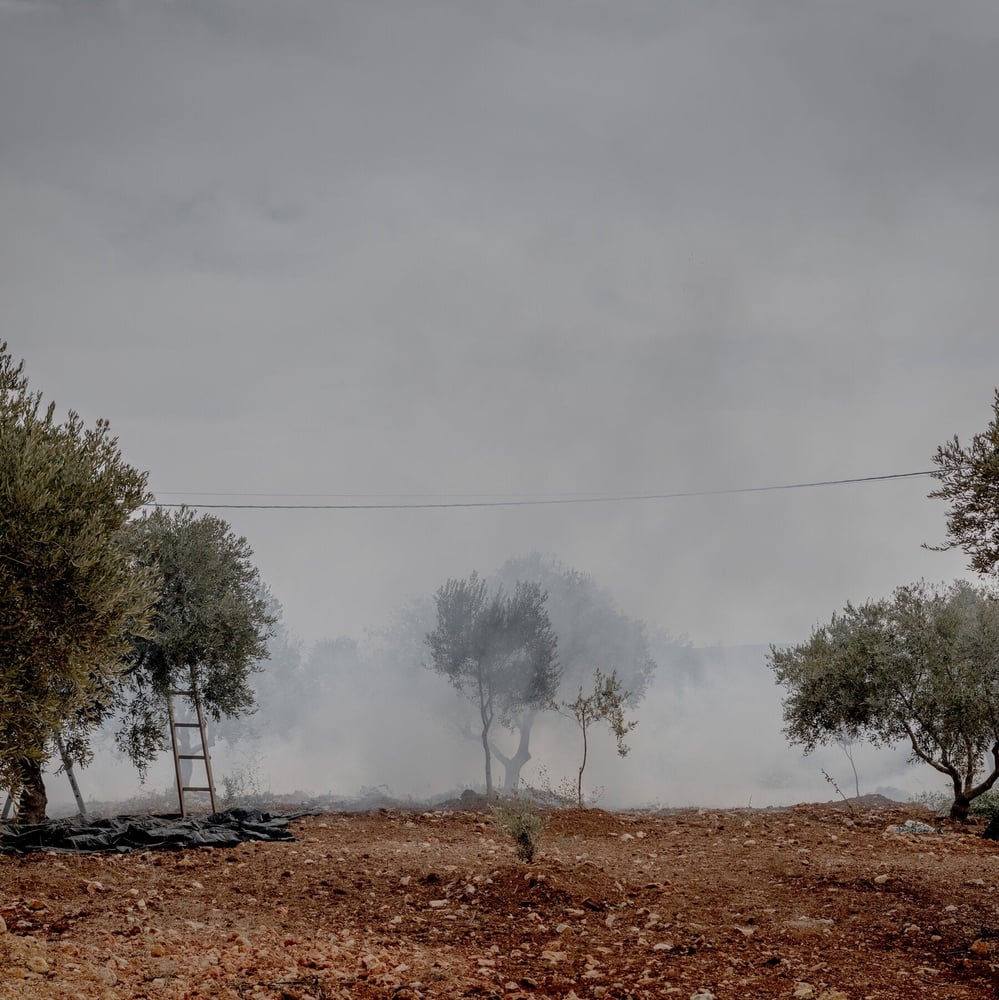
The olive grove was not harvested since Hamas’ Oct. 7, 2023 attacks, and Lander said Palestinian farmers had not felt safe to harvest their olive trees due to the grove's proximity to a nearby Israeli settlement.
Automated analysis; not human reviewed.
·
5 of 55 available dimensions scored; omitted dimensions are not treated as neutral.
·
Verified supporting quotes for 0 of 5 scored dimensions.
October 21, 2026 · 0 shares
Frames settler violence as a documented problem requiring Israeli security action, drawing on official Israeli statements and international condemnation while giving little space to settler perspectives.
Automated analysis; not human reviewed.
Limitations: The supplied text includes some page chrome and related-link headlines; analysis relies on the main reported article.
·
7 of 55 available dimensions scored; omitted dimensions are not treated as neutral.
·
Verified supporting quotes for 7 of 7 scored dimensions.
Claim: The report highlights violent settler attacks and international pressure on Israel, a framing that leans toward liberal criticism of settlement activity.
“taking decisive action against violent settler attacks” · exact text match
Why: Critical framing of settler violence and emphasis on international condemnation gives a modest liberal-leaning cast.
Claim: The report is anchored in attributed statements and named sourcing.
“he told the Jewish Telegraphic Agency” · exact text match
Why: Direct attribution to named sources supports an objective rather than subjective framing.
Claim: The headline uses charged conflict terms, but the body is largely measured reporting.
“Herzog calls for crackdown on violent West Bank settlers as olive harvest tensions mount.” · exact text match
Why: Conflict-laden headline language slightly raises sensational framing without dominating the body.
Claim: The report recounts official actions and statements rather than issuing its own policy prescription.
“Herzog pointed to a meeting he held earlier this month with the IDF’s West Bank division commander and other senior officers.” · exact text match
Why: The text mainly describes events and quoted positions.
Claim: The report centers on Israeli-Palestinian political conflict and diplomatic relations.
“Herzog calls for crackdown on violent West Bank settlers as olive harvest tensions mount.” · exact text match
Why: The subject matter is explicitly political and institutional.
Claim: Multiple named sources and cross-outlet attribution support credibility.
“he told the Jewish Telegraphic Agency” · exact text match
“Haaretz reported on Wednesday” · exact text match
Why: Named sourcing and attribution are visible in the supplied text.
Claim: The report attributes specific details to named outlets and avoids unsupported inference.
“Nine of those suspects were released from custody, Haaretz reported on Wednesday.” · exact text match
Why: Cross-outlet attribution supports a rational, evidence-bound presentation.
The supplied text includes some page chrome and related-link headlines; analysis relies on the main reported article.
October 19, 2026 · 0 shares
The report frames the matter as a law-enforcement and accountability test over settler violence, using heavy attribution and official statements while applying a critical 'far-right nationalist' label to Ben-Gvir and including Netanyahu's defensive response.
Automated analysis; not human reviewed. Limitations: The supplied text includes duplicated scraped fragments, navigation, and promotional boilerplate; analysis is limited to the substantive news report. · 55 of 55 available dimensions scored; omitted dimensions are not treated as neutral. · Verified supporting quotes for 8 of 55 scored dimensions.
Claim: The report uses a critical ideological label for a far-right Israeli minister and frames settler violence as a state accountability problem, though it includes Netanyahu's defensive response.
“Itamar Ben-Gvir, a far-right nationalist who has not made clamping down on settler violence a priority” · exact text match
Counterevidence:
“We will not allow disputed incidents to be exploited to demonize the hundreds of thousands of law-abiding Jewish residents of Judea and Samaria” · exact text match
Why: The explicit 'far-right nationalist' label and critical priority statement lean slightly left/critical of the Israeli right, while Netanyahu's quoted defense limits the lean.
Claim: The account is structured around attributed statements, hospital findings, and official documents rather than the reporter's personal judgments.
“The statement said the suspects were arrested during a special pre-dawn operation conducted by the district’s Central Investigations Unit and transferred to police stations in the area for questioning.” · exact text match
“was beaten, according to witnesses who spoke to international media” · exact text match
Why: Attribution to a police statement and to witnesses supports an objective, non-subjective presentation.
Claim: Violent events are reported with clinical details and qualified language rather than publisher-driven sensational adjectives.
“which reported that she was in moderate condition with lacerations across her body, a broken rib and four broken vertebrae” · exact text match
“some 538 alleged incidents” · exact text match
Why: Hospital-reported conditions and 'alleged incidents' are presented factually, not as emotional amplification.
Claim: The report mainly describes arrests, attacks, investigations, and official reactions rather than advocating a policy outcome.
“The statement said the suspects were arrested during a special pre-dawn operation conducted by the district’s Central Investigations Unit and transferred to police stations in the area for questioning.” · exact text match
Why: The dominant mode is event and statement reporting; prescriptive elements appear only as attributed official proposals.
Claim: The story centers on Israeli politics, law enforcement, settlement policy, election context, and official reactions.
“Netanyahu, who is in the midst of a closely contested election campaign to retain power” · exact text match
“Israel’s police force is under the authority of the National Security Ministry headed by Itamar Ben-Gvir, a far-right nationalist” · exact text match
Why: The report explicitly discusses electoral competition, ministerial authority, and West Bank law enforcement.
Claim: The report names sources, quotes official statements, cites organizational data, and distinguishes allegations from confirmed findings.
“Data collected by Israeli human rights organization Yesh Din and published on Sunday showed some 538 alleged incidents of settler and soldier violence” · exact text match
“the police said in a statement” · exact text match
Why: Specific attribution and qualification of allegations support high visible credibility.
Claim: The report qualifies disputed claims and attributes statements to police, officials, witnesses, and organizations rather than asserting them as settled fact.
“At this stage, it is unclear what the detainees are suspected of” · exact text match
“Data collected by Israeli human rights organization Yesh Din and published on Sunday showed some 538 alleged incidents of settler and soldier violence” · exact text match
Why: The noted uncertainty and the use of 'alleged' show measured handling of disputed events.
Claim: The report includes multiple official and civil-society voices, notes uncertainty, and presents Netanyahu's defensive response alongside condemnations.
“At this stage, it is unclear what the detainees are suspected of” · exact text match
“Netanyahu, who is in the midst of a closely contested election campaign to retain power, condemned violence generally, but also stated that the circumstances of the attack “remain unclear.”” · exact text match
Why: Acknowledging uncertainty and including the prime minister's qualified response indicate fair, internally honest reporting.
The supplied text includes duplicated scraped fragments, navigation, and promotional boilerplate; analysis is limited to the substantive news report.
October 18, 2026 · 0 shares
The report uses a largely factual wire-service tone but foregrounds victim suffering and critical official quotes while also including Israeli government responses.
Automated analysis; not human reviewed. Limitations: The supplied text is duplicated, truncated mid-sentence, and followed by unrelated headlines; analysis is limited to the substantive West Bank report and cannot verify the underlying events. · 55 of 55 available dimensions scored; omitted dimensions are not treated as neutral. · Verified supporting quotes for 9 of 55 scored dimensions.
Claim: The report frames the violence as driven by Netanyahu’s pro-settlement right-wing base and states settlers have stolen land, a critical stance toward the Israeli right.
“after months of attacks in which settlers have stolen land and property” · exact text match
“as Prime Minister Benjamin Netanyahu seeks to shore up his pro-settlement right-wing base” · exact text match
Counterevidence:
“Israel’s foreign ministry condemned the attack on the diplomats and Israeli police promised to open an investigation.” · exact text match
Why: Critical framing of Israeli right and settlers, with sympathetic context for Palestinians, leans left in the Israeli-Palestinian political divide, though official Israeli responses are included.
Claim: Mostly attributed reporting, but uses evaluative labels such as 'brutal attack' and 'Extremist Israelis'.
“American photojournalist was injured in a brutal attack” · exact text match
“Extremist Israelis have issued calls” · exact text match
Why: Contains some evaluative wording but largely relies on witnesses and officials.
Claim: Dramatic wording heightens the sense of surging violence without tabloid excess.
“Violence is surging ahead of bitterly fought October 27 elections” · exact text match
“American photojournalist was injured in a brutal attack” · exact text match
Why: Slight sensational framing via 'surging' and 'brutal'.
Claim: Uses crisis and surging language around violence.
“warned against a brewing “crisis” in the territory” · exact text match
“Violence is surging” · exact text match
Why: Some fear-adjacent framing but not rage-bait.
Claim: The report is centered on West Bank violence, Israeli elections, Netanyahu’s coalition, and diplomatic responses.
“Violence is surging ahead of bitterly fought October 27 elections” · exact text match
“Prime Minister Benjamin Netanyahu seeks to shore up his pro-settlement right-wing base” · exact text match
Why: Directly political conflict and election content.
Claim: Foregrounds suffering of the attacked mayor, photographer, and Palestinians.
“Those who continue to suffer the most are those who are here.” · exact text match
“The West Bank violence has shocked much of the world” · exact text match
Why: Sympathetic victim framing is present but tied to reported events.
Claim: Negative emotional tone through descriptions of beating and official shock.
“brutal attack” · exact text match
“outrageous and shocking” · exact text match
Why: Predominantly negative valence but restrained wire style.
Claim: Attributed wire reporting with witnesses, AFP, and named officials; includes Israeli responses.
“witnesses said” · exact text match
“told AFP after he was attacked” · exact text match
Why: Sourcing and attribution support credibility; supplied text is truncated and duplicated.
Claim: Includes attribution to witnesses and AFP and presents Israeli government and settler-group responses alongside condemnations.
“witnesses said” · exact text match
“Israel Gantz, head of an umbrella settler group, blamed recent incidents on “groups of provocateurs and terrorists” but implicitly acknowledged some Israelis’ responsibility.” · exact text match
Why: Visible sourcing and inclusion of countervailing official responses indicate high integrity.
The supplied text is duplicated, truncated mid-sentence, and followed by unrelated headlines; analysis is limited to the substantive West Bank report and cannot verify the underlying events.
The lead labels West Bank settlers "extremist" and asserts attacks in the headline while the body hedges with "claimed" and gives substantial space to Netanyahu's evidence-demanding rebuttal.
Judea and Samaria is the Israeli government term for the West Bank; the annual olive harvest is a period of heightened tension between Palestinians and Israeli settlers.
Automated analysis; not human reviewed. Limitations: The supplied text contains stray unrelated headlines and empty scraped fragments; only the coherent EU and Israeli government statements were analyzed. · 8 of 55 available dimensions scored; omitted dimensions are not treated as neutral. · Verified supporting quotes for 8 of 8 scored dimensions.
Claim: The publisher uses a loaded descriptor in its own narration while also attributing the claim.
“claimed to have been attacked by Jewish settler extremists on Saturday” · exact text match
Why: The phrase "Jewish settler extremists" is evaluative publisher wording, though "claimed" hedges attribution.
Claim: The report is centered on a political dispute between EU officials and the Israeli government over West Bank violence.
“EU condemns West Bank settler attacks targeting diplomats, Palestinians during olive harvest.” · exact text match
Why: The quoted headline and official statements make the article explicitly political.
Claim: The article devotes substantial text to the Israeli government's response to the EU condemnation.
“Following the report, Prime Minister Benjamin Netanyahu released a statement saying that "serious accusations require serious evidence."” · exact text match
Why: A large share of the report reproduces Netanyahu's and the Prime Minister's Office's response.
Claim: The headline asserts settler attacks as established while the body describes a claim and calls for evidence.
“EU condemns West Bank settler attacks targeting diplomats, Palestinians during olive harvest.” · exact text match
“claimed to have been attacked by Jewish settler extremists on Saturday” · exact text match
Why: The headline's certainty exceeds the hedged and contested account in the body.
Claim: The report names official sources, uses attribution verbs, and includes uncertainty from both sides.
“claimed to have been attacked by Jewish settler extremists on Saturday” · exact text match
“serious accusations require serious evidence” · exact text match
Why: Attribution and inclusion of contested evidence support moderate credibility despite the assertive headline.
Claim: Loaded labeling and headline assertion frame the incident before the evidentiary caveats appear.
“attacks by extremist settlers in the West Bank” · exact text match
“EU condemns West Bank settler attacks targeting diplomats, Palestinians during olive harvest.” · exact text match
Why: The loaded term "extremist" and assertive headline are observable framing techniques, though countervailing quotes limit the score.
Claim: The article includes the accused government's response and notes Israeli representatives who condemned the attacks.
“We take positive note of statements by several Israeli representatives who condemned the attacks” · exact text match
“serious accusations require serious evidence” · exact text match
Why: Including opposing official statements and evidence demands shows internal fairness, though the loaded lead tempers it.
Claim: The report presents competing official statements and includes a caution about premature conclusions.
“The more serious the accusation, the greater the demand for compelling evidence” · exact text match
“We take positive note of statements by several Israeli representatives who condemned the attacks” · exact text match
Why: Quoting both EU and Israeli government positions with explicit evidentiary caution indicates moderate analytical complexity.
The supplied text contains stray unrelated headlines and empty scraped fragments; only the coherent EU and Israeli government statements were analyzed.
October 18, 2026 · 0 shares
Coverage foregrounds official condemnations of settler violence and the journalist's injuries while attributing contested responsibility and including the Netanyahu office's caveat.
Automated analysis; not human reviewed. Limitations: The supplied text is partly truncated and includes unrelated promotional headlines, limiting completeness. · 55 of 55 available dimensions scored; omitted dimensions are not treated as neutral. · Verified supporting quotes for 5 of 55 scored dimensions.
Claim: The report attributes contested details to named sources rather than presenting them as the publisher's own subjective assertion.
“Heidi Levine of The Washington Post suffered serious injuries when she was attacked by Israeli settlers on Friday morning, the newspaper’s executive editor, Matt Murray, said.” · exact text match
Why: Attributing the injury account to the newspaper and its editor supports an objective presentation.
Claim: Graphic injury details are presented factually and without sensational emphasis.
“Photos showed her lying on a trolley with a wound dressing on the left leg and a gash on her right knee, among other injuries.” · exact text match
Why: The injury description is concrete and restrained rather than sensational.
Claim: The report is centrally framed around diplomatic condemnations, state responses, and international sanctions.
“US ambassador to Israel Mike Huckabee has condemned an Israeli settler attack on an American photojournalist in the occupied West Bank, demanding a full investigation, arrests and the prosecution of those responsible.” · exact text match
Why: The core subject is a political and diplomatic response to the attack.
Claim: Multiple named official responses and a caveat are included, supporting visible sourcing and balance.
“Israeli President Isaac Herzog called Ms Levine to apologise for the attack and urged an investigation.” · exact text match
“The Israeli military described the violence as intolerable and said the incidents would be investigated.” · exact text match
Why: Named official sources and a contested official caveat make the sourcing visible and comparatively balanced.
Claim: The report includes an official Israeli caveat that contests responsibility even while foregrounding the attack.
“Benjamin Netanyahu’s office said the circumstances remained unclear and more evidence was needed before responsibility could be established.” · exact text match
Why: Including a caveat from the Israeli prime minister's office supports fairness and internal honesty signals.
The supplied text is partly truncated and includes unrelated promotional headlines, limiting completeness.
October 19, 2026 · 0 shares
The report frames the matter as a law-enforcement and accountability test over settler violence, using heavy attribution and official statements while applying a critical 'far-right nationalist' label to Ben-Gvir and including Netanyahu's defensive response.
Automated analysis; not human reviewed. Limitations: The supplied text includes duplicated scraped fragments, navigation, and promotional boilerplate; analysis is limited to the substantive news report. · 55 of 55 available dimensions scored; omitted dimensions are not treated as neutral. · Verified supporting quotes for 8 of 55 scored dimensions.
Claim: The report uses a critical ideological label for a far-right Israeli minister and frames settler violence as a state accountability problem, though it includes Netanyahu's defensive response.
“Itamar Ben-Gvir, a far-right nationalist who has not made clamping down on settler violence a priority” · exact text match
Counterevidence:
“We will not allow disputed incidents to be exploited to demonize the hundreds of thousands of law-abiding Jewish residents of Judea and Samaria” · exact text match
Why: The explicit 'far-right nationalist' label and critical priority statement lean slightly left/critical of the Israeli right, while Netanyahu's quoted defense limits the lean.
Claim: The account is structured around attributed statements, hospital findings, and official documents rather than the reporter's personal judgments.
“The statement said the suspects were arrested during a special pre-dawn operation conducted by the district’s Central Investigations Unit and transferred to police stations in the area for questioning.” · exact text match
“was beaten, according to witnesses who spoke to international media” · exact text match
Why: Attribution to a police statement and to witnesses supports an objective, non-subjective presentation.
Claim: Violent events are reported with clinical details and qualified language rather than publisher-driven sensational adjectives.
“which reported that she was in moderate condition with lacerations across her body, a broken rib and four broken vertebrae” · exact text match
“some 538 alleged incidents” · exact text match
Why: Hospital-reported conditions and 'alleged incidents' are presented factually, not as emotional amplification.
Claim: The report mainly describes arrests, attacks, investigations, and official reactions rather than advocating a policy outcome.
“The statement said the suspects were arrested during a special pre-dawn operation conducted by the district’s Central Investigations Unit and transferred to police stations in the area for questioning.” · exact text match
Why: The dominant mode is event and statement reporting; prescriptive elements appear only as attributed official proposals.
Claim: The story centers on Israeli politics, law enforcement, settlement policy, election context, and official reactions.
“Netanyahu, who is in the midst of a closely contested election campaign to retain power” · exact text match
“Israel’s police force is under the authority of the National Security Ministry headed by Itamar Ben-Gvir, a far-right nationalist” · exact text match
Why: The report explicitly discusses electoral competition, ministerial authority, and West Bank law enforcement.
Claim: The report names sources, quotes official statements, cites organizational data, and distinguishes allegations from confirmed findings.
“Data collected by Israeli human rights organization Yesh Din and published on Sunday showed some 538 alleged incidents of settler and soldier violence” · exact text match
“the police said in a statement” · exact text match
Why: Specific attribution and qualification of allegations support high visible credibility.
Claim: The report qualifies disputed claims and attributes statements to police, officials, witnesses, and organizations rather than asserting them as settled fact.
“At this stage, it is unclear what the detainees are suspected of” · exact text match
“Data collected by Israeli human rights organization Yesh Din and published on Sunday showed some 538 alleged incidents of settler and soldier violence” · exact text match
Why: The noted uncertainty and the use of 'alleged' show measured handling of disputed events.
Claim: The report includes multiple official and civil-society voices, notes uncertainty, and presents Netanyahu's defensive response alongside condemnations.
“At this stage, it is unclear what the detainees are suspected of” · exact text match
“Netanyahu, who is in the midst of a closely contested election campaign to retain power, condemned violence generally, but also stated that the circumstances of the attack “remain unclear.”” · exact text match
Why: Acknowledging uncertainty and including the prime minister's qualified response indicate fair, internally honest reporting.
The supplied text includes duplicated scraped fragments, navigation, and promotional boilerplate; analysis is limited to the substantive news report.
October 21, 2026 · 0 shares
Frames settler violence as a documented problem requiring Israeli security action, drawing on official Israeli statements and international condemnation while giving little space to settler perspectives.
Automated analysis; not human reviewed. Limitations: The supplied text includes some page chrome and related-link headlines; analysis relies on the main reported article. · 7 of 55 available dimensions scored; omitted dimensions are not treated as neutral. · Verified supporting quotes for 7 of 7 scored dimensions.
Claim: The report highlights violent settler attacks and international pressure on Israel, a framing that leans toward liberal criticism of settlement activity.
“taking decisive action against violent settler attacks” · exact text match
Why: Critical framing of settler violence and emphasis on international condemnation gives a modest liberal-leaning cast.
Claim: The report is anchored in attributed statements and named sourcing.
“he told the Jewish Telegraphic Agency” · exact text match
Why: Direct attribution to named sources supports an objective rather than subjective framing.
Claim: The headline uses charged conflict terms, but the body is largely measured reporting.
“Herzog calls for crackdown on violent West Bank settlers as olive harvest tensions mount.” · exact text match
Why: Conflict-laden headline language slightly raises sensational framing without dominating the body.
Claim: The report recounts official actions and statements rather than issuing its own policy prescription.
“Herzog pointed to a meeting he held earlier this month with the IDF’s West Bank division commander and other senior officers.” · exact text match
Why: The text mainly describes events and quoted positions.
Claim: The report centers on Israeli-Palestinian political conflict and diplomatic relations.
“Herzog calls for crackdown on violent West Bank settlers as olive harvest tensions mount.” · exact text match
Why: The subject matter is explicitly political and institutional.
Claim: Multiple named sources and cross-outlet attribution support credibility.
“he told the Jewish Telegraphic Agency” · exact text match
“Haaretz reported on Wednesday” · exact text match
Why: Named sourcing and attribution are visible in the supplied text.
Claim: The report attributes specific details to named outlets and avoids unsupported inference.
“Nine of those suspects were released from custody, Haaretz reported on Wednesday.” · exact text match
Why: Cross-outlet attribution supports a rational, evidence-bound presentation.
The supplied text includes some page chrome and related-link headlines; analysis relies on the main reported article.
October 19, 2026 · 0 shares
The report frames the matter as a law-enforcement and accountability test over settler violence, using heavy attribution and official statements while applying a critical 'far-right nationalist' label to Ben-Gvir and including Netanyahu's defensive response.
Automated analysis; not human reviewed. Limitations: The supplied text includes duplicated scraped fragments, navigation, and promotional boilerplate; analysis is limited to the substantive news report. · 55 of 55 available dimensions scored; omitted dimensions are not treated as neutral. · Verified supporting quotes for 8 of 55 scored dimensions.
Claim: The report uses a critical ideological label for a far-right Israeli minister and frames settler violence as a state accountability problem, though it includes Netanyahu's defensive response.
“Itamar Ben-Gvir, a far-right nationalist who has not made clamping down on settler violence a priority” · exact text match
Counterevidence:
“We will not allow disputed incidents to be exploited to demonize the hundreds of thousands of law-abiding Jewish residents of Judea and Samaria” · exact text match
Why: The explicit 'far-right nationalist' label and critical priority statement lean slightly left/critical of the Israeli right, while Netanyahu's quoted defense limits the lean.
Claim: The account is structured around attributed statements, hospital findings, and official documents rather than the reporter's personal judgments.
“The statement said the suspects were arrested during a special pre-dawn operation conducted by the district’s Central Investigations Unit and transferred to police stations in the area for questioning.” · exact text match
“was beaten, according to witnesses who spoke to international media” · exact text match
Why: Attribution to a police statement and to witnesses supports an objective, non-subjective presentation.
Claim: Violent events are reported with clinical details and qualified language rather than publisher-driven sensational adjectives.
“which reported that she was in moderate condition with lacerations across her body, a broken rib and four broken vertebrae” · exact text match
“some 538 alleged incidents” · exact text match
Why: Hospital-reported conditions and 'alleged incidents' are presented factually, not as emotional amplification.
Claim: The report mainly describes arrests, attacks, investigations, and official reactions rather than advocating a policy outcome.
“The statement said the suspects were arrested during a special pre-dawn operation conducted by the district’s Central Investigations Unit and transferred to police stations in the area for questioning.” · exact text match
Why: The dominant mode is event and statement reporting; prescriptive elements appear only as attributed official proposals.
Claim: The story centers on Israeli politics, law enforcement, settlement policy, election context, and official reactions.
“Netanyahu, who is in the midst of a closely contested election campaign to retain power” · exact text match
“Israel’s police force is under the authority of the National Security Ministry headed by Itamar Ben-Gvir, a far-right nationalist” · exact text match
Why: The report explicitly discusses electoral competition, ministerial authority, and West Bank law enforcement.
Claim: The report names sources, quotes official statements, cites organizational data, and distinguishes allegations from confirmed findings.
“Data collected by Israeli human rights organization Yesh Din and published on Sunday showed some 538 alleged incidents of settler and soldier violence” · exact text match
“the police said in a statement” · exact text match
Why: Specific attribution and qualification of allegations support high visible credibility.
Claim: The report qualifies disputed claims and attributes statements to police, officials, witnesses, and organizations rather than asserting them as settled fact.
“At this stage, it is unclear what the detainees are suspected of” · exact text match
“Data collected by Israeli human rights organization Yesh Din and published on Sunday showed some 538 alleged incidents of settler and soldier violence” · exact text match
Why: The noted uncertainty and the use of 'alleged' show measured handling of disputed events.
Claim: The report includes multiple official and civil-society voices, notes uncertainty, and presents Netanyahu's defensive response alongside condemnations.
“At this stage, it is unclear what the detainees are suspected of” · exact text match
“Netanyahu, who is in the midst of a closely contested election campaign to retain power, condemned violence generally, but also stated that the circumstances of the attack “remain unclear.”” · exact text match
Why: Acknowledging uncertainty and including the prime minister's qualified response indicate fair, internally honest reporting.
The supplied text includes duplicated scraped fragments, navigation, and promotional boilerplate; analysis is limited to the substantive news report.
The lead labels West Bank settlers "extremist" and asserts attacks in the headline while the body hedges with "claimed" and gives substantial space to Netanyahu's evidence-demanding rebuttal.
Judea and Samaria is the Israeli government term for the West Bank; the annual olive harvest is a period of heightened tension between Palestinians and Israeli settlers.
Automated analysis; not human reviewed. Limitations: The supplied text contains stray unrelated headlines and empty scraped fragments; only the coherent EU and Israeli government statements were analyzed. · 8 of 55 available dimensions scored; omitted dimensions are not treated as neutral. · Verified supporting quotes for 8 of 8 scored dimensions.
Claim: The publisher uses a loaded descriptor in its own narration while also attributing the claim.
“claimed to have been attacked by Jewish settler extremists on Saturday” · exact text match
Why: The phrase "Jewish settler extremists" is evaluative publisher wording, though "claimed" hedges attribution.
Claim: The report is centered on a political dispute between EU officials and the Israeli government over West Bank violence.
“EU condemns West Bank settler attacks targeting diplomats, Palestinians during olive harvest.” · exact text match
Why: The quoted headline and official statements make the article explicitly political.
Claim: The article devotes substantial text to the Israeli government's response to the EU condemnation.
“Following the report, Prime Minister Benjamin Netanyahu released a statement saying that "serious accusations require serious evidence."” · exact text match
Why: A large share of the report reproduces Netanyahu's and the Prime Minister's Office's response.
Claim: The headline asserts settler attacks as established while the body describes a claim and calls for evidence.
“EU condemns West Bank settler attacks targeting diplomats, Palestinians during olive harvest.” · exact text match
“claimed to have been attacked by Jewish settler extremists on Saturday” · exact text match
Why: The headline's certainty exceeds the hedged and contested account in the body.
Claim: The report names official sources, uses attribution verbs, and includes uncertainty from both sides.
“claimed to have been attacked by Jewish settler extremists on Saturday” · exact text match
“serious accusations require serious evidence” · exact text match
Why: Attribution and inclusion of contested evidence support moderate credibility despite the assertive headline.
Claim: Loaded labeling and headline assertion frame the incident before the evidentiary caveats appear.
“attacks by extremist settlers in the West Bank” · exact text match
“EU condemns West Bank settler attacks targeting diplomats, Palestinians during olive harvest.” · exact text match
Why: The loaded term "extremist" and assertive headline are observable framing techniques, though countervailing quotes limit the score.
Claim: The article includes the accused government's response and notes Israeli representatives who condemned the attacks.
“We take positive note of statements by several Israeli representatives who condemned the attacks” · exact text match
“serious accusations require serious evidence” · exact text match
Why: Including opposing official statements and evidence demands shows internal fairness, though the loaded lead tempers it.
Claim: The report presents competing official statements and includes a caution about premature conclusions.
“The more serious the accusation, the greater the demand for compelling evidence” · exact text match
“We take positive note of statements by several Israeli representatives who condemned the attacks” · exact text match
Why: Quoting both EU and Israeli government positions with explicit evidentiary caution indicates moderate analytical complexity.
The supplied text contains stray unrelated headlines and empty scraped fragments; only the coherent EU and Israeli government statements were analyzed.
October 18, 2026 · 0 shares
Coverage foregrounds official condemnations of settler violence and the journalist's injuries while attributing contested responsibility and including the Netanyahu office's caveat.
Automated analysis; not human reviewed. Limitations: The supplied text is partly truncated and includes unrelated promotional headlines, limiting completeness. · 55 of 55 available dimensions scored; omitted dimensions are not treated as neutral. · Verified supporting quotes for 5 of 55 scored dimensions.
Claim: The report attributes contested details to named sources rather than presenting them as the publisher's own subjective assertion.
“Heidi Levine of The Washington Post suffered serious injuries when she was attacked by Israeli settlers on Friday morning, the newspaper’s executive editor, Matt Murray, said.” · exact text match
Why: Attributing the injury account to the newspaper and its editor supports an objective presentation.
Claim: Graphic injury details are presented factually and without sensational emphasis.
“Photos showed her lying on a trolley with a wound dressing on the left leg and a gash on her right knee, among other injuries.” · exact text match
Why: The injury description is concrete and restrained rather than sensational.
Claim: The report is centrally framed around diplomatic condemnations, state responses, and international sanctions.
“US ambassador to Israel Mike Huckabee has condemned an Israeli settler attack on an American photojournalist in the occupied West Bank, demanding a full investigation, arrests and the prosecution of those responsible.” · exact text match
Why: The core subject is a political and diplomatic response to the attack.
Claim: Multiple named official responses and a caveat are included, supporting visible sourcing and balance.
“Israeli President Isaac Herzog called Ms Levine to apologise for the attack and urged an investigation.” · exact text match
“The Israeli military described the violence as intolerable and said the incidents would be investigated.” · exact text match
Why: Named official sources and a contested official caveat make the sourcing visible and comparatively balanced.
Claim: The report includes an official Israeli caveat that contests responsibility even while foregrounding the attack.
“Benjamin Netanyahu’s office said the circumstances remained unclear and more evidence was needed before responsibility could be established.” · exact text match
Why: Including a caveat from the Israeli prime minister's office supports fairness and internal honesty signals.
The supplied text is partly truncated and includes unrelated promotional headlines, limiting completeness.
October 18, 2026 · 0 shares
The caption frames the event through Palestinian victimhood and local Palestinian sources, with no Israeli response or explicit attribution in the lead attack statement.
Automated analysis; not human reviewed. Limitations: Very short AP video caption; no Israeli response is included, so publisher framing assessment is limited to selection, wording, and attribution. · 55 of 55 available dimensions scored; omitted dimensions are not treated as neutral. · Verified supporting quotes for 23 of 55 scored dimensions.
Claim: The caption's one-sided Palestinian-victim framing mildly leans in a left-of-center direction in conflict coverage.
“Palestinians attacked by Israeli settlers in occupied West Bank during olive harvest.” · exact text match
Why: The framing centers Palestinian suffering and omits Israeli perspective, a common left-leaning selection pattern, though the evidence is weak in such a brief caption.
Claim: No clear populist or elitist framing is present.
“Local officials and the Palestine Red Crescent Society reported attacks in at least eight villages in the northern West Bank” · exact text match
Why: The text relies on local and humanitarian sources without an evident populist or elitist appeal.
Claim: The caption mostly reports observable events and attributed claims rather than subjective commentary.
“Local officials and the Palestine Red Crescent Society reported attacks in at least eight villages in the northern West Bank” · exact text match
Why: Attribution to named organizations and an AP video credit support an objective presentation.
Claim: The language is direct but not heavily sensationalized.
“settlers attacked the village while Israeli military was seen raiding into the village and throwing tear gas” · exact text match
Why: The wording describes violence without sensational adjectives or exclamatory framing.
Claim: The report has moderate news interest due to violence and economic impact.
“tens of thousands of Palestinian families depend on them for income.” · exact text match
Why: The combination of attack reports and livelihood impact gives the item some news interest.
Claim: The text describes events without recommending any policy or action.
“settlers attacked the village while Israeli military was seen raiding into the village and throwing tear gas” · exact text match
Why: No prescriptive or advocacy language appears in the caption.
Claim: The caption reports violence but does not heavily amplify fear.
“throwing tear gas” · exact text match
Why: Tear gas and attack language are present, but the tone remains factual rather than fear-mongering.
Claim: The item is mostly factual with limited opinion language.
“Palestinians attacked by Israeli settlers in occupied West Bank during olive harvest.” · exact text match
Why: The lead uses a direct characterization of the event, but the rest is attributed reporting.
Claim: The report is centrally about Israeli-Palestinian conflict and military action in the West Bank.
“Palestinians attacked by Israeli settlers in occupied West Bank” · exact text match
Why: The subject matter is explicitly political and conflict-related.
Claim: A multi-actor conflict incident is condensed into a brief caption with only one side's source attribution.
“Local officials and the Palestine Red Crescent Society reported attacks in at least eight villages in the northern West Bank” · exact text match
Why: The short format and one-sided sourcing simplify a complex conflict episode.
Claim: The report relies on local officials and the Palestine Red Crescent Society for the scope of attacks.
“Local officials and the Palestine Red Crescent Society reported attacks in at least eight villages in the northern West Bank” · exact text match
Why: Named authorities are the basis for the reported attack count.
Claim: The caption does not include any Israeli military or settler response.
“Local officials and the Palestine Red Crescent Society reported attacks in at least eight villages in the northern West Bank” · exact text match
Why: Only Palestinian sources are reflected, leaving the response side uncovered.
Claim: The framing emphasizes Palestinians as targets and economically vulnerable.
“Palestinians attacked by Israeli settlers in occupied West Bank during olive harvest.” · exact text match
“tens of thousands of Palestinian families depend on them for income.” · exact text match
Why: The selection foregrounds Palestinian victimhood and livelihood dependence.
Claim: The lead asserts that settlers attacked Palestinians as fact before later attributing village attack reports to local sources.
“Palestinians attacked by Israeli settlers in occupied West Bank during olive harvest.” · exact text match
Why: The unqualified opening goes beyond the attributed sourcing that follows.
Claim: The item carries a mild ideological framing through one-sided conflict selection.
“Palestinians attacked by Israeli settlers in occupied West Bank during olive harvest.” · exact text match
Why: The framing aligns with a Palestinian-victim narrative but does not state an explicit ideology.
Claim: The language and selection create a negative valence around Palestinian suffering.
“Palestinians attacked by Israeli settlers in occupied West Bank during olive harvest.” · exact text match
“tens of thousands of Palestinian families depend on them for income.” · exact text match
Why: Attack, tear gas, and livelihood vulnerability produce a clearly negative emotional tone.
Claim: Only Palestinian suffering and sources are presented, with no comparable Israeli account.
“Palestinians attacked by Israeli settlers in occupied West Bank during olive harvest.” · exact text match
Why: The one-sided selection creates an asymmetric standard, though the short format limits certainty.
Claim: Attributed sourcing and AP video support credibility, while the absence of Israeli comment limits balance.
“Local officials and the Palestine Red Crescent Society reported attacks in at least eight villages in the northern West Bank” · exact text match
Why: The report uses identifiable sources and video credit, but remains one-sided.
Claim: The report is mostly factual and attributed, with little irrational framing.
“Local officials and the Palestine Red Crescent Society reported attacks in at least eight villages in the northern West Bank” · exact text match
Why: Direct event reporting and named sources indicate rational presentation, though the lead is unqualified.
Claim: The caption omits any Israeli response while leading with an unqualified attack statement.
“Palestinians attacked by Israeli settlers in occupied West Bank during olive harvest.” · exact text match
“Local officials and the Palestine Red Crescent Society reported attacks in at least eight villages in the northern West Bank” · exact text match
Why: Selective inclusion and an unqualified lead are observable framing techniques, though brevity may explain the omission.
Claim: No strong AI-authorship indicators are present in this brief AP video caption.
“(AP video/Leo Correa)” · exact text match
Why: The text is a short credited video caption with no stylistic markers suggesting AI generation.
Claim: Named organizational sources and a video credit are present, but there is no Israeli response.
“Local officials and the Palestine Red Crescent Society reported attacks in at least eight villages in the northern West Bank” · exact text match
Why: Attribution and video sourcing support integrity, while one-sided sourcing limits it.
Claim: Israeli settlers are presented as the actors responsible for the attack.
“settlers attacked the village” · exact text match
Why: Responsibility is assigned to settlers, though this is a direct report rather than a broader scapegoating narrative.
Very short AP video caption; no Israeli response is included, so publisher framing assessment is limited to selection, wording, and attribution.
October 19, 2026 · 0 shares
The report frames the matter as a law-enforcement and accountability test over settler violence, using heavy attribution and official statements while applying a critical 'far-right nationalist' label to Ben-Gvir and including Netanyahu's defensive response.
Automated analysis; not human reviewed. Limitations: The supplied text includes duplicated scraped fragments, navigation, and promotional boilerplate; analysis is limited to the substantive news report. · 55 of 55 available dimensions scored; omitted dimensions are not treated as neutral. · Verified supporting quotes for 8 of 55 scored dimensions.
Claim: The report uses a critical ideological label for a far-right Israeli minister and frames settler violence as a state accountability problem, though it includes Netanyahu's defensive response.
“Itamar Ben-Gvir, a far-right nationalist who has not made clamping down on settler violence a priority” · exact text match
Counterevidence:
“We will not allow disputed incidents to be exploited to demonize the hundreds of thousands of law-abiding Jewish residents of Judea and Samaria” · exact text match
Why: The explicit 'far-right nationalist' label and critical priority statement lean slightly left/critical of the Israeli right, while Netanyahu's quoted defense limits the lean.
Claim: The account is structured around attributed statements, hospital findings, and official documents rather than the reporter's personal judgments.
“The statement said the suspects were arrested during a special pre-dawn operation conducted by the district’s Central Investigations Unit and transferred to police stations in the area for questioning.” · exact text match
“was beaten, according to witnesses who spoke to international media” · exact text match
Why: Attribution to a police statement and to witnesses supports an objective, non-subjective presentation.
Claim: Violent events are reported with clinical details and qualified language rather than publisher-driven sensational adjectives.
“which reported that she was in moderate condition with lacerations across her body, a broken rib and four broken vertebrae” · exact text match
“some 538 alleged incidents” · exact text match
Why: Hospital-reported conditions and 'alleged incidents' are presented factually, not as emotional amplification.
Claim: The report mainly describes arrests, attacks, investigations, and official reactions rather than advocating a policy outcome.
“The statement said the suspects were arrested during a special pre-dawn operation conducted by the district’s Central Investigations Unit and transferred to police stations in the area for questioning.” · exact text match
Why: The dominant mode is event and statement reporting; prescriptive elements appear only as attributed official proposals.
Claim: The story centers on Israeli politics, law enforcement, settlement policy, election context, and official reactions.
“Netanyahu, who is in the midst of a closely contested election campaign to retain power” · exact text match
“Israel’s police force is under the authority of the National Security Ministry headed by Itamar Ben-Gvir, a far-right nationalist” · exact text match
Why: The report explicitly discusses electoral competition, ministerial authority, and West Bank law enforcement.
Claim: The report names sources, quotes official statements, cites organizational data, and distinguishes allegations from confirmed findings.
“Data collected by Israeli human rights organization Yesh Din and published on Sunday showed some 538 alleged incidents of settler and soldier violence” · exact text match
“the police said in a statement” · exact text match
Why: Specific attribution and qualification of allegations support high visible credibility.
Claim: The report qualifies disputed claims and attributes statements to police, officials, witnesses, and organizations rather than asserting them as settled fact.
“At this stage, it is unclear what the detainees are suspected of” · exact text match
“Data collected by Israeli human rights organization Yesh Din and published on Sunday showed some 538 alleged incidents of settler and soldier violence” · exact text match
Why: The noted uncertainty and the use of 'alleged' show measured handling of disputed events.
Claim: The report includes multiple official and civil-society voices, notes uncertainty, and presents Netanyahu's defensive response alongside condemnations.
“At this stage, it is unclear what the detainees are suspected of” · exact text match
“Netanyahu, who is in the midst of a closely contested election campaign to retain power, condemned violence generally, but also stated that the circumstances of the attack “remain unclear.”” · exact text match
Why: Acknowledging uncertainty and including the prime minister's qualified response indicate fair, internally honest reporting.
The supplied text includes duplicated scraped fragments, navigation, and promotional boilerplate; analysis is limited to the substantive news report.
Security-centric framing relies on Israeli military and Army Radio accounts, using 'terror' labels for Hezbollah while noting the IDF omitted Kfarchouba from its confirmation.
The Yellow Line is a security zone in southern Lebanon linked to Israel-Hezbollah ceasefire arrangements; the report also references annual West Bank olive harvest tensions.
Automated analysis; not human reviewed. Limitations: The report is brief and relies heavily on Army Radio and IDF statements, limiting independent verification of the Kfarchouba security claims. · 10 of 55 available dimensions scored; omitted dimensions are not treated as neutral. · Verified supporting quotes for 10 of 10 scored dimensions.
Claim: Frames restricted movement and IDF supervision as routine security administration.
“the work, entry, and exit were conducted under IDF supervision” · exact text match
Why: The neutral presentation of military control over entry and exit leans toward an authoritarian security frame.
Claim: Relies primarily on attributed reporting and official statements rather than subjective commentary.
“According to Army Radio” · exact text match
“The IDF confirmed that the harvests took place in "several Christian villages" but did not mention Kfarchouba.” · exact text match
Why: The framing is largely factual and source-attributed.
Claim: Uses measured, non-sensational reporting language.
“Army Radio reported Sunday.” · exact text match
Why: The report avoids dramatic or emotive phrasing.
Claim: Describes security arrangements without prescribing policy.
“The IDF has allowed Lebanese and Syrian olive harvesters to enter the Yellow Line security zone in southern Lebanon” · exact text match
Why: The sentence reports an action rather than advocating one.
Claim: The report is situated in security and ceasefire politics involving Hezbollah.
“Hezbollah terror activity” · exact text match
“ceasefire agreement” · exact text match
Why: The content centers on military-security policy and armed-group activity.
Claim: Treats Army Radio and IDF statements as primary authorities.
“According to Army Radio” · exact text match
“the military said” · exact text match
Why: Key claims are grounded in official or military-linked sources.
Claim: Depends on Israeli military and Army Radio framing.
“According to Army Radio” · exact text match
“The IDF confirmed” · exact text match
Why: Official and military-linked sources dominate the account.
Claim: Shows visible sourcing and some caution about unspecified details.
“According to Army Radio” · exact text match
“without specifying the nature of these security checks” · exact text match
Why: Attribution and acknowledgment of missing detail support credibility in the supplied text.
Claim: Presents official claims with attribution and notes where details are unspecified.
“without specifying the nature of these security checks” · exact text match
Why: The article distinguishes confirmed details from unspecified security checks rather than overstating certainty.
Claim: Notes an official omission that qualifies the IDF's confirmation.
“The IDF confirmed that the harvests took place in "several Christian villages" but did not mention Kfarchouba.” · exact text match
Why: Including the omission signals internal fairness in reporting official statements.
The report is brief and relies heavily on Army Radio and IDF statements, limiting independent verification of the Kfarchouba security claims.
Declarative framing foregrounds Israeli settler violence against Palestinians and ties its reported surge to Israel's election while omitting sourcing details and Israeli response in the supplied text.
Automated analysis; not human reviewed. Limitations: The supplied text is only a two-sentence AP excerpt with no full sourcing details or Israeli response. · 5 of 55 available dimensions scored; omitted dimensions are not treated as neutral. · Verified supporting quotes for 5 of 5 scored dimensions.
Claim: The supplied report uses factual, attributed news style with limited overt subjectivity.
“ABU FALAH, West Bank (AP) — Settler violence against Palestinians has soared this year and spiked further in the weeks leading up to Israel's election on Oct. 27.” · exact text match
Why: The dateline attributes the report to AP and presents the development as a factual account, though 'soared' is a strong characterization.
Claim: The report explicitly situates the violence in Israeli electoral politics.
“spiked further in the weeks leading up to Israel's election on Oct. 27.” · exact text match
Why: Directly linking the reported violence trend to an election makes the framing highly political.
Claim: The framing foregrounds Palestinian harm from the violence.
“disrupting Palestinians' olive harvest.” · exact text match
Why: The concrete consequence is stated as harm to Palestinians, centering victim impact.
Claim: The report asserts a broad trend without quoting a source, data, or method in the supplied text.
“Settler violence against Palestinians has soared this year” · exact text match
Why: The unsourced trend claim uses certainty beyond what the two-sentence excerpt documents.
Claim: The excerpt has moderate credibility signals: AP attribution and a specific dateline, but limited sourcing for the trend claim.
“ABU FALAH, West Bank (AP)” · exact text match
“Settler violence against Palestinians has soared this year” · exact text match
Why: Attribution and specificity support credibility, while the unsourced trend limits it in the supplied excerpt.
The supplied text is only a two-sentence AP excerpt with no full sourcing details or Israeli response.
October 18, 2026 · 0 shares
The report uses a largely factual wire-service tone but foregrounds victim suffering and critical official quotes while also including Israeli government responses.
Automated analysis; not human reviewed. Limitations: The supplied text is duplicated, truncated mid-sentence, and followed by unrelated headlines; analysis is limited to the substantive West Bank report and cannot verify the underlying events. · 55 of 55 available dimensions scored; omitted dimensions are not treated as neutral. · Verified supporting quotes for 9 of 55 scored dimensions.
Claim: The report frames the violence as driven by Netanyahu’s pro-settlement right-wing base and states settlers have stolen land, a critical stance toward the Israeli right.
“after months of attacks in which settlers have stolen land and property” · exact text match
“as Prime Minister Benjamin Netanyahu seeks to shore up his pro-settlement right-wing base” · exact text match
Counterevidence:
“Israel’s foreign ministry condemned the attack on the diplomats and Israeli police promised to open an investigation.” · exact text match
Why: Critical framing of Israeli right and settlers, with sympathetic context for Palestinians, leans left in the Israeli-Palestinian political divide, though official Israeli responses are included.
Claim: Mostly attributed reporting, but uses evaluative labels such as 'brutal attack' and 'Extremist Israelis'.
“American photojournalist was injured in a brutal attack” · exact text match
“Extremist Israelis have issued calls” · exact text match
Why: Contains some evaluative wording but largely relies on witnesses and officials.
Claim: Dramatic wording heightens the sense of surging violence without tabloid excess.
“Violence is surging ahead of bitterly fought October 27 elections” · exact text match
“American photojournalist was injured in a brutal attack” · exact text match
Why: Slight sensational framing via 'surging' and 'brutal'.
Claim: Uses crisis and surging language around violence.
“warned against a brewing “crisis” in the territory” · exact text match
“Violence is surging” · exact text match
Why: Some fear-adjacent framing but not rage-bait.
Claim: The report is centered on West Bank violence, Israeli elections, Netanyahu’s coalition, and diplomatic responses.
“Violence is surging ahead of bitterly fought October 27 elections” · exact text match
“Prime Minister Benjamin Netanyahu seeks to shore up his pro-settlement right-wing base” · exact text match
Why: Directly political conflict and election content.
Claim: Foregrounds suffering of the attacked mayor, photographer, and Palestinians.
“Those who continue to suffer the most are those who are here.” · exact text match
“The West Bank violence has shocked much of the world” · exact text match
Why: Sympathetic victim framing is present but tied to reported events.
Claim: Negative emotional tone through descriptions of beating and official shock.
“brutal attack” · exact text match
“outrageous and shocking” · exact text match
Why: Predominantly negative valence but restrained wire style.
Claim: Attributed wire reporting with witnesses, AFP, and named officials; includes Israeli responses.
“witnesses said” · exact text match
“told AFP after he was attacked” · exact text match
Why: Sourcing and attribution support credibility; supplied text is truncated and duplicated.
Claim: Includes attribution to witnesses and AFP and presents Israeli government and settler-group responses alongside condemnations.
“witnesses said” · exact text match
“Israel Gantz, head of an umbrella settler group, blamed recent incidents on “groups of provocateurs and terrorists” but implicitly acknowledged some Israelis’ responsibility.” · exact text match
Why: Visible sourcing and inclusion of countervailing official responses indicate high integrity.
The supplied text is duplicated, truncated mid-sentence, and followed by unrelated headlines; analysis is limited to the substantive West Bank report and cannot verify the underlying events.
October 18, 2026 · 0 shares
The caption frames the event through Palestinian victimhood and local Palestinian sources, with no Israeli response or explicit attribution in the lead attack statement.
Automated analysis; not human reviewed.
Limitations: Very short AP video caption; no Israeli response is included, so publisher framing assessment is limited to selection, wording, and attribution.
·
55 of 55 available dimensions scored; omitted dimensions are not treated as neutral.
·
Verified supporting quotes for 23 of 55 scored dimensions.
Claim: The caption's one-sided Palestinian-victim framing mildly leans in a left-of-center direction in conflict coverage.
“Palestinians attacked by Israeli settlers in occupied West Bank during olive harvest.” · exact text match
Why: The framing centers Palestinian suffering and omits Israeli perspective, a common left-leaning selection pattern, though the evidence is weak in such a brief caption.
Claim: No clear populist or elitist framing is present.
“Local officials and the Palestine Red Crescent Society reported attacks in at least eight villages in the northern West Bank” · exact text match
Why: The text relies on local and humanitarian sources without an evident populist or elitist appeal.
Claim: The caption mostly reports observable events and attributed claims rather than subjective commentary.
“Local officials and the Palestine Red Crescent Society reported attacks in at least eight villages in the northern West Bank” · exact text match
Why: Attribution to named organizations and an AP video credit support an objective presentation.
Claim: The language is direct but not heavily sensationalized.
“settlers attacked the village while Israeli military was seen raiding into the village and throwing tear gas” · exact text match
Why: The wording describes violence without sensational adjectives or exclamatory framing.
Claim: The report has moderate news interest due to violence and economic impact.
“tens of thousands of Palestinian families depend on them for income.” · exact text match
Why: The combination of attack reports and livelihood impact gives the item some news interest.
Claim: The text describes events without recommending any policy or action.
“settlers attacked the village while Israeli military was seen raiding into the village and throwing tear gas” · exact text match
Why: No prescriptive or advocacy language appears in the caption.
Claim: The caption reports violence but does not heavily amplify fear.
“throwing tear gas” · exact text match
Why: Tear gas and attack language are present, but the tone remains factual rather than fear-mongering.
Claim: The item is mostly factual with limited opinion language.
“Palestinians attacked by Israeli settlers in occupied West Bank during olive harvest.” · exact text match
Why: The lead uses a direct characterization of the event, but the rest is attributed reporting.
Claim: The report is centrally about Israeli-Palestinian conflict and military action in the West Bank.
“Palestinians attacked by Israeli settlers in occupied West Bank” · exact text match
Why: The subject matter is explicitly political and conflict-related.
Claim: A multi-actor conflict incident is condensed into a brief caption with only one side's source attribution.
“Local officials and the Palestine Red Crescent Society reported attacks in at least eight villages in the northern West Bank” · exact text match
Why: The short format and one-sided sourcing simplify a complex conflict episode.
Claim: The report relies on local officials and the Palestine Red Crescent Society for the scope of attacks.
“Local officials and the Palestine Red Crescent Society reported attacks in at least eight villages in the northern West Bank” · exact text match
Why: Named authorities are the basis for the reported attack count.
Claim: The caption does not include any Israeli military or settler response.
“Local officials and the Palestine Red Crescent Society reported attacks in at least eight villages in the northern West Bank” · exact text match
Why: Only Palestinian sources are reflected, leaving the response side uncovered.
Claim: The framing emphasizes Palestinians as targets and economically vulnerable.
“Palestinians attacked by Israeli settlers in occupied West Bank during olive harvest.” · exact text match
“tens of thousands of Palestinian families depend on them for income.” · exact text match
Why: The selection foregrounds Palestinian victimhood and livelihood dependence.
Claim: The lead asserts that settlers attacked Palestinians as fact before later attributing village attack reports to local sources.
“Palestinians attacked by Israeli settlers in occupied West Bank during olive harvest.” · exact text match
Why: The unqualified opening goes beyond the attributed sourcing that follows.
Claim: The item carries a mild ideological framing through one-sided conflict selection.
“Palestinians attacked by Israeli settlers in occupied West Bank during olive harvest.” · exact text match
Why: The framing aligns with a Palestinian-victim narrative but does not state an explicit ideology.
Claim: The language and selection create a negative valence around Palestinian suffering.
“Palestinians attacked by Israeli settlers in occupied West Bank during olive harvest.” · exact text match
“tens of thousands of Palestinian families depend on them for income.” · exact text match
Why: Attack, tear gas, and livelihood vulnerability produce a clearly negative emotional tone.
Claim: Only Palestinian suffering and sources are presented, with no comparable Israeli account.
“Palestinians attacked by Israeli settlers in occupied West Bank during olive harvest.” · exact text match
Why: The one-sided selection creates an asymmetric standard, though the short format limits certainty.
Claim: Attributed sourcing and AP video support credibility, while the absence of Israeli comment limits balance.
“Local officials and the Palestine Red Crescent Society reported attacks in at least eight villages in the northern West Bank” · exact text match
Why: The report uses identifiable sources and video credit, but remains one-sided.
Claim: The report is mostly factual and attributed, with little irrational framing.
“Local officials and the Palestine Red Crescent Society reported attacks in at least eight villages in the northern West Bank” · exact text match
Why: Direct event reporting and named sources indicate rational presentation, though the lead is unqualified.
Claim: The caption omits any Israeli response while leading with an unqualified attack statement.
“Palestinians attacked by Israeli settlers in occupied West Bank during olive harvest.” · exact text match
“Local officials and the Palestine Red Crescent Society reported attacks in at least eight villages in the northern West Bank” · exact text match
Why: Selective inclusion and an unqualified lead are observable framing techniques, though brevity may explain the omission.
Claim: No strong AI-authorship indicators are present in this brief AP video caption.
“(AP video/Leo Correa)” · exact text match
Why: The text is a short credited video caption with no stylistic markers suggesting AI generation.
Claim: Named organizational sources and a video credit are present, but there is no Israeli response.
“Local officials and the Palestine Red Crescent Society reported attacks in at least eight villages in the northern West Bank” · exact text match
Why: Attribution and video sourcing support integrity, while one-sided sourcing limits it.
Claim: Israeli settlers are presented as the actors responsible for the attack.
“settlers attacked the village” · exact text match
Why: Responsibility is assigned to settlers, though this is a direct report rather than a broader scapegoating narrative.
Very short AP video caption; no Israeli response is included, so publisher framing assessment is limited to selection, wording, and attribution.
Declarative framing foregrounds Israeli settler violence against Palestinians and ties its reported surge to Israel's election while omitting sourcing details and Israeli response in the supplied text.
Automated analysis; not human reviewed.
Limitations: The supplied text is only a two-sentence AP excerpt with no full sourcing details or Israeli response.
·
5 of 55 available dimensions scored; omitted dimensions are not treated as neutral.
·
Verified supporting quotes for 5 of 5 scored dimensions.
Claim: The supplied report uses factual, attributed news style with limited overt subjectivity.
“ABU FALAH, West Bank (AP) — Settler violence against Palestinians has soared this year and spiked further in the weeks leading up to Israel's election on Oct.
27.”
· exact text match
Why: The dateline attributes the report to AP and presents the development as a factual account, though 'soared' is a strong characterization.
Claim: The report explicitly situates the violence in Israeli electoral politics.
“spiked further in the weeks leading up to Israel's election on Oct.
27.”
· exact text match
Why: Directly linking the reported violence trend to an election makes the framing highly political.
Claim: The framing foregrounds Palestinian harm from the violence.
“disrupting Palestinians' olive harvest.” · exact text match
Why: The concrete consequence is stated as harm to Palestinians, centering victim impact.
Claim: The report asserts a broad trend without quoting a source, data, or method in the supplied text.
“Settler violence against Palestinians has soared this year” · exact text match
Why: The unsourced trend claim uses certainty beyond what the two-sentence excerpt documents.
Claim: The excerpt has moderate credibility signals: AP attribution and a specific dateline, but limited sourcing for the trend claim.
“ABU FALAH, West Bank (AP)” · exact text match
“Settler violence against Palestinians has soared this year” · exact text match
Why: Attribution and specificity support credibility, while the unsourced trend limits it in the supplied excerpt.
The supplied text is only a two-sentence AP excerpt with no full sourcing details or Israeli response.
October 18, 2026 · 0 shares
Witness-attributed violence is framed through a headline assertion of a settler "attack" and an unquantified "surge" during the olive harvest.
Automated analysis; not human reviewed.
Limitations: Only a headline and subheadline are supplied, with no full article, named witnesses, or trend data; bias and credibility scores are therefore low-confidence.
·
9 of 55 available dimensions scored; omitted dimensions are not treated as neutral.
·
Verified supporting quotes for 6 of 9 scored dimensions.
Claim: The item frames the incident as Israeli settler violence against Palestinians and European officials, a perspective more common in liberal internationalist coverage.
“Israeli Settlers Attack Palestinians and European Officials in West Bank” · exact text match
“settler violence surges in the territory during the olive harvest” · exact text match
Why: The selection emphasizes settler aggression and international victims, but the brief factual format limits directional inference.
Claim: The report is mostly objective, using witness attribution for the assault and damage claims.
“witnesses said” · exact text match
Why: Explicit attribution to witnesses and concrete incident details reduce subjective framing, though sourcing is vague.
Claim: Loaded terms and an unquantified trend assertion add mild sensational framing.
“Extremists assaulted residents” · exact text match
“settler violence surges” · exact text match
Why: "Extremists" and "surges" heighten drama beyond a neutral incident report.
Claim: The item is centrally political, concerning Israeli-Palestinian conflict violence in the West Bank.
“Israeli Settlers Attack Palestinians and European Officials in West Bank” · exact text match
“West Bank” · exact text match
Why: West Bank settler violence is an inherently political conflict subject.
Claim: The report asserts a surge in settler violence without supplying figures, timeframe, or named source.
“settler violence surges in the territory during the olive harvest” · exact text match
Why: The trend is stated as established fact despite no quantitative support in the supplied text.
Claim: Credibility is limited but positive because claims are attributed to witnesses, though they are unnamed.
“witnesses said” · exact text match
Why: Attribution to witnesses is a credibility signal, but vague sourcing and unquantified trend language reduce strength.
Only a headline and subheadline are supplied, with no full article, named witnesses, or trend data; bias and credibility scores are therefore low-confidence.
The excerpt uses active-voice perpetrator attribution and victim-harm framing with evaluative terms such as 'attack' and 'assault' while offering no named sourcing in the supplied text.
Automated analysis; not human reviewed.
Limitations: Extremely short excerpt with no named sourcing or fuller context, limiting confidence in framing assessments.
·
55 of 55 available dimensions scored; omitted dimensions are not treated as neutral.
·
Verified supporting quotes for 6 of 55 scored dimensions.
Claim: The report uses terminology and focus commonly aligned with left-leaning framing of the Israeli-Palestinian conflict.
“in the occupied West Bank” · exact text match
“Masked Israeli settlers carried out an attack” · exact text match
Why: The phrase 'occupied West Bank' and emphasis on settler violence are commonly associated with left-leaning framing, though the excerpt is very short.
Claim: The report uses evaluative conflict labels while presenting the incident in declarative news prose.
“Masked Israeli settlers carried out an attack” · exact text match
“a similar assault injured several Palestinians” · exact text match
Why: Evaluative labels add slight subjectivity, but the account remains largely event-based.
Claim: The language is mildly sensational through words such as 'masked', 'attack', and 'assault' and injury detail.
“Masked Israeli settlers carried out an attack” · exact text match
“injured several Palestinians and a U.S. journalist” · exact text match
Why: These terms and injury details add mild sensational color to an otherwise brief report.
Claim: The excerpt exclusively describes an incident and contains no prescriptions or calls to action.
“Masked Israeli settlers carried out an attack in a Palestinian town” · exact text match
Why: The text reports an event without recommending action.
Claim: The item is framed around a politically charged territorial conflict and actor.
“in the occupied West Bank” · exact text match
“Masked Israeli settlers carried out an attack” · exact text match
Why: The subject is an Israeli-Palestinian conflict incident involving settlers and occupied territory.
Claim: The framing emphasizes harm to Palestinians and a U.S. journalist.
“injured several Palestinians and a U.S. journalist” · exact text match
Why: Injury to victims is highlighted, though the report remains brief and factual.
Extremely short excerpt with no named sourcing or fuller context, limiting confidence in framing assessments.
October 19, 2026 · 0 shares
The report frames the matter as a law-enforcement and accountability test over settler violence, using heavy attribution and official statements while applying a critical 'far-right nationalist' label to Ben-Gvir and including Netanyahu's defensive response.
Automated analysis; not human reviewed.
Limitations: The supplied text includes duplicated scraped fragments, navigation, and promotional boilerplate; analysis is limited to the substantive news report.
·
55 of 55 available dimensions scored; omitted dimensions are not treated as neutral.
·
Verified supporting quotes for 8 of 55 scored dimensions.
Claim: The report uses a critical ideological label for a far-right Israeli minister and frames settler violence as a state accountability problem, though it includes Netanyahu's defensive response.
“Itamar Ben-Gvir, a far-right nationalist who has not made clamping down on settler violence a priority” · exact text match
Counterevidence:
“We will not allow disputed incidents to be exploited to demonize the hundreds of thousands of law-abiding Jewish residents of Judea and Samaria” · exact text match
Why: The explicit 'far-right nationalist' label and critical priority statement lean slightly left/critical of the Israeli right, while Netanyahu's quoted defense limits the lean.
Claim: The account is structured around attributed statements, hospital findings, and official documents rather than the reporter's personal judgments.
“The statement said the suspects were arrested during a special pre-dawn operation conducted by the district’s Central Investigations Unit and transferred to police stations in the area for questioning.” · exact text match
“was beaten, according to witnesses who spoke to international media” · exact text match
Why: Attribution to a police statement and to witnesses supports an objective, non-subjective presentation.
Claim: Violent events are reported with clinical details and qualified language rather than publisher-driven sensational adjectives.
“which reported that she was in moderate condition with lacerations across her body, a broken rib and four broken vertebrae” · exact text match
“some 538 alleged incidents” · exact text match
Why: Hospital-reported conditions and 'alleged incidents' are presented factually, not as emotional amplification.
Claim: The report mainly describes arrests, attacks, investigations, and official reactions rather than advocating a policy outcome.
“The statement said the suspects were arrested during a special pre-dawn operation conducted by the district’s Central Investigations Unit and transferred to police stations in the area for questioning.” · exact text match
Why: The dominant mode is event and statement reporting; prescriptive elements appear only as attributed official proposals.
Claim: The story centers on Israeli politics, law enforcement, settlement policy, election context, and official reactions.
“Netanyahu, who is in the midst of a closely contested election campaign to retain power” · exact text match
“Israel’s police force is under the authority of the National Security Ministry headed by Itamar Ben-Gvir, a far-right nationalist” · exact text match
Why: The report explicitly discusses electoral competition, ministerial authority, and West Bank law enforcement.
Claim: The report names sources, quotes official statements, cites organizational data, and distinguishes allegations from confirmed findings.
“Data collected by Israeli human rights organization Yesh Din and published on Sunday showed some 538 alleged incidents of settler and soldier violence” · exact text match
“the police said in a statement” · exact text match
Why: Specific attribution and qualification of allegations support high visible credibility.
Claim: The report qualifies disputed claims and attributes statements to police, officials, witnesses, and organizations rather than asserting them as settled fact.
“At this stage, it is unclear what the detainees are suspected of” · exact text match
“Data collected by Israeli human rights organization Yesh Din and published on Sunday showed some 538 alleged incidents of settler and soldier violence” · exact text match
Why: The noted uncertainty and the use of 'alleged' show measured handling of disputed events.
Claim: The report includes multiple official and civil-society voices, notes uncertainty, and presents Netanyahu's defensive response alongside condemnations.
“At this stage, it is unclear what the detainees are suspected of” · exact text match
“Netanyahu, who is in the midst of a closely contested election campaign to retain power, condemned violence generally, but also stated that the circumstances of the attack “remain unclear.”” · exact text match
Why: Acknowledging uncertainty and including the prime minister's qualified response indicate fair, internally honest reporting.
The supplied text includes duplicated scraped fragments, navigation, and promotional boilerplate; analysis is limited to the substantive news report.
October 21, 2026 · 0 shares
Frames settler violence as a documented problem requiring Israeli security action, drawing on official Israeli statements and international condemnation while giving little space to settler perspectives.
Automated analysis; not human reviewed.
Limitations: The supplied text includes some page chrome and related-link headlines; analysis relies on the main reported article.
·
7 of 55 available dimensions scored; omitted dimensions are not treated as neutral.
·
Verified supporting quotes for 7 of 7 scored dimensions.
Claim: The report highlights violent settler attacks and international pressure on Israel, a framing that leans toward liberal criticism of settlement activity.
“taking decisive action against violent settler attacks” · exact text match
Why: Critical framing of settler violence and emphasis on international condemnation gives a modest liberal-leaning cast.
Claim: The report is anchored in attributed statements and named sourcing.
“he told the Jewish Telegraphic Agency” · exact text match
Why: Direct attribution to named sources supports an objective rather than subjective framing.
Claim: The headline uses charged conflict terms, but the body is largely measured reporting.
“Herzog calls for crackdown on violent West Bank settlers as olive harvest tensions mount.” · exact text match
Why: Conflict-laden headline language slightly raises sensational framing without dominating the body.
Claim: The report recounts official actions and statements rather than issuing its own policy prescription.
“Herzog pointed to a meeting he held earlier this month with the IDF’s West Bank division commander and other senior officers.” · exact text match
Why: The text mainly describes events and quoted positions.
Claim: The report centers on Israeli-Palestinian political conflict and diplomatic relations.
“Herzog calls for crackdown on violent West Bank settlers as olive harvest tensions mount.” · exact text match
Why: The subject matter is explicitly political and institutional.
Claim: Multiple named sources and cross-outlet attribution support credibility.
“he told the Jewish Telegraphic Agency” · exact text match
“Haaretz reported on Wednesday” · exact text match
Why: Named sourcing and attribution are visible in the supplied text.
Claim: The report attributes specific details to named outlets and avoids unsupported inference.
“Nine of those suspects were released from custody, Haaretz reported on Wednesday.” · exact text match
Why: Cross-outlet attribution supports a rational, evidence-bound presentation.
The supplied text includes some page chrome and related-link headlines; analysis relies on the main reported article.
The lead labels West Bank settlers "extremist" and asserts attacks in the headline while the body hedges with "claimed" and gives substantial space to Netanyahu's evidence-demanding rebuttal.
Judea and Samaria is the Israeli government term for the West Bank; the annual olive harvest is a period of heightened tension between Palestinians and Israeli settlers.
Automated analysis; not human reviewed.
Limitations: The supplied text contains stray unrelated headlines and empty scraped fragments; only the coherent EU and Israeli government statements were analyzed.
·
8 of 55 available dimensions scored; omitted dimensions are not treated as neutral.
·
Verified supporting quotes for 8 of 8 scored dimensions.
Claim: The publisher uses a loaded descriptor in its own narration while also attributing the claim.
“claimed to have been attacked by Jewish settler extremists on Saturday” · exact text match
Why: The phrase "Jewish settler extremists" is evaluative publisher wording, though "claimed" hedges attribution.
Claim: The report is centered on a political dispute between EU officials and the Israeli government over West Bank violence.
“EU condemns West Bank settler attacks targeting diplomats, Palestinians during olive harvest.” · exact text match
Why: The quoted headline and official statements make the article explicitly political.
Claim: The article devotes substantial text to the Israeli government's response to the EU condemnation.
“Following the report, Prime Minister Benjamin Netanyahu released a statement saying that "serious accusations require serious evidence."” · exact text match
Why: A large share of the report reproduces Netanyahu's and the Prime Minister's Office's response.
Claim: The headline asserts settler attacks as established while the body describes a claim and calls for evidence.
“EU condemns West Bank settler attacks targeting diplomats, Palestinians during olive harvest.” · exact text match
“claimed to have been attacked by Jewish settler extremists on Saturday” · exact text match
Why: The headline's certainty exceeds the hedged and contested account in the body.
Claim: The report names official sources, uses attribution verbs, and includes uncertainty from both sides.
“claimed to have been attacked by Jewish settler extremists on Saturday” · exact text match
“serious accusations require serious evidence” · exact text match
Why: Attribution and inclusion of contested evidence support moderate credibility despite the assertive headline.
Claim: Loaded labeling and headline assertion frame the incident before the evidentiary caveats appear.
“attacks by extremist settlers in the West Bank” · exact text match
“EU condemns West Bank settler attacks targeting diplomats, Palestinians during olive harvest.” · exact text match
Why: The loaded term "extremist" and assertive headline are observable framing techniques, though countervailing quotes limit the score.
Claim: The article includes the accused government's response and notes Israeli representatives who condemned the attacks.
“We take positive note of statements by several Israeli representatives who condemned the attacks” · exact text match
“serious accusations require serious evidence” · exact text match
Why: Including opposing official statements and evidence demands shows internal fairness, though the loaded lead tempers it.
Claim: The report presents competing official statements and includes a caution about premature conclusions.
“The more serious the accusation, the greater the demand for compelling evidence” · exact text match
“We take positive note of statements by several Israeli representatives who condemned the attacks” · exact text match
Why: Quoting both EU and Israeli government positions with explicit evidentiary caution indicates moderate analytical complexity.
The supplied text contains stray unrelated headlines and empty scraped fragments; only the coherent EU and Israeli government statements were analyzed.
October 21, 2026 · 0 shares
The use of highly charged, derogatory language and emotionally loaded terminology frames the reporting through a strongly condemnatory lens.
Automated analysis; not human reviewed.
·
5 of 55 available dimensions scored; omitted dimensions are not treated as neutral.
·
Verified supporting quotes for 0 of 5 scored dimensions.
October 19, 2026 · 0 shares
The report frames the matter as a law-enforcement and accountability test over settler violence, using heavy attribution and official statements while applying a critical 'far-right nationalist' label to Ben-Gvir and including Netanyahu's defensive response.
Automated analysis; not human reviewed.
Limitations: The supplied text includes duplicated scraped fragments, navigation, and promotional boilerplate; analysis is limited to the substantive news report.
·
55 of 55 available dimensions scored; omitted dimensions are not treated as neutral.
·
Verified supporting quotes for 8 of 55 scored dimensions.
Claim: The report uses a critical ideological label for a far-right Israeli minister and frames settler violence as a state accountability problem, though it includes Netanyahu's defensive response.
“Itamar Ben-Gvir, a far-right nationalist who has not made clamping down on settler violence a priority” · exact text match
Counterevidence:
“We will not allow disputed incidents to be exploited to demonize the hundreds of thousands of law-abiding Jewish residents of Judea and Samaria” · exact text match
Why: The explicit 'far-right nationalist' label and critical priority statement lean slightly left/critical of the Israeli right, while Netanyahu's quoted defense limits the lean.
Claim: The account is structured around attributed statements, hospital findings, and official documents rather than the reporter's personal judgments.
“The statement said the suspects were arrested during a special pre-dawn operation conducted by the district’s Central Investigations Unit and transferred to police stations in the area for questioning.” · exact text match
“was beaten, according to witnesses who spoke to international media” · exact text match
Why: Attribution to a police statement and to witnesses supports an objective, non-subjective presentation.
Claim: Violent events are reported with clinical details and qualified language rather than publisher-driven sensational adjectives.
“which reported that she was in moderate condition with lacerations across her body, a broken rib and four broken vertebrae” · exact text match
“some 538 alleged incidents” · exact text match
Why: Hospital-reported conditions and 'alleged incidents' are presented factually, not as emotional amplification.
Claim: The report mainly describes arrests, attacks, investigations, and official reactions rather than advocating a policy outcome.
“The statement said the suspects were arrested during a special pre-dawn operation conducted by the district’s Central Investigations Unit and transferred to police stations in the area for questioning.” · exact text match
Why: The dominant mode is event and statement reporting; prescriptive elements appear only as attributed official proposals.
Claim: The story centers on Israeli politics, law enforcement, settlement policy, election context, and official reactions.
“Netanyahu, who is in the midst of a closely contested election campaign to retain power” · exact text match
“Israel’s police force is under the authority of the National Security Ministry headed by Itamar Ben-Gvir, a far-right nationalist” · exact text match
Why: The report explicitly discusses electoral competition, ministerial authority, and West Bank law enforcement.
Claim: The report names sources, quotes official statements, cites organizational data, and distinguishes allegations from confirmed findings.
“Data collected by Israeli human rights organization Yesh Din and published on Sunday showed some 538 alleged incidents of settler and soldier violence” · exact text match
“the police said in a statement” · exact text match
Why: Specific attribution and qualification of allegations support high visible credibility.
Claim: The report qualifies disputed claims and attributes statements to police, officials, witnesses, and organizations rather than asserting them as settled fact.
“At this stage, it is unclear what the detainees are suspected of” · exact text match
“Data collected by Israeli human rights organization Yesh Din and published on Sunday showed some 538 alleged incidents of settler and soldier violence” · exact text match
Why: The noted uncertainty and the use of 'alleged' show measured handling of disputed events.
Claim: The report includes multiple official and civil-society voices, notes uncertainty, and presents Netanyahu's defensive response alongside condemnations.
“At this stage, it is unclear what the detainees are suspected of” · exact text match
“Netanyahu, who is in the midst of a closely contested election campaign to retain power, condemned violence generally, but also stated that the circumstances of the attack “remain unclear.”” · exact text match
Why: Acknowledging uncertainty and including the prime minister's qualified response indicate fair, internally honest reporting.
The supplied text includes duplicated scraped fragments, navigation, and promotional boilerplate; analysis is limited to the substantive news report.
Declarative framing foregrounds Israeli settler violence against Palestinians and ties its reported surge to Israel's election while omitting sourcing details and Israeli response in the supplied text.
Automated analysis; not human reviewed.
Limitations: The supplied text is only a two-sentence AP excerpt with no full sourcing details or Israeli response.
·
5 of 55 available dimensions scored; omitted dimensions are not treated as neutral.
·
Verified supporting quotes for 5 of 5 scored dimensions.
Claim: The supplied report uses factual, attributed news style with limited overt subjectivity.
“ABU FALAH, West Bank (AP) — Settler violence against Palestinians has soared this year and spiked further in the weeks leading up to Israel's election on Oct.
27.”
· exact text match
Why: The dateline attributes the report to AP and presents the development as a factual account, though 'soared' is a strong characterization.
Claim: The report explicitly situates the violence in Israeli electoral politics.
“spiked further in the weeks leading up to Israel's election on Oct.
27.”
· exact text match
Why: Directly linking the reported violence trend to an election makes the framing highly political.
Claim: The framing foregrounds Palestinian harm from the violence.
“disrupting Palestinians' olive harvest.” · exact text match
Why: The concrete consequence is stated as harm to Palestinians, centering victim impact.
Claim: The report asserts a broad trend without quoting a source, data, or method in the supplied text.
“Settler violence against Palestinians has soared this year” · exact text match
Why: The unsourced trend claim uses certainty beyond what the two-sentence excerpt documents.
Claim: The excerpt has moderate credibility signals: AP attribution and a specific dateline, but limited sourcing for the trend claim.
“ABU FALAH, West Bank (AP)” · exact text match
“Settler violence against Palestinians has soared this year” · exact text match
Why: Attribution and specificity support credibility, while the unsourced trend limits it in the supplied excerpt.
The supplied text is only a two-sentence AP excerpt with no full sourcing details or Israeli response.
October 21, 2026 · 0 shares
Frames settler violence as a documented problem requiring Israeli security action, drawing on official Israeli statements and international condemnation while giving little space to settler perspectives.
Automated analysis; not human reviewed.
Limitations: The supplied text includes some page chrome and related-link headlines; analysis relies on the main reported article.
·
7 of 55 available dimensions scored; omitted dimensions are not treated as neutral.
·
Verified supporting quotes for 7 of 7 scored dimensions.
Claim: The report highlights violent settler attacks and international pressure on Israel, a framing that leans toward liberal criticism of settlement activity.
“taking decisive action against violent settler attacks” · exact text match
Why: Critical framing of settler violence and emphasis on international condemnation gives a modest liberal-leaning cast.
Claim: The report is anchored in attributed statements and named sourcing.
“he told the Jewish Telegraphic Agency” · exact text match
Why: Direct attribution to named sources supports an objective rather than subjective framing.
Claim: The headline uses charged conflict terms, but the body is largely measured reporting.
“Herzog calls for crackdown on violent West Bank settlers as olive harvest tensions mount.” · exact text match
Why: Conflict-laden headline language slightly raises sensational framing without dominating the body.
Claim: The report recounts official actions and statements rather than issuing its own policy prescription.
“Herzog pointed to a meeting he held earlier this month with the IDF’s West Bank division commander and other senior officers.” · exact text match
Why: The text mainly describes events and quoted positions.
Claim: The report centers on Israeli-Palestinian political conflict and diplomatic relations.
“Herzog calls for crackdown on violent West Bank settlers as olive harvest tensions mount.” · exact text match
Why: The subject matter is explicitly political and institutional.
Claim: Multiple named sources and cross-outlet attribution support credibility.
“he told the Jewish Telegraphic Agency” · exact text match
“Haaretz reported on Wednesday” · exact text match
Why: Named sourcing and attribution are visible in the supplied text.
Claim: The report attributes specific details to named outlets and avoids unsupported inference.
“Nine of those suspects were released from custody, Haaretz reported on Wednesday.” · exact text match
Why: Cross-outlet attribution supports a rational, evidence-bound presentation.
The supplied text includes some page chrome and related-link headlines; analysis relies on the main reported article.
The article frames the detention as a consequence of political activism and the ongoing Israeli occupation, emphasizing human rights critiques of state action.
The olive grove was not harvested since Hamas’ Oct. 7, 2023 attacks, and Lander said Palestinian farmers had not felt safe to harvest their olive trees due to the grove's proximity to a nearby Israeli settlement.
Automated analysis; not human reviewed.
·
5 of 55 available dimensions scored; omitted dimensions are not treated as neutral.
·
Verified supporting quotes for 0 of 5 scored dimensions.
October 18, 2026 · 0 shares
Witness-attributed violence is framed through a headline assertion of a settler "attack" and an unquantified "surge" during the olive harvest.
Automated analysis; not human reviewed.
Limitations: Only a headline and subheadline are supplied, with no full article, named witnesses, or trend data; bias and credibility scores are therefore low-confidence.
·
9 of 55 available dimensions scored; omitted dimensions are not treated as neutral.
·
Verified supporting quotes for 6 of 9 scored dimensions.
Claim: The item frames the incident as Israeli settler violence against Palestinians and European officials, a perspective more common in liberal internationalist coverage.
“Israeli Settlers Attack Palestinians and European Officials in West Bank” · exact text match
“settler violence surges in the territory during the olive harvest” · exact text match
Why: The selection emphasizes settler aggression and international victims, but the brief factual format limits directional inference.
Claim: The report is mostly objective, using witness attribution for the assault and damage claims.
“witnesses said” · exact text match
Why: Explicit attribution to witnesses and concrete incident details reduce subjective framing, though sourcing is vague.
Claim: Loaded terms and an unquantified trend assertion add mild sensational framing.
“Extremists assaulted residents” · exact text match
“settler violence surges” · exact text match
Why: "Extremists" and "surges" heighten drama beyond a neutral incident report.
Claim: The item is centrally political, concerning Israeli-Palestinian conflict violence in the West Bank.
“Israeli Settlers Attack Palestinians and European Officials in West Bank” · exact text match
“West Bank” · exact text match
Why: West Bank settler violence is an inherently political conflict subject.
Claim: The report asserts a surge in settler violence without supplying figures, timeframe, or named source.
“settler violence surges in the territory during the olive harvest” · exact text match
Why: The trend is stated as established fact despite no quantitative support in the supplied text.
Claim: Credibility is limited but positive because claims are attributed to witnesses, though they are unnamed.
“witnesses said” · exact text match
Why: Attribution to witnesses is a credibility signal, but vague sourcing and unquantified trend language reduce strength.
Only a headline and subheadline are supplied, with no full article, named witnesses, or trend data; bias and credibility scores are therefore low-confidence.
October 18, 2026 · 0 shares
The caption frames the event through Palestinian victimhood and local Palestinian sources, with no Israeli response or explicit attribution in the lead attack statement.
Automated analysis; not human reviewed.
Limitations: Very short AP video caption; no Israeli response is included, so publisher framing assessment is limited to selection, wording, and attribution.
·
55 of 55 available dimensions scored; omitted dimensions are not treated as neutral.
·
Verified supporting quotes for 23 of 55 scored dimensions.
Claim: The caption's one-sided Palestinian-victim framing mildly leans in a left-of-center direction in conflict coverage.
“Palestinians attacked by Israeli settlers in occupied West Bank during olive harvest.” · exact text match
Why: The framing centers Palestinian suffering and omits Israeli perspective, a common left-leaning selection pattern, though the evidence is weak in such a brief caption.
Claim: No clear populist or elitist framing is present.
“Local officials and the Palestine Red Crescent Society reported attacks in at least eight villages in the northern West Bank” · exact text match
Why: The text relies on local and humanitarian sources without an evident populist or elitist appeal.
Claim: The caption mostly reports observable events and attributed claims rather than subjective commentary.
“Local officials and the Palestine Red Crescent Society reported attacks in at least eight villages in the northern West Bank” · exact text match
Why: Attribution to named organizations and an AP video credit support an objective presentation.
Claim: The language is direct but not heavily sensationalized.
“settlers attacked the village while Israeli military was seen raiding into the village and throwing tear gas” · exact text match
Why: The wording describes violence without sensational adjectives or exclamatory framing.
Claim: The report has moderate news interest due to violence and economic impact.
“tens of thousands of Palestinian families depend on them for income.” · exact text match
Why: The combination of attack reports and livelihood impact gives the item some news interest.
Claim: The text describes events without recommending any policy or action.
“settlers attacked the village while Israeli military was seen raiding into the village and throwing tear gas” · exact text match
Why: No prescriptive or advocacy language appears in the caption.
Claim: The caption reports violence but does not heavily amplify fear.
“throwing tear gas” · exact text match
Why: Tear gas and attack language are present, but the tone remains factual rather than fear-mongering.
Claim: The item is mostly factual with limited opinion language.
“Palestinians attacked by Israeli settlers in occupied West Bank during olive harvest.” · exact text match
Why: The lead uses a direct characterization of the event, but the rest is attributed reporting.
Claim: The report is centrally about Israeli-Palestinian conflict and military action in the West Bank.
“Palestinians attacked by Israeli settlers in occupied West Bank” · exact text match
Why: The subject matter is explicitly political and conflict-related.
Claim: A multi-actor conflict incident is condensed into a brief caption with only one side's source attribution.
“Local officials and the Palestine Red Crescent Society reported attacks in at least eight villages in the northern West Bank” · exact text match
Why: The short format and one-sided sourcing simplify a complex conflict episode.
Claim: The report relies on local officials and the Palestine Red Crescent Society for the scope of attacks.
“Local officials and the Palestine Red Crescent Society reported attacks in at least eight villages in the northern West Bank” · exact text match
Why: Named authorities are the basis for the reported attack count.
Claim: The caption does not include any Israeli military or settler response.
“Local officials and the Palestine Red Crescent Society reported attacks in at least eight villages in the northern West Bank” · exact text match
Why: Only Palestinian sources are reflected, leaving the response side uncovered.
Claim: The framing emphasizes Palestinians as targets and economically vulnerable.
“Palestinians attacked by Israeli settlers in occupied West Bank during olive harvest.” · exact text match
“tens of thousands of Palestinian families depend on them for income.” · exact text match
Why: The selection foregrounds Palestinian victimhood and livelihood dependence.
Claim: The lead asserts that settlers attacked Palestinians as fact before later attributing village attack reports to local sources.
“Palestinians attacked by Israeli settlers in occupied West Bank during olive harvest.” · exact text match
Why: The unqualified opening goes beyond the attributed sourcing that follows.
Claim: The item carries a mild ideological framing through one-sided conflict selection.
“Palestinians attacked by Israeli settlers in occupied West Bank during olive harvest.” · exact text match
Why: The framing aligns with a Palestinian-victim narrative but does not state an explicit ideology.
Claim: The language and selection create a negative valence around Palestinian suffering.
“Palestinians attacked by Israeli settlers in occupied West Bank during olive harvest.” · exact text match
“tens of thousands of Palestinian families depend on them for income.” · exact text match
Why: Attack, tear gas, and livelihood vulnerability produce a clearly negative emotional tone.
Claim: Only Palestinian suffering and sources are presented, with no comparable Israeli account.
“Palestinians attacked by Israeli settlers in occupied West Bank during olive harvest.” · exact text match
Why: The one-sided selection creates an asymmetric standard, though the short format limits certainty.
Claim: Attributed sourcing and AP video support credibility, while the absence of Israeli comment limits balance.
“Local officials and the Palestine Red Crescent Society reported attacks in at least eight villages in the northern West Bank” · exact text match
Why: The report uses identifiable sources and video credit, but remains one-sided.
Claim: The report is mostly factual and attributed, with little irrational framing.
“Local officials and the Palestine Red Crescent Society reported attacks in at least eight villages in the northern West Bank” · exact text match
Why: Direct event reporting and named sources indicate rational presentation, though the lead is unqualified.
Claim: The caption omits any Israeli response while leading with an unqualified attack statement.
“Palestinians attacked by Israeli settlers in occupied West Bank during olive harvest.” · exact text match
“Local officials and the Palestine Red Crescent Society reported attacks in at least eight villages in the northern West Bank” · exact text match
Why: Selective inclusion and an unqualified lead are observable framing techniques, though brevity may explain the omission.
Claim: No strong AI-authorship indicators are present in this brief AP video caption.
“(AP video/Leo Correa)” · exact text match
Why: The text is a short credited video caption with no stylistic markers suggesting AI generation.
Claim: Named organizational sources and a video credit are present, but there is no Israeli response.
“Local officials and the Palestine Red Crescent Society reported attacks in at least eight villages in the northern West Bank” · exact text match
Why: Attribution and video sourcing support integrity, while one-sided sourcing limits it.
Claim: Israeli settlers are presented as the actors responsible for the attack.
“settlers attacked the village” · exact text match
Why: Responsibility is assigned to settlers, though this is a direct report rather than a broader scapegoating narrative.
Very short AP video caption; no Israeli response is included, so publisher framing assessment is limited to selection, wording, and attribution.
October 19, 2026 · 0 shares
The report frames the matter as a law-enforcement and accountability test over settler violence, using heavy attribution and official statements while applying a critical 'far-right nationalist' label to Ben-Gvir and including Netanyahu's defensive response.
Automated analysis; not human reviewed.
Limitations: The supplied text includes duplicated scraped fragments, navigation, and promotional boilerplate; analysis is limited to the substantive news report.
·
55 of 55 available dimensions scored; omitted dimensions are not treated as neutral.
·
Verified supporting quotes for 8 of 55 scored dimensions.
Claim: The report uses a critical ideological label for a far-right Israeli minister and frames settler violence as a state accountability problem, though it includes Netanyahu's defensive response.
“Itamar Ben-Gvir, a far-right nationalist who has not made clamping down on settler violence a priority” · exact text match
Counterevidence:
“We will not allow disputed incidents to be exploited to demonize the hundreds of thousands of law-abiding Jewish residents of Judea and Samaria” · exact text match
Why: The explicit 'far-right nationalist' label and critical priority statement lean slightly left/critical of the Israeli right, while Netanyahu's quoted defense limits the lean.
Claim: The account is structured around attributed statements, hospital findings, and official documents rather than the reporter's personal judgments.
“The statement said the suspects were arrested during a special pre-dawn operation conducted by the district’s Central Investigations Unit and transferred to police stations in the area for questioning.” · exact text match
“was beaten, according to witnesses who spoke to international media” · exact text match
Why: Attribution to a police statement and to witnesses supports an objective, non-subjective presentation.
Claim: Violent events are reported with clinical details and qualified language rather than publisher-driven sensational adjectives.
“which reported that she was in moderate condition with lacerations across her body, a broken rib and four broken vertebrae” · exact text match
“some 538 alleged incidents” · exact text match
Why: Hospital-reported conditions and 'alleged incidents' are presented factually, not as emotional amplification.
Claim: The report mainly describes arrests, attacks, investigations, and official reactions rather than advocating a policy outcome.
“The statement said the suspects were arrested during a special pre-dawn operation conducted by the district’s Central Investigations Unit and transferred to police stations in the area for questioning.” · exact text match
Why: The dominant mode is event and statement reporting; prescriptive elements appear only as attributed official proposals.
Claim: The story centers on Israeli politics, law enforcement, settlement policy, election context, and official reactions.
“Netanyahu, who is in the midst of a closely contested election campaign to retain power” · exact text match
“Israel’s police force is under the authority of the National Security Ministry headed by Itamar Ben-Gvir, a far-right nationalist” · exact text match
Why: The report explicitly discusses electoral competition, ministerial authority, and West Bank law enforcement.
Claim: The report names sources, quotes official statements, cites organizational data, and distinguishes allegations from confirmed findings.
“Data collected by Israeli human rights organization Yesh Din and published on Sunday showed some 538 alleged incidents of settler and soldier violence” · exact text match
“the police said in a statement” · exact text match
Why: Specific attribution and qualification of allegations support high visible credibility.
Claim: The report qualifies disputed claims and attributes statements to police, officials, witnesses, and organizations rather than asserting them as settled fact.
“At this stage, it is unclear what the detainees are suspected of” · exact text match
“Data collected by Israeli human rights organization Yesh Din and published on Sunday showed some 538 alleged incidents of settler and soldier violence” · exact text match
Why: The noted uncertainty and the use of 'alleged' show measured handling of disputed events.
Claim: The report includes multiple official and civil-society voices, notes uncertainty, and presents Netanyahu's defensive response alongside condemnations.
“At this stage, it is unclear what the detainees are suspected of” · exact text match
“Netanyahu, who is in the midst of a closely contested election campaign to retain power, condemned violence generally, but also stated that the circumstances of the attack “remain unclear.”” · exact text match
Why: Acknowledging uncertainty and including the prime minister's qualified response indicate fair, internally honest reporting.
The supplied text includes duplicated scraped fragments, navigation, and promotional boilerplate; analysis is limited to the substantive news report.
October 18, 2026 · 0 shares
Coverage foregrounds official condemnations of settler violence and the journalist's injuries while attributing contested responsibility and including the Netanyahu office's caveat.
Automated analysis; not human reviewed.
Limitations: The supplied text is partly truncated and includes unrelated promotional headlines, limiting completeness.
·
55 of 55 available dimensions scored; omitted dimensions are not treated as neutral.
·
Verified supporting quotes for 5 of 55 scored dimensions.
Claim: The report attributes contested details to named sources rather than presenting them as the publisher's own subjective assertion.
“Heidi Levine of The Washington Post suffered serious injuries when she was attacked by Israeli settlers on Friday morning, the newspaper’s executive editor, Matt Murray, said.” · exact text match
Why: Attributing the injury account to the newspaper and its editor supports an objective presentation.
Claim: Graphic injury details are presented factually and without sensational emphasis.
“Photos showed her lying on a trolley with a wound dressing on the left leg and a gash on her right knee, among other injuries.” · exact text match
Why: The injury description is concrete and restrained rather than sensational.
Claim: The report is centrally framed around diplomatic condemnations, state responses, and international sanctions.
“US ambassador to Israel Mike Huckabee has condemned an Israeli settler attack on an American photojournalist in the occupied West Bank, demanding a full investigation, arrests and the prosecution of those responsible.” · exact text match
Why: The core subject is a political and diplomatic response to the attack.
Claim: Multiple named official responses and a caveat are included, supporting visible sourcing and balance.
“Israeli President Isaac Herzog called Ms Levine to apologise for the attack and urged an investigation.” · exact text match
“The Israeli military described the violence as intolerable and said the incidents would be investigated.” · exact text match
Why: Named official sources and a contested official caveat make the sourcing visible and comparatively balanced.
Claim: The report includes an official Israeli caveat that contests responsibility even while foregrounding the attack.
“Benjamin Netanyahu’s office said the circumstances remained unclear and more evidence was needed before responsibility could be established.” · exact text match
Why: Including a caveat from the Israeli prime minister's office supports fairness and internal honesty signals.
The supplied text is partly truncated and includes unrelated promotional headlines, limiting completeness.
The lead labels West Bank settlers "extremist" and asserts attacks in the headline while the body hedges with "claimed" and gives substantial space to Netanyahu's evidence-demanding rebuttal.
Judea and Samaria is the Israeli government term for the West Bank; the annual olive harvest is a period of heightened tension between Palestinians and Israeli settlers.
Automated analysis; not human reviewed.
Limitations: The supplied text contains stray unrelated headlines and empty scraped fragments; only the coherent EU and Israeli government statements were analyzed.
·
8 of 55 available dimensions scored; omitted dimensions are not treated as neutral.
·
Verified supporting quotes for 8 of 8 scored dimensions.
Claim: The publisher uses a loaded descriptor in its own narration while also attributing the claim.
“claimed to have been attacked by Jewish settler extremists on Saturday” · exact text match
Why: The phrase "Jewish settler extremists" is evaluative publisher wording, though "claimed" hedges attribution.
Claim: The report is centered on a political dispute between EU officials and the Israeli government over West Bank violence.
“EU condemns West Bank settler attacks targeting diplomats, Palestinians during olive harvest.” · exact text match
Why: The quoted headline and official statements make the article explicitly political.
Claim: The article devotes substantial text to the Israeli government's response to the EU condemnation.
“Following the report, Prime Minister Benjamin Netanyahu released a statement saying that "serious accusations require serious evidence."” · exact text match
Why: A large share of the report reproduces Netanyahu's and the Prime Minister's Office's response.
Claim: The headline asserts settler attacks as established while the body describes a claim and calls for evidence.
“EU condemns West Bank settler attacks targeting diplomats, Palestinians during olive harvest.” · exact text match
“claimed to have been attacked by Jewish settler extremists on Saturday” · exact text match
Why: The headline's certainty exceeds the hedged and contested account in the body.
Claim: The report names official sources, uses attribution verbs, and includes uncertainty from both sides.
“claimed to have been attacked by Jewish settler extremists on Saturday” · exact text match
“serious accusations require serious evidence” · exact text match
Why: Attribution and inclusion of contested evidence support moderate credibility despite the assertive headline.
Claim: Loaded labeling and headline assertion frame the incident before the evidentiary caveats appear.
“attacks by extremist settlers in the West Bank” · exact text match
“EU condemns West Bank settler attacks targeting diplomats, Palestinians during olive harvest.” · exact text match
Why: The loaded term "extremist" and assertive headline are observable framing techniques, though countervailing quotes limit the score.
Claim: The article includes the accused government's response and notes Israeli representatives who condemned the attacks.
“We take positive note of statements by several Israeli representatives who condemned the attacks” · exact text match
“serious accusations require serious evidence” · exact text match
Why: Including opposing official statements and evidence demands shows internal fairness, though the loaded lead tempers it.
Claim: The report presents competing official statements and includes a caution about premature conclusions.
“The more serious the accusation, the greater the demand for compelling evidence” · exact text match
“We take positive note of statements by several Israeli representatives who condemned the attacks” · exact text match
Why: Quoting both EU and Israeli government positions with explicit evidentiary caution indicates moderate analytical complexity.
The supplied text contains stray unrelated headlines and empty scraped fragments; only the coherent EU and Israeli government statements were analyzed.
October 18, 2026 · 0 shares
Coverage foregrounds official condemnations of settler violence and the journalist's injuries while attributing contested responsibility and including the Netanyahu office's caveat.
Automated analysis; not human reviewed.
Limitations: The supplied text is partly truncated and includes unrelated promotional headlines, limiting completeness.
·
55 of 55 available dimensions scored; omitted dimensions are not treated as neutral.
·
Verified supporting quotes for 5 of 55 scored dimensions.
Claim: The report attributes contested details to named sources rather than presenting them as the publisher's own subjective assertion.
“Heidi Levine of The Washington Post suffered serious injuries when she was attacked by Israeli settlers on Friday morning, the newspaper’s executive editor, Matt Murray, said.” · exact text match
Why: Attributing the injury account to the newspaper and its editor supports an objective presentation.
Claim: Graphic injury details are presented factually and without sensational emphasis.
“Photos showed her lying on a trolley with a wound dressing on the left leg and a gash on her right knee, among other injuries.” · exact text match
Why: The injury description is concrete and restrained rather than sensational.
Claim: The report is centrally framed around diplomatic condemnations, state responses, and international sanctions.
“US ambassador to Israel Mike Huckabee has condemned an Israeli settler attack on an American photojournalist in the occupied West Bank, demanding a full investigation, arrests and the prosecution of those responsible.” · exact text match
Why: The core subject is a political and diplomatic response to the attack.
Claim: Multiple named official responses and a caveat are included, supporting visible sourcing and balance.
“Israeli President Isaac Herzog called Ms Levine to apologise for the attack and urged an investigation.” · exact text match
“The Israeli military described the violence as intolerable and said the incidents would be investigated.” · exact text match
Why: Named official sources and a contested official caveat make the sourcing visible and comparatively balanced.
Claim: The report includes an official Israeli caveat that contests responsibility even while foregrounding the attack.
“Benjamin Netanyahu’s office said the circumstances remained unclear and more evidence was needed before responsibility could be established.” · exact text match
Why: Including a caveat from the Israeli prime minister's office supports fairness and internal honesty signals.
The supplied text is partly truncated and includes unrelated promotional headlines, limiting completeness.
October 19, 2026 · 0 shares
The report frames the matter as a law-enforcement and accountability test over settler violence, using heavy attribution and official statements while applying a critical 'far-right nationalist' label to Ben-Gvir and including Netanyahu's defensive response.
Automated analysis; not human reviewed. Limitations: The supplied text includes duplicated scraped fragments, navigation, and promotional boilerplate; analysis is limited to the substantive news report. · 55 of 55 available dimensions scored; omitted dimensions are not treated as neutral. · Verified supporting quotes for 8 of 55 scored dimensions.
Claim: The report uses a critical ideological label for a far-right Israeli minister and frames settler violence as a state accountability problem, though it includes Netanyahu's defensive response.
“Itamar Ben-Gvir, a far-right nationalist who has not made clamping down on settler violence a priority” · exact text match
Counterevidence:
“We will not allow disputed incidents to be exploited to demonize the hundreds of thousands of law-abiding Jewish residents of Judea and Samaria” · exact text match
Why: The explicit 'far-right nationalist' label and critical priority statement lean slightly left/critical of the Israeli right, while Netanyahu's quoted defense limits the lean.
Claim: The account is structured around attributed statements, hospital findings, and official documents rather than the reporter's personal judgments.
“The statement said the suspects were arrested during a special pre-dawn operation conducted by the district’s Central Investigations Unit and transferred to police stations in the area for questioning.” · exact text match
“was beaten, according to witnesses who spoke to international media” · exact text match
Why: Attribution to a police statement and to witnesses supports an objective, non-subjective presentation.
Claim: Violent events are reported with clinical details and qualified language rather than publisher-driven sensational adjectives.
“which reported that she was in moderate condition with lacerations across her body, a broken rib and four broken vertebrae” · exact text match
“some 538 alleged incidents” · exact text match
Why: Hospital-reported conditions and 'alleged incidents' are presented factually, not as emotional amplification.
Claim: The report mainly describes arrests, attacks, investigations, and official reactions rather than advocating a policy outcome.
“The statement said the suspects were arrested during a special pre-dawn operation conducted by the district’s Central Investigations Unit and transferred to police stations in the area for questioning.” · exact text match
Why: The dominant mode is event and statement reporting; prescriptive elements appear only as attributed official proposals.
Claim: The story centers on Israeli politics, law enforcement, settlement policy, election context, and official reactions.
“Netanyahu, who is in the midst of a closely contested election campaign to retain power” · exact text match
“Israel’s police force is under the authority of the National Security Ministry headed by Itamar Ben-Gvir, a far-right nationalist” · exact text match
Why: The report explicitly discusses electoral competition, ministerial authority, and West Bank law enforcement.
Claim: The report names sources, quotes official statements, cites organizational data, and distinguishes allegations from confirmed findings.
“Data collected by Israeli human rights organization Yesh Din and published on Sunday showed some 538 alleged incidents of settler and soldier violence” · exact text match
“the police said in a statement” · exact text match
Why: Specific attribution and qualification of allegations support high visible credibility.
Claim: The report qualifies disputed claims and attributes statements to police, officials, witnesses, and organizations rather than asserting them as settled fact.
“At this stage, it is unclear what the detainees are suspected of” · exact text match
“Data collected by Israeli human rights organization Yesh Din and published on Sunday showed some 538 alleged incidents of settler and soldier violence” · exact text match
Why: The noted uncertainty and the use of 'alleged' show measured handling of disputed events.
Claim: The report includes multiple official and civil-society voices, notes uncertainty, and presents Netanyahu's defensive response alongside condemnations.
“At this stage, it is unclear what the detainees are suspected of” · exact text match
“Netanyahu, who is in the midst of a closely contested election campaign to retain power, condemned violence generally, but also stated that the circumstances of the attack “remain unclear.”” · exact text match
Why: Acknowledging uncertainty and including the prime minister's qualified response indicate fair, internally honest reporting.
The supplied text includes duplicated scraped fragments, navigation, and promotional boilerplate; analysis is limited to the substantive news report.
October 18, 2026 · 0 shares
The report uses a largely factual wire-service tone but foregrounds victim suffering and critical official quotes while also including Israeli government responses.
Automated analysis; not human reviewed. Limitations: The supplied text is duplicated, truncated mid-sentence, and followed by unrelated headlines; analysis is limited to the substantive West Bank report and cannot verify the underlying events. · 55 of 55 available dimensions scored; omitted dimensions are not treated as neutral. · Verified supporting quotes for 9 of 55 scored dimensions.
Claim: The report frames the violence as driven by Netanyahu’s pro-settlement right-wing base and states settlers have stolen land, a critical stance toward the Israeli right.
“after months of attacks in which settlers have stolen land and property” · exact text match
“as Prime Minister Benjamin Netanyahu seeks to shore up his pro-settlement right-wing base” · exact text match
Counterevidence:
“Israel’s foreign ministry condemned the attack on the diplomats and Israeli police promised to open an investigation.” · exact text match
Why: Critical framing of Israeli right and settlers, with sympathetic context for Palestinians, leans left in the Israeli-Palestinian political divide, though official Israeli responses are included.
Claim: Mostly attributed reporting, but uses evaluative labels such as 'brutal attack' and 'Extremist Israelis'.
“American photojournalist was injured in a brutal attack” · exact text match
“Extremist Israelis have issued calls” · exact text match
Why: Contains some evaluative wording but largely relies on witnesses and officials.
Claim: Dramatic wording heightens the sense of surging violence without tabloid excess.
“Violence is surging ahead of bitterly fought October 27 elections” · exact text match
“American photojournalist was injured in a brutal attack” · exact text match
Why: Slight sensational framing via 'surging' and 'brutal'.
Claim: Uses crisis and surging language around violence.
“warned against a brewing “crisis” in the territory” · exact text match
“Violence is surging” · exact text match
Why: Some fear-adjacent framing but not rage-bait.
Claim: The report is centered on West Bank violence, Israeli elections, Netanyahu’s coalition, and diplomatic responses.
“Violence is surging ahead of bitterly fought October 27 elections” · exact text match
“Prime Minister Benjamin Netanyahu seeks to shore up his pro-settlement right-wing base” · exact text match
Why: Directly political conflict and election content.
Claim: Foregrounds suffering of the attacked mayor, photographer, and Palestinians.
“Those who continue to suffer the most are those who are here.” · exact text match
“The West Bank violence has shocked much of the world” · exact text match
Why: Sympathetic victim framing is present but tied to reported events.
Claim: Negative emotional tone through descriptions of beating and official shock.
“brutal attack” · exact text match
“outrageous and shocking” · exact text match
Why: Predominantly negative valence but restrained wire style.
Claim: Attributed wire reporting with witnesses, AFP, and named officials; includes Israeli responses.
“witnesses said” · exact text match
“told AFP after he was attacked” · exact text match
Why: Sourcing and attribution support credibility; supplied text is truncated and duplicated.
Claim: Includes attribution to witnesses and AFP and presents Israeli government and settler-group responses alongside condemnations.
“witnesses said” · exact text match
“Israel Gantz, head of an umbrella settler group, blamed recent incidents on “groups of provocateurs and terrorists” but implicitly acknowledged some Israelis’ responsibility.” · exact text match
Why: Visible sourcing and inclusion of countervailing official responses indicate high integrity.
The supplied text is duplicated, truncated mid-sentence, and followed by unrelated headlines; analysis is limited to the substantive West Bank report and cannot verify the underlying events.
October 19, 2026 · 0 shares
The report frames the matter as a law-enforcement and accountability test over settler violence, using heavy attribution and official statements while applying a critical 'far-right nationalist' label to Ben-Gvir and including Netanyahu's defensive response.
Automated analysis; not human reviewed. Limitations: The supplied text includes duplicated scraped fragments, navigation, and promotional boilerplate; analysis is limited to the substantive news report. · 55 of 55 available dimensions scored; omitted dimensions are not treated as neutral. · Verified supporting quotes for 8 of 55 scored dimensions.
Claim: The report uses a critical ideological label for a far-right Israeli minister and frames settler violence as a state accountability problem, though it includes Netanyahu's defensive response.
“Itamar Ben-Gvir, a far-right nationalist who has not made clamping down on settler violence a priority” · exact text match
Counterevidence:
“We will not allow disputed incidents to be exploited to demonize the hundreds of thousands of law-abiding Jewish residents of Judea and Samaria” · exact text match
Why: The explicit 'far-right nationalist' label and critical priority statement lean slightly left/critical of the Israeli right, while Netanyahu's quoted defense limits the lean.
Claim: The account is structured around attributed statements, hospital findings, and official documents rather than the reporter's personal judgments.
“The statement said the suspects were arrested during a special pre-dawn operation conducted by the district’s Central Investigations Unit and transferred to police stations in the area for questioning.” · exact text match
“was beaten, according to witnesses who spoke to international media” · exact text match
Why: Attribution to a police statement and to witnesses supports an objective, non-subjective presentation.
Claim: Violent events are reported with clinical details and qualified language rather than publisher-driven sensational adjectives.
“which reported that she was in moderate condition with lacerations across her body, a broken rib and four broken vertebrae” · exact text match
“some 538 alleged incidents” · exact text match
Why: Hospital-reported conditions and 'alleged incidents' are presented factually, not as emotional amplification.
Claim: The report mainly describes arrests, attacks, investigations, and official reactions rather than advocating a policy outcome.
“The statement said the suspects were arrested during a special pre-dawn operation conducted by the district’s Central Investigations Unit and transferred to police stations in the area for questioning.” · exact text match
Why: The dominant mode is event and statement reporting; prescriptive elements appear only as attributed official proposals.
Claim: The story centers on Israeli politics, law enforcement, settlement policy, election context, and official reactions.
“Netanyahu, who is in the midst of a closely contested election campaign to retain power” · exact text match
“Israel’s police force is under the authority of the National Security Ministry headed by Itamar Ben-Gvir, a far-right nationalist” · exact text match
Why: The report explicitly discusses electoral competition, ministerial authority, and West Bank law enforcement.
Claim: The report names sources, quotes official statements, cites organizational data, and distinguishes allegations from confirmed findings.
“Data collected by Israeli human rights organization Yesh Din and published on Sunday showed some 538 alleged incidents of settler and soldier violence” · exact text match
“the police said in a statement” · exact text match
Why: Specific attribution and qualification of allegations support high visible credibility.
Claim: The report qualifies disputed claims and attributes statements to police, officials, witnesses, and organizations rather than asserting them as settled fact.
“At this stage, it is unclear what the detainees are suspected of” · exact text match
“Data collected by Israeli human rights organization Yesh Din and published on Sunday showed some 538 alleged incidents of settler and soldier violence” · exact text match
Why: The noted uncertainty and the use of 'alleged' show measured handling of disputed events.
Claim: The report includes multiple official and civil-society voices, notes uncertainty, and presents Netanyahu's defensive response alongside condemnations.
“At this stage, it is unclear what the detainees are suspected of” · exact text match
“Netanyahu, who is in the midst of a closely contested election campaign to retain power, condemned violence generally, but also stated that the circumstances of the attack “remain unclear.”” · exact text match
Why: Acknowledging uncertainty and including the prime minister's qualified response indicate fair, internally honest reporting.
The supplied text includes duplicated scraped fragments, navigation, and promotional boilerplate; analysis is limited to the substantive news report.
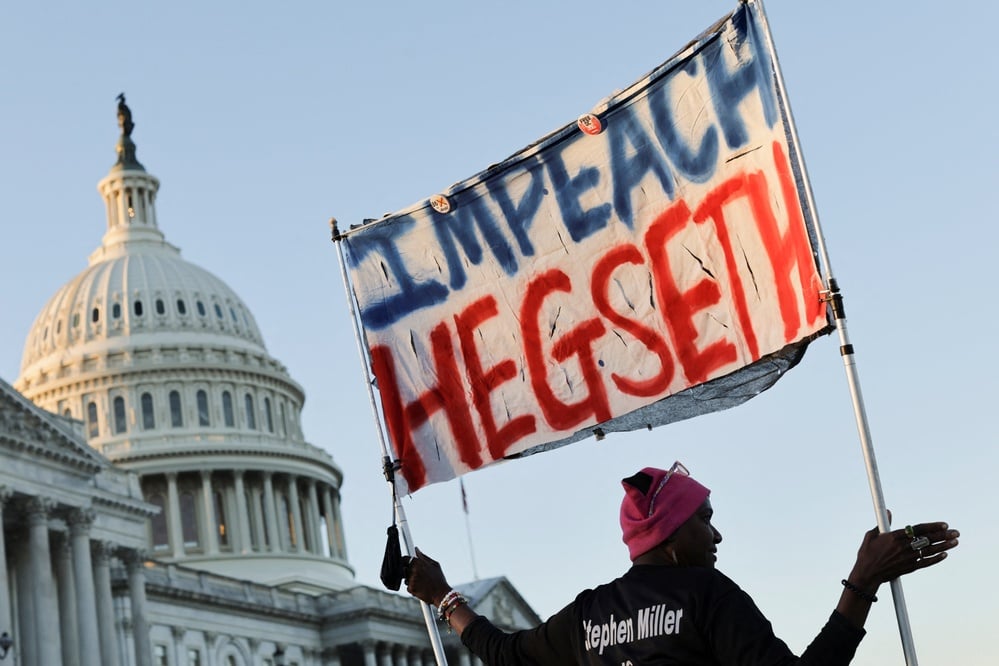
2026 © Helium Trades
Privacy Policy & Disclosure
* Disclaimer: Nothing on this website constitutes investment advice, performance data or any recommendation that any particular security, portfolio of securities, transaction or investment strategy is suitable for any specific person. Helium Trades is not responsible in any way for the accuracy
of any model predictions or price data. Any mention of a particular security and related prediction data is not a recommendation to buy or sell that security. Investments in securities involve the risk of loss. Past performance is no guarantee of future results. Helium Trades is not responsible for any of your investment decisions,
you should consult a financial expert before engaging in any transaction.
Helium Research Assistant

How can I help you today?
Ask any question about this page.


