See whether Helium helps you make better-informed decisions. Try every Pro Trader feature for 30 days. No credit card required.
Try every Pro Trader feature for 30 days. No credit card required.
October 10, 2026 · 0 shares
The reporting largely relies on official forecast and emergency-management sources, with occasional vivid but attributed impact framing.
Automated analysis; not human reviewed.
Limitations: The article text includes some duplicated lines and page chrome, but substantive reporting is present.
·
55 of 55 available dimensions scored; omitted dimensions are not treated as neutral.
·
Verified supporting quotes for 18 of 55 scored dimensions.
Claim: The article reports government emergency measures approvingly without questioning them, indicating a mild authoritarian framing.
“Jalisco suspended classes on Friday and Monday in 22 coastal municipalities and began evacuating dozens of people from at-risk areas.” · exact text match
Why: Description of state-directed suspensions and evacuations without critical framing suggests acceptance of authority measures.
Claim: The article is primarily factual and avoids subjective commentary, though it includes limited descriptive color.
“In Manzanillo, fishermen were hauling their boats off the beach and authorities were putting up black flags along the coast to signal the beach was closed.” · exact text match
Why: The reporting is largely observational and factual, with minimal editorializing.
Claim: The article avoids sensational language but includes some vivid impact details.
“Simon could bring life-threatening flooding and mudslides” · exact text match
Why: The phrase is sourced to forecasters and scientific, not hyperbolic.
Claim: The article leans slightly pessimistic by emphasizing dangerous storm impacts.
“Simon could deliver the most significant hurricane impact to this stretch of the Mexican Pacific coast since Lidia in 2023” · exact text match
Why: The framing stresses severe potential consequences, consistent with a cautious, pessimistic tone.
Claim: The article is somewhat interesting due to its coverage of a major hurricane approaching a tourist region.
“Simon is expected to make landfall on Sunday between Manzanillo — Mexico’s largest port and the main gateway for trade with Asia — and Puerto Vallarta, a popular beach destination and home to nearly 300,000 residents.” · exact text match
Why: The details about landfall location and affected populations add engagement value.
Claim: The article is mainly descriptive, reporting events and preparations rather than prescribing actions.
“It also asked the tourism sector in Puerto Vallarta, a popular destination for U.S. tourists, to ensure that both workers and visitors are fully accommodated in shelters or safe zones by Friday afternoon.” · exact text match
Why: The request is reported as a fact, not as the article's own prescription.
Claim: The article contains mild fear-inducing content by highlighting life-threatening flooding and mudslides.
“On Friday, forecasters warned that Simon could bring life-threatening flooding and mudslides, with isolated rainfall totals reaching 30 inches (762 mm).” · exact text match
Why: The use of 'life-threatening' and extreme rainfall totals may induce fear, though it is attributed to forecasters.
Claim: The article is mostly factual but includes a small amount of expert opinion framing.
“"Simon could deliver the most significant hurricane impact to this stretch of the Mexican Pacific coast since Lidia in 2023, which damaged thousands of homes and devastated crops along the Jalisco coast," said Tyler Roys, a senior meteorologist at AccuWeather.” · exact text match
Why: The quote is opinion from an expert, but it is clearly attributed.
Claim: The article offers a straightforward report without oversimplifying complex meteorological or emergency response details.
“The forecast was upgraded as Simon approached Mexico's southwestern and west-central Pacific coast, one of the country's most popular tourist regions.” · exact text match
Why: The reporting includes specific forecasts and measures without reducing complexity.
Claim: The article frequently appeals to official sources such as the National Hurricane Center and Mexican Navy.
“Early Saturday, the National Hurricane Center in Miami said Simon’s maximum sustained winds increased to 140 mph (225 kph).” · exact text match
Why: Reliance on authoritative institutions for information indicates an appeal to authority.
Claim: The article shows slight overconfidence by using definite statements about expected landfall and impacts.
“Simon is expected to make landfall on Sunday between Manzanillo — Mexico’s largest port and the main gateway for trade with Asia — and Puerto Vallarta, a popular beach destination and home to nearly 300,000 residents.” · exact text match
Why: The use of 'expected' is appropriately hedged, but the detailed prediction may exceed certainty.
Claim: The article displays a mild pro-establishment bias by relying heavily on official sources and presenting government actions without challenge.
“The Mexican Navy activated emergency response personnel in Colima and restricted maritime traffic along parts of the Pacific coast, closing ports to smaller vessels and barring larger vessels from operating in Michoacan.” · exact text match
Why: Reporting on official responses without critical analysis suggests a pro-establishment tilt.
Claim: The article maintains a slightly negative emotional tone due to the dangerous nature of the hurricane.
“forecasters warned that Simon could bring life-threatening flooding and mudslides” · exact text match
Why: The warning language evokes concern, but the tone remains measured.
Claim: The article is highly credible due to consistent attribution to official and expert sources.
“said Tyler Roys, a senior meteorologist at AccuWeather.” · exact text match
Why: Multiple named sources and direct quotes enhance trustworthiness.
Claim: The article uses official forecasts and attributed expert analysis rather than irrational speculation.
“Early Saturday, the National Hurricane Center in Miami said Simon’s maximum sustained winds increased to 140 mph (225 kph).” · exact text match
Why: Attribution to the National Hurricane Center supports rational, evidence-based reporting.
Claim: The article includes some speculation about future impacts, but it is based on forecasts.
“Simon could deliver the most significant hurricane impact to this stretch of the Mexican Pacific coast since Lidia in 2023” · exact text match
Why: The use of 'could' indicates forecasting and speculation about potential outcomes.
Claim: The article demonstrates high integrity by attributing forecasts and measures to named sources.
“said Tyler Roys, a senior meteorologist at AccuWeather.” · exact text match
Why: Clear attribution and direct quotes indicate fair and transparent reporting.
Claim: The article is of average intelligence, clearly presenting factual information about the hurricane.
“Simon could bring as much as 10 to 20 inches (25-50 cm) of rain over parts of southwestern Mexico, with some areas receiving up to 30 inches.” · exact text match
Why: The content is informative but not analytically deep.
Claim: The article is truth-seeking, relying on verifiable forecasts and official statements.
“The National Hurricane Center in Miami said Simon’s maximum sustained winds increased to 140 mph (225 kph).” · not found in supplied text
Why: The reporting is grounded in observable meteorological data.
The article text includes some duplicated lines and page chrome, but substantive reporting is present.
October 10, 2026 · 0 shares
The publisher relays official National Hurricane Center warnings and preparedness measures in a straight, attribution-heavy wire style with minimal framing beyond the storm's severity.
Hurricane Simon was a Pacific storm threatening Mexico's west-central coast in the vicinity of Puerto Vallarta, Manzanillo, and the states of Michoacan, Colima, and Jalisco.
October 11, 2026 · 0 shares
The report is a straightforward, attribution-heavy disaster news brief that relies on official meteorological and civil-protection sources and explicitly notes landfall uncertainty.
Automated analysis; not human reviewed.
Limitations: The supplied text includes duplicate article text and appended related headlines; analysis is limited to the main hurricane report.
·
13 of 55 available dimensions scored; omitted dimensions are not treated as neutral.
·
Verified supporting quotes for 8 of 13 scored dimensions.
Claim: The report presents emergency warnings and official response without left-right ideological framing.
“Mexican President Claudia Sheinbaum has urged residents along the Pacific Ocean to stay indoors as Hurricane Simon’s powerful winds and heavy rains pound coastal communities.” · not found in supplied text
Why: The article focuses on a natural disaster and official safety measures, not partisan or ideological disputes.
Claim: The article relies on official authorities for information without adopting a populist or elitist stance.
“Mexico’s National Civil Protection Coordination (CNPC) placed 28 municipalities in Jalisco and Colima under its highest cyclone alert level, while another 93 municipalities were under a high alert level, according to civil protection bulletins.” · not found in supplied text
Why: Quoting officials is routine sourcing for a weather emergency and does not itself signal a populist or elitist publisher alignment.
Claim: The article reports government alerts and evacuation measures without endorsing expanded state authority.
“Classes were suspended in the affected areas, and efforts to evacuate residents were under way.” · exact text match
Why: The publisher describes emergency management actions neutrally, not as an ideological argument for or against government power.
Claim: The article is predominantly objective, attributing forecasts, alerts, and warnings to named officials and agencies.
“In a midday advisory, the United States’ National Hurricane Center (NHC) warned that Simon could produce “additional rainfall totals of 8 to 16 inches (20 to 41 cm) over portions of southwestern Mexico”.” · exact text match
Why: Direct attribution to a named meteorological agency and use of advisory language support an objective classification.
Claim: The report avoids sensational language and frames risks in measured, forecast-conditional terms.
“It’s not clear whether the storm will make landfall.” · exact text match
Why: Explicit uncertainty and conditional forecasts contrast with sensational disaster coverage.
Claim: The publisher reports official warnings and instructions descriptively rather than issuing its own prescriptions.
“Mexican President Claudia Sheinbaum has urged residents along the Pacific Ocean to stay indoors as Hurricane Simon’s powerful winds and heavy rains pound coastal communities.” · not found in supplied text
Why: The prescriptive language is attributed to the Mexican president, while the article’s own voice remains descriptive.
Claim: The article reports official government and agency actions without taking a pro- or anti-establishment stance.
“Mexico’s National Civil Protection Coordination (CNPC) placed 28 municipalities in Jalisco and Colima under its highest cyclone alert level, while another 93 municipalities were under a high alert level, according to civil protection bulletins.” · not found in supplied text
Why: Sourcing official agencies is normal for emergency reporting and does not itself signal establishment alignment.
Claim: The article maintains a neutral, unemotional tone despite covering a dangerous storm.
“It’s not clear whether the storm will make landfall.” · exact text match
Why: The tone is factual and cautious, without positive or negative emotional framing by the publisher.
Claim: The report is credible, using multiple named official sources, specific measurements, and explicit uncertainty.
“In a midday advisory, the United States’ National Hurricane Center (NHC) warned that Simon could produce “additional rainfall totals of 8 to 16 inches (20 to 41 cm) over portions of southwestern Mexico”.” · exact text match
“Mexico’s National Civil Protection Coordination (CNPC) placed 28 municipalities in Jalisco and Colima under its highest cyclone alert level, while another 93 municipalities were under a high alert level, according to civil protection bulletins.” · not found in supplied text
Why: Named agency attribution and precise figures support high credibility.
Claim: The report is evidence-bound, cites forecasts and measurements, and explicitly notes uncertainty about landfall.
“It’s not clear whether the storm will make landfall.” · exact text match
“In a midday advisory, the United States’ National Hurricane Center (NHC) warned that Simon could produce “additional rainfall totals of 8 to 16 inches (20 to 41 cm) over portions of southwestern Mexico”.” · exact text match
Why: Acknowledging uncertainty and relying on meteorological advisories supports a rational rather than irrational framing.
Claim: The article relies on meteorological science and official forecast data rather than superstition.
“winds of at least 240km/h (150mph)” · exact text match
“Simon reached Category 4 strength, on a scale of five, on Saturday, as part of an unusually active Pacific hurricane season.” · exact text match
Why: Use of measured wind speeds and National Hurricane Center advisories indicates a scientific/empirical framing.
Claim: The article demonstrates high integrity through clear sourcing, official attribution, and acknowledgment of uncertainty.
“according to civil protection bulletins” · exact text match
“It’s not clear whether the storm will make landfall.” · exact text match
Why: Citing civil-protection bulletins and avoiding certainty about landfall are observable fairness and honesty signals.
Claim: The article is clear, information-dense, and organized around specific storm risks and official responses.
“Simon reached Category 4 strength, on a scale of five, on Saturday, as part of an unusually active Pacific hurricane season.” · exact text match
Why: Precise categorization and contextual detail indicate above-average article intelligence.
The supplied text includes duplicate article text and appended related headlines; analysis is limited to the main hurricane report.
October 10, 2026 · 0 shares
The publisher relays official National Hurricane Center warnings and preparedness measures in a straight, attribution-heavy wire style with minimal framing beyond the storm's severity.
Hurricane Simon was a Pacific storm threatening Mexico's west-central coast in the vicinity of Puerto Vallarta, Manzanillo, and the states of Michoacan, Colima, and Jalisco.
October 10, 2026 · 0 shares
The reporting largely relies on official forecast and emergency-management sources, with occasional vivid but attributed impact framing.
Automated analysis; not human reviewed.
Limitations: The article text includes some duplicated lines and page chrome, but substantive reporting is present.
·
55 of 55 available dimensions scored; omitted dimensions are not treated as neutral.
·
Verified supporting quotes for 18 of 55 scored dimensions.
Claim: The article reports government emergency measures approvingly without questioning them, indicating a mild authoritarian framing.
“Jalisco suspended classes on Friday and Monday in 22 coastal municipalities and began evacuating dozens of people from at-risk areas.” · exact text match
Why: Description of state-directed suspensions and evacuations without critical framing suggests acceptance of authority measures.
Claim: The article is primarily factual and avoids subjective commentary, though it includes limited descriptive color.
“In Manzanillo, fishermen were hauling their boats off the beach and authorities were putting up black flags along the coast to signal the beach was closed.” · exact text match
Why: The reporting is largely observational and factual, with minimal editorializing.
Claim: The article avoids sensational language but includes some vivid impact details.
“Simon could bring life-threatening flooding and mudslides” · exact text match
Why: The phrase is sourced to forecasters and scientific, not hyperbolic.
Claim: The article leans slightly pessimistic by emphasizing dangerous storm impacts.
“Simon could deliver the most significant hurricane impact to this stretch of the Mexican Pacific coast since Lidia in 2023” · exact text match
Why: The framing stresses severe potential consequences, consistent with a cautious, pessimistic tone.
Claim: The article is somewhat interesting due to its coverage of a major hurricane approaching a tourist region.
“Simon is expected to make landfall on Sunday between Manzanillo — Mexico’s largest port and the main gateway for trade with Asia — and Puerto Vallarta, a popular beach destination and home to nearly 300,000 residents.” · exact text match
Why: The details about landfall location and affected populations add engagement value.
Claim: The article is mainly descriptive, reporting events and preparations rather than prescribing actions.
“It also asked the tourism sector in Puerto Vallarta, a popular destination for U.S. tourists, to ensure that both workers and visitors are fully accommodated in shelters or safe zones by Friday afternoon.” · exact text match
Why: The request is reported as a fact, not as the article's own prescription.
Claim: The article contains mild fear-inducing content by highlighting life-threatening flooding and mudslides.
“On Friday, forecasters warned that Simon could bring life-threatening flooding and mudslides, with isolated rainfall totals reaching 30 inches (762 mm).” · exact text match
Why: The use of 'life-threatening' and extreme rainfall totals may induce fear, though it is attributed to forecasters.
Claim: The article is mostly factual but includes a small amount of expert opinion framing.
“"Simon could deliver the most significant hurricane impact to this stretch of the Mexican Pacific coast since Lidia in 2023, which damaged thousands of homes and devastated crops along the Jalisco coast," said Tyler Roys, a senior meteorologist at AccuWeather.” · exact text match
Why: The quote is opinion from an expert, but it is clearly attributed.
Claim: The article offers a straightforward report without oversimplifying complex meteorological or emergency response details.
“The forecast was upgraded as Simon approached Mexico's southwestern and west-central Pacific coast, one of the country's most popular tourist regions.” · exact text match
Why: The reporting includes specific forecasts and measures without reducing complexity.
Claim: The article frequently appeals to official sources such as the National Hurricane Center and Mexican Navy.
“Early Saturday, the National Hurricane Center in Miami said Simon’s maximum sustained winds increased to 140 mph (225 kph).” · exact text match
Why: Reliance on authoritative institutions for information indicates an appeal to authority.
Claim: The article shows slight overconfidence by using definite statements about expected landfall and impacts.
“Simon is expected to make landfall on Sunday between Manzanillo — Mexico’s largest port and the main gateway for trade with Asia — and Puerto Vallarta, a popular beach destination and home to nearly 300,000 residents.” · exact text match
Why: The use of 'expected' is appropriately hedged, but the detailed prediction may exceed certainty.
Claim: The article displays a mild pro-establishment bias by relying heavily on official sources and presenting government actions without challenge.
“The Mexican Navy activated emergency response personnel in Colima and restricted maritime traffic along parts of the Pacific coast, closing ports to smaller vessels and barring larger vessels from operating in Michoacan.” · exact text match
Why: Reporting on official responses without critical analysis suggests a pro-establishment tilt.
Claim: The article maintains a slightly negative emotional tone due to the dangerous nature of the hurricane.
“forecasters warned that Simon could bring life-threatening flooding and mudslides” · exact text match
Why: The warning language evokes concern, but the tone remains measured.
Claim: The article is highly credible due to consistent attribution to official and expert sources.
“said Tyler Roys, a senior meteorologist at AccuWeather.” · exact text match
Why: Multiple named sources and direct quotes enhance trustworthiness.
Claim: The article uses official forecasts and attributed expert analysis rather than irrational speculation.
“Early Saturday, the National Hurricane Center in Miami said Simon’s maximum sustained winds increased to 140 mph (225 kph).” · exact text match
Why: Attribution to the National Hurricane Center supports rational, evidence-based reporting.
Claim: The article includes some speculation about future impacts, but it is based on forecasts.
“Simon could deliver the most significant hurricane impact to this stretch of the Mexican Pacific coast since Lidia in 2023” · exact text match
Why: The use of 'could' indicates forecasting and speculation about potential outcomes.
Claim: The article demonstrates high integrity by attributing forecasts and measures to named sources.
“said Tyler Roys, a senior meteorologist at AccuWeather.” · exact text match
Why: Clear attribution and direct quotes indicate fair and transparent reporting.
Claim: The article is of average intelligence, clearly presenting factual information about the hurricane.
“Simon could bring as much as 10 to 20 inches (25-50 cm) of rain over parts of southwestern Mexico, with some areas receiving up to 30 inches.” · exact text match
Why: The content is informative but not analytically deep.
Claim: The article is truth-seeking, relying on verifiable forecasts and official statements.
“The National Hurricane Center in Miami said Simon’s maximum sustained winds increased to 140 mph (225 kph).” · not found in supplied text
Why: The reporting is grounded in observable meteorological data.
The article text includes some duplicated lines and page chrome, but substantive reporting is present.
October 09, 2026 · 0 shares
The report is a factually sourced, attribution-heavy weather bulletin that relies on official forecasting agencies and avoids speculation beyond the cited forecasts.
Hurricane Simon is a Pacific hurricane, and the US National Hurricane Center issues forecasts and warnings for such storms; AccuWeather is a private forecasting company.
Automated analysis; not human reviewed.
·
5 of 55 available dimensions scored; omitted dimensions are not treated as neutral.
·
Verified supporting quotes for 5 of 5 scored dimensions.
Claim: The article reports official forecasts and warnings in a fact-based, attributed manner.
“the US National Hurricane Center said on Friday” · exact text match
Why: The framing relies on direct attribution to named forecasting authorities and avoids subjective commentary.
Claim: The article describes the hurricane threat in sober, non-sensational language.
“Rapid intensification is expected to continue, and Simon is expected to be a very dangerous major hurricane when it approaches the coast of Mexico” · exact text match
Why: It uses standard meteorological and emergency terminology rather than dramatic or alarmist phrasing.
Claim: The article conveys forecast certainty appropriate to official hurricane outlooks without overstating beyond the cited sources.
“Private forecaster AccuWeather expects Simon to make landfall on Mexico's southwestern coast early on Sunday” · exact text match
Why: It uses attributed expectations and does not claim absolute certainty about landfall.
Claim: The article relies on named, authoritative sources and provides specific figures and locations.
“the US National Hurricane Center said on Friday” · exact text match
Why: Multiple official and private forecasting sources are cited with specific measurements and warnings.
Claim: The article includes forward-looking forecast information while clearly attributing it to forecasters.
“Simon is forecast to become a dangerous Category 4 hurricane by Saturday as it nears the popular tourist coast of south-western and west-central Mexico, NHC added.” · exact text match
Why: Future storm behavior is necessarily forecast-based, but the article attributes it to NHC rather than presenting it as reporter conjecture.
October 11, 2026 · 0 shares
The report frames Hurricane Simon as an urgent, life-threatening Category 4 emergency through official warnings and high-intensity disaster language, while remaining largely factual and source-attributed.
Automated analysis; not human reviewed.
Limitations: The supplied text is brief and contains scrape/formatting artifacts (e.g., an embedded quote array and duplicate passages), so framing judgments are limited to the visible excerpt.
·
9 of 55 available dimensions scored; omitted dimensions are not treated as neutral.
·
Verified supporting quotes for 9 of 9 scored dimensions.
Claim: The report presents attributed facts and official warnings rather than the publisher's personal interpretation.
“The US National Hurricane Center said in its latest advisory that Simon was located about 65 miles west-northwest of the port city of Manzanillo in Colima state with maximum sustained winds of 145 mph.” · exact text match
Why: Direct attribution to a named scientific agency signals objective reporting.
Claim: The report uses intense disaster adjectives to convey the hurricane's threat.
“causing catastrophic weather conditions, dangerous storm surges and life-threatening flooding.” · exact text match
Why: The high-intensity wording is alarming but tied to official emergency descriptions, indicating mild sensational emphasis.
Claim: The report uses urgent safety language that may heighten fear.
“causing catastrophic weather conditions, dangerous storm surges and life-threatening flooding.” · exact text match
Why: The language is alarming but tied to official emergency warnings, so only mild fear-baiting.
Claim: The report relies on official authorities for all major claims.
“The US National Hurricane Center said in its latest advisory that Simon was located about 65 miles west-northwest of the port city of Manzanillo in Colima state with maximum sustained winds of 145 mph.” · exact text match
“Sheinbaum said in a post on X” · exact text match
Why: The central facts and warnings are attributed to U.S. and Mexican authorities, though this is standard for disaster reporting.
Claim: The report's tone is negative because it describes a life-threatening natural disaster.
“causing catastrophic weather conditions, dangerous storm surges and life-threatening flooding.” · exact text match
Why: The negative emotional valence reflects the disaster itself rather than an opinionated publisher stance.
Claim: The report attributes key facts to named official sources.
“The US National Hurricane Center said in its latest advisory that Simon was located about 65 miles west-northwest of the port city of Manzanillo in Colima state with maximum sustained winds of 145 mph.” · exact text match
“Mexico’s National Civil Protection Coordination placed 28 municipalities in Jalisco and Colima under its highest cyclone warning while another 93 municipalities were under a high alert level.” · exact text match
Why: Named sources and precise measurements support high credibility.
Claim: The report bases its account on meteorological measurements and emergency-management guidance.
“The US National Hurricane Center said in its latest advisory that Simon was located about 65 miles west-northwest of the port city of Manzanillo in Colima state with maximum sustained winds of 145 mph.” · exact text match
Why: The reliance on quantitative weather data and official protocols indicates rational rather than irrational framing.
Claim: The report relies on meteorological measurements and forecasts rather than supernatural explanations.
“The US National Hurricane Center said in its latest advisory that Simon was located about 65 miles west-northwest of the port city of Manzanillo in Colima state with maximum sustained winds of 145 mph.” · exact text match
Why: Meteorological data and NHC attribution show scientific framing.
Claim: The report fairly attributes statements to named officials and provides direct quotations.
“Sheinbaum said in a post on X” · exact text match
“The US National Hurricane Center said in its latest advisory that Simon was located about 65 miles west-northwest of the port city of Manzanillo in Colima state with maximum sustained winds of 145 mph.” · exact text match
Why: Clear attribution and sourcing indicate high internal fairness and honesty.
The supplied text is brief and contains scrape/formatting artifacts (e.g., an embedded quote array and duplicate passages), so framing judgments are limited to the visible excerpt.
October 11, 2026 · 0 shares
The report is a straightforward, attribution-heavy disaster news brief that relies on official meteorological and civil-protection sources and explicitly notes landfall uncertainty.
Automated analysis; not human reviewed.
Limitations: The supplied text includes duplicate article text and appended related headlines; analysis is limited to the main hurricane report.
·
13 of 55 available dimensions scored; omitted dimensions are not treated as neutral.
·
Verified supporting quotes for 8 of 13 scored dimensions.
Claim: The report presents emergency warnings and official response without left-right ideological framing.
“Mexican President Claudia Sheinbaum has urged residents along the Pacific Ocean to stay indoors as Hurricane Simon’s powerful winds and heavy rains pound coastal communities.” · not found in supplied text
Why: The article focuses on a natural disaster and official safety measures, not partisan or ideological disputes.
Claim: The article relies on official authorities for information without adopting a populist or elitist stance.
“Mexico’s National Civil Protection Coordination (CNPC) placed 28 municipalities in Jalisco and Colima under its highest cyclone alert level, while another 93 municipalities were under a high alert level, according to civil protection bulletins.” · not found in supplied text
Why: Quoting officials is routine sourcing for a weather emergency and does not itself signal a populist or elitist publisher alignment.
Claim: The article reports government alerts and evacuation measures without endorsing expanded state authority.
“Classes were suspended in the affected areas, and efforts to evacuate residents were under way.” · exact text match
Why: The publisher describes emergency management actions neutrally, not as an ideological argument for or against government power.
Claim: The article is predominantly objective, attributing forecasts, alerts, and warnings to named officials and agencies.
“In a midday advisory, the United States’ National Hurricane Center (NHC) warned that Simon could produce “additional rainfall totals of 8 to 16 inches (20 to 41 cm) over portions of southwestern Mexico”.” · exact text match
Why: Direct attribution to a named meteorological agency and use of advisory language support an objective classification.
Claim: The report avoids sensational language and frames risks in measured, forecast-conditional terms.
“It’s not clear whether the storm will make landfall.” · exact text match
Why: Explicit uncertainty and conditional forecasts contrast with sensational disaster coverage.
Claim: The publisher reports official warnings and instructions descriptively rather than issuing its own prescriptions.
“Mexican President Claudia Sheinbaum has urged residents along the Pacific Ocean to stay indoors as Hurricane Simon’s powerful winds and heavy rains pound coastal communities.” · not found in supplied text
Why: The prescriptive language is attributed to the Mexican president, while the article’s own voice remains descriptive.
Claim: The article reports official government and agency actions without taking a pro- or anti-establishment stance.
“Mexico’s National Civil Protection Coordination (CNPC) placed 28 municipalities in Jalisco and Colima under its highest cyclone alert level, while another 93 municipalities were under a high alert level, according to civil protection bulletins.” · not found in supplied text
Why: Sourcing official agencies is normal for emergency reporting and does not itself signal establishment alignment.
Claim: The article maintains a neutral, unemotional tone despite covering a dangerous storm.
“It’s not clear whether the storm will make landfall.” · exact text match
Why: The tone is factual and cautious, without positive or negative emotional framing by the publisher.
Claim: The report is credible, using multiple named official sources, specific measurements, and explicit uncertainty.
“In a midday advisory, the United States’ National Hurricane Center (NHC) warned that Simon could produce “additional rainfall totals of 8 to 16 inches (20 to 41 cm) over portions of southwestern Mexico”.” · exact text match
“Mexico’s National Civil Protection Coordination (CNPC) placed 28 municipalities in Jalisco and Colima under its highest cyclone alert level, while another 93 municipalities were under a high alert level, according to civil protection bulletins.” · not found in supplied text
Why: Named agency attribution and precise figures support high credibility.
Claim: The report is evidence-bound, cites forecasts and measurements, and explicitly notes uncertainty about landfall.
“It’s not clear whether the storm will make landfall.” · exact text match
“In a midday advisory, the United States’ National Hurricane Center (NHC) warned that Simon could produce “additional rainfall totals of 8 to 16 inches (20 to 41 cm) over portions of southwestern Mexico”.” · exact text match
Why: Acknowledging uncertainty and relying on meteorological advisories supports a rational rather than irrational framing.
Claim: The article relies on meteorological science and official forecast data rather than superstition.
“winds of at least 240km/h (150mph)” · exact text match
“Simon reached Category 4 strength, on a scale of five, on Saturday, as part of an unusually active Pacific hurricane season.” · exact text match
Why: Use of measured wind speeds and National Hurricane Center advisories indicates a scientific/empirical framing.
Claim: The article demonstrates high integrity through clear sourcing, official attribution, and acknowledgment of uncertainty.
“according to civil protection bulletins” · exact text match
“It’s not clear whether the storm will make landfall.” · exact text match
Why: Citing civil-protection bulletins and avoiding certainty about landfall are observable fairness and honesty signals.
Claim: The article is clear, information-dense, and organized around specific storm risks and official responses.
“Simon reached Category 4 strength, on a scale of five, on Saturday, as part of an unusually active Pacific hurricane season.” · exact text match
Why: Precise categorization and contextual detail indicate above-average article intelligence.
The supplied text includes duplicate article text and appended related headlines; analysis is limited to the main hurricane report.
October 10, 2026 · 0 shares
The reporting largely relies on official forecast and emergency-management sources, with occasional vivid but attributed impact framing.
Automated analysis; not human reviewed.
Limitations: The article text includes some duplicated lines and page chrome, but substantive reporting is present.
·
55 of 55 available dimensions scored; omitted dimensions are not treated as neutral.
·
Verified supporting quotes for 18 of 55 scored dimensions.
Claim: The article reports government emergency measures approvingly without questioning them, indicating a mild authoritarian framing.
“Jalisco suspended classes on Friday and Monday in 22 coastal municipalities and began evacuating dozens of people from at-risk areas.” · exact text match
Why: Description of state-directed suspensions and evacuations without critical framing suggests acceptance of authority measures.
Claim: The article is primarily factual and avoids subjective commentary, though it includes limited descriptive color.
“In Manzanillo, fishermen were hauling their boats off the beach and authorities were putting up black flags along the coast to signal the beach was closed.” · exact text match
Why: The reporting is largely observational and factual, with minimal editorializing.
Claim: The article avoids sensational language but includes some vivid impact details.
“Simon could bring life-threatening flooding and mudslides” · exact text match
Why: The phrase is sourced to forecasters and scientific, not hyperbolic.
Claim: The article leans slightly pessimistic by emphasizing dangerous storm impacts.
“Simon could deliver the most significant hurricane impact to this stretch of the Mexican Pacific coast since Lidia in 2023” · exact text match
Why: The framing stresses severe potential consequences, consistent with a cautious, pessimistic tone.
Claim: The article is somewhat interesting due to its coverage of a major hurricane approaching a tourist region.
“Simon is expected to make landfall on Sunday between Manzanillo — Mexico’s largest port and the main gateway for trade with Asia — and Puerto Vallarta, a popular beach destination and home to nearly 300,000 residents.” · exact text match
Why: The details about landfall location and affected populations add engagement value.
Claim: The article is mainly descriptive, reporting events and preparations rather than prescribing actions.
“It also asked the tourism sector in Puerto Vallarta, a popular destination for U.S. tourists, to ensure that both workers and visitors are fully accommodated in shelters or safe zones by Friday afternoon.” · exact text match
Why: The request is reported as a fact, not as the article's own prescription.
Claim: The article contains mild fear-inducing content by highlighting life-threatening flooding and mudslides.
“On Friday, forecasters warned that Simon could bring life-threatening flooding and mudslides, with isolated rainfall totals reaching 30 inches (762 mm).” · exact text match
Why: The use of 'life-threatening' and extreme rainfall totals may induce fear, though it is attributed to forecasters.
Claim: The article is mostly factual but includes a small amount of expert opinion framing.
“"Simon could deliver the most significant hurricane impact to this stretch of the Mexican Pacific coast since Lidia in 2023, which damaged thousands of homes and devastated crops along the Jalisco coast," said Tyler Roys, a senior meteorologist at AccuWeather.” · exact text match
Why: The quote is opinion from an expert, but it is clearly attributed.
Claim: The article offers a straightforward report without oversimplifying complex meteorological or emergency response details.
“The forecast was upgraded as Simon approached Mexico's southwestern and west-central Pacific coast, one of the country's most popular tourist regions.” · exact text match
Why: The reporting includes specific forecasts and measures without reducing complexity.
Claim: The article frequently appeals to official sources such as the National Hurricane Center and Mexican Navy.
“Early Saturday, the National Hurricane Center in Miami said Simon’s maximum sustained winds increased to 140 mph (225 kph).” · exact text match
Why: Reliance on authoritative institutions for information indicates an appeal to authority.
Claim: The article shows slight overconfidence by using definite statements about expected landfall and impacts.
“Simon is expected to make landfall on Sunday between Manzanillo — Mexico’s largest port and the main gateway for trade with Asia — and Puerto Vallarta, a popular beach destination and home to nearly 300,000 residents.” · exact text match
Why: The use of 'expected' is appropriately hedged, but the detailed prediction may exceed certainty.
Claim: The article displays a mild pro-establishment bias by relying heavily on official sources and presenting government actions without challenge.
“The Mexican Navy activated emergency response personnel in Colima and restricted maritime traffic along parts of the Pacific coast, closing ports to smaller vessels and barring larger vessels from operating in Michoacan.” · exact text match
Why: Reporting on official responses without critical analysis suggests a pro-establishment tilt.
Claim: The article maintains a slightly negative emotional tone due to the dangerous nature of the hurricane.
“forecasters warned that Simon could bring life-threatening flooding and mudslides” · exact text match
Why: The warning language evokes concern, but the tone remains measured.
Claim: The article is highly credible due to consistent attribution to official and expert sources.
“said Tyler Roys, a senior meteorologist at AccuWeather.” · exact text match
Why: Multiple named sources and direct quotes enhance trustworthiness.
Claim: The article uses official forecasts and attributed expert analysis rather than irrational speculation.
“Early Saturday, the National Hurricane Center in Miami said Simon’s maximum sustained winds increased to 140 mph (225 kph).” · exact text match
Why: Attribution to the National Hurricane Center supports rational, evidence-based reporting.
Claim: The article includes some speculation about future impacts, but it is based on forecasts.
“Simon could deliver the most significant hurricane impact to this stretch of the Mexican Pacific coast since Lidia in 2023” · exact text match
Why: The use of 'could' indicates forecasting and speculation about potential outcomes.
Claim: The article demonstrates high integrity by attributing forecasts and measures to named sources.
“said Tyler Roys, a senior meteorologist at AccuWeather.” · exact text match
Why: Clear attribution and direct quotes indicate fair and transparent reporting.
Claim: The article is of average intelligence, clearly presenting factual information about the hurricane.
“Simon could bring as much as 10 to 20 inches (25-50 cm) of rain over parts of southwestern Mexico, with some areas receiving up to 30 inches.” · exact text match
Why: The content is informative but not analytically deep.
Claim: The article is truth-seeking, relying on verifiable forecasts and official statements.
“The National Hurricane Center in Miami said Simon’s maximum sustained winds increased to 140 mph (225 kph).” · not found in supplied text
Why: The reporting is grounded in observable meteorological data.
The article text includes some duplicated lines and page chrome, but substantive reporting is present.
October 11, 2026 · 0 shares
The report frames Hurricane Simon as an urgent, life-threatening Category 4 emergency through official warnings and high-intensity disaster language, while remaining largely factual and source-attributed.
Automated analysis; not human reviewed.
Limitations: The supplied text is brief and contains scrape/formatting artifacts (e.g., an embedded quote array and duplicate passages), so framing judgments are limited to the visible excerpt.
·
9 of 55 available dimensions scored; omitted dimensions are not treated as neutral.
·
Verified supporting quotes for 9 of 9 scored dimensions.
Claim: The report presents attributed facts and official warnings rather than the publisher's personal interpretation.
“The US National Hurricane Center said in its latest advisory that Simon was located about 65 miles west-northwest of the port city of Manzanillo in Colima state with maximum sustained winds of 145 mph.” · exact text match
Why: Direct attribution to a named scientific agency signals objective reporting.
Claim: The report uses intense disaster adjectives to convey the hurricane's threat.
“causing catastrophic weather conditions, dangerous storm surges and life-threatening flooding.” · exact text match
Why: The high-intensity wording is alarming but tied to official emergency descriptions, indicating mild sensational emphasis.
Claim: The report uses urgent safety language that may heighten fear.
“causing catastrophic weather conditions, dangerous storm surges and life-threatening flooding.” · exact text match
Why: The language is alarming but tied to official emergency warnings, so only mild fear-baiting.
Claim: The report relies on official authorities for all major claims.
“The US National Hurricane Center said in its latest advisory that Simon was located about 65 miles west-northwest of the port city of Manzanillo in Colima state with maximum sustained winds of 145 mph.” · exact text match
“Sheinbaum said in a post on X” · exact text match
Why: The central facts and warnings are attributed to U.S. and Mexican authorities, though this is standard for disaster reporting.
Claim: The report's tone is negative because it describes a life-threatening natural disaster.
“causing catastrophic weather conditions, dangerous storm surges and life-threatening flooding.” · exact text match
Why: The negative emotional valence reflects the disaster itself rather than an opinionated publisher stance.
Claim: The report attributes key facts to named official sources.
“The US National Hurricane Center said in its latest advisory that Simon was located about 65 miles west-northwest of the port city of Manzanillo in Colima state with maximum sustained winds of 145 mph.” · exact text match
“Mexico’s National Civil Protection Coordination placed 28 municipalities in Jalisco and Colima under its highest cyclone warning while another 93 municipalities were under a high alert level.” · exact text match
Why: Named sources and precise measurements support high credibility.
Claim: The report bases its account on meteorological measurements and emergency-management guidance.
“The US National Hurricane Center said in its latest advisory that Simon was located about 65 miles west-northwest of the port city of Manzanillo in Colima state with maximum sustained winds of 145 mph.” · exact text match
Why: The reliance on quantitative weather data and official protocols indicates rational rather than irrational framing.
Claim: The report relies on meteorological measurements and forecasts rather than supernatural explanations.
“The US National Hurricane Center said in its latest advisory that Simon was located about 65 miles west-northwest of the port city of Manzanillo in Colima state with maximum sustained winds of 145 mph.” · exact text match
Why: Meteorological data and NHC attribution show scientific framing.
Claim: The report fairly attributes statements to named officials and provides direct quotations.
“Sheinbaum said in a post on X” · exact text match
“The US National Hurricane Center said in its latest advisory that Simon was located about 65 miles west-northwest of the port city of Manzanillo in Colima state with maximum sustained winds of 145 mph.” · exact text match
Why: Clear attribution and sourcing indicate high internal fairness and honesty.
The supplied text is brief and contains scrape/formatting artifacts (e.g., an embedded quote array and duplicate passages), so framing judgments are limited to the visible excerpt.
October 11, 2026 · 0 shares
The report is a straightforward, attribution-heavy disaster news brief that relies on official meteorological and civil-protection sources and explicitly notes landfall uncertainty.
Automated analysis; not human reviewed.
Limitations: The supplied text includes duplicate article text and appended related headlines; analysis is limited to the main hurricane report.
·
13 of 55 available dimensions scored; omitted dimensions are not treated as neutral.
·
Verified supporting quotes for 8 of 13 scored dimensions.
Claim: The report presents emergency warnings and official response without left-right ideological framing.
“Mexican President Claudia Sheinbaum has urged residents along the Pacific Ocean to stay indoors as Hurricane Simon’s powerful winds and heavy rains pound coastal communities.” · not found in supplied text
Why: The article focuses on a natural disaster and official safety measures, not partisan or ideological disputes.
Claim: The article relies on official authorities for information without adopting a populist or elitist stance.
“Mexico’s National Civil Protection Coordination (CNPC) placed 28 municipalities in Jalisco and Colima under its highest cyclone alert level, while another 93 municipalities were under a high alert level, according to civil protection bulletins.” · not found in supplied text
Why: Quoting officials is routine sourcing for a weather emergency and does not itself signal a populist or elitist publisher alignment.
Claim: The article reports government alerts and evacuation measures without endorsing expanded state authority.
“Classes were suspended in the affected areas, and efforts to evacuate residents were under way.” · exact text match
Why: The publisher describes emergency management actions neutrally, not as an ideological argument for or against government power.
Claim: The article is predominantly objective, attributing forecasts, alerts, and warnings to named officials and agencies.
“In a midday advisory, the United States’ National Hurricane Center (NHC) warned that Simon could produce “additional rainfall totals of 8 to 16 inches (20 to 41 cm) over portions of southwestern Mexico”.” · exact text match
Why: Direct attribution to a named meteorological agency and use of advisory language support an objective classification.
Claim: The report avoids sensational language and frames risks in measured, forecast-conditional terms.
“It’s not clear whether the storm will make landfall.” · exact text match
Why: Explicit uncertainty and conditional forecasts contrast with sensational disaster coverage.
Claim: The publisher reports official warnings and instructions descriptively rather than issuing its own prescriptions.
“Mexican President Claudia Sheinbaum has urged residents along the Pacific Ocean to stay indoors as Hurricane Simon’s powerful winds and heavy rains pound coastal communities.” · not found in supplied text
Why: The prescriptive language is attributed to the Mexican president, while the article’s own voice remains descriptive.
Claim: The article reports official government and agency actions without taking a pro- or anti-establishment stance.
“Mexico’s National Civil Protection Coordination (CNPC) placed 28 municipalities in Jalisco and Colima under its highest cyclone alert level, while another 93 municipalities were under a high alert level, according to civil protection bulletins.” · not found in supplied text
Why: Sourcing official agencies is normal for emergency reporting and does not itself signal establishment alignment.
Claim: The article maintains a neutral, unemotional tone despite covering a dangerous storm.
“It’s not clear whether the storm will make landfall.” · exact text match
Why: The tone is factual and cautious, without positive or negative emotional framing by the publisher.
Claim: The report is credible, using multiple named official sources, specific measurements, and explicit uncertainty.
“In a midday advisory, the United States’ National Hurricane Center (NHC) warned that Simon could produce “additional rainfall totals of 8 to 16 inches (20 to 41 cm) over portions of southwestern Mexico”.” · exact text match
“Mexico’s National Civil Protection Coordination (CNPC) placed 28 municipalities in Jalisco and Colima under its highest cyclone alert level, while another 93 municipalities were under a high alert level, according to civil protection bulletins.” · not found in supplied text
Why: Named agency attribution and precise figures support high credibility.
Claim: The report is evidence-bound, cites forecasts and measurements, and explicitly notes uncertainty about landfall.
“It’s not clear whether the storm will make landfall.” · exact text match
“In a midday advisory, the United States’ National Hurricane Center (NHC) warned that Simon could produce “additional rainfall totals of 8 to 16 inches (20 to 41 cm) over portions of southwestern Mexico”.” · exact text match
Why: Acknowledging uncertainty and relying on meteorological advisories supports a rational rather than irrational framing.
Claim: The article relies on meteorological science and official forecast data rather than superstition.
“winds of at least 240km/h (150mph)” · exact text match
“Simon reached Category 4 strength, on a scale of five, on Saturday, as part of an unusually active Pacific hurricane season.” · exact text match
Why: Use of measured wind speeds and National Hurricane Center advisories indicates a scientific/empirical framing.
Claim: The article demonstrates high integrity through clear sourcing, official attribution, and acknowledgment of uncertainty.
“according to civil protection bulletins” · exact text match
“It’s not clear whether the storm will make landfall.” · exact text match
Why: Citing civil-protection bulletins and avoiding certainty about landfall are observable fairness and honesty signals.
Claim: The article is clear, information-dense, and organized around specific storm risks and official responses.
“Simon reached Category 4 strength, on a scale of five, on Saturday, as part of an unusually active Pacific hurricane season.” · exact text match
Why: Precise categorization and contextual detail indicate above-average article intelligence.
The supplied text includes duplicate article text and appended related headlines; analysis is limited to the main hurricane report.
The framing is a bare, wire-service-style weather update with no evident ideological, political, or sensational language.
Category 3 is a major hurricane classification on the Saffir-Simpson scale.
Automated analysis; not human reviewed.
Limitations: The supplied article text is an extremely short, possibly truncated headline/snippet with no author, sourcing, or full article body, limiting assessment of publisher framing.
·
9 of 55 available dimensions scored; omitted dimensions are not treated as neutral.
·
Verified supporting quotes for 9 of 9 scored dimensions.
Claim: The report contains no partisan or ideological framing.
“Hurricane Simon weakened to a Category 3 storm as it moved parallel to Mexico's Pacific coast” · exact text match
Why: A weather update with no political actors or left-right policy cues supports a neutral classification.
Claim: No populist or elitist appeals are present.
“Rain floods Mexico's coast as Hurricane Simon weakens” · exact text match
Why: The text does not invoke ordinary people versus elites or institutional authority.
Claim: The report contains no libertarian or authoritarian political framing.
“Hurricane Simon weakened to a Category 3 storm as it moved parallel to Mexico's Pacific coast” · exact text match
Why: No government control, coercion, or liberty-related policy cues appear in the text.
Claim: The report is written in an objective, descriptive manner.
“Hurricane Simon weakened to a Category 3 storm as it moved parallel to Mexico's Pacific coast” · exact text match
Why: It states observable storm attributes without subjective interpretation.
Claim: The report is not sensationalized.
“Rain floods Mexico's coast as Hurricane Simon weakens” · exact text match
Why: The wording is plain and factual, without dramatic or emotive embellishment.
Claim: The report is descriptive rather than prescriptive.
“Hurricane Simon weakened to a Category 3 storm as it moved parallel to Mexico's Pacific coast” · exact text match
Why: It describes the storm's status and movement without recommending actions or policies.
Claim: The report is emotionally neutral.
“Hurricane Simon weakened to a Category 3 storm as it moved parallel to Mexico's Pacific coast” · exact text match
Why: The text contains no positive or negative emotional language.
Claim: The report is a factual, non-fallacious weather update.
“Hurricane Simon weakened to a Category 3 storm as it moved parallel to Mexico's Pacific coast” · exact text match
Why: It reports storm status and movement without logical fallacies or emotional reasoning.
Claim: The report uses scientific meteorological classification.
“Hurricane Simon weakened to a Category 3 storm” · exact text match
Why: The Category 3 reference reflects standard hurricane intensity classification rather than superstitious explanation.
The supplied article text is an extremely short, possibly truncated headline/snippet with no author, sourcing, or full article body, limiting assessment of publisher framing.
October 12, 2026 · 0 shares
The framing is urgent and disaster-alert oriented, using the vivid verb 'pounds' and quoting severe 'catastrophic' and 'life-threatening' warning language without added political or opinion content.
Automated analysis; not human reviewed.
Limitations: Only a headline and subhead are supplied; no date, named warning source, or full article body is available.
·
4 of 55 available dimensions scored; omitted dimensions are not treated as neutral.
·
Verified supporting quotes for 4 of 4 scored dimensions.
Claim: The report remains largely objective, presenting the hurricane impact and official warning without subjective commentary.
“Hurricane Simon pounds tourist resorts along Mexico's Pacific coast.” · exact text match
“People were warned of ‘catastrophic wind and life-threatening storm surge impacts’” · exact text match
Why: No evaluative adjectives or personal/political opinion appear outside quoted warning language.
Claim: The framing uses vivid, alarm-heavy language ('pounds', 'catastrophic', 'life-threatening'), though the strongest threat terms are quoted from a warning.
“Hurricane Simon pounds tourist resorts along Mexico's Pacific coast.” · exact text match
“catastrophic wind and life-threatening storm surge impacts” · exact text match
Why: The verb 'pounds' and severe quoted warning language heighten drama beyond plain reporting.
Claim: The text is descriptive rather than prescriptive, reporting the hurricane and warning without advising a course of action.
“People were warned of ‘catastrophic wind and life-threatening storm surge impacts’” · exact text match
Why: It states what occurred and what people were told, not what the publisher says should be done.
Claim: The report emphasizes catastrophic and life-threatening danger from Hurricane Simon.
“catastrophic wind and life-threatening storm surge impacts” · exact text match
Why: Severe threat language evokes alarm about wind and storm surge.
Only a headline and subhead are supplied; no date, named warning source, or full article body is available.
October 10, 2026 · 0 shares
The reporting largely relies on official forecast and emergency-management sources, with occasional vivid but attributed impact framing.
Automated analysis; not human reviewed.
Limitations: The article text includes some duplicated lines and page chrome, but substantive reporting is present.
·
55 of 55 available dimensions scored; omitted dimensions are not treated as neutral.
·
Verified supporting quotes for 18 of 55 scored dimensions.
Claim: The article reports government emergency measures approvingly without questioning them, indicating a mild authoritarian framing.
“Jalisco suspended classes on Friday and Monday in 22 coastal municipalities and began evacuating dozens of people from at-risk areas.” · exact text match
Why: Description of state-directed suspensions and evacuations without critical framing suggests acceptance of authority measures.
Claim: The article is primarily factual and avoids subjective commentary, though it includes limited descriptive color.
“In Manzanillo, fishermen were hauling their boats off the beach and authorities were putting up black flags along the coast to signal the beach was closed.” · exact text match
Why: The reporting is largely observational and factual, with minimal editorializing.
Claim: The article avoids sensational language but includes some vivid impact details.
“Simon could bring life-threatening flooding and mudslides” · exact text match
Why: The phrase is sourced to forecasters and scientific, not hyperbolic.
Claim: The article leans slightly pessimistic by emphasizing dangerous storm impacts.
“Simon could deliver the most significant hurricane impact to this stretch of the Mexican Pacific coast since Lidia in 2023” · exact text match
Why: The framing stresses severe potential consequences, consistent with a cautious, pessimistic tone.
Claim: The article is somewhat interesting due to its coverage of a major hurricane approaching a tourist region.
“Simon is expected to make landfall on Sunday between Manzanillo — Mexico’s largest port and the main gateway for trade with Asia — and Puerto Vallarta, a popular beach destination and home to nearly 300,000 residents.” · exact text match
Why: The details about landfall location and affected populations add engagement value.
Claim: The article is mainly descriptive, reporting events and preparations rather than prescribing actions.
“It also asked the tourism sector in Puerto Vallarta, a popular destination for U.S. tourists, to ensure that both workers and visitors are fully accommodated in shelters or safe zones by Friday afternoon.” · exact text match
Why: The request is reported as a fact, not as the article's own prescription.
Claim: The article contains mild fear-inducing content by highlighting life-threatening flooding and mudslides.
“On Friday, forecasters warned that Simon could bring life-threatening flooding and mudslides, with isolated rainfall totals reaching 30 inches (762 mm).” · exact text match
Why: The use of 'life-threatening' and extreme rainfall totals may induce fear, though it is attributed to forecasters.
Claim: The article is mostly factual but includes a small amount of expert opinion framing.
“"Simon could deliver the most significant hurricane impact to this stretch of the Mexican Pacific coast since Lidia in 2023, which damaged thousands of homes and devastated crops along the Jalisco coast," said Tyler Roys, a senior meteorologist at AccuWeather.” · exact text match
Why: The quote is opinion from an expert, but it is clearly attributed.
Claim: The article offers a straightforward report without oversimplifying complex meteorological or emergency response details.
“The forecast was upgraded as Simon approached Mexico's southwestern and west-central Pacific coast, one of the country's most popular tourist regions.” · exact text match
Why: The reporting includes specific forecasts and measures without reducing complexity.
Claim: The article frequently appeals to official sources such as the National Hurricane Center and Mexican Navy.
“Early Saturday, the National Hurricane Center in Miami said Simon’s maximum sustained winds increased to 140 mph (225 kph).” · exact text match
Why: Reliance on authoritative institutions for information indicates an appeal to authority.
Claim: The article shows slight overconfidence by using definite statements about expected landfall and impacts.
“Simon is expected to make landfall on Sunday between Manzanillo — Mexico’s largest port and the main gateway for trade with Asia — and Puerto Vallarta, a popular beach destination and home to nearly 300,000 residents.” · exact text match
Why: The use of 'expected' is appropriately hedged, but the detailed prediction may exceed certainty.
Claim: The article displays a mild pro-establishment bias by relying heavily on official sources and presenting government actions without challenge.
“The Mexican Navy activated emergency response personnel in Colima and restricted maritime traffic along parts of the Pacific coast, closing ports to smaller vessels and barring larger vessels from operating in Michoacan.” · exact text match
Why: Reporting on official responses without critical analysis suggests a pro-establishment tilt.
Claim: The article maintains a slightly negative emotional tone due to the dangerous nature of the hurricane.
“forecasters warned that Simon could bring life-threatening flooding and mudslides” · exact text match
Why: The warning language evokes concern, but the tone remains measured.
Claim: The article is highly credible due to consistent attribution to official and expert sources.
“said Tyler Roys, a senior meteorologist at AccuWeather.” · exact text match
Why: Multiple named sources and direct quotes enhance trustworthiness.
Claim: The article uses official forecasts and attributed expert analysis rather than irrational speculation.
“Early Saturday, the National Hurricane Center in Miami said Simon’s maximum sustained winds increased to 140 mph (225 kph).” · exact text match
Why: Attribution to the National Hurricane Center supports rational, evidence-based reporting.
Claim: The article includes some speculation about future impacts, but it is based on forecasts.
“Simon could deliver the most significant hurricane impact to this stretch of the Mexican Pacific coast since Lidia in 2023” · exact text match
Why: The use of 'could' indicates forecasting and speculation about potential outcomes.
Claim: The article demonstrates high integrity by attributing forecasts and measures to named sources.
“said Tyler Roys, a senior meteorologist at AccuWeather.” · exact text match
Why: Clear attribution and direct quotes indicate fair and transparent reporting.
Claim: The article is of average intelligence, clearly presenting factual information about the hurricane.
“Simon could bring as much as 10 to 20 inches (25-50 cm) of rain over parts of southwestern Mexico, with some areas receiving up to 30 inches.” · exact text match
Why: The content is informative but not analytically deep.
Claim: The article is truth-seeking, relying on verifiable forecasts and official statements.
“The National Hurricane Center in Miami said Simon’s maximum sustained winds increased to 140 mph (225 kph).” · not found in supplied text
Why: The reporting is grounded in observable meteorological data.
The article text includes some duplicated lines and page chrome, but substantive reporting is present.
October 10, 2026 · 0 shares
The publisher relays official National Hurricane Center warnings and preparedness measures in a straight, attribution-heavy wire style with minimal framing beyond the storm's severity.
Hurricane Simon was a Pacific storm threatening Mexico's west-central coast in the vicinity of Puerto Vallarta, Manzanillo, and the states of Michoacan, Colima, and Jalisco.
October 10, 2026 · 0 shares
The reporting largely relies on official forecast and emergency-management sources, with occasional vivid but attributed impact framing.
Automated analysis; not human reviewed. Limitations: The article text includes some duplicated lines and page chrome, but substantive reporting is present. · 55 of 55 available dimensions scored; omitted dimensions are not treated as neutral. · Verified supporting quotes for 18 of 55 scored dimensions.
Claim: The article reports government emergency measures approvingly without questioning them, indicating a mild authoritarian framing.
“Jalisco suspended classes on Friday and Monday in 22 coastal municipalities and began evacuating dozens of people from at-risk areas.” · exact text match
Why: Description of state-directed suspensions and evacuations without critical framing suggests acceptance of authority measures.
Claim: The article is primarily factual and avoids subjective commentary, though it includes limited descriptive color.
“In Manzanillo, fishermen were hauling their boats off the beach and authorities were putting up black flags along the coast to signal the beach was closed.” · exact text match
Why: The reporting is largely observational and factual, with minimal editorializing.
Claim: The article avoids sensational language but includes some vivid impact details.
“Simon could bring life-threatening flooding and mudslides” · exact text match
Why: The phrase is sourced to forecasters and scientific, not hyperbolic.
Claim: The article leans slightly pessimistic by emphasizing dangerous storm impacts.
“Simon could deliver the most significant hurricane impact to this stretch of the Mexican Pacific coast since Lidia in 2023” · exact text match
Why: The framing stresses severe potential consequences, consistent with a cautious, pessimistic tone.
Claim: The article is somewhat interesting due to its coverage of a major hurricane approaching a tourist region.
“Simon is expected to make landfall on Sunday between Manzanillo — Mexico’s largest port and the main gateway for trade with Asia — and Puerto Vallarta, a popular beach destination and home to nearly 300,000 residents.” · exact text match
Why: The details about landfall location and affected populations add engagement value.
Claim: The article is mainly descriptive, reporting events and preparations rather than prescribing actions.
“It also asked the tourism sector in Puerto Vallarta, a popular destination for U.S. tourists, to ensure that both workers and visitors are fully accommodated in shelters or safe zones by Friday afternoon.” · exact text match
Why: The request is reported as a fact, not as the article's own prescription.
Claim: The article contains mild fear-inducing content by highlighting life-threatening flooding and mudslides.
“On Friday, forecasters warned that Simon could bring life-threatening flooding and mudslides, with isolated rainfall totals reaching 30 inches (762 mm).” · exact text match
Why: The use of 'life-threatening' and extreme rainfall totals may induce fear, though it is attributed to forecasters.
Claim: The article is mostly factual but includes a small amount of expert opinion framing.
“"Simon could deliver the most significant hurricane impact to this stretch of the Mexican Pacific coast since Lidia in 2023, which damaged thousands of homes and devastated crops along the Jalisco coast," said Tyler Roys, a senior meteorologist at AccuWeather.” · exact text match
Why: The quote is opinion from an expert, but it is clearly attributed.
Claim: The article offers a straightforward report without oversimplifying complex meteorological or emergency response details.
“The forecast was upgraded as Simon approached Mexico's southwestern and west-central Pacific coast, one of the country's most popular tourist regions.” · exact text match
Why: The reporting includes specific forecasts and measures without reducing complexity.
Claim: The article frequently appeals to official sources such as the National Hurricane Center and Mexican Navy.
“Early Saturday, the National Hurricane Center in Miami said Simon’s maximum sustained winds increased to 140 mph (225 kph).” · exact text match
Why: Reliance on authoritative institutions for information indicates an appeal to authority.
Claim: The article shows slight overconfidence by using definite statements about expected landfall and impacts.
“Simon is expected to make landfall on Sunday between Manzanillo — Mexico’s largest port and the main gateway for trade with Asia — and Puerto Vallarta, a popular beach destination and home to nearly 300,000 residents.” · exact text match
Why: The use of 'expected' is appropriately hedged, but the detailed prediction may exceed certainty.
Claim: The article displays a mild pro-establishment bias by relying heavily on official sources and presenting government actions without challenge.
“The Mexican Navy activated emergency response personnel in Colima and restricted maritime traffic along parts of the Pacific coast, closing ports to smaller vessels and barring larger vessels from operating in Michoacan.” · exact text match
Why: Reporting on official responses without critical analysis suggests a pro-establishment tilt.
Claim: The article maintains a slightly negative emotional tone due to the dangerous nature of the hurricane.
“forecasters warned that Simon could bring life-threatening flooding and mudslides” · exact text match
Why: The warning language evokes concern, but the tone remains measured.
Claim: The article is highly credible due to consistent attribution to official and expert sources.
“said Tyler Roys, a senior meteorologist at AccuWeather.” · exact text match
Why: Multiple named sources and direct quotes enhance trustworthiness.
Claim: The article uses official forecasts and attributed expert analysis rather than irrational speculation.
“Early Saturday, the National Hurricane Center in Miami said Simon’s maximum sustained winds increased to 140 mph (225 kph).” · exact text match
Why: Attribution to the National Hurricane Center supports rational, evidence-based reporting.
Claim: The article includes some speculation about future impacts, but it is based on forecasts.
“Simon could deliver the most significant hurricane impact to this stretch of the Mexican Pacific coast since Lidia in 2023” · exact text match
Why: The use of 'could' indicates forecasting and speculation about potential outcomes.
Claim: The article demonstrates high integrity by attributing forecasts and measures to named sources.
“said Tyler Roys, a senior meteorologist at AccuWeather.” · exact text match
Why: Clear attribution and direct quotes indicate fair and transparent reporting.
Claim: The article is of average intelligence, clearly presenting factual information about the hurricane.
“Simon could bring as much as 10 to 20 inches (25-50 cm) of rain over parts of southwestern Mexico, with some areas receiving up to 30 inches.” · exact text match
Why: The content is informative but not analytically deep.
Claim: The article is truth-seeking, relying on verifiable forecasts and official statements.
“The National Hurricane Center in Miami said Simon’s maximum sustained winds increased to 140 mph (225 kph).” · not found in supplied text
Why: The reporting is grounded in observable meteorological data.
The article text includes some duplicated lines and page chrome, but substantive reporting is present.
October 11, 2026 · 0 shares
The report frames Hurricane Simon as an urgent, life-threatening Category 4 emergency through official warnings and high-intensity disaster language, while remaining largely factual and source-attributed.
Automated analysis; not human reviewed. Limitations: The supplied text is brief and contains scrape/formatting artifacts (e.g., an embedded quote array and duplicate passages), so framing judgments are limited to the visible excerpt. · 9 of 55 available dimensions scored; omitted dimensions are not treated as neutral. · Verified supporting quotes for 9 of 9 scored dimensions.
Claim: The report presents attributed facts and official warnings rather than the publisher's personal interpretation.
“The US National Hurricane Center said in its latest advisory that Simon was located about 65 miles west-northwest of the port city of Manzanillo in Colima state with maximum sustained winds of 145 mph.” · exact text match
Why: Direct attribution to a named scientific agency signals objective reporting.
Claim: The report uses intense disaster adjectives to convey the hurricane's threat.
“causing catastrophic weather conditions, dangerous storm surges and life-threatening flooding.” · exact text match
Why: The high-intensity wording is alarming but tied to official emergency descriptions, indicating mild sensational emphasis.
Claim: The report uses urgent safety language that may heighten fear.
“causing catastrophic weather conditions, dangerous storm surges and life-threatening flooding.” · exact text match
Why: The language is alarming but tied to official emergency warnings, so only mild fear-baiting.
Claim: The report relies on official authorities for all major claims.
“The US National Hurricane Center said in its latest advisory that Simon was located about 65 miles west-northwest of the port city of Manzanillo in Colima state with maximum sustained winds of 145 mph.” · exact text match
“Sheinbaum said in a post on X” · exact text match
Why: The central facts and warnings are attributed to U.S. and Mexican authorities, though this is standard for disaster reporting.
Claim: The report's tone is negative because it describes a life-threatening natural disaster.
“causing catastrophic weather conditions, dangerous storm surges and life-threatening flooding.” · exact text match
Why: The negative emotional valence reflects the disaster itself rather than an opinionated publisher stance.
Claim: The report attributes key facts to named official sources.
“The US National Hurricane Center said in its latest advisory that Simon was located about 65 miles west-northwest of the port city of Manzanillo in Colima state with maximum sustained winds of 145 mph.” · exact text match
“Mexico’s National Civil Protection Coordination placed 28 municipalities in Jalisco and Colima under its highest cyclone warning while another 93 municipalities were under a high alert level.” · exact text match
Why: Named sources and precise measurements support high credibility.
Claim: The report bases its account on meteorological measurements and emergency-management guidance.
“The US National Hurricane Center said in its latest advisory that Simon was located about 65 miles west-northwest of the port city of Manzanillo in Colima state with maximum sustained winds of 145 mph.” · exact text match
Why: The reliance on quantitative weather data and official protocols indicates rational rather than irrational framing.
Claim: The report relies on meteorological measurements and forecasts rather than supernatural explanations.
“The US National Hurricane Center said in its latest advisory that Simon was located about 65 miles west-northwest of the port city of Manzanillo in Colima state with maximum sustained winds of 145 mph.” · exact text match
Why: Meteorological data and NHC attribution show scientific framing.
Claim: The report fairly attributes statements to named officials and provides direct quotations.
“Sheinbaum said in a post on X” · exact text match
“The US National Hurricane Center said in its latest advisory that Simon was located about 65 miles west-northwest of the port city of Manzanillo in Colima state with maximum sustained winds of 145 mph.” · exact text match
Why: Clear attribution and sourcing indicate high internal fairness and honesty.
The supplied text is brief and contains scrape/formatting artifacts (e.g., an embedded quote array and duplicate passages), so framing judgments are limited to the visible excerpt.
October 11, 2026 · 0 shares
The report is a straightforward, attribution-heavy disaster news brief that relies on official meteorological and civil-protection sources and explicitly notes landfall uncertainty.
Automated analysis; not human reviewed. Limitations: The supplied text includes duplicate article text and appended related headlines; analysis is limited to the main hurricane report. · 13 of 55 available dimensions scored; omitted dimensions are not treated as neutral. · Verified supporting quotes for 8 of 13 scored dimensions.
Claim: The report presents emergency warnings and official response without left-right ideological framing.
“Mexican President Claudia Sheinbaum has urged residents along the Pacific Ocean to stay indoors as Hurricane Simon’s powerful winds and heavy rains pound coastal communities.” · not found in supplied text
Why: The article focuses on a natural disaster and official safety measures, not partisan or ideological disputes.
Claim: The article relies on official authorities for information without adopting a populist or elitist stance.
“Mexico’s National Civil Protection Coordination (CNPC) placed 28 municipalities in Jalisco and Colima under its highest cyclone alert level, while another 93 municipalities were under a high alert level, according to civil protection bulletins.” · not found in supplied text
Why: Quoting officials is routine sourcing for a weather emergency and does not itself signal a populist or elitist publisher alignment.
Claim: The article reports government alerts and evacuation measures without endorsing expanded state authority.
“Classes were suspended in the affected areas, and efforts to evacuate residents were under way.” · exact text match
Why: The publisher describes emergency management actions neutrally, not as an ideological argument for or against government power.
Claim: The article is predominantly objective, attributing forecasts, alerts, and warnings to named officials and agencies.
“In a midday advisory, the United States’ National Hurricane Center (NHC) warned that Simon could produce “additional rainfall totals of 8 to 16 inches (20 to 41 cm) over portions of southwestern Mexico”.” · exact text match
Why: Direct attribution to a named meteorological agency and use of advisory language support an objective classification.
Claim: The report avoids sensational language and frames risks in measured, forecast-conditional terms.
“It’s not clear whether the storm will make landfall.” · exact text match
Why: Explicit uncertainty and conditional forecasts contrast with sensational disaster coverage.
Claim: The publisher reports official warnings and instructions descriptively rather than issuing its own prescriptions.
“Mexican President Claudia Sheinbaum has urged residents along the Pacific Ocean to stay indoors as Hurricane Simon’s powerful winds and heavy rains pound coastal communities.” · not found in supplied text
Why: The prescriptive language is attributed to the Mexican president, while the article’s own voice remains descriptive.
Claim: The article reports official government and agency actions without taking a pro- or anti-establishment stance.
“Mexico’s National Civil Protection Coordination (CNPC) placed 28 municipalities in Jalisco and Colima under its highest cyclone alert level, while another 93 municipalities were under a high alert level, according to civil protection bulletins.” · not found in supplied text
Why: Sourcing official agencies is normal for emergency reporting and does not itself signal establishment alignment.
Claim: The article maintains a neutral, unemotional tone despite covering a dangerous storm.
“It’s not clear whether the storm will make landfall.” · exact text match
Why: The tone is factual and cautious, without positive or negative emotional framing by the publisher.
Claim: The report is credible, using multiple named official sources, specific measurements, and explicit uncertainty.
“In a midday advisory, the United States’ National Hurricane Center (NHC) warned that Simon could produce “additional rainfall totals of 8 to 16 inches (20 to 41 cm) over portions of southwestern Mexico”.” · exact text match
“Mexico’s National Civil Protection Coordination (CNPC) placed 28 municipalities in Jalisco and Colima under its highest cyclone alert level, while another 93 municipalities were under a high alert level, according to civil protection bulletins.” · not found in supplied text
Why: Named agency attribution and precise figures support high credibility.
Claim: The report is evidence-bound, cites forecasts and measurements, and explicitly notes uncertainty about landfall.
“It’s not clear whether the storm will make landfall.” · exact text match
“In a midday advisory, the United States’ National Hurricane Center (NHC) warned that Simon could produce “additional rainfall totals of 8 to 16 inches (20 to 41 cm) over portions of southwestern Mexico”.” · exact text match
Why: Acknowledging uncertainty and relying on meteorological advisories supports a rational rather than irrational framing.
Claim: The article relies on meteorological science and official forecast data rather than superstition.
“winds of at least 240km/h (150mph)” · exact text match
“Simon reached Category 4 strength, on a scale of five, on Saturday, as part of an unusually active Pacific hurricane season.” · exact text match
Why: Use of measured wind speeds and National Hurricane Center advisories indicates a scientific/empirical framing.
Claim: The article demonstrates high integrity through clear sourcing, official attribution, and acknowledgment of uncertainty.
“according to civil protection bulletins” · exact text match
“It’s not clear whether the storm will make landfall.” · exact text match
Why: Citing civil-protection bulletins and avoiding certainty about landfall are observable fairness and honesty signals.
Claim: The article is clear, information-dense, and organized around specific storm risks and official responses.
“Simon reached Category 4 strength, on a scale of five, on Saturday, as part of an unusually active Pacific hurricane season.” · exact text match
Why: Precise categorization and contextual detail indicate above-average article intelligence.
The supplied text includes duplicate article text and appended related headlines; analysis is limited to the main hurricane report.
October 11, 2026 · 0 shares
The report frames Hurricane Simon as an urgent, life-threatening Category 4 emergency through official warnings and high-intensity disaster language, while remaining largely factual and source-attributed.
Automated analysis; not human reviewed. Limitations: The supplied text is brief and contains scrape/formatting artifacts (e.g., an embedded quote array and duplicate passages), so framing judgments are limited to the visible excerpt. · 9 of 55 available dimensions scored; omitted dimensions are not treated as neutral. · Verified supporting quotes for 9 of 9 scored dimensions.
Claim: The report presents attributed facts and official warnings rather than the publisher's personal interpretation.
“The US National Hurricane Center said in its latest advisory that Simon was located about 65 miles west-northwest of the port city of Manzanillo in Colima state with maximum sustained winds of 145 mph.” · exact text match
Why: Direct attribution to a named scientific agency signals objective reporting.
Claim: The report uses intense disaster adjectives to convey the hurricane's threat.
“causing catastrophic weather conditions, dangerous storm surges and life-threatening flooding.” · exact text match
Why: The high-intensity wording is alarming but tied to official emergency descriptions, indicating mild sensational emphasis.
Claim: The report uses urgent safety language that may heighten fear.
“causing catastrophic weather conditions, dangerous storm surges and life-threatening flooding.” · exact text match
Why: The language is alarming but tied to official emergency warnings, so only mild fear-baiting.
Claim: The report relies on official authorities for all major claims.
“The US National Hurricane Center said in its latest advisory that Simon was located about 65 miles west-northwest of the port city of Manzanillo in Colima state with maximum sustained winds of 145 mph.” · exact text match
“Sheinbaum said in a post on X” · exact text match
Why: The central facts and warnings are attributed to U.S. and Mexican authorities, though this is standard for disaster reporting.
Claim: The report's tone is negative because it describes a life-threatening natural disaster.
“causing catastrophic weather conditions, dangerous storm surges and life-threatening flooding.” · exact text match
Why: The negative emotional valence reflects the disaster itself rather than an opinionated publisher stance.
Claim: The report attributes key facts to named official sources.
“The US National Hurricane Center said in its latest advisory that Simon was located about 65 miles west-northwest of the port city of Manzanillo in Colima state with maximum sustained winds of 145 mph.” · exact text match
“Mexico’s National Civil Protection Coordination placed 28 municipalities in Jalisco and Colima under its highest cyclone warning while another 93 municipalities were under a high alert level.” · exact text match
Why: Named sources and precise measurements support high credibility.
Claim: The report bases its account on meteorological measurements and emergency-management guidance.
“The US National Hurricane Center said in its latest advisory that Simon was located about 65 miles west-northwest of the port city of Manzanillo in Colima state with maximum sustained winds of 145 mph.” · exact text match
Why: The reliance on quantitative weather data and official protocols indicates rational rather than irrational framing.
Claim: The report relies on meteorological measurements and forecasts rather than supernatural explanations.
“The US National Hurricane Center said in its latest advisory that Simon was located about 65 miles west-northwest of the port city of Manzanillo in Colima state with maximum sustained winds of 145 mph.” · exact text match
Why: Meteorological data and NHC attribution show scientific framing.
Claim: The report fairly attributes statements to named officials and provides direct quotations.
“Sheinbaum said in a post on X” · exact text match
“The US National Hurricane Center said in its latest advisory that Simon was located about 65 miles west-northwest of the port city of Manzanillo in Colima state with maximum sustained winds of 145 mph.” · exact text match
Why: Clear attribution and sourcing indicate high internal fairness and honesty.
The supplied text is brief and contains scrape/formatting artifacts (e.g., an embedded quote array and duplicate passages), so framing judgments are limited to the visible excerpt.
October 10, 2026 · 0 shares
The publisher relays official National Hurricane Center warnings and preparedness measures in a straight, attribution-heavy wire style with minimal framing beyond the storm's severity.
Hurricane Simon was a Pacific storm threatening Mexico's west-central coast in the vicinity of Puerto Vallarta, Manzanillo, and the states of Michoacan, Colima, and Jalisco.
October 09, 2026 · 0 shares
The report is a factually sourced, attribution-heavy weather bulletin that relies on official forecasting agencies and avoids speculation beyond the cited forecasts.
Hurricane Simon is a Pacific hurricane, and the US National Hurricane Center issues forecasts and warnings for such storms; AccuWeather is a private forecasting company.
Automated analysis; not human reviewed. · 5 of 55 available dimensions scored; omitted dimensions are not treated as neutral. · Verified supporting quotes for 5 of 5 scored dimensions.
Claim: The article reports official forecasts and warnings in a fact-based, attributed manner.
“the US National Hurricane Center said on Friday” · exact text match
Why: The framing relies on direct attribution to named forecasting authorities and avoids subjective commentary.
Claim: The article describes the hurricane threat in sober, non-sensational language.
“Rapid intensification is expected to continue, and Simon is expected to be a very dangerous major hurricane when it approaches the coast of Mexico” · exact text match
Why: It uses standard meteorological and emergency terminology rather than dramatic or alarmist phrasing.
Claim: The article conveys forecast certainty appropriate to official hurricane outlooks without overstating beyond the cited sources.
“Private forecaster AccuWeather expects Simon to make landfall on Mexico's southwestern coast early on Sunday” · exact text match
Why: It uses attributed expectations and does not claim absolute certainty about landfall.
Claim: The article relies on named, authoritative sources and provides specific figures and locations.
“the US National Hurricane Center said on Friday” · exact text match
Why: Multiple official and private forecasting sources are cited with specific measurements and warnings.
Claim: The article includes forward-looking forecast information while clearly attributing it to forecasters.
“Simon is forecast to become a dangerous Category 4 hurricane by Saturday as it nears the popular tourist coast of south-western and west-central Mexico, NHC added.” · exact text match
Why: Future storm behavior is necessarily forecast-based, but the article attributes it to NHC rather than presenting it as reporter conjecture.
October 10, 2026 · 0 shares
The reporting largely relies on official forecast and emergency-management sources, with occasional vivid but attributed impact framing.
Automated analysis; not human reviewed. Limitations: The article text includes some duplicated lines and page chrome, but substantive reporting is present. · 55 of 55 available dimensions scored; omitted dimensions are not treated as neutral. · Verified supporting quotes for 18 of 55 scored dimensions.
Claim: The article reports government emergency measures approvingly without questioning them, indicating a mild authoritarian framing.
“Jalisco suspended classes on Friday and Monday in 22 coastal municipalities and began evacuating dozens of people from at-risk areas.” · exact text match
Why: Description of state-directed suspensions and evacuations without critical framing suggests acceptance of authority measures.
Claim: The article is primarily factual and avoids subjective commentary, though it includes limited descriptive color.
“In Manzanillo, fishermen were hauling their boats off the beach and authorities were putting up black flags along the coast to signal the beach was closed.” · exact text match
Why: The reporting is largely observational and factual, with minimal editorializing.
Claim: The article avoids sensational language but includes some vivid impact details.
“Simon could bring life-threatening flooding and mudslides” · exact text match
Why: The phrase is sourced to forecasters and scientific, not hyperbolic.
Claim: The article leans slightly pessimistic by emphasizing dangerous storm impacts.
“Simon could deliver the most significant hurricane impact to this stretch of the Mexican Pacific coast since Lidia in 2023” · exact text match
Why: The framing stresses severe potential consequences, consistent with a cautious, pessimistic tone.
Claim: The article is somewhat interesting due to its coverage of a major hurricane approaching a tourist region.
“Simon is expected to make landfall on Sunday between Manzanillo — Mexico’s largest port and the main gateway for trade with Asia — and Puerto Vallarta, a popular beach destination and home to nearly 300,000 residents.” · exact text match
Why: The details about landfall location and affected populations add engagement value.
Claim: The article is mainly descriptive, reporting events and preparations rather than prescribing actions.
“It also asked the tourism sector in Puerto Vallarta, a popular destination for U.S. tourists, to ensure that both workers and visitors are fully accommodated in shelters or safe zones by Friday afternoon.” · exact text match
Why: The request is reported as a fact, not as the article's own prescription.
Claim: The article contains mild fear-inducing content by highlighting life-threatening flooding and mudslides.
“On Friday, forecasters warned that Simon could bring life-threatening flooding and mudslides, with isolated rainfall totals reaching 30 inches (762 mm).” · exact text match
Why: The use of 'life-threatening' and extreme rainfall totals may induce fear, though it is attributed to forecasters.
Claim: The article is mostly factual but includes a small amount of expert opinion framing.
“"Simon could deliver the most significant hurricane impact to this stretch of the Mexican Pacific coast since Lidia in 2023, which damaged thousands of homes and devastated crops along the Jalisco coast," said Tyler Roys, a senior meteorologist at AccuWeather.” · exact text match
Why: The quote is opinion from an expert, but it is clearly attributed.
Claim: The article offers a straightforward report without oversimplifying complex meteorological or emergency response details.
“The forecast was upgraded as Simon approached Mexico's southwestern and west-central Pacific coast, one of the country's most popular tourist regions.” · exact text match
Why: The reporting includes specific forecasts and measures without reducing complexity.
Claim: The article frequently appeals to official sources such as the National Hurricane Center and Mexican Navy.
“Early Saturday, the National Hurricane Center in Miami said Simon’s maximum sustained winds increased to 140 mph (225 kph).” · exact text match
Why: Reliance on authoritative institutions for information indicates an appeal to authority.
Claim: The article shows slight overconfidence by using definite statements about expected landfall and impacts.
“Simon is expected to make landfall on Sunday between Manzanillo — Mexico’s largest port and the main gateway for trade with Asia — and Puerto Vallarta, a popular beach destination and home to nearly 300,000 residents.” · exact text match
Why: The use of 'expected' is appropriately hedged, but the detailed prediction may exceed certainty.
Claim: The article displays a mild pro-establishment bias by relying heavily on official sources and presenting government actions without challenge.
“The Mexican Navy activated emergency response personnel in Colima and restricted maritime traffic along parts of the Pacific coast, closing ports to smaller vessels and barring larger vessels from operating in Michoacan.” · exact text match
Why: Reporting on official responses without critical analysis suggests a pro-establishment tilt.
Claim: The article maintains a slightly negative emotional tone due to the dangerous nature of the hurricane.
“forecasters warned that Simon could bring life-threatening flooding and mudslides” · exact text match
Why: The warning language evokes concern, but the tone remains measured.
Claim: The article is highly credible due to consistent attribution to official and expert sources.
“said Tyler Roys, a senior meteorologist at AccuWeather.” · exact text match
Why: Multiple named sources and direct quotes enhance trustworthiness.
Claim: The article uses official forecasts and attributed expert analysis rather than irrational speculation.
“Early Saturday, the National Hurricane Center in Miami said Simon’s maximum sustained winds increased to 140 mph (225 kph).” · exact text match
Why: Attribution to the National Hurricane Center supports rational, evidence-based reporting.
Claim: The article includes some speculation about future impacts, but it is based on forecasts.
“Simon could deliver the most significant hurricane impact to this stretch of the Mexican Pacific coast since Lidia in 2023” · exact text match
Why: The use of 'could' indicates forecasting and speculation about potential outcomes.
Claim: The article demonstrates high integrity by attributing forecasts and measures to named sources.
“said Tyler Roys, a senior meteorologist at AccuWeather.” · exact text match
Why: Clear attribution and direct quotes indicate fair and transparent reporting.
Claim: The article is of average intelligence, clearly presenting factual information about the hurricane.
“Simon could bring as much as 10 to 20 inches (25-50 cm) of rain over parts of southwestern Mexico, with some areas receiving up to 30 inches.” · exact text match
Why: The content is informative but not analytically deep.
Claim: The article is truth-seeking, relying on verifiable forecasts and official statements.
“The National Hurricane Center in Miami said Simon’s maximum sustained winds increased to 140 mph (225 kph).” · not found in supplied text
Why: The reporting is grounded in observable meteorological data.
The article text includes some duplicated lines and page chrome, but substantive reporting is present.
Helium Bias
Story Blindspots
The framing is a bare, wire-service-style weather update with no evident ideological, political, or sensational language.
Category 3 is a major hurricane classification on the Saffir-Simpson scale.
Automated analysis; not human reviewed. Limitations: The supplied article text is an extremely short, possibly truncated headline/snippet with no author, sourcing, or full article body, limiting assessment of publisher framing. · 9 of 55 available dimensions scored; omitted dimensions are not treated as neutral. · Verified supporting quotes for 9 of 9 scored dimensions.
Claim: The report contains no partisan or ideological framing.
“Hurricane Simon weakened to a Category 3 storm as it moved parallel to Mexico's Pacific coast” · exact text match
Why: A weather update with no political actors or left-right policy cues supports a neutral classification.
Claim: No populist or elitist appeals are present.
“Rain floods Mexico's coast as Hurricane Simon weakens” · exact text match
Why: The text does not invoke ordinary people versus elites or institutional authority.
Claim: The report contains no libertarian or authoritarian political framing.
“Hurricane Simon weakened to a Category 3 storm as it moved parallel to Mexico's Pacific coast” · exact text match
Why: No government control, coercion, or liberty-related policy cues appear in the text.
Claim: The report is written in an objective, descriptive manner.
“Hurricane Simon weakened to a Category 3 storm as it moved parallel to Mexico's Pacific coast” · exact text match
Why: It states observable storm attributes without subjective interpretation.
Claim: The report is not sensationalized.
“Rain floods Mexico's coast as Hurricane Simon weakens” · exact text match
Why: The wording is plain and factual, without dramatic or emotive embellishment.
Claim: The report is descriptive rather than prescriptive.
“Hurricane Simon weakened to a Category 3 storm as it moved parallel to Mexico's Pacific coast” · exact text match
Why: It describes the storm's status and movement without recommending actions or policies.
Claim: The report is emotionally neutral.
“Hurricane Simon weakened to a Category 3 storm as it moved parallel to Mexico's Pacific coast” · exact text match
Why: The text contains no positive or negative emotional language.
Claim: The report is a factual, non-fallacious weather update.
“Hurricane Simon weakened to a Category 3 storm as it moved parallel to Mexico's Pacific coast” · exact text match
Why: It reports storm status and movement without logical fallacies or emotional reasoning.
Claim: The report uses scientific meteorological classification.
“Hurricane Simon weakened to a Category 3 storm” · exact text match
Why: The Category 3 reference reflects standard hurricane intensity classification rather than superstitious explanation.
The supplied article text is an extremely short, possibly truncated headline/snippet with no author, sourcing, or full article body, limiting assessment of publisher framing.
October 12, 2026 · 0 shares
The framing is urgent and disaster-alert oriented, using the vivid verb 'pounds' and quoting severe 'catastrophic' and 'life-threatening' warning language without added political or opinion content.
Automated analysis; not human reviewed. Limitations: Only a headline and subhead are supplied; no date, named warning source, or full article body is available. · 4 of 55 available dimensions scored; omitted dimensions are not treated as neutral. · Verified supporting quotes for 4 of 4 scored dimensions.
Claim: The report remains largely objective, presenting the hurricane impact and official warning without subjective commentary.
“Hurricane Simon pounds tourist resorts along Mexico's Pacific coast.” · exact text match
“People were warned of ‘catastrophic wind and life-threatening storm surge impacts’” · exact text match
Why: No evaluative adjectives or personal/political opinion appear outside quoted warning language.
Claim: The framing uses vivid, alarm-heavy language ('pounds', 'catastrophic', 'life-threatening'), though the strongest threat terms are quoted from a warning.
“Hurricane Simon pounds tourist resorts along Mexico's Pacific coast.” · exact text match
“catastrophic wind and life-threatening storm surge impacts” · exact text match
Why: The verb 'pounds' and severe quoted warning language heighten drama beyond plain reporting.
Claim: The text is descriptive rather than prescriptive, reporting the hurricane and warning without advising a course of action.
“People were warned of ‘catastrophic wind and life-threatening storm surge impacts’” · exact text match
Why: It states what occurred and what people were told, not what the publisher says should be done.
Claim: The report emphasizes catastrophic and life-threatening danger from Hurricane Simon.
“catastrophic wind and life-threatening storm surge impacts” · exact text match
Why: Severe threat language evokes alarm about wind and storm surge.
Only a headline and subhead are supplied; no date, named warning source, or full article body is available.
Extremely limited snippet states heavy rainfall and a hurricane's position without sourcing, attribution, or substantive framing that supports bias classification.
Automated analysis; not human reviewed. Limitations: The supplied text is a truncated snippet with no sourcing, byline, or developed reporting, so most bias dimensions cannot be reliably classified.
The supplied text is a truncated snippet with no sourcing, byline, or developed reporting, so most bias dimensions cannot be reliably classified.
The framing is a bare, wire-service-style weather update with no evident ideological, political, or sensational language.
Category 3 is a major hurricane classification on the Saffir-Simpson scale.
Automated analysis; not human reviewed. Limitations: The supplied article text is an extremely short, possibly truncated headline/snippet with no author, sourcing, or full article body, limiting assessment of publisher framing. · 9 of 55 available dimensions scored; omitted dimensions are not treated as neutral. · Verified supporting quotes for 9 of 9 scored dimensions.
Claim: The report contains no partisan or ideological framing.
“Hurricane Simon weakened to a Category 3 storm as it moved parallel to Mexico's Pacific coast” · exact text match
Why: A weather update with no political actors or left-right policy cues supports a neutral classification.
Claim: No populist or elitist appeals are present.
“Rain floods Mexico's coast as Hurricane Simon weakens” · exact text match
Why: The text does not invoke ordinary people versus elites or institutional authority.
Claim: The report contains no libertarian or authoritarian political framing.
“Hurricane Simon weakened to a Category 3 storm as it moved parallel to Mexico's Pacific coast” · exact text match
Why: No government control, coercion, or liberty-related policy cues appear in the text.
Claim: The report is written in an objective, descriptive manner.
“Hurricane Simon weakened to a Category 3 storm as it moved parallel to Mexico's Pacific coast” · exact text match
Why: It states observable storm attributes without subjective interpretation.
Claim: The report is not sensationalized.
“Rain floods Mexico's coast as Hurricane Simon weakens” · exact text match
Why: The wording is plain and factual, without dramatic or emotive embellishment.
Claim: The report is descriptive rather than prescriptive.
“Hurricane Simon weakened to a Category 3 storm as it moved parallel to Mexico's Pacific coast” · exact text match
Why: It describes the storm's status and movement without recommending actions or policies.
Claim: The report is emotionally neutral.
“Hurricane Simon weakened to a Category 3 storm as it moved parallel to Mexico's Pacific coast” · exact text match
Why: The text contains no positive or negative emotional language.
Claim: The report is a factual, non-fallacious weather update.
“Hurricane Simon weakened to a Category 3 storm as it moved parallel to Mexico's Pacific coast” · exact text match
Why: It reports storm status and movement without logical fallacies or emotional reasoning.
Claim: The report uses scientific meteorological classification.
“Hurricane Simon weakened to a Category 3 storm” · exact text match
Why: The Category 3 reference reflects standard hurricane intensity classification rather than superstitious explanation.
The supplied article text is an extremely short, possibly truncated headline/snippet with no author, sourcing, or full article body, limiting assessment of publisher framing.
October 11, 2026 · 0 shares
The report is a straightforward, attribution-heavy disaster news brief that relies on official meteorological and civil-protection sources and explicitly notes landfall uncertainty.
Automated analysis; not human reviewed. Limitations: The supplied text includes duplicate article text and appended related headlines; analysis is limited to the main hurricane report. · 13 of 55 available dimensions scored; omitted dimensions are not treated as neutral. · Verified supporting quotes for 8 of 13 scored dimensions.
Claim: The report presents emergency warnings and official response without left-right ideological framing.
“Mexican President Claudia Sheinbaum has urged residents along the Pacific Ocean to stay indoors as Hurricane Simon’s powerful winds and heavy rains pound coastal communities.” · not found in supplied text
Why: The article focuses on a natural disaster and official safety measures, not partisan or ideological disputes.
Claim: The article relies on official authorities for information without adopting a populist or elitist stance.
“Mexico’s National Civil Protection Coordination (CNPC) placed 28 municipalities in Jalisco and Colima under its highest cyclone alert level, while another 93 municipalities were under a high alert level, according to civil protection bulletins.” · not found in supplied text
Why: Quoting officials is routine sourcing for a weather emergency and does not itself signal a populist or elitist publisher alignment.
Claim: The article reports government alerts and evacuation measures without endorsing expanded state authority.
“Classes were suspended in the affected areas, and efforts to evacuate residents were under way.” · exact text match
Why: The publisher describes emergency management actions neutrally, not as an ideological argument for or against government power.
Claim: The article is predominantly objective, attributing forecasts, alerts, and warnings to named officials and agencies.
“In a midday advisory, the United States’ National Hurricane Center (NHC) warned that Simon could produce “additional rainfall totals of 8 to 16 inches (20 to 41 cm) over portions of southwestern Mexico”.” · exact text match
Why: Direct attribution to a named meteorological agency and use of advisory language support an objective classification.
Claim: The report avoids sensational language and frames risks in measured, forecast-conditional terms.
“It’s not clear whether the storm will make landfall.” · exact text match
Why: Explicit uncertainty and conditional forecasts contrast with sensational disaster coverage.
Claim: The publisher reports official warnings and instructions descriptively rather than issuing its own prescriptions.
“Mexican President Claudia Sheinbaum has urged residents along the Pacific Ocean to stay indoors as Hurricane Simon’s powerful winds and heavy rains pound coastal communities.” · not found in supplied text
Why: The prescriptive language is attributed to the Mexican president, while the article’s own voice remains descriptive.
Claim: The article reports official government and agency actions without taking a pro- or anti-establishment stance.
“Mexico’s National Civil Protection Coordination (CNPC) placed 28 municipalities in Jalisco and Colima under its highest cyclone alert level, while another 93 municipalities were under a high alert level, according to civil protection bulletins.” · not found in supplied text
Why: Sourcing official agencies is normal for emergency reporting and does not itself signal establishment alignment.
Claim: The article maintains a neutral, unemotional tone despite covering a dangerous storm.
“It’s not clear whether the storm will make landfall.” · exact text match
Why: The tone is factual and cautious, without positive or negative emotional framing by the publisher.
Claim: The report is credible, using multiple named official sources, specific measurements, and explicit uncertainty.
“In a midday advisory, the United States’ National Hurricane Center (NHC) warned that Simon could produce “additional rainfall totals of 8 to 16 inches (20 to 41 cm) over portions of southwestern Mexico”.” · exact text match
“Mexico’s National Civil Protection Coordination (CNPC) placed 28 municipalities in Jalisco and Colima under its highest cyclone alert level, while another 93 municipalities were under a high alert level, according to civil protection bulletins.” · not found in supplied text
Why: Named agency attribution and precise figures support high credibility.
Claim: The report is evidence-bound, cites forecasts and measurements, and explicitly notes uncertainty about landfall.
“It’s not clear whether the storm will make landfall.” · exact text match
“In a midday advisory, the United States’ National Hurricane Center (NHC) warned that Simon could produce “additional rainfall totals of 8 to 16 inches (20 to 41 cm) over portions of southwestern Mexico”.” · exact text match
Why: Acknowledging uncertainty and relying on meteorological advisories supports a rational rather than irrational framing.
Claim: The article relies on meteorological science and official forecast data rather than superstition.
“winds of at least 240km/h (150mph)” · exact text match
“Simon reached Category 4 strength, on a scale of five, on Saturday, as part of an unusually active Pacific hurricane season.” · exact text match
Why: Use of measured wind speeds and National Hurricane Center advisories indicates a scientific/empirical framing.
Claim: The article demonstrates high integrity through clear sourcing, official attribution, and acknowledgment of uncertainty.
“according to civil protection bulletins” · exact text match
“It’s not clear whether the storm will make landfall.” · exact text match
Why: Citing civil-protection bulletins and avoiding certainty about landfall are observable fairness and honesty signals.
Claim: The article is clear, information-dense, and organized around specific storm risks and official responses.
“Simon reached Category 4 strength, on a scale of five, on Saturday, as part of an unusually active Pacific hurricane season.” · exact text match
Why: Precise categorization and contextual detail indicate above-average article intelligence.
The supplied text includes duplicate article text and appended related headlines; analysis is limited to the main hurricane report.
October 11, 2026 · 0 shares
The report frames Hurricane Simon as an urgent, life-threatening Category 4 emergency through official warnings and high-intensity disaster language, while remaining largely factual and source-attributed.
Automated analysis; not human reviewed. Limitations: The supplied text is brief and contains scrape/formatting artifacts (e.g., an embedded quote array and duplicate passages), so framing judgments are limited to the visible excerpt. · 9 of 55 available dimensions scored; omitted dimensions are not treated as neutral. · Verified supporting quotes for 9 of 9 scored dimensions.
Claim: The report presents attributed facts and official warnings rather than the publisher's personal interpretation.
“The US National Hurricane Center said in its latest advisory that Simon was located about 65 miles west-northwest of the port city of Manzanillo in Colima state with maximum sustained winds of 145 mph.” · exact text match
Why: Direct attribution to a named scientific agency signals objective reporting.
Claim: The report uses intense disaster adjectives to convey the hurricane's threat.
“causing catastrophic weather conditions, dangerous storm surges and life-threatening flooding.” · exact text match
Why: The high-intensity wording is alarming but tied to official emergency descriptions, indicating mild sensational emphasis.
Claim: The report uses urgent safety language that may heighten fear.
“causing catastrophic weather conditions, dangerous storm surges and life-threatening flooding.” · exact text match
Why: The language is alarming but tied to official emergency warnings, so only mild fear-baiting.
Claim: The report relies on official authorities for all major claims.
“The US National Hurricane Center said in its latest advisory that Simon was located about 65 miles west-northwest of the port city of Manzanillo in Colima state with maximum sustained winds of 145 mph.” · exact text match
“Sheinbaum said in a post on X” · exact text match
Why: The central facts and warnings are attributed to U.S. and Mexican authorities, though this is standard for disaster reporting.
Claim: The report's tone is negative because it describes a life-threatening natural disaster.
“causing catastrophic weather conditions, dangerous storm surges and life-threatening flooding.” · exact text match
Why: The negative emotional valence reflects the disaster itself rather than an opinionated publisher stance.
Claim: The report attributes key facts to named official sources.
“The US National Hurricane Center said in its latest advisory that Simon was located about 65 miles west-northwest of the port city of Manzanillo in Colima state with maximum sustained winds of 145 mph.” · exact text match
“Mexico’s National Civil Protection Coordination placed 28 municipalities in Jalisco and Colima under its highest cyclone warning while another 93 municipalities were under a high alert level.” · exact text match
Why: Named sources and precise measurements support high credibility.
Claim: The report bases its account on meteorological measurements and emergency-management guidance.
“The US National Hurricane Center said in its latest advisory that Simon was located about 65 miles west-northwest of the port city of Manzanillo in Colima state with maximum sustained winds of 145 mph.” · exact text match
Why: The reliance on quantitative weather data and official protocols indicates rational rather than irrational framing.
Claim: The report relies on meteorological measurements and forecasts rather than supernatural explanations.
“The US National Hurricane Center said in its latest advisory that Simon was located about 65 miles west-northwest of the port city of Manzanillo in Colima state with maximum sustained winds of 145 mph.” · exact text match
Why: Meteorological data and NHC attribution show scientific framing.
Claim: The report fairly attributes statements to named officials and provides direct quotations.
“Sheinbaum said in a post on X” · exact text match
“The US National Hurricane Center said in its latest advisory that Simon was located about 65 miles west-northwest of the port city of Manzanillo in Colima state with maximum sustained winds of 145 mph.” · exact text match
Why: Clear attribution and sourcing indicate high internal fairness and honesty.
The supplied text is brief and contains scrape/formatting artifacts (e.g., an embedded quote array and duplicate passages), so framing judgments are limited to the visible excerpt.
October 10, 2026 · 0 shares
The publisher relays official National Hurricane Center warnings and preparedness measures in a straight, attribution-heavy wire style with minimal framing beyond the storm's severity.
Hurricane Simon was a Pacific storm threatening Mexico's west-central coast in the vicinity of Puerto Vallarta, Manzanillo, and the states of Michoacan, Colima, and Jalisco.
The framing is a bare, wire-service-style weather update with no evident ideological, political, or sensational language.
Category 3 is a major hurricane classification on the Saffir-Simpson scale.
Automated analysis; not human reviewed. Limitations: The supplied article text is an extremely short, possibly truncated headline/snippet with no author, sourcing, or full article body, limiting assessment of publisher framing. · 9 of 55 available dimensions scored; omitted dimensions are not treated as neutral. · Verified supporting quotes for 9 of 9 scored dimensions.
Claim: The report contains no partisan or ideological framing.
“Hurricane Simon weakened to a Category 3 storm as it moved parallel to Mexico's Pacific coast” · exact text match
Why: A weather update with no political actors or left-right policy cues supports a neutral classification.
Claim: No populist or elitist appeals are present.
“Rain floods Mexico's coast as Hurricane Simon weakens” · exact text match
Why: The text does not invoke ordinary people versus elites or institutional authority.
Claim: The report contains no libertarian or authoritarian political framing.
“Hurricane Simon weakened to a Category 3 storm as it moved parallel to Mexico's Pacific coast” · exact text match
Why: No government control, coercion, or liberty-related policy cues appear in the text.
Claim: The report is written in an objective, descriptive manner.
“Hurricane Simon weakened to a Category 3 storm as it moved parallel to Mexico's Pacific coast” · exact text match
Why: It states observable storm attributes without subjective interpretation.
Claim: The report is not sensationalized.
“Rain floods Mexico's coast as Hurricane Simon weakens” · exact text match
Why: The wording is plain and factual, without dramatic or emotive embellishment.
Claim: The report is descriptive rather than prescriptive.
“Hurricane Simon weakened to a Category 3 storm as it moved parallel to Mexico's Pacific coast” · exact text match
Why: It describes the storm's status and movement without recommending actions or policies.
Claim: The report is emotionally neutral.
“Hurricane Simon weakened to a Category 3 storm as it moved parallel to Mexico's Pacific coast” · exact text match
Why: The text contains no positive or negative emotional language.
Claim: The report is a factual, non-fallacious weather update.
“Hurricane Simon weakened to a Category 3 storm as it moved parallel to Mexico's Pacific coast” · exact text match
Why: It reports storm status and movement without logical fallacies or emotional reasoning.
Claim: The report uses scientific meteorological classification.
“Hurricane Simon weakened to a Category 3 storm” · exact text match
Why: The Category 3 reference reflects standard hurricane intensity classification rather than superstitious explanation.
The supplied article text is an extremely short, possibly truncated headline/snippet with no author, sourcing, or full article body, limiting assessment of publisher framing.
October 10, 2026 · 0 shares
The publisher relays official National Hurricane Center warnings and preparedness measures in a straight, attribution-heavy wire style with minimal framing beyond the storm's severity.
Hurricane Simon was a Pacific storm threatening Mexico's west-central coast in the vicinity of Puerto Vallarta, Manzanillo, and the states of Michoacan, Colima, and Jalisco.
October 10, 2026 · 0 shares
The reporting largely relies on official forecast and emergency-management sources, with occasional vivid but attributed impact framing.
Automated analysis; not human reviewed. Limitations: The article text includes some duplicated lines and page chrome, but substantive reporting is present. · 55 of 55 available dimensions scored; omitted dimensions are not treated as neutral. · Verified supporting quotes for 18 of 55 scored dimensions.
Claim: The article reports government emergency measures approvingly without questioning them, indicating a mild authoritarian framing.
“Jalisco suspended classes on Friday and Monday in 22 coastal municipalities and began evacuating dozens of people from at-risk areas.” · exact text match
Why: Description of state-directed suspensions and evacuations without critical framing suggests acceptance of authority measures.
Claim: The article is primarily factual and avoids subjective commentary, though it includes limited descriptive color.
“In Manzanillo, fishermen were hauling their boats off the beach and authorities were putting up black flags along the coast to signal the beach was closed.” · exact text match
Why: The reporting is largely observational and factual, with minimal editorializing.
Claim: The article avoids sensational language but includes some vivid impact details.
“Simon could bring life-threatening flooding and mudslides” · exact text match
Why: The phrase is sourced to forecasters and scientific, not hyperbolic.
Claim: The article leans slightly pessimistic by emphasizing dangerous storm impacts.
“Simon could deliver the most significant hurricane impact to this stretch of the Mexican Pacific coast since Lidia in 2023” · exact text match
Why: The framing stresses severe potential consequences, consistent with a cautious, pessimistic tone.
Claim: The article is somewhat interesting due to its coverage of a major hurricane approaching a tourist region.
“Simon is expected to make landfall on Sunday between Manzanillo — Mexico’s largest port and the main gateway for trade with Asia — and Puerto Vallarta, a popular beach destination and home to nearly 300,000 residents.” · exact text match
Why: The details about landfall location and affected populations add engagement value.
Claim: The article is mainly descriptive, reporting events and preparations rather than prescribing actions.
“It also asked the tourism sector in Puerto Vallarta, a popular destination for U.S. tourists, to ensure that both workers and visitors are fully accommodated in shelters or safe zones by Friday afternoon.” · exact text match
Why: The request is reported as a fact, not as the article's own prescription.
Claim: The article contains mild fear-inducing content by highlighting life-threatening flooding and mudslides.
“On Friday, forecasters warned that Simon could bring life-threatening flooding and mudslides, with isolated rainfall totals reaching 30 inches (762 mm).” · exact text match
Why: The use of 'life-threatening' and extreme rainfall totals may induce fear, though it is attributed to forecasters.
Claim: The article is mostly factual but includes a small amount of expert opinion framing.
“"Simon could deliver the most significant hurricane impact to this stretch of the Mexican Pacific coast since Lidia in 2023, which damaged thousands of homes and devastated crops along the Jalisco coast," said Tyler Roys, a senior meteorologist at AccuWeather.” · exact text match
Why: The quote is opinion from an expert, but it is clearly attributed.
Claim: The article offers a straightforward report without oversimplifying complex meteorological or emergency response details.
“The forecast was upgraded as Simon approached Mexico's southwestern and west-central Pacific coast, one of the country's most popular tourist regions.” · exact text match
Why: The reporting includes specific forecasts and measures without reducing complexity.
Claim: The article frequently appeals to official sources such as the National Hurricane Center and Mexican Navy.
“Early Saturday, the National Hurricane Center in Miami said Simon’s maximum sustained winds increased to 140 mph (225 kph).” · exact text match
Why: Reliance on authoritative institutions for information indicates an appeal to authority.
Claim: The article shows slight overconfidence by using definite statements about expected landfall and impacts.
“Simon is expected to make landfall on Sunday between Manzanillo — Mexico’s largest port and the main gateway for trade with Asia — and Puerto Vallarta, a popular beach destination and home to nearly 300,000 residents.” · exact text match
Why: The use of 'expected' is appropriately hedged, but the detailed prediction may exceed certainty.
Claim: The article displays a mild pro-establishment bias by relying heavily on official sources and presenting government actions without challenge.
“The Mexican Navy activated emergency response personnel in Colima and restricted maritime traffic along parts of the Pacific coast, closing ports to smaller vessels and barring larger vessels from operating in Michoacan.” · exact text match
Why: Reporting on official responses without critical analysis suggests a pro-establishment tilt.
Claim: The article maintains a slightly negative emotional tone due to the dangerous nature of the hurricane.
“forecasters warned that Simon could bring life-threatening flooding and mudslides” · exact text match
Why: The warning language evokes concern, but the tone remains measured.
Claim: The article is highly credible due to consistent attribution to official and expert sources.
“said Tyler Roys, a senior meteorologist at AccuWeather.” · exact text match
Why: Multiple named sources and direct quotes enhance trustworthiness.
Claim: The article uses official forecasts and attributed expert analysis rather than irrational speculation.
“Early Saturday, the National Hurricane Center in Miami said Simon’s maximum sustained winds increased to 140 mph (225 kph).” · exact text match
Why: Attribution to the National Hurricane Center supports rational, evidence-based reporting.
Claim: The article includes some speculation about future impacts, but it is based on forecasts.
“Simon could deliver the most significant hurricane impact to this stretch of the Mexican Pacific coast since Lidia in 2023” · exact text match
Why: The use of 'could' indicates forecasting and speculation about potential outcomes.
Claim: The article demonstrates high integrity by attributing forecasts and measures to named sources.
“said Tyler Roys, a senior meteorologist at AccuWeather.” · exact text match
Why: Clear attribution and direct quotes indicate fair and transparent reporting.
Claim: The article is of average intelligence, clearly presenting factual information about the hurricane.
“Simon could bring as much as 10 to 20 inches (25-50 cm) of rain over parts of southwestern Mexico, with some areas receiving up to 30 inches.” · exact text match
Why: The content is informative but not analytically deep.
Claim: The article is truth-seeking, relying on verifiable forecasts and official statements.
“The National Hurricane Center in Miami said Simon’s maximum sustained winds increased to 140 mph (225 kph).” · not found in supplied text
Why: The reporting is grounded in observable meteorological data.
The article text includes some duplicated lines and page chrome, but substantive reporting is present.
October 11, 2026 · 0 shares
The report frames Hurricane Simon as an urgent, life-threatening Category 4 emergency through official warnings and high-intensity disaster language, while remaining largely factual and source-attributed.
Automated analysis; not human reviewed. Limitations: The supplied text is brief and contains scrape/formatting artifacts (e.g., an embedded quote array and duplicate passages), so framing judgments are limited to the visible excerpt. · 9 of 55 available dimensions scored; omitted dimensions are not treated as neutral. · Verified supporting quotes for 9 of 9 scored dimensions.
Claim: The report presents attributed facts and official warnings rather than the publisher's personal interpretation.
“The US National Hurricane Center said in its latest advisory that Simon was located about 65 miles west-northwest of the port city of Manzanillo in Colima state with maximum sustained winds of 145 mph.” · exact text match
Why: Direct attribution to a named scientific agency signals objective reporting.
Claim: The report uses intense disaster adjectives to convey the hurricane's threat.
“causing catastrophic weather conditions, dangerous storm surges and life-threatening flooding.” · exact text match
Why: The high-intensity wording is alarming but tied to official emergency descriptions, indicating mild sensational emphasis.
Claim: The report uses urgent safety language that may heighten fear.
“causing catastrophic weather conditions, dangerous storm surges and life-threatening flooding.” · exact text match
Why: The language is alarming but tied to official emergency warnings, so only mild fear-baiting.
Claim: The report relies on official authorities for all major claims.
“The US National Hurricane Center said in its latest advisory that Simon was located about 65 miles west-northwest of the port city of Manzanillo in Colima state with maximum sustained winds of 145 mph.” · exact text match
“Sheinbaum said in a post on X” · exact text match
Why: The central facts and warnings are attributed to U.S. and Mexican authorities, though this is standard for disaster reporting.
Claim: The report's tone is negative because it describes a life-threatening natural disaster.
“causing catastrophic weather conditions, dangerous storm surges and life-threatening flooding.” · exact text match
Why: The negative emotional valence reflects the disaster itself rather than an opinionated publisher stance.
Claim: The report attributes key facts to named official sources.
“The US National Hurricane Center said in its latest advisory that Simon was located about 65 miles west-northwest of the port city of Manzanillo in Colima state with maximum sustained winds of 145 mph.” · exact text match
“Mexico’s National Civil Protection Coordination placed 28 municipalities in Jalisco and Colima under its highest cyclone warning while another 93 municipalities were under a high alert level.” · exact text match
Why: Named sources and precise measurements support high credibility.
Claim: The report bases its account on meteorological measurements and emergency-management guidance.
“The US National Hurricane Center said in its latest advisory that Simon was located about 65 miles west-northwest of the port city of Manzanillo in Colima state with maximum sustained winds of 145 mph.” · exact text match
Why: The reliance on quantitative weather data and official protocols indicates rational rather than irrational framing.
Claim: The report relies on meteorological measurements and forecasts rather than supernatural explanations.
“The US National Hurricane Center said in its latest advisory that Simon was located about 65 miles west-northwest of the port city of Manzanillo in Colima state with maximum sustained winds of 145 mph.” · exact text match
Why: Meteorological data and NHC attribution show scientific framing.
Claim: The report fairly attributes statements to named officials and provides direct quotations.
“Sheinbaum said in a post on X” · exact text match
“The US National Hurricane Center said in its latest advisory that Simon was located about 65 miles west-northwest of the port city of Manzanillo in Colima state with maximum sustained winds of 145 mph.” · exact text match
Why: Clear attribution and sourcing indicate high internal fairness and honesty.
The supplied text is brief and contains scrape/formatting artifacts (e.g., an embedded quote array and duplicate passages), so framing judgments are limited to the visible excerpt.
October 11, 2026 · 0 shares
The report is a straightforward, attribution-heavy disaster news brief that relies on official meteorological and civil-protection sources and explicitly notes landfall uncertainty.
Automated analysis; not human reviewed. Limitations: The supplied text includes duplicate article text and appended related headlines; analysis is limited to the main hurricane report. · 13 of 55 available dimensions scored; omitted dimensions are not treated as neutral. · Verified supporting quotes for 8 of 13 scored dimensions.
Claim: The report presents emergency warnings and official response without left-right ideological framing.
“Mexican President Claudia Sheinbaum has urged residents along the Pacific Ocean to stay indoors as Hurricane Simon’s powerful winds and heavy rains pound coastal communities.” · not found in supplied text
Why: The article focuses on a natural disaster and official safety measures, not partisan or ideological disputes.
Claim: The article relies on official authorities for information without adopting a populist or elitist stance.
“Mexico’s National Civil Protection Coordination (CNPC) placed 28 municipalities in Jalisco and Colima under its highest cyclone alert level, while another 93 municipalities were under a high alert level, according to civil protection bulletins.” · not found in supplied text
Why: Quoting officials is routine sourcing for a weather emergency and does not itself signal a populist or elitist publisher alignment.
Claim: The article reports government alerts and evacuation measures without endorsing expanded state authority.
“Classes were suspended in the affected areas, and efforts to evacuate residents were under way.” · exact text match
Why: The publisher describes emergency management actions neutrally, not as an ideological argument for or against government power.
Claim: The article is predominantly objective, attributing forecasts, alerts, and warnings to named officials and agencies.
“In a midday advisory, the United States’ National Hurricane Center (NHC) warned that Simon could produce “additional rainfall totals of 8 to 16 inches (20 to 41 cm) over portions of southwestern Mexico”.” · exact text match
Why: Direct attribution to a named meteorological agency and use of advisory language support an objective classification.
Claim: The report avoids sensational language and frames risks in measured, forecast-conditional terms.
“It’s not clear whether the storm will make landfall.” · exact text match
Why: Explicit uncertainty and conditional forecasts contrast with sensational disaster coverage.
Claim: The publisher reports official warnings and instructions descriptively rather than issuing its own prescriptions.
“Mexican President Claudia Sheinbaum has urged residents along the Pacific Ocean to stay indoors as Hurricane Simon’s powerful winds and heavy rains pound coastal communities.” · not found in supplied text
Why: The prescriptive language is attributed to the Mexican president, while the article’s own voice remains descriptive.
Claim: The article reports official government and agency actions without taking a pro- or anti-establishment stance.
“Mexico’s National Civil Protection Coordination (CNPC) placed 28 municipalities in Jalisco and Colima under its highest cyclone alert level, while another 93 municipalities were under a high alert level, according to civil protection bulletins.” · not found in supplied text
Why: Sourcing official agencies is normal for emergency reporting and does not itself signal establishment alignment.
Claim: The article maintains a neutral, unemotional tone despite covering a dangerous storm.
“It’s not clear whether the storm will make landfall.” · exact text match
Why: The tone is factual and cautious, without positive or negative emotional framing by the publisher.
Claim: The report is credible, using multiple named official sources, specific measurements, and explicit uncertainty.
“In a midday advisory, the United States’ National Hurricane Center (NHC) warned that Simon could produce “additional rainfall totals of 8 to 16 inches (20 to 41 cm) over portions of southwestern Mexico”.” · exact text match
“Mexico’s National Civil Protection Coordination (CNPC) placed 28 municipalities in Jalisco and Colima under its highest cyclone alert level, while another 93 municipalities were under a high alert level, according to civil protection bulletins.” · not found in supplied text
Why: Named agency attribution and precise figures support high credibility.
Claim: The report is evidence-bound, cites forecasts and measurements, and explicitly notes uncertainty about landfall.
“It’s not clear whether the storm will make landfall.” · exact text match
“In a midday advisory, the United States’ National Hurricane Center (NHC) warned that Simon could produce “additional rainfall totals of 8 to 16 inches (20 to 41 cm) over portions of southwestern Mexico”.” · exact text match
Why: Acknowledging uncertainty and relying on meteorological advisories supports a rational rather than irrational framing.
Claim: The article relies on meteorological science and official forecast data rather than superstition.
“winds of at least 240km/h (150mph)” · exact text match
“Simon reached Category 4 strength, on a scale of five, on Saturday, as part of an unusually active Pacific hurricane season.” · exact text match
Why: Use of measured wind speeds and National Hurricane Center advisories indicates a scientific/empirical framing.
Claim: The article demonstrates high integrity through clear sourcing, official attribution, and acknowledgment of uncertainty.
“according to civil protection bulletins” · exact text match
“It’s not clear whether the storm will make landfall.” · exact text match
Why: Citing civil-protection bulletins and avoiding certainty about landfall are observable fairness and honesty signals.
Claim: The article is clear, information-dense, and organized around specific storm risks and official responses.
“Simon reached Category 4 strength, on a scale of five, on Saturday, as part of an unusually active Pacific hurricane season.” · exact text match
Why: Precise categorization and contextual detail indicate above-average article intelligence.
The supplied text includes duplicate article text and appended related headlines; analysis is limited to the main hurricane report.
October 10, 2026 · 0 shares
The reporting largely relies on official forecast and emergency-management sources, with occasional vivid but attributed impact framing.
Automated analysis; not human reviewed. Limitations: The article text includes some duplicated lines and page chrome, but substantive reporting is present. · 55 of 55 available dimensions scored; omitted dimensions are not treated as neutral. · Verified supporting quotes for 18 of 55 scored dimensions.
Claim: The article reports government emergency measures approvingly without questioning them, indicating a mild authoritarian framing.
“Jalisco suspended classes on Friday and Monday in 22 coastal municipalities and began evacuating dozens of people from at-risk areas.” · exact text match
Why: Description of state-directed suspensions and evacuations without critical framing suggests acceptance of authority measures.
Claim: The article is primarily factual and avoids subjective commentary, though it includes limited descriptive color.
“In Manzanillo, fishermen were hauling their boats off the beach and authorities were putting up black flags along the coast to signal the beach was closed.” · exact text match
Why: The reporting is largely observational and factual, with minimal editorializing.
Claim: The article avoids sensational language but includes some vivid impact details.
“Simon could bring life-threatening flooding and mudslides” · exact text match
Why: The phrase is sourced to forecasters and scientific, not hyperbolic.
Claim: The article leans slightly pessimistic by emphasizing dangerous storm impacts.
“Simon could deliver the most significant hurricane impact to this stretch of the Mexican Pacific coast since Lidia in 2023” · exact text match
Why: The framing stresses severe potential consequences, consistent with a cautious, pessimistic tone.
Claim: The article is somewhat interesting due to its coverage of a major hurricane approaching a tourist region.
“Simon is expected to make landfall on Sunday between Manzanillo — Mexico’s largest port and the main gateway for trade with Asia — and Puerto Vallarta, a popular beach destination and home to nearly 300,000 residents.” · exact text match
Why: The details about landfall location and affected populations add engagement value.
Claim: The article is mainly descriptive, reporting events and preparations rather than prescribing actions.
“It also asked the tourism sector in Puerto Vallarta, a popular destination for U.S. tourists, to ensure that both workers and visitors are fully accommodated in shelters or safe zones by Friday afternoon.” · exact text match
Why: The request is reported as a fact, not as the article's own prescription.
Claim: The article contains mild fear-inducing content by highlighting life-threatening flooding and mudslides.
“On Friday, forecasters warned that Simon could bring life-threatening flooding and mudslides, with isolated rainfall totals reaching 30 inches (762 mm).” · exact text match
Why: The use of 'life-threatening' and extreme rainfall totals may induce fear, though it is attributed to forecasters.
Claim: The article is mostly factual but includes a small amount of expert opinion framing.
“"Simon could deliver the most significant hurricane impact to this stretch of the Mexican Pacific coast since Lidia in 2023, which damaged thousands of homes and devastated crops along the Jalisco coast," said Tyler Roys, a senior meteorologist at AccuWeather.” · exact text match
Why: The quote is opinion from an expert, but it is clearly attributed.
Claim: The article offers a straightforward report without oversimplifying complex meteorological or emergency response details.
“The forecast was upgraded as Simon approached Mexico's southwestern and west-central Pacific coast, one of the country's most popular tourist regions.” · exact text match
Why: The reporting includes specific forecasts and measures without reducing complexity.
Claim: The article frequently appeals to official sources such as the National Hurricane Center and Mexican Navy.
“Early Saturday, the National Hurricane Center in Miami said Simon’s maximum sustained winds increased to 140 mph (225 kph).” · exact text match
Why: Reliance on authoritative institutions for information indicates an appeal to authority.
Claim: The article shows slight overconfidence by using definite statements about expected landfall and impacts.
“Simon is expected to make landfall on Sunday between Manzanillo — Mexico’s largest port and the main gateway for trade with Asia — and Puerto Vallarta, a popular beach destination and home to nearly 300,000 residents.” · exact text match
Why: The use of 'expected' is appropriately hedged, but the detailed prediction may exceed certainty.
Claim: The article displays a mild pro-establishment bias by relying heavily on official sources and presenting government actions without challenge.
“The Mexican Navy activated emergency response personnel in Colima and restricted maritime traffic along parts of the Pacific coast, closing ports to smaller vessels and barring larger vessels from operating in Michoacan.” · exact text match
Why: Reporting on official responses without critical analysis suggests a pro-establishment tilt.
Claim: The article maintains a slightly negative emotional tone due to the dangerous nature of the hurricane.
“forecasters warned that Simon could bring life-threatening flooding and mudslides” · exact text match
Why: The warning language evokes concern, but the tone remains measured.
Claim: The article is highly credible due to consistent attribution to official and expert sources.
“said Tyler Roys, a senior meteorologist at AccuWeather.” · exact text match
Why: Multiple named sources and direct quotes enhance trustworthiness.
Claim: The article uses official forecasts and attributed expert analysis rather than irrational speculation.
“Early Saturday, the National Hurricane Center in Miami said Simon’s maximum sustained winds increased to 140 mph (225 kph).” · exact text match
Why: Attribution to the National Hurricane Center supports rational, evidence-based reporting.
Claim: The article includes some speculation about future impacts, but it is based on forecasts.
“Simon could deliver the most significant hurricane impact to this stretch of the Mexican Pacific coast since Lidia in 2023” · exact text match
Why: The use of 'could' indicates forecasting and speculation about potential outcomes.
Claim: The article demonstrates high integrity by attributing forecasts and measures to named sources.
“said Tyler Roys, a senior meteorologist at AccuWeather.” · exact text match
Why: Clear attribution and direct quotes indicate fair and transparent reporting.
Claim: The article is of average intelligence, clearly presenting factual information about the hurricane.
“Simon could bring as much as 10 to 20 inches (25-50 cm) of rain over parts of southwestern Mexico, with some areas receiving up to 30 inches.” · exact text match
Why: The content is informative but not analytically deep.
Claim: The article is truth-seeking, relying on verifiable forecasts and official statements.
“The National Hurricane Center in Miami said Simon’s maximum sustained winds increased to 140 mph (225 kph).” · not found in supplied text
Why: The reporting is grounded in observable meteorological data.
The article text includes some duplicated lines and page chrome, but substantive reporting is present.
October 11, 2026 · 0 shares
The report frames Hurricane Simon as an urgent, life-threatening Category 4 emergency through official warnings and high-intensity disaster language, while remaining largely factual and source-attributed.
Automated analysis; not human reviewed. Limitations: The supplied text is brief and contains scrape/formatting artifacts (e.g., an embedded quote array and duplicate passages), so framing judgments are limited to the visible excerpt. · 9 of 55 available dimensions scored; omitted dimensions are not treated as neutral. · Verified supporting quotes for 9 of 9 scored dimensions.
Claim: The report presents attributed facts and official warnings rather than the publisher's personal interpretation.
“The US National Hurricane Center said in its latest advisory that Simon was located about 65 miles west-northwest of the port city of Manzanillo in Colima state with maximum sustained winds of 145 mph.” · exact text match
Why: Direct attribution to a named scientific agency signals objective reporting.
Claim: The report uses intense disaster adjectives to convey the hurricane's threat.
“causing catastrophic weather conditions, dangerous storm surges and life-threatening flooding.” · exact text match
Why: The high-intensity wording is alarming but tied to official emergency descriptions, indicating mild sensational emphasis.
Claim: The report uses urgent safety language that may heighten fear.
“causing catastrophic weather conditions, dangerous storm surges and life-threatening flooding.” · exact text match
Why: The language is alarming but tied to official emergency warnings, so only mild fear-baiting.
Claim: The report relies on official authorities for all major claims.
“The US National Hurricane Center said in its latest advisory that Simon was located about 65 miles west-northwest of the port city of Manzanillo in Colima state with maximum sustained winds of 145 mph.” · exact text match
“Sheinbaum said in a post on X” · exact text match
Why: The central facts and warnings are attributed to U.S. and Mexican authorities, though this is standard for disaster reporting.
Claim: The report's tone is negative because it describes a life-threatening natural disaster.
“causing catastrophic weather conditions, dangerous storm surges and life-threatening flooding.” · exact text match
Why: The negative emotional valence reflects the disaster itself rather than an opinionated publisher stance.
Claim: The report attributes key facts to named official sources.
“The US National Hurricane Center said in its latest advisory that Simon was located about 65 miles west-northwest of the port city of Manzanillo in Colima state with maximum sustained winds of 145 mph.” · exact text match
“Mexico’s National Civil Protection Coordination placed 28 municipalities in Jalisco and Colima under its highest cyclone warning while another 93 municipalities were under a high alert level.” · exact text match
Why: Named sources and precise measurements support high credibility.
Claim: The report bases its account on meteorological measurements and emergency-management guidance.
“The US National Hurricane Center said in its latest advisory that Simon was located about 65 miles west-northwest of the port city of Manzanillo in Colima state with maximum sustained winds of 145 mph.” · exact text match
Why: The reliance on quantitative weather data and official protocols indicates rational rather than irrational framing.
Claim: The report relies on meteorological measurements and forecasts rather than supernatural explanations.
“The US National Hurricane Center said in its latest advisory that Simon was located about 65 miles west-northwest of the port city of Manzanillo in Colima state with maximum sustained winds of 145 mph.” · exact text match
Why: Meteorological data and NHC attribution show scientific framing.
Claim: The report fairly attributes statements to named officials and provides direct quotations.
“Sheinbaum said in a post on X” · exact text match
“The US National Hurricane Center said in its latest advisory that Simon was located about 65 miles west-northwest of the port city of Manzanillo in Colima state with maximum sustained winds of 145 mph.” · exact text match
Why: Clear attribution and sourcing indicate high internal fairness and honesty.
The supplied text is brief and contains scrape/formatting artifacts (e.g., an embedded quote array and duplicate passages), so framing judgments are limited to the visible excerpt.
October 11, 2026 · 0 shares
The report is a straightforward, attribution-heavy disaster news brief that relies on official meteorological and civil-protection sources and explicitly notes landfall uncertainty.
Automated analysis; not human reviewed. Limitations: The supplied text includes duplicate article text and appended related headlines; analysis is limited to the main hurricane report. · 13 of 55 available dimensions scored; omitted dimensions are not treated as neutral. · Verified supporting quotes for 8 of 13 scored dimensions.
Claim: The report presents emergency warnings and official response without left-right ideological framing.
“Mexican President Claudia Sheinbaum has urged residents along the Pacific Ocean to stay indoors as Hurricane Simon’s powerful winds and heavy rains pound coastal communities.” · not found in supplied text
Why: The article focuses on a natural disaster and official safety measures, not partisan or ideological disputes.
Claim: The article relies on official authorities for information without adopting a populist or elitist stance.
“Mexico’s National Civil Protection Coordination (CNPC) placed 28 municipalities in Jalisco and Colima under its highest cyclone alert level, while another 93 municipalities were under a high alert level, according to civil protection bulletins.” · not found in supplied text
Why: Quoting officials is routine sourcing for a weather emergency and does not itself signal a populist or elitist publisher alignment.
Claim: The article reports government alerts and evacuation measures without endorsing expanded state authority.
“Classes were suspended in the affected areas, and efforts to evacuate residents were under way.” · exact text match
Why: The publisher describes emergency management actions neutrally, not as an ideological argument for or against government power.
Claim: The article is predominantly objective, attributing forecasts, alerts, and warnings to named officials and agencies.
“In a midday advisory, the United States’ National Hurricane Center (NHC) warned that Simon could produce “additional rainfall totals of 8 to 16 inches (20 to 41 cm) over portions of southwestern Mexico”.” · exact text match
Why: Direct attribution to a named meteorological agency and use of advisory language support an objective classification.
Claim: The report avoids sensational language and frames risks in measured, forecast-conditional terms.
“It’s not clear whether the storm will make landfall.” · exact text match
Why: Explicit uncertainty and conditional forecasts contrast with sensational disaster coverage.
Claim: The publisher reports official warnings and instructions descriptively rather than issuing its own prescriptions.
“Mexican President Claudia Sheinbaum has urged residents along the Pacific Ocean to stay indoors as Hurricane Simon’s powerful winds and heavy rains pound coastal communities.” · not found in supplied text
Why: The prescriptive language is attributed to the Mexican president, while the article’s own voice remains descriptive.
Claim: The article reports official government and agency actions without taking a pro- or anti-establishment stance.
“Mexico’s National Civil Protection Coordination (CNPC) placed 28 municipalities in Jalisco and Colima under its highest cyclone alert level, while another 93 municipalities were under a high alert level, according to civil protection bulletins.” · not found in supplied text
Why: Sourcing official agencies is normal for emergency reporting and does not itself signal establishment alignment.
Claim: The article maintains a neutral, unemotional tone despite covering a dangerous storm.
“It’s not clear whether the storm will make landfall.” · exact text match
Why: The tone is factual and cautious, without positive or negative emotional framing by the publisher.
Claim: The report is credible, using multiple named official sources, specific measurements, and explicit uncertainty.
“In a midday advisory, the United States’ National Hurricane Center (NHC) warned that Simon could produce “additional rainfall totals of 8 to 16 inches (20 to 41 cm) over portions of southwestern Mexico”.” · exact text match
“Mexico’s National Civil Protection Coordination (CNPC) placed 28 municipalities in Jalisco and Colima under its highest cyclone alert level, while another 93 municipalities were under a high alert level, according to civil protection bulletins.” · not found in supplied text
Why: Named agency attribution and precise figures support high credibility.
Claim: The report is evidence-bound, cites forecasts and measurements, and explicitly notes uncertainty about landfall.
“It’s not clear whether the storm will make landfall.” · exact text match
“In a midday advisory, the United States’ National Hurricane Center (NHC) warned that Simon could produce “additional rainfall totals of 8 to 16 inches (20 to 41 cm) over portions of southwestern Mexico”.” · exact text match
Why: Acknowledging uncertainty and relying on meteorological advisories supports a rational rather than irrational framing.
Claim: The article relies on meteorological science and official forecast data rather than superstition.
“winds of at least 240km/h (150mph)” · exact text match
“Simon reached Category 4 strength, on a scale of five, on Saturday, as part of an unusually active Pacific hurricane season.” · exact text match
Why: Use of measured wind speeds and National Hurricane Center advisories indicates a scientific/empirical framing.
Claim: The article demonstrates high integrity through clear sourcing, official attribution, and acknowledgment of uncertainty.
“according to civil protection bulletins” · exact text match
“It’s not clear whether the storm will make landfall.” · exact text match
Why: Citing civil-protection bulletins and avoiding certainty about landfall are observable fairness and honesty signals.
Claim: The article is clear, information-dense, and organized around specific storm risks and official responses.
“Simon reached Category 4 strength, on a scale of five, on Saturday, as part of an unusually active Pacific hurricane season.” · exact text match
Why: Precise categorization and contextual detail indicate above-average article intelligence.
The supplied text includes duplicate article text and appended related headlines; analysis is limited to the main hurricane report.
A concise, attribution-based weather bulletin that presents the storm update objectively and without sensational or ideological framing.
Automated analysis; not human reviewed.
Limitations: Only a one-sentence weather update is available, limiting assessment of broader publisher framing.
·
9 of 55 available dimensions scored; omitted dimensions are not treated as neutral.
·
Verified supporting quotes for 6 of 9 scored dimensions.
Claim: The report consists of a factual storm update attributed to the National Hurricane Center, with no subjective commentary.
“Hurricane Simon strengthens to a Category 2 storm as it heads toward part of Mexico's Pacific coast, the National Hurricane Center says..” · exact text match
Why: The language is purely descriptive and sourced to an official agency, indicating an objective rather than subjective presentation.
Claim: The update uses plain, factual language rather than sensational or dramatic framing.
“Hurricane Simon strengthens to a Category 2 storm as it heads toward part of Mexico's Pacific coast, the National Hurricane Center says..” · exact text match
Why: It states the storm's category and direction without emotive or alarming modifiers.
Claim: The report is purely descriptive and offers no prescriptions or recommendations.
“Hurricane Simon strengthens to a Category 2 storm as it heads toward part of Mexico's Pacific coast, the National Hurricane Center says..” · exact text match
Why: It simply states the storm's status and path; no advice or normative instruction is present.
Claim: The update has no emotional valence toward the storm or its impact.
“Hurricane Simon strengthens to a Category 2 storm as it heads toward part of Mexico's Pacific coast, the National Hurricane Center says..” · exact text match
Why: The prose is neutral and contains no positive or negative emotional language.
Claim: The storm update is explicitly attributed to the National Hurricane Center.
“Hurricane Simon strengthens to a Category 2 storm as it heads toward part of Mexico's Pacific coast, the National Hurricane Center says..” · exact text match
Why: Clear source attribution to a named official body supports visible credibility in the supplied text.
Claim: The report relies on an official meteorological source and contains no apparent logical fallacy or irrational framing.
“Hurricane Simon strengthens to a Category 2 storm as it heads toward part of Mexico's Pacific coast, the National Hurricane Center says..” · exact text match
Why: The single claim is attributed to a specialized authority and presented without unsupported reasoning.
Only a one-sentence weather update is available, limiting assessment of broader publisher framing.
October 10, 2026 · 0 shares
The publisher relays official National Hurricane Center warnings and preparedness measures in a straight, attribution-heavy wire style with minimal framing beyond the storm's severity.
Hurricane Simon was a Pacific storm threatening Mexico's west-central coast in the vicinity of Puerto Vallarta, Manzanillo, and the states of Michoacan, Colima, and Jalisco.
October 11, 2026 · 0 shares
The report is a straightforward, attribution-heavy disaster news brief that relies on official meteorological and civil-protection sources and explicitly notes landfall uncertainty.
Automated analysis; not human reviewed.
Limitations: The supplied text includes duplicate article text and appended related headlines; analysis is limited to the main hurricane report.
·
13 of 55 available dimensions scored; omitted dimensions are not treated as neutral.
·
Verified supporting quotes for 8 of 13 scored dimensions.
Claim: The report presents emergency warnings and official response without left-right ideological framing.
“Mexican President Claudia Sheinbaum has urged residents along the Pacific Ocean to stay indoors as Hurricane Simon’s powerful winds and heavy rains pound coastal communities.” · not found in supplied text
Why: The article focuses on a natural disaster and official safety measures, not partisan or ideological disputes.
Claim: The article relies on official authorities for information without adopting a populist or elitist stance.
“Mexico’s National Civil Protection Coordination (CNPC) placed 28 municipalities in Jalisco and Colima under its highest cyclone alert level, while another 93 municipalities were under a high alert level, according to civil protection bulletins.” · not found in supplied text
Why: Quoting officials is routine sourcing for a weather emergency and does not itself signal a populist or elitist publisher alignment.
Claim: The article reports government alerts and evacuation measures without endorsing expanded state authority.
“Classes were suspended in the affected areas, and efforts to evacuate residents were under way.” · exact text match
Why: The publisher describes emergency management actions neutrally, not as an ideological argument for or against government power.
Claim: The article is predominantly objective, attributing forecasts, alerts, and warnings to named officials and agencies.
“In a midday advisory, the United States’ National Hurricane Center (NHC) warned that Simon could produce “additional rainfall totals of 8 to 16 inches (20 to 41 cm) over portions of southwestern Mexico”.” · exact text match
Why: Direct attribution to a named meteorological agency and use of advisory language support an objective classification.
Claim: The report avoids sensational language and frames risks in measured, forecast-conditional terms.
“It’s not clear whether the storm will make landfall.” · exact text match
Why: Explicit uncertainty and conditional forecasts contrast with sensational disaster coverage.
Claim: The publisher reports official warnings and instructions descriptively rather than issuing its own prescriptions.
“Mexican President Claudia Sheinbaum has urged residents along the Pacific Ocean to stay indoors as Hurricane Simon’s powerful winds and heavy rains pound coastal communities.” · not found in supplied text
Why: The prescriptive language is attributed to the Mexican president, while the article’s own voice remains descriptive.
Claim: The article reports official government and agency actions without taking a pro- or anti-establishment stance.
“Mexico’s National Civil Protection Coordination (CNPC) placed 28 municipalities in Jalisco and Colima under its highest cyclone alert level, while another 93 municipalities were under a high alert level, according to civil protection bulletins.” · not found in supplied text
Why: Sourcing official agencies is normal for emergency reporting and does not itself signal establishment alignment.
Claim: The article maintains a neutral, unemotional tone despite covering a dangerous storm.
“It’s not clear whether the storm will make landfall.” · exact text match
Why: The tone is factual and cautious, without positive or negative emotional framing by the publisher.
Claim: The report is credible, using multiple named official sources, specific measurements, and explicit uncertainty.
“In a midday advisory, the United States’ National Hurricane Center (NHC) warned that Simon could produce “additional rainfall totals of 8 to 16 inches (20 to 41 cm) over portions of southwestern Mexico”.” · exact text match
“Mexico’s National Civil Protection Coordination (CNPC) placed 28 municipalities in Jalisco and Colima under its highest cyclone alert level, while another 93 municipalities were under a high alert level, according to civil protection bulletins.” · not found in supplied text
Why: Named agency attribution and precise figures support high credibility.
Claim: The report is evidence-bound, cites forecasts and measurements, and explicitly notes uncertainty about landfall.
“It’s not clear whether the storm will make landfall.” · exact text match
“In a midday advisory, the United States’ National Hurricane Center (NHC) warned that Simon could produce “additional rainfall totals of 8 to 16 inches (20 to 41 cm) over portions of southwestern Mexico”.” · exact text match
Why: Acknowledging uncertainty and relying on meteorological advisories supports a rational rather than irrational framing.
Claim: The article relies on meteorological science and official forecast data rather than superstition.
“winds of at least 240km/h (150mph)” · exact text match
“Simon reached Category 4 strength, on a scale of five, on Saturday, as part of an unusually active Pacific hurricane season.” · exact text match
Why: Use of measured wind speeds and National Hurricane Center advisories indicates a scientific/empirical framing.
Claim: The article demonstrates high integrity through clear sourcing, official attribution, and acknowledgment of uncertainty.
“according to civil protection bulletins” · exact text match
“It’s not clear whether the storm will make landfall.” · exact text match
Why: Citing civil-protection bulletins and avoiding certainty about landfall are observable fairness and honesty signals.
Claim: The article is clear, information-dense, and organized around specific storm risks and official responses.
“Simon reached Category 4 strength, on a scale of five, on Saturday, as part of an unusually active Pacific hurricane season.” · exact text match
Why: Precise categorization and contextual detail indicate above-average article intelligence.
The supplied text includes duplicate article text and appended related headlines; analysis is limited to the main hurricane report.
October 10, 2026 · 0 shares
The reporting largely relies on official forecast and emergency-management sources, with occasional vivid but attributed impact framing.
Automated analysis; not human reviewed.
Limitations: The article text includes some duplicated lines and page chrome, but substantive reporting is present.
·
55 of 55 available dimensions scored; omitted dimensions are not treated as neutral.
·
Verified supporting quotes for 18 of 55 scored dimensions.
Claim: The article reports government emergency measures approvingly without questioning them, indicating a mild authoritarian framing.
“Jalisco suspended classes on Friday and Monday in 22 coastal municipalities and began evacuating dozens of people from at-risk areas.” · exact text match
Why: Description of state-directed suspensions and evacuations without critical framing suggests acceptance of authority measures.
Claim: The article is primarily factual and avoids subjective commentary, though it includes limited descriptive color.
“In Manzanillo, fishermen were hauling their boats off the beach and authorities were putting up black flags along the coast to signal the beach was closed.” · exact text match
Why: The reporting is largely observational and factual, with minimal editorializing.
Claim: The article avoids sensational language but includes some vivid impact details.
“Simon could bring life-threatening flooding and mudslides” · exact text match
Why: The phrase is sourced to forecasters and scientific, not hyperbolic.
Claim: The article leans slightly pessimistic by emphasizing dangerous storm impacts.
“Simon could deliver the most significant hurricane impact to this stretch of the Mexican Pacific coast since Lidia in 2023” · exact text match
Why: The framing stresses severe potential consequences, consistent with a cautious, pessimistic tone.
Claim: The article is somewhat interesting due to its coverage of a major hurricane approaching a tourist region.
“Simon is expected to make landfall on Sunday between Manzanillo — Mexico’s largest port and the main gateway for trade with Asia — and Puerto Vallarta, a popular beach destination and home to nearly 300,000 residents.” · exact text match
Why: The details about landfall location and affected populations add engagement value.
Claim: The article is mainly descriptive, reporting events and preparations rather than prescribing actions.
“It also asked the tourism sector in Puerto Vallarta, a popular destination for U.S. tourists, to ensure that both workers and visitors are fully accommodated in shelters or safe zones by Friday afternoon.” · exact text match
Why: The request is reported as a fact, not as the article's own prescription.
Claim: The article contains mild fear-inducing content by highlighting life-threatening flooding and mudslides.
“On Friday, forecasters warned that Simon could bring life-threatening flooding and mudslides, with isolated rainfall totals reaching 30 inches (762 mm).” · exact text match
Why: The use of 'life-threatening' and extreme rainfall totals may induce fear, though it is attributed to forecasters.
Claim: The article is mostly factual but includes a small amount of expert opinion framing.
“"Simon could deliver the most significant hurricane impact to this stretch of the Mexican Pacific coast since Lidia in 2023, which damaged thousands of homes and devastated crops along the Jalisco coast," said Tyler Roys, a senior meteorologist at AccuWeather.” · exact text match
Why: The quote is opinion from an expert, but it is clearly attributed.
Claim: The article offers a straightforward report without oversimplifying complex meteorological or emergency response details.
“The forecast was upgraded as Simon approached Mexico's southwestern and west-central Pacific coast, one of the country's most popular tourist regions.” · exact text match
Why: The reporting includes specific forecasts and measures without reducing complexity.
Claim: The article frequently appeals to official sources such as the National Hurricane Center and Mexican Navy.
“Early Saturday, the National Hurricane Center in Miami said Simon’s maximum sustained winds increased to 140 mph (225 kph).” · exact text match
Why: Reliance on authoritative institutions for information indicates an appeal to authority.
Claim: The article shows slight overconfidence by using definite statements about expected landfall and impacts.
“Simon is expected to make landfall on Sunday between Manzanillo — Mexico’s largest port and the main gateway for trade with Asia — and Puerto Vallarta, a popular beach destination and home to nearly 300,000 residents.” · exact text match
Why: The use of 'expected' is appropriately hedged, but the detailed prediction may exceed certainty.
Claim: The article displays a mild pro-establishment bias by relying heavily on official sources and presenting government actions without challenge.
“The Mexican Navy activated emergency response personnel in Colima and restricted maritime traffic along parts of the Pacific coast, closing ports to smaller vessels and barring larger vessels from operating in Michoacan.” · exact text match
Why: Reporting on official responses without critical analysis suggests a pro-establishment tilt.
Claim: The article maintains a slightly negative emotional tone due to the dangerous nature of the hurricane.
“forecasters warned that Simon could bring life-threatening flooding and mudslides” · exact text match
Why: The warning language evokes concern, but the tone remains measured.
Claim: The article is highly credible due to consistent attribution to official and expert sources.
“said Tyler Roys, a senior meteorologist at AccuWeather.” · exact text match
Why: Multiple named sources and direct quotes enhance trustworthiness.
Claim: The article uses official forecasts and attributed expert analysis rather than irrational speculation.
“Early Saturday, the National Hurricane Center in Miami said Simon’s maximum sustained winds increased to 140 mph (225 kph).” · exact text match
Why: Attribution to the National Hurricane Center supports rational, evidence-based reporting.
Claim: The article includes some speculation about future impacts, but it is based on forecasts.
“Simon could deliver the most significant hurricane impact to this stretch of the Mexican Pacific coast since Lidia in 2023” · exact text match
Why: The use of 'could' indicates forecasting and speculation about potential outcomes.
Claim: The article demonstrates high integrity by attributing forecasts and measures to named sources.
“said Tyler Roys, a senior meteorologist at AccuWeather.” · exact text match
Why: Clear attribution and direct quotes indicate fair and transparent reporting.
Claim: The article is of average intelligence, clearly presenting factual information about the hurricane.
“Simon could bring as much as 10 to 20 inches (25-50 cm) of rain over parts of southwestern Mexico, with some areas receiving up to 30 inches.” · exact text match
Why: The content is informative but not analytically deep.
Claim: The article is truth-seeking, relying on verifiable forecasts and official statements.
“The National Hurricane Center in Miami said Simon’s maximum sustained winds increased to 140 mph (225 kph).” · not found in supplied text
Why: The reporting is grounded in observable meteorological data.
The article text includes some duplicated lines and page chrome, but substantive reporting is present.
October 12, 2026 · 0 shares
The framing is urgent and disaster-alert oriented, using the vivid verb 'pounds' and quoting severe 'catastrophic' and 'life-threatening' warning language without added political or opinion content.
Automated analysis; not human reviewed.
Limitations: Only a headline and subhead are supplied; no date, named warning source, or full article body is available.
·
4 of 55 available dimensions scored; omitted dimensions are not treated as neutral.
·
Verified supporting quotes for 4 of 4 scored dimensions.
Claim: The report remains largely objective, presenting the hurricane impact and official warning without subjective commentary.
“Hurricane Simon pounds tourist resorts along Mexico's Pacific coast.” · exact text match
“People were warned of ‘catastrophic wind and life-threatening storm surge impacts’” · exact text match
Why: No evaluative adjectives or personal/political opinion appear outside quoted warning language.
Claim: The framing uses vivid, alarm-heavy language ('pounds', 'catastrophic', 'life-threatening'), though the strongest threat terms are quoted from a warning.
“Hurricane Simon pounds tourist resorts along Mexico's Pacific coast.” · exact text match
“catastrophic wind and life-threatening storm surge impacts” · exact text match
Why: The verb 'pounds' and severe quoted warning language heighten drama beyond plain reporting.
Claim: The text is descriptive rather than prescriptive, reporting the hurricane and warning without advising a course of action.
“People were warned of ‘catastrophic wind and life-threatening storm surge impacts’” · exact text match
Why: It states what occurred and what people were told, not what the publisher says should be done.
Claim: The report emphasizes catastrophic and life-threatening danger from Hurricane Simon.
“catastrophic wind and life-threatening storm surge impacts” · exact text match
Why: Severe threat language evokes alarm about wind and storm surge.
Only a headline and subhead are supplied; no date, named warning source, or full article body is available.
October 11, 2026 · 0 shares
Framing is largely descriptive and sourced to the National Hurricane Center, though it leans on anecdotal local color and a lighthearted tone that understates the storm threat.
Hurricane Simon is a Pacific storm approaching west-central Mexico during a busy Pacific hurricane season influenced by El Nino.
Automated analysis; not human reviewed.
·
10 of 55 available dimensions scored; omitted dimensions are not treated as neutral.
·
Verified supporting quotes for 3 of 10 scored dimensions.
Claim: The article is predominantly factual and sourced, with mild colorful local framing rather than deliberate sensationalism.
“The US National Hurricane Center said Simon could strengthen further as it approaches west-central Mexico with winds of 240 kilometers per hour.” · exact text match
Why: Straight attribution to an official source and measured storm details indicate low sensationalism.
Claim: The report leans on the US National Hurricane Center and Mexican authorities as the primary basis for its claims.
“The US National Hurricane Center said Simon could strengthen further” · exact text match
Why: Key risk and timing claims are attributed to official agencies rather than independently assessed.
Claim: The article presents forecasts with high certainty, including expected landfall timing and shelter orders.
“where it was expected to make landfall late Saturday or early Sunday” · exact text match
Why: Forecast certainty is conveyed without noting prediction uncertainty typical of hurricane tracking.
October 09, 2026 · 0 shares
The report is a factually sourced, attribution-heavy weather bulletin that relies on official forecasting agencies and avoids speculation beyond the cited forecasts.
Hurricane Simon is a Pacific hurricane, and the US National Hurricane Center issues forecasts and warnings for such storms; AccuWeather is a private forecasting company.
Automated analysis; not human reviewed.
·
5 of 55 available dimensions scored; omitted dimensions are not treated as neutral.
·
Verified supporting quotes for 5 of 5 scored dimensions.
Claim: The article reports official forecasts and warnings in a fact-based, attributed manner.
“the US National Hurricane Center said on Friday” · exact text match
Why: The framing relies on direct attribution to named forecasting authorities and avoids subjective commentary.
Claim: The article describes the hurricane threat in sober, non-sensational language.
“Rapid intensification is expected to continue, and Simon is expected to be a very dangerous major hurricane when it approaches the coast of Mexico” · exact text match
Why: It uses standard meteorological and emergency terminology rather than dramatic or alarmist phrasing.
Claim: The article conveys forecast certainty appropriate to official hurricane outlooks without overstating beyond the cited sources.
“Private forecaster AccuWeather expects Simon to make landfall on Mexico's southwestern coast early on Sunday” · exact text match
Why: It uses attributed expectations and does not claim absolute certainty about landfall.
Claim: The article relies on named, authoritative sources and provides specific figures and locations.
“the US National Hurricane Center said on Friday” · exact text match
Why: Multiple official and private forecasting sources are cited with specific measurements and warnings.
Claim: The article includes forward-looking forecast information while clearly attributing it to forecasters.
“Simon is forecast to become a dangerous Category 4 hurricane by Saturday as it nears the popular tourist coast of south-western and west-central Mexico, NHC added.” · exact text match
Why: Future storm behavior is necessarily forecast-based, but the article attributes it to NHC rather than presenting it as reporter conjecture.
October 11, 2026 · 0 shares
The report is a straightforward, attribution-heavy disaster news brief that relies on official meteorological and civil-protection sources and explicitly notes landfall uncertainty.
Automated analysis; not human reviewed.
Limitations: The supplied text includes duplicate article text and appended related headlines; analysis is limited to the main hurricane report.
·
13 of 55 available dimensions scored; omitted dimensions are not treated as neutral.
·
Verified supporting quotes for 8 of 13 scored dimensions.
Claim: The report presents emergency warnings and official response without left-right ideological framing.
“Mexican President Claudia Sheinbaum has urged residents along the Pacific Ocean to stay indoors as Hurricane Simon’s powerful winds and heavy rains pound coastal communities.” · not found in supplied text
Why: The article focuses on a natural disaster and official safety measures, not partisan or ideological disputes.
Claim: The article relies on official authorities for information without adopting a populist or elitist stance.
“Mexico’s National Civil Protection Coordination (CNPC) placed 28 municipalities in Jalisco and Colima under its highest cyclone alert level, while another 93 municipalities were under a high alert level, according to civil protection bulletins.” · not found in supplied text
Why: Quoting officials is routine sourcing for a weather emergency and does not itself signal a populist or elitist publisher alignment.
Claim: The article reports government alerts and evacuation measures without endorsing expanded state authority.
“Classes were suspended in the affected areas, and efforts to evacuate residents were under way.” · exact text match
Why: The publisher describes emergency management actions neutrally, not as an ideological argument for or against government power.
Claim: The article is predominantly objective, attributing forecasts, alerts, and warnings to named officials and agencies.
“In a midday advisory, the United States’ National Hurricane Center (NHC) warned that Simon could produce “additional rainfall totals of 8 to 16 inches (20 to 41 cm) over portions of southwestern Mexico”.” · exact text match
Why: Direct attribution to a named meteorological agency and use of advisory language support an objective classification.
Claim: The report avoids sensational language and frames risks in measured, forecast-conditional terms.
“It’s not clear whether the storm will make landfall.” · exact text match
Why: Explicit uncertainty and conditional forecasts contrast with sensational disaster coverage.
Claim: The publisher reports official warnings and instructions descriptively rather than issuing its own prescriptions.
“Mexican President Claudia Sheinbaum has urged residents along the Pacific Ocean to stay indoors as Hurricane Simon’s powerful winds and heavy rains pound coastal communities.” · not found in supplied text
Why: The prescriptive language is attributed to the Mexican president, while the article’s own voice remains descriptive.
Claim: The article reports official government and agency actions without taking a pro- or anti-establishment stance.
“Mexico’s National Civil Protection Coordination (CNPC) placed 28 municipalities in Jalisco and Colima under its highest cyclone alert level, while another 93 municipalities were under a high alert level, according to civil protection bulletins.” · not found in supplied text
Why: Sourcing official agencies is normal for emergency reporting and does not itself signal establishment alignment.
Claim: The article maintains a neutral, unemotional tone despite covering a dangerous storm.
“It’s not clear whether the storm will make landfall.” · exact text match
Why: The tone is factual and cautious, without positive or negative emotional framing by the publisher.
Claim: The report is credible, using multiple named official sources, specific measurements, and explicit uncertainty.
“In a midday advisory, the United States’ National Hurricane Center (NHC) warned that Simon could produce “additional rainfall totals of 8 to 16 inches (20 to 41 cm) over portions of southwestern Mexico”.” · exact text match
“Mexico’s National Civil Protection Coordination (CNPC) placed 28 municipalities in Jalisco and Colima under its highest cyclone alert level, while another 93 municipalities were under a high alert level, according to civil protection bulletins.” · not found in supplied text
Why: Named agency attribution and precise figures support high credibility.
Claim: The report is evidence-bound, cites forecasts and measurements, and explicitly notes uncertainty about landfall.
“It’s not clear whether the storm will make landfall.” · exact text match
“In a midday advisory, the United States’ National Hurricane Center (NHC) warned that Simon could produce “additional rainfall totals of 8 to 16 inches (20 to 41 cm) over portions of southwestern Mexico”.” · exact text match
Why: Acknowledging uncertainty and relying on meteorological advisories supports a rational rather than irrational framing.
Claim: The article relies on meteorological science and official forecast data rather than superstition.
“winds of at least 240km/h (150mph)” · exact text match
“Simon reached Category 4 strength, on a scale of five, on Saturday, as part of an unusually active Pacific hurricane season.” · exact text match
Why: Use of measured wind speeds and National Hurricane Center advisories indicates a scientific/empirical framing.
Claim: The article demonstrates high integrity through clear sourcing, official attribution, and acknowledgment of uncertainty.
“according to civil protection bulletins” · exact text match
“It’s not clear whether the storm will make landfall.” · exact text match
Why: Citing civil-protection bulletins and avoiding certainty about landfall are observable fairness and honesty signals.
Claim: The article is clear, information-dense, and organized around specific storm risks and official responses.
“Simon reached Category 4 strength, on a scale of five, on Saturday, as part of an unusually active Pacific hurricane season.” · exact text match
Why: Precise categorization and contextual detail indicate above-average article intelligence.
The supplied text includes duplicate article text and appended related headlines; analysis is limited to the main hurricane report.
October 11, 2026 · 0 shares
Framing is largely descriptive and sourced to the National Hurricane Center, though it leans on anecdotal local color and a lighthearted tone that understates the storm threat.
Hurricane Simon is a Pacific storm approaching west-central Mexico during a busy Pacific hurricane season influenced by El Nino.
Automated analysis; not human reviewed.
·
10 of 55 available dimensions scored; omitted dimensions are not treated as neutral.
·
Verified supporting quotes for 3 of 10 scored dimensions.
Claim: The article is predominantly factual and sourced, with mild colorful local framing rather than deliberate sensationalism.
“The US National Hurricane Center said Simon could strengthen further as it approaches west-central Mexico with winds of 240 kilometers per hour.” · exact text match
Why: Straight attribution to an official source and measured storm details indicate low sensationalism.
Claim: The report leans on the US National Hurricane Center and Mexican authorities as the primary basis for its claims.
“The US National Hurricane Center said Simon could strengthen further” · exact text match
Why: Key risk and timing claims are attributed to official agencies rather than independently assessed.
Claim: The article presents forecasts with high certainty, including expected landfall timing and shelter orders.
“where it was expected to make landfall late Saturday or early Sunday” · exact text match
Why: Forecast certainty is conveyed without noting prediction uncertainty typical of hurricane tracking.
October 11, 2026 · 0 shares
Framing is largely descriptive and sourced to the National Hurricane Center, though it leans on anecdotal local color and a lighthearted tone that understates the storm threat.
Hurricane Simon is a Pacific storm approaching west-central Mexico during a busy Pacific hurricane season influenced by El Nino.
Automated analysis; not human reviewed.
·
10 of 55 available dimensions scored; omitted dimensions are not treated as neutral.
·
Verified supporting quotes for 3 of 10 scored dimensions.
Claim: The article is predominantly factual and sourced, with mild colorful local framing rather than deliberate sensationalism.
“The US National Hurricane Center said Simon could strengthen further as it approaches west-central Mexico with winds of 240 kilometers per hour.” · exact text match
Why: Straight attribution to an official source and measured storm details indicate low sensationalism.
Claim: The report leans on the US National Hurricane Center and Mexican authorities as the primary basis for its claims.
“The US National Hurricane Center said Simon could strengthen further” · exact text match
Why: Key risk and timing claims are attributed to official agencies rather than independently assessed.
Claim: The article presents forecasts with high certainty, including expected landfall timing and shelter orders.
“where it was expected to make landfall late Saturday or early Sunday” · exact text match
Why: Forecast certainty is conveyed without noting prediction uncertainty typical of hurricane tracking.
October 12, 2026 · 0 shares
The framing is urgent and disaster-alert oriented, using the vivid verb 'pounds' and quoting severe 'catastrophic' and 'life-threatening' warning language without added political or opinion content.
Automated analysis; not human reviewed.
Limitations: Only a headline and subhead are supplied; no date, named warning source, or full article body is available.
·
4 of 55 available dimensions scored; omitted dimensions are not treated as neutral.
·
Verified supporting quotes for 4 of 4 scored dimensions.
Claim: The report remains largely objective, presenting the hurricane impact and official warning without subjective commentary.
“Hurricane Simon pounds tourist resorts along Mexico's Pacific coast.” · exact text match
“People were warned of ‘catastrophic wind and life-threatening storm surge impacts’” · exact text match
Why: No evaluative adjectives or personal/political opinion appear outside quoted warning language.
Claim: The framing uses vivid, alarm-heavy language ('pounds', 'catastrophic', 'life-threatening'), though the strongest threat terms are quoted from a warning.
“Hurricane Simon pounds tourist resorts along Mexico's Pacific coast.” · exact text match
“catastrophic wind and life-threatening storm surge impacts” · exact text match
Why: The verb 'pounds' and severe quoted warning language heighten drama beyond plain reporting.
Claim: The text is descriptive rather than prescriptive, reporting the hurricane and warning without advising a course of action.
“People were warned of ‘catastrophic wind and life-threatening storm surge impacts’” · exact text match
Why: It states what occurred and what people were told, not what the publisher says should be done.
Claim: The report emphasizes catastrophic and life-threatening danger from Hurricane Simon.
“catastrophic wind and life-threatening storm surge impacts” · exact text match
Why: Severe threat language evokes alarm about wind and storm surge.
Only a headline and subhead are supplied; no date, named warning source, or full article body is available.
October 11, 2026 · 0 shares
The report frames Hurricane Simon as an urgent, life-threatening Category 4 emergency through official warnings and high-intensity disaster language, while remaining largely factual and source-attributed.
Automated analysis; not human reviewed.
Limitations: The supplied text is brief and contains scrape/formatting artifacts (e.g., an embedded quote array and duplicate passages), so framing judgments are limited to the visible excerpt.
·
9 of 55 available dimensions scored; omitted dimensions are not treated as neutral.
·
Verified supporting quotes for 9 of 9 scored dimensions.
Claim: The report presents attributed facts and official warnings rather than the publisher's personal interpretation.
“The US National Hurricane Center said in its latest advisory that Simon was located about 65 miles west-northwest of the port city of Manzanillo in Colima state with maximum sustained winds of 145 mph.” · exact text match
Why: Direct attribution to a named scientific agency signals objective reporting.
Claim: The report uses intense disaster adjectives to convey the hurricane's threat.
“causing catastrophic weather conditions, dangerous storm surges and life-threatening flooding.” · exact text match
Why: The high-intensity wording is alarming but tied to official emergency descriptions, indicating mild sensational emphasis.
Claim: The report uses urgent safety language that may heighten fear.
“causing catastrophic weather conditions, dangerous storm surges and life-threatening flooding.” · exact text match
Why: The language is alarming but tied to official emergency warnings, so only mild fear-baiting.
Claim: The report relies on official authorities for all major claims.
“The US National Hurricane Center said in its latest advisory that Simon was located about 65 miles west-northwest of the port city of Manzanillo in Colima state with maximum sustained winds of 145 mph.” · exact text match
“Sheinbaum said in a post on X” · exact text match
Why: The central facts and warnings are attributed to U.S. and Mexican authorities, though this is standard for disaster reporting.
Claim: The report's tone is negative because it describes a life-threatening natural disaster.
“causing catastrophic weather conditions, dangerous storm surges and life-threatening flooding.” · exact text match
Why: The negative emotional valence reflects the disaster itself rather than an opinionated publisher stance.
Claim: The report attributes key facts to named official sources.
“The US National Hurricane Center said in its latest advisory that Simon was located about 65 miles west-northwest of the port city of Manzanillo in Colima state with maximum sustained winds of 145 mph.” · exact text match
“Mexico’s National Civil Protection Coordination placed 28 municipalities in Jalisco and Colima under its highest cyclone warning while another 93 municipalities were under a high alert level.” · exact text match
Why: Named sources and precise measurements support high credibility.
Claim: The report bases its account on meteorological measurements and emergency-management guidance.
“The US National Hurricane Center said in its latest advisory that Simon was located about 65 miles west-northwest of the port city of Manzanillo in Colima state with maximum sustained winds of 145 mph.” · exact text match
Why: The reliance on quantitative weather data and official protocols indicates rational rather than irrational framing.
Claim: The report relies on meteorological measurements and forecasts rather than supernatural explanations.
“The US National Hurricane Center said in its latest advisory that Simon was located about 65 miles west-northwest of the port city of Manzanillo in Colima state with maximum sustained winds of 145 mph.” · exact text match
Why: Meteorological data and NHC attribution show scientific framing.
Claim: The report fairly attributes statements to named officials and provides direct quotations.
“Sheinbaum said in a post on X” · exact text match
“The US National Hurricane Center said in its latest advisory that Simon was located about 65 miles west-northwest of the port city of Manzanillo in Colima state with maximum sustained winds of 145 mph.” · exact text match
Why: Clear attribution and sourcing indicate high internal fairness and honesty.
The supplied text is brief and contains scrape/formatting artifacts (e.g., an embedded quote array and duplicate passages), so framing judgments are limited to the visible excerpt.
October 11, 2026 · 0 shares
The report is a straightforward, attribution-heavy disaster news brief that relies on official meteorological and civil-protection sources and explicitly notes landfall uncertainty.
Automated analysis; not human reviewed.
Limitations: The supplied text includes duplicate article text and appended related headlines; analysis is limited to the main hurricane report.
·
13 of 55 available dimensions scored; omitted dimensions are not treated as neutral.
·
Verified supporting quotes for 8 of 13 scored dimensions.
Claim: The report presents emergency warnings and official response without left-right ideological framing.
“Mexican President Claudia Sheinbaum has urged residents along the Pacific Ocean to stay indoors as Hurricane Simon’s powerful winds and heavy rains pound coastal communities.” · not found in supplied text
Why: The article focuses on a natural disaster and official safety measures, not partisan or ideological disputes.
Claim: The article relies on official authorities for information without adopting a populist or elitist stance.
“Mexico’s National Civil Protection Coordination (CNPC) placed 28 municipalities in Jalisco and Colima under its highest cyclone alert level, while another 93 municipalities were under a high alert level, according to civil protection bulletins.” · not found in supplied text
Why: Quoting officials is routine sourcing for a weather emergency and does not itself signal a populist or elitist publisher alignment.
Claim: The article reports government alerts and evacuation measures without endorsing expanded state authority.
“Classes were suspended in the affected areas, and efforts to evacuate residents were under way.” · exact text match
Why: The publisher describes emergency management actions neutrally, not as an ideological argument for or against government power.
Claim: The article is predominantly objective, attributing forecasts, alerts, and warnings to named officials and agencies.
“In a midday advisory, the United States’ National Hurricane Center (NHC) warned that Simon could produce “additional rainfall totals of 8 to 16 inches (20 to 41 cm) over portions of southwestern Mexico”.” · exact text match
Why: Direct attribution to a named meteorological agency and use of advisory language support an objective classification.
Claim: The report avoids sensational language and frames risks in measured, forecast-conditional terms.
“It’s not clear whether the storm will make landfall.” · exact text match
Why: Explicit uncertainty and conditional forecasts contrast with sensational disaster coverage.
Claim: The publisher reports official warnings and instructions descriptively rather than issuing its own prescriptions.
“Mexican President Claudia Sheinbaum has urged residents along the Pacific Ocean to stay indoors as Hurricane Simon’s powerful winds and heavy rains pound coastal communities.” · not found in supplied text
Why: The prescriptive language is attributed to the Mexican president, while the article’s own voice remains descriptive.
Claim: The article reports official government and agency actions without taking a pro- or anti-establishment stance.
“Mexico’s National Civil Protection Coordination (CNPC) placed 28 municipalities in Jalisco and Colima under its highest cyclone alert level, while another 93 municipalities were under a high alert level, according to civil protection bulletins.” · not found in supplied text
Why: Sourcing official agencies is normal for emergency reporting and does not itself signal establishment alignment.
Claim: The article maintains a neutral, unemotional tone despite covering a dangerous storm.
“It’s not clear whether the storm will make landfall.” · exact text match
Why: The tone is factual and cautious, without positive or negative emotional framing by the publisher.
Claim: The report is credible, using multiple named official sources, specific measurements, and explicit uncertainty.
“In a midday advisory, the United States’ National Hurricane Center (NHC) warned that Simon could produce “additional rainfall totals of 8 to 16 inches (20 to 41 cm) over portions of southwestern Mexico”.” · exact text match
“Mexico’s National Civil Protection Coordination (CNPC) placed 28 municipalities in Jalisco and Colima under its highest cyclone alert level, while another 93 municipalities were under a high alert level, according to civil protection bulletins.” · not found in supplied text
Why: Named agency attribution and precise figures support high credibility.
Claim: The report is evidence-bound, cites forecasts and measurements, and explicitly notes uncertainty about landfall.
“It’s not clear whether the storm will make landfall.” · exact text match
“In a midday advisory, the United States’ National Hurricane Center (NHC) warned that Simon could produce “additional rainfall totals of 8 to 16 inches (20 to 41 cm) over portions of southwestern Mexico”.” · exact text match
Why: Acknowledging uncertainty and relying on meteorological advisories supports a rational rather than irrational framing.
Claim: The article relies on meteorological science and official forecast data rather than superstition.
“winds of at least 240km/h (150mph)” · exact text match
“Simon reached Category 4 strength, on a scale of five, on Saturday, as part of an unusually active Pacific hurricane season.” · exact text match
Why: Use of measured wind speeds and National Hurricane Center advisories indicates a scientific/empirical framing.
Claim: The article demonstrates high integrity through clear sourcing, official attribution, and acknowledgment of uncertainty.
“according to civil protection bulletins” · exact text match
“It’s not clear whether the storm will make landfall.” · exact text match
Why: Citing civil-protection bulletins and avoiding certainty about landfall are observable fairness and honesty signals.
Claim: The article is clear, information-dense, and organized around specific storm risks and official responses.
“Simon reached Category 4 strength, on a scale of five, on Saturday, as part of an unusually active Pacific hurricane season.” · exact text match
Why: Precise categorization and contextual detail indicate above-average article intelligence.
The supplied text includes duplicate article text and appended related headlines; analysis is limited to the main hurricane report.
October 11, 2026 · 0 shares
Framing is largely descriptive and sourced to the National Hurricane Center, though it leans on anecdotal local color and a lighthearted tone that understates the storm threat.
Hurricane Simon is a Pacific storm approaching west-central Mexico during a busy Pacific hurricane season influenced by El Nino.
Automated analysis; not human reviewed.
·
10 of 55 available dimensions scored; omitted dimensions are not treated as neutral.
·
Verified supporting quotes for 3 of 10 scored dimensions.
Claim: The article is predominantly factual and sourced, with mild colorful local framing rather than deliberate sensationalism.
“The US National Hurricane Center said Simon could strengthen further as it approaches west-central Mexico with winds of 240 kilometers per hour.” · exact text match
Why: Straight attribution to an official source and measured storm details indicate low sensationalism.
Claim: The report leans on the US National Hurricane Center and Mexican authorities as the primary basis for its claims.
“The US National Hurricane Center said Simon could strengthen further” · exact text match
Why: Key risk and timing claims are attributed to official agencies rather than independently assessed.
Claim: The article presents forecasts with high certainty, including expected landfall timing and shelter orders.
“where it was expected to make landfall late Saturday or early Sunday” · exact text match
Why: Forecast certainty is conveyed without noting prediction uncertainty typical of hurricane tracking.
October 10, 2026 · 0 shares
The reporting largely relies on official forecast and emergency-management sources, with occasional vivid but attributed impact framing.
Automated analysis; not human reviewed.
Limitations: The article text includes some duplicated lines and page chrome, but substantive reporting is present.
·
55 of 55 available dimensions scored; omitted dimensions are not treated as neutral.
·
Verified supporting quotes for 18 of 55 scored dimensions.
Claim: The article reports government emergency measures approvingly without questioning them, indicating a mild authoritarian framing.
“Jalisco suspended classes on Friday and Monday in 22 coastal municipalities and began evacuating dozens of people from at-risk areas.” · exact text match
Why: Description of state-directed suspensions and evacuations without critical framing suggests acceptance of authority measures.
Claim: The article is primarily factual and avoids subjective commentary, though it includes limited descriptive color.
“In Manzanillo, fishermen were hauling their boats off the beach and authorities were putting up black flags along the coast to signal the beach was closed.” · exact text match
Why: The reporting is largely observational and factual, with minimal editorializing.
Claim: The article avoids sensational language but includes some vivid impact details.
“Simon could bring life-threatening flooding and mudslides” · exact text match
Why: The phrase is sourced to forecasters and scientific, not hyperbolic.
Claim: The article leans slightly pessimistic by emphasizing dangerous storm impacts.
“Simon could deliver the most significant hurricane impact to this stretch of the Mexican Pacific coast since Lidia in 2023” · exact text match
Why: The framing stresses severe potential consequences, consistent with a cautious, pessimistic tone.
Claim: The article is somewhat interesting due to its coverage of a major hurricane approaching a tourist region.
“Simon is expected to make landfall on Sunday between Manzanillo — Mexico’s largest port and the main gateway for trade with Asia — and Puerto Vallarta, a popular beach destination and home to nearly 300,000 residents.” · exact text match
Why: The details about landfall location and affected populations add engagement value.
Claim: The article is mainly descriptive, reporting events and preparations rather than prescribing actions.
“It also asked the tourism sector in Puerto Vallarta, a popular destination for U.S. tourists, to ensure that both workers and visitors are fully accommodated in shelters or safe zones by Friday afternoon.” · exact text match
Why: The request is reported as a fact, not as the article's own prescription.
Claim: The article contains mild fear-inducing content by highlighting life-threatening flooding and mudslides.
“On Friday, forecasters warned that Simon could bring life-threatening flooding and mudslides, with isolated rainfall totals reaching 30 inches (762 mm).” · exact text match
Why: The use of 'life-threatening' and extreme rainfall totals may induce fear, though it is attributed to forecasters.
Claim: The article is mostly factual but includes a small amount of expert opinion framing.
“"Simon could deliver the most significant hurricane impact to this stretch of the Mexican Pacific coast since Lidia in 2023, which damaged thousands of homes and devastated crops along the Jalisco coast," said Tyler Roys, a senior meteorologist at AccuWeather.” · exact text match
Why: The quote is opinion from an expert, but it is clearly attributed.
Claim: The article offers a straightforward report without oversimplifying complex meteorological or emergency response details.
“The forecast was upgraded as Simon approached Mexico's southwestern and west-central Pacific coast, one of the country's most popular tourist regions.” · exact text match
Why: The reporting includes specific forecasts and measures without reducing complexity.
Claim: The article frequently appeals to official sources such as the National Hurricane Center and Mexican Navy.
“Early Saturday, the National Hurricane Center in Miami said Simon’s maximum sustained winds increased to 140 mph (225 kph).” · exact text match
Why: Reliance on authoritative institutions for information indicates an appeal to authority.
Claim: The article shows slight overconfidence by using definite statements about expected landfall and impacts.
“Simon is expected to make landfall on Sunday between Manzanillo — Mexico’s largest port and the main gateway for trade with Asia — and Puerto Vallarta, a popular beach destination and home to nearly 300,000 residents.” · exact text match
Why: The use of 'expected' is appropriately hedged, but the detailed prediction may exceed certainty.
Claim: The article displays a mild pro-establishment bias by relying heavily on official sources and presenting government actions without challenge.
“The Mexican Navy activated emergency response personnel in Colima and restricted maritime traffic along parts of the Pacific coast, closing ports to smaller vessels and barring larger vessels from operating in Michoacan.” · exact text match
Why: Reporting on official responses without critical analysis suggests a pro-establishment tilt.
Claim: The article maintains a slightly negative emotional tone due to the dangerous nature of the hurricane.
“forecasters warned that Simon could bring life-threatening flooding and mudslides” · exact text match
Why: The warning language evokes concern, but the tone remains measured.
Claim: The article is highly credible due to consistent attribution to official and expert sources.
“said Tyler Roys, a senior meteorologist at AccuWeather.” · exact text match
Why: Multiple named sources and direct quotes enhance trustworthiness.
Claim: The article uses official forecasts and attributed expert analysis rather than irrational speculation.
“Early Saturday, the National Hurricane Center in Miami said Simon’s maximum sustained winds increased to 140 mph (225 kph).” · exact text match
Why: Attribution to the National Hurricane Center supports rational, evidence-based reporting.
Claim: The article includes some speculation about future impacts, but it is based on forecasts.
“Simon could deliver the most significant hurricane impact to this stretch of the Mexican Pacific coast since Lidia in 2023” · exact text match
Why: The use of 'could' indicates forecasting and speculation about potential outcomes.
Claim: The article demonstrates high integrity by attributing forecasts and measures to named sources.
“said Tyler Roys, a senior meteorologist at AccuWeather.” · exact text match
Why: Clear attribution and direct quotes indicate fair and transparent reporting.
Claim: The article is of average intelligence, clearly presenting factual information about the hurricane.
“Simon could bring as much as 10 to 20 inches (25-50 cm) of rain over parts of southwestern Mexico, with some areas receiving up to 30 inches.” · exact text match
Why: The content is informative but not analytically deep.
Claim: The article is truth-seeking, relying on verifiable forecasts and official statements.
“The National Hurricane Center in Miami said Simon’s maximum sustained winds increased to 140 mph (225 kph).” · not found in supplied text
Why: The reporting is grounded in observable meteorological data.
The article text includes some duplicated lines and page chrome, but substantive reporting is present.
Extremely limited snippet states heavy rainfall and a hurricane's position without sourcing, attribution, or substantive framing that supports bias classification.
Automated analysis; not human reviewed. Limitations: The supplied text is a truncated snippet with no sourcing, byline, or developed reporting, so most bias dimensions cannot be reliably classified.
The supplied text is a truncated snippet with no sourcing, byline, or developed reporting, so most bias dimensions cannot be reliably classified.
The framing is a bare, wire-service-style weather update with no evident ideological, political, or sensational language.
Category 3 is a major hurricane classification on the Saffir-Simpson scale.
Automated analysis; not human reviewed.
Limitations: The supplied article text is an extremely short, possibly truncated headline/snippet with no author, sourcing, or full article body, limiting assessment of publisher framing.
·
9 of 55 available dimensions scored; omitted dimensions are not treated as neutral.
·
Verified supporting quotes for 9 of 9 scored dimensions.
Claim: The report contains no partisan or ideological framing.
“Hurricane Simon weakened to a Category 3 storm as it moved parallel to Mexico's Pacific coast” · exact text match
Why: A weather update with no political actors or left-right policy cues supports a neutral classification.
Claim: No populist or elitist appeals are present.
“Rain floods Mexico's coast as Hurricane Simon weakens” · exact text match
Why: The text does not invoke ordinary people versus elites or institutional authority.
Claim: The report contains no libertarian or authoritarian political framing.
“Hurricane Simon weakened to a Category 3 storm as it moved parallel to Mexico's Pacific coast” · exact text match
Why: No government control, coercion, or liberty-related policy cues appear in the text.
Claim: The report is written in an objective, descriptive manner.
“Hurricane Simon weakened to a Category 3 storm as it moved parallel to Mexico's Pacific coast” · exact text match
Why: It states observable storm attributes without subjective interpretation.
Claim: The report is not sensationalized.
“Rain floods Mexico's coast as Hurricane Simon weakens” · exact text match
Why: The wording is plain and factual, without dramatic or emotive embellishment.
Claim: The report is descriptive rather than prescriptive.
“Hurricane Simon weakened to a Category 3 storm as it moved parallel to Mexico's Pacific coast” · exact text match
Why: It describes the storm's status and movement without recommending actions or policies.
Claim: The report is emotionally neutral.
“Hurricane Simon weakened to a Category 3 storm as it moved parallel to Mexico's Pacific coast” · exact text match
Why: The text contains no positive or negative emotional language.
Claim: The report is a factual, non-fallacious weather update.
“Hurricane Simon weakened to a Category 3 storm as it moved parallel to Mexico's Pacific coast” · exact text match
Why: It reports storm status and movement without logical fallacies or emotional reasoning.
Claim: The report uses scientific meteorological classification.
“Hurricane Simon weakened to a Category 3 storm” · exact text match
Why: The Category 3 reference reflects standard hurricane intensity classification rather than superstitious explanation.
The supplied article text is an extremely short, possibly truncated headline/snippet with no author, sourcing, or full article body, limiting assessment of publisher framing.
October 11, 2026 · 0 shares
The report frames Hurricane Simon as an urgent, life-threatening Category 4 emergency through official warnings and high-intensity disaster language, while remaining largely factual and source-attributed.
Automated analysis; not human reviewed.
Limitations: The supplied text is brief and contains scrape/formatting artifacts (e.g., an embedded quote array and duplicate passages), so framing judgments are limited to the visible excerpt.
·
9 of 55 available dimensions scored; omitted dimensions are not treated as neutral.
·
Verified supporting quotes for 9 of 9 scored dimensions.
Claim: The report presents attributed facts and official warnings rather than the publisher's personal interpretation.
“The US National Hurricane Center said in its latest advisory that Simon was located about 65 miles west-northwest of the port city of Manzanillo in Colima state with maximum sustained winds of 145 mph.” · exact text match
Why: Direct attribution to a named scientific agency signals objective reporting.
Claim: The report uses intense disaster adjectives to convey the hurricane's threat.
“causing catastrophic weather conditions, dangerous storm surges and life-threatening flooding.” · exact text match
Why: The high-intensity wording is alarming but tied to official emergency descriptions, indicating mild sensational emphasis.
Claim: The report uses urgent safety language that may heighten fear.
“causing catastrophic weather conditions, dangerous storm surges and life-threatening flooding.” · exact text match
Why: The language is alarming but tied to official emergency warnings, so only mild fear-baiting.
Claim: The report relies on official authorities for all major claims.
“The US National Hurricane Center said in its latest advisory that Simon was located about 65 miles west-northwest of the port city of Manzanillo in Colima state with maximum sustained winds of 145 mph.” · exact text match
“Sheinbaum said in a post on X” · exact text match
Why: The central facts and warnings are attributed to U.S. and Mexican authorities, though this is standard for disaster reporting.
Claim: The report's tone is negative because it describes a life-threatening natural disaster.
“causing catastrophic weather conditions, dangerous storm surges and life-threatening flooding.” · exact text match
Why: The negative emotional valence reflects the disaster itself rather than an opinionated publisher stance.
Claim: The report attributes key facts to named official sources.
“The US National Hurricane Center said in its latest advisory that Simon was located about 65 miles west-northwest of the port city of Manzanillo in Colima state with maximum sustained winds of 145 mph.” · exact text match
“Mexico’s National Civil Protection Coordination placed 28 municipalities in Jalisco and Colima under its highest cyclone warning while another 93 municipalities were under a high alert level.” · exact text match
Why: Named sources and precise measurements support high credibility.
Claim: The report bases its account on meteorological measurements and emergency-management guidance.
“The US National Hurricane Center said in its latest advisory that Simon was located about 65 miles west-northwest of the port city of Manzanillo in Colima state with maximum sustained winds of 145 mph.” · exact text match
Why: The reliance on quantitative weather data and official protocols indicates rational rather than irrational framing.
Claim: The report relies on meteorological measurements and forecasts rather than supernatural explanations.
“The US National Hurricane Center said in its latest advisory that Simon was located about 65 miles west-northwest of the port city of Manzanillo in Colima state with maximum sustained winds of 145 mph.” · exact text match
Why: Meteorological data and NHC attribution show scientific framing.
Claim: The report fairly attributes statements to named officials and provides direct quotations.
“Sheinbaum said in a post on X” · exact text match
“The US National Hurricane Center said in its latest advisory that Simon was located about 65 miles west-northwest of the port city of Manzanillo in Colima state with maximum sustained winds of 145 mph.” · exact text match
Why: Clear attribution and sourcing indicate high internal fairness and honesty.
The supplied text is brief and contains scrape/formatting artifacts (e.g., an embedded quote array and duplicate passages), so framing judgments are limited to the visible excerpt.
October 11, 2026 · 0 shares
The report is a straightforward, attribution-heavy disaster news brief that relies on official meteorological and civil-protection sources and explicitly notes landfall uncertainty.
Automated analysis; not human reviewed. Limitations: The supplied text includes duplicate article text and appended related headlines; analysis is limited to the main hurricane report. · 13 of 55 available dimensions scored; omitted dimensions are not treated as neutral. · Verified supporting quotes for 8 of 13 scored dimensions.
Claim: The report presents emergency warnings and official response without left-right ideological framing.
“Mexican President Claudia Sheinbaum has urged residents along the Pacific Ocean to stay indoors as Hurricane Simon’s powerful winds and heavy rains pound coastal communities.” · not found in supplied text
Why: The article focuses on a natural disaster and official safety measures, not partisan or ideological disputes.
Claim: The article relies on official authorities for information without adopting a populist or elitist stance.
“Mexico’s National Civil Protection Coordination (CNPC) placed 28 municipalities in Jalisco and Colima under its highest cyclone alert level, while another 93 municipalities were under a high alert level, according to civil protection bulletins.” · not found in supplied text
Why: Quoting officials is routine sourcing for a weather emergency and does not itself signal a populist or elitist publisher alignment.
Claim: The article reports government alerts and evacuation measures without endorsing expanded state authority.
“Classes were suspended in the affected areas, and efforts to evacuate residents were under way.” · exact text match
Why: The publisher describes emergency management actions neutrally, not as an ideological argument for or against government power.
Claim: The article is predominantly objective, attributing forecasts, alerts, and warnings to named officials and agencies.
“In a midday advisory, the United States’ National Hurricane Center (NHC) warned that Simon could produce “additional rainfall totals of 8 to 16 inches (20 to 41 cm) over portions of southwestern Mexico”.” · exact text match
Why: Direct attribution to a named meteorological agency and use of advisory language support an objective classification.
Claim: The report avoids sensational language and frames risks in measured, forecast-conditional terms.
“It’s not clear whether the storm will make landfall.” · exact text match
Why: Explicit uncertainty and conditional forecasts contrast with sensational disaster coverage.
Claim: The publisher reports official warnings and instructions descriptively rather than issuing its own prescriptions.
“Mexican President Claudia Sheinbaum has urged residents along the Pacific Ocean to stay indoors as Hurricane Simon’s powerful winds and heavy rains pound coastal communities.” · not found in supplied text
Why: The prescriptive language is attributed to the Mexican president, while the article’s own voice remains descriptive.
Claim: The article reports official government and agency actions without taking a pro- or anti-establishment stance.
“Mexico’s National Civil Protection Coordination (CNPC) placed 28 municipalities in Jalisco and Colima under its highest cyclone alert level, while another 93 municipalities were under a high alert level, according to civil protection bulletins.” · not found in supplied text
Why: Sourcing official agencies is normal for emergency reporting and does not itself signal establishment alignment.
Claim: The article maintains a neutral, unemotional tone despite covering a dangerous storm.
“It’s not clear whether the storm will make landfall.” · exact text match
Why: The tone is factual and cautious, without positive or negative emotional framing by the publisher.
Claim: The report is credible, using multiple named official sources, specific measurements, and explicit uncertainty.
“In a midday advisory, the United States’ National Hurricane Center (NHC) warned that Simon could produce “additional rainfall totals of 8 to 16 inches (20 to 41 cm) over portions of southwestern Mexico”.” · exact text match
“Mexico’s National Civil Protection Coordination (CNPC) placed 28 municipalities in Jalisco and Colima under its highest cyclone alert level, while another 93 municipalities were under a high alert level, according to civil protection bulletins.” · not found in supplied text
Why: Named agency attribution and precise figures support high credibility.
Claim: The report is evidence-bound, cites forecasts and measurements, and explicitly notes uncertainty about landfall.
“It’s not clear whether the storm will make landfall.” · exact text match
“In a midday advisory, the United States’ National Hurricane Center (NHC) warned that Simon could produce “additional rainfall totals of 8 to 16 inches (20 to 41 cm) over portions of southwestern Mexico”.” · exact text match
Why: Acknowledging uncertainty and relying on meteorological advisories supports a rational rather than irrational framing.
Claim: The article relies on meteorological science and official forecast data rather than superstition.
“winds of at least 240km/h (150mph)” · exact text match
“Simon reached Category 4 strength, on a scale of five, on Saturday, as part of an unusually active Pacific hurricane season.” · exact text match
Why: Use of measured wind speeds and National Hurricane Center advisories indicates a scientific/empirical framing.
Claim: The article demonstrates high integrity through clear sourcing, official attribution, and acknowledgment of uncertainty.
“according to civil protection bulletins” · exact text match
“It’s not clear whether the storm will make landfall.” · exact text match
Why: Citing civil-protection bulletins and avoiding certainty about landfall are observable fairness and honesty signals.
Claim: The article is clear, information-dense, and organized around specific storm risks and official responses.
“Simon reached Category 4 strength, on a scale of five, on Saturday, as part of an unusually active Pacific hurricane season.” · exact text match
Why: Precise categorization and contextual detail indicate above-average article intelligence.
The supplied text includes duplicate article text and appended related headlines; analysis is limited to the main hurricane report.
October 11, 2026 · 0 shares
The report frames Hurricane Simon as an urgent, life-threatening Category 4 emergency through official warnings and high-intensity disaster language, while remaining largely factual and source-attributed.
Automated analysis; not human reviewed. Limitations: The supplied text is brief and contains scrape/formatting artifacts (e.g., an embedded quote array and duplicate passages), so framing judgments are limited to the visible excerpt. · 9 of 55 available dimensions scored; omitted dimensions are not treated as neutral. · Verified supporting quotes for 9 of 9 scored dimensions.
Claim: The report presents attributed facts and official warnings rather than the publisher's personal interpretation.
“The US National Hurricane Center said in its latest advisory that Simon was located about 65 miles west-northwest of the port city of Manzanillo in Colima state with maximum sustained winds of 145 mph.” · exact text match
Why: Direct attribution to a named scientific agency signals objective reporting.
Claim: The report uses intense disaster adjectives to convey the hurricane's threat.
“causing catastrophic weather conditions, dangerous storm surges and life-threatening flooding.” · exact text match
Why: The high-intensity wording is alarming but tied to official emergency descriptions, indicating mild sensational emphasis.
Claim: The report uses urgent safety language that may heighten fear.
“causing catastrophic weather conditions, dangerous storm surges and life-threatening flooding.” · exact text match
Why: The language is alarming but tied to official emergency warnings, so only mild fear-baiting.
Claim: The report relies on official authorities for all major claims.
“The US National Hurricane Center said in its latest advisory that Simon was located about 65 miles west-northwest of the port city of Manzanillo in Colima state with maximum sustained winds of 145 mph.” · exact text match
“Sheinbaum said in a post on X” · exact text match
Why: The central facts and warnings are attributed to U.S. and Mexican authorities, though this is standard for disaster reporting.
Claim: The report's tone is negative because it describes a life-threatening natural disaster.
“causing catastrophic weather conditions, dangerous storm surges and life-threatening flooding.” · exact text match
Why: The negative emotional valence reflects the disaster itself rather than an opinionated publisher stance.
Claim: The report attributes key facts to named official sources.
“The US National Hurricane Center said in its latest advisory that Simon was located about 65 miles west-northwest of the port city of Manzanillo in Colima state with maximum sustained winds of 145 mph.” · exact text match
“Mexico’s National Civil Protection Coordination placed 28 municipalities in Jalisco and Colima under its highest cyclone warning while another 93 municipalities were under a high alert level.” · exact text match
Why: Named sources and precise measurements support high credibility.
Claim: The report bases its account on meteorological measurements and emergency-management guidance.
“The US National Hurricane Center said in its latest advisory that Simon was located about 65 miles west-northwest of the port city of Manzanillo in Colima state with maximum sustained winds of 145 mph.” · exact text match
Why: The reliance on quantitative weather data and official protocols indicates rational rather than irrational framing.
Claim: The report relies on meteorological measurements and forecasts rather than supernatural explanations.
“The US National Hurricane Center said in its latest advisory that Simon was located about 65 miles west-northwest of the port city of Manzanillo in Colima state with maximum sustained winds of 145 mph.” · exact text match
Why: Meteorological data and NHC attribution show scientific framing.
Claim: The report fairly attributes statements to named officials and provides direct quotations.
“Sheinbaum said in a post on X” · exact text match
“The US National Hurricane Center said in its latest advisory that Simon was located about 65 miles west-northwest of the port city of Manzanillo in Colima state with maximum sustained winds of 145 mph.” · exact text match
Why: Clear attribution and sourcing indicate high internal fairness and honesty.
The supplied text is brief and contains scrape/formatting artifacts (e.g., an embedded quote array and duplicate passages), so framing judgments are limited to the visible excerpt.
October 11, 2026 · 0 shares
The report frames Hurricane Simon as an urgent, life-threatening Category 4 emergency through official warnings and high-intensity disaster language, while remaining largely factual and source-attributed.
Automated analysis; not human reviewed. Limitations: The supplied text is brief and contains scrape/formatting artifacts (e.g., an embedded quote array and duplicate passages), so framing judgments are limited to the visible excerpt. · 9 of 55 available dimensions scored; omitted dimensions are not treated as neutral. · Verified supporting quotes for 9 of 9 scored dimensions.
Claim: The report presents attributed facts and official warnings rather than the publisher's personal interpretation.
“The US National Hurricane Center said in its latest advisory that Simon was located about 65 miles west-northwest of the port city of Manzanillo in Colima state with maximum sustained winds of 145 mph.” · exact text match
Why: Direct attribution to a named scientific agency signals objective reporting.
Claim: The report uses intense disaster adjectives to convey the hurricane's threat.
“causing catastrophic weather conditions, dangerous storm surges and life-threatening flooding.” · exact text match
Why: The high-intensity wording is alarming but tied to official emergency descriptions, indicating mild sensational emphasis.
Claim: The report uses urgent safety language that may heighten fear.
“causing catastrophic weather conditions, dangerous storm surges and life-threatening flooding.” · exact text match
Why: The language is alarming but tied to official emergency warnings, so only mild fear-baiting.
Claim: The report relies on official authorities for all major claims.
“The US National Hurricane Center said in its latest advisory that Simon was located about 65 miles west-northwest of the port city of Manzanillo in Colima state with maximum sustained winds of 145 mph.” · exact text match
“Sheinbaum said in a post on X” · exact text match
Why: The central facts and warnings are attributed to U.S. and Mexican authorities, though this is standard for disaster reporting.
Claim: The report's tone is negative because it describes a life-threatening natural disaster.
“causing catastrophic weather conditions, dangerous storm surges and life-threatening flooding.” · exact text match
Why: The negative emotional valence reflects the disaster itself rather than an opinionated publisher stance.
Claim: The report attributes key facts to named official sources.
“The US National Hurricane Center said in its latest advisory that Simon was located about 65 miles west-northwest of the port city of Manzanillo in Colima state with maximum sustained winds of 145 mph.” · exact text match
“Mexico’s National Civil Protection Coordination placed 28 municipalities in Jalisco and Colima under its highest cyclone warning while another 93 municipalities were under a high alert level.” · exact text match
Why: Named sources and precise measurements support high credibility.
Claim: The report bases its account on meteorological measurements and emergency-management guidance.
“The US National Hurricane Center said in its latest advisory that Simon was located about 65 miles west-northwest of the port city of Manzanillo in Colima state with maximum sustained winds of 145 mph.” · exact text match
Why: The reliance on quantitative weather data and official protocols indicates rational rather than irrational framing.
Claim: The report relies on meteorological measurements and forecasts rather than supernatural explanations.
“The US National Hurricane Center said in its latest advisory that Simon was located about 65 miles west-northwest of the port city of Manzanillo in Colima state with maximum sustained winds of 145 mph.” · exact text match
Why: Meteorological data and NHC attribution show scientific framing.
Claim: The report fairly attributes statements to named officials and provides direct quotations.
“Sheinbaum said in a post on X” · exact text match
“The US National Hurricane Center said in its latest advisory that Simon was located about 65 miles west-northwest of the port city of Manzanillo in Colima state with maximum sustained winds of 145 mph.” · exact text match
Why: Clear attribution and sourcing indicate high internal fairness and honesty.
The supplied text is brief and contains scrape/formatting artifacts (e.g., an embedded quote array and duplicate passages), so framing judgments are limited to the visible excerpt.
October 09, 2026 · 0 shares
The report is a factually sourced, attribution-heavy weather bulletin that relies on official forecasting agencies and avoids speculation beyond the cited forecasts.
Hurricane Simon is a Pacific hurricane, and the US National Hurricane Center issues forecasts and warnings for such storms; AccuWeather is a private forecasting company.
Automated analysis; not human reviewed. · 5 of 55 available dimensions scored; omitted dimensions are not treated as neutral. · Verified supporting quotes for 5 of 5 scored dimensions.
Claim: The article reports official forecasts and warnings in a fact-based, attributed manner.
“the US National Hurricane Center said on Friday” · exact text match
Why: The framing relies on direct attribution to named forecasting authorities and avoids subjective commentary.
Claim: The article describes the hurricane threat in sober, non-sensational language.
“Rapid intensification is expected to continue, and Simon is expected to be a very dangerous major hurricane when it approaches the coast of Mexico” · exact text match
Why: It uses standard meteorological and emergency terminology rather than dramatic or alarmist phrasing.
Claim: The article conveys forecast certainty appropriate to official hurricane outlooks without overstating beyond the cited sources.
“Private forecaster AccuWeather expects Simon to make landfall on Mexico's southwestern coast early on Sunday” · exact text match
Why: It uses attributed expectations and does not claim absolute certainty about landfall.
Claim: The article relies on named, authoritative sources and provides specific figures and locations.
“the US National Hurricane Center said on Friday” · exact text match
Why: Multiple official and private forecasting sources are cited with specific measurements and warnings.
Claim: The article includes forward-looking forecast information while clearly attributing it to forecasters.
“Simon is forecast to become a dangerous Category 4 hurricane by Saturday as it nears the popular tourist coast of south-western and west-central Mexico, NHC added.” · exact text match
Why: Future storm behavior is necessarily forecast-based, but the article attributes it to NHC rather than presenting it as reporter conjecture.

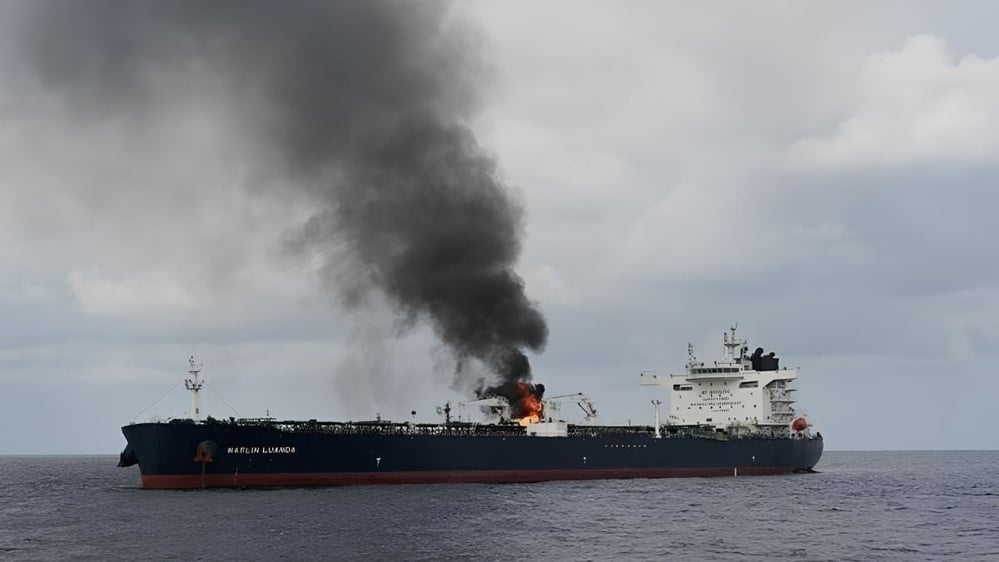
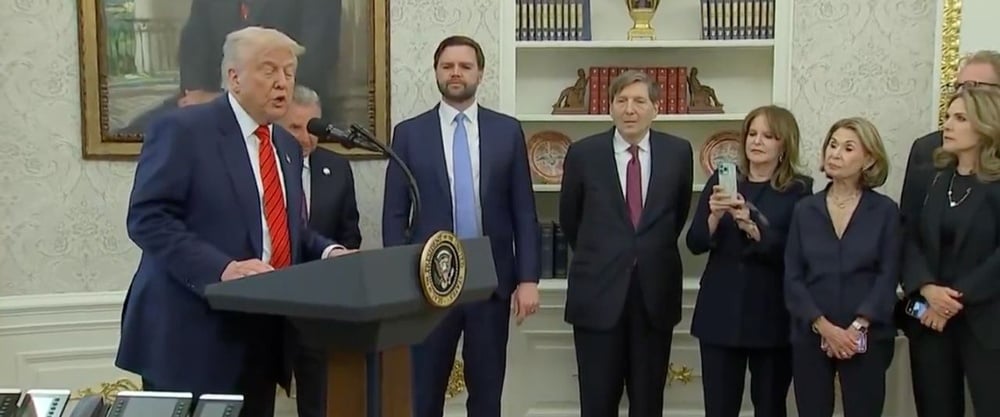
2026 © Helium Trades
Privacy Policy & Disclosure
* Disclaimer: Nothing on this website constitutes investment advice, performance data or any recommendation that any particular security, portfolio of securities, transaction or investment strategy is suitable for any specific person. Helium Trades is not responsible in any way for the accuracy
of any model predictions or price data. Any mention of a particular security and related prediction data is not a recommendation to buy or sell that security. Investments in securities involve the risk of loss. Past performance is no guarantee of future results. Helium Trades is not responsible for any of your investment decisions,
you should consult a financial expert before engaging in any transaction.
Helium Research Assistant

How can I help you today?
Ask any question about this page.


