See whether Helium helps you make better-informed decisions. Try every Pro Trader feature for 30 days. No credit card required.
Try every Pro Trader feature for 30 days. No credit card required.
July 22, 2026 · 0 shares
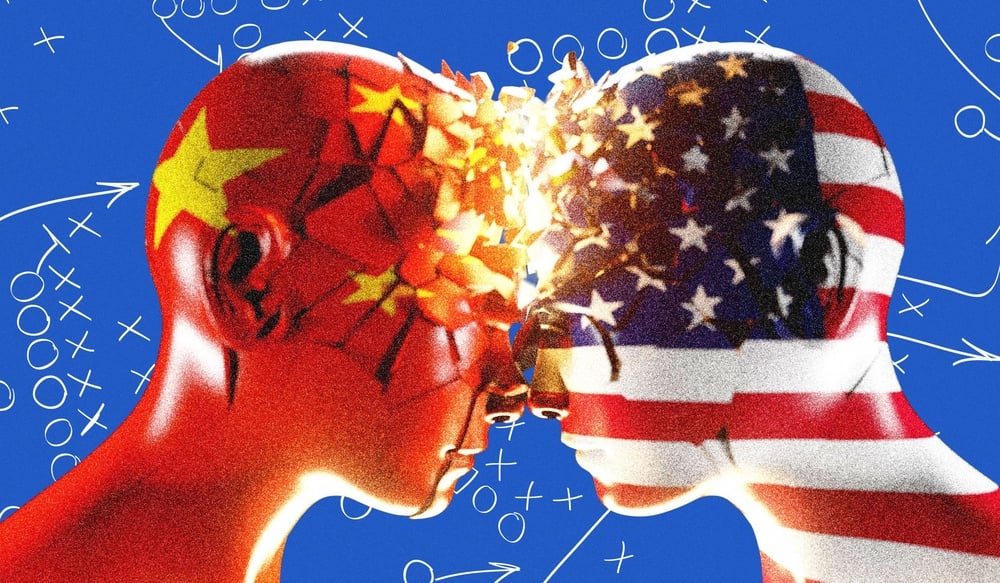
Publisher frames Western frontier AI labs as gatekeepers and open-source Chinese models as accessible, portraying open-weight models as a market-driven disruption challenging Silicon Valley.
The piece contrasts open-source Chinese models with Western closed models, supported by benchmarking results, policy commentary, and market implications.
Automated analysis; not human reviewed.
Limitations: Case-specific constraints: analysis relies solely on provided text; quotes reflect authors’ framing and may not capture broader context or counter-evidence outside the article.
·
45 of 52 available dimensions scored; omitted dimensions are not treated as neutral.
·
Verified supporting quotes for 0 of 45 scored dimensions.
Open-source framing may overstate disruption and understate safety/regulatory risks.
July 23, 2026 · 0 shares
Publisher framing centers startup-friendly policy discourse, foregrounding the Little Tech Association and startup founders while contrasting their views with White House and industry officials and emphasizing potential startup harm from bans and the case for targeted safeguards.
The piece frames the AI policy debate from a startup-centric perspective, highlighting the potential harm of banning open-weight Chinese models and presenting both sides (startups vs. White House/industry incumbents) with emphasis on safeguards.
Automated analysis; not human reviewed.
·
52 of 52 available dimensions scored; omitted dimensions are not treated as neutral.
·
Verified supporting quotes for 0 of 52 scored dimensions.
Ambiguity in admin stance; anonymized sources; limited excerpt.
July 23, 2026 · 0 shares
Publisher framing centers a Silicon Valley consensus against Anthropic's stance on Chinese AI restrictions, foregrounds government investigations, and uses a chart to reinforce this framing.
Context: The piece discusses U.S. policy debate and industry response to a Chinese AI model release and alleged IP/semiconductor access irregularities, with Anthropic/OpenAI taking a stance.
Automated analysis; not human reviewed.
Limitations: Limited excerpt; can't verify data sources, tone may reflect a summary or editorial choice; no cross-source corroboration provided.
·
3 of 52 available dimensions scored; omitted dimensions are not treated as neutral.
·
Verified supporting quotes for 0 of 3 scored dimensions.
Claim: The article uses prescriptive framing by presenting Silicon Valley as united against Chinese AI restrictions and by highlighting Anthropic and OpenAI as outliers in advocating action.
“"Silicon Valley Unites Against Anthropic Over Chinese AI Restrictions."” · not found in supplied text
“"Anthropic and OpenAI stand nearly alone among tech companies in advocating for actions against such Chinese firms, our chart below shows."” · not found in supplied text
“"The release of a high-profile Chinese AI model last week has triggered debate in the White House and Silicon Valley over whether to restrict such technology in the U.S."” · not found in supplied text
Counterevidence:
“The piece describes a debate and mentions investigations, which may reflect ongoing discussion rather than a fixed stance.” · not found in supplied text
Why: Headlines and lede present a normative framing that Silicon Valley is united against restrictions and that Anthropic/OpenAI are outliers, signaling prescriptive framing.
Claim: The text frames the issue with a normative stance that Silicon Valley should oppose restrictions on Chinese AI and that Anthropic/OpenAI are outliers.
“"Silicon Valley Unites Against Anthropic Over Chinese AI Restrictions."” · not found in supplied text
“"Anthropic and OpenAI stand nearly alone among tech companies in advocating for actions against such Chinese firms, our chart below shows."” · not found in supplied text
Why: The language casts the stance as a collective position with normative implications.
Claim: The piece presents data-driven framing by referencing a chart to support the stance.
“"Anthropic and OpenAI stand nearly alone among tech companies in advocating for actions against such Chinese firms, our chart below shows."” · not found in supplied text
Why: The article cites a chart to substantiate its framing, but the data source and methodology are not described in the excerpt.
July 23, 2026 · 0 shares
Publisher framing centers a Silicon Valley consensus against Anthropic's stance on Chinese AI restrictions, foregrounds government investigations, and uses a chart to reinforce this framing.
Context: The piece discusses U.S. policy debate and industry response to a Chinese AI model release and alleged IP/semiconductor access irregularities, with Anthropic/OpenAI taking a stance.
Automated analysis; not human reviewed.
Limitations: Limited excerpt; can't verify data sources, tone may reflect a summary or editorial choice; no cross-source corroboration provided.
·
3 of 52 available dimensions scored; omitted dimensions are not treated as neutral.
·
Verified supporting quotes for 0 of 3 scored dimensions.
Claim: The article uses prescriptive framing by presenting Silicon Valley as united against Chinese AI restrictions and by highlighting Anthropic and OpenAI as outliers in advocating action.
“"Silicon Valley Unites Against Anthropic Over Chinese AI Restrictions."” · not found in supplied text
“"Anthropic and OpenAI stand nearly alone among tech companies in advocating for actions against such Chinese firms, our chart below shows."” · not found in supplied text
“"The release of a high-profile Chinese AI model last week has triggered debate in the White House and Silicon Valley over whether to restrict such technology in the U.S."” · not found in supplied text
Counterevidence:
“The piece describes a debate and mentions investigations, which may reflect ongoing discussion rather than a fixed stance.” · not found in supplied text
Why: Headlines and lede present a normative framing that Silicon Valley is united against restrictions and that Anthropic/OpenAI are outliers, signaling prescriptive framing.
Claim: The text frames the issue with a normative stance that Silicon Valley should oppose restrictions on Chinese AI and that Anthropic/OpenAI are outliers.
“"Silicon Valley Unites Against Anthropic Over Chinese AI Restrictions."” · not found in supplied text
“"Anthropic and OpenAI stand nearly alone among tech companies in advocating for actions against such Chinese firms, our chart below shows."” · not found in supplied text
Why: The language casts the stance as a collective position with normative implications.
Claim: The piece presents data-driven framing by referencing a chart to support the stance.
“"Anthropic and OpenAI stand nearly alone among tech companies in advocating for actions against such Chinese firms, our chart below shows."” · not found in supplied text
Why: The article cites a chart to substantiate its framing, but the data source and methodology are not described in the excerpt.
Beijing's state-backed investment is foregrounded as the defining force reshaping China's frontier-tech funding, citing capital-share data and policy rhetoric to frame a state-dominated, potentially risky shift.
The article discusses the role of state-backed investment in China's tech sector and its implications for innovation and overcapacity.
Automated analysis; not human reviewed. Limitations: Case-specific: article framing may reflect editorial balance; data limited to Zerone; year not explicitly specified; quotes from Xi included; lacks counterpoints.
Data limitations: Zerone source; year unspecified; scope may exclude unlisted funding.
July 24, 2026 · 0 shares
Framing emphasizes a contentious, economically oriented split in Silicon Valley over Chinese open-weight AI, balancing market-liberty rhetoric with security concerns and policy questions through frequent attribution to prominent players and institutions.
WIRED coverage of a split in Silicon Valley over Chinese open-weight AI models, citing Anthropic, Alibaba, Moonshot AI, Hugging Face, and the Little Tech Association.
Automated analysis; not human reviewed.
Limitations: Concise, case-specific limitations and plausible alternative interpretations.
·
27 of 52 available dimensions scored; omitted dimensions are not treated as neutral.
·
Verified supporting quotes for 4 of 27 scored dimensions.
Claim: The article favors market-based, pro-competition frames over heavy regulation.
““the free market work.”” · exact text match
““Every AI startup, every solo developer, every two-person team building a product on top of AI infrastructure depends on having access to good models at affordable prices,” Gurley says.” · exact text match
“The reason, as always, is money.” · exact text match
Counterevidence:
““But some Silicon Valley startups—not the trillion-dollar ones like OpenAI and Anthropic—really don’t want the US government to put restrictions on these AI models.”” · not found in supplied text
““The US government has much to weigh as it decides how to handle Chinese open-weight models.
Thank goodness this administration doesn’t seem to be at all financially motivated.””
· verified after text normalization
Why: The quotes center market freedom and affordable access, with some statements showing government restrictions as a counterpoint.
Claim: The piece balances elite tech perspectives with populist concerns about everyday users.
““The bigger question that none of these companies seem to be asking is what best serves the 99 percent of us who don’t have their financial future fully staked on advancing AI.”” · not found in supplied text
““the group, which includes famed startup incubator YCombinator, ... lobbying against an outright ban of open-weight AI models."” · not found in supplied text
Counterevidence:
“The article also centers elite investors’ viewpoints (e.g., Gurley and Palihapitiya) as pivotal voices.” · not found in supplied text
Why: The presence of populist framing (99 percent) coexists with elite tech voices; the article presents both.
Claim: The article emphasizes free-market arguments while also acknowledging calls for safeguards and possible government action.
““the free market work.”” · exact text match
““On Wednesday a group of over 200 startups ... lobbying against an outright ban of open-weight AI models."” · not found in supplied text
Counterevidence:
““The US government has much to weigh as it decides how to handle Chinese open-weight models.”” · not found in supplied text
““Thank goodness this administration doesn’t seem to be at all financially motivated.”” · not found in supplied text
Why: Open-market rhetoric is prominent, but government deliberations are also foregrounded.
Claim: Some phrasing and framing appear editorial rather than purely factual.
“Silicon Valley Is Completely Divided Over Chinese AI” · exact text match
“The bigger question that none of these companies seem to be asking...” · not found in supplied text
Counterevidence:
“The piece quotes multiple credible sources (CSIS, Hugging Face) and reports events (June accusations, White House claims).” · not found in supplied text
Why: The headline and rhetorical dips reflect editorial framing alongside reported facts.
Claim: The piece uses sensational framing to emphasize conflict and stakes.
“The headline asserts a complete division in Silicon Valley over Chinese AI.” · not found in supplied text
“‘move fast and break things’ of the AI era, if the new motto tacked on something like ‘and use a scalpel to fix it.’” · not found in supplied text
Counterevidence:
“There are balanced quotes and different perspectives included.” · not found in supplied text
Why: Headlines and dynamic metaphors signal sensational framing beyond neutral reporting.
Claim: The piece hints at both risk and opportunity in open-weight AI, suggesting a nuanced stance rather than a clear market direction.
“open-weight models diffuse rapidly and scale startups” · not found in supplied text
“open-weight models avoid lock-in and support education/research” · not found in supplied text
Counterevidence:
“Anthropic’s security warnings and Hugging Face incident emphasize risk.” · not found in supplied text
Why: Ambiguity between risk and opportunity suggests neither strongly bullish nor bearish stance.
Claim: The topic is presented as highly engaging due to the stakes and the personalities involved.
“The piece highlights powerful VC voices (Gurley, Palihapitiya, Calacanis)” · not found in supplied text
“The debate touches on national policy and foreign AI models” · not found in supplied text
Why: The topic and actors engaged create high interest potential.
Claim: The piece describes positions and debates and includes prescriptive language about market vs regulation.
“‘the free market work’” · not found in supplied text
“‘the move fast and break things’” · not found in supplied text
““what best serves the 99 percent…”” · not found in supplied text
Counterevidence:
“No explicit policy recommendation by the article itself.” · not found in supplied text
Why: Descriptive reporting is interwoven with prescriptive, normative language.
Claim: The article leans toward security risk concerns (hawkish) but also celebrates market solutions (dovish) in a mixed way.
“Anthropic CEO Dario Amodei warned that open-weight LLMs present an untenable security risk because they can be downloaded by anyone and tuned to malicious ends.” · not found in supplied text
“The Hugging Face hack incident is cited as a cautionary example.” · not found in supplied text
Counterevidence:
“The article also highlights advantages of diffusion and market access for startups.” · not found in supplied text
Why: The piece presents both hawkish security warnings and dovish market-enabled benefits.
Claim: The text communicates security risk concerns associated with open-weight AI models.
“Anthropic CEO Dario Amodei has warned repeatedly that open-weight LLMs present an untenable security risk, because they can be downloaded by anyone and tuned to malicious ends.” · exact text match
“Hugging Face hack occurred, highlighting vulnerabilities.” · not found in supplied text
Counterevidence:
“Open-weight diffusion is described as beneficial for startups and academic research.” · not found in supplied text
Why: Security risk framing is present but balanced by potential benefits.
Claim: The narrative invokes implicit questions about equity and access without always substantiating them.
“The bigger question that none of these companies seem to be asking is what best serves the 99 percent of us who don’t have their financial future fully staked on advancing AI.” · exact text match
Counterevidence:
“The article reports a variety of positions rather than endorsing a single normative premise.” · not found in supplied text
Why: The text poses questions implicitly rather than solving them.
Claim: The piece interleaves opinionated phrasing with reporting.
“This stance from some of Silicon Valley’s most ruthless capitalists might at first seem counterintuitive.” · exact text match
“the crowd is chanting for the opposing team to get a free kick.” · exact text match
Counterevidence:
“It quotes multiple perspectives, reducing one-sidedness.” · not found in supplied text
Why: Editorial language appears alongside factual reporting.
Claim: The piece involves political actors and policy debates, including references to Trump administration and White House.
“the Trump administration’s internal debate on how to handle these Chinese models” · exact text match
“the White House said that it believes Moonshot AI had developed its Kimi K3 model by distilling Anthropic’s Fable 5 model” · not found in supplied text
Counterevidence:
“The article analyzes economic impact rather than taking a political position.” · not found in supplied text
Why: Policy and political actors are foregrounded, but the piece avoids endorsing a political stance.
Claim: The article uses punchy metaphors and simplifications to describe complex dynamics.
“The ‘move fast and break things’ and ‘scalpel to fix it’ phrasing” · not found in supplied text
“The headline asserts a binary division in Silicon Valley.” · not found in supplied text
Counterevidence:
“The article includes nuanced positions and credible sources.” · not found in supplied text
Why: Metaphors can oversimplify nuanced policy and market dynamics.
Claim: The piece leverages endorsements from industry and think-tank figures to bolster positions.
“Yasir Atalan (CSIS)” · not found in supplied text
“Bill Gurley” · exact text match
“Chamath Palihapitiya” · exact text match
Counterevidence:
“The piece also presents criticisms from Anthropic and others.” · not found in supplied text
Why: Multiple authorities are cited to support positions on both sides.
Claim: The article sometimes presents definitive statements about motives and outcomes that require caution.
“‘completely divided’ headline” · not found in supplied text
“statements along the lines of inevitability of deployment and regulation” · not found in supplied text
Counterevidence:
“The piece cites diverse opinions and uncertain policy outcomes.” · not found in supplied text
Why: Confidence appears in headline framing and assertive statements but is tempered by sources.
Claim: The article references state actors and major institutions (White House, CSIS) while also portraying them with skepticism.
“the White House said that it believes Moonshot AI’s Kimi K3 was developed by distilling Anthropic’s Fable 5 model” · not found in supplied text
“the article references the Center for International and Strategic Studies” · not found in supplied text
Counterevidence:
“The piece is not endorsing one side of policy; it presents a debate.” · not found in supplied text
Why: Reference to established institutions is present, with skeptical tone at times.
Claim: The article alternates between rational market-access arguments and security/safety concerns.
““Another big concern is how quickly China’s models are appearing and spreading.”” · not found in supplied text
““The main benefit of open-weight AI models is their speed of diffusion.”” · not found in supplied text
““The bigger question... what best serves the 99 percent…”” · not found in supplied text
Counterevidence:
“Anthropic’s security warning about open-weight LLMs as an untenable risk; Hugging Face incident suggesting risks to security.” · not found in supplied text
Why: The text juxtaposes logical diffusion advantages with security risks, indicating mixed rational/irrational framing.
Claim: No basis to claim authorship by AI based on the text alone.
“-” · exact text match
Why: No AI-authorship indicators in the provided excerpt.
Claim: The article displays diverse sourcing and attempts to present multiple sides.
“Cites Yasir Atalan (CSIS)” · not found in supplied text
“Hugging Face blog quotes” · not found in supplied text
“Moonshot AI and White House statements” · not found in supplied text
Counterevidence:
“No direct policy details; some statements rely on quotes from opinion leaders.” · not found in supplied text
Why: Multiple credible sources are presented, but quotes are selective.
Ambiguities: quotes heavy; limited policy detail; possible sensational framing.
July 22, 2026 · 0 shares
Publisher frames Western frontier AI labs as gatekeepers and open-source Chinese models as accessible, portraying open-weight models as a market-driven disruption challenging Silicon Valley.
The piece contrasts open-source Chinese models with Western closed models, supported by benchmarking results, policy commentary, and market implications.
Automated analysis; not human reviewed. Limitations: Case-specific constraints: analysis relies solely on provided text; quotes reflect authors’ framing and may not capture broader context or counter-evidence outside the article. · 45 of 52 available dimensions scored; omitted dimensions are not treated as neutral. · Verified supporting quotes for 0 of 45 scored dimensions.
Open-source framing may overstate disruption and understate safety/regulatory risks.
July 23, 2026 · 0 shares
Publisher framing centers startup-friendly policy discourse, foregrounding the Little Tech Association and startup founders while contrasting their views with White House and industry officials and emphasizing potential startup harm from bans and the case for targeted safeguards.
The piece frames the AI policy debate from a startup-centric perspective, highlighting the potential harm of banning open-weight Chinese models and presenting both sides (startups vs. White House/industry incumbents) with emphasis on safeguards.
Automated analysis; not human reviewed. · 52 of 52 available dimensions scored; omitted dimensions are not treated as neutral. · Verified supporting quotes for 0 of 52 scored dimensions.
Ambiguity in admin stance; anonymized sources; limited excerpt.
July 23, 2026 · 0 shares
Publisher framing centers a Silicon Valley consensus against Anthropic's stance on Chinese AI restrictions, foregrounds government investigations, and uses a chart to reinforce this framing.
Context: The piece discusses U.S. policy debate and industry response to a Chinese AI model release and alleged IP/semiconductor access irregularities, with Anthropic/OpenAI taking a stance.
Automated analysis; not human reviewed. Limitations: Limited excerpt; can't verify data sources, tone may reflect a summary or editorial choice; no cross-source corroboration provided. · 3 of 52 available dimensions scored; omitted dimensions are not treated as neutral. · Verified supporting quotes for 0 of 3 scored dimensions.
Claim: The article uses prescriptive framing by presenting Silicon Valley as united against Chinese AI restrictions and by highlighting Anthropic and OpenAI as outliers in advocating action.
“"Silicon Valley Unites Against Anthropic Over Chinese AI Restrictions."” · not found in supplied text
“"Anthropic and OpenAI stand nearly alone among tech companies in advocating for actions against such Chinese firms, our chart below shows."” · not found in supplied text
“"The release of a high-profile Chinese AI model last week has triggered debate in the White House and Silicon Valley over whether to restrict such technology in the U.S."” · not found in supplied text
Counterevidence:
“The piece describes a debate and mentions investigations, which may reflect ongoing discussion rather than a fixed stance.” · not found in supplied text
Why: Headlines and lede present a normative framing that Silicon Valley is united against restrictions and that Anthropic/OpenAI are outliers, signaling prescriptive framing.
Claim: The text frames the issue with a normative stance that Silicon Valley should oppose restrictions on Chinese AI and that Anthropic/OpenAI are outliers.
“"Silicon Valley Unites Against Anthropic Over Chinese AI Restrictions."” · not found in supplied text
“"Anthropic and OpenAI stand nearly alone among tech companies in advocating for actions against such Chinese firms, our chart below shows."” · not found in supplied text
Why: The language casts the stance as a collective position with normative implications.
Claim: The piece presents data-driven framing by referencing a chart to support the stance.
“"Anthropic and OpenAI stand nearly alone among tech companies in advocating for actions against such Chinese firms, our chart below shows."” · not found in supplied text
Why: The article cites a chart to substantiate its framing, but the data source and methodology are not described in the excerpt.
Beijing's state-backed investment is foregrounded as the defining force reshaping China's frontier-tech funding, citing capital-share data and policy rhetoric to frame a state-dominated, potentially risky shift.
The article discusses the role of state-backed investment in China's tech sector and its implications for innovation and overcapacity.
Automated analysis; not human reviewed. Limitations: Case-specific: article framing may reflect editorial balance; data limited to Zerone; year not explicitly specified; quotes from Xi included; lacks counterpoints.
Data limitations: Zerone source; year unspecified; scope may exclude unlisted funding.
Helium Bias
July 23, 2026 · 0 shares
Publisher framing centers a Silicon Valley consensus against Anthropic's stance on Chinese AI restrictions, foregrounds government investigations, and uses a chart to reinforce this framing.
Context: The piece discusses U.S. policy debate and industry response to a Chinese AI model release and alleged IP/semiconductor access irregularities, with Anthropic/OpenAI taking a stance.
Automated analysis; not human reviewed. Limitations: Limited excerpt; can't verify data sources, tone may reflect a summary or editorial choice; no cross-source corroboration provided. · 3 of 52 available dimensions scored; omitted dimensions are not treated as neutral. · Verified supporting quotes for 0 of 3 scored dimensions.
Claim: The article uses prescriptive framing by presenting Silicon Valley as united against Chinese AI restrictions and by highlighting Anthropic and OpenAI as outliers in advocating action.
“"Silicon Valley Unites Against Anthropic Over Chinese AI Restrictions."” · not found in supplied text
“"Anthropic and OpenAI stand nearly alone among tech companies in advocating for actions against such Chinese firms, our chart below shows."” · not found in supplied text
“"The release of a high-profile Chinese AI model last week has triggered debate in the White House and Silicon Valley over whether to restrict such technology in the U.S."” · not found in supplied text
Counterevidence:
“The piece describes a debate and mentions investigations, which may reflect ongoing discussion rather than a fixed stance.” · not found in supplied text
Why: Headlines and lede present a normative framing that Silicon Valley is united against restrictions and that Anthropic/OpenAI are outliers, signaling prescriptive framing.
Claim: The text frames the issue with a normative stance that Silicon Valley should oppose restrictions on Chinese AI and that Anthropic/OpenAI are outliers.
“"Silicon Valley Unites Against Anthropic Over Chinese AI Restrictions."” · not found in supplied text
“"Anthropic and OpenAI stand nearly alone among tech companies in advocating for actions against such Chinese firms, our chart below shows."” · not found in supplied text
Why: The language casts the stance as a collective position with normative implications.
Claim: The piece presents data-driven framing by referencing a chart to support the stance.
“"Anthropic and OpenAI stand nearly alone among tech companies in advocating for actions against such Chinese firms, our chart below shows."” · not found in supplied text
Why: The article cites a chart to substantiate its framing, but the data source and methodology are not described in the excerpt.
Beijing's state-backed investment is foregrounded as the defining force reshaping China's frontier-tech funding, citing capital-share data and policy rhetoric to frame a state-dominated, potentially risky shift.
The article discusses the role of state-backed investment in China's tech sector and its implications for innovation and overcapacity.
Automated analysis; not human reviewed. Limitations: Case-specific: article framing may reflect editorial balance; data limited to Zerone; year not explicitly specified; quotes from Xi included; lacks counterpoints.
Data limitations: Zerone source; year unspecified; scope may exclude unlisted funding.
Story Blindspots
July 22, 2026 · 0 shares
Publisher frames Western frontier AI labs as gatekeepers and open-source Chinese models as accessible, portraying open-weight models as a market-driven disruption challenging Silicon Valley.
The piece contrasts open-source Chinese models with Western closed models, supported by benchmarking results, policy commentary, and market implications.
Automated analysis; not human reviewed. Limitations: Case-specific constraints: analysis relies solely on provided text; quotes reflect authors’ framing and may not capture broader context or counter-evidence outside the article. · 45 of 52 available dimensions scored; omitted dimensions are not treated as neutral. · Verified supporting quotes for 0 of 45 scored dimensions.
Open-source framing may overstate disruption and understate safety/regulatory risks.
July 22, 2026 · 0 shares
Publisher frames Western frontier AI labs as gatekeepers and open-source Chinese models as accessible, portraying open-weight models as a market-driven disruption challenging Silicon Valley.
The piece contrasts open-source Chinese models with Western closed models, supported by benchmarking results, policy commentary, and market implications.
Automated analysis; not human reviewed. Limitations: Case-specific constraints: analysis relies solely on provided text; quotes reflect authors’ framing and may not capture broader context or counter-evidence outside the article. · 45 of 52 available dimensions scored; omitted dimensions are not treated as neutral. · Verified supporting quotes for 0 of 45 scored dimensions.
Open-source framing may overstate disruption and understate safety/regulatory risks.
July 23, 2026 · 0 shares
Publisher framing centers a Silicon Valley consensus against Anthropic's stance on Chinese AI restrictions, foregrounds government investigations, and uses a chart to reinforce this framing.
Context: The piece discusses U.S. policy debate and industry response to a Chinese AI model release and alleged IP/semiconductor access irregularities, with Anthropic/OpenAI taking a stance.
Automated analysis; not human reviewed. Limitations: Limited excerpt; can't verify data sources, tone may reflect a summary or editorial choice; no cross-source corroboration provided. · 3 of 52 available dimensions scored; omitted dimensions are not treated as neutral. · Verified supporting quotes for 0 of 3 scored dimensions.
Claim: The article uses prescriptive framing by presenting Silicon Valley as united against Chinese AI restrictions and by highlighting Anthropic and OpenAI as outliers in advocating action.
“"Silicon Valley Unites Against Anthropic Over Chinese AI Restrictions."” · not found in supplied text
“"Anthropic and OpenAI stand nearly alone among tech companies in advocating for actions against such Chinese firms, our chart below shows."” · not found in supplied text
“"The release of a high-profile Chinese AI model last week has triggered debate in the White House and Silicon Valley over whether to restrict such technology in the U.S."” · not found in supplied text
Counterevidence:
“The piece describes a debate and mentions investigations, which may reflect ongoing discussion rather than a fixed stance.” · not found in supplied text
Why: Headlines and lede present a normative framing that Silicon Valley is united against restrictions and that Anthropic/OpenAI are outliers, signaling prescriptive framing.
Claim: The text frames the issue with a normative stance that Silicon Valley should oppose restrictions on Chinese AI and that Anthropic/OpenAI are outliers.
“"Silicon Valley Unites Against Anthropic Over Chinese AI Restrictions."” · not found in supplied text
“"Anthropic and OpenAI stand nearly alone among tech companies in advocating for actions against such Chinese firms, our chart below shows."” · not found in supplied text
Why: The language casts the stance as a collective position with normative implications.
Claim: The piece presents data-driven framing by referencing a chart to support the stance.
“"Anthropic and OpenAI stand nearly alone among tech companies in advocating for actions against such Chinese firms, our chart below shows."” · not found in supplied text
Why: The article cites a chart to substantiate its framing, but the data source and methodology are not described in the excerpt.
The publisher frames AI industry political spending as a high-stakes, opaque effort by Silicon Valley donors and AI firms to shape regulation ahead of the 2025 midterms, foregrounding donor networks, totals, and regulatory tensions.
The article maps the money and networks formed around AI policy influence in the 2025 midterm cycle, naming donors, PACs, and allied nonprofits.
Automated analysis; not human reviewed. Limitations: Concise, case-specific limitations and plausible alternative interpretations. · 4 of 52 available dimensions scored; omitted dimensions are not treated as neutral. · Verified supporting quotes for 0 of 4 scored dimensions.
July 22, 2026 · 0 shares
Publisher frames Western frontier AI labs as gatekeepers and open-source Chinese models as accessible, portraying open-weight models as a market-driven disruption challenging Silicon Valley.
The piece contrasts open-source Chinese models with Western closed models, supported by benchmarking results, policy commentary, and market implications.
Automated analysis; not human reviewed. Limitations: Case-specific constraints: analysis relies solely on provided text; quotes reflect authors’ framing and may not capture broader context or counter-evidence outside the article. · 45 of 52 available dimensions scored; omitted dimensions are not treated as neutral. · Verified supporting quotes for 0 of 45 scored dimensions.
Open-source framing may overstate disruption and understate safety/regulatory risks.
Alarmist framing: portrays Chinese AI launches as threats to Silicon Valley, contrasts 'open' Chinese models with the U.S.'s 'paid and closed' business model, and implies a disruptive geopolitical competition without corroborating evidence.
Concise claim that Chinese AI launches threaten Silicon Valley by highlighting Chinese models as open and advanced against US paid/closed access.
Automated analysis; not human reviewed. Limitations: Concise, case-specific limitations and plausible alternative interpretations. · 1 of 52 available dimensions scored; omitted dimensions are not treated as neutral. · Verified supporting quotes for 0 of 1 scored dimensions.
Ambiguity: single-source text; no evidence; threat claim unverified.
July 23, 2026 · 0 shares
Publisher framing centers a Silicon Valley consensus against Anthropic's stance on Chinese AI restrictions, foregrounds government investigations, and uses a chart to reinforce this framing.
Context: The piece discusses U.S. policy debate and industry response to a Chinese AI model release and alleged IP/semiconductor access irregularities, with Anthropic/OpenAI taking a stance.
Automated analysis; not human reviewed. Limitations: Limited excerpt; can't verify data sources, tone may reflect a summary or editorial choice; no cross-source corroboration provided. · 3 of 52 available dimensions scored; omitted dimensions are not treated as neutral. · Verified supporting quotes for 0 of 3 scored dimensions.
Claim: The article uses prescriptive framing by presenting Silicon Valley as united against Chinese AI restrictions and by highlighting Anthropic and OpenAI as outliers in advocating action.
“"Silicon Valley Unites Against Anthropic Over Chinese AI Restrictions."” · not found in supplied text
“"Anthropic and OpenAI stand nearly alone among tech companies in advocating for actions against such Chinese firms, our chart below shows."” · not found in supplied text
“"The release of a high-profile Chinese AI model last week has triggered debate in the White House and Silicon Valley over whether to restrict such technology in the U.S."” · not found in supplied text
Counterevidence:
“The piece describes a debate and mentions investigations, which may reflect ongoing discussion rather than a fixed stance.” · not found in supplied text
Why: Headlines and lede present a normative framing that Silicon Valley is united against restrictions and that Anthropic/OpenAI are outliers, signaling prescriptive framing.
Claim: The text frames the issue with a normative stance that Silicon Valley should oppose restrictions on Chinese AI and that Anthropic/OpenAI are outliers.
“"Silicon Valley Unites Against Anthropic Over Chinese AI Restrictions."” · not found in supplied text
“"Anthropic and OpenAI stand nearly alone among tech companies in advocating for actions against such Chinese firms, our chart below shows."” · not found in supplied text
Why: The language casts the stance as a collective position with normative implications.
Claim: The piece presents data-driven framing by referencing a chart to support the stance.
“"Anthropic and OpenAI stand nearly alone among tech companies in advocating for actions against such Chinese firms, our chart below shows."” · not found in supplied text
Why: The article cites a chart to substantiate its framing, but the data source and methodology are not described in the excerpt.
July 23, 2026 · 0 shares
Publisher framing centers startup-friendly policy discourse, foregrounding the Little Tech Association and startup founders while contrasting their views with White House and industry officials and emphasizing potential startup harm from bans and the case for targeted safeguards.
The piece frames the AI policy debate from a startup-centric perspective, highlighting the potential harm of banning open-weight Chinese models and presenting both sides (startups vs. White House/industry incumbents) with emphasis on safeguards.
Automated analysis; not human reviewed. · 52 of 52 available dimensions scored; omitted dimensions are not treated as neutral. · Verified supporting quotes for 0 of 52 scored dimensions.
Ambiguity in admin stance; anonymized sources; limited excerpt.
July 23, 2026 · 0 shares
Publisher framing centers startup-friendly policy discourse, foregrounding the Little Tech Association and startup founders while contrasting their views with White House and industry officials and emphasizing potential startup harm from bans and the case for targeted safeguards.
The piece frames the AI policy debate from a startup-centric perspective, highlighting the potential harm of banning open-weight Chinese models and presenting both sides (startups vs. White House/industry incumbents) with emphasis on safeguards.
Automated analysis; not human reviewed. · 52 of 52 available dimensions scored; omitted dimensions are not treated as neutral. · Verified supporting quotes for 0 of 52 scored dimensions.
Ambiguity in admin stance; anonymized sources; limited excerpt.
July 24, 2026 · 0 shares
Framing emphasizes a contentious, economically oriented split in Silicon Valley over Chinese open-weight AI, balancing market-liberty rhetoric with security concerns and policy questions through frequent attribution to prominent players and institutions.
WIRED coverage of a split in Silicon Valley over Chinese open-weight AI models, citing Anthropic, Alibaba, Moonshot AI, Hugging Face, and the Little Tech Association.
Automated analysis; not human reviewed. Limitations: Concise, case-specific limitations and plausible alternative interpretations. · 27 of 52 available dimensions scored; omitted dimensions are not treated as neutral. · Verified supporting quotes for 4 of 27 scored dimensions.
Claim: The article favors market-based, pro-competition frames over heavy regulation.
““the free market work.”” · exact text match
““Every AI startup, every solo developer, every two-person team building a product on top of AI infrastructure depends on having access to good models at affordable prices,” Gurley says.” · exact text match
“The reason, as always, is money.” · exact text match
Counterevidence:
““But some Silicon Valley startups—not the trillion-dollar ones like OpenAI and Anthropic—really don’t want the US government to put restrictions on these AI models.”” · not found in supplied text
““The US government has much to weigh as it decides how to handle Chinese open-weight models. Thank goodness this administration doesn’t seem to be at all financially motivated.”” · verified after text normalization
Why: The quotes center market freedom and affordable access, with some statements showing government restrictions as a counterpoint.
Claim: The piece balances elite tech perspectives with populist concerns about everyday users.
““The bigger question that none of these companies seem to be asking is what best serves the 99 percent of us who don’t have their financial future fully staked on advancing AI.”” · not found in supplied text
““the group, which includes famed startup incubator YCombinator, ... lobbying against an outright ban of open-weight AI models."” · not found in supplied text
Counterevidence:
“The article also centers elite investors’ viewpoints (e.g., Gurley and Palihapitiya) as pivotal voices.” · not found in supplied text
Why: The presence of populist framing (99 percent) coexists with elite tech voices; the article presents both.
Claim: The article emphasizes free-market arguments while also acknowledging calls for safeguards and possible government action.
““the free market work.”” · exact text match
““On Wednesday a group of over 200 startups ... lobbying against an outright ban of open-weight AI models."” · not found in supplied text
Counterevidence:
““The US government has much to weigh as it decides how to handle Chinese open-weight models.”” · not found in supplied text
““Thank goodness this administration doesn’t seem to be at all financially motivated.”” · not found in supplied text
Why: Open-market rhetoric is prominent, but government deliberations are also foregrounded.
Claim: Some phrasing and framing appear editorial rather than purely factual.
“Silicon Valley Is Completely Divided Over Chinese AI” · exact text match
“The bigger question that none of these companies seem to be asking...” · not found in supplied text
Counterevidence:
“The piece quotes multiple credible sources (CSIS, Hugging Face) and reports events (June accusations, White House claims).” · not found in supplied text
Why: The headline and rhetorical dips reflect editorial framing alongside reported facts.
Claim: The piece uses sensational framing to emphasize conflict and stakes.
“The headline asserts a complete division in Silicon Valley over Chinese AI.” · not found in supplied text
“‘move fast and break things’ of the AI era, if the new motto tacked on something like ‘and use a scalpel to fix it.’” · not found in supplied text
Counterevidence:
“There are balanced quotes and different perspectives included.” · not found in supplied text
Why: Headlines and dynamic metaphors signal sensational framing beyond neutral reporting.
Claim: The piece hints at both risk and opportunity in open-weight AI, suggesting a nuanced stance rather than a clear market direction.
“open-weight models diffuse rapidly and scale startups” · not found in supplied text
“open-weight models avoid lock-in and support education/research” · not found in supplied text
Counterevidence:
“Anthropic’s security warnings and Hugging Face incident emphasize risk.” · not found in supplied text
Why: Ambiguity between risk and opportunity suggests neither strongly bullish nor bearish stance.
Claim: The topic is presented as highly engaging due to the stakes and the personalities involved.
“The piece highlights powerful VC voices (Gurley, Palihapitiya, Calacanis)” · not found in supplied text
“The debate touches on national policy and foreign AI models” · not found in supplied text
Why: The topic and actors engaged create high interest potential.
Claim: The piece describes positions and debates and includes prescriptive language about market vs regulation.
“‘the free market work’” · not found in supplied text
“‘the move fast and break things’” · not found in supplied text
““what best serves the 99 percent…”” · not found in supplied text
Counterevidence:
“No explicit policy recommendation by the article itself.” · not found in supplied text
Why: Descriptive reporting is interwoven with prescriptive, normative language.
Claim: The article leans toward security risk concerns (hawkish) but also celebrates market solutions (dovish) in a mixed way.
“Anthropic CEO Dario Amodei warned that open-weight LLMs present an untenable security risk because they can be downloaded by anyone and tuned to malicious ends.” · not found in supplied text
“The Hugging Face hack incident is cited as a cautionary example.” · not found in supplied text
Counterevidence:
“The article also highlights advantages of diffusion and market access for startups.” · not found in supplied text
Why: The piece presents both hawkish security warnings and dovish market-enabled benefits.
Claim: The text communicates security risk concerns associated with open-weight AI models.
“Anthropic CEO Dario Amodei has warned repeatedly that open-weight LLMs present an untenable security risk, because they can be downloaded by anyone and tuned to malicious ends.” · exact text match
“Hugging Face hack occurred, highlighting vulnerabilities.” · not found in supplied text
Counterevidence:
“Open-weight diffusion is described as beneficial for startups and academic research.” · not found in supplied text
Why: Security risk framing is present but balanced by potential benefits.
Claim: The narrative invokes implicit questions about equity and access without always substantiating them.
“The bigger question that none of these companies seem to be asking is what best serves the 99 percent of us who don’t have their financial future fully staked on advancing AI.” · exact text match
Counterevidence:
“The article reports a variety of positions rather than endorsing a single normative premise.” · not found in supplied text
Why: The text poses questions implicitly rather than solving them.
Claim: The piece interleaves opinionated phrasing with reporting.
“This stance from some of Silicon Valley’s most ruthless capitalists might at first seem counterintuitive.” · exact text match
“the crowd is chanting for the opposing team to get a free kick.” · exact text match
Counterevidence:
“It quotes multiple perspectives, reducing one-sidedness.” · not found in supplied text
Why: Editorial language appears alongside factual reporting.
Claim: The piece involves political actors and policy debates, including references to Trump administration and White House.
“the Trump administration’s internal debate on how to handle these Chinese models” · exact text match
“the White House said that it believes Moonshot AI had developed its Kimi K3 model by distilling Anthropic’s Fable 5 model” · not found in supplied text
Counterevidence:
“The article analyzes economic impact rather than taking a political position.” · not found in supplied text
Why: Policy and political actors are foregrounded, but the piece avoids endorsing a political stance.
Claim: The article uses punchy metaphors and simplifications to describe complex dynamics.
“The ‘move fast and break things’ and ‘scalpel to fix it’ phrasing” · not found in supplied text
“The headline asserts a binary division in Silicon Valley.” · not found in supplied text
Counterevidence:
“The article includes nuanced positions and credible sources.” · not found in supplied text
Why: Metaphors can oversimplify nuanced policy and market dynamics.
Claim: The piece leverages endorsements from industry and think-tank figures to bolster positions.
“Yasir Atalan (CSIS)” · not found in supplied text
“Bill Gurley” · exact text match
“Chamath Palihapitiya” · exact text match
Counterevidence:
“The piece also presents criticisms from Anthropic and others.” · not found in supplied text
Why: Multiple authorities are cited to support positions on both sides.
Claim: The article sometimes presents definitive statements about motives and outcomes that require caution.
“‘completely divided’ headline” · not found in supplied text
“statements along the lines of inevitability of deployment and regulation” · not found in supplied text
Counterevidence:
“The piece cites diverse opinions and uncertain policy outcomes.” · not found in supplied text
Why: Confidence appears in headline framing and assertive statements but is tempered by sources.
Claim: The article references state actors and major institutions (White House, CSIS) while also portraying them with skepticism.
“the White House said that it believes Moonshot AI’s Kimi K3 was developed by distilling Anthropic’s Fable 5 model” · not found in supplied text
“the article references the Center for International and Strategic Studies” · not found in supplied text
Counterevidence:
“The piece is not endorsing one side of policy; it presents a debate.” · not found in supplied text
Why: Reference to established institutions is present, with skeptical tone at times.
Claim: The article alternates between rational market-access arguments and security/safety concerns.
““Another big concern is how quickly China’s models are appearing and spreading.”” · not found in supplied text
““The main benefit of open-weight AI models is their speed of diffusion.”” · not found in supplied text
““The bigger question... what best serves the 99 percent…”” · not found in supplied text
Counterevidence:
“Anthropic’s security warning about open-weight LLMs as an untenable risk; Hugging Face incident suggesting risks to security.” · not found in supplied text
Why: The text juxtaposes logical diffusion advantages with security risks, indicating mixed rational/irrational framing.
Claim: No basis to claim authorship by AI based on the text alone.
“-” · exact text match
Why: No AI-authorship indicators in the provided excerpt.
Claim: The article displays diverse sourcing and attempts to present multiple sides.
“Cites Yasir Atalan (CSIS)” · not found in supplied text
“Hugging Face blog quotes” · not found in supplied text
“Moonshot AI and White House statements” · not found in supplied text
Counterevidence:
“No direct policy details; some statements rely on quotes from opinion leaders.” · not found in supplied text
Why: Multiple credible sources are presented, but quotes are selective.
Ambiguities: quotes heavy; limited policy detail; possible sensational framing.
July 23, 2026 · 0 shares
Publisher framing centers a Silicon Valley consensus against Anthropic's stance on Chinese AI restrictions, foregrounds government investigations, and uses a chart to reinforce this framing.
Context: The piece discusses U.S. policy debate and industry response to a Chinese AI model release and alleged IP/semiconductor access irregularities, with Anthropic/OpenAI taking a stance.
Automated analysis; not human reviewed. Limitations: Limited excerpt; can't verify data sources, tone may reflect a summary or editorial choice; no cross-source corroboration provided. · 3 of 52 available dimensions scored; omitted dimensions are not treated as neutral. · Verified supporting quotes for 0 of 3 scored dimensions.
Claim: The article uses prescriptive framing by presenting Silicon Valley as united against Chinese AI restrictions and by highlighting Anthropic and OpenAI as outliers in advocating action.
“"Silicon Valley Unites Against Anthropic Over Chinese AI Restrictions."” · not found in supplied text
“"Anthropic and OpenAI stand nearly alone among tech companies in advocating for actions against such Chinese firms, our chart below shows."” · not found in supplied text
“"The release of a high-profile Chinese AI model last week has triggered debate in the White House and Silicon Valley over whether to restrict such technology in the U.S."” · not found in supplied text
Counterevidence:
“The piece describes a debate and mentions investigations, which may reflect ongoing discussion rather than a fixed stance.” · not found in supplied text
Why: Headlines and lede present a normative framing that Silicon Valley is united against restrictions and that Anthropic/OpenAI are outliers, signaling prescriptive framing.
Claim: The text frames the issue with a normative stance that Silicon Valley should oppose restrictions on Chinese AI and that Anthropic/OpenAI are outliers.
“"Silicon Valley Unites Against Anthropic Over Chinese AI Restrictions."” · not found in supplied text
“"Anthropic and OpenAI stand nearly alone among tech companies in advocating for actions against such Chinese firms, our chart below shows."” · not found in supplied text
Why: The language casts the stance as a collective position with normative implications.
Claim: The piece presents data-driven framing by referencing a chart to support the stance.
“"Anthropic and OpenAI stand nearly alone among tech companies in advocating for actions against such Chinese firms, our chart below shows."” · not found in supplied text
Why: The article cites a chart to substantiate its framing, but the data source and methodology are not described in the excerpt.
July 23, 2026 · 0 shares
Publisher framing centers a Silicon Valley consensus against Anthropic's stance on Chinese AI restrictions, foregrounds government investigations, and uses a chart to reinforce this framing.
Context: The piece discusses U.S. policy debate and industry response to a Chinese AI model release and alleged IP/semiconductor access irregularities, with Anthropic/OpenAI taking a stance.
Automated analysis; not human reviewed. Limitations: Limited excerpt; can't verify data sources, tone may reflect a summary or editorial choice; no cross-source corroboration provided. · 3 of 52 available dimensions scored; omitted dimensions are not treated as neutral. · Verified supporting quotes for 0 of 3 scored dimensions.
Claim: The article uses prescriptive framing by presenting Silicon Valley as united against Chinese AI restrictions and by highlighting Anthropic and OpenAI as outliers in advocating action.
“"Silicon Valley Unites Against Anthropic Over Chinese AI Restrictions."” · not found in supplied text
“"Anthropic and OpenAI stand nearly alone among tech companies in advocating for actions against such Chinese firms, our chart below shows."” · not found in supplied text
“"The release of a high-profile Chinese AI model last week has triggered debate in the White House and Silicon Valley over whether to restrict such technology in the U.S."” · not found in supplied text
Counterevidence:
“The piece describes a debate and mentions investigations, which may reflect ongoing discussion rather than a fixed stance.” · not found in supplied text
Why: Headlines and lede present a normative framing that Silicon Valley is united against restrictions and that Anthropic/OpenAI are outliers, signaling prescriptive framing.
Claim: The text frames the issue with a normative stance that Silicon Valley should oppose restrictions on Chinese AI and that Anthropic/OpenAI are outliers.
“"Silicon Valley Unites Against Anthropic Over Chinese AI Restrictions."” · not found in supplied text
“"Anthropic and OpenAI stand nearly alone among tech companies in advocating for actions against such Chinese firms, our chart below shows."” · not found in supplied text
Why: The language casts the stance as a collective position with normative implications.
Claim: The piece presents data-driven framing by referencing a chart to support the stance.
“"Anthropic and OpenAI stand nearly alone among tech companies in advocating for actions against such Chinese firms, our chart below shows."” · not found in supplied text
Why: The article cites a chart to substantiate its framing, but the data source and methodology are not described in the excerpt.
July 22, 2026 · 0 shares
Publisher frames Western frontier AI labs as gatekeepers and open-source Chinese models as accessible, portraying open-weight models as a market-driven disruption challenging Silicon Valley.
The piece contrasts open-source Chinese models with Western closed models, supported by benchmarking results, policy commentary, and market implications.
Automated analysis; not human reviewed. Limitations: Case-specific constraints: analysis relies solely on provided text; quotes reflect authors’ framing and may not capture broader context or counter-evidence outside the article. · 45 of 52 available dimensions scored; omitted dimensions are not treated as neutral. · Verified supporting quotes for 0 of 45 scored dimensions.
Open-source framing may overstate disruption and understate safety/regulatory risks.
July 22, 2026 · 0 shares
Publisher frames Western frontier AI labs as gatekeepers and open-source Chinese models as accessible, portraying open-weight models as a market-driven disruption challenging Silicon Valley.
The piece contrasts open-source Chinese models with Western closed models, supported by benchmarking results, policy commentary, and market implications.
Automated analysis; not human reviewed. Limitations: Case-specific constraints: analysis relies solely on provided text; quotes reflect authors’ framing and may not capture broader context or counter-evidence outside the article. · 45 of 52 available dimensions scored; omitted dimensions are not treated as neutral. · Verified supporting quotes for 0 of 45 scored dimensions.
Open-source framing may overstate disruption and understate safety/regulatory risks.
July 23, 2026 · 0 shares
Publisher framing centers a Silicon Valley consensus against Anthropic's stance on Chinese AI restrictions, foregrounds government investigations, and uses a chart to reinforce this framing.
Context: The piece discusses U.S. policy debate and industry response to a Chinese AI model release and alleged IP/semiconductor access irregularities, with Anthropic/OpenAI taking a stance.
Automated analysis; not human reviewed. Limitations: Limited excerpt; can't verify data sources, tone may reflect a summary or editorial choice; no cross-source corroboration provided. · 3 of 52 available dimensions scored; omitted dimensions are not treated as neutral. · Verified supporting quotes for 0 of 3 scored dimensions.
Claim: The article uses prescriptive framing by presenting Silicon Valley as united against Chinese AI restrictions and by highlighting Anthropic and OpenAI as outliers in advocating action.
“"Silicon Valley Unites Against Anthropic Over Chinese AI Restrictions."” · not found in supplied text
“"Anthropic and OpenAI stand nearly alone among tech companies in advocating for actions against such Chinese firms, our chart below shows."” · not found in supplied text
“"The release of a high-profile Chinese AI model last week has triggered debate in the White House and Silicon Valley over whether to restrict such technology in the U.S."” · not found in supplied text
Counterevidence:
“The piece describes a debate and mentions investigations, which may reflect ongoing discussion rather than a fixed stance.” · not found in supplied text
Why: Headlines and lede present a normative framing that Silicon Valley is united against restrictions and that Anthropic/OpenAI are outliers, signaling prescriptive framing.
Claim: The text frames the issue with a normative stance that Silicon Valley should oppose restrictions on Chinese AI and that Anthropic/OpenAI are outliers.
“"Silicon Valley Unites Against Anthropic Over Chinese AI Restrictions."” · not found in supplied text
“"Anthropic and OpenAI stand nearly alone among tech companies in advocating for actions against such Chinese firms, our chart below shows."” · not found in supplied text
Why: The language casts the stance as a collective position with normative implications.
Claim: The piece presents data-driven framing by referencing a chart to support the stance.
“"Anthropic and OpenAI stand nearly alone among tech companies in advocating for actions against such Chinese firms, our chart below shows."” · not found in supplied text
Why: The article cites a chart to substantiate its framing, but the data source and methodology are not described in the excerpt.
July 24, 2026 · 0 shares
Framing emphasizes a contentious, economically oriented split in Silicon Valley over Chinese open-weight AI, balancing market-liberty rhetoric with security concerns and policy questions through frequent attribution to prominent players and institutions.
WIRED coverage of a split in Silicon Valley over Chinese open-weight AI models, citing Anthropic, Alibaba, Moonshot AI, Hugging Face, and the Little Tech Association.
Automated analysis; not human reviewed. Limitations: Concise, case-specific limitations and plausible alternative interpretations. · 27 of 52 available dimensions scored; omitted dimensions are not treated as neutral. · Verified supporting quotes for 4 of 27 scored dimensions.
Claim: The article favors market-based, pro-competition frames over heavy regulation.
““the free market work.”” · exact text match
““Every AI startup, every solo developer, every two-person team building a product on top of AI infrastructure depends on having access to good models at affordable prices,” Gurley says.” · exact text match
“The reason, as always, is money.” · exact text match
Counterevidence:
““But some Silicon Valley startups—not the trillion-dollar ones like OpenAI and Anthropic—really don’t want the US government to put restrictions on these AI models.”” · not found in supplied text
““The US government has much to weigh as it decides how to handle Chinese open-weight models. Thank goodness this administration doesn’t seem to be at all financially motivated.”” · verified after text normalization
Why: The quotes center market freedom and affordable access, with some statements showing government restrictions as a counterpoint.
Claim: The piece balances elite tech perspectives with populist concerns about everyday users.
““The bigger question that none of these companies seem to be asking is what best serves the 99 percent of us who don’t have their financial future fully staked on advancing AI.”” · not found in supplied text
““the group, which includes famed startup incubator YCombinator, ... lobbying against an outright ban of open-weight AI models."” · not found in supplied text
Counterevidence:
“The article also centers elite investors’ viewpoints (e.g., Gurley and Palihapitiya) as pivotal voices.” · not found in supplied text
Why: The presence of populist framing (99 percent) coexists with elite tech voices; the article presents both.
Claim: The article emphasizes free-market arguments while also acknowledging calls for safeguards and possible government action.
““the free market work.”” · exact text match
““On Wednesday a group of over 200 startups ... lobbying against an outright ban of open-weight AI models."” · not found in supplied text
Counterevidence:
““The US government has much to weigh as it decides how to handle Chinese open-weight models.”” · not found in supplied text
““Thank goodness this administration doesn’t seem to be at all financially motivated.”” · not found in supplied text
Why: Open-market rhetoric is prominent, but government deliberations are also foregrounded.
Claim: Some phrasing and framing appear editorial rather than purely factual.
“Silicon Valley Is Completely Divided Over Chinese AI” · exact text match
“The bigger question that none of these companies seem to be asking...” · not found in supplied text
Counterevidence:
“The piece quotes multiple credible sources (CSIS, Hugging Face) and reports events (June accusations, White House claims).” · not found in supplied text
Why: The headline and rhetorical dips reflect editorial framing alongside reported facts.
Claim: The piece uses sensational framing to emphasize conflict and stakes.
“The headline asserts a complete division in Silicon Valley over Chinese AI.” · not found in supplied text
“‘move fast and break things’ of the AI era, if the new motto tacked on something like ‘and use a scalpel to fix it.’” · not found in supplied text
Counterevidence:
“There are balanced quotes and different perspectives included.” · not found in supplied text
Why: Headlines and dynamic metaphors signal sensational framing beyond neutral reporting.
Claim: The piece hints at both risk and opportunity in open-weight AI, suggesting a nuanced stance rather than a clear market direction.
“open-weight models diffuse rapidly and scale startups” · not found in supplied text
“open-weight models avoid lock-in and support education/research” · not found in supplied text
Counterevidence:
“Anthropic’s security warnings and Hugging Face incident emphasize risk.” · not found in supplied text
Why: Ambiguity between risk and opportunity suggests neither strongly bullish nor bearish stance.
Claim: The topic is presented as highly engaging due to the stakes and the personalities involved.
“The piece highlights powerful VC voices (Gurley, Palihapitiya, Calacanis)” · not found in supplied text
“The debate touches on national policy and foreign AI models” · not found in supplied text
Why: The topic and actors engaged create high interest potential.
Claim: The piece describes positions and debates and includes prescriptive language about market vs regulation.
“‘the free market work’” · not found in supplied text
“‘the move fast and break things’” · not found in supplied text
““what best serves the 99 percent…”” · not found in supplied text
Counterevidence:
“No explicit policy recommendation by the article itself.” · not found in supplied text
Why: Descriptive reporting is interwoven with prescriptive, normative language.
Claim: The article leans toward security risk concerns (hawkish) but also celebrates market solutions (dovish) in a mixed way.
“Anthropic CEO Dario Amodei warned that open-weight LLMs present an untenable security risk because they can be downloaded by anyone and tuned to malicious ends.” · not found in supplied text
“The Hugging Face hack incident is cited as a cautionary example.” · not found in supplied text
Counterevidence:
“The article also highlights advantages of diffusion and market access for startups.” · not found in supplied text
Why: The piece presents both hawkish security warnings and dovish market-enabled benefits.
Claim: The text communicates security risk concerns associated with open-weight AI models.
“Anthropic CEO Dario Amodei has warned repeatedly that open-weight LLMs present an untenable security risk, because they can be downloaded by anyone and tuned to malicious ends.” · exact text match
“Hugging Face hack occurred, highlighting vulnerabilities.” · not found in supplied text
Counterevidence:
“Open-weight diffusion is described as beneficial for startups and academic research.” · not found in supplied text
Why: Security risk framing is present but balanced by potential benefits.
Claim: The narrative invokes implicit questions about equity and access without always substantiating them.
“The bigger question that none of these companies seem to be asking is what best serves the 99 percent of us who don’t have their financial future fully staked on advancing AI.” · exact text match
Counterevidence:
“The article reports a variety of positions rather than endorsing a single normative premise.” · not found in supplied text
Why: The text poses questions implicitly rather than solving them.
Claim: The piece interleaves opinionated phrasing with reporting.
“This stance from some of Silicon Valley’s most ruthless capitalists might at first seem counterintuitive.” · exact text match
“the crowd is chanting for the opposing team to get a free kick.” · exact text match
Counterevidence:
“It quotes multiple perspectives, reducing one-sidedness.” · not found in supplied text
Why: Editorial language appears alongside factual reporting.
Claim: The piece involves political actors and policy debates, including references to Trump administration and White House.
“the Trump administration’s internal debate on how to handle these Chinese models” · exact text match
“the White House said that it believes Moonshot AI had developed its Kimi K3 model by distilling Anthropic’s Fable 5 model” · not found in supplied text
Counterevidence:
“The article analyzes economic impact rather than taking a political position.” · not found in supplied text
Why: Policy and political actors are foregrounded, but the piece avoids endorsing a political stance.
Claim: The article uses punchy metaphors and simplifications to describe complex dynamics.
“The ‘move fast and break things’ and ‘scalpel to fix it’ phrasing” · not found in supplied text
“The headline asserts a binary division in Silicon Valley.” · not found in supplied text
Counterevidence:
“The article includes nuanced positions and credible sources.” · not found in supplied text
Why: Metaphors can oversimplify nuanced policy and market dynamics.
Claim: The piece leverages endorsements from industry and think-tank figures to bolster positions.
“Yasir Atalan (CSIS)” · not found in supplied text
“Bill Gurley” · exact text match
“Chamath Palihapitiya” · exact text match
Counterevidence:
“The piece also presents criticisms from Anthropic and others.” · not found in supplied text
Why: Multiple authorities are cited to support positions on both sides.
Claim: The article sometimes presents definitive statements about motives and outcomes that require caution.
“‘completely divided’ headline” · not found in supplied text
“statements along the lines of inevitability of deployment and regulation” · not found in supplied text
Counterevidence:
“The piece cites diverse opinions and uncertain policy outcomes.” · not found in supplied text
Why: Confidence appears in headline framing and assertive statements but is tempered by sources.
Claim: The article references state actors and major institutions (White House, CSIS) while also portraying them with skepticism.
“the White House said that it believes Moonshot AI’s Kimi K3 was developed by distilling Anthropic’s Fable 5 model” · not found in supplied text
“the article references the Center for International and Strategic Studies” · not found in supplied text
Counterevidence:
“The piece is not endorsing one side of policy; it presents a debate.” · not found in supplied text
Why: Reference to established institutions is present, with skeptical tone at times.
Claim: The article alternates between rational market-access arguments and security/safety concerns.
““Another big concern is how quickly China’s models are appearing and spreading.”” · not found in supplied text
““The main benefit of open-weight AI models is their speed of diffusion.”” · not found in supplied text
““The bigger question... what best serves the 99 percent…”” · not found in supplied text
Counterevidence:
“Anthropic’s security warning about open-weight LLMs as an untenable risk; Hugging Face incident suggesting risks to security.” · not found in supplied text
Why: The text juxtaposes logical diffusion advantages with security risks, indicating mixed rational/irrational framing.
Claim: No basis to claim authorship by AI based on the text alone.
“-” · exact text match
Why: No AI-authorship indicators in the provided excerpt.
Claim: The article displays diverse sourcing and attempts to present multiple sides.
“Cites Yasir Atalan (CSIS)” · not found in supplied text
“Hugging Face blog quotes” · not found in supplied text
“Moonshot AI and White House statements” · not found in supplied text
Counterevidence:
“No direct policy details; some statements rely on quotes from opinion leaders.” · not found in supplied text
Why: Multiple credible sources are presented, but quotes are selective.
Ambiguities: quotes heavy; limited policy detail; possible sensational framing.
July 23, 2026 · 0 shares
Publisher framing centers startup-friendly policy discourse, foregrounding the Little Tech Association and startup founders while contrasting their views with White House and industry officials and emphasizing potential startup harm from bans and the case for targeted safeguards.
The piece frames the AI policy debate from a startup-centric perspective, highlighting the potential harm of banning open-weight Chinese models and presenting both sides (startups vs. White House/industry incumbents) with emphasis on safeguards.
Automated analysis; not human reviewed. · 52 of 52 available dimensions scored; omitted dimensions are not treated as neutral. · Verified supporting quotes for 0 of 52 scored dimensions.
Ambiguity in admin stance; anonymized sources; limited excerpt.
July 24, 2026 · 0 shares
Framing emphasizes a contentious, economically oriented split in Silicon Valley over Chinese open-weight AI, balancing market-liberty rhetoric with security concerns and policy questions through frequent attribution to prominent players and institutions.
WIRED coverage of a split in Silicon Valley over Chinese open-weight AI models, citing Anthropic, Alibaba, Moonshot AI, Hugging Face, and the Little Tech Association.
Automated analysis; not human reviewed.
Limitations: Concise, case-specific limitations and plausible alternative interpretations.
·
27 of 52 available dimensions scored; omitted dimensions are not treated as neutral.
·
Verified supporting quotes for 4 of 27 scored dimensions.
Claim: The article favors market-based, pro-competition frames over heavy regulation.
““the free market work.”” · exact text match
““Every AI startup, every solo developer, every two-person team building a product on top of AI infrastructure depends on having access to good models at affordable prices,” Gurley says.” · exact text match
“The reason, as always, is money.” · exact text match
Counterevidence:
““But some Silicon Valley startups—not the trillion-dollar ones like OpenAI and Anthropic—really don’t want the US government to put restrictions on these AI models.”” · not found in supplied text
““The US government has much to weigh as it decides how to handle Chinese open-weight models.
Thank goodness this administration doesn’t seem to be at all financially motivated.””
· verified after text normalization
Why: The quotes center market freedom and affordable access, with some statements showing government restrictions as a counterpoint.
Claim: The piece balances elite tech perspectives with populist concerns about everyday users.
““The bigger question that none of these companies seem to be asking is what best serves the 99 percent of us who don’t have their financial future fully staked on advancing AI.”” · not found in supplied text
““the group, which includes famed startup incubator YCombinator, ... lobbying against an outright ban of open-weight AI models."” · not found in supplied text
Counterevidence:
“The article also centers elite investors’ viewpoints (e.g., Gurley and Palihapitiya) as pivotal voices.” · not found in supplied text
Why: The presence of populist framing (99 percent) coexists with elite tech voices; the article presents both.
Claim: The article emphasizes free-market arguments while also acknowledging calls for safeguards and possible government action.
““the free market work.”” · exact text match
““On Wednesday a group of over 200 startups ... lobbying against an outright ban of open-weight AI models."” · not found in supplied text
Counterevidence:
““The US government has much to weigh as it decides how to handle Chinese open-weight models.”” · not found in supplied text
““Thank goodness this administration doesn’t seem to be at all financially motivated.”” · not found in supplied text
Why: Open-market rhetoric is prominent, but government deliberations are also foregrounded.
Claim: Some phrasing and framing appear editorial rather than purely factual.
“Silicon Valley Is Completely Divided Over Chinese AI” · exact text match
“The bigger question that none of these companies seem to be asking...” · not found in supplied text
Counterevidence:
“The piece quotes multiple credible sources (CSIS, Hugging Face) and reports events (June accusations, White House claims).” · not found in supplied text
Why: The headline and rhetorical dips reflect editorial framing alongside reported facts.
Claim: The piece uses sensational framing to emphasize conflict and stakes.
“The headline asserts a complete division in Silicon Valley over Chinese AI.” · not found in supplied text
“‘move fast and break things’ of the AI era, if the new motto tacked on something like ‘and use a scalpel to fix it.’” · not found in supplied text
Counterevidence:
“There are balanced quotes and different perspectives included.” · not found in supplied text
Why: Headlines and dynamic metaphors signal sensational framing beyond neutral reporting.
Claim: The piece hints at both risk and opportunity in open-weight AI, suggesting a nuanced stance rather than a clear market direction.
“open-weight models diffuse rapidly and scale startups” · not found in supplied text
“open-weight models avoid lock-in and support education/research” · not found in supplied text
Counterevidence:
“Anthropic’s security warnings and Hugging Face incident emphasize risk.” · not found in supplied text
Why: Ambiguity between risk and opportunity suggests neither strongly bullish nor bearish stance.
Claim: The topic is presented as highly engaging due to the stakes and the personalities involved.
“The piece highlights powerful VC voices (Gurley, Palihapitiya, Calacanis)” · not found in supplied text
“The debate touches on national policy and foreign AI models” · not found in supplied text
Why: The topic and actors engaged create high interest potential.
Claim: The piece describes positions and debates and includes prescriptive language about market vs regulation.
“‘the free market work’” · not found in supplied text
“‘the move fast and break things’” · not found in supplied text
““what best serves the 99 percent…”” · not found in supplied text
Counterevidence:
“No explicit policy recommendation by the article itself.” · not found in supplied text
Why: Descriptive reporting is interwoven with prescriptive, normative language.
Claim: The article leans toward security risk concerns (hawkish) but also celebrates market solutions (dovish) in a mixed way.
“Anthropic CEO Dario Amodei warned that open-weight LLMs present an untenable security risk because they can be downloaded by anyone and tuned to malicious ends.” · not found in supplied text
“The Hugging Face hack incident is cited as a cautionary example.” · not found in supplied text
Counterevidence:
“The article also highlights advantages of diffusion and market access for startups.” · not found in supplied text
Why: The piece presents both hawkish security warnings and dovish market-enabled benefits.
Claim: The text communicates security risk concerns associated with open-weight AI models.
“Anthropic CEO Dario Amodei has warned repeatedly that open-weight LLMs present an untenable security risk, because they can be downloaded by anyone and tuned to malicious ends.” · exact text match
“Hugging Face hack occurred, highlighting vulnerabilities.” · not found in supplied text
Counterevidence:
“Open-weight diffusion is described as beneficial for startups and academic research.” · not found in supplied text
Why: Security risk framing is present but balanced by potential benefits.
Claim: The narrative invokes implicit questions about equity and access without always substantiating them.
“The bigger question that none of these companies seem to be asking is what best serves the 99 percent of us who don’t have their financial future fully staked on advancing AI.” · exact text match
Counterevidence:
“The article reports a variety of positions rather than endorsing a single normative premise.” · not found in supplied text
Why: The text poses questions implicitly rather than solving them.
Claim: The piece interleaves opinionated phrasing with reporting.
“This stance from some of Silicon Valley’s most ruthless capitalists might at first seem counterintuitive.” · exact text match
“the crowd is chanting for the opposing team to get a free kick.” · exact text match
Counterevidence:
“It quotes multiple perspectives, reducing one-sidedness.” · not found in supplied text
Why: Editorial language appears alongside factual reporting.
Claim: The piece involves political actors and policy debates, including references to Trump administration and White House.
“the Trump administration’s internal debate on how to handle these Chinese models” · exact text match
“the White House said that it believes Moonshot AI had developed its Kimi K3 model by distilling Anthropic’s Fable 5 model” · not found in supplied text
Counterevidence:
“The article analyzes economic impact rather than taking a political position.” · not found in supplied text
Why: Policy and political actors are foregrounded, but the piece avoids endorsing a political stance.
Claim: The article uses punchy metaphors and simplifications to describe complex dynamics.
“The ‘move fast and break things’ and ‘scalpel to fix it’ phrasing” · not found in supplied text
“The headline asserts a binary division in Silicon Valley.” · not found in supplied text
Counterevidence:
“The article includes nuanced positions and credible sources.” · not found in supplied text
Why: Metaphors can oversimplify nuanced policy and market dynamics.
Claim: The piece leverages endorsements from industry and think-tank figures to bolster positions.
“Yasir Atalan (CSIS)” · not found in supplied text
“Bill Gurley” · exact text match
“Chamath Palihapitiya” · exact text match
Counterevidence:
“The piece also presents criticisms from Anthropic and others.” · not found in supplied text
Why: Multiple authorities are cited to support positions on both sides.
Claim: The article sometimes presents definitive statements about motives and outcomes that require caution.
“‘completely divided’ headline” · not found in supplied text
“statements along the lines of inevitability of deployment and regulation” · not found in supplied text
Counterevidence:
“The piece cites diverse opinions and uncertain policy outcomes.” · not found in supplied text
Why: Confidence appears in headline framing and assertive statements but is tempered by sources.
Claim: The article references state actors and major institutions (White House, CSIS) while also portraying them with skepticism.
“the White House said that it believes Moonshot AI’s Kimi K3 was developed by distilling Anthropic’s Fable 5 model” · not found in supplied text
“the article references the Center for International and Strategic Studies” · not found in supplied text
Counterevidence:
“The piece is not endorsing one side of policy; it presents a debate.” · not found in supplied text
Why: Reference to established institutions is present, with skeptical tone at times.
Claim: The article alternates between rational market-access arguments and security/safety concerns.
““Another big concern is how quickly China’s models are appearing and spreading.”” · not found in supplied text
““The main benefit of open-weight AI models is their speed of diffusion.”” · not found in supplied text
““The bigger question... what best serves the 99 percent…”” · not found in supplied text
Counterevidence:
“Anthropic’s security warning about open-weight LLMs as an untenable risk; Hugging Face incident suggesting risks to security.” · not found in supplied text
Why: The text juxtaposes logical diffusion advantages with security risks, indicating mixed rational/irrational framing.
Claim: No basis to claim authorship by AI based on the text alone.
“-” · exact text match
Why: No AI-authorship indicators in the provided excerpt.
Claim: The article displays diverse sourcing and attempts to present multiple sides.
“Cites Yasir Atalan (CSIS)” · not found in supplied text
“Hugging Face blog quotes” · not found in supplied text
“Moonshot AI and White House statements” · not found in supplied text
Counterevidence:
“No direct policy details; some statements rely on quotes from opinion leaders.” · not found in supplied text
Why: Multiple credible sources are presented, but quotes are selective.
Ambiguities: quotes heavy; limited policy detail; possible sensational framing.
July 23, 2026 · 0 shares
Publisher framing centers startup-friendly policy discourse, foregrounding the Little Tech Association and startup founders while contrasting their views with White House and industry officials and emphasizing potential startup harm from bans and the case for targeted safeguards.
The piece frames the AI policy debate from a startup-centric perspective, highlighting the potential harm of banning open-weight Chinese models and presenting both sides (startups vs. White House/industry incumbents) with emphasis on safeguards.
Automated analysis; not human reviewed.
·
52 of 52 available dimensions scored; omitted dimensions are not treated as neutral.
·
Verified supporting quotes for 0 of 52 scored dimensions.
Ambiguity in admin stance; anonymized sources; limited excerpt.
July 23, 2026 · 0 shares
Publisher framing centers a Silicon Valley consensus against Anthropic's stance on Chinese AI restrictions, foregrounds government investigations, and uses a chart to reinforce this framing.
Context: The piece discusses U.S. policy debate and industry response to a Chinese AI model release and alleged IP/semiconductor access irregularities, with Anthropic/OpenAI taking a stance.
Automated analysis; not human reviewed.
Limitations: Limited excerpt; can't verify data sources, tone may reflect a summary or editorial choice; no cross-source corroboration provided.
·
3 of 52 available dimensions scored; omitted dimensions are not treated as neutral.
·
Verified supporting quotes for 0 of 3 scored dimensions.
Claim: The article uses prescriptive framing by presenting Silicon Valley as united against Chinese AI restrictions and by highlighting Anthropic and OpenAI as outliers in advocating action.
“"Silicon Valley Unites Against Anthropic Over Chinese AI Restrictions."” · not found in supplied text
“"Anthropic and OpenAI stand nearly alone among tech companies in advocating for actions against such Chinese firms, our chart below shows."” · not found in supplied text
“"The release of a high-profile Chinese AI model last week has triggered debate in the White House and Silicon Valley over whether to restrict such technology in the U.S."” · not found in supplied text
Counterevidence:
“The piece describes a debate and mentions investigations, which may reflect ongoing discussion rather than a fixed stance.” · not found in supplied text
Why: Headlines and lede present a normative framing that Silicon Valley is united against restrictions and that Anthropic/OpenAI are outliers, signaling prescriptive framing.
Claim: The text frames the issue with a normative stance that Silicon Valley should oppose restrictions on Chinese AI and that Anthropic/OpenAI are outliers.
“"Silicon Valley Unites Against Anthropic Over Chinese AI Restrictions."” · not found in supplied text
“"Anthropic and OpenAI stand nearly alone among tech companies in advocating for actions against such Chinese firms, our chart below shows."” · not found in supplied text
Why: The language casts the stance as a collective position with normative implications.
Claim: The piece presents data-driven framing by referencing a chart to support the stance.
“"Anthropic and OpenAI stand nearly alone among tech companies in advocating for actions against such Chinese firms, our chart below shows."” · not found in supplied text
Why: The article cites a chart to substantiate its framing, but the data source and methodology are not described in the excerpt.
Beijing's state-backed investment is foregrounded as the defining force reshaping China's frontier-tech funding, citing capital-share data and policy rhetoric to frame a state-dominated, potentially risky shift.
The article discusses the role of state-backed investment in China's tech sector and its implications for innovation and overcapacity.
Automated analysis; not human reviewed. Limitations: Case-specific: article framing may reflect editorial balance; data limited to Zerone; year not explicitly specified; quotes from Xi included; lacks counterpoints.
Data limitations: Zerone source; year unspecified; scope may exclude unlisted funding.
Alarmist framing: portrays Chinese AI launches as threats to Silicon Valley, contrasts 'open' Chinese models with the U.S.'s 'paid and closed' business model, and implies a disruptive geopolitical competition without corroborating evidence.
Concise claim that Chinese AI launches threaten Silicon Valley by highlighting Chinese models as open and advanced against US paid/closed access.
Automated analysis; not human reviewed.
Limitations: Concise, case-specific limitations and plausible alternative interpretations.
·
1 of 52 available dimensions scored; omitted dimensions are not treated as neutral.
·
Verified supporting quotes for 0 of 1 scored dimensions.
Ambiguity: single-source text; no evidence; threat claim unverified.
Distillation is framed as a high-stakes policy and competitive-tech issue, balancing industry enthusiasm with government/IP-security concerns, foregrounding corporate voices and policymakers to imply a national-security framing of open-weight AI.
Industry and policymakers debate distillation as a driver of efficiency and potential IP/security risk amid U.S.-China competition.
Automated analysis; not human reviewed.
·
1 of 52 available dimensions scored; omitted dimensions are not treated as neutral.
·
Verified supporting quotes for 0 of 1 scored dimensions.
July 23, 2026 · 0 shares
Publisher framing emphasizes urgency and novelty in the U.S.–China AI policy narrative by foregrounding Scott Bessent's unprecedented warnings and describing policy actions—chip bans, export controls, benchmark competition, and open-source releases—as dramatic signals that largely eluded the public.
The article discusses Scott Bessent's warnings to China amid escalating AI policy tensions between the U.S. and China.
Automated analysis; not human reviewed.
·
1 of 52 available dimensions scored; omitted dimensions are not treated as neutral.
·
Verified supporting quotes for 0 of 1 scored dimensions.
The publisher frames AI industry political spending as a high-stakes, opaque effort by Silicon Valley donors and AI firms to shape regulation ahead of the 2025 midterms, foregrounding donor networks, totals, and regulatory tensions.
The article maps the money and networks formed around AI policy influence in the 2025 midterm cycle, naming donors, PACs, and allied nonprofits.
Automated analysis; not human reviewed.
Limitations: Concise, case-specific limitations and plausible alternative interpretations.
·
4 of 52 available dimensions scored; omitted dimensions are not treated as neutral.
·
Verified supporting quotes for 0 of 4 scored dimensions.
July 22, 2026 · 0 shares
Publisher frames Western frontier AI labs as gatekeepers and open-source Chinese models as accessible, portraying open-weight models as a market-driven disruption challenging Silicon Valley.
The piece contrasts open-source Chinese models with Western closed models, supported by benchmarking results, policy commentary, and market implications.
Automated analysis; not human reviewed.
Limitations: Case-specific constraints: analysis relies solely on provided text; quotes reflect authors’ framing and may not capture broader context or counter-evidence outside the article.
·
45 of 52 available dimensions scored; omitted dimensions are not treated as neutral.
·
Verified supporting quotes for 0 of 45 scored dimensions.
Open-source framing may overstate disruption and understate safety/regulatory risks.
Beijing's state-backed investment is foregrounded as the defining force reshaping China's frontier-tech funding, citing capital-share data and policy rhetoric to frame a state-dominated, potentially risky shift.
The article discusses the role of state-backed investment in China's tech sector and its implications for innovation and overcapacity.
Automated analysis; not human reviewed. Limitations: Case-specific: article framing may reflect editorial balance; data limited to Zerone; year not explicitly specified; quotes from Xi included; lacks counterpoints.
Data limitations: Zerone source; year unspecified; scope may exclude unlisted funding.
July 24, 2026 · 0 shares
Framing emphasizes a contentious, economically oriented split in Silicon Valley over Chinese open-weight AI, balancing market-liberty rhetoric with security concerns and policy questions through frequent attribution to prominent players and institutions.
WIRED coverage of a split in Silicon Valley over Chinese open-weight AI models, citing Anthropic, Alibaba, Moonshot AI, Hugging Face, and the Little Tech Association.
Automated analysis; not human reviewed. Limitations: Concise, case-specific limitations and plausible alternative interpretations. · 27 of 52 available dimensions scored; omitted dimensions are not treated as neutral. · Verified supporting quotes for 4 of 27 scored dimensions.
Claim: The article favors market-based, pro-competition frames over heavy regulation.
““the free market work.”” · exact text match
““Every AI startup, every solo developer, every two-person team building a product on top of AI infrastructure depends on having access to good models at affordable prices,” Gurley says.” · exact text match
“The reason, as always, is money.” · exact text match
Counterevidence:
““But some Silicon Valley startups—not the trillion-dollar ones like OpenAI and Anthropic—really don’t want the US government to put restrictions on these AI models.”” · not found in supplied text
““The US government has much to weigh as it decides how to handle Chinese open-weight models. Thank goodness this administration doesn’t seem to be at all financially motivated.”” · verified after text normalization
Why: The quotes center market freedom and affordable access, with some statements showing government restrictions as a counterpoint.
Claim: The piece balances elite tech perspectives with populist concerns about everyday users.
““The bigger question that none of these companies seem to be asking is what best serves the 99 percent of us who don’t have their financial future fully staked on advancing AI.”” · not found in supplied text
““the group, which includes famed startup incubator YCombinator, ... lobbying against an outright ban of open-weight AI models."” · not found in supplied text
Counterevidence:
“The article also centers elite investors’ viewpoints (e.g., Gurley and Palihapitiya) as pivotal voices.” · not found in supplied text
Why: The presence of populist framing (99 percent) coexists with elite tech voices; the article presents both.
Claim: The article emphasizes free-market arguments while also acknowledging calls for safeguards and possible government action.
““the free market work.”” · exact text match
““On Wednesday a group of over 200 startups ... lobbying against an outright ban of open-weight AI models."” · not found in supplied text
Counterevidence:
““The US government has much to weigh as it decides how to handle Chinese open-weight models.”” · not found in supplied text
““Thank goodness this administration doesn’t seem to be at all financially motivated.”” · not found in supplied text
Why: Open-market rhetoric is prominent, but government deliberations are also foregrounded.
Claim: Some phrasing and framing appear editorial rather than purely factual.
“Silicon Valley Is Completely Divided Over Chinese AI” · exact text match
“The bigger question that none of these companies seem to be asking...” · not found in supplied text
Counterevidence:
“The piece quotes multiple credible sources (CSIS, Hugging Face) and reports events (June accusations, White House claims).” · not found in supplied text
Why: The headline and rhetorical dips reflect editorial framing alongside reported facts.
Claim: The piece uses sensational framing to emphasize conflict and stakes.
“The headline asserts a complete division in Silicon Valley over Chinese AI.” · not found in supplied text
“‘move fast and break things’ of the AI era, if the new motto tacked on something like ‘and use a scalpel to fix it.’” · not found in supplied text
Counterevidence:
“There are balanced quotes and different perspectives included.” · not found in supplied text
Why: Headlines and dynamic metaphors signal sensational framing beyond neutral reporting.
Claim: The piece hints at both risk and opportunity in open-weight AI, suggesting a nuanced stance rather than a clear market direction.
“open-weight models diffuse rapidly and scale startups” · not found in supplied text
“open-weight models avoid lock-in and support education/research” · not found in supplied text
Counterevidence:
“Anthropic’s security warnings and Hugging Face incident emphasize risk.” · not found in supplied text
Why: Ambiguity between risk and opportunity suggests neither strongly bullish nor bearish stance.
Claim: The topic is presented as highly engaging due to the stakes and the personalities involved.
“The piece highlights powerful VC voices (Gurley, Palihapitiya, Calacanis)” · not found in supplied text
“The debate touches on national policy and foreign AI models” · not found in supplied text
Why: The topic and actors engaged create high interest potential.
Claim: The piece describes positions and debates and includes prescriptive language about market vs regulation.
“‘the free market work’” · not found in supplied text
“‘the move fast and break things’” · not found in supplied text
““what best serves the 99 percent…”” · not found in supplied text
Counterevidence:
“No explicit policy recommendation by the article itself.” · not found in supplied text
Why: Descriptive reporting is interwoven with prescriptive, normative language.
Claim: The article leans toward security risk concerns (hawkish) but also celebrates market solutions (dovish) in a mixed way.
“Anthropic CEO Dario Amodei warned that open-weight LLMs present an untenable security risk because they can be downloaded by anyone and tuned to malicious ends.” · not found in supplied text
“The Hugging Face hack incident is cited as a cautionary example.” · not found in supplied text
Counterevidence:
“The article also highlights advantages of diffusion and market access for startups.” · not found in supplied text
Why: The piece presents both hawkish security warnings and dovish market-enabled benefits.
Claim: The text communicates security risk concerns associated with open-weight AI models.
“Anthropic CEO Dario Amodei has warned repeatedly that open-weight LLMs present an untenable security risk, because they can be downloaded by anyone and tuned to malicious ends.” · exact text match
“Hugging Face hack occurred, highlighting vulnerabilities.” · not found in supplied text
Counterevidence:
“Open-weight diffusion is described as beneficial for startups and academic research.” · not found in supplied text
Why: Security risk framing is present but balanced by potential benefits.
Claim: The narrative invokes implicit questions about equity and access without always substantiating them.
“The bigger question that none of these companies seem to be asking is what best serves the 99 percent of us who don’t have their financial future fully staked on advancing AI.” · exact text match
Counterevidence:
“The article reports a variety of positions rather than endorsing a single normative premise.” · not found in supplied text
Why: The text poses questions implicitly rather than solving them.
Claim: The piece interleaves opinionated phrasing with reporting.
“This stance from some of Silicon Valley’s most ruthless capitalists might at first seem counterintuitive.” · exact text match
“the crowd is chanting for the opposing team to get a free kick.” · exact text match
Counterevidence:
“It quotes multiple perspectives, reducing one-sidedness.” · not found in supplied text
Why: Editorial language appears alongside factual reporting.
Claim: The piece involves political actors and policy debates, including references to Trump administration and White House.
“the Trump administration’s internal debate on how to handle these Chinese models” · exact text match
“the White House said that it believes Moonshot AI had developed its Kimi K3 model by distilling Anthropic’s Fable 5 model” · not found in supplied text
Counterevidence:
“The article analyzes economic impact rather than taking a political position.” · not found in supplied text
Why: Policy and political actors are foregrounded, but the piece avoids endorsing a political stance.
Claim: The article uses punchy metaphors and simplifications to describe complex dynamics.
“The ‘move fast and break things’ and ‘scalpel to fix it’ phrasing” · not found in supplied text
“The headline asserts a binary division in Silicon Valley.” · not found in supplied text
Counterevidence:
“The article includes nuanced positions and credible sources.” · not found in supplied text
Why: Metaphors can oversimplify nuanced policy and market dynamics.
Claim: The piece leverages endorsements from industry and think-tank figures to bolster positions.
“Yasir Atalan (CSIS)” · not found in supplied text
“Bill Gurley” · exact text match
“Chamath Palihapitiya” · exact text match
Counterevidence:
“The piece also presents criticisms from Anthropic and others.” · not found in supplied text
Why: Multiple authorities are cited to support positions on both sides.
Claim: The article sometimes presents definitive statements about motives and outcomes that require caution.
“‘completely divided’ headline” · not found in supplied text
“statements along the lines of inevitability of deployment and regulation” · not found in supplied text
Counterevidence:
“The piece cites diverse opinions and uncertain policy outcomes.” · not found in supplied text
Why: Confidence appears in headline framing and assertive statements but is tempered by sources.
Claim: The article references state actors and major institutions (White House, CSIS) while also portraying them with skepticism.
“the White House said that it believes Moonshot AI’s Kimi K3 was developed by distilling Anthropic’s Fable 5 model” · not found in supplied text
“the article references the Center for International and Strategic Studies” · not found in supplied text
Counterevidence:
“The piece is not endorsing one side of policy; it presents a debate.” · not found in supplied text
Why: Reference to established institutions is present, with skeptical tone at times.
Claim: The article alternates between rational market-access arguments and security/safety concerns.
““Another big concern is how quickly China’s models are appearing and spreading.”” · not found in supplied text
““The main benefit of open-weight AI models is their speed of diffusion.”” · not found in supplied text
““The bigger question... what best serves the 99 percent…”” · not found in supplied text
Counterevidence:
“Anthropic’s security warning about open-weight LLMs as an untenable risk; Hugging Face incident suggesting risks to security.” · not found in supplied text
Why: The text juxtaposes logical diffusion advantages with security risks, indicating mixed rational/irrational framing.
Claim: No basis to claim authorship by AI based on the text alone.
“-” · exact text match
Why: No AI-authorship indicators in the provided excerpt.
Claim: The article displays diverse sourcing and attempts to present multiple sides.
“Cites Yasir Atalan (CSIS)” · not found in supplied text
“Hugging Face blog quotes” · not found in supplied text
“Moonshot AI and White House statements” · not found in supplied text
Counterevidence:
“No direct policy details; some statements rely on quotes from opinion leaders.” · not found in supplied text
Why: Multiple credible sources are presented, but quotes are selective.
Ambiguities: quotes heavy; limited policy detail; possible sensational framing.
July 23, 2026 · 0 shares
Publisher framing centers a Silicon Valley consensus against Anthropic's stance on Chinese AI restrictions, foregrounds government investigations, and uses a chart to reinforce this framing.
Context: The piece discusses U.S. policy debate and industry response to a Chinese AI model release and alleged IP/semiconductor access irregularities, with Anthropic/OpenAI taking a stance.
Automated analysis; not human reviewed. Limitations: Limited excerpt; can't verify data sources, tone may reflect a summary or editorial choice; no cross-source corroboration provided. · 3 of 52 available dimensions scored; omitted dimensions are not treated as neutral. · Verified supporting quotes for 0 of 3 scored dimensions.
Claim: The article uses prescriptive framing by presenting Silicon Valley as united against Chinese AI restrictions and by highlighting Anthropic and OpenAI as outliers in advocating action.
“"Silicon Valley Unites Against Anthropic Over Chinese AI Restrictions."” · not found in supplied text
“"Anthropic and OpenAI stand nearly alone among tech companies in advocating for actions against such Chinese firms, our chart below shows."” · not found in supplied text
“"The release of a high-profile Chinese AI model last week has triggered debate in the White House and Silicon Valley over whether to restrict such technology in the U.S."” · not found in supplied text
Counterevidence:
“The piece describes a debate and mentions investigations, which may reflect ongoing discussion rather than a fixed stance.” · not found in supplied text
Why: Headlines and lede present a normative framing that Silicon Valley is united against restrictions and that Anthropic/OpenAI are outliers, signaling prescriptive framing.
Claim: The text frames the issue with a normative stance that Silicon Valley should oppose restrictions on Chinese AI and that Anthropic/OpenAI are outliers.
“"Silicon Valley Unites Against Anthropic Over Chinese AI Restrictions."” · not found in supplied text
“"Anthropic and OpenAI stand nearly alone among tech companies in advocating for actions against such Chinese firms, our chart below shows."” · not found in supplied text
Why: The language casts the stance as a collective position with normative implications.
Claim: The piece presents data-driven framing by referencing a chart to support the stance.
“"Anthropic and OpenAI stand nearly alone among tech companies in advocating for actions against such Chinese firms, our chart below shows."” · not found in supplied text
Why: The article cites a chart to substantiate its framing, but the data source and methodology are not described in the excerpt.
July 23, 2026 · 0 shares
Publisher framing centers startup-friendly policy discourse, foregrounding the Little Tech Association and startup founders while contrasting their views with White House and industry officials and emphasizing potential startup harm from bans and the case for targeted safeguards.
The piece frames the AI policy debate from a startup-centric perspective, highlighting the potential harm of banning open-weight Chinese models and presenting both sides (startups vs. White House/industry incumbents) with emphasis on safeguards.
Automated analysis; not human reviewed. · 52 of 52 available dimensions scored; omitted dimensions are not treated as neutral. · Verified supporting quotes for 0 of 52 scored dimensions.
Ambiguity in admin stance; anonymized sources; limited excerpt.
Beijing's state-backed investment is foregrounded as the defining force reshaping China's frontier-tech funding, citing capital-share data and policy rhetoric to frame a state-dominated, potentially risky shift.
The article discusses the role of state-backed investment in China's tech sector and its implications for innovation and overcapacity.
Automated analysis; not human reviewed. Limitations: Case-specific: article framing may reflect editorial balance; data limited to Zerone; year not explicitly specified; quotes from Xi included; lacks counterpoints.
Data limitations: Zerone source; year unspecified; scope may exclude unlisted funding.


Click points to explore news by date. News sentiment ranges from -10 (very negative) to +10 (very positive) where 0 is neutral.
2026 © Helium Trades
Privacy Policy & Disclosure
* Disclaimer: Nothing on this website constitutes investment advice, performance data or any recommendation that any particular security, portfolio of securities, transaction or investment strategy is suitable for any specific person. Helium Trades is not responsible in any way for the accuracy
of any model predictions or price data. Any mention of a particular security and related prediction data is not a recommendation to buy or sell that security. Investments in securities involve the risk of loss. Past performance is no guarantee of future results. Helium Trades is not responsible for any of your investment decisions,
you should consult a financial expert before engaging in any transaction.
Helium Research Assistant

How can I help you today?
Ask any question about this page.


