See whether Helium helps you make better-informed decisions. Try every Pro Trader feature for 30 days. No credit card required.
Try every Pro Trader feature for 30 days. No credit card required.
October 29, 2026 · 0 shares
Framing is analytical and procedural, leaning on scenario speculation and attributions like 'believed to be willing' rather than firsthand sourcing, with directional labels applied chiefly to right-wing figures.
Automated analysis; not human reviewed.
Limitations: Article text is truncated mid-word ('But the prospe'), so one scenario's detail and any later sourcing may be missing; some stated party-leadership attributions could not be externally verified.
·
12 of 55 available dimensions scored; omitted dimensions are not treated as neutral.
·
Verified supporting quotes for 12 of 12 scored dimensions.
Claim: Directional ideological labels are applied to right-wing figures while the rival bloc is described as centrist.
“his far-right National Security Minister Ben-Gvir” · exact text match
“the centrist Yashar party of his main rival, Gadi Eisenkot” · exact text match
Why: Labeling only right-wing ministers as far-right while framing the rival leader as centrist gives a slight directional tilt, though the descriptors are conventional.
Claim: Scenarios and insider expectations are presented as attributed belief rather than confirmed fact.
“Netanyahu, in this case, is believed to be willing to part ways with his far-right National Security Minister Ben-Gvir” · exact text match
Why: Use of 'believed to be willing' signals unverified, perspective-based framing.
Claim: Tone is measured and hedged rather than alarmist.
“Still, it can be done, even if the result is a tenuous alliance that survives little more than a year or so in office.” · exact text match
Why: Qualified, non-dramatic phrasing of outcomes.
Claim: The reversal prospect of a seventh election in eight years gives notable stakes.
“what would be the seventh general election in eight years” · exact text match
Why: Concrete stakes and repeated deadlock add news value.
Claim: The piece maps procedural options without advocating a preferred outcome.
“Here’s some potential scenarios that could avoid that.” · exact text match
Why: Framing is explanatory enumeration of scenarios rather than recommendation.
Claim: The article advances an analytical judgment about who benefits from the timetable.
“The person who appears best-placed to navigate this timetable is Netanyahu.” · exact text match
Why: Evaluative assessment attributed to the outlet's analysis, hedged with 'appears'.
Claim: The subject matter is wholly electoral and coalition politics.
“Neither of the two main blocs – one led by Prime Minister Benjamin Netanyahu’s right-wing Likud party, the other led by the centrist Yashar party of his main rival, Gadi Eisenkot – have reached the required 61-seat majority to form a government in Israel’s 120-seat parliament.” · exact text match
Why: Core content is partisan electoral competition.
Claim: Claims are tied to institutional procedure and attributed party positions rather than unnamed assertion.
“Once he has solicited their opinions, he will task one of those leaders with the job of trying to form a government.” · exact text match
Why: Visible process detail and attribution support credibility, though key forecasts remain unsourced speculation.
Claim: Analysis proceeds by institutional rules, arithmetic seat counts, and stated party positions rather than emotive assertion.
“On paper, the opposition’s surest path to unseat Netanyahu is built on Jewish-Arab cooperation.” · exact text match
Why: Arguments are grounded in seat math and procedural rules.
Claim: A substantial share of the article is forward-looking scenario forecasting.
“Another scenario could see Netanyahu encouraging defections from opposition parties or individual lawmakers.” · exact text match
Why: Entire sections are hypothetical pathways rather than reported events.
Claim: Procedural steps and timelines are stated precisely and transparently.
“Whoever gets the nod will have 28 days to complete the job, with a possible 14-day extension if needed.” · exact text match
Why: Clear, checkable description of the formal process.
Claim: The piece synthesizes seat arithmetic, party positions, and statutory timelines coherently.
“If it all comes to nothing, the president will ask a second leader to have a go. They get 28 days only to sort it out.” · exact text match
Why: Structured, informed explanation of complex coalition mechanics.
Article text is truncated mid-word ('But the prospe'), so one scenario's detail and any later sourcing may be missing; some stated party-leadership attributions could not be externally verified.
Headline foregrounds a dramatic, attributed 'stolen election' claim while the body offers only a bare seat-count outcome.
Automated analysis; not human reviewed.
Limitations: Only a headline and one-sentence excerpt are supplied; most framing dimensions cannot be assessed with confidence.
·
55 of 55 available dimensions scored; omitted dimensions are not treated as neutral.
·
Verified supporting quotes for 3 of 55 scored dimensions.
Claim: The headline foregrounds a dramatic claim that the election was 'stolen'.
“Netanyahu's party claims election 'stolen'.” · exact text match
Why: The quoted election-theft claim gives the headline a sensational, conflict-driven emphasis, though it is attributed.
Claim: The report is entirely about Israeli electoral coalition politics.
“Israel's final election count left both Prime Minister Benjamin Netanyahu's right-wing bloc and the opposition led by former military chief Gadi Eisenkot short of the 61 seats needed to form a government.” · exact text match
Why: The content concerns party blocs, seats, and government formation, making it highly political.
Claim: The headline forecasts weeks of coalition haggling without attribution in the excerpt.
“Israel faces weeks of coalition haggling” · exact text match
Why: This is a forecast about future bargaining rather than a reported current fact.
Only a headline and one-sentence excerpt are supplied; most framing dimensions cannot be assessed with confidence.
October 28, 2026 · 0 shares
The report is factual and attribution-heavy, framing the election through broadcaster projections and explicitly noting uncounted ballots rather than asserting a final outcome.
A Knesset majority requires 61 of 120 seats.
Automated analysis; not human reviewed.
Limitations: Article text is fragmentary, with duplicated scraped excerpts and inline source tags; only the substantive election reporting is assessed.
·
7 of 55 available dimensions scored; omitted dimensions are not treated as neutral.
·
Verified supporting quotes for 7 of 7 scored dimensions.
Claim: Election standings are reported as counted results and attributed projections rather than subjective interpretation.
“With more than 92% Israeli election ballots counted, Prime Minister Benjamin Netanyahu is leading his rival, former military chief Gadi Eisenkot, but is still short of a parliamentary majority.” · exact text match
Why: The wording is procedural and source-attributed, supporting an objective framing.
Claim: The report uses measured, procedural language rather than sensational phrasing.
“Netanyahu leads but is short of majority.” · exact text match
Why: The headline and lead state the electoral outcome plainly without emotive or dramatic language.
Claim: The report describes standings and open coalition questions without recommending an outcome.
“The key question is whether the Eisenkot-led bloc will partner with Palestinian Israeli parties or if they will resort to a new election, or even working with Netanyahu (The Guardian).” · exact text match
Why: It presents the issue as a question rather than prescribing a coalition choice.
Claim: The report is centrally about Israeli electoral politics and coalition arithmetic.
“Israel’s three main broadcasters projected Netanyahu’s bloc of right-wing, far-right and ultra-Orthodox parties would win 53” · exact text match
Why: The entire substantive content concerns election results and coalition prospects.
Claim: The report attributes projections and key details to named broadcasters and outlets and flags uncounted ballots.
“Israel’s three main broadcasters projected Netanyahu’s bloc of right-wing, far-right and ultra-Orthodox parties would win 53” · exact text match
“Between 430,000 and 480,000 absentee ballots from soldiers and diplomats are yet to be counted” · exact text match
Why: Sourcing and explicit uncertainty about final results support high credibility.
Claim: The report raises possible coalition outcomes as open questions rather than asserted forecasts.
“The key question is whether the Eisenkot-led bloc will partner with Palestinian Israeli parties or if they will resort to a new election, or even working with Netanyahu (The Guardian).” · exact text match
Why: It explicitly frames possible post-election scenarios as unresolved, which is limited speculation attributed to a source.
Claim: The report discloses that final results are incomplete and uses projections rather than asserting final outcomes.
“Between 430,000 and 480,000 absentee ballots from soldiers and diplomats are yet to be counted, meaning it could take another day or two to confirm the final election results (BBC).” · exact text match
Why: Disclosing uncounted ballots and confirmation timing is an observable honesty/fairness signal.
Article text is fragmentary, with duplicated scraped excerpts and inline source tags; only the substantive election reporting is assessed.
October 29, 2026 · 0 shares
The report is largely wire-style and attribution-heavy, but its framing consistently labels Netanyahu's allies as "far-right" and "hard right" and foregrounds Palestinian and ICC grievances while treating broadcaster projections as near-settled outcomes.
Israel's 120-seat Knesset requires a 61-seat coalition majority to form a government, so projected bloc totals below that threshold leave the premiership unresolved pending negotiations.
Automated analysis; not human reviewed.
Limitations: The supplied text is truncated mid-sentence and includes duplicated and garbled passages, so some framing signals may be artifacts of extraction rather than editorial choices.
·
21 of 55 available dimensions scored; omitted dimensions are not treated as neutral.
·
Verified supporting quotes for 11 of 21 scored dimensions.
Claim: Coverage is predominantly factual with balanced competing quotes, though loaded labels like 'far-right' and 'open racism' introduce evaluative framing.
“The results could still change as counting continued, but Eisenkot’s bloc of anti-Netanyahu parties, ranging from the centre-left to the hard right, had fallen short of pre-election polls that forecast a tight race.” · exact text match
Why: Explicit uncertainty language and multi-sided attribution point to objective reporting.
Claim: Presentation is measured wire-style reporting without sensational headlines or dramatized prose.
“Netanyahu would remain caretaker prime minister during any coalition negotiations and potentially until another election next year.” · not found in supplied text
Why: Matter-of-fact procedural description indicates low sensationalism.
Claim: Market reference is framed as negative pressure from political deadlock.
“The prospect of a caretaker government without a parliamentary majority weighed on Israeli markets.
The shekel currency weakened around 1.6% to 3.10 to the US dollar.”
· exact text match
Why: Only market mention is a currency decline attributed to political uncertainty.
Claim: Overall tone skews toward risks: deadlock, isolation, charges, and war threats.
“The war in Gaza, which flattened the territory and killed 74 000 Palestinians, according to Gaza health authorities, has left Israel increasingly isolated on the world stage.” · not found in supplied text
Why: Emphasis falls on downsides and unresolved outcomes.
Claim: The text describes events and quotes others' warnings rather than prescribing outcomes.
“Eisenkot acknowledged that Netanyahu remained caretaker prime minister but warned that he might use security for political ends.” · exact text match
Why: Prescriptive statements are placed in quotation marks and attributed to sources.
Claim: Fear cues appear in quoted reactions to possible attack, but are not amplified by the narrator.
““I genuinely see the possibility of attack,” said 50-year-old Iranian citizen Abdollah Karimi.” · not found in supplied text
Why: Threat framing is present but sourced and lightly used.
Claim: Occasional evaluative descriptors appear alongside largely factual reporting.
“The result underscored the rightward shift among Israeli Jews during Netanyahu’s years as the country’s dominant political figure.” · exact text match
Why: Interpretive framing is interspersed with data.
Claim: The subject matter is wholly electoral and governmental politics.
“Benjamin Netanyahu looked set to remain Israel’s caretaker prime minister after unexpectedly strong backing among Jewish voters left his opponents little apparent prospect of unseating him” · exact text match
Why: Core content concerns elections, coalitions and leadership.
Claim: Complex coalition arithmetic is condensed into projected bloc totals and broad characterizations of Jewish party positions.
“Parties representing Arab Israelis were projected to win an unprecedented 19 seats, leaving Eisenkot little realistic path to power without their broad backing, which many Jewish political leaders reject.” · exact text match
Why: Some nuance is compressed into generalized statements about 'many Jewish political leaders'.
Claim: Expert and institutional authority is invoked to settle a legal-procedural question.
“Guy Lurie, a research fellow at the Israel Democracy Institute, said a caretaker government formally had the same powers as a regular government” · not found in supplied text
Why: Reliance on a named expert supports the claim, though the expert is identified specifically.
Claim: Arab Israeli voters are framed around grievance from cabinet racism.
“Many were motivated by what they see as open racism from Netanyahu’s cabinet” · exact text match
Why: Grievance framing is present but attributed to voters' perceptions.
Claim: Projections are hedged with explicit caveats that results may change.
“The results could still change as counting continued” · exact text match
Why: Stated uncertainty keeps certainty within available evidence.
Claim: Framing draws on standard left-right and security-versus-restraint categories rather than open advocacy.
“Netanyahu, addressing his Likud party’s faithful after 3 am (0100 GMT), called for the formation of “a strong, right-wing national government.”” · not found in supplied text
Why: Ideological labels are used descriptively with attribution.
Claim: Emotional valence is mildly negative, reflecting war, indictment and isolation themes.
“has left Israel increasingly isolated on the world stage” · exact text match
Why: Negative content dominates without emotive prose.
Claim: Named sources, projections with tallies, and inclusion of rebuttals support credibility.
“Netanyahu himself is wanted by the International Criminal Court in The Hague on war crimes charges he calls absurd, and faces corruption charges in Israel that he dismisses as an establishment plot.” · not found in supplied text
Why: Claims are attributed to identifiable institutions and include the subject's response.
Claim: The report is organized around verifiable counts, projections and attributed expert assessment rather than emotive assertion.
“With nearly 86% of votes tallied on Wednesday, Israel’s three main broadcasters projected” · exact text match
Why: Specific tallies and named projection sources indicate evidentiary reasoning.
Claim: The article includes forward-looking projections and quoted possibilities about future attack and elections.
“Netanyahu would remain caretaker prime minister during any coalition negotiations and potentially until another election next year.” · not found in supplied text
Why: Forecasting is present but explicitly framed as conditional.
Claim: No strong manipulative techniques appear; loaded labels are limited and sourcing is transparent.
“Israel’s three main broadcasters projected Netanyahu’s bloc of right-wing, far-right and ultra-Orthodox parties would win 53 seats in the 120-seat Knesset” · not found in supplied text
Why: Attribution of projections limits manipulative framing.
Claim: The article attributes claims, flags that results may change, and includes denials from the subject's office.
“Netanyahu’s office has previously rejected accusations that he is using the Iran conflict for political gain and did not immediately respond to a request for comment on Wednesday.” · exact text match
Why: Inclusion of rebuttals and non-response notes signals fair practice.
The supplied text is truncated mid-sentence and includes duplicated and garbled passages, so some framing signals may be artifacts of extraction rather than editorial choices.
Wire-service framing is largely neutral and evidence-bound, attributing seat projections to Israeli broadcasters and pairing Netanyahu's claims with opposition and official responses.
Automated analysis; not human reviewed.
Limitations: Assessment relies on a single Reuters wire copy republished with duplicated sidebar text; broader Irish Times framing cannot be established.
·
10 of 55 available dimensions scored; omitted dimensions are not treated as neutral.
·
Verified supporting quotes for 7 of 10 scored dimensions.
Claim: The report signals that the outcome remains uncertain because counting is incomplete.
“The results could still change as counting continued” · exact text match
Why: Explicit uncertainty about the count supports objective framing.
Claim: The report avoids dramatizing the inconclusive result and explicitly notes that results may change.
“The results could still change as counting continued” · exact text match
Why: Measured caveat rather than sensational certainty supports an objective classification.
Claim: The report documents negative market reaction to the election result.
“The shekel weakened against the US dollar.
Tel Aviv’s key benchmark stock indexes fell more than 3 per cent.”
· verified after text normalization
Why: Currency weakness and equity declines support a bearish market framing.
Claim: The report describes caretaker and coalition mechanics without recommending a preferred outcome.
“Netanyahu would remain caretaker prime minister during any coalition negotiations and potentially until another election next year.” · exact text match
Why: Institutional description without prescription supports a descriptive classification.
Claim: The report centers on election results, coalition formation, and party leaders.
“Netanyahu, addressing his Likud party’s faithful after 3am local time, called for the formation of “a strong, right-wing national government”.” · not found in supplied text
Why: Direct focus on electoral and party politics supports a very political classification.
Claim: The report attributes institutional analysis to a named expert and a named institute.
“Guy Lurie, a research fellow at the Israel Democracy Institute, said a caretaker government formally had the same powers as a regular government, but also “a duty of restraint” and less discretion in some areas.” · exact text match
Why: Named sourcing and attributed analysis support high credibility.
Claim: The report grounds its central seat projection in an 86% vote count and broadcaster tallies.
“With nearly 86 per cent of votes tallied on Wednesday, Israel’s three main broadcasters projected Netanyahu’s bloc of right-wing, far-right and ultra-Orthodox parties would win 53 seats in the 120-seat Knesset, well ahead of the 48 for rival Gadi Eisenkot’s opposition bloc.” · not found in supplied text
Why: Empirical attribution and vote-count specificity support a rational classification.
Claim: The report uses forward-looking probability language about an unresolved race.
“Victory for rival Gadi Eisenkot appears increasingly out of reach, but counting continues” · exact text match
Why: Projection and likelihood language about an incomplete count supports moderate speculation.
Claim: The report includes Netanyahu's office's prior rejection and notes it did not immediately respond.
“Netanyahu’s office has previously rejected accusations that he is using the Iran conflict for political gain and did not immediately respond to a request for comment on Wednesday.” · exact text match
Why: Right-of-reply and response caveats support high internal fairness.
Claim: The report supplies concrete seat arithmetic and institutional context.
“With nearly 86 per cent of votes tallied on Wednesday, Israel’s three main broadcasters projected Netanyahu’s bloc of right-wing, far-right and ultra-Orthodox parties would win 53 seats in the 120-seat Knesset, well ahead of the 48 for rival Gadi Eisenkot’s opposition bloc.” · not found in supplied text
Why: Specific seat totals and vote-count context support an intelligent classification.
Assessment relies on a single Reuters wire copy republished with duplicated sidebar text; broader Irish Times framing cannot be established.
October 29, 2026 · 0 shares
Coverage is narrowly factual and attributional, reporting vote-count thresholds and projected seat totals while framing coalition formation as uncertain and procedural.
Israel's Knesset has 120 seats; 61 seats is the bare majority threshold for forming a government.
Automated analysis; not human reviewed.
Limitations: Short excerpt; no author, publication context, or details on projection sources are supplied.
·
7 of 55 available dimensions scored; omitted dimensions are not treated as neutral.
·
Verified supporting quotes for 7 of 7 scored dimensions.
Claim: The report confines itself to vote counts, projected seat totals, and attributed projections rather than interpretation.
“current projections give Prime Minister Benjamin Netanyahu’s bloc 53 seats, compared to 48 for opposition Gadi Eisenkot’s alliance.” · exact text match
Why: Numbers and attribution dominate; no evaluative language is used.
Claim: Coverage is measured and avoids sensational or emotional language despite reporting political uncertainty.
“Israel faces a potentially prolonged period of political uncertainty as rival camps seek the support needed to form a government.” · exact text match
Why: The uncertainty is stated in neutral, procedural terms.
Claim: The text describes projected electoral outcomes without recommending actions or outcomes.
“With no bloc reaching the 61 seats required for a Knesset majority, Israel faces a potentially prolonged period of political uncertainty as rival camps seek the support needed to form a government.” · exact text match
Why: It is procedural description with no prescriptions.
Claim: The article is explicitly about an election, party blocs, and government formation.
“Israel election delivers no clear winner.” · exact text match
Why: The subject matter is political throughout.
Claim: Attribution to projections and an explicit count threshold support visible credibility.
“current projections give Prime Minister Benjamin Netanyahu’s bloc 53 seats” · exact text match
“With more than 90% of votes counted” · exact text match
Why: Sourcing is limited but projections are attributed and caveated.
Claim: The report discloses its vote-count threshold, seat projections, and the limits of remaining ballots.
“With more than 90% of votes counted” · exact text match
“The remaining absentee ballots are unlikely to significantly alter the outcome.” · exact text match
Why: It states the data basis and a limit on the projections.
Claim: The report uses precise seat totals and a clear majority threshold to convey the outcome.
“53 seats, compared to 48” · exact text match
“61 seats required for a Knesset majority” · exact text match
Why: It is concise and information-dense.
Short excerpt; no author, publication context, or details on projection sources are supplied.
October 29, 2026 · 0 shares
The report is largely wire-style and attribution-heavy, but its framing consistently labels Netanyahu's allies as "far-right" and "hard right" and foregrounds Palestinian and ICC grievances while treating broadcaster projections as near-settled outcomes.
Israel's 120-seat Knesset requires a 61-seat coalition majority to form a government, so projected bloc totals below that threshold leave the premiership unresolved pending negotiations.
Automated analysis; not human reviewed.
Limitations: The supplied text is truncated mid-sentence and includes duplicated and garbled passages, so some framing signals may be artifacts of extraction rather than editorial choices.
·
21 of 55 available dimensions scored; omitted dimensions are not treated as neutral.
·
Verified supporting quotes for 11 of 21 scored dimensions.
Claim: Coverage is predominantly factual with balanced competing quotes, though loaded labels like 'far-right' and 'open racism' introduce evaluative framing.
“The results could still change as counting continued, but Eisenkot’s bloc of anti-Netanyahu parties, ranging from the centre-left to the hard right, had fallen short of pre-election polls that forecast a tight race.” · exact text match
Why: Explicit uncertainty language and multi-sided attribution point to objective reporting.
Claim: Presentation is measured wire-style reporting without sensational headlines or dramatized prose.
“Netanyahu would remain caretaker prime minister during any coalition negotiations and potentially until another election next year.” · not found in supplied text
Why: Matter-of-fact procedural description indicates low sensationalism.
Claim: Market reference is framed as negative pressure from political deadlock.
“The prospect of a caretaker government without a parliamentary majority weighed on Israeli markets.
The shekel currency weakened around 1.6% to 3.10 to the US dollar.”
· exact text match
Why: Only market mention is a currency decline attributed to political uncertainty.
Claim: Overall tone skews toward risks: deadlock, isolation, charges, and war threats.
“The war in Gaza, which flattened the territory and killed 74 000 Palestinians, according to Gaza health authorities, has left Israel increasingly isolated on the world stage.” · not found in supplied text
Why: Emphasis falls on downsides and unresolved outcomes.
Claim: The text describes events and quotes others' warnings rather than prescribing outcomes.
“Eisenkot acknowledged that Netanyahu remained caretaker prime minister but warned that he might use security for political ends.” · exact text match
Why: Prescriptive statements are placed in quotation marks and attributed to sources.
Claim: Fear cues appear in quoted reactions to possible attack, but are not amplified by the narrator.
““I genuinely see the possibility of attack,” said 50-year-old Iranian citizen Abdollah Karimi.” · not found in supplied text
Why: Threat framing is present but sourced and lightly used.
Claim: Occasional evaluative descriptors appear alongside largely factual reporting.
“The result underscored the rightward shift among Israeli Jews during Netanyahu’s years as the country’s dominant political figure.” · exact text match
Why: Interpretive framing is interspersed with data.
Claim: The subject matter is wholly electoral and governmental politics.
“Benjamin Netanyahu looked set to remain Israel’s caretaker prime minister after unexpectedly strong backing among Jewish voters left his opponents little apparent prospect of unseating him” · exact text match
Why: Core content concerns elections, coalitions and leadership.
Claim: Complex coalition arithmetic is condensed into projected bloc totals and broad characterizations of Jewish party positions.
“Parties representing Arab Israelis were projected to win an unprecedented 19 seats, leaving Eisenkot little realistic path to power without their broad backing, which many Jewish political leaders reject.” · exact text match
Why: Some nuance is compressed into generalized statements about 'many Jewish political leaders'.
Claim: Expert and institutional authority is invoked to settle a legal-procedural question.
“Guy Lurie, a research fellow at the Israel Democracy Institute, said a caretaker government formally had the same powers as a regular government” · not found in supplied text
Why: Reliance on a named expert supports the claim, though the expert is identified specifically.
Claim: Arab Israeli voters are framed around grievance from cabinet racism.
“Many were motivated by what they see as open racism from Netanyahu’s cabinet” · exact text match
Why: Grievance framing is present but attributed to voters' perceptions.
Claim: Projections are hedged with explicit caveats that results may change.
“The results could still change as counting continued” · exact text match
Why: Stated uncertainty keeps certainty within available evidence.
Claim: Framing draws on standard left-right and security-versus-restraint categories rather than open advocacy.
“Netanyahu, addressing his Likud party’s faithful after 3 am (0100 GMT), called for the formation of “a strong, right-wing national government.”” · not found in supplied text
Why: Ideological labels are used descriptively with attribution.
Claim: Emotional valence is mildly negative, reflecting war, indictment and isolation themes.
“has left Israel increasingly isolated on the world stage” · exact text match
Why: Negative content dominates without emotive prose.
Claim: Named sources, projections with tallies, and inclusion of rebuttals support credibility.
“Netanyahu himself is wanted by the International Criminal Court in The Hague on war crimes charges he calls absurd, and faces corruption charges in Israel that he dismisses as an establishment plot.” · not found in supplied text
Why: Claims are attributed to identifiable institutions and include the subject's response.
Claim: The report is organized around verifiable counts, projections and attributed expert assessment rather than emotive assertion.
“With nearly 86% of votes tallied on Wednesday, Israel’s three main broadcasters projected” · exact text match
Why: Specific tallies and named projection sources indicate evidentiary reasoning.
Claim: The article includes forward-looking projections and quoted possibilities about future attack and elections.
“Netanyahu would remain caretaker prime minister during any coalition negotiations and potentially until another election next year.” · not found in supplied text
Why: Forecasting is present but explicitly framed as conditional.
Claim: No strong manipulative techniques appear; loaded labels are limited and sourcing is transparent.
“Israel’s three main broadcasters projected Netanyahu’s bloc of right-wing, far-right and ultra-Orthodox parties would win 53 seats in the 120-seat Knesset” · not found in supplied text
Why: Attribution of projections limits manipulative framing.
Claim: The article attributes claims, flags that results may change, and includes denials from the subject's office.
“Netanyahu’s office has previously rejected accusations that he is using the Iran conflict for political gain and did not immediately respond to a request for comment on Wednesday.” · exact text match
Why: Inclusion of rebuttals and non-response notes signals fair practice.
The supplied text is truncated mid-sentence and includes duplicated and garbled passages, so some framing signals may be artifacts of extraction rather than editorial choices.
Wire-service framing is largely neutral and evidence-bound, attributing seat projections to Israeli broadcasters and pairing Netanyahu's claims with opposition and official responses.
Automated analysis; not human reviewed.
Limitations: Assessment relies on a single Reuters wire copy republished with duplicated sidebar text; broader Irish Times framing cannot be established.
·
10 of 55 available dimensions scored; omitted dimensions are not treated as neutral.
·
Verified supporting quotes for 7 of 10 scored dimensions.
Claim: The report signals that the outcome remains uncertain because counting is incomplete.
“The results could still change as counting continued” · exact text match
Why: Explicit uncertainty about the count supports objective framing.
Claim: The report avoids dramatizing the inconclusive result and explicitly notes that results may change.
“The results could still change as counting continued” · exact text match
Why: Measured caveat rather than sensational certainty supports an objective classification.
Claim: The report documents negative market reaction to the election result.
“The shekel weakened against the US dollar.
Tel Aviv’s key benchmark stock indexes fell more than 3 per cent.”
· verified after text normalization
Why: Currency weakness and equity declines support a bearish market framing.
Claim: The report describes caretaker and coalition mechanics without recommending a preferred outcome.
“Netanyahu would remain caretaker prime minister during any coalition negotiations and potentially until another election next year.” · exact text match
Why: Institutional description without prescription supports a descriptive classification.
Claim: The report centers on election results, coalition formation, and party leaders.
“Netanyahu, addressing his Likud party’s faithful after 3am local time, called for the formation of “a strong, right-wing national government”.” · not found in supplied text
Why: Direct focus on electoral and party politics supports a very political classification.
Claim: The report attributes institutional analysis to a named expert and a named institute.
“Guy Lurie, a research fellow at the Israel Democracy Institute, said a caretaker government formally had the same powers as a regular government, but also “a duty of restraint” and less discretion in some areas.” · exact text match
Why: Named sourcing and attributed analysis support high credibility.
Claim: The report grounds its central seat projection in an 86% vote count and broadcaster tallies.
“With nearly 86 per cent of votes tallied on Wednesday, Israel’s three main broadcasters projected Netanyahu’s bloc of right-wing, far-right and ultra-Orthodox parties would win 53 seats in the 120-seat Knesset, well ahead of the 48 for rival Gadi Eisenkot’s opposition bloc.” · not found in supplied text
Why: Empirical attribution and vote-count specificity support a rational classification.
Claim: The report uses forward-looking probability language about an unresolved race.
“Victory for rival Gadi Eisenkot appears increasingly out of reach, but counting continues” · exact text match
Why: Projection and likelihood language about an incomplete count supports moderate speculation.
Claim: The report includes Netanyahu's office's prior rejection and notes it did not immediately respond.
“Netanyahu’s office has previously rejected accusations that he is using the Iran conflict for political gain and did not immediately respond to a request for comment on Wednesday.” · exact text match
Why: Right-of-reply and response caveats support high internal fairness.
Claim: The report supplies concrete seat arithmetic and institutional context.
“With nearly 86 per cent of votes tallied on Wednesday, Israel’s three main broadcasters projected Netanyahu’s bloc of right-wing, far-right and ultra-Orthodox parties would win 53 seats in the 120-seat Knesset, well ahead of the 48 for rival Gadi Eisenkot’s opposition bloc.” · not found in supplied text
Why: Specific seat totals and vote-count context support an intelligent classification.
Assessment relies on a single Reuters wire copy republished with duplicated sidebar text; broader Irish Times framing cannot be established.
October 29, 2026 · 0 shares
Frames the report through attributed claims from opposing political actors, with minimal evaluative language.
Automated analysis; not human reviewed.
Limitations: Very short excerpt with limited context for broader bias assessment.
·
4 of 55 available dimensions scored; omitted dimensions are not treated as neutral.
·
Verified supporting quotes for 4 of 4 scored dimensions.
Claim: The report presents the central claim as an attributed warning rather than the publisher's own evaluation.
“Gadi Eisenkot, Israel's chief opposition candidate, issued a video statement on Thursday warning that Prime Minister Benjamin Netanyahu is running a campaign to delegitimise election results.” · exact text match
Why: The statement is sourced to a named actor and framed as a warning, not asserted directly by the publisher.
Claim: Evaluative language is largely confined to an attributed political claim.
“warning that Prime Minister Benjamin Netanyahu is running a campaign to delegitimise election results” · exact text match
Why: The only strong evaluative phrase is presented as Eisenkot's warning, not as the publisher's opinion.
Claim: The report centers on Israeli electoral competition and party allegations.
“Eisenkot warns Netanyahu is attempting to deligitmise the elections.” · exact text match
Why: The content is explicitly about elections, parties, and political legitimacy.
Claim: The report attributes competing political claims to named actors and supplies immediate context.
“This comes after his Likud party made allegations that Arab parties - which performed better than predictions - committed fraud.” · exact text match
Why: It identifies the source of the allegation and includes contextual detail, though the excerpt is very brief.
Very short excerpt with limited context for broader bias assessment.
Framing foregrounds left-wing activists seeking a Jewish-Arab coalition and repeatedly flags that Netanyahu's fraud claim was made without evidence, yielding a mildly anti-Netanyahu but attribution-heavy presentation.
Israeli governments are formed through parliamentary coalitions, so the reported push for a Jewish-Arab coalition concerns whether Arab parties would be included in a governing majority.
Automated analysis; not human reviewed.
Limitations: The supplied text is repetitive and truncated, with duplicated paragraphs and SEO tags, limiting confidence in publisher-intent and AI-authorship judgments.
·
9 of 55 available dimensions scored; omitted dimensions are not treated as neutral.
·
Verified supporting quotes for 9 of 9 scored dimensions.
Claim: The report foregrounds left-wing activists and repeats that Netanyahu's fraud claim lacked evidence.
“Israeli left-wing activists gathered outside opposition leader Gadi Eisenkot's home on October 29, urging him to work with Arab political parties and consider a coalition that could keep Prime Minister Benjamin Netanyahu out of power.” · exact text match
“Netanyahu alleged, without providing evidence, that Arab parties' historic gains in Tuesday's election were partly driven by voter fraud.” · exact text match
Why: The selection and emphasis mildly favor the left-wing/Arab-coalition side while remaining attribution-based.
Claim: The report largely attributes claims to named actors and official findings rather than adopting a first-person evaluative stance.
“Israeli authorities confirmed that they were investigating fraud allegations but said the election's integrity had not been systematically compromised.” · exact text match
Why: Official attribution and caveated findings indicate a mostly objective presentation.
Claim: The presentation relies on attributed official statements rather than sensational language.
“Israeli authorities confirmed that they were investigating fraud allegations but said the election's integrity had not been systematically compromised.” · exact text match
Why: The tone is measured and evidentiary rather than emotionally sensational.
Claim: The text reports demands and political possibilities without issuing its own policy prescription.
“Protesters are demanding a Jewish-Arab coalition to challenge Netanyahu.” · exact text match
Why: The framing describes political demands rather than prescribing a preferred outcome.
Claim: The report is explicitly about electoral and coalition politics.
“Israel's election has triggered a new political showdown over Arab representation.” · exact text match
Why: The subject matter is entirely political.
Claim: Credibility is supported by attribution to protesters, Netanyahu, Arab leaders, authorities, and analysts.
“Analysts believe Netanyahu's rhetoric could make it politically harder for Eisenkot to consider forming a government with Arab party support.” · exact text match
Why: Multiple attributed sources and official caveats support a credible presentation.
Claim: The report includes forward-looking speculation about coalition possibilities and political effects.
“The question now is whether Gadi Eisenkot will consider cooperation with Arab parties to form an alternative government, or whether political opposition to such an alliance will prevent it.” · exact text match
Why: It poses future political scenarios and analyst expectations rather than only reporting settled facts.
Claim: Repetition, duplicated paragraphs, and a truncated sentence indicate likely automated or scraped assembly.
“The dispute also raises wider questions about Arab political representation, coalition-building and the futur Israel's election has triggered a new political showdown over Arab representation.” · exact text match
Why: The exact duplicated/truncated passage is a strong textual indicator of automated or scraped composition.
Claim: The report distinguishes allegation from evidence and includes rebuttal and official caveats.
“Netanyahu alleged, without providing evidence, that Arab parties' historic gains in Tuesday's election were partly driven by voter fraud.” · exact text match
“Arab leaders rejected the allegations and accused the Israeli prime minister of incitement.” · exact text match
Why: It clearly labels unsupported claims and includes opposing responses, indicating high internal fairness.
The supplied text is repetitive and truncated, with duplicated paragraphs and SEO tags, limiting confidence in publisher-intent and AI-authorship judgments.
October 31, 2026 · 0 shares
Publisher framing is mostly measured and attributed, with occasional loaded descriptors such as 'hard-right government' and a slight emphasis on anti-Netanyahu demonstrators.
A Knesset majority requires 61 of 120 seats to form a government.
Automated analysis; not human reviewed.
Limitations: No author byline is present, and the supplied text includes repeated subscription boilerplate excluded from analysis.
·
9 of 55 available dimensions scored; omitted dimensions are not treated as neutral.
·
Verified supporting quotes for 9 of 9 scored dimensions.
Claim: Publisher uses left-coded framing by describing Netanyahu's government as 'hard-right' and highlighting a left-wing leader's claim that excluding Arab parties would be racist.
“Netanyahu's hard-right government” · exact text match
“Yair Golan, leader of the left-wing Democrats has enthusiastically supported the prospect of a government backed by Arab parties, saying it would be racist to exclude them” · exact text match
Why: These are evaluative labels and a quoted left-coded moral framing that tilt coverage slightly liberal, though the article also includes right-wing voices.
Claim: Publisher framing is mostly objective, though it includes evaluative descriptors and demonstrator characterizations.
“Arab-majority parties made major gains in Tuesday's election, fuelled by anger over rhetoric targeting the community from Netanyahu's hard-right government” · exact text match
Why: The sentence reports an election outcome but embeds a causal claim and a loaded descriptor, producing mild subjectivity.
Claim: The article avoids sensationalism, presenting protests and coalition negotiations in measured, factual terms.
“Tuesday's election was inconclusive, with neither bloc reaching a majority in Israel's 120-seat parliament.” · exact text match
Why: Plain procedural language and no hyperbolic punctuation or alarmist framing indicate objective rather than sensational presentation.
Claim: The publisher mainly describes events and quotes calls for action rather than prescribing a coalition outcome.
“Hundreds of Israelis took to the streets on Saturday to urge the opposition to ally with Arab parties to oust Prime Minister Benjamin Netanyahu” · exact text match
Why: The article reports protesters' demands as events, not as the publisher's own recommendation.
Claim: The content is overwhelmingly about electoral coalition politics and political actors.
“The negotiations come as Netanyahu and US President Donald Trump have hinted at a new attack on Iran, which could help Netanyahu run out the clock until new elections.” · exact text match
Why: Focus on coalition formation, party leaders, and election maneuvering makes the article highly political.
Claim: Credibility is supported by named sources, official results, and attributed allegations with institutional caveats.
“Police said they had arrested three suspects, but the election commission described the incident as an isolated local case.” · exact text match
Why: The article attributes official claims and supplies a qualifying institutional response.
Claim: Reporting is largely evidence-based, citing seat counts, coalition math, and named sources rather than emotive assertion.
“Jewish-majority parties opposed to Netanyahu, known by his nickname Bibi, won 48 seats, while two Arab-majority parties, Raam and the Joint List, secured a combined 19 seats.” · exact text match
Why: Concrete electoral data and explicit arithmetic support a rational framing.
Claim: There is limited speculation about a possible Iran attack affecting Netanyahu's coalition timing.
“The negotiations come as Netanyahu and US President Donald Trump have hinted at a new attack on Iran, which could help Netanyahu run out the clock until new elections.” · exact text match
Why: The 'could help' construction is forecast-like but attributed and peripheral, so speculation is present but low.
Claim: The report shows fairness signals by attributing claims and including counter-protest and opposing-party voices.
“On the sidelines of the demonstration in Tel Aviv, more than 100 Netanyahu supporters staged a counter-protest.” · exact text match
Why: Inclusion of opposing demonstrators and attributed statements indicates observable fairness.
No author byline is present, and the supplied text includes repeated subscription boilerplate excluded from analysis.
October 28, 2026 · 0 shares
Framing is largely neutral and data-led, but relies heavily on the opposition leader’s own characterizations of Netanyahu’s bloc without a response from that bloc in the report.
Automated analysis; not human reviewed.
Limitations: Adjacent related headlines and repeated material are present, but the main article is identifiable; several ideological axes are omitted as not clearly applicable to Israeli electoral politics.
·
55 of 55 available dimensions scored; omitted dimensions are not treated as neutral.
·
Verified supporting quotes for 13 of 55 scored dimensions.
Claim: The report is predominantly factual, using attributed quotes and provisional vote counts rather than subjective narration.
“With 89.8% of the votes counted, Netanyahu’s bloc was projected to win 53 seats in the 120-member Knesset, compared with 48 for the bloc led by Eisenkot.” · exact text match
“The figures remained provisional, with hundreds of thousands of “double-envelope” ballots, including votes cast by soldiers and diplomats, still awaiting counting.” · exact text match
Why: Detailed vote counts, attribution, and a provisional-count caveat make the framing more objective than subjective.
Claim: Coverage uses neutral election-result language and avoids sensational emphasis.
“Neither rival bloc had reached the 61 seats needed for a parliamentary majority.” · exact text match
Why: Procedural seat-count language indicates low sensationalism.
Claim: The report describes election results and pledges rather than prescribing a political outcome.
“He pledged to accomplish the task ahead, adding: “We will act and succeed.”” · exact text match
Why: Pledges are reported as attributed statements rather than the publisher’s recommendations.
Claim: The report is built partly around Eisenkot’s evaluative characterizations, though they are attributed.
“He said voters had expressed no confidence in “the government of Oct. 7 and draft evasion,” as well as the broader “draft-dodgers’ bloc,” referring to Netanyahu’s governing alliance.” · exact text match
Why: The article includes evaluative political claims, but mostly as quoted attribution.
Claim: The report is centrally about an election and government formation.
“Israeli opposition leader vows to replace Netanyahu's government after election.” · exact text match
Why: The subject is explicitly electoral politics and coalition formation.
Claim: Certainty is limited by explicit projection and provisional-count language.
“The figures remained provisional, with hundreds of thousands of “double-envelope” ballots, including votes cast by soldiers and diplomats, still awaiting counting.” · exact text match
Why: The report qualifies the seat totals rather than asserting final certainty.
Claim: The report cites vote percentages, seat projections, attribution, and provisional-count caveats.
“With 89.8% of the votes counted, Netanyahu’s bloc was projected to win 53 seats in the 120-member Knesset, compared with 48 for the bloc led by Eisenkot.” · exact text match
Why: Specific numerical sourcing and caveats support credibility.
Claim: The report uses vote counts and attributed statements rather than emotive or irrational appeals.
“With 89.8% of the votes counted, Netanyahu’s bloc was projected to win 53 seats in the 120-member Knesset” · exact text match
Why: The central evidence is numerical and attributed, indicating a rational rather than emotive presentation.
Claim: Forecasting is limited to explicitly labeled seat projections from partial returns.
“With 89.8% of the votes counted, Netanyahu’s bloc was projected to win 53 seats in the 120-member Knesset” · exact text match
Why: The only forecasting is a sourced projection tied to partial counting.
Claim: The main article presents Eisenkot’s characterizations of Netanyahu’s bloc without a same-report response from that bloc.
“He said voters had expressed no confidence in “the government of Oct. 7 and draft evasion,” as well as the broader “draft-dodgers’ bloc,” referring to Netanyahu’s governing alliance.” · exact text match
Why: One-sided sourcing is an observable framing choice, though the article remains largely factual.
Claim: Contested characterizations are attributed to Eisenkot and the report flags provisional results.
“He said voters had expressed no confidence in “the government of Oct. 7 and draft evasion,” as well as the broader “draft-dodgers’ bloc,” referring to Netanyahu’s governing alliance.” · exact text match
Why: Attribution and caveats show fairness signals, though the main article is one-sided in sourcing.
Claim: The report is clear and structured around vote counts and attributed statements.
“With 89.8% of the votes counted, Netanyahu’s bloc was projected to win 53 seats in the 120-member Knesset, compared with 48 for the bloc led by Eisenkot.” · exact text match
Why: Organized numerical and attributed reporting indicates moderate clarity.
Claim: The report stays close to observable vote counts and attributed statements rather than delusional framing.
“The figures remained provisional, with hundreds of thousands of “double-envelope” ballots, including votes cast by soldiers and diplomats, still awaiting counting.” · exact text match
Why: Explicit uncertainty about provisional results supports truth-seeking framing.
Adjacent related headlines and repeated material are present, but the main article is identifiable; several ideological axes are omitted as not clearly applicable to Israeli electoral politics.
October 31, 2026 · 0 shares
The text maintains a neutral, highly detailed stance by neutrally reporting the demands and legislative plans of an opposition leader.
The report follows a series of inconclusive parliamentary polls that have prevented either the current government or the opposition from securing an outright majority in the 120-member Knesset.
Automated analysis; not human reviewed.
·
55 of 55 available dimensions scored; omitted dimensions are not treated as neutral.
·
Verified supporting quotes for 0 of 55 scored dimensions.
October 31, 2026 · 0 shares
Publisher framing is mostly measured and attributed, with occasional loaded descriptors such as 'hard-right government' and a slight emphasis on anti-Netanyahu demonstrators.
A Knesset majority requires 61 of 120 seats to form a government.
Automated analysis; not human reviewed.
Limitations: No author byline is present, and the supplied text includes repeated subscription boilerplate excluded from analysis.
·
9 of 55 available dimensions scored; omitted dimensions are not treated as neutral.
·
Verified supporting quotes for 9 of 9 scored dimensions.
Claim: Publisher uses left-coded framing by describing Netanyahu's government as 'hard-right' and highlighting a left-wing leader's claim that excluding Arab parties would be racist.
“Netanyahu's hard-right government” · exact text match
“Yair Golan, leader of the left-wing Democrats has enthusiastically supported the prospect of a government backed by Arab parties, saying it would be racist to exclude them” · exact text match
Why: These are evaluative labels and a quoted left-coded moral framing that tilt coverage slightly liberal, though the article also includes right-wing voices.
Claim: Publisher framing is mostly objective, though it includes evaluative descriptors and demonstrator characterizations.
“Arab-majority parties made major gains in Tuesday's election, fuelled by anger over rhetoric targeting the community from Netanyahu's hard-right government” · exact text match
Why: The sentence reports an election outcome but embeds a causal claim and a loaded descriptor, producing mild subjectivity.
Claim: The article avoids sensationalism, presenting protests and coalition negotiations in measured, factual terms.
“Tuesday's election was inconclusive, with neither bloc reaching a majority in Israel's 120-seat parliament.” · exact text match
Why: Plain procedural language and no hyperbolic punctuation or alarmist framing indicate objective rather than sensational presentation.
Claim: The publisher mainly describes events and quotes calls for action rather than prescribing a coalition outcome.
“Hundreds of Israelis took to the streets on Saturday to urge the opposition to ally with Arab parties to oust Prime Minister Benjamin Netanyahu” · exact text match
Why: The article reports protesters' demands as events, not as the publisher's own recommendation.
Claim: The content is overwhelmingly about electoral coalition politics and political actors.
“The negotiations come as Netanyahu and US President Donald Trump have hinted at a new attack on Iran, which could help Netanyahu run out the clock until new elections.” · exact text match
Why: Focus on coalition formation, party leaders, and election maneuvering makes the article highly political.
Claim: Credibility is supported by named sources, official results, and attributed allegations with institutional caveats.
“Police said they had arrested three suspects, but the election commission described the incident as an isolated local case.” · exact text match
Why: The article attributes official claims and supplies a qualifying institutional response.
Claim: Reporting is largely evidence-based, citing seat counts, coalition math, and named sources rather than emotive assertion.
“Jewish-majority parties opposed to Netanyahu, known by his nickname Bibi, won 48 seats, while two Arab-majority parties, Raam and the Joint List, secured a combined 19 seats.” · exact text match
Why: Concrete electoral data and explicit arithmetic support a rational framing.
Claim: There is limited speculation about a possible Iran attack affecting Netanyahu's coalition timing.
“The negotiations come as Netanyahu and US President Donald Trump have hinted at a new attack on Iran, which could help Netanyahu run out the clock until new elections.” · exact text match
Why: The 'could help' construction is forecast-like but attributed and peripheral, so speculation is present but low.
Claim: The report shows fairness signals by attributing claims and including counter-protest and opposing-party voices.
“On the sidelines of the demonstration in Tel Aviv, more than 100 Netanyahu supporters staged a counter-protest.” · exact text match
Why: Inclusion of opposing demonstrators and attributed statements indicates observable fairness.
No author byline is present, and the supplied text includes repeated subscription boilerplate excluded from analysis.
Post-election maneuvering is framed largely through attributed reports and anonymous tactical speculation, with only mild evaluative headline language.
Israeli coalition formation depends on Knesset seat totals and bloc alignments after elections; parties negotiate whether to join Netanyahu's coalition or an opposition bloc.
Automated analysis; not human reviewed.
Limitations: The supplied text is scraped and includes headline fragments plus no author byline, limiting assessment of full framing and authorship.
·
7 of 55 available dimensions scored; omitted dimensions are not treated as neutral.
·
Verified supporting quotes for 7 of 7 scored dimensions.
Claim: Evaluative headline language frames Liberman's loss in subjective terms.
“PM hopes crushed as Liberman loses ground to Bennett” · exact text match
Why: The phrase "hopes crushed" is interpretive rather than neutral description.
Claim: A subheadline uses mildly dramatic wording.
“PM hopes crushed as Liberman loses ground to Bennett” · exact text match
Why: "Hopes crushed" is mildly sensational but contained.
Claim: The article describes political developments without prescribing a course of action.
“has reportedly cut ties with the opposition bloc and is pushing for a unity government” · exact text match
Why: It reports actions and claims rather than advocating policy.
Claim: Some interpretive language frames Liberman's strategy as a failed gamble.
“a gamble that never paid off” · exact text match
Why: The metaphor is evaluative but limited.
Claim: The report is entirely about partisan coalition maneuvering.
“Liberman cut off contact with former prime minister and B'Yachad leader Naftali Bennett and Yashar party chairman Gadi Eisenkot” · exact text match
Why: It centers on party leaders, coalition options, and election results.
Claim: Key claims are attributed to named outlets and official results, though major details rely on anonymous sources.
“according to a Wednesday N12 News report” · exact text match
“Maariv reported on Thursday that Netanyahu is considering forming a unity government with Eisenkot, citing sources close to the prime minister.” · exact text match
Why: Attribution is visible but sourcing is largely anonymous and secondary.
Claim: The article foregrounds reported speculation about future coalition realignment.
“a security escalation in the country could open more opportunities for realignment.” · exact text match
“allegedly prefers that Eisenkot does so alone” · exact text match
Why: Future-oriented scenarios are presented via unnamed sources without independent corroboration.
The supplied text is scraped and includes headline fragments plus no author byline, limiting assessment of full framing and authorship.
Framing is attribution-heavy and neutral, using 'reportedly' to avoid asserting the unity-government possibility as established.
Automated analysis; not human reviewed.
Limitations: The supplied content is a single incomplete sentence fragment, so many bias dimensions lack enough evidence to score.
·
7 of 55 available dimensions scored; omitted dimensions are not treated as neutral.
·
Verified supporting quotes for 7 of 7 scored dimensions.
Claim: Publisher framing is attributed and non-evaluative rather than subjective.
“reportedly kept open the possibility” · exact text match
Why: The hedge 'reportedly' attributes the claim and avoids first-person or evaluative language.
Claim: The wording is plain and non-sensational.
“reportedly kept open the possibility” · exact text match
Why: No dramatic or emotive phrasing is used in the supplied fragment.
Claim: The text describes a political possibility rather than prescribing action.
“kept open the possibility” · exact text match
Why: No recommendation or normative language appears.
Claim: No explicit opinion or editorial judgment is present.
“reportedly kept open the possibility” · exact text match
Why: The sentence reports a claimed stance without evaluative adjectives.
Claim: The content is explicitly political, concerning coalition formation and seat counts.
“unity government with rival Gadi Eisenkot” · exact text match
Why: It reports on government formation and electoral results.
Claim: Attribution is visible but the source is unnamed in the fragment.
“reportedly kept open the possibility” · exact text match
Why: The hedge signals sourcing, but no named source or supporting detail is supplied.
Claim: The report centers on an open political possibility, but attributively.
“possibility of a unity government” · exact text match
Why: It concerns a possible future arrangement, though framed as a reported stance rather than a forecast.
The supplied content is a single incomplete sentence fragment, so many bias dimensions lack enough evidence to score.
October 31, 2026 · 0 shares
Publisher framing is mostly measured and attributed, with occasional loaded descriptors such as 'hard-right government' and a slight emphasis on anti-Netanyahu demonstrators.
A Knesset majority requires 61 of 120 seats to form a government.
Automated analysis; not human reviewed.
Limitations: No author byline is present, and the supplied text includes repeated subscription boilerplate excluded from analysis.
·
9 of 55 available dimensions scored; omitted dimensions are not treated as neutral.
·
Verified supporting quotes for 9 of 9 scored dimensions.
Claim: Publisher uses left-coded framing by describing Netanyahu's government as 'hard-right' and highlighting a left-wing leader's claim that excluding Arab parties would be racist.
“Netanyahu's hard-right government” · exact text match
“Yair Golan, leader of the left-wing Democrats has enthusiastically supported the prospect of a government backed by Arab parties, saying it would be racist to exclude them” · exact text match
Why: These are evaluative labels and a quoted left-coded moral framing that tilt coverage slightly liberal, though the article also includes right-wing voices.
Claim: Publisher framing is mostly objective, though it includes evaluative descriptors and demonstrator characterizations.
“Arab-majority parties made major gains in Tuesday's election, fuelled by anger over rhetoric targeting the community from Netanyahu's hard-right government” · exact text match
Why: The sentence reports an election outcome but embeds a causal claim and a loaded descriptor, producing mild subjectivity.
Claim: The article avoids sensationalism, presenting protests and coalition negotiations in measured, factual terms.
“Tuesday's election was inconclusive, with neither bloc reaching a majority in Israel's 120-seat parliament.” · exact text match
Why: Plain procedural language and no hyperbolic punctuation or alarmist framing indicate objective rather than sensational presentation.
Claim: The publisher mainly describes events and quotes calls for action rather than prescribing a coalition outcome.
“Hundreds of Israelis took to the streets on Saturday to urge the opposition to ally with Arab parties to oust Prime Minister Benjamin Netanyahu” · exact text match
Why: The article reports protesters' demands as events, not as the publisher's own recommendation.
Claim: The content is overwhelmingly about electoral coalition politics and political actors.
“The negotiations come as Netanyahu and US President Donald Trump have hinted at a new attack on Iran, which could help Netanyahu run out the clock until new elections.” · exact text match
Why: Focus on coalition formation, party leaders, and election maneuvering makes the article highly political.
Claim: Credibility is supported by named sources, official results, and attributed allegations with institutional caveats.
“Police said they had arrested three suspects, but the election commission described the incident as an isolated local case.” · exact text match
Why: The article attributes official claims and supplies a qualifying institutional response.
Claim: Reporting is largely evidence-based, citing seat counts, coalition math, and named sources rather than emotive assertion.
“Jewish-majority parties opposed to Netanyahu, known by his nickname Bibi, won 48 seats, while two Arab-majority parties, Raam and the Joint List, secured a combined 19 seats.” · exact text match
Why: Concrete electoral data and explicit arithmetic support a rational framing.
Claim: There is limited speculation about a possible Iran attack affecting Netanyahu's coalition timing.
“The negotiations come as Netanyahu and US President Donald Trump have hinted at a new attack on Iran, which could help Netanyahu run out the clock until new elections.” · exact text match
Why: The 'could help' construction is forecast-like but attributed and peripheral, so speculation is present but low.
Claim: The report shows fairness signals by attributing claims and including counter-protest and opposing-party voices.
“On the sidelines of the demonstration in Tel Aviv, more than 100 Netanyahu supporters staged a counter-protest.” · exact text match
Why: Inclusion of opposing demonstrators and attributed statements indicates observable fairness.
No author byline is present, and the supplied text includes repeated subscription boilerplate excluded from analysis.
October 29, 2026 · 0 shares
Framing is analytical and procedural, leaning on scenario speculation and attributions like 'believed to be willing' rather than firsthand sourcing, with directional labels applied chiefly to right-wing figures.
Automated analysis; not human reviewed.
Limitations: Article text is truncated mid-word ('But the prospe'), so one scenario's detail and any later sourcing may be missing; some stated party-leadership attributions could not be externally verified.
·
12 of 55 available dimensions scored; omitted dimensions are not treated as neutral.
·
Verified supporting quotes for 12 of 12 scored dimensions.
Claim: Directional ideological labels are applied to right-wing figures while the rival bloc is described as centrist.
“his far-right National Security Minister Ben-Gvir” · exact text match
“the centrist Yashar party of his main rival, Gadi Eisenkot” · exact text match
Why: Labeling only right-wing ministers as far-right while framing the rival leader as centrist gives a slight directional tilt, though the descriptors are conventional.
Claim: Scenarios and insider expectations are presented as attributed belief rather than confirmed fact.
“Netanyahu, in this case, is believed to be willing to part ways with his far-right National Security Minister Ben-Gvir” · exact text match
Why: Use of 'believed to be willing' signals unverified, perspective-based framing.
Claim: Tone is measured and hedged rather than alarmist.
“Still, it can be done, even if the result is a tenuous alliance that survives little more than a year or so in office.” · exact text match
Why: Qualified, non-dramatic phrasing of outcomes.
Claim: The reversal prospect of a seventh election in eight years gives notable stakes.
“what would be the seventh general election in eight years” · exact text match
Why: Concrete stakes and repeated deadlock add news value.
Claim: The piece maps procedural options without advocating a preferred outcome.
“Here’s some potential scenarios that could avoid that.” · exact text match
Why: Framing is explanatory enumeration of scenarios rather than recommendation.
Claim: The article advances an analytical judgment about who benefits from the timetable.
“The person who appears best-placed to navigate this timetable is Netanyahu.” · exact text match
Why: Evaluative assessment attributed to the outlet's analysis, hedged with 'appears'.
Claim: The subject matter is wholly electoral and coalition politics.
“Neither of the two main blocs – one led by Prime Minister Benjamin Netanyahu’s right-wing Likud party, the other led by the centrist Yashar party of his main rival, Gadi Eisenkot – have reached the required 61-seat majority to form a government in Israel’s 120-seat parliament.” · exact text match
Why: Core content is partisan electoral competition.
Claim: Claims are tied to institutional procedure and attributed party positions rather than unnamed assertion.
“Once he has solicited their opinions, he will task one of those leaders with the job of trying to form a government.” · exact text match
Why: Visible process detail and attribution support credibility, though key forecasts remain unsourced speculation.
Claim: Analysis proceeds by institutional rules, arithmetic seat counts, and stated party positions rather than emotive assertion.
“On paper, the opposition’s surest path to unseat Netanyahu is built on Jewish-Arab cooperation.” · exact text match
Why: Arguments are grounded in seat math and procedural rules.
Claim: A substantial share of the article is forward-looking scenario forecasting.
“Another scenario could see Netanyahu encouraging defections from opposition parties or individual lawmakers.” · exact text match
Why: Entire sections are hypothetical pathways rather than reported events.
Claim: Procedural steps and timelines are stated precisely and transparently.
“Whoever gets the nod will have 28 days to complete the job, with a possible 14-day extension if needed.” · exact text match
Why: Clear, checkable description of the formal process.
Claim: The piece synthesizes seat arithmetic, party positions, and statutory timelines coherently.
“If it all comes to nothing, the president will ask a second leader to have a go. They get 28 days only to sort it out.” · exact text match
Why: Structured, informed explanation of complex coalition mechanics.
Article text is truncated mid-word ('But the prospe'), so one scenario's detail and any later sourcing may be missing; some stated party-leadership attributions could not be externally verified.
October 29, 2026 · 0 shares
Framing is analytical and procedural, leaning on scenario speculation and attributions like 'believed to be willing' rather than firsthand sourcing, with directional labels applied chiefly to right-wing figures.
Automated analysis; not human reviewed. Limitations: Article text is truncated mid-word ('But the prospe'), so one scenario's detail and any later sourcing may be missing; some stated party-leadership attributions could not be externally verified. · 12 of 55 available dimensions scored; omitted dimensions are not treated as neutral. · Verified supporting quotes for 12 of 12 scored dimensions.
Claim: Directional ideological labels are applied to right-wing figures while the rival bloc is described as centrist.
“his far-right National Security Minister Ben-Gvir” · exact text match
“the centrist Yashar party of his main rival, Gadi Eisenkot” · exact text match
Why: Labeling only right-wing ministers as far-right while framing the rival leader as centrist gives a slight directional tilt, though the descriptors are conventional.
Claim: Scenarios and insider expectations are presented as attributed belief rather than confirmed fact.
“Netanyahu, in this case, is believed to be willing to part ways with his far-right National Security Minister Ben-Gvir” · exact text match
Why: Use of 'believed to be willing' signals unverified, perspective-based framing.
Claim: Tone is measured and hedged rather than alarmist.
“Still, it can be done, even if the result is a tenuous alliance that survives little more than a year or so in office.” · exact text match
Why: Qualified, non-dramatic phrasing of outcomes.
Claim: The reversal prospect of a seventh election in eight years gives notable stakes.
“what would be the seventh general election in eight years” · exact text match
Why: Concrete stakes and repeated deadlock add news value.
Claim: The piece maps procedural options without advocating a preferred outcome.
“Here’s some potential scenarios that could avoid that.” · exact text match
Why: Framing is explanatory enumeration of scenarios rather than recommendation.
Claim: The article advances an analytical judgment about who benefits from the timetable.
“The person who appears best-placed to navigate this timetable is Netanyahu.” · exact text match
Why: Evaluative assessment attributed to the outlet's analysis, hedged with 'appears'.
Claim: The subject matter is wholly electoral and coalition politics.
“Neither of the two main blocs – one led by Prime Minister Benjamin Netanyahu’s right-wing Likud party, the other led by the centrist Yashar party of his main rival, Gadi Eisenkot – have reached the required 61-seat majority to form a government in Israel’s 120-seat parliament.” · exact text match
Why: Core content is partisan electoral competition.
Claim: Claims are tied to institutional procedure and attributed party positions rather than unnamed assertion.
“Once he has solicited their opinions, he will task one of those leaders with the job of trying to form a government.” · exact text match
Why: Visible process detail and attribution support credibility, though key forecasts remain unsourced speculation.
Claim: Analysis proceeds by institutional rules, arithmetic seat counts, and stated party positions rather than emotive assertion.
“On paper, the opposition’s surest path to unseat Netanyahu is built on Jewish-Arab cooperation.” · exact text match
Why: Arguments are grounded in seat math and procedural rules.
Claim: A substantial share of the article is forward-looking scenario forecasting.
“Another scenario could see Netanyahu encouraging defections from opposition parties or individual lawmakers.” · exact text match
Why: Entire sections are hypothetical pathways rather than reported events.
Claim: Procedural steps and timelines are stated precisely and transparently.
“Whoever gets the nod will have 28 days to complete the job, with a possible 14-day extension if needed.” · exact text match
Why: Clear, checkable description of the formal process.
Claim: The piece synthesizes seat arithmetic, party positions, and statutory timelines coherently.
“If it all comes to nothing, the president will ask a second leader to have a go. They get 28 days only to sort it out.” · exact text match
Why: Structured, informed explanation of complex coalition mechanics.
Article text is truncated mid-word ('But the prospe'), so one scenario's detail and any later sourcing may be missing; some stated party-leadership attributions could not be externally verified.
Headline foregrounds a dramatic, attributed 'stolen election' claim while the body offers only a bare seat-count outcome.
Automated analysis; not human reviewed. Limitations: Only a headline and one-sentence excerpt are supplied; most framing dimensions cannot be assessed with confidence. · 55 of 55 available dimensions scored; omitted dimensions are not treated as neutral. · Verified supporting quotes for 3 of 55 scored dimensions.
Claim: The headline foregrounds a dramatic claim that the election was 'stolen'.
“Netanyahu's party claims election 'stolen'.” · exact text match
Why: The quoted election-theft claim gives the headline a sensational, conflict-driven emphasis, though it is attributed.
Claim: The report is entirely about Israeli electoral coalition politics.
“Israel's final election count left both Prime Minister Benjamin Netanyahu's right-wing bloc and the opposition led by former military chief Gadi Eisenkot short of the 61 seats needed to form a government.” · exact text match
Why: The content concerns party blocs, seats, and government formation, making it highly political.
Claim: The headline forecasts weeks of coalition haggling without attribution in the excerpt.
“Israel faces weeks of coalition haggling” · exact text match
Why: This is a forecast about future bargaining rather than a reported current fact.
Only a headline and one-sentence excerpt are supplied; most framing dimensions cannot be assessed with confidence.
October 29, 2026 · 0 shares
Coverage is narrowly factual and attributional, reporting vote-count thresholds and projected seat totals while framing coalition formation as uncertain and procedural.
Israel's Knesset has 120 seats; 61 seats is the bare majority threshold for forming a government.
Automated analysis; not human reviewed. Limitations: Short excerpt; no author, publication context, or details on projection sources are supplied. · 7 of 55 available dimensions scored; omitted dimensions are not treated as neutral. · Verified supporting quotes for 7 of 7 scored dimensions.
Claim: The report confines itself to vote counts, projected seat totals, and attributed projections rather than interpretation.
“current projections give Prime Minister Benjamin Netanyahu’s bloc 53 seats, compared to 48 for opposition Gadi Eisenkot’s alliance.” · exact text match
Why: Numbers and attribution dominate; no evaluative language is used.
Claim: Coverage is measured and avoids sensational or emotional language despite reporting political uncertainty.
“Israel faces a potentially prolonged period of political uncertainty as rival camps seek the support needed to form a government.” · exact text match
Why: The uncertainty is stated in neutral, procedural terms.
Claim: The text describes projected electoral outcomes without recommending actions or outcomes.
“With no bloc reaching the 61 seats required for a Knesset majority, Israel faces a potentially prolonged period of political uncertainty as rival camps seek the support needed to form a government.” · exact text match
Why: It is procedural description with no prescriptions.
Claim: The article is explicitly about an election, party blocs, and government formation.
“Israel election delivers no clear winner.” · exact text match
Why: The subject matter is political throughout.
Claim: Attribution to projections and an explicit count threshold support visible credibility.
“current projections give Prime Minister Benjamin Netanyahu’s bloc 53 seats” · exact text match
“With more than 90% of votes counted” · exact text match
Why: Sourcing is limited but projections are attributed and caveated.
Claim: The report discloses its vote-count threshold, seat projections, and the limits of remaining ballots.
“With more than 90% of votes counted” · exact text match
“The remaining absentee ballots are unlikely to significantly alter the outcome.” · exact text match
Why: It states the data basis and a limit on the projections.
Claim: The report uses precise seat totals and a clear majority threshold to convey the outcome.
“53 seats, compared to 48” · exact text match
“61 seats required for a Knesset majority” · exact text match
Why: It is concise and information-dense.
Short excerpt; no author, publication context, or details on projection sources are supplied.
October 28, 2026 · 0 shares
The report is factual and attribution-heavy, framing the election through broadcaster projections and explicitly noting uncounted ballots rather than asserting a final outcome.
A Knesset majority requires 61 of 120 seats.
Automated analysis; not human reviewed. Limitations: Article text is fragmentary, with duplicated scraped excerpts and inline source tags; only the substantive election reporting is assessed. · 7 of 55 available dimensions scored; omitted dimensions are not treated as neutral. · Verified supporting quotes for 7 of 7 scored dimensions.
Claim: Election standings are reported as counted results and attributed projections rather than subjective interpretation.
“With more than 92% Israeli election ballots counted, Prime Minister Benjamin Netanyahu is leading his rival, former military chief Gadi Eisenkot, but is still short of a parliamentary majority.” · exact text match
Why: The wording is procedural and source-attributed, supporting an objective framing.
Claim: The report uses measured, procedural language rather than sensational phrasing.
“Netanyahu leads but is short of majority.” · exact text match
Why: The headline and lead state the electoral outcome plainly without emotive or dramatic language.
Claim: The report describes standings and open coalition questions without recommending an outcome.
“The key question is whether the Eisenkot-led bloc will partner with Palestinian Israeli parties or if they will resort to a new election, or even working with Netanyahu (The Guardian).” · exact text match
Why: It presents the issue as a question rather than prescribing a coalition choice.
Claim: The report is centrally about Israeli electoral politics and coalition arithmetic.
“Israel’s three main broadcasters projected Netanyahu’s bloc of right-wing, far-right and ultra-Orthodox parties would win 53” · exact text match
Why: The entire substantive content concerns election results and coalition prospects.
Claim: The report attributes projections and key details to named broadcasters and outlets and flags uncounted ballots.
“Israel’s three main broadcasters projected Netanyahu’s bloc of right-wing, far-right and ultra-Orthodox parties would win 53” · exact text match
“Between 430,000 and 480,000 absentee ballots from soldiers and diplomats are yet to be counted” · exact text match
Why: Sourcing and explicit uncertainty about final results support high credibility.
Claim: The report raises possible coalition outcomes as open questions rather than asserted forecasts.
“The key question is whether the Eisenkot-led bloc will partner with Palestinian Israeli parties or if they will resort to a new election, or even working with Netanyahu (The Guardian).” · exact text match
Why: It explicitly frames possible post-election scenarios as unresolved, which is limited speculation attributed to a source.
Claim: The report discloses that final results are incomplete and uses projections rather than asserting final outcomes.
“Between 430,000 and 480,000 absentee ballots from soldiers and diplomats are yet to be counted, meaning it could take another day or two to confirm the final election results (BBC).” · exact text match
Why: Disclosing uncounted ballots and confirmation timing is an observable honesty/fairness signal.
Article text is fragmentary, with duplicated scraped excerpts and inline source tags; only the substantive election reporting is assessed.
October 28, 2026 · 0 shares
Framing is largely neutral and data-led, but relies heavily on the opposition leader’s own characterizations of Netanyahu’s bloc without a response from that bloc in the report.
Automated analysis; not human reviewed. Limitations: Adjacent related headlines and repeated material are present, but the main article is identifiable; several ideological axes are omitted as not clearly applicable to Israeli electoral politics. · 55 of 55 available dimensions scored; omitted dimensions are not treated as neutral. · Verified supporting quotes for 13 of 55 scored dimensions.
Claim: The report is predominantly factual, using attributed quotes and provisional vote counts rather than subjective narration.
“With 89.8% of the votes counted, Netanyahu’s bloc was projected to win 53 seats in the 120-member Knesset, compared with 48 for the bloc led by Eisenkot.” · exact text match
“The figures remained provisional, with hundreds of thousands of “double-envelope” ballots, including votes cast by soldiers and diplomats, still awaiting counting.” · exact text match
Why: Detailed vote counts, attribution, and a provisional-count caveat make the framing more objective than subjective.
Claim: Coverage uses neutral election-result language and avoids sensational emphasis.
“Neither rival bloc had reached the 61 seats needed for a parliamentary majority.” · exact text match
Why: Procedural seat-count language indicates low sensationalism.
Claim: The report describes election results and pledges rather than prescribing a political outcome.
“He pledged to accomplish the task ahead, adding: “We will act and succeed.”” · exact text match
Why: Pledges are reported as attributed statements rather than the publisher’s recommendations.
Claim: The report is built partly around Eisenkot’s evaluative characterizations, though they are attributed.
“He said voters had expressed no confidence in “the government of Oct. 7 and draft evasion,” as well as the broader “draft-dodgers’ bloc,” referring to Netanyahu’s governing alliance.” · exact text match
Why: The article includes evaluative political claims, but mostly as quoted attribution.
Claim: The report is centrally about an election and government formation.
“Israeli opposition leader vows to replace Netanyahu's government after election.” · exact text match
Why: The subject is explicitly electoral politics and coalition formation.
Claim: Certainty is limited by explicit projection and provisional-count language.
“The figures remained provisional, with hundreds of thousands of “double-envelope” ballots, including votes cast by soldiers and diplomats, still awaiting counting.” · exact text match
Why: The report qualifies the seat totals rather than asserting final certainty.
Claim: The report cites vote percentages, seat projections, attribution, and provisional-count caveats.
“With 89.8% of the votes counted, Netanyahu’s bloc was projected to win 53 seats in the 120-member Knesset, compared with 48 for the bloc led by Eisenkot.” · exact text match
Why: Specific numerical sourcing and caveats support credibility.
Claim: The report uses vote counts and attributed statements rather than emotive or irrational appeals.
“With 89.8% of the votes counted, Netanyahu’s bloc was projected to win 53 seats in the 120-member Knesset” · exact text match
Why: The central evidence is numerical and attributed, indicating a rational rather than emotive presentation.
Claim: Forecasting is limited to explicitly labeled seat projections from partial returns.
“With 89.8% of the votes counted, Netanyahu’s bloc was projected to win 53 seats in the 120-member Knesset” · exact text match
Why: The only forecasting is a sourced projection tied to partial counting.
Claim: The main article presents Eisenkot’s characterizations of Netanyahu’s bloc without a same-report response from that bloc.
“He said voters had expressed no confidence in “the government of Oct. 7 and draft evasion,” as well as the broader “draft-dodgers’ bloc,” referring to Netanyahu’s governing alliance.” · exact text match
Why: One-sided sourcing is an observable framing choice, though the article remains largely factual.
Claim: Contested characterizations are attributed to Eisenkot and the report flags provisional results.
“He said voters had expressed no confidence in “the government of Oct. 7 and draft evasion,” as well as the broader “draft-dodgers’ bloc,” referring to Netanyahu’s governing alliance.” · exact text match
Why: Attribution and caveats show fairness signals, though the main article is one-sided in sourcing.
Claim: The report is clear and structured around vote counts and attributed statements.
“With 89.8% of the votes counted, Netanyahu’s bloc was projected to win 53 seats in the 120-member Knesset, compared with 48 for the bloc led by Eisenkot.” · exact text match
Why: Organized numerical and attributed reporting indicates moderate clarity.
Claim: The report stays close to observable vote counts and attributed statements rather than delusional framing.
“The figures remained provisional, with hundreds of thousands of “double-envelope” ballots, including votes cast by soldiers and diplomats, still awaiting counting.” · exact text match
Why: Explicit uncertainty about provisional results supports truth-seeking framing.
Adjacent related headlines and repeated material are present, but the main article is identifiable; several ideological axes are omitted as not clearly applicable to Israeli electoral politics.
October 29, 2026 · 0 shares
The report is largely wire-style and attribution-heavy, but its framing consistently labels Netanyahu's allies as "far-right" and "hard right" and foregrounds Palestinian and ICC grievances while treating broadcaster projections as near-settled outcomes.
Israel's 120-seat Knesset requires a 61-seat coalition majority to form a government, so projected bloc totals below that threshold leave the premiership unresolved pending negotiations.
Automated analysis; not human reviewed. Limitations: The supplied text is truncated mid-sentence and includes duplicated and garbled passages, so some framing signals may be artifacts of extraction rather than editorial choices. · 21 of 55 available dimensions scored; omitted dimensions are not treated as neutral. · Verified supporting quotes for 11 of 21 scored dimensions.
Claim: Coverage is predominantly factual with balanced competing quotes, though loaded labels like 'far-right' and 'open racism' introduce evaluative framing.
“The results could still change as counting continued, but Eisenkot’s bloc of anti-Netanyahu parties, ranging from the centre-left to the hard right, had fallen short of pre-election polls that forecast a tight race.” · exact text match
Why: Explicit uncertainty language and multi-sided attribution point to objective reporting.
Claim: Presentation is measured wire-style reporting without sensational headlines or dramatized prose.
“Netanyahu would remain caretaker prime minister during any coalition negotiations and potentially until another election next year.” · not found in supplied text
Why: Matter-of-fact procedural description indicates low sensationalism.
Claim: Market reference is framed as negative pressure from political deadlock.
“The prospect of a caretaker government without a parliamentary majority weighed on Israeli markets. The shekel currency weakened around 1.6% to 3.10 to the US dollar.” · exact text match
Why: Only market mention is a currency decline attributed to political uncertainty.
Claim: Overall tone skews toward risks: deadlock, isolation, charges, and war threats.
“The war in Gaza, which flattened the territory and killed 74 000 Palestinians, according to Gaza health authorities, has left Israel increasingly isolated on the world stage.” · not found in supplied text
Why: Emphasis falls on downsides and unresolved outcomes.
Claim: The text describes events and quotes others' warnings rather than prescribing outcomes.
“Eisenkot acknowledged that Netanyahu remained caretaker prime minister but warned that he might use security for political ends.” · exact text match
Why: Prescriptive statements are placed in quotation marks and attributed to sources.
Claim: Fear cues appear in quoted reactions to possible attack, but are not amplified by the narrator.
““I genuinely see the possibility of attack,” said 50-year-old Iranian citizen Abdollah Karimi.” · not found in supplied text
Why: Threat framing is present but sourced and lightly used.
Claim: Occasional evaluative descriptors appear alongside largely factual reporting.
“The result underscored the rightward shift among Israeli Jews during Netanyahu’s years as the country’s dominant political figure.” · exact text match
Why: Interpretive framing is interspersed with data.
Claim: The subject matter is wholly electoral and governmental politics.
“Benjamin Netanyahu looked set to remain Israel’s caretaker prime minister after unexpectedly strong backing among Jewish voters left his opponents little apparent prospect of unseating him” · exact text match
Why: Core content concerns elections, coalitions and leadership.
Claim: Complex coalition arithmetic is condensed into projected bloc totals and broad characterizations of Jewish party positions.
“Parties representing Arab Israelis were projected to win an unprecedented 19 seats, leaving Eisenkot little realistic path to power without their broad backing, which many Jewish political leaders reject.” · exact text match
Why: Some nuance is compressed into generalized statements about 'many Jewish political leaders'.
Claim: Expert and institutional authority is invoked to settle a legal-procedural question.
“Guy Lurie, a research fellow at the Israel Democracy Institute, said a caretaker government formally had the same powers as a regular government” · not found in supplied text
Why: Reliance on a named expert supports the claim, though the expert is identified specifically.
Claim: Arab Israeli voters are framed around grievance from cabinet racism.
“Many were motivated by what they see as open racism from Netanyahu’s cabinet” · exact text match
Why: Grievance framing is present but attributed to voters' perceptions.
Claim: Projections are hedged with explicit caveats that results may change.
“The results could still change as counting continued” · exact text match
Why: Stated uncertainty keeps certainty within available evidence.
Claim: Framing draws on standard left-right and security-versus-restraint categories rather than open advocacy.
“Netanyahu, addressing his Likud party’s faithful after 3 am (0100 GMT), called for the formation of “a strong, right-wing national government.”” · not found in supplied text
Why: Ideological labels are used descriptively with attribution.
Claim: Emotional valence is mildly negative, reflecting war, indictment and isolation themes.
“has left Israel increasingly isolated on the world stage” · exact text match
Why: Negative content dominates without emotive prose.
Claim: Named sources, projections with tallies, and inclusion of rebuttals support credibility.
“Netanyahu himself is wanted by the International Criminal Court in The Hague on war crimes charges he calls absurd, and faces corruption charges in Israel that he dismisses as an establishment plot.” · not found in supplied text
Why: Claims are attributed to identifiable institutions and include the subject's response.
Claim: The report is organized around verifiable counts, projections and attributed expert assessment rather than emotive assertion.
“With nearly 86% of votes tallied on Wednesday, Israel’s three main broadcasters projected” · exact text match
Why: Specific tallies and named projection sources indicate evidentiary reasoning.
Claim: The article includes forward-looking projections and quoted possibilities about future attack and elections.
“Netanyahu would remain caretaker prime minister during any coalition negotiations and potentially until another election next year.” · not found in supplied text
Why: Forecasting is present but explicitly framed as conditional.
Claim: No strong manipulative techniques appear; loaded labels are limited and sourcing is transparent.
“Israel’s three main broadcasters projected Netanyahu’s bloc of right-wing, far-right and ultra-Orthodox parties would win 53 seats in the 120-seat Knesset” · not found in supplied text
Why: Attribution of projections limits manipulative framing.
Claim: The article attributes claims, flags that results may change, and includes denials from the subject's office.
“Netanyahu’s office has previously rejected accusations that he is using the Iran conflict for political gain and did not immediately respond to a request for comment on Wednesday.” · exact text match
Why: Inclusion of rebuttals and non-response notes signals fair practice.
The supplied text is truncated mid-sentence and includes duplicated and garbled passages, so some framing signals may be artifacts of extraction rather than editorial choices.
Wire-service framing is largely neutral and evidence-bound, attributing seat projections to Israeli broadcasters and pairing Netanyahu's claims with opposition and official responses.
Automated analysis; not human reviewed. Limitations: Assessment relies on a single Reuters wire copy republished with duplicated sidebar text; broader Irish Times framing cannot be established. · 10 of 55 available dimensions scored; omitted dimensions are not treated as neutral. · Verified supporting quotes for 7 of 10 scored dimensions.
Claim: The report signals that the outcome remains uncertain because counting is incomplete.
“The results could still change as counting continued” · exact text match
Why: Explicit uncertainty about the count supports objective framing.
Claim: The report avoids dramatizing the inconclusive result and explicitly notes that results may change.
“The results could still change as counting continued” · exact text match
Why: Measured caveat rather than sensational certainty supports an objective classification.
Claim: The report documents negative market reaction to the election result.
“The shekel weakened against the US dollar. Tel Aviv’s key benchmark stock indexes fell more than 3 per cent.” · verified after text normalization
Why: Currency weakness and equity declines support a bearish market framing.
Claim: The report describes caretaker and coalition mechanics without recommending a preferred outcome.
“Netanyahu would remain caretaker prime minister during any coalition negotiations and potentially until another election next year.” · exact text match
Why: Institutional description without prescription supports a descriptive classification.
Claim: The report centers on election results, coalition formation, and party leaders.
“Netanyahu, addressing his Likud party’s faithful after 3am local time, called for the formation of “a strong, right-wing national government”.” · not found in supplied text
Why: Direct focus on electoral and party politics supports a very political classification.
Claim: The report attributes institutional analysis to a named expert and a named institute.
“Guy Lurie, a research fellow at the Israel Democracy Institute, said a caretaker government formally had the same powers as a regular government, but also “a duty of restraint” and less discretion in some areas.” · exact text match
Why: Named sourcing and attributed analysis support high credibility.
Claim: The report grounds its central seat projection in an 86% vote count and broadcaster tallies.
“With nearly 86 per cent of votes tallied on Wednesday, Israel’s three main broadcasters projected Netanyahu’s bloc of right-wing, far-right and ultra-Orthodox parties would win 53 seats in the 120-seat Knesset, well ahead of the 48 for rival Gadi Eisenkot’s opposition bloc.” · not found in supplied text
Why: Empirical attribution and vote-count specificity support a rational classification.
Claim: The report uses forward-looking probability language about an unresolved race.
“Victory for rival Gadi Eisenkot appears increasingly out of reach, but counting continues” · exact text match
Why: Projection and likelihood language about an incomplete count supports moderate speculation.
Claim: The report includes Netanyahu's office's prior rejection and notes it did not immediately respond.
“Netanyahu’s office has previously rejected accusations that he is using the Iran conflict for political gain and did not immediately respond to a request for comment on Wednesday.” · exact text match
Why: Right-of-reply and response caveats support high internal fairness.
Claim: The report supplies concrete seat arithmetic and institutional context.
“With nearly 86 per cent of votes tallied on Wednesday, Israel’s three main broadcasters projected Netanyahu’s bloc of right-wing, far-right and ultra-Orthodox parties would win 53 seats in the 120-seat Knesset, well ahead of the 48 for rival Gadi Eisenkot’s opposition bloc.” · not found in supplied text
Why: Specific seat totals and vote-count context support an intelligent classification.
Assessment relies on a single Reuters wire copy republished with duplicated sidebar text; broader Irish Times framing cannot be established.
October 31, 2026 · 0 shares
Publisher framing is mostly measured and attributed, with occasional loaded descriptors such as 'hard-right government' and a slight emphasis on anti-Netanyahu demonstrators.
A Knesset majority requires 61 of 120 seats to form a government.
Automated analysis; not human reviewed. Limitations: No author byline is present, and the supplied text includes repeated subscription boilerplate excluded from analysis. · 9 of 55 available dimensions scored; omitted dimensions are not treated as neutral. · Verified supporting quotes for 9 of 9 scored dimensions.
Claim: Publisher uses left-coded framing by describing Netanyahu's government as 'hard-right' and highlighting a left-wing leader's claim that excluding Arab parties would be racist.
“Netanyahu's hard-right government” · exact text match
“Yair Golan, leader of the left-wing Democrats has enthusiastically supported the prospect of a government backed by Arab parties, saying it would be racist to exclude them” · exact text match
Why: These are evaluative labels and a quoted left-coded moral framing that tilt coverage slightly liberal, though the article also includes right-wing voices.
Claim: Publisher framing is mostly objective, though it includes evaluative descriptors and demonstrator characterizations.
“Arab-majority parties made major gains in Tuesday's election, fuelled by anger over rhetoric targeting the community from Netanyahu's hard-right government” · exact text match
Why: The sentence reports an election outcome but embeds a causal claim and a loaded descriptor, producing mild subjectivity.
Claim: The article avoids sensationalism, presenting protests and coalition negotiations in measured, factual terms.
“Tuesday's election was inconclusive, with neither bloc reaching a majority in Israel's 120-seat parliament.” · exact text match
Why: Plain procedural language and no hyperbolic punctuation or alarmist framing indicate objective rather than sensational presentation.
Claim: The publisher mainly describes events and quotes calls for action rather than prescribing a coalition outcome.
“Hundreds of Israelis took to the streets on Saturday to urge the opposition to ally with Arab parties to oust Prime Minister Benjamin Netanyahu” · exact text match
Why: The article reports protesters' demands as events, not as the publisher's own recommendation.
Claim: The content is overwhelmingly about electoral coalition politics and political actors.
“The negotiations come as Netanyahu and US President Donald Trump have hinted at a new attack on Iran, which could help Netanyahu run out the clock until new elections.” · exact text match
Why: Focus on coalition formation, party leaders, and election maneuvering makes the article highly political.
Claim: Credibility is supported by named sources, official results, and attributed allegations with institutional caveats.
“Police said they had arrested three suspects, but the election commission described the incident as an isolated local case.” · exact text match
Why: The article attributes official claims and supplies a qualifying institutional response.
Claim: Reporting is largely evidence-based, citing seat counts, coalition math, and named sources rather than emotive assertion.
“Jewish-majority parties opposed to Netanyahu, known by his nickname Bibi, won 48 seats, while two Arab-majority parties, Raam and the Joint List, secured a combined 19 seats.” · exact text match
Why: Concrete electoral data and explicit arithmetic support a rational framing.
Claim: There is limited speculation about a possible Iran attack affecting Netanyahu's coalition timing.
“The negotiations come as Netanyahu and US President Donald Trump have hinted at a new attack on Iran, which could help Netanyahu run out the clock until new elections.” · exact text match
Why: The 'could help' construction is forecast-like but attributed and peripheral, so speculation is present but low.
Claim: The report shows fairness signals by attributing claims and including counter-protest and opposing-party voices.
“On the sidelines of the demonstration in Tel Aviv, more than 100 Netanyahu supporters staged a counter-protest.” · exact text match
Why: Inclusion of opposing demonstrators and attributed statements indicates observable fairness.
No author byline is present, and the supplied text includes repeated subscription boilerplate excluded from analysis.
October 29, 2026 · 0 shares
Frames the report through attributed claims from opposing political actors, with minimal evaluative language.
Automated analysis; not human reviewed. Limitations: Very short excerpt with limited context for broader bias assessment. · 4 of 55 available dimensions scored; omitted dimensions are not treated as neutral. · Verified supporting quotes for 4 of 4 scored dimensions.
Claim: The report presents the central claim as an attributed warning rather than the publisher's own evaluation.
“Gadi Eisenkot, Israel's chief opposition candidate, issued a video statement on Thursday warning that Prime Minister Benjamin Netanyahu is running a campaign to delegitimise election results.” · exact text match
Why: The statement is sourced to a named actor and framed as a warning, not asserted directly by the publisher.
Claim: Evaluative language is largely confined to an attributed political claim.
“warning that Prime Minister Benjamin Netanyahu is running a campaign to delegitimise election results” · exact text match
Why: The only strong evaluative phrase is presented as Eisenkot's warning, not as the publisher's opinion.
Claim: The report centers on Israeli electoral competition and party allegations.
“Eisenkot warns Netanyahu is attempting to deligitmise the elections.” · exact text match
Why: The content is explicitly about elections, parties, and political legitimacy.
Claim: The report attributes competing political claims to named actors and supplies immediate context.
“This comes after his Likud party made allegations that Arab parties - which performed better than predictions - committed fraud.” · exact text match
Why: It identifies the source of the allegation and includes contextual detail, though the excerpt is very brief.
Very short excerpt with limited context for broader bias assessment.
Post-election maneuvering is framed largely through attributed reports and anonymous tactical speculation, with only mild evaluative headline language.
Israeli coalition formation depends on Knesset seat totals and bloc alignments after elections; parties negotiate whether to join Netanyahu's coalition or an opposition bloc.
Automated analysis; not human reviewed. Limitations: The supplied text is scraped and includes headline fragments plus no author byline, limiting assessment of full framing and authorship. · 7 of 55 available dimensions scored; omitted dimensions are not treated as neutral. · Verified supporting quotes for 7 of 7 scored dimensions.
Claim: Evaluative headline language frames Liberman's loss in subjective terms.
“PM hopes crushed as Liberman loses ground to Bennett” · exact text match
Why: The phrase "hopes crushed" is interpretive rather than neutral description.
Claim: A subheadline uses mildly dramatic wording.
“PM hopes crushed as Liberman loses ground to Bennett” · exact text match
Why: "Hopes crushed" is mildly sensational but contained.
Claim: The article describes political developments without prescribing a course of action.
“has reportedly cut ties with the opposition bloc and is pushing for a unity government” · exact text match
Why: It reports actions and claims rather than advocating policy.
Claim: Some interpretive language frames Liberman's strategy as a failed gamble.
“a gamble that never paid off” · exact text match
Why: The metaphor is evaluative but limited.
Claim: The report is entirely about partisan coalition maneuvering.
“Liberman cut off contact with former prime minister and B'Yachad leader Naftali Bennett and Yashar party chairman Gadi Eisenkot” · exact text match
Why: It centers on party leaders, coalition options, and election results.
Claim: Key claims are attributed to named outlets and official results, though major details rely on anonymous sources.
“according to a Wednesday N12 News report” · exact text match
“Maariv reported on Thursday that Netanyahu is considering forming a unity government with Eisenkot, citing sources close to the prime minister.” · exact text match
Why: Attribution is visible but sourcing is largely anonymous and secondary.
Claim: The article foregrounds reported speculation about future coalition realignment.
“a security escalation in the country could open more opportunities for realignment.” · exact text match
“allegedly prefers that Eisenkot does so alone” · exact text match
Why: Future-oriented scenarios are presented via unnamed sources without independent corroboration.
The supplied text is scraped and includes headline fragments plus no author byline, limiting assessment of full framing and authorship.
Framing is attribution-heavy and neutral, using 'reportedly' to avoid asserting the unity-government possibility as established.
Automated analysis; not human reviewed. Limitations: The supplied content is a single incomplete sentence fragment, so many bias dimensions lack enough evidence to score. · 7 of 55 available dimensions scored; omitted dimensions are not treated as neutral. · Verified supporting quotes for 7 of 7 scored dimensions.
Claim: Publisher framing is attributed and non-evaluative rather than subjective.
“reportedly kept open the possibility” · exact text match
Why: The hedge 'reportedly' attributes the claim and avoids first-person or evaluative language.
Claim: The wording is plain and non-sensational.
“reportedly kept open the possibility” · exact text match
Why: No dramatic or emotive phrasing is used in the supplied fragment.
Claim: The text describes a political possibility rather than prescribing action.
“kept open the possibility” · exact text match
Why: No recommendation or normative language appears.
Claim: No explicit opinion or editorial judgment is present.
“reportedly kept open the possibility” · exact text match
Why: The sentence reports a claimed stance without evaluative adjectives.
Claim: The content is explicitly political, concerning coalition formation and seat counts.
“unity government with rival Gadi Eisenkot” · exact text match
Why: It reports on government formation and electoral results.
Claim: Attribution is visible but the source is unnamed in the fragment.
“reportedly kept open the possibility” · exact text match
Why: The hedge signals sourcing, but no named source or supporting detail is supplied.
Claim: The report centers on an open political possibility, but attributively.
“possibility of a unity government” · exact text match
Why: It concerns a possible future arrangement, though framed as a reported stance rather than a forecast.
The supplied content is a single incomplete sentence fragment, so many bias dimensions lack enough evidence to score.
Helium Bias
October 29, 2026 · 0 shares
The report is largely wire-style and attribution-heavy, but its framing consistently labels Netanyahu's allies as "far-right" and "hard right" and foregrounds Palestinian and ICC grievances while treating broadcaster projections as near-settled outcomes.
Israel's 120-seat Knesset requires a 61-seat coalition majority to form a government, so projected bloc totals below that threshold leave the premiership unresolved pending negotiations.
Automated analysis; not human reviewed. Limitations: The supplied text is truncated mid-sentence and includes duplicated and garbled passages, so some framing signals may be artifacts of extraction rather than editorial choices. · 21 of 55 available dimensions scored; omitted dimensions are not treated as neutral. · Verified supporting quotes for 11 of 21 scored dimensions.
Claim: Coverage is predominantly factual with balanced competing quotes, though loaded labels like 'far-right' and 'open racism' introduce evaluative framing.
“The results could still change as counting continued, but Eisenkot’s bloc of anti-Netanyahu parties, ranging from the centre-left to the hard right, had fallen short of pre-election polls that forecast a tight race.” · exact text match
Why: Explicit uncertainty language and multi-sided attribution point to objective reporting.
Claim: Presentation is measured wire-style reporting without sensational headlines or dramatized prose.
“Netanyahu would remain caretaker prime minister during any coalition negotiations and potentially until another election next year.” · not found in supplied text
Why: Matter-of-fact procedural description indicates low sensationalism.
Claim: Market reference is framed as negative pressure from political deadlock.
“The prospect of a caretaker government without a parliamentary majority weighed on Israeli markets. The shekel currency weakened around 1.6% to 3.10 to the US dollar.” · exact text match
Why: Only market mention is a currency decline attributed to political uncertainty.
Claim: Overall tone skews toward risks: deadlock, isolation, charges, and war threats.
“The war in Gaza, which flattened the territory and killed 74 000 Palestinians, according to Gaza health authorities, has left Israel increasingly isolated on the world stage.” · not found in supplied text
Why: Emphasis falls on downsides and unresolved outcomes.
Claim: The text describes events and quotes others' warnings rather than prescribing outcomes.
“Eisenkot acknowledged that Netanyahu remained caretaker prime minister but warned that he might use security for political ends.” · exact text match
Why: Prescriptive statements are placed in quotation marks and attributed to sources.
Claim: Fear cues appear in quoted reactions to possible attack, but are not amplified by the narrator.
““I genuinely see the possibility of attack,” said 50-year-old Iranian citizen Abdollah Karimi.” · not found in supplied text
Why: Threat framing is present but sourced and lightly used.
Claim: Occasional evaluative descriptors appear alongside largely factual reporting.
“The result underscored the rightward shift among Israeli Jews during Netanyahu’s years as the country’s dominant political figure.” · exact text match
Why: Interpretive framing is interspersed with data.
Claim: The subject matter is wholly electoral and governmental politics.
“Benjamin Netanyahu looked set to remain Israel’s caretaker prime minister after unexpectedly strong backing among Jewish voters left his opponents little apparent prospect of unseating him” · exact text match
Why: Core content concerns elections, coalitions and leadership.
Claim: Complex coalition arithmetic is condensed into projected bloc totals and broad characterizations of Jewish party positions.
“Parties representing Arab Israelis were projected to win an unprecedented 19 seats, leaving Eisenkot little realistic path to power without their broad backing, which many Jewish political leaders reject.” · exact text match
Why: Some nuance is compressed into generalized statements about 'many Jewish political leaders'.
Claim: Expert and institutional authority is invoked to settle a legal-procedural question.
“Guy Lurie, a research fellow at the Israel Democracy Institute, said a caretaker government formally had the same powers as a regular government” · not found in supplied text
Why: Reliance on a named expert supports the claim, though the expert is identified specifically.
Claim: Arab Israeli voters are framed around grievance from cabinet racism.
“Many were motivated by what they see as open racism from Netanyahu’s cabinet” · exact text match
Why: Grievance framing is present but attributed to voters' perceptions.
Claim: Projections are hedged with explicit caveats that results may change.
“The results could still change as counting continued” · exact text match
Why: Stated uncertainty keeps certainty within available evidence.
Claim: Framing draws on standard left-right and security-versus-restraint categories rather than open advocacy.
“Netanyahu, addressing his Likud party’s faithful after 3 am (0100 GMT), called for the formation of “a strong, right-wing national government.”” · not found in supplied text
Why: Ideological labels are used descriptively with attribution.
Claim: Emotional valence is mildly negative, reflecting war, indictment and isolation themes.
“has left Israel increasingly isolated on the world stage” · exact text match
Why: Negative content dominates without emotive prose.
Claim: Named sources, projections with tallies, and inclusion of rebuttals support credibility.
“Netanyahu himself is wanted by the International Criminal Court in The Hague on war crimes charges he calls absurd, and faces corruption charges in Israel that he dismisses as an establishment plot.” · not found in supplied text
Why: Claims are attributed to identifiable institutions and include the subject's response.
Claim: The report is organized around verifiable counts, projections and attributed expert assessment rather than emotive assertion.
“With nearly 86% of votes tallied on Wednesday, Israel’s three main broadcasters projected” · exact text match
Why: Specific tallies and named projection sources indicate evidentiary reasoning.
Claim: The article includes forward-looking projections and quoted possibilities about future attack and elections.
“Netanyahu would remain caretaker prime minister during any coalition negotiations and potentially until another election next year.” · not found in supplied text
Why: Forecasting is present but explicitly framed as conditional.
Claim: No strong manipulative techniques appear; loaded labels are limited and sourcing is transparent.
“Israel’s three main broadcasters projected Netanyahu’s bloc of right-wing, far-right and ultra-Orthodox parties would win 53 seats in the 120-seat Knesset” · not found in supplied text
Why: Attribution of projections limits manipulative framing.
Claim: The article attributes claims, flags that results may change, and includes denials from the subject's office.
“Netanyahu’s office has previously rejected accusations that he is using the Iran conflict for political gain and did not immediately respond to a request for comment on Wednesday.” · exact text match
Why: Inclusion of rebuttals and non-response notes signals fair practice.
The supplied text is truncated mid-sentence and includes duplicated and garbled passages, so some framing signals may be artifacts of extraction rather than editorial choices.
Wire-service framing is largely neutral and evidence-bound, attributing seat projections to Israeli broadcasters and pairing Netanyahu's claims with opposition and official responses.
Automated analysis; not human reviewed. Limitations: Assessment relies on a single Reuters wire copy republished with duplicated sidebar text; broader Irish Times framing cannot be established. · 10 of 55 available dimensions scored; omitted dimensions are not treated as neutral. · Verified supporting quotes for 7 of 10 scored dimensions.
Claim: The report signals that the outcome remains uncertain because counting is incomplete.
“The results could still change as counting continued” · exact text match
Why: Explicit uncertainty about the count supports objective framing.
Claim: The report avoids dramatizing the inconclusive result and explicitly notes that results may change.
“The results could still change as counting continued” · exact text match
Why: Measured caveat rather than sensational certainty supports an objective classification.
Claim: The report documents negative market reaction to the election result.
“The shekel weakened against the US dollar. Tel Aviv’s key benchmark stock indexes fell more than 3 per cent.” · verified after text normalization
Why: Currency weakness and equity declines support a bearish market framing.
Claim: The report describes caretaker and coalition mechanics without recommending a preferred outcome.
“Netanyahu would remain caretaker prime minister during any coalition negotiations and potentially until another election next year.” · exact text match
Why: Institutional description without prescription supports a descriptive classification.
Claim: The report centers on election results, coalition formation, and party leaders.
“Netanyahu, addressing his Likud party’s faithful after 3am local time, called for the formation of “a strong, right-wing national government”.” · not found in supplied text
Why: Direct focus on electoral and party politics supports a very political classification.
Claim: The report attributes institutional analysis to a named expert and a named institute.
“Guy Lurie, a research fellow at the Israel Democracy Institute, said a caretaker government formally had the same powers as a regular government, but also “a duty of restraint” and less discretion in some areas.” · exact text match
Why: Named sourcing and attributed analysis support high credibility.
Claim: The report grounds its central seat projection in an 86% vote count and broadcaster tallies.
“With nearly 86 per cent of votes tallied on Wednesday, Israel’s three main broadcasters projected Netanyahu’s bloc of right-wing, far-right and ultra-Orthodox parties would win 53 seats in the 120-seat Knesset, well ahead of the 48 for rival Gadi Eisenkot’s opposition bloc.” · not found in supplied text
Why: Empirical attribution and vote-count specificity support a rational classification.
Claim: The report uses forward-looking probability language about an unresolved race.
“Victory for rival Gadi Eisenkot appears increasingly out of reach, but counting continues” · exact text match
Why: Projection and likelihood language about an incomplete count supports moderate speculation.
Claim: The report includes Netanyahu's office's prior rejection and notes it did not immediately respond.
“Netanyahu’s office has previously rejected accusations that he is using the Iran conflict for political gain and did not immediately respond to a request for comment on Wednesday.” · exact text match
Why: Right-of-reply and response caveats support high internal fairness.
Claim: The report supplies concrete seat arithmetic and institutional context.
“With nearly 86 per cent of votes tallied on Wednesday, Israel’s three main broadcasters projected Netanyahu’s bloc of right-wing, far-right and ultra-Orthodox parties would win 53 seats in the 120-seat Knesset, well ahead of the 48 for rival Gadi Eisenkot’s opposition bloc.” · not found in supplied text
Why: Specific seat totals and vote-count context support an intelligent classification.
Assessment relies on a single Reuters wire copy republished with duplicated sidebar text; broader Irish Times framing cannot be established.
Post-election maneuvering is framed largely through attributed reports and anonymous tactical speculation, with only mild evaluative headline language.
Israeli coalition formation depends on Knesset seat totals and bloc alignments after elections; parties negotiate whether to join Netanyahu's coalition or an opposition bloc.
Automated analysis; not human reviewed. Limitations: The supplied text is scraped and includes headline fragments plus no author byline, limiting assessment of full framing and authorship. · 7 of 55 available dimensions scored; omitted dimensions are not treated as neutral. · Verified supporting quotes for 7 of 7 scored dimensions.
Claim: Evaluative headline language frames Liberman's loss in subjective terms.
“PM hopes crushed as Liberman loses ground to Bennett” · exact text match
Why: The phrase "hopes crushed" is interpretive rather than neutral description.
Claim: A subheadline uses mildly dramatic wording.
“PM hopes crushed as Liberman loses ground to Bennett” · exact text match
Why: "Hopes crushed" is mildly sensational but contained.
Claim: The article describes political developments without prescribing a course of action.
“has reportedly cut ties with the opposition bloc and is pushing for a unity government” · exact text match
Why: It reports actions and claims rather than advocating policy.
Claim: Some interpretive language frames Liberman's strategy as a failed gamble.
“a gamble that never paid off” · exact text match
Why: The metaphor is evaluative but limited.
Claim: The report is entirely about partisan coalition maneuvering.
“Liberman cut off contact with former prime minister and B'Yachad leader Naftali Bennett and Yashar party chairman Gadi Eisenkot” · exact text match
Why: It centers on party leaders, coalition options, and election results.
Claim: Key claims are attributed to named outlets and official results, though major details rely on anonymous sources.
“according to a Wednesday N12 News report” · exact text match
“Maariv reported on Thursday that Netanyahu is considering forming a unity government with Eisenkot, citing sources close to the prime minister.” · exact text match
Why: Attribution is visible but sourcing is largely anonymous and secondary.
Claim: The article foregrounds reported speculation about future coalition realignment.
“a security escalation in the country could open more opportunities for realignment.” · exact text match
“allegedly prefers that Eisenkot does so alone” · exact text match
Why: Future-oriented scenarios are presented via unnamed sources without independent corroboration.
The supplied text is scraped and includes headline fragments plus no author byline, limiting assessment of full framing and authorship.
Framing is attribution-heavy and neutral, using 'reportedly' to avoid asserting the unity-government possibility as established.
Automated analysis; not human reviewed. Limitations: The supplied content is a single incomplete sentence fragment, so many bias dimensions lack enough evidence to score. · 7 of 55 available dimensions scored; omitted dimensions are not treated as neutral. · Verified supporting quotes for 7 of 7 scored dimensions.
Claim: Publisher framing is attributed and non-evaluative rather than subjective.
“reportedly kept open the possibility” · exact text match
Why: The hedge 'reportedly' attributes the claim and avoids first-person or evaluative language.
Claim: The wording is plain and non-sensational.
“reportedly kept open the possibility” · exact text match
Why: No dramatic or emotive phrasing is used in the supplied fragment.
Claim: The text describes a political possibility rather than prescribing action.
“kept open the possibility” · exact text match
Why: No recommendation or normative language appears.
Claim: No explicit opinion or editorial judgment is present.
“reportedly kept open the possibility” · exact text match
Why: The sentence reports a claimed stance without evaluative adjectives.
Claim: The content is explicitly political, concerning coalition formation and seat counts.
“unity government with rival Gadi Eisenkot” · exact text match
Why: It reports on government formation and electoral results.
Claim: Attribution is visible but the source is unnamed in the fragment.
“reportedly kept open the possibility” · exact text match
Why: The hedge signals sourcing, but no named source or supporting detail is supplied.
Claim: The report centers on an open political possibility, but attributively.
“possibility of a unity government” · exact text match
Why: It concerns a possible future arrangement, though framed as a reported stance rather than a forecast.
The supplied content is a single incomplete sentence fragment, so many bias dimensions lack enough evidence to score.
Story Blindspots
Post-election maneuvering is framed largely through attributed reports and anonymous tactical speculation, with only mild evaluative headline language.
Israeli coalition formation depends on Knesset seat totals and bloc alignments after elections; parties negotiate whether to join Netanyahu's coalition or an opposition bloc.
Automated analysis; not human reviewed. Limitations: The supplied text is scraped and includes headline fragments plus no author byline, limiting assessment of full framing and authorship. · 7 of 55 available dimensions scored; omitted dimensions are not treated as neutral. · Verified supporting quotes for 7 of 7 scored dimensions.
Claim: Evaluative headline language frames Liberman's loss in subjective terms.
“PM hopes crushed as Liberman loses ground to Bennett” · exact text match
Why: The phrase "hopes crushed" is interpretive rather than neutral description.
Claim: A subheadline uses mildly dramatic wording.
“PM hopes crushed as Liberman loses ground to Bennett” · exact text match
Why: "Hopes crushed" is mildly sensational but contained.
Claim: The article describes political developments without prescribing a course of action.
“has reportedly cut ties with the opposition bloc and is pushing for a unity government” · exact text match
Why: It reports actions and claims rather than advocating policy.
Claim: Some interpretive language frames Liberman's strategy as a failed gamble.
“a gamble that never paid off” · exact text match
Why: The metaphor is evaluative but limited.
Claim: The report is entirely about partisan coalition maneuvering.
“Liberman cut off contact with former prime minister and B'Yachad leader Naftali Bennett and Yashar party chairman Gadi Eisenkot” · exact text match
Why: It centers on party leaders, coalition options, and election results.
Claim: Key claims are attributed to named outlets and official results, though major details rely on anonymous sources.
“according to a Wednesday N12 News report” · exact text match
“Maariv reported on Thursday that Netanyahu is considering forming a unity government with Eisenkot, citing sources close to the prime minister.” · exact text match
Why: Attribution is visible but sourcing is largely anonymous and secondary.
Claim: The article foregrounds reported speculation about future coalition realignment.
“a security escalation in the country could open more opportunities for realignment.” · exact text match
“allegedly prefers that Eisenkot does so alone” · exact text match
Why: Future-oriented scenarios are presented via unnamed sources without independent corroboration.
The supplied text is scraped and includes headline fragments plus no author byline, limiting assessment of full framing and authorship.
Framing is attribution-heavy and neutral, using 'reportedly' to avoid asserting the unity-government possibility as established.
Automated analysis; not human reviewed. Limitations: The supplied content is a single incomplete sentence fragment, so many bias dimensions lack enough evidence to score. · 7 of 55 available dimensions scored; omitted dimensions are not treated as neutral. · Verified supporting quotes for 7 of 7 scored dimensions.
Claim: Publisher framing is attributed and non-evaluative rather than subjective.
“reportedly kept open the possibility” · exact text match
Why: The hedge 'reportedly' attributes the claim and avoids first-person or evaluative language.
Claim: The wording is plain and non-sensational.
“reportedly kept open the possibility” · exact text match
Why: No dramatic or emotive phrasing is used in the supplied fragment.
Claim: The text describes a political possibility rather than prescribing action.
“kept open the possibility” · exact text match
Why: No recommendation or normative language appears.
Claim: No explicit opinion or editorial judgment is present.
“reportedly kept open the possibility” · exact text match
Why: The sentence reports a claimed stance without evaluative adjectives.
Claim: The content is explicitly political, concerning coalition formation and seat counts.
“unity government with rival Gadi Eisenkot” · exact text match
Why: It reports on government formation and electoral results.
Claim: Attribution is visible but the source is unnamed in the fragment.
“reportedly kept open the possibility” · exact text match
Why: The hedge signals sourcing, but no named source or supporting detail is supplied.
Claim: The report centers on an open political possibility, but attributively.
“possibility of a unity government” · exact text match
Why: It concerns a possible future arrangement, though framed as a reported stance rather than a forecast.
The supplied content is a single incomplete sentence fragment, so many bias dimensions lack enough evidence to score.
October 29, 2026 · 0 shares
Headline framing uses the evaluative metaphor 'coalition trap' and vague attribution to 'political figures' to emphasize Eisenkot's constrained options while preserving uncertainty about Netanyahu.
Gadi Eisenkot and Benjamin Netanyahu are Israeli political figures; forming a government after votes are counted requires negotiating coalition partners' demands, including Haredi draft exemption issues.
Automated analysis; not human reviewed. Limitations: Only a headline and one-sentence summary are supplied, so sourcing, tone, and context are thinly evidenced. · 8 of 55 available dimensions scored; omitted dimensions are not treated as neutral. · Verified supporting quotes for 8 of 8 scored dimensions.
Claim: The headline uses an evaluative metaphor to frame Eisenkot as trapped rather than merely reporting coalition arithmetic.
“Eisenkot faces coalition trap” · exact text match
Why: The 'trap' metaphor is interpretive, though the body largely attributes claims.
Claim: The headline employs mildly dramatic language beyond neutral description.
“coalition trap” · exact text match
Why: The term adds dramatic color but is not extreme.
Claim: The report describes expected political developments and constraints without recommending a course of action.
“political figures expect Gadi Eisenkot to get the first chance to form a government” · exact text match
Why: It is descriptive rather than prescriptive; score negative.
Claim: An evaluative judgment about Eisenkot's limited options appears alongside attributed expectations.
“leave him few options” · exact text match
Why: The phrase is an interpretive assessment, not a strictly factual count.
Claim: The content is entirely about government coalition formation and political strategy.
“form a government” · exact text match
Why: The subject is explicitly political.
Claim: The summary reduces coalition prospects to a few constraints without detailing the bargaining landscape.
“leave him few options” · exact text match
Why: The phrase compresses complex coalition dynamics into a simple constraint.
Claim: Sourcing is vague, referring only to unspecified 'political figures' without named attribution.
“political figures expect” · exact text match
Why: Unnamed sourcing limits verifiability, though uncertainty is preserved.
Claim: The report centers on expectations about who will get the first chance to form a government and on an unstated future decision by Netanyahu.
“political figures expect Gadi Eisenkot to get the first chance to form a government” · exact text match
Why: It reports forecasts and open future possibilities.
Only a headline and one-sentence summary are supplied, so sourcing, tone, and context are thinly evidenced.
October 31, 2026 · 0 shares
Publisher framing is mostly measured and attributed, with occasional loaded descriptors such as 'hard-right government' and a slight emphasis on anti-Netanyahu demonstrators.
A Knesset majority requires 61 of 120 seats to form a government.
Automated analysis; not human reviewed. Limitations: No author byline is present, and the supplied text includes repeated subscription boilerplate excluded from analysis. · 9 of 55 available dimensions scored; omitted dimensions are not treated as neutral. · Verified supporting quotes for 9 of 9 scored dimensions.
Claim: Publisher uses left-coded framing by describing Netanyahu's government as 'hard-right' and highlighting a left-wing leader's claim that excluding Arab parties would be racist.
“Netanyahu's hard-right government” · exact text match
“Yair Golan, leader of the left-wing Democrats has enthusiastically supported the prospect of a government backed by Arab parties, saying it would be racist to exclude them” · exact text match
Why: These are evaluative labels and a quoted left-coded moral framing that tilt coverage slightly liberal, though the article also includes right-wing voices.
Claim: Publisher framing is mostly objective, though it includes evaluative descriptors and demonstrator characterizations.
“Arab-majority parties made major gains in Tuesday's election, fuelled by anger over rhetoric targeting the community from Netanyahu's hard-right government” · exact text match
Why: The sentence reports an election outcome but embeds a causal claim and a loaded descriptor, producing mild subjectivity.
Claim: The article avoids sensationalism, presenting protests and coalition negotiations in measured, factual terms.
“Tuesday's election was inconclusive, with neither bloc reaching a majority in Israel's 120-seat parliament.” · exact text match
Why: Plain procedural language and no hyperbolic punctuation or alarmist framing indicate objective rather than sensational presentation.
Claim: The publisher mainly describes events and quotes calls for action rather than prescribing a coalition outcome.
“Hundreds of Israelis took to the streets on Saturday to urge the opposition to ally with Arab parties to oust Prime Minister Benjamin Netanyahu” · exact text match
Why: The article reports protesters' demands as events, not as the publisher's own recommendation.
Claim: The content is overwhelmingly about electoral coalition politics and political actors.
“The negotiations come as Netanyahu and US President Donald Trump have hinted at a new attack on Iran, which could help Netanyahu run out the clock until new elections.” · exact text match
Why: Focus on coalition formation, party leaders, and election maneuvering makes the article highly political.
Claim: Credibility is supported by named sources, official results, and attributed allegations with institutional caveats.
“Police said they had arrested three suspects, but the election commission described the incident as an isolated local case.” · exact text match
Why: The article attributes official claims and supplies a qualifying institutional response.
Claim: Reporting is largely evidence-based, citing seat counts, coalition math, and named sources rather than emotive assertion.
“Jewish-majority parties opposed to Netanyahu, known by his nickname Bibi, won 48 seats, while two Arab-majority parties, Raam and the Joint List, secured a combined 19 seats.” · exact text match
Why: Concrete electoral data and explicit arithmetic support a rational framing.
Claim: There is limited speculation about a possible Iran attack affecting Netanyahu's coalition timing.
“The negotiations come as Netanyahu and US President Donald Trump have hinted at a new attack on Iran, which could help Netanyahu run out the clock until new elections.” · exact text match
Why: The 'could help' construction is forecast-like but attributed and peripheral, so speculation is present but low.
Claim: The report shows fairness signals by attributing claims and including counter-protest and opposing-party voices.
“On the sidelines of the demonstration in Tel Aviv, more than 100 Netanyahu supporters staged a counter-protest.” · exact text match
Why: Inclusion of opposing demonstrators and attributed statements indicates observable fairness.
No author byline is present, and the supplied text includes repeated subscription boilerplate excluded from analysis.
Post-election maneuvering is framed largely through attributed reports and anonymous tactical speculation, with only mild evaluative headline language.
Israeli coalition formation depends on Knesset seat totals and bloc alignments after elections; parties negotiate whether to join Netanyahu's coalition or an opposition bloc.
Automated analysis; not human reviewed. Limitations: The supplied text is scraped and includes headline fragments plus no author byline, limiting assessment of full framing and authorship. · 7 of 55 available dimensions scored; omitted dimensions are not treated as neutral. · Verified supporting quotes for 7 of 7 scored dimensions.
Claim: Evaluative headline language frames Liberman's loss in subjective terms.
“PM hopes crushed as Liberman loses ground to Bennett” · exact text match
Why: The phrase "hopes crushed" is interpretive rather than neutral description.
Claim: A subheadline uses mildly dramatic wording.
“PM hopes crushed as Liberman loses ground to Bennett” · exact text match
Why: "Hopes crushed" is mildly sensational but contained.
Claim: The article describes political developments without prescribing a course of action.
“has reportedly cut ties with the opposition bloc and is pushing for a unity government” · exact text match
Why: It reports actions and claims rather than advocating policy.
Claim: Some interpretive language frames Liberman's strategy as a failed gamble.
“a gamble that never paid off” · exact text match
Why: The metaphor is evaluative but limited.
Claim: The report is entirely about partisan coalition maneuvering.
“Liberman cut off contact with former prime minister and B'Yachad leader Naftali Bennett and Yashar party chairman Gadi Eisenkot” · exact text match
Why: It centers on party leaders, coalition options, and election results.
Claim: Key claims are attributed to named outlets and official results, though major details rely on anonymous sources.
“according to a Wednesday N12 News report” · exact text match
“Maariv reported on Thursday that Netanyahu is considering forming a unity government with Eisenkot, citing sources close to the prime minister.” · exact text match
Why: Attribution is visible but sourcing is largely anonymous and secondary.
Claim: The article foregrounds reported speculation about future coalition realignment.
“a security escalation in the country could open more opportunities for realignment.” · exact text match
“allegedly prefers that Eisenkot does so alone” · exact text match
Why: Future-oriented scenarios are presented via unnamed sources without independent corroboration.
The supplied text is scraped and includes headline fragments plus no author byline, limiting assessment of full framing and authorship.
October 29, 2026 · 0 shares
An unsigned editorial voice frames Israel's election through a heavy prescriptive and morally loaded lens, casting Netanyahu's bloc as "far-right" and "racist" while urging Gadi Eisenkot to ally with Arab parties.
Israel's election centred on opposition to Prime Minister Binyamin Netanyahu; no bloc won an outright governing majority, leaving coalition negotiations among the opposition, Arab parties and Likud, with Netanyahu remaining caretaker leader.
Automated analysis; not human reviewed. Limitations: The supplied text contains duplicated paragraph blocks, interleaved unrelated headline links, and a truncated final sentence, so some wording may be incomplete. · 24 of 55 available dimensions scored; omitted dimensions are not treated as neutral. · Verified supporting quotes for 22 of 24 scored dimensions.
Claim: The editorial characterises Netanyahu's governing bloc in strongly negative right-wing terms.
“driven by the most right-wing, racist government in its history” · exact text match
Why: Explicit hostile labelling of the right-wing bloc indicates a left-of-centre editorial stance.
Claim: The editorial speaks in the voice of a commentator advising political elites on coalition choices.
“The alternatives he now faces in the inter-party negotiations that lie ahead all involve one or more retreats on solemn election commitments” · exact text match
Why: Analytical advice addressed to political leaders reflects an elite commentary register rather than a populist one; support is moderate.
Claim: The piece is openly an opinionated editorial conclusion rather than neutral reporting.
“That is Eisenkot’s choice.” · exact text match
Why: The closing line presents the publisher's own judgement as the article's thrust.
Claim: Emotive and dramatic language heightens the framing of political stakes.
“It can choose the path of total war, brutal crushing of the Palestinians and international isolation” · exact text match
Why: Apocalyptic phrasing is a sensational framing device rather than neutral description.
Claim: The editorial emphasises uncertainty and risk in the post-election situation.
“The country’s damning verdict may have been decisive, but whether a government can be formed remains highly questionable.” · exact text match
Why: Framing centres on doubt and failure risk rather than opportunity.
Claim: The editorial explicitly prescribes what a political actor should do.
“Eisenkot must respond positively to the overwhelming demand from voters for change” · exact text match
Why: Direct 'must' recommendation is prescriptive advocacy.
Claim: Security policy framing opposes war options and warns against military escalation.
“Observers warn that he may use his remaining authority, and Donald Trump’s permission, to launch a massive renewed attack on Iran.” · exact text match
Why: Warnings about renewed attack frame military action as a hazard, indicating a dovish posture.
Claim: The text uses warnings of imminent large-scale violence to raise alarm.
“Observers warn that he may use his remaining authority, and Donald Trump’s permission, to launch a massive renewed attack on Iran.” · exact text match
Why: Unattributed warnings of an attack are presented without qualification beyond 'observers warn'.
Claim: The article is an editorial judgement rather than a factual report.
“The country’s damning verdict may have been decisive” · exact text match
Why: 'Damning verdict' is evaluative characterisation, typical of opinion writing.
Claim: The entire content concerns electoral and governmental politics.
“The Israeli election revolved around one issue: the position of prime minister Binyamin Netanyahu.” · exact text match
Why: Subject matter is wholly political.
Claim: The election is reduced to a single dominant issue.
“The Israeli election revolved around one issue: the position of prime minister Binyamin Netanyahu.” · exact text match
Why: Claims of a single decisive issue compress complex electoral dynamics.
Claim: Unnamed observers are invoked to support a significant claim.
“Observers warn that he may use his remaining authority” · exact text match
Why: Vague attribution to 'observers' relies on unspecified authority.
Claim: Arab citizens are framed as victims of delegitimisation by Likud.
“repudiate Likud’s racist attempts to delegitimise participation by Arabs in government” · exact text match
Why: Framing emphasises group grievance and exclusion.
Claim: The piece frames the moment as a binary moral choice between two ideological paths.
“Israel is at a crossroads.” · exact text match
Why: Forced binary framing is characteristic of ideological argument.
Claim: The editorial invokes Israel's founding institutional text as the legitimate standard.
“the path promised by its own declaration of independence” · exact text match
Why: Appeal to established national founding principles leans establishmentarian, though it also criticises the sitting government.
Claim: Negative evaluative language colours the description of the election outcome.
“The country’s damning verdict may have been decisive” · exact text match
Why: 'Damning' carries negative valence rather than neutral reporting.
Claim: The editorial supplies specific, checkable electoral figures despite its opinionated tone.
“A massive increase in turnout from previously disengaged Palestinian and Bedouin Israeli citizens saw their seat tally rise from 10 to 19, to hold the balance of power.” · exact text match
Why: Verifiable numbers and named actors raise credibility, offset by vague sourcing and editorialising.
Claim: The editorial reasons through the coalition arithmetic rather than arguing emotionally alone.
“Netanyahu’s far-right government bloc has slumped from a clear majority of 68 seats to an estimated 53 in the 120-seat Knesset, with those vehemently opposed to him probably holding 67 seats.” · exact text match
Why: Seat counts are used to support the argument, though the framing remains evaluative.
Claim: Forward-looking claims about military action rest on reportedly begun preparations.
“Preparations have reportedly already begun.” · exact text match
Why: Forecasting about an attack is hedged but speculative.
Claim: Loaded labels are used to characterise one side's electoral conduct.
“repudiate Likud’s racist attempts to delegitimise participation by Arabs in government” · exact text match
Why: Charged terminology applied to one side without adjudication is a framing device.
Claim: The editorial distinguishes its own assertions from unverified claims by other actors.
“Netanyahu’s Likud party has sought to challenge the result with unsubstantiated claims that Qatari money was used to push up Arab turnout and bribe voters.” · exact text match
Why: Labelling contested claims as unsubstantiated shows some epistemic care, but sourcing elsewhere is vague.
Claim: The editorial integrates seat arithmetic and coalition scenarios into its argument.
“either a deal with one or more of the Arab lists or the even more politically challenging proposition of a unity government involving Netanyahu” · exact text match
Why: Structured scenario analysis shows above-average analytical content.
The supplied text contains duplicated paragraph blocks, interleaved unrelated headline links, and a truncated final sentence, so some wording may be incomplete.
October 29, 2026 · 0 shares
Headline framing uses the evaluative metaphor 'coalition trap' and vague attribution to 'political figures' to emphasize Eisenkot's constrained options while preserving uncertainty about Netanyahu.
Gadi Eisenkot and Benjamin Netanyahu are Israeli political figures; forming a government after votes are counted requires negotiating coalition partners' demands, including Haredi draft exemption issues.
Automated analysis; not human reviewed. Limitations: Only a headline and one-sentence summary are supplied, so sourcing, tone, and context are thinly evidenced. · 8 of 55 available dimensions scored; omitted dimensions are not treated as neutral. · Verified supporting quotes for 8 of 8 scored dimensions.
Claim: The headline uses an evaluative metaphor to frame Eisenkot as trapped rather than merely reporting coalition arithmetic.
“Eisenkot faces coalition trap” · exact text match
Why: The 'trap' metaphor is interpretive, though the body largely attributes claims.
Claim: The headline employs mildly dramatic language beyond neutral description.
“coalition trap” · exact text match
Why: The term adds dramatic color but is not extreme.
Claim: The report describes expected political developments and constraints without recommending a course of action.
“political figures expect Gadi Eisenkot to get the first chance to form a government” · exact text match
Why: It is descriptive rather than prescriptive; score negative.
Claim: An evaluative judgment about Eisenkot's limited options appears alongside attributed expectations.
“leave him few options” · exact text match
Why: The phrase is an interpretive assessment, not a strictly factual count.
Claim: The content is entirely about government coalition formation and political strategy.
“form a government” · exact text match
Why: The subject is explicitly political.
Claim: The summary reduces coalition prospects to a few constraints without detailing the bargaining landscape.
“leave him few options” · exact text match
Why: The phrase compresses complex coalition dynamics into a simple constraint.
Claim: Sourcing is vague, referring only to unspecified 'political figures' without named attribution.
“political figures expect” · exact text match
Why: Unnamed sourcing limits verifiability, though uncertainty is preserved.
Claim: The report centers on expectations about who will get the first chance to form a government and on an unstated future decision by Netanyahu.
“political figures expect Gadi Eisenkot to get the first chance to form a government” · exact text match
Why: It reports forecasts and open future possibilities.
Only a headline and one-sentence summary are supplied, so sourcing, tone, and context are thinly evidenced.
October 28, 2026 · 0 shares
Framing is largely neutral and data-led, but relies heavily on the opposition leader’s own characterizations of Netanyahu’s bloc without a response from that bloc in the report.
Automated analysis; not human reviewed. Limitations: Adjacent related headlines and repeated material are present, but the main article is identifiable; several ideological axes are omitted as not clearly applicable to Israeli electoral politics. · 55 of 55 available dimensions scored; omitted dimensions are not treated as neutral. · Verified supporting quotes for 13 of 55 scored dimensions.
Claim: The report is predominantly factual, using attributed quotes and provisional vote counts rather than subjective narration.
“With 89.8% of the votes counted, Netanyahu’s bloc was projected to win 53 seats in the 120-member Knesset, compared with 48 for the bloc led by Eisenkot.” · exact text match
“The figures remained provisional, with hundreds of thousands of “double-envelope” ballots, including votes cast by soldiers and diplomats, still awaiting counting.” · exact text match
Why: Detailed vote counts, attribution, and a provisional-count caveat make the framing more objective than subjective.
Claim: Coverage uses neutral election-result language and avoids sensational emphasis.
“Neither rival bloc had reached the 61 seats needed for a parliamentary majority.” · exact text match
Why: Procedural seat-count language indicates low sensationalism.
Claim: The report describes election results and pledges rather than prescribing a political outcome.
“He pledged to accomplish the task ahead, adding: “We will act and succeed.”” · exact text match
Why: Pledges are reported as attributed statements rather than the publisher’s recommendations.
Claim: The report is built partly around Eisenkot’s evaluative characterizations, though they are attributed.
“He said voters had expressed no confidence in “the government of Oct. 7 and draft evasion,” as well as the broader “draft-dodgers’ bloc,” referring to Netanyahu’s governing alliance.” · exact text match
Why: The article includes evaluative political claims, but mostly as quoted attribution.
Claim: The report is centrally about an election and government formation.
“Israeli opposition leader vows to replace Netanyahu's government after election.” · exact text match
Why: The subject is explicitly electoral politics and coalition formation.
Claim: Certainty is limited by explicit projection and provisional-count language.
“The figures remained provisional, with hundreds of thousands of “double-envelope” ballots, including votes cast by soldiers and diplomats, still awaiting counting.” · exact text match
Why: The report qualifies the seat totals rather than asserting final certainty.
Claim: The report cites vote percentages, seat projections, attribution, and provisional-count caveats.
“With 89.8% of the votes counted, Netanyahu’s bloc was projected to win 53 seats in the 120-member Knesset, compared with 48 for the bloc led by Eisenkot.” · exact text match
Why: Specific numerical sourcing and caveats support credibility.
Claim: The report uses vote counts and attributed statements rather than emotive or irrational appeals.
“With 89.8% of the votes counted, Netanyahu’s bloc was projected to win 53 seats in the 120-member Knesset” · exact text match
Why: The central evidence is numerical and attributed, indicating a rational rather than emotive presentation.
Claim: Forecasting is limited to explicitly labeled seat projections from partial returns.
“With 89.8% of the votes counted, Netanyahu’s bloc was projected to win 53 seats in the 120-member Knesset” · exact text match
Why: The only forecasting is a sourced projection tied to partial counting.
Claim: The main article presents Eisenkot’s characterizations of Netanyahu’s bloc without a same-report response from that bloc.
“He said voters had expressed no confidence in “the government of Oct. 7 and draft evasion,” as well as the broader “draft-dodgers’ bloc,” referring to Netanyahu’s governing alliance.” · exact text match
Why: One-sided sourcing is an observable framing choice, though the article remains largely factual.
Claim: Contested characterizations are attributed to Eisenkot and the report flags provisional results.
“He said voters had expressed no confidence in “the government of Oct. 7 and draft evasion,” as well as the broader “draft-dodgers’ bloc,” referring to Netanyahu’s governing alliance.” · exact text match
Why: Attribution and caveats show fairness signals, though the main article is one-sided in sourcing.
Claim: The report is clear and structured around vote counts and attributed statements.
“With 89.8% of the votes counted, Netanyahu’s bloc was projected to win 53 seats in the 120-member Knesset, compared with 48 for the bloc led by Eisenkot.” · exact text match
Why: Organized numerical and attributed reporting indicates moderate clarity.
Claim: The report stays close to observable vote counts and attributed statements rather than delusional framing.
“The figures remained provisional, with hundreds of thousands of “double-envelope” ballots, including votes cast by soldiers and diplomats, still awaiting counting.” · exact text match
Why: Explicit uncertainty about provisional results supports truth-seeking framing.
Adjacent related headlines and repeated material are present, but the main article is identifiable; several ideological axes are omitted as not clearly applicable to Israeli electoral politics.
October 31, 2026 · 0 shares
Publisher framing is mostly measured and attributed, with occasional loaded descriptors such as 'hard-right government' and a slight emphasis on anti-Netanyahu demonstrators.
A Knesset majority requires 61 of 120 seats to form a government.
Automated analysis; not human reviewed. Limitations: No author byline is present, and the supplied text includes repeated subscription boilerplate excluded from analysis. · 9 of 55 available dimensions scored; omitted dimensions are not treated as neutral. · Verified supporting quotes for 9 of 9 scored dimensions.
Claim: Publisher uses left-coded framing by describing Netanyahu's government as 'hard-right' and highlighting a left-wing leader's claim that excluding Arab parties would be racist.
“Netanyahu's hard-right government” · exact text match
“Yair Golan, leader of the left-wing Democrats has enthusiastically supported the prospect of a government backed by Arab parties, saying it would be racist to exclude them” · exact text match
Why: These are evaluative labels and a quoted left-coded moral framing that tilt coverage slightly liberal, though the article also includes right-wing voices.
Claim: Publisher framing is mostly objective, though it includes evaluative descriptors and demonstrator characterizations.
“Arab-majority parties made major gains in Tuesday's election, fuelled by anger over rhetoric targeting the community from Netanyahu's hard-right government” · exact text match
Why: The sentence reports an election outcome but embeds a causal claim and a loaded descriptor, producing mild subjectivity.
Claim: The article avoids sensationalism, presenting protests and coalition negotiations in measured, factual terms.
“Tuesday's election was inconclusive, with neither bloc reaching a majority in Israel's 120-seat parliament.” · exact text match
Why: Plain procedural language and no hyperbolic punctuation or alarmist framing indicate objective rather than sensational presentation.
Claim: The publisher mainly describes events and quotes calls for action rather than prescribing a coalition outcome.
“Hundreds of Israelis took to the streets on Saturday to urge the opposition to ally with Arab parties to oust Prime Minister Benjamin Netanyahu” · exact text match
Why: The article reports protesters' demands as events, not as the publisher's own recommendation.
Claim: The content is overwhelmingly about electoral coalition politics and political actors.
“The negotiations come as Netanyahu and US President Donald Trump have hinted at a new attack on Iran, which could help Netanyahu run out the clock until new elections.” · exact text match
Why: Focus on coalition formation, party leaders, and election maneuvering makes the article highly political.
Claim: Credibility is supported by named sources, official results, and attributed allegations with institutional caveats.
“Police said they had arrested three suspects, but the election commission described the incident as an isolated local case.” · exact text match
Why: The article attributes official claims and supplies a qualifying institutional response.
Claim: Reporting is largely evidence-based, citing seat counts, coalition math, and named sources rather than emotive assertion.
“Jewish-majority parties opposed to Netanyahu, known by his nickname Bibi, won 48 seats, while two Arab-majority parties, Raam and the Joint List, secured a combined 19 seats.” · exact text match
Why: Concrete electoral data and explicit arithmetic support a rational framing.
Claim: There is limited speculation about a possible Iran attack affecting Netanyahu's coalition timing.
“The negotiations come as Netanyahu and US President Donald Trump have hinted at a new attack on Iran, which could help Netanyahu run out the clock until new elections.” · exact text match
Why: The 'could help' construction is forecast-like but attributed and peripheral, so speculation is present but low.
Claim: The report shows fairness signals by attributing claims and including counter-protest and opposing-party voices.
“On the sidelines of the demonstration in Tel Aviv, more than 100 Netanyahu supporters staged a counter-protest.” · exact text match
Why: Inclusion of opposing demonstrators and attributed statements indicates observable fairness.
No author byline is present, and the supplied text includes repeated subscription boilerplate excluded from analysis.
October 28, 2026 · 0 shares
Framing is largely neutral and data-led, but relies heavily on the opposition leader’s own characterizations of Netanyahu’s bloc without a response from that bloc in the report.
Automated analysis; not human reviewed. Limitations: Adjacent related headlines and repeated material are present, but the main article is identifiable; several ideological axes are omitted as not clearly applicable to Israeli electoral politics. · 55 of 55 available dimensions scored; omitted dimensions are not treated as neutral. · Verified supporting quotes for 13 of 55 scored dimensions.
Claim: The report is predominantly factual, using attributed quotes and provisional vote counts rather than subjective narration.
“With 89.8% of the votes counted, Netanyahu’s bloc was projected to win 53 seats in the 120-member Knesset, compared with 48 for the bloc led by Eisenkot.” · exact text match
“The figures remained provisional, with hundreds of thousands of “double-envelope” ballots, including votes cast by soldiers and diplomats, still awaiting counting.” · exact text match
Why: Detailed vote counts, attribution, and a provisional-count caveat make the framing more objective than subjective.
Claim: Coverage uses neutral election-result language and avoids sensational emphasis.
“Neither rival bloc had reached the 61 seats needed for a parliamentary majority.” · exact text match
Why: Procedural seat-count language indicates low sensationalism.
Claim: The report describes election results and pledges rather than prescribing a political outcome.
“He pledged to accomplish the task ahead, adding: “We will act and succeed.”” · exact text match
Why: Pledges are reported as attributed statements rather than the publisher’s recommendations.
Claim: The report is built partly around Eisenkot’s evaluative characterizations, though they are attributed.
“He said voters had expressed no confidence in “the government of Oct. 7 and draft evasion,” as well as the broader “draft-dodgers’ bloc,” referring to Netanyahu’s governing alliance.” · exact text match
Why: The article includes evaluative political claims, but mostly as quoted attribution.
Claim: The report is centrally about an election and government formation.
“Israeli opposition leader vows to replace Netanyahu's government after election.” · exact text match
Why: The subject is explicitly electoral politics and coalition formation.
Claim: Certainty is limited by explicit projection and provisional-count language.
“The figures remained provisional, with hundreds of thousands of “double-envelope” ballots, including votes cast by soldiers and diplomats, still awaiting counting.” · exact text match
Why: The report qualifies the seat totals rather than asserting final certainty.
Claim: The report cites vote percentages, seat projections, attribution, and provisional-count caveats.
“With 89.8% of the votes counted, Netanyahu’s bloc was projected to win 53 seats in the 120-member Knesset, compared with 48 for the bloc led by Eisenkot.” · exact text match
Why: Specific numerical sourcing and caveats support credibility.
Claim: The report uses vote counts and attributed statements rather than emotive or irrational appeals.
“With 89.8% of the votes counted, Netanyahu’s bloc was projected to win 53 seats in the 120-member Knesset” · exact text match
Why: The central evidence is numerical and attributed, indicating a rational rather than emotive presentation.
Claim: Forecasting is limited to explicitly labeled seat projections from partial returns.
“With 89.8% of the votes counted, Netanyahu’s bloc was projected to win 53 seats in the 120-member Knesset” · exact text match
Why: The only forecasting is a sourced projection tied to partial counting.
Claim: The main article presents Eisenkot’s characterizations of Netanyahu’s bloc without a same-report response from that bloc.
“He said voters had expressed no confidence in “the government of Oct. 7 and draft evasion,” as well as the broader “draft-dodgers’ bloc,” referring to Netanyahu’s governing alliance.” · exact text match
Why: One-sided sourcing is an observable framing choice, though the article remains largely factual.
Claim: Contested characterizations are attributed to Eisenkot and the report flags provisional results.
“He said voters had expressed no confidence in “the government of Oct. 7 and draft evasion,” as well as the broader “draft-dodgers’ bloc,” referring to Netanyahu’s governing alliance.” · exact text match
Why: Attribution and caveats show fairness signals, though the main article is one-sided in sourcing.
Claim: The report is clear and structured around vote counts and attributed statements.
“With 89.8% of the votes counted, Netanyahu’s bloc was projected to win 53 seats in the 120-member Knesset, compared with 48 for the bloc led by Eisenkot.” · exact text match
Why: Organized numerical and attributed reporting indicates moderate clarity.
Claim: The report stays close to observable vote counts and attributed statements rather than delusional framing.
“The figures remained provisional, with hundreds of thousands of “double-envelope” ballots, including votes cast by soldiers and diplomats, still awaiting counting.” · exact text match
Why: Explicit uncertainty about provisional results supports truth-seeking framing.
Adjacent related headlines and repeated material are present, but the main article is identifiable; several ideological axes are omitted as not clearly applicable to Israeli electoral politics.
October 31, 2026 · 0 shares
The text maintains a neutral, highly detailed stance by neutrally reporting the demands and legislative plans of an opposition leader.
The report follows a series of inconclusive parliamentary polls that have prevented either the current government or the opposition from securing an outright majority in the 120-member Knesset.
Automated analysis; not human reviewed. · 55 of 55 available dimensions scored; omitted dimensions are not treated as neutral. · Verified supporting quotes for 0 of 55 scored dimensions.
October 31, 2026 · 0 shares
Publisher framing is mostly measured and attributed, with occasional loaded descriptors such as 'hard-right government' and a slight emphasis on anti-Netanyahu demonstrators.
A Knesset majority requires 61 of 120 seats to form a government.
Automated analysis; not human reviewed. Limitations: No author byline is present, and the supplied text includes repeated subscription boilerplate excluded from analysis. · 9 of 55 available dimensions scored; omitted dimensions are not treated as neutral. · Verified supporting quotes for 9 of 9 scored dimensions.
Claim: Publisher uses left-coded framing by describing Netanyahu's government as 'hard-right' and highlighting a left-wing leader's claim that excluding Arab parties would be racist.
“Netanyahu's hard-right government” · exact text match
“Yair Golan, leader of the left-wing Democrats has enthusiastically supported the prospect of a government backed by Arab parties, saying it would be racist to exclude them” · exact text match
Why: These are evaluative labels and a quoted left-coded moral framing that tilt coverage slightly liberal, though the article also includes right-wing voices.
Claim: Publisher framing is mostly objective, though it includes evaluative descriptors and demonstrator characterizations.
“Arab-majority parties made major gains in Tuesday's election, fuelled by anger over rhetoric targeting the community from Netanyahu's hard-right government” · exact text match
Why: The sentence reports an election outcome but embeds a causal claim and a loaded descriptor, producing mild subjectivity.
Claim: The article avoids sensationalism, presenting protests and coalition negotiations in measured, factual terms.
“Tuesday's election was inconclusive, with neither bloc reaching a majority in Israel's 120-seat parliament.” · exact text match
Why: Plain procedural language and no hyperbolic punctuation or alarmist framing indicate objective rather than sensational presentation.
Claim: The publisher mainly describes events and quotes calls for action rather than prescribing a coalition outcome.
“Hundreds of Israelis took to the streets on Saturday to urge the opposition to ally with Arab parties to oust Prime Minister Benjamin Netanyahu” · exact text match
Why: The article reports protesters' demands as events, not as the publisher's own recommendation.
Claim: The content is overwhelmingly about electoral coalition politics and political actors.
“The negotiations come as Netanyahu and US President Donald Trump have hinted at a new attack on Iran, which could help Netanyahu run out the clock until new elections.” · exact text match
Why: Focus on coalition formation, party leaders, and election maneuvering makes the article highly political.
Claim: Credibility is supported by named sources, official results, and attributed allegations with institutional caveats.
“Police said they had arrested three suspects, but the election commission described the incident as an isolated local case.” · exact text match
Why: The article attributes official claims and supplies a qualifying institutional response.
Claim: Reporting is largely evidence-based, citing seat counts, coalition math, and named sources rather than emotive assertion.
“Jewish-majority parties opposed to Netanyahu, known by his nickname Bibi, won 48 seats, while two Arab-majority parties, Raam and the Joint List, secured a combined 19 seats.” · exact text match
Why: Concrete electoral data and explicit arithmetic support a rational framing.
Claim: There is limited speculation about a possible Iran attack affecting Netanyahu's coalition timing.
“The negotiations come as Netanyahu and US President Donald Trump have hinted at a new attack on Iran, which could help Netanyahu run out the clock until new elections.” · exact text match
Why: The 'could help' construction is forecast-like but attributed and peripheral, so speculation is present but low.
Claim: The report shows fairness signals by attributing claims and including counter-protest and opposing-party voices.
“On the sidelines of the demonstration in Tel Aviv, more than 100 Netanyahu supporters staged a counter-protest.” · exact text match
Why: Inclusion of opposing demonstrators and attributed statements indicates observable fairness.
No author byline is present, and the supplied text includes repeated subscription boilerplate excluded from analysis.
October 29, 2026 · 0 shares
Framing is analytical and procedural, leaning on scenario speculation and attributions like 'believed to be willing' rather than firsthand sourcing, with directional labels applied chiefly to right-wing figures.
Automated analysis; not human reviewed. Limitations: Article text is truncated mid-word ('But the prospe'), so one scenario's detail and any later sourcing may be missing; some stated party-leadership attributions could not be externally verified. · 12 of 55 available dimensions scored; omitted dimensions are not treated as neutral. · Verified supporting quotes for 12 of 12 scored dimensions.
Claim: Directional ideological labels are applied to right-wing figures while the rival bloc is described as centrist.
“his far-right National Security Minister Ben-Gvir” · exact text match
“the centrist Yashar party of his main rival, Gadi Eisenkot” · exact text match
Why: Labeling only right-wing ministers as far-right while framing the rival leader as centrist gives a slight directional tilt, though the descriptors are conventional.
Claim: Scenarios and insider expectations are presented as attributed belief rather than confirmed fact.
“Netanyahu, in this case, is believed to be willing to part ways with his far-right National Security Minister Ben-Gvir” · exact text match
Why: Use of 'believed to be willing' signals unverified, perspective-based framing.
Claim: Tone is measured and hedged rather than alarmist.
“Still, it can be done, even if the result is a tenuous alliance that survives little more than a year or so in office.” · exact text match
Why: Qualified, non-dramatic phrasing of outcomes.
Claim: The reversal prospect of a seventh election in eight years gives notable stakes.
“what would be the seventh general election in eight years” · exact text match
Why: Concrete stakes and repeated deadlock add news value.
Claim: The piece maps procedural options without advocating a preferred outcome.
“Here’s some potential scenarios that could avoid that.” · exact text match
Why: Framing is explanatory enumeration of scenarios rather than recommendation.
Claim: The article advances an analytical judgment about who benefits from the timetable.
“The person who appears best-placed to navigate this timetable is Netanyahu.” · exact text match
Why: Evaluative assessment attributed to the outlet's analysis, hedged with 'appears'.
Claim: The subject matter is wholly electoral and coalition politics.
“Neither of the two main blocs – one led by Prime Minister Benjamin Netanyahu’s right-wing Likud party, the other led by the centrist Yashar party of his main rival, Gadi Eisenkot – have reached the required 61-seat majority to form a government in Israel’s 120-seat parliament.” · exact text match
Why: Core content is partisan electoral competition.
Claim: Claims are tied to institutional procedure and attributed party positions rather than unnamed assertion.
“Once he has solicited their opinions, he will task one of those leaders with the job of trying to form a government.” · exact text match
Why: Visible process detail and attribution support credibility, though key forecasts remain unsourced speculation.
Claim: Analysis proceeds by institutional rules, arithmetic seat counts, and stated party positions rather than emotive assertion.
“On paper, the opposition’s surest path to unseat Netanyahu is built on Jewish-Arab cooperation.” · exact text match
Why: Arguments are grounded in seat math and procedural rules.
Claim: A substantial share of the article is forward-looking scenario forecasting.
“Another scenario could see Netanyahu encouraging defections from opposition parties or individual lawmakers.” · exact text match
Why: Entire sections are hypothetical pathways rather than reported events.
Claim: Procedural steps and timelines are stated precisely and transparently.
“Whoever gets the nod will have 28 days to complete the job, with a possible 14-day extension if needed.” · exact text match
Why: Clear, checkable description of the formal process.
Claim: The piece synthesizes seat arithmetic, party positions, and statutory timelines coherently.
“If it all comes to nothing, the president will ask a second leader to have a go. They get 28 days only to sort it out.” · exact text match
Why: Structured, informed explanation of complex coalition mechanics.
Article text is truncated mid-word ('But the prospe'), so one scenario's detail and any later sourcing may be missing; some stated party-leadership attributions could not be externally verified.
Framing foregrounds left-wing activists seeking a Jewish-Arab coalition and repeatedly flags that Netanyahu's fraud claim was made without evidence, yielding a mildly anti-Netanyahu but attribution-heavy presentation.
Israeli governments are formed through parliamentary coalitions, so the reported push for a Jewish-Arab coalition concerns whether Arab parties would be included in a governing majority.
Automated analysis; not human reviewed. Limitations: The supplied text is repetitive and truncated, with duplicated paragraphs and SEO tags, limiting confidence in publisher-intent and AI-authorship judgments. · 9 of 55 available dimensions scored; omitted dimensions are not treated as neutral. · Verified supporting quotes for 9 of 9 scored dimensions.
Claim: The report foregrounds left-wing activists and repeats that Netanyahu's fraud claim lacked evidence.
“Israeli left-wing activists gathered outside opposition leader Gadi Eisenkot's home on October 29, urging him to work with Arab political parties and consider a coalition that could keep Prime Minister Benjamin Netanyahu out of power.” · exact text match
“Netanyahu alleged, without providing evidence, that Arab parties' historic gains in Tuesday's election were partly driven by voter fraud.” · exact text match
Why: The selection and emphasis mildly favor the left-wing/Arab-coalition side while remaining attribution-based.
Claim: The report largely attributes claims to named actors and official findings rather than adopting a first-person evaluative stance.
“Israeli authorities confirmed that they were investigating fraud allegations but said the election's integrity had not been systematically compromised.” · exact text match
Why: Official attribution and caveated findings indicate a mostly objective presentation.
Claim: The presentation relies on attributed official statements rather than sensational language.
“Israeli authorities confirmed that they were investigating fraud allegations but said the election's integrity had not been systematically compromised.” · exact text match
Why: The tone is measured and evidentiary rather than emotionally sensational.
Claim: The text reports demands and political possibilities without issuing its own policy prescription.
“Protesters are demanding a Jewish-Arab coalition to challenge Netanyahu.” · exact text match
Why: The framing describes political demands rather than prescribing a preferred outcome.
Claim: The report is explicitly about electoral and coalition politics.
“Israel's election has triggered a new political showdown over Arab representation.” · exact text match
Why: The subject matter is entirely political.
Claim: Credibility is supported by attribution to protesters, Netanyahu, Arab leaders, authorities, and analysts.
“Analysts believe Netanyahu's rhetoric could make it politically harder for Eisenkot to consider forming a government with Arab party support.” · exact text match
Why: Multiple attributed sources and official caveats support a credible presentation.
Claim: The report includes forward-looking speculation about coalition possibilities and political effects.
“The question now is whether Gadi Eisenkot will consider cooperation with Arab parties to form an alternative government, or whether political opposition to such an alliance will prevent it.” · exact text match
Why: It poses future political scenarios and analyst expectations rather than only reporting settled facts.
Claim: Repetition, duplicated paragraphs, and a truncated sentence indicate likely automated or scraped assembly.
“The dispute also raises wider questions about Arab political representation, coalition-building and the futur Israel's election has triggered a new political showdown over Arab representation.” · exact text match
Why: The exact duplicated/truncated passage is a strong textual indicator of automated or scraped composition.
Claim: The report distinguishes allegation from evidence and includes rebuttal and official caveats.
“Netanyahu alleged, without providing evidence, that Arab parties' historic gains in Tuesday's election were partly driven by voter fraud.” · exact text match
“Arab leaders rejected the allegations and accused the Israeli prime minister of incitement.” · exact text match
Why: It clearly labels unsupported claims and includes opposing responses, indicating high internal fairness.
The supplied text is repetitive and truncated, with duplicated paragraphs and SEO tags, limiting confidence in publisher-intent and AI-authorship judgments.
October 31, 2026 · 0 shares
Publisher framing is mostly measured and attributed, with occasional loaded descriptors such as 'hard-right government' and a slight emphasis on anti-Netanyahu demonstrators.
A Knesset majority requires 61 of 120 seats to form a government.
Automated analysis; not human reviewed. Limitations: No author byline is present, and the supplied text includes repeated subscription boilerplate excluded from analysis. · 9 of 55 available dimensions scored; omitted dimensions are not treated as neutral. · Verified supporting quotes for 9 of 9 scored dimensions.
Claim: Publisher uses left-coded framing by describing Netanyahu's government as 'hard-right' and highlighting a left-wing leader's claim that excluding Arab parties would be racist.
“Netanyahu's hard-right government” · exact text match
“Yair Golan, leader of the left-wing Democrats has enthusiastically supported the prospect of a government backed by Arab parties, saying it would be racist to exclude them” · exact text match
Why: These are evaluative labels and a quoted left-coded moral framing that tilt coverage slightly liberal, though the article also includes right-wing voices.
Claim: Publisher framing is mostly objective, though it includes evaluative descriptors and demonstrator characterizations.
“Arab-majority parties made major gains in Tuesday's election, fuelled by anger over rhetoric targeting the community from Netanyahu's hard-right government” · exact text match
Why: The sentence reports an election outcome but embeds a causal claim and a loaded descriptor, producing mild subjectivity.
Claim: The article avoids sensationalism, presenting protests and coalition negotiations in measured, factual terms.
“Tuesday's election was inconclusive, with neither bloc reaching a majority in Israel's 120-seat parliament.” · exact text match
Why: Plain procedural language and no hyperbolic punctuation or alarmist framing indicate objective rather than sensational presentation.
Claim: The publisher mainly describes events and quotes calls for action rather than prescribing a coalition outcome.
“Hundreds of Israelis took to the streets on Saturday to urge the opposition to ally with Arab parties to oust Prime Minister Benjamin Netanyahu” · exact text match
Why: The article reports protesters' demands as events, not as the publisher's own recommendation.
Claim: The content is overwhelmingly about electoral coalition politics and political actors.
“The negotiations come as Netanyahu and US President Donald Trump have hinted at a new attack on Iran, which could help Netanyahu run out the clock until new elections.” · exact text match
Why: Focus on coalition formation, party leaders, and election maneuvering makes the article highly political.
Claim: Credibility is supported by named sources, official results, and attributed allegations with institutional caveats.
“Police said they had arrested three suspects, but the election commission described the incident as an isolated local case.” · exact text match
Why: The article attributes official claims and supplies a qualifying institutional response.
Claim: Reporting is largely evidence-based, citing seat counts, coalition math, and named sources rather than emotive assertion.
“Jewish-majority parties opposed to Netanyahu, known by his nickname Bibi, won 48 seats, while two Arab-majority parties, Raam and the Joint List, secured a combined 19 seats.” · exact text match
Why: Concrete electoral data and explicit arithmetic support a rational framing.
Claim: There is limited speculation about a possible Iran attack affecting Netanyahu's coalition timing.
“The negotiations come as Netanyahu and US President Donald Trump have hinted at a new attack on Iran, which could help Netanyahu run out the clock until new elections.” · exact text match
Why: The 'could help' construction is forecast-like but attributed and peripheral, so speculation is present but low.
Claim: The report shows fairness signals by attributing claims and including counter-protest and opposing-party voices.
“On the sidelines of the demonstration in Tel Aviv, more than 100 Netanyahu supporters staged a counter-protest.” · exact text match
Why: Inclusion of opposing demonstrators and attributed statements indicates observable fairness.
No author byline is present, and the supplied text includes repeated subscription boilerplate excluded from analysis.
Framing foregrounds left-wing activists seeking a Jewish-Arab coalition and repeatedly flags that Netanyahu's fraud claim was made without evidence, yielding a mildly anti-Netanyahu but attribution-heavy presentation.
Israeli governments are formed through parliamentary coalitions, so the reported push for a Jewish-Arab coalition concerns whether Arab parties would be included in a governing majority.
Automated analysis; not human reviewed. Limitations: The supplied text is repetitive and truncated, with duplicated paragraphs and SEO tags, limiting confidence in publisher-intent and AI-authorship judgments. · 9 of 55 available dimensions scored; omitted dimensions are not treated as neutral. · Verified supporting quotes for 9 of 9 scored dimensions.
Claim: The report foregrounds left-wing activists and repeats that Netanyahu's fraud claim lacked evidence.
“Israeli left-wing activists gathered outside opposition leader Gadi Eisenkot's home on October 29, urging him to work with Arab political parties and consider a coalition that could keep Prime Minister Benjamin Netanyahu out of power.” · exact text match
“Netanyahu alleged, without providing evidence, that Arab parties' historic gains in Tuesday's election were partly driven by voter fraud.” · exact text match
Why: The selection and emphasis mildly favor the left-wing/Arab-coalition side while remaining attribution-based.
Claim: The report largely attributes claims to named actors and official findings rather than adopting a first-person evaluative stance.
“Israeli authorities confirmed that they were investigating fraud allegations but said the election's integrity had not been systematically compromised.” · exact text match
Why: Official attribution and caveated findings indicate a mostly objective presentation.
Claim: The presentation relies on attributed official statements rather than sensational language.
“Israeli authorities confirmed that they were investigating fraud allegations but said the election's integrity had not been systematically compromised.” · exact text match
Why: The tone is measured and evidentiary rather than emotionally sensational.
Claim: The text reports demands and political possibilities without issuing its own policy prescription.
“Protesters are demanding a Jewish-Arab coalition to challenge Netanyahu.” · exact text match
Why: The framing describes political demands rather than prescribing a preferred outcome.
Claim: The report is explicitly about electoral and coalition politics.
“Israel's election has triggered a new political showdown over Arab representation.” · exact text match
Why: The subject matter is entirely political.
Claim: Credibility is supported by attribution to protesters, Netanyahu, Arab leaders, authorities, and analysts.
“Analysts believe Netanyahu's rhetoric could make it politically harder for Eisenkot to consider forming a government with Arab party support.” · exact text match
Why: Multiple attributed sources and official caveats support a credible presentation.
Claim: The report includes forward-looking speculation about coalition possibilities and political effects.
“The question now is whether Gadi Eisenkot will consider cooperation with Arab parties to form an alternative government, or whether political opposition to such an alliance will prevent it.” · exact text match
Why: It poses future political scenarios and analyst expectations rather than only reporting settled facts.
Claim: Repetition, duplicated paragraphs, and a truncated sentence indicate likely automated or scraped assembly.
“The dispute also raises wider questions about Arab political representation, coalition-building and the futur Israel's election has triggered a new political showdown over Arab representation.” · exact text match
Why: The exact duplicated/truncated passage is a strong textual indicator of automated or scraped composition.
Claim: The report distinguishes allegation from evidence and includes rebuttal and official caveats.
“Netanyahu alleged, without providing evidence, that Arab parties' historic gains in Tuesday's election were partly driven by voter fraud.” · exact text match
“Arab leaders rejected the allegations and accused the Israeli prime minister of incitement.” · exact text match
Why: It clearly labels unsupported claims and includes opposing responses, indicating high internal fairness.
The supplied text is repetitive and truncated, with duplicated paragraphs and SEO tags, limiting confidence in publisher-intent and AI-authorship judgments.
October 29, 2026 · 0 shares
Framing is analytical and procedural, leaning on scenario speculation and attributions like 'believed to be willing' rather than firsthand sourcing, with directional labels applied chiefly to right-wing figures.
Automated analysis; not human reviewed. Limitations: Article text is truncated mid-word ('But the prospe'), so one scenario's detail and any later sourcing may be missing; some stated party-leadership attributions could not be externally verified. · 12 of 55 available dimensions scored; omitted dimensions are not treated as neutral. · Verified supporting quotes for 12 of 12 scored dimensions.
Claim: Directional ideological labels are applied to right-wing figures while the rival bloc is described as centrist.
“his far-right National Security Minister Ben-Gvir” · exact text match
“the centrist Yashar party of his main rival, Gadi Eisenkot” · exact text match
Why: Labeling only right-wing ministers as far-right while framing the rival leader as centrist gives a slight directional tilt, though the descriptors are conventional.
Claim: Scenarios and insider expectations are presented as attributed belief rather than confirmed fact.
“Netanyahu, in this case, is believed to be willing to part ways with his far-right National Security Minister Ben-Gvir” · exact text match
Why: Use of 'believed to be willing' signals unverified, perspective-based framing.
Claim: Tone is measured and hedged rather than alarmist.
“Still, it can be done, even if the result is a tenuous alliance that survives little more than a year or so in office.” · exact text match
Why: Qualified, non-dramatic phrasing of outcomes.
Claim: The reversal prospect of a seventh election in eight years gives notable stakes.
“what would be the seventh general election in eight years” · exact text match
Why: Concrete stakes and repeated deadlock add news value.
Claim: The piece maps procedural options without advocating a preferred outcome.
“Here’s some potential scenarios that could avoid that.” · exact text match
Why: Framing is explanatory enumeration of scenarios rather than recommendation.
Claim: The article advances an analytical judgment about who benefits from the timetable.
“The person who appears best-placed to navigate this timetable is Netanyahu.” · exact text match
Why: Evaluative assessment attributed to the outlet's analysis, hedged with 'appears'.
Claim: The subject matter is wholly electoral and coalition politics.
“Neither of the two main blocs – one led by Prime Minister Benjamin Netanyahu’s right-wing Likud party, the other led by the centrist Yashar party of his main rival, Gadi Eisenkot – have reached the required 61-seat majority to form a government in Israel’s 120-seat parliament.” · exact text match
Why: Core content is partisan electoral competition.
Claim: Claims are tied to institutional procedure and attributed party positions rather than unnamed assertion.
“Once he has solicited their opinions, he will task one of those leaders with the job of trying to form a government.” · exact text match
Why: Visible process detail and attribution support credibility, though key forecasts remain unsourced speculation.
Claim: Analysis proceeds by institutional rules, arithmetic seat counts, and stated party positions rather than emotive assertion.
“On paper, the opposition’s surest path to unseat Netanyahu is built on Jewish-Arab cooperation.” · exact text match
Why: Arguments are grounded in seat math and procedural rules.
Claim: A substantial share of the article is forward-looking scenario forecasting.
“Another scenario could see Netanyahu encouraging defections from opposition parties or individual lawmakers.” · exact text match
Why: Entire sections are hypothetical pathways rather than reported events.
Claim: Procedural steps and timelines are stated precisely and transparently.
“Whoever gets the nod will have 28 days to complete the job, with a possible 14-day extension if needed.” · exact text match
Why: Clear, checkable description of the formal process.
Claim: The piece synthesizes seat arithmetic, party positions, and statutory timelines coherently.
“If it all comes to nothing, the president will ask a second leader to have a go. They get 28 days only to sort it out.” · exact text match
Why: Structured, informed explanation of complex coalition mechanics.
Article text is truncated mid-word ('But the prospe'), so one scenario's detail and any later sourcing may be missing; some stated party-leadership attributions could not be externally verified.
October 31, 2026 · 0 shares
Publisher framing is mostly measured and attributed, with occasional loaded descriptors such as 'hard-right government' and a slight emphasis on anti-Netanyahu demonstrators.
A Knesset majority requires 61 of 120 seats to form a government.
Automated analysis; not human reviewed. Limitations: No author byline is present, and the supplied text includes repeated subscription boilerplate excluded from analysis. · 9 of 55 available dimensions scored; omitted dimensions are not treated as neutral. · Verified supporting quotes for 9 of 9 scored dimensions.
Claim: Publisher uses left-coded framing by describing Netanyahu's government as 'hard-right' and highlighting a left-wing leader's claim that excluding Arab parties would be racist.
“Netanyahu's hard-right government” · exact text match
“Yair Golan, leader of the left-wing Democrats has enthusiastically supported the prospect of a government backed by Arab parties, saying it would be racist to exclude them” · exact text match
Why: These are evaluative labels and a quoted left-coded moral framing that tilt coverage slightly liberal, though the article also includes right-wing voices.
Claim: Publisher framing is mostly objective, though it includes evaluative descriptors and demonstrator characterizations.
“Arab-majority parties made major gains in Tuesday's election, fuelled by anger over rhetoric targeting the community from Netanyahu's hard-right government” · exact text match
Why: The sentence reports an election outcome but embeds a causal claim and a loaded descriptor, producing mild subjectivity.
Claim: The article avoids sensationalism, presenting protests and coalition negotiations in measured, factual terms.
“Tuesday's election was inconclusive, with neither bloc reaching a majority in Israel's 120-seat parliament.” · exact text match
Why: Plain procedural language and no hyperbolic punctuation or alarmist framing indicate objective rather than sensational presentation.
Claim: The publisher mainly describes events and quotes calls for action rather than prescribing a coalition outcome.
“Hundreds of Israelis took to the streets on Saturday to urge the opposition to ally with Arab parties to oust Prime Minister Benjamin Netanyahu” · exact text match
Why: The article reports protesters' demands as events, not as the publisher's own recommendation.
Claim: The content is overwhelmingly about electoral coalition politics and political actors.
“The negotiations come as Netanyahu and US President Donald Trump have hinted at a new attack on Iran, which could help Netanyahu run out the clock until new elections.” · exact text match
Why: Focus on coalition formation, party leaders, and election maneuvering makes the article highly political.
Claim: Credibility is supported by named sources, official results, and attributed allegations with institutional caveats.
“Police said they had arrested three suspects, but the election commission described the incident as an isolated local case.” · exact text match
Why: The article attributes official claims and supplies a qualifying institutional response.
Claim: Reporting is largely evidence-based, citing seat counts, coalition math, and named sources rather than emotive assertion.
“Jewish-majority parties opposed to Netanyahu, known by his nickname Bibi, won 48 seats, while two Arab-majority parties, Raam and the Joint List, secured a combined 19 seats.” · exact text match
Why: Concrete electoral data and explicit arithmetic support a rational framing.
Claim: There is limited speculation about a possible Iran attack affecting Netanyahu's coalition timing.
“The negotiations come as Netanyahu and US President Donald Trump have hinted at a new attack on Iran, which could help Netanyahu run out the clock until new elections.” · exact text match
Why: The 'could help' construction is forecast-like but attributed and peripheral, so speculation is present but low.
Claim: The report shows fairness signals by attributing claims and including counter-protest and opposing-party voices.
“On the sidelines of the demonstration in Tel Aviv, more than 100 Netanyahu supporters staged a counter-protest.” · exact text match
Why: Inclusion of opposing demonstrators and attributed statements indicates observable fairness.
No author byline is present, and the supplied text includes repeated subscription boilerplate excluded from analysis.
October 29, 2026 · 0 shares
Headline framing uses the evaluative metaphor 'coalition trap' and vague attribution to 'political figures' to emphasize Eisenkot's constrained options while preserving uncertainty about Netanyahu.
Gadi Eisenkot and Benjamin Netanyahu are Israeli political figures; forming a government after votes are counted requires negotiating coalition partners' demands, including Haredi draft exemption issues.
Automated analysis; not human reviewed. Limitations: Only a headline and one-sentence summary are supplied, so sourcing, tone, and context are thinly evidenced. · 8 of 55 available dimensions scored; omitted dimensions are not treated as neutral. · Verified supporting quotes for 8 of 8 scored dimensions.
Claim: The headline uses an evaluative metaphor to frame Eisenkot as trapped rather than merely reporting coalition arithmetic.
“Eisenkot faces coalition trap” · exact text match
Why: The 'trap' metaphor is interpretive, though the body largely attributes claims.
Claim: The headline employs mildly dramatic language beyond neutral description.
“coalition trap” · exact text match
Why: The term adds dramatic color but is not extreme.
Claim: The report describes expected political developments and constraints without recommending a course of action.
“political figures expect Gadi Eisenkot to get the first chance to form a government” · exact text match
Why: It is descriptive rather than prescriptive; score negative.
Claim: An evaluative judgment about Eisenkot's limited options appears alongside attributed expectations.
“leave him few options” · exact text match
Why: The phrase is an interpretive assessment, not a strictly factual count.
Claim: The content is entirely about government coalition formation and political strategy.
“form a government” · exact text match
Why: The subject is explicitly political.
Claim: The summary reduces coalition prospects to a few constraints without detailing the bargaining landscape.
“leave him few options” · exact text match
Why: The phrase compresses complex coalition dynamics into a simple constraint.
Claim: Sourcing is vague, referring only to unspecified 'political figures' without named attribution.
“political figures expect” · exact text match
Why: Unnamed sourcing limits verifiability, though uncertainty is preserved.
Claim: The report centers on expectations about who will get the first chance to form a government and on an unstated future decision by Netanyahu.
“political figures expect Gadi Eisenkot to get the first chance to form a government” · exact text match
Why: It reports forecasts and open future possibilities.
Only a headline and one-sentence summary are supplied, so sourcing, tone, and context are thinly evidenced.
October 29, 2026 · 0 shares
Framing is analytical and procedural, leaning on scenario speculation and attributions like 'believed to be willing' rather than firsthand sourcing, with directional labels applied chiefly to right-wing figures.
Automated analysis; not human reviewed. Limitations: Article text is truncated mid-word ('But the prospe'), so one scenario's detail and any later sourcing may be missing; some stated party-leadership attributions could not be externally verified. · 12 of 55 available dimensions scored; omitted dimensions are not treated as neutral. · Verified supporting quotes for 12 of 12 scored dimensions.
Claim: Directional ideological labels are applied to right-wing figures while the rival bloc is described as centrist.
“his far-right National Security Minister Ben-Gvir” · exact text match
“the centrist Yashar party of his main rival, Gadi Eisenkot” · exact text match
Why: Labeling only right-wing ministers as far-right while framing the rival leader as centrist gives a slight directional tilt, though the descriptors are conventional.
Claim: Scenarios and insider expectations are presented as attributed belief rather than confirmed fact.
“Netanyahu, in this case, is believed to be willing to part ways with his far-right National Security Minister Ben-Gvir” · exact text match
Why: Use of 'believed to be willing' signals unverified, perspective-based framing.
Claim: Tone is measured and hedged rather than alarmist.
“Still, it can be done, even if the result is a tenuous alliance that survives little more than a year or so in office.” · exact text match
Why: Qualified, non-dramatic phrasing of outcomes.
Claim: The reversal prospect of a seventh election in eight years gives notable stakes.
“what would be the seventh general election in eight years” · exact text match
Why: Concrete stakes and repeated deadlock add news value.
Claim: The piece maps procedural options without advocating a preferred outcome.
“Here’s some potential scenarios that could avoid that.” · exact text match
Why: Framing is explanatory enumeration of scenarios rather than recommendation.
Claim: The article advances an analytical judgment about who benefits from the timetable.
“The person who appears best-placed to navigate this timetable is Netanyahu.” · exact text match
Why: Evaluative assessment attributed to the outlet's analysis, hedged with 'appears'.
Claim: The subject matter is wholly electoral and coalition politics.
“Neither of the two main blocs – one led by Prime Minister Benjamin Netanyahu’s right-wing Likud party, the other led by the centrist Yashar party of his main rival, Gadi Eisenkot – have reached the required 61-seat majority to form a government in Israel’s 120-seat parliament.” · exact text match
Why: Core content is partisan electoral competition.
Claim: Claims are tied to institutional procedure and attributed party positions rather than unnamed assertion.
“Once he has solicited their opinions, he will task one of those leaders with the job of trying to form a government.” · exact text match
Why: Visible process detail and attribution support credibility, though key forecasts remain unsourced speculation.
Claim: Analysis proceeds by institutional rules, arithmetic seat counts, and stated party positions rather than emotive assertion.
“On paper, the opposition’s surest path to unseat Netanyahu is built on Jewish-Arab cooperation.” · exact text match
Why: Arguments are grounded in seat math and procedural rules.
Claim: A substantial share of the article is forward-looking scenario forecasting.
“Another scenario could see Netanyahu encouraging defections from opposition parties or individual lawmakers.” · exact text match
Why: Entire sections are hypothetical pathways rather than reported events.
Claim: Procedural steps and timelines are stated precisely and transparently.
“Whoever gets the nod will have 28 days to complete the job, with a possible 14-day extension if needed.” · exact text match
Why: Clear, checkable description of the formal process.
Claim: The piece synthesizes seat arithmetic, party positions, and statutory timelines coherently.
“If it all comes to nothing, the president will ask a second leader to have a go. They get 28 days only to sort it out.” · exact text match
Why: Structured, informed explanation of complex coalition mechanics.
Article text is truncated mid-word ('But the prospe'), so one scenario's detail and any later sourcing may be missing; some stated party-leadership attributions could not be externally verified.
October 30, 2026 · 0 shares
Coverage frames Netanyahu’s stronger-than-expected election showing through evaluative descriptors such as 'far-right government,' 'incendiary comments,' and 'continued aggression,' while still attributing projections and market signals.
Automated analysis; not human reviewed. Limitations: Article text is interleaved with duplicated newsletter prompts and unrelated headlines, but substantive election reporting is present. · 55 of 55 available dimensions scored; omitted dimensions are not treated as neutral. · Verified supporting quotes for 9 of 55 scored dimensions.
Claim: The report uses left-leaning evaluative framing about Netanyahu’s government and policies.
“far-right government” · exact text match
“continued aggression against Iran and expansion of Jewish settlements in the occupied West Bank” · exact text match
Why: These descriptors cast the incumbent government and its policy direction negatively from a left-of-center perspective.
Claim: The report includes subjective characterizations of Netanyahu’s demeanor.
“Netanyahu sounded almost desperate” · exact text match
“He appeared jubilant” · exact text match
Why: These are interpretive descriptions of emotional state rather than strictly observable facts.
Claim: The report includes evaluative opinions about Netanyahu.
“one of the world’s most controversial leaders” · exact text match
“Netanyahu sounded almost desperate” · exact text match
Why: These are interpretive judgments rather than neutral factual descriptions.
Claim: The report is centrally about electoral politics and power.
“For now, Benjamin Netanyahu has managed to hold on to power after a stronger-then-expected performance in Israel’s elections.” · exact text match
Why: The entire substantive content concerns an election, coalition formation, and political leadership.
Claim: The report relies on named expert and institutional authority for interpretation.
“Steven Cook, director of the Middle East program at the Council on Foreign Relations, told Bloomberg TV.” · exact text match
Why: It uses a credentialed analyst’s assessment to interpret the electoral outcome.
Claim: The report applies ideological labels to the incumbent government.
“far-right government” · exact text match
Why: The label frames the government through an ideological category rather than only describing its actions.
Claim: The report shows sourcing and caveats that support credibility.
“Steven Cook, director of the Middle East program at the Council on Foreign Relations, told Bloomberg TV.” · exact text match
“Election officials are yet to count hundreds of thousands of votes, but the result is broadly clear.” · exact text match
Why: It cites named experts and official vote-counting status while acknowledging uncertainty.
Claim: The report forecasts coalition outcomes and another election.
“There’s a high likelihood all those efforts fail and Israel ends up going to the polls again in a few months.” · exact text match
Why: This is an explicit forecast about future political events rather than a report of a completed fact.
Claim: The report acknowledges uncertainty and limits in the evidence.
“Election officials are yet to count hundreds of thousands of votes, but the result is broadly clear.” · exact text match
“That looks like an exaggeration and there’s no guarantee he will be the head of the next government, whenever it’s formed.” · exact text match
Why: It flags uncounted votes and disputes Netanyahu’s victory claim, showing internal fairness about uncertainty.
Article text is interleaved with duplicated newsletter prompts and unrelated headlines, but substantive election reporting is present.
October 29, 2026 · 0 shares
Framing is analytical and procedural, leaning on scenario speculation and attributions like 'believed to be willing' rather than firsthand sourcing, with directional labels applied chiefly to right-wing figures.
Automated analysis; not human reviewed.
Limitations: Article text is truncated mid-word ('But the prospe'), so one scenario's detail and any later sourcing may be missing; some stated party-leadership attributions could not be externally verified.
·
12 of 55 available dimensions scored; omitted dimensions are not treated as neutral.
·
Verified supporting quotes for 12 of 12 scored dimensions.
Claim: Directional ideological labels are applied to right-wing figures while the rival bloc is described as centrist.
“his far-right National Security Minister Ben-Gvir” · exact text match
“the centrist Yashar party of his main rival, Gadi Eisenkot” · exact text match
Why: Labeling only right-wing ministers as far-right while framing the rival leader as centrist gives a slight directional tilt, though the descriptors are conventional.
Claim: Scenarios and insider expectations are presented as attributed belief rather than confirmed fact.
“Netanyahu, in this case, is believed to be willing to part ways with his far-right National Security Minister Ben-Gvir” · exact text match
Why: Use of 'believed to be willing' signals unverified, perspective-based framing.
Claim: Tone is measured and hedged rather than alarmist.
“Still, it can be done, even if the result is a tenuous alliance that survives little more than a year or so in office.” · exact text match
Why: Qualified, non-dramatic phrasing of outcomes.
Claim: The reversal prospect of a seventh election in eight years gives notable stakes.
“what would be the seventh general election in eight years” · exact text match
Why: Concrete stakes and repeated deadlock add news value.
Claim: The piece maps procedural options without advocating a preferred outcome.
“Here’s some potential scenarios that could avoid that.” · exact text match
Why: Framing is explanatory enumeration of scenarios rather than recommendation.
Claim: The article advances an analytical judgment about who benefits from the timetable.
“The person who appears best-placed to navigate this timetable is Netanyahu.” · exact text match
Why: Evaluative assessment attributed to the outlet's analysis, hedged with 'appears'.
Claim: The subject matter is wholly electoral and coalition politics.
“Neither of the two main blocs – one led by Prime Minister Benjamin Netanyahu’s right-wing Likud party, the other led by the centrist Yashar party of his main rival, Gadi Eisenkot – have reached the required 61-seat majority to form a government in Israel’s 120-seat parliament.” · exact text match
Why: Core content is partisan electoral competition.
Claim: Claims are tied to institutional procedure and attributed party positions rather than unnamed assertion.
“Once he has solicited their opinions, he will task one of those leaders with the job of trying to form a government.” · exact text match
Why: Visible process detail and attribution support credibility, though key forecasts remain unsourced speculation.
Claim: Analysis proceeds by institutional rules, arithmetic seat counts, and stated party positions rather than emotive assertion.
“On paper, the opposition’s surest path to unseat Netanyahu is built on Jewish-Arab cooperation.” · exact text match
Why: Arguments are grounded in seat math and procedural rules.
Claim: A substantial share of the article is forward-looking scenario forecasting.
“Another scenario could see Netanyahu encouraging defections from opposition parties or individual lawmakers.” · exact text match
Why: Entire sections are hypothetical pathways rather than reported events.
Claim: Procedural steps and timelines are stated precisely and transparently.
“Whoever gets the nod will have 28 days to complete the job, with a possible 14-day extension if needed.” · exact text match
Why: Clear, checkable description of the formal process.
Claim: The piece synthesizes seat arithmetic, party positions, and statutory timelines coherently.
“If it all comes to nothing, the president will ask a second leader to have a go. They get 28 days only to sort it out.” · exact text match
Why: Structured, informed explanation of complex coalition mechanics.
Article text is truncated mid-word ('But the prospe'), so one scenario's detail and any later sourcing may be missing; some stated party-leadership attributions could not be externally verified.
October 29, 2026 · 0 shares
Preliminary electoral uncertainty is framed neutrally and descriptively, with hedged language and no visible advocacy.
Israel’s parliamentary system requires coalition negotiations to form a government, and vote totals determine whether blocs can command a majority.
Automated analysis; not human reviewed.
Limitations: Analysis is constrained to a headline and one-sentence snippet, so nuanced framing, sourcing, and omitted context cannot be assessed.
·
13 of 55 available dimensions scored; omitted dimensions are not treated as neutral.
·
Verified supporting quotes for 13 of 13 scored dimensions.
Claim: The report labels Netanyahu’s bloc as right-wing and pairs it with an opposition alliance without evaluative framing.
“neither Prime Minister Benjamin Netanyahu’s right-wing coalition nor the opposition alliance headed by Gadi Eisenkot will have a majority” · exact text match
Why: The ideological label is attributed descriptively and balanced against the opposition bloc, supporting measured neutrality.
Claim: The framing is predominantly descriptive and preliminary rather than evaluative.
“Votes are still being counted, but it appears that neither Prime Minister Benjamin Netanyahu’s right-wing coalition nor the opposition alliance headed by Gadi Eisenkot will have a majority” · exact text match
Why: The sentence reports vote-count status and a hedged projection without subjective characterization.
Claim: The report avoids sensational language and presents the deadlock in neutral terms.
“With No Clear Path” · exact text match
Why: Even the headline phrase is restrained and analytical rather than emotional or alarming.
Claim: The text describes the electoral situation without recommending a course of action.
“Votes are still being counted” · exact text match
Why: There is no prescription or advocacy, only a description of the count and expected outcome.
Claim: The phrase 'No Clear Path' introduces a mild analytical judgment into otherwise factual reporting.
“With No Clear Path” · exact text match
Why: The headline includes an evaluative assessment of government formation prospects.
Claim: The report is centrally about Israeli coalition politics and government formation.
“Israel's Parties Gird for Wrangling to Form a Government” · exact text match
Why: The subject is explicitly electoral and governing-coalition politics.
Claim: The language is procedural and neutral, without positive or negative emotional coloring.
“Votes are still being counted” · exact text match
Why: The report uses procedural vote-count language rather than emotive framing.
Claim: Both major blocs are described symmetrically as lacking a majority.
“neither Prime Minister Benjamin Netanyahu’s right-wing coalition nor the opposition alliance headed by Gadi Eisenkot will have a majority” · exact text match
Why: The same projection is applied to both sides without differential treatment.
Claim: The report hedges its projection and cites the ongoing vote count as the basis for uncertainty.
“Votes are still being counted, but it appears” · exact text match
Why: Visible attribution to count status and tentative language support credibility within the limited text.
Claim: The report uses hedged, procedural language about an incomplete vote count rather than assertive or fallacious reasoning.
“Votes are still being counted, but it appears” · exact text match
Why: Qualifying the projection with ongoing counting and 'it appears' signals cautious reasoning.
Claim: The report includes a tentative projection about the outcome before counting is complete.
“it appears that neither Prime Minister Benjamin Netanyahu’s right-wing coalition nor the opposition alliance headed by Gadi Eisenkot will have a majority” · exact text match
Why: The projection is explicitly hedged as preliminary, indicating limited speculation.
Claim: The report signals epistemic caution by noting votes are still being counted and using tentative projection language.
“Votes are still being counted, but it appears” · exact text match
Why: Acknowledging incomplete counts and uncertainty is a fairness and honesty signal.
Claim: The report clearly identifies the two blocs and the central government-formation problem.
“neither Prime Minister Benjamin Netanyahu’s right-wing coalition nor the opposition alliance headed by Gadi Eisenkot will have a majority” · exact text match
Why: The snippet concisely conveys the relevant political actors and outcome uncertainty.
Analysis is constrained to a headline and one-sentence snippet, so nuanced framing, sourcing, and omitted context cannot be assessed.
October 28, 2026 · 0 shares
The report is factual and attribution-heavy, framing the election through broadcaster projections and explicitly noting uncounted ballots rather than asserting a final outcome.
A Knesset majority requires 61 of 120 seats.
Automated analysis; not human reviewed.
Limitations: Article text is fragmentary, with duplicated scraped excerpts and inline source tags; only the substantive election reporting is assessed.
·
7 of 55 available dimensions scored; omitted dimensions are not treated as neutral.
·
Verified supporting quotes for 7 of 7 scored dimensions.
Claim: Election standings are reported as counted results and attributed projections rather than subjective interpretation.
“With more than 92% Israeli election ballots counted, Prime Minister Benjamin Netanyahu is leading his rival, former military chief Gadi Eisenkot, but is still short of a parliamentary majority.” · exact text match
Why: The wording is procedural and source-attributed, supporting an objective framing.
Claim: The report uses measured, procedural language rather than sensational phrasing.
“Netanyahu leads but is short of majority.” · exact text match
Why: The headline and lead state the electoral outcome plainly without emotive or dramatic language.
Claim: The report describes standings and open coalition questions without recommending an outcome.
“The key question is whether the Eisenkot-led bloc will partner with Palestinian Israeli parties or if they will resort to a new election, or even working with Netanyahu (The Guardian).” · exact text match
Why: It presents the issue as a question rather than prescribing a coalition choice.
Claim: The report is centrally about Israeli electoral politics and coalition arithmetic.
“Israel’s three main broadcasters projected Netanyahu’s bloc of right-wing, far-right and ultra-Orthodox parties would win 53” · exact text match
Why: The entire substantive content concerns election results and coalition prospects.
Claim: The report attributes projections and key details to named broadcasters and outlets and flags uncounted ballots.
“Israel’s three main broadcasters projected Netanyahu’s bloc of right-wing, far-right and ultra-Orthodox parties would win 53” · exact text match
“Between 430,000 and 480,000 absentee ballots from soldiers and diplomats are yet to be counted” · exact text match
Why: Sourcing and explicit uncertainty about final results support high credibility.
Claim: The report raises possible coalition outcomes as open questions rather than asserted forecasts.
“The key question is whether the Eisenkot-led bloc will partner with Palestinian Israeli parties or if they will resort to a new election, or even working with Netanyahu (The Guardian).” · exact text match
Why: It explicitly frames possible post-election scenarios as unresolved, which is limited speculation attributed to a source.
Claim: The report discloses that final results are incomplete and uses projections rather than asserting final outcomes.
“Between 430,000 and 480,000 absentee ballots from soldiers and diplomats are yet to be counted, meaning it could take another day or two to confirm the final election results (BBC).” · exact text match
Why: Disclosing uncounted ballots and confirmation timing is an observable honesty/fairness signal.
Article text is fragmentary, with duplicated scraped excerpts and inline source tags; only the substantive election reporting is assessed.
Headline foregrounds a dramatic, attributed 'stolen election' claim while the body offers only a bare seat-count outcome.
Automated analysis; not human reviewed.
Limitations: Only a headline and one-sentence excerpt are supplied; most framing dimensions cannot be assessed with confidence.
·
55 of 55 available dimensions scored; omitted dimensions are not treated as neutral.
·
Verified supporting quotes for 3 of 55 scored dimensions.
Claim: The headline foregrounds a dramatic claim that the election was 'stolen'.
“Netanyahu's party claims election 'stolen'.” · exact text match
Why: The quoted election-theft claim gives the headline a sensational, conflict-driven emphasis, though it is attributed.
Claim: The report is entirely about Israeli electoral coalition politics.
“Israel's final election count left both Prime Minister Benjamin Netanyahu's right-wing bloc and the opposition led by former military chief Gadi Eisenkot short of the 61 seats needed to form a government.” · exact text match
Why: The content concerns party blocs, seats, and government formation, making it highly political.
Claim: The headline forecasts weeks of coalition haggling without attribution in the excerpt.
“Israel faces weeks of coalition haggling” · exact text match
Why: This is a forecast about future bargaining rather than a reported current fact.
Only a headline and one-sentence excerpt are supplied; most framing dimensions cannot be assessed with confidence.
Framing foregrounds left-wing activists seeking a Jewish-Arab coalition and repeatedly flags that Netanyahu's fraud claim was made without evidence, yielding a mildly anti-Netanyahu but attribution-heavy presentation.
Israeli governments are formed through parliamentary coalitions, so the reported push for a Jewish-Arab coalition concerns whether Arab parties would be included in a governing majority.
Automated analysis; not human reviewed.
Limitations: The supplied text is repetitive and truncated, with duplicated paragraphs and SEO tags, limiting confidence in publisher-intent and AI-authorship judgments.
·
9 of 55 available dimensions scored; omitted dimensions are not treated as neutral.
·
Verified supporting quotes for 9 of 9 scored dimensions.
Claim: The report foregrounds left-wing activists and repeats that Netanyahu's fraud claim lacked evidence.
“Israeli left-wing activists gathered outside opposition leader Gadi Eisenkot's home on October 29, urging him to work with Arab political parties and consider a coalition that could keep Prime Minister Benjamin Netanyahu out of power.” · exact text match
“Netanyahu alleged, without providing evidence, that Arab parties' historic gains in Tuesday's election were partly driven by voter fraud.” · exact text match
Why: The selection and emphasis mildly favor the left-wing/Arab-coalition side while remaining attribution-based.
Claim: The report largely attributes claims to named actors and official findings rather than adopting a first-person evaluative stance.
“Israeli authorities confirmed that they were investigating fraud allegations but said the election's integrity had not been systematically compromised.” · exact text match
Why: Official attribution and caveated findings indicate a mostly objective presentation.
Claim: The presentation relies on attributed official statements rather than sensational language.
“Israeli authorities confirmed that they were investigating fraud allegations but said the election's integrity had not been systematically compromised.” · exact text match
Why: The tone is measured and evidentiary rather than emotionally sensational.
Claim: The text reports demands and political possibilities without issuing its own policy prescription.
“Protesters are demanding a Jewish-Arab coalition to challenge Netanyahu.” · exact text match
Why: The framing describes political demands rather than prescribing a preferred outcome.
Claim: The report is explicitly about electoral and coalition politics.
“Israel's election has triggered a new political showdown over Arab representation.” · exact text match
Why: The subject matter is entirely political.
Claim: Credibility is supported by attribution to protesters, Netanyahu, Arab leaders, authorities, and analysts.
“Analysts believe Netanyahu's rhetoric could make it politically harder for Eisenkot to consider forming a government with Arab party support.” · exact text match
Why: Multiple attributed sources and official caveats support a credible presentation.
Claim: The report includes forward-looking speculation about coalition possibilities and political effects.
“The question now is whether Gadi Eisenkot will consider cooperation with Arab parties to form an alternative government, or whether political opposition to such an alliance will prevent it.” · exact text match
Why: It poses future political scenarios and analyst expectations rather than only reporting settled facts.
Claim: Repetition, duplicated paragraphs, and a truncated sentence indicate likely automated or scraped assembly.
“The dispute also raises wider questions about Arab political representation, coalition-building and the futur Israel's election has triggered a new political showdown over Arab representation.” · exact text match
Why: The exact duplicated/truncated passage is a strong textual indicator of automated or scraped composition.
Claim: The report distinguishes allegation from evidence and includes rebuttal and official caveats.
“Netanyahu alleged, without providing evidence, that Arab parties' historic gains in Tuesday's election were partly driven by voter fraud.” · exact text match
“Arab leaders rejected the allegations and accused the Israeli prime minister of incitement.” · exact text match
Why: It clearly labels unsupported claims and includes opposing responses, indicating high internal fairness.
The supplied text is repetitive and truncated, with duplicated paragraphs and SEO tags, limiting confidence in publisher-intent and AI-authorship judgments.
October 31, 2026 · 0 shares
Publisher framing is mostly measured and attributed, with occasional loaded descriptors such as 'hard-right government' and a slight emphasis on anti-Netanyahu demonstrators.
A Knesset majority requires 61 of 120 seats to form a government.
Automated analysis; not human reviewed.
Limitations: No author byline is present, and the supplied text includes repeated subscription boilerplate excluded from analysis.
·
9 of 55 available dimensions scored; omitted dimensions are not treated as neutral.
·
Verified supporting quotes for 9 of 9 scored dimensions.
Claim: Publisher uses left-coded framing by describing Netanyahu's government as 'hard-right' and highlighting a left-wing leader's claim that excluding Arab parties would be racist.
“Netanyahu's hard-right government” · exact text match
“Yair Golan, leader of the left-wing Democrats has enthusiastically supported the prospect of a government backed by Arab parties, saying it would be racist to exclude them” · exact text match
Why: These are evaluative labels and a quoted left-coded moral framing that tilt coverage slightly liberal, though the article also includes right-wing voices.
Claim: Publisher framing is mostly objective, though it includes evaluative descriptors and demonstrator characterizations.
“Arab-majority parties made major gains in Tuesday's election, fuelled by anger over rhetoric targeting the community from Netanyahu's hard-right government” · exact text match
Why: The sentence reports an election outcome but embeds a causal claim and a loaded descriptor, producing mild subjectivity.
Claim: The article avoids sensationalism, presenting protests and coalition negotiations in measured, factual terms.
“Tuesday's election was inconclusive, with neither bloc reaching a majority in Israel's 120-seat parliament.” · exact text match
Why: Plain procedural language and no hyperbolic punctuation or alarmist framing indicate objective rather than sensational presentation.
Claim: The publisher mainly describes events and quotes calls for action rather than prescribing a coalition outcome.
“Hundreds of Israelis took to the streets on Saturday to urge the opposition to ally with Arab parties to oust Prime Minister Benjamin Netanyahu” · exact text match
Why: The article reports protesters' demands as events, not as the publisher's own recommendation.
Claim: The content is overwhelmingly about electoral coalition politics and political actors.
“The negotiations come as Netanyahu and US President Donald Trump have hinted at a new attack on Iran, which could help Netanyahu run out the clock until new elections.” · exact text match
Why: Focus on coalition formation, party leaders, and election maneuvering makes the article highly political.
Claim: Credibility is supported by named sources, official results, and attributed allegations with institutional caveats.
“Police said they had arrested three suspects, but the election commission described the incident as an isolated local case.” · exact text match
Why: The article attributes official claims and supplies a qualifying institutional response.
Claim: Reporting is largely evidence-based, citing seat counts, coalition math, and named sources rather than emotive assertion.
“Jewish-majority parties opposed to Netanyahu, known by his nickname Bibi, won 48 seats, while two Arab-majority parties, Raam and the Joint List, secured a combined 19 seats.” · exact text match
Why: Concrete electoral data and explicit arithmetic support a rational framing.
Claim: There is limited speculation about a possible Iran attack affecting Netanyahu's coalition timing.
“The negotiations come as Netanyahu and US President Donald Trump have hinted at a new attack on Iran, which could help Netanyahu run out the clock until new elections.” · exact text match
Why: The 'could help' construction is forecast-like but attributed and peripheral, so speculation is present but low.
Claim: The report shows fairness signals by attributing claims and including counter-protest and opposing-party voices.
“On the sidelines of the demonstration in Tel Aviv, more than 100 Netanyahu supporters staged a counter-protest.” · exact text match
Why: Inclusion of opposing demonstrators and attributed statements indicates observable fairness.
No author byline is present, and the supplied text includes repeated subscription boilerplate excluded from analysis.
October 29, 2026 · 0 shares
Frames the report through attributed claims from opposing political actors, with minimal evaluative language.
Automated analysis; not human reviewed.
Limitations: Very short excerpt with limited context for broader bias assessment.
·
4 of 55 available dimensions scored; omitted dimensions are not treated as neutral.
·
Verified supporting quotes for 4 of 4 scored dimensions.
Claim: The report presents the central claim as an attributed warning rather than the publisher's own evaluation.
“Gadi Eisenkot, Israel's chief opposition candidate, issued a video statement on Thursday warning that Prime Minister Benjamin Netanyahu is running a campaign to delegitimise election results.” · exact text match
Why: The statement is sourced to a named actor and framed as a warning, not asserted directly by the publisher.
Claim: Evaluative language is largely confined to an attributed political claim.
“warning that Prime Minister Benjamin Netanyahu is running a campaign to delegitimise election results” · exact text match
Why: The only strong evaluative phrase is presented as Eisenkot's warning, not as the publisher's opinion.
Claim: The report centers on Israeli electoral competition and party allegations.
“Eisenkot warns Netanyahu is attempting to deligitmise the elections.” · exact text match
Why: The content is explicitly about elections, parties, and political legitimacy.
Claim: The report attributes competing political claims to named actors and supplies immediate context.
“This comes after his Likud party made allegations that Arab parties - which performed better than predictions - committed fraud.” · exact text match
Why: It identifies the source of the allegation and includes contextual detail, though the excerpt is very brief.
Very short excerpt with limited context for broader bias assessment.
October 29, 2026 · 0 shares
An unsigned editorial voice frames Israel's election through a heavy prescriptive and morally loaded lens, casting Netanyahu's bloc as "far-right" and "racist" while urging Gadi Eisenkot to ally with Arab parties.
Israel's election centred on opposition to Prime Minister Binyamin Netanyahu; no bloc won an outright governing majority, leaving coalition negotiations among the opposition, Arab parties and Likud, with Netanyahu remaining caretaker leader.
Automated analysis; not human reviewed.
Limitations: The supplied text contains duplicated paragraph blocks, interleaved unrelated headline links, and a truncated final sentence, so some wording may be incomplete.
·
24 of 55 available dimensions scored; omitted dimensions are not treated as neutral.
·
Verified supporting quotes for 22 of 24 scored dimensions.
Claim: The editorial characterises Netanyahu's governing bloc in strongly negative right-wing terms.
“driven by the most right-wing, racist government in its history” · exact text match
Why: Explicit hostile labelling of the right-wing bloc indicates a left-of-centre editorial stance.
Claim: The editorial speaks in the voice of a commentator advising political elites on coalition choices.
“The alternatives he now faces in the inter-party negotiations that lie ahead all involve one or more retreats on solemn election commitments” · exact text match
Why: Analytical advice addressed to political leaders reflects an elite commentary register rather than a populist one; support is moderate.
Claim: The piece is openly an opinionated editorial conclusion rather than neutral reporting.
“That is Eisenkot’s choice.” · exact text match
Why: The closing line presents the publisher's own judgement as the article's thrust.
Claim: Emotive and dramatic language heightens the framing of political stakes.
“It can choose the path of total war, brutal crushing of the Palestinians and international isolation” · exact text match
Why: Apocalyptic phrasing is a sensational framing device rather than neutral description.
Claim: The editorial emphasises uncertainty and risk in the post-election situation.
“The country’s damning verdict may have been decisive, but whether a government can be formed remains highly questionable.” · exact text match
Why: Framing centres on doubt and failure risk rather than opportunity.
Claim: The editorial explicitly prescribes what a political actor should do.
“Eisenkot must respond positively to the overwhelming demand from voters for change” · exact text match
Why: Direct 'must' recommendation is prescriptive advocacy.
Claim: Security policy framing opposes war options and warns against military escalation.
“Observers warn that he may use his remaining authority, and Donald Trump’s permission, to launch a massive renewed attack on Iran.” · exact text match
Why: Warnings about renewed attack frame military action as a hazard, indicating a dovish posture.
Claim: The text uses warnings of imminent large-scale violence to raise alarm.
“Observers warn that he may use his remaining authority, and Donald Trump’s permission, to launch a massive renewed attack on Iran.” · exact text match
Why: Unattributed warnings of an attack are presented without qualification beyond 'observers warn'.
Claim: The article is an editorial judgement rather than a factual report.
“The country’s damning verdict may have been decisive” · exact text match
Why: 'Damning verdict' is evaluative characterisation, typical of opinion writing.
Claim: The entire content concerns electoral and governmental politics.
“The Israeli election revolved around one issue: the position of prime minister Binyamin Netanyahu.” · exact text match
Why: Subject matter is wholly political.
Claim: The election is reduced to a single dominant issue.
“The Israeli election revolved around one issue: the position of prime minister Binyamin Netanyahu.” · exact text match
Why: Claims of a single decisive issue compress complex electoral dynamics.
Claim: Unnamed observers are invoked to support a significant claim.
“Observers warn that he may use his remaining authority” · exact text match
Why: Vague attribution to 'observers' relies on unspecified authority.
Claim: Arab citizens are framed as victims of delegitimisation by Likud.
“repudiate Likud’s racist attempts to delegitimise participation by Arabs in government” · exact text match
Why: Framing emphasises group grievance and exclusion.
Claim: The piece frames the moment as a binary moral choice between two ideological paths.
“Israel is at a crossroads.” · exact text match
Why: Forced binary framing is characteristic of ideological argument.
Claim: The editorial invokes Israel's founding institutional text as the legitimate standard.
“the path promised by its own declaration of independence” · exact text match
Why: Appeal to established national founding principles leans establishmentarian, though it also criticises the sitting government.
Claim: Negative evaluative language colours the description of the election outcome.
“The country’s damning verdict may have been decisive” · exact text match
Why: 'Damning' carries negative valence rather than neutral reporting.
Claim: The editorial supplies specific, checkable electoral figures despite its opinionated tone.
“A massive increase in turnout from previously disengaged Palestinian and Bedouin Israeli citizens saw their seat tally rise from 10 to 19, to hold the balance of power.” · exact text match
Why: Verifiable numbers and named actors raise credibility, offset by vague sourcing and editorialising.
Claim: The editorial reasons through the coalition arithmetic rather than arguing emotionally alone.
“Netanyahu’s far-right government bloc has slumped from a clear majority of 68 seats to an estimated 53 in the 120-seat Knesset, with those vehemently opposed to him probably holding 67 seats.” · exact text match
Why: Seat counts are used to support the argument, though the framing remains evaluative.
Claim: Forward-looking claims about military action rest on reportedly begun preparations.
“Preparations have reportedly already begun.” · exact text match
Why: Forecasting about an attack is hedged but speculative.
Claim: Loaded labels are used to characterise one side's electoral conduct.
“repudiate Likud’s racist attempts to delegitimise participation by Arabs in government” · exact text match
Why: Charged terminology applied to one side without adjudication is a framing device.
Claim: The editorial distinguishes its own assertions from unverified claims by other actors.
“Netanyahu’s Likud party has sought to challenge the result with unsubstantiated claims that Qatari money was used to push up Arab turnout and bribe voters.” · exact text match
Why: Labelling contested claims as unsubstantiated shows some epistemic care, but sourcing elsewhere is vague.
Claim: The editorial integrates seat arithmetic and coalition scenarios into its argument.
“either a deal with one or more of the Arab lists or the even more politically challenging proposition of a unity government involving Netanyahu” · exact text match
Why: Structured scenario analysis shows above-average analytical content.
The supplied text contains duplicated paragraph blocks, interleaved unrelated headline links, and a truncated final sentence, so some wording may be incomplete.
October 29, 2026 · 0 shares
The report is largely wire-style and attribution-heavy, but its framing consistently labels Netanyahu's allies as "far-right" and "hard right" and foregrounds Palestinian and ICC grievances while treating broadcaster projections as near-settled outcomes.
Israel's 120-seat Knesset requires a 61-seat coalition majority to form a government, so projected bloc totals below that threshold leave the premiership unresolved pending negotiations.
Automated analysis; not human reviewed.
Limitations: The supplied text is truncated mid-sentence and includes duplicated and garbled passages, so some framing signals may be artifacts of extraction rather than editorial choices.
·
21 of 55 available dimensions scored; omitted dimensions are not treated as neutral.
·
Verified supporting quotes for 11 of 21 scored dimensions.
Claim: Coverage is predominantly factual with balanced competing quotes, though loaded labels like 'far-right' and 'open racism' introduce evaluative framing.
“The results could still change as counting continued, but Eisenkot’s bloc of anti-Netanyahu parties, ranging from the centre-left to the hard right, had fallen short of pre-election polls that forecast a tight race.” · exact text match
Why: Explicit uncertainty language and multi-sided attribution point to objective reporting.
Claim: Presentation is measured wire-style reporting without sensational headlines or dramatized prose.
“Netanyahu would remain caretaker prime minister during any coalition negotiations and potentially until another election next year.” · not found in supplied text
Why: Matter-of-fact procedural description indicates low sensationalism.
Claim: Market reference is framed as negative pressure from political deadlock.
“The prospect of a caretaker government without a parliamentary majority weighed on Israeli markets.
The shekel currency weakened around 1.6% to 3.10 to the US dollar.”
· exact text match
Why: Only market mention is a currency decline attributed to political uncertainty.
Claim: Overall tone skews toward risks: deadlock, isolation, charges, and war threats.
“The war in Gaza, which flattened the territory and killed 74 000 Palestinians, according to Gaza health authorities, has left Israel increasingly isolated on the world stage.” · not found in supplied text
Why: Emphasis falls on downsides and unresolved outcomes.
Claim: The text describes events and quotes others' warnings rather than prescribing outcomes.
“Eisenkot acknowledged that Netanyahu remained caretaker prime minister but warned that he might use security for political ends.” · exact text match
Why: Prescriptive statements are placed in quotation marks and attributed to sources.
Claim: Fear cues appear in quoted reactions to possible attack, but are not amplified by the narrator.
““I genuinely see the possibility of attack,” said 50-year-old Iranian citizen Abdollah Karimi.” · not found in supplied text
Why: Threat framing is present but sourced and lightly used.
Claim: Occasional evaluative descriptors appear alongside largely factual reporting.
“The result underscored the rightward shift among Israeli Jews during Netanyahu’s years as the country’s dominant political figure.” · exact text match
Why: Interpretive framing is interspersed with data.
Claim: The subject matter is wholly electoral and governmental politics.
“Benjamin Netanyahu looked set to remain Israel’s caretaker prime minister after unexpectedly strong backing among Jewish voters left his opponents little apparent prospect of unseating him” · exact text match
Why: Core content concerns elections, coalitions and leadership.
Claim: Complex coalition arithmetic is condensed into projected bloc totals and broad characterizations of Jewish party positions.
“Parties representing Arab Israelis were projected to win an unprecedented 19 seats, leaving Eisenkot little realistic path to power without their broad backing, which many Jewish political leaders reject.” · exact text match
Why: Some nuance is compressed into generalized statements about 'many Jewish political leaders'.
Claim: Expert and institutional authority is invoked to settle a legal-procedural question.
“Guy Lurie, a research fellow at the Israel Democracy Institute, said a caretaker government formally had the same powers as a regular government” · not found in supplied text
Why: Reliance on a named expert supports the claim, though the expert is identified specifically.
Claim: Arab Israeli voters are framed around grievance from cabinet racism.
“Many were motivated by what they see as open racism from Netanyahu’s cabinet” · exact text match
Why: Grievance framing is present but attributed to voters' perceptions.
Claim: Projections are hedged with explicit caveats that results may change.
“The results could still change as counting continued” · exact text match
Why: Stated uncertainty keeps certainty within available evidence.
Claim: Framing draws on standard left-right and security-versus-restraint categories rather than open advocacy.
“Netanyahu, addressing his Likud party’s faithful after 3 am (0100 GMT), called for the formation of “a strong, right-wing national government.”” · not found in supplied text
Why: Ideological labels are used descriptively with attribution.
Claim: Emotional valence is mildly negative, reflecting war, indictment and isolation themes.
“has left Israel increasingly isolated on the world stage” · exact text match
Why: Negative content dominates without emotive prose.
Claim: Named sources, projections with tallies, and inclusion of rebuttals support credibility.
“Netanyahu himself is wanted by the International Criminal Court in The Hague on war crimes charges he calls absurd, and faces corruption charges in Israel that he dismisses as an establishment plot.” · not found in supplied text
Why: Claims are attributed to identifiable institutions and include the subject's response.
Claim: The report is organized around verifiable counts, projections and attributed expert assessment rather than emotive assertion.
“With nearly 86% of votes tallied on Wednesday, Israel’s three main broadcasters projected” · exact text match
Why: Specific tallies and named projection sources indicate evidentiary reasoning.
Claim: The article includes forward-looking projections and quoted possibilities about future attack and elections.
“Netanyahu would remain caretaker prime minister during any coalition negotiations and potentially until another election next year.” · not found in supplied text
Why: Forecasting is present but explicitly framed as conditional.
Claim: No strong manipulative techniques appear; loaded labels are limited and sourcing is transparent.
“Israel’s three main broadcasters projected Netanyahu’s bloc of right-wing, far-right and ultra-Orthodox parties would win 53 seats in the 120-seat Knesset” · not found in supplied text
Why: Attribution of projections limits manipulative framing.
Claim: The article attributes claims, flags that results may change, and includes denials from the subject's office.
“Netanyahu’s office has previously rejected accusations that he is using the Iran conflict for political gain and did not immediately respond to a request for comment on Wednesday.” · exact text match
Why: Inclusion of rebuttals and non-response notes signals fair practice.
The supplied text is truncated mid-sentence and includes duplicated and garbled passages, so some framing signals may be artifacts of extraction rather than editorial choices.
Wire-service framing is largely neutral and evidence-bound, attributing seat projections to Israeli broadcasters and pairing Netanyahu's claims with opposition and official responses.
Automated analysis; not human reviewed.
Limitations: Assessment relies on a single Reuters wire copy republished with duplicated sidebar text; broader Irish Times framing cannot be established.
·
10 of 55 available dimensions scored; omitted dimensions are not treated as neutral.
·
Verified supporting quotes for 7 of 10 scored dimensions.
Claim: The report signals that the outcome remains uncertain because counting is incomplete.
“The results could still change as counting continued” · exact text match
Why: Explicit uncertainty about the count supports objective framing.
Claim: The report avoids dramatizing the inconclusive result and explicitly notes that results may change.
“The results could still change as counting continued” · exact text match
Why: Measured caveat rather than sensational certainty supports an objective classification.
Claim: The report documents negative market reaction to the election result.
“The shekel weakened against the US dollar.
Tel Aviv’s key benchmark stock indexes fell more than 3 per cent.”
· verified after text normalization
Why: Currency weakness and equity declines support a bearish market framing.
Claim: The report describes caretaker and coalition mechanics without recommending a preferred outcome.
“Netanyahu would remain caretaker prime minister during any coalition negotiations and potentially until another election next year.” · exact text match
Why: Institutional description without prescription supports a descriptive classification.
Claim: The report centers on election results, coalition formation, and party leaders.
“Netanyahu, addressing his Likud party’s faithful after 3am local time, called for the formation of “a strong, right-wing national government”.” · not found in supplied text
Why: Direct focus on electoral and party politics supports a very political classification.
Claim: The report attributes institutional analysis to a named expert and a named institute.
“Guy Lurie, a research fellow at the Israel Democracy Institute, said a caretaker government formally had the same powers as a regular government, but also “a duty of restraint” and less discretion in some areas.” · exact text match
Why: Named sourcing and attributed analysis support high credibility.
Claim: The report grounds its central seat projection in an 86% vote count and broadcaster tallies.
“With nearly 86 per cent of votes tallied on Wednesday, Israel’s three main broadcasters projected Netanyahu’s bloc of right-wing, far-right and ultra-Orthodox parties would win 53 seats in the 120-seat Knesset, well ahead of the 48 for rival Gadi Eisenkot’s opposition bloc.” · not found in supplied text
Why: Empirical attribution and vote-count specificity support a rational classification.
Claim: The report uses forward-looking probability language about an unresolved race.
“Victory for rival Gadi Eisenkot appears increasingly out of reach, but counting continues” · exact text match
Why: Projection and likelihood language about an incomplete count supports moderate speculation.
Claim: The report includes Netanyahu's office's prior rejection and notes it did not immediately respond.
“Netanyahu’s office has previously rejected accusations that he is using the Iran conflict for political gain and did not immediately respond to a request for comment on Wednesday.” · exact text match
Why: Right-of-reply and response caveats support high internal fairness.
Claim: The report supplies concrete seat arithmetic and institutional context.
“With nearly 86 per cent of votes tallied on Wednesday, Israel’s three main broadcasters projected Netanyahu’s bloc of right-wing, far-right and ultra-Orthodox parties would win 53 seats in the 120-seat Knesset, well ahead of the 48 for rival Gadi Eisenkot’s opposition bloc.” · not found in supplied text
Why: Specific seat totals and vote-count context support an intelligent classification.
Assessment relies on a single Reuters wire copy republished with duplicated sidebar text; broader Irish Times framing cannot be established.
October 29, 2026 · 0 shares
Headline framing uses the evaluative metaphor 'coalition trap' and vague attribution to 'political figures' to emphasize Eisenkot's constrained options while preserving uncertainty about Netanyahu.
Gadi Eisenkot and Benjamin Netanyahu are Israeli political figures; forming a government after votes are counted requires negotiating coalition partners' demands, including Haredi draft exemption issues.
Automated analysis; not human reviewed.
Limitations: Only a headline and one-sentence summary are supplied, so sourcing, tone, and context are thinly evidenced.
·
8 of 55 available dimensions scored; omitted dimensions are not treated as neutral.
·
Verified supporting quotes for 8 of 8 scored dimensions.
Claim: The headline uses an evaluative metaphor to frame Eisenkot as trapped rather than merely reporting coalition arithmetic.
“Eisenkot faces coalition trap” · exact text match
Why: The 'trap' metaphor is interpretive, though the body largely attributes claims.
Claim: The headline employs mildly dramatic language beyond neutral description.
“coalition trap” · exact text match
Why: The term adds dramatic color but is not extreme.
Claim: The report describes expected political developments and constraints without recommending a course of action.
“political figures expect Gadi Eisenkot to get the first chance to form a government” · exact text match
Why: It is descriptive rather than prescriptive; score negative.
Claim: An evaluative judgment about Eisenkot's limited options appears alongside attributed expectations.
“leave him few options” · exact text match
Why: The phrase is an interpretive assessment, not a strictly factual count.
Claim: The content is entirely about government coalition formation and political strategy.
“form a government” · exact text match
Why: The subject is explicitly political.
Claim: The summary reduces coalition prospects to a few constraints without detailing the bargaining landscape.
“leave him few options” · exact text match
Why: The phrase compresses complex coalition dynamics into a simple constraint.
Claim: Sourcing is vague, referring only to unspecified 'political figures' without named attribution.
“political figures expect” · exact text match
Why: Unnamed sourcing limits verifiability, though uncertainty is preserved.
Claim: The report centers on expectations about who will get the first chance to form a government and on an unstated future decision by Netanyahu.
“political figures expect Gadi Eisenkot to get the first chance to form a government” · exact text match
Why: It reports forecasts and open future possibilities.
Only a headline and one-sentence summary are supplied, so sourcing, tone, and context are thinly evidenced.
Post-election maneuvering is framed largely through attributed reports and anonymous tactical speculation, with only mild evaluative headline language.
Israeli coalition formation depends on Knesset seat totals and bloc alignments after elections; parties negotiate whether to join Netanyahu's coalition or an opposition bloc.
Automated analysis; not human reviewed.
Limitations: The supplied text is scraped and includes headline fragments plus no author byline, limiting assessment of full framing and authorship.
·
7 of 55 available dimensions scored; omitted dimensions are not treated as neutral.
·
Verified supporting quotes for 7 of 7 scored dimensions.
Claim: Evaluative headline language frames Liberman's loss in subjective terms.
“PM hopes crushed as Liberman loses ground to Bennett” · exact text match
Why: The phrase "hopes crushed" is interpretive rather than neutral description.
Claim: A subheadline uses mildly dramatic wording.
“PM hopes crushed as Liberman loses ground to Bennett” · exact text match
Why: "Hopes crushed" is mildly sensational but contained.
Claim: The article describes political developments without prescribing a course of action.
“has reportedly cut ties with the opposition bloc and is pushing for a unity government” · exact text match
Why: It reports actions and claims rather than advocating policy.
Claim: Some interpretive language frames Liberman's strategy as a failed gamble.
“a gamble that never paid off” · exact text match
Why: The metaphor is evaluative but limited.
Claim: The report is entirely about partisan coalition maneuvering.
“Liberman cut off contact with former prime minister and B'Yachad leader Naftali Bennett and Yashar party chairman Gadi Eisenkot” · exact text match
Why: It centers on party leaders, coalition options, and election results.
Claim: Key claims are attributed to named outlets and official results, though major details rely on anonymous sources.
“according to a Wednesday N12 News report” · exact text match
“Maariv reported on Thursday that Netanyahu is considering forming a unity government with Eisenkot, citing sources close to the prime minister.” · exact text match
Why: Attribution is visible but sourcing is largely anonymous and secondary.
Claim: The article foregrounds reported speculation about future coalition realignment.
“a security escalation in the country could open more opportunities for realignment.” · exact text match
“allegedly prefers that Eisenkot does so alone” · exact text match
Why: Future-oriented scenarios are presented via unnamed sources without independent corroboration.
The supplied text is scraped and includes headline fragments plus no author byline, limiting assessment of full framing and authorship.
October 29, 2026 · 0 shares
Framing centers a single former official's evaluative interview quotes, giving his predictions and accusations prominent, largely unverified play.
Automated analysis; not human reviewed.
Limitations: The supplied text is a single-source interview with Ehud Olmert; no Netanyahu response or independent verification is included, limiting assessment of contested claims.
·
5 of 55 available dimensions scored; omitted dimensions are not treated as neutral.
·
Verified supporting quotes for 3 of 5 scored dimensions.
Claim: The report foregrounds subjective characterizations rather than verified findings.
“Olmert described it as a "sign of desperation and of total loss of the real, genuine ability to judge the political circumstances."” · exact text match
Why: The article selects and amplifies interpretive descriptions of political actors.
Claim: The article is dominated by Olmert's evaluative opinions about candidates and Netanyahu.
“What I think distinguishes Gadi Eisenkot from all of them is that I think he's more mature, he's more ready.” · not found in supplied text
Why: Substantive content consists largely of quoted assessments and judgments.
Claim: The report is organized around Israeli electoral politics, endorsements, and Netanyahu's standing.
“Former prime minister Ehud Olmert said Prime Minister Benjamin Netanyahu is "on the wrong side of history" ahead of Israel's 2026 elections” · not found in supplied text
Why: The central framing is electoral competition and political leadership.
Claim: The endorsement is framed through Olmert's status as a former prime minister.
“Olmert endorsed Gadi Eisenkot and his Yashar Party, arguing that Eisenkot is better suited to lead the country than his political rivals.” · exact text match
Why: Newsworthiness and credibility are anchored in the speaker's former official authority.
Claim: Claims are consistently attributed to an identified interview source.
“in an interview with Al-Arabiya English on Tuesday” · exact text match
Why: The text clearly identifies the interview outlet and attributes remarks to Olmert, though it remains single-source.
The supplied text is a single-source interview with Ehud Olmert; no Netanyahu response or independent verification is included, limiting assessment of contested claims.
October 31, 2026 · 0 shares
Publisher framing is mostly measured and attributed, with occasional loaded descriptors such as 'hard-right government' and a slight emphasis on anti-Netanyahu demonstrators.
A Knesset majority requires 61 of 120 seats to form a government.
Automated analysis; not human reviewed.
Limitations: No author byline is present, and the supplied text includes repeated subscription boilerplate excluded from analysis.
·
9 of 55 available dimensions scored; omitted dimensions are not treated as neutral.
·
Verified supporting quotes for 9 of 9 scored dimensions.
Claim: Publisher uses left-coded framing by describing Netanyahu's government as 'hard-right' and highlighting a left-wing leader's claim that excluding Arab parties would be racist.
“Netanyahu's hard-right government” · exact text match
“Yair Golan, leader of the left-wing Democrats has enthusiastically supported the prospect of a government backed by Arab parties, saying it would be racist to exclude them” · exact text match
Why: These are evaluative labels and a quoted left-coded moral framing that tilt coverage slightly liberal, though the article also includes right-wing voices.
Claim: Publisher framing is mostly objective, though it includes evaluative descriptors and demonstrator characterizations.
“Arab-majority parties made major gains in Tuesday's election, fuelled by anger over rhetoric targeting the community from Netanyahu's hard-right government” · exact text match
Why: The sentence reports an election outcome but embeds a causal claim and a loaded descriptor, producing mild subjectivity.
Claim: The article avoids sensationalism, presenting protests and coalition negotiations in measured, factual terms.
“Tuesday's election was inconclusive, with neither bloc reaching a majority in Israel's 120-seat parliament.” · exact text match
Why: Plain procedural language and no hyperbolic punctuation or alarmist framing indicate objective rather than sensational presentation.
Claim: The publisher mainly describes events and quotes calls for action rather than prescribing a coalition outcome.
“Hundreds of Israelis took to the streets on Saturday to urge the opposition to ally with Arab parties to oust Prime Minister Benjamin Netanyahu” · exact text match
Why: The article reports protesters' demands as events, not as the publisher's own recommendation.
Claim: The content is overwhelmingly about electoral coalition politics and political actors.
“The negotiations come as Netanyahu and US President Donald Trump have hinted at a new attack on Iran, which could help Netanyahu run out the clock until new elections.” · exact text match
Why: Focus on coalition formation, party leaders, and election maneuvering makes the article highly political.
Claim: Credibility is supported by named sources, official results, and attributed allegations with institutional caveats.
“Police said they had arrested three suspects, but the election commission described the incident as an isolated local case.” · exact text match
Why: The article attributes official claims and supplies a qualifying institutional response.
Claim: Reporting is largely evidence-based, citing seat counts, coalition math, and named sources rather than emotive assertion.
“Jewish-majority parties opposed to Netanyahu, known by his nickname Bibi, won 48 seats, while two Arab-majority parties, Raam and the Joint List, secured a combined 19 seats.” · exact text match
Why: Concrete electoral data and explicit arithmetic support a rational framing.
Claim: There is limited speculation about a possible Iran attack affecting Netanyahu's coalition timing.
“The negotiations come as Netanyahu and US President Donald Trump have hinted at a new attack on Iran, which could help Netanyahu run out the clock until new elections.” · exact text match
Why: The 'could help' construction is forecast-like but attributed and peripheral, so speculation is present but low.
Claim: The report shows fairness signals by attributing claims and including counter-protest and opposing-party voices.
“On the sidelines of the demonstration in Tel Aviv, more than 100 Netanyahu supporters staged a counter-protest.” · exact text match
Why: Inclusion of opposing demonstrators and attributed statements indicates observable fairness.
No author byline is present, and the supplied text includes repeated subscription boilerplate excluded from analysis.
October 29, 2026 · 0 shares
The report is largely wire-style and attribution-heavy, but its framing consistently labels Netanyahu's allies as "far-right" and "hard right" and foregrounds Palestinian and ICC grievances while treating broadcaster projections as near-settled outcomes.
Israel's 120-seat Knesset requires a 61-seat coalition majority to form a government, so projected bloc totals below that threshold leave the premiership unresolved pending negotiations.
Automated analysis; not human reviewed.
Limitations: The supplied text is truncated mid-sentence and includes duplicated and garbled passages, so some framing signals may be artifacts of extraction rather than editorial choices.
·
21 of 55 available dimensions scored; omitted dimensions are not treated as neutral.
·
Verified supporting quotes for 11 of 21 scored dimensions.
Claim: Coverage is predominantly factual with balanced competing quotes, though loaded labels like 'far-right' and 'open racism' introduce evaluative framing.
“The results could still change as counting continued, but Eisenkot’s bloc of anti-Netanyahu parties, ranging from the centre-left to the hard right, had fallen short of pre-election polls that forecast a tight race.” · exact text match
Why: Explicit uncertainty language and multi-sided attribution point to objective reporting.
Claim: Presentation is measured wire-style reporting without sensational headlines or dramatized prose.
“Netanyahu would remain caretaker prime minister during any coalition negotiations and potentially until another election next year.” · not found in supplied text
Why: Matter-of-fact procedural description indicates low sensationalism.
Claim: Market reference is framed as negative pressure from political deadlock.
“The prospect of a caretaker government without a parliamentary majority weighed on Israeli markets.
The shekel currency weakened around 1.6% to 3.10 to the US dollar.”
· exact text match
Why: Only market mention is a currency decline attributed to political uncertainty.
Claim: Overall tone skews toward risks: deadlock, isolation, charges, and war threats.
“The war in Gaza, which flattened the territory and killed 74 000 Palestinians, according to Gaza health authorities, has left Israel increasingly isolated on the world stage.” · not found in supplied text
Why: Emphasis falls on downsides and unresolved outcomes.
Claim: The text describes events and quotes others' warnings rather than prescribing outcomes.
“Eisenkot acknowledged that Netanyahu remained caretaker prime minister but warned that he might use security for political ends.” · exact text match
Why: Prescriptive statements are placed in quotation marks and attributed to sources.
Claim: Fear cues appear in quoted reactions to possible attack, but are not amplified by the narrator.
““I genuinely see the possibility of attack,” said 50-year-old Iranian citizen Abdollah Karimi.” · not found in supplied text
Why: Threat framing is present but sourced and lightly used.
Claim: Occasional evaluative descriptors appear alongside largely factual reporting.
“The result underscored the rightward shift among Israeli Jews during Netanyahu’s years as the country’s dominant political figure.” · exact text match
Why: Interpretive framing is interspersed with data.
Claim: The subject matter is wholly electoral and governmental politics.
“Benjamin Netanyahu looked set to remain Israel’s caretaker prime minister after unexpectedly strong backing among Jewish voters left his opponents little apparent prospect of unseating him” · exact text match
Why: Core content concerns elections, coalitions and leadership.
Claim: Complex coalition arithmetic is condensed into projected bloc totals and broad characterizations of Jewish party positions.
“Parties representing Arab Israelis were projected to win an unprecedented 19 seats, leaving Eisenkot little realistic path to power without their broad backing, which many Jewish political leaders reject.” · exact text match
Why: Some nuance is compressed into generalized statements about 'many Jewish political leaders'.
Claim: Expert and institutional authority is invoked to settle a legal-procedural question.
“Guy Lurie, a research fellow at the Israel Democracy Institute, said a caretaker government formally had the same powers as a regular government” · not found in supplied text
Why: Reliance on a named expert supports the claim, though the expert is identified specifically.
Claim: Arab Israeli voters are framed around grievance from cabinet racism.
“Many were motivated by what they see as open racism from Netanyahu’s cabinet” · exact text match
Why: Grievance framing is present but attributed to voters' perceptions.
Claim: Projections are hedged with explicit caveats that results may change.
“The results could still change as counting continued” · exact text match
Why: Stated uncertainty keeps certainty within available evidence.
Claim: Framing draws on standard left-right and security-versus-restraint categories rather than open advocacy.
“Netanyahu, addressing his Likud party’s faithful after 3 am (0100 GMT), called for the formation of “a strong, right-wing national government.”” · not found in supplied text
Why: Ideological labels are used descriptively with attribution.
Claim: Emotional valence is mildly negative, reflecting war, indictment and isolation themes.
“has left Israel increasingly isolated on the world stage” · exact text match
Why: Negative content dominates without emotive prose.
Claim: Named sources, projections with tallies, and inclusion of rebuttals support credibility.
“Netanyahu himself is wanted by the International Criminal Court in The Hague on war crimes charges he calls absurd, and faces corruption charges in Israel that he dismisses as an establishment plot.” · not found in supplied text
Why: Claims are attributed to identifiable institutions and include the subject's response.
Claim: The report is organized around verifiable counts, projections and attributed expert assessment rather than emotive assertion.
“With nearly 86% of votes tallied on Wednesday, Israel’s three main broadcasters projected” · exact text match
Why: Specific tallies and named projection sources indicate evidentiary reasoning.
Claim: The article includes forward-looking projections and quoted possibilities about future attack and elections.
“Netanyahu would remain caretaker prime minister during any coalition negotiations and potentially until another election next year.” · not found in supplied text
Why: Forecasting is present but explicitly framed as conditional.
Claim: No strong manipulative techniques appear; loaded labels are limited and sourcing is transparent.
“Israel’s three main broadcasters projected Netanyahu’s bloc of right-wing, far-right and ultra-Orthodox parties would win 53 seats in the 120-seat Knesset” · not found in supplied text
Why: Attribution of projections limits manipulative framing.
Claim: The article attributes claims, flags that results may change, and includes denials from the subject's office.
“Netanyahu’s office has previously rejected accusations that he is using the Iran conflict for political gain and did not immediately respond to a request for comment on Wednesday.” · exact text match
Why: Inclusion of rebuttals and non-response notes signals fair practice.
The supplied text is truncated mid-sentence and includes duplicated and garbled passages, so some framing signals may be artifacts of extraction rather than editorial choices.
October 29, 2026 · 0 shares
Framing is analytical and procedural, leaning on scenario speculation and attributions like 'believed to be willing' rather than firsthand sourcing, with directional labels applied chiefly to right-wing figures.
Automated analysis; not human reviewed.
Limitations: Article text is truncated mid-word ('But the prospe'), so one scenario's detail and any later sourcing may be missing; some stated party-leadership attributions could not be externally verified.
·
12 of 55 available dimensions scored; omitted dimensions are not treated as neutral.
·
Verified supporting quotes for 12 of 12 scored dimensions.
Claim: Directional ideological labels are applied to right-wing figures while the rival bloc is described as centrist.
“his far-right National Security Minister Ben-Gvir” · exact text match
“the centrist Yashar party of his main rival, Gadi Eisenkot” · exact text match
Why: Labeling only right-wing ministers as far-right while framing the rival leader as centrist gives a slight directional tilt, though the descriptors are conventional.
Claim: Scenarios and insider expectations are presented as attributed belief rather than confirmed fact.
“Netanyahu, in this case, is believed to be willing to part ways with his far-right National Security Minister Ben-Gvir” · exact text match
Why: Use of 'believed to be willing' signals unverified, perspective-based framing.
Claim: Tone is measured and hedged rather than alarmist.
“Still, it can be done, even if the result is a tenuous alliance that survives little more than a year or so in office.” · exact text match
Why: Qualified, non-dramatic phrasing of outcomes.
Claim: The reversal prospect of a seventh election in eight years gives notable stakes.
“what would be the seventh general election in eight years” · exact text match
Why: Concrete stakes and repeated deadlock add news value.
Claim: The piece maps procedural options without advocating a preferred outcome.
“Here’s some potential scenarios that could avoid that.” · exact text match
Why: Framing is explanatory enumeration of scenarios rather than recommendation.
Claim: The article advances an analytical judgment about who benefits from the timetable.
“The person who appears best-placed to navigate this timetable is Netanyahu.” · exact text match
Why: Evaluative assessment attributed to the outlet's analysis, hedged with 'appears'.
Claim: The subject matter is wholly electoral and coalition politics.
“Neither of the two main blocs – one led by Prime Minister Benjamin Netanyahu’s right-wing Likud party, the other led by the centrist Yashar party of his main rival, Gadi Eisenkot – have reached the required 61-seat majority to form a government in Israel’s 120-seat parliament.” · exact text match
Why: Core content is partisan electoral competition.
Claim: Claims are tied to institutional procedure and attributed party positions rather than unnamed assertion.
“Once he has solicited their opinions, he will task one of those leaders with the job of trying to form a government.” · exact text match
Why: Visible process detail and attribution support credibility, though key forecasts remain unsourced speculation.
Claim: Analysis proceeds by institutional rules, arithmetic seat counts, and stated party positions rather than emotive assertion.
“On paper, the opposition’s surest path to unseat Netanyahu is built on Jewish-Arab cooperation.” · exact text match
Why: Arguments are grounded in seat math and procedural rules.
Claim: A substantial share of the article is forward-looking scenario forecasting.
“Another scenario could see Netanyahu encouraging defections from opposition parties or individual lawmakers.” · exact text match
Why: Entire sections are hypothetical pathways rather than reported events.
Claim: Procedural steps and timelines are stated precisely and transparently.
“Whoever gets the nod will have 28 days to complete the job, with a possible 14-day extension if needed.” · exact text match
Why: Clear, checkable description of the formal process.
Claim: The piece synthesizes seat arithmetic, party positions, and statutory timelines coherently.
“If it all comes to nothing, the president will ask a second leader to have a go. They get 28 days only to sort it out.” · exact text match
Why: Structured, informed explanation of complex coalition mechanics.
Article text is truncated mid-word ('But the prospe'), so one scenario's detail and any later sourcing may be missing; some stated party-leadership attributions could not be externally verified.
October 31, 2026 · 0 shares
Publisher framing is mostly measured and attributed, with occasional loaded descriptors such as 'hard-right government' and a slight emphasis on anti-Netanyahu demonstrators.
A Knesset majority requires 61 of 120 seats to form a government.
Automated analysis; not human reviewed.
Limitations: No author byline is present, and the supplied text includes repeated subscription boilerplate excluded from analysis.
·
9 of 55 available dimensions scored; omitted dimensions are not treated as neutral.
·
Verified supporting quotes for 9 of 9 scored dimensions.
Claim: Publisher uses left-coded framing by describing Netanyahu's government as 'hard-right' and highlighting a left-wing leader's claim that excluding Arab parties would be racist.
“Netanyahu's hard-right government” · exact text match
“Yair Golan, leader of the left-wing Democrats has enthusiastically supported the prospect of a government backed by Arab parties, saying it would be racist to exclude them” · exact text match
Why: These are evaluative labels and a quoted left-coded moral framing that tilt coverage slightly liberal, though the article also includes right-wing voices.
Claim: Publisher framing is mostly objective, though it includes evaluative descriptors and demonstrator characterizations.
“Arab-majority parties made major gains in Tuesday's election, fuelled by anger over rhetoric targeting the community from Netanyahu's hard-right government” · exact text match
Why: The sentence reports an election outcome but embeds a causal claim and a loaded descriptor, producing mild subjectivity.
Claim: The article avoids sensationalism, presenting protests and coalition negotiations in measured, factual terms.
“Tuesday's election was inconclusive, with neither bloc reaching a majority in Israel's 120-seat parliament.” · exact text match
Why: Plain procedural language and no hyperbolic punctuation or alarmist framing indicate objective rather than sensational presentation.
Claim: The publisher mainly describes events and quotes calls for action rather than prescribing a coalition outcome.
“Hundreds of Israelis took to the streets on Saturday to urge the opposition to ally with Arab parties to oust Prime Minister Benjamin Netanyahu” · exact text match
Why: The article reports protesters' demands as events, not as the publisher's own recommendation.
Claim: The content is overwhelmingly about electoral coalition politics and political actors.
“The negotiations come as Netanyahu and US President Donald Trump have hinted at a new attack on Iran, which could help Netanyahu run out the clock until new elections.” · exact text match
Why: Focus on coalition formation, party leaders, and election maneuvering makes the article highly political.
Claim: Credibility is supported by named sources, official results, and attributed allegations with institutional caveats.
“Police said they had arrested three suspects, but the election commission described the incident as an isolated local case.” · exact text match
Why: The article attributes official claims and supplies a qualifying institutional response.
Claim: Reporting is largely evidence-based, citing seat counts, coalition math, and named sources rather than emotive assertion.
“Jewish-majority parties opposed to Netanyahu, known by his nickname Bibi, won 48 seats, while two Arab-majority parties, Raam and the Joint List, secured a combined 19 seats.” · exact text match
Why: Concrete electoral data and explicit arithmetic support a rational framing.
Claim: There is limited speculation about a possible Iran attack affecting Netanyahu's coalition timing.
“The negotiations come as Netanyahu and US President Donald Trump have hinted at a new attack on Iran, which could help Netanyahu run out the clock until new elections.” · exact text match
Why: The 'could help' construction is forecast-like but attributed and peripheral, so speculation is present but low.
Claim: The report shows fairness signals by attributing claims and including counter-protest and opposing-party voices.
“On the sidelines of the demonstration in Tel Aviv, more than 100 Netanyahu supporters staged a counter-protest.” · exact text match
Why: Inclusion of opposing demonstrators and attributed statements indicates observable fairness.
No author byline is present, and the supplied text includes repeated subscription boilerplate excluded from analysis.
October 29, 2026 · 0 shares
The report is largely wire-style and attribution-heavy, but its framing consistently labels Netanyahu's allies as "far-right" and "hard right" and foregrounds Palestinian and ICC grievances while treating broadcaster projections as near-settled outcomes.
Israel's 120-seat Knesset requires a 61-seat coalition majority to form a government, so projected bloc totals below that threshold leave the premiership unresolved pending negotiations.
Automated analysis; not human reviewed.
Limitations: The supplied text is truncated mid-sentence and includes duplicated and garbled passages, so some framing signals may be artifacts of extraction rather than editorial choices.
·
21 of 55 available dimensions scored; omitted dimensions are not treated as neutral.
·
Verified supporting quotes for 11 of 21 scored dimensions.
Claim: Coverage is predominantly factual with balanced competing quotes, though loaded labels like 'far-right' and 'open racism' introduce evaluative framing.
“The results could still change as counting continued, but Eisenkot’s bloc of anti-Netanyahu parties, ranging from the centre-left to the hard right, had fallen short of pre-election polls that forecast a tight race.” · exact text match
Why: Explicit uncertainty language and multi-sided attribution point to objective reporting.
Claim: Presentation is measured wire-style reporting without sensational headlines or dramatized prose.
“Netanyahu would remain caretaker prime minister during any coalition negotiations and potentially until another election next year.” · not found in supplied text
Why: Matter-of-fact procedural description indicates low sensationalism.
Claim: Market reference is framed as negative pressure from political deadlock.
“The prospect of a caretaker government without a parliamentary majority weighed on Israeli markets.
The shekel currency weakened around 1.6% to 3.10 to the US dollar.”
· exact text match
Why: Only market mention is a currency decline attributed to political uncertainty.
Claim: Overall tone skews toward risks: deadlock, isolation, charges, and war threats.
“The war in Gaza, which flattened the territory and killed 74 000 Palestinians, according to Gaza health authorities, has left Israel increasingly isolated on the world stage.” · not found in supplied text
Why: Emphasis falls on downsides and unresolved outcomes.
Claim: The text describes events and quotes others' warnings rather than prescribing outcomes.
“Eisenkot acknowledged that Netanyahu remained caretaker prime minister but warned that he might use security for political ends.” · exact text match
Why: Prescriptive statements are placed in quotation marks and attributed to sources.
Claim: Fear cues appear in quoted reactions to possible attack, but are not amplified by the narrator.
““I genuinely see the possibility of attack,” said 50-year-old Iranian citizen Abdollah Karimi.” · not found in supplied text
Why: Threat framing is present but sourced and lightly used.
Claim: Occasional evaluative descriptors appear alongside largely factual reporting.
“The result underscored the rightward shift among Israeli Jews during Netanyahu’s years as the country’s dominant political figure.” · exact text match
Why: Interpretive framing is interspersed with data.
Claim: The subject matter is wholly electoral and governmental politics.
“Benjamin Netanyahu looked set to remain Israel’s caretaker prime minister after unexpectedly strong backing among Jewish voters left his opponents little apparent prospect of unseating him” · exact text match
Why: Core content concerns elections, coalitions and leadership.
Claim: Complex coalition arithmetic is condensed into projected bloc totals and broad characterizations of Jewish party positions.
“Parties representing Arab Israelis were projected to win an unprecedented 19 seats, leaving Eisenkot little realistic path to power without their broad backing, which many Jewish political leaders reject.” · exact text match
Why: Some nuance is compressed into generalized statements about 'many Jewish political leaders'.
Claim: Expert and institutional authority is invoked to settle a legal-procedural question.
“Guy Lurie, a research fellow at the Israel Democracy Institute, said a caretaker government formally had the same powers as a regular government” · not found in supplied text
Why: Reliance on a named expert supports the claim, though the expert is identified specifically.
Claim: Arab Israeli voters are framed around grievance from cabinet racism.
“Many were motivated by what they see as open racism from Netanyahu’s cabinet” · exact text match
Why: Grievance framing is present but attributed to voters' perceptions.
Claim: Projections are hedged with explicit caveats that results may change.
“The results could still change as counting continued” · exact text match
Why: Stated uncertainty keeps certainty within available evidence.
Claim: Framing draws on standard left-right and security-versus-restraint categories rather than open advocacy.
“Netanyahu, addressing his Likud party’s faithful after 3 am (0100 GMT), called for the formation of “a strong, right-wing national government.”” · not found in supplied text
Why: Ideological labels are used descriptively with attribution.
Claim: Emotional valence is mildly negative, reflecting war, indictment and isolation themes.
“has left Israel increasingly isolated on the world stage” · exact text match
Why: Negative content dominates without emotive prose.
Claim: Named sources, projections with tallies, and inclusion of rebuttals support credibility.
“Netanyahu himself is wanted by the International Criminal Court in The Hague on war crimes charges he calls absurd, and faces corruption charges in Israel that he dismisses as an establishment plot.” · not found in supplied text
Why: Claims are attributed to identifiable institutions and include the subject's response.
Claim: The report is organized around verifiable counts, projections and attributed expert assessment rather than emotive assertion.
“With nearly 86% of votes tallied on Wednesday, Israel’s three main broadcasters projected” · exact text match
Why: Specific tallies and named projection sources indicate evidentiary reasoning.
Claim: The article includes forward-looking projections and quoted possibilities about future attack and elections.
“Netanyahu would remain caretaker prime minister during any coalition negotiations and potentially until another election next year.” · not found in supplied text
Why: Forecasting is present but explicitly framed as conditional.
Claim: No strong manipulative techniques appear; loaded labels are limited and sourcing is transparent.
“Israel’s three main broadcasters projected Netanyahu’s bloc of right-wing, far-right and ultra-Orthodox parties would win 53 seats in the 120-seat Knesset” · not found in supplied text
Why: Attribution of projections limits manipulative framing.
Claim: The article attributes claims, flags that results may change, and includes denials from the subject's office.
“Netanyahu’s office has previously rejected accusations that he is using the Iran conflict for political gain and did not immediately respond to a request for comment on Wednesday.” · exact text match
Why: Inclusion of rebuttals and non-response notes signals fair practice.
The supplied text is truncated mid-sentence and includes duplicated and garbled passages, so some framing signals may be artifacts of extraction rather than editorial choices.
October 29, 2026 · 0 shares
Coverage is narrowly factual and attributional, reporting vote-count thresholds and projected seat totals while framing coalition formation as uncertain and procedural.
Israel's Knesset has 120 seats; 61 seats is the bare majority threshold for forming a government.
Automated analysis; not human reviewed.
Limitations: Short excerpt; no author, publication context, or details on projection sources are supplied.
·
7 of 55 available dimensions scored; omitted dimensions are not treated as neutral.
·
Verified supporting quotes for 7 of 7 scored dimensions.
Claim: The report confines itself to vote counts, projected seat totals, and attributed projections rather than interpretation.
“current projections give Prime Minister Benjamin Netanyahu’s bloc 53 seats, compared to 48 for opposition Gadi Eisenkot’s alliance.” · exact text match
Why: Numbers and attribution dominate; no evaluative language is used.
Claim: Coverage is measured and avoids sensational or emotional language despite reporting political uncertainty.
“Israel faces a potentially prolonged period of political uncertainty as rival camps seek the support needed to form a government.” · exact text match
Why: The uncertainty is stated in neutral, procedural terms.
Claim: The text describes projected electoral outcomes without recommending actions or outcomes.
“With no bloc reaching the 61 seats required for a Knesset majority, Israel faces a potentially prolonged period of political uncertainty as rival camps seek the support needed to form a government.” · exact text match
Why: It is procedural description with no prescriptions.
Claim: The article is explicitly about an election, party blocs, and government formation.
“Israel election delivers no clear winner.” · exact text match
Why: The subject matter is political throughout.
Claim: Attribution to projections and an explicit count threshold support visible credibility.
“current projections give Prime Minister Benjamin Netanyahu’s bloc 53 seats” · exact text match
“With more than 90% of votes counted” · exact text match
Why: Sourcing is limited but projections are attributed and caveated.
Claim: The report discloses its vote-count threshold, seat projections, and the limits of remaining ballots.
“With more than 90% of votes counted” · exact text match
“The remaining absentee ballots are unlikely to significantly alter the outcome.” · exact text match
Why: It states the data basis and a limit on the projections.
Claim: The report uses precise seat totals and a clear majority threshold to convey the outcome.
“53 seats, compared to 48” · exact text match
“61 seats required for a Knesset majority” · exact text match
Why: It is concise and information-dense.
Short excerpt; no author, publication context, or details on projection sources are supplied.
Wire-service framing is largely neutral and evidence-bound, attributing seat projections to Israeli broadcasters and pairing Netanyahu's claims with opposition and official responses.
Automated analysis; not human reviewed.
Limitations: Assessment relies on a single Reuters wire copy republished with duplicated sidebar text; broader Irish Times framing cannot be established.
·
10 of 55 available dimensions scored; omitted dimensions are not treated as neutral.
·
Verified supporting quotes for 7 of 10 scored dimensions.
Claim: The report signals that the outcome remains uncertain because counting is incomplete.
“The results could still change as counting continued” · exact text match
Why: Explicit uncertainty about the count supports objective framing.
Claim: The report avoids dramatizing the inconclusive result and explicitly notes that results may change.
“The results could still change as counting continued” · exact text match
Why: Measured caveat rather than sensational certainty supports an objective classification.
Claim: The report documents negative market reaction to the election result.
“The shekel weakened against the US dollar.
Tel Aviv’s key benchmark stock indexes fell more than 3 per cent.”
· verified after text normalization
Why: Currency weakness and equity declines support a bearish market framing.
Claim: The report describes caretaker and coalition mechanics without recommending a preferred outcome.
“Netanyahu would remain caretaker prime minister during any coalition negotiations and potentially until another election next year.” · exact text match
Why: Institutional description without prescription supports a descriptive classification.
Claim: The report centers on election results, coalition formation, and party leaders.
“Netanyahu, addressing his Likud party’s faithful after 3am local time, called for the formation of “a strong, right-wing national government”.” · not found in supplied text
Why: Direct focus on electoral and party politics supports a very political classification.
Claim: The report attributes institutional analysis to a named expert and a named institute.
“Guy Lurie, a research fellow at the Israel Democracy Institute, said a caretaker government formally had the same powers as a regular government, but also “a duty of restraint” and less discretion in some areas.” · exact text match
Why: Named sourcing and attributed analysis support high credibility.
Claim: The report grounds its central seat projection in an 86% vote count and broadcaster tallies.
“With nearly 86 per cent of votes tallied on Wednesday, Israel’s three main broadcasters projected Netanyahu’s bloc of right-wing, far-right and ultra-Orthodox parties would win 53 seats in the 120-seat Knesset, well ahead of the 48 for rival Gadi Eisenkot’s opposition bloc.” · not found in supplied text
Why: Empirical attribution and vote-count specificity support a rational classification.
Claim: The report uses forward-looking probability language about an unresolved race.
“Victory for rival Gadi Eisenkot appears increasingly out of reach, but counting continues” · exact text match
Why: Projection and likelihood language about an incomplete count supports moderate speculation.
Claim: The report includes Netanyahu's office's prior rejection and notes it did not immediately respond.
“Netanyahu’s office has previously rejected accusations that he is using the Iran conflict for political gain and did not immediately respond to a request for comment on Wednesday.” · exact text match
Why: Right-of-reply and response caveats support high internal fairness.
Claim: The report supplies concrete seat arithmetic and institutional context.
“With nearly 86 per cent of votes tallied on Wednesday, Israel’s three main broadcasters projected Netanyahu’s bloc of right-wing, far-right and ultra-Orthodox parties would win 53 seats in the 120-seat Knesset, well ahead of the 48 for rival Gadi Eisenkot’s opposition bloc.” · not found in supplied text
Why: Specific seat totals and vote-count context support an intelligent classification.
Assessment relies on a single Reuters wire copy republished with duplicated sidebar text; broader Irish Times framing cannot be established.
October 29, 2026 · 0 shares
The report is largely wire-style and attribution-heavy, but its framing consistently labels Netanyahu's allies as "far-right" and "hard right" and foregrounds Palestinian and ICC grievances while treating broadcaster projections as near-settled outcomes.
Israel's 120-seat Knesset requires a 61-seat coalition majority to form a government, so projected bloc totals below that threshold leave the premiership unresolved pending negotiations.
Automated analysis; not human reviewed. Limitations: The supplied text is truncated mid-sentence and includes duplicated and garbled passages, so some framing signals may be artifacts of extraction rather than editorial choices. · 21 of 55 available dimensions scored; omitted dimensions are not treated as neutral. · Verified supporting quotes for 11 of 21 scored dimensions.
Claim: Coverage is predominantly factual with balanced competing quotes, though loaded labels like 'far-right' and 'open racism' introduce evaluative framing.
“The results could still change as counting continued, but Eisenkot’s bloc of anti-Netanyahu parties, ranging from the centre-left to the hard right, had fallen short of pre-election polls that forecast a tight race.” · exact text match
Why: Explicit uncertainty language and multi-sided attribution point to objective reporting.
Claim: Presentation is measured wire-style reporting without sensational headlines or dramatized prose.
“Netanyahu would remain caretaker prime minister during any coalition negotiations and potentially until another election next year.” · not found in supplied text
Why: Matter-of-fact procedural description indicates low sensationalism.
Claim: Market reference is framed as negative pressure from political deadlock.
“The prospect of a caretaker government without a parliamentary majority weighed on Israeli markets. The shekel currency weakened around 1.6% to 3.10 to the US dollar.” · exact text match
Why: Only market mention is a currency decline attributed to political uncertainty.
Claim: Overall tone skews toward risks: deadlock, isolation, charges, and war threats.
“The war in Gaza, which flattened the territory and killed 74 000 Palestinians, according to Gaza health authorities, has left Israel increasingly isolated on the world stage.” · not found in supplied text
Why: Emphasis falls on downsides and unresolved outcomes.
Claim: The text describes events and quotes others' warnings rather than prescribing outcomes.
“Eisenkot acknowledged that Netanyahu remained caretaker prime minister but warned that he might use security for political ends.” · exact text match
Why: Prescriptive statements are placed in quotation marks and attributed to sources.
Claim: Fear cues appear in quoted reactions to possible attack, but are not amplified by the narrator.
““I genuinely see the possibility of attack,” said 50-year-old Iranian citizen Abdollah Karimi.” · not found in supplied text
Why: Threat framing is present but sourced and lightly used.
Claim: Occasional evaluative descriptors appear alongside largely factual reporting.
“The result underscored the rightward shift among Israeli Jews during Netanyahu’s years as the country’s dominant political figure.” · exact text match
Why: Interpretive framing is interspersed with data.
Claim: The subject matter is wholly electoral and governmental politics.
“Benjamin Netanyahu looked set to remain Israel’s caretaker prime minister after unexpectedly strong backing among Jewish voters left his opponents little apparent prospect of unseating him” · exact text match
Why: Core content concerns elections, coalitions and leadership.
Claim: Complex coalition arithmetic is condensed into projected bloc totals and broad characterizations of Jewish party positions.
“Parties representing Arab Israelis were projected to win an unprecedented 19 seats, leaving Eisenkot little realistic path to power without their broad backing, which many Jewish political leaders reject.” · exact text match
Why: Some nuance is compressed into generalized statements about 'many Jewish political leaders'.
Claim: Expert and institutional authority is invoked to settle a legal-procedural question.
“Guy Lurie, a research fellow at the Israel Democracy Institute, said a caretaker government formally had the same powers as a regular government” · not found in supplied text
Why: Reliance on a named expert supports the claim, though the expert is identified specifically.
Claim: Arab Israeli voters are framed around grievance from cabinet racism.
“Many were motivated by what they see as open racism from Netanyahu’s cabinet” · exact text match
Why: Grievance framing is present but attributed to voters' perceptions.
Claim: Projections are hedged with explicit caveats that results may change.
“The results could still change as counting continued” · exact text match
Why: Stated uncertainty keeps certainty within available evidence.
Claim: Framing draws on standard left-right and security-versus-restraint categories rather than open advocacy.
“Netanyahu, addressing his Likud party’s faithful after 3 am (0100 GMT), called for the formation of “a strong, right-wing national government.”” · not found in supplied text
Why: Ideological labels are used descriptively with attribution.
Claim: Emotional valence is mildly negative, reflecting war, indictment and isolation themes.
“has left Israel increasingly isolated on the world stage” · exact text match
Why: Negative content dominates without emotive prose.
Claim: Named sources, projections with tallies, and inclusion of rebuttals support credibility.
“Netanyahu himself is wanted by the International Criminal Court in The Hague on war crimes charges he calls absurd, and faces corruption charges in Israel that he dismisses as an establishment plot.” · not found in supplied text
Why: Claims are attributed to identifiable institutions and include the subject's response.
Claim: The report is organized around verifiable counts, projections and attributed expert assessment rather than emotive assertion.
“With nearly 86% of votes tallied on Wednesday, Israel’s three main broadcasters projected” · exact text match
Why: Specific tallies and named projection sources indicate evidentiary reasoning.
Claim: The article includes forward-looking projections and quoted possibilities about future attack and elections.
“Netanyahu would remain caretaker prime minister during any coalition negotiations and potentially until another election next year.” · not found in supplied text
Why: Forecasting is present but explicitly framed as conditional.
Claim: No strong manipulative techniques appear; loaded labels are limited and sourcing is transparent.
“Israel’s three main broadcasters projected Netanyahu’s bloc of right-wing, far-right and ultra-Orthodox parties would win 53 seats in the 120-seat Knesset” · not found in supplied text
Why: Attribution of projections limits manipulative framing.
Claim: The article attributes claims, flags that results may change, and includes denials from the subject's office.
“Netanyahu’s office has previously rejected accusations that he is using the Iran conflict for political gain and did not immediately respond to a request for comment on Wednesday.” · exact text match
Why: Inclusion of rebuttals and non-response notes signals fair practice.
The supplied text is truncated mid-sentence and includes duplicated and garbled passages, so some framing signals may be artifacts of extraction rather than editorial choices.
October 29, 2026 · 0 shares
Framing is analytical and procedural, leaning on scenario speculation and attributions like 'believed to be willing' rather than firsthand sourcing, with directional labels applied chiefly to right-wing figures.
Automated analysis; not human reviewed. Limitations: Article text is truncated mid-word ('But the prospe'), so one scenario's detail and any later sourcing may be missing; some stated party-leadership attributions could not be externally verified. · 12 of 55 available dimensions scored; omitted dimensions are not treated as neutral. · Verified supporting quotes for 12 of 12 scored dimensions.
Claim: Directional ideological labels are applied to right-wing figures while the rival bloc is described as centrist.
“his far-right National Security Minister Ben-Gvir” · exact text match
“the centrist Yashar party of his main rival, Gadi Eisenkot” · exact text match
Why: Labeling only right-wing ministers as far-right while framing the rival leader as centrist gives a slight directional tilt, though the descriptors are conventional.
Claim: Scenarios and insider expectations are presented as attributed belief rather than confirmed fact.
“Netanyahu, in this case, is believed to be willing to part ways with his far-right National Security Minister Ben-Gvir” · exact text match
Why: Use of 'believed to be willing' signals unverified, perspective-based framing.
Claim: Tone is measured and hedged rather than alarmist.
“Still, it can be done, even if the result is a tenuous alliance that survives little more than a year or so in office.” · exact text match
Why: Qualified, non-dramatic phrasing of outcomes.
Claim: The reversal prospect of a seventh election in eight years gives notable stakes.
“what would be the seventh general election in eight years” · exact text match
Why: Concrete stakes and repeated deadlock add news value.
Claim: The piece maps procedural options without advocating a preferred outcome.
“Here’s some potential scenarios that could avoid that.” · exact text match
Why: Framing is explanatory enumeration of scenarios rather than recommendation.
Claim: The article advances an analytical judgment about who benefits from the timetable.
“The person who appears best-placed to navigate this timetable is Netanyahu.” · exact text match
Why: Evaluative assessment attributed to the outlet's analysis, hedged with 'appears'.
Claim: The subject matter is wholly electoral and coalition politics.
“Neither of the two main blocs – one led by Prime Minister Benjamin Netanyahu’s right-wing Likud party, the other led by the centrist Yashar party of his main rival, Gadi Eisenkot – have reached the required 61-seat majority to form a government in Israel’s 120-seat parliament.” · exact text match
Why: Core content is partisan electoral competition.
Claim: Claims are tied to institutional procedure and attributed party positions rather than unnamed assertion.
“Once he has solicited their opinions, he will task one of those leaders with the job of trying to form a government.” · exact text match
Why: Visible process detail and attribution support credibility, though key forecasts remain unsourced speculation.
Claim: Analysis proceeds by institutional rules, arithmetic seat counts, and stated party positions rather than emotive assertion.
“On paper, the opposition’s surest path to unseat Netanyahu is built on Jewish-Arab cooperation.” · exact text match
Why: Arguments are grounded in seat math and procedural rules.
Claim: A substantial share of the article is forward-looking scenario forecasting.
“Another scenario could see Netanyahu encouraging defections from opposition parties or individual lawmakers.” · exact text match
Why: Entire sections are hypothetical pathways rather than reported events.
Claim: Procedural steps and timelines are stated precisely and transparently.
“Whoever gets the nod will have 28 days to complete the job, with a possible 14-day extension if needed.” · exact text match
Why: Clear, checkable description of the formal process.
Claim: The piece synthesizes seat arithmetic, party positions, and statutory timelines coherently.
“If it all comes to nothing, the president will ask a second leader to have a go. They get 28 days only to sort it out.” · exact text match
Why: Structured, informed explanation of complex coalition mechanics.
Article text is truncated mid-word ('But the prospe'), so one scenario's detail and any later sourcing may be missing; some stated party-leadership attributions could not be externally verified.
October 30, 2026 · 0 shares
Coverage frames Netanyahu’s stronger-than-expected election showing through evaluative descriptors such as 'far-right government,' 'incendiary comments,' and 'continued aggression,' while still attributing projections and market signals.
Automated analysis; not human reviewed. Limitations: Article text is interleaved with duplicated newsletter prompts and unrelated headlines, but substantive election reporting is present. · 55 of 55 available dimensions scored; omitted dimensions are not treated as neutral. · Verified supporting quotes for 9 of 55 scored dimensions.
Claim: The report uses left-leaning evaluative framing about Netanyahu’s government and policies.
“far-right government” · exact text match
“continued aggression against Iran and expansion of Jewish settlements in the occupied West Bank” · exact text match
Why: These descriptors cast the incumbent government and its policy direction negatively from a left-of-center perspective.
Claim: The report includes subjective characterizations of Netanyahu’s demeanor.
“Netanyahu sounded almost desperate” · exact text match
“He appeared jubilant” · exact text match
Why: These are interpretive descriptions of emotional state rather than strictly observable facts.
Claim: The report includes evaluative opinions about Netanyahu.
“one of the world’s most controversial leaders” · exact text match
“Netanyahu sounded almost desperate” · exact text match
Why: These are interpretive judgments rather than neutral factual descriptions.
Claim: The report is centrally about electoral politics and power.
“For now, Benjamin Netanyahu has managed to hold on to power after a stronger-then-expected performance in Israel’s elections.” · exact text match
Why: The entire substantive content concerns an election, coalition formation, and political leadership.
Claim: The report relies on named expert and institutional authority for interpretation.
“Steven Cook, director of the Middle East program at the Council on Foreign Relations, told Bloomberg TV.” · exact text match
Why: It uses a credentialed analyst’s assessment to interpret the electoral outcome.
Claim: The report applies ideological labels to the incumbent government.
“far-right government” · exact text match
Why: The label frames the government through an ideological category rather than only describing its actions.
Claim: The report shows sourcing and caveats that support credibility.
“Steven Cook, director of the Middle East program at the Council on Foreign Relations, told Bloomberg TV.” · exact text match
“Election officials are yet to count hundreds of thousands of votes, but the result is broadly clear.” · exact text match
Why: It cites named experts and official vote-counting status while acknowledging uncertainty.
Claim: The report forecasts coalition outcomes and another election.
“There’s a high likelihood all those efforts fail and Israel ends up going to the polls again in a few months.” · exact text match
Why: This is an explicit forecast about future political events rather than a report of a completed fact.
Claim: The report acknowledges uncertainty and limits in the evidence.
“Election officials are yet to count hundreds of thousands of votes, but the result is broadly clear.” · exact text match
“That looks like an exaggeration and there’s no guarantee he will be the head of the next government, whenever it’s formed.” · exact text match
Why: It flags uncounted votes and disputes Netanyahu’s victory claim, showing internal fairness about uncertainty.
Article text is interleaved with duplicated newsletter prompts and unrelated headlines, but substantive election reporting is present.
Wire-service framing is largely neutral and evidence-bound, attributing seat projections to Israeli broadcasters and pairing Netanyahu's claims with opposition and official responses.
Automated analysis; not human reviewed. Limitations: Assessment relies on a single Reuters wire copy republished with duplicated sidebar text; broader Irish Times framing cannot be established. · 10 of 55 available dimensions scored; omitted dimensions are not treated as neutral. · Verified supporting quotes for 7 of 10 scored dimensions.
Claim: The report signals that the outcome remains uncertain because counting is incomplete.
“The results could still change as counting continued” · exact text match
Why: Explicit uncertainty about the count supports objective framing.
Claim: The report avoids dramatizing the inconclusive result and explicitly notes that results may change.
“The results could still change as counting continued” · exact text match
Why: Measured caveat rather than sensational certainty supports an objective classification.
Claim: The report documents negative market reaction to the election result.
“The shekel weakened against the US dollar. Tel Aviv’s key benchmark stock indexes fell more than 3 per cent.” · verified after text normalization
Why: Currency weakness and equity declines support a bearish market framing.
Claim: The report describes caretaker and coalition mechanics without recommending a preferred outcome.
“Netanyahu would remain caretaker prime minister during any coalition negotiations and potentially until another election next year.” · exact text match
Why: Institutional description without prescription supports a descriptive classification.
Claim: The report centers on election results, coalition formation, and party leaders.
“Netanyahu, addressing his Likud party’s faithful after 3am local time, called for the formation of “a strong, right-wing national government”.” · not found in supplied text
Why: Direct focus on electoral and party politics supports a very political classification.
Claim: The report attributes institutional analysis to a named expert and a named institute.
“Guy Lurie, a research fellow at the Israel Democracy Institute, said a caretaker government formally had the same powers as a regular government, but also “a duty of restraint” and less discretion in some areas.” · exact text match
Why: Named sourcing and attributed analysis support high credibility.
Claim: The report grounds its central seat projection in an 86% vote count and broadcaster tallies.
“With nearly 86 per cent of votes tallied on Wednesday, Israel’s three main broadcasters projected Netanyahu’s bloc of right-wing, far-right and ultra-Orthodox parties would win 53 seats in the 120-seat Knesset, well ahead of the 48 for rival Gadi Eisenkot’s opposition bloc.” · not found in supplied text
Why: Empirical attribution and vote-count specificity support a rational classification.
Claim: The report uses forward-looking probability language about an unresolved race.
“Victory for rival Gadi Eisenkot appears increasingly out of reach, but counting continues” · exact text match
Why: Projection and likelihood language about an incomplete count supports moderate speculation.
Claim: The report includes Netanyahu's office's prior rejection and notes it did not immediately respond.
“Netanyahu’s office has previously rejected accusations that he is using the Iran conflict for political gain and did not immediately respond to a request for comment on Wednesday.” · exact text match
Why: Right-of-reply and response caveats support high internal fairness.
Claim: The report supplies concrete seat arithmetic and institutional context.
“With nearly 86 per cent of votes tallied on Wednesday, Israel’s three main broadcasters projected Netanyahu’s bloc of right-wing, far-right and ultra-Orthodox parties would win 53 seats in the 120-seat Knesset, well ahead of the 48 for rival Gadi Eisenkot’s opposition bloc.” · not found in supplied text
Why: Specific seat totals and vote-count context support an intelligent classification.
Assessment relies on a single Reuters wire copy republished with duplicated sidebar text; broader Irish Times framing cannot be established.
October 29, 2026 · 0 shares
The report is largely wire-style and attribution-heavy, but its framing consistently labels Netanyahu's allies as "far-right" and "hard right" and foregrounds Palestinian and ICC grievances while treating broadcaster projections as near-settled outcomes.
Israel's 120-seat Knesset requires a 61-seat coalition majority to form a government, so projected bloc totals below that threshold leave the premiership unresolved pending negotiations.
Automated analysis; not human reviewed. Limitations: The supplied text is truncated mid-sentence and includes duplicated and garbled passages, so some framing signals may be artifacts of extraction rather than editorial choices. · 21 of 55 available dimensions scored; omitted dimensions are not treated as neutral. · Verified supporting quotes for 11 of 21 scored dimensions.
Claim: Coverage is predominantly factual with balanced competing quotes, though loaded labels like 'far-right' and 'open racism' introduce evaluative framing.
“The results could still change as counting continued, but Eisenkot’s bloc of anti-Netanyahu parties, ranging from the centre-left to the hard right, had fallen short of pre-election polls that forecast a tight race.” · exact text match
Why: Explicit uncertainty language and multi-sided attribution point to objective reporting.
Claim: Presentation is measured wire-style reporting without sensational headlines or dramatized prose.
“Netanyahu would remain caretaker prime minister during any coalition negotiations and potentially until another election next year.” · not found in supplied text
Why: Matter-of-fact procedural description indicates low sensationalism.
Claim: Market reference is framed as negative pressure from political deadlock.
“The prospect of a caretaker government without a parliamentary majority weighed on Israeli markets. The shekel currency weakened around 1.6% to 3.10 to the US dollar.” · exact text match
Why: Only market mention is a currency decline attributed to political uncertainty.
Claim: Overall tone skews toward risks: deadlock, isolation, charges, and war threats.
“The war in Gaza, which flattened the territory and killed 74 000 Palestinians, according to Gaza health authorities, has left Israel increasingly isolated on the world stage.” · not found in supplied text
Why: Emphasis falls on downsides and unresolved outcomes.
Claim: The text describes events and quotes others' warnings rather than prescribing outcomes.
“Eisenkot acknowledged that Netanyahu remained caretaker prime minister but warned that he might use security for political ends.” · exact text match
Why: Prescriptive statements are placed in quotation marks and attributed to sources.
Claim: Fear cues appear in quoted reactions to possible attack, but are not amplified by the narrator.
““I genuinely see the possibility of attack,” said 50-year-old Iranian citizen Abdollah Karimi.” · not found in supplied text
Why: Threat framing is present but sourced and lightly used.
Claim: Occasional evaluative descriptors appear alongside largely factual reporting.
“The result underscored the rightward shift among Israeli Jews during Netanyahu’s years as the country’s dominant political figure.” · exact text match
Why: Interpretive framing is interspersed with data.
Claim: The subject matter is wholly electoral and governmental politics.
“Benjamin Netanyahu looked set to remain Israel’s caretaker prime minister after unexpectedly strong backing among Jewish voters left his opponents little apparent prospect of unseating him” · exact text match
Why: Core content concerns elections, coalitions and leadership.
Claim: Complex coalition arithmetic is condensed into projected bloc totals and broad characterizations of Jewish party positions.
“Parties representing Arab Israelis were projected to win an unprecedented 19 seats, leaving Eisenkot little realistic path to power without their broad backing, which many Jewish political leaders reject.” · exact text match
Why: Some nuance is compressed into generalized statements about 'many Jewish political leaders'.
Claim: Expert and institutional authority is invoked to settle a legal-procedural question.
“Guy Lurie, a research fellow at the Israel Democracy Institute, said a caretaker government formally had the same powers as a regular government” · not found in supplied text
Why: Reliance on a named expert supports the claim, though the expert is identified specifically.
Claim: Arab Israeli voters are framed around grievance from cabinet racism.
“Many were motivated by what they see as open racism from Netanyahu’s cabinet” · exact text match
Why: Grievance framing is present but attributed to voters' perceptions.
Claim: Projections are hedged with explicit caveats that results may change.
“The results could still change as counting continued” · exact text match
Why: Stated uncertainty keeps certainty within available evidence.
Claim: Framing draws on standard left-right and security-versus-restraint categories rather than open advocacy.
“Netanyahu, addressing his Likud party’s faithful after 3 am (0100 GMT), called for the formation of “a strong, right-wing national government.”” · not found in supplied text
Why: Ideological labels are used descriptively with attribution.
Claim: Emotional valence is mildly negative, reflecting war, indictment and isolation themes.
“has left Israel increasingly isolated on the world stage” · exact text match
Why: Negative content dominates without emotive prose.
Claim: Named sources, projections with tallies, and inclusion of rebuttals support credibility.
“Netanyahu himself is wanted by the International Criminal Court in The Hague on war crimes charges he calls absurd, and faces corruption charges in Israel that he dismisses as an establishment plot.” · not found in supplied text
Why: Claims are attributed to identifiable institutions and include the subject's response.
Claim: The report is organized around verifiable counts, projections and attributed expert assessment rather than emotive assertion.
“With nearly 86% of votes tallied on Wednesday, Israel’s three main broadcasters projected” · exact text match
Why: Specific tallies and named projection sources indicate evidentiary reasoning.
Claim: The article includes forward-looking projections and quoted possibilities about future attack and elections.
“Netanyahu would remain caretaker prime minister during any coalition negotiations and potentially until another election next year.” · not found in supplied text
Why: Forecasting is present but explicitly framed as conditional.
Claim: No strong manipulative techniques appear; loaded labels are limited and sourcing is transparent.
“Israel’s three main broadcasters projected Netanyahu’s bloc of right-wing, far-right and ultra-Orthodox parties would win 53 seats in the 120-seat Knesset” · not found in supplied text
Why: Attribution of projections limits manipulative framing.
Claim: The article attributes claims, flags that results may change, and includes denials from the subject's office.
“Netanyahu’s office has previously rejected accusations that he is using the Iran conflict for political gain and did not immediately respond to a request for comment on Wednesday.” · exact text match
Why: Inclusion of rebuttals and non-response notes signals fair practice.
The supplied text is truncated mid-sentence and includes duplicated and garbled passages, so some framing signals may be artifacts of extraction rather than editorial choices.
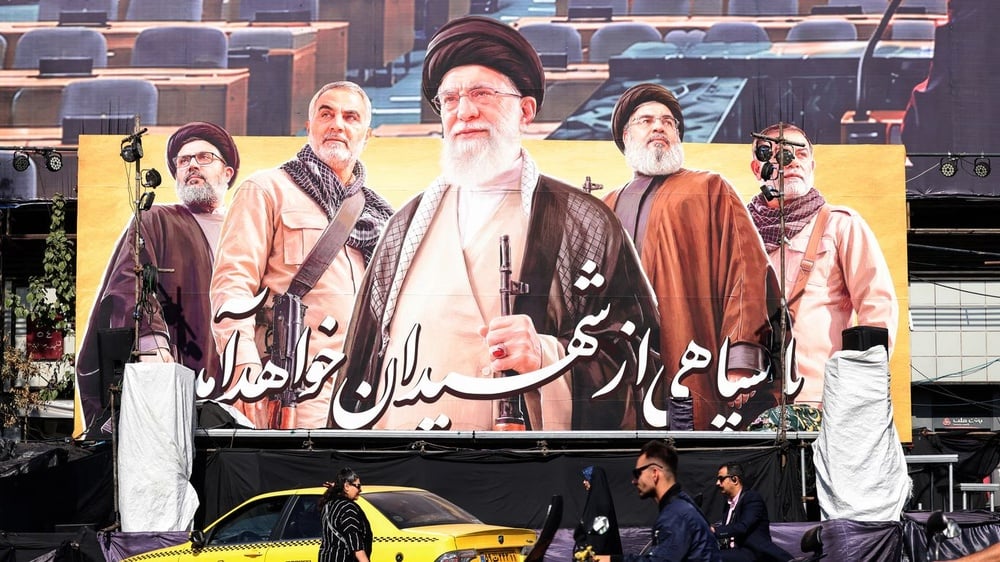

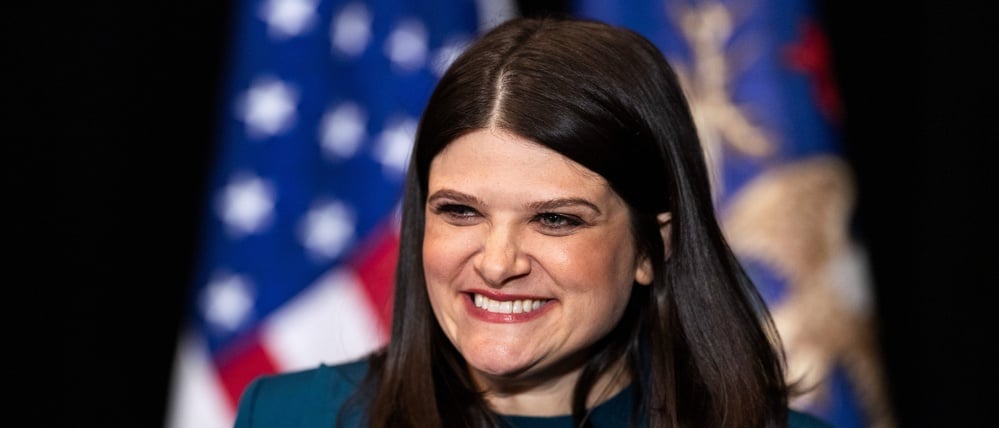
2026 © Helium Trades
Privacy Policy & Disclosure
* Disclaimer: Nothing on this website constitutes investment advice, performance data or any recommendation that any particular security, portfolio of securities, transaction or investment strategy is suitable for any specific person. Helium Trades is not responsible in any way for the accuracy
of any model predictions or price data. Any mention of a particular security and related prediction data is not a recommendation to buy or sell that security. Investments in securities involve the risk of loss. Past performance is no guarantee of future results. Helium Trades is not responsible for any of your investment decisions,
you should consult a financial expert before engaging in any transaction.
Helium Research Assistant

How can I help you today?
Ask any question about this page.