See whether Helium helps you make better-informed decisions. Try every Pro Trader feature for 30 days. No credit card required.
Try every Pro Trader feature for 30 days. No credit card required.
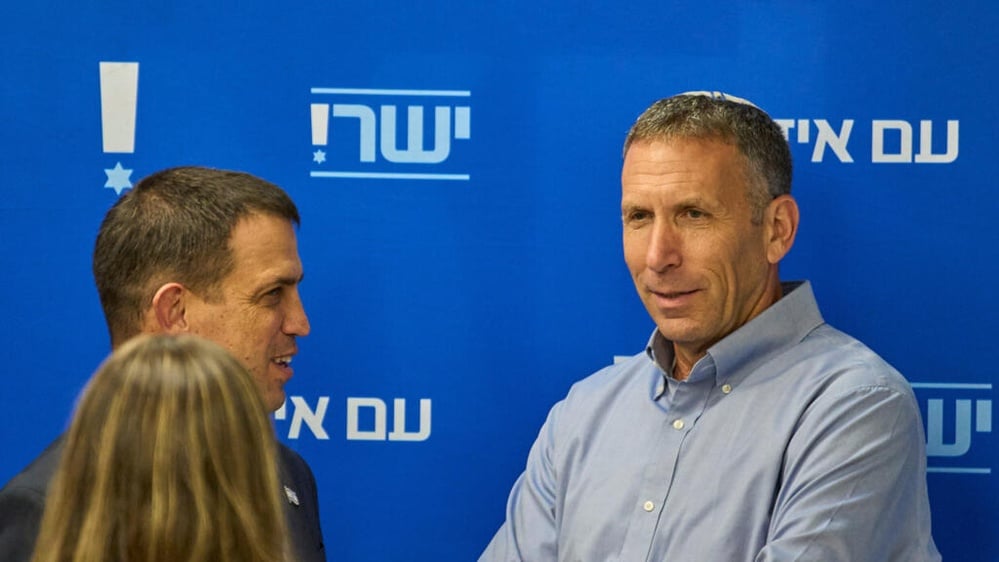
November 17, 2026 · 0 shares
Publisher framing favors the anti-Netanyahu camp by casting the speaker vote as a blow to a 'divisive' leader and a 'hard-right government,' while mildly sensationalizing the political contest.
Helium Analysis
Limitations: Article text includes duplicated headline/snippet and subscription boilerplate; no author byline or email is supplied, and some claims rely on vague 'reportedly' attribution.
·
10 of 56 available dimensions scored; omitted dimensions are not treated as neutral.
·
Verified supporting quotes for 10 of 10 scored dimensions.
Claim: Publisher framing tilts against Netanyahu and Israel's hard right through negative descriptors and emphasis on Arab-majority anger at his government.
“divisive veteran leader” · exact text match
“hard-right government” · exact text match
Why: These are the publisher's own evaluative labels, and they align the report with the anti-Netanyahu/liberal side of Israeli politics.
Claim: The report uses mildly subjective evaluative language in otherwise factual political reporting.
“divisive veteran leader” · exact text match
“explosive media report” · exact text match
Why: Both phrases are the publisher's own characterizations, adding evaluative and dramatic color.
Claim: Dramatic wording and headline-style framing mildly sensationalize the political outcome.
“in blow for Netanyahu” · exact text match
“explosive media report” · exact text match
Why: The phrases heighten the stakes and drama beyond neutral procedural description.
Claim: Interpretive and evaluative framing goes modestly beyond straight factual description.
“a first step towards rolling back the legacy of the country's divisive veteran leader” · exact text match
Why: This sentence combines factual reporting with an evaluative characterization of Netanyahu and the vote's significance.
Claim: The article is entirely focused on Israeli parliamentary politics, coalition power, and party leaders.
“Israeli lawmakers on Tuesday elected a parliament speaker from the camp opposed to caretaker prime minister Benjamin Netanyahu” · exact text match
Why: The subject, sourcing, and framing are all political.
Claim: The tone toward Netanyahu is mildly negative, while procedural facts are reported neutrally.
“divisive veteran leader” · exact text match
“enraged over corruption charges against him” · exact text match
Why: The publisher's own word choices cast Netanyahu negatively.
Claim: The article has moderate credibility through named vote totals, attributed quotes, and an official statement, but some sourcing is vague.
“Sixty six lawmakers out of 120 voted in favour of Matan Kahana” · exact text match
“reportedly been urging US President Donald Trump to resume war on Iran” · exact text match
Why: Concrete vote figures and attributed statements support credibility, while 'reportedly' marks an unverified claim.
Claim: The report includes limited forecasting about the speaker change enabling legislative blows before a government is formed.
“he has an opportunity to deal serious blows to Netanyahu's legislative agenda even before a possible government is formed” · exact text match
Why: The language is hedged ('has an opportunity') but still forecasts political effects.
Claim: Loaded descriptors and selective emphasis mildly steer interpretation against Netanyahu.
“divisive veteran leader” · exact text match
“hard-right government” · exact text match
Why: These loaded terms frame the subject negatively, though the article still includes attributed counter-reactions.
Claim: The report shows fair-access and verification signals by quoting both camps and including an official statement that qualifies fraud allegations.
“At this stage, there is no evidence that bribes were paid to voters on a scale that could have affected the election results” · exact text match
Why: Including a countervailing official statement and attributed reactions indicates moderate internal fairness.
Article text includes duplicated headline/snippet and subscription boilerplate; no author byline or email is supplied, and some claims rely on vague 'reportedly' attribution.
Framing is largely procedural and quote-driven, but modestly sympathetic to the Eisenkot-led bloc by casting the speaker vote as a step forward and describing Netanyahu-allied attacks on Arab-party cooperation as delegitimization.
Helium Analysis
Limitations: The supplied text includes repeated headline/byline fragments and promotional footer material; analysis is limited to the substantive parliamentary report.
·
7 of 56 available dimensions scored; omitted dimensions are not treated as neutral.
·
Verified supporting quotes for 4 of 7 scored dimensions.
Claim: The report uses explicitly ideological labels for right-wing actors and frames Netanyahu-bloc criticism of Arab-party cooperation as delegitimization.
“far-right National Security Minister Itamar Ben Gvir” · exact text match
“a broader effort by Netanyahu’s bloc to delegitimize cooperation with Arab parties” · exact text match
Why: This framing casts the Netanyahu bloc’s conduct negatively while using ideological labels for right-wing actors, indicating a modest liberal/anti-right tilt.
Claim: The report relies on specific vote counts and attributed sourcing rather than subjective narration.
“The Knesset voted 66-52 on Tuesday night to elect Yashar MK Matan Kahana as its new speaker” · exact text match
“Ynet reported that the Eisenkot bloc promised not to advance the repeal of judicial overhaul laws until Monday” · exact text match
Why: Specific tallies and attributable sourcing indicate an objective, reportorial mode.
Claim: The report is primarily descriptive, reporting votes, procedural steps, and attributed statements rather than prescribing outcomes.
“The voting was held in two separate, open ballots” · exact text match
“The Knesset later voted 38-15 to appoint nine deputy speakers” · not found in supplied text
Why: The account focuses on procedural events and attributed reactions rather than the publisher’s recommendations.
Claim: The report concerns parliamentary coalition politics and leadership selection.
“The Knesset voted 66-52 on Tuesday night to elect Yashar MK Matan Kahana as its new speaker” · exact text match
Why: The central subject is a Knesset speaker election and bloc politics, making the content highly political.
Claim: The report uses specific vote tallies, named attribution, and sourcing from other outlets.
“Ynet reported that the Eisenkot bloc promised not to advance the repeal of judicial overhaul laws until Monday” · exact text match
“A statement from Likud said Kahana was “unilaterally appointed with the votes of terror supporters”” · not found in supplied text
Why: Named sourcing and specific tallies indicate a credible reportorial presentation.
Claim: The report gives attributed voice to both the winning bloc’s pledges and the Likud-led opposition’s sharp criticism.
““I have every hope that the government that is formed will work toward the necessary corrections to the system of checks and balances between the three branches of government, with broad consensus.” · exact text match
“A statement from Likud said Kahana was “unilaterally appointed with the votes of terror supporters”” · not found in supplied text
Why: Including both sides with named attribution supports a high-integrity, fair-reporting classification.
Claim: The report supplies procedural and institutional context for the speaker vote.
“The Knesset speaker plays a central role in determining the parliament’s legislative agenda” · exact text match
Why: Institutional context and detailed vote mechanics support a high intelligence rating.
The supplied text includes repeated headline/byline fragments and promotional footer material; analysis is limited to the substantive parliamentary report.
November 17, 2026 · 0 shares
Coverage frames the speaker election as a potential check on Netanyahu, using evaluative labels such as 'hard-right' and 'contentious' alongside attributed vote counts and conditional forecasts.
Helium Analysis
Limitations: The supplied text is repetitive and includes a related-headlines list, so scoring focuses on the main news report and treats linked headlines as page chrome.
·
12 of 56 available dimensions scored; omitted dimensions are not treated as neutral.
·
Verified supporting quotes for 12 of 12 scored dimensions.
Claim: The report uses left-of-center evaluative framing toward Netanyahu's right-wing government and judicial overhaul.
“Netanyahu’s hard-right government” · exact text match
“sweeping reforms to reduce the independence of the judiciary” · exact text match
Why: These word choices criticize the right-wing government and defend judicial independence, consistent with a left-leaning framing.
Claim: Political control over courts and inquiries is framed as a threat to independent oversight.
“sweeping reforms to reduce the independence of the judiciary” · exact text match
“has refused an independent probe, instead proposing one whose members would be chosen by politicians” · exact text match
Why: The wording favors independent judicial and investigative institutions over political control, an anti-authoritarian framing.
Claim: The report is largely factual but includes evaluative mental-state language.
“who has been enraged over corruption charges against him” · exact text match
“Netanyahu’s hard-right government” · exact text match
Why: Subjective descriptors appear within an otherwise attributed, fact-based account.
Claim: The report presents procedural facts and vote counts without sensational language.
“receiving 66 votes in the 120-member chamber” · exact text match
“The vote took place weeks after October 27 parliamentary elections” · exact text match
Why: Neutral procedural detail and precise figures support an objective rather than sensational presentation.
Claim: The report narrates developments and attributed intentions rather than prescribing a course of action.
“was voted in on Tuesday, receiving 66 votes in the 120-member chamber” · exact text match
“is expected as soon as Wednesday to start the process of undoing much of Netanyahu’s domestic agenda” · exact text match
Why: It describes electoral and parliamentary events without explicit advocacy.
Claim: Publisher-worded evaluations add opinion to the political reporting.
“Netanyahu’s hard-right government” · exact text match
“who has been enraged over corruption charges against him that could land him in prison if he loses power” · exact text match
Why: These characterizations go beyond bare vote reporting and signal a critical perspective.
Claim: The content is centrally focused on parliamentary politics, coalition power, and policy control.
“Israeli lawmakers have elected Matan Kahana as the new parliament speaker” · exact text match
“Eisenkot’s wide-ranging bloc secured 48 seats, while Netanyahu’s finished with 53” · exact text match
Why: The report's subject, sources, and context are explicitly political.
Claim: The report's wording reflects a critical view of Netanyahu's right-wing governance and judicial reforms.
“hard-right government” · exact text match
“sweeping reforms to reduce the independence of the judiciary” · exact text match
Why: The selection of terms signals an ideological perspective, though the article remains largely event-driven.
Claim: Named actors, vote counts, direct quotes, and hedging support the report's credibility.
“Kahana, an ally of Gadi Eisenkot – the party leader currently working to form the next government and replace Netanyahu – was voted in on Tuesday, receiving 66 votes in the 120-member chamber.” · exact text match
“Netanyahu, who has reportedly been urging US President Donald Trump to resume the war on Iran, has talked up the threat from Tehran as he insists on the need for a unity government.” · exact text match
Why: Specific figures and attributions, including 'reportedly,' indicate sourcing and uncertainty, though evaluative language qualifies it.
Claim: The report includes forward-looking expectations about legislative consequences.
“is expected as soon as Wednesday to start the process of undoing much of Netanyahu’s domestic agenda” · exact text match
“he has an opportunity to deal serious blows to Netanyahu’s legislative agenda even before a possible government is formed” · exact text match
Why: These are conditional forecasts and expectations rather than completed outcomes.
Claim: The report includes opposing vote totals and direct quotation, though loaded descriptions qualify fairness.
“Netanyahu’s Likud party had put forward Ofir Katz as its own candidate.
He received 52 votes”
· exact text match
“I will be a Knesset speaker for everyone, irrespective of race, religion or gender” · exact text match
Why: Balanced vote figures and direct attribution are honesty signals; evaluative adjectives slightly reduce the score.
Claim: The report explains the institutional significance of the speaker role and situates the vote in coalition arithmetic.
“The Israel parliament speaker is an important office given that it sets the timetable for parliamentary business” · exact text match
“Eisenkot’s wide-ranging bloc secured 48 seats, while Netanyahu’s finished with 53” · exact text match
Why: It provides contextual explanation and specific political data, supporting an above-average intelligence score.
The supplied text is repetitive and includes a related-headlines list, so scoring focuses on the main news report and treats linked headlines as page chrome.
November 17, 2026 · 0 shares
Publisher framing favors the anti-Netanyahu camp by casting the speaker vote as a blow to a 'divisive' leader and a 'hard-right government,' while mildly sensationalizing the political contest.
Helium Analysis
Limitations: Article text includes duplicated headline/snippet and subscription boilerplate; no author byline or email is supplied, and some claims rely on vague 'reportedly' attribution.
·
10 of 56 available dimensions scored; omitted dimensions are not treated as neutral.
·
Verified supporting quotes for 10 of 10 scored dimensions.
Claim: Publisher framing tilts against Netanyahu and Israel's hard right through negative descriptors and emphasis on Arab-majority anger at his government.
“divisive veteran leader” · exact text match
“hard-right government” · exact text match
Why: These are the publisher's own evaluative labels, and they align the report with the anti-Netanyahu/liberal side of Israeli politics.
Claim: The report uses mildly subjective evaluative language in otherwise factual political reporting.
“divisive veteran leader” · exact text match
“explosive media report” · exact text match
Why: Both phrases are the publisher's own characterizations, adding evaluative and dramatic color.
Claim: Dramatic wording and headline-style framing mildly sensationalize the political outcome.
“in blow for Netanyahu” · exact text match
“explosive media report” · exact text match
Why: The phrases heighten the stakes and drama beyond neutral procedural description.
Claim: Interpretive and evaluative framing goes modestly beyond straight factual description.
“a first step towards rolling back the legacy of the country's divisive veteran leader” · exact text match
Why: This sentence combines factual reporting with an evaluative characterization of Netanyahu and the vote's significance.
Claim: The article is entirely focused on Israeli parliamentary politics, coalition power, and party leaders.
“Israeli lawmakers on Tuesday elected a parliament speaker from the camp opposed to caretaker prime minister Benjamin Netanyahu” · exact text match
Why: The subject, sourcing, and framing are all political.
Claim: The tone toward Netanyahu is mildly negative, while procedural facts are reported neutrally.
“divisive veteran leader” · exact text match
“enraged over corruption charges against him” · exact text match
Why: The publisher's own word choices cast Netanyahu negatively.
Claim: The article has moderate credibility through named vote totals, attributed quotes, and an official statement, but some sourcing is vague.
“Sixty six lawmakers out of 120 voted in favour of Matan Kahana” · exact text match
“reportedly been urging US President Donald Trump to resume war on Iran” · exact text match
Why: Concrete vote figures and attributed statements support credibility, while 'reportedly' marks an unverified claim.
Claim: The report includes limited forecasting about the speaker change enabling legislative blows before a government is formed.
“he has an opportunity to deal serious blows to Netanyahu's legislative agenda even before a possible government is formed” · exact text match
Why: The language is hedged ('has an opportunity') but still forecasts political effects.
Claim: Loaded descriptors and selective emphasis mildly steer interpretation against Netanyahu.
“divisive veteran leader” · exact text match
“hard-right government” · exact text match
Why: These loaded terms frame the subject negatively, though the article still includes attributed counter-reactions.
Claim: The report shows fair-access and verification signals by quoting both camps and including an official statement that qualifies fraud allegations.
“At this stage, there is no evidence that bribes were paid to voters on a scale that could have affected the election results” · exact text match
Why: Including a countervailing official statement and attributed reactions indicates moderate internal fairness.
Article text includes duplicated headline/snippet and subscription boilerplate; no author byline or email is supplied, and some claims rely on vague 'reportedly' attribution.
November 22, 2026 · 0 shares
Framing is largely neutral and procedural, presenting coalition conditions and attributed statements from Yashar, Likud, and Eisenkot without editorial endorsement.
Helium Analysis
Limitations: The supplied text mixes the article body with promotional blurbs and related-headline fragments; analysis was limited to the substantive coalition-report paragraphs.
·
10 of 56 available dimensions scored; omitted dimensions are not treated as neutral.
·
Verified supporting quotes for 9 of 10 scored dimensions.
Claim: The report presents both Netanyahu’s and Eisenkot’s blocs with balanced seat totals and attributed positions rather than endorsing a left-right agenda.
“Netanyahu's camp finished on 53 seats, while the opposition, led by the Yashar party, ended on 48.” · exact text match
Why: Symmetrical seat counts and attributed party statements support a neutral left-right framing.
Claim: The report attributes claims to parties and avoids un-attributed evaluative narration.
“his party said on Saturday” · exact text match
“Likud on Saturday outlined its position on forming a national unity government” · exact text match
Why: Explicit attribution to both sides and factual narration indicate objective rather than subjective framing.
Claim: The report uses measured, procedural language rather than sensational language.
“The talks are due to begin on Sunday and represent a "sincere and genuine effort to form a government that is as broad as possible," the centrist Yashar party said.” · exact text match
Why: The lead describes scheduled talks and attributed aims without alarmist or dramatic wording.
Claim: The report describes the coalition situation and does not prescribe what actors should do.
“Gadi Eisenkot has until early December to form a new government after both his and Netanyahu's blocs fell short of a majority in Israel's October legislative elections.” · exact text match
Why: The wording reports deadlines and seat outcomes rather than issuing recommendations.
Claim: The article is substantively about Israeli coalition politics and elections.
“Gadi Eisenkot has invited the right-wing Likud party of caretaker Prime Minister Benjamin Netanyahu for "marathon" coalition talks as he continues to work to form Israel's next government, his party said on Saturday.” · not found in supplied text
Why: The entire substantive report concerns coalition negotiations, party blocs, and Knesset seats.
Claim: The report’s language is neutral rather than emotionally charged.
“The talks are due to begin on Sunday and represent a "sincere and genuine effort to form a government that is as broad as possible," the centrist Yashar party said.” · exact text match
Why: The political statements are quoted, and the surrounding narration remains procedural.
Claim: The report provides specific seat totals, procedural rules, and attributed statements.
“Netanyahu's camp finished on 53 seats, while the opposition, led by the Yashar party, ended on 48.” · exact text match
“In Israel, a candidate tasked with forming a government has 28 days to carry out the job.” · exact text match
Why: Concrete numbers, rules, and source attribution make the account internally verifiable and credible within the supplied text.
Claim: The report relies on procedural and numerical context rather than emotive or irrational reasoning.
“In Israel, a candidate tasked with forming a government has 28 days to carry out the job.” · exact text match
Why: The procedural rule is factual and explanatory, supporting a rational rather than irrational presentation.
Claim: The report attributes statements to sources and includes both Yashar’s and Likud’s positions.
“his party said on Saturday” · exact text match
“Eisenkot wrote in a post on social media on Friday” · exact text match
Why: Consistent attribution and inclusion of the opposing party’s conditions indicate fair handling.
Claim: The report supplies explanatory procedural context about government formation.
“In Israel, a candidate tasked with forming a government has 28 days to carry out the job.” · exact text match
Why: Including the legal timeline and extension rule shows contextual intelligence.
The supplied text mixes the article body with promotional blurbs and related-headline fragments; analysis was limited to the substantive coalition-report paragraphs.
November 17, 2026 · 0 shares
The report heavily attributes its claims to KAN, Channel 12, and unnamed opposition-bloc sources while adopting “election interference” as a central premise and omitting any Likud response.
Shin Bet is Israel’s domestic security service, Mossad is its foreign intelligence service, and the Knesset is Israel’s parliament.
Helium Analysis
Limitations: The supplied text is truncated and duplicated and includes unrelated sidebar headlines; bias scores are based only on the main article content.
·
10 of 56 available dimensions scored; omitted dimensions are not treated as neutral.
·
Verified supporting quotes for 10 of 10 scored dimensions.
Claim: The report is largely attributed to named broadcasters and sources rather than presented as the publisher's direct judgment.
“sources in Yashar party leader Gadi Eisenkot’s bloc told Israeli public broadcaster KAN on Monday.” · exact text match
Why: Repeated attribution to KAN and Channel 12 indicates an objective, reportorial mode, though the interference framing is assertive.
Claim: The language is measured and avoids sensational punctuation, with dramatic phrasing confined to quoted source characterizations.
“They called the events a “coup attempt” and demanded the removal of Shin Bet chief David Zini and Mossad chief Roman Gofman.” · exact text match
Why: The sensational phrase is attributed to sources, not adopted in the publisher's voice; overall tone is restrained.
Claim: The report covers a high-stakes coalition rupture tied to alleged election interference.
“Revelations of election interference by Israeli Prime Minister Benjamin Netanyahu’s office had effectively ruled out the possibility of forming a unity government with his Likud party” · exact text match
Why: Coalition formation and intelligence allegations are consequential political developments, making the content notably interesting.
Claim: The report describes political developments and source demands rather than prescribing a course of action.
“They called the events a “coup attempt” and demanded the removal of Shin Bet chief David Zini and Mossad chief Roman Gofman.” · exact text match
Why: Demands are attributed to the bloc, not issued by the publisher; the article remains descriptive.
Claim: Most content is factual reporting, but some framing reflects source-based conclusions.
“sources in Yashar party leader Gadi Eisenkot’s bloc told Israeli public broadcaster KAN on Monday.” · exact text match
Why: The article relies heavily on attributed claims rather than original opinion, keeping opinion bias low.
Claim: The article is centered on Israeli coalition politics and a dispute between opposition and Netanyahu-led camps.
“Israeli opposition bloc led by Eisenkot rules out unity government with Netanyahu: Report.” · exact text match
Why: The subject is explicitly about government formation and political actors, making it highly political.
Claim: The article presents the unity government as “effectively ruled out” based on unnamed bloc sources.
“Revelations of election interference by Israeli Prime Minister Benjamin Netanyahu’s office had effectively ruled out the possibility of forming a unity government with his Likud party, sources in Yashar party leader Gadi Eisenkot’s bloc told Israeli public broadcaster KAN on Monday.” · exact text match
Why: The strong conclusion rests on sources and reported allegations rather than direct evidence, indicating confidence beyond the supplied support.
Claim: The report provides named broadcasters and attributed accounts but lacks a response from Netanyahu’s Likud and does not independently verify the central interference claim.
“sources in Yashar party leader Gadi Eisenkot’s bloc told Israeli public broadcaster KAN on Monday.” · exact text match
“Channel 12 reported Sunday that Netanyahu’s office supplied information that prompted police to arrest United Arab List (Ra’am) activists on election day, Oct.
27.”
· exact text match
Why: Attribution and specificity support credibility, but reliance on secondary reports and one-sided sourcing limit it.
Claim: The publisher attributes allegations to KAN, Channel 12, and an investigation, providing source transparency.
“Channel 12 reported Sunday that Netanyahu’s office supplied information that prompted police to arrest United Arab List (Ra’am) activists on election day, Oct.
27.”
· exact text match
“According to the investigation, police proceeded despite an intelligence officer’s warning to check the source’s reliability first.” · exact text match
Why: Multiple attributed sources and explicit investigation reference show fair reporting practices, though no Likud response is included.
Claim: The article is organized around a clear central development with supporting reported details.
“Eisenkot is working to form Israel’s next government.
His bloc also includes parties led by opposition politicians Naftali Bennett, Yair Golan and Avigdor Lieberman.”
· exact text match
Why: It presents coherent context and multiple attributed points, indicating above-average article intelligence.
The supplied text is truncated and duplicated and includes unrelated sidebar headlines; bias scores are based only on the main article content.
November 18, 2026 · 0 shares
The brief is factual and attribution-based, but foregrounds the Eisenkot-not-informed detail and the PMO's security-briefing characterization, framing the meeting as politically delicate.
Helium Analysis
Limitations: The supplied text is only a short headline/snippet, limiting assessment of full article framing and sourcing.
·
2 of 56 available dimensions scored; omitted dimensions are not treated as neutral.
·
Verified supporting quotes for 2 of 2 scored dimensions.
Claim: The report is mostly factual and attributes its characterizations to named actors.
“Prime Minister's Office calls it a security briefing” · exact text match
“Bennett urges allies to exhaust the possibility of a unity government with Likud” · exact text match
Why: Both statements report attributed actions or labels rather than the reporter's evaluative opinion.
Claim: The report is centrally about Israeli coalition and party politics.
“Bennett visits Netanyahu's Knesset office ahead of Eisenkot bloc meeting” · exact text match
“Bennett urges allies to exhaust the possibility of a unity government with Likud” · exact text match
Why: The actors, venue, and described negotiations are explicitly political.
The supplied text is only a short headline/snippet, limiting assessment of full article framing and sourcing.
November 22, 2026 · 0 shares
Framing is largely neutral and procedural, presenting coalition conditions and attributed statements from Yashar, Likud, and Eisenkot without editorial endorsement.
Helium Analysis
Limitations: The supplied text mixes the article body with promotional blurbs and related-headline fragments; analysis was limited to the substantive coalition-report paragraphs.
·
10 of 56 available dimensions scored; omitted dimensions are not treated as neutral.
·
Verified supporting quotes for 9 of 10 scored dimensions.
Claim: The report presents both Netanyahu’s and Eisenkot’s blocs with balanced seat totals and attributed positions rather than endorsing a left-right agenda.
“Netanyahu's camp finished on 53 seats, while the opposition, led by the Yashar party, ended on 48.” · exact text match
Why: Symmetrical seat counts and attributed party statements support a neutral left-right framing.
Claim: The report attributes claims to parties and avoids un-attributed evaluative narration.
“his party said on Saturday” · exact text match
“Likud on Saturday outlined its position on forming a national unity government” · exact text match
Why: Explicit attribution to both sides and factual narration indicate objective rather than subjective framing.
Claim: The report uses measured, procedural language rather than sensational language.
“The talks are due to begin on Sunday and represent a "sincere and genuine effort to form a government that is as broad as possible," the centrist Yashar party said.” · exact text match
Why: The lead describes scheduled talks and attributed aims without alarmist or dramatic wording.
Claim: The report describes the coalition situation and does not prescribe what actors should do.
“Gadi Eisenkot has until early December to form a new government after both his and Netanyahu's blocs fell short of a majority in Israel's October legislative elections.” · exact text match
Why: The wording reports deadlines and seat outcomes rather than issuing recommendations.
Claim: The article is substantively about Israeli coalition politics and elections.
“Gadi Eisenkot has invited the right-wing Likud party of caretaker Prime Minister Benjamin Netanyahu for "marathon" coalition talks as he continues to work to form Israel's next government, his party said on Saturday.” · not found in supplied text
Why: The entire substantive report concerns coalition negotiations, party blocs, and Knesset seats.
Claim: The report’s language is neutral rather than emotionally charged.
“The talks are due to begin on Sunday and represent a "sincere and genuine effort to form a government that is as broad as possible," the centrist Yashar party said.” · exact text match
Why: The political statements are quoted, and the surrounding narration remains procedural.
Claim: The report provides specific seat totals, procedural rules, and attributed statements.
“Netanyahu's camp finished on 53 seats, while the opposition, led by the Yashar party, ended on 48.” · exact text match
“In Israel, a candidate tasked with forming a government has 28 days to carry out the job.” · exact text match
Why: Concrete numbers, rules, and source attribution make the account internally verifiable and credible within the supplied text.
Claim: The report relies on procedural and numerical context rather than emotive or irrational reasoning.
“In Israel, a candidate tasked with forming a government has 28 days to carry out the job.” · exact text match
Why: The procedural rule is factual and explanatory, supporting a rational rather than irrational presentation.
Claim: The report attributes statements to sources and includes both Yashar’s and Likud’s positions.
“his party said on Saturday” · exact text match
“Eisenkot wrote in a post on social media on Friday” · exact text match
Why: Consistent attribution and inclusion of the opposing party’s conditions indicate fair handling.
Claim: The report supplies explanatory procedural context about government formation.
“In Israel, a candidate tasked with forming a government has 28 days to carry out the job.” · exact text match
Why: Including the legal timeline and extension rule shows contextual intelligence.
The supplied text mixes the article body with promotional blurbs and related-headline fragments; analysis was limited to the substantive coalition-report paragraphs.
November 17, 2026 · 0 shares
Publisher framing favors the anti-Netanyahu camp by casting the speaker vote as a blow to a 'divisive' leader and a 'hard-right government,' while mildly sensationalizing the political contest.
Helium Analysis
Limitations: Article text includes duplicated headline/snippet and subscription boilerplate; no author byline or email is supplied, and some claims rely on vague 'reportedly' attribution.
·
10 of 56 available dimensions scored; omitted dimensions are not treated as neutral.
·
Verified supporting quotes for 10 of 10 scored dimensions.
Claim: Publisher framing tilts against Netanyahu and Israel's hard right through negative descriptors and emphasis on Arab-majority anger at his government.
“divisive veteran leader” · exact text match
“hard-right government” · exact text match
Why: These are the publisher's own evaluative labels, and they align the report with the anti-Netanyahu/liberal side of Israeli politics.
Claim: The report uses mildly subjective evaluative language in otherwise factual political reporting.
“divisive veteran leader” · exact text match
“explosive media report” · exact text match
Why: Both phrases are the publisher's own characterizations, adding evaluative and dramatic color.
Claim: Dramatic wording and headline-style framing mildly sensationalize the political outcome.
“in blow for Netanyahu” · exact text match
“explosive media report” · exact text match
Why: The phrases heighten the stakes and drama beyond neutral procedural description.
Claim: Interpretive and evaluative framing goes modestly beyond straight factual description.
“a first step towards rolling back the legacy of the country's divisive veteran leader” · exact text match
Why: This sentence combines factual reporting with an evaluative characterization of Netanyahu and the vote's significance.
Claim: The article is entirely focused on Israeli parliamentary politics, coalition power, and party leaders.
“Israeli lawmakers on Tuesday elected a parliament speaker from the camp opposed to caretaker prime minister Benjamin Netanyahu” · exact text match
Why: The subject, sourcing, and framing are all political.
Claim: The tone toward Netanyahu is mildly negative, while procedural facts are reported neutrally.
“divisive veteran leader” · exact text match
“enraged over corruption charges against him” · exact text match
Why: The publisher's own word choices cast Netanyahu negatively.
Claim: The article has moderate credibility through named vote totals, attributed quotes, and an official statement, but some sourcing is vague.
“Sixty six lawmakers out of 120 voted in favour of Matan Kahana” · exact text match
“reportedly been urging US President Donald Trump to resume war on Iran” · exact text match
Why: Concrete vote figures and attributed statements support credibility, while 'reportedly' marks an unverified claim.
Claim: The report includes limited forecasting about the speaker change enabling legislative blows before a government is formed.
“he has an opportunity to deal serious blows to Netanyahu's legislative agenda even before a possible government is formed” · exact text match
Why: The language is hedged ('has an opportunity') but still forecasts political effects.
Claim: Loaded descriptors and selective emphasis mildly steer interpretation against Netanyahu.
“divisive veteran leader” · exact text match
“hard-right government” · exact text match
Why: These loaded terms frame the subject negatively, though the article still includes attributed counter-reactions.
Claim: The report shows fair-access and verification signals by quoting both camps and including an official statement that qualifies fraud allegations.
“At this stage, there is no evidence that bribes were paid to voters on a scale that could have affected the election results” · exact text match
Why: Including a countervailing official statement and attributed reactions indicates moderate internal fairness.
Article text includes duplicated headline/snippet and subscription boilerplate; no author byline or email is supplied, and some claims rely on vague 'reportedly' attribution.
Framing is largely procedural and quote-driven, but modestly sympathetic to the Eisenkot-led bloc by casting the speaker vote as a step forward and describing Netanyahu-allied attacks on Arab-party cooperation as delegitimization.
Helium Analysis Limitations: The supplied text includes repeated headline/byline fragments and promotional footer material; analysis is limited to the substantive parliamentary report. · 7 of 56 available dimensions scored; omitted dimensions are not treated as neutral. · Verified supporting quotes for 4 of 7 scored dimensions.
Claim: The report uses explicitly ideological labels for right-wing actors and frames Netanyahu-bloc criticism of Arab-party cooperation as delegitimization.
“far-right National Security Minister Itamar Ben Gvir” · exact text match
“a broader effort by Netanyahu’s bloc to delegitimize cooperation with Arab parties” · exact text match
Why: This framing casts the Netanyahu bloc’s conduct negatively while using ideological labels for right-wing actors, indicating a modest liberal/anti-right tilt.
Claim: The report relies on specific vote counts and attributed sourcing rather than subjective narration.
“The Knesset voted 66-52 on Tuesday night to elect Yashar MK Matan Kahana as its new speaker” · exact text match
“Ynet reported that the Eisenkot bloc promised not to advance the repeal of judicial overhaul laws until Monday” · exact text match
Why: Specific tallies and attributable sourcing indicate an objective, reportorial mode.
Claim: The report is primarily descriptive, reporting votes, procedural steps, and attributed statements rather than prescribing outcomes.
“The voting was held in two separate, open ballots” · exact text match
“The Knesset later voted 38-15 to appoint nine deputy speakers” · not found in supplied text
Why: The account focuses on procedural events and attributed reactions rather than the publisher’s recommendations.
Claim: The report concerns parliamentary coalition politics and leadership selection.
“The Knesset voted 66-52 on Tuesday night to elect Yashar MK Matan Kahana as its new speaker” · exact text match
Why: The central subject is a Knesset speaker election and bloc politics, making the content highly political.
Claim: The report uses specific vote tallies, named attribution, and sourcing from other outlets.
“Ynet reported that the Eisenkot bloc promised not to advance the repeal of judicial overhaul laws until Monday” · exact text match
“A statement from Likud said Kahana was “unilaterally appointed with the votes of terror supporters”” · not found in supplied text
Why: Named sourcing and specific tallies indicate a credible reportorial presentation.
Claim: The report gives attributed voice to both the winning bloc’s pledges and the Likud-led opposition’s sharp criticism.
““I have every hope that the government that is formed will work toward the necessary corrections to the system of checks and balances between the three branches of government, with broad consensus.” · exact text match
“A statement from Likud said Kahana was “unilaterally appointed with the votes of terror supporters”” · not found in supplied text
Why: Including both sides with named attribution supports a high-integrity, fair-reporting classification.
Claim: The report supplies procedural and institutional context for the speaker vote.
“The Knesset speaker plays a central role in determining the parliament’s legislative agenda” · exact text match
Why: Institutional context and detailed vote mechanics support a high intelligence rating.
The supplied text includes repeated headline/byline fragments and promotional footer material; analysis is limited to the substantive parliamentary report.
November 17, 2026 · 0 shares
Publisher framing favors the anti-Netanyahu camp by casting the speaker vote as a blow to a 'divisive' leader and a 'hard-right government,' while mildly sensationalizing the political contest.
Helium Analysis Limitations: Article text includes duplicated headline/snippet and subscription boilerplate; no author byline or email is supplied, and some claims rely on vague 'reportedly' attribution. · 10 of 56 available dimensions scored; omitted dimensions are not treated as neutral. · Verified supporting quotes for 10 of 10 scored dimensions.
Claim: Publisher framing tilts against Netanyahu and Israel's hard right through negative descriptors and emphasis on Arab-majority anger at his government.
“divisive veteran leader” · exact text match
“hard-right government” · exact text match
Why: These are the publisher's own evaluative labels, and they align the report with the anti-Netanyahu/liberal side of Israeli politics.
Claim: The report uses mildly subjective evaluative language in otherwise factual political reporting.
“divisive veteran leader” · exact text match
“explosive media report” · exact text match
Why: Both phrases are the publisher's own characterizations, adding evaluative and dramatic color.
Claim: Dramatic wording and headline-style framing mildly sensationalize the political outcome.
“in blow for Netanyahu” · exact text match
“explosive media report” · exact text match
Why: The phrases heighten the stakes and drama beyond neutral procedural description.
Claim: Interpretive and evaluative framing goes modestly beyond straight factual description.
“a first step towards rolling back the legacy of the country's divisive veteran leader” · exact text match
Why: This sentence combines factual reporting with an evaluative characterization of Netanyahu and the vote's significance.
Claim: The article is entirely focused on Israeli parliamentary politics, coalition power, and party leaders.
“Israeli lawmakers on Tuesday elected a parliament speaker from the camp opposed to caretaker prime minister Benjamin Netanyahu” · exact text match
Why: The subject, sourcing, and framing are all political.
Claim: The tone toward Netanyahu is mildly negative, while procedural facts are reported neutrally.
“divisive veteran leader” · exact text match
“enraged over corruption charges against him” · exact text match
Why: The publisher's own word choices cast Netanyahu negatively.
Claim: The article has moderate credibility through named vote totals, attributed quotes, and an official statement, but some sourcing is vague.
“Sixty six lawmakers out of 120 voted in favour of Matan Kahana” · exact text match
“reportedly been urging US President Donald Trump to resume war on Iran” · exact text match
Why: Concrete vote figures and attributed statements support credibility, while 'reportedly' marks an unverified claim.
Claim: The report includes limited forecasting about the speaker change enabling legislative blows before a government is formed.
“he has an opportunity to deal serious blows to Netanyahu's legislative agenda even before a possible government is formed” · exact text match
Why: The language is hedged ('has an opportunity') but still forecasts political effects.
Claim: Loaded descriptors and selective emphasis mildly steer interpretation against Netanyahu.
“divisive veteran leader” · exact text match
“hard-right government” · exact text match
Why: These loaded terms frame the subject negatively, though the article still includes attributed counter-reactions.
Claim: The report shows fair-access and verification signals by quoting both camps and including an official statement that qualifies fraud allegations.
“At this stage, there is no evidence that bribes were paid to voters on a scale that could have affected the election results” · exact text match
Why: Including a countervailing official statement and attributed reactions indicates moderate internal fairness.
Article text includes duplicated headline/snippet and subscription boilerplate; no author byline or email is supplied, and some claims rely on vague 'reportedly' attribution.
November 17, 2026 · 0 shares
Coverage frames the speaker election as a potential check on Netanyahu, using evaluative labels such as 'hard-right' and 'contentious' alongside attributed vote counts and conditional forecasts.
Helium Analysis Limitations: The supplied text is repetitive and includes a related-headlines list, so scoring focuses on the main news report and treats linked headlines as page chrome. · 12 of 56 available dimensions scored; omitted dimensions are not treated as neutral. · Verified supporting quotes for 12 of 12 scored dimensions.
Claim: The report uses left-of-center evaluative framing toward Netanyahu's right-wing government and judicial overhaul.
“Netanyahu’s hard-right government” · exact text match
“sweeping reforms to reduce the independence of the judiciary” · exact text match
Why: These word choices criticize the right-wing government and defend judicial independence, consistent with a left-leaning framing.
Claim: Political control over courts and inquiries is framed as a threat to independent oversight.
“sweeping reforms to reduce the independence of the judiciary” · exact text match
“has refused an independent probe, instead proposing one whose members would be chosen by politicians” · exact text match
Why: The wording favors independent judicial and investigative institutions over political control, an anti-authoritarian framing.
Claim: The report is largely factual but includes evaluative mental-state language.
“who has been enraged over corruption charges against him” · exact text match
“Netanyahu’s hard-right government” · exact text match
Why: Subjective descriptors appear within an otherwise attributed, fact-based account.
Claim: The report presents procedural facts and vote counts without sensational language.
“receiving 66 votes in the 120-member chamber” · exact text match
“The vote took place weeks after October 27 parliamentary elections” · exact text match
Why: Neutral procedural detail and precise figures support an objective rather than sensational presentation.
Claim: The report narrates developments and attributed intentions rather than prescribing a course of action.
“was voted in on Tuesday, receiving 66 votes in the 120-member chamber” · exact text match
“is expected as soon as Wednesday to start the process of undoing much of Netanyahu’s domestic agenda” · exact text match
Why: It describes electoral and parliamentary events without explicit advocacy.
Claim: Publisher-worded evaluations add opinion to the political reporting.
“Netanyahu’s hard-right government” · exact text match
“who has been enraged over corruption charges against him that could land him in prison if he loses power” · exact text match
Why: These characterizations go beyond bare vote reporting and signal a critical perspective.
Claim: The content is centrally focused on parliamentary politics, coalition power, and policy control.
“Israeli lawmakers have elected Matan Kahana as the new parliament speaker” · exact text match
“Eisenkot’s wide-ranging bloc secured 48 seats, while Netanyahu’s finished with 53” · exact text match
Why: The report's subject, sources, and context are explicitly political.
Claim: The report's wording reflects a critical view of Netanyahu's right-wing governance and judicial reforms.
“hard-right government” · exact text match
“sweeping reforms to reduce the independence of the judiciary” · exact text match
Why: The selection of terms signals an ideological perspective, though the article remains largely event-driven.
Claim: Named actors, vote counts, direct quotes, and hedging support the report's credibility.
“Kahana, an ally of Gadi Eisenkot – the party leader currently working to form the next government and replace Netanyahu – was voted in on Tuesday, receiving 66 votes in the 120-member chamber.” · exact text match
“Netanyahu, who has reportedly been urging US President Donald Trump to resume the war on Iran, has talked up the threat from Tehran as he insists on the need for a unity government.” · exact text match
Why: Specific figures and attributions, including 'reportedly,' indicate sourcing and uncertainty, though evaluative language qualifies it.
Claim: The report includes forward-looking expectations about legislative consequences.
“is expected as soon as Wednesday to start the process of undoing much of Netanyahu’s domestic agenda” · exact text match
“he has an opportunity to deal serious blows to Netanyahu’s legislative agenda even before a possible government is formed” · exact text match
Why: These are conditional forecasts and expectations rather than completed outcomes.
Claim: The report includes opposing vote totals and direct quotation, though loaded descriptions qualify fairness.
“Netanyahu’s Likud party had put forward Ofir Katz as its own candidate. He received 52 votes” · exact text match
“I will be a Knesset speaker for everyone, irrespective of race, religion or gender” · exact text match
Why: Balanced vote figures and direct attribution are honesty signals; evaluative adjectives slightly reduce the score.
Claim: The report explains the institutional significance of the speaker role and situates the vote in coalition arithmetic.
“The Israel parliament speaker is an important office given that it sets the timetable for parliamentary business” · exact text match
“Eisenkot’s wide-ranging bloc secured 48 seats, while Netanyahu’s finished with 53” · exact text match
Why: It provides contextual explanation and specific political data, supporting an above-average intelligence score.
The supplied text is repetitive and includes a related-headlines list, so scoring focuses on the main news report and treats linked headlines as page chrome.
November 22, 2026 · 0 shares
Framing is largely neutral and procedural, presenting coalition conditions and attributed statements from Yashar, Likud, and Eisenkot without editorial endorsement.
Helium Analysis Limitations: The supplied text mixes the article body with promotional blurbs and related-headline fragments; analysis was limited to the substantive coalition-report paragraphs. · 10 of 56 available dimensions scored; omitted dimensions are not treated as neutral. · Verified supporting quotes for 9 of 10 scored dimensions.
Claim: The report presents both Netanyahu’s and Eisenkot’s blocs with balanced seat totals and attributed positions rather than endorsing a left-right agenda.
“Netanyahu's camp finished on 53 seats, while the opposition, led by the Yashar party, ended on 48.” · exact text match
Why: Symmetrical seat counts and attributed party statements support a neutral left-right framing.
Claim: The report attributes claims to parties and avoids un-attributed evaluative narration.
“his party said on Saturday” · exact text match
“Likud on Saturday outlined its position on forming a national unity government” · exact text match
Why: Explicit attribution to both sides and factual narration indicate objective rather than subjective framing.
Claim: The report uses measured, procedural language rather than sensational language.
“The talks are due to begin on Sunday and represent a "sincere and genuine effort to form a government that is as broad as possible," the centrist Yashar party said.” · exact text match
Why: The lead describes scheduled talks and attributed aims without alarmist or dramatic wording.
Claim: The report describes the coalition situation and does not prescribe what actors should do.
“Gadi Eisenkot has until early December to form a new government after both his and Netanyahu's blocs fell short of a majority in Israel's October legislative elections.” · exact text match
Why: The wording reports deadlines and seat outcomes rather than issuing recommendations.
Claim: The article is substantively about Israeli coalition politics and elections.
“Gadi Eisenkot has invited the right-wing Likud party of caretaker Prime Minister Benjamin Netanyahu for "marathon" coalition talks as he continues to work to form Israel's next government, his party said on Saturday.” · not found in supplied text
Why: The entire substantive report concerns coalition negotiations, party blocs, and Knesset seats.
Claim: The report’s language is neutral rather than emotionally charged.
“The talks are due to begin on Sunday and represent a "sincere and genuine effort to form a government that is as broad as possible," the centrist Yashar party said.” · exact text match
Why: The political statements are quoted, and the surrounding narration remains procedural.
Claim: The report provides specific seat totals, procedural rules, and attributed statements.
“Netanyahu's camp finished on 53 seats, while the opposition, led by the Yashar party, ended on 48.” · exact text match
“In Israel, a candidate tasked with forming a government has 28 days to carry out the job.” · exact text match
Why: Concrete numbers, rules, and source attribution make the account internally verifiable and credible within the supplied text.
Claim: The report relies on procedural and numerical context rather than emotive or irrational reasoning.
“In Israel, a candidate tasked with forming a government has 28 days to carry out the job.” · exact text match
Why: The procedural rule is factual and explanatory, supporting a rational rather than irrational presentation.
Claim: The report attributes statements to sources and includes both Yashar’s and Likud’s positions.
“his party said on Saturday” · exact text match
“Eisenkot wrote in a post on social media on Friday” · exact text match
Why: Consistent attribution and inclusion of the opposing party’s conditions indicate fair handling.
Claim: The report supplies explanatory procedural context about government formation.
“In Israel, a candidate tasked with forming a government has 28 days to carry out the job.” · exact text match
Why: Including the legal timeline and extension rule shows contextual intelligence.
The supplied text mixes the article body with promotional blurbs and related-headline fragments; analysis was limited to the substantive coalition-report paragraphs.
The strongest observable framing is a sensational crisis-and-bomb headline that dramatizes coalition negotiations while the body remains a brief factual report.
Helium Analysis Limitations: The brief body does not explain the headline's 'Emergency' bomb reference, and key coalition details rely on unnamed reports, limiting confidence in nuanced bias scoring. · 2 of 56 available dimensions scored; omitted dimensions are not treated as neutral. · Verified supporting quotes for 2 of 2 scored dimensions.
Claim: The headline uses crisis and bomb imagery to dramatize otherwise routine coalition negotiations, though the body is more factual.
“Israel Crisis: Eisenkot-Netanyahu 'Marathon Talks' After Yashar Party Chief Drops 'Emergency' Bomb.” · exact text match
Counterevidence:
“With no party securing an absolute majority, talks and negotiations continue among Israel's major political parties.” · exact text match
Why: The words 'Crisis,' 'Emergency' Bomb,' and 'Marathon Talks' frame coalition talks sensationally.
Claim: The report is entirely focused on Israeli electoral politics and government formation.
“The political deadlock in Israel still hasn't ended, even after weeks of election results.” · exact text match
“Gadi Eisenkot, one of the arch-rivals of Benjamin Netanyahu in the elections, has been tasked to form the next government.” · exact text match
Why: The subject matter is political actors, elections, and coalition talks throughout.
The brief body does not explain the headline's 'Emergency' bomb reference, and key coalition details rely on unnamed reports, limiting confidence in nuanced bias scoring.
November 20, 2026 · 0 shares
The report is mostly attributed and neutral, but it gives space to opposition speculation about Netanyahu’s motives and uses interpretive wording such as 'appear as a warning' and 'appears ready'.
Helium Analysis Limitations: The supplied text is a scraped excerpt with related links and boilerplate; the substantive article is short and has no named author or clear full attribution for some claims. · 5 of 56 available dimensions scored; omitted dimensions are not treated as neutral. · Verified supporting quotes for 5 of 5 scored dimensions.
Claim: The report mostly uses attributed reporting but occasionally interprets Eisenkot’s posture.
“The former military chief’s remarks appear as a warning to his own camp” · exact text match
Why: The phrase 'appear as a warning' is an interpretive characterization rather than a direct quote.
Claim: The report includes limited evaluative language about Eisenkot’s impatience.
“These remarks were the clearest sign yet of Eisenkot’s growing impatience” · exact text match
Why: 'Clearest sign yet' and 'growing impatience' are journalist characterizations beyond bare facts.
Claim: The report is centrally about Israeli coalition politics and government formation.
“Gadi Eisenkot, who has been tasked with forming the next Israeli government, on Friday vowed not to let coalition-building talks drag on as his wide-ranging bloc faces divisions on the way forward.” · exact text match
Why: The main subject is coalition-building and political actors, making the content highly political.
Claim: The report includes direct quotation and specific parliamentary arithmetic.
““I have no intention of letting this drag on. When the time is right, I will bring a new government before the Knesset for its approval, a good government that I will lead,” Eisenkot wrote on X” · exact text match
“Eisenkot’s 48-seat bloc is well short of the 61 needed for a majority in parliament” · exact text match
Why: Direct attribution and concrete seat counts are visible credibility signals, though unnamed opposition claims remain.
Claim: The report relays speculative future scenarios about coalition and military moves.
“Members of Israel’s opposition suspect Netanyahu could launch a new military operation against Iran in order to derail talks and remain in power.” · exact text match
Why: This is an attributed suspicion about a future action, not a confirmed event.
The supplied text is a scraped excerpt with related links and boilerplate; the substantive article is short and has no named author or clear full attribution for some claims.
November 17, 2026 · 0 shares
The report heavily attributes its claims to KAN, Channel 12, and unnamed opposition-bloc sources while adopting “election interference” as a central premise and omitting any Likud response.
Shin Bet is Israel’s domestic security service, Mossad is its foreign intelligence service, and the Knesset is Israel’s parliament.
Helium Analysis Limitations: The supplied text is truncated and duplicated and includes unrelated sidebar headlines; bias scores are based only on the main article content. · 10 of 56 available dimensions scored; omitted dimensions are not treated as neutral. · Verified supporting quotes for 10 of 10 scored dimensions.
Claim: The report is largely attributed to named broadcasters and sources rather than presented as the publisher's direct judgment.
“sources in Yashar party leader Gadi Eisenkot’s bloc told Israeli public broadcaster KAN on Monday.” · exact text match
Why: Repeated attribution to KAN and Channel 12 indicates an objective, reportorial mode, though the interference framing is assertive.
Claim: The language is measured and avoids sensational punctuation, with dramatic phrasing confined to quoted source characterizations.
“They called the events a “coup attempt” and demanded the removal of Shin Bet chief David Zini and Mossad chief Roman Gofman.” · exact text match
Why: The sensational phrase is attributed to sources, not adopted in the publisher's voice; overall tone is restrained.
Claim: The report covers a high-stakes coalition rupture tied to alleged election interference.
“Revelations of election interference by Israeli Prime Minister Benjamin Netanyahu’s office had effectively ruled out the possibility of forming a unity government with his Likud party” · exact text match
Why: Coalition formation and intelligence allegations are consequential political developments, making the content notably interesting.
Claim: The report describes political developments and source demands rather than prescribing a course of action.
“They called the events a “coup attempt” and demanded the removal of Shin Bet chief David Zini and Mossad chief Roman Gofman.” · exact text match
Why: Demands are attributed to the bloc, not issued by the publisher; the article remains descriptive.
Claim: Most content is factual reporting, but some framing reflects source-based conclusions.
“sources in Yashar party leader Gadi Eisenkot’s bloc told Israeli public broadcaster KAN on Monday.” · exact text match
Why: The article relies heavily on attributed claims rather than original opinion, keeping opinion bias low.
Claim: The article is centered on Israeli coalition politics and a dispute between opposition and Netanyahu-led camps.
“Israeli opposition bloc led by Eisenkot rules out unity government with Netanyahu: Report.” · exact text match
Why: The subject is explicitly about government formation and political actors, making it highly political.
Claim: The article presents the unity government as “effectively ruled out” based on unnamed bloc sources.
“Revelations of election interference by Israeli Prime Minister Benjamin Netanyahu’s office had effectively ruled out the possibility of forming a unity government with his Likud party, sources in Yashar party leader Gadi Eisenkot’s bloc told Israeli public broadcaster KAN on Monday.” · exact text match
Why: The strong conclusion rests on sources and reported allegations rather than direct evidence, indicating confidence beyond the supplied support.
Claim: The report provides named broadcasters and attributed accounts but lacks a response from Netanyahu’s Likud and does not independently verify the central interference claim.
“sources in Yashar party leader Gadi Eisenkot’s bloc told Israeli public broadcaster KAN on Monday.” · exact text match
“Channel 12 reported Sunday that Netanyahu’s office supplied information that prompted police to arrest United Arab List (Ra’am) activists on election day, Oct. 27.” · exact text match
Why: Attribution and specificity support credibility, but reliance on secondary reports and one-sided sourcing limit it.
Claim: The publisher attributes allegations to KAN, Channel 12, and an investigation, providing source transparency.
“Channel 12 reported Sunday that Netanyahu’s office supplied information that prompted police to arrest United Arab List (Ra’am) activists on election day, Oct. 27.” · exact text match
“According to the investigation, police proceeded despite an intelligence officer’s warning to check the source’s reliability first.” · exact text match
Why: Multiple attributed sources and explicit investigation reference show fair reporting practices, though no Likud response is included.
Claim: The article is organized around a clear central development with supporting reported details.
“Eisenkot is working to form Israel’s next government. His bloc also includes parties led by opposition politicians Naftali Bennett, Yair Golan and Avigdor Lieberman.” · exact text match
Why: It presents coherent context and multiple attributed points, indicating above-average article intelligence.
The supplied text is truncated and duplicated and includes unrelated sidebar headlines; bias scores are based only on the main article content.
November 18, 2026 · 0 shares
The brief is factual and attribution-based, but foregrounds the Eisenkot-not-informed detail and the PMO's security-briefing characterization, framing the meeting as politically delicate.
Helium Analysis Limitations: The supplied text is only a short headline/snippet, limiting assessment of full article framing and sourcing. · 2 of 56 available dimensions scored; omitted dimensions are not treated as neutral. · Verified supporting quotes for 2 of 2 scored dimensions.
Claim: The report is mostly factual and attributes its characterizations to named actors.
“Prime Minister's Office calls it a security briefing” · exact text match
“Bennett urges allies to exhaust the possibility of a unity government with Likud” · exact text match
Why: Both statements report attributed actions or labels rather than the reporter's evaluative opinion.
Claim: The report is centrally about Israeli coalition and party politics.
“Bennett visits Netanyahu's Knesset office ahead of Eisenkot bloc meeting” · exact text match
“Bennett urges allies to exhaust the possibility of a unity government with Likud” · exact text match
Why: The actors, venue, and described negotiations are explicitly political.
The supplied text is only a short headline/snippet, limiting assessment of full article framing and sourcing.
November 22, 2026 · 0 shares
The report adopts a strongly critical, pro-Palestinian framing of Israeli settler violence, using loaded terms such as 'genocidal war' while relying heavily on Palestinian sources and including limited Israeli official responses.
The West Bank has been under Israeli military occupation since 1967, and Israeli settlement expansion there is a longstanding point of conflict between Israelis and Palestinians.
Helium Analysis Limitations: The supplied text is partially duplicated and truncated and includes unrelated headlines, limiting confidence in the full article's framing. · 56 of 56 available dimensions scored; omitted dimensions are not treated as neutral. · Verified supporting quotes for 7 of 56 scored dimensions.
Claim: The report uses the loaded term 'genocidal war' in its own voice to characterize Israel's Gaza war, a strongly critical/pro-Palestinian framing.
“Israeli settler violence has surged across the occupied West Bank since Israel launched its genocidal war against Palestinians in Gaza.” · exact text match
Why: The phrase 'genocidal war' is an evaluative, left-coded characterization that goes beyond neutral reporting and aligns with a strongly critical view of Israeli policy.
Claim: The report incorporates a subjective characterization ('genocidal') into otherwise attributed news reporting.
“Israeli settler violence has surged across the occupied West Bank since Israel launched its genocidal war against Palestinians in Gaza.” · exact text match
Why: The publisher's own use of 'genocidal' is evaluative rather than a neutral description, increasing subjectivity.
Claim: The report uses inflammatory language ('genocidal war') that heightens the sensational tone of the coverage.
“Israeli settler violence has surged across the occupied West Bank since Israel launched its genocidal war against Palestinians in Gaza.” · exact text match
Why: 'Genocidal' is a highly charged term that amplifies the seriousness and emotional impact of the report.
Claim: The report is framed around a political conflict and includes Israeli coalition politics and official responses.
“Gadi Eisenkot, leader of the Yashar Party, who has been tasked with forming a new government after Israel’s general election last month, criticised the latest attacks on Sunday.” · exact text match
Why: The article centers on West Bank violence and incorporates Israeli party politics, government formation, and official statements.
Claim: The report integrates an ideological characterization of the Gaza war as 'genocidal' into its factual account.
“Israeli settler violence has surged across the occupied West Bank since Israel launched its genocidal war against Palestinians in Gaza.” · exact text match
Why: The term 'genocidal' is a contested ideological framing rather than a neutral factual description.
Claim: The report includes attributed statistics and official responses but also uses an unsupported 'genocidal' characterization and relies on Palestinian sources for attack counts.
“The Palestinian Wall and Settlement Resistance Commission said there was a significant increase in the number of attacks throughout the Palestinian territory last month.” · exact text match
“Israeli settler violence has surged across the occupied West Bank since Israel launched its genocidal war against Palestinians in Gaza.” · exact text match
Why: Named sourcing and inclusion of Israeli responses support credibility, while the loaded and unattributed 'genocidal' term reduces it.
Claim: The report uses loaded framing ('genocidal war') that may manipulate reader perception by presenting a contested characterization as fact.
“Israeli settler violence has surged across the occupied West Bank since Israel launched its genocidal war against Palestinians in Gaza.” · exact text match
Why: Using a highly charged term without attribution or qualification is an observable loaded-framing technique.
The supplied text is partially duplicated and truncated and includes unrelated headlines, limiting confidence in the full article's framing.
Eisenkot bloc / centrist-opposition view
November 17, 2026 · 0 shares
Publisher framing favors the anti-Netanyahu camp by casting the speaker vote as a blow to a 'divisive' leader and a 'hard-right government,' while mildly sensationalizing the political contest.
Helium Analysis Limitations: Article text includes duplicated headline/snippet and subscription boilerplate; no author byline or email is supplied, and some claims rely on vague 'reportedly' attribution. · 10 of 56 available dimensions scored; omitted dimensions are not treated as neutral. · Verified supporting quotes for 10 of 10 scored dimensions.
Claim: Publisher framing tilts against Netanyahu and Israel's hard right through negative descriptors and emphasis on Arab-majority anger at his government.
“divisive veteran leader” · exact text match
“hard-right government” · exact text match
Why: These are the publisher's own evaluative labels, and they align the report with the anti-Netanyahu/liberal side of Israeli politics.
Claim: The report uses mildly subjective evaluative language in otherwise factual political reporting.
“divisive veteran leader” · exact text match
“explosive media report” · exact text match
Why: Both phrases are the publisher's own characterizations, adding evaluative and dramatic color.
Claim: Dramatic wording and headline-style framing mildly sensationalize the political outcome.
“in blow for Netanyahu” · exact text match
“explosive media report” · exact text match
Why: The phrases heighten the stakes and drama beyond neutral procedural description.
Claim: Interpretive and evaluative framing goes modestly beyond straight factual description.
“a first step towards rolling back the legacy of the country's divisive veteran leader” · exact text match
Why: This sentence combines factual reporting with an evaluative characterization of Netanyahu and the vote's significance.
Claim: The article is entirely focused on Israeli parliamentary politics, coalition power, and party leaders.
“Israeli lawmakers on Tuesday elected a parliament speaker from the camp opposed to caretaker prime minister Benjamin Netanyahu” · exact text match
Why: The subject, sourcing, and framing are all political.
Claim: The tone toward Netanyahu is mildly negative, while procedural facts are reported neutrally.
“divisive veteran leader” · exact text match
“enraged over corruption charges against him” · exact text match
Why: The publisher's own word choices cast Netanyahu negatively.
Claim: The article has moderate credibility through named vote totals, attributed quotes, and an official statement, but some sourcing is vague.
“Sixty six lawmakers out of 120 voted in favour of Matan Kahana” · exact text match
“reportedly been urging US President Donald Trump to resume war on Iran” · exact text match
Why: Concrete vote figures and attributed statements support credibility, while 'reportedly' marks an unverified claim.
Claim: The report includes limited forecasting about the speaker change enabling legislative blows before a government is formed.
“he has an opportunity to deal serious blows to Netanyahu's legislative agenda even before a possible government is formed” · exact text match
Why: The language is hedged ('has an opportunity') but still forecasts political effects.
Claim: Loaded descriptors and selective emphasis mildly steer interpretation against Netanyahu.
“divisive veteran leader” · exact text match
“hard-right government” · exact text match
Why: These loaded terms frame the subject negatively, though the article still includes attributed counter-reactions.
Claim: The report shows fair-access and verification signals by quoting both camps and including an official statement that qualifies fraud allegations.
“At this stage, there is no evidence that bribes were paid to voters on a scale that could have affected the election results” · exact text match
Why: Including a countervailing official statement and attributed reactions indicates moderate internal fairness.
Article text includes duplicated headline/snippet and subscription boilerplate; no author byline or email is supplied, and some claims rely on vague 'reportedly' attribution.
November 17, 2026 · 0 shares
Coverage frames the speaker election as a potential check on Netanyahu, using evaluative labels such as 'hard-right' and 'contentious' alongside attributed vote counts and conditional forecasts.
Helium Analysis Limitations: The supplied text is repetitive and includes a related-headlines list, so scoring focuses on the main news report and treats linked headlines as page chrome. · 12 of 56 available dimensions scored; omitted dimensions are not treated as neutral. · Verified supporting quotes for 12 of 12 scored dimensions.
Claim: The report uses left-of-center evaluative framing toward Netanyahu's right-wing government and judicial overhaul.
“Netanyahu’s hard-right government” · exact text match
“sweeping reforms to reduce the independence of the judiciary” · exact text match
Why: These word choices criticize the right-wing government and defend judicial independence, consistent with a left-leaning framing.
Claim: Political control over courts and inquiries is framed as a threat to independent oversight.
“sweeping reforms to reduce the independence of the judiciary” · exact text match
“has refused an independent probe, instead proposing one whose members would be chosen by politicians” · exact text match
Why: The wording favors independent judicial and investigative institutions over political control, an anti-authoritarian framing.
Claim: The report is largely factual but includes evaluative mental-state language.
“who has been enraged over corruption charges against him” · exact text match
“Netanyahu’s hard-right government” · exact text match
Why: Subjective descriptors appear within an otherwise attributed, fact-based account.
Claim: The report presents procedural facts and vote counts without sensational language.
“receiving 66 votes in the 120-member chamber” · exact text match
“The vote took place weeks after October 27 parliamentary elections” · exact text match
Why: Neutral procedural detail and precise figures support an objective rather than sensational presentation.
Claim: The report narrates developments and attributed intentions rather than prescribing a course of action.
“was voted in on Tuesday, receiving 66 votes in the 120-member chamber” · exact text match
“is expected as soon as Wednesday to start the process of undoing much of Netanyahu’s domestic agenda” · exact text match
Why: It describes electoral and parliamentary events without explicit advocacy.
Claim: Publisher-worded evaluations add opinion to the political reporting.
“Netanyahu’s hard-right government” · exact text match
“who has been enraged over corruption charges against him that could land him in prison if he loses power” · exact text match
Why: These characterizations go beyond bare vote reporting and signal a critical perspective.
Claim: The content is centrally focused on parliamentary politics, coalition power, and policy control.
“Israeli lawmakers have elected Matan Kahana as the new parliament speaker” · exact text match
“Eisenkot’s wide-ranging bloc secured 48 seats, while Netanyahu’s finished with 53” · exact text match
Why: The report's subject, sources, and context are explicitly political.
Claim: The report's wording reflects a critical view of Netanyahu's right-wing governance and judicial reforms.
“hard-right government” · exact text match
“sweeping reforms to reduce the independence of the judiciary” · exact text match
Why: The selection of terms signals an ideological perspective, though the article remains largely event-driven.
Claim: Named actors, vote counts, direct quotes, and hedging support the report's credibility.
“Kahana, an ally of Gadi Eisenkot – the party leader currently working to form the next government and replace Netanyahu – was voted in on Tuesday, receiving 66 votes in the 120-member chamber.” · exact text match
“Netanyahu, who has reportedly been urging US President Donald Trump to resume the war on Iran, has talked up the threat from Tehran as he insists on the need for a unity government.” · exact text match
Why: Specific figures and attributions, including 'reportedly,' indicate sourcing and uncertainty, though evaluative language qualifies it.
Claim: The report includes forward-looking expectations about legislative consequences.
“is expected as soon as Wednesday to start the process of undoing much of Netanyahu’s domestic agenda” · exact text match
“he has an opportunity to deal serious blows to Netanyahu’s legislative agenda even before a possible government is formed” · exact text match
Why: These are conditional forecasts and expectations rather than completed outcomes.
Claim: The report includes opposing vote totals and direct quotation, though loaded descriptions qualify fairness.
“Netanyahu’s Likud party had put forward Ofir Katz as its own candidate. He received 52 votes” · exact text match
“I will be a Knesset speaker for everyone, irrespective of race, religion or gender” · exact text match
Why: Balanced vote figures and direct attribution are honesty signals; evaluative adjectives slightly reduce the score.
Claim: The report explains the institutional significance of the speaker role and situates the vote in coalition arithmetic.
“The Israel parliament speaker is an important office given that it sets the timetable for parliamentary business” · exact text match
“Eisenkot’s wide-ranging bloc secured 48 seats, while Netanyahu’s finished with 53” · exact text match
Why: It provides contextual explanation and specific political data, supporting an above-average intelligence score.
The supplied text is repetitive and includes a related-headlines list, so scoring focuses on the main news report and treats linked headlines as page chrome.
Framing is largely procedural and quote-driven, but modestly sympathetic to the Eisenkot-led bloc by casting the speaker vote as a step forward and describing Netanyahu-allied attacks on Arab-party cooperation as delegitimization.
Helium Analysis Limitations: The supplied text includes repeated headline/byline fragments and promotional footer material; analysis is limited to the substantive parliamentary report. · 7 of 56 available dimensions scored; omitted dimensions are not treated as neutral. · Verified supporting quotes for 4 of 7 scored dimensions.
Claim: The report uses explicitly ideological labels for right-wing actors and frames Netanyahu-bloc criticism of Arab-party cooperation as delegitimization.
“far-right National Security Minister Itamar Ben Gvir” · exact text match
“a broader effort by Netanyahu’s bloc to delegitimize cooperation with Arab parties” · exact text match
Why: This framing casts the Netanyahu bloc’s conduct negatively while using ideological labels for right-wing actors, indicating a modest liberal/anti-right tilt.
Claim: The report relies on specific vote counts and attributed sourcing rather than subjective narration.
“The Knesset voted 66-52 on Tuesday night to elect Yashar MK Matan Kahana as its new speaker” · exact text match
“Ynet reported that the Eisenkot bloc promised not to advance the repeal of judicial overhaul laws until Monday” · exact text match
Why: Specific tallies and attributable sourcing indicate an objective, reportorial mode.
Claim: The report is primarily descriptive, reporting votes, procedural steps, and attributed statements rather than prescribing outcomes.
“The voting was held in two separate, open ballots” · exact text match
“The Knesset later voted 38-15 to appoint nine deputy speakers” · not found in supplied text
Why: The account focuses on procedural events and attributed reactions rather than the publisher’s recommendations.
Claim: The report concerns parliamentary coalition politics and leadership selection.
“The Knesset voted 66-52 on Tuesday night to elect Yashar MK Matan Kahana as its new speaker” · exact text match
Why: The central subject is a Knesset speaker election and bloc politics, making the content highly political.
Claim: The report uses specific vote tallies, named attribution, and sourcing from other outlets.
“Ynet reported that the Eisenkot bloc promised not to advance the repeal of judicial overhaul laws until Monday” · exact text match
“A statement from Likud said Kahana was “unilaterally appointed with the votes of terror supporters”” · not found in supplied text
Why: Named sourcing and specific tallies indicate a credible reportorial presentation.
Claim: The report gives attributed voice to both the winning bloc’s pledges and the Likud-led opposition’s sharp criticism.
““I have every hope that the government that is formed will work toward the necessary corrections to the system of checks and balances between the three branches of government, with broad consensus.” · exact text match
“A statement from Likud said Kahana was “unilaterally appointed with the votes of terror supporters”” · not found in supplied text
Why: Including both sides with named attribution supports a high-integrity, fair-reporting classification.
Claim: The report supplies procedural and institutional context for the speaker vote.
“The Knesset speaker plays a central role in determining the parliament’s legislative agenda” · exact text match
Why: Institutional context and detailed vote mechanics support a high intelligence rating.
The supplied text includes repeated headline/byline fragments and promotional footer material; analysis is limited to the substantive parliamentary report.
November 17, 2026 · 0 shares
The report heavily attributes its claims to KAN, Channel 12, and unnamed opposition-bloc sources while adopting “election interference” as a central premise and omitting any Likud response.
Shin Bet is Israel’s domestic security service, Mossad is its foreign intelligence service, and the Knesset is Israel’s parliament.
Helium Analysis Limitations: The supplied text is truncated and duplicated and includes unrelated sidebar headlines; bias scores are based only on the main article content. · 10 of 56 available dimensions scored; omitted dimensions are not treated as neutral. · Verified supporting quotes for 10 of 10 scored dimensions.
Claim: The report is largely attributed to named broadcasters and sources rather than presented as the publisher's direct judgment.
“sources in Yashar party leader Gadi Eisenkot’s bloc told Israeli public broadcaster KAN on Monday.” · exact text match
Why: Repeated attribution to KAN and Channel 12 indicates an objective, reportorial mode, though the interference framing is assertive.
Claim: The language is measured and avoids sensational punctuation, with dramatic phrasing confined to quoted source characterizations.
“They called the events a “coup attempt” and demanded the removal of Shin Bet chief David Zini and Mossad chief Roman Gofman.” · exact text match
Why: The sensational phrase is attributed to sources, not adopted in the publisher's voice; overall tone is restrained.
Claim: The report covers a high-stakes coalition rupture tied to alleged election interference.
“Revelations of election interference by Israeli Prime Minister Benjamin Netanyahu’s office had effectively ruled out the possibility of forming a unity government with his Likud party” · exact text match
Why: Coalition formation and intelligence allegations are consequential political developments, making the content notably interesting.
Claim: The report describes political developments and source demands rather than prescribing a course of action.
“They called the events a “coup attempt” and demanded the removal of Shin Bet chief David Zini and Mossad chief Roman Gofman.” · exact text match
Why: Demands are attributed to the bloc, not issued by the publisher; the article remains descriptive.
Claim: Most content is factual reporting, but some framing reflects source-based conclusions.
“sources in Yashar party leader Gadi Eisenkot’s bloc told Israeli public broadcaster KAN on Monday.” · exact text match
Why: The article relies heavily on attributed claims rather than original opinion, keeping opinion bias low.
Claim: The article is centered on Israeli coalition politics and a dispute between opposition and Netanyahu-led camps.
“Israeli opposition bloc led by Eisenkot rules out unity government with Netanyahu: Report.” · exact text match
Why: The subject is explicitly about government formation and political actors, making it highly political.
Claim: The article presents the unity government as “effectively ruled out” based on unnamed bloc sources.
“Revelations of election interference by Israeli Prime Minister Benjamin Netanyahu’s office had effectively ruled out the possibility of forming a unity government with his Likud party, sources in Yashar party leader Gadi Eisenkot’s bloc told Israeli public broadcaster KAN on Monday.” · exact text match
Why: The strong conclusion rests on sources and reported allegations rather than direct evidence, indicating confidence beyond the supplied support.
Claim: The report provides named broadcasters and attributed accounts but lacks a response from Netanyahu’s Likud and does not independently verify the central interference claim.
“sources in Yashar party leader Gadi Eisenkot’s bloc told Israeli public broadcaster KAN on Monday.” · exact text match
“Channel 12 reported Sunday that Netanyahu’s office supplied information that prompted police to arrest United Arab List (Ra’am) activists on election day, Oct. 27.” · exact text match
Why: Attribution and specificity support credibility, but reliance on secondary reports and one-sided sourcing limit it.
Claim: The publisher attributes allegations to KAN, Channel 12, and an investigation, providing source transparency.
“Channel 12 reported Sunday that Netanyahu’s office supplied information that prompted police to arrest United Arab List (Ra’am) activists on election day, Oct. 27.” · exact text match
“According to the investigation, police proceeded despite an intelligence officer’s warning to check the source’s reliability first.” · exact text match
Why: Multiple attributed sources and explicit investigation reference show fair reporting practices, though no Likud response is included.
Claim: The article is organized around a clear central development with supporting reported details.
“Eisenkot is working to form Israel’s next government. His bloc also includes parties led by opposition politicians Naftali Bennett, Yair Golan and Avigdor Lieberman.” · exact text match
Why: It presents coherent context and multiple attributed points, indicating above-average article intelligence.
The supplied text is truncated and duplicated and includes unrelated sidebar headlines; bias scores are based only on the main article content.
November 22, 2026 · 0 shares
Framing is largely neutral and procedural, presenting coalition conditions and attributed statements from Yashar, Likud, and Eisenkot without editorial endorsement.
Helium Analysis Limitations: The supplied text mixes the article body with promotional blurbs and related-headline fragments; analysis was limited to the substantive coalition-report paragraphs. · 10 of 56 available dimensions scored; omitted dimensions are not treated as neutral. · Verified supporting quotes for 9 of 10 scored dimensions.
Claim: The report presents both Netanyahu’s and Eisenkot’s blocs with balanced seat totals and attributed positions rather than endorsing a left-right agenda.
“Netanyahu's camp finished on 53 seats, while the opposition, led by the Yashar party, ended on 48.” · exact text match
Why: Symmetrical seat counts and attributed party statements support a neutral left-right framing.
Claim: The report attributes claims to parties and avoids un-attributed evaluative narration.
“his party said on Saturday” · exact text match
“Likud on Saturday outlined its position on forming a national unity government” · exact text match
Why: Explicit attribution to both sides and factual narration indicate objective rather than subjective framing.
Claim: The report uses measured, procedural language rather than sensational language.
“The talks are due to begin on Sunday and represent a "sincere and genuine effort to form a government that is as broad as possible," the centrist Yashar party said.” · exact text match
Why: The lead describes scheduled talks and attributed aims without alarmist or dramatic wording.
Claim: The report describes the coalition situation and does not prescribe what actors should do.
“Gadi Eisenkot has until early December to form a new government after both his and Netanyahu's blocs fell short of a majority in Israel's October legislative elections.” · exact text match
Why: The wording reports deadlines and seat outcomes rather than issuing recommendations.
Claim: The article is substantively about Israeli coalition politics and elections.
“Gadi Eisenkot has invited the right-wing Likud party of caretaker Prime Minister Benjamin Netanyahu for "marathon" coalition talks as he continues to work to form Israel's next government, his party said on Saturday.” · not found in supplied text
Why: The entire substantive report concerns coalition negotiations, party blocs, and Knesset seats.
Claim: The report’s language is neutral rather than emotionally charged.
“The talks are due to begin on Sunday and represent a "sincere and genuine effort to form a government that is as broad as possible," the centrist Yashar party said.” · exact text match
Why: The political statements are quoted, and the surrounding narration remains procedural.
Claim: The report provides specific seat totals, procedural rules, and attributed statements.
“Netanyahu's camp finished on 53 seats, while the opposition, led by the Yashar party, ended on 48.” · exact text match
“In Israel, a candidate tasked with forming a government has 28 days to carry out the job.” · exact text match
Why: Concrete numbers, rules, and source attribution make the account internally verifiable and credible within the supplied text.
Claim: The report relies on procedural and numerical context rather than emotive or irrational reasoning.
“In Israel, a candidate tasked with forming a government has 28 days to carry out the job.” · exact text match
Why: The procedural rule is factual and explanatory, supporting a rational rather than irrational presentation.
Claim: The report attributes statements to sources and includes both Yashar’s and Likud’s positions.
“his party said on Saturday” · exact text match
“Eisenkot wrote in a post on social media on Friday” · exact text match
Why: Consistent attribution and inclusion of the opposing party’s conditions indicate fair handling.
Claim: The report supplies explanatory procedural context about government formation.
“In Israel, a candidate tasked with forming a government has 28 days to carry out the job.” · exact text match
Why: Including the legal timeline and extension rule shows contextual intelligence.
The supplied text mixes the article body with promotional blurbs and related-headline fragments; analysis was limited to the substantive coalition-report paragraphs.
November 17, 2026 · 0 shares
The report heavily attributes its claims to KAN, Channel 12, and unnamed opposition-bloc sources while adopting “election interference” as a central premise and omitting any Likud response.
Shin Bet is Israel’s domestic security service, Mossad is its foreign intelligence service, and the Knesset is Israel’s parliament.
Helium Analysis Limitations: The supplied text is truncated and duplicated and includes unrelated sidebar headlines; bias scores are based only on the main article content. · 10 of 56 available dimensions scored; omitted dimensions are not treated as neutral. · Verified supporting quotes for 10 of 10 scored dimensions.
Claim: The report is largely attributed to named broadcasters and sources rather than presented as the publisher's direct judgment.
“sources in Yashar party leader Gadi Eisenkot’s bloc told Israeli public broadcaster KAN on Monday.” · exact text match
Why: Repeated attribution to KAN and Channel 12 indicates an objective, reportorial mode, though the interference framing is assertive.
Claim: The language is measured and avoids sensational punctuation, with dramatic phrasing confined to quoted source characterizations.
“They called the events a “coup attempt” and demanded the removal of Shin Bet chief David Zini and Mossad chief Roman Gofman.” · exact text match
Why: The sensational phrase is attributed to sources, not adopted in the publisher's voice; overall tone is restrained.
Claim: The report covers a high-stakes coalition rupture tied to alleged election interference.
“Revelations of election interference by Israeli Prime Minister Benjamin Netanyahu’s office had effectively ruled out the possibility of forming a unity government with his Likud party” · exact text match
Why: Coalition formation and intelligence allegations are consequential political developments, making the content notably interesting.
Claim: The report describes political developments and source demands rather than prescribing a course of action.
“They called the events a “coup attempt” and demanded the removal of Shin Bet chief David Zini and Mossad chief Roman Gofman.” · exact text match
Why: Demands are attributed to the bloc, not issued by the publisher; the article remains descriptive.
Claim: Most content is factual reporting, but some framing reflects source-based conclusions.
“sources in Yashar party leader Gadi Eisenkot’s bloc told Israeli public broadcaster KAN on Monday.” · exact text match
Why: The article relies heavily on attributed claims rather than original opinion, keeping opinion bias low.
Claim: The article is centered on Israeli coalition politics and a dispute between opposition and Netanyahu-led camps.
“Israeli opposition bloc led by Eisenkot rules out unity government with Netanyahu: Report.” · exact text match
Why: The subject is explicitly about government formation and political actors, making it highly political.
Claim: The article presents the unity government as “effectively ruled out” based on unnamed bloc sources.
“Revelations of election interference by Israeli Prime Minister Benjamin Netanyahu’s office had effectively ruled out the possibility of forming a unity government with his Likud party, sources in Yashar party leader Gadi Eisenkot’s bloc told Israeli public broadcaster KAN on Monday.” · exact text match
Why: The strong conclusion rests on sources and reported allegations rather than direct evidence, indicating confidence beyond the supplied support.
Claim: The report provides named broadcasters and attributed accounts but lacks a response from Netanyahu’s Likud and does not independently verify the central interference claim.
“sources in Yashar party leader Gadi Eisenkot’s bloc told Israeli public broadcaster KAN on Monday.” · exact text match
“Channel 12 reported Sunday that Netanyahu’s office supplied information that prompted police to arrest United Arab List (Ra’am) activists on election day, Oct. 27.” · exact text match
Why: Attribution and specificity support credibility, but reliance on secondary reports and one-sided sourcing limit it.
Claim: The publisher attributes allegations to KAN, Channel 12, and an investigation, providing source transparency.
“Channel 12 reported Sunday that Netanyahu’s office supplied information that prompted police to arrest United Arab List (Ra’am) activists on election day, Oct. 27.” · exact text match
“According to the investigation, police proceeded despite an intelligence officer’s warning to check the source’s reliability first.” · exact text match
Why: Multiple attributed sources and explicit investigation reference show fair reporting practices, though no Likud response is included.
Claim: The article is organized around a clear central development with supporting reported details.
“Eisenkot is working to form Israel’s next government. His bloc also includes parties led by opposition politicians Naftali Bennett, Yair Golan and Avigdor Lieberman.” · exact text match
Why: It presents coherent context and multiple attributed points, indicating above-average article intelligence.
The supplied text is truncated and duplicated and includes unrelated sidebar headlines; bias scores are based only on the main article content.
Netanyahu / Likud right-wing view
Framing is largely procedural and quote-driven, but modestly sympathetic to the Eisenkot-led bloc by casting the speaker vote as a step forward and describing Netanyahu-allied attacks on Arab-party cooperation as delegitimization.
Helium Analysis Limitations: The supplied text includes repeated headline/byline fragments and promotional footer material; analysis is limited to the substantive parliamentary report. · 7 of 56 available dimensions scored; omitted dimensions are not treated as neutral. · Verified supporting quotes for 4 of 7 scored dimensions.
Claim: The report uses explicitly ideological labels for right-wing actors and frames Netanyahu-bloc criticism of Arab-party cooperation as delegitimization.
“far-right National Security Minister Itamar Ben Gvir” · exact text match
“a broader effort by Netanyahu’s bloc to delegitimize cooperation with Arab parties” · exact text match
Why: This framing casts the Netanyahu bloc’s conduct negatively while using ideological labels for right-wing actors, indicating a modest liberal/anti-right tilt.
Claim: The report relies on specific vote counts and attributed sourcing rather than subjective narration.
“The Knesset voted 66-52 on Tuesday night to elect Yashar MK Matan Kahana as its new speaker” · exact text match
“Ynet reported that the Eisenkot bloc promised not to advance the repeal of judicial overhaul laws until Monday” · exact text match
Why: Specific tallies and attributable sourcing indicate an objective, reportorial mode.
Claim: The report is primarily descriptive, reporting votes, procedural steps, and attributed statements rather than prescribing outcomes.
“The voting was held in two separate, open ballots” · exact text match
“The Knesset later voted 38-15 to appoint nine deputy speakers” · not found in supplied text
Why: The account focuses on procedural events and attributed reactions rather than the publisher’s recommendations.
Claim: The report concerns parliamentary coalition politics and leadership selection.
“The Knesset voted 66-52 on Tuesday night to elect Yashar MK Matan Kahana as its new speaker” · exact text match
Why: The central subject is a Knesset speaker election and bloc politics, making the content highly political.
Claim: The report uses specific vote tallies, named attribution, and sourcing from other outlets.
“Ynet reported that the Eisenkot bloc promised not to advance the repeal of judicial overhaul laws until Monday” · exact text match
“A statement from Likud said Kahana was “unilaterally appointed with the votes of terror supporters”” · not found in supplied text
Why: Named sourcing and specific tallies indicate a credible reportorial presentation.
Claim: The report gives attributed voice to both the winning bloc’s pledges and the Likud-led opposition’s sharp criticism.
““I have every hope that the government that is formed will work toward the necessary corrections to the system of checks and balances between the three branches of government, with broad consensus.” · exact text match
“A statement from Likud said Kahana was “unilaterally appointed with the votes of terror supporters”” · not found in supplied text
Why: Including both sides with named attribution supports a high-integrity, fair-reporting classification.
Claim: The report supplies procedural and institutional context for the speaker vote.
“The Knesset speaker plays a central role in determining the parliament’s legislative agenda” · exact text match
Why: Institutional context and detailed vote mechanics support a high intelligence rating.
The supplied text includes repeated headline/byline fragments and promotional footer material; analysis is limited to the substantive parliamentary report.
November 17, 2026 · 0 shares
Publisher framing favors the anti-Netanyahu camp by casting the speaker vote as a blow to a 'divisive' leader and a 'hard-right government,' while mildly sensationalizing the political contest.
Helium Analysis Limitations: Article text includes duplicated headline/snippet and subscription boilerplate; no author byline or email is supplied, and some claims rely on vague 'reportedly' attribution. · 10 of 56 available dimensions scored; omitted dimensions are not treated as neutral. · Verified supporting quotes for 10 of 10 scored dimensions.
Claim: Publisher framing tilts against Netanyahu and Israel's hard right through negative descriptors and emphasis on Arab-majority anger at his government.
“divisive veteran leader” · exact text match
“hard-right government” · exact text match
Why: These are the publisher's own evaluative labels, and they align the report with the anti-Netanyahu/liberal side of Israeli politics.
Claim: The report uses mildly subjective evaluative language in otherwise factual political reporting.
“divisive veteran leader” · exact text match
“explosive media report” · exact text match
Why: Both phrases are the publisher's own characterizations, adding evaluative and dramatic color.
Claim: Dramatic wording and headline-style framing mildly sensationalize the political outcome.
“in blow for Netanyahu” · exact text match
“explosive media report” · exact text match
Why: The phrases heighten the stakes and drama beyond neutral procedural description.
Claim: Interpretive and evaluative framing goes modestly beyond straight factual description.
“a first step towards rolling back the legacy of the country's divisive veteran leader” · exact text match
Why: This sentence combines factual reporting with an evaluative characterization of Netanyahu and the vote's significance.
Claim: The article is entirely focused on Israeli parliamentary politics, coalition power, and party leaders.
“Israeli lawmakers on Tuesday elected a parliament speaker from the camp opposed to caretaker prime minister Benjamin Netanyahu” · exact text match
Why: The subject, sourcing, and framing are all political.
Claim: The tone toward Netanyahu is mildly negative, while procedural facts are reported neutrally.
“divisive veteran leader” · exact text match
“enraged over corruption charges against him” · exact text match
Why: The publisher's own word choices cast Netanyahu negatively.
Claim: The article has moderate credibility through named vote totals, attributed quotes, and an official statement, but some sourcing is vague.
“Sixty six lawmakers out of 120 voted in favour of Matan Kahana” · exact text match
“reportedly been urging US President Donald Trump to resume war on Iran” · exact text match
Why: Concrete vote figures and attributed statements support credibility, while 'reportedly' marks an unverified claim.
Claim: The report includes limited forecasting about the speaker change enabling legislative blows before a government is formed.
“he has an opportunity to deal serious blows to Netanyahu's legislative agenda even before a possible government is formed” · exact text match
Why: The language is hedged ('has an opportunity') but still forecasts political effects.
Claim: Loaded descriptors and selective emphasis mildly steer interpretation against Netanyahu.
“divisive veteran leader” · exact text match
“hard-right government” · exact text match
Why: These loaded terms frame the subject negatively, though the article still includes attributed counter-reactions.
Claim: The report shows fair-access and verification signals by quoting both camps and including an official statement that qualifies fraud allegations.
“At this stage, there is no evidence that bribes were paid to voters on a scale that could have affected the election results” · exact text match
Why: Including a countervailing official statement and attributed reactions indicates moderate internal fairness.
Article text includes duplicated headline/snippet and subscription boilerplate; no author byline or email is supplied, and some claims rely on vague 'reportedly' attribution.
November 22, 2026 · 0 shares
Framing is largely neutral and procedural, presenting coalition conditions and attributed statements from Yashar, Likud, and Eisenkot without editorial endorsement.
Helium Analysis Limitations: The supplied text mixes the article body with promotional blurbs and related-headline fragments; analysis was limited to the substantive coalition-report paragraphs. · 10 of 56 available dimensions scored; omitted dimensions are not treated as neutral. · Verified supporting quotes for 9 of 10 scored dimensions.
Claim: The report presents both Netanyahu’s and Eisenkot’s blocs with balanced seat totals and attributed positions rather than endorsing a left-right agenda.
“Netanyahu's camp finished on 53 seats, while the opposition, led by the Yashar party, ended on 48.” · exact text match
Why: Symmetrical seat counts and attributed party statements support a neutral left-right framing.
Claim: The report attributes claims to parties and avoids un-attributed evaluative narration.
“his party said on Saturday” · exact text match
“Likud on Saturday outlined its position on forming a national unity government” · exact text match
Why: Explicit attribution to both sides and factual narration indicate objective rather than subjective framing.
Claim: The report uses measured, procedural language rather than sensational language.
“The talks are due to begin on Sunday and represent a "sincere and genuine effort to form a government that is as broad as possible," the centrist Yashar party said.” · exact text match
Why: The lead describes scheduled talks and attributed aims without alarmist or dramatic wording.
Claim: The report describes the coalition situation and does not prescribe what actors should do.
“Gadi Eisenkot has until early December to form a new government after both his and Netanyahu's blocs fell short of a majority in Israel's October legislative elections.” · exact text match
Why: The wording reports deadlines and seat outcomes rather than issuing recommendations.
Claim: The article is substantively about Israeli coalition politics and elections.
“Gadi Eisenkot has invited the right-wing Likud party of caretaker Prime Minister Benjamin Netanyahu for "marathon" coalition talks as he continues to work to form Israel's next government, his party said on Saturday.” · not found in supplied text
Why: The entire substantive report concerns coalition negotiations, party blocs, and Knesset seats.
Claim: The report’s language is neutral rather than emotionally charged.
“The talks are due to begin on Sunday and represent a "sincere and genuine effort to form a government that is as broad as possible," the centrist Yashar party said.” · exact text match
Why: The political statements are quoted, and the surrounding narration remains procedural.
Claim: The report provides specific seat totals, procedural rules, and attributed statements.
“Netanyahu's camp finished on 53 seats, while the opposition, led by the Yashar party, ended on 48.” · exact text match
“In Israel, a candidate tasked with forming a government has 28 days to carry out the job.” · exact text match
Why: Concrete numbers, rules, and source attribution make the account internally verifiable and credible within the supplied text.
Claim: The report relies on procedural and numerical context rather than emotive or irrational reasoning.
“In Israel, a candidate tasked with forming a government has 28 days to carry out the job.” · exact text match
Why: The procedural rule is factual and explanatory, supporting a rational rather than irrational presentation.
Claim: The report attributes statements to sources and includes both Yashar’s and Likud’s positions.
“his party said on Saturday” · exact text match
“Eisenkot wrote in a post on social media on Friday” · exact text match
Why: Consistent attribution and inclusion of the opposing party’s conditions indicate fair handling.
Claim: The report supplies explanatory procedural context about government formation.
“In Israel, a candidate tasked with forming a government has 28 days to carry out the job.” · exact text match
Why: Including the legal timeline and extension rule shows contextual intelligence.
The supplied text mixes the article body with promotional blurbs and related-headline fragments; analysis was limited to the substantive coalition-report paragraphs.
November 22, 2026 · 0 shares
The report adopts a strongly critical, pro-Palestinian framing of Israeli settler violence, using loaded terms such as 'genocidal war' while relying heavily on Palestinian sources and including limited Israeli official responses.
The West Bank has been under Israeli military occupation since 1967, and Israeli settlement expansion there is a longstanding point of conflict between Israelis and Palestinians.
Helium Analysis Limitations: The supplied text is partially duplicated and truncated and includes unrelated headlines, limiting confidence in the full article's framing. · 56 of 56 available dimensions scored; omitted dimensions are not treated as neutral. · Verified supporting quotes for 7 of 56 scored dimensions.
Claim: The report uses the loaded term 'genocidal war' in its own voice to characterize Israel's Gaza war, a strongly critical/pro-Palestinian framing.
“Israeli settler violence has surged across the occupied West Bank since Israel launched its genocidal war against Palestinians in Gaza.” · exact text match
Why: The phrase 'genocidal war' is an evaluative, left-coded characterization that goes beyond neutral reporting and aligns with a strongly critical view of Israeli policy.
Claim: The report incorporates a subjective characterization ('genocidal') into otherwise attributed news reporting.
“Israeli settler violence has surged across the occupied West Bank since Israel launched its genocidal war against Palestinians in Gaza.” · exact text match
Why: The publisher's own use of 'genocidal' is evaluative rather than a neutral description, increasing subjectivity.
Claim: The report uses inflammatory language ('genocidal war') that heightens the sensational tone of the coverage.
“Israeli settler violence has surged across the occupied West Bank since Israel launched its genocidal war against Palestinians in Gaza.” · exact text match
Why: 'Genocidal' is a highly charged term that amplifies the seriousness and emotional impact of the report.
Claim: The report is framed around a political conflict and includes Israeli coalition politics and official responses.
“Gadi Eisenkot, leader of the Yashar Party, who has been tasked with forming a new government after Israel’s general election last month, criticised the latest attacks on Sunday.” · exact text match
Why: The article centers on West Bank violence and incorporates Israeli party politics, government formation, and official statements.
Claim: The report integrates an ideological characterization of the Gaza war as 'genocidal' into its factual account.
“Israeli settler violence has surged across the occupied West Bank since Israel launched its genocidal war against Palestinians in Gaza.” · exact text match
Why: The term 'genocidal' is a contested ideological framing rather than a neutral factual description.
Claim: The report includes attributed statistics and official responses but also uses an unsupported 'genocidal' characterization and relies on Palestinian sources for attack counts.
“The Palestinian Wall and Settlement Resistance Commission said there was a significant increase in the number of attacks throughout the Palestinian territory last month.” · exact text match
“Israeli settler violence has surged across the occupied West Bank since Israel launched its genocidal war against Palestinians in Gaza.” · exact text match
Why: Named sourcing and inclusion of Israeli responses support credibility, while the loaded and unattributed 'genocidal' term reduces it.
Claim: The report uses loaded framing ('genocidal war') that may manipulate reader perception by presenting a contested characterization as fact.
“Israeli settler violence has surged across the occupied West Bank since Israel launched its genocidal war against Palestinians in Gaza.” · exact text match
Why: Using a highly charged term without attribution or qualification is an observable loaded-framing technique.
The supplied text is partially duplicated and truncated and includes unrelated headlines, limiting confidence in the full article's framing.
Arab-majority parties (Ra'am, Joint List)
Framing is largely procedural and quote-driven, but modestly sympathetic to the Eisenkot-led bloc by casting the speaker vote as a step forward and describing Netanyahu-allied attacks on Arab-party cooperation as delegitimization.
Helium Analysis Limitations: The supplied text includes repeated headline/byline fragments and promotional footer material; analysis is limited to the substantive parliamentary report. · 7 of 56 available dimensions scored; omitted dimensions are not treated as neutral. · Verified supporting quotes for 4 of 7 scored dimensions.
Claim: The report uses explicitly ideological labels for right-wing actors and frames Netanyahu-bloc criticism of Arab-party cooperation as delegitimization.
“far-right National Security Minister Itamar Ben Gvir” · exact text match
“a broader effort by Netanyahu’s bloc to delegitimize cooperation with Arab parties” · exact text match
Why: This framing casts the Netanyahu bloc’s conduct negatively while using ideological labels for right-wing actors, indicating a modest liberal/anti-right tilt.
Claim: The report relies on specific vote counts and attributed sourcing rather than subjective narration.
“The Knesset voted 66-52 on Tuesday night to elect Yashar MK Matan Kahana as its new speaker” · exact text match
“Ynet reported that the Eisenkot bloc promised not to advance the repeal of judicial overhaul laws until Monday” · exact text match
Why: Specific tallies and attributable sourcing indicate an objective, reportorial mode.
Claim: The report is primarily descriptive, reporting votes, procedural steps, and attributed statements rather than prescribing outcomes.
“The voting was held in two separate, open ballots” · exact text match
“The Knesset later voted 38-15 to appoint nine deputy speakers” · not found in supplied text
Why: The account focuses on procedural events and attributed reactions rather than the publisher’s recommendations.
Claim: The report concerns parliamentary coalition politics and leadership selection.
“The Knesset voted 66-52 on Tuesday night to elect Yashar MK Matan Kahana as its new speaker” · exact text match
Why: The central subject is a Knesset speaker election and bloc politics, making the content highly political.
Claim: The report uses specific vote tallies, named attribution, and sourcing from other outlets.
“Ynet reported that the Eisenkot bloc promised not to advance the repeal of judicial overhaul laws until Monday” · exact text match
“A statement from Likud said Kahana was “unilaterally appointed with the votes of terror supporters”” · not found in supplied text
Why: Named sourcing and specific tallies indicate a credible reportorial presentation.
Claim: The report gives attributed voice to both the winning bloc’s pledges and the Likud-led opposition’s sharp criticism.
““I have every hope that the government that is formed will work toward the necessary corrections to the system of checks and balances between the three branches of government, with broad consensus.” · exact text match
“A statement from Likud said Kahana was “unilaterally appointed with the votes of terror supporters”” · not found in supplied text
Why: Including both sides with named attribution supports a high-integrity, fair-reporting classification.
Claim: The report supplies procedural and institutional context for the speaker vote.
“The Knesset speaker plays a central role in determining the parliament’s legislative agenda” · exact text match
Why: Institutional context and detailed vote mechanics support a high intelligence rating.
The supplied text includes repeated headline/byline fragments and promotional footer material; analysis is limited to the substantive parliamentary report.
November 22, 2026 · 0 shares
Framing is largely neutral and procedural, presenting coalition conditions and attributed statements from Yashar, Likud, and Eisenkot without editorial endorsement.
Helium Analysis Limitations: The supplied text mixes the article body with promotional blurbs and related-headline fragments; analysis was limited to the substantive coalition-report paragraphs. · 10 of 56 available dimensions scored; omitted dimensions are not treated as neutral. · Verified supporting quotes for 9 of 10 scored dimensions.
Claim: The report presents both Netanyahu’s and Eisenkot’s blocs with balanced seat totals and attributed positions rather than endorsing a left-right agenda.
“Netanyahu's camp finished on 53 seats, while the opposition, led by the Yashar party, ended on 48.” · exact text match
Why: Symmetrical seat counts and attributed party statements support a neutral left-right framing.
Claim: The report attributes claims to parties and avoids un-attributed evaluative narration.
“his party said on Saturday” · exact text match
“Likud on Saturday outlined its position on forming a national unity government” · exact text match
Why: Explicit attribution to both sides and factual narration indicate objective rather than subjective framing.
Claim: The report uses measured, procedural language rather than sensational language.
“The talks are due to begin on Sunday and represent a "sincere and genuine effort to form a government that is as broad as possible," the centrist Yashar party said.” · exact text match
Why: The lead describes scheduled talks and attributed aims without alarmist or dramatic wording.
Claim: The report describes the coalition situation and does not prescribe what actors should do.
“Gadi Eisenkot has until early December to form a new government after both his and Netanyahu's blocs fell short of a majority in Israel's October legislative elections.” · exact text match
Why: The wording reports deadlines and seat outcomes rather than issuing recommendations.
Claim: The article is substantively about Israeli coalition politics and elections.
“Gadi Eisenkot has invited the right-wing Likud party of caretaker Prime Minister Benjamin Netanyahu for "marathon" coalition talks as he continues to work to form Israel's next government, his party said on Saturday.” · not found in supplied text
Why: The entire substantive report concerns coalition negotiations, party blocs, and Knesset seats.
Claim: The report’s language is neutral rather than emotionally charged.
“The talks are due to begin on Sunday and represent a "sincere and genuine effort to form a government that is as broad as possible," the centrist Yashar party said.” · exact text match
Why: The political statements are quoted, and the surrounding narration remains procedural.
Claim: The report provides specific seat totals, procedural rules, and attributed statements.
“Netanyahu's camp finished on 53 seats, while the opposition, led by the Yashar party, ended on 48.” · exact text match
“In Israel, a candidate tasked with forming a government has 28 days to carry out the job.” · exact text match
Why: Concrete numbers, rules, and source attribution make the account internally verifiable and credible within the supplied text.
Claim: The report relies on procedural and numerical context rather than emotive or irrational reasoning.
“In Israel, a candidate tasked with forming a government has 28 days to carry out the job.” · exact text match
Why: The procedural rule is factual and explanatory, supporting a rational rather than irrational presentation.
Claim: The report attributes statements to sources and includes both Yashar’s and Likud’s positions.
“his party said on Saturday” · exact text match
“Eisenkot wrote in a post on social media on Friday” · exact text match
Why: Consistent attribution and inclusion of the opposing party’s conditions indicate fair handling.
Claim: The report supplies explanatory procedural context about government formation.
“In Israel, a candidate tasked with forming a government has 28 days to carry out the job.” · exact text match
Why: Including the legal timeline and extension rule shows contextual intelligence.
The supplied text mixes the article body with promotional blurbs and related-headline fragments; analysis was limited to the substantive coalition-report paragraphs.
Framing is largely procedural and quote-driven, but modestly sympathetic to the Eisenkot-led bloc by casting the speaker vote as a step forward and describing Netanyahu-allied attacks on Arab-party cooperation as delegitimization.
Helium Analysis Limitations: The supplied text includes repeated headline/byline fragments and promotional footer material; analysis is limited to the substantive parliamentary report. · 7 of 56 available dimensions scored; omitted dimensions are not treated as neutral. · Verified supporting quotes for 4 of 7 scored dimensions.
Claim: The report uses explicitly ideological labels for right-wing actors and frames Netanyahu-bloc criticism of Arab-party cooperation as delegitimization.
“far-right National Security Minister Itamar Ben Gvir” · exact text match
“a broader effort by Netanyahu’s bloc to delegitimize cooperation with Arab parties” · exact text match
Why: This framing casts the Netanyahu bloc’s conduct negatively while using ideological labels for right-wing actors, indicating a modest liberal/anti-right tilt.
Claim: The report relies on specific vote counts and attributed sourcing rather than subjective narration.
“The Knesset voted 66-52 on Tuesday night to elect Yashar MK Matan Kahana as its new speaker” · exact text match
“Ynet reported that the Eisenkot bloc promised not to advance the repeal of judicial overhaul laws until Monday” · exact text match
Why: Specific tallies and attributable sourcing indicate an objective, reportorial mode.
Claim: The report is primarily descriptive, reporting votes, procedural steps, and attributed statements rather than prescribing outcomes.
“The voting was held in two separate, open ballots” · exact text match
“The Knesset later voted 38-15 to appoint nine deputy speakers” · not found in supplied text
Why: The account focuses on procedural events and attributed reactions rather than the publisher’s recommendations.
Claim: The report concerns parliamentary coalition politics and leadership selection.
“The Knesset voted 66-52 on Tuesday night to elect Yashar MK Matan Kahana as its new speaker” · exact text match
Why: The central subject is a Knesset speaker election and bloc politics, making the content highly political.
Claim: The report uses specific vote tallies, named attribution, and sourcing from other outlets.
“Ynet reported that the Eisenkot bloc promised not to advance the repeal of judicial overhaul laws until Monday” · exact text match
“A statement from Likud said Kahana was “unilaterally appointed with the votes of terror supporters”” · not found in supplied text
Why: Named sourcing and specific tallies indicate a credible reportorial presentation.
Claim: The report gives attributed voice to both the winning bloc’s pledges and the Likud-led opposition’s sharp criticism.
““I have every hope that the government that is formed will work toward the necessary corrections to the system of checks and balances between the three branches of government, with broad consensus.” · exact text match
“A statement from Likud said Kahana was “unilaterally appointed with the votes of terror supporters”” · not found in supplied text
Why: Including both sides with named attribution supports a high-integrity, fair-reporting classification.
Claim: The report supplies procedural and institutional context for the speaker vote.
“The Knesset speaker plays a central role in determining the parliament’s legislative agenda” · exact text match
Why: Institutional context and detailed vote mechanics support a high intelligence rating.
The supplied text includes repeated headline/byline fragments and promotional footer material; analysis is limited to the substantive parliamentary report.
Palestinian / critical-left view
November 22, 2026 · 0 shares
The report adopts a strongly critical, pro-Palestinian framing of Israeli settler violence, using loaded terms such as 'genocidal war' while relying heavily on Palestinian sources and including limited Israeli official responses.
The West Bank has been under Israeli military occupation since 1967, and Israeli settlement expansion there is a longstanding point of conflict between Israelis and Palestinians.
Helium Analysis Limitations: The supplied text is partially duplicated and truncated and includes unrelated headlines, limiting confidence in the full article's framing. · 56 of 56 available dimensions scored; omitted dimensions are not treated as neutral. · Verified supporting quotes for 7 of 56 scored dimensions.
Claim: The report uses the loaded term 'genocidal war' in its own voice to characterize Israel's Gaza war, a strongly critical/pro-Palestinian framing.
“Israeli settler violence has surged across the occupied West Bank since Israel launched its genocidal war against Palestinians in Gaza.” · exact text match
Why: The phrase 'genocidal war' is an evaluative, left-coded characterization that goes beyond neutral reporting and aligns with a strongly critical view of Israeli policy.
Claim: The report incorporates a subjective characterization ('genocidal') into otherwise attributed news reporting.
“Israeli settler violence has surged across the occupied West Bank since Israel launched its genocidal war against Palestinians in Gaza.” · exact text match
Why: The publisher's own use of 'genocidal' is evaluative rather than a neutral description, increasing subjectivity.
Claim: The report uses inflammatory language ('genocidal war') that heightens the sensational tone of the coverage.
“Israeli settler violence has surged across the occupied West Bank since Israel launched its genocidal war against Palestinians in Gaza.” · exact text match
Why: 'Genocidal' is a highly charged term that amplifies the seriousness and emotional impact of the report.
Claim: The report is framed around a political conflict and includes Israeli coalition politics and official responses.
“Gadi Eisenkot, leader of the Yashar Party, who has been tasked with forming a new government after Israel’s general election last month, criticised the latest attacks on Sunday.” · exact text match
Why: The article centers on West Bank violence and incorporates Israeli party politics, government formation, and official statements.
Claim: The report integrates an ideological characterization of the Gaza war as 'genocidal' into its factual account.
“Israeli settler violence has surged across the occupied West Bank since Israel launched its genocidal war against Palestinians in Gaza.” · exact text match
Why: The term 'genocidal' is a contested ideological framing rather than a neutral factual description.
Claim: The report includes attributed statistics and official responses but also uses an unsupported 'genocidal' characterization and relies on Palestinian sources for attack counts.
“The Palestinian Wall and Settlement Resistance Commission said there was a significant increase in the number of attacks throughout the Palestinian territory last month.” · exact text match
“Israeli settler violence has surged across the occupied West Bank since Israel launched its genocidal war against Palestinians in Gaza.” · exact text match
Why: Named sourcing and inclusion of Israeli responses support credibility, while the loaded and unattributed 'genocidal' term reduces it.
Claim: The report uses loaded framing ('genocidal war') that may manipulate reader perception by presenting a contested characterization as fact.
“Israeli settler violence has surged across the occupied West Bank since Israel launched its genocidal war against Palestinians in Gaza.” · exact text match
Why: Using a highly charged term without attribution or qualification is an observable loaded-framing technique.
The supplied text is partially duplicated and truncated and includes unrelated headlines, limiting confidence in the full article's framing.
Helium Bias
Story Blindspots
November 17, 2026 · 0 shares
The report heavily attributes its claims to KAN, Channel 12, and unnamed opposition-bloc sources while adopting “election interference” as a central premise and omitting any Likud response.
Shin Bet is Israel’s domestic security service, Mossad is its foreign intelligence service, and the Knesset is Israel’s parliament.
Helium Analysis Limitations: The supplied text is truncated and duplicated and includes unrelated sidebar headlines; bias scores are based only on the main article content. · 10 of 56 available dimensions scored; omitted dimensions are not treated as neutral. · Verified supporting quotes for 10 of 10 scored dimensions.
Claim: The report is largely attributed to named broadcasters and sources rather than presented as the publisher's direct judgment.
“sources in Yashar party leader Gadi Eisenkot’s bloc told Israeli public broadcaster KAN on Monday.” · exact text match
Why: Repeated attribution to KAN and Channel 12 indicates an objective, reportorial mode, though the interference framing is assertive.
Claim: The language is measured and avoids sensational punctuation, with dramatic phrasing confined to quoted source characterizations.
“They called the events a “coup attempt” and demanded the removal of Shin Bet chief David Zini and Mossad chief Roman Gofman.” · exact text match
Why: The sensational phrase is attributed to sources, not adopted in the publisher's voice; overall tone is restrained.
Claim: The report covers a high-stakes coalition rupture tied to alleged election interference.
“Revelations of election interference by Israeli Prime Minister Benjamin Netanyahu’s office had effectively ruled out the possibility of forming a unity government with his Likud party” · exact text match
Why: Coalition formation and intelligence allegations are consequential political developments, making the content notably interesting.
Claim: The report describes political developments and source demands rather than prescribing a course of action.
“They called the events a “coup attempt” and demanded the removal of Shin Bet chief David Zini and Mossad chief Roman Gofman.” · exact text match
Why: Demands are attributed to the bloc, not issued by the publisher; the article remains descriptive.
Claim: Most content is factual reporting, but some framing reflects source-based conclusions.
“sources in Yashar party leader Gadi Eisenkot’s bloc told Israeli public broadcaster KAN on Monday.” · exact text match
Why: The article relies heavily on attributed claims rather than original opinion, keeping opinion bias low.
Claim: The article is centered on Israeli coalition politics and a dispute between opposition and Netanyahu-led camps.
“Israeli opposition bloc led by Eisenkot rules out unity government with Netanyahu: Report.” · exact text match
Why: The subject is explicitly about government formation and political actors, making it highly political.
Claim: The article presents the unity government as “effectively ruled out” based on unnamed bloc sources.
“Revelations of election interference by Israeli Prime Minister Benjamin Netanyahu’s office had effectively ruled out the possibility of forming a unity government with his Likud party, sources in Yashar party leader Gadi Eisenkot’s bloc told Israeli public broadcaster KAN on Monday.” · exact text match
Why: The strong conclusion rests on sources and reported allegations rather than direct evidence, indicating confidence beyond the supplied support.
Claim: The report provides named broadcasters and attributed accounts but lacks a response from Netanyahu’s Likud and does not independently verify the central interference claim.
“sources in Yashar party leader Gadi Eisenkot’s bloc told Israeli public broadcaster KAN on Monday.” · exact text match
“Channel 12 reported Sunday that Netanyahu’s office supplied information that prompted police to arrest United Arab List (Ra’am) activists on election day, Oct. 27.” · exact text match
Why: Attribution and specificity support credibility, but reliance on secondary reports and one-sided sourcing limit it.
Claim: The publisher attributes allegations to KAN, Channel 12, and an investigation, providing source transparency.
“Channel 12 reported Sunday that Netanyahu’s office supplied information that prompted police to arrest United Arab List (Ra’am) activists on election day, Oct. 27.” · exact text match
“According to the investigation, police proceeded despite an intelligence officer’s warning to check the source’s reliability first.” · exact text match
Why: Multiple attributed sources and explicit investigation reference show fair reporting practices, though no Likud response is included.
Claim: The article is organized around a clear central development with supporting reported details.
“Eisenkot is working to form Israel’s next government. His bloc also includes parties led by opposition politicians Naftali Bennett, Yair Golan and Avigdor Lieberman.” · exact text match
Why: It presents coherent context and multiple attributed points, indicating above-average article intelligence.
The supplied text is truncated and duplicated and includes unrelated sidebar headlines; bias scores are based only on the main article content.
November 20, 2026 · 0 shares
The report is mostly attributed and neutral, but it gives space to opposition speculation about Netanyahu’s motives and uses interpretive wording such as 'appear as a warning' and 'appears ready'.
Helium Analysis Limitations: The supplied text is a scraped excerpt with related links and boilerplate; the substantive article is short and has no named author or clear full attribution for some claims. · 5 of 56 available dimensions scored; omitted dimensions are not treated as neutral. · Verified supporting quotes for 5 of 5 scored dimensions.
Claim: The report mostly uses attributed reporting but occasionally interprets Eisenkot’s posture.
“The former military chief’s remarks appear as a warning to his own camp” · exact text match
Why: The phrase 'appear as a warning' is an interpretive characterization rather than a direct quote.
Claim: The report includes limited evaluative language about Eisenkot’s impatience.
“These remarks were the clearest sign yet of Eisenkot’s growing impatience” · exact text match
Why: 'Clearest sign yet' and 'growing impatience' are journalist characterizations beyond bare facts.
Claim: The report is centrally about Israeli coalition politics and government formation.
“Gadi Eisenkot, who has been tasked with forming the next Israeli government, on Friday vowed not to let coalition-building talks drag on as his wide-ranging bloc faces divisions on the way forward.” · exact text match
Why: The main subject is coalition-building and political actors, making the content highly political.
Claim: The report includes direct quotation and specific parliamentary arithmetic.
““I have no intention of letting this drag on. When the time is right, I will bring a new government before the Knesset for its approval, a good government that I will lead,” Eisenkot wrote on X” · exact text match
“Eisenkot’s 48-seat bloc is well short of the 61 needed for a majority in parliament” · exact text match
Why: Direct attribution and concrete seat counts are visible credibility signals, though unnamed opposition claims remain.
Claim: The report relays speculative future scenarios about coalition and military moves.
“Members of Israel’s opposition suspect Netanyahu could launch a new military operation against Iran in order to derail talks and remain in power.” · exact text match
Why: This is an attributed suspicion about a future action, not a confirmed event.
The supplied text is a scraped excerpt with related links and boilerplate; the substantive article is short and has no named author or clear full attribution for some claims.
November 18, 2026 · 0 shares
The brief is factual and attribution-based, but foregrounds the Eisenkot-not-informed detail and the PMO's security-briefing characterization, framing the meeting as politically delicate.
Helium Analysis Limitations: The supplied text is only a short headline/snippet, limiting assessment of full article framing and sourcing. · 2 of 56 available dimensions scored; omitted dimensions are not treated as neutral. · Verified supporting quotes for 2 of 2 scored dimensions.
Claim: The report is mostly factual and attributes its characterizations to named actors.
“Prime Minister's Office calls it a security briefing” · exact text match
“Bennett urges allies to exhaust the possibility of a unity government with Likud” · exact text match
Why: Both statements report attributed actions or labels rather than the reporter's evaluative opinion.
Claim: The report is centrally about Israeli coalition and party politics.
“Bennett visits Netanyahu's Knesset office ahead of Eisenkot bloc meeting” · exact text match
“Bennett urges allies to exhaust the possibility of a unity government with Likud” · exact text match
Why: The actors, venue, and described negotiations are explicitly political.
The supplied text is only a short headline/snippet, limiting assessment of full article framing and sourcing.
November 20, 2026 · 0 shares
The report is mostly attributed and neutral, but it gives space to opposition speculation about Netanyahu’s motives and uses interpretive wording such as 'appear as a warning' and 'appears ready'.
Helium Analysis Limitations: The supplied text is a scraped excerpt with related links and boilerplate; the substantive article is short and has no named author or clear full attribution for some claims. · 5 of 56 available dimensions scored; omitted dimensions are not treated as neutral. · Verified supporting quotes for 5 of 5 scored dimensions.
Claim: The report mostly uses attributed reporting but occasionally interprets Eisenkot’s posture.
“The former military chief’s remarks appear as a warning to his own camp” · exact text match
Why: The phrase 'appear as a warning' is an interpretive characterization rather than a direct quote.
Claim: The report includes limited evaluative language about Eisenkot’s impatience.
“These remarks were the clearest sign yet of Eisenkot’s growing impatience” · exact text match
Why: 'Clearest sign yet' and 'growing impatience' are journalist characterizations beyond bare facts.
Claim: The report is centrally about Israeli coalition politics and government formation.
“Gadi Eisenkot, who has been tasked with forming the next Israeli government, on Friday vowed not to let coalition-building talks drag on as his wide-ranging bloc faces divisions on the way forward.” · exact text match
Why: The main subject is coalition-building and political actors, making the content highly political.
Claim: The report includes direct quotation and specific parliamentary arithmetic.
““I have no intention of letting this drag on. When the time is right, I will bring a new government before the Knesset for its approval, a good government that I will lead,” Eisenkot wrote on X” · exact text match
“Eisenkot’s 48-seat bloc is well short of the 61 needed for a majority in parliament” · exact text match
Why: Direct attribution and concrete seat counts are visible credibility signals, though unnamed opposition claims remain.
Claim: The report relays speculative future scenarios about coalition and military moves.
“Members of Israel’s opposition suspect Netanyahu could launch a new military operation against Iran in order to derail talks and remain in power.” · exact text match
Why: This is an attributed suspicion about a future action, not a confirmed event.
The supplied text is a scraped excerpt with related links and boilerplate; the substantive article is short and has no named author or clear full attribution for some claims.
November 17, 2026 · 0 shares
Publisher framing favors the anti-Netanyahu camp by casting the speaker vote as a blow to a 'divisive' leader and a 'hard-right government,' while mildly sensationalizing the political contest.
Helium Analysis Limitations: Article text includes duplicated headline/snippet and subscription boilerplate; no author byline or email is supplied, and some claims rely on vague 'reportedly' attribution. · 10 of 56 available dimensions scored; omitted dimensions are not treated as neutral. · Verified supporting quotes for 10 of 10 scored dimensions.
Claim: Publisher framing tilts against Netanyahu and Israel's hard right through negative descriptors and emphasis on Arab-majority anger at his government.
“divisive veteran leader” · exact text match
“hard-right government” · exact text match
Why: These are the publisher's own evaluative labels, and they align the report with the anti-Netanyahu/liberal side of Israeli politics.
Claim: The report uses mildly subjective evaluative language in otherwise factual political reporting.
“divisive veteran leader” · exact text match
“explosive media report” · exact text match
Why: Both phrases are the publisher's own characterizations, adding evaluative and dramatic color.
Claim: Dramatic wording and headline-style framing mildly sensationalize the political outcome.
“in blow for Netanyahu” · exact text match
“explosive media report” · exact text match
Why: The phrases heighten the stakes and drama beyond neutral procedural description.
Claim: Interpretive and evaluative framing goes modestly beyond straight factual description.
“a first step towards rolling back the legacy of the country's divisive veteran leader” · exact text match
Why: This sentence combines factual reporting with an evaluative characterization of Netanyahu and the vote's significance.
Claim: The article is entirely focused on Israeli parliamentary politics, coalition power, and party leaders.
“Israeli lawmakers on Tuesday elected a parliament speaker from the camp opposed to caretaker prime minister Benjamin Netanyahu” · exact text match
Why: The subject, sourcing, and framing are all political.
Claim: The tone toward Netanyahu is mildly negative, while procedural facts are reported neutrally.
“divisive veteran leader” · exact text match
“enraged over corruption charges against him” · exact text match
Why: The publisher's own word choices cast Netanyahu negatively.
Claim: The article has moderate credibility through named vote totals, attributed quotes, and an official statement, but some sourcing is vague.
“Sixty six lawmakers out of 120 voted in favour of Matan Kahana” · exact text match
“reportedly been urging US President Donald Trump to resume war on Iran” · exact text match
Why: Concrete vote figures and attributed statements support credibility, while 'reportedly' marks an unverified claim.
Claim: The report includes limited forecasting about the speaker change enabling legislative blows before a government is formed.
“he has an opportunity to deal serious blows to Netanyahu's legislative agenda even before a possible government is formed” · exact text match
Why: The language is hedged ('has an opportunity') but still forecasts political effects.
Claim: Loaded descriptors and selective emphasis mildly steer interpretation against Netanyahu.
“divisive veteran leader” · exact text match
“hard-right government” · exact text match
Why: These loaded terms frame the subject negatively, though the article still includes attributed counter-reactions.
Claim: The report shows fair-access and verification signals by quoting both camps and including an official statement that qualifies fraud allegations.
“At this stage, there is no evidence that bribes were paid to voters on a scale that could have affected the election results” · exact text match
Why: Including a countervailing official statement and attributed reactions indicates moderate internal fairness.
Article text includes duplicated headline/snippet and subscription boilerplate; no author byline or email is supplied, and some claims rely on vague 'reportedly' attribution.
November 22, 2026 · 0 shares
The report adopts a strongly critical, pro-Palestinian framing of Israeli settler violence, using loaded terms such as 'genocidal war' while relying heavily on Palestinian sources and including limited Israeli official responses.
The West Bank has been under Israeli military occupation since 1967, and Israeli settlement expansion there is a longstanding point of conflict between Israelis and Palestinians.
Helium Analysis Limitations: The supplied text is partially duplicated and truncated and includes unrelated headlines, limiting confidence in the full article's framing. · 56 of 56 available dimensions scored; omitted dimensions are not treated as neutral. · Verified supporting quotes for 7 of 56 scored dimensions.
Claim: The report uses the loaded term 'genocidal war' in its own voice to characterize Israel's Gaza war, a strongly critical/pro-Palestinian framing.
“Israeli settler violence has surged across the occupied West Bank since Israel launched its genocidal war against Palestinians in Gaza.” · exact text match
Why: The phrase 'genocidal war' is an evaluative, left-coded characterization that goes beyond neutral reporting and aligns with a strongly critical view of Israeli policy.
Claim: The report incorporates a subjective characterization ('genocidal') into otherwise attributed news reporting.
“Israeli settler violence has surged across the occupied West Bank since Israel launched its genocidal war against Palestinians in Gaza.” · exact text match
Why: The publisher's own use of 'genocidal' is evaluative rather than a neutral description, increasing subjectivity.
Claim: The report uses inflammatory language ('genocidal war') that heightens the sensational tone of the coverage.
“Israeli settler violence has surged across the occupied West Bank since Israel launched its genocidal war against Palestinians in Gaza.” · exact text match
Why: 'Genocidal' is a highly charged term that amplifies the seriousness and emotional impact of the report.
Claim: The report is framed around a political conflict and includes Israeli coalition politics and official responses.
“Gadi Eisenkot, leader of the Yashar Party, who has been tasked with forming a new government after Israel’s general election last month, criticised the latest attacks on Sunday.” · exact text match
Why: The article centers on West Bank violence and incorporates Israeli party politics, government formation, and official statements.
Claim: The report integrates an ideological characterization of the Gaza war as 'genocidal' into its factual account.
“Israeli settler violence has surged across the occupied West Bank since Israel launched its genocidal war against Palestinians in Gaza.” · exact text match
Why: The term 'genocidal' is a contested ideological framing rather than a neutral factual description.
Claim: The report includes attributed statistics and official responses but also uses an unsupported 'genocidal' characterization and relies on Palestinian sources for attack counts.
“The Palestinian Wall and Settlement Resistance Commission said there was a significant increase in the number of attacks throughout the Palestinian territory last month.” · exact text match
“Israeli settler violence has surged across the occupied West Bank since Israel launched its genocidal war against Palestinians in Gaza.” · exact text match
Why: Named sourcing and inclusion of Israeli responses support credibility, while the loaded and unattributed 'genocidal' term reduces it.
Claim: The report uses loaded framing ('genocidal war') that may manipulate reader perception by presenting a contested characterization as fact.
“Israeli settler violence has surged across the occupied West Bank since Israel launched its genocidal war against Palestinians in Gaza.” · exact text match
Why: Using a highly charged term without attribution or qualification is an observable loaded-framing technique.
The supplied text is partially duplicated and truncated and includes unrelated headlines, limiting confidence in the full article's framing.
Institutionalist / procedural view
November 17, 2026 · 0 shares
Publisher framing favors the anti-Netanyahu camp by casting the speaker vote as a blow to a 'divisive' leader and a 'hard-right government,' while mildly sensationalizing the political contest.
Helium Analysis Limitations: Article text includes duplicated headline/snippet and subscription boilerplate; no author byline or email is supplied, and some claims rely on vague 'reportedly' attribution. · 10 of 56 available dimensions scored; omitted dimensions are not treated as neutral. · Verified supporting quotes for 10 of 10 scored dimensions.
Claim: Publisher framing tilts against Netanyahu and Israel's hard right through negative descriptors and emphasis on Arab-majority anger at his government.
“divisive veteran leader” · exact text match
“hard-right government” · exact text match
Why: These are the publisher's own evaluative labels, and they align the report with the anti-Netanyahu/liberal side of Israeli politics.
Claim: The report uses mildly subjective evaluative language in otherwise factual political reporting.
“divisive veteran leader” · exact text match
“explosive media report” · exact text match
Why: Both phrases are the publisher's own characterizations, adding evaluative and dramatic color.
Claim: Dramatic wording and headline-style framing mildly sensationalize the political outcome.
“in blow for Netanyahu” · exact text match
“explosive media report” · exact text match
Why: The phrases heighten the stakes and drama beyond neutral procedural description.
Claim: Interpretive and evaluative framing goes modestly beyond straight factual description.
“a first step towards rolling back the legacy of the country's divisive veteran leader” · exact text match
Why: This sentence combines factual reporting with an evaluative characterization of Netanyahu and the vote's significance.
Claim: The article is entirely focused on Israeli parliamentary politics, coalition power, and party leaders.
“Israeli lawmakers on Tuesday elected a parliament speaker from the camp opposed to caretaker prime minister Benjamin Netanyahu” · exact text match
Why: The subject, sourcing, and framing are all political.
Claim: The tone toward Netanyahu is mildly negative, while procedural facts are reported neutrally.
“divisive veteran leader” · exact text match
“enraged over corruption charges against him” · exact text match
Why: The publisher's own word choices cast Netanyahu negatively.
Claim: The article has moderate credibility through named vote totals, attributed quotes, and an official statement, but some sourcing is vague.
“Sixty six lawmakers out of 120 voted in favour of Matan Kahana” · exact text match
“reportedly been urging US President Donald Trump to resume war on Iran” · exact text match
Why: Concrete vote figures and attributed statements support credibility, while 'reportedly' marks an unverified claim.
Claim: The report includes limited forecasting about the speaker change enabling legislative blows before a government is formed.
“he has an opportunity to deal serious blows to Netanyahu's legislative agenda even before a possible government is formed” · exact text match
Why: The language is hedged ('has an opportunity') but still forecasts political effects.
Claim: Loaded descriptors and selective emphasis mildly steer interpretation against Netanyahu.
“divisive veteran leader” · exact text match
“hard-right government” · exact text match
Why: These loaded terms frame the subject negatively, though the article still includes attributed counter-reactions.
Claim: The report shows fair-access and verification signals by quoting both camps and including an official statement that qualifies fraud allegations.
“At this stage, there is no evidence that bribes were paid to voters on a scale that could have affected the election results” · exact text match
Why: Including a countervailing official statement and attributed reactions indicates moderate internal fairness.
Article text includes duplicated headline/snippet and subscription boilerplate; no author byline or email is supplied, and some claims rely on vague 'reportedly' attribution.
November 17, 2026 · 0 shares
The headline frames the speakership election as a 'blow for Netanyahu,' while the brief body remains largely procedural and leaves the expected agenda reversal as an unattributed forecast.
In Israel's parliamentary system, a party leader must assemble a coalition majority to form a government, and the speaker can influence legislative scheduling.
Helium Analysis Limitations: The snippet is very short and lacks named sourcing, limiting assessment of most framing dimensions. · 5 of 56 available dimensions scored; omitted dimensions are not treated as neutral. · Verified supporting quotes for 5 of 5 scored dimensions.
Claim: The headline adds interpretive framing by calling the speakership result a 'blow for Netanyahu.'
“in blow for Netanyahu” · exact text match
Counterevidence:
“The Israeli parliament on Tuesday elected as new speaker an ally of Gadi Eisenkot” · exact text match
Why: The phrase evaluates the political consequence rather than merely reporting the vote, though the body is largely procedural.
Claim: The report is mostly dry and procedural, with only mild dramatic coloring in the headline.
“The Israeli parliament on Tuesday elected as new speaker an ally of Gadi Eisenkot” · exact text match
Counterevidence:
“in blow for Netanyahu” · exact text match
Why: The procedural language dominates, while 'blow' is a modest evaluative phrase rather than alarmist or sensational.
Claim: The article reports developments and expected next steps without advocating a policy.
“is expected as soon as Wednesday to start the process of undoing much of the agenda of Netanyahu” · exact text match
Why: The statement describes an anticipated action rather than prescribing what should happen.
Claim: The report is entirely focused on a political power contest in Israel's parliament.
“Israeli parliament elects Eisenkot ally Matan Kahana as speaker in blow for Netanyahu.” · exact text match
Why: The headline and body center on a speakership election, coalition-building, and replacing the prime minister.
Claim: The report includes an unattributed forward-looking expectation about when Kahana will begin acting against Netanyahu's agenda.
“is expected as soon as Wednesday to start the process of undoing much of the agenda of Netanyahu” · exact text match
Why: The future timing and agenda action are framed as an expectation without naming a source.
The snippet is very short and lacks named sourcing, limiting assessment of most framing dimensions.
Framing is largely procedural and quote-driven, but modestly sympathetic to the Eisenkot-led bloc by casting the speaker vote as a step forward and describing Netanyahu-allied attacks on Arab-party cooperation as delegitimization.
Helium Analysis Limitations: The supplied text includes repeated headline/byline fragments and promotional footer material; analysis is limited to the substantive parliamentary report. · 7 of 56 available dimensions scored; omitted dimensions are not treated as neutral. · Verified supporting quotes for 4 of 7 scored dimensions.
Claim: The report uses explicitly ideological labels for right-wing actors and frames Netanyahu-bloc criticism of Arab-party cooperation as delegitimization.
“far-right National Security Minister Itamar Ben Gvir” · exact text match
“a broader effort by Netanyahu’s bloc to delegitimize cooperation with Arab parties” · exact text match
Why: This framing casts the Netanyahu bloc’s conduct negatively while using ideological labels for right-wing actors, indicating a modest liberal/anti-right tilt.
Claim: The report relies on specific vote counts and attributed sourcing rather than subjective narration.
“The Knesset voted 66-52 on Tuesday night to elect Yashar MK Matan Kahana as its new speaker” · exact text match
“Ynet reported that the Eisenkot bloc promised not to advance the repeal of judicial overhaul laws until Monday” · exact text match
Why: Specific tallies and attributable sourcing indicate an objective, reportorial mode.
Claim: The report is primarily descriptive, reporting votes, procedural steps, and attributed statements rather than prescribing outcomes.
“The voting was held in two separate, open ballots” · exact text match
“The Knesset later voted 38-15 to appoint nine deputy speakers” · not found in supplied text
Why: The account focuses on procedural events and attributed reactions rather than the publisher’s recommendations.
Claim: The report concerns parliamentary coalition politics and leadership selection.
“The Knesset voted 66-52 on Tuesday night to elect Yashar MK Matan Kahana as its new speaker” · exact text match
Why: The central subject is a Knesset speaker election and bloc politics, making the content highly political.
Claim: The report uses specific vote tallies, named attribution, and sourcing from other outlets.
“Ynet reported that the Eisenkot bloc promised not to advance the repeal of judicial overhaul laws until Monday” · exact text match
“A statement from Likud said Kahana was “unilaterally appointed with the votes of terror supporters”” · not found in supplied text
Why: Named sourcing and specific tallies indicate a credible reportorial presentation.
Claim: The report gives attributed voice to both the winning bloc’s pledges and the Likud-led opposition’s sharp criticism.
““I have every hope that the government that is formed will work toward the necessary corrections to the system of checks and balances between the three branches of government, with broad consensus.” · exact text match
“A statement from Likud said Kahana was “unilaterally appointed with the votes of terror supporters”” · not found in supplied text
Why: Including both sides with named attribution supports a high-integrity, fair-reporting classification.
Claim: The report supplies procedural and institutional context for the speaker vote.
“The Knesset speaker plays a central role in determining the parliament’s legislative agenda” · exact text match
Why: Institutional context and detailed vote mechanics support a high intelligence rating.
The supplied text includes repeated headline/byline fragments and promotional footer material; analysis is limited to the substantive parliamentary report.
November 22, 2026 · 0 shares
Framing is largely neutral and procedural, presenting coalition conditions and attributed statements from Yashar, Likud, and Eisenkot without editorial endorsement.
Helium Analysis Limitations: The supplied text mixes the article body with promotional blurbs and related-headline fragments; analysis was limited to the substantive coalition-report paragraphs. · 10 of 56 available dimensions scored; omitted dimensions are not treated as neutral. · Verified supporting quotes for 9 of 10 scored dimensions.
Claim: The report presents both Netanyahu’s and Eisenkot’s blocs with balanced seat totals and attributed positions rather than endorsing a left-right agenda.
“Netanyahu's camp finished on 53 seats, while the opposition, led by the Yashar party, ended on 48.” · exact text match
Why: Symmetrical seat counts and attributed party statements support a neutral left-right framing.
Claim: The report attributes claims to parties and avoids un-attributed evaluative narration.
“his party said on Saturday” · exact text match
“Likud on Saturday outlined its position on forming a national unity government” · exact text match
Why: Explicit attribution to both sides and factual narration indicate objective rather than subjective framing.
Claim: The report uses measured, procedural language rather than sensational language.
“The talks are due to begin on Sunday and represent a "sincere and genuine effort to form a government that is as broad as possible," the centrist Yashar party said.” · exact text match
Why: The lead describes scheduled talks and attributed aims without alarmist or dramatic wording.
Claim: The report describes the coalition situation and does not prescribe what actors should do.
“Gadi Eisenkot has until early December to form a new government after both his and Netanyahu's blocs fell short of a majority in Israel's October legislative elections.” · exact text match
Why: The wording reports deadlines and seat outcomes rather than issuing recommendations.
Claim: The article is substantively about Israeli coalition politics and elections.
“Gadi Eisenkot has invited the right-wing Likud party of caretaker Prime Minister Benjamin Netanyahu for "marathon" coalition talks as he continues to work to form Israel's next government, his party said on Saturday.” · not found in supplied text
Why: The entire substantive report concerns coalition negotiations, party blocs, and Knesset seats.
Claim: The report’s language is neutral rather than emotionally charged.
“The talks are due to begin on Sunday and represent a "sincere and genuine effort to form a government that is as broad as possible," the centrist Yashar party said.” · exact text match
Why: The political statements are quoted, and the surrounding narration remains procedural.
Claim: The report provides specific seat totals, procedural rules, and attributed statements.
“Netanyahu's camp finished on 53 seats, while the opposition, led by the Yashar party, ended on 48.” · exact text match
“In Israel, a candidate tasked with forming a government has 28 days to carry out the job.” · exact text match
Why: Concrete numbers, rules, and source attribution make the account internally verifiable and credible within the supplied text.
Claim: The report relies on procedural and numerical context rather than emotive or irrational reasoning.
“In Israel, a candidate tasked with forming a government has 28 days to carry out the job.” · exact text match
Why: The procedural rule is factual and explanatory, supporting a rational rather than irrational presentation.
Claim: The report attributes statements to sources and includes both Yashar’s and Likud’s positions.
“his party said on Saturday” · exact text match
“Eisenkot wrote in a post on social media on Friday” · exact text match
Why: Consistent attribution and inclusion of the opposing party’s conditions indicate fair handling.
Claim: The report supplies explanatory procedural context about government formation.
“In Israel, a candidate tasked with forming a government has 28 days to carry out the job.” · exact text match
Why: Including the legal timeline and extension rule shows contextual intelligence.
The supplied text mixes the article body with promotional blurbs and related-headline fragments; analysis was limited to the substantive coalition-report paragraphs.
November 17, 2026 · 0 shares
Publisher framing favors the anti-Netanyahu camp by casting the speaker vote as a blow to a 'divisive' leader and a 'hard-right government,' while mildly sensationalizing the political contest.
Helium Analysis Limitations: Article text includes duplicated headline/snippet and subscription boilerplate; no author byline or email is supplied, and some claims rely on vague 'reportedly' attribution. · 10 of 56 available dimensions scored; omitted dimensions are not treated as neutral. · Verified supporting quotes for 10 of 10 scored dimensions.
Claim: Publisher framing tilts against Netanyahu and Israel's hard right through negative descriptors and emphasis on Arab-majority anger at his government.
“divisive veteran leader” · exact text match
“hard-right government” · exact text match
Why: These are the publisher's own evaluative labels, and they align the report with the anti-Netanyahu/liberal side of Israeli politics.
Claim: The report uses mildly subjective evaluative language in otherwise factual political reporting.
“divisive veteran leader” · exact text match
“explosive media report” · exact text match
Why: Both phrases are the publisher's own characterizations, adding evaluative and dramatic color.
Claim: Dramatic wording and headline-style framing mildly sensationalize the political outcome.
“in blow for Netanyahu” · exact text match
“explosive media report” · exact text match
Why: The phrases heighten the stakes and drama beyond neutral procedural description.
Claim: Interpretive and evaluative framing goes modestly beyond straight factual description.
“a first step towards rolling back the legacy of the country's divisive veteran leader” · exact text match
Why: This sentence combines factual reporting with an evaluative characterization of Netanyahu and the vote's significance.
Claim: The article is entirely focused on Israeli parliamentary politics, coalition power, and party leaders.
“Israeli lawmakers on Tuesday elected a parliament speaker from the camp opposed to caretaker prime minister Benjamin Netanyahu” · exact text match
Why: The subject, sourcing, and framing are all political.
Claim: The tone toward Netanyahu is mildly negative, while procedural facts are reported neutrally.
“divisive veteran leader” · exact text match
“enraged over corruption charges against him” · exact text match
Why: The publisher's own word choices cast Netanyahu negatively.
Claim: The article has moderate credibility through named vote totals, attributed quotes, and an official statement, but some sourcing is vague.
“Sixty six lawmakers out of 120 voted in favour of Matan Kahana” · exact text match
“reportedly been urging US President Donald Trump to resume war on Iran” · exact text match
Why: Concrete vote figures and attributed statements support credibility, while 'reportedly' marks an unverified claim.
Claim: The report includes limited forecasting about the speaker change enabling legislative blows before a government is formed.
“he has an opportunity to deal serious blows to Netanyahu's legislative agenda even before a possible government is formed” · exact text match
Why: The language is hedged ('has an opportunity') but still forecasts political effects.
Claim: Loaded descriptors and selective emphasis mildly steer interpretation against Netanyahu.
“divisive veteran leader” · exact text match
“hard-right government” · exact text match
Why: These loaded terms frame the subject negatively, though the article still includes attributed counter-reactions.
Claim: The report shows fair-access and verification signals by quoting both camps and including an official statement that qualifies fraud allegations.
“At this stage, there is no evidence that bribes were paid to voters on a scale that could have affected the election results” · exact text match
Why: Including a countervailing official statement and attributed reactions indicates moderate internal fairness.
Article text includes duplicated headline/snippet and subscription boilerplate; no author byline or email is supplied, and some claims rely on vague 'reportedly' attribution.
Framing is largely procedural and quote-driven, but modestly sympathetic to the Eisenkot-led bloc by casting the speaker vote as a step forward and describing Netanyahu-allied attacks on Arab-party cooperation as delegitimization.
Helium Analysis Limitations: The supplied text includes repeated headline/byline fragments and promotional footer material; analysis is limited to the substantive parliamentary report. · 7 of 56 available dimensions scored; omitted dimensions are not treated as neutral. · Verified supporting quotes for 4 of 7 scored dimensions.
Claim: The report uses explicitly ideological labels for right-wing actors and frames Netanyahu-bloc criticism of Arab-party cooperation as delegitimization.
“far-right National Security Minister Itamar Ben Gvir” · exact text match
“a broader effort by Netanyahu’s bloc to delegitimize cooperation with Arab parties” · exact text match
Why: This framing casts the Netanyahu bloc’s conduct negatively while using ideological labels for right-wing actors, indicating a modest liberal/anti-right tilt.
Claim: The report relies on specific vote counts and attributed sourcing rather than subjective narration.
“The Knesset voted 66-52 on Tuesday night to elect Yashar MK Matan Kahana as its new speaker” · exact text match
“Ynet reported that the Eisenkot bloc promised not to advance the repeal of judicial overhaul laws until Monday” · exact text match
Why: Specific tallies and attributable sourcing indicate an objective, reportorial mode.
Claim: The report is primarily descriptive, reporting votes, procedural steps, and attributed statements rather than prescribing outcomes.
“The voting was held in two separate, open ballots” · exact text match
“The Knesset later voted 38-15 to appoint nine deputy speakers” · not found in supplied text
Why: The account focuses on procedural events and attributed reactions rather than the publisher’s recommendations.
Claim: The report concerns parliamentary coalition politics and leadership selection.
“The Knesset voted 66-52 on Tuesday night to elect Yashar MK Matan Kahana as its new speaker” · exact text match
Why: The central subject is a Knesset speaker election and bloc politics, making the content highly political.
Claim: The report uses specific vote tallies, named attribution, and sourcing from other outlets.
“Ynet reported that the Eisenkot bloc promised not to advance the repeal of judicial overhaul laws until Monday” · exact text match
“A statement from Likud said Kahana was “unilaterally appointed with the votes of terror supporters”” · not found in supplied text
Why: Named sourcing and specific tallies indicate a credible reportorial presentation.
Claim: The report gives attributed voice to both the winning bloc’s pledges and the Likud-led opposition’s sharp criticism.
““I have every hope that the government that is formed will work toward the necessary corrections to the system of checks and balances between the three branches of government, with broad consensus.” · exact text match
“A statement from Likud said Kahana was “unilaterally appointed with the votes of terror supporters”” · not found in supplied text
Why: Including both sides with named attribution supports a high-integrity, fair-reporting classification.
Claim: The report supplies procedural and institutional context for the speaker vote.
“The Knesset speaker plays a central role in determining the parliament’s legislative agenda” · exact text match
Why: Institutional context and detailed vote mechanics support a high intelligence rating.
The supplied text includes repeated headline/byline fragments and promotional footer material; analysis is limited to the substantive parliamentary report.
November 17, 2026 · 0 shares
The headline frames the speakership election as a 'blow for Netanyahu,' while the brief body remains largely procedural and leaves the expected agenda reversal as an unattributed forecast.
In Israel's parliamentary system, a party leader must assemble a coalition majority to form a government, and the speaker can influence legislative scheduling.
Helium Analysis Limitations: The snippet is very short and lacks named sourcing, limiting assessment of most framing dimensions. · 5 of 56 available dimensions scored; omitted dimensions are not treated as neutral. · Verified supporting quotes for 5 of 5 scored dimensions.
Claim: The headline adds interpretive framing by calling the speakership result a 'blow for Netanyahu.'
“in blow for Netanyahu” · exact text match
Counterevidence:
“The Israeli parliament on Tuesday elected as new speaker an ally of Gadi Eisenkot” · exact text match
Why: The phrase evaluates the political consequence rather than merely reporting the vote, though the body is largely procedural.
Claim: The report is mostly dry and procedural, with only mild dramatic coloring in the headline.
“The Israeli parliament on Tuesday elected as new speaker an ally of Gadi Eisenkot” · exact text match
Counterevidence:
“in blow for Netanyahu” · exact text match
Why: The procedural language dominates, while 'blow' is a modest evaluative phrase rather than alarmist or sensational.
Claim: The article reports developments and expected next steps without advocating a policy.
“is expected as soon as Wednesday to start the process of undoing much of the agenda of Netanyahu” · exact text match
Why: The statement describes an anticipated action rather than prescribing what should happen.
Claim: The report is entirely focused on a political power contest in Israel's parliament.
“Israeli parliament elects Eisenkot ally Matan Kahana as speaker in blow for Netanyahu.” · exact text match
Why: The headline and body center on a speakership election, coalition-building, and replacing the prime minister.
Claim: The report includes an unattributed forward-looking expectation about when Kahana will begin acting against Netanyahu's agenda.
“is expected as soon as Wednesday to start the process of undoing much of the agenda of Netanyahu” · exact text match
Why: The future timing and agenda action are framed as an expectation without naming a source.
The snippet is very short and lacks named sourcing, limiting assessment of most framing dimensions.
November 17, 2026 · 0 shares
Coverage frames the speaker election as a potential check on Netanyahu, using evaluative labels such as 'hard-right' and 'contentious' alongside attributed vote counts and conditional forecasts.
Helium Analysis Limitations: The supplied text is repetitive and includes a related-headlines list, so scoring focuses on the main news report and treats linked headlines as page chrome. · 12 of 56 available dimensions scored; omitted dimensions are not treated as neutral. · Verified supporting quotes for 12 of 12 scored dimensions.
Claim: The report uses left-of-center evaluative framing toward Netanyahu's right-wing government and judicial overhaul.
“Netanyahu’s hard-right government” · exact text match
“sweeping reforms to reduce the independence of the judiciary” · exact text match
Why: These word choices criticize the right-wing government and defend judicial independence, consistent with a left-leaning framing.
Claim: Political control over courts and inquiries is framed as a threat to independent oversight.
“sweeping reforms to reduce the independence of the judiciary” · exact text match
“has refused an independent probe, instead proposing one whose members would be chosen by politicians” · exact text match
Why: The wording favors independent judicial and investigative institutions over political control, an anti-authoritarian framing.
Claim: The report is largely factual but includes evaluative mental-state language.
“who has been enraged over corruption charges against him” · exact text match
“Netanyahu’s hard-right government” · exact text match
Why: Subjective descriptors appear within an otherwise attributed, fact-based account.
Claim: The report presents procedural facts and vote counts without sensational language.
“receiving 66 votes in the 120-member chamber” · exact text match
“The vote took place weeks after October 27 parliamentary elections” · exact text match
Why: Neutral procedural detail and precise figures support an objective rather than sensational presentation.
Claim: The report narrates developments and attributed intentions rather than prescribing a course of action.
“was voted in on Tuesday, receiving 66 votes in the 120-member chamber” · exact text match
“is expected as soon as Wednesday to start the process of undoing much of Netanyahu’s domestic agenda” · exact text match
Why: It describes electoral and parliamentary events without explicit advocacy.
Claim: Publisher-worded evaluations add opinion to the political reporting.
“Netanyahu’s hard-right government” · exact text match
“who has been enraged over corruption charges against him that could land him in prison if he loses power” · exact text match
Why: These characterizations go beyond bare vote reporting and signal a critical perspective.
Claim: The content is centrally focused on parliamentary politics, coalition power, and policy control.
“Israeli lawmakers have elected Matan Kahana as the new parliament speaker” · exact text match
“Eisenkot’s wide-ranging bloc secured 48 seats, while Netanyahu’s finished with 53” · exact text match
Why: The report's subject, sources, and context are explicitly political.
Claim: The report's wording reflects a critical view of Netanyahu's right-wing governance and judicial reforms.
“hard-right government” · exact text match
“sweeping reforms to reduce the independence of the judiciary” · exact text match
Why: The selection of terms signals an ideological perspective, though the article remains largely event-driven.
Claim: Named actors, vote counts, direct quotes, and hedging support the report's credibility.
“Kahana, an ally of Gadi Eisenkot – the party leader currently working to form the next government and replace Netanyahu – was voted in on Tuesday, receiving 66 votes in the 120-member chamber.” · exact text match
“Netanyahu, who has reportedly been urging US President Donald Trump to resume the war on Iran, has talked up the threat from Tehran as he insists on the need for a unity government.” · exact text match
Why: Specific figures and attributions, including 'reportedly,' indicate sourcing and uncertainty, though evaluative language qualifies it.
Claim: The report includes forward-looking expectations about legislative consequences.
“is expected as soon as Wednesday to start the process of undoing much of Netanyahu’s domestic agenda” · exact text match
“he has an opportunity to deal serious blows to Netanyahu’s legislative agenda even before a possible government is formed” · exact text match
Why: These are conditional forecasts and expectations rather than completed outcomes.
Claim: The report includes opposing vote totals and direct quotation, though loaded descriptions qualify fairness.
“Netanyahu’s Likud party had put forward Ofir Katz as its own candidate. He received 52 votes” · exact text match
“I will be a Knesset speaker for everyone, irrespective of race, religion or gender” · exact text match
Why: Balanced vote figures and direct attribution are honesty signals; evaluative adjectives slightly reduce the score.
Claim: The report explains the institutional significance of the speaker role and situates the vote in coalition arithmetic.
“The Israel parliament speaker is an important office given that it sets the timetable for parliamentary business” · exact text match
“Eisenkot’s wide-ranging bloc secured 48 seats, while Netanyahu’s finished with 53” · exact text match
Why: It provides contextual explanation and specific political data, supporting an above-average intelligence score.
The supplied text is repetitive and includes a related-headlines list, so scoring focuses on the main news report and treats linked headlines as page chrome.
November 22, 2026 · 0 shares
Framing is largely neutral and procedural, presenting coalition conditions and attributed statements from Yashar, Likud, and Eisenkot without editorial endorsement.
Helium Analysis Limitations: The supplied text mixes the article body with promotional blurbs and related-headline fragments; analysis was limited to the substantive coalition-report paragraphs. · 10 of 56 available dimensions scored; omitted dimensions are not treated as neutral. · Verified supporting quotes for 9 of 10 scored dimensions.
Claim: The report presents both Netanyahu’s and Eisenkot’s blocs with balanced seat totals and attributed positions rather than endorsing a left-right agenda.
“Netanyahu's camp finished on 53 seats, while the opposition, led by the Yashar party, ended on 48.” · exact text match
Why: Symmetrical seat counts and attributed party statements support a neutral left-right framing.
Claim: The report attributes claims to parties and avoids un-attributed evaluative narration.
“his party said on Saturday” · exact text match
“Likud on Saturday outlined its position on forming a national unity government” · exact text match
Why: Explicit attribution to both sides and factual narration indicate objective rather than subjective framing.
Claim: The report uses measured, procedural language rather than sensational language.
“The talks are due to begin on Sunday and represent a "sincere and genuine effort to form a government that is as broad as possible," the centrist Yashar party said.” · exact text match
Why: The lead describes scheduled talks and attributed aims without alarmist or dramatic wording.
Claim: The report describes the coalition situation and does not prescribe what actors should do.
“Gadi Eisenkot has until early December to form a new government after both his and Netanyahu's blocs fell short of a majority in Israel's October legislative elections.” · exact text match
Why: The wording reports deadlines and seat outcomes rather than issuing recommendations.
Claim: The article is substantively about Israeli coalition politics and elections.
“Gadi Eisenkot has invited the right-wing Likud party of caretaker Prime Minister Benjamin Netanyahu for "marathon" coalition talks as he continues to work to form Israel's next government, his party said on Saturday.” · not found in supplied text
Why: The entire substantive report concerns coalition negotiations, party blocs, and Knesset seats.
Claim: The report’s language is neutral rather than emotionally charged.
“The talks are due to begin on Sunday and represent a "sincere and genuine effort to form a government that is as broad as possible," the centrist Yashar party said.” · exact text match
Why: The political statements are quoted, and the surrounding narration remains procedural.
Claim: The report provides specific seat totals, procedural rules, and attributed statements.
“Netanyahu's camp finished on 53 seats, while the opposition, led by the Yashar party, ended on 48.” · exact text match
“In Israel, a candidate tasked with forming a government has 28 days to carry out the job.” · exact text match
Why: Concrete numbers, rules, and source attribution make the account internally verifiable and credible within the supplied text.
Claim: The report relies on procedural and numerical context rather than emotive or irrational reasoning.
“In Israel, a candidate tasked with forming a government has 28 days to carry out the job.” · exact text match
Why: The procedural rule is factual and explanatory, supporting a rational rather than irrational presentation.
Claim: The report attributes statements to sources and includes both Yashar’s and Likud’s positions.
“his party said on Saturday” · exact text match
“Eisenkot wrote in a post on social media on Friday” · exact text match
Why: Consistent attribution and inclusion of the opposing party’s conditions indicate fair handling.
Claim: The report supplies explanatory procedural context about government formation.
“In Israel, a candidate tasked with forming a government has 28 days to carry out the job.” · exact text match
Why: Including the legal timeline and extension rule shows contextual intelligence.
The supplied text mixes the article body with promotional blurbs and related-headline fragments; analysis was limited to the substantive coalition-report paragraphs.
The strongest observable framing is a sensational crisis-and-bomb headline that dramatizes coalition negotiations while the body remains a brief factual report.
Helium Analysis Limitations: The brief body does not explain the headline's 'Emergency' bomb reference, and key coalition details rely on unnamed reports, limiting confidence in nuanced bias scoring. · 2 of 56 available dimensions scored; omitted dimensions are not treated as neutral. · Verified supporting quotes for 2 of 2 scored dimensions.
Claim: The headline uses crisis and bomb imagery to dramatize otherwise routine coalition negotiations, though the body is more factual.
“Israel Crisis: Eisenkot-Netanyahu 'Marathon Talks' After Yashar Party Chief Drops 'Emergency' Bomb.” · exact text match
Counterevidence:
“With no party securing an absolute majority, talks and negotiations continue among Israel's major political parties.” · exact text match
Why: The words 'Crisis,' 'Emergency' Bomb,' and 'Marathon Talks' frame coalition talks sensationally.
Claim: The report is entirely focused on Israeli electoral politics and government formation.
“The political deadlock in Israel still hasn't ended, even after weeks of election results.” · exact text match
“Gadi Eisenkot, one of the arch-rivals of Benjamin Netanyahu in the elections, has been tasked to form the next government.” · exact text match
Why: The subject matter is political actors, elections, and coalition talks throughout.
The brief body does not explain the headline's 'Emergency' bomb reference, and key coalition details rely on unnamed reports, limiting confidence in nuanced bias scoring.
November 18, 2026 · 0 shares
The brief is factual and attribution-based, but foregrounds the Eisenkot-not-informed detail and the PMO's security-briefing characterization, framing the meeting as politically delicate.
Helium Analysis Limitations: The supplied text is only a short headline/snippet, limiting assessment of full article framing and sourcing. · 2 of 56 available dimensions scored; omitted dimensions are not treated as neutral. · Verified supporting quotes for 2 of 2 scored dimensions.
Claim: The report is mostly factual and attributes its characterizations to named actors.
“Prime Minister's Office calls it a security briefing” · exact text match
“Bennett urges allies to exhaust the possibility of a unity government with Likud” · exact text match
Why: Both statements report attributed actions or labels rather than the reporter's evaluative opinion.
Claim: The report is centrally about Israeli coalition and party politics.
“Bennett visits Netanyahu's Knesset office ahead of Eisenkot bloc meeting” · exact text match
“Bennett urges allies to exhaust the possibility of a unity government with Likud” · exact text match
Why: The actors, venue, and described negotiations are explicitly political.
The supplied text is only a short headline/snippet, limiting assessment of full article framing and sourcing.
November 17, 2026 · 0 shares
The report heavily attributes its claims to KAN, Channel 12, and unnamed opposition-bloc sources while adopting “election interference” as a central premise and omitting any Likud response.
Shin Bet is Israel’s domestic security service, Mossad is its foreign intelligence service, and the Knesset is Israel’s parliament.
Helium Analysis Limitations: The supplied text is truncated and duplicated and includes unrelated sidebar headlines; bias scores are based only on the main article content. · 10 of 56 available dimensions scored; omitted dimensions are not treated as neutral. · Verified supporting quotes for 10 of 10 scored dimensions.
Claim: The report is largely attributed to named broadcasters and sources rather than presented as the publisher's direct judgment.
“sources in Yashar party leader Gadi Eisenkot’s bloc told Israeli public broadcaster KAN on Monday.” · exact text match
Why: Repeated attribution to KAN and Channel 12 indicates an objective, reportorial mode, though the interference framing is assertive.
Claim: The language is measured and avoids sensational punctuation, with dramatic phrasing confined to quoted source characterizations.
“They called the events a “coup attempt” and demanded the removal of Shin Bet chief David Zini and Mossad chief Roman Gofman.” · exact text match
Why: The sensational phrase is attributed to sources, not adopted in the publisher's voice; overall tone is restrained.
Claim: The report covers a high-stakes coalition rupture tied to alleged election interference.
“Revelations of election interference by Israeli Prime Minister Benjamin Netanyahu’s office had effectively ruled out the possibility of forming a unity government with his Likud party” · exact text match
Why: Coalition formation and intelligence allegations are consequential political developments, making the content notably interesting.
Claim: The report describes political developments and source demands rather than prescribing a course of action.
“They called the events a “coup attempt” and demanded the removal of Shin Bet chief David Zini and Mossad chief Roman Gofman.” · exact text match
Why: Demands are attributed to the bloc, not issued by the publisher; the article remains descriptive.
Claim: Most content is factual reporting, but some framing reflects source-based conclusions.
“sources in Yashar party leader Gadi Eisenkot’s bloc told Israeli public broadcaster KAN on Monday.” · exact text match
Why: The article relies heavily on attributed claims rather than original opinion, keeping opinion bias low.
Claim: The article is centered on Israeli coalition politics and a dispute between opposition and Netanyahu-led camps.
“Israeli opposition bloc led by Eisenkot rules out unity government with Netanyahu: Report.” · exact text match
Why: The subject is explicitly about government formation and political actors, making it highly political.
Claim: The article presents the unity government as “effectively ruled out” based on unnamed bloc sources.
“Revelations of election interference by Israeli Prime Minister Benjamin Netanyahu’s office had effectively ruled out the possibility of forming a unity government with his Likud party, sources in Yashar party leader Gadi Eisenkot’s bloc told Israeli public broadcaster KAN on Monday.” · exact text match
Why: The strong conclusion rests on sources and reported allegations rather than direct evidence, indicating confidence beyond the supplied support.
Claim: The report provides named broadcasters and attributed accounts but lacks a response from Netanyahu’s Likud and does not independently verify the central interference claim.
“sources in Yashar party leader Gadi Eisenkot’s bloc told Israeli public broadcaster KAN on Monday.” · exact text match
“Channel 12 reported Sunday that Netanyahu’s office supplied information that prompted police to arrest United Arab List (Ra’am) activists on election day, Oct. 27.” · exact text match
Why: Attribution and specificity support credibility, but reliance on secondary reports and one-sided sourcing limit it.
Claim: The publisher attributes allegations to KAN, Channel 12, and an investigation, providing source transparency.
“Channel 12 reported Sunday that Netanyahu’s office supplied information that prompted police to arrest United Arab List (Ra’am) activists on election day, Oct. 27.” · exact text match
“According to the investigation, police proceeded despite an intelligence officer’s warning to check the source’s reliability first.” · exact text match
Why: Multiple attributed sources and explicit investigation reference show fair reporting practices, though no Likud response is included.
Claim: The article is organized around a clear central development with supporting reported details.
“Eisenkot is working to form Israel’s next government. His bloc also includes parties led by opposition politicians Naftali Bennett, Yair Golan and Avigdor Lieberman.” · exact text match
Why: It presents coherent context and multiple attributed points, indicating above-average article intelligence.
The supplied text is truncated and duplicated and includes unrelated sidebar headlines; bias scores are based only on the main article content.
November 22, 2026 · 0 shares
Framing is largely neutral and procedural, presenting coalition conditions and attributed statements from Yashar, Likud, and Eisenkot without editorial endorsement.
Helium Analysis Limitations: The supplied text mixes the article body with promotional blurbs and related-headline fragments; analysis was limited to the substantive coalition-report paragraphs. · 10 of 56 available dimensions scored; omitted dimensions are not treated as neutral. · Verified supporting quotes for 9 of 10 scored dimensions.
Claim: The report presents both Netanyahu’s and Eisenkot’s blocs with balanced seat totals and attributed positions rather than endorsing a left-right agenda.
“Netanyahu's camp finished on 53 seats, while the opposition, led by the Yashar party, ended on 48.” · exact text match
Why: Symmetrical seat counts and attributed party statements support a neutral left-right framing.
Claim: The report attributes claims to parties and avoids un-attributed evaluative narration.
“his party said on Saturday” · exact text match
“Likud on Saturday outlined its position on forming a national unity government” · exact text match
Why: Explicit attribution to both sides and factual narration indicate objective rather than subjective framing.
Claim: The report uses measured, procedural language rather than sensational language.
“The talks are due to begin on Sunday and represent a "sincere and genuine effort to form a government that is as broad as possible," the centrist Yashar party said.” · exact text match
Why: The lead describes scheduled talks and attributed aims without alarmist or dramatic wording.
Claim: The report describes the coalition situation and does not prescribe what actors should do.
“Gadi Eisenkot has until early December to form a new government after both his and Netanyahu's blocs fell short of a majority in Israel's October legislative elections.” · exact text match
Why: The wording reports deadlines and seat outcomes rather than issuing recommendations.
Claim: The article is substantively about Israeli coalition politics and elections.
“Gadi Eisenkot has invited the right-wing Likud party of caretaker Prime Minister Benjamin Netanyahu for "marathon" coalition talks as he continues to work to form Israel's next government, his party said on Saturday.” · not found in supplied text
Why: The entire substantive report concerns coalition negotiations, party blocs, and Knesset seats.
Claim: The report’s language is neutral rather than emotionally charged.
“The talks are due to begin on Sunday and represent a "sincere and genuine effort to form a government that is as broad as possible," the centrist Yashar party said.” · exact text match
Why: The political statements are quoted, and the surrounding narration remains procedural.
Claim: The report provides specific seat totals, procedural rules, and attributed statements.
“Netanyahu's camp finished on 53 seats, while the opposition, led by the Yashar party, ended on 48.” · exact text match
“In Israel, a candidate tasked with forming a government has 28 days to carry out the job.” · exact text match
Why: Concrete numbers, rules, and source attribution make the account internally verifiable and credible within the supplied text.
Claim: The report relies on procedural and numerical context rather than emotive or irrational reasoning.
“In Israel, a candidate tasked with forming a government has 28 days to carry out the job.” · exact text match
Why: The procedural rule is factual and explanatory, supporting a rational rather than irrational presentation.
Claim: The report attributes statements to sources and includes both Yashar’s and Likud’s positions.
“his party said on Saturday” · exact text match
“Eisenkot wrote in a post on social media on Friday” · exact text match
Why: Consistent attribution and inclusion of the opposing party’s conditions indicate fair handling.
Claim: The report supplies explanatory procedural context about government formation.
“In Israel, a candidate tasked with forming a government has 28 days to carry out the job.” · exact text match
Why: Including the legal timeline and extension rule shows contextual intelligence.
The supplied text mixes the article body with promotional blurbs and related-headline fragments; analysis was limited to the substantive coalition-report paragraphs.
Framing is largely procedural and quote-driven, but modestly sympathetic to the Eisenkot-led bloc by casting the speaker vote as a step forward and describing Netanyahu-allied attacks on Arab-party cooperation as delegitimization.
Helium Analysis Limitations: The supplied text includes repeated headline/byline fragments and promotional footer material; analysis is limited to the substantive parliamentary report. · 7 of 56 available dimensions scored; omitted dimensions are not treated as neutral. · Verified supporting quotes for 4 of 7 scored dimensions.
Claim: The report uses explicitly ideological labels for right-wing actors and frames Netanyahu-bloc criticism of Arab-party cooperation as delegitimization.
“far-right National Security Minister Itamar Ben Gvir” · exact text match
“a broader effort by Netanyahu’s bloc to delegitimize cooperation with Arab parties” · exact text match
Why: This framing casts the Netanyahu bloc’s conduct negatively while using ideological labels for right-wing actors, indicating a modest liberal/anti-right tilt.
Claim: The report relies on specific vote counts and attributed sourcing rather than subjective narration.
“The Knesset voted 66-52 on Tuesday night to elect Yashar MK Matan Kahana as its new speaker” · exact text match
“Ynet reported that the Eisenkot bloc promised not to advance the repeal of judicial overhaul laws until Monday” · exact text match
Why: Specific tallies and attributable sourcing indicate an objective, reportorial mode.
Claim: The report is primarily descriptive, reporting votes, procedural steps, and attributed statements rather than prescribing outcomes.
“The voting was held in two separate, open ballots” · exact text match
“The Knesset later voted 38-15 to appoint nine deputy speakers” · not found in supplied text
Why: The account focuses on procedural events and attributed reactions rather than the publisher’s recommendations.
Claim: The report concerns parliamentary coalition politics and leadership selection.
“The Knesset voted 66-52 on Tuesday night to elect Yashar MK Matan Kahana as its new speaker” · exact text match
Why: The central subject is a Knesset speaker election and bloc politics, making the content highly political.
Claim: The report uses specific vote tallies, named attribution, and sourcing from other outlets.
“Ynet reported that the Eisenkot bloc promised not to advance the repeal of judicial overhaul laws until Monday” · exact text match
“A statement from Likud said Kahana was “unilaterally appointed with the votes of terror supporters”” · not found in supplied text
Why: Named sourcing and specific tallies indicate a credible reportorial presentation.
Claim: The report gives attributed voice to both the winning bloc’s pledges and the Likud-led opposition’s sharp criticism.
““I have every hope that the government that is formed will work toward the necessary corrections to the system of checks and balances between the three branches of government, with broad consensus.” · exact text match
“A statement from Likud said Kahana was “unilaterally appointed with the votes of terror supporters”” · not found in supplied text
Why: Including both sides with named attribution supports a high-integrity, fair-reporting classification.
Claim: The report supplies procedural and institutional context for the speaker vote.
“The Knesset speaker plays a central role in determining the parliament’s legislative agenda” · exact text match
Why: Institutional context and detailed vote mechanics support a high intelligence rating.
The supplied text includes repeated headline/byline fragments and promotional footer material; analysis is limited to the substantive parliamentary report.
November 22, 2026 · 0 shares
Framing is largely neutral and procedural, presenting coalition conditions and attributed statements from Yashar, Likud, and Eisenkot without editorial endorsement.
Helium Analysis Limitations: The supplied text mixes the article body with promotional blurbs and related-headline fragments; analysis was limited to the substantive coalition-report paragraphs. · 10 of 56 available dimensions scored; omitted dimensions are not treated as neutral. · Verified supporting quotes for 9 of 10 scored dimensions.
Claim: The report presents both Netanyahu’s and Eisenkot’s blocs with balanced seat totals and attributed positions rather than endorsing a left-right agenda.
“Netanyahu's camp finished on 53 seats, while the opposition, led by the Yashar party, ended on 48.” · exact text match
Why: Symmetrical seat counts and attributed party statements support a neutral left-right framing.
Claim: The report attributes claims to parties and avoids un-attributed evaluative narration.
“his party said on Saturday” · exact text match
“Likud on Saturday outlined its position on forming a national unity government” · exact text match
Why: Explicit attribution to both sides and factual narration indicate objective rather than subjective framing.
Claim: The report uses measured, procedural language rather than sensational language.
“The talks are due to begin on Sunday and represent a "sincere and genuine effort to form a government that is as broad as possible," the centrist Yashar party said.” · exact text match
Why: The lead describes scheduled talks and attributed aims without alarmist or dramatic wording.
Claim: The report describes the coalition situation and does not prescribe what actors should do.
“Gadi Eisenkot has until early December to form a new government after both his and Netanyahu's blocs fell short of a majority in Israel's October legislative elections.” · exact text match
Why: The wording reports deadlines and seat outcomes rather than issuing recommendations.
Claim: The article is substantively about Israeli coalition politics and elections.
“Gadi Eisenkot has invited the right-wing Likud party of caretaker Prime Minister Benjamin Netanyahu for "marathon" coalition talks as he continues to work to form Israel's next government, his party said on Saturday.” · not found in supplied text
Why: The entire substantive report concerns coalition negotiations, party blocs, and Knesset seats.
Claim: The report’s language is neutral rather than emotionally charged.
“The talks are due to begin on Sunday and represent a "sincere and genuine effort to form a government that is as broad as possible," the centrist Yashar party said.” · exact text match
Why: The political statements are quoted, and the surrounding narration remains procedural.
Claim: The report provides specific seat totals, procedural rules, and attributed statements.
“Netanyahu's camp finished on 53 seats, while the opposition, led by the Yashar party, ended on 48.” · exact text match
“In Israel, a candidate tasked with forming a government has 28 days to carry out the job.” · exact text match
Why: Concrete numbers, rules, and source attribution make the account internally verifiable and credible within the supplied text.
Claim: The report relies on procedural and numerical context rather than emotive or irrational reasoning.
“In Israel, a candidate tasked with forming a government has 28 days to carry out the job.” · exact text match
Why: The procedural rule is factual and explanatory, supporting a rational rather than irrational presentation.
Claim: The report attributes statements to sources and includes both Yashar’s and Likud’s positions.
“his party said on Saturday” · exact text match
“Eisenkot wrote in a post on social media on Friday” · exact text match
Why: Consistent attribution and inclusion of the opposing party’s conditions indicate fair handling.
Claim: The report supplies explanatory procedural context about government formation.
“In Israel, a candidate tasked with forming a government has 28 days to carry out the job.” · exact text match
Why: Including the legal timeline and extension rule shows contextual intelligence.
The supplied text mixes the article body with promotional blurbs and related-headline fragments; analysis was limited to the substantive coalition-report paragraphs.
November 17, 2026 · 0 shares
Publisher framing favors the anti-Netanyahu camp by casting the speaker vote as a blow to a 'divisive' leader and a 'hard-right government,' while mildly sensationalizing the political contest.
Helium Analysis Limitations: Article text includes duplicated headline/snippet and subscription boilerplate; no author byline or email is supplied, and some claims rely on vague 'reportedly' attribution. · 10 of 56 available dimensions scored; omitted dimensions are not treated as neutral. · Verified supporting quotes for 10 of 10 scored dimensions.
Claim: Publisher framing tilts against Netanyahu and Israel's hard right through negative descriptors and emphasis on Arab-majority anger at his government.
“divisive veteran leader” · exact text match
“hard-right government” · exact text match
Why: These are the publisher's own evaluative labels, and they align the report with the anti-Netanyahu/liberal side of Israeli politics.
Claim: The report uses mildly subjective evaluative language in otherwise factual political reporting.
“divisive veteran leader” · exact text match
“explosive media report” · exact text match
Why: Both phrases are the publisher's own characterizations, adding evaluative and dramatic color.
Claim: Dramatic wording and headline-style framing mildly sensationalize the political outcome.
“in blow for Netanyahu” · exact text match
“explosive media report” · exact text match
Why: The phrases heighten the stakes and drama beyond neutral procedural description.
Claim: Interpretive and evaluative framing goes modestly beyond straight factual description.
“a first step towards rolling back the legacy of the country's divisive veteran leader” · exact text match
Why: This sentence combines factual reporting with an evaluative characterization of Netanyahu and the vote's significance.
Claim: The article is entirely focused on Israeli parliamentary politics, coalition power, and party leaders.
“Israeli lawmakers on Tuesday elected a parliament speaker from the camp opposed to caretaker prime minister Benjamin Netanyahu” · exact text match
Why: The subject, sourcing, and framing are all political.
Claim: The tone toward Netanyahu is mildly negative, while procedural facts are reported neutrally.
“divisive veteran leader” · exact text match
“enraged over corruption charges against him” · exact text match
Why: The publisher's own word choices cast Netanyahu negatively.
Claim: The article has moderate credibility through named vote totals, attributed quotes, and an official statement, but some sourcing is vague.
“Sixty six lawmakers out of 120 voted in favour of Matan Kahana” · exact text match
“reportedly been urging US President Donald Trump to resume war on Iran” · exact text match
Why: Concrete vote figures and attributed statements support credibility, while 'reportedly' marks an unverified claim.
Claim: The report includes limited forecasting about the speaker change enabling legislative blows before a government is formed.
“he has an opportunity to deal serious blows to Netanyahu's legislative agenda even before a possible government is formed” · exact text match
Why: The language is hedged ('has an opportunity') but still forecasts political effects.
Claim: Loaded descriptors and selective emphasis mildly steer interpretation against Netanyahu.
“divisive veteran leader” · exact text match
“hard-right government” · exact text match
Why: These loaded terms frame the subject negatively, though the article still includes attributed counter-reactions.
Claim: The report shows fair-access and verification signals by quoting both camps and including an official statement that qualifies fraud allegations.
“At this stage, there is no evidence that bribes were paid to voters on a scale that could have affected the election results” · exact text match
Why: Including a countervailing official statement and attributed reactions indicates moderate internal fairness.
Article text includes duplicated headline/snippet and subscription boilerplate; no author byline or email is supplied, and some claims rely on vague 'reportedly' attribution.
November 17, 2026 · 0 shares
Publisher framing favors the anti-Netanyahu camp by casting the speaker vote as a blow to a 'divisive' leader and a 'hard-right government,' while mildly sensationalizing the political contest.
Helium Analysis
Limitations: Article text includes duplicated headline/snippet and subscription boilerplate; no author byline or email is supplied, and some claims rely on vague 'reportedly' attribution.
·
10 of 56 available dimensions scored; omitted dimensions are not treated as neutral.
·
Verified supporting quotes for 10 of 10 scored dimensions.
Claim: Publisher framing tilts against Netanyahu and Israel's hard right through negative descriptors and emphasis on Arab-majority anger at his government.
“divisive veteran leader” · exact text match
“hard-right government” · exact text match
Why: These are the publisher's own evaluative labels, and they align the report with the anti-Netanyahu/liberal side of Israeli politics.
Claim: The report uses mildly subjective evaluative language in otherwise factual political reporting.
“divisive veteran leader” · exact text match
“explosive media report” · exact text match
Why: Both phrases are the publisher's own characterizations, adding evaluative and dramatic color.
Claim: Dramatic wording and headline-style framing mildly sensationalize the political outcome.
“in blow for Netanyahu” · exact text match
“explosive media report” · exact text match
Why: The phrases heighten the stakes and drama beyond neutral procedural description.
Claim: Interpretive and evaluative framing goes modestly beyond straight factual description.
“a first step towards rolling back the legacy of the country's divisive veteran leader” · exact text match
Why: This sentence combines factual reporting with an evaluative characterization of Netanyahu and the vote's significance.
Claim: The article is entirely focused on Israeli parliamentary politics, coalition power, and party leaders.
“Israeli lawmakers on Tuesday elected a parliament speaker from the camp opposed to caretaker prime minister Benjamin Netanyahu” · exact text match
Why: The subject, sourcing, and framing are all political.
Claim: The tone toward Netanyahu is mildly negative, while procedural facts are reported neutrally.
“divisive veteran leader” · exact text match
“enraged over corruption charges against him” · exact text match
Why: The publisher's own word choices cast Netanyahu negatively.
Claim: The article has moderate credibility through named vote totals, attributed quotes, and an official statement, but some sourcing is vague.
“Sixty six lawmakers out of 120 voted in favour of Matan Kahana” · exact text match
“reportedly been urging US President Donald Trump to resume war on Iran” · exact text match
Why: Concrete vote figures and attributed statements support credibility, while 'reportedly' marks an unverified claim.
Claim: The report includes limited forecasting about the speaker change enabling legislative blows before a government is formed.
“he has an opportunity to deal serious blows to Netanyahu's legislative agenda even before a possible government is formed” · exact text match
Why: The language is hedged ('has an opportunity') but still forecasts political effects.
Claim: Loaded descriptors and selective emphasis mildly steer interpretation against Netanyahu.
“divisive veteran leader” · exact text match
“hard-right government” · exact text match
Why: These loaded terms frame the subject negatively, though the article still includes attributed counter-reactions.
Claim: The report shows fair-access and verification signals by quoting both camps and including an official statement that qualifies fraud allegations.
“At this stage, there is no evidence that bribes were paid to voters on a scale that could have affected the election results” · exact text match
Why: Including a countervailing official statement and attributed reactions indicates moderate internal fairness.
Article text includes duplicated headline/snippet and subscription boilerplate; no author byline or email is supplied, and some claims rely on vague 'reportedly' attribution.
November 17, 2026 · 0 shares
Coverage frames the speaker election as a potential check on Netanyahu, using evaluative labels such as 'hard-right' and 'contentious' alongside attributed vote counts and conditional forecasts.
Helium Analysis
Limitations: The supplied text is repetitive and includes a related-headlines list, so scoring focuses on the main news report and treats linked headlines as page chrome.
·
12 of 56 available dimensions scored; omitted dimensions are not treated as neutral.
·
Verified supporting quotes for 12 of 12 scored dimensions.
Claim: The report uses left-of-center evaluative framing toward Netanyahu's right-wing government and judicial overhaul.
“Netanyahu’s hard-right government” · exact text match
“sweeping reforms to reduce the independence of the judiciary” · exact text match
Why: These word choices criticize the right-wing government and defend judicial independence, consistent with a left-leaning framing.
Claim: Political control over courts and inquiries is framed as a threat to independent oversight.
“sweeping reforms to reduce the independence of the judiciary” · exact text match
“has refused an independent probe, instead proposing one whose members would be chosen by politicians” · exact text match
Why: The wording favors independent judicial and investigative institutions over political control, an anti-authoritarian framing.
Claim: The report is largely factual but includes evaluative mental-state language.
“who has been enraged over corruption charges against him” · exact text match
“Netanyahu’s hard-right government” · exact text match
Why: Subjective descriptors appear within an otherwise attributed, fact-based account.
Claim: The report presents procedural facts and vote counts without sensational language.
“receiving 66 votes in the 120-member chamber” · exact text match
“The vote took place weeks after October 27 parliamentary elections” · exact text match
Why: Neutral procedural detail and precise figures support an objective rather than sensational presentation.
Claim: The report narrates developments and attributed intentions rather than prescribing a course of action.
“was voted in on Tuesday, receiving 66 votes in the 120-member chamber” · exact text match
“is expected as soon as Wednesday to start the process of undoing much of Netanyahu’s domestic agenda” · exact text match
Why: It describes electoral and parliamentary events without explicit advocacy.
Claim: Publisher-worded evaluations add opinion to the political reporting.
“Netanyahu’s hard-right government” · exact text match
“who has been enraged over corruption charges against him that could land him in prison if he loses power” · exact text match
Why: These characterizations go beyond bare vote reporting and signal a critical perspective.
Claim: The content is centrally focused on parliamentary politics, coalition power, and policy control.
“Israeli lawmakers have elected Matan Kahana as the new parliament speaker” · exact text match
“Eisenkot’s wide-ranging bloc secured 48 seats, while Netanyahu’s finished with 53” · exact text match
Why: The report's subject, sources, and context are explicitly political.
Claim: The report's wording reflects a critical view of Netanyahu's right-wing governance and judicial reforms.
“hard-right government” · exact text match
“sweeping reforms to reduce the independence of the judiciary” · exact text match
Why: The selection of terms signals an ideological perspective, though the article remains largely event-driven.
Claim: Named actors, vote counts, direct quotes, and hedging support the report's credibility.
“Kahana, an ally of Gadi Eisenkot – the party leader currently working to form the next government and replace Netanyahu – was voted in on Tuesday, receiving 66 votes in the 120-member chamber.” · exact text match
“Netanyahu, who has reportedly been urging US President Donald Trump to resume the war on Iran, has talked up the threat from Tehran as he insists on the need for a unity government.” · exact text match
Why: Specific figures and attributions, including 'reportedly,' indicate sourcing and uncertainty, though evaluative language qualifies it.
Claim: The report includes forward-looking expectations about legislative consequences.
“is expected as soon as Wednesday to start the process of undoing much of Netanyahu’s domestic agenda” · exact text match
“he has an opportunity to deal serious blows to Netanyahu’s legislative agenda even before a possible government is formed” · exact text match
Why: These are conditional forecasts and expectations rather than completed outcomes.
Claim: The report includes opposing vote totals and direct quotation, though loaded descriptions qualify fairness.
“Netanyahu’s Likud party had put forward Ofir Katz as its own candidate.
He received 52 votes”
· exact text match
“I will be a Knesset speaker for everyone, irrespective of race, religion or gender” · exact text match
Why: Balanced vote figures and direct attribution are honesty signals; evaluative adjectives slightly reduce the score.
Claim: The report explains the institutional significance of the speaker role and situates the vote in coalition arithmetic.
“The Israel parliament speaker is an important office given that it sets the timetable for parliamentary business” · exact text match
“Eisenkot’s wide-ranging bloc secured 48 seats, while Netanyahu’s finished with 53” · exact text match
Why: It provides contextual explanation and specific political data, supporting an above-average intelligence score.
The supplied text is repetitive and includes a related-headlines list, so scoring focuses on the main news report and treats linked headlines as page chrome.
Framing is largely procedural and quote-driven, but modestly sympathetic to the Eisenkot-led bloc by casting the speaker vote as a step forward and describing Netanyahu-allied attacks on Arab-party cooperation as delegitimization.
Helium Analysis
Limitations: The supplied text includes repeated headline/byline fragments and promotional footer material; analysis is limited to the substantive parliamentary report.
·
7 of 56 available dimensions scored; omitted dimensions are not treated as neutral.
·
Verified supporting quotes for 4 of 7 scored dimensions.
Claim: The report uses explicitly ideological labels for right-wing actors and frames Netanyahu-bloc criticism of Arab-party cooperation as delegitimization.
“far-right National Security Minister Itamar Ben Gvir” · exact text match
“a broader effort by Netanyahu’s bloc to delegitimize cooperation with Arab parties” · exact text match
Why: This framing casts the Netanyahu bloc’s conduct negatively while using ideological labels for right-wing actors, indicating a modest liberal/anti-right tilt.
Claim: The report relies on specific vote counts and attributed sourcing rather than subjective narration.
“The Knesset voted 66-52 on Tuesday night to elect Yashar MK Matan Kahana as its new speaker” · exact text match
“Ynet reported that the Eisenkot bloc promised not to advance the repeal of judicial overhaul laws until Monday” · exact text match
Why: Specific tallies and attributable sourcing indicate an objective, reportorial mode.
Claim: The report is primarily descriptive, reporting votes, procedural steps, and attributed statements rather than prescribing outcomes.
“The voting was held in two separate, open ballots” · exact text match
“The Knesset later voted 38-15 to appoint nine deputy speakers” · not found in supplied text
Why: The account focuses on procedural events and attributed reactions rather than the publisher’s recommendations.
Claim: The report concerns parliamentary coalition politics and leadership selection.
“The Knesset voted 66-52 on Tuesday night to elect Yashar MK Matan Kahana as its new speaker” · exact text match
Why: The central subject is a Knesset speaker election and bloc politics, making the content highly political.
Claim: The report uses specific vote tallies, named attribution, and sourcing from other outlets.
“Ynet reported that the Eisenkot bloc promised not to advance the repeal of judicial overhaul laws until Monday” · exact text match
“A statement from Likud said Kahana was “unilaterally appointed with the votes of terror supporters”” · not found in supplied text
Why: Named sourcing and specific tallies indicate a credible reportorial presentation.
Claim: The report gives attributed voice to both the winning bloc’s pledges and the Likud-led opposition’s sharp criticism.
““I have every hope that the government that is formed will work toward the necessary corrections to the system of checks and balances between the three branches of government, with broad consensus.” · exact text match
“A statement from Likud said Kahana was “unilaterally appointed with the votes of terror supporters”” · not found in supplied text
Why: Including both sides with named attribution supports a high-integrity, fair-reporting classification.
Claim: The report supplies procedural and institutional context for the speaker vote.
“The Knesset speaker plays a central role in determining the parliament’s legislative agenda” · exact text match
Why: Institutional context and detailed vote mechanics support a high intelligence rating.
The supplied text includes repeated headline/byline fragments and promotional footer material; analysis is limited to the substantive parliamentary report.
November 17, 2026 · 0 shares
The headline frames the speakership election as a 'blow for Netanyahu,' while the brief body remains largely procedural and leaves the expected agenda reversal as an unattributed forecast.
In Israel's parliamentary system, a party leader must assemble a coalition majority to form a government, and the speaker can influence legislative scheduling.
Helium Analysis
Limitations: The snippet is very short and lacks named sourcing, limiting assessment of most framing dimensions.
·
5 of 56 available dimensions scored; omitted dimensions are not treated as neutral.
·
Verified supporting quotes for 5 of 5 scored dimensions.
Claim: The headline adds interpretive framing by calling the speakership result a 'blow for Netanyahu.'
“in blow for Netanyahu” · exact text match
Counterevidence:
“The Israeli parliament on Tuesday elected as new speaker an ally of Gadi Eisenkot” · exact text match
Why: The phrase evaluates the political consequence rather than merely reporting the vote, though the body is largely procedural.
Claim: The report is mostly dry and procedural, with only mild dramatic coloring in the headline.
“The Israeli parliament on Tuesday elected as new speaker an ally of Gadi Eisenkot” · exact text match
Counterevidence:
“in blow for Netanyahu” · exact text match
Why: The procedural language dominates, while 'blow' is a modest evaluative phrase rather than alarmist or sensational.
Claim: The article reports developments and expected next steps without advocating a policy.
“is expected as soon as Wednesday to start the process of undoing much of the agenda of Netanyahu” · exact text match
Why: The statement describes an anticipated action rather than prescribing what should happen.
Claim: The report is entirely focused on a political power contest in Israel's parliament.
“Israeli parliament elects Eisenkot ally Matan Kahana as speaker in blow for Netanyahu.” · exact text match
Why: The headline and body center on a speakership election, coalition-building, and replacing the prime minister.
Claim: The report includes an unattributed forward-looking expectation about when Kahana will begin acting against Netanyahu's agenda.
“is expected as soon as Wednesday to start the process of undoing much of the agenda of Netanyahu” · exact text match
Why: The future timing and agenda action are framed as an expectation without naming a source.
The snippet is very short and lacks named sourcing, limiting assessment of most framing dimensions.
November 17, 2026 · 0 shares
The headline frames the speakership election as a 'blow for Netanyahu,' while the brief body remains largely procedural and leaves the expected agenda reversal as an unattributed forecast.
In Israel's parliamentary system, a party leader must assemble a coalition majority to form a government, and the speaker can influence legislative scheduling.
Helium Analysis
Limitations: The snippet is very short and lacks named sourcing, limiting assessment of most framing dimensions.
·
5 of 56 available dimensions scored; omitted dimensions are not treated as neutral.
·
Verified supporting quotes for 5 of 5 scored dimensions.
Claim: The headline adds interpretive framing by calling the speakership result a 'blow for Netanyahu.'
“in blow for Netanyahu” · exact text match
Counterevidence:
“The Israeli parliament on Tuesday elected as new speaker an ally of Gadi Eisenkot” · exact text match
Why: The phrase evaluates the political consequence rather than merely reporting the vote, though the body is largely procedural.
Claim: The report is mostly dry and procedural, with only mild dramatic coloring in the headline.
“The Israeli parliament on Tuesday elected as new speaker an ally of Gadi Eisenkot” · exact text match
Counterevidence:
“in blow for Netanyahu” · exact text match
Why: The procedural language dominates, while 'blow' is a modest evaluative phrase rather than alarmist or sensational.
Claim: The article reports developments and expected next steps without advocating a policy.
“is expected as soon as Wednesday to start the process of undoing much of the agenda of Netanyahu” · exact text match
Why: The statement describes an anticipated action rather than prescribing what should happen.
Claim: The report is entirely focused on a political power contest in Israel's parliament.
“Israeli parliament elects Eisenkot ally Matan Kahana as speaker in blow for Netanyahu.” · exact text match
Why: The headline and body center on a speakership election, coalition-building, and replacing the prime minister.
Claim: The report includes an unattributed forward-looking expectation about when Kahana will begin acting against Netanyahu's agenda.
“is expected as soon as Wednesday to start the process of undoing much of the agenda of Netanyahu” · exact text match
Why: The future timing and agenda action are framed as an expectation without naming a source.
The snippet is very short and lacks named sourcing, limiting assessment of most framing dimensions.
November 22, 2026 · 0 shares
The report adopts a strongly critical, pro-Palestinian framing of Israeli settler violence, using loaded terms such as 'genocidal war' while relying heavily on Palestinian sources and including limited Israeli official responses.
The West Bank has been under Israeli military occupation since 1967, and Israeli settlement expansion there is a longstanding point of conflict between Israelis and Palestinians.
Helium Analysis
Limitations: The supplied text is partially duplicated and truncated and includes unrelated headlines, limiting confidence in the full article's framing.
·
56 of 56 available dimensions scored; omitted dimensions are not treated as neutral.
·
Verified supporting quotes for 7 of 56 scored dimensions.
Claim: The report uses the loaded term 'genocidal war' in its own voice to characterize Israel's Gaza war, a strongly critical/pro-Palestinian framing.
“Israeli settler violence has surged across the occupied West Bank since Israel launched its genocidal war against Palestinians in Gaza.” · exact text match
Why: The phrase 'genocidal war' is an evaluative, left-coded characterization that goes beyond neutral reporting and aligns with a strongly critical view of Israeli policy.
Claim: The report incorporates a subjective characterization ('genocidal') into otherwise attributed news reporting.
“Israeli settler violence has surged across the occupied West Bank since Israel launched its genocidal war against Palestinians in Gaza.” · exact text match
Why: The publisher's own use of 'genocidal' is evaluative rather than a neutral description, increasing subjectivity.
Claim: The report uses inflammatory language ('genocidal war') that heightens the sensational tone of the coverage.
“Israeli settler violence has surged across the occupied West Bank since Israel launched its genocidal war against Palestinians in Gaza.” · exact text match
Why: 'Genocidal' is a highly charged term that amplifies the seriousness and emotional impact of the report.
Claim: The report is framed around a political conflict and includes Israeli coalition politics and official responses.
“Gadi Eisenkot, leader of the Yashar Party, who has been tasked with forming a new government after Israel’s general election last month, criticised the latest attacks on Sunday.” · exact text match
Why: The article centers on West Bank violence and incorporates Israeli party politics, government formation, and official statements.
Claim: The report integrates an ideological characterization of the Gaza war as 'genocidal' into its factual account.
“Israeli settler violence has surged across the occupied West Bank since Israel launched its genocidal war against Palestinians in Gaza.” · exact text match
Why: The term 'genocidal' is a contested ideological framing rather than a neutral factual description.
Claim: The report includes attributed statistics and official responses but also uses an unsupported 'genocidal' characterization and relies on Palestinian sources for attack counts.
“The Palestinian Wall and Settlement Resistance Commission said there was a significant increase in the number of attacks throughout the Palestinian territory last month.” · exact text match
“Israeli settler violence has surged across the occupied West Bank since Israel launched its genocidal war against Palestinians in Gaza.” · exact text match
Why: Named sourcing and inclusion of Israeli responses support credibility, while the loaded and unattributed 'genocidal' term reduces it.
Claim: The report uses loaded framing ('genocidal war') that may manipulate reader perception by presenting a contested characterization as fact.
“Israeli settler violence has surged across the occupied West Bank since Israel launched its genocidal war against Palestinians in Gaza.” · exact text match
Why: Using a highly charged term without attribution or qualification is an observable loaded-framing technique.
The supplied text is partially duplicated and truncated and includes unrelated headlines, limiting confidence in the full article's framing.
November 17, 2026 · 0 shares
Coverage frames the speaker election as a potential check on Netanyahu, using evaluative labels such as 'hard-right' and 'contentious' alongside attributed vote counts and conditional forecasts.
Helium Analysis
Limitations: The supplied text is repetitive and includes a related-headlines list, so scoring focuses on the main news report and treats linked headlines as page chrome.
·
12 of 56 available dimensions scored; omitted dimensions are not treated as neutral.
·
Verified supporting quotes for 12 of 12 scored dimensions.
Claim: The report uses left-of-center evaluative framing toward Netanyahu's right-wing government and judicial overhaul.
“Netanyahu’s hard-right government” · exact text match
“sweeping reforms to reduce the independence of the judiciary” · exact text match
Why: These word choices criticize the right-wing government and defend judicial independence, consistent with a left-leaning framing.
Claim: Political control over courts and inquiries is framed as a threat to independent oversight.
“sweeping reforms to reduce the independence of the judiciary” · exact text match
“has refused an independent probe, instead proposing one whose members would be chosen by politicians” · exact text match
Why: The wording favors independent judicial and investigative institutions over political control, an anti-authoritarian framing.
Claim: The report is largely factual but includes evaluative mental-state language.
“who has been enraged over corruption charges against him” · exact text match
“Netanyahu’s hard-right government” · exact text match
Why: Subjective descriptors appear within an otherwise attributed, fact-based account.
Claim: The report presents procedural facts and vote counts without sensational language.
“receiving 66 votes in the 120-member chamber” · exact text match
“The vote took place weeks after October 27 parliamentary elections” · exact text match
Why: Neutral procedural detail and precise figures support an objective rather than sensational presentation.
Claim: The report narrates developments and attributed intentions rather than prescribing a course of action.
“was voted in on Tuesday, receiving 66 votes in the 120-member chamber” · exact text match
“is expected as soon as Wednesday to start the process of undoing much of Netanyahu’s domestic agenda” · exact text match
Why: It describes electoral and parliamentary events without explicit advocacy.
Claim: Publisher-worded evaluations add opinion to the political reporting.
“Netanyahu’s hard-right government” · exact text match
“who has been enraged over corruption charges against him that could land him in prison if he loses power” · exact text match
Why: These characterizations go beyond bare vote reporting and signal a critical perspective.
Claim: The content is centrally focused on parliamentary politics, coalition power, and policy control.
“Israeli lawmakers have elected Matan Kahana as the new parliament speaker” · exact text match
“Eisenkot’s wide-ranging bloc secured 48 seats, while Netanyahu’s finished with 53” · exact text match
Why: The report's subject, sources, and context are explicitly political.
Claim: The report's wording reflects a critical view of Netanyahu's right-wing governance and judicial reforms.
“hard-right government” · exact text match
“sweeping reforms to reduce the independence of the judiciary” · exact text match
Why: The selection of terms signals an ideological perspective, though the article remains largely event-driven.
Claim: Named actors, vote counts, direct quotes, and hedging support the report's credibility.
“Kahana, an ally of Gadi Eisenkot – the party leader currently working to form the next government and replace Netanyahu – was voted in on Tuesday, receiving 66 votes in the 120-member chamber.” · exact text match
“Netanyahu, who has reportedly been urging US President Donald Trump to resume the war on Iran, has talked up the threat from Tehran as he insists on the need for a unity government.” · exact text match
Why: Specific figures and attributions, including 'reportedly,' indicate sourcing and uncertainty, though evaluative language qualifies it.
Claim: The report includes forward-looking expectations about legislative consequences.
“is expected as soon as Wednesday to start the process of undoing much of Netanyahu’s domestic agenda” · exact text match
“he has an opportunity to deal serious blows to Netanyahu’s legislative agenda even before a possible government is formed” · exact text match
Why: These are conditional forecasts and expectations rather than completed outcomes.
Claim: The report includes opposing vote totals and direct quotation, though loaded descriptions qualify fairness.
“Netanyahu’s Likud party had put forward Ofir Katz as its own candidate.
He received 52 votes”
· exact text match
“I will be a Knesset speaker for everyone, irrespective of race, religion or gender” · exact text match
Why: Balanced vote figures and direct attribution are honesty signals; evaluative adjectives slightly reduce the score.
Claim: The report explains the institutional significance of the speaker role and situates the vote in coalition arithmetic.
“The Israel parliament speaker is an important office given that it sets the timetable for parliamentary business” · exact text match
“Eisenkot’s wide-ranging bloc secured 48 seats, while Netanyahu’s finished with 53” · exact text match
Why: It provides contextual explanation and specific political data, supporting an above-average intelligence score.
The supplied text is repetitive and includes a related-headlines list, so scoring focuses on the main news report and treats linked headlines as page chrome.
Framing is largely procedural and quote-driven, but modestly sympathetic to the Eisenkot-led bloc by casting the speaker vote as a step forward and describing Netanyahu-allied attacks on Arab-party cooperation as delegitimization.
Helium Analysis
Limitations: The supplied text includes repeated headline/byline fragments and promotional footer material; analysis is limited to the substantive parliamentary report.
·
7 of 56 available dimensions scored; omitted dimensions are not treated as neutral.
·
Verified supporting quotes for 4 of 7 scored dimensions.
Claim: The report uses explicitly ideological labels for right-wing actors and frames Netanyahu-bloc criticism of Arab-party cooperation as delegitimization.
“far-right National Security Minister Itamar Ben Gvir” · exact text match
“a broader effort by Netanyahu’s bloc to delegitimize cooperation with Arab parties” · exact text match
Why: This framing casts the Netanyahu bloc’s conduct negatively while using ideological labels for right-wing actors, indicating a modest liberal/anti-right tilt.
Claim: The report relies on specific vote counts and attributed sourcing rather than subjective narration.
“The Knesset voted 66-52 on Tuesday night to elect Yashar MK Matan Kahana as its new speaker” · exact text match
“Ynet reported that the Eisenkot bloc promised not to advance the repeal of judicial overhaul laws until Monday” · exact text match
Why: Specific tallies and attributable sourcing indicate an objective, reportorial mode.
Claim: The report is primarily descriptive, reporting votes, procedural steps, and attributed statements rather than prescribing outcomes.
“The voting was held in two separate, open ballots” · exact text match
“The Knesset later voted 38-15 to appoint nine deputy speakers” · not found in supplied text
Why: The account focuses on procedural events and attributed reactions rather than the publisher’s recommendations.
Claim: The report concerns parliamentary coalition politics and leadership selection.
“The Knesset voted 66-52 on Tuesday night to elect Yashar MK Matan Kahana as its new speaker” · exact text match
Why: The central subject is a Knesset speaker election and bloc politics, making the content highly political.
Claim: The report uses specific vote tallies, named attribution, and sourcing from other outlets.
“Ynet reported that the Eisenkot bloc promised not to advance the repeal of judicial overhaul laws until Monday” · exact text match
“A statement from Likud said Kahana was “unilaterally appointed with the votes of terror supporters”” · not found in supplied text
Why: Named sourcing and specific tallies indicate a credible reportorial presentation.
Claim: The report gives attributed voice to both the winning bloc’s pledges and the Likud-led opposition’s sharp criticism.
““I have every hope that the government that is formed will work toward the necessary corrections to the system of checks and balances between the three branches of government, with broad consensus.” · exact text match
“A statement from Likud said Kahana was “unilaterally appointed with the votes of terror supporters”” · not found in supplied text
Why: Including both sides with named attribution supports a high-integrity, fair-reporting classification.
Claim: The report supplies procedural and institutional context for the speaker vote.
“The Knesset speaker plays a central role in determining the parliament’s legislative agenda” · exact text match
Why: Institutional context and detailed vote mechanics support a high intelligence rating.
The supplied text includes repeated headline/byline fragments and promotional footer material; analysis is limited to the substantive parliamentary report.
November 17, 2026 · 0 shares
Publisher framing favors the anti-Netanyahu camp by casting the speaker vote as a blow to a 'divisive' leader and a 'hard-right government,' while mildly sensationalizing the political contest.
Helium Analysis
Limitations: Article text includes duplicated headline/snippet and subscription boilerplate; no author byline or email is supplied, and some claims rely on vague 'reportedly' attribution.
·
10 of 56 available dimensions scored; omitted dimensions are not treated as neutral.
·
Verified supporting quotes for 10 of 10 scored dimensions.
Claim: Publisher framing tilts against Netanyahu and Israel's hard right through negative descriptors and emphasis on Arab-majority anger at his government.
“divisive veteran leader” · exact text match
“hard-right government” · exact text match
Why: These are the publisher's own evaluative labels, and they align the report with the anti-Netanyahu/liberal side of Israeli politics.
Claim: The report uses mildly subjective evaluative language in otherwise factual political reporting.
“divisive veteran leader” · exact text match
“explosive media report” · exact text match
Why: Both phrases are the publisher's own characterizations, adding evaluative and dramatic color.
Claim: Dramatic wording and headline-style framing mildly sensationalize the political outcome.
“in blow for Netanyahu” · exact text match
“explosive media report” · exact text match
Why: The phrases heighten the stakes and drama beyond neutral procedural description.
Claim: Interpretive and evaluative framing goes modestly beyond straight factual description.
“a first step towards rolling back the legacy of the country's divisive veteran leader” · exact text match
Why: This sentence combines factual reporting with an evaluative characterization of Netanyahu and the vote's significance.
Claim: The article is entirely focused on Israeli parliamentary politics, coalition power, and party leaders.
“Israeli lawmakers on Tuesday elected a parliament speaker from the camp opposed to caretaker prime minister Benjamin Netanyahu” · exact text match
Why: The subject, sourcing, and framing are all political.
Claim: The tone toward Netanyahu is mildly negative, while procedural facts are reported neutrally.
“divisive veteran leader” · exact text match
“enraged over corruption charges against him” · exact text match
Why: The publisher's own word choices cast Netanyahu negatively.
Claim: The article has moderate credibility through named vote totals, attributed quotes, and an official statement, but some sourcing is vague.
“Sixty six lawmakers out of 120 voted in favour of Matan Kahana” · exact text match
“reportedly been urging US President Donald Trump to resume war on Iran” · exact text match
Why: Concrete vote figures and attributed statements support credibility, while 'reportedly' marks an unverified claim.
Claim: The report includes limited forecasting about the speaker change enabling legislative blows before a government is formed.
“he has an opportunity to deal serious blows to Netanyahu's legislative agenda even before a possible government is formed” · exact text match
Why: The language is hedged ('has an opportunity') but still forecasts political effects.
Claim: Loaded descriptors and selective emphasis mildly steer interpretation against Netanyahu.
“divisive veteran leader” · exact text match
“hard-right government” · exact text match
Why: These loaded terms frame the subject negatively, though the article still includes attributed counter-reactions.
Claim: The report shows fair-access and verification signals by quoting both camps and including an official statement that qualifies fraud allegations.
“At this stage, there is no evidence that bribes were paid to voters on a scale that could have affected the election results” · exact text match
Why: Including a countervailing official statement and attributed reactions indicates moderate internal fairness.
Article text includes duplicated headline/snippet and subscription boilerplate; no author byline or email is supplied, and some claims rely on vague 'reportedly' attribution.
November 17, 2026 · 0 shares
Coverage frames the speaker election as a potential check on Netanyahu, using evaluative labels such as 'hard-right' and 'contentious' alongside attributed vote counts and conditional forecasts.
Helium Analysis
Limitations: The supplied text is repetitive and includes a related-headlines list, so scoring focuses on the main news report and treats linked headlines as page chrome.
·
12 of 56 available dimensions scored; omitted dimensions are not treated as neutral.
·
Verified supporting quotes for 12 of 12 scored dimensions.
Claim: The report uses left-of-center evaluative framing toward Netanyahu's right-wing government and judicial overhaul.
“Netanyahu’s hard-right government” · exact text match
“sweeping reforms to reduce the independence of the judiciary” · exact text match
Why: These word choices criticize the right-wing government and defend judicial independence, consistent with a left-leaning framing.
Claim: Political control over courts and inquiries is framed as a threat to independent oversight.
“sweeping reforms to reduce the independence of the judiciary” · exact text match
“has refused an independent probe, instead proposing one whose members would be chosen by politicians” · exact text match
Why: The wording favors independent judicial and investigative institutions over political control, an anti-authoritarian framing.
Claim: The report is largely factual but includes evaluative mental-state language.
“who has been enraged over corruption charges against him” · exact text match
“Netanyahu’s hard-right government” · exact text match
Why: Subjective descriptors appear within an otherwise attributed, fact-based account.
Claim: The report presents procedural facts and vote counts without sensational language.
“receiving 66 votes in the 120-member chamber” · exact text match
“The vote took place weeks after October 27 parliamentary elections” · exact text match
Why: Neutral procedural detail and precise figures support an objective rather than sensational presentation.
Claim: The report narrates developments and attributed intentions rather than prescribing a course of action.
“was voted in on Tuesday, receiving 66 votes in the 120-member chamber” · exact text match
“is expected as soon as Wednesday to start the process of undoing much of Netanyahu’s domestic agenda” · exact text match
Why: It describes electoral and parliamentary events without explicit advocacy.
Claim: Publisher-worded evaluations add opinion to the political reporting.
“Netanyahu’s hard-right government” · exact text match
“who has been enraged over corruption charges against him that could land him in prison if he loses power” · exact text match
Why: These characterizations go beyond bare vote reporting and signal a critical perspective.
Claim: The content is centrally focused on parliamentary politics, coalition power, and policy control.
“Israeli lawmakers have elected Matan Kahana as the new parliament speaker” · exact text match
“Eisenkot’s wide-ranging bloc secured 48 seats, while Netanyahu’s finished with 53” · exact text match
Why: The report's subject, sources, and context are explicitly political.
Claim: The report's wording reflects a critical view of Netanyahu's right-wing governance and judicial reforms.
“hard-right government” · exact text match
“sweeping reforms to reduce the independence of the judiciary” · exact text match
Why: The selection of terms signals an ideological perspective, though the article remains largely event-driven.
Claim: Named actors, vote counts, direct quotes, and hedging support the report's credibility.
“Kahana, an ally of Gadi Eisenkot – the party leader currently working to form the next government and replace Netanyahu – was voted in on Tuesday, receiving 66 votes in the 120-member chamber.” · exact text match
“Netanyahu, who has reportedly been urging US President Donald Trump to resume the war on Iran, has talked up the threat from Tehran as he insists on the need for a unity government.” · exact text match
Why: Specific figures and attributions, including 'reportedly,' indicate sourcing and uncertainty, though evaluative language qualifies it.
Claim: The report includes forward-looking expectations about legislative consequences.
“is expected as soon as Wednesday to start the process of undoing much of Netanyahu’s domestic agenda” · exact text match
“he has an opportunity to deal serious blows to Netanyahu’s legislative agenda even before a possible government is formed” · exact text match
Why: These are conditional forecasts and expectations rather than completed outcomes.
Claim: The report includes opposing vote totals and direct quotation, though loaded descriptions qualify fairness.
“Netanyahu’s Likud party had put forward Ofir Katz as its own candidate.
He received 52 votes”
· exact text match
“I will be a Knesset speaker for everyone, irrespective of race, religion or gender” · exact text match
Why: Balanced vote figures and direct attribution are honesty signals; evaluative adjectives slightly reduce the score.
Claim: The report explains the institutional significance of the speaker role and situates the vote in coalition arithmetic.
“The Israel parliament speaker is an important office given that it sets the timetable for parliamentary business” · exact text match
“Eisenkot’s wide-ranging bloc secured 48 seats, while Netanyahu’s finished with 53” · exact text match
Why: It provides contextual explanation and specific political data, supporting an above-average intelligence score.
The supplied text is repetitive and includes a related-headlines list, so scoring focuses on the main news report and treats linked headlines as page chrome.
November 17, 2026 · 0 shares
The headline frames the speakership election as a 'blow for Netanyahu,' while the brief body remains largely procedural and leaves the expected agenda reversal as an unattributed forecast.
In Israel's parliamentary system, a party leader must assemble a coalition majority to form a government, and the speaker can influence legislative scheduling.
Helium Analysis
Limitations: The snippet is very short and lacks named sourcing, limiting assessment of most framing dimensions.
·
5 of 56 available dimensions scored; omitted dimensions are not treated as neutral.
·
Verified supporting quotes for 5 of 5 scored dimensions.
Claim: The headline adds interpretive framing by calling the speakership result a 'blow for Netanyahu.'
“in blow for Netanyahu” · exact text match
Counterevidence:
“The Israeli parliament on Tuesday elected as new speaker an ally of Gadi Eisenkot” · exact text match
Why: The phrase evaluates the political consequence rather than merely reporting the vote, though the body is largely procedural.
Claim: The report is mostly dry and procedural, with only mild dramatic coloring in the headline.
“The Israeli parliament on Tuesday elected as new speaker an ally of Gadi Eisenkot” · exact text match
Counterevidence:
“in blow for Netanyahu” · exact text match
Why: The procedural language dominates, while 'blow' is a modest evaluative phrase rather than alarmist or sensational.
Claim: The article reports developments and expected next steps without advocating a policy.
“is expected as soon as Wednesday to start the process of undoing much of the agenda of Netanyahu” · exact text match
Why: The statement describes an anticipated action rather than prescribing what should happen.
Claim: The report is entirely focused on a political power contest in Israel's parliament.
“Israeli parliament elects Eisenkot ally Matan Kahana as speaker in blow for Netanyahu.” · exact text match
Why: The headline and body center on a speakership election, coalition-building, and replacing the prime minister.
Claim: The report includes an unattributed forward-looking expectation about when Kahana will begin acting against Netanyahu's agenda.
“is expected as soon as Wednesday to start the process of undoing much of the agenda of Netanyahu” · exact text match
Why: The future timing and agenda action are framed as an expectation without naming a source.
The snippet is very short and lacks named sourcing, limiting assessment of most framing dimensions.
November 18, 2026 · 0 shares
The brief is factual and attribution-based, but foregrounds the Eisenkot-not-informed detail and the PMO's security-briefing characterization, framing the meeting as politically delicate.
Helium Analysis
Limitations: The supplied text is only a short headline/snippet, limiting assessment of full article framing and sourcing.
·
2 of 56 available dimensions scored; omitted dimensions are not treated as neutral.
·
Verified supporting quotes for 2 of 2 scored dimensions.
Claim: The report is mostly factual and attributes its characterizations to named actors.
“Prime Minister's Office calls it a security briefing” · exact text match
“Bennett urges allies to exhaust the possibility of a unity government with Likud” · exact text match
Why: Both statements report attributed actions or labels rather than the reporter's evaluative opinion.
Claim: The report is centrally about Israeli coalition and party politics.
“Bennett visits Netanyahu's Knesset office ahead of Eisenkot bloc meeting” · exact text match
“Bennett urges allies to exhaust the possibility of a unity government with Likud” · exact text match
Why: The actors, venue, and described negotiations are explicitly political.
The supplied text is only a short headline/snippet, limiting assessment of full article framing and sourcing.
November 17, 2026 · 0 shares
The report heavily attributes its claims to KAN, Channel 12, and unnamed opposition-bloc sources while adopting “election interference” as a central premise and omitting any Likud response.
Shin Bet is Israel’s domestic security service, Mossad is its foreign intelligence service, and the Knesset is Israel’s parliament.
Helium Analysis
Limitations: The supplied text is truncated and duplicated and includes unrelated sidebar headlines; bias scores are based only on the main article content.
·
10 of 56 available dimensions scored; omitted dimensions are not treated as neutral.
·
Verified supporting quotes for 10 of 10 scored dimensions.
Claim: The report is largely attributed to named broadcasters and sources rather than presented as the publisher's direct judgment.
“sources in Yashar party leader Gadi Eisenkot’s bloc told Israeli public broadcaster KAN on Monday.” · exact text match
Why: Repeated attribution to KAN and Channel 12 indicates an objective, reportorial mode, though the interference framing is assertive.
Claim: The language is measured and avoids sensational punctuation, with dramatic phrasing confined to quoted source characterizations.
“They called the events a “coup attempt” and demanded the removal of Shin Bet chief David Zini and Mossad chief Roman Gofman.” · exact text match
Why: The sensational phrase is attributed to sources, not adopted in the publisher's voice; overall tone is restrained.
Claim: The report covers a high-stakes coalition rupture tied to alleged election interference.
“Revelations of election interference by Israeli Prime Minister Benjamin Netanyahu’s office had effectively ruled out the possibility of forming a unity government with his Likud party” · exact text match
Why: Coalition formation and intelligence allegations are consequential political developments, making the content notably interesting.
Claim: The report describes political developments and source demands rather than prescribing a course of action.
“They called the events a “coup attempt” and demanded the removal of Shin Bet chief David Zini and Mossad chief Roman Gofman.” · exact text match
Why: Demands are attributed to the bloc, not issued by the publisher; the article remains descriptive.
Claim: Most content is factual reporting, but some framing reflects source-based conclusions.
“sources in Yashar party leader Gadi Eisenkot’s bloc told Israeli public broadcaster KAN on Monday.” · exact text match
Why: The article relies heavily on attributed claims rather than original opinion, keeping opinion bias low.
Claim: The article is centered on Israeli coalition politics and a dispute between opposition and Netanyahu-led camps.
“Israeli opposition bloc led by Eisenkot rules out unity government with Netanyahu: Report.” · exact text match
Why: The subject is explicitly about government formation and political actors, making it highly political.
Claim: The article presents the unity government as “effectively ruled out” based on unnamed bloc sources.
“Revelations of election interference by Israeli Prime Minister Benjamin Netanyahu’s office had effectively ruled out the possibility of forming a unity government with his Likud party, sources in Yashar party leader Gadi Eisenkot’s bloc told Israeli public broadcaster KAN on Monday.” · exact text match
Why: The strong conclusion rests on sources and reported allegations rather than direct evidence, indicating confidence beyond the supplied support.
Claim: The report provides named broadcasters and attributed accounts but lacks a response from Netanyahu’s Likud and does not independently verify the central interference claim.
“sources in Yashar party leader Gadi Eisenkot’s bloc told Israeli public broadcaster KAN on Monday.” · exact text match
“Channel 12 reported Sunday that Netanyahu’s office supplied information that prompted police to arrest United Arab List (Ra’am) activists on election day, Oct.
27.”
· exact text match
Why: Attribution and specificity support credibility, but reliance on secondary reports and one-sided sourcing limit it.
Claim: The publisher attributes allegations to KAN, Channel 12, and an investigation, providing source transparency.
“Channel 12 reported Sunday that Netanyahu’s office supplied information that prompted police to arrest United Arab List (Ra’am) activists on election day, Oct.
27.”
· exact text match
“According to the investigation, police proceeded despite an intelligence officer’s warning to check the source’s reliability first.” · exact text match
Why: Multiple attributed sources and explicit investigation reference show fair reporting practices, though no Likud response is included.
Claim: The article is organized around a clear central development with supporting reported details.
“Eisenkot is working to form Israel’s next government.
His bloc also includes parties led by opposition politicians Naftali Bennett, Yair Golan and Avigdor Lieberman.”
· exact text match
Why: It presents coherent context and multiple attributed points, indicating above-average article intelligence.
The supplied text is truncated and duplicated and includes unrelated sidebar headlines; bias scores are based only on the main article content.
November 22, 2026 · 0 shares
Framing is largely neutral and procedural, presenting coalition conditions and attributed statements from Yashar, Likud, and Eisenkot without editorial endorsement.
Helium Analysis
Limitations: The supplied text mixes the article body with promotional blurbs and related-headline fragments; analysis was limited to the substantive coalition-report paragraphs.
·
10 of 56 available dimensions scored; omitted dimensions are not treated as neutral.
·
Verified supporting quotes for 9 of 10 scored dimensions.
Claim: The report presents both Netanyahu’s and Eisenkot’s blocs with balanced seat totals and attributed positions rather than endorsing a left-right agenda.
“Netanyahu's camp finished on 53 seats, while the opposition, led by the Yashar party, ended on 48.” · exact text match
Why: Symmetrical seat counts and attributed party statements support a neutral left-right framing.
Claim: The report attributes claims to parties and avoids un-attributed evaluative narration.
“his party said on Saturday” · exact text match
“Likud on Saturday outlined its position on forming a national unity government” · exact text match
Why: Explicit attribution to both sides and factual narration indicate objective rather than subjective framing.
Claim: The report uses measured, procedural language rather than sensational language.
“The talks are due to begin on Sunday and represent a "sincere and genuine effort to form a government that is as broad as possible," the centrist Yashar party said.” · exact text match
Why: The lead describes scheduled talks and attributed aims without alarmist or dramatic wording.
Claim: The report describes the coalition situation and does not prescribe what actors should do.
“Gadi Eisenkot has until early December to form a new government after both his and Netanyahu's blocs fell short of a majority in Israel's October legislative elections.” · exact text match
Why: The wording reports deadlines and seat outcomes rather than issuing recommendations.
Claim: The article is substantively about Israeli coalition politics and elections.
“Gadi Eisenkot has invited the right-wing Likud party of caretaker Prime Minister Benjamin Netanyahu for "marathon" coalition talks as he continues to work to form Israel's next government, his party said on Saturday.” · not found in supplied text
Why: The entire substantive report concerns coalition negotiations, party blocs, and Knesset seats.
Claim: The report’s language is neutral rather than emotionally charged.
“The talks are due to begin on Sunday and represent a "sincere and genuine effort to form a government that is as broad as possible," the centrist Yashar party said.” · exact text match
Why: The political statements are quoted, and the surrounding narration remains procedural.
Claim: The report provides specific seat totals, procedural rules, and attributed statements.
“Netanyahu's camp finished on 53 seats, while the opposition, led by the Yashar party, ended on 48.” · exact text match
“In Israel, a candidate tasked with forming a government has 28 days to carry out the job.” · exact text match
Why: Concrete numbers, rules, and source attribution make the account internally verifiable and credible within the supplied text.
Claim: The report relies on procedural and numerical context rather than emotive or irrational reasoning.
“In Israel, a candidate tasked with forming a government has 28 days to carry out the job.” · exact text match
Why: The procedural rule is factual and explanatory, supporting a rational rather than irrational presentation.
Claim: The report attributes statements to sources and includes both Yashar’s and Likud’s positions.
“his party said on Saturday” · exact text match
“Eisenkot wrote in a post on social media on Friday” · exact text match
Why: Consistent attribution and inclusion of the opposing party’s conditions indicate fair handling.
Claim: The report supplies explanatory procedural context about government formation.
“In Israel, a candidate tasked with forming a government has 28 days to carry out the job.” · exact text match
Why: Including the legal timeline and extension rule shows contextual intelligence.
The supplied text mixes the article body with promotional blurbs and related-headline fragments; analysis was limited to the substantive coalition-report paragraphs.
The strongest observable framing is a sensational crisis-and-bomb headline that dramatizes coalition negotiations while the body remains a brief factual report.
Helium Analysis
Limitations: The brief body does not explain the headline's 'Emergency' bomb reference, and key coalition details rely on unnamed reports, limiting confidence in nuanced bias scoring.
·
2 of 56 available dimensions scored; omitted dimensions are not treated as neutral.
·
Verified supporting quotes for 2 of 2 scored dimensions.
Claim: The headline uses crisis and bomb imagery to dramatize otherwise routine coalition negotiations, though the body is more factual.
“Israel Crisis: Eisenkot-Netanyahu 'Marathon Talks' After Yashar Party Chief Drops 'Emergency' Bomb.” · exact text match
Counterevidence:
“With no party securing an absolute majority, talks and negotiations continue among Israel's major political parties.” · exact text match
Why: The words 'Crisis,' 'Emergency' Bomb,' and 'Marathon Talks' frame coalition talks sensationally.
Claim: The report is entirely focused on Israeli electoral politics and government formation.
“The political deadlock in Israel still hasn't ended, even after weeks of election results.” · exact text match
“Gadi Eisenkot, one of the arch-rivals of Benjamin Netanyahu in the elections, has been tasked to form the next government.” · exact text match
Why: The subject matter is political actors, elections, and coalition talks throughout.
The brief body does not explain the headline's 'Emergency' bomb reference, and key coalition details rely on unnamed reports, limiting confidence in nuanced bias scoring.
Publisher framing cannot be reliably assessed because only a headline and hashtags were supplied.
Helium Analysis Limitations: Only a headline and hashtags were supplied; there is insufficient substantive article text for bias classification.
Only a headline and hashtags were supplied; there is insufficient substantive article text for bias classification.
November 17, 2026 · 0 shares
Publisher framing favors the anti-Netanyahu camp by casting the speaker vote as a blow to a 'divisive' leader and a 'hard-right government,' while mildly sensationalizing the political contest.
Helium Analysis
Limitations: Article text includes duplicated headline/snippet and subscription boilerplate; no author byline or email is supplied, and some claims rely on vague 'reportedly' attribution.
·
10 of 56 available dimensions scored; omitted dimensions are not treated as neutral.
·
Verified supporting quotes for 10 of 10 scored dimensions.
Claim: Publisher framing tilts against Netanyahu and Israel's hard right through negative descriptors and emphasis on Arab-majority anger at his government.
“divisive veteran leader” · exact text match
“hard-right government” · exact text match
Why: These are the publisher's own evaluative labels, and they align the report with the anti-Netanyahu/liberal side of Israeli politics.
Claim: The report uses mildly subjective evaluative language in otherwise factual political reporting.
“divisive veteran leader” · exact text match
“explosive media report” · exact text match
Why: Both phrases are the publisher's own characterizations, adding evaluative and dramatic color.
Claim: Dramatic wording and headline-style framing mildly sensationalize the political outcome.
“in blow for Netanyahu” · exact text match
“explosive media report” · exact text match
Why: The phrases heighten the stakes and drama beyond neutral procedural description.
Claim: Interpretive and evaluative framing goes modestly beyond straight factual description.
“a first step towards rolling back the legacy of the country's divisive veteran leader” · exact text match
Why: This sentence combines factual reporting with an evaluative characterization of Netanyahu and the vote's significance.
Claim: The article is entirely focused on Israeli parliamentary politics, coalition power, and party leaders.
“Israeli lawmakers on Tuesday elected a parliament speaker from the camp opposed to caretaker prime minister Benjamin Netanyahu” · exact text match
Why: The subject, sourcing, and framing are all political.
Claim: The tone toward Netanyahu is mildly negative, while procedural facts are reported neutrally.
“divisive veteran leader” · exact text match
“enraged over corruption charges against him” · exact text match
Why: The publisher's own word choices cast Netanyahu negatively.
Claim: The article has moderate credibility through named vote totals, attributed quotes, and an official statement, but some sourcing is vague.
“Sixty six lawmakers out of 120 voted in favour of Matan Kahana” · exact text match
“reportedly been urging US President Donald Trump to resume war on Iran” · exact text match
Why: Concrete vote figures and attributed statements support credibility, while 'reportedly' marks an unverified claim.
Claim: The report includes limited forecasting about the speaker change enabling legislative blows before a government is formed.
“he has an opportunity to deal serious blows to Netanyahu's legislative agenda even before a possible government is formed” · exact text match
Why: The language is hedged ('has an opportunity') but still forecasts political effects.
Claim: Loaded descriptors and selective emphasis mildly steer interpretation against Netanyahu.
“divisive veteran leader” · exact text match
“hard-right government” · exact text match
Why: These loaded terms frame the subject negatively, though the article still includes attributed counter-reactions.
Claim: The report shows fair-access and verification signals by quoting both camps and including an official statement that qualifies fraud allegations.
“At this stage, there is no evidence that bribes were paid to voters on a scale that could have affected the election results” · exact text match
Why: Including a countervailing official statement and attributed reactions indicates moderate internal fairness.
Article text includes duplicated headline/snippet and subscription boilerplate; no author byline or email is supplied, and some claims rely on vague 'reportedly' attribution.
Framing is largely procedural and quote-driven, but modestly sympathetic to the Eisenkot-led bloc by casting the speaker vote as a step forward and describing Netanyahu-allied attacks on Arab-party cooperation as delegitimization.
Helium Analysis Limitations: The supplied text includes repeated headline/byline fragments and promotional footer material; analysis is limited to the substantive parliamentary report. · 7 of 56 available dimensions scored; omitted dimensions are not treated as neutral. · Verified supporting quotes for 4 of 7 scored dimensions.
Claim: The report uses explicitly ideological labels for right-wing actors and frames Netanyahu-bloc criticism of Arab-party cooperation as delegitimization.
“far-right National Security Minister Itamar Ben Gvir” · exact text match
“a broader effort by Netanyahu’s bloc to delegitimize cooperation with Arab parties” · exact text match
Why: This framing casts the Netanyahu bloc’s conduct negatively while using ideological labels for right-wing actors, indicating a modest liberal/anti-right tilt.
Claim: The report relies on specific vote counts and attributed sourcing rather than subjective narration.
“The Knesset voted 66-52 on Tuesday night to elect Yashar MK Matan Kahana as its new speaker” · exact text match
“Ynet reported that the Eisenkot bloc promised not to advance the repeal of judicial overhaul laws until Monday” · exact text match
Why: Specific tallies and attributable sourcing indicate an objective, reportorial mode.
Claim: The report is primarily descriptive, reporting votes, procedural steps, and attributed statements rather than prescribing outcomes.
“The voting was held in two separate, open ballots” · exact text match
“The Knesset later voted 38-15 to appoint nine deputy speakers” · not found in supplied text
Why: The account focuses on procedural events and attributed reactions rather than the publisher’s recommendations.
Claim: The report concerns parliamentary coalition politics and leadership selection.
“The Knesset voted 66-52 on Tuesday night to elect Yashar MK Matan Kahana as its new speaker” · exact text match
Why: The central subject is a Knesset speaker election and bloc politics, making the content highly political.
Claim: The report uses specific vote tallies, named attribution, and sourcing from other outlets.
“Ynet reported that the Eisenkot bloc promised not to advance the repeal of judicial overhaul laws until Monday” · exact text match
“A statement from Likud said Kahana was “unilaterally appointed with the votes of terror supporters”” · not found in supplied text
Why: Named sourcing and specific tallies indicate a credible reportorial presentation.
Claim: The report gives attributed voice to both the winning bloc’s pledges and the Likud-led opposition’s sharp criticism.
““I have every hope that the government that is formed will work toward the necessary corrections to the system of checks and balances between the three branches of government, with broad consensus.” · exact text match
“A statement from Likud said Kahana was “unilaterally appointed with the votes of terror supporters”” · not found in supplied text
Why: Including both sides with named attribution supports a high-integrity, fair-reporting classification.
Claim: The report supplies procedural and institutional context for the speaker vote.
“The Knesset speaker plays a central role in determining the parliament’s legislative agenda” · exact text match
Why: Institutional context and detailed vote mechanics support a high intelligence rating.
The supplied text includes repeated headline/byline fragments and promotional footer material; analysis is limited to the substantive parliamentary report.
November 20, 2026 · 0 shares
The report is mostly attributed and neutral, but it gives space to opposition speculation about Netanyahu’s motives and uses interpretive wording such as 'appear as a warning' and 'appears ready'.
Helium Analysis Limitations: The supplied text is a scraped excerpt with related links and boilerplate; the substantive article is short and has no named author or clear full attribution for some claims. · 5 of 56 available dimensions scored; omitted dimensions are not treated as neutral. · Verified supporting quotes for 5 of 5 scored dimensions.
Claim: The report mostly uses attributed reporting but occasionally interprets Eisenkot’s posture.
“The former military chief’s remarks appear as a warning to his own camp” · exact text match
Why: The phrase 'appear as a warning' is an interpretive characterization rather than a direct quote.
Claim: The report includes limited evaluative language about Eisenkot’s impatience.
“These remarks were the clearest sign yet of Eisenkot’s growing impatience” · exact text match
Why: 'Clearest sign yet' and 'growing impatience' are journalist characterizations beyond bare facts.
Claim: The report is centrally about Israeli coalition politics and government formation.
“Gadi Eisenkot, who has been tasked with forming the next Israeli government, on Friday vowed not to let coalition-building talks drag on as his wide-ranging bloc faces divisions on the way forward.” · exact text match
Why: The main subject is coalition-building and political actors, making the content highly political.
Claim: The report includes direct quotation and specific parliamentary arithmetic.
““I have no intention of letting this drag on. When the time is right, I will bring a new government before the Knesset for its approval, a good government that I will lead,” Eisenkot wrote on X” · exact text match
“Eisenkot’s 48-seat bloc is well short of the 61 needed for a majority in parliament” · exact text match
Why: Direct attribution and concrete seat counts are visible credibility signals, though unnamed opposition claims remain.
Claim: The report relays speculative future scenarios about coalition and military moves.
“Members of Israel’s opposition suspect Netanyahu could launch a new military operation against Iran in order to derail talks and remain in power.” · exact text match
Why: This is an attributed suspicion about a future action, not a confirmed event.
The supplied text is a scraped excerpt with related links and boilerplate; the substantive article is short and has no named author or clear full attribution for some claims.
November 18, 2026 · 0 shares
The brief is factual and attribution-based, but foregrounds the Eisenkot-not-informed detail and the PMO's security-briefing characterization, framing the meeting as politically delicate.
Helium Analysis Limitations: The supplied text is only a short headline/snippet, limiting assessment of full article framing and sourcing. · 2 of 56 available dimensions scored; omitted dimensions are not treated as neutral. · Verified supporting quotes for 2 of 2 scored dimensions.
Claim: The report is mostly factual and attributes its characterizations to named actors.
“Prime Minister's Office calls it a security briefing” · exact text match
“Bennett urges allies to exhaust the possibility of a unity government with Likud” · exact text match
Why: Both statements report attributed actions or labels rather than the reporter's evaluative opinion.
Claim: The report is centrally about Israeli coalition and party politics.
“Bennett visits Netanyahu's Knesset office ahead of Eisenkot bloc meeting” · exact text match
“Bennett urges allies to exhaust the possibility of a unity government with Likud” · exact text match
Why: The actors, venue, and described negotiations are explicitly political.
The supplied text is only a short headline/snippet, limiting assessment of full article framing and sourcing.
November 17, 2026 · 0 shares
The report heavily attributes its claims to KAN, Channel 12, and unnamed opposition-bloc sources while adopting “election interference” as a central premise and omitting any Likud response.
Shin Bet is Israel’s domestic security service, Mossad is its foreign intelligence service, and the Knesset is Israel’s parliament.
Helium Analysis Limitations: The supplied text is truncated and duplicated and includes unrelated sidebar headlines; bias scores are based only on the main article content. · 10 of 56 available dimensions scored; omitted dimensions are not treated as neutral. · Verified supporting quotes for 10 of 10 scored dimensions.
Claim: The report is largely attributed to named broadcasters and sources rather than presented as the publisher's direct judgment.
“sources in Yashar party leader Gadi Eisenkot’s bloc told Israeli public broadcaster KAN on Monday.” · exact text match
Why: Repeated attribution to KAN and Channel 12 indicates an objective, reportorial mode, though the interference framing is assertive.
Claim: The language is measured and avoids sensational punctuation, with dramatic phrasing confined to quoted source characterizations.
“They called the events a “coup attempt” and demanded the removal of Shin Bet chief David Zini and Mossad chief Roman Gofman.” · exact text match
Why: The sensational phrase is attributed to sources, not adopted in the publisher's voice; overall tone is restrained.
Claim: The report covers a high-stakes coalition rupture tied to alleged election interference.
“Revelations of election interference by Israeli Prime Minister Benjamin Netanyahu’s office had effectively ruled out the possibility of forming a unity government with his Likud party” · exact text match
Why: Coalition formation and intelligence allegations are consequential political developments, making the content notably interesting.
Claim: The report describes political developments and source demands rather than prescribing a course of action.
“They called the events a “coup attempt” and demanded the removal of Shin Bet chief David Zini and Mossad chief Roman Gofman.” · exact text match
Why: Demands are attributed to the bloc, not issued by the publisher; the article remains descriptive.
Claim: Most content is factual reporting, but some framing reflects source-based conclusions.
“sources in Yashar party leader Gadi Eisenkot’s bloc told Israeli public broadcaster KAN on Monday.” · exact text match
Why: The article relies heavily on attributed claims rather than original opinion, keeping opinion bias low.
Claim: The article is centered on Israeli coalition politics and a dispute between opposition and Netanyahu-led camps.
“Israeli opposition bloc led by Eisenkot rules out unity government with Netanyahu: Report.” · exact text match
Why: The subject is explicitly about government formation and political actors, making it highly political.
Claim: The article presents the unity government as “effectively ruled out” based on unnamed bloc sources.
“Revelations of election interference by Israeli Prime Minister Benjamin Netanyahu’s office had effectively ruled out the possibility of forming a unity government with his Likud party, sources in Yashar party leader Gadi Eisenkot’s bloc told Israeli public broadcaster KAN on Monday.” · exact text match
Why: The strong conclusion rests on sources and reported allegations rather than direct evidence, indicating confidence beyond the supplied support.
Claim: The report provides named broadcasters and attributed accounts but lacks a response from Netanyahu’s Likud and does not independently verify the central interference claim.
“sources in Yashar party leader Gadi Eisenkot’s bloc told Israeli public broadcaster KAN on Monday.” · exact text match
“Channel 12 reported Sunday that Netanyahu’s office supplied information that prompted police to arrest United Arab List (Ra’am) activists on election day, Oct. 27.” · exact text match
Why: Attribution and specificity support credibility, but reliance on secondary reports and one-sided sourcing limit it.
Claim: The publisher attributes allegations to KAN, Channel 12, and an investigation, providing source transparency.
“Channel 12 reported Sunday that Netanyahu’s office supplied information that prompted police to arrest United Arab List (Ra’am) activists on election day, Oct. 27.” · exact text match
“According to the investigation, police proceeded despite an intelligence officer’s warning to check the source’s reliability first.” · exact text match
Why: Multiple attributed sources and explicit investigation reference show fair reporting practices, though no Likud response is included.
Claim: The article is organized around a clear central development with supporting reported details.
“Eisenkot is working to form Israel’s next government. His bloc also includes parties led by opposition politicians Naftali Bennett, Yair Golan and Avigdor Lieberman.” · exact text match
Why: It presents coherent context and multiple attributed points, indicating above-average article intelligence.
The supplied text is truncated and duplicated and includes unrelated sidebar headlines; bias scores are based only on the main article content.
November 22, 2026 · 0 shares
Framing is largely neutral and procedural, presenting coalition conditions and attributed statements from Yashar, Likud, and Eisenkot without editorial endorsement.
Helium Analysis Limitations: The supplied text mixes the article body with promotional blurbs and related-headline fragments; analysis was limited to the substantive coalition-report paragraphs. · 10 of 56 available dimensions scored; omitted dimensions are not treated as neutral. · Verified supporting quotes for 9 of 10 scored dimensions.
Claim: The report presents both Netanyahu’s and Eisenkot’s blocs with balanced seat totals and attributed positions rather than endorsing a left-right agenda.
“Netanyahu's camp finished on 53 seats, while the opposition, led by the Yashar party, ended on 48.” · exact text match
Why: Symmetrical seat counts and attributed party statements support a neutral left-right framing.
Claim: The report attributes claims to parties and avoids un-attributed evaluative narration.
“his party said on Saturday” · exact text match
“Likud on Saturday outlined its position on forming a national unity government” · exact text match
Why: Explicit attribution to both sides and factual narration indicate objective rather than subjective framing.
Claim: The report uses measured, procedural language rather than sensational language.
“The talks are due to begin on Sunday and represent a "sincere and genuine effort to form a government that is as broad as possible," the centrist Yashar party said.” · exact text match
Why: The lead describes scheduled talks and attributed aims without alarmist or dramatic wording.
Claim: The report describes the coalition situation and does not prescribe what actors should do.
“Gadi Eisenkot has until early December to form a new government after both his and Netanyahu's blocs fell short of a majority in Israel's October legislative elections.” · exact text match
Why: The wording reports deadlines and seat outcomes rather than issuing recommendations.
Claim: The article is substantively about Israeli coalition politics and elections.
“Gadi Eisenkot has invited the right-wing Likud party of caretaker Prime Minister Benjamin Netanyahu for "marathon" coalition talks as he continues to work to form Israel's next government, his party said on Saturday.” · not found in supplied text
Why: The entire substantive report concerns coalition negotiations, party blocs, and Knesset seats.
Claim: The report’s language is neutral rather than emotionally charged.
“The talks are due to begin on Sunday and represent a "sincere and genuine effort to form a government that is as broad as possible," the centrist Yashar party said.” · exact text match
Why: The political statements are quoted, and the surrounding narration remains procedural.
Claim: The report provides specific seat totals, procedural rules, and attributed statements.
“Netanyahu's camp finished on 53 seats, while the opposition, led by the Yashar party, ended on 48.” · exact text match
“In Israel, a candidate tasked with forming a government has 28 days to carry out the job.” · exact text match
Why: Concrete numbers, rules, and source attribution make the account internally verifiable and credible within the supplied text.
Claim: The report relies on procedural and numerical context rather than emotive or irrational reasoning.
“In Israel, a candidate tasked with forming a government has 28 days to carry out the job.” · exact text match
Why: The procedural rule is factual and explanatory, supporting a rational rather than irrational presentation.
Claim: The report attributes statements to sources and includes both Yashar’s and Likud’s positions.
“his party said on Saturday” · exact text match
“Eisenkot wrote in a post on social media on Friday” · exact text match
Why: Consistent attribution and inclusion of the opposing party’s conditions indicate fair handling.
Claim: The report supplies explanatory procedural context about government formation.
“In Israel, a candidate tasked with forming a government has 28 days to carry out the job.” · exact text match
Why: Including the legal timeline and extension rule shows contextual intelligence.
The supplied text mixes the article body with promotional blurbs and related-headline fragments; analysis was limited to the substantive coalition-report paragraphs.


Click points to explore news by date. News sentiment ranges from -10 (very negative) to +10 (very positive) where 0 is neutral.
2026 © Helium Trades
Privacy Policy & Disclosure
* Disclaimer: Nothing on this website constitutes investment advice, performance data or any recommendation that any particular security, portfolio of securities, transaction or investment strategy is suitable for any specific person. Helium Trades is not responsible in any way for the accuracy
of any model predictions or price data. Any mention of a particular security and related prediction data is not a recommendation to buy or sell that security. Investments in securities involve the risk of loss. Past performance is no guarantee of future results. Helium Trades is not responsible for any of your investment decisions,
you should consult a financial expert before engaging in any transaction.
Helium Research Assistant

How can I help you today?
Ask any question about this page.


