See whether Helium helps you make better-informed decisions. Try every Pro Trader feature for 30 days. No credit card required.
Try every Pro Trader feature for 30 days. No credit card required.
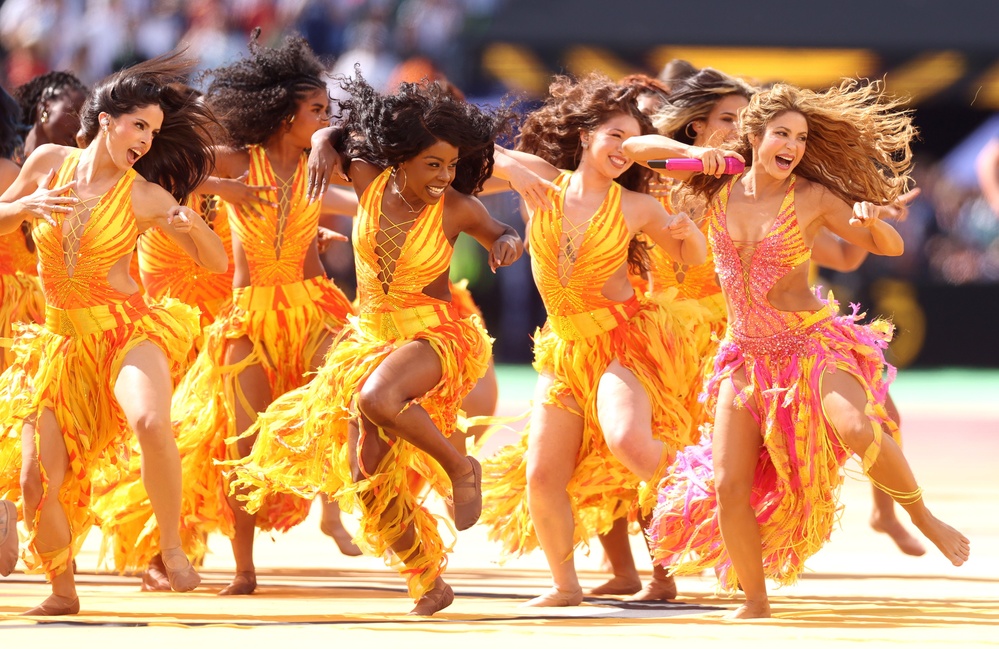
Entertainment-focused World Cup halftime show coverage blends descriptive reporting of performances and spectacle with occasional evaluative language (notably Rooney's critique) and minimal political framing, resulting in a mild, balanced portrayal that emphasizes event details and celebrity presence.
Overview of entertainment-focused World Cup halftime show coverage detailing performers, duration, notable attendees, and a critical remark, set within the broader sports event context.
Automated analysis; not human reviewed.
Limitations: Case-specific limitations; alternative interpretations exist due to the article's entertainment focus and inclusion of duplicated/fragmented lines.
·
2 of 52 available dimensions scored; omitted dimensions are not treated as neutral.
·
Verified supporting quotes for 0 of 2 scored dimensions.
Limited to entertainment coverage; tone varies with quotes and duplicated text.
Celebrity-forward, entertainment-centric framing dominates coverage of the World Cup final, treating political moments as peripheral and blending star power with sports to create a mildly sensational, promotional narrative rather than a neutral, policy-focused account.
Coverage centers on a celebrity-filled World Cup final in New Jersey with Tom Cruise's attendance and promotional tie-ins, a star-studded halftime show, and numerous celebrity attendees, amid a Spain vs Argentina matchup.
Automated analysis; not human reviewed.
Limitations: Concise, case-specific limitations and plausible alternative interpretations.
·
52 of 52 available dimensions scored; omitted dimensions are not treated as neutral.
·
Verified supporting quotes for 5 of 52 scored dimensions.
Claim: Subjective, value-laden language signals framing.
“The piece uses phrases like 'This is unity.
This is greatness.'”
· not found in supplied text
“a North American setting and a bevy of certified studs.” · exact text match
Counterevidence:
“The article also presents factual event details (location, teams, attendance) which are descriptive.” · not found in supplied text
Why: Normative language indicates subjective framing beyond neutral reporting.
Claim: Language frames events with sensational terms.
“the hottest ticket since Game 4 of the NBA Finals” · exact text match
Counterevidence:
“Descriptive reporting accompanies event details.” · not found in supplied text
Why: Sensational descriptors complement descriptive reporting.
Claim: Prescriptive, value-laden calls to unity.
“So, as we gather for one final chapter, let us celebrate a tournament that brought the world together.
Let us celebrate each other.
This is football.
This is unity.
This is greatness.”
· exact text match
Counterevidence:
“The piece includes numerous factual event details that are non-prescriptive.” · not found in supplied text
Why: Explicit exhortations indicate prescriptive framing.
Claim: Emphasis on celebrity presence and social moments.
“a North American setting and a bevy of certified studs.” · exact text match
“Oh, and there was Jason Sudeikis, who popped out as his Ted Lasso character to introduce Justin Bieber, urging him to 'make us proud'” · not found in supplied text
Counterevidence:
“The article also documents standard event details (teams, venue).” · not found in supplied text
Why: Celebrity sightings and social moments align with entertainment gossip framing.
Claim: Loaded terms and rhetorical emphasis indicate opinion.
“bevy of certified studs” · exact text match
“This is unity.
This is greatness.”
· exact text match
Counterevidence:
“The piece also contains objective event details.” · not found in supplied text
Why: Loaded language signals opinion-driven framing.
Claim: Emotional language accompanies event description.
“This is unity.
This is greatness.”
· exact text match
“the hottest ticket” · exact text match
Counterevidence:
“Factual event details balance the narrative.” · not found in supplied text
Why: Emotional tone accompanies description.
Claim: Framing mixes promotional claims with event description, with some errors noted (misidentification).
“announcers misidentified as A$AP Rocky” · exact text match
“The 2026 FIFA World Cup final has smashed ratings records” · not found in supplied text
Counterevidence:
“The majority of content is descriptive of a real event.” · not found in supplied text
Why: Editorial mixing and errors reduce perceived reliability.
Claim: Promotional elements tied to film and TV spots are emphasized.
“promotion for the film 'Digger' and 'special TV spots during World Cup matches'” · not found in supplied text
Counterevidence:
“Context includes event details beyond promotion.” · not found in supplied text
Why: Promotional framing nudges readers toward marketing content.
Claim: Some statements rely on assumptions about star power driving outcomes.
“owing to its unique mix of star power” · exact text match
“perhaps their final World Cup matches” · exact text match
Counterevidence:
“There is supporting factual material about the event itself.” · not found in supplied text
Why: Speculative framing present alongside factual content.
Ambiguities: limited data, promotional framing; may change with additional context.
Celebrity-forward, entertainment-centric framing dominates coverage of the World Cup final, treating political moments as peripheral and blending star power with sports to create a mildly sensational, promotional narrative rather than a neutral, policy-focused account.
Coverage centers on a celebrity-filled World Cup final in New Jersey with Tom Cruise's attendance and promotional tie-ins, a star-studded halftime show, and numerous celebrity attendees, amid a Spain vs Argentina matchup.
Automated analysis; not human reviewed.
Limitations: Concise, case-specific limitations and plausible alternative interpretations.
·
52 of 52 available dimensions scored; omitted dimensions are not treated as neutral.
·
Verified supporting quotes for 5 of 52 scored dimensions.
Claim: Subjective, value-laden language signals framing.
“The piece uses phrases like 'This is unity.
This is greatness.'”
· not found in supplied text
“a North American setting and a bevy of certified studs.” · exact text match
Counterevidence:
“The article also presents factual event details (location, teams, attendance) which are descriptive.” · not found in supplied text
Why: Normative language indicates subjective framing beyond neutral reporting.
Claim: Language frames events with sensational terms.
“the hottest ticket since Game 4 of the NBA Finals” · exact text match
Counterevidence:
“Descriptive reporting accompanies event details.” · not found in supplied text
Why: Sensational descriptors complement descriptive reporting.
Claim: Prescriptive, value-laden calls to unity.
“So, as we gather for one final chapter, let us celebrate a tournament that brought the world together.
Let us celebrate each other.
This is football.
This is unity.
This is greatness.”
· exact text match
Counterevidence:
“The piece includes numerous factual event details that are non-prescriptive.” · not found in supplied text
Why: Explicit exhortations indicate prescriptive framing.
Claim: Emphasis on celebrity presence and social moments.
“a North American setting and a bevy of certified studs.” · exact text match
“Oh, and there was Jason Sudeikis, who popped out as his Ted Lasso character to introduce Justin Bieber, urging him to 'make us proud'” · not found in supplied text
Counterevidence:
“The article also documents standard event details (teams, venue).” · not found in supplied text
Why: Celebrity sightings and social moments align with entertainment gossip framing.
Claim: Loaded terms and rhetorical emphasis indicate opinion.
“bevy of certified studs” · exact text match
“This is unity.
This is greatness.”
· exact text match
Counterevidence:
“The piece also contains objective event details.” · not found in supplied text
Why: Loaded language signals opinion-driven framing.
Claim: Emotional language accompanies event description.
“This is unity.
This is greatness.”
· exact text match
“the hottest ticket” · exact text match
Counterevidence:
“Factual event details balance the narrative.” · not found in supplied text
Why: Emotional tone accompanies description.
Claim: Framing mixes promotional claims with event description, with some errors noted (misidentification).
“announcers misidentified as A$AP Rocky” · exact text match
“The 2026 FIFA World Cup final has smashed ratings records” · not found in supplied text
Counterevidence:
“The majority of content is descriptive of a real event.” · not found in supplied text
Why: Editorial mixing and errors reduce perceived reliability.
Claim: Promotional elements tied to film and TV spots are emphasized.
“promotion for the film 'Digger' and 'special TV spots during World Cup matches'” · not found in supplied text
Counterevidence:
“Context includes event details beyond promotion.” · not found in supplied text
Why: Promotional framing nudges readers toward marketing content.
Claim: Some statements rely on assumptions about star power driving outcomes.
“owing to its unique mix of star power” · exact text match
“perhaps their final World Cup matches” · exact text match
Counterevidence:
“There is supporting factual material about the event itself.” · not found in supplied text
Why: Speculative framing present alongside factual content.
Ambiguities: limited data, promotional framing; may change with additional context.
Balanced, evidence-driven portrayal of the first FIFA World Cup halftime show, acknowledging celebrity spectacle and commercialization while presenting both praise and criticisms and noting political associations without advocating a stance.
Concise, factful, accurate, balanced context for the article in one sentence.
Automated analysis; not human reviewed.
Limitations: Case-specific limitations and alternative interpretations; quotes rely on a single source fragment and may not reflect broader coverage.
·
52 of 52 available dimensions scored; omitted dimensions are not treated as neutral.
·
Verified supporting quotes for 4 of 52 scored dimensions.
Claim: No clear alignment with liberal or conservative ideology; coverage presents both praise and criticisms.
“These are heady times in the crossover of sports and pop culture, and here was a fairly madcap experiment of an entertainment spectacle: the kind of Super Bowl-scale programming that the sport has previously eschewed.” · not found in supplied text
“Prior to the match, soccer purists had been outraged by the commercialization that the show spelled” · exact text match
“The alliance between Donald Trump and Gianni Infantino was on full display during the World Cup.” · exact text match
Counterevidence:
“The FIFA World Cup Halftime Show Arrived in Time for the End of Monoculture” · exact text match
Why: Neutral framing with praise and criticisms across topics.
Claim: Article foregrounds celebrity-driven spectacle and elite cultural figures, suggesting elitist framing.
“Justin Bieber, Madonna, and Shakira Made FIFA's First-Ever World Cup Halftime Show a True Spectacle” · exact text match
“centered around a global array of pop stars pooling their talents for a rapid-fire medley.” · exact text match
“Super Bowl-scale programming” · exact text match
Counterevidence:
“soccer purists outraged by the commercialization” · not found in supplied text
“the mood in the crowd was relatively staid” · exact text match
Why: Celebrity-driven framing with some critical counterpoints.
Claim: Text blends objective details with subjective descriptions
“centered around a global array of pop stars pooling their talents for a rapid-fire medley” · exact text match
“this was not the all-out, immersive show” · not found in supplied text
Counterevidence:
“The halftime show was produced in partnership with Global Citizen” · exact text match
Why: Subjective descriptors accompany factual details.
Claim: Some sensational framing around spectacle balanced with specifics
“The first-ever World Cup halftime show” · not found in supplied text
“Super Bowl-scale programming” · exact text match
“centered around a global array of pop stars pooling their talents for a rapid-fire medley” · exact text match
Counterevidence:
“not quite a hit on its first attempt” · exact text match
Why: Sensational framing kept in check by factual details.
Claim: Occasional evaluative language alongside facts
“These are heady times... a fairly madcap experiment” · not found in supplied text
“not quite a hit on its first attempt” · exact text match
Counterevidence:
“Global Citizen Education Fund partnership” · not found in supplied text
Why: Mildly opinionated language coexists with data.
Claim: Presents political connections and critiques of corporate influence without endorsing a position
“The alliance between Donald Trump and Gianni Infantino was on full display during the World Cup.” · exact text match
“notion that corporate and political interests were interfering with the integrity of the match” · not found in supplied text
Counterevidence:
“Global Citizen Education Fund philanthropic angle” · not found in supplied text
Why: Political elements described but reporting remains neutral.
Claim: Mentions of Trump/Infantino and corporate boards imply establishment framing
“The alliance between Donald Trump and Gianni Infantino was on full display during the World Cup.” · exact text match
“the advisory board of which includes Infantino, Ivanka Trump, The Weeknd, Serena Williams, and Bank of America co-president Jim DeMare” · exact text match
Counterevidence:
“Global Citizen Education Fund philanthropic angle” · not found in supplied text
Why: References to elites shape framing toward establishment narratives.
Claim: Some emotional descriptors appear
“headlined the first-ever World Cup halftime show” · exact text match
“spectacle” · exact text match
Counterevidence:
“mood in the crowd relatively staid” · not found in supplied text
Why: Emotional language present but not dominant.
Claim: Evidence-based numbers accompany qualitative analysis
“CNBC survey found around 50% of Americans” · not found in supplied text
“ticket resale prices spiked to about $10,000” · exact text match
Counterevidence:
“the mood in the crowd was relatively staid” · exact text match
Why: Numbers anchor analysis while qualitative descriptions introduce subjectivity.
Claim: Celebrates global star power and collective philanthropic effort
“centered around a global array of pop stars pooling their talents for a rapid-fire medley” · exact text match
“Global Citizen Education Fund philanthropic angle” · not found in supplied text
Counterevidence:
“first-ever World Cup halftime show” · exact text match
Why: Balancing individual-level celebrity with collective philanthropic initiative.
Claim: Uses interpretive framing about cultural impact
“The FIFA World Cup Halftime Show Arrived in Time for the End of Monoculture” · exact text match
“A last gasp of monoculture (implied)” · not found in supplied text
Counterevidence:
“The tournament minted all manner of stars” · not found in supplied text
Why: Interpretive framing leads to speculation about cultural impact.
Claim: Framing uses loaded terms to describe a spectacle while acknowledging criticisms
“an entertainment spectacle: the kind of Super Bowl-scale programming” · exact text match
“soccer purists outraged by the commercialization” · not found in supplied text
Counterevidence:
“Global Citizen Education Fund philanthropic angle” · not found in supplied text
Why: Loaded framing present with counterpoints accepted.
Claim: Reports concerns over integrity due to corporate/political involvement
“The notion, as echoed by objecting soccer fans, was that corporate and political interests were interfering with the integrity of the match.” · exact text match
“The alliance between Donald Trump and Gianni Infantino was on full display during the World Cup.” · exact text match
Counterevidence:
“The halftime show was produced in partnership with Global Citizen” · exact text match
Why: Represents competing claims about integrity.
Claim: Numbers and names reflect awareness of context
“CNBC survey found around 50% of Americans” · not found in supplied text
“ticket resale prices spiked to about $10,000” · exact text match
Counterevidence:
“some context missing (dates, full attendance)” · not found in supplied text
Why: Quantitative data supports credibility.
Ambiguity in tone; limited context may bias interpretations; more sources needed.
Primarily entertainment framing with a diverse celebrity lineup and philanthropic context; no explicit political stance is evident, with mild evaluative judgments embedded in a largely neutral tone.
Entertainment-focused coverage of a celebrity-filled FIFA World Cup halftime show in New Jersey, highlighting the lineup, on-field moments, and the philanthropic framing associated with Global Citizen.
Automated analysis; not human reviewed.
Limitations: Case-specific assessment bounded by the provided article text; interpretation could shift with broader publication context or additional pieces examining political implications.
·
1 of 52 available dimensions scored; omitted dimensions are not treated as neutral.
·
Verified supporting quotes for 1 of 1 scored dimensions.
Claim: No explicit political orientation is evident; framing appears entertainment- and philanthropy-oriented with neutral-to-mild evaluative language.
“Global Citizen CEO Hugh Evans called it “the single largest gathering of artists united for a cause since Live Aid.”” · exact text match
“Well, it definitely fell short of that, but at least it was for a good cause.” · exact text match
“The goal was to raise $100 million USD by the 2026 World Cup final and as of July 2026, more than $50 million had been raised with $1 from every World Cup 2026 ticket being donated.” · exact text match
Counterevidence:
“"We independently select everything we recommend.
Buying through us may earn us a commission, which supports our work."”
· exact text match
Why: Quotes emphasize philanthropy and celebrity-led spectacle without explicit political ideology; framing leans entertainment/news rather than political advocacy.
Celebrity-forward, entertainment-centric framing dominates coverage of the World Cup final, treating political moments as peripheral and blending star power with sports to create a mildly sensational, promotional narrative rather than a neutral, policy-focused account.
Coverage centers on a celebrity-filled World Cup final in New Jersey with Tom Cruise's attendance and promotional tie-ins, a star-studded halftime show, and numerous celebrity attendees, amid a Spain vs Argentina matchup.
Automated analysis; not human reviewed.
Limitations: Concise, case-specific limitations and plausible alternative interpretations.
·
52 of 52 available dimensions scored; omitted dimensions are not treated as neutral.
·
Verified supporting quotes for 5 of 52 scored dimensions.
Claim: Subjective, value-laden language signals framing.
“The piece uses phrases like 'This is unity.
This is greatness.'”
· not found in supplied text
“a North American setting and a bevy of certified studs.” · exact text match
Counterevidence:
“The article also presents factual event details (location, teams, attendance) which are descriptive.” · not found in supplied text
Why: Normative language indicates subjective framing beyond neutral reporting.
Claim: Language frames events with sensational terms.
“the hottest ticket since Game 4 of the NBA Finals” · exact text match
Counterevidence:
“Descriptive reporting accompanies event details.” · not found in supplied text
Why: Sensational descriptors complement descriptive reporting.
Claim: Prescriptive, value-laden calls to unity.
“So, as we gather for one final chapter, let us celebrate a tournament that brought the world together.
Let us celebrate each other.
This is football.
This is unity.
This is greatness.”
· exact text match
Counterevidence:
“The piece includes numerous factual event details that are non-prescriptive.” · not found in supplied text
Why: Explicit exhortations indicate prescriptive framing.
Claim: Emphasis on celebrity presence and social moments.
“a North American setting and a bevy of certified studs.” · exact text match
“Oh, and there was Jason Sudeikis, who popped out as his Ted Lasso character to introduce Justin Bieber, urging him to 'make us proud'” · not found in supplied text
Counterevidence:
“The article also documents standard event details (teams, venue).” · not found in supplied text
Why: Celebrity sightings and social moments align with entertainment gossip framing.
Claim: Loaded terms and rhetorical emphasis indicate opinion.
“bevy of certified studs” · exact text match
“This is unity.
This is greatness.”
· exact text match
Counterevidence:
“The piece also contains objective event details.” · not found in supplied text
Why: Loaded language signals opinion-driven framing.
Claim: Emotional language accompanies event description.
“This is unity.
This is greatness.”
· exact text match
“the hottest ticket” · exact text match
Counterevidence:
“Factual event details balance the narrative.” · not found in supplied text
Why: Emotional tone accompanies description.
Claim: Framing mixes promotional claims with event description, with some errors noted (misidentification).
“announcers misidentified as A$AP Rocky” · exact text match
“The 2026 FIFA World Cup final has smashed ratings records” · not found in supplied text
Counterevidence:
“The majority of content is descriptive of a real event.” · not found in supplied text
Why: Editorial mixing and errors reduce perceived reliability.
Claim: Promotional elements tied to film and TV spots are emphasized.
“promotion for the film 'Digger' and 'special TV spots during World Cup matches'” · not found in supplied text
Counterevidence:
“Context includes event details beyond promotion.” · not found in supplied text
Why: Promotional framing nudges readers toward marketing content.
Claim: Some statements rely on assumptions about star power driving outcomes.
“owing to its unique mix of star power” · exact text match
“perhaps their final World Cup matches” · exact text match
Counterevidence:
“There is supporting factual material about the event itself.” · not found in supplied text
Why: Speculative framing present alongside factual content.
Ambiguities: limited data, promotional framing; may change with additional context.
Entertainment-focused World Cup halftime show coverage blends descriptive reporting of performances and spectacle with occasional evaluative language (notably Rooney's critique) and minimal political framing, resulting in a mild, balanced portrayal that emphasizes event details and celebrity presence.
Overview of entertainment-focused World Cup halftime show coverage detailing performers, duration, notable attendees, and a critical remark, set within the broader sports event context.
Automated analysis; not human reviewed.
Limitations: Case-specific limitations; alternative interpretations exist due to the article's entertainment focus and inclusion of duplicated/fragmented lines.
·
2 of 52 available dimensions scored; omitted dimensions are not treated as neutral.
·
Verified supporting quotes for 0 of 2 scored dimensions.
Limited to entertainment coverage; tone varies with quotes and duplicated text.
Primarily entertainment framing with a diverse celebrity lineup and philanthropic context; no explicit political stance is evident, with mild evaluative judgments embedded in a largely neutral tone.
Entertainment-focused coverage of a celebrity-filled FIFA World Cup halftime show in New Jersey, highlighting the lineup, on-field moments, and the philanthropic framing associated with Global Citizen.
Automated analysis; not human reviewed.
Limitations: Case-specific assessment bounded by the provided article text; interpretation could shift with broader publication context or additional pieces examining political implications.
·
1 of 52 available dimensions scored; omitted dimensions are not treated as neutral.
·
Verified supporting quotes for 1 of 1 scored dimensions.
Claim: No explicit political orientation is evident; framing appears entertainment- and philanthropy-oriented with neutral-to-mild evaluative language.
“Global Citizen CEO Hugh Evans called it “the single largest gathering of artists united for a cause since Live Aid.”” · exact text match
“Well, it definitely fell short of that, but at least it was for a good cause.” · exact text match
“The goal was to raise $100 million USD by the 2026 World Cup final and as of July 2026, more than $50 million had been raised with $1 from every World Cup 2026 ticket being donated.” · exact text match
Counterevidence:
“"We independently select everything we recommend.
Buying through us may earn us a commission, which supports our work."”
· exact text match
Why: Quotes emphasize philanthropy and celebrity-led spectacle without explicit political ideology; framing leans entertainment/news rather than political advocacy.
July 20, 2026 · 0 shares
Balanced in sourcing Rooney's negative verdict on the World Cup final halftime show while including counterpoints from Keane and Logan, yielding a nuanced but still critic-focused portrayal of the event.
Concise, factful context for viewer: coverage of Rooney's negative assessment of the World Cup final halftime show, with additional pundit reactions and show details.
Automated analysis; not human reviewed.
Limitations: Case-specific; conclusions may shift with broader audience reception or additional viewpoints not captured in text.
·
5 of 52 available dimensions scored; omitted dimensions are not treated as neutral.
·
Verified supporting quotes for 4 of 5 scored dimensions.
Claim: Subjective framing appears via loaded wording and Rooney-centric quotes, despite multiple voices.
“Wayne Rooney delivers brutal verdict on first World Cup final half-time show.” · exact text match
““I’ll be honest, mine was when it finished.”” · verified after text normalization
““I like a lot of them artists but I thought it was crap.”” · verified after text normalization
Counterevidence:
“Roy Keane’s more tempered comment and Logan’s 'honest reviews' provide counterbalance.” · not found in supplied text
Why: Loaded phrasing and single-source emphasis indicate subjectivity tempered by other voices.
Claim: There is mild sensational framing through the headline and selective quotes.
“Wayne Rooney delivers brutal verdict on first World Cup final half-time show.” · exact text match
““I’ll be honest, mine was when it finished.”” · verified after text normalization
““I like a lot of them artists but I thought it was crap.”” · verified after text normalization
Counterevidence:
“Logan’s line about honest reviews provides a counter-narrative to sensational framing.” · not found in supplied text
Why: Headline and select quotes carry a hint of sensational framing, mitigated by other voices.
Claim: Headline and framing emphasize Rooney's personal opinion as the main thrust of the piece.
“Wayne Rooney delivers brutal verdict on first World Cup final half-time show.” · exact text match
Counterevidence:
“Roy Keane offered a counterpoint calling it an anti-climax but suggesting some in attendance may have enjoyed it.” · not found in supplied text
“Logan asserted 'honest reviews,' signaling a push toward balanced critique.” · not found in supplied text
Why: Rooney's quoted judgments drive the narrative; other viewpoints are present but secondary.
Claim: Direct quotes convey strong negative emotion toward the halftime show.
““I’ll be honest, mine was when it finished.”” · verified after text normalization
““I like a lot of them artists but I thought it was crap.”” · verified after text normalization
““It just didn’t get me going and I wanted the football to come back on. I like Burna Boy, I like Bieber, I like Shakira, but that was too flat.”” · exact text match
Counterevidence:
“Roy Keane’s comments offer a more measured reaction.” · not found in supplied text
Why: Emotional language is present in Rooney’s quotes; other voices temper emotion.
Claim: Credibility is supported by named sources and event details, though UI/text insertions could undermine perception.
“Rooney’s quotes” · not found in supplied text
“Roy Keane's quote” · not found in supplied text
“Logan's quote” · not found in supplied text
Counterevidence:
“UI prompts and login notices inserted in the article text may detract from credibility.” · not found in supplied text
Why: Clear sourcing and facts support credibility; extraneous UI text may reduce it.
UI text and site boilerplate may color interpretation; evidence is quotes + show facts.
July 20, 2026 · 0 shares
Balanced in sourcing Rooney's negative verdict on the World Cup final halftime show while including counterpoints from Keane and Logan, yielding a nuanced but still critic-focused portrayal of the event.
Concise, factful context for viewer: coverage of Rooney's negative assessment of the World Cup final halftime show, with additional pundit reactions and show details.
Automated analysis; not human reviewed.
Limitations: Case-specific; conclusions may shift with broader audience reception or additional viewpoints not captured in text.
·
5 of 52 available dimensions scored; omitted dimensions are not treated as neutral.
·
Verified supporting quotes for 4 of 5 scored dimensions.
Claim: Subjective framing appears via loaded wording and Rooney-centric quotes, despite multiple voices.
“Wayne Rooney delivers brutal verdict on first World Cup final half-time show.” · exact text match
““I’ll be honest, mine was when it finished.”” · verified after text normalization
““I like a lot of them artists but I thought it was crap.”” · verified after text normalization
Counterevidence:
“Roy Keane’s more tempered comment and Logan’s 'honest reviews' provide counterbalance.” · not found in supplied text
Why: Loaded phrasing and single-source emphasis indicate subjectivity tempered by other voices.
Claim: There is mild sensational framing through the headline and selective quotes.
“Wayne Rooney delivers brutal verdict on first World Cup final half-time show.” · exact text match
““I’ll be honest, mine was when it finished.”” · verified after text normalization
““I like a lot of them artists but I thought it was crap.”” · verified after text normalization
Counterevidence:
“Logan’s line about honest reviews provides a counter-narrative to sensational framing.” · not found in supplied text
Why: Headline and select quotes carry a hint of sensational framing, mitigated by other voices.
Claim: Headline and framing emphasize Rooney's personal opinion as the main thrust of the piece.
“Wayne Rooney delivers brutal verdict on first World Cup final half-time show.” · exact text match
Counterevidence:
“Roy Keane offered a counterpoint calling it an anti-climax but suggesting some in attendance may have enjoyed it.” · not found in supplied text
“Logan asserted 'honest reviews,' signaling a push toward balanced critique.” · not found in supplied text
Why: Rooney's quoted judgments drive the narrative; other viewpoints are present but secondary.
Claim: Direct quotes convey strong negative emotion toward the halftime show.
““I’ll be honest, mine was when it finished.”” · verified after text normalization
““I like a lot of them artists but I thought it was crap.”” · verified after text normalization
““It just didn’t get me going and I wanted the football to come back on. I like Burna Boy, I like Bieber, I like Shakira, but that was too flat.”” · exact text match
Counterevidence:
“Roy Keane’s comments offer a more measured reaction.” · not found in supplied text
Why: Emotional language is present in Rooney’s quotes; other voices temper emotion.
Claim: Credibility is supported by named sources and event details, though UI/text insertions could undermine perception.
“Rooney’s quotes” · not found in supplied text
“Roy Keane's quote” · not found in supplied text
“Logan's quote” · not found in supplied text
Counterevidence:
“UI prompts and login notices inserted in the article text may detract from credibility.” · not found in supplied text
Why: Clear sourcing and facts support credibility; extraneous UI text may reduce it.
UI text and site boilerplate may color interpretation; evidence is quotes + show facts.
July 16, 2026 · 0 shares
Bias is mildly critical of FIFA leadership and Trump's involvement, skeptical of the halftime show's spectacle, and relies on Robert Smith's remarks to frame the event's politics and culture.
Robert Smith's criticisms of FIFA leadership and Trump involvement in presenting the World Cup Trophy are juxtaposed with the official halftime-show lineup and related reactions.
Automated analysis; not human reviewed.
·
4 of 52 available dimensions scored; omitted dimensions are not treated as neutral.
·
Verified supporting quotes for 1 of 4 scored dimensions.
Claim: The report frames Trump involvement and FIFA leadership with negative language, indicating a left-leaning readership orientation toward power structures.
“This year's FIFA Men's World Cup took place in the United States, Canada, and Mexico, and it's been Americanized to an unprecedented extent.” · exact text match
“No, I'm not talking about Donald Trump's meddling with Folarin Balogun's red card suspension; FIFA was already quite corrupt before our corrupt president got involved.” · exact text match
Counterevidence:
“Fifa’s president, Gianni Infantosser, has described the half-time show as “groundbreaking spectacle” that will “celebrate football, music and our shared values, ensuring a legacy that transcends the final whistle.” · exact text match
Why: Negative framing of Trump and FIFA is prominent, though official positive framing exists.
Claim: Text signals distrust of institutional authority (FIFA, Trump) and celebrates anti-celebrity/corporate spectacle framing.
“"AAAAAAAAAAAAAAAAAAGH… #Breadandcircuses #MUGWANK #pleasejustfuckoff."” · not found in supplied text
“"sigh… FOR THOSE OF US NOT QUITE GETTING IT: THE POINT IS NOT REALLY ABOUT WHO IS CURATING OR PERFORMING, IT IS ABOUT THE #MUGWANK IDEA OF A FOOTBALL WORLD CUP FINAL HALF TIME SHOW…"” · not found in supplied text
Counterevidence:
“"Fifa’s president, Gianni Infantosser, has described the half-time show as ‘groundbreaking spectacle’ that will ‘celebrate football, music and our shared values, ensuring a legacy that transcends the final whistle.’"” · not found in supplied text
“"The half-time show, which has been curated by Coldplay’s Chris Martin, will feature Madonna, Justin Bieber, Shakira and the K‑pop boyband BTS."” · not found in supplied text
Why: Hashtags and charged language indicate anti-establishment framing, tempered by explicit official praise.
Claim: The piece relies on emotionally charged, meme-ready language alongside factual details.
“"AAAAAAAAAAAAAAAAAAGH… #Breadandcircuses #MUGWANK #pleasejustfuckoff."” · not found in supplied text
“"sigh… FOR THOSE OF US NOT QUITE GETTING IT: ..."” · not found in supplied text
Counterevidence:
“The article also provides factual details (lineups, schedule) and quotes from officials.” · not found in supplied text
Why: Emotional expressions coexist with verifiable details, indicating a mix of rational and emotional framing.
Claim: The report combines critique with balanced sourcing, citing both critical and official viewpoints.
“The Cure's official Instagram account shared the following description of the halftime show today: The half-time show, which has been curated by Coldplay’s Chris Martin, will feature Madonna, Justin Bieber, Shakira and the K‑pop boyband BTS.” · not found in supplied text
“"The week's most important music stories and least important music memes."” · exact text match
Counterevidence:
“"Fifa’s president... described the half-time show as 'groundbreaking spectacle'"” · not found in supplied text
Why: Presence of official quotes alongside critical language suggests some balance, but negative framing persists.
Ambiguity about stance; quotes may not reflect full context; evidence context could shift.
Balanced, evidence-driven portrayal of the first FIFA World Cup halftime show, acknowledging celebrity spectacle and commercialization while presenting both praise and criticisms and noting political associations without advocating a stance.
Concise, factful, accurate, balanced context for the article in one sentence.
Automated analysis; not human reviewed.
Limitations: Case-specific limitations and alternative interpretations; quotes rely on a single source fragment and may not reflect broader coverage.
·
52 of 52 available dimensions scored; omitted dimensions are not treated as neutral.
·
Verified supporting quotes for 4 of 52 scored dimensions.
Claim: No clear alignment with liberal or conservative ideology; coverage presents both praise and criticisms.
“These are heady times in the crossover of sports and pop culture, and here was a fairly madcap experiment of an entertainment spectacle: the kind of Super Bowl-scale programming that the sport has previously eschewed.” · not found in supplied text
“Prior to the match, soccer purists had been outraged by the commercialization that the show spelled” · exact text match
“The alliance between Donald Trump and Gianni Infantino was on full display during the World Cup.” · exact text match
Counterevidence:
“The FIFA World Cup Halftime Show Arrived in Time for the End of Monoculture” · exact text match
Why: Neutral framing with praise and criticisms across topics.
Claim: Article foregrounds celebrity-driven spectacle and elite cultural figures, suggesting elitist framing.
“Justin Bieber, Madonna, and Shakira Made FIFA's First-Ever World Cup Halftime Show a True Spectacle” · exact text match
“centered around a global array of pop stars pooling their talents for a rapid-fire medley.” · exact text match
“Super Bowl-scale programming” · exact text match
Counterevidence:
“soccer purists outraged by the commercialization” · not found in supplied text
“the mood in the crowd was relatively staid” · exact text match
Why: Celebrity-driven framing with some critical counterpoints.
Claim: Text blends objective details with subjective descriptions
“centered around a global array of pop stars pooling their talents for a rapid-fire medley” · exact text match
“this was not the all-out, immersive show” · not found in supplied text
Counterevidence:
“The halftime show was produced in partnership with Global Citizen” · exact text match
Why: Subjective descriptors accompany factual details.
Claim: Some sensational framing around spectacle balanced with specifics
“The first-ever World Cup halftime show” · not found in supplied text
“Super Bowl-scale programming” · exact text match
“centered around a global array of pop stars pooling their talents for a rapid-fire medley” · exact text match
Counterevidence:
“not quite a hit on its first attempt” · exact text match
Why: Sensational framing kept in check by factual details.
Claim: Occasional evaluative language alongside facts
“These are heady times... a fairly madcap experiment” · not found in supplied text
“not quite a hit on its first attempt” · exact text match
Counterevidence:
“Global Citizen Education Fund partnership” · not found in supplied text
Why: Mildly opinionated language coexists with data.
Claim: Presents political connections and critiques of corporate influence without endorsing a position
“The alliance between Donald Trump and Gianni Infantino was on full display during the World Cup.” · exact text match
“notion that corporate and political interests were interfering with the integrity of the match” · not found in supplied text
Counterevidence:
“Global Citizen Education Fund philanthropic angle” · not found in supplied text
Why: Political elements described but reporting remains neutral.
Claim: Mentions of Trump/Infantino and corporate boards imply establishment framing
“The alliance between Donald Trump and Gianni Infantino was on full display during the World Cup.” · exact text match
“the advisory board of which includes Infantino, Ivanka Trump, The Weeknd, Serena Williams, and Bank of America co-president Jim DeMare” · exact text match
Counterevidence:
“Global Citizen Education Fund philanthropic angle” · not found in supplied text
Why: References to elites shape framing toward establishment narratives.
Claim: Some emotional descriptors appear
“headlined the first-ever World Cup halftime show” · exact text match
“spectacle” · exact text match
Counterevidence:
“mood in the crowd relatively staid” · not found in supplied text
Why: Emotional language present but not dominant.
Claim: Evidence-based numbers accompany qualitative analysis
“CNBC survey found around 50% of Americans” · not found in supplied text
“ticket resale prices spiked to about $10,000” · exact text match
Counterevidence:
“the mood in the crowd was relatively staid” · exact text match
Why: Numbers anchor analysis while qualitative descriptions introduce subjectivity.
Claim: Celebrates global star power and collective philanthropic effort
“centered around a global array of pop stars pooling their talents for a rapid-fire medley” · exact text match
“Global Citizen Education Fund philanthropic angle” · not found in supplied text
Counterevidence:
“first-ever World Cup halftime show” · exact text match
Why: Balancing individual-level celebrity with collective philanthropic initiative.
Claim: Uses interpretive framing about cultural impact
“The FIFA World Cup Halftime Show Arrived in Time for the End of Monoculture” · exact text match
“A last gasp of monoculture (implied)” · not found in supplied text
Counterevidence:
“The tournament minted all manner of stars” · not found in supplied text
Why: Interpretive framing leads to speculation about cultural impact.
Claim: Framing uses loaded terms to describe a spectacle while acknowledging criticisms
“an entertainment spectacle: the kind of Super Bowl-scale programming” · exact text match
“soccer purists outraged by the commercialization” · not found in supplied text
Counterevidence:
“Global Citizen Education Fund philanthropic angle” · not found in supplied text
Why: Loaded framing present with counterpoints accepted.
Claim: Reports concerns over integrity due to corporate/political involvement
“The notion, as echoed by objecting soccer fans, was that corporate and political interests were interfering with the integrity of the match.” · exact text match
“The alliance between Donald Trump and Gianni Infantino was on full display during the World Cup.” · exact text match
Counterevidence:
“The halftime show was produced in partnership with Global Citizen” · exact text match
Why: Represents competing claims about integrity.
Claim: Numbers and names reflect awareness of context
“CNBC survey found around 50% of Americans” · not found in supplied text
“ticket resale prices spiked to about $10,000” · exact text match
Counterevidence:
“some context missing (dates, full attendance)” · not found in supplied text
Why: Quantitative data supports credibility.
Ambiguity in tone; limited context may bias interpretations; more sources needed.
Celebrity-forward, entertainment-centric framing dominates coverage of the World Cup final, treating political moments as peripheral and blending star power with sports to create a mildly sensational, promotional narrative rather than a neutral, policy-focused account.
Coverage centers on a celebrity-filled World Cup final in New Jersey with Tom Cruise's attendance and promotional tie-ins, a star-studded halftime show, and numerous celebrity attendees, amid a Spain vs Argentina matchup.
Automated analysis; not human reviewed.
Limitations: Concise, case-specific limitations and plausible alternative interpretations.
·
52 of 52 available dimensions scored; omitted dimensions are not treated as neutral.
·
Verified supporting quotes for 5 of 52 scored dimensions.
Claim: Subjective, value-laden language signals framing.
“The piece uses phrases like 'This is unity.
This is greatness.'”
· not found in supplied text
“a North American setting and a bevy of certified studs.” · exact text match
Counterevidence:
“The article also presents factual event details (location, teams, attendance) which are descriptive.” · not found in supplied text
Why: Normative language indicates subjective framing beyond neutral reporting.
Claim: Language frames events with sensational terms.
“the hottest ticket since Game 4 of the NBA Finals” · exact text match
Counterevidence:
“Descriptive reporting accompanies event details.” · not found in supplied text
Why: Sensational descriptors complement descriptive reporting.
Claim: Prescriptive, value-laden calls to unity.
“So, as we gather for one final chapter, let us celebrate a tournament that brought the world together.
Let us celebrate each other.
This is football.
This is unity.
This is greatness.”
· exact text match
Counterevidence:
“The piece includes numerous factual event details that are non-prescriptive.” · not found in supplied text
Why: Explicit exhortations indicate prescriptive framing.
Claim: Emphasis on celebrity presence and social moments.
“a North American setting and a bevy of certified studs.” · exact text match
“Oh, and there was Jason Sudeikis, who popped out as his Ted Lasso character to introduce Justin Bieber, urging him to 'make us proud'” · not found in supplied text
Counterevidence:
“The article also documents standard event details (teams, venue).” · not found in supplied text
Why: Celebrity sightings and social moments align with entertainment gossip framing.
Claim: Loaded terms and rhetorical emphasis indicate opinion.
“bevy of certified studs” · exact text match
“This is unity.
This is greatness.”
· exact text match
Counterevidence:
“The piece also contains objective event details.” · not found in supplied text
Why: Loaded language signals opinion-driven framing.
Claim: Emotional language accompanies event description.
“This is unity.
This is greatness.”
· exact text match
“the hottest ticket” · exact text match
Counterevidence:
“Factual event details balance the narrative.” · not found in supplied text
Why: Emotional tone accompanies description.
Claim: Framing mixes promotional claims with event description, with some errors noted (misidentification).
“announcers misidentified as A$AP Rocky” · exact text match
“The 2026 FIFA World Cup final has smashed ratings records” · not found in supplied text
Counterevidence:
“The majority of content is descriptive of a real event.” · not found in supplied text
Why: Editorial mixing and errors reduce perceived reliability.
Claim: Promotional elements tied to film and TV spots are emphasized.
“promotion for the film 'Digger' and 'special TV spots during World Cup matches'” · not found in supplied text
Counterevidence:
“Context includes event details beyond promotion.” · not found in supplied text
Why: Promotional framing nudges readers toward marketing content.
Claim: Some statements rely on assumptions about star power driving outcomes.
“owing to its unique mix of star power” · exact text match
“perhaps their final World Cup matches” · exact text match
Counterevidence:
“There is supporting factual material about the event itself.” · not found in supplied text
Why: Speculative framing present alongside factual content.
Ambiguities: limited data, promotional framing; may change with additional context.
Celebrity-forward, entertainment-centric framing dominates coverage of the World Cup final, treating political moments as peripheral and blending star power with sports to create a mildly sensational, promotional narrative rather than a neutral, policy-focused account.
Coverage centers on a celebrity-filled World Cup final in New Jersey with Tom Cruise's attendance and promotional tie-ins, a star-studded halftime show, and numerous celebrity attendees, amid a Spain vs Argentina matchup.
Automated analysis; not human reviewed. Limitations: Concise, case-specific limitations and plausible alternative interpretations. · 52 of 52 available dimensions scored; omitted dimensions are not treated as neutral. · Verified supporting quotes for 5 of 52 scored dimensions.
Claim: Subjective, value-laden language signals framing.
“The piece uses phrases like 'This is unity. This is greatness.'” · not found in supplied text
“a North American setting and a bevy of certified studs.” · exact text match
Counterevidence:
“The article also presents factual event details (location, teams, attendance) which are descriptive.” · not found in supplied text
Why: Normative language indicates subjective framing beyond neutral reporting.
Claim: Language frames events with sensational terms.
“the hottest ticket since Game 4 of the NBA Finals” · exact text match
Counterevidence:
“Descriptive reporting accompanies event details.” · not found in supplied text
Why: Sensational descriptors complement descriptive reporting.
Claim: Prescriptive, value-laden calls to unity.
“So, as we gather for one final chapter, let us celebrate a tournament that brought the world together. Let us celebrate each other. This is football. This is unity. This is greatness.” · exact text match
Counterevidence:
“The piece includes numerous factual event details that are non-prescriptive.” · not found in supplied text
Why: Explicit exhortations indicate prescriptive framing.
Claim: Emphasis on celebrity presence and social moments.
“a North American setting and a bevy of certified studs.” · exact text match
“Oh, and there was Jason Sudeikis, who popped out as his Ted Lasso character to introduce Justin Bieber, urging him to 'make us proud'” · not found in supplied text
Counterevidence:
“The article also documents standard event details (teams, venue).” · not found in supplied text
Why: Celebrity sightings and social moments align with entertainment gossip framing.
Claim: Loaded terms and rhetorical emphasis indicate opinion.
“bevy of certified studs” · exact text match
“This is unity. This is greatness.” · exact text match
Counterevidence:
“The piece also contains objective event details.” · not found in supplied text
Why: Loaded language signals opinion-driven framing.
Claim: Emotional language accompanies event description.
“This is unity. This is greatness.” · exact text match
“the hottest ticket” · exact text match
Counterevidence:
“Factual event details balance the narrative.” · not found in supplied text
Why: Emotional tone accompanies description.
Claim: Framing mixes promotional claims with event description, with some errors noted (misidentification).
“announcers misidentified as A$AP Rocky” · exact text match
“The 2026 FIFA World Cup final has smashed ratings records” · not found in supplied text
Counterevidence:
“The majority of content is descriptive of a real event.” · not found in supplied text
Why: Editorial mixing and errors reduce perceived reliability.
Claim: Promotional elements tied to film and TV spots are emphasized.
“promotion for the film 'Digger' and 'special TV spots during World Cup matches'” · not found in supplied text
Counterevidence:
“Context includes event details beyond promotion.” · not found in supplied text
Why: Promotional framing nudges readers toward marketing content.
Claim: Some statements rely on assumptions about star power driving outcomes.
“owing to its unique mix of star power” · exact text match
“perhaps their final World Cup matches” · exact text match
Counterevidence:
“There is supporting factual material about the event itself.” · not found in supplied text
Why: Speculative framing present alongside factual content.
Ambiguities: limited data, promotional framing; may change with additional context.
Entertainment-focused World Cup halftime show coverage blends descriptive reporting of performances and spectacle with occasional evaluative language (notably Rooney's critique) and minimal political framing, resulting in a mild, balanced portrayal that emphasizes event details and celebrity presence.
Overview of entertainment-focused World Cup halftime show coverage detailing performers, duration, notable attendees, and a critical remark, set within the broader sports event context.
Automated analysis; not human reviewed. Limitations: Case-specific limitations; alternative interpretations exist due to the article's entertainment focus and inclusion of duplicated/fragmented lines. · 2 of 52 available dimensions scored; omitted dimensions are not treated as neutral. · Verified supporting quotes for 0 of 2 scored dimensions.
Limited to entertainment coverage; tone varies with quotes and duplicated text.
Balanced, evidence-driven portrayal of the first FIFA World Cup halftime show, acknowledging celebrity spectacle and commercialization while presenting both praise and criticisms and noting political associations without advocating a stance.
Concise, factful, accurate, balanced context for the article in one sentence.
Automated analysis; not human reviewed. Limitations: Case-specific limitations and alternative interpretations; quotes rely on a single source fragment and may not reflect broader coverage. · 52 of 52 available dimensions scored; omitted dimensions are not treated as neutral. · Verified supporting quotes for 4 of 52 scored dimensions.
Claim: No clear alignment with liberal or conservative ideology; coverage presents both praise and criticisms.
“These are heady times in the crossover of sports and pop culture, and here was a fairly madcap experiment of an entertainment spectacle: the kind of Super Bowl-scale programming that the sport has previously eschewed.” · not found in supplied text
“Prior to the match, soccer purists had been outraged by the commercialization that the show spelled” · exact text match
“The alliance between Donald Trump and Gianni Infantino was on full display during the World Cup.” · exact text match
Counterevidence:
“The FIFA World Cup Halftime Show Arrived in Time for the End of Monoculture” · exact text match
Why: Neutral framing with praise and criticisms across topics.
Claim: Article foregrounds celebrity-driven spectacle and elite cultural figures, suggesting elitist framing.
“Justin Bieber, Madonna, and Shakira Made FIFA's First-Ever World Cup Halftime Show a True Spectacle” · exact text match
“centered around a global array of pop stars pooling their talents for a rapid-fire medley.” · exact text match
“Super Bowl-scale programming” · exact text match
Counterevidence:
“soccer purists outraged by the commercialization” · not found in supplied text
“the mood in the crowd was relatively staid” · exact text match
Why: Celebrity-driven framing with some critical counterpoints.
Claim: Text blends objective details with subjective descriptions
“centered around a global array of pop stars pooling their talents for a rapid-fire medley” · exact text match
“this was not the all-out, immersive show” · not found in supplied text
Counterevidence:
“The halftime show was produced in partnership with Global Citizen” · exact text match
Why: Subjective descriptors accompany factual details.
Claim: Some sensational framing around spectacle balanced with specifics
“The first-ever World Cup halftime show” · not found in supplied text
“Super Bowl-scale programming” · exact text match
“centered around a global array of pop stars pooling their talents for a rapid-fire medley” · exact text match
Counterevidence:
“not quite a hit on its first attempt” · exact text match
Why: Sensational framing kept in check by factual details.
Claim: Occasional evaluative language alongside facts
“These are heady times... a fairly madcap experiment” · not found in supplied text
“not quite a hit on its first attempt” · exact text match
Counterevidence:
“Global Citizen Education Fund partnership” · not found in supplied text
Why: Mildly opinionated language coexists with data.
Claim: Presents political connections and critiques of corporate influence without endorsing a position
“The alliance between Donald Trump and Gianni Infantino was on full display during the World Cup.” · exact text match
“notion that corporate and political interests were interfering with the integrity of the match” · not found in supplied text
Counterevidence:
“Global Citizen Education Fund philanthropic angle” · not found in supplied text
Why: Political elements described but reporting remains neutral.
Claim: Mentions of Trump/Infantino and corporate boards imply establishment framing
“The alliance between Donald Trump and Gianni Infantino was on full display during the World Cup.” · exact text match
“the advisory board of which includes Infantino, Ivanka Trump, The Weeknd, Serena Williams, and Bank of America co-president Jim DeMare” · exact text match
Counterevidence:
“Global Citizen Education Fund philanthropic angle” · not found in supplied text
Why: References to elites shape framing toward establishment narratives.
Claim: Some emotional descriptors appear
“headlined the first-ever World Cup halftime show” · exact text match
“spectacle” · exact text match
Counterevidence:
“mood in the crowd relatively staid” · not found in supplied text
Why: Emotional language present but not dominant.
Claim: Evidence-based numbers accompany qualitative analysis
“CNBC survey found around 50% of Americans” · not found in supplied text
“ticket resale prices spiked to about $10,000” · exact text match
Counterevidence:
“the mood in the crowd was relatively staid” · exact text match
Why: Numbers anchor analysis while qualitative descriptions introduce subjectivity.
Claim: Celebrates global star power and collective philanthropic effort
“centered around a global array of pop stars pooling their talents for a rapid-fire medley” · exact text match
“Global Citizen Education Fund philanthropic angle” · not found in supplied text
Counterevidence:
“first-ever World Cup halftime show” · exact text match
Why: Balancing individual-level celebrity with collective philanthropic initiative.
Claim: Uses interpretive framing about cultural impact
“The FIFA World Cup Halftime Show Arrived in Time for the End of Monoculture” · exact text match
“A last gasp of monoculture (implied)” · not found in supplied text
Counterevidence:
“The tournament minted all manner of stars” · not found in supplied text
Why: Interpretive framing leads to speculation about cultural impact.
Claim: Framing uses loaded terms to describe a spectacle while acknowledging criticisms
“an entertainment spectacle: the kind of Super Bowl-scale programming” · exact text match
“soccer purists outraged by the commercialization” · not found in supplied text
Counterevidence:
“Global Citizen Education Fund philanthropic angle” · not found in supplied text
Why: Loaded framing present with counterpoints accepted.
Claim: Reports concerns over integrity due to corporate/political involvement
“The notion, as echoed by objecting soccer fans, was that corporate and political interests were interfering with the integrity of the match.” · exact text match
“The alliance between Donald Trump and Gianni Infantino was on full display during the World Cup.” · exact text match
Counterevidence:
“The halftime show was produced in partnership with Global Citizen” · exact text match
Why: Represents competing claims about integrity.
Claim: Numbers and names reflect awareness of context
“CNBC survey found around 50% of Americans” · not found in supplied text
“ticket resale prices spiked to about $10,000” · exact text match
Counterevidence:
“some context missing (dates, full attendance)” · not found in supplied text
Why: Quantitative data supports credibility.
Ambiguity in tone; limited context may bias interpretations; more sources needed.
Primarily entertainment framing with a diverse celebrity lineup and philanthropic context; no explicit political stance is evident, with mild evaluative judgments embedded in a largely neutral tone.
Entertainment-focused coverage of a celebrity-filled FIFA World Cup halftime show in New Jersey, highlighting the lineup, on-field moments, and the philanthropic framing associated with Global Citizen.
Automated analysis; not human reviewed. Limitations: Case-specific assessment bounded by the provided article text; interpretation could shift with broader publication context or additional pieces examining political implications. · 1 of 52 available dimensions scored; omitted dimensions are not treated as neutral. · Verified supporting quotes for 1 of 1 scored dimensions.
Claim: No explicit political orientation is evident; framing appears entertainment- and philanthropy-oriented with neutral-to-mild evaluative language.
“Global Citizen CEO Hugh Evans called it “the single largest gathering of artists united for a cause since Live Aid.”” · exact text match
“Well, it definitely fell short of that, but at least it was for a good cause.” · exact text match
“The goal was to raise $100 million USD by the 2026 World Cup final and as of July 2026, more than $50 million had been raised with $1 from every World Cup 2026 ticket being donated.” · exact text match
Counterevidence:
“"We independently select everything we recommend. Buying through us may earn us a commission, which supports our work."” · exact text match
Why: Quotes emphasize philanthropy and celebrity-led spectacle without explicit political ideology; framing leans entertainment/news rather than political advocacy.
July 20, 2026 · 0 shares
Balanced in sourcing Rooney's negative verdict on the World Cup final halftime show while including counterpoints from Keane and Logan, yielding a nuanced but still critic-focused portrayal of the event.
Concise, factful context for viewer: coverage of Rooney's negative assessment of the World Cup final halftime show, with additional pundit reactions and show details.
Automated analysis; not human reviewed. Limitations: Case-specific; conclusions may shift with broader audience reception or additional viewpoints not captured in text. · 5 of 52 available dimensions scored; omitted dimensions are not treated as neutral. · Verified supporting quotes for 4 of 5 scored dimensions.
Claim: Subjective framing appears via loaded wording and Rooney-centric quotes, despite multiple voices.
“Wayne Rooney delivers brutal verdict on first World Cup final half-time show.” · exact text match
““I’ll be honest, mine was when it finished.”” · verified after text normalization
““I like a lot of them artists but I thought it was crap.”” · verified after text normalization
Counterevidence:
“Roy Keane’s more tempered comment and Logan’s 'honest reviews' provide counterbalance.” · not found in supplied text
Why: Loaded phrasing and single-source emphasis indicate subjectivity tempered by other voices.
Claim: There is mild sensational framing through the headline and selective quotes.
“Wayne Rooney delivers brutal verdict on first World Cup final half-time show.” · exact text match
““I’ll be honest, mine was when it finished.”” · verified after text normalization
““I like a lot of them artists but I thought it was crap.”” · verified after text normalization
Counterevidence:
“Logan’s line about honest reviews provides a counter-narrative to sensational framing.” · not found in supplied text
Why: Headline and select quotes carry a hint of sensational framing, mitigated by other voices.
Claim: Headline and framing emphasize Rooney's personal opinion as the main thrust of the piece.
“Wayne Rooney delivers brutal verdict on first World Cup final half-time show.” · exact text match
Counterevidence:
“Roy Keane offered a counterpoint calling it an anti-climax but suggesting some in attendance may have enjoyed it.” · not found in supplied text
“Logan asserted 'honest reviews,' signaling a push toward balanced critique.” · not found in supplied text
Why: Rooney's quoted judgments drive the narrative; other viewpoints are present but secondary.
Claim: Direct quotes convey strong negative emotion toward the halftime show.
““I’ll be honest, mine was when it finished.”” · verified after text normalization
““I like a lot of them artists but I thought it was crap.”” · verified after text normalization
““It just didn’t get me going and I wanted the football to come back on. I like Burna Boy, I like Bieber, I like Shakira, but that was too flat.”” · exact text match
Counterevidence:
“Roy Keane’s comments offer a more measured reaction.” · not found in supplied text
Why: Emotional language is present in Rooney’s quotes; other voices temper emotion.
Claim: Credibility is supported by named sources and event details, though UI/text insertions could undermine perception.
“Rooney’s quotes” · not found in supplied text
“Roy Keane's quote” · not found in supplied text
“Logan's quote” · not found in supplied text
Counterevidence:
“UI prompts and login notices inserted in the article text may detract from credibility.” · not found in supplied text
Why: Clear sourcing and facts support credibility; extraneous UI text may reduce it.
UI text and site boilerplate may color interpretation; evidence is quotes + show facts.
July 16, 2026 · 0 shares
Bias is mildly critical of FIFA leadership and Trump's involvement, skeptical of the halftime show's spectacle, and relies on Robert Smith's remarks to frame the event's politics and culture.
Robert Smith's criticisms of FIFA leadership and Trump involvement in presenting the World Cup Trophy are juxtaposed with the official halftime-show lineup and related reactions.
Automated analysis; not human reviewed. · 4 of 52 available dimensions scored; omitted dimensions are not treated as neutral. · Verified supporting quotes for 1 of 4 scored dimensions.
Claim: The report frames Trump involvement and FIFA leadership with negative language, indicating a left-leaning readership orientation toward power structures.
“This year's FIFA Men's World Cup took place in the United States, Canada, and Mexico, and it's been Americanized to an unprecedented extent.” · exact text match
“No, I'm not talking about Donald Trump's meddling with Folarin Balogun's red card suspension; FIFA was already quite corrupt before our corrupt president got involved.” · exact text match
Counterevidence:
“Fifa’s president, Gianni Infantosser, has described the half-time show as “groundbreaking spectacle” that will “celebrate football, music and our shared values, ensuring a legacy that transcends the final whistle.” · exact text match
Why: Negative framing of Trump and FIFA is prominent, though official positive framing exists.
Claim: Text signals distrust of institutional authority (FIFA, Trump) and celebrates anti-celebrity/corporate spectacle framing.
“"AAAAAAAAAAAAAAAAAAGH… #Breadandcircuses #MUGWANK #pleasejustfuckoff."” · not found in supplied text
“"sigh… FOR THOSE OF US NOT QUITE GETTING IT: THE POINT IS NOT REALLY ABOUT WHO IS CURATING OR PERFORMING, IT IS ABOUT THE #MUGWANK IDEA OF A FOOTBALL WORLD CUP FINAL HALF TIME SHOW…"” · not found in supplied text
Counterevidence:
“"Fifa’s president, Gianni Infantosser, has described the half-time show as ‘groundbreaking spectacle’ that will ‘celebrate football, music and our shared values, ensuring a legacy that transcends the final whistle.’"” · not found in supplied text
“"The half-time show, which has been curated by Coldplay’s Chris Martin, will feature Madonna, Justin Bieber, Shakira and the K‑pop boyband BTS."” · not found in supplied text
Why: Hashtags and charged language indicate anti-establishment framing, tempered by explicit official praise.
Claim: The piece relies on emotionally charged, meme-ready language alongside factual details.
“"AAAAAAAAAAAAAAAAAAGH… #Breadandcircuses #MUGWANK #pleasejustfuckoff."” · not found in supplied text
“"sigh… FOR THOSE OF US NOT QUITE GETTING IT: ..."” · not found in supplied text
Counterevidence:
“The article also provides factual details (lineups, schedule) and quotes from officials.” · not found in supplied text
Why: Emotional expressions coexist with verifiable details, indicating a mix of rational and emotional framing.
Claim: The report combines critique with balanced sourcing, citing both critical and official viewpoints.
“The Cure's official Instagram account shared the following description of the halftime show today: The half-time show, which has been curated by Coldplay’s Chris Martin, will feature Madonna, Justin Bieber, Shakira and the K‑pop boyband BTS.” · not found in supplied text
“"The week's most important music stories and least important music memes."” · exact text match
Counterevidence:
“"Fifa’s president... described the half-time show as 'groundbreaking spectacle'"” · not found in supplied text
Why: Presence of official quotes alongside critical language suggests some balance, but negative framing persists.
Ambiguity about stance; quotes may not reflect full context; evidence context could shift.
Entertainment-focused World Cup halftime show coverage blends descriptive reporting of performances and spectacle with occasional evaluative language (notably Rooney's critique) and minimal political framing, resulting in a mild, balanced portrayal that emphasizes event details and celebrity presence.
Overview of entertainment-focused World Cup halftime show coverage detailing performers, duration, notable attendees, and a critical remark, set within the broader sports event context.
Automated analysis; not human reviewed. Limitations: Case-specific limitations; alternative interpretations exist due to the article's entertainment focus and inclusion of duplicated/fragmented lines. · 2 of 52 available dimensions scored; omitted dimensions are not treated as neutral. · Verified supporting quotes for 0 of 2 scored dimensions.
Limited to entertainment coverage; tone varies with quotes and duplicated text.
Primarily entertainment framing with a diverse celebrity lineup and philanthropic context; no explicit political stance is evident, with mild evaluative judgments embedded in a largely neutral tone.
Entertainment-focused coverage of a celebrity-filled FIFA World Cup halftime show in New Jersey, highlighting the lineup, on-field moments, and the philanthropic framing associated with Global Citizen.
Automated analysis; not human reviewed. Limitations: Case-specific assessment bounded by the provided article text; interpretation could shift with broader publication context or additional pieces examining political implications. · 1 of 52 available dimensions scored; omitted dimensions are not treated as neutral. · Verified supporting quotes for 1 of 1 scored dimensions.
Claim: No explicit political orientation is evident; framing appears entertainment- and philanthropy-oriented with neutral-to-mild evaluative language.
“Global Citizen CEO Hugh Evans called it “the single largest gathering of artists united for a cause since Live Aid.”” · exact text match
“Well, it definitely fell short of that, but at least it was for a good cause.” · exact text match
“The goal was to raise $100 million USD by the 2026 World Cup final and as of July 2026, more than $50 million had been raised with $1 from every World Cup 2026 ticket being donated.” · exact text match
Counterevidence:
“"We independently select everything we recommend. Buying through us may earn us a commission, which supports our work."” · exact text match
Why: Quotes emphasize philanthropy and celebrity-led spectacle without explicit political ideology; framing leans entertainment/news rather than political advocacy.
July 20, 2026 · 0 shares
Balanced in sourcing Rooney's negative verdict on the World Cup final halftime show while including counterpoints from Keane and Logan, yielding a nuanced but still critic-focused portrayal of the event.
Concise, factful context for viewer: coverage of Rooney's negative assessment of the World Cup final halftime show, with additional pundit reactions and show details.
Automated analysis; not human reviewed. Limitations: Case-specific; conclusions may shift with broader audience reception or additional viewpoints not captured in text. · 5 of 52 available dimensions scored; omitted dimensions are not treated as neutral. · Verified supporting quotes for 4 of 5 scored dimensions.
Claim: Subjective framing appears via loaded wording and Rooney-centric quotes, despite multiple voices.
“Wayne Rooney delivers brutal verdict on first World Cup final half-time show.” · exact text match
““I’ll be honest, mine was when it finished.”” · verified after text normalization
““I like a lot of them artists but I thought it was crap.”” · verified after text normalization
Counterevidence:
“Roy Keane’s more tempered comment and Logan’s 'honest reviews' provide counterbalance.” · not found in supplied text
Why: Loaded phrasing and single-source emphasis indicate subjectivity tempered by other voices.
Claim: There is mild sensational framing through the headline and selective quotes.
“Wayne Rooney delivers brutal verdict on first World Cup final half-time show.” · exact text match
““I’ll be honest, mine was when it finished.”” · verified after text normalization
““I like a lot of them artists but I thought it was crap.”” · verified after text normalization
Counterevidence:
“Logan’s line about honest reviews provides a counter-narrative to sensational framing.” · not found in supplied text
Why: Headline and select quotes carry a hint of sensational framing, mitigated by other voices.
Claim: Headline and framing emphasize Rooney's personal opinion as the main thrust of the piece.
“Wayne Rooney delivers brutal verdict on first World Cup final half-time show.” · exact text match
Counterevidence:
“Roy Keane offered a counterpoint calling it an anti-climax but suggesting some in attendance may have enjoyed it.” · not found in supplied text
“Logan asserted 'honest reviews,' signaling a push toward balanced critique.” · not found in supplied text
Why: Rooney's quoted judgments drive the narrative; other viewpoints are present but secondary.
Claim: Direct quotes convey strong negative emotion toward the halftime show.
““I’ll be honest, mine was when it finished.”” · verified after text normalization
““I like a lot of them artists but I thought it was crap.”” · verified after text normalization
““It just didn’t get me going and I wanted the football to come back on. I like Burna Boy, I like Bieber, I like Shakira, but that was too flat.”” · exact text match
Counterevidence:
“Roy Keane’s comments offer a more measured reaction.” · not found in supplied text
Why: Emotional language is present in Rooney’s quotes; other voices temper emotion.
Claim: Credibility is supported by named sources and event details, though UI/text insertions could undermine perception.
“Rooney’s quotes” · not found in supplied text
“Roy Keane's quote” · not found in supplied text
“Logan's quote” · not found in supplied text
Counterevidence:
“UI prompts and login notices inserted in the article text may detract from credibility.” · not found in supplied text
Why: Clear sourcing and facts support credibility; extraneous UI text may reduce it.
UI text and site boilerplate may color interpretation; evidence is quotes + show facts.
FIFA/Global Citizen organizer framing (celebration + fundraising)
Celebrity-forward, entertainment-centric framing dominates coverage of the World Cup final, treating political moments as peripheral and blending star power with sports to create a mildly sensational, promotional narrative rather than a neutral, policy-focused account.
Coverage centers on a celebrity-filled World Cup final in New Jersey with Tom Cruise's attendance and promotional tie-ins, a star-studded halftime show, and numerous celebrity attendees, amid a Spain vs Argentina matchup.
Automated analysis; not human reviewed. Limitations: Concise, case-specific limitations and plausible alternative interpretations. · 52 of 52 available dimensions scored; omitted dimensions are not treated as neutral. · Verified supporting quotes for 5 of 52 scored dimensions.
Claim: Subjective, value-laden language signals framing.
“The piece uses phrases like 'This is unity. This is greatness.'” · not found in supplied text
“a North American setting and a bevy of certified studs.” · exact text match
Counterevidence:
“The article also presents factual event details (location, teams, attendance) which are descriptive.” · not found in supplied text
Why: Normative language indicates subjective framing beyond neutral reporting.
Claim: Language frames events with sensational terms.
“the hottest ticket since Game 4 of the NBA Finals” · exact text match
Counterevidence:
“Descriptive reporting accompanies event details.” · not found in supplied text
Why: Sensational descriptors complement descriptive reporting.
Claim: Prescriptive, value-laden calls to unity.
“So, as we gather for one final chapter, let us celebrate a tournament that brought the world together. Let us celebrate each other. This is football. This is unity. This is greatness.” · exact text match
Counterevidence:
“The piece includes numerous factual event details that are non-prescriptive.” · not found in supplied text
Why: Explicit exhortations indicate prescriptive framing.
Claim: Emphasis on celebrity presence and social moments.
“a North American setting and a bevy of certified studs.” · exact text match
“Oh, and there was Jason Sudeikis, who popped out as his Ted Lasso character to introduce Justin Bieber, urging him to 'make us proud'” · not found in supplied text
Counterevidence:
“The article also documents standard event details (teams, venue).” · not found in supplied text
Why: Celebrity sightings and social moments align with entertainment gossip framing.
Claim: Loaded terms and rhetorical emphasis indicate opinion.
“bevy of certified studs” · exact text match
“This is unity. This is greatness.” · exact text match
Counterevidence:
“The piece also contains objective event details.” · not found in supplied text
Why: Loaded language signals opinion-driven framing.
Claim: Emotional language accompanies event description.
“This is unity. This is greatness.” · exact text match
“the hottest ticket” · exact text match
Counterevidence:
“Factual event details balance the narrative.” · not found in supplied text
Why: Emotional tone accompanies description.
Claim: Framing mixes promotional claims with event description, with some errors noted (misidentification).
“announcers misidentified as A$AP Rocky” · exact text match
“The 2026 FIFA World Cup final has smashed ratings records” · not found in supplied text
Counterevidence:
“The majority of content is descriptive of a real event.” · not found in supplied text
Why: Editorial mixing and errors reduce perceived reliability.
Claim: Promotional elements tied to film and TV spots are emphasized.
“promotion for the film 'Digger' and 'special TV spots during World Cup matches'” · not found in supplied text
Counterevidence:
“Context includes event details beyond promotion.” · not found in supplied text
Why: Promotional framing nudges readers toward marketing content.
Claim: Some statements rely on assumptions about star power driving outcomes.
“owing to its unique mix of star power” · exact text match
“perhaps their final World Cup matches” · exact text match
Counterevidence:
“There is supporting factual material about the event itself.” · not found in supplied text
Why: Speculative framing present alongside factual content.
Ambiguities: limited data, promotional framing; may change with additional context.
Balanced, evidence-driven portrayal of the first FIFA World Cup halftime show, acknowledging celebrity spectacle and commercialization while presenting both praise and criticisms and noting political associations without advocating a stance.
Concise, factful, accurate, balanced context for the article in one sentence.
Automated analysis; not human reviewed. Limitations: Case-specific limitations and alternative interpretations; quotes rely on a single source fragment and may not reflect broader coverage. · 52 of 52 available dimensions scored; omitted dimensions are not treated as neutral. · Verified supporting quotes for 4 of 52 scored dimensions.
Claim: No clear alignment with liberal or conservative ideology; coverage presents both praise and criticisms.
“These are heady times in the crossover of sports and pop culture, and here was a fairly madcap experiment of an entertainment spectacle: the kind of Super Bowl-scale programming that the sport has previously eschewed.” · not found in supplied text
“Prior to the match, soccer purists had been outraged by the commercialization that the show spelled” · exact text match
“The alliance between Donald Trump and Gianni Infantino was on full display during the World Cup.” · exact text match
Counterevidence:
“The FIFA World Cup Halftime Show Arrived in Time for the End of Monoculture” · exact text match
Why: Neutral framing with praise and criticisms across topics.
Claim: Article foregrounds celebrity-driven spectacle and elite cultural figures, suggesting elitist framing.
“Justin Bieber, Madonna, and Shakira Made FIFA's First-Ever World Cup Halftime Show a True Spectacle” · exact text match
“centered around a global array of pop stars pooling their talents for a rapid-fire medley.” · exact text match
“Super Bowl-scale programming” · exact text match
Counterevidence:
“soccer purists outraged by the commercialization” · not found in supplied text
“the mood in the crowd was relatively staid” · exact text match
Why: Celebrity-driven framing with some critical counterpoints.
Claim: Text blends objective details with subjective descriptions
“centered around a global array of pop stars pooling their talents for a rapid-fire medley” · exact text match
“this was not the all-out, immersive show” · not found in supplied text
Counterevidence:
“The halftime show was produced in partnership with Global Citizen” · exact text match
Why: Subjective descriptors accompany factual details.
Claim: Some sensational framing around spectacle balanced with specifics
“The first-ever World Cup halftime show” · not found in supplied text
“Super Bowl-scale programming” · exact text match
“centered around a global array of pop stars pooling their talents for a rapid-fire medley” · exact text match
Counterevidence:
“not quite a hit on its first attempt” · exact text match
Why: Sensational framing kept in check by factual details.
Claim: Occasional evaluative language alongside facts
“These are heady times... a fairly madcap experiment” · not found in supplied text
“not quite a hit on its first attempt” · exact text match
Counterevidence:
“Global Citizen Education Fund partnership” · not found in supplied text
Why: Mildly opinionated language coexists with data.
Claim: Presents political connections and critiques of corporate influence without endorsing a position
“The alliance between Donald Trump and Gianni Infantino was on full display during the World Cup.” · exact text match
“notion that corporate and political interests were interfering with the integrity of the match” · not found in supplied text
Counterevidence:
“Global Citizen Education Fund philanthropic angle” · not found in supplied text
Why: Political elements described but reporting remains neutral.
Claim: Mentions of Trump/Infantino and corporate boards imply establishment framing
“The alliance between Donald Trump and Gianni Infantino was on full display during the World Cup.” · exact text match
“the advisory board of which includes Infantino, Ivanka Trump, The Weeknd, Serena Williams, and Bank of America co-president Jim DeMare” · exact text match
Counterevidence:
“Global Citizen Education Fund philanthropic angle” · not found in supplied text
Why: References to elites shape framing toward establishment narratives.
Claim: Some emotional descriptors appear
“headlined the first-ever World Cup halftime show” · exact text match
“spectacle” · exact text match
Counterevidence:
“mood in the crowd relatively staid” · not found in supplied text
Why: Emotional language present but not dominant.
Claim: Evidence-based numbers accompany qualitative analysis
“CNBC survey found around 50% of Americans” · not found in supplied text
“ticket resale prices spiked to about $10,000” · exact text match
Counterevidence:
“the mood in the crowd was relatively staid” · exact text match
Why: Numbers anchor analysis while qualitative descriptions introduce subjectivity.
Claim: Celebrates global star power and collective philanthropic effort
“centered around a global array of pop stars pooling their talents for a rapid-fire medley” · exact text match
“Global Citizen Education Fund philanthropic angle” · not found in supplied text
Counterevidence:
“first-ever World Cup halftime show” · exact text match
Why: Balancing individual-level celebrity with collective philanthropic initiative.
Claim: Uses interpretive framing about cultural impact
“The FIFA World Cup Halftime Show Arrived in Time for the End of Monoculture” · exact text match
“A last gasp of monoculture (implied)” · not found in supplied text
Counterevidence:
“The tournament minted all manner of stars” · not found in supplied text
Why: Interpretive framing leads to speculation about cultural impact.
Claim: Framing uses loaded terms to describe a spectacle while acknowledging criticisms
“an entertainment spectacle: the kind of Super Bowl-scale programming” · exact text match
“soccer purists outraged by the commercialization” · not found in supplied text
Counterevidence:
“Global Citizen Education Fund philanthropic angle” · not found in supplied text
Why: Loaded framing present with counterpoints accepted.
Claim: Reports concerns over integrity due to corporate/political involvement
“The notion, as echoed by objecting soccer fans, was that corporate and political interests were interfering with the integrity of the match.” · exact text match
“The alliance between Donald Trump and Gianni Infantino was on full display during the World Cup.” · exact text match
Counterevidence:
“The halftime show was produced in partnership with Global Citizen” · exact text match
Why: Represents competing claims about integrity.
Claim: Numbers and names reflect awareness of context
“CNBC survey found around 50% of Americans” · not found in supplied text
“ticket resale prices spiked to about $10,000” · exact text match
Counterevidence:
“some context missing (dates, full attendance)” · not found in supplied text
Why: Quantitative data supports credibility.
Ambiguity in tone; limited context may bias interpretations; more sources needed.
Primarily entertainment framing with a diverse celebrity lineup and philanthropic context; no explicit political stance is evident, with mild evaluative judgments embedded in a largely neutral tone.
Entertainment-focused coverage of a celebrity-filled FIFA World Cup halftime show in New Jersey, highlighting the lineup, on-field moments, and the philanthropic framing associated with Global Citizen.
Automated analysis; not human reviewed. Limitations: Case-specific assessment bounded by the provided article text; interpretation could shift with broader publication context or additional pieces examining political implications. · 1 of 52 available dimensions scored; omitted dimensions are not treated as neutral. · Verified supporting quotes for 1 of 1 scored dimensions.
Claim: No explicit political orientation is evident; framing appears entertainment- and philanthropy-oriented with neutral-to-mild evaluative language.
“Global Citizen CEO Hugh Evans called it “the single largest gathering of artists united for a cause since Live Aid.”” · exact text match
“Well, it definitely fell short of that, but at least it was for a good cause.” · exact text match
“The goal was to raise $100 million USD by the 2026 World Cup final and as of July 2026, more than $50 million had been raised with $1 from every World Cup 2026 ticket being donated.” · exact text match
Counterevidence:
“"We independently select everything we recommend. Buying through us may earn us a commission, which supports our work."” · exact text match
Why: Quotes emphasize philanthropy and celebrity-led spectacle without explicit political ideology; framing leans entertainment/news rather than political advocacy.
Primarily entertainment framing with a diverse celebrity lineup and philanthropic context; no explicit political stance is evident, with mild evaluative judgments embedded in a largely neutral tone.
Entertainment-focused coverage of a celebrity-filled FIFA World Cup halftime show in New Jersey, highlighting the lineup, on-field moments, and the philanthropic framing associated with Global Citizen.
Automated analysis; not human reviewed. Limitations: Case-specific assessment bounded by the provided article text; interpretation could shift with broader publication context or additional pieces examining political implications. · 1 of 52 available dimensions scored; omitted dimensions are not treated as neutral. · Verified supporting quotes for 1 of 1 scored dimensions.
Claim: No explicit political orientation is evident; framing appears entertainment- and philanthropy-oriented with neutral-to-mild evaluative language.
“Global Citizen CEO Hugh Evans called it “the single largest gathering of artists united for a cause since Live Aid.”” · exact text match
“Well, it definitely fell short of that, but at least it was for a good cause.” · exact text match
“The goal was to raise $100 million USD by the 2026 World Cup final and as of July 2026, more than $50 million had been raised with $1 from every World Cup 2026 ticket being donated.” · exact text match
Counterevidence:
“"We independently select everything we recommend. Buying through us may earn us a commission, which supports our work."” · exact text match
Why: Quotes emphasize philanthropy and celebrity-led spectacle without explicit political ideology; framing leans entertainment/news rather than political advocacy.
Celebrity-forward, entertainment-centric framing dominates coverage of the World Cup final, treating political moments as peripheral and blending star power with sports to create a mildly sensational, promotional narrative rather than a neutral, policy-focused account.
Coverage centers on a celebrity-filled World Cup final in New Jersey with Tom Cruise's attendance and promotional tie-ins, a star-studded halftime show, and numerous celebrity attendees, amid a Spain vs Argentina matchup.
Automated analysis; not human reviewed. Limitations: Concise, case-specific limitations and plausible alternative interpretations. · 52 of 52 available dimensions scored; omitted dimensions are not treated as neutral. · Verified supporting quotes for 5 of 52 scored dimensions.
Claim: Subjective, value-laden language signals framing.
“The piece uses phrases like 'This is unity. This is greatness.'” · not found in supplied text
“a North American setting and a bevy of certified studs.” · exact text match
Counterevidence:
“The article also presents factual event details (location, teams, attendance) which are descriptive.” · not found in supplied text
Why: Normative language indicates subjective framing beyond neutral reporting.
Claim: Language frames events with sensational terms.
“the hottest ticket since Game 4 of the NBA Finals” · exact text match
Counterevidence:
“Descriptive reporting accompanies event details.” · not found in supplied text
Why: Sensational descriptors complement descriptive reporting.
Claim: Prescriptive, value-laden calls to unity.
“So, as we gather for one final chapter, let us celebrate a tournament that brought the world together. Let us celebrate each other. This is football. This is unity. This is greatness.” · exact text match
Counterevidence:
“The piece includes numerous factual event details that are non-prescriptive.” · not found in supplied text
Why: Explicit exhortations indicate prescriptive framing.
Claim: Emphasis on celebrity presence and social moments.
“a North American setting and a bevy of certified studs.” · exact text match
“Oh, and there was Jason Sudeikis, who popped out as his Ted Lasso character to introduce Justin Bieber, urging him to 'make us proud'” · not found in supplied text
Counterevidence:
“The article also documents standard event details (teams, venue).” · not found in supplied text
Why: Celebrity sightings and social moments align with entertainment gossip framing.
Claim: Loaded terms and rhetorical emphasis indicate opinion.
“bevy of certified studs” · exact text match
“This is unity. This is greatness.” · exact text match
Counterevidence:
“The piece also contains objective event details.” · not found in supplied text
Why: Loaded language signals opinion-driven framing.
Claim: Emotional language accompanies event description.
“This is unity. This is greatness.” · exact text match
“the hottest ticket” · exact text match
Counterevidence:
“Factual event details balance the narrative.” · not found in supplied text
Why: Emotional tone accompanies description.
Claim: Framing mixes promotional claims with event description, with some errors noted (misidentification).
“announcers misidentified as A$AP Rocky” · exact text match
“The 2026 FIFA World Cup final has smashed ratings records” · not found in supplied text
Counterevidence:
“The majority of content is descriptive of a real event.” · not found in supplied text
Why: Editorial mixing and errors reduce perceived reliability.
Claim: Promotional elements tied to film and TV spots are emphasized.
“promotion for the film 'Digger' and 'special TV spots during World Cup matches'” · not found in supplied text
Counterevidence:
“Context includes event details beyond promotion.” · not found in supplied text
Why: Promotional framing nudges readers toward marketing content.
Claim: Some statements rely on assumptions about star power driving outcomes.
“owing to its unique mix of star power” · exact text match
“perhaps their final World Cup matches” · exact text match
Counterevidence:
“There is supporting factual material about the event itself.” · not found in supplied text
Why: Speculative framing present alongside factual content.
Ambiguities: limited data, promotional framing; may change with additional context.
Celebrity-forward, entertainment-centric framing dominates coverage of the World Cup final, treating political moments as peripheral and blending star power with sports to create a mildly sensational, promotional narrative rather than a neutral, policy-focused account.
Coverage centers on a celebrity-filled World Cup final in New Jersey with Tom Cruise's attendance and promotional tie-ins, a star-studded halftime show, and numerous celebrity attendees, amid a Spain vs Argentina matchup.
Automated analysis; not human reviewed. Limitations: Concise, case-specific limitations and plausible alternative interpretations. · 52 of 52 available dimensions scored; omitted dimensions are not treated as neutral. · Verified supporting quotes for 5 of 52 scored dimensions.
Claim: Subjective, value-laden language signals framing.
“The piece uses phrases like 'This is unity. This is greatness.'” · not found in supplied text
“a North American setting and a bevy of certified studs.” · exact text match
Counterevidence:
“The article also presents factual event details (location, teams, attendance) which are descriptive.” · not found in supplied text
Why: Normative language indicates subjective framing beyond neutral reporting.
Claim: Language frames events with sensational terms.
“the hottest ticket since Game 4 of the NBA Finals” · exact text match
Counterevidence:
“Descriptive reporting accompanies event details.” · not found in supplied text
Why: Sensational descriptors complement descriptive reporting.
Claim: Prescriptive, value-laden calls to unity.
“So, as we gather for one final chapter, let us celebrate a tournament that brought the world together. Let us celebrate each other. This is football. This is unity. This is greatness.” · exact text match
Counterevidence:
“The piece includes numerous factual event details that are non-prescriptive.” · not found in supplied text
Why: Explicit exhortations indicate prescriptive framing.
Claim: Emphasis on celebrity presence and social moments.
“a North American setting and a bevy of certified studs.” · exact text match
“Oh, and there was Jason Sudeikis, who popped out as his Ted Lasso character to introduce Justin Bieber, urging him to 'make us proud'” · not found in supplied text
Counterevidence:
“The article also documents standard event details (teams, venue).” · not found in supplied text
Why: Celebrity sightings and social moments align with entertainment gossip framing.
Claim: Loaded terms and rhetorical emphasis indicate opinion.
“bevy of certified studs” · exact text match
“This is unity. This is greatness.” · exact text match
Counterevidence:
“The piece also contains objective event details.” · not found in supplied text
Why: Loaded language signals opinion-driven framing.
Claim: Emotional language accompanies event description.
“This is unity. This is greatness.” · exact text match
“the hottest ticket” · exact text match
Counterevidence:
“Factual event details balance the narrative.” · not found in supplied text
Why: Emotional tone accompanies description.
Claim: Framing mixes promotional claims with event description, with some errors noted (misidentification).
“announcers misidentified as A$AP Rocky” · exact text match
“The 2026 FIFA World Cup final has smashed ratings records” · not found in supplied text
Counterevidence:
“The majority of content is descriptive of a real event.” · not found in supplied text
Why: Editorial mixing and errors reduce perceived reliability.
Claim: Promotional elements tied to film and TV spots are emphasized.
“promotion for the film 'Digger' and 'special TV spots during World Cup matches'” · not found in supplied text
Counterevidence:
“Context includes event details beyond promotion.” · not found in supplied text
Why: Promotional framing nudges readers toward marketing content.
Claim: Some statements rely on assumptions about star power driving outcomes.
“owing to its unique mix of star power” · exact text match
“perhaps their final World Cup matches” · exact text match
Counterevidence:
“There is supporting factual material about the event itself.” · not found in supplied text
Why: Speculative framing present alongside factual content.
Ambiguities: limited data, promotional framing; may change with additional context.
Entertainment-focused World Cup halftime show coverage blends descriptive reporting of performances and spectacle with occasional evaluative language (notably Rooney's critique) and minimal political framing, resulting in a mild, balanced portrayal that emphasizes event details and celebrity presence.
Overview of entertainment-focused World Cup halftime show coverage detailing performers, duration, notable attendees, and a critical remark, set within the broader sports event context.
Automated analysis; not human reviewed. Limitations: Case-specific limitations; alternative interpretations exist due to the article's entertainment focus and inclusion of duplicated/fragmented lines. · 2 of 52 available dimensions scored; omitted dimensions are not treated as neutral. · Verified supporting quotes for 0 of 2 scored dimensions.
Limited to entertainment coverage; tone varies with quotes and duplicated text.
Mainstream entertainment/media framing (spectacle, diversity, audience appeal)
Balanced, evidence-driven portrayal of the first FIFA World Cup halftime show, acknowledging celebrity spectacle and commercialization while presenting both praise and criticisms and noting political associations without advocating a stance.
Concise, factful, accurate, balanced context for the article in one sentence.
Automated analysis; not human reviewed. Limitations: Case-specific limitations and alternative interpretations; quotes rely on a single source fragment and may not reflect broader coverage. · 52 of 52 available dimensions scored; omitted dimensions are not treated as neutral. · Verified supporting quotes for 4 of 52 scored dimensions.
Claim: No clear alignment with liberal or conservative ideology; coverage presents both praise and criticisms.
“These are heady times in the crossover of sports and pop culture, and here was a fairly madcap experiment of an entertainment spectacle: the kind of Super Bowl-scale programming that the sport has previously eschewed.” · not found in supplied text
“Prior to the match, soccer purists had been outraged by the commercialization that the show spelled” · exact text match
“The alliance between Donald Trump and Gianni Infantino was on full display during the World Cup.” · exact text match
Counterevidence:
“The FIFA World Cup Halftime Show Arrived in Time for the End of Monoculture” · exact text match
Why: Neutral framing with praise and criticisms across topics.
Claim: Article foregrounds celebrity-driven spectacle and elite cultural figures, suggesting elitist framing.
“Justin Bieber, Madonna, and Shakira Made FIFA's First-Ever World Cup Halftime Show a True Spectacle” · exact text match
“centered around a global array of pop stars pooling their talents for a rapid-fire medley.” · exact text match
“Super Bowl-scale programming” · exact text match
Counterevidence:
“soccer purists outraged by the commercialization” · not found in supplied text
“the mood in the crowd was relatively staid” · exact text match
Why: Celebrity-driven framing with some critical counterpoints.
Claim: Text blends objective details with subjective descriptions
“centered around a global array of pop stars pooling their talents for a rapid-fire medley” · exact text match
“this was not the all-out, immersive show” · not found in supplied text
Counterevidence:
“The halftime show was produced in partnership with Global Citizen” · exact text match
Why: Subjective descriptors accompany factual details.
Claim: Some sensational framing around spectacle balanced with specifics
“The first-ever World Cup halftime show” · not found in supplied text
“Super Bowl-scale programming” · exact text match
“centered around a global array of pop stars pooling their talents for a rapid-fire medley” · exact text match
Counterevidence:
“not quite a hit on its first attempt” · exact text match
Why: Sensational framing kept in check by factual details.
Claim: Occasional evaluative language alongside facts
“These are heady times... a fairly madcap experiment” · not found in supplied text
“not quite a hit on its first attempt” · exact text match
Counterevidence:
“Global Citizen Education Fund partnership” · not found in supplied text
Why: Mildly opinionated language coexists with data.
Claim: Presents political connections and critiques of corporate influence without endorsing a position
“The alliance between Donald Trump and Gianni Infantino was on full display during the World Cup.” · exact text match
“notion that corporate and political interests were interfering with the integrity of the match” · not found in supplied text
Counterevidence:
“Global Citizen Education Fund philanthropic angle” · not found in supplied text
Why: Political elements described but reporting remains neutral.
Claim: Mentions of Trump/Infantino and corporate boards imply establishment framing
“The alliance between Donald Trump and Gianni Infantino was on full display during the World Cup.” · exact text match
“the advisory board of which includes Infantino, Ivanka Trump, The Weeknd, Serena Williams, and Bank of America co-president Jim DeMare” · exact text match
Counterevidence:
“Global Citizen Education Fund philanthropic angle” · not found in supplied text
Why: References to elites shape framing toward establishment narratives.
Claim: Some emotional descriptors appear
“headlined the first-ever World Cup halftime show” · exact text match
“spectacle” · exact text match
Counterevidence:
“mood in the crowd relatively staid” · not found in supplied text
Why: Emotional language present but not dominant.
Claim: Evidence-based numbers accompany qualitative analysis
“CNBC survey found around 50% of Americans” · not found in supplied text
“ticket resale prices spiked to about $10,000” · exact text match
Counterevidence:
“the mood in the crowd was relatively staid” · exact text match
Why: Numbers anchor analysis while qualitative descriptions introduce subjectivity.
Claim: Celebrates global star power and collective philanthropic effort
“centered around a global array of pop stars pooling their talents for a rapid-fire medley” · exact text match
“Global Citizen Education Fund philanthropic angle” · not found in supplied text
Counterevidence:
“first-ever World Cup halftime show” · exact text match
Why: Balancing individual-level celebrity with collective philanthropic initiative.
Claim: Uses interpretive framing about cultural impact
“The FIFA World Cup Halftime Show Arrived in Time for the End of Monoculture” · exact text match
“A last gasp of monoculture (implied)” · not found in supplied text
Counterevidence:
“The tournament minted all manner of stars” · not found in supplied text
Why: Interpretive framing leads to speculation about cultural impact.
Claim: Framing uses loaded terms to describe a spectacle while acknowledging criticisms
“an entertainment spectacle: the kind of Super Bowl-scale programming” · exact text match
“soccer purists outraged by the commercialization” · not found in supplied text
Counterevidence:
“Global Citizen Education Fund philanthropic angle” · not found in supplied text
Why: Loaded framing present with counterpoints accepted.
Claim: Reports concerns over integrity due to corporate/political involvement
“The notion, as echoed by objecting soccer fans, was that corporate and political interests were interfering with the integrity of the match.” · exact text match
“The alliance between Donald Trump and Gianni Infantino was on full display during the World Cup.” · exact text match
Counterevidence:
“The halftime show was produced in partnership with Global Citizen” · exact text match
Why: Represents competing claims about integrity.
Claim: Numbers and names reflect awareness of context
“CNBC survey found around 50% of Americans” · not found in supplied text
“ticket resale prices spiked to about $10,000” · exact text match
Counterevidence:
“some context missing (dates, full attendance)” · not found in supplied text
Why: Quantitative data supports credibility.
Ambiguity in tone; limited context may bias interpretations; more sources needed.
Entertainment-forward, celebratory framing emphasizes celebrity lineups, energy, and philanthropy with minimal critical analysis.
This report describes a celebrity-filled World Cup halftime show with philanthropic ties, emphasizing performance and spectacle over critical analysis.
Automated analysis; not human reviewed. Limitations: Case-specific; may misinterpret intent; relies on quoted language; lacks external corroboration. · 52 of 52 available dimensions scored; omitted dimensions are not treated as neutral. · Verified supporting quotes for 0 of 52 scored dimensions.
Star-power framing; limited critical lens; evidence is selective.
Celebrity-forward, entertainment-centric framing dominates coverage of the World Cup final, treating political moments as peripheral and blending star power with sports to create a mildly sensational, promotional narrative rather than a neutral, policy-focused account.
Coverage centers on a celebrity-filled World Cup final in New Jersey with Tom Cruise's attendance and promotional tie-ins, a star-studded halftime show, and numerous celebrity attendees, amid a Spain vs Argentina matchup.
Automated analysis; not human reviewed. Limitations: Concise, case-specific limitations and plausible alternative interpretations. · 52 of 52 available dimensions scored; omitted dimensions are not treated as neutral. · Verified supporting quotes for 5 of 52 scored dimensions.
Claim: Subjective, value-laden language signals framing.
“The piece uses phrases like 'This is unity. This is greatness.'” · not found in supplied text
“a North American setting and a bevy of certified studs.” · exact text match
Counterevidence:
“The article also presents factual event details (location, teams, attendance) which are descriptive.” · not found in supplied text
Why: Normative language indicates subjective framing beyond neutral reporting.
Claim: Language frames events with sensational terms.
“the hottest ticket since Game 4 of the NBA Finals” · exact text match
Counterevidence:
“Descriptive reporting accompanies event details.” · not found in supplied text
Why: Sensational descriptors complement descriptive reporting.
Claim: Prescriptive, value-laden calls to unity.
“So, as we gather for one final chapter, let us celebrate a tournament that brought the world together. Let us celebrate each other. This is football. This is unity. This is greatness.” · exact text match
Counterevidence:
“The piece includes numerous factual event details that are non-prescriptive.” · not found in supplied text
Why: Explicit exhortations indicate prescriptive framing.
Claim: Emphasis on celebrity presence and social moments.
“a North American setting and a bevy of certified studs.” · exact text match
“Oh, and there was Jason Sudeikis, who popped out as his Ted Lasso character to introduce Justin Bieber, urging him to 'make us proud'” · not found in supplied text
Counterevidence:
“The article also documents standard event details (teams, venue).” · not found in supplied text
Why: Celebrity sightings and social moments align with entertainment gossip framing.
Claim: Loaded terms and rhetorical emphasis indicate opinion.
“bevy of certified studs” · exact text match
“This is unity. This is greatness.” · exact text match
Counterevidence:
“The piece also contains objective event details.” · not found in supplied text
Why: Loaded language signals opinion-driven framing.
Claim: Emotional language accompanies event description.
“This is unity. This is greatness.” · exact text match
“the hottest ticket” · exact text match
Counterevidence:
“Factual event details balance the narrative.” · not found in supplied text
Why: Emotional tone accompanies description.
Claim: Framing mixes promotional claims with event description, with some errors noted (misidentification).
“announcers misidentified as A$AP Rocky” · exact text match
“The 2026 FIFA World Cup final has smashed ratings records” · not found in supplied text
Counterevidence:
“The majority of content is descriptive of a real event.” · not found in supplied text
Why: Editorial mixing and errors reduce perceived reliability.
Claim: Promotional elements tied to film and TV spots are emphasized.
“promotion for the film 'Digger' and 'special TV spots during World Cup matches'” · not found in supplied text
Counterevidence:
“Context includes event details beyond promotion.” · not found in supplied text
Why: Promotional framing nudges readers toward marketing content.
Claim: Some statements rely on assumptions about star power driving outcomes.
“owing to its unique mix of star power” · exact text match
“perhaps their final World Cup matches” · exact text match
Counterevidence:
“There is supporting factual material about the event itself.” · not found in supplied text
Why: Speculative framing present alongside factual content.
Ambiguities: limited data, promotional framing; may change with additional context.
Primarily entertainment framing with a diverse celebrity lineup and philanthropic context; no explicit political stance is evident, with mild evaluative judgments embedded in a largely neutral tone.
Entertainment-focused coverage of a celebrity-filled FIFA World Cup halftime show in New Jersey, highlighting the lineup, on-field moments, and the philanthropic framing associated with Global Citizen.
Automated analysis; not human reviewed. Limitations: Case-specific assessment bounded by the provided article text; interpretation could shift with broader publication context or additional pieces examining political implications. · 1 of 52 available dimensions scored; omitted dimensions are not treated as neutral. · Verified supporting quotes for 1 of 1 scored dimensions.
Claim: No explicit political orientation is evident; framing appears entertainment- and philanthropy-oriented with neutral-to-mild evaluative language.
“Global Citizen CEO Hugh Evans called it “the single largest gathering of artists united for a cause since Live Aid.”” · exact text match
“Well, it definitely fell short of that, but at least it was for a good cause.” · exact text match
“The goal was to raise $100 million USD by the 2026 World Cup final and as of July 2026, more than $50 million had been raised with $1 from every World Cup 2026 ticket being donated.” · exact text match
Counterevidence:
“"We independently select everything we recommend. Buying through us may earn us a commission, which supports our work."” · exact text match
Why: Quotes emphasize philanthropy and celebrity-led spectacle without explicit political ideology; framing leans entertainment/news rather than political advocacy.
Balanced, evidence-driven portrayal of the first FIFA World Cup halftime show, acknowledging celebrity spectacle and commercialization while presenting both praise and criticisms and noting political associations without advocating a stance.
Concise, factful, accurate, balanced context for the article in one sentence.
Automated analysis; not human reviewed. Limitations: Case-specific limitations and alternative interpretations; quotes rely on a single source fragment and may not reflect broader coverage. · 52 of 52 available dimensions scored; omitted dimensions are not treated as neutral. · Verified supporting quotes for 4 of 52 scored dimensions.
Claim: No clear alignment with liberal or conservative ideology; coverage presents both praise and criticisms.
“These are heady times in the crossover of sports and pop culture, and here was a fairly madcap experiment of an entertainment spectacle: the kind of Super Bowl-scale programming that the sport has previously eschewed.” · not found in supplied text
“Prior to the match, soccer purists had been outraged by the commercialization that the show spelled” · exact text match
“The alliance between Donald Trump and Gianni Infantino was on full display during the World Cup.” · exact text match
Counterevidence:
“The FIFA World Cup Halftime Show Arrived in Time for the End of Monoculture” · exact text match
Why: Neutral framing with praise and criticisms across topics.
Claim: Article foregrounds celebrity-driven spectacle and elite cultural figures, suggesting elitist framing.
“Justin Bieber, Madonna, and Shakira Made FIFA's First-Ever World Cup Halftime Show a True Spectacle” · exact text match
“centered around a global array of pop stars pooling their talents for a rapid-fire medley.” · exact text match
“Super Bowl-scale programming” · exact text match
Counterevidence:
“soccer purists outraged by the commercialization” · not found in supplied text
“the mood in the crowd was relatively staid” · exact text match
Why: Celebrity-driven framing with some critical counterpoints.
Claim: Text blends objective details with subjective descriptions
“centered around a global array of pop stars pooling their talents for a rapid-fire medley” · exact text match
“this was not the all-out, immersive show” · not found in supplied text
Counterevidence:
“The halftime show was produced in partnership with Global Citizen” · exact text match
Why: Subjective descriptors accompany factual details.
Claim: Some sensational framing around spectacle balanced with specifics
“The first-ever World Cup halftime show” · not found in supplied text
“Super Bowl-scale programming” · exact text match
“centered around a global array of pop stars pooling their talents for a rapid-fire medley” · exact text match
Counterevidence:
“not quite a hit on its first attempt” · exact text match
Why: Sensational framing kept in check by factual details.
Claim: Occasional evaluative language alongside facts
“These are heady times... a fairly madcap experiment” · not found in supplied text
“not quite a hit on its first attempt” · exact text match
Counterevidence:
“Global Citizen Education Fund partnership” · not found in supplied text
Why: Mildly opinionated language coexists with data.
Claim: Presents political connections and critiques of corporate influence without endorsing a position
“The alliance between Donald Trump and Gianni Infantino was on full display during the World Cup.” · exact text match
“notion that corporate and political interests were interfering with the integrity of the match” · not found in supplied text
Counterevidence:
“Global Citizen Education Fund philanthropic angle” · not found in supplied text
Why: Political elements described but reporting remains neutral.
Claim: Mentions of Trump/Infantino and corporate boards imply establishment framing
“The alliance between Donald Trump and Gianni Infantino was on full display during the World Cup.” · exact text match
“the advisory board of which includes Infantino, Ivanka Trump, The Weeknd, Serena Williams, and Bank of America co-president Jim DeMare” · exact text match
Counterevidence:
“Global Citizen Education Fund philanthropic angle” · not found in supplied text
Why: References to elites shape framing toward establishment narratives.
Claim: Some emotional descriptors appear
“headlined the first-ever World Cup halftime show” · exact text match
“spectacle” · exact text match
Counterevidence:
“mood in the crowd relatively staid” · not found in supplied text
Why: Emotional language present but not dominant.
Claim: Evidence-based numbers accompany qualitative analysis
“CNBC survey found around 50% of Americans” · not found in supplied text
“ticket resale prices spiked to about $10,000” · exact text match
Counterevidence:
“the mood in the crowd was relatively staid” · exact text match
Why: Numbers anchor analysis while qualitative descriptions introduce subjectivity.
Claim: Celebrates global star power and collective philanthropic effort
“centered around a global array of pop stars pooling their talents for a rapid-fire medley” · exact text match
“Global Citizen Education Fund philanthropic angle” · not found in supplied text
Counterevidence:
“first-ever World Cup halftime show” · exact text match
Why: Balancing individual-level celebrity with collective philanthropic initiative.
Claim: Uses interpretive framing about cultural impact
“The FIFA World Cup Halftime Show Arrived in Time for the End of Monoculture” · exact text match
“A last gasp of monoculture (implied)” · not found in supplied text
Counterevidence:
“The tournament minted all manner of stars” · not found in supplied text
Why: Interpretive framing leads to speculation about cultural impact.
Claim: Framing uses loaded terms to describe a spectacle while acknowledging criticisms
“an entertainment spectacle: the kind of Super Bowl-scale programming” · exact text match
“soccer purists outraged by the commercialization” · not found in supplied text
Counterevidence:
“Global Citizen Education Fund philanthropic angle” · not found in supplied text
Why: Loaded framing present with counterpoints accepted.
Claim: Reports concerns over integrity due to corporate/political involvement
“The notion, as echoed by objecting soccer fans, was that corporate and political interests were interfering with the integrity of the match.” · exact text match
“The alliance between Donald Trump and Gianni Infantino was on full display during the World Cup.” · exact text match
Counterevidence:
“The halftime show was produced in partnership with Global Citizen” · exact text match
Why: Represents competing claims about integrity.
Claim: Numbers and names reflect awareness of context
“CNBC survey found around 50% of Americans” · not found in supplied text
“ticket resale prices spiked to about $10,000” · exact text match
Counterevidence:
“some context missing (dates, full attendance)” · not found in supplied text
Why: Quantitative data supports credibility.
Ambiguity in tone; limited context may bias interpretations; more sources needed.
Entertainment-focused World Cup halftime show coverage blends descriptive reporting of performances and spectacle with occasional evaluative language (notably Rooney's critique) and minimal political framing, resulting in a mild, balanced portrayal that emphasizes event details and celebrity presence.
Overview of entertainment-focused World Cup halftime show coverage detailing performers, duration, notable attendees, and a critical remark, set within the broader sports event context.
Automated analysis; not human reviewed. Limitations: Case-specific limitations; alternative interpretations exist due to the article's entertainment focus and inclusion of duplicated/fragmented lines. · 2 of 52 available dimensions scored; omitted dimensions are not treated as neutral. · Verified supporting quotes for 0 of 2 scored dimensions.
Limited to entertainment coverage; tone varies with quotes and duplicated text.
Balanced, evidence-driven portrayal of the first FIFA World Cup halftime show, acknowledging celebrity spectacle and commercialization while presenting both praise and criticisms and noting political associations without advocating a stance.
Concise, factful, accurate, balanced context for the article in one sentence.
Automated analysis; not human reviewed. Limitations: Case-specific limitations and alternative interpretations; quotes rely on a single source fragment and may not reflect broader coverage. · 52 of 52 available dimensions scored; omitted dimensions are not treated as neutral. · Verified supporting quotes for 4 of 52 scored dimensions.
Claim: No clear alignment with liberal or conservative ideology; coverage presents both praise and criticisms.
“These are heady times in the crossover of sports and pop culture, and here was a fairly madcap experiment of an entertainment spectacle: the kind of Super Bowl-scale programming that the sport has previously eschewed.” · not found in supplied text
“Prior to the match, soccer purists had been outraged by the commercialization that the show spelled” · exact text match
“The alliance between Donald Trump and Gianni Infantino was on full display during the World Cup.” · exact text match
Counterevidence:
“The FIFA World Cup Halftime Show Arrived in Time for the End of Monoculture” · exact text match
Why: Neutral framing with praise and criticisms across topics.
Claim: Article foregrounds celebrity-driven spectacle and elite cultural figures, suggesting elitist framing.
“Justin Bieber, Madonna, and Shakira Made FIFA's First-Ever World Cup Halftime Show a True Spectacle” · exact text match
“centered around a global array of pop stars pooling their talents for a rapid-fire medley.” · exact text match
“Super Bowl-scale programming” · exact text match
Counterevidence:
“soccer purists outraged by the commercialization” · not found in supplied text
“the mood in the crowd was relatively staid” · exact text match
Why: Celebrity-driven framing with some critical counterpoints.
Claim: Text blends objective details with subjective descriptions
“centered around a global array of pop stars pooling their talents for a rapid-fire medley” · exact text match
“this was not the all-out, immersive show” · not found in supplied text
Counterevidence:
“The halftime show was produced in partnership with Global Citizen” · exact text match
Why: Subjective descriptors accompany factual details.
Claim: Some sensational framing around spectacle balanced with specifics
“The first-ever World Cup halftime show” · not found in supplied text
“Super Bowl-scale programming” · exact text match
“centered around a global array of pop stars pooling their talents for a rapid-fire medley” · exact text match
Counterevidence:
“not quite a hit on its first attempt” · exact text match
Why: Sensational framing kept in check by factual details.
Claim: Occasional evaluative language alongside facts
“These are heady times... a fairly madcap experiment” · not found in supplied text
“not quite a hit on its first attempt” · exact text match
Counterevidence:
“Global Citizen Education Fund partnership” · not found in supplied text
Why: Mildly opinionated language coexists with data.
Claim: Presents political connections and critiques of corporate influence without endorsing a position
“The alliance between Donald Trump and Gianni Infantino was on full display during the World Cup.” · exact text match
“notion that corporate and political interests were interfering with the integrity of the match” · not found in supplied text
Counterevidence:
“Global Citizen Education Fund philanthropic angle” · not found in supplied text
Why: Political elements described but reporting remains neutral.
Claim: Mentions of Trump/Infantino and corporate boards imply establishment framing
“The alliance between Donald Trump and Gianni Infantino was on full display during the World Cup.” · exact text match
“the advisory board of which includes Infantino, Ivanka Trump, The Weeknd, Serena Williams, and Bank of America co-president Jim DeMare” · exact text match
Counterevidence:
“Global Citizen Education Fund philanthropic angle” · not found in supplied text
Why: References to elites shape framing toward establishment narratives.
Claim: Some emotional descriptors appear
“headlined the first-ever World Cup halftime show” · exact text match
“spectacle” · exact text match
Counterevidence:
“mood in the crowd relatively staid” · not found in supplied text
Why: Emotional language present but not dominant.
Claim: Evidence-based numbers accompany qualitative analysis
“CNBC survey found around 50% of Americans” · not found in supplied text
“ticket resale prices spiked to about $10,000” · exact text match
Counterevidence:
“the mood in the crowd was relatively staid” · exact text match
Why: Numbers anchor analysis while qualitative descriptions introduce subjectivity.
Claim: Celebrates global star power and collective philanthropic effort
“centered around a global array of pop stars pooling their talents for a rapid-fire medley” · exact text match
“Global Citizen Education Fund philanthropic angle” · not found in supplied text
Counterevidence:
“first-ever World Cup halftime show” · exact text match
Why: Balancing individual-level celebrity with collective philanthropic initiative.
Claim: Uses interpretive framing about cultural impact
“The FIFA World Cup Halftime Show Arrived in Time for the End of Monoculture” · exact text match
“A last gasp of monoculture (implied)” · not found in supplied text
Counterevidence:
“The tournament minted all manner of stars” · not found in supplied text
Why: Interpretive framing leads to speculation about cultural impact.
Claim: Framing uses loaded terms to describe a spectacle while acknowledging criticisms
“an entertainment spectacle: the kind of Super Bowl-scale programming” · exact text match
“soccer purists outraged by the commercialization” · not found in supplied text
Counterevidence:
“Global Citizen Education Fund philanthropic angle” · not found in supplied text
Why: Loaded framing present with counterpoints accepted.
Claim: Reports concerns over integrity due to corporate/political involvement
“The notion, as echoed by objecting soccer fans, was that corporate and political interests were interfering with the integrity of the match.” · exact text match
“The alliance between Donald Trump and Gianni Infantino was on full display during the World Cup.” · exact text match
Counterevidence:
“The halftime show was produced in partnership with Global Citizen” · exact text match
Why: Represents competing claims about integrity.
Claim: Numbers and names reflect awareness of context
“CNBC survey found around 50% of Americans” · not found in supplied text
“ticket resale prices spiked to about $10,000” · exact text match
Counterevidence:
“some context missing (dates, full attendance)” · not found in supplied text
Why: Quantitative data supports credibility.
Ambiguity in tone; limited context may bias interpretations; more sources needed.
Primarily entertainment framing with a diverse celebrity lineup and philanthropic context; no explicit political stance is evident, with mild evaluative judgments embedded in a largely neutral tone.
Entertainment-focused coverage of a celebrity-filled FIFA World Cup halftime show in New Jersey, highlighting the lineup, on-field moments, and the philanthropic framing associated with Global Citizen.
Automated analysis; not human reviewed. Limitations: Case-specific assessment bounded by the provided article text; interpretation could shift with broader publication context or additional pieces examining political implications. · 1 of 52 available dimensions scored; omitted dimensions are not treated as neutral. · Verified supporting quotes for 1 of 1 scored dimensions.
Claim: No explicit political orientation is evident; framing appears entertainment- and philanthropy-oriented with neutral-to-mild evaluative language.
“Global Citizen CEO Hugh Evans called it “the single largest gathering of artists united for a cause since Live Aid.”” · exact text match
“Well, it definitely fell short of that, but at least it was for a good cause.” · exact text match
“The goal was to raise $100 million USD by the 2026 World Cup final and as of July 2026, more than $50 million had been raised with $1 from every World Cup 2026 ticket being donated.” · exact text match
Counterevidence:
“"We independently select everything we recommend. Buying through us may earn us a commission, which supports our work."” · exact text match
Why: Quotes emphasize philanthropy and celebrity-led spectacle without explicit political ideology; framing leans entertainment/news rather than political advocacy.
Sports traditionalists / commercialization skeptics (game-first priorities)
Balanced, evidence-driven portrayal of the first FIFA World Cup halftime show, acknowledging celebrity spectacle and commercialization while presenting both praise and criticisms and noting political associations without advocating a stance.
Concise, factful, accurate, balanced context for the article in one sentence.
Automated analysis; not human reviewed. Limitations: Case-specific limitations and alternative interpretations; quotes rely on a single source fragment and may not reflect broader coverage. · 52 of 52 available dimensions scored; omitted dimensions are not treated as neutral. · Verified supporting quotes for 4 of 52 scored dimensions.
Claim: No clear alignment with liberal or conservative ideology; coverage presents both praise and criticisms.
“These are heady times in the crossover of sports and pop culture, and here was a fairly madcap experiment of an entertainment spectacle: the kind of Super Bowl-scale programming that the sport has previously eschewed.” · not found in supplied text
“Prior to the match, soccer purists had been outraged by the commercialization that the show spelled” · exact text match
“The alliance between Donald Trump and Gianni Infantino was on full display during the World Cup.” · exact text match
Counterevidence:
“The FIFA World Cup Halftime Show Arrived in Time for the End of Monoculture” · exact text match
Why: Neutral framing with praise and criticisms across topics.
Claim: Article foregrounds celebrity-driven spectacle and elite cultural figures, suggesting elitist framing.
“Justin Bieber, Madonna, and Shakira Made FIFA's First-Ever World Cup Halftime Show a True Spectacle” · exact text match
“centered around a global array of pop stars pooling their talents for a rapid-fire medley.” · exact text match
“Super Bowl-scale programming” · exact text match
Counterevidence:
“soccer purists outraged by the commercialization” · not found in supplied text
“the mood in the crowd was relatively staid” · exact text match
Why: Celebrity-driven framing with some critical counterpoints.
Claim: Text blends objective details with subjective descriptions
“centered around a global array of pop stars pooling their talents for a rapid-fire medley” · exact text match
“this was not the all-out, immersive show” · not found in supplied text
Counterevidence:
“The halftime show was produced in partnership with Global Citizen” · exact text match
Why: Subjective descriptors accompany factual details.
Claim: Some sensational framing around spectacle balanced with specifics
“The first-ever World Cup halftime show” · not found in supplied text
“Super Bowl-scale programming” · exact text match
“centered around a global array of pop stars pooling their talents for a rapid-fire medley” · exact text match
Counterevidence:
“not quite a hit on its first attempt” · exact text match
Why: Sensational framing kept in check by factual details.
Claim: Occasional evaluative language alongside facts
“These are heady times... a fairly madcap experiment” · not found in supplied text
“not quite a hit on its first attempt” · exact text match
Counterevidence:
“Global Citizen Education Fund partnership” · not found in supplied text
Why: Mildly opinionated language coexists with data.
Claim: Presents political connections and critiques of corporate influence without endorsing a position
“The alliance between Donald Trump and Gianni Infantino was on full display during the World Cup.” · exact text match
“notion that corporate and political interests were interfering with the integrity of the match” · not found in supplied text
Counterevidence:
“Global Citizen Education Fund philanthropic angle” · not found in supplied text
Why: Political elements described but reporting remains neutral.
Claim: Mentions of Trump/Infantino and corporate boards imply establishment framing
“The alliance between Donald Trump and Gianni Infantino was on full display during the World Cup.” · exact text match
“the advisory board of which includes Infantino, Ivanka Trump, The Weeknd, Serena Williams, and Bank of America co-president Jim DeMare” · exact text match
Counterevidence:
“Global Citizen Education Fund philanthropic angle” · not found in supplied text
Why: References to elites shape framing toward establishment narratives.
Claim: Some emotional descriptors appear
“headlined the first-ever World Cup halftime show” · exact text match
“spectacle” · exact text match
Counterevidence:
“mood in the crowd relatively staid” · not found in supplied text
Why: Emotional language present but not dominant.
Claim: Evidence-based numbers accompany qualitative analysis
“CNBC survey found around 50% of Americans” · not found in supplied text
“ticket resale prices spiked to about $10,000” · exact text match
Counterevidence:
“the mood in the crowd was relatively staid” · exact text match
Why: Numbers anchor analysis while qualitative descriptions introduce subjectivity.
Claim: Celebrates global star power and collective philanthropic effort
“centered around a global array of pop stars pooling their talents for a rapid-fire medley” · exact text match
“Global Citizen Education Fund philanthropic angle” · not found in supplied text
Counterevidence:
“first-ever World Cup halftime show” · exact text match
Why: Balancing individual-level celebrity with collective philanthropic initiative.
Claim: Uses interpretive framing about cultural impact
“The FIFA World Cup Halftime Show Arrived in Time for the End of Monoculture” · exact text match
“A last gasp of monoculture (implied)” · not found in supplied text
Counterevidence:
“The tournament minted all manner of stars” · not found in supplied text
Why: Interpretive framing leads to speculation about cultural impact.
Claim: Framing uses loaded terms to describe a spectacle while acknowledging criticisms
“an entertainment spectacle: the kind of Super Bowl-scale programming” · exact text match
“soccer purists outraged by the commercialization” · not found in supplied text
Counterevidence:
“Global Citizen Education Fund philanthropic angle” · not found in supplied text
Why: Loaded framing present with counterpoints accepted.
Claim: Reports concerns over integrity due to corporate/political involvement
“The notion, as echoed by objecting soccer fans, was that corporate and political interests were interfering with the integrity of the match.” · exact text match
“The alliance between Donald Trump and Gianni Infantino was on full display during the World Cup.” · exact text match
Counterevidence:
“The halftime show was produced in partnership with Global Citizen” · exact text match
Why: Represents competing claims about integrity.
Claim: Numbers and names reflect awareness of context
“CNBC survey found around 50% of Americans” · not found in supplied text
“ticket resale prices spiked to about $10,000” · exact text match
Counterevidence:
“some context missing (dates, full attendance)” · not found in supplied text
Why: Quantitative data supports credibility.
Ambiguity in tone; limited context may bias interpretations; more sources needed.
Entertainment-focused World Cup halftime show coverage blends descriptive reporting of performances and spectacle with occasional evaluative language (notably Rooney's critique) and minimal political framing, resulting in a mild, balanced portrayal that emphasizes event details and celebrity presence.
Overview of entertainment-focused World Cup halftime show coverage detailing performers, duration, notable attendees, and a critical remark, set within the broader sports event context.
Automated analysis; not human reviewed. Limitations: Case-specific limitations; alternative interpretations exist due to the article's entertainment focus and inclusion of duplicated/fragmented lines. · 2 of 52 available dimensions scored; omitted dimensions are not treated as neutral. · Verified supporting quotes for 0 of 2 scored dimensions.
Limited to entertainment coverage; tone varies with quotes and duplicated text.
Entertainment-focused World Cup halftime show coverage blends descriptive reporting of performances and spectacle with occasional evaluative language (notably Rooney's critique) and minimal political framing, resulting in a mild, balanced portrayal that emphasizes event details and celebrity presence.
Overview of entertainment-focused World Cup halftime show coverage detailing performers, duration, notable attendees, and a critical remark, set within the broader sports event context.
Automated analysis; not human reviewed. Limitations: Case-specific limitations; alternative interpretations exist due to the article's entertainment focus and inclusion of duplicated/fragmented lines. · 2 of 52 available dimensions scored; omitted dimensions are not treated as neutral. · Verified supporting quotes for 0 of 2 scored dimensions.
Limited to entertainment coverage; tone varies with quotes and duplicated text.
Primarily entertainment framing with a diverse celebrity lineup and philanthropic context; no explicit political stance is evident, with mild evaluative judgments embedded in a largely neutral tone.
Entertainment-focused coverage of a celebrity-filled FIFA World Cup halftime show in New Jersey, highlighting the lineup, on-field moments, and the philanthropic framing associated with Global Citizen.
Automated analysis; not human reviewed. Limitations: Case-specific assessment bounded by the provided article text; interpretation could shift with broader publication context or additional pieces examining political implications. · 1 of 52 available dimensions scored; omitted dimensions are not treated as neutral. · Verified supporting quotes for 1 of 1 scored dimensions.
Claim: No explicit political orientation is evident; framing appears entertainment- and philanthropy-oriented with neutral-to-mild evaluative language.
“Global Citizen CEO Hugh Evans called it “the single largest gathering of artists united for a cause since Live Aid.”” · exact text match
“Well, it definitely fell short of that, but at least it was for a good cause.” · exact text match
“The goal was to raise $100 million USD by the 2026 World Cup final and as of July 2026, more than $50 million had been raised with $1 from every World Cup 2026 ticket being donated.” · exact text match
Counterevidence:
“"We independently select everything we recommend. Buying through us may earn us a commission, which supports our work."” · exact text match
Why: Quotes emphasize philanthropy and celebrity-led spectacle without explicit political ideology; framing leans entertainment/news rather than political advocacy.
Entertainment-focused World Cup halftime show coverage blends descriptive reporting of performances and spectacle with occasional evaluative language (notably Rooney's critique) and minimal political framing, resulting in a mild, balanced portrayal that emphasizes event details and celebrity presence.
Overview of entertainment-focused World Cup halftime show coverage detailing performers, duration, notable attendees, and a critical remark, set within the broader sports event context.
Automated analysis; not human reviewed. Limitations: Case-specific limitations; alternative interpretations exist due to the article's entertainment focus and inclusion of duplicated/fragmented lines. · 2 of 52 available dimensions scored; omitted dimensions are not treated as neutral. · Verified supporting quotes for 0 of 2 scored dimensions.
Limited to entertainment coverage; tone varies with quotes and duplicated text.
Balanced, evidence-driven portrayal of the first FIFA World Cup halftime show, acknowledging celebrity spectacle and commercialization while presenting both praise and criticisms and noting political associations without advocating a stance.
Concise, factful, accurate, balanced context for the article in one sentence.
Automated analysis; not human reviewed. Limitations: Case-specific limitations and alternative interpretations; quotes rely on a single source fragment and may not reflect broader coverage. · 52 of 52 available dimensions scored; omitted dimensions are not treated as neutral. · Verified supporting quotes for 4 of 52 scored dimensions.
Claim: No clear alignment with liberal or conservative ideology; coverage presents both praise and criticisms.
“These are heady times in the crossover of sports and pop culture, and here was a fairly madcap experiment of an entertainment spectacle: the kind of Super Bowl-scale programming that the sport has previously eschewed.” · not found in supplied text
“Prior to the match, soccer purists had been outraged by the commercialization that the show spelled” · exact text match
“The alliance between Donald Trump and Gianni Infantino was on full display during the World Cup.” · exact text match
Counterevidence:
“The FIFA World Cup Halftime Show Arrived in Time for the End of Monoculture” · exact text match
Why: Neutral framing with praise and criticisms across topics.
Claim: Article foregrounds celebrity-driven spectacle and elite cultural figures, suggesting elitist framing.
“Justin Bieber, Madonna, and Shakira Made FIFA's First-Ever World Cup Halftime Show a True Spectacle” · exact text match
“centered around a global array of pop stars pooling their talents for a rapid-fire medley.” · exact text match
“Super Bowl-scale programming” · exact text match
Counterevidence:
“soccer purists outraged by the commercialization” · not found in supplied text
“the mood in the crowd was relatively staid” · exact text match
Why: Celebrity-driven framing with some critical counterpoints.
Claim: Text blends objective details with subjective descriptions
“centered around a global array of pop stars pooling their talents for a rapid-fire medley” · exact text match
“this was not the all-out, immersive show” · not found in supplied text
Counterevidence:
“The halftime show was produced in partnership with Global Citizen” · exact text match
Why: Subjective descriptors accompany factual details.
Claim: Some sensational framing around spectacle balanced with specifics
“The first-ever World Cup halftime show” · not found in supplied text
“Super Bowl-scale programming” · exact text match
“centered around a global array of pop stars pooling their talents for a rapid-fire medley” · exact text match
Counterevidence:
“not quite a hit on its first attempt” · exact text match
Why: Sensational framing kept in check by factual details.
Claim: Occasional evaluative language alongside facts
“These are heady times... a fairly madcap experiment” · not found in supplied text
“not quite a hit on its first attempt” · exact text match
Counterevidence:
“Global Citizen Education Fund partnership” · not found in supplied text
Why: Mildly opinionated language coexists with data.
Claim: Presents political connections and critiques of corporate influence without endorsing a position
“The alliance between Donald Trump and Gianni Infantino was on full display during the World Cup.” · exact text match
“notion that corporate and political interests were interfering with the integrity of the match” · not found in supplied text
Counterevidence:
“Global Citizen Education Fund philanthropic angle” · not found in supplied text
Why: Political elements described but reporting remains neutral.
Claim: Mentions of Trump/Infantino and corporate boards imply establishment framing
“The alliance between Donald Trump and Gianni Infantino was on full display during the World Cup.” · exact text match
“the advisory board of which includes Infantino, Ivanka Trump, The Weeknd, Serena Williams, and Bank of America co-president Jim DeMare” · exact text match
Counterevidence:
“Global Citizen Education Fund philanthropic angle” · not found in supplied text
Why: References to elites shape framing toward establishment narratives.
Claim: Some emotional descriptors appear
“headlined the first-ever World Cup halftime show” · exact text match
“spectacle” · exact text match
Counterevidence:
“mood in the crowd relatively staid” · not found in supplied text
Why: Emotional language present but not dominant.
Claim: Evidence-based numbers accompany qualitative analysis
“CNBC survey found around 50% of Americans” · not found in supplied text
“ticket resale prices spiked to about $10,000” · exact text match
Counterevidence:
“the mood in the crowd was relatively staid” · exact text match
Why: Numbers anchor analysis while qualitative descriptions introduce subjectivity.
Claim: Celebrates global star power and collective philanthropic effort
“centered around a global array of pop stars pooling their talents for a rapid-fire medley” · exact text match
“Global Citizen Education Fund philanthropic angle” · not found in supplied text
Counterevidence:
“first-ever World Cup halftime show” · exact text match
Why: Balancing individual-level celebrity with collective philanthropic initiative.
Claim: Uses interpretive framing about cultural impact
“The FIFA World Cup Halftime Show Arrived in Time for the End of Monoculture” · exact text match
“A last gasp of monoculture (implied)” · not found in supplied text
Counterevidence:
“The tournament minted all manner of stars” · not found in supplied text
Why: Interpretive framing leads to speculation about cultural impact.
Claim: Framing uses loaded terms to describe a spectacle while acknowledging criticisms
“an entertainment spectacle: the kind of Super Bowl-scale programming” · exact text match
“soccer purists outraged by the commercialization” · not found in supplied text
Counterevidence:
“Global Citizen Education Fund philanthropic angle” · not found in supplied text
Why: Loaded framing present with counterpoints accepted.
Claim: Reports concerns over integrity due to corporate/political involvement
“The notion, as echoed by objecting soccer fans, was that corporate and political interests were interfering with the integrity of the match.” · exact text match
“The alliance between Donald Trump and Gianni Infantino was on full display during the World Cup.” · exact text match
Counterevidence:
“The halftime show was produced in partnership with Global Citizen” · exact text match
Why: Represents competing claims about integrity.
Claim: Numbers and names reflect awareness of context
“CNBC survey found around 50% of Americans” · not found in supplied text
“ticket resale prices spiked to about $10,000” · exact text match
Counterevidence:
“some context missing (dates, full attendance)” · not found in supplied text
Why: Quantitative data supports credibility.
Ambiguity in tone; limited context may bias interpretations; more sources needed.
Critics citing individual authority (Rooney) and artist backlash (Robert Smith)
July 20, 2026 · 0 shares
Balanced in sourcing Rooney's negative verdict on the World Cup final halftime show while including counterpoints from Keane and Logan, yielding a nuanced but still critic-focused portrayal of the event.
Concise, factful context for viewer: coverage of Rooney's negative assessment of the World Cup final halftime show, with additional pundit reactions and show details.
Automated analysis; not human reviewed. Limitations: Case-specific; conclusions may shift with broader audience reception or additional viewpoints not captured in text. · 5 of 52 available dimensions scored; omitted dimensions are not treated as neutral. · Verified supporting quotes for 4 of 5 scored dimensions.
Claim: Subjective framing appears via loaded wording and Rooney-centric quotes, despite multiple voices.
“Wayne Rooney delivers brutal verdict on first World Cup final half-time show.” · exact text match
““I’ll be honest, mine was when it finished.”” · verified after text normalization
““I like a lot of them artists but I thought it was crap.”” · verified after text normalization
Counterevidence:
“Roy Keane’s more tempered comment and Logan’s 'honest reviews' provide counterbalance.” · not found in supplied text
Why: Loaded phrasing and single-source emphasis indicate subjectivity tempered by other voices.
Claim: There is mild sensational framing through the headline and selective quotes.
“Wayne Rooney delivers brutal verdict on first World Cup final half-time show.” · exact text match
““I’ll be honest, mine was when it finished.”” · verified after text normalization
““I like a lot of them artists but I thought it was crap.”” · verified after text normalization
Counterevidence:
“Logan’s line about honest reviews provides a counter-narrative to sensational framing.” · not found in supplied text
Why: Headline and select quotes carry a hint of sensational framing, mitigated by other voices.
Claim: Headline and framing emphasize Rooney's personal opinion as the main thrust of the piece.
“Wayne Rooney delivers brutal verdict on first World Cup final half-time show.” · exact text match
Counterevidence:
“Roy Keane offered a counterpoint calling it an anti-climax but suggesting some in attendance may have enjoyed it.” · not found in supplied text
“Logan asserted 'honest reviews,' signaling a push toward balanced critique.” · not found in supplied text
Why: Rooney's quoted judgments drive the narrative; other viewpoints are present but secondary.
Claim: Direct quotes convey strong negative emotion toward the halftime show.
““I’ll be honest, mine was when it finished.”” · verified after text normalization
““I like a lot of them artists but I thought it was crap.”” · verified after text normalization
““It just didn’t get me going and I wanted the football to come back on. I like Burna Boy, I like Bieber, I like Shakira, but that was too flat.”” · exact text match
Counterevidence:
“Roy Keane’s comments offer a more measured reaction.” · not found in supplied text
Why: Emotional language is present in Rooney’s quotes; other voices temper emotion.
Claim: Credibility is supported by named sources and event details, though UI/text insertions could undermine perception.
“Rooney’s quotes” · not found in supplied text
“Roy Keane's quote” · not found in supplied text
“Logan's quote” · not found in supplied text
Counterevidence:
“UI prompts and login notices inserted in the article text may detract from credibility.” · not found in supplied text
Why: Clear sourcing and facts support credibility; extraneous UI text may reduce it.
UI text and site boilerplate may color interpretation; evidence is quotes + show facts.
July 16, 2026 · 0 shares
Bias is mildly critical of FIFA leadership and Trump's involvement, skeptical of the halftime show's spectacle, and relies on Robert Smith's remarks to frame the event's politics and culture.
Robert Smith's criticisms of FIFA leadership and Trump involvement in presenting the World Cup Trophy are juxtaposed with the official halftime-show lineup and related reactions.
Automated analysis; not human reviewed. · 4 of 52 available dimensions scored; omitted dimensions are not treated as neutral. · Verified supporting quotes for 1 of 4 scored dimensions.
Claim: The report frames Trump involvement and FIFA leadership with negative language, indicating a left-leaning readership orientation toward power structures.
“This year's FIFA Men's World Cup took place in the United States, Canada, and Mexico, and it's been Americanized to an unprecedented extent.” · exact text match
“No, I'm not talking about Donald Trump's meddling with Folarin Balogun's red card suspension; FIFA was already quite corrupt before our corrupt president got involved.” · exact text match
Counterevidence:
“Fifa’s president, Gianni Infantosser, has described the half-time show as “groundbreaking spectacle” that will “celebrate football, music and our shared values, ensuring a legacy that transcends the final whistle.” · exact text match
Why: Negative framing of Trump and FIFA is prominent, though official positive framing exists.
Claim: Text signals distrust of institutional authority (FIFA, Trump) and celebrates anti-celebrity/corporate spectacle framing.
“"AAAAAAAAAAAAAAAAAAGH… #Breadandcircuses #MUGWANK #pleasejustfuckoff."” · not found in supplied text
“"sigh… FOR THOSE OF US NOT QUITE GETTING IT: THE POINT IS NOT REALLY ABOUT WHO IS CURATING OR PERFORMING, IT IS ABOUT THE #MUGWANK IDEA OF A FOOTBALL WORLD CUP FINAL HALF TIME SHOW…"” · not found in supplied text
Counterevidence:
“"Fifa’s president, Gianni Infantosser, has described the half-time show as ‘groundbreaking spectacle’ that will ‘celebrate football, music and our shared values, ensuring a legacy that transcends the final whistle.’"” · not found in supplied text
“"The half-time show, which has been curated by Coldplay’s Chris Martin, will feature Madonna, Justin Bieber, Shakira and the K‑pop boyband BTS."” · not found in supplied text
Why: Hashtags and charged language indicate anti-establishment framing, tempered by explicit official praise.
Claim: The piece relies on emotionally charged, meme-ready language alongside factual details.
“"AAAAAAAAAAAAAAAAAAGH… #Breadandcircuses #MUGWANK #pleasejustfuckoff."” · not found in supplied text
“"sigh… FOR THOSE OF US NOT QUITE GETTING IT: ..."” · not found in supplied text
Counterevidence:
“The article also provides factual details (lineups, schedule) and quotes from officials.” · not found in supplied text
Why: Emotional expressions coexist with verifiable details, indicating a mix of rational and emotional framing.
Claim: The report combines critique with balanced sourcing, citing both critical and official viewpoints.
“The Cure's official Instagram account shared the following description of the halftime show today: The half-time show, which has been curated by Coldplay’s Chris Martin, will feature Madonna, Justin Bieber, Shakira and the K‑pop boyband BTS.” · not found in supplied text
“"The week's most important music stories and least important music memes."” · exact text match
Counterevidence:
“"Fifa’s president... described the half-time show as 'groundbreaking spectacle'"” · not found in supplied text
Why: Presence of official quotes alongside critical language suggests some balance, but negative framing persists.
Ambiguity about stance; quotes may not reflect full context; evidence context could shift.
July 20, 2026 · 0 shares
Balanced in sourcing Rooney's negative verdict on the World Cup final halftime show while including counterpoints from Keane and Logan, yielding a nuanced but still critic-focused portrayal of the event.
Concise, factful context for viewer: coverage of Rooney's negative assessment of the World Cup final halftime show, with additional pundit reactions and show details.
Automated analysis; not human reviewed. Limitations: Case-specific; conclusions may shift with broader audience reception or additional viewpoints not captured in text. · 5 of 52 available dimensions scored; omitted dimensions are not treated as neutral. · Verified supporting quotes for 4 of 5 scored dimensions.
Claim: Subjective framing appears via loaded wording and Rooney-centric quotes, despite multiple voices.
“Wayne Rooney delivers brutal verdict on first World Cup final half-time show.” · exact text match
““I’ll be honest, mine was when it finished.”” · verified after text normalization
““I like a lot of them artists but I thought it was crap.”” · verified after text normalization
Counterevidence:
“Roy Keane’s more tempered comment and Logan’s 'honest reviews' provide counterbalance.” · not found in supplied text
Why: Loaded phrasing and single-source emphasis indicate subjectivity tempered by other voices.
Claim: There is mild sensational framing through the headline and selective quotes.
“Wayne Rooney delivers brutal verdict on first World Cup final half-time show.” · exact text match
““I’ll be honest, mine was when it finished.”” · verified after text normalization
““I like a lot of them artists but I thought it was crap.”” · verified after text normalization
Counterevidence:
“Logan’s line about honest reviews provides a counter-narrative to sensational framing.” · not found in supplied text
Why: Headline and select quotes carry a hint of sensational framing, mitigated by other voices.
Claim: Headline and framing emphasize Rooney's personal opinion as the main thrust of the piece.
“Wayne Rooney delivers brutal verdict on first World Cup final half-time show.” · exact text match
Counterevidence:
“Roy Keane offered a counterpoint calling it an anti-climax but suggesting some in attendance may have enjoyed it.” · not found in supplied text
“Logan asserted 'honest reviews,' signaling a push toward balanced critique.” · not found in supplied text
Why: Rooney's quoted judgments drive the narrative; other viewpoints are present but secondary.
Claim: Direct quotes convey strong negative emotion toward the halftime show.
““I’ll be honest, mine was when it finished.”” · verified after text normalization
““I like a lot of them artists but I thought it was crap.”” · verified after text normalization
““It just didn’t get me going and I wanted the football to come back on. I like Burna Boy, I like Bieber, I like Shakira, but that was too flat.”” · exact text match
Counterevidence:
“Roy Keane’s comments offer a more measured reaction.” · not found in supplied text
Why: Emotional language is present in Rooney’s quotes; other voices temper emotion.
Claim: Credibility is supported by named sources and event details, though UI/text insertions could undermine perception.
“Rooney’s quotes” · not found in supplied text
“Roy Keane's quote” · not found in supplied text
“Logan's quote” · not found in supplied text
Counterevidence:
“UI prompts and login notices inserted in the article text may detract from credibility.” · not found in supplied text
Why: Clear sourcing and facts support credibility; extraneous UI text may reduce it.
UI text and site boilerplate may color interpretation; evidence is quotes + show facts.
July 16, 2026 · 0 shares
Bias is mildly critical of FIFA leadership and Trump's involvement, skeptical of the halftime show's spectacle, and relies on Robert Smith's remarks to frame the event's politics and culture.
Robert Smith's criticisms of FIFA leadership and Trump involvement in presenting the World Cup Trophy are juxtaposed with the official halftime-show lineup and related reactions.
Automated analysis; not human reviewed. · 4 of 52 available dimensions scored; omitted dimensions are not treated as neutral. · Verified supporting quotes for 1 of 4 scored dimensions.
Claim: The report frames Trump involvement and FIFA leadership with negative language, indicating a left-leaning readership orientation toward power structures.
“This year's FIFA Men's World Cup took place in the United States, Canada, and Mexico, and it's been Americanized to an unprecedented extent.” · exact text match
“No, I'm not talking about Donald Trump's meddling with Folarin Balogun's red card suspension; FIFA was already quite corrupt before our corrupt president got involved.” · exact text match
Counterevidence:
“Fifa’s president, Gianni Infantosser, has described the half-time show as “groundbreaking spectacle” that will “celebrate football, music and our shared values, ensuring a legacy that transcends the final whistle.” · exact text match
Why: Negative framing of Trump and FIFA is prominent, though official positive framing exists.
Claim: Text signals distrust of institutional authority (FIFA, Trump) and celebrates anti-celebrity/corporate spectacle framing.
“"AAAAAAAAAAAAAAAAAAGH… #Breadandcircuses #MUGWANK #pleasejustfuckoff."” · not found in supplied text
“"sigh… FOR THOSE OF US NOT QUITE GETTING IT: THE POINT IS NOT REALLY ABOUT WHO IS CURATING OR PERFORMING, IT IS ABOUT THE #MUGWANK IDEA OF A FOOTBALL WORLD CUP FINAL HALF TIME SHOW…"” · not found in supplied text
Counterevidence:
“"Fifa’s president, Gianni Infantosser, has described the half-time show as ‘groundbreaking spectacle’ that will ‘celebrate football, music and our shared values, ensuring a legacy that transcends the final whistle.’"” · not found in supplied text
“"The half-time show, which has been curated by Coldplay’s Chris Martin, will feature Madonna, Justin Bieber, Shakira and the K‑pop boyband BTS."” · not found in supplied text
Why: Hashtags and charged language indicate anti-establishment framing, tempered by explicit official praise.
Claim: The piece relies on emotionally charged, meme-ready language alongside factual details.
“"AAAAAAAAAAAAAAAAAAGH… #Breadandcircuses #MUGWANK #pleasejustfuckoff."” · not found in supplied text
“"sigh… FOR THOSE OF US NOT QUITE GETTING IT: ..."” · not found in supplied text
Counterevidence:
“The article also provides factual details (lineups, schedule) and quotes from officials.” · not found in supplied text
Why: Emotional expressions coexist with verifiable details, indicating a mix of rational and emotional framing.
Claim: The report combines critique with balanced sourcing, citing both critical and official viewpoints.
“The Cure's official Instagram account shared the following description of the halftime show today: The half-time show, which has been curated by Coldplay’s Chris Martin, will feature Madonna, Justin Bieber, Shakira and the K‑pop boyband BTS.” · not found in supplied text
“"The week's most important music stories and least important music memes."” · exact text match
Counterevidence:
“"Fifa’s president... described the half-time show as 'groundbreaking spectacle'"” · not found in supplied text
Why: Presence of official quotes alongside critical language suggests some balance, but negative framing persists.
Ambiguity about stance; quotes may not reflect full context; evidence context could shift.
Political influence / governance concern (Trump, Infantino, and ‘Americanization’ narratives)
Celebrity-forward, entertainment-centric framing dominates coverage of the World Cup final, treating political moments as peripheral and blending star power with sports to create a mildly sensational, promotional narrative rather than a neutral, policy-focused account.
Coverage centers on a celebrity-filled World Cup final in New Jersey with Tom Cruise's attendance and promotional tie-ins, a star-studded halftime show, and numerous celebrity attendees, amid a Spain vs Argentina matchup.
Automated analysis; not human reviewed. Limitations: Concise, case-specific limitations and plausible alternative interpretations. · 52 of 52 available dimensions scored; omitted dimensions are not treated as neutral. · Verified supporting quotes for 5 of 52 scored dimensions.
Claim: Subjective, value-laden language signals framing.
“The piece uses phrases like 'This is unity. This is greatness.'” · not found in supplied text
“a North American setting and a bevy of certified studs.” · exact text match
Counterevidence:
“The article also presents factual event details (location, teams, attendance) which are descriptive.” · not found in supplied text
Why: Normative language indicates subjective framing beyond neutral reporting.
Claim: Language frames events with sensational terms.
“the hottest ticket since Game 4 of the NBA Finals” · exact text match
Counterevidence:
“Descriptive reporting accompanies event details.” · not found in supplied text
Why: Sensational descriptors complement descriptive reporting.
Claim: Prescriptive, value-laden calls to unity.
“So, as we gather for one final chapter, let us celebrate a tournament that brought the world together. Let us celebrate each other. This is football. This is unity. This is greatness.” · exact text match
Counterevidence:
“The piece includes numerous factual event details that are non-prescriptive.” · not found in supplied text
Why: Explicit exhortations indicate prescriptive framing.
Claim: Emphasis on celebrity presence and social moments.
“a North American setting and a bevy of certified studs.” · exact text match
“Oh, and there was Jason Sudeikis, who popped out as his Ted Lasso character to introduce Justin Bieber, urging him to 'make us proud'” · not found in supplied text
Counterevidence:
“The article also documents standard event details (teams, venue).” · not found in supplied text
Why: Celebrity sightings and social moments align with entertainment gossip framing.
Claim: Loaded terms and rhetorical emphasis indicate opinion.
“bevy of certified studs” · exact text match
“This is unity. This is greatness.” · exact text match
Counterevidence:
“The piece also contains objective event details.” · not found in supplied text
Why: Loaded language signals opinion-driven framing.
Claim: Emotional language accompanies event description.
“This is unity. This is greatness.” · exact text match
“the hottest ticket” · exact text match
Counterevidence:
“Factual event details balance the narrative.” · not found in supplied text
Why: Emotional tone accompanies description.
Claim: Framing mixes promotional claims with event description, with some errors noted (misidentification).
“announcers misidentified as A$AP Rocky” · exact text match
“The 2026 FIFA World Cup final has smashed ratings records” · not found in supplied text
Counterevidence:
“The majority of content is descriptive of a real event.” · not found in supplied text
Why: Editorial mixing and errors reduce perceived reliability.
Claim: Promotional elements tied to film and TV spots are emphasized.
“promotion for the film 'Digger' and 'special TV spots during World Cup matches'” · not found in supplied text
Counterevidence:
“Context includes event details beyond promotion.” · not found in supplied text
Why: Promotional framing nudges readers toward marketing content.
Claim: Some statements rely on assumptions about star power driving outcomes.
“owing to its unique mix of star power” · exact text match
“perhaps their final World Cup matches” · exact text match
Counterevidence:
“There is supporting factual material about the event itself.” · not found in supplied text
Why: Speculative framing present alongside factual content.
Ambiguities: limited data, promotional framing; may change with additional context.
Balanced, evidence-driven portrayal of the first FIFA World Cup halftime show, acknowledging celebrity spectacle and commercialization while presenting both praise and criticisms and noting political associations without advocating a stance.
Concise, factful, accurate, balanced context for the article in one sentence.
Automated analysis; not human reviewed. Limitations: Case-specific limitations and alternative interpretations; quotes rely on a single source fragment and may not reflect broader coverage. · 52 of 52 available dimensions scored; omitted dimensions are not treated as neutral. · Verified supporting quotes for 4 of 52 scored dimensions.
Claim: No clear alignment with liberal or conservative ideology; coverage presents both praise and criticisms.
“These are heady times in the crossover of sports and pop culture, and here was a fairly madcap experiment of an entertainment spectacle: the kind of Super Bowl-scale programming that the sport has previously eschewed.” · not found in supplied text
“Prior to the match, soccer purists had been outraged by the commercialization that the show spelled” · exact text match
“The alliance between Donald Trump and Gianni Infantino was on full display during the World Cup.” · exact text match
Counterevidence:
“The FIFA World Cup Halftime Show Arrived in Time for the End of Monoculture” · exact text match
Why: Neutral framing with praise and criticisms across topics.
Claim: Article foregrounds celebrity-driven spectacle and elite cultural figures, suggesting elitist framing.
“Justin Bieber, Madonna, and Shakira Made FIFA's First-Ever World Cup Halftime Show a True Spectacle” · exact text match
“centered around a global array of pop stars pooling their talents for a rapid-fire medley.” · exact text match
“Super Bowl-scale programming” · exact text match
Counterevidence:
“soccer purists outraged by the commercialization” · not found in supplied text
“the mood in the crowd was relatively staid” · exact text match
Why: Celebrity-driven framing with some critical counterpoints.
Claim: Text blends objective details with subjective descriptions
“centered around a global array of pop stars pooling their talents for a rapid-fire medley” · exact text match
“this was not the all-out, immersive show” · not found in supplied text
Counterevidence:
“The halftime show was produced in partnership with Global Citizen” · exact text match
Why: Subjective descriptors accompany factual details.
Claim: Some sensational framing around spectacle balanced with specifics
“The first-ever World Cup halftime show” · not found in supplied text
“Super Bowl-scale programming” · exact text match
“centered around a global array of pop stars pooling their talents for a rapid-fire medley” · exact text match
Counterevidence:
“not quite a hit on its first attempt” · exact text match
Why: Sensational framing kept in check by factual details.
Claim: Occasional evaluative language alongside facts
“These are heady times... a fairly madcap experiment” · not found in supplied text
“not quite a hit on its first attempt” · exact text match
Counterevidence:
“Global Citizen Education Fund partnership” · not found in supplied text
Why: Mildly opinionated language coexists with data.
Claim: Presents political connections and critiques of corporate influence without endorsing a position
“The alliance between Donald Trump and Gianni Infantino was on full display during the World Cup.” · exact text match
“notion that corporate and political interests were interfering with the integrity of the match” · not found in supplied text
Counterevidence:
“Global Citizen Education Fund philanthropic angle” · not found in supplied text
Why: Political elements described but reporting remains neutral.
Claim: Mentions of Trump/Infantino and corporate boards imply establishment framing
“The alliance between Donald Trump and Gianni Infantino was on full display during the World Cup.” · exact text match
“the advisory board of which includes Infantino, Ivanka Trump, The Weeknd, Serena Williams, and Bank of America co-president Jim DeMare” · exact text match
Counterevidence:
“Global Citizen Education Fund philanthropic angle” · not found in supplied text
Why: References to elites shape framing toward establishment narratives.
Claim: Some emotional descriptors appear
“headlined the first-ever World Cup halftime show” · exact text match
“spectacle” · exact text match
Counterevidence:
“mood in the crowd relatively staid” · not found in supplied text
Why: Emotional language present but not dominant.
Claim: Evidence-based numbers accompany qualitative analysis
“CNBC survey found around 50% of Americans” · not found in supplied text
“ticket resale prices spiked to about $10,000” · exact text match
Counterevidence:
“the mood in the crowd was relatively staid” · exact text match
Why: Numbers anchor analysis while qualitative descriptions introduce subjectivity.
Claim: Celebrates global star power and collective philanthropic effort
“centered around a global array of pop stars pooling their talents for a rapid-fire medley” · exact text match
“Global Citizen Education Fund philanthropic angle” · not found in supplied text
Counterevidence:
“first-ever World Cup halftime show” · exact text match
Why: Balancing individual-level celebrity with collective philanthropic initiative.
Claim: Uses interpretive framing about cultural impact
“The FIFA World Cup Halftime Show Arrived in Time for the End of Monoculture” · exact text match
“A last gasp of monoculture (implied)” · not found in supplied text
Counterevidence:
“The tournament minted all manner of stars” · not found in supplied text
Why: Interpretive framing leads to speculation about cultural impact.
Claim: Framing uses loaded terms to describe a spectacle while acknowledging criticisms
“an entertainment spectacle: the kind of Super Bowl-scale programming” · exact text match
“soccer purists outraged by the commercialization” · not found in supplied text
Counterevidence:
“Global Citizen Education Fund philanthropic angle” · not found in supplied text
Why: Loaded framing present with counterpoints accepted.
Claim: Reports concerns over integrity due to corporate/political involvement
“The notion, as echoed by objecting soccer fans, was that corporate and political interests were interfering with the integrity of the match.” · exact text match
“The alliance between Donald Trump and Gianni Infantino was on full display during the World Cup.” · exact text match
Counterevidence:
“The halftime show was produced in partnership with Global Citizen” · exact text match
Why: Represents competing claims about integrity.
Claim: Numbers and names reflect awareness of context
“CNBC survey found around 50% of Americans” · not found in supplied text
“ticket resale prices spiked to about $10,000” · exact text match
Counterevidence:
“some context missing (dates, full attendance)” · not found in supplied text
Why: Quantitative data supports credibility.
Ambiguity in tone; limited context may bias interpretations; more sources needed.
July 16, 2026 · 0 shares
Bias is mildly critical of FIFA leadership and Trump's involvement, skeptical of the halftime show's spectacle, and relies on Robert Smith's remarks to frame the event's politics and culture.
Robert Smith's criticisms of FIFA leadership and Trump involvement in presenting the World Cup Trophy are juxtaposed with the official halftime-show lineup and related reactions.
Automated analysis; not human reviewed. · 4 of 52 available dimensions scored; omitted dimensions are not treated as neutral. · Verified supporting quotes for 1 of 4 scored dimensions.
Claim: The report frames Trump involvement and FIFA leadership with negative language, indicating a left-leaning readership orientation toward power structures.
“This year's FIFA Men's World Cup took place in the United States, Canada, and Mexico, and it's been Americanized to an unprecedented extent.” · exact text match
“No, I'm not talking about Donald Trump's meddling with Folarin Balogun's red card suspension; FIFA was already quite corrupt before our corrupt president got involved.” · exact text match
Counterevidence:
“Fifa’s president, Gianni Infantosser, has described the half-time show as “groundbreaking spectacle” that will “celebrate football, music and our shared values, ensuring a legacy that transcends the final whistle.” · exact text match
Why: Negative framing of Trump and FIFA is prominent, though official positive framing exists.
Claim: Text signals distrust of institutional authority (FIFA, Trump) and celebrates anti-celebrity/corporate spectacle framing.
“"AAAAAAAAAAAAAAAAAAGH… #Breadandcircuses #MUGWANK #pleasejustfuckoff."” · not found in supplied text
“"sigh… FOR THOSE OF US NOT QUITE GETTING IT: THE POINT IS NOT REALLY ABOUT WHO IS CURATING OR PERFORMING, IT IS ABOUT THE #MUGWANK IDEA OF A FOOTBALL WORLD CUP FINAL HALF TIME SHOW…"” · not found in supplied text
Counterevidence:
“"Fifa’s president, Gianni Infantosser, has described the half-time show as ‘groundbreaking spectacle’ that will ‘celebrate football, music and our shared values, ensuring a legacy that transcends the final whistle.’"” · not found in supplied text
“"The half-time show, which has been curated by Coldplay’s Chris Martin, will feature Madonna, Justin Bieber, Shakira and the K‑pop boyband BTS."” · not found in supplied text
Why: Hashtags and charged language indicate anti-establishment framing, tempered by explicit official praise.
Claim: The piece relies on emotionally charged, meme-ready language alongside factual details.
“"AAAAAAAAAAAAAAAAAAGH… #Breadandcircuses #MUGWANK #pleasejustfuckoff."” · not found in supplied text
“"sigh… FOR THOSE OF US NOT QUITE GETTING IT: ..."” · not found in supplied text
Counterevidence:
“The article also provides factual details (lineups, schedule) and quotes from officials.” · not found in supplied text
Why: Emotional expressions coexist with verifiable details, indicating a mix of rational and emotional framing.
Claim: The report combines critique with balanced sourcing, citing both critical and official viewpoints.
“The Cure's official Instagram account shared the following description of the halftime show today: The half-time show, which has been curated by Coldplay’s Chris Martin, will feature Madonna, Justin Bieber, Shakira and the K‑pop boyband BTS.” · not found in supplied text
“"The week's most important music stories and least important music memes."” · exact text match
Counterevidence:
“"Fifa’s president... described the half-time show as 'groundbreaking spectacle'"” · not found in supplied text
Why: Presence of official quotes alongside critical language suggests some balance, but negative framing persists.
Ambiguity about stance; quotes may not reflect full context; evidence context could shift.
Celebrity-forward, entertainment-centric framing dominates coverage of the World Cup final, treating political moments as peripheral and blending star power with sports to create a mildly sensational, promotional narrative rather than a neutral, policy-focused account.
Coverage centers on a celebrity-filled World Cup final in New Jersey with Tom Cruise's attendance and promotional tie-ins, a star-studded halftime show, and numerous celebrity attendees, amid a Spain vs Argentina matchup.
Automated analysis; not human reviewed. Limitations: Concise, case-specific limitations and plausible alternative interpretations. · 52 of 52 available dimensions scored; omitted dimensions are not treated as neutral. · Verified supporting quotes for 5 of 52 scored dimensions.
Claim: Subjective, value-laden language signals framing.
“The piece uses phrases like 'This is unity. This is greatness.'” · not found in supplied text
“a North American setting and a bevy of certified studs.” · exact text match
Counterevidence:
“The article also presents factual event details (location, teams, attendance) which are descriptive.” · not found in supplied text
Why: Normative language indicates subjective framing beyond neutral reporting.
Claim: Language frames events with sensational terms.
“the hottest ticket since Game 4 of the NBA Finals” · exact text match
Counterevidence:
“Descriptive reporting accompanies event details.” · not found in supplied text
Why: Sensational descriptors complement descriptive reporting.
Claim: Prescriptive, value-laden calls to unity.
“So, as we gather for one final chapter, let us celebrate a tournament that brought the world together. Let us celebrate each other. This is football. This is unity. This is greatness.” · exact text match
Counterevidence:
“The piece includes numerous factual event details that are non-prescriptive.” · not found in supplied text
Why: Explicit exhortations indicate prescriptive framing.
Claim: Emphasis on celebrity presence and social moments.
“a North American setting and a bevy of certified studs.” · exact text match
“Oh, and there was Jason Sudeikis, who popped out as his Ted Lasso character to introduce Justin Bieber, urging him to 'make us proud'” · not found in supplied text
Counterevidence:
“The article also documents standard event details (teams, venue).” · not found in supplied text
Why: Celebrity sightings and social moments align with entertainment gossip framing.
Claim: Loaded terms and rhetorical emphasis indicate opinion.
“bevy of certified studs” · exact text match
“This is unity. This is greatness.” · exact text match
Counterevidence:
“The piece also contains objective event details.” · not found in supplied text
Why: Loaded language signals opinion-driven framing.
Claim: Emotional language accompanies event description.
“This is unity. This is greatness.” · exact text match
“the hottest ticket” · exact text match
Counterevidence:
“Factual event details balance the narrative.” · not found in supplied text
Why: Emotional tone accompanies description.
Claim: Framing mixes promotional claims with event description, with some errors noted (misidentification).
“announcers misidentified as A$AP Rocky” · exact text match
“The 2026 FIFA World Cup final has smashed ratings records” · not found in supplied text
Counterevidence:
“The majority of content is descriptive of a real event.” · not found in supplied text
Why: Editorial mixing and errors reduce perceived reliability.
Claim: Promotional elements tied to film and TV spots are emphasized.
“promotion for the film 'Digger' and 'special TV spots during World Cup matches'” · not found in supplied text
Counterevidence:
“Context includes event details beyond promotion.” · not found in supplied text
Why: Promotional framing nudges readers toward marketing content.
Claim: Some statements rely on assumptions about star power driving outcomes.
“owing to its unique mix of star power” · exact text match
“perhaps their final World Cup matches” · exact text match
Counterevidence:
“There is supporting factual material about the event itself.” · not found in supplied text
Why: Speculative framing present alongside factual content.
Ambiguities: limited data, promotional framing; may change with additional context.
July 16, 2026 · 0 shares
Bias is mildly critical of FIFA leadership and Trump's involvement, skeptical of the halftime show's spectacle, and relies on Robert Smith's remarks to frame the event's politics and culture.
Robert Smith's criticisms of FIFA leadership and Trump involvement in presenting the World Cup Trophy are juxtaposed with the official halftime-show lineup and related reactions.
Automated analysis; not human reviewed. · 4 of 52 available dimensions scored; omitted dimensions are not treated as neutral. · Verified supporting quotes for 1 of 4 scored dimensions.
Claim: The report frames Trump involvement and FIFA leadership with negative language, indicating a left-leaning readership orientation toward power structures.
“This year's FIFA Men's World Cup took place in the United States, Canada, and Mexico, and it's been Americanized to an unprecedented extent.” · exact text match
“No, I'm not talking about Donald Trump's meddling with Folarin Balogun's red card suspension; FIFA was already quite corrupt before our corrupt president got involved.” · exact text match
Counterevidence:
“Fifa’s president, Gianni Infantosser, has described the half-time show as “groundbreaking spectacle” that will “celebrate football, music and our shared values, ensuring a legacy that transcends the final whistle.” · exact text match
Why: Negative framing of Trump and FIFA is prominent, though official positive framing exists.
Claim: Text signals distrust of institutional authority (FIFA, Trump) and celebrates anti-celebrity/corporate spectacle framing.
“"AAAAAAAAAAAAAAAAAAGH… #Breadandcircuses #MUGWANK #pleasejustfuckoff."” · not found in supplied text
“"sigh… FOR THOSE OF US NOT QUITE GETTING IT: THE POINT IS NOT REALLY ABOUT WHO IS CURATING OR PERFORMING, IT IS ABOUT THE #MUGWANK IDEA OF A FOOTBALL WORLD CUP FINAL HALF TIME SHOW…"” · not found in supplied text
Counterevidence:
“"Fifa’s president, Gianni Infantosser, has described the half-time show as ‘groundbreaking spectacle’ that will ‘celebrate football, music and our shared values, ensuring a legacy that transcends the final whistle.’"” · not found in supplied text
“"The half-time show, which has been curated by Coldplay’s Chris Martin, will feature Madonna, Justin Bieber, Shakira and the K‑pop boyband BTS."” · not found in supplied text
Why: Hashtags and charged language indicate anti-establishment framing, tempered by explicit official praise.
Claim: The piece relies on emotionally charged, meme-ready language alongside factual details.
“"AAAAAAAAAAAAAAAAAAGH… #Breadandcircuses #MUGWANK #pleasejustfuckoff."” · not found in supplied text
“"sigh… FOR THOSE OF US NOT QUITE GETTING IT: ..."” · not found in supplied text
Counterevidence:
“The article also provides factual details (lineups, schedule) and quotes from officials.” · not found in supplied text
Why: Emotional expressions coexist with verifiable details, indicating a mix of rational and emotional framing.
Claim: The report combines critique with balanced sourcing, citing both critical and official viewpoints.
“The Cure's official Instagram account shared the following description of the halftime show today: The half-time show, which has been curated by Coldplay’s Chris Martin, will feature Madonna, Justin Bieber, Shakira and the K‑pop boyband BTS.” · not found in supplied text
“"The week's most important music stories and least important music memes."” · exact text match
Counterevidence:
“"Fifa’s president... described the half-time show as 'groundbreaking spectacle'"” · not found in supplied text
Why: Presence of official quotes alongside critical language suggests some balance, but negative framing persists.
Ambiguity about stance; quotes may not reflect full context; evidence context could shift.
Celebrity-forward, entertainment-centric framing dominates coverage of the World Cup final, treating political moments as peripheral and blending star power with sports to create a mildly sensational, promotional narrative rather than a neutral, policy-focused account.
Coverage centers on a celebrity-filled World Cup final in New Jersey with Tom Cruise's attendance and promotional tie-ins, a star-studded halftime show, and numerous celebrity attendees, amid a Spain vs Argentina matchup.
Automated analysis; not human reviewed. Limitations: Concise, case-specific limitations and plausible alternative interpretations. · 52 of 52 available dimensions scored; omitted dimensions are not treated as neutral. · Verified supporting quotes for 5 of 52 scored dimensions.
Claim: Subjective, value-laden language signals framing.
“The piece uses phrases like 'This is unity. This is greatness.'” · not found in supplied text
“a North American setting and a bevy of certified studs.” · exact text match
Counterevidence:
“The article also presents factual event details (location, teams, attendance) which are descriptive.” · not found in supplied text
Why: Normative language indicates subjective framing beyond neutral reporting.
Claim: Language frames events with sensational terms.
“the hottest ticket since Game 4 of the NBA Finals” · exact text match
Counterevidence:
“Descriptive reporting accompanies event details.” · not found in supplied text
Why: Sensational descriptors complement descriptive reporting.
Claim: Prescriptive, value-laden calls to unity.
“So, as we gather for one final chapter, let us celebrate a tournament that brought the world together. Let us celebrate each other. This is football. This is unity. This is greatness.” · exact text match
Counterevidence:
“The piece includes numerous factual event details that are non-prescriptive.” · not found in supplied text
Why: Explicit exhortations indicate prescriptive framing.
Claim: Emphasis on celebrity presence and social moments.
“a North American setting and a bevy of certified studs.” · exact text match
“Oh, and there was Jason Sudeikis, who popped out as his Ted Lasso character to introduce Justin Bieber, urging him to 'make us proud'” · not found in supplied text
Counterevidence:
“The article also documents standard event details (teams, venue).” · not found in supplied text
Why: Celebrity sightings and social moments align with entertainment gossip framing.
Claim: Loaded terms and rhetorical emphasis indicate opinion.
“bevy of certified studs” · exact text match
“This is unity. This is greatness.” · exact text match
Counterevidence:
“The piece also contains objective event details.” · not found in supplied text
Why: Loaded language signals opinion-driven framing.
Claim: Emotional language accompanies event description.
“This is unity. This is greatness.” · exact text match
“the hottest ticket” · exact text match
Counterevidence:
“Factual event details balance the narrative.” · not found in supplied text
Why: Emotional tone accompanies description.
Claim: Framing mixes promotional claims with event description, with some errors noted (misidentification).
“announcers misidentified as A$AP Rocky” · exact text match
“The 2026 FIFA World Cup final has smashed ratings records” · not found in supplied text
Counterevidence:
“The majority of content is descriptive of a real event.” · not found in supplied text
Why: Editorial mixing and errors reduce perceived reliability.
Claim: Promotional elements tied to film and TV spots are emphasized.
“promotion for the film 'Digger' and 'special TV spots during World Cup matches'” · not found in supplied text
Counterevidence:
“Context includes event details beyond promotion.” · not found in supplied text
Why: Promotional framing nudges readers toward marketing content.
Claim: Some statements rely on assumptions about star power driving outcomes.
“owing to its unique mix of star power” · exact text match
“perhaps their final World Cup matches” · exact text match
Counterevidence:
“There is supporting factual material about the event itself.” · not found in supplied text
Why: Speculative framing present alongside factual content.
Ambiguities: limited data, promotional framing; may change with additional context.
Balanced, evidence-driven portrayal of the first FIFA World Cup halftime show, acknowledging celebrity spectacle and commercialization while presenting both praise and criticisms and noting political associations without advocating a stance.
Concise, factful, accurate, balanced context for the article in one sentence.
Automated analysis; not human reviewed. Limitations: Case-specific limitations and alternative interpretations; quotes rely on a single source fragment and may not reflect broader coverage. · 52 of 52 available dimensions scored; omitted dimensions are not treated as neutral. · Verified supporting quotes for 4 of 52 scored dimensions.
Claim: No clear alignment with liberal or conservative ideology; coverage presents both praise and criticisms.
“These are heady times in the crossover of sports and pop culture, and here was a fairly madcap experiment of an entertainment spectacle: the kind of Super Bowl-scale programming that the sport has previously eschewed.” · not found in supplied text
“Prior to the match, soccer purists had been outraged by the commercialization that the show spelled” · exact text match
“The alliance between Donald Trump and Gianni Infantino was on full display during the World Cup.” · exact text match
Counterevidence:
“The FIFA World Cup Halftime Show Arrived in Time for the End of Monoculture” · exact text match
Why: Neutral framing with praise and criticisms across topics.
Claim: Article foregrounds celebrity-driven spectacle and elite cultural figures, suggesting elitist framing.
“Justin Bieber, Madonna, and Shakira Made FIFA's First-Ever World Cup Halftime Show a True Spectacle” · exact text match
“centered around a global array of pop stars pooling their talents for a rapid-fire medley.” · exact text match
“Super Bowl-scale programming” · exact text match
Counterevidence:
“soccer purists outraged by the commercialization” · not found in supplied text
“the mood in the crowd was relatively staid” · exact text match
Why: Celebrity-driven framing with some critical counterpoints.
Claim: Text blends objective details with subjective descriptions
“centered around a global array of pop stars pooling their talents for a rapid-fire medley” · exact text match
“this was not the all-out, immersive show” · not found in supplied text
Counterevidence:
“The halftime show was produced in partnership with Global Citizen” · exact text match
Why: Subjective descriptors accompany factual details.
Claim: Some sensational framing around spectacle balanced with specifics
“The first-ever World Cup halftime show” · not found in supplied text
“Super Bowl-scale programming” · exact text match
“centered around a global array of pop stars pooling their talents for a rapid-fire medley” · exact text match
Counterevidence:
“not quite a hit on its first attempt” · exact text match
Why: Sensational framing kept in check by factual details.
Claim: Occasional evaluative language alongside facts
“These are heady times... a fairly madcap experiment” · not found in supplied text
“not quite a hit on its first attempt” · exact text match
Counterevidence:
“Global Citizen Education Fund partnership” · not found in supplied text
Why: Mildly opinionated language coexists with data.
Claim: Presents political connections and critiques of corporate influence without endorsing a position
“The alliance between Donald Trump and Gianni Infantino was on full display during the World Cup.” · exact text match
“notion that corporate and political interests were interfering with the integrity of the match” · not found in supplied text
Counterevidence:
“Global Citizen Education Fund philanthropic angle” · not found in supplied text
Why: Political elements described but reporting remains neutral.
Claim: Mentions of Trump/Infantino and corporate boards imply establishment framing
“The alliance between Donald Trump and Gianni Infantino was on full display during the World Cup.” · exact text match
“the advisory board of which includes Infantino, Ivanka Trump, The Weeknd, Serena Williams, and Bank of America co-president Jim DeMare” · exact text match
Counterevidence:
“Global Citizen Education Fund philanthropic angle” · not found in supplied text
Why: References to elites shape framing toward establishment narratives.
Claim: Some emotional descriptors appear
“headlined the first-ever World Cup halftime show” · exact text match
“spectacle” · exact text match
Counterevidence:
“mood in the crowd relatively staid” · not found in supplied text
Why: Emotional language present but not dominant.
Claim: Evidence-based numbers accompany qualitative analysis
“CNBC survey found around 50% of Americans” · not found in supplied text
“ticket resale prices spiked to about $10,000” · exact text match
Counterevidence:
“the mood in the crowd was relatively staid” · exact text match
Why: Numbers anchor analysis while qualitative descriptions introduce subjectivity.
Claim: Celebrates global star power and collective philanthropic effort
“centered around a global array of pop stars pooling their talents for a rapid-fire medley” · exact text match
“Global Citizen Education Fund philanthropic angle” · not found in supplied text
Counterevidence:
“first-ever World Cup halftime show” · exact text match
Why: Balancing individual-level celebrity with collective philanthropic initiative.
Claim: Uses interpretive framing about cultural impact
“The FIFA World Cup Halftime Show Arrived in Time for the End of Monoculture” · exact text match
“A last gasp of monoculture (implied)” · not found in supplied text
Counterevidence:
“The tournament minted all manner of stars” · not found in supplied text
Why: Interpretive framing leads to speculation about cultural impact.
Claim: Framing uses loaded terms to describe a spectacle while acknowledging criticisms
“an entertainment spectacle: the kind of Super Bowl-scale programming” · exact text match
“soccer purists outraged by the commercialization” · not found in supplied text
Counterevidence:
“Global Citizen Education Fund philanthropic angle” · not found in supplied text
Why: Loaded framing present with counterpoints accepted.
Claim: Reports concerns over integrity due to corporate/political involvement
“The notion, as echoed by objecting soccer fans, was that corporate and political interests were interfering with the integrity of the match.” · exact text match
“The alliance between Donald Trump and Gianni Infantino was on full display during the World Cup.” · exact text match
Counterevidence:
“The halftime show was produced in partnership with Global Citizen” · exact text match
Why: Represents competing claims about integrity.
Claim: Numbers and names reflect awareness of context
“CNBC survey found around 50% of Americans” · not found in supplied text
“ticket resale prices spiked to about $10,000” · exact text match
Counterevidence:
“some context missing (dates, full attendance)” · not found in supplied text
Why: Quantitative data supports credibility.
Ambiguity in tone; limited context may bias interpretations; more sources needed.
Celebrity-forward, entertainment-centric framing dominates coverage of the World Cup final, treating political moments as peripheral and blending star power with sports to create a mildly sensational, promotional narrative rather than a neutral, policy-focused account.
Coverage centers on a celebrity-filled World Cup final in New Jersey with Tom Cruise's attendance and promotional tie-ins, a star-studded halftime show, and numerous celebrity attendees, amid a Spain vs Argentina matchup.
Automated analysis; not human reviewed. Limitations: Concise, case-specific limitations and plausible alternative interpretations. · 52 of 52 available dimensions scored; omitted dimensions are not treated as neutral. · Verified supporting quotes for 5 of 52 scored dimensions.
Claim: Subjective, value-laden language signals framing.
“The piece uses phrases like 'This is unity. This is greatness.'” · not found in supplied text
“a North American setting and a bevy of certified studs.” · exact text match
Counterevidence:
“The article also presents factual event details (location, teams, attendance) which are descriptive.” · not found in supplied text
Why: Normative language indicates subjective framing beyond neutral reporting.
Claim: Language frames events with sensational terms.
“the hottest ticket since Game 4 of the NBA Finals” · exact text match
Counterevidence:
“Descriptive reporting accompanies event details.” · not found in supplied text
Why: Sensational descriptors complement descriptive reporting.
Claim: Prescriptive, value-laden calls to unity.
“So, as we gather for one final chapter, let us celebrate a tournament that brought the world together. Let us celebrate each other. This is football. This is unity. This is greatness.” · exact text match
Counterevidence:
“The piece includes numerous factual event details that are non-prescriptive.” · not found in supplied text
Why: Explicit exhortations indicate prescriptive framing.
Claim: Emphasis on celebrity presence and social moments.
“a North American setting and a bevy of certified studs.” · exact text match
“Oh, and there was Jason Sudeikis, who popped out as his Ted Lasso character to introduce Justin Bieber, urging him to 'make us proud'” · not found in supplied text
Counterevidence:
“The article also documents standard event details (teams, venue).” · not found in supplied text
Why: Celebrity sightings and social moments align with entertainment gossip framing.
Claim: Loaded terms and rhetorical emphasis indicate opinion.
“bevy of certified studs” · exact text match
“This is unity. This is greatness.” · exact text match
Counterevidence:
“The piece also contains objective event details.” · not found in supplied text
Why: Loaded language signals opinion-driven framing.
Claim: Emotional language accompanies event description.
“This is unity. This is greatness.” · exact text match
“the hottest ticket” · exact text match
Counterevidence:
“Factual event details balance the narrative.” · not found in supplied text
Why: Emotional tone accompanies description.
Claim: Framing mixes promotional claims with event description, with some errors noted (misidentification).
“announcers misidentified as A$AP Rocky” · exact text match
“The 2026 FIFA World Cup final has smashed ratings records” · not found in supplied text
Counterevidence:
“The majority of content is descriptive of a real event.” · not found in supplied text
Why: Editorial mixing and errors reduce perceived reliability.
Claim: Promotional elements tied to film and TV spots are emphasized.
“promotion for the film 'Digger' and 'special TV spots during World Cup matches'” · not found in supplied text
Counterevidence:
“Context includes event details beyond promotion.” · not found in supplied text
Why: Promotional framing nudges readers toward marketing content.
Claim: Some statements rely on assumptions about star power driving outcomes.
“owing to its unique mix of star power” · exact text match
“perhaps their final World Cup matches” · exact text match
Counterevidence:
“There is supporting factual material about the event itself.” · not found in supplied text
Why: Speculative framing present alongside factual content.
Ambiguities: limited data, promotional framing; may change with additional context.
Helium Bias
Story Blindspots
Entertainment-forward, celebratory framing emphasizes celebrity lineups, energy, and philanthropy with minimal critical analysis.
This report describes a celebrity-filled World Cup halftime show with philanthropic ties, emphasizing performance and spectacle over critical analysis.
Automated analysis; not human reviewed. Limitations: Case-specific; may misinterpret intent; relies on quoted language; lacks external corroboration. · 52 of 52 available dimensions scored; omitted dimensions are not treated as neutral. · Verified supporting quotes for 0 of 52 scored dimensions.
Star-power framing; limited critical lens; evidence is selective.
Entertainment-focused World Cup halftime show coverage blends descriptive reporting of performances and spectacle with occasional evaluative language (notably Rooney's critique) and minimal political framing, resulting in a mild, balanced portrayal that emphasizes event details and celebrity presence.
Overview of entertainment-focused World Cup halftime show coverage detailing performers, duration, notable attendees, and a critical remark, set within the broader sports event context.
Automated analysis; not human reviewed. Limitations: Case-specific limitations; alternative interpretations exist due to the article's entertainment focus and inclusion of duplicated/fragmented lines. · 2 of 52 available dimensions scored; omitted dimensions are not treated as neutral. · Verified supporting quotes for 0 of 2 scored dimensions.
Limited to entertainment coverage; tone varies with quotes and duplicated text.
Primarily entertainment framing with a diverse celebrity lineup and philanthropic context; no explicit political stance is evident, with mild evaluative judgments embedded in a largely neutral tone.
Entertainment-focused coverage of a celebrity-filled FIFA World Cup halftime show in New Jersey, highlighting the lineup, on-field moments, and the philanthropic framing associated with Global Citizen.
Automated analysis; not human reviewed. Limitations: Case-specific assessment bounded by the provided article text; interpretation could shift with broader publication context or additional pieces examining political implications. · 1 of 52 available dimensions scored; omitted dimensions are not treated as neutral. · Verified supporting quotes for 1 of 1 scored dimensions.
Claim: No explicit political orientation is evident; framing appears entertainment- and philanthropy-oriented with neutral-to-mild evaluative language.
“Global Citizen CEO Hugh Evans called it “the single largest gathering of artists united for a cause since Live Aid.”” · exact text match
“Well, it definitely fell short of that, but at least it was for a good cause.” · exact text match
“The goal was to raise $100 million USD by the 2026 World Cup final and as of July 2026, more than $50 million had been raised with $1 from every World Cup 2026 ticket being donated.” · exact text match
Counterevidence:
“"We independently select everything we recommend. Buying through us may earn us a commission, which supports our work."” · exact text match
Why: Quotes emphasize philanthropy and celebrity-led spectacle without explicit political ideology; framing leans entertainment/news rather than political advocacy.
Entertainment-focused World Cup halftime show coverage blends descriptive reporting of performances and spectacle with occasional evaluative language (notably Rooney's critique) and minimal political framing, resulting in a mild, balanced portrayal that emphasizes event details and celebrity presence.
Overview of entertainment-focused World Cup halftime show coverage detailing performers, duration, notable attendees, and a critical remark, set within the broader sports event context.
Automated analysis; not human reviewed. Limitations: Case-specific limitations; alternative interpretations exist due to the article's entertainment focus and inclusion of duplicated/fragmented lines. · 2 of 52 available dimensions scored; omitted dimensions are not treated as neutral. · Verified supporting quotes for 0 of 2 scored dimensions.
Limited to entertainment coverage; tone varies with quotes and duplicated text.
Entertainment-focused World Cup halftime show coverage blends descriptive reporting of performances and spectacle with occasional evaluative language (notably Rooney's critique) and minimal political framing, resulting in a mild, balanced portrayal that emphasizes event details and celebrity presence.
Overview of entertainment-focused World Cup halftime show coverage detailing performers, duration, notable attendees, and a critical remark, set within the broader sports event context.
Automated analysis; not human reviewed. Limitations: Case-specific limitations; alternative interpretations exist due to the article's entertainment focus and inclusion of duplicated/fragmented lines. · 2 of 52 available dimensions scored; omitted dimensions are not treated as neutral. · Verified supporting quotes for 0 of 2 scored dimensions.
Limited to entertainment coverage; tone varies with quotes and duplicated text.
Balanced, evidence-driven portrayal of the first FIFA World Cup halftime show, acknowledging celebrity spectacle and commercialization while presenting both praise and criticisms and noting political associations without advocating a stance.
Concise, factful, accurate, balanced context for the article in one sentence.
Automated analysis; not human reviewed. Limitations: Case-specific limitations and alternative interpretations; quotes rely on a single source fragment and may not reflect broader coverage. · 52 of 52 available dimensions scored; omitted dimensions are not treated as neutral. · Verified supporting quotes for 4 of 52 scored dimensions.
Claim: No clear alignment with liberal or conservative ideology; coverage presents both praise and criticisms.
“These are heady times in the crossover of sports and pop culture, and here was a fairly madcap experiment of an entertainment spectacle: the kind of Super Bowl-scale programming that the sport has previously eschewed.” · not found in supplied text
“Prior to the match, soccer purists had been outraged by the commercialization that the show spelled” · exact text match
“The alliance between Donald Trump and Gianni Infantino was on full display during the World Cup.” · exact text match
Counterevidence:
“The FIFA World Cup Halftime Show Arrived in Time for the End of Monoculture” · exact text match
Why: Neutral framing with praise and criticisms across topics.
Claim: Article foregrounds celebrity-driven spectacle and elite cultural figures, suggesting elitist framing.
“Justin Bieber, Madonna, and Shakira Made FIFA's First-Ever World Cup Halftime Show a True Spectacle” · exact text match
“centered around a global array of pop stars pooling their talents for a rapid-fire medley.” · exact text match
“Super Bowl-scale programming” · exact text match
Counterevidence:
“soccer purists outraged by the commercialization” · not found in supplied text
“the mood in the crowd was relatively staid” · exact text match
Why: Celebrity-driven framing with some critical counterpoints.
Claim: Text blends objective details with subjective descriptions
“centered around a global array of pop stars pooling their talents for a rapid-fire medley” · exact text match
“this was not the all-out, immersive show” · not found in supplied text
Counterevidence:
“The halftime show was produced in partnership with Global Citizen” · exact text match
Why: Subjective descriptors accompany factual details.
Claim: Some sensational framing around spectacle balanced with specifics
“The first-ever World Cup halftime show” · not found in supplied text
“Super Bowl-scale programming” · exact text match
“centered around a global array of pop stars pooling their talents for a rapid-fire medley” · exact text match
Counterevidence:
“not quite a hit on its first attempt” · exact text match
Why: Sensational framing kept in check by factual details.
Claim: Occasional evaluative language alongside facts
“These are heady times... a fairly madcap experiment” · not found in supplied text
“not quite a hit on its first attempt” · exact text match
Counterevidence:
“Global Citizen Education Fund partnership” · not found in supplied text
Why: Mildly opinionated language coexists with data.
Claim: Presents political connections and critiques of corporate influence without endorsing a position
“The alliance between Donald Trump and Gianni Infantino was on full display during the World Cup.” · exact text match
“notion that corporate and political interests were interfering with the integrity of the match” · not found in supplied text
Counterevidence:
“Global Citizen Education Fund philanthropic angle” · not found in supplied text
Why: Political elements described but reporting remains neutral.
Claim: Mentions of Trump/Infantino and corporate boards imply establishment framing
“The alliance between Donald Trump and Gianni Infantino was on full display during the World Cup.” · exact text match
“the advisory board of which includes Infantino, Ivanka Trump, The Weeknd, Serena Williams, and Bank of America co-president Jim DeMare” · exact text match
Counterevidence:
“Global Citizen Education Fund philanthropic angle” · not found in supplied text
Why: References to elites shape framing toward establishment narratives.
Claim: Some emotional descriptors appear
“headlined the first-ever World Cup halftime show” · exact text match
“spectacle” · exact text match
Counterevidence:
“mood in the crowd relatively staid” · not found in supplied text
Why: Emotional language present but not dominant.
Claim: Evidence-based numbers accompany qualitative analysis
“CNBC survey found around 50% of Americans” · not found in supplied text
“ticket resale prices spiked to about $10,000” · exact text match
Counterevidence:
“the mood in the crowd was relatively staid” · exact text match
Why: Numbers anchor analysis while qualitative descriptions introduce subjectivity.
Claim: Celebrates global star power and collective philanthropic effort
“centered around a global array of pop stars pooling their talents for a rapid-fire medley” · exact text match
“Global Citizen Education Fund philanthropic angle” · not found in supplied text
Counterevidence:
“first-ever World Cup halftime show” · exact text match
Why: Balancing individual-level celebrity with collective philanthropic initiative.
Claim: Uses interpretive framing about cultural impact
“The FIFA World Cup Halftime Show Arrived in Time for the End of Monoculture” · exact text match
“A last gasp of monoculture (implied)” · not found in supplied text
Counterevidence:
“The tournament minted all manner of stars” · not found in supplied text
Why: Interpretive framing leads to speculation about cultural impact.
Claim: Framing uses loaded terms to describe a spectacle while acknowledging criticisms
“an entertainment spectacle: the kind of Super Bowl-scale programming” · exact text match
“soccer purists outraged by the commercialization” · not found in supplied text
Counterevidence:
“Global Citizen Education Fund philanthropic angle” · not found in supplied text
Why: Loaded framing present with counterpoints accepted.
Claim: Reports concerns over integrity due to corporate/political involvement
“The notion, as echoed by objecting soccer fans, was that corporate and political interests were interfering with the integrity of the match.” · exact text match
“The alliance between Donald Trump and Gianni Infantino was on full display during the World Cup.” · exact text match
Counterevidence:
“The halftime show was produced in partnership with Global Citizen” · exact text match
Why: Represents competing claims about integrity.
Claim: Numbers and names reflect awareness of context
“CNBC survey found around 50% of Americans” · not found in supplied text
“ticket resale prices spiked to about $10,000” · exact text match
Counterevidence:
“some context missing (dates, full attendance)” · not found in supplied text
Why: Quantitative data supports credibility.
Ambiguity in tone; limited context may bias interpretations; more sources needed.
Balanced, evidence-driven portrayal of the first FIFA World Cup halftime show, acknowledging celebrity spectacle and commercialization while presenting both praise and criticisms and noting political associations without advocating a stance.
Concise, factful, accurate, balanced context for the article in one sentence.
Automated analysis; not human reviewed. Limitations: Case-specific limitations and alternative interpretations; quotes rely on a single source fragment and may not reflect broader coverage. · 52 of 52 available dimensions scored; omitted dimensions are not treated as neutral. · Verified supporting quotes for 4 of 52 scored dimensions.
Claim: No clear alignment with liberal or conservative ideology; coverage presents both praise and criticisms.
“These are heady times in the crossover of sports and pop culture, and here was a fairly madcap experiment of an entertainment spectacle: the kind of Super Bowl-scale programming that the sport has previously eschewed.” · not found in supplied text
“Prior to the match, soccer purists had been outraged by the commercialization that the show spelled” · exact text match
“The alliance between Donald Trump and Gianni Infantino was on full display during the World Cup.” · exact text match
Counterevidence:
“The FIFA World Cup Halftime Show Arrived in Time for the End of Monoculture” · exact text match
Why: Neutral framing with praise and criticisms across topics.
Claim: Article foregrounds celebrity-driven spectacle and elite cultural figures, suggesting elitist framing.
“Justin Bieber, Madonna, and Shakira Made FIFA's First-Ever World Cup Halftime Show a True Spectacle” · exact text match
“centered around a global array of pop stars pooling their talents for a rapid-fire medley.” · exact text match
“Super Bowl-scale programming” · exact text match
Counterevidence:
“soccer purists outraged by the commercialization” · not found in supplied text
“the mood in the crowd was relatively staid” · exact text match
Why: Celebrity-driven framing with some critical counterpoints.
Claim: Text blends objective details with subjective descriptions
“centered around a global array of pop stars pooling their talents for a rapid-fire medley” · exact text match
“this was not the all-out, immersive show” · not found in supplied text
Counterevidence:
“The halftime show was produced in partnership with Global Citizen” · exact text match
Why: Subjective descriptors accompany factual details.
Claim: Some sensational framing around spectacle balanced with specifics
“The first-ever World Cup halftime show” · not found in supplied text
“Super Bowl-scale programming” · exact text match
“centered around a global array of pop stars pooling their talents for a rapid-fire medley” · exact text match
Counterevidence:
“not quite a hit on its first attempt” · exact text match
Why: Sensational framing kept in check by factual details.
Claim: Occasional evaluative language alongside facts
“These are heady times... a fairly madcap experiment” · not found in supplied text
“not quite a hit on its first attempt” · exact text match
Counterevidence:
“Global Citizen Education Fund partnership” · not found in supplied text
Why: Mildly opinionated language coexists with data.
Claim: Presents political connections and critiques of corporate influence without endorsing a position
“The alliance between Donald Trump and Gianni Infantino was on full display during the World Cup.” · exact text match
“notion that corporate and political interests were interfering with the integrity of the match” · not found in supplied text
Counterevidence:
“Global Citizen Education Fund philanthropic angle” · not found in supplied text
Why: Political elements described but reporting remains neutral.
Claim: Mentions of Trump/Infantino and corporate boards imply establishment framing
“The alliance between Donald Trump and Gianni Infantino was on full display during the World Cup.” · exact text match
“the advisory board of which includes Infantino, Ivanka Trump, The Weeknd, Serena Williams, and Bank of America co-president Jim DeMare” · exact text match
Counterevidence:
“Global Citizen Education Fund philanthropic angle” · not found in supplied text
Why: References to elites shape framing toward establishment narratives.
Claim: Some emotional descriptors appear
“headlined the first-ever World Cup halftime show” · exact text match
“spectacle” · exact text match
Counterevidence:
“mood in the crowd relatively staid” · not found in supplied text
Why: Emotional language present but not dominant.
Claim: Evidence-based numbers accompany qualitative analysis
“CNBC survey found around 50% of Americans” · not found in supplied text
“ticket resale prices spiked to about $10,000” · exact text match
Counterevidence:
“the mood in the crowd was relatively staid” · exact text match
Why: Numbers anchor analysis while qualitative descriptions introduce subjectivity.
Claim: Celebrates global star power and collective philanthropic effort
“centered around a global array of pop stars pooling their talents for a rapid-fire medley” · exact text match
“Global Citizen Education Fund philanthropic angle” · not found in supplied text
Counterevidence:
“first-ever World Cup halftime show” · exact text match
Why: Balancing individual-level celebrity with collective philanthropic initiative.
Claim: Uses interpretive framing about cultural impact
“The FIFA World Cup Halftime Show Arrived in Time for the End of Monoculture” · exact text match
“A last gasp of monoculture (implied)” · not found in supplied text
Counterevidence:
“The tournament minted all manner of stars” · not found in supplied text
Why: Interpretive framing leads to speculation about cultural impact.
Claim: Framing uses loaded terms to describe a spectacle while acknowledging criticisms
“an entertainment spectacle: the kind of Super Bowl-scale programming” · exact text match
“soccer purists outraged by the commercialization” · not found in supplied text
Counterevidence:
“Global Citizen Education Fund philanthropic angle” · not found in supplied text
Why: Loaded framing present with counterpoints accepted.
Claim: Reports concerns over integrity due to corporate/political involvement
“The notion, as echoed by objecting soccer fans, was that corporate and political interests were interfering with the integrity of the match.” · exact text match
“The alliance between Donald Trump and Gianni Infantino was on full display during the World Cup.” · exact text match
Counterevidence:
“The halftime show was produced in partnership with Global Citizen” · exact text match
Why: Represents competing claims about integrity.
Claim: Numbers and names reflect awareness of context
“CNBC survey found around 50% of Americans” · not found in supplied text
“ticket resale prices spiked to about $10,000” · exact text match
Counterevidence:
“some context missing (dates, full attendance)” · not found in supplied text
Why: Quantitative data supports credibility.
Ambiguity in tone; limited context may bias interpretations; more sources needed.
Celebrity-forward, entertainment-centric framing dominates coverage of the World Cup final, treating political moments as peripheral and blending star power with sports to create a mildly sensational, promotional narrative rather than a neutral, policy-focused account.
Coverage centers on a celebrity-filled World Cup final in New Jersey with Tom Cruise's attendance and promotional tie-ins, a star-studded halftime show, and numerous celebrity attendees, amid a Spain vs Argentina matchup.
Automated analysis; not human reviewed. Limitations: Concise, case-specific limitations and plausible alternative interpretations. · 52 of 52 available dimensions scored; omitted dimensions are not treated as neutral. · Verified supporting quotes for 5 of 52 scored dimensions.
Claim: Subjective, value-laden language signals framing.
“The piece uses phrases like 'This is unity. This is greatness.'” · not found in supplied text
“a North American setting and a bevy of certified studs.” · exact text match
Counterevidence:
“The article also presents factual event details (location, teams, attendance) which are descriptive.” · not found in supplied text
Why: Normative language indicates subjective framing beyond neutral reporting.
Claim: Language frames events with sensational terms.
“the hottest ticket since Game 4 of the NBA Finals” · exact text match
Counterevidence:
“Descriptive reporting accompanies event details.” · not found in supplied text
Why: Sensational descriptors complement descriptive reporting.
Claim: Prescriptive, value-laden calls to unity.
“So, as we gather for one final chapter, let us celebrate a tournament that brought the world together. Let us celebrate each other. This is football. This is unity. This is greatness.” · exact text match
Counterevidence:
“The piece includes numerous factual event details that are non-prescriptive.” · not found in supplied text
Why: Explicit exhortations indicate prescriptive framing.
Claim: Emphasis on celebrity presence and social moments.
“a North American setting and a bevy of certified studs.” · exact text match
“Oh, and there was Jason Sudeikis, who popped out as his Ted Lasso character to introduce Justin Bieber, urging him to 'make us proud'” · not found in supplied text
Counterevidence:
“The article also documents standard event details (teams, venue).” · not found in supplied text
Why: Celebrity sightings and social moments align with entertainment gossip framing.
Claim: Loaded terms and rhetorical emphasis indicate opinion.
“bevy of certified studs” · exact text match
“This is unity. This is greatness.” · exact text match
Counterevidence:
“The piece also contains objective event details.” · not found in supplied text
Why: Loaded language signals opinion-driven framing.
Claim: Emotional language accompanies event description.
“This is unity. This is greatness.” · exact text match
“the hottest ticket” · exact text match
Counterevidence:
“Factual event details balance the narrative.” · not found in supplied text
Why: Emotional tone accompanies description.
Claim: Framing mixes promotional claims with event description, with some errors noted (misidentification).
“announcers misidentified as A$AP Rocky” · exact text match
“The 2026 FIFA World Cup final has smashed ratings records” · not found in supplied text
Counterevidence:
“The majority of content is descriptive of a real event.” · not found in supplied text
Why: Editorial mixing and errors reduce perceived reliability.
Claim: Promotional elements tied to film and TV spots are emphasized.
“promotion for the film 'Digger' and 'special TV spots during World Cup matches'” · not found in supplied text
Counterevidence:
“Context includes event details beyond promotion.” · not found in supplied text
Why: Promotional framing nudges readers toward marketing content.
Claim: Some statements rely on assumptions about star power driving outcomes.
“owing to its unique mix of star power” · exact text match
“perhaps their final World Cup matches” · exact text match
Counterevidence:
“There is supporting factual material about the event itself.” · not found in supplied text
Why: Speculative framing present alongside factual content.
Ambiguities: limited data, promotional framing; may change with additional context.
Entertainment-focused World Cup halftime show coverage blends descriptive reporting of performances and spectacle with occasional evaluative language (notably Rooney's critique) and minimal political framing, resulting in a mild, balanced portrayal that emphasizes event details and celebrity presence.
Overview of entertainment-focused World Cup halftime show coverage detailing performers, duration, notable attendees, and a critical remark, set within the broader sports event context.
Automated analysis; not human reviewed. Limitations: Case-specific limitations; alternative interpretations exist due to the article's entertainment focus and inclusion of duplicated/fragmented lines. · 2 of 52 available dimensions scored; omitted dimensions are not treated as neutral. · Verified supporting quotes for 0 of 2 scored dimensions.
Limited to entertainment coverage; tone varies with quotes and duplicated text.
July 20, 2026 · 0 shares
Balanced in sourcing Rooney's negative verdict on the World Cup final halftime show while including counterpoints from Keane and Logan, yielding a nuanced but still critic-focused portrayal of the event.
Concise, factful context for viewer: coverage of Rooney's negative assessment of the World Cup final halftime show, with additional pundit reactions and show details.
Automated analysis; not human reviewed. Limitations: Case-specific; conclusions may shift with broader audience reception or additional viewpoints not captured in text. · 5 of 52 available dimensions scored; omitted dimensions are not treated as neutral. · Verified supporting quotes for 4 of 5 scored dimensions.
Claim: Subjective framing appears via loaded wording and Rooney-centric quotes, despite multiple voices.
“Wayne Rooney delivers brutal verdict on first World Cup final half-time show.” · exact text match
““I’ll be honest, mine was when it finished.”” · verified after text normalization
““I like a lot of them artists but I thought it was crap.”” · verified after text normalization
Counterevidence:
“Roy Keane’s more tempered comment and Logan’s 'honest reviews' provide counterbalance.” · not found in supplied text
Why: Loaded phrasing and single-source emphasis indicate subjectivity tempered by other voices.
Claim: There is mild sensational framing through the headline and selective quotes.
“Wayne Rooney delivers brutal verdict on first World Cup final half-time show.” · exact text match
““I’ll be honest, mine was when it finished.”” · verified after text normalization
““I like a lot of them artists but I thought it was crap.”” · verified after text normalization
Counterevidence:
“Logan’s line about honest reviews provides a counter-narrative to sensational framing.” · not found in supplied text
Why: Headline and select quotes carry a hint of sensational framing, mitigated by other voices.
Claim: Headline and framing emphasize Rooney's personal opinion as the main thrust of the piece.
“Wayne Rooney delivers brutal verdict on first World Cup final half-time show.” · exact text match
Counterevidence:
“Roy Keane offered a counterpoint calling it an anti-climax but suggesting some in attendance may have enjoyed it.” · not found in supplied text
“Logan asserted 'honest reviews,' signaling a push toward balanced critique.” · not found in supplied text
Why: Rooney's quoted judgments drive the narrative; other viewpoints are present but secondary.
Claim: Direct quotes convey strong negative emotion toward the halftime show.
““I’ll be honest, mine was when it finished.”” · verified after text normalization
““I like a lot of them artists but I thought it was crap.”” · verified after text normalization
““It just didn’t get me going and I wanted the football to come back on. I like Burna Boy, I like Bieber, I like Shakira, but that was too flat.”” · exact text match
Counterevidence:
“Roy Keane’s comments offer a more measured reaction.” · not found in supplied text
Why: Emotional language is present in Rooney’s quotes; other voices temper emotion.
Claim: Credibility is supported by named sources and event details, though UI/text insertions could undermine perception.
“Rooney’s quotes” · not found in supplied text
“Roy Keane's quote” · not found in supplied text
“Logan's quote” · not found in supplied text
Counterevidence:
“UI prompts and login notices inserted in the article text may detract from credibility.” · not found in supplied text
Why: Clear sourcing and facts support credibility; extraneous UI text may reduce it.
UI text and site boilerplate may color interpretation; evidence is quotes + show facts.
Primarily entertainment framing with a diverse celebrity lineup and philanthropic context; no explicit political stance is evident, with mild evaluative judgments embedded in a largely neutral tone.
Entertainment-focused coverage of a celebrity-filled FIFA World Cup halftime show in New Jersey, highlighting the lineup, on-field moments, and the philanthropic framing associated with Global Citizen.
Automated analysis; not human reviewed. Limitations: Case-specific assessment bounded by the provided article text; interpretation could shift with broader publication context or additional pieces examining political implications. · 1 of 52 available dimensions scored; omitted dimensions are not treated as neutral. · Verified supporting quotes for 1 of 1 scored dimensions.
Claim: No explicit political orientation is evident; framing appears entertainment- and philanthropy-oriented with neutral-to-mild evaluative language.
“Global Citizen CEO Hugh Evans called it “the single largest gathering of artists united for a cause since Live Aid.”” · exact text match
“Well, it definitely fell short of that, but at least it was for a good cause.” · exact text match
“The goal was to raise $100 million USD by the 2026 World Cup final and as of July 2026, more than $50 million had been raised with $1 from every World Cup 2026 ticket being donated.” · exact text match
Counterevidence:
“"We independently select everything we recommend. Buying through us may earn us a commission, which supports our work."” · exact text match
Why: Quotes emphasize philanthropy and celebrity-led spectacle without explicit political ideology; framing leans entertainment/news rather than political advocacy.
Entertainment-focused World Cup halftime show coverage blends descriptive reporting of performances and spectacle with occasional evaluative language (notably Rooney's critique) and minimal political framing, resulting in a mild, balanced portrayal that emphasizes event details and celebrity presence.
Overview of entertainment-focused World Cup halftime show coverage detailing performers, duration, notable attendees, and a critical remark, set within the broader sports event context.
Automated analysis; not human reviewed. Limitations: Case-specific limitations; alternative interpretations exist due to the article's entertainment focus and inclusion of duplicated/fragmented lines. · 2 of 52 available dimensions scored; omitted dimensions are not treated as neutral. · Verified supporting quotes for 0 of 2 scored dimensions.
Limited to entertainment coverage; tone varies with quotes and duplicated text.
Entertainment-focused World Cup halftime show coverage blends descriptive reporting of performances and spectacle with occasional evaluative language (notably Rooney's critique) and minimal political framing, resulting in a mild, balanced portrayal that emphasizes event details and celebrity presence.
Overview of entertainment-focused World Cup halftime show coverage detailing performers, duration, notable attendees, and a critical remark, set within the broader sports event context.
Automated analysis; not human reviewed. Limitations: Case-specific limitations; alternative interpretations exist due to the article's entertainment focus and inclusion of duplicated/fragmented lines. · 2 of 52 available dimensions scored; omitted dimensions are not treated as neutral. · Verified supporting quotes for 0 of 2 scored dimensions.
Limited to entertainment coverage; tone varies with quotes and duplicated text.
Balanced, evidence-driven portrayal of the first FIFA World Cup halftime show, acknowledging celebrity spectacle and commercialization while presenting both praise and criticisms and noting political associations without advocating a stance.
Concise, factful, accurate, balanced context for the article in one sentence.
Automated analysis; not human reviewed. Limitations: Case-specific limitations and alternative interpretations; quotes rely on a single source fragment and may not reflect broader coverage. · 52 of 52 available dimensions scored; omitted dimensions are not treated as neutral. · Verified supporting quotes for 4 of 52 scored dimensions.
Claim: No clear alignment with liberal or conservative ideology; coverage presents both praise and criticisms.
“These are heady times in the crossover of sports and pop culture, and here was a fairly madcap experiment of an entertainment spectacle: the kind of Super Bowl-scale programming that the sport has previously eschewed.” · not found in supplied text
“Prior to the match, soccer purists had been outraged by the commercialization that the show spelled” · exact text match
“The alliance between Donald Trump and Gianni Infantino was on full display during the World Cup.” · exact text match
Counterevidence:
“The FIFA World Cup Halftime Show Arrived in Time for the End of Monoculture” · exact text match
Why: Neutral framing with praise and criticisms across topics.
Claim: Article foregrounds celebrity-driven spectacle and elite cultural figures, suggesting elitist framing.
“Justin Bieber, Madonna, and Shakira Made FIFA's First-Ever World Cup Halftime Show a True Spectacle” · exact text match
“centered around a global array of pop stars pooling their talents for a rapid-fire medley.” · exact text match
“Super Bowl-scale programming” · exact text match
Counterevidence:
“soccer purists outraged by the commercialization” · not found in supplied text
“the mood in the crowd was relatively staid” · exact text match
Why: Celebrity-driven framing with some critical counterpoints.
Claim: Text blends objective details with subjective descriptions
“centered around a global array of pop stars pooling their talents for a rapid-fire medley” · exact text match
“this was not the all-out, immersive show” · not found in supplied text
Counterevidence:
“The halftime show was produced in partnership with Global Citizen” · exact text match
Why: Subjective descriptors accompany factual details.
Claim: Some sensational framing around spectacle balanced with specifics
“The first-ever World Cup halftime show” · not found in supplied text
“Super Bowl-scale programming” · exact text match
“centered around a global array of pop stars pooling their talents for a rapid-fire medley” · exact text match
Counterevidence:
“not quite a hit on its first attempt” · exact text match
Why: Sensational framing kept in check by factual details.
Claim: Occasional evaluative language alongside facts
“These are heady times... a fairly madcap experiment” · not found in supplied text
“not quite a hit on its first attempt” · exact text match
Counterevidence:
“Global Citizen Education Fund partnership” · not found in supplied text
Why: Mildly opinionated language coexists with data.
Claim: Presents political connections and critiques of corporate influence without endorsing a position
“The alliance between Donald Trump and Gianni Infantino was on full display during the World Cup.” · exact text match
“notion that corporate and political interests were interfering with the integrity of the match” · not found in supplied text
Counterevidence:
“Global Citizen Education Fund philanthropic angle” · not found in supplied text
Why: Political elements described but reporting remains neutral.
Claim: Mentions of Trump/Infantino and corporate boards imply establishment framing
“The alliance between Donald Trump and Gianni Infantino was on full display during the World Cup.” · exact text match
“the advisory board of which includes Infantino, Ivanka Trump, The Weeknd, Serena Williams, and Bank of America co-president Jim DeMare” · exact text match
Counterevidence:
“Global Citizen Education Fund philanthropic angle” · not found in supplied text
Why: References to elites shape framing toward establishment narratives.
Claim: Some emotional descriptors appear
“headlined the first-ever World Cup halftime show” · exact text match
“spectacle” · exact text match
Counterevidence:
“mood in the crowd relatively staid” · not found in supplied text
Why: Emotional language present but not dominant.
Claim: Evidence-based numbers accompany qualitative analysis
“CNBC survey found around 50% of Americans” · not found in supplied text
“ticket resale prices spiked to about $10,000” · exact text match
Counterevidence:
“the mood in the crowd was relatively staid” · exact text match
Why: Numbers anchor analysis while qualitative descriptions introduce subjectivity.
Claim: Celebrates global star power and collective philanthropic effort
“centered around a global array of pop stars pooling their talents for a rapid-fire medley” · exact text match
“Global Citizen Education Fund philanthropic angle” · not found in supplied text
Counterevidence:
“first-ever World Cup halftime show” · exact text match
Why: Balancing individual-level celebrity with collective philanthropic initiative.
Claim: Uses interpretive framing about cultural impact
“The FIFA World Cup Halftime Show Arrived in Time for the End of Monoculture” · exact text match
“A last gasp of monoculture (implied)” · not found in supplied text
Counterevidence:
“The tournament minted all manner of stars” · not found in supplied text
Why: Interpretive framing leads to speculation about cultural impact.
Claim: Framing uses loaded terms to describe a spectacle while acknowledging criticisms
“an entertainment spectacle: the kind of Super Bowl-scale programming” · exact text match
“soccer purists outraged by the commercialization” · not found in supplied text
Counterevidence:
“Global Citizen Education Fund philanthropic angle” · not found in supplied text
Why: Loaded framing present with counterpoints accepted.
Claim: Reports concerns over integrity due to corporate/political involvement
“The notion, as echoed by objecting soccer fans, was that corporate and political interests were interfering with the integrity of the match.” · exact text match
“The alliance between Donald Trump and Gianni Infantino was on full display during the World Cup.” · exact text match
Counterevidence:
“The halftime show was produced in partnership with Global Citizen” · exact text match
Why: Represents competing claims about integrity.
Claim: Numbers and names reflect awareness of context
“CNBC survey found around 50% of Americans” · not found in supplied text
“ticket resale prices spiked to about $10,000” · exact text match
Counterevidence:
“some context missing (dates, full attendance)” · not found in supplied text
Why: Quantitative data supports credibility.
Ambiguity in tone; limited context may bias interpretations; more sources needed.
Primarily entertainment framing with a diverse celebrity lineup and philanthropic context; no explicit political stance is evident, with mild evaluative judgments embedded in a largely neutral tone.
Entertainment-focused coverage of a celebrity-filled FIFA World Cup halftime show in New Jersey, highlighting the lineup, on-field moments, and the philanthropic framing associated with Global Citizen.
Automated analysis; not human reviewed. Limitations: Case-specific assessment bounded by the provided article text; interpretation could shift with broader publication context or additional pieces examining political implications. · 1 of 52 available dimensions scored; omitted dimensions are not treated as neutral. · Verified supporting quotes for 1 of 1 scored dimensions.
Claim: No explicit political orientation is evident; framing appears entertainment- and philanthropy-oriented with neutral-to-mild evaluative language.
“Global Citizen CEO Hugh Evans called it “the single largest gathering of artists united for a cause since Live Aid.”” · exact text match
“Well, it definitely fell short of that, but at least it was for a good cause.” · exact text match
“The goal was to raise $100 million USD by the 2026 World Cup final and as of July 2026, more than $50 million had been raised with $1 from every World Cup 2026 ticket being donated.” · exact text match
Counterevidence:
“"We independently select everything we recommend. Buying through us may earn us a commission, which supports our work."” · exact text match
Why: Quotes emphasize philanthropy and celebrity-led spectacle without explicit political ideology; framing leans entertainment/news rather than political advocacy.
Primarily entertainment framing with a diverse celebrity lineup and philanthropic context; no explicit political stance is evident, with mild evaluative judgments embedded in a largely neutral tone.
Entertainment-focused coverage of a celebrity-filled FIFA World Cup halftime show in New Jersey, highlighting the lineup, on-field moments, and the philanthropic framing associated with Global Citizen.
Automated analysis; not human reviewed. Limitations: Case-specific assessment bounded by the provided article text; interpretation could shift with broader publication context or additional pieces examining political implications. · 1 of 52 available dimensions scored; omitted dimensions are not treated as neutral. · Verified supporting quotes for 1 of 1 scored dimensions.
Claim: No explicit political orientation is evident; framing appears entertainment- and philanthropy-oriented with neutral-to-mild evaluative language.
“Global Citizen CEO Hugh Evans called it “the single largest gathering of artists united for a cause since Live Aid.”” · exact text match
“Well, it definitely fell short of that, but at least it was for a good cause.” · exact text match
“The goal was to raise $100 million USD by the 2026 World Cup final and as of July 2026, more than $50 million had been raised with $1 from every World Cup 2026 ticket being donated.” · exact text match
Counterevidence:
“"We independently select everything we recommend. Buying through us may earn us a commission, which supports our work."” · exact text match
Why: Quotes emphasize philanthropy and celebrity-led spectacle without explicit political ideology; framing leans entertainment/news rather than political advocacy.
Celebrity-forward, entertainment-centric framing dominates coverage of the World Cup final, treating political moments as peripheral and blending star power with sports to create a mildly sensational, promotional narrative rather than a neutral, policy-focused account.
Coverage centers on a celebrity-filled World Cup final in New Jersey with Tom Cruise's attendance and promotional tie-ins, a star-studded halftime show, and numerous celebrity attendees, amid a Spain vs Argentina matchup.
Automated analysis; not human reviewed. Limitations: Concise, case-specific limitations and plausible alternative interpretations. · 52 of 52 available dimensions scored; omitted dimensions are not treated as neutral. · Verified supporting quotes for 5 of 52 scored dimensions.
Claim: Subjective, value-laden language signals framing.
“The piece uses phrases like 'This is unity. This is greatness.'” · not found in supplied text
“a North American setting and a bevy of certified studs.” · exact text match
Counterevidence:
“The article also presents factual event details (location, teams, attendance) which are descriptive.” · not found in supplied text
Why: Normative language indicates subjective framing beyond neutral reporting.
Claim: Language frames events with sensational terms.
“the hottest ticket since Game 4 of the NBA Finals” · exact text match
Counterevidence:
“Descriptive reporting accompanies event details.” · not found in supplied text
Why: Sensational descriptors complement descriptive reporting.
Claim: Prescriptive, value-laden calls to unity.
“So, as we gather for one final chapter, let us celebrate a tournament that brought the world together. Let us celebrate each other. This is football. This is unity. This is greatness.” · exact text match
Counterevidence:
“The piece includes numerous factual event details that are non-prescriptive.” · not found in supplied text
Why: Explicit exhortations indicate prescriptive framing.
Claim: Emphasis on celebrity presence and social moments.
“a North American setting and a bevy of certified studs.” · exact text match
“Oh, and there was Jason Sudeikis, who popped out as his Ted Lasso character to introduce Justin Bieber, urging him to 'make us proud'” · not found in supplied text
Counterevidence:
“The article also documents standard event details (teams, venue).” · not found in supplied text
Why: Celebrity sightings and social moments align with entertainment gossip framing.
Claim: Loaded terms and rhetorical emphasis indicate opinion.
“bevy of certified studs” · exact text match
“This is unity. This is greatness.” · exact text match
Counterevidence:
“The piece also contains objective event details.” · not found in supplied text
Why: Loaded language signals opinion-driven framing.
Claim: Emotional language accompanies event description.
“This is unity. This is greatness.” · exact text match
“the hottest ticket” · exact text match
Counterevidence:
“Factual event details balance the narrative.” · not found in supplied text
Why: Emotional tone accompanies description.
Claim: Framing mixes promotional claims with event description, with some errors noted (misidentification).
“announcers misidentified as A$AP Rocky” · exact text match
“The 2026 FIFA World Cup final has smashed ratings records” · not found in supplied text
Counterevidence:
“The majority of content is descriptive of a real event.” · not found in supplied text
Why: Editorial mixing and errors reduce perceived reliability.
Claim: Promotional elements tied to film and TV spots are emphasized.
“promotion for the film 'Digger' and 'special TV spots during World Cup matches'” · not found in supplied text
Counterevidence:
“Context includes event details beyond promotion.” · not found in supplied text
Why: Promotional framing nudges readers toward marketing content.
Claim: Some statements rely on assumptions about star power driving outcomes.
“owing to its unique mix of star power” · exact text match
“perhaps their final World Cup matches” · exact text match
Counterevidence:
“There is supporting factual material about the event itself.” · not found in supplied text
Why: Speculative framing present alongside factual content.
Ambiguities: limited data, promotional framing; may change with additional context.
Balanced, evidence-driven portrayal of the first FIFA World Cup halftime show, acknowledging celebrity spectacle and commercialization while presenting both praise and criticisms and noting political associations without advocating a stance.
Concise, factful, accurate, balanced context for the article in one sentence.
Automated analysis; not human reviewed. Limitations: Case-specific limitations and alternative interpretations; quotes rely on a single source fragment and may not reflect broader coverage. · 52 of 52 available dimensions scored; omitted dimensions are not treated as neutral. · Verified supporting quotes for 4 of 52 scored dimensions.
Claim: No clear alignment with liberal or conservative ideology; coverage presents both praise and criticisms.
“These are heady times in the crossover of sports and pop culture, and here was a fairly madcap experiment of an entertainment spectacle: the kind of Super Bowl-scale programming that the sport has previously eschewed.” · not found in supplied text
“Prior to the match, soccer purists had been outraged by the commercialization that the show spelled” · exact text match
“The alliance between Donald Trump and Gianni Infantino was on full display during the World Cup.” · exact text match
Counterevidence:
“The FIFA World Cup Halftime Show Arrived in Time for the End of Monoculture” · exact text match
Why: Neutral framing with praise and criticisms across topics.
Claim: Article foregrounds celebrity-driven spectacle and elite cultural figures, suggesting elitist framing.
“Justin Bieber, Madonna, and Shakira Made FIFA's First-Ever World Cup Halftime Show a True Spectacle” · exact text match
“centered around a global array of pop stars pooling their talents for a rapid-fire medley.” · exact text match
“Super Bowl-scale programming” · exact text match
Counterevidence:
“soccer purists outraged by the commercialization” · not found in supplied text
“the mood in the crowd was relatively staid” · exact text match
Why: Celebrity-driven framing with some critical counterpoints.
Claim: Text blends objective details with subjective descriptions
“centered around a global array of pop stars pooling their talents for a rapid-fire medley” · exact text match
“this was not the all-out, immersive show” · not found in supplied text
Counterevidence:
“The halftime show was produced in partnership with Global Citizen” · exact text match
Why: Subjective descriptors accompany factual details.
Claim: Some sensational framing around spectacle balanced with specifics
“The first-ever World Cup halftime show” · not found in supplied text
“Super Bowl-scale programming” · exact text match
“centered around a global array of pop stars pooling their talents for a rapid-fire medley” · exact text match
Counterevidence:
“not quite a hit on its first attempt” · exact text match
Why: Sensational framing kept in check by factual details.
Claim: Occasional evaluative language alongside facts
“These are heady times... a fairly madcap experiment” · not found in supplied text
“not quite a hit on its first attempt” · exact text match
Counterevidence:
“Global Citizen Education Fund partnership” · not found in supplied text
Why: Mildly opinionated language coexists with data.
Claim: Presents political connections and critiques of corporate influence without endorsing a position
“The alliance between Donald Trump and Gianni Infantino was on full display during the World Cup.” · exact text match
“notion that corporate and political interests were interfering with the integrity of the match” · not found in supplied text
Counterevidence:
“Global Citizen Education Fund philanthropic angle” · not found in supplied text
Why: Political elements described but reporting remains neutral.
Claim: Mentions of Trump/Infantino and corporate boards imply establishment framing
“The alliance between Donald Trump and Gianni Infantino was on full display during the World Cup.” · exact text match
“the advisory board of which includes Infantino, Ivanka Trump, The Weeknd, Serena Williams, and Bank of America co-president Jim DeMare” · exact text match
Counterevidence:
“Global Citizen Education Fund philanthropic angle” · not found in supplied text
Why: References to elites shape framing toward establishment narratives.
Claim: Some emotional descriptors appear
“headlined the first-ever World Cup halftime show” · exact text match
“spectacle” · exact text match
Counterevidence:
“mood in the crowd relatively staid” · not found in supplied text
Why: Emotional language present but not dominant.
Claim: Evidence-based numbers accompany qualitative analysis
“CNBC survey found around 50% of Americans” · not found in supplied text
“ticket resale prices spiked to about $10,000” · exact text match
Counterevidence:
“the mood in the crowd was relatively staid” · exact text match
Why: Numbers anchor analysis while qualitative descriptions introduce subjectivity.
Claim: Celebrates global star power and collective philanthropic effort
“centered around a global array of pop stars pooling their talents for a rapid-fire medley” · exact text match
“Global Citizen Education Fund philanthropic angle” · not found in supplied text
Counterevidence:
“first-ever World Cup halftime show” · exact text match
Why: Balancing individual-level celebrity with collective philanthropic initiative.
Claim: Uses interpretive framing about cultural impact
“The FIFA World Cup Halftime Show Arrived in Time for the End of Monoculture” · exact text match
“A last gasp of monoculture (implied)” · not found in supplied text
Counterevidence:
“The tournament minted all manner of stars” · not found in supplied text
Why: Interpretive framing leads to speculation about cultural impact.
Claim: Framing uses loaded terms to describe a spectacle while acknowledging criticisms
“an entertainment spectacle: the kind of Super Bowl-scale programming” · exact text match
“soccer purists outraged by the commercialization” · not found in supplied text
Counterevidence:
“Global Citizen Education Fund philanthropic angle” · not found in supplied text
Why: Loaded framing present with counterpoints accepted.
Claim: Reports concerns over integrity due to corporate/political involvement
“The notion, as echoed by objecting soccer fans, was that corporate and political interests were interfering with the integrity of the match.” · exact text match
“The alliance between Donald Trump and Gianni Infantino was on full display during the World Cup.” · exact text match
Counterevidence:
“The halftime show was produced in partnership with Global Citizen” · exact text match
Why: Represents competing claims about integrity.
Claim: Numbers and names reflect awareness of context
“CNBC survey found around 50% of Americans” · not found in supplied text
“ticket resale prices spiked to about $10,000” · exact text match
Counterevidence:
“some context missing (dates, full attendance)” · not found in supplied text
Why: Quantitative data supports credibility.
Ambiguity in tone; limited context may bias interpretations; more sources needed.
July 16, 2026 · 0 shares
Bias is mildly critical of FIFA leadership and Trump's involvement, skeptical of the halftime show's spectacle, and relies on Robert Smith's remarks to frame the event's politics and culture.
Robert Smith's criticisms of FIFA leadership and Trump involvement in presenting the World Cup Trophy are juxtaposed with the official halftime-show lineup and related reactions.
Automated analysis; not human reviewed. · 4 of 52 available dimensions scored; omitted dimensions are not treated as neutral. · Verified supporting quotes for 1 of 4 scored dimensions.
Claim: The report frames Trump involvement and FIFA leadership with negative language, indicating a left-leaning readership orientation toward power structures.
“This year's FIFA Men's World Cup took place in the United States, Canada, and Mexico, and it's been Americanized to an unprecedented extent.” · exact text match
“No, I'm not talking about Donald Trump's meddling with Folarin Balogun's red card suspension; FIFA was already quite corrupt before our corrupt president got involved.” · exact text match
Counterevidence:
“Fifa’s president, Gianni Infantosser, has described the half-time show as “groundbreaking spectacle” that will “celebrate football, music and our shared values, ensuring a legacy that transcends the final whistle.” · exact text match
Why: Negative framing of Trump and FIFA is prominent, though official positive framing exists.
Claim: Text signals distrust of institutional authority (FIFA, Trump) and celebrates anti-celebrity/corporate spectacle framing.
“"AAAAAAAAAAAAAAAAAAGH… #Breadandcircuses #MUGWANK #pleasejustfuckoff."” · not found in supplied text
“"sigh… FOR THOSE OF US NOT QUITE GETTING IT: THE POINT IS NOT REALLY ABOUT WHO IS CURATING OR PERFORMING, IT IS ABOUT THE #MUGWANK IDEA OF A FOOTBALL WORLD CUP FINAL HALF TIME SHOW…"” · not found in supplied text
Counterevidence:
“"Fifa’s president, Gianni Infantosser, has described the half-time show as ‘groundbreaking spectacle’ that will ‘celebrate football, music and our shared values, ensuring a legacy that transcends the final whistle.’"” · not found in supplied text
“"The half-time show, which has been curated by Coldplay’s Chris Martin, will feature Madonna, Justin Bieber, Shakira and the K‑pop boyband BTS."” · not found in supplied text
Why: Hashtags and charged language indicate anti-establishment framing, tempered by explicit official praise.
Claim: The piece relies on emotionally charged, meme-ready language alongside factual details.
“"AAAAAAAAAAAAAAAAAAGH… #Breadandcircuses #MUGWANK #pleasejustfuckoff."” · not found in supplied text
“"sigh… FOR THOSE OF US NOT QUITE GETTING IT: ..."” · not found in supplied text
Counterevidence:
“The article also provides factual details (lineups, schedule) and quotes from officials.” · not found in supplied text
Why: Emotional expressions coexist with verifiable details, indicating a mix of rational and emotional framing.
Claim: The report combines critique with balanced sourcing, citing both critical and official viewpoints.
“The Cure's official Instagram account shared the following description of the halftime show today: The half-time show, which has been curated by Coldplay’s Chris Martin, will feature Madonna, Justin Bieber, Shakira and the K‑pop boyband BTS.” · not found in supplied text
“"The week's most important music stories and least important music memes."” · exact text match
Counterevidence:
“"Fifa’s president... described the half-time show as 'groundbreaking spectacle'"” · not found in supplied text
Why: Presence of official quotes alongside critical language suggests some balance, but negative framing persists.
Ambiguity about stance; quotes may not reflect full context; evidence context could shift.
Celebrity-forward, entertainment-centric framing dominates coverage of the World Cup final, treating political moments as peripheral and blending star power with sports to create a mildly sensational, promotional narrative rather than a neutral, policy-focused account.
Coverage centers on a celebrity-filled World Cup final in New Jersey with Tom Cruise's attendance and promotional tie-ins, a star-studded halftime show, and numerous celebrity attendees, amid a Spain vs Argentina matchup.
Automated analysis; not human reviewed. Limitations: Concise, case-specific limitations and plausible alternative interpretations. · 52 of 52 available dimensions scored; omitted dimensions are not treated as neutral. · Verified supporting quotes for 5 of 52 scored dimensions.
Claim: Subjective, value-laden language signals framing.
“The piece uses phrases like 'This is unity. This is greatness.'” · not found in supplied text
“a North American setting and a bevy of certified studs.” · exact text match
Counterevidence:
“The article also presents factual event details (location, teams, attendance) which are descriptive.” · not found in supplied text
Why: Normative language indicates subjective framing beyond neutral reporting.
Claim: Language frames events with sensational terms.
“the hottest ticket since Game 4 of the NBA Finals” · exact text match
Counterevidence:
“Descriptive reporting accompanies event details.” · not found in supplied text
Why: Sensational descriptors complement descriptive reporting.
Claim: Prescriptive, value-laden calls to unity.
“So, as we gather for one final chapter, let us celebrate a tournament that brought the world together. Let us celebrate each other. This is football. This is unity. This is greatness.” · exact text match
Counterevidence:
“The piece includes numerous factual event details that are non-prescriptive.” · not found in supplied text
Why: Explicit exhortations indicate prescriptive framing.
Claim: Emphasis on celebrity presence and social moments.
“a North American setting and a bevy of certified studs.” · exact text match
“Oh, and there was Jason Sudeikis, who popped out as his Ted Lasso character to introduce Justin Bieber, urging him to 'make us proud'” · not found in supplied text
Counterevidence:
“The article also documents standard event details (teams, venue).” · not found in supplied text
Why: Celebrity sightings and social moments align with entertainment gossip framing.
Claim: Loaded terms and rhetorical emphasis indicate opinion.
“bevy of certified studs” · exact text match
“This is unity. This is greatness.” · exact text match
Counterevidence:
“The piece also contains objective event details.” · not found in supplied text
Why: Loaded language signals opinion-driven framing.
Claim: Emotional language accompanies event description.
“This is unity. This is greatness.” · exact text match
“the hottest ticket” · exact text match
Counterevidence:
“Factual event details balance the narrative.” · not found in supplied text
Why: Emotional tone accompanies description.
Claim: Framing mixes promotional claims with event description, with some errors noted (misidentification).
“announcers misidentified as A$AP Rocky” · exact text match
“The 2026 FIFA World Cup final has smashed ratings records” · not found in supplied text
Counterevidence:
“The majority of content is descriptive of a real event.” · not found in supplied text
Why: Editorial mixing and errors reduce perceived reliability.
Claim: Promotional elements tied to film and TV spots are emphasized.
“promotion for the film 'Digger' and 'special TV spots during World Cup matches'” · not found in supplied text
Counterevidence:
“Context includes event details beyond promotion.” · not found in supplied text
Why: Promotional framing nudges readers toward marketing content.
Claim: Some statements rely on assumptions about star power driving outcomes.
“owing to its unique mix of star power” · exact text match
“perhaps their final World Cup matches” · exact text match
Counterevidence:
“There is supporting factual material about the event itself.” · not found in supplied text
Why: Speculative framing present alongside factual content.
Ambiguities: limited data, promotional framing; may change with additional context.
July 16, 2026 · 0 shares
Bias is mildly critical of FIFA leadership and Trump's involvement, skeptical of the halftime show's spectacle, and relies on Robert Smith's remarks to frame the event's politics and culture.
Robert Smith's criticisms of FIFA leadership and Trump involvement in presenting the World Cup Trophy are juxtaposed with the official halftime-show lineup and related reactions.
Automated analysis; not human reviewed. · 4 of 52 available dimensions scored; omitted dimensions are not treated as neutral. · Verified supporting quotes for 1 of 4 scored dimensions.
Claim: The report frames Trump involvement and FIFA leadership with negative language, indicating a left-leaning readership orientation toward power structures.
“This year's FIFA Men's World Cup took place in the United States, Canada, and Mexico, and it's been Americanized to an unprecedented extent.” · exact text match
“No, I'm not talking about Donald Trump's meddling with Folarin Balogun's red card suspension; FIFA was already quite corrupt before our corrupt president got involved.” · exact text match
Counterevidence:
“Fifa’s president, Gianni Infantosser, has described the half-time show as “groundbreaking spectacle” that will “celebrate football, music and our shared values, ensuring a legacy that transcends the final whistle.” · exact text match
Why: Negative framing of Trump and FIFA is prominent, though official positive framing exists.
Claim: Text signals distrust of institutional authority (FIFA, Trump) and celebrates anti-celebrity/corporate spectacle framing.
“"AAAAAAAAAAAAAAAAAAGH… #Breadandcircuses #MUGWANK #pleasejustfuckoff."” · not found in supplied text
“"sigh… FOR THOSE OF US NOT QUITE GETTING IT: THE POINT IS NOT REALLY ABOUT WHO IS CURATING OR PERFORMING, IT IS ABOUT THE #MUGWANK IDEA OF A FOOTBALL WORLD CUP FINAL HALF TIME SHOW…"” · not found in supplied text
Counterevidence:
“"Fifa’s president, Gianni Infantosser, has described the half-time show as ‘groundbreaking spectacle’ that will ‘celebrate football, music and our shared values, ensuring a legacy that transcends the final whistle.’"” · not found in supplied text
“"The half-time show, which has been curated by Coldplay’s Chris Martin, will feature Madonna, Justin Bieber, Shakira and the K‑pop boyband BTS."” · not found in supplied text
Why: Hashtags and charged language indicate anti-establishment framing, tempered by explicit official praise.
Claim: The piece relies on emotionally charged, meme-ready language alongside factual details.
“"AAAAAAAAAAAAAAAAAAGH… #Breadandcircuses #MUGWANK #pleasejustfuckoff."” · not found in supplied text
“"sigh… FOR THOSE OF US NOT QUITE GETTING IT: ..."” · not found in supplied text
Counterevidence:
“The article also provides factual details (lineups, schedule) and quotes from officials.” · not found in supplied text
Why: Emotional expressions coexist with verifiable details, indicating a mix of rational and emotional framing.
Claim: The report combines critique with balanced sourcing, citing both critical and official viewpoints.
“The Cure's official Instagram account shared the following description of the halftime show today: The half-time show, which has been curated by Coldplay’s Chris Martin, will feature Madonna, Justin Bieber, Shakira and the K‑pop boyband BTS.” · not found in supplied text
“"The week's most important music stories and least important music memes."” · exact text match
Counterevidence:
“"Fifa’s president... described the half-time show as 'groundbreaking spectacle'"” · not found in supplied text
Why: Presence of official quotes alongside critical language suggests some balance, but negative framing persists.
Ambiguity about stance; quotes may not reflect full context; evidence context could shift.
Celebrity-forward, entertainment-centric framing dominates coverage of the World Cup final, treating political moments as peripheral and blending star power with sports to create a mildly sensational, promotional narrative rather than a neutral, policy-focused account.
Coverage centers on a celebrity-filled World Cup final in New Jersey with Tom Cruise's attendance and promotional tie-ins, a star-studded halftime show, and numerous celebrity attendees, amid a Spain vs Argentina matchup.
Automated analysis; not human reviewed.
Limitations: Concise, case-specific limitations and plausible alternative interpretations.
·
52 of 52 available dimensions scored; omitted dimensions are not treated as neutral.
·
Verified supporting quotes for 5 of 52 scored dimensions.
Claim: Subjective, value-laden language signals framing.
“The piece uses phrases like 'This is unity.
This is greatness.'”
· not found in supplied text
“a North American setting and a bevy of certified studs.” · exact text match
Counterevidence:
“The article also presents factual event details (location, teams, attendance) which are descriptive.” · not found in supplied text
Why: Normative language indicates subjective framing beyond neutral reporting.
Claim: Language frames events with sensational terms.
“the hottest ticket since Game 4 of the NBA Finals” · exact text match
Counterevidence:
“Descriptive reporting accompanies event details.” · not found in supplied text
Why: Sensational descriptors complement descriptive reporting.
Claim: Prescriptive, value-laden calls to unity.
“So, as we gather for one final chapter, let us celebrate a tournament that brought the world together.
Let us celebrate each other.
This is football.
This is unity.
This is greatness.”
· exact text match
Counterevidence:
“The piece includes numerous factual event details that are non-prescriptive.” · not found in supplied text
Why: Explicit exhortations indicate prescriptive framing.
Claim: Emphasis on celebrity presence and social moments.
“a North American setting and a bevy of certified studs.” · exact text match
“Oh, and there was Jason Sudeikis, who popped out as his Ted Lasso character to introduce Justin Bieber, urging him to 'make us proud'” · not found in supplied text
Counterevidence:
“The article also documents standard event details (teams, venue).” · not found in supplied text
Why: Celebrity sightings and social moments align with entertainment gossip framing.
Claim: Loaded terms and rhetorical emphasis indicate opinion.
“bevy of certified studs” · exact text match
“This is unity.
This is greatness.”
· exact text match
Counterevidence:
“The piece also contains objective event details.” · not found in supplied text
Why: Loaded language signals opinion-driven framing.
Claim: Emotional language accompanies event description.
“This is unity.
This is greatness.”
· exact text match
“the hottest ticket” · exact text match
Counterevidence:
“Factual event details balance the narrative.” · not found in supplied text
Why: Emotional tone accompanies description.
Claim: Framing mixes promotional claims with event description, with some errors noted (misidentification).
“announcers misidentified as A$AP Rocky” · exact text match
“The 2026 FIFA World Cup final has smashed ratings records” · not found in supplied text
Counterevidence:
“The majority of content is descriptive of a real event.” · not found in supplied text
Why: Editorial mixing and errors reduce perceived reliability.
Claim: Promotional elements tied to film and TV spots are emphasized.
“promotion for the film 'Digger' and 'special TV spots during World Cup matches'” · not found in supplied text
Counterevidence:
“Context includes event details beyond promotion.” · not found in supplied text
Why: Promotional framing nudges readers toward marketing content.
Claim: Some statements rely on assumptions about star power driving outcomes.
“owing to its unique mix of star power” · exact text match
“perhaps their final World Cup matches” · exact text match
Counterevidence:
“There is supporting factual material about the event itself.” · not found in supplied text
Why: Speculative framing present alongside factual content.
Ambiguities: limited data, promotional framing; may change with additional context.
Balanced, evidence-driven portrayal of the first FIFA World Cup halftime show, acknowledging celebrity spectacle and commercialization while presenting both praise and criticisms and noting political associations without advocating a stance.
Concise, factful, accurate, balanced context for the article in one sentence.
Automated analysis; not human reviewed.
Limitations: Case-specific limitations and alternative interpretations; quotes rely on a single source fragment and may not reflect broader coverage.
·
52 of 52 available dimensions scored; omitted dimensions are not treated as neutral.
·
Verified supporting quotes for 4 of 52 scored dimensions.
Claim: No clear alignment with liberal or conservative ideology; coverage presents both praise and criticisms.
“These are heady times in the crossover of sports and pop culture, and here was a fairly madcap experiment of an entertainment spectacle: the kind of Super Bowl-scale programming that the sport has previously eschewed.” · not found in supplied text
“Prior to the match, soccer purists had been outraged by the commercialization that the show spelled” · exact text match
“The alliance between Donald Trump and Gianni Infantino was on full display during the World Cup.” · exact text match
Counterevidence:
“The FIFA World Cup Halftime Show Arrived in Time for the End of Monoculture” · exact text match
Why: Neutral framing with praise and criticisms across topics.
Claim: Article foregrounds celebrity-driven spectacle and elite cultural figures, suggesting elitist framing.
“Justin Bieber, Madonna, and Shakira Made FIFA's First-Ever World Cup Halftime Show a True Spectacle” · exact text match
“centered around a global array of pop stars pooling their talents for a rapid-fire medley.” · exact text match
“Super Bowl-scale programming” · exact text match
Counterevidence:
“soccer purists outraged by the commercialization” · not found in supplied text
“the mood in the crowd was relatively staid” · exact text match
Why: Celebrity-driven framing with some critical counterpoints.
Claim: Text blends objective details with subjective descriptions
“centered around a global array of pop stars pooling their talents for a rapid-fire medley” · exact text match
“this was not the all-out, immersive show” · not found in supplied text
Counterevidence:
“The halftime show was produced in partnership with Global Citizen” · exact text match
Why: Subjective descriptors accompany factual details.
Claim: Some sensational framing around spectacle balanced with specifics
“The first-ever World Cup halftime show” · not found in supplied text
“Super Bowl-scale programming” · exact text match
“centered around a global array of pop stars pooling their talents for a rapid-fire medley” · exact text match
Counterevidence:
“not quite a hit on its first attempt” · exact text match
Why: Sensational framing kept in check by factual details.
Claim: Occasional evaluative language alongside facts
“These are heady times... a fairly madcap experiment” · not found in supplied text
“not quite a hit on its first attempt” · exact text match
Counterevidence:
“Global Citizen Education Fund partnership” · not found in supplied text
Why: Mildly opinionated language coexists with data.
Claim: Presents political connections and critiques of corporate influence without endorsing a position
“The alliance between Donald Trump and Gianni Infantino was on full display during the World Cup.” · exact text match
“notion that corporate and political interests were interfering with the integrity of the match” · not found in supplied text
Counterevidence:
“Global Citizen Education Fund philanthropic angle” · not found in supplied text
Why: Political elements described but reporting remains neutral.
Claim: Mentions of Trump/Infantino and corporate boards imply establishment framing
“The alliance between Donald Trump and Gianni Infantino was on full display during the World Cup.” · exact text match
“the advisory board of which includes Infantino, Ivanka Trump, The Weeknd, Serena Williams, and Bank of America co-president Jim DeMare” · exact text match
Counterevidence:
“Global Citizen Education Fund philanthropic angle” · not found in supplied text
Why: References to elites shape framing toward establishment narratives.
Claim: Some emotional descriptors appear
“headlined the first-ever World Cup halftime show” · exact text match
“spectacle” · exact text match
Counterevidence:
“mood in the crowd relatively staid” · not found in supplied text
Why: Emotional language present but not dominant.
Claim: Evidence-based numbers accompany qualitative analysis
“CNBC survey found around 50% of Americans” · not found in supplied text
“ticket resale prices spiked to about $10,000” · exact text match
Counterevidence:
“the mood in the crowd was relatively staid” · exact text match
Why: Numbers anchor analysis while qualitative descriptions introduce subjectivity.
Claim: Celebrates global star power and collective philanthropic effort
“centered around a global array of pop stars pooling their talents for a rapid-fire medley” · exact text match
“Global Citizen Education Fund philanthropic angle” · not found in supplied text
Counterevidence:
“first-ever World Cup halftime show” · exact text match
Why: Balancing individual-level celebrity with collective philanthropic initiative.
Claim: Uses interpretive framing about cultural impact
“The FIFA World Cup Halftime Show Arrived in Time for the End of Monoculture” · exact text match
“A last gasp of monoculture (implied)” · not found in supplied text
Counterevidence:
“The tournament minted all manner of stars” · not found in supplied text
Why: Interpretive framing leads to speculation about cultural impact.
Claim: Framing uses loaded terms to describe a spectacle while acknowledging criticisms
“an entertainment spectacle: the kind of Super Bowl-scale programming” · exact text match
“soccer purists outraged by the commercialization” · not found in supplied text
Counterevidence:
“Global Citizen Education Fund philanthropic angle” · not found in supplied text
Why: Loaded framing present with counterpoints accepted.
Claim: Reports concerns over integrity due to corporate/political involvement
“The notion, as echoed by objecting soccer fans, was that corporate and political interests were interfering with the integrity of the match.” · exact text match
“The alliance between Donald Trump and Gianni Infantino was on full display during the World Cup.” · exact text match
Counterevidence:
“The halftime show was produced in partnership with Global Citizen” · exact text match
Why: Represents competing claims about integrity.
Claim: Numbers and names reflect awareness of context
“CNBC survey found around 50% of Americans” · not found in supplied text
“ticket resale prices spiked to about $10,000” · exact text match
Counterevidence:
“some context missing (dates, full attendance)” · not found in supplied text
Why: Quantitative data supports credibility.
Ambiguity in tone; limited context may bias interpretations; more sources needed.
Entertainment-forward, celebratory framing emphasizes celebrity lineups, energy, and philanthropy with minimal critical analysis.
This report describes a celebrity-filled World Cup halftime show with philanthropic ties, emphasizing performance and spectacle over critical analysis.
Automated analysis; not human reviewed.
Limitations: Case-specific; may misinterpret intent; relies on quoted language; lacks external corroboration.
·
52 of 52 available dimensions scored; omitted dimensions are not treated as neutral.
·
Verified supporting quotes for 0 of 52 scored dimensions.
Star-power framing; limited critical lens; evidence is selective.
Celebrity-forward, entertainment-centric framing dominates coverage of the World Cup final, treating political moments as peripheral and blending star power with sports to create a mildly sensational, promotional narrative rather than a neutral, policy-focused account.
Coverage centers on a celebrity-filled World Cup final in New Jersey with Tom Cruise's attendance and promotional tie-ins, a star-studded halftime show, and numerous celebrity attendees, amid a Spain vs Argentina matchup.
Automated analysis; not human reviewed.
Limitations: Concise, case-specific limitations and plausible alternative interpretations.
·
52 of 52 available dimensions scored; omitted dimensions are not treated as neutral.
·
Verified supporting quotes for 5 of 52 scored dimensions.
Claim: Subjective, value-laden language signals framing.
“The piece uses phrases like 'This is unity.
This is greatness.'”
· not found in supplied text
“a North American setting and a bevy of certified studs.” · exact text match
Counterevidence:
“The article also presents factual event details (location, teams, attendance) which are descriptive.” · not found in supplied text
Why: Normative language indicates subjective framing beyond neutral reporting.
Claim: Language frames events with sensational terms.
“the hottest ticket since Game 4 of the NBA Finals” · exact text match
Counterevidence:
“Descriptive reporting accompanies event details.” · not found in supplied text
Why: Sensational descriptors complement descriptive reporting.
Claim: Prescriptive, value-laden calls to unity.
“So, as we gather for one final chapter, let us celebrate a tournament that brought the world together.
Let us celebrate each other.
This is football.
This is unity.
This is greatness.”
· exact text match
Counterevidence:
“The piece includes numerous factual event details that are non-prescriptive.” · not found in supplied text
Why: Explicit exhortations indicate prescriptive framing.
Claim: Emphasis on celebrity presence and social moments.
“a North American setting and a bevy of certified studs.” · exact text match
“Oh, and there was Jason Sudeikis, who popped out as his Ted Lasso character to introduce Justin Bieber, urging him to 'make us proud'” · not found in supplied text
Counterevidence:
“The article also documents standard event details (teams, venue).” · not found in supplied text
Why: Celebrity sightings and social moments align with entertainment gossip framing.
Claim: Loaded terms and rhetorical emphasis indicate opinion.
“bevy of certified studs” · exact text match
“This is unity.
This is greatness.”
· exact text match
Counterevidence:
“The piece also contains objective event details.” · not found in supplied text
Why: Loaded language signals opinion-driven framing.
Claim: Emotional language accompanies event description.
“This is unity.
This is greatness.”
· exact text match
“the hottest ticket” · exact text match
Counterevidence:
“Factual event details balance the narrative.” · not found in supplied text
Why: Emotional tone accompanies description.
Claim: Framing mixes promotional claims with event description, with some errors noted (misidentification).
“announcers misidentified as A$AP Rocky” · exact text match
“The 2026 FIFA World Cup final has smashed ratings records” · not found in supplied text
Counterevidence:
“The majority of content is descriptive of a real event.” · not found in supplied text
Why: Editorial mixing and errors reduce perceived reliability.
Claim: Promotional elements tied to film and TV spots are emphasized.
“promotion for the film 'Digger' and 'special TV spots during World Cup matches'” · not found in supplied text
Counterevidence:
“Context includes event details beyond promotion.” · not found in supplied text
Why: Promotional framing nudges readers toward marketing content.
Claim: Some statements rely on assumptions about star power driving outcomes.
“owing to its unique mix of star power” · exact text match
“perhaps their final World Cup matches” · exact text match
Counterevidence:
“There is supporting factual material about the event itself.” · not found in supplied text
Why: Speculative framing present alongside factual content.
Ambiguities: limited data, promotional framing; may change with additional context.
Balanced, evidence-driven portrayal of the first FIFA World Cup halftime show, acknowledging celebrity spectacle and commercialization while presenting both praise and criticisms and noting political associations without advocating a stance.
Concise, factful, accurate, balanced context for the article in one sentence.
Automated analysis; not human reviewed.
Limitations: Case-specific limitations and alternative interpretations; quotes rely on a single source fragment and may not reflect broader coverage.
·
52 of 52 available dimensions scored; omitted dimensions are not treated as neutral.
·
Verified supporting quotes for 4 of 52 scored dimensions.
Claim: No clear alignment with liberal or conservative ideology; coverage presents both praise and criticisms.
“These are heady times in the crossover of sports and pop culture, and here was a fairly madcap experiment of an entertainment spectacle: the kind of Super Bowl-scale programming that the sport has previously eschewed.” · not found in supplied text
“Prior to the match, soccer purists had been outraged by the commercialization that the show spelled” · exact text match
“The alliance between Donald Trump and Gianni Infantino was on full display during the World Cup.” · exact text match
Counterevidence:
“The FIFA World Cup Halftime Show Arrived in Time for the End of Monoculture” · exact text match
Why: Neutral framing with praise and criticisms across topics.
Claim: Article foregrounds celebrity-driven spectacle and elite cultural figures, suggesting elitist framing.
“Justin Bieber, Madonna, and Shakira Made FIFA's First-Ever World Cup Halftime Show a True Spectacle” · exact text match
“centered around a global array of pop stars pooling their talents for a rapid-fire medley.” · exact text match
“Super Bowl-scale programming” · exact text match
Counterevidence:
“soccer purists outraged by the commercialization” · not found in supplied text
“the mood in the crowd was relatively staid” · exact text match
Why: Celebrity-driven framing with some critical counterpoints.
Claim: Text blends objective details with subjective descriptions
“centered around a global array of pop stars pooling their talents for a rapid-fire medley” · exact text match
“this was not the all-out, immersive show” · not found in supplied text
Counterevidence:
“The halftime show was produced in partnership with Global Citizen” · exact text match
Why: Subjective descriptors accompany factual details.
Claim: Some sensational framing around spectacle balanced with specifics
“The first-ever World Cup halftime show” · not found in supplied text
“Super Bowl-scale programming” · exact text match
“centered around a global array of pop stars pooling their talents for a rapid-fire medley” · exact text match
Counterevidence:
“not quite a hit on its first attempt” · exact text match
Why: Sensational framing kept in check by factual details.
Claim: Occasional evaluative language alongside facts
“These are heady times... a fairly madcap experiment” · not found in supplied text
“not quite a hit on its first attempt” · exact text match
Counterevidence:
“Global Citizen Education Fund partnership” · not found in supplied text
Why: Mildly opinionated language coexists with data.
Claim: Presents political connections and critiques of corporate influence without endorsing a position
“The alliance between Donald Trump and Gianni Infantino was on full display during the World Cup.” · exact text match
“notion that corporate and political interests were interfering with the integrity of the match” · not found in supplied text
Counterevidence:
“Global Citizen Education Fund philanthropic angle” · not found in supplied text
Why: Political elements described but reporting remains neutral.
Claim: Mentions of Trump/Infantino and corporate boards imply establishment framing
“The alliance between Donald Trump and Gianni Infantino was on full display during the World Cup.” · exact text match
“the advisory board of which includes Infantino, Ivanka Trump, The Weeknd, Serena Williams, and Bank of America co-president Jim DeMare” · exact text match
Counterevidence:
“Global Citizen Education Fund philanthropic angle” · not found in supplied text
Why: References to elites shape framing toward establishment narratives.
Claim: Some emotional descriptors appear
“headlined the first-ever World Cup halftime show” · exact text match
“spectacle” · exact text match
Counterevidence:
“mood in the crowd relatively staid” · not found in supplied text
Why: Emotional language present but not dominant.
Claim: Evidence-based numbers accompany qualitative analysis
“CNBC survey found around 50% of Americans” · not found in supplied text
“ticket resale prices spiked to about $10,000” · exact text match
Counterevidence:
“the mood in the crowd was relatively staid” · exact text match
Why: Numbers anchor analysis while qualitative descriptions introduce subjectivity.
Claim: Celebrates global star power and collective philanthropic effort
“centered around a global array of pop stars pooling their talents for a rapid-fire medley” · exact text match
“Global Citizen Education Fund philanthropic angle” · not found in supplied text
Counterevidence:
“first-ever World Cup halftime show” · exact text match
Why: Balancing individual-level celebrity with collective philanthropic initiative.
Claim: Uses interpretive framing about cultural impact
“The FIFA World Cup Halftime Show Arrived in Time for the End of Monoculture” · exact text match
“A last gasp of monoculture (implied)” · not found in supplied text
Counterevidence:
“The tournament minted all manner of stars” · not found in supplied text
Why: Interpretive framing leads to speculation about cultural impact.
Claim: Framing uses loaded terms to describe a spectacle while acknowledging criticisms
“an entertainment spectacle: the kind of Super Bowl-scale programming” · exact text match
“soccer purists outraged by the commercialization” · not found in supplied text
Counterevidence:
“Global Citizen Education Fund philanthropic angle” · not found in supplied text
Why: Loaded framing present with counterpoints accepted.
Claim: Reports concerns over integrity due to corporate/political involvement
“The notion, as echoed by objecting soccer fans, was that corporate and political interests were interfering with the integrity of the match.” · exact text match
“The alliance between Donald Trump and Gianni Infantino was on full display during the World Cup.” · exact text match
Counterevidence:
“The halftime show was produced in partnership with Global Citizen” · exact text match
Why: Represents competing claims about integrity.
Claim: Numbers and names reflect awareness of context
“CNBC survey found around 50% of Americans” · not found in supplied text
“ticket resale prices spiked to about $10,000” · exact text match
Counterevidence:
“some context missing (dates, full attendance)” · not found in supplied text
Why: Quantitative data supports credibility.
Ambiguity in tone; limited context may bias interpretations; more sources needed.
Primarily entertainment framing with a diverse celebrity lineup and philanthropic context; no explicit political stance is evident, with mild evaluative judgments embedded in a largely neutral tone.
Entertainment-focused coverage of a celebrity-filled FIFA World Cup halftime show in New Jersey, highlighting the lineup, on-field moments, and the philanthropic framing associated with Global Citizen.
Automated analysis; not human reviewed.
Limitations: Case-specific assessment bounded by the provided article text; interpretation could shift with broader publication context or additional pieces examining political implications.
·
1 of 52 available dimensions scored; omitted dimensions are not treated as neutral.
·
Verified supporting quotes for 1 of 1 scored dimensions.
Claim: No explicit political orientation is evident; framing appears entertainment- and philanthropy-oriented with neutral-to-mild evaluative language.
“Global Citizen CEO Hugh Evans called it “the single largest gathering of artists united for a cause since Live Aid.”” · exact text match
“Well, it definitely fell short of that, but at least it was for a good cause.” · exact text match
“The goal was to raise $100 million USD by the 2026 World Cup final and as of July 2026, more than $50 million had been raised with $1 from every World Cup 2026 ticket being donated.” · exact text match
Counterevidence:
“"We independently select everything we recommend.
Buying through us may earn us a commission, which supports our work."”
· exact text match
Why: Quotes emphasize philanthropy and celebrity-led spectacle without explicit political ideology; framing leans entertainment/news rather than political advocacy.
Celebrity-forward, entertainment-centric framing dominates coverage of the World Cup final, treating political moments as peripheral and blending star power with sports to create a mildly sensational, promotional narrative rather than a neutral, policy-focused account.
Coverage centers on a celebrity-filled World Cup final in New Jersey with Tom Cruise's attendance and promotional tie-ins, a star-studded halftime show, and numerous celebrity attendees, amid a Spain vs Argentina matchup.
Automated analysis; not human reviewed.
Limitations: Concise, case-specific limitations and plausible alternative interpretations.
·
52 of 52 available dimensions scored; omitted dimensions are not treated as neutral.
·
Verified supporting quotes for 5 of 52 scored dimensions.
Claim: Subjective, value-laden language signals framing.
“The piece uses phrases like 'This is unity.
This is greatness.'”
· not found in supplied text
“a North American setting and a bevy of certified studs.” · exact text match
Counterevidence:
“The article also presents factual event details (location, teams, attendance) which are descriptive.” · not found in supplied text
Why: Normative language indicates subjective framing beyond neutral reporting.
Claim: Language frames events with sensational terms.
“the hottest ticket since Game 4 of the NBA Finals” · exact text match
Counterevidence:
“Descriptive reporting accompanies event details.” · not found in supplied text
Why: Sensational descriptors complement descriptive reporting.
Claim: Prescriptive, value-laden calls to unity.
“So, as we gather for one final chapter, let us celebrate a tournament that brought the world together.
Let us celebrate each other.
This is football.
This is unity.
This is greatness.”
· exact text match
Counterevidence:
“The piece includes numerous factual event details that are non-prescriptive.” · not found in supplied text
Why: Explicit exhortations indicate prescriptive framing.
Claim: Emphasis on celebrity presence and social moments.
“a North American setting and a bevy of certified studs.” · exact text match
“Oh, and there was Jason Sudeikis, who popped out as his Ted Lasso character to introduce Justin Bieber, urging him to 'make us proud'” · not found in supplied text
Counterevidence:
“The article also documents standard event details (teams, venue).” · not found in supplied text
Why: Celebrity sightings and social moments align with entertainment gossip framing.
Claim: Loaded terms and rhetorical emphasis indicate opinion.
“bevy of certified studs” · exact text match
“This is unity.
This is greatness.”
· exact text match
Counterevidence:
“The piece also contains objective event details.” · not found in supplied text
Why: Loaded language signals opinion-driven framing.
Claim: Emotional language accompanies event description.
“This is unity.
This is greatness.”
· exact text match
“the hottest ticket” · exact text match
Counterevidence:
“Factual event details balance the narrative.” · not found in supplied text
Why: Emotional tone accompanies description.
Claim: Framing mixes promotional claims with event description, with some errors noted (misidentification).
“announcers misidentified as A$AP Rocky” · exact text match
“The 2026 FIFA World Cup final has smashed ratings records” · not found in supplied text
Counterevidence:
“The majority of content is descriptive of a real event.” · not found in supplied text
Why: Editorial mixing and errors reduce perceived reliability.
Claim: Promotional elements tied to film and TV spots are emphasized.
“promotion for the film 'Digger' and 'special TV spots during World Cup matches'” · not found in supplied text
Counterevidence:
“Context includes event details beyond promotion.” · not found in supplied text
Why: Promotional framing nudges readers toward marketing content.
Claim: Some statements rely on assumptions about star power driving outcomes.
“owing to its unique mix of star power” · exact text match
“perhaps their final World Cup matches” · exact text match
Counterevidence:
“There is supporting factual material about the event itself.” · not found in supplied text
Why: Speculative framing present alongside factual content.
Ambiguities: limited data, promotional framing; may change with additional context.
Entertainment-focused World Cup halftime show coverage blends descriptive reporting of performances and spectacle with occasional evaluative language (notably Rooney's critique) and minimal political framing, resulting in a mild, balanced portrayal that emphasizes event details and celebrity presence.
Overview of entertainment-focused World Cup halftime show coverage detailing performers, duration, notable attendees, and a critical remark, set within the broader sports event context.
Automated analysis; not human reviewed.
Limitations: Case-specific limitations; alternative interpretations exist due to the article's entertainment focus and inclusion of duplicated/fragmented lines.
·
2 of 52 available dimensions scored; omitted dimensions are not treated as neutral.
·
Verified supporting quotes for 0 of 2 scored dimensions.
Limited to entertainment coverage; tone varies with quotes and duplicated text.
Primarily entertainment framing with a diverse celebrity lineup and philanthropic context; no explicit political stance is evident, with mild evaluative judgments embedded in a largely neutral tone.
Entertainment-focused coverage of a celebrity-filled FIFA World Cup halftime show in New Jersey, highlighting the lineup, on-field moments, and the philanthropic framing associated with Global Citizen.
Automated analysis; not human reviewed.
Limitations: Case-specific assessment bounded by the provided article text; interpretation could shift with broader publication context or additional pieces examining political implications.
·
1 of 52 available dimensions scored; omitted dimensions are not treated as neutral.
·
Verified supporting quotes for 1 of 1 scored dimensions.
Claim: No explicit political orientation is evident; framing appears entertainment- and philanthropy-oriented with neutral-to-mild evaluative language.
“Global Citizen CEO Hugh Evans called it “the single largest gathering of artists united for a cause since Live Aid.”” · exact text match
“Well, it definitely fell short of that, but at least it was for a good cause.” · exact text match
“The goal was to raise $100 million USD by the 2026 World Cup final and as of July 2026, more than $50 million had been raised with $1 from every World Cup 2026 ticket being donated.” · exact text match
Counterevidence:
“"We independently select everything we recommend.
Buying through us may earn us a commission, which supports our work."”
· exact text match
Why: Quotes emphasize philanthropy and celebrity-led spectacle without explicit political ideology; framing leans entertainment/news rather than political advocacy.
July 20, 2026 · 0 shares
Balanced in sourcing Rooney's negative verdict on the World Cup final halftime show while including counterpoints from Keane and Logan, yielding a nuanced but still critic-focused portrayal of the event.
Concise, factful context for viewer: coverage of Rooney's negative assessment of the World Cup final halftime show, with additional pundit reactions and show details.
Automated analysis; not human reviewed.
Limitations: Case-specific; conclusions may shift with broader audience reception or additional viewpoints not captured in text.
·
5 of 52 available dimensions scored; omitted dimensions are not treated as neutral.
·
Verified supporting quotes for 4 of 5 scored dimensions.
Claim: Subjective framing appears via loaded wording and Rooney-centric quotes, despite multiple voices.
“Wayne Rooney delivers brutal verdict on first World Cup final half-time show.” · exact text match
““I’ll be honest, mine was when it finished.”” · verified after text normalization
““I like a lot of them artists but I thought it was crap.”” · verified after text normalization
Counterevidence:
“Roy Keane’s more tempered comment and Logan’s 'honest reviews' provide counterbalance.” · not found in supplied text
Why: Loaded phrasing and single-source emphasis indicate subjectivity tempered by other voices.
Claim: There is mild sensational framing through the headline and selective quotes.
“Wayne Rooney delivers brutal verdict on first World Cup final half-time show.” · exact text match
““I’ll be honest, mine was when it finished.”” · verified after text normalization
““I like a lot of them artists but I thought it was crap.”” · verified after text normalization
Counterevidence:
“Logan’s line about honest reviews provides a counter-narrative to sensational framing.” · not found in supplied text
Why: Headline and select quotes carry a hint of sensational framing, mitigated by other voices.
Claim: Headline and framing emphasize Rooney's personal opinion as the main thrust of the piece.
“Wayne Rooney delivers brutal verdict on first World Cup final half-time show.” · exact text match
Counterevidence:
“Roy Keane offered a counterpoint calling it an anti-climax but suggesting some in attendance may have enjoyed it.” · not found in supplied text
“Logan asserted 'honest reviews,' signaling a push toward balanced critique.” · not found in supplied text
Why: Rooney's quoted judgments drive the narrative; other viewpoints are present but secondary.
Claim: Direct quotes convey strong negative emotion toward the halftime show.
““I’ll be honest, mine was when it finished.”” · verified after text normalization
““I like a lot of them artists but I thought it was crap.”” · verified after text normalization
““It just didn’t get me going and I wanted the football to come back on. I like Burna Boy, I like Bieber, I like Shakira, but that was too flat.”” · exact text match
Counterevidence:
“Roy Keane’s comments offer a more measured reaction.” · not found in supplied text
Why: Emotional language is present in Rooney’s quotes; other voices temper emotion.
Claim: Credibility is supported by named sources and event details, though UI/text insertions could undermine perception.
“Rooney’s quotes” · not found in supplied text
“Roy Keane's quote” · not found in supplied text
“Logan's quote” · not found in supplied text
Counterevidence:
“UI prompts and login notices inserted in the article text may detract from credibility.” · not found in supplied text
Why: Clear sourcing and facts support credibility; extraneous UI text may reduce it.
UI text and site boilerplate may color interpretation; evidence is quotes + show facts.
Entertainment-focused World Cup halftime show coverage blends descriptive reporting of performances and spectacle with occasional evaluative language (notably Rooney's critique) and minimal political framing, resulting in a mild, balanced portrayal that emphasizes event details and celebrity presence.
Overview of entertainment-focused World Cup halftime show coverage detailing performers, duration, notable attendees, and a critical remark, set within the broader sports event context.
Automated analysis; not human reviewed.
Limitations: Case-specific limitations; alternative interpretations exist due to the article's entertainment focus and inclusion of duplicated/fragmented lines.
·
2 of 52 available dimensions scored; omitted dimensions are not treated as neutral.
·
Verified supporting quotes for 0 of 2 scored dimensions.
Limited to entertainment coverage; tone varies with quotes and duplicated text.
July 20, 2026 · 0 shares
Balanced in sourcing Rooney's negative verdict on the World Cup final halftime show while including counterpoints from Keane and Logan, yielding a nuanced but still critic-focused portrayal of the event.
Concise, factful context for viewer: coverage of Rooney's negative assessment of the World Cup final halftime show, with additional pundit reactions and show details.
Automated analysis; not human reviewed.
Limitations: Case-specific; conclusions may shift with broader audience reception or additional viewpoints not captured in text.
·
5 of 52 available dimensions scored; omitted dimensions are not treated as neutral.
·
Verified supporting quotes for 4 of 5 scored dimensions.
Claim: Subjective framing appears via loaded wording and Rooney-centric quotes, despite multiple voices.
“Wayne Rooney delivers brutal verdict on first World Cup final half-time show.” · exact text match
““I’ll be honest, mine was when it finished.”” · verified after text normalization
““I like a lot of them artists but I thought it was crap.”” · verified after text normalization
Counterevidence:
“Roy Keane’s more tempered comment and Logan’s 'honest reviews' provide counterbalance.” · not found in supplied text
Why: Loaded phrasing and single-source emphasis indicate subjectivity tempered by other voices.
Claim: There is mild sensational framing through the headline and selective quotes.
“Wayne Rooney delivers brutal verdict on first World Cup final half-time show.” · exact text match
““I’ll be honest, mine was when it finished.”” · verified after text normalization
““I like a lot of them artists but I thought it was crap.”” · verified after text normalization
Counterevidence:
“Logan’s line about honest reviews provides a counter-narrative to sensational framing.” · not found in supplied text
Why: Headline and select quotes carry a hint of sensational framing, mitigated by other voices.
Claim: Headline and framing emphasize Rooney's personal opinion as the main thrust of the piece.
“Wayne Rooney delivers brutal verdict on first World Cup final half-time show.” · exact text match
Counterevidence:
“Roy Keane offered a counterpoint calling it an anti-climax but suggesting some in attendance may have enjoyed it.” · not found in supplied text
“Logan asserted 'honest reviews,' signaling a push toward balanced critique.” · not found in supplied text
Why: Rooney's quoted judgments drive the narrative; other viewpoints are present but secondary.
Claim: Direct quotes convey strong negative emotion toward the halftime show.
““I’ll be honest, mine was when it finished.”” · verified after text normalization
““I like a lot of them artists but I thought it was crap.”” · verified after text normalization
““It just didn’t get me going and I wanted the football to come back on. I like Burna Boy, I like Bieber, I like Shakira, but that was too flat.”” · exact text match
Counterevidence:
“Roy Keane’s comments offer a more measured reaction.” · not found in supplied text
Why: Emotional language is present in Rooney’s quotes; other voices temper emotion.
Claim: Credibility is supported by named sources and event details, though UI/text insertions could undermine perception.
“Rooney’s quotes” · not found in supplied text
“Roy Keane's quote” · not found in supplied text
“Logan's quote” · not found in supplied text
Counterevidence:
“UI prompts and login notices inserted in the article text may detract from credibility.” · not found in supplied text
Why: Clear sourcing and facts support credibility; extraneous UI text may reduce it.
UI text and site boilerplate may color interpretation; evidence is quotes + show facts.
July 16, 2026 · 0 shares
Bias is mildly critical of FIFA leadership and Trump's involvement, skeptical of the halftime show's spectacle, and relies on Robert Smith's remarks to frame the event's politics and culture.
Robert Smith's criticisms of FIFA leadership and Trump involvement in presenting the World Cup Trophy are juxtaposed with the official halftime-show lineup and related reactions.
Automated analysis; not human reviewed.
·
4 of 52 available dimensions scored; omitted dimensions are not treated as neutral.
·
Verified supporting quotes for 1 of 4 scored dimensions.
Claim: The report frames Trump involvement and FIFA leadership with negative language, indicating a left-leaning readership orientation toward power structures.
“This year's FIFA Men's World Cup took place in the United States, Canada, and Mexico, and it's been Americanized to an unprecedented extent.” · exact text match
“No, I'm not talking about Donald Trump's meddling with Folarin Balogun's red card suspension; FIFA was already quite corrupt before our corrupt president got involved.” · exact text match
Counterevidence:
“Fifa’s president, Gianni Infantosser, has described the half-time show as “groundbreaking spectacle” that will “celebrate football, music and our shared values, ensuring a legacy that transcends the final whistle.” · exact text match
Why: Negative framing of Trump and FIFA is prominent, though official positive framing exists.
Claim: Text signals distrust of institutional authority (FIFA, Trump) and celebrates anti-celebrity/corporate spectacle framing.
“"AAAAAAAAAAAAAAAAAAGH… #Breadandcircuses #MUGWANK #pleasejustfuckoff."” · not found in supplied text
“"sigh… FOR THOSE OF US NOT QUITE GETTING IT: THE POINT IS NOT REALLY ABOUT WHO IS CURATING OR PERFORMING, IT IS ABOUT THE #MUGWANK IDEA OF A FOOTBALL WORLD CUP FINAL HALF TIME SHOW…"” · not found in supplied text
Counterevidence:
“"Fifa’s president, Gianni Infantosser, has described the half-time show as ‘groundbreaking spectacle’ that will ‘celebrate football, music and our shared values, ensuring a legacy that transcends the final whistle.’"” · not found in supplied text
“"The half-time show, which has been curated by Coldplay’s Chris Martin, will feature Madonna, Justin Bieber, Shakira and the K‑pop boyband BTS."” · not found in supplied text
Why: Hashtags and charged language indicate anti-establishment framing, tempered by explicit official praise.
Claim: The piece relies on emotionally charged, meme-ready language alongside factual details.
“"AAAAAAAAAAAAAAAAAAGH… #Breadandcircuses #MUGWANK #pleasejustfuckoff."” · not found in supplied text
“"sigh… FOR THOSE OF US NOT QUITE GETTING IT: ..."” · not found in supplied text
Counterevidence:
“The article also provides factual details (lineups, schedule) and quotes from officials.” · not found in supplied text
Why: Emotional expressions coexist with verifiable details, indicating a mix of rational and emotional framing.
Claim: The report combines critique with balanced sourcing, citing both critical and official viewpoints.
“The Cure's official Instagram account shared the following description of the halftime show today: The half-time show, which has been curated by Coldplay’s Chris Martin, will feature Madonna, Justin Bieber, Shakira and the K‑pop boyband BTS.” · not found in supplied text
“"The week's most important music stories and least important music memes."” · exact text match
Counterevidence:
“"Fifa’s president... described the half-time show as 'groundbreaking spectacle'"” · not found in supplied text
Why: Presence of official quotes alongside critical language suggests some balance, but negative framing persists.
Ambiguity about stance; quotes may not reflect full context; evidence context could shift.
Balanced, evidence-driven portrayal of the first FIFA World Cup halftime show, acknowledging celebrity spectacle and commercialization while presenting both praise and criticisms and noting political associations without advocating a stance.
Concise, factful, accurate, balanced context for the article in one sentence.
Automated analysis; not human reviewed.
Limitations: Case-specific limitations and alternative interpretations; quotes rely on a single source fragment and may not reflect broader coverage.
·
52 of 52 available dimensions scored; omitted dimensions are not treated as neutral.
·
Verified supporting quotes for 4 of 52 scored dimensions.
Claim: No clear alignment with liberal or conservative ideology; coverage presents both praise and criticisms.
“These are heady times in the crossover of sports and pop culture, and here was a fairly madcap experiment of an entertainment spectacle: the kind of Super Bowl-scale programming that the sport has previously eschewed.” · not found in supplied text
“Prior to the match, soccer purists had been outraged by the commercialization that the show spelled” · exact text match
“The alliance between Donald Trump and Gianni Infantino was on full display during the World Cup.” · exact text match
Counterevidence:
“The FIFA World Cup Halftime Show Arrived in Time for the End of Monoculture” · exact text match
Why: Neutral framing with praise and criticisms across topics.
Claim: Article foregrounds celebrity-driven spectacle and elite cultural figures, suggesting elitist framing.
“Justin Bieber, Madonna, and Shakira Made FIFA's First-Ever World Cup Halftime Show a True Spectacle” · exact text match
“centered around a global array of pop stars pooling their talents for a rapid-fire medley.” · exact text match
“Super Bowl-scale programming” · exact text match
Counterevidence:
“soccer purists outraged by the commercialization” · not found in supplied text
“the mood in the crowd was relatively staid” · exact text match
Why: Celebrity-driven framing with some critical counterpoints.
Claim: Text blends objective details with subjective descriptions
“centered around a global array of pop stars pooling their talents for a rapid-fire medley” · exact text match
“this was not the all-out, immersive show” · not found in supplied text
Counterevidence:
“The halftime show was produced in partnership with Global Citizen” · exact text match
Why: Subjective descriptors accompany factual details.
Claim: Some sensational framing around spectacle balanced with specifics
“The first-ever World Cup halftime show” · not found in supplied text
“Super Bowl-scale programming” · exact text match
“centered around a global array of pop stars pooling their talents for a rapid-fire medley” · exact text match
Counterevidence:
“not quite a hit on its first attempt” · exact text match
Why: Sensational framing kept in check by factual details.
Claim: Occasional evaluative language alongside facts
“These are heady times... a fairly madcap experiment” · not found in supplied text
“not quite a hit on its first attempt” · exact text match
Counterevidence:
“Global Citizen Education Fund partnership” · not found in supplied text
Why: Mildly opinionated language coexists with data.
Claim: Presents political connections and critiques of corporate influence without endorsing a position
“The alliance between Donald Trump and Gianni Infantino was on full display during the World Cup.” · exact text match
“notion that corporate and political interests were interfering with the integrity of the match” · not found in supplied text
Counterevidence:
“Global Citizen Education Fund philanthropic angle” · not found in supplied text
Why: Political elements described but reporting remains neutral.
Claim: Mentions of Trump/Infantino and corporate boards imply establishment framing
“The alliance between Donald Trump and Gianni Infantino was on full display during the World Cup.” · exact text match
“the advisory board of which includes Infantino, Ivanka Trump, The Weeknd, Serena Williams, and Bank of America co-president Jim DeMare” · exact text match
Counterevidence:
“Global Citizen Education Fund philanthropic angle” · not found in supplied text
Why: References to elites shape framing toward establishment narratives.
Claim: Some emotional descriptors appear
“headlined the first-ever World Cup halftime show” · exact text match
“spectacle” · exact text match
Counterevidence:
“mood in the crowd relatively staid” · not found in supplied text
Why: Emotional language present but not dominant.
Claim: Evidence-based numbers accompany qualitative analysis
“CNBC survey found around 50% of Americans” · not found in supplied text
“ticket resale prices spiked to about $10,000” · exact text match
Counterevidence:
“the mood in the crowd was relatively staid” · exact text match
Why: Numbers anchor analysis while qualitative descriptions introduce subjectivity.
Claim: Celebrates global star power and collective philanthropic effort
“centered around a global array of pop stars pooling their talents for a rapid-fire medley” · exact text match
“Global Citizen Education Fund philanthropic angle” · not found in supplied text
Counterevidence:
“first-ever World Cup halftime show” · exact text match
Why: Balancing individual-level celebrity with collective philanthropic initiative.
Claim: Uses interpretive framing about cultural impact
“The FIFA World Cup Halftime Show Arrived in Time for the End of Monoculture” · exact text match
“A last gasp of monoculture (implied)” · not found in supplied text
Counterevidence:
“The tournament minted all manner of stars” · not found in supplied text
Why: Interpretive framing leads to speculation about cultural impact.
Claim: Framing uses loaded terms to describe a spectacle while acknowledging criticisms
“an entertainment spectacle: the kind of Super Bowl-scale programming” · exact text match
“soccer purists outraged by the commercialization” · not found in supplied text
Counterevidence:
“Global Citizen Education Fund philanthropic angle” · not found in supplied text
Why: Loaded framing present with counterpoints accepted.
Claim: Reports concerns over integrity due to corporate/political involvement
“The notion, as echoed by objecting soccer fans, was that corporate and political interests were interfering with the integrity of the match.” · exact text match
“The alliance between Donald Trump and Gianni Infantino was on full display during the World Cup.” · exact text match
Counterevidence:
“The halftime show was produced in partnership with Global Citizen” · exact text match
Why: Represents competing claims about integrity.
Claim: Numbers and names reflect awareness of context
“CNBC survey found around 50% of Americans” · not found in supplied text
“ticket resale prices spiked to about $10,000” · exact text match
Counterevidence:
“some context missing (dates, full attendance)” · not found in supplied text
Why: Quantitative data supports credibility.
Ambiguity in tone; limited context may bias interpretations; more sources needed.
Celebrity-forward, entertainment-centric framing dominates coverage of the World Cup final, treating political moments as peripheral and blending star power with sports to create a mildly sensational, promotional narrative rather than a neutral, policy-focused account.
Coverage centers on a celebrity-filled World Cup final in New Jersey with Tom Cruise's attendance and promotional tie-ins, a star-studded halftime show, and numerous celebrity attendees, amid a Spain vs Argentina matchup.
Automated analysis; not human reviewed.
Limitations: Concise, case-specific limitations and plausible alternative interpretations.
·
52 of 52 available dimensions scored; omitted dimensions are not treated as neutral.
·
Verified supporting quotes for 5 of 52 scored dimensions.
Claim: Subjective, value-laden language signals framing.
“The piece uses phrases like 'This is unity.
This is greatness.'”
· not found in supplied text
“a North American setting and a bevy of certified studs.” · exact text match
Counterevidence:
“The article also presents factual event details (location, teams, attendance) which are descriptive.” · not found in supplied text
Why: Normative language indicates subjective framing beyond neutral reporting.
Claim: Language frames events with sensational terms.
“the hottest ticket since Game 4 of the NBA Finals” · exact text match
Counterevidence:
“Descriptive reporting accompanies event details.” · not found in supplied text
Why: Sensational descriptors complement descriptive reporting.
Claim: Prescriptive, value-laden calls to unity.
“So, as we gather for one final chapter, let us celebrate a tournament that brought the world together.
Let us celebrate each other.
This is football.
This is unity.
This is greatness.”
· exact text match
Counterevidence:
“The piece includes numerous factual event details that are non-prescriptive.” · not found in supplied text
Why: Explicit exhortations indicate prescriptive framing.
Claim: Emphasis on celebrity presence and social moments.
“a North American setting and a bevy of certified studs.” · exact text match
“Oh, and there was Jason Sudeikis, who popped out as his Ted Lasso character to introduce Justin Bieber, urging him to 'make us proud'” · not found in supplied text
Counterevidence:
“The article also documents standard event details (teams, venue).” · not found in supplied text
Why: Celebrity sightings and social moments align with entertainment gossip framing.
Claim: Loaded terms and rhetorical emphasis indicate opinion.
“bevy of certified studs” · exact text match
“This is unity.
This is greatness.”
· exact text match
Counterevidence:
“The piece also contains objective event details.” · not found in supplied text
Why: Loaded language signals opinion-driven framing.
Claim: Emotional language accompanies event description.
“This is unity.
This is greatness.”
· exact text match
“the hottest ticket” · exact text match
Counterevidence:
“Factual event details balance the narrative.” · not found in supplied text
Why: Emotional tone accompanies description.
Claim: Framing mixes promotional claims with event description, with some errors noted (misidentification).
“announcers misidentified as A$AP Rocky” · exact text match
“The 2026 FIFA World Cup final has smashed ratings records” · not found in supplied text
Counterevidence:
“The majority of content is descriptive of a real event.” · not found in supplied text
Why: Editorial mixing and errors reduce perceived reliability.
Claim: Promotional elements tied to film and TV spots are emphasized.
“promotion for the film 'Digger' and 'special TV spots during World Cup matches'” · not found in supplied text
Counterevidence:
“Context includes event details beyond promotion.” · not found in supplied text
Why: Promotional framing nudges readers toward marketing content.
Claim: Some statements rely on assumptions about star power driving outcomes.
“owing to its unique mix of star power” · exact text match
“perhaps their final World Cup matches” · exact text match
Counterevidence:
“There is supporting factual material about the event itself.” · not found in supplied text
Why: Speculative framing present alongside factual content.
Ambiguities: limited data, promotional framing; may change with additional context.
Balanced, evidence-driven portrayal of the first FIFA World Cup halftime show, acknowledging celebrity spectacle and commercialization while presenting both praise and criticisms and noting political associations without advocating a stance.
Concise, factful, accurate, balanced context for the article in one sentence.
Automated analysis; not human reviewed.
Limitations: Case-specific limitations and alternative interpretations; quotes rely on a single source fragment and may not reflect broader coverage.
·
52 of 52 available dimensions scored; omitted dimensions are not treated as neutral.
·
Verified supporting quotes for 4 of 52 scored dimensions.
Claim: No clear alignment with liberal or conservative ideology; coverage presents both praise and criticisms.
“These are heady times in the crossover of sports and pop culture, and here was a fairly madcap experiment of an entertainment spectacle: the kind of Super Bowl-scale programming that the sport has previously eschewed.” · not found in supplied text
“Prior to the match, soccer purists had been outraged by the commercialization that the show spelled” · exact text match
“The alliance between Donald Trump and Gianni Infantino was on full display during the World Cup.” · exact text match
Counterevidence:
“The FIFA World Cup Halftime Show Arrived in Time for the End of Monoculture” · exact text match
Why: Neutral framing with praise and criticisms across topics.
Claim: Article foregrounds celebrity-driven spectacle and elite cultural figures, suggesting elitist framing.
“Justin Bieber, Madonna, and Shakira Made FIFA's First-Ever World Cup Halftime Show a True Spectacle” · exact text match
“centered around a global array of pop stars pooling their talents for a rapid-fire medley.” · exact text match
“Super Bowl-scale programming” · exact text match
Counterevidence:
“soccer purists outraged by the commercialization” · not found in supplied text
“the mood in the crowd was relatively staid” · exact text match
Why: Celebrity-driven framing with some critical counterpoints.
Claim: Text blends objective details with subjective descriptions
“centered around a global array of pop stars pooling their talents for a rapid-fire medley” · exact text match
“this was not the all-out, immersive show” · not found in supplied text
Counterevidence:
“The halftime show was produced in partnership with Global Citizen” · exact text match
Why: Subjective descriptors accompany factual details.
Claim: Some sensational framing around spectacle balanced with specifics
“The first-ever World Cup halftime show” · not found in supplied text
“Super Bowl-scale programming” · exact text match
“centered around a global array of pop stars pooling their talents for a rapid-fire medley” · exact text match
Counterevidence:
“not quite a hit on its first attempt” · exact text match
Why: Sensational framing kept in check by factual details.
Claim: Occasional evaluative language alongside facts
“These are heady times... a fairly madcap experiment” · not found in supplied text
“not quite a hit on its first attempt” · exact text match
Counterevidence:
“Global Citizen Education Fund partnership” · not found in supplied text
Why: Mildly opinionated language coexists with data.
Claim: Presents political connections and critiques of corporate influence without endorsing a position
“The alliance between Donald Trump and Gianni Infantino was on full display during the World Cup.” · exact text match
“notion that corporate and political interests were interfering with the integrity of the match” · not found in supplied text
Counterevidence:
“Global Citizen Education Fund philanthropic angle” · not found in supplied text
Why: Political elements described but reporting remains neutral.
Claim: Mentions of Trump/Infantino and corporate boards imply establishment framing
“The alliance between Donald Trump and Gianni Infantino was on full display during the World Cup.” · exact text match
“the advisory board of which includes Infantino, Ivanka Trump, The Weeknd, Serena Williams, and Bank of America co-president Jim DeMare” · exact text match
Counterevidence:
“Global Citizen Education Fund philanthropic angle” · not found in supplied text
Why: References to elites shape framing toward establishment narratives.
Claim: Some emotional descriptors appear
“headlined the first-ever World Cup halftime show” · exact text match
“spectacle” · exact text match
Counterevidence:
“mood in the crowd relatively staid” · not found in supplied text
Why: Emotional language present but not dominant.
Claim: Evidence-based numbers accompany qualitative analysis
“CNBC survey found around 50% of Americans” · not found in supplied text
“ticket resale prices spiked to about $10,000” · exact text match
Counterevidence:
“the mood in the crowd was relatively staid” · exact text match
Why: Numbers anchor analysis while qualitative descriptions introduce subjectivity.
Claim: Celebrates global star power and collective philanthropic effort
“centered around a global array of pop stars pooling their talents for a rapid-fire medley” · exact text match
“Global Citizen Education Fund philanthropic angle” · not found in supplied text
Counterevidence:
“first-ever World Cup halftime show” · exact text match
Why: Balancing individual-level celebrity with collective philanthropic initiative.
Claim: Uses interpretive framing about cultural impact
“The FIFA World Cup Halftime Show Arrived in Time for the End of Monoculture” · exact text match
“A last gasp of monoculture (implied)” · not found in supplied text
Counterevidence:
“The tournament minted all manner of stars” · not found in supplied text
Why: Interpretive framing leads to speculation about cultural impact.
Claim: Framing uses loaded terms to describe a spectacle while acknowledging criticisms
“an entertainment spectacle: the kind of Super Bowl-scale programming” · exact text match
“soccer purists outraged by the commercialization” · not found in supplied text
Counterevidence:
“Global Citizen Education Fund philanthropic angle” · not found in supplied text
Why: Loaded framing present with counterpoints accepted.
Claim: Reports concerns over integrity due to corporate/political involvement
“The notion, as echoed by objecting soccer fans, was that corporate and political interests were interfering with the integrity of the match.” · exact text match
“The alliance between Donald Trump and Gianni Infantino was on full display during the World Cup.” · exact text match
Counterevidence:
“The halftime show was produced in partnership with Global Citizen” · exact text match
Why: Represents competing claims about integrity.
Claim: Numbers and names reflect awareness of context
“CNBC survey found around 50% of Americans” · not found in supplied text
“ticket resale prices spiked to about $10,000” · exact text match
Counterevidence:
“some context missing (dates, full attendance)” · not found in supplied text
Why: Quantitative data supports credibility.
Ambiguity in tone; limited context may bias interpretations; more sources needed.
Celebrity-forward, entertainment-centric framing dominates coverage of the World Cup final, treating political moments as peripheral and blending star power with sports to create a mildly sensational, promotional narrative rather than a neutral, policy-focused account.
Coverage centers on a celebrity-filled World Cup final in New Jersey with Tom Cruise's attendance and promotional tie-ins, a star-studded halftime show, and numerous celebrity attendees, amid a Spain vs Argentina matchup.
Automated analysis; not human reviewed.
Limitations: Concise, case-specific limitations and plausible alternative interpretations.
·
52 of 52 available dimensions scored; omitted dimensions are not treated as neutral.
·
Verified supporting quotes for 5 of 52 scored dimensions.
Claim: Subjective, value-laden language signals framing.
“The piece uses phrases like 'This is unity.
This is greatness.'”
· not found in supplied text
“a North American setting and a bevy of certified studs.” · exact text match
Counterevidence:
“The article also presents factual event details (location, teams, attendance) which are descriptive.” · not found in supplied text
Why: Normative language indicates subjective framing beyond neutral reporting.
Claim: Language frames events with sensational terms.
“the hottest ticket since Game 4 of the NBA Finals” · exact text match
Counterevidence:
“Descriptive reporting accompanies event details.” · not found in supplied text
Why: Sensational descriptors complement descriptive reporting.
Claim: Prescriptive, value-laden calls to unity.
“So, as we gather for one final chapter, let us celebrate a tournament that brought the world together.
Let us celebrate each other.
This is football.
This is unity.
This is greatness.”
· exact text match
Counterevidence:
“The piece includes numerous factual event details that are non-prescriptive.” · not found in supplied text
Why: Explicit exhortations indicate prescriptive framing.
Claim: Emphasis on celebrity presence and social moments.
“a North American setting and a bevy of certified studs.” · exact text match
“Oh, and there was Jason Sudeikis, who popped out as his Ted Lasso character to introduce Justin Bieber, urging him to 'make us proud'” · not found in supplied text
Counterevidence:
“The article also documents standard event details (teams, venue).” · not found in supplied text
Why: Celebrity sightings and social moments align with entertainment gossip framing.
Claim: Loaded terms and rhetorical emphasis indicate opinion.
“bevy of certified studs” · exact text match
“This is unity.
This is greatness.”
· exact text match
Counterevidence:
“The piece also contains objective event details.” · not found in supplied text
Why: Loaded language signals opinion-driven framing.
Claim: Emotional language accompanies event description.
“This is unity.
This is greatness.”
· exact text match
“the hottest ticket” · exact text match
Counterevidence:
“Factual event details balance the narrative.” · not found in supplied text
Why: Emotional tone accompanies description.
Claim: Framing mixes promotional claims with event description, with some errors noted (misidentification).
“announcers misidentified as A$AP Rocky” · exact text match
“The 2026 FIFA World Cup final has smashed ratings records” · not found in supplied text
Counterevidence:
“The majority of content is descriptive of a real event.” · not found in supplied text
Why: Editorial mixing and errors reduce perceived reliability.
Claim: Promotional elements tied to film and TV spots are emphasized.
“promotion for the film 'Digger' and 'special TV spots during World Cup matches'” · not found in supplied text
Counterevidence:
“Context includes event details beyond promotion.” · not found in supplied text
Why: Promotional framing nudges readers toward marketing content.
Claim: Some statements rely on assumptions about star power driving outcomes.
“owing to its unique mix of star power” · exact text match
“perhaps their final World Cup matches” · exact text match
Counterevidence:
“There is supporting factual material about the event itself.” · not found in supplied text
Why: Speculative framing present alongside factual content.
Ambiguities: limited data, promotional framing; may change with additional context.
July 20, 2026 · 0 shares
Balanced in sourcing Rooney's negative verdict on the World Cup final halftime show while including counterpoints from Keane and Logan, yielding a nuanced but still critic-focused portrayal of the event.
Concise, factful context for viewer: coverage of Rooney's negative assessment of the World Cup final halftime show, with additional pundit reactions and show details.
Automated analysis; not human reviewed.
Limitations: Case-specific; conclusions may shift with broader audience reception or additional viewpoints not captured in text.
·
5 of 52 available dimensions scored; omitted dimensions are not treated as neutral.
·
Verified supporting quotes for 4 of 5 scored dimensions.
Claim: Subjective framing appears via loaded wording and Rooney-centric quotes, despite multiple voices.
“Wayne Rooney delivers brutal verdict on first World Cup final half-time show.” · exact text match
““I’ll be honest, mine was when it finished.”” · verified after text normalization
““I like a lot of them artists but I thought it was crap.”” · verified after text normalization
Counterevidence:
“Roy Keane’s more tempered comment and Logan’s 'honest reviews' provide counterbalance.” · not found in supplied text
Why: Loaded phrasing and single-source emphasis indicate subjectivity tempered by other voices.
Claim: There is mild sensational framing through the headline and selective quotes.
“Wayne Rooney delivers brutal verdict on first World Cup final half-time show.” · exact text match
““I’ll be honest, mine was when it finished.”” · verified after text normalization
““I like a lot of them artists but I thought it was crap.”” · verified after text normalization
Counterevidence:
“Logan’s line about honest reviews provides a counter-narrative to sensational framing.” · not found in supplied text
Why: Headline and select quotes carry a hint of sensational framing, mitigated by other voices.
Claim: Headline and framing emphasize Rooney's personal opinion as the main thrust of the piece.
“Wayne Rooney delivers brutal verdict on first World Cup final half-time show.” · exact text match
Counterevidence:
“Roy Keane offered a counterpoint calling it an anti-climax but suggesting some in attendance may have enjoyed it.” · not found in supplied text
“Logan asserted 'honest reviews,' signaling a push toward balanced critique.” · not found in supplied text
Why: Rooney's quoted judgments drive the narrative; other viewpoints are present but secondary.
Claim: Direct quotes convey strong negative emotion toward the halftime show.
““I’ll be honest, mine was when it finished.”” · verified after text normalization
““I like a lot of them artists but I thought it was crap.”” · verified after text normalization
““It just didn’t get me going and I wanted the football to come back on. I like Burna Boy, I like Bieber, I like Shakira, but that was too flat.”” · exact text match
Counterevidence:
“Roy Keane’s comments offer a more measured reaction.” · not found in supplied text
Why: Emotional language is present in Rooney’s quotes; other voices temper emotion.
Claim: Credibility is supported by named sources and event details, though UI/text insertions could undermine perception.
“Rooney’s quotes” · not found in supplied text
“Roy Keane's quote” · not found in supplied text
“Logan's quote” · not found in supplied text
Counterevidence:
“UI prompts and login notices inserted in the article text may detract from credibility.” · not found in supplied text
Why: Clear sourcing and facts support credibility; extraneous UI text may reduce it.
UI text and site boilerplate may color interpretation; evidence is quotes + show facts.
July 16, 2026 · 0 shares
Bias is mildly critical of FIFA leadership and Trump's involvement, skeptical of the halftime show's spectacle, and relies on Robert Smith's remarks to frame the event's politics and culture.
Robert Smith's criticisms of FIFA leadership and Trump involvement in presenting the World Cup Trophy are juxtaposed with the official halftime-show lineup and related reactions.
Automated analysis; not human reviewed.
·
4 of 52 available dimensions scored; omitted dimensions are not treated as neutral.
·
Verified supporting quotes for 1 of 4 scored dimensions.
Claim: The report frames Trump involvement and FIFA leadership with negative language, indicating a left-leaning readership orientation toward power structures.
“This year's FIFA Men's World Cup took place in the United States, Canada, and Mexico, and it's been Americanized to an unprecedented extent.” · exact text match
“No, I'm not talking about Donald Trump's meddling with Folarin Balogun's red card suspension; FIFA was already quite corrupt before our corrupt president got involved.” · exact text match
Counterevidence:
“Fifa’s president, Gianni Infantosser, has described the half-time show as “groundbreaking spectacle” that will “celebrate football, music and our shared values, ensuring a legacy that transcends the final whistle.” · exact text match
Why: Negative framing of Trump and FIFA is prominent, though official positive framing exists.
Claim: Text signals distrust of institutional authority (FIFA, Trump) and celebrates anti-celebrity/corporate spectacle framing.
“"AAAAAAAAAAAAAAAAAAGH… #Breadandcircuses #MUGWANK #pleasejustfuckoff."” · not found in supplied text
“"sigh… FOR THOSE OF US NOT QUITE GETTING IT: THE POINT IS NOT REALLY ABOUT WHO IS CURATING OR PERFORMING, IT IS ABOUT THE #MUGWANK IDEA OF A FOOTBALL WORLD CUP FINAL HALF TIME SHOW…"” · not found in supplied text
Counterevidence:
“"Fifa’s president, Gianni Infantosser, has described the half-time show as ‘groundbreaking spectacle’ that will ‘celebrate football, music and our shared values, ensuring a legacy that transcends the final whistle.’"” · not found in supplied text
“"The half-time show, which has been curated by Coldplay’s Chris Martin, will feature Madonna, Justin Bieber, Shakira and the K‑pop boyband BTS."” · not found in supplied text
Why: Hashtags and charged language indicate anti-establishment framing, tempered by explicit official praise.
Claim: The piece relies on emotionally charged, meme-ready language alongside factual details.
“"AAAAAAAAAAAAAAAAAAGH… #Breadandcircuses #MUGWANK #pleasejustfuckoff."” · not found in supplied text
“"sigh… FOR THOSE OF US NOT QUITE GETTING IT: ..."” · not found in supplied text
Counterevidence:
“The article also provides factual details (lineups, schedule) and quotes from officials.” · not found in supplied text
Why: Emotional expressions coexist with verifiable details, indicating a mix of rational and emotional framing.
Claim: The report combines critique with balanced sourcing, citing both critical and official viewpoints.
“The Cure's official Instagram account shared the following description of the halftime show today: The half-time show, which has been curated by Coldplay’s Chris Martin, will feature Madonna, Justin Bieber, Shakira and the K‑pop boyband BTS.” · not found in supplied text
“"The week's most important music stories and least important music memes."” · exact text match
Counterevidence:
“"Fifa’s president... described the half-time show as 'groundbreaking spectacle'"” · not found in supplied text
Why: Presence of official quotes alongside critical language suggests some balance, but negative framing persists.
Ambiguity about stance; quotes may not reflect full context; evidence context could shift.
Entertainment-focused World Cup halftime show coverage blends descriptive reporting of performances and spectacle with occasional evaluative language (notably Rooney's critique) and minimal political framing, resulting in a mild, balanced portrayal that emphasizes event details and celebrity presence.
Overview of entertainment-focused World Cup halftime show coverage detailing performers, duration, notable attendees, and a critical remark, set within the broader sports event context.
Automated analysis; not human reviewed.
Limitations: Case-specific limitations; alternative interpretations exist due to the article's entertainment focus and inclusion of duplicated/fragmented lines.
·
2 of 52 available dimensions scored; omitted dimensions are not treated as neutral.
·
Verified supporting quotes for 0 of 2 scored dimensions.
Limited to entertainment coverage; tone varies with quotes and duplicated text.
Celebrity-forward, entertainment-centric framing dominates coverage of the World Cup final, treating political moments as peripheral and blending star power with sports to create a mildly sensational, promotional narrative rather than a neutral, policy-focused account.
Coverage centers on a celebrity-filled World Cup final in New Jersey with Tom Cruise's attendance and promotional tie-ins, a star-studded halftime show, and numerous celebrity attendees, amid a Spain vs Argentina matchup.
Automated analysis; not human reviewed. Limitations: Concise, case-specific limitations and plausible alternative interpretations. · 52 of 52 available dimensions scored; omitted dimensions are not treated as neutral. · Verified supporting quotes for 5 of 52 scored dimensions.
Claim: Subjective, value-laden language signals framing.
“The piece uses phrases like 'This is unity. This is greatness.'” · not found in supplied text
“a North American setting and a bevy of certified studs.” · exact text match
Counterevidence:
“The article also presents factual event details (location, teams, attendance) which are descriptive.” · not found in supplied text
Why: Normative language indicates subjective framing beyond neutral reporting.
Claim: Language frames events with sensational terms.
“the hottest ticket since Game 4 of the NBA Finals” · exact text match
Counterevidence:
“Descriptive reporting accompanies event details.” · not found in supplied text
Why: Sensational descriptors complement descriptive reporting.
Claim: Prescriptive, value-laden calls to unity.
“So, as we gather for one final chapter, let us celebrate a tournament that brought the world together. Let us celebrate each other. This is football. This is unity. This is greatness.” · exact text match
Counterevidence:
“The piece includes numerous factual event details that are non-prescriptive.” · not found in supplied text
Why: Explicit exhortations indicate prescriptive framing.
Claim: Emphasis on celebrity presence and social moments.
“a North American setting and a bevy of certified studs.” · exact text match
“Oh, and there was Jason Sudeikis, who popped out as his Ted Lasso character to introduce Justin Bieber, urging him to 'make us proud'” · not found in supplied text
Counterevidence:
“The article also documents standard event details (teams, venue).” · not found in supplied text
Why: Celebrity sightings and social moments align with entertainment gossip framing.
Claim: Loaded terms and rhetorical emphasis indicate opinion.
“bevy of certified studs” · exact text match
“This is unity. This is greatness.” · exact text match
Counterevidence:
“The piece also contains objective event details.” · not found in supplied text
Why: Loaded language signals opinion-driven framing.
Claim: Emotional language accompanies event description.
“This is unity. This is greatness.” · exact text match
“the hottest ticket” · exact text match
Counterevidence:
“Factual event details balance the narrative.” · not found in supplied text
Why: Emotional tone accompanies description.
Claim: Framing mixes promotional claims with event description, with some errors noted (misidentification).
“announcers misidentified as A$AP Rocky” · exact text match
“The 2026 FIFA World Cup final has smashed ratings records” · not found in supplied text
Counterevidence:
“The majority of content is descriptive of a real event.” · not found in supplied text
Why: Editorial mixing and errors reduce perceived reliability.
Claim: Promotional elements tied to film and TV spots are emphasized.
“promotion for the film 'Digger' and 'special TV spots during World Cup matches'” · not found in supplied text
Counterevidence:
“Context includes event details beyond promotion.” · not found in supplied text
Why: Promotional framing nudges readers toward marketing content.
Claim: Some statements rely on assumptions about star power driving outcomes.
“owing to its unique mix of star power” · exact text match
“perhaps their final World Cup matches” · exact text match
Counterevidence:
“There is supporting factual material about the event itself.” · not found in supplied text
Why: Speculative framing present alongside factual content.
Ambiguities: limited data, promotional framing; may change with additional context.
Primarily entertainment framing with a diverse celebrity lineup and philanthropic context; no explicit political stance is evident, with mild evaluative judgments embedded in a largely neutral tone.
Entertainment-focused coverage of a celebrity-filled FIFA World Cup halftime show in New Jersey, highlighting the lineup, on-field moments, and the philanthropic framing associated with Global Citizen.
Automated analysis; not human reviewed. Limitations: Case-specific assessment bounded by the provided article text; interpretation could shift with broader publication context or additional pieces examining political implications. · 1 of 52 available dimensions scored; omitted dimensions are not treated as neutral. · Verified supporting quotes for 1 of 1 scored dimensions.
Claim: No explicit political orientation is evident; framing appears entertainment- and philanthropy-oriented with neutral-to-mild evaluative language.
“Global Citizen CEO Hugh Evans called it “the single largest gathering of artists united for a cause since Live Aid.”” · exact text match
“Well, it definitely fell short of that, but at least it was for a good cause.” · exact text match
“The goal was to raise $100 million USD by the 2026 World Cup final and as of July 2026, more than $50 million had been raised with $1 from every World Cup 2026 ticket being donated.” · exact text match
Counterevidence:
“"We independently select everything we recommend. Buying through us may earn us a commission, which supports our work."” · exact text match
Why: Quotes emphasize philanthropy and celebrity-led spectacle without explicit political ideology; framing leans entertainment/news rather than political advocacy.
Entertainment-focused World Cup halftime show coverage blends descriptive reporting of performances and spectacle with occasional evaluative language (notably Rooney's critique) and minimal political framing, resulting in a mild, balanced portrayal that emphasizes event details and celebrity presence.
Overview of entertainment-focused World Cup halftime show coverage detailing performers, duration, notable attendees, and a critical remark, set within the broader sports event context.
Automated analysis; not human reviewed. Limitations: Case-specific limitations; alternative interpretations exist due to the article's entertainment focus and inclusion of duplicated/fragmented lines. · 2 of 52 available dimensions scored; omitted dimensions are not treated as neutral. · Verified supporting quotes for 0 of 2 scored dimensions.
Limited to entertainment coverage; tone varies with quotes and duplicated text.
July 20, 2026 · 0 shares
Balanced in sourcing Rooney's negative verdict on the World Cup final halftime show while including counterpoints from Keane and Logan, yielding a nuanced but still critic-focused portrayal of the event.
Concise, factful context for viewer: coverage of Rooney's negative assessment of the World Cup final halftime show, with additional pundit reactions and show details.
Automated analysis; not human reviewed. Limitations: Case-specific; conclusions may shift with broader audience reception or additional viewpoints not captured in text. · 5 of 52 available dimensions scored; omitted dimensions are not treated as neutral. · Verified supporting quotes for 4 of 5 scored dimensions.
Claim: Subjective framing appears via loaded wording and Rooney-centric quotes, despite multiple voices.
“Wayne Rooney delivers brutal verdict on first World Cup final half-time show.” · exact text match
““I’ll be honest, mine was when it finished.”” · verified after text normalization
““I like a lot of them artists but I thought it was crap.”” · verified after text normalization
Counterevidence:
“Roy Keane’s more tempered comment and Logan’s 'honest reviews' provide counterbalance.” · not found in supplied text
Why: Loaded phrasing and single-source emphasis indicate subjectivity tempered by other voices.
Claim: There is mild sensational framing through the headline and selective quotes.
“Wayne Rooney delivers brutal verdict on first World Cup final half-time show.” · exact text match
““I’ll be honest, mine was when it finished.”” · verified after text normalization
““I like a lot of them artists but I thought it was crap.”” · verified after text normalization
Counterevidence:
“Logan’s line about honest reviews provides a counter-narrative to sensational framing.” · not found in supplied text
Why: Headline and select quotes carry a hint of sensational framing, mitigated by other voices.
Claim: Headline and framing emphasize Rooney's personal opinion as the main thrust of the piece.
“Wayne Rooney delivers brutal verdict on first World Cup final half-time show.” · exact text match
Counterevidence:
“Roy Keane offered a counterpoint calling it an anti-climax but suggesting some in attendance may have enjoyed it.” · not found in supplied text
“Logan asserted 'honest reviews,' signaling a push toward balanced critique.” · not found in supplied text
Why: Rooney's quoted judgments drive the narrative; other viewpoints are present but secondary.
Claim: Direct quotes convey strong negative emotion toward the halftime show.
““I’ll be honest, mine was when it finished.”” · verified after text normalization
““I like a lot of them artists but I thought it was crap.”” · verified after text normalization
““It just didn’t get me going and I wanted the football to come back on. I like Burna Boy, I like Bieber, I like Shakira, but that was too flat.”” · exact text match
Counterevidence:
“Roy Keane’s comments offer a more measured reaction.” · not found in supplied text
Why: Emotional language is present in Rooney’s quotes; other voices temper emotion.
Claim: Credibility is supported by named sources and event details, though UI/text insertions could undermine perception.
“Rooney’s quotes” · not found in supplied text
“Roy Keane's quote” · not found in supplied text
“Logan's quote” · not found in supplied text
Counterevidence:
“UI prompts and login notices inserted in the article text may detract from credibility.” · not found in supplied text
Why: Clear sourcing and facts support credibility; extraneous UI text may reduce it.
UI text and site boilerplate may color interpretation; evidence is quotes + show facts.
July 16, 2026 · 0 shares
Bias is mildly critical of FIFA leadership and Trump's involvement, skeptical of the halftime show's spectacle, and relies on Robert Smith's remarks to frame the event's politics and culture.
Robert Smith's criticisms of FIFA leadership and Trump involvement in presenting the World Cup Trophy are juxtaposed with the official halftime-show lineup and related reactions.
Automated analysis; not human reviewed. · 4 of 52 available dimensions scored; omitted dimensions are not treated as neutral. · Verified supporting quotes for 1 of 4 scored dimensions.
Claim: The report frames Trump involvement and FIFA leadership with negative language, indicating a left-leaning readership orientation toward power structures.
“This year's FIFA Men's World Cup took place in the United States, Canada, and Mexico, and it's been Americanized to an unprecedented extent.” · exact text match
“No, I'm not talking about Donald Trump's meddling with Folarin Balogun's red card suspension; FIFA was already quite corrupt before our corrupt president got involved.” · exact text match
Counterevidence:
“Fifa’s president, Gianni Infantosser, has described the half-time show as “groundbreaking spectacle” that will “celebrate football, music and our shared values, ensuring a legacy that transcends the final whistle.” · exact text match
Why: Negative framing of Trump and FIFA is prominent, though official positive framing exists.
Claim: Text signals distrust of institutional authority (FIFA, Trump) and celebrates anti-celebrity/corporate spectacle framing.
“"AAAAAAAAAAAAAAAAAAGH… #Breadandcircuses #MUGWANK #pleasejustfuckoff."” · not found in supplied text
“"sigh… FOR THOSE OF US NOT QUITE GETTING IT: THE POINT IS NOT REALLY ABOUT WHO IS CURATING OR PERFORMING, IT IS ABOUT THE #MUGWANK IDEA OF A FOOTBALL WORLD CUP FINAL HALF TIME SHOW…"” · not found in supplied text
Counterevidence:
“"Fifa’s president, Gianni Infantosser, has described the half-time show as ‘groundbreaking spectacle’ that will ‘celebrate football, music and our shared values, ensuring a legacy that transcends the final whistle.’"” · not found in supplied text
“"The half-time show, which has been curated by Coldplay’s Chris Martin, will feature Madonna, Justin Bieber, Shakira and the K‑pop boyband BTS."” · not found in supplied text
Why: Hashtags and charged language indicate anti-establishment framing, tempered by explicit official praise.
Claim: The piece relies on emotionally charged, meme-ready language alongside factual details.
“"AAAAAAAAAAAAAAAAAAGH… #Breadandcircuses #MUGWANK #pleasejustfuckoff."” · not found in supplied text
“"sigh… FOR THOSE OF US NOT QUITE GETTING IT: ..."” · not found in supplied text
Counterevidence:
“The article also provides factual details (lineups, schedule) and quotes from officials.” · not found in supplied text
Why: Emotional expressions coexist with verifiable details, indicating a mix of rational and emotional framing.
Claim: The report combines critique with balanced sourcing, citing both critical and official viewpoints.
“The Cure's official Instagram account shared the following description of the halftime show today: The half-time show, which has been curated by Coldplay’s Chris Martin, will feature Madonna, Justin Bieber, Shakira and the K‑pop boyband BTS.” · not found in supplied text
“"The week's most important music stories and least important music memes."” · exact text match
Counterevidence:
“"Fifa’s president... described the half-time show as 'groundbreaking spectacle'"” · not found in supplied text
Why: Presence of official quotes alongside critical language suggests some balance, but negative framing persists.
Ambiguity about stance; quotes may not reflect full context; evidence context could shift.
2026 © Helium Trades
Privacy Policy & Disclosure
* Disclaimer: Nothing on this website constitutes investment advice, performance data or any recommendation that any particular security, portfolio of securities, transaction or investment strategy is suitable for any specific person. Helium Trades is not responsible in any way for the accuracy
of any model predictions or price data. Any mention of a particular security and related prediction data is not a recommendation to buy or sell that security. Investments in securities involve the risk of loss. Past performance is no guarantee of future results. Helium Trades is not responsible for any of your investment decisions,
you should consult a financial expert before engaging in any transaction.
Helium Research Assistant

How can I help you today?
Ask any question about this page.