See whether Helium helps you make better-informed decisions. Try every Pro Trader feature for 30 days. No credit card required.
Try every Pro Trader feature for 30 days. No credit card required.
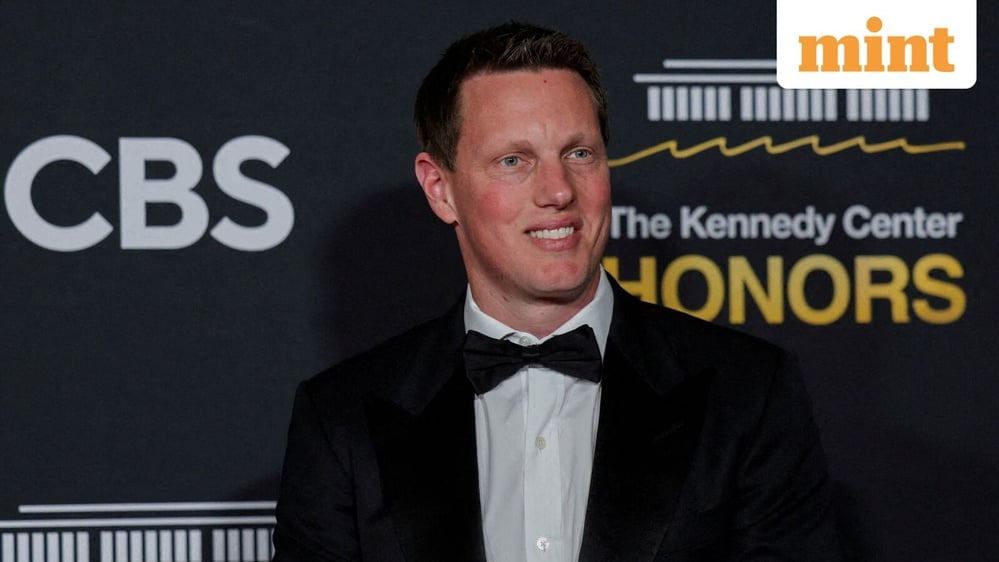
Framing treats the Skydance-Warner Bros Discovery merger as a completed power consolidation, emphasizing David Ellison's control, corporate scale, debt, and job-impact risks.
Automated analysis; not human reviewed.
Limitations: The article text lacks an explicit publication year and byline, limiting verification of timing and authorship.
·
2 of 55 available dimensions scored; omitted dimensions are not treated as neutral.
·
Verified supporting quotes for 2 of 2 scored dimensions.
Claim: The report's credibility is supported by specific figures, named executives, and attributed statements.
“Paramount Skydance on Tuesday (Oct 6) completed its blockbuster US$110 billion takeover of Warner Bros Discovery” · exact text match
“a big part of which Paramount said would come from "non-labour sources"” · exact text match
Why: The article includes named executives, concrete dollar figures, and explicit attribution such as 'Paramount said' and 'Analysts said.'
Claim: The report balances Ellison's stated rationale with analysts' contrasting interpretation.
“Ellison said last week the Skydance name was chosen to retain the individual identities of Paramount and Warner Bros studios” · exact text match
“Analysts, however, said the name reinforces the extent of Ellison's control” · exact text match
Why: Both the company's stated rationale and an analyst counterpoint are included, preserving a visible fairness signal.
The article text lacks an explicit publication year and byline, limiting verification of timing and authorship.
October 03, 2026 · 0 shares
Framing is neutral corporate-news reporting: the naming decision is presented through Ellison's rationale, one named analyst's 'ego-driven' criticism is included, and deal details are attributed to Reuters.
Automated analysis; not human reviewed.
Limitations: The text is a single concise business brief with only one quoted critic, so framing balance can be assessed only at a surface level.
·
4 of 55 available dimensions scored; omitted dimensions are not treated as neutral.
·
Verified supporting quotes for 4 of 4 scored dimensions.
Claim: The publisher reports the deal and naming in factual, attributed terms, with opinion confined to a quoted analyst.
“Paramount Skydance CEO David Ellison has confirmed that the combined company created by the merger with Warner Bros Discovery will be called Skydance” · exact text match
“Reuters reported.” · exact text match
Why: Assertions are attributed to Ellison or Reuters; the only evaluative language is a direct, attributed quote from an analyst.
Claim: Reporting avoids dramatic or sensational framing, treating the merger and name change as routine corporate updates.
“The company's legal name is scheduled to change to Skydance Corporation on October 6, according to a regulatory filing.” · exact text match
Why: Uses scheduled and regulatory language rather than hype, and no loaded or fear-based wording is used by the publisher.
Claim: The article describes announced decisions and scheduled events without recommending or prescribing actions.
“The decision is intended to give the merged entity its own corporate identity while keeping Paramount and Warner Bros as distinct entertainment brands, Ellison said.” · exact text match
Why: Intent is attributed to Ellison, and the article reports decisions and targets without issuing a normative recommendation.
Claim: The article shows visible sourcing and attribution for deal details and legal proceedings.
“Reuters reported.” · exact text match
“according to a regulatory filing.” · exact text match
Why: Key factual details are attributed to Reuters and a regulatory filing, and direct quotes are explicitly identified.
The text is a single concise business brief with only one quoted critic, so framing balance can be assessed only at a surface level.
October 02, 2026 · 0 shares
The merger report is framed as a settled corporate administrative event, emphasizing dates, executive titles, financing, and regulatory clearance without interpretation or advocacy.
Automated analysis; not human reviewed.
Limitations: The supplied text lacks a byline, publication name, and date, and it appends unrelated headline items after the merger report; only the merger report was scored.
·
6 of 55 available dimensions scored; omitted dimensions are not treated as neutral.
·
Verified supporting quotes for 6 of 6 scored dimensions.
Claim: The article reports the merger with factual, sourced statements and no subjective evaluation.
“The deal is expected to be completed on Oct. 6, subject to customary closing conditions, according to company filings.” · exact text match
Why: The key claim is attributed to company filings and hedged with 'expected' rather than asserted or praised.
Claim: The article uses sober corporate language rather than hype or dramatic emphasis.
“The corporate identity is intended to sit above Paramount and Warner Bros., allowing the two studios to retain their individual names and established brands.” · exact text match
Why: The description is administrative and neutral, with no excited or exaggerated wording.
Claim: The piece describes the deal's structure and timeline without recommending or endorsing it.
“The company formed through the merger of Paramount Skydance and Warner Bros.
Discovery will be named Skydance Corporation when the transaction closes next week.”
· exact text match
Why: The sentence is strictly declarative, with no imperative, normative, or evaluative language.
Claim: The tone is unemotional and neutral.
“The acquisition is being financed through a combination of shares, loans, bonds and outside investment.” · exact text match
Why: Financial mechanics are presented without emotive adjectives or rhetorical framing.
Claim: The article shows credible sourcing and careful attribution of key claims.
“according to company filings” · exact text match
“A federal judge cleared one of the final obstacles on Sept.
30 by approving a settlement between Paramount and 12 US states that had sought to block the transaction on antitrust grounds.”
· exact text match
Why: Specific attribution to filings, a court action, and named financiers provides visible support for the reported claims.
Claim: The article relies on precise numbers, named parties, and explicit uncertainty rather than emotional or conspiratorial reasoning.
“It values Warner Bros.
Discovery at an enterprise value of about $110 billion.”
· exact text match
“The deal is expected to be completed on Oct. 6, subject to customary closing conditions, according to company filings.” · exact text match
Why: Valuation and financing are quantified, and the completion date is explicitly conditional.
The supplied text lacks a byline, publication name, and date, and it appends unrelated headline items after the merger report; only the merger report was scored.
Framing treats the Skydance-Warner Bros Discovery merger as a completed power consolidation, emphasizing David Ellison's control, corporate scale, debt, and job-impact risks.
Automated analysis; not human reviewed.
Limitations: The article text lacks an explicit publication year and byline, limiting verification of timing and authorship.
·
2 of 55 available dimensions scored; omitted dimensions are not treated as neutral.
·
Verified supporting quotes for 2 of 2 scored dimensions.
Claim: The report's credibility is supported by specific figures, named executives, and attributed statements.
“Paramount Skydance on Tuesday (Oct 6) completed its blockbuster US$110 billion takeover of Warner Bros Discovery” · exact text match
“a big part of which Paramount said would come from "non-labour sources"” · exact text match
Why: The article includes named executives, concrete dollar figures, and explicit attribution such as 'Paramount said' and 'Analysts said.'
Claim: The report balances Ellison's stated rationale with analysts' contrasting interpretation.
“Ellison said last week the Skydance name was chosen to retain the individual identities of Paramount and Warner Bros studios” · exact text match
“Analysts, however, said the name reinforces the extent of Ellison's control” · exact text match
Why: Both the company's stated rationale and an analyst counterpoint are included, preserving a visible fairness signal.
The article text lacks an explicit publication year and byline, limiting verification of timing and authorship.
October 06, 2026 · 0 shares
The report frames the merger as a historic, transformative consolidation while balancing it with analyst warnings and regulatory concerns.
The deal follows Skydance Media's 2025 merger with Paramount Global, making 'Paramount Skydance' the acquiring entity; Warner Bros.
Discovery owns CNN, HBO, and other major networks.
Automated analysis; not human reviewed.
Limitations: The supplied text is duplicated and contains a NilePost subscription prompt; I analyzed the de-duplicated BBC article and ignored the wrapper.
·
8 of 55 available dimensions scored; omitted dimensions are not treated as neutral.
·
Verified supporting quotes for 6 of 8 scored dimensions.
Claim: The article relies on attributed facts and quotes rather than subjective impressions.
“Mike Proulx, research director at Forrester Research, said that change 'essentially means the HBO leadership team is now in charge of Skydance's combined streaming operation'.” · not found in supplied text
Why: The article attributes analysis to a named researcher and includes factual and regulatory detail, showing an objective reporting posture.
Claim: The article balances favorable corporate ambitions with analyst debt warnings.
“Now that ambition is a reality” · exact text match
“Dan Coatsworth, head of markets at AJ Bell, said the company has high debts at a time when interest rates are high.” · exact text match
Why: Both a bullish executive statement and a bearish debt-focused analyst warning appear, supporting a neutral market outlook.
Claim: The article is emotionally balanced between optimism about the deal's potential and pessimism about cost and debt pressures.
“Now that ambition is a reality” · exact text match
“make no mistake, Bloys will be pressured to find and deliver cost efficiencies that could affect content quality” · exact text match
Why: Contrasting positive and cautionary statements result in a balanced emotional tone.
Claim: The article describes the merger and its conditions without prescribing action.
“The takeover - merging two of the biggest studios in Los Angeles - comes after months of legal disputes and widespread criticism over feared cuts and consolidation could harm competition and consumers.” · exact text match
Why: It reports events, criticisms and deal terms rather than telling readers what should be done.
Claim: The article shows visible sourcing and attribution through named analysts and officials.
“said California Attorney General Rob Bonta, who led the lawsuit and settlement.” · exact text match
“Dan Coatsworth, head of markets at AJ Bell, said the company has high debts at a time when interest rates are high.” · exact text match
Why: It names sources for several key claims, though some statements rely on 'company said' and unnamed reporting logistics.
Claim: The article's reasoning is measured and avoids emotional or conspiratorial claims.
“While the company said it had received unanimous approval from competition authorities across the world, the long running takeover process has featured controversy since the beginning.” · exact text match
Why: It juxtaposes the company's approval claim with lawsuits and criticisms, indicating balanced, evidence-based reasoning.
Claim: The publisher states predicted consequences of the merger without hedging or attribution.
“It will alter streaming for millions, usher in a new chapter in the film and TV industry, and leave one of the biggest US news outlets, CNN, in uncertain territory.” · exact text match
Why: The opening makes unhedged future claims about the merger's effects, making the report partly speculative.
Claim: The report includes named analyst caution and legal opposition, signaling internal fairness.
“Mike Proulx, research director at Forrester Research, said that change 'essentially means the HBO leadership team is now in charge of Skydance's combined streaming operation'.” · not found in supplied text
“Lawyers in about a dozen US states then filed lawsuits - led by California - aiming to block the deal, arguing it would stifle competition, raise consumer prices.” · not found in supplied text
Why: It includes adverse expert analysis and regulatory opposition rather than presenting only the companies' perspective.
The supplied text is duplicated and contains a NilePost subscription prompt; I analyzed the de-duplicated BBC article and ignored the wrapper.
Framing treats the Skydance-Warner Bros Discovery merger as a completed power consolidation, emphasizing David Ellison's control, corporate scale, debt, and job-impact risks.
Automated analysis; not human reviewed.
Limitations: The article text lacks an explicit publication year and byline, limiting verification of timing and authorship.
·
2 of 55 available dimensions scored; omitted dimensions are not treated as neutral.
·
Verified supporting quotes for 2 of 2 scored dimensions.
Claim: The report's credibility is supported by specific figures, named executives, and attributed statements.
“Paramount Skydance on Tuesday (Oct 6) completed its blockbuster US$110 billion takeover of Warner Bros Discovery” · exact text match
“a big part of which Paramount said would come from "non-labour sources"” · exact text match
Why: The article includes named executives, concrete dollar figures, and explicit attribution such as 'Paramount said' and 'Analysts said.'
Claim: The report balances Ellison's stated rationale with analysts' contrasting interpretation.
“Ellison said last week the Skydance name was chosen to retain the individual identities of Paramount and Warner Bros studios” · exact text match
“Analysts, however, said the name reinforces the extent of Ellison's control” · exact text match
Why: Both the company's stated rationale and an analyst counterpoint are included, preserving a visible fairness signal.
The article text lacks an explicit publication year and byline, limiting verification of timing and authorship.
October 06, 2026 · 0 shares
The report frames the merger as a historic, transformative consolidation while balancing it with analyst warnings and regulatory concerns.
The deal follows Skydance Media's 2025 merger with Paramount Global, making 'Paramount Skydance' the acquiring entity; Warner Bros.
Discovery owns CNN, HBO, and other major networks.
Automated analysis; not human reviewed.
Limitations: The supplied text is duplicated and contains a NilePost subscription prompt; I analyzed the de-duplicated BBC article and ignored the wrapper.
·
8 of 55 available dimensions scored; omitted dimensions are not treated as neutral.
·
Verified supporting quotes for 6 of 8 scored dimensions.
Claim: The article relies on attributed facts and quotes rather than subjective impressions.
“Mike Proulx, research director at Forrester Research, said that change 'essentially means the HBO leadership team is now in charge of Skydance's combined streaming operation'.” · not found in supplied text
Why: The article attributes analysis to a named researcher and includes factual and regulatory detail, showing an objective reporting posture.
Claim: The article balances favorable corporate ambitions with analyst debt warnings.
“Now that ambition is a reality” · exact text match
“Dan Coatsworth, head of markets at AJ Bell, said the company has high debts at a time when interest rates are high.” · exact text match
Why: Both a bullish executive statement and a bearish debt-focused analyst warning appear, supporting a neutral market outlook.
Claim: The article is emotionally balanced between optimism about the deal's potential and pessimism about cost and debt pressures.
“Now that ambition is a reality” · exact text match
“make no mistake, Bloys will be pressured to find and deliver cost efficiencies that could affect content quality” · exact text match
Why: Contrasting positive and cautionary statements result in a balanced emotional tone.
Claim: The article describes the merger and its conditions without prescribing action.
“The takeover - merging two of the biggest studios in Los Angeles - comes after months of legal disputes and widespread criticism over feared cuts and consolidation could harm competition and consumers.” · exact text match
Why: It reports events, criticisms and deal terms rather than telling readers what should be done.
Claim: The article shows visible sourcing and attribution through named analysts and officials.
“said California Attorney General Rob Bonta, who led the lawsuit and settlement.” · exact text match
“Dan Coatsworth, head of markets at AJ Bell, said the company has high debts at a time when interest rates are high.” · exact text match
Why: It names sources for several key claims, though some statements rely on 'company said' and unnamed reporting logistics.
Claim: The article's reasoning is measured and avoids emotional or conspiratorial claims.
“While the company said it had received unanimous approval from competition authorities across the world, the long running takeover process has featured controversy since the beginning.” · exact text match
Why: It juxtaposes the company's approval claim with lawsuits and criticisms, indicating balanced, evidence-based reasoning.
Claim: The publisher states predicted consequences of the merger without hedging or attribution.
“It will alter streaming for millions, usher in a new chapter in the film and TV industry, and leave one of the biggest US news outlets, CNN, in uncertain territory.” · exact text match
Why: The opening makes unhedged future claims about the merger's effects, making the report partly speculative.
Claim: The report includes named analyst caution and legal opposition, signaling internal fairness.
“Mike Proulx, research director at Forrester Research, said that change 'essentially means the HBO leadership team is now in charge of Skydance's combined streaming operation'.” · not found in supplied text
“Lawyers in about a dozen US states then filed lawsuits - led by California - aiming to block the deal, arguing it would stifle competition, raise consumer prices.” · not found in supplied text
Why: It includes adverse expert analysis and regulatory opposition rather than presenting only the companies' perspective.
The supplied text is duplicated and contains a NilePost subscription prompt; I analyzed the de-duplicated BBC article and ignored the wrapper.
October 02, 2026 · 0 shares
The merger report is framed as a settled corporate administrative event, emphasizing dates, executive titles, financing, and regulatory clearance without interpretation or advocacy.
Automated analysis; not human reviewed.
Limitations: The supplied text lacks a byline, publication name, and date, and it appends unrelated headline items after the merger report; only the merger report was scored.
·
6 of 55 available dimensions scored; omitted dimensions are not treated as neutral.
·
Verified supporting quotes for 6 of 6 scored dimensions.
Claim: The article reports the merger with factual, sourced statements and no subjective evaluation.
“The deal is expected to be completed on Oct. 6, subject to customary closing conditions, according to company filings.” · exact text match
Why: The key claim is attributed to company filings and hedged with 'expected' rather than asserted or praised.
Claim: The article uses sober corporate language rather than hype or dramatic emphasis.
“The corporate identity is intended to sit above Paramount and Warner Bros., allowing the two studios to retain their individual names and established brands.” · exact text match
Why: The description is administrative and neutral, with no excited or exaggerated wording.
Claim: The piece describes the deal's structure and timeline without recommending or endorsing it.
“The company formed through the merger of Paramount Skydance and Warner Bros.
Discovery will be named Skydance Corporation when the transaction closes next week.”
· exact text match
Why: The sentence is strictly declarative, with no imperative, normative, or evaluative language.
Claim: The tone is unemotional and neutral.
“The acquisition is being financed through a combination of shares, loans, bonds and outside investment.” · exact text match
Why: Financial mechanics are presented without emotive adjectives or rhetorical framing.
Claim: The article shows credible sourcing and careful attribution of key claims.
“according to company filings” · exact text match
“A federal judge cleared one of the final obstacles on Sept.
30 by approving a settlement between Paramount and 12 US states that had sought to block the transaction on antitrust grounds.”
· exact text match
Why: Specific attribution to filings, a court action, and named financiers provides visible support for the reported claims.
Claim: The article relies on precise numbers, named parties, and explicit uncertainty rather than emotional or conspiratorial reasoning.
“It values Warner Bros.
Discovery at an enterprise value of about $110 billion.”
· exact text match
“The deal is expected to be completed on Oct. 6, subject to customary closing conditions, according to company filings.” · exact text match
Why: Valuation and financing are quantified, and the completion date is explicitly conditional.
The supplied text lacks a byline, publication name, and date, and it appends unrelated headline items after the merger report; only the merger report was scored.
Framing treats the Skydance-Warner Bros Discovery merger as a completed power consolidation, emphasizing David Ellison's control, corporate scale, debt, and job-impact risks.
Automated analysis; not human reviewed.
Limitations: The article text lacks an explicit publication year and byline, limiting verification of timing and authorship.
·
2 of 55 available dimensions scored; omitted dimensions are not treated as neutral.
·
Verified supporting quotes for 2 of 2 scored dimensions.
Claim: The report's credibility is supported by specific figures, named executives, and attributed statements.
“Paramount Skydance on Tuesday (Oct 6) completed its blockbuster US$110 billion takeover of Warner Bros Discovery” · exact text match
“a big part of which Paramount said would come from "non-labour sources"” · exact text match
Why: The article includes named executives, concrete dollar figures, and explicit attribution such as 'Paramount said' and 'Analysts said.'
Claim: The report balances Ellison's stated rationale with analysts' contrasting interpretation.
“Ellison said last week the Skydance name was chosen to retain the individual identities of Paramount and Warner Bros studios” · exact text match
“Analysts, however, said the name reinforces the extent of Ellison's control” · exact text match
Why: Both the company's stated rationale and an analyst counterpoint are included, preserving a visible fairness signal.
The article text lacks an explicit publication year and byline, limiting verification of timing and authorship.
October 06, 2026 · 0 shares
The framing is business-strategy oriented, treating the merger as a historic, scale-driven milestone and a personal achievement for David Ellison while also noting debt, antitrust, labor, and editorial-independence concerns.
Automated analysis; not human reviewed.
Limitations: The assessment is based only on the supplied article text and cannot independently verify the transaction terms, severance figures, or statements by cited executives.
·
2 of 55 available dimensions scored; omitted dimensions are not treated as neutral.
·
Verified supporting quotes for 2 of 2 scored dimensions.
Claim: The article is predominantly objective, reporting named sources, deal terms, and legal context rather than advancing a subjective thesis.
“The new company, which is to be called Skydance, combines two of the five largest Hollywood film studios, covering major franchises such as Harry Potter and Mission Impossible.” · exact text match
“As part of a negotiated settlement with the states, whose case was led by California's attorney general Rob Bonta, Paramount vowed to release at least 30 films a year in theatres and keep them there for 45 days, before making them available for viewing at home.” · exact text match
Why: The story relies on attributed quotes and precise figures and includes both merger supporters and critics; colorful phrases in the lead are not substantial enough to make it subjective.
Claim: The article shows high observable credibility through attributed quotes, named sources, and specific transaction details.
“Michael Wolf, chief executive of management consulting firm Activate Strategy, told Bloomberg TV on Monday.” · exact text match
“Paramount sold $52 billion of loans and bonds in only a week, a tight timeline for any debt deal – particularly for one of the largest financings in recent history.” · exact text match
Why: It identifies speakers and their roles, uses direct quotations, and gives exact dollar amounts, deadlines, and legal conditions rather than presenting unsourced assertions.
The assessment is based only on the supplied article text and cannot independently verify the transaction terms, severance figures, or statements by cited executives.
October 02, 2026 · 0 shares
The merger report is framed as a settled corporate administrative event, emphasizing dates, executive titles, financing, and regulatory clearance without interpretation or advocacy.
Automated analysis; not human reviewed.
Limitations: The supplied text lacks a byline, publication name, and date, and it appends unrelated headline items after the merger report; only the merger report was scored.
·
6 of 55 available dimensions scored; omitted dimensions are not treated as neutral.
·
Verified supporting quotes for 6 of 6 scored dimensions.
Claim: The article reports the merger with factual, sourced statements and no subjective evaluation.
“The deal is expected to be completed on Oct. 6, subject to customary closing conditions, according to company filings.” · exact text match
Why: The key claim is attributed to company filings and hedged with 'expected' rather than asserted or praised.
Claim: The article uses sober corporate language rather than hype or dramatic emphasis.
“The corporate identity is intended to sit above Paramount and Warner Bros., allowing the two studios to retain their individual names and established brands.” · exact text match
Why: The description is administrative and neutral, with no excited or exaggerated wording.
Claim: The piece describes the deal's structure and timeline without recommending or endorsing it.
“The company formed through the merger of Paramount Skydance and Warner Bros.
Discovery will be named Skydance Corporation when the transaction closes next week.”
· exact text match
Why: The sentence is strictly declarative, with no imperative, normative, or evaluative language.
Claim: The tone is unemotional and neutral.
“The acquisition is being financed through a combination of shares, loans, bonds and outside investment.” · exact text match
Why: Financial mechanics are presented without emotive adjectives or rhetorical framing.
Claim: The article shows credible sourcing and careful attribution of key claims.
“according to company filings” · exact text match
“A federal judge cleared one of the final obstacles on Sept.
30 by approving a settlement between Paramount and 12 US states that had sought to block the transaction on antitrust grounds.”
· exact text match
Why: Specific attribution to filings, a court action, and named financiers provides visible support for the reported claims.
Claim: The article relies on precise numbers, named parties, and explicit uncertainty rather than emotional or conspiratorial reasoning.
“It values Warner Bros.
Discovery at an enterprise value of about $110 billion.”
· exact text match
“The deal is expected to be completed on Oct. 6, subject to customary closing conditions, according to company filings.” · exact text match
Why: Valuation and financing are quantified, and the completion date is explicitly conditional.
The supplied text lacks a byline, publication name, and date, and it appends unrelated headline items after the merger report; only the merger report was scored.
Framing treats the Skydance-Warner Bros Discovery merger as a completed power consolidation, emphasizing David Ellison's control, corporate scale, debt, and job-impact risks.
Automated analysis; not human reviewed.
Limitations: The article text lacks an explicit publication year and byline, limiting verification of timing and authorship.
·
2 of 55 available dimensions scored; omitted dimensions are not treated as neutral.
·
Verified supporting quotes for 2 of 2 scored dimensions.
Claim: The report's credibility is supported by specific figures, named executives, and attributed statements.
“Paramount Skydance on Tuesday (Oct 6) completed its blockbuster US$110 billion takeover of Warner Bros Discovery” · exact text match
“a big part of which Paramount said would come from "non-labour sources"” · exact text match
Why: The article includes named executives, concrete dollar figures, and explicit attribution such as 'Paramount said' and 'Analysts said.'
Claim: The report balances Ellison's stated rationale with analysts' contrasting interpretation.
“Ellison said last week the Skydance name was chosen to retain the individual identities of Paramount and Warner Bros studios” · exact text match
“Analysts, however, said the name reinforces the extent of Ellison's control” · exact text match
Why: Both the company's stated rationale and an analyst counterpoint are included, preserving a visible fairness signal.
The article text lacks an explicit publication year and byline, limiting verification of timing and authorship.
October 06, 2026 · 0 shares
Framing emphasizes the scale and consolidation logic of the completed merger while also flagging debt, job risk, and editorial-independence concerns.
Automated analysis; not human reviewed.
Limitations: The supplied text is a wire report credited to REUTERS and republished by a publisher, so publisher-specific framing cannot be cleanly separated from the wire agency's framing.
·
4 of 55 available dimensions scored; omitted dimensions are not treated as neutral.
·
Verified supporting quotes for 4 of 4 scored dimensions.
Claim: The article maintains an objective tone, using attribution and figures, with only incidental colorful language.
“Shares of the combined company moved to the New York Stock Exchange from Nasdaq on Oct 6 to trade under the ticker “SKYD”.” · exact text match
“Ellison said last week the Skydance name was chosen to retain the individual identities of Paramount and Warner Bros studios, rather than combining them under a new brand.” · exact text match
Why: Neutral operational facts and attributed statements dominate; “blockbuster” and “power play” are minor framing words, not the basis of the report.
Claim: The article is descriptive reporting rather than advocacy or instruction.
“Paramount Skydance on Oct 6 completed its blockbuster US$110 billion (S$140.5 billion) takeover of Warner Bros Discovery, creating a Hollywood heavyweight that hands chief executive David Ellison control of one of the world’s largest entertainment and news businesses.” · exact text match
Why: The lead recites the transaction and terms; the article continues with attributed quotes, financial details, and reported concerns rather than telling readers what should happen.
Claim: The report shows strong sourcing practices: named parties, figures, and forecasts attributed to a research firm.
“MoffettNathanson forecast profit, or EBITDA, of US$16 billion for 2028 and rising to US$19 billion in 2030.” · exact text match
“Warner Bros shareholders received an additional US$41.9 million in a “ticking fee”, based on the number of days between end-September and the deal-closing, according to a regulatory filing.” · exact text match
Why: Financial projections are attributed to a named firm and deal details are tied to a regulatory filing; most claims are clearly sourced.
Claim: The article visibly presents opposed viewpoints and material concerns rather than one-sided promotion.
“As part of the settlement, Ellison agreed to create an editorial independence board to oversee CNN and CBS. Experts warn that the board will be “toothless”.” · exact text match
“The goal, he added, was not simply to get bigger but “to take on the biggest players in our industry”.” · exact text match
Why: It quotes Ellison’s rationale but also reports expert skepticism and lawmakers’ criticism, showing internal fairness.
The supplied text is a wire report credited to REUTERS and republished by a publisher, so publisher-specific framing cannot be cleanly separated from the wire agency's framing.
October 06, 2026 · 0 shares
The report frames the merger as a historic, transformative consolidation while balancing it with analyst warnings and regulatory concerns.
The deal follows Skydance Media's 2025 merger with Paramount Global, making 'Paramount Skydance' the acquiring entity; Warner Bros.
Discovery owns CNN, HBO, and other major networks.
Automated analysis; not human reviewed.
Limitations: The supplied text is duplicated and contains a NilePost subscription prompt; I analyzed the de-duplicated BBC article and ignored the wrapper.
·
8 of 55 available dimensions scored; omitted dimensions are not treated as neutral.
·
Verified supporting quotes for 6 of 8 scored dimensions.
Claim: The article relies on attributed facts and quotes rather than subjective impressions.
“Mike Proulx, research director at Forrester Research, said that change 'essentially means the HBO leadership team is now in charge of Skydance's combined streaming operation'.” · not found in supplied text
Why: The article attributes analysis to a named researcher and includes factual and regulatory detail, showing an objective reporting posture.
Claim: The article balances favorable corporate ambitions with analyst debt warnings.
“Now that ambition is a reality” · exact text match
“Dan Coatsworth, head of markets at AJ Bell, said the company has high debts at a time when interest rates are high.” · exact text match
Why: Both a bullish executive statement and a bearish debt-focused analyst warning appear, supporting a neutral market outlook.
Claim: The article is emotionally balanced between optimism about the deal's potential and pessimism about cost and debt pressures.
“Now that ambition is a reality” · exact text match
“make no mistake, Bloys will be pressured to find and deliver cost efficiencies that could affect content quality” · exact text match
Why: Contrasting positive and cautionary statements result in a balanced emotional tone.
Claim: The article describes the merger and its conditions without prescribing action.
“The takeover - merging two of the biggest studios in Los Angeles - comes after months of legal disputes and widespread criticism over feared cuts and consolidation could harm competition and consumers.” · exact text match
Why: It reports events, criticisms and deal terms rather than telling readers what should be done.
Claim: The article shows visible sourcing and attribution through named analysts and officials.
“said California Attorney General Rob Bonta, who led the lawsuit and settlement.” · exact text match
“Dan Coatsworth, head of markets at AJ Bell, said the company has high debts at a time when interest rates are high.” · exact text match
Why: It names sources for several key claims, though some statements rely on 'company said' and unnamed reporting logistics.
Claim: The article's reasoning is measured and avoids emotional or conspiratorial claims.
“While the company said it had received unanimous approval from competition authorities across the world, the long running takeover process has featured controversy since the beginning.” · exact text match
Why: It juxtaposes the company's approval claim with lawsuits and criticisms, indicating balanced, evidence-based reasoning.
Claim: The publisher states predicted consequences of the merger without hedging or attribution.
“It will alter streaming for millions, usher in a new chapter in the film and TV industry, and leave one of the biggest US news outlets, CNN, in uncertain territory.” · exact text match
Why: The opening makes unhedged future claims about the merger's effects, making the report partly speculative.
Claim: The report includes named analyst caution and legal opposition, signaling internal fairness.
“Mike Proulx, research director at Forrester Research, said that change 'essentially means the HBO leadership team is now in charge of Skydance's combined streaming operation'.” · not found in supplied text
“Lawyers in about a dozen US states then filed lawsuits - led by California - aiming to block the deal, arguing it would stifle competition, raise consumer prices.” · not found in supplied text
Why: It includes adverse expert analysis and regulatory opposition rather than presenting only the companies' perspective.
The supplied text is duplicated and contains a NilePost subscription prompt; I analyzed the de-duplicated BBC article and ignored the wrapper.
October 02, 2026 · 0 shares
Framing treats the Skydance-Paramount-Warner Bros.
merger primarily as a corporate consolidation threat, foregrounding job losses, weakened journalism, and toothless oversight.
Automated analysis; not human reviewed.
Limitations: The supplied text mixes article body with promotional sidebars and contains a malformed disclosure sentence, making some financial-conflict details and byline extraction uncertain.
·
7 of 55 available dimensions scored; omitted dimensions are not treated as neutral.
·
Verified supporting quotes for 0 of 7 scored dimensions.
Claim: The article adopts a left-leaning critical stance toward media consolidation by emphasizing worker losses and monopoly risks.
“"In practice, employees usually lose out in corporate consolidation, regardless of protections."” · not found in supplied text
“"The bigger worry, though, is media monopoly."” · not found in supplied text
Why: The publisher's own framing, not merely quoted critics, centers progressive concerns about worker harm and monopoly, though it stops short of explicit partisan language.
Claim: The article mixes factual reporting with evaluative editorial judgments about the merger's consequences.
“"The bigger worry, though, is media monopoly."” · not found in supplied text
“"The merger will undeniably affect employees at the mega media company, now one of the largest in history."” · not found in supplied text
Why: Phrases like 'bigger worry' and 'undeniably affect' are the publisher's own evaluative claims rather than attributed facts.
Claim: The article's overall selection and emphasis cast the merger in a pessimistic light.
“"The bigger worry, though, is media monopoly."” · not found in supplied text
“"In practice, employees usually lose out in corporate consolidation, regardless of protections."” · not found in supplied text
Why: The article highlights negative consequences and skeptical criticism while giving limited attention to potential benefits.
Claim: The article contains substantial opinionated framing in addition to reporting.
“"In practice, employees usually lose out in corporate consolidation, regardless of protections."” · not found in supplied text
“"Corporate convergence also risks homogenizing news content by potentially suppressing divergent viewpoints"” · not found in supplied text
Why: These are unqualified generalizations and risk assessments presented as the publisher's conclusions.
Claim: The article displays visible sourcing, attribution, and caveats that support credibility.
“"Harvard Business Review estimated that up to 30% of workers get laid off in mergers like these, though that oft-cited figure is from 2017."” · not found in supplied text
“"Free Press co-CEO Jessica J. González said in a prepared statement earlier this week"” · not found in supplied text
Why: The article identifies sources and attaches caveats to a cited estimate, though some statements remain unsourced.
Claim: The article's framing is critical of the corporate consolidation behind the merger.
“"Corporate convergence also risks homogenizing news content by potentially suppressing divergent viewpoints"” · not found in supplied text
“"In practice, employees usually lose out in corporate consolidation, regardless of protections."” · not found in supplied text
Why: The publisher describes corporate convergence as risking homogenized news and states employees usually lose out in corporate consolidation.
Claim: The article shows transparency and balance by including the company's statement, seeking comment, and disclosing a financial interest.
“"We reached out to Skydance for comment and didn’t immediately hear back."” · not found in supplied text
“"Disclosure: Lori Grunin has stock in Paramount from when was owned by CBS."” · not found in supplied text
Why: Seeking comment and disclosing the author's stock position are observable fairness and transparency signals.
The supplied text mixes article body with promotional sidebars and contains a malformed disclosure sentence, making some financial-conflict details and byline extraction uncertain.
October 06, 2026 · 0 shares
Framing emphasizes the scale and consolidation logic of the completed merger while also flagging debt, job risk, and editorial-independence concerns.
Automated analysis; not human reviewed.
Limitations: The supplied text is a wire report credited to REUTERS and republished by a publisher, so publisher-specific framing cannot be cleanly separated from the wire agency's framing.
·
4 of 55 available dimensions scored; omitted dimensions are not treated as neutral.
·
Verified supporting quotes for 4 of 4 scored dimensions.
Claim: The article maintains an objective tone, using attribution and figures, with only incidental colorful language.
“Shares of the combined company moved to the New York Stock Exchange from Nasdaq on Oct 6 to trade under the ticker “SKYD”.” · exact text match
“Ellison said last week the Skydance name was chosen to retain the individual identities of Paramount and Warner Bros studios, rather than combining them under a new brand.” · exact text match
Why: Neutral operational facts and attributed statements dominate; “blockbuster” and “power play” are minor framing words, not the basis of the report.
Claim: The article is descriptive reporting rather than advocacy or instruction.
“Paramount Skydance on Oct 6 completed its blockbuster US$110 billion (S$140.5 billion) takeover of Warner Bros Discovery, creating a Hollywood heavyweight that hands chief executive David Ellison control of one of the world’s largest entertainment and news businesses.” · exact text match
Why: The lead recites the transaction and terms; the article continues with attributed quotes, financial details, and reported concerns rather than telling readers what should happen.
Claim: The report shows strong sourcing practices: named parties, figures, and forecasts attributed to a research firm.
“MoffettNathanson forecast profit, or EBITDA, of US$16 billion for 2028 and rising to US$19 billion in 2030.” · exact text match
“Warner Bros shareholders received an additional US$41.9 million in a “ticking fee”, based on the number of days between end-September and the deal-closing, according to a regulatory filing.” · exact text match
Why: Financial projections are attributed to a named firm and deal details are tied to a regulatory filing; most claims are clearly sourced.
Claim: The article visibly presents opposed viewpoints and material concerns rather than one-sided promotion.
“As part of the settlement, Ellison agreed to create an editorial independence board to oversee CNN and CBS. Experts warn that the board will be “toothless”.” · exact text match
“The goal, he added, was not simply to get bigger but “to take on the biggest players in our industry”.” · exact text match
Why: It quotes Ellison’s rationale but also reports expert skepticism and lawmakers’ criticism, showing internal fairness.
The supplied text is a wire report credited to REUTERS and republished by a publisher, so publisher-specific framing cannot be cleanly separated from the wire agency's framing.
Framing treats the Skydance-Warner Bros Discovery merger as a completed power consolidation, emphasizing David Ellison's control, corporate scale, debt, and job-impact risks.
Automated analysis; not human reviewed. Limitations: The article text lacks an explicit publication year and byline, limiting verification of timing and authorship. · 2 of 55 available dimensions scored; omitted dimensions are not treated as neutral. · Verified supporting quotes for 2 of 2 scored dimensions.
Claim: The report's credibility is supported by specific figures, named executives, and attributed statements.
“Paramount Skydance on Tuesday (Oct 6) completed its blockbuster US$110 billion takeover of Warner Bros Discovery” · exact text match
“a big part of which Paramount said would come from "non-labour sources"” · exact text match
Why: The article includes named executives, concrete dollar figures, and explicit attribution such as 'Paramount said' and 'Analysts said.'
Claim: The report balances Ellison's stated rationale with analysts' contrasting interpretation.
“Ellison said last week the Skydance name was chosen to retain the individual identities of Paramount and Warner Bros studios” · exact text match
“Analysts, however, said the name reinforces the extent of Ellison's control” · exact text match
Why: Both the company's stated rationale and an analyst counterpoint are included, preserving a visible fairness signal.
The article text lacks an explicit publication year and byline, limiting verification of timing and authorship.
October 03, 2026 · 0 shares
Framing is neutral corporate-news reporting: the naming decision is presented through Ellison's rationale, one named analyst's 'ego-driven' criticism is included, and deal details are attributed to Reuters.
Automated analysis; not human reviewed. Limitations: The text is a single concise business brief with only one quoted critic, so framing balance can be assessed only at a surface level. · 4 of 55 available dimensions scored; omitted dimensions are not treated as neutral. · Verified supporting quotes for 4 of 4 scored dimensions.
Claim: The publisher reports the deal and naming in factual, attributed terms, with opinion confined to a quoted analyst.
“Paramount Skydance CEO David Ellison has confirmed that the combined company created by the merger with Warner Bros Discovery will be called Skydance” · exact text match
“Reuters reported.” · exact text match
Why: Assertions are attributed to Ellison or Reuters; the only evaluative language is a direct, attributed quote from an analyst.
Claim: Reporting avoids dramatic or sensational framing, treating the merger and name change as routine corporate updates.
“The company's legal name is scheduled to change to Skydance Corporation on October 6, according to a regulatory filing.” · exact text match
Why: Uses scheduled and regulatory language rather than hype, and no loaded or fear-based wording is used by the publisher.
Claim: The article describes announced decisions and scheduled events without recommending or prescribing actions.
“The decision is intended to give the merged entity its own corporate identity while keeping Paramount and Warner Bros as distinct entertainment brands, Ellison said.” · exact text match
Why: Intent is attributed to Ellison, and the article reports decisions and targets without issuing a normative recommendation.
Claim: The article shows visible sourcing and attribution for deal details and legal proceedings.
“Reuters reported.” · exact text match
“according to a regulatory filing.” · exact text match
Why: Key factual details are attributed to Reuters and a regulatory filing, and direct quotes are explicitly identified.
The text is a single concise business brief with only one quoted critic, so framing balance can be assessed only at a surface level.
October 02, 2026 · 0 shares
The merger report is framed as a settled corporate administrative event, emphasizing dates, executive titles, financing, and regulatory clearance without interpretation or advocacy.
Automated analysis; not human reviewed. Limitations: The supplied text lacks a byline, publication name, and date, and it appends unrelated headline items after the merger report; only the merger report was scored. · 6 of 55 available dimensions scored; omitted dimensions are not treated as neutral. · Verified supporting quotes for 6 of 6 scored dimensions.
Claim: The article reports the merger with factual, sourced statements and no subjective evaluation.
“The deal is expected to be completed on Oct. 6, subject to customary closing conditions, according to company filings.” · exact text match
Why: The key claim is attributed to company filings and hedged with 'expected' rather than asserted or praised.
Claim: The article uses sober corporate language rather than hype or dramatic emphasis.
“The corporate identity is intended to sit above Paramount and Warner Bros., allowing the two studios to retain their individual names and established brands.” · exact text match
Why: The description is administrative and neutral, with no excited or exaggerated wording.
Claim: The piece describes the deal's structure and timeline without recommending or endorsing it.
“The company formed through the merger of Paramount Skydance and Warner Bros. Discovery will be named Skydance Corporation when the transaction closes next week.” · exact text match
Why: The sentence is strictly declarative, with no imperative, normative, or evaluative language.
Claim: The tone is unemotional and neutral.
“The acquisition is being financed through a combination of shares, loans, bonds and outside investment.” · exact text match
Why: Financial mechanics are presented without emotive adjectives or rhetorical framing.
Claim: The article shows credible sourcing and careful attribution of key claims.
“according to company filings” · exact text match
“A federal judge cleared one of the final obstacles on Sept. 30 by approving a settlement between Paramount and 12 US states that had sought to block the transaction on antitrust grounds.” · exact text match
Why: Specific attribution to filings, a court action, and named financiers provides visible support for the reported claims.
Claim: The article relies on precise numbers, named parties, and explicit uncertainty rather than emotional or conspiratorial reasoning.
“It values Warner Bros. Discovery at an enterprise value of about $110 billion.” · exact text match
“The deal is expected to be completed on Oct. 6, subject to customary closing conditions, according to company filings.” · exact text match
Why: Valuation and financing are quantified, and the completion date is explicitly conditional.
The supplied text lacks a byline, publication name, and date, and it appends unrelated headline items after the merger report; only the merger report was scored.
October 06, 2026 · 0 shares
Framing emphasizes the scale and consolidation logic of the completed merger while also flagging debt, job risk, and editorial-independence concerns.
Automated analysis; not human reviewed. Limitations: The supplied text is a wire report credited to REUTERS and republished by a publisher, so publisher-specific framing cannot be cleanly separated from the wire agency's framing. · 4 of 55 available dimensions scored; omitted dimensions are not treated as neutral. · Verified supporting quotes for 4 of 4 scored dimensions.
Claim: The article maintains an objective tone, using attribution and figures, with only incidental colorful language.
“Shares of the combined company moved to the New York Stock Exchange from Nasdaq on Oct 6 to trade under the ticker “SKYD”.” · exact text match
“Ellison said last week the Skydance name was chosen to retain the individual identities of Paramount and Warner Bros studios, rather than combining them under a new brand.” · exact text match
Why: Neutral operational facts and attributed statements dominate; “blockbuster” and “power play” are minor framing words, not the basis of the report.
Claim: The article is descriptive reporting rather than advocacy or instruction.
“Paramount Skydance on Oct 6 completed its blockbuster US$110 billion (S$140.5 billion) takeover of Warner Bros Discovery, creating a Hollywood heavyweight that hands chief executive David Ellison control of one of the world’s largest entertainment and news businesses.” · exact text match
Why: The lead recites the transaction and terms; the article continues with attributed quotes, financial details, and reported concerns rather than telling readers what should happen.
Claim: The report shows strong sourcing practices: named parties, figures, and forecasts attributed to a research firm.
“MoffettNathanson forecast profit, or EBITDA, of US$16 billion for 2028 and rising to US$19 billion in 2030.” · exact text match
“Warner Bros shareholders received an additional US$41.9 million in a “ticking fee”, based on the number of days between end-September and the deal-closing, according to a regulatory filing.” · exact text match
Why: Financial projections are attributed to a named firm and deal details are tied to a regulatory filing; most claims are clearly sourced.
Claim: The article visibly presents opposed viewpoints and material concerns rather than one-sided promotion.
“As part of the settlement, Ellison agreed to create an editorial independence board to oversee CNN and CBS. Experts warn that the board will be “toothless”.” · exact text match
“The goal, he added, was not simply to get bigger but “to take on the biggest players in our industry”.” · exact text match
Why: It quotes Ellison’s rationale but also reports expert skepticism and lawmakers’ criticism, showing internal fairness.
The supplied text is a wire report credited to REUTERS and republished by a publisher, so publisher-specific framing cannot be cleanly separated from the wire agency's framing.
Framing treats the Skydance-Warner Bros Discovery merger as a completed power consolidation, emphasizing David Ellison's control, corporate scale, debt, and job-impact risks.
Automated analysis; not human reviewed. Limitations: The article text lacks an explicit publication year and byline, limiting verification of timing and authorship. · 2 of 55 available dimensions scored; omitted dimensions are not treated as neutral. · Verified supporting quotes for 2 of 2 scored dimensions.
Claim: The report's credibility is supported by specific figures, named executives, and attributed statements.
“Paramount Skydance on Tuesday (Oct 6) completed its blockbuster US$110 billion takeover of Warner Bros Discovery” · exact text match
“a big part of which Paramount said would come from "non-labour sources"” · exact text match
Why: The article includes named executives, concrete dollar figures, and explicit attribution such as 'Paramount said' and 'Analysts said.'
Claim: The report balances Ellison's stated rationale with analysts' contrasting interpretation.
“Ellison said last week the Skydance name was chosen to retain the individual identities of Paramount and Warner Bros studios” · exact text match
“Analysts, however, said the name reinforces the extent of Ellison's control” · exact text match
Why: Both the company's stated rationale and an analyst counterpoint are included, preserving a visible fairness signal.
The article text lacks an explicit publication year and byline, limiting verification of timing and authorship.
October 06, 2026 · 0 shares
The framing is business-strategy oriented, treating the merger as a historic, scale-driven milestone and a personal achievement for David Ellison while also noting debt, antitrust, labor, and editorial-independence concerns.
Automated analysis; not human reviewed. Limitations: The assessment is based only on the supplied article text and cannot independently verify the transaction terms, severance figures, or statements by cited executives. · 2 of 55 available dimensions scored; omitted dimensions are not treated as neutral. · Verified supporting quotes for 2 of 2 scored dimensions.
Claim: The article is predominantly objective, reporting named sources, deal terms, and legal context rather than advancing a subjective thesis.
“The new company, which is to be called Skydance, combines two of the five largest Hollywood film studios, covering major franchises such as Harry Potter and Mission Impossible.” · exact text match
“As part of a negotiated settlement with the states, whose case was led by California's attorney general Rob Bonta, Paramount vowed to release at least 30 films a year in theatres and keep them there for 45 days, before making them available for viewing at home.” · exact text match
Why: The story relies on attributed quotes and precise figures and includes both merger supporters and critics; colorful phrases in the lead are not substantial enough to make it subjective.
Claim: The article shows high observable credibility through attributed quotes, named sources, and specific transaction details.
“Michael Wolf, chief executive of management consulting firm Activate Strategy, told Bloomberg TV on Monday.” · exact text match
“Paramount sold $52 billion of loans and bonds in only a week, a tight timeline for any debt deal – particularly for one of the largest financings in recent history.” · exact text match
Why: It identifies speakers and their roles, uses direct quotations, and gives exact dollar amounts, deadlines, and legal conditions rather than presenting unsourced assertions.
The assessment is based only on the supplied article text and cannot independently verify the transaction terms, severance figures, or statements by cited executives.
October 06, 2026 · 0 shares
The report frames the merger as a historic, transformative consolidation while balancing it with analyst warnings and regulatory concerns.
The deal follows Skydance Media's 2025 merger with Paramount Global, making 'Paramount Skydance' the acquiring entity; Warner Bros. Discovery owns CNN, HBO, and other major networks.
Automated analysis; not human reviewed. Limitations: The supplied text is duplicated and contains a NilePost subscription prompt; I analyzed the de-duplicated BBC article and ignored the wrapper. · 8 of 55 available dimensions scored; omitted dimensions are not treated as neutral. · Verified supporting quotes for 6 of 8 scored dimensions.
Claim: The article relies on attributed facts and quotes rather than subjective impressions.
“Mike Proulx, research director at Forrester Research, said that change 'essentially means the HBO leadership team is now in charge of Skydance's combined streaming operation'.” · not found in supplied text
Why: The article attributes analysis to a named researcher and includes factual and regulatory detail, showing an objective reporting posture.
Claim: The article balances favorable corporate ambitions with analyst debt warnings.
“Now that ambition is a reality” · exact text match
“Dan Coatsworth, head of markets at AJ Bell, said the company has high debts at a time when interest rates are high.” · exact text match
Why: Both a bullish executive statement and a bearish debt-focused analyst warning appear, supporting a neutral market outlook.
Claim: The article is emotionally balanced between optimism about the deal's potential and pessimism about cost and debt pressures.
“Now that ambition is a reality” · exact text match
“make no mistake, Bloys will be pressured to find and deliver cost efficiencies that could affect content quality” · exact text match
Why: Contrasting positive and cautionary statements result in a balanced emotional tone.
Claim: The article describes the merger and its conditions without prescribing action.
“The takeover - merging two of the biggest studios in Los Angeles - comes after months of legal disputes and widespread criticism over feared cuts and consolidation could harm competition and consumers.” · exact text match
Why: It reports events, criticisms and deal terms rather than telling readers what should be done.
Claim: The article shows visible sourcing and attribution through named analysts and officials.
“said California Attorney General Rob Bonta, who led the lawsuit and settlement.” · exact text match
“Dan Coatsworth, head of markets at AJ Bell, said the company has high debts at a time when interest rates are high.” · exact text match
Why: It names sources for several key claims, though some statements rely on 'company said' and unnamed reporting logistics.
Claim: The article's reasoning is measured and avoids emotional or conspiratorial claims.
“While the company said it had received unanimous approval from competition authorities across the world, the long running takeover process has featured controversy since the beginning.” · exact text match
Why: It juxtaposes the company's approval claim with lawsuits and criticisms, indicating balanced, evidence-based reasoning.
Claim: The publisher states predicted consequences of the merger without hedging or attribution.
“It will alter streaming for millions, usher in a new chapter in the film and TV industry, and leave one of the biggest US news outlets, CNN, in uncertain territory.” · exact text match
Why: The opening makes unhedged future claims about the merger's effects, making the report partly speculative.
Claim: The report includes named analyst caution and legal opposition, signaling internal fairness.
“Mike Proulx, research director at Forrester Research, said that change 'essentially means the HBO leadership team is now in charge of Skydance's combined streaming operation'.” · not found in supplied text
“Lawyers in about a dozen US states then filed lawsuits - led by California - aiming to block the deal, arguing it would stifle competition, raise consumer prices.” · not found in supplied text
Why: It includes adverse expert analysis and regulatory opposition rather than presenting only the companies' perspective.
The supplied text is duplicated and contains a NilePost subscription prompt; I analyzed the de-duplicated BBC article and ignored the wrapper.
October 02, 2026 · 0 shares
Framing treats the Skydance-Paramount-Warner Bros. merger primarily as a corporate consolidation threat, foregrounding job losses, weakened journalism, and toothless oversight.
Automated analysis; not human reviewed. Limitations: The supplied text mixes article body with promotional sidebars and contains a malformed disclosure sentence, making some financial-conflict details and byline extraction uncertain. · 7 of 55 available dimensions scored; omitted dimensions are not treated as neutral. · Verified supporting quotes for 0 of 7 scored dimensions.
Claim: The article adopts a left-leaning critical stance toward media consolidation by emphasizing worker losses and monopoly risks.
“"In practice, employees usually lose out in corporate consolidation, regardless of protections."” · not found in supplied text
“"The bigger worry, though, is media monopoly."” · not found in supplied text
Why: The publisher's own framing, not merely quoted critics, centers progressive concerns about worker harm and monopoly, though it stops short of explicit partisan language.
Claim: The article mixes factual reporting with evaluative editorial judgments about the merger's consequences.
“"The bigger worry, though, is media monopoly."” · not found in supplied text
“"The merger will undeniably affect employees at the mega media company, now one of the largest in history."” · not found in supplied text
Why: Phrases like 'bigger worry' and 'undeniably affect' are the publisher's own evaluative claims rather than attributed facts.
Claim: The article's overall selection and emphasis cast the merger in a pessimistic light.
“"The bigger worry, though, is media monopoly."” · not found in supplied text
“"In practice, employees usually lose out in corporate consolidation, regardless of protections."” · not found in supplied text
Why: The article highlights negative consequences and skeptical criticism while giving limited attention to potential benefits.
Claim: The article contains substantial opinionated framing in addition to reporting.
“"In practice, employees usually lose out in corporate consolidation, regardless of protections."” · not found in supplied text
“"Corporate convergence also risks homogenizing news content by potentially suppressing divergent viewpoints"” · not found in supplied text
Why: These are unqualified generalizations and risk assessments presented as the publisher's conclusions.
Claim: The article displays visible sourcing, attribution, and caveats that support credibility.
“"Harvard Business Review estimated that up to 30% of workers get laid off in mergers like these, though that oft-cited figure is from 2017."” · not found in supplied text
“"Free Press co-CEO Jessica J. González said in a prepared statement earlier this week"” · not found in supplied text
Why: The article identifies sources and attaches caveats to a cited estimate, though some statements remain unsourced.
Claim: The article's framing is critical of the corporate consolidation behind the merger.
“"Corporate convergence also risks homogenizing news content by potentially suppressing divergent viewpoints"” · not found in supplied text
“"In practice, employees usually lose out in corporate consolidation, regardless of protections."” · not found in supplied text
Why: The publisher describes corporate convergence as risking homogenized news and states employees usually lose out in corporate consolidation.
Claim: The article shows transparency and balance by including the company's statement, seeking comment, and disclosing a financial interest.
“"We reached out to Skydance for comment and didn’t immediately hear back."” · not found in supplied text
“"Disclosure: Lori Grunin has stock in Paramount from when was owned by CBS."” · not found in supplied text
Why: Seeking comment and disclosing the author's stock position are observable fairness and transparency signals.
The supplied text mixes article body with promotional sidebars and contains a malformed disclosure sentence, making some financial-conflict details and byline extraction uncertain.
October 06, 2026 · 0 shares
Framing emphasizes the scale and consolidation logic of the completed merger while also flagging debt, job risk, and editorial-independence concerns.
Automated analysis; not human reviewed. Limitations: The supplied text is a wire report credited to REUTERS and republished by a publisher, so publisher-specific framing cannot be cleanly separated from the wire agency's framing. · 4 of 55 available dimensions scored; omitted dimensions are not treated as neutral. · Verified supporting quotes for 4 of 4 scored dimensions.
Claim: The article maintains an objective tone, using attribution and figures, with only incidental colorful language.
“Shares of the combined company moved to the New York Stock Exchange from Nasdaq on Oct 6 to trade under the ticker “SKYD”.” · exact text match
“Ellison said last week the Skydance name was chosen to retain the individual identities of Paramount and Warner Bros studios, rather than combining them under a new brand.” · exact text match
Why: Neutral operational facts and attributed statements dominate; “blockbuster” and “power play” are minor framing words, not the basis of the report.
Claim: The article is descriptive reporting rather than advocacy or instruction.
“Paramount Skydance on Oct 6 completed its blockbuster US$110 billion (S$140.5 billion) takeover of Warner Bros Discovery, creating a Hollywood heavyweight that hands chief executive David Ellison control of one of the world’s largest entertainment and news businesses.” · exact text match
Why: The lead recites the transaction and terms; the article continues with attributed quotes, financial details, and reported concerns rather than telling readers what should happen.
Claim: The report shows strong sourcing practices: named parties, figures, and forecasts attributed to a research firm.
“MoffettNathanson forecast profit, or EBITDA, of US$16 billion for 2028 and rising to US$19 billion in 2030.” · exact text match
“Warner Bros shareholders received an additional US$41.9 million in a “ticking fee”, based on the number of days between end-September and the deal-closing, according to a regulatory filing.” · exact text match
Why: Financial projections are attributed to a named firm and deal details are tied to a regulatory filing; most claims are clearly sourced.
Claim: The article visibly presents opposed viewpoints and material concerns rather than one-sided promotion.
“As part of the settlement, Ellison agreed to create an editorial independence board to oversee CNN and CBS. Experts warn that the board will be “toothless”.” · exact text match
“The goal, he added, was not simply to get bigger but “to take on the biggest players in our industry”.” · exact text match
Why: It quotes Ellison’s rationale but also reports expert skepticism and lawmakers’ criticism, showing internal fairness.
The supplied text is a wire report credited to REUTERS and republished by a publisher, so publisher-specific framing cannot be cleanly separated from the wire agency's framing.
Framing treats the merger as a corporate milestone and competitive necessity, casting regulatory and labor objections mainly as hurdles and concentrating remaining risk on execution, debt, and talent.
Automated analysis; not human reviewed. Limitations: The supplied text is a syndicated Bloomberg wire item with no personal byline, so independent verification of deal terms, quotes, and regulatory details is not possible from the text alone. · 7 of 55 available dimensions scored; omitted dimensions are not treated as neutral. · Verified supporting quotes for 7 of 7 scored dimensions.
Claim: The article's core reporting is factual and sourced rather than opinion-driven.
“The new company, which will be called Skydance, combines two of the five largest Hollywood film studios, uniting the homes of major franchises such as Harry Potter and Mission Impossible.” · exact text match
Why: This sentence states a verifiable corporate structure without evaluative language; the article generally keeps analysis in attributed quotes.
Claim: The tone is sober business reporting, not sensational or alarmist.
“Skydance also will need to manage nearly US$80 billion in debt while adhering to a strict calendar of theatrical releases as stipulated by the lawsuit settlement.” · exact text match
Why: The article is measured and data-heavy, using 'historic' and 'bruising battle' only as contextual color rather than as emotional hooks.
Claim: The article tells what happened and what will happen rather than prescribing a course of action.
“Ellison has so far agreed to keep CBS and CNN separate and under different leadership.” · exact text match
Why: This is a descriptive statement about Ellison's action; no direct instructions or recommendations appear in the publisher's voice.
Claim: The article displays strong sourcing, specificity, and uncertainty markers.
“Michael J Wolf, CEO of Activate Strategy, said in an interview on Bloomberg TV on Monday.” · exact text match
“One executive who won’t be part of the new team at Skydance is David Zaslav, the president and CEO of Warner Bros, who will take his leave along with potentially more than US$667 million in cash severance and stock awards triggered by the sale.” · exact text match
Why: Named sources, titles, dollar figures, and 'potentially' show a visible sourcing and uncertainty practice. Credibility is judged from internal practices, not external truth.
Claim: The publisher frames the merger mainly as a corporate challenge, presenting job cuts as a problem to be managed and treating regulatory concerns mainly as hurdles.
“That means eliminating overlapping businesses and jobs without fanning the ire of Hollywood, which is already suffering through a downturn and has opposed the consolidation from the start.” · exact text match
Counterevidence:
“Thousands of actors, directors, writers and producers signed a letter protesting the deal.” · exact text match
Why: The sentence adopts the merged company's perspective on layoffs as a reputational issue; it does not endorse or weigh the labor objection on its merits, though it does report the opposition.
Claim: The report balances deal-closing details with attributed criticism and conditional uncertainty.
“Though Paramount did manage to get quick antitrust approval from the US Department of Justice, the European Union and other key jurisdictions, it was delayed by a pair of lawsuits brought by 12 states and the Writers Guild of America, who were concerned about the threat of higher prices for consumers and fewer jobs.” · exact text match
Why: The article preserves both the approval and the opposition, and uses 'who were concerned' to attribute the antitrust and labor rationale.
Claim: The article synthesizes deal terms, financing, litigation, and personnel decisions into a coherent analytic narrative.
“After pulling off two mega-mergers of century-old Hollywood companies in just over a year, Ellison now faces the significant challenge of making it all work.” · exact text match
Why: It connects context, scale, and forward-looking risk, though it is a conventional news synthesis rather than deep analysis.
The supplied text is a syndicated Bloomberg wire item with no personal byline, so independent verification of deal terms, quotes, and regulatory details is not possible from the text alone.
Helium Bias
A detached, numbers-forward framing treats the Skydance–Warner Bros. Discovery combination as a completed corporate milestone, foregrounding deal scale, executive pay, subscription prices, and viewership shares.
Warner Bros. Discovery was the parent company of Warner Bros., HBO, Discovery, CNN, and related networks; Paramount Skydance was already the parent of Paramount Pictures and CBS before this deal. Warner Bros. and Paramount are among the traditional major Hollywood film studios.
Automated analysis; not human reviewed. Limitations: The supplied text is a truncated by-the-numbers list missing several numeric values (e.g., HBO Max basic price, Skydance net debt, current annual revenue, and the initial promised movie count), so those deal metrics cannot be verified from the text. · 7 of 55 available dimensions scored; omitted dimensions are not treated as neutral. · Verified supporting quotes for 7 of 7 scored dimensions.
Claim: The report is framed as a factual list of deal metrics rather than subjective commentary.
“Prior to the merger, Paramount Skydance and Warner had a combined revenue of $65.3 billion for the 12 months ended in June, according to FactSet.” · exact text match
Why: The article presents attributed numbers in a by-the-numbers format and avoids evaluative statements about the merger.
Claim: The article uses a sober, metrics-driven presentation rather than sensational or alarmist language.
“Share of total TV viewing that cable, broadcast and streaming properties owned by Paramount (6.5%) and Warner Bros. Discovery (5.3%) accounted for in July, according to Nielsen.” · exact text match
Counterevidence:
“The compensation package is about 68 times more than “Digger,” Warner’s last movie as a standalone studio, brought in domestically this past weekend.” · exact text match
Why: It centers statistics and source attributions; any eye-catching facts are stated without embellishment.
Claim: The article describes transaction terms and company figures without recommending a course of action.
“What you will pay monthly for HBO Max’s basic plan, which includes ads. The cost of an ad-supported monthly subscription to Discovery+ is $5.99, while the Paramount+ ad-supported Essential plan costs $8.99 a month.” · exact text match
Why: The list format reports prices and facts and does not tell readers what to do or think.
Claim: The article is fact-stating rather than opinion-driven.
“Skydance acquired Paramount last year for $8 billion.” · exact text match
Why: It presents statements as settled facts without opinion markers or advocacy.
Claim: The article's language is emotionally neutral and unprovocative.
“The subscription costs increase for each of the services’ ad-free plans.” · exact text match
Why: No positive or negative emotional loading is present in the deal and pricing statements.
Claim: The article's visible sourcing and attribution practices support its credibility.
“according to FactSet” · exact text match
“according to Nielsen” · exact text match
“in a March regulatory filing” · exact text match
Why: The piece names third-party sources for key figures and labels an executive-pay valuation as a company filing figure rather than as independent fact.
Claim: The article exhibits internally observable fairness by attributing figures to named sources and distinguishing company claims from third-party data.
“Skydance says its annual revenue now is following its acquisition of Warner Bros. Discovery.” · exact text match
“Share of total TV viewing that cable, broadcast and streaming properties owned by Paramount (6.5%) and Warner Bros. Discovery (5.3%) accounted for in July, according to Nielsen.” · exact text match
Why: It repeatedly names data providers and labels a company figure with 'Skydance says,' showing sourcing and attribution.
The supplied text is a truncated by-the-numbers list missing several numeric values (e.g., HBO Max basic price, Skydance net debt, current annual revenue, and the initial promised movie count), so those deal metrics cannot be verified from the text.
Framing treats the Skydance-Warner Bros Discovery merger as a completed power consolidation, emphasizing David Ellison's control, corporate scale, debt, and job-impact risks.
Automated analysis; not human reviewed. Limitations: The article text lacks an explicit publication year and byline, limiting verification of timing and authorship. · 2 of 55 available dimensions scored; omitted dimensions are not treated as neutral. · Verified supporting quotes for 2 of 2 scored dimensions.
Claim: The report's credibility is supported by specific figures, named executives, and attributed statements.
“Paramount Skydance on Tuesday (Oct 6) completed its blockbuster US$110 billion takeover of Warner Bros Discovery” · exact text match
“a big part of which Paramount said would come from "non-labour sources"” · exact text match
Why: The article includes named executives, concrete dollar figures, and explicit attribution such as 'Paramount said' and 'Analysts said.'
Claim: The report balances Ellison's stated rationale with analysts' contrasting interpretation.
“Ellison said last week the Skydance name was chosen to retain the individual identities of Paramount and Warner Bros studios” · exact text match
“Analysts, however, said the name reinforces the extent of Ellison's control” · exact text match
Why: Both the company's stated rationale and an analyst counterpoint are included, preserving a visible fairness signal.
The article text lacks an explicit publication year and byline, limiting verification of timing and authorship.
October 06, 2026 · 0 shares
The framing is business-strategy oriented, treating the merger as a historic, scale-driven milestone and a personal achievement for David Ellison while also noting debt, antitrust, labor, and editorial-independence concerns.
Automated analysis; not human reviewed. Limitations: The assessment is based only on the supplied article text and cannot independently verify the transaction terms, severance figures, or statements by cited executives. · 2 of 55 available dimensions scored; omitted dimensions are not treated as neutral. · Verified supporting quotes for 2 of 2 scored dimensions.
Claim: The article is predominantly objective, reporting named sources, deal terms, and legal context rather than advancing a subjective thesis.
“The new company, which is to be called Skydance, combines two of the five largest Hollywood film studios, covering major franchises such as Harry Potter and Mission Impossible.” · exact text match
“As part of a negotiated settlement with the states, whose case was led by California's attorney general Rob Bonta, Paramount vowed to release at least 30 films a year in theatres and keep them there for 45 days, before making them available for viewing at home.” · exact text match
Why: The story relies on attributed quotes and precise figures and includes both merger supporters and critics; colorful phrases in the lead are not substantial enough to make it subjective.
Claim: The article shows high observable credibility through attributed quotes, named sources, and specific transaction details.
“Michael Wolf, chief executive of management consulting firm Activate Strategy, told Bloomberg TV on Monday.” · exact text match
“Paramount sold $52 billion of loans and bonds in only a week, a tight timeline for any debt deal – particularly for one of the largest financings in recent history.” · exact text match
Why: It identifies speakers and their roles, uses direct quotations, and gives exact dollar amounts, deadlines, and legal conditions rather than presenting unsourced assertions.
The assessment is based only on the supplied article text and cannot independently verify the transaction terms, severance figures, or statements by cited executives.
Story Blindspots
October 06, 2026 · 0 shares
Coverage frames the Skydance-Paramount-WBD merger as a politically charged consolidation, foregrounding Trump-administration ties, 'MAGA' connections, and backlash from critics.
Automated analysis; not human reviewed. Limitations: No independent verification of the reported deal was performed; the supplied text has duplicated passages that may be extraction artifacts. · 8 of 55 available dimensions scored; omitted dimensions are not treated as neutral. · Verified supporting quotes for 8 of 8 scored dimensions.
Claim: The article uses MAGA-alignment and anti-competitive-harm framing to characterize the merger.
“Skydance’s MAGA ties could potentially grow beyond the Ellisons too” · exact text match
“fiercely MAGA-aligned billionaire father” · exact text match
Why: Repeated emphasis on MAGA alignment and Trump-era political conflicts, rather than balanced treatment, supports a left-coded classification.
Claim: The article includes editorialized characterization rather than confining itself to neutral reporting.
“But all the obstacles disappeared one by one over the last few months.” · exact text match
“The sheer magnitude of the merger, and the implication that Hollywood would now shrink to only four major studios, meant that it sparked fierce outrage.” · exact text match
Why: Phrases like 'obstacles disappeared' and the causal claim that magnitude 'meant' outrage are interpretive judgments.
Claim: The article’s tone emphasizes negative consequences and worries about the merger.
“the CEO reportedly acknowledged that layoffs were now on the horizon.” · exact text match
“Critics voiced concerns about the anti-competitive implications of the consolidation of two major studios, as well as the potential damage to the journalistic independence of CNN” · exact text match
Why: Focusing on layoffs, anti-competitive harm, and damage to journalistic independence sets a pessimistic tone.
Claim: The article mixes commentary and value-laden judgment into its report.
“The sheer magnitude of the merger, and the implication that Hollywood would now shrink to only four major studios, meant that it sparked fierce outrage.” · exact text match
“But all the obstacles disappeared one by one over the last few months.” · exact text match
Why: These statements editorialize about the merger’s meaning and characterize setbacks as 'obstacles' rather than reporting neutrally.
Claim: The article treats the merger primarily through a political lens involving Trump, MAGA, and government approval.
“Skydance’s MAGA ties could potentially grow beyond the Ellisons too” · exact text match
“The lawsuit claims that the Ellisons’ promises to the Trump administration included an alleged overhaul of CNN. Paramount denies the claim.” · exact text match
Why: The story’s framing centers on Trump-administration influence and MAGA alignment, making it strongly political.
Claim: The article attributes sensitive claims to named outlets or lawsuits and includes a denial.
“the CEO reportedly acknowledged that layoffs were now on the horizon.” · exact text match
“Paramount denies the claim.” · exact text match
Why: Qualifiers such as 'reportedly', attribution to Variety and The New York Times, and inclusion of Paramount’s denial are transparent sourcing practices.
Claim: The article’s framing is critical of corporate consolidation and its effects on workers and the public.
“the Writers Guild of America, which claimed that the merger would suppress writers’ wages and reduce output” · exact text match
“Critics voiced concerns about the anti-competitive implications of the consolidation of two major studios, as well as the potential damage to the journalistic independence of CNN” · exact text match
Why: Emphasizing anti-competitive harm and wage suppression aligns with an anti-corporate framing.
Claim: The article includes qualifying attribution and the other side’s denial, signaling internal fairness.
“the memo read, per Variety.” · exact text match
“Paramount denies the claim.” · exact text match
Why: It flags reported information and includes a denial, though it also uses loaded language elsewhere.
No independent verification of the reported deal was performed; the supplied text has duplicated passages that may be extraction artifacts.
October 06, 2026 · 0 shares
The framing is business-strategy oriented, treating the merger as a historic, scale-driven milestone and a personal achievement for David Ellison while also noting debt, antitrust, labor, and editorial-independence concerns.
Automated analysis; not human reviewed. Limitations: The assessment is based only on the supplied article text and cannot independently verify the transaction terms, severance figures, or statements by cited executives. · 2 of 55 available dimensions scored; omitted dimensions are not treated as neutral. · Verified supporting quotes for 2 of 2 scored dimensions.
Claim: The article is predominantly objective, reporting named sources, deal terms, and legal context rather than advancing a subjective thesis.
“The new company, which is to be called Skydance, combines two of the five largest Hollywood film studios, covering major franchises such as Harry Potter and Mission Impossible.” · exact text match
“As part of a negotiated settlement with the states, whose case was led by California's attorney general Rob Bonta, Paramount vowed to release at least 30 films a year in theatres and keep them there for 45 days, before making them available for viewing at home.” · exact text match
Why: The story relies on attributed quotes and precise figures and includes both merger supporters and critics; colorful phrases in the lead are not substantial enough to make it subjective.
Claim: The article shows high observable credibility through attributed quotes, named sources, and specific transaction details.
“Michael Wolf, chief executive of management consulting firm Activate Strategy, told Bloomberg TV on Monday.” · exact text match
“Paramount sold $52 billion of loans and bonds in only a week, a tight timeline for any debt deal – particularly for one of the largest financings in recent history.” · exact text match
Why: It identifies speakers and their roles, uses direct quotations, and gives exact dollar amounts, deadlines, and legal conditions rather than presenting unsourced assertions.
The assessment is based only on the supplied article text and cannot independently verify the transaction terms, severance figures, or statements by cited executives.
October 06, 2026 · 0 shares
The framing is business-strategy oriented, treating the merger as a historic, scale-driven milestone and a personal achievement for David Ellison while also noting debt, antitrust, labor, and editorial-independence concerns.
Automated analysis; not human reviewed. Limitations: The assessment is based only on the supplied article text and cannot independently verify the transaction terms, severance figures, or statements by cited executives. · 2 of 55 available dimensions scored; omitted dimensions are not treated as neutral. · Verified supporting quotes for 2 of 2 scored dimensions.
Claim: The article is predominantly objective, reporting named sources, deal terms, and legal context rather than advancing a subjective thesis.
“The new company, which is to be called Skydance, combines two of the five largest Hollywood film studios, covering major franchises such as Harry Potter and Mission Impossible.” · exact text match
“As part of a negotiated settlement with the states, whose case was led by California's attorney general Rob Bonta, Paramount vowed to release at least 30 films a year in theatres and keep them there for 45 days, before making them available for viewing at home.” · exact text match
Why: The story relies on attributed quotes and precise figures and includes both merger supporters and critics; colorful phrases in the lead are not substantial enough to make it subjective.
Claim: The article shows high observable credibility through attributed quotes, named sources, and specific transaction details.
“Michael Wolf, chief executive of management consulting firm Activate Strategy, told Bloomberg TV on Monday.” · exact text match
“Paramount sold $52 billion of loans and bonds in only a week, a tight timeline for any debt deal – particularly for one of the largest financings in recent history.” · exact text match
Why: It identifies speakers and their roles, uses direct quotations, and gives exact dollar amounts, deadlines, and legal conditions rather than presenting unsourced assertions.
The assessment is based only on the supplied article text and cannot independently verify the transaction terms, severance figures, or statements by cited executives.
October 06, 2026 · 0 shares
The report frames the merger as a historic, transformative consolidation while balancing it with analyst warnings and regulatory concerns.
The deal follows Skydance Media's 2025 merger with Paramount Global, making 'Paramount Skydance' the acquiring entity; Warner Bros. Discovery owns CNN, HBO, and other major networks.
Automated analysis; not human reviewed. Limitations: The supplied text is duplicated and contains a NilePost subscription prompt; I analyzed the de-duplicated BBC article and ignored the wrapper. · 8 of 55 available dimensions scored; omitted dimensions are not treated as neutral. · Verified supporting quotes for 6 of 8 scored dimensions.
Claim: The article relies on attributed facts and quotes rather than subjective impressions.
“Mike Proulx, research director at Forrester Research, said that change 'essentially means the HBO leadership team is now in charge of Skydance's combined streaming operation'.” · not found in supplied text
Why: The article attributes analysis to a named researcher and includes factual and regulatory detail, showing an objective reporting posture.
Claim: The article balances favorable corporate ambitions with analyst debt warnings.
“Now that ambition is a reality” · exact text match
“Dan Coatsworth, head of markets at AJ Bell, said the company has high debts at a time when interest rates are high.” · exact text match
Why: Both a bullish executive statement and a bearish debt-focused analyst warning appear, supporting a neutral market outlook.
Claim: The article is emotionally balanced between optimism about the deal's potential and pessimism about cost and debt pressures.
“Now that ambition is a reality” · exact text match
“make no mistake, Bloys will be pressured to find and deliver cost efficiencies that could affect content quality” · exact text match
Why: Contrasting positive and cautionary statements result in a balanced emotional tone.
Claim: The article describes the merger and its conditions without prescribing action.
“The takeover - merging two of the biggest studios in Los Angeles - comes after months of legal disputes and widespread criticism over feared cuts and consolidation could harm competition and consumers.” · exact text match
Why: It reports events, criticisms and deal terms rather than telling readers what should be done.
Claim: The article shows visible sourcing and attribution through named analysts and officials.
“said California Attorney General Rob Bonta, who led the lawsuit and settlement.” · exact text match
“Dan Coatsworth, head of markets at AJ Bell, said the company has high debts at a time when interest rates are high.” · exact text match
Why: It names sources for several key claims, though some statements rely on 'company said' and unnamed reporting logistics.
Claim: The article's reasoning is measured and avoids emotional or conspiratorial claims.
“While the company said it had received unanimous approval from competition authorities across the world, the long running takeover process has featured controversy since the beginning.” · exact text match
Why: It juxtaposes the company's approval claim with lawsuits and criticisms, indicating balanced, evidence-based reasoning.
Claim: The publisher states predicted consequences of the merger without hedging or attribution.
“It will alter streaming for millions, usher in a new chapter in the film and TV industry, and leave one of the biggest US news outlets, CNN, in uncertain territory.” · exact text match
Why: The opening makes unhedged future claims about the merger's effects, making the report partly speculative.
Claim: The report includes named analyst caution and legal opposition, signaling internal fairness.
“Mike Proulx, research director at Forrester Research, said that change 'essentially means the HBO leadership team is now in charge of Skydance's combined streaming operation'.” · not found in supplied text
“Lawyers in about a dozen US states then filed lawsuits - led by California - aiming to block the deal, arguing it would stifle competition, raise consumer prices.” · not found in supplied text
Why: It includes adverse expert analysis and regulatory opposition rather than presenting only the companies' perspective.
The supplied text is duplicated and contains a NilePost subscription prompt; I analyzed the de-duplicated BBC article and ignored the wrapper.
October 02, 2026 · 0 shares
Framing treats the Skydance-Paramount-Warner Bros. merger primarily as a corporate consolidation threat, foregrounding job losses, weakened journalism, and toothless oversight.
Automated analysis; not human reviewed. Limitations: The supplied text mixes article body with promotional sidebars and contains a malformed disclosure sentence, making some financial-conflict details and byline extraction uncertain. · 7 of 55 available dimensions scored; omitted dimensions are not treated as neutral. · Verified supporting quotes for 0 of 7 scored dimensions.
Claim: The article adopts a left-leaning critical stance toward media consolidation by emphasizing worker losses and monopoly risks.
“"In practice, employees usually lose out in corporate consolidation, regardless of protections."” · not found in supplied text
“"The bigger worry, though, is media monopoly."” · not found in supplied text
Why: The publisher's own framing, not merely quoted critics, centers progressive concerns about worker harm and monopoly, though it stops short of explicit partisan language.
Claim: The article mixes factual reporting with evaluative editorial judgments about the merger's consequences.
“"The bigger worry, though, is media monopoly."” · not found in supplied text
“"The merger will undeniably affect employees at the mega media company, now one of the largest in history."” · not found in supplied text
Why: Phrases like 'bigger worry' and 'undeniably affect' are the publisher's own evaluative claims rather than attributed facts.
Claim: The article's overall selection and emphasis cast the merger in a pessimistic light.
“"The bigger worry, though, is media monopoly."” · not found in supplied text
“"In practice, employees usually lose out in corporate consolidation, regardless of protections."” · not found in supplied text
Why: The article highlights negative consequences and skeptical criticism while giving limited attention to potential benefits.
Claim: The article contains substantial opinionated framing in addition to reporting.
“"In practice, employees usually lose out in corporate consolidation, regardless of protections."” · not found in supplied text
“"Corporate convergence also risks homogenizing news content by potentially suppressing divergent viewpoints"” · not found in supplied text
Why: These are unqualified generalizations and risk assessments presented as the publisher's conclusions.
Claim: The article displays visible sourcing, attribution, and caveats that support credibility.
“"Harvard Business Review estimated that up to 30% of workers get laid off in mergers like these, though that oft-cited figure is from 2017."” · not found in supplied text
“"Free Press co-CEO Jessica J. González said in a prepared statement earlier this week"” · not found in supplied text
Why: The article identifies sources and attaches caveats to a cited estimate, though some statements remain unsourced.
Claim: The article's framing is critical of the corporate consolidation behind the merger.
“"Corporate convergence also risks homogenizing news content by potentially suppressing divergent viewpoints"” · not found in supplied text
“"In practice, employees usually lose out in corporate consolidation, regardless of protections."” · not found in supplied text
Why: The publisher describes corporate convergence as risking homogenized news and states employees usually lose out in corporate consolidation.
Claim: The article shows transparency and balance by including the company's statement, seeking comment, and disclosing a financial interest.
“"We reached out to Skydance for comment and didn’t immediately hear back."” · not found in supplied text
“"Disclosure: Lori Grunin has stock in Paramount from when was owned by CBS."” · not found in supplied text
Why: Seeking comment and disclosing the author's stock position are observable fairness and transparency signals.
The supplied text mixes article body with promotional sidebars and contains a malformed disclosure sentence, making some financial-conflict details and byline extraction uncertain.
October 06, 2026 · 0 shares
Framing emphasizes the scale and consolidation logic of the completed merger while also flagging debt, job risk, and editorial-independence concerns.
Automated analysis; not human reviewed. Limitations: The supplied text is a wire report credited to REUTERS and republished by a publisher, so publisher-specific framing cannot be cleanly separated from the wire agency's framing. · 4 of 55 available dimensions scored; omitted dimensions are not treated as neutral. · Verified supporting quotes for 4 of 4 scored dimensions.
Claim: The article maintains an objective tone, using attribution and figures, with only incidental colorful language.
“Shares of the combined company moved to the New York Stock Exchange from Nasdaq on Oct 6 to trade under the ticker “SKYD”.” · exact text match
“Ellison said last week the Skydance name was chosen to retain the individual identities of Paramount and Warner Bros studios, rather than combining them under a new brand.” · exact text match
Why: Neutral operational facts and attributed statements dominate; “blockbuster” and “power play” are minor framing words, not the basis of the report.
Claim: The article is descriptive reporting rather than advocacy or instruction.
“Paramount Skydance on Oct 6 completed its blockbuster US$110 billion (S$140.5 billion) takeover of Warner Bros Discovery, creating a Hollywood heavyweight that hands chief executive David Ellison control of one of the world’s largest entertainment and news businesses.” · exact text match
Why: The lead recites the transaction and terms; the article continues with attributed quotes, financial details, and reported concerns rather than telling readers what should happen.
Claim: The report shows strong sourcing practices: named parties, figures, and forecasts attributed to a research firm.
“MoffettNathanson forecast profit, or EBITDA, of US$16 billion for 2028 and rising to US$19 billion in 2030.” · exact text match
“Warner Bros shareholders received an additional US$41.9 million in a “ticking fee”, based on the number of days between end-September and the deal-closing, according to a regulatory filing.” · exact text match
Why: Financial projections are attributed to a named firm and deal details are tied to a regulatory filing; most claims are clearly sourced.
Claim: The article visibly presents opposed viewpoints and material concerns rather than one-sided promotion.
“As part of the settlement, Ellison agreed to create an editorial independence board to oversee CNN and CBS. Experts warn that the board will be “toothless”.” · exact text match
“The goal, he added, was not simply to get bigger but “to take on the biggest players in our industry”.” · exact text match
Why: It quotes Ellison’s rationale but also reports expert skepticism and lawmakers’ criticism, showing internal fairness.
The supplied text is a wire report credited to REUTERS and republished by a publisher, so publisher-specific framing cannot be cleanly separated from the wire agency's framing.
Framing treats the merger as a corporate milestone and competitive necessity, casting regulatory and labor objections mainly as hurdles and concentrating remaining risk on execution, debt, and talent.
Automated analysis; not human reviewed. Limitations: The supplied text is a syndicated Bloomberg wire item with no personal byline, so independent verification of deal terms, quotes, and regulatory details is not possible from the text alone. · 7 of 55 available dimensions scored; omitted dimensions are not treated as neutral. · Verified supporting quotes for 7 of 7 scored dimensions.
Claim: The article's core reporting is factual and sourced rather than opinion-driven.
“The new company, which will be called Skydance, combines two of the five largest Hollywood film studios, uniting the homes of major franchises such as Harry Potter and Mission Impossible.” · exact text match
Why: This sentence states a verifiable corporate structure without evaluative language; the article generally keeps analysis in attributed quotes.
Claim: The tone is sober business reporting, not sensational or alarmist.
“Skydance also will need to manage nearly US$80 billion in debt while adhering to a strict calendar of theatrical releases as stipulated by the lawsuit settlement.” · exact text match
Why: The article is measured and data-heavy, using 'historic' and 'bruising battle' only as contextual color rather than as emotional hooks.
Claim: The article tells what happened and what will happen rather than prescribing a course of action.
“Ellison has so far agreed to keep CBS and CNN separate and under different leadership.” · exact text match
Why: This is a descriptive statement about Ellison's action; no direct instructions or recommendations appear in the publisher's voice.
Claim: The article displays strong sourcing, specificity, and uncertainty markers.
“Michael J Wolf, CEO of Activate Strategy, said in an interview on Bloomberg TV on Monday.” · exact text match
“One executive who won’t be part of the new team at Skydance is David Zaslav, the president and CEO of Warner Bros, who will take his leave along with potentially more than US$667 million in cash severance and stock awards triggered by the sale.” · exact text match
Why: Named sources, titles, dollar figures, and 'potentially' show a visible sourcing and uncertainty practice. Credibility is judged from internal practices, not external truth.
Claim: The publisher frames the merger mainly as a corporate challenge, presenting job cuts as a problem to be managed and treating regulatory concerns mainly as hurdles.
“That means eliminating overlapping businesses and jobs without fanning the ire of Hollywood, which is already suffering through a downturn and has opposed the consolidation from the start.” · exact text match
Counterevidence:
“Thousands of actors, directors, writers and producers signed a letter protesting the deal.” · exact text match
Why: The sentence adopts the merged company's perspective on layoffs as a reputational issue; it does not endorse or weigh the labor objection on its merits, though it does report the opposition.
Claim: The report balances deal-closing details with attributed criticism and conditional uncertainty.
“Though Paramount did manage to get quick antitrust approval from the US Department of Justice, the European Union and other key jurisdictions, it was delayed by a pair of lawsuits brought by 12 states and the Writers Guild of America, who were concerned about the threat of higher prices for consumers and fewer jobs.” · exact text match
Why: The article preserves both the approval and the opposition, and uses 'who were concerned' to attribute the antitrust and labor rationale.
Claim: The article synthesizes deal terms, financing, litigation, and personnel decisions into a coherent analytic narrative.
“After pulling off two mega-mergers of century-old Hollywood companies in just over a year, Ellison now faces the significant challenge of making it all work.” · exact text match
Why: It connects context, scale, and forward-looking risk, though it is a conventional news synthesis rather than deep analysis.
The supplied text is a syndicated Bloomberg wire item with no personal byline, so independent verification of deal terms, quotes, and regulatory details is not possible from the text alone.
Framing treats the Skydance-Warner Bros Discovery merger as a completed power consolidation, emphasizing David Ellison's control, corporate scale, debt, and job-impact risks.
Automated analysis; not human reviewed. Limitations: The article text lacks an explicit publication year and byline, limiting verification of timing and authorship. · 2 of 55 available dimensions scored; omitted dimensions are not treated as neutral. · Verified supporting quotes for 2 of 2 scored dimensions.
Claim: The report's credibility is supported by specific figures, named executives, and attributed statements.
“Paramount Skydance on Tuesday (Oct 6) completed its blockbuster US$110 billion takeover of Warner Bros Discovery” · exact text match
“a big part of which Paramount said would come from "non-labour sources"” · exact text match
Why: The article includes named executives, concrete dollar figures, and explicit attribution such as 'Paramount said' and 'Analysts said.'
Claim: The report balances Ellison's stated rationale with analysts' contrasting interpretation.
“Ellison said last week the Skydance name was chosen to retain the individual identities of Paramount and Warner Bros studios” · exact text match
“Analysts, however, said the name reinforces the extent of Ellison's control” · exact text match
Why: Both the company's stated rationale and an analyst counterpoint are included, preserving a visible fairness signal.
The article text lacks an explicit publication year and byline, limiting verification of timing and authorship.
October 06, 2026 · 0 shares
The framing is business-strategy oriented, treating the merger as a historic, scale-driven milestone and a personal achievement for David Ellison while also noting debt, antitrust, labor, and editorial-independence concerns.
Automated analysis; not human reviewed. Limitations: The assessment is based only on the supplied article text and cannot independently verify the transaction terms, severance figures, or statements by cited executives. · 2 of 55 available dimensions scored; omitted dimensions are not treated as neutral. · Verified supporting quotes for 2 of 2 scored dimensions.
Claim: The article is predominantly objective, reporting named sources, deal terms, and legal context rather than advancing a subjective thesis.
“The new company, which is to be called Skydance, combines two of the five largest Hollywood film studios, covering major franchises such as Harry Potter and Mission Impossible.” · exact text match
“As part of a negotiated settlement with the states, whose case was led by California's attorney general Rob Bonta, Paramount vowed to release at least 30 films a year in theatres and keep them there for 45 days, before making them available for viewing at home.” · exact text match
Why: The story relies on attributed quotes and precise figures and includes both merger supporters and critics; colorful phrases in the lead are not substantial enough to make it subjective.
Claim: The article shows high observable credibility through attributed quotes, named sources, and specific transaction details.
“Michael Wolf, chief executive of management consulting firm Activate Strategy, told Bloomberg TV on Monday.” · exact text match
“Paramount sold $52 billion of loans and bonds in only a week, a tight timeline for any debt deal – particularly for one of the largest financings in recent history.” · exact text match
Why: It identifies speakers and their roles, uses direct quotations, and gives exact dollar amounts, deadlines, and legal conditions rather than presenting unsourced assertions.
The assessment is based only on the supplied article text and cannot independently verify the transaction terms, severance figures, or statements by cited executives.
October 06, 2026 · 0 shares
The framing is business-strategy oriented, treating the merger as a historic, scale-driven milestone and a personal achievement for David Ellison while also noting debt, antitrust, labor, and editorial-independence concerns.
Automated analysis; not human reviewed. Limitations: The assessment is based only on the supplied article text and cannot independently verify the transaction terms, severance figures, or statements by cited executives. · 2 of 55 available dimensions scored; omitted dimensions are not treated as neutral. · Verified supporting quotes for 2 of 2 scored dimensions.
Claim: The article is predominantly objective, reporting named sources, deal terms, and legal context rather than advancing a subjective thesis.
“The new company, which is to be called Skydance, combines two of the five largest Hollywood film studios, covering major franchises such as Harry Potter and Mission Impossible.” · exact text match
“As part of a negotiated settlement with the states, whose case was led by California's attorney general Rob Bonta, Paramount vowed to release at least 30 films a year in theatres and keep them there for 45 days, before making them available for viewing at home.” · exact text match
Why: The story relies on attributed quotes and precise figures and includes both merger supporters and critics; colorful phrases in the lead are not substantial enough to make it subjective.
Claim: The article shows high observable credibility through attributed quotes, named sources, and specific transaction details.
“Michael Wolf, chief executive of management consulting firm Activate Strategy, told Bloomberg TV on Monday.” · exact text match
“Paramount sold $52 billion of loans and bonds in only a week, a tight timeline for any debt deal – particularly for one of the largest financings in recent history.” · exact text match
Why: It identifies speakers and their roles, uses direct quotations, and gives exact dollar amounts, deadlines, and legal conditions rather than presenting unsourced assertions.
The assessment is based only on the supplied article text and cannot independently verify the transaction terms, severance figures, or statements by cited executives.
October 02, 2026 · 0 shares
The merger report is framed as a settled corporate administrative event, emphasizing dates, executive titles, financing, and regulatory clearance without interpretation or advocacy.
Automated analysis; not human reviewed. Limitations: The supplied text lacks a byline, publication name, and date, and it appends unrelated headline items after the merger report; only the merger report was scored. · 6 of 55 available dimensions scored; omitted dimensions are not treated as neutral. · Verified supporting quotes for 6 of 6 scored dimensions.
Claim: The article reports the merger with factual, sourced statements and no subjective evaluation.
“The deal is expected to be completed on Oct. 6, subject to customary closing conditions, according to company filings.” · exact text match
Why: The key claim is attributed to company filings and hedged with 'expected' rather than asserted or praised.
Claim: The article uses sober corporate language rather than hype or dramatic emphasis.
“The corporate identity is intended to sit above Paramount and Warner Bros., allowing the two studios to retain their individual names and established brands.” · exact text match
Why: The description is administrative and neutral, with no excited or exaggerated wording.
Claim: The piece describes the deal's structure and timeline without recommending or endorsing it.
“The company formed through the merger of Paramount Skydance and Warner Bros. Discovery will be named Skydance Corporation when the transaction closes next week.” · exact text match
Why: The sentence is strictly declarative, with no imperative, normative, or evaluative language.
Claim: The tone is unemotional and neutral.
“The acquisition is being financed through a combination of shares, loans, bonds and outside investment.” · exact text match
Why: Financial mechanics are presented without emotive adjectives or rhetorical framing.
Claim: The article shows credible sourcing and careful attribution of key claims.
“according to company filings” · exact text match
“A federal judge cleared one of the final obstacles on Sept. 30 by approving a settlement between Paramount and 12 US states that had sought to block the transaction on antitrust grounds.” · exact text match
Why: Specific attribution to filings, a court action, and named financiers provides visible support for the reported claims.
Claim: The article relies on precise numbers, named parties, and explicit uncertainty rather than emotional or conspiratorial reasoning.
“It values Warner Bros. Discovery at an enterprise value of about $110 billion.” · exact text match
“The deal is expected to be completed on Oct. 6, subject to customary closing conditions, according to company filings.” · exact text match
Why: Valuation and financing are quantified, and the completion date is explicitly conditional.
The supplied text lacks a byline, publication name, and date, and it appends unrelated headline items after the merger report; only the merger report was scored.
Framing treats the Skydance-Warner Bros Discovery merger as a completed power consolidation, emphasizing David Ellison's control, corporate scale, debt, and job-impact risks.
Automated analysis; not human reviewed. Limitations: The article text lacks an explicit publication year and byline, limiting verification of timing and authorship. · 2 of 55 available dimensions scored; omitted dimensions are not treated as neutral. · Verified supporting quotes for 2 of 2 scored dimensions.
Claim: The report's credibility is supported by specific figures, named executives, and attributed statements.
“Paramount Skydance on Tuesday (Oct 6) completed its blockbuster US$110 billion takeover of Warner Bros Discovery” · exact text match
“a big part of which Paramount said would come from "non-labour sources"” · exact text match
Why: The article includes named executives, concrete dollar figures, and explicit attribution such as 'Paramount said' and 'Analysts said.'
Claim: The report balances Ellison's stated rationale with analysts' contrasting interpretation.
“Ellison said last week the Skydance name was chosen to retain the individual identities of Paramount and Warner Bros studios” · exact text match
“Analysts, however, said the name reinforces the extent of Ellison's control” · exact text match
Why: Both the company's stated rationale and an analyst counterpoint are included, preserving a visible fairness signal.
The article text lacks an explicit publication year and byline, limiting verification of timing and authorship.
October 06, 2026 · 0 shares
Framing emphasizes the scale and consolidation logic of the completed merger while also flagging debt, job risk, and editorial-independence concerns.
Automated analysis; not human reviewed. Limitations: The supplied text is a wire report credited to REUTERS and republished by a publisher, so publisher-specific framing cannot be cleanly separated from the wire agency's framing. · 4 of 55 available dimensions scored; omitted dimensions are not treated as neutral. · Verified supporting quotes for 4 of 4 scored dimensions.
Claim: The article maintains an objective tone, using attribution and figures, with only incidental colorful language.
“Shares of the combined company moved to the New York Stock Exchange from Nasdaq on Oct 6 to trade under the ticker “SKYD”.” · exact text match
“Ellison said last week the Skydance name was chosen to retain the individual identities of Paramount and Warner Bros studios, rather than combining them under a new brand.” · exact text match
Why: Neutral operational facts and attributed statements dominate; “blockbuster” and “power play” are minor framing words, not the basis of the report.
Claim: The article is descriptive reporting rather than advocacy or instruction.
“Paramount Skydance on Oct 6 completed its blockbuster US$110 billion (S$140.5 billion) takeover of Warner Bros Discovery, creating a Hollywood heavyweight that hands chief executive David Ellison control of one of the world’s largest entertainment and news businesses.” · exact text match
Why: The lead recites the transaction and terms; the article continues with attributed quotes, financial details, and reported concerns rather than telling readers what should happen.
Claim: The report shows strong sourcing practices: named parties, figures, and forecasts attributed to a research firm.
“MoffettNathanson forecast profit, or EBITDA, of US$16 billion for 2028 and rising to US$19 billion in 2030.” · exact text match
“Warner Bros shareholders received an additional US$41.9 million in a “ticking fee”, based on the number of days between end-September and the deal-closing, according to a regulatory filing.” · exact text match
Why: Financial projections are attributed to a named firm and deal details are tied to a regulatory filing; most claims are clearly sourced.
Claim: The article visibly presents opposed viewpoints and material concerns rather than one-sided promotion.
“As part of the settlement, Ellison agreed to create an editorial independence board to oversee CNN and CBS. Experts warn that the board will be “toothless”.” · exact text match
“The goal, he added, was not simply to get bigger but “to take on the biggest players in our industry”.” · exact text match
Why: It quotes Ellison’s rationale but also reports expert skepticism and lawmakers’ criticism, showing internal fairness.
The supplied text is a wire report credited to REUTERS and republished by a publisher, so publisher-specific framing cannot be cleanly separated from the wire agency's framing.
October 06, 2026 · 0 shares
The framing is business-strategy oriented, treating the merger as a historic, scale-driven milestone and a personal achievement for David Ellison while also noting debt, antitrust, labor, and editorial-independence concerns.
Automated analysis; not human reviewed. Limitations: The assessment is based only on the supplied article text and cannot independently verify the transaction terms, severance figures, or statements by cited executives. · 2 of 55 available dimensions scored; omitted dimensions are not treated as neutral. · Verified supporting quotes for 2 of 2 scored dimensions.
Claim: The article is predominantly objective, reporting named sources, deal terms, and legal context rather than advancing a subjective thesis.
“The new company, which is to be called Skydance, combines two of the five largest Hollywood film studios, covering major franchises such as Harry Potter and Mission Impossible.” · exact text match
“As part of a negotiated settlement with the states, whose case was led by California's attorney general Rob Bonta, Paramount vowed to release at least 30 films a year in theatres and keep them there for 45 days, before making them available for viewing at home.” · exact text match
Why: The story relies on attributed quotes and precise figures and includes both merger supporters and critics; colorful phrases in the lead are not substantial enough to make it subjective.
Claim: The article shows high observable credibility through attributed quotes, named sources, and specific transaction details.
“Michael Wolf, chief executive of management consulting firm Activate Strategy, told Bloomberg TV on Monday.” · exact text match
“Paramount sold $52 billion of loans and bonds in only a week, a tight timeline for any debt deal – particularly for one of the largest financings in recent history.” · exact text match
Why: It identifies speakers and their roles, uses direct quotations, and gives exact dollar amounts, deadlines, and legal conditions rather than presenting unsourced assertions.
The assessment is based only on the supplied article text and cannot independently verify the transaction terms, severance figures, or statements by cited executives.
October 06, 2026 · 0 shares
The framing is business-strategy oriented, treating the merger as a historic, scale-driven milestone and a personal achievement for David Ellison while also noting debt, antitrust, labor, and editorial-independence concerns.
Automated analysis; not human reviewed.
Limitations: The assessment is based only on the supplied article text and cannot independently verify the transaction terms, severance figures, or statements by cited executives.
·
2 of 55 available dimensions scored; omitted dimensions are not treated as neutral.
·
Verified supporting quotes for 2 of 2 scored dimensions.
Claim: The article is predominantly objective, reporting named sources, deal terms, and legal context rather than advancing a subjective thesis.
“The new company, which is to be called Skydance, combines two of the five largest Hollywood film studios, covering major franchises such as Harry Potter and Mission Impossible.” · exact text match
“As part of a negotiated settlement with the states, whose case was led by California's attorney general Rob Bonta, Paramount vowed to release at least 30 films a year in theatres and keep them there for 45 days, before making them available for viewing at home.” · exact text match
Why: The story relies on attributed quotes and precise figures and includes both merger supporters and critics; colorful phrases in the lead are not substantial enough to make it subjective.
Claim: The article shows high observable credibility through attributed quotes, named sources, and specific transaction details.
“Michael Wolf, chief executive of management consulting firm Activate Strategy, told Bloomberg TV on Monday.” · exact text match
“Paramount sold $52 billion of loans and bonds in only a week, a tight timeline for any debt deal – particularly for one of the largest financings in recent history.” · exact text match
Why: It identifies speakers and their roles, uses direct quotations, and gives exact dollar amounts, deadlines, and legal conditions rather than presenting unsourced assertions.
The assessment is based only on the supplied article text and cannot independently verify the transaction terms, severance figures, or statements by cited executives.
Framing treats the merger as a corporate milestone and competitive necessity, casting regulatory and labor objections mainly as hurdles and concentrating remaining risk on execution, debt, and talent.
Automated analysis; not human reviewed.
Limitations: The supplied text is a syndicated Bloomberg wire item with no personal byline, so independent verification of deal terms, quotes, and regulatory details is not possible from the text alone.
·
7 of 55 available dimensions scored; omitted dimensions are not treated as neutral.
·
Verified supporting quotes for 7 of 7 scored dimensions.
Claim: The article's core reporting is factual and sourced rather than opinion-driven.
“The new company, which will be called Skydance, combines two of the five largest Hollywood film studios, uniting the homes of major franchises such as Harry Potter and Mission Impossible.” · exact text match
Why: This sentence states a verifiable corporate structure without evaluative language; the article generally keeps analysis in attributed quotes.
Claim: The tone is sober business reporting, not sensational or alarmist.
“Skydance also will need to manage nearly US$80 billion in debt while adhering to a strict calendar of theatrical releases as stipulated by the lawsuit settlement.” · exact text match
Why: The article is measured and data-heavy, using 'historic' and 'bruising battle' only as contextual color rather than as emotional hooks.
Claim: The article tells what happened and what will happen rather than prescribing a course of action.
“Ellison has so far agreed to keep CBS and CNN separate and under different leadership.” · exact text match
Why: This is a descriptive statement about Ellison's action; no direct instructions or recommendations appear in the publisher's voice.
Claim: The article displays strong sourcing, specificity, and uncertainty markers.
“Michael J Wolf, CEO of Activate Strategy, said in an interview on Bloomberg TV on Monday.” · exact text match
“One executive who won’t be part of the new team at Skydance is David Zaslav, the president and CEO of Warner Bros, who will take his leave along with potentially more than US$667 million in cash severance and stock awards triggered by the sale.” · exact text match
Why: Named sources, titles, dollar figures, and 'potentially' show a visible sourcing and uncertainty practice.
Credibility is judged from internal practices, not external truth.
Claim: The publisher frames the merger mainly as a corporate challenge, presenting job cuts as a problem to be managed and treating regulatory concerns mainly as hurdles.
“That means eliminating overlapping businesses and jobs without fanning the ire of Hollywood, which is already suffering through a downturn and has opposed the consolidation from the start.” · exact text match
Counterevidence:
“Thousands of actors, directors, writers and producers signed a letter protesting the deal.” · exact text match
Why: The sentence adopts the merged company's perspective on layoffs as a reputational issue; it does not endorse or weigh the labor objection on its merits, though it does report the opposition.
Claim: The report balances deal-closing details with attributed criticism and conditional uncertainty.
“Though Paramount did manage to get quick antitrust approval from the US Department of Justice, the European Union and other key jurisdictions, it was delayed by a pair of lawsuits brought by 12 states and the Writers Guild of America, who were concerned about the threat of higher prices for consumers and fewer jobs.” · exact text match
Why: The article preserves both the approval and the opposition, and uses 'who were concerned' to attribute the antitrust and labor rationale.
Claim: The article synthesizes deal terms, financing, litigation, and personnel decisions into a coherent analytic narrative.
“After pulling off two mega-mergers of century-old Hollywood companies in just over a year, Ellison now faces the significant challenge of making it all work.” · exact text match
Why: It connects context, scale, and forward-looking risk, though it is a conventional news synthesis rather than deep analysis.
The supplied text is a syndicated Bloomberg wire item with no personal byline, so independent verification of deal terms, quotes, and regulatory details is not possible from the text alone.
October 06, 2026 · 0 shares
Framing emphasizes the scale and consolidation logic of the completed merger while also flagging debt, job risk, and editorial-independence concerns.
Automated analysis; not human reviewed.
Limitations: The supplied text is a wire report credited to REUTERS and republished by a publisher, so publisher-specific framing cannot be cleanly separated from the wire agency's framing.
·
4 of 55 available dimensions scored; omitted dimensions are not treated as neutral.
·
Verified supporting quotes for 4 of 4 scored dimensions.
Claim: The article maintains an objective tone, using attribution and figures, with only incidental colorful language.
“Shares of the combined company moved to the New York Stock Exchange from Nasdaq on Oct 6 to trade under the ticker “SKYD”.” · exact text match
“Ellison said last week the Skydance name was chosen to retain the individual identities of Paramount and Warner Bros studios, rather than combining them under a new brand.” · exact text match
Why: Neutral operational facts and attributed statements dominate; “blockbuster” and “power play” are minor framing words, not the basis of the report.
Claim: The article is descriptive reporting rather than advocacy or instruction.
“Paramount Skydance on Oct 6 completed its blockbuster US$110 billion (S$140.5 billion) takeover of Warner Bros Discovery, creating a Hollywood heavyweight that hands chief executive David Ellison control of one of the world’s largest entertainment and news businesses.” · exact text match
Why: The lead recites the transaction and terms; the article continues with attributed quotes, financial details, and reported concerns rather than telling readers what should happen.
Claim: The report shows strong sourcing practices: named parties, figures, and forecasts attributed to a research firm.
“MoffettNathanson forecast profit, or EBITDA, of US$16 billion for 2028 and rising to US$19 billion in 2030.” · exact text match
“Warner Bros shareholders received an additional US$41.9 million in a “ticking fee”, based on the number of days between end-September and the deal-closing, according to a regulatory filing.” · exact text match
Why: Financial projections are attributed to a named firm and deal details are tied to a regulatory filing; most claims are clearly sourced.
Claim: The article visibly presents opposed viewpoints and material concerns rather than one-sided promotion.
“As part of the settlement, Ellison agreed to create an editorial independence board to oversee CNN and CBS. Experts warn that the board will be “toothless”.” · exact text match
“The goal, he added, was not simply to get bigger but “to take on the biggest players in our industry”.” · exact text match
Why: It quotes Ellison’s rationale but also reports expert skepticism and lawmakers’ criticism, showing internal fairness.
The supplied text is a wire report credited to REUTERS and republished by a publisher, so publisher-specific framing cannot be cleanly separated from the wire agency's framing.
October 03, 2026 · 0 shares
Framing is neutral corporate-news reporting: the naming decision is presented through Ellison's rationale, one named analyst's 'ego-driven' criticism is included, and deal details are attributed to Reuters.
Automated analysis; not human reviewed.
Limitations: The text is a single concise business brief with only one quoted critic, so framing balance can be assessed only at a surface level.
·
4 of 55 available dimensions scored; omitted dimensions are not treated as neutral.
·
Verified supporting quotes for 4 of 4 scored dimensions.
Claim: The publisher reports the deal and naming in factual, attributed terms, with opinion confined to a quoted analyst.
“Paramount Skydance CEO David Ellison has confirmed that the combined company created by the merger with Warner Bros Discovery will be called Skydance” · exact text match
“Reuters reported.” · exact text match
Why: Assertions are attributed to Ellison or Reuters; the only evaluative language is a direct, attributed quote from an analyst.
Claim: Reporting avoids dramatic or sensational framing, treating the merger and name change as routine corporate updates.
“The company's legal name is scheduled to change to Skydance Corporation on October 6, according to a regulatory filing.” · exact text match
Why: Uses scheduled and regulatory language rather than hype, and no loaded or fear-based wording is used by the publisher.
Claim: The article describes announced decisions and scheduled events without recommending or prescribing actions.
“The decision is intended to give the merged entity its own corporate identity while keeping Paramount and Warner Bros as distinct entertainment brands, Ellison said.” · exact text match
Why: Intent is attributed to Ellison, and the article reports decisions and targets without issuing a normative recommendation.
Claim: The article shows visible sourcing and attribution for deal details and legal proceedings.
“Reuters reported.” · exact text match
“according to a regulatory filing.” · exact text match
Why: Key factual details are attributed to Reuters and a regulatory filing, and direct quotes are explicitly identified.
The text is a single concise business brief with only one quoted critic, so framing balance can be assessed only at a surface level.
October 03, 2026 · 0 shares
Framing is neutral corporate-news reporting: the naming decision is presented through Ellison's rationale, one named analyst's 'ego-driven' criticism is included, and deal details are attributed to Reuters.
Automated analysis; not human reviewed.
Limitations: The text is a single concise business brief with only one quoted critic, so framing balance can be assessed only at a surface level.
·
4 of 55 available dimensions scored; omitted dimensions are not treated as neutral.
·
Verified supporting quotes for 4 of 4 scored dimensions.
Claim: The publisher reports the deal and naming in factual, attributed terms, with opinion confined to a quoted analyst.
“Paramount Skydance CEO David Ellison has confirmed that the combined company created by the merger with Warner Bros Discovery will be called Skydance” · exact text match
“Reuters reported.” · exact text match
Why: Assertions are attributed to Ellison or Reuters; the only evaluative language is a direct, attributed quote from an analyst.
Claim: Reporting avoids dramatic or sensational framing, treating the merger and name change as routine corporate updates.
“The company's legal name is scheduled to change to Skydance Corporation on October 6, according to a regulatory filing.” · exact text match
Why: Uses scheduled and regulatory language rather than hype, and no loaded or fear-based wording is used by the publisher.
Claim: The article describes announced decisions and scheduled events without recommending or prescribing actions.
“The decision is intended to give the merged entity its own corporate identity while keeping Paramount and Warner Bros as distinct entertainment brands, Ellison said.” · exact text match
Why: Intent is attributed to Ellison, and the article reports decisions and targets without issuing a normative recommendation.
Claim: The article shows visible sourcing and attribution for deal details and legal proceedings.
“Reuters reported.” · exact text match
“according to a regulatory filing.” · exact text match
Why: Key factual details are attributed to Reuters and a regulatory filing, and direct quotes are explicitly identified.
The text is a single concise business brief with only one quoted critic, so framing balance can be assessed only at a surface level.
October 02, 2026 · 0 shares
Framing treats the Skydance-Paramount-Warner Bros.
merger primarily as a corporate consolidation threat, foregrounding job losses, weakened journalism, and toothless oversight.
Automated analysis; not human reviewed.
Limitations: The supplied text mixes article body with promotional sidebars and contains a malformed disclosure sentence, making some financial-conflict details and byline extraction uncertain.
·
7 of 55 available dimensions scored; omitted dimensions are not treated as neutral.
·
Verified supporting quotes for 0 of 7 scored dimensions.
Claim: The article adopts a left-leaning critical stance toward media consolidation by emphasizing worker losses and monopoly risks.
“"In practice, employees usually lose out in corporate consolidation, regardless of protections."” · not found in supplied text
“"The bigger worry, though, is media monopoly."” · not found in supplied text
Why: The publisher's own framing, not merely quoted critics, centers progressive concerns about worker harm and monopoly, though it stops short of explicit partisan language.
Claim: The article mixes factual reporting with evaluative editorial judgments about the merger's consequences.
“"The bigger worry, though, is media monopoly."” · not found in supplied text
“"The merger will undeniably affect employees at the mega media company, now one of the largest in history."” · not found in supplied text
Why: Phrases like 'bigger worry' and 'undeniably affect' are the publisher's own evaluative claims rather than attributed facts.
Claim: The article's overall selection and emphasis cast the merger in a pessimistic light.
“"The bigger worry, though, is media monopoly."” · not found in supplied text
“"In practice, employees usually lose out in corporate consolidation, regardless of protections."” · not found in supplied text
Why: The article highlights negative consequences and skeptical criticism while giving limited attention to potential benefits.
Claim: The article contains substantial opinionated framing in addition to reporting.
“"In practice, employees usually lose out in corporate consolidation, regardless of protections."” · not found in supplied text
“"Corporate convergence also risks homogenizing news content by potentially suppressing divergent viewpoints"” · not found in supplied text
Why: These are unqualified generalizations and risk assessments presented as the publisher's conclusions.
Claim: The article displays visible sourcing, attribution, and caveats that support credibility.
“"Harvard Business Review estimated that up to 30% of workers get laid off in mergers like these, though that oft-cited figure is from 2017."” · not found in supplied text
“"Free Press co-CEO Jessica J. González said in a prepared statement earlier this week"” · not found in supplied text
Why: The article identifies sources and attaches caveats to a cited estimate, though some statements remain unsourced.
Claim: The article's framing is critical of the corporate consolidation behind the merger.
“"Corporate convergence also risks homogenizing news content by potentially suppressing divergent viewpoints"” · not found in supplied text
“"In practice, employees usually lose out in corporate consolidation, regardless of protections."” · not found in supplied text
Why: The publisher describes corporate convergence as risking homogenized news and states employees usually lose out in corporate consolidation.
Claim: The article shows transparency and balance by including the company's statement, seeking comment, and disclosing a financial interest.
“"We reached out to Skydance for comment and didn’t immediately hear back."” · not found in supplied text
“"Disclosure: Lori Grunin has stock in Paramount from when was owned by CBS."” · not found in supplied text
Why: Seeking comment and disclosing the author's stock position are observable fairness and transparency signals.
The supplied text mixes article body with promotional sidebars and contains a malformed disclosure sentence, making some financial-conflict details and byline extraction uncertain.
October 06, 2026 · 0 shares
Coverage frames the Skydance-Paramount-WBD merger as a politically charged consolidation, foregrounding Trump-administration ties, 'MAGA' connections, and backlash from critics.
Automated analysis; not human reviewed.
Limitations: No independent verification of the reported deal was performed; the supplied text has duplicated passages that may be extraction artifacts.
·
8 of 55 available dimensions scored; omitted dimensions are not treated as neutral.
·
Verified supporting quotes for 8 of 8 scored dimensions.
Claim: The article uses MAGA-alignment and anti-competitive-harm framing to characterize the merger.
“Skydance’s MAGA ties could potentially grow beyond the Ellisons too” · exact text match
“fiercely MAGA-aligned billionaire father” · exact text match
Why: Repeated emphasis on MAGA alignment and Trump-era political conflicts, rather than balanced treatment, supports a left-coded classification.
Claim: The article includes editorialized characterization rather than confining itself to neutral reporting.
“But all the obstacles disappeared one by one over the last few months.” · exact text match
“The sheer magnitude of the merger, and the implication that Hollywood would now shrink to only four major studios, meant that it sparked fierce outrage.” · exact text match
Why: Phrases like 'obstacles disappeared' and the causal claim that magnitude 'meant' outrage are interpretive judgments.
Claim: The article’s tone emphasizes negative consequences and worries about the merger.
“the CEO reportedly acknowledged that layoffs were now on the horizon.” · exact text match
“Critics voiced concerns about the anti-competitive implications of the consolidation of two major studios, as well as the potential damage to the journalistic independence of CNN” · exact text match
Why: Focusing on layoffs, anti-competitive harm, and damage to journalistic independence sets a pessimistic tone.
Claim: The article mixes commentary and value-laden judgment into its report.
“The sheer magnitude of the merger, and the implication that Hollywood would now shrink to only four major studios, meant that it sparked fierce outrage.” · exact text match
“But all the obstacles disappeared one by one over the last few months.” · exact text match
Why: These statements editorialize about the merger’s meaning and characterize setbacks as 'obstacles' rather than reporting neutrally.
Claim: The article treats the merger primarily through a political lens involving Trump, MAGA, and government approval.
“Skydance’s MAGA ties could potentially grow beyond the Ellisons too” · exact text match
“The lawsuit claims that the Ellisons’ promises to the Trump administration included an alleged overhaul of CNN. Paramount denies the claim.” · exact text match
Why: The story’s framing centers on Trump-administration influence and MAGA alignment, making it strongly political.
Claim: The article attributes sensitive claims to named outlets or lawsuits and includes a denial.
“the CEO reportedly acknowledged that layoffs were now on the horizon.” · exact text match
“Paramount denies the claim.” · exact text match
Why: Qualifiers such as 'reportedly', attribution to Variety and The New York Times, and inclusion of Paramount’s denial are transparent sourcing practices.
Claim: The article’s framing is critical of corporate consolidation and its effects on workers and the public.
“the Writers Guild of America, which claimed that the merger would suppress writers’ wages and reduce output” · exact text match
“Critics voiced concerns about the anti-competitive implications of the consolidation of two major studios, as well as the potential damage to the journalistic independence of CNN” · exact text match
Why: Emphasizing anti-competitive harm and wage suppression aligns with an anti-corporate framing.
Claim: The article includes qualifying attribution and the other side’s denial, signaling internal fairness.
“the memo read, per Variety.” · exact text match
“Paramount denies the claim.” · exact text match
Why: It flags reported information and includes a denial, though it also uses loaded language elsewhere.
No independent verification of the reported deal was performed; the supplied text has duplicated passages that may be extraction artifacts.
October 06, 2026 · 0 shares
The report frames the merger as a historic, transformative consolidation while balancing it with analyst warnings and regulatory concerns.
The deal follows Skydance Media's 2025 merger with Paramount Global, making 'Paramount Skydance' the acquiring entity; Warner Bros.
Discovery owns CNN, HBO, and other major networks.
Automated analysis; not human reviewed.
Limitations: The supplied text is duplicated and contains a NilePost subscription prompt; I analyzed the de-duplicated BBC article and ignored the wrapper.
·
8 of 55 available dimensions scored; omitted dimensions are not treated as neutral.
·
Verified supporting quotes for 6 of 8 scored dimensions.
Claim: The article relies on attributed facts and quotes rather than subjective impressions.
“Mike Proulx, research director at Forrester Research, said that change 'essentially means the HBO leadership team is now in charge of Skydance's combined streaming operation'.” · not found in supplied text
Why: The article attributes analysis to a named researcher and includes factual and regulatory detail, showing an objective reporting posture.
Claim: The article balances favorable corporate ambitions with analyst debt warnings.
“Now that ambition is a reality” · exact text match
“Dan Coatsworth, head of markets at AJ Bell, said the company has high debts at a time when interest rates are high.” · exact text match
Why: Both a bullish executive statement and a bearish debt-focused analyst warning appear, supporting a neutral market outlook.
Claim: The article is emotionally balanced between optimism about the deal's potential and pessimism about cost and debt pressures.
“Now that ambition is a reality” · exact text match
“make no mistake, Bloys will be pressured to find and deliver cost efficiencies that could affect content quality” · exact text match
Why: Contrasting positive and cautionary statements result in a balanced emotional tone.
Claim: The article describes the merger and its conditions without prescribing action.
“The takeover - merging two of the biggest studios in Los Angeles - comes after months of legal disputes and widespread criticism over feared cuts and consolidation could harm competition and consumers.” · exact text match
Why: It reports events, criticisms and deal terms rather than telling readers what should be done.
Claim: The article shows visible sourcing and attribution through named analysts and officials.
“said California Attorney General Rob Bonta, who led the lawsuit and settlement.” · exact text match
“Dan Coatsworth, head of markets at AJ Bell, said the company has high debts at a time when interest rates are high.” · exact text match
Why: It names sources for several key claims, though some statements rely on 'company said' and unnamed reporting logistics.
Claim: The article's reasoning is measured and avoids emotional or conspiratorial claims.
“While the company said it had received unanimous approval from competition authorities across the world, the long running takeover process has featured controversy since the beginning.” · exact text match
Why: It juxtaposes the company's approval claim with lawsuits and criticisms, indicating balanced, evidence-based reasoning.
Claim: The publisher states predicted consequences of the merger without hedging or attribution.
“It will alter streaming for millions, usher in a new chapter in the film and TV industry, and leave one of the biggest US news outlets, CNN, in uncertain territory.” · exact text match
Why: The opening makes unhedged future claims about the merger's effects, making the report partly speculative.
Claim: The report includes named analyst caution and legal opposition, signaling internal fairness.
“Mike Proulx, research director at Forrester Research, said that change 'essentially means the HBO leadership team is now in charge of Skydance's combined streaming operation'.” · not found in supplied text
“Lawyers in about a dozen US states then filed lawsuits - led by California - aiming to block the deal, arguing it would stifle competition, raise consumer prices.” · not found in supplied text
Why: It includes adverse expert analysis and regulatory opposition rather than presenting only the companies' perspective.
The supplied text is duplicated and contains a NilePost subscription prompt; I analyzed the de-duplicated BBC article and ignored the wrapper.
October 06, 2026 · 0 shares
The deal is framed as a completed corporate milestone, with the combined company presented as the world's largest provider in news, sports, and entertainment without qualification.
Automated analysis; not human reviewed.
Limitations: Only a brief, truncated lead was supplied; no byline, publication date, or independent sourcing is available for verification.
·
3 of 55 available dimensions scored; omitted dimensions are not treated as neutral.
·
Verified supporting quotes for 3 of 3 scored dimensions.
Claim: The report is mostly factual but includes an unverified subjective superlative.
“Paramount Skydance officially closed its multibillion-dollar deal to acquire fellow media giant Warner Bros.
Discovery (WBD) on Tuesday”
· exact text match
“creating the largest provider in news, sports and entertainment offerings in the world” · exact text match
Why: The closing and asset details are reported as concrete events, but the 'largest provider' claim is a promotional characterization, yielding a modestly objective score.
Claim: The article describes the deal's completion without recommending action or policy.
“Paramount Skydance officially closed its multibillion-dollar deal to acquire fellow media giant Warner Bros.
Discovery (WBD) on Tuesday”
· exact text match
Why: It is written as an announcement of an accomplished event, with no imperative, recommendation, or normative argument.
Claim: The article frames the merged company favorably by presenting it as the world's largest provider in its field.
“creating the largest provider in news, sports and entertainment offerings in the world” · exact text match
Why: The superlative is stated without sourcing, qualifiers, or counterpoint, aligning the report with deal-promotional framing rather than neutral analysis.
Only a brief, truncated lead was supplied; no byline, publication date, or independent sourcing is available for verification.
A detached, numbers-forward framing treats the Skydance–Warner Bros.
Discovery combination as a completed corporate milestone, foregrounding deal scale, executive pay, subscription prices, and viewership shares.
Warner Bros.
Discovery was the parent company of Warner Bros., HBO, Discovery, CNN, and related networks; Paramount Skydance was already the parent of Paramount Pictures and CBS before this deal.
Warner Bros.
and Paramount are among the traditional major Hollywood film studios.
Automated analysis; not human reviewed.
Limitations: The supplied text is a truncated by-the-numbers list missing several numeric values (e.g., HBO Max basic price, Skydance net debt, current annual revenue, and the initial promised movie count), so those deal metrics cannot be verified from the text.
·
7 of 55 available dimensions scored; omitted dimensions are not treated as neutral.
·
Verified supporting quotes for 7 of 7 scored dimensions.
Claim: The report is framed as a factual list of deal metrics rather than subjective commentary.
“Prior to the merger, Paramount Skydance and Warner had a combined revenue of $65.3 billion for the 12 months ended in June, according to FactSet.” · exact text match
Why: The article presents attributed numbers in a by-the-numbers format and avoids evaluative statements about the merger.
Claim: The article uses a sober, metrics-driven presentation rather than sensational or alarmist language.
“Share of total TV viewing that cable, broadcast and streaming properties owned by Paramount (6.5%) and Warner Bros.
Discovery (5.3%) accounted for in July, according to Nielsen.”
· exact text match
Counterevidence:
“The compensation package is about 68 times more than “Digger,” Warner’s last movie as a standalone studio, brought in domestically this past weekend.” · exact text match
Why: It centers statistics and source attributions; any eye-catching facts are stated without embellishment.
Claim: The article describes transaction terms and company figures without recommending a course of action.
“What you will pay monthly for HBO Max’s basic plan, which includes ads. The cost of an ad-supported monthly subscription to Discovery+ is $5.99, while the Paramount+ ad-supported Essential plan costs $8.99 a month.” · exact text match
Why: The list format reports prices and facts and does not tell readers what to do or think.
Claim: The article is fact-stating rather than opinion-driven.
“Skydance acquired Paramount last year for $8 billion.” · exact text match
Why: It presents statements as settled facts without opinion markers or advocacy.
Claim: The article's language is emotionally neutral and unprovocative.
“The subscription costs increase for each of the services’ ad-free plans.” · exact text match
Why: No positive or negative emotional loading is present in the deal and pricing statements.
Claim: The article's visible sourcing and attribution practices support its credibility.
“according to FactSet” · exact text match
“according to Nielsen” · exact text match
“in a March regulatory filing” · exact text match
Why: The piece names third-party sources for key figures and labels an executive-pay valuation as a company filing figure rather than as independent fact.
Claim: The article exhibits internally observable fairness by attributing figures to named sources and distinguishing company claims from third-party data.
“Skydance says its annual revenue now is following its acquisition of Warner Bros.
Discovery.”
· exact text match
“Share of total TV viewing that cable, broadcast and streaming properties owned by Paramount (6.5%) and Warner Bros.
Discovery (5.3%) accounted for in July, according to Nielsen.”
· exact text match
Why: It repeatedly names data providers and labels a company figure with 'Skydance says,' showing sourcing and attribution.
The supplied text is a truncated by-the-numbers list missing several numeric values (e.g., HBO Max basic price, Skydance net debt, current annual revenue, and the initial promised movie count), so those deal metrics cannot be verified from the text.
October 03, 2026 · 0 shares
The rebrand is framed as a controversial, monopolistic vanity project through sarcasm, ominous metaphors, and anti-consolidation language.
Automated analysis; not human reviewed.
Limitations: The supplied text is short and mixes factual reporting with editorial commentary; I cannot independently verify merger terms, the analyst quote, or how representative the cited public reactions are.
·
6 of 55 available dimensions scored; omitted dimensions are not treated as neutral.
·
Verified supporting quotes for 4 of 6 scored dimensions.
Claim: The article frames the rebrand as an elite vanity project that runs against popular sentiment.
“people don't generally like monopolies” · not found in supplied text
“gives the merger the feel of a vanity project” · exact text match
Why: It appeals to what 'people' dislike and characterizes the naming as an ego-driven vanity project, positioning the text with the public against corporate elites.
Claim: The article mixes factual reporting with explicitly subjective evaluations.
“The use of Titanic to open the launch video above feels like a strangely ominous choice.” · exact text match
“gives the merger the feel of a vanity project” · exact text match
Why: 'Feels like' and 'gives... the feel' signal personal or editorial judgments rather than neutral reporting.
Claim: The article uses dramatic and alarming framing to heighten the story.
“The use of Titanic to open the launch video above feels like a strangely ominous choice.” · exact text match
“And guess who owns the rights to that.” · exact text match
Why: 'Ominous' and the rhetorical 'guess who owns' present the rebrand as a threatening or ironic development rather than a neutral business fact.
Claim: The article's tone toward the merger and rebrand is skeptical and negative.
“Only time will tell whether Skydance is an unsinkable giant.” · exact text match
“if it was hoping for a round of applause for the showreel, it should remember that people don't generally like monopolies” · not found in supplied text
Why: 'Only time will tell' casts doubt, and the reminder that people dislike monopolies underscores a critical, negative outlook.
Claim: The article editorializes heavily rather than reporting neutrally.
“Somehow, the Warner Bros Discovery and Paramount Skydance merger got approved” · exact text match
“gives the merger the feel of a vanity project” · exact text match
Why: 'Somehow' conveys disbelief and the vanity-project characterization is explicit opinion, making the piece more opinionated than factual.
Claim: The article treats the merger's scale and ownership concentration as problems.
“a single corporation now owns the eponymous studios along with HBO, CNN, CBS, Nickelodeon, Comedy Central, Cartoon Network Studios, Adult Swim, New Line Cinema, MTV and the likes of Superman and Batman via DC Comics” · exact text match
“opposition isn't so much about the name but the concerns about consolidation, job cuts, debt, media independence and the increased concentration of ownership” · exact text match
Why: It emphasizes the breadth of a single owner and treats concentration-of-ownership concerns as significant, reflecting an anti-corporate-concentration stance.
The supplied text is short and mixes factual reporting with editorial commentary; I cannot independently verify merger terms, the analyst quote, or how representative the cited public reactions are.
The framing treats the merger as a technology-driven 'major achievement' and largely presents Skydance's vision as the story, while only briefly signaling job-cut risks.
Automated analysis; not human reviewed.
·
7 of 55 available dimensions scored; omitted dimensions are not treated as neutral.
·
Verified supporting quotes for 7 of 7 scored dimensions.
Claim: The article is predominantly descriptive and source-attributed rather than an opinion piece.
“eMarketer Senior Analyst Ross Benes told CNN that when he hears Skydance talk about making the company more technology-focused, he also hears the possibility of layoffs.” · exact text match
Why: The main claims are tied to attributed speakers—executives, CNN, and a named analyst—and the article includes a cautionary view, indicating a descriptive approach.
Claim: The article uses measured business-news language and does not rely on hype or alarm.
“The deal took effect Tuesday and brings together major Hollywood studios, television networks, streaming services and news businesses under one company.” · exact text match
Why: The lead sentence states the merger factually; the article avoids exclamation or dramatic framing.
Claim: The article carries a mildly positive tone about the merger and technology-driven strategy.
“The merger is a major achievement for David Ellison, who is only 43.” · exact text match
Counterevidence:
“The technology overhaul could also mean layoffs.” · exact text match
Why: It expresses positive assessment while quoting the risks, giving a forward-looking but qualified optimistic tone.
Claim: The article's visible sourcing and hedging make it appear credible on its face.
“CNN reported that Skydance has repeatedly highlighted its technology plans while presenting the company to Wall Street.” · exact text match
“eMarketer Senior Analyst Ross Benes told CNN that when he hears Skydance talk about making the company more technology-focused, he also hears the possibility of layoffs.” · exact text match
Why: It names sources, attributes reports to CNN, and uses conditional language such as 'could,' rather than asserting uncertain outcomes as fact.
Claim: The publisher's framing is somewhat favorable to the corporations and executives involved.
“The merger is a major achievement for David Ellison, who is only 43.” · exact text match
Counterevidence:
“The technology overhaul could also mean layoffs.” · exact text match
Why: The positive characterization and technology-led vision dominate, though the article does mention analyst caution about job losses.
Claim: The article includes forward-looking statements about possible streaming, AI, and job impacts.
“Paramount+ and HBO Max could eventually be offered together, while their underlying technology systems could also be unified.” · exact text match
Why: It reports possible future outcomes with 'could,' so it is mildly speculative but does not present predictions as certainties.
Claim: The article displays visible fairness by attributing claims and including a named critical perspective.
“CNN reported that Skydance has repeatedly highlighted its technology plans while presenting the company to Wall Street.” · exact text match
“eMarketer Senior Analyst Ross Benes told CNN that when he hears Skydance talk about making the company more technology-focused, he also hears the possibility of layoffs.” · exact text match
Why: It identifies reporting as from CNN and includes a named analyst's warning, showing observable fairness and attribution.
October 06, 2026 · 0 shares
Coverage frames the Skydance-Paramount-WBD merger as a politically charged consolidation, foregrounding Trump-administration ties, 'MAGA' connections, and backlash from critics.
Automated analysis; not human reviewed.
Limitations: No independent verification of the reported deal was performed; the supplied text has duplicated passages that may be extraction artifacts.
·
8 of 55 available dimensions scored; omitted dimensions are not treated as neutral.
·
Verified supporting quotes for 8 of 8 scored dimensions.
Claim: The article uses MAGA-alignment and anti-competitive-harm framing to characterize the merger.
“Skydance’s MAGA ties could potentially grow beyond the Ellisons too” · exact text match
“fiercely MAGA-aligned billionaire father” · exact text match
Why: Repeated emphasis on MAGA alignment and Trump-era political conflicts, rather than balanced treatment, supports a left-coded classification.
Claim: The article includes editorialized characterization rather than confining itself to neutral reporting.
“But all the obstacles disappeared one by one over the last few months.” · exact text match
“The sheer magnitude of the merger, and the implication that Hollywood would now shrink to only four major studios, meant that it sparked fierce outrage.” · exact text match
Why: Phrases like 'obstacles disappeared' and the causal claim that magnitude 'meant' outrage are interpretive judgments.
Claim: The article’s tone emphasizes negative consequences and worries about the merger.
“the CEO reportedly acknowledged that layoffs were now on the horizon.” · exact text match
“Critics voiced concerns about the anti-competitive implications of the consolidation of two major studios, as well as the potential damage to the journalistic independence of CNN” · exact text match
Why: Focusing on layoffs, anti-competitive harm, and damage to journalistic independence sets a pessimistic tone.
Claim: The article mixes commentary and value-laden judgment into its report.
“The sheer magnitude of the merger, and the implication that Hollywood would now shrink to only four major studios, meant that it sparked fierce outrage.” · exact text match
“But all the obstacles disappeared one by one over the last few months.” · exact text match
Why: These statements editorialize about the merger’s meaning and characterize setbacks as 'obstacles' rather than reporting neutrally.
Claim: The article treats the merger primarily through a political lens involving Trump, MAGA, and government approval.
“Skydance’s MAGA ties could potentially grow beyond the Ellisons too” · exact text match
“The lawsuit claims that the Ellisons’ promises to the Trump administration included an alleged overhaul of CNN. Paramount denies the claim.” · exact text match
Why: The story’s framing centers on Trump-administration influence and MAGA alignment, making it strongly political.
Claim: The article attributes sensitive claims to named outlets or lawsuits and includes a denial.
“the CEO reportedly acknowledged that layoffs were now on the horizon.” · exact text match
“Paramount denies the claim.” · exact text match
Why: Qualifiers such as 'reportedly', attribution to Variety and The New York Times, and inclusion of Paramount’s denial are transparent sourcing practices.
Claim: The article’s framing is critical of corporate consolidation and its effects on workers and the public.
“the Writers Guild of America, which claimed that the merger would suppress writers’ wages and reduce output” · exact text match
“Critics voiced concerns about the anti-competitive implications of the consolidation of two major studios, as well as the potential damage to the journalistic independence of CNN” · exact text match
Why: Emphasizing anti-competitive harm and wage suppression aligns with an anti-corporate framing.
Claim: The article includes qualifying attribution and the other side’s denial, signaling internal fairness.
“the memo read, per Variety.” · exact text match
“Paramount denies the claim.” · exact text match
Why: It flags reported information and includes a denial, though it also uses loaded language elsewhere.
No independent verification of the reported deal was performed; the supplied text has duplicated passages that may be extraction artifacts.
2026 © Helium Trades
Privacy Policy & Disclosure
* Disclaimer: Nothing on this website constitutes investment advice, performance data or any recommendation that any particular security, portfolio of securities, transaction or investment strategy is suitable for any specific person. Helium Trades is not responsible in any way for the accuracy
of any model predictions or price data. Any mention of a particular security and related prediction data is not a recommendation to buy or sell that security. Investments in securities involve the risk of loss. Past performance is no guarantee of future results. Helium Trades is not responsible for any of your investment decisions,
you should consult a financial expert before engaging in any transaction.
Helium Research Assistant

How can I help you today?
Ask any question about this page.