See whether Helium helps you make better-informed decisions. Try every Pro Trader feature for 30 days. No credit card required.
Try every Pro Trader feature for 30 days. No credit card required.

October 07, 2026 · 0 shares
Framing emphasizes the procedural aftermath of a botched execution, using attributed legal filings, expert hypotheses, and official statements rather than taking an editorial position.
Automated analysis; not human reviewed.
Limitations: The supplied text is a truncated AP wire story with no byline, so publisher-specific framing can be assessed only through the wire report itself.
·
10 of 55 available dimensions scored; omitted dimensions are not treated as neutral.
·
Verified supporting quotes for 10 of 10 scored dimensions.
Claim: The report is free of partisan cues despite mentioning a party label.
“Republican Gov. Bill Lee called what happened “deeply disturbing” and ordered a “comprehensive, third-party review to determine exactly what occurred.”” · exact text match
Why: The party label is an identifying detail; the action is reported without approval or criticism.
Claim: The article relies on verifiable location, time, and attributed positions.
“NASHVILLE, Tenn.
(AP) — Death row inmate Christa Pike has regained consciousness after Tennessee’s failed attempt to execute her by lethal injection last week”
· exact text match
Why: The lead states a dateline, an event, and a timeframe without impressionistic commentary.
Claim: The report avoids dramatic or hyperbolic presentation despite the unusual subject.
“The attempted execution got underway around 7:30 p.m. on Sept.
30 when Pike was given a chance to make a final statement.
About five minutes later, Pike raised her head and said her arm was hurting.”
· exact text match
Why: It uses a matter-of-fact timeline rather than fear-based or outrage language.
Claim: The rare nature of surviving a lethal-injection attempt makes the report inherently notable.
“Pike is believed to be the only person to survive after lethal injection drugs were administered.” · exact text match
Why: The uniqueness claim is a consequential, unusual fact likely to hold reader attention.
Claim: The article describes events and requests without telling readers what should be done.
“Pike’s attorneys are seeking a court order to require the prison system to preserve information from the attempted execution including drug lot numbers, needles, execution logs and other information.” · exact text match
Why: The court request is reported as a development, not as a recommended policy.
Claim: The article gives comparable weight to the defense request and the state attorney general’s opposition.
“Pike’s attorneys are seeking a court order to require the prison system to preserve information from the attempted execution including drug lot numbers, needles, execution logs and other information.” · exact text match
“Attorneys with the Tennessee attorney general’s office wrote in a Tuesday court filing that the court order is unnecessary because the prison system is “obliged to maintain this evidence in other cases and must assure it is preserved.”” · exact text match
Why: Both sides of the pending dispute are reported with attribution, showing no institutional cheerleading.
Claim: The story shows strong sourcing and explicitly flags uncertainty.
“Pike is believed to be the only person to survive after lethal injection drugs were administered.” · exact text match
“Pike’s prognosis remains unclear and, at a minimum, she faces a lengthy recovery, the attorneys said.” · exact text match
Why: Uncertainty is marked and claims are attributed to institutional sources.
Claim: The article frames the execution failure through evidence-based expert inquiry rather than speculation.
“Medical and lethal injection experts have focused on the possibility that a problem with the IV line caused the drug to pool in her tissue rather than entering her bloodstream.” · exact text match
Why: The explanation is presented as a focused expert hypothesis, not as an emotive or conspiratorial claim.
Claim: The article presents competing legal positions and confines evaluative language to attributed quotes.
““Against all odds, Christa Pike is conscious, speaking, and continues to receive critical medical care,” attorneys for Pike said in a statement.” · exact text match
“Attorneys with the Tennessee attorney general’s office wrote in a Tuesday court filing that the court order is unnecessary because the prison system is “obliged to maintain this evidence in other cases and must assure it is preserved.”” · exact text match
Why: Emotional and evaluative language is attributed, and both defense and state positions are included.
Claim: The article combines precise legal, medical, and timeline details without reducing them to a slogan.
“Medical and lethal injection experts have focused on the possibility that a problem with the IV line caused the drug to pool in her tissue rather than entering her bloodstream.” · exact text match
“The attempted execution got underway around 7:30 p.m. on Sept.
30 when Pike was given a chance to make a final statement.”
· exact text match
Why: It retains technical nuance and precise sequencing rather than oversimplifying the event.
The supplied text is a truncated AP wire story with no byline, so publisher-specific framing can be assessed only through the wire report itself.
October 06, 2026 · 0 shares
Framing emphasizes the failed, 'bungled' execution and the inmate's medical distress, relying heavily on lawyers' and witnesses' accounts while including the state's defense and briefly inferring a broader problem with lethal injection.
Automated analysis; not human reviewed.
Limitations: A Reuters wire credit is the only authorship marker; the appended related-story headlines were treated as navigation, not substance.
·
55 of 55 available dimensions scored; omitted dimensions are not treated as neutral.
·
Verified supporting quotes for 7 of 55 scored dimensions.
Claim: The report presents both abolitionist criticism and the state's defense without endorsing either side.
“Death penalty opponents said the incident exposed the inherent barbarity of executions.” · exact text match
“the Correction Department defended its handling of the situation, saying it had "followed every step of the state’s lawful, established execution protocol".” · verified after text normalization
Why: Both critical and official positions are attributed to sources, with no publisher-side judgment on the death penalty.
Claim: The article contains no populist or elitist framing.
“Her lawyers said in a statement on Oct 6.” · not found in supplied text
Why: The reporting is institutional and legal in tone, without appealing to popular sentiment or elite authority.
Claim: The article does not advocate either a libertarian or authoritarian position.
“a court hearing on Pike’s case was scheduled for Oct 7 in Davidson County Chancery Court” · exact text match
Why: It describes state and judicial actions without prescribing the proper scope of government power.
Claim: Most evaluative statements are attributed to lawyers, witnesses, or officials, but the article adds its own interpretive sentence about the incident's significance.
“Her lawyers said in a statement on Oct 6.” · not found in supplied text
“It also highlighted the difficulties of carrying out lethal injections while respecting constitutional prohibitions on cruel and unusual punishment.” · exact text match
Why: Sourcing is generally attributed, but the un-attributed interpretive sentence introduces a degree of editorial framing.
Claim: The article conveys graphic and distressing detail but mostly attributes it to witnesses, lawyers, or court records.
“Pike was heard gasping, crying, whimpering and breathing loudly through much of the procedure, at one point saying, "My arm feels like it’s about to burst open."” · verified after text normalization
“The bungled attempt to establish intravenous lines left both of Pike’s arms “swollen, burned and blistered”” · exact text match
Why: The subject matter is inherently dramatic and the wording is vivid, yet the details are presented as reported observations rather than as the publisher's embellishment.
Claim: The article reports events, dates, and legal claims without recommending a course of action.
“She was not expected to appear for the proceeding.” · exact text match
“A court hearing on Pike’s case was scheduled for Oct 7 in Davidson County Chancery Court.” · not found in supplied text
Why: The article is descriptive throughout and contains no policy prescriptions or calls for action.
Claim: The article uses mildly evaluative language such as 'bungled' while otherwise staying close to attributed facts.
“The bungled attempt to establish intravenous lines left both of Pike’s arms “swollen, burned and blistered”” · exact text match
“It also highlighted the difficulties of carrying out lethal injections while respecting constitutional prohibitions on cruel and unusual punishment.” · exact text match
Why: The un-attributed characterization of the attempt and the interpretive statement about broader difficulties are mild opinion elements in an otherwise factual report.
Claim: The report grounds its account in attributed statements, court records, and official announcements.
“according to court records” · exact text match
“the governor announced on Oct 3” · exact text match
Why: The article consistently names sources and separates reported allegations from institutional statements, with only minor un-attributed interpretation.
Claim: The article frames the execution dispute through legal and medical facts rather than emotional or irrational reasoning.
“The hearing pertains to her lawyers’ request for a court order to preserve evidence” · exact text match
“doctors laboured to clear the drug pentobarbital from her system” · exact text match
Why: The report is organized around evidence, court proceedings, and medical status, not supernatural or non-rational claims.
Claim: The report includes the state's defense alongside criticism of the execution attempt, indicating an effort at fairness.
“the Correction Department defended its handling of the situation, saying it had "followed every step of the state’s lawful, established execution protocol".” · verified after text normalization
Why: Balanced inclusion of the official response tempers the otherwise critical framing of the failed execution.
A Reuters wire credit is the only authorship marker; the appended related-story headlines were treated as navigation, not substance.
October 06, 2026 · 0 shares
Frames the execution as botched, foregrounds a first-ever survival, and relies on the Death Penalty Information Center for that claim.
Automated analysis; not human reviewed.
Limitations: The supplied text is only a two-sentence snippet, so framing assessment rests on one editorial adjective and one attributed claim; no independent verification is possible.
·
3 of 55 available dimensions scored; omitted dimensions are not treated as neutral.
·
Verified supporting quotes for 3 of 3 scored dimensions.
Claim: The report characterizes the execution as botched, an evaluative label rather than a purely neutral description.
“after botched execution” · exact text match
Counterevidence:
“Christa Pike is conscious and speaking” · exact text match
Why: 'Botched' is a qualitative judgment; the rest of the sentence reports an observable status, making the framing mildly subjective.
Claim: The report has a concrete status observation and names a source for its most extraordinary claim, but includes no primary documentation and uses an unsourced label.
“Christa Pike is conscious and speaking” · exact text match
“According to the Death Penalty Information Center” · exact text match
Counterevidence:
“after botched execution” · exact text match
Why: Specific sourcing and a verifiable observable status support credibility; the unqualified 'botched' label and lack of original records limit it.
Claim: The report attributes the first-ever-survival claim to a named information center while presenting the surrounding event as fact.
“According to the Death Penalty Information Center” · exact text match
Counterevidence:
“after botched execution” · exact text match
Why: Naming the source is a visible honesty signal, but the unsourced 'botched' label provides a minor counterweight.
The supplied text is only a two-sentence snippet, so framing assessment rests on one editorial adjective and one attributed claim; no independent verification is possible.
October 07, 2026 · 0 shares
Framing emphasizes the procedural aftermath of a botched execution, using attributed legal filings, expert hypotheses, and official statements rather than taking an editorial position.
Automated analysis; not human reviewed.
Limitations: The supplied text is a truncated AP wire story with no byline, so publisher-specific framing can be assessed only through the wire report itself.
·
10 of 55 available dimensions scored; omitted dimensions are not treated as neutral.
·
Verified supporting quotes for 10 of 10 scored dimensions.
Claim: The report is free of partisan cues despite mentioning a party label.
“Republican Gov. Bill Lee called what happened “deeply disturbing” and ordered a “comprehensive, third-party review to determine exactly what occurred.”” · exact text match
Why: The party label is an identifying detail; the action is reported without approval or criticism.
Claim: The article relies on verifiable location, time, and attributed positions.
“NASHVILLE, Tenn.
(AP) — Death row inmate Christa Pike has regained consciousness after Tennessee’s failed attempt to execute her by lethal injection last week”
· exact text match
Why: The lead states a dateline, an event, and a timeframe without impressionistic commentary.
Claim: The report avoids dramatic or hyperbolic presentation despite the unusual subject.
“The attempted execution got underway around 7:30 p.m. on Sept.
30 when Pike was given a chance to make a final statement.
About five minutes later, Pike raised her head and said her arm was hurting.”
· exact text match
Why: It uses a matter-of-fact timeline rather than fear-based or outrage language.
Claim: The rare nature of surviving a lethal-injection attempt makes the report inherently notable.
“Pike is believed to be the only person to survive after lethal injection drugs were administered.” · exact text match
Why: The uniqueness claim is a consequential, unusual fact likely to hold reader attention.
Claim: The article describes events and requests without telling readers what should be done.
“Pike’s attorneys are seeking a court order to require the prison system to preserve information from the attempted execution including drug lot numbers, needles, execution logs and other information.” · exact text match
Why: The court request is reported as a development, not as a recommended policy.
Claim: The article gives comparable weight to the defense request and the state attorney general’s opposition.
“Pike’s attorneys are seeking a court order to require the prison system to preserve information from the attempted execution including drug lot numbers, needles, execution logs and other information.” · exact text match
“Attorneys with the Tennessee attorney general’s office wrote in a Tuesday court filing that the court order is unnecessary because the prison system is “obliged to maintain this evidence in other cases and must assure it is preserved.”” · exact text match
Why: Both sides of the pending dispute are reported with attribution, showing no institutional cheerleading.
Claim: The story shows strong sourcing and explicitly flags uncertainty.
“Pike is believed to be the only person to survive after lethal injection drugs were administered.” · exact text match
“Pike’s prognosis remains unclear and, at a minimum, she faces a lengthy recovery, the attorneys said.” · exact text match
Why: Uncertainty is marked and claims are attributed to institutional sources.
Claim: The article frames the execution failure through evidence-based expert inquiry rather than speculation.
“Medical and lethal injection experts have focused on the possibility that a problem with the IV line caused the drug to pool in her tissue rather than entering her bloodstream.” · exact text match
Why: The explanation is presented as a focused expert hypothesis, not as an emotive or conspiratorial claim.
Claim: The article presents competing legal positions and confines evaluative language to attributed quotes.
““Against all odds, Christa Pike is conscious, speaking, and continues to receive critical medical care,” attorneys for Pike said in a statement.” · exact text match
“Attorneys with the Tennessee attorney general’s office wrote in a Tuesday court filing that the court order is unnecessary because the prison system is “obliged to maintain this evidence in other cases and must assure it is preserved.”” · exact text match
Why: Emotional and evaluative language is attributed, and both defense and state positions are included.
Claim: The article combines precise legal, medical, and timeline details without reducing them to a slogan.
“Medical and lethal injection experts have focused on the possibility that a problem with the IV line caused the drug to pool in her tissue rather than entering her bloodstream.” · exact text match
“The attempted execution got underway around 7:30 p.m. on Sept.
30 when Pike was given a chance to make a final statement.”
· exact text match
Why: It retains technical nuance and precise sequencing rather than oversimplifying the event.
The supplied text is a truncated AP wire story with no byline, so publisher-specific framing can be assessed only through the wire report itself.
October 06, 2026 · 0 shares
Framing emphasizes the failed, 'bungled' execution and the inmate's medical distress, relying heavily on lawyers' and witnesses' accounts while including the state's defense and briefly inferring a broader problem with lethal injection.
Automated analysis; not human reviewed.
Limitations: A Reuters wire credit is the only authorship marker; the appended related-story headlines were treated as navigation, not substance.
·
55 of 55 available dimensions scored; omitted dimensions are not treated as neutral.
·
Verified supporting quotes for 7 of 55 scored dimensions.
Claim: The report presents both abolitionist criticism and the state's defense without endorsing either side.
“Death penalty opponents said the incident exposed the inherent barbarity of executions.” · exact text match
“the Correction Department defended its handling of the situation, saying it had "followed every step of the state’s lawful, established execution protocol".” · verified after text normalization
Why: Both critical and official positions are attributed to sources, with no publisher-side judgment on the death penalty.
Claim: The article contains no populist or elitist framing.
“Her lawyers said in a statement on Oct 6.” · not found in supplied text
Why: The reporting is institutional and legal in tone, without appealing to popular sentiment or elite authority.
Claim: The article does not advocate either a libertarian or authoritarian position.
“a court hearing on Pike’s case was scheduled for Oct 7 in Davidson County Chancery Court” · exact text match
Why: It describes state and judicial actions without prescribing the proper scope of government power.
Claim: Most evaluative statements are attributed to lawyers, witnesses, or officials, but the article adds its own interpretive sentence about the incident's significance.
“Her lawyers said in a statement on Oct 6.” · not found in supplied text
“It also highlighted the difficulties of carrying out lethal injections while respecting constitutional prohibitions on cruel and unusual punishment.” · exact text match
Why: Sourcing is generally attributed, but the un-attributed interpretive sentence introduces a degree of editorial framing.
Claim: The article conveys graphic and distressing detail but mostly attributes it to witnesses, lawyers, or court records.
“Pike was heard gasping, crying, whimpering and breathing loudly through much of the procedure, at one point saying, "My arm feels like it’s about to burst open."” · verified after text normalization
“The bungled attempt to establish intravenous lines left both of Pike’s arms “swollen, burned and blistered”” · exact text match
Why: The subject matter is inherently dramatic and the wording is vivid, yet the details are presented as reported observations rather than as the publisher's embellishment.
Claim: The article reports events, dates, and legal claims without recommending a course of action.
“She was not expected to appear for the proceeding.” · exact text match
“A court hearing on Pike’s case was scheduled for Oct 7 in Davidson County Chancery Court.” · not found in supplied text
Why: The article is descriptive throughout and contains no policy prescriptions or calls for action.
Claim: The article uses mildly evaluative language such as 'bungled' while otherwise staying close to attributed facts.
“The bungled attempt to establish intravenous lines left both of Pike’s arms “swollen, burned and blistered”” · exact text match
“It also highlighted the difficulties of carrying out lethal injections while respecting constitutional prohibitions on cruel and unusual punishment.” · exact text match
Why: The un-attributed characterization of the attempt and the interpretive statement about broader difficulties are mild opinion elements in an otherwise factual report.
Claim: The report grounds its account in attributed statements, court records, and official announcements.
“according to court records” · exact text match
“the governor announced on Oct 3” · exact text match
Why: The article consistently names sources and separates reported allegations from institutional statements, with only minor un-attributed interpretation.
Claim: The article frames the execution dispute through legal and medical facts rather than emotional or irrational reasoning.
“The hearing pertains to her lawyers’ request for a court order to preserve evidence” · exact text match
“doctors laboured to clear the drug pentobarbital from her system” · exact text match
Why: The report is organized around evidence, court proceedings, and medical status, not supernatural or non-rational claims.
Claim: The report includes the state's defense alongside criticism of the execution attempt, indicating an effort at fairness.
“the Correction Department defended its handling of the situation, saying it had "followed every step of the state’s lawful, established execution protocol".” · verified after text normalization
Why: Balanced inclusion of the official response tempers the otherwise critical framing of the failed execution.
A Reuters wire credit is the only authorship marker; the appended related-story headlines were treated as navigation, not substance.
October 07, 2026 · 0 shares
Framing stresses the condemned inmate’s suffering and state procedural failures, treating the execution as botched while relying on her attorneys’ statements.
Automated analysis; not human reviewed.
Limitations: The supplied text is a feed-style fragment with no byline and contains no state or prison response to the attorneys’ allegations, limiting verification.
·
4 of 55 available dimensions scored; omitted dimensions are not treated as neutral.
·
Verified supporting quotes for 4 of 4 scored dimensions.
Claim: The article uses dramatic language and graphic physical details, including headline labeling of the execution as botched, to heighten the story.
“Christa Pike Conscious and Speaking After Botched Lethal Injections” · exact text match
“crying, whimpering, and breathing loudly” · exact text match
“swollen, burned, and blistered” · exact text match
Why: A neutral account could report the outcome and investigation without the loaded headline and visceral court-motion detail; the word choices make the coverage sensational.
Claim: The report places the execution in state-politics context, centering the governor’s review and the defense commutation request.
“Tennessee Gov. Bill Lee ordered an independent review and postponed the state’s only remaining execution scheduled for this year” · exact text match
“Pike’s attorneys said on Tuesday that they will continue asking Gov. Lee to commute her sentence” · exact text match
Why: The story is about criminal-justice policy as much as a medical event, but it does not advocate a partisan outcome.
Claim: The article foregrounds Pike’s physical distress and humanity, making her suffering central to the narrative.
“could be heard crying, whimpering, and breathing loudly” · exact text match
“treated Christa like a human and have provided exceptional care to her” · exact text match
Why: By selecting attorney quotes about audible distress and humane treatment, the publisher centers Pike as the suffering figure rather than the murder victim or the state process.
Claim: The article attributes key claims to named attorneys and official actions and hedges the headline with 'reportedly.'
“Pike’s attorneys confirmed her recovery in a statement on Tuesday” · exact text match
“Christa Pike has reportedly regained consciousness and can now speak following her botched execution” · exact text match
Why: The article identifies sources and notes an official review, although it relies almost entirely on the inmate’s legal team.
The supplied text is a feed-style fragment with no byline and contains no state or prison response to the attorneys’ allegations, limiting verification.
October 07, 2026 · 0 shares
The framing casts the failed execution as barbaric, sadistic state conduct, emphasizing Christa Pike's suffering and survivor identity.
Automated analysis; not human reviewed.
Limitations: The supplied excerpt is dominated by the inmate's attorneys' statement and editorial commentary, with no independent state or medical record provided.
·
7 of 55 available dimensions scored; omitted dimensions are not treated as neutral.
·
Verified supporting quotes for 7 of 7 scored dimensions.
Claim: The article applies a liberal anti-death-penalty frame to criticize a Republican-led state execution.
“not to question the barbaric practice of state killing” · exact text match
Why: The article frames state execution as barbaric and focuses on sympathy for the condemned inmate, aligning with liberal death-penalty opposition.
Claim: The report mixes factual reporting with overt editorial condemnation.
“is an act of sheer sadism by the state” · exact text match
“not to question the barbaric practice of state killing” · exact text match
Why: Moral judgments about the state's conduct appear as asserted conclusions in a news narrative.
Claim: The article expresses moral opinion about the execution rather than confining itself to verifiable reporting.
“act of sheer sadism by the state” · exact text match
“not to question the barbaric practice of state killing” · exact text match
Why: Direct condemnation of the state's actions and capital punishment is opinionated framing.
Claim: The article treats the failed execution as a politically charged struggle involving Republican officials and state institutions.
“leading Tennessee politicians are calling for her to be executed by other means” · exact text match
Why: The narrative emphasizes political actors and proposals, making the execution a political story with an implied side.
Claim: The article foregrounds Pike's traumatic history and medical mistreatment to present her as a victim.
“She survived multiple childhood rapes, which political leaders in this state acknowledge leave lifelong scars.” · exact text match
“treated Christa like a human” · exact text match
Why: The emphasis on childhood trauma and praise for medical staff for treating her 'like a human' centers victimhood.
Claim: The article uses graphic and morally charged language to evoke negative emotion.
“Her arms were burned, blistered and swollen when she arrived at the hospital.” · exact text match
“act of sheer sadism by the state” · exact text match
Why: Graphic injury detail and the sadism accusation combine to create an emotionally negative portrayal.
Claim: The article uses scare quotes and loaded labels to frame the state's review as illegitimate.
“an “independent” review” · exact text match
“not to question the barbaric practice of state killing” · exact text match
Why: Scare-quoting 'independent' and labeling the practice barbaric are rhetorical techniques that steer interpretation.
The supplied excerpt is dominated by the inmate's attorneys' statement and editorial commentary, with no independent state or medical record provided.
October 06, 2026 · 0 shares
A source-attributed medical and legal update that foregrounds the inmate's lawyers' sympathetic account of her injuries while keeping the publisher's own tone neutral.
Automated analysis; not human reviewed.
Limitations: The supplied text lacks a publication date and byline, and includes sign-in/promotional boilerplate, so temporal context and author attribution are limited.
·
4 of 55 available dimensions scored; omitted dimensions are not treated as neutral.
·
Verified supporting quotes for 3 of 4 scored dimensions.
Claim: The article takes no position on the death penalty or partisan politics, reporting the event without policy advocacy.
“A spokeswoman for the Tennessee Department of Correction said she could provide no information other than that Pike remained in hospital on Tuesday.” · exact text match
“Pike survived two doses of pentobarbital as they attempted to put her to death for the 1995 beating and stabbing death of classmate Colleen Slemmer.” · exact text match
Why: The text presents the execution attempt, medical status, and court action in factual terms, with no praise or criticism of capital punishment.
Claim: The report is written in a detached, source-attributed news style rather than a subjective or opinionated voice.
“Christa Pike, the inmate who survived Tennessee’s attempt to execute her, is awake and speaking as she receives treatment in hospital, her lawyers have said.” · not found in supplied text
“Dr Joel Zivot, a professor of anaesthesiology and surgery in Atlanta who consulted as an expert for Pike’s legal team, said the development “bodes well for a good recovery”.” · exact text match
Why: Almost every factual assertion is attributed to a named or identifiable source, and the article's own phrasing is limited to neutral transitional statements.
Claim: The article describes the inmate's condition and legal steps without prescribing action or policy.
“The statement was the first indication that Pike has improved since an ambulance took her from a Nashville prison last Wednesday.” · exact text match
“Pike’s lawyers are set to go to court on Wednesday as they seek to learn more about what happened in the failed lethal injection.” · exact text match
Why: The text reports events and court plans, with no imperative, recommendation, or policy advocacy from the publisher.
Claim: The article's credibility is high because it attributes information to identified parties and distinguishes reports from direct statements.
“A spokeswoman for the Tennessee Department of Correction said she could provide no information other than that Pike remained in hospital on Tuesday.” · exact text match
“Dr Joel Zivot, a professor of anaesthesiology and surgery in Atlanta who consulted as an expert for Pike’s legal team, said the development “bodes well for a good recovery”.” · exact text match
Why: Sources are named and medical and correctional assertions are attributed, although the article relies heavily on the inmate's legal team for details about her condition.
The supplied text lacks a publication date and byline, and includes sign-in/promotional boilerplate, so temporal context and author attribution are limited.
Coverage frames the September 30 execution as 'failed' and leads with the inmate's survival, her lawyers' statements, and a guarded expert prognosis, while the state is represented only by a no-information confirmation.
Automated analysis; not human reviewed.
Limitations: The input is a short wire brief with a truncated duplicate passage and embedded related-link headlines; the original publisher's editorial context and independent verification are not supplied.
·
4 of 55 available dimensions scored; omitted dimensions are not treated as neutral.
·
Verified supporting quotes for 4 of 4 scored dimensions.
Claim: The report is primarily factual and attributed, but its standfirst uses an emotionally loaded characterization of the injection.
“A spokeswoman for the Tennessee Department of Correction said she could provide no information other than that Pike remained in hospital on Tuesday.” · exact text match
“Dr Joel Zivot, a professor of anaesthesiology and surgery in Atlanta who consulted as an expert for Pike’s legal team, said the development “bodes well for a good recovery”.” · exact text match
Why: Most claims are attributed to named or identifiable sources and the piece does not argue a position, while the phrase 'attempted to end her life' adds a mildly emotive frame.
Claim: The article is a news brief rather than an opinion piece; it conveys procedural facts and attributed statements.
“Pike’s lawyers are set to go to court on Wednesday as they seek to learn more about what happened in the failed lethal injection.” · exact text match
“Chancery Court Judge I’Ashea Myles scheduled a Wednesday morning status conference in the case.” · exact text match
Why: No first-person authorial argument or evaluative conclusion appears; all substantive assertions are tied to lawyers, officials, or a judge.
Claim: The article is explicitly cautious about Pike's recovery and future execution attempts.
“But, he added, it could be weeks or months before anyone knows exactly what Pike’s recovery might look like, and whether her competency could be restored to a level that might enable the state to try again to execute her.” · verified after text normalization
Why: The report foregrounds an expert's uncertainty and says she was not free of serious risk, rather than claiming a certain outcome.
Claim: The report shows credible sourcing by attributing claims and naming the expert, agency, and judge.
“Dr Joel Zivot, a professor of anaesthesiology and surgery in Atlanta who consulted as an expert for Pike’s legal team, said the development “bodes well for a good recovery”.” · exact text match
“A spokeswoman for the Tennessee Department of Correction said she could provide no information other than that Pike remained in hospital on Tuesday.” · exact text match
Why: Nearly every significant statement is attributed to a lawyer, an expert, a judge, or a corrections spokeswoman, with the expert's role disclosed.
The input is a short wire brief with a truncated duplicate passage and embedded related-link headlines; the original publisher's editorial context and independent verification are not supplied.
October 06, 2026 · 0 shares
Framing emphasizes the failed, 'bungled' execution and the inmate's medical distress, relying heavily on lawyers' and witnesses' accounts while including the state's defense and briefly inferring a broader problem with lethal injection.
Automated analysis; not human reviewed. Limitations: A Reuters wire credit is the only authorship marker; the appended related-story headlines were treated as navigation, not substance. · 55 of 55 available dimensions scored; omitted dimensions are not treated as neutral. · Verified supporting quotes for 7 of 55 scored dimensions.
Claim: The report presents both abolitionist criticism and the state's defense without endorsing either side.
“Death penalty opponents said the incident exposed the inherent barbarity of executions.” · exact text match
“the Correction Department defended its handling of the situation, saying it had "followed every step of the state’s lawful, established execution protocol".” · verified after text normalization
Why: Both critical and official positions are attributed to sources, with no publisher-side judgment on the death penalty.
Claim: The article contains no populist or elitist framing.
“Her lawyers said in a statement on Oct 6.” · not found in supplied text
Why: The reporting is institutional and legal in tone, without appealing to popular sentiment or elite authority.
Claim: The article does not advocate either a libertarian or authoritarian position.
“a court hearing on Pike’s case was scheduled for Oct 7 in Davidson County Chancery Court” · exact text match
Why: It describes state and judicial actions without prescribing the proper scope of government power.
Claim: Most evaluative statements are attributed to lawyers, witnesses, or officials, but the article adds its own interpretive sentence about the incident's significance.
“Her lawyers said in a statement on Oct 6.” · not found in supplied text
“It also highlighted the difficulties of carrying out lethal injections while respecting constitutional prohibitions on cruel and unusual punishment.” · exact text match
Why: Sourcing is generally attributed, but the un-attributed interpretive sentence introduces a degree of editorial framing.
Claim: The article conveys graphic and distressing detail but mostly attributes it to witnesses, lawyers, or court records.
“Pike was heard gasping, crying, whimpering and breathing loudly through much of the procedure, at one point saying, "My arm feels like it’s about to burst open."” · verified after text normalization
“The bungled attempt to establish intravenous lines left both of Pike’s arms “swollen, burned and blistered”” · exact text match
Why: The subject matter is inherently dramatic and the wording is vivid, yet the details are presented as reported observations rather than as the publisher's embellishment.
Claim: The article reports events, dates, and legal claims without recommending a course of action.
“She was not expected to appear for the proceeding.” · exact text match
“A court hearing on Pike’s case was scheduled for Oct 7 in Davidson County Chancery Court.” · not found in supplied text
Why: The article is descriptive throughout and contains no policy prescriptions or calls for action.
Claim: The article uses mildly evaluative language such as 'bungled' while otherwise staying close to attributed facts.
“The bungled attempt to establish intravenous lines left both of Pike’s arms “swollen, burned and blistered”” · exact text match
“It also highlighted the difficulties of carrying out lethal injections while respecting constitutional prohibitions on cruel and unusual punishment.” · exact text match
Why: The un-attributed characterization of the attempt and the interpretive statement about broader difficulties are mild opinion elements in an otherwise factual report.
Claim: The report grounds its account in attributed statements, court records, and official announcements.
“according to court records” · exact text match
“the governor announced on Oct 3” · exact text match
Why: The article consistently names sources and separates reported allegations from institutional statements, with only minor un-attributed interpretation.
Claim: The article frames the execution dispute through legal and medical facts rather than emotional or irrational reasoning.
“The hearing pertains to her lawyers’ request for a court order to preserve evidence” · exact text match
“doctors laboured to clear the drug pentobarbital from her system” · exact text match
Why: The report is organized around evidence, court proceedings, and medical status, not supernatural or non-rational claims.
Claim: The report includes the state's defense alongside criticism of the execution attempt, indicating an effort at fairness.
“the Correction Department defended its handling of the situation, saying it had "followed every step of the state’s lawful, established execution protocol".” · verified after text normalization
Why: Balanced inclusion of the official response tempers the otherwise critical framing of the failed execution.
A Reuters wire credit is the only authorship marker; the appended related-story headlines were treated as navigation, not substance.
October 07, 2026 · 0 shares
Framing stresses the condemned inmate’s suffering and state procedural failures, treating the execution as botched while relying on her attorneys’ statements.
Automated analysis; not human reviewed. Limitations: The supplied text is a feed-style fragment with no byline and contains no state or prison response to the attorneys’ allegations, limiting verification. · 4 of 55 available dimensions scored; omitted dimensions are not treated as neutral. · Verified supporting quotes for 4 of 4 scored dimensions.
Claim: The article uses dramatic language and graphic physical details, including headline labeling of the execution as botched, to heighten the story.
“Christa Pike Conscious and Speaking After Botched Lethal Injections” · exact text match
“crying, whimpering, and breathing loudly” · exact text match
“swollen, burned, and blistered” · exact text match
Why: A neutral account could report the outcome and investigation without the loaded headline and visceral court-motion detail; the word choices make the coverage sensational.
Claim: The report places the execution in state-politics context, centering the governor’s review and the defense commutation request.
“Tennessee Gov. Bill Lee ordered an independent review and postponed the state’s only remaining execution scheduled for this year” · exact text match
“Pike’s attorneys said on Tuesday that they will continue asking Gov. Lee to commute her sentence” · exact text match
Why: The story is about criminal-justice policy as much as a medical event, but it does not advocate a partisan outcome.
Claim: The article foregrounds Pike’s physical distress and humanity, making her suffering central to the narrative.
“could be heard crying, whimpering, and breathing loudly” · exact text match
“treated Christa like a human and have provided exceptional care to her” · exact text match
Why: By selecting attorney quotes about audible distress and humane treatment, the publisher centers Pike as the suffering figure rather than the murder victim or the state process.
Claim: The article attributes key claims to named attorneys and official actions and hedges the headline with 'reportedly.'
“Pike’s attorneys confirmed her recovery in a statement on Tuesday” · exact text match
“Christa Pike has reportedly regained consciousness and can now speak following her botched execution” · exact text match
Why: The article identifies sources and notes an official review, although it relies almost entirely on the inmate’s legal team.
The supplied text is a feed-style fragment with no byline and contains no state or prison response to the attorneys’ allegations, limiting verification.
October 07, 2026 · 0 shares
The framing casts the failed execution as barbaric, sadistic state conduct, emphasizing Christa Pike's suffering and survivor identity.
Automated analysis; not human reviewed. Limitations: The supplied excerpt is dominated by the inmate's attorneys' statement and editorial commentary, with no independent state or medical record provided. · 7 of 55 available dimensions scored; omitted dimensions are not treated as neutral. · Verified supporting quotes for 7 of 7 scored dimensions.
Claim: The article applies a liberal anti-death-penalty frame to criticize a Republican-led state execution.
“not to question the barbaric practice of state killing” · exact text match
Why: The article frames state execution as barbaric and focuses on sympathy for the condemned inmate, aligning with liberal death-penalty opposition.
Claim: The report mixes factual reporting with overt editorial condemnation.
“is an act of sheer sadism by the state” · exact text match
“not to question the barbaric practice of state killing” · exact text match
Why: Moral judgments about the state's conduct appear as asserted conclusions in a news narrative.
Claim: The article expresses moral opinion about the execution rather than confining itself to verifiable reporting.
“act of sheer sadism by the state” · exact text match
“not to question the barbaric practice of state killing” · exact text match
Why: Direct condemnation of the state's actions and capital punishment is opinionated framing.
Claim: The article treats the failed execution as a politically charged struggle involving Republican officials and state institutions.
“leading Tennessee politicians are calling for her to be executed by other means” · exact text match
Why: The narrative emphasizes political actors and proposals, making the execution a political story with an implied side.
Claim: The article foregrounds Pike's traumatic history and medical mistreatment to present her as a victim.
“She survived multiple childhood rapes, which political leaders in this state acknowledge leave lifelong scars.” · exact text match
“treated Christa like a human” · exact text match
Why: The emphasis on childhood trauma and praise for medical staff for treating her 'like a human' centers victimhood.
Claim: The article uses graphic and morally charged language to evoke negative emotion.
“Her arms were burned, blistered and swollen when she arrived at the hospital.” · exact text match
“act of sheer sadism by the state” · exact text match
Why: Graphic injury detail and the sadism accusation combine to create an emotionally negative portrayal.
Claim: The article uses scare quotes and loaded labels to frame the state's review as illegitimate.
“an “independent” review” · exact text match
“not to question the barbaric practice of state killing” · exact text match
Why: Scare-quoting 'independent' and labeling the practice barbaric are rhetorical techniques that steer interpretation.
The supplied excerpt is dominated by the inmate's attorneys' statement and editorial commentary, with no independent state or medical record provided.
October 06, 2026 · 0 shares
A source-attributed medical and legal update that foregrounds the inmate's lawyers' sympathetic account of her injuries while keeping the publisher's own tone neutral.
Automated analysis; not human reviewed. Limitations: The supplied text lacks a publication date and byline, and includes sign-in/promotional boilerplate, so temporal context and author attribution are limited. · 4 of 55 available dimensions scored; omitted dimensions are not treated as neutral. · Verified supporting quotes for 3 of 4 scored dimensions.
Claim: The article takes no position on the death penalty or partisan politics, reporting the event without policy advocacy.
“A spokeswoman for the Tennessee Department of Correction said she could provide no information other than that Pike remained in hospital on Tuesday.” · exact text match
“Pike survived two doses of pentobarbital as they attempted to put her to death for the 1995 beating and stabbing death of classmate Colleen Slemmer.” · exact text match
Why: The text presents the execution attempt, medical status, and court action in factual terms, with no praise or criticism of capital punishment.
Claim: The report is written in a detached, source-attributed news style rather than a subjective or opinionated voice.
“Christa Pike, the inmate who survived Tennessee’s attempt to execute her, is awake and speaking as she receives treatment in hospital, her lawyers have said.” · not found in supplied text
“Dr Joel Zivot, a professor of anaesthesiology and surgery in Atlanta who consulted as an expert for Pike’s legal team, said the development “bodes well for a good recovery”.” · exact text match
Why: Almost every factual assertion is attributed to a named or identifiable source, and the article's own phrasing is limited to neutral transitional statements.
Claim: The article describes the inmate's condition and legal steps without prescribing action or policy.
“The statement was the first indication that Pike has improved since an ambulance took her from a Nashville prison last Wednesday.” · exact text match
“Pike’s lawyers are set to go to court on Wednesday as they seek to learn more about what happened in the failed lethal injection.” · exact text match
Why: The text reports events and court plans, with no imperative, recommendation, or policy advocacy from the publisher.
Claim: The article's credibility is high because it attributes information to identified parties and distinguishes reports from direct statements.
“A spokeswoman for the Tennessee Department of Correction said she could provide no information other than that Pike remained in hospital on Tuesday.” · exact text match
“Dr Joel Zivot, a professor of anaesthesiology and surgery in Atlanta who consulted as an expert for Pike’s legal team, said the development “bodes well for a good recovery”.” · exact text match
Why: Sources are named and medical and correctional assertions are attributed, although the article relies heavily on the inmate's legal team for details about her condition.
The supplied text lacks a publication date and byline, and includes sign-in/promotional boilerplate, so temporal context and author attribution are limited.
Coverage frames the September 30 execution as 'failed' and leads with the inmate's survival, her lawyers' statements, and a guarded expert prognosis, while the state is represented only by a no-information confirmation.
Automated analysis; not human reviewed. Limitations: The input is a short wire brief with a truncated duplicate passage and embedded related-link headlines; the original publisher's editorial context and independent verification are not supplied. · 4 of 55 available dimensions scored; omitted dimensions are not treated as neutral. · Verified supporting quotes for 4 of 4 scored dimensions.
Claim: The report is primarily factual and attributed, but its standfirst uses an emotionally loaded characterization of the injection.
“A spokeswoman for the Tennessee Department of Correction said she could provide no information other than that Pike remained in hospital on Tuesday.” · exact text match
“Dr Joel Zivot, a professor of anaesthesiology and surgery in Atlanta who consulted as an expert for Pike’s legal team, said the development “bodes well for a good recovery”.” · exact text match
Why: Most claims are attributed to named or identifiable sources and the piece does not argue a position, while the phrase 'attempted to end her life' adds a mildly emotive frame.
Claim: The article is a news brief rather than an opinion piece; it conveys procedural facts and attributed statements.
“Pike’s lawyers are set to go to court on Wednesday as they seek to learn more about what happened in the failed lethal injection.” · exact text match
“Chancery Court Judge I’Ashea Myles scheduled a Wednesday morning status conference in the case.” · exact text match
Why: No first-person authorial argument or evaluative conclusion appears; all substantive assertions are tied to lawyers, officials, or a judge.
Claim: The article is explicitly cautious about Pike's recovery and future execution attempts.
“But, he added, it could be weeks or months before anyone knows exactly what Pike’s recovery might look like, and whether her competency could be restored to a level that might enable the state to try again to execute her.” · verified after text normalization
Why: The report foregrounds an expert's uncertainty and says she was not free of serious risk, rather than claiming a certain outcome.
Claim: The report shows credible sourcing by attributing claims and naming the expert, agency, and judge.
“Dr Joel Zivot, a professor of anaesthesiology and surgery in Atlanta who consulted as an expert for Pike’s legal team, said the development “bodes well for a good recovery”.” · exact text match
“A spokeswoman for the Tennessee Department of Correction said she could provide no information other than that Pike remained in hospital on Tuesday.” · exact text match
Why: Nearly every significant statement is attributed to a lawyer, an expert, a judge, or a corrections spokeswoman, with the expert's role disclosed.
The input is a short wire brief with a truncated duplicate passage and embedded related-link headlines; the original publisher's editorial context and independent verification are not supplied.
October 07, 2026 · 0 shares
Framing emphasizes the procedural aftermath of a botched execution, using attributed legal filings, expert hypotheses, and official statements rather than taking an editorial position.
Automated analysis; not human reviewed. Limitations: The supplied text is a truncated AP wire story with no byline, so publisher-specific framing can be assessed only through the wire report itself. · 10 of 55 available dimensions scored; omitted dimensions are not treated as neutral. · Verified supporting quotes for 10 of 10 scored dimensions.
Claim: The report is free of partisan cues despite mentioning a party label.
“Republican Gov. Bill Lee called what happened “deeply disturbing” and ordered a “comprehensive, third-party review to determine exactly what occurred.”” · exact text match
Why: The party label is an identifying detail; the action is reported without approval or criticism.
Claim: The article relies on verifiable location, time, and attributed positions.
“NASHVILLE, Tenn. (AP) — Death row inmate Christa Pike has regained consciousness after Tennessee’s failed attempt to execute her by lethal injection last week” · exact text match
Why: The lead states a dateline, an event, and a timeframe without impressionistic commentary.
Claim: The report avoids dramatic or hyperbolic presentation despite the unusual subject.
“The attempted execution got underway around 7:30 p.m. on Sept. 30 when Pike was given a chance to make a final statement. About five minutes later, Pike raised her head and said her arm was hurting.” · exact text match
Why: It uses a matter-of-fact timeline rather than fear-based or outrage language.
Claim: The rare nature of surviving a lethal-injection attempt makes the report inherently notable.
“Pike is believed to be the only person to survive after lethal injection drugs were administered.” · exact text match
Why: The uniqueness claim is a consequential, unusual fact likely to hold reader attention.
Claim: The article describes events and requests without telling readers what should be done.
“Pike’s attorneys are seeking a court order to require the prison system to preserve information from the attempted execution including drug lot numbers, needles, execution logs and other information.” · exact text match
Why: The court request is reported as a development, not as a recommended policy.
Claim: The article gives comparable weight to the defense request and the state attorney general’s opposition.
“Pike’s attorneys are seeking a court order to require the prison system to preserve information from the attempted execution including drug lot numbers, needles, execution logs and other information.” · exact text match
“Attorneys with the Tennessee attorney general’s office wrote in a Tuesday court filing that the court order is unnecessary because the prison system is “obliged to maintain this evidence in other cases and must assure it is preserved.”” · exact text match
Why: Both sides of the pending dispute are reported with attribution, showing no institutional cheerleading.
Claim: The story shows strong sourcing and explicitly flags uncertainty.
“Pike is believed to be the only person to survive after lethal injection drugs were administered.” · exact text match
“Pike’s prognosis remains unclear and, at a minimum, she faces a lengthy recovery, the attorneys said.” · exact text match
Why: Uncertainty is marked and claims are attributed to institutional sources.
Claim: The article frames the execution failure through evidence-based expert inquiry rather than speculation.
“Medical and lethal injection experts have focused on the possibility that a problem with the IV line caused the drug to pool in her tissue rather than entering her bloodstream.” · exact text match
Why: The explanation is presented as a focused expert hypothesis, not as an emotive or conspiratorial claim.
Claim: The article presents competing legal positions and confines evaluative language to attributed quotes.
““Against all odds, Christa Pike is conscious, speaking, and continues to receive critical medical care,” attorneys for Pike said in a statement.” · exact text match
“Attorneys with the Tennessee attorney general’s office wrote in a Tuesday court filing that the court order is unnecessary because the prison system is “obliged to maintain this evidence in other cases and must assure it is preserved.”” · exact text match
Why: Emotional and evaluative language is attributed, and both defense and state positions are included.
Claim: The article combines precise legal, medical, and timeline details without reducing them to a slogan.
“Medical and lethal injection experts have focused on the possibility that a problem with the IV line caused the drug to pool in her tissue rather than entering her bloodstream.” · exact text match
“The attempted execution got underway around 7:30 p.m. on Sept. 30 when Pike was given a chance to make a final statement.” · exact text match
Why: It retains technical nuance and precise sequencing rather than oversimplifying the event.
The supplied text is a truncated AP wire story with no byline, so publisher-specific framing can be assessed only through the wire report itself.
October 06, 2026 · 0 shares
Framing emphasizes the failed, 'bungled' execution and the inmate's medical distress, relying heavily on lawyers' and witnesses' accounts while including the state's defense and briefly inferring a broader problem with lethal injection.
Automated analysis; not human reviewed. Limitations: A Reuters wire credit is the only authorship marker; the appended related-story headlines were treated as navigation, not substance. · 55 of 55 available dimensions scored; omitted dimensions are not treated as neutral. · Verified supporting quotes for 7 of 55 scored dimensions.
Claim: The report presents both abolitionist criticism and the state's defense without endorsing either side.
“Death penalty opponents said the incident exposed the inherent barbarity of executions.” · exact text match
“the Correction Department defended its handling of the situation, saying it had "followed every step of the state’s lawful, established execution protocol".” · verified after text normalization
Why: Both critical and official positions are attributed to sources, with no publisher-side judgment on the death penalty.
Claim: The article contains no populist or elitist framing.
“Her lawyers said in a statement on Oct 6.” · not found in supplied text
Why: The reporting is institutional and legal in tone, without appealing to popular sentiment or elite authority.
Claim: The article does not advocate either a libertarian or authoritarian position.
“a court hearing on Pike’s case was scheduled for Oct 7 in Davidson County Chancery Court” · exact text match
Why: It describes state and judicial actions without prescribing the proper scope of government power.
Claim: Most evaluative statements are attributed to lawyers, witnesses, or officials, but the article adds its own interpretive sentence about the incident's significance.
“Her lawyers said in a statement on Oct 6.” · not found in supplied text
“It also highlighted the difficulties of carrying out lethal injections while respecting constitutional prohibitions on cruel and unusual punishment.” · exact text match
Why: Sourcing is generally attributed, but the un-attributed interpretive sentence introduces a degree of editorial framing.
Claim: The article conveys graphic and distressing detail but mostly attributes it to witnesses, lawyers, or court records.
“Pike was heard gasping, crying, whimpering and breathing loudly through much of the procedure, at one point saying, "My arm feels like it’s about to burst open."” · verified after text normalization
“The bungled attempt to establish intravenous lines left both of Pike’s arms “swollen, burned and blistered”” · exact text match
Why: The subject matter is inherently dramatic and the wording is vivid, yet the details are presented as reported observations rather than as the publisher's embellishment.
Claim: The article reports events, dates, and legal claims without recommending a course of action.
“She was not expected to appear for the proceeding.” · exact text match
“A court hearing on Pike’s case was scheduled for Oct 7 in Davidson County Chancery Court.” · not found in supplied text
Why: The article is descriptive throughout and contains no policy prescriptions or calls for action.
Claim: The article uses mildly evaluative language such as 'bungled' while otherwise staying close to attributed facts.
“The bungled attempt to establish intravenous lines left both of Pike’s arms “swollen, burned and blistered”” · exact text match
“It also highlighted the difficulties of carrying out lethal injections while respecting constitutional prohibitions on cruel and unusual punishment.” · exact text match
Why: The un-attributed characterization of the attempt and the interpretive statement about broader difficulties are mild opinion elements in an otherwise factual report.
Claim: The report grounds its account in attributed statements, court records, and official announcements.
“according to court records” · exact text match
“the governor announced on Oct 3” · exact text match
Why: The article consistently names sources and separates reported allegations from institutional statements, with only minor un-attributed interpretation.
Claim: The article frames the execution dispute through legal and medical facts rather than emotional or irrational reasoning.
“The hearing pertains to her lawyers’ request for a court order to preserve evidence” · exact text match
“doctors laboured to clear the drug pentobarbital from her system” · exact text match
Why: The report is organized around evidence, court proceedings, and medical status, not supernatural or non-rational claims.
Claim: The report includes the state's defense alongside criticism of the execution attempt, indicating an effort at fairness.
“the Correction Department defended its handling of the situation, saying it had "followed every step of the state’s lawful, established execution protocol".” · verified after text normalization
Why: Balanced inclusion of the official response tempers the otherwise critical framing of the failed execution.
A Reuters wire credit is the only authorship marker; the appended related-story headlines were treated as navigation, not substance.
October 07, 2026 · 0 shares
The framing casts the failed execution as barbaric, sadistic state conduct, emphasizing Christa Pike's suffering and survivor identity.
Automated analysis; not human reviewed. Limitations: The supplied excerpt is dominated by the inmate's attorneys' statement and editorial commentary, with no independent state or medical record provided. · 7 of 55 available dimensions scored; omitted dimensions are not treated as neutral. · Verified supporting quotes for 7 of 7 scored dimensions.
Claim: The article applies a liberal anti-death-penalty frame to criticize a Republican-led state execution.
“not to question the barbaric practice of state killing” · exact text match
Why: The article frames state execution as barbaric and focuses on sympathy for the condemned inmate, aligning with liberal death-penalty opposition.
Claim: The report mixes factual reporting with overt editorial condemnation.
“is an act of sheer sadism by the state” · exact text match
“not to question the barbaric practice of state killing” · exact text match
Why: Moral judgments about the state's conduct appear as asserted conclusions in a news narrative.
Claim: The article expresses moral opinion about the execution rather than confining itself to verifiable reporting.
“act of sheer sadism by the state” · exact text match
“not to question the barbaric practice of state killing” · exact text match
Why: Direct condemnation of the state's actions and capital punishment is opinionated framing.
Claim: The article treats the failed execution as a politically charged struggle involving Republican officials and state institutions.
“leading Tennessee politicians are calling for her to be executed by other means” · exact text match
Why: The narrative emphasizes political actors and proposals, making the execution a political story with an implied side.
Claim: The article foregrounds Pike's traumatic history and medical mistreatment to present her as a victim.
“She survived multiple childhood rapes, which political leaders in this state acknowledge leave lifelong scars.” · exact text match
“treated Christa like a human” · exact text match
Why: The emphasis on childhood trauma and praise for medical staff for treating her 'like a human' centers victimhood.
Claim: The article uses graphic and morally charged language to evoke negative emotion.
“Her arms were burned, blistered and swollen when she arrived at the hospital.” · exact text match
“act of sheer sadism by the state” · exact text match
Why: Graphic injury detail and the sadism accusation combine to create an emotionally negative portrayal.
Claim: The article uses scare quotes and loaded labels to frame the state's review as illegitimate.
“an “independent” review” · exact text match
“not to question the barbaric practice of state killing” · exact text match
Why: Scare-quoting 'independent' and labeling the practice barbaric are rhetorical techniques that steer interpretation.
The supplied excerpt is dominated by the inmate's attorneys' statement and editorial commentary, with no independent state or medical record provided.
October 07, 2026 · 0 shares
Framing emphasizes the procedural aftermath of a botched execution, using attributed legal filings, expert hypotheses, and official statements rather than taking an editorial position.
Automated analysis; not human reviewed. Limitations: The supplied text is a truncated AP wire story with no byline, so publisher-specific framing can be assessed only through the wire report itself. · 10 of 55 available dimensions scored; omitted dimensions are not treated as neutral. · Verified supporting quotes for 10 of 10 scored dimensions.
Claim: The report is free of partisan cues despite mentioning a party label.
“Republican Gov. Bill Lee called what happened “deeply disturbing” and ordered a “comprehensive, third-party review to determine exactly what occurred.”” · exact text match
Why: The party label is an identifying detail; the action is reported without approval or criticism.
Claim: The article relies on verifiable location, time, and attributed positions.
“NASHVILLE, Tenn. (AP) — Death row inmate Christa Pike has regained consciousness after Tennessee’s failed attempt to execute her by lethal injection last week” · exact text match
Why: The lead states a dateline, an event, and a timeframe without impressionistic commentary.
Claim: The report avoids dramatic or hyperbolic presentation despite the unusual subject.
“The attempted execution got underway around 7:30 p.m. on Sept. 30 when Pike was given a chance to make a final statement. About five minutes later, Pike raised her head and said her arm was hurting.” · exact text match
Why: It uses a matter-of-fact timeline rather than fear-based or outrage language.
Claim: The rare nature of surviving a lethal-injection attempt makes the report inherently notable.
“Pike is believed to be the only person to survive after lethal injection drugs were administered.” · exact text match
Why: The uniqueness claim is a consequential, unusual fact likely to hold reader attention.
Claim: The article describes events and requests without telling readers what should be done.
“Pike’s attorneys are seeking a court order to require the prison system to preserve information from the attempted execution including drug lot numbers, needles, execution logs and other information.” · exact text match
Why: The court request is reported as a development, not as a recommended policy.
Claim: The article gives comparable weight to the defense request and the state attorney general’s opposition.
“Pike’s attorneys are seeking a court order to require the prison system to preserve information from the attempted execution including drug lot numbers, needles, execution logs and other information.” · exact text match
“Attorneys with the Tennessee attorney general’s office wrote in a Tuesday court filing that the court order is unnecessary because the prison system is “obliged to maintain this evidence in other cases and must assure it is preserved.”” · exact text match
Why: Both sides of the pending dispute are reported with attribution, showing no institutional cheerleading.
Claim: The story shows strong sourcing and explicitly flags uncertainty.
“Pike is believed to be the only person to survive after lethal injection drugs were administered.” · exact text match
“Pike’s prognosis remains unclear and, at a minimum, she faces a lengthy recovery, the attorneys said.” · exact text match
Why: Uncertainty is marked and claims are attributed to institutional sources.
Claim: The article frames the execution failure through evidence-based expert inquiry rather than speculation.
“Medical and lethal injection experts have focused on the possibility that a problem with the IV line caused the drug to pool in her tissue rather than entering her bloodstream.” · exact text match
Why: The explanation is presented as a focused expert hypothesis, not as an emotive or conspiratorial claim.
Claim: The article presents competing legal positions and confines evaluative language to attributed quotes.
““Against all odds, Christa Pike is conscious, speaking, and continues to receive critical medical care,” attorneys for Pike said in a statement.” · exact text match
“Attorneys with the Tennessee attorney general’s office wrote in a Tuesday court filing that the court order is unnecessary because the prison system is “obliged to maintain this evidence in other cases and must assure it is preserved.”” · exact text match
Why: Emotional and evaluative language is attributed, and both defense and state positions are included.
Claim: The article combines precise legal, medical, and timeline details without reducing them to a slogan.
“Medical and lethal injection experts have focused on the possibility that a problem with the IV line caused the drug to pool in her tissue rather than entering her bloodstream.” · exact text match
“The attempted execution got underway around 7:30 p.m. on Sept. 30 when Pike was given a chance to make a final statement.” · exact text match
Why: It retains technical nuance and precise sequencing rather than oversimplifying the event.
The supplied text is a truncated AP wire story with no byline, so publisher-specific framing can be assessed only through the wire report itself.
Helium Bias
Story Blindspots
October 06, 2026 · 0 shares
A source-attributed medical and legal update that foregrounds the inmate's lawyers' sympathetic account of her injuries while keeping the publisher's own tone neutral.
Automated analysis; not human reviewed. Limitations: The supplied text lacks a publication date and byline, and includes sign-in/promotional boilerplate, so temporal context and author attribution are limited. · 4 of 55 available dimensions scored; omitted dimensions are not treated as neutral. · Verified supporting quotes for 3 of 4 scored dimensions.
Claim: The article takes no position on the death penalty or partisan politics, reporting the event without policy advocacy.
“A spokeswoman for the Tennessee Department of Correction said she could provide no information other than that Pike remained in hospital on Tuesday.” · exact text match
“Pike survived two doses of pentobarbital as they attempted to put her to death for the 1995 beating and stabbing death of classmate Colleen Slemmer.” · exact text match
Why: The text presents the execution attempt, medical status, and court action in factual terms, with no praise or criticism of capital punishment.
Claim: The report is written in a detached, source-attributed news style rather than a subjective or opinionated voice.
“Christa Pike, the inmate who survived Tennessee’s attempt to execute her, is awake and speaking as she receives treatment in hospital, her lawyers have said.” · not found in supplied text
“Dr Joel Zivot, a professor of anaesthesiology and surgery in Atlanta who consulted as an expert for Pike’s legal team, said the development “bodes well for a good recovery”.” · exact text match
Why: Almost every factual assertion is attributed to a named or identifiable source, and the article's own phrasing is limited to neutral transitional statements.
Claim: The article describes the inmate's condition and legal steps without prescribing action or policy.
“The statement was the first indication that Pike has improved since an ambulance took her from a Nashville prison last Wednesday.” · exact text match
“Pike’s lawyers are set to go to court on Wednesday as they seek to learn more about what happened in the failed lethal injection.” · exact text match
Why: The text reports events and court plans, with no imperative, recommendation, or policy advocacy from the publisher.
Claim: The article's credibility is high because it attributes information to identified parties and distinguishes reports from direct statements.
“A spokeswoman for the Tennessee Department of Correction said she could provide no information other than that Pike remained in hospital on Tuesday.” · exact text match
“Dr Joel Zivot, a professor of anaesthesiology and surgery in Atlanta who consulted as an expert for Pike’s legal team, said the development “bodes well for a good recovery”.” · exact text match
Why: Sources are named and medical and correctional assertions are attributed, although the article relies heavily on the inmate's legal team for details about her condition.
The supplied text lacks a publication date and byline, and includes sign-in/promotional boilerplate, so temporal context and author attribution are limited.
Coverage frames the September 30 execution as 'failed' and leads with the inmate's survival, her lawyers' statements, and a guarded expert prognosis, while the state is represented only by a no-information confirmation.
Automated analysis; not human reviewed. Limitations: The input is a short wire brief with a truncated duplicate passage and embedded related-link headlines; the original publisher's editorial context and independent verification are not supplied. · 4 of 55 available dimensions scored; omitted dimensions are not treated as neutral. · Verified supporting quotes for 4 of 4 scored dimensions.
Claim: The report is primarily factual and attributed, but its standfirst uses an emotionally loaded characterization of the injection.
“A spokeswoman for the Tennessee Department of Correction said she could provide no information other than that Pike remained in hospital on Tuesday.” · exact text match
“Dr Joel Zivot, a professor of anaesthesiology and surgery in Atlanta who consulted as an expert for Pike’s legal team, said the development “bodes well for a good recovery”.” · exact text match
Why: Most claims are attributed to named or identifiable sources and the piece does not argue a position, while the phrase 'attempted to end her life' adds a mildly emotive frame.
Claim: The article is a news brief rather than an opinion piece; it conveys procedural facts and attributed statements.
“Pike’s lawyers are set to go to court on Wednesday as they seek to learn more about what happened in the failed lethal injection.” · exact text match
“Chancery Court Judge I’Ashea Myles scheduled a Wednesday morning status conference in the case.” · exact text match
Why: No first-person authorial argument or evaluative conclusion appears; all substantive assertions are tied to lawyers, officials, or a judge.
Claim: The article is explicitly cautious about Pike's recovery and future execution attempts.
“But, he added, it could be weeks or months before anyone knows exactly what Pike’s recovery might look like, and whether her competency could be restored to a level that might enable the state to try again to execute her.” · verified after text normalization
Why: The report foregrounds an expert's uncertainty and says she was not free of serious risk, rather than claiming a certain outcome.
Claim: The report shows credible sourcing by attributing claims and naming the expert, agency, and judge.
“Dr Joel Zivot, a professor of anaesthesiology and surgery in Atlanta who consulted as an expert for Pike’s legal team, said the development “bodes well for a good recovery”.” · exact text match
“A spokeswoman for the Tennessee Department of Correction said she could provide no information other than that Pike remained in hospital on Tuesday.” · exact text match
Why: Nearly every significant statement is attributed to a lawyer, an expert, a judge, or a corrections spokeswoman, with the expert's role disclosed.
The input is a short wire brief with a truncated duplicate passage and embedded related-link headlines; the original publisher's editorial context and independent verification are not supplied.
October 06, 2026 · 0 shares
A source-attributed medical and legal update that foregrounds the inmate's lawyers' sympathetic account of her injuries while keeping the publisher's own tone neutral.
Automated analysis; not human reviewed. Limitations: The supplied text lacks a publication date and byline, and includes sign-in/promotional boilerplate, so temporal context and author attribution are limited. · 4 of 55 available dimensions scored; omitted dimensions are not treated as neutral. · Verified supporting quotes for 3 of 4 scored dimensions.
Claim: The article takes no position on the death penalty or partisan politics, reporting the event without policy advocacy.
“A spokeswoman for the Tennessee Department of Correction said she could provide no information other than that Pike remained in hospital on Tuesday.” · exact text match
“Pike survived two doses of pentobarbital as they attempted to put her to death for the 1995 beating and stabbing death of classmate Colleen Slemmer.” · exact text match
Why: The text presents the execution attempt, medical status, and court action in factual terms, with no praise or criticism of capital punishment.
Claim: The report is written in a detached, source-attributed news style rather than a subjective or opinionated voice.
“Christa Pike, the inmate who survived Tennessee’s attempt to execute her, is awake and speaking as she receives treatment in hospital, her lawyers have said.” · not found in supplied text
“Dr Joel Zivot, a professor of anaesthesiology and surgery in Atlanta who consulted as an expert for Pike’s legal team, said the development “bodes well for a good recovery”.” · exact text match
Why: Almost every factual assertion is attributed to a named or identifiable source, and the article's own phrasing is limited to neutral transitional statements.
Claim: The article describes the inmate's condition and legal steps without prescribing action or policy.
“The statement was the first indication that Pike has improved since an ambulance took her from a Nashville prison last Wednesday.” · exact text match
“Pike’s lawyers are set to go to court on Wednesday as they seek to learn more about what happened in the failed lethal injection.” · exact text match
Why: The text reports events and court plans, with no imperative, recommendation, or policy advocacy from the publisher.
Claim: The article's credibility is high because it attributes information to identified parties and distinguishes reports from direct statements.
“A spokeswoman for the Tennessee Department of Correction said she could provide no information other than that Pike remained in hospital on Tuesday.” · exact text match
“Dr Joel Zivot, a professor of anaesthesiology and surgery in Atlanta who consulted as an expert for Pike’s legal team, said the development “bodes well for a good recovery”.” · exact text match
Why: Sources are named and medical and correctional assertions are attributed, although the article relies heavily on the inmate's legal team for details about her condition.
The supplied text lacks a publication date and byline, and includes sign-in/promotional boilerplate, so temporal context and author attribution are limited.
October 06, 2026 · 0 shares
Framing emphasizes the failed, 'bungled' execution and the inmate's medical distress, relying heavily on lawyers' and witnesses' accounts while including the state's defense and briefly inferring a broader problem with lethal injection.
Automated analysis; not human reviewed. Limitations: A Reuters wire credit is the only authorship marker; the appended related-story headlines were treated as navigation, not substance. · 55 of 55 available dimensions scored; omitted dimensions are not treated as neutral. · Verified supporting quotes for 7 of 55 scored dimensions.
Claim: The report presents both abolitionist criticism and the state's defense without endorsing either side.
“Death penalty opponents said the incident exposed the inherent barbarity of executions.” · exact text match
“the Correction Department defended its handling of the situation, saying it had "followed every step of the state’s lawful, established execution protocol".” · verified after text normalization
Why: Both critical and official positions are attributed to sources, with no publisher-side judgment on the death penalty.
Claim: The article contains no populist or elitist framing.
“Her lawyers said in a statement on Oct 6.” · not found in supplied text
Why: The reporting is institutional and legal in tone, without appealing to popular sentiment or elite authority.
Claim: The article does not advocate either a libertarian or authoritarian position.
“a court hearing on Pike’s case was scheduled for Oct 7 in Davidson County Chancery Court” · exact text match
Why: It describes state and judicial actions without prescribing the proper scope of government power.
Claim: Most evaluative statements are attributed to lawyers, witnesses, or officials, but the article adds its own interpretive sentence about the incident's significance.
“Her lawyers said in a statement on Oct 6.” · not found in supplied text
“It also highlighted the difficulties of carrying out lethal injections while respecting constitutional prohibitions on cruel and unusual punishment.” · exact text match
Why: Sourcing is generally attributed, but the un-attributed interpretive sentence introduces a degree of editorial framing.
Claim: The article conveys graphic and distressing detail but mostly attributes it to witnesses, lawyers, or court records.
“Pike was heard gasping, crying, whimpering and breathing loudly through much of the procedure, at one point saying, "My arm feels like it’s about to burst open."” · verified after text normalization
“The bungled attempt to establish intravenous lines left both of Pike’s arms “swollen, burned and blistered”” · exact text match
Why: The subject matter is inherently dramatic and the wording is vivid, yet the details are presented as reported observations rather than as the publisher's embellishment.
Claim: The article reports events, dates, and legal claims without recommending a course of action.
“She was not expected to appear for the proceeding.” · exact text match
“A court hearing on Pike’s case was scheduled for Oct 7 in Davidson County Chancery Court.” · not found in supplied text
Why: The article is descriptive throughout and contains no policy prescriptions or calls for action.
Claim: The article uses mildly evaluative language such as 'bungled' while otherwise staying close to attributed facts.
“The bungled attempt to establish intravenous lines left both of Pike’s arms “swollen, burned and blistered”” · exact text match
“It also highlighted the difficulties of carrying out lethal injections while respecting constitutional prohibitions on cruel and unusual punishment.” · exact text match
Why: The un-attributed characterization of the attempt and the interpretive statement about broader difficulties are mild opinion elements in an otherwise factual report.
Claim: The report grounds its account in attributed statements, court records, and official announcements.
“according to court records” · exact text match
“the governor announced on Oct 3” · exact text match
Why: The article consistently names sources and separates reported allegations from institutional statements, with only minor un-attributed interpretation.
Claim: The article frames the execution dispute through legal and medical facts rather than emotional or irrational reasoning.
“The hearing pertains to her lawyers’ request for a court order to preserve evidence” · exact text match
“doctors laboured to clear the drug pentobarbital from her system” · exact text match
Why: The report is organized around evidence, court proceedings, and medical status, not supernatural or non-rational claims.
Claim: The report includes the state's defense alongside criticism of the execution attempt, indicating an effort at fairness.
“the Correction Department defended its handling of the situation, saying it had "followed every step of the state’s lawful, established execution protocol".” · verified after text normalization
Why: Balanced inclusion of the official response tempers the otherwise critical framing of the failed execution.
A Reuters wire credit is the only authorship marker; the appended related-story headlines were treated as navigation, not substance.
October 07, 2026 · 0 shares
Framing stresses the condemned inmate’s suffering and state procedural failures, treating the execution as botched while relying on her attorneys’ statements.
Automated analysis; not human reviewed. Limitations: The supplied text is a feed-style fragment with no byline and contains no state or prison response to the attorneys’ allegations, limiting verification. · 4 of 55 available dimensions scored; omitted dimensions are not treated as neutral. · Verified supporting quotes for 4 of 4 scored dimensions.
Claim: The article uses dramatic language and graphic physical details, including headline labeling of the execution as botched, to heighten the story.
“Christa Pike Conscious and Speaking After Botched Lethal Injections” · exact text match
“crying, whimpering, and breathing loudly” · exact text match
“swollen, burned, and blistered” · exact text match
Why: A neutral account could report the outcome and investigation without the loaded headline and visceral court-motion detail; the word choices make the coverage sensational.
Claim: The report places the execution in state-politics context, centering the governor’s review and the defense commutation request.
“Tennessee Gov. Bill Lee ordered an independent review and postponed the state’s only remaining execution scheduled for this year” · exact text match
“Pike’s attorneys said on Tuesday that they will continue asking Gov. Lee to commute her sentence” · exact text match
Why: The story is about criminal-justice policy as much as a medical event, but it does not advocate a partisan outcome.
Claim: The article foregrounds Pike’s physical distress and humanity, making her suffering central to the narrative.
“could be heard crying, whimpering, and breathing loudly” · exact text match
“treated Christa like a human and have provided exceptional care to her” · exact text match
Why: By selecting attorney quotes about audible distress and humane treatment, the publisher centers Pike as the suffering figure rather than the murder victim or the state process.
Claim: The article attributes key claims to named attorneys and official actions and hedges the headline with 'reportedly.'
“Pike’s attorneys confirmed her recovery in a statement on Tuesday” · exact text match
“Christa Pike has reportedly regained consciousness and can now speak following her botched execution” · exact text match
Why: The article identifies sources and notes an official review, although it relies almost entirely on the inmate’s legal team.
The supplied text is a feed-style fragment with no byline and contains no state or prison response to the attorneys’ allegations, limiting verification.
October 07, 2026 · 0 shares
The framing casts the failed execution as barbaric, sadistic state conduct, emphasizing Christa Pike's suffering and survivor identity.
Automated analysis; not human reviewed. Limitations: The supplied excerpt is dominated by the inmate's attorneys' statement and editorial commentary, with no independent state or medical record provided. · 7 of 55 available dimensions scored; omitted dimensions are not treated as neutral. · Verified supporting quotes for 7 of 7 scored dimensions.
Claim: The article applies a liberal anti-death-penalty frame to criticize a Republican-led state execution.
“not to question the barbaric practice of state killing” · exact text match
Why: The article frames state execution as barbaric and focuses on sympathy for the condemned inmate, aligning with liberal death-penalty opposition.
Claim: The report mixes factual reporting with overt editorial condemnation.
“is an act of sheer sadism by the state” · exact text match
“not to question the barbaric practice of state killing” · exact text match
Why: Moral judgments about the state's conduct appear as asserted conclusions in a news narrative.
Claim: The article expresses moral opinion about the execution rather than confining itself to verifiable reporting.
“act of sheer sadism by the state” · exact text match
“not to question the barbaric practice of state killing” · exact text match
Why: Direct condemnation of the state's actions and capital punishment is opinionated framing.
Claim: The article treats the failed execution as a politically charged struggle involving Republican officials and state institutions.
“leading Tennessee politicians are calling for her to be executed by other means” · exact text match
Why: The narrative emphasizes political actors and proposals, making the execution a political story with an implied side.
Claim: The article foregrounds Pike's traumatic history and medical mistreatment to present her as a victim.
“She survived multiple childhood rapes, which political leaders in this state acknowledge leave lifelong scars.” · exact text match
“treated Christa like a human” · exact text match
Why: The emphasis on childhood trauma and praise for medical staff for treating her 'like a human' centers victimhood.
Claim: The article uses graphic and morally charged language to evoke negative emotion.
“Her arms were burned, blistered and swollen when she arrived at the hospital.” · exact text match
“act of sheer sadism by the state” · exact text match
Why: Graphic injury detail and the sadism accusation combine to create an emotionally negative portrayal.
Claim: The article uses scare quotes and loaded labels to frame the state's review as illegitimate.
“an “independent” review” · exact text match
“not to question the barbaric practice of state killing” · exact text match
Why: Scare-quoting 'independent' and labeling the practice barbaric are rhetorical techniques that steer interpretation.
The supplied excerpt is dominated by the inmate's attorneys' statement and editorial commentary, with no independent state or medical record provided.
October 07, 2026 · 0 shares
Framing emphasizes the procedural aftermath of a botched execution, using attributed legal filings, expert hypotheses, and official statements rather than taking an editorial position.
Automated analysis; not human reviewed. Limitations: The supplied text is a truncated AP wire story with no byline, so publisher-specific framing can be assessed only through the wire report itself. · 10 of 55 available dimensions scored; omitted dimensions are not treated as neutral. · Verified supporting quotes for 10 of 10 scored dimensions.
Claim: The report is free of partisan cues despite mentioning a party label.
“Republican Gov. Bill Lee called what happened “deeply disturbing” and ordered a “comprehensive, third-party review to determine exactly what occurred.”” · exact text match
Why: The party label is an identifying detail; the action is reported without approval or criticism.
Claim: The article relies on verifiable location, time, and attributed positions.
“NASHVILLE, Tenn. (AP) — Death row inmate Christa Pike has regained consciousness after Tennessee’s failed attempt to execute her by lethal injection last week” · exact text match
Why: The lead states a dateline, an event, and a timeframe without impressionistic commentary.
Claim: The report avoids dramatic or hyperbolic presentation despite the unusual subject.
“The attempted execution got underway around 7:30 p.m. on Sept. 30 when Pike was given a chance to make a final statement. About five minutes later, Pike raised her head and said her arm was hurting.” · exact text match
Why: It uses a matter-of-fact timeline rather than fear-based or outrage language.
Claim: The rare nature of surviving a lethal-injection attempt makes the report inherently notable.
“Pike is believed to be the only person to survive after lethal injection drugs were administered.” · exact text match
Why: The uniqueness claim is a consequential, unusual fact likely to hold reader attention.
Claim: The article describes events and requests without telling readers what should be done.
“Pike’s attorneys are seeking a court order to require the prison system to preserve information from the attempted execution including drug lot numbers, needles, execution logs and other information.” · exact text match
Why: The court request is reported as a development, not as a recommended policy.
Claim: The article gives comparable weight to the defense request and the state attorney general’s opposition.
“Pike’s attorneys are seeking a court order to require the prison system to preserve information from the attempted execution including drug lot numbers, needles, execution logs and other information.” · exact text match
“Attorneys with the Tennessee attorney general’s office wrote in a Tuesday court filing that the court order is unnecessary because the prison system is “obliged to maintain this evidence in other cases and must assure it is preserved.”” · exact text match
Why: Both sides of the pending dispute are reported with attribution, showing no institutional cheerleading.
Claim: The story shows strong sourcing and explicitly flags uncertainty.
“Pike is believed to be the only person to survive after lethal injection drugs were administered.” · exact text match
“Pike’s prognosis remains unclear and, at a minimum, she faces a lengthy recovery, the attorneys said.” · exact text match
Why: Uncertainty is marked and claims are attributed to institutional sources.
Claim: The article frames the execution failure through evidence-based expert inquiry rather than speculation.
“Medical and lethal injection experts have focused on the possibility that a problem with the IV line caused the drug to pool in her tissue rather than entering her bloodstream.” · exact text match
Why: The explanation is presented as a focused expert hypothesis, not as an emotive or conspiratorial claim.
Claim: The article presents competing legal positions and confines evaluative language to attributed quotes.
““Against all odds, Christa Pike is conscious, speaking, and continues to receive critical medical care,” attorneys for Pike said in a statement.” · exact text match
“Attorneys with the Tennessee attorney general’s office wrote in a Tuesday court filing that the court order is unnecessary because the prison system is “obliged to maintain this evidence in other cases and must assure it is preserved.”” · exact text match
Why: Emotional and evaluative language is attributed, and both defense and state positions are included.
Claim: The article combines precise legal, medical, and timeline details without reducing them to a slogan.
“Medical and lethal injection experts have focused on the possibility that a problem with the IV line caused the drug to pool in her tissue rather than entering her bloodstream.” · exact text match
“The attempted execution got underway around 7:30 p.m. on Sept. 30 when Pike was given a chance to make a final statement.” · exact text match
Why: It retains technical nuance and precise sequencing rather than oversimplifying the event.
The supplied text is a truncated AP wire story with no byline, so publisher-specific framing can be assessed only through the wire report itself.
October 07, 2026 · 0 shares
Framing emphasizes the procedural aftermath of a botched execution, using attributed legal filings, expert hypotheses, and official statements rather than taking an editorial position.
Automated analysis; not human reviewed. Limitations: The supplied text is a truncated AP wire story with no byline, so publisher-specific framing can be assessed only through the wire report itself. · 10 of 55 available dimensions scored; omitted dimensions are not treated as neutral. · Verified supporting quotes for 10 of 10 scored dimensions.
Claim: The report is free of partisan cues despite mentioning a party label.
“Republican Gov. Bill Lee called what happened “deeply disturbing” and ordered a “comprehensive, third-party review to determine exactly what occurred.”” · exact text match
Why: The party label is an identifying detail; the action is reported without approval or criticism.
Claim: The article relies on verifiable location, time, and attributed positions.
“NASHVILLE, Tenn. (AP) — Death row inmate Christa Pike has regained consciousness after Tennessee’s failed attempt to execute her by lethal injection last week” · exact text match
Why: The lead states a dateline, an event, and a timeframe without impressionistic commentary.
Claim: The report avoids dramatic or hyperbolic presentation despite the unusual subject.
“The attempted execution got underway around 7:30 p.m. on Sept. 30 when Pike was given a chance to make a final statement. About five minutes later, Pike raised her head and said her arm was hurting.” · exact text match
Why: It uses a matter-of-fact timeline rather than fear-based or outrage language.
Claim: The rare nature of surviving a lethal-injection attempt makes the report inherently notable.
“Pike is believed to be the only person to survive after lethal injection drugs were administered.” · exact text match
Why: The uniqueness claim is a consequential, unusual fact likely to hold reader attention.
Claim: The article describes events and requests without telling readers what should be done.
“Pike’s attorneys are seeking a court order to require the prison system to preserve information from the attempted execution including drug lot numbers, needles, execution logs and other information.” · exact text match
Why: The court request is reported as a development, not as a recommended policy.
Claim: The article gives comparable weight to the defense request and the state attorney general’s opposition.
“Pike’s attorneys are seeking a court order to require the prison system to preserve information from the attempted execution including drug lot numbers, needles, execution logs and other information.” · exact text match
“Attorneys with the Tennessee attorney general’s office wrote in a Tuesday court filing that the court order is unnecessary because the prison system is “obliged to maintain this evidence in other cases and must assure it is preserved.”” · exact text match
Why: Both sides of the pending dispute are reported with attribution, showing no institutional cheerleading.
Claim: The story shows strong sourcing and explicitly flags uncertainty.
“Pike is believed to be the only person to survive after lethal injection drugs were administered.” · exact text match
“Pike’s prognosis remains unclear and, at a minimum, she faces a lengthy recovery, the attorneys said.” · exact text match
Why: Uncertainty is marked and claims are attributed to institutional sources.
Claim: The article frames the execution failure through evidence-based expert inquiry rather than speculation.
“Medical and lethal injection experts have focused on the possibility that a problem with the IV line caused the drug to pool in her tissue rather than entering her bloodstream.” · exact text match
Why: The explanation is presented as a focused expert hypothesis, not as an emotive or conspiratorial claim.
Claim: The article presents competing legal positions and confines evaluative language to attributed quotes.
““Against all odds, Christa Pike is conscious, speaking, and continues to receive critical medical care,” attorneys for Pike said in a statement.” · exact text match
“Attorneys with the Tennessee attorney general’s office wrote in a Tuesday court filing that the court order is unnecessary because the prison system is “obliged to maintain this evidence in other cases and must assure it is preserved.”” · exact text match
Why: Emotional and evaluative language is attributed, and both defense and state positions are included.
Claim: The article combines precise legal, medical, and timeline details without reducing them to a slogan.
“Medical and lethal injection experts have focused on the possibility that a problem with the IV line caused the drug to pool in her tissue rather than entering her bloodstream.” · exact text match
“The attempted execution got underway around 7:30 p.m. on Sept. 30 when Pike was given a chance to make a final statement.” · exact text match
Why: It retains technical nuance and precise sequencing rather than oversimplifying the event.
The supplied text is a truncated AP wire story with no byline, so publisher-specific framing can be assessed only through the wire report itself.
October 06, 2026 · 0 shares
Framing emphasizes the failed, 'bungled' execution and the inmate's medical distress, relying heavily on lawyers' and witnesses' accounts while including the state's defense and briefly inferring a broader problem with lethal injection.
Automated analysis; not human reviewed. Limitations: A Reuters wire credit is the only authorship marker; the appended related-story headlines were treated as navigation, not substance. · 55 of 55 available dimensions scored; omitted dimensions are not treated as neutral. · Verified supporting quotes for 7 of 55 scored dimensions.
Claim: The report presents both abolitionist criticism and the state's defense without endorsing either side.
“Death penalty opponents said the incident exposed the inherent barbarity of executions.” · exact text match
“the Correction Department defended its handling of the situation, saying it had "followed every step of the state’s lawful, established execution protocol".” · verified after text normalization
Why: Both critical and official positions are attributed to sources, with no publisher-side judgment on the death penalty.
Claim: The article contains no populist or elitist framing.
“Her lawyers said in a statement on Oct 6.” · not found in supplied text
Why: The reporting is institutional and legal in tone, without appealing to popular sentiment or elite authority.
Claim: The article does not advocate either a libertarian or authoritarian position.
“a court hearing on Pike’s case was scheduled for Oct 7 in Davidson County Chancery Court” · exact text match
Why: It describes state and judicial actions without prescribing the proper scope of government power.
Claim: Most evaluative statements are attributed to lawyers, witnesses, or officials, but the article adds its own interpretive sentence about the incident's significance.
“Her lawyers said in a statement on Oct 6.” · not found in supplied text
“It also highlighted the difficulties of carrying out lethal injections while respecting constitutional prohibitions on cruel and unusual punishment.” · exact text match
Why: Sourcing is generally attributed, but the un-attributed interpretive sentence introduces a degree of editorial framing.
Claim: The article conveys graphic and distressing detail but mostly attributes it to witnesses, lawyers, or court records.
“Pike was heard gasping, crying, whimpering and breathing loudly through much of the procedure, at one point saying, "My arm feels like it’s about to burst open."” · verified after text normalization
“The bungled attempt to establish intravenous lines left both of Pike’s arms “swollen, burned and blistered”” · exact text match
Why: The subject matter is inherently dramatic and the wording is vivid, yet the details are presented as reported observations rather than as the publisher's embellishment.
Claim: The article reports events, dates, and legal claims without recommending a course of action.
“She was not expected to appear for the proceeding.” · exact text match
“A court hearing on Pike’s case was scheduled for Oct 7 in Davidson County Chancery Court.” · not found in supplied text
Why: The article is descriptive throughout and contains no policy prescriptions or calls for action.
Claim: The article uses mildly evaluative language such as 'bungled' while otherwise staying close to attributed facts.
“The bungled attempt to establish intravenous lines left both of Pike’s arms “swollen, burned and blistered”” · exact text match
“It also highlighted the difficulties of carrying out lethal injections while respecting constitutional prohibitions on cruel and unusual punishment.” · exact text match
Why: The un-attributed characterization of the attempt and the interpretive statement about broader difficulties are mild opinion elements in an otherwise factual report.
Claim: The report grounds its account in attributed statements, court records, and official announcements.
“according to court records” · exact text match
“the governor announced on Oct 3” · exact text match
Why: The article consistently names sources and separates reported allegations from institutional statements, with only minor un-attributed interpretation.
Claim: The article frames the execution dispute through legal and medical facts rather than emotional or irrational reasoning.
“The hearing pertains to her lawyers’ request for a court order to preserve evidence” · exact text match
“doctors laboured to clear the drug pentobarbital from her system” · exact text match
Why: The report is organized around evidence, court proceedings, and medical status, not supernatural or non-rational claims.
Claim: The report includes the state's defense alongside criticism of the execution attempt, indicating an effort at fairness.
“the Correction Department defended its handling of the situation, saying it had "followed every step of the state’s lawful, established execution protocol".” · verified after text normalization
Why: Balanced inclusion of the official response tempers the otherwise critical framing of the failed execution.
A Reuters wire credit is the only authorship marker; the appended related-story headlines were treated as navigation, not substance.
October 07, 2026 · 0 shares
The framing casts the failed execution as barbaric, sadistic state conduct, emphasizing Christa Pike's suffering and survivor identity.
Automated analysis; not human reviewed. Limitations: The supplied excerpt is dominated by the inmate's attorneys' statement and editorial commentary, with no independent state or medical record provided. · 7 of 55 available dimensions scored; omitted dimensions are not treated as neutral. · Verified supporting quotes for 7 of 7 scored dimensions.
Claim: The article applies a liberal anti-death-penalty frame to criticize a Republican-led state execution.
“not to question the barbaric practice of state killing” · exact text match
Why: The article frames state execution as barbaric and focuses on sympathy for the condemned inmate, aligning with liberal death-penalty opposition.
Claim: The report mixes factual reporting with overt editorial condemnation.
“is an act of sheer sadism by the state” · exact text match
“not to question the barbaric practice of state killing” · exact text match
Why: Moral judgments about the state's conduct appear as asserted conclusions in a news narrative.
Claim: The article expresses moral opinion about the execution rather than confining itself to verifiable reporting.
“act of sheer sadism by the state” · exact text match
“not to question the barbaric practice of state killing” · exact text match
Why: Direct condemnation of the state's actions and capital punishment is opinionated framing.
Claim: The article treats the failed execution as a politically charged struggle involving Republican officials and state institutions.
“leading Tennessee politicians are calling for her to be executed by other means” · exact text match
Why: The narrative emphasizes political actors and proposals, making the execution a political story with an implied side.
Claim: The article foregrounds Pike's traumatic history and medical mistreatment to present her as a victim.
“She survived multiple childhood rapes, which political leaders in this state acknowledge leave lifelong scars.” · exact text match
“treated Christa like a human” · exact text match
Why: The emphasis on childhood trauma and praise for medical staff for treating her 'like a human' centers victimhood.
Claim: The article uses graphic and morally charged language to evoke negative emotion.
“Her arms were burned, blistered and swollen when she arrived at the hospital.” · exact text match
“act of sheer sadism by the state” · exact text match
Why: Graphic injury detail and the sadism accusation combine to create an emotionally negative portrayal.
Claim: The article uses scare quotes and loaded labels to frame the state's review as illegitimate.
“an “independent” review” · exact text match
“not to question the barbaric practice of state killing” · exact text match
Why: Scare-quoting 'independent' and labeling the practice barbaric are rhetorical techniques that steer interpretation.
The supplied excerpt is dominated by the inmate's attorneys' statement and editorial commentary, with no independent state or medical record provided.
October 06, 2026 · 0 shares
Frames the execution as botched, foregrounds a first-ever survival, and relies on the Death Penalty Information Center for that claim.
Automated analysis; not human reviewed. Limitations: The supplied text is only a two-sentence snippet, so framing assessment rests on one editorial adjective and one attributed claim; no independent verification is possible. · 3 of 55 available dimensions scored; omitted dimensions are not treated as neutral. · Verified supporting quotes for 3 of 3 scored dimensions.
Claim: The report characterizes the execution as botched, an evaluative label rather than a purely neutral description.
“after botched execution” · exact text match
Counterevidence:
“Christa Pike is conscious and speaking” · exact text match
Why: 'Botched' is a qualitative judgment; the rest of the sentence reports an observable status, making the framing mildly subjective.
Claim: The report has a concrete status observation and names a source for its most extraordinary claim, but includes no primary documentation and uses an unsourced label.
“Christa Pike is conscious and speaking” · exact text match
“According to the Death Penalty Information Center” · exact text match
Counterevidence:
“after botched execution” · exact text match
Why: Specific sourcing and a verifiable observable status support credibility; the unqualified 'botched' label and lack of original records limit it.
Claim: The report attributes the first-ever-survival claim to a named information center while presenting the surrounding event as fact.
“According to the Death Penalty Information Center” · exact text match
Counterevidence:
“after botched execution” · exact text match
Why: Naming the source is a visible honesty signal, but the unsourced 'botched' label provides a minor counterweight.
The supplied text is only a two-sentence snippet, so framing assessment rests on one editorial adjective and one attributed claim; no independent verification is possible.
October 07, 2026 · 0 shares
Framing emphasizes the procedural aftermath of a botched execution, using attributed legal filings, expert hypotheses, and official statements rather than taking an editorial position.
Automated analysis; not human reviewed. Limitations: The supplied text is a truncated AP wire story with no byline, so publisher-specific framing can be assessed only through the wire report itself. · 10 of 55 available dimensions scored; omitted dimensions are not treated as neutral. · Verified supporting quotes for 10 of 10 scored dimensions.
Claim: The report is free of partisan cues despite mentioning a party label.
“Republican Gov. Bill Lee called what happened “deeply disturbing” and ordered a “comprehensive, third-party review to determine exactly what occurred.”” · exact text match
Why: The party label is an identifying detail; the action is reported without approval or criticism.
Claim: The article relies on verifiable location, time, and attributed positions.
“NASHVILLE, Tenn. (AP) — Death row inmate Christa Pike has regained consciousness after Tennessee’s failed attempt to execute her by lethal injection last week” · exact text match
Why: The lead states a dateline, an event, and a timeframe without impressionistic commentary.
Claim: The report avoids dramatic or hyperbolic presentation despite the unusual subject.
“The attempted execution got underway around 7:30 p.m. on Sept. 30 when Pike was given a chance to make a final statement. About five minutes later, Pike raised her head and said her arm was hurting.” · exact text match
Why: It uses a matter-of-fact timeline rather than fear-based or outrage language.
Claim: The rare nature of surviving a lethal-injection attempt makes the report inherently notable.
“Pike is believed to be the only person to survive after lethal injection drugs were administered.” · exact text match
Why: The uniqueness claim is a consequential, unusual fact likely to hold reader attention.
Claim: The article describes events and requests without telling readers what should be done.
“Pike’s attorneys are seeking a court order to require the prison system to preserve information from the attempted execution including drug lot numbers, needles, execution logs and other information.” · exact text match
Why: The court request is reported as a development, not as a recommended policy.
Claim: The article gives comparable weight to the defense request and the state attorney general’s opposition.
“Pike’s attorneys are seeking a court order to require the prison system to preserve information from the attempted execution including drug lot numbers, needles, execution logs and other information.” · exact text match
“Attorneys with the Tennessee attorney general’s office wrote in a Tuesday court filing that the court order is unnecessary because the prison system is “obliged to maintain this evidence in other cases and must assure it is preserved.”” · exact text match
Why: Both sides of the pending dispute are reported with attribution, showing no institutional cheerleading.
Claim: The story shows strong sourcing and explicitly flags uncertainty.
“Pike is believed to be the only person to survive after lethal injection drugs were administered.” · exact text match
“Pike’s prognosis remains unclear and, at a minimum, she faces a lengthy recovery, the attorneys said.” · exact text match
Why: Uncertainty is marked and claims are attributed to institutional sources.
Claim: The article frames the execution failure through evidence-based expert inquiry rather than speculation.
“Medical and lethal injection experts have focused on the possibility that a problem with the IV line caused the drug to pool in her tissue rather than entering her bloodstream.” · exact text match
Why: The explanation is presented as a focused expert hypothesis, not as an emotive or conspiratorial claim.
Claim: The article presents competing legal positions and confines evaluative language to attributed quotes.
““Against all odds, Christa Pike is conscious, speaking, and continues to receive critical medical care,” attorneys for Pike said in a statement.” · exact text match
“Attorneys with the Tennessee attorney general’s office wrote in a Tuesday court filing that the court order is unnecessary because the prison system is “obliged to maintain this evidence in other cases and must assure it is preserved.”” · exact text match
Why: Emotional and evaluative language is attributed, and both defense and state positions are included.
Claim: The article combines precise legal, medical, and timeline details without reducing them to a slogan.
“Medical and lethal injection experts have focused on the possibility that a problem with the IV line caused the drug to pool in her tissue rather than entering her bloodstream.” · exact text match
“The attempted execution got underway around 7:30 p.m. on Sept. 30 when Pike was given a chance to make a final statement.” · exact text match
Why: It retains technical nuance and precise sequencing rather than oversimplifying the event.
The supplied text is a truncated AP wire story with no byline, so publisher-specific framing can be assessed only through the wire report itself.
October 07, 2026 · 0 shares
The framing casts the failed execution as barbaric, sadistic state conduct, emphasizing Christa Pike's suffering and survivor identity.
Automated analysis; not human reviewed. Limitations: The supplied excerpt is dominated by the inmate's attorneys' statement and editorial commentary, with no independent state or medical record provided. · 7 of 55 available dimensions scored; omitted dimensions are not treated as neutral. · Verified supporting quotes for 7 of 7 scored dimensions.
Claim: The article applies a liberal anti-death-penalty frame to criticize a Republican-led state execution.
“not to question the barbaric practice of state killing” · exact text match
Why: The article frames state execution as barbaric and focuses on sympathy for the condemned inmate, aligning with liberal death-penalty opposition.
Claim: The report mixes factual reporting with overt editorial condemnation.
“is an act of sheer sadism by the state” · exact text match
“not to question the barbaric practice of state killing” · exact text match
Why: Moral judgments about the state's conduct appear as asserted conclusions in a news narrative.
Claim: The article expresses moral opinion about the execution rather than confining itself to verifiable reporting.
“act of sheer sadism by the state” · exact text match
“not to question the barbaric practice of state killing” · exact text match
Why: Direct condemnation of the state's actions and capital punishment is opinionated framing.
Claim: The article treats the failed execution as a politically charged struggle involving Republican officials and state institutions.
“leading Tennessee politicians are calling for her to be executed by other means” · exact text match
Why: The narrative emphasizes political actors and proposals, making the execution a political story with an implied side.
Claim: The article foregrounds Pike's traumatic history and medical mistreatment to present her as a victim.
“She survived multiple childhood rapes, which political leaders in this state acknowledge leave lifelong scars.” · exact text match
“treated Christa like a human” · exact text match
Why: The emphasis on childhood trauma and praise for medical staff for treating her 'like a human' centers victimhood.
Claim: The article uses graphic and morally charged language to evoke negative emotion.
“Her arms were burned, blistered and swollen when she arrived at the hospital.” · exact text match
“act of sheer sadism by the state” · exact text match
Why: Graphic injury detail and the sadism accusation combine to create an emotionally negative portrayal.
Claim: The article uses scare quotes and loaded labels to frame the state's review as illegitimate.
“an “independent” review” · exact text match
“not to question the barbaric practice of state killing” · exact text match
Why: Scare-quoting 'independent' and labeling the practice barbaric are rhetorical techniques that steer interpretation.
The supplied excerpt is dominated by the inmate's attorneys' statement and editorial commentary, with no independent state or medical record provided.
October 07, 2026 · 0 shares
Framing emphasizes the procedural aftermath of a botched execution, using attributed legal filings, expert hypotheses, and official statements rather than taking an editorial position.
Automated analysis; not human reviewed.
Limitations: The supplied text is a truncated AP wire story with no byline, so publisher-specific framing can be assessed only through the wire report itself.
·
10 of 55 available dimensions scored; omitted dimensions are not treated as neutral.
·
Verified supporting quotes for 10 of 10 scored dimensions.
Claim: The report is free of partisan cues despite mentioning a party label.
“Republican Gov. Bill Lee called what happened “deeply disturbing” and ordered a “comprehensive, third-party review to determine exactly what occurred.”” · exact text match
Why: The party label is an identifying detail; the action is reported without approval or criticism.
Claim: The article relies on verifiable location, time, and attributed positions.
“NASHVILLE, Tenn.
(AP) — Death row inmate Christa Pike has regained consciousness after Tennessee’s failed attempt to execute her by lethal injection last week”
· exact text match
Why: The lead states a dateline, an event, and a timeframe without impressionistic commentary.
Claim: The report avoids dramatic or hyperbolic presentation despite the unusual subject.
“The attempted execution got underway around 7:30 p.m. on Sept.
30 when Pike was given a chance to make a final statement.
About five minutes later, Pike raised her head and said her arm was hurting.”
· exact text match
Why: It uses a matter-of-fact timeline rather than fear-based or outrage language.
Claim: The rare nature of surviving a lethal-injection attempt makes the report inherently notable.
“Pike is believed to be the only person to survive after lethal injection drugs were administered.” · exact text match
Why: The uniqueness claim is a consequential, unusual fact likely to hold reader attention.
Claim: The article describes events and requests without telling readers what should be done.
“Pike’s attorneys are seeking a court order to require the prison system to preserve information from the attempted execution including drug lot numbers, needles, execution logs and other information.” · exact text match
Why: The court request is reported as a development, not as a recommended policy.
Claim: The article gives comparable weight to the defense request and the state attorney general’s opposition.
“Pike’s attorneys are seeking a court order to require the prison system to preserve information from the attempted execution including drug lot numbers, needles, execution logs and other information.” · exact text match
“Attorneys with the Tennessee attorney general’s office wrote in a Tuesday court filing that the court order is unnecessary because the prison system is “obliged to maintain this evidence in other cases and must assure it is preserved.”” · exact text match
Why: Both sides of the pending dispute are reported with attribution, showing no institutional cheerleading.
Claim: The story shows strong sourcing and explicitly flags uncertainty.
“Pike is believed to be the only person to survive after lethal injection drugs were administered.” · exact text match
“Pike’s prognosis remains unclear and, at a minimum, she faces a lengthy recovery, the attorneys said.” · exact text match
Why: Uncertainty is marked and claims are attributed to institutional sources.
Claim: The article frames the execution failure through evidence-based expert inquiry rather than speculation.
“Medical and lethal injection experts have focused on the possibility that a problem with the IV line caused the drug to pool in her tissue rather than entering her bloodstream.” · exact text match
Why: The explanation is presented as a focused expert hypothesis, not as an emotive or conspiratorial claim.
Claim: The article presents competing legal positions and confines evaluative language to attributed quotes.
““Against all odds, Christa Pike is conscious, speaking, and continues to receive critical medical care,” attorneys for Pike said in a statement.” · exact text match
“Attorneys with the Tennessee attorney general’s office wrote in a Tuesday court filing that the court order is unnecessary because the prison system is “obliged to maintain this evidence in other cases and must assure it is preserved.”” · exact text match
Why: Emotional and evaluative language is attributed, and both defense and state positions are included.
Claim: The article combines precise legal, medical, and timeline details without reducing them to a slogan.
“Medical and lethal injection experts have focused on the possibility that a problem with the IV line caused the drug to pool in her tissue rather than entering her bloodstream.” · exact text match
“The attempted execution got underway around 7:30 p.m. on Sept.
30 when Pike was given a chance to make a final statement.”
· exact text match
Why: It retains technical nuance and precise sequencing rather than oversimplifying the event.
The supplied text is a truncated AP wire story with no byline, so publisher-specific framing can be assessed only through the wire report itself.
Coverage frames the September 30 execution as 'failed' and leads with the inmate's survival, her lawyers' statements, and a guarded expert prognosis, while the state is represented only by a no-information confirmation.
Automated analysis; not human reviewed.
Limitations: The input is a short wire brief with a truncated duplicate passage and embedded related-link headlines; the original publisher's editorial context and independent verification are not supplied.
·
4 of 55 available dimensions scored; omitted dimensions are not treated as neutral.
·
Verified supporting quotes for 4 of 4 scored dimensions.
Claim: The report is primarily factual and attributed, but its standfirst uses an emotionally loaded characterization of the injection.
“A spokeswoman for the Tennessee Department of Correction said she could provide no information other than that Pike remained in hospital on Tuesday.” · exact text match
“Dr Joel Zivot, a professor of anaesthesiology and surgery in Atlanta who consulted as an expert for Pike’s legal team, said the development “bodes well for a good recovery”.” · exact text match
Why: Most claims are attributed to named or identifiable sources and the piece does not argue a position, while the phrase 'attempted to end her life' adds a mildly emotive frame.
Claim: The article is a news brief rather than an opinion piece; it conveys procedural facts and attributed statements.
“Pike’s lawyers are set to go to court on Wednesday as they seek to learn more about what happened in the failed lethal injection.” · exact text match
“Chancery Court Judge I’Ashea Myles scheduled a Wednesday morning status conference in the case.” · exact text match
Why: No first-person authorial argument or evaluative conclusion appears; all substantive assertions are tied to lawyers, officials, or a judge.
Claim: The article is explicitly cautious about Pike's recovery and future execution attempts.
“But, he added, it could be weeks or months before anyone knows exactly what Pike’s recovery might look like, and whether her competency could be restored to a level that might enable the state to try again to execute her.” · verified after text normalization
Why: The report foregrounds an expert's uncertainty and says she was not free of serious risk, rather than claiming a certain outcome.
Claim: The report shows credible sourcing by attributing claims and naming the expert, agency, and judge.
“Dr Joel Zivot, a professor of anaesthesiology and surgery in Atlanta who consulted as an expert for Pike’s legal team, said the development “bodes well for a good recovery”.” · exact text match
“A spokeswoman for the Tennessee Department of Correction said she could provide no information other than that Pike remained in hospital on Tuesday.” · exact text match
Why: Nearly every significant statement is attributed to a lawyer, an expert, a judge, or a corrections spokeswoman, with the expert's role disclosed.
The input is a short wire brief with a truncated duplicate passage and embedded related-link headlines; the original publisher's editorial context and independent verification are not supplied.
October 06, 2026 · 0 shares
A source-attributed medical and legal update that foregrounds the inmate's lawyers' sympathetic account of her injuries while keeping the publisher's own tone neutral.
Automated analysis; not human reviewed.
Limitations: The supplied text lacks a publication date and byline, and includes sign-in/promotional boilerplate, so temporal context and author attribution are limited.
·
4 of 55 available dimensions scored; omitted dimensions are not treated as neutral.
·
Verified supporting quotes for 3 of 4 scored dimensions.
Claim: The article takes no position on the death penalty or partisan politics, reporting the event without policy advocacy.
“A spokeswoman for the Tennessee Department of Correction said she could provide no information other than that Pike remained in hospital on Tuesday.” · exact text match
“Pike survived two doses of pentobarbital as they attempted to put her to death for the 1995 beating and stabbing death of classmate Colleen Slemmer.” · exact text match
Why: The text presents the execution attempt, medical status, and court action in factual terms, with no praise or criticism of capital punishment.
Claim: The report is written in a detached, source-attributed news style rather than a subjective or opinionated voice.
“Christa Pike, the inmate who survived Tennessee’s attempt to execute her, is awake and speaking as she receives treatment in hospital, her lawyers have said.” · not found in supplied text
“Dr Joel Zivot, a professor of anaesthesiology and surgery in Atlanta who consulted as an expert for Pike’s legal team, said the development “bodes well for a good recovery”.” · exact text match
Why: Almost every factual assertion is attributed to a named or identifiable source, and the article's own phrasing is limited to neutral transitional statements.
Claim: The article describes the inmate's condition and legal steps without prescribing action or policy.
“The statement was the first indication that Pike has improved since an ambulance took her from a Nashville prison last Wednesday.” · exact text match
“Pike’s lawyers are set to go to court on Wednesday as they seek to learn more about what happened in the failed lethal injection.” · exact text match
Why: The text reports events and court plans, with no imperative, recommendation, or policy advocacy from the publisher.
Claim: The article's credibility is high because it attributes information to identified parties and distinguishes reports from direct statements.
“A spokeswoman for the Tennessee Department of Correction said she could provide no information other than that Pike remained in hospital on Tuesday.” · exact text match
“Dr Joel Zivot, a professor of anaesthesiology and surgery in Atlanta who consulted as an expert for Pike’s legal team, said the development “bodes well for a good recovery”.” · exact text match
Why: Sources are named and medical and correctional assertions are attributed, although the article relies heavily on the inmate's legal team for details about her condition.
The supplied text lacks a publication date and byline, and includes sign-in/promotional boilerplate, so temporal context and author attribution are limited.
October 07, 2026 · 0 shares
Framing stresses the condemned inmate’s suffering and state procedural failures, treating the execution as botched while relying on her attorneys’ statements.
Automated analysis; not human reviewed.
Limitations: The supplied text is a feed-style fragment with no byline and contains no state or prison response to the attorneys’ allegations, limiting verification.
·
4 of 55 available dimensions scored; omitted dimensions are not treated as neutral.
·
Verified supporting quotes for 4 of 4 scored dimensions.
Claim: The article uses dramatic language and graphic physical details, including headline labeling of the execution as botched, to heighten the story.
“Christa Pike Conscious and Speaking After Botched Lethal Injections” · exact text match
“crying, whimpering, and breathing loudly” · exact text match
“swollen, burned, and blistered” · exact text match
Why: A neutral account could report the outcome and investigation without the loaded headline and visceral court-motion detail; the word choices make the coverage sensational.
Claim: The report places the execution in state-politics context, centering the governor’s review and the defense commutation request.
“Tennessee Gov. Bill Lee ordered an independent review and postponed the state’s only remaining execution scheduled for this year” · exact text match
“Pike’s attorneys said on Tuesday that they will continue asking Gov. Lee to commute her sentence” · exact text match
Why: The story is about criminal-justice policy as much as a medical event, but it does not advocate a partisan outcome.
Claim: The article foregrounds Pike’s physical distress and humanity, making her suffering central to the narrative.
“could be heard crying, whimpering, and breathing loudly” · exact text match
“treated Christa like a human and have provided exceptional care to her” · exact text match
Why: By selecting attorney quotes about audible distress and humane treatment, the publisher centers Pike as the suffering figure rather than the murder victim or the state process.
Claim: The article attributes key claims to named attorneys and official actions and hedges the headline with 'reportedly.'
“Pike’s attorneys confirmed her recovery in a statement on Tuesday” · exact text match
“Christa Pike has reportedly regained consciousness and can now speak following her botched execution” · exact text match
Why: The article identifies sources and notes an official review, although it relies almost entirely on the inmate’s legal team.
The supplied text is a feed-style fragment with no byline and contains no state or prison response to the attorneys’ allegations, limiting verification.
October 07, 2026 · 0 shares
The framing is a terse factual update that centers on the unusual survival outcome and supplies only the minimal homicide context without commentary.
Automated analysis; not human reviewed.
Limitations: The supplied text is only a headline and one background sentence, limiting the reliability of several bias classifications.
·
2 of 55 available dimensions scored; omitted dimensions are not treated as neutral.
·
Verified supporting quotes for 2 of 2 scored dimensions.
Claim: The framing is factual and non-evaluative.
“Christa Pike was 18 when she and her boyfriend beat and killed 19-year-old Colleen Slemmer.” · exact text match
Why: The only contextual sentence is a declarative factual statement about age and the homicide, with no opinion, judgment, or emotive language.
Claim: The headline selects the rare survival after a failed execution as the focus, but uses no hyperbolic or emotional language.
“Christa Pike Conscious And Speaking Days After Failed Execution In Tennessee.” · exact text match
Why: The headline highlights the anomalous outcome in a restrained way, indicating mild sensational selection rather than sensational rhetoric.
The supplied text is only a headline and one background sentence, limiting the reliability of several bias classifications.
October 07, 2026 · 0 shares
The framing casts the failed execution as barbaric, sadistic state conduct, emphasizing Christa Pike's suffering and survivor identity.
Automated analysis; not human reviewed.
Limitations: The supplied excerpt is dominated by the inmate's attorneys' statement and editorial commentary, with no independent state or medical record provided.
·
7 of 55 available dimensions scored; omitted dimensions are not treated as neutral.
·
Verified supporting quotes for 7 of 7 scored dimensions.
Claim: The article applies a liberal anti-death-penalty frame to criticize a Republican-led state execution.
“not to question the barbaric practice of state killing” · exact text match
Why: The article frames state execution as barbaric and focuses on sympathy for the condemned inmate, aligning with liberal death-penalty opposition.
Claim: The report mixes factual reporting with overt editorial condemnation.
“is an act of sheer sadism by the state” · exact text match
“not to question the barbaric practice of state killing” · exact text match
Why: Moral judgments about the state's conduct appear as asserted conclusions in a news narrative.
Claim: The article expresses moral opinion about the execution rather than confining itself to verifiable reporting.
“act of sheer sadism by the state” · exact text match
“not to question the barbaric practice of state killing” · exact text match
Why: Direct condemnation of the state's actions and capital punishment is opinionated framing.
Claim: The article treats the failed execution as a politically charged struggle involving Republican officials and state institutions.
“leading Tennessee politicians are calling for her to be executed by other means” · exact text match
Why: The narrative emphasizes political actors and proposals, making the execution a political story with an implied side.
Claim: The article foregrounds Pike's traumatic history and medical mistreatment to present her as a victim.
“She survived multiple childhood rapes, which political leaders in this state acknowledge leave lifelong scars.” · exact text match
“treated Christa like a human” · exact text match
Why: The emphasis on childhood trauma and praise for medical staff for treating her 'like a human' centers victimhood.
Claim: The article uses graphic and morally charged language to evoke negative emotion.
“Her arms were burned, blistered and swollen when she arrived at the hospital.” · exact text match
“act of sheer sadism by the state” · exact text match
Why: Graphic injury detail and the sadism accusation combine to create an emotionally negative portrayal.
Claim: The article uses scare quotes and loaded labels to frame the state's review as illegitimate.
“an “independent” review” · exact text match
“not to question the barbaric practice of state killing” · exact text match
Why: Scare-quoting 'independent' and labeling the practice barbaric are rhetorical techniques that steer interpretation.
The supplied excerpt is dominated by the inmate's attorneys' statement and editorial commentary, with no independent state or medical record provided.
October 06, 2026 · 0 shares
Framing emphasizes the failed, 'bungled' execution and the inmate's medical distress, relying heavily on lawyers' and witnesses' accounts while including the state's defense and briefly inferring a broader problem with lethal injection.
Automated analysis; not human reviewed.
Limitations: A Reuters wire credit is the only authorship marker; the appended related-story headlines were treated as navigation, not substance.
·
55 of 55 available dimensions scored; omitted dimensions are not treated as neutral.
·
Verified supporting quotes for 7 of 55 scored dimensions.
Claim: The report presents both abolitionist criticism and the state's defense without endorsing either side.
“Death penalty opponents said the incident exposed the inherent barbarity of executions.” · exact text match
“the Correction Department defended its handling of the situation, saying it had "followed every step of the state’s lawful, established execution protocol".” · verified after text normalization
Why: Both critical and official positions are attributed to sources, with no publisher-side judgment on the death penalty.
Claim: The article contains no populist or elitist framing.
“Her lawyers said in a statement on Oct 6.” · not found in supplied text
Why: The reporting is institutional and legal in tone, without appealing to popular sentiment or elite authority.
Claim: The article does not advocate either a libertarian or authoritarian position.
“a court hearing on Pike’s case was scheduled for Oct 7 in Davidson County Chancery Court” · exact text match
Why: It describes state and judicial actions without prescribing the proper scope of government power.
Claim: Most evaluative statements are attributed to lawyers, witnesses, or officials, but the article adds its own interpretive sentence about the incident's significance.
“Her lawyers said in a statement on Oct 6.” · not found in supplied text
“It also highlighted the difficulties of carrying out lethal injections while respecting constitutional prohibitions on cruel and unusual punishment.” · exact text match
Why: Sourcing is generally attributed, but the un-attributed interpretive sentence introduces a degree of editorial framing.
Claim: The article conveys graphic and distressing detail but mostly attributes it to witnesses, lawyers, or court records.
“Pike was heard gasping, crying, whimpering and breathing loudly through much of the procedure, at one point saying, "My arm feels like it’s about to burst open."” · verified after text normalization
“The bungled attempt to establish intravenous lines left both of Pike’s arms “swollen, burned and blistered”” · exact text match
Why: The subject matter is inherently dramatic and the wording is vivid, yet the details are presented as reported observations rather than as the publisher's embellishment.
Claim: The article reports events, dates, and legal claims without recommending a course of action.
“She was not expected to appear for the proceeding.” · exact text match
“A court hearing on Pike’s case was scheduled for Oct 7 in Davidson County Chancery Court.” · not found in supplied text
Why: The article is descriptive throughout and contains no policy prescriptions or calls for action.
Claim: The article uses mildly evaluative language such as 'bungled' while otherwise staying close to attributed facts.
“The bungled attempt to establish intravenous lines left both of Pike’s arms “swollen, burned and blistered”” · exact text match
“It also highlighted the difficulties of carrying out lethal injections while respecting constitutional prohibitions on cruel and unusual punishment.” · exact text match
Why: The un-attributed characterization of the attempt and the interpretive statement about broader difficulties are mild opinion elements in an otherwise factual report.
Claim: The report grounds its account in attributed statements, court records, and official announcements.
“according to court records” · exact text match
“the governor announced on Oct 3” · exact text match
Why: The article consistently names sources and separates reported allegations from institutional statements, with only minor un-attributed interpretation.
Claim: The article frames the execution dispute through legal and medical facts rather than emotional or irrational reasoning.
“The hearing pertains to her lawyers’ request for a court order to preserve evidence” · exact text match
“doctors laboured to clear the drug pentobarbital from her system” · exact text match
Why: The report is organized around evidence, court proceedings, and medical status, not supernatural or non-rational claims.
Claim: The report includes the state's defense alongside criticism of the execution attempt, indicating an effort at fairness.
“the Correction Department defended its handling of the situation, saying it had "followed every step of the state’s lawful, established execution protocol".” · verified after text normalization
Why: Balanced inclusion of the official response tempers the otherwise critical framing of the failed execution.
A Reuters wire credit is the only authorship marker; the appended related-story headlines were treated as navigation, not substance.
October 06, 2026 · 0 shares
Frames the execution as botched, foregrounds a first-ever survival, and relies on the Death Penalty Information Center for that claim.
Automated analysis; not human reviewed.
Limitations: The supplied text is only a two-sentence snippet, so framing assessment rests on one editorial adjective and one attributed claim; no independent verification is possible.
·
3 of 55 available dimensions scored; omitted dimensions are not treated as neutral.
·
Verified supporting quotes for 3 of 3 scored dimensions.
Claim: The report characterizes the execution as botched, an evaluative label rather than a purely neutral description.
“after botched execution” · exact text match
Counterevidence:
“Christa Pike is conscious and speaking” · exact text match
Why: 'Botched' is a qualitative judgment; the rest of the sentence reports an observable status, making the framing mildly subjective.
Claim: The report has a concrete status observation and names a source for its most extraordinary claim, but includes no primary documentation and uses an unsourced label.
“Christa Pike is conscious and speaking” · exact text match
“According to the Death Penalty Information Center” · exact text match
Counterevidence:
“after botched execution” · exact text match
Why: Specific sourcing and a verifiable observable status support credibility; the unqualified 'botched' label and lack of original records limit it.
Claim: The report attributes the first-ever-survival claim to a named information center while presenting the surrounding event as fact.
“According to the Death Penalty Information Center” · exact text match
Counterevidence:
“after botched execution” · exact text match
Why: Naming the source is a visible honesty signal, but the unsourced 'botched' label provides a minor counterweight.
The supplied text is only a two-sentence snippet, so framing assessment rests on one editorial adjective and one attributed claim; no independent verification is possible.
October 07, 2026 · 0 shares
Framing emphasizes the procedural aftermath of a botched execution, using attributed legal filings, expert hypotheses, and official statements rather than taking an editorial position.
Automated analysis; not human reviewed.
Limitations: The supplied text is a truncated AP wire story with no byline, so publisher-specific framing can be assessed only through the wire report itself.
·
10 of 55 available dimensions scored; omitted dimensions are not treated as neutral.
·
Verified supporting quotes for 10 of 10 scored dimensions.
Claim: The report is free of partisan cues despite mentioning a party label.
“Republican Gov. Bill Lee called what happened “deeply disturbing” and ordered a “comprehensive, third-party review to determine exactly what occurred.”” · exact text match
Why: The party label is an identifying detail; the action is reported without approval or criticism.
Claim: The article relies on verifiable location, time, and attributed positions.
“NASHVILLE, Tenn.
(AP) — Death row inmate Christa Pike has regained consciousness after Tennessee’s failed attempt to execute her by lethal injection last week”
· exact text match
Why: The lead states a dateline, an event, and a timeframe without impressionistic commentary.
Claim: The report avoids dramatic or hyperbolic presentation despite the unusual subject.
“The attempted execution got underway around 7:30 p.m. on Sept.
30 when Pike was given a chance to make a final statement.
About five minutes later, Pike raised her head and said her arm was hurting.”
· exact text match
Why: It uses a matter-of-fact timeline rather than fear-based or outrage language.
Claim: The rare nature of surviving a lethal-injection attempt makes the report inherently notable.
“Pike is believed to be the only person to survive after lethal injection drugs were administered.” · exact text match
Why: The uniqueness claim is a consequential, unusual fact likely to hold reader attention.
Claim: The article describes events and requests without telling readers what should be done.
“Pike’s attorneys are seeking a court order to require the prison system to preserve information from the attempted execution including drug lot numbers, needles, execution logs and other information.” · exact text match
Why: The court request is reported as a development, not as a recommended policy.
Claim: The article gives comparable weight to the defense request and the state attorney general’s opposition.
“Pike’s attorneys are seeking a court order to require the prison system to preserve information from the attempted execution including drug lot numbers, needles, execution logs and other information.” · exact text match
“Attorneys with the Tennessee attorney general’s office wrote in a Tuesday court filing that the court order is unnecessary because the prison system is “obliged to maintain this evidence in other cases and must assure it is preserved.”” · exact text match
Why: Both sides of the pending dispute are reported with attribution, showing no institutional cheerleading.
Claim: The story shows strong sourcing and explicitly flags uncertainty.
“Pike is believed to be the only person to survive after lethal injection drugs were administered.” · exact text match
“Pike’s prognosis remains unclear and, at a minimum, she faces a lengthy recovery, the attorneys said.” · exact text match
Why: Uncertainty is marked and claims are attributed to institutional sources.
Claim: The article frames the execution failure through evidence-based expert inquiry rather than speculation.
“Medical and lethal injection experts have focused on the possibility that a problem with the IV line caused the drug to pool in her tissue rather than entering her bloodstream.” · exact text match
Why: The explanation is presented as a focused expert hypothesis, not as an emotive or conspiratorial claim.
Claim: The article presents competing legal positions and confines evaluative language to attributed quotes.
““Against all odds, Christa Pike is conscious, speaking, and continues to receive critical medical care,” attorneys for Pike said in a statement.” · exact text match
“Attorneys with the Tennessee attorney general’s office wrote in a Tuesday court filing that the court order is unnecessary because the prison system is “obliged to maintain this evidence in other cases and must assure it is preserved.”” · exact text match
Why: Emotional and evaluative language is attributed, and both defense and state positions are included.
Claim: The article combines precise legal, medical, and timeline details without reducing them to a slogan.
“Medical and lethal injection experts have focused on the possibility that a problem with the IV line caused the drug to pool in her tissue rather than entering her bloodstream.” · exact text match
“The attempted execution got underway around 7:30 p.m. on Sept.
30 when Pike was given a chance to make a final statement.”
· exact text match
Why: It retains technical nuance and precise sequencing rather than oversimplifying the event.
The supplied text is a truncated AP wire story with no byline, so publisher-specific framing can be assessed only through the wire report itself.
October 07, 2026 · 0 shares
Framing emphasizes the procedural aftermath of a botched execution, using attributed legal filings, expert hypotheses, and official statements rather than taking an editorial position.
Automated analysis; not human reviewed. Limitations: The supplied text is a truncated AP wire story with no byline, so publisher-specific framing can be assessed only through the wire report itself. · 10 of 55 available dimensions scored; omitted dimensions are not treated as neutral. · Verified supporting quotes for 10 of 10 scored dimensions.
Claim: The report is free of partisan cues despite mentioning a party label.
“Republican Gov. Bill Lee called what happened “deeply disturbing” and ordered a “comprehensive, third-party review to determine exactly what occurred.”” · exact text match
Why: The party label is an identifying detail; the action is reported without approval or criticism.
Claim: The article relies on verifiable location, time, and attributed positions.
“NASHVILLE, Tenn. (AP) — Death row inmate Christa Pike has regained consciousness after Tennessee’s failed attempt to execute her by lethal injection last week” · exact text match
Why: The lead states a dateline, an event, and a timeframe without impressionistic commentary.
Claim: The report avoids dramatic or hyperbolic presentation despite the unusual subject.
“The attempted execution got underway around 7:30 p.m. on Sept. 30 when Pike was given a chance to make a final statement. About five minutes later, Pike raised her head and said her arm was hurting.” · exact text match
Why: It uses a matter-of-fact timeline rather than fear-based or outrage language.
Claim: The rare nature of surviving a lethal-injection attempt makes the report inherently notable.
“Pike is believed to be the only person to survive after lethal injection drugs were administered.” · exact text match
Why: The uniqueness claim is a consequential, unusual fact likely to hold reader attention.
Claim: The article describes events and requests without telling readers what should be done.
“Pike’s attorneys are seeking a court order to require the prison system to preserve information from the attempted execution including drug lot numbers, needles, execution logs and other information.” · exact text match
Why: The court request is reported as a development, not as a recommended policy.
Claim: The article gives comparable weight to the defense request and the state attorney general’s opposition.
“Pike’s attorneys are seeking a court order to require the prison system to preserve information from the attempted execution including drug lot numbers, needles, execution logs and other information.” · exact text match
“Attorneys with the Tennessee attorney general’s office wrote in a Tuesday court filing that the court order is unnecessary because the prison system is “obliged to maintain this evidence in other cases and must assure it is preserved.”” · exact text match
Why: Both sides of the pending dispute are reported with attribution, showing no institutional cheerleading.
Claim: The story shows strong sourcing and explicitly flags uncertainty.
“Pike is believed to be the only person to survive after lethal injection drugs were administered.” · exact text match
“Pike’s prognosis remains unclear and, at a minimum, she faces a lengthy recovery, the attorneys said.” · exact text match
Why: Uncertainty is marked and claims are attributed to institutional sources.
Claim: The article frames the execution failure through evidence-based expert inquiry rather than speculation.
“Medical and lethal injection experts have focused on the possibility that a problem with the IV line caused the drug to pool in her tissue rather than entering her bloodstream.” · exact text match
Why: The explanation is presented as a focused expert hypothesis, not as an emotive or conspiratorial claim.
Claim: The article presents competing legal positions and confines evaluative language to attributed quotes.
““Against all odds, Christa Pike is conscious, speaking, and continues to receive critical medical care,” attorneys for Pike said in a statement.” · exact text match
“Attorneys with the Tennessee attorney general’s office wrote in a Tuesday court filing that the court order is unnecessary because the prison system is “obliged to maintain this evidence in other cases and must assure it is preserved.”” · exact text match
Why: Emotional and evaluative language is attributed, and both defense and state positions are included.
Claim: The article combines precise legal, medical, and timeline details without reducing them to a slogan.
“Medical and lethal injection experts have focused on the possibility that a problem with the IV line caused the drug to pool in her tissue rather than entering her bloodstream.” · exact text match
“The attempted execution got underway around 7:30 p.m. on Sept. 30 when Pike was given a chance to make a final statement.” · exact text match
Why: It retains technical nuance and precise sequencing rather than oversimplifying the event.
The supplied text is a truncated AP wire story with no byline, so publisher-specific framing can be assessed only through the wire report itself.
October 06, 2026 · 0 shares
Frames the execution as botched, foregrounds a first-ever survival, and relies on the Death Penalty Information Center for that claim.
Automated analysis; not human reviewed. Limitations: The supplied text is only a two-sentence snippet, so framing assessment rests on one editorial adjective and one attributed claim; no independent verification is possible. · 3 of 55 available dimensions scored; omitted dimensions are not treated as neutral. · Verified supporting quotes for 3 of 3 scored dimensions.
Claim: The report characterizes the execution as botched, an evaluative label rather than a purely neutral description.
“after botched execution” · exact text match
Counterevidence:
“Christa Pike is conscious and speaking” · exact text match
Why: 'Botched' is a qualitative judgment; the rest of the sentence reports an observable status, making the framing mildly subjective.
Claim: The report has a concrete status observation and names a source for its most extraordinary claim, but includes no primary documentation and uses an unsourced label.
“Christa Pike is conscious and speaking” · exact text match
“According to the Death Penalty Information Center” · exact text match
Counterevidence:
“after botched execution” · exact text match
Why: Specific sourcing and a verifiable observable status support credibility; the unqualified 'botched' label and lack of original records limit it.
Claim: The report attributes the first-ever-survival claim to a named information center while presenting the surrounding event as fact.
“According to the Death Penalty Information Center” · exact text match
Counterevidence:
“after botched execution” · exact text match
Why: Naming the source is a visible honesty signal, but the unsourced 'botched' label provides a minor counterweight.
The supplied text is only a two-sentence snippet, so framing assessment rests on one editorial adjective and one attributed claim; no independent verification is possible.
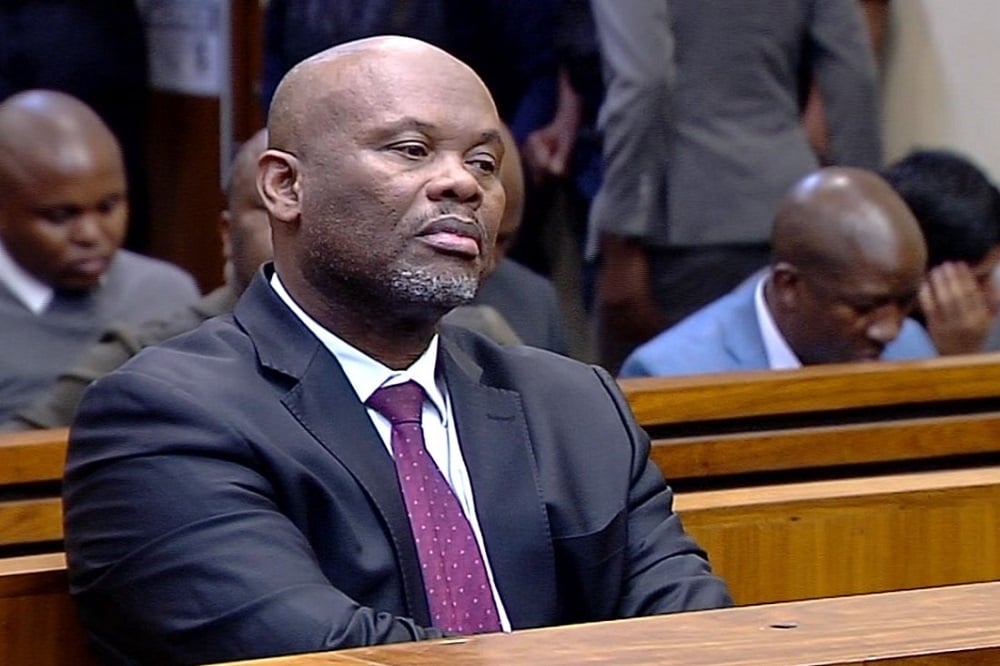


2026 © Helium Trades
Privacy Policy & Disclosure
* Disclaimer: Nothing on this website constitutes investment advice, performance data or any recommendation that any particular security, portfolio of securities, transaction or investment strategy is suitable for any specific person. Helium Trades is not responsible in any way for the accuracy
of any model predictions or price data. Any mention of a particular security and related prediction data is not a recommendation to buy or sell that security. Investments in securities involve the risk of loss. Past performance is no guarantee of future results. Helium Trades is not responsible for any of your investment decisions,
you should consult a financial expert before engaging in any transaction.
Helium Research Assistant

How can I help you today?
Ask any question about this page.