See whether Helium helps you make better-informed decisions. Try every Pro Trader feature for 30 days. No credit card required.
Try every Pro Trader feature for 30 days. No credit card required.
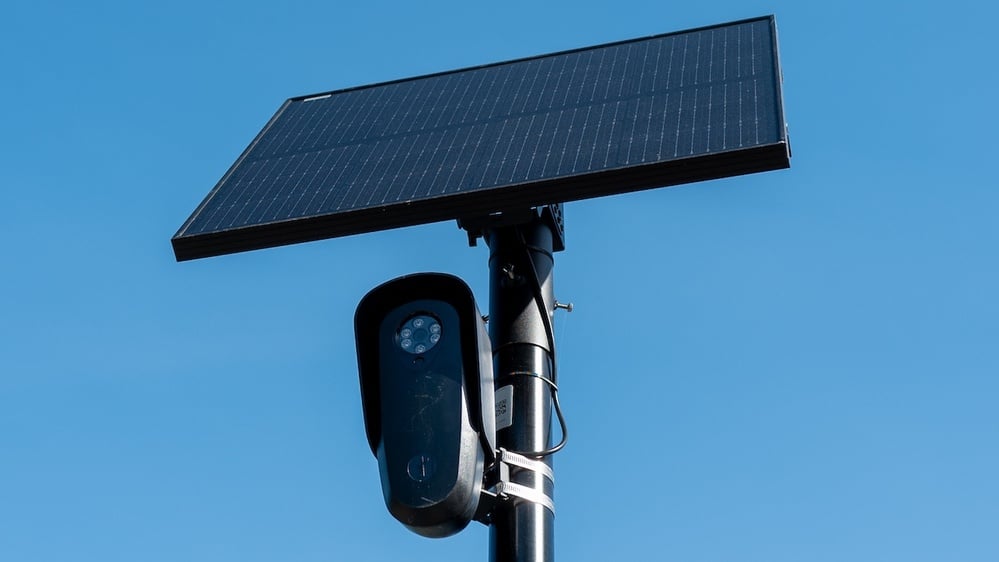
Frame strongly critical of Flock's ALPR network, foregrounding civil-liberties concerns and ACLU critique while acknowledging limited responses from Flock.
Public media segment focusing on privacy concerns and civil-liberties critique of a nationwide ALPR surveillance network, including ACLU commentary, university contracts, and journalist investigations.
Automated analysis; not human reviewed.
Limitations: Concise, case-specific limitations and plausible alternative interpretations.
·
51 of 52 available dimensions scored; omitted dimensions are not treated as neutral.
·
Verified supporting quotes for 0 of 51 scored dimensions.
Claim: Left-leaning framing that emphasizes civil liberties and privacy rights and critiques corporate surveillance.
“"ACLU on Flock’s Growing Nationwide Surveillance Network"” · not found in supplied text
“"we have a company working to record the comings and goings of every single person in the country," in what Marlow calls "a very un-American take on privacy."” · verified after text normalization
“"Flock’s cameras aren’t like regular traffic cameras.
Their surveillance technology records and tracks every car or human that comes into view"”
· not found in supplied text
Counterevidence:
“"Langley: 'the topic of immigration enforcement comes up... If the state of Texas wants to enforce immigration, they might use Flock, but they’re going to go enforce immigration no matter what Flock does.'"” · not found in supplied text
Why: Dominant critical framing anchored by ACLU sources; some counterpoints present.
Claim: Narrative contrasts elite VC funding with broad municipal or public pushback.
“"backed by almost a billion dollars in venture capital investment"” · not found in supplied text
“"nearly 60 municipalities" have canceled or said Do Not Renew” · not found in supplied text
Counterevidence:
“"the company has no opinion on immigration enforcement"” · not found in supplied text
Why: Frames elite financial backing against grassroots community actions.
Claim: Anti-authoritarian stance emphasizing civil liberties and limits on surveillance.
“"un-American take on privacy"” · not found in supplied text
“"end this mass government surveillance"” · not found in supplied text
Counterevidence:
“"they might use Flock"” · not found in supplied text
“"no opinion on immigration enforcement"” · not found in supplied text
Why: Civil-liberties focus implies anti-authoritarian orientation.
Claim: Subjective framing with loaded terms; some objective data present.
“"un-American take on privacy"” · not found in supplied text
“"mass surveillance"” · not found in supplied text
“"these venture capitalists invested in a company that basically trades privacy for profits"” · not found in supplied text
Counterevidence:
“"Flock claims it doesn’t work with ICE"” · not found in supplied text
Why: Subjective tone evident but supported by data points.
Claim: Descriptive statistics paired with sensational language.
“"mass surveillance system"” · not found in supplied text
“"record the comings and goings of every single person"” · not found in supplied text
“"dragnet"” · not found in supplied text
Counterevidence:
“"no direct ICE access claimed by Flock"” · not found in supplied text
Why: Statements framed with sensational terms alongside data.
Claim: Calls for regulatory action and contract cancellations.
“"efforts to regulate and cancel Flock’s contracts with local law enforcement"” · not found in supplied text
“"nearly 60 municipalities have canceled their Flock contracts"” · not found in supplied text
“"end this mass government surveillance"” · not found in supplied text
Counterevidence:
“"Flock claims it doesn’t work with ICE"” · not found in supplied text
Why: Explicit policy prescriptions and civic actions urged.
Claim: Framing designed to evoke fear about pervasive surveillance.
“"record the comings and goings of every single person"” · not found in supplied text
“"mass surveillance system"” · not found in supplied text
“"dragnet" (context)” · not found in supplied text
Counterevidence:
“"Flock claims it doesn’t sell data"” · not found in supplied text
Why: Fear-based framing supports anti-surveillance activism.
Claim: Opinionated framing present; normative judgments about privacy.
“"un-American take on privacy"” · not found in supplied text
“"mass surveillance"” · not found in supplied text
“"mass government surveillance"” · not found in supplied text
Counterevidence:
“"Langley's statements"” · not found in supplied text
Why: Loaded language shapes perception.
Claim: Anti-establishment tilt via critique of governmental surveillance and corporate power.
“"mass government surveillance"” · not found in supplied text
“"un-American take on privacy"” · not found in supplied text
“"regulate and cancel Flock’s contracts"” · not found in supplied text
Counterevidence:
“"the state of Texas might enforce immigration"” · not found in supplied text
Why: Civil-liberties critique aligns with anti-establishment stance.
Claim: Combination of data-heavy reporting with emotive framing.
“"over 5,000 law enforcement agencies in 49 states"” · not found in supplied text
“"over 100,000 Flock cameras"” · not found in supplied text
“"4,000 searches"” · not found in supplied text
Counterevidence:
“"un-American take on privacy"” · not found in supplied text
“"mass surveillance system"” · not found in supplied text
Why: Data supports claims but language introduces emotion.
Ambiguities in date references; heavy advocacy tone; limited explicit counterbalancing from Flock.
Privacy-rights framing dominates, foregrounding concealment, data retention, and civil-liberties concerns around Flock Safety’s ALPR network, while acknowledging some legal context and company statements.
Investigative report on Flock Safety's ALPR network hiding inside roadside speed signs, raising privacy concerns and legal questions about deployments and data use.
Automated analysis; not human reviewed.
Limitations: Case-specific; relies on civil-liberties groups and investigative sources; deployment details may vary by location.
·
15 of 52 available dimensions scored; omitted dimensions are not treated as neutral.
·
Verified supporting quotes for 7 of 15 scored dimensions.
Claim: The article foregrounds civil-liberties/privacy concerns and cites civil-rights groups.
“The ACLU of Oregon warns that Flock data “can reveal very private details about a person’s life, including what meetings a person attends, what doctors’ offices and religious institutions they visit, who a person associates with, and even where they sleep at night.”” · exact text match
“Growing public awareness of visible Flock units has pushed deployments toward concealment — inside radar boxes and other roadside hardware.” · exact text match
“Flock cameras build a detailed profile of every vehicle that passes — and none of it involves your speed.” · exact text match
Counterevidence:
“Flock maintains its cameras capture “what is already visible from public roads, in plain view.” That framing gets harder to square with hardware hidden inside devices most people assume are routine traffic signs.” · exact text match
“Courts have generally upheld ALPR as constitutional partly because vehicles are observed in public — but those rulings didn’t contemplate cameras disguised as speed-display boxes.” · exact text match
Why: Civil-liberties framing and explicit privacy warnings indicate a liberal-leaning emphasis, tempered by acknowledgement of pro-ALPR legal context.
Claim: The piece treats concealment and embedded surveillance as a privacy threat and advocates transparency.
“The radar box isn’t new infrastructure.
It’s camouflage.”
· exact text match
“The concealment follows the same logic as the ad-blocker arms race: the more people resist, the deeper the technology embeds itself into the background.” · exact text match
Counterevidence:
“Flock encourages local agencies to be transparent about deployments, but real-world reporting shows many installations remain poorly publicized.” · exact text match
Why: Concerns about opaque surveillance align with libertarian skepticism of hidden government/private surveillance, tempered by notes on transparency.
Claim: The article employs emotive framing and judgment-laden language alongside factual details.
“A surveillance node, logging your plate, your car’s profile, and your exact location — dressed up as something you’ve been conditioned to ignore.” · exact text match
Counterevidence:
“Flock maintains its cameras capture 'what is already visible from public roads, in plain view.'” · not found in supplied text
Why: Loaded phrasing signals subjective framing alongside facts.
Claim: The writing uses sensational descriptions to emphasize privacy violations.
“A surveillance node, logging your plate, your car’s profile, and your exact location — dressed up as something you’ve been conditioned to ignore.” · exact text match
Counterevidence:
“Concrete data points and legal context ground the piece.” · not found in supplied text
Why: Vivid framing enhances sensational tone relative to dry reporting.
Claim: The topic and treatment are engaging due to provocative concealment and privacy concerns.
“Flock Cameras Keep Getting Smashed, So Now They're Hiding Inside Speed Signs.” · exact text match
“secret compartment found in speed radar box pic.twitter.com/4kkeRsKufi” · exact text match
Why: Provocative details and headlines enhance reader interest.
Claim: The piece provides prescriptive guidance and advocates for privacy protections.
“privacy advocates recommend asking your city council, HOA, or police department directly about local deployments.” · not found in supplied text
Counterevidence:
“Flock encourages transparency, but deployments remain poorly publicized.” · not found in supplied text
Why: Explicit advocacy and recommended actions indicate prescriptive bias.
Claim: The article manufactures fear around private data and misuse.
“ACLU of Oregon warns that Flock data can reveal very private details about a person’s life...” · not found in supplied text
Counterevidence:
“Courts have generally upheld ALPR in some contexts; privacy warnings exist but aren’t universal fearmongering.” · not found in supplied text
Why: References to private-life details and misuse invoke fear-based framing.
Claim: The piece adopts a normative stance that privacy is at risk and concealment is problematic.
“The radar box isn’t new infrastructure.
It’s camouflage.”
· exact text match
“The concealment follows the same logic as the ad-blocker arms race...” · not found in supplied text
Counterevidence:
“Flock’s own statements about data collection provide defense points.” · not found in supplied text
Why: Evaluative language and calls to action indicate opinionated framing.
Claim: The piece presents multiple sides while leaning toward privacy concerns.
“Flock maintains its cameras capture 'what is already visible from public roads, in plain view.'” · not found in supplied text
“Flock encourages local agencies to be transparent about deployments, but real-world reporting shows many installations remain poorly publicized.” · exact text match
Counterevidence:
“Primary emphasis on privacy concerns; civil-liberties voices foregrounded.” · not found in supplied text
Why: Balanced sourcing exists but the piece tilts toward privacy-centric framing.
Claim: The writing frequently uses emotionally evocative language.
“A surveillance node, logging your plate, your car’s profile, and your exact location — dressed up as something you’ve been conditioned to ignore.” · exact text match
“secret compartment found in speed radar box” · exact text match
Counterevidence:
“Empirical details and legal context ground the piece.” · not found in supplied text
Why: Loaded phrasing accompanies factual content, heightening emotional response.
Claim: The piece uses credible sources and data (ACLU quotes, numbers, Jalopnik) to support claims.
“The ACLU of Oregon warns that Flock data...” · not found in supplied text
“Investigative reporting puts Flock’s network at roughly 80,000 to 90,000 cameras...” · not found in supplied text
“Officers have used ALPR records to stalk ex-partners and track people seeking out-of-state abortion services, according to Jalopnik.” · exact text match
Counterevidence:
“Some claims rely on investigative outlets; deployments vary by location.” · not found in supplied text
Why: Multiple named sources and quantitative figures bolster credibility, despite reliance on investigations.
Claim: The article casts corporate surveillance practices in a negative light.
“The radar box isn’t new infrastructure.
It’s camouflage.”
· exact text match
“Visible Flock units have become targets... Public awareness turned into public destruction.” · not found in supplied text
Counterevidence:
“Flock’s statements about data collection and transparency are presented as counterpoints.” · not found in supplied text
Why: Coverage emphasizes privacy concerns about a private corporation’s practices.
Claim: Some reasoning about future impacts relies on analogy rather than direct evidence.
“The concealment follows the same logic as the ad-blocker arms race: the more people resist, the deeper the technology embeds itself into the background.” · exact text match
Why: Analogies introduce speculative inferences about future consequences.
Deployment scope/retention specifics vary; reliance on investigations; evidence may be location-specific.
July 20, 2026 · 0 shares
Strong anti-establishment bias focusing on civil-liberties concerns, portraying AI-driven private-public surveillance as an encroaching, mass data collection threat and urging bipartisan reform.
Opinion piece warning that AI-driven private-public surveillance networks threaten privacy and civil liberties, urging constitutional safeguards and reforms.
Automated analysis; not human reviewed.
Limitations: Interpretation relies on editorial language; does not assess factual accuracy; alternative readings could emphasize security or governance considerations.
·
1 of 52 available dimensions scored; omitted dimensions are not treated as neutral.
·
Verified supporting quotes for 0 of 1 scored dimensions.
Claim: The article frames surveillance as a systemic, bipartisan 'establishment' project rooted in government and corporate actors that expands unchecked.
“"This public-private arrangement allows government agencies to acquire capabilities they might never receive public approval or sufficient funding to build on their own."” · exact text match
“"The surveillance state does not care which party you support."” · not found in supplied text
Counterevidence:
“"Flock insists that its cameras collect information about vehicles rather than people, that agencies control access to their own data, that searches are logged and that information is generally deleted after 30 days."” · not found in supplied text
Why: Quotations illustrate framing of a systemic, bipartisan surveillance apparatus and expansion through private outsourcing; a counterquote shows some privacy safeguards claimed by proponents.
Framing emphasizes privacy implications and potential misreads of ALPR while presenting Flock Safety's defense and steps to fix data verification.
Account of a wrongful stop triggered by ALPR misreads, with Flock Safety's defense and privacy implications and data-verification challenges.
Automated analysis; not human reviewed.
Limitations: Concise, case-specific limitations and plausible alternative interpretations.
·
52 of 52 available dimensions scored; omitted dimensions are not treated as neutral.
·
Verified supporting quotes for 2 of 52 scored dimensions.
Claim: The article frames ALPR use as a privacy concern and cites critics' warnings about surveillance.
“This case adds to a growing list of incidents underscoring the privacy implications of Flock Safety's widespread ALPR deployment.” · exact text match
“Critics, including privacy advocates, have long warned that reliance on partial matches, inter-agency data sharing, and integration with other surveillance tools can lead to false positives, chilling effects on daily movement, and potential misuse.” · exact text match
“Thomas emphasized that a camera alert "does not equal probable cause," comparing it to an alarm going off, and stressed that the system depends on both valid inputs and humans verifying outputs.” · not found in supplied text
Counterevidence:
“Thomas said Flock is working to get the original police report corrected and is meeting with the FBI officials who curate NCIC to develop a way for incomplete data to be flagged as such for officers seeing automated alerts in the field.” · exact text match
Why: Quoted privacy concerns and critique show a frame that leans toward privacy protection, tempered by defense quotes.
Claim: The text mixes normative language about privacy with factual reporting, indicating mild subjectivity.
“This case adds to a growing list of incidents underscoring the privacy implications of Flock Safety's widespread ALPR deployment.” · exact text match
“Critics, including privacy advocates, have long warned that reliance on partial matches, inter-agency data sharing, and integration with other surveillance tools can lead to false positives, chilling effects on daily movement, and potential misuse.” · exact text match
Counterevidence:
“Flock Safety maintains that its cameras performed as designed, matching partial plates per law enforcement preferences for hotlist alerts.” · exact text match
Why: Normative framing appears alongside quoted sources, suggesting mild subjectivity.
Claim: Framing emphasizes privacy implications and surveillance concerns that could evoke fear.
“This case adds to a growing list of incidents underscoring the privacy implications of Flock Safety's widespread ALPR deployment.” · exact text match
“Critics, including privacy advocates, have long warned that reliance on partial matches, inter-agency data sharing, and integration with other surveillance tools can lead to false positives, chilling effects on daily movement, and potential misuse.” · exact text match
“these camera networks - now operating in thousands of communities across dozens of states - create detailed movement logs of vehicles with minimal oversight, raising serious questions about unwarranted surveillance of law-abiding citizens.” · exact text match
Counterevidence:
“Flock Safety maintains that its cameras performed as designed, matching partial plates per law enforcement preferences for hotlist alerts.” · exact text match
Why: Explicit privacy concerns and surveillance implications suggest a fear-oriented framing.
Claim: The text presents high-confidence numeric claims about system accuracy and scale that may exceed evidence.
“The system is roughly 99 percent accurate while performing approximately 20 billion reads per month - arithmetic that leaves on the order of 200 million misreads every month.” · not found in supplied text
“How many of those escalate into armed stops is unknown.” · exact text match
Counterevidence:
“Plymouth police acknowledged shortcomings in verification but pointed to the challenges of varying license plate formats nationwide.” · exact text match
Why: Large-scale accuracy figures are presented alongside acknowledged uncertainty about consequences.
Ambiguities in data, possible framing; need more evidence.
Public-safety framing emphasizes successful use of Flock camera technology and interagency coordination by police, while not addressing privacy concerns or civil-liberties considerations.
Medina Police report locating a missing endangered adult using Flock camera technology and emergency location data, citing interagency coordination and responsible technology use.
Automated analysis; not human reviewed.
Limitations: Concise, case-specific limitations and plausible alternative interpretations.
·
47 of 52 available dimensions scored; omitted dimensions are not treated as neutral.
·
Verified supporting quotes for 0 of 47 scored dimensions.
Claim: Mild pro-establishment tilt due to praising police use of technology and interagency coordination.
“"This incident demonstrates exactly why we invested in Flock camera technology."” · not found in supplied text
“"That information, combined with emergency cellular location data and excellent coordination among dispatchers and law enforcement agencies, helped bring a very concerning situation to a safe conclusion."” · not found in supplied text
“"Medina Police said this incident is another example of how responsible use of technology, sound police work and cooperation among law enforcement agencies can help protect vulnerable members of the community."” · exact text match
Why: Text emphasizes police capacity, technology investment, and interagency cooperation as the cause of a safe resolution.
Ambiguity about privacy implications; evidence centers on police perspective.
July 24, 2026 · 0 shares
Framing uses a first-person investigative narrative to critique private AI-driven license plate readers and press for transparent governance, highlighting privacy risks, system flaws, and the need for uniform laws.
The Drive's ongoing coverage of Flock Safety, SignalTrace, and the privacy implications of AI-powered license plate readers.
Automated analysis; not human reviewed.
Limitations: Concise, case-specific limitations and plausible alternative interpretations.
·
5 of 52 available dimensions scored; omitted dimensions are not treated as neutral.
·
Verified supporting quotes for 0 of 5 scored dimensions.
Claim: Descriptive reporting leads to prescriptive calls for governance and guardrails.
“We need laws and regulation that are uniform.” · exact text match
“Guardrails need to be put in place internally.” · not found in supplied text
Counterevidence:
“Some details reflect personal experiences.” · not found in supplied text
Why: Descriptive events lead to policy recommendations.
Claim: Language portrays surveillance tech as a looming threat, generating fear about a surveillance state.
“the surveillance state looming over America’s roads” · exact text match
“It’s a scary world and suddenly America is barreling down the possibility of becoming a surveillance state.” · not found in supplied text
Counterevidence:
“The article also emphasizes guardrails and governance as remedies.” · not found in supplied text
Why: Threat framing exists but is accompanied by policy responses.
Claim: Editorial voice appears through personal reflections and policy prescriptions.
“What timing, right? Now, after one of the craziest couple weeks of my life, I’ve learned a lot more about how and why I ended up in Flock’s dragnet.” · not found in supplied text
“We need laws and regulation that are uniform.” · exact text match
Counterevidence:
“Direct quotes from officials and data grounding the claims.” · not found in supplied text
Why: Editorial voice coexists with data-driven content.
Claim: The article frames Flock’s ALPR network as an unregulated surveillance apparatus challenging establishment power structures.
“Kyle: So today, it’s Flock, the surveillance state looming over America’s roads, and the inside story of Joel’s Grand Theft Auto adventure.” · exact text match
“Joel: This is a private company that is a service, just like so many things in our lives that are tech-based, right, like iCloud and all these things.” · not found in supplied text
“We need laws and regulation that are uniform.” · exact text match
Counterevidence:
“Police have used Flock cameras many times over to help solve real crimes.” · not found in supplied text
“An alert from Flock is not probable cause for a stop.” · not found in supplied text
Why: Quotations frame surveillance tech as a looming threat and advocate governance, while counterquotes cite real-use benefits and constraints.
Claim: The reporting shows fairness through transparency, corrections, and direct quotes from officials and the company.
“Josh Thomas: I'm so sorry.
Like, this was a bad outcome, this was a screw-up, thank God your kids weren't in the car, I'm sorry.”
· not found in supplied text
“Chief Eric Fadden: My cops did everything right by the book.
I was proud of their behavior and what they did. The outcome wasn’t obviously perfect, human error led to this.”
· not found in supplied text
“We requested the police report and published the first story.” · not found in supplied text
Counterevidence:
“Readers may still question framing or data completeness.” · not found in supplied text
Why: Apologies and official statements are presented with reliance on public records; some readers may question completeness.
Framing emphasizes privacy implications and potential misreads of ALPR while presenting Flock Safety's defense and steps to fix data verification.
Account of a wrongful stop triggered by ALPR misreads, with Flock Safety's defense and privacy implications and data-verification challenges.
Automated analysis; not human reviewed.
Limitations: Concise, case-specific limitations and plausible alternative interpretations.
·
52 of 52 available dimensions scored; omitted dimensions are not treated as neutral.
·
Verified supporting quotes for 2 of 52 scored dimensions.
Claim: The article frames ALPR use as a privacy concern and cites critics' warnings about surveillance.
“This case adds to a growing list of incidents underscoring the privacy implications of Flock Safety's widespread ALPR deployment.” · exact text match
“Critics, including privacy advocates, have long warned that reliance on partial matches, inter-agency data sharing, and integration with other surveillance tools can lead to false positives, chilling effects on daily movement, and potential misuse.” · exact text match
“Thomas emphasized that a camera alert "does not equal probable cause," comparing it to an alarm going off, and stressed that the system depends on both valid inputs and humans verifying outputs.” · not found in supplied text
Counterevidence:
“Thomas said Flock is working to get the original police report corrected and is meeting with the FBI officials who curate NCIC to develop a way for incomplete data to be flagged as such for officers seeing automated alerts in the field.” · exact text match
Why: Quoted privacy concerns and critique show a frame that leans toward privacy protection, tempered by defense quotes.
Claim: The text mixes normative language about privacy with factual reporting, indicating mild subjectivity.
“This case adds to a growing list of incidents underscoring the privacy implications of Flock Safety's widespread ALPR deployment.” · exact text match
“Critics, including privacy advocates, have long warned that reliance on partial matches, inter-agency data sharing, and integration with other surveillance tools can lead to false positives, chilling effects on daily movement, and potential misuse.” · exact text match
Counterevidence:
“Flock Safety maintains that its cameras performed as designed, matching partial plates per law enforcement preferences for hotlist alerts.” · exact text match
Why: Normative framing appears alongside quoted sources, suggesting mild subjectivity.
Claim: Framing emphasizes privacy implications and surveillance concerns that could evoke fear.
“This case adds to a growing list of incidents underscoring the privacy implications of Flock Safety's widespread ALPR deployment.” · exact text match
“Critics, including privacy advocates, have long warned that reliance on partial matches, inter-agency data sharing, and integration with other surveillance tools can lead to false positives, chilling effects on daily movement, and potential misuse.” · exact text match
“these camera networks - now operating in thousands of communities across dozens of states - create detailed movement logs of vehicles with minimal oversight, raising serious questions about unwarranted surveillance of law-abiding citizens.” · exact text match
Counterevidence:
“Flock Safety maintains that its cameras performed as designed, matching partial plates per law enforcement preferences for hotlist alerts.” · exact text match
Why: Explicit privacy concerns and surveillance implications suggest a fear-oriented framing.
Claim: The text presents high-confidence numeric claims about system accuracy and scale that may exceed evidence.
“The system is roughly 99 percent accurate while performing approximately 20 billion reads per month - arithmetic that leaves on the order of 200 million misreads every month.” · not found in supplied text
“How many of those escalate into armed stops is unknown.” · exact text match
Counterevidence:
“Plymouth police acknowledged shortcomings in verification but pointed to the challenges of varying license plate formats nationwide.” · exact text match
Why: Large-scale accuracy figures are presented alongside acknowledged uncertainty about consequences.
Ambiguities in data, possible framing; need more evidence.
Privacy-rights framing dominates, foregrounding concealment, data retention, and civil-liberties concerns around Flock Safety’s ALPR network, while acknowledging some legal context and company statements.
Investigative report on Flock Safety's ALPR network hiding inside roadside speed signs, raising privacy concerns and legal questions about deployments and data use.
Automated analysis; not human reviewed.
Limitations: Case-specific; relies on civil-liberties groups and investigative sources; deployment details may vary by location.
·
15 of 52 available dimensions scored; omitted dimensions are not treated as neutral.
·
Verified supporting quotes for 7 of 15 scored dimensions.
Claim: The article foregrounds civil-liberties/privacy concerns and cites civil-rights groups.
“The ACLU of Oregon warns that Flock data “can reveal very private details about a person’s life, including what meetings a person attends, what doctors’ offices and religious institutions they visit, who a person associates with, and even where they sleep at night.”” · exact text match
“Growing public awareness of visible Flock units has pushed deployments toward concealment — inside radar boxes and other roadside hardware.” · exact text match
“Flock cameras build a detailed profile of every vehicle that passes — and none of it involves your speed.” · exact text match
Counterevidence:
“Flock maintains its cameras capture “what is already visible from public roads, in plain view.” That framing gets harder to square with hardware hidden inside devices most people assume are routine traffic signs.” · exact text match
“Courts have generally upheld ALPR as constitutional partly because vehicles are observed in public — but those rulings didn’t contemplate cameras disguised as speed-display boxes.” · exact text match
Why: Civil-liberties framing and explicit privacy warnings indicate a liberal-leaning emphasis, tempered by acknowledgement of pro-ALPR legal context.
Claim: The piece treats concealment and embedded surveillance as a privacy threat and advocates transparency.
“The radar box isn’t new infrastructure.
It’s camouflage.”
· exact text match
“The concealment follows the same logic as the ad-blocker arms race: the more people resist, the deeper the technology embeds itself into the background.” · exact text match
Counterevidence:
“Flock encourages local agencies to be transparent about deployments, but real-world reporting shows many installations remain poorly publicized.” · exact text match
Why: Concerns about opaque surveillance align with libertarian skepticism of hidden government/private surveillance, tempered by notes on transparency.
Claim: The article employs emotive framing and judgment-laden language alongside factual details.
“A surveillance node, logging your plate, your car’s profile, and your exact location — dressed up as something you’ve been conditioned to ignore.” · exact text match
Counterevidence:
“Flock maintains its cameras capture 'what is already visible from public roads, in plain view.'” · not found in supplied text
Why: Loaded phrasing signals subjective framing alongside facts.
Claim: The writing uses sensational descriptions to emphasize privacy violations.
“A surveillance node, logging your plate, your car’s profile, and your exact location — dressed up as something you’ve been conditioned to ignore.” · exact text match
Counterevidence:
“Concrete data points and legal context ground the piece.” · not found in supplied text
Why: Vivid framing enhances sensational tone relative to dry reporting.
Claim: The topic and treatment are engaging due to provocative concealment and privacy concerns.
“Flock Cameras Keep Getting Smashed, So Now They're Hiding Inside Speed Signs.” · exact text match
“secret compartment found in speed radar box pic.twitter.com/4kkeRsKufi” · exact text match
Why: Provocative details and headlines enhance reader interest.
Claim: The piece provides prescriptive guidance and advocates for privacy protections.
“privacy advocates recommend asking your city council, HOA, or police department directly about local deployments.” · not found in supplied text
Counterevidence:
“Flock encourages transparency, but deployments remain poorly publicized.” · not found in supplied text
Why: Explicit advocacy and recommended actions indicate prescriptive bias.
Claim: The article manufactures fear around private data and misuse.
“ACLU of Oregon warns that Flock data can reveal very private details about a person’s life...” · not found in supplied text
Counterevidence:
“Courts have generally upheld ALPR in some contexts; privacy warnings exist but aren’t universal fearmongering.” · not found in supplied text
Why: References to private-life details and misuse invoke fear-based framing.
Claim: The piece adopts a normative stance that privacy is at risk and concealment is problematic.
“The radar box isn’t new infrastructure.
It’s camouflage.”
· exact text match
“The concealment follows the same logic as the ad-blocker arms race...” · not found in supplied text
Counterevidence:
“Flock’s own statements about data collection provide defense points.” · not found in supplied text
Why: Evaluative language and calls to action indicate opinionated framing.
Claim: The piece presents multiple sides while leaning toward privacy concerns.
“Flock maintains its cameras capture 'what is already visible from public roads, in plain view.'” · not found in supplied text
“Flock encourages local agencies to be transparent about deployments, but real-world reporting shows many installations remain poorly publicized.” · exact text match
Counterevidence:
“Primary emphasis on privacy concerns; civil-liberties voices foregrounded.” · not found in supplied text
Why: Balanced sourcing exists but the piece tilts toward privacy-centric framing.
Claim: The writing frequently uses emotionally evocative language.
“A surveillance node, logging your plate, your car’s profile, and your exact location — dressed up as something you’ve been conditioned to ignore.” · exact text match
“secret compartment found in speed radar box” · exact text match
Counterevidence:
“Empirical details and legal context ground the piece.” · not found in supplied text
Why: Loaded phrasing accompanies factual content, heightening emotional response.
Claim: The piece uses credible sources and data (ACLU quotes, numbers, Jalopnik) to support claims.
“The ACLU of Oregon warns that Flock data...” · not found in supplied text
“Investigative reporting puts Flock’s network at roughly 80,000 to 90,000 cameras...” · not found in supplied text
“Officers have used ALPR records to stalk ex-partners and track people seeking out-of-state abortion services, according to Jalopnik.” · exact text match
Counterevidence:
“Some claims rely on investigative outlets; deployments vary by location.” · not found in supplied text
Why: Multiple named sources and quantitative figures bolster credibility, despite reliance on investigations.
Claim: The article casts corporate surveillance practices in a negative light.
“The radar box isn’t new infrastructure.
It’s camouflage.”
· exact text match
“Visible Flock units have become targets... Public awareness turned into public destruction.” · not found in supplied text
Counterevidence:
“Flock’s statements about data collection and transparency are presented as counterpoints.” · not found in supplied text
Why: Coverage emphasizes privacy concerns about a private corporation’s practices.
Claim: Some reasoning about future impacts relies on analogy rather than direct evidence.
“The concealment follows the same logic as the ad-blocker arms race: the more people resist, the deeper the technology embeds itself into the background.” · exact text match
Why: Analogies introduce speculative inferences about future consequences.
Deployment scope/retention specifics vary; reliance on investigations; evidence may be location-specific.
Frame strongly critical of Flock's ALPR network, foregrounding civil-liberties concerns and ACLU critique while acknowledging limited responses from Flock.
Public media segment focusing on privacy concerns and civil-liberties critique of a nationwide ALPR surveillance network, including ACLU commentary, university contracts, and journalist investigations.
Automated analysis; not human reviewed.
Limitations: Concise, case-specific limitations and plausible alternative interpretations.
·
51 of 52 available dimensions scored; omitted dimensions are not treated as neutral.
·
Verified supporting quotes for 0 of 51 scored dimensions.
Claim: Left-leaning framing that emphasizes civil liberties and privacy rights and critiques corporate surveillance.
“"ACLU on Flock’s Growing Nationwide Surveillance Network"” · not found in supplied text
“"we have a company working to record the comings and goings of every single person in the country," in what Marlow calls "a very un-American take on privacy."” · verified after text normalization
“"Flock’s cameras aren’t like regular traffic cameras.
Their surveillance technology records and tracks every car or human that comes into view"”
· not found in supplied text
Counterevidence:
“"Langley: 'the topic of immigration enforcement comes up... If the state of Texas wants to enforce immigration, they might use Flock, but they’re going to go enforce immigration no matter what Flock does.'"” · not found in supplied text
Why: Dominant critical framing anchored by ACLU sources; some counterpoints present.
Claim: Narrative contrasts elite VC funding with broad municipal or public pushback.
“"backed by almost a billion dollars in venture capital investment"” · not found in supplied text
“"nearly 60 municipalities" have canceled or said Do Not Renew” · not found in supplied text
Counterevidence:
“"the company has no opinion on immigration enforcement"” · not found in supplied text
Why: Frames elite financial backing against grassroots community actions.
Claim: Anti-authoritarian stance emphasizing civil liberties and limits on surveillance.
“"un-American take on privacy"” · not found in supplied text
“"end this mass government surveillance"” · not found in supplied text
Counterevidence:
“"they might use Flock"” · not found in supplied text
“"no opinion on immigration enforcement"” · not found in supplied text
Why: Civil-liberties focus implies anti-authoritarian orientation.
Claim: Subjective framing with loaded terms; some objective data present.
“"un-American take on privacy"” · not found in supplied text
“"mass surveillance"” · not found in supplied text
“"these venture capitalists invested in a company that basically trades privacy for profits"” · not found in supplied text
Counterevidence:
“"Flock claims it doesn’t work with ICE"” · not found in supplied text
Why: Subjective tone evident but supported by data points.
Claim: Descriptive statistics paired with sensational language.
“"mass surveillance system"” · not found in supplied text
“"record the comings and goings of every single person"” · not found in supplied text
“"dragnet"” · not found in supplied text
Counterevidence:
“"no direct ICE access claimed by Flock"” · not found in supplied text
Why: Statements framed with sensational terms alongside data.
Claim: Calls for regulatory action and contract cancellations.
“"efforts to regulate and cancel Flock’s contracts with local law enforcement"” · not found in supplied text
“"nearly 60 municipalities have canceled their Flock contracts"” · not found in supplied text
“"end this mass government surveillance"” · not found in supplied text
Counterevidence:
“"Flock claims it doesn’t work with ICE"” · not found in supplied text
Why: Explicit policy prescriptions and civic actions urged.
Claim: Framing designed to evoke fear about pervasive surveillance.
“"record the comings and goings of every single person"” · not found in supplied text
“"mass surveillance system"” · not found in supplied text
“"dragnet" (context)” · not found in supplied text
Counterevidence:
“"Flock claims it doesn’t sell data"” · not found in supplied text
Why: Fear-based framing supports anti-surveillance activism.
Claim: Opinionated framing present; normative judgments about privacy.
“"un-American take on privacy"” · not found in supplied text
“"mass surveillance"” · not found in supplied text
“"mass government surveillance"” · not found in supplied text
Counterevidence:
“"Langley's statements"” · not found in supplied text
Why: Loaded language shapes perception.
Claim: Anti-establishment tilt via critique of governmental surveillance and corporate power.
“"mass government surveillance"” · not found in supplied text
“"un-American take on privacy"” · not found in supplied text
“"regulate and cancel Flock’s contracts"” · not found in supplied text
Counterevidence:
“"the state of Texas might enforce immigration"” · not found in supplied text
Why: Civil-liberties critique aligns with anti-establishment stance.
Claim: Combination of data-heavy reporting with emotive framing.
“"over 5,000 law enforcement agencies in 49 states"” · not found in supplied text
“"over 100,000 Flock cameras"” · not found in supplied text
“"4,000 searches"” · not found in supplied text
Counterevidence:
“"un-American take on privacy"” · not found in supplied text
“"mass surveillance system"” · not found in supplied text
Why: Data supports claims but language introduces emotion.
Ambiguities in date references; heavy advocacy tone; limited explicit counterbalancing from Flock.
Balanced, policy-focused examination of vandalism against Flock Safety cameras, emphasizing ownership and replacement costs, privacy considerations, and opportunities for oversight while rejecting property destruction.
Explores vandalism against public surveillance cameras, the lease-based ownership model, replacement costs, privacy and oversight implications, and related legal/regulatory developments.
Automated analysis; not human reviewed.
Limitations: The article text includes non-related items and mixed content; framing may be influenced by agenda or editorial stance, and some lines may reflect promotional or filler content not central to the main issue.
·
52 of 52 available dimensions scored; omitted dimensions are not treated as neutral.
·
Verified supporting quotes for 0 of 52 scored dimensions.
Claim: No strong partisan alignment; framing centers on privacy, oversight, and cost rather than party policy.
“"The headline everyone is chasing is that vandals are destroying surveillance cameras."” · not found in supplied text
“"The more useful story is sitting in the contracts these cities signed, and in who actually pays, and who actually profits, when that hardware gets destroyed."” · not found in supplied text
“"Public-records requests matter just as much: researchers uncovered cops using these cameras to track romantic interests largely by digging through audit logs that any resident can usually request."” · not found in supplied text
Counterevidence:
“"Read the Fine Print Before You Reach for the Bolt Cutters"” · exact text match
“"There is a second irony sitting right next to the billing one."” · not found in supplied text
Why: Policy and privacy framing suggests no clear partisan alignment; emphasis on governance and costs over ideology.
Claim: Slight tilt toward oversight and limitation of surveillance—favoring legal playbooks over broad deployment.
“"If the actual goal is fewer license-plate cameras on your street, a more effective and legal playbook already exists."” · not found in supplied text
Counterevidence:
“"There is a second irony sitting right next to the billing one."” · not found in supplied text
Why: Explicit call for limits and oversight; balanced by references to legal processes.
Claim: Overall objective reporting with some normative statements about policy and rights.
“"None of this is an argument for property destruction, and it is worth being blunt about that."” · not found in supplied text
“"The bolt cutters do not send Flock an invoice.
They send one to the city."”
· exact text match
“"A system built to have no blind spots does not develop one just because you are angry at it."” · exact text match
Counterevidence:
“"The headline everyone is chasing is that vandals are destroying surveillance cameras."” · not found in supplied text
Why: Factual details paired with cautionary framing; normative statements are present but restrained.
Claim: Some language uses vivid, provocative phrasing (e.g., 'the dragnet', 'no blind spots'), but overall remains descriptive.
“"The dragnet built to catch car thieves just as easily catches the person trying to blind it."” · not found in supplied text
“"A saw shuts off one camera for one night.
A council vote shuts off the whole network for good, and nobody has to explain it to a judge afterward."”
· exact text match
Counterevidence:
“"None of this is an argument for property destruction, and it is worth being blunt about that."” · not found in supplied text
Why: Vivid framing appears but is balanced by explicit rejection of vandalism.
Claim: Moderately interesting due to intersection of technology, policy, and privacy.
“"What has changed is the backdrop.
The same weeks that produced these bolt-cutter headlines also produced a Georgia sheriff disciplining officers for misusing Flock data."”
· not found in supplied text
Counterevidence:
“"The new owners of the Grade II-listed Leeds landmark want to tap into its paranormal potential."” · exact text match
Why: Content engages multiple domains (policy, law, tech) but is not sensational.
Claim: Contains prescriptive recommendations (oversight, public records, contracts) alongside description.
“"A more effective and legal playbook already exists."” · not found in supplied text
“"Public-records requests matter just as much: researchers uncovered cops using these cameras to track romantic interests largely by digging through audit logs that any resident can usually request."” · not found in supplied text
“"state legislatures are actively drafting license-plate-reader oversight bills right now"” · not found in supplied text
Counterevidence:
“"The incident list has grown fast since mid-June."” · not found in supplied text
Why: Normative guidance for policy responses is explicit and supported by context.
Claim: Credible due to use of data, multiple incidents, and direct quotes; claim supports reliability.
“"two dozen destroyed cameras across five states dating back to April of last year"” · not found in supplied text
“"Camera Protection Plan"” · not found in supplied text
“"replacement invoices"” · not found in supplied text
Counterevidence:
“"Join our Newsletter, follow our Instagram page..."” · not found in supplied text
Why: Diverse sources, numeric details, and policy framing bolster credibility; some ad-laden lines may distract.
Claim: The piece relies on data and reasoned analysis rather than emotional framing; uses figures and governance context.
“"replacement invoices running from roughly 500 dollars for a standard pole up to 2,000 dollars for an advanced one"” · not found in supplied text
“"Flock leases the hardware as part of an annual subscription"” · not found in supplied text
“"The incident list has grown fast since mid-June"” · not found in supplied text
Counterevidence:
“"What has changed is the backdrop."” · not found in supplied text
Why: Inclusion of costs and policy context supports rational framing; occasional provocative lines introduce context but do not dominate.
Claim: High integrity signals: balanced approach, explicit condemnation of destruction, and discussion of multiple stakeholders.
“"None of this is an argument for property destruction, and it is worth being blunt about that."” · not found in supplied text
“"The bolt cutters do not send Flock an invoice.
They send one to the city."”
· exact text match
“"A system built to have no blind spots does not develop one just because you are angry at it."” · exact text match
Counterevidence:
“"The headline everyone is chasing is that vandals are destroying surveillance cameras."” · not found in supplied text
“"There is a second irony sitting right next to the billing one."” · not found in supplied text
Why: Balanced discussion with explicit moral stance against destruction supports integrity.
Ambiguity in framing; mixed content; unknown publisher stance.
July 23, 2026 · 0 shares
The publisher frames Floridians' backlash against Flock surveillance and AI-enabled policing as a democracy-centered pushback that challenges private, profit-driven surveillance infrastructure and its ties to immigration enforcement.
The piece frames Florida residents' opposition to Flock surveillance and AI-enabled enforcement as driving political debate around immigration enforcement and data privacy.
Automated analysis; not human reviewed.
Limitations: Concerns the analysis is text-based and may reflect the author's framing; lacks independent verification beyond the provided piece.
·
35 of 52 available dimensions scored; omitted dimensions are not treated as neutral.
·
Verified supporting quotes for 0 of 35 scored dimensions.
Ambiguities: reliance on quotes; limited counterpoints.
Balanced coverage presents both law-enforcement and civil-liberties concerns on ALPR cameras and situates the issue within ongoing legislative scrutiny.
Policy-focused Oklahoma reporting on ALPR/Flock camera use, balancing public safety claims with privacy concerns and legislative oversight.
Automated analysis; not human reviewed.
Limitations: Case-specific; relies on quoted sources and summarized policy history; may not capture broader stakeholder perspectives or undocumented nuances.
·
1 of 52 available dimensions scored; omitted dimensions are not treated as neutral.
·
Verified supporting quotes for 1 of 1 scored dimensions.
Claim: Slight tilt toward privacy/liberty (libertarian) relative to surveillance-state (authoritarian) framing.
““The ACLU of Oklahoma shared its concerns with the use of Flock cameras in the state.
They believe this is an invasion of Okahomans’ privacy.””
· verified after text normalization
““We believe all Oklahomans deserve the right to privacy in some form in public, and the surveillance that these cameras do definitely interferes with that right,” said Cox-Touré.” · exact text match
““ACLU, along with our partners, have already submitted a petition that has over 1,200 signatures,” said Cox-Touré.” · exact text match
Counterevidence:
““With Flock, we’re able to use that technology to hopefully prevent crime, but certainly hold people accountable who commit it,” said Nelson.” · exact text match
““We’re bound by the laws that are in place.
Any protections that are built into statutes that are passed and become law, law enforcement would be obligated to abide by,” said Nelson.”
· exact text match
Why: Privacy-focused civil-liberties voices are prominent and framed against enforcement claims, indicating a mild libertarian-leaning tilt in the reporting.
Ambiguity: limited voices beyond law enforcement and ACLU; may underrepresent other stakeholders.
Policy reporting on UT Dallas's Flock cameras is generally factual but interwoven with explicit anti-left rhetoric and promotional material, producing a conservative-leaning framing.
Concise, factful, accurate, balanced context for the article in one sentence: The piece reports UT Dallas's Flock camera usage and privacy claims while including additional political commentary and promotional content.
Automated analysis; not human reviewed.
Limitations: Concise, case-specific limitations and plausible alternative interpretations.
·
52 of 52 available dimensions scored; omitted dimensions are not treated as neutral.
·
Verified supporting quotes for 7 of 52 scored dimensions.
Claim: Presence of conservative framing through explicit anti-left rhetoric.
“Today, even with President Trump’s victory, leftist elites have their tentacles in every aspect of our government.” · exact text match
“The ’s own Tyler O’Neil exposes this leftist cabal in his new book, The Woketopus: The Dark Money Cabal Manipulating the Federal Government.” · exact text match
“In this book, O’Neil reveals how the Left’s NGO apparatus pursues its woke agenda, maneuvering like an octopus by circumventing Congress and entrenching its interests in the federal government.” · exact text match
Counterevidence:
“UT Dallas Policy Prohibits Flock Cameras From Being Used for Immigration Enforcement.” · exact text match
“The Flock camera system does not use facial recognition or identify people by gender or race.” · exact text match
Why: Explicit anti-left quotes indicate framing; policy content provides neutral anchors.
Claim: Elites-targeting rhetoric indicates populist framing.
“Today, even with President Trump’s victory, leftist elites have their tentacles in every aspect of our government.” · exact text match
“The ’s own Tyler O’Neil exposes this leftist cabal in his new book, The Woketopus: The Dark Money Cabal Manipulating the Federal Government.” · exact text match
“In this book, O’Neil reveals how the Left’s NGO apparatus pursues its woke agenda, maneuvering like an octopus by circumventing Congress and entrenching its interests in the federal government.” · exact text match
Counterevidence:
“UT Dallas Policy Prohibits Flock Cameras From Being Used for Immigration Enforcement.” · exact text match
“The Flock camera system does not use facial recognition or identify people by gender or race.” · exact text match
Why: Rhetorical focus on elites suggests populist framing; policy facts counterbalance.
Claim: Privacy-driven language aligns with libertarian tendencies; enforcement context can tilt toward government authority.
“The technology is used to provide 'objective evidence without compromising on individual privacy.'” · not found in supplied text
“The Flock camera system does not use facial recognition or identify people by gender or race.” · exact text match
Counterevidence:
“Additionally, a 2025 directive from the Department of Homeland Security states that colleges and universities are no longer exempt from immigration enforcement activities.” · exact text match
Why: Privacy emphasis aligns with libertarian values; enforcement directive tempers with government authority.
Claim: Objetive policy reporting coexists with subjective rhetoric.
“leftist elites have their tentacles in every aspect of our government.” · exact text match
“leftist cabal” · exact text match
“Left’s NGO apparatus pursues its woke agenda” · exact text match
Counterevidence:
“The article also presents specific policy statements and legal references (e.g., 8 U.S.C. § 1325) that reflect objective reporting.” · not found in supplied text
Why: Subjective phrases co-occur with policy specifics.
Claim: Editorial rhetoric and promotional content indicate opinion bias.
“Read the first chapter of The Woketopus right now for FREE” · exact text match
“leftist elites have their tentacles in every aspect of our government.” · exact text match
Counterevidence:
“Policy details and legal references ground the piece in factual reporting.” · not found in supplied text
Why: Presence of promotional content plus political rhetoric suggests opinion influence.
Claim: Ideological framing evident via anti-left language.
“leftist elites” · exact text match
“Left’s NGO apparatus pursues its woke agenda” · exact text match
Counterevidence:
“Policy details and legal references provide non-ideological information.” · not found in supplied text
Why: Explicit ideological terms present; policy content is neutral.
Claim: Policy evidence is balanced by rational, legal references; some editorial content is present.
“Under 8 U.S.C. § 1325, a person who enters or attempts to enter the United States at a location other than a designated port of entry, evades inspection, or uses fraud or false representation to gain entry commits a federal offense.” · exact text match
“By contrast, overstaying a visa is generally considered a civil immigration violation rather than a criminal offense.
Individuals who remain unlawfully in the country may be subject to arrest by U.S. Immigration and Customs Enforcement and removal proceedings.”
· exact text match
Counterevidence:
“Additionally, a 2025 directive from the Department of Homeland Security states that colleges and universities are no longer exempt from immigration enforcement activities.” · exact text match
Why: Legal references anchor rational framing; anti-left quotes introduce potential bias.
Claim: Promotional content is embedded in the text.
“Read the first chapter of The Woketopus right now for FREE” · exact text match
“The Woketopus: Chapter One using the secure link below.” · exact text match
Counterevidence:
“Policy details and legal references provide grounded reporting.” · not found in supplied text
Why: Promotional content is interwoven with reporting.
Ambiguity: policy+opinion; evidence gaps could shift conclusions.
Public-safety framing emphasizes successful use of Flock camera technology and interagency coordination by police, while not addressing privacy concerns or civil-liberties considerations.
Medina Police report locating a missing endangered adult using Flock camera technology and emergency location data, citing interagency coordination and responsible technology use.
Automated analysis; not human reviewed.
Limitations: Concise, case-specific limitations and plausible alternative interpretations.
·
47 of 52 available dimensions scored; omitted dimensions are not treated as neutral.
·
Verified supporting quotes for 0 of 47 scored dimensions.
Claim: Mild pro-establishment tilt due to praising police use of technology and interagency coordination.
“"This incident demonstrates exactly why we invested in Flock camera technology."” · not found in supplied text
“"That information, combined with emergency cellular location data and excellent coordination among dispatchers and law enforcement agencies, helped bring a very concerning situation to a safe conclusion."” · not found in supplied text
“"Medina Police said this incident is another example of how responsible use of technology, sound police work and cooperation among law enforcement agencies can help protect vulnerable members of the community."” · exact text match
Why: Text emphasizes police capacity, technology investment, and interagency cooperation as the cause of a safe resolution.
Ambiguity about privacy implications; evidence centers on police perspective.
Privacy-rights framing dominates, foregrounding concealment, data retention, and civil-liberties concerns around Flock Safety’s ALPR network, while acknowledging some legal context and company statements.
Investigative report on Flock Safety's ALPR network hiding inside roadside speed signs, raising privacy concerns and legal questions about deployments and data use.
Automated analysis; not human reviewed.
Limitations: Case-specific; relies on civil-liberties groups and investigative sources; deployment details may vary by location.
·
15 of 52 available dimensions scored; omitted dimensions are not treated as neutral.
·
Verified supporting quotes for 7 of 15 scored dimensions.
Claim: The article foregrounds civil-liberties/privacy concerns and cites civil-rights groups.
“The ACLU of Oregon warns that Flock data “can reveal very private details about a person’s life, including what meetings a person attends, what doctors’ offices and religious institutions they visit, who a person associates with, and even where they sleep at night.”” · exact text match
“Growing public awareness of visible Flock units has pushed deployments toward concealment — inside radar boxes and other roadside hardware.” · exact text match
“Flock cameras build a detailed profile of every vehicle that passes — and none of it involves your speed.” · exact text match
Counterevidence:
“Flock maintains its cameras capture “what is already visible from public roads, in plain view.” That framing gets harder to square with hardware hidden inside devices most people assume are routine traffic signs.” · exact text match
“Courts have generally upheld ALPR as constitutional partly because vehicles are observed in public — but those rulings didn’t contemplate cameras disguised as speed-display boxes.” · exact text match
Why: Civil-liberties framing and explicit privacy warnings indicate a liberal-leaning emphasis, tempered by acknowledgement of pro-ALPR legal context.
Claim: The piece treats concealment and embedded surveillance as a privacy threat and advocates transparency.
“The radar box isn’t new infrastructure.
It’s camouflage.”
· exact text match
“The concealment follows the same logic as the ad-blocker arms race: the more people resist, the deeper the technology embeds itself into the background.” · exact text match
Counterevidence:
“Flock encourages local agencies to be transparent about deployments, but real-world reporting shows many installations remain poorly publicized.” · exact text match
Why: Concerns about opaque surveillance align with libertarian skepticism of hidden government/private surveillance, tempered by notes on transparency.
Claim: The article employs emotive framing and judgment-laden language alongside factual details.
“A surveillance node, logging your plate, your car’s profile, and your exact location — dressed up as something you’ve been conditioned to ignore.” · exact text match
Counterevidence:
“Flock maintains its cameras capture 'what is already visible from public roads, in plain view.'” · not found in supplied text
Why: Loaded phrasing signals subjective framing alongside facts.
Claim: The writing uses sensational descriptions to emphasize privacy violations.
“A surveillance node, logging your plate, your car’s profile, and your exact location — dressed up as something you’ve been conditioned to ignore.” · exact text match
Counterevidence:
“Concrete data points and legal context ground the piece.” · not found in supplied text
Why: Vivid framing enhances sensational tone relative to dry reporting.
Claim: The topic and treatment are engaging due to provocative concealment and privacy concerns.
“Flock Cameras Keep Getting Smashed, So Now They're Hiding Inside Speed Signs.” · exact text match
“secret compartment found in speed radar box pic.twitter.com/4kkeRsKufi” · exact text match
Why: Provocative details and headlines enhance reader interest.
Claim: The piece provides prescriptive guidance and advocates for privacy protections.
“privacy advocates recommend asking your city council, HOA, or police department directly about local deployments.” · not found in supplied text
Counterevidence:
“Flock encourages transparency, but deployments remain poorly publicized.” · not found in supplied text
Why: Explicit advocacy and recommended actions indicate prescriptive bias.
Claim: The article manufactures fear around private data and misuse.
“ACLU of Oregon warns that Flock data can reveal very private details about a person’s life...” · not found in supplied text
Counterevidence:
“Courts have generally upheld ALPR in some contexts; privacy warnings exist but aren’t universal fearmongering.” · not found in supplied text
Why: References to private-life details and misuse invoke fear-based framing.
Claim: The piece adopts a normative stance that privacy is at risk and concealment is problematic.
“The radar box isn’t new infrastructure.
It’s camouflage.”
· exact text match
“The concealment follows the same logic as the ad-blocker arms race...” · not found in supplied text
Counterevidence:
“Flock’s own statements about data collection provide defense points.” · not found in supplied text
Why: Evaluative language and calls to action indicate opinionated framing.
Claim: The piece presents multiple sides while leaning toward privacy concerns.
“Flock maintains its cameras capture 'what is already visible from public roads, in plain view.'” · not found in supplied text
“Flock encourages local agencies to be transparent about deployments, but real-world reporting shows many installations remain poorly publicized.” · exact text match
Counterevidence:
“Primary emphasis on privacy concerns; civil-liberties voices foregrounded.” · not found in supplied text
Why: Balanced sourcing exists but the piece tilts toward privacy-centric framing.
Claim: The writing frequently uses emotionally evocative language.
“A surveillance node, logging your plate, your car’s profile, and your exact location — dressed up as something you’ve been conditioned to ignore.” · exact text match
“secret compartment found in speed radar box” · exact text match
Counterevidence:
“Empirical details and legal context ground the piece.” · not found in supplied text
Why: Loaded phrasing accompanies factual content, heightening emotional response.
Claim: The piece uses credible sources and data (ACLU quotes, numbers, Jalopnik) to support claims.
“The ACLU of Oregon warns that Flock data...” · not found in supplied text
“Investigative reporting puts Flock’s network at roughly 80,000 to 90,000 cameras...” · not found in supplied text
“Officers have used ALPR records to stalk ex-partners and track people seeking out-of-state abortion services, according to Jalopnik.” · exact text match
Counterevidence:
“Some claims rely on investigative outlets; deployments vary by location.” · not found in supplied text
Why: Multiple named sources and quantitative figures bolster credibility, despite reliance on investigations.
Claim: The article casts corporate surveillance practices in a negative light.
“The radar box isn’t new infrastructure.
It’s camouflage.”
· exact text match
“Visible Flock units have become targets... Public awareness turned into public destruction.” · not found in supplied text
Counterevidence:
“Flock’s statements about data collection and transparency are presented as counterpoints.” · not found in supplied text
Why: Coverage emphasizes privacy concerns about a private corporation’s practices.
Claim: Some reasoning about future impacts relies on analogy rather than direct evidence.
“The concealment follows the same logic as the ad-blocker arms race: the more people resist, the deeper the technology embeds itself into the background.” · exact text match
Why: Analogies introduce speculative inferences about future consequences.
Deployment scope/retention specifics vary; reliance on investigations; evidence may be location-specific.
July 20, 2026 · 0 shares
Strong anti-establishment bias focusing on civil-liberties concerns, portraying AI-driven private-public surveillance as an encroaching, mass data collection threat and urging bipartisan reform.
Opinion piece warning that AI-driven private-public surveillance networks threaten privacy and civil liberties, urging constitutional safeguards and reforms.
Automated analysis; not human reviewed.
Limitations: Interpretation relies on editorial language; does not assess factual accuracy; alternative readings could emphasize security or governance considerations.
·
1 of 52 available dimensions scored; omitted dimensions are not treated as neutral.
·
Verified supporting quotes for 0 of 1 scored dimensions.
Claim: The article frames surveillance as a systemic, bipartisan 'establishment' project rooted in government and corporate actors that expands unchecked.
“"This public-private arrangement allows government agencies to acquire capabilities they might never receive public approval or sufficient funding to build on their own."” · exact text match
“"The surveillance state does not care which party you support."” · not found in supplied text
Counterevidence:
“"Flock insists that its cameras collect information about vehicles rather than people, that agencies control access to their own data, that searches are logged and that information is generally deleted after 30 days."” · not found in supplied text
Why: Quotations illustrate framing of a systemic, bipartisan surveillance apparatus and expansion through private outsourcing; a counterquote shows some privacy safeguards claimed by proponents.
Public-safety framing emphasizes successful use of Flock camera technology and interagency coordination by police, while not addressing privacy concerns or civil-liberties considerations.
Medina Police report locating a missing endangered adult using Flock camera technology and emergency location data, citing interagency coordination and responsible technology use.
Automated analysis; not human reviewed. Limitations: Concise, case-specific limitations and plausible alternative interpretations. · 47 of 52 available dimensions scored; omitted dimensions are not treated as neutral. · Verified supporting quotes for 0 of 47 scored dimensions.
Claim: Mild pro-establishment tilt due to praising police use of technology and interagency coordination.
“"This incident demonstrates exactly why we invested in Flock camera technology."” · not found in supplied text
“"That information, combined with emergency cellular location data and excellent coordination among dispatchers and law enforcement agencies, helped bring a very concerning situation to a safe conclusion."” · not found in supplied text
“"Medina Police said this incident is another example of how responsible use of technology, sound police work and cooperation among law enforcement agencies can help protect vulnerable members of the community."” · exact text match
Why: Text emphasizes police capacity, technology investment, and interagency cooperation as the cause of a safe resolution.
Ambiguity about privacy implications; evidence centers on police perspective.
July 24, 2026 · 0 shares
Framing uses a first-person investigative narrative to critique private AI-driven license plate readers and press for transparent governance, highlighting privacy risks, system flaws, and the need for uniform laws.
The Drive's ongoing coverage of Flock Safety, SignalTrace, and the privacy implications of AI-powered license plate readers.
Automated analysis; not human reviewed. Limitations: Concise, case-specific limitations and plausible alternative interpretations. · 5 of 52 available dimensions scored; omitted dimensions are not treated as neutral. · Verified supporting quotes for 0 of 5 scored dimensions.
Claim: Descriptive reporting leads to prescriptive calls for governance and guardrails.
“We need laws and regulation that are uniform.” · exact text match
“Guardrails need to be put in place internally.” · not found in supplied text
Counterevidence:
“Some details reflect personal experiences.” · not found in supplied text
Why: Descriptive events lead to policy recommendations.
Claim: Language portrays surveillance tech as a looming threat, generating fear about a surveillance state.
“the surveillance state looming over America’s roads” · exact text match
“It’s a scary world and suddenly America is barreling down the possibility of becoming a surveillance state.” · not found in supplied text
Counterevidence:
“The article also emphasizes guardrails and governance as remedies.” · not found in supplied text
Why: Threat framing exists but is accompanied by policy responses.
Claim: Editorial voice appears through personal reflections and policy prescriptions.
“What timing, right? Now, after one of the craziest couple weeks of my life, I’ve learned a lot more about how and why I ended up in Flock’s dragnet.” · not found in supplied text
“We need laws and regulation that are uniform.” · exact text match
Counterevidence:
“Direct quotes from officials and data grounding the claims.” · not found in supplied text
Why: Editorial voice coexists with data-driven content.
Claim: The article frames Flock’s ALPR network as an unregulated surveillance apparatus challenging establishment power structures.
“Kyle: So today, it’s Flock, the surveillance state looming over America’s roads, and the inside story of Joel’s Grand Theft Auto adventure.” · exact text match
“Joel: This is a private company that is a service, just like so many things in our lives that are tech-based, right, like iCloud and all these things.” · not found in supplied text
“We need laws and regulation that are uniform.” · exact text match
Counterevidence:
“Police have used Flock cameras many times over to help solve real crimes.” · not found in supplied text
“An alert from Flock is not probable cause for a stop.” · not found in supplied text
Why: Quotations frame surveillance tech as a looming threat and advocate governance, while counterquotes cite real-use benefits and constraints.
Claim: The reporting shows fairness through transparency, corrections, and direct quotes from officials and the company.
“Josh Thomas: I'm so sorry. Like, this was a bad outcome, this was a screw-up, thank God your kids weren't in the car, I'm sorry.” · not found in supplied text
“Chief Eric Fadden: My cops did everything right by the book. I was proud of their behavior and what they did. The outcome wasn’t obviously perfect, human error led to this.” · not found in supplied text
“We requested the police report and published the first story.” · not found in supplied text
Counterevidence:
“Readers may still question framing or data completeness.” · not found in supplied text
Why: Apologies and official statements are presented with reliance on public records; some readers may question completeness.
Framing emphasizes privacy implications and potential misreads of ALPR while presenting Flock Safety's defense and steps to fix data verification.
Account of a wrongful stop triggered by ALPR misreads, with Flock Safety's defense and privacy implications and data-verification challenges.
Automated analysis; not human reviewed. Limitations: Concise, case-specific limitations and plausible alternative interpretations. · 52 of 52 available dimensions scored; omitted dimensions are not treated as neutral. · Verified supporting quotes for 2 of 52 scored dimensions.
Claim: The article frames ALPR use as a privacy concern and cites critics' warnings about surveillance.
“This case adds to a growing list of incidents underscoring the privacy implications of Flock Safety's widespread ALPR deployment.” · exact text match
“Critics, including privacy advocates, have long warned that reliance on partial matches, inter-agency data sharing, and integration with other surveillance tools can lead to false positives, chilling effects on daily movement, and potential misuse.” · exact text match
“Thomas emphasized that a camera alert "does not equal probable cause," comparing it to an alarm going off, and stressed that the system depends on both valid inputs and humans verifying outputs.” · not found in supplied text
Counterevidence:
“Thomas said Flock is working to get the original police report corrected and is meeting with the FBI officials who curate NCIC to develop a way for incomplete data to be flagged as such for officers seeing automated alerts in the field.” · exact text match
Why: Quoted privacy concerns and critique show a frame that leans toward privacy protection, tempered by defense quotes.
Claim: The text mixes normative language about privacy with factual reporting, indicating mild subjectivity.
“This case adds to a growing list of incidents underscoring the privacy implications of Flock Safety's widespread ALPR deployment.” · exact text match
“Critics, including privacy advocates, have long warned that reliance on partial matches, inter-agency data sharing, and integration with other surveillance tools can lead to false positives, chilling effects on daily movement, and potential misuse.” · exact text match
Counterevidence:
“Flock Safety maintains that its cameras performed as designed, matching partial plates per law enforcement preferences for hotlist alerts.” · exact text match
Why: Normative framing appears alongside quoted sources, suggesting mild subjectivity.
Claim: Framing emphasizes privacy implications and surveillance concerns that could evoke fear.
“This case adds to a growing list of incidents underscoring the privacy implications of Flock Safety's widespread ALPR deployment.” · exact text match
“Critics, including privacy advocates, have long warned that reliance on partial matches, inter-agency data sharing, and integration with other surveillance tools can lead to false positives, chilling effects on daily movement, and potential misuse.” · exact text match
“these camera networks - now operating in thousands of communities across dozens of states - create detailed movement logs of vehicles with minimal oversight, raising serious questions about unwarranted surveillance of law-abiding citizens.” · exact text match
Counterevidence:
“Flock Safety maintains that its cameras performed as designed, matching partial plates per law enforcement preferences for hotlist alerts.” · exact text match
Why: Explicit privacy concerns and surveillance implications suggest a fear-oriented framing.
Claim: The text presents high-confidence numeric claims about system accuracy and scale that may exceed evidence.
“The system is roughly 99 percent accurate while performing approximately 20 billion reads per month - arithmetic that leaves on the order of 200 million misreads every month.” · not found in supplied text
“How many of those escalate into armed stops is unknown.” · exact text match
Counterevidence:
“Plymouth police acknowledged shortcomings in verification but pointed to the challenges of varying license plate formats nationwide.” · exact text match
Why: Large-scale accuracy figures are presented alongside acknowledged uncertainty about consequences.
Ambiguities in data, possible framing; need more evidence.
Frame strongly critical of Flock's ALPR network, foregrounding civil-liberties concerns and ACLU critique while acknowledging limited responses from Flock.
Public media segment focusing on privacy concerns and civil-liberties critique of a nationwide ALPR surveillance network, including ACLU commentary, university contracts, and journalist investigations.
Automated analysis; not human reviewed. Limitations: Concise, case-specific limitations and plausible alternative interpretations. · 51 of 52 available dimensions scored; omitted dimensions are not treated as neutral. · Verified supporting quotes for 0 of 51 scored dimensions.
Claim: Left-leaning framing that emphasizes civil liberties and privacy rights and critiques corporate surveillance.
“"ACLU on Flock’s Growing Nationwide Surveillance Network"” · not found in supplied text
“"we have a company working to record the comings and goings of every single person in the country," in what Marlow calls "a very un-American take on privacy."” · verified after text normalization
“"Flock’s cameras aren’t like regular traffic cameras. Their surveillance technology records and tracks every car or human that comes into view"” · not found in supplied text
Counterevidence:
“"Langley: 'the topic of immigration enforcement comes up... If the state of Texas wants to enforce immigration, they might use Flock, but they’re going to go enforce immigration no matter what Flock does.'"” · not found in supplied text
Why: Dominant critical framing anchored by ACLU sources; some counterpoints present.
Claim: Narrative contrasts elite VC funding with broad municipal or public pushback.
“"backed by almost a billion dollars in venture capital investment"” · not found in supplied text
“"nearly 60 municipalities" have canceled or said Do Not Renew” · not found in supplied text
Counterevidence:
“"the company has no opinion on immigration enforcement"” · not found in supplied text
Why: Frames elite financial backing against grassroots community actions.
Claim: Anti-authoritarian stance emphasizing civil liberties and limits on surveillance.
“"un-American take on privacy"” · not found in supplied text
“"end this mass government surveillance"” · not found in supplied text
Counterevidence:
“"they might use Flock"” · not found in supplied text
“"no opinion on immigration enforcement"” · not found in supplied text
Why: Civil-liberties focus implies anti-authoritarian orientation.
Claim: Subjective framing with loaded terms; some objective data present.
“"un-American take on privacy"” · not found in supplied text
“"mass surveillance"” · not found in supplied text
“"these venture capitalists invested in a company that basically trades privacy for profits"” · not found in supplied text
Counterevidence:
“"Flock claims it doesn’t work with ICE"” · not found in supplied text
Why: Subjective tone evident but supported by data points.
Claim: Descriptive statistics paired with sensational language.
“"mass surveillance system"” · not found in supplied text
“"record the comings and goings of every single person"” · not found in supplied text
“"dragnet"” · not found in supplied text
Counterevidence:
“"no direct ICE access claimed by Flock"” · not found in supplied text
Why: Statements framed with sensational terms alongside data.
Claim: Calls for regulatory action and contract cancellations.
“"efforts to regulate and cancel Flock’s contracts with local law enforcement"” · not found in supplied text
“"nearly 60 municipalities have canceled their Flock contracts"” · not found in supplied text
“"end this mass government surveillance"” · not found in supplied text
Counterevidence:
“"Flock claims it doesn’t work with ICE"” · not found in supplied text
Why: Explicit policy prescriptions and civic actions urged.
Claim: Framing designed to evoke fear about pervasive surveillance.
“"record the comings and goings of every single person"” · not found in supplied text
“"mass surveillance system"” · not found in supplied text
“"dragnet" (context)” · not found in supplied text
Counterevidence:
“"Flock claims it doesn’t sell data"” · not found in supplied text
Why: Fear-based framing supports anti-surveillance activism.
Claim: Opinionated framing present; normative judgments about privacy.
“"un-American take on privacy"” · not found in supplied text
“"mass surveillance"” · not found in supplied text
“"mass government surveillance"” · not found in supplied text
Counterevidence:
“"Langley's statements"” · not found in supplied text
Why: Loaded language shapes perception.
Claim: Anti-establishment tilt via critique of governmental surveillance and corporate power.
“"mass government surveillance"” · not found in supplied text
“"un-American take on privacy"” · not found in supplied text
“"regulate and cancel Flock’s contracts"” · not found in supplied text
Counterevidence:
“"the state of Texas might enforce immigration"” · not found in supplied text
Why: Civil-liberties critique aligns with anti-establishment stance.
Claim: Combination of data-heavy reporting with emotive framing.
“"over 5,000 law enforcement agencies in 49 states"” · not found in supplied text
“"over 100,000 Flock cameras"” · not found in supplied text
“"4,000 searches"” · not found in supplied text
Counterevidence:
“"un-American take on privacy"” · not found in supplied text
“"mass surveillance system"” · not found in supplied text
Why: Data supports claims but language introduces emotion.
Ambiguities in date references; heavy advocacy tone; limited explicit counterbalancing from Flock.
Privacy-rights framing dominates, foregrounding concealment, data retention, and civil-liberties concerns around Flock Safety’s ALPR network, while acknowledging some legal context and company statements.
Investigative report on Flock Safety's ALPR network hiding inside roadside speed signs, raising privacy concerns and legal questions about deployments and data use.
Automated analysis; not human reviewed. Limitations: Case-specific; relies on civil-liberties groups and investigative sources; deployment details may vary by location. · 15 of 52 available dimensions scored; omitted dimensions are not treated as neutral. · Verified supporting quotes for 7 of 15 scored dimensions.
Claim: The article foregrounds civil-liberties/privacy concerns and cites civil-rights groups.
“The ACLU of Oregon warns that Flock data “can reveal very private details about a person’s life, including what meetings a person attends, what doctors’ offices and religious institutions they visit, who a person associates with, and even where they sleep at night.”” · exact text match
“Growing public awareness of visible Flock units has pushed deployments toward concealment — inside radar boxes and other roadside hardware.” · exact text match
“Flock cameras build a detailed profile of every vehicle that passes — and none of it involves your speed.” · exact text match
Counterevidence:
“Flock maintains its cameras capture “what is already visible from public roads, in plain view.” That framing gets harder to square with hardware hidden inside devices most people assume are routine traffic signs.” · exact text match
“Courts have generally upheld ALPR as constitutional partly because vehicles are observed in public — but those rulings didn’t contemplate cameras disguised as speed-display boxes.” · exact text match
Why: Civil-liberties framing and explicit privacy warnings indicate a liberal-leaning emphasis, tempered by acknowledgement of pro-ALPR legal context.
Claim: The piece treats concealment and embedded surveillance as a privacy threat and advocates transparency.
“The radar box isn’t new infrastructure. It’s camouflage.” · exact text match
“The concealment follows the same logic as the ad-blocker arms race: the more people resist, the deeper the technology embeds itself into the background.” · exact text match
Counterevidence:
“Flock encourages local agencies to be transparent about deployments, but real-world reporting shows many installations remain poorly publicized.” · exact text match
Why: Concerns about opaque surveillance align with libertarian skepticism of hidden government/private surveillance, tempered by notes on transparency.
Claim: The article employs emotive framing and judgment-laden language alongside factual details.
“A surveillance node, logging your plate, your car’s profile, and your exact location — dressed up as something you’ve been conditioned to ignore.” · exact text match
Counterevidence:
“Flock maintains its cameras capture 'what is already visible from public roads, in plain view.'” · not found in supplied text
Why: Loaded phrasing signals subjective framing alongside facts.
Claim: The writing uses sensational descriptions to emphasize privacy violations.
“A surveillance node, logging your plate, your car’s profile, and your exact location — dressed up as something you’ve been conditioned to ignore.” · exact text match
Counterevidence:
“Concrete data points and legal context ground the piece.” · not found in supplied text
Why: Vivid framing enhances sensational tone relative to dry reporting.
Claim: The topic and treatment are engaging due to provocative concealment and privacy concerns.
“Flock Cameras Keep Getting Smashed, So Now They're Hiding Inside Speed Signs.” · exact text match
“secret compartment found in speed radar box pic.twitter.com/4kkeRsKufi” · exact text match
Why: Provocative details and headlines enhance reader interest.
Claim: The piece provides prescriptive guidance and advocates for privacy protections.
“privacy advocates recommend asking your city council, HOA, or police department directly about local deployments.” · not found in supplied text
Counterevidence:
“Flock encourages transparency, but deployments remain poorly publicized.” · not found in supplied text
Why: Explicit advocacy and recommended actions indicate prescriptive bias.
Claim: The article manufactures fear around private data and misuse.
“ACLU of Oregon warns that Flock data can reveal very private details about a person’s life...” · not found in supplied text
Counterevidence:
“Courts have generally upheld ALPR in some contexts; privacy warnings exist but aren’t universal fearmongering.” · not found in supplied text
Why: References to private-life details and misuse invoke fear-based framing.
Claim: The piece adopts a normative stance that privacy is at risk and concealment is problematic.
“The radar box isn’t new infrastructure. It’s camouflage.” · exact text match
“The concealment follows the same logic as the ad-blocker arms race...” · not found in supplied text
Counterevidence:
“Flock’s own statements about data collection provide defense points.” · not found in supplied text
Why: Evaluative language and calls to action indicate opinionated framing.
Claim: The piece presents multiple sides while leaning toward privacy concerns.
“Flock maintains its cameras capture 'what is already visible from public roads, in plain view.'” · not found in supplied text
“Flock encourages local agencies to be transparent about deployments, but real-world reporting shows many installations remain poorly publicized.” · exact text match
Counterevidence:
“Primary emphasis on privacy concerns; civil-liberties voices foregrounded.” · not found in supplied text
Why: Balanced sourcing exists but the piece tilts toward privacy-centric framing.
Claim: The writing frequently uses emotionally evocative language.
“A surveillance node, logging your plate, your car’s profile, and your exact location — dressed up as something you’ve been conditioned to ignore.” · exact text match
“secret compartment found in speed radar box” · exact text match
Counterevidence:
“Empirical details and legal context ground the piece.” · not found in supplied text
Why: Loaded phrasing accompanies factual content, heightening emotional response.
Claim: The piece uses credible sources and data (ACLU quotes, numbers, Jalopnik) to support claims.
“The ACLU of Oregon warns that Flock data...” · not found in supplied text
“Investigative reporting puts Flock’s network at roughly 80,000 to 90,000 cameras...” · not found in supplied text
“Officers have used ALPR records to stalk ex-partners and track people seeking out-of-state abortion services, according to Jalopnik.” · exact text match
Counterevidence:
“Some claims rely on investigative outlets; deployments vary by location.” · not found in supplied text
Why: Multiple named sources and quantitative figures bolster credibility, despite reliance on investigations.
Claim: The article casts corporate surveillance practices in a negative light.
“The radar box isn’t new infrastructure. It’s camouflage.” · exact text match
“Visible Flock units have become targets... Public awareness turned into public destruction.” · not found in supplied text
Counterevidence:
“Flock’s statements about data collection and transparency are presented as counterpoints.” · not found in supplied text
Why: Coverage emphasizes privacy concerns about a private corporation’s practices.
Claim: Some reasoning about future impacts relies on analogy rather than direct evidence.
“The concealment follows the same logic as the ad-blocker arms race: the more people resist, the deeper the technology embeds itself into the background.” · exact text match
Why: Analogies introduce speculative inferences about future consequences.
Deployment scope/retention specifics vary; reliance on investigations; evidence may be location-specific.
July 20, 2026 · 0 shares
Strong anti-establishment bias focusing on civil-liberties concerns, portraying AI-driven private-public surveillance as an encroaching, mass data collection threat and urging bipartisan reform.
Opinion piece warning that AI-driven private-public surveillance networks threaten privacy and civil liberties, urging constitutional safeguards and reforms.
Automated analysis; not human reviewed. Limitations: Interpretation relies on editorial language; does not assess factual accuracy; alternative readings could emphasize security or governance considerations. · 1 of 52 available dimensions scored; omitted dimensions are not treated as neutral. · Verified supporting quotes for 0 of 1 scored dimensions.
Claim: The article frames surveillance as a systemic, bipartisan 'establishment' project rooted in government and corporate actors that expands unchecked.
“"This public-private arrangement allows government agencies to acquire capabilities they might never receive public approval or sufficient funding to build on their own."” · exact text match
“"The surveillance state does not care which party you support."” · not found in supplied text
Counterevidence:
“"Flock insists that its cameras collect information about vehicles rather than people, that agencies control access to their own data, that searches are logged and that information is generally deleted after 30 days."” · not found in supplied text
Why: Quotations illustrate framing of a systemic, bipartisan surveillance apparatus and expansion through private outsourcing; a counterquote shows some privacy safeguards claimed by proponents.
Privacy-rights framing dominates, foregrounding concealment, data retention, and civil-liberties concerns around Flock Safety’s ALPR network, while acknowledging some legal context and company statements.
Investigative report on Flock Safety's ALPR network hiding inside roadside speed signs, raising privacy concerns and legal questions about deployments and data use.
Automated analysis; not human reviewed. Limitations: Case-specific; relies on civil-liberties groups and investigative sources; deployment details may vary by location. · 15 of 52 available dimensions scored; omitted dimensions are not treated as neutral. · Verified supporting quotes for 7 of 15 scored dimensions.
Claim: The article foregrounds civil-liberties/privacy concerns and cites civil-rights groups.
“The ACLU of Oregon warns that Flock data “can reveal very private details about a person’s life, including what meetings a person attends, what doctors’ offices and religious institutions they visit, who a person associates with, and even where they sleep at night.”” · exact text match
“Growing public awareness of visible Flock units has pushed deployments toward concealment — inside radar boxes and other roadside hardware.” · exact text match
“Flock cameras build a detailed profile of every vehicle that passes — and none of it involves your speed.” · exact text match
Counterevidence:
“Flock maintains its cameras capture “what is already visible from public roads, in plain view.” That framing gets harder to square with hardware hidden inside devices most people assume are routine traffic signs.” · exact text match
“Courts have generally upheld ALPR as constitutional partly because vehicles are observed in public — but those rulings didn’t contemplate cameras disguised as speed-display boxes.” · exact text match
Why: Civil-liberties framing and explicit privacy warnings indicate a liberal-leaning emphasis, tempered by acknowledgement of pro-ALPR legal context.
Claim: The piece treats concealment and embedded surveillance as a privacy threat and advocates transparency.
“The radar box isn’t new infrastructure. It’s camouflage.” · exact text match
“The concealment follows the same logic as the ad-blocker arms race: the more people resist, the deeper the technology embeds itself into the background.” · exact text match
Counterevidence:
“Flock encourages local agencies to be transparent about deployments, but real-world reporting shows many installations remain poorly publicized.” · exact text match
Why: Concerns about opaque surveillance align with libertarian skepticism of hidden government/private surveillance, tempered by notes on transparency.
Claim: The article employs emotive framing and judgment-laden language alongside factual details.
“A surveillance node, logging your plate, your car’s profile, and your exact location — dressed up as something you’ve been conditioned to ignore.” · exact text match
Counterevidence:
“Flock maintains its cameras capture 'what is already visible from public roads, in plain view.'” · not found in supplied text
Why: Loaded phrasing signals subjective framing alongside facts.
Claim: The writing uses sensational descriptions to emphasize privacy violations.
“A surveillance node, logging your plate, your car’s profile, and your exact location — dressed up as something you’ve been conditioned to ignore.” · exact text match
Counterevidence:
“Concrete data points and legal context ground the piece.” · not found in supplied text
Why: Vivid framing enhances sensational tone relative to dry reporting.
Claim: The topic and treatment are engaging due to provocative concealment and privacy concerns.
“Flock Cameras Keep Getting Smashed, So Now They're Hiding Inside Speed Signs.” · exact text match
“secret compartment found in speed radar box pic.twitter.com/4kkeRsKufi” · exact text match
Why: Provocative details and headlines enhance reader interest.
Claim: The piece provides prescriptive guidance and advocates for privacy protections.
“privacy advocates recommend asking your city council, HOA, or police department directly about local deployments.” · not found in supplied text
Counterevidence:
“Flock encourages transparency, but deployments remain poorly publicized.” · not found in supplied text
Why: Explicit advocacy and recommended actions indicate prescriptive bias.
Claim: The article manufactures fear around private data and misuse.
“ACLU of Oregon warns that Flock data can reveal very private details about a person’s life...” · not found in supplied text
Counterevidence:
“Courts have generally upheld ALPR in some contexts; privacy warnings exist but aren’t universal fearmongering.” · not found in supplied text
Why: References to private-life details and misuse invoke fear-based framing.
Claim: The piece adopts a normative stance that privacy is at risk and concealment is problematic.
“The radar box isn’t new infrastructure. It’s camouflage.” · exact text match
“The concealment follows the same logic as the ad-blocker arms race...” · not found in supplied text
Counterevidence:
“Flock’s own statements about data collection provide defense points.” · not found in supplied text
Why: Evaluative language and calls to action indicate opinionated framing.
Claim: The piece presents multiple sides while leaning toward privacy concerns.
“Flock maintains its cameras capture 'what is already visible from public roads, in plain view.'” · not found in supplied text
“Flock encourages local agencies to be transparent about deployments, but real-world reporting shows many installations remain poorly publicized.” · exact text match
Counterevidence:
“Primary emphasis on privacy concerns; civil-liberties voices foregrounded.” · not found in supplied text
Why: Balanced sourcing exists but the piece tilts toward privacy-centric framing.
Claim: The writing frequently uses emotionally evocative language.
“A surveillance node, logging your plate, your car’s profile, and your exact location — dressed up as something you’ve been conditioned to ignore.” · exact text match
“secret compartment found in speed radar box” · exact text match
Counterevidence:
“Empirical details and legal context ground the piece.” · not found in supplied text
Why: Loaded phrasing accompanies factual content, heightening emotional response.
Claim: The piece uses credible sources and data (ACLU quotes, numbers, Jalopnik) to support claims.
“The ACLU of Oregon warns that Flock data...” · not found in supplied text
“Investigative reporting puts Flock’s network at roughly 80,000 to 90,000 cameras...” · not found in supplied text
“Officers have used ALPR records to stalk ex-partners and track people seeking out-of-state abortion services, according to Jalopnik.” · exact text match
Counterevidence:
“Some claims rely on investigative outlets; deployments vary by location.” · not found in supplied text
Why: Multiple named sources and quantitative figures bolster credibility, despite reliance on investigations.
Claim: The article casts corporate surveillance practices in a negative light.
“The radar box isn’t new infrastructure. It’s camouflage.” · exact text match
“Visible Flock units have become targets... Public awareness turned into public destruction.” · not found in supplied text
Counterevidence:
“Flock’s statements about data collection and transparency are presented as counterpoints.” · not found in supplied text
Why: Coverage emphasizes privacy concerns about a private corporation’s practices.
Claim: Some reasoning about future impacts relies on analogy rather than direct evidence.
“The concealment follows the same logic as the ad-blocker arms race: the more people resist, the deeper the technology embeds itself into the background.” · exact text match
Why: Analogies introduce speculative inferences about future consequences.
Deployment scope/retention specifics vary; reliance on investigations; evidence may be location-specific.
Frame strongly critical of Flock's ALPR network, foregrounding civil-liberties concerns and ACLU critique while acknowledging limited responses from Flock.
Public media segment focusing on privacy concerns and civil-liberties critique of a nationwide ALPR surveillance network, including ACLU commentary, university contracts, and journalist investigations.
Automated analysis; not human reviewed. Limitations: Concise, case-specific limitations and plausible alternative interpretations. · 51 of 52 available dimensions scored; omitted dimensions are not treated as neutral. · Verified supporting quotes for 0 of 51 scored dimensions.
Claim: Left-leaning framing that emphasizes civil liberties and privacy rights and critiques corporate surveillance.
“"ACLU on Flock’s Growing Nationwide Surveillance Network"” · not found in supplied text
“"we have a company working to record the comings and goings of every single person in the country," in what Marlow calls "a very un-American take on privacy."” · verified after text normalization
“"Flock’s cameras aren’t like regular traffic cameras. Their surveillance technology records and tracks every car or human that comes into view"” · not found in supplied text
Counterevidence:
“"Langley: 'the topic of immigration enforcement comes up... If the state of Texas wants to enforce immigration, they might use Flock, but they’re going to go enforce immigration no matter what Flock does.'"” · not found in supplied text
Why: Dominant critical framing anchored by ACLU sources; some counterpoints present.
Claim: Narrative contrasts elite VC funding with broad municipal or public pushback.
“"backed by almost a billion dollars in venture capital investment"” · not found in supplied text
“"nearly 60 municipalities" have canceled or said Do Not Renew” · not found in supplied text
Counterevidence:
“"the company has no opinion on immigration enforcement"” · not found in supplied text
Why: Frames elite financial backing against grassroots community actions.
Claim: Anti-authoritarian stance emphasizing civil liberties and limits on surveillance.
“"un-American take on privacy"” · not found in supplied text
“"end this mass government surveillance"” · not found in supplied text
Counterevidence:
“"they might use Flock"” · not found in supplied text
“"no opinion on immigration enforcement"” · not found in supplied text
Why: Civil-liberties focus implies anti-authoritarian orientation.
Claim: Subjective framing with loaded terms; some objective data present.
“"un-American take on privacy"” · not found in supplied text
“"mass surveillance"” · not found in supplied text
“"these venture capitalists invested in a company that basically trades privacy for profits"” · not found in supplied text
Counterevidence:
“"Flock claims it doesn’t work with ICE"” · not found in supplied text
Why: Subjective tone evident but supported by data points.
Claim: Descriptive statistics paired with sensational language.
“"mass surveillance system"” · not found in supplied text
“"record the comings and goings of every single person"” · not found in supplied text
“"dragnet"” · not found in supplied text
Counterevidence:
“"no direct ICE access claimed by Flock"” · not found in supplied text
Why: Statements framed with sensational terms alongside data.
Claim: Calls for regulatory action and contract cancellations.
“"efforts to regulate and cancel Flock’s contracts with local law enforcement"” · not found in supplied text
“"nearly 60 municipalities have canceled their Flock contracts"” · not found in supplied text
“"end this mass government surveillance"” · not found in supplied text
Counterevidence:
“"Flock claims it doesn’t work with ICE"” · not found in supplied text
Why: Explicit policy prescriptions and civic actions urged.
Claim: Framing designed to evoke fear about pervasive surveillance.
“"record the comings and goings of every single person"” · not found in supplied text
“"mass surveillance system"” · not found in supplied text
“"dragnet" (context)” · not found in supplied text
Counterevidence:
“"Flock claims it doesn’t sell data"” · not found in supplied text
Why: Fear-based framing supports anti-surveillance activism.
Claim: Opinionated framing present; normative judgments about privacy.
“"un-American take on privacy"” · not found in supplied text
“"mass surveillance"” · not found in supplied text
“"mass government surveillance"” · not found in supplied text
Counterevidence:
“"Langley's statements"” · not found in supplied text
Why: Loaded language shapes perception.
Claim: Anti-establishment tilt via critique of governmental surveillance and corporate power.
“"mass government surveillance"” · not found in supplied text
“"un-American take on privacy"” · not found in supplied text
“"regulate and cancel Flock’s contracts"” · not found in supplied text
Counterevidence:
“"the state of Texas might enforce immigration"” · not found in supplied text
Why: Civil-liberties critique aligns with anti-establishment stance.
Claim: Combination of data-heavy reporting with emotive framing.
“"over 5,000 law enforcement agencies in 49 states"” · not found in supplied text
“"over 100,000 Flock cameras"” · not found in supplied text
“"4,000 searches"” · not found in supplied text
Counterevidence:
“"un-American take on privacy"” · not found in supplied text
“"mass surveillance system"” · not found in supplied text
Why: Data supports claims but language introduces emotion.
Ambiguities in date references; heavy advocacy tone; limited explicit counterbalancing from Flock.
Balanced coverage presents both law-enforcement and civil-liberties concerns on ALPR cameras and situates the issue within ongoing legislative scrutiny.
Policy-focused Oklahoma reporting on ALPR/Flock camera use, balancing public safety claims with privacy concerns and legislative oversight.
Automated analysis; not human reviewed. Limitations: Case-specific; relies on quoted sources and summarized policy history; may not capture broader stakeholder perspectives or undocumented nuances. · 1 of 52 available dimensions scored; omitted dimensions are not treated as neutral. · Verified supporting quotes for 1 of 1 scored dimensions.
Claim: Slight tilt toward privacy/liberty (libertarian) relative to surveillance-state (authoritarian) framing.
““The ACLU of Oklahoma shared its concerns with the use of Flock cameras in the state. They believe this is an invasion of Okahomans’ privacy.”” · verified after text normalization
““We believe all Oklahomans deserve the right to privacy in some form in public, and the surveillance that these cameras do definitely interferes with that right,” said Cox-Touré.” · exact text match
““ACLU, along with our partners, have already submitted a petition that has over 1,200 signatures,” said Cox-Touré.” · exact text match
Counterevidence:
““With Flock, we’re able to use that technology to hopefully prevent crime, but certainly hold people accountable who commit it,” said Nelson.” · exact text match
““We’re bound by the laws that are in place. Any protections that are built into statutes that are passed and become law, law enforcement would be obligated to abide by,” said Nelson.” · exact text match
Why: Privacy-focused civil-liberties voices are prominent and framed against enforcement claims, indicating a mild libertarian-leaning tilt in the reporting.
Ambiguity: limited voices beyond law enforcement and ACLU; may underrepresent other stakeholders.
July 23, 2026 · 0 shares
The publisher frames Floridians' backlash against Flock surveillance and AI-enabled policing as a democracy-centered pushback that challenges private, profit-driven surveillance infrastructure and its ties to immigration enforcement.
The piece frames Florida residents' opposition to Flock surveillance and AI-enabled enforcement as driving political debate around immigration enforcement and data privacy.
Automated analysis; not human reviewed. Limitations: Concerns the analysis is text-based and may reflect the author's framing; lacks independent verification beyond the provided piece. · 35 of 52 available dimensions scored; omitted dimensions are not treated as neutral. · Verified supporting quotes for 0 of 35 scored dimensions.
Ambiguities: reliance on quotes; limited counterpoints.
Policy reporting on UT Dallas's Flock cameras is generally factual but interwoven with explicit anti-left rhetoric and promotional material, producing a conservative-leaning framing.
Concise, factful, accurate, balanced context for the article in one sentence: The piece reports UT Dallas's Flock camera usage and privacy claims while including additional political commentary and promotional content.
Automated analysis; not human reviewed. Limitations: Concise, case-specific limitations and plausible alternative interpretations. · 52 of 52 available dimensions scored; omitted dimensions are not treated as neutral. · Verified supporting quotes for 7 of 52 scored dimensions.
Claim: Presence of conservative framing through explicit anti-left rhetoric.
“Today, even with President Trump’s victory, leftist elites have their tentacles in every aspect of our government.” · exact text match
“The ’s own Tyler O’Neil exposes this leftist cabal in his new book, The Woketopus: The Dark Money Cabal Manipulating the Federal Government.” · exact text match
“In this book, O’Neil reveals how the Left’s NGO apparatus pursues its woke agenda, maneuvering like an octopus by circumventing Congress and entrenching its interests in the federal government.” · exact text match
Counterevidence:
“UT Dallas Policy Prohibits Flock Cameras From Being Used for Immigration Enforcement.” · exact text match
“The Flock camera system does not use facial recognition or identify people by gender or race.” · exact text match
Why: Explicit anti-left quotes indicate framing; policy content provides neutral anchors.
Claim: Elites-targeting rhetoric indicates populist framing.
“Today, even with President Trump’s victory, leftist elites have their tentacles in every aspect of our government.” · exact text match
“The ’s own Tyler O’Neil exposes this leftist cabal in his new book, The Woketopus: The Dark Money Cabal Manipulating the Federal Government.” · exact text match
“In this book, O’Neil reveals how the Left’s NGO apparatus pursues its woke agenda, maneuvering like an octopus by circumventing Congress and entrenching its interests in the federal government.” · exact text match
Counterevidence:
“UT Dallas Policy Prohibits Flock Cameras From Being Used for Immigration Enforcement.” · exact text match
“The Flock camera system does not use facial recognition or identify people by gender or race.” · exact text match
Why: Rhetorical focus on elites suggests populist framing; policy facts counterbalance.
Claim: Privacy-driven language aligns with libertarian tendencies; enforcement context can tilt toward government authority.
“The technology is used to provide 'objective evidence without compromising on individual privacy.'” · not found in supplied text
“The Flock camera system does not use facial recognition or identify people by gender or race.” · exact text match
Counterevidence:
“Additionally, a 2025 directive from the Department of Homeland Security states that colleges and universities are no longer exempt from immigration enforcement activities.” · exact text match
Why: Privacy emphasis aligns with libertarian values; enforcement directive tempers with government authority.
Claim: Objetive policy reporting coexists with subjective rhetoric.
“leftist elites have their tentacles in every aspect of our government.” · exact text match
“leftist cabal” · exact text match
“Left’s NGO apparatus pursues its woke agenda” · exact text match
Counterevidence:
“The article also presents specific policy statements and legal references (e.g., 8 U.S.C. § 1325) that reflect objective reporting.” · not found in supplied text
Why: Subjective phrases co-occur with policy specifics.
Claim: Editorial rhetoric and promotional content indicate opinion bias.
“Read the first chapter of The Woketopus right now for FREE” · exact text match
“leftist elites have their tentacles in every aspect of our government.” · exact text match
Counterevidence:
“Policy details and legal references ground the piece in factual reporting.” · not found in supplied text
Why: Presence of promotional content plus political rhetoric suggests opinion influence.
Claim: Ideological framing evident via anti-left language.
“leftist elites” · exact text match
“Left’s NGO apparatus pursues its woke agenda” · exact text match
Counterevidence:
“Policy details and legal references provide non-ideological information.” · not found in supplied text
Why: Explicit ideological terms present; policy content is neutral.
Claim: Policy evidence is balanced by rational, legal references; some editorial content is present.
“Under 8 U.S.C. § 1325, a person who enters or attempts to enter the United States at a location other than a designated port of entry, evades inspection, or uses fraud or false representation to gain entry commits a federal offense.” · exact text match
“By contrast, overstaying a visa is generally considered a civil immigration violation rather than a criminal offense. Individuals who remain unlawfully in the country may be subject to arrest by U.S. Immigration and Customs Enforcement and removal proceedings.” · exact text match
Counterevidence:
“Additionally, a 2025 directive from the Department of Homeland Security states that colleges and universities are no longer exempt from immigration enforcement activities.” · exact text match
Why: Legal references anchor rational framing; anti-left quotes introduce potential bias.
Claim: Promotional content is embedded in the text.
“Read the first chapter of The Woketopus right now for FREE” · exact text match
“The Woketopus: Chapter One using the secure link below.” · exact text match
Counterevidence:
“Policy details and legal references provide grounded reporting.” · not found in supplied text
Why: Promotional content is interwoven with reporting.
Ambiguity: policy+opinion; evidence gaps could shift conclusions.
Helium Bias
Frame strongly critical of Flock's ALPR network, foregrounding civil-liberties concerns and ACLU critique while acknowledging limited responses from Flock.
Public media segment focusing on privacy concerns and civil-liberties critique of a nationwide ALPR surveillance network, including ACLU commentary, university contracts, and journalist investigations.
Automated analysis; not human reviewed. Limitations: Concise, case-specific limitations and plausible alternative interpretations. · 51 of 52 available dimensions scored; omitted dimensions are not treated as neutral. · Verified supporting quotes for 0 of 51 scored dimensions.
Claim: Left-leaning framing that emphasizes civil liberties and privacy rights and critiques corporate surveillance.
“"ACLU on Flock’s Growing Nationwide Surveillance Network"” · not found in supplied text
“"we have a company working to record the comings and goings of every single person in the country," in what Marlow calls "a very un-American take on privacy."” · verified after text normalization
“"Flock’s cameras aren’t like regular traffic cameras. Their surveillance technology records and tracks every car or human that comes into view"” · not found in supplied text
Counterevidence:
“"Langley: 'the topic of immigration enforcement comes up... If the state of Texas wants to enforce immigration, they might use Flock, but they’re going to go enforce immigration no matter what Flock does.'"” · not found in supplied text
Why: Dominant critical framing anchored by ACLU sources; some counterpoints present.
Claim: Narrative contrasts elite VC funding with broad municipal or public pushback.
“"backed by almost a billion dollars in venture capital investment"” · not found in supplied text
“"nearly 60 municipalities" have canceled or said Do Not Renew” · not found in supplied text
Counterevidence:
“"the company has no opinion on immigration enforcement"” · not found in supplied text
Why: Frames elite financial backing against grassroots community actions.
Claim: Anti-authoritarian stance emphasizing civil liberties and limits on surveillance.
“"un-American take on privacy"” · not found in supplied text
“"end this mass government surveillance"” · not found in supplied text
Counterevidence:
“"they might use Flock"” · not found in supplied text
“"no opinion on immigration enforcement"” · not found in supplied text
Why: Civil-liberties focus implies anti-authoritarian orientation.
Claim: Subjective framing with loaded terms; some objective data present.
“"un-American take on privacy"” · not found in supplied text
“"mass surveillance"” · not found in supplied text
“"these venture capitalists invested in a company that basically trades privacy for profits"” · not found in supplied text
Counterevidence:
“"Flock claims it doesn’t work with ICE"” · not found in supplied text
Why: Subjective tone evident but supported by data points.
Claim: Descriptive statistics paired with sensational language.
“"mass surveillance system"” · not found in supplied text
“"record the comings and goings of every single person"” · not found in supplied text
“"dragnet"” · not found in supplied text
Counterevidence:
“"no direct ICE access claimed by Flock"” · not found in supplied text
Why: Statements framed with sensational terms alongside data.
Claim: Calls for regulatory action and contract cancellations.
“"efforts to regulate and cancel Flock’s contracts with local law enforcement"” · not found in supplied text
“"nearly 60 municipalities have canceled their Flock contracts"” · not found in supplied text
“"end this mass government surveillance"” · not found in supplied text
Counterevidence:
“"Flock claims it doesn’t work with ICE"” · not found in supplied text
Why: Explicit policy prescriptions and civic actions urged.
Claim: Framing designed to evoke fear about pervasive surveillance.
“"record the comings and goings of every single person"” · not found in supplied text
“"mass surveillance system"” · not found in supplied text
“"dragnet" (context)” · not found in supplied text
Counterevidence:
“"Flock claims it doesn’t sell data"” · not found in supplied text
Why: Fear-based framing supports anti-surveillance activism.
Claim: Opinionated framing present; normative judgments about privacy.
“"un-American take on privacy"” · not found in supplied text
“"mass surveillance"” · not found in supplied text
“"mass government surveillance"” · not found in supplied text
Counterevidence:
“"Langley's statements"” · not found in supplied text
Why: Loaded language shapes perception.
Claim: Anti-establishment tilt via critique of governmental surveillance and corporate power.
“"mass government surveillance"” · not found in supplied text
“"un-American take on privacy"” · not found in supplied text
“"regulate and cancel Flock’s contracts"” · not found in supplied text
Counterevidence:
“"the state of Texas might enforce immigration"” · not found in supplied text
Why: Civil-liberties critique aligns with anti-establishment stance.
Claim: Combination of data-heavy reporting with emotive framing.
“"over 5,000 law enforcement agencies in 49 states"” · not found in supplied text
“"over 100,000 Flock cameras"” · not found in supplied text
“"4,000 searches"” · not found in supplied text
Counterevidence:
“"un-American take on privacy"” · not found in supplied text
“"mass surveillance system"” · not found in supplied text
Why: Data supports claims but language introduces emotion.
Ambiguities in date references; heavy advocacy tone; limited explicit counterbalancing from Flock.
July 20, 2026 · 0 shares
Strong anti-establishment bias focusing on civil-liberties concerns, portraying AI-driven private-public surveillance as an encroaching, mass data collection threat and urging bipartisan reform.
Opinion piece warning that AI-driven private-public surveillance networks threaten privacy and civil liberties, urging constitutional safeguards and reforms.
Automated analysis; not human reviewed. Limitations: Interpretation relies on editorial language; does not assess factual accuracy; alternative readings could emphasize security or governance considerations. · 1 of 52 available dimensions scored; omitted dimensions are not treated as neutral. · Verified supporting quotes for 0 of 1 scored dimensions.
Claim: The article frames surveillance as a systemic, bipartisan 'establishment' project rooted in government and corporate actors that expands unchecked.
“"This public-private arrangement allows government agencies to acquire capabilities they might never receive public approval or sufficient funding to build on their own."” · exact text match
“"The surveillance state does not care which party you support."” · not found in supplied text
Counterevidence:
“"Flock insists that its cameras collect information about vehicles rather than people, that agencies control access to their own data, that searches are logged and that information is generally deleted after 30 days."” · not found in supplied text
Why: Quotations illustrate framing of a systemic, bipartisan surveillance apparatus and expansion through private outsourcing; a counterquote shows some privacy safeguards claimed by proponents.
July 23, 2026 · 0 shares
The publisher frames Floridians' backlash against Flock surveillance and AI-enabled policing as a democracy-centered pushback that challenges private, profit-driven surveillance infrastructure and its ties to immigration enforcement.
The piece frames Florida residents' opposition to Flock surveillance and AI-enabled enforcement as driving political debate around immigration enforcement and data privacy.
Automated analysis; not human reviewed. Limitations: Concerns the analysis is text-based and may reflect the author's framing; lacks independent verification beyond the provided piece. · 35 of 52 available dimensions scored; omitted dimensions are not treated as neutral. · Verified supporting quotes for 0 of 35 scored dimensions.
Ambiguities: reliance on quotes; limited counterpoints.
Frames Flock's privacy practices as deceptive and privacy-invasive, drawing on expert and LAPD concerns while noting official denials and regulatory constraints, signaling a strong anti-corporate, pro-privacy bias.
Jalopnik article reporting on a 404 Media investigation into Flock's data-collection capabilities and privacy concerns, including LAPD involvement and CDT commentary.
Automated analysis; not human reviewed. Limitations: Concise, case-specific limitations and plausible alternative interpretations. · 1 of 52 available dimensions scored; omitted dimensions are not treated as neutral. · Verified supporting quotes for 0 of 1 scored dimensions.
Claim: Article portrays Flock as engaging in deceptive privacy practices and as a risk to civil liberties, signaling strong anti-corporate sentiment toward a tech firm.
“"This is a classic bait-and-switch. Your town was pitched a tool to catch stolen cars and finds missing kids. It's like being sold a smoke detector and only later finding out it's been recording every conversation in your house."” · not found in supplied text
“"For a company that touts 'privacy first' on its own site, the claim is near laughable considering this latest discretion, which is bound to be cited as another reason more cities will look to cut ties with its 'service.'"” · not found in supplied text
“"Flock outright denies that anyone can use the search for attributes like 'race, ethnicity, religion, nationality,' and some of those items are not realistically searchable or identifiable by camera, anyway. But in FreeForm someone can search for a brown, black or white person, with certain identifiable features like their hair, tattoos, clothing, etc., and still find a 'person of interest,' outside of vehicle and plate data."” · not found in supplied text
Counterevidence:
“"Sure, Flock argues it doesn't collect 'personal information, facial recognition, or anything tied to individuals,' which is technically true. Nothing is recognized and automatically tied to you."” · not found in supplied text
“"California has strict privacy laws, which Flock cameras have already had to adhere to so that the department could use it."” · not found in supplied text
Why: Quotations illustrate framing of corporate practices as deceptive and privacy-invasive, while acknowledging official denials and limitations.
Relies on selected quotes; may omit Flock's full data-handling reality.
Privacy-rights framing dominates, foregrounding concealment, data retention, and civil-liberties concerns around Flock Safety’s ALPR network, while acknowledging some legal context and company statements.
Investigative report on Flock Safety's ALPR network hiding inside roadside speed signs, raising privacy concerns and legal questions about deployments and data use.
Automated analysis; not human reviewed. Limitations: Case-specific; relies on civil-liberties groups and investigative sources; deployment details may vary by location. · 15 of 52 available dimensions scored; omitted dimensions are not treated as neutral. · Verified supporting quotes for 7 of 15 scored dimensions.
Claim: The article foregrounds civil-liberties/privacy concerns and cites civil-rights groups.
“The ACLU of Oregon warns that Flock data “can reveal very private details about a person’s life, including what meetings a person attends, what doctors’ offices and religious institutions they visit, who a person associates with, and even where they sleep at night.”” · exact text match
“Growing public awareness of visible Flock units has pushed deployments toward concealment — inside radar boxes and other roadside hardware.” · exact text match
“Flock cameras build a detailed profile of every vehicle that passes — and none of it involves your speed.” · exact text match
Counterevidence:
“Flock maintains its cameras capture “what is already visible from public roads, in plain view.” That framing gets harder to square with hardware hidden inside devices most people assume are routine traffic signs.” · exact text match
“Courts have generally upheld ALPR as constitutional partly because vehicles are observed in public — but those rulings didn’t contemplate cameras disguised as speed-display boxes.” · exact text match
Why: Civil-liberties framing and explicit privacy warnings indicate a liberal-leaning emphasis, tempered by acknowledgement of pro-ALPR legal context.
Claim: The piece treats concealment and embedded surveillance as a privacy threat and advocates transparency.
“The radar box isn’t new infrastructure. It’s camouflage.” · exact text match
“The concealment follows the same logic as the ad-blocker arms race: the more people resist, the deeper the technology embeds itself into the background.” · exact text match
Counterevidence:
“Flock encourages local agencies to be transparent about deployments, but real-world reporting shows many installations remain poorly publicized.” · exact text match
Why: Concerns about opaque surveillance align with libertarian skepticism of hidden government/private surveillance, tempered by notes on transparency.
Claim: The article employs emotive framing and judgment-laden language alongside factual details.
“A surveillance node, logging your plate, your car’s profile, and your exact location — dressed up as something you’ve been conditioned to ignore.” · exact text match
Counterevidence:
“Flock maintains its cameras capture 'what is already visible from public roads, in plain view.'” · not found in supplied text
Why: Loaded phrasing signals subjective framing alongside facts.
Claim: The writing uses sensational descriptions to emphasize privacy violations.
“A surveillance node, logging your plate, your car’s profile, and your exact location — dressed up as something you’ve been conditioned to ignore.” · exact text match
Counterevidence:
“Concrete data points and legal context ground the piece.” · not found in supplied text
Why: Vivid framing enhances sensational tone relative to dry reporting.
Claim: The topic and treatment are engaging due to provocative concealment and privacy concerns.
“Flock Cameras Keep Getting Smashed, So Now They're Hiding Inside Speed Signs.” · exact text match
“secret compartment found in speed radar box pic.twitter.com/4kkeRsKufi” · exact text match
Why: Provocative details and headlines enhance reader interest.
Claim: The piece provides prescriptive guidance and advocates for privacy protections.
“privacy advocates recommend asking your city council, HOA, or police department directly about local deployments.” · not found in supplied text
Counterevidence:
“Flock encourages transparency, but deployments remain poorly publicized.” · not found in supplied text
Why: Explicit advocacy and recommended actions indicate prescriptive bias.
Claim: The article manufactures fear around private data and misuse.
“ACLU of Oregon warns that Flock data can reveal very private details about a person’s life...” · not found in supplied text
Counterevidence:
“Courts have generally upheld ALPR in some contexts; privacy warnings exist but aren’t universal fearmongering.” · not found in supplied text
Why: References to private-life details and misuse invoke fear-based framing.
Claim: The piece adopts a normative stance that privacy is at risk and concealment is problematic.
“The radar box isn’t new infrastructure. It’s camouflage.” · exact text match
“The concealment follows the same logic as the ad-blocker arms race...” · not found in supplied text
Counterevidence:
“Flock’s own statements about data collection provide defense points.” · not found in supplied text
Why: Evaluative language and calls to action indicate opinionated framing.
Claim: The piece presents multiple sides while leaning toward privacy concerns.
“Flock maintains its cameras capture 'what is already visible from public roads, in plain view.'” · not found in supplied text
“Flock encourages local agencies to be transparent about deployments, but real-world reporting shows many installations remain poorly publicized.” · exact text match
Counterevidence:
“Primary emphasis on privacy concerns; civil-liberties voices foregrounded.” · not found in supplied text
Why: Balanced sourcing exists but the piece tilts toward privacy-centric framing.
Claim: The writing frequently uses emotionally evocative language.
“A surveillance node, logging your plate, your car’s profile, and your exact location — dressed up as something you’ve been conditioned to ignore.” · exact text match
“secret compartment found in speed radar box” · exact text match
Counterevidence:
“Empirical details and legal context ground the piece.” · not found in supplied text
Why: Loaded phrasing accompanies factual content, heightening emotional response.
Claim: The piece uses credible sources and data (ACLU quotes, numbers, Jalopnik) to support claims.
“The ACLU of Oregon warns that Flock data...” · not found in supplied text
“Investigative reporting puts Flock’s network at roughly 80,000 to 90,000 cameras...” · not found in supplied text
“Officers have used ALPR records to stalk ex-partners and track people seeking out-of-state abortion services, according to Jalopnik.” · exact text match
Counterevidence:
“Some claims rely on investigative outlets; deployments vary by location.” · not found in supplied text
Why: Multiple named sources and quantitative figures bolster credibility, despite reliance on investigations.
Claim: The article casts corporate surveillance practices in a negative light.
“The radar box isn’t new infrastructure. It’s camouflage.” · exact text match
“Visible Flock units have become targets... Public awareness turned into public destruction.” · not found in supplied text
Counterevidence:
“Flock’s statements about data collection and transparency are presented as counterpoints.” · not found in supplied text
Why: Coverage emphasizes privacy concerns about a private corporation’s practices.
Claim: Some reasoning about future impacts relies on analogy rather than direct evidence.
“The concealment follows the same logic as the ad-blocker arms race: the more people resist, the deeper the technology embeds itself into the background.” · exact text match
Why: Analogies introduce speculative inferences about future consequences.
Deployment scope/retention specifics vary; reliance on investigations; evidence may be location-specific.
Public-safety framing emphasizes successful use of Flock camera technology and interagency coordination by police, while not addressing privacy concerns or civil-liberties considerations.
Medina Police report locating a missing endangered adult using Flock camera technology and emergency location data, citing interagency coordination and responsible technology use.
Automated analysis; not human reviewed. Limitations: Concise, case-specific limitations and plausible alternative interpretations. · 47 of 52 available dimensions scored; omitted dimensions are not treated as neutral. · Verified supporting quotes for 0 of 47 scored dimensions.
Claim: Mild pro-establishment tilt due to praising police use of technology and interagency coordination.
“"This incident demonstrates exactly why we invested in Flock camera technology."” · not found in supplied text
“"That information, combined with emergency cellular location data and excellent coordination among dispatchers and law enforcement agencies, helped bring a very concerning situation to a safe conclusion."” · not found in supplied text
“"Medina Police said this incident is another example of how responsible use of technology, sound police work and cooperation among law enforcement agencies can help protect vulnerable members of the community."” · exact text match
Why: Text emphasizes police capacity, technology investment, and interagency cooperation as the cause of a safe resolution.
Ambiguity about privacy implications; evidence centers on police perspective.
Balanced coverage presents both law-enforcement and civil-liberties concerns on ALPR cameras and situates the issue within ongoing legislative scrutiny.
Policy-focused Oklahoma reporting on ALPR/Flock camera use, balancing public safety claims with privacy concerns and legislative oversight.
Automated analysis; not human reviewed. Limitations: Case-specific; relies on quoted sources and summarized policy history; may not capture broader stakeholder perspectives or undocumented nuances. · 1 of 52 available dimensions scored; omitted dimensions are not treated as neutral. · Verified supporting quotes for 1 of 1 scored dimensions.
Claim: Slight tilt toward privacy/liberty (libertarian) relative to surveillance-state (authoritarian) framing.
““The ACLU of Oklahoma shared its concerns with the use of Flock cameras in the state. They believe this is an invasion of Okahomans’ privacy.”” · verified after text normalization
““We believe all Oklahomans deserve the right to privacy in some form in public, and the surveillance that these cameras do definitely interferes with that right,” said Cox-Touré.” · exact text match
““ACLU, along with our partners, have already submitted a petition that has over 1,200 signatures,” said Cox-Touré.” · exact text match
Counterevidence:
““With Flock, we’re able to use that technology to hopefully prevent crime, but certainly hold people accountable who commit it,” said Nelson.” · exact text match
““We’re bound by the laws that are in place. Any protections that are built into statutes that are passed and become law, law enforcement would be obligated to abide by,” said Nelson.” · exact text match
Why: Privacy-focused civil-liberties voices are prominent and framed against enforcement claims, indicating a mild libertarian-leaning tilt in the reporting.
Ambiguity: limited voices beyond law enforcement and ACLU; may underrepresent other stakeholders.
Policy reporting on UT Dallas's Flock cameras is generally factual but interwoven with explicit anti-left rhetoric and promotional material, producing a conservative-leaning framing.
Concise, factful, accurate, balanced context for the article in one sentence: The piece reports UT Dallas's Flock camera usage and privacy claims while including additional political commentary and promotional content.
Automated analysis; not human reviewed. Limitations: Concise, case-specific limitations and plausible alternative interpretations. · 52 of 52 available dimensions scored; omitted dimensions are not treated as neutral. · Verified supporting quotes for 7 of 52 scored dimensions.
Claim: Presence of conservative framing through explicit anti-left rhetoric.
“Today, even with President Trump’s victory, leftist elites have their tentacles in every aspect of our government.” · exact text match
“The ’s own Tyler O’Neil exposes this leftist cabal in his new book, The Woketopus: The Dark Money Cabal Manipulating the Federal Government.” · exact text match
“In this book, O’Neil reveals how the Left’s NGO apparatus pursues its woke agenda, maneuvering like an octopus by circumventing Congress and entrenching its interests in the federal government.” · exact text match
Counterevidence:
“UT Dallas Policy Prohibits Flock Cameras From Being Used for Immigration Enforcement.” · exact text match
“The Flock camera system does not use facial recognition or identify people by gender or race.” · exact text match
Why: Explicit anti-left quotes indicate framing; policy content provides neutral anchors.
Claim: Elites-targeting rhetoric indicates populist framing.
“Today, even with President Trump’s victory, leftist elites have their tentacles in every aspect of our government.” · exact text match
“The ’s own Tyler O’Neil exposes this leftist cabal in his new book, The Woketopus: The Dark Money Cabal Manipulating the Federal Government.” · exact text match
“In this book, O’Neil reveals how the Left’s NGO apparatus pursues its woke agenda, maneuvering like an octopus by circumventing Congress and entrenching its interests in the federal government.” · exact text match
Counterevidence:
“UT Dallas Policy Prohibits Flock Cameras From Being Used for Immigration Enforcement.” · exact text match
“The Flock camera system does not use facial recognition or identify people by gender or race.” · exact text match
Why: Rhetorical focus on elites suggests populist framing; policy facts counterbalance.
Claim: Privacy-driven language aligns with libertarian tendencies; enforcement context can tilt toward government authority.
“The technology is used to provide 'objective evidence without compromising on individual privacy.'” · not found in supplied text
“The Flock camera system does not use facial recognition or identify people by gender or race.” · exact text match
Counterevidence:
“Additionally, a 2025 directive from the Department of Homeland Security states that colleges and universities are no longer exempt from immigration enforcement activities.” · exact text match
Why: Privacy emphasis aligns with libertarian values; enforcement directive tempers with government authority.
Claim: Objetive policy reporting coexists with subjective rhetoric.
“leftist elites have their tentacles in every aspect of our government.” · exact text match
“leftist cabal” · exact text match
“Left’s NGO apparatus pursues its woke agenda” · exact text match
Counterevidence:
“The article also presents specific policy statements and legal references (e.g., 8 U.S.C. § 1325) that reflect objective reporting.” · not found in supplied text
Why: Subjective phrases co-occur with policy specifics.
Claim: Editorial rhetoric and promotional content indicate opinion bias.
“Read the first chapter of The Woketopus right now for FREE” · exact text match
“leftist elites have their tentacles in every aspect of our government.” · exact text match
Counterevidence:
“Policy details and legal references ground the piece in factual reporting.” · not found in supplied text
Why: Presence of promotional content plus political rhetoric suggests opinion influence.
Claim: Ideological framing evident via anti-left language.
“leftist elites” · exact text match
“Left’s NGO apparatus pursues its woke agenda” · exact text match
Counterevidence:
“Policy details and legal references provide non-ideological information.” · not found in supplied text
Why: Explicit ideological terms present; policy content is neutral.
Claim: Policy evidence is balanced by rational, legal references; some editorial content is present.
“Under 8 U.S.C. § 1325, a person who enters or attempts to enter the United States at a location other than a designated port of entry, evades inspection, or uses fraud or false representation to gain entry commits a federal offense.” · exact text match
“By contrast, overstaying a visa is generally considered a civil immigration violation rather than a criminal offense. Individuals who remain unlawfully in the country may be subject to arrest by U.S. Immigration and Customs Enforcement and removal proceedings.” · exact text match
Counterevidence:
“Additionally, a 2025 directive from the Department of Homeland Security states that colleges and universities are no longer exempt from immigration enforcement activities.” · exact text match
Why: Legal references anchor rational framing; anti-left quotes introduce potential bias.
Claim: Promotional content is embedded in the text.
“Read the first chapter of The Woketopus right now for FREE” · exact text match
“The Woketopus: Chapter One using the secure link below.” · exact text match
Counterevidence:
“Policy details and legal references provide grounded reporting.” · not found in supplied text
Why: Promotional content is interwoven with reporting.
Ambiguity: policy+opinion; evidence gaps could shift conclusions.
Story Blindspots
Framing emphasizes privacy implications and potential misreads of ALPR while presenting Flock Safety's defense and steps to fix data verification.
Account of a wrongful stop triggered by ALPR misreads, with Flock Safety's defense and privacy implications and data-verification challenges.
Automated analysis; not human reviewed. Limitations: Concise, case-specific limitations and plausible alternative interpretations. · 52 of 52 available dimensions scored; omitted dimensions are not treated as neutral. · Verified supporting quotes for 2 of 52 scored dimensions.
Claim: The article frames ALPR use as a privacy concern and cites critics' warnings about surveillance.
“This case adds to a growing list of incidents underscoring the privacy implications of Flock Safety's widespread ALPR deployment.” · exact text match
“Critics, including privacy advocates, have long warned that reliance on partial matches, inter-agency data sharing, and integration with other surveillance tools can lead to false positives, chilling effects on daily movement, and potential misuse.” · exact text match
“Thomas emphasized that a camera alert "does not equal probable cause," comparing it to an alarm going off, and stressed that the system depends on both valid inputs and humans verifying outputs.” · not found in supplied text
Counterevidence:
“Thomas said Flock is working to get the original police report corrected and is meeting with the FBI officials who curate NCIC to develop a way for incomplete data to be flagged as such for officers seeing automated alerts in the field.” · exact text match
Why: Quoted privacy concerns and critique show a frame that leans toward privacy protection, tempered by defense quotes.
Claim: The text mixes normative language about privacy with factual reporting, indicating mild subjectivity.
“This case adds to a growing list of incidents underscoring the privacy implications of Flock Safety's widespread ALPR deployment.” · exact text match
“Critics, including privacy advocates, have long warned that reliance on partial matches, inter-agency data sharing, and integration with other surveillance tools can lead to false positives, chilling effects on daily movement, and potential misuse.” · exact text match
Counterevidence:
“Flock Safety maintains that its cameras performed as designed, matching partial plates per law enforcement preferences for hotlist alerts.” · exact text match
Why: Normative framing appears alongside quoted sources, suggesting mild subjectivity.
Claim: Framing emphasizes privacy implications and surveillance concerns that could evoke fear.
“This case adds to a growing list of incidents underscoring the privacy implications of Flock Safety's widespread ALPR deployment.” · exact text match
“Critics, including privacy advocates, have long warned that reliance on partial matches, inter-agency data sharing, and integration with other surveillance tools can lead to false positives, chilling effects on daily movement, and potential misuse.” · exact text match
“these camera networks - now operating in thousands of communities across dozens of states - create detailed movement logs of vehicles with minimal oversight, raising serious questions about unwarranted surveillance of law-abiding citizens.” · exact text match
Counterevidence:
“Flock Safety maintains that its cameras performed as designed, matching partial plates per law enforcement preferences for hotlist alerts.” · exact text match
Why: Explicit privacy concerns and surveillance implications suggest a fear-oriented framing.
Claim: The text presents high-confidence numeric claims about system accuracy and scale that may exceed evidence.
“The system is roughly 99 percent accurate while performing approximately 20 billion reads per month - arithmetic that leaves on the order of 200 million misreads every month.” · not found in supplied text
“How many of those escalate into armed stops is unknown.” · exact text match
Counterevidence:
“Plymouth police acknowledged shortcomings in verification but pointed to the challenges of varying license plate formats nationwide.” · exact text match
Why: Large-scale accuracy figures are presented alongside acknowledged uncertainty about consequences.
Ambiguities in data, possible framing; need more evidence.
Frame strongly critical of Flock's ALPR network, foregrounding civil-liberties concerns and ACLU critique while acknowledging limited responses from Flock.
Public media segment focusing on privacy concerns and civil-liberties critique of a nationwide ALPR surveillance network, including ACLU commentary, university contracts, and journalist investigations.
Automated analysis; not human reviewed. Limitations: Concise, case-specific limitations and plausible alternative interpretations. · 51 of 52 available dimensions scored; omitted dimensions are not treated as neutral. · Verified supporting quotes for 0 of 51 scored dimensions.
Claim: Left-leaning framing that emphasizes civil liberties and privacy rights and critiques corporate surveillance.
“"ACLU on Flock’s Growing Nationwide Surveillance Network"” · not found in supplied text
“"we have a company working to record the comings and goings of every single person in the country," in what Marlow calls "a very un-American take on privacy."” · verified after text normalization
“"Flock’s cameras aren’t like regular traffic cameras. Their surveillance technology records and tracks every car or human that comes into view"” · not found in supplied text
Counterevidence:
“"Langley: 'the topic of immigration enforcement comes up... If the state of Texas wants to enforce immigration, they might use Flock, but they’re going to go enforce immigration no matter what Flock does.'"” · not found in supplied text
Why: Dominant critical framing anchored by ACLU sources; some counterpoints present.
Claim: Narrative contrasts elite VC funding with broad municipal or public pushback.
“"backed by almost a billion dollars in venture capital investment"” · not found in supplied text
“"nearly 60 municipalities" have canceled or said Do Not Renew” · not found in supplied text
Counterevidence:
“"the company has no opinion on immigration enforcement"” · not found in supplied text
Why: Frames elite financial backing against grassroots community actions.
Claim: Anti-authoritarian stance emphasizing civil liberties and limits on surveillance.
“"un-American take on privacy"” · not found in supplied text
“"end this mass government surveillance"” · not found in supplied text
Counterevidence:
“"they might use Flock"” · not found in supplied text
“"no opinion on immigration enforcement"” · not found in supplied text
Why: Civil-liberties focus implies anti-authoritarian orientation.
Claim: Subjective framing with loaded terms; some objective data present.
“"un-American take on privacy"” · not found in supplied text
“"mass surveillance"” · not found in supplied text
“"these venture capitalists invested in a company that basically trades privacy for profits"” · not found in supplied text
Counterevidence:
“"Flock claims it doesn’t work with ICE"” · not found in supplied text
Why: Subjective tone evident but supported by data points.
Claim: Descriptive statistics paired with sensational language.
“"mass surveillance system"” · not found in supplied text
“"record the comings and goings of every single person"” · not found in supplied text
“"dragnet"” · not found in supplied text
Counterevidence:
“"no direct ICE access claimed by Flock"” · not found in supplied text
Why: Statements framed with sensational terms alongside data.
Claim: Calls for regulatory action and contract cancellations.
“"efforts to regulate and cancel Flock’s contracts with local law enforcement"” · not found in supplied text
“"nearly 60 municipalities have canceled their Flock contracts"” · not found in supplied text
“"end this mass government surveillance"” · not found in supplied text
Counterevidence:
“"Flock claims it doesn’t work with ICE"” · not found in supplied text
Why: Explicit policy prescriptions and civic actions urged.
Claim: Framing designed to evoke fear about pervasive surveillance.
“"record the comings and goings of every single person"” · not found in supplied text
“"mass surveillance system"” · not found in supplied text
“"dragnet" (context)” · not found in supplied text
Counterevidence:
“"Flock claims it doesn’t sell data"” · not found in supplied text
Why: Fear-based framing supports anti-surveillance activism.
Claim: Opinionated framing present; normative judgments about privacy.
“"un-American take on privacy"” · not found in supplied text
“"mass surveillance"” · not found in supplied text
“"mass government surveillance"” · not found in supplied text
Counterevidence:
“"Langley's statements"” · not found in supplied text
Why: Loaded language shapes perception.
Claim: Anti-establishment tilt via critique of governmental surveillance and corporate power.
“"mass government surveillance"” · not found in supplied text
“"un-American take on privacy"” · not found in supplied text
“"regulate and cancel Flock’s contracts"” · not found in supplied text
Counterevidence:
“"the state of Texas might enforce immigration"” · not found in supplied text
Why: Civil-liberties critique aligns with anti-establishment stance.
Claim: Combination of data-heavy reporting with emotive framing.
“"over 5,000 law enforcement agencies in 49 states"” · not found in supplied text
“"over 100,000 Flock cameras"” · not found in supplied text
“"4,000 searches"” · not found in supplied text
Counterevidence:
“"un-American take on privacy"” · not found in supplied text
“"mass surveillance system"” · not found in supplied text
Why: Data supports claims but language introduces emotion.
Ambiguities in date references; heavy advocacy tone; limited explicit counterbalancing from Flock.
July 23, 2026 · 0 shares
The publisher frames Floridians' backlash against Flock surveillance and AI-enabled policing as a democracy-centered pushback that challenges private, profit-driven surveillance infrastructure and its ties to immigration enforcement.
The piece frames Florida residents' opposition to Flock surveillance and AI-enabled enforcement as driving political debate around immigration enforcement and data privacy.
Automated analysis; not human reviewed. Limitations: Concerns the analysis is text-based and may reflect the author's framing; lacks independent verification beyond the provided piece. · 35 of 52 available dimensions scored; omitted dimensions are not treated as neutral. · Verified supporting quotes for 0 of 35 scored dimensions.
Ambiguities: reliance on quotes; limited counterpoints.
Privacy-rights framing dominates, foregrounding concealment, data retention, and civil-liberties concerns around Flock Safety’s ALPR network, while acknowledging some legal context and company statements.
Investigative report on Flock Safety's ALPR network hiding inside roadside speed signs, raising privacy concerns and legal questions about deployments and data use.
Automated analysis; not human reviewed. Limitations: Case-specific; relies on civil-liberties groups and investigative sources; deployment details may vary by location. · 15 of 52 available dimensions scored; omitted dimensions are not treated as neutral. · Verified supporting quotes for 7 of 15 scored dimensions.
Claim: The article foregrounds civil-liberties/privacy concerns and cites civil-rights groups.
“The ACLU of Oregon warns that Flock data “can reveal very private details about a person’s life, including what meetings a person attends, what doctors’ offices and religious institutions they visit, who a person associates with, and even where they sleep at night.”” · exact text match
“Growing public awareness of visible Flock units has pushed deployments toward concealment — inside radar boxes and other roadside hardware.” · exact text match
“Flock cameras build a detailed profile of every vehicle that passes — and none of it involves your speed.” · exact text match
Counterevidence:
“Flock maintains its cameras capture “what is already visible from public roads, in plain view.” That framing gets harder to square with hardware hidden inside devices most people assume are routine traffic signs.” · exact text match
“Courts have generally upheld ALPR as constitutional partly because vehicles are observed in public — but those rulings didn’t contemplate cameras disguised as speed-display boxes.” · exact text match
Why: Civil-liberties framing and explicit privacy warnings indicate a liberal-leaning emphasis, tempered by acknowledgement of pro-ALPR legal context.
Claim: The piece treats concealment and embedded surveillance as a privacy threat and advocates transparency.
“The radar box isn’t new infrastructure. It’s camouflage.” · exact text match
“The concealment follows the same logic as the ad-blocker arms race: the more people resist, the deeper the technology embeds itself into the background.” · exact text match
Counterevidence:
“Flock encourages local agencies to be transparent about deployments, but real-world reporting shows many installations remain poorly publicized.” · exact text match
Why: Concerns about opaque surveillance align with libertarian skepticism of hidden government/private surveillance, tempered by notes on transparency.
Claim: The article employs emotive framing and judgment-laden language alongside factual details.
“A surveillance node, logging your plate, your car’s profile, and your exact location — dressed up as something you’ve been conditioned to ignore.” · exact text match
Counterevidence:
“Flock maintains its cameras capture 'what is already visible from public roads, in plain view.'” · not found in supplied text
Why: Loaded phrasing signals subjective framing alongside facts.
Claim: The writing uses sensational descriptions to emphasize privacy violations.
“A surveillance node, logging your plate, your car’s profile, and your exact location — dressed up as something you’ve been conditioned to ignore.” · exact text match
Counterevidence:
“Concrete data points and legal context ground the piece.” · not found in supplied text
Why: Vivid framing enhances sensational tone relative to dry reporting.
Claim: The topic and treatment are engaging due to provocative concealment and privacy concerns.
“Flock Cameras Keep Getting Smashed, So Now They're Hiding Inside Speed Signs.” · exact text match
“secret compartment found in speed radar box pic.twitter.com/4kkeRsKufi” · exact text match
Why: Provocative details and headlines enhance reader interest.
Claim: The piece provides prescriptive guidance and advocates for privacy protections.
“privacy advocates recommend asking your city council, HOA, or police department directly about local deployments.” · not found in supplied text
Counterevidence:
“Flock encourages transparency, but deployments remain poorly publicized.” · not found in supplied text
Why: Explicit advocacy and recommended actions indicate prescriptive bias.
Claim: The article manufactures fear around private data and misuse.
“ACLU of Oregon warns that Flock data can reveal very private details about a person’s life...” · not found in supplied text
Counterevidence:
“Courts have generally upheld ALPR in some contexts; privacy warnings exist but aren’t universal fearmongering.” · not found in supplied text
Why: References to private-life details and misuse invoke fear-based framing.
Claim: The piece adopts a normative stance that privacy is at risk and concealment is problematic.
“The radar box isn’t new infrastructure. It’s camouflage.” · exact text match
“The concealment follows the same logic as the ad-blocker arms race...” · not found in supplied text
Counterevidence:
“Flock’s own statements about data collection provide defense points.” · not found in supplied text
Why: Evaluative language and calls to action indicate opinionated framing.
Claim: The piece presents multiple sides while leaning toward privacy concerns.
“Flock maintains its cameras capture 'what is already visible from public roads, in plain view.'” · not found in supplied text
“Flock encourages local agencies to be transparent about deployments, but real-world reporting shows many installations remain poorly publicized.” · exact text match
Counterevidence:
“Primary emphasis on privacy concerns; civil-liberties voices foregrounded.” · not found in supplied text
Why: Balanced sourcing exists but the piece tilts toward privacy-centric framing.
Claim: The writing frequently uses emotionally evocative language.
“A surveillance node, logging your plate, your car’s profile, and your exact location — dressed up as something you’ve been conditioned to ignore.” · exact text match
“secret compartment found in speed radar box” · exact text match
Counterevidence:
“Empirical details and legal context ground the piece.” · not found in supplied text
Why: Loaded phrasing accompanies factual content, heightening emotional response.
Claim: The piece uses credible sources and data (ACLU quotes, numbers, Jalopnik) to support claims.
“The ACLU of Oregon warns that Flock data...” · not found in supplied text
“Investigative reporting puts Flock’s network at roughly 80,000 to 90,000 cameras...” · not found in supplied text
“Officers have used ALPR records to stalk ex-partners and track people seeking out-of-state abortion services, according to Jalopnik.” · exact text match
Counterevidence:
“Some claims rely on investigative outlets; deployments vary by location.” · not found in supplied text
Why: Multiple named sources and quantitative figures bolster credibility, despite reliance on investigations.
Claim: The article casts corporate surveillance practices in a negative light.
“The radar box isn’t new infrastructure. It’s camouflage.” · exact text match
“Visible Flock units have become targets... Public awareness turned into public destruction.” · not found in supplied text
Counterevidence:
“Flock’s statements about data collection and transparency are presented as counterpoints.” · not found in supplied text
Why: Coverage emphasizes privacy concerns about a private corporation’s practices.
Claim: Some reasoning about future impacts relies on analogy rather than direct evidence.
“The concealment follows the same logic as the ad-blocker arms race: the more people resist, the deeper the technology embeds itself into the background.” · exact text match
Why: Analogies introduce speculative inferences about future consequences.
Deployment scope/retention specifics vary; reliance on investigations; evidence may be location-specific.
Frame strongly critical of Flock's ALPR network, foregrounding civil-liberties concerns and ACLU critique while acknowledging limited responses from Flock.
Public media segment focusing on privacy concerns and civil-liberties critique of a nationwide ALPR surveillance network, including ACLU commentary, university contracts, and journalist investigations.
Automated analysis; not human reviewed. Limitations: Concise, case-specific limitations and plausible alternative interpretations. · 51 of 52 available dimensions scored; omitted dimensions are not treated as neutral. · Verified supporting quotes for 0 of 51 scored dimensions.
Claim: Left-leaning framing that emphasizes civil liberties and privacy rights and critiques corporate surveillance.
“"ACLU on Flock’s Growing Nationwide Surveillance Network"” · not found in supplied text
“"we have a company working to record the comings and goings of every single person in the country," in what Marlow calls "a very un-American take on privacy."” · verified after text normalization
“"Flock’s cameras aren’t like regular traffic cameras. Their surveillance technology records and tracks every car or human that comes into view"” · not found in supplied text
Counterevidence:
“"Langley: 'the topic of immigration enforcement comes up... If the state of Texas wants to enforce immigration, they might use Flock, but they’re going to go enforce immigration no matter what Flock does.'"” · not found in supplied text
Why: Dominant critical framing anchored by ACLU sources; some counterpoints present.
Claim: Narrative contrasts elite VC funding with broad municipal or public pushback.
“"backed by almost a billion dollars in venture capital investment"” · not found in supplied text
“"nearly 60 municipalities" have canceled or said Do Not Renew” · not found in supplied text
Counterevidence:
“"the company has no opinion on immigration enforcement"” · not found in supplied text
Why: Frames elite financial backing against grassroots community actions.
Claim: Anti-authoritarian stance emphasizing civil liberties and limits on surveillance.
“"un-American take on privacy"” · not found in supplied text
“"end this mass government surveillance"” · not found in supplied text
Counterevidence:
“"they might use Flock"” · not found in supplied text
“"no opinion on immigration enforcement"” · not found in supplied text
Why: Civil-liberties focus implies anti-authoritarian orientation.
Claim: Subjective framing with loaded terms; some objective data present.
“"un-American take on privacy"” · not found in supplied text
“"mass surveillance"” · not found in supplied text
“"these venture capitalists invested in a company that basically trades privacy for profits"” · not found in supplied text
Counterevidence:
“"Flock claims it doesn’t work with ICE"” · not found in supplied text
Why: Subjective tone evident but supported by data points.
Claim: Descriptive statistics paired with sensational language.
“"mass surveillance system"” · not found in supplied text
“"record the comings and goings of every single person"” · not found in supplied text
“"dragnet"” · not found in supplied text
Counterevidence:
“"no direct ICE access claimed by Flock"” · not found in supplied text
Why: Statements framed with sensational terms alongside data.
Claim: Calls for regulatory action and contract cancellations.
“"efforts to regulate and cancel Flock’s contracts with local law enforcement"” · not found in supplied text
“"nearly 60 municipalities have canceled their Flock contracts"” · not found in supplied text
“"end this mass government surveillance"” · not found in supplied text
Counterevidence:
“"Flock claims it doesn’t work with ICE"” · not found in supplied text
Why: Explicit policy prescriptions and civic actions urged.
Claim: Framing designed to evoke fear about pervasive surveillance.
“"record the comings and goings of every single person"” · not found in supplied text
“"mass surveillance system"” · not found in supplied text
“"dragnet" (context)” · not found in supplied text
Counterevidence:
“"Flock claims it doesn’t sell data"” · not found in supplied text
Why: Fear-based framing supports anti-surveillance activism.
Claim: Opinionated framing present; normative judgments about privacy.
“"un-American take on privacy"” · not found in supplied text
“"mass surveillance"” · not found in supplied text
“"mass government surveillance"” · not found in supplied text
Counterevidence:
“"Langley's statements"” · not found in supplied text
Why: Loaded language shapes perception.
Claim: Anti-establishment tilt via critique of governmental surveillance and corporate power.
“"mass government surveillance"” · not found in supplied text
“"un-American take on privacy"” · not found in supplied text
“"regulate and cancel Flock’s contracts"” · not found in supplied text
Counterevidence:
“"the state of Texas might enforce immigration"” · not found in supplied text
Why: Civil-liberties critique aligns with anti-establishment stance.
Claim: Combination of data-heavy reporting with emotive framing.
“"over 5,000 law enforcement agencies in 49 states"” · not found in supplied text
“"over 100,000 Flock cameras"” · not found in supplied text
“"4,000 searches"” · not found in supplied text
Counterevidence:
“"un-American take on privacy"” · not found in supplied text
“"mass surveillance system"” · not found in supplied text
Why: Data supports claims but language introduces emotion.
Ambiguities in date references; heavy advocacy tone; limited explicit counterbalancing from Flock.
Privacy-rights framing dominates, foregrounding concealment, data retention, and civil-liberties concerns around Flock Safety’s ALPR network, while acknowledging some legal context and company statements.
Investigative report on Flock Safety's ALPR network hiding inside roadside speed signs, raising privacy concerns and legal questions about deployments and data use.
Automated analysis; not human reviewed. Limitations: Case-specific; relies on civil-liberties groups and investigative sources; deployment details may vary by location. · 15 of 52 available dimensions scored; omitted dimensions are not treated as neutral. · Verified supporting quotes for 7 of 15 scored dimensions.
Claim: The article foregrounds civil-liberties/privacy concerns and cites civil-rights groups.
“The ACLU of Oregon warns that Flock data “can reveal very private details about a person’s life, including what meetings a person attends, what doctors’ offices and religious institutions they visit, who a person associates with, and even where they sleep at night.”” · exact text match
“Growing public awareness of visible Flock units has pushed deployments toward concealment — inside radar boxes and other roadside hardware.” · exact text match
“Flock cameras build a detailed profile of every vehicle that passes — and none of it involves your speed.” · exact text match
Counterevidence:
“Flock maintains its cameras capture “what is already visible from public roads, in plain view.” That framing gets harder to square with hardware hidden inside devices most people assume are routine traffic signs.” · exact text match
“Courts have generally upheld ALPR as constitutional partly because vehicles are observed in public — but those rulings didn’t contemplate cameras disguised as speed-display boxes.” · exact text match
Why: Civil-liberties framing and explicit privacy warnings indicate a liberal-leaning emphasis, tempered by acknowledgement of pro-ALPR legal context.
Claim: The piece treats concealment and embedded surveillance as a privacy threat and advocates transparency.
“The radar box isn’t new infrastructure. It’s camouflage.” · exact text match
“The concealment follows the same logic as the ad-blocker arms race: the more people resist, the deeper the technology embeds itself into the background.” · exact text match
Counterevidence:
“Flock encourages local agencies to be transparent about deployments, but real-world reporting shows many installations remain poorly publicized.” · exact text match
Why: Concerns about opaque surveillance align with libertarian skepticism of hidden government/private surveillance, tempered by notes on transparency.
Claim: The article employs emotive framing and judgment-laden language alongside factual details.
“A surveillance node, logging your plate, your car’s profile, and your exact location — dressed up as something you’ve been conditioned to ignore.” · exact text match
Counterevidence:
“Flock maintains its cameras capture 'what is already visible from public roads, in plain view.'” · not found in supplied text
Why: Loaded phrasing signals subjective framing alongside facts.
Claim: The writing uses sensational descriptions to emphasize privacy violations.
“A surveillance node, logging your plate, your car’s profile, and your exact location — dressed up as something you’ve been conditioned to ignore.” · exact text match
Counterevidence:
“Concrete data points and legal context ground the piece.” · not found in supplied text
Why: Vivid framing enhances sensational tone relative to dry reporting.
Claim: The topic and treatment are engaging due to provocative concealment and privacy concerns.
“Flock Cameras Keep Getting Smashed, So Now They're Hiding Inside Speed Signs.” · exact text match
“secret compartment found in speed radar box pic.twitter.com/4kkeRsKufi” · exact text match
Why: Provocative details and headlines enhance reader interest.
Claim: The piece provides prescriptive guidance and advocates for privacy protections.
“privacy advocates recommend asking your city council, HOA, or police department directly about local deployments.” · not found in supplied text
Counterevidence:
“Flock encourages transparency, but deployments remain poorly publicized.” · not found in supplied text
Why: Explicit advocacy and recommended actions indicate prescriptive bias.
Claim: The article manufactures fear around private data and misuse.
“ACLU of Oregon warns that Flock data can reveal very private details about a person’s life...” · not found in supplied text
Counterevidence:
“Courts have generally upheld ALPR in some contexts; privacy warnings exist but aren’t universal fearmongering.” · not found in supplied text
Why: References to private-life details and misuse invoke fear-based framing.
Claim: The piece adopts a normative stance that privacy is at risk and concealment is problematic.
“The radar box isn’t new infrastructure. It’s camouflage.” · exact text match
“The concealment follows the same logic as the ad-blocker arms race...” · not found in supplied text
Counterevidence:
“Flock’s own statements about data collection provide defense points.” · not found in supplied text
Why: Evaluative language and calls to action indicate opinionated framing.
Claim: The piece presents multiple sides while leaning toward privacy concerns.
“Flock maintains its cameras capture 'what is already visible from public roads, in plain view.'” · not found in supplied text
“Flock encourages local agencies to be transparent about deployments, but real-world reporting shows many installations remain poorly publicized.” · exact text match
Counterevidence:
“Primary emphasis on privacy concerns; civil-liberties voices foregrounded.” · not found in supplied text
Why: Balanced sourcing exists but the piece tilts toward privacy-centric framing.
Claim: The writing frequently uses emotionally evocative language.
“A surveillance node, logging your plate, your car’s profile, and your exact location — dressed up as something you’ve been conditioned to ignore.” · exact text match
“secret compartment found in speed radar box” · exact text match
Counterevidence:
“Empirical details and legal context ground the piece.” · not found in supplied text
Why: Loaded phrasing accompanies factual content, heightening emotional response.
Claim: The piece uses credible sources and data (ACLU quotes, numbers, Jalopnik) to support claims.
“The ACLU of Oregon warns that Flock data...” · not found in supplied text
“Investigative reporting puts Flock’s network at roughly 80,000 to 90,000 cameras...” · not found in supplied text
“Officers have used ALPR records to stalk ex-partners and track people seeking out-of-state abortion services, according to Jalopnik.” · exact text match
Counterevidence:
“Some claims rely on investigative outlets; deployments vary by location.” · not found in supplied text
Why: Multiple named sources and quantitative figures bolster credibility, despite reliance on investigations.
Claim: The article casts corporate surveillance practices in a negative light.
“The radar box isn’t new infrastructure. It’s camouflage.” · exact text match
“Visible Flock units have become targets... Public awareness turned into public destruction.” · not found in supplied text
Counterevidence:
“Flock’s statements about data collection and transparency are presented as counterpoints.” · not found in supplied text
Why: Coverage emphasizes privacy concerns about a private corporation’s practices.
Claim: Some reasoning about future impacts relies on analogy rather than direct evidence.
“The concealment follows the same logic as the ad-blocker arms race: the more people resist, the deeper the technology embeds itself into the background.” · exact text match
Why: Analogies introduce speculative inferences about future consequences.
Deployment scope/retention specifics vary; reliance on investigations; evidence may be location-specific.
July 20, 2026 · 0 shares
Strong anti-establishment bias focusing on civil-liberties concerns, portraying AI-driven private-public surveillance as an encroaching, mass data collection threat and urging bipartisan reform.
Opinion piece warning that AI-driven private-public surveillance networks threaten privacy and civil liberties, urging constitutional safeguards and reforms.
Automated analysis; not human reviewed. Limitations: Interpretation relies on editorial language; does not assess factual accuracy; alternative readings could emphasize security or governance considerations. · 1 of 52 available dimensions scored; omitted dimensions are not treated as neutral. · Verified supporting quotes for 0 of 1 scored dimensions.
Claim: The article frames surveillance as a systemic, bipartisan 'establishment' project rooted in government and corporate actors that expands unchecked.
“"This public-private arrangement allows government agencies to acquire capabilities they might never receive public approval or sufficient funding to build on their own."” · exact text match
“"The surveillance state does not care which party you support."” · not found in supplied text
Counterevidence:
“"Flock insists that its cameras collect information about vehicles rather than people, that agencies control access to their own data, that searches are logged and that information is generally deleted after 30 days."” · not found in supplied text
Why: Quotations illustrate framing of a systemic, bipartisan surveillance apparatus and expansion through private outsourcing; a counterquote shows some privacy safeguards claimed by proponents.
July 20, 2026 · 0 shares
Strong anti-establishment bias focusing on civil-liberties concerns, portraying AI-driven private-public surveillance as an encroaching, mass data collection threat and urging bipartisan reform.
Opinion piece warning that AI-driven private-public surveillance networks threaten privacy and civil liberties, urging constitutional safeguards and reforms.
Automated analysis; not human reviewed. Limitations: Interpretation relies on editorial language; does not assess factual accuracy; alternative readings could emphasize security or governance considerations. · 1 of 52 available dimensions scored; omitted dimensions are not treated as neutral. · Verified supporting quotes for 0 of 1 scored dimensions.
Claim: The article frames surveillance as a systemic, bipartisan 'establishment' project rooted in government and corporate actors that expands unchecked.
“"This public-private arrangement allows government agencies to acquire capabilities they might never receive public approval or sufficient funding to build on their own."” · exact text match
“"The surveillance state does not care which party you support."” · not found in supplied text
Counterevidence:
“"Flock insists that its cameras collect information about vehicles rather than people, that agencies control access to their own data, that searches are logged and that information is generally deleted after 30 days."” · not found in supplied text
Why: Quotations illustrate framing of a systemic, bipartisan surveillance apparatus and expansion through private outsourcing; a counterquote shows some privacy safeguards claimed by proponents.
Frames Flock's privacy practices as deceptive and privacy-invasive, drawing on expert and LAPD concerns while noting official denials and regulatory constraints, signaling a strong anti-corporate, pro-privacy bias.
Jalopnik article reporting on a 404 Media investigation into Flock's data-collection capabilities and privacy concerns, including LAPD involvement and CDT commentary.
Automated analysis; not human reviewed. Limitations: Concise, case-specific limitations and plausible alternative interpretations. · 1 of 52 available dimensions scored; omitted dimensions are not treated as neutral. · Verified supporting quotes for 0 of 1 scored dimensions.
Claim: Article portrays Flock as engaging in deceptive privacy practices and as a risk to civil liberties, signaling strong anti-corporate sentiment toward a tech firm.
“"This is a classic bait-and-switch. Your town was pitched a tool to catch stolen cars and finds missing kids. It's like being sold a smoke detector and only later finding out it's been recording every conversation in your house."” · not found in supplied text
“"For a company that touts 'privacy first' on its own site, the claim is near laughable considering this latest discretion, which is bound to be cited as another reason more cities will look to cut ties with its 'service.'"” · not found in supplied text
“"Flock outright denies that anyone can use the search for attributes like 'race, ethnicity, religion, nationality,' and some of those items are not realistically searchable or identifiable by camera, anyway. But in FreeForm someone can search for a brown, black or white person, with certain identifiable features like their hair, tattoos, clothing, etc., and still find a 'person of interest,' outside of vehicle and plate data."” · not found in supplied text
Counterevidence:
“"Sure, Flock argues it doesn't collect 'personal information, facial recognition, or anything tied to individuals,' which is technically true. Nothing is recognized and automatically tied to you."” · not found in supplied text
“"California has strict privacy laws, which Flock cameras have already had to adhere to so that the department could use it."” · not found in supplied text
Why: Quotations illustrate framing of corporate practices as deceptive and privacy-invasive, while acknowledging official denials and limitations.
Relies on selected quotes; may omit Flock's full data-handling reality.
Public-safety framing emphasizes successful use of Flock camera technology and interagency coordination by police, while not addressing privacy concerns or civil-liberties considerations.
Medina Police report locating a missing endangered adult using Flock camera technology and emergency location data, citing interagency coordination and responsible technology use.
Automated analysis; not human reviewed. Limitations: Concise, case-specific limitations and plausible alternative interpretations. · 47 of 52 available dimensions scored; omitted dimensions are not treated as neutral. · Verified supporting quotes for 0 of 47 scored dimensions.
Claim: Mild pro-establishment tilt due to praising police use of technology and interagency coordination.
“"This incident demonstrates exactly why we invested in Flock camera technology."” · not found in supplied text
“"That information, combined with emergency cellular location data and excellent coordination among dispatchers and law enforcement agencies, helped bring a very concerning situation to a safe conclusion."” · not found in supplied text
“"Medina Police said this incident is another example of how responsible use of technology, sound police work and cooperation among law enforcement agencies can help protect vulnerable members of the community."” · exact text match
Why: Text emphasizes police capacity, technology investment, and interagency cooperation as the cause of a safe resolution.
Ambiguity about privacy implications; evidence centers on police perspective.
Balanced coverage presents both law-enforcement and civil-liberties concerns on ALPR cameras and situates the issue within ongoing legislative scrutiny.
Policy-focused Oklahoma reporting on ALPR/Flock camera use, balancing public safety claims with privacy concerns and legislative oversight.
Automated analysis; not human reviewed. Limitations: Case-specific; relies on quoted sources and summarized policy history; may not capture broader stakeholder perspectives or undocumented nuances. · 1 of 52 available dimensions scored; omitted dimensions are not treated as neutral. · Verified supporting quotes for 1 of 1 scored dimensions.
Claim: Slight tilt toward privacy/liberty (libertarian) relative to surveillance-state (authoritarian) framing.
““The ACLU of Oklahoma shared its concerns with the use of Flock cameras in the state. They believe this is an invasion of Okahomans’ privacy.”” · verified after text normalization
““We believe all Oklahomans deserve the right to privacy in some form in public, and the surveillance that these cameras do definitely interferes with that right,” said Cox-Touré.” · exact text match
““ACLU, along with our partners, have already submitted a petition that has over 1,200 signatures,” said Cox-Touré.” · exact text match
Counterevidence:
““With Flock, we’re able to use that technology to hopefully prevent crime, but certainly hold people accountable who commit it,” said Nelson.” · exact text match
““We’re bound by the laws that are in place. Any protections that are built into statutes that are passed and become law, law enforcement would be obligated to abide by,” said Nelson.” · exact text match
Why: Privacy-focused civil-liberties voices are prominent and framed against enforcement claims, indicating a mild libertarian-leaning tilt in the reporting.
Ambiguity: limited voices beyond law enforcement and ACLU; may underrepresent other stakeholders.
July 24, 2026 · 0 shares
Framing uses a first-person investigative narrative to critique private AI-driven license plate readers and press for transparent governance, highlighting privacy risks, system flaws, and the need for uniform laws.
The Drive's ongoing coverage of Flock Safety, SignalTrace, and the privacy implications of AI-powered license plate readers.
Automated analysis; not human reviewed. Limitations: Concise, case-specific limitations and plausible alternative interpretations. · 5 of 52 available dimensions scored; omitted dimensions are not treated as neutral. · Verified supporting quotes for 0 of 5 scored dimensions.
Claim: Descriptive reporting leads to prescriptive calls for governance and guardrails.
“We need laws and regulation that are uniform.” · exact text match
“Guardrails need to be put in place internally.” · not found in supplied text
Counterevidence:
“Some details reflect personal experiences.” · not found in supplied text
Why: Descriptive events lead to policy recommendations.
Claim: Language portrays surveillance tech as a looming threat, generating fear about a surveillance state.
“the surveillance state looming over America’s roads” · exact text match
“It’s a scary world and suddenly America is barreling down the possibility of becoming a surveillance state.” · not found in supplied text
Counterevidence:
“The article also emphasizes guardrails and governance as remedies.” · not found in supplied text
Why: Threat framing exists but is accompanied by policy responses.
Claim: Editorial voice appears through personal reflections and policy prescriptions.
“What timing, right? Now, after one of the craziest couple weeks of my life, I’ve learned a lot more about how and why I ended up in Flock’s dragnet.” · not found in supplied text
“We need laws and regulation that are uniform.” · exact text match
Counterevidence:
“Direct quotes from officials and data grounding the claims.” · not found in supplied text
Why: Editorial voice coexists with data-driven content.
Claim: The article frames Flock’s ALPR network as an unregulated surveillance apparatus challenging establishment power structures.
“Kyle: So today, it’s Flock, the surveillance state looming over America’s roads, and the inside story of Joel’s Grand Theft Auto adventure.” · exact text match
“Joel: This is a private company that is a service, just like so many things in our lives that are tech-based, right, like iCloud and all these things.” · not found in supplied text
“We need laws and regulation that are uniform.” · exact text match
Counterevidence:
“Police have used Flock cameras many times over to help solve real crimes.” · not found in supplied text
“An alert from Flock is not probable cause for a stop.” · not found in supplied text
Why: Quotations frame surveillance tech as a looming threat and advocate governance, while counterquotes cite real-use benefits and constraints.
Claim: The reporting shows fairness through transparency, corrections, and direct quotes from officials and the company.
“Josh Thomas: I'm so sorry. Like, this was a bad outcome, this was a screw-up, thank God your kids weren't in the car, I'm sorry.” · not found in supplied text
“Chief Eric Fadden: My cops did everything right by the book. I was proud of their behavior and what they did. The outcome wasn’t obviously perfect, human error led to this.” · not found in supplied text
“We requested the police report and published the first story.” · not found in supplied text
Counterevidence:
“Readers may still question framing or data completeness.” · not found in supplied text
Why: Apologies and official statements are presented with reliance on public records; some readers may question completeness.
Framing emphasizes privacy implications and potential misreads of ALPR while presenting Flock Safety's defense and steps to fix data verification.
Account of a wrongful stop triggered by ALPR misreads, with Flock Safety's defense and privacy implications and data-verification challenges.
Automated analysis; not human reviewed. Limitations: Concise, case-specific limitations and plausible alternative interpretations. · 52 of 52 available dimensions scored; omitted dimensions are not treated as neutral. · Verified supporting quotes for 2 of 52 scored dimensions.
Claim: The article frames ALPR use as a privacy concern and cites critics' warnings about surveillance.
“This case adds to a growing list of incidents underscoring the privacy implications of Flock Safety's widespread ALPR deployment.” · exact text match
“Critics, including privacy advocates, have long warned that reliance on partial matches, inter-agency data sharing, and integration with other surveillance tools can lead to false positives, chilling effects on daily movement, and potential misuse.” · exact text match
“Thomas emphasized that a camera alert "does not equal probable cause," comparing it to an alarm going off, and stressed that the system depends on both valid inputs and humans verifying outputs.” · not found in supplied text
Counterevidence:
“Thomas said Flock is working to get the original police report corrected and is meeting with the FBI officials who curate NCIC to develop a way for incomplete data to be flagged as such for officers seeing automated alerts in the field.” · exact text match
Why: Quoted privacy concerns and critique show a frame that leans toward privacy protection, tempered by defense quotes.
Claim: The text mixes normative language about privacy with factual reporting, indicating mild subjectivity.
“This case adds to a growing list of incidents underscoring the privacy implications of Flock Safety's widespread ALPR deployment.” · exact text match
“Critics, including privacy advocates, have long warned that reliance on partial matches, inter-agency data sharing, and integration with other surveillance tools can lead to false positives, chilling effects on daily movement, and potential misuse.” · exact text match
Counterevidence:
“Flock Safety maintains that its cameras performed as designed, matching partial plates per law enforcement preferences for hotlist alerts.” · exact text match
Why: Normative framing appears alongside quoted sources, suggesting mild subjectivity.
Claim: Framing emphasizes privacy implications and surveillance concerns that could evoke fear.
“This case adds to a growing list of incidents underscoring the privacy implications of Flock Safety's widespread ALPR deployment.” · exact text match
“Critics, including privacy advocates, have long warned that reliance on partial matches, inter-agency data sharing, and integration with other surveillance tools can lead to false positives, chilling effects on daily movement, and potential misuse.” · exact text match
“these camera networks - now operating in thousands of communities across dozens of states - create detailed movement logs of vehicles with minimal oversight, raising serious questions about unwarranted surveillance of law-abiding citizens.” · exact text match
Counterevidence:
“Flock Safety maintains that its cameras performed as designed, matching partial plates per law enforcement preferences for hotlist alerts.” · exact text match
Why: Explicit privacy concerns and surveillance implications suggest a fear-oriented framing.
Claim: The text presents high-confidence numeric claims about system accuracy and scale that may exceed evidence.
“The system is roughly 99 percent accurate while performing approximately 20 billion reads per month - arithmetic that leaves on the order of 200 million misreads every month.” · not found in supplied text
“How many of those escalate into armed stops is unknown.” · exact text match
Counterevidence:
“Plymouth police acknowledged shortcomings in verification but pointed to the challenges of varying license plate formats nationwide.” · exact text match
Why: Large-scale accuracy figures are presented alongside acknowledged uncertainty about consequences.
Ambiguities in data, possible framing; need more evidence.
Framing emphasizes privacy implications and potential misreads of ALPR while presenting Flock Safety's defense and steps to fix data verification.
Account of a wrongful stop triggered by ALPR misreads, with Flock Safety's defense and privacy implications and data-verification challenges.
Automated analysis; not human reviewed. Limitations: Concise, case-specific limitations and plausible alternative interpretations. · 52 of 52 available dimensions scored; omitted dimensions are not treated as neutral. · Verified supporting quotes for 2 of 52 scored dimensions.
Claim: The article frames ALPR use as a privacy concern and cites critics' warnings about surveillance.
“This case adds to a growing list of incidents underscoring the privacy implications of Flock Safety's widespread ALPR deployment.” · exact text match
“Critics, including privacy advocates, have long warned that reliance on partial matches, inter-agency data sharing, and integration with other surveillance tools can lead to false positives, chilling effects on daily movement, and potential misuse.” · exact text match
“Thomas emphasized that a camera alert "does not equal probable cause," comparing it to an alarm going off, and stressed that the system depends on both valid inputs and humans verifying outputs.” · not found in supplied text
Counterevidence:
“Thomas said Flock is working to get the original police report corrected and is meeting with the FBI officials who curate NCIC to develop a way for incomplete data to be flagged as such for officers seeing automated alerts in the field.” · exact text match
Why: Quoted privacy concerns and critique show a frame that leans toward privacy protection, tempered by defense quotes.
Claim: The text mixes normative language about privacy with factual reporting, indicating mild subjectivity.
“This case adds to a growing list of incidents underscoring the privacy implications of Flock Safety's widespread ALPR deployment.” · exact text match
“Critics, including privacy advocates, have long warned that reliance on partial matches, inter-agency data sharing, and integration with other surveillance tools can lead to false positives, chilling effects on daily movement, and potential misuse.” · exact text match
Counterevidence:
“Flock Safety maintains that its cameras performed as designed, matching partial plates per law enforcement preferences for hotlist alerts.” · exact text match
Why: Normative framing appears alongside quoted sources, suggesting mild subjectivity.
Claim: Framing emphasizes privacy implications and surveillance concerns that could evoke fear.
“This case adds to a growing list of incidents underscoring the privacy implications of Flock Safety's widespread ALPR deployment.” · exact text match
“Critics, including privacy advocates, have long warned that reliance on partial matches, inter-agency data sharing, and integration with other surveillance tools can lead to false positives, chilling effects on daily movement, and potential misuse.” · exact text match
“these camera networks - now operating in thousands of communities across dozens of states - create detailed movement logs of vehicles with minimal oversight, raising serious questions about unwarranted surveillance of law-abiding citizens.” · exact text match
Counterevidence:
“Flock Safety maintains that its cameras performed as designed, matching partial plates per law enforcement preferences for hotlist alerts.” · exact text match
Why: Explicit privacy concerns and surveillance implications suggest a fear-oriented framing.
Claim: The text presents high-confidence numeric claims about system accuracy and scale that may exceed evidence.
“The system is roughly 99 percent accurate while performing approximately 20 billion reads per month - arithmetic that leaves on the order of 200 million misreads every month.” · not found in supplied text
“How many of those escalate into armed stops is unknown.” · exact text match
Counterevidence:
“Plymouth police acknowledged shortcomings in verification but pointed to the challenges of varying license plate formats nationwide.” · exact text match
Why: Large-scale accuracy figures are presented alongside acknowledged uncertainty about consequences.
Ambiguities in data, possible framing; need more evidence.
July 24, 2026 · 0 shares
Framing uses a first-person investigative narrative to critique private AI-driven license plate readers and press for transparent governance, highlighting privacy risks, system flaws, and the need for uniform laws.
The Drive's ongoing coverage of Flock Safety, SignalTrace, and the privacy implications of AI-powered license plate readers.
Automated analysis; not human reviewed. Limitations: Concise, case-specific limitations and plausible alternative interpretations. · 5 of 52 available dimensions scored; omitted dimensions are not treated as neutral. · Verified supporting quotes for 0 of 5 scored dimensions.
Claim: Descriptive reporting leads to prescriptive calls for governance and guardrails.
“We need laws and regulation that are uniform.” · exact text match
“Guardrails need to be put in place internally.” · not found in supplied text
Counterevidence:
“Some details reflect personal experiences.” · not found in supplied text
Why: Descriptive events lead to policy recommendations.
Claim: Language portrays surveillance tech as a looming threat, generating fear about a surveillance state.
“the surveillance state looming over America’s roads” · exact text match
“It’s a scary world and suddenly America is barreling down the possibility of becoming a surveillance state.” · not found in supplied text
Counterevidence:
“The article also emphasizes guardrails and governance as remedies.” · not found in supplied text
Why: Threat framing exists but is accompanied by policy responses.
Claim: Editorial voice appears through personal reflections and policy prescriptions.
“What timing, right? Now, after one of the craziest couple weeks of my life, I’ve learned a lot more about how and why I ended up in Flock’s dragnet.” · not found in supplied text
“We need laws and regulation that are uniform.” · exact text match
Counterevidence:
“Direct quotes from officials and data grounding the claims.” · not found in supplied text
Why: Editorial voice coexists with data-driven content.
Claim: The article frames Flock’s ALPR network as an unregulated surveillance apparatus challenging establishment power structures.
“Kyle: So today, it’s Flock, the surveillance state looming over America’s roads, and the inside story of Joel’s Grand Theft Auto adventure.” · exact text match
“Joel: This is a private company that is a service, just like so many things in our lives that are tech-based, right, like iCloud and all these things.” · not found in supplied text
“We need laws and regulation that are uniform.” · exact text match
Counterevidence:
“Police have used Flock cameras many times over to help solve real crimes.” · not found in supplied text
“An alert from Flock is not probable cause for a stop.” · not found in supplied text
Why: Quotations frame surveillance tech as a looming threat and advocate governance, while counterquotes cite real-use benefits and constraints.
Claim: The reporting shows fairness through transparency, corrections, and direct quotes from officials and the company.
“Josh Thomas: I'm so sorry. Like, this was a bad outcome, this was a screw-up, thank God your kids weren't in the car, I'm sorry.” · not found in supplied text
“Chief Eric Fadden: My cops did everything right by the book. I was proud of their behavior and what they did. The outcome wasn’t obviously perfect, human error led to this.” · not found in supplied text
“We requested the police report and published the first story.” · not found in supplied text
Counterevidence:
“Readers may still question framing or data completeness.” · not found in supplied text
Why: Apologies and official statements are presented with reliance on public records; some readers may question completeness.
Framing emphasizes privacy implications and potential misreads of ALPR while presenting Flock Safety's defense and steps to fix data verification.
Account of a wrongful stop triggered by ALPR misreads, with Flock Safety's defense and privacy implications and data-verification challenges.
Automated analysis; not human reviewed. Limitations: Concise, case-specific limitations and plausible alternative interpretations. · 52 of 52 available dimensions scored; omitted dimensions are not treated as neutral. · Verified supporting quotes for 2 of 52 scored dimensions.
Claim: The article frames ALPR use as a privacy concern and cites critics' warnings about surveillance.
“This case adds to a growing list of incidents underscoring the privacy implications of Flock Safety's widespread ALPR deployment.” · exact text match
“Critics, including privacy advocates, have long warned that reliance on partial matches, inter-agency data sharing, and integration with other surveillance tools can lead to false positives, chilling effects on daily movement, and potential misuse.” · exact text match
“Thomas emphasized that a camera alert "does not equal probable cause," comparing it to an alarm going off, and stressed that the system depends on both valid inputs and humans verifying outputs.” · not found in supplied text
Counterevidence:
“Thomas said Flock is working to get the original police report corrected and is meeting with the FBI officials who curate NCIC to develop a way for incomplete data to be flagged as such for officers seeing automated alerts in the field.” · exact text match
Why: Quoted privacy concerns and critique show a frame that leans toward privacy protection, tempered by defense quotes.
Claim: The text mixes normative language about privacy with factual reporting, indicating mild subjectivity.
“This case adds to a growing list of incidents underscoring the privacy implications of Flock Safety's widespread ALPR deployment.” · exact text match
“Critics, including privacy advocates, have long warned that reliance on partial matches, inter-agency data sharing, and integration with other surveillance tools can lead to false positives, chilling effects on daily movement, and potential misuse.” · exact text match
Counterevidence:
“Flock Safety maintains that its cameras performed as designed, matching partial plates per law enforcement preferences for hotlist alerts.” · exact text match
Why: Normative framing appears alongside quoted sources, suggesting mild subjectivity.
Claim: Framing emphasizes privacy implications and surveillance concerns that could evoke fear.
“This case adds to a growing list of incidents underscoring the privacy implications of Flock Safety's widespread ALPR deployment.” · exact text match
“Critics, including privacy advocates, have long warned that reliance on partial matches, inter-agency data sharing, and integration with other surveillance tools can lead to false positives, chilling effects on daily movement, and potential misuse.” · exact text match
“these camera networks - now operating in thousands of communities across dozens of states - create detailed movement logs of vehicles with minimal oversight, raising serious questions about unwarranted surveillance of law-abiding citizens.” · exact text match
Counterevidence:
“Flock Safety maintains that its cameras performed as designed, matching partial plates per law enforcement preferences for hotlist alerts.” · exact text match
Why: Explicit privacy concerns and surveillance implications suggest a fear-oriented framing.
Claim: The text presents high-confidence numeric claims about system accuracy and scale that may exceed evidence.
“The system is roughly 99 percent accurate while performing approximately 20 billion reads per month - arithmetic that leaves on the order of 200 million misreads every month.” · not found in supplied text
“How many of those escalate into armed stops is unknown.” · exact text match
Counterevidence:
“Plymouth police acknowledged shortcomings in verification but pointed to the challenges of varying license plate formats nationwide.” · exact text match
Why: Large-scale accuracy figures are presented alongside acknowledged uncertainty about consequences.
Ambiguities in data, possible framing; need more evidence.
Frame strongly critical of Flock's ALPR network, foregrounding civil-liberties concerns and ACLU critique while acknowledging limited responses from Flock.
Public media segment focusing on privacy concerns and civil-liberties critique of a nationwide ALPR surveillance network, including ACLU commentary, university contracts, and journalist investigations.
Automated analysis; not human reviewed. Limitations: Concise, case-specific limitations and plausible alternative interpretations. · 51 of 52 available dimensions scored; omitted dimensions are not treated as neutral. · Verified supporting quotes for 0 of 51 scored dimensions.
Claim: Left-leaning framing that emphasizes civil liberties and privacy rights and critiques corporate surveillance.
“"ACLU on Flock’s Growing Nationwide Surveillance Network"” · not found in supplied text
“"we have a company working to record the comings and goings of every single person in the country," in what Marlow calls "a very un-American take on privacy."” · verified after text normalization
“"Flock’s cameras aren’t like regular traffic cameras. Their surveillance technology records and tracks every car or human that comes into view"” · not found in supplied text
Counterevidence:
“"Langley: 'the topic of immigration enforcement comes up... If the state of Texas wants to enforce immigration, they might use Flock, but they’re going to go enforce immigration no matter what Flock does.'"” · not found in supplied text
Why: Dominant critical framing anchored by ACLU sources; some counterpoints present.
Claim: Narrative contrasts elite VC funding with broad municipal or public pushback.
“"backed by almost a billion dollars in venture capital investment"” · not found in supplied text
“"nearly 60 municipalities" have canceled or said Do Not Renew” · not found in supplied text
Counterevidence:
“"the company has no opinion on immigration enforcement"” · not found in supplied text
Why: Frames elite financial backing against grassroots community actions.
Claim: Anti-authoritarian stance emphasizing civil liberties and limits on surveillance.
“"un-American take on privacy"” · not found in supplied text
“"end this mass government surveillance"” · not found in supplied text
Counterevidence:
“"they might use Flock"” · not found in supplied text
“"no opinion on immigration enforcement"” · not found in supplied text
Why: Civil-liberties focus implies anti-authoritarian orientation.
Claim: Subjective framing with loaded terms; some objective data present.
“"un-American take on privacy"” · not found in supplied text
“"mass surveillance"” · not found in supplied text
“"these venture capitalists invested in a company that basically trades privacy for profits"” · not found in supplied text
Counterevidence:
“"Flock claims it doesn’t work with ICE"” · not found in supplied text
Why: Subjective tone evident but supported by data points.
Claim: Descriptive statistics paired with sensational language.
“"mass surveillance system"” · not found in supplied text
“"record the comings and goings of every single person"” · not found in supplied text
“"dragnet"” · not found in supplied text
Counterevidence:
“"no direct ICE access claimed by Flock"” · not found in supplied text
Why: Statements framed with sensational terms alongside data.
Claim: Calls for regulatory action and contract cancellations.
“"efforts to regulate and cancel Flock’s contracts with local law enforcement"” · not found in supplied text
“"nearly 60 municipalities have canceled their Flock contracts"” · not found in supplied text
“"end this mass government surveillance"” · not found in supplied text
Counterevidence:
“"Flock claims it doesn’t work with ICE"” · not found in supplied text
Why: Explicit policy prescriptions and civic actions urged.
Claim: Framing designed to evoke fear about pervasive surveillance.
“"record the comings and goings of every single person"” · not found in supplied text
“"mass surveillance system"” · not found in supplied text
“"dragnet" (context)” · not found in supplied text
Counterevidence:
“"Flock claims it doesn’t sell data"” · not found in supplied text
Why: Fear-based framing supports anti-surveillance activism.
Claim: Opinionated framing present; normative judgments about privacy.
“"un-American take on privacy"” · not found in supplied text
“"mass surveillance"” · not found in supplied text
“"mass government surveillance"” · not found in supplied text
Counterevidence:
“"Langley's statements"” · not found in supplied text
Why: Loaded language shapes perception.
Claim: Anti-establishment tilt via critique of governmental surveillance and corporate power.
“"mass government surveillance"” · not found in supplied text
“"un-American take on privacy"” · not found in supplied text
“"regulate and cancel Flock’s contracts"” · not found in supplied text
Counterevidence:
“"the state of Texas might enforce immigration"” · not found in supplied text
Why: Civil-liberties critique aligns with anti-establishment stance.
Claim: Combination of data-heavy reporting with emotive framing.
“"over 5,000 law enforcement agencies in 49 states"” · not found in supplied text
“"over 100,000 Flock cameras"” · not found in supplied text
“"4,000 searches"” · not found in supplied text
Counterevidence:
“"un-American take on privacy"” · not found in supplied text
“"mass surveillance system"” · not found in supplied text
Why: Data supports claims but language introduces emotion.
Ambiguities in date references; heavy advocacy tone; limited explicit counterbalancing from Flock.
Frame strongly critical of Flock's ALPR network, foregrounding civil-liberties concerns and ACLU critique while acknowledging limited responses from Flock.
Public media segment focusing on privacy concerns and civil-liberties critique of a nationwide ALPR surveillance network, including ACLU commentary, university contracts, and journalist investigations.
Automated analysis; not human reviewed. Limitations: Concise, case-specific limitations and plausible alternative interpretations. · 51 of 52 available dimensions scored; omitted dimensions are not treated as neutral. · Verified supporting quotes for 0 of 51 scored dimensions.
Claim: Left-leaning framing that emphasizes civil liberties and privacy rights and critiques corporate surveillance.
“"ACLU on Flock’s Growing Nationwide Surveillance Network"” · not found in supplied text
“"we have a company working to record the comings and goings of every single person in the country," in what Marlow calls "a very un-American take on privacy."” · verified after text normalization
“"Flock’s cameras aren’t like regular traffic cameras. Their surveillance technology records and tracks every car or human that comes into view"” · not found in supplied text
Counterevidence:
“"Langley: 'the topic of immigration enforcement comes up... If the state of Texas wants to enforce immigration, they might use Flock, but they’re going to go enforce immigration no matter what Flock does.'"” · not found in supplied text
Why: Dominant critical framing anchored by ACLU sources; some counterpoints present.
Claim: Narrative contrasts elite VC funding with broad municipal or public pushback.
“"backed by almost a billion dollars in venture capital investment"” · not found in supplied text
“"nearly 60 municipalities" have canceled or said Do Not Renew” · not found in supplied text
Counterevidence:
“"the company has no opinion on immigration enforcement"” · not found in supplied text
Why: Frames elite financial backing against grassroots community actions.
Claim: Anti-authoritarian stance emphasizing civil liberties and limits on surveillance.
“"un-American take on privacy"” · not found in supplied text
“"end this mass government surveillance"” · not found in supplied text
Counterevidence:
“"they might use Flock"” · not found in supplied text
“"no opinion on immigration enforcement"” · not found in supplied text
Why: Civil-liberties focus implies anti-authoritarian orientation.
Claim: Subjective framing with loaded terms; some objective data present.
“"un-American take on privacy"” · not found in supplied text
“"mass surveillance"” · not found in supplied text
“"these venture capitalists invested in a company that basically trades privacy for profits"” · not found in supplied text
Counterevidence:
“"Flock claims it doesn’t work with ICE"” · not found in supplied text
Why: Subjective tone evident but supported by data points.
Claim: Descriptive statistics paired with sensational language.
“"mass surveillance system"” · not found in supplied text
“"record the comings and goings of every single person"” · not found in supplied text
“"dragnet"” · not found in supplied text
Counterevidence:
“"no direct ICE access claimed by Flock"” · not found in supplied text
Why: Statements framed with sensational terms alongside data.
Claim: Calls for regulatory action and contract cancellations.
“"efforts to regulate and cancel Flock’s contracts with local law enforcement"” · not found in supplied text
“"nearly 60 municipalities have canceled their Flock contracts"” · not found in supplied text
“"end this mass government surveillance"” · not found in supplied text
Counterevidence:
“"Flock claims it doesn’t work with ICE"” · not found in supplied text
Why: Explicit policy prescriptions and civic actions urged.
Claim: Framing designed to evoke fear about pervasive surveillance.
“"record the comings and goings of every single person"” · not found in supplied text
“"mass surveillance system"” · not found in supplied text
“"dragnet" (context)” · not found in supplied text
Counterevidence:
“"Flock claims it doesn’t sell data"” · not found in supplied text
Why: Fear-based framing supports anti-surveillance activism.
Claim: Opinionated framing present; normative judgments about privacy.
“"un-American take on privacy"” · not found in supplied text
“"mass surveillance"” · not found in supplied text
“"mass government surveillance"” · not found in supplied text
Counterevidence:
“"Langley's statements"” · not found in supplied text
Why: Loaded language shapes perception.
Claim: Anti-establishment tilt via critique of governmental surveillance and corporate power.
“"mass government surveillance"” · not found in supplied text
“"un-American take on privacy"” · not found in supplied text
“"regulate and cancel Flock’s contracts"” · not found in supplied text
Counterevidence:
“"the state of Texas might enforce immigration"” · not found in supplied text
Why: Civil-liberties critique aligns with anti-establishment stance.
Claim: Combination of data-heavy reporting with emotive framing.
“"over 5,000 law enforcement agencies in 49 states"” · not found in supplied text
“"over 100,000 Flock cameras"” · not found in supplied text
“"4,000 searches"” · not found in supplied text
Counterevidence:
“"un-American take on privacy"” · not found in supplied text
“"mass surveillance system"” · not found in supplied text
Why: Data supports claims but language introduces emotion.
Ambiguities in date references; heavy advocacy tone; limited explicit counterbalancing from Flock.
July 23, 2026 · 0 shares
The publisher frames Floridians' backlash against Flock surveillance and AI-enabled policing as a democracy-centered pushback that challenges private, profit-driven surveillance infrastructure and its ties to immigration enforcement.
The piece frames Florida residents' opposition to Flock surveillance and AI-enabled enforcement as driving political debate around immigration enforcement and data privacy.
Automated analysis; not human reviewed. Limitations: Concerns the analysis is text-based and may reflect the author's framing; lacks independent verification beyond the provided piece. · 35 of 52 available dimensions scored; omitted dimensions are not treated as neutral. · Verified supporting quotes for 0 of 35 scored dimensions.
Ambiguities: reliance on quotes; limited counterpoints.
Frame strongly critical of Flock's ALPR network, foregrounding civil-liberties concerns and ACLU critique while acknowledging limited responses from Flock.
Public media segment focusing on privacy concerns and civil-liberties critique of a nationwide ALPR surveillance network, including ACLU commentary, university contracts, and journalist investigations.
Automated analysis; not human reviewed. Limitations: Concise, case-specific limitations and plausible alternative interpretations. · 51 of 52 available dimensions scored; omitted dimensions are not treated as neutral. · Verified supporting quotes for 0 of 51 scored dimensions.
Claim: Left-leaning framing that emphasizes civil liberties and privacy rights and critiques corporate surveillance.
“"ACLU on Flock’s Growing Nationwide Surveillance Network"” · not found in supplied text
“"we have a company working to record the comings and goings of every single person in the country," in what Marlow calls "a very un-American take on privacy."” · verified after text normalization
“"Flock’s cameras aren’t like regular traffic cameras. Their surveillance technology records and tracks every car or human that comes into view"” · not found in supplied text
Counterevidence:
“"Langley: 'the topic of immigration enforcement comes up... If the state of Texas wants to enforce immigration, they might use Flock, but they’re going to go enforce immigration no matter what Flock does.'"” · not found in supplied text
Why: Dominant critical framing anchored by ACLU sources; some counterpoints present.
Claim: Narrative contrasts elite VC funding with broad municipal or public pushback.
“"backed by almost a billion dollars in venture capital investment"” · not found in supplied text
“"nearly 60 municipalities" have canceled or said Do Not Renew” · not found in supplied text
Counterevidence:
“"the company has no opinion on immigration enforcement"” · not found in supplied text
Why: Frames elite financial backing against grassroots community actions.
Claim: Anti-authoritarian stance emphasizing civil liberties and limits on surveillance.
“"un-American take on privacy"” · not found in supplied text
“"end this mass government surveillance"” · not found in supplied text
Counterevidence:
“"they might use Flock"” · not found in supplied text
“"no opinion on immigration enforcement"” · not found in supplied text
Why: Civil-liberties focus implies anti-authoritarian orientation.
Claim: Subjective framing with loaded terms; some objective data present.
“"un-American take on privacy"” · not found in supplied text
“"mass surveillance"” · not found in supplied text
“"these venture capitalists invested in a company that basically trades privacy for profits"” · not found in supplied text
Counterevidence:
“"Flock claims it doesn’t work with ICE"” · not found in supplied text
Why: Subjective tone evident but supported by data points.
Claim: Descriptive statistics paired with sensational language.
“"mass surveillance system"” · not found in supplied text
“"record the comings and goings of every single person"” · not found in supplied text
“"dragnet"” · not found in supplied text
Counterevidence:
“"no direct ICE access claimed by Flock"” · not found in supplied text
Why: Statements framed with sensational terms alongside data.
Claim: Calls for regulatory action and contract cancellations.
“"efforts to regulate and cancel Flock’s contracts with local law enforcement"” · not found in supplied text
“"nearly 60 municipalities have canceled their Flock contracts"” · not found in supplied text
“"end this mass government surveillance"” · not found in supplied text
Counterevidence:
“"Flock claims it doesn’t work with ICE"” · not found in supplied text
Why: Explicit policy prescriptions and civic actions urged.
Claim: Framing designed to evoke fear about pervasive surveillance.
“"record the comings and goings of every single person"” · not found in supplied text
“"mass surveillance system"” · not found in supplied text
“"dragnet" (context)” · not found in supplied text
Counterevidence:
“"Flock claims it doesn’t sell data"” · not found in supplied text
Why: Fear-based framing supports anti-surveillance activism.
Claim: Opinionated framing present; normative judgments about privacy.
“"un-American take on privacy"” · not found in supplied text
“"mass surveillance"” · not found in supplied text
“"mass government surveillance"” · not found in supplied text
Counterevidence:
“"Langley's statements"” · not found in supplied text
Why: Loaded language shapes perception.
Claim: Anti-establishment tilt via critique of governmental surveillance and corporate power.
“"mass government surveillance"” · not found in supplied text
“"un-American take on privacy"” · not found in supplied text
“"regulate and cancel Flock’s contracts"” · not found in supplied text
Counterevidence:
“"the state of Texas might enforce immigration"” · not found in supplied text
Why: Civil-liberties critique aligns with anti-establishment stance.
Claim: Combination of data-heavy reporting with emotive framing.
“"over 5,000 law enforcement agencies in 49 states"” · not found in supplied text
“"over 100,000 Flock cameras"” · not found in supplied text
“"4,000 searches"” · not found in supplied text
Counterevidence:
“"un-American take on privacy"” · not found in supplied text
“"mass surveillance system"” · not found in supplied text
Why: Data supports claims but language introduces emotion.
Ambiguities in date references; heavy advocacy tone; limited explicit counterbalancing from Flock.
Balanced coverage presents both law-enforcement and civil-liberties concerns on ALPR cameras and situates the issue within ongoing legislative scrutiny.
Policy-focused Oklahoma reporting on ALPR/Flock camera use, balancing public safety claims with privacy concerns and legislative oversight.
Automated analysis; not human reviewed. Limitations: Case-specific; relies on quoted sources and summarized policy history; may not capture broader stakeholder perspectives or undocumented nuances. · 1 of 52 available dimensions scored; omitted dimensions are not treated as neutral. · Verified supporting quotes for 1 of 1 scored dimensions.
Claim: Slight tilt toward privacy/liberty (libertarian) relative to surveillance-state (authoritarian) framing.
““The ACLU of Oklahoma shared its concerns with the use of Flock cameras in the state. They believe this is an invasion of Okahomans’ privacy.”” · verified after text normalization
““We believe all Oklahomans deserve the right to privacy in some form in public, and the surveillance that these cameras do definitely interferes with that right,” said Cox-Touré.” · exact text match
““ACLU, along with our partners, have already submitted a petition that has over 1,200 signatures,” said Cox-Touré.” · exact text match
Counterevidence:
““With Flock, we’re able to use that technology to hopefully prevent crime, but certainly hold people accountable who commit it,” said Nelson.” · exact text match
““We’re bound by the laws that are in place. Any protections that are built into statutes that are passed and become law, law enforcement would be obligated to abide by,” said Nelson.” · exact text match
Why: Privacy-focused civil-liberties voices are prominent and framed against enforcement claims, indicating a mild libertarian-leaning tilt in the reporting.
Ambiguity: limited voices beyond law enforcement and ACLU; may underrepresent other stakeholders.
July 23, 2026 · 0 shares
The publisher frames Floridians' backlash against Flock surveillance and AI-enabled policing as a democracy-centered pushback that challenges private, profit-driven surveillance infrastructure and its ties to immigration enforcement.
The piece frames Florida residents' opposition to Flock surveillance and AI-enabled enforcement as driving political debate around immigration enforcement and data privacy.
Automated analysis; not human reviewed. Limitations: Concerns the analysis is text-based and may reflect the author's framing; lacks independent verification beyond the provided piece. · 35 of 52 available dimensions scored; omitted dimensions are not treated as neutral. · Verified supporting quotes for 0 of 35 scored dimensions.
Ambiguities: reliance on quotes; limited counterpoints.
Balanced coverage presents both law-enforcement and civil-liberties concerns on ALPR cameras and situates the issue within ongoing legislative scrutiny.
Policy-focused Oklahoma reporting on ALPR/Flock camera use, balancing public safety claims with privacy concerns and legislative oversight.
Automated analysis; not human reviewed. Limitations: Case-specific; relies on quoted sources and summarized policy history; may not capture broader stakeholder perspectives or undocumented nuances. · 1 of 52 available dimensions scored; omitted dimensions are not treated as neutral. · Verified supporting quotes for 1 of 1 scored dimensions.
Claim: Slight tilt toward privacy/liberty (libertarian) relative to surveillance-state (authoritarian) framing.
““The ACLU of Oklahoma shared its concerns with the use of Flock cameras in the state. They believe this is an invasion of Okahomans’ privacy.”” · verified after text normalization
““We believe all Oklahomans deserve the right to privacy in some form in public, and the surveillance that these cameras do definitely interferes with that right,” said Cox-Touré.” · exact text match
““ACLU, along with our partners, have already submitted a petition that has over 1,200 signatures,” said Cox-Touré.” · exact text match
Counterevidence:
““With Flock, we’re able to use that technology to hopefully prevent crime, but certainly hold people accountable who commit it,” said Nelson.” · exact text match
““We’re bound by the laws that are in place. Any protections that are built into statutes that are passed and become law, law enforcement would be obligated to abide by,” said Nelson.” · exact text match
Why: Privacy-focused civil-liberties voices are prominent and framed against enforcement claims, indicating a mild libertarian-leaning tilt in the reporting.
Ambiguity: limited voices beyond law enforcement and ACLU; may underrepresent other stakeholders.
Policy reporting on UT Dallas's Flock cameras is generally factual but interwoven with explicit anti-left rhetoric and promotional material, producing a conservative-leaning framing.
Concise, factful, accurate, balanced context for the article in one sentence: The piece reports UT Dallas's Flock camera usage and privacy claims while including additional political commentary and promotional content.
Automated analysis; not human reviewed. Limitations: Concise, case-specific limitations and plausible alternative interpretations. · 52 of 52 available dimensions scored; omitted dimensions are not treated as neutral. · Verified supporting quotes for 7 of 52 scored dimensions.
Claim: Presence of conservative framing through explicit anti-left rhetoric.
“Today, even with President Trump’s victory, leftist elites have their tentacles in every aspect of our government.” · exact text match
“The ’s own Tyler O’Neil exposes this leftist cabal in his new book, The Woketopus: The Dark Money Cabal Manipulating the Federal Government.” · exact text match
“In this book, O’Neil reveals how the Left’s NGO apparatus pursues its woke agenda, maneuvering like an octopus by circumventing Congress and entrenching its interests in the federal government.” · exact text match
Counterevidence:
“UT Dallas Policy Prohibits Flock Cameras From Being Used for Immigration Enforcement.” · exact text match
“The Flock camera system does not use facial recognition or identify people by gender or race.” · exact text match
Why: Explicit anti-left quotes indicate framing; policy content provides neutral anchors.
Claim: Elites-targeting rhetoric indicates populist framing.
“Today, even with President Trump’s victory, leftist elites have their tentacles in every aspect of our government.” · exact text match
“The ’s own Tyler O’Neil exposes this leftist cabal in his new book, The Woketopus: The Dark Money Cabal Manipulating the Federal Government.” · exact text match
“In this book, O’Neil reveals how the Left’s NGO apparatus pursues its woke agenda, maneuvering like an octopus by circumventing Congress and entrenching its interests in the federal government.” · exact text match
Counterevidence:
“UT Dallas Policy Prohibits Flock Cameras From Being Used for Immigration Enforcement.” · exact text match
“The Flock camera system does not use facial recognition or identify people by gender or race.” · exact text match
Why: Rhetorical focus on elites suggests populist framing; policy facts counterbalance.
Claim: Privacy-driven language aligns with libertarian tendencies; enforcement context can tilt toward government authority.
“The technology is used to provide 'objective evidence without compromising on individual privacy.'” · not found in supplied text
“The Flock camera system does not use facial recognition or identify people by gender or race.” · exact text match
Counterevidence:
“Additionally, a 2025 directive from the Department of Homeland Security states that colleges and universities are no longer exempt from immigration enforcement activities.” · exact text match
Why: Privacy emphasis aligns with libertarian values; enforcement directive tempers with government authority.
Claim: Objetive policy reporting coexists with subjective rhetoric.
“leftist elites have their tentacles in every aspect of our government.” · exact text match
“leftist cabal” · exact text match
“Left’s NGO apparatus pursues its woke agenda” · exact text match
Counterevidence:
“The article also presents specific policy statements and legal references (e.g., 8 U.S.C. § 1325) that reflect objective reporting.” · not found in supplied text
Why: Subjective phrases co-occur with policy specifics.
Claim: Editorial rhetoric and promotional content indicate opinion bias.
“Read the first chapter of The Woketopus right now for FREE” · exact text match
“leftist elites have their tentacles in every aspect of our government.” · exact text match
Counterevidence:
“Policy details and legal references ground the piece in factual reporting.” · not found in supplied text
Why: Presence of promotional content plus political rhetoric suggests opinion influence.
Claim: Ideological framing evident via anti-left language.
“leftist elites” · exact text match
“Left’s NGO apparatus pursues its woke agenda” · exact text match
Counterevidence:
“Policy details and legal references provide non-ideological information.” · not found in supplied text
Why: Explicit ideological terms present; policy content is neutral.
Claim: Policy evidence is balanced by rational, legal references; some editorial content is present.
“Under 8 U.S.C. § 1325, a person who enters or attempts to enter the United States at a location other than a designated port of entry, evades inspection, or uses fraud or false representation to gain entry commits a federal offense.” · exact text match
“By contrast, overstaying a visa is generally considered a civil immigration violation rather than a criminal offense. Individuals who remain unlawfully in the country may be subject to arrest by U.S. Immigration and Customs Enforcement and removal proceedings.” · exact text match
Counterevidence:
“Additionally, a 2025 directive from the Department of Homeland Security states that colleges and universities are no longer exempt from immigration enforcement activities.” · exact text match
Why: Legal references anchor rational framing; anti-left quotes introduce potential bias.
Claim: Promotional content is embedded in the text.
“Read the first chapter of The Woketopus right now for FREE” · exact text match
“The Woketopus: Chapter One using the secure link below.” · exact text match
Counterevidence:
“Policy details and legal references provide grounded reporting.” · not found in supplied text
Why: Promotional content is interwoven with reporting.
Ambiguity: policy+opinion; evidence gaps could shift conclusions.
Public-safety framing emphasizes successful use of Flock camera technology and interagency coordination by police, while not addressing privacy concerns or civil-liberties considerations.
Medina Police report locating a missing endangered adult using Flock camera technology and emergency location data, citing interagency coordination and responsible technology use.
Automated analysis; not human reviewed.
Limitations: Concise, case-specific limitations and plausible alternative interpretations.
·
47 of 52 available dimensions scored; omitted dimensions are not treated as neutral.
·
Verified supporting quotes for 0 of 47 scored dimensions.
Claim: Mild pro-establishment tilt due to praising police use of technology and interagency coordination.
“"This incident demonstrates exactly why we invested in Flock camera technology."” · not found in supplied text
“"That information, combined with emergency cellular location data and excellent coordination among dispatchers and law enforcement agencies, helped bring a very concerning situation to a safe conclusion."” · not found in supplied text
“"Medina Police said this incident is another example of how responsible use of technology, sound police work and cooperation among law enforcement agencies can help protect vulnerable members of the community."” · exact text match
Why: Text emphasizes police capacity, technology investment, and interagency cooperation as the cause of a safe resolution.
Ambiguity about privacy implications; evidence centers on police perspective.
Balanced coverage presents both law-enforcement and civil-liberties concerns on ALPR cameras and situates the issue within ongoing legislative scrutiny.
Policy-focused Oklahoma reporting on ALPR/Flock camera use, balancing public safety claims with privacy concerns and legislative oversight.
Automated analysis; not human reviewed.
Limitations: Case-specific; relies on quoted sources and summarized policy history; may not capture broader stakeholder perspectives or undocumented nuances.
·
1 of 52 available dimensions scored; omitted dimensions are not treated as neutral.
·
Verified supporting quotes for 1 of 1 scored dimensions.
Claim: Slight tilt toward privacy/liberty (libertarian) relative to surveillance-state (authoritarian) framing.
““The ACLU of Oklahoma shared its concerns with the use of Flock cameras in the state.
They believe this is an invasion of Okahomans’ privacy.””
· verified after text normalization
““We believe all Oklahomans deserve the right to privacy in some form in public, and the surveillance that these cameras do definitely interferes with that right,” said Cox-Touré.” · exact text match
““ACLU, along with our partners, have already submitted a petition that has over 1,200 signatures,” said Cox-Touré.” · exact text match
Counterevidence:
““With Flock, we’re able to use that technology to hopefully prevent crime, but certainly hold people accountable who commit it,” said Nelson.” · exact text match
““We’re bound by the laws that are in place.
Any protections that are built into statutes that are passed and become law, law enforcement would be obligated to abide by,” said Nelson.”
· exact text match
Why: Privacy-focused civil-liberties voices are prominent and framed against enforcement claims, indicating a mild libertarian-leaning tilt in the reporting.
Ambiguity: limited voices beyond law enforcement and ACLU; may underrepresent other stakeholders.
Frame strongly critical of Flock's ALPR network, foregrounding civil-liberties concerns and ACLU critique while acknowledging limited responses from Flock.
Public media segment focusing on privacy concerns and civil-liberties critique of a nationwide ALPR surveillance network, including ACLU commentary, university contracts, and journalist investigations.
Automated analysis; not human reviewed.
Limitations: Concise, case-specific limitations and plausible alternative interpretations.
·
51 of 52 available dimensions scored; omitted dimensions are not treated as neutral.
·
Verified supporting quotes for 0 of 51 scored dimensions.
Claim: Left-leaning framing that emphasizes civil liberties and privacy rights and critiques corporate surveillance.
“"ACLU on Flock’s Growing Nationwide Surveillance Network"” · not found in supplied text
“"we have a company working to record the comings and goings of every single person in the country," in what Marlow calls "a very un-American take on privacy."” · verified after text normalization
“"Flock’s cameras aren’t like regular traffic cameras.
Their surveillance technology records and tracks every car or human that comes into view"”
· not found in supplied text
Counterevidence:
“"Langley: 'the topic of immigration enforcement comes up... If the state of Texas wants to enforce immigration, they might use Flock, but they’re going to go enforce immigration no matter what Flock does.'"” · not found in supplied text
Why: Dominant critical framing anchored by ACLU sources; some counterpoints present.
Claim: Narrative contrasts elite VC funding with broad municipal or public pushback.
“"backed by almost a billion dollars in venture capital investment"” · not found in supplied text
“"nearly 60 municipalities" have canceled or said Do Not Renew” · not found in supplied text
Counterevidence:
“"the company has no opinion on immigration enforcement"” · not found in supplied text
Why: Frames elite financial backing against grassroots community actions.
Claim: Anti-authoritarian stance emphasizing civil liberties and limits on surveillance.
“"un-American take on privacy"” · not found in supplied text
“"end this mass government surveillance"” · not found in supplied text
Counterevidence:
“"they might use Flock"” · not found in supplied text
“"no opinion on immigration enforcement"” · not found in supplied text
Why: Civil-liberties focus implies anti-authoritarian orientation.
Claim: Subjective framing with loaded terms; some objective data present.
“"un-American take on privacy"” · not found in supplied text
“"mass surveillance"” · not found in supplied text
“"these venture capitalists invested in a company that basically trades privacy for profits"” · not found in supplied text
Counterevidence:
“"Flock claims it doesn’t work with ICE"” · not found in supplied text
Why: Subjective tone evident but supported by data points.
Claim: Descriptive statistics paired with sensational language.
“"mass surveillance system"” · not found in supplied text
“"record the comings and goings of every single person"” · not found in supplied text
“"dragnet"” · not found in supplied text
Counterevidence:
“"no direct ICE access claimed by Flock"” · not found in supplied text
Why: Statements framed with sensational terms alongside data.
Claim: Calls for regulatory action and contract cancellations.
“"efforts to regulate and cancel Flock’s contracts with local law enforcement"” · not found in supplied text
“"nearly 60 municipalities have canceled their Flock contracts"” · not found in supplied text
“"end this mass government surveillance"” · not found in supplied text
Counterevidence:
“"Flock claims it doesn’t work with ICE"” · not found in supplied text
Why: Explicit policy prescriptions and civic actions urged.
Claim: Framing designed to evoke fear about pervasive surveillance.
“"record the comings and goings of every single person"” · not found in supplied text
“"mass surveillance system"” · not found in supplied text
“"dragnet" (context)” · not found in supplied text
Counterevidence:
“"Flock claims it doesn’t sell data"” · not found in supplied text
Why: Fear-based framing supports anti-surveillance activism.
Claim: Opinionated framing present; normative judgments about privacy.
“"un-American take on privacy"” · not found in supplied text
“"mass surveillance"” · not found in supplied text
“"mass government surveillance"” · not found in supplied text
Counterevidence:
“"Langley's statements"” · not found in supplied text
Why: Loaded language shapes perception.
Claim: Anti-establishment tilt via critique of governmental surveillance and corporate power.
“"mass government surveillance"” · not found in supplied text
“"un-American take on privacy"” · not found in supplied text
“"regulate and cancel Flock’s contracts"” · not found in supplied text
Counterevidence:
“"the state of Texas might enforce immigration"” · not found in supplied text
Why: Civil-liberties critique aligns with anti-establishment stance.
Claim: Combination of data-heavy reporting with emotive framing.
“"over 5,000 law enforcement agencies in 49 states"” · not found in supplied text
“"over 100,000 Flock cameras"” · not found in supplied text
“"4,000 searches"” · not found in supplied text
Counterevidence:
“"un-American take on privacy"” · not found in supplied text
“"mass surveillance system"” · not found in supplied text
Why: Data supports claims but language introduces emotion.
Ambiguities in date references; heavy advocacy tone; limited explicit counterbalancing from Flock.
July 23, 2026 · 0 shares
The publisher frames Floridians' backlash against Flock surveillance and AI-enabled policing as a democracy-centered pushback that challenges private, profit-driven surveillance infrastructure and its ties to immigration enforcement.
The piece frames Florida residents' opposition to Flock surveillance and AI-enabled enforcement as driving political debate around immigration enforcement and data privacy.
Automated analysis; not human reviewed.
Limitations: Concerns the analysis is text-based and may reflect the author's framing; lacks independent verification beyond the provided piece.
·
35 of 52 available dimensions scored; omitted dimensions are not treated as neutral.
·
Verified supporting quotes for 0 of 35 scored dimensions.
Ambiguities: reliance on quotes; limited counterpoints.
Privacy-rights framing dominates, foregrounding concealment, data retention, and civil-liberties concerns around Flock Safety’s ALPR network, while acknowledging some legal context and company statements.
Investigative report on Flock Safety's ALPR network hiding inside roadside speed signs, raising privacy concerns and legal questions about deployments and data use.
Automated analysis; not human reviewed.
Limitations: Case-specific; relies on civil-liberties groups and investigative sources; deployment details may vary by location.
·
15 of 52 available dimensions scored; omitted dimensions are not treated as neutral.
·
Verified supporting quotes for 7 of 15 scored dimensions.
Claim: The article foregrounds civil-liberties/privacy concerns and cites civil-rights groups.
“The ACLU of Oregon warns that Flock data “can reveal very private details about a person’s life, including what meetings a person attends, what doctors’ offices and religious institutions they visit, who a person associates with, and even where they sleep at night.”” · exact text match
“Growing public awareness of visible Flock units has pushed deployments toward concealment — inside radar boxes and other roadside hardware.” · exact text match
“Flock cameras build a detailed profile of every vehicle that passes — and none of it involves your speed.” · exact text match
Counterevidence:
“Flock maintains its cameras capture “what is already visible from public roads, in plain view.” That framing gets harder to square with hardware hidden inside devices most people assume are routine traffic signs.” · exact text match
“Courts have generally upheld ALPR as constitutional partly because vehicles are observed in public — but those rulings didn’t contemplate cameras disguised as speed-display boxes.” · exact text match
Why: Civil-liberties framing and explicit privacy warnings indicate a liberal-leaning emphasis, tempered by acknowledgement of pro-ALPR legal context.
Claim: The piece treats concealment and embedded surveillance as a privacy threat and advocates transparency.
“The radar box isn’t new infrastructure.
It’s camouflage.”
· exact text match
“The concealment follows the same logic as the ad-blocker arms race: the more people resist, the deeper the technology embeds itself into the background.” · exact text match
Counterevidence:
“Flock encourages local agencies to be transparent about deployments, but real-world reporting shows many installations remain poorly publicized.” · exact text match
Why: Concerns about opaque surveillance align with libertarian skepticism of hidden government/private surveillance, tempered by notes on transparency.
Claim: The article employs emotive framing and judgment-laden language alongside factual details.
“A surveillance node, logging your plate, your car’s profile, and your exact location — dressed up as something you’ve been conditioned to ignore.” · exact text match
Counterevidence:
“Flock maintains its cameras capture 'what is already visible from public roads, in plain view.'” · not found in supplied text
Why: Loaded phrasing signals subjective framing alongside facts.
Claim: The writing uses sensational descriptions to emphasize privacy violations.
“A surveillance node, logging your plate, your car’s profile, and your exact location — dressed up as something you’ve been conditioned to ignore.” · exact text match
Counterevidence:
“Concrete data points and legal context ground the piece.” · not found in supplied text
Why: Vivid framing enhances sensational tone relative to dry reporting.
Claim: The topic and treatment are engaging due to provocative concealment and privacy concerns.
“Flock Cameras Keep Getting Smashed, So Now They're Hiding Inside Speed Signs.” · exact text match
“secret compartment found in speed radar box pic.twitter.com/4kkeRsKufi” · exact text match
Why: Provocative details and headlines enhance reader interest.
Claim: The piece provides prescriptive guidance and advocates for privacy protections.
“privacy advocates recommend asking your city council, HOA, or police department directly about local deployments.” · not found in supplied text
Counterevidence:
“Flock encourages transparency, but deployments remain poorly publicized.” · not found in supplied text
Why: Explicit advocacy and recommended actions indicate prescriptive bias.
Claim: The article manufactures fear around private data and misuse.
“ACLU of Oregon warns that Flock data can reveal very private details about a person’s life...” · not found in supplied text
Counterevidence:
“Courts have generally upheld ALPR in some contexts; privacy warnings exist but aren’t universal fearmongering.” · not found in supplied text
Why: References to private-life details and misuse invoke fear-based framing.
Claim: The piece adopts a normative stance that privacy is at risk and concealment is problematic.
“The radar box isn’t new infrastructure.
It’s camouflage.”
· exact text match
“The concealment follows the same logic as the ad-blocker arms race...” · not found in supplied text
Counterevidence:
“Flock’s own statements about data collection provide defense points.” · not found in supplied text
Why: Evaluative language and calls to action indicate opinionated framing.
Claim: The piece presents multiple sides while leaning toward privacy concerns.
“Flock maintains its cameras capture 'what is already visible from public roads, in plain view.'” · not found in supplied text
“Flock encourages local agencies to be transparent about deployments, but real-world reporting shows many installations remain poorly publicized.” · exact text match
Counterevidence:
“Primary emphasis on privacy concerns; civil-liberties voices foregrounded.” · not found in supplied text
Why: Balanced sourcing exists but the piece tilts toward privacy-centric framing.
Claim: The writing frequently uses emotionally evocative language.
“A surveillance node, logging your plate, your car’s profile, and your exact location — dressed up as something you’ve been conditioned to ignore.” · exact text match
“secret compartment found in speed radar box” · exact text match
Counterevidence:
“Empirical details and legal context ground the piece.” · not found in supplied text
Why: Loaded phrasing accompanies factual content, heightening emotional response.
Claim: The piece uses credible sources and data (ACLU quotes, numbers, Jalopnik) to support claims.
“The ACLU of Oregon warns that Flock data...” · not found in supplied text
“Investigative reporting puts Flock’s network at roughly 80,000 to 90,000 cameras...” · not found in supplied text
“Officers have used ALPR records to stalk ex-partners and track people seeking out-of-state abortion services, according to Jalopnik.” · exact text match
Counterevidence:
“Some claims rely on investigative outlets; deployments vary by location.” · not found in supplied text
Why: Multiple named sources and quantitative figures bolster credibility, despite reliance on investigations.
Claim: The article casts corporate surveillance practices in a negative light.
“The radar box isn’t new infrastructure.
It’s camouflage.”
· exact text match
“Visible Flock units have become targets... Public awareness turned into public destruction.” · not found in supplied text
Counterevidence:
“Flock’s statements about data collection and transparency are presented as counterpoints.” · not found in supplied text
Why: Coverage emphasizes privacy concerns about a private corporation’s practices.
Claim: Some reasoning about future impacts relies on analogy rather than direct evidence.
“The concealment follows the same logic as the ad-blocker arms race: the more people resist, the deeper the technology embeds itself into the background.” · exact text match
Why: Analogies introduce speculative inferences about future consequences.
Deployment scope/retention specifics vary; reliance on investigations; evidence may be location-specific.
Frames Flock's privacy practices as deceptive and privacy-invasive, drawing on expert and LAPD concerns while noting official denials and regulatory constraints, signaling a strong anti-corporate, pro-privacy bias.
Jalopnik article reporting on a 404 Media investigation into Flock's data-collection capabilities and privacy concerns, including LAPD involvement and CDT commentary.
Automated analysis; not human reviewed.
Limitations: Concise, case-specific limitations and plausible alternative interpretations.
·
1 of 52 available dimensions scored; omitted dimensions are not treated as neutral.
·
Verified supporting quotes for 0 of 1 scored dimensions.
Claim: Article portrays Flock as engaging in deceptive privacy practices and as a risk to civil liberties, signaling strong anti-corporate sentiment toward a tech firm.
“"This is a classic bait-and-switch.
Your town was pitched a tool to catch stolen cars and finds missing kids.
It's like being sold a smoke detector and only later finding out it's been recording every conversation in your house."”
· not found in supplied text
“"For a company that touts 'privacy first' on its own site, the claim is near laughable considering this latest discretion, which is bound to be cited as another reason more cities will look to cut ties with its 'service.'"” · not found in supplied text
“"Flock outright denies that anyone can use the search for attributes like 'race, ethnicity, religion, nationality,' and some of those items are not realistically searchable or identifiable by camera, anyway.
But in FreeForm someone can search for a brown, black or white person, with certain identifiable features like their hair, tattoos, clothing, etc., and still find a 'person of interest,' outside of vehicle and plate data."”
· not found in supplied text
Counterevidence:
“"Sure, Flock argues it doesn't collect 'personal information, facial recognition, or anything tied to individuals,' which is technically true.
Nothing is recognized and automatically tied to you."”
· not found in supplied text
“"California has strict privacy laws, which Flock cameras have already had to adhere to so that the department could use it."” · not found in supplied text
Why: Quotations illustrate framing of corporate practices as deceptive and privacy-invasive, while acknowledging official denials and limitations.
Relies on selected quotes; may omit Flock's full data-handling reality.
July 20, 2026 · 0 shares
Strong anti-establishment bias focusing on civil-liberties concerns, portraying AI-driven private-public surveillance as an encroaching, mass data collection threat and urging bipartisan reform.
Opinion piece warning that AI-driven private-public surveillance networks threaten privacy and civil liberties, urging constitutional safeguards and reforms.
Automated analysis; not human reviewed.
Limitations: Interpretation relies on editorial language; does not assess factual accuracy; alternative readings could emphasize security or governance considerations.
·
1 of 52 available dimensions scored; omitted dimensions are not treated as neutral.
·
Verified supporting quotes for 0 of 1 scored dimensions.
Claim: The article frames surveillance as a systemic, bipartisan 'establishment' project rooted in government and corporate actors that expands unchecked.
“"This public-private arrangement allows government agencies to acquire capabilities they might never receive public approval or sufficient funding to build on their own."” · exact text match
“"The surveillance state does not care which party you support."” · not found in supplied text
Counterevidence:
“"Flock insists that its cameras collect information about vehicles rather than people, that agencies control access to their own data, that searches are logged and that information is generally deleted after 30 days."” · not found in supplied text
Why: Quotations illustrate framing of a systemic, bipartisan surveillance apparatus and expansion through private outsourcing; a counterquote shows some privacy safeguards claimed by proponents.
July 24, 2026 · 0 shares
Framing uses a first-person investigative narrative to critique private AI-driven license plate readers and press for transparent governance, highlighting privacy risks, system flaws, and the need for uniform laws.
The Drive's ongoing coverage of Flock Safety, SignalTrace, and the privacy implications of AI-powered license plate readers.
Automated analysis; not human reviewed.
Limitations: Concise, case-specific limitations and plausible alternative interpretations.
·
5 of 52 available dimensions scored; omitted dimensions are not treated as neutral.
·
Verified supporting quotes for 0 of 5 scored dimensions.
Claim: Descriptive reporting leads to prescriptive calls for governance and guardrails.
“We need laws and regulation that are uniform.” · exact text match
“Guardrails need to be put in place internally.” · not found in supplied text
Counterevidence:
“Some details reflect personal experiences.” · not found in supplied text
Why: Descriptive events lead to policy recommendations.
Claim: Language portrays surveillance tech as a looming threat, generating fear about a surveillance state.
“the surveillance state looming over America’s roads” · exact text match
“It’s a scary world and suddenly America is barreling down the possibility of becoming a surveillance state.” · not found in supplied text
Counterevidence:
“The article also emphasizes guardrails and governance as remedies.” · not found in supplied text
Why: Threat framing exists but is accompanied by policy responses.
Claim: Editorial voice appears through personal reflections and policy prescriptions.
“What timing, right? Now, after one of the craziest couple weeks of my life, I’ve learned a lot more about how and why I ended up in Flock’s dragnet.” · not found in supplied text
“We need laws and regulation that are uniform.” · exact text match
Counterevidence:
“Direct quotes from officials and data grounding the claims.” · not found in supplied text
Why: Editorial voice coexists with data-driven content.
Claim: The article frames Flock’s ALPR network as an unregulated surveillance apparatus challenging establishment power structures.
“Kyle: So today, it’s Flock, the surveillance state looming over America’s roads, and the inside story of Joel’s Grand Theft Auto adventure.” · exact text match
“Joel: This is a private company that is a service, just like so many things in our lives that are tech-based, right, like iCloud and all these things.” · not found in supplied text
“We need laws and regulation that are uniform.” · exact text match
Counterevidence:
“Police have used Flock cameras many times over to help solve real crimes.” · not found in supplied text
“An alert from Flock is not probable cause for a stop.” · not found in supplied text
Why: Quotations frame surveillance tech as a looming threat and advocate governance, while counterquotes cite real-use benefits and constraints.
Claim: The reporting shows fairness through transparency, corrections, and direct quotes from officials and the company.
“Josh Thomas: I'm so sorry.
Like, this was a bad outcome, this was a screw-up, thank God your kids weren't in the car, I'm sorry.”
· not found in supplied text
“Chief Eric Fadden: My cops did everything right by the book.
I was proud of their behavior and what they did. The outcome wasn’t obviously perfect, human error led to this.”
· not found in supplied text
“We requested the police report and published the first story.” · not found in supplied text
Counterevidence:
“Readers may still question framing or data completeness.” · not found in supplied text
Why: Apologies and official statements are presented with reliance on public records; some readers may question completeness.
Framing emphasizes privacy implications and potential misreads of ALPR while presenting Flock Safety's defense and steps to fix data verification.
Account of a wrongful stop triggered by ALPR misreads, with Flock Safety's defense and privacy implications and data-verification challenges.
Automated analysis; not human reviewed.
Limitations: Concise, case-specific limitations and plausible alternative interpretations.
·
52 of 52 available dimensions scored; omitted dimensions are not treated as neutral.
·
Verified supporting quotes for 2 of 52 scored dimensions.
Claim: The article frames ALPR use as a privacy concern and cites critics' warnings about surveillance.
“This case adds to a growing list of incidents underscoring the privacy implications of Flock Safety's widespread ALPR deployment.” · exact text match
“Critics, including privacy advocates, have long warned that reliance on partial matches, inter-agency data sharing, and integration with other surveillance tools can lead to false positives, chilling effects on daily movement, and potential misuse.” · exact text match
“Thomas emphasized that a camera alert "does not equal probable cause," comparing it to an alarm going off, and stressed that the system depends on both valid inputs and humans verifying outputs.” · not found in supplied text
Counterevidence:
“Thomas said Flock is working to get the original police report corrected and is meeting with the FBI officials who curate NCIC to develop a way for incomplete data to be flagged as such for officers seeing automated alerts in the field.” · exact text match
Why: Quoted privacy concerns and critique show a frame that leans toward privacy protection, tempered by defense quotes.
Claim: The text mixes normative language about privacy with factual reporting, indicating mild subjectivity.
“This case adds to a growing list of incidents underscoring the privacy implications of Flock Safety's widespread ALPR deployment.” · exact text match
“Critics, including privacy advocates, have long warned that reliance on partial matches, inter-agency data sharing, and integration with other surveillance tools can lead to false positives, chilling effects on daily movement, and potential misuse.” · exact text match
Counterevidence:
“Flock Safety maintains that its cameras performed as designed, matching partial plates per law enforcement preferences for hotlist alerts.” · exact text match
Why: Normative framing appears alongside quoted sources, suggesting mild subjectivity.
Claim: Framing emphasizes privacy implications and surveillance concerns that could evoke fear.
“This case adds to a growing list of incidents underscoring the privacy implications of Flock Safety's widespread ALPR deployment.” · exact text match
“Critics, including privacy advocates, have long warned that reliance on partial matches, inter-agency data sharing, and integration with other surveillance tools can lead to false positives, chilling effects on daily movement, and potential misuse.” · exact text match
“these camera networks - now operating in thousands of communities across dozens of states - create detailed movement logs of vehicles with minimal oversight, raising serious questions about unwarranted surveillance of law-abiding citizens.” · exact text match
Counterevidence:
“Flock Safety maintains that its cameras performed as designed, matching partial plates per law enforcement preferences for hotlist alerts.” · exact text match
Why: Explicit privacy concerns and surveillance implications suggest a fear-oriented framing.
Claim: The text presents high-confidence numeric claims about system accuracy and scale that may exceed evidence.
“The system is roughly 99 percent accurate while performing approximately 20 billion reads per month - arithmetic that leaves on the order of 200 million misreads every month.” · not found in supplied text
“How many of those escalate into armed stops is unknown.” · exact text match
Counterevidence:
“Plymouth police acknowledged shortcomings in verification but pointed to the challenges of varying license plate formats nationwide.” · exact text match
Why: Large-scale accuracy figures are presented alongside acknowledged uncertainty about consequences.
Ambiguities in data, possible framing; need more evidence.
Policy reporting on UT Dallas's Flock cameras is generally factual but interwoven with explicit anti-left rhetoric and promotional material, producing a conservative-leaning framing.
Concise, factful, accurate, balanced context for the article in one sentence: The piece reports UT Dallas's Flock camera usage and privacy claims while including additional political commentary and promotional content.
Automated analysis; not human reviewed.
Limitations: Concise, case-specific limitations and plausible alternative interpretations.
·
52 of 52 available dimensions scored; omitted dimensions are not treated as neutral.
·
Verified supporting quotes for 7 of 52 scored dimensions.
Claim: Presence of conservative framing through explicit anti-left rhetoric.
“Today, even with President Trump’s victory, leftist elites have their tentacles in every aspect of our government.” · exact text match
“The ’s own Tyler O’Neil exposes this leftist cabal in his new book, The Woketopus: The Dark Money Cabal Manipulating the Federal Government.” · exact text match
“In this book, O’Neil reveals how the Left’s NGO apparatus pursues its woke agenda, maneuvering like an octopus by circumventing Congress and entrenching its interests in the federal government.” · exact text match
Counterevidence:
“UT Dallas Policy Prohibits Flock Cameras From Being Used for Immigration Enforcement.” · exact text match
“The Flock camera system does not use facial recognition or identify people by gender or race.” · exact text match
Why: Explicit anti-left quotes indicate framing; policy content provides neutral anchors.
Claim: Elites-targeting rhetoric indicates populist framing.
“Today, even with President Trump’s victory, leftist elites have their tentacles in every aspect of our government.” · exact text match
“The ’s own Tyler O’Neil exposes this leftist cabal in his new book, The Woketopus: The Dark Money Cabal Manipulating the Federal Government.” · exact text match
“In this book, O’Neil reveals how the Left’s NGO apparatus pursues its woke agenda, maneuvering like an octopus by circumventing Congress and entrenching its interests in the federal government.” · exact text match
Counterevidence:
“UT Dallas Policy Prohibits Flock Cameras From Being Used for Immigration Enforcement.” · exact text match
“The Flock camera system does not use facial recognition or identify people by gender or race.” · exact text match
Why: Rhetorical focus on elites suggests populist framing; policy facts counterbalance.
Claim: Privacy-driven language aligns with libertarian tendencies; enforcement context can tilt toward government authority.
“The technology is used to provide 'objective evidence without compromising on individual privacy.'” · not found in supplied text
“The Flock camera system does not use facial recognition or identify people by gender or race.” · exact text match
Counterevidence:
“Additionally, a 2025 directive from the Department of Homeland Security states that colleges and universities are no longer exempt from immigration enforcement activities.” · exact text match
Why: Privacy emphasis aligns with libertarian values; enforcement directive tempers with government authority.
Claim: Objetive policy reporting coexists with subjective rhetoric.
“leftist elites have their tentacles in every aspect of our government.” · exact text match
“leftist cabal” · exact text match
“Left’s NGO apparatus pursues its woke agenda” · exact text match
Counterevidence:
“The article also presents specific policy statements and legal references (e.g., 8 U.S.C. § 1325) that reflect objective reporting.” · not found in supplied text
Why: Subjective phrases co-occur with policy specifics.
Claim: Editorial rhetoric and promotional content indicate opinion bias.
“Read the first chapter of The Woketopus right now for FREE” · exact text match
“leftist elites have their tentacles in every aspect of our government.” · exact text match
Counterevidence:
“Policy details and legal references ground the piece in factual reporting.” · not found in supplied text
Why: Presence of promotional content plus political rhetoric suggests opinion influence.
Claim: Ideological framing evident via anti-left language.
“leftist elites” · exact text match
“Left’s NGO apparatus pursues its woke agenda” · exact text match
Counterevidence:
“Policy details and legal references provide non-ideological information.” · not found in supplied text
Why: Explicit ideological terms present; policy content is neutral.
Claim: Policy evidence is balanced by rational, legal references; some editorial content is present.
“Under 8 U.S.C. § 1325, a person who enters or attempts to enter the United States at a location other than a designated port of entry, evades inspection, or uses fraud or false representation to gain entry commits a federal offense.” · exact text match
“By contrast, overstaying a visa is generally considered a civil immigration violation rather than a criminal offense.
Individuals who remain unlawfully in the country may be subject to arrest by U.S. Immigration and Customs Enforcement and removal proceedings.”
· exact text match
Counterevidence:
“Additionally, a 2025 directive from the Department of Homeland Security states that colleges and universities are no longer exempt from immigration enforcement activities.” · exact text match
Why: Legal references anchor rational framing; anti-left quotes introduce potential bias.
Claim: Promotional content is embedded in the text.
“Read the first chapter of The Woketopus right now for FREE” · exact text match
“The Woketopus: Chapter One using the secure link below.” · exact text match
Counterevidence:
“Policy details and legal references provide grounded reporting.” · not found in supplied text
Why: Promotional content is interwoven with reporting.
Ambiguity: policy+opinion; evidence gaps could shift conclusions.
Policy reporting on UT Dallas's Flock cameras is generally factual but interwoven with explicit anti-left rhetoric and promotional material, producing a conservative-leaning framing.
Concise, factful, accurate, balanced context for the article in one sentence: The piece reports UT Dallas's Flock camera usage and privacy claims while including additional political commentary and promotional content.
Automated analysis; not human reviewed.
Limitations: Concise, case-specific limitations and plausible alternative interpretations.
·
52 of 52 available dimensions scored; omitted dimensions are not treated as neutral.
·
Verified supporting quotes for 7 of 52 scored dimensions.
Claim: Presence of conservative framing through explicit anti-left rhetoric.
“Today, even with President Trump’s victory, leftist elites have their tentacles in every aspect of our government.” · exact text match
“The ’s own Tyler O’Neil exposes this leftist cabal in his new book, The Woketopus: The Dark Money Cabal Manipulating the Federal Government.” · exact text match
“In this book, O’Neil reveals how the Left’s NGO apparatus pursues its woke agenda, maneuvering like an octopus by circumventing Congress and entrenching its interests in the federal government.” · exact text match
Counterevidence:
“UT Dallas Policy Prohibits Flock Cameras From Being Used for Immigration Enforcement.” · exact text match
“The Flock camera system does not use facial recognition or identify people by gender or race.” · exact text match
Why: Explicit anti-left quotes indicate framing; policy content provides neutral anchors.
Claim: Elites-targeting rhetoric indicates populist framing.
“Today, even with President Trump’s victory, leftist elites have their tentacles in every aspect of our government.” · exact text match
“The ’s own Tyler O’Neil exposes this leftist cabal in his new book, The Woketopus: The Dark Money Cabal Manipulating the Federal Government.” · exact text match
“In this book, O’Neil reveals how the Left’s NGO apparatus pursues its woke agenda, maneuvering like an octopus by circumventing Congress and entrenching its interests in the federal government.” · exact text match
Counterevidence:
“UT Dallas Policy Prohibits Flock Cameras From Being Used for Immigration Enforcement.” · exact text match
“The Flock camera system does not use facial recognition or identify people by gender or race.” · exact text match
Why: Rhetorical focus on elites suggests populist framing; policy facts counterbalance.
Claim: Privacy-driven language aligns with libertarian tendencies; enforcement context can tilt toward government authority.
“The technology is used to provide 'objective evidence without compromising on individual privacy.'” · not found in supplied text
“The Flock camera system does not use facial recognition or identify people by gender or race.” · exact text match
Counterevidence:
“Additionally, a 2025 directive from the Department of Homeland Security states that colleges and universities are no longer exempt from immigration enforcement activities.” · exact text match
Why: Privacy emphasis aligns with libertarian values; enforcement directive tempers with government authority.
Claim: Objetive policy reporting coexists with subjective rhetoric.
“leftist elites have their tentacles in every aspect of our government.” · exact text match
“leftist cabal” · exact text match
“Left’s NGO apparatus pursues its woke agenda” · exact text match
Counterevidence:
“The article also presents specific policy statements and legal references (e.g., 8 U.S.C. § 1325) that reflect objective reporting.” · not found in supplied text
Why: Subjective phrases co-occur with policy specifics.
Claim: Editorial rhetoric and promotional content indicate opinion bias.
“Read the first chapter of The Woketopus right now for FREE” · exact text match
“leftist elites have their tentacles in every aspect of our government.” · exact text match
Counterevidence:
“Policy details and legal references ground the piece in factual reporting.” · not found in supplied text
Why: Presence of promotional content plus political rhetoric suggests opinion influence.
Claim: Ideological framing evident via anti-left language.
“leftist elites” · exact text match
“Left’s NGO apparatus pursues its woke agenda” · exact text match
Counterevidence:
“Policy details and legal references provide non-ideological information.” · not found in supplied text
Why: Explicit ideological terms present; policy content is neutral.
Claim: Policy evidence is balanced by rational, legal references; some editorial content is present.
“Under 8 U.S.C. § 1325, a person who enters or attempts to enter the United States at a location other than a designated port of entry, evades inspection, or uses fraud or false representation to gain entry commits a federal offense.” · exact text match
“By contrast, overstaying a visa is generally considered a civil immigration violation rather than a criminal offense.
Individuals who remain unlawfully in the country may be subject to arrest by U.S. Immigration and Customs Enforcement and removal proceedings.”
· exact text match
Counterevidence:
“Additionally, a 2025 directive from the Department of Homeland Security states that colleges and universities are no longer exempt from immigration enforcement activities.” · exact text match
Why: Legal references anchor rational framing; anti-left quotes introduce potential bias.
Claim: Promotional content is embedded in the text.
“Read the first chapter of The Woketopus right now for FREE” · exact text match
“The Woketopus: Chapter One using the secure link below.” · exact text match
Counterevidence:
“Policy details and legal references provide grounded reporting.” · not found in supplied text
Why: Promotional content is interwoven with reporting.
Ambiguity: policy+opinion; evidence gaps could shift conclusions.
Policy reporting on UT Dallas's Flock cameras is generally factual but interwoven with explicit anti-left rhetoric and promotional material, producing a conservative-leaning framing.
Concise, factful, accurate, balanced context for the article in one sentence: The piece reports UT Dallas's Flock camera usage and privacy claims while including additional political commentary and promotional content.
Automated analysis; not human reviewed.
Limitations: Concise, case-specific limitations and plausible alternative interpretations.
·
52 of 52 available dimensions scored; omitted dimensions are not treated as neutral.
·
Verified supporting quotes for 7 of 52 scored dimensions.
Claim: Presence of conservative framing through explicit anti-left rhetoric.
“Today, even with President Trump’s victory, leftist elites have their tentacles in every aspect of our government.” · exact text match
“The ’s own Tyler O’Neil exposes this leftist cabal in his new book, The Woketopus: The Dark Money Cabal Manipulating the Federal Government.” · exact text match
“In this book, O’Neil reveals how the Left’s NGO apparatus pursues its woke agenda, maneuvering like an octopus by circumventing Congress and entrenching its interests in the federal government.” · exact text match
Counterevidence:
“UT Dallas Policy Prohibits Flock Cameras From Being Used for Immigration Enforcement.” · exact text match
“The Flock camera system does not use facial recognition or identify people by gender or race.” · exact text match
Why: Explicit anti-left quotes indicate framing; policy content provides neutral anchors.
Claim: Elites-targeting rhetoric indicates populist framing.
“Today, even with President Trump’s victory, leftist elites have their tentacles in every aspect of our government.” · exact text match
“The ’s own Tyler O’Neil exposes this leftist cabal in his new book, The Woketopus: The Dark Money Cabal Manipulating the Federal Government.” · exact text match
“In this book, O’Neil reveals how the Left’s NGO apparatus pursues its woke agenda, maneuvering like an octopus by circumventing Congress and entrenching its interests in the federal government.” · exact text match
Counterevidence:
“UT Dallas Policy Prohibits Flock Cameras From Being Used for Immigration Enforcement.” · exact text match
“The Flock camera system does not use facial recognition or identify people by gender or race.” · exact text match
Why: Rhetorical focus on elites suggests populist framing; policy facts counterbalance.
Claim: Privacy-driven language aligns with libertarian tendencies; enforcement context can tilt toward government authority.
“The technology is used to provide 'objective evidence without compromising on individual privacy.'” · not found in supplied text
“The Flock camera system does not use facial recognition or identify people by gender or race.” · exact text match
Counterevidence:
“Additionally, a 2025 directive from the Department of Homeland Security states that colleges and universities are no longer exempt from immigration enforcement activities.” · exact text match
Why: Privacy emphasis aligns with libertarian values; enforcement directive tempers with government authority.
Claim: Objetive policy reporting coexists with subjective rhetoric.
“leftist elites have their tentacles in every aspect of our government.” · exact text match
“leftist cabal” · exact text match
“Left’s NGO apparatus pursues its woke agenda” · exact text match
Counterevidence:
“The article also presents specific policy statements and legal references (e.g., 8 U.S.C. § 1325) that reflect objective reporting.” · not found in supplied text
Why: Subjective phrases co-occur with policy specifics.
Claim: Editorial rhetoric and promotional content indicate opinion bias.
“Read the first chapter of The Woketopus right now for FREE” · exact text match
“leftist elites have their tentacles in every aspect of our government.” · exact text match
Counterevidence:
“Policy details and legal references ground the piece in factual reporting.” · not found in supplied text
Why: Presence of promotional content plus political rhetoric suggests opinion influence.
Claim: Ideological framing evident via anti-left language.
“leftist elites” · exact text match
“Left’s NGO apparatus pursues its woke agenda” · exact text match
Counterevidence:
“Policy details and legal references provide non-ideological information.” · not found in supplied text
Why: Explicit ideological terms present; policy content is neutral.
Claim: Policy evidence is balanced by rational, legal references; some editorial content is present.
“Under 8 U.S.C. § 1325, a person who enters or attempts to enter the United States at a location other than a designated port of entry, evades inspection, or uses fraud or false representation to gain entry commits a federal offense.” · exact text match
“By contrast, overstaying a visa is generally considered a civil immigration violation rather than a criminal offense.
Individuals who remain unlawfully in the country may be subject to arrest by U.S. Immigration and Customs Enforcement and removal proceedings.”
· exact text match
Counterevidence:
“Additionally, a 2025 directive from the Department of Homeland Security states that colleges and universities are no longer exempt from immigration enforcement activities.” · exact text match
Why: Legal references anchor rational framing; anti-left quotes introduce potential bias.
Claim: Promotional content is embedded in the text.
“Read the first chapter of The Woketopus right now for FREE” · exact text match
“The Woketopus: Chapter One using the secure link below.” · exact text match
Counterevidence:
“Policy details and legal references provide grounded reporting.” · not found in supplied text
Why: Promotional content is interwoven with reporting.
Ambiguity: policy+opinion; evidence gaps could shift conclusions.
Frame strongly critical of Flock's ALPR network, foregrounding civil-liberties concerns and ACLU critique while acknowledging limited responses from Flock.
Public media segment focusing on privacy concerns and civil-liberties critique of a nationwide ALPR surveillance network, including ACLU commentary, university contracts, and journalist investigations.
Automated analysis; not human reviewed.
Limitations: Concise, case-specific limitations and plausible alternative interpretations.
·
51 of 52 available dimensions scored; omitted dimensions are not treated as neutral.
·
Verified supporting quotes for 0 of 51 scored dimensions.
Claim: Left-leaning framing that emphasizes civil liberties and privacy rights and critiques corporate surveillance.
“"ACLU on Flock’s Growing Nationwide Surveillance Network"” · not found in supplied text
“"we have a company working to record the comings and goings of every single person in the country," in what Marlow calls "a very un-American take on privacy."” · verified after text normalization
“"Flock’s cameras aren’t like regular traffic cameras.
Their surveillance technology records and tracks every car or human that comes into view"”
· not found in supplied text
Counterevidence:
“"Langley: 'the topic of immigration enforcement comes up... If the state of Texas wants to enforce immigration, they might use Flock, but they’re going to go enforce immigration no matter what Flock does.'"” · not found in supplied text
Why: Dominant critical framing anchored by ACLU sources; some counterpoints present.
Claim: Narrative contrasts elite VC funding with broad municipal or public pushback.
“"backed by almost a billion dollars in venture capital investment"” · not found in supplied text
“"nearly 60 municipalities" have canceled or said Do Not Renew” · not found in supplied text
Counterevidence:
“"the company has no opinion on immigration enforcement"” · not found in supplied text
Why: Frames elite financial backing against grassroots community actions.
Claim: Anti-authoritarian stance emphasizing civil liberties and limits on surveillance.
“"un-American take on privacy"” · not found in supplied text
“"end this mass government surveillance"” · not found in supplied text
Counterevidence:
“"they might use Flock"” · not found in supplied text
“"no opinion on immigration enforcement"” · not found in supplied text
Why: Civil-liberties focus implies anti-authoritarian orientation.
Claim: Subjective framing with loaded terms; some objective data present.
“"un-American take on privacy"” · not found in supplied text
“"mass surveillance"” · not found in supplied text
“"these venture capitalists invested in a company that basically trades privacy for profits"” · not found in supplied text
Counterevidence:
“"Flock claims it doesn’t work with ICE"” · not found in supplied text
Why: Subjective tone evident but supported by data points.
Claim: Descriptive statistics paired with sensational language.
“"mass surveillance system"” · not found in supplied text
“"record the comings and goings of every single person"” · not found in supplied text
“"dragnet"” · not found in supplied text
Counterevidence:
“"no direct ICE access claimed by Flock"” · not found in supplied text
Why: Statements framed with sensational terms alongside data.
Claim: Calls for regulatory action and contract cancellations.
“"efforts to regulate and cancel Flock’s contracts with local law enforcement"” · not found in supplied text
“"nearly 60 municipalities have canceled their Flock contracts"” · not found in supplied text
“"end this mass government surveillance"” · not found in supplied text
Counterevidence:
“"Flock claims it doesn’t work with ICE"” · not found in supplied text
Why: Explicit policy prescriptions and civic actions urged.
Claim: Framing designed to evoke fear about pervasive surveillance.
“"record the comings and goings of every single person"” · not found in supplied text
“"mass surveillance system"” · not found in supplied text
“"dragnet" (context)” · not found in supplied text
Counterevidence:
“"Flock claims it doesn’t sell data"” · not found in supplied text
Why: Fear-based framing supports anti-surveillance activism.
Claim: Opinionated framing present; normative judgments about privacy.
“"un-American take on privacy"” · not found in supplied text
“"mass surveillance"” · not found in supplied text
“"mass government surveillance"” · not found in supplied text
Counterevidence:
“"Langley's statements"” · not found in supplied text
Why: Loaded language shapes perception.
Claim: Anti-establishment tilt via critique of governmental surveillance and corporate power.
“"mass government surveillance"” · not found in supplied text
“"un-American take on privacy"” · not found in supplied text
“"regulate and cancel Flock’s contracts"” · not found in supplied text
Counterevidence:
“"the state of Texas might enforce immigration"” · not found in supplied text
Why: Civil-liberties critique aligns with anti-establishment stance.
Claim: Combination of data-heavy reporting with emotive framing.
“"over 5,000 law enforcement agencies in 49 states"” · not found in supplied text
“"over 100,000 Flock cameras"” · not found in supplied text
“"4,000 searches"” · not found in supplied text
Counterevidence:
“"un-American take on privacy"” · not found in supplied text
“"mass surveillance system"” · not found in supplied text
Why: Data supports claims but language introduces emotion.
Ambiguities in date references; heavy advocacy tone; limited explicit counterbalancing from Flock.
July 23, 2026 · 0 shares
The publisher frames Floridians' backlash against Flock surveillance and AI-enabled policing as a democracy-centered pushback that challenges private, profit-driven surveillance infrastructure and its ties to immigration enforcement.
The piece frames Florida residents' opposition to Flock surveillance and AI-enabled enforcement as driving political debate around immigration enforcement and data privacy.
Automated analysis; not human reviewed.
Limitations: Concerns the analysis is text-based and may reflect the author's framing; lacks independent verification beyond the provided piece.
·
35 of 52 available dimensions scored; omitted dimensions are not treated as neutral.
·
Verified supporting quotes for 0 of 35 scored dimensions.
Ambiguities: reliance on quotes; limited counterpoints.
Frames Flock's privacy practices as deceptive and privacy-invasive, drawing on expert and LAPD concerns while noting official denials and regulatory constraints, signaling a strong anti-corporate, pro-privacy bias.
Jalopnik article reporting on a 404 Media investigation into Flock's data-collection capabilities and privacy concerns, including LAPD involvement and CDT commentary.
Automated analysis; not human reviewed.
Limitations: Concise, case-specific limitations and plausible alternative interpretations.
·
1 of 52 available dimensions scored; omitted dimensions are not treated as neutral.
·
Verified supporting quotes for 0 of 1 scored dimensions.
Claim: Article portrays Flock as engaging in deceptive privacy practices and as a risk to civil liberties, signaling strong anti-corporate sentiment toward a tech firm.
“"This is a classic bait-and-switch.
Your town was pitched a tool to catch stolen cars and finds missing kids.
It's like being sold a smoke detector and only later finding out it's been recording every conversation in your house."”
· not found in supplied text
“"For a company that touts 'privacy first' on its own site, the claim is near laughable considering this latest discretion, which is bound to be cited as another reason more cities will look to cut ties with its 'service.'"” · not found in supplied text
“"Flock outright denies that anyone can use the search for attributes like 'race, ethnicity, religion, nationality,' and some of those items are not realistically searchable or identifiable by camera, anyway.
But in FreeForm someone can search for a brown, black or white person, with certain identifiable features like their hair, tattoos, clothing, etc., and still find a 'person of interest,' outside of vehicle and plate data."”
· not found in supplied text
Counterevidence:
“"Sure, Flock argues it doesn't collect 'personal information, facial recognition, or anything tied to individuals,' which is technically true.
Nothing is recognized and automatically tied to you."”
· not found in supplied text
“"California has strict privacy laws, which Flock cameras have already had to adhere to so that the department could use it."” · not found in supplied text
Why: Quotations illustrate framing of corporate practices as deceptive and privacy-invasive, while acknowledging official denials and limitations.
Relies on selected quotes; may omit Flock's full data-handling reality.
July 20, 2026 · 0 shares
Strong anti-establishment bias focusing on civil-liberties concerns, portraying AI-driven private-public surveillance as an encroaching, mass data collection threat and urging bipartisan reform.
Opinion piece warning that AI-driven private-public surveillance networks threaten privacy and civil liberties, urging constitutional safeguards and reforms.
Automated analysis; not human reviewed.
Limitations: Interpretation relies on editorial language; does not assess factual accuracy; alternative readings could emphasize security or governance considerations.
·
1 of 52 available dimensions scored; omitted dimensions are not treated as neutral.
·
Verified supporting quotes for 0 of 1 scored dimensions.
Claim: The article frames surveillance as a systemic, bipartisan 'establishment' project rooted in government and corporate actors that expands unchecked.
“"This public-private arrangement allows government agencies to acquire capabilities they might never receive public approval or sufficient funding to build on their own."” · exact text match
“"The surveillance state does not care which party you support."” · not found in supplied text
Counterevidence:
“"Flock insists that its cameras collect information about vehicles rather than people, that agencies control access to their own data, that searches are logged and that information is generally deleted after 30 days."” · not found in supplied text
Why: Quotations illustrate framing of a systemic, bipartisan surveillance apparatus and expansion through private outsourcing; a counterquote shows some privacy safeguards claimed by proponents.
Public-safety framing emphasizes successful use of Flock camera technology and interagency coordination by police, while not addressing privacy concerns or civil-liberties considerations.
Medina Police report locating a missing endangered adult using Flock camera technology and emergency location data, citing interagency coordination and responsible technology use.
Automated analysis; not human reviewed. Limitations: Concise, case-specific limitations and plausible alternative interpretations. · 47 of 52 available dimensions scored; omitted dimensions are not treated as neutral. · Verified supporting quotes for 0 of 47 scored dimensions.
Claim: Mild pro-establishment tilt due to praising police use of technology and interagency coordination.
“"This incident demonstrates exactly why we invested in Flock camera technology."” · not found in supplied text
“"That information, combined with emergency cellular location data and excellent coordination among dispatchers and law enforcement agencies, helped bring a very concerning situation to a safe conclusion."” · not found in supplied text
“"Medina Police said this incident is another example of how responsible use of technology, sound police work and cooperation among law enforcement agencies can help protect vulnerable members of the community."” · exact text match
Why: Text emphasizes police capacity, technology investment, and interagency cooperation as the cause of a safe resolution.
Ambiguity about privacy implications; evidence centers on police perspective.
Privacy-rights framing dominates, foregrounding concealment, data retention, and civil-liberties concerns around Flock Safety’s ALPR network, while acknowledging some legal context and company statements.
Investigative report on Flock Safety's ALPR network hiding inside roadside speed signs, raising privacy concerns and legal questions about deployments and data use.
Automated analysis; not human reviewed. Limitations: Case-specific; relies on civil-liberties groups and investigative sources; deployment details may vary by location. · 15 of 52 available dimensions scored; omitted dimensions are not treated as neutral. · Verified supporting quotes for 7 of 15 scored dimensions.
Claim: The article foregrounds civil-liberties/privacy concerns and cites civil-rights groups.
“The ACLU of Oregon warns that Flock data “can reveal very private details about a person’s life, including what meetings a person attends, what doctors’ offices and religious institutions they visit, who a person associates with, and even where they sleep at night.”” · exact text match
“Growing public awareness of visible Flock units has pushed deployments toward concealment — inside radar boxes and other roadside hardware.” · exact text match
“Flock cameras build a detailed profile of every vehicle that passes — and none of it involves your speed.” · exact text match
Counterevidence:
“Flock maintains its cameras capture “what is already visible from public roads, in plain view.” That framing gets harder to square with hardware hidden inside devices most people assume are routine traffic signs.” · exact text match
“Courts have generally upheld ALPR as constitutional partly because vehicles are observed in public — but those rulings didn’t contemplate cameras disguised as speed-display boxes.” · exact text match
Why: Civil-liberties framing and explicit privacy warnings indicate a liberal-leaning emphasis, tempered by acknowledgement of pro-ALPR legal context.
Claim: The piece treats concealment and embedded surveillance as a privacy threat and advocates transparency.
“The radar box isn’t new infrastructure. It’s camouflage.” · exact text match
“The concealment follows the same logic as the ad-blocker arms race: the more people resist, the deeper the technology embeds itself into the background.” · exact text match
Counterevidence:
“Flock encourages local agencies to be transparent about deployments, but real-world reporting shows many installations remain poorly publicized.” · exact text match
Why: Concerns about opaque surveillance align with libertarian skepticism of hidden government/private surveillance, tempered by notes on transparency.
Claim: The article employs emotive framing and judgment-laden language alongside factual details.
“A surveillance node, logging your plate, your car’s profile, and your exact location — dressed up as something you’ve been conditioned to ignore.” · exact text match
Counterevidence:
“Flock maintains its cameras capture 'what is already visible from public roads, in plain view.'” · not found in supplied text
Why: Loaded phrasing signals subjective framing alongside facts.
Claim: The writing uses sensational descriptions to emphasize privacy violations.
“A surveillance node, logging your plate, your car’s profile, and your exact location — dressed up as something you’ve been conditioned to ignore.” · exact text match
Counterevidence:
“Concrete data points and legal context ground the piece.” · not found in supplied text
Why: Vivid framing enhances sensational tone relative to dry reporting.
Claim: The topic and treatment are engaging due to provocative concealment and privacy concerns.
“Flock Cameras Keep Getting Smashed, So Now They're Hiding Inside Speed Signs.” · exact text match
“secret compartment found in speed radar box pic.twitter.com/4kkeRsKufi” · exact text match
Why: Provocative details and headlines enhance reader interest.
Claim: The piece provides prescriptive guidance and advocates for privacy protections.
“privacy advocates recommend asking your city council, HOA, or police department directly about local deployments.” · not found in supplied text
Counterevidence:
“Flock encourages transparency, but deployments remain poorly publicized.” · not found in supplied text
Why: Explicit advocacy and recommended actions indicate prescriptive bias.
Claim: The article manufactures fear around private data and misuse.
“ACLU of Oregon warns that Flock data can reveal very private details about a person’s life...” · not found in supplied text
Counterevidence:
“Courts have generally upheld ALPR in some contexts; privacy warnings exist but aren’t universal fearmongering.” · not found in supplied text
Why: References to private-life details and misuse invoke fear-based framing.
Claim: The piece adopts a normative stance that privacy is at risk and concealment is problematic.
“The radar box isn’t new infrastructure. It’s camouflage.” · exact text match
“The concealment follows the same logic as the ad-blocker arms race...” · not found in supplied text
Counterevidence:
“Flock’s own statements about data collection provide defense points.” · not found in supplied text
Why: Evaluative language and calls to action indicate opinionated framing.
Claim: The piece presents multiple sides while leaning toward privacy concerns.
“Flock maintains its cameras capture 'what is already visible from public roads, in plain view.'” · not found in supplied text
“Flock encourages local agencies to be transparent about deployments, but real-world reporting shows many installations remain poorly publicized.” · exact text match
Counterevidence:
“Primary emphasis on privacy concerns; civil-liberties voices foregrounded.” · not found in supplied text
Why: Balanced sourcing exists but the piece tilts toward privacy-centric framing.
Claim: The writing frequently uses emotionally evocative language.
“A surveillance node, logging your plate, your car’s profile, and your exact location — dressed up as something you’ve been conditioned to ignore.” · exact text match
“secret compartment found in speed radar box” · exact text match
Counterevidence:
“Empirical details and legal context ground the piece.” · not found in supplied text
Why: Loaded phrasing accompanies factual content, heightening emotional response.
Claim: The piece uses credible sources and data (ACLU quotes, numbers, Jalopnik) to support claims.
“The ACLU of Oregon warns that Flock data...” · not found in supplied text
“Investigative reporting puts Flock’s network at roughly 80,000 to 90,000 cameras...” · not found in supplied text
“Officers have used ALPR records to stalk ex-partners and track people seeking out-of-state abortion services, according to Jalopnik.” · exact text match
Counterevidence:
“Some claims rely on investigative outlets; deployments vary by location.” · not found in supplied text
Why: Multiple named sources and quantitative figures bolster credibility, despite reliance on investigations.
Claim: The article casts corporate surveillance practices in a negative light.
“The radar box isn’t new infrastructure. It’s camouflage.” · exact text match
“Visible Flock units have become targets... Public awareness turned into public destruction.” · not found in supplied text
Counterevidence:
“Flock’s statements about data collection and transparency are presented as counterpoints.” · not found in supplied text
Why: Coverage emphasizes privacy concerns about a private corporation’s practices.
Claim: Some reasoning about future impacts relies on analogy rather than direct evidence.
“The concealment follows the same logic as the ad-blocker arms race: the more people resist, the deeper the technology embeds itself into the background.” · exact text match
Why: Analogies introduce speculative inferences about future consequences.
Deployment scope/retention specifics vary; reliance on investigations; evidence may be location-specific.
Framing emphasizes privacy implications and potential misreads of ALPR while presenting Flock Safety's defense and steps to fix data verification.
Account of a wrongful stop triggered by ALPR misreads, with Flock Safety's defense and privacy implications and data-verification challenges.
Automated analysis; not human reviewed. Limitations: Concise, case-specific limitations and plausible alternative interpretations. · 52 of 52 available dimensions scored; omitted dimensions are not treated as neutral. · Verified supporting quotes for 2 of 52 scored dimensions.
Claim: The article frames ALPR use as a privacy concern and cites critics' warnings about surveillance.
“This case adds to a growing list of incidents underscoring the privacy implications of Flock Safety's widespread ALPR deployment.” · exact text match
“Critics, including privacy advocates, have long warned that reliance on partial matches, inter-agency data sharing, and integration with other surveillance tools can lead to false positives, chilling effects on daily movement, and potential misuse.” · exact text match
“Thomas emphasized that a camera alert "does not equal probable cause," comparing it to an alarm going off, and stressed that the system depends on both valid inputs and humans verifying outputs.” · not found in supplied text
Counterevidence:
“Thomas said Flock is working to get the original police report corrected and is meeting with the FBI officials who curate NCIC to develop a way for incomplete data to be flagged as such for officers seeing automated alerts in the field.” · exact text match
Why: Quoted privacy concerns and critique show a frame that leans toward privacy protection, tempered by defense quotes.
Claim: The text mixes normative language about privacy with factual reporting, indicating mild subjectivity.
“This case adds to a growing list of incidents underscoring the privacy implications of Flock Safety's widespread ALPR deployment.” · exact text match
“Critics, including privacy advocates, have long warned that reliance on partial matches, inter-agency data sharing, and integration with other surveillance tools can lead to false positives, chilling effects on daily movement, and potential misuse.” · exact text match
Counterevidence:
“Flock Safety maintains that its cameras performed as designed, matching partial plates per law enforcement preferences for hotlist alerts.” · exact text match
Why: Normative framing appears alongside quoted sources, suggesting mild subjectivity.
Claim: Framing emphasizes privacy implications and surveillance concerns that could evoke fear.
“This case adds to a growing list of incidents underscoring the privacy implications of Flock Safety's widespread ALPR deployment.” · exact text match
“Critics, including privacy advocates, have long warned that reliance on partial matches, inter-agency data sharing, and integration with other surveillance tools can lead to false positives, chilling effects on daily movement, and potential misuse.” · exact text match
“these camera networks - now operating in thousands of communities across dozens of states - create detailed movement logs of vehicles with minimal oversight, raising serious questions about unwarranted surveillance of law-abiding citizens.” · exact text match
Counterevidence:
“Flock Safety maintains that its cameras performed as designed, matching partial plates per law enforcement preferences for hotlist alerts.” · exact text match
Why: Explicit privacy concerns and surveillance implications suggest a fear-oriented framing.
Claim: The text presents high-confidence numeric claims about system accuracy and scale that may exceed evidence.
“The system is roughly 99 percent accurate while performing approximately 20 billion reads per month - arithmetic that leaves on the order of 200 million misreads every month.” · not found in supplied text
“How many of those escalate into armed stops is unknown.” · exact text match
Counterevidence:
“Plymouth police acknowledged shortcomings in verification but pointed to the challenges of varying license plate formats nationwide.” · exact text match
Why: Large-scale accuracy figures are presented alongside acknowledged uncertainty about consequences.
Ambiguities in data, possible framing; need more evidence.
July 20, 2026 · 0 shares
Strong anti-establishment bias focusing on civil-liberties concerns, portraying AI-driven private-public surveillance as an encroaching, mass data collection threat and urging bipartisan reform.
Opinion piece warning that AI-driven private-public surveillance networks threaten privacy and civil liberties, urging constitutional safeguards and reforms.
Automated analysis; not human reviewed. Limitations: Interpretation relies on editorial language; does not assess factual accuracy; alternative readings could emphasize security or governance considerations. · 1 of 52 available dimensions scored; omitted dimensions are not treated as neutral. · Verified supporting quotes for 0 of 1 scored dimensions.
Claim: The article frames surveillance as a systemic, bipartisan 'establishment' project rooted in government and corporate actors that expands unchecked.
“"This public-private arrangement allows government agencies to acquire capabilities they might never receive public approval or sufficient funding to build on their own."” · exact text match
“"The surveillance state does not care which party you support."” · not found in supplied text
Counterevidence:
“"Flock insists that its cameras collect information about vehicles rather than people, that agencies control access to their own data, that searches are logged and that information is generally deleted after 30 days."” · not found in supplied text
Why: Quotations illustrate framing of a systemic, bipartisan surveillance apparatus and expansion through private outsourcing; a counterquote shows some privacy safeguards claimed by proponents.

2026 © Helium Trades
Privacy Policy & Disclosure
* Disclaimer: Nothing on this website constitutes investment advice, performance data or any recommendation that any particular security, portfolio of securities, transaction or investment strategy is suitable for any specific person. Helium Trades is not responsible in any way for the accuracy
of any model predictions or price data. Any mention of a particular security and related prediction data is not a recommendation to buy or sell that security. Investments in securities involve the risk of loss. Past performance is no guarantee of future results. Helium Trades is not responsible for any of your investment decisions,
you should consult a financial expert before engaging in any transaction.
Helium Research Assistant

How can I help you today?
Ask any question about this page.


