See whether Helium helps you make better-informed decisions. Try every Pro Trader feature for 30 days. No credit card required.
Try every Pro Trader feature for 30 days. No credit card required.
July 23, 2026 · 0 shares
Coverage emphasizes climate-change attribution and official data, presenting a science-informed, disaster-focused framing with extensive casualty and response details and little counterpoint.
Concise context: reporting on heatwave-fueled wildfires across southern France, Italy (Sicily), and central Spain, with casualties, evacuations, and a large firefighting deployment, framed by climate-change attribution from scientists and official sources.
Automated analysis; not human reviewed. Limitations: Case-specific; does not assess non-English or alternative sources; limited to quoted lines and numbers; may underrepresent dissenting viewpoints or broader policy debates.
Limited data; climate-link asserted; no counterpoints.
July 23, 2026 · 0 shares
Reporting foregrounds climate-science framing and official risk assessments, with limited partisan framing and emphasis on climate-change implications.
Concise report on concurrent European wildfires in Spain and France, set against heatwaves and climate-change context, with official risk warnings and policy responses.
Automated analysis; not human reviewed.
Limitations: Concise, case-specific limitations and plausible alternative interpretations.
·
52 of 52 available dimensions scored; omitted dimensions are not treated as neutral.
·
Verified supporting quotes for 0 of 52 scored dimensions.
Claim: Article emphasizes climate-science framing and official risk assessments over ideological framing.
““Scientists say human-driven climate change is increasing the intensity of heatwaves, droughts and wildfires, while also creating conditions for sudden, destructive storms.”” · verified after text normalization
““This isn’t politics.
It is science, it’s about facts.””
· exact text match
““Pedro Sanchez visited the fire-ravaged area in Guadalajara on Wednesday and called for a pact between political parties to fight climate change.”” · not found in supplied text
Counterevidence:
““The presence of policy actions, such as cross-party pact calls, shows political framing in reporting.”” · not found in supplied text
Why: Science-first framing with official sources predominates; political elements appear as actions rather than ideological stance.
Claim: No distinct populist-elitist framing detected.
““AEMET warned on Wednesday that the danger of wildfires was ‘very high or extreme’ across most of mainland Spain and the Balearic Islands.”” · not found in supplied text
Why: Reporting relies on official agencies and scientists, not populist rhetoric.
Claim: No explicit libertarian or authoritarian tilt detected.
““barbecues were banned”” · not found in supplied text
““evacuations”” · not found in supplied text
““two waterbombing planes”” · not found in supplied text
Why: Safety measures described but not ideological enforcement.
Claim: Balanced with data and attributed quotes; not heavy on opinion.
“"This isn’t politics.
It is science, it’s about facts."”
· verified after text normalization
“"Year after year we clearly see how climate change kills and destroys wealth in our communities."” · not found in supplied text
Why: Quotes show opinions but are attributed to named figures; overall coverage remains data-driven.
Claim: Describes events and prescribes actions (warnings, bans, evacuations).
““exercise extreme caution”” · exact text match
““barbecues were banned”” · not found in supplied text
““evacuations”” · not found in supplied text
Why: Policy-like measures accompany descriptive reporting.
Claim: Uses danger language to alert readers.
““danger of wildfires was ‘very high or extreme’”” · not found in supplied text
““exercise extreme caution”” · exact text match
Why: Risk language is common in disaster reporting but can amplify fear.
Claim: Includes political action but not alignment; policy context is present.
““called for a pact between political parties to fight climate change.”” · not found in supplied text
““This isn’t politics.
It is science””
· not found in supplied text
Why: Policy context exists, but climate-science framing remains central.
Claim: Positive tilt toward official agencies and government action.
““Spain's weather agency AEMET”” · not found in supplied text
““Sanchez visited the fire-ravaged area”” · not found in supplied text
““pact between political parties”” · not found in supplied text
Why: Official sources and government actions are central to the narrative.
Claim: Moderate emotional framing through danger and fatality language.
“"very high or extreme"” · verified after text normalization
“"unprecedented" mortality” · not found in supplied text
Why: Emotional language exists but supports factual reporting.
Claim: High credibility due to official sources and numerical data.
“32,000 hectares” · exact text match
“42-44 C” · not found in supplied text
“5,764 more deaths” · exact text match
Why: Data and named institutions bolster credibility.
Claim: Rational presentation through data and credible sources.
““32,000 hectares”” · not found in supplied text
““42 to 44 degrees Celsius”” · not found in supplied text
““Scientists say human-driven climate change is increasing the intensity of heatwaves”” · not found in supplied text
Why: The use of statistics and expert statements supports rational framing.
Claim: Fair presentation with multiple credible sources.
““AEMET warned”” · not found in supplied text
““Spain’s weather agency”” · not found in supplied text
““France’s authorities”” · not found in supplied text
Why: Multiple credible sources cited; no sign of misrepresentation.
Reliance on official sources; limited skepticism; framing may understate uncertainties.
July 24, 2026 · 0 shares
By foregrounding Canada’s wildfires, cross-border smoke, and El Niño–related warming as core elements, the publisher frames a localized weather story as part of a broader climate crisis through selective emphasis and epistemic framing.
Context: The report ties Canadian wildfires and Argentine warmth to broader climate variability linked to El Niño and downstream tropical cyclone activity.
Automated analysis; not human reviewed. Limitations: Analyses are limited to the provided text; does not access additional sources or infer motives beyond what is implied by framing and selection.
July 24, 2026 · 0 shares
BBC News frames the French wildfire evacuations as a fast-moving emergency centered on official briefings, evacuation logistics, and cross-border aid.
The report describes a wildfire emergency in the Gironde region of southwestern France, highlighting evacuation orders, casualty updates, and cross-border responses from Spain and EU partners.
Automated analysis; not human reviewed. Limitations: Concise, case-specific limitations and plausible alternative interpretations.
July 23, 2026 · 0 shares
Reporting foregrounds climate-science framing and official risk assessments, with limited partisan framing and emphasis on climate-change implications.
Concise report on concurrent European wildfires in Spain and France, set against heatwaves and climate-change context, with official risk warnings and policy responses.
Automated analysis; not human reviewed.
Limitations: Concise, case-specific limitations and plausible alternative interpretations.
·
52 of 52 available dimensions scored; omitted dimensions are not treated as neutral.
·
Verified supporting quotes for 0 of 52 scored dimensions.
Claim: Article emphasizes climate-science framing and official risk assessments over ideological framing.
““Scientists say human-driven climate change is increasing the intensity of heatwaves, droughts and wildfires, while also creating conditions for sudden, destructive storms.”” · verified after text normalization
““This isn’t politics.
It is science, it’s about facts.””
· exact text match
““Pedro Sanchez visited the fire-ravaged area in Guadalajara on Wednesday and called for a pact between political parties to fight climate change.”” · not found in supplied text
Counterevidence:
““The presence of policy actions, such as cross-party pact calls, shows political framing in reporting.”” · not found in supplied text
Why: Science-first framing with official sources predominates; political elements appear as actions rather than ideological stance.
Claim: No distinct populist-elitist framing detected.
““AEMET warned on Wednesday that the danger of wildfires was ‘very high or extreme’ across most of mainland Spain and the Balearic Islands.”” · not found in supplied text
Why: Reporting relies on official agencies and scientists, not populist rhetoric.
Claim: No explicit libertarian or authoritarian tilt detected.
““barbecues were banned”” · not found in supplied text
““evacuations”” · not found in supplied text
““two waterbombing planes”” · not found in supplied text
Why: Safety measures described but not ideological enforcement.
Claim: Balanced with data and attributed quotes; not heavy on opinion.
“"This isn’t politics.
It is science, it’s about facts."”
· verified after text normalization
“"Year after year we clearly see how climate change kills and destroys wealth in our communities."” · not found in supplied text
Why: Quotes show opinions but are attributed to named figures; overall coverage remains data-driven.
Claim: Describes events and prescribes actions (warnings, bans, evacuations).
““exercise extreme caution”” · exact text match
““barbecues were banned”” · not found in supplied text
““evacuations”” · not found in supplied text
Why: Policy-like measures accompany descriptive reporting.
Claim: Uses danger language to alert readers.
““danger of wildfires was ‘very high or extreme’”” · not found in supplied text
““exercise extreme caution”” · exact text match
Why: Risk language is common in disaster reporting but can amplify fear.
Claim: Includes political action but not alignment; policy context is present.
““called for a pact between political parties to fight climate change.”” · not found in supplied text
““This isn’t politics.
It is science””
· not found in supplied text
Why: Policy context exists, but climate-science framing remains central.
Claim: Positive tilt toward official agencies and government action.
““Spain's weather agency AEMET”” · not found in supplied text
““Sanchez visited the fire-ravaged area”” · not found in supplied text
““pact between political parties”” · not found in supplied text
Why: Official sources and government actions are central to the narrative.
Claim: Moderate emotional framing through danger and fatality language.
“"very high or extreme"” · verified after text normalization
“"unprecedented" mortality” · not found in supplied text
Why: Emotional language exists but supports factual reporting.
Claim: High credibility due to official sources and numerical data.
“32,000 hectares” · exact text match
“42-44 C” · not found in supplied text
“5,764 more deaths” · exact text match
Why: Data and named institutions bolster credibility.
Claim: Rational presentation through data and credible sources.
““32,000 hectares”” · not found in supplied text
““42 to 44 degrees Celsius”” · not found in supplied text
““Scientists say human-driven climate change is increasing the intensity of heatwaves”” · not found in supplied text
Why: The use of statistics and expert statements supports rational framing.
Claim: Fair presentation with multiple credible sources.
““AEMET warned”” · not found in supplied text
““Spain’s weather agency”” · not found in supplied text
““France’s authorities”” · not found in supplied text
Why: Multiple credible sources cited; no sign of misrepresentation.
Reliance on official sources; limited skepticism; framing may understate uncertainties.
July 25, 2026 · 0 shares
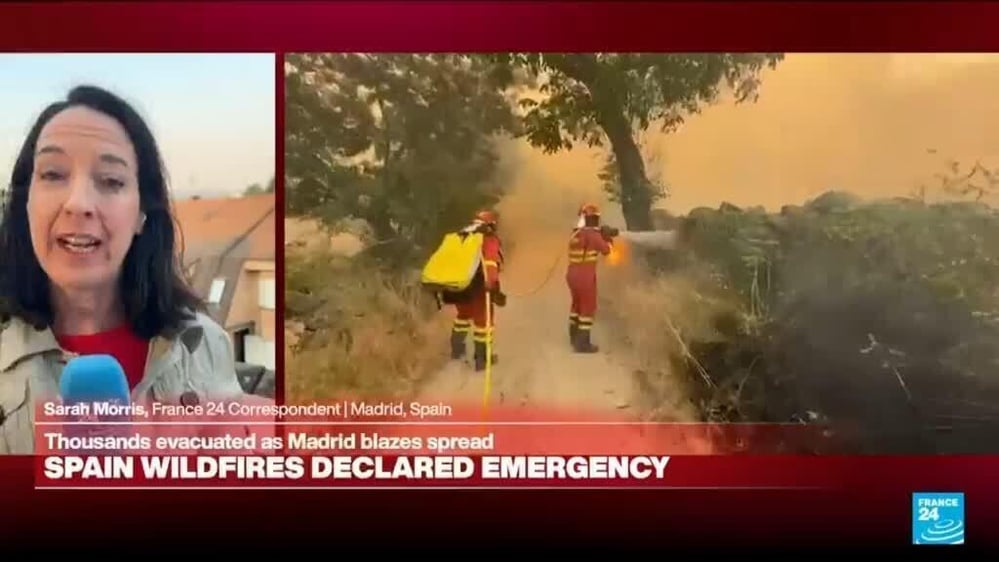
FRANCE 24 frames the Madrid wildfires with urgent, sensory wording and a frontline-reporting approach that foregrounds evacuations and firefighters' containment efforts.
France 24 coverage of wildfires around Madrid, featuring a Madrid-based correspondent providing updates on firefighting efforts and evacuations.
Automated analysis; not human reviewed. Limitations: Concise, case-specific limitations and plausible alternative interpretations.
July 24, 2026 · 0 shares
Publisher framing foregrounds official health authority data and prescriptive guidance to link rising wildfires with health risk, using WHO/EFFIS figures to justify policy action.
This article compiles WHO Europe health-risk framing and EFFIS data on European wildfires, highlighting health impacts and prescriptive policy guidance.
Automated analysis; not human reviewed.
·
46 of 52 available dimensions scored; omitted dimensions are not treated as neutral.
·
Verified supporting quotes for 0 of 46 scored dimensions.
0
July 24, 2026 · 0 shares
By foregrounding Canada’s wildfires, cross-border smoke, and El Niño–related warming as core elements, the publisher frames a localized weather story as part of a broader climate crisis through selective emphasis and epistemic framing.
Context: The report ties Canadian wildfires and Argentine warmth to broader climate variability linked to El Niño and downstream tropical cyclone activity.
Automated analysis; not human reviewed. Limitations: Analyses are limited to the provided text; does not access additional sources or infer motives beyond what is implied by framing and selection.
July 23, 2026 · 0 shares
Coverage emphasizes climate-change attribution and official data, presenting a science-informed, disaster-focused framing with extensive casualty and response details and little counterpoint.
Concise context: reporting on heatwave-fueled wildfires across southern France, Italy (Sicily), and central Spain, with casualties, evacuations, and a large firefighting deployment, framed by climate-change attribution from scientists and official sources.
Automated analysis; not human reviewed. Limitations: Case-specific; does not assess non-English or alternative sources; limited to quoted lines and numbers; may underrepresent dissenting viewpoints or broader policy debates.
Limited data; climate-link asserted; no counterpoints.
July 23, 2026 · 0 shares
Reporting foregrounds climate-science framing and official risk assessments, with limited partisan framing and emphasis on climate-change implications.
Concise report on concurrent European wildfires in Spain and France, set against heatwaves and climate-change context, with official risk warnings and policy responses.
Automated analysis; not human reviewed.
Limitations: Concise, case-specific limitations and plausible alternative interpretations.
·
52 of 52 available dimensions scored; omitted dimensions are not treated as neutral.
·
Verified supporting quotes for 0 of 52 scored dimensions.
Claim: Article emphasizes climate-science framing and official risk assessments over ideological framing.
““Scientists say human-driven climate change is increasing the intensity of heatwaves, droughts and wildfires, while also creating conditions for sudden, destructive storms.”” · verified after text normalization
““This isn’t politics.
It is science, it’s about facts.””
· exact text match
““Pedro Sanchez visited the fire-ravaged area in Guadalajara on Wednesday and called for a pact between political parties to fight climate change.”” · not found in supplied text
Counterevidence:
““The presence of policy actions, such as cross-party pact calls, shows political framing in reporting.”” · not found in supplied text
Why: Science-first framing with official sources predominates; political elements appear as actions rather than ideological stance.
Claim: No distinct populist-elitist framing detected.
““AEMET warned on Wednesday that the danger of wildfires was ‘very high or extreme’ across most of mainland Spain and the Balearic Islands.”” · not found in supplied text
Why: Reporting relies on official agencies and scientists, not populist rhetoric.
Claim: No explicit libertarian or authoritarian tilt detected.
““barbecues were banned”” · not found in supplied text
““evacuations”” · not found in supplied text
““two waterbombing planes”” · not found in supplied text
Why: Safety measures described but not ideological enforcement.
Claim: Balanced with data and attributed quotes; not heavy on opinion.
“"This isn’t politics.
It is science, it’s about facts."”
· verified after text normalization
“"Year after year we clearly see how climate change kills and destroys wealth in our communities."” · not found in supplied text
Why: Quotes show opinions but are attributed to named figures; overall coverage remains data-driven.
Claim: Describes events and prescribes actions (warnings, bans, evacuations).
““exercise extreme caution”” · exact text match
““barbecues were banned”” · not found in supplied text
““evacuations”” · not found in supplied text
Why: Policy-like measures accompany descriptive reporting.
Claim: Uses danger language to alert readers.
““danger of wildfires was ‘very high or extreme’”” · not found in supplied text
““exercise extreme caution”” · exact text match
Why: Risk language is common in disaster reporting but can amplify fear.
Claim: Includes political action but not alignment; policy context is present.
““called for a pact between political parties to fight climate change.”” · not found in supplied text
““This isn’t politics.
It is science””
· not found in supplied text
Why: Policy context exists, but climate-science framing remains central.
Claim: Positive tilt toward official agencies and government action.
““Spain's weather agency AEMET”” · not found in supplied text
““Sanchez visited the fire-ravaged area”” · not found in supplied text
““pact between political parties”” · not found in supplied text
Why: Official sources and government actions are central to the narrative.
Claim: Moderate emotional framing through danger and fatality language.
“"very high or extreme"” · verified after text normalization
“"unprecedented" mortality” · not found in supplied text
Why: Emotional language exists but supports factual reporting.
Claim: High credibility due to official sources and numerical data.
“32,000 hectares” · exact text match
“42-44 C” · not found in supplied text
“5,764 more deaths” · exact text match
Why: Data and named institutions bolster credibility.
Claim: Rational presentation through data and credible sources.
““32,000 hectares”” · not found in supplied text
““42 to 44 degrees Celsius”” · not found in supplied text
““Scientists say human-driven climate change is increasing the intensity of heatwaves”” · not found in supplied text
Why: The use of statistics and expert statements supports rational framing.
Claim: Fair presentation with multiple credible sources.
““AEMET warned”” · not found in supplied text
““Spain’s weather agency”” · not found in supplied text
““France’s authorities”” · not found in supplied text
Why: Multiple credible sources cited; no sign of misrepresentation.
Reliance on official sources; limited skepticism; framing may understate uncertainties.
July 24, 2026 · 0 shares
Publisher framing foregrounds official health authority data and prescriptive guidance to link rising wildfires with health risk, using WHO/EFFIS figures to justify policy action.
This article compiles WHO Europe health-risk framing and EFFIS data on European wildfires, highlighting health impacts and prescriptive policy guidance.
Automated analysis; not human reviewed.
·
46 of 52 available dimensions scored; omitted dimensions are not treated as neutral.
·
Verified supporting quotes for 0 of 46 scored dimensions.
0
July 22, 2026 · 0 shares
Headline relies on fear-inducing language ('terrifying') to frame NASA's wildfire flights as alarming, signaling subjective and sensational framing rather than neutral reporting.
Concise context: sensational science headline about NASA's aircraft activity in wildfires, including a quoted subclaim about wildfire-induced thunderstorms.
Automated analysis; not human reviewed.
Limitations: Concise, case-specific limitations and plausible alternative interpretations.
·
5 of 52 available dimensions scored; omitted dimensions are not treated as neutral.
·
Verified supporting quotes for 5 of 5 scored dimensions.
Claim: Headline uses subjective language to describe NASA's action
“The terrifying reason NASA is flying planes into raging wildfires.” · exact text match
Counterevidence:
“NASA is flying planes into wildfires to try and figure out how they make their own thunderstorms” · exact text match
Why: The adjective 'terrifying' signals subjectivity in the headline about a technical NASA action.
Claim: Headline is sensational and fear-inducing
“The terrifying reason NASA is flying planes into raging wildfires.” · exact text match
Counterevidence:
“NASA is flying planes into wildfires to try and figure out how they make their own thunderstorms” · exact text match
Why: The use of 'terrifying' and 'raging wildfires' evoke alarm beyond neutral reporting.
Claim: Language implies normative judgement rather than neutral description
“The terrifying reason NASA is flying planes into raging wildfires.” · exact text match
Counterevidence:
“NASA is flying planes into wildfires to try and figure out how they make their own thunderstorms” · exact text match
Why: Descriptive vs prescriptive; 'terrifying' asserts negativity rather than mere reporting.
Claim: Headline employs fear-based framing
“The terrifying reason NASA is flying planes into raging wildfires.” · exact text match
Counterevidence:
“NASA is flying planes into wildfires to try and figure out how they make their own thunderstorms” · exact text match
Why: Explicit 'terrifying' indicates fear appeal.
Claim: Headline leans on emotion to influence reader
“The terrifying reason NASA is flying planes into raging wildfires.” · exact text match
Counterevidence:
“NASA is flying planes into wildfires to try and figure out how they make their own thunderstorms” · exact text match
Why: Emotional adjective 'terrifying' signals emotional manipulation.
Ambiguity: only a headline and a subclaim; limited article context could shift bias assessment.
July 24, 2026 · 0 shares
Publisher framing foregrounds official health authority data and prescriptive guidance to link rising wildfires with health risk, using WHO/EFFIS figures to justify policy action.
This article compiles WHO Europe health-risk framing and EFFIS data on European wildfires, highlighting health impacts and prescriptive policy guidance.
Automated analysis; not human reviewed. · 46 of 52 available dimensions scored; omitted dimensions are not treated as neutral. · Verified supporting quotes for 0 of 46 scored dimensions.
0
July 24, 2026 · 0 shares
By foregrounding Canada’s wildfires, cross-border smoke, and El Niño–related warming as core elements, the publisher frames a localized weather story as part of a broader climate crisis through selective emphasis and epistemic framing.
Context: The report ties Canadian wildfires and Argentine warmth to broader climate variability linked to El Niño and downstream tropical cyclone activity.
Automated analysis; not human reviewed. Limitations: Analyses are limited to the provided text; does not access additional sources or infer motives beyond what is implied by framing and selection.
July 24, 2026 · 0 shares
BBC News frames the French wildfire evacuations as a fast-moving emergency centered on official briefings, evacuation logistics, and cross-border aid.
The report describes a wildfire emergency in the Gironde region of southwestern France, highlighting evacuation orders, casualty updates, and cross-border responses from Spain and EU partners.
Automated analysis; not human reviewed. Limitations: Concise, case-specific limitations and plausible alternative interpretations.
July 23, 2026 · 0 shares
Reporting foregrounds climate-science framing and official risk assessments, with limited partisan framing and emphasis on climate-change implications.
Concise report on concurrent European wildfires in Spain and France, set against heatwaves and climate-change context, with official risk warnings and policy responses.
Automated analysis; not human reviewed. Limitations: Concise, case-specific limitations and plausible alternative interpretations. · 52 of 52 available dimensions scored; omitted dimensions are not treated as neutral. · Verified supporting quotes for 0 of 52 scored dimensions.
Claim: Article emphasizes climate-science framing and official risk assessments over ideological framing.
““Scientists say human-driven climate change is increasing the intensity of heatwaves, droughts and wildfires, while also creating conditions for sudden, destructive storms.”” · verified after text normalization
““This isn’t politics. It is science, it’s about facts.”” · exact text match
““Pedro Sanchez visited the fire-ravaged area in Guadalajara on Wednesday and called for a pact between political parties to fight climate change.”” · not found in supplied text
Counterevidence:
““The presence of policy actions, such as cross-party pact calls, shows political framing in reporting.”” · not found in supplied text
Why: Science-first framing with official sources predominates; political elements appear as actions rather than ideological stance.
Claim: No distinct populist-elitist framing detected.
““AEMET warned on Wednesday that the danger of wildfires was ‘very high or extreme’ across most of mainland Spain and the Balearic Islands.”” · not found in supplied text
Why: Reporting relies on official agencies and scientists, not populist rhetoric.
Claim: No explicit libertarian or authoritarian tilt detected.
““barbecues were banned”” · not found in supplied text
““evacuations”” · not found in supplied text
““two waterbombing planes”” · not found in supplied text
Why: Safety measures described but not ideological enforcement.
Claim: Balanced with data and attributed quotes; not heavy on opinion.
“"This isn’t politics. It is science, it’s about facts."” · verified after text normalization
“"Year after year we clearly see how climate change kills and destroys wealth in our communities."” · not found in supplied text
Why: Quotes show opinions but are attributed to named figures; overall coverage remains data-driven.
Claim: Describes events and prescribes actions (warnings, bans, evacuations).
““exercise extreme caution”” · exact text match
““barbecues were banned”” · not found in supplied text
““evacuations”” · not found in supplied text
Why: Policy-like measures accompany descriptive reporting.
Claim: Uses danger language to alert readers.
““danger of wildfires was ‘very high or extreme’”” · not found in supplied text
““exercise extreme caution”” · exact text match
Why: Risk language is common in disaster reporting but can amplify fear.
Claim: Includes political action but not alignment; policy context is present.
““called for a pact between political parties to fight climate change.”” · not found in supplied text
““This isn’t politics. It is science”” · not found in supplied text
Why: Policy context exists, but climate-science framing remains central.
Claim: Positive tilt toward official agencies and government action.
““Spain's weather agency AEMET”” · not found in supplied text
““Sanchez visited the fire-ravaged area”” · not found in supplied text
““pact between political parties”” · not found in supplied text
Why: Official sources and government actions are central to the narrative.
Claim: Moderate emotional framing through danger and fatality language.
“"very high or extreme"” · verified after text normalization
“"unprecedented" mortality” · not found in supplied text
Why: Emotional language exists but supports factual reporting.
Claim: High credibility due to official sources and numerical data.
“32,000 hectares” · exact text match
“42-44 C” · not found in supplied text
“5,764 more deaths” · exact text match
Why: Data and named institutions bolster credibility.
Claim: Rational presentation through data and credible sources.
““32,000 hectares”” · not found in supplied text
““42 to 44 degrees Celsius”” · not found in supplied text
““Scientists say human-driven climate change is increasing the intensity of heatwaves”” · not found in supplied text
Why: The use of statistics and expert statements supports rational framing.
Claim: Fair presentation with multiple credible sources.
““AEMET warned”” · not found in supplied text
““Spain’s weather agency”” · not found in supplied text
““France’s authorities”” · not found in supplied text
Why: Multiple credible sources cited; no sign of misrepresentation.
Reliance on official sources; limited skepticism; framing may understate uncertainties.
Helium Bias
July 23, 2026 · 0 shares
Reporting foregrounds climate-science framing and official risk assessments, with limited partisan framing and emphasis on climate-change implications.
Concise report on concurrent European wildfires in Spain and France, set against heatwaves and climate-change context, with official risk warnings and policy responses.
Automated analysis; not human reviewed. Limitations: Concise, case-specific limitations and plausible alternative interpretations. · 52 of 52 available dimensions scored; omitted dimensions are not treated as neutral. · Verified supporting quotes for 0 of 52 scored dimensions.
Claim: Article emphasizes climate-science framing and official risk assessments over ideological framing.
““Scientists say human-driven climate change is increasing the intensity of heatwaves, droughts and wildfires, while also creating conditions for sudden, destructive storms.”” · verified after text normalization
““This isn’t politics. It is science, it’s about facts.”” · exact text match
““Pedro Sanchez visited the fire-ravaged area in Guadalajara on Wednesday and called for a pact between political parties to fight climate change.”” · not found in supplied text
Counterevidence:
““The presence of policy actions, such as cross-party pact calls, shows political framing in reporting.”” · not found in supplied text
Why: Science-first framing with official sources predominates; political elements appear as actions rather than ideological stance.
Claim: No distinct populist-elitist framing detected.
““AEMET warned on Wednesday that the danger of wildfires was ‘very high or extreme’ across most of mainland Spain and the Balearic Islands.”” · not found in supplied text
Why: Reporting relies on official agencies and scientists, not populist rhetoric.
Claim: No explicit libertarian or authoritarian tilt detected.
““barbecues were banned”” · not found in supplied text
““evacuations”” · not found in supplied text
““two waterbombing planes”” · not found in supplied text
Why: Safety measures described but not ideological enforcement.
Claim: Balanced with data and attributed quotes; not heavy on opinion.
“"This isn’t politics. It is science, it’s about facts."” · verified after text normalization
“"Year after year we clearly see how climate change kills and destroys wealth in our communities."” · not found in supplied text
Why: Quotes show opinions but are attributed to named figures; overall coverage remains data-driven.
Claim: Describes events and prescribes actions (warnings, bans, evacuations).
““exercise extreme caution”” · exact text match
““barbecues were banned”” · not found in supplied text
““evacuations”” · not found in supplied text
Why: Policy-like measures accompany descriptive reporting.
Claim: Uses danger language to alert readers.
““danger of wildfires was ‘very high or extreme’”” · not found in supplied text
““exercise extreme caution”” · exact text match
Why: Risk language is common in disaster reporting but can amplify fear.
Claim: Includes political action but not alignment; policy context is present.
““called for a pact between political parties to fight climate change.”” · not found in supplied text
““This isn’t politics. It is science”” · not found in supplied text
Why: Policy context exists, but climate-science framing remains central.
Claim: Positive tilt toward official agencies and government action.
““Spain's weather agency AEMET”” · not found in supplied text
““Sanchez visited the fire-ravaged area”” · not found in supplied text
““pact between political parties”” · not found in supplied text
Why: Official sources and government actions are central to the narrative.
Claim: Moderate emotional framing through danger and fatality language.
“"very high or extreme"” · verified after text normalization
“"unprecedented" mortality” · not found in supplied text
Why: Emotional language exists but supports factual reporting.
Claim: High credibility due to official sources and numerical data.
“32,000 hectares” · exact text match
“42-44 C” · not found in supplied text
“5,764 more deaths” · exact text match
Why: Data and named institutions bolster credibility.
Claim: Rational presentation through data and credible sources.
““32,000 hectares”” · not found in supplied text
““42 to 44 degrees Celsius”” · not found in supplied text
““Scientists say human-driven climate change is increasing the intensity of heatwaves”” · not found in supplied text
Why: The use of statistics and expert statements supports rational framing.
Claim: Fair presentation with multiple credible sources.
““AEMET warned”” · not found in supplied text
““Spain’s weather agency”” · not found in supplied text
““France’s authorities”” · not found in supplied text
Why: Multiple credible sources cited; no sign of misrepresentation.
Reliance on official sources; limited skepticism; framing may understate uncertainties.
July 24, 2026 · 0 shares
Publisher framing foregrounds official health authority data and prescriptive guidance to link rising wildfires with health risk, using WHO/EFFIS figures to justify policy action.
This article compiles WHO Europe health-risk framing and EFFIS data on European wildfires, highlighting health impacts and prescriptive policy guidance.
Automated analysis; not human reviewed. · 46 of 52 available dimensions scored; omitted dimensions are not treated as neutral. · Verified supporting quotes for 0 of 46 scored dimensions.
0
July 24, 2026 · 0 shares
BBC News frames the French wildfire evacuations as a fast-moving emergency centered on official briefings, evacuation logistics, and cross-border aid.
The report describes a wildfire emergency in the Gironde region of southwestern France, highlighting evacuation orders, casualty updates, and cross-border responses from Spain and EU partners.
Automated analysis; not human reviewed. Limitations: Concise, case-specific limitations and plausible alternative interpretations.
Left-leaning, climate-action framing dominates, foregrounding Indigenous impacts and criticizing Trump and Canadian pipelines, with emotive language and explicit editorial stance.
Democracy Now coverage of North American wildfires, climate-change framing, Indigenous impacts, and political responses to climate policy and energy infrastructure.
Automated analysis; not human reviewed. Limitations: Case-specific; based only on the provided text; broader editorial context could shift interpretation. · 8 of 52 available dimensions scored; omitted dimensions are not treated as neutral. · Verified supporting quotes for 2 of 8 scored dimensions.
Claim: Article frames Republicans' climate stance as downplaying the climate crisis and emphasizes critique of Trump.
“Republican politicians have been loath to acknowledge the role of the climate crisis in making extreme weather events like this more frequent and intense, instead blaming Canadian officials for poor forest management.” · exact text match
“President Donald Trump has even threatened to impose new tariffs on Canada over the record levels of hazardous air.” · exact text match
Counterevidence:
“Rachel Gilmore states Trump's comments are 'extremely offensive' to people in the country, and Carney’s policies — while acknowledging the science — also seem to insufficiently mitigate the climate crisis.” · not found in supplied text
“‘He’s not exactly taking the climate action that we need here in Canada,’ Gilmore says of Carney.” · not found in supplied text
Why: Framing foregrounds liberal critique of Republican climate policy and uses Trump-focused criticisms, with some counterstatements from within the liberal-leaning ecosystem.
Claim: Emotive language and evaluative phrasing indicate subjective framing.
“extremely offensive” · exact text match
“horrific plan for the climate crisis” · exact text match
“snake oil solution of carbon capture and storage” · exact text match
Counterevidence:
“The piece also cites climate science and independent journalists, indicating attempts at balanced sourcing.” · not found in supplied text
Why: Use of evaluative terms and a noted pejorative phrase signals opinionated framing beyond neutral reporting.
Claim: Coverage mixes sensational language with factual data about the crisis.
“second-worst smoke event in New York City modern history” · exact text match
“hazardous air pollution alerts for major cities” · not found in supplied text
Counterevidence:
“Numbers of wildfires and passages about emissions ground claims in factual data.” · not found in supplied text
Why: Sensational descriptors accompany concrete data, elevating drama of the story.
Claim: Describes the situation as a high-risk crisis to evoke concern.
“hazardous air pollution alerts for major cities” · not found in supplied text
“British Columbia in State of Emergency as Climate Change Fuels Canada’s Worst Wildfire Season Ever” · exact text match
Counterevidence:
“There are mentions of improving air quality in New York City, offering a counterpoint to perpetual fear.” · not found in supplied text
Why: Crisis language paired with emergency designations heightens perceived risk.
Claim: The narrative asserts strong judgments about policy and actors.
“extremely offensive” · exact text match
“snake oil solution of carbon capture and storage” · exact text match
“It makes no economic sense” · not found in supplied text
Counterevidence:
“The article also presents factual policy details and quotes from various sources to support claims.” · not found in supplied text
Why: Loaded adjectives and evaluative judgments indicate clear opinionated stance.
Claim: Narrative relies on established political actors and outlets to shape the frame.
“Independent Canadian journalist Rachel Gilmore” · exact text match
“Liberal Prime Minister Mark Carney’s policies” · exact text match
“Democracy Now host Amy Goodman” · not found in supplied text
Counterevidence:
“The piece cites scientists describing climate links, which grounds claims in empirical discourse.” · not found in supplied text
Why: Frequent reference to established actors and outlets alongside science-based claims suggests framed positioning.
Claim: Foregrounds Indigenous impacts and climate-justice framing.
“fires disproportionately impacting Indigenous communities” · not found in supplied text
“independent journalist perspective on climate crisis” · not found in supplied text
Counterevidence:
“The segment also includes broader coverage and expert input, not solely identity-politics framing.” · not found in supplied text
Why: Emphasis on Indigenous experience and climate-related justice aligns with woke framing, though not exclusively.
Left-leaning framing; potential overemphasis on climate crisis effects.
Story Blindspots
July 25, 2026 · 0 shares
FRANCE 24 frames the Madrid wildfires with urgent, sensory wording and a frontline-reporting approach that foregrounds evacuations and firefighters' containment efforts.
France 24 coverage of wildfires around Madrid, featuring a Madrid-based correspondent providing updates on firefighting efforts and evacuations.
Automated analysis; not human reviewed. Limitations: Concise, case-specific limitations and plausible alternative interpretations.
July 23, 2026 · 0 shares
Coverage emphasizes climate-change attribution and official data, presenting a science-informed, disaster-focused framing with extensive casualty and response details and little counterpoint.
Concise context: reporting on heatwave-fueled wildfires across southern France, Italy (Sicily), and central Spain, with casualties, evacuations, and a large firefighting deployment, framed by climate-change attribution from scientists and official sources.
Automated analysis; not human reviewed. Limitations: Case-specific; does not assess non-English or alternative sources; limited to quoted lines and numbers; may underrepresent dissenting viewpoints or broader policy debates.
Limited data; climate-link asserted; no counterpoints.
July 23, 2026 · 0 shares
Reporting foregrounds climate-science framing and official risk assessments, with limited partisan framing and emphasis on climate-change implications.
Concise report on concurrent European wildfires in Spain and France, set against heatwaves and climate-change context, with official risk warnings and policy responses.
Automated analysis; not human reviewed. Limitations: Concise, case-specific limitations and plausible alternative interpretations. · 52 of 52 available dimensions scored; omitted dimensions are not treated as neutral. · Verified supporting quotes for 0 of 52 scored dimensions.
Claim: Article emphasizes climate-science framing and official risk assessments over ideological framing.
““Scientists say human-driven climate change is increasing the intensity of heatwaves, droughts and wildfires, while also creating conditions for sudden, destructive storms.”” · verified after text normalization
““This isn’t politics. It is science, it’s about facts.”” · exact text match
““Pedro Sanchez visited the fire-ravaged area in Guadalajara on Wednesday and called for a pact between political parties to fight climate change.”” · not found in supplied text
Counterevidence:
““The presence of policy actions, such as cross-party pact calls, shows political framing in reporting.”” · not found in supplied text
Why: Science-first framing with official sources predominates; political elements appear as actions rather than ideological stance.
Claim: No distinct populist-elitist framing detected.
““AEMET warned on Wednesday that the danger of wildfires was ‘very high or extreme’ across most of mainland Spain and the Balearic Islands.”” · not found in supplied text
Why: Reporting relies on official agencies and scientists, not populist rhetoric.
Claim: No explicit libertarian or authoritarian tilt detected.
““barbecues were banned”” · not found in supplied text
““evacuations”” · not found in supplied text
““two waterbombing planes”” · not found in supplied text
Why: Safety measures described but not ideological enforcement.
Claim: Balanced with data and attributed quotes; not heavy on opinion.
“"This isn’t politics. It is science, it’s about facts."” · verified after text normalization
“"Year after year we clearly see how climate change kills and destroys wealth in our communities."” · not found in supplied text
Why: Quotes show opinions but are attributed to named figures; overall coverage remains data-driven.
Claim: Describes events and prescribes actions (warnings, bans, evacuations).
““exercise extreme caution”” · exact text match
““barbecues were banned”” · not found in supplied text
““evacuations”” · not found in supplied text
Why: Policy-like measures accompany descriptive reporting.
Claim: Uses danger language to alert readers.
““danger of wildfires was ‘very high or extreme’”” · not found in supplied text
““exercise extreme caution”” · exact text match
Why: Risk language is common in disaster reporting but can amplify fear.
Claim: Includes political action but not alignment; policy context is present.
““called for a pact between political parties to fight climate change.”” · not found in supplied text
““This isn’t politics. It is science”” · not found in supplied text
Why: Policy context exists, but climate-science framing remains central.
Claim: Positive tilt toward official agencies and government action.
““Spain's weather agency AEMET”” · not found in supplied text
““Sanchez visited the fire-ravaged area”” · not found in supplied text
““pact between political parties”” · not found in supplied text
Why: Official sources and government actions are central to the narrative.
Claim: Moderate emotional framing through danger and fatality language.
“"very high or extreme"” · verified after text normalization
“"unprecedented" mortality” · not found in supplied text
Why: Emotional language exists but supports factual reporting.
Claim: High credibility due to official sources and numerical data.
“32,000 hectares” · exact text match
“42-44 C” · not found in supplied text
“5,764 more deaths” · exact text match
Why: Data and named institutions bolster credibility.
Claim: Rational presentation through data and credible sources.
““32,000 hectares”” · not found in supplied text
““42 to 44 degrees Celsius”” · not found in supplied text
““Scientists say human-driven climate change is increasing the intensity of heatwaves”” · not found in supplied text
Why: The use of statistics and expert statements supports rational framing.
Claim: Fair presentation with multiple credible sources.
““AEMET warned”” · not found in supplied text
““Spain’s weather agency”” · not found in supplied text
““France’s authorities”” · not found in supplied text
Why: Multiple credible sources cited; no sign of misrepresentation.
Reliance on official sources; limited skepticism; framing may understate uncertainties.
July 24, 2026 · 0 shares
By foregrounding Canada’s wildfires, cross-border smoke, and El Niño–related warming as core elements, the publisher frames a localized weather story as part of a broader climate crisis through selective emphasis and epistemic framing.
Context: The report ties Canadian wildfires and Argentine warmth to broader climate variability linked to El Niño and downstream tropical cyclone activity.
Automated analysis; not human reviewed. Limitations: Analyses are limited to the provided text; does not access additional sources or infer motives beyond what is implied by framing and selection.
July 24, 2026 · 0 shares
BBC News frames the French wildfire evacuations as a fast-moving emergency centered on official briefings, evacuation logistics, and cross-border aid.
The report describes a wildfire emergency in the Gironde region of southwestern France, highlighting evacuation orders, casualty updates, and cross-border responses from Spain and EU partners.
Automated analysis; not human reviewed. Limitations: Concise, case-specific limitations and plausible alternative interpretations.
July 24, 2026 · 0 shares
By foregrounding Canada’s wildfires, cross-border smoke, and El Niño–related warming as core elements, the publisher frames a localized weather story as part of a broader climate crisis through selective emphasis and epistemic framing.
Context: The report ties Canadian wildfires and Argentine warmth to broader climate variability linked to El Niño and downstream tropical cyclone activity.
Automated analysis; not human reviewed. Limitations: Analyses are limited to the provided text; does not access additional sources or infer motives beyond what is implied by framing and selection.
July 24, 2026 · 0 shares
Publisher framing foregrounds official health authority data and prescriptive guidance to link rising wildfires with health risk, using WHO/EFFIS figures to justify policy action.
This article compiles WHO Europe health-risk framing and EFFIS data on European wildfires, highlighting health impacts and prescriptive policy guidance.
Automated analysis; not human reviewed. · 46 of 52 available dimensions scored; omitted dimensions are not treated as neutral. · Verified supporting quotes for 0 of 46 scored dimensions.
0
July 25, 2026 · 0 shares
FRANCE 24 frames the Madrid wildfires with urgent, sensory wording and a frontline-reporting approach that foregrounds evacuations and firefighters' containment efforts.
France 24 coverage of wildfires around Madrid, featuring a Madrid-based correspondent providing updates on firefighting efforts and evacuations.
Automated analysis; not human reviewed. Limitations: Concise, case-specific limitations and plausible alternative interpretations.
July 25, 2026 · 0 shares
FRANCE 24 frames the Madrid wildfires with urgent, sensory wording and a frontline-reporting approach that foregrounds evacuations and firefighters' containment efforts.
France 24 coverage of wildfires around Madrid, featuring a Madrid-based correspondent providing updates on firefighting efforts and evacuations.
Automated analysis; not human reviewed. Limitations: Concise, case-specific limitations and plausible alternative interpretations.
July 24, 2026 · 0 shares
Publisher framing foregrounds official health authority data and prescriptive guidance to link rising wildfires with health risk, using WHO/EFFIS figures to justify policy action.
This article compiles WHO Europe health-risk framing and EFFIS data on European wildfires, highlighting health impacts and prescriptive policy guidance.
Automated analysis; not human reviewed. · 46 of 52 available dimensions scored; omitted dimensions are not treated as neutral. · Verified supporting quotes for 0 of 46 scored dimensions.
0
StudyFinds frames the science story as an AI-assisted, agenda-free digest that emphasizes reader debate while marketing its editorial process and employing dramatic, cautionary language about past fires.
End-Triassic mass extinction involved volcanic CO2 emissions and climate shifts; this study links European wildfire patterns to fern-driven vegetation change in NW Europe.
Automated analysis; not human reviewed. Limitations: Concise, case-specific limitations and plausible alternative interpretations. · 47 of 52 available dimensions scored; omitted dimensions are not treated as neutral. · Verified supporting quotes for 0 of 47 scored dimensions.
AI framing may bias emphasis; consider alternative interpretations.
July 24, 2026 · 0 shares
Publisher framing foregrounds official health authority data and prescriptive guidance to link rising wildfires with health risk, using WHO/EFFIS figures to justify policy action.
This article compiles WHO Europe health-risk framing and EFFIS data on European wildfires, highlighting health impacts and prescriptive policy guidance.
Automated analysis; not human reviewed. · 46 of 52 available dimensions scored; omitted dimensions are not treated as neutral. · Verified supporting quotes for 0 of 46 scored dimensions.
0
July 24, 2026 · 0 shares
By foregrounding Canada’s wildfires, cross-border smoke, and El Niño–related warming as core elements, the publisher frames a localized weather story as part of a broader climate crisis through selective emphasis and epistemic framing.
Context: The report ties Canadian wildfires and Argentine warmth to broader climate variability linked to El Niño and downstream tropical cyclone activity.
Automated analysis; not human reviewed. Limitations: Analyses are limited to the provided text; does not access additional sources or infer motives beyond what is implied by framing and selection.
July 24, 2026 · 0 shares
BBC News frames the French wildfire evacuations as a fast-moving emergency centered on official briefings, evacuation logistics, and cross-border aid.
The report describes a wildfire emergency in the Gironde region of southwestern France, highlighting evacuation orders, casualty updates, and cross-border responses from Spain and EU partners.
Automated analysis; not human reviewed. Limitations: Concise, case-specific limitations and plausible alternative interpretations.
July 25, 2026 · 0 shares
FRANCE 24 frames the Madrid wildfires with urgent, sensory wording and a frontline-reporting approach that foregrounds evacuations and firefighters' containment efforts.
France 24 coverage of wildfires around Madrid, featuring a Madrid-based correspondent providing updates on firefighting efforts and evacuations.
Automated analysis; not human reviewed. Limitations: Concise, case-specific limitations and plausible alternative interpretations.
July 23, 2026 · 0 shares
Reporting foregrounds climate-science framing and official risk assessments, with limited partisan framing and emphasis on climate-change implications.
Concise report on concurrent European wildfires in Spain and France, set against heatwaves and climate-change context, with official risk warnings and policy responses.
Automated analysis; not human reviewed. Limitations: Concise, case-specific limitations and plausible alternative interpretations. · 52 of 52 available dimensions scored; omitted dimensions are not treated as neutral. · Verified supporting quotes for 0 of 52 scored dimensions.
Claim: Article emphasizes climate-science framing and official risk assessments over ideological framing.
““Scientists say human-driven climate change is increasing the intensity of heatwaves, droughts and wildfires, while also creating conditions for sudden, destructive storms.”” · verified after text normalization
““This isn’t politics. It is science, it’s about facts.”” · exact text match
““Pedro Sanchez visited the fire-ravaged area in Guadalajara on Wednesday and called for a pact between political parties to fight climate change.”” · not found in supplied text
Counterevidence:
““The presence of policy actions, such as cross-party pact calls, shows political framing in reporting.”” · not found in supplied text
Why: Science-first framing with official sources predominates; political elements appear as actions rather than ideological stance.
Claim: No distinct populist-elitist framing detected.
““AEMET warned on Wednesday that the danger of wildfires was ‘very high or extreme’ across most of mainland Spain and the Balearic Islands.”” · not found in supplied text
Why: Reporting relies on official agencies and scientists, not populist rhetoric.
Claim: No explicit libertarian or authoritarian tilt detected.
““barbecues were banned”” · not found in supplied text
““evacuations”” · not found in supplied text
““two waterbombing planes”” · not found in supplied text
Why: Safety measures described but not ideological enforcement.
Claim: Balanced with data and attributed quotes; not heavy on opinion.
“"This isn’t politics. It is science, it’s about facts."” · verified after text normalization
“"Year after year we clearly see how climate change kills and destroys wealth in our communities."” · not found in supplied text
Why: Quotes show opinions but are attributed to named figures; overall coverage remains data-driven.
Claim: Describes events and prescribes actions (warnings, bans, evacuations).
““exercise extreme caution”” · exact text match
““barbecues were banned”” · not found in supplied text
““evacuations”” · not found in supplied text
Why: Policy-like measures accompany descriptive reporting.
Claim: Uses danger language to alert readers.
““danger of wildfires was ‘very high or extreme’”” · not found in supplied text
““exercise extreme caution”” · exact text match
Why: Risk language is common in disaster reporting but can amplify fear.
Claim: Includes political action but not alignment; policy context is present.
““called for a pact between political parties to fight climate change.”” · not found in supplied text
““This isn’t politics. It is science”” · not found in supplied text
Why: Policy context exists, but climate-science framing remains central.
Claim: Positive tilt toward official agencies and government action.
““Spain's weather agency AEMET”” · not found in supplied text
““Sanchez visited the fire-ravaged area”” · not found in supplied text
““pact between political parties”” · not found in supplied text
Why: Official sources and government actions are central to the narrative.
Claim: Moderate emotional framing through danger and fatality language.
“"very high or extreme"” · verified after text normalization
“"unprecedented" mortality” · not found in supplied text
Why: Emotional language exists but supports factual reporting.
Claim: High credibility due to official sources and numerical data.
“32,000 hectares” · exact text match
“42-44 C” · not found in supplied text
“5,764 more deaths” · exact text match
Why: Data and named institutions bolster credibility.
Claim: Rational presentation through data and credible sources.
““32,000 hectares”” · not found in supplied text
““42 to 44 degrees Celsius”” · not found in supplied text
““Scientists say human-driven climate change is increasing the intensity of heatwaves”” · not found in supplied text
Why: The use of statistics and expert statements supports rational framing.
Claim: Fair presentation with multiple credible sources.
““AEMET warned”” · not found in supplied text
““Spain’s weather agency”” · not found in supplied text
““France’s authorities”” · not found in supplied text
Why: Multiple credible sources cited; no sign of misrepresentation.
Reliance on official sources; limited skepticism; framing may understate uncertainties.
July 24, 2026 · 0 shares
By foregrounding Canada’s wildfires, cross-border smoke, and El Niño–related warming as core elements, the publisher frames a localized weather story as part of a broader climate crisis through selective emphasis and epistemic framing.
Context: The report ties Canadian wildfires and Argentine warmth to broader climate variability linked to El Niño and downstream tropical cyclone activity.
Automated analysis; not human reviewed. Limitations: Analyses are limited to the provided text; does not access additional sources or infer motives beyond what is implied by framing and selection.
July 24, 2026 · 0 shares
Publisher framing foregrounds official health authority data and prescriptive guidance to link rising wildfires with health risk, using WHO/EFFIS figures to justify policy action.
This article compiles WHO Europe health-risk framing and EFFIS data on European wildfires, highlighting health impacts and prescriptive policy guidance.
Automated analysis; not human reviewed. · 46 of 52 available dimensions scored; omitted dimensions are not treated as neutral. · Verified supporting quotes for 0 of 46 scored dimensions.
0
July 23, 2026 · 0 shares
Coverage emphasizes climate-change attribution and official data, presenting a science-informed, disaster-focused framing with extensive casualty and response details and little counterpoint.
Concise context: reporting on heatwave-fueled wildfires across southern France, Italy (Sicily), and central Spain, with casualties, evacuations, and a large firefighting deployment, framed by climate-change attribution from scientists and official sources.
Automated analysis; not human reviewed. Limitations: Case-specific; does not assess non-English or alternative sources; limited to quoted lines and numbers; may underrepresent dissenting viewpoints or broader policy debates.
Limited data; climate-link asserted; no counterpoints.
July 23, 2026 · 0 shares
Reporting foregrounds climate-science framing and official risk assessments, with limited partisan framing and emphasis on climate-change implications.
Concise report on concurrent European wildfires in Spain and France, set against heatwaves and climate-change context, with official risk warnings and policy responses.
Automated analysis; not human reviewed. Limitations: Concise, case-specific limitations and plausible alternative interpretations. · 52 of 52 available dimensions scored; omitted dimensions are not treated as neutral. · Verified supporting quotes for 0 of 52 scored dimensions.
Claim: Article emphasizes climate-science framing and official risk assessments over ideological framing.
““Scientists say human-driven climate change is increasing the intensity of heatwaves, droughts and wildfires, while also creating conditions for sudden, destructive storms.”” · verified after text normalization
““This isn’t politics. It is science, it’s about facts.”” · exact text match
““Pedro Sanchez visited the fire-ravaged area in Guadalajara on Wednesday and called for a pact between political parties to fight climate change.”” · not found in supplied text
Counterevidence:
““The presence of policy actions, such as cross-party pact calls, shows political framing in reporting.”” · not found in supplied text
Why: Science-first framing with official sources predominates; political elements appear as actions rather than ideological stance.
Claim: No distinct populist-elitist framing detected.
““AEMET warned on Wednesday that the danger of wildfires was ‘very high or extreme’ across most of mainland Spain and the Balearic Islands.”” · not found in supplied text
Why: Reporting relies on official agencies and scientists, not populist rhetoric.
Claim: No explicit libertarian or authoritarian tilt detected.
““barbecues were banned”” · not found in supplied text
““evacuations”” · not found in supplied text
““two waterbombing planes”” · not found in supplied text
Why: Safety measures described but not ideological enforcement.
Claim: Balanced with data and attributed quotes; not heavy on opinion.
“"This isn’t politics. It is science, it’s about facts."” · verified after text normalization
“"Year after year we clearly see how climate change kills and destroys wealth in our communities."” · not found in supplied text
Why: Quotes show opinions but are attributed to named figures; overall coverage remains data-driven.
Claim: Describes events and prescribes actions (warnings, bans, evacuations).
““exercise extreme caution”” · exact text match
““barbecues were banned”” · not found in supplied text
““evacuations”” · not found in supplied text
Why: Policy-like measures accompany descriptive reporting.
Claim: Uses danger language to alert readers.
““danger of wildfires was ‘very high or extreme’”” · not found in supplied text
““exercise extreme caution”” · exact text match
Why: Risk language is common in disaster reporting but can amplify fear.
Claim: Includes political action but not alignment; policy context is present.
““called for a pact between political parties to fight climate change.”” · not found in supplied text
““This isn’t politics. It is science”” · not found in supplied text
Why: Policy context exists, but climate-science framing remains central.
Claim: Positive tilt toward official agencies and government action.
““Spain's weather agency AEMET”” · not found in supplied text
““Sanchez visited the fire-ravaged area”” · not found in supplied text
““pact between political parties”” · not found in supplied text
Why: Official sources and government actions are central to the narrative.
Claim: Moderate emotional framing through danger and fatality language.
“"very high or extreme"” · verified after text normalization
“"unprecedented" mortality” · not found in supplied text
Why: Emotional language exists but supports factual reporting.
Claim: High credibility due to official sources and numerical data.
“32,000 hectares” · exact text match
“42-44 C” · not found in supplied text
“5,764 more deaths” · exact text match
Why: Data and named institutions bolster credibility.
Claim: Rational presentation through data and credible sources.
““32,000 hectares”” · not found in supplied text
““42 to 44 degrees Celsius”” · not found in supplied text
““Scientists say human-driven climate change is increasing the intensity of heatwaves”” · not found in supplied text
Why: The use of statistics and expert statements supports rational framing.
Claim: Fair presentation with multiple credible sources.
““AEMET warned”” · not found in supplied text
““Spain’s weather agency”” · not found in supplied text
““France’s authorities”” · not found in supplied text
Why: Multiple credible sources cited; no sign of misrepresentation.
Reliance on official sources; limited skepticism; framing may understate uncertainties.
July 24, 2026 · 0 shares
Publisher framing foregrounds official health authority data and prescriptive guidance to link rising wildfires with health risk, using WHO/EFFIS figures to justify policy action.
This article compiles WHO Europe health-risk framing and EFFIS data on European wildfires, highlighting health impacts and prescriptive policy guidance.
Automated analysis; not human reviewed. · 46 of 52 available dimensions scored; omitted dimensions are not treated as neutral. · Verified supporting quotes for 0 of 46 scored dimensions.
0
July 23, 2026 · 0 shares
Coverage emphasizes climate-change attribution and official data, presenting a science-informed, disaster-focused framing with extensive casualty and response details and little counterpoint.
Concise context: reporting on heatwave-fueled wildfires across southern France, Italy (Sicily), and central Spain, with casualties, evacuations, and a large firefighting deployment, framed by climate-change attribution from scientists and official sources.
Automated analysis; not human reviewed. Limitations: Case-specific; does not assess non-English or alternative sources; limited to quoted lines and numbers; may underrepresent dissenting viewpoints or broader policy debates.
Limited data; climate-link asserted; no counterpoints.
July 23, 2026 · 0 shares
Reporting foregrounds climate-science framing and official risk assessments, with limited partisan framing and emphasis on climate-change implications.
Concise report on concurrent European wildfires in Spain and France, set against heatwaves and climate-change context, with official risk warnings and policy responses.
Automated analysis; not human reviewed. Limitations: Concise, case-specific limitations and plausible alternative interpretations. · 52 of 52 available dimensions scored; omitted dimensions are not treated as neutral. · Verified supporting quotes for 0 of 52 scored dimensions.
Claim: Article emphasizes climate-science framing and official risk assessments over ideological framing.
““Scientists say human-driven climate change is increasing the intensity of heatwaves, droughts and wildfires, while also creating conditions for sudden, destructive storms.”” · verified after text normalization
““This isn’t politics. It is science, it’s about facts.”” · exact text match
““Pedro Sanchez visited the fire-ravaged area in Guadalajara on Wednesday and called for a pact between political parties to fight climate change.”” · not found in supplied text
Counterevidence:
““The presence of policy actions, such as cross-party pact calls, shows political framing in reporting.”” · not found in supplied text
Why: Science-first framing with official sources predominates; political elements appear as actions rather than ideological stance.
Claim: No distinct populist-elitist framing detected.
““AEMET warned on Wednesday that the danger of wildfires was ‘very high or extreme’ across most of mainland Spain and the Balearic Islands.”” · not found in supplied text
Why: Reporting relies on official agencies and scientists, not populist rhetoric.
Claim: No explicit libertarian or authoritarian tilt detected.
““barbecues were banned”” · not found in supplied text
““evacuations”” · not found in supplied text
““two waterbombing planes”” · not found in supplied text
Why: Safety measures described but not ideological enforcement.
Claim: Balanced with data and attributed quotes; not heavy on opinion.
“"This isn’t politics. It is science, it’s about facts."” · verified after text normalization
“"Year after year we clearly see how climate change kills and destroys wealth in our communities."” · not found in supplied text
Why: Quotes show opinions but are attributed to named figures; overall coverage remains data-driven.
Claim: Describes events and prescribes actions (warnings, bans, evacuations).
““exercise extreme caution”” · exact text match
““barbecues were banned”” · not found in supplied text
““evacuations”” · not found in supplied text
Why: Policy-like measures accompany descriptive reporting.
Claim: Uses danger language to alert readers.
““danger of wildfires was ‘very high or extreme’”” · not found in supplied text
““exercise extreme caution”” · exact text match
Why: Risk language is common in disaster reporting but can amplify fear.
Claim: Includes political action but not alignment; policy context is present.
““called for a pact between political parties to fight climate change.”” · not found in supplied text
““This isn’t politics. It is science”” · not found in supplied text
Why: Policy context exists, but climate-science framing remains central.
Claim: Positive tilt toward official agencies and government action.
““Spain's weather agency AEMET”” · not found in supplied text
““Sanchez visited the fire-ravaged area”” · not found in supplied text
““pact between political parties”” · not found in supplied text
Why: Official sources and government actions are central to the narrative.
Claim: Moderate emotional framing through danger and fatality language.
“"very high or extreme"” · verified after text normalization
“"unprecedented" mortality” · not found in supplied text
Why: Emotional language exists but supports factual reporting.
Claim: High credibility due to official sources and numerical data.
“32,000 hectares” · exact text match
“42-44 C” · not found in supplied text
“5,764 more deaths” · exact text match
Why: Data and named institutions bolster credibility.
Claim: Rational presentation through data and credible sources.
““32,000 hectares”” · not found in supplied text
““42 to 44 degrees Celsius”” · not found in supplied text
““Scientists say human-driven climate change is increasing the intensity of heatwaves”” · not found in supplied text
Why: The use of statistics and expert statements supports rational framing.
Claim: Fair presentation with multiple credible sources.
““AEMET warned”” · not found in supplied text
““Spain’s weather agency”” · not found in supplied text
““France’s authorities”” · not found in supplied text
Why: Multiple credible sources cited; no sign of misrepresentation.
Reliance on official sources; limited skepticism; framing may understate uncertainties.
July 24, 2026 · 0 shares
Publisher framing foregrounds official health authority data and prescriptive guidance to link rising wildfires with health risk, using WHO/EFFIS figures to justify policy action.
This article compiles WHO Europe health-risk framing and EFFIS data on European wildfires, highlighting health impacts and prescriptive policy guidance.
Automated analysis; not human reviewed. · 46 of 52 available dimensions scored; omitted dimensions are not treated as neutral. · Verified supporting quotes for 0 of 46 scored dimensions.
0
July 24, 2026 · 0 shares
By foregrounding Canada’s wildfires, cross-border smoke, and El Niño–related warming as core elements, the publisher frames a localized weather story as part of a broader climate crisis through selective emphasis and epistemic framing.
Context: The report ties Canadian wildfires and Argentine warmth to broader climate variability linked to El Niño and downstream tropical cyclone activity.
Automated analysis; not human reviewed. Limitations: Analyses are limited to the provided text; does not access additional sources or infer motives beyond what is implied by framing and selection.
July 24, 2026 · 0 shares
Publisher framing foregrounds official health authority data and prescriptive guidance to link rising wildfires with health risk, using WHO/EFFIS figures to justify policy action.
This article compiles WHO Europe health-risk framing and EFFIS data on European wildfires, highlighting health impacts and prescriptive policy guidance.
Automated analysis; not human reviewed. · 46 of 52 available dimensions scored; omitted dimensions are not treated as neutral. · Verified supporting quotes for 0 of 46 scored dimensions.
0
July 24, 2026 · 0 shares
Publisher framing foregrounds official health authority data and prescriptive guidance to link rising wildfires with health risk, using WHO/EFFIS figures to justify policy action.
This article compiles WHO Europe health-risk framing and EFFIS data on European wildfires, highlighting health impacts and prescriptive policy guidance.
Automated analysis; not human reviewed. · 46 of 52 available dimensions scored; omitted dimensions are not treated as neutral. · Verified supporting quotes for 0 of 46 scored dimensions.
0
July 22, 2026 · 0 shares
Headline relies on fear-inducing language ('terrifying') to frame NASA's wildfire flights as alarming, signaling subjective and sensational framing rather than neutral reporting.
Concise context: sensational science headline about NASA's aircraft activity in wildfires, including a quoted subclaim about wildfire-induced thunderstorms.
Automated analysis; not human reviewed. Limitations: Concise, case-specific limitations and plausible alternative interpretations. · 5 of 52 available dimensions scored; omitted dimensions are not treated as neutral. · Verified supporting quotes for 5 of 5 scored dimensions.
Claim: Headline uses subjective language to describe NASA's action
“The terrifying reason NASA is flying planes into raging wildfires.” · exact text match
Counterevidence:
“NASA is flying planes into wildfires to try and figure out how they make their own thunderstorms” · exact text match
Why: The adjective 'terrifying' signals subjectivity in the headline about a technical NASA action.
Claim: Headline is sensational and fear-inducing
“The terrifying reason NASA is flying planes into raging wildfires.” · exact text match
Counterevidence:
“NASA is flying planes into wildfires to try and figure out how they make their own thunderstorms” · exact text match
Why: The use of 'terrifying' and 'raging wildfires' evoke alarm beyond neutral reporting.
Claim: Language implies normative judgement rather than neutral description
“The terrifying reason NASA is flying planes into raging wildfires.” · exact text match
Counterevidence:
“NASA is flying planes into wildfires to try and figure out how they make their own thunderstorms” · exact text match
Why: Descriptive vs prescriptive; 'terrifying' asserts negativity rather than mere reporting.
Claim: Headline employs fear-based framing
“The terrifying reason NASA is flying planes into raging wildfires.” · exact text match
Counterevidence:
“NASA is flying planes into wildfires to try and figure out how they make their own thunderstorms” · exact text match
Why: Explicit 'terrifying' indicates fear appeal.
Claim: Headline leans on emotion to influence reader
“The terrifying reason NASA is flying planes into raging wildfires.” · exact text match
Counterevidence:
“NASA is flying planes into wildfires to try and figure out how they make their own thunderstorms” · exact text match
Why: Emotional adjective 'terrifying' signals emotional manipulation.
Ambiguity: only a headline and a subclaim; limited article context could shift bias assessment.
July 22, 2026 · 0 shares
Headline relies on fear-inducing language ('terrifying') to frame NASA's wildfire flights as alarming, signaling subjective and sensational framing rather than neutral reporting.
Concise context: sensational science headline about NASA's aircraft activity in wildfires, including a quoted subclaim about wildfire-induced thunderstorms.
Automated analysis; not human reviewed. Limitations: Concise, case-specific limitations and plausible alternative interpretations. · 5 of 52 available dimensions scored; omitted dimensions are not treated as neutral. · Verified supporting quotes for 5 of 5 scored dimensions.
Claim: Headline uses subjective language to describe NASA's action
“The terrifying reason NASA is flying planes into raging wildfires.” · exact text match
Counterevidence:
“NASA is flying planes into wildfires to try and figure out how they make their own thunderstorms” · exact text match
Why: The adjective 'terrifying' signals subjectivity in the headline about a technical NASA action.
Claim: Headline is sensational and fear-inducing
“The terrifying reason NASA is flying planes into raging wildfires.” · exact text match
Counterevidence:
“NASA is flying planes into wildfires to try and figure out how they make their own thunderstorms” · exact text match
Why: The use of 'terrifying' and 'raging wildfires' evoke alarm beyond neutral reporting.
Claim: Language implies normative judgement rather than neutral description
“The terrifying reason NASA is flying planes into raging wildfires.” · exact text match
Counterevidence:
“NASA is flying planes into wildfires to try and figure out how they make their own thunderstorms” · exact text match
Why: Descriptive vs prescriptive; 'terrifying' asserts negativity rather than mere reporting.
Claim: Headline employs fear-based framing
“The terrifying reason NASA is flying planes into raging wildfires.” · exact text match
Counterevidence:
“NASA is flying planes into wildfires to try and figure out how they make their own thunderstorms” · exact text match
Why: Explicit 'terrifying' indicates fear appeal.
Claim: Headline leans on emotion to influence reader
“The terrifying reason NASA is flying planes into raging wildfires.” · exact text match
Counterevidence:
“NASA is flying planes into wildfires to try and figure out how they make their own thunderstorms” · exact text match
Why: Emotional adjective 'terrifying' signals emotional manipulation.
Ambiguity: only a headline and a subclaim; limited article context could shift bias assessment.
July 24, 2026 · 0 shares
BBC News frames the French wildfire evacuations as a fast-moving emergency centered on official briefings, evacuation logistics, and cross-border aid.
The report describes a wildfire emergency in the Gironde region of southwestern France, highlighting evacuation orders, casualty updates, and cross-border responses from Spain and EU partners.
Automated analysis; not human reviewed. Limitations: Concise, case-specific limitations and plausible alternative interpretations.
July 25, 2026 · 0 shares
FRANCE 24 frames the Madrid wildfires with urgent, sensory wording and a frontline-reporting approach that foregrounds evacuations and firefighters' containment efforts.
France 24 coverage of wildfires around Madrid, featuring a Madrid-based correspondent providing updates on firefighting efforts and evacuations.
Automated analysis; not human reviewed. Limitations: Concise, case-specific limitations and plausible alternative interpretations.
July 23, 2026 · 0 shares
Coverage emphasizes climate-change attribution and official data, presenting a science-informed, disaster-focused framing with extensive casualty and response details and little counterpoint.
Concise context: reporting on heatwave-fueled wildfires across southern France, Italy (Sicily), and central Spain, with casualties, evacuations, and a large firefighting deployment, framed by climate-change attribution from scientists and official sources.
Automated analysis; not human reviewed. Limitations: Case-specific; does not assess non-English or alternative sources; limited to quoted lines and numbers; may underrepresent dissenting viewpoints or broader policy debates.
Limited data; climate-link asserted; no counterpoints.
July 23, 2026 · 0 shares
The publisher frames cross-border European wildfires as climate-change-driven emergencies, foregrounding evacuation counts, official statements, and data-backed claims while weaving in donation appeals and branding that position its journalism as accessible and science-based.
The piece covers multiple concurrent wildfires across Europe—France, Spain, Italy (Sicily and Guadalajara region), Greece—with heat waves and climate-change context, citing official figures, political responses, and health risks.
Automated analysis; not human reviewed. Limitations: Concise, case-specific limitations and plausible alternative interpretations.
Ambiguities: ad text noise and cross-country data reliability.
July 23, 2026 · 0 shares
Coverage emphasizes climate-change attribution and official data, presenting a science-informed, disaster-focused framing with extensive casualty and response details and little counterpoint.
Concise context: reporting on heatwave-fueled wildfires across southern France, Italy (Sicily), and central Spain, with casualties, evacuations, and a large firefighting deployment, framed by climate-change attribution from scientists and official sources.
Automated analysis; not human reviewed. Limitations: Case-specific; does not assess non-English or alternative sources; limited to quoted lines and numbers; may underrepresent dissenting viewpoints or broader policy debates.
Limited data; climate-link asserted; no counterpoints.
July 24, 2026 · 0 shares
BBC News frames the French wildfire evacuations as a fast-moving emergency centered on official briefings, evacuation logistics, and cross-border aid.
The report describes a wildfire emergency in the Gironde region of southwestern France, highlighting evacuation orders, casualty updates, and cross-border responses from Spain and EU partners.
Automated analysis; not human reviewed. Limitations: Concise, case-specific limitations and plausible alternative interpretations.
July 24, 2026 · 0 shares
Publisher framing foregrounds official health authority data and prescriptive guidance to link rising wildfires with health risk, using WHO/EFFIS figures to justify policy action.
This article compiles WHO Europe health-risk framing and EFFIS data on European wildfires, highlighting health impacts and prescriptive policy guidance.
Automated analysis; not human reviewed.
·
46 of 52 available dimensions scored; omitted dimensions are not treated as neutral.
·
Verified supporting quotes for 0 of 46 scored dimensions.
0
July 23, 2026 · 0 shares
Reporting foregrounds climate-science framing and official risk assessments, with limited partisan framing and emphasis on climate-change implications.
Concise report on concurrent European wildfires in Spain and France, set against heatwaves and climate-change context, with official risk warnings and policy responses.
Automated analysis; not human reviewed.
Limitations: Concise, case-specific limitations and plausible alternative interpretations.
·
52 of 52 available dimensions scored; omitted dimensions are not treated as neutral.
·
Verified supporting quotes for 0 of 52 scored dimensions.
Claim: Article emphasizes climate-science framing and official risk assessments over ideological framing.
““Scientists say human-driven climate change is increasing the intensity of heatwaves, droughts and wildfires, while also creating conditions for sudden, destructive storms.”” · verified after text normalization
““This isn’t politics.
It is science, it’s about facts.””
· exact text match
““Pedro Sanchez visited the fire-ravaged area in Guadalajara on Wednesday and called for a pact between political parties to fight climate change.”” · not found in supplied text
Counterevidence:
““The presence of policy actions, such as cross-party pact calls, shows political framing in reporting.”” · not found in supplied text
Why: Science-first framing with official sources predominates; political elements appear as actions rather than ideological stance.
Claim: No distinct populist-elitist framing detected.
““AEMET warned on Wednesday that the danger of wildfires was ‘very high or extreme’ across most of mainland Spain and the Balearic Islands.”” · not found in supplied text
Why: Reporting relies on official agencies and scientists, not populist rhetoric.
Claim: No explicit libertarian or authoritarian tilt detected.
““barbecues were banned”” · not found in supplied text
““evacuations”” · not found in supplied text
““two waterbombing planes”” · not found in supplied text
Why: Safety measures described but not ideological enforcement.
Claim: Balanced with data and attributed quotes; not heavy on opinion.
“"This isn’t politics.
It is science, it’s about facts."”
· verified after text normalization
“"Year after year we clearly see how climate change kills and destroys wealth in our communities."” · not found in supplied text
Why: Quotes show opinions but are attributed to named figures; overall coverage remains data-driven.
Claim: Describes events and prescribes actions (warnings, bans, evacuations).
““exercise extreme caution”” · exact text match
““barbecues were banned”” · not found in supplied text
““evacuations”” · not found in supplied text
Why: Policy-like measures accompany descriptive reporting.
Claim: Uses danger language to alert readers.
““danger of wildfires was ‘very high or extreme’”” · not found in supplied text
““exercise extreme caution”” · exact text match
Why: Risk language is common in disaster reporting but can amplify fear.
Claim: Includes political action but not alignment; policy context is present.
““called for a pact between political parties to fight climate change.”” · not found in supplied text
““This isn’t politics.
It is science””
· not found in supplied text
Why: Policy context exists, but climate-science framing remains central.
Claim: Positive tilt toward official agencies and government action.
““Spain's weather agency AEMET”” · not found in supplied text
““Sanchez visited the fire-ravaged area”” · not found in supplied text
““pact between political parties”” · not found in supplied text
Why: Official sources and government actions are central to the narrative.
Claim: Moderate emotional framing through danger and fatality language.
“"very high or extreme"” · verified after text normalization
“"unprecedented" mortality” · not found in supplied text
Why: Emotional language exists but supports factual reporting.
Claim: High credibility due to official sources and numerical data.
“32,000 hectares” · exact text match
“42-44 C” · not found in supplied text
“5,764 more deaths” · exact text match
Why: Data and named institutions bolster credibility.
Claim: Rational presentation through data and credible sources.
““32,000 hectares”” · not found in supplied text
““42 to 44 degrees Celsius”” · not found in supplied text
““Scientists say human-driven climate change is increasing the intensity of heatwaves”” · not found in supplied text
Why: The use of statistics and expert statements supports rational framing.
Claim: Fair presentation with multiple credible sources.
““AEMET warned”” · not found in supplied text
““Spain’s weather agency”” · not found in supplied text
““France’s authorities”” · not found in supplied text
Why: Multiple credible sources cited; no sign of misrepresentation.
Reliance on official sources; limited skepticism; framing may understate uncertainties.
July 24, 2026 · 0 shares
By foregrounding Canada’s wildfires, cross-border smoke, and El Niño–related warming as core elements, the publisher frames a localized weather story as part of a broader climate crisis through selective emphasis and epistemic framing.
Context: The report ties Canadian wildfires and Argentine warmth to broader climate variability linked to El Niño and downstream tropical cyclone activity.
Automated analysis; not human reviewed. Limitations: Analyses are limited to the provided text; does not access additional sources or infer motives beyond what is implied by framing and selection.
Left-leaning, climate-action framing dominates, foregrounding Indigenous impacts and criticizing Trump and Canadian pipelines, with emotive language and explicit editorial stance.
Democracy Now coverage of North American wildfires, climate-change framing, Indigenous impacts, and political responses to climate policy and energy infrastructure.
Automated analysis; not human reviewed.
Limitations: Case-specific; based only on the provided text; broader editorial context could shift interpretation.
·
8 of 52 available dimensions scored; omitted dimensions are not treated as neutral.
·
Verified supporting quotes for 2 of 8 scored dimensions.
Claim: Article frames Republicans' climate stance as downplaying the climate crisis and emphasizes critique of Trump.
“Republican politicians have been loath to acknowledge the role of the climate crisis in making extreme weather events like this more frequent and intense, instead blaming Canadian officials for poor forest management.” · exact text match
“President Donald Trump has even threatened to impose new tariffs on Canada over the record levels of hazardous air.” · exact text match
Counterevidence:
“Rachel Gilmore states Trump's comments are 'extremely offensive' to people in the country, and Carney’s policies — while acknowledging the science — also seem to insufficiently mitigate the climate crisis.” · not found in supplied text
“‘He’s not exactly taking the climate action that we need here in Canada,’ Gilmore says of Carney.” · not found in supplied text
Why: Framing foregrounds liberal critique of Republican climate policy and uses Trump-focused criticisms, with some counterstatements from within the liberal-leaning ecosystem.
Claim: Emotive language and evaluative phrasing indicate subjective framing.
“extremely offensive” · exact text match
“horrific plan for the climate crisis” · exact text match
“snake oil solution of carbon capture and storage” · exact text match
Counterevidence:
“The piece also cites climate science and independent journalists, indicating attempts at balanced sourcing.” · not found in supplied text
Why: Use of evaluative terms and a noted pejorative phrase signals opinionated framing beyond neutral reporting.
Claim: Coverage mixes sensational language with factual data about the crisis.
“second-worst smoke event in New York City modern history” · exact text match
“hazardous air pollution alerts for major cities” · not found in supplied text
Counterevidence:
“Numbers of wildfires and passages about emissions ground claims in factual data.” · not found in supplied text
Why: Sensational descriptors accompany concrete data, elevating drama of the story.
Claim: Describes the situation as a high-risk crisis to evoke concern.
“hazardous air pollution alerts for major cities” · not found in supplied text
“British Columbia in State of Emergency as Climate Change Fuels Canada’s Worst Wildfire Season Ever” · exact text match
Counterevidence:
“There are mentions of improving air quality in New York City, offering a counterpoint to perpetual fear.” · not found in supplied text
Why: Crisis language paired with emergency designations heightens perceived risk.
Claim: The narrative asserts strong judgments about policy and actors.
“extremely offensive” · exact text match
“snake oil solution of carbon capture and storage” · exact text match
“It makes no economic sense” · not found in supplied text
Counterevidence:
“The article also presents factual policy details and quotes from various sources to support claims.” · not found in supplied text
Why: Loaded adjectives and evaluative judgments indicate clear opinionated stance.
Claim: Narrative relies on established political actors and outlets to shape the frame.
“Independent Canadian journalist Rachel Gilmore” · exact text match
“Liberal Prime Minister Mark Carney’s policies” · exact text match
“Democracy Now host Amy Goodman” · not found in supplied text
Counterevidence:
“The piece cites scientists describing climate links, which grounds claims in empirical discourse.” · not found in supplied text
Why: Frequent reference to established actors and outlets alongside science-based claims suggests framed positioning.
Claim: Foregrounds Indigenous impacts and climate-justice framing.
“fires disproportionately impacting Indigenous communities” · not found in supplied text
“independent journalist perspective on climate crisis” · not found in supplied text
Counterevidence:
“The segment also includes broader coverage and expert input, not solely identity-politics framing.” · not found in supplied text
Why: Emphasis on Indigenous experience and climate-related justice aligns with woke framing, though not exclusively.
Left-leaning framing; potential overemphasis on climate crisis effects.
July 24, 2026 · 0 shares
BBC News frames the French wildfire evacuations as a fast-moving emergency centered on official briefings, evacuation logistics, and cross-border aid.
The report describes a wildfire emergency in the Gironde region of southwestern France, highlighting evacuation orders, casualty updates, and cross-border responses from Spain and EU partners.
Automated analysis; not human reviewed. Limitations: Concise, case-specific limitations and plausible alternative interpretations.
July 25, 2026 · 0 shares
FRANCE 24 frames the Madrid wildfires with urgent, sensory wording and a frontline-reporting approach that foregrounds evacuations and firefighters' containment efforts.
France 24 coverage of wildfires around Madrid, featuring a Madrid-based correspondent providing updates on firefighting efforts and evacuations.
Automated analysis; not human reviewed. Limitations: Concise, case-specific limitations and plausible alternative interpretations.
July 22, 2026 · 0 shares
Headline relies on fear-inducing language ('terrifying') to frame NASA's wildfire flights as alarming, signaling subjective and sensational framing rather than neutral reporting.
Concise context: sensational science headline about NASA's aircraft activity in wildfires, including a quoted subclaim about wildfire-induced thunderstorms.
Automated analysis; not human reviewed.
Limitations: Concise, case-specific limitations and plausible alternative interpretations.
·
5 of 52 available dimensions scored; omitted dimensions are not treated as neutral.
·
Verified supporting quotes for 5 of 5 scored dimensions.
Claim: Headline uses subjective language to describe NASA's action
“The terrifying reason NASA is flying planes into raging wildfires.” · exact text match
Counterevidence:
“NASA is flying planes into wildfires to try and figure out how they make their own thunderstorms” · exact text match
Why: The adjective 'terrifying' signals subjectivity in the headline about a technical NASA action.
Claim: Headline is sensational and fear-inducing
“The terrifying reason NASA is flying planes into raging wildfires.” · exact text match
Counterevidence:
“NASA is flying planes into wildfires to try and figure out how they make their own thunderstorms” · exact text match
Why: The use of 'terrifying' and 'raging wildfires' evoke alarm beyond neutral reporting.
Claim: Language implies normative judgement rather than neutral description
“The terrifying reason NASA is flying planes into raging wildfires.” · exact text match
Counterevidence:
“NASA is flying planes into wildfires to try and figure out how they make their own thunderstorms” · exact text match
Why: Descriptive vs prescriptive; 'terrifying' asserts negativity rather than mere reporting.
Claim: Headline employs fear-based framing
“The terrifying reason NASA is flying planes into raging wildfires.” · exact text match
Counterevidence:
“NASA is flying planes into wildfires to try and figure out how they make their own thunderstorms” · exact text match
Why: Explicit 'terrifying' indicates fear appeal.
Claim: Headline leans on emotion to influence reader
“The terrifying reason NASA is flying planes into raging wildfires.” · exact text match
Counterevidence:
“NASA is flying planes into wildfires to try and figure out how they make their own thunderstorms” · exact text match
Why: Emotional adjective 'terrifying' signals emotional manipulation.
Ambiguity: only a headline and a subclaim; limited article context could shift bias assessment.
July 25, 2026 · 0 shares
FRANCE 24 frames the Madrid wildfires with urgent, sensory wording and a frontline-reporting approach that foregrounds evacuations and firefighters' containment efforts.
France 24 coverage of wildfires around Madrid, featuring a Madrid-based correspondent providing updates on firefighting efforts and evacuations.
Automated analysis; not human reviewed. Limitations: Concise, case-specific limitations and plausible alternative interpretations.
July 24, 2026 · 0 shares
By foregrounding Canada’s wildfires, cross-border smoke, and El Niño–related warming as core elements, the publisher frames a localized weather story as part of a broader climate crisis through selective emphasis and epistemic framing.
Context: The report ties Canadian wildfires and Argentine warmth to broader climate variability linked to El Niño and downstream tropical cyclone activity.
Automated analysis; not human reviewed. Limitations: Analyses are limited to the provided text; does not access additional sources or infer motives beyond what is implied by framing and selection.
July 24, 2026 · 0 shares
Publisher framing foregrounds official health authority data and prescriptive guidance to link rising wildfires with health risk, using WHO/EFFIS figures to justify policy action.
This article compiles WHO Europe health-risk framing and EFFIS data on European wildfires, highlighting health impacts and prescriptive policy guidance.
Automated analysis; not human reviewed.
·
46 of 52 available dimensions scored; omitted dimensions are not treated as neutral.
·
Verified supporting quotes for 0 of 46 scored dimensions.
0
July 25, 2026 · 0 shares
FRANCE 24 frames the Madrid wildfires with urgent, sensory wording and a frontline-reporting approach that foregrounds evacuations and firefighters' containment efforts.
France 24 coverage of wildfires around Madrid, featuring a Madrid-based correspondent providing updates on firefighting efforts and evacuations.
Automated analysis; not human reviewed. Limitations: Concise, case-specific limitations and plausible alternative interpretations.
July 25, 2026 · 0 shares
FRANCE 24 frames the Madrid wildfires with urgent, sensory wording and a frontline-reporting approach that foregrounds evacuations and firefighters' containment efforts.
France 24 coverage of wildfires around Madrid, featuring a Madrid-based correspondent providing updates on firefighting efforts and evacuations.
Automated analysis; not human reviewed. Limitations: Concise, case-specific limitations and plausible alternative interpretations.
StudyFinds frames the science story as an AI-assisted, agenda-free digest that emphasizes reader debate while marketing its editorial process and employing dramatic, cautionary language about past fires.
End-Triassic mass extinction involved volcanic CO2 emissions and climate shifts; this study links European wildfire patterns to fern-driven vegetation change in NW Europe.
Automated analysis; not human reviewed.
Limitations: Concise, case-specific limitations and plausible alternative interpretations.
·
47 of 52 available dimensions scored; omitted dimensions are not treated as neutral.
·
Verified supporting quotes for 0 of 47 scored dimensions.
AI framing may bias emphasis; consider alternative interpretations.
July 23, 2026 · 0 shares
Coverage emphasizes climate-change attribution and official data, presenting a science-informed, disaster-focused framing with extensive casualty and response details and little counterpoint.
Concise context: reporting on heatwave-fueled wildfires across southern France, Italy (Sicily), and central Spain, with casualties, evacuations, and a large firefighting deployment, framed by climate-change attribution from scientists and official sources.
Automated analysis; not human reviewed. Limitations: Case-specific; does not assess non-English or alternative sources; limited to quoted lines and numbers; may underrepresent dissenting viewpoints or broader policy debates.
Limited data; climate-link asserted; no counterpoints.
July 24, 2026 · 0 shares
By foregrounding Canada’s wildfires, cross-border smoke, and El Niño–related warming as core elements, the publisher frames a localized weather story as part of a broader climate crisis through selective emphasis and epistemic framing.
Context: The report ties Canadian wildfires and Argentine warmth to broader climate variability linked to El Niño and downstream tropical cyclone activity.
Automated analysis; not human reviewed. Limitations: Analyses are limited to the provided text; does not access additional sources or infer motives beyond what is implied by framing and selection.
July 24, 2026 · 0 shares
Publisher framing foregrounds official health authority data and prescriptive guidance to link rising wildfires with health risk, using WHO/EFFIS figures to justify policy action.
This article compiles WHO Europe health-risk framing and EFFIS data on European wildfires, highlighting health impacts and prescriptive policy guidance.
Automated analysis; not human reviewed. · 46 of 52 available dimensions scored; omitted dimensions are not treated as neutral. · Verified supporting quotes for 0 of 46 scored dimensions.
0
July 23, 2026 · 0 shares
Reporting foregrounds climate-science framing and official risk assessments, with limited partisan framing and emphasis on climate-change implications.
Concise report on concurrent European wildfires in Spain and France, set against heatwaves and climate-change context, with official risk warnings and policy responses.
Automated analysis; not human reviewed. Limitations: Concise, case-specific limitations and plausible alternative interpretations. · 52 of 52 available dimensions scored; omitted dimensions are not treated as neutral. · Verified supporting quotes for 0 of 52 scored dimensions.
Claim: Article emphasizes climate-science framing and official risk assessments over ideological framing.
““Scientists say human-driven climate change is increasing the intensity of heatwaves, droughts and wildfires, while also creating conditions for sudden, destructive storms.”” · verified after text normalization
““This isn’t politics. It is science, it’s about facts.”” · exact text match
““Pedro Sanchez visited the fire-ravaged area in Guadalajara on Wednesday and called for a pact between political parties to fight climate change.”” · not found in supplied text
Counterevidence:
““The presence of policy actions, such as cross-party pact calls, shows political framing in reporting.”” · not found in supplied text
Why: Science-first framing with official sources predominates; political elements appear as actions rather than ideological stance.
Claim: No distinct populist-elitist framing detected.
““AEMET warned on Wednesday that the danger of wildfires was ‘very high or extreme’ across most of mainland Spain and the Balearic Islands.”” · not found in supplied text
Why: Reporting relies on official agencies and scientists, not populist rhetoric.
Claim: No explicit libertarian or authoritarian tilt detected.
““barbecues were banned”” · not found in supplied text
““evacuations”” · not found in supplied text
““two waterbombing planes”” · not found in supplied text
Why: Safety measures described but not ideological enforcement.
Claim: Balanced with data and attributed quotes; not heavy on opinion.
“"This isn’t politics. It is science, it’s about facts."” · verified after text normalization
“"Year after year we clearly see how climate change kills and destroys wealth in our communities."” · not found in supplied text
Why: Quotes show opinions but are attributed to named figures; overall coverage remains data-driven.
Claim: Describes events and prescribes actions (warnings, bans, evacuations).
““exercise extreme caution”” · exact text match
““barbecues were banned”” · not found in supplied text
““evacuations”” · not found in supplied text
Why: Policy-like measures accompany descriptive reporting.
Claim: Uses danger language to alert readers.
““danger of wildfires was ‘very high or extreme’”” · not found in supplied text
““exercise extreme caution”” · exact text match
Why: Risk language is common in disaster reporting but can amplify fear.
Claim: Includes political action but not alignment; policy context is present.
““called for a pact between political parties to fight climate change.”” · not found in supplied text
““This isn’t politics. It is science”” · not found in supplied text
Why: Policy context exists, but climate-science framing remains central.
Claim: Positive tilt toward official agencies and government action.
““Spain's weather agency AEMET”” · not found in supplied text
““Sanchez visited the fire-ravaged area”” · not found in supplied text
““pact between political parties”” · not found in supplied text
Why: Official sources and government actions are central to the narrative.
Claim: Moderate emotional framing through danger and fatality language.
“"very high or extreme"” · verified after text normalization
“"unprecedented" mortality” · not found in supplied text
Why: Emotional language exists but supports factual reporting.
Claim: High credibility due to official sources and numerical data.
“32,000 hectares” · exact text match
“42-44 C” · not found in supplied text
“5,764 more deaths” · exact text match
Why: Data and named institutions bolster credibility.
Claim: Rational presentation through data and credible sources.
““32,000 hectares”” · not found in supplied text
““42 to 44 degrees Celsius”” · not found in supplied text
““Scientists say human-driven climate change is increasing the intensity of heatwaves”” · not found in supplied text
Why: The use of statistics and expert statements supports rational framing.
Claim: Fair presentation with multiple credible sources.
““AEMET warned”” · not found in supplied text
““Spain’s weather agency”” · not found in supplied text
““France’s authorities”” · not found in supplied text
Why: Multiple credible sources cited; no sign of misrepresentation.
Reliance on official sources; limited skepticism; framing may understate uncertainties.
Left-leaning, climate-action framing dominates, foregrounding Indigenous impacts and criticizing Trump and Canadian pipelines, with emotive language and explicit editorial stance.
Democracy Now coverage of North American wildfires, climate-change framing, Indigenous impacts, and political responses to climate policy and energy infrastructure.
Automated analysis; not human reviewed. Limitations: Case-specific; based only on the provided text; broader editorial context could shift interpretation. · 8 of 52 available dimensions scored; omitted dimensions are not treated as neutral. · Verified supporting quotes for 2 of 8 scored dimensions.
Claim: Article frames Republicans' climate stance as downplaying the climate crisis and emphasizes critique of Trump.
“Republican politicians have been loath to acknowledge the role of the climate crisis in making extreme weather events like this more frequent and intense, instead blaming Canadian officials for poor forest management.” · exact text match
“President Donald Trump has even threatened to impose new tariffs on Canada over the record levels of hazardous air.” · exact text match
Counterevidence:
“Rachel Gilmore states Trump's comments are 'extremely offensive' to people in the country, and Carney’s policies — while acknowledging the science — also seem to insufficiently mitigate the climate crisis.” · not found in supplied text
“‘He’s not exactly taking the climate action that we need here in Canada,’ Gilmore says of Carney.” · not found in supplied text
Why: Framing foregrounds liberal critique of Republican climate policy and uses Trump-focused criticisms, with some counterstatements from within the liberal-leaning ecosystem.
Claim: Emotive language and evaluative phrasing indicate subjective framing.
“extremely offensive” · exact text match
“horrific plan for the climate crisis” · exact text match
“snake oil solution of carbon capture and storage” · exact text match
Counterevidence:
“The piece also cites climate science and independent journalists, indicating attempts at balanced sourcing.” · not found in supplied text
Why: Use of evaluative terms and a noted pejorative phrase signals opinionated framing beyond neutral reporting.
Claim: Coverage mixes sensational language with factual data about the crisis.
“second-worst smoke event in New York City modern history” · exact text match
“hazardous air pollution alerts for major cities” · not found in supplied text
Counterevidence:
“Numbers of wildfires and passages about emissions ground claims in factual data.” · not found in supplied text
Why: Sensational descriptors accompany concrete data, elevating drama of the story.
Claim: Describes the situation as a high-risk crisis to evoke concern.
“hazardous air pollution alerts for major cities” · not found in supplied text
“British Columbia in State of Emergency as Climate Change Fuels Canada’s Worst Wildfire Season Ever” · exact text match
Counterevidence:
“There are mentions of improving air quality in New York City, offering a counterpoint to perpetual fear.” · not found in supplied text
Why: Crisis language paired with emergency designations heightens perceived risk.
Claim: The narrative asserts strong judgments about policy and actors.
“extremely offensive” · exact text match
“snake oil solution of carbon capture and storage” · exact text match
“It makes no economic sense” · not found in supplied text
Counterevidence:
“The article also presents factual policy details and quotes from various sources to support claims.” · not found in supplied text
Why: Loaded adjectives and evaluative judgments indicate clear opinionated stance.
Claim: Narrative relies on established political actors and outlets to shape the frame.
“Independent Canadian journalist Rachel Gilmore” · exact text match
“Liberal Prime Minister Mark Carney’s policies” · exact text match
“Democracy Now host Amy Goodman” · not found in supplied text
Counterevidence:
“The piece cites scientists describing climate links, which grounds claims in empirical discourse.” · not found in supplied text
Why: Frequent reference to established actors and outlets alongside science-based claims suggests framed positioning.
Claim: Foregrounds Indigenous impacts and climate-justice framing.
“fires disproportionately impacting Indigenous communities” · not found in supplied text
“independent journalist perspective on climate crisis” · not found in supplied text
Counterevidence:
“The segment also includes broader coverage and expert input, not solely identity-politics framing.” · not found in supplied text
Why: Emphasis on Indigenous experience and climate-related justice aligns with woke framing, though not exclusively.
Left-leaning framing; potential overemphasis on climate crisis effects.
July 24, 2026 · 0 shares
BBC News frames the French wildfire evacuations as a fast-moving emergency centered on official briefings, evacuation logistics, and cross-border aid.
The report describes a wildfire emergency in the Gironde region of southwestern France, highlighting evacuation orders, casualty updates, and cross-border responses from Spain and EU partners.
Automated analysis; not human reviewed. Limitations: Concise, case-specific limitations and plausible alternative interpretations.
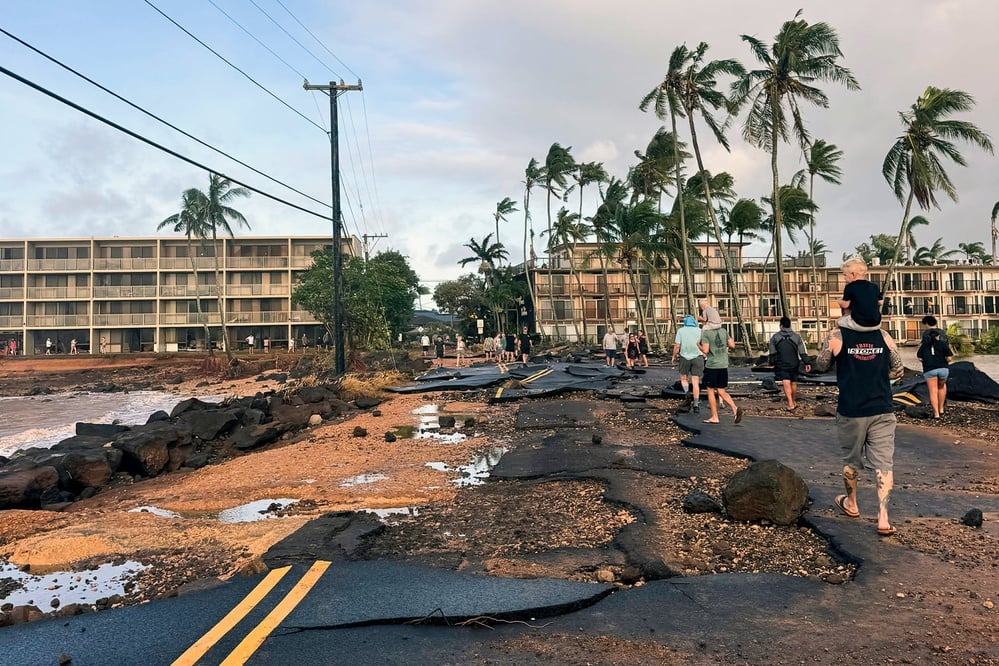


2026 © Helium Trades
Privacy Policy & Disclosure
* Disclaimer: Nothing on this website constitutes investment advice, performance data or any recommendation that any particular security, portfolio of securities, transaction or investment strategy is suitable for any specific person. Helium Trades is not responsible in any way for the accuracy
of any model predictions or price data. Any mention of a particular security and related prediction data is not a recommendation to buy or sell that security. Investments in securities involve the risk of loss. Past performance is no guarantee of future results. Helium Trades is not responsible for any of your investment decisions,
you should consult a financial expert before engaging in any transaction.
Helium Research Assistant

How can I help you today?
Ask any question about this page.


