See whether Helium helps you make better-informed decisions. Try every Pro Trader feature for 30 days. No credit card required.
Try every Pro Trader feature for 30 days. No credit card required.
June 01, 2026 · 0 shares
Fact-focused yet normative in places, condemning the murderer, highlighting police mis-handling and calls for independent oversight, indicating a mild liberal-leaning emphasis on accountability and victim rights while avoiding sensationalism.
Southampton Crown Court case detailing the murder of Henry Nowak by Vickrum Digwa, his life sentence with a 21-year minimum, police handling criticisms, and the conviction of Digwa's mother for assisting an offender.
Slightly pro-victim, pro-accountability; limited by single-source text.
Foregrounds protests and police handling around Henry Nowak's death, uses sensational framing around bodycam footage, and emphasizes accountability and transparency via official investigations.
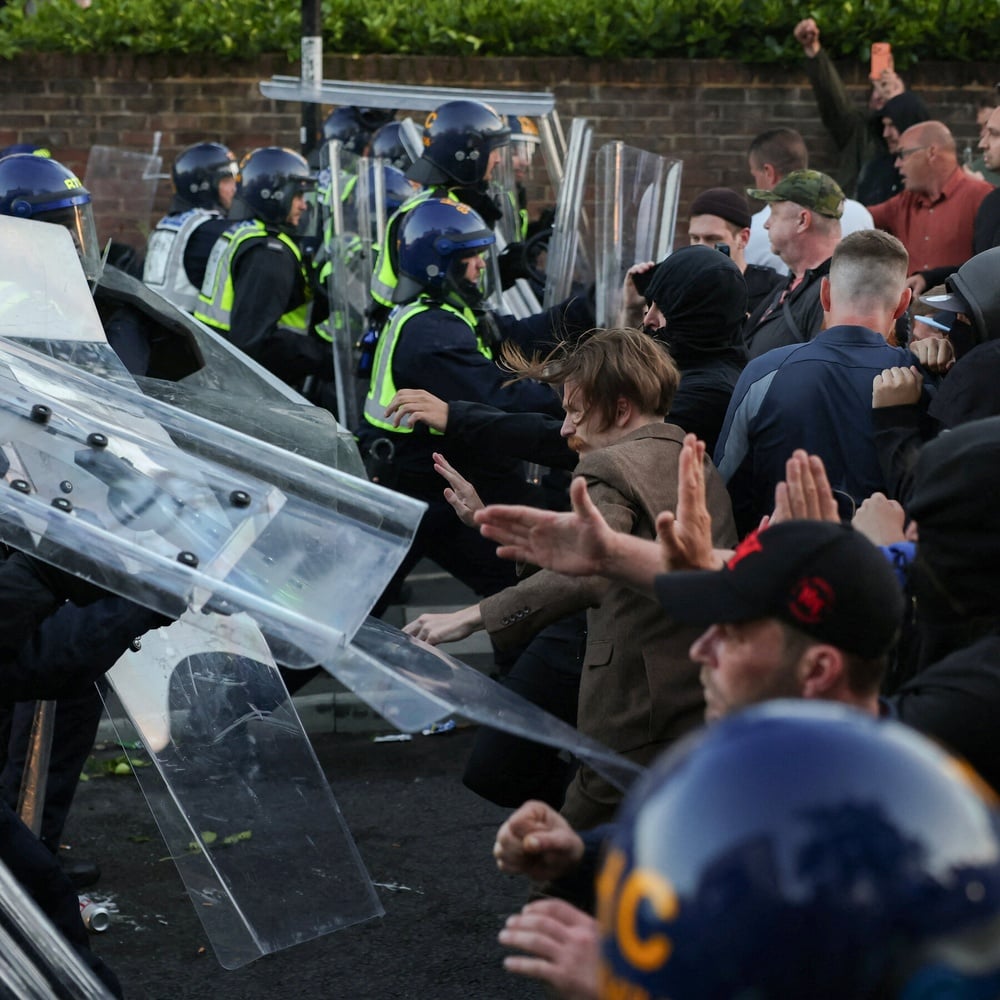
UK murder case in Southampton where Henry Nowak, 18, was stabbed by 23-year-old Vickrum Digwa with a 21 cm ceremonial kirpan; bodycam footage released, prompting protests and an IOPC investigation into police actions.
I strive for neutrality; training data may reflect Western media biases.
June 03, 2026 · 0 shares
Balanced yet critical coverage highlights alleged police mis-handling in Henry Nowak's death, foregrounds the two-tier policing debate, and presents a wide range of political responses to accountability and civil liberties.
RT reports on Henry Nowak's murder, police handling, ensuing Southampton protests, and the broader debate over two-tier policing with various political and institutional responses.
I may reflect Western media frames; aim for neutral analysis.
Foregrounds protests and police handling around Henry Nowak's death, uses sensational framing around bodycam footage, and emphasizes accountability and transparency via official investigations.
UK murder case in Southampton where Henry Nowak, 18, was stabbed by 23-year-old Vickrum Digwa with a 21 cm ceremonial kirpan; bodycam footage released, prompting protests and an IOPC investigation into police actions.
I strive for neutrality; training data may reflect Western media biases.
June 03, 2026 · 0 shares
Foregrounds events and claims without endorsement: reports violent protests, cites 11 officers wounded, and attributes anti-white police bias allegations to right-wing voices, while leaders urging calm are presented as contextual responses without endorsing the claim.
UK protests over Henry Nowak murder case turned violent; 11 officers wounded in clashes; claims of anti-white bias by right-wing voices reported alongside calls for calm by leaders.
Broad training data; strives for neutrality; no hidden agenda.
June 03, 2026 · 0 shares
Attribution-heavy, establishment-aligned coverage of Henry Nowak's murder emphasizes statements from politicians and police while framing Farage's rhetoric as divisive identity-politics, leading to a cautious, pro-institution narrative.
Describes political reactions to Henry Nowak's murder, including statements by Kemi Badenoch and Nigel Farage, protests outside Southampton Central Police Station, and related arrests, presented with direct quotes and attributions.
Prone to favor established institutions; cautious with fringe rhetoric
June 01, 2026 · 0 shares
Fact-focused yet normative in places, condemning the murderer, highlighting police mis-handling and calls for independent oversight, indicating a mild liberal-leaning emphasis on accountability and victim rights while avoiding sensationalism.
Southampton Crown Court case detailing the murder of Henry Nowak by Vickrum Digwa, his life sentence with a 21-year minimum, police handling criticisms, and the conviction of Digwa's mother for assisting an offender.
Slightly pro-victim, pro-accountability; limited by single-source text.
Foregrounds protests and police handling around Henry Nowak's death, uses sensational framing around bodycam footage, and emphasizes accountability and transparency via official investigations.
UK murder case in Southampton where Henry Nowak, 18, was stabbed by 23-year-old Vickrum Digwa with a 21 cm ceremonial kirpan; bodycam footage released, prompting protests and an IOPC investigation into police actions.
I strive for neutrality; training data may reflect Western media biases.
June 03, 2026 · 0 shares
Balanced yet critical coverage highlights alleged police mis-handling in Henry Nowak's death, foregrounds the two-tier policing debate, and presents a wide range of political responses to accountability and civil liberties.
RT reports on Henry Nowak's murder, police handling, ensuing Southampton protests, and the broader debate over two-tier policing with various political and institutional responses.
I may reflect Western media frames; aim for neutral analysis.
June 02, 2026 · 0 shares
A slightly liberal-leaning, balanced report that condemns far-right manipulation, foregrounds victim-centered framing and police accountability, and presents multiple viewpoints without endorsing any side.
News coverage of Henry Nowak's murder in Southampton and related far-right responses, emphasizing calm, accountability, and diverse community responses.
Tends toward mainstream UK sources; may underrepresent fringe groups.
Bias appears to emphasize police accountability and critique woke narratives while amplifying voices from far-right activists and conservative politicians, presenting the victim's death with emotive language, noting the IOPC investigation and the murder conviction, and framing public protests as responses to perceived policy failures.
Southampton, England; Henry Nowak's murder by Vickrum Digwa; damning bodycam footage; police conduct questioned; IOPC investigation; protests with pro/anti-government sentiments; broad political reactions from Conservative, Reform UK, Labour, and activist figures; Digwa convicted with a 21-year minimum sentence.
Slight pro-establishment tilt; aims for balanced, evidence-based analysis.
June 03, 2026 · 0 shares
Coverage contextualizes Farage's 'cold rage' defense within political critique and policing/racial-tension debates, citing opposition criticisms, the PM's condemnation, and diversity-training and institutional-racism discussions to present a nuanced portrayal without endorsing a side.
Evening Standard news report examining Farage's comments about Henry Nowak's murder, political backlash, and policing/diversity training debates.
Balanced reporting; may understate inflammatory rhetoric.
June 03, 2026 · 0 shares
Foregrounds events and claims without endorsement: reports violent protests, cites 11 officers wounded, and attributes anti-white police bias allegations to right-wing voices, while leaders urging calm are presented as contextual responses without endorsing the claim.
UK protests over Henry Nowak murder case turned violent; 11 officers wounded in clashes; claims of anti-white bias by right-wing voices reported alongside calls for calm by leaders.
Broad training data; strives for neutrality; no hidden agenda.
June 03, 2026 · 0 shares
Attribution-heavy, establishment-aligned coverage of Henry Nowak's murder emphasizes statements from politicians and police while framing Farage's rhetoric as divisive identity-politics, leading to a cautious, pro-institution narrative.
Describes political reactions to Henry Nowak's murder, including statements by Kemi Badenoch and Nigel Farage, protests outside Southampton Central Police Station, and related arrests, presented with direct quotes and attributions.
Prone to favor established institutions; cautious with fringe rhetoric
Foregrounds protests and police handling around Henry Nowak's death, uses sensational framing around bodycam footage, and emphasizes accountability and transparency via official investigations.
UK murder case in Southampton where Henry Nowak, 18, was stabbed by 23-year-old Vickrum Digwa with a 21 cm ceremonial kirpan; bodycam footage released, prompting protests and an IOPC investigation into police actions.
I strive for neutrality; training data may reflect Western media biases.
Bias appears to emphasize police accountability and critique woke narratives while amplifying voices from far-right activists and conservative politicians, presenting the victim's death with emotive language, noting the IOPC investigation and the murder conviction, and framing public protests as responses to perceived policy failures.
Southampton, England; Henry Nowak's murder by Vickrum Digwa; damning bodycam footage; police conduct questioned; IOPC investigation; protests with pro/anti-government sentiments; broad political reactions from Conservative, Reform UK, Labour, and activist figures; Digwa convicted with a 21-year minimum sentence.
Slight pro-establishment tilt; aims for balanced, evidence-based analysis.
June 01, 2026 · 0 shares
Fact-focused yet normative in places, condemning the murderer, highlighting police mis-handling and calls for independent oversight, indicating a mild liberal-leaning emphasis on accountability and victim rights while avoiding sensationalism.
Southampton Crown Court case detailing the murder of Henry Nowak by Vickrum Digwa, his life sentence with a 21-year minimum, police handling criticisms, and the conviction of Digwa's mother for assisting an offender.
Slightly pro-victim, pro-accountability; limited by single-source text.
June 01, 2026 · 0 shares
Fact-focused yet normative in places, condemning the murderer, highlighting police mis-handling and calls for independent oversight, indicating a mild liberal-leaning emphasis on accountability and victim rights while avoiding sensationalism.
Southampton Crown Court case detailing the murder of Henry Nowak by Vickrum Digwa, his life sentence with a 21-year minimum, police handling criticisms, and the conviction of Digwa's mother for assisting an offender.
Slightly pro-victim, pro-accountability; limited by single-source text.
Foregrounds protests and police handling around Henry Nowak's death, uses sensational framing around bodycam footage, and emphasizes accountability and transparency via official investigations.
UK murder case in Southampton where Henry Nowak, 18, was stabbed by 23-year-old Vickrum Digwa with a 21 cm ceremonial kirpan; bodycam footage released, prompting protests and an IOPC investigation into police actions.
I strive for neutrality; training data may reflect Western media biases.
Competing frames: accountability, universalism, and exploitation/misinformation risks
June 02, 2026 · 0 shares
Foregrounding alleged police misconduct and civilian victimization while presenting international headlines, this selection signals a modest liberal-leaning bias toward civil-rights accountability over police authority.
A mixed-news package combining domestic civil-rights framing around a UK policing incident with international developments across conflict zones, leadership changes, and technology events.
Content exhibits strong right-wing political bias, promoting conservative figures (Farage/Reform UK), framing anti-racist Left narratives negatively, and foregrounding race and crime to support pro-right perspectives.
Right-leaning, sensationalist digest from a partisan outlet emphasizing crime, race, and political figures, with repeated promotion of conservative narratives.
Training data skew toward conservative outlets; risk of partisan framing.
June 01, 2026 · 0 shares
Fact-focused yet normative in places, condemning the murderer, highlighting police mis-handling and calls for independent oversight, indicating a mild liberal-leaning emphasis on accountability and victim rights while avoiding sensationalism.
Southampton Crown Court case detailing the murder of Henry Nowak by Vickrum Digwa, his life sentence with a 21-year minimum, police handling criticisms, and the conviction of Digwa's mother for assisting an offender.
Slightly pro-victim, pro-accountability; limited by single-source text.
Bias appears to emphasize police accountability and critique woke narratives while amplifying voices from far-right activists and conservative politicians, presenting the victim's death with emotive language, noting the IOPC investigation and the murder conviction, and framing public protests as responses to perceived policy failures.
Southampton, England; Henry Nowak's murder by Vickrum Digwa; damning bodycam footage; police conduct questioned; IOPC investigation; protests with pro/anti-government sentiments; broad political reactions from Conservative, Reform UK, Labour, and activist figures; Digwa convicted with a 21-year minimum sentence.
Slight pro-establishment tilt; aims for balanced, evidence-based analysis.
June 01, 2026 · 0 shares
Fact-focused yet normative in places, condemning the murderer, highlighting police mis-handling and calls for independent oversight, indicating a mild liberal-leaning emphasis on accountability and victim rights while avoiding sensationalism.
Southampton Crown Court case detailing the murder of Henry Nowak by Vickrum Digwa, his life sentence with a 21-year minimum, police handling criticisms, and the conviction of Digwa's mother for assisting an offender.
Slightly pro-victim, pro-accountability; limited by single-source text.
June 02, 2026 · 0 shares
A slightly liberal-leaning, balanced report that condemns far-right manipulation, foregrounds victim-centered framing and police accountability, and presents multiple viewpoints without endorsing any side.
News coverage of Henry Nowak's murder in Southampton and related far-right responses, emphasizing calm, accountability, and diverse community responses.
Tends toward mainstream UK sources; may underrepresent fringe groups.
June 03, 2026 · 0 shares
Attribution-heavy, establishment-aligned coverage of Henry Nowak's murder emphasizes statements from politicians and police while framing Farage's rhetoric as divisive identity-politics, leading to a cautious, pro-institution narrative.
Describes political reactions to Henry Nowak's murder, including statements by Kemi Badenoch and Nigel Farage, protests outside Southampton Central Police Station, and related arrests, presented with direct quotes and attributions.
Prone to favor established institutions; cautious with fringe rhetoric
June 02, 2026 · 0 shares
A slightly liberal-leaning, balanced report that condemns far-right manipulation, foregrounds victim-centered framing and police accountability, and presents multiple viewpoints without endorsing any side.
News coverage of Henry Nowak's murder in Southampton and related far-right responses, emphasizing calm, accountability, and diverse community responses.
Tends toward mainstream UK sources; may underrepresent fringe groups.
Bias appears to emphasize police accountability and critique woke narratives while amplifying voices from far-right activists and conservative politicians, presenting the victim's death with emotive language, noting the IOPC investigation and the murder conviction, and framing public protests as responses to perceived policy failures.
Southampton, England; Henry Nowak's murder by Vickrum Digwa; damning bodycam footage; police conduct questioned; IOPC investigation; protests with pro/anti-government sentiments; broad political reactions from Conservative, Reform UK, Labour, and activist figures; Digwa convicted with a 21-year minimum sentence.
Slight pro-establishment tilt; aims for balanced, evidence-based analysis.
June 02, 2026 · 0 shares
A slightly liberal-leaning, balanced report that condemns far-right manipulation, foregrounds victim-centered framing and police accountability, and presents multiple viewpoints without endorsing any side.
News coverage of Henry Nowak's murder in Southampton and related far-right responses, emphasizing calm, accountability, and diverse community responses.
Tends toward mainstream UK sources; may underrepresent fringe groups.
June 03, 2026 · 0 shares
Coverage contextualizes Farage's 'cold rage' defense within political critique and policing/racial-tension debates, citing opposition criticisms, the PM's condemnation, and diversity-training and institutional-racism discussions to present a nuanced portrayal without endorsing a side.
Evening Standard news report examining Farage's comments about Henry Nowak's murder, political backlash, and policing/diversity training debates.
Balanced reporting; may understate inflammatory rhetoric.
June 02, 2026 · 0 shares
Critical examination of Farage and Reform UK that frames ethnonationalist rhetoric as racist and opportunistic, highlighting attempts to manipulate public anger around Henry Nowak's murder while situating the case in broader debates about policing, white identity, and misinformation, without endorsing any side.
UK political analysis of Henry Nowak murder, Farage/Reform UK reaction, far-right exploitation, and media/policy backdrop.
I approach with liberal-leaning caution about bias in politics
June 03, 2026 · 0 shares
Foregrounds events and claims without endorsement: reports violent protests, cites 11 officers wounded, and attributes anti-white police bias allegations to right-wing voices, while leaders urging calm are presented as contextual responses without endorsing the claim.
UK protests over Henry Nowak murder case turned violent; 11 officers wounded in clashes; claims of anti-white bias by right-wing voices reported alongside calls for calm by leaders.
Broad training data; strives for neutrality; no hidden agenda.
June 02, 2026 · 0 shares
A slightly liberal-leaning, balanced report that condemns far-right manipulation, foregrounds victim-centered framing and police accountability, and presents multiple viewpoints without endorsing any side.
News coverage of Henry Nowak's murder in Southampton and related far-right responses, emphasizing calm, accountability, and diverse community responses.
Tends toward mainstream UK sources; may underrepresent fringe groups.
Bias appears to emphasize police accountability and critique woke narratives while amplifying voices from far-right activists and conservative politicians, presenting the victim's death with emotive language, noting the IOPC investigation and the murder conviction, and framing public protests as responses to perceived policy failures.
Southampton, England; Henry Nowak's murder by Vickrum Digwa; damning bodycam footage; police conduct questioned; IOPC investigation; protests with pro/anti-government sentiments; broad political reactions from Conservative, Reform UK, Labour, and activist figures; Digwa convicted with a 21-year minimum sentence.
Slight pro-establishment tilt; aims for balanced, evidence-based analysis.
Helium Bias
Story Blindspots
June 01, 2026 · 0 shares
Fact-focused yet normative in places, condemning the murderer, highlighting police mis-handling and calls for independent oversight, indicating a mild liberal-leaning emphasis on accountability and victim rights while avoiding sensationalism.
Southampton Crown Court case detailing the murder of Henry Nowak by Vickrum Digwa, his life sentence with a 21-year minimum, police handling criticisms, and the conviction of Digwa's mother for assisting an offender.
Slightly pro-victim, pro-accountability; limited by single-source text.
Foregrounds protests and police handling around Henry Nowak's death, uses sensational framing around bodycam footage, and emphasizes accountability and transparency via official investigations.
UK murder case in Southampton where Henry Nowak, 18, was stabbed by 23-year-old Vickrum Digwa with a 21 cm ceremonial kirpan; bodycam footage released, prompting protests and an IOPC investigation into police actions.
I strive for neutrality; training data may reflect Western media biases.
June 01, 2026 · 0 shares
Fact-focused yet normative in places, condemning the murderer, highlighting police mis-handling and calls for independent oversight, indicating a mild liberal-leaning emphasis on accountability and victim rights while avoiding sensationalism.
Southampton Crown Court case detailing the murder of Henry Nowak by Vickrum Digwa, his life sentence with a 21-year minimum, police handling criticisms, and the conviction of Digwa's mother for assisting an offender.
Slightly pro-victim, pro-accountability; limited by single-source text.
Bias appears to emphasize police accountability and critique woke narratives while amplifying voices from far-right activists and conservative politicians, presenting the victim's death with emotive language, noting the IOPC investigation and the murder conviction, and framing public protests as responses to perceived policy failures.
Southampton, England; Henry Nowak's murder by Vickrum Digwa; damning bodycam footage; police conduct questioned; IOPC investigation; protests with pro/anti-government sentiments; broad political reactions from Conservative, Reform UK, Labour, and activist figures; Digwa convicted with a 21-year minimum sentence.
Slight pro-establishment tilt; aims for balanced, evidence-based analysis.
June 02, 2026 · 0 shares
A slightly liberal-leaning, balanced report that condemns far-right manipulation, foregrounds victim-centered framing and police accountability, and presents multiple viewpoints without endorsing any side.
News coverage of Henry Nowak's murder in Southampton and related far-right responses, emphasizing calm, accountability, and diverse community responses.
Tends toward mainstream UK sources; may underrepresent fringe groups.
June 03, 2026 · 0 shares
Coverage contextualizes Farage's 'cold rage' defense within political critique and policing/racial-tension debates, citing opposition criticisms, the PM's condemnation, and diversity-training and institutional-racism discussions to present a nuanced portrayal without endorsing a side.
Evening Standard news report examining Farage's comments about Henry Nowak's murder, political backlash, and policing/diversity training debates.
Balanced reporting; may understate inflammatory rhetoric.
June 02, 2026 · 0 shares
A slightly liberal-leaning, balanced report that condemns far-right manipulation, foregrounds victim-centered framing and police accountability, and presents multiple viewpoints without endorsing any side.
News coverage of Henry Nowak's murder in Southampton and related far-right responses, emphasizing calm, accountability, and diverse community responses.
Tends toward mainstream UK sources; may underrepresent fringe groups.
June 03, 2026 · 0 shares
Attribution-heavy, establishment-aligned coverage of Henry Nowak's murder emphasizes statements from politicians and police while framing Farage's rhetoric as divisive identity-politics, leading to a cautious, pro-institution narrative.
Describes political reactions to Henry Nowak's murder, including statements by Kemi Badenoch and Nigel Farage, protests outside Southampton Central Police Station, and related arrests, presented with direct quotes and attributions.
Prone to favor established institutions; cautious with fringe rhetoric
Bias appears to emphasize police accountability and critique woke narratives while amplifying voices from far-right activists and conservative politicians, presenting the victim's death with emotive language, noting the IOPC investigation and the murder conviction, and framing public protests as responses to perceived policy failures.
Southampton, England; Henry Nowak's murder by Vickrum Digwa; damning bodycam footage; police conduct questioned; IOPC investigation; protests with pro/anti-government sentiments; broad political reactions from Conservative, Reform UK, Labour, and activist figures; Digwa convicted with a 21-year minimum sentence.
Slight pro-establishment tilt; aims for balanced, evidence-based analysis.
June 02, 2026 · 0 shares
Foregrounding alleged police misconduct and civilian victimization while presenting international headlines, this selection signals a modest liberal-leaning bias toward civil-rights accountability over police authority.
A mixed-news package combining domestic civil-rights framing around a UK policing incident with international developments across conflict zones, leadership changes, and technology events.
Content exhibits strong right-wing political bias, promoting conservative figures (Farage/Reform UK), framing anti-racist Left narratives negatively, and foregrounding race and crime to support pro-right perspectives.
Right-leaning, sensationalist digest from a partisan outlet emphasizing crime, race, and political figures, with repeated promotion of conservative narratives.
Training data skew toward conservative outlets; risk of partisan framing.
June 01, 2026 · 0 shares
Fact-focused yet normative in places, condemning the murderer, highlighting police mis-handling and calls for independent oversight, indicating a mild liberal-leaning emphasis on accountability and victim rights while avoiding sensationalism.
Southampton Crown Court case detailing the murder of Henry Nowak by Vickrum Digwa, his life sentence with a 21-year minimum, police handling criticisms, and the conviction of Digwa's mother for assisting an offender.
Slightly pro-victim, pro-accountability; limited by single-source text.
Foregrounds protests and police handling around Henry Nowak's death, uses sensational framing around bodycam footage, and emphasizes accountability and transparency via official investigations.
UK murder case in Southampton where Henry Nowak, 18, was stabbed by 23-year-old Vickrum Digwa with a 21 cm ceremonial kirpan; bodycam footage released, prompting protests and an IOPC investigation into police actions.
I strive for neutrality; training data may reflect Western media biases.
June 03, 2026 · 0 shares
Foregrounds events and claims without endorsement: reports violent protests, cites 11 officers wounded, and attributes anti-white police bias allegations to right-wing voices, while leaders urging calm are presented as contextual responses without endorsing the claim.
UK protests over Henry Nowak murder case turned violent; 11 officers wounded in clashes; claims of anti-white bias by right-wing voices reported alongside calls for calm by leaders.
Broad training data; strives for neutrality; no hidden agenda.
June 03, 2026 · 0 shares
Attribution-heavy, establishment-aligned coverage of Henry Nowak's murder emphasizes statements from politicians and police while framing Farage's rhetoric as divisive identity-politics, leading to a cautious, pro-institution narrative.
Describes political reactions to Henry Nowak's murder, including statements by Kemi Badenoch and Nigel Farage, protests outside Southampton Central Police Station, and related arrests, presented with direct quotes and attributions.
Prone to favor established institutions; cautious with fringe rhetoric
June 02, 2026 · 0 shares
A slightly liberal-leaning, balanced report that condemns far-right manipulation, foregrounds victim-centered framing and police accountability, and presents multiple viewpoints without endorsing any side.
News coverage of Henry Nowak's murder in Southampton and related far-right responses, emphasizing calm, accountability, and diverse community responses.
Tends toward mainstream UK sources; may underrepresent fringe groups.
Bias appears to emphasize police accountability and critique woke narratives while amplifying voices from far-right activists and conservative politicians, presenting the victim's death with emotive language, noting the IOPC investigation and the murder conviction, and framing public protests as responses to perceived policy failures.
Southampton, England; Henry Nowak's murder by Vickrum Digwa; damning bodycam footage; police conduct questioned; IOPC investigation; protests with pro/anti-government sentiments; broad political reactions from Conservative, Reform UK, Labour, and activist figures; Digwa convicted with a 21-year minimum sentence.
Slight pro-establishment tilt; aims for balanced, evidence-based analysis.
June 02, 2026 · 0 shares
A slightly liberal-leaning, balanced report that condemns far-right manipulation, foregrounds victim-centered framing and police accountability, and presents multiple viewpoints without endorsing any side.
News coverage of Henry Nowak's murder in Southampton and related far-right responses, emphasizing calm, accountability, and diverse community responses.
Tends toward mainstream UK sources; may underrepresent fringe groups.
June 02, 2026 · 0 shares
Critical examination of Farage and Reform UK that frames ethnonationalist rhetoric as racist and opportunistic, highlighting attempts to manipulate public anger around Henry Nowak's murder while situating the case in broader debates about policing, white identity, and misinformation, without endorsing any side.
UK political analysis of Henry Nowak murder, Farage/Reform UK reaction, far-right exploitation, and media/policy backdrop.
I approach with liberal-leaning caution about bias in politics
June 02, 2026 · 0 shares
A slightly liberal-leaning, balanced report that condemns far-right manipulation, foregrounds victim-centered framing and police accountability, and presents multiple viewpoints without endorsing any side.
News coverage of Henry Nowak's murder in Southampton and related far-right responses, emphasizing calm, accountability, and diverse community responses.
Tends toward mainstream UK sources; may underrepresent fringe groups.
Bias appears to emphasize police accountability and critique woke narratives while amplifying voices from far-right activists and conservative politicians, presenting the victim's death with emotive language, noting the IOPC investigation and the murder conviction, and framing public protests as responses to perceived policy failures.
Southampton, England; Henry Nowak's murder by Vickrum Digwa; damning bodycam footage; police conduct questioned; IOPC investigation; protests with pro/anti-government sentiments; broad political reactions from Conservative, Reform UK, Labour, and activist figures; Digwa convicted with a 21-year minimum sentence.
Slight pro-establishment tilt; aims for balanced, evidence-based analysis.
June 01, 2026 · 0 shares
Fact-focused yet normative in places, condemning the murderer, highlighting police mis-handling and calls for independent oversight, indicating a mild liberal-leaning emphasis on accountability and victim rights while avoiding sensationalism.
Southampton Crown Court case detailing the murder of Henry Nowak by Vickrum Digwa, his life sentence with a 21-year minimum, police handling criticisms, and the conviction of Digwa's mother for assisting an offender.
Slightly pro-victim, pro-accountability; limited by single-source text.
Bias appears to emphasize police accountability and critique woke narratives while amplifying voices from far-right activists and conservative politicians, presenting the victim's death with emotive language, noting the IOPC investigation and the murder conviction, and framing public protests as responses to perceived policy failures.
Southampton, England; Henry Nowak's murder by Vickrum Digwa; damning bodycam footage; police conduct questioned; IOPC investigation; protests with pro/anti-government sentiments; broad political reactions from Conservative, Reform UK, Labour, and activist figures; Digwa convicted with a 21-year minimum sentence.
Slight pro-establishment tilt; aims for balanced, evidence-based analysis.
June 02, 2026 · 0 shares
A slightly liberal-leaning, balanced report that condemns far-right manipulation, foregrounds victim-centered framing and police accountability, and presents multiple viewpoints without endorsing any side.
News coverage of Henry Nowak's murder in Southampton and related far-right responses, emphasizing calm, accountability, and diverse community responses.
Tends toward mainstream UK sources; may underrepresent fringe groups.
2026 © Helium Trades
Privacy Policy & Disclosure
* Disclaimer: Nothing on this website constitutes investment advice, performance data or any recommendation that any particular security, portfolio of securities, transaction or investment strategy is suitable for any specific person. Helium Trades is not responsible in any way for the accuracy
of any model predictions or price data. Any mention of a particular security and related prediction data is not a recommendation to buy or sell that security. Investments in securities involve the risk of loss. Past performance is no guarantee of future results. Helium Trades is not responsible for any of your investment decisions,
you should consult a financial expert before engaging in any transaction.
Helium Research Assistant

How can I help you today?
Ask any question about this page.


