See whether Helium helps you make better-informed decisions. Try every Pro Trader feature for 30 days. No credit card required.
Try every Pro Trader feature for 30 days. No credit card required.
November 20, 2026 · 0 shares
Framing treats the ICJ genocide finding as a landmark determination while giving substantial space to Myanmar and Chinese objections and the divided vote.
Helium Analysis
Limitations: The supplied text contains duplicated paragraphs and related-link/navigation material; only the substantive article body was analyzed.
·
8 of 56 available dimensions scored; omitted dimensions are not treated as neutral.
·
Verified supporting quotes for 8 of 8 scored dimensions.
Claim: The report is predominantly objective and attributed, though it uses evaluative language such as “brutal.”
“The ICJ found that Myanmar’s military carried out mass executions of men and boys” · exact text match
Counterevidence:
“The brutal crackdown launched by Myanmar security forces nine years ago forced about 700,000 Rohingya to seek refuge in neighbouring Bangladesh.” · exact text match
Why: The core finding is explicitly attributed to the court, supporting an objective classification.
Claim: The text is primarily descriptive reporting of a court ruling and official reactions rather than advocating a policy.
“The ICJ found that Myanmar’s military carried out mass executions of men and boys” · exact text match
Why: The content reports findings and statements without prescriptive calls to action.
Claim: The report is largely factual but uses evaluative terms such as “landmark” and “brutal.”
“landmark ICJ ruling on Rohingya genocide” · exact text match
“The brutal crackdown launched by Myanmar security forces nine years ago” · exact text match
Why: Evaluative adjectives indicate slight opinion framing, but most content remains attributed reporting.
Claim: The report is explicitly political, concerning state genocide, an international court, and government objections.
“Myanmar’s government has rejected a ruling by the International Court of Justice (ICJ) that its security forces conducted state-sponsored genocide against the country’s Rohingya minority” · exact text match
Why: The core subject is state conduct and an international legal-political dispute.
Claim: Credibility is supported by named officials, court vote details, and explicit attribution.
“Myanmar’s government spokesperson Khaing Khaing Soe told a news conference on Friday that the military government was a victim of injustice.” · exact text match
“Of the court’s 15 judges, nine ruled in favour of declaring genocide and six ruled against.” · exact text match
Why: Named sources and precise tallies provide verifiable attribution.
Claim: The report presents the dispute through attributed legal findings, a judge tally, and official statements rather than emotive assertion.
“Of the court’s 15 judges, nine ruled in favour of declaring genocide and six ruled against.” · exact text match
Why: The explicit vote breakdown and attribution show evidence-based, reasoned presentation.
Claim: The report fairly includes the ruling, the divided vote, and objections from Myanmar and China.
“Myanmar’s government has rejected a ruling by the International Court of Justice (ICJ) that its security forces conducted state-sponsored genocide against the country’s Rohingya minority” · exact text match
“China also criticised the verdict” · exact text match
Why: Including critical responses and the non-unanimous vote signals observable fairness.
Claim: The report supplies legal, numerical, and contextual detail that raises its informational sophistication.
“It was the first time in the ICJ’s 80-year history that its judges had determined that a state committed genocide.” · exact text match
“One of the court’s judges is Chinese and voted in Myanmar’s favour on all but one count.” · exact text match
Why: Specific historical and institutional details indicate above-average article intelligence.
The supplied text contains duplicated paragraphs and related-link/navigation material; only the substantive article body was analyzed.
Coverage is restrained and official-source-centered, presenting the ICJ genocide finding and Singapore's response with direct attribution and minimal evaluative language.
Helium Analysis
Limitations: Supplied text includes duplicated passages, related-link headlines, and a photo-caption year (2026) that may not match the main body, creating ambiguity about dates and which reactions are part of the article.
·
13 of 56 available dimensions scored; omitted dimensions are not treated as neutral.
·
Verified supporting quotes for 10 of 13 scored dimensions.
Claim: The report presents a legal and governmental response without recognizable left-right ideological framing.
“SINGAPORE: Singapore respects the judgment of the International Court of Justice (ICJ) that Myanmar committed genocide against the Rohingya.” · exact text match
Why: The content is legal and diplomatic rather than partisan, supporting measured neutrality on the liberal-conservative dimension.
Claim: The report centers official state and international-court sources rather than populist or grassroots framing.
“In a statement on Tuesday (Nov 24), Singapore's Ministry of Foreign Affairs (MFA) said” · not found in supplied text
Why: The reliance on elite institutional statements supports a mildly elitist rather than populist orientation.
Claim: The report does not adopt a clear libertarian or authoritarian ideological stance; it focuses on legal accountability and humanitarian response.
“We reaffirm our commitment to the international rule of law and the peaceful settlement of disputes” · exact text match
Why: The rule-of-law framing is compatible with multiple positions and does not clearly support either pole.
Claim: The report attributes the genocide finding and Singapore's response to named institutional sources rather than presenting an unattributed opinion.
“In a statement on Tuesday (Nov 24), Singapore's Ministry of Foreign Affairs (MFA) said” · not found in supplied text
“The ICJ judges ruled by a nine-to-six majority that Myanmar had committed genocide against the mostly Muslim minority” · exact text match
Why: Direct attribution and procedural reporting support an objective rather than subjective classification.
Claim: A genocide ruling is reported in restrained, procedural terms with legal details rather than sensational language.
“The landmark judgment is the first time that the ICJ has found a state responsible for committing genocide” · exact text match
Why: The language is informative and measured, not sensational.
Claim: The report mainly describes the ICJ judgment and Singapore's official response rather than prescribing policy.
“MFA reiterated its longstanding call for conditions to be created for the safe, voluntary and dignified repatriation of refugees.” · exact text match
Why: The one prescriptive element is attributed to MFA, while the report itself remains descriptive.
Claim: The report centers on a government response to an international legal ruling, making it political and international-relations content.
“Singapore respects the judgment of the International Court of Justice (ICJ) that Myanmar committed genocide against the Rohingya.” · exact text match
Why: The subject is governmental and international legal policy, so political relevance is high but not partisan.
Claim: The report gives prominence to official Singapore and ICJ positions.
“Singapore respects the judgment of the International Court of Justice (ICJ) that Myanmar committed genocide against the Rohingya.” · exact text match
Why: Centering the MFA statement and ICJ ruling supports a mildly pro-establishment framing.
Claim: The report is largely restrained, with concern expressed mainly through attributed official language.
“We remain deeply concerned about the security and humanitarian situation in Myanmar, including the plight of the Rohingya, refugees and internally displaced persons.” · exact text match
Why: The negative emotional wording is quoted from MFA, while the publisher's framing remains restrained.
Claim: The report cites identifiable official statements and specific court details, supporting visible credibility.
“In a statement on Tuesday (Nov 24), Singapore's Ministry of Foreign Affairs (MFA) said” · not found in supplied text
“The ICJ judges ruled by a nine-to-six majority that Myanmar had committed genocide against the mostly Muslim minority” · exact text match
Why: Named institutions, direct quotation, and a specific vote count are observable credibility signals.
Claim: The account is organized around court findings, majority vote, reparations, and legal context.
“It also ordered Myanmar to provide reparations, including restitution and compensation, and to submit a report within two years on restitution measures taken and proposed compensation.” · exact text match
Why: Specific legal outcomes and context indicate rational, evidence-oriented reporting.
Claim: The report includes direct attribution and signals an opposing reaction, indicating fairness in presentation.
“Myanmar says international court's genocide ruling 'not fair'” · exact text match
Why: Inclusion of Myanmar's rejection, albeit briefly, qualifies a one-sided presentation.
Claim: The report provides concise legal context, including majority vote, reparations, and first-state genocide finding.
“The landmark judgment is the first time that the ICJ has found a state responsible for committing genocide” · exact text match
“The Genocide Convention, formally the Convention on the Prevention and Punishment of the Crime of Genocide, was adopted by the United Nations General Assembly in 1948.” · exact text match
Why: Contextual explanation and specific legal details indicate above-average article intelligence.
Supplied text includes duplicated passages, related-link headlines, and a photo-caption year (2026) that may not match the main body, creating ambiguity about dates and which reactions are part of the article.
November 23, 2026 · 0 shares
Coverage is measured and attribution-heavy, centering ICJ, UK, and other Western official responses and Rohingya victimization while offering little independent assessment of sanctions effectiveness.
Helium Analysis
Limitations: The supplied text includes unrelated BBC sidebar and promotional links after the main report; analysis is limited to the main sanctions/genocide article.
·
12 of 56 available dimensions scored; omitted dimensions are not treated as neutral.
·
Verified supporting quotes for 12 of 12 scored dimensions.
Claim: The report does not adopt a clear left-right ideological stance; it presents the ICJ finding and notes Myanmar's denial.
“Myanmar denied the claims against it.” · exact text match
“The verdict was reached by a majority of nine votes to six among a panel of judges from around the world.” · exact text match
Why: Includes the court's contested majority and the accused state's denial without partisan framing, supporting measured neutrality rather than a left/right slant.
Claim: The report frames the development primarily through actions and statements of UK ministers and international legal institutions.
“The UK has sanctioned five senior Myanmar military leaders after the International Court of Justice (ICJ) ruled that the country had carried out genocide against the Rohingya minority” · exact text match
“He told MPs on Monday the UK would raise the issue at the UN Security Council this week” · exact text match
Why: The focus on the ICJ, UK foreign secretary, MPs, and UN Security Council gives a slight elite/international-institution perspective, though the tone is descriptive.
Claim: The report is overwhelmingly objective, relying on attributed court findings and direct official statements.
“The UK has sanctioned five senior Myanmar military leaders after the International Court of Justice (ICJ) ruled that the country had carried out genocide against the Rohingya minority” · exact text match
“Foreign Secretary Ed Miliband said: "Our response to a crime as profoundly shocking as genocide must reflect our values and must be matched by clear action."” · exact text match
Why: Facts and quotes are attributed to named institutions and officials, with little subjective narration.
Claim: The report is objective rather than sensational; atrocity details are presented through court findings and attributed reports.
“In its ruling last week, the court determined that about 10,000 Rohingya were murdered during the clearance operation in the western Rakhine state” · exact text match
“Reports said that entire villages were burnt down, and that women and girls were raped.” · exact text match
Why: Graphic details are sourced to the court or reports rather than deployed with sensational prose.
Claim: The report is mostly descriptive; prescriptions appear as attributed quotes from the foreign secretary rather than the publisher's own advocacy.
“The court found on Thursday that "genocidal intent is the only reasonable inference that can be drawn from the evidence" it had seen.” · exact text match
“Miliband also called for an "immediate pause in hostilities to enable humanitarian aid to get through, a stop to air strikes on civilians, and the release of political prisoners, as well as dialogue towards an inclusive political settlement".” · exact text match
Why: The publisher reports court findings and attributes policy demands to Miliband, keeping its own voice descriptive.
Claim: The article is highly political, centered on UK sanctions, an ICJ genocide ruling, and UN Security Council action.
“The UK has sanctioned five senior Myanmar military leaders after the International Court of Justice (ICJ) ruled that the country had carried out genocide against the Rohingya minority” · exact text match
“He told MPs on Monday the UK would raise the issue at the UN Security Council this week” · exact text match
Why: The reported development is explicitly about state sanctions and international legal/diplomatic action.
Claim: The report foregrounds Rohingya victimization, including mass displacement, murder, and sexual violence.
“A military crackdown in 2017 killed thousands of Rohingya and forced more than 700,000 to flee Buddhist-majority Myanmar, formerly known as Burma.” · exact text match
“Miliband said more than 1.2 million refugees fled and were being supported by Bangladesh.” · exact text match
Why: Repeated focus on the number of people killed, raped, and displaced gives victimization a central framing role.
Claim: The report carries a strongly negative emotional valence because it recounts genocide, killings, displacement, and sexual violence.
“A military crackdown in 2017 killed thousands of Rohingya and forced more than 700,000 to flee Buddhist-majority Myanmar, formerly known as Burma.” · exact text match
“Reports said that entire villages were burnt down, and that women and girls were raped.” · exact text match
Why: The language and facts are overwhelmingly negative, though the tone remains measured and attributed.
Claim: The report is highly credible, with named court findings, vote counts, direct official quotes, and inclusion of Myanmar's denial.
“The court found on Thursday that "genocidal intent is the only reasonable inference that can be drawn from the evidence" it had seen.” · exact text match
“Myanmar denied the claims against it.” · exact text match
Why: Visible sourcing, attribution, uncertainty about the split vote, and the accused state's denial support high credibility.
Claim: The report is highly rational: it attributes the genocide finding to the court, notes the majority vote, and includes Myanmar's denial.
“The court found on Thursday that "genocidal intent is the only reasonable inference that can be drawn from the evidence" it had seen.” · exact text match
“The verdict was reached by a majority of nine votes to six among a panel of judges from around the world.” · exact text match
Why: Provides legal attribution, vote count, and a denial, indicating evidence-based rather than irrational framing.
Claim: The report shows high integrity by including the court's split vote and Myanmar's denial alongside the genocide finding.
“The verdict was reached by a majority of nine votes to six among a panel of judges from around the world.” · exact text match
“Myanmar denied the claims against it.” · exact text match
Why: Including the divided vote and the accused state's denial are visible fairness and honesty signals.
Claim: The report is intelligent and context-rich, distinguishing the court's finding, vote, death toll, displacement figures, and UK policy responses.
“In its ruling last week, the court determined that about 10,000 Rohingya were murdered during the clearance operation in the western Rakhine state that borders Bangladesh and the Bay of Bengal.” · exact text match
“The verdict was reached by a majority of nine votes to six among a panel of judges from around the world.” · exact text match
Why: It includes legal specifics, quantitative findings, and a vote count rather than presenting a simplified assertion.
The supplied text includes unrelated BBC sidebar and promotional links after the main report; analysis is limited to the main sanctions/genocide article.
The framing is sympathetic human-rights advocacy that treats the ICJ genocide finding as legitimate and urgent while emphasizing enforcement gaps, with evaluative language tempered by explicit legal caveats.
Helium Analysis
Limitations: The text contains a future-dated reference to Malaysia deporting refugees in September 2026, creating temporal ambiguity.
·
16 of 56 available dimensions scored; omitted dimensions are not treated as neutral.
·
Verified supporting quotes for 15 of 16 scored dimensions.
Claim: The report frames legal developments through evaluative judgments about justice and feasibility.
“Justice is elusive for the Rohingya even after the ICJ's landmark genocide ruling against Myanmar.” · exact text match
“This makes the prospect of a safe and dignified repatriation of the Rohingya to Myanmar a near impossibility.” · exact text match
Why: Evaluative language about elusive justice and near impossibility supports a subjective framing.
Claim: The article uses some vivid, morally charged descriptors but generally avoids tabloid-style sensationalism.
“they have been living under apartheid-like conditions” · exact text match
“The Arakan army is openly hostile to the Rohingya” · exact text match
Why: The phrase 'apartheid-like' and 'openly hostile' are vivid and charged, supporting mild sensational framing.
Claim: The overall outlook on accountability and repatriation is pessimistic.
“It’s unlikely, however, that Myanmar will agree to grant citizenship to the Rohingya.” · exact text match
“This makes the prospect of a safe and dignified repatriation of the Rohingya to Myanmar a near impossibility.” · exact text match
Why: Explicit predictions of unlikelihood and near impossibility support a pessimistic score.
Claim: The article combines description with recommendations for international pressure and humanitarian support.
“International pressure could force Malaysia to stop the deportations and avoid causing further harm to its already vulnerable Rohingya refugee community.” · exact text match
“Renewed interest in the Rohingya crisis is expected to draw donations that could help alleviate some of the more pressing needs.” · exact text match
Why: Calls for pressure and donations support a prescriptive framing.
Claim: The article presents evaluative judgments about the ruling's benefits and the pursuit of justice.
“The most immediate benefit of the ruling is that, for the first time, there is a formal recognition of the Rohingya as a distinct people.” · not found in supplied text
“Justice is elusive for the Rohingya even after the ICJ's landmark genocide ruling against Myanmar.” · exact text match
Why: Normative and evaluative assessments of justice and benefits support a high opinion-bias score.
Claim: The report is centrally focused on international law, state power, military rule, and geopolitical vetoes.
“By nine votes to six, the International Court of Justice (ICJ) has ruled that Myanmar committed genocide against the Rohingya people in connection with its 2017 “clearance operations” in Rakhine State.” · exact text match
“Only the United Nations Security Council could decide to take coercive action against Myanmar, but China and Russia, which both hold veto power, are likely to oppose it.” · exact text match
Why: The content is explicitly about political-legal authority and international power, supporting a high political-bias score.
Claim: The article repeatedly anchors its claims in legal and scholarly authority.
“The ICJ ruling clearly affirms that the atrocities the Rohingya have suffered are indeed genocide” · exact text match
“San Beauchemin is a member of the International Association of Genocide Scholars.” · exact text match
Why: ICJ and genocide-scholar authority are used to support the central claims, supporting an appeal-to-authority classification.
Claim: The framing foregrounds the Rohingya as a vulnerable victim population in need of protection.
“The ICJ ruling has brought much-needed attention to the plight of the Rohingya.” · exact text match
“already vulnerable Rohingya refugee community” · exact text match
Why: Repeated emphasis on plight and vulnerability supports a victimization-focused framing.
Claim: The article is shaped by a human-rights and restorative-justice framework.
“The most crucial condition is the guarantee of citizenship rights.” · exact text match
“opens the path to restorative justice.” · exact text match
Why: The normative emphasis on citizenship rights and restorative justice supports a moderate ideological framing.
Claim: The article treats international legal and security institutions as central legitimate avenues for remedy.
“Only the United Nations Security Council could decide to take coercive action against Myanmar” · exact text match
“The ICJ ruling clearly affirms that the atrocities the Rohingya have suffered are indeed genocide” · exact text match
Why: Reliance on ICJ and UN Security Council authority supports a pro-establishment institutional framing.
Claim: The article's tone is sympathetic and negative about the Rohingya's circumstances.
“The ICJ ruling has brought much-needed attention to the plight of the Rohingya.” · exact text match
“already vulnerable Rohingya refugee community” · exact text match
Why: Sympathetic descriptors and negative context support a negative emotional tone.
Claim: The article provides attribution, dates, votes, and caveats that support observable credibility.
“The ICJ established Myanmar’s responsibility for the genocide, and consequently ordered it to provide reparations and compensation, with details still to be decided.” · exact text match
“it could not be verified whether these returns were voluntary, as Malaysia claimed.” · exact text match
Why: Specific legal attribution and explicit uncertainty support high credibility.
Claim: The analysis is grounded in legal and institutional mechanisms rather than emotional assertion.
“The ICJ has no independent enforcement mechanism; it only relies on states’ willingness to obey international law.” · exact text match
Why: The article explains enforcement constraints in a logical, institutional framework, supporting a rational classification.
Claim: The article includes forecasts about citizenship, donations, and international pressure.
“It’s unlikely, however, that Myanmar will agree to grant citizenship to the Rohingya.” · exact text match
“Renewed interest in the Rohingya crisis is expected to draw donations that could help alleviate some of the more pressing needs.” · exact text match
Why: Explicit predictions and expectations support a speculative framing.
Claim: The article attributes legal findings and acknowledges unresolved or unverified details.
“The ICJ established Myanmar’s responsibility for the genocide, and consequently ordered it to provide reparations and compensation, with details still to be decided.” · exact text match
“it could not be verified whether these returns were voluntary, as Malaysia claimed.” · exact text match
Why: Clear attribution and caveats about unverified returns indicate high observable integrity.
Claim: The article integrates legal mechanisms, historical context, and multiple actors in a coherent analysis.
“The ICJ has no independent enforcement mechanism; it only relies on states’ willingness to obey international law.” · exact text match
“Since late 2023, vast swaths of Rakhine state, where most Rohingya resided until 2017, have been under control of the Arakan army.” · exact text match
Why: The article explains enforcement limits and competing armed-control dynamics, indicating high intelligence.
The text contains a future-dated reference to Malaysia deporting refugees in September 2026, creating temporal ambiguity.
November 20, 2026 · 0 shares
Framing treats the ICJ genocide finding as a landmark determination while giving substantial space to Myanmar and Chinese objections and the divided vote.
Helium Analysis
Limitations: The supplied text contains duplicated paragraphs and related-link/navigation material; only the substantive article body was analyzed.
·
8 of 56 available dimensions scored; omitted dimensions are not treated as neutral.
·
Verified supporting quotes for 8 of 8 scored dimensions.
Claim: The report is predominantly objective and attributed, though it uses evaluative language such as “brutal.”
“The ICJ found that Myanmar’s military carried out mass executions of men and boys” · exact text match
Counterevidence:
“The brutal crackdown launched by Myanmar security forces nine years ago forced about 700,000 Rohingya to seek refuge in neighbouring Bangladesh.” · exact text match
Why: The core finding is explicitly attributed to the court, supporting an objective classification.
Claim: The text is primarily descriptive reporting of a court ruling and official reactions rather than advocating a policy.
“The ICJ found that Myanmar’s military carried out mass executions of men and boys” · exact text match
Why: The content reports findings and statements without prescriptive calls to action.
Claim: The report is largely factual but uses evaluative terms such as “landmark” and “brutal.”
“landmark ICJ ruling on Rohingya genocide” · exact text match
“The brutal crackdown launched by Myanmar security forces nine years ago” · exact text match
Why: Evaluative adjectives indicate slight opinion framing, but most content remains attributed reporting.
Claim: The report is explicitly political, concerning state genocide, an international court, and government objections.
“Myanmar’s government has rejected a ruling by the International Court of Justice (ICJ) that its security forces conducted state-sponsored genocide against the country’s Rohingya minority” · exact text match
Why: The core subject is state conduct and an international legal-political dispute.
Claim: Credibility is supported by named officials, court vote details, and explicit attribution.
“Myanmar’s government spokesperson Khaing Khaing Soe told a news conference on Friday that the military government was a victim of injustice.” · exact text match
“Of the court’s 15 judges, nine ruled in favour of declaring genocide and six ruled against.” · exact text match
Why: Named sources and precise tallies provide verifiable attribution.
Claim: The report presents the dispute through attributed legal findings, a judge tally, and official statements rather than emotive assertion.
“Of the court’s 15 judges, nine ruled in favour of declaring genocide and six ruled against.” · exact text match
Why: The explicit vote breakdown and attribution show evidence-based, reasoned presentation.
Claim: The report fairly includes the ruling, the divided vote, and objections from Myanmar and China.
“Myanmar’s government has rejected a ruling by the International Court of Justice (ICJ) that its security forces conducted state-sponsored genocide against the country’s Rohingya minority” · exact text match
“China also criticised the verdict” · exact text match
Why: Including critical responses and the non-unanimous vote signals observable fairness.
Claim: The report supplies legal, numerical, and contextual detail that raises its informational sophistication.
“It was the first time in the ICJ’s 80-year history that its judges had determined that a state committed genocide.” · exact text match
“One of the court’s judges is Chinese and voted in Myanmar’s favour on all but one count.” · exact text match
Why: Specific historical and institutional details indicate above-average article intelligence.
The supplied text contains duplicated paragraphs and related-link/navigation material; only the substantive article body was analyzed.
Coverage is largely neutral and evidence-bound, attributing the genocide finding to the ICJ while balancing refugee hopes with legal enforcement limits and Myanmar’s denial.
Helium Analysis
Limitations: The supplied text includes duplicated paragraphs and CNA promotional/browser boilerplate, which were excluded; the substantive report is a short, wire-style account with multiple sourced reactions.
·
7 of 56 available dimensions scored; omitted dimensions are not treated as neutral.
·
Verified supporting quotes for 5 of 7 scored dimensions.
Claim: Coverage balances the ICJ genocide finding with the court’s lack of enforcement power and Myanmar’s denial, supporting an objective framing.
“The court’s rulings are final and legally binding, but it has no way to enforce them beyond reporting non-compliance to the UN Security Council.” · exact text match
“Myanmar’s government on Friday dismissed the ruling as “unfair”.” · exact text match
Why: Attribution plus inclusion of a contrary government response and legal limits indicate objective framing.
Claim: The report uses largely sober, legal-institutional language rather than graphic or sensational prose.
“The Hague-based International Court of Justice also ordered Myanmar’s military-supported government to allow the Rohingya to return home safely, pay reparations to the Rohingya Muslims and prosecute those suspected of having committed genocide.” · exact text match
Counterevidence:
“a brutal 2017 military operation” · exact text match
Why: The dominant wording is procedural and attributed, not emotive or sensational.
Claim: The report primarily describes events, rulings, and quoted demands rather than issuing its own prescriptions.
“Hundreds of Rohingya refugees in Bangladesh sat in front of a big screen at their sprawling camp in Cox’s Bazar, watching the news from the Netherlands, where the UN's top court ruled that Myanmar committed genocide against the Rohingya minority in a brutal 2017 military operation.” · exact text match
Why: The narrative reports what happened and what actors said, with prescriptions attributed to officials and refugees.
Claim: The report centers on an international court ruling and official government responses, making its subject matter highly political.
“Myanmar’s government on Friday dismissed the ruling as “unfair”.” · exact text match
“Bangladesh Foreign Minister Khalilur Rahman, who is also president of the UN General Assembly, went to Cox’s Bazar on Friday to tell Rohingyas who fled the genocide in Myanmar that “at this historic moment” there must be action, his UN spokesperson said.” · exact text match
Why: State responses and UN political action are central to the report.
Claim: The supplied text shows strong credibility through named sourcing, attributed legal findings, and inclusion of contrary response and enforcement limits.
“The court said that evidence showed Myanmar forces killed about 10,000 Rohingya.” · not found in supplied text
“Myanmar’s government on Friday dismissed the ruling as “unfair”.” · exact text match
Why: Attribution, sourcing, and acknowledgment of limits support high credibility in this text.
Claim: The report explains the legal standard for genocide and attributes the death estimate to the court rather than asserting it independently.
“Under the 1948 convention, to establish that genocide occurred, the court had to find that there was an intent to destroy the Rohingya “in whole or in part”.” · exact text match
“The court said that evidence showed Myanmar forces killed about 10,000 Rohingya.” · not found in supplied text
Why: Legal definitions and attributed evidence indicate rational, non-irrational framing.
Claim: The report includes Myanmar’s adverse response and the court’s enforcement limits, showing fair and transparent handling.
“Myanmar’s government on Friday dismissed the ruling as “unfair”.” · exact text match
“The court’s rulings are final and legally binding, but it has no way to enforce them beyond reporting non-compliance to the UN Security Council.” · exact text match
Why: Including contrary claims and limitations is a positive internal fairness signal.
The supplied text includes duplicated paragraphs and CNA promotional/browser boilerplate, which were excluded; the substantive report is a short, wire-style account with multiple sourced reactions.
November 20, 2026 · 0 shares
Framing treats the ICJ genocide finding as a landmark determination while giving substantial space to Myanmar and Chinese objections and the divided vote.
Helium Analysis
Limitations: The supplied text contains duplicated paragraphs and related-link/navigation material; only the substantive article body was analyzed.
·
8 of 56 available dimensions scored; omitted dimensions are not treated as neutral.
·
Verified supporting quotes for 8 of 8 scored dimensions.
Claim: The report is predominantly objective and attributed, though it uses evaluative language such as “brutal.”
“The ICJ found that Myanmar’s military carried out mass executions of men and boys” · exact text match
Counterevidence:
“The brutal crackdown launched by Myanmar security forces nine years ago forced about 700,000 Rohingya to seek refuge in neighbouring Bangladesh.” · exact text match
Why: The core finding is explicitly attributed to the court, supporting an objective classification.
Claim: The text is primarily descriptive reporting of a court ruling and official reactions rather than advocating a policy.
“The ICJ found that Myanmar’s military carried out mass executions of men and boys” · exact text match
Why: The content reports findings and statements without prescriptive calls to action.
Claim: The report is largely factual but uses evaluative terms such as “landmark” and “brutal.”
“landmark ICJ ruling on Rohingya genocide” · exact text match
“The brutal crackdown launched by Myanmar security forces nine years ago” · exact text match
Why: Evaluative adjectives indicate slight opinion framing, but most content remains attributed reporting.
Claim: The report is explicitly political, concerning state genocide, an international court, and government objections.
“Myanmar’s government has rejected a ruling by the International Court of Justice (ICJ) that its security forces conducted state-sponsored genocide against the country’s Rohingya minority” · exact text match
Why: The core subject is state conduct and an international legal-political dispute.
Claim: Credibility is supported by named officials, court vote details, and explicit attribution.
“Myanmar’s government spokesperson Khaing Khaing Soe told a news conference on Friday that the military government was a victim of injustice.” · exact text match
“Of the court’s 15 judges, nine ruled in favour of declaring genocide and six ruled against.” · exact text match
Why: Named sources and precise tallies provide verifiable attribution.
Claim: The report presents the dispute through attributed legal findings, a judge tally, and official statements rather than emotive assertion.
“Of the court’s 15 judges, nine ruled in favour of declaring genocide and six ruled against.” · exact text match
Why: The explicit vote breakdown and attribution show evidence-based, reasoned presentation.
Claim: The report fairly includes the ruling, the divided vote, and objections from Myanmar and China.
“Myanmar’s government has rejected a ruling by the International Court of Justice (ICJ) that its security forces conducted state-sponsored genocide against the country’s Rohingya minority” · exact text match
“China also criticised the verdict” · exact text match
Why: Including critical responses and the non-unanimous vote signals observable fairness.
Claim: The report supplies legal, numerical, and contextual detail that raises its informational sophistication.
“It was the first time in the ICJ’s 80-year history that its judges had determined that a state committed genocide.” · exact text match
“One of the court’s judges is Chinese and voted in Myanmar’s favour on all but one count.” · exact text match
Why: Specific historical and institutional details indicate above-average article intelligence.
The supplied text contains duplicated paragraphs and related-link/navigation material; only the substantive article body was analyzed.
November 23, 2026 · 0 shares
Coverage is measured and attribution-heavy, centering ICJ, UK, and other Western official responses and Rohingya victimization while offering little independent assessment of sanctions effectiveness.
Helium Analysis
Limitations: The supplied text includes unrelated BBC sidebar and promotional links after the main report; analysis is limited to the main sanctions/genocide article.
·
12 of 56 available dimensions scored; omitted dimensions are not treated as neutral.
·
Verified supporting quotes for 12 of 12 scored dimensions.
Claim: The report does not adopt a clear left-right ideological stance; it presents the ICJ finding and notes Myanmar's denial.
“Myanmar denied the claims against it.” · exact text match
“The verdict was reached by a majority of nine votes to six among a panel of judges from around the world.” · exact text match
Why: Includes the court's contested majority and the accused state's denial without partisan framing, supporting measured neutrality rather than a left/right slant.
Claim: The report frames the development primarily through actions and statements of UK ministers and international legal institutions.
“The UK has sanctioned five senior Myanmar military leaders after the International Court of Justice (ICJ) ruled that the country had carried out genocide against the Rohingya minority” · exact text match
“He told MPs on Monday the UK would raise the issue at the UN Security Council this week” · exact text match
Why: The focus on the ICJ, UK foreign secretary, MPs, and UN Security Council gives a slight elite/international-institution perspective, though the tone is descriptive.
Claim: The report is overwhelmingly objective, relying on attributed court findings and direct official statements.
“The UK has sanctioned five senior Myanmar military leaders after the International Court of Justice (ICJ) ruled that the country had carried out genocide against the Rohingya minority” · exact text match
“Foreign Secretary Ed Miliband said: "Our response to a crime as profoundly shocking as genocide must reflect our values and must be matched by clear action."” · exact text match
Why: Facts and quotes are attributed to named institutions and officials, with little subjective narration.
Claim: The report is objective rather than sensational; atrocity details are presented through court findings and attributed reports.
“In its ruling last week, the court determined that about 10,000 Rohingya were murdered during the clearance operation in the western Rakhine state” · exact text match
“Reports said that entire villages were burnt down, and that women and girls were raped.” · exact text match
Why: Graphic details are sourced to the court or reports rather than deployed with sensational prose.
Claim: The report is mostly descriptive; prescriptions appear as attributed quotes from the foreign secretary rather than the publisher's own advocacy.
“The court found on Thursday that "genocidal intent is the only reasonable inference that can be drawn from the evidence" it had seen.” · exact text match
“Miliband also called for an "immediate pause in hostilities to enable humanitarian aid to get through, a stop to air strikes on civilians, and the release of political prisoners, as well as dialogue towards an inclusive political settlement".” · exact text match
Why: The publisher reports court findings and attributes policy demands to Miliband, keeping its own voice descriptive.
Claim: The article is highly political, centered on UK sanctions, an ICJ genocide ruling, and UN Security Council action.
“The UK has sanctioned five senior Myanmar military leaders after the International Court of Justice (ICJ) ruled that the country had carried out genocide against the Rohingya minority” · exact text match
“He told MPs on Monday the UK would raise the issue at the UN Security Council this week” · exact text match
Why: The reported development is explicitly about state sanctions and international legal/diplomatic action.
Claim: The report foregrounds Rohingya victimization, including mass displacement, murder, and sexual violence.
“A military crackdown in 2017 killed thousands of Rohingya and forced more than 700,000 to flee Buddhist-majority Myanmar, formerly known as Burma.” · exact text match
“Miliband said more than 1.2 million refugees fled and were being supported by Bangladesh.” · exact text match
Why: Repeated focus on the number of people killed, raped, and displaced gives victimization a central framing role.
Claim: The report carries a strongly negative emotional valence because it recounts genocide, killings, displacement, and sexual violence.
“A military crackdown in 2017 killed thousands of Rohingya and forced more than 700,000 to flee Buddhist-majority Myanmar, formerly known as Burma.” · exact text match
“Reports said that entire villages were burnt down, and that women and girls were raped.” · exact text match
Why: The language and facts are overwhelmingly negative, though the tone remains measured and attributed.
Claim: The report is highly credible, with named court findings, vote counts, direct official quotes, and inclusion of Myanmar's denial.
“The court found on Thursday that "genocidal intent is the only reasonable inference that can be drawn from the evidence" it had seen.” · exact text match
“Myanmar denied the claims against it.” · exact text match
Why: Visible sourcing, attribution, uncertainty about the split vote, and the accused state's denial support high credibility.
Claim: The report is highly rational: it attributes the genocide finding to the court, notes the majority vote, and includes Myanmar's denial.
“The court found on Thursday that "genocidal intent is the only reasonable inference that can be drawn from the evidence" it had seen.” · exact text match
“The verdict was reached by a majority of nine votes to six among a panel of judges from around the world.” · exact text match
Why: Provides legal attribution, vote count, and a denial, indicating evidence-based rather than irrational framing.
Claim: The report shows high integrity by including the court's split vote and Myanmar's denial alongside the genocide finding.
“The verdict was reached by a majority of nine votes to six among a panel of judges from around the world.” · exact text match
“Myanmar denied the claims against it.” · exact text match
Why: Including the divided vote and the accused state's denial are visible fairness and honesty signals.
Claim: The report is intelligent and context-rich, distinguishing the court's finding, vote, death toll, displacement figures, and UK policy responses.
“In its ruling last week, the court determined that about 10,000 Rohingya were murdered during the clearance operation in the western Rakhine state that borders Bangladesh and the Bay of Bengal.” · exact text match
“The verdict was reached by a majority of nine votes to six among a panel of judges from around the world.” · exact text match
Why: It includes legal specifics, quantitative findings, and a vote count rather than presenting a simplified assertion.
The supplied text includes unrelated BBC sidebar and promotional links after the main report; analysis is limited to the main sanctions/genocide article.
November 23, 2026 · 0 shares
Legal-humanitarian framing presents the ICJ genocide ruling as a landmark and emphasizes international accountability, with no Myanmar government response or skeptical perspective included.
Helium Analysis
Limitations: Very short report with no date, byline, direct source links, or Myanmar government response; bias scores are limited by this sparse context.
·
11 of 56 available dimensions scored; omitted dimensions are not treated as neutral.
·
Verified supporting quotes for 11 of 11 scored dimensions.
Claim: The item is mostly objective and attributed, with limited evaluative language.
“14 from Europe, Africa and Oceania have acknowledged a landmark ruling by the International Court of Justice” · exact text match
Counterevidence:
“calling on the country to comply with its obligations under international law” · exact text match
Why: It reports named institutional and state actions; 'landmark' is mildly evaluative but attached to a ruling.
Claim: The prose is restrained and institutional rather than sensational.
“calling on the country to comply with its obligations under international law” · exact text match
Why: The language is formal and legalistic; no alarmist adjectives or dramatic imagery are used.
Claim: The item is primarily descriptive, though it reports a normative call for compliance.
“calling on the country to comply with its obligations under international law” · exact text match
Why: The prescriptive language is attributed to the 14 countries, not asserted in the publisher's own voice.
Claim: The item is mostly factual reporting with limited evaluative language.
“acknowledged a landmark ruling by the International Court of Justice” · exact text match
Why: The main content reports actions and rulings; the term 'landmark' is the clearest evaluative wording.
Claim: The report centers on international legal and state political action.
“The United Kingdom separately announced sanctions against five senior Myanmar military figures” · exact text match
Why: Sanctions, formal genocide recognition, and ICJ compliance are political and legal developments.
Claim: The report relies on institutional authority and state announcements rather than independent evidence or argument.
“acknowledged a landmark ruling by the International Court of Justice” · exact text match
“The United Kingdom separately announced sanctions against five senior Myanmar military figures” · exact text match
Why: The central claims are grounded in what the ICJ and UK say, not in additional factual substantiation.
Claim: The item presents the genocide determination as settled without noting contestation or legal nuance.
“that Myanmar committed genocide against its Rohingya minority” · exact text match
Why: It states the court's finding as a settled fact and does not mention Myanmar's position or the ruling's legal status.
Claim: The framing treats international courts and states as legitimate authoritative actors.
“14 from Europe, Africa and Oceania have acknowledged a landmark ruling by the International Court of Justice” · exact text match
Why: It foregrounds recognition by the ICJ and states as the meaningful response, without questioning those institutions.
Claim: The report has moderate-to-high credibility through named institutional and state attribution, but is brief and lacks direct sourcing detail or opposing response.
“acknowledged a landmark ruling by the International Court of Justice” · exact text match
“The United Kingdom separately announced sanctions against five senior Myanmar military figures” · exact text match
Why: Named institutions and states support verifiability, while the absence of dates, direct quotes, and Myanmar's response limits completeness.
Claim: The report's framing is rational-legal rather than emotive or speculative.
“acknowledged a landmark ruling by the International Court of Justice” · exact text match
Why: It grounds the central claim in a court ruling and formal state actions, not speculation or emotional appeals.
Claim: The item shows fair attribution and no obvious distortion, though its one-sided selection limits completeness.
“14 from Europe, Africa and Oceania have acknowledged a landmark ruling by the International Court of Justice” · exact text match
Why: Claims are attributed to named institutions and states without fabricated detail, but the report includes no Myanmar government response.
Very short report with no date, byline, direct source links, or Myanmar government response; bias scores are limited by this sparse context.
November 23, 2026 · 0 shares
Presents the ICJ genocide ruling as legally landmark but frames ASEAN’s muted response as a sovereignty-driven, diplomatically cautious norm rather than outright rejection.
Helium Analysis
Limitations: The supplied text includes duplicated navigation/recommendation fragments and a truncated quotation; analysis is based on the substantive article paragraphs available.
·
9 of 56 available dimensions scored; omitted dimensions are not treated as neutral.
·
Verified supporting quotes for 9 of 9 scored dimensions.
Claim: The report is largely grounded in official statements and factual counts, though it offers analytical judgments.
“As of press time, only two ASEAN governments – the Philippines and Malaysia – had issued official statements about the ruling, and only one other – Thailand – had addressed it at length.” · exact text match
Why: Specific official statements and counts anchor the characterization, limiting subjective impression.
Claim: The tone is measured and analytical rather than sensational.
“The region’s response to the landmark November 19 judgment against Naypyidaw has been muted.” · exact text match
Why: The muted, restrained wording supports an objective rather than sensational presentation.
Claim: The article includes analytical judgments and interpretations beyond bare factual reporting.
“All of this suggests that while the ICJ’s genocide ruling will taint Myanmar in the eyes of some members of the global community, it is unlikely to have a lasting impact in Southeast Asia.” · exact text match
Why: The sentence is an interpretive forecast, supporting a moderate opinion/analysis classification.
Claim: The article is centrally concerned with political and diplomatic responses to the ICJ ruling.
“Last week’s landmark ruling by the International Court of Justice (ICJ) is likely to have unpredictable political and diplomatic ramifications for the architecture of international criminal justice in general and Myanmar in particular.” · exact text match
Why: The article explicitly frames the development in terms of political and diplomatic consequences.
Claim: The article relies on named institutions, officials, and direct quotations.
“Richard Horsey of the International Crisis Group told the AFP news agency that it was unlikely that the genocide verdict was unlikely to reverse ASEAN’s slow move toward recognition of Min Aung Hlaing’s administration.” · exact text match
Why: Named expert sourcing and quoted attribution support a positive credibility assessment.
Claim: The analysis provides causal explanations and attributes competing positions rather than relying on emotional assertion.
“This can be explained both by the prevailing regional norms – non-interference and mutual respect for sovereignty are both important tenets of the “ASEAN way” – and by the region’s ambivalence about mechanisms of international justice.” · exact text match
Why: The text explains regional behavior through stated norms and ambivalence, supporting a rational-analysis classification.
Claim: The article advances explicit speculation about Malaysia’s motives.
“It is plausible that Malaysia’s supportive stance is less a reflection of its attitude toward Myanmar and more an indication of how the ICJ may soon rule on the Israel-Palestine issue.” · exact text match
Why: The 'plausible' motive claim is an explicit speculative interpretation rather than a confirmed fact.
Claim: The report includes competing responses and qualifications, indicating internal fairness and honesty.
“Myanmar, which has since rejected the ICJ’s determination as “unfair” and a “great disappointment,”” · exact text match
Why: Including Myanmar's rejection and multiple regional positions shows fair treatment of contrary views.
Claim: The article provides contextual and comparative analysis rather than a simplistic account.
“Meanwhile, just two ASEAN member states – Cambodia and Timor-Leste – are states parties to the Rome Statute that created the International Criminal Court.” · exact text match
Why: Comparative treaty-status details support a high-intelligence, context-rich analysis.
The supplied text includes duplicated navigation/recommendation fragments and a truncated quotation; analysis is based on the substantive article paragraphs available.
Coverage is restrained and official-source-centered, presenting the ICJ genocide finding and Singapore's response with direct attribution and minimal evaluative language.
Helium Analysis
Limitations: Supplied text includes duplicated passages, related-link headlines, and a photo-caption year (2026) that may not match the main body, creating ambiguity about dates and which reactions are part of the article.
·
13 of 56 available dimensions scored; omitted dimensions are not treated as neutral.
·
Verified supporting quotes for 10 of 13 scored dimensions.
Claim: The report presents a legal and governmental response without recognizable left-right ideological framing.
“SINGAPORE: Singapore respects the judgment of the International Court of Justice (ICJ) that Myanmar committed genocide against the Rohingya.” · exact text match
Why: The content is legal and diplomatic rather than partisan, supporting measured neutrality on the liberal-conservative dimension.
Claim: The report centers official state and international-court sources rather than populist or grassroots framing.
“In a statement on Tuesday (Nov 24), Singapore's Ministry of Foreign Affairs (MFA) said” · not found in supplied text
Why: The reliance on elite institutional statements supports a mildly elitist rather than populist orientation.
Claim: The report does not adopt a clear libertarian or authoritarian ideological stance; it focuses on legal accountability and humanitarian response.
“We reaffirm our commitment to the international rule of law and the peaceful settlement of disputes” · exact text match
Why: The rule-of-law framing is compatible with multiple positions and does not clearly support either pole.
Claim: The report attributes the genocide finding and Singapore's response to named institutional sources rather than presenting an unattributed opinion.
“In a statement on Tuesday (Nov 24), Singapore's Ministry of Foreign Affairs (MFA) said” · not found in supplied text
“The ICJ judges ruled by a nine-to-six majority that Myanmar had committed genocide against the mostly Muslim minority” · exact text match
Why: Direct attribution and procedural reporting support an objective rather than subjective classification.
Claim: A genocide ruling is reported in restrained, procedural terms with legal details rather than sensational language.
“The landmark judgment is the first time that the ICJ has found a state responsible for committing genocide” · exact text match
Why: The language is informative and measured, not sensational.
Claim: The report mainly describes the ICJ judgment and Singapore's official response rather than prescribing policy.
“MFA reiterated its longstanding call for conditions to be created for the safe, voluntary and dignified repatriation of refugees.” · exact text match
Why: The one prescriptive element is attributed to MFA, while the report itself remains descriptive.
Claim: The report centers on a government response to an international legal ruling, making it political and international-relations content.
“Singapore respects the judgment of the International Court of Justice (ICJ) that Myanmar committed genocide against the Rohingya.” · exact text match
Why: The subject is governmental and international legal policy, so political relevance is high but not partisan.
Claim: The report gives prominence to official Singapore and ICJ positions.
“Singapore respects the judgment of the International Court of Justice (ICJ) that Myanmar committed genocide against the Rohingya.” · exact text match
Why: Centering the MFA statement and ICJ ruling supports a mildly pro-establishment framing.
Claim: The report is largely restrained, with concern expressed mainly through attributed official language.
“We remain deeply concerned about the security and humanitarian situation in Myanmar, including the plight of the Rohingya, refugees and internally displaced persons.” · exact text match
Why: The negative emotional wording is quoted from MFA, while the publisher's framing remains restrained.
Claim: The report cites identifiable official statements and specific court details, supporting visible credibility.
“In a statement on Tuesday (Nov 24), Singapore's Ministry of Foreign Affairs (MFA) said” · not found in supplied text
“The ICJ judges ruled by a nine-to-six majority that Myanmar had committed genocide against the mostly Muslim minority” · exact text match
Why: Named institutions, direct quotation, and a specific vote count are observable credibility signals.
Claim: The account is organized around court findings, majority vote, reparations, and legal context.
“It also ordered Myanmar to provide reparations, including restitution and compensation, and to submit a report within two years on restitution measures taken and proposed compensation.” · exact text match
Why: Specific legal outcomes and context indicate rational, evidence-oriented reporting.
Claim: The report includes direct attribution and signals an opposing reaction, indicating fairness in presentation.
“Myanmar says international court's genocide ruling 'not fair'” · exact text match
Why: Inclusion of Myanmar's rejection, albeit briefly, qualifies a one-sided presentation.
Claim: The report provides concise legal context, including majority vote, reparations, and first-state genocide finding.
“The landmark judgment is the first time that the ICJ has found a state responsible for committing genocide” · exact text match
“The Genocide Convention, formally the Convention on the Prevention and Punishment of the Crime of Genocide, was adopted by the United Nations General Assembly in 1948.” · exact text match
Why: Contextual explanation and specific legal details indicate above-average article intelligence.
Supplied text includes duplicated passages, related-link headlines, and a photo-caption year (2026) that may not match the main body, creating ambiguity about dates and which reactions are part of the article.
November 25, 2026 · 0 shares
The report maintains largely neutral, attributed framing while juxtaposing Malaysia’s repatriation plan with an ICJ genocide finding and presenting the government’s safety assurances without independent verification.
Helium Analysis
Limitations: The supplied text contains duplicated article content and multiple unrelated snippets; analysis is limited to the main Malaysia repatriation report.
·
9 of 56 available dimensions scored; omitted dimensions are not treated as neutral.
·
Verified supporting quotes for 9 of 9 scored dimensions.
Claim: The report presents the ICJ genocide finding and Anwar’s defense of repatriation without endorsing either ideological side.
“The International Court of Justice (ICJ), based in The Hague, Netherlands, last week found Myanmar guilty of genocide against its Rohingya minority” · exact text match
“Anwar told parliament that Malaysia respected the ICJ’s ruling, but would continue to engage the Burmese leadership to facilitate the repatriation of refugees.” · exact text match
Why: Balanced inclusion of a major legal/humanitarian finding and the government’s stated rationale supports measured neutrality on the liberal-conservative axis.
Claim: The report centers on official government and international legal institutions rather than populist or elitist appeals.
“Anwar told parliament that Malaysia respected the ICJ’s ruling, but would continue to engage the Burmese leadership to facilitate the repatriation of refugees.” · exact text match
Why: Institutional attribution without populist or elitist rhetoric supports measured neutrality.
Claim: The report largely confines contested claims about safety and burden to attributed statements rather than adopting them in its own voice.
““So far, based on monitoring by Malaysian intelligence, none of the 10,476 individuals have been subjected to any form of pressure,” he said.” · exact text match
“Anwar said that efforts to resettle them in third countries had been unsuccessful and Malaysia could not continue bearing the burden indefinitely.” · exact text match
Why: Attribution of safety and burden claims to Anwar supports objective rather than subjective framing.
Claim: The headline and lede state the repatriation plan in factual, numerical terms without hyperbolic language.
“Malaysia to send back another 6,803 Burmese refugees.” · exact text match
Why: A straightforward numerical headline indicates neutral rather than sensational presentation.
Claim: The article reports planned actions and official statements rather than prescribing policy or urging a course of action.
“Another 1,500 people are to be sent back on three Myanmar Navy vessels on Dec. 6 and 7, while another 5,303 are to return throughout next month by air, with all costs borne by Myanmar, Anwar said.” · exact text match
Why: The language describes announced logistics and contains no prescriptive recommendation.
Claim: The report centers on a prime minister’s parliamentary defense of a government repatriation policy and international legal/diplomatic developments.
“Anwar told parliament that Malaysia respected the ICJ’s ruling, but would continue to engage the Burmese leadership to facilitate the repatriation of refugees.” · exact text match
“Despite the engagement with Myanmar, Anwar said that Malaysia remained committed to the ASEAN’s peace plan on ending violence and resolving a prolonged crisis in Myanmar after the military seized power from the elected government of Aung San Suu Kyi in 2021.” · exact text match
Why: Government policy, parliament, an international court, and ASEAN diplomacy make the content highly political.
Claim: The report cites the ICJ ruling, Myanmar government response, and multiple attributed statements from Anwar with specific numbers and dates.
“The International Court of Justice (ICJ), based in The Hague, Netherlands, last week found Myanmar guilty of genocide against its Rohingya minority” · exact text match
“A total of 10,476 Burmese nationals have already been repatriated this year, including 1,476 who were taken home aboard a Myanmar Navy vessel on Sept.
29, he said.”
· exact text match
Why: Specific sourcing, dates, figures, and attributed claims support strong visible credibility practices.
Claim: The report grounds its account in specific figures, legal findings, and attributed official statements.
“A total of 10,476 Burmese nationals have already been repatriated this year” · exact text match
“The International Court of Justice (ICJ), based in The Hague, Netherlands, last week found Myanmar guilty of genocide against its Rohingya minority” · exact text match
Why: Precise figures and court findings indicate predominantly rational, evidence-oriented framing.
Claim: The report includes the ICJ genocide finding, Myanmar’s rejection, and Anwar’s defense, with clear attribution and relevant context.
“Myanmar’s government has dismissed the ruling as unfair.” · exact text match
“Anwar told parliament that Malaysia respected the ICJ’s ruling, but would continue to engage the Burmese leadership to facilitate the repatriation of refugees.” · exact text match
Why: Inclusion of competing responses and attribution to named actors indicates fairness and honesty in framing.
The supplied text contains duplicated article content and multiple unrelated snippets; analysis is limited to the main Malaysia repatriation report.
November 21, 2026 · 0 shares
The report is largely factual and attributable, but its selection foregrounds the ICJ genocide finding and rights-group sanction demands while treating enforcement limits and Myanmar's denial as secondary caveats.
Helium Analysis
Limitations: The supplied text is a single AP wire report with extensive quoted advocacy; no external verification of the ICJ ruling, death-toll estimate, or enforcement forecasts was performed.
·
11 of 56 available dimensions scored; omitted dimensions are not treated as neutral.
·
Verified supporting quotes for 9 of 11 scored dimensions.
Claim: The report attributes opposing claims and legal limitations rather than asserting one subjective view.
“Myanmar's government has denied committing genocide, claiming it acted against insurgents, and is considered unlikely to fulfill any of the court's demands.” · exact text match
Why: Including Myanmar's denial alongside the court finding supports an objective classification.
Claim: Enforcement limits and legal orders are stated factually rather than sensationally.
“The International Court of Justice has no power to enforce Thursday's ruling, which orders Myanmar's military-supported government to allow those who fled the violence to return home safely, to pay reparations to the Rohingya Muslims and prosecute those suspected of having committed genocide.” · exact text match
Why: The sober statement of enforcement limits and court orders supports an objective rating.
Claim: The report emphasizes likely obstruction of accountability at the Security Council.
“He said any action would likely be blocked by China and Russia, both permanent members with veto power.” · exact text match
Why: Focusing on likely vetoes and noncompliance supports a pessimistic classification.
Claim: The report centers U.N. Security Council diplomacy and sanctions.
“The Security Council scheduled closed consultations on the ruling next Wednesday and a private meeting on Dec. 7 at the request of the United Kingdom, which expelled Myanmar's defense attache after Thursday's ruling.” · exact text match
Why: Detailed focus on Security Council scheduling and diplomatic action supports a high political-content rating.
Claim: The report foregrounds Rohingya statelessness and denied rights.
“Nearly all Rohingya have been denied citizenship since 1982, effectively rendering them stateless, and they are denied freedom of movement and other basic rights.” · exact text match
Why: Emphasizing long-standing statelessness and rights denials supports a moderate victimization framing score.
Claim: The U.N. court is framed as authoritative while enforcement is left to established institutions.
“Rights groups are calling for military and economic sanctions against Myanmar after the United Nations' highest court, in the first ruling of its kind, determined that its government committed genocide against the Rohingya minority in a brutal 2017 military operation.” · exact text match
Why: Centering U.N. legal authority and institutional responses supports a modest pro-establishment rating.
Claim: The report uses named attribution and includes the government's dissent and vote count.
“Khine Khine Soe, the president's spokeswoman, noted the International Court of Justice decision handed down Thursday had been the result of a nine-to-six vote of the judges.” · exact text match
Why: Named sourcing and inclusion of opposing response support high credibility.
Claim: The report explains the legal distinction between ICJ state responsibility and ICC individual criminal responsibility.
“The court's Office of the Prosecutor said in an email response to questions from The Associated Press that the ICJ judgment "will not have any bearing on matters that are currently before the Judges of the ICC," and noted that the ICC deals with allegations of individual criminal responsibility of people, as opposed to state responsibility.” · not found in supplied text
Why: Distinguishing state and individual responsibility demonstrates rational, evidence-bound legal framing.
Claim: The report includes expert forecasts about future Security Council action.
“He said any action would likely be blocked by China and Russia, both permanent members with veto power.” · exact text match
Why: Attributed forecasts about likely vetoes support a modest speculation score.
Claim: The report includes the Myanmar government's dissent and the 9-6 vote.
“Khine Khine Soe, the president's spokeswoman, noted the International Court of Justice decision handed down Thursday had been the result of a nine-to-six vote of the judges.” · exact text match
Counterevidence:
“in a brutal 2017 military operation” · exact text match
Why: Including the government's response and vote count signals fairness and high integrity.
Claim: The report explains legal distinctions between the ICJ and ICC.
“The court's Office of the Prosecutor said in an email response to questions from The Associated Press that the ICJ judgment "will not have any bearing on matters that are currently before the Judges of the ICC," and noted that the ICC deals with allegations of individual criminal responsibility of people, as opposed to state responsibility.” · not found in supplied text
Why: Clear explanation of institutional and legal distinctions supports a high intelligence rating.
The supplied text is a single AP wire report with extensive quoted advocacy; no external verification of the ICJ ruling, death-toll estimate, or enforcement forecasts was performed.
November 20, 2026 · 0 shares
The report is largely neutral and attribution-driven, centering a UN investigator's warning that the ICJ ruling lacks enforcement muscle and framing international bodies as the key to compliance.
Helium Analysis
Limitations: The main report lacks a byline and an absolute date, and the supplied text includes unrelated headline links after it; scoring is limited to the substantive main item.
·
11 of 56 available dimensions scored; omitted dimensions are not treated as neutral.
·
Verified supporting quotes for 8 of 11 scored dimensions.
Claim: The report centers UN institutions and a senior UN official as the relevant agents for enforcing the ruling.
“Koumjian urged the UN Security Council, General Assembly and Human Rights Council to consider measures to enforce the judgment.” · exact text match
Why: This gives institutional elites primary agency in the solution, supporting a slight elitist orientation.
Claim: The central claims are attributed to a named UN investigator and presented through direct quotation.
“Nicholas Koumjian, head of the Independent Investigative Mechanism for Myanmar (IIMM), told reporters in Geneva that Thursday's ruling was "very important" for Rohingya survivors” · not found in supplied text
Why: Named-source attribution and direct quotation make the framing highly objective rather than subjective.
Claim: The headline is procedural and attributional rather than sensational.
“Change for Rohingya after genocide ruling hinges on international action: UN investigator.” · exact text match
Why: The headline uses a measured causal and attributional frame rather than urgent or emotive language.
Claim: The report focuses on intergovernmental enforcement of an international court ruling.
“Koumjian urged the UN Security Council, General Assembly and Human Rights Council to consider measures to enforce the judgment.” · exact text match
Why: The substance concerns UN bodies and state action to enforce an international legal judgment, making the topic strongly political.
Claim: The significance of the ruling is conveyed primarily through the authority of a senior UN investigator.
“Nicholas Koumjian, head of the Independent Investigative Mechanism for Myanmar (IIMM), told reporters in Geneva that Thursday's ruling was "very important" for Rohingya survivors” · not found in supplied text
Why: The central evaluation is conveyed through a credentialed official's statements, though as a news source rather than formal argument.
Claim: The report treats established international institutions and states as the legitimate locus for ensuring compliance.
“He stressed that the court lacked its own enforcement mechanism, leaving responsibility for ensuring compliance to the international community.” · exact text match
Why: The selection elevates established international institutions and state action as the primary solution, a pro-establishment orientation.
Claim: The report relies on a named source with institutional affiliation and direct quotations.
“Nicholas Koumjian, head of the Independent Investigative Mechanism for Myanmar (IIMM), told reporters in Geneva” · exact text match
Why: Named sourcing and direct quotes provide visible credibility signals in the supplied text.
Claim: The report explains the issue through legal and institutional constraints and attributed analysis rather than emotionally charged reasoning.
“He stressed that the court lacked its own enforcement mechanism, leaving responsibility for ensuring compliance to the international community.” · exact text match
Why: The reasoning is structured around explicit institutional limits and remedies, supporting a rational classification.
Claim: The report's lede makes a forward-looking forecast about the conditions for change.
“Any meaningful change for Myanmar's Rohingya minority following the International Court of Justice's (ICJ) genocide ruling will depend on international action to enforce the judgment, a senior UN investigator said Friday.” · exact text match
Why: This is a forecast, but it is explicitly attributed to the UN investigator rather than asserted as the publisher's own prediction.
Claim: The report includes the source's acknowledgment of difficulty and uncertainty.
“"It's going to be very difficult, but very very important," he stressed.” · not found in supplied text
Why: Admitting enforcement difficulty supports observable fairness and honesty.
Claim: The report identifies specific diplomatic, trade, and arms-related pressure mechanisms.
“Koumjian said diplomatic recognition, trade relations and arms imports could serve as potential means of international pressure on Myanmar.” · exact text match
Why: Specific mechanisms and institutional distinctions indicate a relatively informed treatment.
The main report lacks a byline and an absolute date, and the supplied text includes unrelated headline links after it; scoring is limited to the substantive main item.
Coverage is largely neutral and evidence-bound, attributing the genocide finding to the ICJ while balancing refugee hopes with legal enforcement limits and Myanmar’s denial.
Helium Analysis
Limitations: The supplied text includes duplicated paragraphs and CNA promotional/browser boilerplate, which were excluded; the substantive report is a short, wire-style account with multiple sourced reactions.
·
7 of 56 available dimensions scored; omitted dimensions are not treated as neutral.
·
Verified supporting quotes for 5 of 7 scored dimensions.
Claim: Coverage balances the ICJ genocide finding with the court’s lack of enforcement power and Myanmar’s denial, supporting an objective framing.
“The court’s rulings are final and legally binding, but it has no way to enforce them beyond reporting non-compliance to the UN Security Council.” · exact text match
“Myanmar’s government on Friday dismissed the ruling as “unfair”.” · exact text match
Why: Attribution plus inclusion of a contrary government response and legal limits indicate objective framing.
Claim: The report uses largely sober, legal-institutional language rather than graphic or sensational prose.
“The Hague-based International Court of Justice also ordered Myanmar’s military-supported government to allow the Rohingya to return home safely, pay reparations to the Rohingya Muslims and prosecute those suspected of having committed genocide.” · exact text match
Counterevidence:
“a brutal 2017 military operation” · exact text match
Why: The dominant wording is procedural and attributed, not emotive or sensational.
Claim: The report primarily describes events, rulings, and quoted demands rather than issuing its own prescriptions.
“Hundreds of Rohingya refugees in Bangladesh sat in front of a big screen at their sprawling camp in Cox’s Bazar, watching the news from the Netherlands, where the UN's top court ruled that Myanmar committed genocide against the Rohingya minority in a brutal 2017 military operation.” · exact text match
Why: The narrative reports what happened and what actors said, with prescriptions attributed to officials and refugees.
Claim: The report centers on an international court ruling and official government responses, making its subject matter highly political.
“Myanmar’s government on Friday dismissed the ruling as “unfair”.” · exact text match
“Bangladesh Foreign Minister Khalilur Rahman, who is also president of the UN General Assembly, went to Cox’s Bazar on Friday to tell Rohingyas who fled the genocide in Myanmar that “at this historic moment” there must be action, his UN spokesperson said.” · exact text match
Why: State responses and UN political action are central to the report.
Claim: The supplied text shows strong credibility through named sourcing, attributed legal findings, and inclusion of contrary response and enforcement limits.
“The court said that evidence showed Myanmar forces killed about 10,000 Rohingya.” · not found in supplied text
“Myanmar’s government on Friday dismissed the ruling as “unfair”.” · exact text match
Why: Attribution, sourcing, and acknowledgment of limits support high credibility in this text.
Claim: The report explains the legal standard for genocide and attributes the death estimate to the court rather than asserting it independently.
“Under the 1948 convention, to establish that genocide occurred, the court had to find that there was an intent to destroy the Rohingya “in whole or in part”.” · exact text match
“The court said that evidence showed Myanmar forces killed about 10,000 Rohingya.” · not found in supplied text
Why: Legal definitions and attributed evidence indicate rational, non-irrational framing.
Claim: The report includes Myanmar’s adverse response and the court’s enforcement limits, showing fair and transparent handling.
“Myanmar’s government on Friday dismissed the ruling as “unfair”.” · exact text match
“The court’s rulings are final and legally binding, but it has no way to enforce them beyond reporting non-compliance to the UN Security Council.” · exact text match
Why: Including contrary claims and limitations is a positive internal fairness signal.
The supplied text includes duplicated paragraphs and CNA promotional/browser boilerplate, which were excluded; the substantive report is a short, wire-style account with multiple sourced reactions.
November 20, 2026 · 0 shares
Framing treats the ICJ genocide finding as a landmark determination while giving substantial space to Myanmar and Chinese objections and the divided vote.
Helium Analysis Limitations: The supplied text contains duplicated paragraphs and related-link/navigation material; only the substantive article body was analyzed. · 8 of 56 available dimensions scored; omitted dimensions are not treated as neutral. · Verified supporting quotes for 8 of 8 scored dimensions.
Claim: The report is predominantly objective and attributed, though it uses evaluative language such as “brutal.”
“The ICJ found that Myanmar’s military carried out mass executions of men and boys” · exact text match
Counterevidence:
“The brutal crackdown launched by Myanmar security forces nine years ago forced about 700,000 Rohingya to seek refuge in neighbouring Bangladesh.” · exact text match
Why: The core finding is explicitly attributed to the court, supporting an objective classification.
Claim: The text is primarily descriptive reporting of a court ruling and official reactions rather than advocating a policy.
“The ICJ found that Myanmar’s military carried out mass executions of men and boys” · exact text match
Why: The content reports findings and statements without prescriptive calls to action.
Claim: The report is largely factual but uses evaluative terms such as “landmark” and “brutal.”
“landmark ICJ ruling on Rohingya genocide” · exact text match
“The brutal crackdown launched by Myanmar security forces nine years ago” · exact text match
Why: Evaluative adjectives indicate slight opinion framing, but most content remains attributed reporting.
Claim: The report is explicitly political, concerning state genocide, an international court, and government objections.
“Myanmar’s government has rejected a ruling by the International Court of Justice (ICJ) that its security forces conducted state-sponsored genocide against the country’s Rohingya minority” · exact text match
Why: The core subject is state conduct and an international legal-political dispute.
Claim: Credibility is supported by named officials, court vote details, and explicit attribution.
“Myanmar’s government spokesperson Khaing Khaing Soe told a news conference on Friday that the military government was a victim of injustice.” · exact text match
“Of the court’s 15 judges, nine ruled in favour of declaring genocide and six ruled against.” · exact text match
Why: Named sources and precise tallies provide verifiable attribution.
Claim: The report presents the dispute through attributed legal findings, a judge tally, and official statements rather than emotive assertion.
“Of the court’s 15 judges, nine ruled in favour of declaring genocide and six ruled against.” · exact text match
Why: The explicit vote breakdown and attribution show evidence-based, reasoned presentation.
Claim: The report fairly includes the ruling, the divided vote, and objections from Myanmar and China.
“Myanmar’s government has rejected a ruling by the International Court of Justice (ICJ) that its security forces conducted state-sponsored genocide against the country’s Rohingya minority” · exact text match
“China also criticised the verdict” · exact text match
Why: Including critical responses and the non-unanimous vote signals observable fairness.
Claim: The report supplies legal, numerical, and contextual detail that raises its informational sophistication.
“It was the first time in the ICJ’s 80-year history that its judges had determined that a state committed genocide.” · exact text match
“One of the court’s judges is Chinese and voted in Myanmar’s favour on all but one count.” · exact text match
Why: Specific historical and institutional details indicate above-average article intelligence.
The supplied text contains duplicated paragraphs and related-link/navigation material; only the substantive article body was analyzed.
Coverage is restrained and official-source-centered, presenting the ICJ genocide finding and Singapore's response with direct attribution and minimal evaluative language.
Helium Analysis Limitations: Supplied text includes duplicated passages, related-link headlines, and a photo-caption year (2026) that may not match the main body, creating ambiguity about dates and which reactions are part of the article. · 13 of 56 available dimensions scored; omitted dimensions are not treated as neutral. · Verified supporting quotes for 10 of 13 scored dimensions.
Claim: The report presents a legal and governmental response without recognizable left-right ideological framing.
“SINGAPORE: Singapore respects the judgment of the International Court of Justice (ICJ) that Myanmar committed genocide against the Rohingya.” · exact text match
Why: The content is legal and diplomatic rather than partisan, supporting measured neutrality on the liberal-conservative dimension.
Claim: The report centers official state and international-court sources rather than populist or grassroots framing.
“In a statement on Tuesday (Nov 24), Singapore's Ministry of Foreign Affairs (MFA) said” · not found in supplied text
Why: The reliance on elite institutional statements supports a mildly elitist rather than populist orientation.
Claim: The report does not adopt a clear libertarian or authoritarian ideological stance; it focuses on legal accountability and humanitarian response.
“We reaffirm our commitment to the international rule of law and the peaceful settlement of disputes” · exact text match
Why: The rule-of-law framing is compatible with multiple positions and does not clearly support either pole.
Claim: The report attributes the genocide finding and Singapore's response to named institutional sources rather than presenting an unattributed opinion.
“In a statement on Tuesday (Nov 24), Singapore's Ministry of Foreign Affairs (MFA) said” · not found in supplied text
“The ICJ judges ruled by a nine-to-six majority that Myanmar had committed genocide against the mostly Muslim minority” · exact text match
Why: Direct attribution and procedural reporting support an objective rather than subjective classification.
Claim: A genocide ruling is reported in restrained, procedural terms with legal details rather than sensational language.
“The landmark judgment is the first time that the ICJ has found a state responsible for committing genocide” · exact text match
Why: The language is informative and measured, not sensational.
Claim: The report mainly describes the ICJ judgment and Singapore's official response rather than prescribing policy.
“MFA reiterated its longstanding call for conditions to be created for the safe, voluntary and dignified repatriation of refugees.” · exact text match
Why: The one prescriptive element is attributed to MFA, while the report itself remains descriptive.
Claim: The report centers on a government response to an international legal ruling, making it political and international-relations content.
“Singapore respects the judgment of the International Court of Justice (ICJ) that Myanmar committed genocide against the Rohingya.” · exact text match
Why: The subject is governmental and international legal policy, so political relevance is high but not partisan.
Claim: The report gives prominence to official Singapore and ICJ positions.
“Singapore respects the judgment of the International Court of Justice (ICJ) that Myanmar committed genocide against the Rohingya.” · exact text match
Why: Centering the MFA statement and ICJ ruling supports a mildly pro-establishment framing.
Claim: The report is largely restrained, with concern expressed mainly through attributed official language.
“We remain deeply concerned about the security and humanitarian situation in Myanmar, including the plight of the Rohingya, refugees and internally displaced persons.” · exact text match
Why: The negative emotional wording is quoted from MFA, while the publisher's framing remains restrained.
Claim: The report cites identifiable official statements and specific court details, supporting visible credibility.
“In a statement on Tuesday (Nov 24), Singapore's Ministry of Foreign Affairs (MFA) said” · not found in supplied text
“The ICJ judges ruled by a nine-to-six majority that Myanmar had committed genocide against the mostly Muslim minority” · exact text match
Why: Named institutions, direct quotation, and a specific vote count are observable credibility signals.
Claim: The account is organized around court findings, majority vote, reparations, and legal context.
“It also ordered Myanmar to provide reparations, including restitution and compensation, and to submit a report within two years on restitution measures taken and proposed compensation.” · exact text match
Why: Specific legal outcomes and context indicate rational, evidence-oriented reporting.
Claim: The report includes direct attribution and signals an opposing reaction, indicating fairness in presentation.
“Myanmar says international court's genocide ruling 'not fair'” · exact text match
Why: Inclusion of Myanmar's rejection, albeit briefly, qualifies a one-sided presentation.
Claim: The report provides concise legal context, including majority vote, reparations, and first-state genocide finding.
“The landmark judgment is the first time that the ICJ has found a state responsible for committing genocide” · exact text match
“The Genocide Convention, formally the Convention on the Prevention and Punishment of the Crime of Genocide, was adopted by the United Nations General Assembly in 1948.” · exact text match
Why: Contextual explanation and specific legal details indicate above-average article intelligence.
Supplied text includes duplicated passages, related-link headlines, and a photo-caption year (2026) that may not match the main body, creating ambiguity about dates and which reactions are part of the article.
November 23, 2026 · 0 shares
Coverage is measured and attribution-heavy, centering ICJ, UK, and other Western official responses and Rohingya victimization while offering little independent assessment of sanctions effectiveness.
Helium Analysis Limitations: The supplied text includes unrelated BBC sidebar and promotional links after the main report; analysis is limited to the main sanctions/genocide article. · 12 of 56 available dimensions scored; omitted dimensions are not treated as neutral. · Verified supporting quotes for 12 of 12 scored dimensions.
Claim: The report does not adopt a clear left-right ideological stance; it presents the ICJ finding and notes Myanmar's denial.
“Myanmar denied the claims against it.” · exact text match
“The verdict was reached by a majority of nine votes to six among a panel of judges from around the world.” · exact text match
Why: Includes the court's contested majority and the accused state's denial without partisan framing, supporting measured neutrality rather than a left/right slant.
Claim: The report frames the development primarily through actions and statements of UK ministers and international legal institutions.
“The UK has sanctioned five senior Myanmar military leaders after the International Court of Justice (ICJ) ruled that the country had carried out genocide against the Rohingya minority” · exact text match
“He told MPs on Monday the UK would raise the issue at the UN Security Council this week” · exact text match
Why: The focus on the ICJ, UK foreign secretary, MPs, and UN Security Council gives a slight elite/international-institution perspective, though the tone is descriptive.
Claim: The report is overwhelmingly objective, relying on attributed court findings and direct official statements.
“The UK has sanctioned five senior Myanmar military leaders after the International Court of Justice (ICJ) ruled that the country had carried out genocide against the Rohingya minority” · exact text match
“Foreign Secretary Ed Miliband said: "Our response to a crime as profoundly shocking as genocide must reflect our values and must be matched by clear action."” · exact text match
Why: Facts and quotes are attributed to named institutions and officials, with little subjective narration.
Claim: The report is objective rather than sensational; atrocity details are presented through court findings and attributed reports.
“In its ruling last week, the court determined that about 10,000 Rohingya were murdered during the clearance operation in the western Rakhine state” · exact text match
“Reports said that entire villages were burnt down, and that women and girls were raped.” · exact text match
Why: Graphic details are sourced to the court or reports rather than deployed with sensational prose.
Claim: The report is mostly descriptive; prescriptions appear as attributed quotes from the foreign secretary rather than the publisher's own advocacy.
“The court found on Thursday that "genocidal intent is the only reasonable inference that can be drawn from the evidence" it had seen.” · exact text match
“Miliband also called for an "immediate pause in hostilities to enable humanitarian aid to get through, a stop to air strikes on civilians, and the release of political prisoners, as well as dialogue towards an inclusive political settlement".” · exact text match
Why: The publisher reports court findings and attributes policy demands to Miliband, keeping its own voice descriptive.
Claim: The article is highly political, centered on UK sanctions, an ICJ genocide ruling, and UN Security Council action.
“The UK has sanctioned five senior Myanmar military leaders after the International Court of Justice (ICJ) ruled that the country had carried out genocide against the Rohingya minority” · exact text match
“He told MPs on Monday the UK would raise the issue at the UN Security Council this week” · exact text match
Why: The reported development is explicitly about state sanctions and international legal/diplomatic action.
Claim: The report foregrounds Rohingya victimization, including mass displacement, murder, and sexual violence.
“A military crackdown in 2017 killed thousands of Rohingya and forced more than 700,000 to flee Buddhist-majority Myanmar, formerly known as Burma.” · exact text match
“Miliband said more than 1.2 million refugees fled and were being supported by Bangladesh.” · exact text match
Why: Repeated focus on the number of people killed, raped, and displaced gives victimization a central framing role.
Claim: The report carries a strongly negative emotional valence because it recounts genocide, killings, displacement, and sexual violence.
“A military crackdown in 2017 killed thousands of Rohingya and forced more than 700,000 to flee Buddhist-majority Myanmar, formerly known as Burma.” · exact text match
“Reports said that entire villages were burnt down, and that women and girls were raped.” · exact text match
Why: The language and facts are overwhelmingly negative, though the tone remains measured and attributed.
Claim: The report is highly credible, with named court findings, vote counts, direct official quotes, and inclusion of Myanmar's denial.
“The court found on Thursday that "genocidal intent is the only reasonable inference that can be drawn from the evidence" it had seen.” · exact text match
“Myanmar denied the claims against it.” · exact text match
Why: Visible sourcing, attribution, uncertainty about the split vote, and the accused state's denial support high credibility.
Claim: The report is highly rational: it attributes the genocide finding to the court, notes the majority vote, and includes Myanmar's denial.
“The court found on Thursday that "genocidal intent is the only reasonable inference that can be drawn from the evidence" it had seen.” · exact text match
“The verdict was reached by a majority of nine votes to six among a panel of judges from around the world.” · exact text match
Why: Provides legal attribution, vote count, and a denial, indicating evidence-based rather than irrational framing.
Claim: The report shows high integrity by including the court's split vote and Myanmar's denial alongside the genocide finding.
“The verdict was reached by a majority of nine votes to six among a panel of judges from around the world.” · exact text match
“Myanmar denied the claims against it.” · exact text match
Why: Including the divided vote and the accused state's denial are visible fairness and honesty signals.
Claim: The report is intelligent and context-rich, distinguishing the court's finding, vote, death toll, displacement figures, and UK policy responses.
“In its ruling last week, the court determined that about 10,000 Rohingya were murdered during the clearance operation in the western Rakhine state that borders Bangladesh and the Bay of Bengal.” · exact text match
“The verdict was reached by a majority of nine votes to six among a panel of judges from around the world.” · exact text match
Why: It includes legal specifics, quantitative findings, and a vote count rather than presenting a simplified assertion.
The supplied text includes unrelated BBC sidebar and promotional links after the main report; analysis is limited to the main sanctions/genocide article.
Coverage is largely neutral and evidence-bound, attributing the genocide finding to the ICJ while balancing refugee hopes with legal enforcement limits and Myanmar’s denial.
Helium Analysis Limitations: The supplied text includes duplicated paragraphs and CNA promotional/browser boilerplate, which were excluded; the substantive report is a short, wire-style account with multiple sourced reactions. · 7 of 56 available dimensions scored; omitted dimensions are not treated as neutral. · Verified supporting quotes for 5 of 7 scored dimensions.
Claim: Coverage balances the ICJ genocide finding with the court’s lack of enforcement power and Myanmar’s denial, supporting an objective framing.
“The court’s rulings are final and legally binding, but it has no way to enforce them beyond reporting non-compliance to the UN Security Council.” · exact text match
“Myanmar’s government on Friday dismissed the ruling as “unfair”.” · exact text match
Why: Attribution plus inclusion of a contrary government response and legal limits indicate objective framing.
Claim: The report uses largely sober, legal-institutional language rather than graphic or sensational prose.
“The Hague-based International Court of Justice also ordered Myanmar’s military-supported government to allow the Rohingya to return home safely, pay reparations to the Rohingya Muslims and prosecute those suspected of having committed genocide.” · exact text match
Counterevidence:
“a brutal 2017 military operation” · exact text match
Why: The dominant wording is procedural and attributed, not emotive or sensational.
Claim: The report primarily describes events, rulings, and quoted demands rather than issuing its own prescriptions.
“Hundreds of Rohingya refugees in Bangladesh sat in front of a big screen at their sprawling camp in Cox’s Bazar, watching the news from the Netherlands, where the UN's top court ruled that Myanmar committed genocide against the Rohingya minority in a brutal 2017 military operation.” · exact text match
Why: The narrative reports what happened and what actors said, with prescriptions attributed to officials and refugees.
Claim: The report centers on an international court ruling and official government responses, making its subject matter highly political.
“Myanmar’s government on Friday dismissed the ruling as “unfair”.” · exact text match
“Bangladesh Foreign Minister Khalilur Rahman, who is also president of the UN General Assembly, went to Cox’s Bazar on Friday to tell Rohingyas who fled the genocide in Myanmar that “at this historic moment” there must be action, his UN spokesperson said.” · exact text match
Why: State responses and UN political action are central to the report.
Claim: The supplied text shows strong credibility through named sourcing, attributed legal findings, and inclusion of contrary response and enforcement limits.
“The court said that evidence showed Myanmar forces killed about 10,000 Rohingya.” · not found in supplied text
“Myanmar’s government on Friday dismissed the ruling as “unfair”.” · exact text match
Why: Attribution, sourcing, and acknowledgment of limits support high credibility in this text.
Claim: The report explains the legal standard for genocide and attributes the death estimate to the court rather than asserting it independently.
“Under the 1948 convention, to establish that genocide occurred, the court had to find that there was an intent to destroy the Rohingya “in whole or in part”.” · exact text match
“The court said that evidence showed Myanmar forces killed about 10,000 Rohingya.” · not found in supplied text
Why: Legal definitions and attributed evidence indicate rational, non-irrational framing.
Claim: The report includes Myanmar’s adverse response and the court’s enforcement limits, showing fair and transparent handling.
“Myanmar’s government on Friday dismissed the ruling as “unfair”.” · exact text match
“The court’s rulings are final and legally binding, but it has no way to enforce them beyond reporting non-compliance to the UN Security Council.” · exact text match
Why: Including contrary claims and limitations is a positive internal fairness signal.
The supplied text includes duplicated paragraphs and CNA promotional/browser boilerplate, which were excluded; the substantive report is a short, wire-style account with multiple sourced reactions.
November 23, 2026 · 0 shares
Coverage is measured and attribution-heavy, centering ICJ, UK, and other Western official responses and Rohingya victimization while offering little independent assessment of sanctions effectiveness.
Helium Analysis Limitations: The supplied text includes unrelated BBC sidebar and promotional links after the main report; analysis is limited to the main sanctions/genocide article. · 12 of 56 available dimensions scored; omitted dimensions are not treated as neutral. · Verified supporting quotes for 12 of 12 scored dimensions.
Claim: The report does not adopt a clear left-right ideological stance; it presents the ICJ finding and notes Myanmar's denial.
“Myanmar denied the claims against it.” · exact text match
“The verdict was reached by a majority of nine votes to six among a panel of judges from around the world.” · exact text match
Why: Includes the court's contested majority and the accused state's denial without partisan framing, supporting measured neutrality rather than a left/right slant.
Claim: The report frames the development primarily through actions and statements of UK ministers and international legal institutions.
“The UK has sanctioned five senior Myanmar military leaders after the International Court of Justice (ICJ) ruled that the country had carried out genocide against the Rohingya minority” · exact text match
“He told MPs on Monday the UK would raise the issue at the UN Security Council this week” · exact text match
Why: The focus on the ICJ, UK foreign secretary, MPs, and UN Security Council gives a slight elite/international-institution perspective, though the tone is descriptive.
Claim: The report is overwhelmingly objective, relying on attributed court findings and direct official statements.
“The UK has sanctioned five senior Myanmar military leaders after the International Court of Justice (ICJ) ruled that the country had carried out genocide against the Rohingya minority” · exact text match
“Foreign Secretary Ed Miliband said: "Our response to a crime as profoundly shocking as genocide must reflect our values and must be matched by clear action."” · exact text match
Why: Facts and quotes are attributed to named institutions and officials, with little subjective narration.
Claim: The report is objective rather than sensational; atrocity details are presented through court findings and attributed reports.
“In its ruling last week, the court determined that about 10,000 Rohingya were murdered during the clearance operation in the western Rakhine state” · exact text match
“Reports said that entire villages were burnt down, and that women and girls were raped.” · exact text match
Why: Graphic details are sourced to the court or reports rather than deployed with sensational prose.
Claim: The report is mostly descriptive; prescriptions appear as attributed quotes from the foreign secretary rather than the publisher's own advocacy.
“The court found on Thursday that "genocidal intent is the only reasonable inference that can be drawn from the evidence" it had seen.” · exact text match
“Miliband also called for an "immediate pause in hostilities to enable humanitarian aid to get through, a stop to air strikes on civilians, and the release of political prisoners, as well as dialogue towards an inclusive political settlement".” · exact text match
Why: The publisher reports court findings and attributes policy demands to Miliband, keeping its own voice descriptive.
Claim: The article is highly political, centered on UK sanctions, an ICJ genocide ruling, and UN Security Council action.
“The UK has sanctioned five senior Myanmar military leaders after the International Court of Justice (ICJ) ruled that the country had carried out genocide against the Rohingya minority” · exact text match
“He told MPs on Monday the UK would raise the issue at the UN Security Council this week” · exact text match
Why: The reported development is explicitly about state sanctions and international legal/diplomatic action.
Claim: The report foregrounds Rohingya victimization, including mass displacement, murder, and sexual violence.
“A military crackdown in 2017 killed thousands of Rohingya and forced more than 700,000 to flee Buddhist-majority Myanmar, formerly known as Burma.” · exact text match
“Miliband said more than 1.2 million refugees fled and were being supported by Bangladesh.” · exact text match
Why: Repeated focus on the number of people killed, raped, and displaced gives victimization a central framing role.
Claim: The report carries a strongly negative emotional valence because it recounts genocide, killings, displacement, and sexual violence.
“A military crackdown in 2017 killed thousands of Rohingya and forced more than 700,000 to flee Buddhist-majority Myanmar, formerly known as Burma.” · exact text match
“Reports said that entire villages were burnt down, and that women and girls were raped.” · exact text match
Why: The language and facts are overwhelmingly negative, though the tone remains measured and attributed.
Claim: The report is highly credible, with named court findings, vote counts, direct official quotes, and inclusion of Myanmar's denial.
“The court found on Thursday that "genocidal intent is the only reasonable inference that can be drawn from the evidence" it had seen.” · exact text match
“Myanmar denied the claims against it.” · exact text match
Why: Visible sourcing, attribution, uncertainty about the split vote, and the accused state's denial support high credibility.
Claim: The report is highly rational: it attributes the genocide finding to the court, notes the majority vote, and includes Myanmar's denial.
“The court found on Thursday that "genocidal intent is the only reasonable inference that can be drawn from the evidence" it had seen.” · exact text match
“The verdict was reached by a majority of nine votes to six among a panel of judges from around the world.” · exact text match
Why: Provides legal attribution, vote count, and a denial, indicating evidence-based rather than irrational framing.
Claim: The report shows high integrity by including the court's split vote and Myanmar's denial alongside the genocide finding.
“The verdict was reached by a majority of nine votes to six among a panel of judges from around the world.” · exact text match
“Myanmar denied the claims against it.” · exact text match
Why: Including the divided vote and the accused state's denial are visible fairness and honesty signals.
Claim: The report is intelligent and context-rich, distinguishing the court's finding, vote, death toll, displacement figures, and UK policy responses.
“In its ruling last week, the court determined that about 10,000 Rohingya were murdered during the clearance operation in the western Rakhine state that borders Bangladesh and the Bay of Bengal.” · exact text match
“The verdict was reached by a majority of nine votes to six among a panel of judges from around the world.” · exact text match
Why: It includes legal specifics, quantitative findings, and a vote count rather than presenting a simplified assertion.
The supplied text includes unrelated BBC sidebar and promotional links after the main report; analysis is limited to the main sanctions/genocide article.
November 23, 2026 · 0 shares
Legal-humanitarian framing presents the ICJ genocide ruling as a landmark and emphasizes international accountability, with no Myanmar government response or skeptical perspective included.
Helium Analysis Limitations: Very short report with no date, byline, direct source links, or Myanmar government response; bias scores are limited by this sparse context. · 11 of 56 available dimensions scored; omitted dimensions are not treated as neutral. · Verified supporting quotes for 11 of 11 scored dimensions.
Claim: The item is mostly objective and attributed, with limited evaluative language.
“14 from Europe, Africa and Oceania have acknowledged a landmark ruling by the International Court of Justice” · exact text match
Counterevidence:
“calling on the country to comply with its obligations under international law” · exact text match
Why: It reports named institutional and state actions; 'landmark' is mildly evaluative but attached to a ruling.
Claim: The prose is restrained and institutional rather than sensational.
“calling on the country to comply with its obligations under international law” · exact text match
Why: The language is formal and legalistic; no alarmist adjectives or dramatic imagery are used.
Claim: The item is primarily descriptive, though it reports a normative call for compliance.
“calling on the country to comply with its obligations under international law” · exact text match
Why: The prescriptive language is attributed to the 14 countries, not asserted in the publisher's own voice.
Claim: The item is mostly factual reporting with limited evaluative language.
“acknowledged a landmark ruling by the International Court of Justice” · exact text match
Why: The main content reports actions and rulings; the term 'landmark' is the clearest evaluative wording.
Claim: The report centers on international legal and state political action.
“The United Kingdom separately announced sanctions against five senior Myanmar military figures” · exact text match
Why: Sanctions, formal genocide recognition, and ICJ compliance are political and legal developments.
Claim: The report relies on institutional authority and state announcements rather than independent evidence or argument.
“acknowledged a landmark ruling by the International Court of Justice” · exact text match
“The United Kingdom separately announced sanctions against five senior Myanmar military figures” · exact text match
Why: The central claims are grounded in what the ICJ and UK say, not in additional factual substantiation.
Claim: The item presents the genocide determination as settled without noting contestation or legal nuance.
“that Myanmar committed genocide against its Rohingya minority” · exact text match
Why: It states the court's finding as a settled fact and does not mention Myanmar's position or the ruling's legal status.
Claim: The framing treats international courts and states as legitimate authoritative actors.
“14 from Europe, Africa and Oceania have acknowledged a landmark ruling by the International Court of Justice” · exact text match
Why: It foregrounds recognition by the ICJ and states as the meaningful response, without questioning those institutions.
Claim: The report has moderate-to-high credibility through named institutional and state attribution, but is brief and lacks direct sourcing detail or opposing response.
“acknowledged a landmark ruling by the International Court of Justice” · exact text match
“The United Kingdom separately announced sanctions against five senior Myanmar military figures” · exact text match
Why: Named institutions and states support verifiability, while the absence of dates, direct quotes, and Myanmar's response limits completeness.
Claim: The report's framing is rational-legal rather than emotive or speculative.
“acknowledged a landmark ruling by the International Court of Justice” · exact text match
Why: It grounds the central claim in a court ruling and formal state actions, not speculation or emotional appeals.
Claim: The item shows fair attribution and no obvious distortion, though its one-sided selection limits completeness.
“14 from Europe, Africa and Oceania have acknowledged a landmark ruling by the International Court of Justice” · exact text match
Why: Claims are attributed to named institutions and states without fabricated detail, but the report includes no Myanmar government response.
Very short report with no date, byline, direct source links, or Myanmar government response; bias scores are limited by this sparse context.
November 23, 2026 · 0 shares
Legal-humanitarian framing presents the ICJ genocide ruling as a landmark and emphasizes international accountability, with no Myanmar government response or skeptical perspective included.
Helium Analysis Limitations: Very short report with no date, byline, direct source links, or Myanmar government response; bias scores are limited by this sparse context. · 11 of 56 available dimensions scored; omitted dimensions are not treated as neutral. · Verified supporting quotes for 11 of 11 scored dimensions.
Claim: The item is mostly objective and attributed, with limited evaluative language.
“14 from Europe, Africa and Oceania have acknowledged a landmark ruling by the International Court of Justice” · exact text match
Counterevidence:
“calling on the country to comply with its obligations under international law” · exact text match
Why: It reports named institutional and state actions; 'landmark' is mildly evaluative but attached to a ruling.
Claim: The prose is restrained and institutional rather than sensational.
“calling on the country to comply with its obligations under international law” · exact text match
Why: The language is formal and legalistic; no alarmist adjectives or dramatic imagery are used.
Claim: The item is primarily descriptive, though it reports a normative call for compliance.
“calling on the country to comply with its obligations under international law” · exact text match
Why: The prescriptive language is attributed to the 14 countries, not asserted in the publisher's own voice.
Claim: The item is mostly factual reporting with limited evaluative language.
“acknowledged a landmark ruling by the International Court of Justice” · exact text match
Why: The main content reports actions and rulings; the term 'landmark' is the clearest evaluative wording.
Claim: The report centers on international legal and state political action.
“The United Kingdom separately announced sanctions against five senior Myanmar military figures” · exact text match
Why: Sanctions, formal genocide recognition, and ICJ compliance are political and legal developments.
Claim: The report relies on institutional authority and state announcements rather than independent evidence or argument.
“acknowledged a landmark ruling by the International Court of Justice” · exact text match
“The United Kingdom separately announced sanctions against five senior Myanmar military figures” · exact text match
Why: The central claims are grounded in what the ICJ and UK say, not in additional factual substantiation.
Claim: The item presents the genocide determination as settled without noting contestation or legal nuance.
“that Myanmar committed genocide against its Rohingya minority” · exact text match
Why: It states the court's finding as a settled fact and does not mention Myanmar's position or the ruling's legal status.
Claim: The framing treats international courts and states as legitimate authoritative actors.
“14 from Europe, Africa and Oceania have acknowledged a landmark ruling by the International Court of Justice” · exact text match
Why: It foregrounds recognition by the ICJ and states as the meaningful response, without questioning those institutions.
Claim: The report has moderate-to-high credibility through named institutional and state attribution, but is brief and lacks direct sourcing detail or opposing response.
“acknowledged a landmark ruling by the International Court of Justice” · exact text match
“The United Kingdom separately announced sanctions against five senior Myanmar military figures” · exact text match
Why: Named institutions and states support verifiability, while the absence of dates, direct quotes, and Myanmar's response limits completeness.
Claim: The report's framing is rational-legal rather than emotive or speculative.
“acknowledged a landmark ruling by the International Court of Justice” · exact text match
Why: It grounds the central claim in a court ruling and formal state actions, not speculation or emotional appeals.
Claim: The item shows fair attribution and no obvious distortion, though its one-sided selection limits completeness.
“14 from Europe, Africa and Oceania have acknowledged a landmark ruling by the International Court of Justice” · exact text match
Why: Claims are attributed to named institutions and states without fabricated detail, but the report includes no Myanmar government response.
Very short report with no date, byline, direct source links, or Myanmar government response; bias scores are limited by this sparse context.
November 20, 2026 · 0 shares
Framing treats the ICJ genocide finding as a landmark determination while giving substantial space to Myanmar and Chinese objections and the divided vote.
Helium Analysis Limitations: The supplied text contains duplicated paragraphs and related-link/navigation material; only the substantive article body was analyzed. · 8 of 56 available dimensions scored; omitted dimensions are not treated as neutral. · Verified supporting quotes for 8 of 8 scored dimensions.
Claim: The report is predominantly objective and attributed, though it uses evaluative language such as “brutal.”
“The ICJ found that Myanmar’s military carried out mass executions of men and boys” · exact text match
Counterevidence:
“The brutal crackdown launched by Myanmar security forces nine years ago forced about 700,000 Rohingya to seek refuge in neighbouring Bangladesh.” · exact text match
Why: The core finding is explicitly attributed to the court, supporting an objective classification.
Claim: The text is primarily descriptive reporting of a court ruling and official reactions rather than advocating a policy.
“The ICJ found that Myanmar’s military carried out mass executions of men and boys” · exact text match
Why: The content reports findings and statements without prescriptive calls to action.
Claim: The report is largely factual but uses evaluative terms such as “landmark” and “brutal.”
“landmark ICJ ruling on Rohingya genocide” · exact text match
“The brutal crackdown launched by Myanmar security forces nine years ago” · exact text match
Why: Evaluative adjectives indicate slight opinion framing, but most content remains attributed reporting.
Claim: The report is explicitly political, concerning state genocide, an international court, and government objections.
“Myanmar’s government has rejected a ruling by the International Court of Justice (ICJ) that its security forces conducted state-sponsored genocide against the country’s Rohingya minority” · exact text match
Why: The core subject is state conduct and an international legal-political dispute.
Claim: Credibility is supported by named officials, court vote details, and explicit attribution.
“Myanmar’s government spokesperson Khaing Khaing Soe told a news conference on Friday that the military government was a victim of injustice.” · exact text match
“Of the court’s 15 judges, nine ruled in favour of declaring genocide and six ruled against.” · exact text match
Why: Named sources and precise tallies provide verifiable attribution.
Claim: The report presents the dispute through attributed legal findings, a judge tally, and official statements rather than emotive assertion.
“Of the court’s 15 judges, nine ruled in favour of declaring genocide and six ruled against.” · exact text match
Why: The explicit vote breakdown and attribution show evidence-based, reasoned presentation.
Claim: The report fairly includes the ruling, the divided vote, and objections from Myanmar and China.
“Myanmar’s government has rejected a ruling by the International Court of Justice (ICJ) that its security forces conducted state-sponsored genocide against the country’s Rohingya minority” · exact text match
“China also criticised the verdict” · exact text match
Why: Including critical responses and the non-unanimous vote signals observable fairness.
Claim: The report supplies legal, numerical, and contextual detail that raises its informational sophistication.
“It was the first time in the ICJ’s 80-year history that its judges had determined that a state committed genocide.” · exact text match
“One of the court’s judges is Chinese and voted in Myanmar’s favour on all but one count.” · exact text match
Why: Specific historical and institutional details indicate above-average article intelligence.
The supplied text contains duplicated paragraphs and related-link/navigation material; only the substantive article body was analyzed.
November 25, 2026 · 0 shares
The report maintains largely neutral, attributed framing while juxtaposing Malaysia’s repatriation plan with an ICJ genocide finding and presenting the government’s safety assurances without independent verification.
Helium Analysis Limitations: The supplied text contains duplicated article content and multiple unrelated snippets; analysis is limited to the main Malaysia repatriation report. · 9 of 56 available dimensions scored; omitted dimensions are not treated as neutral. · Verified supporting quotes for 9 of 9 scored dimensions.
Claim: The report presents the ICJ genocide finding and Anwar’s defense of repatriation without endorsing either ideological side.
“The International Court of Justice (ICJ), based in The Hague, Netherlands, last week found Myanmar guilty of genocide against its Rohingya minority” · exact text match
“Anwar told parliament that Malaysia respected the ICJ’s ruling, but would continue to engage the Burmese leadership to facilitate the repatriation of refugees.” · exact text match
Why: Balanced inclusion of a major legal/humanitarian finding and the government’s stated rationale supports measured neutrality on the liberal-conservative axis.
Claim: The report centers on official government and international legal institutions rather than populist or elitist appeals.
“Anwar told parliament that Malaysia respected the ICJ’s ruling, but would continue to engage the Burmese leadership to facilitate the repatriation of refugees.” · exact text match
Why: Institutional attribution without populist or elitist rhetoric supports measured neutrality.
Claim: The report largely confines contested claims about safety and burden to attributed statements rather than adopting them in its own voice.
““So far, based on monitoring by Malaysian intelligence, none of the 10,476 individuals have been subjected to any form of pressure,” he said.” · exact text match
“Anwar said that efforts to resettle them in third countries had been unsuccessful and Malaysia could not continue bearing the burden indefinitely.” · exact text match
Why: Attribution of safety and burden claims to Anwar supports objective rather than subjective framing.
Claim: The headline and lede state the repatriation plan in factual, numerical terms without hyperbolic language.
“Malaysia to send back another 6,803 Burmese refugees.” · exact text match
Why: A straightforward numerical headline indicates neutral rather than sensational presentation.
Claim: The article reports planned actions and official statements rather than prescribing policy or urging a course of action.
“Another 1,500 people are to be sent back on three Myanmar Navy vessels on Dec. 6 and 7, while another 5,303 are to return throughout next month by air, with all costs borne by Myanmar, Anwar said.” · exact text match
Why: The language describes announced logistics and contains no prescriptive recommendation.
Claim: The report centers on a prime minister’s parliamentary defense of a government repatriation policy and international legal/diplomatic developments.
“Anwar told parliament that Malaysia respected the ICJ’s ruling, but would continue to engage the Burmese leadership to facilitate the repatriation of refugees.” · exact text match
“Despite the engagement with Myanmar, Anwar said that Malaysia remained committed to the ASEAN’s peace plan on ending violence and resolving a prolonged crisis in Myanmar after the military seized power from the elected government of Aung San Suu Kyi in 2021.” · exact text match
Why: Government policy, parliament, an international court, and ASEAN diplomacy make the content highly political.
Claim: The report cites the ICJ ruling, Myanmar government response, and multiple attributed statements from Anwar with specific numbers and dates.
“The International Court of Justice (ICJ), based in The Hague, Netherlands, last week found Myanmar guilty of genocide against its Rohingya minority” · exact text match
“A total of 10,476 Burmese nationals have already been repatriated this year, including 1,476 who were taken home aboard a Myanmar Navy vessel on Sept. 29, he said.” · exact text match
Why: Specific sourcing, dates, figures, and attributed claims support strong visible credibility practices.
Claim: The report grounds its account in specific figures, legal findings, and attributed official statements.
“A total of 10,476 Burmese nationals have already been repatriated this year” · exact text match
“The International Court of Justice (ICJ), based in The Hague, Netherlands, last week found Myanmar guilty of genocide against its Rohingya minority” · exact text match
Why: Precise figures and court findings indicate predominantly rational, evidence-oriented framing.
Claim: The report includes the ICJ genocide finding, Myanmar’s rejection, and Anwar’s defense, with clear attribution and relevant context.
“Myanmar’s government has dismissed the ruling as unfair.” · exact text match
“Anwar told parliament that Malaysia respected the ICJ’s ruling, but would continue to engage the Burmese leadership to facilitate the repatriation of refugees.” · exact text match
Why: Inclusion of competing responses and attribution to named actors indicates fairness and honesty in framing.
The supplied text contains duplicated article content and multiple unrelated snippets; analysis is limited to the main Malaysia repatriation report.
Helium Bias
November 21, 2026 · 0 shares
The report is largely factual and attributable, but its selection foregrounds the ICJ genocide finding and rights-group sanction demands while treating enforcement limits and Myanmar's denial as secondary caveats.
Helium Analysis Limitations: The supplied text is a single AP wire report with extensive quoted advocacy; no external verification of the ICJ ruling, death-toll estimate, or enforcement forecasts was performed. · 11 of 56 available dimensions scored; omitted dimensions are not treated as neutral. · Verified supporting quotes for 9 of 11 scored dimensions.
Claim: The report attributes opposing claims and legal limitations rather than asserting one subjective view.
“Myanmar's government has denied committing genocide, claiming it acted against insurgents, and is considered unlikely to fulfill any of the court's demands.” · exact text match
Why: Including Myanmar's denial alongside the court finding supports an objective classification.
Claim: Enforcement limits and legal orders are stated factually rather than sensationally.
“The International Court of Justice has no power to enforce Thursday's ruling, which orders Myanmar's military-supported government to allow those who fled the violence to return home safely, to pay reparations to the Rohingya Muslims and prosecute those suspected of having committed genocide.” · exact text match
Why: The sober statement of enforcement limits and court orders supports an objective rating.
Claim: The report emphasizes likely obstruction of accountability at the Security Council.
“He said any action would likely be blocked by China and Russia, both permanent members with veto power.” · exact text match
Why: Focusing on likely vetoes and noncompliance supports a pessimistic classification.
Claim: The report centers U.N. Security Council diplomacy and sanctions.
“The Security Council scheduled closed consultations on the ruling next Wednesday and a private meeting on Dec. 7 at the request of the United Kingdom, which expelled Myanmar's defense attache after Thursday's ruling.” · exact text match
Why: Detailed focus on Security Council scheduling and diplomatic action supports a high political-content rating.
Claim: The report foregrounds Rohingya statelessness and denied rights.
“Nearly all Rohingya have been denied citizenship since 1982, effectively rendering them stateless, and they are denied freedom of movement and other basic rights.” · exact text match
Why: Emphasizing long-standing statelessness and rights denials supports a moderate victimization framing score.
Claim: The U.N. court is framed as authoritative while enforcement is left to established institutions.
“Rights groups are calling for military and economic sanctions against Myanmar after the United Nations' highest court, in the first ruling of its kind, determined that its government committed genocide against the Rohingya minority in a brutal 2017 military operation.” · exact text match
Why: Centering U.N. legal authority and institutional responses supports a modest pro-establishment rating.
Claim: The report uses named attribution and includes the government's dissent and vote count.
“Khine Khine Soe, the president's spokeswoman, noted the International Court of Justice decision handed down Thursday had been the result of a nine-to-six vote of the judges.” · exact text match
Why: Named sourcing and inclusion of opposing response support high credibility.
Claim: The report explains the legal distinction between ICJ state responsibility and ICC individual criminal responsibility.
“The court's Office of the Prosecutor said in an email response to questions from The Associated Press that the ICJ judgment "will not have any bearing on matters that are currently before the Judges of the ICC," and noted that the ICC deals with allegations of individual criminal responsibility of people, as opposed to state responsibility.” · not found in supplied text
Why: Distinguishing state and individual responsibility demonstrates rational, evidence-bound legal framing.
Claim: The report includes expert forecasts about future Security Council action.
“He said any action would likely be blocked by China and Russia, both permanent members with veto power.” · exact text match
Why: Attributed forecasts about likely vetoes support a modest speculation score.
Claim: The report includes the Myanmar government's dissent and the 9-6 vote.
“Khine Khine Soe, the president's spokeswoman, noted the International Court of Justice decision handed down Thursday had been the result of a nine-to-six vote of the judges.” · exact text match
Counterevidence:
“in a brutal 2017 military operation” · exact text match
Why: Including the government's response and vote count signals fairness and high integrity.
Claim: The report explains legal distinctions between the ICJ and ICC.
“The court's Office of the Prosecutor said in an email response to questions from The Associated Press that the ICJ judgment "will not have any bearing on matters that are currently before the Judges of the ICC," and noted that the ICC deals with allegations of individual criminal responsibility of people, as opposed to state responsibility.” · not found in supplied text
Why: Clear explanation of institutional and legal distinctions supports a high intelligence rating.
The supplied text is a single AP wire report with extensive quoted advocacy; no external verification of the ICJ ruling, death-toll estimate, or enforcement forecasts was performed.
November 23, 2026 · 0 shares
Coverage is measured and attribution-heavy, centering ICJ, UK, and other Western official responses and Rohingya victimization while offering little independent assessment of sanctions effectiveness.
Helium Analysis Limitations: The supplied text includes unrelated BBC sidebar and promotional links after the main report; analysis is limited to the main sanctions/genocide article. · 12 of 56 available dimensions scored; omitted dimensions are not treated as neutral. · Verified supporting quotes for 12 of 12 scored dimensions.
Claim: The report does not adopt a clear left-right ideological stance; it presents the ICJ finding and notes Myanmar's denial.
“Myanmar denied the claims against it.” · exact text match
“The verdict was reached by a majority of nine votes to six among a panel of judges from around the world.” · exact text match
Why: Includes the court's contested majority and the accused state's denial without partisan framing, supporting measured neutrality rather than a left/right slant.
Claim: The report frames the development primarily through actions and statements of UK ministers and international legal institutions.
“The UK has sanctioned five senior Myanmar military leaders after the International Court of Justice (ICJ) ruled that the country had carried out genocide against the Rohingya minority” · exact text match
“He told MPs on Monday the UK would raise the issue at the UN Security Council this week” · exact text match
Why: The focus on the ICJ, UK foreign secretary, MPs, and UN Security Council gives a slight elite/international-institution perspective, though the tone is descriptive.
Claim: The report is overwhelmingly objective, relying on attributed court findings and direct official statements.
“The UK has sanctioned five senior Myanmar military leaders after the International Court of Justice (ICJ) ruled that the country had carried out genocide against the Rohingya minority” · exact text match
“Foreign Secretary Ed Miliband said: "Our response to a crime as profoundly shocking as genocide must reflect our values and must be matched by clear action."” · exact text match
Why: Facts and quotes are attributed to named institutions and officials, with little subjective narration.
Claim: The report is objective rather than sensational; atrocity details are presented through court findings and attributed reports.
“In its ruling last week, the court determined that about 10,000 Rohingya were murdered during the clearance operation in the western Rakhine state” · exact text match
“Reports said that entire villages were burnt down, and that women and girls were raped.” · exact text match
Why: Graphic details are sourced to the court or reports rather than deployed with sensational prose.
Claim: The report is mostly descriptive; prescriptions appear as attributed quotes from the foreign secretary rather than the publisher's own advocacy.
“The court found on Thursday that "genocidal intent is the only reasonable inference that can be drawn from the evidence" it had seen.” · exact text match
“Miliband also called for an "immediate pause in hostilities to enable humanitarian aid to get through, a stop to air strikes on civilians, and the release of political prisoners, as well as dialogue towards an inclusive political settlement".” · exact text match
Why: The publisher reports court findings and attributes policy demands to Miliband, keeping its own voice descriptive.
Claim: The article is highly political, centered on UK sanctions, an ICJ genocide ruling, and UN Security Council action.
“The UK has sanctioned five senior Myanmar military leaders after the International Court of Justice (ICJ) ruled that the country had carried out genocide against the Rohingya minority” · exact text match
“He told MPs on Monday the UK would raise the issue at the UN Security Council this week” · exact text match
Why: The reported development is explicitly about state sanctions and international legal/diplomatic action.
Claim: The report foregrounds Rohingya victimization, including mass displacement, murder, and sexual violence.
“A military crackdown in 2017 killed thousands of Rohingya and forced more than 700,000 to flee Buddhist-majority Myanmar, formerly known as Burma.” · exact text match
“Miliband said more than 1.2 million refugees fled and were being supported by Bangladesh.” · exact text match
Why: Repeated focus on the number of people killed, raped, and displaced gives victimization a central framing role.
Claim: The report carries a strongly negative emotional valence because it recounts genocide, killings, displacement, and sexual violence.
“A military crackdown in 2017 killed thousands of Rohingya and forced more than 700,000 to flee Buddhist-majority Myanmar, formerly known as Burma.” · exact text match
“Reports said that entire villages were burnt down, and that women and girls were raped.” · exact text match
Why: The language and facts are overwhelmingly negative, though the tone remains measured and attributed.
Claim: The report is highly credible, with named court findings, vote counts, direct official quotes, and inclusion of Myanmar's denial.
“The court found on Thursday that "genocidal intent is the only reasonable inference that can be drawn from the evidence" it had seen.” · exact text match
“Myanmar denied the claims against it.” · exact text match
Why: Visible sourcing, attribution, uncertainty about the split vote, and the accused state's denial support high credibility.
Claim: The report is highly rational: it attributes the genocide finding to the court, notes the majority vote, and includes Myanmar's denial.
“The court found on Thursday that "genocidal intent is the only reasonable inference that can be drawn from the evidence" it had seen.” · exact text match
“The verdict was reached by a majority of nine votes to six among a panel of judges from around the world.” · exact text match
Why: Provides legal attribution, vote count, and a denial, indicating evidence-based rather than irrational framing.
Claim: The report shows high integrity by including the court's split vote and Myanmar's denial alongside the genocide finding.
“The verdict was reached by a majority of nine votes to six among a panel of judges from around the world.” · exact text match
“Myanmar denied the claims against it.” · exact text match
Why: Including the divided vote and the accused state's denial are visible fairness and honesty signals.
Claim: The report is intelligent and context-rich, distinguishing the court's finding, vote, death toll, displacement figures, and UK policy responses.
“In its ruling last week, the court determined that about 10,000 Rohingya were murdered during the clearance operation in the western Rakhine state that borders Bangladesh and the Bay of Bengal.” · exact text match
“The verdict was reached by a majority of nine votes to six among a panel of judges from around the world.” · exact text match
Why: It includes legal specifics, quantitative findings, and a vote count rather than presenting a simplified assertion.
The supplied text includes unrelated BBC sidebar and promotional links after the main report; analysis is limited to the main sanctions/genocide article.
Story Blindspots
November 23, 2026 · 0 shares
Coverage is measured and attribution-heavy, centering ICJ, UK, and other Western official responses and Rohingya victimization while offering little independent assessment of sanctions effectiveness.
Helium Analysis Limitations: The supplied text includes unrelated BBC sidebar and promotional links after the main report; analysis is limited to the main sanctions/genocide article. · 12 of 56 available dimensions scored; omitted dimensions are not treated as neutral. · Verified supporting quotes for 12 of 12 scored dimensions.
Claim: The report does not adopt a clear left-right ideological stance; it presents the ICJ finding and notes Myanmar's denial.
“Myanmar denied the claims against it.” · exact text match
“The verdict was reached by a majority of nine votes to six among a panel of judges from around the world.” · exact text match
Why: Includes the court's contested majority and the accused state's denial without partisan framing, supporting measured neutrality rather than a left/right slant.
Claim: The report frames the development primarily through actions and statements of UK ministers and international legal institutions.
“The UK has sanctioned five senior Myanmar military leaders after the International Court of Justice (ICJ) ruled that the country had carried out genocide against the Rohingya minority” · exact text match
“He told MPs on Monday the UK would raise the issue at the UN Security Council this week” · exact text match
Why: The focus on the ICJ, UK foreign secretary, MPs, and UN Security Council gives a slight elite/international-institution perspective, though the tone is descriptive.
Claim: The report is overwhelmingly objective, relying on attributed court findings and direct official statements.
“The UK has sanctioned five senior Myanmar military leaders after the International Court of Justice (ICJ) ruled that the country had carried out genocide against the Rohingya minority” · exact text match
“Foreign Secretary Ed Miliband said: "Our response to a crime as profoundly shocking as genocide must reflect our values and must be matched by clear action."” · exact text match
Why: Facts and quotes are attributed to named institutions and officials, with little subjective narration.
Claim: The report is objective rather than sensational; atrocity details are presented through court findings and attributed reports.
“In its ruling last week, the court determined that about 10,000 Rohingya were murdered during the clearance operation in the western Rakhine state” · exact text match
“Reports said that entire villages were burnt down, and that women and girls were raped.” · exact text match
Why: Graphic details are sourced to the court or reports rather than deployed with sensational prose.
Claim: The report is mostly descriptive; prescriptions appear as attributed quotes from the foreign secretary rather than the publisher's own advocacy.
“The court found on Thursday that "genocidal intent is the only reasonable inference that can be drawn from the evidence" it had seen.” · exact text match
“Miliband also called for an "immediate pause in hostilities to enable humanitarian aid to get through, a stop to air strikes on civilians, and the release of political prisoners, as well as dialogue towards an inclusive political settlement".” · exact text match
Why: The publisher reports court findings and attributes policy demands to Miliband, keeping its own voice descriptive.
Claim: The article is highly political, centered on UK sanctions, an ICJ genocide ruling, and UN Security Council action.
“The UK has sanctioned five senior Myanmar military leaders after the International Court of Justice (ICJ) ruled that the country had carried out genocide against the Rohingya minority” · exact text match
“He told MPs on Monday the UK would raise the issue at the UN Security Council this week” · exact text match
Why: The reported development is explicitly about state sanctions and international legal/diplomatic action.
Claim: The report foregrounds Rohingya victimization, including mass displacement, murder, and sexual violence.
“A military crackdown in 2017 killed thousands of Rohingya and forced more than 700,000 to flee Buddhist-majority Myanmar, formerly known as Burma.” · exact text match
“Miliband said more than 1.2 million refugees fled and were being supported by Bangladesh.” · exact text match
Why: Repeated focus on the number of people killed, raped, and displaced gives victimization a central framing role.
Claim: The report carries a strongly negative emotional valence because it recounts genocide, killings, displacement, and sexual violence.
“A military crackdown in 2017 killed thousands of Rohingya and forced more than 700,000 to flee Buddhist-majority Myanmar, formerly known as Burma.” · exact text match
“Reports said that entire villages were burnt down, and that women and girls were raped.” · exact text match
Why: The language and facts are overwhelmingly negative, though the tone remains measured and attributed.
Claim: The report is highly credible, with named court findings, vote counts, direct official quotes, and inclusion of Myanmar's denial.
“The court found on Thursday that "genocidal intent is the only reasonable inference that can be drawn from the evidence" it had seen.” · exact text match
“Myanmar denied the claims against it.” · exact text match
Why: Visible sourcing, attribution, uncertainty about the split vote, and the accused state's denial support high credibility.
Claim: The report is highly rational: it attributes the genocide finding to the court, notes the majority vote, and includes Myanmar's denial.
“The court found on Thursday that "genocidal intent is the only reasonable inference that can be drawn from the evidence" it had seen.” · exact text match
“The verdict was reached by a majority of nine votes to six among a panel of judges from around the world.” · exact text match
Why: Provides legal attribution, vote count, and a denial, indicating evidence-based rather than irrational framing.
Claim: The report shows high integrity by including the court's split vote and Myanmar's denial alongside the genocide finding.
“The verdict was reached by a majority of nine votes to six among a panel of judges from around the world.” · exact text match
“Myanmar denied the claims against it.” · exact text match
Why: Including the divided vote and the accused state's denial are visible fairness and honesty signals.
Claim: The report is intelligent and context-rich, distinguishing the court's finding, vote, death toll, displacement figures, and UK policy responses.
“In its ruling last week, the court determined that about 10,000 Rohingya were murdered during the clearance operation in the western Rakhine state that borders Bangladesh and the Bay of Bengal.” · exact text match
“The verdict was reached by a majority of nine votes to six among a panel of judges from around the world.” · exact text match
Why: It includes legal specifics, quantitative findings, and a vote count rather than presenting a simplified assertion.
The supplied text includes unrelated BBC sidebar and promotional links after the main report; analysis is limited to the main sanctions/genocide article.
Coverage is largely neutral and evidence-bound, attributing the genocide finding to the ICJ while balancing refugee hopes with legal enforcement limits and Myanmar’s denial.
Helium Analysis Limitations: The supplied text includes duplicated paragraphs and CNA promotional/browser boilerplate, which were excluded; the substantive report is a short, wire-style account with multiple sourced reactions. · 7 of 56 available dimensions scored; omitted dimensions are not treated as neutral. · Verified supporting quotes for 5 of 7 scored dimensions.
Claim: Coverage balances the ICJ genocide finding with the court’s lack of enforcement power and Myanmar’s denial, supporting an objective framing.
“The court’s rulings are final and legally binding, but it has no way to enforce them beyond reporting non-compliance to the UN Security Council.” · exact text match
“Myanmar’s government on Friday dismissed the ruling as “unfair”.” · exact text match
Why: Attribution plus inclusion of a contrary government response and legal limits indicate objective framing.
Claim: The report uses largely sober, legal-institutional language rather than graphic or sensational prose.
“The Hague-based International Court of Justice also ordered Myanmar’s military-supported government to allow the Rohingya to return home safely, pay reparations to the Rohingya Muslims and prosecute those suspected of having committed genocide.” · exact text match
Counterevidence:
“a brutal 2017 military operation” · exact text match
Why: The dominant wording is procedural and attributed, not emotive or sensational.
Claim: The report primarily describes events, rulings, and quoted demands rather than issuing its own prescriptions.
“Hundreds of Rohingya refugees in Bangladesh sat in front of a big screen at their sprawling camp in Cox’s Bazar, watching the news from the Netherlands, where the UN's top court ruled that Myanmar committed genocide against the Rohingya minority in a brutal 2017 military operation.” · exact text match
Why: The narrative reports what happened and what actors said, with prescriptions attributed to officials and refugees.
Claim: The report centers on an international court ruling and official government responses, making its subject matter highly political.
“Myanmar’s government on Friday dismissed the ruling as “unfair”.” · exact text match
“Bangladesh Foreign Minister Khalilur Rahman, who is also president of the UN General Assembly, went to Cox’s Bazar on Friday to tell Rohingyas who fled the genocide in Myanmar that “at this historic moment” there must be action, his UN spokesperson said.” · exact text match
Why: State responses and UN political action are central to the report.
Claim: The supplied text shows strong credibility through named sourcing, attributed legal findings, and inclusion of contrary response and enforcement limits.
“The court said that evidence showed Myanmar forces killed about 10,000 Rohingya.” · not found in supplied text
“Myanmar’s government on Friday dismissed the ruling as “unfair”.” · exact text match
Why: Attribution, sourcing, and acknowledgment of limits support high credibility in this text.
Claim: The report explains the legal standard for genocide and attributes the death estimate to the court rather than asserting it independently.
“Under the 1948 convention, to establish that genocide occurred, the court had to find that there was an intent to destroy the Rohingya “in whole or in part”.” · exact text match
“The court said that evidence showed Myanmar forces killed about 10,000 Rohingya.” · not found in supplied text
Why: Legal definitions and attributed evidence indicate rational, non-irrational framing.
Claim: The report includes Myanmar’s adverse response and the court’s enforcement limits, showing fair and transparent handling.
“Myanmar’s government on Friday dismissed the ruling as “unfair”.” · exact text match
“The court’s rulings are final and legally binding, but it has no way to enforce them beyond reporting non-compliance to the UN Security Council.” · exact text match
Why: Including contrary claims and limitations is a positive internal fairness signal.
The supplied text includes duplicated paragraphs and CNA promotional/browser boilerplate, which were excluded; the substantive report is a short, wire-style account with multiple sourced reactions.
November 21, 2026 · 0 shares
The report is largely factual and attributable, but its selection foregrounds the ICJ genocide finding and rights-group sanction demands while treating enforcement limits and Myanmar's denial as secondary caveats.
Helium Analysis Limitations: The supplied text is a single AP wire report with extensive quoted advocacy; no external verification of the ICJ ruling, death-toll estimate, or enforcement forecasts was performed. · 11 of 56 available dimensions scored; omitted dimensions are not treated as neutral. · Verified supporting quotes for 9 of 11 scored dimensions.
Claim: The report attributes opposing claims and legal limitations rather than asserting one subjective view.
“Myanmar's government has denied committing genocide, claiming it acted against insurgents, and is considered unlikely to fulfill any of the court's demands.” · exact text match
Why: Including Myanmar's denial alongside the court finding supports an objective classification.
Claim: Enforcement limits and legal orders are stated factually rather than sensationally.
“The International Court of Justice has no power to enforce Thursday's ruling, which orders Myanmar's military-supported government to allow those who fled the violence to return home safely, to pay reparations to the Rohingya Muslims and prosecute those suspected of having committed genocide.” · exact text match
Why: The sober statement of enforcement limits and court orders supports an objective rating.
Claim: The report emphasizes likely obstruction of accountability at the Security Council.
“He said any action would likely be blocked by China and Russia, both permanent members with veto power.” · exact text match
Why: Focusing on likely vetoes and noncompliance supports a pessimistic classification.
Claim: The report centers U.N. Security Council diplomacy and sanctions.
“The Security Council scheduled closed consultations on the ruling next Wednesday and a private meeting on Dec. 7 at the request of the United Kingdom, which expelled Myanmar's defense attache after Thursday's ruling.” · exact text match
Why: Detailed focus on Security Council scheduling and diplomatic action supports a high political-content rating.
Claim: The report foregrounds Rohingya statelessness and denied rights.
“Nearly all Rohingya have been denied citizenship since 1982, effectively rendering them stateless, and they are denied freedom of movement and other basic rights.” · exact text match
Why: Emphasizing long-standing statelessness and rights denials supports a moderate victimization framing score.
Claim: The U.N. court is framed as authoritative while enforcement is left to established institutions.
“Rights groups are calling for military and economic sanctions against Myanmar after the United Nations' highest court, in the first ruling of its kind, determined that its government committed genocide against the Rohingya minority in a brutal 2017 military operation.” · exact text match
Why: Centering U.N. legal authority and institutional responses supports a modest pro-establishment rating.
Claim: The report uses named attribution and includes the government's dissent and vote count.
“Khine Khine Soe, the president's spokeswoman, noted the International Court of Justice decision handed down Thursday had been the result of a nine-to-six vote of the judges.” · exact text match
Why: Named sourcing and inclusion of opposing response support high credibility.
Claim: The report explains the legal distinction between ICJ state responsibility and ICC individual criminal responsibility.
“The court's Office of the Prosecutor said in an email response to questions from The Associated Press that the ICJ judgment "will not have any bearing on matters that are currently before the Judges of the ICC," and noted that the ICC deals with allegations of individual criminal responsibility of people, as opposed to state responsibility.” · not found in supplied text
Why: Distinguishing state and individual responsibility demonstrates rational, evidence-bound legal framing.
Claim: The report includes expert forecasts about future Security Council action.
“He said any action would likely be blocked by China and Russia, both permanent members with veto power.” · exact text match
Why: Attributed forecasts about likely vetoes support a modest speculation score.
Claim: The report includes the Myanmar government's dissent and the 9-6 vote.
“Khine Khine Soe, the president's spokeswoman, noted the International Court of Justice decision handed down Thursday had been the result of a nine-to-six vote of the judges.” · exact text match
Counterevidence:
“in a brutal 2017 military operation” · exact text match
Why: Including the government's response and vote count signals fairness and high integrity.
Claim: The report explains legal distinctions between the ICJ and ICC.
“The court's Office of the Prosecutor said in an email response to questions from The Associated Press that the ICJ judgment "will not have any bearing on matters that are currently before the Judges of the ICC," and noted that the ICC deals with allegations of individual criminal responsibility of people, as opposed to state responsibility.” · not found in supplied text
Why: Clear explanation of institutional and legal distinctions supports a high intelligence rating.
The supplied text is a single AP wire report with extensive quoted advocacy; no external verification of the ICJ ruling, death-toll estimate, or enforcement forecasts was performed.
November 25, 2026 · 0 shares
The report maintains largely neutral, attributed framing while juxtaposing Malaysia’s repatriation plan with an ICJ genocide finding and presenting the government’s safety assurances without independent verification.
Helium Analysis Limitations: The supplied text contains duplicated article content and multiple unrelated snippets; analysis is limited to the main Malaysia repatriation report. · 9 of 56 available dimensions scored; omitted dimensions are not treated as neutral. · Verified supporting quotes for 9 of 9 scored dimensions.
Claim: The report presents the ICJ genocide finding and Anwar’s defense of repatriation without endorsing either ideological side.
“The International Court of Justice (ICJ), based in The Hague, Netherlands, last week found Myanmar guilty of genocide against its Rohingya minority” · exact text match
“Anwar told parliament that Malaysia respected the ICJ’s ruling, but would continue to engage the Burmese leadership to facilitate the repatriation of refugees.” · exact text match
Why: Balanced inclusion of a major legal/humanitarian finding and the government’s stated rationale supports measured neutrality on the liberal-conservative axis.
Claim: The report centers on official government and international legal institutions rather than populist or elitist appeals.
“Anwar told parliament that Malaysia respected the ICJ’s ruling, but would continue to engage the Burmese leadership to facilitate the repatriation of refugees.” · exact text match
Why: Institutional attribution without populist or elitist rhetoric supports measured neutrality.
Claim: The report largely confines contested claims about safety and burden to attributed statements rather than adopting them in its own voice.
““So far, based on monitoring by Malaysian intelligence, none of the 10,476 individuals have been subjected to any form of pressure,” he said.” · exact text match
“Anwar said that efforts to resettle them in third countries had been unsuccessful and Malaysia could not continue bearing the burden indefinitely.” · exact text match
Why: Attribution of safety and burden claims to Anwar supports objective rather than subjective framing.
Claim: The headline and lede state the repatriation plan in factual, numerical terms without hyperbolic language.
“Malaysia to send back another 6,803 Burmese refugees.” · exact text match
Why: A straightforward numerical headline indicates neutral rather than sensational presentation.
Claim: The article reports planned actions and official statements rather than prescribing policy or urging a course of action.
“Another 1,500 people are to be sent back on three Myanmar Navy vessels on Dec. 6 and 7, while another 5,303 are to return throughout next month by air, with all costs borne by Myanmar, Anwar said.” · exact text match
Why: The language describes announced logistics and contains no prescriptive recommendation.
Claim: The report centers on a prime minister’s parliamentary defense of a government repatriation policy and international legal/diplomatic developments.
“Anwar told parliament that Malaysia respected the ICJ’s ruling, but would continue to engage the Burmese leadership to facilitate the repatriation of refugees.” · exact text match
“Despite the engagement with Myanmar, Anwar said that Malaysia remained committed to the ASEAN’s peace plan on ending violence and resolving a prolonged crisis in Myanmar after the military seized power from the elected government of Aung San Suu Kyi in 2021.” · exact text match
Why: Government policy, parliament, an international court, and ASEAN diplomacy make the content highly political.
Claim: The report cites the ICJ ruling, Myanmar government response, and multiple attributed statements from Anwar with specific numbers and dates.
“The International Court of Justice (ICJ), based in The Hague, Netherlands, last week found Myanmar guilty of genocide against its Rohingya minority” · exact text match
“A total of 10,476 Burmese nationals have already been repatriated this year, including 1,476 who were taken home aboard a Myanmar Navy vessel on Sept. 29, he said.” · exact text match
Why: Specific sourcing, dates, figures, and attributed claims support strong visible credibility practices.
Claim: The report grounds its account in specific figures, legal findings, and attributed official statements.
“A total of 10,476 Burmese nationals have already been repatriated this year” · exact text match
“The International Court of Justice (ICJ), based in The Hague, Netherlands, last week found Myanmar guilty of genocide against its Rohingya minority” · exact text match
Why: Precise figures and court findings indicate predominantly rational, evidence-oriented framing.
Claim: The report includes the ICJ genocide finding, Myanmar’s rejection, and Anwar’s defense, with clear attribution and relevant context.
“Myanmar’s government has dismissed the ruling as unfair.” · exact text match
“Anwar told parliament that Malaysia respected the ICJ’s ruling, but would continue to engage the Burmese leadership to facilitate the repatriation of refugees.” · exact text match
Why: Inclusion of competing responses and attribution to named actors indicates fairness and honesty in framing.
The supplied text contains duplicated article content and multiple unrelated snippets; analysis is limited to the main Malaysia repatriation report.
November 20, 2026 · 0 shares
Framing treats the ICJ genocide finding as a landmark determination while giving substantial space to Myanmar and Chinese objections and the divided vote.
Helium Analysis Limitations: The supplied text contains duplicated paragraphs and related-link/navigation material; only the substantive article body was analyzed. · 8 of 56 available dimensions scored; omitted dimensions are not treated as neutral. · Verified supporting quotes for 8 of 8 scored dimensions.
Claim: The report is predominantly objective and attributed, though it uses evaluative language such as “brutal.”
“The ICJ found that Myanmar’s military carried out mass executions of men and boys” · exact text match
Counterevidence:
“The brutal crackdown launched by Myanmar security forces nine years ago forced about 700,000 Rohingya to seek refuge in neighbouring Bangladesh.” · exact text match
Why: The core finding is explicitly attributed to the court, supporting an objective classification.
Claim: The text is primarily descriptive reporting of a court ruling and official reactions rather than advocating a policy.
“The ICJ found that Myanmar’s military carried out mass executions of men and boys” · exact text match
Why: The content reports findings and statements without prescriptive calls to action.
Claim: The report is largely factual but uses evaluative terms such as “landmark” and “brutal.”
“landmark ICJ ruling on Rohingya genocide” · exact text match
“The brutal crackdown launched by Myanmar security forces nine years ago” · exact text match
Why: Evaluative adjectives indicate slight opinion framing, but most content remains attributed reporting.
Claim: The report is explicitly political, concerning state genocide, an international court, and government objections.
“Myanmar’s government has rejected a ruling by the International Court of Justice (ICJ) that its security forces conducted state-sponsored genocide against the country’s Rohingya minority” · exact text match
Why: The core subject is state conduct and an international legal-political dispute.
Claim: Credibility is supported by named officials, court vote details, and explicit attribution.
“Myanmar’s government spokesperson Khaing Khaing Soe told a news conference on Friday that the military government was a victim of injustice.” · exact text match
“Of the court’s 15 judges, nine ruled in favour of declaring genocide and six ruled against.” · exact text match
Why: Named sources and precise tallies provide verifiable attribution.
Claim: The report presents the dispute through attributed legal findings, a judge tally, and official statements rather than emotive assertion.
“Of the court’s 15 judges, nine ruled in favour of declaring genocide and six ruled against.” · exact text match
Why: The explicit vote breakdown and attribution show evidence-based, reasoned presentation.
Claim: The report fairly includes the ruling, the divided vote, and objections from Myanmar and China.
“Myanmar’s government has rejected a ruling by the International Court of Justice (ICJ) that its security forces conducted state-sponsored genocide against the country’s Rohingya minority” · exact text match
“China also criticised the verdict” · exact text match
Why: Including critical responses and the non-unanimous vote signals observable fairness.
Claim: The report supplies legal, numerical, and contextual detail that raises its informational sophistication.
“It was the first time in the ICJ’s 80-year history that its judges had determined that a state committed genocide.” · exact text match
“One of the court’s judges is Chinese and voted in Myanmar’s favour on all but one count.” · exact text match
Why: Specific historical and institutional details indicate above-average article intelligence.
The supplied text contains duplicated paragraphs and related-link/navigation material; only the substantive article body was analyzed.
November 21, 2026 · 0 shares
The report is largely factual and attributable, but its selection foregrounds the ICJ genocide finding and rights-group sanction demands while treating enforcement limits and Myanmar's denial as secondary caveats.
Helium Analysis Limitations: The supplied text is a single AP wire report with extensive quoted advocacy; no external verification of the ICJ ruling, death-toll estimate, or enforcement forecasts was performed. · 11 of 56 available dimensions scored; omitted dimensions are not treated as neutral. · Verified supporting quotes for 9 of 11 scored dimensions.
Claim: The report attributes opposing claims and legal limitations rather than asserting one subjective view.
“Myanmar's government has denied committing genocide, claiming it acted against insurgents, and is considered unlikely to fulfill any of the court's demands.” · exact text match
Why: Including Myanmar's denial alongside the court finding supports an objective classification.
Claim: Enforcement limits and legal orders are stated factually rather than sensationally.
“The International Court of Justice has no power to enforce Thursday's ruling, which orders Myanmar's military-supported government to allow those who fled the violence to return home safely, to pay reparations to the Rohingya Muslims and prosecute those suspected of having committed genocide.” · exact text match
Why: The sober statement of enforcement limits and court orders supports an objective rating.
Claim: The report emphasizes likely obstruction of accountability at the Security Council.
“He said any action would likely be blocked by China and Russia, both permanent members with veto power.” · exact text match
Why: Focusing on likely vetoes and noncompliance supports a pessimistic classification.
Claim: The report centers U.N. Security Council diplomacy and sanctions.
“The Security Council scheduled closed consultations on the ruling next Wednesday and a private meeting on Dec. 7 at the request of the United Kingdom, which expelled Myanmar's defense attache after Thursday's ruling.” · exact text match
Why: Detailed focus on Security Council scheduling and diplomatic action supports a high political-content rating.
Claim: The report foregrounds Rohingya statelessness and denied rights.
“Nearly all Rohingya have been denied citizenship since 1982, effectively rendering them stateless, and they are denied freedom of movement and other basic rights.” · exact text match
Why: Emphasizing long-standing statelessness and rights denials supports a moderate victimization framing score.
Claim: The U.N. court is framed as authoritative while enforcement is left to established institutions.
“Rights groups are calling for military and economic sanctions against Myanmar after the United Nations' highest court, in the first ruling of its kind, determined that its government committed genocide against the Rohingya minority in a brutal 2017 military operation.” · exact text match
Why: Centering U.N. legal authority and institutional responses supports a modest pro-establishment rating.
Claim: The report uses named attribution and includes the government's dissent and vote count.
“Khine Khine Soe, the president's spokeswoman, noted the International Court of Justice decision handed down Thursday had been the result of a nine-to-six vote of the judges.” · exact text match
Why: Named sourcing and inclusion of opposing response support high credibility.
Claim: The report explains the legal distinction between ICJ state responsibility and ICC individual criminal responsibility.
“The court's Office of the Prosecutor said in an email response to questions from The Associated Press that the ICJ judgment "will not have any bearing on matters that are currently before the Judges of the ICC," and noted that the ICC deals with allegations of individual criminal responsibility of people, as opposed to state responsibility.” · not found in supplied text
Why: Distinguishing state and individual responsibility demonstrates rational, evidence-bound legal framing.
Claim: The report includes expert forecasts about future Security Council action.
“He said any action would likely be blocked by China and Russia, both permanent members with veto power.” · exact text match
Why: Attributed forecasts about likely vetoes support a modest speculation score.
Claim: The report includes the Myanmar government's dissent and the 9-6 vote.
“Khine Khine Soe, the president's spokeswoman, noted the International Court of Justice decision handed down Thursday had been the result of a nine-to-six vote of the judges.” · exact text match
Counterevidence:
“in a brutal 2017 military operation” · exact text match
Why: Including the government's response and vote count signals fairness and high integrity.
Claim: The report explains legal distinctions between the ICJ and ICC.
“The court's Office of the Prosecutor said in an email response to questions from The Associated Press that the ICJ judgment "will not have any bearing on matters that are currently before the Judges of the ICC," and noted that the ICC deals with allegations of individual criminal responsibility of people, as opposed to state responsibility.” · not found in supplied text
Why: Clear explanation of institutional and legal distinctions supports a high intelligence rating.
The supplied text is a single AP wire report with extensive quoted advocacy; no external verification of the ICJ ruling, death-toll estimate, or enforcement forecasts was performed.
Coverage is largely neutral and evidence-bound, attributing the genocide finding to the ICJ while balancing refugee hopes with legal enforcement limits and Myanmar’s denial.
Helium Analysis Limitations: The supplied text includes duplicated paragraphs and CNA promotional/browser boilerplate, which were excluded; the substantive report is a short, wire-style account with multiple sourced reactions. · 7 of 56 available dimensions scored; omitted dimensions are not treated as neutral. · Verified supporting quotes for 5 of 7 scored dimensions.
Claim: Coverage balances the ICJ genocide finding with the court’s lack of enforcement power and Myanmar’s denial, supporting an objective framing.
“The court’s rulings are final and legally binding, but it has no way to enforce them beyond reporting non-compliance to the UN Security Council.” · exact text match
“Myanmar’s government on Friday dismissed the ruling as “unfair”.” · exact text match
Why: Attribution plus inclusion of a contrary government response and legal limits indicate objective framing.
Claim: The report uses largely sober, legal-institutional language rather than graphic or sensational prose.
“The Hague-based International Court of Justice also ordered Myanmar’s military-supported government to allow the Rohingya to return home safely, pay reparations to the Rohingya Muslims and prosecute those suspected of having committed genocide.” · exact text match
Counterevidence:
“a brutal 2017 military operation” · exact text match
Why: The dominant wording is procedural and attributed, not emotive or sensational.
Claim: The report primarily describes events, rulings, and quoted demands rather than issuing its own prescriptions.
“Hundreds of Rohingya refugees in Bangladesh sat in front of a big screen at their sprawling camp in Cox’s Bazar, watching the news from the Netherlands, where the UN's top court ruled that Myanmar committed genocide against the Rohingya minority in a brutal 2017 military operation.” · exact text match
Why: The narrative reports what happened and what actors said, with prescriptions attributed to officials and refugees.
Claim: The report centers on an international court ruling and official government responses, making its subject matter highly political.
“Myanmar’s government on Friday dismissed the ruling as “unfair”.” · exact text match
“Bangladesh Foreign Minister Khalilur Rahman, who is also president of the UN General Assembly, went to Cox’s Bazar on Friday to tell Rohingyas who fled the genocide in Myanmar that “at this historic moment” there must be action, his UN spokesperson said.” · exact text match
Why: State responses and UN political action are central to the report.
Claim: The supplied text shows strong credibility through named sourcing, attributed legal findings, and inclusion of contrary response and enforcement limits.
“The court said that evidence showed Myanmar forces killed about 10,000 Rohingya.” · not found in supplied text
“Myanmar’s government on Friday dismissed the ruling as “unfair”.” · exact text match
Why: Attribution, sourcing, and acknowledgment of limits support high credibility in this text.
Claim: The report explains the legal standard for genocide and attributes the death estimate to the court rather than asserting it independently.
“Under the 1948 convention, to establish that genocide occurred, the court had to find that there was an intent to destroy the Rohingya “in whole or in part”.” · exact text match
“The court said that evidence showed Myanmar forces killed about 10,000 Rohingya.” · not found in supplied text
Why: Legal definitions and attributed evidence indicate rational, non-irrational framing.
Claim: The report includes Myanmar’s adverse response and the court’s enforcement limits, showing fair and transparent handling.
“Myanmar’s government on Friday dismissed the ruling as “unfair”.” · exact text match
“The court’s rulings are final and legally binding, but it has no way to enforce them beyond reporting non-compliance to the UN Security Council.” · exact text match
Why: Including contrary claims and limitations is a positive internal fairness signal.
The supplied text includes duplicated paragraphs and CNA promotional/browser boilerplate, which were excluded; the substantive report is a short, wire-style account with multiple sourced reactions.
November 23, 2026 · 0 shares
Coverage is measured and attribution-heavy, centering ICJ, UK, and other Western official responses and Rohingya victimization while offering little independent assessment of sanctions effectiveness.
Helium Analysis Limitations: The supplied text includes unrelated BBC sidebar and promotional links after the main report; analysis is limited to the main sanctions/genocide article. · 12 of 56 available dimensions scored; omitted dimensions are not treated as neutral. · Verified supporting quotes for 12 of 12 scored dimensions.
Claim: The report does not adopt a clear left-right ideological stance; it presents the ICJ finding and notes Myanmar's denial.
“Myanmar denied the claims against it.” · exact text match
“The verdict was reached by a majority of nine votes to six among a panel of judges from around the world.” · exact text match
Why: Includes the court's contested majority and the accused state's denial without partisan framing, supporting measured neutrality rather than a left/right slant.
Claim: The report frames the development primarily through actions and statements of UK ministers and international legal institutions.
“The UK has sanctioned five senior Myanmar military leaders after the International Court of Justice (ICJ) ruled that the country had carried out genocide against the Rohingya minority” · exact text match
“He told MPs on Monday the UK would raise the issue at the UN Security Council this week” · exact text match
Why: The focus on the ICJ, UK foreign secretary, MPs, and UN Security Council gives a slight elite/international-institution perspective, though the tone is descriptive.
Claim: The report is overwhelmingly objective, relying on attributed court findings and direct official statements.
“The UK has sanctioned five senior Myanmar military leaders after the International Court of Justice (ICJ) ruled that the country had carried out genocide against the Rohingya minority” · exact text match
“Foreign Secretary Ed Miliband said: "Our response to a crime as profoundly shocking as genocide must reflect our values and must be matched by clear action."” · exact text match
Why: Facts and quotes are attributed to named institutions and officials, with little subjective narration.
Claim: The report is objective rather than sensational; atrocity details are presented through court findings and attributed reports.
“In its ruling last week, the court determined that about 10,000 Rohingya were murdered during the clearance operation in the western Rakhine state” · exact text match
“Reports said that entire villages were burnt down, and that women and girls were raped.” · exact text match
Why: Graphic details are sourced to the court or reports rather than deployed with sensational prose.
Claim: The report is mostly descriptive; prescriptions appear as attributed quotes from the foreign secretary rather than the publisher's own advocacy.
“The court found on Thursday that "genocidal intent is the only reasonable inference that can be drawn from the evidence" it had seen.” · exact text match
“Miliband also called for an "immediate pause in hostilities to enable humanitarian aid to get through, a stop to air strikes on civilians, and the release of political prisoners, as well as dialogue towards an inclusive political settlement".” · exact text match
Why: The publisher reports court findings and attributes policy demands to Miliband, keeping its own voice descriptive.
Claim: The article is highly political, centered on UK sanctions, an ICJ genocide ruling, and UN Security Council action.
“The UK has sanctioned five senior Myanmar military leaders after the International Court of Justice (ICJ) ruled that the country had carried out genocide against the Rohingya minority” · exact text match
“He told MPs on Monday the UK would raise the issue at the UN Security Council this week” · exact text match
Why: The reported development is explicitly about state sanctions and international legal/diplomatic action.
Claim: The report foregrounds Rohingya victimization, including mass displacement, murder, and sexual violence.
“A military crackdown in 2017 killed thousands of Rohingya and forced more than 700,000 to flee Buddhist-majority Myanmar, formerly known as Burma.” · exact text match
“Miliband said more than 1.2 million refugees fled and were being supported by Bangladesh.” · exact text match
Why: Repeated focus on the number of people killed, raped, and displaced gives victimization a central framing role.
Claim: The report carries a strongly negative emotional valence because it recounts genocide, killings, displacement, and sexual violence.
“A military crackdown in 2017 killed thousands of Rohingya and forced more than 700,000 to flee Buddhist-majority Myanmar, formerly known as Burma.” · exact text match
“Reports said that entire villages were burnt down, and that women and girls were raped.” · exact text match
Why: The language and facts are overwhelmingly negative, though the tone remains measured and attributed.
Claim: The report is highly credible, with named court findings, vote counts, direct official quotes, and inclusion of Myanmar's denial.
“The court found on Thursday that "genocidal intent is the only reasonable inference that can be drawn from the evidence" it had seen.” · exact text match
“Myanmar denied the claims against it.” · exact text match
Why: Visible sourcing, attribution, uncertainty about the split vote, and the accused state's denial support high credibility.
Claim: The report is highly rational: it attributes the genocide finding to the court, notes the majority vote, and includes Myanmar's denial.
“The court found on Thursday that "genocidal intent is the only reasonable inference that can be drawn from the evidence" it had seen.” · exact text match
“The verdict was reached by a majority of nine votes to six among a panel of judges from around the world.” · exact text match
Why: Provides legal attribution, vote count, and a denial, indicating evidence-based rather than irrational framing.
Claim: The report shows high integrity by including the court's split vote and Myanmar's denial alongside the genocide finding.
“The verdict was reached by a majority of nine votes to six among a panel of judges from around the world.” · exact text match
“Myanmar denied the claims against it.” · exact text match
Why: Including the divided vote and the accused state's denial are visible fairness and honesty signals.
Claim: The report is intelligent and context-rich, distinguishing the court's finding, vote, death toll, displacement figures, and UK policy responses.
“In its ruling last week, the court determined that about 10,000 Rohingya were murdered during the clearance operation in the western Rakhine state that borders Bangladesh and the Bay of Bengal.” · exact text match
“The verdict was reached by a majority of nine votes to six among a panel of judges from around the world.” · exact text match
Why: It includes legal specifics, quantitative findings, and a vote count rather than presenting a simplified assertion.
The supplied text includes unrelated BBC sidebar and promotional links after the main report; analysis is limited to the main sanctions/genocide article.
November 23, 2026 · 0 shares
Legal-humanitarian framing presents the ICJ genocide ruling as a landmark and emphasizes international accountability, with no Myanmar government response or skeptical perspective included.
Helium Analysis Limitations: Very short report with no date, byline, direct source links, or Myanmar government response; bias scores are limited by this sparse context. · 11 of 56 available dimensions scored; omitted dimensions are not treated as neutral. · Verified supporting quotes for 11 of 11 scored dimensions.
Claim: The item is mostly objective and attributed, with limited evaluative language.
“14 from Europe, Africa and Oceania have acknowledged a landmark ruling by the International Court of Justice” · exact text match
Counterevidence:
“calling on the country to comply with its obligations under international law” · exact text match
Why: It reports named institutional and state actions; 'landmark' is mildly evaluative but attached to a ruling.
Claim: The prose is restrained and institutional rather than sensational.
“calling on the country to comply with its obligations under international law” · exact text match
Why: The language is formal and legalistic; no alarmist adjectives or dramatic imagery are used.
Claim: The item is primarily descriptive, though it reports a normative call for compliance.
“calling on the country to comply with its obligations under international law” · exact text match
Why: The prescriptive language is attributed to the 14 countries, not asserted in the publisher's own voice.
Claim: The item is mostly factual reporting with limited evaluative language.
“acknowledged a landmark ruling by the International Court of Justice” · exact text match
Why: The main content reports actions and rulings; the term 'landmark' is the clearest evaluative wording.
Claim: The report centers on international legal and state political action.
“The United Kingdom separately announced sanctions against five senior Myanmar military figures” · exact text match
Why: Sanctions, formal genocide recognition, and ICJ compliance are political and legal developments.
Claim: The report relies on institutional authority and state announcements rather than independent evidence or argument.
“acknowledged a landmark ruling by the International Court of Justice” · exact text match
“The United Kingdom separately announced sanctions against five senior Myanmar military figures” · exact text match
Why: The central claims are grounded in what the ICJ and UK say, not in additional factual substantiation.
Claim: The item presents the genocide determination as settled without noting contestation or legal nuance.
“that Myanmar committed genocide against its Rohingya minority” · exact text match
Why: It states the court's finding as a settled fact and does not mention Myanmar's position or the ruling's legal status.
Claim: The framing treats international courts and states as legitimate authoritative actors.
“14 from Europe, Africa and Oceania have acknowledged a landmark ruling by the International Court of Justice” · exact text match
Why: It foregrounds recognition by the ICJ and states as the meaningful response, without questioning those institutions.
Claim: The report has moderate-to-high credibility through named institutional and state attribution, but is brief and lacks direct sourcing detail or opposing response.
“acknowledged a landmark ruling by the International Court of Justice” · exact text match
“The United Kingdom separately announced sanctions against five senior Myanmar military figures” · exact text match
Why: Named institutions and states support verifiability, while the absence of dates, direct quotes, and Myanmar's response limits completeness.
Claim: The report's framing is rational-legal rather than emotive or speculative.
“acknowledged a landmark ruling by the International Court of Justice” · exact text match
Why: It grounds the central claim in a court ruling and formal state actions, not speculation or emotional appeals.
Claim: The item shows fair attribution and no obvious distortion, though its one-sided selection limits completeness.
“14 from Europe, Africa and Oceania have acknowledged a landmark ruling by the International Court of Justice” · exact text match
Why: Claims are attributed to named institutions and states without fabricated detail, but the report includes no Myanmar government response.
Very short report with no date, byline, direct source links, or Myanmar government response; bias scores are limited by this sparse context.
November 21, 2026 · 0 shares
The report is largely factual and attributable, but its selection foregrounds the ICJ genocide finding and rights-group sanction demands while treating enforcement limits and Myanmar's denial as secondary caveats.
Helium Analysis Limitations: The supplied text is a single AP wire report with extensive quoted advocacy; no external verification of the ICJ ruling, death-toll estimate, or enforcement forecasts was performed. · 11 of 56 available dimensions scored; omitted dimensions are not treated as neutral. · Verified supporting quotes for 9 of 11 scored dimensions.
Claim: The report attributes opposing claims and legal limitations rather than asserting one subjective view.
“Myanmar's government has denied committing genocide, claiming it acted against insurgents, and is considered unlikely to fulfill any of the court's demands.” · exact text match
Why: Including Myanmar's denial alongside the court finding supports an objective classification.
Claim: Enforcement limits and legal orders are stated factually rather than sensationally.
“The International Court of Justice has no power to enforce Thursday's ruling, which orders Myanmar's military-supported government to allow those who fled the violence to return home safely, to pay reparations to the Rohingya Muslims and prosecute those suspected of having committed genocide.” · exact text match
Why: The sober statement of enforcement limits and court orders supports an objective rating.
Claim: The report emphasizes likely obstruction of accountability at the Security Council.
“He said any action would likely be blocked by China and Russia, both permanent members with veto power.” · exact text match
Why: Focusing on likely vetoes and noncompliance supports a pessimistic classification.
Claim: The report centers U.N. Security Council diplomacy and sanctions.
“The Security Council scheduled closed consultations on the ruling next Wednesday and a private meeting on Dec. 7 at the request of the United Kingdom, which expelled Myanmar's defense attache after Thursday's ruling.” · exact text match
Why: Detailed focus on Security Council scheduling and diplomatic action supports a high political-content rating.
Claim: The report foregrounds Rohingya statelessness and denied rights.
“Nearly all Rohingya have been denied citizenship since 1982, effectively rendering them stateless, and they are denied freedom of movement and other basic rights.” · exact text match
Why: Emphasizing long-standing statelessness and rights denials supports a moderate victimization framing score.
Claim: The U.N. court is framed as authoritative while enforcement is left to established institutions.
“Rights groups are calling for military and economic sanctions against Myanmar after the United Nations' highest court, in the first ruling of its kind, determined that its government committed genocide against the Rohingya minority in a brutal 2017 military operation.” · exact text match
Why: Centering U.N. legal authority and institutional responses supports a modest pro-establishment rating.
Claim: The report uses named attribution and includes the government's dissent and vote count.
“Khine Khine Soe, the president's spokeswoman, noted the International Court of Justice decision handed down Thursday had been the result of a nine-to-six vote of the judges.” · exact text match
Why: Named sourcing and inclusion of opposing response support high credibility.
Claim: The report explains the legal distinction between ICJ state responsibility and ICC individual criminal responsibility.
“The court's Office of the Prosecutor said in an email response to questions from The Associated Press that the ICJ judgment "will not have any bearing on matters that are currently before the Judges of the ICC," and noted that the ICC deals with allegations of individual criminal responsibility of people, as opposed to state responsibility.” · not found in supplied text
Why: Distinguishing state and individual responsibility demonstrates rational, evidence-bound legal framing.
Claim: The report includes expert forecasts about future Security Council action.
“He said any action would likely be blocked by China and Russia, both permanent members with veto power.” · exact text match
Why: Attributed forecasts about likely vetoes support a modest speculation score.
Claim: The report includes the Myanmar government's dissent and the 9-6 vote.
“Khine Khine Soe, the president's spokeswoman, noted the International Court of Justice decision handed down Thursday had been the result of a nine-to-six vote of the judges.” · exact text match
Counterevidence:
“in a brutal 2017 military operation” · exact text match
Why: Including the government's response and vote count signals fairness and high integrity.
Claim: The report explains legal distinctions between the ICJ and ICC.
“The court's Office of the Prosecutor said in an email response to questions from The Associated Press that the ICJ judgment "will not have any bearing on matters that are currently before the Judges of the ICC," and noted that the ICC deals with allegations of individual criminal responsibility of people, as opposed to state responsibility.” · not found in supplied text
Why: Clear explanation of institutional and legal distinctions supports a high intelligence rating.
The supplied text is a single AP wire report with extensive quoted advocacy; no external verification of the ICJ ruling, death-toll estimate, or enforcement forecasts was performed.
November 23, 2026 · 0 shares
Presents the ICJ genocide ruling as legally landmark but frames ASEAN’s muted response as a sovereignty-driven, diplomatically cautious norm rather than outright rejection.
Helium Analysis Limitations: The supplied text includes duplicated navigation/recommendation fragments and a truncated quotation; analysis is based on the substantive article paragraphs available. · 9 of 56 available dimensions scored; omitted dimensions are not treated as neutral. · Verified supporting quotes for 9 of 9 scored dimensions.
Claim: The report is largely grounded in official statements and factual counts, though it offers analytical judgments.
“As of press time, only two ASEAN governments – the Philippines and Malaysia – had issued official statements about the ruling, and only one other – Thailand – had addressed it at length.” · exact text match
Why: Specific official statements and counts anchor the characterization, limiting subjective impression.
Claim: The tone is measured and analytical rather than sensational.
“The region’s response to the landmark November 19 judgment against Naypyidaw has been muted.” · exact text match
Why: The muted, restrained wording supports an objective rather than sensational presentation.
Claim: The article includes analytical judgments and interpretations beyond bare factual reporting.
“All of this suggests that while the ICJ’s genocide ruling will taint Myanmar in the eyes of some members of the global community, it is unlikely to have a lasting impact in Southeast Asia.” · exact text match
Why: The sentence is an interpretive forecast, supporting a moderate opinion/analysis classification.
Claim: The article is centrally concerned with political and diplomatic responses to the ICJ ruling.
“Last week’s landmark ruling by the International Court of Justice (ICJ) is likely to have unpredictable political and diplomatic ramifications for the architecture of international criminal justice in general and Myanmar in particular.” · exact text match
Why: The article explicitly frames the development in terms of political and diplomatic consequences.
Claim: The article relies on named institutions, officials, and direct quotations.
“Richard Horsey of the International Crisis Group told the AFP news agency that it was unlikely that the genocide verdict was unlikely to reverse ASEAN’s slow move toward recognition of Min Aung Hlaing’s administration.” · exact text match
Why: Named expert sourcing and quoted attribution support a positive credibility assessment.
Claim: The analysis provides causal explanations and attributes competing positions rather than relying on emotional assertion.
“This can be explained both by the prevailing regional norms – non-interference and mutual respect for sovereignty are both important tenets of the “ASEAN way” – and by the region’s ambivalence about mechanisms of international justice.” · exact text match
Why: The text explains regional behavior through stated norms and ambivalence, supporting a rational-analysis classification.
Claim: The article advances explicit speculation about Malaysia’s motives.
“It is plausible that Malaysia’s supportive stance is less a reflection of its attitude toward Myanmar and more an indication of how the ICJ may soon rule on the Israel-Palestine issue.” · exact text match
Why: The 'plausible' motive claim is an explicit speculative interpretation rather than a confirmed fact.
Claim: The report includes competing responses and qualifications, indicating internal fairness and honesty.
“Myanmar, which has since rejected the ICJ’s determination as “unfair” and a “great disappointment,”” · exact text match
Why: Including Myanmar's rejection and multiple regional positions shows fair treatment of contrary views.
Claim: The article provides contextual and comparative analysis rather than a simplistic account.
“Meanwhile, just two ASEAN member states – Cambodia and Timor-Leste – are states parties to the Rome Statute that created the International Criminal Court.” · exact text match
Why: Comparative treaty-status details support a high-intelligence, context-rich analysis.
The supplied text includes duplicated navigation/recommendation fragments and a truncated quotation; analysis is based on the substantive article paragraphs available.
Coverage is restrained and official-source-centered, presenting the ICJ genocide finding and Singapore's response with direct attribution and minimal evaluative language.
Helium Analysis Limitations: Supplied text includes duplicated passages, related-link headlines, and a photo-caption year (2026) that may not match the main body, creating ambiguity about dates and which reactions are part of the article. · 13 of 56 available dimensions scored; omitted dimensions are not treated as neutral. · Verified supporting quotes for 10 of 13 scored dimensions.
Claim: The report presents a legal and governmental response without recognizable left-right ideological framing.
“SINGAPORE: Singapore respects the judgment of the International Court of Justice (ICJ) that Myanmar committed genocide against the Rohingya.” · exact text match
Why: The content is legal and diplomatic rather than partisan, supporting measured neutrality on the liberal-conservative dimension.
Claim: The report centers official state and international-court sources rather than populist or grassroots framing.
“In a statement on Tuesday (Nov 24), Singapore's Ministry of Foreign Affairs (MFA) said” · not found in supplied text
Why: The reliance on elite institutional statements supports a mildly elitist rather than populist orientation.
Claim: The report does not adopt a clear libertarian or authoritarian ideological stance; it focuses on legal accountability and humanitarian response.
“We reaffirm our commitment to the international rule of law and the peaceful settlement of disputes” · exact text match
Why: The rule-of-law framing is compatible with multiple positions and does not clearly support either pole.
Claim: The report attributes the genocide finding and Singapore's response to named institutional sources rather than presenting an unattributed opinion.
“In a statement on Tuesday (Nov 24), Singapore's Ministry of Foreign Affairs (MFA) said” · not found in supplied text
“The ICJ judges ruled by a nine-to-six majority that Myanmar had committed genocide against the mostly Muslim minority” · exact text match
Why: Direct attribution and procedural reporting support an objective rather than subjective classification.
Claim: A genocide ruling is reported in restrained, procedural terms with legal details rather than sensational language.
“The landmark judgment is the first time that the ICJ has found a state responsible for committing genocide” · exact text match
Why: The language is informative and measured, not sensational.
Claim: The report mainly describes the ICJ judgment and Singapore's official response rather than prescribing policy.
“MFA reiterated its longstanding call for conditions to be created for the safe, voluntary and dignified repatriation of refugees.” · exact text match
Why: The one prescriptive element is attributed to MFA, while the report itself remains descriptive.
Claim: The report centers on a government response to an international legal ruling, making it political and international-relations content.
“Singapore respects the judgment of the International Court of Justice (ICJ) that Myanmar committed genocide against the Rohingya.” · exact text match
Why: The subject is governmental and international legal policy, so political relevance is high but not partisan.
Claim: The report gives prominence to official Singapore and ICJ positions.
“Singapore respects the judgment of the International Court of Justice (ICJ) that Myanmar committed genocide against the Rohingya.” · exact text match
Why: Centering the MFA statement and ICJ ruling supports a mildly pro-establishment framing.
Claim: The report is largely restrained, with concern expressed mainly through attributed official language.
“We remain deeply concerned about the security and humanitarian situation in Myanmar, including the plight of the Rohingya, refugees and internally displaced persons.” · exact text match
Why: The negative emotional wording is quoted from MFA, while the publisher's framing remains restrained.
Claim: The report cites identifiable official statements and specific court details, supporting visible credibility.
“In a statement on Tuesday (Nov 24), Singapore's Ministry of Foreign Affairs (MFA) said” · not found in supplied text
“The ICJ judges ruled by a nine-to-six majority that Myanmar had committed genocide against the mostly Muslim minority” · exact text match
Why: Named institutions, direct quotation, and a specific vote count are observable credibility signals.
Claim: The account is organized around court findings, majority vote, reparations, and legal context.
“It also ordered Myanmar to provide reparations, including restitution and compensation, and to submit a report within two years on restitution measures taken and proposed compensation.” · exact text match
Why: Specific legal outcomes and context indicate rational, evidence-oriented reporting.
Claim: The report includes direct attribution and signals an opposing reaction, indicating fairness in presentation.
“Myanmar says international court's genocide ruling 'not fair'” · exact text match
Why: Inclusion of Myanmar's rejection, albeit briefly, qualifies a one-sided presentation.
Claim: The report provides concise legal context, including majority vote, reparations, and first-state genocide finding.
“The landmark judgment is the first time that the ICJ has found a state responsible for committing genocide” · exact text match
“The Genocide Convention, formally the Convention on the Prevention and Punishment of the Crime of Genocide, was adopted by the United Nations General Assembly in 1948.” · exact text match
Why: Contextual explanation and specific legal details indicate above-average article intelligence.
Supplied text includes duplicated passages, related-link headlines, and a photo-caption year (2026) that may not match the main body, creating ambiguity about dates and which reactions are part of the article.
November 25, 2026 · 0 shares
The report maintains largely neutral, attributed framing while juxtaposing Malaysia’s repatriation plan with an ICJ genocide finding and presenting the government’s safety assurances without independent verification.
Helium Analysis Limitations: The supplied text contains duplicated article content and multiple unrelated snippets; analysis is limited to the main Malaysia repatriation report. · 9 of 56 available dimensions scored; omitted dimensions are not treated as neutral. · Verified supporting quotes for 9 of 9 scored dimensions.
Claim: The report presents the ICJ genocide finding and Anwar’s defense of repatriation without endorsing either ideological side.
“The International Court of Justice (ICJ), based in The Hague, Netherlands, last week found Myanmar guilty of genocide against its Rohingya minority” · exact text match
“Anwar told parliament that Malaysia respected the ICJ’s ruling, but would continue to engage the Burmese leadership to facilitate the repatriation of refugees.” · exact text match
Why: Balanced inclusion of a major legal/humanitarian finding and the government’s stated rationale supports measured neutrality on the liberal-conservative axis.
Claim: The report centers on official government and international legal institutions rather than populist or elitist appeals.
“Anwar told parliament that Malaysia respected the ICJ’s ruling, but would continue to engage the Burmese leadership to facilitate the repatriation of refugees.” · exact text match
Why: Institutional attribution without populist or elitist rhetoric supports measured neutrality.
Claim: The report largely confines contested claims about safety and burden to attributed statements rather than adopting them in its own voice.
““So far, based on monitoring by Malaysian intelligence, none of the 10,476 individuals have been subjected to any form of pressure,” he said.” · exact text match
“Anwar said that efforts to resettle them in third countries had been unsuccessful and Malaysia could not continue bearing the burden indefinitely.” · exact text match
Why: Attribution of safety and burden claims to Anwar supports objective rather than subjective framing.
Claim: The headline and lede state the repatriation plan in factual, numerical terms without hyperbolic language.
“Malaysia to send back another 6,803 Burmese refugees.” · exact text match
Why: A straightforward numerical headline indicates neutral rather than sensational presentation.
Claim: The article reports planned actions and official statements rather than prescribing policy or urging a course of action.
“Another 1,500 people are to be sent back on three Myanmar Navy vessels on Dec. 6 and 7, while another 5,303 are to return throughout next month by air, with all costs borne by Myanmar, Anwar said.” · exact text match
Why: The language describes announced logistics and contains no prescriptive recommendation.
Claim: The report centers on a prime minister’s parliamentary defense of a government repatriation policy and international legal/diplomatic developments.
“Anwar told parliament that Malaysia respected the ICJ’s ruling, but would continue to engage the Burmese leadership to facilitate the repatriation of refugees.” · exact text match
“Despite the engagement with Myanmar, Anwar said that Malaysia remained committed to the ASEAN’s peace plan on ending violence and resolving a prolonged crisis in Myanmar after the military seized power from the elected government of Aung San Suu Kyi in 2021.” · exact text match
Why: Government policy, parliament, an international court, and ASEAN diplomacy make the content highly political.
Claim: The report cites the ICJ ruling, Myanmar government response, and multiple attributed statements from Anwar with specific numbers and dates.
“The International Court of Justice (ICJ), based in The Hague, Netherlands, last week found Myanmar guilty of genocide against its Rohingya minority” · exact text match
“A total of 10,476 Burmese nationals have already been repatriated this year, including 1,476 who were taken home aboard a Myanmar Navy vessel on Sept. 29, he said.” · exact text match
Why: Specific sourcing, dates, figures, and attributed claims support strong visible credibility practices.
Claim: The report grounds its account in specific figures, legal findings, and attributed official statements.
“A total of 10,476 Burmese nationals have already been repatriated this year” · exact text match
“The International Court of Justice (ICJ), based in The Hague, Netherlands, last week found Myanmar guilty of genocide against its Rohingya minority” · exact text match
Why: Precise figures and court findings indicate predominantly rational, evidence-oriented framing.
Claim: The report includes the ICJ genocide finding, Myanmar’s rejection, and Anwar’s defense, with clear attribution and relevant context.
“Myanmar’s government has dismissed the ruling as unfair.” · exact text match
“Anwar told parliament that Malaysia respected the ICJ’s ruling, but would continue to engage the Burmese leadership to facilitate the repatriation of refugees.” · exact text match
Why: Inclusion of competing responses and attribution to named actors indicates fairness and honesty in framing.
The supplied text contains duplicated article content and multiple unrelated snippets; analysis is limited to the main Malaysia repatriation report.
November 23, 2026 · 0 shares
Coverage is measured and attribution-heavy, centering ICJ, UK, and other Western official responses and Rohingya victimization while offering little independent assessment of sanctions effectiveness.
Helium Analysis
Limitations: The supplied text includes unrelated BBC sidebar and promotional links after the main report; analysis is limited to the main sanctions/genocide article.
·
12 of 56 available dimensions scored; omitted dimensions are not treated as neutral.
·
Verified supporting quotes for 12 of 12 scored dimensions.
Claim: The report does not adopt a clear left-right ideological stance; it presents the ICJ finding and notes Myanmar's denial.
“Myanmar denied the claims against it.” · exact text match
“The verdict was reached by a majority of nine votes to six among a panel of judges from around the world.” · exact text match
Why: Includes the court's contested majority and the accused state's denial without partisan framing, supporting measured neutrality rather than a left/right slant.
Claim: The report frames the development primarily through actions and statements of UK ministers and international legal institutions.
“The UK has sanctioned five senior Myanmar military leaders after the International Court of Justice (ICJ) ruled that the country had carried out genocide against the Rohingya minority” · exact text match
“He told MPs on Monday the UK would raise the issue at the UN Security Council this week” · exact text match
Why: The focus on the ICJ, UK foreign secretary, MPs, and UN Security Council gives a slight elite/international-institution perspective, though the tone is descriptive.
Claim: The report is overwhelmingly objective, relying on attributed court findings and direct official statements.
“The UK has sanctioned five senior Myanmar military leaders after the International Court of Justice (ICJ) ruled that the country had carried out genocide against the Rohingya minority” · exact text match
“Foreign Secretary Ed Miliband said: "Our response to a crime as profoundly shocking as genocide must reflect our values and must be matched by clear action."” · exact text match
Why: Facts and quotes are attributed to named institutions and officials, with little subjective narration.
Claim: The report is objective rather than sensational; atrocity details are presented through court findings and attributed reports.
“In its ruling last week, the court determined that about 10,000 Rohingya were murdered during the clearance operation in the western Rakhine state” · exact text match
“Reports said that entire villages were burnt down, and that women and girls were raped.” · exact text match
Why: Graphic details are sourced to the court or reports rather than deployed with sensational prose.
Claim: The report is mostly descriptive; prescriptions appear as attributed quotes from the foreign secretary rather than the publisher's own advocacy.
“The court found on Thursday that "genocidal intent is the only reasonable inference that can be drawn from the evidence" it had seen.” · exact text match
“Miliband also called for an "immediate pause in hostilities to enable humanitarian aid to get through, a stop to air strikes on civilians, and the release of political prisoners, as well as dialogue towards an inclusive political settlement".” · exact text match
Why: The publisher reports court findings and attributes policy demands to Miliband, keeping its own voice descriptive.
Claim: The article is highly political, centered on UK sanctions, an ICJ genocide ruling, and UN Security Council action.
“The UK has sanctioned five senior Myanmar military leaders after the International Court of Justice (ICJ) ruled that the country had carried out genocide against the Rohingya minority” · exact text match
“He told MPs on Monday the UK would raise the issue at the UN Security Council this week” · exact text match
Why: The reported development is explicitly about state sanctions and international legal/diplomatic action.
Claim: The report foregrounds Rohingya victimization, including mass displacement, murder, and sexual violence.
“A military crackdown in 2017 killed thousands of Rohingya and forced more than 700,000 to flee Buddhist-majority Myanmar, formerly known as Burma.” · exact text match
“Miliband said more than 1.2 million refugees fled and were being supported by Bangladesh.” · exact text match
Why: Repeated focus on the number of people killed, raped, and displaced gives victimization a central framing role.
Claim: The report carries a strongly negative emotional valence because it recounts genocide, killings, displacement, and sexual violence.
“A military crackdown in 2017 killed thousands of Rohingya and forced more than 700,000 to flee Buddhist-majority Myanmar, formerly known as Burma.” · exact text match
“Reports said that entire villages were burnt down, and that women and girls were raped.” · exact text match
Why: The language and facts are overwhelmingly negative, though the tone remains measured and attributed.
Claim: The report is highly credible, with named court findings, vote counts, direct official quotes, and inclusion of Myanmar's denial.
“The court found on Thursday that "genocidal intent is the only reasonable inference that can be drawn from the evidence" it had seen.” · exact text match
“Myanmar denied the claims against it.” · exact text match
Why: Visible sourcing, attribution, uncertainty about the split vote, and the accused state's denial support high credibility.
Claim: The report is highly rational: it attributes the genocide finding to the court, notes the majority vote, and includes Myanmar's denial.
“The court found on Thursday that "genocidal intent is the only reasonable inference that can be drawn from the evidence" it had seen.” · exact text match
“The verdict was reached by a majority of nine votes to six among a panel of judges from around the world.” · exact text match
Why: Provides legal attribution, vote count, and a denial, indicating evidence-based rather than irrational framing.
Claim: The report shows high integrity by including the court's split vote and Myanmar's denial alongside the genocide finding.
“The verdict was reached by a majority of nine votes to six among a panel of judges from around the world.” · exact text match
“Myanmar denied the claims against it.” · exact text match
Why: Including the divided vote and the accused state's denial are visible fairness and honesty signals.
Claim: The report is intelligent and context-rich, distinguishing the court's finding, vote, death toll, displacement figures, and UK policy responses.
“In its ruling last week, the court determined that about 10,000 Rohingya were murdered during the clearance operation in the western Rakhine state that borders Bangladesh and the Bay of Bengal.” · exact text match
“The verdict was reached by a majority of nine votes to six among a panel of judges from around the world.” · exact text match
Why: It includes legal specifics, quantitative findings, and a vote count rather than presenting a simplified assertion.
The supplied text includes unrelated BBC sidebar and promotional links after the main report; analysis is limited to the main sanctions/genocide article.
November 23, 2026 · 0 shares
Legal-humanitarian framing presents the ICJ genocide ruling as a landmark and emphasizes international accountability, with no Myanmar government response or skeptical perspective included.
Helium Analysis
Limitations: Very short report with no date, byline, direct source links, or Myanmar government response; bias scores are limited by this sparse context.
·
11 of 56 available dimensions scored; omitted dimensions are not treated as neutral.
·
Verified supporting quotes for 11 of 11 scored dimensions.
Claim: The item is mostly objective and attributed, with limited evaluative language.
“14 from Europe, Africa and Oceania have acknowledged a landmark ruling by the International Court of Justice” · exact text match
Counterevidence:
“calling on the country to comply with its obligations under international law” · exact text match
Why: It reports named institutional and state actions; 'landmark' is mildly evaluative but attached to a ruling.
Claim: The prose is restrained and institutional rather than sensational.
“calling on the country to comply with its obligations under international law” · exact text match
Why: The language is formal and legalistic; no alarmist adjectives or dramatic imagery are used.
Claim: The item is primarily descriptive, though it reports a normative call for compliance.
“calling on the country to comply with its obligations under international law” · exact text match
Why: The prescriptive language is attributed to the 14 countries, not asserted in the publisher's own voice.
Claim: The item is mostly factual reporting with limited evaluative language.
“acknowledged a landmark ruling by the International Court of Justice” · exact text match
Why: The main content reports actions and rulings; the term 'landmark' is the clearest evaluative wording.
Claim: The report centers on international legal and state political action.
“The United Kingdom separately announced sanctions against five senior Myanmar military figures” · exact text match
Why: Sanctions, formal genocide recognition, and ICJ compliance are political and legal developments.
Claim: The report relies on institutional authority and state announcements rather than independent evidence or argument.
“acknowledged a landmark ruling by the International Court of Justice” · exact text match
“The United Kingdom separately announced sanctions against five senior Myanmar military figures” · exact text match
Why: The central claims are grounded in what the ICJ and UK say, not in additional factual substantiation.
Claim: The item presents the genocide determination as settled without noting contestation or legal nuance.
“that Myanmar committed genocide against its Rohingya minority” · exact text match
Why: It states the court's finding as a settled fact and does not mention Myanmar's position or the ruling's legal status.
Claim: The framing treats international courts and states as legitimate authoritative actors.
“14 from Europe, Africa and Oceania have acknowledged a landmark ruling by the International Court of Justice” · exact text match
Why: It foregrounds recognition by the ICJ and states as the meaningful response, without questioning those institutions.
Claim: The report has moderate-to-high credibility through named institutional and state attribution, but is brief and lacks direct sourcing detail or opposing response.
“acknowledged a landmark ruling by the International Court of Justice” · exact text match
“The United Kingdom separately announced sanctions against five senior Myanmar military figures” · exact text match
Why: Named institutions and states support verifiability, while the absence of dates, direct quotes, and Myanmar's response limits completeness.
Claim: The report's framing is rational-legal rather than emotive or speculative.
“acknowledged a landmark ruling by the International Court of Justice” · exact text match
Why: It grounds the central claim in a court ruling and formal state actions, not speculation or emotional appeals.
Claim: The item shows fair attribution and no obvious distortion, though its one-sided selection limits completeness.
“14 from Europe, Africa and Oceania have acknowledged a landmark ruling by the International Court of Justice” · exact text match
Why: Claims are attributed to named institutions and states without fabricated detail, but the report includes no Myanmar government response.
Very short report with no date, byline, direct source links, or Myanmar government response; bias scores are limited by this sparse context.
November 21, 2026 · 0 shares
The report is largely factual and attributable, but its selection foregrounds the ICJ genocide finding and rights-group sanction demands while treating enforcement limits and Myanmar's denial as secondary caveats.
Helium Analysis
Limitations: The supplied text is a single AP wire report with extensive quoted advocacy; no external verification of the ICJ ruling, death-toll estimate, or enforcement forecasts was performed.
·
11 of 56 available dimensions scored; omitted dimensions are not treated as neutral.
·
Verified supporting quotes for 9 of 11 scored dimensions.
Claim: The report attributes opposing claims and legal limitations rather than asserting one subjective view.
“Myanmar's government has denied committing genocide, claiming it acted against insurgents, and is considered unlikely to fulfill any of the court's demands.” · exact text match
Why: Including Myanmar's denial alongside the court finding supports an objective classification.
Claim: Enforcement limits and legal orders are stated factually rather than sensationally.
“The International Court of Justice has no power to enforce Thursday's ruling, which orders Myanmar's military-supported government to allow those who fled the violence to return home safely, to pay reparations to the Rohingya Muslims and prosecute those suspected of having committed genocide.” · exact text match
Why: The sober statement of enforcement limits and court orders supports an objective rating.
Claim: The report emphasizes likely obstruction of accountability at the Security Council.
“He said any action would likely be blocked by China and Russia, both permanent members with veto power.” · exact text match
Why: Focusing on likely vetoes and noncompliance supports a pessimistic classification.
Claim: The report centers U.N. Security Council diplomacy and sanctions.
“The Security Council scheduled closed consultations on the ruling next Wednesday and a private meeting on Dec. 7 at the request of the United Kingdom, which expelled Myanmar's defense attache after Thursday's ruling.” · exact text match
Why: Detailed focus on Security Council scheduling and diplomatic action supports a high political-content rating.
Claim: The report foregrounds Rohingya statelessness and denied rights.
“Nearly all Rohingya have been denied citizenship since 1982, effectively rendering them stateless, and they are denied freedom of movement and other basic rights.” · exact text match
Why: Emphasizing long-standing statelessness and rights denials supports a moderate victimization framing score.
Claim: The U.N. court is framed as authoritative while enforcement is left to established institutions.
“Rights groups are calling for military and economic sanctions against Myanmar after the United Nations' highest court, in the first ruling of its kind, determined that its government committed genocide against the Rohingya minority in a brutal 2017 military operation.” · exact text match
Why: Centering U.N. legal authority and institutional responses supports a modest pro-establishment rating.
Claim: The report uses named attribution and includes the government's dissent and vote count.
“Khine Khine Soe, the president's spokeswoman, noted the International Court of Justice decision handed down Thursday had been the result of a nine-to-six vote of the judges.” · exact text match
Why: Named sourcing and inclusion of opposing response support high credibility.
Claim: The report explains the legal distinction between ICJ state responsibility and ICC individual criminal responsibility.
“The court's Office of the Prosecutor said in an email response to questions from The Associated Press that the ICJ judgment "will not have any bearing on matters that are currently before the Judges of the ICC," and noted that the ICC deals with allegations of individual criminal responsibility of people, as opposed to state responsibility.” · not found in supplied text
Why: Distinguishing state and individual responsibility demonstrates rational, evidence-bound legal framing.
Claim: The report includes expert forecasts about future Security Council action.
“He said any action would likely be blocked by China and Russia, both permanent members with veto power.” · exact text match
Why: Attributed forecasts about likely vetoes support a modest speculation score.
Claim: The report includes the Myanmar government's dissent and the 9-6 vote.
“Khine Khine Soe, the president's spokeswoman, noted the International Court of Justice decision handed down Thursday had been the result of a nine-to-six vote of the judges.” · exact text match
Counterevidence:
“in a brutal 2017 military operation” · exact text match
Why: Including the government's response and vote count signals fairness and high integrity.
Claim: The report explains legal distinctions between the ICJ and ICC.
“The court's Office of the Prosecutor said in an email response to questions from The Associated Press that the ICJ judgment "will not have any bearing on matters that are currently before the Judges of the ICC," and noted that the ICC deals with allegations of individual criminal responsibility of people, as opposed to state responsibility.” · not found in supplied text
Why: Clear explanation of institutional and legal distinctions supports a high intelligence rating.
The supplied text is a single AP wire report with extensive quoted advocacy; no external verification of the ICJ ruling, death-toll estimate, or enforcement forecasts was performed.
November 20, 2026 · 0 shares
Framing treats the ICJ genocide finding as a landmark determination while giving substantial space to Myanmar and Chinese objections and the divided vote.
Helium Analysis
Limitations: The supplied text contains duplicated paragraphs and related-link/navigation material; only the substantive article body was analyzed.
·
8 of 56 available dimensions scored; omitted dimensions are not treated as neutral.
·
Verified supporting quotes for 8 of 8 scored dimensions.
Claim: The report is predominantly objective and attributed, though it uses evaluative language such as “brutal.”
“The ICJ found that Myanmar’s military carried out mass executions of men and boys” · exact text match
Counterevidence:
“The brutal crackdown launched by Myanmar security forces nine years ago forced about 700,000 Rohingya to seek refuge in neighbouring Bangladesh.” · exact text match
Why: The core finding is explicitly attributed to the court, supporting an objective classification.
Claim: The text is primarily descriptive reporting of a court ruling and official reactions rather than advocating a policy.
“The ICJ found that Myanmar’s military carried out mass executions of men and boys” · exact text match
Why: The content reports findings and statements without prescriptive calls to action.
Claim: The report is largely factual but uses evaluative terms such as “landmark” and “brutal.”
“landmark ICJ ruling on Rohingya genocide” · exact text match
“The brutal crackdown launched by Myanmar security forces nine years ago” · exact text match
Why: Evaluative adjectives indicate slight opinion framing, but most content remains attributed reporting.
Claim: The report is explicitly political, concerning state genocide, an international court, and government objections.
“Myanmar’s government has rejected a ruling by the International Court of Justice (ICJ) that its security forces conducted state-sponsored genocide against the country’s Rohingya minority” · exact text match
Why: The core subject is state conduct and an international legal-political dispute.
Claim: Credibility is supported by named officials, court vote details, and explicit attribution.
“Myanmar’s government spokesperson Khaing Khaing Soe told a news conference on Friday that the military government was a victim of injustice.” · exact text match
“Of the court’s 15 judges, nine ruled in favour of declaring genocide and six ruled against.” · exact text match
Why: Named sources and precise tallies provide verifiable attribution.
Claim: The report presents the dispute through attributed legal findings, a judge tally, and official statements rather than emotive assertion.
“Of the court’s 15 judges, nine ruled in favour of declaring genocide and six ruled against.” · exact text match
Why: The explicit vote breakdown and attribution show evidence-based, reasoned presentation.
Claim: The report fairly includes the ruling, the divided vote, and objections from Myanmar and China.
“Myanmar’s government has rejected a ruling by the International Court of Justice (ICJ) that its security forces conducted state-sponsored genocide against the country’s Rohingya minority” · exact text match
“China also criticised the verdict” · exact text match
Why: Including critical responses and the non-unanimous vote signals observable fairness.
Claim: The report supplies legal, numerical, and contextual detail that raises its informational sophistication.
“It was the first time in the ICJ’s 80-year history that its judges had determined that a state committed genocide.” · exact text match
“One of the court’s judges is Chinese and voted in Myanmar’s favour on all but one count.” · exact text match
Why: Specific historical and institutional details indicate above-average article intelligence.
The supplied text contains duplicated paragraphs and related-link/navigation material; only the substantive article body was analyzed.
Coverage is restrained and official-source-centered, presenting the ICJ genocide finding and Singapore's response with direct attribution and minimal evaluative language.
Helium Analysis
Limitations: Supplied text includes duplicated passages, related-link headlines, and a photo-caption year (2026) that may not match the main body, creating ambiguity about dates and which reactions are part of the article.
·
13 of 56 available dimensions scored; omitted dimensions are not treated as neutral.
·
Verified supporting quotes for 10 of 13 scored dimensions.
Claim: The report presents a legal and governmental response without recognizable left-right ideological framing.
“SINGAPORE: Singapore respects the judgment of the International Court of Justice (ICJ) that Myanmar committed genocide against the Rohingya.” · exact text match
Why: The content is legal and diplomatic rather than partisan, supporting measured neutrality on the liberal-conservative dimension.
Claim: The report centers official state and international-court sources rather than populist or grassroots framing.
“In a statement on Tuesday (Nov 24), Singapore's Ministry of Foreign Affairs (MFA) said” · not found in supplied text
Why: The reliance on elite institutional statements supports a mildly elitist rather than populist orientation.
Claim: The report does not adopt a clear libertarian or authoritarian ideological stance; it focuses on legal accountability and humanitarian response.
“We reaffirm our commitment to the international rule of law and the peaceful settlement of disputes” · exact text match
Why: The rule-of-law framing is compatible with multiple positions and does not clearly support either pole.
Claim: The report attributes the genocide finding and Singapore's response to named institutional sources rather than presenting an unattributed opinion.
“In a statement on Tuesday (Nov 24), Singapore's Ministry of Foreign Affairs (MFA) said” · not found in supplied text
“The ICJ judges ruled by a nine-to-six majority that Myanmar had committed genocide against the mostly Muslim minority” · exact text match
Why: Direct attribution and procedural reporting support an objective rather than subjective classification.
Claim: A genocide ruling is reported in restrained, procedural terms with legal details rather than sensational language.
“The landmark judgment is the first time that the ICJ has found a state responsible for committing genocide” · exact text match
Why: The language is informative and measured, not sensational.
Claim: The report mainly describes the ICJ judgment and Singapore's official response rather than prescribing policy.
“MFA reiterated its longstanding call for conditions to be created for the safe, voluntary and dignified repatriation of refugees.” · exact text match
Why: The one prescriptive element is attributed to MFA, while the report itself remains descriptive.
Claim: The report centers on a government response to an international legal ruling, making it political and international-relations content.
“Singapore respects the judgment of the International Court of Justice (ICJ) that Myanmar committed genocide against the Rohingya.” · exact text match
Why: The subject is governmental and international legal policy, so political relevance is high but not partisan.
Claim: The report gives prominence to official Singapore and ICJ positions.
“Singapore respects the judgment of the International Court of Justice (ICJ) that Myanmar committed genocide against the Rohingya.” · exact text match
Why: Centering the MFA statement and ICJ ruling supports a mildly pro-establishment framing.
Claim: The report is largely restrained, with concern expressed mainly through attributed official language.
“We remain deeply concerned about the security and humanitarian situation in Myanmar, including the plight of the Rohingya, refugees and internally displaced persons.” · exact text match
Why: The negative emotional wording is quoted from MFA, while the publisher's framing remains restrained.
Claim: The report cites identifiable official statements and specific court details, supporting visible credibility.
“In a statement on Tuesday (Nov 24), Singapore's Ministry of Foreign Affairs (MFA) said” · not found in supplied text
“The ICJ judges ruled by a nine-to-six majority that Myanmar had committed genocide against the mostly Muslim minority” · exact text match
Why: Named institutions, direct quotation, and a specific vote count are observable credibility signals.
Claim: The account is organized around court findings, majority vote, reparations, and legal context.
“It also ordered Myanmar to provide reparations, including restitution and compensation, and to submit a report within two years on restitution measures taken and proposed compensation.” · exact text match
Why: Specific legal outcomes and context indicate rational, evidence-oriented reporting.
Claim: The report includes direct attribution and signals an opposing reaction, indicating fairness in presentation.
“Myanmar says international court's genocide ruling 'not fair'” · exact text match
Why: Inclusion of Myanmar's rejection, albeit briefly, qualifies a one-sided presentation.
Claim: The report provides concise legal context, including majority vote, reparations, and first-state genocide finding.
“The landmark judgment is the first time that the ICJ has found a state responsible for committing genocide” · exact text match
“The Genocide Convention, formally the Convention on the Prevention and Punishment of the Crime of Genocide, was adopted by the United Nations General Assembly in 1948.” · exact text match
Why: Contextual explanation and specific legal details indicate above-average article intelligence.
Supplied text includes duplicated passages, related-link headlines, and a photo-caption year (2026) that may not match the main body, creating ambiguity about dates and which reactions are part of the article.
November 20, 2026 · 0 shares
Framing treats the ICJ outcome as an unqualified “historic decision” for the Rohingya, leaning on claimant-side voices and evaluative language while supplying little direct judgment or Myanmar response detail.
Helium Analysis
Limitations: The supplied text is very short and lacks the judgment text, the year of the 19 November ruling, and direct Myanmar comment; several classifications rest on limited sourcing.
·
13 of 56 available dimensions scored; omitted dimensions are not treated as neutral.
·
Verified supporting quotes for 13 of 13 scored dimensions.
Claim: The headline and quoted language frame the ruling with evaluative, non-neutral descriptors.
“historic decision” · exact text match
“historic day for the Rohingya who fought for this for decades” · exact text match
Counterevidence:
“The International Court of Justice found Myanmar responsible for genocide against the Rohingya on 19 November.” · exact text match
Why: “Historic” is an evaluative value judgment rather than a neutral case descriptor.
Claim: Dramatic and graphic language is used to heighten the gravity of the ruling.
“historic decision” · exact text match
“targeting of children and sexual violence against women and girls to the destruction of villages” · exact text match
Why: The phrasing is vivid and morally charged beyond bare procedural reporting.
Claim: Evaluative judgments and a claimant counsel’s conclusion are woven into the report.
“historic decision” · exact text match
“Only genocidal intent can explain it” · exact text match
Why: The first is the publisher’s evaluative label; the second amplifies a one-sided legal conclusion.
Claim: The report is centrally concerned with an international legal-political determination and official responses.
“ICJ rules Myanmar committed genocide against Rohingya minority in historic decision.” · exact text match
“The Gambia’s justice minister, Dawda Jallow, welcomed the ruling” · exact text match
Why: State responsibility, international court action, and official reactions make the content political.
Claim: A complex genocide case is compressed into a headline and a few quotations without judgment reasoning or a direct Myanmar response.
“The International Court of Justice found Myanmar responsible for genocide against the Rohingya on 19 November” · exact text match
“compensation would be decided later” · exact text match
Why: The report gives the outcome and select consequences but little legal detail or adversarial context.
Claim: The court and claimant legal officials are used as decisive authorities for the genocide conclusion.
“The International Court of Justice found Myanmar responsible for genocide” · exact text match
“Arsalan Suleman, The Gambia’s lead counsel, said” · exact text match
Why: The report rests on the authority of the ICJ and the claimant’s lead counsel rather than independent analysis.
Claim: The framing centers Rohingya victimhood and vindication against Myanmar.
“historic day for the Rohingya who fought for this for decades” · exact text match
“targeting of children and sexual violence against women and girls to the destruction of villages” · exact text match
Why: The selected quotes emphasize the group’s suffering and long fight for recognition.
Claim: The report states the genocide finding with high certainty while supplying minimal direct evidence from the judgment.
“ICJ rules Myanmar committed genocide against Rohingya minority in historic decision.” · exact text match
“The International Court of Justice found Myanmar responsible for genocide against the Rohingya on 19 November.” · exact text match
Why: Certain wording is not matched by quoted judgment text or detailed legal reasoning in the supplied article.
Claim: International legal authorities and claimant officials are presented as authoritative and vindicated.
“The International Court of Justice found Myanmar responsible for genocide against the Rohingya” · exact text match
“the court had granted almost everything his country had asked for” · exact text match
Why: The court and Gambian officials anchor the report without institutional skepticism.
Claim: The tone is emotionally negative, emphasizing atrocity and historic vindication.
“historic day for the Rohingya who fought for this for decades” · exact text match
“targeting of children and sexual violence against women and girls” · exact text match
Why: The quoted language evokes suffering and moral outrage rather than detached legal analysis.
Claim: Claimant-side vindication is amplified while Myanmar’s explanation appears only through the claimant counsel’s rejection.
“examined Myanmar’s alternative explanations, including counterterrorism and forced displacement” · exact text match
“those explanations could not account for the full pattern of violence” · exact text match
Why: Myanmar’s case is not given direct voice or independent treatment, creating asymmetric presentation.
Claim: Named sources and specific attributions provide some credibility, but the report remains thin and one-sided.
“Antonia Mulvey, executive director of Legal Action Worldwide” · exact text match
“Arsalan Suleman, The Gambia’s lead counsel” · exact text match
Why: Attribution to named individuals supports credibility, while the absence of judgment detail and direct Myanmar response limits it.
Claim: One-sided selection and loaded framing present the genocide conclusion as settled vindication.
“Only genocidal intent can explain it” · exact text match
“the court had granted almost everything his country had asked for” · exact text match
Why: The report relies on strongly favorable claimant voices and a decisive conclusion without balancing direct response.
The supplied text is very short and lacks the judgment text, the year of the 19 November ruling, and direct Myanmar comment; several classifications rest on limited sourcing.
The framing is sympathetic human-rights advocacy that treats the ICJ genocide finding as legitimate and urgent while emphasizing enforcement gaps, with evaluative language tempered by explicit legal caveats.
Helium Analysis
Limitations: The text contains a future-dated reference to Malaysia deporting refugees in September 2026, creating temporal ambiguity.
·
16 of 56 available dimensions scored; omitted dimensions are not treated as neutral.
·
Verified supporting quotes for 15 of 16 scored dimensions.
Claim: The report frames legal developments through evaluative judgments about justice and feasibility.
“Justice is elusive for the Rohingya even after the ICJ's landmark genocide ruling against Myanmar.” · exact text match
“This makes the prospect of a safe and dignified repatriation of the Rohingya to Myanmar a near impossibility.” · exact text match
Why: Evaluative language about elusive justice and near impossibility supports a subjective framing.
Claim: The article uses some vivid, morally charged descriptors but generally avoids tabloid-style sensationalism.
“they have been living under apartheid-like conditions” · exact text match
“The Arakan army is openly hostile to the Rohingya” · exact text match
Why: The phrase 'apartheid-like' and 'openly hostile' are vivid and charged, supporting mild sensational framing.
Claim: The overall outlook on accountability and repatriation is pessimistic.
“It’s unlikely, however, that Myanmar will agree to grant citizenship to the Rohingya.” · exact text match
“This makes the prospect of a safe and dignified repatriation of the Rohingya to Myanmar a near impossibility.” · exact text match
Why: Explicit predictions of unlikelihood and near impossibility support a pessimistic score.
Claim: The article combines description with recommendations for international pressure and humanitarian support.
“International pressure could force Malaysia to stop the deportations and avoid causing further harm to its already vulnerable Rohingya refugee community.” · exact text match
“Renewed interest in the Rohingya crisis is expected to draw donations that could help alleviate some of the more pressing needs.” · exact text match
Why: Calls for pressure and donations support a prescriptive framing.
Claim: The article presents evaluative judgments about the ruling's benefits and the pursuit of justice.
“The most immediate benefit of the ruling is that, for the first time, there is a formal recognition of the Rohingya as a distinct people.” · not found in supplied text
“Justice is elusive for the Rohingya even after the ICJ's landmark genocide ruling against Myanmar.” · exact text match
Why: Normative and evaluative assessments of justice and benefits support a high opinion-bias score.
Claim: The report is centrally focused on international law, state power, military rule, and geopolitical vetoes.
“By nine votes to six, the International Court of Justice (ICJ) has ruled that Myanmar committed genocide against the Rohingya people in connection with its 2017 “clearance operations” in Rakhine State.” · exact text match
“Only the United Nations Security Council could decide to take coercive action against Myanmar, but China and Russia, which both hold veto power, are likely to oppose it.” · exact text match
Why: The content is explicitly about political-legal authority and international power, supporting a high political-bias score.
Claim: The article repeatedly anchors its claims in legal and scholarly authority.
“The ICJ ruling clearly affirms that the atrocities the Rohingya have suffered are indeed genocide” · exact text match
“San Beauchemin is a member of the International Association of Genocide Scholars.” · exact text match
Why: ICJ and genocide-scholar authority are used to support the central claims, supporting an appeal-to-authority classification.
Claim: The framing foregrounds the Rohingya as a vulnerable victim population in need of protection.
“The ICJ ruling has brought much-needed attention to the plight of the Rohingya.” · exact text match
“already vulnerable Rohingya refugee community” · exact text match
Why: Repeated emphasis on plight and vulnerability supports a victimization-focused framing.
Claim: The article is shaped by a human-rights and restorative-justice framework.
“The most crucial condition is the guarantee of citizenship rights.” · exact text match
“opens the path to restorative justice.” · exact text match
Why: The normative emphasis on citizenship rights and restorative justice supports a moderate ideological framing.
Claim: The article treats international legal and security institutions as central legitimate avenues for remedy.
“Only the United Nations Security Council could decide to take coercive action against Myanmar” · exact text match
“The ICJ ruling clearly affirms that the atrocities the Rohingya have suffered are indeed genocide” · exact text match
Why: Reliance on ICJ and UN Security Council authority supports a pro-establishment institutional framing.
Claim: The article's tone is sympathetic and negative about the Rohingya's circumstances.
“The ICJ ruling has brought much-needed attention to the plight of the Rohingya.” · exact text match
“already vulnerable Rohingya refugee community” · exact text match
Why: Sympathetic descriptors and negative context support a negative emotional tone.
Claim: The article provides attribution, dates, votes, and caveats that support observable credibility.
“The ICJ established Myanmar’s responsibility for the genocide, and consequently ordered it to provide reparations and compensation, with details still to be decided.” · exact text match
“it could not be verified whether these returns were voluntary, as Malaysia claimed.” · exact text match
Why: Specific legal attribution and explicit uncertainty support high credibility.
Claim: The analysis is grounded in legal and institutional mechanisms rather than emotional assertion.
“The ICJ has no independent enforcement mechanism; it only relies on states’ willingness to obey international law.” · exact text match
Why: The article explains enforcement constraints in a logical, institutional framework, supporting a rational classification.
Claim: The article includes forecasts about citizenship, donations, and international pressure.
“It’s unlikely, however, that Myanmar will agree to grant citizenship to the Rohingya.” · exact text match
“Renewed interest in the Rohingya crisis is expected to draw donations that could help alleviate some of the more pressing needs.” · exact text match
Why: Explicit predictions and expectations support a speculative framing.
Claim: The article attributes legal findings and acknowledges unresolved or unverified details.
“The ICJ established Myanmar’s responsibility for the genocide, and consequently ordered it to provide reparations and compensation, with details still to be decided.” · exact text match
“it could not be verified whether these returns were voluntary, as Malaysia claimed.” · exact text match
Why: Clear attribution and caveats about unverified returns indicate high observable integrity.
Claim: The article integrates legal mechanisms, historical context, and multiple actors in a coherent analysis.
“The ICJ has no independent enforcement mechanism; it only relies on states’ willingness to obey international law.” · exact text match
“Since late 2023, vast swaths of Rakhine state, where most Rohingya resided until 2017, have been under control of the Arakan army.” · exact text match
Why: The article explains enforcement limits and competing armed-control dynamics, indicating high intelligence.
The text contains a future-dated reference to Malaysia deporting refugees in September 2026, creating temporal ambiguity.
November 20, 2026 · 0 shares
The report is largely neutral and attribution-driven, centering a UN investigator's warning that the ICJ ruling lacks enforcement muscle and framing international bodies as the key to compliance.
Helium Analysis
Limitations: The main report lacks a byline and an absolute date, and the supplied text includes unrelated headline links after it; scoring is limited to the substantive main item.
·
11 of 56 available dimensions scored; omitted dimensions are not treated as neutral.
·
Verified supporting quotes for 8 of 11 scored dimensions.
Claim: The report centers UN institutions and a senior UN official as the relevant agents for enforcing the ruling.
“Koumjian urged the UN Security Council, General Assembly and Human Rights Council to consider measures to enforce the judgment.” · exact text match
Why: This gives institutional elites primary agency in the solution, supporting a slight elitist orientation.
Claim: The central claims are attributed to a named UN investigator and presented through direct quotation.
“Nicholas Koumjian, head of the Independent Investigative Mechanism for Myanmar (IIMM), told reporters in Geneva that Thursday's ruling was "very important" for Rohingya survivors” · not found in supplied text
Why: Named-source attribution and direct quotation make the framing highly objective rather than subjective.
Claim: The headline is procedural and attributional rather than sensational.
“Change for Rohingya after genocide ruling hinges on international action: UN investigator.” · exact text match
Why: The headline uses a measured causal and attributional frame rather than urgent or emotive language.
Claim: The report focuses on intergovernmental enforcement of an international court ruling.
“Koumjian urged the UN Security Council, General Assembly and Human Rights Council to consider measures to enforce the judgment.” · exact text match
Why: The substance concerns UN bodies and state action to enforce an international legal judgment, making the topic strongly political.
Claim: The significance of the ruling is conveyed primarily through the authority of a senior UN investigator.
“Nicholas Koumjian, head of the Independent Investigative Mechanism for Myanmar (IIMM), told reporters in Geneva that Thursday's ruling was "very important" for Rohingya survivors” · not found in supplied text
Why: The central evaluation is conveyed through a credentialed official's statements, though as a news source rather than formal argument.
Claim: The report treats established international institutions and states as the legitimate locus for ensuring compliance.
“He stressed that the court lacked its own enforcement mechanism, leaving responsibility for ensuring compliance to the international community.” · exact text match
Why: The selection elevates established international institutions and state action as the primary solution, a pro-establishment orientation.
Claim: The report relies on a named source with institutional affiliation and direct quotations.
“Nicholas Koumjian, head of the Independent Investigative Mechanism for Myanmar (IIMM), told reporters in Geneva” · exact text match
Why: Named sourcing and direct quotes provide visible credibility signals in the supplied text.
Claim: The report explains the issue through legal and institutional constraints and attributed analysis rather than emotionally charged reasoning.
“He stressed that the court lacked its own enforcement mechanism, leaving responsibility for ensuring compliance to the international community.” · exact text match
Why: The reasoning is structured around explicit institutional limits and remedies, supporting a rational classification.
Claim: The report's lede makes a forward-looking forecast about the conditions for change.
“Any meaningful change for Myanmar's Rohingya minority following the International Court of Justice's (ICJ) genocide ruling will depend on international action to enforce the judgment, a senior UN investigator said Friday.” · exact text match
Why: This is a forecast, but it is explicitly attributed to the UN investigator rather than asserted as the publisher's own prediction.
Claim: The report includes the source's acknowledgment of difficulty and uncertainty.
“"It's going to be very difficult, but very very important," he stressed.” · not found in supplied text
Why: Admitting enforcement difficulty supports observable fairness and honesty.
Claim: The report identifies specific diplomatic, trade, and arms-related pressure mechanisms.
“Koumjian said diplomatic recognition, trade relations and arms imports could serve as potential means of international pressure on Myanmar.” · exact text match
Why: Specific mechanisms and institutional distinctions indicate a relatively informed treatment.
The main report lacks a byline and an absolute date, and the supplied text includes unrelated headline links after it; scoring is limited to the substantive main item.
November 23, 2026 · 0 shares
Legal-humanitarian framing presents the ICJ genocide ruling as a landmark and emphasizes international accountability, with no Myanmar government response or skeptical perspective included.
Helium Analysis
Limitations: Very short report with no date, byline, direct source links, or Myanmar government response; bias scores are limited by this sparse context.
·
11 of 56 available dimensions scored; omitted dimensions are not treated as neutral.
·
Verified supporting quotes for 11 of 11 scored dimensions.
Claim: The item is mostly objective and attributed, with limited evaluative language.
“14 from Europe, Africa and Oceania have acknowledged a landmark ruling by the International Court of Justice” · exact text match
Counterevidence:
“calling on the country to comply with its obligations under international law” · exact text match
Why: It reports named institutional and state actions; 'landmark' is mildly evaluative but attached to a ruling.
Claim: The prose is restrained and institutional rather than sensational.
“calling on the country to comply with its obligations under international law” · exact text match
Why: The language is formal and legalistic; no alarmist adjectives or dramatic imagery are used.
Claim: The item is primarily descriptive, though it reports a normative call for compliance.
“calling on the country to comply with its obligations under international law” · exact text match
Why: The prescriptive language is attributed to the 14 countries, not asserted in the publisher's own voice.
Claim: The item is mostly factual reporting with limited evaluative language.
“acknowledged a landmark ruling by the International Court of Justice” · exact text match
Why: The main content reports actions and rulings; the term 'landmark' is the clearest evaluative wording.
Claim: The report centers on international legal and state political action.
“The United Kingdom separately announced sanctions against five senior Myanmar military figures” · exact text match
Why: Sanctions, formal genocide recognition, and ICJ compliance are political and legal developments.
Claim: The report relies on institutional authority and state announcements rather than independent evidence or argument.
“acknowledged a landmark ruling by the International Court of Justice” · exact text match
“The United Kingdom separately announced sanctions against five senior Myanmar military figures” · exact text match
Why: The central claims are grounded in what the ICJ and UK say, not in additional factual substantiation.
Claim: The item presents the genocide determination as settled without noting contestation or legal nuance.
“that Myanmar committed genocide against its Rohingya minority” · exact text match
Why: It states the court's finding as a settled fact and does not mention Myanmar's position or the ruling's legal status.
Claim: The framing treats international courts and states as legitimate authoritative actors.
“14 from Europe, Africa and Oceania have acknowledged a landmark ruling by the International Court of Justice” · exact text match
Why: It foregrounds recognition by the ICJ and states as the meaningful response, without questioning those institutions.
Claim: The report has moderate-to-high credibility through named institutional and state attribution, but is brief and lacks direct sourcing detail or opposing response.
“acknowledged a landmark ruling by the International Court of Justice” · exact text match
“The United Kingdom separately announced sanctions against five senior Myanmar military figures” · exact text match
Why: Named institutions and states support verifiability, while the absence of dates, direct quotes, and Myanmar's response limits completeness.
Claim: The report's framing is rational-legal rather than emotive or speculative.
“acknowledged a landmark ruling by the International Court of Justice” · exact text match
Why: It grounds the central claim in a court ruling and formal state actions, not speculation or emotional appeals.
Claim: The item shows fair attribution and no obvious distortion, though its one-sided selection limits completeness.
“14 from Europe, Africa and Oceania have acknowledged a landmark ruling by the International Court of Justice” · exact text match
Why: Claims are attributed to named institutions and states without fabricated detail, but the report includes no Myanmar government response.
Very short report with no date, byline, direct source links, or Myanmar government response; bias scores are limited by this sparse context.
November 23, 2026 · 0 shares
Coverage is measured and attribution-heavy, centering ICJ, UK, and other Western official responses and Rohingya victimization while offering little independent assessment of sanctions effectiveness.
Helium Analysis
Limitations: The supplied text includes unrelated BBC sidebar and promotional links after the main report; analysis is limited to the main sanctions/genocide article.
·
12 of 56 available dimensions scored; omitted dimensions are not treated as neutral.
·
Verified supporting quotes for 12 of 12 scored dimensions.
Claim: The report does not adopt a clear left-right ideological stance; it presents the ICJ finding and notes Myanmar's denial.
“Myanmar denied the claims against it.” · exact text match
“The verdict was reached by a majority of nine votes to six among a panel of judges from around the world.” · exact text match
Why: Includes the court's contested majority and the accused state's denial without partisan framing, supporting measured neutrality rather than a left/right slant.
Claim: The report frames the development primarily through actions and statements of UK ministers and international legal institutions.
“The UK has sanctioned five senior Myanmar military leaders after the International Court of Justice (ICJ) ruled that the country had carried out genocide against the Rohingya minority” · exact text match
“He told MPs on Monday the UK would raise the issue at the UN Security Council this week” · exact text match
Why: The focus on the ICJ, UK foreign secretary, MPs, and UN Security Council gives a slight elite/international-institution perspective, though the tone is descriptive.
Claim: The report is overwhelmingly objective, relying on attributed court findings and direct official statements.
“The UK has sanctioned five senior Myanmar military leaders after the International Court of Justice (ICJ) ruled that the country had carried out genocide against the Rohingya minority” · exact text match
“Foreign Secretary Ed Miliband said: "Our response to a crime as profoundly shocking as genocide must reflect our values and must be matched by clear action."” · exact text match
Why: Facts and quotes are attributed to named institutions and officials, with little subjective narration.
Claim: The report is objective rather than sensational; atrocity details are presented through court findings and attributed reports.
“In its ruling last week, the court determined that about 10,000 Rohingya were murdered during the clearance operation in the western Rakhine state” · exact text match
“Reports said that entire villages were burnt down, and that women and girls were raped.” · exact text match
Why: Graphic details are sourced to the court or reports rather than deployed with sensational prose.
Claim: The report is mostly descriptive; prescriptions appear as attributed quotes from the foreign secretary rather than the publisher's own advocacy.
“The court found on Thursday that "genocidal intent is the only reasonable inference that can be drawn from the evidence" it had seen.” · exact text match
“Miliband also called for an "immediate pause in hostilities to enable humanitarian aid to get through, a stop to air strikes on civilians, and the release of political prisoners, as well as dialogue towards an inclusive political settlement".” · exact text match
Why: The publisher reports court findings and attributes policy demands to Miliband, keeping its own voice descriptive.
Claim: The article is highly political, centered on UK sanctions, an ICJ genocide ruling, and UN Security Council action.
“The UK has sanctioned five senior Myanmar military leaders after the International Court of Justice (ICJ) ruled that the country had carried out genocide against the Rohingya minority” · exact text match
“He told MPs on Monday the UK would raise the issue at the UN Security Council this week” · exact text match
Why: The reported development is explicitly about state sanctions and international legal/diplomatic action.
Claim: The report foregrounds Rohingya victimization, including mass displacement, murder, and sexual violence.
“A military crackdown in 2017 killed thousands of Rohingya and forced more than 700,000 to flee Buddhist-majority Myanmar, formerly known as Burma.” · exact text match
“Miliband said more than 1.2 million refugees fled and were being supported by Bangladesh.” · exact text match
Why: Repeated focus on the number of people killed, raped, and displaced gives victimization a central framing role.
Claim: The report carries a strongly negative emotional valence because it recounts genocide, killings, displacement, and sexual violence.
“A military crackdown in 2017 killed thousands of Rohingya and forced more than 700,000 to flee Buddhist-majority Myanmar, formerly known as Burma.” · exact text match
“Reports said that entire villages were burnt down, and that women and girls were raped.” · exact text match
Why: The language and facts are overwhelmingly negative, though the tone remains measured and attributed.
Claim: The report is highly credible, with named court findings, vote counts, direct official quotes, and inclusion of Myanmar's denial.
“The court found on Thursday that "genocidal intent is the only reasonable inference that can be drawn from the evidence" it had seen.” · exact text match
“Myanmar denied the claims against it.” · exact text match
Why: Visible sourcing, attribution, uncertainty about the split vote, and the accused state's denial support high credibility.
Claim: The report is highly rational: it attributes the genocide finding to the court, notes the majority vote, and includes Myanmar's denial.
“The court found on Thursday that "genocidal intent is the only reasonable inference that can be drawn from the evidence" it had seen.” · exact text match
“The verdict was reached by a majority of nine votes to six among a panel of judges from around the world.” · exact text match
Why: Provides legal attribution, vote count, and a denial, indicating evidence-based rather than irrational framing.
Claim: The report shows high integrity by including the court's split vote and Myanmar's denial alongside the genocide finding.
“The verdict was reached by a majority of nine votes to six among a panel of judges from around the world.” · exact text match
“Myanmar denied the claims against it.” · exact text match
Why: Including the divided vote and the accused state's denial are visible fairness and honesty signals.
Claim: The report is intelligent and context-rich, distinguishing the court's finding, vote, death toll, displacement figures, and UK policy responses.
“In its ruling last week, the court determined that about 10,000 Rohingya were murdered during the clearance operation in the western Rakhine state that borders Bangladesh and the Bay of Bengal.” · exact text match
“The verdict was reached by a majority of nine votes to six among a panel of judges from around the world.” · exact text match
Why: It includes legal specifics, quantitative findings, and a vote count rather than presenting a simplified assertion.
The supplied text includes unrelated BBC sidebar and promotional links after the main report; analysis is limited to the main sanctions/genocide article.
November 20, 2026 · 0 shares
Framing treats the ICJ outcome as an unqualified “historic decision” for the Rohingya, leaning on claimant-side voices and evaluative language while supplying little direct judgment or Myanmar response detail.
Helium Analysis
Limitations: The supplied text is very short and lacks the judgment text, the year of the 19 November ruling, and direct Myanmar comment; several classifications rest on limited sourcing.
·
13 of 56 available dimensions scored; omitted dimensions are not treated as neutral.
·
Verified supporting quotes for 13 of 13 scored dimensions.
Claim: The headline and quoted language frame the ruling with evaluative, non-neutral descriptors.
“historic decision” · exact text match
“historic day for the Rohingya who fought for this for decades” · exact text match
Counterevidence:
“The International Court of Justice found Myanmar responsible for genocide against the Rohingya on 19 November.” · exact text match
Why: “Historic” is an evaluative value judgment rather than a neutral case descriptor.
Claim: Dramatic and graphic language is used to heighten the gravity of the ruling.
“historic decision” · exact text match
“targeting of children and sexual violence against women and girls to the destruction of villages” · exact text match
Why: The phrasing is vivid and morally charged beyond bare procedural reporting.
Claim: Evaluative judgments and a claimant counsel’s conclusion are woven into the report.
“historic decision” · exact text match
“Only genocidal intent can explain it” · exact text match
Why: The first is the publisher’s evaluative label; the second amplifies a one-sided legal conclusion.
Claim: The report is centrally concerned with an international legal-political determination and official responses.
“ICJ rules Myanmar committed genocide against Rohingya minority in historic decision.” · exact text match
“The Gambia’s justice minister, Dawda Jallow, welcomed the ruling” · exact text match
Why: State responsibility, international court action, and official reactions make the content political.
Claim: A complex genocide case is compressed into a headline and a few quotations without judgment reasoning or a direct Myanmar response.
“The International Court of Justice found Myanmar responsible for genocide against the Rohingya on 19 November” · exact text match
“compensation would be decided later” · exact text match
Why: The report gives the outcome and select consequences but little legal detail or adversarial context.
Claim: The court and claimant legal officials are used as decisive authorities for the genocide conclusion.
“The International Court of Justice found Myanmar responsible for genocide” · exact text match
“Arsalan Suleman, The Gambia’s lead counsel, said” · exact text match
Why: The report rests on the authority of the ICJ and the claimant’s lead counsel rather than independent analysis.
Claim: The framing centers Rohingya victimhood and vindication against Myanmar.
“historic day for the Rohingya who fought for this for decades” · exact text match
“targeting of children and sexual violence against women and girls to the destruction of villages” · exact text match
Why: The selected quotes emphasize the group’s suffering and long fight for recognition.
Claim: The report states the genocide finding with high certainty while supplying minimal direct evidence from the judgment.
“ICJ rules Myanmar committed genocide against Rohingya minority in historic decision.” · exact text match
“The International Court of Justice found Myanmar responsible for genocide against the Rohingya on 19 November.” · exact text match
Why: Certain wording is not matched by quoted judgment text or detailed legal reasoning in the supplied article.
Claim: International legal authorities and claimant officials are presented as authoritative and vindicated.
“The International Court of Justice found Myanmar responsible for genocide against the Rohingya” · exact text match
“the court had granted almost everything his country had asked for” · exact text match
Why: The court and Gambian officials anchor the report without institutional skepticism.
Claim: The tone is emotionally negative, emphasizing atrocity and historic vindication.
“historic day for the Rohingya who fought for this for decades” · exact text match
“targeting of children and sexual violence against women and girls” · exact text match
Why: The quoted language evokes suffering and moral outrage rather than detached legal analysis.
Claim: Claimant-side vindication is amplified while Myanmar’s explanation appears only through the claimant counsel’s rejection.
“examined Myanmar’s alternative explanations, including counterterrorism and forced displacement” · exact text match
“those explanations could not account for the full pattern of violence” · exact text match
Why: Myanmar’s case is not given direct voice or independent treatment, creating asymmetric presentation.
Claim: Named sources and specific attributions provide some credibility, but the report remains thin and one-sided.
“Antonia Mulvey, executive director of Legal Action Worldwide” · exact text match
“Arsalan Suleman, The Gambia’s lead counsel” · exact text match
Why: Attribution to named individuals supports credibility, while the absence of judgment detail and direct Myanmar response limits it.
Claim: One-sided selection and loaded framing present the genocide conclusion as settled vindication.
“Only genocidal intent can explain it” · exact text match
“the court had granted almost everything his country had asked for” · exact text match
Why: The report relies on strongly favorable claimant voices and a decisive conclusion without balancing direct response.
The supplied text is very short and lacks the judgment text, the year of the 19 November ruling, and direct Myanmar comment; several classifications rest on limited sourcing.
November 25, 2026 · 0 shares
The report maintains largely neutral, attributed framing while juxtaposing Malaysia’s repatriation plan with an ICJ genocide finding and presenting the government’s safety assurances without independent verification.
Helium Analysis
Limitations: The supplied text contains duplicated article content and multiple unrelated snippets; analysis is limited to the main Malaysia repatriation report.
·
9 of 56 available dimensions scored; omitted dimensions are not treated as neutral.
·
Verified supporting quotes for 9 of 9 scored dimensions.
Claim: The report presents the ICJ genocide finding and Anwar’s defense of repatriation without endorsing either ideological side.
“The International Court of Justice (ICJ), based in The Hague, Netherlands, last week found Myanmar guilty of genocide against its Rohingya minority” · exact text match
“Anwar told parliament that Malaysia respected the ICJ’s ruling, but would continue to engage the Burmese leadership to facilitate the repatriation of refugees.” · exact text match
Why: Balanced inclusion of a major legal/humanitarian finding and the government’s stated rationale supports measured neutrality on the liberal-conservative axis.
Claim: The report centers on official government and international legal institutions rather than populist or elitist appeals.
“Anwar told parliament that Malaysia respected the ICJ’s ruling, but would continue to engage the Burmese leadership to facilitate the repatriation of refugees.” · exact text match
Why: Institutional attribution without populist or elitist rhetoric supports measured neutrality.
Claim: The report largely confines contested claims about safety and burden to attributed statements rather than adopting them in its own voice.
““So far, based on monitoring by Malaysian intelligence, none of the 10,476 individuals have been subjected to any form of pressure,” he said.” · exact text match
“Anwar said that efforts to resettle them in third countries had been unsuccessful and Malaysia could not continue bearing the burden indefinitely.” · exact text match
Why: Attribution of safety and burden claims to Anwar supports objective rather than subjective framing.
Claim: The headline and lede state the repatriation plan in factual, numerical terms without hyperbolic language.
“Malaysia to send back another 6,803 Burmese refugees.” · exact text match
Why: A straightforward numerical headline indicates neutral rather than sensational presentation.
Claim: The article reports planned actions and official statements rather than prescribing policy or urging a course of action.
“Another 1,500 people are to be sent back on three Myanmar Navy vessels on Dec. 6 and 7, while another 5,303 are to return throughout next month by air, with all costs borne by Myanmar, Anwar said.” · exact text match
Why: The language describes announced logistics and contains no prescriptive recommendation.
Claim: The report centers on a prime minister’s parliamentary defense of a government repatriation policy and international legal/diplomatic developments.
“Anwar told parliament that Malaysia respected the ICJ’s ruling, but would continue to engage the Burmese leadership to facilitate the repatriation of refugees.” · exact text match
“Despite the engagement with Myanmar, Anwar said that Malaysia remained committed to the ASEAN’s peace plan on ending violence and resolving a prolonged crisis in Myanmar after the military seized power from the elected government of Aung San Suu Kyi in 2021.” · exact text match
Why: Government policy, parliament, an international court, and ASEAN diplomacy make the content highly political.
Claim: The report cites the ICJ ruling, Myanmar government response, and multiple attributed statements from Anwar with specific numbers and dates.
“The International Court of Justice (ICJ), based in The Hague, Netherlands, last week found Myanmar guilty of genocide against its Rohingya minority” · exact text match
“A total of 10,476 Burmese nationals have already been repatriated this year, including 1,476 who were taken home aboard a Myanmar Navy vessel on Sept.
29, he said.”
· exact text match
Why: Specific sourcing, dates, figures, and attributed claims support strong visible credibility practices.
Claim: The report grounds its account in specific figures, legal findings, and attributed official statements.
“A total of 10,476 Burmese nationals have already been repatriated this year” · exact text match
“The International Court of Justice (ICJ), based in The Hague, Netherlands, last week found Myanmar guilty of genocide against its Rohingya minority” · exact text match
Why: Precise figures and court findings indicate predominantly rational, evidence-oriented framing.
Claim: The report includes the ICJ genocide finding, Myanmar’s rejection, and Anwar’s defense, with clear attribution and relevant context.
“Myanmar’s government has dismissed the ruling as unfair.” · exact text match
“Anwar told parliament that Malaysia respected the ICJ’s ruling, but would continue to engage the Burmese leadership to facilitate the repatriation of refugees.” · exact text match
Why: Inclusion of competing responses and attribution to named actors indicates fairness and honesty in framing.
The supplied text contains duplicated article content and multiple unrelated snippets; analysis is limited to the main Malaysia repatriation report.
November 24, 2026 · 0 shares
A prescriptive liberal-internationalist policy frame treats the ICJ ruling as a geopolitical test and urges outside powers to prioritize Rohingya citizenship and safe return over commercial interests.
Helium Analysis
Limitations: The supplied text includes newsletter and navigation boilerplate; scores are based on the substantive essay, which is a prescriptive policy analysis rather than straight news.
·
17 of 56 available dimensions scored; omitted dimensions are not treated as neutral.
·
Verified supporting quotes for 17 of 17 scored dimensions.
Claim: The publisher frames outside powers as obligated to use trade leverage to secure Rohingya citizenship and safe return.
“Outside powers should use their leverage, including trade, to make the ruling’s implementation and a long-overdue path to citizenship and safe return part of any settlement they support.” · exact text match
Why: This is rights-based international advocacy and pressure on states' commercial priorities, which aligns more with liberal internationalism than conservatism.
Claim: The analysis locates resolution in elite negotiations among governments, major powers, and international institutions.
“Governments across the world that are in talks with the Myanmar government when it comes to getting access to its territory and resources, from Washington’s interest in rare earths to Beijing’s port at Kyaukphyu and New Delhi’s Kaladan transport corridor, face a crucial choice.” · exact text match
Why: The passage treats government bargaining and strategic leverage as the decisive arena, not popular mobilization.
Claim: The publisher endorses external trade leverage and international-court enforcement to shape Myanmar’s citizenship and repatriation conduct.
“Outside powers should use their leverage, including trade, to make the ruling’s implementation and a long-overdue path to citizenship and safe return part of any settlement they support.” · exact text match
Why: Advocacy for coercive external pressure and implementation of an international court order leans toward authority/intervention rather than strict libertarian nonintervention.
Claim: The publisher blends factual reporting with an explicit normative recommendation for outside powers.
“Outside powers should use their leverage, including trade, to make the ruling’s implementation and a long-overdue path to citizenship and safe return part of any settlement they support.” · exact text match
Why: The 'should' prescription makes the analysis substantially subjective/prescriptive despite factual sourcing.
Claim: The publisher handles genocide and political risk with measured legal and policy language rather than sensational prose.
“The judgment noted in two places that this measure includes “with respect to access to citizenship” and “protection from discrimination in accessing citizenship and with respect to freedom of movement.”” · exact text match
Why: Detailed legal quotation indicates an objective, non-sensational register.
Claim: The publisher emphasizes the danger that continued statelessness will produce another exodus, while also noting a diplomatic opening.
“If outside powers back a settlement that leaves the Rohingya stateless, the conditions that drove them from Myanmar will remain, and another exodus will become more likely.” · exact text match
Counterevidence:
“While the ICJ judgment provides Bangladesh and its partners a diplomatic opportunity, international partners must press for a secure Rohingya citizenship status in Myanmar before embarking on future steps.” · exact text match
Why: The warning about future exodus is pessimistic, but the acknowledged diplomatic opportunity keeps the score modest.
Claim: The publisher moves from describing the ruling to explicitly prescribing actions for international partners.
“While the ICJ judgment provides Bangladesh and its partners a diplomatic opportunity, international partners must press for a secure Rohingya citizenship status in Myanmar before embarking on future steps.” · exact text match
Why: Direct 'must press' language is strongly prescriptive.
Claim: The preferred enforcement tools are multilateral diplomacy, court implementation, and trade leverage rather than military force.
“Bangladesh has proposed the UN General Assembly as a platform for mobilizing support and building a coalition to press Myanmar and the Arakan Army to carry out the court’s restitution measures, not least since the country now holds the rotating General Assembly presidency.” · exact text match
Why: UN diplomacy and court implementation indicate a dovish approach relative to military enforcement.
Claim: The publisher advances a clear normative judgment about what Washington and other outside powers should prioritize.
“The question remains as to whether Washington will prioritize citizenship of the Rohingyas or make it a lower priority compared to its commercial opportunities.” · exact text match
Why: The rhetorical question and normative contrast make the content opinionated.
Claim: The subject is framed explicitly as a geopolitical contest involving courts, states, and strategic interests.
“The Rohingya genocide ruling faces a geopolitical test.” · exact text match
Why: The framing foregrounds geopolitics and policy choices, making the content highly political.
Claim: The argument is organized by a liberal-internationalist rights-and-institutions framework.
“Outside powers should use their leverage, including trade, to make the ruling’s implementation and a long-overdue path to citizenship and safe return part of any settlement they support.” · exact text match
Why: The recommendation follows a coherent rights-based internationalist ideology, though it is not rigidly partisan.
Claim: The publisher relies on the ICJ, UN General Assembly, and government negotiations as legitimate vehicles for implementing the ruling.
“Bangladesh has proposed the UN General Assembly as a platform for mobilizing support and building a coalition to press Myanmar and the Arakan Army to carry out the court’s restitution measures, not least since the country now holds the rotating General Assembly presidency.” · exact text match
Why: Trust in international institutions and state negotiations reflects a pro-establishment internationalist posture.
Claim: The piece is transparently sourced and qualifies the court’s holding.
“As Crisis Group has noted, Beijing has long cultivated ties with numerous groups in the country, including the Arakan Army.” · exact text match
“Nevertheless, it considered granting full and equal citizenship to every Rohingya as “beyond the scope” of appropriate guarantees against another genocide.” · exact text match
Why: Named attribution and legal nuance support high visible credibility.
Claim: The publisher grounds its argument in precise ICJ language and competing actor interests rather than emotional assertion.
“The judgment noted in two places that this measure includes “with respect to access to citizenship” and “protection from discrimination in accessing citizenship and with respect to freedom of movement.”” · exact text match
Why: Direct legal-text quotation and careful distinction support a rational classification.
Claim: The publisher forecasts implementation requirements and future risks beyond the court’s findings.
“Given the current political situation in Myanmar, implementation of this judgment will likely require the cooperation of actors beyond Myanmar’s central government, including the Arakan Army, a nonstate armed group that now controls much of Rakhine State and has also been inflicting abuse on the Rohingyas.” · exact text match
Why: The 'will likely require' forecast makes the analysis partly speculative.
Claim: The publisher attributes contested and supportive claims to named sources and acknowledges limits in the ICJ ruling.
“As Reuters reported earlier this month, a State Department strategy seeks a ceasefire offering a pathway to peace by 2030, through forums on fiscal federalism and territorial demarcation that it links to access to Myanmar’s rare earths.” · exact text match
“Nevertheless, it considered granting full and equal citizenship to every Rohingya as “beyond the scope” of appropriate guarantees against another genocide.” · exact text match
Why: Named sourcing and explicit acknowledgment of the court's limits are fairness/honesty signals.
Claim: The analysis integrates legal findings, multiple state interests, and implementation constraints with nuance.
“Given the current political situation in Myanmar, implementation of this judgment will likely require the cooperation of actors beyond Myanmar’s central government, including the Arakan Army, a nonstate armed group that now controls much of Rakhine State and has also been inflicting abuse on the Rohingyas.” · exact text match
Why: The passage demonstrates sophisticated multi-actor analysis rather than simplistic framing.
The supplied text includes newsletter and navigation boilerplate; scores are based on the substantive essay, which is a prescriptive policy analysis rather than straight news.
A realist, India-first policy prescription treats the ICJ genocide finding as morally valid but strategically constrained, subordinating enforcement to leverage with Myanmar’s junta.
Helium Analysis
Limitations: The supplied text is an opinion column; several factual assertions, including the Shenzhen declaration, are not independently sourced in the text, so scores reflect framing and internal evidence only.
·
9 of 56 available dimensions scored; omitted dimensions are not treated as neutral.
·
Verified supporting quotes for 9 of 9 scored dimensions.
Claim: The column is framed as an opinionated prescription for Indian policy rather than a straight news report.
“New Delhi should formulate a clear-headed response that caters to its national interests.” · exact text match
Why: The prescriptive 'should' language shows a subjective, advocacy-oriented frame.
Claim: The column explicitly recommends a course of action for India.
“New Delhi should accept the spirit of the judgment, without joining a finger-pointing campaign for enforcement that is bound to fail.” · exact text match
Why: The use of 'should' and a detailed recommendation makes the framing prescriptive.
Claim: The column is explicitly an opinionated policy argument rather than neutral reporting.
“Given this context, what should be India’s response to the judgment?” · exact text match
Why: The content is organized around the author's judgment and recommendations.
Claim: The column frames the ICJ ruling primarily through Indian foreign-policy and strategic interests.
“India and China are competing for the goodwill of a government that the world court has just found responsible for genocide” · exact text match
Why: The focus on state competition, borders, and diplomatic leverage makes the framing heavily political.
Claim: The column is transparent about its opinion status and acknowledges enforcement limits, though it relies on uncited assertions.
“The views expressed are personal” · exact text match
Why: Transparency about authorship/opinion and inclusion of enforcement caveats support moderate credibility, but the text is an op-ed with uncited claims.
Claim: The column separates the moral force of the ICJ ruling from its lack of enforcement power.
“The ICJ has no means of enforcing its rulings, never had.” · exact text match
Why: This mechanism-focused distinction supports a rational, analytical framing.
Claim: The column forecasts that the UNSC will not enforce the ruling and that the isolated junta will be more amenable to Indian pressure.
“in all probability, won’t now either” · exact text match
“A government on the back foot, like the one in Naypyidaw, is likely to listen more carefully.” · exact text match
Why: These are explicit probabilistic forecasts about future state behavior.
Claim: The column acknowledges a shortcoming in India's own record while making its case.
“While on the question of the manner of Rohingya deportations, India’s record could be better — it has done more for the community than most of the so-called do-gooder nations.” · exact text match
Why: This self-qualification signals internal fairness and honesty.
Claim: The column offers a structured, multi-level analysis of legal, diplomatic, and humanitarian consequences.
“The ICJ has no means of enforcing its rulings, never had. That job belongs to the UN Security Council, which hasn’t enforced ICJ rulings earlier and, in all probability, won’t now either.” · exact text match
Why: This nuance about enforcement mechanisms supports a high intelligence assessment.
The supplied text is an opinion column; several factual assertions, including the Shenzhen declaration, are not independently sourced in the text, so scores reflect framing and internal evidence only.
November 20, 2026 · 0 shares
Framing treats the ICJ genocide finding as a landmark determination while giving substantial space to Myanmar and Chinese objections and the divided vote.
Helium Analysis
Limitations: The supplied text contains duplicated paragraphs and related-link/navigation material; only the substantive article body was analyzed.
·
8 of 56 available dimensions scored; omitted dimensions are not treated as neutral.
·
Verified supporting quotes for 8 of 8 scored dimensions.
Claim: The report is predominantly objective and attributed, though it uses evaluative language such as “brutal.”
“The ICJ found that Myanmar’s military carried out mass executions of men and boys” · exact text match
Counterevidence:
“The brutal crackdown launched by Myanmar security forces nine years ago forced about 700,000 Rohingya to seek refuge in neighbouring Bangladesh.” · exact text match
Why: The core finding is explicitly attributed to the court, supporting an objective classification.
Claim: The text is primarily descriptive reporting of a court ruling and official reactions rather than advocating a policy.
“The ICJ found that Myanmar’s military carried out mass executions of men and boys” · exact text match
Why: The content reports findings and statements without prescriptive calls to action.
Claim: The report is largely factual but uses evaluative terms such as “landmark” and “brutal.”
“landmark ICJ ruling on Rohingya genocide” · exact text match
“The brutal crackdown launched by Myanmar security forces nine years ago” · exact text match
Why: Evaluative adjectives indicate slight opinion framing, but most content remains attributed reporting.
Claim: The report is explicitly political, concerning state genocide, an international court, and government objections.
“Myanmar’s government has rejected a ruling by the International Court of Justice (ICJ) that its security forces conducted state-sponsored genocide against the country’s Rohingya minority” · exact text match
Why: The core subject is state conduct and an international legal-political dispute.
Claim: Credibility is supported by named officials, court vote details, and explicit attribution.
“Myanmar’s government spokesperson Khaing Khaing Soe told a news conference on Friday that the military government was a victim of injustice.” · exact text match
“Of the court’s 15 judges, nine ruled in favour of declaring genocide and six ruled against.” · exact text match
Why: Named sources and precise tallies provide verifiable attribution.
Claim: The report presents the dispute through attributed legal findings, a judge tally, and official statements rather than emotive assertion.
“Of the court’s 15 judges, nine ruled in favour of declaring genocide and six ruled against.” · exact text match
Why: The explicit vote breakdown and attribution show evidence-based, reasoned presentation.
Claim: The report fairly includes the ruling, the divided vote, and objections from Myanmar and China.
“Myanmar’s government has rejected a ruling by the International Court of Justice (ICJ) that its security forces conducted state-sponsored genocide against the country’s Rohingya minority” · exact text match
“China also criticised the verdict” · exact text match
Why: Including critical responses and the non-unanimous vote signals observable fairness.
Claim: The report supplies legal, numerical, and contextual detail that raises its informational sophistication.
“It was the first time in the ICJ’s 80-year history that its judges had determined that a state committed genocide.” · exact text match
“One of the court’s judges is Chinese and voted in Myanmar’s favour on all but one count.” · exact text match
Why: Specific historical and institutional details indicate above-average article intelligence.
The supplied text contains duplicated paragraphs and related-link/navigation material; only the substantive article body was analyzed.
November 21, 2026 · 0 shares
The report is largely factual and attributable, but its selection foregrounds the ICJ genocide finding and rights-group sanction demands while treating enforcement limits and Myanmar's denial as secondary caveats.
Helium Analysis
Limitations: The supplied text is a single AP wire report with extensive quoted advocacy; no external verification of the ICJ ruling, death-toll estimate, or enforcement forecasts was performed.
·
11 of 56 available dimensions scored; omitted dimensions are not treated as neutral.
·
Verified supporting quotes for 9 of 11 scored dimensions.
Claim: The report attributes opposing claims and legal limitations rather than asserting one subjective view.
“Myanmar's government has denied committing genocide, claiming it acted against insurgents, and is considered unlikely to fulfill any of the court's demands.” · exact text match
Why: Including Myanmar's denial alongside the court finding supports an objective classification.
Claim: Enforcement limits and legal orders are stated factually rather than sensationally.
“The International Court of Justice has no power to enforce Thursday's ruling, which orders Myanmar's military-supported government to allow those who fled the violence to return home safely, to pay reparations to the Rohingya Muslims and prosecute those suspected of having committed genocide.” · exact text match
Why: The sober statement of enforcement limits and court orders supports an objective rating.
Claim: The report emphasizes likely obstruction of accountability at the Security Council.
“He said any action would likely be blocked by China and Russia, both permanent members with veto power.” · exact text match
Why: Focusing on likely vetoes and noncompliance supports a pessimistic classification.
Claim: The report centers U.N. Security Council diplomacy and sanctions.
“The Security Council scheduled closed consultations on the ruling next Wednesday and a private meeting on Dec. 7 at the request of the United Kingdom, which expelled Myanmar's defense attache after Thursday's ruling.” · exact text match
Why: Detailed focus on Security Council scheduling and diplomatic action supports a high political-content rating.
Claim: The report foregrounds Rohingya statelessness and denied rights.
“Nearly all Rohingya have been denied citizenship since 1982, effectively rendering them stateless, and they are denied freedom of movement and other basic rights.” · exact text match
Why: Emphasizing long-standing statelessness and rights denials supports a moderate victimization framing score.
Claim: The U.N. court is framed as authoritative while enforcement is left to established institutions.
“Rights groups are calling for military and economic sanctions against Myanmar after the United Nations' highest court, in the first ruling of its kind, determined that its government committed genocide against the Rohingya minority in a brutal 2017 military operation.” · exact text match
Why: Centering U.N. legal authority and institutional responses supports a modest pro-establishment rating.
Claim: The report uses named attribution and includes the government's dissent and vote count.
“Khine Khine Soe, the president's spokeswoman, noted the International Court of Justice decision handed down Thursday had been the result of a nine-to-six vote of the judges.” · exact text match
Why: Named sourcing and inclusion of opposing response support high credibility.
Claim: The report explains the legal distinction between ICJ state responsibility and ICC individual criminal responsibility.
“The court's Office of the Prosecutor said in an email response to questions from The Associated Press that the ICJ judgment "will not have any bearing on matters that are currently before the Judges of the ICC," and noted that the ICC deals with allegations of individual criminal responsibility of people, as opposed to state responsibility.” · not found in supplied text
Why: Distinguishing state and individual responsibility demonstrates rational, evidence-bound legal framing.
Claim: The report includes expert forecasts about future Security Council action.
“He said any action would likely be blocked by China and Russia, both permanent members with veto power.” · exact text match
Why: Attributed forecasts about likely vetoes support a modest speculation score.
Claim: The report includes the Myanmar government's dissent and the 9-6 vote.
“Khine Khine Soe, the president's spokeswoman, noted the International Court of Justice decision handed down Thursday had been the result of a nine-to-six vote of the judges.” · exact text match
Counterevidence:
“in a brutal 2017 military operation” · exact text match
Why: Including the government's response and vote count signals fairness and high integrity.
Claim: The report explains legal distinctions between the ICJ and ICC.
“The court's Office of the Prosecutor said in an email response to questions from The Associated Press that the ICJ judgment "will not have any bearing on matters that are currently before the Judges of the ICC," and noted that the ICC deals with allegations of individual criminal responsibility of people, as opposed to state responsibility.” · not found in supplied text
Why: Clear explanation of institutional and legal distinctions supports a high intelligence rating.
The supplied text is a single AP wire report with extensive quoted advocacy; no external verification of the ICJ ruling, death-toll estimate, or enforcement forecasts was performed.
November 23, 2026 · 0 shares
Coverage is measured and attribution-heavy, centering ICJ, UK, and other Western official responses and Rohingya victimization while offering little independent assessment of sanctions effectiveness.
Helium Analysis
Limitations: The supplied text includes unrelated BBC sidebar and promotional links after the main report; analysis is limited to the main sanctions/genocide article.
·
12 of 56 available dimensions scored; omitted dimensions are not treated as neutral.
·
Verified supporting quotes for 12 of 12 scored dimensions.
Claim: The report does not adopt a clear left-right ideological stance; it presents the ICJ finding and notes Myanmar's denial.
“Myanmar denied the claims against it.” · exact text match
“The verdict was reached by a majority of nine votes to six among a panel of judges from around the world.” · exact text match
Why: Includes the court's contested majority and the accused state's denial without partisan framing, supporting measured neutrality rather than a left/right slant.
Claim: The report frames the development primarily through actions and statements of UK ministers and international legal institutions.
“The UK has sanctioned five senior Myanmar military leaders after the International Court of Justice (ICJ) ruled that the country had carried out genocide against the Rohingya minority” · exact text match
“He told MPs on Monday the UK would raise the issue at the UN Security Council this week” · exact text match
Why: The focus on the ICJ, UK foreign secretary, MPs, and UN Security Council gives a slight elite/international-institution perspective, though the tone is descriptive.
Claim: The report is overwhelmingly objective, relying on attributed court findings and direct official statements.
“The UK has sanctioned five senior Myanmar military leaders after the International Court of Justice (ICJ) ruled that the country had carried out genocide against the Rohingya minority” · exact text match
“Foreign Secretary Ed Miliband said: "Our response to a crime as profoundly shocking as genocide must reflect our values and must be matched by clear action."” · exact text match
Why: Facts and quotes are attributed to named institutions and officials, with little subjective narration.
Claim: The report is objective rather than sensational; atrocity details are presented through court findings and attributed reports.
“In its ruling last week, the court determined that about 10,000 Rohingya were murdered during the clearance operation in the western Rakhine state” · exact text match
“Reports said that entire villages were burnt down, and that women and girls were raped.” · exact text match
Why: Graphic details are sourced to the court or reports rather than deployed with sensational prose.
Claim: The report is mostly descriptive; prescriptions appear as attributed quotes from the foreign secretary rather than the publisher's own advocacy.
“The court found on Thursday that "genocidal intent is the only reasonable inference that can be drawn from the evidence" it had seen.” · exact text match
“Miliband also called for an "immediate pause in hostilities to enable humanitarian aid to get through, a stop to air strikes on civilians, and the release of political prisoners, as well as dialogue towards an inclusive political settlement".” · exact text match
Why: The publisher reports court findings and attributes policy demands to Miliband, keeping its own voice descriptive.
Claim: The article is highly political, centered on UK sanctions, an ICJ genocide ruling, and UN Security Council action.
“The UK has sanctioned five senior Myanmar military leaders after the International Court of Justice (ICJ) ruled that the country had carried out genocide against the Rohingya minority” · exact text match
“He told MPs on Monday the UK would raise the issue at the UN Security Council this week” · exact text match
Why: The reported development is explicitly about state sanctions and international legal/diplomatic action.
Claim: The report foregrounds Rohingya victimization, including mass displacement, murder, and sexual violence.
“A military crackdown in 2017 killed thousands of Rohingya and forced more than 700,000 to flee Buddhist-majority Myanmar, formerly known as Burma.” · exact text match
“Miliband said more than 1.2 million refugees fled and were being supported by Bangladesh.” · exact text match
Why: Repeated focus on the number of people killed, raped, and displaced gives victimization a central framing role.
Claim: The report carries a strongly negative emotional valence because it recounts genocide, killings, displacement, and sexual violence.
“A military crackdown in 2017 killed thousands of Rohingya and forced more than 700,000 to flee Buddhist-majority Myanmar, formerly known as Burma.” · exact text match
“Reports said that entire villages were burnt down, and that women and girls were raped.” · exact text match
Why: The language and facts are overwhelmingly negative, though the tone remains measured and attributed.
Claim: The report is highly credible, with named court findings, vote counts, direct official quotes, and inclusion of Myanmar's denial.
“The court found on Thursday that "genocidal intent is the only reasonable inference that can be drawn from the evidence" it had seen.” · exact text match
“Myanmar denied the claims against it.” · exact text match
Why: Visible sourcing, attribution, uncertainty about the split vote, and the accused state's denial support high credibility.
Claim: The report is highly rational: it attributes the genocide finding to the court, notes the majority vote, and includes Myanmar's denial.
“The court found on Thursday that "genocidal intent is the only reasonable inference that can be drawn from the evidence" it had seen.” · exact text match
“The verdict was reached by a majority of nine votes to six among a panel of judges from around the world.” · exact text match
Why: Provides legal attribution, vote count, and a denial, indicating evidence-based rather than irrational framing.
Claim: The report shows high integrity by including the court's split vote and Myanmar's denial alongside the genocide finding.
“The verdict was reached by a majority of nine votes to six among a panel of judges from around the world.” · exact text match
“Myanmar denied the claims against it.” · exact text match
Why: Including the divided vote and the accused state's denial are visible fairness and honesty signals.
Claim: The report is intelligent and context-rich, distinguishing the court's finding, vote, death toll, displacement figures, and UK policy responses.
“In its ruling last week, the court determined that about 10,000 Rohingya were murdered during the clearance operation in the western Rakhine state that borders Bangladesh and the Bay of Bengal.” · exact text match
“The verdict was reached by a majority of nine votes to six among a panel of judges from around the world.” · exact text match
Why: It includes legal specifics, quantitative findings, and a vote count rather than presenting a simplified assertion.
The supplied text includes unrelated BBC sidebar and promotional links after the main report; analysis is limited to the main sanctions/genocide article.
Coverage is largely neutral and evidence-bound, attributing the genocide finding to the ICJ while balancing refugee hopes with legal enforcement limits and Myanmar’s denial.
Helium Analysis
Limitations: The supplied text includes duplicated paragraphs and CNA promotional/browser boilerplate, which were excluded; the substantive report is a short, wire-style account with multiple sourced reactions.
·
7 of 56 available dimensions scored; omitted dimensions are not treated as neutral.
·
Verified supporting quotes for 5 of 7 scored dimensions.
Claim: Coverage balances the ICJ genocide finding with the court’s lack of enforcement power and Myanmar’s denial, supporting an objective framing.
“The court’s rulings are final and legally binding, but it has no way to enforce them beyond reporting non-compliance to the UN Security Council.” · exact text match
“Myanmar’s government on Friday dismissed the ruling as “unfair”.” · exact text match
Why: Attribution plus inclusion of a contrary government response and legal limits indicate objective framing.
Claim: The report uses largely sober, legal-institutional language rather than graphic or sensational prose.
“The Hague-based International Court of Justice also ordered Myanmar’s military-supported government to allow the Rohingya to return home safely, pay reparations to the Rohingya Muslims and prosecute those suspected of having committed genocide.” · exact text match
Counterevidence:
“a brutal 2017 military operation” · exact text match
Why: The dominant wording is procedural and attributed, not emotive or sensational.
Claim: The report primarily describes events, rulings, and quoted demands rather than issuing its own prescriptions.
“Hundreds of Rohingya refugees in Bangladesh sat in front of a big screen at their sprawling camp in Cox’s Bazar, watching the news from the Netherlands, where the UN's top court ruled that Myanmar committed genocide against the Rohingya minority in a brutal 2017 military operation.” · exact text match
Why: The narrative reports what happened and what actors said, with prescriptions attributed to officials and refugees.
Claim: The report centers on an international court ruling and official government responses, making its subject matter highly political.
“Myanmar’s government on Friday dismissed the ruling as “unfair”.” · exact text match
“Bangladesh Foreign Minister Khalilur Rahman, who is also president of the UN General Assembly, went to Cox’s Bazar on Friday to tell Rohingyas who fled the genocide in Myanmar that “at this historic moment” there must be action, his UN spokesperson said.” · exact text match
Why: State responses and UN political action are central to the report.
Claim: The supplied text shows strong credibility through named sourcing, attributed legal findings, and inclusion of contrary response and enforcement limits.
“The court said that evidence showed Myanmar forces killed about 10,000 Rohingya.” · not found in supplied text
“Myanmar’s government on Friday dismissed the ruling as “unfair”.” · exact text match
Why: Attribution, sourcing, and acknowledgment of limits support high credibility in this text.
Claim: The report explains the legal standard for genocide and attributes the death estimate to the court rather than asserting it independently.
“Under the 1948 convention, to establish that genocide occurred, the court had to find that there was an intent to destroy the Rohingya “in whole or in part”.” · exact text match
“The court said that evidence showed Myanmar forces killed about 10,000 Rohingya.” · not found in supplied text
Why: Legal definitions and attributed evidence indicate rational, non-irrational framing.
Claim: The report includes Myanmar’s adverse response and the court’s enforcement limits, showing fair and transparent handling.
“Myanmar’s government on Friday dismissed the ruling as “unfair”.” · exact text match
“The court’s rulings are final and legally binding, but it has no way to enforce them beyond reporting non-compliance to the UN Security Council.” · exact text match
Why: Including contrary claims and limitations is a positive internal fairness signal.
The supplied text includes duplicated paragraphs and CNA promotional/browser boilerplate, which were excluded; the substantive report is a short, wire-style account with multiple sourced reactions.
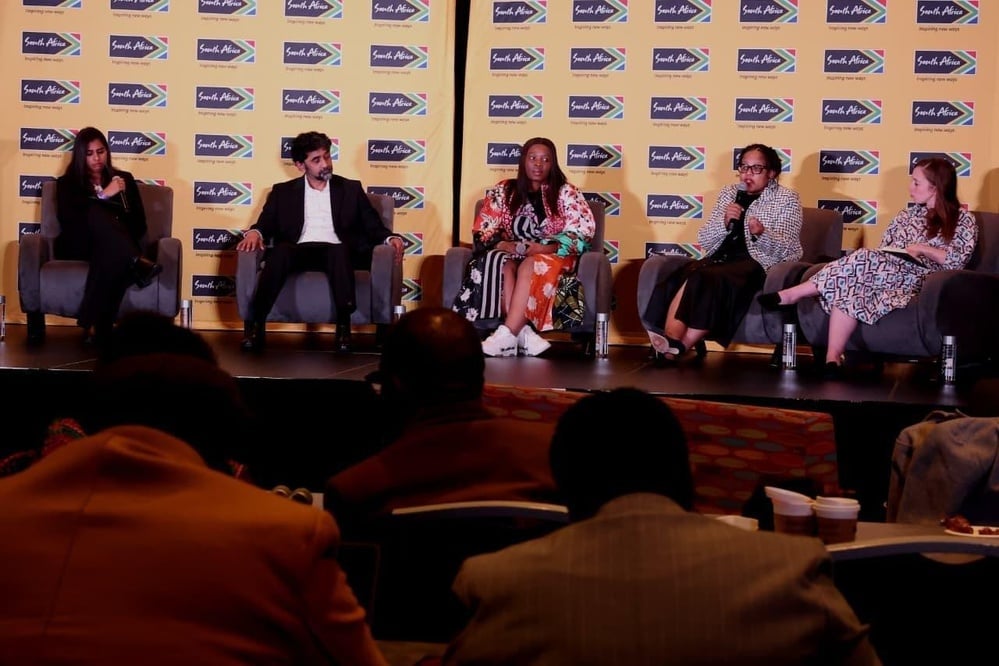
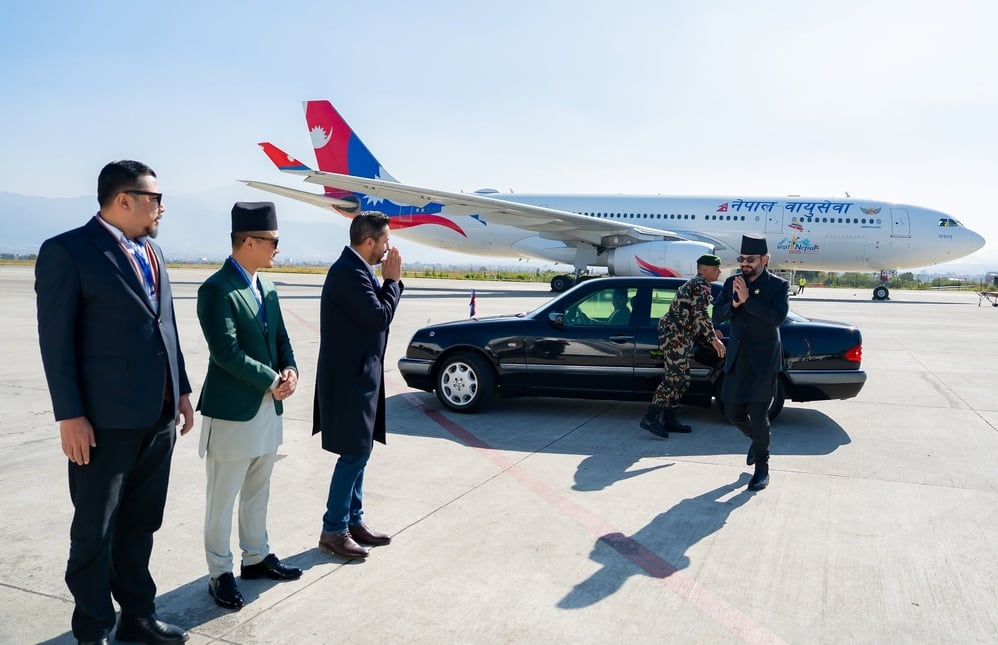
2026 © Helium Trades
Privacy Policy & Disclosure
* Disclaimer: Nothing on this website constitutes investment advice, performance data or any recommendation that any particular security, portfolio of securities, transaction or investment strategy is suitable for any specific person. Helium Trades is not responsible in any way for the accuracy
of any model predictions or price data. Any mention of a particular security and related prediction data is not a recommendation to buy or sell that security. Investments in securities involve the risk of loss. Past performance is no guarantee of future results. Helium Trades is not responsible for any of your investment decisions,
you should consult a financial expert before engaging in any transaction.
Helium Research Assistant

How can I help you today?
Ask any question about this page.


