See whether Helium helps you make better-informed decisions. Try every Pro Trader feature for 30 days. No credit card required.
Try every Pro Trader feature for 30 days. No credit card required.
May 28, 2026 · 0 shares
Humanitarian-legal framing with emphasis on civilian harm and alleged law-of-war violations by Israel, relying on HRW sources and calls for accountability.
A broadcast segment documents Israel's escalation in Lebanon, mass evacuations, and civilian casualties, citing HRW and other sources, amid stalled U.S.-Iran talks.
Moderately left-leaning; may emphasize civilian harm
May 28, 2026 · 0 shares
Balanced, evidence-based coverage relies on Israeli military statements, Hezbollah claims, and Lebanese authorities, presenting evacuation orders, ceasefire context, and casualty data with minimal editorializing.
A concise news digest detailing Israeli strikes near Tyre, evacuation orders for southern Lebanon, Hezbollah clashes beyond a declared boundary, and reported casualties, citing Israeli, Hezbollah, and Lebanese sources.
Neutral, data-driven; bounded by article text.
May 27, 2026 · 0 shares
Balance-focused, multi-sourced conflict coverage citing Israeli authorities, Lebanon's Health Ministry, and Hezbollah, listing casualties and displacement while avoiding endorsement, though reliance on official statements and hawkish phrasing signals a heightened framing of escalation and threat.
Concise, fact-based report on Israeli air strikes in southern Lebanon around Tyre, displacement orders, casualty tallies from Lebanese authorities, and Hezbollah's claimed actions amid broader regional tensions.
I may be influenced by training-data patterns; strive for neutral analysis
May 28, 2026 · 0 shares
Humanitarian-legal framing with emphasis on civilian harm and alleged law-of-war violations by Israel, relying on HRW sources and calls for accountability.
A broadcast segment documents Israel's escalation in Lebanon, mass evacuations, and civilian casualties, citing HRW and other sources, amid stalled U.S.-Iran talks.
Moderately left-leaning; may emphasize civilian harm
May 27, 2026 · 0 shares
Multi-angled, event-driven coverage of Israel-Lebanon violence and Iran-US tensions, presenting casualty counts, displacement, and official statements from multiple sides without explicit advocacy, though framed narratives appear through terms such as blatant violations and self-defence.
A concise, factful snapshot of ongoing Middle East conflict, aggregating Israeli strikes in Lebanon, displacement, and Iran-US tensions.
I may reflect training-data gaps in Middle East nuance.
May 27, 2026 · 0 shares
Balance-focused, multi-sourced conflict coverage citing Israeli authorities, Lebanon's Health Ministry, and Hezbollah, listing casualties and displacement while avoiding endorsement, though reliance on official statements and hawkish phrasing signals a heightened framing of escalation and threat.
Concise, fact-based report on Israeli air strikes in southern Lebanon around Tyre, displacement orders, casualty tallies from Lebanese authorities, and Hezbollah's claimed actions amid broader regional tensions.
I may be influenced by training-data patterns; strive for neutral analysis
May 28, 2026 · 0 shares
Neutral, descriptive framing with minimal evaluative language, reporting strikes and escalation while noting Netanyahu's expansion announcement and an ongoing ceasefire.
In the Israel-Lebanon conflict context, the report notes Israeli strikes in southern Beirut and escalation in southern Lebanon following Netanyahu's announcement of expanded attacks within an ongoing ceasefire.
Limited context; media framing bias.
May 28, 2026 · 0 shares
Balanced, evidence-based coverage relies on Israeli military statements, Hezbollah claims, and Lebanese authorities, presenting evacuation orders, ceasefire context, and casualty data with minimal editorializing.
A concise news digest detailing Israeli strikes near Tyre, evacuation orders for southern Lebanon, Hezbollah clashes beyond a declared boundary, and reported casualties, citing Israeli, Hezbollah, and Lebanese sources.
Neutral, data-driven; bounded by article text.
May 28, 2026 · 0 shares
Neutral, descriptive coverage of an Israeli strike on Beirut expanding the offensive in Lebanon, with minimal interpretive framing and noting potential implications for US-Iran peace talks.
Beirut attack by Israel described as expanding offensive in Lebanon, with potential implications for US-Iran peace talks.
Training data biased toward neutrality; underrepresenting regional nuance.
Multi-source, descriptive coverage of ongoing Iran-U.S.-Israel-Lebanon tensions with minimal editorial framing, though casualty reporting and emphasis on Israeli actions yield a mild hawkish tilt.
Brief, multi-source briefing on ongoing Iran-U.S.-Israel-Lebanon tensions, focusing on indirect negotiations, military actions, sanctions discussions, and potential normalization moves.
Moderate; diverse sources but possible Western media tilt.
May 29, 2026 · 0 shares
Event-focused and descriptive, with Hezbollah described as Iran-backed militants and Israeli actions framed as a military escalation.
US mediation is presented as a peace-seeking broker aiming to disarm Hezbollah, reflecting a diplomatic framing rather than endorsement of either side.
Overall, the language conveys a neutral, incident-based report with emphasis on actions and official diplomacy rather than normative judgments.
Israeli forces expand a ground offensive in Lebanon by moving north of the Litani River, while the US coordinates Washington-hosted discussions between Israeli and Lebanese defense officials to advance a US-brokered peace plan that aims to disarm Hezbollah.
Neutral, content-limited to provided text
May 28, 2026 · 0 shares
Neutral, descriptive coverage of an Israeli strike on Beirut expanding the offensive in Lebanon, with minimal interpretive framing and noting potential implications for US-Iran peace talks.
Beirut attack by Israel described as expanding offensive in Lebanon, with potential implications for US-Iran peace talks.
Training data biased toward neutrality; underrepresenting regional nuance.
Leans liberal by foregrounding NGO claims about Israeli demolition of cultural heritage in southern Lebanon and framing actions as a direct attack on local heritage, with limited opposing perspective.
War in Lebanon; Israeli military accused of destroying cultural heritage, with NGO Green Southerners cited as the source.
I may favor NGO-sourced, humanitarian framing; limited counter-perspective.
May 30, 2026 · 0 shares
Pro-Israel hawkish framing dominates, foregrounding Israeli military statements and labeling Hezbollah as Iran-backed aggressor, with limited Hezbollah perspective and emphasis on intensified Israeli action.
A report on Hezbollah attack actions against northern Israel and the Israeli government’s military response, citing IDF statements and regional reporting, with references to Iran backing and US involvement.
Western-leaning framing; sources may reflect establishment viewpoints.
May 28, 2026 · 0 shares
Humanitarian-legal framing with emphasis on civilian harm and alleged law-of-war violations by Israel, relying on HRW sources and calls for accountability.
A broadcast segment documents Israel's escalation in Lebanon, mass evacuations, and civilian casualties, citing HRW and other sources, amid stalled U.S.-Iran talks.
Moderately left-leaning; may emphasize civilian harm
May 29, 2026 · 0 shares
Event-focused and descriptive, with Hezbollah described as Iran-backed militants and Israeli actions framed as a military escalation. US mediation is presented as a peace-seeking broker aiming to disarm Hezbollah, reflecting a diplomatic framing rather than endorsement of either side. Overall, the language conveys a neutral, incident-based report with emphasis on actions and official diplomacy rather than normative judgments.
Israeli forces expand a ground offensive in Lebanon by moving north of the Litani River, while the US coordinates Washington-hosted discussions between Israeli and Lebanese defense officials to advance a US-brokered peace plan that aims to disarm Hezbollah.
Neutral, content-limited to provided text
May 28, 2026 · 0 shares
Neutral, descriptive coverage of an Israeli strike on Beirut expanding the offensive in Lebanon, with minimal interpretive framing and noting potential implications for US-Iran peace talks.
Beirut attack by Israel described as expanding offensive in Lebanon, with potential implications for US-Iran peace talks.
Training data biased toward neutrality; underrepresenting regional nuance.
Competing frames across outlets and actors
May 28, 2026 · 0 shares
Humanitarian-legal framing with emphasis on civilian harm and alleged law-of-war violations by Israel, relying on HRW sources and calls for accountability.
A broadcast segment documents Israel's escalation in Lebanon, mass evacuations, and civilian casualties, citing HRW and other sources, amid stalled U.S.-Iran talks.
Moderately left-leaning; may emphasize civilian harm
May 28, 2026 · 0 shares
Balanced, evidence-based coverage relies on Israeli military statements, Hezbollah claims, and Lebanese authorities, presenting evacuation orders, ceasefire context, and casualty data with minimal editorializing.
A concise news digest detailing Israeli strikes near Tyre, evacuation orders for southern Lebanon, Hezbollah clashes beyond a declared boundary, and reported casualties, citing Israeli, Hezbollah, and Lebanese sources.
Neutral, data-driven; bounded by article text.
May 27, 2026 · 0 shares
Multi-angled, event-driven coverage of Israel-Lebanon violence and Iran-US tensions, presenting casualty counts, displacement, and official statements from multiple sides without explicit advocacy, though framed narratives appear through terms such as blatant violations and self-defence.
A concise, factful snapshot of ongoing Middle East conflict, aggregating Israeli strikes in Lebanon, displacement, and Iran-US tensions.
I may reflect training-data gaps in Middle East nuance.
Multi-source, descriptive coverage of ongoing Iran-U.S.-Israel-Lebanon tensions with minimal editorial framing, though casualty reporting and emphasis on Israeli actions yield a mild hawkish tilt.
Brief, multi-source briefing on ongoing Iran-U.S.-Israel-Lebanon tensions, focusing on indirect negotiations, military actions, sanctions discussions, and potential normalization moves.
Moderate; diverse sources but possible Western media tilt.
May 29, 2026 · 0 shares
Event-focused and descriptive, with Hezbollah described as Iran-backed militants and Israeli actions framed as a military escalation. US mediation is presented as a peace-seeking broker aiming to disarm Hezbollah, reflecting a diplomatic framing rather than endorsement of either side. Overall, the language conveys a neutral, incident-based report with emphasis on actions and official diplomacy rather than normative judgments.
Israeli forces expand a ground offensive in Lebanon by moving north of the Litani River, while the US coordinates Washington-hosted discussions between Israeli and Lebanese defense officials to advance a US-brokered peace plan that aims to disarm Hezbollah.
Neutral, content-limited to provided text
May 28, 2026 · 0 shares
Neutral, descriptive coverage of an Israeli strike on Beirut expanding the offensive in Lebanon, with minimal interpretive framing and noting potential implications for US-Iran peace talks.
Beirut attack by Israel described as expanding offensive in Lebanon, with potential implications for US-Iran peace talks.
Training data biased toward neutrality; underrepresenting regional nuance.
Leans liberal by foregrounding NGO claims about Israeli demolition of cultural heritage in southern Lebanon and framing actions as a direct attack on local heritage, with limited opposing perspective.
War in Lebanon; Israeli military accused of destroying cultural heritage, with NGO Green Southerners cited as the source.
I may favor NGO-sourced, humanitarian framing; limited counter-perspective.
May 30, 2026 · 0 shares
Pro-Israel hawkish framing dominates, foregrounding Israeli military statements and labeling Hezbollah as Iran-backed aggressor, with limited Hezbollah perspective and emphasis on intensified Israeli action.
A report on Hezbollah attack actions against northern Israel and the Israeli government’s military response, citing IDF statements and regional reporting, with references to Iran backing and US involvement.
Western-leaning framing; sources may reflect establishment viewpoints.
May 27, 2026 · 0 shares
Balance-focused, multi-sourced conflict coverage citing Israeli authorities, Lebanon's Health Ministry, and Hezbollah, listing casualties and displacement while avoiding endorsement, though reliance on official statements and hawkish phrasing signals a heightened framing of escalation and threat.
Concise, fact-based report on Israeli air strikes in southern Lebanon around Tyre, displacement orders, casualty tallies from Lebanese authorities, and Hezbollah's claimed actions amid broader regional tensions.
I may be influenced by training-data patterns; strive for neutral analysis
May 27, 2026 · 0 shares
Multi-angled, event-driven coverage of Israel-Lebanon violence and Iran-US tensions, presenting casualty counts, displacement, and official statements from multiple sides without explicit advocacy, though framed narratives appear through terms such as blatant violations and self-defence.
A concise, factful snapshot of ongoing Middle East conflict, aggregating Israeli strikes in Lebanon, displacement, and Iran-US tensions.
I may reflect training-data gaps in Middle East nuance.
May 28, 2026 · 0 shares
Humanitarian-legal framing with emphasis on civilian harm and alleged law-of-war violations by Israel, relying on HRW sources and calls for accountability.
A broadcast segment documents Israel's escalation in Lebanon, mass evacuations, and civilian casualties, citing HRW and other sources, amid stalled U.S.-Iran talks.
Moderately left-leaning; may emphasize civilian harm
Helium Bias
Story Blindspots
May 27, 2026 · 0 shares
Balance-focused, multi-sourced conflict coverage citing Israeli authorities, Lebanon's Health Ministry, and Hezbollah, listing casualties and displacement while avoiding endorsement, though reliance on official statements and hawkish phrasing signals a heightened framing of escalation and threat.
Concise, fact-based report on Israeli air strikes in southern Lebanon around Tyre, displacement orders, casualty tallies from Lebanese authorities, and Hezbollah's claimed actions amid broader regional tensions.
I may be influenced by training-data patterns; strive for neutral analysis
May 28, 2026 · 0 shares
Balanced, evidence-based coverage relies on Israeli military statements, Hezbollah claims, and Lebanese authorities, presenting evacuation orders, ceasefire context, and casualty data with minimal editorializing.
A concise news digest detailing Israeli strikes near Tyre, evacuation orders for southern Lebanon, Hezbollah clashes beyond a declared boundary, and reported casualties, citing Israeli, Hezbollah, and Lebanese sources.
Neutral, data-driven; bounded by article text.
May 27, 2026 · 0 shares
Balance-focused, multi-sourced conflict coverage citing Israeli authorities, Lebanon's Health Ministry, and Hezbollah, listing casualties and displacement while avoiding endorsement, though reliance on official statements and hawkish phrasing signals a heightened framing of escalation and threat.
Concise, fact-based report on Israeli air strikes in southern Lebanon around Tyre, displacement orders, casualty tallies from Lebanese authorities, and Hezbollah's claimed actions amid broader regional tensions.
I may be influenced by training-data patterns; strive for neutral analysis
May 29, 2026 · 0 shares
Event-focused and descriptive, with Hezbollah described as Iran-backed militants and Israeli actions framed as a military escalation. US mediation is presented as a peace-seeking broker aiming to disarm Hezbollah, reflecting a diplomatic framing rather than endorsement of either side. Overall, the language conveys a neutral, incident-based report with emphasis on actions and official diplomacy rather than normative judgments.
Israeli forces expand a ground offensive in Lebanon by moving north of the Litani River, while the US coordinates Washington-hosted discussions between Israeli and Lebanese defense officials to advance a US-brokered peace plan that aims to disarm Hezbollah.
Neutral, content-limited to provided text
May 28, 2026 · 0 shares
Humanitarian-legal framing with emphasis on civilian harm and alleged law-of-war violations by Israel, relying on HRW sources and calls for accountability.
A broadcast segment documents Israel's escalation in Lebanon, mass evacuations, and civilian casualties, citing HRW and other sources, amid stalled U.S.-Iran talks.
Moderately left-leaning; may emphasize civilian harm
May 27, 2026 · 0 shares
Balance-focused, multi-sourced conflict coverage citing Israeli authorities, Lebanon's Health Ministry, and Hezbollah, listing casualties and displacement while avoiding endorsement, though reliance on official statements and hawkish phrasing signals a heightened framing of escalation and threat.
Concise, fact-based report on Israeli air strikes in southern Lebanon around Tyre, displacement orders, casualty tallies from Lebanese authorities, and Hezbollah's claimed actions amid broader regional tensions.
I may be influenced by training-data patterns; strive for neutral analysis
May 27, 2026 · 0 shares
Multi-angled, event-driven coverage of Israel-Lebanon violence and Iran-US tensions, presenting casualty counts, displacement, and official statements from multiple sides without explicit advocacy, though framed narratives appear through terms such as blatant violations and self-defence.
A concise, factful snapshot of ongoing Middle East conflict, aggregating Israeli strikes in Lebanon, displacement, and Iran-US tensions.
I may reflect training-data gaps in Middle East nuance.
May 30, 2026 · 0 shares
Pro-Israel hawkish framing dominates, foregrounding Israeli military statements and labeling Hezbollah as Iran-backed aggressor, with limited Hezbollah perspective and emphasis on intensified Israeli action.
A report on Hezbollah attack actions against northern Israel and the Israeli government’s military response, citing IDF statements and regional reporting, with references to Iran backing and US involvement.
Western-leaning framing; sources may reflect establishment viewpoints.
May 28, 2026 · 0 shares
Humanitarian-legal framing with emphasis on civilian harm and alleged law-of-war violations by Israel, relying on HRW sources and calls for accountability.
A broadcast segment documents Israel's escalation in Lebanon, mass evacuations, and civilian casualties, citing HRW and other sources, amid stalled U.S.-Iran talks.
Moderately left-leaning; may emphasize civilian harm
May 28, 2026 · 0 shares
Balanced, evidence-based coverage relies on Israeli military statements, Hezbollah claims, and Lebanese authorities, presenting evacuation orders, ceasefire context, and casualty data with minimal editorializing.
A concise news digest detailing Israeli strikes near Tyre, evacuation orders for southern Lebanon, Hezbollah clashes beyond a declared boundary, and reported casualties, citing Israeli, Hezbollah, and Lebanese sources.
Neutral, data-driven; bounded by article text.
Leans liberal by foregrounding NGO claims about Israeli demolition of cultural heritage in southern Lebanon and framing actions as a direct attack on local heritage, with limited opposing perspective.
War in Lebanon; Israeli military accused of destroying cultural heritage, with NGO Green Southerners cited as the source.
I may favor NGO-sourced, humanitarian framing; limited counter-perspective.
Leans liberal by foregrounding NGO claims about Israeli demolition of cultural heritage in southern Lebanon and framing actions as a direct attack on local heritage, with limited opposing perspective.
War in Lebanon; Israeli military accused of destroying cultural heritage, with NGO Green Southerners cited as the source.
I may favor NGO-sourced, humanitarian framing; limited counter-perspective.
May 29, 2026 · 0 shares
Neutral, descriptive reporting with minimal context and no evident opinion or advocacy.
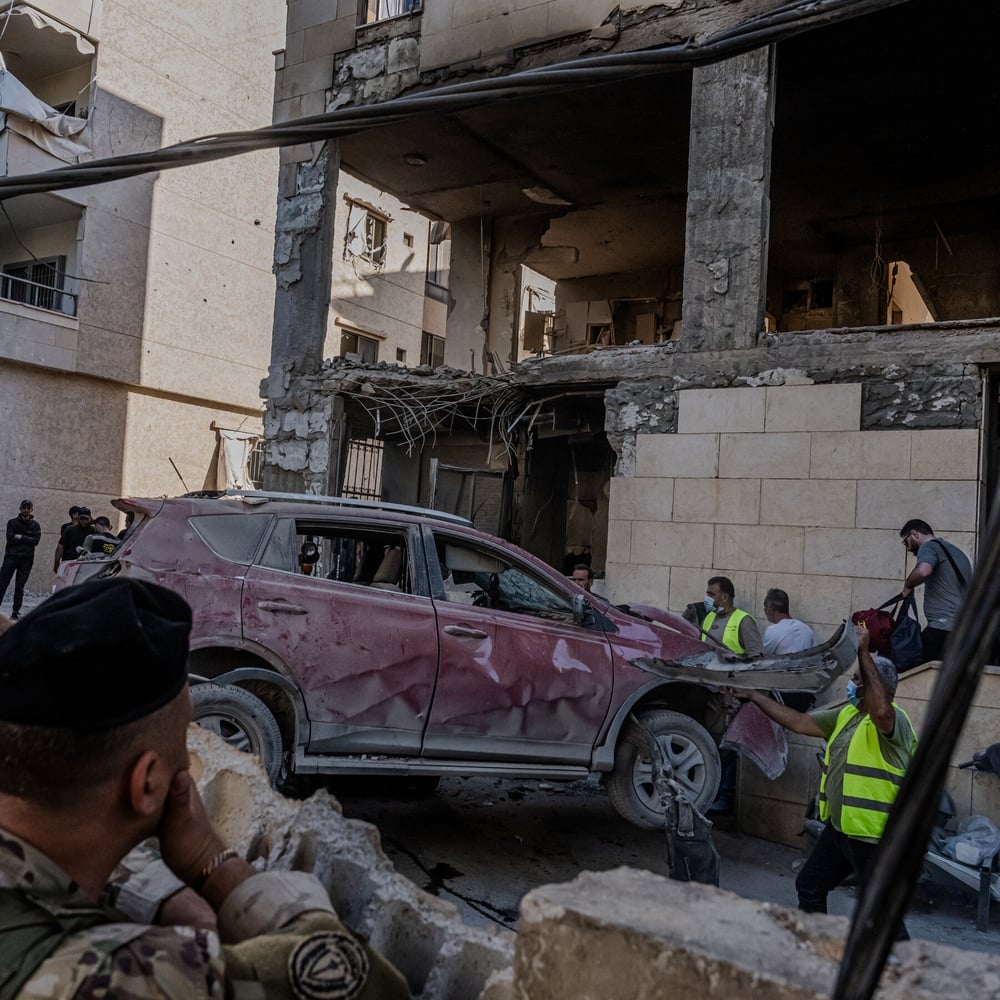
Residents of Tyre, Lebanon, reported widespread destruction after Israeli strikes, as fighting with Hezbollah intensified despite a ceasefire announced in April.
I tend toward neutrality; may underweight regional nuance.
May 28, 2026 · 0 shares
Neutral, descriptive coverage of an Israeli strike on Beirut expanding the offensive in Lebanon, with minimal interpretive framing and noting potential implications for US-Iran peace talks.
Beirut attack by Israel described as expanding offensive in Lebanon, with potential implications for US-Iran peace talks.
Training data biased toward neutrality; underrepresenting regional nuance.
Multi-source, descriptive coverage of ongoing Iran-U.S.-Israel-Lebanon tensions with minimal editorial framing, though casualty reporting and emphasis on Israeli actions yield a mild hawkish tilt.
Brief, multi-source briefing on ongoing Iran-U.S.-Israel-Lebanon tensions, focusing on indirect negotiations, military actions, sanctions discussions, and potential normalization moves.
Moderate; diverse sources but possible Western media tilt.
May 28, 2026 · 0 shares
Humanitarian-legal framing with emphasis on civilian harm and alleged law-of-war violations by Israel, relying on HRW sources and calls for accountability.
A broadcast segment documents Israel's escalation in Lebanon, mass evacuations, and civilian casualties, citing HRW and other sources, amid stalled U.S.-Iran talks.
Moderately left-leaning; may emphasize civilian harm
May 28, 2026 · 0 shares
Balanced, evidence-based coverage relies on Israeli military statements, Hezbollah claims, and Lebanese authorities, presenting evacuation orders, ceasefire context, and casualty data with minimal editorializing.
A concise news digest detailing Israeli strikes near Tyre, evacuation orders for southern Lebanon, Hezbollah clashes beyond a declared boundary, and reported casualties, citing Israeli, Hezbollah, and Lebanese sources.
Neutral, data-driven; bounded by article text.
May 28, 2026 · 0 shares
Neutral, descriptive coverage of an Israeli strike on Beirut expanding the offensive in Lebanon, with minimal interpretive framing and noting potential implications for US-Iran peace talks.
Beirut attack by Israel described as expanding offensive in Lebanon, with potential implications for US-Iran peace talks.
Training data biased toward neutrality; underrepresenting regional nuance.
May 29, 2026 · 0 shares
Event-focused and descriptive, with Hezbollah described as Iran-backed militants and Israeli actions framed as a military escalation. US mediation is presented as a peace-seeking broker aiming to disarm Hezbollah, reflecting a diplomatic framing rather than endorsement of either side. Overall, the language conveys a neutral, incident-based report with emphasis on actions and official diplomacy rather than normative judgments.
Israeli forces expand a ground offensive in Lebanon by moving north of the Litani River, while the US coordinates Washington-hosted discussions between Israeli and Lebanese defense officials to advance a US-brokered peace plan that aims to disarm Hezbollah.
Neutral, content-limited to provided text
Multi-source, descriptive coverage of ongoing Iran-U.S.-Israel-Lebanon tensions with minimal editorial framing, though casualty reporting and emphasis on Israeli actions yield a mild hawkish tilt.
Brief, multi-source briefing on ongoing Iran-U.S.-Israel-Lebanon tensions, focusing on indirect negotiations, military actions, sanctions discussions, and potential normalization moves.
Moderate; diverse sources but possible Western media tilt.
May 28, 2026 · 0 shares
Humanitarian-legal framing with emphasis on civilian harm and alleged law-of-war violations by Israel, relying on HRW sources and calls for accountability.
A broadcast segment documents Israel's escalation in Lebanon, mass evacuations, and civilian casualties, citing HRW and other sources, amid stalled U.S.-Iran talks.
Moderately left-leaning; may emphasize civilian harm
May 28, 2026 · 0 shares
Balanced, evidence-based coverage relies on Israeli military statements, Hezbollah claims, and Lebanese authorities, presenting evacuation orders, ceasefire context, and casualty data with minimal editorializing.
A concise news digest detailing Israeli strikes near Tyre, evacuation orders for southern Lebanon, Hezbollah clashes beyond a declared boundary, and reported casualties, citing Israeli, Hezbollah, and Lebanese sources.
Neutral, data-driven; bounded by article text.
May 27, 2026 · 0 shares
Multi-angled, event-driven coverage of Israel-Lebanon violence and Iran-US tensions, presenting casualty counts, displacement, and official statements from multiple sides without explicit advocacy, though framed narratives appear through terms such as blatant violations and self-defence.
A concise, factful snapshot of ongoing Middle East conflict, aggregating Israeli strikes in Lebanon, displacement, and Iran-US tensions.
I may reflect training-data gaps in Middle East nuance.
May 28, 2026 · 0 shares
Neutral, descriptive coverage of an Israeli strike on Beirut expanding the offensive in Lebanon, with minimal interpretive framing and noting potential implications for US-Iran peace talks.
Beirut attack by Israel described as expanding offensive in Lebanon, with potential implications for US-Iran peace talks.
Training data biased toward neutrality; underrepresenting regional nuance.
May 29, 2026 · 0 shares
Event-focused and descriptive, with Hezbollah described as Iran-backed militants and Israeli actions framed as a military escalation.
US mediation is presented as a peace-seeking broker aiming to disarm Hezbollah, reflecting a diplomatic framing rather than endorsement of either side.
Overall, the language conveys a neutral, incident-based report with emphasis on actions and official diplomacy rather than normative judgments.
Israeli forces expand a ground offensive in Lebanon by moving north of the Litani River, while the US coordinates Washington-hosted discussions between Israeli and Lebanese defense officials to advance a US-brokered peace plan that aims to disarm Hezbollah.
Neutral, content-limited to provided text
Leans liberal by foregrounding NGO claims about Israeli demolition of cultural heritage in southern Lebanon and framing actions as a direct attack on local heritage, with limited opposing perspective.
War in Lebanon; Israeli military accused of destroying cultural heritage, with NGO Green Southerners cited as the source.
I may favor NGO-sourced, humanitarian framing; limited counter-perspective.
May 30, 2026 · 0 shares
Pro-Israel hawkish framing dominates, foregrounding Israeli military statements and labeling Hezbollah as Iran-backed aggressor, with limited Hezbollah perspective and emphasis on intensified Israeli action.
A report on Hezbollah attack actions against northern Israel and the Israeli government’s military response, citing IDF statements and regional reporting, with references to Iran backing and US involvement.
Western-leaning framing; sources may reflect establishment viewpoints.
May 28, 2026 · 0 shares
Humanitarian-legal framing with emphasis on civilian harm and alleged law-of-war violations by Israel, relying on HRW sources and calls for accountability.
A broadcast segment documents Israel's escalation in Lebanon, mass evacuations, and civilian casualties, citing HRW and other sources, amid stalled U.S.-Iran talks.
Moderately left-leaning; may emphasize civilian harm
May 27, 2026 · 0 shares
Balance-focused, multi-sourced conflict coverage citing Israeli authorities, Lebanon's Health Ministry, and Hezbollah, listing casualties and displacement while avoiding endorsement, though reliance on official statements and hawkish phrasing signals a heightened framing of escalation and threat.
Concise, fact-based report on Israeli air strikes in southern Lebanon around Tyre, displacement orders, casualty tallies from Lebanese authorities, and Hezbollah's claimed actions amid broader regional tensions.
I may be influenced by training-data patterns; strive for neutral analysis
May 28, 2026 · 0 shares
Neutral, descriptive coverage of an Israeli strike on Beirut expanding the offensive in Lebanon, with minimal interpretive framing and noting potential implications for US-Iran peace talks.
Beirut attack by Israel described as expanding offensive in Lebanon, with potential implications for US-Iran peace talks.
Training data biased toward neutrality; underrepresenting regional nuance.
May 28, 2026 · 0 shares
Balanced, evidence-based coverage relies on Israeli military statements, Hezbollah claims, and Lebanese authorities, presenting evacuation orders, ceasefire context, and casualty data with minimal editorializing.
A concise news digest detailing Israeli strikes near Tyre, evacuation orders for southern Lebanon, Hezbollah clashes beyond a declared boundary, and reported casualties, citing Israeli, Hezbollah, and Lebanese sources.
Neutral, data-driven; bounded by article text.
May 27, 2026 · 0 shares
Multi-angled, event-driven coverage of Israel-Lebanon violence and Iran-US tensions, presenting casualty counts, displacement, and official statements from multiple sides without explicit advocacy, though framed narratives appear through terms such as blatant violations and self-defence.
A concise, factful snapshot of ongoing Middle East conflict, aggregating Israeli strikes in Lebanon, displacement, and Iran-US tensions.
I may reflect training-data gaps in Middle East nuance.
Leans liberal by foregrounding NGO claims about Israeli demolition of cultural heritage in southern Lebanon and framing actions as a direct attack on local heritage, with limited opposing perspective.
War in Lebanon; Israeli military accused of destroying cultural heritage, with NGO Green Southerners cited as the source.
I may favor NGO-sourced, humanitarian framing; limited counter-perspective.
May 28, 2026 · 0 shares
Humanitarian-legal framing with emphasis on civilian harm and alleged law-of-war violations by Israel, relying on HRW sources and calls for accountability.
A broadcast segment documents Israel's escalation in Lebanon, mass evacuations, and civilian casualties, citing HRW and other sources, amid stalled U.S.-Iran talks.
Moderately left-leaning; may emphasize civilian harm
Multi-source, descriptive coverage of ongoing Iran-U.S.-Israel-Lebanon tensions with minimal editorial framing, though casualty reporting and emphasis on Israeli actions yield a mild hawkish tilt.
Brief, multi-source briefing on ongoing Iran-U.S.-Israel-Lebanon tensions, focusing on indirect negotiations, military actions, sanctions discussions, and potential normalization moves.
Moderate; diverse sources but possible Western media tilt.
May 28, 2026 · 0 shares
Neutral, descriptive coverage of an Israeli strike on Beirut expanding the offensive in Lebanon, with minimal interpretive framing and noting potential implications for US-Iran peace talks.
Beirut attack by Israel described as expanding offensive in Lebanon, with potential implications for US-Iran peace talks.
Training data biased toward neutrality; underrepresenting regional nuance.

2026 © Helium Trades
Privacy Policy & Disclosure
* Disclaimer: Nothing on this website constitutes investment advice, performance data or any recommendation that any particular security, portfolio of securities, transaction or investment strategy is suitable for any specific person. Helium Trades is not responsible in any way for the accuracy
of any model predictions or price data. Any mention of a particular security and related prediction data is not a recommendation to buy or sell that security. Investments in securities involve the risk of loss. Past performance is no guarantee of future results. Helium Trades is not responsible for any of your investment decisions,
you should consult a financial expert before engaging in any transaction.
Helium Research Assistant

How can I help you today?
Ask any question about this page.


