See whether Helium helps you make better-informed decisions. Try every Pro Trader feature for 30 days. No credit card required.
Try every Pro Trader feature for 30 days. No credit card required.
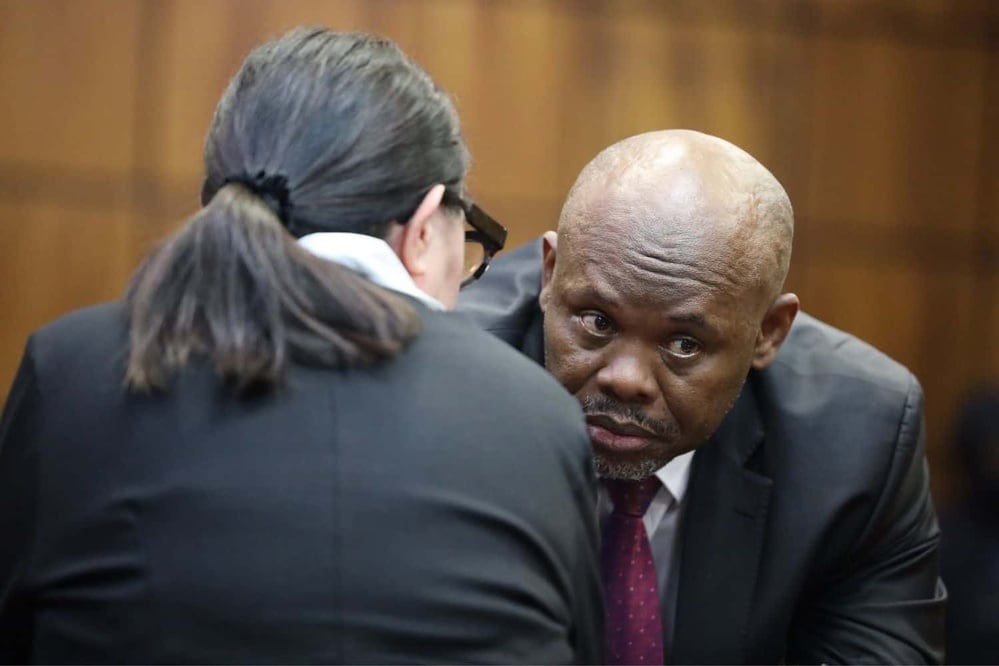
The publisher frames the bail case through neutral, court-driven reporting that prioritizes legal procedure, official notices, and lawyer testimony over commentary.
Automated analysis; not human reviewed. Limitations: The supplied text is fragmentary and includes truncated passages and embedded headlines, limiting full reconstruction of the court proceedings.
The supplied text is fragmentary and includes truncated passages and embedded headlines, limiting full reconstruction of the court proceedings.
A neutral court-style brief attributes allegations to the state, notes the accused’s denial and lack of plea, and adds only mild evaluative coloring in describing his career as 'increasingly controversial'.
Automated analysis; not human reviewed.
Limitations: Only one undated publisher brief was available; no court filings, bail arguments, or independent sources were supplied, and the closest allowed category (Politics) is approximate for a crime/justice story.
·
4 of 55 available dimensions scored; omitted dimensions are not treated as neutral.
·
Verified supporting quotes for 4 of 4 scored dimensions.
Claim: The text is mostly factual and impersonal, with minor evaluative language in the career summary.
“He was arrested on 21 September and appeared in the Randburg court the following day.” · exact text match
“Sibiya has not pleaded to the charges.” · exact text match
Counterevidence:
“His career became increasingly controversial in 2025 after KwaZulu-Natal police commissioner Lieutenant-General Nhlanhla Mkhwanazi accused senior police officials of interfering in investigations involving politically connected and alleged criminal figures.” · exact text match
Why: Most content uses dates, locations, and legal status, but the phrase 'increasingly controversial' injects a mild evaluative judgment.
Claim: The text describes the situation without recommending any action.
“This is a developing story.
More details will follow.”
· exact text match
Why: The text is a status report ending with a routine update; it contains no prescription, demand, or call to action.
Claim: Visible attribution and uncertainty markers support credibility.
“The state alleges that Sibiya sexually groomed a 16-year-old girl through electronic communications between July and August.” · exact text match
“Sibiya has not pleaded to the charges.” · exact text match
Why: The publisher distinguishes allegations from established facts, notes the lack of a plea, and flags the story as developing.
Claim: Reporting is rational and avoids unsupported assertions.
“The state alleges that Sibiya sexually groomed a 16-year-old girl through electronic communications between July and August.” · exact text match
“He denied wrongdoing and told Parliament that he had not acted to interfere with investigations.” · exact text match
Why: Claims are attributed to the state and balanced with the accused’s denial, showing cautious rather than speculative framing.
Only one undated publisher brief was available; no court filings, bail arguments, or independent sources were supplied, and the closest allowed category (Politics) is approximate for a crime/justice story.
The publisher frames the bail case through neutral, court-driven reporting that prioritizes legal procedure, official notices, and lawyer testimony over commentary.
Automated analysis; not human reviewed. Limitations: The supplied text is fragmentary and includes truncated passages and embedded headlines, limiting full reconstruction of the court proceedings.
The supplied text is fragmentary and includes truncated passages and embedded headlines, limiting full reconstruction of the court proceedings.
September 29, 2026 · 0 shares
Attorney-attributed court reporting sets the State's allegations beside the accused's denials, while the headline foregrounds the detention outcome.
Automated analysis; not human reviewed.
Limitations: The supplied excerpt mixes the main report with several standalone headlines, so the precise boundaries of the substantive article are uncertain.
·
8 of 55 available dimensions scored; omitted dimensions are not treated as neutral.
·
Verified supporting quotes for 8 of 8 scored dimensions.
Claim: The report is objective rather than subjective, attributing contested claims to the State and the defence.
“According to the State, Sibiya sexually groomed the 16-year-old daughter of his close associate and exchanged explicit images with her via WhatsApp.” · exact text match
Why: The allegation is presented as the State's position rather than as the publisher's conclusion.
Claim: Despite graphic subject matter, the presentation is clinical and non-sensational.
“He explained to the court why a sexual video involving a minor was found on his phone.” · exact text match
Why: The sensitive material is described in restrained, factual terms without inflammatory adjectives or exaggerated framing.
Claim: The story is inherently interesting because it combines a senior police official, sexual allegations involving a minor, and contested evidence.
“He was arrested last week at a strip club in Sandton after police obtained evidence allegedly suggesting he had sexually groomed the minor.” · exact text match
Why: The unusual setting and severity of the allegations give the story substantial news interest.
Claim: The text is descriptive, reporting procedure and statements without recommending action.
“Suspended Deputy National Police Commissioner Shadrack Sibiya will remain behind bars pending his return to court on Thursday to conclude his bail hearing.” · exact text match
Why: The sentence states an outcome and a schedule rather than urging any verdict or policy.
Claim: The text is factful and neutral, containing no evaluative commentary from the publisher.
“Sibiya also claims that the father told him his 16-year-old daughter had a crush on him, and that he confronted her about it on WhatsApp.” · exact text match
Why: Even the defence narrative is attributed to Sibiya rather than adopted as fact or opinion.
Claim: The report is credible on its face, naming the court, parties, and lawyer, and attributing contested assertions.
“His lawyer, Estelle Killian, read out his affidavit: “He was disturbed and told me he received a video of his daughter masturbating from an undisclosed source.
He forwarded this video to me while expressing his disappointment.””
· exact text match
Why: Specific actors, quotations, and procedural details are supplied, and contested claims are attributed rather than asserted.
Claim: The report is rational in form, grounding statements in attributed court positions rather than speculation.
“During his bail application before the Randburg Magistrates Court on Tuesday, Sibiya claimed that the charges of rape, sexual grooming of a minor, and human trafficking against him are unfounded.” · exact text match
Why: The contested criminal matter is conveyed through procedural facts and explicit attribution rather than through assertion or emotional language.
Claim: The report internally demonstrates fairness by attributing competing claims and using qualifiers such as 'allegedly'.
“He was arrested last week at a strip club in Sandton after police obtained evidence allegedly suggesting he had sexually groomed the minor.” · exact text match
“However, Sibiya maintains that he has never had a sexual relationship with her.” · exact text match
Why: Both the prosecution's allegations and the accused's denials are included, with no apparent omission of the defence position.
The supplied excerpt mixes the main report with several standalone headlines, so the precise boundaries of the substantive article are uncertain.
September 26, 2026 · 0 shares
Framing emphasizes scandal and prejudges the accused via headline labels such as 'disgraced' and 'secret nights' while the body relies heavily on anonymous and prosecutorial claims.
Automated analysis; not human reviewed.
Limitations: The supplied article depends on an unnamed stripper's account and prosecutorial charge-sheet claims that cannot be externally verified from the text.
·
8 of 55 available dimensions scored; omitted dimensions are not treated as neutral.
·
Verified supporting quotes for 8 of 8 scored dimensions.
Claim: Headline labels the accused 'disgraced' and states preferences as fact, while the subhead attributes them to a dancer.
“Disgraced top cop liked to ‘socialise with Russian dancers’” · exact text match
Counterevidence:
“The charge sheet against Sibiya gives a detailed account of the State’s allegations about how his interaction with the 18-year-old unfolded on the night of May 16.” · exact text match
Why: The framing is evaluative and emotive, but the body elsewhere attributes claims to the charge sheet.
Claim: The report uses scandal-focused headline language and includes club pricing and stripper anecdotes for colour.
“Suspended deputy national police commissioner Lt-Gen Shadrack Sibiya is believed to have been a regular visitor to upmarket Sandton strip club The Grand, where a dancer says he had a preference for Russian women.” · exact text match
“He spends a lot of time with three Russian women.
He also pays them to leave the club with him, and that can cost about R15,000”
· exact text match
Why: Tabloid-style presentation centers private sexualized behavior and monetized details rather than the legal process.
Claim: The body is mostly descriptive and attributed, but the headline injects a normative judgement.
“Disgraced top cop liked to ‘socialise with Russian dancers’” · exact text match
Why: 'Disgraced' is an evaluative characterization rather than a factual description of court status.
Claim: The label 'disgraced' presupposes the accused's guilt before trial.
“Disgraced top cop liked to ‘socialise with Russian dancers’” · exact text match
Why: A person facing charges is described with a conclusion normally reserved for a conviction.
Claim: The piece centers anonymous nightlife gossip about a public figure's private conduct.
“He spends a lot of time with three Russian women.
He also pays them to leave the club with him, and that can cost about R15,000”
· exact text match
“I have also seen a few black women [with him], and he was buying them alcohol.
I think the bill stood at R10,000”
· exact text match
Why: An unnamed stripper's account of payments and companions is used as the basis for the headline's 'secret nights' narrative.
Claim: An attributed dancer's claim is presented in the headline as established fact.
“Disgraced top cop liked to ‘socialise with Russian dancers’” · exact text match
Counterevidence:
“Suspended deputy national police commissioner Lt-Gen Shadrack Sibiya is believed to have been a regular visitor to upmarket Sandton strip club The Grand, where a dancer says he had a preference for Russian women.” · exact text match
Why: The subhead includes 'is believed' and 'a dancer says', while the headline drops that uncertainty.
Claim: The report names sources, uses attributed allegation language, and flags a charge-sheet inconsistency, but headline framing lowers trust.
“There is, however, a discrepancy in the charge sheet regarding the date attached to the trafficking allegation.” · exact text match
Counterevidence:
“Disgraced top cop liked to ‘socialise with Russian dancers’” · exact text match
Why: Visible sourcing and disclosure support some credibility; prejudicial, unverified labeling pulls it down.
Claim: The report is transparent about attribution and even flags a date discrepancy, but prejudicial framing reduces its fairness.
“Disgraced top cop liked to ‘socialise with Russian dancers’” · exact text match
Counterevidence:
“There is, however, a discrepancy in the charge sheet regarding the date attached to the trafficking allegation.” · exact text match
Why: The transparency signal is undercut by calling a suspect 'disgraced' in the headline.
The supplied article depends on an unnamed stripper's account and prosecutorial charge-sheet claims that cannot be externally verified from the text.
A neutral court-style brief attributes allegations to the state, notes the accused’s denial and lack of plea, and adds only mild evaluative coloring in describing his career as 'increasingly controversial'.
Automated analysis; not human reviewed.
Limitations: Only one undated publisher brief was available; no court filings, bail arguments, or independent sources were supplied, and the closest allowed category (Politics) is approximate for a crime/justice story.
·
4 of 55 available dimensions scored; omitted dimensions are not treated as neutral.
·
Verified supporting quotes for 4 of 4 scored dimensions.
Claim: The text is mostly factual and impersonal, with minor evaluative language in the career summary.
“He was arrested on 21 September and appeared in the Randburg court the following day.” · exact text match
“Sibiya has not pleaded to the charges.” · exact text match
Counterevidence:
“His career became increasingly controversial in 2025 after KwaZulu-Natal police commissioner Lieutenant-General Nhlanhla Mkhwanazi accused senior police officials of interfering in investigations involving politically connected and alleged criminal figures.” · exact text match
Why: Most content uses dates, locations, and legal status, but the phrase 'increasingly controversial' injects a mild evaluative judgment.
Claim: The text describes the situation without recommending any action.
“This is a developing story.
More details will follow.”
· exact text match
Why: The text is a status report ending with a routine update; it contains no prescription, demand, or call to action.
Claim: Visible attribution and uncertainty markers support credibility.
“The state alleges that Sibiya sexually groomed a 16-year-old girl through electronic communications between July and August.” · exact text match
“Sibiya has not pleaded to the charges.” · exact text match
Why: The publisher distinguishes allegations from established facts, notes the lack of a plea, and flags the story as developing.
Claim: Reporting is rational and avoids unsupported assertions.
“The state alleges that Sibiya sexually groomed a 16-year-old girl through electronic communications between July and August.” · exact text match
“He denied wrongdoing and told Parliament that he had not acted to interfere with investigations.” · exact text match
Why: Claims are attributed to the state and balanced with the accused’s denial, showing cautious rather than speculative framing.
Only one undated publisher brief was available; no court filings, bail arguments, or independent sources were supplied, and the closest allowed category (Politics) is approximate for a crime/justice story.
September 26, 2026 · 0 shares
Framing emphasizes scandal and prejudges the accused via headline labels such as 'disgraced' and 'secret nights' while the body relies heavily on anonymous and prosecutorial claims.
Automated analysis; not human reviewed.
Limitations: The supplied article depends on an unnamed stripper's account and prosecutorial charge-sheet claims that cannot be externally verified from the text.
·
8 of 55 available dimensions scored; omitted dimensions are not treated as neutral.
·
Verified supporting quotes for 8 of 8 scored dimensions.
Claim: Headline labels the accused 'disgraced' and states preferences as fact, while the subhead attributes them to a dancer.
“Disgraced top cop liked to ‘socialise with Russian dancers’” · exact text match
Counterevidence:
“The charge sheet against Sibiya gives a detailed account of the State’s allegations about how his interaction with the 18-year-old unfolded on the night of May 16.” · exact text match
Why: The framing is evaluative and emotive, but the body elsewhere attributes claims to the charge sheet.
Claim: The report uses scandal-focused headline language and includes club pricing and stripper anecdotes for colour.
“Suspended deputy national police commissioner Lt-Gen Shadrack Sibiya is believed to have been a regular visitor to upmarket Sandton strip club The Grand, where a dancer says he had a preference for Russian women.” · exact text match
“He spends a lot of time with three Russian women.
He also pays them to leave the club with him, and that can cost about R15,000”
· exact text match
Why: Tabloid-style presentation centers private sexualized behavior and monetized details rather than the legal process.
Claim: The body is mostly descriptive and attributed, but the headline injects a normative judgement.
“Disgraced top cop liked to ‘socialise with Russian dancers’” · exact text match
Why: 'Disgraced' is an evaluative characterization rather than a factual description of court status.
Claim: The label 'disgraced' presupposes the accused's guilt before trial.
“Disgraced top cop liked to ‘socialise with Russian dancers’” · exact text match
Why: A person facing charges is described with a conclusion normally reserved for a conviction.
Claim: The piece centers anonymous nightlife gossip about a public figure's private conduct.
“He spends a lot of time with three Russian women.
He also pays them to leave the club with him, and that can cost about R15,000”
· exact text match
“I have also seen a few black women [with him], and he was buying them alcohol.
I think the bill stood at R10,000”
· exact text match
Why: An unnamed stripper's account of payments and companions is used as the basis for the headline's 'secret nights' narrative.
Claim: An attributed dancer's claim is presented in the headline as established fact.
“Disgraced top cop liked to ‘socialise with Russian dancers’” · exact text match
Counterevidence:
“Suspended deputy national police commissioner Lt-Gen Shadrack Sibiya is believed to have been a regular visitor to upmarket Sandton strip club The Grand, where a dancer says he had a preference for Russian women.” · exact text match
Why: The subhead includes 'is believed' and 'a dancer says', while the headline drops that uncertainty.
Claim: The report names sources, uses attributed allegation language, and flags a charge-sheet inconsistency, but headline framing lowers trust.
“There is, however, a discrepancy in the charge sheet regarding the date attached to the trafficking allegation.” · exact text match
Counterevidence:
“Disgraced top cop liked to ‘socialise with Russian dancers’” · exact text match
Why: Visible sourcing and disclosure support some credibility; prejudicial, unverified labeling pulls it down.
Claim: The report is transparent about attribution and even flags a date discrepancy, but prejudicial framing reduces its fairness.
“Disgraced top cop liked to ‘socialise with Russian dancers’” · exact text match
Counterevidence:
“There is, however, a discrepancy in the charge sheet regarding the date attached to the trafficking allegation.” · exact text match
Why: The transparency signal is undercut by calling a suspect 'disgraced' in the headline.
The supplied article depends on an unnamed stripper's account and prosecutorial charge-sheet claims that cannot be externally verified from the text.
September 29, 2026 · 0 shares
The framing leads with the accused's denial and consensual-sex account, while presenting the rape allegation as the state's version.
Automated analysis; not human reviewed. Limitations: Assessment is based solely on the supplied excerpt; no independent verification or full-article context was available.
Assessment is based solely on the supplied excerpt; no independent verification or full-article context was available.
Attributed court reporting that relies on neutral verbs and direct quotes to present both prosecution and defense positions without endorsing either side.
Automated analysis; not human reviewed.
Limitations: Input text is fragmentary and includes embedded headlines and truncations; analysis focuses on the coherent Sibiya bail-hearing narrative.
·
5 of 55 available dimensions scored; omitted dimensions are not treated as neutral.
·
Verified supporting quotes for 5 of 5 scored dimensions.
Claim: Reporting is consistently objective, attributing claims to sources rather than adopting them.
“Prosecutors say the allegations are backed by evidence including video clips, WhatsApp messages, and witness testimony” · exact text match
“Sibiya also claimed that sensitive material found on his devices was sent to him by the complainant’s father” · exact text match
Why: The text uses attribution verbs and directly quotes both sides, showing no subjective endorsement.
Claim: Article avoids sensational language, presenting charges and defenses in a measured tone.
“The state has dismissed this explanation, insisting the evidence points to grooming and exploitation.” · exact text match
Why: Even serious allegations are reported in neutral, legalistic terms without exaggeration.
Claim: Article is descriptive, reporting what each side argued without prescribing a course of action.
“As the bail hearing resumes, the court must weigh Sibiya’s claims of a political ploy against the state’s insistence that the charges reflect a pattern of abuse.” · exact text match
Why: The only 'must' appears in describing the court's procedural task, not in recommending an outcome.
Claim: Tone is unemotional and rational, with no loaded or fear-oriented adjectives.
“The state has dismissed this explanation, insisting the evidence points to grooming and exploitation.” · exact text match
Why: The phrasing is legalistic and measured; even contested allegations are reported without emotional escalation.
Claim: Credibility is high because sources are named or clearly identified and quotes are attributed.
““The only reason there is a trace of such content is that it was shared with me by her father.
I confronted the family and spoke to the minor – nothing more,” Sibiya said.”
· exact text match
“Prosecutors say the allegations are backed by evidence including video clips, WhatsApp messages, and witness testimony” · exact text match
Why: The article attributes assertions to Sibiya and prosecutors and distinguishes claimed from stated facts.
Input text is fragmentary and includes embedded headlines and truncations; analysis focuses on the coherent Sibiya bail-hearing narrative.
The publisher frames the bail case through neutral, court-driven reporting that prioritizes legal procedure, official notices, and lawyer testimony over commentary.
Automated analysis; not human reviewed. Limitations: The supplied text is fragmentary and includes truncated passages and embedded headlines, limiting full reconstruction of the court proceedings.
The supplied text is fragmentary and includes truncated passages and embedded headlines, limiting full reconstruction of the court proceedings.
Attributed court reporting that relies on neutral verbs and direct quotes to present both prosecution and defense positions without endorsing either side.
Automated analysis; not human reviewed. Limitations: Input text is fragmentary and includes embedded headlines and truncations; analysis focuses on the coherent Sibiya bail-hearing narrative. · 5 of 55 available dimensions scored; omitted dimensions are not treated as neutral. · Verified supporting quotes for 5 of 5 scored dimensions.
Claim: Reporting is consistently objective, attributing claims to sources rather than adopting them.
“Prosecutors say the allegations are backed by evidence including video clips, WhatsApp messages, and witness testimony” · exact text match
“Sibiya also claimed that sensitive material found on his devices was sent to him by the complainant’s father” · exact text match
Why: The text uses attribution verbs and directly quotes both sides, showing no subjective endorsement.
Claim: Article avoids sensational language, presenting charges and defenses in a measured tone.
“The state has dismissed this explanation, insisting the evidence points to grooming and exploitation.” · exact text match
Why: Even serious allegations are reported in neutral, legalistic terms without exaggeration.
Claim: Article is descriptive, reporting what each side argued without prescribing a course of action.
“As the bail hearing resumes, the court must weigh Sibiya’s claims of a political ploy against the state’s insistence that the charges reflect a pattern of abuse.” · exact text match
Why: The only 'must' appears in describing the court's procedural task, not in recommending an outcome.
Claim: Tone is unemotional and rational, with no loaded or fear-oriented adjectives.
“The state has dismissed this explanation, insisting the evidence points to grooming and exploitation.” · exact text match
Why: The phrasing is legalistic and measured; even contested allegations are reported without emotional escalation.
Claim: Credibility is high because sources are named or clearly identified and quotes are attributed.
““The only reason there is a trace of such content is that it was shared with me by her father. I confronted the family and spoke to the minor – nothing more,” Sibiya said.” · exact text match
“Prosecutors say the allegations are backed by evidence including video clips, WhatsApp messages, and witness testimony” · exact text match
Why: The article attributes assertions to Sibiya and prosecutors and distinguishes claimed from stated facts.
Input text is fragmentary and includes embedded headlines and truncations; analysis focuses on the coherent Sibiya bail-hearing narrative.
A neutral court-style brief attributes allegations to the state, notes the accused’s denial and lack of plea, and adds only mild evaluative coloring in describing his career as 'increasingly controversial'.
Automated analysis; not human reviewed. Limitations: Only one undated publisher brief was available; no court filings, bail arguments, or independent sources were supplied, and the closest allowed category (Politics) is approximate for a crime/justice story. · 4 of 55 available dimensions scored; omitted dimensions are not treated as neutral. · Verified supporting quotes for 4 of 4 scored dimensions.
Claim: The text is mostly factual and impersonal, with minor evaluative language in the career summary.
“He was arrested on 21 September and appeared in the Randburg court the following day.” · exact text match
“Sibiya has not pleaded to the charges.” · exact text match
Counterevidence:
“His career became increasingly controversial in 2025 after KwaZulu-Natal police commissioner Lieutenant-General Nhlanhla Mkhwanazi accused senior police officials of interfering in investigations involving politically connected and alleged criminal figures.” · exact text match
Why: Most content uses dates, locations, and legal status, but the phrase 'increasingly controversial' injects a mild evaluative judgment.
Claim: The text describes the situation without recommending any action.
“This is a developing story. More details will follow.” · exact text match
Why: The text is a status report ending with a routine update; it contains no prescription, demand, or call to action.
Claim: Visible attribution and uncertainty markers support credibility.
“The state alleges that Sibiya sexually groomed a 16-year-old girl through electronic communications between July and August.” · exact text match
“Sibiya has not pleaded to the charges.” · exact text match
Why: The publisher distinguishes allegations from established facts, notes the lack of a plea, and flags the story as developing.
Claim: Reporting is rational and avoids unsupported assertions.
“The state alleges that Sibiya sexually groomed a 16-year-old girl through electronic communications between July and August.” · exact text match
“He denied wrongdoing and told Parliament that he had not acted to interfere with investigations.” · exact text match
Why: Claims are attributed to the state and balanced with the accused’s denial, showing cautious rather than speculative framing.
Only one undated publisher brief was available; no court filings, bail arguments, or independent sources were supplied, and the closest allowed category (Politics) is approximate for a crime/justice story.
September 26, 2026 · 0 shares
Framing emphasizes scandal and prejudges the accused via headline labels such as 'disgraced' and 'secret nights' while the body relies heavily on anonymous and prosecutorial claims.
Automated analysis; not human reviewed. Limitations: The supplied article depends on an unnamed stripper's account and prosecutorial charge-sheet claims that cannot be externally verified from the text. · 8 of 55 available dimensions scored; omitted dimensions are not treated as neutral. · Verified supporting quotes for 8 of 8 scored dimensions.
Claim: Headline labels the accused 'disgraced' and states preferences as fact, while the subhead attributes them to a dancer.
“Disgraced top cop liked to ‘socialise with Russian dancers’” · exact text match
Counterevidence:
“The charge sheet against Sibiya gives a detailed account of the State’s allegations about how his interaction with the 18-year-old unfolded on the night of May 16.” · exact text match
Why: The framing is evaluative and emotive, but the body elsewhere attributes claims to the charge sheet.
Claim: The report uses scandal-focused headline language and includes club pricing and stripper anecdotes for colour.
“Suspended deputy national police commissioner Lt-Gen Shadrack Sibiya is believed to have been a regular visitor to upmarket Sandton strip club The Grand, where a dancer says he had a preference for Russian women.” · exact text match
“He spends a lot of time with three Russian women. He also pays them to leave the club with him, and that can cost about R15,000” · exact text match
Why: Tabloid-style presentation centers private sexualized behavior and monetized details rather than the legal process.
Claim: The body is mostly descriptive and attributed, but the headline injects a normative judgement.
“Disgraced top cop liked to ‘socialise with Russian dancers’” · exact text match
Why: 'Disgraced' is an evaluative characterization rather than a factual description of court status.
Claim: The label 'disgraced' presupposes the accused's guilt before trial.
“Disgraced top cop liked to ‘socialise with Russian dancers’” · exact text match
Why: A person facing charges is described with a conclusion normally reserved for a conviction.
Claim: The piece centers anonymous nightlife gossip about a public figure's private conduct.
“He spends a lot of time with three Russian women. He also pays them to leave the club with him, and that can cost about R15,000” · exact text match
“I have also seen a few black women [with him], and he was buying them alcohol. I think the bill stood at R10,000” · exact text match
Why: An unnamed stripper's account of payments and companions is used as the basis for the headline's 'secret nights' narrative.
Claim: An attributed dancer's claim is presented in the headline as established fact.
“Disgraced top cop liked to ‘socialise with Russian dancers’” · exact text match
Counterevidence:
“Suspended deputy national police commissioner Lt-Gen Shadrack Sibiya is believed to have been a regular visitor to upmarket Sandton strip club The Grand, where a dancer says he had a preference for Russian women.” · exact text match
Why: The subhead includes 'is believed' and 'a dancer says', while the headline drops that uncertainty.
Claim: The report names sources, uses attributed allegation language, and flags a charge-sheet inconsistency, but headline framing lowers trust.
“There is, however, a discrepancy in the charge sheet regarding the date attached to the trafficking allegation.” · exact text match
Counterevidence:
“Disgraced top cop liked to ‘socialise with Russian dancers’” · exact text match
Why: Visible sourcing and disclosure support some credibility; prejudicial, unverified labeling pulls it down.
Claim: The report is transparent about attribution and even flags a date discrepancy, but prejudicial framing reduces its fairness.
“Disgraced top cop liked to ‘socialise with Russian dancers’” · exact text match
Counterevidence:
“There is, however, a discrepancy in the charge sheet regarding the date attached to the trafficking allegation.” · exact text match
Why: The transparency signal is undercut by calling a suspect 'disgraced' in the headline.
The supplied article depends on an unnamed stripper's account and prosecutorial charge-sheet claims that cannot be externally verified from the text.
September 29, 2026 · 0 shares
The framing leads with the accused's denial and consensual-sex account, while presenting the rape allegation as the state's version.
Automated analysis; not human reviewed. Limitations: Assessment is based solely on the supplied excerpt; no independent verification or full-article context was available.
Assessment is based solely on the supplied excerpt; no independent verification or full-article context was available.
September 29, 2026 · 0 shares
Attorney-attributed court reporting sets the State's allegations beside the accused's denials, while the headline foregrounds the detention outcome.
Automated analysis; not human reviewed. Limitations: The supplied excerpt mixes the main report with several standalone headlines, so the precise boundaries of the substantive article are uncertain. · 8 of 55 available dimensions scored; omitted dimensions are not treated as neutral. · Verified supporting quotes for 8 of 8 scored dimensions.
Claim: The report is objective rather than subjective, attributing contested claims to the State and the defence.
“According to the State, Sibiya sexually groomed the 16-year-old daughter of his close associate and exchanged explicit images with her via WhatsApp.” · exact text match
Why: The allegation is presented as the State's position rather than as the publisher's conclusion.
Claim: Despite graphic subject matter, the presentation is clinical and non-sensational.
“He explained to the court why a sexual video involving a minor was found on his phone.” · exact text match
Why: The sensitive material is described in restrained, factual terms without inflammatory adjectives or exaggerated framing.
Claim: The story is inherently interesting because it combines a senior police official, sexual allegations involving a minor, and contested evidence.
“He was arrested last week at a strip club in Sandton after police obtained evidence allegedly suggesting he had sexually groomed the minor.” · exact text match
Why: The unusual setting and severity of the allegations give the story substantial news interest.
Claim: The text is descriptive, reporting procedure and statements without recommending action.
“Suspended Deputy National Police Commissioner Shadrack Sibiya will remain behind bars pending his return to court on Thursday to conclude his bail hearing.” · exact text match
Why: The sentence states an outcome and a schedule rather than urging any verdict or policy.
Claim: The text is factful and neutral, containing no evaluative commentary from the publisher.
“Sibiya also claims that the father told him his 16-year-old daughter had a crush on him, and that he confronted her about it on WhatsApp.” · exact text match
Why: Even the defence narrative is attributed to Sibiya rather than adopted as fact or opinion.
Claim: The report is credible on its face, naming the court, parties, and lawyer, and attributing contested assertions.
“His lawyer, Estelle Killian, read out his affidavit: “He was disturbed and told me he received a video of his daughter masturbating from an undisclosed source. He forwarded this video to me while expressing his disappointment.”” · exact text match
Why: Specific actors, quotations, and procedural details are supplied, and contested claims are attributed rather than asserted.
Claim: The report is rational in form, grounding statements in attributed court positions rather than speculation.
“During his bail application before the Randburg Magistrates Court on Tuesday, Sibiya claimed that the charges of rape, sexual grooming of a minor, and human trafficking against him are unfounded.” · exact text match
Why: The contested criminal matter is conveyed through procedural facts and explicit attribution rather than through assertion or emotional language.
Claim: The report internally demonstrates fairness by attributing competing claims and using qualifiers such as 'allegedly'.
“He was arrested last week at a strip club in Sandton after police obtained evidence allegedly suggesting he had sexually groomed the minor.” · exact text match
“However, Sibiya maintains that he has never had a sexual relationship with her.” · exact text match
Why: Both the prosecution's allegations and the accused's denials are included, with no apparent omission of the defence position.
The supplied excerpt mixes the main report with several standalone headlines, so the precise boundaries of the substantive article are uncertain.
Attributed court reporting that relies on neutral verbs and direct quotes to present both prosecution and defense positions without endorsing either side.
Automated analysis; not human reviewed. Limitations: Input text is fragmentary and includes embedded headlines and truncations; analysis focuses on the coherent Sibiya bail-hearing narrative. · 5 of 55 available dimensions scored; omitted dimensions are not treated as neutral. · Verified supporting quotes for 5 of 5 scored dimensions.
Claim: Reporting is consistently objective, attributing claims to sources rather than adopting them.
“Prosecutors say the allegations are backed by evidence including video clips, WhatsApp messages, and witness testimony” · exact text match
“Sibiya also claimed that sensitive material found on his devices was sent to him by the complainant’s father” · exact text match
Why: The text uses attribution verbs and directly quotes both sides, showing no subjective endorsement.
Claim: Article avoids sensational language, presenting charges and defenses in a measured tone.
“The state has dismissed this explanation, insisting the evidence points to grooming and exploitation.” · exact text match
Why: Even serious allegations are reported in neutral, legalistic terms without exaggeration.
Claim: Article is descriptive, reporting what each side argued without prescribing a course of action.
“As the bail hearing resumes, the court must weigh Sibiya’s claims of a political ploy against the state’s insistence that the charges reflect a pattern of abuse.” · exact text match
Why: The only 'must' appears in describing the court's procedural task, not in recommending an outcome.
Claim: Tone is unemotional and rational, with no loaded or fear-oriented adjectives.
“The state has dismissed this explanation, insisting the evidence points to grooming and exploitation.” · exact text match
Why: The phrasing is legalistic and measured; even contested allegations are reported without emotional escalation.
Claim: Credibility is high because sources are named or clearly identified and quotes are attributed.
““The only reason there is a trace of such content is that it was shared with me by her father. I confronted the family and spoke to the minor – nothing more,” Sibiya said.” · exact text match
“Prosecutors say the allegations are backed by evidence including video clips, WhatsApp messages, and witness testimony” · exact text match
Why: The article attributes assertions to Sibiya and prosecutors and distinguishes claimed from stated facts.
Input text is fragmentary and includes embedded headlines and truncations; analysis focuses on the coherent Sibiya bail-hearing narrative.
Prosecution/State View
Attributed court reporting that relies on neutral verbs and direct quotes to present both prosecution and defense positions without endorsing either side.
Automated analysis; not human reviewed. Limitations: Input text is fragmentary and includes embedded headlines and truncations; analysis focuses on the coherent Sibiya bail-hearing narrative. · 5 of 55 available dimensions scored; omitted dimensions are not treated as neutral. · Verified supporting quotes for 5 of 5 scored dimensions.
Claim: Reporting is consistently objective, attributing claims to sources rather than adopting them.
“Prosecutors say the allegations are backed by evidence including video clips, WhatsApp messages, and witness testimony” · exact text match
“Sibiya also claimed that sensitive material found on his devices was sent to him by the complainant’s father” · exact text match
Why: The text uses attribution verbs and directly quotes both sides, showing no subjective endorsement.
Claim: Article avoids sensational language, presenting charges and defenses in a measured tone.
“The state has dismissed this explanation, insisting the evidence points to grooming and exploitation.” · exact text match
Why: Even serious allegations are reported in neutral, legalistic terms without exaggeration.
Claim: Article is descriptive, reporting what each side argued without prescribing a course of action.
“As the bail hearing resumes, the court must weigh Sibiya’s claims of a political ploy against the state’s insistence that the charges reflect a pattern of abuse.” · exact text match
Why: The only 'must' appears in describing the court's procedural task, not in recommending an outcome.
Claim: Tone is unemotional and rational, with no loaded or fear-oriented adjectives.
“The state has dismissed this explanation, insisting the evidence points to grooming and exploitation.” · exact text match
Why: The phrasing is legalistic and measured; even contested allegations are reported without emotional escalation.
Claim: Credibility is high because sources are named or clearly identified and quotes are attributed.
““The only reason there is a trace of such content is that it was shared with me by her father. I confronted the family and spoke to the minor – nothing more,” Sibiya said.” · exact text match
“Prosecutors say the allegations are backed by evidence including video clips, WhatsApp messages, and witness testimony” · exact text match
Why: The article attributes assertions to Sibiya and prosecutors and distinguishes claimed from stated facts.
Input text is fragmentary and includes embedded headlines and truncations; analysis focuses on the coherent Sibiya bail-hearing narrative.
September 29, 2026 · 0 shares
Attorney-attributed court reporting sets the State's allegations beside the accused's denials, while the headline foregrounds the detention outcome.
Automated analysis; not human reviewed. Limitations: The supplied excerpt mixes the main report with several standalone headlines, so the precise boundaries of the substantive article are uncertain. · 8 of 55 available dimensions scored; omitted dimensions are not treated as neutral. · Verified supporting quotes for 8 of 8 scored dimensions.
Claim: The report is objective rather than subjective, attributing contested claims to the State and the defence.
“According to the State, Sibiya sexually groomed the 16-year-old daughter of his close associate and exchanged explicit images with her via WhatsApp.” · exact text match
Why: The allegation is presented as the State's position rather than as the publisher's conclusion.
Claim: Despite graphic subject matter, the presentation is clinical and non-sensational.
“He explained to the court why a sexual video involving a minor was found on his phone.” · exact text match
Why: The sensitive material is described in restrained, factual terms without inflammatory adjectives or exaggerated framing.
Claim: The story is inherently interesting because it combines a senior police official, sexual allegations involving a minor, and contested evidence.
“He was arrested last week at a strip club in Sandton after police obtained evidence allegedly suggesting he had sexually groomed the minor.” · exact text match
Why: The unusual setting and severity of the allegations give the story substantial news interest.
Claim: The text is descriptive, reporting procedure and statements without recommending action.
“Suspended Deputy National Police Commissioner Shadrack Sibiya will remain behind bars pending his return to court on Thursday to conclude his bail hearing.” · exact text match
Why: The sentence states an outcome and a schedule rather than urging any verdict or policy.
Claim: The text is factful and neutral, containing no evaluative commentary from the publisher.
“Sibiya also claims that the father told him his 16-year-old daughter had a crush on him, and that he confronted her about it on WhatsApp.” · exact text match
Why: Even the defence narrative is attributed to Sibiya rather than adopted as fact or opinion.
Claim: The report is credible on its face, naming the court, parties, and lawyer, and attributing contested assertions.
“His lawyer, Estelle Killian, read out his affidavit: “He was disturbed and told me he received a video of his daughter masturbating from an undisclosed source. He forwarded this video to me while expressing his disappointment.”” · exact text match
Why: Specific actors, quotations, and procedural details are supplied, and contested claims are attributed rather than asserted.
Claim: The report is rational in form, grounding statements in attributed court positions rather than speculation.
“During his bail application before the Randburg Magistrates Court on Tuesday, Sibiya claimed that the charges of rape, sexual grooming of a minor, and human trafficking against him are unfounded.” · exact text match
Why: The contested criminal matter is conveyed through procedural facts and explicit attribution rather than through assertion or emotional language.
Claim: The report internally demonstrates fairness by attributing competing claims and using qualifiers such as 'allegedly'.
“He was arrested last week at a strip club in Sandton after police obtained evidence allegedly suggesting he had sexually groomed the minor.” · exact text match
“However, Sibiya maintains that he has never had a sexual relationship with her.” · exact text match
Why: Both the prosecution's allegations and the accused's denials are included, with no apparent omission of the defence position.
The supplied excerpt mixes the main report with several standalone headlines, so the precise boundaries of the substantive article are uncertain.
Attributed court reporting that relies on neutral verbs and direct quotes to present both prosecution and defense positions without endorsing either side.
Automated analysis; not human reviewed. Limitations: Input text is fragmentary and includes embedded headlines and truncations; analysis focuses on the coherent Sibiya bail-hearing narrative. · 5 of 55 available dimensions scored; omitted dimensions are not treated as neutral. · Verified supporting quotes for 5 of 5 scored dimensions.
Claim: Reporting is consistently objective, attributing claims to sources rather than adopting them.
“Prosecutors say the allegations are backed by evidence including video clips, WhatsApp messages, and witness testimony” · exact text match
“Sibiya also claimed that sensitive material found on his devices was sent to him by the complainant’s father” · exact text match
Why: The text uses attribution verbs and directly quotes both sides, showing no subjective endorsement.
Claim: Article avoids sensational language, presenting charges and defenses in a measured tone.
“The state has dismissed this explanation, insisting the evidence points to grooming and exploitation.” · exact text match
Why: Even serious allegations are reported in neutral, legalistic terms without exaggeration.
Claim: Article is descriptive, reporting what each side argued without prescribing a course of action.
“As the bail hearing resumes, the court must weigh Sibiya’s claims of a political ploy against the state’s insistence that the charges reflect a pattern of abuse.” · exact text match
Why: The only 'must' appears in describing the court's procedural task, not in recommending an outcome.
Claim: Tone is unemotional and rational, with no loaded or fear-oriented adjectives.
“The state has dismissed this explanation, insisting the evidence points to grooming and exploitation.” · exact text match
Why: The phrasing is legalistic and measured; even contested allegations are reported without emotional escalation.
Claim: Credibility is high because sources are named or clearly identified and quotes are attributed.
““The only reason there is a trace of such content is that it was shared with me by her father. I confronted the family and spoke to the minor – nothing more,” Sibiya said.” · exact text match
“Prosecutors say the allegations are backed by evidence including video clips, WhatsApp messages, and witness testimony” · exact text match
Why: The article attributes assertions to Sibiya and prosecutors and distinguishes claimed from stated facts.
Input text is fragmentary and includes embedded headlines and truncations; analysis focuses on the coherent Sibiya bail-hearing narrative.
Defense View
September 29, 2026 · 0 shares
The framing leads with the accused's denial and consensual-sex account, while presenting the rape allegation as the state's version.
Automated analysis; not human reviewed. Limitations: Assessment is based solely on the supplied excerpt; no independent verification or full-article context was available.
Assessment is based solely on the supplied excerpt; no independent verification or full-article context was available.
Attributed court reporting that relies on neutral verbs and direct quotes to present both prosecution and defense positions without endorsing either side.
Automated analysis; not human reviewed. Limitations: Input text is fragmentary and includes embedded headlines and truncations; analysis focuses on the coherent Sibiya bail-hearing narrative. · 5 of 55 available dimensions scored; omitted dimensions are not treated as neutral. · Verified supporting quotes for 5 of 5 scored dimensions.
Claim: Reporting is consistently objective, attributing claims to sources rather than adopting them.
“Prosecutors say the allegations are backed by evidence including video clips, WhatsApp messages, and witness testimony” · exact text match
“Sibiya also claimed that sensitive material found on his devices was sent to him by the complainant’s father” · exact text match
Why: The text uses attribution verbs and directly quotes both sides, showing no subjective endorsement.
Claim: Article avoids sensational language, presenting charges and defenses in a measured tone.
“The state has dismissed this explanation, insisting the evidence points to grooming and exploitation.” · exact text match
Why: Even serious allegations are reported in neutral, legalistic terms without exaggeration.
Claim: Article is descriptive, reporting what each side argued without prescribing a course of action.
“As the bail hearing resumes, the court must weigh Sibiya’s claims of a political ploy against the state’s insistence that the charges reflect a pattern of abuse.” · exact text match
Why: The only 'must' appears in describing the court's procedural task, not in recommending an outcome.
Claim: Tone is unemotional and rational, with no loaded or fear-oriented adjectives.
“The state has dismissed this explanation, insisting the evidence points to grooming and exploitation.” · exact text match
Why: The phrasing is legalistic and measured; even contested allegations are reported without emotional escalation.
Claim: Credibility is high because sources are named or clearly identified and quotes are attributed.
““The only reason there is a trace of such content is that it was shared with me by her father. I confronted the family and spoke to the minor – nothing more,” Sibiya said.” · exact text match
“Prosecutors say the allegations are backed by evidence including video clips, WhatsApp messages, and witness testimony” · exact text match
Why: The article attributes assertions to Sibiya and prosecutors and distinguishes claimed from stated facts.
Input text is fragmentary and includes embedded headlines and truncations; analysis focuses on the coherent Sibiya bail-hearing narrative.
The publisher frames the bail case through neutral, court-driven reporting that prioritizes legal procedure, official notices, and lawyer testimony over commentary.
Automated analysis; not human reviewed. Limitations: The supplied text is fragmentary and includes truncated passages and embedded headlines, limiting full reconstruction of the court proceedings.
The supplied text is fragmentary and includes truncated passages and embedded headlines, limiting full reconstruction of the court proceedings.
Institutional-Reform/Anti-Corruption View
A neutral court-style brief attributes allegations to the state, notes the accused’s denial and lack of plea, and adds only mild evaluative coloring in describing his career as 'increasingly controversial'.
Automated analysis; not human reviewed. Limitations: Only one undated publisher brief was available; no court filings, bail arguments, or independent sources were supplied, and the closest allowed category (Politics) is approximate for a crime/justice story. · 4 of 55 available dimensions scored; omitted dimensions are not treated as neutral. · Verified supporting quotes for 4 of 4 scored dimensions.
Claim: The text is mostly factual and impersonal, with minor evaluative language in the career summary.
“He was arrested on 21 September and appeared in the Randburg court the following day.” · exact text match
“Sibiya has not pleaded to the charges.” · exact text match
Counterevidence:
“His career became increasingly controversial in 2025 after KwaZulu-Natal police commissioner Lieutenant-General Nhlanhla Mkhwanazi accused senior police officials of interfering in investigations involving politically connected and alleged criminal figures.” · exact text match
Why: Most content uses dates, locations, and legal status, but the phrase 'increasingly controversial' injects a mild evaluative judgment.
Claim: The text describes the situation without recommending any action.
“This is a developing story. More details will follow.” · exact text match
Why: The text is a status report ending with a routine update; it contains no prescription, demand, or call to action.
Claim: Visible attribution and uncertainty markers support credibility.
“The state alleges that Sibiya sexually groomed a 16-year-old girl through electronic communications between July and August.” · exact text match
“Sibiya has not pleaded to the charges.” · exact text match
Why: The publisher distinguishes allegations from established facts, notes the lack of a plea, and flags the story as developing.
Claim: Reporting is rational and avoids unsupported assertions.
“The state alleges that Sibiya sexually groomed a 16-year-old girl through electronic communications between July and August.” · exact text match
“He denied wrongdoing and told Parliament that he had not acted to interfere with investigations.” · exact text match
Why: Claims are attributed to the state and balanced with the accused’s denial, showing cautious rather than speculative framing.
Only one undated publisher brief was available; no court filings, bail arguments, or independent sources were supplied, and the closest allowed category (Politics) is approximate for a crime/justice story.
September 26, 2026 · 0 shares
Framing emphasizes scandal and prejudges the accused via headline labels such as 'disgraced' and 'secret nights' while the body relies heavily on anonymous and prosecutorial claims.
Automated analysis; not human reviewed. Limitations: The supplied article depends on an unnamed stripper's account and prosecutorial charge-sheet claims that cannot be externally verified from the text. · 8 of 55 available dimensions scored; omitted dimensions are not treated as neutral. · Verified supporting quotes for 8 of 8 scored dimensions.
Claim: Headline labels the accused 'disgraced' and states preferences as fact, while the subhead attributes them to a dancer.
“Disgraced top cop liked to ‘socialise with Russian dancers’” · exact text match
Counterevidence:
“The charge sheet against Sibiya gives a detailed account of the State’s allegations about how his interaction with the 18-year-old unfolded on the night of May 16.” · exact text match
Why: The framing is evaluative and emotive, but the body elsewhere attributes claims to the charge sheet.
Claim: The report uses scandal-focused headline language and includes club pricing and stripper anecdotes for colour.
“Suspended deputy national police commissioner Lt-Gen Shadrack Sibiya is believed to have been a regular visitor to upmarket Sandton strip club The Grand, where a dancer says he had a preference for Russian women.” · exact text match
“He spends a lot of time with three Russian women. He also pays them to leave the club with him, and that can cost about R15,000” · exact text match
Why: Tabloid-style presentation centers private sexualized behavior and monetized details rather than the legal process.
Claim: The body is mostly descriptive and attributed, but the headline injects a normative judgement.
“Disgraced top cop liked to ‘socialise with Russian dancers’” · exact text match
Why: 'Disgraced' is an evaluative characterization rather than a factual description of court status.
Claim: The label 'disgraced' presupposes the accused's guilt before trial.
“Disgraced top cop liked to ‘socialise with Russian dancers’” · exact text match
Why: A person facing charges is described with a conclusion normally reserved for a conviction.
Claim: The piece centers anonymous nightlife gossip about a public figure's private conduct.
“He spends a lot of time with three Russian women. He also pays them to leave the club with him, and that can cost about R15,000” · exact text match
“I have also seen a few black women [with him], and he was buying them alcohol. I think the bill stood at R10,000” · exact text match
Why: An unnamed stripper's account of payments and companions is used as the basis for the headline's 'secret nights' narrative.
Claim: An attributed dancer's claim is presented in the headline as established fact.
“Disgraced top cop liked to ‘socialise with Russian dancers’” · exact text match
Counterevidence:
“Suspended deputy national police commissioner Lt-Gen Shadrack Sibiya is believed to have been a regular visitor to upmarket Sandton strip club The Grand, where a dancer says he had a preference for Russian women.” · exact text match
Why: The subhead includes 'is believed' and 'a dancer says', while the headline drops that uncertainty.
Claim: The report names sources, uses attributed allegation language, and flags a charge-sheet inconsistency, but headline framing lowers trust.
“There is, however, a discrepancy in the charge sheet regarding the date attached to the trafficking allegation.” · exact text match
Counterevidence:
“Disgraced top cop liked to ‘socialise with Russian dancers’” · exact text match
Why: Visible sourcing and disclosure support some credibility; prejudicial, unverified labeling pulls it down.
Claim: The report is transparent about attribution and even flags a date discrepancy, but prejudicial framing reduces its fairness.
“Disgraced top cop liked to ‘socialise with Russian dancers’” · exact text match
Counterevidence:
“There is, however, a discrepancy in the charge sheet regarding the date attached to the trafficking allegation.” · exact text match
Why: The transparency signal is undercut by calling a suspect 'disgraced' in the headline.
The supplied article depends on an unnamed stripper's account and prosecutorial charge-sheet claims that cannot be externally verified from the text.
Supporters/Institutional-Loyalist View
A neutral court-style brief attributes allegations to the state, notes the accused’s denial and lack of plea, and adds only mild evaluative coloring in describing his career as 'increasingly controversial'.
Automated analysis; not human reviewed. Limitations: Only one undated publisher brief was available; no court filings, bail arguments, or independent sources were supplied, and the closest allowed category (Politics) is approximate for a crime/justice story. · 4 of 55 available dimensions scored; omitted dimensions are not treated as neutral. · Verified supporting quotes for 4 of 4 scored dimensions.
Claim: The text is mostly factual and impersonal, with minor evaluative language in the career summary.
“He was arrested on 21 September and appeared in the Randburg court the following day.” · exact text match
“Sibiya has not pleaded to the charges.” · exact text match
Counterevidence:
“His career became increasingly controversial in 2025 after KwaZulu-Natal police commissioner Lieutenant-General Nhlanhla Mkhwanazi accused senior police officials of interfering in investigations involving politically connected and alleged criminal figures.” · exact text match
Why: Most content uses dates, locations, and legal status, but the phrase 'increasingly controversial' injects a mild evaluative judgment.
Claim: The text describes the situation without recommending any action.
“This is a developing story. More details will follow.” · exact text match
Why: The text is a status report ending with a routine update; it contains no prescription, demand, or call to action.
Claim: Visible attribution and uncertainty markers support credibility.
“The state alleges that Sibiya sexually groomed a 16-year-old girl through electronic communications between July and August.” · exact text match
“Sibiya has not pleaded to the charges.” · exact text match
Why: The publisher distinguishes allegations from established facts, notes the lack of a plea, and flags the story as developing.
Claim: Reporting is rational and avoids unsupported assertions.
“The state alleges that Sibiya sexually groomed a 16-year-old girl through electronic communications between July and August.” · exact text match
“He denied wrongdoing and told Parliament that he had not acted to interfere with investigations.” · exact text match
Why: Claims are attributed to the state and balanced with the accused’s denial, showing cautious rather than speculative framing.
Only one undated publisher brief was available; no court filings, bail arguments, or independent sources were supplied, and the closest allowed category (Politics) is approximate for a crime/justice story.
Media-Tabloid Skeptic View
September 26, 2026 · 0 shares
Framing emphasizes scandal and prejudges the accused via headline labels such as 'disgraced' and 'secret nights' while the body relies heavily on anonymous and prosecutorial claims.
Automated analysis; not human reviewed. Limitations: The supplied article depends on an unnamed stripper's account and prosecutorial charge-sheet claims that cannot be externally verified from the text. · 8 of 55 available dimensions scored; omitted dimensions are not treated as neutral. · Verified supporting quotes for 8 of 8 scored dimensions.
Claim: Headline labels the accused 'disgraced' and states preferences as fact, while the subhead attributes them to a dancer.
“Disgraced top cop liked to ‘socialise with Russian dancers’” · exact text match
Counterevidence:
“The charge sheet against Sibiya gives a detailed account of the State’s allegations about how his interaction with the 18-year-old unfolded on the night of May 16.” · exact text match
Why: The framing is evaluative and emotive, but the body elsewhere attributes claims to the charge sheet.
Claim: The report uses scandal-focused headline language and includes club pricing and stripper anecdotes for colour.
“Suspended deputy national police commissioner Lt-Gen Shadrack Sibiya is believed to have been a regular visitor to upmarket Sandton strip club The Grand, where a dancer says he had a preference for Russian women.” · exact text match
“He spends a lot of time with three Russian women. He also pays them to leave the club with him, and that can cost about R15,000” · exact text match
Why: Tabloid-style presentation centers private sexualized behavior and monetized details rather than the legal process.
Claim: The body is mostly descriptive and attributed, but the headline injects a normative judgement.
“Disgraced top cop liked to ‘socialise with Russian dancers’” · exact text match
Why: 'Disgraced' is an evaluative characterization rather than a factual description of court status.
Claim: The label 'disgraced' presupposes the accused's guilt before trial.
“Disgraced top cop liked to ‘socialise with Russian dancers’” · exact text match
Why: A person facing charges is described with a conclusion normally reserved for a conviction.
Claim: The piece centers anonymous nightlife gossip about a public figure's private conduct.
“He spends a lot of time with three Russian women. He also pays them to leave the club with him, and that can cost about R15,000” · exact text match
“I have also seen a few black women [with him], and he was buying them alcohol. I think the bill stood at R10,000” · exact text match
Why: An unnamed stripper's account of payments and companions is used as the basis for the headline's 'secret nights' narrative.
Claim: An attributed dancer's claim is presented in the headline as established fact.
“Disgraced top cop liked to ‘socialise with Russian dancers’” · exact text match
Counterevidence:
“Suspended deputy national police commissioner Lt-Gen Shadrack Sibiya is believed to have been a regular visitor to upmarket Sandton strip club The Grand, where a dancer says he had a preference for Russian women.” · exact text match
Why: The subhead includes 'is believed' and 'a dancer says', while the headline drops that uncertainty.
Claim: The report names sources, uses attributed allegation language, and flags a charge-sheet inconsistency, but headline framing lowers trust.
“There is, however, a discrepancy in the charge sheet regarding the date attached to the trafficking allegation.” · exact text match
Counterevidence:
“Disgraced top cop liked to ‘socialise with Russian dancers’” · exact text match
Why: Visible sourcing and disclosure support some credibility; prejudicial, unverified labeling pulls it down.
Claim: The report is transparent about attribution and even flags a date discrepancy, but prejudicial framing reduces its fairness.
“Disgraced top cop liked to ‘socialise with Russian dancers’” · exact text match
Counterevidence:
“There is, however, a discrepancy in the charge sheet regarding the date attached to the trafficking allegation.” · exact text match
Why: The transparency signal is undercut by calling a suspect 'disgraced' in the headline.
The supplied article depends on an unnamed stripper's account and prosecutorial charge-sheet claims that cannot be externally verified from the text.
Helium Bias
September 26, 2026 · 0 shares
Framing emphasizes scandal and prejudges the accused via headline labels such as 'disgraced' and 'secret nights' while the body relies heavily on anonymous and prosecutorial claims.
Automated analysis; not human reviewed. Limitations: The supplied article depends on an unnamed stripper's account and prosecutorial charge-sheet claims that cannot be externally verified from the text. · 8 of 55 available dimensions scored; omitted dimensions are not treated as neutral. · Verified supporting quotes for 8 of 8 scored dimensions.
Claim: Headline labels the accused 'disgraced' and states preferences as fact, while the subhead attributes them to a dancer.
“Disgraced top cop liked to ‘socialise with Russian dancers’” · exact text match
Counterevidence:
“The charge sheet against Sibiya gives a detailed account of the State’s allegations about how his interaction with the 18-year-old unfolded on the night of May 16.” · exact text match
Why: The framing is evaluative and emotive, but the body elsewhere attributes claims to the charge sheet.
Claim: The report uses scandal-focused headline language and includes club pricing and stripper anecdotes for colour.
“Suspended deputy national police commissioner Lt-Gen Shadrack Sibiya is believed to have been a regular visitor to upmarket Sandton strip club The Grand, where a dancer says he had a preference for Russian women.” · exact text match
“He spends a lot of time with three Russian women. He also pays them to leave the club with him, and that can cost about R15,000” · exact text match
Why: Tabloid-style presentation centers private sexualized behavior and monetized details rather than the legal process.
Claim: The body is mostly descriptive and attributed, but the headline injects a normative judgement.
“Disgraced top cop liked to ‘socialise with Russian dancers’” · exact text match
Why: 'Disgraced' is an evaluative characterization rather than a factual description of court status.
Claim: The label 'disgraced' presupposes the accused's guilt before trial.
“Disgraced top cop liked to ‘socialise with Russian dancers’” · exact text match
Why: A person facing charges is described with a conclusion normally reserved for a conviction.
Claim: The piece centers anonymous nightlife gossip about a public figure's private conduct.
“He spends a lot of time with three Russian women. He also pays them to leave the club with him, and that can cost about R15,000” · exact text match
“I have also seen a few black women [with him], and he was buying them alcohol. I think the bill stood at R10,000” · exact text match
Why: An unnamed stripper's account of payments and companions is used as the basis for the headline's 'secret nights' narrative.
Claim: An attributed dancer's claim is presented in the headline as established fact.
“Disgraced top cop liked to ‘socialise with Russian dancers’” · exact text match
Counterevidence:
“Suspended deputy national police commissioner Lt-Gen Shadrack Sibiya is believed to have been a regular visitor to upmarket Sandton strip club The Grand, where a dancer says he had a preference for Russian women.” · exact text match
Why: The subhead includes 'is believed' and 'a dancer says', while the headline drops that uncertainty.
Claim: The report names sources, uses attributed allegation language, and flags a charge-sheet inconsistency, but headline framing lowers trust.
“There is, however, a discrepancy in the charge sheet regarding the date attached to the trafficking allegation.” · exact text match
Counterevidence:
“Disgraced top cop liked to ‘socialise with Russian dancers’” · exact text match
Why: Visible sourcing and disclosure support some credibility; prejudicial, unverified labeling pulls it down.
Claim: The report is transparent about attribution and even flags a date discrepancy, but prejudicial framing reduces its fairness.
“Disgraced top cop liked to ‘socialise with Russian dancers’” · exact text match
Counterevidence:
“There is, however, a discrepancy in the charge sheet regarding the date attached to the trafficking allegation.” · exact text match
Why: The transparency signal is undercut by calling a suspect 'disgraced' in the headline.
The supplied article depends on an unnamed stripper's account and prosecutorial charge-sheet claims that cannot be externally verified from the text.
Story Blindspots
September 29, 2026 · 0 shares
The framing leads with the accused's denial and consensual-sex account, while presenting the rape allegation as the state's version.
Automated analysis; not human reviewed. Limitations: Assessment is based solely on the supplied excerpt; no independent verification or full-article context was available.
Assessment is based solely on the supplied excerpt; no independent verification or full-article context was available.
Attributed court reporting that relies on neutral verbs and direct quotes to present both prosecution and defense positions without endorsing either side.
Automated analysis; not human reviewed. Limitations: Input text is fragmentary and includes embedded headlines and truncations; analysis focuses on the coherent Sibiya bail-hearing narrative. · 5 of 55 available dimensions scored; omitted dimensions are not treated as neutral. · Verified supporting quotes for 5 of 5 scored dimensions.
Claim: Reporting is consistently objective, attributing claims to sources rather than adopting them.
“Prosecutors say the allegations are backed by evidence including video clips, WhatsApp messages, and witness testimony” · exact text match
“Sibiya also claimed that sensitive material found on his devices was sent to him by the complainant’s father” · exact text match
Why: The text uses attribution verbs and directly quotes both sides, showing no subjective endorsement.
Claim: Article avoids sensational language, presenting charges and defenses in a measured tone.
“The state has dismissed this explanation, insisting the evidence points to grooming and exploitation.” · exact text match
Why: Even serious allegations are reported in neutral, legalistic terms without exaggeration.
Claim: Article is descriptive, reporting what each side argued without prescribing a course of action.
“As the bail hearing resumes, the court must weigh Sibiya’s claims of a political ploy against the state’s insistence that the charges reflect a pattern of abuse.” · exact text match
Why: The only 'must' appears in describing the court's procedural task, not in recommending an outcome.
Claim: Tone is unemotional and rational, with no loaded or fear-oriented adjectives.
“The state has dismissed this explanation, insisting the evidence points to grooming and exploitation.” · exact text match
Why: The phrasing is legalistic and measured; even contested allegations are reported without emotional escalation.
Claim: Credibility is high because sources are named or clearly identified and quotes are attributed.
““The only reason there is a trace of such content is that it was shared with me by her father. I confronted the family and spoke to the minor – nothing more,” Sibiya said.” · exact text match
“Prosecutors say the allegations are backed by evidence including video clips, WhatsApp messages, and witness testimony” · exact text match
Why: The article attributes assertions to Sibiya and prosecutors and distinguishes claimed from stated facts.
Input text is fragmentary and includes embedded headlines and truncations; analysis focuses on the coherent Sibiya bail-hearing narrative.
September 26, 2026 · 0 shares
Framing emphasizes scandal and prejudges the accused via headline labels such as 'disgraced' and 'secret nights' while the body relies heavily on anonymous and prosecutorial claims.
Automated analysis; not human reviewed. Limitations: The supplied article depends on an unnamed stripper's account and prosecutorial charge-sheet claims that cannot be externally verified from the text. · 8 of 55 available dimensions scored; omitted dimensions are not treated as neutral. · Verified supporting quotes for 8 of 8 scored dimensions.
Claim: Headline labels the accused 'disgraced' and states preferences as fact, while the subhead attributes them to a dancer.
“Disgraced top cop liked to ‘socialise with Russian dancers’” · exact text match
Counterevidence:
“The charge sheet against Sibiya gives a detailed account of the State’s allegations about how his interaction with the 18-year-old unfolded on the night of May 16.” · exact text match
Why: The framing is evaluative and emotive, but the body elsewhere attributes claims to the charge sheet.
Claim: The report uses scandal-focused headline language and includes club pricing and stripper anecdotes for colour.
“Suspended deputy national police commissioner Lt-Gen Shadrack Sibiya is believed to have been a regular visitor to upmarket Sandton strip club The Grand, where a dancer says he had a preference for Russian women.” · exact text match
“He spends a lot of time with three Russian women. He also pays them to leave the club with him, and that can cost about R15,000” · exact text match
Why: Tabloid-style presentation centers private sexualized behavior and monetized details rather than the legal process.
Claim: The body is mostly descriptive and attributed, but the headline injects a normative judgement.
“Disgraced top cop liked to ‘socialise with Russian dancers’” · exact text match
Why: 'Disgraced' is an evaluative characterization rather than a factual description of court status.
Claim: The label 'disgraced' presupposes the accused's guilt before trial.
“Disgraced top cop liked to ‘socialise with Russian dancers’” · exact text match
Why: A person facing charges is described with a conclusion normally reserved for a conviction.
Claim: The piece centers anonymous nightlife gossip about a public figure's private conduct.
“He spends a lot of time with three Russian women. He also pays them to leave the club with him, and that can cost about R15,000” · exact text match
“I have also seen a few black women [with him], and he was buying them alcohol. I think the bill stood at R10,000” · exact text match
Why: An unnamed stripper's account of payments and companions is used as the basis for the headline's 'secret nights' narrative.
Claim: An attributed dancer's claim is presented in the headline as established fact.
“Disgraced top cop liked to ‘socialise with Russian dancers’” · exact text match
Counterevidence:
“Suspended deputy national police commissioner Lt-Gen Shadrack Sibiya is believed to have been a regular visitor to upmarket Sandton strip club The Grand, where a dancer says he had a preference for Russian women.” · exact text match
Why: The subhead includes 'is believed' and 'a dancer says', while the headline drops that uncertainty.
Claim: The report names sources, uses attributed allegation language, and flags a charge-sheet inconsistency, but headline framing lowers trust.
“There is, however, a discrepancy in the charge sheet regarding the date attached to the trafficking allegation.” · exact text match
Counterevidence:
“Disgraced top cop liked to ‘socialise with Russian dancers’” · exact text match
Why: Visible sourcing and disclosure support some credibility; prejudicial, unverified labeling pulls it down.
Claim: The report is transparent about attribution and even flags a date discrepancy, but prejudicial framing reduces its fairness.
“Disgraced top cop liked to ‘socialise with Russian dancers’” · exact text match
Counterevidence:
“There is, however, a discrepancy in the charge sheet regarding the date attached to the trafficking allegation.” · exact text match
Why: The transparency signal is undercut by calling a suspect 'disgraced' in the headline.
The supplied article depends on an unnamed stripper's account and prosecutorial charge-sheet claims that cannot be externally verified from the text.
The publisher frames the bail case through neutral, court-driven reporting that prioritizes legal procedure, official notices, and lawyer testimony over commentary.
Automated analysis; not human reviewed. Limitations: The supplied text is fragmentary and includes truncated passages and embedded headlines, limiting full reconstruction of the court proceedings.
The supplied text is fragmentary and includes truncated passages and embedded headlines, limiting full reconstruction of the court proceedings.
A neutral court-style brief attributes allegations to the state, notes the accused’s denial and lack of plea, and adds only mild evaluative coloring in describing his career as 'increasingly controversial'.
Automated analysis; not human reviewed. Limitations: Only one undated publisher brief was available; no court filings, bail arguments, or independent sources were supplied, and the closest allowed category (Politics) is approximate for a crime/justice story. · 4 of 55 available dimensions scored; omitted dimensions are not treated as neutral. · Verified supporting quotes for 4 of 4 scored dimensions.
Claim: The text is mostly factual and impersonal, with minor evaluative language in the career summary.
“He was arrested on 21 September and appeared in the Randburg court the following day.” · exact text match
“Sibiya has not pleaded to the charges.” · exact text match
Counterevidence:
“His career became increasingly controversial in 2025 after KwaZulu-Natal police commissioner Lieutenant-General Nhlanhla Mkhwanazi accused senior police officials of interfering in investigations involving politically connected and alleged criminal figures.” · exact text match
Why: Most content uses dates, locations, and legal status, but the phrase 'increasingly controversial' injects a mild evaluative judgment.
Claim: The text describes the situation without recommending any action.
“This is a developing story. More details will follow.” · exact text match
Why: The text is a status report ending with a routine update; it contains no prescription, demand, or call to action.
Claim: Visible attribution and uncertainty markers support credibility.
“The state alleges that Sibiya sexually groomed a 16-year-old girl through electronic communications between July and August.” · exact text match
“Sibiya has not pleaded to the charges.” · exact text match
Why: The publisher distinguishes allegations from established facts, notes the lack of a plea, and flags the story as developing.
Claim: Reporting is rational and avoids unsupported assertions.
“The state alleges that Sibiya sexually groomed a 16-year-old girl through electronic communications between July and August.” · exact text match
“He denied wrongdoing and told Parliament that he had not acted to interfere with investigations.” · exact text match
Why: Claims are attributed to the state and balanced with the accused’s denial, showing cautious rather than speculative framing.
Only one undated publisher brief was available; no court filings, bail arguments, or independent sources were supplied, and the closest allowed category (Politics) is approximate for a crime/justice story.
September 26, 2026 · 0 shares
Framing emphasizes scandal and prejudges the accused via headline labels such as 'disgraced' and 'secret nights' while the body relies heavily on anonymous and prosecutorial claims.
Automated analysis; not human reviewed. Limitations: The supplied article depends on an unnamed stripper's account and prosecutorial charge-sheet claims that cannot be externally verified from the text. · 8 of 55 available dimensions scored; omitted dimensions are not treated as neutral. · Verified supporting quotes for 8 of 8 scored dimensions.
Claim: Headline labels the accused 'disgraced' and states preferences as fact, while the subhead attributes them to a dancer.
“Disgraced top cop liked to ‘socialise with Russian dancers’” · exact text match
Counterevidence:
“The charge sheet against Sibiya gives a detailed account of the State’s allegations about how his interaction with the 18-year-old unfolded on the night of May 16.” · exact text match
Why: The framing is evaluative and emotive, but the body elsewhere attributes claims to the charge sheet.
Claim: The report uses scandal-focused headline language and includes club pricing and stripper anecdotes for colour.
“Suspended deputy national police commissioner Lt-Gen Shadrack Sibiya is believed to have been a regular visitor to upmarket Sandton strip club The Grand, where a dancer says he had a preference for Russian women.” · exact text match
“He spends a lot of time with three Russian women. He also pays them to leave the club with him, and that can cost about R15,000” · exact text match
Why: Tabloid-style presentation centers private sexualized behavior and monetized details rather than the legal process.
Claim: The body is mostly descriptive and attributed, but the headline injects a normative judgement.
“Disgraced top cop liked to ‘socialise with Russian dancers’” · exact text match
Why: 'Disgraced' is an evaluative characterization rather than a factual description of court status.
Claim: The label 'disgraced' presupposes the accused's guilt before trial.
“Disgraced top cop liked to ‘socialise with Russian dancers’” · exact text match
Why: A person facing charges is described with a conclusion normally reserved for a conviction.
Claim: The piece centers anonymous nightlife gossip about a public figure's private conduct.
“He spends a lot of time with three Russian women. He also pays them to leave the club with him, and that can cost about R15,000” · exact text match
“I have also seen a few black women [with him], and he was buying them alcohol. I think the bill stood at R10,000” · exact text match
Why: An unnamed stripper's account of payments and companions is used as the basis for the headline's 'secret nights' narrative.
Claim: An attributed dancer's claim is presented in the headline as established fact.
“Disgraced top cop liked to ‘socialise with Russian dancers’” · exact text match
Counterevidence:
“Suspended deputy national police commissioner Lt-Gen Shadrack Sibiya is believed to have been a regular visitor to upmarket Sandton strip club The Grand, where a dancer says he had a preference for Russian women.” · exact text match
Why: The subhead includes 'is believed' and 'a dancer says', while the headline drops that uncertainty.
Claim: The report names sources, uses attributed allegation language, and flags a charge-sheet inconsistency, but headline framing lowers trust.
“There is, however, a discrepancy in the charge sheet regarding the date attached to the trafficking allegation.” · exact text match
Counterevidence:
“Disgraced top cop liked to ‘socialise with Russian dancers’” · exact text match
Why: Visible sourcing and disclosure support some credibility; prejudicial, unverified labeling pulls it down.
Claim: The report is transparent about attribution and even flags a date discrepancy, but prejudicial framing reduces its fairness.
“Disgraced top cop liked to ‘socialise with Russian dancers’” · exact text match
Counterevidence:
“There is, however, a discrepancy in the charge sheet regarding the date attached to the trafficking allegation.” · exact text match
Why: The transparency signal is undercut by calling a suspect 'disgraced' in the headline.
The supplied article depends on an unnamed stripper's account and prosecutorial charge-sheet claims that cannot be externally verified from the text.
Attributed court reporting that relies on neutral verbs and direct quotes to present both prosecution and defense positions without endorsing either side.
Automated analysis; not human reviewed. Limitations: Input text is fragmentary and includes embedded headlines and truncations; analysis focuses on the coherent Sibiya bail-hearing narrative. · 5 of 55 available dimensions scored; omitted dimensions are not treated as neutral. · Verified supporting quotes for 5 of 5 scored dimensions.
Claim: Reporting is consistently objective, attributing claims to sources rather than adopting them.
“Prosecutors say the allegations are backed by evidence including video clips, WhatsApp messages, and witness testimony” · exact text match
“Sibiya also claimed that sensitive material found on his devices was sent to him by the complainant’s father” · exact text match
Why: The text uses attribution verbs and directly quotes both sides, showing no subjective endorsement.
Claim: Article avoids sensational language, presenting charges and defenses in a measured tone.
“The state has dismissed this explanation, insisting the evidence points to grooming and exploitation.” · exact text match
Why: Even serious allegations are reported in neutral, legalistic terms without exaggeration.
Claim: Article is descriptive, reporting what each side argued without prescribing a course of action.
“As the bail hearing resumes, the court must weigh Sibiya’s claims of a political ploy against the state’s insistence that the charges reflect a pattern of abuse.” · exact text match
Why: The only 'must' appears in describing the court's procedural task, not in recommending an outcome.
Claim: Tone is unemotional and rational, with no loaded or fear-oriented adjectives.
“The state has dismissed this explanation, insisting the evidence points to grooming and exploitation.” · exact text match
Why: The phrasing is legalistic and measured; even contested allegations are reported without emotional escalation.
Claim: Credibility is high because sources are named or clearly identified and quotes are attributed.
““The only reason there is a trace of such content is that it was shared with me by her father. I confronted the family and spoke to the minor – nothing more,” Sibiya said.” · exact text match
“Prosecutors say the allegations are backed by evidence including video clips, WhatsApp messages, and witness testimony” · exact text match
Why: The article attributes assertions to Sibiya and prosecutors and distinguishes claimed from stated facts.
Input text is fragmentary and includes embedded headlines and truncations; analysis focuses on the coherent Sibiya bail-hearing narrative.
September 29, 2026 · 0 shares
The framing leads with the accused's denial and consensual-sex account, while presenting the rape allegation as the state's version.
Automated analysis; not human reviewed. Limitations: Assessment is based solely on the supplied excerpt; no independent verification or full-article context was available.
Assessment is based solely on the supplied excerpt; no independent verification or full-article context was available.
September 29, 2026 · 0 shares
Attorney-attributed court reporting sets the State's allegations beside the accused's denials, while the headline foregrounds the detention outcome.
Automated analysis; not human reviewed. Limitations: The supplied excerpt mixes the main report with several standalone headlines, so the precise boundaries of the substantive article are uncertain. · 8 of 55 available dimensions scored; omitted dimensions are not treated as neutral. · Verified supporting quotes for 8 of 8 scored dimensions.
Claim: The report is objective rather than subjective, attributing contested claims to the State and the defence.
“According to the State, Sibiya sexually groomed the 16-year-old daughter of his close associate and exchanged explicit images with her via WhatsApp.” · exact text match
Why: The allegation is presented as the State's position rather than as the publisher's conclusion.
Claim: Despite graphic subject matter, the presentation is clinical and non-sensational.
“He explained to the court why a sexual video involving a minor was found on his phone.” · exact text match
Why: The sensitive material is described in restrained, factual terms without inflammatory adjectives or exaggerated framing.
Claim: The story is inherently interesting because it combines a senior police official, sexual allegations involving a minor, and contested evidence.
“He was arrested last week at a strip club in Sandton after police obtained evidence allegedly suggesting he had sexually groomed the minor.” · exact text match
Why: The unusual setting and severity of the allegations give the story substantial news interest.
Claim: The text is descriptive, reporting procedure and statements without recommending action.
“Suspended Deputy National Police Commissioner Shadrack Sibiya will remain behind bars pending his return to court on Thursday to conclude his bail hearing.” · exact text match
Why: The sentence states an outcome and a schedule rather than urging any verdict or policy.
Claim: The text is factful and neutral, containing no evaluative commentary from the publisher.
“Sibiya also claims that the father told him his 16-year-old daughter had a crush on him, and that he confronted her about it on WhatsApp.” · exact text match
Why: Even the defence narrative is attributed to Sibiya rather than adopted as fact or opinion.
Claim: The report is credible on its face, naming the court, parties, and lawyer, and attributing contested assertions.
“His lawyer, Estelle Killian, read out his affidavit: “He was disturbed and told me he received a video of his daughter masturbating from an undisclosed source. He forwarded this video to me while expressing his disappointment.”” · exact text match
Why: Specific actors, quotations, and procedural details are supplied, and contested claims are attributed rather than asserted.
Claim: The report is rational in form, grounding statements in attributed court positions rather than speculation.
“During his bail application before the Randburg Magistrates Court on Tuesday, Sibiya claimed that the charges of rape, sexual grooming of a minor, and human trafficking against him are unfounded.” · exact text match
Why: The contested criminal matter is conveyed through procedural facts and explicit attribution rather than through assertion or emotional language.
Claim: The report internally demonstrates fairness by attributing competing claims and using qualifiers such as 'allegedly'.
“He was arrested last week at a strip club in Sandton after police obtained evidence allegedly suggesting he had sexually groomed the minor.” · exact text match
“However, Sibiya maintains that he has never had a sexual relationship with her.” · exact text match
Why: Both the prosecution's allegations and the accused's denials are included, with no apparent omission of the defence position.
The supplied excerpt mixes the main report with several standalone headlines, so the precise boundaries of the substantive article are uncertain.
Attributed court reporting that relies on neutral verbs and direct quotes to present both prosecution and defense positions without endorsing either side.
Automated analysis; not human reviewed. Limitations: Input text is fragmentary and includes embedded headlines and truncations; analysis focuses on the coherent Sibiya bail-hearing narrative. · 5 of 55 available dimensions scored; omitted dimensions are not treated as neutral. · Verified supporting quotes for 5 of 5 scored dimensions.
Claim: Reporting is consistently objective, attributing claims to sources rather than adopting them.
“Prosecutors say the allegations are backed by evidence including video clips, WhatsApp messages, and witness testimony” · exact text match
“Sibiya also claimed that sensitive material found on his devices was sent to him by the complainant’s father” · exact text match
Why: The text uses attribution verbs and directly quotes both sides, showing no subjective endorsement.
Claim: Article avoids sensational language, presenting charges and defenses in a measured tone.
“The state has dismissed this explanation, insisting the evidence points to grooming and exploitation.” · exact text match
Why: Even serious allegations are reported in neutral, legalistic terms without exaggeration.
Claim: Article is descriptive, reporting what each side argued without prescribing a course of action.
“As the bail hearing resumes, the court must weigh Sibiya’s claims of a political ploy against the state’s insistence that the charges reflect a pattern of abuse.” · exact text match
Why: The only 'must' appears in describing the court's procedural task, not in recommending an outcome.
Claim: Tone is unemotional and rational, with no loaded or fear-oriented adjectives.
“The state has dismissed this explanation, insisting the evidence points to grooming and exploitation.” · exact text match
Why: The phrasing is legalistic and measured; even contested allegations are reported without emotional escalation.
Claim: Credibility is high because sources are named or clearly identified and quotes are attributed.
““The only reason there is a trace of such content is that it was shared with me by her father. I confronted the family and spoke to the minor – nothing more,” Sibiya said.” · exact text match
“Prosecutors say the allegations are backed by evidence including video clips, WhatsApp messages, and witness testimony” · exact text match
Why: The article attributes assertions to Sibiya and prosecutors and distinguishes claimed from stated facts.
Input text is fragmentary and includes embedded headlines and truncations; analysis focuses on the coherent Sibiya bail-hearing narrative.
A neutral court-style brief attributes allegations to the state, notes the accused’s denial and lack of plea, and adds only mild evaluative coloring in describing his career as 'increasingly controversial'.
Automated analysis; not human reviewed. Limitations: Only one undated publisher brief was available; no court filings, bail arguments, or independent sources were supplied, and the closest allowed category (Politics) is approximate for a crime/justice story. · 4 of 55 available dimensions scored; omitted dimensions are not treated as neutral. · Verified supporting quotes for 4 of 4 scored dimensions.
Claim: The text is mostly factual and impersonal, with minor evaluative language in the career summary.
“He was arrested on 21 September and appeared in the Randburg court the following day.” · exact text match
“Sibiya has not pleaded to the charges.” · exact text match
Counterevidence:
“His career became increasingly controversial in 2025 after KwaZulu-Natal police commissioner Lieutenant-General Nhlanhla Mkhwanazi accused senior police officials of interfering in investigations involving politically connected and alleged criminal figures.” · exact text match
Why: Most content uses dates, locations, and legal status, but the phrase 'increasingly controversial' injects a mild evaluative judgment.
Claim: The text describes the situation without recommending any action.
“This is a developing story. More details will follow.” · exact text match
Why: The text is a status report ending with a routine update; it contains no prescription, demand, or call to action.
Claim: Visible attribution and uncertainty markers support credibility.
“The state alleges that Sibiya sexually groomed a 16-year-old girl through electronic communications between July and August.” · exact text match
“Sibiya has not pleaded to the charges.” · exact text match
Why: The publisher distinguishes allegations from established facts, notes the lack of a plea, and flags the story as developing.
Claim: Reporting is rational and avoids unsupported assertions.
“The state alleges that Sibiya sexually groomed a 16-year-old girl through electronic communications between July and August.” · exact text match
“He denied wrongdoing and told Parliament that he had not acted to interfere with investigations.” · exact text match
Why: Claims are attributed to the state and balanced with the accused’s denial, showing cautious rather than speculative framing.
Only one undated publisher brief was available; no court filings, bail arguments, or independent sources were supplied, and the closest allowed category (Politics) is approximate for a crime/justice story.
September 26, 2026 · 0 shares
Framing emphasizes scandal and prejudges the accused via headline labels such as 'disgraced' and 'secret nights' while the body relies heavily on anonymous and prosecutorial claims.
Automated analysis; not human reviewed. Limitations: The supplied article depends on an unnamed stripper's account and prosecutorial charge-sheet claims that cannot be externally verified from the text. · 8 of 55 available dimensions scored; omitted dimensions are not treated as neutral. · Verified supporting quotes for 8 of 8 scored dimensions.
Claim: Headline labels the accused 'disgraced' and states preferences as fact, while the subhead attributes them to a dancer.
“Disgraced top cop liked to ‘socialise with Russian dancers’” · exact text match
Counterevidence:
“The charge sheet against Sibiya gives a detailed account of the State’s allegations about how his interaction with the 18-year-old unfolded on the night of May 16.” · exact text match
Why: The framing is evaluative and emotive, but the body elsewhere attributes claims to the charge sheet.
Claim: The report uses scandal-focused headline language and includes club pricing and stripper anecdotes for colour.
“Suspended deputy national police commissioner Lt-Gen Shadrack Sibiya is believed to have been a regular visitor to upmarket Sandton strip club The Grand, where a dancer says he had a preference for Russian women.” · exact text match
“He spends a lot of time with three Russian women. He also pays them to leave the club with him, and that can cost about R15,000” · exact text match
Why: Tabloid-style presentation centers private sexualized behavior and monetized details rather than the legal process.
Claim: The body is mostly descriptive and attributed, but the headline injects a normative judgement.
“Disgraced top cop liked to ‘socialise with Russian dancers’” · exact text match
Why: 'Disgraced' is an evaluative characterization rather than a factual description of court status.
Claim: The label 'disgraced' presupposes the accused's guilt before trial.
“Disgraced top cop liked to ‘socialise with Russian dancers’” · exact text match
Why: A person facing charges is described with a conclusion normally reserved for a conviction.
Claim: The piece centers anonymous nightlife gossip about a public figure's private conduct.
“He spends a lot of time with three Russian women. He also pays them to leave the club with him, and that can cost about R15,000” · exact text match
“I have also seen a few black women [with him], and he was buying them alcohol. I think the bill stood at R10,000” · exact text match
Why: An unnamed stripper's account of payments and companions is used as the basis for the headline's 'secret nights' narrative.
Claim: An attributed dancer's claim is presented in the headline as established fact.
“Disgraced top cop liked to ‘socialise with Russian dancers’” · exact text match
Counterevidence:
“Suspended deputy national police commissioner Lt-Gen Shadrack Sibiya is believed to have been a regular visitor to upmarket Sandton strip club The Grand, where a dancer says he had a preference for Russian women.” · exact text match
Why: The subhead includes 'is believed' and 'a dancer says', while the headline drops that uncertainty.
Claim: The report names sources, uses attributed allegation language, and flags a charge-sheet inconsistency, but headline framing lowers trust.
“There is, however, a discrepancy in the charge sheet regarding the date attached to the trafficking allegation.” · exact text match
Counterevidence:
“Disgraced top cop liked to ‘socialise with Russian dancers’” · exact text match
Why: Visible sourcing and disclosure support some credibility; prejudicial, unverified labeling pulls it down.
Claim: The report is transparent about attribution and even flags a date discrepancy, but prejudicial framing reduces its fairness.
“Disgraced top cop liked to ‘socialise with Russian dancers’” · exact text match
Counterevidence:
“There is, however, a discrepancy in the charge sheet regarding the date attached to the trafficking allegation.” · exact text match
Why: The transparency signal is undercut by calling a suspect 'disgraced' in the headline.
The supplied article depends on an unnamed stripper's account and prosecutorial charge-sheet claims that cannot be externally verified from the text.
The publisher frames the bail case through neutral, court-driven reporting that prioritizes legal procedure, official notices, and lawyer testimony over commentary.
Automated analysis; not human reviewed. Limitations: The supplied text is fragmentary and includes truncated passages and embedded headlines, limiting full reconstruction of the court proceedings.
The supplied text is fragmentary and includes truncated passages and embedded headlines, limiting full reconstruction of the court proceedings.
A neutral court-style brief attributes allegations to the state, notes the accused’s denial and lack of plea, and adds only mild evaluative coloring in describing his career as 'increasingly controversial'.
Automated analysis; not human reviewed. Limitations: Only one undated publisher brief was available; no court filings, bail arguments, or independent sources were supplied, and the closest allowed category (Politics) is approximate for a crime/justice story. · 4 of 55 available dimensions scored; omitted dimensions are not treated as neutral. · Verified supporting quotes for 4 of 4 scored dimensions.
Claim: The text is mostly factual and impersonal, with minor evaluative language in the career summary.
“He was arrested on 21 September and appeared in the Randburg court the following day.” · exact text match
“Sibiya has not pleaded to the charges.” · exact text match
Counterevidence:
“His career became increasingly controversial in 2025 after KwaZulu-Natal police commissioner Lieutenant-General Nhlanhla Mkhwanazi accused senior police officials of interfering in investigations involving politically connected and alleged criminal figures.” · exact text match
Why: Most content uses dates, locations, and legal status, but the phrase 'increasingly controversial' injects a mild evaluative judgment.
Claim: The text describes the situation without recommending any action.
“This is a developing story. More details will follow.” · exact text match
Why: The text is a status report ending with a routine update; it contains no prescription, demand, or call to action.
Claim: Visible attribution and uncertainty markers support credibility.
“The state alleges that Sibiya sexually groomed a 16-year-old girl through electronic communications between July and August.” · exact text match
“Sibiya has not pleaded to the charges.” · exact text match
Why: The publisher distinguishes allegations from established facts, notes the lack of a plea, and flags the story as developing.
Claim: Reporting is rational and avoids unsupported assertions.
“The state alleges that Sibiya sexually groomed a 16-year-old girl through electronic communications between July and August.” · exact text match
“He denied wrongdoing and told Parliament that he had not acted to interfere with investigations.” · exact text match
Why: Claims are attributed to the state and balanced with the accused’s denial, showing cautious rather than speculative framing.
Only one undated publisher brief was available; no court filings, bail arguments, or independent sources were supplied, and the closest allowed category (Politics) is approximate for a crime/justice story.
A routine court-news brief reports an upcoming bail application and pending charges, preserving alleged status through "allegedly" and avoiding commentary.
Automated analysis; not human reviewed. Limitations: No external court records or source documents were provided; analysis relies solely on the supplied brief.
No external court records or source documents were provided; analysis relies solely on the supplied brief.
September 29, 2026 · 0 shares
Attorney-attributed court reporting sets the State's allegations beside the accused's denials, while the headline foregrounds the detention outcome.
Automated analysis; not human reviewed.
Limitations: The supplied excerpt mixes the main report with several standalone headlines, so the precise boundaries of the substantive article are uncertain.
·
8 of 55 available dimensions scored; omitted dimensions are not treated as neutral.
·
Verified supporting quotes for 8 of 8 scored dimensions.
Claim: The report is objective rather than subjective, attributing contested claims to the State and the defence.
“According to the State, Sibiya sexually groomed the 16-year-old daughter of his close associate and exchanged explicit images with her via WhatsApp.” · exact text match
Why: The allegation is presented as the State's position rather than as the publisher's conclusion.
Claim: Despite graphic subject matter, the presentation is clinical and non-sensational.
“He explained to the court why a sexual video involving a minor was found on his phone.” · exact text match
Why: The sensitive material is described in restrained, factual terms without inflammatory adjectives or exaggerated framing.
Claim: The story is inherently interesting because it combines a senior police official, sexual allegations involving a minor, and contested evidence.
“He was arrested last week at a strip club in Sandton after police obtained evidence allegedly suggesting he had sexually groomed the minor.” · exact text match
Why: The unusual setting and severity of the allegations give the story substantial news interest.
Claim: The text is descriptive, reporting procedure and statements without recommending action.
“Suspended Deputy National Police Commissioner Shadrack Sibiya will remain behind bars pending his return to court on Thursday to conclude his bail hearing.” · exact text match
Why: The sentence states an outcome and a schedule rather than urging any verdict or policy.
Claim: The text is factful and neutral, containing no evaluative commentary from the publisher.
“Sibiya also claims that the father told him his 16-year-old daughter had a crush on him, and that he confronted her about it on WhatsApp.” · exact text match
Why: Even the defence narrative is attributed to Sibiya rather than adopted as fact or opinion.
Claim: The report is credible on its face, naming the court, parties, and lawyer, and attributing contested assertions.
“His lawyer, Estelle Killian, read out his affidavit: “He was disturbed and told me he received a video of his daughter masturbating from an undisclosed source.
He forwarded this video to me while expressing his disappointment.””
· exact text match
Why: Specific actors, quotations, and procedural details are supplied, and contested claims are attributed rather than asserted.
Claim: The report is rational in form, grounding statements in attributed court positions rather than speculation.
“During his bail application before the Randburg Magistrates Court on Tuesday, Sibiya claimed that the charges of rape, sexual grooming of a minor, and human trafficking against him are unfounded.” · exact text match
Why: The contested criminal matter is conveyed through procedural facts and explicit attribution rather than through assertion or emotional language.
Claim: The report internally demonstrates fairness by attributing competing claims and using qualifiers such as 'allegedly'.
“He was arrested last week at a strip club in Sandton after police obtained evidence allegedly suggesting he had sexually groomed the minor.” · exact text match
“However, Sibiya maintains that he has never had a sexual relationship with her.” · exact text match
Why: Both the prosecution's allegations and the accused's denials are included, with no apparent omission of the defence position.
The supplied excerpt mixes the main report with several standalone headlines, so the precise boundaries of the substantive article are uncertain.
A neutral court-style brief attributes allegations to the state, notes the accused’s denial and lack of plea, and adds only mild evaluative coloring in describing his career as 'increasingly controversial'.
Automated analysis; not human reviewed.
Limitations: Only one undated publisher brief was available; no court filings, bail arguments, or independent sources were supplied, and the closest allowed category (Politics) is approximate for a crime/justice story.
·
4 of 55 available dimensions scored; omitted dimensions are not treated as neutral.
·
Verified supporting quotes for 4 of 4 scored dimensions.
Claim: The text is mostly factual and impersonal, with minor evaluative language in the career summary.
“He was arrested on 21 September and appeared in the Randburg court the following day.” · exact text match
“Sibiya has not pleaded to the charges.” · exact text match
Counterevidence:
“His career became increasingly controversial in 2025 after KwaZulu-Natal police commissioner Lieutenant-General Nhlanhla Mkhwanazi accused senior police officials of interfering in investigations involving politically connected and alleged criminal figures.” · exact text match
Why: Most content uses dates, locations, and legal status, but the phrase 'increasingly controversial' injects a mild evaluative judgment.
Claim: The text describes the situation without recommending any action.
“This is a developing story.
More details will follow.”
· exact text match
Why: The text is a status report ending with a routine update; it contains no prescription, demand, or call to action.
Claim: Visible attribution and uncertainty markers support credibility.
“The state alleges that Sibiya sexually groomed a 16-year-old girl through electronic communications between July and August.” · exact text match
“Sibiya has not pleaded to the charges.” · exact text match
Why: The publisher distinguishes allegations from established facts, notes the lack of a plea, and flags the story as developing.
Claim: Reporting is rational and avoids unsupported assertions.
“The state alleges that Sibiya sexually groomed a 16-year-old girl through electronic communications between July and August.” · exact text match
“He denied wrongdoing and told Parliament that he had not acted to interfere with investigations.” · exact text match
Why: Claims are attributed to the state and balanced with the accused’s denial, showing cautious rather than speculative framing.
Only one undated publisher brief was available; no court filings, bail arguments, or independent sources were supplied, and the closest allowed category (Politics) is approximate for a crime/justice story.
The publisher frames the bail case through neutral, court-driven reporting that prioritizes legal procedure, official notices, and lawyer testimony over commentary.
Automated analysis; not human reviewed. Limitations: The supplied text is fragmentary and includes truncated passages and embedded headlines, limiting full reconstruction of the court proceedings.
The supplied text is fragmentary and includes truncated passages and embedded headlines, limiting full reconstruction of the court proceedings.
September 26, 2026 · 0 shares
Framing emphasizes scandal and prejudges the accused via headline labels such as 'disgraced' and 'secret nights' while the body relies heavily on anonymous and prosecutorial claims.
Automated analysis; not human reviewed.
Limitations: The supplied article depends on an unnamed stripper's account and prosecutorial charge-sheet claims that cannot be externally verified from the text.
·
8 of 55 available dimensions scored; omitted dimensions are not treated as neutral.
·
Verified supporting quotes for 8 of 8 scored dimensions.
Claim: Headline labels the accused 'disgraced' and states preferences as fact, while the subhead attributes them to a dancer.
“Disgraced top cop liked to ‘socialise with Russian dancers’” · exact text match
Counterevidence:
“The charge sheet against Sibiya gives a detailed account of the State’s allegations about how his interaction with the 18-year-old unfolded on the night of May 16.” · exact text match
Why: The framing is evaluative and emotive, but the body elsewhere attributes claims to the charge sheet.
Claim: The report uses scandal-focused headline language and includes club pricing and stripper anecdotes for colour.
“Suspended deputy national police commissioner Lt-Gen Shadrack Sibiya is believed to have been a regular visitor to upmarket Sandton strip club The Grand, where a dancer says he had a preference for Russian women.” · exact text match
“He spends a lot of time with three Russian women.
He also pays them to leave the club with him, and that can cost about R15,000”
· exact text match
Why: Tabloid-style presentation centers private sexualized behavior and monetized details rather than the legal process.
Claim: The body is mostly descriptive and attributed, but the headline injects a normative judgement.
“Disgraced top cop liked to ‘socialise with Russian dancers’” · exact text match
Why: 'Disgraced' is an evaluative characterization rather than a factual description of court status.
Claim: The label 'disgraced' presupposes the accused's guilt before trial.
“Disgraced top cop liked to ‘socialise with Russian dancers’” · exact text match
Why: A person facing charges is described with a conclusion normally reserved for a conviction.
Claim: The piece centers anonymous nightlife gossip about a public figure's private conduct.
“He spends a lot of time with three Russian women.
He also pays them to leave the club with him, and that can cost about R15,000”
· exact text match
“I have also seen a few black women [with him], and he was buying them alcohol.
I think the bill stood at R10,000”
· exact text match
Why: An unnamed stripper's account of payments and companions is used as the basis for the headline's 'secret nights' narrative.
Claim: An attributed dancer's claim is presented in the headline as established fact.
“Disgraced top cop liked to ‘socialise with Russian dancers’” · exact text match
Counterevidence:
“Suspended deputy national police commissioner Lt-Gen Shadrack Sibiya is believed to have been a regular visitor to upmarket Sandton strip club The Grand, where a dancer says he had a preference for Russian women.” · exact text match
Why: The subhead includes 'is believed' and 'a dancer says', while the headline drops that uncertainty.
Claim: The report names sources, uses attributed allegation language, and flags a charge-sheet inconsistency, but headline framing lowers trust.
“There is, however, a discrepancy in the charge sheet regarding the date attached to the trafficking allegation.” · exact text match
Counterevidence:
“Disgraced top cop liked to ‘socialise with Russian dancers’” · exact text match
Why: Visible sourcing and disclosure support some credibility; prejudicial, unverified labeling pulls it down.
Claim: The report is transparent about attribution and even flags a date discrepancy, but prejudicial framing reduces its fairness.
“Disgraced top cop liked to ‘socialise with Russian dancers’” · exact text match
Counterevidence:
“There is, however, a discrepancy in the charge sheet regarding the date attached to the trafficking allegation.” · exact text match
Why: The transparency signal is undercut by calling a suspect 'disgraced' in the headline.
The supplied article depends on an unnamed stripper's account and prosecutorial charge-sheet claims that cannot be externally verified from the text.
September 29, 2026 · 0 shares
The framing leads with the accused's denial and consensual-sex account, while presenting the rape allegation as the state's version.
Automated analysis; not human reviewed. Limitations: Assessment is based solely on the supplied excerpt; no independent verification or full-article context was available.
Assessment is based solely on the supplied excerpt; no independent verification or full-article context was available.
The publisher frames the bail case through neutral, court-driven reporting that prioritizes legal procedure, official notices, and lawyer testimony over commentary.
Automated analysis; not human reviewed. Limitations: The supplied text is fragmentary and includes truncated passages and embedded headlines, limiting full reconstruction of the court proceedings.
The supplied text is fragmentary and includes truncated passages and embedded headlines, limiting full reconstruction of the court proceedings.
September 26, 2026 · 0 shares
Framing emphasizes scandal and prejudges the accused via headline labels such as 'disgraced' and 'secret nights' while the body relies heavily on anonymous and prosecutorial claims.
Automated analysis; not human reviewed.
Limitations: The supplied article depends on an unnamed stripper's account and prosecutorial charge-sheet claims that cannot be externally verified from the text.
·
8 of 55 available dimensions scored; omitted dimensions are not treated as neutral.
·
Verified supporting quotes for 8 of 8 scored dimensions.
Claim: Headline labels the accused 'disgraced' and states preferences as fact, while the subhead attributes them to a dancer.
“Disgraced top cop liked to ‘socialise with Russian dancers’” · exact text match
Counterevidence:
“The charge sheet against Sibiya gives a detailed account of the State’s allegations about how his interaction with the 18-year-old unfolded on the night of May 16.” · exact text match
Why: The framing is evaluative and emotive, but the body elsewhere attributes claims to the charge sheet.
Claim: The report uses scandal-focused headline language and includes club pricing and stripper anecdotes for colour.
“Suspended deputy national police commissioner Lt-Gen Shadrack Sibiya is believed to have been a regular visitor to upmarket Sandton strip club The Grand, where a dancer says he had a preference for Russian women.” · exact text match
“He spends a lot of time with three Russian women.
He also pays them to leave the club with him, and that can cost about R15,000”
· exact text match
Why: Tabloid-style presentation centers private sexualized behavior and monetized details rather than the legal process.
Claim: The body is mostly descriptive and attributed, but the headline injects a normative judgement.
“Disgraced top cop liked to ‘socialise with Russian dancers’” · exact text match
Why: 'Disgraced' is an evaluative characterization rather than a factual description of court status.
Claim: The label 'disgraced' presupposes the accused's guilt before trial.
“Disgraced top cop liked to ‘socialise with Russian dancers’” · exact text match
Why: A person facing charges is described with a conclusion normally reserved for a conviction.
Claim: The piece centers anonymous nightlife gossip about a public figure's private conduct.
“He spends a lot of time with three Russian women.
He also pays them to leave the club with him, and that can cost about R15,000”
· exact text match
“I have also seen a few black women [with him], and he was buying them alcohol.
I think the bill stood at R10,000”
· exact text match
Why: An unnamed stripper's account of payments and companions is used as the basis for the headline's 'secret nights' narrative.
Claim: An attributed dancer's claim is presented in the headline as established fact.
“Disgraced top cop liked to ‘socialise with Russian dancers’” · exact text match
Counterevidence:
“Suspended deputy national police commissioner Lt-Gen Shadrack Sibiya is believed to have been a regular visitor to upmarket Sandton strip club The Grand, where a dancer says he had a preference for Russian women.” · exact text match
Why: The subhead includes 'is believed' and 'a dancer says', while the headline drops that uncertainty.
Claim: The report names sources, uses attributed allegation language, and flags a charge-sheet inconsistency, but headline framing lowers trust.
“There is, however, a discrepancy in the charge sheet regarding the date attached to the trafficking allegation.” · exact text match
Counterevidence:
“Disgraced top cop liked to ‘socialise with Russian dancers’” · exact text match
Why: Visible sourcing and disclosure support some credibility; prejudicial, unverified labeling pulls it down.
Claim: The report is transparent about attribution and even flags a date discrepancy, but prejudicial framing reduces its fairness.
“Disgraced top cop liked to ‘socialise with Russian dancers’” · exact text match
Counterevidence:
“There is, however, a discrepancy in the charge sheet regarding the date attached to the trafficking allegation.” · exact text match
Why: The transparency signal is undercut by calling a suspect 'disgraced' in the headline.
The supplied article depends on an unnamed stripper's account and prosecutorial charge-sheet claims that cannot be externally verified from the text.
A neutral court-style brief attributes allegations to the state, notes the accused’s denial and lack of plea, and adds only mild evaluative coloring in describing his career as 'increasingly controversial'.
Automated analysis; not human reviewed.
Limitations: Only one undated publisher brief was available; no court filings, bail arguments, or independent sources were supplied, and the closest allowed category (Politics) is approximate for a crime/justice story.
·
4 of 55 available dimensions scored; omitted dimensions are not treated as neutral.
·
Verified supporting quotes for 4 of 4 scored dimensions.
Claim: The text is mostly factual and impersonal, with minor evaluative language in the career summary.
“He was arrested on 21 September and appeared in the Randburg court the following day.” · exact text match
“Sibiya has not pleaded to the charges.” · exact text match
Counterevidence:
“His career became increasingly controversial in 2025 after KwaZulu-Natal police commissioner Lieutenant-General Nhlanhla Mkhwanazi accused senior police officials of interfering in investigations involving politically connected and alleged criminal figures.” · exact text match
Why: Most content uses dates, locations, and legal status, but the phrase 'increasingly controversial' injects a mild evaluative judgment.
Claim: The text describes the situation without recommending any action.
“This is a developing story.
More details will follow.”
· exact text match
Why: The text is a status report ending with a routine update; it contains no prescription, demand, or call to action.
Claim: Visible attribution and uncertainty markers support credibility.
“The state alleges that Sibiya sexually groomed a 16-year-old girl through electronic communications between July and August.” · exact text match
“Sibiya has not pleaded to the charges.” · exact text match
Why: The publisher distinguishes allegations from established facts, notes the lack of a plea, and flags the story as developing.
Claim: Reporting is rational and avoids unsupported assertions.
“The state alleges that Sibiya sexually groomed a 16-year-old girl through electronic communications between July and August.” · exact text match
“He denied wrongdoing and told Parliament that he had not acted to interfere with investigations.” · exact text match
Why: Claims are attributed to the state and balanced with the accused’s denial, showing cautious rather than speculative framing.
Only one undated publisher brief was available; no court filings, bail arguments, or independent sources were supplied, and the closest allowed category (Politics) is approximate for a crime/justice story.
September 26, 2026 · 0 shares
Framing emphasizes scandal and prejudges the accused via headline labels such as 'disgraced' and 'secret nights' while the body relies heavily on anonymous and prosecutorial claims.
Automated analysis; not human reviewed.
Limitations: The supplied article depends on an unnamed stripper's account and prosecutorial charge-sheet claims that cannot be externally verified from the text.
·
8 of 55 available dimensions scored; omitted dimensions are not treated as neutral.
·
Verified supporting quotes for 8 of 8 scored dimensions.
Claim: Headline labels the accused 'disgraced' and states preferences as fact, while the subhead attributes them to a dancer.
“Disgraced top cop liked to ‘socialise with Russian dancers’” · exact text match
Counterevidence:
“The charge sheet against Sibiya gives a detailed account of the State’s allegations about how his interaction with the 18-year-old unfolded on the night of May 16.” · exact text match
Why: The framing is evaluative and emotive, but the body elsewhere attributes claims to the charge sheet.
Claim: The report uses scandal-focused headline language and includes club pricing and stripper anecdotes for colour.
“Suspended deputy national police commissioner Lt-Gen Shadrack Sibiya is believed to have been a regular visitor to upmarket Sandton strip club The Grand, where a dancer says he had a preference for Russian women.” · exact text match
“He spends a lot of time with three Russian women.
He also pays them to leave the club with him, and that can cost about R15,000”
· exact text match
Why: Tabloid-style presentation centers private sexualized behavior and monetized details rather than the legal process.
Claim: The body is mostly descriptive and attributed, but the headline injects a normative judgement.
“Disgraced top cop liked to ‘socialise with Russian dancers’” · exact text match
Why: 'Disgraced' is an evaluative characterization rather than a factual description of court status.
Claim: The label 'disgraced' presupposes the accused's guilt before trial.
“Disgraced top cop liked to ‘socialise with Russian dancers’” · exact text match
Why: A person facing charges is described with a conclusion normally reserved for a conviction.
Claim: The piece centers anonymous nightlife gossip about a public figure's private conduct.
“He spends a lot of time with three Russian women.
He also pays them to leave the club with him, and that can cost about R15,000”
· exact text match
“I have also seen a few black women [with him], and he was buying them alcohol.
I think the bill stood at R10,000”
· exact text match
Why: An unnamed stripper's account of payments and companions is used as the basis for the headline's 'secret nights' narrative.
Claim: An attributed dancer's claim is presented in the headline as established fact.
“Disgraced top cop liked to ‘socialise with Russian dancers’” · exact text match
Counterevidence:
“Suspended deputy national police commissioner Lt-Gen Shadrack Sibiya is believed to have been a regular visitor to upmarket Sandton strip club The Grand, where a dancer says he had a preference for Russian women.” · exact text match
Why: The subhead includes 'is believed' and 'a dancer says', while the headline drops that uncertainty.
Claim: The report names sources, uses attributed allegation language, and flags a charge-sheet inconsistency, but headline framing lowers trust.
“There is, however, a discrepancy in the charge sheet regarding the date attached to the trafficking allegation.” · exact text match
Counterevidence:
“Disgraced top cop liked to ‘socialise with Russian dancers’” · exact text match
Why: Visible sourcing and disclosure support some credibility; prejudicial, unverified labeling pulls it down.
Claim: The report is transparent about attribution and even flags a date discrepancy, but prejudicial framing reduces its fairness.
“Disgraced top cop liked to ‘socialise with Russian dancers’” · exact text match
Counterevidence:
“There is, however, a discrepancy in the charge sheet regarding the date attached to the trafficking allegation.” · exact text match
Why: The transparency signal is undercut by calling a suspect 'disgraced' in the headline.
The supplied article depends on an unnamed stripper's account and prosecutorial charge-sheet claims that cannot be externally verified from the text.
The publisher frames the bail case through neutral, court-driven reporting that prioritizes legal procedure, official notices, and lawyer testimony over commentary.
Automated analysis; not human reviewed. Limitations: The supplied text is fragmentary and includes truncated passages and embedded headlines, limiting full reconstruction of the court proceedings.
The supplied text is fragmentary and includes truncated passages and embedded headlines, limiting full reconstruction of the court proceedings.
Attributed court reporting that relies on neutral verbs and direct quotes to present both prosecution and defense positions without endorsing either side.
Automated analysis; not human reviewed. Limitations: Input text is fragmentary and includes embedded headlines and truncations; analysis focuses on the coherent Sibiya bail-hearing narrative. · 5 of 55 available dimensions scored; omitted dimensions are not treated as neutral. · Verified supporting quotes for 5 of 5 scored dimensions.
Claim: Reporting is consistently objective, attributing claims to sources rather than adopting them.
“Prosecutors say the allegations are backed by evidence including video clips, WhatsApp messages, and witness testimony” · exact text match
“Sibiya also claimed that sensitive material found on his devices was sent to him by the complainant’s father” · exact text match
Why: The text uses attribution verbs and directly quotes both sides, showing no subjective endorsement.
Claim: Article avoids sensational language, presenting charges and defenses in a measured tone.
“The state has dismissed this explanation, insisting the evidence points to grooming and exploitation.” · exact text match
Why: Even serious allegations are reported in neutral, legalistic terms without exaggeration.
Claim: Article is descriptive, reporting what each side argued without prescribing a course of action.
“As the bail hearing resumes, the court must weigh Sibiya’s claims of a political ploy against the state’s insistence that the charges reflect a pattern of abuse.” · exact text match
Why: The only 'must' appears in describing the court's procedural task, not in recommending an outcome.
Claim: Tone is unemotional and rational, with no loaded or fear-oriented adjectives.
“The state has dismissed this explanation, insisting the evidence points to grooming and exploitation.” · exact text match
Why: The phrasing is legalistic and measured; even contested allegations are reported without emotional escalation.
Claim: Credibility is high because sources are named or clearly identified and quotes are attributed.
““The only reason there is a trace of such content is that it was shared with me by her father. I confronted the family and spoke to the minor – nothing more,” Sibiya said.” · exact text match
“Prosecutors say the allegations are backed by evidence including video clips, WhatsApp messages, and witness testimony” · exact text match
Why: The article attributes assertions to Sibiya and prosecutors and distinguishes claimed from stated facts.
Input text is fragmentary and includes embedded headlines and truncations; analysis focuses on the coherent Sibiya bail-hearing narrative.
September 26, 2026 · 0 shares
Framing emphasizes scandal and prejudges the accused via headline labels such as 'disgraced' and 'secret nights' while the body relies heavily on anonymous and prosecutorial claims.
Automated analysis; not human reviewed. Limitations: The supplied article depends on an unnamed stripper's account and prosecutorial charge-sheet claims that cannot be externally verified from the text. · 8 of 55 available dimensions scored; omitted dimensions are not treated as neutral. · Verified supporting quotes for 8 of 8 scored dimensions.
Claim: Headline labels the accused 'disgraced' and states preferences as fact, while the subhead attributes them to a dancer.
“Disgraced top cop liked to ‘socialise with Russian dancers’” · exact text match
Counterevidence:
“The charge sheet against Sibiya gives a detailed account of the State’s allegations about how his interaction with the 18-year-old unfolded on the night of May 16.” · exact text match
Why: The framing is evaluative and emotive, but the body elsewhere attributes claims to the charge sheet.
Claim: The report uses scandal-focused headline language and includes club pricing and stripper anecdotes for colour.
“Suspended deputy national police commissioner Lt-Gen Shadrack Sibiya is believed to have been a regular visitor to upmarket Sandton strip club The Grand, where a dancer says he had a preference for Russian women.” · exact text match
“He spends a lot of time with three Russian women. He also pays them to leave the club with him, and that can cost about R15,000” · exact text match
Why: Tabloid-style presentation centers private sexualized behavior and monetized details rather than the legal process.
Claim: The body is mostly descriptive and attributed, but the headline injects a normative judgement.
“Disgraced top cop liked to ‘socialise with Russian dancers’” · exact text match
Why: 'Disgraced' is an evaluative characterization rather than a factual description of court status.
Claim: The label 'disgraced' presupposes the accused's guilt before trial.
“Disgraced top cop liked to ‘socialise with Russian dancers’” · exact text match
Why: A person facing charges is described with a conclusion normally reserved for a conviction.
Claim: The piece centers anonymous nightlife gossip about a public figure's private conduct.
“He spends a lot of time with three Russian women. He also pays them to leave the club with him, and that can cost about R15,000” · exact text match
“I have also seen a few black women [with him], and he was buying them alcohol. I think the bill stood at R10,000” · exact text match
Why: An unnamed stripper's account of payments and companions is used as the basis for the headline's 'secret nights' narrative.
Claim: An attributed dancer's claim is presented in the headline as established fact.
“Disgraced top cop liked to ‘socialise with Russian dancers’” · exact text match
Counterevidence:
“Suspended deputy national police commissioner Lt-Gen Shadrack Sibiya is believed to have been a regular visitor to upmarket Sandton strip club The Grand, where a dancer says he had a preference for Russian women.” · exact text match
Why: The subhead includes 'is believed' and 'a dancer says', while the headline drops that uncertainty.
Claim: The report names sources, uses attributed allegation language, and flags a charge-sheet inconsistency, but headline framing lowers trust.
“There is, however, a discrepancy in the charge sheet regarding the date attached to the trafficking allegation.” · exact text match
Counterevidence:
“Disgraced top cop liked to ‘socialise with Russian dancers’” · exact text match
Why: Visible sourcing and disclosure support some credibility; prejudicial, unverified labeling pulls it down.
Claim: The report is transparent about attribution and even flags a date discrepancy, but prejudicial framing reduces its fairness.
“Disgraced top cop liked to ‘socialise with Russian dancers’” · exact text match
Counterevidence:
“There is, however, a discrepancy in the charge sheet regarding the date attached to the trafficking allegation.” · exact text match
Why: The transparency signal is undercut by calling a suspect 'disgraced' in the headline.
The supplied article depends on an unnamed stripper's account and prosecutorial charge-sheet claims that cannot be externally verified from the text.


2026 © Helium Trades
Privacy Policy & Disclosure
* Disclaimer: Nothing on this website constitutes investment advice, performance data or any recommendation that any particular security, portfolio of securities, transaction or investment strategy is suitable for any specific person. Helium Trades is not responsible in any way for the accuracy
of any model predictions or price data. Any mention of a particular security and related prediction data is not a recommendation to buy or sell that security. Investments in securities involve the risk of loss. Past performance is no guarantee of future results. Helium Trades is not responsible for any of your investment decisions,
you should consult a financial expert before engaging in any transaction.
Helium Research Assistant

How can I help you today?
Ask any question about this page.


