See whether Helium helps you make better-informed decisions. Try every Pro Trader feature for 30 days. No credit card required.
Try every Pro Trader feature for 30 days. No credit card required.
July 19, 2026 · 0 shares
Neutral-to-mildly conservative establishment-leaning profile that emphasizes family life and pro-natalist policy framing around a high-ranking political figure while avoiding critical scrutiny.
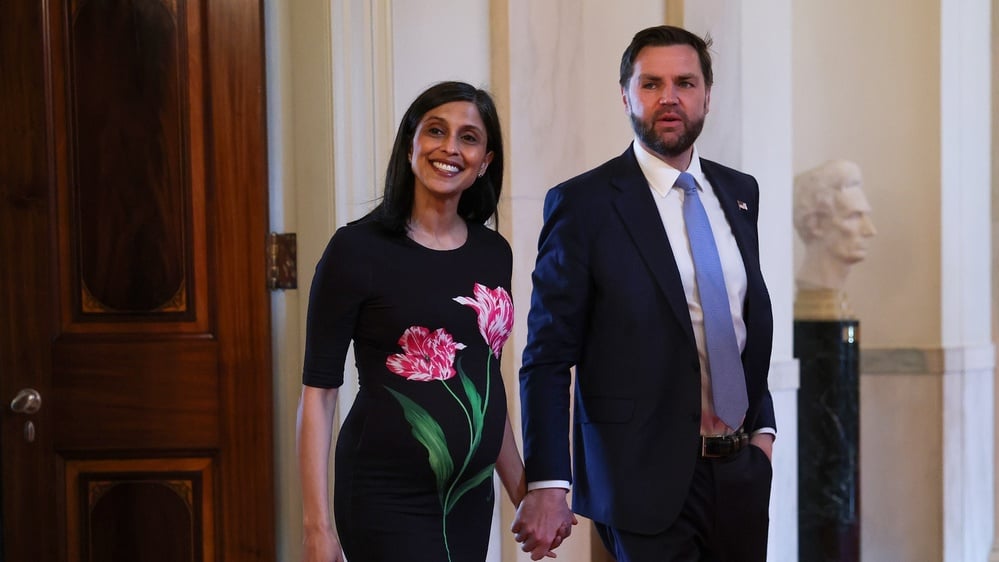
Announcement about the birth of the vice president's fourth child, including background on the couple and their public remarks; other headlines are interspersed in the text.
Automated analysis; not human reviewed.
Limitations: Concise, case-specific limitations and plausible alternative interpretations.
·
4 of 52 available dimensions scored; omitted dimensions are not treated as neutral.
·
Verified supporting quotes for 0 of 4 scored dimensions.
Claim: Article frames the report as pro-family and aligned with conservative policy aims (pro-natalist), with quotes from the VP and references to the March for Life and the Trump administration.
“"I want more babies in the United States of America.
I want more happy children in our country, and I want -- and I want beautiful young men and women who are eager to welcome them into the world and eager to raise them," Vance said at the March for Life event in Washington last year.”
· not found in supplied text
“"And it is the task of our government to make it easier for young moms and dads to afford to have kids, to bring them into the world and to welcome them as the blessings that we know they are here at the March for Life," he added at the time.” · not found in supplied text
“The vice president often speaks about his family and marriage, and has been a leading voice in the Trump administration's efforts to encourage the public to have more children.” · exact text match
Counterevidence:
“"I am not a particularly politically ambitious person; I would like to see him happy.
I would like to see him making contributions that matter and whatever form that takes is a form that I'll be supportive of," she said.”
· not found in supplied text
Why: Multiple pro-family policy statements and ties to Trump-era policy indicate conservative framing.
Claim: Content centers on a political figure and pro-family policy framing with limited critical analysis.
“"I want more babies..."” · not found in supplied text
“"the Trump administration's efforts to encourage the public to have more children."” · not found in supplied text
“Mentions of March for Life and the government's role in pro-natalist policy.” · not found in supplied text
Counterevidence:
“"I am not a particularly politically ambitious person..."” · not found in supplied text
Why: Policy-oriented lines and association with Trump-era messaging indicate political framing.
Claim: Uses health institutions and official status to lend credibility to the claims about the birth and health of the baby.
“"Walter Reed National Military Medical Center and the White House Medical Unit" are named in the text.” · not found in supplied text
“"thanked the medical teams at Walter Reed National Military Medical Center and the White House Medical Unit."” · not found in supplied text
Counterevidence:
“"Usha and the baby are happy and healthy" is attributed to the VP’s post rather than independent verification.” · not found in supplied text
Why: Cites respected institutions to reinforce health status claims, but verification is not independent.
Claim: Reporting emphasizes the VP’s public role and government connections, implying establishment alignment.
“"thanked the medical teams at Walter Reed National Military Medical Center and the White House Medical Unit."” · not found in supplied text
“"We are excited to announce that our baby boy, Alec Neel Vance, was born this morning.
Usha and the baby are happy and healthy, and our kids are overjoyed to meet their little brother," the vice president wrote on X.”
· not found in supplied text
“The vice president often speaks about his family and marriage, and has been a leading voice in the Trump administration's efforts to encourage the public to have more children.” · exact text match
Counterevidence:
“"I am not a particularly politically ambitious person; I would like to see him happy."” · not found in supplied text
Why: Prominent institutions and government messaging anchor the report to establishment narratives.
Case-specific ambiguities and evidence gaps could alter the assessment; limited excerpt focuses on family and avoids critical scrutiny.
Neutral birth announcement with no evident political framing, relying on a public source and reporting birth details without normative commentary.
Birth announcement reporting the birth of Alec Neel Vance at Walter Reed National Military Medical Center, noting health status and siblings' excitement, with a public figure as subject and no policy framing.
Automated analysis; not human reviewed.
Limitations: Concise, case-specific limitations and plausible alternative interpretations.
·
52 of 52 available dimensions scored; omitted dimensions are not treated as neutral.
·
Verified supporting quotes for 0 of 52 scored dimensions.
Claim: Neutral reporting with no political tilt.
“JD Vance and wife Usha welcome fourth child.” · exact text match
“Alec Neel Vance was born Sunday at Walter Reed National Military Medical Center.” · not found in supplied text
“the baby were healthy” · exact text match
Why: Direct quotes indicate a factual birth announcement without ideological framing.
Claim: No populist-elitist framing detected.
“The US vice president said Alec Neel Vance was born Sunday at Walter Reed National Military Medical Center.” · not found in supplied text
Why: Use of official source without populist rhetoric.
Claim: No libertarian or authoritarian framing detected.
Why: No government power or policy stance discussed.
Claim: No subjective framing; objective reporting.
Why: Facts presented without evaluative commentary.
Claim: No sensationalism.
Why: Neutral tone and straightforward facts.
Claim: No market language or financial framing.
Why: Non-financial subject matter.
Claim: Not unusually interesting; routine biographical note.
Why: Standard birth-announcement content.
Claim: No prescriptive guidance; descriptive reporting.
Why: No rules or prescriptions implied.
Claim: No hawkish or dovish framing.
Why: Event-focused content only.
Claim: No fear-based framing.
Why: Neutral tone.
Claim: No circular argument or begging the question.
Why: Straightforward facts.
Claim: No gossip-oriented framing.
Why: Limited to factual details.
Claim: No opinionated language.
Why: Neutral descriptors only.
Claim: No political advocacy or partisan framing.
“The US vice president said Alec Neel Vance was born Sunday at Walter Reed National Military Medical Center.” · not found in supplied text
Why: Reference to a political figure but not used to argue policy.
Claim: No oversimplification detected.
Why: Few facts presented; no reductive claim.
Claim: Limited use of authority; cites VP as source.
“The US vice president said Alec Neel Vance was born Sunday at Walter Reed National Military Medical Center.” · not found in supplied text
Why: Authority cited as source, not as sole argument.
Claim: No immature framing.
Why: Professional tone throughout.
Claim: No circular reasoning detected.
Why: No argumentative structure.
Claim: No signaling to shape reader response beyond reporting.
Why: Neutral presentation.
Claim: No victimization framing.
Why: No group blamed or harmed.
Claim: No overconfident assertions beyond stated facts.
Why: Constrained to reported details.
Claim: Not spam.
Why: Content is reporting not advertising.
Claim: No explicit ideology presented.
Why: Biographical reporting only.
Claim: No explicit establishment support or critique.
Why: Mentions of Walter Reed and US VP exist but not framed as endorsement.
Claim: No emotional framing.
Why: Neutral tone.
Claim: No evident double standard.
Why: No comparative judgments.
Claim: Credibility supported by named public figures and institutions.
Why: Single named source; no corroboration in text but widely credible entities.
Claim: No irrational claims detected; text is factual.
Why: Factual birth report with standard vocabulary.
Claim: No advertising content.
Why: No promotional language.
Claim: No evidence text is AI-generated within the content provided.
Why: No indicators; cannot determine definitively from content alone.
Claim: No integrity concerns; credible sourcing implied.
Why: Public figure mentioned; no conflicting sourcing shown.
Claim: Article provides basic factual information; not analytical.
Why: Short, biographical content.
Claim: No terrorism content.
Why: Event unrelated to violence.
Claim: No Marxist framing or analysis.
Why: Biographical event; no class analysis.
Claim: No Islamist content.
Why: No reference to Islam or Islamist groups.
Claim: No anti-Semitic content.
Why: No Jewish stereotypes or conspiracies.
Claim: No anti-LGBT content.
Why: No policy or identity-based framing.
Claim: No racial content or stereotypes.
Why: Neutral biographical reporting.
Claim: No identity-politics framing.
Why: Personal event; no structural remedies.
Claim: No cruelty framing.
Why: Neutral tone.
Claim: No faux virtue signaling detected.
Why: Content remains factual.
Claim: No conspiratorial content.
Why: No hidden plots.
Claim: No advocacy of self-harm or pity framing.
Why: Content not about self-harm.
Claim: No scapegoating present.
Why: Content limited to birth facts.
Claim: No hypocrisy identified.
Why: No inconsistent standards shown.
Claim: No rejection of reason or universal rights.
Why: Factual description.
Text-limited; case-specific ambiguities possible.
July 19, 2026 · 0 shares
The report is a largely neutral birth announcement with limited contextual framing, noting historical precedent and policy context without editorializing beyond linking the event to conservative advocacy.
Birth announcement of Alec Neel Vance with historical context about vice-presidential births and mention of the parents' backgrounds and public statements.
Ambiguity due to slight framing toward policy context; data limited, interpretations may vary.
Primarily neutral in tone, the birth announcement centers on verifiable details about JD Vance’s fourth child and associated context, while including hedged language and mild publisher branding that introduce small editorial framing without clear advocacy.
Concise, factual context for the birth announcement with familial, residence, and historical references, plus hedged statements and publisher branding.
Automated analysis; not human reviewed.
·
49 of 52 available dimensions scored; omitted dimensions are not treated as neutral.
·
Verified supporting quotes for 2 of 49 scored dimensions.
Claim: No detectable strong liberal or conservative tilt; coverage centers on a birth announcement with factual context and hedges.
“"The last time a sitting vice president became a new father was in 1870, the White House Historical Association told the Associated Press."” · exact text match
“"The vice president has echoed voices in the MAGA movement fretting about declining birth rates."” · not found in supplied text
“"In 2025, Vance told the anti-abortion March for Life rally in Washington, “I want more babies in the United States.”"” · not found in supplied text
Counterevidence:
“"The vice president has echoed voices in the MAGA movement fretting about declining birth rates."” · not found in supplied text
“"In 2025, Vance told the anti-abortion March for Life rally in Washington, “I want more babies in the United States.”"” · not found in supplied text
Why: Editorial framing is limited; political references appear but do not assert a stance.
Claim: Slight elitist framing via wealth-context descriptors and residence.
“"They are reportedly seeking to purchase a new home in Middleburg, Virginia, a wealthy enclave outside the nation’s capital."” · exact text match
“"The Vances, when they are in Washington, D.C., live at the United States Naval Observatory."” · exact text match
Counterevidence:
“"The Vances, when they are in Washington, D.C., live at the United States Naval Observatory."” · exact text match
Why: Wealth-context appears descriptively but not evaluatively.
Claim: Publisher branding and trust-promoting language introduces subjective framing.
“"is trusted by Americans across the entire political spectrum.
And unlike many other quality news outlets, we choose not to lock Americans out of our reporting and analysis with paywalls."”
· not found in supplied text
Counterevidence:
“"Join thought-provoking conversations, follow other Independent readers and see their replies"” · exact text match
Why: Branding statements introduce subjectivity beyond straightforward facts.
Claim: Not sensational; factual event with standard background context.
“"Alec Neel Vance was born Sunday morning, the vice president said."” · exact text match
“"The last time a sitting vice president became a new father was in 1870..."” · not found in supplied text
Counterevidence:
“"first baby from sitting VP in modern US history to welcome a new child"” · not found in supplied text
Why: Factual reporting with limited sensational framing.
Claim: Historical context and wealth-related background add interest to the birth announcement.
“"The last time a sitting vice president became a new father was in 1870..."” · not found in supplied text
“"They are reportedly seeking to purchase a new home in Middleburg, Virginia, a wealthy enclave..."” · not found in supplied text
Counterevidence:
“"Join thought-provoking conversations"” · not found in supplied text
Why: Historical and contextual details raise reader interest.
Claim: Presence of prescriptive language about parsing facts and brand messaging.
“"we know how important it is to parse out the facts from the messaging."” · not found in supplied text
“"is trusted by Americans across the entire political spectrum.
And unlike many other quality news outlets, we choose not to lock Americans out of our reporting and analysis with paywalls."”
· not found in supplied text
Counterevidence:
“"From reproductive rights to climate change to Big Tech, is on the ground when the story is developing."” · not found in supplied text
Why: Editorial framing includes normative guidance and branding.
Claim: Some travel/Secret Service anecdotes can resemble gossip when framed with hedges.
“"The Vances have allegedly angered their Secret Service detail in the past with last-minute travel requests, reportedly including a since-canceled trip..."” · not found in supplied text
Counterevidence:
“"allegedly" and "reportedly" hedging are common journalistic practices; not gossip per se.” · not found in supplied text
Why: Hedged, potentially gossipy details are presented with caution.
Claim: Minimal explicit opinion, but advertorial branding conveys subjective emphasis.
“"is trusted by Americans across the entire political spectrum... paywalls"” · not found in supplied text
Counterevidence:
“"Alec Neel Vance was born Sunday morning, the vice president said."” · exact text match
Why: Branding statements introduce a modest subjective slant.
Claim: Political references (MAGA, March for Life) provide contextual framing rather than endorsement.
“"The vice president has echoed voices in the MAGA movement fretting about declining birth rates."” · not found in supplied text
“"In 2025, Vance told the anti-abortion March for Life rally in Washington, 'I want more babies in the United States.'"” · not found in supplied text
Counterevidence:
“"The last time a sitting vice president became a new father was in 1870"” · not found in supplied text
Why: Contextual political references; no explicit advocacy.
Claim: References to established institutions and official sources suggest establishment framing.
“"The White House Historical Association told the Associated Press."” · not found in supplied text
“"Walter Reed Medical Center and the White House Medical Unit"” · not found in supplied text
Counterevidence:
“"The Vances wrote in a statement on X."” · not found in supplied text
Why: Use of official institutions anchors reporting in established sources.
Claim: Credibility supported by direct quotes and external sources, tempered by hedging and promotional lines.
“"Alec Neel Vance was born Sunday morning, the vice president said."” · exact text match
“"The last time a sitting vice president became a new father was in 1870, the White House Historical Association told the Associated Press."” · exact text match
Counterevidence:
“"Join thought-provoking conversations, follow other Independent readers and see their replies"” · exact text match
Why: Multiple verifiable facts and external sources bolster credibility, though promotional content and hedges temper it.
Claim: Use of hedges and hedged sourcing suggests careful, rational reporting.
“"allegedly"” · not found in supplied text
“"reportedly"” · not found in supplied text
“"The Vances have allegedly angered their Secret Service detail in the past with last-minute travel requests, reportedly including a since-canceled trip..."” · not found in supplied text
Counterevidence:
“"The vice president has echoed voices in the MAGA movement fretting about declining birth rates.
In 2025, Vance told the anti-abortion March for Life rally..."”
· not found in supplied text
Why: Hedging indicates caution; no sensational framing detected.
Claim: Promotional lines and reader prompts imply advertising/branding signals.
“"Join thought-provoking conversations, follow other Independent readers and see their replies"” · exact text match
“"Please refresh the page or navigate to another page on the site to be automatically logged in"” · not found in supplied text
Counterevidence:
“"From reproductive rights to climate change to Big Tech, is on the ground when the story is developing."” · not found in supplied text
Why: Editorial branding and prompts introduce promotional framing.
Claim: Some hedged language could imply speculative framing, though primarily factual.
“"allegedly"” · not found in supplied text
“"reportedly"” · not found in supplied text
Counterevidence:
“"Alec Neel Vance was born Sunday morning, the vice president said."” · exact text match
Why: Hedging signals cautious reporting but not speculative theorizing.
Promotional branding; limited context; potential framing ambiguity
July 19, 2026 · 0 shares
Neutral-to-mildly conservative establishment-leaning profile that emphasizes family life and pro-natalist policy framing around a high-ranking political figure while avoiding critical scrutiny.
Announcement about the birth of the vice president's fourth child, including background on the couple and their public remarks; other headlines are interspersed in the text.
Automated analysis; not human reviewed.
Limitations: Concise, case-specific limitations and plausible alternative interpretations.
·
4 of 52 available dimensions scored; omitted dimensions are not treated as neutral.
·
Verified supporting quotes for 0 of 4 scored dimensions.
Claim: Article frames the report as pro-family and aligned with conservative policy aims (pro-natalist), with quotes from the VP and references to the March for Life and the Trump administration.
“"I want more babies in the United States of America.
I want more happy children in our country, and I want -- and I want beautiful young men and women who are eager to welcome them into the world and eager to raise them," Vance said at the March for Life event in Washington last year.”
· not found in supplied text
“"And it is the task of our government to make it easier for young moms and dads to afford to have kids, to bring them into the world and to welcome them as the blessings that we know they are here at the March for Life," he added at the time.” · not found in supplied text
“The vice president often speaks about his family and marriage, and has been a leading voice in the Trump administration's efforts to encourage the public to have more children.” · exact text match
Counterevidence:
“"I am not a particularly politically ambitious person; I would like to see him happy.
I would like to see him making contributions that matter and whatever form that takes is a form that I'll be supportive of," she said.”
· not found in supplied text
Why: Multiple pro-family policy statements and ties to Trump-era policy indicate conservative framing.
Claim: Content centers on a political figure and pro-family policy framing with limited critical analysis.
“"I want more babies..."” · not found in supplied text
“"the Trump administration's efforts to encourage the public to have more children."” · not found in supplied text
“Mentions of March for Life and the government's role in pro-natalist policy.” · not found in supplied text
Counterevidence:
“"I am not a particularly politically ambitious person..."” · not found in supplied text
Why: Policy-oriented lines and association with Trump-era messaging indicate political framing.
Claim: Uses health institutions and official status to lend credibility to the claims about the birth and health of the baby.
“"Walter Reed National Military Medical Center and the White House Medical Unit" are named in the text.” · not found in supplied text
“"thanked the medical teams at Walter Reed National Military Medical Center and the White House Medical Unit."” · not found in supplied text
Counterevidence:
“"Usha and the baby are happy and healthy" is attributed to the VP’s post rather than independent verification.” · not found in supplied text
Why: Cites respected institutions to reinforce health status claims, but verification is not independent.
Claim: Reporting emphasizes the VP’s public role and government connections, implying establishment alignment.
“"thanked the medical teams at Walter Reed National Military Medical Center and the White House Medical Unit."” · not found in supplied text
“"We are excited to announce that our baby boy, Alec Neel Vance, was born this morning.
Usha and the baby are happy and healthy, and our kids are overjoyed to meet their little brother," the vice president wrote on X.”
· not found in supplied text
“The vice president often speaks about his family and marriage, and has been a leading voice in the Trump administration's efforts to encourage the public to have more children.” · exact text match
Counterevidence:
“"I am not a particularly politically ambitious person; I would like to see him happy."” · not found in supplied text
Why: Prominent institutions and government messaging anchor the report to establishment narratives.
Case-specific ambiguities and evidence gaps could alter the assessment; limited excerpt focuses on family and avoids critical scrutiny.
Neutral birth announcement with no evident political framing, relying on a public source and reporting birth details without normative commentary.
Birth announcement reporting the birth of Alec Neel Vance at Walter Reed National Military Medical Center, noting health status and siblings' excitement, with a public figure as subject and no policy framing.
Automated analysis; not human reviewed.
Limitations: Concise, case-specific limitations and plausible alternative interpretations.
·
52 of 52 available dimensions scored; omitted dimensions are not treated as neutral.
·
Verified supporting quotes for 0 of 52 scored dimensions.
Claim: Neutral reporting with no political tilt.
“JD Vance and wife Usha welcome fourth child.” · exact text match
“Alec Neel Vance was born Sunday at Walter Reed National Military Medical Center.” · not found in supplied text
“the baby were healthy” · exact text match
Why: Direct quotes indicate a factual birth announcement without ideological framing.
Claim: No populist-elitist framing detected.
“The US vice president said Alec Neel Vance was born Sunday at Walter Reed National Military Medical Center.” · not found in supplied text
Why: Use of official source without populist rhetoric.
Claim: No libertarian or authoritarian framing detected.
Why: No government power or policy stance discussed.
Claim: No subjective framing; objective reporting.
Why: Facts presented without evaluative commentary.
Claim: No sensationalism.
Why: Neutral tone and straightforward facts.
Claim: No market language or financial framing.
Why: Non-financial subject matter.
Claim: Not unusually interesting; routine biographical note.
Why: Standard birth-announcement content.
Claim: No prescriptive guidance; descriptive reporting.
Why: No rules or prescriptions implied.
Claim: No hawkish or dovish framing.
Why: Event-focused content only.
Claim: No fear-based framing.
Why: Neutral tone.
Claim: No circular argument or begging the question.
Why: Straightforward facts.
Claim: No gossip-oriented framing.
Why: Limited to factual details.
Claim: No opinionated language.
Why: Neutral descriptors only.
Claim: No political advocacy or partisan framing.
“The US vice president said Alec Neel Vance was born Sunday at Walter Reed National Military Medical Center.” · not found in supplied text
Why: Reference to a political figure but not used to argue policy.
Claim: No oversimplification detected.
Why: Few facts presented; no reductive claim.
Claim: Limited use of authority; cites VP as source.
“The US vice president said Alec Neel Vance was born Sunday at Walter Reed National Military Medical Center.” · not found in supplied text
Why: Authority cited as source, not as sole argument.
Claim: No immature framing.
Why: Professional tone throughout.
Claim: No circular reasoning detected.
Why: No argumentative structure.
Claim: No signaling to shape reader response beyond reporting.
Why: Neutral presentation.
Claim: No victimization framing.
Why: No group blamed or harmed.
Claim: No overconfident assertions beyond stated facts.
Why: Constrained to reported details.
Claim: Not spam.
Why: Content is reporting not advertising.
Claim: No explicit ideology presented.
Why: Biographical reporting only.
Claim: No explicit establishment support or critique.
Why: Mentions of Walter Reed and US VP exist but not framed as endorsement.
Claim: No emotional framing.
Why: Neutral tone.
Claim: No evident double standard.
Why: No comparative judgments.
Claim: Credibility supported by named public figures and institutions.
Why: Single named source; no corroboration in text but widely credible entities.
Claim: No irrational claims detected; text is factual.
Why: Factual birth report with standard vocabulary.
Claim: No advertising content.
Why: No promotional language.
Claim: No evidence text is AI-generated within the content provided.
Why: No indicators; cannot determine definitively from content alone.
Claim: No integrity concerns; credible sourcing implied.
Why: Public figure mentioned; no conflicting sourcing shown.
Claim: Article provides basic factual information; not analytical.
Why: Short, biographical content.
Claim: No terrorism content.
Why: Event unrelated to violence.
Claim: No Marxist framing or analysis.
Why: Biographical event; no class analysis.
Claim: No Islamist content.
Why: No reference to Islam or Islamist groups.
Claim: No anti-Semitic content.
Why: No Jewish stereotypes or conspiracies.
Claim: No anti-LGBT content.
Why: No policy or identity-based framing.
Claim: No racial content or stereotypes.
Why: Neutral biographical reporting.
Claim: No identity-politics framing.
Why: Personal event; no structural remedies.
Claim: No cruelty framing.
Why: Neutral tone.
Claim: No faux virtue signaling detected.
Why: Content remains factual.
Claim: No conspiratorial content.
Why: No hidden plots.
Claim: No advocacy of self-harm or pity framing.
Why: Content not about self-harm.
Claim: No scapegoating present.
Why: Content limited to birth facts.
Claim: No hypocrisy identified.
Why: No inconsistent standards shown.
Claim: No rejection of reason or universal rights.
Why: Factual description.
Text-limited; case-specific ambiguities possible.
July 19, 2026 · 0 shares
Neutral-to-mildly conservative establishment-leaning profile that emphasizes family life and pro-natalist policy framing around a high-ranking political figure while avoiding critical scrutiny.
Announcement about the birth of the vice president's fourth child, including background on the couple and their public remarks; other headlines are interspersed in the text.
Automated analysis; not human reviewed.
Limitations: Concise, case-specific limitations and plausible alternative interpretations.
·
4 of 52 available dimensions scored; omitted dimensions are not treated as neutral.
·
Verified supporting quotes for 0 of 4 scored dimensions.
Claim: Article frames the report as pro-family and aligned with conservative policy aims (pro-natalist), with quotes from the VP and references to the March for Life and the Trump administration.
“"I want more babies in the United States of America.
I want more happy children in our country, and I want -- and I want beautiful young men and women who are eager to welcome them into the world and eager to raise them," Vance said at the March for Life event in Washington last year.”
· not found in supplied text
“"And it is the task of our government to make it easier for young moms and dads to afford to have kids, to bring them into the world and to welcome them as the blessings that we know they are here at the March for Life," he added at the time.” · not found in supplied text
“The vice president often speaks about his family and marriage, and has been a leading voice in the Trump administration's efforts to encourage the public to have more children.” · exact text match
Counterevidence:
“"I am not a particularly politically ambitious person; I would like to see him happy.
I would like to see him making contributions that matter and whatever form that takes is a form that I'll be supportive of," she said.”
· not found in supplied text
Why: Multiple pro-family policy statements and ties to Trump-era policy indicate conservative framing.
Claim: Content centers on a political figure and pro-family policy framing with limited critical analysis.
“"I want more babies..."” · not found in supplied text
“"the Trump administration's efforts to encourage the public to have more children."” · not found in supplied text
“Mentions of March for Life and the government's role in pro-natalist policy.” · not found in supplied text
Counterevidence:
“"I am not a particularly politically ambitious person..."” · not found in supplied text
Why: Policy-oriented lines and association with Trump-era messaging indicate political framing.
Claim: Uses health institutions and official status to lend credibility to the claims about the birth and health of the baby.
“"Walter Reed National Military Medical Center and the White House Medical Unit" are named in the text.” · not found in supplied text
“"thanked the medical teams at Walter Reed National Military Medical Center and the White House Medical Unit."” · not found in supplied text
Counterevidence:
“"Usha and the baby are happy and healthy" is attributed to the VP’s post rather than independent verification.” · not found in supplied text
Why: Cites respected institutions to reinforce health status claims, but verification is not independent.
Claim: Reporting emphasizes the VP’s public role and government connections, implying establishment alignment.
“"thanked the medical teams at Walter Reed National Military Medical Center and the White House Medical Unit."” · not found in supplied text
“"We are excited to announce that our baby boy, Alec Neel Vance, was born this morning.
Usha and the baby are happy and healthy, and our kids are overjoyed to meet their little brother," the vice president wrote on X.”
· not found in supplied text
“The vice president often speaks about his family and marriage, and has been a leading voice in the Trump administration's efforts to encourage the public to have more children.” · exact text match
Counterevidence:
“"I am not a particularly politically ambitious person; I would like to see him happy."” · not found in supplied text
Why: Prominent institutions and government messaging anchor the report to establishment narratives.
Case-specific ambiguities and evidence gaps could alter the assessment; limited excerpt focuses on family and avoids critical scrutiny.
Neutral birth announcement with no evident political framing, relying on a public source and reporting birth details without normative commentary.
Birth announcement reporting the birth of Alec Neel Vance at Walter Reed National Military Medical Center, noting health status and siblings' excitement, with a public figure as subject and no policy framing.
Automated analysis; not human reviewed.
Limitations: Concise, case-specific limitations and plausible alternative interpretations.
·
52 of 52 available dimensions scored; omitted dimensions are not treated as neutral.
·
Verified supporting quotes for 0 of 52 scored dimensions.
Claim: Neutral reporting with no political tilt.
“JD Vance and wife Usha welcome fourth child.” · exact text match
“Alec Neel Vance was born Sunday at Walter Reed National Military Medical Center.” · not found in supplied text
“the baby were healthy” · exact text match
Why: Direct quotes indicate a factual birth announcement without ideological framing.
Claim: No populist-elitist framing detected.
“The US vice president said Alec Neel Vance was born Sunday at Walter Reed National Military Medical Center.” · not found in supplied text
Why: Use of official source without populist rhetoric.
Claim: No libertarian or authoritarian framing detected.
Why: No government power or policy stance discussed.
Claim: No subjective framing; objective reporting.
Why: Facts presented without evaluative commentary.
Claim: No sensationalism.
Why: Neutral tone and straightforward facts.
Claim: No market language or financial framing.
Why: Non-financial subject matter.
Claim: Not unusually interesting; routine biographical note.
Why: Standard birth-announcement content.
Claim: No prescriptive guidance; descriptive reporting.
Why: No rules or prescriptions implied.
Claim: No hawkish or dovish framing.
Why: Event-focused content only.
Claim: No fear-based framing.
Why: Neutral tone.
Claim: No circular argument or begging the question.
Why: Straightforward facts.
Claim: No gossip-oriented framing.
Why: Limited to factual details.
Claim: No opinionated language.
Why: Neutral descriptors only.
Claim: No political advocacy or partisan framing.
“The US vice president said Alec Neel Vance was born Sunday at Walter Reed National Military Medical Center.” · not found in supplied text
Why: Reference to a political figure but not used to argue policy.
Claim: No oversimplification detected.
Why: Few facts presented; no reductive claim.
Claim: Limited use of authority; cites VP as source.
“The US vice president said Alec Neel Vance was born Sunday at Walter Reed National Military Medical Center.” · not found in supplied text
Why: Authority cited as source, not as sole argument.
Claim: No immature framing.
Why: Professional tone throughout.
Claim: No circular reasoning detected.
Why: No argumentative structure.
Claim: No signaling to shape reader response beyond reporting.
Why: Neutral presentation.
Claim: No victimization framing.
Why: No group blamed or harmed.
Claim: No overconfident assertions beyond stated facts.
Why: Constrained to reported details.
Claim: Not spam.
Why: Content is reporting not advertising.
Claim: No explicit ideology presented.
Why: Biographical reporting only.
Claim: No explicit establishment support or critique.
Why: Mentions of Walter Reed and US VP exist but not framed as endorsement.
Claim: No emotional framing.
Why: Neutral tone.
Claim: No evident double standard.
Why: No comparative judgments.
Claim: Credibility supported by named public figures and institutions.
Why: Single named source; no corroboration in text but widely credible entities.
Claim: No irrational claims detected; text is factual.
Why: Factual birth report with standard vocabulary.
Claim: No advertising content.
Why: No promotional language.
Claim: No evidence text is AI-generated within the content provided.
Why: No indicators; cannot determine definitively from content alone.
Claim: No integrity concerns; credible sourcing implied.
Why: Public figure mentioned; no conflicting sourcing shown.
Claim: Article provides basic factual information; not analytical.
Why: Short, biographical content.
Claim: No terrorism content.
Why: Event unrelated to violence.
Claim: No Marxist framing or analysis.
Why: Biographical event; no class analysis.
Claim: No Islamist content.
Why: No reference to Islam or Islamist groups.
Claim: No anti-Semitic content.
Why: No Jewish stereotypes or conspiracies.
Claim: No anti-LGBT content.
Why: No policy or identity-based framing.
Claim: No racial content or stereotypes.
Why: Neutral biographical reporting.
Claim: No identity-politics framing.
Why: Personal event; no structural remedies.
Claim: No cruelty framing.
Why: Neutral tone.
Claim: No faux virtue signaling detected.
Why: Content remains factual.
Claim: No conspiratorial content.
Why: No hidden plots.
Claim: No advocacy of self-harm or pity framing.
Why: Content not about self-harm.
Claim: No scapegoating present.
Why: Content limited to birth facts.
Claim: No hypocrisy identified.
Why: No inconsistent standards shown.
Claim: No rejection of reason or universal rights.
Why: Factual description.
Text-limited; case-specific ambiguities possible.
July 19, 2026 · 0 shares
The report is a largely neutral birth announcement with limited contextual framing, noting historical precedent and policy context without editorializing beyond linking the event to conservative advocacy.
Birth announcement of Alec Neel Vance with historical context about vice-presidential births and mention of the parents' backgrounds and public statements.
Ambiguity due to slight framing toward policy context; data limited, interpretations may vary.
July 19, 2026 · 0 shares
The report is a largely neutral birth announcement with limited contextual framing, noting historical precedent and policy context without editorializing beyond linking the event to conservative advocacy.
Birth announcement of Alec Neel Vance with historical context about vice-presidential births and mention of the parents' backgrounds and public statements.
Ambiguity due to slight framing toward policy context; data limited, interpretations may vary.
Primarily neutral in tone, the birth announcement centers on verifiable details about JD Vance’s fourth child and associated context, while including hedged language and mild publisher branding that introduce small editorial framing without clear advocacy.
Concise, factual context for the birth announcement with familial, residence, and historical references, plus hedged statements and publisher branding.
Automated analysis; not human reviewed.
·
49 of 52 available dimensions scored; omitted dimensions are not treated as neutral.
·
Verified supporting quotes for 2 of 49 scored dimensions.
Claim: No detectable strong liberal or conservative tilt; coverage centers on a birth announcement with factual context and hedges.
“"The last time a sitting vice president became a new father was in 1870, the White House Historical Association told the Associated Press."” · exact text match
“"The vice president has echoed voices in the MAGA movement fretting about declining birth rates."” · not found in supplied text
“"In 2025, Vance told the anti-abortion March for Life rally in Washington, “I want more babies in the United States.”"” · not found in supplied text
Counterevidence:
“"The vice president has echoed voices in the MAGA movement fretting about declining birth rates."” · not found in supplied text
“"In 2025, Vance told the anti-abortion March for Life rally in Washington, “I want more babies in the United States.”"” · not found in supplied text
Why: Editorial framing is limited; political references appear but do not assert a stance.
Claim: Slight elitist framing via wealth-context descriptors and residence.
“"They are reportedly seeking to purchase a new home in Middleburg, Virginia, a wealthy enclave outside the nation’s capital."” · exact text match
“"The Vances, when they are in Washington, D.C., live at the United States Naval Observatory."” · exact text match
Counterevidence:
“"The Vances, when they are in Washington, D.C., live at the United States Naval Observatory."” · exact text match
Why: Wealth-context appears descriptively but not evaluatively.
Claim: Publisher branding and trust-promoting language introduces subjective framing.
“"is trusted by Americans across the entire political spectrum.
And unlike many other quality news outlets, we choose not to lock Americans out of our reporting and analysis with paywalls."”
· not found in supplied text
Counterevidence:
“"Join thought-provoking conversations, follow other Independent readers and see their replies"” · exact text match
Why: Branding statements introduce subjectivity beyond straightforward facts.
Claim: Not sensational; factual event with standard background context.
“"Alec Neel Vance was born Sunday morning, the vice president said."” · exact text match
“"The last time a sitting vice president became a new father was in 1870..."” · not found in supplied text
Counterevidence:
“"first baby from sitting VP in modern US history to welcome a new child"” · not found in supplied text
Why: Factual reporting with limited sensational framing.
Claim: Historical context and wealth-related background add interest to the birth announcement.
“"The last time a sitting vice president became a new father was in 1870..."” · not found in supplied text
“"They are reportedly seeking to purchase a new home in Middleburg, Virginia, a wealthy enclave..."” · not found in supplied text
Counterevidence:
“"Join thought-provoking conversations"” · not found in supplied text
Why: Historical and contextual details raise reader interest.
Claim: Presence of prescriptive language about parsing facts and brand messaging.
“"we know how important it is to parse out the facts from the messaging."” · not found in supplied text
“"is trusted by Americans across the entire political spectrum.
And unlike many other quality news outlets, we choose not to lock Americans out of our reporting and analysis with paywalls."”
· not found in supplied text
Counterevidence:
“"From reproductive rights to climate change to Big Tech, is on the ground when the story is developing."” · not found in supplied text
Why: Editorial framing includes normative guidance and branding.
Claim: Some travel/Secret Service anecdotes can resemble gossip when framed with hedges.
“"The Vances have allegedly angered their Secret Service detail in the past with last-minute travel requests, reportedly including a since-canceled trip..."” · not found in supplied text
Counterevidence:
“"allegedly" and "reportedly" hedging are common journalistic practices; not gossip per se.” · not found in supplied text
Why: Hedged, potentially gossipy details are presented with caution.
Claim: Minimal explicit opinion, but advertorial branding conveys subjective emphasis.
“"is trusted by Americans across the entire political spectrum... paywalls"” · not found in supplied text
Counterevidence:
“"Alec Neel Vance was born Sunday morning, the vice president said."” · exact text match
Why: Branding statements introduce a modest subjective slant.
Claim: Political references (MAGA, March for Life) provide contextual framing rather than endorsement.
“"The vice president has echoed voices in the MAGA movement fretting about declining birth rates."” · not found in supplied text
“"In 2025, Vance told the anti-abortion March for Life rally in Washington, 'I want more babies in the United States.'"” · not found in supplied text
Counterevidence:
“"The last time a sitting vice president became a new father was in 1870"” · not found in supplied text
Why: Contextual political references; no explicit advocacy.
Claim: References to established institutions and official sources suggest establishment framing.
“"The White House Historical Association told the Associated Press."” · not found in supplied text
“"Walter Reed Medical Center and the White House Medical Unit"” · not found in supplied text
Counterevidence:
“"The Vances wrote in a statement on X."” · not found in supplied text
Why: Use of official institutions anchors reporting in established sources.
Claim: Credibility supported by direct quotes and external sources, tempered by hedging and promotional lines.
“"Alec Neel Vance was born Sunday morning, the vice president said."” · exact text match
“"The last time a sitting vice president became a new father was in 1870, the White House Historical Association told the Associated Press."” · exact text match
Counterevidence:
“"Join thought-provoking conversations, follow other Independent readers and see their replies"” · exact text match
Why: Multiple verifiable facts and external sources bolster credibility, though promotional content and hedges temper it.
Claim: Use of hedges and hedged sourcing suggests careful, rational reporting.
“"allegedly"” · not found in supplied text
“"reportedly"” · not found in supplied text
“"The Vances have allegedly angered their Secret Service detail in the past with last-minute travel requests, reportedly including a since-canceled trip..."” · not found in supplied text
Counterevidence:
“"The vice president has echoed voices in the MAGA movement fretting about declining birth rates.
In 2025, Vance told the anti-abortion March for Life rally..."”
· not found in supplied text
Why: Hedging indicates caution; no sensational framing detected.
Claim: Promotional lines and reader prompts imply advertising/branding signals.
“"Join thought-provoking conversations, follow other Independent readers and see their replies"” · exact text match
“"Please refresh the page or navigate to another page on the site to be automatically logged in"” · not found in supplied text
Counterevidence:
“"From reproductive rights to climate change to Big Tech, is on the ground when the story is developing."” · not found in supplied text
Why: Editorial branding and prompts introduce promotional framing.
Claim: Some hedged language could imply speculative framing, though primarily factual.
“"allegedly"” · not found in supplied text
“"reportedly"” · not found in supplied text
Counterevidence:
“"Alec Neel Vance was born Sunday morning, the vice president said."” · exact text match
Why: Hedging signals cautious reporting but not speculative theorizing.
Promotional branding; limited context; potential framing ambiguity
July 19, 2026 · 0 shares
Neutral-to-mildly conservative establishment-leaning profile that emphasizes family life and pro-natalist policy framing around a high-ranking political figure while avoiding critical scrutiny.
Announcement about the birth of the vice president's fourth child, including background on the couple and their public remarks; other headlines are interspersed in the text.
Automated analysis; not human reviewed.
Limitations: Concise, case-specific limitations and plausible alternative interpretations.
·
4 of 52 available dimensions scored; omitted dimensions are not treated as neutral.
·
Verified supporting quotes for 0 of 4 scored dimensions.
Claim: Article frames the report as pro-family and aligned with conservative policy aims (pro-natalist), with quotes from the VP and references to the March for Life and the Trump administration.
“"I want more babies in the United States of America.
I want more happy children in our country, and I want -- and I want beautiful young men and women who are eager to welcome them into the world and eager to raise them," Vance said at the March for Life event in Washington last year.”
· not found in supplied text
“"And it is the task of our government to make it easier for young moms and dads to afford to have kids, to bring them into the world and to welcome them as the blessings that we know they are here at the March for Life," he added at the time.” · not found in supplied text
“The vice president often speaks about his family and marriage, and has been a leading voice in the Trump administration's efforts to encourage the public to have more children.” · exact text match
Counterevidence:
“"I am not a particularly politically ambitious person; I would like to see him happy.
I would like to see him making contributions that matter and whatever form that takes is a form that I'll be supportive of," she said.”
· not found in supplied text
Why: Multiple pro-family policy statements and ties to Trump-era policy indicate conservative framing.
Claim: Content centers on a political figure and pro-family policy framing with limited critical analysis.
“"I want more babies..."” · not found in supplied text
“"the Trump administration's efforts to encourage the public to have more children."” · not found in supplied text
“Mentions of March for Life and the government's role in pro-natalist policy.” · not found in supplied text
Counterevidence:
“"I am not a particularly politically ambitious person..."” · not found in supplied text
Why: Policy-oriented lines and association with Trump-era messaging indicate political framing.
Claim: Uses health institutions and official status to lend credibility to the claims about the birth and health of the baby.
“"Walter Reed National Military Medical Center and the White House Medical Unit" are named in the text.” · not found in supplied text
“"thanked the medical teams at Walter Reed National Military Medical Center and the White House Medical Unit."” · not found in supplied text
Counterevidence:
“"Usha and the baby are happy and healthy" is attributed to the VP’s post rather than independent verification.” · not found in supplied text
Why: Cites respected institutions to reinforce health status claims, but verification is not independent.
Claim: Reporting emphasizes the VP’s public role and government connections, implying establishment alignment.
“"thanked the medical teams at Walter Reed National Military Medical Center and the White House Medical Unit."” · not found in supplied text
“"We are excited to announce that our baby boy, Alec Neel Vance, was born this morning.
Usha and the baby are happy and healthy, and our kids are overjoyed to meet their little brother," the vice president wrote on X.”
· not found in supplied text
“The vice president often speaks about his family and marriage, and has been a leading voice in the Trump administration's efforts to encourage the public to have more children.” · exact text match
Counterevidence:
“"I am not a particularly politically ambitious person; I would like to see him happy."” · not found in supplied text
Why: Prominent institutions and government messaging anchor the report to establishment narratives.
Case-specific ambiguities and evidence gaps could alter the assessment; limited excerpt focuses on family and avoids critical scrutiny.
Primarily neutral in tone, the birth announcement centers on verifiable details about JD Vance’s fourth child and associated context, while including hedged language and mild publisher branding that introduce small editorial framing without clear advocacy.
Concise, factual context for the birth announcement with familial, residence, and historical references, plus hedged statements and publisher branding.
Automated analysis; not human reviewed.
·
49 of 52 available dimensions scored; omitted dimensions are not treated as neutral.
·
Verified supporting quotes for 2 of 49 scored dimensions.
Claim: No detectable strong liberal or conservative tilt; coverage centers on a birth announcement with factual context and hedges.
“"The last time a sitting vice president became a new father was in 1870, the White House Historical Association told the Associated Press."” · exact text match
“"The vice president has echoed voices in the MAGA movement fretting about declining birth rates."” · not found in supplied text
“"In 2025, Vance told the anti-abortion March for Life rally in Washington, “I want more babies in the United States.”"” · not found in supplied text
Counterevidence:
“"The vice president has echoed voices in the MAGA movement fretting about declining birth rates."” · not found in supplied text
“"In 2025, Vance told the anti-abortion March for Life rally in Washington, “I want more babies in the United States.”"” · not found in supplied text
Why: Editorial framing is limited; political references appear but do not assert a stance.
Claim: Slight elitist framing via wealth-context descriptors and residence.
“"They are reportedly seeking to purchase a new home in Middleburg, Virginia, a wealthy enclave outside the nation’s capital."” · exact text match
“"The Vances, when they are in Washington, D.C., live at the United States Naval Observatory."” · exact text match
Counterevidence:
“"The Vances, when they are in Washington, D.C., live at the United States Naval Observatory."” · exact text match
Why: Wealth-context appears descriptively but not evaluatively.
Claim: Publisher branding and trust-promoting language introduces subjective framing.
“"is trusted by Americans across the entire political spectrum.
And unlike many other quality news outlets, we choose not to lock Americans out of our reporting and analysis with paywalls."”
· not found in supplied text
Counterevidence:
“"Join thought-provoking conversations, follow other Independent readers and see their replies"” · exact text match
Why: Branding statements introduce subjectivity beyond straightforward facts.
Claim: Not sensational; factual event with standard background context.
“"Alec Neel Vance was born Sunday morning, the vice president said."” · exact text match
“"The last time a sitting vice president became a new father was in 1870..."” · not found in supplied text
Counterevidence:
“"first baby from sitting VP in modern US history to welcome a new child"” · not found in supplied text
Why: Factual reporting with limited sensational framing.
Claim: Historical context and wealth-related background add interest to the birth announcement.
“"The last time a sitting vice president became a new father was in 1870..."” · not found in supplied text
“"They are reportedly seeking to purchase a new home in Middleburg, Virginia, a wealthy enclave..."” · not found in supplied text
Counterevidence:
“"Join thought-provoking conversations"” · not found in supplied text
Why: Historical and contextual details raise reader interest.
Claim: Presence of prescriptive language about parsing facts and brand messaging.
“"we know how important it is to parse out the facts from the messaging."” · not found in supplied text
“"is trusted by Americans across the entire political spectrum.
And unlike many other quality news outlets, we choose not to lock Americans out of our reporting and analysis with paywalls."”
· not found in supplied text
Counterevidence:
“"From reproductive rights to climate change to Big Tech, is on the ground when the story is developing."” · not found in supplied text
Why: Editorial framing includes normative guidance and branding.
Claim: Some travel/Secret Service anecdotes can resemble gossip when framed with hedges.
“"The Vances have allegedly angered their Secret Service detail in the past with last-minute travel requests, reportedly including a since-canceled trip..."” · not found in supplied text
Counterevidence:
“"allegedly" and "reportedly" hedging are common journalistic practices; not gossip per se.” · not found in supplied text
Why: Hedged, potentially gossipy details are presented with caution.
Claim: Minimal explicit opinion, but advertorial branding conveys subjective emphasis.
“"is trusted by Americans across the entire political spectrum... paywalls"” · not found in supplied text
Counterevidence:
“"Alec Neel Vance was born Sunday morning, the vice president said."” · exact text match
Why: Branding statements introduce a modest subjective slant.
Claim: Political references (MAGA, March for Life) provide contextual framing rather than endorsement.
“"The vice president has echoed voices in the MAGA movement fretting about declining birth rates."” · not found in supplied text
“"In 2025, Vance told the anti-abortion March for Life rally in Washington, 'I want more babies in the United States.'"” · not found in supplied text
Counterevidence:
“"The last time a sitting vice president became a new father was in 1870"” · not found in supplied text
Why: Contextual political references; no explicit advocacy.
Claim: References to established institutions and official sources suggest establishment framing.
“"The White House Historical Association told the Associated Press."” · not found in supplied text
“"Walter Reed Medical Center and the White House Medical Unit"” · not found in supplied text
Counterevidence:
“"The Vances wrote in a statement on X."” · not found in supplied text
Why: Use of official institutions anchors reporting in established sources.
Claim: Credibility supported by direct quotes and external sources, tempered by hedging and promotional lines.
“"Alec Neel Vance was born Sunday morning, the vice president said."” · exact text match
“"The last time a sitting vice president became a new father was in 1870, the White House Historical Association told the Associated Press."” · exact text match
Counterevidence:
“"Join thought-provoking conversations, follow other Independent readers and see their replies"” · exact text match
Why: Multiple verifiable facts and external sources bolster credibility, though promotional content and hedges temper it.
Claim: Use of hedges and hedged sourcing suggests careful, rational reporting.
“"allegedly"” · not found in supplied text
“"reportedly"” · not found in supplied text
“"The Vances have allegedly angered their Secret Service detail in the past with last-minute travel requests, reportedly including a since-canceled trip..."” · not found in supplied text
Counterevidence:
“"The vice president has echoed voices in the MAGA movement fretting about declining birth rates.
In 2025, Vance told the anti-abortion March for Life rally..."”
· not found in supplied text
Why: Hedging indicates caution; no sensational framing detected.
Claim: Promotional lines and reader prompts imply advertising/branding signals.
“"Join thought-provoking conversations, follow other Independent readers and see their replies"” · exact text match
“"Please refresh the page or navigate to another page on the site to be automatically logged in"” · not found in supplied text
Counterevidence:
“"From reproductive rights to climate change to Big Tech, is on the ground when the story is developing."” · not found in supplied text
Why: Editorial branding and prompts introduce promotional framing.
Claim: Some hedged language could imply speculative framing, though primarily factual.
“"allegedly"” · not found in supplied text
“"reportedly"” · not found in supplied text
Counterevidence:
“"Alec Neel Vance was born Sunday morning, the vice president said."” · exact text match
Why: Hedging signals cautious reporting but not speculative theorizing.
Promotional branding; limited context; potential framing ambiguity
Advertising-forward framing for Straight Arrow dominates the piece alongside a birth announcement and headlines, yielding a mixed bias where promotional messaging competes with factual reporting.
A mixed-content feed reporting a birth announcement alongside unrelated headlines and advertising for a media app.
Automated analysis; not human reviewed.
·
52 of 52 available dimensions scored; omitted dimensions are not treated as neutral.
·
Verified supporting quotes for 0 of 52 scored dimensions.
Promo text may bias; birth date not specified; mixed content
Advertising-forward framing for Straight Arrow dominates the piece alongside a birth announcement and headlines, yielding a mixed bias where promotional messaging competes with factual reporting.
A mixed-content feed reporting a birth announcement alongside unrelated headlines and advertising for a media app.
Automated analysis; not human reviewed.
·
52 of 52 available dimensions scored; omitted dimensions are not treated as neutral.
·
Verified supporting quotes for 0 of 52 scored dimensions.
Promo text may bias; birth date not specified; mixed content
July 19, 2026 · 0 shares
Neutral-to-mildly conservative establishment-leaning profile that emphasizes family life and pro-natalist policy framing around a high-ranking political figure while avoiding critical scrutiny.
Announcement about the birth of the vice president's fourth child, including background on the couple and their public remarks; other headlines are interspersed in the text.
Automated analysis; not human reviewed. Limitations: Concise, case-specific limitations and plausible alternative interpretations. · 4 of 52 available dimensions scored; omitted dimensions are not treated as neutral. · Verified supporting quotes for 0 of 4 scored dimensions.
Claim: Article frames the report as pro-family and aligned with conservative policy aims (pro-natalist), with quotes from the VP and references to the March for Life and the Trump administration.
“"I want more babies in the United States of America. I want more happy children in our country, and I want -- and I want beautiful young men and women who are eager to welcome them into the world and eager to raise them," Vance said at the March for Life event in Washington last year.” · not found in supplied text
“"And it is the task of our government to make it easier for young moms and dads to afford to have kids, to bring them into the world and to welcome them as the blessings that we know they are here at the March for Life," he added at the time.” · not found in supplied text
“The vice president often speaks about his family and marriage, and has been a leading voice in the Trump administration's efforts to encourage the public to have more children.” · exact text match
Counterevidence:
“"I am not a particularly politically ambitious person; I would like to see him happy. I would like to see him making contributions that matter and whatever form that takes is a form that I'll be supportive of," she said.” · not found in supplied text
Why: Multiple pro-family policy statements and ties to Trump-era policy indicate conservative framing.
Claim: Content centers on a political figure and pro-family policy framing with limited critical analysis.
“"I want more babies..."” · not found in supplied text
“"the Trump administration's efforts to encourage the public to have more children."” · not found in supplied text
“Mentions of March for Life and the government's role in pro-natalist policy.” · not found in supplied text
Counterevidence:
“"I am not a particularly politically ambitious person..."” · not found in supplied text
Why: Policy-oriented lines and association with Trump-era messaging indicate political framing.
Claim: Uses health institutions and official status to lend credibility to the claims about the birth and health of the baby.
“"Walter Reed National Military Medical Center and the White House Medical Unit" are named in the text.” · not found in supplied text
“"thanked the medical teams at Walter Reed National Military Medical Center and the White House Medical Unit."” · not found in supplied text
Counterevidence:
“"Usha and the baby are happy and healthy" is attributed to the VP’s post rather than independent verification.” · not found in supplied text
Why: Cites respected institutions to reinforce health status claims, but verification is not independent.
Claim: Reporting emphasizes the VP’s public role and government connections, implying establishment alignment.
“"thanked the medical teams at Walter Reed National Military Medical Center and the White House Medical Unit."” · not found in supplied text
“"We are excited to announce that our baby boy, Alec Neel Vance, was born this morning. Usha and the baby are happy and healthy, and our kids are overjoyed to meet their little brother," the vice president wrote on X.” · not found in supplied text
“The vice president often speaks about his family and marriage, and has been a leading voice in the Trump administration's efforts to encourage the public to have more children.” · exact text match
Counterevidence:
“"I am not a particularly politically ambitious person; I would like to see him happy."” · not found in supplied text
Why: Prominent institutions and government messaging anchor the report to establishment narratives.
Case-specific ambiguities and evidence gaps could alter the assessment; limited excerpt focuses on family and avoids critical scrutiny.
Neutral birth announcement with no evident political framing, relying on a public source and reporting birth details without normative commentary.
Birth announcement reporting the birth of Alec Neel Vance at Walter Reed National Military Medical Center, noting health status and siblings' excitement, with a public figure as subject and no policy framing.
Automated analysis; not human reviewed. Limitations: Concise, case-specific limitations and plausible alternative interpretations. · 52 of 52 available dimensions scored; omitted dimensions are not treated as neutral. · Verified supporting quotes for 0 of 52 scored dimensions.
Claim: Neutral reporting with no political tilt.
“JD Vance and wife Usha welcome fourth child.” · exact text match
“Alec Neel Vance was born Sunday at Walter Reed National Military Medical Center.” · not found in supplied text
“the baby were healthy” · exact text match
Why: Direct quotes indicate a factual birth announcement without ideological framing.
Claim: No populist-elitist framing detected.
“The US vice president said Alec Neel Vance was born Sunday at Walter Reed National Military Medical Center.” · not found in supplied text
Why: Use of official source without populist rhetoric.
Claim: No libertarian or authoritarian framing detected.
Why: No government power or policy stance discussed.
Claim: No subjective framing; objective reporting.
Why: Facts presented without evaluative commentary.
Claim: No sensationalism.
Why: Neutral tone and straightforward facts.
Claim: No market language or financial framing.
Why: Non-financial subject matter.
Claim: Not unusually interesting; routine biographical note.
Why: Standard birth-announcement content.
Claim: No prescriptive guidance; descriptive reporting.
Why: No rules or prescriptions implied.
Claim: No hawkish or dovish framing.
Why: Event-focused content only.
Claim: No fear-based framing.
Why: Neutral tone.
Claim: No circular argument or begging the question.
Why: Straightforward facts.
Claim: No gossip-oriented framing.
Why: Limited to factual details.
Claim: No opinionated language.
Why: Neutral descriptors only.
Claim: No political advocacy or partisan framing.
“The US vice president said Alec Neel Vance was born Sunday at Walter Reed National Military Medical Center.” · not found in supplied text
Why: Reference to a political figure but not used to argue policy.
Claim: No oversimplification detected.
Why: Few facts presented; no reductive claim.
Claim: Limited use of authority; cites VP as source.
“The US vice president said Alec Neel Vance was born Sunday at Walter Reed National Military Medical Center.” · not found in supplied text
Why: Authority cited as source, not as sole argument.
Claim: No immature framing.
Why: Professional tone throughout.
Claim: No circular reasoning detected.
Why: No argumentative structure.
Claim: No signaling to shape reader response beyond reporting.
Why: Neutral presentation.
Claim: No victimization framing.
Why: No group blamed or harmed.
Claim: No overconfident assertions beyond stated facts.
Why: Constrained to reported details.
Claim: Not spam.
Why: Content is reporting not advertising.
Claim: No explicit ideology presented.
Why: Biographical reporting only.
Claim: No explicit establishment support or critique.
Why: Mentions of Walter Reed and US VP exist but not framed as endorsement.
Claim: No emotional framing.
Why: Neutral tone.
Claim: No evident double standard.
Why: No comparative judgments.
Claim: Credibility supported by named public figures and institutions.
Why: Single named source; no corroboration in text but widely credible entities.
Claim: No irrational claims detected; text is factual.
Why: Factual birth report with standard vocabulary.
Claim: No advertising content.
Why: No promotional language.
Claim: No evidence text is AI-generated within the content provided.
Why: No indicators; cannot determine definitively from content alone.
Claim: No integrity concerns; credible sourcing implied.
Why: Public figure mentioned; no conflicting sourcing shown.
Claim: Article provides basic factual information; not analytical.
Why: Short, biographical content.
Claim: No terrorism content.
Why: Event unrelated to violence.
Claim: No Marxist framing or analysis.
Why: Biographical event; no class analysis.
Claim: No Islamist content.
Why: No reference to Islam or Islamist groups.
Claim: No anti-Semitic content.
Why: No Jewish stereotypes or conspiracies.
Claim: No anti-LGBT content.
Why: No policy or identity-based framing.
Claim: No racial content or stereotypes.
Why: Neutral biographical reporting.
Claim: No identity-politics framing.
Why: Personal event; no structural remedies.
Claim: No cruelty framing.
Why: Neutral tone.
Claim: No faux virtue signaling detected.
Why: Content remains factual.
Claim: No conspiratorial content.
Why: No hidden plots.
Claim: No advocacy of self-harm or pity framing.
Why: Content not about self-harm.
Claim: No scapegoating present.
Why: Content limited to birth facts.
Claim: No hypocrisy identified.
Why: No inconsistent standards shown.
Claim: No rejection of reason or universal rights.
Why: Factual description.
Text-limited; case-specific ambiguities possible.
Neutral birth announcement with no evident political framing, relying on a public source and reporting birth details without normative commentary.
Birth announcement reporting the birth of Alec Neel Vance at Walter Reed National Military Medical Center, noting health status and siblings' excitement, with a public figure as subject and no policy framing.
Automated analysis; not human reviewed. Limitations: Concise, case-specific limitations and plausible alternative interpretations. · 52 of 52 available dimensions scored; omitted dimensions are not treated as neutral. · Verified supporting quotes for 0 of 52 scored dimensions.
Claim: Neutral reporting with no political tilt.
“JD Vance and wife Usha welcome fourth child.” · exact text match
“Alec Neel Vance was born Sunday at Walter Reed National Military Medical Center.” · not found in supplied text
“the baby were healthy” · exact text match
Why: Direct quotes indicate a factual birth announcement without ideological framing.
Claim: No populist-elitist framing detected.
“The US vice president said Alec Neel Vance was born Sunday at Walter Reed National Military Medical Center.” · not found in supplied text
Why: Use of official source without populist rhetoric.
Claim: No libertarian or authoritarian framing detected.
Why: No government power or policy stance discussed.
Claim: No subjective framing; objective reporting.
Why: Facts presented without evaluative commentary.
Claim: No sensationalism.
Why: Neutral tone and straightforward facts.
Claim: No market language or financial framing.
Why: Non-financial subject matter.
Claim: Not unusually interesting; routine biographical note.
Why: Standard birth-announcement content.
Claim: No prescriptive guidance; descriptive reporting.
Why: No rules or prescriptions implied.
Claim: No hawkish or dovish framing.
Why: Event-focused content only.
Claim: No fear-based framing.
Why: Neutral tone.
Claim: No circular argument or begging the question.
Why: Straightforward facts.
Claim: No gossip-oriented framing.
Why: Limited to factual details.
Claim: No opinionated language.
Why: Neutral descriptors only.
Claim: No political advocacy or partisan framing.
“The US vice president said Alec Neel Vance was born Sunday at Walter Reed National Military Medical Center.” · not found in supplied text
Why: Reference to a political figure but not used to argue policy.
Claim: No oversimplification detected.
Why: Few facts presented; no reductive claim.
Claim: Limited use of authority; cites VP as source.
“The US vice president said Alec Neel Vance was born Sunday at Walter Reed National Military Medical Center.” · not found in supplied text
Why: Authority cited as source, not as sole argument.
Claim: No immature framing.
Why: Professional tone throughout.
Claim: No circular reasoning detected.
Why: No argumentative structure.
Claim: No signaling to shape reader response beyond reporting.
Why: Neutral presentation.
Claim: No victimization framing.
Why: No group blamed or harmed.
Claim: No overconfident assertions beyond stated facts.
Why: Constrained to reported details.
Claim: Not spam.
Why: Content is reporting not advertising.
Claim: No explicit ideology presented.
Why: Biographical reporting only.
Claim: No explicit establishment support or critique.
Why: Mentions of Walter Reed and US VP exist but not framed as endorsement.
Claim: No emotional framing.
Why: Neutral tone.
Claim: No evident double standard.
Why: No comparative judgments.
Claim: Credibility supported by named public figures and institutions.
Why: Single named source; no corroboration in text but widely credible entities.
Claim: No irrational claims detected; text is factual.
Why: Factual birth report with standard vocabulary.
Claim: No advertising content.
Why: No promotional language.
Claim: No evidence text is AI-generated within the content provided.
Why: No indicators; cannot determine definitively from content alone.
Claim: No integrity concerns; credible sourcing implied.
Why: Public figure mentioned; no conflicting sourcing shown.
Claim: Article provides basic factual information; not analytical.
Why: Short, biographical content.
Claim: No terrorism content.
Why: Event unrelated to violence.
Claim: No Marxist framing or analysis.
Why: Biographical event; no class analysis.
Claim: No Islamist content.
Why: No reference to Islam or Islamist groups.
Claim: No anti-Semitic content.
Why: No Jewish stereotypes or conspiracies.
Claim: No anti-LGBT content.
Why: No policy or identity-based framing.
Claim: No racial content or stereotypes.
Why: Neutral biographical reporting.
Claim: No identity-politics framing.
Why: Personal event; no structural remedies.
Claim: No cruelty framing.
Why: Neutral tone.
Claim: No faux virtue signaling detected.
Why: Content remains factual.
Claim: No conspiratorial content.
Why: No hidden plots.
Claim: No advocacy of self-harm or pity framing.
Why: Content not about self-harm.
Claim: No scapegoating present.
Why: Content limited to birth facts.
Claim: No hypocrisy identified.
Why: No inconsistent standards shown.
Claim: No rejection of reason or universal rights.
Why: Factual description.
Text-limited; case-specific ambiguities possible.
July 19, 2026 · 0 shares
The report is a largely neutral birth announcement with limited contextual framing, noting historical precedent and policy context without editorializing beyond linking the event to conservative advocacy.
Birth announcement of Alec Neel Vance with historical context about vice-presidential births and mention of the parents' backgrounds and public statements.
Ambiguity due to slight framing toward policy context; data limited, interpretations may vary.
Primarily neutral in tone, the birth announcement centers on verifiable details about JD Vance’s fourth child and associated context, while including hedged language and mild publisher branding that introduce small editorial framing without clear advocacy.
Concise, factual context for the birth announcement with familial, residence, and historical references, plus hedged statements and publisher branding.
Automated analysis; not human reviewed. · 49 of 52 available dimensions scored; omitted dimensions are not treated as neutral. · Verified supporting quotes for 2 of 49 scored dimensions.
Claim: No detectable strong liberal or conservative tilt; coverage centers on a birth announcement with factual context and hedges.
“"The last time a sitting vice president became a new father was in 1870, the White House Historical Association told the Associated Press."” · exact text match
“"The vice president has echoed voices in the MAGA movement fretting about declining birth rates."” · not found in supplied text
“"In 2025, Vance told the anti-abortion March for Life rally in Washington, “I want more babies in the United States.”"” · not found in supplied text
Counterevidence:
“"The vice president has echoed voices in the MAGA movement fretting about declining birth rates."” · not found in supplied text
“"In 2025, Vance told the anti-abortion March for Life rally in Washington, “I want more babies in the United States.”"” · not found in supplied text
Why: Editorial framing is limited; political references appear but do not assert a stance.
Claim: Slight elitist framing via wealth-context descriptors and residence.
“"They are reportedly seeking to purchase a new home in Middleburg, Virginia, a wealthy enclave outside the nation’s capital."” · exact text match
“"The Vances, when they are in Washington, D.C., live at the United States Naval Observatory."” · exact text match
Counterevidence:
“"The Vances, when they are in Washington, D.C., live at the United States Naval Observatory."” · exact text match
Why: Wealth-context appears descriptively but not evaluatively.
Claim: Publisher branding and trust-promoting language introduces subjective framing.
“"is trusted by Americans across the entire political spectrum. And unlike many other quality news outlets, we choose not to lock Americans out of our reporting and analysis with paywalls."” · not found in supplied text
Counterevidence:
“"Join thought-provoking conversations, follow other Independent readers and see their replies"” · exact text match
Why: Branding statements introduce subjectivity beyond straightforward facts.
Claim: Not sensational; factual event with standard background context.
“"Alec Neel Vance was born Sunday morning, the vice president said."” · exact text match
“"The last time a sitting vice president became a new father was in 1870..."” · not found in supplied text
Counterevidence:
“"first baby from sitting VP in modern US history to welcome a new child"” · not found in supplied text
Why: Factual reporting with limited sensational framing.
Claim: Historical context and wealth-related background add interest to the birth announcement.
“"The last time a sitting vice president became a new father was in 1870..."” · not found in supplied text
“"They are reportedly seeking to purchase a new home in Middleburg, Virginia, a wealthy enclave..."” · not found in supplied text
Counterevidence:
“"Join thought-provoking conversations"” · not found in supplied text
Why: Historical and contextual details raise reader interest.
Claim: Presence of prescriptive language about parsing facts and brand messaging.
“"we know how important it is to parse out the facts from the messaging."” · not found in supplied text
“"is trusted by Americans across the entire political spectrum. And unlike many other quality news outlets, we choose not to lock Americans out of our reporting and analysis with paywalls."” · not found in supplied text
Counterevidence:
“"From reproductive rights to climate change to Big Tech, is on the ground when the story is developing."” · not found in supplied text
Why: Editorial framing includes normative guidance and branding.
Claim: Some travel/Secret Service anecdotes can resemble gossip when framed with hedges.
“"The Vances have allegedly angered their Secret Service detail in the past with last-minute travel requests, reportedly including a since-canceled trip..."” · not found in supplied text
Counterevidence:
“"allegedly" and "reportedly" hedging are common journalistic practices; not gossip per se.” · not found in supplied text
Why: Hedged, potentially gossipy details are presented with caution.
Claim: Minimal explicit opinion, but advertorial branding conveys subjective emphasis.
“"is trusted by Americans across the entire political spectrum... paywalls"” · not found in supplied text
Counterevidence:
“"Alec Neel Vance was born Sunday morning, the vice president said."” · exact text match
Why: Branding statements introduce a modest subjective slant.
Claim: Political references (MAGA, March for Life) provide contextual framing rather than endorsement.
“"The vice president has echoed voices in the MAGA movement fretting about declining birth rates."” · not found in supplied text
“"In 2025, Vance told the anti-abortion March for Life rally in Washington, 'I want more babies in the United States.'"” · not found in supplied text
Counterevidence:
“"The last time a sitting vice president became a new father was in 1870"” · not found in supplied text
Why: Contextual political references; no explicit advocacy.
Claim: References to established institutions and official sources suggest establishment framing.
“"The White House Historical Association told the Associated Press."” · not found in supplied text
“"Walter Reed Medical Center and the White House Medical Unit"” · not found in supplied text
Counterevidence:
“"The Vances wrote in a statement on X."” · not found in supplied text
Why: Use of official institutions anchors reporting in established sources.
Claim: Credibility supported by direct quotes and external sources, tempered by hedging and promotional lines.
“"Alec Neel Vance was born Sunday morning, the vice president said."” · exact text match
“"The last time a sitting vice president became a new father was in 1870, the White House Historical Association told the Associated Press."” · exact text match
Counterevidence:
“"Join thought-provoking conversations, follow other Independent readers and see their replies"” · exact text match
Why: Multiple verifiable facts and external sources bolster credibility, though promotional content and hedges temper it.
Claim: Use of hedges and hedged sourcing suggests careful, rational reporting.
“"allegedly"” · not found in supplied text
“"reportedly"” · not found in supplied text
“"The Vances have allegedly angered their Secret Service detail in the past with last-minute travel requests, reportedly including a since-canceled trip..."” · not found in supplied text
Counterevidence:
“"The vice president has echoed voices in the MAGA movement fretting about declining birth rates. In 2025, Vance told the anti-abortion March for Life rally..."” · not found in supplied text
Why: Hedging indicates caution; no sensational framing detected.
Claim: Promotional lines and reader prompts imply advertising/branding signals.
“"Join thought-provoking conversations, follow other Independent readers and see their replies"” · exact text match
“"Please refresh the page or navigate to another page on the site to be automatically logged in"” · not found in supplied text
Counterevidence:
“"From reproductive rights to climate change to Big Tech, is on the ground when the story is developing."” · not found in supplied text
Why: Editorial branding and prompts introduce promotional framing.
Claim: Some hedged language could imply speculative framing, though primarily factual.
“"allegedly"” · not found in supplied text
“"reportedly"” · not found in supplied text
Counterevidence:
“"Alec Neel Vance was born Sunday morning, the vice president said."” · exact text match
Why: Hedging signals cautious reporting but not speculative theorizing.
Promotional branding; limited context; potential framing ambiguity
Straight-news / event verification
July 19, 2026 · 0 shares
Neutral-to-mildly conservative establishment-leaning profile that emphasizes family life and pro-natalist policy framing around a high-ranking political figure while avoiding critical scrutiny.
Announcement about the birth of the vice president's fourth child, including background on the couple and their public remarks; other headlines are interspersed in the text.
Automated analysis; not human reviewed. Limitations: Concise, case-specific limitations and plausible alternative interpretations. · 4 of 52 available dimensions scored; omitted dimensions are not treated as neutral. · Verified supporting quotes for 0 of 4 scored dimensions.
Claim: Article frames the report as pro-family and aligned with conservative policy aims (pro-natalist), with quotes from the VP and references to the March for Life and the Trump administration.
“"I want more babies in the United States of America. I want more happy children in our country, and I want -- and I want beautiful young men and women who are eager to welcome them into the world and eager to raise them," Vance said at the March for Life event in Washington last year.” · not found in supplied text
“"And it is the task of our government to make it easier for young moms and dads to afford to have kids, to bring them into the world and to welcome them as the blessings that we know they are here at the March for Life," he added at the time.” · not found in supplied text
“The vice president often speaks about his family and marriage, and has been a leading voice in the Trump administration's efforts to encourage the public to have more children.” · exact text match
Counterevidence:
“"I am not a particularly politically ambitious person; I would like to see him happy. I would like to see him making contributions that matter and whatever form that takes is a form that I'll be supportive of," she said.” · not found in supplied text
Why: Multiple pro-family policy statements and ties to Trump-era policy indicate conservative framing.
Claim: Content centers on a political figure and pro-family policy framing with limited critical analysis.
“"I want more babies..."” · not found in supplied text
“"the Trump administration's efforts to encourage the public to have more children."” · not found in supplied text
“Mentions of March for Life and the government's role in pro-natalist policy.” · not found in supplied text
Counterevidence:
“"I am not a particularly politically ambitious person..."” · not found in supplied text
Why: Policy-oriented lines and association with Trump-era messaging indicate political framing.
Claim: Uses health institutions and official status to lend credibility to the claims about the birth and health of the baby.
“"Walter Reed National Military Medical Center and the White House Medical Unit" are named in the text.” · not found in supplied text
“"thanked the medical teams at Walter Reed National Military Medical Center and the White House Medical Unit."” · not found in supplied text
Counterevidence:
“"Usha and the baby are happy and healthy" is attributed to the VP’s post rather than independent verification.” · not found in supplied text
Why: Cites respected institutions to reinforce health status claims, but verification is not independent.
Claim: Reporting emphasizes the VP’s public role and government connections, implying establishment alignment.
“"thanked the medical teams at Walter Reed National Military Medical Center and the White House Medical Unit."” · not found in supplied text
“"We are excited to announce that our baby boy, Alec Neel Vance, was born this morning. Usha and the baby are happy and healthy, and our kids are overjoyed to meet their little brother," the vice president wrote on X.” · not found in supplied text
“The vice president often speaks about his family and marriage, and has been a leading voice in the Trump administration's efforts to encourage the public to have more children.” · exact text match
Counterevidence:
“"I am not a particularly politically ambitious person; I would like to see him happy."” · not found in supplied text
Why: Prominent institutions and government messaging anchor the report to establishment narratives.
Case-specific ambiguities and evidence gaps could alter the assessment; limited excerpt focuses on family and avoids critical scrutiny.
Neutral birth announcement with no evident political framing, relying on a public source and reporting birth details without normative commentary.
Birth announcement reporting the birth of Alec Neel Vance at Walter Reed National Military Medical Center, noting health status and siblings' excitement, with a public figure as subject and no policy framing.
Automated analysis; not human reviewed. Limitations: Concise, case-specific limitations and plausible alternative interpretations. · 52 of 52 available dimensions scored; omitted dimensions are not treated as neutral. · Verified supporting quotes for 0 of 52 scored dimensions.
Claim: Neutral reporting with no political tilt.
“JD Vance and wife Usha welcome fourth child.” · exact text match
“Alec Neel Vance was born Sunday at Walter Reed National Military Medical Center.” · not found in supplied text
“the baby were healthy” · exact text match
Why: Direct quotes indicate a factual birth announcement without ideological framing.
Claim: No populist-elitist framing detected.
“The US vice president said Alec Neel Vance was born Sunday at Walter Reed National Military Medical Center.” · not found in supplied text
Why: Use of official source without populist rhetoric.
Claim: No libertarian or authoritarian framing detected.
Why: No government power or policy stance discussed.
Claim: No subjective framing; objective reporting.
Why: Facts presented without evaluative commentary.
Claim: No sensationalism.
Why: Neutral tone and straightforward facts.
Claim: No market language or financial framing.
Why: Non-financial subject matter.
Claim: Not unusually interesting; routine biographical note.
Why: Standard birth-announcement content.
Claim: No prescriptive guidance; descriptive reporting.
Why: No rules or prescriptions implied.
Claim: No hawkish or dovish framing.
Why: Event-focused content only.
Claim: No fear-based framing.
Why: Neutral tone.
Claim: No circular argument or begging the question.
Why: Straightforward facts.
Claim: No gossip-oriented framing.
Why: Limited to factual details.
Claim: No opinionated language.
Why: Neutral descriptors only.
Claim: No political advocacy or partisan framing.
“The US vice president said Alec Neel Vance was born Sunday at Walter Reed National Military Medical Center.” · not found in supplied text
Why: Reference to a political figure but not used to argue policy.
Claim: No oversimplification detected.
Why: Few facts presented; no reductive claim.
Claim: Limited use of authority; cites VP as source.
“The US vice president said Alec Neel Vance was born Sunday at Walter Reed National Military Medical Center.” · not found in supplied text
Why: Authority cited as source, not as sole argument.
Claim: No immature framing.
Why: Professional tone throughout.
Claim: No circular reasoning detected.
Why: No argumentative structure.
Claim: No signaling to shape reader response beyond reporting.
Why: Neutral presentation.
Claim: No victimization framing.
Why: No group blamed or harmed.
Claim: No overconfident assertions beyond stated facts.
Why: Constrained to reported details.
Claim: Not spam.
Why: Content is reporting not advertising.
Claim: No explicit ideology presented.
Why: Biographical reporting only.
Claim: No explicit establishment support or critique.
Why: Mentions of Walter Reed and US VP exist but not framed as endorsement.
Claim: No emotional framing.
Why: Neutral tone.
Claim: No evident double standard.
Why: No comparative judgments.
Claim: Credibility supported by named public figures and institutions.
Why: Single named source; no corroboration in text but widely credible entities.
Claim: No irrational claims detected; text is factual.
Why: Factual birth report with standard vocabulary.
Claim: No advertising content.
Why: No promotional language.
Claim: No evidence text is AI-generated within the content provided.
Why: No indicators; cannot determine definitively from content alone.
Claim: No integrity concerns; credible sourcing implied.
Why: Public figure mentioned; no conflicting sourcing shown.
Claim: Article provides basic factual information; not analytical.
Why: Short, biographical content.
Claim: No terrorism content.
Why: Event unrelated to violence.
Claim: No Marxist framing or analysis.
Why: Biographical event; no class analysis.
Claim: No Islamist content.
Why: No reference to Islam or Islamist groups.
Claim: No anti-Semitic content.
Why: No Jewish stereotypes or conspiracies.
Claim: No anti-LGBT content.
Why: No policy or identity-based framing.
Claim: No racial content or stereotypes.
Why: Neutral biographical reporting.
Claim: No identity-politics framing.
Why: Personal event; no structural remedies.
Claim: No cruelty framing.
Why: Neutral tone.
Claim: No faux virtue signaling detected.
Why: Content remains factual.
Claim: No conspiratorial content.
Why: No hidden plots.
Claim: No advocacy of self-harm or pity framing.
Why: Content not about self-harm.
Claim: No scapegoating present.
Why: Content limited to birth facts.
Claim: No hypocrisy identified.
Why: No inconsistent standards shown.
Claim: No rejection of reason or universal rights.
Why: Factual description.
Text-limited; case-specific ambiguities possible.
July 19, 2026 · 0 shares
The report is a largely neutral birth announcement with limited contextual framing, noting historical precedent and policy context without editorializing beyond linking the event to conservative advocacy.
Birth announcement of Alec Neel Vance with historical context about vice-presidential births and mention of the parents' backgrounds and public statements.
Ambiguity due to slight framing toward policy context; data limited, interpretations may vary.
Primarily neutral in tone, the birth announcement centers on verifiable details about JD Vance’s fourth child and associated context, while including hedged language and mild publisher branding that introduce small editorial framing without clear advocacy.
Concise, factual context for the birth announcement with familial, residence, and historical references, plus hedged statements and publisher branding.
Automated analysis; not human reviewed. · 49 of 52 available dimensions scored; omitted dimensions are not treated as neutral. · Verified supporting quotes for 2 of 49 scored dimensions.
Claim: No detectable strong liberal or conservative tilt; coverage centers on a birth announcement with factual context and hedges.
“"The last time a sitting vice president became a new father was in 1870, the White House Historical Association told the Associated Press."” · exact text match
“"The vice president has echoed voices in the MAGA movement fretting about declining birth rates."” · not found in supplied text
“"In 2025, Vance told the anti-abortion March for Life rally in Washington, “I want more babies in the United States.”"” · not found in supplied text
Counterevidence:
“"The vice president has echoed voices in the MAGA movement fretting about declining birth rates."” · not found in supplied text
“"In 2025, Vance told the anti-abortion March for Life rally in Washington, “I want more babies in the United States.”"” · not found in supplied text
Why: Editorial framing is limited; political references appear but do not assert a stance.
Claim: Slight elitist framing via wealth-context descriptors and residence.
“"They are reportedly seeking to purchase a new home in Middleburg, Virginia, a wealthy enclave outside the nation’s capital."” · exact text match
“"The Vances, when they are in Washington, D.C., live at the United States Naval Observatory."” · exact text match
Counterevidence:
“"The Vances, when they are in Washington, D.C., live at the United States Naval Observatory."” · exact text match
Why: Wealth-context appears descriptively but not evaluatively.
Claim: Publisher branding and trust-promoting language introduces subjective framing.
“"is trusted by Americans across the entire political spectrum. And unlike many other quality news outlets, we choose not to lock Americans out of our reporting and analysis with paywalls."” · not found in supplied text
Counterevidence:
“"Join thought-provoking conversations, follow other Independent readers and see their replies"” · exact text match
Why: Branding statements introduce subjectivity beyond straightforward facts.
Claim: Not sensational; factual event with standard background context.
“"Alec Neel Vance was born Sunday morning, the vice president said."” · exact text match
“"The last time a sitting vice president became a new father was in 1870..."” · not found in supplied text
Counterevidence:
“"first baby from sitting VP in modern US history to welcome a new child"” · not found in supplied text
Why: Factual reporting with limited sensational framing.
Claim: Historical context and wealth-related background add interest to the birth announcement.
“"The last time a sitting vice president became a new father was in 1870..."” · not found in supplied text
“"They are reportedly seeking to purchase a new home in Middleburg, Virginia, a wealthy enclave..."” · not found in supplied text
Counterevidence:
“"Join thought-provoking conversations"” · not found in supplied text
Why: Historical and contextual details raise reader interest.
Claim: Presence of prescriptive language about parsing facts and brand messaging.
“"we know how important it is to parse out the facts from the messaging."” · not found in supplied text
“"is trusted by Americans across the entire political spectrum. And unlike many other quality news outlets, we choose not to lock Americans out of our reporting and analysis with paywalls."” · not found in supplied text
Counterevidence:
“"From reproductive rights to climate change to Big Tech, is on the ground when the story is developing."” · not found in supplied text
Why: Editorial framing includes normative guidance and branding.
Claim: Some travel/Secret Service anecdotes can resemble gossip when framed with hedges.
“"The Vances have allegedly angered their Secret Service detail in the past with last-minute travel requests, reportedly including a since-canceled trip..."” · not found in supplied text
Counterevidence:
“"allegedly" and "reportedly" hedging are common journalistic practices; not gossip per se.” · not found in supplied text
Why: Hedged, potentially gossipy details are presented with caution.
Claim: Minimal explicit opinion, but advertorial branding conveys subjective emphasis.
“"is trusted by Americans across the entire political spectrum... paywalls"” · not found in supplied text
Counterevidence:
“"Alec Neel Vance was born Sunday morning, the vice president said."” · exact text match
Why: Branding statements introduce a modest subjective slant.
Claim: Political references (MAGA, March for Life) provide contextual framing rather than endorsement.
“"The vice president has echoed voices in the MAGA movement fretting about declining birth rates."” · not found in supplied text
“"In 2025, Vance told the anti-abortion March for Life rally in Washington, 'I want more babies in the United States.'"” · not found in supplied text
Counterevidence:
“"The last time a sitting vice president became a new father was in 1870"” · not found in supplied text
Why: Contextual political references; no explicit advocacy.
Claim: References to established institutions and official sources suggest establishment framing.
“"The White House Historical Association told the Associated Press."” · not found in supplied text
“"Walter Reed Medical Center and the White House Medical Unit"” · not found in supplied text
Counterevidence:
“"The Vances wrote in a statement on X."” · not found in supplied text
Why: Use of official institutions anchors reporting in established sources.
Claim: Credibility supported by direct quotes and external sources, tempered by hedging and promotional lines.
“"Alec Neel Vance was born Sunday morning, the vice president said."” · exact text match
“"The last time a sitting vice president became a new father was in 1870, the White House Historical Association told the Associated Press."” · exact text match
Counterevidence:
“"Join thought-provoking conversations, follow other Independent readers and see their replies"” · exact text match
Why: Multiple verifiable facts and external sources bolster credibility, though promotional content and hedges temper it.
Claim: Use of hedges and hedged sourcing suggests careful, rational reporting.
“"allegedly"” · not found in supplied text
“"reportedly"” · not found in supplied text
“"The Vances have allegedly angered their Secret Service detail in the past with last-minute travel requests, reportedly including a since-canceled trip..."” · not found in supplied text
Counterevidence:
“"The vice president has echoed voices in the MAGA movement fretting about declining birth rates. In 2025, Vance told the anti-abortion March for Life rally..."” · not found in supplied text
Why: Hedging indicates caution; no sensational framing detected.
Claim: Promotional lines and reader prompts imply advertising/branding signals.
“"Join thought-provoking conversations, follow other Independent readers and see their replies"” · exact text match
“"Please refresh the page or navigate to another page on the site to be automatically logged in"” · not found in supplied text
Counterevidence:
“"From reproductive rights to climate change to Big Tech, is on the ground when the story is developing."” · not found in supplied text
Why: Editorial branding and prompts introduce promotional framing.
Claim: Some hedged language could imply speculative framing, though primarily factual.
“"allegedly"” · not found in supplied text
“"reportedly"” · not found in supplied text
Counterevidence:
“"Alec Neel Vance was born Sunday morning, the vice president said."” · exact text match
Why: Hedging signals cautious reporting but not speculative theorizing.
Promotional branding; limited context; potential framing ambiguity
July 19, 2026 · 0 shares
Neutral-to-mildly conservative establishment-leaning profile that emphasizes family life and pro-natalist policy framing around a high-ranking political figure while avoiding critical scrutiny.
Announcement about the birth of the vice president's fourth child, including background on the couple and their public remarks; other headlines are interspersed in the text.
Automated analysis; not human reviewed. Limitations: Concise, case-specific limitations and plausible alternative interpretations. · 4 of 52 available dimensions scored; omitted dimensions are not treated as neutral. · Verified supporting quotes for 0 of 4 scored dimensions.
Claim: Article frames the report as pro-family and aligned with conservative policy aims (pro-natalist), with quotes from the VP and references to the March for Life and the Trump administration.
“"I want more babies in the United States of America. I want more happy children in our country, and I want -- and I want beautiful young men and women who are eager to welcome them into the world and eager to raise them," Vance said at the March for Life event in Washington last year.” · not found in supplied text
“"And it is the task of our government to make it easier for young moms and dads to afford to have kids, to bring them into the world and to welcome them as the blessings that we know they are here at the March for Life," he added at the time.” · not found in supplied text
“The vice president often speaks about his family and marriage, and has been a leading voice in the Trump administration's efforts to encourage the public to have more children.” · exact text match
Counterevidence:
“"I am not a particularly politically ambitious person; I would like to see him happy. I would like to see him making contributions that matter and whatever form that takes is a form that I'll be supportive of," she said.” · not found in supplied text
Why: Multiple pro-family policy statements and ties to Trump-era policy indicate conservative framing.
Claim: Content centers on a political figure and pro-family policy framing with limited critical analysis.
“"I want more babies..."” · not found in supplied text
“"the Trump administration's efforts to encourage the public to have more children."” · not found in supplied text
“Mentions of March for Life and the government's role in pro-natalist policy.” · not found in supplied text
Counterevidence:
“"I am not a particularly politically ambitious person..."” · not found in supplied text
Why: Policy-oriented lines and association with Trump-era messaging indicate political framing.
Claim: Uses health institutions and official status to lend credibility to the claims about the birth and health of the baby.
“"Walter Reed National Military Medical Center and the White House Medical Unit" are named in the text.” · not found in supplied text
“"thanked the medical teams at Walter Reed National Military Medical Center and the White House Medical Unit."” · not found in supplied text
Counterevidence:
“"Usha and the baby are happy and healthy" is attributed to the VP’s post rather than independent verification.” · not found in supplied text
Why: Cites respected institutions to reinforce health status claims, but verification is not independent.
Claim: Reporting emphasizes the VP’s public role and government connections, implying establishment alignment.
“"thanked the medical teams at Walter Reed National Military Medical Center and the White House Medical Unit."” · not found in supplied text
“"We are excited to announce that our baby boy, Alec Neel Vance, was born this morning. Usha and the baby are happy and healthy, and our kids are overjoyed to meet their little brother," the vice president wrote on X.” · not found in supplied text
“The vice president often speaks about his family and marriage, and has been a leading voice in the Trump administration's efforts to encourage the public to have more children.” · exact text match
Counterevidence:
“"I am not a particularly politically ambitious person; I would like to see him happy."” · not found in supplied text
Why: Prominent institutions and government messaging anchor the report to establishment narratives.
Case-specific ambiguities and evidence gaps could alter the assessment; limited excerpt focuses on family and avoids critical scrutiny.
Neutral birth announcement with no evident political framing, relying on a public source and reporting birth details without normative commentary.
Birth announcement reporting the birth of Alec Neel Vance at Walter Reed National Military Medical Center, noting health status and siblings' excitement, with a public figure as subject and no policy framing.
Automated analysis; not human reviewed. Limitations: Concise, case-specific limitations and plausible alternative interpretations. · 52 of 52 available dimensions scored; omitted dimensions are not treated as neutral. · Verified supporting quotes for 0 of 52 scored dimensions.
Claim: Neutral reporting with no political tilt.
“JD Vance and wife Usha welcome fourth child.” · exact text match
“Alec Neel Vance was born Sunday at Walter Reed National Military Medical Center.” · not found in supplied text
“the baby were healthy” · exact text match
Why: Direct quotes indicate a factual birth announcement without ideological framing.
Claim: No populist-elitist framing detected.
“The US vice president said Alec Neel Vance was born Sunday at Walter Reed National Military Medical Center.” · not found in supplied text
Why: Use of official source without populist rhetoric.
Claim: No libertarian or authoritarian framing detected.
Why: No government power or policy stance discussed.
Claim: No subjective framing; objective reporting.
Why: Facts presented without evaluative commentary.
Claim: No sensationalism.
Why: Neutral tone and straightforward facts.
Claim: No market language or financial framing.
Why: Non-financial subject matter.
Claim: Not unusually interesting; routine biographical note.
Why: Standard birth-announcement content.
Claim: No prescriptive guidance; descriptive reporting.
Why: No rules or prescriptions implied.
Claim: No hawkish or dovish framing.
Why: Event-focused content only.
Claim: No fear-based framing.
Why: Neutral tone.
Claim: No circular argument or begging the question.
Why: Straightforward facts.
Claim: No gossip-oriented framing.
Why: Limited to factual details.
Claim: No opinionated language.
Why: Neutral descriptors only.
Claim: No political advocacy or partisan framing.
“The US vice president said Alec Neel Vance was born Sunday at Walter Reed National Military Medical Center.” · not found in supplied text
Why: Reference to a political figure but not used to argue policy.
Claim: No oversimplification detected.
Why: Few facts presented; no reductive claim.
Claim: Limited use of authority; cites VP as source.
“The US vice president said Alec Neel Vance was born Sunday at Walter Reed National Military Medical Center.” · not found in supplied text
Why: Authority cited as source, not as sole argument.
Claim: No immature framing.
Why: Professional tone throughout.
Claim: No circular reasoning detected.
Why: No argumentative structure.
Claim: No signaling to shape reader response beyond reporting.
Why: Neutral presentation.
Claim: No victimization framing.
Why: No group blamed or harmed.
Claim: No overconfident assertions beyond stated facts.
Why: Constrained to reported details.
Claim: Not spam.
Why: Content is reporting not advertising.
Claim: No explicit ideology presented.
Why: Biographical reporting only.
Claim: No explicit establishment support or critique.
Why: Mentions of Walter Reed and US VP exist but not framed as endorsement.
Claim: No emotional framing.
Why: Neutral tone.
Claim: No evident double standard.
Why: No comparative judgments.
Claim: Credibility supported by named public figures and institutions.
Why: Single named source; no corroboration in text but widely credible entities.
Claim: No irrational claims detected; text is factual.
Why: Factual birth report with standard vocabulary.
Claim: No advertising content.
Why: No promotional language.
Claim: No evidence text is AI-generated within the content provided.
Why: No indicators; cannot determine definitively from content alone.
Claim: No integrity concerns; credible sourcing implied.
Why: Public figure mentioned; no conflicting sourcing shown.
Claim: Article provides basic factual information; not analytical.
Why: Short, biographical content.
Claim: No terrorism content.
Why: Event unrelated to violence.
Claim: No Marxist framing or analysis.
Why: Biographical event; no class analysis.
Claim: No Islamist content.
Why: No reference to Islam or Islamist groups.
Claim: No anti-Semitic content.
Why: No Jewish stereotypes or conspiracies.
Claim: No anti-LGBT content.
Why: No policy or identity-based framing.
Claim: No racial content or stereotypes.
Why: Neutral biographical reporting.
Claim: No identity-politics framing.
Why: Personal event; no structural remedies.
Claim: No cruelty framing.
Why: Neutral tone.
Claim: No faux virtue signaling detected.
Why: Content remains factual.
Claim: No conspiratorial content.
Why: No hidden plots.
Claim: No advocacy of self-harm or pity framing.
Why: Content not about self-harm.
Claim: No scapegoating present.
Why: Content limited to birth facts.
Claim: No hypocrisy identified.
Why: No inconsistent standards shown.
Claim: No rejection of reason or universal rights.
Why: Factual description.
Text-limited; case-specific ambiguities possible.
Pro-natalist / conservative political framing (supportive)
July 19, 2026 · 0 shares
Neutral-to-mildly conservative establishment-leaning profile that emphasizes family life and pro-natalist policy framing around a high-ranking political figure while avoiding critical scrutiny.
Announcement about the birth of the vice president's fourth child, including background on the couple and their public remarks; other headlines are interspersed in the text.
Automated analysis; not human reviewed. Limitations: Concise, case-specific limitations and plausible alternative interpretations. · 4 of 52 available dimensions scored; omitted dimensions are not treated as neutral. · Verified supporting quotes for 0 of 4 scored dimensions.
Claim: Article frames the report as pro-family and aligned with conservative policy aims (pro-natalist), with quotes from the VP and references to the March for Life and the Trump administration.
“"I want more babies in the United States of America. I want more happy children in our country, and I want -- and I want beautiful young men and women who are eager to welcome them into the world and eager to raise them," Vance said at the March for Life event in Washington last year.” · not found in supplied text
“"And it is the task of our government to make it easier for young moms and dads to afford to have kids, to bring them into the world and to welcome them as the blessings that we know they are here at the March for Life," he added at the time.” · not found in supplied text
“The vice president often speaks about his family and marriage, and has been a leading voice in the Trump administration's efforts to encourage the public to have more children.” · exact text match
Counterevidence:
“"I am not a particularly politically ambitious person; I would like to see him happy. I would like to see him making contributions that matter and whatever form that takes is a form that I'll be supportive of," she said.” · not found in supplied text
Why: Multiple pro-family policy statements and ties to Trump-era policy indicate conservative framing.
Claim: Content centers on a political figure and pro-family policy framing with limited critical analysis.
“"I want more babies..."” · not found in supplied text
“"the Trump administration's efforts to encourage the public to have more children."” · not found in supplied text
“Mentions of March for Life and the government's role in pro-natalist policy.” · not found in supplied text
Counterevidence:
“"I am not a particularly politically ambitious person..."” · not found in supplied text
Why: Policy-oriented lines and association with Trump-era messaging indicate political framing.
Claim: Uses health institutions and official status to lend credibility to the claims about the birth and health of the baby.
“"Walter Reed National Military Medical Center and the White House Medical Unit" are named in the text.” · not found in supplied text
“"thanked the medical teams at Walter Reed National Military Medical Center and the White House Medical Unit."” · not found in supplied text
Counterevidence:
“"Usha and the baby are happy and healthy" is attributed to the VP’s post rather than independent verification.” · not found in supplied text
Why: Cites respected institutions to reinforce health status claims, but verification is not independent.
Claim: Reporting emphasizes the VP’s public role and government connections, implying establishment alignment.
“"thanked the medical teams at Walter Reed National Military Medical Center and the White House Medical Unit."” · not found in supplied text
“"We are excited to announce that our baby boy, Alec Neel Vance, was born this morning. Usha and the baby are happy and healthy, and our kids are overjoyed to meet their little brother," the vice president wrote on X.” · not found in supplied text
“The vice president often speaks about his family and marriage, and has been a leading voice in the Trump administration's efforts to encourage the public to have more children.” · exact text match
Counterevidence:
“"I am not a particularly politically ambitious person; I would like to see him happy."” · not found in supplied text
Why: Prominent institutions and government messaging anchor the report to establishment narratives.
Case-specific ambiguities and evidence gaps could alter the assessment; limited excerpt focuses on family and avoids critical scrutiny.
Primarily neutral in tone, the birth announcement centers on verifiable details about JD Vance’s fourth child and associated context, while including hedged language and mild publisher branding that introduce small editorial framing without clear advocacy.
Concise, factual context for the birth announcement with familial, residence, and historical references, plus hedged statements and publisher branding.
Automated analysis; not human reviewed. · 49 of 52 available dimensions scored; omitted dimensions are not treated as neutral. · Verified supporting quotes for 2 of 49 scored dimensions.
Claim: No detectable strong liberal or conservative tilt; coverage centers on a birth announcement with factual context and hedges.
“"The last time a sitting vice president became a new father was in 1870, the White House Historical Association told the Associated Press."” · exact text match
“"The vice president has echoed voices in the MAGA movement fretting about declining birth rates."” · not found in supplied text
“"In 2025, Vance told the anti-abortion March for Life rally in Washington, “I want more babies in the United States.”"” · not found in supplied text
Counterevidence:
“"The vice president has echoed voices in the MAGA movement fretting about declining birth rates."” · not found in supplied text
“"In 2025, Vance told the anti-abortion March for Life rally in Washington, “I want more babies in the United States.”"” · not found in supplied text
Why: Editorial framing is limited; political references appear but do not assert a stance.
Claim: Slight elitist framing via wealth-context descriptors and residence.
“"They are reportedly seeking to purchase a new home in Middleburg, Virginia, a wealthy enclave outside the nation’s capital."” · exact text match
“"The Vances, when they are in Washington, D.C., live at the United States Naval Observatory."” · exact text match
Counterevidence:
“"The Vances, when they are in Washington, D.C., live at the United States Naval Observatory."” · exact text match
Why: Wealth-context appears descriptively but not evaluatively.
Claim: Publisher branding and trust-promoting language introduces subjective framing.
“"is trusted by Americans across the entire political spectrum. And unlike many other quality news outlets, we choose not to lock Americans out of our reporting and analysis with paywalls."” · not found in supplied text
Counterevidence:
“"Join thought-provoking conversations, follow other Independent readers and see their replies"” · exact text match
Why: Branding statements introduce subjectivity beyond straightforward facts.
Claim: Not sensational; factual event with standard background context.
“"Alec Neel Vance was born Sunday morning, the vice president said."” · exact text match
“"The last time a sitting vice president became a new father was in 1870..."” · not found in supplied text
Counterevidence:
“"first baby from sitting VP in modern US history to welcome a new child"” · not found in supplied text
Why: Factual reporting with limited sensational framing.
Claim: Historical context and wealth-related background add interest to the birth announcement.
“"The last time a sitting vice president became a new father was in 1870..."” · not found in supplied text
“"They are reportedly seeking to purchase a new home in Middleburg, Virginia, a wealthy enclave..."” · not found in supplied text
Counterevidence:
“"Join thought-provoking conversations"” · not found in supplied text
Why: Historical and contextual details raise reader interest.
Claim: Presence of prescriptive language about parsing facts and brand messaging.
“"we know how important it is to parse out the facts from the messaging."” · not found in supplied text
“"is trusted by Americans across the entire political spectrum. And unlike many other quality news outlets, we choose not to lock Americans out of our reporting and analysis with paywalls."” · not found in supplied text
Counterevidence:
“"From reproductive rights to climate change to Big Tech, is on the ground when the story is developing."” · not found in supplied text
Why: Editorial framing includes normative guidance and branding.
Claim: Some travel/Secret Service anecdotes can resemble gossip when framed with hedges.
“"The Vances have allegedly angered their Secret Service detail in the past with last-minute travel requests, reportedly including a since-canceled trip..."” · not found in supplied text
Counterevidence:
“"allegedly" and "reportedly" hedging are common journalistic practices; not gossip per se.” · not found in supplied text
Why: Hedged, potentially gossipy details are presented with caution.
Claim: Minimal explicit opinion, but advertorial branding conveys subjective emphasis.
“"is trusted by Americans across the entire political spectrum... paywalls"” · not found in supplied text
Counterevidence:
“"Alec Neel Vance was born Sunday morning, the vice president said."” · exact text match
Why: Branding statements introduce a modest subjective slant.
Claim: Political references (MAGA, March for Life) provide contextual framing rather than endorsement.
“"The vice president has echoed voices in the MAGA movement fretting about declining birth rates."” · not found in supplied text
“"In 2025, Vance told the anti-abortion March for Life rally in Washington, 'I want more babies in the United States.'"” · not found in supplied text
Counterevidence:
“"The last time a sitting vice president became a new father was in 1870"” · not found in supplied text
Why: Contextual political references; no explicit advocacy.
Claim: References to established institutions and official sources suggest establishment framing.
“"The White House Historical Association told the Associated Press."” · not found in supplied text
“"Walter Reed Medical Center and the White House Medical Unit"” · not found in supplied text
Counterevidence:
“"The Vances wrote in a statement on X."” · not found in supplied text
Why: Use of official institutions anchors reporting in established sources.
Claim: Credibility supported by direct quotes and external sources, tempered by hedging and promotional lines.
“"Alec Neel Vance was born Sunday morning, the vice president said."” · exact text match
“"The last time a sitting vice president became a new father was in 1870, the White House Historical Association told the Associated Press."” · exact text match
Counterevidence:
“"Join thought-provoking conversations, follow other Independent readers and see their replies"” · exact text match
Why: Multiple verifiable facts and external sources bolster credibility, though promotional content and hedges temper it.
Claim: Use of hedges and hedged sourcing suggests careful, rational reporting.
“"allegedly"” · not found in supplied text
“"reportedly"” · not found in supplied text
“"The Vances have allegedly angered their Secret Service detail in the past with last-minute travel requests, reportedly including a since-canceled trip..."” · not found in supplied text
Counterevidence:
“"The vice president has echoed voices in the MAGA movement fretting about declining birth rates. In 2025, Vance told the anti-abortion March for Life rally..."” · not found in supplied text
Why: Hedging indicates caution; no sensational framing detected.
Claim: Promotional lines and reader prompts imply advertising/branding signals.
“"Join thought-provoking conversations, follow other Independent readers and see their replies"” · exact text match
“"Please refresh the page or navigate to another page on the site to be automatically logged in"” · not found in supplied text
Counterevidence:
“"From reproductive rights to climate change to Big Tech, is on the ground when the story is developing."” · not found in supplied text
Why: Editorial branding and prompts introduce promotional framing.
Claim: Some hedged language could imply speculative framing, though primarily factual.
“"allegedly"” · not found in supplied text
“"reportedly"” · not found in supplied text
Counterevidence:
“"Alec Neel Vance was born Sunday morning, the vice president said."” · exact text match
Why: Hedging signals cautious reporting but not speculative theorizing.
Promotional branding; limited context; potential framing ambiguity
July 19, 2026 · 0 shares
Neutral-to-mildly conservative establishment-leaning profile that emphasizes family life and pro-natalist policy framing around a high-ranking political figure while avoiding critical scrutiny.
Announcement about the birth of the vice president's fourth child, including background on the couple and their public remarks; other headlines are interspersed in the text.
Automated analysis; not human reviewed. Limitations: Concise, case-specific limitations and plausible alternative interpretations. · 4 of 52 available dimensions scored; omitted dimensions are not treated as neutral. · Verified supporting quotes for 0 of 4 scored dimensions.
Claim: Article frames the report as pro-family and aligned with conservative policy aims (pro-natalist), with quotes from the VP and references to the March for Life and the Trump administration.
“"I want more babies in the United States of America. I want more happy children in our country, and I want -- and I want beautiful young men and women who are eager to welcome them into the world and eager to raise them," Vance said at the March for Life event in Washington last year.” · not found in supplied text
“"And it is the task of our government to make it easier for young moms and dads to afford to have kids, to bring them into the world and to welcome them as the blessings that we know they are here at the March for Life," he added at the time.” · not found in supplied text
“The vice president often speaks about his family and marriage, and has been a leading voice in the Trump administration's efforts to encourage the public to have more children.” · exact text match
Counterevidence:
“"I am not a particularly politically ambitious person; I would like to see him happy. I would like to see him making contributions that matter and whatever form that takes is a form that I'll be supportive of," she said.” · not found in supplied text
Why: Multiple pro-family policy statements and ties to Trump-era policy indicate conservative framing.
Claim: Content centers on a political figure and pro-family policy framing with limited critical analysis.
“"I want more babies..."” · not found in supplied text
“"the Trump administration's efforts to encourage the public to have more children."” · not found in supplied text
“Mentions of March for Life and the government's role in pro-natalist policy.” · not found in supplied text
Counterevidence:
“"I am not a particularly politically ambitious person..."” · not found in supplied text
Why: Policy-oriented lines and association with Trump-era messaging indicate political framing.
Claim: Uses health institutions and official status to lend credibility to the claims about the birth and health of the baby.
“"Walter Reed National Military Medical Center and the White House Medical Unit" are named in the text.” · not found in supplied text
“"thanked the medical teams at Walter Reed National Military Medical Center and the White House Medical Unit."” · not found in supplied text
Counterevidence:
“"Usha and the baby are happy and healthy" is attributed to the VP’s post rather than independent verification.” · not found in supplied text
Why: Cites respected institutions to reinforce health status claims, but verification is not independent.
Claim: Reporting emphasizes the VP’s public role and government connections, implying establishment alignment.
“"thanked the medical teams at Walter Reed National Military Medical Center and the White House Medical Unit."” · not found in supplied text
“"We are excited to announce that our baby boy, Alec Neel Vance, was born this morning. Usha and the baby are happy and healthy, and our kids are overjoyed to meet their little brother," the vice president wrote on X.” · not found in supplied text
“The vice president often speaks about his family and marriage, and has been a leading voice in the Trump administration's efforts to encourage the public to have more children.” · exact text match
Counterevidence:
“"I am not a particularly politically ambitious person; I would like to see him happy."” · not found in supplied text
Why: Prominent institutions and government messaging anchor the report to establishment narratives.
Case-specific ambiguities and evidence gaps could alter the assessment; limited excerpt focuses on family and avoids critical scrutiny.
Primarily neutral in tone, the birth announcement centers on verifiable details about JD Vance’s fourth child and associated context, while including hedged language and mild publisher branding that introduce small editorial framing without clear advocacy.
Concise, factual context for the birth announcement with familial, residence, and historical references, plus hedged statements and publisher branding.
Automated analysis; not human reviewed. · 49 of 52 available dimensions scored; omitted dimensions are not treated as neutral. · Verified supporting quotes for 2 of 49 scored dimensions.
Claim: No detectable strong liberal or conservative tilt; coverage centers on a birth announcement with factual context and hedges.
“"The last time a sitting vice president became a new father was in 1870, the White House Historical Association told the Associated Press."” · exact text match
“"The vice president has echoed voices in the MAGA movement fretting about declining birth rates."” · not found in supplied text
“"In 2025, Vance told the anti-abortion March for Life rally in Washington, “I want more babies in the United States.”"” · not found in supplied text
Counterevidence:
“"The vice president has echoed voices in the MAGA movement fretting about declining birth rates."” · not found in supplied text
“"In 2025, Vance told the anti-abortion March for Life rally in Washington, “I want more babies in the United States.”"” · not found in supplied text
Why: Editorial framing is limited; political references appear but do not assert a stance.
Claim: Slight elitist framing via wealth-context descriptors and residence.
“"They are reportedly seeking to purchase a new home in Middleburg, Virginia, a wealthy enclave outside the nation’s capital."” · exact text match
“"The Vances, when they are in Washington, D.C., live at the United States Naval Observatory."” · exact text match
Counterevidence:
“"The Vances, when they are in Washington, D.C., live at the United States Naval Observatory."” · exact text match
Why: Wealth-context appears descriptively but not evaluatively.
Claim: Publisher branding and trust-promoting language introduces subjective framing.
“"is trusted by Americans across the entire political spectrum. And unlike many other quality news outlets, we choose not to lock Americans out of our reporting and analysis with paywalls."” · not found in supplied text
Counterevidence:
“"Join thought-provoking conversations, follow other Independent readers and see their replies"” · exact text match
Why: Branding statements introduce subjectivity beyond straightforward facts.
Claim: Not sensational; factual event with standard background context.
“"Alec Neel Vance was born Sunday morning, the vice president said."” · exact text match
“"The last time a sitting vice president became a new father was in 1870..."” · not found in supplied text
Counterevidence:
“"first baby from sitting VP in modern US history to welcome a new child"” · not found in supplied text
Why: Factual reporting with limited sensational framing.
Claim: Historical context and wealth-related background add interest to the birth announcement.
“"The last time a sitting vice president became a new father was in 1870..."” · not found in supplied text
“"They are reportedly seeking to purchase a new home in Middleburg, Virginia, a wealthy enclave..."” · not found in supplied text
Counterevidence:
“"Join thought-provoking conversations"” · not found in supplied text
Why: Historical and contextual details raise reader interest.
Claim: Presence of prescriptive language about parsing facts and brand messaging.
“"we know how important it is to parse out the facts from the messaging."” · not found in supplied text
“"is trusted by Americans across the entire political spectrum. And unlike many other quality news outlets, we choose not to lock Americans out of our reporting and analysis with paywalls."” · not found in supplied text
Counterevidence:
“"From reproductive rights to climate change to Big Tech, is on the ground when the story is developing."” · not found in supplied text
Why: Editorial framing includes normative guidance and branding.
Claim: Some travel/Secret Service anecdotes can resemble gossip when framed with hedges.
“"The Vances have allegedly angered their Secret Service detail in the past with last-minute travel requests, reportedly including a since-canceled trip..."” · not found in supplied text
Counterevidence:
“"allegedly" and "reportedly" hedging are common journalistic practices; not gossip per se.” · not found in supplied text
Why: Hedged, potentially gossipy details are presented with caution.
Claim: Minimal explicit opinion, but advertorial branding conveys subjective emphasis.
“"is trusted by Americans across the entire political spectrum... paywalls"” · not found in supplied text
Counterevidence:
“"Alec Neel Vance was born Sunday morning, the vice president said."” · exact text match
Why: Branding statements introduce a modest subjective slant.
Claim: Political references (MAGA, March for Life) provide contextual framing rather than endorsement.
“"The vice president has echoed voices in the MAGA movement fretting about declining birth rates."” · not found in supplied text
“"In 2025, Vance told the anti-abortion March for Life rally in Washington, 'I want more babies in the United States.'"” · not found in supplied text
Counterevidence:
“"The last time a sitting vice president became a new father was in 1870"” · not found in supplied text
Why: Contextual political references; no explicit advocacy.
Claim: References to established institutions and official sources suggest establishment framing.
“"The White House Historical Association told the Associated Press."” · not found in supplied text
“"Walter Reed Medical Center and the White House Medical Unit"” · not found in supplied text
Counterevidence:
“"The Vances wrote in a statement on X."” · not found in supplied text
Why: Use of official institutions anchors reporting in established sources.
Claim: Credibility supported by direct quotes and external sources, tempered by hedging and promotional lines.
“"Alec Neel Vance was born Sunday morning, the vice president said."” · exact text match
“"The last time a sitting vice president became a new father was in 1870, the White House Historical Association told the Associated Press."” · exact text match
Counterevidence:
“"Join thought-provoking conversations, follow other Independent readers and see their replies"” · exact text match
Why: Multiple verifiable facts and external sources bolster credibility, though promotional content and hedges temper it.
Claim: Use of hedges and hedged sourcing suggests careful, rational reporting.
“"allegedly"” · not found in supplied text
“"reportedly"” · not found in supplied text
“"The Vances have allegedly angered their Secret Service detail in the past with last-minute travel requests, reportedly including a since-canceled trip..."” · not found in supplied text
Counterevidence:
“"The vice president has echoed voices in the MAGA movement fretting about declining birth rates. In 2025, Vance told the anti-abortion March for Life rally..."” · not found in supplied text
Why: Hedging indicates caution; no sensational framing detected.
Claim: Promotional lines and reader prompts imply advertising/branding signals.
“"Join thought-provoking conversations, follow other Independent readers and see their replies"” · exact text match
“"Please refresh the page or navigate to another page on the site to be automatically logged in"” · not found in supplied text
Counterevidence:
“"From reproductive rights to climate change to Big Tech, is on the ground when the story is developing."” · not found in supplied text
Why: Editorial branding and prompts introduce promotional framing.
Claim: Some hedged language could imply speculative framing, though primarily factual.
“"allegedly"” · not found in supplied text
“"reportedly"” · not found in supplied text
Counterevidence:
“"Alec Neel Vance was born Sunday morning, the vice president said."” · exact text match
Why: Hedging signals cautious reporting but not speculative theorizing.
Promotional branding; limited context; potential framing ambiguity
July 19, 2026 · 0 shares
The report is a largely neutral birth announcement with limited contextual framing, noting historical precedent and policy context without editorializing beyond linking the event to conservative advocacy.
Birth announcement of Alec Neel Vance with historical context about vice-presidential births and mention of the parents' backgrounds and public statements.
Ambiguity due to slight framing toward policy context; data limited, interpretations may vary.
July 19, 2026 · 0 shares
Neutral-to-mildly conservative establishment-leaning profile that emphasizes family life and pro-natalist policy framing around a high-ranking political figure while avoiding critical scrutiny.
Announcement about the birth of the vice president's fourth child, including background on the couple and their public remarks; other headlines are interspersed in the text.
Automated analysis; not human reviewed. Limitations: Concise, case-specific limitations and plausible alternative interpretations. · 4 of 52 available dimensions scored; omitted dimensions are not treated as neutral. · Verified supporting quotes for 0 of 4 scored dimensions.
Claim: Article frames the report as pro-family and aligned with conservative policy aims (pro-natalist), with quotes from the VP and references to the March for Life and the Trump administration.
“"I want more babies in the United States of America. I want more happy children in our country, and I want -- and I want beautiful young men and women who are eager to welcome them into the world and eager to raise them," Vance said at the March for Life event in Washington last year.” · not found in supplied text
“"And it is the task of our government to make it easier for young moms and dads to afford to have kids, to bring them into the world and to welcome them as the blessings that we know they are here at the March for Life," he added at the time.” · not found in supplied text
“The vice president often speaks about his family and marriage, and has been a leading voice in the Trump administration's efforts to encourage the public to have more children.” · exact text match
Counterevidence:
“"I am not a particularly politically ambitious person; I would like to see him happy. I would like to see him making contributions that matter and whatever form that takes is a form that I'll be supportive of," she said.” · not found in supplied text
Why: Multiple pro-family policy statements and ties to Trump-era policy indicate conservative framing.
Claim: Content centers on a political figure and pro-family policy framing with limited critical analysis.
“"I want more babies..."” · not found in supplied text
“"the Trump administration's efforts to encourage the public to have more children."” · not found in supplied text
“Mentions of March for Life and the government's role in pro-natalist policy.” · not found in supplied text
Counterevidence:
“"I am not a particularly politically ambitious person..."” · not found in supplied text
Why: Policy-oriented lines and association with Trump-era messaging indicate political framing.
Claim: Uses health institutions and official status to lend credibility to the claims about the birth and health of the baby.
“"Walter Reed National Military Medical Center and the White House Medical Unit" are named in the text.” · not found in supplied text
“"thanked the medical teams at Walter Reed National Military Medical Center and the White House Medical Unit."” · not found in supplied text
Counterevidence:
“"Usha and the baby are happy and healthy" is attributed to the VP’s post rather than independent verification.” · not found in supplied text
Why: Cites respected institutions to reinforce health status claims, but verification is not independent.
Claim: Reporting emphasizes the VP’s public role and government connections, implying establishment alignment.
“"thanked the medical teams at Walter Reed National Military Medical Center and the White House Medical Unit."” · not found in supplied text
“"We are excited to announce that our baby boy, Alec Neel Vance, was born this morning. Usha and the baby are happy and healthy, and our kids are overjoyed to meet their little brother," the vice president wrote on X.” · not found in supplied text
“The vice president often speaks about his family and marriage, and has been a leading voice in the Trump administration's efforts to encourage the public to have more children.” · exact text match
Counterevidence:
“"I am not a particularly politically ambitious person; I would like to see him happy."” · not found in supplied text
Why: Prominent institutions and government messaging anchor the report to establishment narratives.
Case-specific ambiguities and evidence gaps could alter the assessment; limited excerpt focuses on family and avoids critical scrutiny.
Media-process / information-quality lens (skeptical)
Advertising-forward framing for Straight Arrow dominates the piece alongside a birth announcement and headlines, yielding a mixed bias where promotional messaging competes with factual reporting.
A mixed-content feed reporting a birth announcement alongside unrelated headlines and advertising for a media app.
Automated analysis; not human reviewed. · 52 of 52 available dimensions scored; omitted dimensions are not treated as neutral. · Verified supporting quotes for 0 of 52 scored dimensions.
Promo text may bias; birth date not specified; mixed content
Advertising-forward framing for Straight Arrow dominates the piece alongside a birth announcement and headlines, yielding a mixed bias where promotional messaging competes with factual reporting.
A mixed-content feed reporting a birth announcement alongside unrelated headlines and advertising for a media app.
Automated analysis; not human reviewed. · 52 of 52 available dimensions scored; omitted dimensions are not treated as neutral. · Verified supporting quotes for 0 of 52 scored dimensions.
Promo text may bias; birth date not specified; mixed content
Advertising-forward framing for Straight Arrow dominates the piece alongside a birth announcement and headlines, yielding a mixed bias where promotional messaging competes with factual reporting.
A mixed-content feed reporting a birth announcement alongside unrelated headlines and advertising for a media app.
Automated analysis; not human reviewed. · 52 of 52 available dimensions scored; omitted dimensions are not treated as neutral. · Verified supporting quotes for 0 of 52 scored dimensions.
Promo text may bias; birth date not specified; mixed content
Advertising-forward framing for Straight Arrow dominates the piece alongside a birth announcement and headlines, yielding a mixed bias where promotional messaging competes with factual reporting.
A mixed-content feed reporting a birth announcement alongside unrelated headlines and advertising for a media app.
Automated analysis; not human reviewed. · 52 of 52 available dimensions scored; omitted dimensions are not treated as neutral. · Verified supporting quotes for 0 of 52 scored dimensions.
Promo text may bias; birth date not specified; mixed content
July 19, 2026 · 0 shares
The report is a largely neutral birth announcement with limited contextual framing, noting historical precedent and policy context without editorializing beyond linking the event to conservative advocacy.
Birth announcement of Alec Neel Vance with historical context about vice-presidential births and mention of the parents' backgrounds and public statements.
Ambiguity due to slight framing toward policy context; data limited, interpretations may vary.
Primarily neutral in tone, the birth announcement centers on verifiable details about JD Vance’s fourth child and associated context, while including hedged language and mild publisher branding that introduce small editorial framing without clear advocacy.
Concise, factual context for the birth announcement with familial, residence, and historical references, plus hedged statements and publisher branding.
Automated analysis; not human reviewed. · 49 of 52 available dimensions scored; omitted dimensions are not treated as neutral. · Verified supporting quotes for 2 of 49 scored dimensions.
Claim: No detectable strong liberal or conservative tilt; coverage centers on a birth announcement with factual context and hedges.
“"The last time a sitting vice president became a new father was in 1870, the White House Historical Association told the Associated Press."” · exact text match
“"The vice president has echoed voices in the MAGA movement fretting about declining birth rates."” · not found in supplied text
“"In 2025, Vance told the anti-abortion March for Life rally in Washington, “I want more babies in the United States.”"” · not found in supplied text
Counterevidence:
“"The vice president has echoed voices in the MAGA movement fretting about declining birth rates."” · not found in supplied text
“"In 2025, Vance told the anti-abortion March for Life rally in Washington, “I want more babies in the United States.”"” · not found in supplied text
Why: Editorial framing is limited; political references appear but do not assert a stance.
Claim: Slight elitist framing via wealth-context descriptors and residence.
“"They are reportedly seeking to purchase a new home in Middleburg, Virginia, a wealthy enclave outside the nation’s capital."” · exact text match
“"The Vances, when they are in Washington, D.C., live at the United States Naval Observatory."” · exact text match
Counterevidence:
“"The Vances, when they are in Washington, D.C., live at the United States Naval Observatory."” · exact text match
Why: Wealth-context appears descriptively but not evaluatively.
Claim: Publisher branding and trust-promoting language introduces subjective framing.
“"is trusted by Americans across the entire political spectrum. And unlike many other quality news outlets, we choose not to lock Americans out of our reporting and analysis with paywalls."” · not found in supplied text
Counterevidence:
“"Join thought-provoking conversations, follow other Independent readers and see their replies"” · exact text match
Why: Branding statements introduce subjectivity beyond straightforward facts.
Claim: Not sensational; factual event with standard background context.
“"Alec Neel Vance was born Sunday morning, the vice president said."” · exact text match
“"The last time a sitting vice president became a new father was in 1870..."” · not found in supplied text
Counterevidence:
“"first baby from sitting VP in modern US history to welcome a new child"” · not found in supplied text
Why: Factual reporting with limited sensational framing.
Claim: Historical context and wealth-related background add interest to the birth announcement.
“"The last time a sitting vice president became a new father was in 1870..."” · not found in supplied text
“"They are reportedly seeking to purchase a new home in Middleburg, Virginia, a wealthy enclave..."” · not found in supplied text
Counterevidence:
“"Join thought-provoking conversations"” · not found in supplied text
Why: Historical and contextual details raise reader interest.
Claim: Presence of prescriptive language about parsing facts and brand messaging.
“"we know how important it is to parse out the facts from the messaging."” · not found in supplied text
“"is trusted by Americans across the entire political spectrum. And unlike many other quality news outlets, we choose not to lock Americans out of our reporting and analysis with paywalls."” · not found in supplied text
Counterevidence:
“"From reproductive rights to climate change to Big Tech, is on the ground when the story is developing."” · not found in supplied text
Why: Editorial framing includes normative guidance and branding.
Claim: Some travel/Secret Service anecdotes can resemble gossip when framed with hedges.
“"The Vances have allegedly angered their Secret Service detail in the past with last-minute travel requests, reportedly including a since-canceled trip..."” · not found in supplied text
Counterevidence:
“"allegedly" and "reportedly" hedging are common journalistic practices; not gossip per se.” · not found in supplied text
Why: Hedged, potentially gossipy details are presented with caution.
Claim: Minimal explicit opinion, but advertorial branding conveys subjective emphasis.
“"is trusted by Americans across the entire political spectrum... paywalls"” · not found in supplied text
Counterevidence:
“"Alec Neel Vance was born Sunday morning, the vice president said."” · exact text match
Why: Branding statements introduce a modest subjective slant.
Claim: Political references (MAGA, March for Life) provide contextual framing rather than endorsement.
“"The vice president has echoed voices in the MAGA movement fretting about declining birth rates."” · not found in supplied text
“"In 2025, Vance told the anti-abortion March for Life rally in Washington, 'I want more babies in the United States.'"” · not found in supplied text
Counterevidence:
“"The last time a sitting vice president became a new father was in 1870"” · not found in supplied text
Why: Contextual political references; no explicit advocacy.
Claim: References to established institutions and official sources suggest establishment framing.
“"The White House Historical Association told the Associated Press."” · not found in supplied text
“"Walter Reed Medical Center and the White House Medical Unit"” · not found in supplied text
Counterevidence:
“"The Vances wrote in a statement on X."” · not found in supplied text
Why: Use of official institutions anchors reporting in established sources.
Claim: Credibility supported by direct quotes and external sources, tempered by hedging and promotional lines.
“"Alec Neel Vance was born Sunday morning, the vice president said."” · exact text match
“"The last time a sitting vice president became a new father was in 1870, the White House Historical Association told the Associated Press."” · exact text match
Counterevidence:
“"Join thought-provoking conversations, follow other Independent readers and see their replies"” · exact text match
Why: Multiple verifiable facts and external sources bolster credibility, though promotional content and hedges temper it.
Claim: Use of hedges and hedged sourcing suggests careful, rational reporting.
“"allegedly"” · not found in supplied text
“"reportedly"” · not found in supplied text
“"The Vances have allegedly angered their Secret Service detail in the past with last-minute travel requests, reportedly including a since-canceled trip..."” · not found in supplied text
Counterevidence:
“"The vice president has echoed voices in the MAGA movement fretting about declining birth rates. In 2025, Vance told the anti-abortion March for Life rally..."” · not found in supplied text
Why: Hedging indicates caution; no sensational framing detected.
Claim: Promotional lines and reader prompts imply advertising/branding signals.
“"Join thought-provoking conversations, follow other Independent readers and see their replies"” · exact text match
“"Please refresh the page or navigate to another page on the site to be automatically logged in"” · not found in supplied text
Counterevidence:
“"From reproductive rights to climate change to Big Tech, is on the ground when the story is developing."” · not found in supplied text
Why: Editorial branding and prompts introduce promotional framing.
Claim: Some hedged language could imply speculative framing, though primarily factual.
“"allegedly"” · not found in supplied text
“"reportedly"” · not found in supplied text
Counterevidence:
“"Alec Neel Vance was born Sunday morning, the vice president said."” · exact text match
Why: Hedging signals cautious reporting but not speculative theorizing.
Promotional branding; limited context; potential framing ambiguity
Helium Bias
Advertising-forward framing for Straight Arrow dominates the piece alongside a birth announcement and headlines, yielding a mixed bias where promotional messaging competes with factual reporting.
A mixed-content feed reporting a birth announcement alongside unrelated headlines and advertising for a media app.
Automated analysis; not human reviewed. · 52 of 52 available dimensions scored; omitted dimensions are not treated as neutral. · Verified supporting quotes for 0 of 52 scored dimensions.
Promo text may bias; birth date not specified; mixed content
Advertising-forward framing for Straight Arrow dominates the piece alongside a birth announcement and headlines, yielding a mixed bias where promotional messaging competes with factual reporting.
A mixed-content feed reporting a birth announcement alongside unrelated headlines and advertising for a media app.
Automated analysis; not human reviewed. · 52 of 52 available dimensions scored; omitted dimensions are not treated as neutral. · Verified supporting quotes for 0 of 52 scored dimensions.
Promo text may bias; birth date not specified; mixed content
Story Blindspots
July 19, 2026 · 0 shares
Neutral-to-mildly conservative establishment-leaning profile that emphasizes family life and pro-natalist policy framing around a high-ranking political figure while avoiding critical scrutiny.
Announcement about the birth of the vice president's fourth child, including background on the couple and their public remarks; other headlines are interspersed in the text.
Automated analysis; not human reviewed. Limitations: Concise, case-specific limitations and plausible alternative interpretations. · 4 of 52 available dimensions scored; omitted dimensions are not treated as neutral. · Verified supporting quotes for 0 of 4 scored dimensions.
Claim: Article frames the report as pro-family and aligned with conservative policy aims (pro-natalist), with quotes from the VP and references to the March for Life and the Trump administration.
“"I want more babies in the United States of America. I want more happy children in our country, and I want -- and I want beautiful young men and women who are eager to welcome them into the world and eager to raise them," Vance said at the March for Life event in Washington last year.” · not found in supplied text
“"And it is the task of our government to make it easier for young moms and dads to afford to have kids, to bring them into the world and to welcome them as the blessings that we know they are here at the March for Life," he added at the time.” · not found in supplied text
“The vice president often speaks about his family and marriage, and has been a leading voice in the Trump administration's efforts to encourage the public to have more children.” · exact text match
Counterevidence:
“"I am not a particularly politically ambitious person; I would like to see him happy. I would like to see him making contributions that matter and whatever form that takes is a form that I'll be supportive of," she said.” · not found in supplied text
Why: Multiple pro-family policy statements and ties to Trump-era policy indicate conservative framing.
Claim: Content centers on a political figure and pro-family policy framing with limited critical analysis.
“"I want more babies..."” · not found in supplied text
“"the Trump administration's efforts to encourage the public to have more children."” · not found in supplied text
“Mentions of March for Life and the government's role in pro-natalist policy.” · not found in supplied text
Counterevidence:
“"I am not a particularly politically ambitious person..."” · not found in supplied text
Why: Policy-oriented lines and association with Trump-era messaging indicate political framing.
Claim: Uses health institutions and official status to lend credibility to the claims about the birth and health of the baby.
“"Walter Reed National Military Medical Center and the White House Medical Unit" are named in the text.” · not found in supplied text
“"thanked the medical teams at Walter Reed National Military Medical Center and the White House Medical Unit."” · not found in supplied text
Counterevidence:
“"Usha and the baby are happy and healthy" is attributed to the VP’s post rather than independent verification.” · not found in supplied text
Why: Cites respected institutions to reinforce health status claims, but verification is not independent.
Claim: Reporting emphasizes the VP’s public role and government connections, implying establishment alignment.
“"thanked the medical teams at Walter Reed National Military Medical Center and the White House Medical Unit."” · not found in supplied text
“"We are excited to announce that our baby boy, Alec Neel Vance, was born this morning. Usha and the baby are happy and healthy, and our kids are overjoyed to meet their little brother," the vice president wrote on X.” · not found in supplied text
“The vice president often speaks about his family and marriage, and has been a leading voice in the Trump administration's efforts to encourage the public to have more children.” · exact text match
Counterevidence:
“"I am not a particularly politically ambitious person; I would like to see him happy."” · not found in supplied text
Why: Prominent institutions and government messaging anchor the report to establishment narratives.
Case-specific ambiguities and evidence gaps could alter the assessment; limited excerpt focuses on family and avoids critical scrutiny.
Primarily neutral in tone, the birth announcement centers on verifiable details about JD Vance’s fourth child and associated context, while including hedged language and mild publisher branding that introduce small editorial framing without clear advocacy.
Concise, factual context for the birth announcement with familial, residence, and historical references, plus hedged statements and publisher branding.
Automated analysis; not human reviewed. · 49 of 52 available dimensions scored; omitted dimensions are not treated as neutral. · Verified supporting quotes for 2 of 49 scored dimensions.
Claim: No detectable strong liberal or conservative tilt; coverage centers on a birth announcement with factual context and hedges.
“"The last time a sitting vice president became a new father was in 1870, the White House Historical Association told the Associated Press."” · exact text match
“"The vice president has echoed voices in the MAGA movement fretting about declining birth rates."” · not found in supplied text
“"In 2025, Vance told the anti-abortion March for Life rally in Washington, “I want more babies in the United States.”"” · not found in supplied text
Counterevidence:
“"The vice president has echoed voices in the MAGA movement fretting about declining birth rates."” · not found in supplied text
“"In 2025, Vance told the anti-abortion March for Life rally in Washington, “I want more babies in the United States.”"” · not found in supplied text
Why: Editorial framing is limited; political references appear but do not assert a stance.
Claim: Slight elitist framing via wealth-context descriptors and residence.
“"They are reportedly seeking to purchase a new home in Middleburg, Virginia, a wealthy enclave outside the nation’s capital."” · exact text match
“"The Vances, when they are in Washington, D.C., live at the United States Naval Observatory."” · exact text match
Counterevidence:
“"The Vances, when they are in Washington, D.C., live at the United States Naval Observatory."” · exact text match
Why: Wealth-context appears descriptively but not evaluatively.
Claim: Publisher branding and trust-promoting language introduces subjective framing.
“"is trusted by Americans across the entire political spectrum. And unlike many other quality news outlets, we choose not to lock Americans out of our reporting and analysis with paywalls."” · not found in supplied text
Counterevidence:
“"Join thought-provoking conversations, follow other Independent readers and see their replies"” · exact text match
Why: Branding statements introduce subjectivity beyond straightforward facts.
Claim: Not sensational; factual event with standard background context.
“"Alec Neel Vance was born Sunday morning, the vice president said."” · exact text match
“"The last time a sitting vice president became a new father was in 1870..."” · not found in supplied text
Counterevidence:
“"first baby from sitting VP in modern US history to welcome a new child"” · not found in supplied text
Why: Factual reporting with limited sensational framing.
Claim: Historical context and wealth-related background add interest to the birth announcement.
“"The last time a sitting vice president became a new father was in 1870..."” · not found in supplied text
“"They are reportedly seeking to purchase a new home in Middleburg, Virginia, a wealthy enclave..."” · not found in supplied text
Counterevidence:
“"Join thought-provoking conversations"” · not found in supplied text
Why: Historical and contextual details raise reader interest.
Claim: Presence of prescriptive language about parsing facts and brand messaging.
“"we know how important it is to parse out the facts from the messaging."” · not found in supplied text
“"is trusted by Americans across the entire political spectrum. And unlike many other quality news outlets, we choose not to lock Americans out of our reporting and analysis with paywalls."” · not found in supplied text
Counterevidence:
“"From reproductive rights to climate change to Big Tech, is on the ground when the story is developing."” · not found in supplied text
Why: Editorial framing includes normative guidance and branding.
Claim: Some travel/Secret Service anecdotes can resemble gossip when framed with hedges.
“"The Vances have allegedly angered their Secret Service detail in the past with last-minute travel requests, reportedly including a since-canceled trip..."” · not found in supplied text
Counterevidence:
“"allegedly" and "reportedly" hedging are common journalistic practices; not gossip per se.” · not found in supplied text
Why: Hedged, potentially gossipy details are presented with caution.
Claim: Minimal explicit opinion, but advertorial branding conveys subjective emphasis.
“"is trusted by Americans across the entire political spectrum... paywalls"” · not found in supplied text
Counterevidence:
“"Alec Neel Vance was born Sunday morning, the vice president said."” · exact text match
Why: Branding statements introduce a modest subjective slant.
Claim: Political references (MAGA, March for Life) provide contextual framing rather than endorsement.
“"The vice president has echoed voices in the MAGA movement fretting about declining birth rates."” · not found in supplied text
“"In 2025, Vance told the anti-abortion March for Life rally in Washington, 'I want more babies in the United States.'"” · not found in supplied text
Counterevidence:
“"The last time a sitting vice president became a new father was in 1870"” · not found in supplied text
Why: Contextual political references; no explicit advocacy.
Claim: References to established institutions and official sources suggest establishment framing.
“"The White House Historical Association told the Associated Press."” · not found in supplied text
“"Walter Reed Medical Center and the White House Medical Unit"” · not found in supplied text
Counterevidence:
“"The Vances wrote in a statement on X."” · not found in supplied text
Why: Use of official institutions anchors reporting in established sources.
Claim: Credibility supported by direct quotes and external sources, tempered by hedging and promotional lines.
“"Alec Neel Vance was born Sunday morning, the vice president said."” · exact text match
“"The last time a sitting vice president became a new father was in 1870, the White House Historical Association told the Associated Press."” · exact text match
Counterevidence:
“"Join thought-provoking conversations, follow other Independent readers and see their replies"” · exact text match
Why: Multiple verifiable facts and external sources bolster credibility, though promotional content and hedges temper it.
Claim: Use of hedges and hedged sourcing suggests careful, rational reporting.
“"allegedly"” · not found in supplied text
“"reportedly"” · not found in supplied text
“"The Vances have allegedly angered their Secret Service detail in the past with last-minute travel requests, reportedly including a since-canceled trip..."” · not found in supplied text
Counterevidence:
“"The vice president has echoed voices in the MAGA movement fretting about declining birth rates. In 2025, Vance told the anti-abortion March for Life rally..."” · not found in supplied text
Why: Hedging indicates caution; no sensational framing detected.
Claim: Promotional lines and reader prompts imply advertising/branding signals.
“"Join thought-provoking conversations, follow other Independent readers and see their replies"” · exact text match
“"Please refresh the page or navigate to another page on the site to be automatically logged in"” · not found in supplied text
Counterevidence:
“"From reproductive rights to climate change to Big Tech, is on the ground when the story is developing."” · not found in supplied text
Why: Editorial branding and prompts introduce promotional framing.
Claim: Some hedged language could imply speculative framing, though primarily factual.
“"allegedly"” · not found in supplied text
“"reportedly"” · not found in supplied text
Counterevidence:
“"Alec Neel Vance was born Sunday morning, the vice president said."” · exact text match
Why: Hedging signals cautious reporting but not speculative theorizing.
Promotional branding; limited context; potential framing ambiguity
Primarily neutral in tone, the birth announcement centers on verifiable details about JD Vance’s fourth child and associated context, while including hedged language and mild publisher branding that introduce small editorial framing without clear advocacy.
Concise, factual context for the birth announcement with familial, residence, and historical references, plus hedged statements and publisher branding.
Automated analysis; not human reviewed. · 49 of 52 available dimensions scored; omitted dimensions are not treated as neutral. · Verified supporting quotes for 2 of 49 scored dimensions.
Claim: No detectable strong liberal or conservative tilt; coverage centers on a birth announcement with factual context and hedges.
“"The last time a sitting vice president became a new father was in 1870, the White House Historical Association told the Associated Press."” · exact text match
“"The vice president has echoed voices in the MAGA movement fretting about declining birth rates."” · not found in supplied text
“"In 2025, Vance told the anti-abortion March for Life rally in Washington, “I want more babies in the United States.”"” · not found in supplied text
Counterevidence:
“"The vice president has echoed voices in the MAGA movement fretting about declining birth rates."” · not found in supplied text
“"In 2025, Vance told the anti-abortion March for Life rally in Washington, “I want more babies in the United States.”"” · not found in supplied text
Why: Editorial framing is limited; political references appear but do not assert a stance.
Claim: Slight elitist framing via wealth-context descriptors and residence.
“"They are reportedly seeking to purchase a new home in Middleburg, Virginia, a wealthy enclave outside the nation’s capital."” · exact text match
“"The Vances, when they are in Washington, D.C., live at the United States Naval Observatory."” · exact text match
Counterevidence:
“"The Vances, when they are in Washington, D.C., live at the United States Naval Observatory."” · exact text match
Why: Wealth-context appears descriptively but not evaluatively.
Claim: Publisher branding and trust-promoting language introduces subjective framing.
“"is trusted by Americans across the entire political spectrum. And unlike many other quality news outlets, we choose not to lock Americans out of our reporting and analysis with paywalls."” · not found in supplied text
Counterevidence:
“"Join thought-provoking conversations, follow other Independent readers and see their replies"” · exact text match
Why: Branding statements introduce subjectivity beyond straightforward facts.
Claim: Not sensational; factual event with standard background context.
“"Alec Neel Vance was born Sunday morning, the vice president said."” · exact text match
“"The last time a sitting vice president became a new father was in 1870..."” · not found in supplied text
Counterevidence:
“"first baby from sitting VP in modern US history to welcome a new child"” · not found in supplied text
Why: Factual reporting with limited sensational framing.
Claim: Historical context and wealth-related background add interest to the birth announcement.
“"The last time a sitting vice president became a new father was in 1870..."” · not found in supplied text
“"They are reportedly seeking to purchase a new home in Middleburg, Virginia, a wealthy enclave..."” · not found in supplied text
Counterevidence:
“"Join thought-provoking conversations"” · not found in supplied text
Why: Historical and contextual details raise reader interest.
Claim: Presence of prescriptive language about parsing facts and brand messaging.
“"we know how important it is to parse out the facts from the messaging."” · not found in supplied text
“"is trusted by Americans across the entire political spectrum. And unlike many other quality news outlets, we choose not to lock Americans out of our reporting and analysis with paywalls."” · not found in supplied text
Counterevidence:
“"From reproductive rights to climate change to Big Tech, is on the ground when the story is developing."” · not found in supplied text
Why: Editorial framing includes normative guidance and branding.
Claim: Some travel/Secret Service anecdotes can resemble gossip when framed with hedges.
“"The Vances have allegedly angered their Secret Service detail in the past with last-minute travel requests, reportedly including a since-canceled trip..."” · not found in supplied text
Counterevidence:
“"allegedly" and "reportedly" hedging are common journalistic practices; not gossip per se.” · not found in supplied text
Why: Hedged, potentially gossipy details are presented with caution.
Claim: Minimal explicit opinion, but advertorial branding conveys subjective emphasis.
“"is trusted by Americans across the entire political spectrum... paywalls"” · not found in supplied text
Counterevidence:
“"Alec Neel Vance was born Sunday morning, the vice president said."” · exact text match
Why: Branding statements introduce a modest subjective slant.
Claim: Political references (MAGA, March for Life) provide contextual framing rather than endorsement.
“"The vice president has echoed voices in the MAGA movement fretting about declining birth rates."” · not found in supplied text
“"In 2025, Vance told the anti-abortion March for Life rally in Washington, 'I want more babies in the United States.'"” · not found in supplied text
Counterevidence:
“"The last time a sitting vice president became a new father was in 1870"” · not found in supplied text
Why: Contextual political references; no explicit advocacy.
Claim: References to established institutions and official sources suggest establishment framing.
“"The White House Historical Association told the Associated Press."” · not found in supplied text
“"Walter Reed Medical Center and the White House Medical Unit"” · not found in supplied text
Counterevidence:
“"The Vances wrote in a statement on X."” · not found in supplied text
Why: Use of official institutions anchors reporting in established sources.
Claim: Credibility supported by direct quotes and external sources, tempered by hedging and promotional lines.
“"Alec Neel Vance was born Sunday morning, the vice president said."” · exact text match
“"The last time a sitting vice president became a new father was in 1870, the White House Historical Association told the Associated Press."” · exact text match
Counterevidence:
“"Join thought-provoking conversations, follow other Independent readers and see their replies"” · exact text match
Why: Multiple verifiable facts and external sources bolster credibility, though promotional content and hedges temper it.
Claim: Use of hedges and hedged sourcing suggests careful, rational reporting.
“"allegedly"” · not found in supplied text
“"reportedly"” · not found in supplied text
“"The Vances have allegedly angered their Secret Service detail in the past with last-minute travel requests, reportedly including a since-canceled trip..."” · not found in supplied text
Counterevidence:
“"The vice president has echoed voices in the MAGA movement fretting about declining birth rates. In 2025, Vance told the anti-abortion March for Life rally..."” · not found in supplied text
Why: Hedging indicates caution; no sensational framing detected.
Claim: Promotional lines and reader prompts imply advertising/branding signals.
“"Join thought-provoking conversations, follow other Independent readers and see their replies"” · exact text match
“"Please refresh the page or navigate to another page on the site to be automatically logged in"” · not found in supplied text
Counterevidence:
“"From reproductive rights to climate change to Big Tech, is on the ground when the story is developing."” · not found in supplied text
Why: Editorial branding and prompts introduce promotional framing.
Claim: Some hedged language could imply speculative framing, though primarily factual.
“"allegedly"” · not found in supplied text
“"reportedly"” · not found in supplied text
Counterevidence:
“"Alec Neel Vance was born Sunday morning, the vice president said."” · exact text match
Why: Hedging signals cautious reporting but not speculative theorizing.
Promotional branding; limited context; potential framing ambiguity
July 19, 2026 · 0 shares
The report is a largely neutral birth announcement with limited contextual framing, noting historical precedent and policy context without editorializing beyond linking the event to conservative advocacy.
Birth announcement of Alec Neel Vance with historical context about vice-presidential births and mention of the parents' backgrounds and public statements.
Ambiguity due to slight framing toward policy context; data limited, interpretations may vary.
Neutral birth announcement with no evident political framing, relying on a public source and reporting birth details without normative commentary.
Birth announcement reporting the birth of Alec Neel Vance at Walter Reed National Military Medical Center, noting health status and siblings' excitement, with a public figure as subject and no policy framing.
Automated analysis; not human reviewed. Limitations: Concise, case-specific limitations and plausible alternative interpretations. · 52 of 52 available dimensions scored; omitted dimensions are not treated as neutral. · Verified supporting quotes for 0 of 52 scored dimensions.
Claim: Neutral reporting with no political tilt.
“JD Vance and wife Usha welcome fourth child.” · exact text match
“Alec Neel Vance was born Sunday at Walter Reed National Military Medical Center.” · not found in supplied text
“the baby were healthy” · exact text match
Why: Direct quotes indicate a factual birth announcement without ideological framing.
Claim: No populist-elitist framing detected.
“The US vice president said Alec Neel Vance was born Sunday at Walter Reed National Military Medical Center.” · not found in supplied text
Why: Use of official source without populist rhetoric.
Claim: No libertarian or authoritarian framing detected.
Why: No government power or policy stance discussed.
Claim: No subjective framing; objective reporting.
Why: Facts presented without evaluative commentary.
Claim: No sensationalism.
Why: Neutral tone and straightforward facts.
Claim: No market language or financial framing.
Why: Non-financial subject matter.
Claim: Not unusually interesting; routine biographical note.
Why: Standard birth-announcement content.
Claim: No prescriptive guidance; descriptive reporting.
Why: No rules or prescriptions implied.
Claim: No hawkish or dovish framing.
Why: Event-focused content only.
Claim: No fear-based framing.
Why: Neutral tone.
Claim: No circular argument or begging the question.
Why: Straightforward facts.
Claim: No gossip-oriented framing.
Why: Limited to factual details.
Claim: No opinionated language.
Why: Neutral descriptors only.
Claim: No political advocacy or partisan framing.
“The US vice president said Alec Neel Vance was born Sunday at Walter Reed National Military Medical Center.” · not found in supplied text
Why: Reference to a political figure but not used to argue policy.
Claim: No oversimplification detected.
Why: Few facts presented; no reductive claim.
Claim: Limited use of authority; cites VP as source.
“The US vice president said Alec Neel Vance was born Sunday at Walter Reed National Military Medical Center.” · not found in supplied text
Why: Authority cited as source, not as sole argument.
Claim: No immature framing.
Why: Professional tone throughout.
Claim: No circular reasoning detected.
Why: No argumentative structure.
Claim: No signaling to shape reader response beyond reporting.
Why: Neutral presentation.
Claim: No victimization framing.
Why: No group blamed or harmed.
Claim: No overconfident assertions beyond stated facts.
Why: Constrained to reported details.
Claim: Not spam.
Why: Content is reporting not advertising.
Claim: No explicit ideology presented.
Why: Biographical reporting only.
Claim: No explicit establishment support or critique.
Why: Mentions of Walter Reed and US VP exist but not framed as endorsement.
Claim: No emotional framing.
Why: Neutral tone.
Claim: No evident double standard.
Why: No comparative judgments.
Claim: Credibility supported by named public figures and institutions.
Why: Single named source; no corroboration in text but widely credible entities.
Claim: No irrational claims detected; text is factual.
Why: Factual birth report with standard vocabulary.
Claim: No advertising content.
Why: No promotional language.
Claim: No evidence text is AI-generated within the content provided.
Why: No indicators; cannot determine definitively from content alone.
Claim: No integrity concerns; credible sourcing implied.
Why: Public figure mentioned; no conflicting sourcing shown.
Claim: Article provides basic factual information; not analytical.
Why: Short, biographical content.
Claim: No terrorism content.
Why: Event unrelated to violence.
Claim: No Marxist framing or analysis.
Why: Biographical event; no class analysis.
Claim: No Islamist content.
Why: No reference to Islam or Islamist groups.
Claim: No anti-Semitic content.
Why: No Jewish stereotypes or conspiracies.
Claim: No anti-LGBT content.
Why: No policy or identity-based framing.
Claim: No racial content or stereotypes.
Why: Neutral biographical reporting.
Claim: No identity-politics framing.
Why: Personal event; no structural remedies.
Claim: No cruelty framing.
Why: Neutral tone.
Claim: No faux virtue signaling detected.
Why: Content remains factual.
Claim: No conspiratorial content.
Why: No hidden plots.
Claim: No advocacy of self-harm or pity framing.
Why: Content not about self-harm.
Claim: No scapegoating present.
Why: Content limited to birth facts.
Claim: No hypocrisy identified.
Why: No inconsistent standards shown.
Claim: No rejection of reason or universal rights.
Why: Factual description.
Text-limited; case-specific ambiguities possible.
July 19, 2026 · 0 shares
The report is a largely neutral birth announcement with limited contextual framing, noting historical precedent and policy context without editorializing beyond linking the event to conservative advocacy.
Birth announcement of Alec Neel Vance with historical context about vice-presidential births and mention of the parents' backgrounds and public statements.
Ambiguity due to slight framing toward policy context; data limited, interpretations may vary.
July 19, 2026 · 0 shares
Neutral-to-mildly conservative establishment-leaning profile that emphasizes family life and pro-natalist policy framing around a high-ranking political figure while avoiding critical scrutiny.
Announcement about the birth of the vice president's fourth child, including background on the couple and their public remarks; other headlines are interspersed in the text.
Automated analysis; not human reviewed. Limitations: Concise, case-specific limitations and plausible alternative interpretations. · 4 of 52 available dimensions scored; omitted dimensions are not treated as neutral. · Verified supporting quotes for 0 of 4 scored dimensions.
Claim: Article frames the report as pro-family and aligned with conservative policy aims (pro-natalist), with quotes from the VP and references to the March for Life and the Trump administration.
“"I want more babies in the United States of America. I want more happy children in our country, and I want -- and I want beautiful young men and women who are eager to welcome them into the world and eager to raise them," Vance said at the March for Life event in Washington last year.” · not found in supplied text
“"And it is the task of our government to make it easier for young moms and dads to afford to have kids, to bring them into the world and to welcome them as the blessings that we know they are here at the March for Life," he added at the time.” · not found in supplied text
“The vice president often speaks about his family and marriage, and has been a leading voice in the Trump administration's efforts to encourage the public to have more children.” · exact text match
Counterevidence:
“"I am not a particularly politically ambitious person; I would like to see him happy. I would like to see him making contributions that matter and whatever form that takes is a form that I'll be supportive of," she said.” · not found in supplied text
Why: Multiple pro-family policy statements and ties to Trump-era policy indicate conservative framing.
Claim: Content centers on a political figure and pro-family policy framing with limited critical analysis.
“"I want more babies..."” · not found in supplied text
“"the Trump administration's efforts to encourage the public to have more children."” · not found in supplied text
“Mentions of March for Life and the government's role in pro-natalist policy.” · not found in supplied text
Counterevidence:
“"I am not a particularly politically ambitious person..."” · not found in supplied text
Why: Policy-oriented lines and association with Trump-era messaging indicate political framing.
Claim: Uses health institutions and official status to lend credibility to the claims about the birth and health of the baby.
“"Walter Reed National Military Medical Center and the White House Medical Unit" are named in the text.” · not found in supplied text
“"thanked the medical teams at Walter Reed National Military Medical Center and the White House Medical Unit."” · not found in supplied text
Counterevidence:
“"Usha and the baby are happy and healthy" is attributed to the VP’s post rather than independent verification.” · not found in supplied text
Why: Cites respected institutions to reinforce health status claims, but verification is not independent.
Claim: Reporting emphasizes the VP’s public role and government connections, implying establishment alignment.
“"thanked the medical teams at Walter Reed National Military Medical Center and the White House Medical Unit."” · not found in supplied text
“"We are excited to announce that our baby boy, Alec Neel Vance, was born this morning. Usha and the baby are happy and healthy, and our kids are overjoyed to meet their little brother," the vice president wrote on X.” · not found in supplied text
“The vice president often speaks about his family and marriage, and has been a leading voice in the Trump administration's efforts to encourage the public to have more children.” · exact text match
Counterevidence:
“"I am not a particularly politically ambitious person; I would like to see him happy."” · not found in supplied text
Why: Prominent institutions and government messaging anchor the report to establishment narratives.
Case-specific ambiguities and evidence gaps could alter the assessment; limited excerpt focuses on family and avoids critical scrutiny.
Neutral birth announcement with no evident political framing, relying on a public source and reporting birth details without normative commentary.
Birth announcement reporting the birth of Alec Neel Vance at Walter Reed National Military Medical Center, noting health status and siblings' excitement, with a public figure as subject and no policy framing.
Automated analysis; not human reviewed. Limitations: Concise, case-specific limitations and plausible alternative interpretations. · 52 of 52 available dimensions scored; omitted dimensions are not treated as neutral. · Verified supporting quotes for 0 of 52 scored dimensions.
Claim: Neutral reporting with no political tilt.
“JD Vance and wife Usha welcome fourth child.” · exact text match
“Alec Neel Vance was born Sunday at Walter Reed National Military Medical Center.” · not found in supplied text
“the baby were healthy” · exact text match
Why: Direct quotes indicate a factual birth announcement without ideological framing.
Claim: No populist-elitist framing detected.
“The US vice president said Alec Neel Vance was born Sunday at Walter Reed National Military Medical Center.” · not found in supplied text
Why: Use of official source without populist rhetoric.
Claim: No libertarian or authoritarian framing detected.
Why: No government power or policy stance discussed.
Claim: No subjective framing; objective reporting.
Why: Facts presented without evaluative commentary.
Claim: No sensationalism.
Why: Neutral tone and straightforward facts.
Claim: No market language or financial framing.
Why: Non-financial subject matter.
Claim: Not unusually interesting; routine biographical note.
Why: Standard birth-announcement content.
Claim: No prescriptive guidance; descriptive reporting.
Why: No rules or prescriptions implied.
Claim: No hawkish or dovish framing.
Why: Event-focused content only.
Claim: No fear-based framing.
Why: Neutral tone.
Claim: No circular argument or begging the question.
Why: Straightforward facts.
Claim: No gossip-oriented framing.
Why: Limited to factual details.
Claim: No opinionated language.
Why: Neutral descriptors only.
Claim: No political advocacy or partisan framing.
“The US vice president said Alec Neel Vance was born Sunday at Walter Reed National Military Medical Center.” · not found in supplied text
Why: Reference to a political figure but not used to argue policy.
Claim: No oversimplification detected.
Why: Few facts presented; no reductive claim.
Claim: Limited use of authority; cites VP as source.
“The US vice president said Alec Neel Vance was born Sunday at Walter Reed National Military Medical Center.” · not found in supplied text
Why: Authority cited as source, not as sole argument.
Claim: No immature framing.
Why: Professional tone throughout.
Claim: No circular reasoning detected.
Why: No argumentative structure.
Claim: No signaling to shape reader response beyond reporting.
Why: Neutral presentation.
Claim: No victimization framing.
Why: No group blamed or harmed.
Claim: No overconfident assertions beyond stated facts.
Why: Constrained to reported details.
Claim: Not spam.
Why: Content is reporting not advertising.
Claim: No explicit ideology presented.
Why: Biographical reporting only.
Claim: No explicit establishment support or critique.
Why: Mentions of Walter Reed and US VP exist but not framed as endorsement.
Claim: No emotional framing.
Why: Neutral tone.
Claim: No evident double standard.
Why: No comparative judgments.
Claim: Credibility supported by named public figures and institutions.
Why: Single named source; no corroboration in text but widely credible entities.
Claim: No irrational claims detected; text is factual.
Why: Factual birth report with standard vocabulary.
Claim: No advertising content.
Why: No promotional language.
Claim: No evidence text is AI-generated within the content provided.
Why: No indicators; cannot determine definitively from content alone.
Claim: No integrity concerns; credible sourcing implied.
Why: Public figure mentioned; no conflicting sourcing shown.
Claim: Article provides basic factual information; not analytical.
Why: Short, biographical content.
Claim: No terrorism content.
Why: Event unrelated to violence.
Claim: No Marxist framing or analysis.
Why: Biographical event; no class analysis.
Claim: No Islamist content.
Why: No reference to Islam or Islamist groups.
Claim: No anti-Semitic content.
Why: No Jewish stereotypes or conspiracies.
Claim: No anti-LGBT content.
Why: No policy or identity-based framing.
Claim: No racial content or stereotypes.
Why: Neutral biographical reporting.
Claim: No identity-politics framing.
Why: Personal event; no structural remedies.
Claim: No cruelty framing.
Why: Neutral tone.
Claim: No faux virtue signaling detected.
Why: Content remains factual.
Claim: No conspiratorial content.
Why: No hidden plots.
Claim: No advocacy of self-harm or pity framing.
Why: Content not about self-harm.
Claim: No scapegoating present.
Why: Content limited to birth facts.
Claim: No hypocrisy identified.
Why: No inconsistent standards shown.
Claim: No rejection of reason or universal rights.
Why: Factual description.
Text-limited; case-specific ambiguities possible.
July 19, 2026 · 0 shares
The report is a largely neutral birth announcement with limited contextual framing, noting historical precedent and policy context without editorializing beyond linking the event to conservative advocacy.
Birth announcement of Alec Neel Vance with historical context about vice-presidential births and mention of the parents' backgrounds and public statements.
Ambiguity due to slight framing toward policy context; data limited, interpretations may vary.
July 19, 2026 · 0 shares
Neutral-to-mildly conservative establishment-leaning profile that emphasizes family life and pro-natalist policy framing around a high-ranking political figure while avoiding critical scrutiny.
Announcement about the birth of the vice president's fourth child, including background on the couple and their public remarks; other headlines are interspersed in the text.
Automated analysis; not human reviewed. Limitations: Concise, case-specific limitations and plausible alternative interpretations. · 4 of 52 available dimensions scored; omitted dimensions are not treated as neutral. · Verified supporting quotes for 0 of 4 scored dimensions.
Claim: Article frames the report as pro-family and aligned with conservative policy aims (pro-natalist), with quotes from the VP and references to the March for Life and the Trump administration.
“"I want more babies in the United States of America. I want more happy children in our country, and I want -- and I want beautiful young men and women who are eager to welcome them into the world and eager to raise them," Vance said at the March for Life event in Washington last year.” · not found in supplied text
“"And it is the task of our government to make it easier for young moms and dads to afford to have kids, to bring them into the world and to welcome them as the blessings that we know they are here at the March for Life," he added at the time.” · not found in supplied text
“The vice president often speaks about his family and marriage, and has been a leading voice in the Trump administration's efforts to encourage the public to have more children.” · exact text match
Counterevidence:
“"I am not a particularly politically ambitious person; I would like to see him happy. I would like to see him making contributions that matter and whatever form that takes is a form that I'll be supportive of," she said.” · not found in supplied text
Why: Multiple pro-family policy statements and ties to Trump-era policy indicate conservative framing.
Claim: Content centers on a political figure and pro-family policy framing with limited critical analysis.
“"I want more babies..."” · not found in supplied text
“"the Trump administration's efforts to encourage the public to have more children."” · not found in supplied text
“Mentions of March for Life and the government's role in pro-natalist policy.” · not found in supplied text
Counterevidence:
“"I am not a particularly politically ambitious person..."” · not found in supplied text
Why: Policy-oriented lines and association with Trump-era messaging indicate political framing.
Claim: Uses health institutions and official status to lend credibility to the claims about the birth and health of the baby.
“"Walter Reed National Military Medical Center and the White House Medical Unit" are named in the text.” · not found in supplied text
“"thanked the medical teams at Walter Reed National Military Medical Center and the White House Medical Unit."” · not found in supplied text
Counterevidence:
“"Usha and the baby are happy and healthy" is attributed to the VP’s post rather than independent verification.” · not found in supplied text
Why: Cites respected institutions to reinforce health status claims, but verification is not independent.
Claim: Reporting emphasizes the VP’s public role and government connections, implying establishment alignment.
“"thanked the medical teams at Walter Reed National Military Medical Center and the White House Medical Unit."” · not found in supplied text
“"We are excited to announce that our baby boy, Alec Neel Vance, was born this morning. Usha and the baby are happy and healthy, and our kids are overjoyed to meet their little brother," the vice president wrote on X.” · not found in supplied text
“The vice president often speaks about his family and marriage, and has been a leading voice in the Trump administration's efforts to encourage the public to have more children.” · exact text match
Counterevidence:
“"I am not a particularly politically ambitious person; I would like to see him happy."” · not found in supplied text
Why: Prominent institutions and government messaging anchor the report to establishment narratives.
Case-specific ambiguities and evidence gaps could alter the assessment; limited excerpt focuses on family and avoids critical scrutiny.
Neutral birth announcement with no evident political framing, relying on a public source and reporting birth details without normative commentary.
Birth announcement reporting the birth of Alec Neel Vance at Walter Reed National Military Medical Center, noting health status and siblings' excitement, with a public figure as subject and no policy framing.
Automated analysis; not human reviewed. Limitations: Concise, case-specific limitations and plausible alternative interpretations. · 52 of 52 available dimensions scored; omitted dimensions are not treated as neutral. · Verified supporting quotes for 0 of 52 scored dimensions.
Claim: Neutral reporting with no political tilt.
“JD Vance and wife Usha welcome fourth child.” · exact text match
“Alec Neel Vance was born Sunday at Walter Reed National Military Medical Center.” · not found in supplied text
“the baby were healthy” · exact text match
Why: Direct quotes indicate a factual birth announcement without ideological framing.
Claim: No populist-elitist framing detected.
“The US vice president said Alec Neel Vance was born Sunday at Walter Reed National Military Medical Center.” · not found in supplied text
Why: Use of official source without populist rhetoric.
Claim: No libertarian or authoritarian framing detected.
Why: No government power or policy stance discussed.
Claim: No subjective framing; objective reporting.
Why: Facts presented without evaluative commentary.
Claim: No sensationalism.
Why: Neutral tone and straightforward facts.
Claim: No market language or financial framing.
Why: Non-financial subject matter.
Claim: Not unusually interesting; routine biographical note.
Why: Standard birth-announcement content.
Claim: No prescriptive guidance; descriptive reporting.
Why: No rules or prescriptions implied.
Claim: No hawkish or dovish framing.
Why: Event-focused content only.
Claim: No fear-based framing.
Why: Neutral tone.
Claim: No circular argument or begging the question.
Why: Straightforward facts.
Claim: No gossip-oriented framing.
Why: Limited to factual details.
Claim: No opinionated language.
Why: Neutral descriptors only.
Claim: No political advocacy or partisan framing.
“The US vice president said Alec Neel Vance was born Sunday at Walter Reed National Military Medical Center.” · not found in supplied text
Why: Reference to a political figure but not used to argue policy.
Claim: No oversimplification detected.
Why: Few facts presented; no reductive claim.
Claim: Limited use of authority; cites VP as source.
“The US vice president said Alec Neel Vance was born Sunday at Walter Reed National Military Medical Center.” · not found in supplied text
Why: Authority cited as source, not as sole argument.
Claim: No immature framing.
Why: Professional tone throughout.
Claim: No circular reasoning detected.
Why: No argumentative structure.
Claim: No signaling to shape reader response beyond reporting.
Why: Neutral presentation.
Claim: No victimization framing.
Why: No group blamed or harmed.
Claim: No overconfident assertions beyond stated facts.
Why: Constrained to reported details.
Claim: Not spam.
Why: Content is reporting not advertising.
Claim: No explicit ideology presented.
Why: Biographical reporting only.
Claim: No explicit establishment support or critique.
Why: Mentions of Walter Reed and US VP exist but not framed as endorsement.
Claim: No emotional framing.
Why: Neutral tone.
Claim: No evident double standard.
Why: No comparative judgments.
Claim: Credibility supported by named public figures and institutions.
Why: Single named source; no corroboration in text but widely credible entities.
Claim: No irrational claims detected; text is factual.
Why: Factual birth report with standard vocabulary.
Claim: No advertising content.
Why: No promotional language.
Claim: No evidence text is AI-generated within the content provided.
Why: No indicators; cannot determine definitively from content alone.
Claim: No integrity concerns; credible sourcing implied.
Why: Public figure mentioned; no conflicting sourcing shown.
Claim: Article provides basic factual information; not analytical.
Why: Short, biographical content.
Claim: No terrorism content.
Why: Event unrelated to violence.
Claim: No Marxist framing or analysis.
Why: Biographical event; no class analysis.
Claim: No Islamist content.
Why: No reference to Islam or Islamist groups.
Claim: No anti-Semitic content.
Why: No Jewish stereotypes or conspiracies.
Claim: No anti-LGBT content.
Why: No policy or identity-based framing.
Claim: No racial content or stereotypes.
Why: Neutral biographical reporting.
Claim: No identity-politics framing.
Why: Personal event; no structural remedies.
Claim: No cruelty framing.
Why: Neutral tone.
Claim: No faux virtue signaling detected.
Why: Content remains factual.
Claim: No conspiratorial content.
Why: No hidden plots.
Claim: No advocacy of self-harm or pity framing.
Why: Content not about self-harm.
Claim: No scapegoating present.
Why: Content limited to birth facts.
Claim: No hypocrisy identified.
Why: No inconsistent standards shown.
Claim: No rejection of reason or universal rights.
Why: Factual description.
Text-limited; case-specific ambiguities possible.
July 19, 2026 · 0 shares
The report is a largely neutral birth announcement with limited contextual framing, noting historical precedent and policy context without editorializing beyond linking the event to conservative advocacy.
Birth announcement of Alec Neel Vance with historical context about vice-presidential births and mention of the parents' backgrounds and public statements.
Ambiguity due to slight framing toward policy context; data limited, interpretations may vary.
Neutral birth announcement with no evident political framing, relying on a public source and reporting birth details without normative commentary.
Birth announcement reporting the birth of Alec Neel Vance at Walter Reed National Military Medical Center, noting health status and siblings' excitement, with a public figure as subject and no policy framing.
Automated analysis; not human reviewed. Limitations: Concise, case-specific limitations and plausible alternative interpretations. · 52 of 52 available dimensions scored; omitted dimensions are not treated as neutral. · Verified supporting quotes for 0 of 52 scored dimensions.
Claim: Neutral reporting with no political tilt.
“JD Vance and wife Usha welcome fourth child.” · exact text match
“Alec Neel Vance was born Sunday at Walter Reed National Military Medical Center.” · not found in supplied text
“the baby were healthy” · exact text match
Why: Direct quotes indicate a factual birth announcement without ideological framing.
Claim: No populist-elitist framing detected.
“The US vice president said Alec Neel Vance was born Sunday at Walter Reed National Military Medical Center.” · not found in supplied text
Why: Use of official source without populist rhetoric.
Claim: No libertarian or authoritarian framing detected.
Why: No government power or policy stance discussed.
Claim: No subjective framing; objective reporting.
Why: Facts presented without evaluative commentary.
Claim: No sensationalism.
Why: Neutral tone and straightforward facts.
Claim: No market language or financial framing.
Why: Non-financial subject matter.
Claim: Not unusually interesting; routine biographical note.
Why: Standard birth-announcement content.
Claim: No prescriptive guidance; descriptive reporting.
Why: No rules or prescriptions implied.
Claim: No hawkish or dovish framing.
Why: Event-focused content only.
Claim: No fear-based framing.
Why: Neutral tone.
Claim: No circular argument or begging the question.
Why: Straightforward facts.
Claim: No gossip-oriented framing.
Why: Limited to factual details.
Claim: No opinionated language.
Why: Neutral descriptors only.
Claim: No political advocacy or partisan framing.
“The US vice president said Alec Neel Vance was born Sunday at Walter Reed National Military Medical Center.” · not found in supplied text
Why: Reference to a political figure but not used to argue policy.
Claim: No oversimplification detected.
Why: Few facts presented; no reductive claim.
Claim: Limited use of authority; cites VP as source.
“The US vice president said Alec Neel Vance was born Sunday at Walter Reed National Military Medical Center.” · not found in supplied text
Why: Authority cited as source, not as sole argument.
Claim: No immature framing.
Why: Professional tone throughout.
Claim: No circular reasoning detected.
Why: No argumentative structure.
Claim: No signaling to shape reader response beyond reporting.
Why: Neutral presentation.
Claim: No victimization framing.
Why: No group blamed or harmed.
Claim: No overconfident assertions beyond stated facts.
Why: Constrained to reported details.
Claim: Not spam.
Why: Content is reporting not advertising.
Claim: No explicit ideology presented.
Why: Biographical reporting only.
Claim: No explicit establishment support or critique.
Why: Mentions of Walter Reed and US VP exist but not framed as endorsement.
Claim: No emotional framing.
Why: Neutral tone.
Claim: No evident double standard.
Why: No comparative judgments.
Claim: Credibility supported by named public figures and institutions.
Why: Single named source; no corroboration in text but widely credible entities.
Claim: No irrational claims detected; text is factual.
Why: Factual birth report with standard vocabulary.
Claim: No advertising content.
Why: No promotional language.
Claim: No evidence text is AI-generated within the content provided.
Why: No indicators; cannot determine definitively from content alone.
Claim: No integrity concerns; credible sourcing implied.
Why: Public figure mentioned; no conflicting sourcing shown.
Claim: Article provides basic factual information; not analytical.
Why: Short, biographical content.
Claim: No terrorism content.
Why: Event unrelated to violence.
Claim: No Marxist framing or analysis.
Why: Biographical event; no class analysis.
Claim: No Islamist content.
Why: No reference to Islam or Islamist groups.
Claim: No anti-Semitic content.
Why: No Jewish stereotypes or conspiracies.
Claim: No anti-LGBT content.
Why: No policy or identity-based framing.
Claim: No racial content or stereotypes.
Why: Neutral biographical reporting.
Claim: No identity-politics framing.
Why: Personal event; no structural remedies.
Claim: No cruelty framing.
Why: Neutral tone.
Claim: No faux virtue signaling detected.
Why: Content remains factual.
Claim: No conspiratorial content.
Why: No hidden plots.
Claim: No advocacy of self-harm or pity framing.
Why: Content not about self-harm.
Claim: No scapegoating present.
Why: Content limited to birth facts.
Claim: No hypocrisy identified.
Why: No inconsistent standards shown.
Claim: No rejection of reason or universal rights.
Why: Factual description.
Text-limited; case-specific ambiguities possible.
Birth announcement presents mother and baby details in a straightforward, non-judgmental manner, noting the baby boy is the couple's fourth child and naming three existing siblings, with no evident political, ideological, or sensational framing.
Birth announcement detailing family composition: Usha Vance has a baby boy, their fourth child, joining siblings Ewan, Vivek, and Mirabel.
Automated analysis; not human reviewed. Limitations: Concise, case-specific limitations and plausible alternative interpretations. · 47 of 52 available dimensions scored; omitted dimensions are not treated as neutral. · Verified supporting quotes for 6 of 47 scored dimensions.
Claim: No political framing detected; neutral reporting of birth.
“Usha Vance gives birth to a baby boy.” · exact text match
“This is the couple’s fourth child.” · exact text match
“They have another two sons, Ewan and Vivek, and one daughter named Mirabel.” · exact text match
Why: Descriptive, non-political content indicates neutrality.
Claim: No class-based framing detected.
“Usha Vance gives birth to a baby boy.” · exact text match
“This is the couple’s fourth child.” · exact text match
Why: Text centers on a private family event without class commentary.
Claim: No governance framing; not political.
“Usha Vance gives birth to a baby boy.” · exact text match
Why: Content centers on private life; no mention of authority structures.
Claim: Article uses objective tone; lacks subjective framing.
“Usha Vance gives birth to a baby boy.” · exact text match
“This is the couple’s fourth child.” · exact text match
Why: Descriptive phrasing and absence of evaluative language.
Claim: No irrational claims; event described with standard language.
“Usha Vance gives birth to a baby boy.” · exact text match
“This is the couple’s fourth child.” · exact text match
Why: Language remains descriptive and fact-based.
Claim: Basic reporting; clear phrasing.
“Usha Vance gives birth to a baby boy.” · exact text match
“This is the couple’s fourth child.” · exact text match
“They have another two sons, Ewan and Vivek, and one daughter named Mirabel.” · exact text match
Why: Plain prose; information is straightforward.
Limited birth-announcement content; no sources/context.
Neutral, straightforward birth announcement with no political framing, relying on a social-media post and a single quoted sentiment.
Birth announcement about the Vance family's fourth child conveyed via social media, noting both mother and child are happy and healthy.
Automated analysis; not human reviewed. Limitations: Concise, case-specific limitations and plausible alternative interpretations. · 1 of 52 available dimensions scored; omitted dimensions are not treated as neutral. · Verified supporting quotes for 1 of 1 scored dimensions.
Claim: No detectable political framing; neutral reporting.
“JD and Usha Vance Welcome Fourth Child.” · exact text match
“In a post on social media, Mr. Vance said his wife and their son, Alec Neel Vance, were “happy and healthy.”” · exact text match
Why: Only personal-family details and a neutral sentiment are present; no political language.
Ambiguity: minimal context; neutral birth-announcement.
July 19, 2026 · 0 shares
Neutral-to-mildly conservative establishment-leaning profile that emphasizes family life and pro-natalist policy framing around a high-ranking political figure while avoiding critical scrutiny.
Announcement about the birth of the vice president's fourth child, including background on the couple and their public remarks; other headlines are interspersed in the text.
Automated analysis; not human reviewed. Limitations: Concise, case-specific limitations and plausible alternative interpretations. · 4 of 52 available dimensions scored; omitted dimensions are not treated as neutral. · Verified supporting quotes for 0 of 4 scored dimensions.
Claim: Article frames the report as pro-family and aligned with conservative policy aims (pro-natalist), with quotes from the VP and references to the March for Life and the Trump administration.
“"I want more babies in the United States of America. I want more happy children in our country, and I want -- and I want beautiful young men and women who are eager to welcome them into the world and eager to raise them," Vance said at the March for Life event in Washington last year.” · not found in supplied text
“"And it is the task of our government to make it easier for young moms and dads to afford to have kids, to bring them into the world and to welcome them as the blessings that we know they are here at the March for Life," he added at the time.” · not found in supplied text
“The vice president often speaks about his family and marriage, and has been a leading voice in the Trump administration's efforts to encourage the public to have more children.” · exact text match
Counterevidence:
“"I am not a particularly politically ambitious person; I would like to see him happy. I would like to see him making contributions that matter and whatever form that takes is a form that I'll be supportive of," she said.” · not found in supplied text
Why: Multiple pro-family policy statements and ties to Trump-era policy indicate conservative framing.
Claim: Content centers on a political figure and pro-family policy framing with limited critical analysis.
“"I want more babies..."” · not found in supplied text
“"the Trump administration's efforts to encourage the public to have more children."” · not found in supplied text
“Mentions of March for Life and the government's role in pro-natalist policy.” · not found in supplied text
Counterevidence:
“"I am not a particularly politically ambitious person..."” · not found in supplied text
Why: Policy-oriented lines and association with Trump-era messaging indicate political framing.
Claim: Uses health institutions and official status to lend credibility to the claims about the birth and health of the baby.
“"Walter Reed National Military Medical Center and the White House Medical Unit" are named in the text.” · not found in supplied text
“"thanked the medical teams at Walter Reed National Military Medical Center and the White House Medical Unit."” · not found in supplied text
Counterevidence:
“"Usha and the baby are happy and healthy" is attributed to the VP’s post rather than independent verification.” · not found in supplied text
Why: Cites respected institutions to reinforce health status claims, but verification is not independent.
Claim: Reporting emphasizes the VP’s public role and government connections, implying establishment alignment.
“"thanked the medical teams at Walter Reed National Military Medical Center and the White House Medical Unit."” · not found in supplied text
“"We are excited to announce that our baby boy, Alec Neel Vance, was born this morning. Usha and the baby are happy and healthy, and our kids are overjoyed to meet their little brother," the vice president wrote on X.” · not found in supplied text
“The vice president often speaks about his family and marriage, and has been a leading voice in the Trump administration's efforts to encourage the public to have more children.” · exact text match
Counterevidence:
“"I am not a particularly politically ambitious person; I would like to see him happy."” · not found in supplied text
Why: Prominent institutions and government messaging anchor the report to establishment narratives.
Case-specific ambiguities and evidence gaps could alter the assessment; limited excerpt focuses on family and avoids critical scrutiny.
Primarily neutral in tone, the birth announcement centers on verifiable details about JD Vance’s fourth child and associated context, while including hedged language and mild publisher branding that introduce small editorial framing without clear advocacy.
Concise, factual context for the birth announcement with familial, residence, and historical references, plus hedged statements and publisher branding.
Automated analysis; not human reviewed. · 49 of 52 available dimensions scored; omitted dimensions are not treated as neutral. · Verified supporting quotes for 2 of 49 scored dimensions.
Claim: No detectable strong liberal or conservative tilt; coverage centers on a birth announcement with factual context and hedges.
“"The last time a sitting vice president became a new father was in 1870, the White House Historical Association told the Associated Press."” · exact text match
“"The vice president has echoed voices in the MAGA movement fretting about declining birth rates."” · not found in supplied text
“"In 2025, Vance told the anti-abortion March for Life rally in Washington, “I want more babies in the United States.”"” · not found in supplied text
Counterevidence:
“"The vice president has echoed voices in the MAGA movement fretting about declining birth rates."” · not found in supplied text
“"In 2025, Vance told the anti-abortion March for Life rally in Washington, “I want more babies in the United States.”"” · not found in supplied text
Why: Editorial framing is limited; political references appear but do not assert a stance.
Claim: Slight elitist framing via wealth-context descriptors and residence.
“"They are reportedly seeking to purchase a new home in Middleburg, Virginia, a wealthy enclave outside the nation’s capital."” · exact text match
“"The Vances, when they are in Washington, D.C., live at the United States Naval Observatory."” · exact text match
Counterevidence:
“"The Vances, when they are in Washington, D.C., live at the United States Naval Observatory."” · exact text match
Why: Wealth-context appears descriptively but not evaluatively.
Claim: Publisher branding and trust-promoting language introduces subjective framing.
“"is trusted by Americans across the entire political spectrum. And unlike many other quality news outlets, we choose not to lock Americans out of our reporting and analysis with paywalls."” · not found in supplied text
Counterevidence:
“"Join thought-provoking conversations, follow other Independent readers and see their replies"” · exact text match
Why: Branding statements introduce subjectivity beyond straightforward facts.
Claim: Not sensational; factual event with standard background context.
“"Alec Neel Vance was born Sunday morning, the vice president said."” · exact text match
“"The last time a sitting vice president became a new father was in 1870..."” · not found in supplied text
Counterevidence:
“"first baby from sitting VP in modern US history to welcome a new child"” · not found in supplied text
Why: Factual reporting with limited sensational framing.
Claim: Historical context and wealth-related background add interest to the birth announcement.
“"The last time a sitting vice president became a new father was in 1870..."” · not found in supplied text
“"They are reportedly seeking to purchase a new home in Middleburg, Virginia, a wealthy enclave..."” · not found in supplied text
Counterevidence:
“"Join thought-provoking conversations"” · not found in supplied text
Why: Historical and contextual details raise reader interest.
Claim: Presence of prescriptive language about parsing facts and brand messaging.
“"we know how important it is to parse out the facts from the messaging."” · not found in supplied text
“"is trusted by Americans across the entire political spectrum. And unlike many other quality news outlets, we choose not to lock Americans out of our reporting and analysis with paywalls."” · not found in supplied text
Counterevidence:
“"From reproductive rights to climate change to Big Tech, is on the ground when the story is developing."” · not found in supplied text
Why: Editorial framing includes normative guidance and branding.
Claim: Some travel/Secret Service anecdotes can resemble gossip when framed with hedges.
“"The Vances have allegedly angered their Secret Service detail in the past with last-minute travel requests, reportedly including a since-canceled trip..."” · not found in supplied text
Counterevidence:
“"allegedly" and "reportedly" hedging are common journalistic practices; not gossip per se.” · not found in supplied text
Why: Hedged, potentially gossipy details are presented with caution.
Claim: Minimal explicit opinion, but advertorial branding conveys subjective emphasis.
“"is trusted by Americans across the entire political spectrum... paywalls"” · not found in supplied text
Counterevidence:
“"Alec Neel Vance was born Sunday morning, the vice president said."” · exact text match
Why: Branding statements introduce a modest subjective slant.
Claim: Political references (MAGA, March for Life) provide contextual framing rather than endorsement.
“"The vice president has echoed voices in the MAGA movement fretting about declining birth rates."” · not found in supplied text
“"In 2025, Vance told the anti-abortion March for Life rally in Washington, 'I want more babies in the United States.'"” · not found in supplied text
Counterevidence:
“"The last time a sitting vice president became a new father was in 1870"” · not found in supplied text
Why: Contextual political references; no explicit advocacy.
Claim: References to established institutions and official sources suggest establishment framing.
“"The White House Historical Association told the Associated Press."” · not found in supplied text
“"Walter Reed Medical Center and the White House Medical Unit"” · not found in supplied text
Counterevidence:
“"The Vances wrote in a statement on X."” · not found in supplied text
Why: Use of official institutions anchors reporting in established sources.
Claim: Credibility supported by direct quotes and external sources, tempered by hedging and promotional lines.
“"Alec Neel Vance was born Sunday morning, the vice president said."” · exact text match
“"The last time a sitting vice president became a new father was in 1870, the White House Historical Association told the Associated Press."” · exact text match
Counterevidence:
“"Join thought-provoking conversations, follow other Independent readers and see their replies"” · exact text match
Why: Multiple verifiable facts and external sources bolster credibility, though promotional content and hedges temper it.
Claim: Use of hedges and hedged sourcing suggests careful, rational reporting.
“"allegedly"” · not found in supplied text
“"reportedly"” · not found in supplied text
“"The Vances have allegedly angered their Secret Service detail in the past with last-minute travel requests, reportedly including a since-canceled trip..."” · not found in supplied text
Counterevidence:
“"The vice president has echoed voices in the MAGA movement fretting about declining birth rates. In 2025, Vance told the anti-abortion March for Life rally..."” · not found in supplied text
Why: Hedging indicates caution; no sensational framing detected.
Claim: Promotional lines and reader prompts imply advertising/branding signals.
“"Join thought-provoking conversations, follow other Independent readers and see their replies"” · exact text match
“"Please refresh the page or navigate to another page on the site to be automatically logged in"” · not found in supplied text
Counterevidence:
“"From reproductive rights to climate change to Big Tech, is on the ground when the story is developing."” · not found in supplied text
Why: Editorial branding and prompts introduce promotional framing.
Claim: Some hedged language could imply speculative framing, though primarily factual.
“"allegedly"” · not found in supplied text
“"reportedly"” · not found in supplied text
Counterevidence:
“"Alec Neel Vance was born Sunday morning, the vice president said."” · exact text match
Why: Hedging signals cautious reporting but not speculative theorizing.
Promotional branding; limited context; potential framing ambiguity
Advertising-forward framing for Straight Arrow dominates the piece alongside a birth announcement and headlines, yielding a mixed bias where promotional messaging competes with factual reporting.
A mixed-content feed reporting a birth announcement alongside unrelated headlines and advertising for a media app.
Automated analysis; not human reviewed. · 52 of 52 available dimensions scored; omitted dimensions are not treated as neutral. · Verified supporting quotes for 0 of 52 scored dimensions.
Promo text may bias; birth date not specified; mixed content
Advertising-forward framing for Straight Arrow dominates the piece alongside a birth announcement and headlines, yielding a mixed bias where promotional messaging competes with factual reporting.
A mixed-content feed reporting a birth announcement alongside unrelated headlines and advertising for a media app.
Automated analysis; not human reviewed. · 52 of 52 available dimensions scored; omitted dimensions are not treated as neutral. · Verified supporting quotes for 0 of 52 scored dimensions.
Promo text may bias; birth date not specified; mixed content
July 19, 2026 · 0 shares
Neutral-to-mildly conservative establishment-leaning profile that emphasizes family life and pro-natalist policy framing around a high-ranking political figure while avoiding critical scrutiny.
Announcement about the birth of the vice president's fourth child, including background on the couple and their public remarks; other headlines are interspersed in the text.
Automated analysis; not human reviewed.
Limitations: Concise, case-specific limitations and plausible alternative interpretations.
·
4 of 52 available dimensions scored; omitted dimensions are not treated as neutral.
·
Verified supporting quotes for 0 of 4 scored dimensions.
Claim: Article frames the report as pro-family and aligned with conservative policy aims (pro-natalist), with quotes from the VP and references to the March for Life and the Trump administration.
“"I want more babies in the United States of America.
I want more happy children in our country, and I want -- and I want beautiful young men and women who are eager to welcome them into the world and eager to raise them," Vance said at the March for Life event in Washington last year.”
· not found in supplied text
“"And it is the task of our government to make it easier for young moms and dads to afford to have kids, to bring them into the world and to welcome them as the blessings that we know they are here at the March for Life," he added at the time.” · not found in supplied text
“The vice president often speaks about his family and marriage, and has been a leading voice in the Trump administration's efforts to encourage the public to have more children.” · exact text match
Counterevidence:
“"I am not a particularly politically ambitious person; I would like to see him happy.
I would like to see him making contributions that matter and whatever form that takes is a form that I'll be supportive of," she said.”
· not found in supplied text
Why: Multiple pro-family policy statements and ties to Trump-era policy indicate conservative framing.
Claim: Content centers on a political figure and pro-family policy framing with limited critical analysis.
“"I want more babies..."” · not found in supplied text
“"the Trump administration's efforts to encourage the public to have more children."” · not found in supplied text
“Mentions of March for Life and the government's role in pro-natalist policy.” · not found in supplied text
Counterevidence:
“"I am not a particularly politically ambitious person..."” · not found in supplied text
Why: Policy-oriented lines and association with Trump-era messaging indicate political framing.
Claim: Uses health institutions and official status to lend credibility to the claims about the birth and health of the baby.
“"Walter Reed National Military Medical Center and the White House Medical Unit" are named in the text.” · not found in supplied text
“"thanked the medical teams at Walter Reed National Military Medical Center and the White House Medical Unit."” · not found in supplied text
Counterevidence:
“"Usha and the baby are happy and healthy" is attributed to the VP’s post rather than independent verification.” · not found in supplied text
Why: Cites respected institutions to reinforce health status claims, but verification is not independent.
Claim: Reporting emphasizes the VP’s public role and government connections, implying establishment alignment.
“"thanked the medical teams at Walter Reed National Military Medical Center and the White House Medical Unit."” · not found in supplied text
“"We are excited to announce that our baby boy, Alec Neel Vance, was born this morning.
Usha and the baby are happy and healthy, and our kids are overjoyed to meet their little brother," the vice president wrote on X.”
· not found in supplied text
“The vice president often speaks about his family and marriage, and has been a leading voice in the Trump administration's efforts to encourage the public to have more children.” · exact text match
Counterevidence:
“"I am not a particularly politically ambitious person; I would like to see him happy."” · not found in supplied text
Why: Prominent institutions and government messaging anchor the report to establishment narratives.
Case-specific ambiguities and evidence gaps could alter the assessment; limited excerpt focuses on family and avoids critical scrutiny.
Neutral birth announcement with no evident political framing, relying on a public source and reporting birth details without normative commentary.
Birth announcement reporting the birth of Alec Neel Vance at Walter Reed National Military Medical Center, noting health status and siblings' excitement, with a public figure as subject and no policy framing.
Automated analysis; not human reviewed.
Limitations: Concise, case-specific limitations and plausible alternative interpretations.
·
52 of 52 available dimensions scored; omitted dimensions are not treated as neutral.
·
Verified supporting quotes for 0 of 52 scored dimensions.
Claim: Neutral reporting with no political tilt.
“JD Vance and wife Usha welcome fourth child.” · exact text match
“Alec Neel Vance was born Sunday at Walter Reed National Military Medical Center.” · not found in supplied text
“the baby were healthy” · exact text match
Why: Direct quotes indicate a factual birth announcement without ideological framing.
Claim: No populist-elitist framing detected.
“The US vice president said Alec Neel Vance was born Sunday at Walter Reed National Military Medical Center.” · not found in supplied text
Why: Use of official source without populist rhetoric.
Claim: No libertarian or authoritarian framing detected.
Why: No government power or policy stance discussed.
Claim: No subjective framing; objective reporting.
Why: Facts presented without evaluative commentary.
Claim: No sensationalism.
Why: Neutral tone and straightforward facts.
Claim: No market language or financial framing.
Why: Non-financial subject matter.
Claim: Not unusually interesting; routine biographical note.
Why: Standard birth-announcement content.
Claim: No prescriptive guidance; descriptive reporting.
Why: No rules or prescriptions implied.
Claim: No hawkish or dovish framing.
Why: Event-focused content only.
Claim: No fear-based framing.
Why: Neutral tone.
Claim: No circular argument or begging the question.
Why: Straightforward facts.
Claim: No gossip-oriented framing.
Why: Limited to factual details.
Claim: No opinionated language.
Why: Neutral descriptors only.
Claim: No political advocacy or partisan framing.
“The US vice president said Alec Neel Vance was born Sunday at Walter Reed National Military Medical Center.” · not found in supplied text
Why: Reference to a political figure but not used to argue policy.
Claim: No oversimplification detected.
Why: Few facts presented; no reductive claim.
Claim: Limited use of authority; cites VP as source.
“The US vice president said Alec Neel Vance was born Sunday at Walter Reed National Military Medical Center.” · not found in supplied text
Why: Authority cited as source, not as sole argument.
Claim: No immature framing.
Why: Professional tone throughout.
Claim: No circular reasoning detected.
Why: No argumentative structure.
Claim: No signaling to shape reader response beyond reporting.
Why: Neutral presentation.
Claim: No victimization framing.
Why: No group blamed or harmed.
Claim: No overconfident assertions beyond stated facts.
Why: Constrained to reported details.
Claim: Not spam.
Why: Content is reporting not advertising.
Claim: No explicit ideology presented.
Why: Biographical reporting only.
Claim: No explicit establishment support or critique.
Why: Mentions of Walter Reed and US VP exist but not framed as endorsement.
Claim: No emotional framing.
Why: Neutral tone.
Claim: No evident double standard.
Why: No comparative judgments.
Claim: Credibility supported by named public figures and institutions.
Why: Single named source; no corroboration in text but widely credible entities.
Claim: No irrational claims detected; text is factual.
Why: Factual birth report with standard vocabulary.
Claim: No advertising content.
Why: No promotional language.
Claim: No evidence text is AI-generated within the content provided.
Why: No indicators; cannot determine definitively from content alone.
Claim: No integrity concerns; credible sourcing implied.
Why: Public figure mentioned; no conflicting sourcing shown.
Claim: Article provides basic factual information; not analytical.
Why: Short, biographical content.
Claim: No terrorism content.
Why: Event unrelated to violence.
Claim: No Marxist framing or analysis.
Why: Biographical event; no class analysis.
Claim: No Islamist content.
Why: No reference to Islam or Islamist groups.
Claim: No anti-Semitic content.
Why: No Jewish stereotypes or conspiracies.
Claim: No anti-LGBT content.
Why: No policy or identity-based framing.
Claim: No racial content or stereotypes.
Why: Neutral biographical reporting.
Claim: No identity-politics framing.
Why: Personal event; no structural remedies.
Claim: No cruelty framing.
Why: Neutral tone.
Claim: No faux virtue signaling detected.
Why: Content remains factual.
Claim: No conspiratorial content.
Why: No hidden plots.
Claim: No advocacy of self-harm or pity framing.
Why: Content not about self-harm.
Claim: No scapegoating present.
Why: Content limited to birth facts.
Claim: No hypocrisy identified.
Why: No inconsistent standards shown.
Claim: No rejection of reason or universal rights.
Why: Factual description.
Text-limited; case-specific ambiguities possible.
July 19, 2026 · 0 shares
The report is a largely neutral birth announcement with limited contextual framing, noting historical precedent and policy context without editorializing beyond linking the event to conservative advocacy.
Birth announcement of Alec Neel Vance with historical context about vice-presidential births and mention of the parents' backgrounds and public statements.
Ambiguity due to slight framing toward policy context; data limited, interpretations may vary.
Primarily neutral in tone, the birth announcement centers on verifiable details about JD Vance’s fourth child and associated context, while including hedged language and mild publisher branding that introduce small editorial framing without clear advocacy.
Concise, factual context for the birth announcement with familial, residence, and historical references, plus hedged statements and publisher branding.
Automated analysis; not human reviewed.
·
49 of 52 available dimensions scored; omitted dimensions are not treated as neutral.
·
Verified supporting quotes for 2 of 49 scored dimensions.
Claim: No detectable strong liberal or conservative tilt; coverage centers on a birth announcement with factual context and hedges.
“"The last time a sitting vice president became a new father was in 1870, the White House Historical Association told the Associated Press."” · exact text match
“"The vice president has echoed voices in the MAGA movement fretting about declining birth rates."” · not found in supplied text
“"In 2025, Vance told the anti-abortion March for Life rally in Washington, “I want more babies in the United States.”"” · not found in supplied text
Counterevidence:
“"The vice president has echoed voices in the MAGA movement fretting about declining birth rates."” · not found in supplied text
“"In 2025, Vance told the anti-abortion March for Life rally in Washington, “I want more babies in the United States.”"” · not found in supplied text
Why: Editorial framing is limited; political references appear but do not assert a stance.
Claim: Slight elitist framing via wealth-context descriptors and residence.
“"They are reportedly seeking to purchase a new home in Middleburg, Virginia, a wealthy enclave outside the nation’s capital."” · exact text match
“"The Vances, when they are in Washington, D.C., live at the United States Naval Observatory."” · exact text match
Counterevidence:
“"The Vances, when they are in Washington, D.C., live at the United States Naval Observatory."” · exact text match
Why: Wealth-context appears descriptively but not evaluatively.
Claim: Publisher branding and trust-promoting language introduces subjective framing.
“"is trusted by Americans across the entire political spectrum.
And unlike many other quality news outlets, we choose not to lock Americans out of our reporting and analysis with paywalls."”
· not found in supplied text
Counterevidence:
“"Join thought-provoking conversations, follow other Independent readers and see their replies"” · exact text match
Why: Branding statements introduce subjectivity beyond straightforward facts.
Claim: Not sensational; factual event with standard background context.
“"Alec Neel Vance was born Sunday morning, the vice president said."” · exact text match
“"The last time a sitting vice president became a new father was in 1870..."” · not found in supplied text
Counterevidence:
“"first baby from sitting VP in modern US history to welcome a new child"” · not found in supplied text
Why: Factual reporting with limited sensational framing.
Claim: Historical context and wealth-related background add interest to the birth announcement.
“"The last time a sitting vice president became a new father was in 1870..."” · not found in supplied text
“"They are reportedly seeking to purchase a new home in Middleburg, Virginia, a wealthy enclave..."” · not found in supplied text
Counterevidence:
“"Join thought-provoking conversations"” · not found in supplied text
Why: Historical and contextual details raise reader interest.
Claim: Presence of prescriptive language about parsing facts and brand messaging.
“"we know how important it is to parse out the facts from the messaging."” · not found in supplied text
“"is trusted by Americans across the entire political spectrum.
And unlike many other quality news outlets, we choose not to lock Americans out of our reporting and analysis with paywalls."”
· not found in supplied text
Counterevidence:
“"From reproductive rights to climate change to Big Tech, is on the ground when the story is developing."” · not found in supplied text
Why: Editorial framing includes normative guidance and branding.
Claim: Some travel/Secret Service anecdotes can resemble gossip when framed with hedges.
“"The Vances have allegedly angered their Secret Service detail in the past with last-minute travel requests, reportedly including a since-canceled trip..."” · not found in supplied text
Counterevidence:
“"allegedly" and "reportedly" hedging are common journalistic practices; not gossip per se.” · not found in supplied text
Why: Hedged, potentially gossipy details are presented with caution.
Claim: Minimal explicit opinion, but advertorial branding conveys subjective emphasis.
“"is trusted by Americans across the entire political spectrum... paywalls"” · not found in supplied text
Counterevidence:
“"Alec Neel Vance was born Sunday morning, the vice president said."” · exact text match
Why: Branding statements introduce a modest subjective slant.
Claim: Political references (MAGA, March for Life) provide contextual framing rather than endorsement.
“"The vice president has echoed voices in the MAGA movement fretting about declining birth rates."” · not found in supplied text
“"In 2025, Vance told the anti-abortion March for Life rally in Washington, 'I want more babies in the United States.'"” · not found in supplied text
Counterevidence:
“"The last time a sitting vice president became a new father was in 1870"” · not found in supplied text
Why: Contextual political references; no explicit advocacy.
Claim: References to established institutions and official sources suggest establishment framing.
“"The White House Historical Association told the Associated Press."” · not found in supplied text
“"Walter Reed Medical Center and the White House Medical Unit"” · not found in supplied text
Counterevidence:
“"The Vances wrote in a statement on X."” · not found in supplied text
Why: Use of official institutions anchors reporting in established sources.
Claim: Credibility supported by direct quotes and external sources, tempered by hedging and promotional lines.
“"Alec Neel Vance was born Sunday morning, the vice president said."” · exact text match
“"The last time a sitting vice president became a new father was in 1870, the White House Historical Association told the Associated Press."” · exact text match
Counterevidence:
“"Join thought-provoking conversations, follow other Independent readers and see their replies"” · exact text match
Why: Multiple verifiable facts and external sources bolster credibility, though promotional content and hedges temper it.
Claim: Use of hedges and hedged sourcing suggests careful, rational reporting.
“"allegedly"” · not found in supplied text
“"reportedly"” · not found in supplied text
“"The Vances have allegedly angered their Secret Service detail in the past with last-minute travel requests, reportedly including a since-canceled trip..."” · not found in supplied text
Counterevidence:
“"The vice president has echoed voices in the MAGA movement fretting about declining birth rates.
In 2025, Vance told the anti-abortion March for Life rally..."”
· not found in supplied text
Why: Hedging indicates caution; no sensational framing detected.
Claim: Promotional lines and reader prompts imply advertising/branding signals.
“"Join thought-provoking conversations, follow other Independent readers and see their replies"” · exact text match
“"Please refresh the page or navigate to another page on the site to be automatically logged in"” · not found in supplied text
Counterevidence:
“"From reproductive rights to climate change to Big Tech, is on the ground when the story is developing."” · not found in supplied text
Why: Editorial branding and prompts introduce promotional framing.
Claim: Some hedged language could imply speculative framing, though primarily factual.
“"allegedly"” · not found in supplied text
“"reportedly"” · not found in supplied text
Counterevidence:
“"Alec Neel Vance was born Sunday morning, the vice president said."” · exact text match
Why: Hedging signals cautious reporting but not speculative theorizing.
Promotional branding; limited context; potential framing ambiguity
July 19, 2026 · 0 shares
Neutral-to-mildly conservative establishment-leaning profile that emphasizes family life and pro-natalist policy framing around a high-ranking political figure while avoiding critical scrutiny.
Announcement about the birth of the vice president's fourth child, including background on the couple and their public remarks; other headlines are interspersed in the text.
Automated analysis; not human reviewed.
Limitations: Concise, case-specific limitations and plausible alternative interpretations.
·
4 of 52 available dimensions scored; omitted dimensions are not treated as neutral.
·
Verified supporting quotes for 0 of 4 scored dimensions.
Claim: Article frames the report as pro-family and aligned with conservative policy aims (pro-natalist), with quotes from the VP and references to the March for Life and the Trump administration.
“"I want more babies in the United States of America.
I want more happy children in our country, and I want -- and I want beautiful young men and women who are eager to welcome them into the world and eager to raise them," Vance said at the March for Life event in Washington last year.”
· not found in supplied text
“"And it is the task of our government to make it easier for young moms and dads to afford to have kids, to bring them into the world and to welcome them as the blessings that we know they are here at the March for Life," he added at the time.” · not found in supplied text
“The vice president often speaks about his family and marriage, and has been a leading voice in the Trump administration's efforts to encourage the public to have more children.” · exact text match
Counterevidence:
“"I am not a particularly politically ambitious person; I would like to see him happy.
I would like to see him making contributions that matter and whatever form that takes is a form that I'll be supportive of," she said.”
· not found in supplied text
Why: Multiple pro-family policy statements and ties to Trump-era policy indicate conservative framing.
Claim: Content centers on a political figure and pro-family policy framing with limited critical analysis.
“"I want more babies..."” · not found in supplied text
“"the Trump administration's efforts to encourage the public to have more children."” · not found in supplied text
“Mentions of March for Life and the government's role in pro-natalist policy.” · not found in supplied text
Counterevidence:
“"I am not a particularly politically ambitious person..."” · not found in supplied text
Why: Policy-oriented lines and association with Trump-era messaging indicate political framing.
Claim: Uses health institutions and official status to lend credibility to the claims about the birth and health of the baby.
“"Walter Reed National Military Medical Center and the White House Medical Unit" are named in the text.” · not found in supplied text
“"thanked the medical teams at Walter Reed National Military Medical Center and the White House Medical Unit."” · not found in supplied text
Counterevidence:
“"Usha and the baby are happy and healthy" is attributed to the VP’s post rather than independent verification.” · not found in supplied text
Why: Cites respected institutions to reinforce health status claims, but verification is not independent.
Claim: Reporting emphasizes the VP’s public role and government connections, implying establishment alignment.
“"thanked the medical teams at Walter Reed National Military Medical Center and the White House Medical Unit."” · not found in supplied text
“"We are excited to announce that our baby boy, Alec Neel Vance, was born this morning.
Usha and the baby are happy and healthy, and our kids are overjoyed to meet their little brother," the vice president wrote on X.”
· not found in supplied text
“The vice president often speaks about his family and marriage, and has been a leading voice in the Trump administration's efforts to encourage the public to have more children.” · exact text match
Counterevidence:
“"I am not a particularly politically ambitious person; I would like to see him happy."” · not found in supplied text
Why: Prominent institutions and government messaging anchor the report to establishment narratives.
Case-specific ambiguities and evidence gaps could alter the assessment; limited excerpt focuses on family and avoids critical scrutiny.
Primarily neutral in tone, the birth announcement centers on verifiable details about JD Vance’s fourth child and associated context, while including hedged language and mild publisher branding that introduce small editorial framing without clear advocacy.
Concise, factual context for the birth announcement with familial, residence, and historical references, plus hedged statements and publisher branding.
Automated analysis; not human reviewed.
·
49 of 52 available dimensions scored; omitted dimensions are not treated as neutral.
·
Verified supporting quotes for 2 of 49 scored dimensions.
Claim: No detectable strong liberal or conservative tilt; coverage centers on a birth announcement with factual context and hedges.
“"The last time a sitting vice president became a new father was in 1870, the White House Historical Association told the Associated Press."” · exact text match
“"The vice president has echoed voices in the MAGA movement fretting about declining birth rates."” · not found in supplied text
“"In 2025, Vance told the anti-abortion March for Life rally in Washington, “I want more babies in the United States.”"” · not found in supplied text
Counterevidence:
“"The vice president has echoed voices in the MAGA movement fretting about declining birth rates."” · not found in supplied text
“"In 2025, Vance told the anti-abortion March for Life rally in Washington, “I want more babies in the United States.”"” · not found in supplied text
Why: Editorial framing is limited; political references appear but do not assert a stance.
Claim: Slight elitist framing via wealth-context descriptors and residence.
“"They are reportedly seeking to purchase a new home in Middleburg, Virginia, a wealthy enclave outside the nation’s capital."” · exact text match
“"The Vances, when they are in Washington, D.C., live at the United States Naval Observatory."” · exact text match
Counterevidence:
“"The Vances, when they are in Washington, D.C., live at the United States Naval Observatory."” · exact text match
Why: Wealth-context appears descriptively but not evaluatively.
Claim: Publisher branding and trust-promoting language introduces subjective framing.
“"is trusted by Americans across the entire political spectrum.
And unlike many other quality news outlets, we choose not to lock Americans out of our reporting and analysis with paywalls."”
· not found in supplied text
Counterevidence:
“"Join thought-provoking conversations, follow other Independent readers and see their replies"” · exact text match
Why: Branding statements introduce subjectivity beyond straightforward facts.
Claim: Not sensational; factual event with standard background context.
“"Alec Neel Vance was born Sunday morning, the vice president said."” · exact text match
“"The last time a sitting vice president became a new father was in 1870..."” · not found in supplied text
Counterevidence:
“"first baby from sitting VP in modern US history to welcome a new child"” · not found in supplied text
Why: Factual reporting with limited sensational framing.
Claim: Historical context and wealth-related background add interest to the birth announcement.
“"The last time a sitting vice president became a new father was in 1870..."” · not found in supplied text
“"They are reportedly seeking to purchase a new home in Middleburg, Virginia, a wealthy enclave..."” · not found in supplied text
Counterevidence:
“"Join thought-provoking conversations"” · not found in supplied text
Why: Historical and contextual details raise reader interest.
Claim: Presence of prescriptive language about parsing facts and brand messaging.
“"we know how important it is to parse out the facts from the messaging."” · not found in supplied text
“"is trusted by Americans across the entire political spectrum.
And unlike many other quality news outlets, we choose not to lock Americans out of our reporting and analysis with paywalls."”
· not found in supplied text
Counterevidence:
“"From reproductive rights to climate change to Big Tech, is on the ground when the story is developing."” · not found in supplied text
Why: Editorial framing includes normative guidance and branding.
Claim: Some travel/Secret Service anecdotes can resemble gossip when framed with hedges.
“"The Vances have allegedly angered their Secret Service detail in the past with last-minute travel requests, reportedly including a since-canceled trip..."” · not found in supplied text
Counterevidence:
“"allegedly" and "reportedly" hedging are common journalistic practices; not gossip per se.” · not found in supplied text
Why: Hedged, potentially gossipy details are presented with caution.
Claim: Minimal explicit opinion, but advertorial branding conveys subjective emphasis.
“"is trusted by Americans across the entire political spectrum... paywalls"” · not found in supplied text
Counterevidence:
“"Alec Neel Vance was born Sunday morning, the vice president said."” · exact text match
Why: Branding statements introduce a modest subjective slant.
Claim: Political references (MAGA, March for Life) provide contextual framing rather than endorsement.
“"The vice president has echoed voices in the MAGA movement fretting about declining birth rates."” · not found in supplied text
“"In 2025, Vance told the anti-abortion March for Life rally in Washington, 'I want more babies in the United States.'"” · not found in supplied text
Counterevidence:
“"The last time a sitting vice president became a new father was in 1870"” · not found in supplied text
Why: Contextual political references; no explicit advocacy.
Claim: References to established institutions and official sources suggest establishment framing.
“"The White House Historical Association told the Associated Press."” · not found in supplied text
“"Walter Reed Medical Center and the White House Medical Unit"” · not found in supplied text
Counterevidence:
“"The Vances wrote in a statement on X."” · not found in supplied text
Why: Use of official institutions anchors reporting in established sources.
Claim: Credibility supported by direct quotes and external sources, tempered by hedging and promotional lines.
“"Alec Neel Vance was born Sunday morning, the vice president said."” · exact text match
“"The last time a sitting vice president became a new father was in 1870, the White House Historical Association told the Associated Press."” · exact text match
Counterevidence:
“"Join thought-provoking conversations, follow other Independent readers and see their replies"” · exact text match
Why: Multiple verifiable facts and external sources bolster credibility, though promotional content and hedges temper it.
Claim: Use of hedges and hedged sourcing suggests careful, rational reporting.
“"allegedly"” · not found in supplied text
“"reportedly"” · not found in supplied text
“"The Vances have allegedly angered their Secret Service detail in the past with last-minute travel requests, reportedly including a since-canceled trip..."” · not found in supplied text
Counterevidence:
“"The vice president has echoed voices in the MAGA movement fretting about declining birth rates.
In 2025, Vance told the anti-abortion March for Life rally..."”
· not found in supplied text
Why: Hedging indicates caution; no sensational framing detected.
Claim: Promotional lines and reader prompts imply advertising/branding signals.
“"Join thought-provoking conversations, follow other Independent readers and see their replies"” · exact text match
“"Please refresh the page or navigate to another page on the site to be automatically logged in"” · not found in supplied text
Counterevidence:
“"From reproductive rights to climate change to Big Tech, is on the ground when the story is developing."” · not found in supplied text
Why: Editorial branding and prompts introduce promotional framing.
Claim: Some hedged language could imply speculative framing, though primarily factual.
“"allegedly"” · not found in supplied text
“"reportedly"” · not found in supplied text
Counterevidence:
“"Alec Neel Vance was born Sunday morning, the vice president said."” · exact text match
Why: Hedging signals cautious reporting but not speculative theorizing.
Promotional branding; limited context; potential framing ambiguity
Advertising-forward framing for Straight Arrow dominates the piece alongside a birth announcement and headlines, yielding a mixed bias where promotional messaging competes with factual reporting.
A mixed-content feed reporting a birth announcement alongside unrelated headlines and advertising for a media app.
Automated analysis; not human reviewed.
·
52 of 52 available dimensions scored; omitted dimensions are not treated as neutral.
·
Verified supporting quotes for 0 of 52 scored dimensions.
Promo text may bias; birth date not specified; mixed content
Advertising-forward framing for Straight Arrow dominates the piece alongside a birth announcement and headlines, yielding a mixed bias where promotional messaging competes with factual reporting.
A mixed-content feed reporting a birth announcement alongside unrelated headlines and advertising for a media app.
Automated analysis; not human reviewed.
·
52 of 52 available dimensions scored; omitted dimensions are not treated as neutral.
·
Verified supporting quotes for 0 of 52 scored dimensions.
Promo text may bias; birth date not specified; mixed content
Primarily neutral birth announcement with a minor embedded sensational claim about a sitting VP's child, indicating minimal framing and no policy stance.
Birth announcement regarding JD Vance and Usha Vance's baby boy, noting the name will be revealed, and including an embedded claim that the baby would be the first child of a sitting Vice President in over 150 years.
Automated analysis; not human reviewed. Limitations: Concise, case-specific limitations and plausible alternative interpretations.
Ambiguities: embedded claim; limited context; no name.
Primarily neutral in tone, the birth announcement centers on verifiable details about JD Vance’s fourth child and associated context, while including hedged language and mild publisher branding that introduce small editorial framing without clear advocacy.
Concise, factual context for the birth announcement with familial, residence, and historical references, plus hedged statements and publisher branding.
Automated analysis; not human reviewed.
·
49 of 52 available dimensions scored; omitted dimensions are not treated as neutral.
·
Verified supporting quotes for 2 of 49 scored dimensions.
Claim: No detectable strong liberal or conservative tilt; coverage centers on a birth announcement with factual context and hedges.
“"The last time a sitting vice president became a new father was in 1870, the White House Historical Association told the Associated Press."” · exact text match
“"The vice president has echoed voices in the MAGA movement fretting about declining birth rates."” · not found in supplied text
“"In 2025, Vance told the anti-abortion March for Life rally in Washington, “I want more babies in the United States.”"” · not found in supplied text
Counterevidence:
“"The vice president has echoed voices in the MAGA movement fretting about declining birth rates."” · not found in supplied text
“"In 2025, Vance told the anti-abortion March for Life rally in Washington, “I want more babies in the United States.”"” · not found in supplied text
Why: Editorial framing is limited; political references appear but do not assert a stance.
Claim: Slight elitist framing via wealth-context descriptors and residence.
“"They are reportedly seeking to purchase a new home in Middleburg, Virginia, a wealthy enclave outside the nation’s capital."” · exact text match
“"The Vances, when they are in Washington, D.C., live at the United States Naval Observatory."” · exact text match
Counterevidence:
“"The Vances, when they are in Washington, D.C., live at the United States Naval Observatory."” · exact text match
Why: Wealth-context appears descriptively but not evaluatively.
Claim: Publisher branding and trust-promoting language introduces subjective framing.
“"is trusted by Americans across the entire political spectrum.
And unlike many other quality news outlets, we choose not to lock Americans out of our reporting and analysis with paywalls."”
· not found in supplied text
Counterevidence:
“"Join thought-provoking conversations, follow other Independent readers and see their replies"” · exact text match
Why: Branding statements introduce subjectivity beyond straightforward facts.
Claim: Not sensational; factual event with standard background context.
“"Alec Neel Vance was born Sunday morning, the vice president said."” · exact text match
“"The last time a sitting vice president became a new father was in 1870..."” · not found in supplied text
Counterevidence:
“"first baby from sitting VP in modern US history to welcome a new child"” · not found in supplied text
Why: Factual reporting with limited sensational framing.
Claim: Historical context and wealth-related background add interest to the birth announcement.
“"The last time a sitting vice president became a new father was in 1870..."” · not found in supplied text
“"They are reportedly seeking to purchase a new home in Middleburg, Virginia, a wealthy enclave..."” · not found in supplied text
Counterevidence:
“"Join thought-provoking conversations"” · not found in supplied text
Why: Historical and contextual details raise reader interest.
Claim: Presence of prescriptive language about parsing facts and brand messaging.
“"we know how important it is to parse out the facts from the messaging."” · not found in supplied text
“"is trusted by Americans across the entire political spectrum.
And unlike many other quality news outlets, we choose not to lock Americans out of our reporting and analysis with paywalls."”
· not found in supplied text
Counterevidence:
“"From reproductive rights to climate change to Big Tech, is on the ground when the story is developing."” · not found in supplied text
Why: Editorial framing includes normative guidance and branding.
Claim: Some travel/Secret Service anecdotes can resemble gossip when framed with hedges.
“"The Vances have allegedly angered their Secret Service detail in the past with last-minute travel requests, reportedly including a since-canceled trip..."” · not found in supplied text
Counterevidence:
“"allegedly" and "reportedly" hedging are common journalistic practices; not gossip per se.” · not found in supplied text
Why: Hedged, potentially gossipy details are presented with caution.
Claim: Minimal explicit opinion, but advertorial branding conveys subjective emphasis.
“"is trusted by Americans across the entire political spectrum... paywalls"” · not found in supplied text
Counterevidence:
“"Alec Neel Vance was born Sunday morning, the vice president said."” · exact text match
Why: Branding statements introduce a modest subjective slant.
Claim: Political references (MAGA, March for Life) provide contextual framing rather than endorsement.
“"The vice president has echoed voices in the MAGA movement fretting about declining birth rates."” · not found in supplied text
“"In 2025, Vance told the anti-abortion March for Life rally in Washington, 'I want more babies in the United States.'"” · not found in supplied text
Counterevidence:
“"The last time a sitting vice president became a new father was in 1870"” · not found in supplied text
Why: Contextual political references; no explicit advocacy.
Claim: References to established institutions and official sources suggest establishment framing.
“"The White House Historical Association told the Associated Press."” · not found in supplied text
“"Walter Reed Medical Center and the White House Medical Unit"” · not found in supplied text
Counterevidence:
“"The Vances wrote in a statement on X."” · not found in supplied text
Why: Use of official institutions anchors reporting in established sources.
Claim: Credibility supported by direct quotes and external sources, tempered by hedging and promotional lines.
“"Alec Neel Vance was born Sunday morning, the vice president said."” · exact text match
“"The last time a sitting vice president became a new father was in 1870, the White House Historical Association told the Associated Press."” · exact text match
Counterevidence:
“"Join thought-provoking conversations, follow other Independent readers and see their replies"” · exact text match
Why: Multiple verifiable facts and external sources bolster credibility, though promotional content and hedges temper it.
Claim: Use of hedges and hedged sourcing suggests careful, rational reporting.
“"allegedly"” · not found in supplied text
“"reportedly"” · not found in supplied text
“"The Vances have allegedly angered their Secret Service detail in the past with last-minute travel requests, reportedly including a since-canceled trip..."” · not found in supplied text
Counterevidence:
“"The vice president has echoed voices in the MAGA movement fretting about declining birth rates.
In 2025, Vance told the anti-abortion March for Life rally..."”
· not found in supplied text
Why: Hedging indicates caution; no sensational framing detected.
Claim: Promotional lines and reader prompts imply advertising/branding signals.
“"Join thought-provoking conversations, follow other Independent readers and see their replies"” · exact text match
“"Please refresh the page or navigate to another page on the site to be automatically logged in"” · not found in supplied text
Counterevidence:
“"From reproductive rights to climate change to Big Tech, is on the ground when the story is developing."” · not found in supplied text
Why: Editorial branding and prompts introduce promotional framing.
Claim: Some hedged language could imply speculative framing, though primarily factual.
“"allegedly"” · not found in supplied text
“"reportedly"” · not found in supplied text
Counterevidence:
“"Alec Neel Vance was born Sunday morning, the vice president said."” · exact text match
Why: Hedging signals cautious reporting but not speculative theorizing.
Promotional branding; limited context; potential framing ambiguity
July 19, 2026 · 0 shares
The report is a largely neutral birth announcement with limited contextual framing, noting historical precedent and policy context without editorializing beyond linking the event to conservative advocacy.
Birth announcement of Alec Neel Vance with historical context about vice-presidential births and mention of the parents' backgrounds and public statements.
Ambiguity due to slight framing toward policy context; data limited, interpretations may vary.
July 19, 2026 · 0 shares
Neutral-to-mildly conservative establishment-leaning profile that emphasizes family life and pro-natalist policy framing around a high-ranking political figure while avoiding critical scrutiny.
Announcement about the birth of the vice president's fourth child, including background on the couple and their public remarks; other headlines are interspersed in the text.
Automated analysis; not human reviewed. Limitations: Concise, case-specific limitations and plausible alternative interpretations. · 4 of 52 available dimensions scored; omitted dimensions are not treated as neutral. · Verified supporting quotes for 0 of 4 scored dimensions.
Claim: Article frames the report as pro-family and aligned with conservative policy aims (pro-natalist), with quotes from the VP and references to the March for Life and the Trump administration.
“"I want more babies in the United States of America. I want more happy children in our country, and I want -- and I want beautiful young men and women who are eager to welcome them into the world and eager to raise them," Vance said at the March for Life event in Washington last year.” · not found in supplied text
“"And it is the task of our government to make it easier for young moms and dads to afford to have kids, to bring them into the world and to welcome them as the blessings that we know they are here at the March for Life," he added at the time.” · not found in supplied text
“The vice president often speaks about his family and marriage, and has been a leading voice in the Trump administration's efforts to encourage the public to have more children.” · exact text match
Counterevidence:
“"I am not a particularly politically ambitious person; I would like to see him happy. I would like to see him making contributions that matter and whatever form that takes is a form that I'll be supportive of," she said.” · not found in supplied text
Why: Multiple pro-family policy statements and ties to Trump-era policy indicate conservative framing.
Claim: Content centers on a political figure and pro-family policy framing with limited critical analysis.
“"I want more babies..."” · not found in supplied text
“"the Trump administration's efforts to encourage the public to have more children."” · not found in supplied text
“Mentions of March for Life and the government's role in pro-natalist policy.” · not found in supplied text
Counterevidence:
“"I am not a particularly politically ambitious person..."” · not found in supplied text
Why: Policy-oriented lines and association with Trump-era messaging indicate political framing.
Claim: Uses health institutions and official status to lend credibility to the claims about the birth and health of the baby.
“"Walter Reed National Military Medical Center and the White House Medical Unit" are named in the text.” · not found in supplied text
“"thanked the medical teams at Walter Reed National Military Medical Center and the White House Medical Unit."” · not found in supplied text
Counterevidence:
“"Usha and the baby are happy and healthy" is attributed to the VP’s post rather than independent verification.” · not found in supplied text
Why: Cites respected institutions to reinforce health status claims, but verification is not independent.
Claim: Reporting emphasizes the VP’s public role and government connections, implying establishment alignment.
“"thanked the medical teams at Walter Reed National Military Medical Center and the White House Medical Unit."” · not found in supplied text
“"We are excited to announce that our baby boy, Alec Neel Vance, was born this morning. Usha and the baby are happy and healthy, and our kids are overjoyed to meet their little brother," the vice president wrote on X.” · not found in supplied text
“The vice president often speaks about his family and marriage, and has been a leading voice in the Trump administration's efforts to encourage the public to have more children.” · exact text match
Counterevidence:
“"I am not a particularly politically ambitious person; I would like to see him happy."” · not found in supplied text
Why: Prominent institutions and government messaging anchor the report to establishment narratives.
Case-specific ambiguities and evidence gaps could alter the assessment; limited excerpt focuses on family and avoids critical scrutiny.
Primarily neutral in tone, the birth announcement centers on verifiable details about JD Vance’s fourth child and associated context, while including hedged language and mild publisher branding that introduce small editorial framing without clear advocacy.
Concise, factual context for the birth announcement with familial, residence, and historical references, plus hedged statements and publisher branding.
Automated analysis; not human reviewed. · 49 of 52 available dimensions scored; omitted dimensions are not treated as neutral. · Verified supporting quotes for 2 of 49 scored dimensions.
Claim: No detectable strong liberal or conservative tilt; coverage centers on a birth announcement with factual context and hedges.
“"The last time a sitting vice president became a new father was in 1870, the White House Historical Association told the Associated Press."” · exact text match
“"The vice president has echoed voices in the MAGA movement fretting about declining birth rates."” · not found in supplied text
“"In 2025, Vance told the anti-abortion March for Life rally in Washington, “I want more babies in the United States.”"” · not found in supplied text
Counterevidence:
“"The vice president has echoed voices in the MAGA movement fretting about declining birth rates."” · not found in supplied text
“"In 2025, Vance told the anti-abortion March for Life rally in Washington, “I want more babies in the United States.”"” · not found in supplied text
Why: Editorial framing is limited; political references appear but do not assert a stance.
Claim: Slight elitist framing via wealth-context descriptors and residence.
“"They are reportedly seeking to purchase a new home in Middleburg, Virginia, a wealthy enclave outside the nation’s capital."” · exact text match
“"The Vances, when they are in Washington, D.C., live at the United States Naval Observatory."” · exact text match
Counterevidence:
“"The Vances, when they are in Washington, D.C., live at the United States Naval Observatory."” · exact text match
Why: Wealth-context appears descriptively but not evaluatively.
Claim: Publisher branding and trust-promoting language introduces subjective framing.
“"is trusted by Americans across the entire political spectrum. And unlike many other quality news outlets, we choose not to lock Americans out of our reporting and analysis with paywalls."” · not found in supplied text
Counterevidence:
“"Join thought-provoking conversations, follow other Independent readers and see their replies"” · exact text match
Why: Branding statements introduce subjectivity beyond straightforward facts.
Claim: Not sensational; factual event with standard background context.
“"Alec Neel Vance was born Sunday morning, the vice president said."” · exact text match
“"The last time a sitting vice president became a new father was in 1870..."” · not found in supplied text
Counterevidence:
“"first baby from sitting VP in modern US history to welcome a new child"” · not found in supplied text
Why: Factual reporting with limited sensational framing.
Claim: Historical context and wealth-related background add interest to the birth announcement.
“"The last time a sitting vice president became a new father was in 1870..."” · not found in supplied text
“"They are reportedly seeking to purchase a new home in Middleburg, Virginia, a wealthy enclave..."” · not found in supplied text
Counterevidence:
“"Join thought-provoking conversations"” · not found in supplied text
Why: Historical and contextual details raise reader interest.
Claim: Presence of prescriptive language about parsing facts and brand messaging.
“"we know how important it is to parse out the facts from the messaging."” · not found in supplied text
“"is trusted by Americans across the entire political spectrum. And unlike many other quality news outlets, we choose not to lock Americans out of our reporting and analysis with paywalls."” · not found in supplied text
Counterevidence:
“"From reproductive rights to climate change to Big Tech, is on the ground when the story is developing."” · not found in supplied text
Why: Editorial framing includes normative guidance and branding.
Claim: Some travel/Secret Service anecdotes can resemble gossip when framed with hedges.
“"The Vances have allegedly angered their Secret Service detail in the past with last-minute travel requests, reportedly including a since-canceled trip..."” · not found in supplied text
Counterevidence:
“"allegedly" and "reportedly" hedging are common journalistic practices; not gossip per se.” · not found in supplied text
Why: Hedged, potentially gossipy details are presented with caution.
Claim: Minimal explicit opinion, but advertorial branding conveys subjective emphasis.
“"is trusted by Americans across the entire political spectrum... paywalls"” · not found in supplied text
Counterevidence:
“"Alec Neel Vance was born Sunday morning, the vice president said."” · exact text match
Why: Branding statements introduce a modest subjective slant.
Claim: Political references (MAGA, March for Life) provide contextual framing rather than endorsement.
“"The vice president has echoed voices in the MAGA movement fretting about declining birth rates."” · not found in supplied text
“"In 2025, Vance told the anti-abortion March for Life rally in Washington, 'I want more babies in the United States.'"” · not found in supplied text
Counterevidence:
“"The last time a sitting vice president became a new father was in 1870"” · not found in supplied text
Why: Contextual political references; no explicit advocacy.
Claim: References to established institutions and official sources suggest establishment framing.
“"The White House Historical Association told the Associated Press."” · not found in supplied text
“"Walter Reed Medical Center and the White House Medical Unit"” · not found in supplied text
Counterevidence:
“"The Vances wrote in a statement on X."” · not found in supplied text
Why: Use of official institutions anchors reporting in established sources.
Claim: Credibility supported by direct quotes and external sources, tempered by hedging and promotional lines.
“"Alec Neel Vance was born Sunday morning, the vice president said."” · exact text match
“"The last time a sitting vice president became a new father was in 1870, the White House Historical Association told the Associated Press."” · exact text match
Counterevidence:
“"Join thought-provoking conversations, follow other Independent readers and see their replies"” · exact text match
Why: Multiple verifiable facts and external sources bolster credibility, though promotional content and hedges temper it.
Claim: Use of hedges and hedged sourcing suggests careful, rational reporting.
“"allegedly"” · not found in supplied text
“"reportedly"” · not found in supplied text
“"The Vances have allegedly angered their Secret Service detail in the past with last-minute travel requests, reportedly including a since-canceled trip..."” · not found in supplied text
Counterevidence:
“"The vice president has echoed voices in the MAGA movement fretting about declining birth rates. In 2025, Vance told the anti-abortion March for Life rally..."” · not found in supplied text
Why: Hedging indicates caution; no sensational framing detected.
Claim: Promotional lines and reader prompts imply advertising/branding signals.
“"Join thought-provoking conversations, follow other Independent readers and see their replies"” · exact text match
“"Please refresh the page or navigate to another page on the site to be automatically logged in"” · not found in supplied text
Counterevidence:
“"From reproductive rights to climate change to Big Tech, is on the ground when the story is developing."” · not found in supplied text
Why: Editorial branding and prompts introduce promotional framing.
Claim: Some hedged language could imply speculative framing, though primarily factual.
“"allegedly"” · not found in supplied text
“"reportedly"” · not found in supplied text
Counterevidence:
“"Alec Neel Vance was born Sunday morning, the vice president said."” · exact text match
Why: Hedging signals cautious reporting but not speculative theorizing.
Promotional branding; limited context; potential framing ambiguity
Advertising-forward framing for Straight Arrow dominates the piece alongside a birth announcement and headlines, yielding a mixed bias where promotional messaging competes with factual reporting.
A mixed-content feed reporting a birth announcement alongside unrelated headlines and advertising for a media app.
Automated analysis; not human reviewed. · 52 of 52 available dimensions scored; omitted dimensions are not treated as neutral. · Verified supporting quotes for 0 of 52 scored dimensions.
Promo text may bias; birth date not specified; mixed content

2026 © Helium Trades
Privacy Policy & Disclosure
* Disclaimer: Nothing on this website constitutes investment advice, performance data or any recommendation that any particular security, portfolio of securities, transaction or investment strategy is suitable for any specific person. Helium Trades is not responsible in any way for the accuracy
of any model predictions or price data. Any mention of a particular security and related prediction data is not a recommendation to buy or sell that security. Investments in securities involve the risk of loss. Past performance is no guarantee of future results. Helium Trades is not responsible for any of your investment decisions,
you should consult a financial expert before engaging in any transaction.
Helium Research Assistant

How can I help you today?
Ask any question about this page.