See whether Helium helps you make better-informed decisions. Try every Pro Trader feature for 30 days. No credit card required.
Try every Pro Trader feature for 30 days. No credit card required.
May 28, 2026 · 0 shares
Coverage frames Mamdani's Block by Block housing plan as costly and heavily reliant on public funding, with soft scrutiny of opponents and a tone that leans toward liberal critique of wealth concentration and federal inaction, using loaded descriptors to shape perception.
CNN interview-based framing of a progressive NYC mayor's housing plan, detailing its components, funding figures, and interactions with business leaders and federal policymakers.
I may reflect liberal media framing.
Mildly liberal-leaning framing of Mamdani's COGE initiative with cautious, data-supported context referencing the DOGE era to balance optimism.
Concise, factful, accurate, and balanced context describing Mamdani's COGE initiative, its DOGE framing, associated polling/history, and planned hearings.
Training data skew toward mainstream U.S. media framing; may undervalue minority outlets.
COGE framing is cautiously pro-establishment and pro-efficiency, emphasizing tangible city-service gains and budget savings.
It contrasts the local efficiency push with federal cost-cutting and includes direct critique of Musk.
The piece foregrounds public engagement and accountability as central to improving services for working-class New Yorkers.
City Hall announces the Commission on Government Efficiency to modernize city operations, reduce red tape, and achieve savings while engaging residents to shape service priorities.
Limited context; bias toward neutral, policy-focused framing
May 28, 2026 · 0 shares
Coverage frames Mamdani's Block by Block housing plan as costly and heavily reliant on public funding, with soft scrutiny of opponents and a tone that leans toward liberal critique of wealth concentration and federal inaction, using loaded descriptors to shape perception.
CNN interview-based framing of a progressive NYC mayor's housing plan, detailing its components, funding figures, and interactions with business leaders and federal policymakers.
I may reflect liberal media framing.
May 28, 2026 · 0 shares
Coverage frames Mamdani's Block by Block housing plan as costly and heavily reliant on public funding, with soft scrutiny of opponents and a tone that leans toward liberal critique of wealth concentration and federal inaction, using loaded descriptors to shape perception.
CNN interview-based framing of a progressive NYC mayor's housing plan, detailing its components, funding figures, and interactions with business leaders and federal policymakers.
I may reflect liberal media framing.
Mildly liberal-leaning framing of Mamdani's COGE initiative with cautious, data-supported context referencing the DOGE era to balance optimism.
Concise, factful, accurate, and balanced context describing Mamdani's COGE initiative, its DOGE framing, associated polling/history, and planned hearings.
Training data skew toward mainstream U.S. media framing; may undervalue minority outlets.
COGE framing is cautiously pro-establishment and pro-efficiency, emphasizing tangible city-service gains and budget savings.
It contrasts the local efficiency push with federal cost-cutting and includes direct critique of Musk.
The piece foregrounds public engagement and accountability as central to improving services for working-class New Yorkers.
City Hall announces the Commission on Government Efficiency to modernize city operations, reduce red tape, and achieve savings while engaging residents to shape service priorities.
Limited context; bias toward neutral, policy-focused framing
May 29, 2026 · 0 shares
A cautiously pro-efficiency and pro-housing affordability tilt with balanced presentation of supporters and critics of Mamdani's COGE, awareness of savings uncertainties and tax measures, producing a measured but mildly pro-government policy bias.
Business Insider reports on Mamdani's push to create COGE to improve efficiency and fund affordable housing, discussing tax measures and budget moves and referencing DOGE's legacy.
Neutral default; mild bias toward evidence-based policy discussion.
May 27, 2026 · 0 shares
Pro-Israel and pro-establishment framing dominates, foregrounding Jewish/Israeli voices and portraying Mamdani's Israel Parade decision as controversial, while protesters and opponents are framed in negative terms.
May 31, 2026 · 0 shares
Balanced framing notes attendance decision and event context while situating the backdrop in declining public support for Israel and rising antisemitism, with minimal evaluative language.
Concise, factual context: Reports parade's return to New York, mayor's non-attendance, and a backdrop of declining support for Israel and rising antisemitism in the United States.
Core event is reported with quotes and context about Mamdani skipping the parade; surrounding items include conservative framing ('leftist agenda') and an AMAC advertisement, signaling a mild right-leaning editorial cue; overall coverage is informative with limited advocacy but subtle ideological framing.
Documenting Mamdani's decision to skip a parade honoring Israel in New York City alongside related headlines, including conservative framing cues such as 'leftist agenda' and a conservative advertisement.
Neutral default; training data biased toward Western media.
Coverage documents Anila Ali leading NYC's first Muslim delegation at the Israel Day Parade amid threats and controversy over Mayor Mamdani's absence, highlighting interfaith solidarity, rising antisemitism, and mixed reactions from Jewish leaders and pro-Israel groups with minimal editorializing.
A report on a landmark interfaith participation in New York City's Israel Day Parade amid security concerns and political debate.
Balanced, cautious; aims for objective analysis, no agenda.
May 29, 2026 · 0 shares
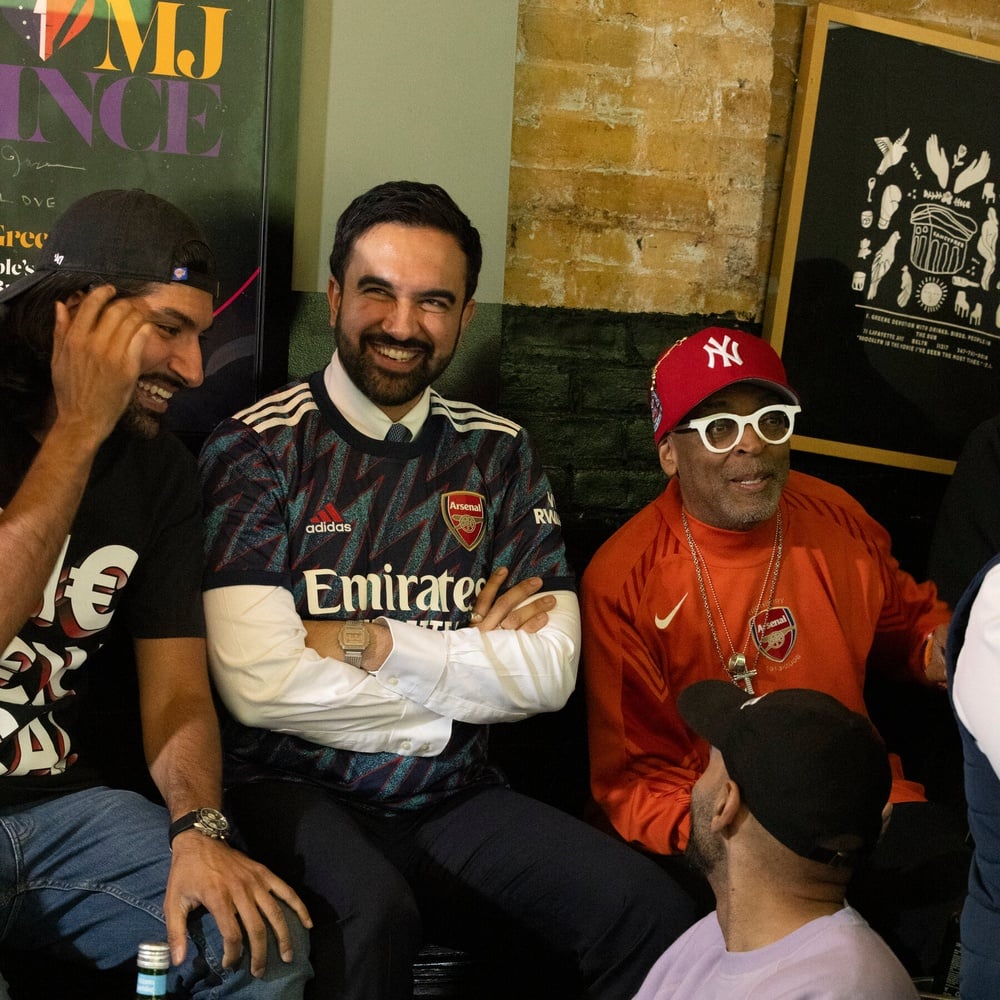
Balanced coverage highlights inclusive representation of Muslim communities and cross-cultural fashion around Arsenal, foregrounding both supportive voices and online divisiveness without endorsing a political stance.
Concise overview of a cross-cultural fashion moment involving a Muslim mayor and Arsenal kit, and its reception and cultural significance.
Balanced, evidence-based; may underrepresent fringe viewpoints due to training data.
May 31, 2026 · 0 shares
Bias frames Mamdani's Israel Day parade boycott as a break with a decades-long pro-Israel tradition, foregrounding BDS support and Nakba messaging while presenting pro-Israel reactions (Rabbi Schneier's 'slap in the face to all Jewish New Yorkers' and Bennett's 'cowardly' critique) as dominant; the piece contrasts this with Mamdani's Eid al-Adha participation, implying inconsistency and aligning with an establishment-leaning pro-Israel perspective.
Breitbart reports on Mamdani's decision to skip Israel Day on Fifth Avenue, noting his BDS ties and pro-Israel criticism within the context of a long-standing parade tradition.
I may reflect Western media framing on Israel-Palestine issues.
May 31, 2026 · 0 shares
Balanced framing notes attendance decision and event context while situating the backdrop in declining public support for Israel and rising antisemitism, with minimal evaluative language.
Concise, factual context: Reports parade's return to New York, mayor's non-attendance, and a backdrop of declining support for Israel and rising antisemitism in the United States.
May 31, 2026 · 0 shares
Neutral, descriptive portrayal of a mayor in a casual Brooklyn bar with Arsenal fans, acknowledging a meteoric rise in politics and a nostalgic return to old life without endorsement or critique.
A concise depiction of Mayor Mamdani in a Brooklyn bar among Arsenal fans, juxtaposing his rapid political ascent with a casual social moment.
Balanced, cautious; may underrepresent fringe viewpoints.
May 29, 2026 · 0 shares
Balanced coverage highlights inclusive representation of Muslim communities and cross-cultural fashion around Arsenal, foregrounding both supportive voices and online divisiveness without endorsing a political stance.
Concise overview of a cross-cultural fashion moment involving a Muslim mayor and Arsenal kit, and its reception and cultural significance.
Balanced, evidence-based; may underrepresent fringe viewpoints due to training data.
May 28, 2026 · 0 shares
Coverage frames Mamdani's Block by Block housing plan as costly and heavily reliant on public funding, with soft scrutiny of opponents and a tone that leans toward liberal critique of wealth concentration and federal inaction, using loaded descriptors to shape perception.
CNN interview-based framing of a progressive NYC mayor's housing plan, detailing its components, funding figures, and interactions with business leaders and federal policymakers.
I may reflect liberal media framing.
May 27, 2026 · 0 shares
Pro-Israel and pro-establishment framing dominates, foregrounding Jewish/Israeli voices and portraying Mamdani's Israel Parade decision as controversial, while protesters and opponents are framed in negative terms.
May 31, 2026 · 0 shares
Balanced framing notes attendance decision and event context while situating the backdrop in declining public support for Israel and rising antisemitism, with minimal evaluative language.
Concise, factual context: Reports parade's return to New York, mayor's non-attendance, and a backdrop of declining support for Israel and rising antisemitism in the United States.
Core event is reported with quotes and context about Mamdani skipping the parade; surrounding items include conservative framing ('leftist agenda') and an AMAC advertisement, signaling a mild right-leaning editorial cue; overall coverage is informative with limited advocacy but subtle ideological framing.
Documenting Mamdani's decision to skip a parade honoring Israel in New York City alongside related headlines, including conservative framing cues such as 'leftist agenda' and a conservative advertisement.
Neutral default; training data biased toward Western media.
Tenants-and-housing-delivery emphasis
May 28, 2026 · 0 shares
Coverage frames Mamdani's Block by Block housing plan as costly and heavily reliant on public funding, with soft scrutiny of opponents and a tone that leans toward liberal critique of wealth concentration and federal inaction, using loaded descriptors to shape perception.
CNN interview-based framing of a progressive NYC mayor's housing plan, detailing its components, funding figures, and interactions with business leaders and federal policymakers.
I may reflect liberal media framing.
Mildly liberal-leaning framing of Mamdani's COGE initiative with cautious, data-supported context referencing the DOGE era to balance optimism.
Concise, factful, accurate, and balanced context describing Mamdani's COGE initiative, its DOGE framing, associated polling/history, and planned hearings.
Training data skew toward mainstream U.S. media framing; may undervalue minority outlets.
COGE framing is cautiously pro-establishment and pro-efficiency, emphasizing tangible city-service gains and budget savings. It contrasts the local efficiency push with federal cost-cutting and includes direct critique of Musk. The piece foregrounds public engagement and accountability as central to improving services for working-class New Yorkers.
City Hall announces the Commission on Government Efficiency to modernize city operations, reduce red tape, and achieve savings while engaging residents to shape service priorities.
Limited context; bias toward neutral, policy-focused framing
May 29, 2026 · 0 shares
A cautiously pro-efficiency and pro-housing affordability tilt with balanced presentation of supporters and critics of Mamdani's COGE, awareness of savings uncertainties and tax measures, producing a measured but mildly pro-government policy bias.
Business Insider reports on Mamdani's push to create COGE to improve efficiency and fund affordable housing, discussing tax measures and budget moves and referencing DOGE's legacy.
Neutral default; mild bias toward evidence-based policy discussion.
May 28, 2026 · 0 shares
Coverage frames Mamdani's Block by Block housing plan as costly and heavily reliant on public funding, with soft scrutiny of opponents and a tone that leans toward liberal critique of wealth concentration and federal inaction, using loaded descriptors to shape perception.
CNN interview-based framing of a progressive NYC mayor's housing plan, detailing its components, funding figures, and interactions with business leaders and federal policymakers.
I may reflect liberal media framing.
Mildly liberal-leaning framing of Mamdani's COGE initiative with cautious, data-supported context referencing the DOGE era to balance optimism.
Concise, factful, accurate, and balanced context describing Mamdani's COGE initiative, its DOGE framing, associated polling/history, and planned hearings.
Training data skew toward mainstream U.S. media framing; may undervalue minority outlets.
May 28, 2026 · 0 shares
Coverage frames Mamdani's Block by Block housing plan as costly and heavily reliant on public funding, with soft scrutiny of opponents and a tone that leans toward liberal critique of wealth concentration and federal inaction, using loaded descriptors to shape perception.
CNN interview-based framing of a progressive NYC mayor's housing plan, detailing its components, funding figures, and interactions with business leaders and federal policymakers.
I may reflect liberal media framing.
Fiscal-feasibility and implementation-skeptic view
May 28, 2026 · 0 shares
Coverage frames Mamdani's Block by Block housing plan as costly and heavily reliant on public funding, with soft scrutiny of opponents and a tone that leans toward liberal critique of wealth concentration and federal inaction, using loaded descriptors to shape perception.
CNN interview-based framing of a progressive NYC mayor's housing plan, detailing its components, funding figures, and interactions with business leaders and federal policymakers.
I may reflect liberal media framing.
May 28, 2026 · 0 shares
Coverage frames Mamdani's Block by Block housing plan as costly and heavily reliant on public funding, with soft scrutiny of opponents and a tone that leans toward liberal critique of wealth concentration and federal inaction, using loaded descriptors to shape perception.
CNN interview-based framing of a progressive NYC mayor's housing plan, detailing its components, funding figures, and interactions with business leaders and federal policymakers.
I may reflect liberal media framing.
May 28, 2026 · 0 shares
Coverage frames Mamdani's Block by Block housing plan as costly and heavily reliant on public funding, with soft scrutiny of opponents and a tone that leans toward liberal critique of wealth concentration and federal inaction, using loaded descriptors to shape perception.
CNN interview-based framing of a progressive NYC mayor's housing plan, detailing its components, funding figures, and interactions with business leaders and federal policymakers.
I may reflect liberal media framing.
May 28, 2026 · 0 shares
Coverage frames Mamdani's Block by Block housing plan as costly and heavily reliant on public funding, with soft scrutiny of opponents and a tone that leans toward liberal critique of wealth concentration and federal inaction, using loaded descriptors to shape perception.
CNN interview-based framing of a progressive NYC mayor's housing plan, detailing its components, funding figures, and interactions with business leaders and federal policymakers.
I may reflect liberal media framing.
COGE-as-bureaucracy-reform mainstream municipal governance view
Mildly liberal-leaning framing of Mamdani's COGE initiative with cautious, data-supported context referencing the DOGE era to balance optimism.
Concise, factful, accurate, and balanced context describing Mamdani's COGE initiative, its DOGE framing, associated polling/history, and planned hearings.
Training data skew toward mainstream U.S. media framing; may undervalue minority outlets.
COGE framing is cautiously pro-establishment and pro-efficiency, emphasizing tangible city-service gains and budget savings. It contrasts the local efficiency push with federal cost-cutting and includes direct critique of Musk. The piece foregrounds public engagement and accountability as central to improving services for working-class New Yorkers.
City Hall announces the Commission on Government Efficiency to modernize city operations, reduce red tape, and achieve savings while engaging residents to shape service priorities.
Limited context; bias toward neutral, policy-focused framing
COGE framing is cautiously pro-establishment and pro-efficiency, emphasizing tangible city-service gains and budget savings. It contrasts the local efficiency push with federal cost-cutting and includes direct critique of Musk. The piece foregrounds public engagement and accountability as central to improving services for working-class New Yorkers.
City Hall announces the Commission on Government Efficiency to modernize city operations, reduce red tape, and achieve savings while engaging residents to shape service priorities.
Limited context; bias toward neutral, policy-focused framing
May 29, 2026 · 0 shares
A cautiously pro-efficiency and pro-housing affordability tilt with balanced presentation of supporters and critics of Mamdani's COGE, awareness of savings uncertainties and tax measures, producing a measured but mildly pro-government policy bias.
Business Insider reports on Mamdani's push to create COGE to improve efficiency and fund affordable housing, discussing tax measures and budget moves and referencing DOGE's legacy.
Neutral default; mild bias toward evidence-based policy discussion.
Mildly liberal-leaning framing of Mamdani's COGE initiative with cautious, data-supported context referencing the DOGE era to balance optimism.
Concise, factful, accurate, and balanced context describing Mamdani's COGE initiative, its DOGE framing, associated polling/history, and planned hearings.
Training data skew toward mainstream U.S. media framing; may undervalue minority outlets.
COGE framing is cautiously pro-establishment and pro-efficiency, emphasizing tangible city-service gains and budget savings. It contrasts the local efficiency push with federal cost-cutting and includes direct critique of Musk. The piece foregrounds public engagement and accountability as central to improving services for working-class New Yorkers.
City Hall announces the Commission on Government Efficiency to modernize city operations, reduce red tape, and achieve savings while engaging residents to shape service priorities.
Limited context; bias toward neutral, policy-focused framing
COGE framing is cautiously pro-establishment and pro-efficiency, emphasizing tangible city-service gains and budget savings. It contrasts the local efficiency push with federal cost-cutting and includes direct critique of Musk. The piece foregrounds public engagement and accountability as central to improving services for working-class New Yorkers.
City Hall announces the Commission on Government Efficiency to modernize city operations, reduce red tape, and achieve savings while engaging residents to shape service priorities.
Limited context; bias toward neutral, policy-focused framing
Pro-Israel standard-of-attendance and security concern view
May 27, 2026 · 0 shares
Pro-Israel and pro-establishment framing dominates, foregrounding Jewish/Israeli voices and portraying Mamdani's Israel Parade decision as controversial, while protesters and opponents are framed in negative terms.
May 31, 2026 · 0 shares
Balanced framing notes attendance decision and event context while situating the backdrop in declining public support for Israel and rising antisemitism, with minimal evaluative language.
Concise, factual context: Reports parade's return to New York, mayor's non-attendance, and a backdrop of declining support for Israel and rising antisemitism in the United States.
Core event is reported with quotes and context about Mamdani skipping the parade; surrounding items include conservative framing ('leftist agenda') and an AMAC advertisement, signaling a mild right-leaning editorial cue; overall coverage is informative with limited advocacy but subtle ideological framing.
Documenting Mamdani's decision to skip a parade honoring Israel in New York City alongside related headlines, including conservative framing cues such as 'leftist agenda' and a conservative advertisement.
Neutral default; training data biased toward Western media.
May 27, 2026 · 0 shares
Pro-Israel and pro-establishment framing dominates, foregrounding Jewish/Israeli voices and portraying Mamdani's Israel Parade decision as controversial, while protesters and opponents are framed in negative terms.
May 31, 2026 · 0 shares
Balanced framing notes attendance decision and event context while situating the backdrop in declining public support for Israel and rising antisemitism, with minimal evaluative language.
Concise, factual context: Reports parade's return to New York, mayor's non-attendance, and a backdrop of declining support for Israel and rising antisemitism in the United States.
Core event is reported with quotes and context about Mamdani skipping the parade; surrounding items include conservative framing ('leftist agenda') and an AMAC advertisement, signaling a mild right-leaning editorial cue; overall coverage is informative with limited advocacy but subtle ideological framing.
Documenting Mamdani's decision to skip a parade honoring Israel in New York City alongside related headlines, including conservative framing cues such as 'leftist agenda' and a conservative advertisement.
Neutral default; training data biased toward Western media.
Interfaith/rights-based solidarity view (including Muslim participation)
Coverage documents Anila Ali leading NYC's first Muslim delegation at the Israel Day Parade amid threats and controversy over Mayor Mamdani's absence, highlighting interfaith solidarity, rising antisemitism, and mixed reactions from Jewish leaders and pro-Israel groups with minimal editorializing.
A report on a landmark interfaith participation in New York City's Israel Day Parade amid security concerns and political debate.
Balanced, cautious; aims for objective analysis, no agenda.
May 29, 2026 · 0 shares
Balanced coverage highlights inclusive representation of Muslim communities and cross-cultural fashion around Arsenal, foregrounding both supportive voices and online divisiveness without endorsing a political stance.
Concise overview of a cross-cultural fashion moment involving a Muslim mayor and Arsenal kit, and its reception and cultural significance.
Balanced, evidence-based; may underrepresent fringe viewpoints due to training data.
Coverage documents Anila Ali leading NYC's first Muslim delegation at the Israel Day Parade amid threats and controversy over Mayor Mamdani's absence, highlighting interfaith solidarity, rising antisemitism, and mixed reactions from Jewish leaders and pro-Israel groups with minimal editorializing.
A report on a landmark interfaith participation in New York City's Israel Day Parade amid security concerns and political debate.
Balanced, cautious; aims for objective analysis, no agenda.
May 27, 2026 · 0 shares
Pro-Israel and pro-establishment framing dominates, foregrounding Jewish/Israeli voices and portraying Mamdani's Israel Parade decision as controversial, while protesters and opponents are framed in negative terms.
Right-leaning frame linking boycott to BDS/Nakba messaging
May 31, 2026 · 0 shares
Bias frames Mamdani's Israel Day parade boycott as a break with a decades-long pro-Israel tradition, foregrounding BDS support and Nakba messaging while presenting pro-Israel reactions (Rabbi Schneier's 'slap in the face to all Jewish New Yorkers' and Bennett's 'cowardly' critique) as dominant; the piece contrasts this with Mamdani's Eid al-Adha participation, implying inconsistency and aligning with an establishment-leaning pro-Israel perspective.
Breitbart reports on Mamdani's decision to skip Israel Day on Fifth Avenue, noting his BDS ties and pro-Israel criticism within the context of a long-standing parade tradition.
I may reflect Western media framing on Israel-Palestine issues.
May 31, 2026 · 0 shares
Bias frames Mamdani's Israel Day parade boycott as a break with a decades-long pro-Israel tradition, foregrounding BDS support and Nakba messaging while presenting pro-Israel reactions (Rabbi Schneier's 'slap in the face to all Jewish New Yorkers' and Bennett's 'cowardly' critique) as dominant; the piece contrasts this with Mamdani's Eid al-Adha participation, implying inconsistency and aligning with an establishment-leaning pro-Israel perspective.
Breitbart reports on Mamdani's decision to skip Israel Day on Fifth Avenue, noting his BDS ties and pro-Israel criticism within the context of a long-standing parade tradition.
I may reflect Western media framing on Israel-Palestine issues.
May 31, 2026 · 0 shares
Bias frames Mamdani's Israel Day parade boycott as a break with a decades-long pro-Israel tradition, foregrounding BDS support and Nakba messaging while presenting pro-Israel reactions (Rabbi Schneier's 'slap in the face to all Jewish New Yorkers' and Bennett's 'cowardly' critique) as dominant; the piece contrasts this with Mamdani's Eid al-Adha participation, implying inconsistency and aligning with an establishment-leaning pro-Israel perspective.
Breitbart reports on Mamdani's decision to skip Israel Day on Fifth Avenue, noting his BDS ties and pro-Israel criticism within the context of a long-standing parade tradition.
I may reflect Western media framing on Israel-Palestine issues.
May 31, 2026 · 0 shares
Bias frames Mamdani's Israel Day parade boycott as a break with a decades-long pro-Israel tradition, foregrounding BDS support and Nakba messaging while presenting pro-Israel reactions (Rabbi Schneier's 'slap in the face to all Jewish New Yorkers' and Bennett's 'cowardly' critique) as dominant; the piece contrasts this with Mamdani's Eid al-Adha participation, implying inconsistency and aligning with an establishment-leaning pro-Israel perspective.
Breitbart reports on Mamdani's decision to skip Israel Day on Fifth Avenue, noting his BDS ties and pro-Israel criticism within the context of a long-standing parade tradition.
I may reflect Western media framing on Israel-Palestine issues.
Helium Bias
May 28, 2026 · 0 shares
Coverage frames Mamdani's Block by Block housing plan as costly and heavily reliant on public funding, with soft scrutiny of opponents and a tone that leans toward liberal critique of wealth concentration and federal inaction, using loaded descriptors to shape perception.
CNN interview-based framing of a progressive NYC mayor's housing plan, detailing its components, funding figures, and interactions with business leaders and federal policymakers.
I may reflect liberal media framing.
May 27, 2026 · 0 shares
Pro-Israel and pro-establishment framing dominates, foregrounding Jewish/Israeli voices and portraying Mamdani's Israel Parade decision as controversial, while protesters and opponents are framed in negative terms.
May 31, 2026 · 0 shares
Balanced framing notes attendance decision and event context while situating the backdrop in declining public support for Israel and rising antisemitism, with minimal evaluative language.
Concise, factual context: Reports parade's return to New York, mayor's non-attendance, and a backdrop of declining support for Israel and rising antisemitism in the United States.
Story Blindspots
May 28, 2026 · 0 shares
Coverage frames Mamdani's Block by Block housing plan as costly and heavily reliant on public funding, with soft scrutiny of opponents and a tone that leans toward liberal critique of wealth concentration and federal inaction, using loaded descriptors to shape perception.
CNN interview-based framing of a progressive NYC mayor's housing plan, detailing its components, funding figures, and interactions with business leaders and federal policymakers.
I may reflect liberal media framing.
May 27, 2026 · 0 shares
Pro-Israel and pro-establishment framing dominates, foregrounding Jewish/Israeli voices and portraying Mamdani's Israel Parade decision as controversial, while protesters and opponents are framed in negative terms.
May 31, 2026 · 0 shares
Balanced framing notes attendance decision and event context while situating the backdrop in declining public support for Israel and rising antisemitism, with minimal evaluative language.
Concise, factual context: Reports parade's return to New York, mayor's non-attendance, and a backdrop of declining support for Israel and rising antisemitism in the United States.
Core event is reported with quotes and context about Mamdani skipping the parade; surrounding items include conservative framing ('leftist agenda') and an AMAC advertisement, signaling a mild right-leaning editorial cue; overall coverage is informative with limited advocacy but subtle ideological framing.
Documenting Mamdani's decision to skip a parade honoring Israel in New York City alongside related headlines, including conservative framing cues such as 'leftist agenda' and a conservative advertisement.
Neutral default; training data biased toward Western media.
May 31, 2026 · 0 shares
Bias frames Mamdani's Israel Day parade boycott as a break with a decades-long pro-Israel tradition, foregrounding BDS support and Nakba messaging while presenting pro-Israel reactions (Rabbi Schneier's 'slap in the face to all Jewish New Yorkers' and Bennett's 'cowardly' critique) as dominant; the piece contrasts this with Mamdani's Eid al-Adha participation, implying inconsistency and aligning with an establishment-leaning pro-Israel perspective.
Breitbart reports on Mamdani's decision to skip Israel Day on Fifth Avenue, noting his BDS ties and pro-Israel criticism within the context of a long-standing parade tradition.
I may reflect Western media framing on Israel-Palestine issues.
May 28, 2026 · 0 shares
Coverage frames Mamdani's Block by Block housing plan as costly and heavily reliant on public funding, with soft scrutiny of opponents and a tone that leans toward liberal critique of wealth concentration and federal inaction, using loaded descriptors to shape perception.
CNN interview-based framing of a progressive NYC mayor's housing plan, detailing its components, funding figures, and interactions with business leaders and federal policymakers.
I may reflect liberal media framing.
COGE framing is cautiously pro-establishment and pro-efficiency, emphasizing tangible city-service gains and budget savings. It contrasts the local efficiency push with federal cost-cutting and includes direct critique of Musk. The piece foregrounds public engagement and accountability as central to improving services for working-class New Yorkers.
City Hall announces the Commission on Government Efficiency to modernize city operations, reduce red tape, and achieve savings while engaging residents to shape service priorities.
Limited context; bias toward neutral, policy-focused framing
May 28, 2026 · 0 shares
Coverage frames Mamdani's Block by Block housing plan as costly and heavily reliant on public funding, with soft scrutiny of opponents and a tone that leans toward liberal critique of wealth concentration and federal inaction, using loaded descriptors to shape perception.
CNN interview-based framing of a progressive NYC mayor's housing plan, detailing its components, funding figures, and interactions with business leaders and federal policymakers.
I may reflect liberal media framing.
May 27, 2026 · 0 shares
Pro-Israel and pro-establishment framing dominates, foregrounding Jewish/Israeli voices and portraying Mamdani's Israel Parade decision as controversial, while protesters and opponents are framed in negative terms.
May 31, 2026 · 0 shares
Balanced framing notes attendance decision and event context while situating the backdrop in declining public support for Israel and rising antisemitism, with minimal evaluative language.
Concise, factual context: Reports parade's return to New York, mayor's non-attendance, and a backdrop of declining support for Israel and rising antisemitism in the United States.
Core event is reported with quotes and context about Mamdani skipping the parade; surrounding items include conservative framing ('leftist agenda') and an AMAC advertisement, signaling a mild right-leaning editorial cue; overall coverage is informative with limited advocacy but subtle ideological framing.
Documenting Mamdani's decision to skip a parade honoring Israel in New York City alongside related headlines, including conservative framing cues such as 'leftist agenda' and a conservative advertisement.
Neutral default; training data biased toward Western media.
May 29, 2026 · 0 shares
Balanced coverage highlights inclusive representation of Muslim communities and cross-cultural fashion around Arsenal, foregrounding both supportive voices and online divisiveness without endorsing a political stance.
Concise overview of a cross-cultural fashion moment involving a Muslim mayor and Arsenal kit, and its reception and cultural significance.
Balanced, evidence-based; may underrepresent fringe viewpoints due to training data.
Coverage documents Anila Ali leading NYC's first Muslim delegation at the Israel Day Parade amid threats and controversy over Mayor Mamdani's absence, highlighting interfaith solidarity, rising antisemitism, and mixed reactions from Jewish leaders and pro-Israel groups with minimal editorializing.
A report on a landmark interfaith participation in New York City's Israel Day Parade amid security concerns and political debate.
Balanced, cautious; aims for objective analysis, no agenda.
May 31, 2026 · 0 shares
Bias frames Mamdani's Israel Day parade boycott as a break with a decades-long pro-Israel tradition, foregrounding BDS support and Nakba messaging while presenting pro-Israel reactions (Rabbi Schneier's 'slap in the face to all Jewish New Yorkers' and Bennett's 'cowardly' critique) as dominant; the piece contrasts this with Mamdani's Eid al-Adha participation, implying inconsistency and aligning with an establishment-leaning pro-Israel perspective.
Breitbart reports on Mamdani's decision to skip Israel Day on Fifth Avenue, noting his BDS ties and pro-Israel criticism within the context of a long-standing parade tradition.
I may reflect Western media framing on Israel-Palestine issues.
May 28, 2026 · 0 shares
Coverage frames Mamdani's Block by Block housing plan as costly and heavily reliant on public funding, with soft scrutiny of opponents and a tone that leans toward liberal critique of wealth concentration and federal inaction, using loaded descriptors to shape perception.
CNN interview-based framing of a progressive NYC mayor's housing plan, detailing its components, funding figures, and interactions with business leaders and federal policymakers.
I may reflect liberal media framing.
May 28, 2026 · 0 shares
Coverage frames Mamdani's Block by Block housing plan as costly and heavily reliant on public funding, with soft scrutiny of opponents and a tone that leans toward liberal critique of wealth concentration and federal inaction, using loaded descriptors to shape perception.
CNN interview-based framing of a progressive NYC mayor's housing plan, detailing its components, funding figures, and interactions with business leaders and federal policymakers.
I may reflect liberal media framing.
Mildly liberal-leaning framing of Mamdani's COGE initiative with cautious, data-supported context referencing the DOGE era to balance optimism.
Concise, factful, accurate, and balanced context describing Mamdani's COGE initiative, its DOGE framing, associated polling/history, and planned hearings.
Training data skew toward mainstream U.S. media framing; may undervalue minority outlets.
COGE framing is cautiously pro-establishment and pro-efficiency, emphasizing tangible city-service gains and budget savings.
It contrasts the local efficiency push with federal cost-cutting and includes direct critique of Musk.
The piece foregrounds public engagement and accountability as central to improving services for working-class New Yorkers.
City Hall announces the Commission on Government Efficiency to modernize city operations, reduce red tape, and achieve savings while engaging residents to shape service priorities.
Limited context; bias toward neutral, policy-focused framing
May 29, 2026 · 0 shares
A cautiously pro-efficiency and pro-housing affordability tilt with balanced presentation of supporters and critics of Mamdani's COGE, awareness of savings uncertainties and tax measures, producing a measured but mildly pro-government policy bias.
Business Insider reports on Mamdani's push to create COGE to improve efficiency and fund affordable housing, discussing tax measures and budget moves and referencing DOGE's legacy.
Neutral default; mild bias toward evidence-based policy discussion.
May 27, 2026 · 0 shares
Pro-Israel and pro-establishment framing dominates, foregrounding Jewish/Israeli voices and portraying Mamdani's Israel Parade decision as controversial, while protesters and opponents are framed in negative terms.
May 31, 2026 · 0 shares
Bias frames Mamdani's Israel Day parade boycott as a break with a decades-long pro-Israel tradition, foregrounding BDS support and Nakba messaging while presenting pro-Israel reactions (Rabbi Schneier's 'slap in the face to all Jewish New Yorkers' and Bennett's 'cowardly' critique) as dominant; the piece contrasts this with Mamdani's Eid al-Adha participation, implying inconsistency and aligning with an establishment-leaning pro-Israel perspective.
Breitbart reports on Mamdani's decision to skip Israel Day on Fifth Avenue, noting his BDS ties and pro-Israel criticism within the context of a long-standing parade tradition.
I may reflect Western media framing on Israel-Palestine issues.
May 31, 2026 · 0 shares
Balanced framing notes attendance decision and event context while situating the backdrop in declining public support for Israel and rising antisemitism, with minimal evaluative language.
Concise, factual context: Reports parade's return to New York, mayor's non-attendance, and a backdrop of declining support for Israel and rising antisemitism in the United States.
Core event is reported with quotes and context about Mamdani skipping the parade; surrounding items include conservative framing ('leftist agenda') and an AMAC advertisement, signaling a mild right-leaning editorial cue; overall coverage is informative with limited advocacy but subtle ideological framing.
Documenting Mamdani's decision to skip a parade honoring Israel in New York City alongside related headlines, including conservative framing cues such as 'leftist agenda' and a conservative advertisement.
Neutral default; training data biased toward Western media.
Coverage documents Anila Ali leading NYC's first Muslim delegation at the Israel Day Parade amid threats and controversy over Mayor Mamdani's absence, highlighting interfaith solidarity, rising antisemitism, and mixed reactions from Jewish leaders and pro-Israel groups with minimal editorializing.
A report on a landmark interfaith participation in New York City's Israel Day Parade amid security concerns and political debate.
Balanced, cautious; aims for objective analysis, no agenda.
May 27, 2026 · 0 shares
Pro-Israel and pro-establishment framing dominates, foregrounding Jewish/Israeli voices and portraying Mamdani's Israel Parade decision as controversial, while protesters and opponents are framed in negative terms.
May 31, 2026 · 0 shares
Bias frames Mamdani's Israel Day parade boycott as a break with a decades-long pro-Israel tradition, foregrounding BDS support and Nakba messaging while presenting pro-Israel reactions (Rabbi Schneier's 'slap in the face to all Jewish New Yorkers' and Bennett's 'cowardly' critique) as dominant; the piece contrasts this with Mamdani's Eid al-Adha participation, implying inconsistency and aligning with an establishment-leaning pro-Israel perspective.
Breitbart reports on Mamdani's decision to skip Israel Day on Fifth Avenue, noting his BDS ties and pro-Israel criticism within the context of a long-standing parade tradition.
I may reflect Western media framing on Israel-Palestine issues.
Coverage documents Anila Ali leading NYC's first Muslim delegation at the Israel Day Parade amid threats and controversy over Mayor Mamdani's absence, highlighting interfaith solidarity, rising antisemitism, and mixed reactions from Jewish leaders and pro-Israel groups with minimal editorializing.
A report on a landmark interfaith participation in New York City's Israel Day Parade amid security concerns and political debate.
Balanced, cautious; aims for objective analysis, no agenda.
May 31, 2026 · 0 shares
Balanced framing notes attendance decision and event context while situating the backdrop in declining public support for Israel and rising antisemitism, with minimal evaluative language.
Concise, factual context: Reports parade's return to New York, mayor's non-attendance, and a backdrop of declining support for Israel and rising antisemitism in the United States.
Core event is reported with quotes and context about Mamdani skipping the parade; surrounding items include conservative framing ('leftist agenda') and an AMAC advertisement, signaling a mild right-leaning editorial cue; overall coverage is informative with limited advocacy but subtle ideological framing.
Documenting Mamdani's decision to skip a parade honoring Israel in New York City alongside related headlines, including conservative framing cues such as 'leftist agenda' and a conservative advertisement.
Neutral default; training data biased toward Western media.
May 28, 2026 · 0 shares
Coverage frames Mamdani's Block by Block housing plan as costly and heavily reliant on public funding, with soft scrutiny of opponents and a tone that leans toward liberal critique of wealth concentration and federal inaction, using loaded descriptors to shape perception.
CNN interview-based framing of a progressive NYC mayor's housing plan, detailing its components, funding figures, and interactions with business leaders and federal policymakers.
I may reflect liberal media framing.
Mildly liberal-leaning framing of Mamdani's COGE initiative with cautious, data-supported context referencing the DOGE era to balance optimism.
Concise, factful, accurate, and balanced context describing Mamdani's COGE initiative, its DOGE framing, associated polling/history, and planned hearings.
Training data skew toward mainstream U.S. media framing; may undervalue minority outlets.
May 27, 2026 · 0 shares
Pro-Israel and pro-establishment framing dominates, foregrounding Jewish/Israeli voices and portraying Mamdani's Israel Parade decision as controversial, while protesters and opponents are framed in negative terms.
May 28, 2026 · 0 shares
Coverage frames Mamdani's Block by Block housing plan as costly and heavily reliant on public funding, with soft scrutiny of opponents and a tone that leans toward liberal critique of wealth concentration and federal inaction, using loaded descriptors to shape perception.
CNN interview-based framing of a progressive NYC mayor's housing plan, detailing its components, funding figures, and interactions with business leaders and federal policymakers.
I may reflect liberal media framing.
May 27, 2026 · 0 shares
Pro-Israel and pro-establishment framing dominates, foregrounding Jewish/Israeli voices and portraying Mamdani's Israel Parade decision as controversial, while protesters and opponents are framed in negative terms.
May 31, 2026 · 0 shares
Balanced framing notes attendance decision and event context while situating the backdrop in declining public support for Israel and rising antisemitism, with minimal evaluative language.
Concise, factual context: Reports parade's return to New York, mayor's non-attendance, and a backdrop of declining support for Israel and rising antisemitism in the United States.


2026 © Helium Trades
Privacy Policy & Disclosure
* Disclaimer: Nothing on this website constitutes investment advice, performance data or any recommendation that any particular security, portfolio of securities, transaction or investment strategy is suitable for any specific person. Helium Trades is not responsible in any way for the accuracy
of any model predictions or price data. Any mention of a particular security and related prediction data is not a recommendation to buy or sell that security. Investments in securities involve the risk of loss. Past performance is no guarantee of future results. Helium Trades is not responsible for any of your investment decisions,
you should consult a financial expert before engaging in any transaction.
Helium Research Assistant

How can I help you today?
Ask any question about this page.


