See whether Helium helps you make better-informed decisions. Try every Pro Trader feature for 30 days. No credit card required.
Try every Pro Trader feature for 30 days. No credit card required.
November 22, 2026 · 0 shares
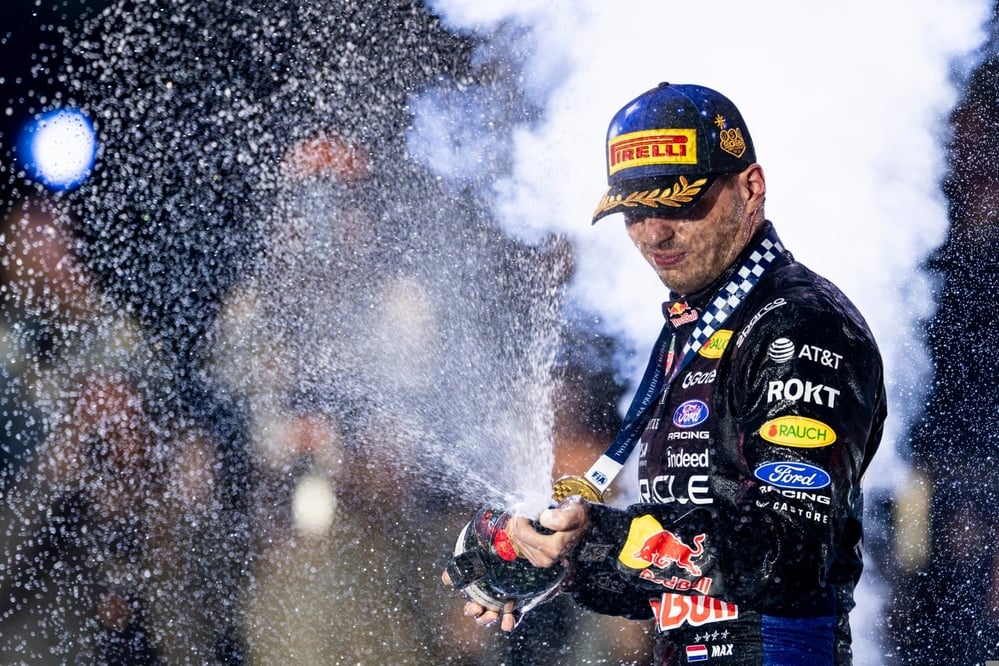
A largely factual race recap uses mild dramatic sports phrasing and no evident ideological framing.
Helium Analysis
Limitations: No author byline or direct sourcing is provided; unrelated sidebar and related-link headlines after the substantive article were excluded from analysis.
·
2 of 56 available dimensions scored; omitted dimensions are not treated as neutral.
·
Verified supporting quotes for 2 of 2 scored dimensions.
Claim: The race recap is predominantly factual, with limited evaluative sports language.
“Verstappen started from the pole position, but was under pressure from the start before pulling away from Norris, the 2025 series champion, on the final lap.” · exact text match
Counterevidence:
“Verstappen almost by sheer will kept finding ways to gain the advantage.” · exact text match
Why: The main passage is a concrete sequence of race events, supporting an objective-leaning classification, while the counterquote shows limited subjective coloring.
Claim: Mild dramatic wording heightens the sports narrative without dominating the report.
“Max Verstappen survives thrilling battle to win F1 Las Vegas Grand Prix.” · exact text match
Why: The headline uses a dramatic verb and adjective, supporting a slight sensational-leaning score, while the body remains event-focused.
No author byline or direct sourcing is provided; unrelated sidebar and related-link headlines after the substantive article were excluded from analysis.
November 22, 2026 · 0 shares
A celebratory, adjective-heavy sports recap that dramatizes Verstappen’s victory with vivid language while retaining specific race statistics and attributed quotes.
Helium Analysis
Limitations: The supplied text contains duplicated sections and a truncated fragment, but the substantive race report is clear; scores apply only to that report.
·
7 of 56 available dimensions scored; omitted dimensions are not treated as neutral.
·
Verified supporting quotes for 7 of 7 scored dimensions.
Claim: The report incorporates evaluative judgments about the quality of the win and race.
“Brilliant Verstappen wins Las Vegas Grand Prix.” · exact text match
“superb victory” · exact text match
Why: The headline and adjectives frame performance qualitatively rather than purely descriptively.
Claim: The report uses vivid, hyperbolic descriptors to dramatize the race.
“roared to a superb victory” · exact text match
“jaw-dropping 35 lead changes” · exact text match
Why: The verbs and adjectives heighten excitement beyond neutral race-result reporting.
Claim: The report foregrounds the race as unusually dramatic and engaging.
“jaw-dropping 35 lead changes” · exact text match
“most chaotic race ever in the history of Formula One” · exact text match
Why: The selection and emphasis on lead changes and quoted hyperbole signal high entertainment interest.
Claim: The publisher’s own wording includes opinionated praise of Verstappen’s performance.
“Brilliant Verstappen wins Las Vegas Grand Prix.” · exact text match
“superb victory” · exact text match
Why: Terms like 'Brilliant' and 'superb' are evaluative judgments embedded in reporting.
Claim: The report adopts an excited, positive emotional tone about the race.
“thrilling 50-lap battle” · exact text match
“jaw-dropping 35 lead changes” · exact text match
Why: The prose conveys excitement and admiration rather than flat neutrality.
Claim: The report provides specific statistics and attributed quotes to support its race narrative.
“Verstappen said after clinching victory by six tenths of a second” · exact text match
“with Ferrari’s Lewis Hamilton third on 267 points” · exact text match
Why: Named sources, direct quotations, and precise figures make the account verifiable and attributionally transparent.
Claim: The report is coherent and context-rich, combining race chronology, standings, and driver quotes.
“Verstappen’s victory leaves the Dutchman second in the standings with 304 points” · exact text match
“Russell’s challenge came to an abrupt end on lap 48 as he locked up and clipped a wall” · exact text match
Why: It organizes complex race events with specific laps and standings rather than relying only on vague description.
The supplied text contains duplicated sections and a truncated fragment, but the substantive race report is clear; scores apply only to that report.
Mildly evaluative sports hype ('thrilling back-and-forth') frames an otherwise straightforward race-result report with no evident political or ideological framing.
Helium Analysis
Limitations: Substantive content is a single sentence; duplicated Bluesky promotional text and bracket artifacts were excluded, limiting assessment of publisher framing.
·
3 of 56 available dimensions scored; omitted dimensions are not treated as neutral.
·
Verified supporting quotes for 3 of 3 scored dimensions.
Claim: The report uses a subjective evaluative phrase to characterize the race.
“thrilling back-and-forth” · exact text match
Why: 'Thrilling' is evaluative language, but it is a single mild instance.
Claim: The race report uses mild sensational language.
“thrilling back-and-forth” · exact text match
Why: The wording adds excitement, though the report otherwise avoids overt sensationalism.
Claim: The report frames the race with positive emotional coloring.
“thrilling back-and-forth” · exact text match
Why: Positive evaluative wording is present but limited to one phrase.
Substantive content is a single sentence; duplicated Bluesky promotional text and bracket artifacts were excluded, limiting assessment of publisher framing.
November 21, 2026 · 0 shares
The framing is predominantly factual and timing-based, with limited evaluative descriptors such as 'impressive' and 'really messy'.
Helium Analysis
Limitations: Some supplied text is duplicated headline/navigation material and the '2026 world champion' reference is ambiguous; the analysis is limited to the substantive qualifying report.
·
4 of 56 available dimensions scored; omitted dimensions are not treated as neutral.
·
Verified supporting quotes for 4 of 4 scored dimensions.
Claim: The report is mostly factual and timing-based, with only mild evaluative color.
“with sixth going to impressive rookie Arvid Lindblad” · exact text match
“what was a really messy Q2 for Ferrari” · exact text match
Why: These brief evaluative descriptors appear within an otherwise results-focused account.
Claim: The report avoids sensationalism and presents the qualifying story through times, positions, and attributed quotes.
“Yet only Antonelli managed to topple the Dutchman, setting a 1m33.893s at the chequered flag” · exact text match
““Unbelievable,” reacted Leclerc” · exact text match
Why: The language is restrained and data-heavy, and the quoted exclamation is attributed rather than adopted by the publisher.
Claim: The report provides specific lap times, grid positions, and direct attribution for its quoted reaction.
“setting a 1m33.893s at the chequered flag” · exact text match
““Unbelievable,” reacted Leclerc” · exact text match
Why: Concrete figures and attributed quotes support internal reliability, though no sourcing for timing data is given.
Claim: The report is information-dense and contextualizes the result with historical comparisons.
“for the eighth time he has gone quickest in qualifying this year - first since Austin” · exact text match
“Ferrari suffered its first double Q2 exit since Imola last year” · exact text match
Why: The inclusion of season and historical benchmarks shows above-average sports-reporting sophistication.
Some supplied text is duplicated headline/navigation material and the '2026 world champion' reference is ambiguous; the analysis is limited to the substantive qualifying report.
November 21, 2026 · 0 shares
Straight, timing-data-driven qualifying reporting with only mild evaluative adjectives and no evident political or ideological framing.
Formula 1 qualifying determines the starting grid, but component-change penalties can move drivers down before the race.
Helium Analysis
Limitations: Article text includes noisy related-link and promotional fragments; analysis is limited to the substantive F1 qualifying report, and no byline is present.
·
9 of 56 available dimensions scored; omitted dimensions are not treated as neutral.
·
Verified supporting quotes for 9 of 9 scored dimensions.
Claim: Framing is predominantly factual, with only scattered evaluative adjectives such as 'impressive' and 'messy'.
“with sixth going to impressive rookie Arivd Lindblad” · exact text match
“after what was a messy Q2” · exact text match
Why: Evaluative wording is present but limited against a preponderance of timing data and results.
Claim: The headline and lede present the result in measured, factual terms rather than sensational language.
“Max Verstappen will start on pole at the Formula 1 Las Vegas Grand Prix despite Kimi Antonelli going fastest - while Charles Leclerc and Lewis Hamilton both failed to make Q3.” · exact text match
Why: The central framing states the qualifying outcome and penalties without heightened or emotive language.
Claim: The article highlights a dramatic qualifying outcome involving penalties and Ferrari’s Q2 exit.
“but the biggest talking point came in the second session as Ferrari suffered its first double Q2 exit since Imola last year” · exact text match
Why: The selection emphasizes a notable surprise alongside the pole outcome.
Claim: Coverage describes qualifying outcomes and penalties without advocating changes.
“Antonelli was fastest in qualifying at Las Vegas but takes a five-place grid drop” · exact text match
Why: The language is explanatory and result-focused, not prescriptive.
Claim: Mostly fact-based, with minor editorial evaluation of drivers and sessions.
“with sixth going to impressive rookie Arivd Lindblad a week after Racing Bulls confirmed him for 2027” · exact text match
“after what was a messy Q2” · exact text match
Why: The adjectives add mild commentary but do not dominate the factual reporting.
Claim: Specific timing data and driver reactions make the report internally checkable and credible within the supplied text.
“setting a 1m33.893s at the chequered flag - the eighth time he has gone quickest in qualifying this year and the first since Austin” · exact text match
Why: The article relies on concrete session times and observable qualifying outcomes rather than vague assertions.
Claim: Causal explanation of the grid order is evidence-based, using timing and penalty rules.
“But because of the grid penalty, Verstappen will be joined on the front row by Mercedes’ George Russell, who hoped for a tow from his team-mate but traffic denied that opportunity.” · exact text match
Why: The report connects the starting order to an explicit grid penalty rather than making unsupported assertions.
Claim: The report supplies precise lap times and direct attribution, supporting transparent reporting within the text.
“Russell set a 1m34.224s, two-tenths quicker than his opening lap, and was just 0.020s ahead of McLaren’s Lando Norris, who will therefore complete the top three on Saturday night’s grid.” · exact text match
Why: Specific timing data and attributed context provide checkable support for the claims.
Claim: The report is detailed and coherent, integrating lap times, grid penalties, and driver quotes.
“Verstappen took provisional pole with a 1m34.151s while Antonelli was down in sixth, but the Dutchman failed to improve on his final lap, allowing others the chance to beat him.” · exact text match
Why: The explanation connects session timing, provisional results, and the eventual qualifying outcome.
Article text includes noisy related-link and promotional fragments; analysis is limited to the substantive F1 qualifying report, and no byline is present.
Straightforward sports reporting presents qualifying results, penalties, and driver reactions through attributed quotes and specific session facts without evaluative or sensational language.
Helium Analysis
·
4 of 56 available dimensions scored; omitted dimensions are not treated as neutral.
·
Verified supporting quotes for 4 of 4 scored dimensions.
Claim: The framing relies on verifiable qualifying outcomes and attributed driver comments rather than subjective evaluation.
“Verstappen had secured provisional pole during Q3 but was pipped to the fastest time in the final runs by Mercedes’ Kimi Antonelli – however, a five-place grid drop for the new World Champion resulted in Verstappen being promoted to the top spot from P2.” · exact text match
Why: The sentence reports official session and penalty effects with minimal evaluative language.
Claim: The report presents the race-grid development in a measured, factual register rather than with sensational emphasis.
“Max Verstappen will start the Las Vegas Grand Prix from pole position, with the Red Bull driver being promoted to P1 following a penalty for Kimi Antonelli.” · exact text match
Why: The lead statement states the result and cause plainly, without dramatic or hyperbolic language.
Claim: The report describes outcomes and driver statements without prescribing actions or policies.
“In terms of what he is aiming for in Saturday’s race, Hadjar said: “Podium, and below that is my starting position, so not very far.”” · exact text match
Why: The statement merely relays a driver's stated goal; no editorial recommendation is made.
Claim: The report provides attributable driver quotes and specific session/grid details.
“Asked after Qualifying if he was surprised by the pace that the team had been able to find following the final practice hour, Verstappen responded:” · exact text match
Why: Direct attribution of quotes and precise grid/session facts make the sourcing visible in the supplied text.
November 21, 2026 · 0 shares
Sensational, personality-driven framing emphasizes the Russell–Verstappen feud, giving Russell’s accusations fuller voice than Verstappen’s brief response.
Helium Analysis
Limitations: The supplied text duplicates the article body and omits a visible byline or publisher context, limiting assessment of author-level framing.
·
6 of 56 available dimensions scored; omitted dimensions are not treated as neutral.
·
Verified supporting quotes for 6 of 6 scored dimensions.
Claim: The report is mostly event-based but uses subjective descriptors in its own prose.
“stinging remarks” · exact text match
“tantalizing front row” · exact text match
Why: Subjective adjectives appear in otherwise factual, attribution-heavy coverage.
Claim: The report uses dramatic, conflict-oriented language to heighten the Russell–Verstappen clash.
“George Russell reignited his bitter rivalry with Max Verstappen” · exact text match
“to form a tantalizing front row with his nemesis in Sin City.” · exact text match
Why: Loaded adjectival framing—'bitter rivalry' and 'tantalizing'/'nemesis'—makes the event read more dramatically than neutral event reporting.
Claim: The report foregrounds personal insults, feud history, and driver personalities beyond the competitive result.
“The Dutchman had also previously referred to the Mercedes driver as “Princess George.”” · exact text match
“walk around like they’re bigger and better than everyone else.” · exact text match
Why: Focus on name-calling and personal superiority claims gives the coverage a gossipy personality angle.
Claim: The article's own descriptors and quoted reactions give the report a mildly negative emotional charge.
“Russell’s stinging remarks arrived after he banged wheels with Verstappen” · exact text match
“An angry Verstappen said “nothing happened” before hastily dropping the microphone.” · exact text match
Why: Words such as 'stinging' and 'angry' emphasize grievance and anger, supporting a negative emotional valence.
Claim: The report provides specific performance figures and attributes disputed statements to named drivers.
“Russell ended up just 0.073 seconds behind Verstappen” · exact text match
“Verstappen said at the time that he had lost “all respect” for Russell.” · exact text match
Why: Concrete timing data and clear attribution are visible credibility signals in the supplied text.
Claim: Disputed allegations are attributed to the drivers, but Russell's account receives more space and emphasis than Verstappen's response.
“Russell claimed Verstappen threatened to “put my fucking head in the wall”” · exact text match
“An angry Verstappen said “nothing happened” before hastily dropping the microphone.” · exact text match
Why: Attribution supports honesty, while the asymmetry in space and framing limits a higher fairness assessment.
The supplied text duplicates the article body and omits a visible byline or publisher context, limiting assessment of author-level framing.
Straightforward sports reporting presents qualifying results, penalties, and driver reactions through attributed quotes and specific session facts without evaluative or sensational language.
Helium Analysis
·
4 of 56 available dimensions scored; omitted dimensions are not treated as neutral.
·
Verified supporting quotes for 4 of 4 scored dimensions.
Claim: The framing relies on verifiable qualifying outcomes and attributed driver comments rather than subjective evaluation.
“Verstappen had secured provisional pole during Q3 but was pipped to the fastest time in the final runs by Mercedes’ Kimi Antonelli – however, a five-place grid drop for the new World Champion resulted in Verstappen being promoted to the top spot from P2.” · exact text match
Why: The sentence reports official session and penalty effects with minimal evaluative language.
Claim: The report presents the race-grid development in a measured, factual register rather than with sensational emphasis.
“Max Verstappen will start the Las Vegas Grand Prix from pole position, with the Red Bull driver being promoted to P1 following a penalty for Kimi Antonelli.” · exact text match
Why: The lead statement states the result and cause plainly, without dramatic or hyperbolic language.
Claim: The report describes outcomes and driver statements without prescribing actions or policies.
“In terms of what he is aiming for in Saturday’s race, Hadjar said: “Podium, and below that is my starting position, so not very far.”” · exact text match
Why: The statement merely relays a driver's stated goal; no editorial recommendation is made.
Claim: The report provides attributable driver quotes and specific session/grid details.
“Asked after Qualifying if he was surprised by the pace that the team had been able to find following the final practice hour, Verstappen responded:” · exact text match
Why: Direct attribution of quotes and precise grid/session facts make the sourcing visible in the supplied text.
November 22, 2026 · 0 shares
A celebratory, adjective-heavy sports recap that dramatizes Verstappen’s victory with vivid language while retaining specific race statistics and attributed quotes.
Helium Analysis
Limitations: The supplied text contains duplicated sections and a truncated fragment, but the substantive race report is clear; scores apply only to that report.
·
7 of 56 available dimensions scored; omitted dimensions are not treated as neutral.
·
Verified supporting quotes for 7 of 7 scored dimensions.
Claim: The report incorporates evaluative judgments about the quality of the win and race.
“Brilliant Verstappen wins Las Vegas Grand Prix.” · exact text match
“superb victory” · exact text match
Why: The headline and adjectives frame performance qualitatively rather than purely descriptively.
Claim: The report uses vivid, hyperbolic descriptors to dramatize the race.
“roared to a superb victory” · exact text match
“jaw-dropping 35 lead changes” · exact text match
Why: The verbs and adjectives heighten excitement beyond neutral race-result reporting.
Claim: The report foregrounds the race as unusually dramatic and engaging.
“jaw-dropping 35 lead changes” · exact text match
“most chaotic race ever in the history of Formula One” · exact text match
Why: The selection and emphasis on lead changes and quoted hyperbole signal high entertainment interest.
Claim: The publisher’s own wording includes opinionated praise of Verstappen’s performance.
“Brilliant Verstappen wins Las Vegas Grand Prix.” · exact text match
“superb victory” · exact text match
Why: Terms like 'Brilliant' and 'superb' are evaluative judgments embedded in reporting.
Claim: The report adopts an excited, positive emotional tone about the race.
“thrilling 50-lap battle” · exact text match
“jaw-dropping 35 lead changes” · exact text match
Why: The prose conveys excitement and admiration rather than flat neutrality.
Claim: The report provides specific statistics and attributed quotes to support its race narrative.
“Verstappen said after clinching victory by six tenths of a second” · exact text match
“with Ferrari’s Lewis Hamilton third on 267 points” · exact text match
Why: Named sources, direct quotations, and precise figures make the account verifiable and attributionally transparent.
Claim: The report is coherent and context-rich, combining race chronology, standings, and driver quotes.
“Verstappen’s victory leaves the Dutchman second in the standings with 304 points” · exact text match
“Russell’s challenge came to an abrupt end on lap 48 as he locked up and clipped a wall” · exact text match
Why: It organizes complex race events with specific laps and standings rather than relying only on vague description.
The supplied text contains duplicated sections and a truncated fragment, but the substantive race report is clear; scores apply only to that report.
November 22, 2026 · 0 shares
A largely factual race recap uses mild dramatic sports phrasing and no evident ideological framing.
Helium Analysis
Limitations: No author byline or direct sourcing is provided; unrelated sidebar and related-link headlines after the substantive article were excluded from analysis.
·
2 of 56 available dimensions scored; omitted dimensions are not treated as neutral.
·
Verified supporting quotes for 2 of 2 scored dimensions.
Claim: The race recap is predominantly factual, with limited evaluative sports language.
“Verstappen started from the pole position, but was under pressure from the start before pulling away from Norris, the 2025 series champion, on the final lap.” · exact text match
Counterevidence:
“Verstappen almost by sheer will kept finding ways to gain the advantage.” · exact text match
Why: The main passage is a concrete sequence of race events, supporting an objective-leaning classification, while the counterquote shows limited subjective coloring.
Claim: Mild dramatic wording heightens the sports narrative without dominating the report.
“Max Verstappen survives thrilling battle to win F1 Las Vegas Grand Prix.” · exact text match
Why: The headline uses a dramatic verb and adjective, supporting a slight sensational-leaning score, while the body remains event-focused.
No author byline or direct sourcing is provided; unrelated sidebar and related-link headlines after the substantive article were excluded from analysis.
November 22, 2026 · 0 shares
A celebratory, adjective-heavy sports recap that dramatizes Verstappen’s victory with vivid language while retaining specific race statistics and attributed quotes.
Helium Analysis
Limitations: The supplied text contains duplicated sections and a truncated fragment, but the substantive race report is clear; scores apply only to that report.
·
7 of 56 available dimensions scored; omitted dimensions are not treated as neutral.
·
Verified supporting quotes for 7 of 7 scored dimensions.
Claim: The report incorporates evaluative judgments about the quality of the win and race.
“Brilliant Verstappen wins Las Vegas Grand Prix.” · exact text match
“superb victory” · exact text match
Why: The headline and adjectives frame performance qualitatively rather than purely descriptively.
Claim: The report uses vivid, hyperbolic descriptors to dramatize the race.
“roared to a superb victory” · exact text match
“jaw-dropping 35 lead changes” · exact text match
Why: The verbs and adjectives heighten excitement beyond neutral race-result reporting.
Claim: The report foregrounds the race as unusually dramatic and engaging.
“jaw-dropping 35 lead changes” · exact text match
“most chaotic race ever in the history of Formula One” · exact text match
Why: The selection and emphasis on lead changes and quoted hyperbole signal high entertainment interest.
Claim: The publisher’s own wording includes opinionated praise of Verstappen’s performance.
“Brilliant Verstappen wins Las Vegas Grand Prix.” · exact text match
“superb victory” · exact text match
Why: Terms like 'Brilliant' and 'superb' are evaluative judgments embedded in reporting.
Claim: The report adopts an excited, positive emotional tone about the race.
“thrilling 50-lap battle” · exact text match
“jaw-dropping 35 lead changes” · exact text match
Why: The prose conveys excitement and admiration rather than flat neutrality.
Claim: The report provides specific statistics and attributed quotes to support its race narrative.
“Verstappen said after clinching victory by six tenths of a second” · exact text match
“with Ferrari’s Lewis Hamilton third on 267 points” · exact text match
Why: Named sources, direct quotations, and precise figures make the account verifiable and attributionally transparent.
Claim: The report is coherent and context-rich, combining race chronology, standings, and driver quotes.
“Verstappen’s victory leaves the Dutchman second in the standings with 304 points” · exact text match
“Russell’s challenge came to an abrupt end on lap 48 as he locked up and clipped a wall” · exact text match
Why: It organizes complex race events with specific laps and standings rather than relying only on vague description.
The supplied text contains duplicated sections and a truncated fragment, but the substantive race report is clear; scores apply only to that report.
November 18, 2026 · 0 shares
The item is a warm, soft-focus human-interest feature that frames Wolff's paternal management of Antonelli as heartwarming and as proven success.
Helium Analysis
Limitations: The supplied text includes scraped navigation and related-link artifacts; the 2026 world-championship claim is treated as the article’s claim, not independently verified.
·
8 of 56 available dimensions scored; omitted dimensions are not treated as neutral.
·
Verified supporting quotes for 8 of 8 scored dimensions.
Claim: The report is framed with subjective, evaluative language rather than detached description.
“Toto Wolff reveals heartwarming memory of a teenage Kimi Antonelli living at his house.” · exact text match
“Wolff fondly recalled.” · exact text match
Why: The phrases 'heartwarming' and 'fondly recalled' signal subjective emotional framing.
Claim: The item centers on a personal domestic anecdote involving the private lives of F1 figures.
“Toto Wolff reveals heartwarming memory of a teenage Kimi Antonelli living at his house.” · exact text match
“Then they both fell asleep shoulder to shoulder, and I watched the film alone,” · exact text match
Why: Private living arrangements and movie nights are soft-news personal-life material.
Claim: The publisher adds an evaluative conclusion that Wolff's approach has succeeded.
“proving Wolff's personal, hands-on development strategy has paid off in full.” · exact text match
Why: 'Proving' and 'paid off in full' are evaluative assertions beyond the quoted interview.
Claim: The article attributes Antonelli's championship success to Wolff's personal management strategy.
“proving Wolff's personal, hands-on development strategy has paid off in full.” · exact text match
Why: It reduces a complex sporting outcome to a single paternal-management factor.
Claim: The article states a causal conclusion with certainty despite relying on an anecdote and quotes.
“proving Wolff's personal, hands-on development strategy has paid off in full.” · exact text match
Why: 'Proving' asserts certainty beyond the supplied support.
Claim: The framing is favorable toward a powerful team principal and the Mercedes organization.
“Mercedes team principal Toto Wolff operates his driver management pipeline with a distinctly paternal approach.” · exact text match
“Living with the CEO of a multi-billion-dollar motorsport operation naturally led to some unique family downtime.” · exact text match
Why: The article positively portrays an elite executive and his organization.
Claim: The piece adopts a warm, admiring emotional valence toward Wolff and Antonelli.
“Toto Wolff reveals heartwarming memory of a teenage Kimi Antonelli living at his house.” · exact text match
“Wolff fondly recalled.” · exact text match
Why: The language consistently emphasizes warmth and affection.
Claim: The feature cites a named interview source and direct quotes but also makes an uncritical causal conclusion.
“In a recent exclusive interview with the German publication BILD, Wolff was asked to share his most beautiful personal memory of the young star.” · exact text match
“proving Wolff's personal, hands-on development strategy has paid off in full.” · exact text match
Why: Named sourcing supports credibility, while the unsupported conclusion qualifies it.
The supplied text includes scraped navigation and related-link artifacts; the 2026 world-championship claim is treated as the article’s claim, not independently verified.
November 22, 2026 · 0 shares
A celebratory, adjective-heavy sports recap that dramatizes Verstappen’s victory with vivid language while retaining specific race statistics and attributed quotes.
Helium Analysis Limitations: The supplied text contains duplicated sections and a truncated fragment, but the substantive race report is clear; scores apply only to that report. · 7 of 56 available dimensions scored; omitted dimensions are not treated as neutral. · Verified supporting quotes for 7 of 7 scored dimensions.
Claim: The report incorporates evaluative judgments about the quality of the win and race.
“Brilliant Verstappen wins Las Vegas Grand Prix.” · exact text match
“superb victory” · exact text match
Why: The headline and adjectives frame performance qualitatively rather than purely descriptively.
Claim: The report uses vivid, hyperbolic descriptors to dramatize the race.
“roared to a superb victory” · exact text match
“jaw-dropping 35 lead changes” · exact text match
Why: The verbs and adjectives heighten excitement beyond neutral race-result reporting.
Claim: The report foregrounds the race as unusually dramatic and engaging.
“jaw-dropping 35 lead changes” · exact text match
“most chaotic race ever in the history of Formula One” · exact text match
Why: The selection and emphasis on lead changes and quoted hyperbole signal high entertainment interest.
Claim: The publisher’s own wording includes opinionated praise of Verstappen’s performance.
“Brilliant Verstappen wins Las Vegas Grand Prix.” · exact text match
“superb victory” · exact text match
Why: Terms like 'Brilliant' and 'superb' are evaluative judgments embedded in reporting.
Claim: The report adopts an excited, positive emotional tone about the race.
“thrilling 50-lap battle” · exact text match
“jaw-dropping 35 lead changes” · exact text match
Why: The prose conveys excitement and admiration rather than flat neutrality.
Claim: The report provides specific statistics and attributed quotes to support its race narrative.
“Verstappen said after clinching victory by six tenths of a second” · exact text match
“with Ferrari’s Lewis Hamilton third on 267 points” · exact text match
Why: Named sources, direct quotations, and precise figures make the account verifiable and attributionally transparent.
Claim: The report is coherent and context-rich, combining race chronology, standings, and driver quotes.
“Verstappen’s victory leaves the Dutchman second in the standings with 304 points” · exact text match
“Russell’s challenge came to an abrupt end on lap 48 as he locked up and clipped a wall” · exact text match
Why: It organizes complex race events with specific laps and standings rather than relying only on vague description.
The supplied text contains duplicated sections and a truncated fragment, but the substantive race report is clear; scores apply only to that report.
November 22, 2026 · 0 shares
A largely factual race recap uses mild dramatic sports phrasing and no evident ideological framing.
Helium Analysis Limitations: No author byline or direct sourcing is provided; unrelated sidebar and related-link headlines after the substantive article were excluded from analysis. · 2 of 56 available dimensions scored; omitted dimensions are not treated as neutral. · Verified supporting quotes for 2 of 2 scored dimensions.
Claim: The race recap is predominantly factual, with limited evaluative sports language.
“Verstappen started from the pole position, but was under pressure from the start before pulling away from Norris, the 2025 series champion, on the final lap.” · exact text match
Counterevidence:
“Verstappen almost by sheer will kept finding ways to gain the advantage.” · exact text match
Why: The main passage is a concrete sequence of race events, supporting an objective-leaning classification, while the counterquote shows limited subjective coloring.
Claim: Mild dramatic wording heightens the sports narrative without dominating the report.
“Max Verstappen survives thrilling battle to win F1 Las Vegas Grand Prix.” · exact text match
Why: The headline uses a dramatic verb and adjective, supporting a slight sensational-leaning score, while the body remains event-focused.
No author byline or direct sourcing is provided; unrelated sidebar and related-link headlines after the substantive article were excluded from analysis.
November 21, 2026 · 0 shares
The framing is predominantly factual and timing-based, with limited evaluative descriptors such as 'impressive' and 'really messy'.
Helium Analysis Limitations: Some supplied text is duplicated headline/navigation material and the '2026 world champion' reference is ambiguous; the analysis is limited to the substantive qualifying report. · 4 of 56 available dimensions scored; omitted dimensions are not treated as neutral. · Verified supporting quotes for 4 of 4 scored dimensions.
Claim: The report is mostly factual and timing-based, with only mild evaluative color.
“with sixth going to impressive rookie Arvid Lindblad” · exact text match
“what was a really messy Q2 for Ferrari” · exact text match
Why: These brief evaluative descriptors appear within an otherwise results-focused account.
Claim: The report avoids sensationalism and presents the qualifying story through times, positions, and attributed quotes.
“Yet only Antonelli managed to topple the Dutchman, setting a 1m33.893s at the chequered flag” · exact text match
““Unbelievable,” reacted Leclerc” · exact text match
Why: The language is restrained and data-heavy, and the quoted exclamation is attributed rather than adopted by the publisher.
Claim: The report provides specific lap times, grid positions, and direct attribution for its quoted reaction.
“setting a 1m33.893s at the chequered flag” · exact text match
““Unbelievable,” reacted Leclerc” · exact text match
Why: Concrete figures and attributed quotes support internal reliability, though no sourcing for timing data is given.
Claim: The report is information-dense and contextualizes the result with historical comparisons.
“for the eighth time he has gone quickest in qualifying this year - first since Austin” · exact text match
“Ferrari suffered its first double Q2 exit since Imola last year” · exact text match
Why: The inclusion of season and historical benchmarks shows above-average sports-reporting sophistication.
Some supplied text is duplicated headline/navigation material and the '2026 world champion' reference is ambiguous; the analysis is limited to the substantive qualifying report.
November 21, 2026 · 0 shares
Straight, timing-data-driven qualifying reporting with only mild evaluative adjectives and no evident political or ideological framing.
Formula 1 qualifying determines the starting grid, but component-change penalties can move drivers down before the race.
Helium Analysis Limitations: Article text includes noisy related-link and promotional fragments; analysis is limited to the substantive F1 qualifying report, and no byline is present. · 9 of 56 available dimensions scored; omitted dimensions are not treated as neutral. · Verified supporting quotes for 9 of 9 scored dimensions.
Claim: Framing is predominantly factual, with only scattered evaluative adjectives such as 'impressive' and 'messy'.
“with sixth going to impressive rookie Arivd Lindblad” · exact text match
“after what was a messy Q2” · exact text match
Why: Evaluative wording is present but limited against a preponderance of timing data and results.
Claim: The headline and lede present the result in measured, factual terms rather than sensational language.
“Max Verstappen will start on pole at the Formula 1 Las Vegas Grand Prix despite Kimi Antonelli going fastest - while Charles Leclerc and Lewis Hamilton both failed to make Q3.” · exact text match
Why: The central framing states the qualifying outcome and penalties without heightened or emotive language.
Claim: The article highlights a dramatic qualifying outcome involving penalties and Ferrari’s Q2 exit.
“but the biggest talking point came in the second session as Ferrari suffered its first double Q2 exit since Imola last year” · exact text match
Why: The selection emphasizes a notable surprise alongside the pole outcome.
Claim: Coverage describes qualifying outcomes and penalties without advocating changes.
“Antonelli was fastest in qualifying at Las Vegas but takes a five-place grid drop” · exact text match
Why: The language is explanatory and result-focused, not prescriptive.
Claim: Mostly fact-based, with minor editorial evaluation of drivers and sessions.
“with sixth going to impressive rookie Arivd Lindblad a week after Racing Bulls confirmed him for 2027” · exact text match
“after what was a messy Q2” · exact text match
Why: The adjectives add mild commentary but do not dominate the factual reporting.
Claim: Specific timing data and driver reactions make the report internally checkable and credible within the supplied text.
“setting a 1m33.893s at the chequered flag - the eighth time he has gone quickest in qualifying this year and the first since Austin” · exact text match
Why: The article relies on concrete session times and observable qualifying outcomes rather than vague assertions.
Claim: Causal explanation of the grid order is evidence-based, using timing and penalty rules.
“But because of the grid penalty, Verstappen will be joined on the front row by Mercedes’ George Russell, who hoped for a tow from his team-mate but traffic denied that opportunity.” · exact text match
Why: The report connects the starting order to an explicit grid penalty rather than making unsupported assertions.
Claim: The report supplies precise lap times and direct attribution, supporting transparent reporting within the text.
“Russell set a 1m34.224s, two-tenths quicker than his opening lap, and was just 0.020s ahead of McLaren’s Lando Norris, who will therefore complete the top three on Saturday night’s grid.” · exact text match
Why: Specific timing data and attributed context provide checkable support for the claims.
Claim: The report is detailed and coherent, integrating lap times, grid penalties, and driver quotes.
“Verstappen took provisional pole with a 1m34.151s while Antonelli was down in sixth, but the Dutchman failed to improve on his final lap, allowing others the chance to beat him.” · exact text match
Why: The explanation connects session timing, provisional results, and the eventual qualifying outcome.
Article text includes noisy related-link and promotional fragments; analysis is limited to the substantive F1 qualifying report, and no byline is present.
November 21, 2026 · 0 shares
Sensational, personality-driven framing emphasizes the Russell–Verstappen feud, giving Russell’s accusations fuller voice than Verstappen’s brief response.
Helium Analysis Limitations: The supplied text duplicates the article body and omits a visible byline or publisher context, limiting assessment of author-level framing. · 6 of 56 available dimensions scored; omitted dimensions are not treated as neutral. · Verified supporting quotes for 6 of 6 scored dimensions.
Claim: The report is mostly event-based but uses subjective descriptors in its own prose.
“stinging remarks” · exact text match
“tantalizing front row” · exact text match
Why: Subjective adjectives appear in otherwise factual, attribution-heavy coverage.
Claim: The report uses dramatic, conflict-oriented language to heighten the Russell–Verstappen clash.
“George Russell reignited his bitter rivalry with Max Verstappen” · exact text match
“to form a tantalizing front row with his nemesis in Sin City.” · exact text match
Why: Loaded adjectival framing—'bitter rivalry' and 'tantalizing'/'nemesis'—makes the event read more dramatically than neutral event reporting.
Claim: The report foregrounds personal insults, feud history, and driver personalities beyond the competitive result.
“The Dutchman had also previously referred to the Mercedes driver as “Princess George.”” · exact text match
“walk around like they’re bigger and better than everyone else.” · exact text match
Why: Focus on name-calling and personal superiority claims gives the coverage a gossipy personality angle.
Claim: The article's own descriptors and quoted reactions give the report a mildly negative emotional charge.
“Russell’s stinging remarks arrived after he banged wheels with Verstappen” · exact text match
“An angry Verstappen said “nothing happened” before hastily dropping the microphone.” · exact text match
Why: Words such as 'stinging' and 'angry' emphasize grievance and anger, supporting a negative emotional valence.
Claim: The report provides specific performance figures and attributes disputed statements to named drivers.
“Russell ended up just 0.073 seconds behind Verstappen” · exact text match
“Verstappen said at the time that he had lost “all respect” for Russell.” · exact text match
Why: Concrete timing data and clear attribution are visible credibility signals in the supplied text.
Claim: Disputed allegations are attributed to the drivers, but Russell's account receives more space and emphasis than Verstappen's response.
“Russell claimed Verstappen threatened to “put my fucking head in the wall”” · exact text match
“An angry Verstappen said “nothing happened” before hastily dropping the microphone.” · exact text match
Why: Attribution supports honesty, while the asymmetry in space and framing limits a higher fairness assessment.
The supplied text duplicates the article body and omits a visible byline or publisher context, limiting assessment of author-level framing.
Straightforward sports reporting presents qualifying results, penalties, and driver reactions through attributed quotes and specific session facts without evaluative or sensational language.
Helium Analysis · 4 of 56 available dimensions scored; omitted dimensions are not treated as neutral. · Verified supporting quotes for 4 of 4 scored dimensions.
Claim: The framing relies on verifiable qualifying outcomes and attributed driver comments rather than subjective evaluation.
“Verstappen had secured provisional pole during Q3 but was pipped to the fastest time in the final runs by Mercedes’ Kimi Antonelli – however, a five-place grid drop for the new World Champion resulted in Verstappen being promoted to the top spot from P2.” · exact text match
Why: The sentence reports official session and penalty effects with minimal evaluative language.
Claim: The report presents the race-grid development in a measured, factual register rather than with sensational emphasis.
“Max Verstappen will start the Las Vegas Grand Prix from pole position, with the Red Bull driver being promoted to P1 following a penalty for Kimi Antonelli.” · exact text match
Why: The lead statement states the result and cause plainly, without dramatic or hyperbolic language.
Claim: The report describes outcomes and driver statements without prescribing actions or policies.
“In terms of what he is aiming for in Saturday’s race, Hadjar said: “Podium, and below that is my starting position, so not very far.”” · exact text match
Why: The statement merely relays a driver's stated goal; no editorial recommendation is made.
Claim: The report provides attributable driver quotes and specific session/grid details.
“Asked after Qualifying if he was surprised by the pace that the team had been able to find following the final practice hour, Verstappen responded:” · exact text match
Why: Direct attribution of quotes and precise grid/session facts make the sourcing visible in the supplied text.
November 22, 2026 · 0 shares
A celebratory, adjective-heavy sports recap that dramatizes Verstappen’s victory with vivid language while retaining specific race statistics and attributed quotes.
Helium Analysis Limitations: The supplied text contains duplicated sections and a truncated fragment, but the substantive race report is clear; scores apply only to that report. · 7 of 56 available dimensions scored; omitted dimensions are not treated as neutral. · Verified supporting quotes for 7 of 7 scored dimensions.
Claim: The report incorporates evaluative judgments about the quality of the win and race.
“Brilliant Verstappen wins Las Vegas Grand Prix.” · exact text match
“superb victory” · exact text match
Why: The headline and adjectives frame performance qualitatively rather than purely descriptively.
Claim: The report uses vivid, hyperbolic descriptors to dramatize the race.
“roared to a superb victory” · exact text match
“jaw-dropping 35 lead changes” · exact text match
Why: The verbs and adjectives heighten excitement beyond neutral race-result reporting.
Claim: The report foregrounds the race as unusually dramatic and engaging.
“jaw-dropping 35 lead changes” · exact text match
“most chaotic race ever in the history of Formula One” · exact text match
Why: The selection and emphasis on lead changes and quoted hyperbole signal high entertainment interest.
Claim: The publisher’s own wording includes opinionated praise of Verstappen’s performance.
“Brilliant Verstappen wins Las Vegas Grand Prix.” · exact text match
“superb victory” · exact text match
Why: Terms like 'Brilliant' and 'superb' are evaluative judgments embedded in reporting.
Claim: The report adopts an excited, positive emotional tone about the race.
“thrilling 50-lap battle” · exact text match
“jaw-dropping 35 lead changes” · exact text match
Why: The prose conveys excitement and admiration rather than flat neutrality.
Claim: The report provides specific statistics and attributed quotes to support its race narrative.
“Verstappen said after clinching victory by six tenths of a second” · exact text match
“with Ferrari’s Lewis Hamilton third on 267 points” · exact text match
Why: Named sources, direct quotations, and precise figures make the account verifiable and attributionally transparent.
Claim: The report is coherent and context-rich, combining race chronology, standings, and driver quotes.
“Verstappen’s victory leaves the Dutchman second in the standings with 304 points” · exact text match
“Russell’s challenge came to an abrupt end on lap 48 as he locked up and clipped a wall” · exact text match
Why: It organizes complex race events with specific laps and standings rather than relying only on vague description.
The supplied text contains duplicated sections and a truncated fragment, but the substantive race report is clear; scores apply only to that report.
November 22, 2026 · 0 shares
A largely factual race recap uses mild dramatic sports phrasing and no evident ideological framing.
Helium Analysis Limitations: No author byline or direct sourcing is provided; unrelated sidebar and related-link headlines after the substantive article were excluded from analysis. · 2 of 56 available dimensions scored; omitted dimensions are not treated as neutral. · Verified supporting quotes for 2 of 2 scored dimensions.
Claim: The race recap is predominantly factual, with limited evaluative sports language.
“Verstappen started from the pole position, but was under pressure from the start before pulling away from Norris, the 2025 series champion, on the final lap.” · exact text match
Counterevidence:
“Verstappen almost by sheer will kept finding ways to gain the advantage.” · exact text match
Why: The main passage is a concrete sequence of race events, supporting an objective-leaning classification, while the counterquote shows limited subjective coloring.
Claim: Mild dramatic wording heightens the sports narrative without dominating the report.
“Max Verstappen survives thrilling battle to win F1 Las Vegas Grand Prix.” · exact text match
Why: The headline uses a dramatic verb and adjective, supporting a slight sensational-leaning score, while the body remains event-focused.
No author byline or direct sourcing is provided; unrelated sidebar and related-link headlines after the substantive article were excluded from analysis.
Verstappen/Red Bull sympathetic view
November 21, 2026 · 0 shares
The framing is predominantly factual and timing-based, with limited evaluative descriptors such as 'impressive' and 'really messy'.
Helium Analysis Limitations: Some supplied text is duplicated headline/navigation material and the '2026 world champion' reference is ambiguous; the analysis is limited to the substantive qualifying report. · 4 of 56 available dimensions scored; omitted dimensions are not treated as neutral. · Verified supporting quotes for 4 of 4 scored dimensions.
Claim: The report is mostly factual and timing-based, with only mild evaluative color.
“with sixth going to impressive rookie Arvid Lindblad” · exact text match
“what was a really messy Q2 for Ferrari” · exact text match
Why: These brief evaluative descriptors appear within an otherwise results-focused account.
Claim: The report avoids sensationalism and presents the qualifying story through times, positions, and attributed quotes.
“Yet only Antonelli managed to topple the Dutchman, setting a 1m33.893s at the chequered flag” · exact text match
““Unbelievable,” reacted Leclerc” · exact text match
Why: The language is restrained and data-heavy, and the quoted exclamation is attributed rather than adopted by the publisher.
Claim: The report provides specific lap times, grid positions, and direct attribution for its quoted reaction.
“setting a 1m33.893s at the chequered flag” · exact text match
““Unbelievable,” reacted Leclerc” · exact text match
Why: Concrete figures and attributed quotes support internal reliability, though no sourcing for timing data is given.
Claim: The report is information-dense and contextualizes the result with historical comparisons.
“for the eighth time he has gone quickest in qualifying this year - first since Austin” · exact text match
“Ferrari suffered its first double Q2 exit since Imola last year” · exact text match
Why: The inclusion of season and historical benchmarks shows above-average sports-reporting sophistication.
Some supplied text is duplicated headline/navigation material and the '2026 world champion' reference is ambiguous; the analysis is limited to the substantive qualifying report.
Straightforward sports reporting presents qualifying results, penalties, and driver reactions through attributed quotes and specific session facts without evaluative or sensational language.
Helium Analysis · 4 of 56 available dimensions scored; omitted dimensions are not treated as neutral. · Verified supporting quotes for 4 of 4 scored dimensions.
Claim: The framing relies on verifiable qualifying outcomes and attributed driver comments rather than subjective evaluation.
“Verstappen had secured provisional pole during Q3 but was pipped to the fastest time in the final runs by Mercedes’ Kimi Antonelli – however, a five-place grid drop for the new World Champion resulted in Verstappen being promoted to the top spot from P2.” · exact text match
Why: The sentence reports official session and penalty effects with minimal evaluative language.
Claim: The report presents the race-grid development in a measured, factual register rather than with sensational emphasis.
“Max Verstappen will start the Las Vegas Grand Prix from pole position, with the Red Bull driver being promoted to P1 following a penalty for Kimi Antonelli.” · exact text match
Why: The lead statement states the result and cause plainly, without dramatic or hyperbolic language.
Claim: The report describes outcomes and driver statements without prescribing actions or policies.
“In terms of what he is aiming for in Saturday’s race, Hadjar said: “Podium, and below that is my starting position, so not very far.”” · exact text match
Why: The statement merely relays a driver's stated goal; no editorial recommendation is made.
Claim: The report provides attributable driver quotes and specific session/grid details.
“Asked after Qualifying if he was surprised by the pace that the team had been able to find following the final practice hour, Verstappen responded:” · exact text match
Why: Direct attribution of quotes and precise grid/session facts make the sourcing visible in the supplied text.
November 21, 2026 · 0 shares
Sensational, personality-driven framing emphasizes the Russell–Verstappen feud, giving Russell’s accusations fuller voice than Verstappen’s brief response.
Helium Analysis Limitations: The supplied text duplicates the article body and omits a visible byline or publisher context, limiting assessment of author-level framing. · 6 of 56 available dimensions scored; omitted dimensions are not treated as neutral. · Verified supporting quotes for 6 of 6 scored dimensions.
Claim: The report is mostly event-based but uses subjective descriptors in its own prose.
“stinging remarks” · exact text match
“tantalizing front row” · exact text match
Why: Subjective adjectives appear in otherwise factual, attribution-heavy coverage.
Claim: The report uses dramatic, conflict-oriented language to heighten the Russell–Verstappen clash.
“George Russell reignited his bitter rivalry with Max Verstappen” · exact text match
“to form a tantalizing front row with his nemesis in Sin City.” · exact text match
Why: Loaded adjectival framing—'bitter rivalry' and 'tantalizing'/'nemesis'—makes the event read more dramatically than neutral event reporting.
Claim: The report foregrounds personal insults, feud history, and driver personalities beyond the competitive result.
“The Dutchman had also previously referred to the Mercedes driver as “Princess George.”” · exact text match
“walk around like they’re bigger and better than everyone else.” · exact text match
Why: Focus on name-calling and personal superiority claims gives the coverage a gossipy personality angle.
Claim: The article's own descriptors and quoted reactions give the report a mildly negative emotional charge.
“Russell’s stinging remarks arrived after he banged wheels with Verstappen” · exact text match
“An angry Verstappen said “nothing happened” before hastily dropping the microphone.” · exact text match
Why: Words such as 'stinging' and 'angry' emphasize grievance and anger, supporting a negative emotional valence.
Claim: The report provides specific performance figures and attributes disputed statements to named drivers.
“Russell ended up just 0.073 seconds behind Verstappen” · exact text match
“Verstappen said at the time that he had lost “all respect” for Russell.” · exact text match
Why: Concrete timing data and clear attribution are visible credibility signals in the supplied text.
Claim: Disputed allegations are attributed to the drivers, but Russell's account receives more space and emphasis than Verstappen's response.
“Russell claimed Verstappen threatened to “put my fucking head in the wall”” · exact text match
“An angry Verstappen said “nothing happened” before hastily dropping the microphone.” · exact text match
Why: Attribution supports honesty, while the asymmetry in space and framing limits a higher fairness assessment.
The supplied text duplicates the article body and omits a visible byline or publisher context, limiting assessment of author-level framing.
Russell/Mercedes sympathetic view
November 21, 2026 · 0 shares
Sensational, personality-driven framing emphasizes the Russell–Verstappen feud, giving Russell’s accusations fuller voice than Verstappen’s brief response.
Helium Analysis Limitations: The supplied text duplicates the article body and omits a visible byline or publisher context, limiting assessment of author-level framing. · 6 of 56 available dimensions scored; omitted dimensions are not treated as neutral. · Verified supporting quotes for 6 of 6 scored dimensions.
Claim: The report is mostly event-based but uses subjective descriptors in its own prose.
“stinging remarks” · exact text match
“tantalizing front row” · exact text match
Why: Subjective adjectives appear in otherwise factual, attribution-heavy coverage.
Claim: The report uses dramatic, conflict-oriented language to heighten the Russell–Verstappen clash.
“George Russell reignited his bitter rivalry with Max Verstappen” · exact text match
“to form a tantalizing front row with his nemesis in Sin City.” · exact text match
Why: Loaded adjectival framing—'bitter rivalry' and 'tantalizing'/'nemesis'—makes the event read more dramatically than neutral event reporting.
Claim: The report foregrounds personal insults, feud history, and driver personalities beyond the competitive result.
“The Dutchman had also previously referred to the Mercedes driver as “Princess George.”” · exact text match
“walk around like they’re bigger and better than everyone else.” · exact text match
Why: Focus on name-calling and personal superiority claims gives the coverage a gossipy personality angle.
Claim: The article's own descriptors and quoted reactions give the report a mildly negative emotional charge.
“Russell’s stinging remarks arrived after he banged wheels with Verstappen” · exact text match
“An angry Verstappen said “nothing happened” before hastily dropping the microphone.” · exact text match
Why: Words such as 'stinging' and 'angry' emphasize grievance and anger, supporting a negative emotional valence.
Claim: The report provides specific performance figures and attributes disputed statements to named drivers.
“Russell ended up just 0.073 seconds behind Verstappen” · exact text match
“Verstappen said at the time that he had lost “all respect” for Russell.” · exact text match
Why: Concrete timing data and clear attribution are visible credibility signals in the supplied text.
Claim: Disputed allegations are attributed to the drivers, but Russell's account receives more space and emphasis than Verstappen's response.
“Russell claimed Verstappen threatened to “put my fucking head in the wall”” · exact text match
“An angry Verstappen said “nothing happened” before hastily dropping the microphone.” · exact text match
Why: Attribution supports honesty, while the asymmetry in space and framing limits a higher fairness assessment.
The supplied text duplicates the article body and omits a visible byline or publisher context, limiting assessment of author-level framing.
November 22, 2026 · 0 shares
A celebratory, adjective-heavy sports recap that dramatizes Verstappen’s victory with vivid language while retaining specific race statistics and attributed quotes.
Helium Analysis Limitations: The supplied text contains duplicated sections and a truncated fragment, but the substantive race report is clear; scores apply only to that report. · 7 of 56 available dimensions scored; omitted dimensions are not treated as neutral. · Verified supporting quotes for 7 of 7 scored dimensions.
Claim: The report incorporates evaluative judgments about the quality of the win and race.
“Brilliant Verstappen wins Las Vegas Grand Prix.” · exact text match
“superb victory” · exact text match
Why: The headline and adjectives frame performance qualitatively rather than purely descriptively.
Claim: The report uses vivid, hyperbolic descriptors to dramatize the race.
“roared to a superb victory” · exact text match
“jaw-dropping 35 lead changes” · exact text match
Why: The verbs and adjectives heighten excitement beyond neutral race-result reporting.
Claim: The report foregrounds the race as unusually dramatic and engaging.
“jaw-dropping 35 lead changes” · exact text match
“most chaotic race ever in the history of Formula One” · exact text match
Why: The selection and emphasis on lead changes and quoted hyperbole signal high entertainment interest.
Claim: The publisher’s own wording includes opinionated praise of Verstappen’s performance.
“Brilliant Verstappen wins Las Vegas Grand Prix.” · exact text match
“superb victory” · exact text match
Why: Terms like 'Brilliant' and 'superb' are evaluative judgments embedded in reporting.
Claim: The report adopts an excited, positive emotional tone about the race.
“thrilling 50-lap battle” · exact text match
“jaw-dropping 35 lead changes” · exact text match
Why: The prose conveys excitement and admiration rather than flat neutrality.
Claim: The report provides specific statistics and attributed quotes to support its race narrative.
“Verstappen said after clinching victory by six tenths of a second” · exact text match
“with Ferrari’s Lewis Hamilton third on 267 points” · exact text match
Why: Named sources, direct quotations, and precise figures make the account verifiable and attributionally transparent.
Claim: The report is coherent and context-rich, combining race chronology, standings, and driver quotes.
“Verstappen’s victory leaves the Dutchman second in the standings with 304 points” · exact text match
“Russell’s challenge came to an abrupt end on lap 48 as he locked up and clipped a wall” · exact text match
Why: It organizes complex race events with specific laps and standings rather than relying only on vague description.
The supplied text contains duplicated sections and a truncated fragment, but the substantive race report is clear; scores apply only to that report.
November 22, 2026 · 0 shares
A largely factual race recap uses mild dramatic sports phrasing and no evident ideological framing.
Helium Analysis Limitations: No author byline or direct sourcing is provided; unrelated sidebar and related-link headlines after the substantive article were excluded from analysis. · 2 of 56 available dimensions scored; omitted dimensions are not treated as neutral. · Verified supporting quotes for 2 of 2 scored dimensions.
Claim: The race recap is predominantly factual, with limited evaluative sports language.
“Verstappen started from the pole position, but was under pressure from the start before pulling away from Norris, the 2025 series champion, on the final lap.” · exact text match
Counterevidence:
“Verstappen almost by sheer will kept finding ways to gain the advantage.” · exact text match
Why: The main passage is a concrete sequence of race events, supporting an objective-leaning classification, while the counterquote shows limited subjective coloring.
Claim: Mild dramatic wording heightens the sports narrative without dominating the report.
“Max Verstappen survives thrilling battle to win F1 Las Vegas Grand Prix.” · exact text match
Why: The headline uses a dramatic verb and adjective, supporting a slight sensational-leaning score, while the body remains event-focused.
No author byline or direct sourcing is provided; unrelated sidebar and related-link headlines after the substantive article were excluded from analysis.
November 18, 2026 · 0 shares
The item is a warm, soft-focus human-interest feature that frames Wolff's paternal management of Antonelli as heartwarming and as proven success.
Helium Analysis Limitations: The supplied text includes scraped navigation and related-link artifacts; the 2026 world-championship claim is treated as the article’s claim, not independently verified. · 8 of 56 available dimensions scored; omitted dimensions are not treated as neutral. · Verified supporting quotes for 8 of 8 scored dimensions.
Claim: The report is framed with subjective, evaluative language rather than detached description.
“Toto Wolff reveals heartwarming memory of a teenage Kimi Antonelli living at his house.” · exact text match
“Wolff fondly recalled.” · exact text match
Why: The phrases 'heartwarming' and 'fondly recalled' signal subjective emotional framing.
Claim: The item centers on a personal domestic anecdote involving the private lives of F1 figures.
“Toto Wolff reveals heartwarming memory of a teenage Kimi Antonelli living at his house.” · exact text match
“Then they both fell asleep shoulder to shoulder, and I watched the film alone,” · exact text match
Why: Private living arrangements and movie nights are soft-news personal-life material.
Claim: The publisher adds an evaluative conclusion that Wolff's approach has succeeded.
“proving Wolff's personal, hands-on development strategy has paid off in full.” · exact text match
Why: 'Proving' and 'paid off in full' are evaluative assertions beyond the quoted interview.
Claim: The article attributes Antonelli's championship success to Wolff's personal management strategy.
“proving Wolff's personal, hands-on development strategy has paid off in full.” · exact text match
Why: It reduces a complex sporting outcome to a single paternal-management factor.
Claim: The article states a causal conclusion with certainty despite relying on an anecdote and quotes.
“proving Wolff's personal, hands-on development strategy has paid off in full.” · exact text match
Why: 'Proving' asserts certainty beyond the supplied support.
Claim: The framing is favorable toward a powerful team principal and the Mercedes organization.
“Mercedes team principal Toto Wolff operates his driver management pipeline with a distinctly paternal approach.” · exact text match
“Living with the CEO of a multi-billion-dollar motorsport operation naturally led to some unique family downtime.” · exact text match
Why: The article positively portrays an elite executive and his organization.
Claim: The piece adopts a warm, admiring emotional valence toward Wolff and Antonelli.
“Toto Wolff reveals heartwarming memory of a teenage Kimi Antonelli living at his house.” · exact text match
“Wolff fondly recalled.” · exact text match
Why: The language consistently emphasizes warmth and affection.
Claim: The feature cites a named interview source and direct quotes but also makes an uncritical causal conclusion.
“In a recent exclusive interview with the German publication BILD, Wolff was asked to share his most beautiful personal memory of the young star.” · exact text match
“proving Wolff's personal, hands-on development strategy has paid off in full.” · exact text match
Why: Named sourcing supports credibility, while the unsupported conclusion qualifies it.
The supplied text includes scraped navigation and related-link artifacts; the 2026 world-championship claim is treated as the article’s claim, not independently verified.
Neutral statistical/technical view
November 21, 2026 · 0 shares
The framing is predominantly factual and timing-based, with limited evaluative descriptors such as 'impressive' and 'really messy'.
Helium Analysis Limitations: Some supplied text is duplicated headline/navigation material and the '2026 world champion' reference is ambiguous; the analysis is limited to the substantive qualifying report. · 4 of 56 available dimensions scored; omitted dimensions are not treated as neutral. · Verified supporting quotes for 4 of 4 scored dimensions.
Claim: The report is mostly factual and timing-based, with only mild evaluative color.
“with sixth going to impressive rookie Arvid Lindblad” · exact text match
“what was a really messy Q2 for Ferrari” · exact text match
Why: These brief evaluative descriptors appear within an otherwise results-focused account.
Claim: The report avoids sensationalism and presents the qualifying story through times, positions, and attributed quotes.
“Yet only Antonelli managed to topple the Dutchman, setting a 1m33.893s at the chequered flag” · exact text match
““Unbelievable,” reacted Leclerc” · exact text match
Why: The language is restrained and data-heavy, and the quoted exclamation is attributed rather than adopted by the publisher.
Claim: The report provides specific lap times, grid positions, and direct attribution for its quoted reaction.
“setting a 1m33.893s at the chequered flag” · exact text match
““Unbelievable,” reacted Leclerc” · exact text match
Why: Concrete figures and attributed quotes support internal reliability, though no sourcing for timing data is given.
Claim: The report is information-dense and contextualizes the result with historical comparisons.
“for the eighth time he has gone quickest in qualifying this year - first since Austin” · exact text match
“Ferrari suffered its first double Q2 exit since Imola last year” · exact text match
Why: The inclusion of season and historical benchmarks shows above-average sports-reporting sophistication.
Some supplied text is duplicated headline/navigation material and the '2026 world champion' reference is ambiguous; the analysis is limited to the substantive qualifying report.
November 21, 2026 · 0 shares
Straight, timing-data-driven qualifying reporting with only mild evaluative adjectives and no evident political or ideological framing.
Formula 1 qualifying determines the starting grid, but component-change penalties can move drivers down before the race.
Helium Analysis Limitations: Article text includes noisy related-link and promotional fragments; analysis is limited to the substantive F1 qualifying report, and no byline is present. · 9 of 56 available dimensions scored; omitted dimensions are not treated as neutral. · Verified supporting quotes for 9 of 9 scored dimensions.
Claim: Framing is predominantly factual, with only scattered evaluative adjectives such as 'impressive' and 'messy'.
“with sixth going to impressive rookie Arivd Lindblad” · exact text match
“after what was a messy Q2” · exact text match
Why: Evaluative wording is present but limited against a preponderance of timing data and results.
Claim: The headline and lede present the result in measured, factual terms rather than sensational language.
“Max Verstappen will start on pole at the Formula 1 Las Vegas Grand Prix despite Kimi Antonelli going fastest - while Charles Leclerc and Lewis Hamilton both failed to make Q3.” · exact text match
Why: The central framing states the qualifying outcome and penalties without heightened or emotive language.
Claim: The article highlights a dramatic qualifying outcome involving penalties and Ferrari’s Q2 exit.
“but the biggest talking point came in the second session as Ferrari suffered its first double Q2 exit since Imola last year” · exact text match
Why: The selection emphasizes a notable surprise alongside the pole outcome.
Claim: Coverage describes qualifying outcomes and penalties without advocating changes.
“Antonelli was fastest in qualifying at Las Vegas but takes a five-place grid drop” · exact text match
Why: The language is explanatory and result-focused, not prescriptive.
Claim: Mostly fact-based, with minor editorial evaluation of drivers and sessions.
“with sixth going to impressive rookie Arivd Lindblad a week after Racing Bulls confirmed him for 2027” · exact text match
“after what was a messy Q2” · exact text match
Why: The adjectives add mild commentary but do not dominate the factual reporting.
Claim: Specific timing data and driver reactions make the report internally checkable and credible within the supplied text.
“setting a 1m33.893s at the chequered flag - the eighth time he has gone quickest in qualifying this year and the first since Austin” · exact text match
Why: The article relies on concrete session times and observable qualifying outcomes rather than vague assertions.
Claim: Causal explanation of the grid order is evidence-based, using timing and penalty rules.
“But because of the grid penalty, Verstappen will be joined on the front row by Mercedes’ George Russell, who hoped for a tow from his team-mate but traffic denied that opportunity.” · exact text match
Why: The report connects the starting order to an explicit grid penalty rather than making unsupported assertions.
Claim: The report supplies precise lap times and direct attribution, supporting transparent reporting within the text.
“Russell set a 1m34.224s, two-tenths quicker than his opening lap, and was just 0.020s ahead of McLaren’s Lando Norris, who will therefore complete the top three on Saturday night’s grid.” · exact text match
Why: Specific timing data and attributed context provide checkable support for the claims.
Claim: The report is detailed and coherent, integrating lap times, grid penalties, and driver quotes.
“Verstappen took provisional pole with a 1m34.151s while Antonelli was down in sixth, but the Dutchman failed to improve on his final lap, allowing others the chance to beat him.” · exact text match
Why: The explanation connects session timing, provisional results, and the eventual qualifying outcome.
Article text includes noisy related-link and promotional fragments; analysis is limited to the substantive F1 qualifying report, and no byline is present.
November 21, 2026 · 0 shares
Coverage is largely neutral, statistics-driven sports reporting with mild favorable framing of Liam Lawson’s qualifying performance.
Formula One grid positions are set by qualifying and then adjusted by stewards’ penalties, including those for power-unit or engine changes.
Helium Analysis Limitations: The supplied text includes duplicated passages and a truncated sentence ('admitting it ['), which limits full context for some quotes and transitions. · 9 of 56 available dimensions scored; omitted dimensions are not treated as neutral. · Verified supporting quotes for 9 of 9 scored dimensions.
Claim: The report is predominantly factual but includes mild evaluative and forward-looking framing.
“Lawson posted the eighth-fastest time in qualifying, with his best lap of 1m 35.090s” · exact text match
“sets Lawson up nicely for another strong weekend on the track” · exact text match
Why: Most of the report is tied to lap times and grid procedures, while the quoted phrase adds mild subjective evaluation.
Claim: The presentation is factual and non-sensational, relying on lap times and grid changes.
“Lawson posted the eighth-fastest time in qualifying, with his best lap of 1m 35.090s” · exact text match
“with a five-place grid penalty for power unit changes dropping him to sixth” · exact text match
Why: Specific timing and procedural details rather than dramatic language indicate an objective, low-sensation presentation.
Claim: The report leans mildly optimistic about Lawson’s weekend prospects.
“sets Lawson up nicely for another strong weekend on the track” · exact text match
“The car was very good today.” · exact text match
Why: Forward-looking language about a strong weekend supports mild optimism without overconfidence.
Claim: The report describes results and penalty effects without prescribing actions.
“The Mercedes driver won’t start on pole, though, with a five-place grid penalty for power unit changes dropping him to sixth.” · exact text match
Why: It is descriptive reporting of event outcomes, not advocacy.
Claim: The tone is mildly positive toward Lawson’s performance and prospects.
“sets Lawson up nicely for another strong weekend on the track” · exact text match
“The car was very good today. It’s been good all day, honestly, so very positive” · exact text match
Counterevidence:
“So yeah, it’s frustrating because the car was very hooked up.” · exact text match
Why: Positive evaluative phrases are present, but a quoted frustration line keeps the positive coloring mild.
Claim: The report provides verifiable specifics and named attributions.
“Lawson posted the eighth-fastest time in qualifying, with his best lap of 1m 35.090s” · exact text match
“Lawson said” · exact text match
Why: Exact times, penalty details, and attributed quotes support high visible credibility.
Claim: The report reasons explicitly from qualifying times and penalty rules to explain the starting order.
“with a five-place grid penalty for power unit changes dropping him to sixth” · exact text match
“McLaren’s Oscar Piastri has a 10-place penalty to serve, also for engine changes” · exact text match
Why: The explanation is structured around verifiable results and stated penalties, indicating rational reporting rather than irrationality.
Claim: The report includes qualifying details that cut against a purely favorable Lawson narrative.
“He did receive a summons from the stewards after an unsafe release during Q2” · exact text match
“Surprisingly, both Ferraris failed to make it through the second stage of qualifying.” · exact text match
Why: Inclusion of penalties, a steward summons, and other drivers’ failures signals fair, non-distorting reporting.
Claim: The report clearly connects qualifying results and penalties to the final grid.
“with a five-place grid penalty for power unit changes dropping him to sixth” · exact text match
“McLaren’s Oscar Piastri has a 10-place penalty to serve, also for engine changes” · exact text match
Why: The article systematically explains the grid order, indicating above-average clarity and intelligence.
The supplied text includes duplicated passages and a truncated sentence ('admitting it ['), which limits full context for some quotes and transitions.
Rookie/underdog view
November 21, 2026 · 0 shares
Coverage is largely neutral, statistics-driven sports reporting with mild favorable framing of Liam Lawson’s qualifying performance.
Formula One grid positions are set by qualifying and then adjusted by stewards’ penalties, including those for power-unit or engine changes.
Helium Analysis Limitations: The supplied text includes duplicated passages and a truncated sentence ('admitting it ['), which limits full context for some quotes and transitions. · 9 of 56 available dimensions scored; omitted dimensions are not treated as neutral. · Verified supporting quotes for 9 of 9 scored dimensions.
Claim: The report is predominantly factual but includes mild evaluative and forward-looking framing.
“Lawson posted the eighth-fastest time in qualifying, with his best lap of 1m 35.090s” · exact text match
“sets Lawson up nicely for another strong weekend on the track” · exact text match
Why: Most of the report is tied to lap times and grid procedures, while the quoted phrase adds mild subjective evaluation.
Claim: The presentation is factual and non-sensational, relying on lap times and grid changes.
“Lawson posted the eighth-fastest time in qualifying, with his best lap of 1m 35.090s” · exact text match
“with a five-place grid penalty for power unit changes dropping him to sixth” · exact text match
Why: Specific timing and procedural details rather than dramatic language indicate an objective, low-sensation presentation.
Claim: The report leans mildly optimistic about Lawson’s weekend prospects.
“sets Lawson up nicely for another strong weekend on the track” · exact text match
“The car was very good today.” · exact text match
Why: Forward-looking language about a strong weekend supports mild optimism without overconfidence.
Claim: The report describes results and penalty effects without prescribing actions.
“The Mercedes driver won’t start on pole, though, with a five-place grid penalty for power unit changes dropping him to sixth.” · exact text match
Why: It is descriptive reporting of event outcomes, not advocacy.
Claim: The tone is mildly positive toward Lawson’s performance and prospects.
“sets Lawson up nicely for another strong weekend on the track” · exact text match
“The car was very good today. It’s been good all day, honestly, so very positive” · exact text match
Counterevidence:
“So yeah, it’s frustrating because the car was very hooked up.” · exact text match
Why: Positive evaluative phrases are present, but a quoted frustration line keeps the positive coloring mild.
Claim: The report provides verifiable specifics and named attributions.
“Lawson posted the eighth-fastest time in qualifying, with his best lap of 1m 35.090s” · exact text match
“Lawson said” · exact text match
Why: Exact times, penalty details, and attributed quotes support high visible credibility.
Claim: The report reasons explicitly from qualifying times and penalty rules to explain the starting order.
“with a five-place grid penalty for power unit changes dropping him to sixth” · exact text match
“McLaren’s Oscar Piastri has a 10-place penalty to serve, also for engine changes” · exact text match
Why: The explanation is structured around verifiable results and stated penalties, indicating rational reporting rather than irrationality.
Claim: The report includes qualifying details that cut against a purely favorable Lawson narrative.
“He did receive a summons from the stewards after an unsafe release during Q2” · exact text match
“Surprisingly, both Ferraris failed to make it through the second stage of qualifying.” · exact text match
Why: Inclusion of penalties, a steward summons, and other drivers’ failures signals fair, non-distorting reporting.
Claim: The report clearly connects qualifying results and penalties to the final grid.
“with a five-place grid penalty for power unit changes dropping him to sixth” · exact text match
“McLaren’s Oscar Piastri has a 10-place penalty to serve, also for engine changes” · exact text match
Why: The article systematically explains the grid order, indicating above-average clarity and intelligence.
The supplied text includes duplicated passages and a truncated sentence ('admitting it ['), which limits full context for some quotes and transitions.
Helium Bias
Story Blindspots
November 21, 2026 · 0 shares
Sensational, personality-driven framing emphasizes the Russell–Verstappen feud, giving Russell’s accusations fuller voice than Verstappen’s brief response.
Helium Analysis Limitations: The supplied text duplicates the article body and omits a visible byline or publisher context, limiting assessment of author-level framing. · 6 of 56 available dimensions scored; omitted dimensions are not treated as neutral. · Verified supporting quotes for 6 of 6 scored dimensions.
Claim: The report is mostly event-based but uses subjective descriptors in its own prose.
“stinging remarks” · exact text match
“tantalizing front row” · exact text match
Why: Subjective adjectives appear in otherwise factual, attribution-heavy coverage.
Claim: The report uses dramatic, conflict-oriented language to heighten the Russell–Verstappen clash.
“George Russell reignited his bitter rivalry with Max Verstappen” · exact text match
“to form a tantalizing front row with his nemesis in Sin City.” · exact text match
Why: Loaded adjectival framing—'bitter rivalry' and 'tantalizing'/'nemesis'—makes the event read more dramatically than neutral event reporting.
Claim: The report foregrounds personal insults, feud history, and driver personalities beyond the competitive result.
“The Dutchman had also previously referred to the Mercedes driver as “Princess George.”” · exact text match
“walk around like they’re bigger and better than everyone else.” · exact text match
Why: Focus on name-calling and personal superiority claims gives the coverage a gossipy personality angle.
Claim: The article's own descriptors and quoted reactions give the report a mildly negative emotional charge.
“Russell’s stinging remarks arrived after he banged wheels with Verstappen” · exact text match
“An angry Verstappen said “nothing happened” before hastily dropping the microphone.” · exact text match
Why: Words such as 'stinging' and 'angry' emphasize grievance and anger, supporting a negative emotional valence.
Claim: The report provides specific performance figures and attributes disputed statements to named drivers.
“Russell ended up just 0.073 seconds behind Verstappen” · exact text match
“Verstappen said at the time that he had lost “all respect” for Russell.” · exact text match
Why: Concrete timing data and clear attribution are visible credibility signals in the supplied text.
Claim: Disputed allegations are attributed to the drivers, but Russell's account receives more space and emphasis than Verstappen's response.
“Russell claimed Verstappen threatened to “put my fucking head in the wall”” · exact text match
“An angry Verstappen said “nothing happened” before hastily dropping the microphone.” · exact text match
Why: Attribution supports honesty, while the asymmetry in space and framing limits a higher fairness assessment.
The supplied text duplicates the article body and omits a visible byline or publisher context, limiting assessment of author-level framing.
Straightforward sports reporting presents qualifying results, penalties, and driver reactions through attributed quotes and specific session facts without evaluative or sensational language.
Helium Analysis · 4 of 56 available dimensions scored; omitted dimensions are not treated as neutral. · Verified supporting quotes for 4 of 4 scored dimensions.
Claim: The framing relies on verifiable qualifying outcomes and attributed driver comments rather than subjective evaluation.
“Verstappen had secured provisional pole during Q3 but was pipped to the fastest time in the final runs by Mercedes’ Kimi Antonelli – however, a five-place grid drop for the new World Champion resulted in Verstappen being promoted to the top spot from P2.” · exact text match
Why: The sentence reports official session and penalty effects with minimal evaluative language.
Claim: The report presents the race-grid development in a measured, factual register rather than with sensational emphasis.
“Max Verstappen will start the Las Vegas Grand Prix from pole position, with the Red Bull driver being promoted to P1 following a penalty for Kimi Antonelli.” · exact text match
Why: The lead statement states the result and cause plainly, without dramatic or hyperbolic language.
Claim: The report describes outcomes and driver statements without prescribing actions or policies.
“In terms of what he is aiming for in Saturday’s race, Hadjar said: “Podium, and below that is my starting position, so not very far.”” · exact text match
Why: The statement merely relays a driver's stated goal; no editorial recommendation is made.
Claim: The report provides attributable driver quotes and specific session/grid details.
“Asked after Qualifying if he was surprised by the pace that the team had been able to find following the final practice hour, Verstappen responded:” · exact text match
Why: Direct attribution of quotes and precise grid/session facts make the sourcing visible in the supplied text.
November 22, 2026 · 0 shares
A celebratory, adjective-heavy sports recap that dramatizes Verstappen’s victory with vivid language while retaining specific race statistics and attributed quotes.
Helium Analysis Limitations: The supplied text contains duplicated sections and a truncated fragment, but the substantive race report is clear; scores apply only to that report. · 7 of 56 available dimensions scored; omitted dimensions are not treated as neutral. · Verified supporting quotes for 7 of 7 scored dimensions.
Claim: The report incorporates evaluative judgments about the quality of the win and race.
“Brilliant Verstappen wins Las Vegas Grand Prix.” · exact text match
“superb victory” · exact text match
Why: The headline and adjectives frame performance qualitatively rather than purely descriptively.
Claim: The report uses vivid, hyperbolic descriptors to dramatize the race.
“roared to a superb victory” · exact text match
“jaw-dropping 35 lead changes” · exact text match
Why: The verbs and adjectives heighten excitement beyond neutral race-result reporting.
Claim: The report foregrounds the race as unusually dramatic and engaging.
“jaw-dropping 35 lead changes” · exact text match
“most chaotic race ever in the history of Formula One” · exact text match
Why: The selection and emphasis on lead changes and quoted hyperbole signal high entertainment interest.
Claim: The publisher’s own wording includes opinionated praise of Verstappen’s performance.
“Brilliant Verstappen wins Las Vegas Grand Prix.” · exact text match
“superb victory” · exact text match
Why: Terms like 'Brilliant' and 'superb' are evaluative judgments embedded in reporting.
Claim: The report adopts an excited, positive emotional tone about the race.
“thrilling 50-lap battle” · exact text match
“jaw-dropping 35 lead changes” · exact text match
Why: The prose conveys excitement and admiration rather than flat neutrality.
Claim: The report provides specific statistics and attributed quotes to support its race narrative.
“Verstappen said after clinching victory by six tenths of a second” · exact text match
“with Ferrari’s Lewis Hamilton third on 267 points” · exact text match
Why: Named sources, direct quotations, and precise figures make the account verifiable and attributionally transparent.
Claim: The report is coherent and context-rich, combining race chronology, standings, and driver quotes.
“Verstappen’s victory leaves the Dutchman second in the standings with 304 points” · exact text match
“Russell’s challenge came to an abrupt end on lap 48 as he locked up and clipped a wall” · exact text match
Why: It organizes complex race events with specific laps and standings rather than relying only on vague description.
The supplied text contains duplicated sections and a truncated fragment, but the substantive race report is clear; scores apply only to that report.
Straightforward sports reporting presents qualifying results, penalties, and driver reactions through attributed quotes and specific session facts without evaluative or sensational language.
Helium Analysis · 4 of 56 available dimensions scored; omitted dimensions are not treated as neutral. · Verified supporting quotes for 4 of 4 scored dimensions.
Claim: The framing relies on verifiable qualifying outcomes and attributed driver comments rather than subjective evaluation.
“Verstappen had secured provisional pole during Q3 but was pipped to the fastest time in the final runs by Mercedes’ Kimi Antonelli – however, a five-place grid drop for the new World Champion resulted in Verstappen being promoted to the top spot from P2.” · exact text match
Why: The sentence reports official session and penalty effects with minimal evaluative language.
Claim: The report presents the race-grid development in a measured, factual register rather than with sensational emphasis.
“Max Verstappen will start the Las Vegas Grand Prix from pole position, with the Red Bull driver being promoted to P1 following a penalty for Kimi Antonelli.” · exact text match
Why: The lead statement states the result and cause plainly, without dramatic or hyperbolic language.
Claim: The report describes outcomes and driver statements without prescribing actions or policies.
“In terms of what he is aiming for in Saturday’s race, Hadjar said: “Podium, and below that is my starting position, so not very far.”” · exact text match
Why: The statement merely relays a driver's stated goal; no editorial recommendation is made.
Claim: The report provides attributable driver quotes and specific session/grid details.
“Asked after Qualifying if he was surprised by the pace that the team had been able to find following the final practice hour, Verstappen responded:” · exact text match
Why: Direct attribution of quotes and precise grid/session facts make the sourcing visible in the supplied text.
November 18, 2026 · 0 shares
The item is a warm, soft-focus human-interest feature that frames Wolff's paternal management of Antonelli as heartwarming and as proven success.
Helium Analysis Limitations: The supplied text includes scraped navigation and related-link artifacts; the 2026 world-championship claim is treated as the article’s claim, not independently verified. · 8 of 56 available dimensions scored; omitted dimensions are not treated as neutral. · Verified supporting quotes for 8 of 8 scored dimensions.
Claim: The report is framed with subjective, evaluative language rather than detached description.
“Toto Wolff reveals heartwarming memory of a teenage Kimi Antonelli living at his house.” · exact text match
“Wolff fondly recalled.” · exact text match
Why: The phrases 'heartwarming' and 'fondly recalled' signal subjective emotional framing.
Claim: The item centers on a personal domestic anecdote involving the private lives of F1 figures.
“Toto Wolff reveals heartwarming memory of a teenage Kimi Antonelli living at his house.” · exact text match
“Then they both fell asleep shoulder to shoulder, and I watched the film alone,” · exact text match
Why: Private living arrangements and movie nights are soft-news personal-life material.
Claim: The publisher adds an evaluative conclusion that Wolff's approach has succeeded.
“proving Wolff's personal, hands-on development strategy has paid off in full.” · exact text match
Why: 'Proving' and 'paid off in full' are evaluative assertions beyond the quoted interview.
Claim: The article attributes Antonelli's championship success to Wolff's personal management strategy.
“proving Wolff's personal, hands-on development strategy has paid off in full.” · exact text match
Why: It reduces a complex sporting outcome to a single paternal-management factor.
Claim: The article states a causal conclusion with certainty despite relying on an anecdote and quotes.
“proving Wolff's personal, hands-on development strategy has paid off in full.” · exact text match
Why: 'Proving' asserts certainty beyond the supplied support.
Claim: The framing is favorable toward a powerful team principal and the Mercedes organization.
“Mercedes team principal Toto Wolff operates his driver management pipeline with a distinctly paternal approach.” · exact text match
“Living with the CEO of a multi-billion-dollar motorsport operation naturally led to some unique family downtime.” · exact text match
Why: The article positively portrays an elite executive and his organization.
Claim: The piece adopts a warm, admiring emotional valence toward Wolff and Antonelli.
“Toto Wolff reveals heartwarming memory of a teenage Kimi Antonelli living at his house.” · exact text match
“Wolff fondly recalled.” · exact text match
Why: The language consistently emphasizes warmth and affection.
Claim: The feature cites a named interview source and direct quotes but also makes an uncritical causal conclusion.
“In a recent exclusive interview with the German publication BILD, Wolff was asked to share his most beautiful personal memory of the young star.” · exact text match
“proving Wolff's personal, hands-on development strategy has paid off in full.” · exact text match
Why: Named sourcing supports credibility, while the unsupported conclusion qualifies it.
The supplied text includes scraped navigation and related-link artifacts; the 2026 world-championship claim is treated as the article’s claim, not independently verified.
November 21, 2026 · 0 shares
The framing is predominantly factual and timing-based, with limited evaluative descriptors such as 'impressive' and 'really messy'.
Helium Analysis Limitations: Some supplied text is duplicated headline/navigation material and the '2026 world champion' reference is ambiguous; the analysis is limited to the substantive qualifying report. · 4 of 56 available dimensions scored; omitted dimensions are not treated as neutral. · Verified supporting quotes for 4 of 4 scored dimensions.
Claim: The report is mostly factual and timing-based, with only mild evaluative color.
“with sixth going to impressive rookie Arvid Lindblad” · exact text match
“what was a really messy Q2 for Ferrari” · exact text match
Why: These brief evaluative descriptors appear within an otherwise results-focused account.
Claim: The report avoids sensationalism and presents the qualifying story through times, positions, and attributed quotes.
“Yet only Antonelli managed to topple the Dutchman, setting a 1m33.893s at the chequered flag” · exact text match
““Unbelievable,” reacted Leclerc” · exact text match
Why: The language is restrained and data-heavy, and the quoted exclamation is attributed rather than adopted by the publisher.
Claim: The report provides specific lap times, grid positions, and direct attribution for its quoted reaction.
“setting a 1m33.893s at the chequered flag” · exact text match
““Unbelievable,” reacted Leclerc” · exact text match
Why: Concrete figures and attributed quotes support internal reliability, though no sourcing for timing data is given.
Claim: The report is information-dense and contextualizes the result with historical comparisons.
“for the eighth time he has gone quickest in qualifying this year - first since Austin” · exact text match
“Ferrari suffered its first double Q2 exit since Imola last year” · exact text match
Why: The inclusion of season and historical benchmarks shows above-average sports-reporting sophistication.
Some supplied text is duplicated headline/navigation material and the '2026 world champion' reference is ambiguous; the analysis is limited to the substantive qualifying report.
November 21, 2026 · 0 shares
Straight, timing-data-driven qualifying reporting with only mild evaluative adjectives and no evident political or ideological framing.
Formula 1 qualifying determines the starting grid, but component-change penalties can move drivers down before the race.
Helium Analysis Limitations: Article text includes noisy related-link and promotional fragments; analysis is limited to the substantive F1 qualifying report, and no byline is present. · 9 of 56 available dimensions scored; omitted dimensions are not treated as neutral. · Verified supporting quotes for 9 of 9 scored dimensions.
Claim: Framing is predominantly factual, with only scattered evaluative adjectives such as 'impressive' and 'messy'.
“with sixth going to impressive rookie Arivd Lindblad” · exact text match
“after what was a messy Q2” · exact text match
Why: Evaluative wording is present but limited against a preponderance of timing data and results.
Claim: The headline and lede present the result in measured, factual terms rather than sensational language.
“Max Verstappen will start on pole at the Formula 1 Las Vegas Grand Prix despite Kimi Antonelli going fastest - while Charles Leclerc and Lewis Hamilton both failed to make Q3.” · exact text match
Why: The central framing states the qualifying outcome and penalties without heightened or emotive language.
Claim: The article highlights a dramatic qualifying outcome involving penalties and Ferrari’s Q2 exit.
“but the biggest talking point came in the second session as Ferrari suffered its first double Q2 exit since Imola last year” · exact text match
Why: The selection emphasizes a notable surprise alongside the pole outcome.
Claim: Coverage describes qualifying outcomes and penalties without advocating changes.
“Antonelli was fastest in qualifying at Las Vegas but takes a five-place grid drop” · exact text match
Why: The language is explanatory and result-focused, not prescriptive.
Claim: Mostly fact-based, with minor editorial evaluation of drivers and sessions.
“with sixth going to impressive rookie Arivd Lindblad a week after Racing Bulls confirmed him for 2027” · exact text match
“after what was a messy Q2” · exact text match
Why: The adjectives add mild commentary but do not dominate the factual reporting.
Claim: Specific timing data and driver reactions make the report internally checkable and credible within the supplied text.
“setting a 1m33.893s at the chequered flag - the eighth time he has gone quickest in qualifying this year and the first since Austin” · exact text match
Why: The article relies on concrete session times and observable qualifying outcomes rather than vague assertions.
Claim: Causal explanation of the grid order is evidence-based, using timing and penalty rules.
“But because of the grid penalty, Verstappen will be joined on the front row by Mercedes’ George Russell, who hoped for a tow from his team-mate but traffic denied that opportunity.” · exact text match
Why: The report connects the starting order to an explicit grid penalty rather than making unsupported assertions.
Claim: The report supplies precise lap times and direct attribution, supporting transparent reporting within the text.
“Russell set a 1m34.224s, two-tenths quicker than his opening lap, and was just 0.020s ahead of McLaren’s Lando Norris, who will therefore complete the top three on Saturday night’s grid.” · exact text match
Why: Specific timing data and attributed context provide checkable support for the claims.
Claim: The report is detailed and coherent, integrating lap times, grid penalties, and driver quotes.
“Verstappen took provisional pole with a 1m34.151s while Antonelli was down in sixth, but the Dutchman failed to improve on his final lap, allowing others the chance to beat him.” · exact text match
Why: The explanation connects session timing, provisional results, and the eventual qualifying outcome.
Article text includes noisy related-link and promotional fragments; analysis is limited to the substantive F1 qualifying report, and no byline is present.
Straightforward sports reporting presents qualifying results, penalties, and driver reactions through attributed quotes and specific session facts without evaluative or sensational language.
Helium Analysis · 4 of 56 available dimensions scored; omitted dimensions are not treated as neutral. · Verified supporting quotes for 4 of 4 scored dimensions.
Claim: The framing relies on verifiable qualifying outcomes and attributed driver comments rather than subjective evaluation.
“Verstappen had secured provisional pole during Q3 but was pipped to the fastest time in the final runs by Mercedes’ Kimi Antonelli – however, a five-place grid drop for the new World Champion resulted in Verstappen being promoted to the top spot from P2.” · exact text match
Why: The sentence reports official session and penalty effects with minimal evaluative language.
Claim: The report presents the race-grid development in a measured, factual register rather than with sensational emphasis.
“Max Verstappen will start the Las Vegas Grand Prix from pole position, with the Red Bull driver being promoted to P1 following a penalty for Kimi Antonelli.” · exact text match
Why: The lead statement states the result and cause plainly, without dramatic or hyperbolic language.
Claim: The report describes outcomes and driver statements without prescribing actions or policies.
“In terms of what he is aiming for in Saturday’s race, Hadjar said: “Podium, and below that is my starting position, so not very far.”” · exact text match
Why: The statement merely relays a driver's stated goal; no editorial recommendation is made.
Claim: The report provides attributable driver quotes and specific session/grid details.
“Asked after Qualifying if he was surprised by the pace that the team had been able to find following the final practice hour, Verstappen responded:” · exact text match
Why: Direct attribution of quotes and precise grid/session facts make the sourcing visible in the supplied text.
November 21, 2026 · 0 shares
Sensational, personality-driven framing emphasizes the Russell–Verstappen feud, giving Russell’s accusations fuller voice than Verstappen’s brief response.
Helium Analysis Limitations: The supplied text duplicates the article body and omits a visible byline or publisher context, limiting assessment of author-level framing. · 6 of 56 available dimensions scored; omitted dimensions are not treated as neutral. · Verified supporting quotes for 6 of 6 scored dimensions.
Claim: The report is mostly event-based but uses subjective descriptors in its own prose.
“stinging remarks” · exact text match
“tantalizing front row” · exact text match
Why: Subjective adjectives appear in otherwise factual, attribution-heavy coverage.
Claim: The report uses dramatic, conflict-oriented language to heighten the Russell–Verstappen clash.
“George Russell reignited his bitter rivalry with Max Verstappen” · exact text match
“to form a tantalizing front row with his nemesis in Sin City.” · exact text match
Why: Loaded adjectival framing—'bitter rivalry' and 'tantalizing'/'nemesis'—makes the event read more dramatically than neutral event reporting.
Claim: The report foregrounds personal insults, feud history, and driver personalities beyond the competitive result.
“The Dutchman had also previously referred to the Mercedes driver as “Princess George.”” · exact text match
“walk around like they’re bigger and better than everyone else.” · exact text match
Why: Focus on name-calling and personal superiority claims gives the coverage a gossipy personality angle.
Claim: The article's own descriptors and quoted reactions give the report a mildly negative emotional charge.
“Russell’s stinging remarks arrived after he banged wheels with Verstappen” · exact text match
“An angry Verstappen said “nothing happened” before hastily dropping the microphone.” · exact text match
Why: Words such as 'stinging' and 'angry' emphasize grievance and anger, supporting a negative emotional valence.
Claim: The report provides specific performance figures and attributes disputed statements to named drivers.
“Russell ended up just 0.073 seconds behind Verstappen” · exact text match
“Verstappen said at the time that he had lost “all respect” for Russell.” · exact text match
Why: Concrete timing data and clear attribution are visible credibility signals in the supplied text.
Claim: Disputed allegations are attributed to the drivers, but Russell's account receives more space and emphasis than Verstappen's response.
“Russell claimed Verstappen threatened to “put my fucking head in the wall”” · exact text match
“An angry Verstappen said “nothing happened” before hastily dropping the microphone.” · exact text match
Why: Attribution supports honesty, while the asymmetry in space and framing limits a higher fairness assessment.
The supplied text duplicates the article body and omits a visible byline or publisher context, limiting assessment of author-level framing.
Straightforward sports reporting presents qualifying results, penalties, and driver reactions through attributed quotes and specific session facts without evaluative or sensational language.
Helium Analysis · 4 of 56 available dimensions scored; omitted dimensions are not treated as neutral. · Verified supporting quotes for 4 of 4 scored dimensions.
Claim: The framing relies on verifiable qualifying outcomes and attributed driver comments rather than subjective evaluation.
“Verstappen had secured provisional pole during Q3 but was pipped to the fastest time in the final runs by Mercedes’ Kimi Antonelli – however, a five-place grid drop for the new World Champion resulted in Verstappen being promoted to the top spot from P2.” · exact text match
Why: The sentence reports official session and penalty effects with minimal evaluative language.
Claim: The report presents the race-grid development in a measured, factual register rather than with sensational emphasis.
“Max Verstappen will start the Las Vegas Grand Prix from pole position, with the Red Bull driver being promoted to P1 following a penalty for Kimi Antonelli.” · exact text match
Why: The lead statement states the result and cause plainly, without dramatic or hyperbolic language.
Claim: The report describes outcomes and driver statements without prescribing actions or policies.
“In terms of what he is aiming for in Saturday’s race, Hadjar said: “Podium, and below that is my starting position, so not very far.”” · exact text match
Why: The statement merely relays a driver's stated goal; no editorial recommendation is made.
Claim: The report provides attributable driver quotes and specific session/grid details.
“Asked after Qualifying if he was surprised by the pace that the team had been able to find following the final practice hour, Verstappen responded:” · exact text match
Why: Direct attribution of quotes and precise grid/session facts make the sourcing visible in the supplied text.
November 22, 2026 · 0 shares
A celebratory, adjective-heavy sports recap that dramatizes Verstappen’s victory with vivid language while retaining specific race statistics and attributed quotes.
Helium Analysis Limitations: The supplied text contains duplicated sections and a truncated fragment, but the substantive race report is clear; scores apply only to that report. · 7 of 56 available dimensions scored; omitted dimensions are not treated as neutral. · Verified supporting quotes for 7 of 7 scored dimensions.
Claim: The report incorporates evaluative judgments about the quality of the win and race.
“Brilliant Verstappen wins Las Vegas Grand Prix.” · exact text match
“superb victory” · exact text match
Why: The headline and adjectives frame performance qualitatively rather than purely descriptively.
Claim: The report uses vivid, hyperbolic descriptors to dramatize the race.
“roared to a superb victory” · exact text match
“jaw-dropping 35 lead changes” · exact text match
Why: The verbs and adjectives heighten excitement beyond neutral race-result reporting.
Claim: The report foregrounds the race as unusually dramatic and engaging.
“jaw-dropping 35 lead changes” · exact text match
“most chaotic race ever in the history of Formula One” · exact text match
Why: The selection and emphasis on lead changes and quoted hyperbole signal high entertainment interest.
Claim: The publisher’s own wording includes opinionated praise of Verstappen’s performance.
“Brilliant Verstappen wins Las Vegas Grand Prix.” · exact text match
“superb victory” · exact text match
Why: Terms like 'Brilliant' and 'superb' are evaluative judgments embedded in reporting.
Claim: The report adopts an excited, positive emotional tone about the race.
“thrilling 50-lap battle” · exact text match
“jaw-dropping 35 lead changes” · exact text match
Why: The prose conveys excitement and admiration rather than flat neutrality.
Claim: The report provides specific statistics and attributed quotes to support its race narrative.
“Verstappen said after clinching victory by six tenths of a second” · exact text match
“with Ferrari’s Lewis Hamilton third on 267 points” · exact text match
Why: Named sources, direct quotations, and precise figures make the account verifiable and attributionally transparent.
Claim: The report is coherent and context-rich, combining race chronology, standings, and driver quotes.
“Verstappen’s victory leaves the Dutchman second in the standings with 304 points” · exact text match
“Russell’s challenge came to an abrupt end on lap 48 as he locked up and clipped a wall” · exact text match
Why: It organizes complex race events with specific laps and standings rather than relying only on vague description.
The supplied text contains duplicated sections and a truncated fragment, but the substantive race report is clear; scores apply only to that report.
November 22, 2026 · 0 shares
A largely factual race recap uses mild dramatic sports phrasing and no evident ideological framing.
Helium Analysis Limitations: No author byline or direct sourcing is provided; unrelated sidebar and related-link headlines after the substantive article were excluded from analysis. · 2 of 56 available dimensions scored; omitted dimensions are not treated as neutral. · Verified supporting quotes for 2 of 2 scored dimensions.
Claim: The race recap is predominantly factual, with limited evaluative sports language.
“Verstappen started from the pole position, but was under pressure from the start before pulling away from Norris, the 2025 series champion, on the final lap.” · exact text match
Counterevidence:
“Verstappen almost by sheer will kept finding ways to gain the advantage.” · exact text match
Why: The main passage is a concrete sequence of race events, supporting an objective-leaning classification, while the counterquote shows limited subjective coloring.
Claim: Mild dramatic wording heightens the sports narrative without dominating the report.
“Max Verstappen survives thrilling battle to win F1 Las Vegas Grand Prix.” · exact text match
Why: The headline uses a dramatic verb and adjective, supporting a slight sensational-leaning score, while the body remains event-focused.
No author byline or direct sourcing is provided; unrelated sidebar and related-link headlines after the substantive article were excluded from analysis.
November 22, 2026 · 0 shares
A celebratory, adjective-heavy sports recap that dramatizes Verstappen’s victory with vivid language while retaining specific race statistics and attributed quotes.
Helium Analysis Limitations: The supplied text contains duplicated sections and a truncated fragment, but the substantive race report is clear; scores apply only to that report. · 7 of 56 available dimensions scored; omitted dimensions are not treated as neutral. · Verified supporting quotes for 7 of 7 scored dimensions.
Claim: The report incorporates evaluative judgments about the quality of the win and race.
“Brilliant Verstappen wins Las Vegas Grand Prix.” · exact text match
“superb victory” · exact text match
Why: The headline and adjectives frame performance qualitatively rather than purely descriptively.
Claim: The report uses vivid, hyperbolic descriptors to dramatize the race.
“roared to a superb victory” · exact text match
“jaw-dropping 35 lead changes” · exact text match
Why: The verbs and adjectives heighten excitement beyond neutral race-result reporting.
Claim: The report foregrounds the race as unusually dramatic and engaging.
“jaw-dropping 35 lead changes” · exact text match
“most chaotic race ever in the history of Formula One” · exact text match
Why: The selection and emphasis on lead changes and quoted hyperbole signal high entertainment interest.
Claim: The publisher’s own wording includes opinionated praise of Verstappen’s performance.
“Brilliant Verstappen wins Las Vegas Grand Prix.” · exact text match
“superb victory” · exact text match
Why: Terms like 'Brilliant' and 'superb' are evaluative judgments embedded in reporting.
Claim: The report adopts an excited, positive emotional tone about the race.
“thrilling 50-lap battle” · exact text match
“jaw-dropping 35 lead changes” · exact text match
Why: The prose conveys excitement and admiration rather than flat neutrality.
Claim: The report provides specific statistics and attributed quotes to support its race narrative.
“Verstappen said after clinching victory by six tenths of a second” · exact text match
“with Ferrari’s Lewis Hamilton third on 267 points” · exact text match
Why: Named sources, direct quotations, and precise figures make the account verifiable and attributionally transparent.
Claim: The report is coherent and context-rich, combining race chronology, standings, and driver quotes.
“Verstappen’s victory leaves the Dutchman second in the standings with 304 points” · exact text match
“Russell’s challenge came to an abrupt end on lap 48 as he locked up and clipped a wall” · exact text match
Why: It organizes complex race events with specific laps and standings rather than relying only on vague description.
The supplied text contains duplicated sections and a truncated fragment, but the substantive race report is clear; scores apply only to that report.
November 22, 2026 · 0 shares
A largely factual race recap uses mild dramatic sports phrasing and no evident ideological framing.
Helium Analysis Limitations: No author byline or direct sourcing is provided; unrelated sidebar and related-link headlines after the substantive article were excluded from analysis. · 2 of 56 available dimensions scored; omitted dimensions are not treated as neutral. · Verified supporting quotes for 2 of 2 scored dimensions.
Claim: The race recap is predominantly factual, with limited evaluative sports language.
“Verstappen started from the pole position, but was under pressure from the start before pulling away from Norris, the 2025 series champion, on the final lap.” · exact text match
Counterevidence:
“Verstappen almost by sheer will kept finding ways to gain the advantage.” · exact text match
Why: The main passage is a concrete sequence of race events, supporting an objective-leaning classification, while the counterquote shows limited subjective coloring.
Claim: Mild dramatic wording heightens the sports narrative without dominating the report.
“Max Verstappen survives thrilling battle to win F1 Las Vegas Grand Prix.” · exact text match
Why: The headline uses a dramatic verb and adjective, supporting a slight sensational-leaning score, while the body remains event-focused.
No author byline or direct sourcing is provided; unrelated sidebar and related-link headlines after the substantive article were excluded from analysis.
Mildly evaluative sports hype ('thrilling back-and-forth') frames an otherwise straightforward race-result report with no evident political or ideological framing.
Helium Analysis
Limitations: Substantive content is a single sentence; duplicated Bluesky promotional text and bracket artifacts were excluded, limiting assessment of publisher framing.
·
3 of 56 available dimensions scored; omitted dimensions are not treated as neutral.
·
Verified supporting quotes for 3 of 3 scored dimensions.
Claim: The report uses a subjective evaluative phrase to characterize the race.
“thrilling back-and-forth” · exact text match
Why: 'Thrilling' is evaluative language, but it is a single mild instance.
Claim: The race report uses mild sensational language.
“thrilling back-and-forth” · exact text match
Why: The wording adds excitement, though the report otherwise avoids overt sensationalism.
Claim: The report frames the race with positive emotional coloring.
“thrilling back-and-forth” · exact text match
Why: Positive evaluative wording is present but limited to one phrase.
Substantive content is a single sentence; duplicated Bluesky promotional text and bracket artifacts were excluded, limiting assessment of publisher framing.
November 22, 2026 · 0 shares
A largely factual race recap uses mild dramatic sports phrasing and no evident ideological framing.
Helium Analysis
Limitations: No author byline or direct sourcing is provided; unrelated sidebar and related-link headlines after the substantive article were excluded from analysis.
·
2 of 56 available dimensions scored; omitted dimensions are not treated as neutral.
·
Verified supporting quotes for 2 of 2 scored dimensions.
Claim: The race recap is predominantly factual, with limited evaluative sports language.
“Verstappen started from the pole position, but was under pressure from the start before pulling away from Norris, the 2025 series champion, on the final lap.” · exact text match
Counterevidence:
“Verstappen almost by sheer will kept finding ways to gain the advantage.” · exact text match
Why: The main passage is a concrete sequence of race events, supporting an objective-leaning classification, while the counterquote shows limited subjective coloring.
Claim: Mild dramatic wording heightens the sports narrative without dominating the report.
“Max Verstappen survives thrilling battle to win F1 Las Vegas Grand Prix.” · exact text match
Why: The headline uses a dramatic verb and adjective, supporting a slight sensational-leaning score, while the body remains event-focused.
No author byline or direct sourcing is provided; unrelated sidebar and related-link headlines after the substantive article were excluded from analysis.
November 22, 2026 · 0 shares
A celebratory, adjective-heavy sports recap that dramatizes Verstappen’s victory with vivid language while retaining specific race statistics and attributed quotes.
Helium Analysis
Limitations: The supplied text contains duplicated sections and a truncated fragment, but the substantive race report is clear; scores apply only to that report.
·
7 of 56 available dimensions scored; omitted dimensions are not treated as neutral.
·
Verified supporting quotes for 7 of 7 scored dimensions.
Claim: The report incorporates evaluative judgments about the quality of the win and race.
“Brilliant Verstappen wins Las Vegas Grand Prix.” · exact text match
“superb victory” · exact text match
Why: The headline and adjectives frame performance qualitatively rather than purely descriptively.
Claim: The report uses vivid, hyperbolic descriptors to dramatize the race.
“roared to a superb victory” · exact text match
“jaw-dropping 35 lead changes” · exact text match
Why: The verbs and adjectives heighten excitement beyond neutral race-result reporting.
Claim: The report foregrounds the race as unusually dramatic and engaging.
“jaw-dropping 35 lead changes” · exact text match
“most chaotic race ever in the history of Formula One” · exact text match
Why: The selection and emphasis on lead changes and quoted hyperbole signal high entertainment interest.
Claim: The publisher’s own wording includes opinionated praise of Verstappen’s performance.
“Brilliant Verstappen wins Las Vegas Grand Prix.” · exact text match
“superb victory” · exact text match
Why: Terms like 'Brilliant' and 'superb' are evaluative judgments embedded in reporting.
Claim: The report adopts an excited, positive emotional tone about the race.
“thrilling 50-lap battle” · exact text match
“jaw-dropping 35 lead changes” · exact text match
Why: The prose conveys excitement and admiration rather than flat neutrality.
Claim: The report provides specific statistics and attributed quotes to support its race narrative.
“Verstappen said after clinching victory by six tenths of a second” · exact text match
“with Ferrari’s Lewis Hamilton third on 267 points” · exact text match
Why: Named sources, direct quotations, and precise figures make the account verifiable and attributionally transparent.
Claim: The report is coherent and context-rich, combining race chronology, standings, and driver quotes.
“Verstappen’s victory leaves the Dutchman second in the standings with 304 points” · exact text match
“Russell’s challenge came to an abrupt end on lap 48 as he locked up and clipped a wall” · exact text match
Why: It organizes complex race events with specific laps and standings rather than relying only on vague description.
The supplied text contains duplicated sections and a truncated fragment, but the substantive race report is clear; scores apply only to that report.
November 21, 2026 · 0 shares
Sensational, personality-driven framing emphasizes the Russell–Verstappen feud, giving Russell’s accusations fuller voice than Verstappen’s brief response.
Helium Analysis
Limitations: The supplied text duplicates the article body and omits a visible byline or publisher context, limiting assessment of author-level framing.
·
6 of 56 available dimensions scored; omitted dimensions are not treated as neutral.
·
Verified supporting quotes for 6 of 6 scored dimensions.
Claim: The report is mostly event-based but uses subjective descriptors in its own prose.
“stinging remarks” · exact text match
“tantalizing front row” · exact text match
Why: Subjective adjectives appear in otherwise factual, attribution-heavy coverage.
Claim: The report uses dramatic, conflict-oriented language to heighten the Russell–Verstappen clash.
“George Russell reignited his bitter rivalry with Max Verstappen” · exact text match
“to form a tantalizing front row with his nemesis in Sin City.” · exact text match
Why: Loaded adjectival framing—'bitter rivalry' and 'tantalizing'/'nemesis'—makes the event read more dramatically than neutral event reporting.
Claim: The report foregrounds personal insults, feud history, and driver personalities beyond the competitive result.
“The Dutchman had also previously referred to the Mercedes driver as “Princess George.”” · exact text match
“walk around like they’re bigger and better than everyone else.” · exact text match
Why: Focus on name-calling and personal superiority claims gives the coverage a gossipy personality angle.
Claim: The article's own descriptors and quoted reactions give the report a mildly negative emotional charge.
“Russell’s stinging remarks arrived after he banged wheels with Verstappen” · exact text match
“An angry Verstappen said “nothing happened” before hastily dropping the microphone.” · exact text match
Why: Words such as 'stinging' and 'angry' emphasize grievance and anger, supporting a negative emotional valence.
Claim: The report provides specific performance figures and attributes disputed statements to named drivers.
“Russell ended up just 0.073 seconds behind Verstappen” · exact text match
“Verstappen said at the time that he had lost “all respect” for Russell.” · exact text match
Why: Concrete timing data and clear attribution are visible credibility signals in the supplied text.
Claim: Disputed allegations are attributed to the drivers, but Russell's account receives more space and emphasis than Verstappen's response.
“Russell claimed Verstappen threatened to “put my fucking head in the wall”” · exact text match
“An angry Verstappen said “nothing happened” before hastily dropping the microphone.” · exact text match
Why: Attribution supports honesty, while the asymmetry in space and framing limits a higher fairness assessment.
The supplied text duplicates the article body and omits a visible byline or publisher context, limiting assessment of author-level framing.
November 21, 2026 · 0 shares
The framing is predominantly factual and timing-based, with limited evaluative descriptors such as 'impressive' and 'really messy'.
Helium Analysis
Limitations: Some supplied text is duplicated headline/navigation material and the '2026 world champion' reference is ambiguous; the analysis is limited to the substantive qualifying report.
·
4 of 56 available dimensions scored; omitted dimensions are not treated as neutral.
·
Verified supporting quotes for 4 of 4 scored dimensions.
Claim: The report is mostly factual and timing-based, with only mild evaluative color.
“with sixth going to impressive rookie Arvid Lindblad” · exact text match
“what was a really messy Q2 for Ferrari” · exact text match
Why: These brief evaluative descriptors appear within an otherwise results-focused account.
Claim: The report avoids sensationalism and presents the qualifying story through times, positions, and attributed quotes.
“Yet only Antonelli managed to topple the Dutchman, setting a 1m33.893s at the chequered flag” · exact text match
““Unbelievable,” reacted Leclerc” · exact text match
Why: The language is restrained and data-heavy, and the quoted exclamation is attributed rather than adopted by the publisher.
Claim: The report provides specific lap times, grid positions, and direct attribution for its quoted reaction.
“setting a 1m33.893s at the chequered flag” · exact text match
““Unbelievable,” reacted Leclerc” · exact text match
Why: Concrete figures and attributed quotes support internal reliability, though no sourcing for timing data is given.
Claim: The report is information-dense and contextualizes the result with historical comparisons.
“for the eighth time he has gone quickest in qualifying this year - first since Austin” · exact text match
“Ferrari suffered its first double Q2 exit since Imola last year” · exact text match
Why: The inclusion of season and historical benchmarks shows above-average sports-reporting sophistication.
Some supplied text is duplicated headline/navigation material and the '2026 world champion' reference is ambiguous; the analysis is limited to the substantive qualifying report.
November 21, 2026 · 0 shares
Straight, timing-data-driven qualifying reporting with only mild evaluative adjectives and no evident political or ideological framing.
Formula 1 qualifying determines the starting grid, but component-change penalties can move drivers down before the race.
Helium Analysis
Limitations: Article text includes noisy related-link and promotional fragments; analysis is limited to the substantive F1 qualifying report, and no byline is present.
·
9 of 56 available dimensions scored; omitted dimensions are not treated as neutral.
·
Verified supporting quotes for 9 of 9 scored dimensions.
Claim: Framing is predominantly factual, with only scattered evaluative adjectives such as 'impressive' and 'messy'.
“with sixth going to impressive rookie Arivd Lindblad” · exact text match
“after what was a messy Q2” · exact text match
Why: Evaluative wording is present but limited against a preponderance of timing data and results.
Claim: The headline and lede present the result in measured, factual terms rather than sensational language.
“Max Verstappen will start on pole at the Formula 1 Las Vegas Grand Prix despite Kimi Antonelli going fastest - while Charles Leclerc and Lewis Hamilton both failed to make Q3.” · exact text match
Why: The central framing states the qualifying outcome and penalties without heightened or emotive language.
Claim: The article highlights a dramatic qualifying outcome involving penalties and Ferrari’s Q2 exit.
“but the biggest talking point came in the second session as Ferrari suffered its first double Q2 exit since Imola last year” · exact text match
Why: The selection emphasizes a notable surprise alongside the pole outcome.
Claim: Coverage describes qualifying outcomes and penalties without advocating changes.
“Antonelli was fastest in qualifying at Las Vegas but takes a five-place grid drop” · exact text match
Why: The language is explanatory and result-focused, not prescriptive.
Claim: Mostly fact-based, with minor editorial evaluation of drivers and sessions.
“with sixth going to impressive rookie Arivd Lindblad a week after Racing Bulls confirmed him for 2027” · exact text match
“after what was a messy Q2” · exact text match
Why: The adjectives add mild commentary but do not dominate the factual reporting.
Claim: Specific timing data and driver reactions make the report internally checkable and credible within the supplied text.
“setting a 1m33.893s at the chequered flag - the eighth time he has gone quickest in qualifying this year and the first since Austin” · exact text match
Why: The article relies on concrete session times and observable qualifying outcomes rather than vague assertions.
Claim: Causal explanation of the grid order is evidence-based, using timing and penalty rules.
“But because of the grid penalty, Verstappen will be joined on the front row by Mercedes’ George Russell, who hoped for a tow from his team-mate but traffic denied that opportunity.” · exact text match
Why: The report connects the starting order to an explicit grid penalty rather than making unsupported assertions.
Claim: The report supplies precise lap times and direct attribution, supporting transparent reporting within the text.
“Russell set a 1m34.224s, two-tenths quicker than his opening lap, and was just 0.020s ahead of McLaren’s Lando Norris, who will therefore complete the top three on Saturday night’s grid.” · exact text match
Why: Specific timing data and attributed context provide checkable support for the claims.
Claim: The report is detailed and coherent, integrating lap times, grid penalties, and driver quotes.
“Verstappen took provisional pole with a 1m34.151s while Antonelli was down in sixth, but the Dutchman failed to improve on his final lap, allowing others the chance to beat him.” · exact text match
Why: The explanation connects session timing, provisional results, and the eventual qualifying outcome.
Article text includes noisy related-link and promotional fragments; analysis is limited to the substantive F1 qualifying report, and no byline is present.
November 21, 2026 · 0 shares
Coverage is largely neutral, statistics-driven sports reporting with mild favorable framing of Liam Lawson’s qualifying performance.
Formula One grid positions are set by qualifying and then adjusted by stewards’ penalties, including those for power-unit or engine changes.
Helium Analysis
Limitations: The supplied text includes duplicated passages and a truncated sentence ('admitting it ['), which limits full context for some quotes and transitions.
·
9 of 56 available dimensions scored; omitted dimensions are not treated as neutral.
·
Verified supporting quotes for 9 of 9 scored dimensions.
Claim: The report is predominantly factual but includes mild evaluative and forward-looking framing.
“Lawson posted the eighth-fastest time in qualifying, with his best lap of 1m 35.090s” · exact text match
“sets Lawson up nicely for another strong weekend on the track” · exact text match
Why: Most of the report is tied to lap times and grid procedures, while the quoted phrase adds mild subjective evaluation.
Claim: The presentation is factual and non-sensational, relying on lap times and grid changes.
“Lawson posted the eighth-fastest time in qualifying, with his best lap of 1m 35.090s” · exact text match
“with a five-place grid penalty for power unit changes dropping him to sixth” · exact text match
Why: Specific timing and procedural details rather than dramatic language indicate an objective, low-sensation presentation.
Claim: The report leans mildly optimistic about Lawson’s weekend prospects.
“sets Lawson up nicely for another strong weekend on the track” · exact text match
“The car was very good today.” · exact text match
Why: Forward-looking language about a strong weekend supports mild optimism without overconfidence.
Claim: The report describes results and penalty effects without prescribing actions.
“The Mercedes driver won’t start on pole, though, with a five-place grid penalty for power unit changes dropping him to sixth.” · exact text match
Why: It is descriptive reporting of event outcomes, not advocacy.
Claim: The tone is mildly positive toward Lawson’s performance and prospects.
“sets Lawson up nicely for another strong weekend on the track” · exact text match
“The car was very good today.
It’s been good all day, honestly, so very positive”
· exact text match
Counterevidence:
“So yeah, it’s frustrating because the car was very hooked up.” · exact text match
Why: Positive evaluative phrases are present, but a quoted frustration line keeps the positive coloring mild.
Claim: The report provides verifiable specifics and named attributions.
“Lawson posted the eighth-fastest time in qualifying, with his best lap of 1m 35.090s” · exact text match
“Lawson said” · exact text match
Why: Exact times, penalty details, and attributed quotes support high visible credibility.
Claim: The report reasons explicitly from qualifying times and penalty rules to explain the starting order.
“with a five-place grid penalty for power unit changes dropping him to sixth” · exact text match
“McLaren’s Oscar Piastri has a 10-place penalty to serve, also for engine changes” · exact text match
Why: The explanation is structured around verifiable results and stated penalties, indicating rational reporting rather than irrationality.
Claim: The report includes qualifying details that cut against a purely favorable Lawson narrative.
“He did receive a summons from the stewards after an unsafe release during Q2” · exact text match
“Surprisingly, both Ferraris failed to make it through the second stage of qualifying.” · exact text match
Why: Inclusion of penalties, a steward summons, and other drivers’ failures signals fair, non-distorting reporting.
Claim: The report clearly connects qualifying results and penalties to the final grid.
“with a five-place grid penalty for power unit changes dropping him to sixth” · exact text match
“McLaren’s Oscar Piastri has a 10-place penalty to serve, also for engine changes” · exact text match
Why: The article systematically explains the grid order, indicating above-average clarity and intelligence.
The supplied text includes duplicated passages and a truncated sentence ('admitting it ['), which limits full context for some quotes and transitions.
November 18, 2026 · 0 shares
The item is a warm, soft-focus human-interest feature that frames Wolff's paternal management of Antonelli as heartwarming and as proven success.
Helium Analysis
Limitations: The supplied text includes scraped navigation and related-link artifacts; the 2026 world-championship claim is treated as the article’s claim, not independently verified.
·
8 of 56 available dimensions scored; omitted dimensions are not treated as neutral.
·
Verified supporting quotes for 8 of 8 scored dimensions.
Claim: The report is framed with subjective, evaluative language rather than detached description.
“Toto Wolff reveals heartwarming memory of a teenage Kimi Antonelli living at his house.” · exact text match
“Wolff fondly recalled.” · exact text match
Why: The phrases 'heartwarming' and 'fondly recalled' signal subjective emotional framing.
Claim: The item centers on a personal domestic anecdote involving the private lives of F1 figures.
“Toto Wolff reveals heartwarming memory of a teenage Kimi Antonelli living at his house.” · exact text match
“Then they both fell asleep shoulder to shoulder, and I watched the film alone,” · exact text match
Why: Private living arrangements and movie nights are soft-news personal-life material.
Claim: The publisher adds an evaluative conclusion that Wolff's approach has succeeded.
“proving Wolff's personal, hands-on development strategy has paid off in full.” · exact text match
Why: 'Proving' and 'paid off in full' are evaluative assertions beyond the quoted interview.
Claim: The article attributes Antonelli's championship success to Wolff's personal management strategy.
“proving Wolff's personal, hands-on development strategy has paid off in full.” · exact text match
Why: It reduces a complex sporting outcome to a single paternal-management factor.
Claim: The article states a causal conclusion with certainty despite relying on an anecdote and quotes.
“proving Wolff's personal, hands-on development strategy has paid off in full.” · exact text match
Why: 'Proving' asserts certainty beyond the supplied support.
Claim: The framing is favorable toward a powerful team principal and the Mercedes organization.
“Mercedes team principal Toto Wolff operates his driver management pipeline with a distinctly paternal approach.” · exact text match
“Living with the CEO of a multi-billion-dollar motorsport operation naturally led to some unique family downtime.” · exact text match
Why: The article positively portrays an elite executive and his organization.
Claim: The piece adopts a warm, admiring emotional valence toward Wolff and Antonelli.
“Toto Wolff reveals heartwarming memory of a teenage Kimi Antonelli living at his house.” · exact text match
“Wolff fondly recalled.” · exact text match
Why: The language consistently emphasizes warmth and affection.
Claim: The feature cites a named interview source and direct quotes but also makes an uncritical causal conclusion.
“In a recent exclusive interview with the German publication BILD, Wolff was asked to share his most beautiful personal memory of the young star.” · exact text match
“proving Wolff's personal, hands-on development strategy has paid off in full.” · exact text match
Why: Named sourcing supports credibility, while the unsupported conclusion qualifies it.
The supplied text includes scraped navigation and related-link artifacts; the 2026 world-championship claim is treated as the article’s claim, not independently verified.
November 21, 2026 · 0 shares
Straight, timing-data-driven qualifying reporting with only mild evaluative adjectives and no evident political or ideological framing.
Formula 1 qualifying determines the starting grid, but component-change penalties can move drivers down before the race.
Helium Analysis
Limitations: Article text includes noisy related-link and promotional fragments; analysis is limited to the substantive F1 qualifying report, and no byline is present.
·
9 of 56 available dimensions scored; omitted dimensions are not treated as neutral.
·
Verified supporting quotes for 9 of 9 scored dimensions.
Claim: Framing is predominantly factual, with only scattered evaluative adjectives such as 'impressive' and 'messy'.
“with sixth going to impressive rookie Arivd Lindblad” · exact text match
“after what was a messy Q2” · exact text match
Why: Evaluative wording is present but limited against a preponderance of timing data and results.
Claim: The headline and lede present the result in measured, factual terms rather than sensational language.
“Max Verstappen will start on pole at the Formula 1 Las Vegas Grand Prix despite Kimi Antonelli going fastest - while Charles Leclerc and Lewis Hamilton both failed to make Q3.” · exact text match
Why: The central framing states the qualifying outcome and penalties without heightened or emotive language.
Claim: The article highlights a dramatic qualifying outcome involving penalties and Ferrari’s Q2 exit.
“but the biggest talking point came in the second session as Ferrari suffered its first double Q2 exit since Imola last year” · exact text match
Why: The selection emphasizes a notable surprise alongside the pole outcome.
Claim: Coverage describes qualifying outcomes and penalties without advocating changes.
“Antonelli was fastest in qualifying at Las Vegas but takes a five-place grid drop” · exact text match
Why: The language is explanatory and result-focused, not prescriptive.
Claim: Mostly fact-based, with minor editorial evaluation of drivers and sessions.
“with sixth going to impressive rookie Arivd Lindblad a week after Racing Bulls confirmed him for 2027” · exact text match
“after what was a messy Q2” · exact text match
Why: The adjectives add mild commentary but do not dominate the factual reporting.
Claim: Specific timing data and driver reactions make the report internally checkable and credible within the supplied text.
“setting a 1m33.893s at the chequered flag - the eighth time he has gone quickest in qualifying this year and the first since Austin” · exact text match
Why: The article relies on concrete session times and observable qualifying outcomes rather than vague assertions.
Claim: Causal explanation of the grid order is evidence-based, using timing and penalty rules.
“But because of the grid penalty, Verstappen will be joined on the front row by Mercedes’ George Russell, who hoped for a tow from his team-mate but traffic denied that opportunity.” · exact text match
Why: The report connects the starting order to an explicit grid penalty rather than making unsupported assertions.
Claim: The report supplies precise lap times and direct attribution, supporting transparent reporting within the text.
“Russell set a 1m34.224s, two-tenths quicker than his opening lap, and was just 0.020s ahead of McLaren’s Lando Norris, who will therefore complete the top three on Saturday night’s grid.” · exact text match
Why: Specific timing data and attributed context provide checkable support for the claims.
Claim: The report is detailed and coherent, integrating lap times, grid penalties, and driver quotes.
“Verstappen took provisional pole with a 1m34.151s while Antonelli was down in sixth, but the Dutchman failed to improve on his final lap, allowing others the chance to beat him.” · exact text match
Why: The explanation connects session timing, provisional results, and the eventual qualifying outcome.
Article text includes noisy related-link and promotional fragments; analysis is limited to the substantive F1 qualifying report, and no byline is present.
November 21, 2026 · 0 shares
The framing is predominantly factual and timing-based, with limited evaluative descriptors such as 'impressive' and 'really messy'.
Helium Analysis
Limitations: Some supplied text is duplicated headline/navigation material and the '2026 world champion' reference is ambiguous; the analysis is limited to the substantive qualifying report.
·
4 of 56 available dimensions scored; omitted dimensions are not treated as neutral.
·
Verified supporting quotes for 4 of 4 scored dimensions.
Claim: The report is mostly factual and timing-based, with only mild evaluative color.
“with sixth going to impressive rookie Arvid Lindblad” · exact text match
“what was a really messy Q2 for Ferrari” · exact text match
Why: These brief evaluative descriptors appear within an otherwise results-focused account.
Claim: The report avoids sensationalism and presents the qualifying story through times, positions, and attributed quotes.
“Yet only Antonelli managed to topple the Dutchman, setting a 1m33.893s at the chequered flag” · exact text match
““Unbelievable,” reacted Leclerc” · exact text match
Why: The language is restrained and data-heavy, and the quoted exclamation is attributed rather than adopted by the publisher.
Claim: The report provides specific lap times, grid positions, and direct attribution for its quoted reaction.
“setting a 1m33.893s at the chequered flag” · exact text match
““Unbelievable,” reacted Leclerc” · exact text match
Why: Concrete figures and attributed quotes support internal reliability, though no sourcing for timing data is given.
Claim: The report is information-dense and contextualizes the result with historical comparisons.
“for the eighth time he has gone quickest in qualifying this year - first since Austin” · exact text match
“Ferrari suffered its first double Q2 exit since Imola last year” · exact text match
Why: The inclusion of season and historical benchmarks shows above-average sports-reporting sophistication.
Some supplied text is duplicated headline/navigation material and the '2026 world champion' reference is ambiguous; the analysis is limited to the substantive qualifying report.
November 21, 2026 · 0 shares
The framing is predominantly factual and timing-based, with limited evaluative descriptors such as 'impressive' and 'really messy'.
Helium Analysis Limitations: Some supplied text is duplicated headline/navigation material and the '2026 world champion' reference is ambiguous; the analysis is limited to the substantive qualifying report. · 4 of 56 available dimensions scored; omitted dimensions are not treated as neutral. · Verified supporting quotes for 4 of 4 scored dimensions.
Claim: The report is mostly factual and timing-based, with only mild evaluative color.
“with sixth going to impressive rookie Arvid Lindblad” · exact text match
“what was a really messy Q2 for Ferrari” · exact text match
Why: These brief evaluative descriptors appear within an otherwise results-focused account.
Claim: The report avoids sensationalism and presents the qualifying story through times, positions, and attributed quotes.
“Yet only Antonelli managed to topple the Dutchman, setting a 1m33.893s at the chequered flag” · exact text match
““Unbelievable,” reacted Leclerc” · exact text match
Why: The language is restrained and data-heavy, and the quoted exclamation is attributed rather than adopted by the publisher.
Claim: The report provides specific lap times, grid positions, and direct attribution for its quoted reaction.
“setting a 1m33.893s at the chequered flag” · exact text match
““Unbelievable,” reacted Leclerc” · exact text match
Why: Concrete figures and attributed quotes support internal reliability, though no sourcing for timing data is given.
Claim: The report is information-dense and contextualizes the result with historical comparisons.
“for the eighth time he has gone quickest in qualifying this year - first since Austin” · exact text match
“Ferrari suffered its first double Q2 exit since Imola last year” · exact text match
Why: The inclusion of season and historical benchmarks shows above-average sports-reporting sophistication.
Some supplied text is duplicated headline/navigation material and the '2026 world champion' reference is ambiguous; the analysis is limited to the substantive qualifying report.
November 21, 2026 · 0 shares
Straight, timing-data-driven qualifying reporting with only mild evaluative adjectives and no evident political or ideological framing.
Formula 1 qualifying determines the starting grid, but component-change penalties can move drivers down before the race.
Helium Analysis Limitations: Article text includes noisy related-link and promotional fragments; analysis is limited to the substantive F1 qualifying report, and no byline is present. · 9 of 56 available dimensions scored; omitted dimensions are not treated as neutral. · Verified supporting quotes for 9 of 9 scored dimensions.
Claim: Framing is predominantly factual, with only scattered evaluative adjectives such as 'impressive' and 'messy'.
“with sixth going to impressive rookie Arivd Lindblad” · exact text match
“after what was a messy Q2” · exact text match
Why: Evaluative wording is present but limited against a preponderance of timing data and results.
Claim: The headline and lede present the result in measured, factual terms rather than sensational language.
“Max Verstappen will start on pole at the Formula 1 Las Vegas Grand Prix despite Kimi Antonelli going fastest - while Charles Leclerc and Lewis Hamilton both failed to make Q3.” · exact text match
Why: The central framing states the qualifying outcome and penalties without heightened or emotive language.
Claim: The article highlights a dramatic qualifying outcome involving penalties and Ferrari’s Q2 exit.
“but the biggest talking point came in the second session as Ferrari suffered its first double Q2 exit since Imola last year” · exact text match
Why: The selection emphasizes a notable surprise alongside the pole outcome.
Claim: Coverage describes qualifying outcomes and penalties without advocating changes.
“Antonelli was fastest in qualifying at Las Vegas but takes a five-place grid drop” · exact text match
Why: The language is explanatory and result-focused, not prescriptive.
Claim: Mostly fact-based, with minor editorial evaluation of drivers and sessions.
“with sixth going to impressive rookie Arivd Lindblad a week after Racing Bulls confirmed him for 2027” · exact text match
“after what was a messy Q2” · exact text match
Why: The adjectives add mild commentary but do not dominate the factual reporting.
Claim: Specific timing data and driver reactions make the report internally checkable and credible within the supplied text.
“setting a 1m33.893s at the chequered flag - the eighth time he has gone quickest in qualifying this year and the first since Austin” · exact text match
Why: The article relies on concrete session times and observable qualifying outcomes rather than vague assertions.
Claim: Causal explanation of the grid order is evidence-based, using timing and penalty rules.
“But because of the grid penalty, Verstappen will be joined on the front row by Mercedes’ George Russell, who hoped for a tow from his team-mate but traffic denied that opportunity.” · exact text match
Why: The report connects the starting order to an explicit grid penalty rather than making unsupported assertions.
Claim: The report supplies precise lap times and direct attribution, supporting transparent reporting within the text.
“Russell set a 1m34.224s, two-tenths quicker than his opening lap, and was just 0.020s ahead of McLaren’s Lando Norris, who will therefore complete the top three on Saturday night’s grid.” · exact text match
Why: Specific timing data and attributed context provide checkable support for the claims.
Claim: The report is detailed and coherent, integrating lap times, grid penalties, and driver quotes.
“Verstappen took provisional pole with a 1m34.151s while Antonelli was down in sixth, but the Dutchman failed to improve on his final lap, allowing others the chance to beat him.” · exact text match
Why: The explanation connects session timing, provisional results, and the eventual qualifying outcome.
Article text includes noisy related-link and promotional fragments; analysis is limited to the substantive F1 qualifying report, and no byline is present.
November 22, 2026 · 0 shares
A largely factual race recap uses mild dramatic sports phrasing and no evident ideological framing.
Helium Analysis Limitations: No author byline or direct sourcing is provided; unrelated sidebar and related-link headlines after the substantive article were excluded from analysis. · 2 of 56 available dimensions scored; omitted dimensions are not treated as neutral. · Verified supporting quotes for 2 of 2 scored dimensions.
Claim: The race recap is predominantly factual, with limited evaluative sports language.
“Verstappen started from the pole position, but was under pressure from the start before pulling away from Norris, the 2025 series champion, on the final lap.” · exact text match
Counterevidence:
“Verstappen almost by sheer will kept finding ways to gain the advantage.” · exact text match
Why: The main passage is a concrete sequence of race events, supporting an objective-leaning classification, while the counterquote shows limited subjective coloring.
Claim: Mild dramatic wording heightens the sports narrative without dominating the report.
“Max Verstappen survives thrilling battle to win F1 Las Vegas Grand Prix.” · exact text match
Why: The headline uses a dramatic verb and adjective, supporting a slight sensational-leaning score, while the body remains event-focused.
No author byline or direct sourcing is provided; unrelated sidebar and related-link headlines after the substantive article were excluded from analysis.
November 21, 2026 · 0 shares
Sensational, personality-driven framing emphasizes the Russell–Verstappen feud, giving Russell’s accusations fuller voice than Verstappen’s brief response.
Helium Analysis Limitations: The supplied text duplicates the article body and omits a visible byline or publisher context, limiting assessment of author-level framing. · 6 of 56 available dimensions scored; omitted dimensions are not treated as neutral. · Verified supporting quotes for 6 of 6 scored dimensions.
Claim: The report is mostly event-based but uses subjective descriptors in its own prose.
“stinging remarks” · exact text match
“tantalizing front row” · exact text match
Why: Subjective adjectives appear in otherwise factual, attribution-heavy coverage.
Claim: The report uses dramatic, conflict-oriented language to heighten the Russell–Verstappen clash.
“George Russell reignited his bitter rivalry with Max Verstappen” · exact text match
“to form a tantalizing front row with his nemesis in Sin City.” · exact text match
Why: Loaded adjectival framing—'bitter rivalry' and 'tantalizing'/'nemesis'—makes the event read more dramatically than neutral event reporting.
Claim: The report foregrounds personal insults, feud history, and driver personalities beyond the competitive result.
“The Dutchman had also previously referred to the Mercedes driver as “Princess George.”” · exact text match
“walk around like they’re bigger and better than everyone else.” · exact text match
Why: Focus on name-calling and personal superiority claims gives the coverage a gossipy personality angle.
Claim: The article's own descriptors and quoted reactions give the report a mildly negative emotional charge.
“Russell’s stinging remarks arrived after he banged wheels with Verstappen” · exact text match
“An angry Verstappen said “nothing happened” before hastily dropping the microphone.” · exact text match
Why: Words such as 'stinging' and 'angry' emphasize grievance and anger, supporting a negative emotional valence.
Claim: The report provides specific performance figures and attributes disputed statements to named drivers.
“Russell ended up just 0.073 seconds behind Verstappen” · exact text match
“Verstappen said at the time that he had lost “all respect” for Russell.” · exact text match
Why: Concrete timing data and clear attribution are visible credibility signals in the supplied text.
Claim: Disputed allegations are attributed to the drivers, but Russell's account receives more space and emphasis than Verstappen's response.
“Russell claimed Verstappen threatened to “put my fucking head in the wall”” · exact text match
“An angry Verstappen said “nothing happened” before hastily dropping the microphone.” · exact text match
Why: Attribution supports honesty, while the asymmetry in space and framing limits a higher fairness assessment.
The supplied text duplicates the article body and omits a visible byline or publisher context, limiting assessment of author-level framing.
November 22, 2026 · 0 shares
A celebratory, adjective-heavy sports recap that dramatizes Verstappen’s victory with vivid language while retaining specific race statistics and attributed quotes.
Helium Analysis Limitations: The supplied text contains duplicated sections and a truncated fragment, but the substantive race report is clear; scores apply only to that report. · 7 of 56 available dimensions scored; omitted dimensions are not treated as neutral. · Verified supporting quotes for 7 of 7 scored dimensions.
Claim: The report incorporates evaluative judgments about the quality of the win and race.
“Brilliant Verstappen wins Las Vegas Grand Prix.” · exact text match
“superb victory” · exact text match
Why: The headline and adjectives frame performance qualitatively rather than purely descriptively.
Claim: The report uses vivid, hyperbolic descriptors to dramatize the race.
“roared to a superb victory” · exact text match
“jaw-dropping 35 lead changes” · exact text match
Why: The verbs and adjectives heighten excitement beyond neutral race-result reporting.
Claim: The report foregrounds the race as unusually dramatic and engaging.
“jaw-dropping 35 lead changes” · exact text match
“most chaotic race ever in the history of Formula One” · exact text match
Why: The selection and emphasis on lead changes and quoted hyperbole signal high entertainment interest.
Claim: The publisher’s own wording includes opinionated praise of Verstappen’s performance.
“Brilliant Verstappen wins Las Vegas Grand Prix.” · exact text match
“superb victory” · exact text match
Why: Terms like 'Brilliant' and 'superb' are evaluative judgments embedded in reporting.
Claim: The report adopts an excited, positive emotional tone about the race.
“thrilling 50-lap battle” · exact text match
“jaw-dropping 35 lead changes” · exact text match
Why: The prose conveys excitement and admiration rather than flat neutrality.
Claim: The report provides specific statistics and attributed quotes to support its race narrative.
“Verstappen said after clinching victory by six tenths of a second” · exact text match
“with Ferrari’s Lewis Hamilton third on 267 points” · exact text match
Why: Named sources, direct quotations, and precise figures make the account verifiable and attributionally transparent.
Claim: The report is coherent and context-rich, combining race chronology, standings, and driver quotes.
“Verstappen’s victory leaves the Dutchman second in the standings with 304 points” · exact text match
“Russell’s challenge came to an abrupt end on lap 48 as he locked up and clipped a wall” · exact text match
Why: It organizes complex race events with specific laps and standings rather than relying only on vague description.
The supplied text contains duplicated sections and a truncated fragment, but the substantive race report is clear; scores apply only to that report.
November 22, 2026 · 0 shares
A largely factual race recap uses mild dramatic sports phrasing and no evident ideological framing.
Helium Analysis Limitations: No author byline or direct sourcing is provided; unrelated sidebar and related-link headlines after the substantive article were excluded from analysis. · 2 of 56 available dimensions scored; omitted dimensions are not treated as neutral. · Verified supporting quotes for 2 of 2 scored dimensions.
Claim: The race recap is predominantly factual, with limited evaluative sports language.
“Verstappen started from the pole position, but was under pressure from the start before pulling away from Norris, the 2025 series champion, on the final lap.” · exact text match
Counterevidence:
“Verstappen almost by sheer will kept finding ways to gain the advantage.” · exact text match
Why: The main passage is a concrete sequence of race events, supporting an objective-leaning classification, while the counterquote shows limited subjective coloring.
Claim: Mild dramatic wording heightens the sports narrative without dominating the report.
“Max Verstappen survives thrilling battle to win F1 Las Vegas Grand Prix.” · exact text match
Why: The headline uses a dramatic verb and adjective, supporting a slight sensational-leaning score, while the body remains event-focused.
No author byline or direct sourcing is provided; unrelated sidebar and related-link headlines after the substantive article were excluded from analysis.
November 22, 2026 · 0 shares
A celebratory, adjective-heavy sports recap that dramatizes Verstappen’s victory with vivid language while retaining specific race statistics and attributed quotes.
Helium Analysis Limitations: The supplied text contains duplicated sections and a truncated fragment, but the substantive race report is clear; scores apply only to that report. · 7 of 56 available dimensions scored; omitted dimensions are not treated as neutral. · Verified supporting quotes for 7 of 7 scored dimensions.
Claim: The report incorporates evaluative judgments about the quality of the win and race.
“Brilliant Verstappen wins Las Vegas Grand Prix.” · exact text match
“superb victory” · exact text match
Why: The headline and adjectives frame performance qualitatively rather than purely descriptively.
Claim: The report uses vivid, hyperbolic descriptors to dramatize the race.
“roared to a superb victory” · exact text match
“jaw-dropping 35 lead changes” · exact text match
Why: The verbs and adjectives heighten excitement beyond neutral race-result reporting.
Claim: The report foregrounds the race as unusually dramatic and engaging.
“jaw-dropping 35 lead changes” · exact text match
“most chaotic race ever in the history of Formula One” · exact text match
Why: The selection and emphasis on lead changes and quoted hyperbole signal high entertainment interest.
Claim: The publisher’s own wording includes opinionated praise of Verstappen’s performance.
“Brilliant Verstappen wins Las Vegas Grand Prix.” · exact text match
“superb victory” · exact text match
Why: Terms like 'Brilliant' and 'superb' are evaluative judgments embedded in reporting.
Claim: The report adopts an excited, positive emotional tone about the race.
“thrilling 50-lap battle” · exact text match
“jaw-dropping 35 lead changes” · exact text match
Why: The prose conveys excitement and admiration rather than flat neutrality.
Claim: The report provides specific statistics and attributed quotes to support its race narrative.
“Verstappen said after clinching victory by six tenths of a second” · exact text match
“with Ferrari’s Lewis Hamilton third on 267 points” · exact text match
Why: Named sources, direct quotations, and precise figures make the account verifiable and attributionally transparent.
Claim: The report is coherent and context-rich, combining race chronology, standings, and driver quotes.
“Verstappen’s victory leaves the Dutchman second in the standings with 304 points” · exact text match
“Russell’s challenge came to an abrupt end on lap 48 as he locked up and clipped a wall” · exact text match
Why: It organizes complex race events with specific laps and standings rather than relying only on vague description.
The supplied text contains duplicated sections and a truncated fragment, but the substantive race report is clear; scores apply only to that report.
2026 © Helium Trades
Privacy Policy & Disclosure
* Disclaimer: Nothing on this website constitutes investment advice, performance data or any recommendation that any particular security, portfolio of securities, transaction or investment strategy is suitable for any specific person. Helium Trades is not responsible in any way for the accuracy
of any model predictions or price data. Any mention of a particular security and related prediction data is not a recommendation to buy or sell that security. Investments in securities involve the risk of loss. Past performance is no guarantee of future results. Helium Trades is not responsible for any of your investment decisions,
you should consult a financial expert before engaging in any transaction.
Helium Research Assistant

How can I help you today?
Ask any question about this page.