See whether Helium helps you make better-informed decisions. Try every Pro Trader feature for 30 days. No credit card required.
Try every Pro Trader feature for 30 days. No credit card required.
September 26, 2026 · 0 shares
Court-procedural framing treats a sectarian flashpoint as a matter for judicial review, giving both nationalist and unionist voices direct quotation without editorial endorsement.
The Drumcree parade is the annual Orange Order march in Portadown, Northern Ireland, which the Parades Commission has blocked from the nationalist Garvaghy Road every July since 1998; it is one of the region's most sensitive sectarian flashpoints, and the Parades Commission is the statutory regulator that determines contested parades.
Automated analysis; not human reviewed.
Limitations: The supplied text is a compiled rolling-coverage page rather than a single edited article, with repeated passages, an inconsistent judge name (Smith/Smyth), and a duplicated word; chronology and editing provenance are therefore uncertain.
·
18 of 55 available dimensions scored; omitted dimensions are not treated as neutral.
·
Verified supporting quotes for 10 of 18 scored dimensions.
Claim: Reporting is politically balanced, with unionist and nationalist representatives given comparable direct-quote space.
“"What we've seen from the other side is threats, intimidation, harassment, and the behaviour outside this court today just demonstrates to all unionists and the grassroots loyalists how we would be treated in this new fanciful Ireland," said DUP MP Carla Lockhart.” · not found in supplied text
“"I think that was the right decision.
It creates a pause to try and de-escalate some of the volatility," said SDLP leader Claire Hanna.”
· not found in supplied text
Why: Both the DUP (unionist) and SDLP (nationalist) positions, plus residents' and Orange Order lawyers' arguments, appear as attributed quotes with no editorial preference shown.
Claim: The publisher's voice is factual and descriptive, with all evaluations confined to attributed speakers.
“A three judge panel, including Northern Ireland's highest judge - Lady Keegan - is dealing with the case.” · verified after text normalization
Why: Even dramatic statements such as 'step back from the abyss' appear only inside quotes from judges, clergy, or politicians.
Claim: The report is sober and procedural, without sensationalist language in the publisher's own voice.
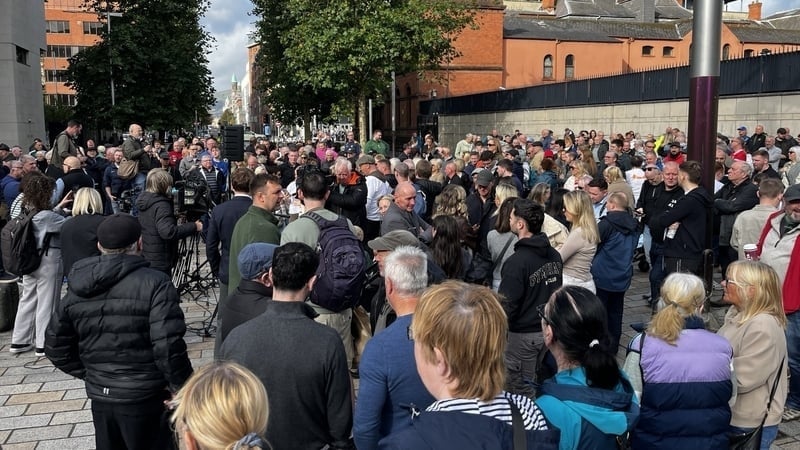
“The Court of Appeal in Belfast has allowed an appeal against an injunction banning Portadown Orangemen from the nationalist Garvaghy Road tomorrow.” · exact text match
Why: The opening statement is a plain legal fact; volatile material is attributed to the courts, politicians, and residents rather than asserted by the publisher.
Claim: A significant legal turn in a historic flashpoint is presented without narrative embellishment.
“A three judge panel, including Northern Ireland's highest judge - Lady Keegan - is dealing with the case.” · verified after text normalization
Why: The development is consequential, but the treatment is routine court reporting with little storytelling appeal.
Claim: The article describes proceedings and attributes every appeal or prescription to its source.
“Earlier, High Court Judge Patricia Smyth urged the parties to be "big enough to step back from the abyss" for the sake of everyone in Northern Ireland.” · not found in supplied text
Why: Exhortations come from named judges, clergy, and politicians in quotes, while the publisher's own prose is expository.
Claim: The publisher's voice is factful, with no unattributed opinions.
“She said the judicial review had identified gaps in the information required to make an informed decision.” · exact text match
Why: Every evaluative statement is attributed to a named speaker; the publisher adds only procedural description and one hedged inference.
Claim: The subject matter is inherently political, featuring elected politicians from both main Northern Ireland parties.
“"What we've seen from the other side is threats, intimidation, harassment, and the behaviour outside this court today just demonstrates to all unionists and the grassroots loyalists how we would be treated in this new fanciful Ireland," said DUP MP Carla Lockhart.” · not found in supplied text
Why: A sectarian parade dispute with DUP and SDLP commentary is unavoidably political, even though the publisher itself takes no partisan position.
Claim: Judicial and official authorities are cited because they constitute the reported events, not to bolster an argument.
“The Lady Chief Justice, Siobhan Keegan said the high court judge who granted the injunction had "erred in law".” · not found in supplied text
Why: Authority is the subject matter of a court story; the publisher does not invoke it to support any position of its own.
Claim: The single forward-looking statement is explicitly probabilistic.
“It makes it more likely the parade will now go ahead tomorrow.” · exact text match
Why: 'More likely' hedges certainty and is followed by the parties' request for further clarity.
Claim: The courts and the Parades Commission are presented as legitimate arbiters, with no critique of the framework.
“It follows a full day of legal argument in Belfast's High Court with the Orange Order and the Garvaghy residents locked in dispute over tomorrow's planned parade.” · verified after text normalization
Why: Resolution is framed as a matter of judicial review of a commission determination, treating both institutions as authoritative.
Claim: The publisher's register is unemotional; emotionally charged language appears only in attributed quotes.
“Earlier, High Court Judge Patricia Smyth urged the parties to be "big enough to step back from the abyss" for the sake of everyone in Northern Ireland.” · not found in supplied text
Why: Strong feeling is quarantined inside quotation marks; surrounding prose stays flat and factual.
Claim: Both communities' representatives are given comparable direct-quote representation.
“"We have won the first step.
This isn't over yet, because the Orange Order will no doubt be lodging an appeal very shortly," said spokesperson Brendan MacCionnaith.”
· not found in supplied text
“"We have right throughout this process said that there should be no violence."” · exact text match
Why: Residents' coalition, DUP, SDLP, and Orange Order lawyers all appear in direct quotation, with no unequal standard applied.
Claim: The report is well sourced with named judges, verbatim quotes, and explicit acknowledgement of unresolved questions.
“However, all parties are seeking further clarity on the implications of the ruling and other further steps that may be considered.” · exact text match
“The contents were not read to the court but it was indicated that there was "no agreement" from the order to voluntarily hold off on tomorrow's march.” · not found in supplied text
Why: Named judicial officers, direct quotations, procedural detail, and explicit uncertainty markers support high credibility within the text.
Claim: Framing is rational and procedural, presenting the outcome as conditional and unresolved.
“It makes it more likely the parade will now go ahead tomorrow.” · exact text match
“However, all parties are seeking further clarity on the implications of the ruling and other further steps that may be considered.” · exact text match
Why: The publisher's own sentences hedge probability and emphasize unresolved procedural steps rather than emotional or partisan assertion.
Claim: Speculation is limited to one clearly marked probabilistic inference.
“It makes it more likely the parade will now go ahead tomorrow.” · exact text match
Why: The rest of the report is procedural reporting; only this sentence projects an outcome.
Claim: Several textual inconsistencies exist, but they are as consistent with compiled live-blog editing as with AI generation.
“Earlier, Judge Smith gave the parties a final opportunity to reach agreement” · exact text match
“we came looking looking for justice” · exact text match
Why: The Judge Smith/Judge Smyth inconsistency, a duplicated word, and a repeated 'abyss' quotation are weak, ambiguous markers; a human-edited rolling page is a plausible alternative.
Claim: Reporting is scrupulous about what is known, not read, or still unclear.
“The contents were not read to the court but it was indicated that there was "no agreement" from the order to voluntarily hold off on tomorrow's march.” · not found in supplied text
Why: The publisher marks the boundary between what was read in court and what was merely indicated, and notes the parties' continuing uncertainty.
Claim: The report preserves distinct legal arguments and procedural nuance from multiple parties.
“He said the interim injunction had deemed a lawful parade to be unlawful.” · exact text match
“She said the risk assessment only talked about public order considerations in respect of what had happened in the past, not what might happen in the future.” · exact text match
Why: Separate positions of the appellant, residents, and Parades Commission are represented with their specific legal reasoning.
The supplied text is a compiled rolling-coverage page rather than a single edited article, with repeated passages, an inconsistent judge name (Smith/Smyth), and a duplicated word; chronology and editing provenance are therefore uncertain.
September 26, 2026 · 0 shares
The ruling is presented through attributed court reporting, with the judge's warnings, the residents' challenge, and the Orange Order's objections all given direct voice.
Automated analysis; not human reviewed.
Limitations: The supplied text mixes the main court report with unrelated headlines and a consent notice; only the substantive paragraphs describing the ruling were analyzed.
·
6 of 55 available dimensions scored; omitted dimensions are not treated as neutral.
·
Verified supporting quotes for 6 of 6 scored dimensions.
Claim: The publisher's framing is objective, relying on attributed quotes and legal context rather than editorial commentary.
“Members of the Orange Order have been banned from marching down the Garvaghy Road in Portadown after a High Court judge granted a temporary injunction.” · exact text match
“Delivering her ruling on Saturday Ms Smyth said: "The level of mistrust between the residents and the Portadown Orange lodge cannot be overstated."” · verified after text normalization
Why: The article reports court rulings and quotes the judge and counsel without inserting value judgments in the publisher's own voice.
Claim: The article remains non-sensational despite the conflict's dramatic history and quoted emotional language.
“The stand-off at Drumcree made headlines in the 1990s, with nationalist residents of the Garvaghy Road opposed to the parade passing through the area, leading to violent clashes for several summers and political tension necessitating a major security operation.” · exact text match
Why: Historical conflict is summarized in neutral, factual terms, and dramatic phrases such as 'step back from the abyss' are attributed to the judge rather than used by the reporter.
Claim: The report describes proceedings and arguments rather than prescribing what should happen.
“On Saturday Justice Patricia Smyth blocked the commission decision, saying the "long-running dispute has the potential to escalate" across Northern Ireland.” · verified after text normalization
Why: The publisher's voice offers no directives or recommendations; any prescriptive language appears only inside quoted remarks by the judge.
Claim: The article is factful, with positions attributed to sources rather than asserted by the publisher.
“It is understood the Orange Order will appeal against the injunctions.” · exact text match
Why: Even the expectation of an appeal is framed as reported information, and contested claims are consistently attributed to named parties.
Claim: The piece is nonpartisan, noting reactions on both sides without endorsing either.
“On Friday the commission reversed its long-running determination, to the welcome of unionist parties and outrage of nationalist and republican parties.” · exact text match
Why: It records opposing reactions and includes the Orange Order's objections alongside the residents' legal challenge, so no party line is adopted.
Claim: Visible sourcing is strong: the article names the judge and counsel and uses extensive direct quotation.
“Delivering her ruling on Saturday Ms Smyth said: "The level of mistrust between the residents and the Portadown Orange lodge cannot be overstated."” · verified after text normalization
“their barrister Denise Kiley KC, saying "much remains uncertain" in the wake of the ruling” · verified after text normalization
Why: The text identifies the judicial officer, counsel, and parties, and uses verbatim quotations for substantive assertions.
The supplied text mixes the main court report with unrelated headlines and a consent notice; only the substantive paragraphs describing the ruling were analyzed.
September 26, 2026 · 0 shares
The ruling is presented through attributed court reporting, with the judge's warnings, the residents' challenge, and the Orange Order's objections all given direct voice.
Automated analysis; not human reviewed.
Limitations: The supplied text mixes the main court report with unrelated headlines and a consent notice; only the substantive paragraphs describing the ruling were analyzed.
·
6 of 55 available dimensions scored; omitted dimensions are not treated as neutral.
·
Verified supporting quotes for 6 of 6 scored dimensions.
Claim: The publisher's framing is objective, relying on attributed quotes and legal context rather than editorial commentary.
“Members of the Orange Order have been banned from marching down the Garvaghy Road in Portadown after a High Court judge granted a temporary injunction.” · exact text match
“Delivering her ruling on Saturday Ms Smyth said: "The level of mistrust between the residents and the Portadown Orange lodge cannot be overstated."” · verified after text normalization
Why: The article reports court rulings and quotes the judge and counsel without inserting value judgments in the publisher's own voice.
Claim: The article remains non-sensational despite the conflict's dramatic history and quoted emotional language.
“The stand-off at Drumcree made headlines in the 1990s, with nationalist residents of the Garvaghy Road opposed to the parade passing through the area, leading to violent clashes for several summers and political tension necessitating a major security operation.” · exact text match
Why: Historical conflict is summarized in neutral, factual terms, and dramatic phrases such as 'step back from the abyss' are attributed to the judge rather than used by the reporter.
Claim: The report describes proceedings and arguments rather than prescribing what should happen.
“On Saturday Justice Patricia Smyth blocked the commission decision, saying the "long-running dispute has the potential to escalate" across Northern Ireland.” · verified after text normalization
Why: The publisher's voice offers no directives or recommendations; any prescriptive language appears only inside quoted remarks by the judge.
Claim: The article is factful, with positions attributed to sources rather than asserted by the publisher.
“It is understood the Orange Order will appeal against the injunctions.” · exact text match
Why: Even the expectation of an appeal is framed as reported information, and contested claims are consistently attributed to named parties.
Claim: The piece is nonpartisan, noting reactions on both sides without endorsing either.
“On Friday the commission reversed its long-running determination, to the welcome of unionist parties and outrage of nationalist and republican parties.” · exact text match
Why: It records opposing reactions and includes the Orange Order's objections alongside the residents' legal challenge, so no party line is adopted.
Claim: Visible sourcing is strong: the article names the judge and counsel and uses extensive direct quotation.
“Delivering her ruling on Saturday Ms Smyth said: "The level of mistrust between the residents and the Portadown Orange lodge cannot be overstated."” · verified after text normalization
“their barrister Denise Kiley KC, saying "much remains uncertain" in the wake of the ruling” · verified after text normalization
Why: The text identifies the judicial officer, counsel, and parties, and uses verbatim quotations for substantive assertions.
The supplied text mixes the main court report with unrelated headlines and a consent notice; only the substantive paragraphs describing the ruling were analyzed.
September 26, 2026 · 0 shares
Court-procedural framing treats a sectarian flashpoint as a matter for judicial review, giving both nationalist and unionist voices direct quotation without editorial endorsement.
The Drumcree parade is the annual Orange Order march in Portadown, Northern Ireland, which the Parades Commission has blocked from the nationalist Garvaghy Road every July since 1998; it is one of the region's most sensitive sectarian flashpoints, and the Parades Commission is the statutory regulator that determines contested parades.
Automated analysis; not human reviewed.
Limitations: The supplied text is a compiled rolling-coverage page rather than a single edited article, with repeated passages, an inconsistent judge name (Smith/Smyth), and a duplicated word; chronology and editing provenance are therefore uncertain.
·
18 of 55 available dimensions scored; omitted dimensions are not treated as neutral.
·
Verified supporting quotes for 10 of 18 scored dimensions.
Claim: Reporting is politically balanced, with unionist and nationalist representatives given comparable direct-quote space.
“"What we've seen from the other side is threats, intimidation, harassment, and the behaviour outside this court today just demonstrates to all unionists and the grassroots loyalists how we would be treated in this new fanciful Ireland," said DUP MP Carla Lockhart.” · not found in supplied text
“"I think that was the right decision.
It creates a pause to try and de-escalate some of the volatility," said SDLP leader Claire Hanna.”
· not found in supplied text
Why: Both the DUP (unionist) and SDLP (nationalist) positions, plus residents' and Orange Order lawyers' arguments, appear as attributed quotes with no editorial preference shown.
Claim: The publisher's voice is factual and descriptive, with all evaluations confined to attributed speakers.
“A three judge panel, including Northern Ireland's highest judge - Lady Keegan - is dealing with the case.” · verified after text normalization
Why: Even dramatic statements such as 'step back from the abyss' appear only inside quotes from judges, clergy, or politicians.
Claim: The report is sober and procedural, without sensationalist language in the publisher's own voice.
“The Court of Appeal in Belfast has allowed an appeal against an injunction banning Portadown Orangemen from the nationalist Garvaghy Road tomorrow.” · exact text match
Why: The opening statement is a plain legal fact; volatile material is attributed to the courts, politicians, and residents rather than asserted by the publisher.
Claim: A significant legal turn in a historic flashpoint is presented without narrative embellishment.
“A three judge panel, including Northern Ireland's highest judge - Lady Keegan - is dealing with the case.” · verified after text normalization
Why: The development is consequential, but the treatment is routine court reporting with little storytelling appeal.
Claim: The article describes proceedings and attributes every appeal or prescription to its source.
“Earlier, High Court Judge Patricia Smyth urged the parties to be "big enough to step back from the abyss" for the sake of everyone in Northern Ireland.” · not found in supplied text
Why: Exhortations come from named judges, clergy, and politicians in quotes, while the publisher's own prose is expository.
Claim: The publisher's voice is factful, with no unattributed opinions.
“She said the judicial review had identified gaps in the information required to make an informed decision.” · exact text match
Why: Every evaluative statement is attributed to a named speaker; the publisher adds only procedural description and one hedged inference.
Claim: The subject matter is inherently political, featuring elected politicians from both main Northern Ireland parties.
“"What we've seen from the other side is threats, intimidation, harassment, and the behaviour outside this court today just demonstrates to all unionists and the grassroots loyalists how we would be treated in this new fanciful Ireland," said DUP MP Carla Lockhart.” · not found in supplied text
Why: A sectarian parade dispute with DUP and SDLP commentary is unavoidably political, even though the publisher itself takes no partisan position.
Claim: Judicial and official authorities are cited because they constitute the reported events, not to bolster an argument.
“The Lady Chief Justice, Siobhan Keegan said the high court judge who granted the injunction had "erred in law".” · not found in supplied text
Why: Authority is the subject matter of a court story; the publisher does not invoke it to support any position of its own.
Claim: The single forward-looking statement is explicitly probabilistic.
“It makes it more likely the parade will now go ahead tomorrow.” · exact text match
Why: 'More likely' hedges certainty and is followed by the parties' request for further clarity.
Claim: The courts and the Parades Commission are presented as legitimate arbiters, with no critique of the framework.
“It follows a full day of legal argument in Belfast's High Court with the Orange Order and the Garvaghy residents locked in dispute over tomorrow's planned parade.” · verified after text normalization
Why: Resolution is framed as a matter of judicial review of a commission determination, treating both institutions as authoritative.
Claim: The publisher's register is unemotional; emotionally charged language appears only in attributed quotes.
“Earlier, High Court Judge Patricia Smyth urged the parties to be "big enough to step back from the abyss" for the sake of everyone in Northern Ireland.” · not found in supplied text
Why: Strong feeling is quarantined inside quotation marks; surrounding prose stays flat and factual.
Claim: Both communities' representatives are given comparable direct-quote representation.
“"We have won the first step.
This isn't over yet, because the Orange Order will no doubt be lodging an appeal very shortly," said spokesperson Brendan MacCionnaith.”
· not found in supplied text
“"We have right throughout this process said that there should be no violence."” · exact text match
Why: Residents' coalition, DUP, SDLP, and Orange Order lawyers all appear in direct quotation, with no unequal standard applied.
Claim: The report is well sourced with named judges, verbatim quotes, and explicit acknowledgement of unresolved questions.
“However, all parties are seeking further clarity on the implications of the ruling and other further steps that may be considered.” · exact text match
“The contents were not read to the court but it was indicated that there was "no agreement" from the order to voluntarily hold off on tomorrow's march.” · not found in supplied text
Why: Named judicial officers, direct quotations, procedural detail, and explicit uncertainty markers support high credibility within the text.
Claim: Framing is rational and procedural, presenting the outcome as conditional and unresolved.
“It makes it more likely the parade will now go ahead tomorrow.” · exact text match
“However, all parties are seeking further clarity on the implications of the ruling and other further steps that may be considered.” · exact text match
Why: The publisher's own sentences hedge probability and emphasize unresolved procedural steps rather than emotional or partisan assertion.
Claim: Speculation is limited to one clearly marked probabilistic inference.
“It makes it more likely the parade will now go ahead tomorrow.” · exact text match
Why: The rest of the report is procedural reporting; only this sentence projects an outcome.
Claim: Several textual inconsistencies exist, but they are as consistent with compiled live-blog editing as with AI generation.
“Earlier, Judge Smith gave the parties a final opportunity to reach agreement” · exact text match
“we came looking looking for justice” · exact text match
Why: The Judge Smith/Judge Smyth inconsistency, a duplicated word, and a repeated 'abyss' quotation are weak, ambiguous markers; a human-edited rolling page is a plausible alternative.
Claim: Reporting is scrupulous about what is known, not read, or still unclear.
“The contents were not read to the court but it was indicated that there was "no agreement" from the order to voluntarily hold off on tomorrow's march.” · not found in supplied text
Why: The publisher marks the boundary between what was read in court and what was merely indicated, and notes the parties' continuing uncertainty.
Claim: The report preserves distinct legal arguments and procedural nuance from multiple parties.
“He said the interim injunction had deemed a lawful parade to be unlawful.” · exact text match
“She said the risk assessment only talked about public order considerations in respect of what had happened in the past, not what might happen in the future.” · exact text match
Why: Separate positions of the appellant, residents, and Parades Commission are represented with their specific legal reasoning.
The supplied text is a compiled rolling-coverage page rather than a single edited article, with repeated passages, an inconsistent judge name (Smith/Smyth), and a duplicated word; chronology and editing provenance are therefore uncertain.
September 26, 2026 · 0 shares
Court-procedural framing treats a sectarian flashpoint as a matter for judicial review, giving both nationalist and unionist voices direct quotation without editorial endorsement.
The Drumcree parade is the annual Orange Order march in Portadown, Northern Ireland, which the Parades Commission has blocked from the nationalist Garvaghy Road every July since 1998; it is one of the region's most sensitive sectarian flashpoints, and the Parades Commission is the statutory regulator that determines contested parades.
Automated analysis; not human reviewed.
Limitations: The supplied text is a compiled rolling-coverage page rather than a single edited article, with repeated passages, an inconsistent judge name (Smith/Smyth), and a duplicated word; chronology and editing provenance are therefore uncertain.
·
18 of 55 available dimensions scored; omitted dimensions are not treated as neutral.
·
Verified supporting quotes for 10 of 18 scored dimensions.
Claim: Reporting is politically balanced, with unionist and nationalist representatives given comparable direct-quote space.
“"What we've seen from the other side is threats, intimidation, harassment, and the behaviour outside this court today just demonstrates to all unionists and the grassroots loyalists how we would be treated in this new fanciful Ireland," said DUP MP Carla Lockhart.” · not found in supplied text
“"I think that was the right decision.
It creates a pause to try and de-escalate some of the volatility," said SDLP leader Claire Hanna.”
· not found in supplied text
Why: Both the DUP (unionist) and SDLP (nationalist) positions, plus residents' and Orange Order lawyers' arguments, appear as attributed quotes with no editorial preference shown.
Claim: The publisher's voice is factual and descriptive, with all evaluations confined to attributed speakers.
“A three judge panel, including Northern Ireland's highest judge - Lady Keegan - is dealing with the case.” · verified after text normalization
Why: Even dramatic statements such as 'step back from the abyss' appear only inside quotes from judges, clergy, or politicians.
Claim: The report is sober and procedural, without sensationalist language in the publisher's own voice.
“The Court of Appeal in Belfast has allowed an appeal against an injunction banning Portadown Orangemen from the nationalist Garvaghy Road tomorrow.” · exact text match
Why: The opening statement is a plain legal fact; volatile material is attributed to the courts, politicians, and residents rather than asserted by the publisher.
Claim: A significant legal turn in a historic flashpoint is presented without narrative embellishment.
“A three judge panel, including Northern Ireland's highest judge - Lady Keegan - is dealing with the case.” · verified after text normalization
Why: The development is consequential, but the treatment is routine court reporting with little storytelling appeal.
Claim: The article describes proceedings and attributes every appeal or prescription to its source.
“Earlier, High Court Judge Patricia Smyth urged the parties to be "big enough to step back from the abyss" for the sake of everyone in Northern Ireland.” · not found in supplied text
Why: Exhortations come from named judges, clergy, and politicians in quotes, while the publisher's own prose is expository.
Claim: The publisher's voice is factful, with no unattributed opinions.
“She said the judicial review had identified gaps in the information required to make an informed decision.” · exact text match
Why: Every evaluative statement is attributed to a named speaker; the publisher adds only procedural description and one hedged inference.
Claim: The subject matter is inherently political, featuring elected politicians from both main Northern Ireland parties.
“"What we've seen from the other side is threats, intimidation, harassment, and the behaviour outside this court today just demonstrates to all unionists and the grassroots loyalists how we would be treated in this new fanciful Ireland," said DUP MP Carla Lockhart.” · not found in supplied text
Why: A sectarian parade dispute with DUP and SDLP commentary is unavoidably political, even though the publisher itself takes no partisan position.
Claim: Judicial and official authorities are cited because they constitute the reported events, not to bolster an argument.
“The Lady Chief Justice, Siobhan Keegan said the high court judge who granted the injunction had "erred in law".” · not found in supplied text
Why: Authority is the subject matter of a court story; the publisher does not invoke it to support any position of its own.
Claim: The single forward-looking statement is explicitly probabilistic.
“It makes it more likely the parade will now go ahead tomorrow.” · exact text match
Why: 'More likely' hedges certainty and is followed by the parties' request for further clarity.
Claim: The courts and the Parades Commission are presented as legitimate arbiters, with no critique of the framework.
“It follows a full day of legal argument in Belfast's High Court with the Orange Order and the Garvaghy residents locked in dispute over tomorrow's planned parade.” · verified after text normalization
Why: Resolution is framed as a matter of judicial review of a commission determination, treating both institutions as authoritative.
Claim: The publisher's register is unemotional; emotionally charged language appears only in attributed quotes.
“Earlier, High Court Judge Patricia Smyth urged the parties to be "big enough to step back from the abyss" for the sake of everyone in Northern Ireland.” · not found in supplied text
Why: Strong feeling is quarantined inside quotation marks; surrounding prose stays flat and factual.
Claim: Both communities' representatives are given comparable direct-quote representation.
“"We have won the first step.
This isn't over yet, because the Orange Order will no doubt be lodging an appeal very shortly," said spokesperson Brendan MacCionnaith.”
· not found in supplied text
“"We have right throughout this process said that there should be no violence."” · exact text match
Why: Residents' coalition, DUP, SDLP, and Orange Order lawyers all appear in direct quotation, with no unequal standard applied.
Claim: The report is well sourced with named judges, verbatim quotes, and explicit acknowledgement of unresolved questions.
“However, all parties are seeking further clarity on the implications of the ruling and other further steps that may be considered.” · exact text match
“The contents were not read to the court but it was indicated that there was "no agreement" from the order to voluntarily hold off on tomorrow's march.” · not found in supplied text
Why: Named judicial officers, direct quotations, procedural detail, and explicit uncertainty markers support high credibility within the text.
Claim: Framing is rational and procedural, presenting the outcome as conditional and unresolved.
“It makes it more likely the parade will now go ahead tomorrow.” · exact text match
“However, all parties are seeking further clarity on the implications of the ruling and other further steps that may be considered.” · exact text match
Why: The publisher's own sentences hedge probability and emphasize unresolved procedural steps rather than emotional or partisan assertion.
Claim: Speculation is limited to one clearly marked probabilistic inference.
“It makes it more likely the parade will now go ahead tomorrow.” · exact text match
Why: The rest of the report is procedural reporting; only this sentence projects an outcome.
Claim: Several textual inconsistencies exist, but they are as consistent with compiled live-blog editing as with AI generation.
“Earlier, Judge Smith gave the parties a final opportunity to reach agreement” · exact text match
“we came looking looking for justice” · exact text match
Why: The Judge Smith/Judge Smyth inconsistency, a duplicated word, and a repeated 'abyss' quotation are weak, ambiguous markers; a human-edited rolling page is a plausible alternative.
Claim: Reporting is scrupulous about what is known, not read, or still unclear.
“The contents were not read to the court but it was indicated that there was "no agreement" from the order to voluntarily hold off on tomorrow's march.” · not found in supplied text
Why: The publisher marks the boundary between what was read in court and what was merely indicated, and notes the parties' continuing uncertainty.
Claim: The report preserves distinct legal arguments and procedural nuance from multiple parties.
“He said the interim injunction had deemed a lawful parade to be unlawful.” · exact text match
“She said the risk assessment only talked about public order considerations in respect of what had happened in the past, not what might happen in the future.” · exact text match
Why: Separate positions of the appellant, residents, and Parades Commission are represented with their specific legal reasoning.
The supplied text is a compiled rolling-coverage page rather than a single edited article, with repeated passages, an inconsistent judge name (Smith/Smyth), and a duplicated word; chronology and editing provenance are therefore uncertain.
September 26, 2026 · 0 shares
Court-procedural framing treats a sectarian flashpoint as a matter for judicial review, giving both nationalist and unionist voices direct quotation without editorial endorsement.
The Drumcree parade is the annual Orange Order march in Portadown, Northern Ireland, which the Parades Commission has blocked from the nationalist Garvaghy Road every July since 1998; it is one of the region's most sensitive sectarian flashpoints, and the Parades Commission is the statutory regulator that determines contested parades.
Automated analysis; not human reviewed.
Limitations: The supplied text is a compiled rolling-coverage page rather than a single edited article, with repeated passages, an inconsistent judge name (Smith/Smyth), and a duplicated word; chronology and editing provenance are therefore uncertain.
·
18 of 55 available dimensions scored; omitted dimensions are not treated as neutral.
·
Verified supporting quotes for 10 of 18 scored dimensions.
Claim: Reporting is politically balanced, with unionist and nationalist representatives given comparable direct-quote space.
“"What we've seen from the other side is threats, intimidation, harassment, and the behaviour outside this court today just demonstrates to all unionists and the grassroots loyalists how we would be treated in this new fanciful Ireland," said DUP MP Carla Lockhart.” · not found in supplied text
“"I think that was the right decision.
It creates a pause to try and de-escalate some of the volatility," said SDLP leader Claire Hanna.”
· not found in supplied text
Why: Both the DUP (unionist) and SDLP (nationalist) positions, plus residents' and Orange Order lawyers' arguments, appear as attributed quotes with no editorial preference shown.
Claim: The publisher's voice is factual and descriptive, with all evaluations confined to attributed speakers.
“A three judge panel, including Northern Ireland's highest judge - Lady Keegan - is dealing with the case.” · verified after text normalization
Why: Even dramatic statements such as 'step back from the abyss' appear only inside quotes from judges, clergy, or politicians.
Claim: The report is sober and procedural, without sensationalist language in the publisher's own voice.
“The Court of Appeal in Belfast has allowed an appeal against an injunction banning Portadown Orangemen from the nationalist Garvaghy Road tomorrow.” · exact text match
Why: The opening statement is a plain legal fact; volatile material is attributed to the courts, politicians, and residents rather than asserted by the publisher.
Claim: A significant legal turn in a historic flashpoint is presented without narrative embellishment.
“A three judge panel, including Northern Ireland's highest judge - Lady Keegan - is dealing with the case.” · verified after text normalization
Why: The development is consequential, but the treatment is routine court reporting with little storytelling appeal.
Claim: The article describes proceedings and attributes every appeal or prescription to its source.
“Earlier, High Court Judge Patricia Smyth urged the parties to be "big enough to step back from the abyss" for the sake of everyone in Northern Ireland.” · not found in supplied text
Why: Exhortations come from named judges, clergy, and politicians in quotes, while the publisher's own prose is expository.
Claim: The publisher's voice is factful, with no unattributed opinions.
“She said the judicial review had identified gaps in the information required to make an informed decision.” · exact text match
Why: Every evaluative statement is attributed to a named speaker; the publisher adds only procedural description and one hedged inference.
Claim: The subject matter is inherently political, featuring elected politicians from both main Northern Ireland parties.
“"What we've seen from the other side is threats, intimidation, harassment, and the behaviour outside this court today just demonstrates to all unionists and the grassroots loyalists how we would be treated in this new fanciful Ireland," said DUP MP Carla Lockhart.” · not found in supplied text
Why: A sectarian parade dispute with DUP and SDLP commentary is unavoidably political, even though the publisher itself takes no partisan position.
Claim: Judicial and official authorities are cited because they constitute the reported events, not to bolster an argument.
“The Lady Chief Justice, Siobhan Keegan said the high court judge who granted the injunction had "erred in law".” · not found in supplied text
Why: Authority is the subject matter of a court story; the publisher does not invoke it to support any position of its own.
Claim: The single forward-looking statement is explicitly probabilistic.
“It makes it more likely the parade will now go ahead tomorrow.” · exact text match
Why: 'More likely' hedges certainty and is followed by the parties' request for further clarity.
Claim: The courts and the Parades Commission are presented as legitimate arbiters, with no critique of the framework.
“It follows a full day of legal argument in Belfast's High Court with the Orange Order and the Garvaghy residents locked in dispute over tomorrow's planned parade.” · verified after text normalization
Why: Resolution is framed as a matter of judicial review of a commission determination, treating both institutions as authoritative.
Claim: The publisher's register is unemotional; emotionally charged language appears only in attributed quotes.
“Earlier, High Court Judge Patricia Smyth urged the parties to be "big enough to step back from the abyss" for the sake of everyone in Northern Ireland.” · not found in supplied text
Why: Strong feeling is quarantined inside quotation marks; surrounding prose stays flat and factual.
Claim: Both communities' representatives are given comparable direct-quote representation.
“"We have won the first step.
This isn't over yet, because the Orange Order will no doubt be lodging an appeal very shortly," said spokesperson Brendan MacCionnaith.”
· not found in supplied text
“"We have right throughout this process said that there should be no violence."” · exact text match
Why: Residents' coalition, DUP, SDLP, and Orange Order lawyers all appear in direct quotation, with no unequal standard applied.
Claim: The report is well sourced with named judges, verbatim quotes, and explicit acknowledgement of unresolved questions.
“However, all parties are seeking further clarity on the implications of the ruling and other further steps that may be considered.” · exact text match
“The contents were not read to the court but it was indicated that there was "no agreement" from the order to voluntarily hold off on tomorrow's march.” · not found in supplied text
Why: Named judicial officers, direct quotations, procedural detail, and explicit uncertainty markers support high credibility within the text.
Claim: Framing is rational and procedural, presenting the outcome as conditional and unresolved.
“It makes it more likely the parade will now go ahead tomorrow.” · exact text match
“However, all parties are seeking further clarity on the implications of the ruling and other further steps that may be considered.” · exact text match
Why: The publisher's own sentences hedge probability and emphasize unresolved procedural steps rather than emotional or partisan assertion.
Claim: Speculation is limited to one clearly marked probabilistic inference.
“It makes it more likely the parade will now go ahead tomorrow.” · exact text match
Why: The rest of the report is procedural reporting; only this sentence projects an outcome.
Claim: Several textual inconsistencies exist, but they are as consistent with compiled live-blog editing as with AI generation.
“Earlier, Judge Smith gave the parties a final opportunity to reach agreement” · exact text match
“we came looking looking for justice” · exact text match
Why: The Judge Smith/Judge Smyth inconsistency, a duplicated word, and a repeated 'abyss' quotation are weak, ambiguous markers; a human-edited rolling page is a plausible alternative.
Claim: Reporting is scrupulous about what is known, not read, or still unclear.
“The contents were not read to the court but it was indicated that there was "no agreement" from the order to voluntarily hold off on tomorrow's march.” · not found in supplied text
Why: The publisher marks the boundary between what was read in court and what was merely indicated, and notes the parties' continuing uncertainty.
Claim: The report preserves distinct legal arguments and procedural nuance from multiple parties.
“He said the interim injunction had deemed a lawful parade to be unlawful.” · exact text match
“She said the risk assessment only talked about public order considerations in respect of what had happened in the past, not what might happen in the future.” · exact text match
Why: Separate positions of the appellant, residents, and Parades Commission are represented with their specific legal reasoning.
The supplied text is a compiled rolling-coverage page rather than a single edited article, with repeated passages, an inconsistent judge name (Smith/Smyth), and a duplicated word; chronology and editing provenance are therefore uncertain.
Framing presents the Drumcree parade dispute as a legal and political crisis, with the rule of law and power-sharing stability as organising concerns.
Automated analysis; not human reviewed.
Limitations: The supplied text is truncated and contains placeholder ellipses and boilerplate; analysis is limited to the visible substantive paragraphs, so some context may be missing.
·
1 of 55 available dimensions scored; omitted dimensions are not treated as neutral.
·
Verified supporting quotes for 0 of 1 scored dimensions.
Claim: The report is credible on visible sourcing, naming officials, courts, and legal actions.
“The overnight hearing formed part of three distinct emergency legal actions brought before Belfast courts between Saturday and Sunday morning.” · exact text match
“Justice Michael Humphreys presided over […] here is of a public body which took evidence from the relevant sources, weighed up the key issues which were in play and arrived at a reasoned decision.” · not found in supplied text
Why: It names the Secretary of State, judges, parties, and the legal mechanism, and it attributes quotes to named officials.
The supplied text is truncated and contains placeholder ellipses and boilerplate; analysis is limited to the visible substantive paragraphs, so some context may be missing.
September 28, 2026 · 0 shares
The Drumcree coverage is balanced and institution-focused, presenting unionist accusations and nationalist victory claims as attributed positions while treating the legal/regulatory framework as factual context.
The Garvaghy Road is a mainly nationalist/Catholic estate in Portadown, and Drumcree Orange Order parades have previously been sites of serious disorder.
Northern Ireland's Stormont government is a power-sharing arrangement between unionist and nationalist parties; a withdrawal by either the DUP or Sinn Féin would collapse it.
Automated analysis; not human reviewed.
Limitations: The supplied text bundles several overlapping news items and appended headlines, so the analysis is limited to the main Drumcree/Stormont report; the exact original article boundary is uncertain.
·
4 of 55 available dimensions scored; omitted dimensions are not treated as neutral.
·
Verified supporting quotes for 4 of 4 scored dimensions.
Claim: The report does not endorse either side's political position; it pairs unionist and nationalist framings with attribution.
“Speaking on Monday morning, Buckley claimed Sinn Féin has “no regard for the rule of law”” · exact text match
““And tonight, I believe, is another victory for this community in standing steadfast for the right to live free from sectarian harassment and intimidation.”” · exact text match
Why: Both unionist accusations of lawbreaking and nationalist claims of community victory are attributed to named sources, with no publisher adoption of either framing.
Claim: The report keeps a detached, attributive stance, using 'claimed' and 'said' for contested views.
“Speaking on Monday morning, Buckley claimed Sinn Féin has “no regard for the rule of law”” · exact text match
“At about midnight, Breandán Mac Cionnaith from the Garvaghy Road Residents’ Coalition, told protesters they had secured a “victory”” · exact text match
Why: Contested assertions are attributed to named politicians rather than asserted by the publisher, and both unionist and nationalist framings are included.
Claim: The news is framed almost entirely around political reactions and the stability of Stormont.
“The escalating political row over the parade has tested Stormont’s stability, less than nine months before Northern Ireland’s voters go to the polls.” · exact text match
Why: The central development is treated as a political-institutional crisis, with the parade itself reported mainly through politicians' statements and the risk of power-sharing collapse.
Claim: Credibility rests on specific factual detail, named reporters/wire credit, and attribution of contested claims.
“The legal permission won by the Orange Order after lengthy court battles on Saturday to march from Drumcree Church of Ireland to its headquarters in Portadown expired at midnight.” · exact text match
“writes Mark Hennessy” · exact text match
Why: Legal and timing details are supplied precisely, contested statements are attributed, and named reporters or wire credits are identified.
The supplied text bundles several overlapping news items and appended headlines, so the analysis is limited to the main Drumcree/Stormont report; the exact original article boundary is uncertain.
September 28, 2026 · 0 shares
Frames the Drumcree protest chiefly as a political crisis for Northern Ireland's power-sharing executive, foregrounding unionist law-breaking allegations against the First Minister while reporting the standoff's sequence neutrally.
The Drumcree parade dispute is a recurring flashpoint over Orange Order marches through the nationalist Garvaghy Road area of Portadown, historically associated with violence and political crisis in Northern Ireland.
Automated analysis; not human reviewed.
Limitations: The supplied article text is truncated mid-sentence with bracketed ellipses, so later context and any conclusion are missing.
·
5 of 55 available dimensions scored; omitted dimensions are not treated as neutral.
·
Verified supporting quotes for 5 of 5 scored dimensions.
Claim: The report uses attribution and neutral description rather than endorsing claims or adding interpretation.
“They were told by an officer that they were not permitted to proceed.” · exact text match
“DUP leader Gavin Robinson said politicians who participated in the protest needed to face consequences” · exact text match
Counterevidence:
“row has rocked the Stormont devolved institutions” · exact text match
Why: Actions and statements are reported with source attribution and quoted or indirect speech; the publisher's only evaluative phrase is the conventional metaphor 'row has rocked'.
Claim: The narrative involves a high-stakes political consequence and an overnight standoff, giving it inherent drama.
“a move that would forcibly remove Ms O’Neill from her post in the joint office” · exact text match
“The blockade continued through the day and late into the night” · exact text match
Why: The possibility of a First Minister being removed from office plus the tense overnight police line confrontation makes the story compelling.
Claim: The event is framed primarily as a political-institutional crisis rather than a public-order or community story.
“row has rocked the Stormont devolved institutions, with First Minister Michelle O’Neill facing claims of “law breaking” for participating in Sunday’s protest” · exact text match
“The Traditional Unionist Voice party has called on the DUP to withdraw the party’s deputy First Minister Emma Little Pengelly from office” · exact text match
Why: The lead and second paragraph foreground the political fallout, the potential removal of the First Minister, and party responses, placing the dispute's politics at the center.
Claim: The report is built on named officials, specific locations, and direct quotations that support verification.
“Breandán Mac Cionnaith from the Garvaghy Road Residents’ Coalition told demonstrators that a process to resolve the stand-off would commence on Monday” · exact text match
“Portadown deputy district master Alastair Power asked the officer to confirm that a member of the public was allowed to walk down the road” · exact text match
Why: Attributions identify speakers by name, role, and organization, and events are anchored to a precise time and place.
Claim: The publisher gives space to multiple parties in the dispute and does not endorse either side's legal or moral position.
“DUP leader Gavin Robinson said politicians who participated in the protest needed to face consequences” · exact text match
“began with a plea to MLAs from Stormont speaker Edwin Poots to avoid engaging in rhetoric that might inflame tensions” · exact text match
Why: Quotes and attributed statements from unionist politicians, the residents' coalition, and the Speaker are presented without the publisher judging them, showing internal fairness.
The supplied article text is truncated mid-sentence with bracketed ellipses, so later context and any conclusion are missing.
September 28, 2026 · 0 shares
The Drumcree coverage is balanced and institution-focused, presenting unionist accusations and nationalist victory claims as attributed positions while treating the legal/regulatory framework as factual context.
The Garvaghy Road is a mainly nationalist/Catholic estate in Portadown, and Drumcree Orange Order parades have previously been sites of serious disorder.
Northern Ireland's Stormont government is a power-sharing arrangement between unionist and nationalist parties; a withdrawal by either the DUP or Sinn Féin would collapse it.
Automated analysis; not human reviewed.
Limitations: The supplied text bundles several overlapping news items and appended headlines, so the analysis is limited to the main Drumcree/Stormont report; the exact original article boundary is uncertain.
·
4 of 55 available dimensions scored; omitted dimensions are not treated as neutral.
·
Verified supporting quotes for 4 of 4 scored dimensions.
Claim: The report does not endorse either side's political position; it pairs unionist and nationalist framings with attribution.
“Speaking on Monday morning, Buckley claimed Sinn Féin has “no regard for the rule of law”” · exact text match
““And tonight, I believe, is another victory for this community in standing steadfast for the right to live free from sectarian harassment and intimidation.”” · exact text match
Why: Both unionist accusations of lawbreaking and nationalist claims of community victory are attributed to named sources, with no publisher adoption of either framing.
Claim: The report keeps a detached, attributive stance, using 'claimed' and 'said' for contested views.
“Speaking on Monday morning, Buckley claimed Sinn Féin has “no regard for the rule of law”” · exact text match
“At about midnight, Breandán Mac Cionnaith from the Garvaghy Road Residents’ Coalition, told protesters they had secured a “victory”” · exact text match
Why: Contested assertions are attributed to named politicians rather than asserted by the publisher, and both unionist and nationalist framings are included.
Claim: The news is framed almost entirely around political reactions and the stability of Stormont.
“The escalating political row over the parade has tested Stormont’s stability, less than nine months before Northern Ireland’s voters go to the polls.” · exact text match
Why: The central development is treated as a political-institutional crisis, with the parade itself reported mainly through politicians' statements and the risk of power-sharing collapse.
Claim: Credibility rests on specific factual detail, named reporters/wire credit, and attribution of contested claims.
“The legal permission won by the Orange Order after lengthy court battles on Saturday to march from Drumcree Church of Ireland to its headquarters in Portadown expired at midnight.” · exact text match
“writes Mark Hennessy” · exact text match
Why: Legal and timing details are supplied precisely, contested statements are attributed, and named reporters or wire credits are identified.
The supplied text bundles several overlapping news items and appended headlines, so the analysis is limited to the main Drumcree/Stormont report; the exact original article boundary is uncertain.
September 27, 2026 · 0 shares
Framing emphasizes nationalist residents' safety concerns and legal objections to the Drumcree parade, while parade-side views are reduced to a brief response and political collapse is presented as a risk.
Automated analysis; not human reviewed. Limitations: The supplied text is truncated and contains bracketed ellipses, so some claims and context are incomplete.
The supplied text is truncated and contains bracketed ellipses, so some claims and context are incomplete.
September 27, 2026 · 0 shares
Framing emphasizes nationalist residents' safety concerns and legal objections to the Drumcree parade, while parade-side views are reduced to a brief response and political collapse is presented as a risk.
Automated analysis; not human reviewed. Limitations: The supplied text is truncated and contains bracketed ellipses, so some claims and context are incomplete.
The supplied text is truncated and contains bracketed ellipses, so some claims and context are incomplete.
Framing presents the Drumcree parade dispute as a legal and political crisis, with the rule of law and power-sharing stability as organising concerns.
Automated analysis; not human reviewed.
Limitations: The supplied text is truncated and contains placeholder ellipses and boilerplate; analysis is limited to the visible substantive paragraphs, so some context may be missing.
·
1 of 55 available dimensions scored; omitted dimensions are not treated as neutral.
·
Verified supporting quotes for 0 of 1 scored dimensions.
Claim: The report is credible on visible sourcing, naming officials, courts, and legal actions.
“The overnight hearing formed part of three distinct emergency legal actions brought before Belfast courts between Saturday and Sunday morning.” · exact text match
“Justice Michael Humphreys presided over […] here is of a public body which took evidence from the relevant sources, weighed up the key issues which were in play and arrived at a reasoned decision.” · not found in supplied text
Why: It names the Secretary of State, judges, parties, and the legal mechanism, and it attributes quotes to named officials.
The supplied text is truncated and contains placeholder ellipses and boilerplate; analysis is limited to the visible substantive paragraphs, so some context may be missing.
September 28, 2026 · 0 shares
Frames the Drumcree protest chiefly as a political crisis for Northern Ireland's power-sharing executive, foregrounding unionist law-breaking allegations against the First Minister while reporting the standoff's sequence neutrally.
The Drumcree parade dispute is a recurring flashpoint over Orange Order marches through the nationalist Garvaghy Road area of Portadown, historically associated with violence and political crisis in Northern Ireland.
Automated analysis; not human reviewed.
Limitations: The supplied article text is truncated mid-sentence with bracketed ellipses, so later context and any conclusion are missing.
·
5 of 55 available dimensions scored; omitted dimensions are not treated as neutral.
·
Verified supporting quotes for 5 of 5 scored dimensions.
Claim: The report uses attribution and neutral description rather than endorsing claims or adding interpretation.
“They were told by an officer that they were not permitted to proceed.” · exact text match
“DUP leader Gavin Robinson said politicians who participated in the protest needed to face consequences” · exact text match
Counterevidence:
“row has rocked the Stormont devolved institutions” · exact text match
Why: Actions and statements are reported with source attribution and quoted or indirect speech; the publisher's only evaluative phrase is the conventional metaphor 'row has rocked'.
Claim: The narrative involves a high-stakes political consequence and an overnight standoff, giving it inherent drama.
“a move that would forcibly remove Ms O’Neill from her post in the joint office” · exact text match
“The blockade continued through the day and late into the night” · exact text match
Why: The possibility of a First Minister being removed from office plus the tense overnight police line confrontation makes the story compelling.
Claim: The event is framed primarily as a political-institutional crisis rather than a public-order or community story.
“row has rocked the Stormont devolved institutions, with First Minister Michelle O’Neill facing claims of “law breaking” for participating in Sunday’s protest” · exact text match
“The Traditional Unionist Voice party has called on the DUP to withdraw the party’s deputy First Minister Emma Little Pengelly from office” · exact text match
Why: The lead and second paragraph foreground the political fallout, the potential removal of the First Minister, and party responses, placing the dispute's politics at the center.
Claim: The report is built on named officials, specific locations, and direct quotations that support verification.
“Breandán Mac Cionnaith from the Garvaghy Road Residents’ Coalition told demonstrators that a process to resolve the stand-off would commence on Monday” · exact text match
“Portadown deputy district master Alastair Power asked the officer to confirm that a member of the public was allowed to walk down the road” · exact text match
Why: Attributions identify speakers by name, role, and organization, and events are anchored to a precise time and place.
Claim: The publisher gives space to multiple parties in the dispute and does not endorse either side's legal or moral position.
“DUP leader Gavin Robinson said politicians who participated in the protest needed to face consequences” · exact text match
“began with a plea to MLAs from Stormont speaker Edwin Poots to avoid engaging in rhetoric that might inflame tensions” · exact text match
Why: Quotes and attributed statements from unionist politicians, the residents' coalition, and the Speaker are presented without the publisher judging them, showing internal fairness.
The supplied article text is truncated mid-sentence with bracketed ellipses, so later context and any conclusion are missing.
September 28, 2026 · 0 shares
The Drumcree coverage is balanced and institution-focused, presenting unionist accusations and nationalist victory claims as attributed positions while treating the legal/regulatory framework as factual context.
The Garvaghy Road is a mainly nationalist/Catholic estate in Portadown, and Drumcree Orange Order parades have previously been sites of serious disorder.
Northern Ireland's Stormont government is a power-sharing arrangement between unionist and nationalist parties; a withdrawal by either the DUP or Sinn Féin would collapse it.
Automated analysis; not human reviewed.
Limitations: The supplied text bundles several overlapping news items and appended headlines, so the analysis is limited to the main Drumcree/Stormont report; the exact original article boundary is uncertain.
·
4 of 55 available dimensions scored; omitted dimensions are not treated as neutral.
·
Verified supporting quotes for 4 of 4 scored dimensions.
Claim: The report does not endorse either side's political position; it pairs unionist and nationalist framings with attribution.
“Speaking on Monday morning, Buckley claimed Sinn Féin has “no regard for the rule of law”” · exact text match
““And tonight, I believe, is another victory for this community in standing steadfast for the right to live free from sectarian harassment and intimidation.”” · exact text match
Why: Both unionist accusations of lawbreaking and nationalist claims of community victory are attributed to named sources, with no publisher adoption of either framing.
Claim: The report keeps a detached, attributive stance, using 'claimed' and 'said' for contested views.
“Speaking on Monday morning, Buckley claimed Sinn Féin has “no regard for the rule of law”” · exact text match
“At about midnight, Breandán Mac Cionnaith from the Garvaghy Road Residents’ Coalition, told protesters they had secured a “victory”” · exact text match
Why: Contested assertions are attributed to named politicians rather than asserted by the publisher, and both unionist and nationalist framings are included.
Claim: The news is framed almost entirely around political reactions and the stability of Stormont.
“The escalating political row over the parade has tested Stormont’s stability, less than nine months before Northern Ireland’s voters go to the polls.” · exact text match
Why: The central development is treated as a political-institutional crisis, with the parade itself reported mainly through politicians' statements and the risk of power-sharing collapse.
Claim: Credibility rests on specific factual detail, named reporters/wire credit, and attribution of contested claims.
“The legal permission won by the Orange Order after lengthy court battles on Saturday to march from Drumcree Church of Ireland to its headquarters in Portadown expired at midnight.” · exact text match
“writes Mark Hennessy” · exact text match
Why: Legal and timing details are supplied precisely, contested statements are attributed, and named reporters or wire credits are identified.
The supplied text bundles several overlapping news items and appended headlines, so the analysis is limited to the main Drumcree/Stormont report; the exact original article boundary is uncertain.
September 28, 2026 · 0 shares
Balanced reporting on a Scottish political dispute over police deployment to the Drumcree parade, giving attributed space to the politician's condemnation and the government's operational defense.
Automated analysis; not human reviewed.
Limitations: The supplied article text is truncated with bracketed gaps and starts mid-sentence, so the politician's name and some context are unavailable.
·
3 of 55 available dimensions scored; omitted dimensions are not treated as neutral.
·
Verified supporting quotes for 0 of 3 scored dimensions.
Claim: The article demonstrates high credibility through direct attribution, named institutional sources, and inclusion of both sides of the dispute.
“A Scottish Government spokesperson said: 'The deployment of police officers on mutual aid is an operational matter for the chief [...] Scotland spokesperson said: 'Any mutual aid request is balanced against the needs of policing in Scotland.'” · not found in supplied text
“The Drumcree parade, which passes through a predominantly nationalist area and was associated with violent clashes during [text truncated in source].” · not found in supplied text
Why: All substantive claims about the parade and the dispute are attributed to identifiable sources, and the publisher does not assert unverified claims as fact.
Claim: The publisher attributes all substantive claims to identifiable speakers and includes the government's response, indicating fair-minded reporting.
“A Scottish Government spokesperson said: 'The deployment of police officers on mutual aid is an operational matter for the chief [...] Scotland spokesperson said: 'Any mutual aid request is balanced against the needs of policing in Scotland.'” · not found in supplied text
Why: Both the critic and the government are given direct quotation, and the government's rebuttal is included, demonstrating balanced attribution.
Claim: The article demonstrates competence through contextual background on the parade and balanced structuring of competing claims.
“The Drumcree parade, which passes through a predominantly nationalist area and was associated with violent clashes during [text truncated in source].” · not found in supplied text
Why: The publisher provides relevant historical context (the parade's route and violent associations) that helps readers evaluate the dispute, and structures the report as a coherent exchange of arguments.
The supplied article text is truncated with bracketed gaps and starts mid-sentence, so the politician's name and some context are unavailable.
September 26, 2026 · 0 shares
Court-procedural framing treats a sectarian flashpoint as a matter for judicial review, giving both nationalist and unionist voices direct quotation without editorial endorsement.
The Drumcree parade is the annual Orange Order march in Portadown, Northern Ireland, which the Parades Commission has blocked from the nationalist Garvaghy Road every July since 1998; it is one of the region's most sensitive sectarian flashpoints, and the Parades Commission is the statutory regulator that determines contested parades.
Automated analysis; not human reviewed. Limitations: The supplied text is a compiled rolling-coverage page rather than a single edited article, with repeated passages, an inconsistent judge name (Smith/Smyth), and a duplicated word; chronology and editing provenance are therefore uncertain. · 18 of 55 available dimensions scored; omitted dimensions are not treated as neutral. · Verified supporting quotes for 10 of 18 scored dimensions.
Claim: Reporting is politically balanced, with unionist and nationalist representatives given comparable direct-quote space.
“"What we've seen from the other side is threats, intimidation, harassment, and the behaviour outside this court today just demonstrates to all unionists and the grassroots loyalists how we would be treated in this new fanciful Ireland," said DUP MP Carla Lockhart.” · not found in supplied text
“"I think that was the right decision. It creates a pause to try and de-escalate some of the volatility," said SDLP leader Claire Hanna.” · not found in supplied text
Why: Both the DUP (unionist) and SDLP (nationalist) positions, plus residents' and Orange Order lawyers' arguments, appear as attributed quotes with no editorial preference shown.
Claim: The publisher's voice is factual and descriptive, with all evaluations confined to attributed speakers.
“A three judge panel, including Northern Ireland's highest judge - Lady Keegan - is dealing with the case.” · verified after text normalization
Why: Even dramatic statements such as 'step back from the abyss' appear only inside quotes from judges, clergy, or politicians.
Claim: The report is sober and procedural, without sensationalist language in the publisher's own voice.
“The Court of Appeal in Belfast has allowed an appeal against an injunction banning Portadown Orangemen from the nationalist Garvaghy Road tomorrow.” · exact text match
Why: The opening statement is a plain legal fact; volatile material is attributed to the courts, politicians, and residents rather than asserted by the publisher.
Claim: A significant legal turn in a historic flashpoint is presented without narrative embellishment.
“A three judge panel, including Northern Ireland's highest judge - Lady Keegan - is dealing with the case.” · verified after text normalization
Why: The development is consequential, but the treatment is routine court reporting with little storytelling appeal.
Claim: The article describes proceedings and attributes every appeal or prescription to its source.
“Earlier, High Court Judge Patricia Smyth urged the parties to be "big enough to step back from the abyss" for the sake of everyone in Northern Ireland.” · not found in supplied text
Why: Exhortations come from named judges, clergy, and politicians in quotes, while the publisher's own prose is expository.
Claim: The publisher's voice is factful, with no unattributed opinions.
“She said the judicial review had identified gaps in the information required to make an informed decision.” · exact text match
Why: Every evaluative statement is attributed to a named speaker; the publisher adds only procedural description and one hedged inference.
Claim: The subject matter is inherently political, featuring elected politicians from both main Northern Ireland parties.
“"What we've seen from the other side is threats, intimidation, harassment, and the behaviour outside this court today just demonstrates to all unionists and the grassroots loyalists how we would be treated in this new fanciful Ireland," said DUP MP Carla Lockhart.” · not found in supplied text
Why: A sectarian parade dispute with DUP and SDLP commentary is unavoidably political, even though the publisher itself takes no partisan position.
Claim: Judicial and official authorities are cited because they constitute the reported events, not to bolster an argument.
“The Lady Chief Justice, Siobhan Keegan said the high court judge who granted the injunction had "erred in law".” · not found in supplied text
Why: Authority is the subject matter of a court story; the publisher does not invoke it to support any position of its own.
Claim: The single forward-looking statement is explicitly probabilistic.
“It makes it more likely the parade will now go ahead tomorrow.” · exact text match
Why: 'More likely' hedges certainty and is followed by the parties' request for further clarity.
Claim: The courts and the Parades Commission are presented as legitimate arbiters, with no critique of the framework.
“It follows a full day of legal argument in Belfast's High Court with the Orange Order and the Garvaghy residents locked in dispute over tomorrow's planned parade.” · verified after text normalization
Why: Resolution is framed as a matter of judicial review of a commission determination, treating both institutions as authoritative.
Claim: The publisher's register is unemotional; emotionally charged language appears only in attributed quotes.
“Earlier, High Court Judge Patricia Smyth urged the parties to be "big enough to step back from the abyss" for the sake of everyone in Northern Ireland.” · not found in supplied text
Why: Strong feeling is quarantined inside quotation marks; surrounding prose stays flat and factual.
Claim: Both communities' representatives are given comparable direct-quote representation.
“"We have won the first step. This isn't over yet, because the Orange Order will no doubt be lodging an appeal very shortly," said spokesperson Brendan MacCionnaith.” · not found in supplied text
“"We have right throughout this process said that there should be no violence."” · exact text match
Why: Residents' coalition, DUP, SDLP, and Orange Order lawyers all appear in direct quotation, with no unequal standard applied.
Claim: The report is well sourced with named judges, verbatim quotes, and explicit acknowledgement of unresolved questions.
“However, all parties are seeking further clarity on the implications of the ruling and other further steps that may be considered.” · exact text match
“The contents were not read to the court but it was indicated that there was "no agreement" from the order to voluntarily hold off on tomorrow's march.” · not found in supplied text
Why: Named judicial officers, direct quotations, procedural detail, and explicit uncertainty markers support high credibility within the text.
Claim: Framing is rational and procedural, presenting the outcome as conditional and unresolved.
“It makes it more likely the parade will now go ahead tomorrow.” · exact text match
“However, all parties are seeking further clarity on the implications of the ruling and other further steps that may be considered.” · exact text match
Why: The publisher's own sentences hedge probability and emphasize unresolved procedural steps rather than emotional or partisan assertion.
Claim: Speculation is limited to one clearly marked probabilistic inference.
“It makes it more likely the parade will now go ahead tomorrow.” · exact text match
Why: The rest of the report is procedural reporting; only this sentence projects an outcome.
Claim: Several textual inconsistencies exist, but they are as consistent with compiled live-blog editing as with AI generation.
“Earlier, Judge Smith gave the parties a final opportunity to reach agreement” · exact text match
“we came looking looking for justice” · exact text match
Why: The Judge Smith/Judge Smyth inconsistency, a duplicated word, and a repeated 'abyss' quotation are weak, ambiguous markers; a human-edited rolling page is a plausible alternative.
Claim: Reporting is scrupulous about what is known, not read, or still unclear.
“The contents were not read to the court but it was indicated that there was "no agreement" from the order to voluntarily hold off on tomorrow's march.” · not found in supplied text
Why: The publisher marks the boundary between what was read in court and what was merely indicated, and notes the parties' continuing uncertainty.
Claim: The report preserves distinct legal arguments and procedural nuance from multiple parties.
“He said the interim injunction had deemed a lawful parade to be unlawful.” · exact text match
“She said the risk assessment only talked about public order considerations in respect of what had happened in the past, not what might happen in the future.” · exact text match
Why: Separate positions of the appellant, residents, and Parades Commission are represented with their specific legal reasoning.
The supplied text is a compiled rolling-coverage page rather than a single edited article, with repeated passages, an inconsistent judge name (Smith/Smyth), and a duplicated word; chronology and editing provenance are therefore uncertain.
September 26, 2026 · 0 shares
Court-procedural framing treats a sectarian flashpoint as a matter for judicial review, giving both nationalist and unionist voices direct quotation without editorial endorsement.
The Drumcree parade is the annual Orange Order march in Portadown, Northern Ireland, which the Parades Commission has blocked from the nationalist Garvaghy Road every July since 1998; it is one of the region's most sensitive sectarian flashpoints, and the Parades Commission is the statutory regulator that determines contested parades.
Automated analysis; not human reviewed. Limitations: The supplied text is a compiled rolling-coverage page rather than a single edited article, with repeated passages, an inconsistent judge name (Smith/Smyth), and a duplicated word; chronology and editing provenance are therefore uncertain. · 18 of 55 available dimensions scored; omitted dimensions are not treated as neutral. · Verified supporting quotes for 10 of 18 scored dimensions.
Claim: Reporting is politically balanced, with unionist and nationalist representatives given comparable direct-quote space.
“"What we've seen from the other side is threats, intimidation, harassment, and the behaviour outside this court today just demonstrates to all unionists and the grassroots loyalists how we would be treated in this new fanciful Ireland," said DUP MP Carla Lockhart.” · not found in supplied text
“"I think that was the right decision. It creates a pause to try and de-escalate some of the volatility," said SDLP leader Claire Hanna.” · not found in supplied text
Why: Both the DUP (unionist) and SDLP (nationalist) positions, plus residents' and Orange Order lawyers' arguments, appear as attributed quotes with no editorial preference shown.
Claim: The publisher's voice is factual and descriptive, with all evaluations confined to attributed speakers.
“A three judge panel, including Northern Ireland's highest judge - Lady Keegan - is dealing with the case.” · verified after text normalization
Why: Even dramatic statements such as 'step back from the abyss' appear only inside quotes from judges, clergy, or politicians.
Claim: The report is sober and procedural, without sensationalist language in the publisher's own voice.
“The Court of Appeal in Belfast has allowed an appeal against an injunction banning Portadown Orangemen from the nationalist Garvaghy Road tomorrow.” · exact text match
Why: The opening statement is a plain legal fact; volatile material is attributed to the courts, politicians, and residents rather than asserted by the publisher.
Claim: A significant legal turn in a historic flashpoint is presented without narrative embellishment.
“A three judge panel, including Northern Ireland's highest judge - Lady Keegan - is dealing with the case.” · verified after text normalization
Why: The development is consequential, but the treatment is routine court reporting with little storytelling appeal.
Claim: The article describes proceedings and attributes every appeal or prescription to its source.
“Earlier, High Court Judge Patricia Smyth urged the parties to be "big enough to step back from the abyss" for the sake of everyone in Northern Ireland.” · not found in supplied text
Why: Exhortations come from named judges, clergy, and politicians in quotes, while the publisher's own prose is expository.
Claim: The publisher's voice is factful, with no unattributed opinions.
“She said the judicial review had identified gaps in the information required to make an informed decision.” · exact text match
Why: Every evaluative statement is attributed to a named speaker; the publisher adds only procedural description and one hedged inference.
Claim: The subject matter is inherently political, featuring elected politicians from both main Northern Ireland parties.
“"What we've seen from the other side is threats, intimidation, harassment, and the behaviour outside this court today just demonstrates to all unionists and the grassroots loyalists how we would be treated in this new fanciful Ireland," said DUP MP Carla Lockhart.” · not found in supplied text
Why: A sectarian parade dispute with DUP and SDLP commentary is unavoidably political, even though the publisher itself takes no partisan position.
Claim: Judicial and official authorities are cited because they constitute the reported events, not to bolster an argument.
“The Lady Chief Justice, Siobhan Keegan said the high court judge who granted the injunction had "erred in law".” · not found in supplied text
Why: Authority is the subject matter of a court story; the publisher does not invoke it to support any position of its own.
Claim: The single forward-looking statement is explicitly probabilistic.
“It makes it more likely the parade will now go ahead tomorrow.” · exact text match
Why: 'More likely' hedges certainty and is followed by the parties' request for further clarity.
Claim: The courts and the Parades Commission are presented as legitimate arbiters, with no critique of the framework.
“It follows a full day of legal argument in Belfast's High Court with the Orange Order and the Garvaghy residents locked in dispute over tomorrow's planned parade.” · verified after text normalization
Why: Resolution is framed as a matter of judicial review of a commission determination, treating both institutions as authoritative.
Claim: The publisher's register is unemotional; emotionally charged language appears only in attributed quotes.
“Earlier, High Court Judge Patricia Smyth urged the parties to be "big enough to step back from the abyss" for the sake of everyone in Northern Ireland.” · not found in supplied text
Why: Strong feeling is quarantined inside quotation marks; surrounding prose stays flat and factual.
Claim: Both communities' representatives are given comparable direct-quote representation.
“"We have won the first step. This isn't over yet, because the Orange Order will no doubt be lodging an appeal very shortly," said spokesperson Brendan MacCionnaith.” · not found in supplied text
“"We have right throughout this process said that there should be no violence."” · exact text match
Why: Residents' coalition, DUP, SDLP, and Orange Order lawyers all appear in direct quotation, with no unequal standard applied.
Claim: The report is well sourced with named judges, verbatim quotes, and explicit acknowledgement of unresolved questions.
“However, all parties are seeking further clarity on the implications of the ruling and other further steps that may be considered.” · exact text match
“The contents were not read to the court but it was indicated that there was "no agreement" from the order to voluntarily hold off on tomorrow's march.” · not found in supplied text
Why: Named judicial officers, direct quotations, procedural detail, and explicit uncertainty markers support high credibility within the text.
Claim: Framing is rational and procedural, presenting the outcome as conditional and unresolved.
“It makes it more likely the parade will now go ahead tomorrow.” · exact text match
“However, all parties are seeking further clarity on the implications of the ruling and other further steps that may be considered.” · exact text match
Why: The publisher's own sentences hedge probability and emphasize unresolved procedural steps rather than emotional or partisan assertion.
Claim: Speculation is limited to one clearly marked probabilistic inference.
“It makes it more likely the parade will now go ahead tomorrow.” · exact text match
Why: The rest of the report is procedural reporting; only this sentence projects an outcome.
Claim: Several textual inconsistencies exist, but they are as consistent with compiled live-blog editing as with AI generation.
“Earlier, Judge Smith gave the parties a final opportunity to reach agreement” · exact text match
“we came looking looking for justice” · exact text match
Why: The Judge Smith/Judge Smyth inconsistency, a duplicated word, and a repeated 'abyss' quotation are weak, ambiguous markers; a human-edited rolling page is a plausible alternative.
Claim: Reporting is scrupulous about what is known, not read, or still unclear.
“The contents were not read to the court but it was indicated that there was "no agreement" from the order to voluntarily hold off on tomorrow's march.” · not found in supplied text
Why: The publisher marks the boundary between what was read in court and what was merely indicated, and notes the parties' continuing uncertainty.
Claim: The report preserves distinct legal arguments and procedural nuance from multiple parties.
“He said the interim injunction had deemed a lawful parade to be unlawful.” · exact text match
“She said the risk assessment only talked about public order considerations in respect of what had happened in the past, not what might happen in the future.” · exact text match
Why: Separate positions of the appellant, residents, and Parades Commission are represented with their specific legal reasoning.
The supplied text is a compiled rolling-coverage page rather than a single edited article, with repeated passages, an inconsistent judge name (Smith/Smyth), and a duplicated word; chronology and editing provenance are therefore uncertain.
September 26, 2026 · 0 shares
The ruling is presented through attributed court reporting, with the judge's warnings, the residents' challenge, and the Orange Order's objections all given direct voice.
Automated analysis; not human reviewed. Limitations: The supplied text mixes the main court report with unrelated headlines and a consent notice; only the substantive paragraphs describing the ruling were analyzed. · 6 of 55 available dimensions scored; omitted dimensions are not treated as neutral. · Verified supporting quotes for 6 of 6 scored dimensions.
Claim: The publisher's framing is objective, relying on attributed quotes and legal context rather than editorial commentary.
“Members of the Orange Order have been banned from marching down the Garvaghy Road in Portadown after a High Court judge granted a temporary injunction.” · exact text match
“Delivering her ruling on Saturday Ms Smyth said: "The level of mistrust between the residents and the Portadown Orange lodge cannot be overstated."” · verified after text normalization
Why: The article reports court rulings and quotes the judge and counsel without inserting value judgments in the publisher's own voice.
Claim: The article remains non-sensational despite the conflict's dramatic history and quoted emotional language.
“The stand-off at Drumcree made headlines in the 1990s, with nationalist residents of the Garvaghy Road opposed to the parade passing through the area, leading to violent clashes for several summers and political tension necessitating a major security operation.” · exact text match
Why: Historical conflict is summarized in neutral, factual terms, and dramatic phrases such as 'step back from the abyss' are attributed to the judge rather than used by the reporter.
Claim: The report describes proceedings and arguments rather than prescribing what should happen.
“On Saturday Justice Patricia Smyth blocked the commission decision, saying the "long-running dispute has the potential to escalate" across Northern Ireland.” · verified after text normalization
Why: The publisher's voice offers no directives or recommendations; any prescriptive language appears only inside quoted remarks by the judge.
Claim: The article is factful, with positions attributed to sources rather than asserted by the publisher.
“It is understood the Orange Order will appeal against the injunctions.” · exact text match
Why: Even the expectation of an appeal is framed as reported information, and contested claims are consistently attributed to named parties.
Claim: The piece is nonpartisan, noting reactions on both sides without endorsing either.
“On Friday the commission reversed its long-running determination, to the welcome of unionist parties and outrage of nationalist and republican parties.” · exact text match
Why: It records opposing reactions and includes the Orange Order's objections alongside the residents' legal challenge, so no party line is adopted.
Claim: Visible sourcing is strong: the article names the judge and counsel and uses extensive direct quotation.
“Delivering her ruling on Saturday Ms Smyth said: "The level of mistrust between the residents and the Portadown Orange lodge cannot be overstated."” · verified after text normalization
“their barrister Denise Kiley KC, saying "much remains uncertain" in the wake of the ruling” · verified after text normalization
Why: The text identifies the judicial officer, counsel, and parties, and uses verbatim quotations for substantive assertions.
The supplied text mixes the main court report with unrelated headlines and a consent notice; only the substantive paragraphs describing the ruling were analyzed.
September 28, 2026 · 0 shares
The Drumcree coverage is balanced and institution-focused, presenting unionist accusations and nationalist victory claims as attributed positions while treating the legal/regulatory framework as factual context.
The Garvaghy Road is a mainly nationalist/Catholic estate in Portadown, and Drumcree Orange Order parades have previously been sites of serious disorder. Northern Ireland's Stormont government is a power-sharing arrangement between unionist and nationalist parties; a withdrawal by either the DUP or Sinn Féin would collapse it.
Automated analysis; not human reviewed. Limitations: The supplied text bundles several overlapping news items and appended headlines, so the analysis is limited to the main Drumcree/Stormont report; the exact original article boundary is uncertain. · 4 of 55 available dimensions scored; omitted dimensions are not treated as neutral. · Verified supporting quotes for 4 of 4 scored dimensions.
Claim: The report does not endorse either side's political position; it pairs unionist and nationalist framings with attribution.
“Speaking on Monday morning, Buckley claimed Sinn Féin has “no regard for the rule of law”” · exact text match
““And tonight, I believe, is another victory for this community in standing steadfast for the right to live free from sectarian harassment and intimidation.”” · exact text match
Why: Both unionist accusations of lawbreaking and nationalist claims of community victory are attributed to named sources, with no publisher adoption of either framing.
Claim: The report keeps a detached, attributive stance, using 'claimed' and 'said' for contested views.
“Speaking on Monday morning, Buckley claimed Sinn Féin has “no regard for the rule of law”” · exact text match
“At about midnight, Breandán Mac Cionnaith from the Garvaghy Road Residents’ Coalition, told protesters they had secured a “victory”” · exact text match
Why: Contested assertions are attributed to named politicians rather than asserted by the publisher, and both unionist and nationalist framings are included.
Claim: The news is framed almost entirely around political reactions and the stability of Stormont.
“The escalating political row over the parade has tested Stormont’s stability, less than nine months before Northern Ireland’s voters go to the polls.” · exact text match
Why: The central development is treated as a political-institutional crisis, with the parade itself reported mainly through politicians' statements and the risk of power-sharing collapse.
Claim: Credibility rests on specific factual detail, named reporters/wire credit, and attribution of contested claims.
“The legal permission won by the Orange Order after lengthy court battles on Saturday to march from Drumcree Church of Ireland to its headquarters in Portadown expired at midnight.” · exact text match
“writes Mark Hennessy” · exact text match
Why: Legal and timing details are supplied precisely, contested statements are attributed, and named reporters or wire credits are identified.
The supplied text bundles several overlapping news items and appended headlines, so the analysis is limited to the main Drumcree/Stormont report; the exact original article boundary is uncertain.
September 28, 2026 · 0 shares
Frames the Drumcree protest chiefly as a political crisis for Northern Ireland's power-sharing executive, foregrounding unionist law-breaking allegations against the First Minister while reporting the standoff's sequence neutrally.
The Drumcree parade dispute is a recurring flashpoint over Orange Order marches through the nationalist Garvaghy Road area of Portadown, historically associated with violence and political crisis in Northern Ireland.
Automated analysis; not human reviewed. Limitations: The supplied article text is truncated mid-sentence with bracketed ellipses, so later context and any conclusion are missing. · 5 of 55 available dimensions scored; omitted dimensions are not treated as neutral. · Verified supporting quotes for 5 of 5 scored dimensions.
Claim: The report uses attribution and neutral description rather than endorsing claims or adding interpretation.
“They were told by an officer that they were not permitted to proceed.” · exact text match
“DUP leader Gavin Robinson said politicians who participated in the protest needed to face consequences” · exact text match
Counterevidence:
“row has rocked the Stormont devolved institutions” · exact text match
Why: Actions and statements are reported with source attribution and quoted or indirect speech; the publisher's only evaluative phrase is the conventional metaphor 'row has rocked'.
Claim: The narrative involves a high-stakes political consequence and an overnight standoff, giving it inherent drama.
“a move that would forcibly remove Ms O’Neill from her post in the joint office” · exact text match
“The blockade continued through the day and late into the night” · exact text match
Why: The possibility of a First Minister being removed from office plus the tense overnight police line confrontation makes the story compelling.
Claim: The event is framed primarily as a political-institutional crisis rather than a public-order or community story.
“row has rocked the Stormont devolved institutions, with First Minister Michelle O’Neill facing claims of “law breaking” for participating in Sunday’s protest” · exact text match
“The Traditional Unionist Voice party has called on the DUP to withdraw the party’s deputy First Minister Emma Little Pengelly from office” · exact text match
Why: The lead and second paragraph foreground the political fallout, the potential removal of the First Minister, and party responses, placing the dispute's politics at the center.
Claim: The report is built on named officials, specific locations, and direct quotations that support verification.
“Breandán Mac Cionnaith from the Garvaghy Road Residents’ Coalition told demonstrators that a process to resolve the stand-off would commence on Monday” · exact text match
“Portadown deputy district master Alastair Power asked the officer to confirm that a member of the public was allowed to walk down the road” · exact text match
Why: Attributions identify speakers by name, role, and organization, and events are anchored to a precise time and place.
Claim: The publisher gives space to multiple parties in the dispute and does not endorse either side's legal or moral position.
“DUP leader Gavin Robinson said politicians who participated in the protest needed to face consequences” · exact text match
“began with a plea to MLAs from Stormont speaker Edwin Poots to avoid engaging in rhetoric that might inflame tensions” · exact text match
Why: Quotes and attributed statements from unionist politicians, the residents' coalition, and the Speaker are presented without the publisher judging them, showing internal fairness.
The supplied article text is truncated mid-sentence with bracketed ellipses, so later context and any conclusion are missing.
September 27, 2026 · 0 shares
Framing emphasizes nationalist residents' safety concerns and legal objections to the Drumcree parade, while parade-side views are reduced to a brief response and political collapse is presented as a risk.
Automated analysis; not human reviewed. Limitations: The supplied text is truncated and contains bracketed ellipses, so some claims and context are incomplete.
The supplied text is truncated and contains bracketed ellipses, so some claims and context are incomplete.
Framing presents the Drumcree parade dispute as a legal and political crisis, with the rule of law and power-sharing stability as organising concerns.
Automated analysis; not human reviewed. Limitations: The supplied text is truncated and contains placeholder ellipses and boilerplate; analysis is limited to the visible substantive paragraphs, so some context may be missing. · 1 of 55 available dimensions scored; omitted dimensions are not treated as neutral. · Verified supporting quotes for 0 of 1 scored dimensions.
Claim: The report is credible on visible sourcing, naming officials, courts, and legal actions.
“The overnight hearing formed part of three distinct emergency legal actions brought before Belfast courts between Saturday and Sunday morning.” · exact text match
“Justice Michael Humphreys presided over […] here is of a public body which took evidence from the relevant sources, weighed up the key issues which were in play and arrived at a reasoned decision.” · not found in supplied text
Why: It names the Secretary of State, judges, parties, and the legal mechanism, and it attributes quotes to named officials.
The supplied text is truncated and contains placeholder ellipses and boilerplate; analysis is limited to the visible substantive paragraphs, so some context may be missing.
Helium Bias
Story Blindspots
September 26, 2026 · 0 shares
Court-procedural framing treats a sectarian flashpoint as a matter for judicial review, giving both nationalist and unionist voices direct quotation without editorial endorsement.
The Drumcree parade is the annual Orange Order march in Portadown, Northern Ireland, which the Parades Commission has blocked from the nationalist Garvaghy Road every July since 1998; it is one of the region's most sensitive sectarian flashpoints, and the Parades Commission is the statutory regulator that determines contested parades.
Automated analysis; not human reviewed. Limitations: The supplied text is a compiled rolling-coverage page rather than a single edited article, with repeated passages, an inconsistent judge name (Smith/Smyth), and a duplicated word; chronology and editing provenance are therefore uncertain. · 18 of 55 available dimensions scored; omitted dimensions are not treated as neutral. · Verified supporting quotes for 10 of 18 scored dimensions.
Claim: Reporting is politically balanced, with unionist and nationalist representatives given comparable direct-quote space.
“"What we've seen from the other side is threats, intimidation, harassment, and the behaviour outside this court today just demonstrates to all unionists and the grassroots loyalists how we would be treated in this new fanciful Ireland," said DUP MP Carla Lockhart.” · not found in supplied text
“"I think that was the right decision. It creates a pause to try and de-escalate some of the volatility," said SDLP leader Claire Hanna.” · not found in supplied text
Why: Both the DUP (unionist) and SDLP (nationalist) positions, plus residents' and Orange Order lawyers' arguments, appear as attributed quotes with no editorial preference shown.
Claim: The publisher's voice is factual and descriptive, with all evaluations confined to attributed speakers.
“A three judge panel, including Northern Ireland's highest judge - Lady Keegan - is dealing with the case.” · verified after text normalization
Why: Even dramatic statements such as 'step back from the abyss' appear only inside quotes from judges, clergy, or politicians.
Claim: The report is sober and procedural, without sensationalist language in the publisher's own voice.
“The Court of Appeal in Belfast has allowed an appeal against an injunction banning Portadown Orangemen from the nationalist Garvaghy Road tomorrow.” · exact text match
Why: The opening statement is a plain legal fact; volatile material is attributed to the courts, politicians, and residents rather than asserted by the publisher.
Claim: A significant legal turn in a historic flashpoint is presented without narrative embellishment.
“A three judge panel, including Northern Ireland's highest judge - Lady Keegan - is dealing with the case.” · verified after text normalization
Why: The development is consequential, but the treatment is routine court reporting with little storytelling appeal.
Claim: The article describes proceedings and attributes every appeal or prescription to its source.
“Earlier, High Court Judge Patricia Smyth urged the parties to be "big enough to step back from the abyss" for the sake of everyone in Northern Ireland.” · not found in supplied text
Why: Exhortations come from named judges, clergy, and politicians in quotes, while the publisher's own prose is expository.
Claim: The publisher's voice is factful, with no unattributed opinions.
“She said the judicial review had identified gaps in the information required to make an informed decision.” · exact text match
Why: Every evaluative statement is attributed to a named speaker; the publisher adds only procedural description and one hedged inference.
Claim: The subject matter is inherently political, featuring elected politicians from both main Northern Ireland parties.
“"What we've seen from the other side is threats, intimidation, harassment, and the behaviour outside this court today just demonstrates to all unionists and the grassroots loyalists how we would be treated in this new fanciful Ireland," said DUP MP Carla Lockhart.” · not found in supplied text
Why: A sectarian parade dispute with DUP and SDLP commentary is unavoidably political, even though the publisher itself takes no partisan position.
Claim: Judicial and official authorities are cited because they constitute the reported events, not to bolster an argument.
“The Lady Chief Justice, Siobhan Keegan said the high court judge who granted the injunction had "erred in law".” · not found in supplied text
Why: Authority is the subject matter of a court story; the publisher does not invoke it to support any position of its own.
Claim: The single forward-looking statement is explicitly probabilistic.
“It makes it more likely the parade will now go ahead tomorrow.” · exact text match
Why: 'More likely' hedges certainty and is followed by the parties' request for further clarity.
Claim: The courts and the Parades Commission are presented as legitimate arbiters, with no critique of the framework.
“It follows a full day of legal argument in Belfast's High Court with the Orange Order and the Garvaghy residents locked in dispute over tomorrow's planned parade.” · verified after text normalization
Why: Resolution is framed as a matter of judicial review of a commission determination, treating both institutions as authoritative.
Claim: The publisher's register is unemotional; emotionally charged language appears only in attributed quotes.
“Earlier, High Court Judge Patricia Smyth urged the parties to be "big enough to step back from the abyss" for the sake of everyone in Northern Ireland.” · not found in supplied text
Why: Strong feeling is quarantined inside quotation marks; surrounding prose stays flat and factual.
Claim: Both communities' representatives are given comparable direct-quote representation.
“"We have won the first step. This isn't over yet, because the Orange Order will no doubt be lodging an appeal very shortly," said spokesperson Brendan MacCionnaith.” · not found in supplied text
“"We have right throughout this process said that there should be no violence."” · exact text match
Why: Residents' coalition, DUP, SDLP, and Orange Order lawyers all appear in direct quotation, with no unequal standard applied.
Claim: The report is well sourced with named judges, verbatim quotes, and explicit acknowledgement of unresolved questions.
“However, all parties are seeking further clarity on the implications of the ruling and other further steps that may be considered.” · exact text match
“The contents were not read to the court but it was indicated that there was "no agreement" from the order to voluntarily hold off on tomorrow's march.” · not found in supplied text
Why: Named judicial officers, direct quotations, procedural detail, and explicit uncertainty markers support high credibility within the text.
Claim: Framing is rational and procedural, presenting the outcome as conditional and unresolved.
“It makes it more likely the parade will now go ahead tomorrow.” · exact text match
“However, all parties are seeking further clarity on the implications of the ruling and other further steps that may be considered.” · exact text match
Why: The publisher's own sentences hedge probability and emphasize unresolved procedural steps rather than emotional or partisan assertion.
Claim: Speculation is limited to one clearly marked probabilistic inference.
“It makes it more likely the parade will now go ahead tomorrow.” · exact text match
Why: The rest of the report is procedural reporting; only this sentence projects an outcome.
Claim: Several textual inconsistencies exist, but they are as consistent with compiled live-blog editing as with AI generation.
“Earlier, Judge Smith gave the parties a final opportunity to reach agreement” · exact text match
“we came looking looking for justice” · exact text match
Why: The Judge Smith/Judge Smyth inconsistency, a duplicated word, and a repeated 'abyss' quotation are weak, ambiguous markers; a human-edited rolling page is a plausible alternative.
Claim: Reporting is scrupulous about what is known, not read, or still unclear.
“The contents were not read to the court but it was indicated that there was "no agreement" from the order to voluntarily hold off on tomorrow's march.” · not found in supplied text
Why: The publisher marks the boundary between what was read in court and what was merely indicated, and notes the parties' continuing uncertainty.
Claim: The report preserves distinct legal arguments and procedural nuance from multiple parties.
“He said the interim injunction had deemed a lawful parade to be unlawful.” · exact text match
“She said the risk assessment only talked about public order considerations in respect of what had happened in the past, not what might happen in the future.” · exact text match
Why: Separate positions of the appellant, residents, and Parades Commission are represented with their specific legal reasoning.
The supplied text is a compiled rolling-coverage page rather than a single edited article, with repeated passages, an inconsistent judge name (Smith/Smyth), and a duplicated word; chronology and editing provenance are therefore uncertain.
September 26, 2026 · 0 shares
The ruling is presented through attributed court reporting, with the judge's warnings, the residents' challenge, and the Orange Order's objections all given direct voice.
Automated analysis; not human reviewed. Limitations: The supplied text mixes the main court report with unrelated headlines and a consent notice; only the substantive paragraphs describing the ruling were analyzed. · 6 of 55 available dimensions scored; omitted dimensions are not treated as neutral. · Verified supporting quotes for 6 of 6 scored dimensions.
Claim: The publisher's framing is objective, relying on attributed quotes and legal context rather than editorial commentary.
“Members of the Orange Order have been banned from marching down the Garvaghy Road in Portadown after a High Court judge granted a temporary injunction.” · exact text match
“Delivering her ruling on Saturday Ms Smyth said: "The level of mistrust between the residents and the Portadown Orange lodge cannot be overstated."” · verified after text normalization
Why: The article reports court rulings and quotes the judge and counsel without inserting value judgments in the publisher's own voice.
Claim: The article remains non-sensational despite the conflict's dramatic history and quoted emotional language.
“The stand-off at Drumcree made headlines in the 1990s, with nationalist residents of the Garvaghy Road opposed to the parade passing through the area, leading to violent clashes for several summers and political tension necessitating a major security operation.” · exact text match
Why: Historical conflict is summarized in neutral, factual terms, and dramatic phrases such as 'step back from the abyss' are attributed to the judge rather than used by the reporter.
Claim: The report describes proceedings and arguments rather than prescribing what should happen.
“On Saturday Justice Patricia Smyth blocked the commission decision, saying the "long-running dispute has the potential to escalate" across Northern Ireland.” · verified after text normalization
Why: The publisher's voice offers no directives or recommendations; any prescriptive language appears only inside quoted remarks by the judge.
Claim: The article is factful, with positions attributed to sources rather than asserted by the publisher.
“It is understood the Orange Order will appeal against the injunctions.” · exact text match
Why: Even the expectation of an appeal is framed as reported information, and contested claims are consistently attributed to named parties.
Claim: The piece is nonpartisan, noting reactions on both sides without endorsing either.
“On Friday the commission reversed its long-running determination, to the welcome of unionist parties and outrage of nationalist and republican parties.” · exact text match
Why: It records opposing reactions and includes the Orange Order's objections alongside the residents' legal challenge, so no party line is adopted.
Claim: Visible sourcing is strong: the article names the judge and counsel and uses extensive direct quotation.
“Delivering her ruling on Saturday Ms Smyth said: "The level of mistrust between the residents and the Portadown Orange lodge cannot be overstated."” · verified after text normalization
“their barrister Denise Kiley KC, saying "much remains uncertain" in the wake of the ruling” · verified after text normalization
Why: The text identifies the judicial officer, counsel, and parties, and uses verbatim quotations for substantive assertions.
The supplied text mixes the main court report with unrelated headlines and a consent notice; only the substantive paragraphs describing the ruling were analyzed.
Frames the renewed Drumcree parade dispute as evidence that Northern Ireland is 'staring into the abyss,' presenting unionism's culture-war turn as a symptom of political decline and declaring stability unattainable.
The Belfast Agreement (Good Friday Agreement, 1998) ended most sectarian violence in Northern Ireland and established power-sharing institutions. The Orange Order is a Protestant/unionist fraternal organization whose parades have long been contentious in Catholic/nationalist areas.
Automated analysis; not human reviewed. Limitations: The supplied article text is fragmented with ellipses and mixed with what appear to be other headlines, requiring inference about the main article's boundaries and full content. · 17 of 55 available dimensions scored; omitted dimensions are not treated as neutral. · Verified supporting quotes for 16 of 17 scored dimensions.
Claim: The article frames unionist political action as reactive 'culture-war tactics' born of decline, reflecting a liberal perspective on NI politics.
“it looked to culture-war tactics as a new strategy” · exact text match
“unionism has too often been on the losing side since around 1972” · exact text match
Why: The characterization of unionist strategy as 'culture-war tactics' and the framing of unionism as a declining force indicate a liberal (center-left) interpretive lens.
Claim: The piece is a first-person opinion/analysis essay with personal memories and subjective predictions.
“I had gone to bed in 2026 and woken up in the mid-1990s” · exact text match
“I don't see a route leading to either political or societal stability” · verified after text normalization
Why: Personal narrative framing and unqualified subjective prediction are central to the piece.
Claim: The article uses dramatic crisis language that amplifies emotional impact.
“Northern Ireland is staring into the abyss” · exact text match
“The relationship between unionism and nationalism – especially between the DUP and Sinn Féin – is already toxic” · exact text match
Why: Repeated 'abyss' imagery and 'toxic' are emotionally charged descriptors exceeding dispassionate analysis.
Claim: The article concludes that Northern Ireland faces no plausible route to stability.
“I don't see a route leading to either political or societal stability” · verified after text normalization
Why: This is an unqualified, despairing prediction about the future.
Claim: The piece combines personal memoir with political analysis in an engaging narrative.
“I had gone to bed in 2026 and woken up in the mid-1990s” · exact text match
Why: The time-shift narrative device is a creative rhetorical strategy.
Claim: The article is designed to induce fear about Northern Ireland's future.
“Northern Ireland is staring into the abyss” · exact text match
“Today they are staring into the abyss” · exact text match
Why: The 'abyss' metaphor implies imminent catastrophe and is used repeatedly.
Claim: The piece is explicitly opinionated, with first-person judgments and predictions.
“I don't see a route leading to either political or societal stability” · verified after text normalization
Why: Personal judgment dominates over neutral reporting.
Claim: The entire piece is devoted to unionist-nationalist political conflict.
“The relationship between unionism and nationalism – especially between the DUP and Sinn Féin – is already toxic” · exact text match
Why: The subject is exclusively political relations and constitutional matters.
Claim: The article leverages Alex Kane's political credentials to support its analysis.
“Alex Kane is a political commentator and former communications director of the Ulster Unionist Party” · exact text match
Why: The piece highlights Kane's authority before presenting the quoted analysis.
Claim: The article makes definitive predictions and counterfactual claims without qualification.
“I don't see a route leading to either political or societal stability” · verified after text normalization
“It is unlikely that any of the other four contenders would have delivered the Belfast Agreement” · not found in supplied text
Why: These are strong claims about the future and counterfactual history presented with certainty.
Claim: The article's analysis is shaped by a clear ideological framework on NI politics.
“it looked to culture-war tactics as a new strategy” · exact text match
Why: The piece presents a specific interpretation of unionist motivation (decline-driven culture-war politics) as the correct lens.
Claim: The article's emotional register is predominantly negative, emphasizing fear and despair.
“Northern Ireland is staring into the abyss” · exact text match
Why: The 'abyss' and 'toxic' language carries strongly negative emotional weight.
Claim: The article names sources and references specific events but is opinionated.
“the Assembly was rebooted in February 2024” · exact text match
Why: Specific dates and named sources support credibility, but the piece is selective in its framing.
Claim: The article engages in future-gazing about political stability.
“I don't see a route leading to either political or societal stability” · verified after text normalization
Why: This is a speculative prediction about the future trajectory of NI politics.
Claim: The article uses emotionally loaded language and universalizing claims to guide reader interpretation.
“A victory for one side is always viewed as a loss for the other” · exact text match
Why: The universalizing 'always' claim and 'abyss' metaphor frame the situation as inherently unresolvable, shaping reader perception.
Claim: The article attributes quoted analysis to a named source and clearly presents itself as commentary.
“Alex Kane is a political commentator and former communications director of the Ulster Unionist Party” · exact text match
Why: Named attribution and transparent opinion status are observable honesty signals.
Claim: The article demonstrates substantial historical knowledge and analytical depth.
“the unionist response to the Anglo-Irish Agreement in 1985” · exact text match
“the Assembly was rebooted in February 2024” · exact text match
Why: Accurate reference to key historical dates and events indicates expertise.
The supplied article text is fragmented with ellipses and mixed with what appear to be other headlines, requiring inference about the main article's boundaries and full content.
September 26, 2026 · 0 shares
The ruling is presented through attributed court reporting, with the judge's warnings, the residents' challenge, and the Orange Order's objections all given direct voice.
Automated analysis; not human reviewed. Limitations: The supplied text mixes the main court report with unrelated headlines and a consent notice; only the substantive paragraphs describing the ruling were analyzed. · 6 of 55 available dimensions scored; omitted dimensions are not treated as neutral. · Verified supporting quotes for 6 of 6 scored dimensions.
Claim: The publisher's framing is objective, relying on attributed quotes and legal context rather than editorial commentary.
“Members of the Orange Order have been banned from marching down the Garvaghy Road in Portadown after a High Court judge granted a temporary injunction.” · exact text match
“Delivering her ruling on Saturday Ms Smyth said: "The level of mistrust between the residents and the Portadown Orange lodge cannot be overstated."” · verified after text normalization
Why: The article reports court rulings and quotes the judge and counsel without inserting value judgments in the publisher's own voice.
Claim: The article remains non-sensational despite the conflict's dramatic history and quoted emotional language.
“The stand-off at Drumcree made headlines in the 1990s, with nationalist residents of the Garvaghy Road opposed to the parade passing through the area, leading to violent clashes for several summers and political tension necessitating a major security operation.” · exact text match
Why: Historical conflict is summarized in neutral, factual terms, and dramatic phrases such as 'step back from the abyss' are attributed to the judge rather than used by the reporter.
Claim: The report describes proceedings and arguments rather than prescribing what should happen.
“On Saturday Justice Patricia Smyth blocked the commission decision, saying the "long-running dispute has the potential to escalate" across Northern Ireland.” · verified after text normalization
Why: The publisher's voice offers no directives or recommendations; any prescriptive language appears only inside quoted remarks by the judge.
Claim: The article is factful, with positions attributed to sources rather than asserted by the publisher.
“It is understood the Orange Order will appeal against the injunctions.” · exact text match
Why: Even the expectation of an appeal is framed as reported information, and contested claims are consistently attributed to named parties.
Claim: The piece is nonpartisan, noting reactions on both sides without endorsing either.
“On Friday the commission reversed its long-running determination, to the welcome of unionist parties and outrage of nationalist and republican parties.” · exact text match
Why: It records opposing reactions and includes the Orange Order's objections alongside the residents' legal challenge, so no party line is adopted.
Claim: Visible sourcing is strong: the article names the judge and counsel and uses extensive direct quotation.
“Delivering her ruling on Saturday Ms Smyth said: "The level of mistrust between the residents and the Portadown Orange lodge cannot be overstated."” · verified after text normalization
“their barrister Denise Kiley KC, saying "much remains uncertain" in the wake of the ruling” · verified after text normalization
Why: The text identifies the judicial officer, counsel, and parties, and uses verbatim quotations for substantive assertions.
The supplied text mixes the main court report with unrelated headlines and a consent notice; only the substantive paragraphs describing the ruling were analyzed.
September 26, 2026 · 0 shares
Court-procedural framing treats a sectarian flashpoint as a matter for judicial review, giving both nationalist and unionist voices direct quotation without editorial endorsement.
The Drumcree parade is the annual Orange Order march in Portadown, Northern Ireland, which the Parades Commission has blocked from the nationalist Garvaghy Road every July since 1998; it is one of the region's most sensitive sectarian flashpoints, and the Parades Commission is the statutory regulator that determines contested parades.
Automated analysis; not human reviewed. Limitations: The supplied text is a compiled rolling-coverage page rather than a single edited article, with repeated passages, an inconsistent judge name (Smith/Smyth), and a duplicated word; chronology and editing provenance are therefore uncertain. · 18 of 55 available dimensions scored; omitted dimensions are not treated as neutral. · Verified supporting quotes for 10 of 18 scored dimensions.
Claim: Reporting is politically balanced, with unionist and nationalist representatives given comparable direct-quote space.
“"What we've seen from the other side is threats, intimidation, harassment, and the behaviour outside this court today just demonstrates to all unionists and the grassroots loyalists how we would be treated in this new fanciful Ireland," said DUP MP Carla Lockhart.” · not found in supplied text
“"I think that was the right decision. It creates a pause to try and de-escalate some of the volatility," said SDLP leader Claire Hanna.” · not found in supplied text
Why: Both the DUP (unionist) and SDLP (nationalist) positions, plus residents' and Orange Order lawyers' arguments, appear as attributed quotes with no editorial preference shown.
Claim: The publisher's voice is factual and descriptive, with all evaluations confined to attributed speakers.
“A three judge panel, including Northern Ireland's highest judge - Lady Keegan - is dealing with the case.” · verified after text normalization
Why: Even dramatic statements such as 'step back from the abyss' appear only inside quotes from judges, clergy, or politicians.
Claim: The report is sober and procedural, without sensationalist language in the publisher's own voice.
“The Court of Appeal in Belfast has allowed an appeal against an injunction banning Portadown Orangemen from the nationalist Garvaghy Road tomorrow.” · exact text match
Why: The opening statement is a plain legal fact; volatile material is attributed to the courts, politicians, and residents rather than asserted by the publisher.
Claim: A significant legal turn in a historic flashpoint is presented without narrative embellishment.
“A three judge panel, including Northern Ireland's highest judge - Lady Keegan - is dealing with the case.” · verified after text normalization
Why: The development is consequential, but the treatment is routine court reporting with little storytelling appeal.
Claim: The article describes proceedings and attributes every appeal or prescription to its source.
“Earlier, High Court Judge Patricia Smyth urged the parties to be "big enough to step back from the abyss" for the sake of everyone in Northern Ireland.” · not found in supplied text
Why: Exhortations come from named judges, clergy, and politicians in quotes, while the publisher's own prose is expository.
Claim: The publisher's voice is factful, with no unattributed opinions.
“She said the judicial review had identified gaps in the information required to make an informed decision.” · exact text match
Why: Every evaluative statement is attributed to a named speaker; the publisher adds only procedural description and one hedged inference.
Claim: The subject matter is inherently political, featuring elected politicians from both main Northern Ireland parties.
“"What we've seen from the other side is threats, intimidation, harassment, and the behaviour outside this court today just demonstrates to all unionists and the grassroots loyalists how we would be treated in this new fanciful Ireland," said DUP MP Carla Lockhart.” · not found in supplied text
Why: A sectarian parade dispute with DUP and SDLP commentary is unavoidably political, even though the publisher itself takes no partisan position.
Claim: Judicial and official authorities are cited because they constitute the reported events, not to bolster an argument.
“The Lady Chief Justice, Siobhan Keegan said the high court judge who granted the injunction had "erred in law".” · not found in supplied text
Why: Authority is the subject matter of a court story; the publisher does not invoke it to support any position of its own.
Claim: The single forward-looking statement is explicitly probabilistic.
“It makes it more likely the parade will now go ahead tomorrow.” · exact text match
Why: 'More likely' hedges certainty and is followed by the parties' request for further clarity.
Claim: The courts and the Parades Commission are presented as legitimate arbiters, with no critique of the framework.
“It follows a full day of legal argument in Belfast's High Court with the Orange Order and the Garvaghy residents locked in dispute over tomorrow's planned parade.” · verified after text normalization
Why: Resolution is framed as a matter of judicial review of a commission determination, treating both institutions as authoritative.
Claim: The publisher's register is unemotional; emotionally charged language appears only in attributed quotes.
“Earlier, High Court Judge Patricia Smyth urged the parties to be "big enough to step back from the abyss" for the sake of everyone in Northern Ireland.” · not found in supplied text
Why: Strong feeling is quarantined inside quotation marks; surrounding prose stays flat and factual.
Claim: Both communities' representatives are given comparable direct-quote representation.
“"We have won the first step. This isn't over yet, because the Orange Order will no doubt be lodging an appeal very shortly," said spokesperson Brendan MacCionnaith.” · not found in supplied text
“"We have right throughout this process said that there should be no violence."” · exact text match
Why: Residents' coalition, DUP, SDLP, and Orange Order lawyers all appear in direct quotation, with no unequal standard applied.
Claim: The report is well sourced with named judges, verbatim quotes, and explicit acknowledgement of unresolved questions.
“However, all parties are seeking further clarity on the implications of the ruling and other further steps that may be considered.” · exact text match
“The contents were not read to the court but it was indicated that there was "no agreement" from the order to voluntarily hold off on tomorrow's march.” · not found in supplied text
Why: Named judicial officers, direct quotations, procedural detail, and explicit uncertainty markers support high credibility within the text.
Claim: Framing is rational and procedural, presenting the outcome as conditional and unresolved.
“It makes it more likely the parade will now go ahead tomorrow.” · exact text match
“However, all parties are seeking further clarity on the implications of the ruling and other further steps that may be considered.” · exact text match
Why: The publisher's own sentences hedge probability and emphasize unresolved procedural steps rather than emotional or partisan assertion.
Claim: Speculation is limited to one clearly marked probabilistic inference.
“It makes it more likely the parade will now go ahead tomorrow.” · exact text match
Why: The rest of the report is procedural reporting; only this sentence projects an outcome.
Claim: Several textual inconsistencies exist, but they are as consistent with compiled live-blog editing as with AI generation.
“Earlier, Judge Smith gave the parties a final opportunity to reach agreement” · exact text match
“we came looking looking for justice” · exact text match
Why: The Judge Smith/Judge Smyth inconsistency, a duplicated word, and a repeated 'abyss' quotation are weak, ambiguous markers; a human-edited rolling page is a plausible alternative.
Claim: Reporting is scrupulous about what is known, not read, or still unclear.
“The contents were not read to the court but it was indicated that there was "no agreement" from the order to voluntarily hold off on tomorrow's march.” · not found in supplied text
Why: The publisher marks the boundary between what was read in court and what was merely indicated, and notes the parties' continuing uncertainty.
Claim: The report preserves distinct legal arguments and procedural nuance from multiple parties.
“He said the interim injunction had deemed a lawful parade to be unlawful.” · exact text match
“She said the risk assessment only talked about public order considerations in respect of what had happened in the past, not what might happen in the future.” · exact text match
Why: Separate positions of the appellant, residents, and Parades Commission are represented with their specific legal reasoning.
The supplied text is a compiled rolling-coverage page rather than a single edited article, with repeated passages, an inconsistent judge name (Smith/Smyth), and a duplicated word; chronology and editing provenance are therefore uncertain.
September 28, 2026 · 0 shares
The Drumcree coverage is balanced and institution-focused, presenting unionist accusations and nationalist victory claims as attributed positions while treating the legal/regulatory framework as factual context.
The Garvaghy Road is a mainly nationalist/Catholic estate in Portadown, and Drumcree Orange Order parades have previously been sites of serious disorder. Northern Ireland's Stormont government is a power-sharing arrangement between unionist and nationalist parties; a withdrawal by either the DUP or Sinn Féin would collapse it.
Automated analysis; not human reviewed. Limitations: The supplied text bundles several overlapping news items and appended headlines, so the analysis is limited to the main Drumcree/Stormont report; the exact original article boundary is uncertain. · 4 of 55 available dimensions scored; omitted dimensions are not treated as neutral. · Verified supporting quotes for 4 of 4 scored dimensions.
Claim: The report does not endorse either side's political position; it pairs unionist and nationalist framings with attribution.
“Speaking on Monday morning, Buckley claimed Sinn Féin has “no regard for the rule of law”” · exact text match
““And tonight, I believe, is another victory for this community in standing steadfast for the right to live free from sectarian harassment and intimidation.”” · exact text match
Why: Both unionist accusations of lawbreaking and nationalist claims of community victory are attributed to named sources, with no publisher adoption of either framing.
Claim: The report keeps a detached, attributive stance, using 'claimed' and 'said' for contested views.
“Speaking on Monday morning, Buckley claimed Sinn Féin has “no regard for the rule of law”” · exact text match
“At about midnight, Breandán Mac Cionnaith from the Garvaghy Road Residents’ Coalition, told protesters they had secured a “victory”” · exact text match
Why: Contested assertions are attributed to named politicians rather than asserted by the publisher, and both unionist and nationalist framings are included.
Claim: The news is framed almost entirely around political reactions and the stability of Stormont.
“The escalating political row over the parade has tested Stormont’s stability, less than nine months before Northern Ireland’s voters go to the polls.” · exact text match
Why: The central development is treated as a political-institutional crisis, with the parade itself reported mainly through politicians' statements and the risk of power-sharing collapse.
Claim: Credibility rests on specific factual detail, named reporters/wire credit, and attribution of contested claims.
“The legal permission won by the Orange Order after lengthy court battles on Saturday to march from Drumcree Church of Ireland to its headquarters in Portadown expired at midnight.” · exact text match
“writes Mark Hennessy” · exact text match
Why: Legal and timing details are supplied precisely, contested statements are attributed, and named reporters or wire credits are identified.
The supplied text bundles several overlapping news items and appended headlines, so the analysis is limited to the main Drumcree/Stormont report; the exact original article boundary is uncertain.
Framing presents the Drumcree parade dispute as a legal and political crisis, with the rule of law and power-sharing stability as organising concerns.
Automated analysis; not human reviewed. Limitations: The supplied text is truncated and contains placeholder ellipses and boilerplate; analysis is limited to the visible substantive paragraphs, so some context may be missing. · 1 of 55 available dimensions scored; omitted dimensions are not treated as neutral. · Verified supporting quotes for 0 of 1 scored dimensions.
Claim: The report is credible on visible sourcing, naming officials, courts, and legal actions.
“The overnight hearing formed part of three distinct emergency legal actions brought before Belfast courts between Saturday and Sunday morning.” · exact text match
“Justice Michael Humphreys presided over […] here is of a public body which took evidence from the relevant sources, weighed up the key issues which were in play and arrived at a reasoned decision.” · not found in supplied text
Why: It names the Secretary of State, judges, parties, and the legal mechanism, and it attributes quotes to named officials.
The supplied text is truncated and contains placeholder ellipses and boilerplate; analysis is limited to the visible substantive paragraphs, so some context may be missing.
September 26, 2026 · 0 shares
The ruling is presented through attributed court reporting, with the judge's warnings, the residents' challenge, and the Orange Order's objections all given direct voice.
Automated analysis; not human reviewed. Limitations: The supplied text mixes the main court report with unrelated headlines and a consent notice; only the substantive paragraphs describing the ruling were analyzed. · 6 of 55 available dimensions scored; omitted dimensions are not treated as neutral. · Verified supporting quotes for 6 of 6 scored dimensions.
Claim: The publisher's framing is objective, relying on attributed quotes and legal context rather than editorial commentary.
“Members of the Orange Order have been banned from marching down the Garvaghy Road in Portadown after a High Court judge granted a temporary injunction.” · exact text match
“Delivering her ruling on Saturday Ms Smyth said: "The level of mistrust between the residents and the Portadown Orange lodge cannot be overstated."” · verified after text normalization
Why: The article reports court rulings and quotes the judge and counsel without inserting value judgments in the publisher's own voice.
Claim: The article remains non-sensational despite the conflict's dramatic history and quoted emotional language.
“The stand-off at Drumcree made headlines in the 1990s, with nationalist residents of the Garvaghy Road opposed to the parade passing through the area, leading to violent clashes for several summers and political tension necessitating a major security operation.” · exact text match
Why: Historical conflict is summarized in neutral, factual terms, and dramatic phrases such as 'step back from the abyss' are attributed to the judge rather than used by the reporter.
Claim: The report describes proceedings and arguments rather than prescribing what should happen.
“On Saturday Justice Patricia Smyth blocked the commission decision, saying the "long-running dispute has the potential to escalate" across Northern Ireland.” · verified after text normalization
Why: The publisher's voice offers no directives or recommendations; any prescriptive language appears only inside quoted remarks by the judge.
Claim: The article is factful, with positions attributed to sources rather than asserted by the publisher.
“It is understood the Orange Order will appeal against the injunctions.” · exact text match
Why: Even the expectation of an appeal is framed as reported information, and contested claims are consistently attributed to named parties.
Claim: The piece is nonpartisan, noting reactions on both sides without endorsing either.
“On Friday the commission reversed its long-running determination, to the welcome of unionist parties and outrage of nationalist and republican parties.” · exact text match
Why: It records opposing reactions and includes the Orange Order's objections alongside the residents' legal challenge, so no party line is adopted.
Claim: Visible sourcing is strong: the article names the judge and counsel and uses extensive direct quotation.
“Delivering her ruling on Saturday Ms Smyth said: "The level of mistrust between the residents and the Portadown Orange lodge cannot be overstated."” · verified after text normalization
“their barrister Denise Kiley KC, saying "much remains uncertain" in the wake of the ruling” · verified after text normalization
Why: The text identifies the judicial officer, counsel, and parties, and uses verbatim quotations for substantive assertions.
The supplied text mixes the main court report with unrelated headlines and a consent notice; only the substantive paragraphs describing the ruling were analyzed.
September 26, 2026 · 0 shares
Court-procedural framing treats a sectarian flashpoint as a matter for judicial review, giving both nationalist and unionist voices direct quotation without editorial endorsement.
The Drumcree parade is the annual Orange Order march in Portadown, Northern Ireland, which the Parades Commission has blocked from the nationalist Garvaghy Road every July since 1998; it is one of the region's most sensitive sectarian flashpoints, and the Parades Commission is the statutory regulator that determines contested parades.
Automated analysis; not human reviewed. Limitations: The supplied text is a compiled rolling-coverage page rather than a single edited article, with repeated passages, an inconsistent judge name (Smith/Smyth), and a duplicated word; chronology and editing provenance are therefore uncertain. · 18 of 55 available dimensions scored; omitted dimensions are not treated as neutral. · Verified supporting quotes for 10 of 18 scored dimensions.
Claim: Reporting is politically balanced, with unionist and nationalist representatives given comparable direct-quote space.
“"What we've seen from the other side is threats, intimidation, harassment, and the behaviour outside this court today just demonstrates to all unionists and the grassroots loyalists how we would be treated in this new fanciful Ireland," said DUP MP Carla Lockhart.” · not found in supplied text
“"I think that was the right decision. It creates a pause to try and de-escalate some of the volatility," said SDLP leader Claire Hanna.” · not found in supplied text
Why: Both the DUP (unionist) and SDLP (nationalist) positions, plus residents' and Orange Order lawyers' arguments, appear as attributed quotes with no editorial preference shown.
Claim: The publisher's voice is factual and descriptive, with all evaluations confined to attributed speakers.
“A three judge panel, including Northern Ireland's highest judge - Lady Keegan - is dealing with the case.” · verified after text normalization
Why: Even dramatic statements such as 'step back from the abyss' appear only inside quotes from judges, clergy, or politicians.
Claim: The report is sober and procedural, without sensationalist language in the publisher's own voice.
“The Court of Appeal in Belfast has allowed an appeal against an injunction banning Portadown Orangemen from the nationalist Garvaghy Road tomorrow.” · exact text match
Why: The opening statement is a plain legal fact; volatile material is attributed to the courts, politicians, and residents rather than asserted by the publisher.
Claim: A significant legal turn in a historic flashpoint is presented without narrative embellishment.
“A three judge panel, including Northern Ireland's highest judge - Lady Keegan - is dealing with the case.” · verified after text normalization
Why: The development is consequential, but the treatment is routine court reporting with little storytelling appeal.
Claim: The article describes proceedings and attributes every appeal or prescription to its source.
“Earlier, High Court Judge Patricia Smyth urged the parties to be "big enough to step back from the abyss" for the sake of everyone in Northern Ireland.” · not found in supplied text
Why: Exhortations come from named judges, clergy, and politicians in quotes, while the publisher's own prose is expository.
Claim: The publisher's voice is factful, with no unattributed opinions.
“She said the judicial review had identified gaps in the information required to make an informed decision.” · exact text match
Why: Every evaluative statement is attributed to a named speaker; the publisher adds only procedural description and one hedged inference.
Claim: The subject matter is inherently political, featuring elected politicians from both main Northern Ireland parties.
“"What we've seen from the other side is threats, intimidation, harassment, and the behaviour outside this court today just demonstrates to all unionists and the grassroots loyalists how we would be treated in this new fanciful Ireland," said DUP MP Carla Lockhart.” · not found in supplied text
Why: A sectarian parade dispute with DUP and SDLP commentary is unavoidably political, even though the publisher itself takes no partisan position.
Claim: Judicial and official authorities are cited because they constitute the reported events, not to bolster an argument.
“The Lady Chief Justice, Siobhan Keegan said the high court judge who granted the injunction had "erred in law".” · not found in supplied text
Why: Authority is the subject matter of a court story; the publisher does not invoke it to support any position of its own.
Claim: The single forward-looking statement is explicitly probabilistic.
“It makes it more likely the parade will now go ahead tomorrow.” · exact text match
Why: 'More likely' hedges certainty and is followed by the parties' request for further clarity.
Claim: The courts and the Parades Commission are presented as legitimate arbiters, with no critique of the framework.
“It follows a full day of legal argument in Belfast's High Court with the Orange Order and the Garvaghy residents locked in dispute over tomorrow's planned parade.” · verified after text normalization
Why: Resolution is framed as a matter of judicial review of a commission determination, treating both institutions as authoritative.
Claim: The publisher's register is unemotional; emotionally charged language appears only in attributed quotes.
“Earlier, High Court Judge Patricia Smyth urged the parties to be "big enough to step back from the abyss" for the sake of everyone in Northern Ireland.” · not found in supplied text
Why: Strong feeling is quarantined inside quotation marks; surrounding prose stays flat and factual.
Claim: Both communities' representatives are given comparable direct-quote representation.
“"We have won the first step. This isn't over yet, because the Orange Order will no doubt be lodging an appeal very shortly," said spokesperson Brendan MacCionnaith.” · not found in supplied text
“"We have right throughout this process said that there should be no violence."” · exact text match
Why: Residents' coalition, DUP, SDLP, and Orange Order lawyers all appear in direct quotation, with no unequal standard applied.
Claim: The report is well sourced with named judges, verbatim quotes, and explicit acknowledgement of unresolved questions.
“However, all parties are seeking further clarity on the implications of the ruling and other further steps that may be considered.” · exact text match
“The contents were not read to the court but it was indicated that there was "no agreement" from the order to voluntarily hold off on tomorrow's march.” · not found in supplied text
Why: Named judicial officers, direct quotations, procedural detail, and explicit uncertainty markers support high credibility within the text.
Claim: Framing is rational and procedural, presenting the outcome as conditional and unresolved.
“It makes it more likely the parade will now go ahead tomorrow.” · exact text match
“However, all parties are seeking further clarity on the implications of the ruling and other further steps that may be considered.” · exact text match
Why: The publisher's own sentences hedge probability and emphasize unresolved procedural steps rather than emotional or partisan assertion.
Claim: Speculation is limited to one clearly marked probabilistic inference.
“It makes it more likely the parade will now go ahead tomorrow.” · exact text match
Why: The rest of the report is procedural reporting; only this sentence projects an outcome.
Claim: Several textual inconsistencies exist, but they are as consistent with compiled live-blog editing as with AI generation.
“Earlier, Judge Smith gave the parties a final opportunity to reach agreement” · exact text match
“we came looking looking for justice” · exact text match
Why: The Judge Smith/Judge Smyth inconsistency, a duplicated word, and a repeated 'abyss' quotation are weak, ambiguous markers; a human-edited rolling page is a plausible alternative.
Claim: Reporting is scrupulous about what is known, not read, or still unclear.
“The contents were not read to the court but it was indicated that there was "no agreement" from the order to voluntarily hold off on tomorrow's march.” · not found in supplied text
Why: The publisher marks the boundary between what was read in court and what was merely indicated, and notes the parties' continuing uncertainty.
Claim: The report preserves distinct legal arguments and procedural nuance from multiple parties.
“He said the interim injunction had deemed a lawful parade to be unlawful.” · exact text match
“She said the risk assessment only talked about public order considerations in respect of what had happened in the past, not what might happen in the future.” · exact text match
Why: Separate positions of the appellant, residents, and Parades Commission are represented with their specific legal reasoning.
The supplied text is a compiled rolling-coverage page rather than a single edited article, with repeated passages, an inconsistent judge name (Smith/Smyth), and a duplicated word; chronology and editing provenance are therefore uncertain.
September 26, 2026 · 0 shares
Court-procedural framing treats a sectarian flashpoint as a matter for judicial review, giving both nationalist and unionist voices direct quotation without editorial endorsement.
The Drumcree parade is the annual Orange Order march in Portadown, Northern Ireland, which the Parades Commission has blocked from the nationalist Garvaghy Road every July since 1998; it is one of the region's most sensitive sectarian flashpoints, and the Parades Commission is the statutory regulator that determines contested parades.
Automated analysis; not human reviewed. Limitations: The supplied text is a compiled rolling-coverage page rather than a single edited article, with repeated passages, an inconsistent judge name (Smith/Smyth), and a duplicated word; chronology and editing provenance are therefore uncertain. · 18 of 55 available dimensions scored; omitted dimensions are not treated as neutral. · Verified supporting quotes for 10 of 18 scored dimensions.
Claim: Reporting is politically balanced, with unionist and nationalist representatives given comparable direct-quote space.
“"What we've seen from the other side is threats, intimidation, harassment, and the behaviour outside this court today just demonstrates to all unionists and the grassroots loyalists how we would be treated in this new fanciful Ireland," said DUP MP Carla Lockhart.” · not found in supplied text
“"I think that was the right decision. It creates a pause to try and de-escalate some of the volatility," said SDLP leader Claire Hanna.” · not found in supplied text
Why: Both the DUP (unionist) and SDLP (nationalist) positions, plus residents' and Orange Order lawyers' arguments, appear as attributed quotes with no editorial preference shown.
Claim: The publisher's voice is factual and descriptive, with all evaluations confined to attributed speakers.
“A three judge panel, including Northern Ireland's highest judge - Lady Keegan - is dealing with the case.” · verified after text normalization
Why: Even dramatic statements such as 'step back from the abyss' appear only inside quotes from judges, clergy, or politicians.
Claim: The report is sober and procedural, without sensationalist language in the publisher's own voice.
“The Court of Appeal in Belfast has allowed an appeal against an injunction banning Portadown Orangemen from the nationalist Garvaghy Road tomorrow.” · exact text match
Why: The opening statement is a plain legal fact; volatile material is attributed to the courts, politicians, and residents rather than asserted by the publisher.
Claim: A significant legal turn in a historic flashpoint is presented without narrative embellishment.
“A three judge panel, including Northern Ireland's highest judge - Lady Keegan - is dealing with the case.” · verified after text normalization
Why: The development is consequential, but the treatment is routine court reporting with little storytelling appeal.
Claim: The article describes proceedings and attributes every appeal or prescription to its source.
“Earlier, High Court Judge Patricia Smyth urged the parties to be "big enough to step back from the abyss" for the sake of everyone in Northern Ireland.” · not found in supplied text
Why: Exhortations come from named judges, clergy, and politicians in quotes, while the publisher's own prose is expository.
Claim: The publisher's voice is factful, with no unattributed opinions.
“She said the judicial review had identified gaps in the information required to make an informed decision.” · exact text match
Why: Every evaluative statement is attributed to a named speaker; the publisher adds only procedural description and one hedged inference.
Claim: The subject matter is inherently political, featuring elected politicians from both main Northern Ireland parties.
“"What we've seen from the other side is threats, intimidation, harassment, and the behaviour outside this court today just demonstrates to all unionists and the grassroots loyalists how we would be treated in this new fanciful Ireland," said DUP MP Carla Lockhart.” · not found in supplied text
Why: A sectarian parade dispute with DUP and SDLP commentary is unavoidably political, even though the publisher itself takes no partisan position.
Claim: Judicial and official authorities are cited because they constitute the reported events, not to bolster an argument.
“The Lady Chief Justice, Siobhan Keegan said the high court judge who granted the injunction had "erred in law".” · not found in supplied text
Why: Authority is the subject matter of a court story; the publisher does not invoke it to support any position of its own.
Claim: The single forward-looking statement is explicitly probabilistic.
“It makes it more likely the parade will now go ahead tomorrow.” · exact text match
Why: 'More likely' hedges certainty and is followed by the parties' request for further clarity.
Claim: The courts and the Parades Commission are presented as legitimate arbiters, with no critique of the framework.
“It follows a full day of legal argument in Belfast's High Court with the Orange Order and the Garvaghy residents locked in dispute over tomorrow's planned parade.” · verified after text normalization
Why: Resolution is framed as a matter of judicial review of a commission determination, treating both institutions as authoritative.
Claim: The publisher's register is unemotional; emotionally charged language appears only in attributed quotes.
“Earlier, High Court Judge Patricia Smyth urged the parties to be "big enough to step back from the abyss" for the sake of everyone in Northern Ireland.” · not found in supplied text
Why: Strong feeling is quarantined inside quotation marks; surrounding prose stays flat and factual.
Claim: Both communities' representatives are given comparable direct-quote representation.
“"We have won the first step. This isn't over yet, because the Orange Order will no doubt be lodging an appeal very shortly," said spokesperson Brendan MacCionnaith.” · not found in supplied text
“"We have right throughout this process said that there should be no violence."” · exact text match
Why: Residents' coalition, DUP, SDLP, and Orange Order lawyers all appear in direct quotation, with no unequal standard applied.
Claim: The report is well sourced with named judges, verbatim quotes, and explicit acknowledgement of unresolved questions.
“However, all parties are seeking further clarity on the implications of the ruling and other further steps that may be considered.” · exact text match
“The contents were not read to the court but it was indicated that there was "no agreement" from the order to voluntarily hold off on tomorrow's march.” · not found in supplied text
Why: Named judicial officers, direct quotations, procedural detail, and explicit uncertainty markers support high credibility within the text.
Claim: Framing is rational and procedural, presenting the outcome as conditional and unresolved.
“It makes it more likely the parade will now go ahead tomorrow.” · exact text match
“However, all parties are seeking further clarity on the implications of the ruling and other further steps that may be considered.” · exact text match
Why: The publisher's own sentences hedge probability and emphasize unresolved procedural steps rather than emotional or partisan assertion.
Claim: Speculation is limited to one clearly marked probabilistic inference.
“It makes it more likely the parade will now go ahead tomorrow.” · exact text match
Why: The rest of the report is procedural reporting; only this sentence projects an outcome.
Claim: Several textual inconsistencies exist, but they are as consistent with compiled live-blog editing as with AI generation.
“Earlier, Judge Smith gave the parties a final opportunity to reach agreement” · exact text match
“we came looking looking for justice” · exact text match
Why: The Judge Smith/Judge Smyth inconsistency, a duplicated word, and a repeated 'abyss' quotation are weak, ambiguous markers; a human-edited rolling page is a plausible alternative.
Claim: Reporting is scrupulous about what is known, not read, or still unclear.
“The contents were not read to the court but it was indicated that there was "no agreement" from the order to voluntarily hold off on tomorrow's march.” · not found in supplied text
Why: The publisher marks the boundary between what was read in court and what was merely indicated, and notes the parties' continuing uncertainty.
Claim: The report preserves distinct legal arguments and procedural nuance from multiple parties.
“He said the interim injunction had deemed a lawful parade to be unlawful.” · exact text match
“She said the risk assessment only talked about public order considerations in respect of what had happened in the past, not what might happen in the future.” · exact text match
Why: Separate positions of the appellant, residents, and Parades Commission are represented with their specific legal reasoning.
The supplied text is a compiled rolling-coverage page rather than a single edited article, with repeated passages, an inconsistent judge name (Smith/Smyth), and a duplicated word; chronology and editing provenance are therefore uncertain.
September 28, 2026 · 0 shares
The Drumcree coverage is balanced and institution-focused, presenting unionist accusations and nationalist victory claims as attributed positions while treating the legal/regulatory framework as factual context.
The Garvaghy Road is a mainly nationalist/Catholic estate in Portadown, and Drumcree Orange Order parades have previously been sites of serious disorder. Northern Ireland's Stormont government is a power-sharing arrangement between unionist and nationalist parties; a withdrawal by either the DUP or Sinn Féin would collapse it.
Automated analysis; not human reviewed. Limitations: The supplied text bundles several overlapping news items and appended headlines, so the analysis is limited to the main Drumcree/Stormont report; the exact original article boundary is uncertain. · 4 of 55 available dimensions scored; omitted dimensions are not treated as neutral. · Verified supporting quotes for 4 of 4 scored dimensions.
Claim: The report does not endorse either side's political position; it pairs unionist and nationalist framings with attribution.
“Speaking on Monday morning, Buckley claimed Sinn Féin has “no regard for the rule of law”” · exact text match
““And tonight, I believe, is another victory for this community in standing steadfast for the right to live free from sectarian harassment and intimidation.”” · exact text match
Why: Both unionist accusations of lawbreaking and nationalist claims of community victory are attributed to named sources, with no publisher adoption of either framing.
Claim: The report keeps a detached, attributive stance, using 'claimed' and 'said' for contested views.
“Speaking on Monday morning, Buckley claimed Sinn Féin has “no regard for the rule of law”” · exact text match
“At about midnight, Breandán Mac Cionnaith from the Garvaghy Road Residents’ Coalition, told protesters they had secured a “victory”” · exact text match
Why: Contested assertions are attributed to named politicians rather than asserted by the publisher, and both unionist and nationalist framings are included.
Claim: The news is framed almost entirely around political reactions and the stability of Stormont.
“The escalating political row over the parade has tested Stormont’s stability, less than nine months before Northern Ireland’s voters go to the polls.” · exact text match
Why: The central development is treated as a political-institutional crisis, with the parade itself reported mainly through politicians' statements and the risk of power-sharing collapse.
Claim: Credibility rests on specific factual detail, named reporters/wire credit, and attribution of contested claims.
“The legal permission won by the Orange Order after lengthy court battles on Saturday to march from Drumcree Church of Ireland to its headquarters in Portadown expired at midnight.” · exact text match
“writes Mark Hennessy” · exact text match
Why: Legal and timing details are supplied precisely, contested statements are attributed, and named reporters or wire credits are identified.
The supplied text bundles several overlapping news items and appended headlines, so the analysis is limited to the main Drumcree/Stormont report; the exact original article boundary is uncertain.
Framing presents the Drumcree parade dispute as a legal and political crisis, with the rule of law and power-sharing stability as organising concerns.
Automated analysis; not human reviewed. Limitations: The supplied text is truncated and contains placeholder ellipses and boilerplate; analysis is limited to the visible substantive paragraphs, so some context may be missing. · 1 of 55 available dimensions scored; omitted dimensions are not treated as neutral. · Verified supporting quotes for 0 of 1 scored dimensions.
Claim: The report is credible on visible sourcing, naming officials, courts, and legal actions.
“The overnight hearing formed part of three distinct emergency legal actions brought before Belfast courts between Saturday and Sunday morning.” · exact text match
“Justice Michael Humphreys presided over […] here is of a public body which took evidence from the relevant sources, weighed up the key issues which were in play and arrived at a reasoned decision.” · not found in supplied text
Why: It names the Secretary of State, judges, parties, and the legal mechanism, and it attributes quotes to named officials.
The supplied text is truncated and contains placeholder ellipses and boilerplate; analysis is limited to the visible substantive paragraphs, so some context may be missing.
September 28, 2026 · 0 shares
Frames the Drumcree protest chiefly as a political crisis for Northern Ireland's power-sharing executive, foregrounding unionist law-breaking allegations against the First Minister while reporting the standoff's sequence neutrally.
The Drumcree parade dispute is a recurring flashpoint over Orange Order marches through the nationalist Garvaghy Road area of Portadown, historically associated with violence and political crisis in Northern Ireland.
Automated analysis; not human reviewed. Limitations: The supplied article text is truncated mid-sentence with bracketed ellipses, so later context and any conclusion are missing. · 5 of 55 available dimensions scored; omitted dimensions are not treated as neutral. · Verified supporting quotes for 5 of 5 scored dimensions.
Claim: The report uses attribution and neutral description rather than endorsing claims or adding interpretation.
“They were told by an officer that they were not permitted to proceed.” · exact text match
“DUP leader Gavin Robinson said politicians who participated in the protest needed to face consequences” · exact text match
Counterevidence:
“row has rocked the Stormont devolved institutions” · exact text match
Why: Actions and statements are reported with source attribution and quoted or indirect speech; the publisher's only evaluative phrase is the conventional metaphor 'row has rocked'.
Claim: The narrative involves a high-stakes political consequence and an overnight standoff, giving it inherent drama.
“a move that would forcibly remove Ms O’Neill from her post in the joint office” · exact text match
“The blockade continued through the day and late into the night” · exact text match
Why: The possibility of a First Minister being removed from office plus the tense overnight police line confrontation makes the story compelling.
Claim: The event is framed primarily as a political-institutional crisis rather than a public-order or community story.
“row has rocked the Stormont devolved institutions, with First Minister Michelle O’Neill facing claims of “law breaking” for participating in Sunday’s protest” · exact text match
“The Traditional Unionist Voice party has called on the DUP to withdraw the party’s deputy First Minister Emma Little Pengelly from office” · exact text match
Why: The lead and second paragraph foreground the political fallout, the potential removal of the First Minister, and party responses, placing the dispute's politics at the center.
Claim: The report is built on named officials, specific locations, and direct quotations that support verification.
“Breandán Mac Cionnaith from the Garvaghy Road Residents’ Coalition told demonstrators that a process to resolve the stand-off would commence on Monday” · exact text match
“Portadown deputy district master Alastair Power asked the officer to confirm that a member of the public was allowed to walk down the road” · exact text match
Why: Attributions identify speakers by name, role, and organization, and events are anchored to a precise time and place.
Claim: The publisher gives space to multiple parties in the dispute and does not endorse either side's legal or moral position.
“DUP leader Gavin Robinson said politicians who participated in the protest needed to face consequences” · exact text match
“began with a plea to MLAs from Stormont speaker Edwin Poots to avoid engaging in rhetoric that might inflame tensions” · exact text match
Why: Quotes and attributed statements from unionist politicians, the residents' coalition, and the Speaker are presented without the publisher judging them, showing internal fairness.
The supplied article text is truncated mid-sentence with bracketed ellipses, so later context and any conclusion are missing.
September 28, 2026 · 0 shares
The Drumcree coverage is balanced and institution-focused, presenting unionist accusations and nationalist victory claims as attributed positions while treating the legal/regulatory framework as factual context.
The Garvaghy Road is a mainly nationalist/Catholic estate in Portadown, and Drumcree Orange Order parades have previously been sites of serious disorder. Northern Ireland's Stormont government is a power-sharing arrangement between unionist and nationalist parties; a withdrawal by either the DUP or Sinn Féin would collapse it.
Automated analysis; not human reviewed. Limitations: The supplied text bundles several overlapping news items and appended headlines, so the analysis is limited to the main Drumcree/Stormont report; the exact original article boundary is uncertain. · 4 of 55 available dimensions scored; omitted dimensions are not treated as neutral. · Verified supporting quotes for 4 of 4 scored dimensions.
Claim: The report does not endorse either side's political position; it pairs unionist and nationalist framings with attribution.
“Speaking on Monday morning, Buckley claimed Sinn Féin has “no regard for the rule of law”” · exact text match
““And tonight, I believe, is another victory for this community in standing steadfast for the right to live free from sectarian harassment and intimidation.”” · exact text match
Why: Both unionist accusations of lawbreaking and nationalist claims of community victory are attributed to named sources, with no publisher adoption of either framing.
Claim: The report keeps a detached, attributive stance, using 'claimed' and 'said' for contested views.
“Speaking on Monday morning, Buckley claimed Sinn Féin has “no regard for the rule of law”” · exact text match
“At about midnight, Breandán Mac Cionnaith from the Garvaghy Road Residents’ Coalition, told protesters they had secured a “victory”” · exact text match
Why: Contested assertions are attributed to named politicians rather than asserted by the publisher, and both unionist and nationalist framings are included.
Claim: The news is framed almost entirely around political reactions and the stability of Stormont.
“The escalating political row over the parade has tested Stormont’s stability, less than nine months before Northern Ireland’s voters go to the polls.” · exact text match
Why: The central development is treated as a political-institutional crisis, with the parade itself reported mainly through politicians' statements and the risk of power-sharing collapse.
Claim: Credibility rests on specific factual detail, named reporters/wire credit, and attribution of contested claims.
“The legal permission won by the Orange Order after lengthy court battles on Saturday to march from Drumcree Church of Ireland to its headquarters in Portadown expired at midnight.” · exact text match
“writes Mark Hennessy” · exact text match
Why: Legal and timing details are supplied precisely, contested statements are attributed, and named reporters or wire credits are identified.
The supplied text bundles several overlapping news items and appended headlines, so the analysis is limited to the main Drumcree/Stormont report; the exact original article boundary is uncertain.
September 27, 2026 · 0 shares
Framing emphasizes nationalist residents' safety concerns and legal objections to the Drumcree parade, while parade-side views are reduced to a brief response and political collapse is presented as a risk.
Automated analysis; not human reviewed. Limitations: The supplied text is truncated and contains bracketed ellipses, so some claims and context are incomplete.
The supplied text is truncated and contains bracketed ellipses, so some claims and context are incomplete.
September 26, 2026 · 0 shares
Court-procedural framing treats a sectarian flashpoint as a matter for judicial review, giving both nationalist and unionist voices direct quotation without editorial endorsement.
The Drumcree parade is the annual Orange Order march in Portadown, Northern Ireland, which the Parades Commission has blocked from the nationalist Garvaghy Road every July since 1998; it is one of the region's most sensitive sectarian flashpoints, and the Parades Commission is the statutory regulator that determines contested parades.
Automated analysis; not human reviewed.
Limitations: The supplied text is a compiled rolling-coverage page rather than a single edited article, with repeated passages, an inconsistent judge name (Smith/Smyth), and a duplicated word; chronology and editing provenance are therefore uncertain.
·
18 of 55 available dimensions scored; omitted dimensions are not treated as neutral.
·
Verified supporting quotes for 10 of 18 scored dimensions.
Claim: Reporting is politically balanced, with unionist and nationalist representatives given comparable direct-quote space.
“"What we've seen from the other side is threats, intimidation, harassment, and the behaviour outside this court today just demonstrates to all unionists and the grassroots loyalists how we would be treated in this new fanciful Ireland," said DUP MP Carla Lockhart.” · not found in supplied text
“"I think that was the right decision.
It creates a pause to try and de-escalate some of the volatility," said SDLP leader Claire Hanna.”
· not found in supplied text
Why: Both the DUP (unionist) and SDLP (nationalist) positions, plus residents' and Orange Order lawyers' arguments, appear as attributed quotes with no editorial preference shown.
Claim: The publisher's voice is factual and descriptive, with all evaluations confined to attributed speakers.
“A three judge panel, including Northern Ireland's highest judge - Lady Keegan - is dealing with the case.” · verified after text normalization
Why: Even dramatic statements such as 'step back from the abyss' appear only inside quotes from judges, clergy, or politicians.
Claim: The report is sober and procedural, without sensationalist language in the publisher's own voice.
“The Court of Appeal in Belfast has allowed an appeal against an injunction banning Portadown Orangemen from the nationalist Garvaghy Road tomorrow.” · exact text match
Why: The opening statement is a plain legal fact; volatile material is attributed to the courts, politicians, and residents rather than asserted by the publisher.
Claim: A significant legal turn in a historic flashpoint is presented without narrative embellishment.
“A three judge panel, including Northern Ireland's highest judge - Lady Keegan - is dealing with the case.” · verified after text normalization
Why: The development is consequential, but the treatment is routine court reporting with little storytelling appeal.
Claim: The article describes proceedings and attributes every appeal or prescription to its source.
“Earlier, High Court Judge Patricia Smyth urged the parties to be "big enough to step back from the abyss" for the sake of everyone in Northern Ireland.” · not found in supplied text
Why: Exhortations come from named judges, clergy, and politicians in quotes, while the publisher's own prose is expository.
Claim: The publisher's voice is factful, with no unattributed opinions.
“She said the judicial review had identified gaps in the information required to make an informed decision.” · exact text match
Why: Every evaluative statement is attributed to a named speaker; the publisher adds only procedural description and one hedged inference.
Claim: The subject matter is inherently political, featuring elected politicians from both main Northern Ireland parties.
“"What we've seen from the other side is threats, intimidation, harassment, and the behaviour outside this court today just demonstrates to all unionists and the grassroots loyalists how we would be treated in this new fanciful Ireland," said DUP MP Carla Lockhart.” · not found in supplied text
Why: A sectarian parade dispute with DUP and SDLP commentary is unavoidably political, even though the publisher itself takes no partisan position.
Claim: Judicial and official authorities are cited because they constitute the reported events, not to bolster an argument.
“The Lady Chief Justice, Siobhan Keegan said the high court judge who granted the injunction had "erred in law".” · not found in supplied text
Why: Authority is the subject matter of a court story; the publisher does not invoke it to support any position of its own.
Claim: The single forward-looking statement is explicitly probabilistic.
“It makes it more likely the parade will now go ahead tomorrow.” · exact text match
Why: 'More likely' hedges certainty and is followed by the parties' request for further clarity.
Claim: The courts and the Parades Commission are presented as legitimate arbiters, with no critique of the framework.
“It follows a full day of legal argument in Belfast's High Court with the Orange Order and the Garvaghy residents locked in dispute over tomorrow's planned parade.” · verified after text normalization
Why: Resolution is framed as a matter of judicial review of a commission determination, treating both institutions as authoritative.
Claim: The publisher's register is unemotional; emotionally charged language appears only in attributed quotes.
“Earlier, High Court Judge Patricia Smyth urged the parties to be "big enough to step back from the abyss" for the sake of everyone in Northern Ireland.” · not found in supplied text
Why: Strong feeling is quarantined inside quotation marks; surrounding prose stays flat and factual.
Claim: Both communities' representatives are given comparable direct-quote representation.
“"We have won the first step.
This isn't over yet, because the Orange Order will no doubt be lodging an appeal very shortly," said spokesperson Brendan MacCionnaith.”
· not found in supplied text
“"We have right throughout this process said that there should be no violence."” · exact text match
Why: Residents' coalition, DUP, SDLP, and Orange Order lawyers all appear in direct quotation, with no unequal standard applied.
Claim: The report is well sourced with named judges, verbatim quotes, and explicit acknowledgement of unresolved questions.
“However, all parties are seeking further clarity on the implications of the ruling and other further steps that may be considered.” · exact text match
“The contents were not read to the court but it was indicated that there was "no agreement" from the order to voluntarily hold off on tomorrow's march.” · not found in supplied text
Why: Named judicial officers, direct quotations, procedural detail, and explicit uncertainty markers support high credibility within the text.
Claim: Framing is rational and procedural, presenting the outcome as conditional and unresolved.
“It makes it more likely the parade will now go ahead tomorrow.” · exact text match
“However, all parties are seeking further clarity on the implications of the ruling and other further steps that may be considered.” · exact text match
Why: The publisher's own sentences hedge probability and emphasize unresolved procedural steps rather than emotional or partisan assertion.
Claim: Speculation is limited to one clearly marked probabilistic inference.
“It makes it more likely the parade will now go ahead tomorrow.” · exact text match
Why: The rest of the report is procedural reporting; only this sentence projects an outcome.
Claim: Several textual inconsistencies exist, but they are as consistent with compiled live-blog editing as with AI generation.
“Earlier, Judge Smith gave the parties a final opportunity to reach agreement” · exact text match
“we came looking looking for justice” · exact text match
Why: The Judge Smith/Judge Smyth inconsistency, a duplicated word, and a repeated 'abyss' quotation are weak, ambiguous markers; a human-edited rolling page is a plausible alternative.
Claim: Reporting is scrupulous about what is known, not read, or still unclear.
“The contents were not read to the court but it was indicated that there was "no agreement" from the order to voluntarily hold off on tomorrow's march.” · not found in supplied text
Why: The publisher marks the boundary between what was read in court and what was merely indicated, and notes the parties' continuing uncertainty.
Claim: The report preserves distinct legal arguments and procedural nuance from multiple parties.
“He said the interim injunction had deemed a lawful parade to be unlawful.” · exact text match
“She said the risk assessment only talked about public order considerations in respect of what had happened in the past, not what might happen in the future.” · exact text match
Why: Separate positions of the appellant, residents, and Parades Commission are represented with their specific legal reasoning.
The supplied text is a compiled rolling-coverage page rather than a single edited article, with repeated passages, an inconsistent judge name (Smith/Smyth), and a duplicated word; chronology and editing provenance are therefore uncertain.
September 28, 2026 · 0 shares
The Drumcree coverage is balanced and institution-focused, presenting unionist accusations and nationalist victory claims as attributed positions while treating the legal/regulatory framework as factual context.
The Garvaghy Road is a mainly nationalist/Catholic estate in Portadown, and Drumcree Orange Order parades have previously been sites of serious disorder.
Northern Ireland's Stormont government is a power-sharing arrangement between unionist and nationalist parties; a withdrawal by either the DUP or Sinn Féin would collapse it.
Automated analysis; not human reviewed.
Limitations: The supplied text bundles several overlapping news items and appended headlines, so the analysis is limited to the main Drumcree/Stormont report; the exact original article boundary is uncertain.
·
4 of 55 available dimensions scored; omitted dimensions are not treated as neutral.
·
Verified supporting quotes for 4 of 4 scored dimensions.
Claim: The report does not endorse either side's political position; it pairs unionist and nationalist framings with attribution.
“Speaking on Monday morning, Buckley claimed Sinn Féin has “no regard for the rule of law”” · exact text match
““And tonight, I believe, is another victory for this community in standing steadfast for the right to live free from sectarian harassment and intimidation.”” · exact text match
Why: Both unionist accusations of lawbreaking and nationalist claims of community victory are attributed to named sources, with no publisher adoption of either framing.
Claim: The report keeps a detached, attributive stance, using 'claimed' and 'said' for contested views.
“Speaking on Monday morning, Buckley claimed Sinn Féin has “no regard for the rule of law”” · exact text match
“At about midnight, Breandán Mac Cionnaith from the Garvaghy Road Residents’ Coalition, told protesters they had secured a “victory”” · exact text match
Why: Contested assertions are attributed to named politicians rather than asserted by the publisher, and both unionist and nationalist framings are included.
Claim: The news is framed almost entirely around political reactions and the stability of Stormont.
“The escalating political row over the parade has tested Stormont’s stability, less than nine months before Northern Ireland’s voters go to the polls.” · exact text match
Why: The central development is treated as a political-institutional crisis, with the parade itself reported mainly through politicians' statements and the risk of power-sharing collapse.
Claim: Credibility rests on specific factual detail, named reporters/wire credit, and attribution of contested claims.
“The legal permission won by the Orange Order after lengthy court battles on Saturday to march from Drumcree Church of Ireland to its headquarters in Portadown expired at midnight.” · exact text match
“writes Mark Hennessy” · exact text match
Why: Legal and timing details are supplied precisely, contested statements are attributed, and named reporters or wire credits are identified.
The supplied text bundles several overlapping news items and appended headlines, so the analysis is limited to the main Drumcree/Stormont report; the exact original article boundary is uncertain.
September 27, 2026 · 0 shares
Framing emphasizes nationalist residents' safety concerns and legal objections to the Drumcree parade, while parade-side views are reduced to a brief response and political collapse is presented as a risk.
Automated analysis; not human reviewed. Limitations: The supplied text is truncated and contains bracketed ellipses, so some claims and context are incomplete.
The supplied text is truncated and contains bracketed ellipses, so some claims and context are incomplete.
Frames the renewed Drumcree parade dispute as evidence that Northern Ireland is 'staring into the abyss,' presenting unionism's culture-war turn as a symptom of political decline and declaring stability unattainable.
The Belfast Agreement (Good Friday Agreement, 1998) ended most sectarian violence in Northern Ireland and established power-sharing institutions.
The Orange Order is a Protestant/unionist fraternal organization whose parades have long been contentious in Catholic/nationalist areas.
Automated analysis; not human reviewed.
Limitations: The supplied article text is fragmented with ellipses and mixed with what appear to be other headlines, requiring inference about the main article's boundaries and full content.
·
17 of 55 available dimensions scored; omitted dimensions are not treated as neutral.
·
Verified supporting quotes for 16 of 17 scored dimensions.
Claim: The article frames unionist political action as reactive 'culture-war tactics' born of decline, reflecting a liberal perspective on NI politics.
“it looked to culture-war tactics as a new strategy” · exact text match
“unionism has too often been on the losing side since around 1972” · exact text match
Why: The characterization of unionist strategy as 'culture-war tactics' and the framing of unionism as a declining force indicate a liberal (center-left) interpretive lens.
Claim: The piece is a first-person opinion/analysis essay with personal memories and subjective predictions.
“I had gone to bed in 2026 and woken up in the mid-1990s” · exact text match
“I don't see a route leading to either political or societal stability” · verified after text normalization
Why: Personal narrative framing and unqualified subjective prediction are central to the piece.
Claim: The article uses dramatic crisis language that amplifies emotional impact.
“Northern Ireland is staring into the abyss” · exact text match
“The relationship between unionism and nationalism – especially between the DUP and Sinn Féin – is already toxic” · exact text match
Why: Repeated 'abyss' imagery and 'toxic' are emotionally charged descriptors exceeding dispassionate analysis.
Claim: The article concludes that Northern Ireland faces no plausible route to stability.
“I don't see a route leading to either political or societal stability” · verified after text normalization
Why: This is an unqualified, despairing prediction about the future.
Claim: The piece combines personal memoir with political analysis in an engaging narrative.
“I had gone to bed in 2026 and woken up in the mid-1990s” · exact text match
Why: The time-shift narrative device is a creative rhetorical strategy.
Claim: The article is designed to induce fear about Northern Ireland's future.
“Northern Ireland is staring into the abyss” · exact text match
“Today they are staring into the abyss” · exact text match
Why: The 'abyss' metaphor implies imminent catastrophe and is used repeatedly.
Claim: The piece is explicitly opinionated, with first-person judgments and predictions.
“I don't see a route leading to either political or societal stability” · verified after text normalization
Why: Personal judgment dominates over neutral reporting.
Claim: The entire piece is devoted to unionist-nationalist political conflict.
“The relationship between unionism and nationalism – especially between the DUP and Sinn Féin – is already toxic” · exact text match
Why: The subject is exclusively political relations and constitutional matters.
Claim: The article leverages Alex Kane's political credentials to support its analysis.
“Alex Kane is a political commentator and former communications director of the Ulster Unionist Party” · exact text match
Why: The piece highlights Kane's authority before presenting the quoted analysis.
Claim: The article makes definitive predictions and counterfactual claims without qualification.
“I don't see a route leading to either political or societal stability” · verified after text normalization
“It is unlikely that any of the other four contenders would have delivered the Belfast Agreement” · not found in supplied text
Why: These are strong claims about the future and counterfactual history presented with certainty.
Claim: The article's analysis is shaped by a clear ideological framework on NI politics.
“it looked to culture-war tactics as a new strategy” · exact text match
Why: The piece presents a specific interpretation of unionist motivation (decline-driven culture-war politics) as the correct lens.
Claim: The article's emotional register is predominantly negative, emphasizing fear and despair.
“Northern Ireland is staring into the abyss” · exact text match
Why: The 'abyss' and 'toxic' language carries strongly negative emotional weight.
Claim: The article names sources and references specific events but is opinionated.
“the Assembly was rebooted in February 2024” · exact text match
Why: Specific dates and named sources support credibility, but the piece is selective in its framing.
Claim: The article engages in future-gazing about political stability.
“I don't see a route leading to either political or societal stability” · verified after text normalization
Why: This is a speculative prediction about the future trajectory of NI politics.
Claim: The article uses emotionally loaded language and universalizing claims to guide reader interpretation.
“A victory for one side is always viewed as a loss for the other” · exact text match
Why: The universalizing 'always' claim and 'abyss' metaphor frame the situation as inherently unresolvable, shaping reader perception.
Claim: The article attributes quoted analysis to a named source and clearly presents itself as commentary.
“Alex Kane is a political commentator and former communications director of the Ulster Unionist Party” · exact text match
Why: Named attribution and transparent opinion status are observable honesty signals.
Claim: The article demonstrates substantial historical knowledge and analytical depth.
“the unionist response to the Anglo-Irish Agreement in 1985” · exact text match
“the Assembly was rebooted in February 2024” · exact text match
Why: Accurate reference to key historical dates and events indicates expertise.
The supplied article text is fragmented with ellipses and mixed with what appear to be other headlines, requiring inference about the main article's boundaries and full content.
September 28, 2026 · 0 shares
The Drumcree coverage is balanced and institution-focused, presenting unionist accusations and nationalist victory claims as attributed positions while treating the legal/regulatory framework as factual context.
The Garvaghy Road is a mainly nationalist/Catholic estate in Portadown, and Drumcree Orange Order parades have previously been sites of serious disorder.
Northern Ireland's Stormont government is a power-sharing arrangement between unionist and nationalist parties; a withdrawal by either the DUP or Sinn Féin would collapse it.
Automated analysis; not human reviewed.
Limitations: The supplied text bundles several overlapping news items and appended headlines, so the analysis is limited to the main Drumcree/Stormont report; the exact original article boundary is uncertain.
·
4 of 55 available dimensions scored; omitted dimensions are not treated as neutral.
·
Verified supporting quotes for 4 of 4 scored dimensions.
Claim: The report does not endorse either side's political position; it pairs unionist and nationalist framings with attribution.
“Speaking on Monday morning, Buckley claimed Sinn Féin has “no regard for the rule of law”” · exact text match
““And tonight, I believe, is another victory for this community in standing steadfast for the right to live free from sectarian harassment and intimidation.”” · exact text match
Why: Both unionist accusations of lawbreaking and nationalist claims of community victory are attributed to named sources, with no publisher adoption of either framing.
Claim: The report keeps a detached, attributive stance, using 'claimed' and 'said' for contested views.
“Speaking on Monday morning, Buckley claimed Sinn Féin has “no regard for the rule of law”” · exact text match
“At about midnight, Breandán Mac Cionnaith from the Garvaghy Road Residents’ Coalition, told protesters they had secured a “victory”” · exact text match
Why: Contested assertions are attributed to named politicians rather than asserted by the publisher, and both unionist and nationalist framings are included.
Claim: The news is framed almost entirely around political reactions and the stability of Stormont.
“The escalating political row over the parade has tested Stormont’s stability, less than nine months before Northern Ireland’s voters go to the polls.” · exact text match
Why: The central development is treated as a political-institutional crisis, with the parade itself reported mainly through politicians' statements and the risk of power-sharing collapse.
Claim: Credibility rests on specific factual detail, named reporters/wire credit, and attribution of contested claims.
“The legal permission won by the Orange Order after lengthy court battles on Saturday to march from Drumcree Church of Ireland to its headquarters in Portadown expired at midnight.” · exact text match
“writes Mark Hennessy” · exact text match
Why: Legal and timing details are supplied precisely, contested statements are attributed, and named reporters or wire credits are identified.
The supplied text bundles several overlapping news items and appended headlines, so the analysis is limited to the main Drumcree/Stormont report; the exact original article boundary is uncertain.
September 26, 2026 · 0 shares
The ruling is presented through attributed court reporting, with the judge's warnings, the residents' challenge, and the Orange Order's objections all given direct voice.
Automated analysis; not human reviewed.
Limitations: The supplied text mixes the main court report with unrelated headlines and a consent notice; only the substantive paragraphs describing the ruling were analyzed.
·
6 of 55 available dimensions scored; omitted dimensions are not treated as neutral.
·
Verified supporting quotes for 6 of 6 scored dimensions.
Claim: The publisher's framing is objective, relying on attributed quotes and legal context rather than editorial commentary.
“Members of the Orange Order have been banned from marching down the Garvaghy Road in Portadown after a High Court judge granted a temporary injunction.” · exact text match
“Delivering her ruling on Saturday Ms Smyth said: "The level of mistrust between the residents and the Portadown Orange lodge cannot be overstated."” · verified after text normalization
Why: The article reports court rulings and quotes the judge and counsel without inserting value judgments in the publisher's own voice.
Claim: The article remains non-sensational despite the conflict's dramatic history and quoted emotional language.
“The stand-off at Drumcree made headlines in the 1990s, with nationalist residents of the Garvaghy Road opposed to the parade passing through the area, leading to violent clashes for several summers and political tension necessitating a major security operation.” · exact text match
Why: Historical conflict is summarized in neutral, factual terms, and dramatic phrases such as 'step back from the abyss' are attributed to the judge rather than used by the reporter.
Claim: The report describes proceedings and arguments rather than prescribing what should happen.
“On Saturday Justice Patricia Smyth blocked the commission decision, saying the "long-running dispute has the potential to escalate" across Northern Ireland.” · verified after text normalization
Why: The publisher's voice offers no directives or recommendations; any prescriptive language appears only inside quoted remarks by the judge.
Claim: The article is factful, with positions attributed to sources rather than asserted by the publisher.
“It is understood the Orange Order will appeal against the injunctions.” · exact text match
Why: Even the expectation of an appeal is framed as reported information, and contested claims are consistently attributed to named parties.
Claim: The piece is nonpartisan, noting reactions on both sides without endorsing either.
“On Friday the commission reversed its long-running determination, to the welcome of unionist parties and outrage of nationalist and republican parties.” · exact text match
Why: It records opposing reactions and includes the Orange Order's objections alongside the residents' legal challenge, so no party line is adopted.
Claim: Visible sourcing is strong: the article names the judge and counsel and uses extensive direct quotation.
“Delivering her ruling on Saturday Ms Smyth said: "The level of mistrust between the residents and the Portadown Orange lodge cannot be overstated."” · verified after text normalization
“their barrister Denise Kiley KC, saying "much remains uncertain" in the wake of the ruling” · verified after text normalization
Why: The text identifies the judicial officer, counsel, and parties, and uses verbatim quotations for substantive assertions.
The supplied text mixes the main court report with unrelated headlines and a consent notice; only the substantive paragraphs describing the ruling were analyzed.
September 28, 2026 · 0 shares
Frames the Drumcree protest chiefly as a political crisis for Northern Ireland's power-sharing executive, foregrounding unionist law-breaking allegations against the First Minister while reporting the standoff's sequence neutrally.
The Drumcree parade dispute is a recurring flashpoint over Orange Order marches through the nationalist Garvaghy Road area of Portadown, historically associated with violence and political crisis in Northern Ireland.
Automated analysis; not human reviewed.
Limitations: The supplied article text is truncated mid-sentence with bracketed ellipses, so later context and any conclusion are missing.
·
5 of 55 available dimensions scored; omitted dimensions are not treated as neutral.
·
Verified supporting quotes for 5 of 5 scored dimensions.
Claim: The report uses attribution and neutral description rather than endorsing claims or adding interpretation.
“They were told by an officer that they were not permitted to proceed.” · exact text match
“DUP leader Gavin Robinson said politicians who participated in the protest needed to face consequences” · exact text match
Counterevidence:
“row has rocked the Stormont devolved institutions” · exact text match
Why: Actions and statements are reported with source attribution and quoted or indirect speech; the publisher's only evaluative phrase is the conventional metaphor 'row has rocked'.
Claim: The narrative involves a high-stakes political consequence and an overnight standoff, giving it inherent drama.
“a move that would forcibly remove Ms O’Neill from her post in the joint office” · exact text match
“The blockade continued through the day and late into the night” · exact text match
Why: The possibility of a First Minister being removed from office plus the tense overnight police line confrontation makes the story compelling.
Claim: The event is framed primarily as a political-institutional crisis rather than a public-order or community story.
“row has rocked the Stormont devolved institutions, with First Minister Michelle O’Neill facing claims of “law breaking” for participating in Sunday’s protest” · exact text match
“The Traditional Unionist Voice party has called on the DUP to withdraw the party’s deputy First Minister Emma Little Pengelly from office” · exact text match
Why: The lead and second paragraph foreground the political fallout, the potential removal of the First Minister, and party responses, placing the dispute's politics at the center.
Claim: The report is built on named officials, specific locations, and direct quotations that support verification.
“Breandán Mac Cionnaith from the Garvaghy Road Residents’ Coalition told demonstrators that a process to resolve the stand-off would commence on Monday” · exact text match
“Portadown deputy district master Alastair Power asked the officer to confirm that a member of the public was allowed to walk down the road” · exact text match
Why: Attributions identify speakers by name, role, and organization, and events are anchored to a precise time and place.
Claim: The publisher gives space to multiple parties in the dispute and does not endorse either side's legal or moral position.
“DUP leader Gavin Robinson said politicians who participated in the protest needed to face consequences” · exact text match
“began with a plea to MLAs from Stormont speaker Edwin Poots to avoid engaging in rhetoric that might inflame tensions” · exact text match
Why: Quotes and attributed statements from unionist politicians, the residents' coalition, and the Speaker are presented without the publisher judging them, showing internal fairness.
The supplied article text is truncated mid-sentence with bracketed ellipses, so later context and any conclusion are missing.
Framing presents the Drumcree parade dispute as a legal and political crisis, with the rule of law and power-sharing stability as organising concerns.
Automated analysis; not human reviewed.
Limitations: The supplied text is truncated and contains placeholder ellipses and boilerplate; analysis is limited to the visible substantive paragraphs, so some context may be missing.
·
1 of 55 available dimensions scored; omitted dimensions are not treated as neutral.
·
Verified supporting quotes for 0 of 1 scored dimensions.
Claim: The report is credible on visible sourcing, naming officials, courts, and legal actions.
“The overnight hearing formed part of three distinct emergency legal actions brought before Belfast courts between Saturday and Sunday morning.” · exact text match
“Justice Michael Humphreys presided over […] here is of a public body which took evidence from the relevant sources, weighed up the key issues which were in play and arrived at a reasoned decision.” · not found in supplied text
Why: It names the Secretary of State, judges, parties, and the legal mechanism, and it attributes quotes to named officials.
The supplied text is truncated and contains placeholder ellipses and boilerplate; analysis is limited to the visible substantive paragraphs, so some context may be missing.
September 28, 2026 · 0 shares
Balanced reporting on a Scottish political dispute over police deployment to the Drumcree parade, giving attributed space to the politician's condemnation and the government's operational defense.
Automated analysis; not human reviewed.
Limitations: The supplied article text is truncated with bracketed gaps and starts mid-sentence, so the politician's name and some context are unavailable.
·
3 of 55 available dimensions scored; omitted dimensions are not treated as neutral.
·
Verified supporting quotes for 0 of 3 scored dimensions.
Claim: The article demonstrates high credibility through direct attribution, named institutional sources, and inclusion of both sides of the dispute.
“A Scottish Government spokesperson said: 'The deployment of police officers on mutual aid is an operational matter for the chief [...] Scotland spokesperson said: 'Any mutual aid request is balanced against the needs of policing in Scotland.'” · not found in supplied text
“The Drumcree parade, which passes through a predominantly nationalist area and was associated with violent clashes during [text truncated in source].” · not found in supplied text
Why: All substantive claims about the parade and the dispute are attributed to identifiable sources, and the publisher does not assert unverified claims as fact.
Claim: The publisher attributes all substantive claims to identifiable speakers and includes the government's response, indicating fair-minded reporting.
“A Scottish Government spokesperson said: 'The deployment of police officers on mutual aid is an operational matter for the chief [...] Scotland spokesperson said: 'Any mutual aid request is balanced against the needs of policing in Scotland.'” · not found in supplied text
Why: Both the critic and the government are given direct quotation, and the government's rebuttal is included, demonstrating balanced attribution.
Claim: The article demonstrates competence through contextual background on the parade and balanced structuring of competing claims.
“The Drumcree parade, which passes through a predominantly nationalist area and was associated with violent clashes during [text truncated in source].” · not found in supplied text
Why: The publisher provides relevant historical context (the parade's route and violent associations) that helps readers evaluate the dispute, and structures the report as a coherent exchange of arguments.
The supplied article text is truncated with bracketed gaps and starts mid-sentence, so the politician's name and some context are unavailable.
September 26, 2026 · 0 shares
The ruling is presented through attributed court reporting, with the judge's warnings, the residents' challenge, and the Orange Order's objections all given direct voice.
Automated analysis; not human reviewed.
Limitations: The supplied text mixes the main court report with unrelated headlines and a consent notice; only the substantive paragraphs describing the ruling were analyzed.
·
6 of 55 available dimensions scored; omitted dimensions are not treated as neutral.
·
Verified supporting quotes for 6 of 6 scored dimensions.
Claim: The publisher's framing is objective, relying on attributed quotes and legal context rather than editorial commentary.
“Members of the Orange Order have been banned from marching down the Garvaghy Road in Portadown after a High Court judge granted a temporary injunction.” · exact text match
“Delivering her ruling on Saturday Ms Smyth said: "The level of mistrust between the residents and the Portadown Orange lodge cannot be overstated."” · verified after text normalization
Why: The article reports court rulings and quotes the judge and counsel without inserting value judgments in the publisher's own voice.
Claim: The article remains non-sensational despite the conflict's dramatic history and quoted emotional language.
“The stand-off at Drumcree made headlines in the 1990s, with nationalist residents of the Garvaghy Road opposed to the parade passing through the area, leading to violent clashes for several summers and political tension necessitating a major security operation.” · exact text match
Why: Historical conflict is summarized in neutral, factual terms, and dramatic phrases such as 'step back from the abyss' are attributed to the judge rather than used by the reporter.
Claim: The report describes proceedings and arguments rather than prescribing what should happen.
“On Saturday Justice Patricia Smyth blocked the commission decision, saying the "long-running dispute has the potential to escalate" across Northern Ireland.” · verified after text normalization
Why: The publisher's voice offers no directives or recommendations; any prescriptive language appears only inside quoted remarks by the judge.
Claim: The article is factful, with positions attributed to sources rather than asserted by the publisher.
“It is understood the Orange Order will appeal against the injunctions.” · exact text match
Why: Even the expectation of an appeal is framed as reported information, and contested claims are consistently attributed to named parties.
Claim: The piece is nonpartisan, noting reactions on both sides without endorsing either.
“On Friday the commission reversed its long-running determination, to the welcome of unionist parties and outrage of nationalist and republican parties.” · exact text match
Why: It records opposing reactions and includes the Orange Order's objections alongside the residents' legal challenge, so no party line is adopted.
Claim: Visible sourcing is strong: the article names the judge and counsel and uses extensive direct quotation.
“Delivering her ruling on Saturday Ms Smyth said: "The level of mistrust between the residents and the Portadown Orange lodge cannot be overstated."” · verified after text normalization
“their barrister Denise Kiley KC, saying "much remains uncertain" in the wake of the ruling” · verified after text normalization
Why: The text identifies the judicial officer, counsel, and parties, and uses verbatim quotations for substantive assertions.
The supplied text mixes the main court report with unrelated headlines and a consent notice; only the substantive paragraphs describing the ruling were analyzed.
September 26, 2026 · 0 shares
Court-procedural framing treats a sectarian flashpoint as a matter for judicial review, giving both nationalist and unionist voices direct quotation without editorial endorsement.
The Drumcree parade is the annual Orange Order march in Portadown, Northern Ireland, which the Parades Commission has blocked from the nationalist Garvaghy Road every July since 1998; it is one of the region's most sensitive sectarian flashpoints, and the Parades Commission is the statutory regulator that determines contested parades.
Automated analysis; not human reviewed.
Limitations: The supplied text is a compiled rolling-coverage page rather than a single edited article, with repeated passages, an inconsistent judge name (Smith/Smyth), and a duplicated word; chronology and editing provenance are therefore uncertain.
·
18 of 55 available dimensions scored; omitted dimensions are not treated as neutral.
·
Verified supporting quotes for 10 of 18 scored dimensions.
Claim: Reporting is politically balanced, with unionist and nationalist representatives given comparable direct-quote space.
“"What we've seen from the other side is threats, intimidation, harassment, and the behaviour outside this court today just demonstrates to all unionists and the grassroots loyalists how we would be treated in this new fanciful Ireland," said DUP MP Carla Lockhart.” · not found in supplied text
“"I think that was the right decision.
It creates a pause to try and de-escalate some of the volatility," said SDLP leader Claire Hanna.”
· not found in supplied text
Why: Both the DUP (unionist) and SDLP (nationalist) positions, plus residents' and Orange Order lawyers' arguments, appear as attributed quotes with no editorial preference shown.
Claim: The publisher's voice is factual and descriptive, with all evaluations confined to attributed speakers.
“A three judge panel, including Northern Ireland's highest judge - Lady Keegan - is dealing with the case.” · verified after text normalization
Why: Even dramatic statements such as 'step back from the abyss' appear only inside quotes from judges, clergy, or politicians.
Claim: The report is sober and procedural, without sensationalist language in the publisher's own voice.
“The Court of Appeal in Belfast has allowed an appeal against an injunction banning Portadown Orangemen from the nationalist Garvaghy Road tomorrow.” · exact text match
Why: The opening statement is a plain legal fact; volatile material is attributed to the courts, politicians, and residents rather than asserted by the publisher.
Claim: A significant legal turn in a historic flashpoint is presented without narrative embellishment.
“A three judge panel, including Northern Ireland's highest judge - Lady Keegan - is dealing with the case.” · verified after text normalization
Why: The development is consequential, but the treatment is routine court reporting with little storytelling appeal.
Claim: The article describes proceedings and attributes every appeal or prescription to its source.
“Earlier, High Court Judge Patricia Smyth urged the parties to be "big enough to step back from the abyss" for the sake of everyone in Northern Ireland.” · not found in supplied text
Why: Exhortations come from named judges, clergy, and politicians in quotes, while the publisher's own prose is expository.
Claim: The publisher's voice is factful, with no unattributed opinions.
“She said the judicial review had identified gaps in the information required to make an informed decision.” · exact text match
Why: Every evaluative statement is attributed to a named speaker; the publisher adds only procedural description and one hedged inference.
Claim: The subject matter is inherently political, featuring elected politicians from both main Northern Ireland parties.
“"What we've seen from the other side is threats, intimidation, harassment, and the behaviour outside this court today just demonstrates to all unionists and the grassroots loyalists how we would be treated in this new fanciful Ireland," said DUP MP Carla Lockhart.” · not found in supplied text
Why: A sectarian parade dispute with DUP and SDLP commentary is unavoidably political, even though the publisher itself takes no partisan position.
Claim: Judicial and official authorities are cited because they constitute the reported events, not to bolster an argument.
“The Lady Chief Justice, Siobhan Keegan said the high court judge who granted the injunction had "erred in law".” · not found in supplied text
Why: Authority is the subject matter of a court story; the publisher does not invoke it to support any position of its own.
Claim: The single forward-looking statement is explicitly probabilistic.
“It makes it more likely the parade will now go ahead tomorrow.” · exact text match
Why: 'More likely' hedges certainty and is followed by the parties' request for further clarity.
Claim: The courts and the Parades Commission are presented as legitimate arbiters, with no critique of the framework.
“It follows a full day of legal argument in Belfast's High Court with the Orange Order and the Garvaghy residents locked in dispute over tomorrow's planned parade.” · verified after text normalization
Why: Resolution is framed as a matter of judicial review of a commission determination, treating both institutions as authoritative.
Claim: The publisher's register is unemotional; emotionally charged language appears only in attributed quotes.
“Earlier, High Court Judge Patricia Smyth urged the parties to be "big enough to step back from the abyss" for the sake of everyone in Northern Ireland.” · not found in supplied text
Why: Strong feeling is quarantined inside quotation marks; surrounding prose stays flat and factual.
Claim: Both communities' representatives are given comparable direct-quote representation.
“"We have won the first step.
This isn't over yet, because the Orange Order will no doubt be lodging an appeal very shortly," said spokesperson Brendan MacCionnaith.”
· not found in supplied text
“"We have right throughout this process said that there should be no violence."” · exact text match
Why: Residents' coalition, DUP, SDLP, and Orange Order lawyers all appear in direct quotation, with no unequal standard applied.
Claim: The report is well sourced with named judges, verbatim quotes, and explicit acknowledgement of unresolved questions.
“However, all parties are seeking further clarity on the implications of the ruling and other further steps that may be considered.” · exact text match
“The contents were not read to the court but it was indicated that there was "no agreement" from the order to voluntarily hold off on tomorrow's march.” · not found in supplied text
Why: Named judicial officers, direct quotations, procedural detail, and explicit uncertainty markers support high credibility within the text.
Claim: Framing is rational and procedural, presenting the outcome as conditional and unresolved.
“It makes it more likely the parade will now go ahead tomorrow.” · exact text match
“However, all parties are seeking further clarity on the implications of the ruling and other further steps that may be considered.” · exact text match
Why: The publisher's own sentences hedge probability and emphasize unresolved procedural steps rather than emotional or partisan assertion.
Claim: Speculation is limited to one clearly marked probabilistic inference.
“It makes it more likely the parade will now go ahead tomorrow.” · exact text match
Why: The rest of the report is procedural reporting; only this sentence projects an outcome.
Claim: Several textual inconsistencies exist, but they are as consistent with compiled live-blog editing as with AI generation.
“Earlier, Judge Smith gave the parties a final opportunity to reach agreement” · exact text match
“we came looking looking for justice” · exact text match
Why: The Judge Smith/Judge Smyth inconsistency, a duplicated word, and a repeated 'abyss' quotation are weak, ambiguous markers; a human-edited rolling page is a plausible alternative.
Claim: Reporting is scrupulous about what is known, not read, or still unclear.
“The contents were not read to the court but it was indicated that there was "no agreement" from the order to voluntarily hold off on tomorrow's march.” · not found in supplied text
Why: The publisher marks the boundary between what was read in court and what was merely indicated, and notes the parties' continuing uncertainty.
Claim: The report preserves distinct legal arguments and procedural nuance from multiple parties.
“He said the interim injunction had deemed a lawful parade to be unlawful.” · exact text match
“She said the risk assessment only talked about public order considerations in respect of what had happened in the past, not what might happen in the future.” · exact text match
Why: Separate positions of the appellant, residents, and Parades Commission are represented with their specific legal reasoning.
The supplied text is a compiled rolling-coverage page rather than a single edited article, with repeated passages, an inconsistent judge name (Smith/Smyth), and a duplicated word; chronology and editing provenance are therefore uncertain.
September 28, 2026 · 0 shares
The Drumcree coverage is balanced and institution-focused, presenting unionist accusations and nationalist victory claims as attributed positions while treating the legal/regulatory framework as factual context.
The Garvaghy Road is a mainly nationalist/Catholic estate in Portadown, and Drumcree Orange Order parades have previously been sites of serious disorder.
Northern Ireland's Stormont government is a power-sharing arrangement between unionist and nationalist parties; a withdrawal by either the DUP or Sinn Féin would collapse it.
Automated analysis; not human reviewed.
Limitations: The supplied text bundles several overlapping news items and appended headlines, so the analysis is limited to the main Drumcree/Stormont report; the exact original article boundary is uncertain.
·
4 of 55 available dimensions scored; omitted dimensions are not treated as neutral.
·
Verified supporting quotes for 4 of 4 scored dimensions.
Claim: The report does not endorse either side's political position; it pairs unionist and nationalist framings with attribution.
“Speaking on Monday morning, Buckley claimed Sinn Féin has “no regard for the rule of law”” · exact text match
““And tonight, I believe, is another victory for this community in standing steadfast for the right to live free from sectarian harassment and intimidation.”” · exact text match
Why: Both unionist accusations of lawbreaking and nationalist claims of community victory are attributed to named sources, with no publisher adoption of either framing.
Claim: The report keeps a detached, attributive stance, using 'claimed' and 'said' for contested views.
“Speaking on Monday morning, Buckley claimed Sinn Féin has “no regard for the rule of law”” · exact text match
“At about midnight, Breandán Mac Cionnaith from the Garvaghy Road Residents’ Coalition, told protesters they had secured a “victory”” · exact text match
Why: Contested assertions are attributed to named politicians rather than asserted by the publisher, and both unionist and nationalist framings are included.
Claim: The news is framed almost entirely around political reactions and the stability of Stormont.
“The escalating political row over the parade has tested Stormont’s stability, less than nine months before Northern Ireland’s voters go to the polls.” · exact text match
Why: The central development is treated as a political-institutional crisis, with the parade itself reported mainly through politicians' statements and the risk of power-sharing collapse.
Claim: Credibility rests on specific factual detail, named reporters/wire credit, and attribution of contested claims.
“The legal permission won by the Orange Order after lengthy court battles on Saturday to march from Drumcree Church of Ireland to its headquarters in Portadown expired at midnight.” · exact text match
“writes Mark Hennessy” · exact text match
Why: Legal and timing details are supplied precisely, contested statements are attributed, and named reporters or wire credits are identified.
The supplied text bundles several overlapping news items and appended headlines, so the analysis is limited to the main Drumcree/Stormont report; the exact original article boundary is uncertain.
Frames the renewed Drumcree parade dispute as evidence that Northern Ireland is 'staring into the abyss,' presenting unionism's culture-war turn as a symptom of political decline and declaring stability unattainable.
The Belfast Agreement (Good Friday Agreement, 1998) ended most sectarian violence in Northern Ireland and established power-sharing institutions.
The Orange Order is a Protestant/unionist fraternal organization whose parades have long been contentious in Catholic/nationalist areas.
Automated analysis; not human reviewed.
Limitations: The supplied article text is fragmented with ellipses and mixed with what appear to be other headlines, requiring inference about the main article's boundaries and full content.
·
17 of 55 available dimensions scored; omitted dimensions are not treated as neutral.
·
Verified supporting quotes for 16 of 17 scored dimensions.
Claim: The article frames unionist political action as reactive 'culture-war tactics' born of decline, reflecting a liberal perspective on NI politics.
“it looked to culture-war tactics as a new strategy” · exact text match
“unionism has too often been on the losing side since around 1972” · exact text match
Why: The characterization of unionist strategy as 'culture-war tactics' and the framing of unionism as a declining force indicate a liberal (center-left) interpretive lens.
Claim: The piece is a first-person opinion/analysis essay with personal memories and subjective predictions.
“I had gone to bed in 2026 and woken up in the mid-1990s” · exact text match
“I don't see a route leading to either political or societal stability” · verified after text normalization
Why: Personal narrative framing and unqualified subjective prediction are central to the piece.
Claim: The article uses dramatic crisis language that amplifies emotional impact.
“Northern Ireland is staring into the abyss” · exact text match
“The relationship between unionism and nationalism – especially between the DUP and Sinn Féin – is already toxic” · exact text match
Why: Repeated 'abyss' imagery and 'toxic' are emotionally charged descriptors exceeding dispassionate analysis.
Claim: The article concludes that Northern Ireland faces no plausible route to stability.
“I don't see a route leading to either political or societal stability” · verified after text normalization
Why: This is an unqualified, despairing prediction about the future.
Claim: The piece combines personal memoir with political analysis in an engaging narrative.
“I had gone to bed in 2026 and woken up in the mid-1990s” · exact text match
Why: The time-shift narrative device is a creative rhetorical strategy.
Claim: The article is designed to induce fear about Northern Ireland's future.
“Northern Ireland is staring into the abyss” · exact text match
“Today they are staring into the abyss” · exact text match
Why: The 'abyss' metaphor implies imminent catastrophe and is used repeatedly.
Claim: The piece is explicitly opinionated, with first-person judgments and predictions.
“I don't see a route leading to either political or societal stability” · verified after text normalization
Why: Personal judgment dominates over neutral reporting.
Claim: The entire piece is devoted to unionist-nationalist political conflict.
“The relationship between unionism and nationalism – especially between the DUP and Sinn Féin – is already toxic” · exact text match
Why: The subject is exclusively political relations and constitutional matters.
Claim: The article leverages Alex Kane's political credentials to support its analysis.
“Alex Kane is a political commentator and former communications director of the Ulster Unionist Party” · exact text match
Why: The piece highlights Kane's authority before presenting the quoted analysis.
Claim: The article makes definitive predictions and counterfactual claims without qualification.
“I don't see a route leading to either political or societal stability” · verified after text normalization
“It is unlikely that any of the other four contenders would have delivered the Belfast Agreement” · not found in supplied text
Why: These are strong claims about the future and counterfactual history presented with certainty.
Claim: The article's analysis is shaped by a clear ideological framework on NI politics.
“it looked to culture-war tactics as a new strategy” · exact text match
Why: The piece presents a specific interpretation of unionist motivation (decline-driven culture-war politics) as the correct lens.
Claim: The article's emotional register is predominantly negative, emphasizing fear and despair.
“Northern Ireland is staring into the abyss” · exact text match
Why: The 'abyss' and 'toxic' language carries strongly negative emotional weight.
Claim: The article names sources and references specific events but is opinionated.
“the Assembly was rebooted in February 2024” · exact text match
Why: Specific dates and named sources support credibility, but the piece is selective in its framing.
Claim: The article engages in future-gazing about political stability.
“I don't see a route leading to either political or societal stability” · verified after text normalization
Why: This is a speculative prediction about the future trajectory of NI politics.
Claim: The article uses emotionally loaded language and universalizing claims to guide reader interpretation.
“A victory for one side is always viewed as a loss for the other” · exact text match
Why: The universalizing 'always' claim and 'abyss' metaphor frame the situation as inherently unresolvable, shaping reader perception.
Claim: The article attributes quoted analysis to a named source and clearly presents itself as commentary.
“Alex Kane is a political commentator and former communications director of the Ulster Unionist Party” · exact text match
Why: Named attribution and transparent opinion status are observable honesty signals.
Claim: The article demonstrates substantial historical knowledge and analytical depth.
“the unionist response to the Anglo-Irish Agreement in 1985” · exact text match
“the Assembly was rebooted in February 2024” · exact text match
Why: Accurate reference to key historical dates and events indicates expertise.
The supplied article text is fragmented with ellipses and mixed with what appear to be other headlines, requiring inference about the main article's boundaries and full content.


2026 © Helium Trades
Privacy Policy & Disclosure
* Disclaimer: Nothing on this website constitutes investment advice, performance data or any recommendation that any particular security, portfolio of securities, transaction or investment strategy is suitable for any specific person. Helium Trades is not responsible in any way for the accuracy
of any model predictions or price data. Any mention of a particular security and related prediction data is not a recommendation to buy or sell that security. Investments in securities involve the risk of loss. Past performance is no guarantee of future results. Helium Trades is not responsible for any of your investment decisions,
you should consult a financial expert before engaging in any transaction.
Helium Research Assistant

How can I help you today?
Ask any question about this page.