See whether Helium helps you make better-informed decisions. Try every Pro Trader feature for 30 days. No credit card required.
Try every Pro Trader feature for 30 days. No credit card required.
November 04, 2026 · 0 shares
Framing treats Russian responsibility as established and foregrounds civilian casualties at a humanitarian site, using graphic injury details and a quoted Zelensky characterization.
Automated analysis; not human reviewed.
Limitations: The supplied text includes many unrelated navigation and promotional links; the substantive report is brief and lacks author/byline or named sourcing for casualty figures.
·
8 of 55 available dimensions scored; omitted dimensions are not treated as neutral.
·
Verified supporting quotes for 8 of 8 scored dimensions.
Claim: The report presents Zelensky's characterization as a direct quote and attributes regional mourning without adopting the quote as its own voice.
“President Volodymyr Zelensky described the attack as” · exact text match
“regional authorities declared three days of mourning” · exact text match
Why: Quotation and official attribution support an objective presentation rather than subjective narration.
Claim: The report heightens impact with graphic corpse and burn details while remaining factually specific.
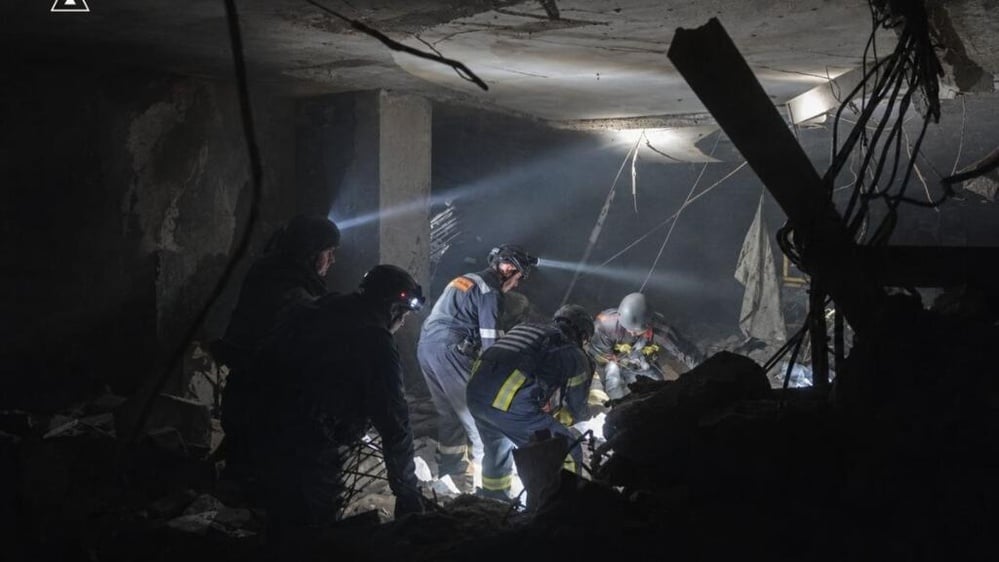
“Footage shows a huge crater, debris scattered across the area and bodies being recovered from the wreckage.” · exact text match
“burns covering around 81% of her body” · exact text match
Why: Vivid casualty imagery adds sensational salience beyond a bare casualty count.
Claim: The text reports events and official reactions without prescribing policy or action.
“Russian strikes on a humanitarian aid site in Ukraine's Zaporizhzhia region have killed 33 people” · exact text match
“regional authorities declared three days of mourning” · exact text match
Why: The narrative is descriptive rather than advocacy or recommendation.
Claim: The report centers on an international armed attack and official political responses.
“Russian strikes on a humanitarian aid site” · exact text match
“President Volodymyr Zelensky described the attack as” · exact text match
Why: The subject is war and presidential reaction, making the content highly political.
Claim: The report's tone is negative through vivid death and injury details.
“bodies being recovered from the wreckage” · exact text match
“burns covering around 81% of her body” · exact text match
Why: Corpse and severe-injury descriptions convey a somber, negative emotional register.
Claim: The report provides official attribution for some claims and specific details, but casualty counts are stated without named sourcing.
“President Volodymyr Zelensky described the attack as” · exact text match
“regional authorities declared three days of mourning” · exact text match
Why: Visible attributed statements and specificity support moderate credibility, while the lack of named sourcing for casualty counts limits it.
Claim: The report uses concrete quantities and official attribution rather than speculation.
“at least nine FAB-3000 bombs, each weighing around three tonnes” · exact text match
“regional authorities declared three days of mourning” · exact text match
Why: Specific factual detail and attributed official action indicate a rational reporting style.
Claim: The report conveys specific weapon and medical details clearly.
“at least nine FAB-3000 bombs, each weighing around three tonnes” · exact text match
“burns covering around 81% of her body” · exact text match
Why: Precise quantities and injury specifics indicate a coherent, informative report.
The supplied text includes many unrelated navigation and promotional links; the substantive report is brief and lacks author/byline or named sourcing for casualty figures.
November 03, 2026 · 0 shares
The report is heavily official-attributed and multi-sourced, but it foregrounds Ukrainian civilian suffering and quoted characterizations of Russian 'terror' while giving Russian military claims only brief mention.
Automated analysis; not human reviewed.
Limitations: Supplied text contains duplicated AP story segments and appended unrelated headlines, likely page-scrape artifacts; analysis uses only the substantive war-report content.
·
11 of 55 available dimensions scored; omitted dimensions are not treated as neutral.
·
Verified supporting quotes for 11 of 11 scored dimensions.
Claim: The report attributes casualty and attack claims to named Ukrainian officials and includes a Russian Defense Ministry claim.
“The death toll rose to 31 on Tuesday from a series of Russian attacks on a site where humanitarian aid was being distributed in southern Ukraine, officials said” · exact text match
Why: Specific sourcing and attribution reduce subjective authorial framing.
Claim: Graphic casualty detail is present but framed in restrained, factual reporting rather than sensational prose.
“bodies were pulled from the rubble and carried away in white plastic sheeting” · exact text match
Why: The detail is vivid but not accompanied by exclamatory or emotional publisher language.
Claim: Calls for action are quoted from Zelenskyy rather than voiced by AP in its own voice.
“We need to help Ukraine defend its skies; otherwise, Russia will never stop its missile strikes.” · exact text match
Why: Prescriptive language appears inside a direct quote, not as publisher prescription.
Claim: Publisher prose is largely factual and attribution-based, with opinion confined to quoted officials.
““This is further proof that Russia wants no de-escalation,” he said.” · exact text match
Why: Evaluative language is attributed to a quoted official rather than asserted by the publisher.
Claim: The report is centrally about war, diplomacy, and U.S.-brokered negotiations.
“As Ukraine prepared for a new round of U.S.-brokered peace negotiations next week” · exact text match
Why: The subject matter is explicitly political and diplomatic.
Claim: Factual assertions are overwhelmingly sourced to named officials and institutions.
“In the northeastern region of Kharkiv, a Russian missile and drone attack wounded at least 62 people, local authorities said.” · exact text match
Why: The report relies heavily on official sources for factual claims.
Claim: Casualty reporting uses emotive official quotes and graphic imagery, producing a negative emotional valence.
““The scale of the tragedy is terrifying,” said Mykhailo Semikin” · exact text match
“bodies were pulled from the rubble and carried away in white plastic sheeting” · exact text match
Why: The selected quotes and descriptions carry strong negative emotional weight.
Claim: Attribution is specific and includes adversary claims, though some figures remain official claims not independently verified.
“Russia’s Defense Ministry said it shot down 856 Ukrainian drones overnight.” · exact text match
Why: Named sourcing and inclusion of opposing claims are visible credibility signals.
Claim: Claims are presented through named officials and military sources rather than authorial assertion.
“Russia’s Defense Ministry said it shot down 856 Ukrainian drones overnight.” · exact text match
Why: Attribution to official sources supports a rational, evidence-referenced presentation.
Claim: The report includes Russian military and occupation-authority claims alongside Ukrainian accounts.
“Russia’s Defense Ministry said it shot down 856 Ukrainian drones overnight.” · exact text match
Why: Including adversary claims is an observable fairness signal.
Claim: The report supplies context, multiple affected regions, casualty figures, and a diplomatic timeline.
“U.S.-mediated peace talks Nov. 10-11 in Abu Dhabi” · exact text match
Why: Concrete dates, figures, and multiple locations reflect above-average informational density.
Supplied text contains duplicated AP story segments and appended unrelated headlines, likely page-scrape artifacts; analysis uses only the substantive war-report content.
Coverage frames the strike through Ukrainian and Latvian official accounts as a Russian attack on civilians and an aid site, combining largely factual casualty reporting with emotive official language and limited independent verification.
Automated analysis; not human reviewed.
Limitations: The supplied text contains duplicated passages and unrelated headline links; analysis is limited to the substantive strike and UNSC reporting.
·
8 of 55 available dimensions scored; omitted dimensions are not treated as neutral.
·
Verified supporting quotes for 8 of 8 scored dimensions.
Claim: Most claims are attributed, but an unsourced generalization about Russian double-tap tactics adds subjective framing.
“Moscow, for its part, has been known for its double-tap attacks” · exact text match
Why: The statement is presented as general knowledge rather than tied to a specific source, slightly increasing subjectivity.
Claim: The report uses emotive official language and death-toll emphasis but is not dominated by sensationalism.
“horrific Russian attacks on civilians in Ukraine” · exact text match
Why: Emotive wording appears in a direct quotation and headline-adjacent death tolls, but the overall presentation remains largely factual.
Claim: The report emphasizes ongoing danger from drone attacks and double-tap strikes during rescue operations.
“Russian forces have significantly stepped up drone attacks on the area, forcing rescuers to repeatedly suspend the search operation whenever air threats arise.” · exact text match
“Moscow, for its part, has been known for its double-tap attacks” · exact text match
Why: This framing highlights immediate threats and may heighten fear, though it reports sourced conditions.
Claim: The report is framed around international diplomatic and security institutions responding to a wartime attack.
“Latvia has called for an extraordinary session of the UN Security Council” · exact text match
“As one of the council’s five permanent members, Russia holds veto power over its final resolutions” · exact text match
Why: The selection and structure center UNSC diplomacy and Russia’s veto, making the coverage highly political.
Claim: The account privileges official state and international-institution responses while giving no comparable Russian official perspective.
“Latvian Foreign Minister Baiba Braže announced the decision in a statement on Tuesday, Nov. 3” · exact text match
“Head of the Zaporizhzhia Regional Military Administration Mykhailo Semikin described the attack” · exact text match
Why: Official Western and Ukrainian institutional voices structure the narrative, indicating a modest pro-establishment tilt.
Claim: The report has a strongly negative emotional valence centered on death, missing persons, and grief.
“killed at least 31 people and left 58 missing” · exact text match
“We will not leave a single family alone with its grief” · exact text match
Why: Casualty figures and a grief-related quotation produce a negative emotional tone.
Claim: The report names official sources and updates figures, though it relies on official accounts rather than independent verification.
“Latvian Foreign Minister Baiba Braže announced the decision in a statement on Tuesday, Nov. 3” · exact text match
“Head of the Zaporizhzhia Regional Military Administration Mykhailo Semikin described the attack” · exact text match
Why: Named attribution supports credibility, but the account remains dependent on official claims.
Claim: The report transparently notes updated and superseded casualty figures.
“although the figure cited had since been surpassed” · exact text match
“Earlier in the day, Semikin put it at nearly 50; by evening, the figure grew to 58 people missing.” · exact text match
Why: Explicitly correcting or updating figures is a fairness and honesty signal.
The supplied text contains duplicated passages and unrelated headline links; analysis is limited to the substantive strike and UNSC reporting.
November 02, 2026 · 0 shares
The brief casualty report uses flat, declarative wording and treats the Russian attribution and toll as established without naming a source.
Automated analysis; not human reviewed.
Limitations: The supplied excerpt is extremely brief and lacks sourcing, limiting confidence in framing and credibility assessments.
·
8 of 55 available dimensions scored; omitted dimensions are not treated as neutral.
·
Verified supporting quotes for 8 of 8 scored dimensions.
Claim: The report frames the event through factual casualty and location details rather than evaluative interpretation.
“At least 24 people have been killed and five injured in a Russian airstrike on a school being used as a humanitarian aid distribution centre in southeastern Ukraine.” · exact text match
Why: The sentence is a direct event report with no subjective commentary.
Claim: Casualties are reported without sensational adjectives or dramatized language.
“At least 24 people have been killed and five injured in a Russian airstrike on a school being used as a humanitarian aid distribution centre in southeastern Ukraine.” · exact text match
Why: The wording is restrained and factual rather than sensational.
Claim: The text describes an event and contains no recommendations or prescriptions.
“At least 24 people have been killed and five injured in a Russian airstrike on a school being used as a humanitarian aid distribution centre in southeastern Ukraine.” · exact text match
Why: It reports what happened without prescribing action or policy.
Claim: The excerpt is factually stated and contains no opinion language.
“At least 24 people have been killed and five injured in a Russian airstrike on a school being used as a humanitarian aid distribution centre in southeastern Ukraine.” · exact text match
Why: No evaluative or opinionated phrasing appears in the supplied text.
Claim: The report involves a political-military actor and war location but does not adopt a partisan stance.
“in a Russian airstrike on a school” · exact text match
Why: The event is politically salient because it concerns a Russian strike in Ukraine, though the wording is not partisan.
Claim: The report gives only bare casualty and target details without broader context or sourcing.
“At least 24 people have been killed and five injured” · exact text match
Why: The very short excerpt omits sourcing and fuller context, making the account highly compressed.
Claim: Specific casualty figures are reported without a named source or attribution.
“At least 24 people have been killed and five injured” · exact text match
Why: Visible sourcing is absent, reducing confidence in credibility despite the specific figures.
Claim: The account is a direct factual report without speculative or emotive reasoning.
“At least 24 people have been killed and five injured in a Russian airstrike on a school being used as a humanitarian aid distribution centre in southeastern Ukraine.” · exact text match
Why: The sentence states event details plainly rather than reasoning emotionally or speculatively.
The supplied excerpt is extremely brief and lacks sourcing, limiting confidence in framing and credibility assessments.
November 03, 2026 · 0 shares
Presents the strike as a Russian-caused civilian casualty event that ended a ceasefire and dashed peace hopes, with an interpretive peace-prospects claim and no named sourcing in the excerpt.
Automated analysis; not human reviewed.
Limitations: Only a headline and three-sentence excerpt are supplied, so sourcing, full context, and the ceasefire's terms are unavailable.
·
5 of 55 available dimensions scored; omitted dimensions are not treated as neutral.
·
Verified supporting quotes for 5 of 5 scored dimensions.
Claim: The excerpt includes an interpretive claim about peace prospects rather than only verifiable events.
“extinguishing hopes of progress towards peace” · exact text match
Why: The phrase evaluates future peace prospects, which is subjective framing.
Claim: The excerpt includes an evaluative statement about peace prospects.
“extinguishing hopes of progress towards peace” · exact text match
Why: The phrase is an evaluative claim, not a bare factual detail.
Claim: The report is framed around a geopolitical war and ceasefire.
“Russian strikes kill at least 26 in Ukraine after war's longest ceasefire ends.” · exact text match
Why: The headline centers on a war and ceasefire, making the topic political.
Claim: The wording carries a negative emotional valence about the ceasefire's end.
“extinguishing hopes of progress towards peace” · exact text match
Why: The phrase conveys loss and pessimism rather than neutral event description.
Claim: The excerpt characterizes future peace prospects after the ceasefire ended.
“extinguishing hopes of progress towards peace” · exact text match
Why: It forecasts or characterizes the effect on peace hopes rather than reporting only the ceasefire's end.
Only a headline and three-sentence excerpt are supplied, so sourcing, full context, and the ceasefire's terms are unavailable.
November 03, 2026 · 0 shares
The report is heavily official-attributed and multi-sourced, but it foregrounds Ukrainian civilian suffering and quoted characterizations of Russian 'terror' while giving Russian military claims only brief mention.
Automated analysis; not human reviewed.
Limitations: Supplied text contains duplicated AP story segments and appended unrelated headlines, likely page-scrape artifacts; analysis uses only the substantive war-report content.
·
11 of 55 available dimensions scored; omitted dimensions are not treated as neutral.
·
Verified supporting quotes for 11 of 11 scored dimensions.
Claim: The report attributes casualty and attack claims to named Ukrainian officials and includes a Russian Defense Ministry claim.
“The death toll rose to 31 on Tuesday from a series of Russian attacks on a site where humanitarian aid was being distributed in southern Ukraine, officials said” · exact text match
Why: Specific sourcing and attribution reduce subjective authorial framing.
Claim: Graphic casualty detail is present but framed in restrained, factual reporting rather than sensational prose.
“bodies were pulled from the rubble and carried away in white plastic sheeting” · exact text match
Why: The detail is vivid but not accompanied by exclamatory or emotional publisher language.
Claim: Calls for action are quoted from Zelenskyy rather than voiced by AP in its own voice.
“We need to help Ukraine defend its skies; otherwise, Russia will never stop its missile strikes.” · exact text match
Why: Prescriptive language appears inside a direct quote, not as publisher prescription.
Claim: Publisher prose is largely factual and attribution-based, with opinion confined to quoted officials.
““This is further proof that Russia wants no de-escalation,” he said.” · exact text match
Why: Evaluative language is attributed to a quoted official rather than asserted by the publisher.
Claim: The report is centrally about war, diplomacy, and U.S.-brokered negotiations.
“As Ukraine prepared for a new round of U.S.-brokered peace negotiations next week” · exact text match
Why: The subject matter is explicitly political and diplomatic.
Claim: Factual assertions are overwhelmingly sourced to named officials and institutions.
“In the northeastern region of Kharkiv, a Russian missile and drone attack wounded at least 62 people, local authorities said.” · exact text match
Why: The report relies heavily on official sources for factual claims.
Claim: Casualty reporting uses emotive official quotes and graphic imagery, producing a negative emotional valence.
““The scale of the tragedy is terrifying,” said Mykhailo Semikin” · exact text match
“bodies were pulled from the rubble and carried away in white plastic sheeting” · exact text match
Why: The selected quotes and descriptions carry strong negative emotional weight.
Claim: Attribution is specific and includes adversary claims, though some figures remain official claims not independently verified.
“Russia’s Defense Ministry said it shot down 856 Ukrainian drones overnight.” · exact text match
Why: Named sourcing and inclusion of opposing claims are visible credibility signals.
Claim: Claims are presented through named officials and military sources rather than authorial assertion.
“Russia’s Defense Ministry said it shot down 856 Ukrainian drones overnight.” · exact text match
Why: Attribution to official sources supports a rational, evidence-referenced presentation.
Claim: The report includes Russian military and occupation-authority claims alongside Ukrainian accounts.
“Russia’s Defense Ministry said it shot down 856 Ukrainian drones overnight.” · exact text match
Why: Including adversary claims is an observable fairness signal.
Claim: The report supplies context, multiple affected regions, casualty figures, and a diplomatic timeline.
“U.S.-mediated peace talks Nov. 10-11 in Abu Dhabi” · exact text match
Why: Concrete dates, figures, and multiple locations reflect above-average informational density.
Supplied text contains duplicated AP story segments and appended unrelated headlines, likely page-scrape artifacts; analysis uses only the substantive war-report content.
November 04, 2026 · 0 shares
Framing treats Russian responsibility as established and foregrounds civilian casualties at a humanitarian site, using graphic injury details and a quoted Zelensky characterization.
Automated analysis; not human reviewed.
Limitations: The supplied text includes many unrelated navigation and promotional links; the substantive report is brief and lacks author/byline or named sourcing for casualty figures.
·
8 of 55 available dimensions scored; omitted dimensions are not treated as neutral.
·
Verified supporting quotes for 8 of 8 scored dimensions.
Claim: The report presents Zelensky's characterization as a direct quote and attributes regional mourning without adopting the quote as its own voice.
“President Volodymyr Zelensky described the attack as” · exact text match
“regional authorities declared three days of mourning” · exact text match
Why: Quotation and official attribution support an objective presentation rather than subjective narration.
Claim: The report heightens impact with graphic corpse and burn details while remaining factually specific.
“Footage shows a huge crater, debris scattered across the area and bodies being recovered from the wreckage.” · exact text match
“burns covering around 81% of her body” · exact text match
Why: Vivid casualty imagery adds sensational salience beyond a bare casualty count.
Claim: The text reports events and official reactions without prescribing policy or action.
“Russian strikes on a humanitarian aid site in Ukraine's Zaporizhzhia region have killed 33 people” · exact text match
“regional authorities declared three days of mourning” · exact text match
Why: The narrative is descriptive rather than advocacy or recommendation.
Claim: The report centers on an international armed attack and official political responses.
“Russian strikes on a humanitarian aid site” · exact text match
“President Volodymyr Zelensky described the attack as” · exact text match
Why: The subject is war and presidential reaction, making the content highly political.
Claim: The report's tone is negative through vivid death and injury details.
“bodies being recovered from the wreckage” · exact text match
“burns covering around 81% of her body” · exact text match
Why: Corpse and severe-injury descriptions convey a somber, negative emotional register.
Claim: The report provides official attribution for some claims and specific details, but casualty counts are stated without named sourcing.
“President Volodymyr Zelensky described the attack as” · exact text match
“regional authorities declared three days of mourning” · exact text match
Why: Visible attributed statements and specificity support moderate credibility, while the lack of named sourcing for casualty counts limits it.
Claim: The report uses concrete quantities and official attribution rather than speculation.
“at least nine FAB-3000 bombs, each weighing around three tonnes” · exact text match
“regional authorities declared three days of mourning” · exact text match
Why: Specific factual detail and attributed official action indicate a rational reporting style.
Claim: The report conveys specific weapon and medical details clearly.
“at least nine FAB-3000 bombs, each weighing around three tonnes” · exact text match
“burns covering around 81% of her body” · exact text match
Why: Precise quantities and injury specifics indicate a coherent, informative report.
The supplied text includes many unrelated navigation and promotional links; the substantive report is brief and lacks author/byline or named sourcing for casualty figures.
Coverage frames the strike through Ukrainian and Latvian official accounts as a Russian attack on civilians and an aid site, combining largely factual casualty reporting with emotive official language and limited independent verification.
Automated analysis; not human reviewed.
Limitations: The supplied text contains duplicated passages and unrelated headline links; analysis is limited to the substantive strike and UNSC reporting.
·
8 of 55 available dimensions scored; omitted dimensions are not treated as neutral.
·
Verified supporting quotes for 8 of 8 scored dimensions.
Claim: Most claims are attributed, but an unsourced generalization about Russian double-tap tactics adds subjective framing.
“Moscow, for its part, has been known for its double-tap attacks” · exact text match
Why: The statement is presented as general knowledge rather than tied to a specific source, slightly increasing subjectivity.
Claim: The report uses emotive official language and death-toll emphasis but is not dominated by sensationalism.
“horrific Russian attacks on civilians in Ukraine” · exact text match
Why: Emotive wording appears in a direct quotation and headline-adjacent death tolls, but the overall presentation remains largely factual.
Claim: The report emphasizes ongoing danger from drone attacks and double-tap strikes during rescue operations.
“Russian forces have significantly stepped up drone attacks on the area, forcing rescuers to repeatedly suspend the search operation whenever air threats arise.” · exact text match
“Moscow, for its part, has been known for its double-tap attacks” · exact text match
Why: This framing highlights immediate threats and may heighten fear, though it reports sourced conditions.
Claim: The report is framed around international diplomatic and security institutions responding to a wartime attack.
“Latvia has called for an extraordinary session of the UN Security Council” · exact text match
“As one of the council’s five permanent members, Russia holds veto power over its final resolutions” · exact text match
Why: The selection and structure center UNSC diplomacy and Russia’s veto, making the coverage highly political.
Claim: The account privileges official state and international-institution responses while giving no comparable Russian official perspective.
“Latvian Foreign Minister Baiba Braže announced the decision in a statement on Tuesday, Nov. 3” · exact text match
“Head of the Zaporizhzhia Regional Military Administration Mykhailo Semikin described the attack” · exact text match
Why: Official Western and Ukrainian institutional voices structure the narrative, indicating a modest pro-establishment tilt.
Claim: The report has a strongly negative emotional valence centered on death, missing persons, and grief.
“killed at least 31 people and left 58 missing” · exact text match
“We will not leave a single family alone with its grief” · exact text match
Why: Casualty figures and a grief-related quotation produce a negative emotional tone.
Claim: The report names official sources and updates figures, though it relies on official accounts rather than independent verification.
“Latvian Foreign Minister Baiba Braže announced the decision in a statement on Tuesday, Nov. 3” · exact text match
“Head of the Zaporizhzhia Regional Military Administration Mykhailo Semikin described the attack” · exact text match
Why: Named attribution supports credibility, but the account remains dependent on official claims.
Claim: The report transparently notes updated and superseded casualty figures.
“although the figure cited had since been surpassed” · exact text match
“Earlier in the day, Semikin put it at nearly 50; by evening, the figure grew to 58 people missing.” · exact text match
Why: Explicitly correcting or updating figures is a fairness and honesty signal.
The supplied text contains duplicated passages and unrelated headline links; analysis is limited to the substantive strike and UNSC reporting.
November 04, 2026 · 0 shares
Framing treats Russian responsibility as established and foregrounds civilian casualties at a humanitarian site, using graphic injury details and a quoted Zelensky characterization.
Automated analysis; not human reviewed.
Limitations: The supplied text includes many unrelated navigation and promotional links; the substantive report is brief and lacks author/byline or named sourcing for casualty figures.
·
8 of 55 available dimensions scored; omitted dimensions are not treated as neutral.
·
Verified supporting quotes for 8 of 8 scored dimensions.
Claim: The report presents Zelensky's characterization as a direct quote and attributes regional mourning without adopting the quote as its own voice.
“President Volodymyr Zelensky described the attack as” · exact text match
“regional authorities declared three days of mourning” · exact text match
Why: Quotation and official attribution support an objective presentation rather than subjective narration.
Claim: The report heightens impact with graphic corpse and burn details while remaining factually specific.
“Footage shows a huge crater, debris scattered across the area and bodies being recovered from the wreckage.” · exact text match
“burns covering around 81% of her body” · exact text match
Why: Vivid casualty imagery adds sensational salience beyond a bare casualty count.
Claim: The text reports events and official reactions without prescribing policy or action.
“Russian strikes on a humanitarian aid site in Ukraine's Zaporizhzhia region have killed 33 people” · exact text match
“regional authorities declared three days of mourning” · exact text match
Why: The narrative is descriptive rather than advocacy or recommendation.
Claim: The report centers on an international armed attack and official political responses.
“Russian strikes on a humanitarian aid site” · exact text match
“President Volodymyr Zelensky described the attack as” · exact text match
Why: The subject is war and presidential reaction, making the content highly political.
Claim: The report's tone is negative through vivid death and injury details.
“bodies being recovered from the wreckage” · exact text match
“burns covering around 81% of her body” · exact text match
Why: Corpse and severe-injury descriptions convey a somber, negative emotional register.
Claim: The report provides official attribution for some claims and specific details, but casualty counts are stated without named sourcing.
“President Volodymyr Zelensky described the attack as” · exact text match
“regional authorities declared three days of mourning” · exact text match
Why: Visible attributed statements and specificity support moderate credibility, while the lack of named sourcing for casualty counts limits it.
Claim: The report uses concrete quantities and official attribution rather than speculation.
“at least nine FAB-3000 bombs, each weighing around three tonnes” · exact text match
“regional authorities declared three days of mourning” · exact text match
Why: Specific factual detail and attributed official action indicate a rational reporting style.
Claim: The report conveys specific weapon and medical details clearly.
“at least nine FAB-3000 bombs, each weighing around three tonnes” · exact text match
“burns covering around 81% of her body” · exact text match
Why: Precise quantities and injury specifics indicate a coherent, informative report.
The supplied text includes many unrelated navigation and promotional links; the substantive report is brief and lacks author/byline or named sourcing for casualty figures.
November 03, 2026 · 0 shares
The report is heavily official-attributed and multi-sourced, but it foregrounds Ukrainian civilian suffering and quoted characterizations of Russian 'terror' while giving Russian military claims only brief mention.
Automated analysis; not human reviewed.
Limitations: Supplied text contains duplicated AP story segments and appended unrelated headlines, likely page-scrape artifacts; analysis uses only the substantive war-report content.
·
11 of 55 available dimensions scored; omitted dimensions are not treated as neutral.
·
Verified supporting quotes for 11 of 11 scored dimensions.
Claim: The report attributes casualty and attack claims to named Ukrainian officials and includes a Russian Defense Ministry claim.
“The death toll rose to 31 on Tuesday from a series of Russian attacks on a site where humanitarian aid was being distributed in southern Ukraine, officials said” · exact text match
Why: Specific sourcing and attribution reduce subjective authorial framing.
Claim: Graphic casualty detail is present but framed in restrained, factual reporting rather than sensational prose.
“bodies were pulled from the rubble and carried away in white plastic sheeting” · exact text match
Why: The detail is vivid but not accompanied by exclamatory or emotional publisher language.
Claim: Calls for action are quoted from Zelenskyy rather than voiced by AP in its own voice.
“We need to help Ukraine defend its skies; otherwise, Russia will never stop its missile strikes.” · exact text match
Why: Prescriptive language appears inside a direct quote, not as publisher prescription.
Claim: Publisher prose is largely factual and attribution-based, with opinion confined to quoted officials.
““This is further proof that Russia wants no de-escalation,” he said.” · exact text match
Why: Evaluative language is attributed to a quoted official rather than asserted by the publisher.
Claim: The report is centrally about war, diplomacy, and U.S.-brokered negotiations.
“As Ukraine prepared for a new round of U.S.-brokered peace negotiations next week” · exact text match
Why: The subject matter is explicitly political and diplomatic.
Claim: Factual assertions are overwhelmingly sourced to named officials and institutions.
“In the northeastern region of Kharkiv, a Russian missile and drone attack wounded at least 62 people, local authorities said.” · exact text match
Why: The report relies heavily on official sources for factual claims.
Claim: Casualty reporting uses emotive official quotes and graphic imagery, producing a negative emotional valence.
““The scale of the tragedy is terrifying,” said Mykhailo Semikin” · exact text match
“bodies were pulled from the rubble and carried away in white plastic sheeting” · exact text match
Why: The selected quotes and descriptions carry strong negative emotional weight.
Claim: Attribution is specific and includes adversary claims, though some figures remain official claims not independently verified.
“Russia’s Defense Ministry said it shot down 856 Ukrainian drones overnight.” · exact text match
Why: Named sourcing and inclusion of opposing claims are visible credibility signals.
Claim: Claims are presented through named officials and military sources rather than authorial assertion.
“Russia’s Defense Ministry said it shot down 856 Ukrainian drones overnight.” · exact text match
Why: Attribution to official sources supports a rational, evidence-referenced presentation.
Claim: The report includes Russian military and occupation-authority claims alongside Ukrainian accounts.
“Russia’s Defense Ministry said it shot down 856 Ukrainian drones overnight.” · exact text match
Why: Including adversary claims is an observable fairness signal.
Claim: The report supplies context, multiple affected regions, casualty figures, and a diplomatic timeline.
“U.S.-mediated peace talks Nov. 10-11 in Abu Dhabi” · exact text match
Why: Concrete dates, figures, and multiple locations reflect above-average informational density.
Supplied text contains duplicated AP story segments and appended unrelated headlines, likely page-scrape artifacts; analysis uses only the substantive war-report content.
Coverage frames the strike through Ukrainian and Latvian official accounts as a Russian attack on civilians and an aid site, combining largely factual casualty reporting with emotive official language and limited independent verification.
Automated analysis; not human reviewed.
Limitations: The supplied text contains duplicated passages and unrelated headline links; analysis is limited to the substantive strike and UNSC reporting.
·
8 of 55 available dimensions scored; omitted dimensions are not treated as neutral.
·
Verified supporting quotes for 8 of 8 scored dimensions.
Claim: Most claims are attributed, but an unsourced generalization about Russian double-tap tactics adds subjective framing.
“Moscow, for its part, has been known for its double-tap attacks” · exact text match
Why: The statement is presented as general knowledge rather than tied to a specific source, slightly increasing subjectivity.
Claim: The report uses emotive official language and death-toll emphasis but is not dominated by sensationalism.
“horrific Russian attacks on civilians in Ukraine” · exact text match
Why: Emotive wording appears in a direct quotation and headline-adjacent death tolls, but the overall presentation remains largely factual.
Claim: The report emphasizes ongoing danger from drone attacks and double-tap strikes during rescue operations.
“Russian forces have significantly stepped up drone attacks on the area, forcing rescuers to repeatedly suspend the search operation whenever air threats arise.” · exact text match
“Moscow, for its part, has been known for its double-tap attacks” · exact text match
Why: This framing highlights immediate threats and may heighten fear, though it reports sourced conditions.
Claim: The report is framed around international diplomatic and security institutions responding to a wartime attack.
“Latvia has called for an extraordinary session of the UN Security Council” · exact text match
“As one of the council’s five permanent members, Russia holds veto power over its final resolutions” · exact text match
Why: The selection and structure center UNSC diplomacy and Russia’s veto, making the coverage highly political.
Claim: The account privileges official state and international-institution responses while giving no comparable Russian official perspective.
“Latvian Foreign Minister Baiba Braže announced the decision in a statement on Tuesday, Nov. 3” · exact text match
“Head of the Zaporizhzhia Regional Military Administration Mykhailo Semikin described the attack” · exact text match
Why: Official Western and Ukrainian institutional voices structure the narrative, indicating a modest pro-establishment tilt.
Claim: The report has a strongly negative emotional valence centered on death, missing persons, and grief.
“killed at least 31 people and left 58 missing” · exact text match
“We will not leave a single family alone with its grief” · exact text match
Why: Casualty figures and a grief-related quotation produce a negative emotional tone.
Claim: The report names official sources and updates figures, though it relies on official accounts rather than independent verification.
“Latvian Foreign Minister Baiba Braže announced the decision in a statement on Tuesday, Nov. 3” · exact text match
“Head of the Zaporizhzhia Regional Military Administration Mykhailo Semikin described the attack” · exact text match
Why: Named attribution supports credibility, but the account remains dependent on official claims.
Claim: The report transparently notes updated and superseded casualty figures.
“although the figure cited had since been surpassed” · exact text match
“Earlier in the day, Semikin put it at nearly 50; by evening, the figure grew to 58 people missing.” · exact text match
Why: Explicitly correcting or updating figures is a fairness and honesty signal.
The supplied text contains duplicated passages and unrelated headline links; analysis is limited to the substantive strike and UNSC reporting.
The report largely relays Ukrainian official and Reuters claims about a deadly strike, adopting the death toll as fact in the headline while carrying President Zelenskyy's unqualified 'heinous terrorist attack' characterization without Russian response or independent verification.
The strike occurred in the Zaporizhzhia region of southeastern Ukraine during the ongoing Russia-Ukraine war, following a short local truce meant to allow aid delivery and evacuations.
Automated analysis; not human reviewed.
Limitations: The supplied text is a partial scrape: the lead paragraph truncates mid-sentence and much of the body is unrelated headline links and publisher/podcast boilerplate, limiting assessment of the full report.
·
23 of 55 available dimensions scored; omitted dimensions are not treated as neutral.
·
Verified supporting quotes for 20 of 23 scored dimensions.
Claim: Core facts are attributed to named sources, but the piece also transmits the president's subjective characterization.
“According to the report, Ukraine’s emergency services said two rescue team members and four police officers were among those killed.” · exact text match
Why: Mostly attributed factual reporting with an embedded subjective quote.
Claim: The headline states the death toll flatly and the body includes charged language.
“Russian Bombing in Ukraine Leaves 26 Dead.” · exact text match
Why: Factual but blunt casualty headline plus 'heinous terrorist attack' quote adds mild sensational coloring.
Claim: No financial or market framing is present.
“Reuters reported on Monday night, November 2, that the school had been used as a distribution center for humanitarian aid.” · exact text match
Why: Used only to mark absence of market-direction framing; not applicable to the content.
Claim: The article reports events without advocating a policy or course of action.
“The bombing came one day after the end of a six-day local ceasefire aimed at delivering aid to Oleshky and evacuating residents who wished to leave the area.” · exact text match
Why: Content is descriptive reporting of events rather than prescription.
Claim: Framing presents the strike as an unprovoked attack on a shelter, leaning toward a security-hardened view of Russia.
“He said the attack showed that Moscow intended to kill people rather than continue the humanitarian efforts carried out the previous week in the city of Oleshky.” · exact text match
Why: Inclusion of the intent claim without Russian response mildly favors a hawkish read, though no advocacy is made.
Claim: Casualty figures and a described double bombing create a fearful tone without exaggeration beyond reported facts.
“The Russians carried out the first attack just as people were arriving at the site, dropping several aerial bombs.
Then came a second attack, again with aerial bombs, this time targeting the shelter.”
· exact text match
Why: Vivid description of a follow-up strike on a shelter heightens alarm, though it is attributed.
Claim: Most content is attribution-based reporting, with one extended quoted opinion.
“Zelenskyy said Russian forces dropped bombs on a school in the village that had been serving as a shelter and a humanitarian aid distribution point on Mondays.” · exact text match
Why: The president's views are conveyed but clearly marked as his statements.
Claim: The subject is a wartime strike framed around state actors and political leadership.
“He said the attack showed that Moscow intended to kill people rather than continue the humanitarian efforts carried out the previous week in the city of Oleshky.” · exact text match
Why: The report is fundamentally about a political-military conflict between states.
Claim: The account presents a single-sided sequence of events without Russian comment or contested details.
“According to the report, Ukraine’s emergency services said two rescue team members and four police officers were among those killed.” · exact text match
Why: Reliance on one side's account compresses a complex battlefield event into a single narrative.
Claim: The article's factual basis rests entirely on official statements and a wire report.
“Emergency services and Ukrainian President Volodymyr Zelenskyy have reported that a Russian bombing of a school in the Zaporizhzhia region of southeastern Ukraine has killed at least 26 people.” · exact text match
Why: Authority citations supply all evidentiary weight in the piece.
Claim: Only Ukrainian officials are quoted; no Russian response or denial is included.
“Meanwhile, Regina Kharchenko, secretary of the Zaporizhzhia City Council, said 27 people had gone missing following the attack.” · exact text match
Why: Absence of any opposing-party statement leaves the account one-sided.
Claim: The framing emphasizes civilian victims and the president's moral condemnation.
“A heinous terrorist attack” · exact text match
Why: Casualty-centered framing plus condemnation emphasizes victimhood, though reporting casualties is itself legitimate.
Claim: The headline asserts the cause and toll as settled fact while the body attributes figures to officials.
“Russian Bombing in Ukraine Leaves 26 Dead.” · exact text match
Why: Headline certainty slightly exceeds the attributed, tentative 'at least 26' reporting below.
Claim: The report relies on government officials and a major wire service as authoritative voices.
“Meanwhile, Regina Kharchenko, secretary of the Zaporizhzhia City Council, said 27 people had gone missing following the attack.” · exact text match
Why: Official sources frame the account, a modest pro-establishment sourcing pattern.
Claim: The report centers on mass casualties and a quoted denunciation, producing a negative emotional valence.
“A heinous terrorist attack” · exact text match
Why: Death toll and charged quotation give the piece a clearly negative emotional tone.
Claim: Named officials, a wire service, and specific figures are cited, though without independent verification.
“Reuters reported on Monday night, November 2, that the school had been used as a distribution center for humanitarian aid.” · exact text match
Why: Transparent sourcing supports credibility while the one-sided account limits it.
Claim: The article reproduces an emotive official characterization and inferred intent without qualifying or contextualizing evidence.
“A heinous terrorist attack” · exact text match
Why: Carrying the loaded quote and the intent claim unexamined tilts the framing slightly away from detached reasoning, though both are attributed.
Claim: The article transmits an inference about Moscow's intent not directly evidenced in the text.
“He said the attack showed that Moscow intended to kill people rather than continue the humanitarian efforts carried out the previous week in the city of Oleshky.” · exact text match
Why: Intent attribution about motives is speculative, though attributed to Zelenskyy.
Claim: Selective sourcing and a charged headline present a one-sided account without false urgency.
“Russian Bombing in Ukraine Leaves 26 Dead.” · exact text match
Why: Omission of any opposing account is a mild framing technique rather than active manipulation.
Claim: Claims are consistently attributed to named sources and a wire service.
“Emergency services and Ukrainian President Volodymyr Zelenskyy have reported that a Russian bombing of a school in the Zaporizhzhia region of southeastern Ukraine has killed at least 26 people.” · exact text match
Why: Explicit attribution to officials and Reuters signals fair, transparent sourcing.
The supplied text is a partial scrape: the lead paragraph truncates mid-sentence and much of the body is unrelated headline links and publisher/podcast boilerplate, limiting assessment of the full report.
November 04, 2026 · 0 shares
Framing treats Russian responsibility as established and foregrounds civilian casualties at a humanitarian site, using graphic injury details and a quoted Zelensky characterization.
Automated analysis; not human reviewed.
Limitations: The supplied text includes many unrelated navigation and promotional links; the substantive report is brief and lacks author/byline or named sourcing for casualty figures.
·
8 of 55 available dimensions scored; omitted dimensions are not treated as neutral.
·
Verified supporting quotes for 8 of 8 scored dimensions.
Claim: The report presents Zelensky's characterization as a direct quote and attributes regional mourning without adopting the quote as its own voice.
“President Volodymyr Zelensky described the attack as” · exact text match
“regional authorities declared three days of mourning” · exact text match
Why: Quotation and official attribution support an objective presentation rather than subjective narration.
Claim: The report heightens impact with graphic corpse and burn details while remaining factually specific.
“Footage shows a huge crater, debris scattered across the area and bodies being recovered from the wreckage.” · exact text match
“burns covering around 81% of her body” · exact text match
Why: Vivid casualty imagery adds sensational salience beyond a bare casualty count.
Claim: The text reports events and official reactions without prescribing policy or action.
“Russian strikes on a humanitarian aid site in Ukraine's Zaporizhzhia region have killed 33 people” · exact text match
“regional authorities declared three days of mourning” · exact text match
Why: The narrative is descriptive rather than advocacy or recommendation.
Claim: The report centers on an international armed attack and official political responses.
“Russian strikes on a humanitarian aid site” · exact text match
“President Volodymyr Zelensky described the attack as” · exact text match
Why: The subject is war and presidential reaction, making the content highly political.
Claim: The report's tone is negative through vivid death and injury details.
“bodies being recovered from the wreckage” · exact text match
“burns covering around 81% of her body” · exact text match
Why: Corpse and severe-injury descriptions convey a somber, negative emotional register.
Claim: The report provides official attribution for some claims and specific details, but casualty counts are stated without named sourcing.
“President Volodymyr Zelensky described the attack as” · exact text match
“regional authorities declared three days of mourning” · exact text match
Why: Visible attributed statements and specificity support moderate credibility, while the lack of named sourcing for casualty counts limits it.
Claim: The report uses concrete quantities and official attribution rather than speculation.
“at least nine FAB-3000 bombs, each weighing around three tonnes” · exact text match
“regional authorities declared three days of mourning” · exact text match
Why: Specific factual detail and attributed official action indicate a rational reporting style.
Claim: The report conveys specific weapon and medical details clearly.
“at least nine FAB-3000 bombs, each weighing around three tonnes” · exact text match
“burns covering around 81% of her body” · exact text match
Why: Precise quantities and injury specifics indicate a coherent, informative report.
The supplied text includes many unrelated navigation and promotional links; the substantive report is brief and lacks author/byline or named sourcing for casualty figures.
The report largely relays Ukrainian official and Reuters claims about a deadly strike, adopting the death toll as fact in the headline while carrying President Zelenskyy's unqualified 'heinous terrorist attack' characterization without Russian response or independent verification.
The strike occurred in the Zaporizhzhia region of southeastern Ukraine during the ongoing Russia-Ukraine war, following a short local truce meant to allow aid delivery and evacuations.
Automated analysis; not human reviewed.
Limitations: The supplied text is a partial scrape: the lead paragraph truncates mid-sentence and much of the body is unrelated headline links and publisher/podcast boilerplate, limiting assessment of the full report.
·
23 of 55 available dimensions scored; omitted dimensions are not treated as neutral.
·
Verified supporting quotes for 20 of 23 scored dimensions.
Claim: Core facts are attributed to named sources, but the piece also transmits the president's subjective characterization.
“According to the report, Ukraine’s emergency services said two rescue team members and four police officers were among those killed.” · exact text match
Why: Mostly attributed factual reporting with an embedded subjective quote.
Claim: The headline states the death toll flatly and the body includes charged language.
“Russian Bombing in Ukraine Leaves 26 Dead.” · exact text match
Why: Factual but blunt casualty headline plus 'heinous terrorist attack' quote adds mild sensational coloring.
Claim: No financial or market framing is present.
“Reuters reported on Monday night, November 2, that the school had been used as a distribution center for humanitarian aid.” · exact text match
Why: Used only to mark absence of market-direction framing; not applicable to the content.
Claim: The article reports events without advocating a policy or course of action.
“The bombing came one day after the end of a six-day local ceasefire aimed at delivering aid to Oleshky and evacuating residents who wished to leave the area.” · exact text match
Why: Content is descriptive reporting of events rather than prescription.
Claim: Framing presents the strike as an unprovoked attack on a shelter, leaning toward a security-hardened view of Russia.
“He said the attack showed that Moscow intended to kill people rather than continue the humanitarian efforts carried out the previous week in the city of Oleshky.” · exact text match
Why: Inclusion of the intent claim without Russian response mildly favors a hawkish read, though no advocacy is made.
Claim: Casualty figures and a described double bombing create a fearful tone without exaggeration beyond reported facts.
“The Russians carried out the first attack just as people were arriving at the site, dropping several aerial bombs.
Then came a second attack, again with aerial bombs, this time targeting the shelter.”
· exact text match
Why: Vivid description of a follow-up strike on a shelter heightens alarm, though it is attributed.
Claim: Most content is attribution-based reporting, with one extended quoted opinion.
“Zelenskyy said Russian forces dropped bombs on a school in the village that had been serving as a shelter and a humanitarian aid distribution point on Mondays.” · exact text match
Why: The president's views are conveyed but clearly marked as his statements.
Claim: The subject is a wartime strike framed around state actors and political leadership.
“He said the attack showed that Moscow intended to kill people rather than continue the humanitarian efforts carried out the previous week in the city of Oleshky.” · exact text match
Why: The report is fundamentally about a political-military conflict between states.
Claim: The account presents a single-sided sequence of events without Russian comment or contested details.
“According to the report, Ukraine’s emergency services said two rescue team members and four police officers were among those killed.” · exact text match
Why: Reliance on one side's account compresses a complex battlefield event into a single narrative.
Claim: The article's factual basis rests entirely on official statements and a wire report.
“Emergency services and Ukrainian President Volodymyr Zelenskyy have reported that a Russian bombing of a school in the Zaporizhzhia region of southeastern Ukraine has killed at least 26 people.” · exact text match
Why: Authority citations supply all evidentiary weight in the piece.
Claim: Only Ukrainian officials are quoted; no Russian response or denial is included.
“Meanwhile, Regina Kharchenko, secretary of the Zaporizhzhia City Council, said 27 people had gone missing following the attack.” · exact text match
Why: Absence of any opposing-party statement leaves the account one-sided.
Claim: The framing emphasizes civilian victims and the president's moral condemnation.
“A heinous terrorist attack” · exact text match
Why: Casualty-centered framing plus condemnation emphasizes victimhood, though reporting casualties is itself legitimate.
Claim: The headline asserts the cause and toll as settled fact while the body attributes figures to officials.
“Russian Bombing in Ukraine Leaves 26 Dead.” · exact text match
Why: Headline certainty slightly exceeds the attributed, tentative 'at least 26' reporting below.
Claim: The report relies on government officials and a major wire service as authoritative voices.
“Meanwhile, Regina Kharchenko, secretary of the Zaporizhzhia City Council, said 27 people had gone missing following the attack.” · exact text match
Why: Official sources frame the account, a modest pro-establishment sourcing pattern.
Claim: The report centers on mass casualties and a quoted denunciation, producing a negative emotional valence.
“A heinous terrorist attack” · exact text match
Why: Death toll and charged quotation give the piece a clearly negative emotional tone.
Claim: Named officials, a wire service, and specific figures are cited, though without independent verification.
“Reuters reported on Monday night, November 2, that the school had been used as a distribution center for humanitarian aid.” · exact text match
Why: Transparent sourcing supports credibility while the one-sided account limits it.
Claim: The article reproduces an emotive official characterization and inferred intent without qualifying or contextualizing evidence.
“A heinous terrorist attack” · exact text match
Why: Carrying the loaded quote and the intent claim unexamined tilts the framing slightly away from detached reasoning, though both are attributed.
Claim: The article transmits an inference about Moscow's intent not directly evidenced in the text.
“He said the attack showed that Moscow intended to kill people rather than continue the humanitarian efforts carried out the previous week in the city of Oleshky.” · exact text match
Why: Intent attribution about motives is speculative, though attributed to Zelenskyy.
Claim: Selective sourcing and a charged headline present a one-sided account without false urgency.
“Russian Bombing in Ukraine Leaves 26 Dead.” · exact text match
Why: Omission of any opposing account is a mild framing technique rather than active manipulation.
Claim: Claims are consistently attributed to named sources and a wire service.
“Emergency services and Ukrainian President Volodymyr Zelenskyy have reported that a Russian bombing of a school in the Zaporizhzhia region of southeastern Ukraine has killed at least 26 people.” · exact text match
Why: Explicit attribution to officials and Reuters signals fair, transparent sourcing.
The supplied text is a partial scrape: the lead paragraph truncates mid-sentence and much of the body is unrelated headline links and publisher/podcast boilerplate, limiting assessment of the full report.
November 03, 2026 · 0 shares
Presents the strike as a Russian-caused civilian casualty event that ended a ceasefire and dashed peace hopes, with an interpretive peace-prospects claim and no named sourcing in the excerpt.
Automated analysis; not human reviewed.
Limitations: Only a headline and three-sentence excerpt are supplied, so sourcing, full context, and the ceasefire's terms are unavailable.
·
5 of 55 available dimensions scored; omitted dimensions are not treated as neutral.
·
Verified supporting quotes for 5 of 5 scored dimensions.
Claim: The excerpt includes an interpretive claim about peace prospects rather than only verifiable events.
“extinguishing hopes of progress towards peace” · exact text match
Why: The phrase evaluates future peace prospects, which is subjective framing.
Claim: The excerpt includes an evaluative statement about peace prospects.
“extinguishing hopes of progress towards peace” · exact text match
Why: The phrase is an evaluative claim, not a bare factual detail.
Claim: The report is framed around a geopolitical war and ceasefire.
“Russian strikes kill at least 26 in Ukraine after war's longest ceasefire ends.” · exact text match
Why: The headline centers on a war and ceasefire, making the topic political.
Claim: The wording carries a negative emotional valence about the ceasefire's end.
“extinguishing hopes of progress towards peace” · exact text match
Why: The phrase conveys loss and pessimism rather than neutral event description.
Claim: The excerpt characterizes future peace prospects after the ceasefire ended.
“extinguishing hopes of progress towards peace” · exact text match
Why: It forecasts or characterizes the effect on peace hopes rather than reporting only the ceasefire's end.
Only a headline and three-sentence excerpt are supplied, so sourcing, full context, and the ceasefire's terms are unavailable.
November 03, 2026 · 0 shares
The report is heavily official-attributed and multi-sourced, but it foregrounds Ukrainian civilian suffering and quoted characterizations of Russian 'terror' while giving Russian military claims only brief mention.
Automated analysis; not human reviewed.
Limitations: Supplied text contains duplicated AP story segments and appended unrelated headlines, likely page-scrape artifacts; analysis uses only the substantive war-report content.
·
11 of 55 available dimensions scored; omitted dimensions are not treated as neutral.
·
Verified supporting quotes for 11 of 11 scored dimensions.
Claim: The report attributes casualty and attack claims to named Ukrainian officials and includes a Russian Defense Ministry claim.
“The death toll rose to 31 on Tuesday from a series of Russian attacks on a site where humanitarian aid was being distributed in southern Ukraine, officials said” · exact text match
Why: Specific sourcing and attribution reduce subjective authorial framing.
Claim: Graphic casualty detail is present but framed in restrained, factual reporting rather than sensational prose.
“bodies were pulled from the rubble and carried away in white plastic sheeting” · exact text match
Why: The detail is vivid but not accompanied by exclamatory or emotional publisher language.
Claim: Calls for action are quoted from Zelenskyy rather than voiced by AP in its own voice.
“We need to help Ukraine defend its skies; otherwise, Russia will never stop its missile strikes.” · exact text match
Why: Prescriptive language appears inside a direct quote, not as publisher prescription.
Claim: Publisher prose is largely factual and attribution-based, with opinion confined to quoted officials.
““This is further proof that Russia wants no de-escalation,” he said.” · exact text match
Why: Evaluative language is attributed to a quoted official rather than asserted by the publisher.
Claim: The report is centrally about war, diplomacy, and U.S.-brokered negotiations.
“As Ukraine prepared for a new round of U.S.-brokered peace negotiations next week” · exact text match
Why: The subject matter is explicitly political and diplomatic.
Claim: Factual assertions are overwhelmingly sourced to named officials and institutions.
“In the northeastern region of Kharkiv, a Russian missile and drone attack wounded at least 62 people, local authorities said.” · exact text match
Why: The report relies heavily on official sources for factual claims.
Claim: Casualty reporting uses emotive official quotes and graphic imagery, producing a negative emotional valence.
““The scale of the tragedy is terrifying,” said Mykhailo Semikin” · exact text match
“bodies were pulled from the rubble and carried away in white plastic sheeting” · exact text match
Why: The selected quotes and descriptions carry strong negative emotional weight.
Claim: Attribution is specific and includes adversary claims, though some figures remain official claims not independently verified.
“Russia’s Defense Ministry said it shot down 856 Ukrainian drones overnight.” · exact text match
Why: Named sourcing and inclusion of opposing claims are visible credibility signals.
Claim: Claims are presented through named officials and military sources rather than authorial assertion.
“Russia’s Defense Ministry said it shot down 856 Ukrainian drones overnight.” · exact text match
Why: Attribution to official sources supports a rational, evidence-referenced presentation.
Claim: The report includes Russian military and occupation-authority claims alongside Ukrainian accounts.
“Russia’s Defense Ministry said it shot down 856 Ukrainian drones overnight.” · exact text match
Why: Including adversary claims is an observable fairness signal.
Claim: The report supplies context, multiple affected regions, casualty figures, and a diplomatic timeline.
“U.S.-mediated peace talks Nov. 10-11 in Abu Dhabi” · exact text match
Why: Concrete dates, figures, and multiple locations reflect above-average informational density.
Supplied text contains duplicated AP story segments and appended unrelated headlines, likely page-scrape artifacts; analysis uses only the substantive war-report content.
Coverage frames the strike through Ukrainian and Latvian official accounts as a Russian attack on civilians and an aid site, combining largely factual casualty reporting with emotive official language and limited independent verification.
Automated analysis; not human reviewed.
Limitations: The supplied text contains duplicated passages and unrelated headline links; analysis is limited to the substantive strike and UNSC reporting.
·
8 of 55 available dimensions scored; omitted dimensions are not treated as neutral.
·
Verified supporting quotes for 8 of 8 scored dimensions.
Claim: Most claims are attributed, but an unsourced generalization about Russian double-tap tactics adds subjective framing.
“Moscow, for its part, has been known for its double-tap attacks” · exact text match
Why: The statement is presented as general knowledge rather than tied to a specific source, slightly increasing subjectivity.
Claim: The report uses emotive official language and death-toll emphasis but is not dominated by sensationalism.
“horrific Russian attacks on civilians in Ukraine” · exact text match
Why: Emotive wording appears in a direct quotation and headline-adjacent death tolls, but the overall presentation remains largely factual.
Claim: The report emphasizes ongoing danger from drone attacks and double-tap strikes during rescue operations.
“Russian forces have significantly stepped up drone attacks on the area, forcing rescuers to repeatedly suspend the search operation whenever air threats arise.” · exact text match
“Moscow, for its part, has been known for its double-tap attacks” · exact text match
Why: This framing highlights immediate threats and may heighten fear, though it reports sourced conditions.
Claim: The report is framed around international diplomatic and security institutions responding to a wartime attack.
“Latvia has called for an extraordinary session of the UN Security Council” · exact text match
“As one of the council’s five permanent members, Russia holds veto power over its final resolutions” · exact text match
Why: The selection and structure center UNSC diplomacy and Russia’s veto, making the coverage highly political.
Claim: The account privileges official state and international-institution responses while giving no comparable Russian official perspective.
“Latvian Foreign Minister Baiba Braže announced the decision in a statement on Tuesday, Nov. 3” · exact text match
“Head of the Zaporizhzhia Regional Military Administration Mykhailo Semikin described the attack” · exact text match
Why: Official Western and Ukrainian institutional voices structure the narrative, indicating a modest pro-establishment tilt.
Claim: The report has a strongly negative emotional valence centered on death, missing persons, and grief.
“killed at least 31 people and left 58 missing” · exact text match
“We will not leave a single family alone with its grief” · exact text match
Why: Casualty figures and a grief-related quotation produce a negative emotional tone.
Claim: The report names official sources and updates figures, though it relies on official accounts rather than independent verification.
“Latvian Foreign Minister Baiba Braže announced the decision in a statement on Tuesday, Nov. 3” · exact text match
“Head of the Zaporizhzhia Regional Military Administration Mykhailo Semikin described the attack” · exact text match
Why: Named attribution supports credibility, but the account remains dependent on official claims.
Claim: The report transparently notes updated and superseded casualty figures.
“although the figure cited had since been surpassed” · exact text match
“Earlier in the day, Semikin put it at nearly 50; by evening, the figure grew to 58 people missing.” · exact text match
Why: Explicitly correcting or updating figures is a fairness and honesty signal.
The supplied text contains duplicated passages and unrelated headline links; analysis is limited to the substantive strike and UNSC reporting.
November 04, 2026 · 0 shares
Framing treats Russian responsibility as established and foregrounds civilian casualties at a humanitarian site, using graphic injury details and a quoted Zelensky characterization.
Automated analysis; not human reviewed. Limitations: The supplied text includes many unrelated navigation and promotional links; the substantive report is brief and lacks author/byline or named sourcing for casualty figures. · 8 of 55 available dimensions scored; omitted dimensions are not treated as neutral. · Verified supporting quotes for 8 of 8 scored dimensions.
Claim: The report presents Zelensky's characterization as a direct quote and attributes regional mourning without adopting the quote as its own voice.
“President Volodymyr Zelensky described the attack as” · exact text match
“regional authorities declared three days of mourning” · exact text match
Why: Quotation and official attribution support an objective presentation rather than subjective narration.
Claim: The report heightens impact with graphic corpse and burn details while remaining factually specific.
“Footage shows a huge crater, debris scattered across the area and bodies being recovered from the wreckage.” · exact text match
“burns covering around 81% of her body” · exact text match
Why: Vivid casualty imagery adds sensational salience beyond a bare casualty count.
Claim: The text reports events and official reactions without prescribing policy or action.
“Russian strikes on a humanitarian aid site in Ukraine's Zaporizhzhia region have killed 33 people” · exact text match
“regional authorities declared three days of mourning” · exact text match
Why: The narrative is descriptive rather than advocacy or recommendation.
Claim: The report centers on an international armed attack and official political responses.
“Russian strikes on a humanitarian aid site” · exact text match
“President Volodymyr Zelensky described the attack as” · exact text match
Why: The subject is war and presidential reaction, making the content highly political.
Claim: The report's tone is negative through vivid death and injury details.
“bodies being recovered from the wreckage” · exact text match
“burns covering around 81% of her body” · exact text match
Why: Corpse and severe-injury descriptions convey a somber, negative emotional register.
Claim: The report provides official attribution for some claims and specific details, but casualty counts are stated without named sourcing.
“President Volodymyr Zelensky described the attack as” · exact text match
“regional authorities declared three days of mourning” · exact text match
Why: Visible attributed statements and specificity support moderate credibility, while the lack of named sourcing for casualty counts limits it.
Claim: The report uses concrete quantities and official attribution rather than speculation.
“at least nine FAB-3000 bombs, each weighing around three tonnes” · exact text match
“regional authorities declared three days of mourning” · exact text match
Why: Specific factual detail and attributed official action indicate a rational reporting style.
Claim: The report conveys specific weapon and medical details clearly.
“at least nine FAB-3000 bombs, each weighing around three tonnes” · exact text match
“burns covering around 81% of her body” · exact text match
Why: Precise quantities and injury specifics indicate a coherent, informative report.
The supplied text includes many unrelated navigation and promotional links; the substantive report is brief and lacks author/byline or named sourcing for casualty figures.
November 03, 2026 · 0 shares
The report is heavily official-attributed and multi-sourced, but it foregrounds Ukrainian civilian suffering and quoted characterizations of Russian 'terror' while giving Russian military claims only brief mention.
Automated analysis; not human reviewed. Limitations: Supplied text contains duplicated AP story segments and appended unrelated headlines, likely page-scrape artifacts; analysis uses only the substantive war-report content. · 11 of 55 available dimensions scored; omitted dimensions are not treated as neutral. · Verified supporting quotes for 11 of 11 scored dimensions.
Claim: The report attributes casualty and attack claims to named Ukrainian officials and includes a Russian Defense Ministry claim.
“The death toll rose to 31 on Tuesday from a series of Russian attacks on a site where humanitarian aid was being distributed in southern Ukraine, officials said” · exact text match
Why: Specific sourcing and attribution reduce subjective authorial framing.
Claim: Graphic casualty detail is present but framed in restrained, factual reporting rather than sensational prose.
“bodies were pulled from the rubble and carried away in white plastic sheeting” · exact text match
Why: The detail is vivid but not accompanied by exclamatory or emotional publisher language.
Claim: Calls for action are quoted from Zelenskyy rather than voiced by AP in its own voice.
“We need to help Ukraine defend its skies; otherwise, Russia will never stop its missile strikes.” · exact text match
Why: Prescriptive language appears inside a direct quote, not as publisher prescription.
Claim: Publisher prose is largely factual and attribution-based, with opinion confined to quoted officials.
““This is further proof that Russia wants no de-escalation,” he said.” · exact text match
Why: Evaluative language is attributed to a quoted official rather than asserted by the publisher.
Claim: The report is centrally about war, diplomacy, and U.S.-brokered negotiations.
“As Ukraine prepared for a new round of U.S.-brokered peace negotiations next week” · exact text match
Why: The subject matter is explicitly political and diplomatic.
Claim: Factual assertions are overwhelmingly sourced to named officials and institutions.
“In the northeastern region of Kharkiv, a Russian missile and drone attack wounded at least 62 people, local authorities said.” · exact text match
Why: The report relies heavily on official sources for factual claims.
Claim: Casualty reporting uses emotive official quotes and graphic imagery, producing a negative emotional valence.
““The scale of the tragedy is terrifying,” said Mykhailo Semikin” · exact text match
“bodies were pulled from the rubble and carried away in white plastic sheeting” · exact text match
Why: The selected quotes and descriptions carry strong negative emotional weight.
Claim: Attribution is specific and includes adversary claims, though some figures remain official claims not independently verified.
“Russia’s Defense Ministry said it shot down 856 Ukrainian drones overnight.” · exact text match
Why: Named sourcing and inclusion of opposing claims are visible credibility signals.
Claim: Claims are presented through named officials and military sources rather than authorial assertion.
“Russia’s Defense Ministry said it shot down 856 Ukrainian drones overnight.” · exact text match
Why: Attribution to official sources supports a rational, evidence-referenced presentation.
Claim: The report includes Russian military and occupation-authority claims alongside Ukrainian accounts.
“Russia’s Defense Ministry said it shot down 856 Ukrainian drones overnight.” · exact text match
Why: Including adversary claims is an observable fairness signal.
Claim: The report supplies context, multiple affected regions, casualty figures, and a diplomatic timeline.
“U.S.-mediated peace talks Nov. 10-11 in Abu Dhabi” · exact text match
Why: Concrete dates, figures, and multiple locations reflect above-average informational density.
Supplied text contains duplicated AP story segments and appended unrelated headlines, likely page-scrape artifacts; analysis uses only the substantive war-report content.
Coverage frames the strike through Ukrainian and Latvian official accounts as a Russian attack on civilians and an aid site, combining largely factual casualty reporting with emotive official language and limited independent verification.
Automated analysis; not human reviewed. Limitations: The supplied text contains duplicated passages and unrelated headline links; analysis is limited to the substantive strike and UNSC reporting. · 8 of 55 available dimensions scored; omitted dimensions are not treated as neutral. · Verified supporting quotes for 8 of 8 scored dimensions.
Claim: Most claims are attributed, but an unsourced generalization about Russian double-tap tactics adds subjective framing.
“Moscow, for its part, has been known for its double-tap attacks” · exact text match
Why: The statement is presented as general knowledge rather than tied to a specific source, slightly increasing subjectivity.
Claim: The report uses emotive official language and death-toll emphasis but is not dominated by sensationalism.
“horrific Russian attacks on civilians in Ukraine” · exact text match
Why: Emotive wording appears in a direct quotation and headline-adjacent death tolls, but the overall presentation remains largely factual.
Claim: The report emphasizes ongoing danger from drone attacks and double-tap strikes during rescue operations.
“Russian forces have significantly stepped up drone attacks on the area, forcing rescuers to repeatedly suspend the search operation whenever air threats arise.” · exact text match
“Moscow, for its part, has been known for its double-tap attacks” · exact text match
Why: This framing highlights immediate threats and may heighten fear, though it reports sourced conditions.
Claim: The report is framed around international diplomatic and security institutions responding to a wartime attack.
“Latvia has called for an extraordinary session of the UN Security Council” · exact text match
“As one of the council’s five permanent members, Russia holds veto power over its final resolutions” · exact text match
Why: The selection and structure center UNSC diplomacy and Russia’s veto, making the coverage highly political.
Claim: The account privileges official state and international-institution responses while giving no comparable Russian official perspective.
“Latvian Foreign Minister Baiba Braže announced the decision in a statement on Tuesday, Nov. 3” · exact text match
“Head of the Zaporizhzhia Regional Military Administration Mykhailo Semikin described the attack” · exact text match
Why: Official Western and Ukrainian institutional voices structure the narrative, indicating a modest pro-establishment tilt.
Claim: The report has a strongly negative emotional valence centered on death, missing persons, and grief.
“killed at least 31 people and left 58 missing” · exact text match
“We will not leave a single family alone with its grief” · exact text match
Why: Casualty figures and a grief-related quotation produce a negative emotional tone.
Claim: The report names official sources and updates figures, though it relies on official accounts rather than independent verification.
“Latvian Foreign Minister Baiba Braže announced the decision in a statement on Tuesday, Nov. 3” · exact text match
“Head of the Zaporizhzhia Regional Military Administration Mykhailo Semikin described the attack” · exact text match
Why: Named attribution supports credibility, but the account remains dependent on official claims.
Claim: The report transparently notes updated and superseded casualty figures.
“although the figure cited had since been surpassed” · exact text match
“Earlier in the day, Semikin put it at nearly 50; by evening, the figure grew to 58 people missing.” · exact text match
Why: Explicitly correcting or updating figures is a fairness and honesty signal.
The supplied text contains duplicated passages and unrelated headline links; analysis is limited to the substantive strike and UNSC reporting.
November 03, 2026 · 0 shares
The report is heavily official-attributed and multi-sourced, but it foregrounds Ukrainian civilian suffering and quoted characterizations of Russian 'terror' while giving Russian military claims only brief mention.
Automated analysis; not human reviewed. Limitations: Supplied text contains duplicated AP story segments and appended unrelated headlines, likely page-scrape artifacts; analysis uses only the substantive war-report content. · 11 of 55 available dimensions scored; omitted dimensions are not treated as neutral. · Verified supporting quotes for 11 of 11 scored dimensions.
Claim: The report attributes casualty and attack claims to named Ukrainian officials and includes a Russian Defense Ministry claim.
“The death toll rose to 31 on Tuesday from a series of Russian attacks on a site where humanitarian aid was being distributed in southern Ukraine, officials said” · exact text match
Why: Specific sourcing and attribution reduce subjective authorial framing.
Claim: Graphic casualty detail is present but framed in restrained, factual reporting rather than sensational prose.
“bodies were pulled from the rubble and carried away in white plastic sheeting” · exact text match
Why: The detail is vivid but not accompanied by exclamatory or emotional publisher language.
Claim: Calls for action are quoted from Zelenskyy rather than voiced by AP in its own voice.
“We need to help Ukraine defend its skies; otherwise, Russia will never stop its missile strikes.” · exact text match
Why: Prescriptive language appears inside a direct quote, not as publisher prescription.
Claim: Publisher prose is largely factual and attribution-based, with opinion confined to quoted officials.
““This is further proof that Russia wants no de-escalation,” he said.” · exact text match
Why: Evaluative language is attributed to a quoted official rather than asserted by the publisher.
Claim: The report is centrally about war, diplomacy, and U.S.-brokered negotiations.
“As Ukraine prepared for a new round of U.S.-brokered peace negotiations next week” · exact text match
Why: The subject matter is explicitly political and diplomatic.
Claim: Factual assertions are overwhelmingly sourced to named officials and institutions.
“In the northeastern region of Kharkiv, a Russian missile and drone attack wounded at least 62 people, local authorities said.” · exact text match
Why: The report relies heavily on official sources for factual claims.
Claim: Casualty reporting uses emotive official quotes and graphic imagery, producing a negative emotional valence.
““The scale of the tragedy is terrifying,” said Mykhailo Semikin” · exact text match
“bodies were pulled from the rubble and carried away in white plastic sheeting” · exact text match
Why: The selected quotes and descriptions carry strong negative emotional weight.
Claim: Attribution is specific and includes adversary claims, though some figures remain official claims not independently verified.
“Russia’s Defense Ministry said it shot down 856 Ukrainian drones overnight.” · exact text match
Why: Named sourcing and inclusion of opposing claims are visible credibility signals.
Claim: Claims are presented through named officials and military sources rather than authorial assertion.
“Russia’s Defense Ministry said it shot down 856 Ukrainian drones overnight.” · exact text match
Why: Attribution to official sources supports a rational, evidence-referenced presentation.
Claim: The report includes Russian military and occupation-authority claims alongside Ukrainian accounts.
“Russia’s Defense Ministry said it shot down 856 Ukrainian drones overnight.” · exact text match
Why: Including adversary claims is an observable fairness signal.
Claim: The report supplies context, multiple affected regions, casualty figures, and a diplomatic timeline.
“U.S.-mediated peace talks Nov. 10-11 in Abu Dhabi” · exact text match
Why: Concrete dates, figures, and multiple locations reflect above-average informational density.
Supplied text contains duplicated AP story segments and appended unrelated headlines, likely page-scrape artifacts; analysis uses only the substantive war-report content.
The report largely relays Ukrainian official and Reuters claims about a deadly strike, adopting the death toll as fact in the headline while carrying President Zelenskyy's unqualified 'heinous terrorist attack' characterization without Russian response or independent verification.
The strike occurred in the Zaporizhzhia region of southeastern Ukraine during the ongoing Russia-Ukraine war, following a short local truce meant to allow aid delivery and evacuations.
Automated analysis; not human reviewed. Limitations: The supplied text is a partial scrape: the lead paragraph truncates mid-sentence and much of the body is unrelated headline links and publisher/podcast boilerplate, limiting assessment of the full report. · 23 of 55 available dimensions scored; omitted dimensions are not treated as neutral. · Verified supporting quotes for 20 of 23 scored dimensions.
Claim: Core facts are attributed to named sources, but the piece also transmits the president's subjective characterization.
“According to the report, Ukraine’s emergency services said two rescue team members and four police officers were among those killed.” · exact text match
Why: Mostly attributed factual reporting with an embedded subjective quote.
Claim: The headline states the death toll flatly and the body includes charged language.
“Russian Bombing in Ukraine Leaves 26 Dead.” · exact text match
Why: Factual but blunt casualty headline plus 'heinous terrorist attack' quote adds mild sensational coloring.
Claim: No financial or market framing is present.
“Reuters reported on Monday night, November 2, that the school had been used as a distribution center for humanitarian aid.” · exact text match
Why: Used only to mark absence of market-direction framing; not applicable to the content.
Claim: The article reports events without advocating a policy or course of action.
“The bombing came one day after the end of a six-day local ceasefire aimed at delivering aid to Oleshky and evacuating residents who wished to leave the area.” · exact text match
Why: Content is descriptive reporting of events rather than prescription.
Claim: Framing presents the strike as an unprovoked attack on a shelter, leaning toward a security-hardened view of Russia.
“He said the attack showed that Moscow intended to kill people rather than continue the humanitarian efforts carried out the previous week in the city of Oleshky.” · exact text match
Why: Inclusion of the intent claim without Russian response mildly favors a hawkish read, though no advocacy is made.
Claim: Casualty figures and a described double bombing create a fearful tone without exaggeration beyond reported facts.
“The Russians carried out the first attack just as people were arriving at the site, dropping several aerial bombs. Then came a second attack, again with aerial bombs, this time targeting the shelter.” · exact text match
Why: Vivid description of a follow-up strike on a shelter heightens alarm, though it is attributed.
Claim: Most content is attribution-based reporting, with one extended quoted opinion.
“Zelenskyy said Russian forces dropped bombs on a school in the village that had been serving as a shelter and a humanitarian aid distribution point on Mondays.” · exact text match
Why: The president's views are conveyed but clearly marked as his statements.
Claim: The subject is a wartime strike framed around state actors and political leadership.
“He said the attack showed that Moscow intended to kill people rather than continue the humanitarian efforts carried out the previous week in the city of Oleshky.” · exact text match
Why: The report is fundamentally about a political-military conflict between states.
Claim: The account presents a single-sided sequence of events without Russian comment or contested details.
“According to the report, Ukraine’s emergency services said two rescue team members and four police officers were among those killed.” · exact text match
Why: Reliance on one side's account compresses a complex battlefield event into a single narrative.
Claim: The article's factual basis rests entirely on official statements and a wire report.
“Emergency services and Ukrainian President Volodymyr Zelenskyy have reported that a Russian bombing of a school in the Zaporizhzhia region of southeastern Ukraine has killed at least 26 people.” · exact text match
Why: Authority citations supply all evidentiary weight in the piece.
Claim: Only Ukrainian officials are quoted; no Russian response or denial is included.
“Meanwhile, Regina Kharchenko, secretary of the Zaporizhzhia City Council, said 27 people had gone missing following the attack.” · exact text match
Why: Absence of any opposing-party statement leaves the account one-sided.
Claim: The framing emphasizes civilian victims and the president's moral condemnation.
“A heinous terrorist attack” · exact text match
Why: Casualty-centered framing plus condemnation emphasizes victimhood, though reporting casualties is itself legitimate.
Claim: The headline asserts the cause and toll as settled fact while the body attributes figures to officials.
“Russian Bombing in Ukraine Leaves 26 Dead.” · exact text match
Why: Headline certainty slightly exceeds the attributed, tentative 'at least 26' reporting below.
Claim: The report relies on government officials and a major wire service as authoritative voices.
“Meanwhile, Regina Kharchenko, secretary of the Zaporizhzhia City Council, said 27 people had gone missing following the attack.” · exact text match
Why: Official sources frame the account, a modest pro-establishment sourcing pattern.
Claim: The report centers on mass casualties and a quoted denunciation, producing a negative emotional valence.
“A heinous terrorist attack” · exact text match
Why: Death toll and charged quotation give the piece a clearly negative emotional tone.
Claim: Named officials, a wire service, and specific figures are cited, though without independent verification.
“Reuters reported on Monday night, November 2, that the school had been used as a distribution center for humanitarian aid.” · exact text match
Why: Transparent sourcing supports credibility while the one-sided account limits it.
Claim: The article reproduces an emotive official characterization and inferred intent without qualifying or contextualizing evidence.
“A heinous terrorist attack” · exact text match
Why: Carrying the loaded quote and the intent claim unexamined tilts the framing slightly away from detached reasoning, though both are attributed.
Claim: The article transmits an inference about Moscow's intent not directly evidenced in the text.
“He said the attack showed that Moscow intended to kill people rather than continue the humanitarian efforts carried out the previous week in the city of Oleshky.” · exact text match
Why: Intent attribution about motives is speculative, though attributed to Zelenskyy.
Claim: Selective sourcing and a charged headline present a one-sided account without false urgency.
“Russian Bombing in Ukraine Leaves 26 Dead.” · exact text match
Why: Omission of any opposing account is a mild framing technique rather than active manipulation.
Claim: Claims are consistently attributed to named sources and a wire service.
“Emergency services and Ukrainian President Volodymyr Zelenskyy have reported that a Russian bombing of a school in the Zaporizhzhia region of southeastern Ukraine has killed at least 26 people.” · exact text match
Why: Explicit attribution to officials and Reuters signals fair, transparent sourcing.
The supplied text is a partial scrape: the lead paragraph truncates mid-sentence and much of the body is unrelated headline links and publisher/podcast boilerplate, limiting assessment of the full report.
November 03, 2026 · 0 shares
Presents the strike as a Russian-caused civilian casualty event that ended a ceasefire and dashed peace hopes, with an interpretive peace-prospects claim and no named sourcing in the excerpt.
Automated analysis; not human reviewed. Limitations: Only a headline and three-sentence excerpt are supplied, so sourcing, full context, and the ceasefire's terms are unavailable. · 5 of 55 available dimensions scored; omitted dimensions are not treated as neutral. · Verified supporting quotes for 5 of 5 scored dimensions.
Claim: The excerpt includes an interpretive claim about peace prospects rather than only verifiable events.
“extinguishing hopes of progress towards peace” · exact text match
Why: The phrase evaluates future peace prospects, which is subjective framing.
Claim: The excerpt includes an evaluative statement about peace prospects.
“extinguishing hopes of progress towards peace” · exact text match
Why: The phrase is an evaluative claim, not a bare factual detail.
Claim: The report is framed around a geopolitical war and ceasefire.
“Russian strikes kill at least 26 in Ukraine after war's longest ceasefire ends.” · exact text match
Why: The headline centers on a war and ceasefire, making the topic political.
Claim: The wording carries a negative emotional valence about the ceasefire's end.
“extinguishing hopes of progress towards peace” · exact text match
Why: The phrase conveys loss and pessimism rather than neutral event description.
Claim: The excerpt characterizes future peace prospects after the ceasefire ended.
“extinguishing hopes of progress towards peace” · exact text match
Why: It forecasts or characterizes the effect on peace hopes rather than reporting only the ceasefire's end.
Only a headline and three-sentence excerpt are supplied, so sourcing, full context, and the ceasefire's terms are unavailable.
Ukrainian/Western Official Framing
The report largely relays Ukrainian official and Reuters claims about a deadly strike, adopting the death toll as fact in the headline while carrying President Zelenskyy's unqualified 'heinous terrorist attack' characterization without Russian response or independent verification.
The strike occurred in the Zaporizhzhia region of southeastern Ukraine during the ongoing Russia-Ukraine war, following a short local truce meant to allow aid delivery and evacuations.
Automated analysis; not human reviewed. Limitations: The supplied text is a partial scrape: the lead paragraph truncates mid-sentence and much of the body is unrelated headline links and publisher/podcast boilerplate, limiting assessment of the full report. · 23 of 55 available dimensions scored; omitted dimensions are not treated as neutral. · Verified supporting quotes for 20 of 23 scored dimensions.
Claim: Core facts are attributed to named sources, but the piece also transmits the president's subjective characterization.
“According to the report, Ukraine’s emergency services said two rescue team members and four police officers were among those killed.” · exact text match
Why: Mostly attributed factual reporting with an embedded subjective quote.
Claim: The headline states the death toll flatly and the body includes charged language.
“Russian Bombing in Ukraine Leaves 26 Dead.” · exact text match
Why: Factual but blunt casualty headline plus 'heinous terrorist attack' quote adds mild sensational coloring.
Claim: No financial or market framing is present.
“Reuters reported on Monday night, November 2, that the school had been used as a distribution center for humanitarian aid.” · exact text match
Why: Used only to mark absence of market-direction framing; not applicable to the content.
Claim: The article reports events without advocating a policy or course of action.
“The bombing came one day after the end of a six-day local ceasefire aimed at delivering aid to Oleshky and evacuating residents who wished to leave the area.” · exact text match
Why: Content is descriptive reporting of events rather than prescription.
Claim: Framing presents the strike as an unprovoked attack on a shelter, leaning toward a security-hardened view of Russia.
“He said the attack showed that Moscow intended to kill people rather than continue the humanitarian efforts carried out the previous week in the city of Oleshky.” · exact text match
Why: Inclusion of the intent claim without Russian response mildly favors a hawkish read, though no advocacy is made.
Claim: Casualty figures and a described double bombing create a fearful tone without exaggeration beyond reported facts.
“The Russians carried out the first attack just as people were arriving at the site, dropping several aerial bombs. Then came a second attack, again with aerial bombs, this time targeting the shelter.” · exact text match
Why: Vivid description of a follow-up strike on a shelter heightens alarm, though it is attributed.
Claim: Most content is attribution-based reporting, with one extended quoted opinion.
“Zelenskyy said Russian forces dropped bombs on a school in the village that had been serving as a shelter and a humanitarian aid distribution point on Mondays.” · exact text match
Why: The president's views are conveyed but clearly marked as his statements.
Claim: The subject is a wartime strike framed around state actors and political leadership.
“He said the attack showed that Moscow intended to kill people rather than continue the humanitarian efforts carried out the previous week in the city of Oleshky.” · exact text match
Why: The report is fundamentally about a political-military conflict between states.
Claim: The account presents a single-sided sequence of events without Russian comment or contested details.
“According to the report, Ukraine’s emergency services said two rescue team members and four police officers were among those killed.” · exact text match
Why: Reliance on one side's account compresses a complex battlefield event into a single narrative.
Claim: The article's factual basis rests entirely on official statements and a wire report.
“Emergency services and Ukrainian President Volodymyr Zelenskyy have reported that a Russian bombing of a school in the Zaporizhzhia region of southeastern Ukraine has killed at least 26 people.” · exact text match
Why: Authority citations supply all evidentiary weight in the piece.
Claim: Only Ukrainian officials are quoted; no Russian response or denial is included.
“Meanwhile, Regina Kharchenko, secretary of the Zaporizhzhia City Council, said 27 people had gone missing following the attack.” · exact text match
Why: Absence of any opposing-party statement leaves the account one-sided.
Claim: The framing emphasizes civilian victims and the president's moral condemnation.
“A heinous terrorist attack” · exact text match
Why: Casualty-centered framing plus condemnation emphasizes victimhood, though reporting casualties is itself legitimate.
Claim: The headline asserts the cause and toll as settled fact while the body attributes figures to officials.
“Russian Bombing in Ukraine Leaves 26 Dead.” · exact text match
Why: Headline certainty slightly exceeds the attributed, tentative 'at least 26' reporting below.
Claim: The report relies on government officials and a major wire service as authoritative voices.
“Meanwhile, Regina Kharchenko, secretary of the Zaporizhzhia City Council, said 27 people had gone missing following the attack.” · exact text match
Why: Official sources frame the account, a modest pro-establishment sourcing pattern.
Claim: The report centers on mass casualties and a quoted denunciation, producing a negative emotional valence.
“A heinous terrorist attack” · exact text match
Why: Death toll and charged quotation give the piece a clearly negative emotional tone.
Claim: Named officials, a wire service, and specific figures are cited, though without independent verification.
“Reuters reported on Monday night, November 2, that the school had been used as a distribution center for humanitarian aid.” · exact text match
Why: Transparent sourcing supports credibility while the one-sided account limits it.
Claim: The article reproduces an emotive official characterization and inferred intent without qualifying or contextualizing evidence.
“A heinous terrorist attack” · exact text match
Why: Carrying the loaded quote and the intent claim unexamined tilts the framing slightly away from detached reasoning, though both are attributed.
Claim: The article transmits an inference about Moscow's intent not directly evidenced in the text.
“He said the attack showed that Moscow intended to kill people rather than continue the humanitarian efforts carried out the previous week in the city of Oleshky.” · exact text match
Why: Intent attribution about motives is speculative, though attributed to Zelenskyy.
Claim: Selective sourcing and a charged headline present a one-sided account without false urgency.
“Russian Bombing in Ukraine Leaves 26 Dead.” · exact text match
Why: Omission of any opposing account is a mild framing technique rather than active manipulation.
Claim: Claims are consistently attributed to named sources and a wire service.
“Emergency services and Ukrainian President Volodymyr Zelenskyy have reported that a Russian bombing of a school in the Zaporizhzhia region of southeastern Ukraine has killed at least 26 people.” · exact text match
Why: Explicit attribution to officials and Reuters signals fair, transparent sourcing.
The supplied text is a partial scrape: the lead paragraph truncates mid-sentence and much of the body is unrelated headline links and publisher/podcast boilerplate, limiting assessment of the full report.
November 04, 2026 · 0 shares
Framing treats Russian responsibility as established and foregrounds civilian casualties at a humanitarian site, using graphic injury details and a quoted Zelensky characterization.
Automated analysis; not human reviewed. Limitations: The supplied text includes many unrelated navigation and promotional links; the substantive report is brief and lacks author/byline or named sourcing for casualty figures. · 8 of 55 available dimensions scored; omitted dimensions are not treated as neutral. · Verified supporting quotes for 8 of 8 scored dimensions.
Claim: The report presents Zelensky's characterization as a direct quote and attributes regional mourning without adopting the quote as its own voice.
“President Volodymyr Zelensky described the attack as” · exact text match
“regional authorities declared three days of mourning” · exact text match
Why: Quotation and official attribution support an objective presentation rather than subjective narration.
Claim: The report heightens impact with graphic corpse and burn details while remaining factually specific.
“Footage shows a huge crater, debris scattered across the area and bodies being recovered from the wreckage.” · exact text match
“burns covering around 81% of her body” · exact text match
Why: Vivid casualty imagery adds sensational salience beyond a bare casualty count.
Claim: The text reports events and official reactions without prescribing policy or action.
“Russian strikes on a humanitarian aid site in Ukraine's Zaporizhzhia region have killed 33 people” · exact text match
“regional authorities declared three days of mourning” · exact text match
Why: The narrative is descriptive rather than advocacy or recommendation.
Claim: The report centers on an international armed attack and official political responses.
“Russian strikes on a humanitarian aid site” · exact text match
“President Volodymyr Zelensky described the attack as” · exact text match
Why: The subject is war and presidential reaction, making the content highly political.
Claim: The report's tone is negative through vivid death and injury details.
“bodies being recovered from the wreckage” · exact text match
“burns covering around 81% of her body” · exact text match
Why: Corpse and severe-injury descriptions convey a somber, negative emotional register.
Claim: The report provides official attribution for some claims and specific details, but casualty counts are stated without named sourcing.
“President Volodymyr Zelensky described the attack as” · exact text match
“regional authorities declared three days of mourning” · exact text match
Why: Visible attributed statements and specificity support moderate credibility, while the lack of named sourcing for casualty counts limits it.
Claim: The report uses concrete quantities and official attribution rather than speculation.
“at least nine FAB-3000 bombs, each weighing around three tonnes” · exact text match
“regional authorities declared three days of mourning” · exact text match
Why: Specific factual detail and attributed official action indicate a rational reporting style.
Claim: The report conveys specific weapon and medical details clearly.
“at least nine FAB-3000 bombs, each weighing around three tonnes” · exact text match
“burns covering around 81% of her body” · exact text match
Why: Precise quantities and injury specifics indicate a coherent, informative report.
The supplied text includes many unrelated navigation and promotional links; the substantive report is brief and lacks author/byline or named sourcing for casualty figures.
November 03, 2026 · 0 shares
The report is heavily official-attributed and multi-sourced, but it foregrounds Ukrainian civilian suffering and quoted characterizations of Russian 'terror' while giving Russian military claims only brief mention.
Automated analysis; not human reviewed. Limitations: Supplied text contains duplicated AP story segments and appended unrelated headlines, likely page-scrape artifacts; analysis uses only the substantive war-report content. · 11 of 55 available dimensions scored; omitted dimensions are not treated as neutral. · Verified supporting quotes for 11 of 11 scored dimensions.
Claim: The report attributes casualty and attack claims to named Ukrainian officials and includes a Russian Defense Ministry claim.
“The death toll rose to 31 on Tuesday from a series of Russian attacks on a site where humanitarian aid was being distributed in southern Ukraine, officials said” · exact text match
Why: Specific sourcing and attribution reduce subjective authorial framing.
Claim: Graphic casualty detail is present but framed in restrained, factual reporting rather than sensational prose.
“bodies were pulled from the rubble and carried away in white plastic sheeting” · exact text match
Why: The detail is vivid but not accompanied by exclamatory or emotional publisher language.
Claim: Calls for action are quoted from Zelenskyy rather than voiced by AP in its own voice.
“We need to help Ukraine defend its skies; otherwise, Russia will never stop its missile strikes.” · exact text match
Why: Prescriptive language appears inside a direct quote, not as publisher prescription.
Claim: Publisher prose is largely factual and attribution-based, with opinion confined to quoted officials.
““This is further proof that Russia wants no de-escalation,” he said.” · exact text match
Why: Evaluative language is attributed to a quoted official rather than asserted by the publisher.
Claim: The report is centrally about war, diplomacy, and U.S.-brokered negotiations.
“As Ukraine prepared for a new round of U.S.-brokered peace negotiations next week” · exact text match
Why: The subject matter is explicitly political and diplomatic.
Claim: Factual assertions are overwhelmingly sourced to named officials and institutions.
“In the northeastern region of Kharkiv, a Russian missile and drone attack wounded at least 62 people, local authorities said.” · exact text match
Why: The report relies heavily on official sources for factual claims.
Claim: Casualty reporting uses emotive official quotes and graphic imagery, producing a negative emotional valence.
““The scale of the tragedy is terrifying,” said Mykhailo Semikin” · exact text match
“bodies were pulled from the rubble and carried away in white plastic sheeting” · exact text match
Why: The selected quotes and descriptions carry strong negative emotional weight.
Claim: Attribution is specific and includes adversary claims, though some figures remain official claims not independently verified.
“Russia’s Defense Ministry said it shot down 856 Ukrainian drones overnight.” · exact text match
Why: Named sourcing and inclusion of opposing claims are visible credibility signals.
Claim: Claims are presented through named officials and military sources rather than authorial assertion.
“Russia’s Defense Ministry said it shot down 856 Ukrainian drones overnight.” · exact text match
Why: Attribution to official sources supports a rational, evidence-referenced presentation.
Claim: The report includes Russian military and occupation-authority claims alongside Ukrainian accounts.
“Russia’s Defense Ministry said it shot down 856 Ukrainian drones overnight.” · exact text match
Why: Including adversary claims is an observable fairness signal.
Claim: The report supplies context, multiple affected regions, casualty figures, and a diplomatic timeline.
“U.S.-mediated peace talks Nov. 10-11 in Abu Dhabi” · exact text match
Why: Concrete dates, figures, and multiple locations reflect above-average informational density.
Supplied text contains duplicated AP story segments and appended unrelated headlines, likely page-scrape artifacts; analysis uses only the substantive war-report content.
Coverage frames the strike through Ukrainian and Latvian official accounts as a Russian attack on civilians and an aid site, combining largely factual casualty reporting with emotive official language and limited independent verification.
Automated analysis; not human reviewed. Limitations: The supplied text contains duplicated passages and unrelated headline links; analysis is limited to the substantive strike and UNSC reporting. · 8 of 55 available dimensions scored; omitted dimensions are not treated as neutral. · Verified supporting quotes for 8 of 8 scored dimensions.
Claim: Most claims are attributed, but an unsourced generalization about Russian double-tap tactics adds subjective framing.
“Moscow, for its part, has been known for its double-tap attacks” · exact text match
Why: The statement is presented as general knowledge rather than tied to a specific source, slightly increasing subjectivity.
Claim: The report uses emotive official language and death-toll emphasis but is not dominated by sensationalism.
“horrific Russian attacks on civilians in Ukraine” · exact text match
Why: Emotive wording appears in a direct quotation and headline-adjacent death tolls, but the overall presentation remains largely factual.
Claim: The report emphasizes ongoing danger from drone attacks and double-tap strikes during rescue operations.
“Russian forces have significantly stepped up drone attacks on the area, forcing rescuers to repeatedly suspend the search operation whenever air threats arise.” · exact text match
“Moscow, for its part, has been known for its double-tap attacks” · exact text match
Why: This framing highlights immediate threats and may heighten fear, though it reports sourced conditions.
Claim: The report is framed around international diplomatic and security institutions responding to a wartime attack.
“Latvia has called for an extraordinary session of the UN Security Council” · exact text match
“As one of the council’s five permanent members, Russia holds veto power over its final resolutions” · exact text match
Why: The selection and structure center UNSC diplomacy and Russia’s veto, making the coverage highly political.
Claim: The account privileges official state and international-institution responses while giving no comparable Russian official perspective.
“Latvian Foreign Minister Baiba Braže announced the decision in a statement on Tuesday, Nov. 3” · exact text match
“Head of the Zaporizhzhia Regional Military Administration Mykhailo Semikin described the attack” · exact text match
Why: Official Western and Ukrainian institutional voices structure the narrative, indicating a modest pro-establishment tilt.
Claim: The report has a strongly negative emotional valence centered on death, missing persons, and grief.
“killed at least 31 people and left 58 missing” · exact text match
“We will not leave a single family alone with its grief” · exact text match
Why: Casualty figures and a grief-related quotation produce a negative emotional tone.
Claim: The report names official sources and updates figures, though it relies on official accounts rather than independent verification.
“Latvian Foreign Minister Baiba Braže announced the decision in a statement on Tuesday, Nov. 3” · exact text match
“Head of the Zaporizhzhia Regional Military Administration Mykhailo Semikin described the attack” · exact text match
Why: Named attribution supports credibility, but the account remains dependent on official claims.
Claim: The report transparently notes updated and superseded casualty figures.
“although the figure cited had since been surpassed” · exact text match
“Earlier in the day, Semikin put it at nearly 50; by evening, the figure grew to 58 people missing.” · exact text match
Why: Explicitly correcting or updating figures is a fairness and honesty signal.
The supplied text contains duplicated passages and unrelated headline links; analysis is limited to the substantive strike and UNSC reporting.
November 03, 2026 · 0 shares
The report is heavily official-attributed and multi-sourced, but it foregrounds Ukrainian civilian suffering and quoted characterizations of Russian 'terror' while giving Russian military claims only brief mention.
Automated analysis; not human reviewed. Limitations: Supplied text contains duplicated AP story segments and appended unrelated headlines, likely page-scrape artifacts; analysis uses only the substantive war-report content. · 11 of 55 available dimensions scored; omitted dimensions are not treated as neutral. · Verified supporting quotes for 11 of 11 scored dimensions.
Claim: The report attributes casualty and attack claims to named Ukrainian officials and includes a Russian Defense Ministry claim.
“The death toll rose to 31 on Tuesday from a series of Russian attacks on a site where humanitarian aid was being distributed in southern Ukraine, officials said” · exact text match
Why: Specific sourcing and attribution reduce subjective authorial framing.
Claim: Graphic casualty detail is present but framed in restrained, factual reporting rather than sensational prose.
“bodies were pulled from the rubble and carried away in white plastic sheeting” · exact text match
Why: The detail is vivid but not accompanied by exclamatory or emotional publisher language.
Claim: Calls for action are quoted from Zelenskyy rather than voiced by AP in its own voice.
“We need to help Ukraine defend its skies; otherwise, Russia will never stop its missile strikes.” · exact text match
Why: Prescriptive language appears inside a direct quote, not as publisher prescription.
Claim: Publisher prose is largely factual and attribution-based, with opinion confined to quoted officials.
““This is further proof that Russia wants no de-escalation,” he said.” · exact text match
Why: Evaluative language is attributed to a quoted official rather than asserted by the publisher.
Claim: The report is centrally about war, diplomacy, and U.S.-brokered negotiations.
“As Ukraine prepared for a new round of U.S.-brokered peace negotiations next week” · exact text match
Why: The subject matter is explicitly political and diplomatic.
Claim: Factual assertions are overwhelmingly sourced to named officials and institutions.
“In the northeastern region of Kharkiv, a Russian missile and drone attack wounded at least 62 people, local authorities said.” · exact text match
Why: The report relies heavily on official sources for factual claims.
Claim: Casualty reporting uses emotive official quotes and graphic imagery, producing a negative emotional valence.
““The scale of the tragedy is terrifying,” said Mykhailo Semikin” · exact text match
“bodies were pulled from the rubble and carried away in white plastic sheeting” · exact text match
Why: The selected quotes and descriptions carry strong negative emotional weight.
Claim: Attribution is specific and includes adversary claims, though some figures remain official claims not independently verified.
“Russia’s Defense Ministry said it shot down 856 Ukrainian drones overnight.” · exact text match
Why: Named sourcing and inclusion of opposing claims are visible credibility signals.
Claim: Claims are presented through named officials and military sources rather than authorial assertion.
“Russia’s Defense Ministry said it shot down 856 Ukrainian drones overnight.” · exact text match
Why: Attribution to official sources supports a rational, evidence-referenced presentation.
Claim: The report includes Russian military and occupation-authority claims alongside Ukrainian accounts.
“Russia’s Defense Ministry said it shot down 856 Ukrainian drones overnight.” · exact text match
Why: Including adversary claims is an observable fairness signal.
Claim: The report supplies context, multiple affected regions, casualty figures, and a diplomatic timeline.
“U.S.-mediated peace talks Nov. 10-11 in Abu Dhabi” · exact text match
Why: Concrete dates, figures, and multiple locations reflect above-average informational density.
Supplied text contains duplicated AP story segments and appended unrelated headlines, likely page-scrape artifacts; analysis uses only the substantive war-report content.
Coverage frames the strike through Ukrainian and Latvian official accounts as a Russian attack on civilians and an aid site, combining largely factual casualty reporting with emotive official language and limited independent verification.
Automated analysis; not human reviewed. Limitations: The supplied text contains duplicated passages and unrelated headline links; analysis is limited to the substantive strike and UNSC reporting. · 8 of 55 available dimensions scored; omitted dimensions are not treated as neutral. · Verified supporting quotes for 8 of 8 scored dimensions.
Claim: Most claims are attributed, but an unsourced generalization about Russian double-tap tactics adds subjective framing.
“Moscow, for its part, has been known for its double-tap attacks” · exact text match
Why: The statement is presented as general knowledge rather than tied to a specific source, slightly increasing subjectivity.
Claim: The report uses emotive official language and death-toll emphasis but is not dominated by sensationalism.
“horrific Russian attacks on civilians in Ukraine” · exact text match
Why: Emotive wording appears in a direct quotation and headline-adjacent death tolls, but the overall presentation remains largely factual.
Claim: The report emphasizes ongoing danger from drone attacks and double-tap strikes during rescue operations.
“Russian forces have significantly stepped up drone attacks on the area, forcing rescuers to repeatedly suspend the search operation whenever air threats arise.” · exact text match
“Moscow, for its part, has been known for its double-tap attacks” · exact text match
Why: This framing highlights immediate threats and may heighten fear, though it reports sourced conditions.
Claim: The report is framed around international diplomatic and security institutions responding to a wartime attack.
“Latvia has called for an extraordinary session of the UN Security Council” · exact text match
“As one of the council’s five permanent members, Russia holds veto power over its final resolutions” · exact text match
Why: The selection and structure center UNSC diplomacy and Russia’s veto, making the coverage highly political.
Claim: The account privileges official state and international-institution responses while giving no comparable Russian official perspective.
“Latvian Foreign Minister Baiba Braže announced the decision in a statement on Tuesday, Nov. 3” · exact text match
“Head of the Zaporizhzhia Regional Military Administration Mykhailo Semikin described the attack” · exact text match
Why: Official Western and Ukrainian institutional voices structure the narrative, indicating a modest pro-establishment tilt.
Claim: The report has a strongly negative emotional valence centered on death, missing persons, and grief.
“killed at least 31 people and left 58 missing” · exact text match
“We will not leave a single family alone with its grief” · exact text match
Why: Casualty figures and a grief-related quotation produce a negative emotional tone.
Claim: The report names official sources and updates figures, though it relies on official accounts rather than independent verification.
“Latvian Foreign Minister Baiba Braže announced the decision in a statement on Tuesday, Nov. 3” · exact text match
“Head of the Zaporizhzhia Regional Military Administration Mykhailo Semikin described the attack” · exact text match
Why: Named attribution supports credibility, but the account remains dependent on official claims.
Claim: The report transparently notes updated and superseded casualty figures.
“although the figure cited had since been surpassed” · exact text match
“Earlier in the day, Semikin put it at nearly 50; by evening, the figure grew to 58 people missing.” · exact text match
Why: Explicitly correcting or updating figures is a fairness and honesty signal.
The supplied text contains duplicated passages and unrelated headline links; analysis is limited to the substantive strike and UNSC reporting.
Russian/Skeptical Framing
November 03, 2026 · 0 shares
The report is heavily official-attributed and multi-sourced, but it foregrounds Ukrainian civilian suffering and quoted characterizations of Russian 'terror' while giving Russian military claims only brief mention.
Automated analysis; not human reviewed. Limitations: Supplied text contains duplicated AP story segments and appended unrelated headlines, likely page-scrape artifacts; analysis uses only the substantive war-report content. · 11 of 55 available dimensions scored; omitted dimensions are not treated as neutral. · Verified supporting quotes for 11 of 11 scored dimensions.
Claim: The report attributes casualty and attack claims to named Ukrainian officials and includes a Russian Defense Ministry claim.
“The death toll rose to 31 on Tuesday from a series of Russian attacks on a site where humanitarian aid was being distributed in southern Ukraine, officials said” · exact text match
Why: Specific sourcing and attribution reduce subjective authorial framing.
Claim: Graphic casualty detail is present but framed in restrained, factual reporting rather than sensational prose.
“bodies were pulled from the rubble and carried away in white plastic sheeting” · exact text match
Why: The detail is vivid but not accompanied by exclamatory or emotional publisher language.
Claim: Calls for action are quoted from Zelenskyy rather than voiced by AP in its own voice.
“We need to help Ukraine defend its skies; otherwise, Russia will never stop its missile strikes.” · exact text match
Why: Prescriptive language appears inside a direct quote, not as publisher prescription.
Claim: Publisher prose is largely factual and attribution-based, with opinion confined to quoted officials.
““This is further proof that Russia wants no de-escalation,” he said.” · exact text match
Why: Evaluative language is attributed to a quoted official rather than asserted by the publisher.
Claim: The report is centrally about war, diplomacy, and U.S.-brokered negotiations.
“As Ukraine prepared for a new round of U.S.-brokered peace negotiations next week” · exact text match
Why: The subject matter is explicitly political and diplomatic.
Claim: Factual assertions are overwhelmingly sourced to named officials and institutions.
“In the northeastern region of Kharkiv, a Russian missile and drone attack wounded at least 62 people, local authorities said.” · exact text match
Why: The report relies heavily on official sources for factual claims.
Claim: Casualty reporting uses emotive official quotes and graphic imagery, producing a negative emotional valence.
““The scale of the tragedy is terrifying,” said Mykhailo Semikin” · exact text match
“bodies were pulled from the rubble and carried away in white plastic sheeting” · exact text match
Why: The selected quotes and descriptions carry strong negative emotional weight.
Claim: Attribution is specific and includes adversary claims, though some figures remain official claims not independently verified.
“Russia’s Defense Ministry said it shot down 856 Ukrainian drones overnight.” · exact text match
Why: Named sourcing and inclusion of opposing claims are visible credibility signals.
Claim: Claims are presented through named officials and military sources rather than authorial assertion.
“Russia’s Defense Ministry said it shot down 856 Ukrainian drones overnight.” · exact text match
Why: Attribution to official sources supports a rational, evidence-referenced presentation.
Claim: The report includes Russian military and occupation-authority claims alongside Ukrainian accounts.
“Russia’s Defense Ministry said it shot down 856 Ukrainian drones overnight.” · exact text match
Why: Including adversary claims is an observable fairness signal.
Claim: The report supplies context, multiple affected regions, casualty figures, and a diplomatic timeline.
“U.S.-mediated peace talks Nov. 10-11 in Abu Dhabi” · exact text match
Why: Concrete dates, figures, and multiple locations reflect above-average informational density.
Supplied text contains duplicated AP story segments and appended unrelated headlines, likely page-scrape artifacts; analysis uses only the substantive war-report content.
The report largely relays Ukrainian official and Reuters claims about a deadly strike, adopting the death toll as fact in the headline while carrying President Zelenskyy's unqualified 'heinous terrorist attack' characterization without Russian response or independent verification.
The strike occurred in the Zaporizhzhia region of southeastern Ukraine during the ongoing Russia-Ukraine war, following a short local truce meant to allow aid delivery and evacuations.
Automated analysis; not human reviewed. Limitations: The supplied text is a partial scrape: the lead paragraph truncates mid-sentence and much of the body is unrelated headline links and publisher/podcast boilerplate, limiting assessment of the full report. · 23 of 55 available dimensions scored; omitted dimensions are not treated as neutral. · Verified supporting quotes for 20 of 23 scored dimensions.
Claim: Core facts are attributed to named sources, but the piece also transmits the president's subjective characterization.
“According to the report, Ukraine’s emergency services said two rescue team members and four police officers were among those killed.” · exact text match
Why: Mostly attributed factual reporting with an embedded subjective quote.
Claim: The headline states the death toll flatly and the body includes charged language.
“Russian Bombing in Ukraine Leaves 26 Dead.” · exact text match
Why: Factual but blunt casualty headline plus 'heinous terrorist attack' quote adds mild sensational coloring.
Claim: No financial or market framing is present.
“Reuters reported on Monday night, November 2, that the school had been used as a distribution center for humanitarian aid.” · exact text match
Why: Used only to mark absence of market-direction framing; not applicable to the content.
Claim: The article reports events without advocating a policy or course of action.
“The bombing came one day after the end of a six-day local ceasefire aimed at delivering aid to Oleshky and evacuating residents who wished to leave the area.” · exact text match
Why: Content is descriptive reporting of events rather than prescription.
Claim: Framing presents the strike as an unprovoked attack on a shelter, leaning toward a security-hardened view of Russia.
“He said the attack showed that Moscow intended to kill people rather than continue the humanitarian efforts carried out the previous week in the city of Oleshky.” · exact text match
Why: Inclusion of the intent claim without Russian response mildly favors a hawkish read, though no advocacy is made.
Claim: Casualty figures and a described double bombing create a fearful tone without exaggeration beyond reported facts.
“The Russians carried out the first attack just as people were arriving at the site, dropping several aerial bombs. Then came a second attack, again with aerial bombs, this time targeting the shelter.” · exact text match
Why: Vivid description of a follow-up strike on a shelter heightens alarm, though it is attributed.
Claim: Most content is attribution-based reporting, with one extended quoted opinion.
“Zelenskyy said Russian forces dropped bombs on a school in the village that had been serving as a shelter and a humanitarian aid distribution point on Mondays.” · exact text match
Why: The president's views are conveyed but clearly marked as his statements.
Claim: The subject is a wartime strike framed around state actors and political leadership.
“He said the attack showed that Moscow intended to kill people rather than continue the humanitarian efforts carried out the previous week in the city of Oleshky.” · exact text match
Why: The report is fundamentally about a political-military conflict between states.
Claim: The account presents a single-sided sequence of events without Russian comment or contested details.
“According to the report, Ukraine’s emergency services said two rescue team members and four police officers were among those killed.” · exact text match
Why: Reliance on one side's account compresses a complex battlefield event into a single narrative.
Claim: The article's factual basis rests entirely on official statements and a wire report.
“Emergency services and Ukrainian President Volodymyr Zelenskyy have reported that a Russian bombing of a school in the Zaporizhzhia region of southeastern Ukraine has killed at least 26 people.” · exact text match
Why: Authority citations supply all evidentiary weight in the piece.
Claim: Only Ukrainian officials are quoted; no Russian response or denial is included.
“Meanwhile, Regina Kharchenko, secretary of the Zaporizhzhia City Council, said 27 people had gone missing following the attack.” · exact text match
Why: Absence of any opposing-party statement leaves the account one-sided.
Claim: The framing emphasizes civilian victims and the president's moral condemnation.
“A heinous terrorist attack” · exact text match
Why: Casualty-centered framing plus condemnation emphasizes victimhood, though reporting casualties is itself legitimate.
Claim: The headline asserts the cause and toll as settled fact while the body attributes figures to officials.
“Russian Bombing in Ukraine Leaves 26 Dead.” · exact text match
Why: Headline certainty slightly exceeds the attributed, tentative 'at least 26' reporting below.
Claim: The report relies on government officials and a major wire service as authoritative voices.
“Meanwhile, Regina Kharchenko, secretary of the Zaporizhzhia City Council, said 27 people had gone missing following the attack.” · exact text match
Why: Official sources frame the account, a modest pro-establishment sourcing pattern.
Claim: The report centers on mass casualties and a quoted denunciation, producing a negative emotional valence.
“A heinous terrorist attack” · exact text match
Why: Death toll and charged quotation give the piece a clearly negative emotional tone.
Claim: Named officials, a wire service, and specific figures are cited, though without independent verification.
“Reuters reported on Monday night, November 2, that the school had been used as a distribution center for humanitarian aid.” · exact text match
Why: Transparent sourcing supports credibility while the one-sided account limits it.
Claim: The article reproduces an emotive official characterization and inferred intent without qualifying or contextualizing evidence.
“A heinous terrorist attack” · exact text match
Why: Carrying the loaded quote and the intent claim unexamined tilts the framing slightly away from detached reasoning, though both are attributed.
Claim: The article transmits an inference about Moscow's intent not directly evidenced in the text.
“He said the attack showed that Moscow intended to kill people rather than continue the humanitarian efforts carried out the previous week in the city of Oleshky.” · exact text match
Why: Intent attribution about motives is speculative, though attributed to Zelenskyy.
Claim: Selective sourcing and a charged headline present a one-sided account without false urgency.
“Russian Bombing in Ukraine Leaves 26 Dead.” · exact text match
Why: Omission of any opposing account is a mild framing technique rather than active manipulation.
Claim: Claims are consistently attributed to named sources and a wire service.
“Emergency services and Ukrainian President Volodymyr Zelenskyy have reported that a Russian bombing of a school in the Zaporizhzhia region of southeastern Ukraine has killed at least 26 people.” · exact text match
Why: Explicit attribution to officials and Reuters signals fair, transparent sourcing.
The supplied text is a partial scrape: the lead paragraph truncates mid-sentence and much of the body is unrelated headline links and publisher/podcast boilerplate, limiting assessment of the full report.
November 04, 2026 · 0 shares
Framing treats Russian responsibility as established and foregrounds civilian casualties at a humanitarian site, using graphic injury details and a quoted Zelensky characterization.
Automated analysis; not human reviewed. Limitations: The supplied text includes many unrelated navigation and promotional links; the substantive report is brief and lacks author/byline or named sourcing for casualty figures. · 8 of 55 available dimensions scored; omitted dimensions are not treated as neutral. · Verified supporting quotes for 8 of 8 scored dimensions.
Claim: The report presents Zelensky's characterization as a direct quote and attributes regional mourning without adopting the quote as its own voice.
“President Volodymyr Zelensky described the attack as” · exact text match
“regional authorities declared three days of mourning” · exact text match
Why: Quotation and official attribution support an objective presentation rather than subjective narration.
Claim: The report heightens impact with graphic corpse and burn details while remaining factually specific.
“Footage shows a huge crater, debris scattered across the area and bodies being recovered from the wreckage.” · exact text match
“burns covering around 81% of her body” · exact text match
Why: Vivid casualty imagery adds sensational salience beyond a bare casualty count.
Claim: The text reports events and official reactions without prescribing policy or action.
“Russian strikes on a humanitarian aid site in Ukraine's Zaporizhzhia region have killed 33 people” · exact text match
“regional authorities declared three days of mourning” · exact text match
Why: The narrative is descriptive rather than advocacy or recommendation.
Claim: The report centers on an international armed attack and official political responses.
“Russian strikes on a humanitarian aid site” · exact text match
“President Volodymyr Zelensky described the attack as” · exact text match
Why: The subject is war and presidential reaction, making the content highly political.
Claim: The report's tone is negative through vivid death and injury details.
“bodies being recovered from the wreckage” · exact text match
“burns covering around 81% of her body” · exact text match
Why: Corpse and severe-injury descriptions convey a somber, negative emotional register.
Claim: The report provides official attribution for some claims and specific details, but casualty counts are stated without named sourcing.
“President Volodymyr Zelensky described the attack as” · exact text match
“regional authorities declared three days of mourning” · exact text match
Why: Visible attributed statements and specificity support moderate credibility, while the lack of named sourcing for casualty counts limits it.
Claim: The report uses concrete quantities and official attribution rather than speculation.
“at least nine FAB-3000 bombs, each weighing around three tonnes” · exact text match
“regional authorities declared three days of mourning” · exact text match
Why: Specific factual detail and attributed official action indicate a rational reporting style.
Claim: The report conveys specific weapon and medical details clearly.
“at least nine FAB-3000 bombs, each weighing around three tonnes” · exact text match
“burns covering around 81% of her body” · exact text match
Why: Precise quantities and injury specifics indicate a coherent, informative report.
The supplied text includes many unrelated navigation and promotional links; the substantive report is brief and lacks author/byline or named sourcing for casualty figures.
November 02, 2026 · 0 shares
The brief casualty report uses flat, declarative wording and treats the Russian attribution and toll as established without naming a source.
Automated analysis; not human reviewed. Limitations: The supplied excerpt is extremely brief and lacks sourcing, limiting confidence in framing and credibility assessments. · 8 of 55 available dimensions scored; omitted dimensions are not treated as neutral. · Verified supporting quotes for 8 of 8 scored dimensions.
Claim: The report frames the event through factual casualty and location details rather than evaluative interpretation.
“At least 24 people have been killed and five injured in a Russian airstrike on a school being used as a humanitarian aid distribution centre in southeastern Ukraine.” · exact text match
Why: The sentence is a direct event report with no subjective commentary.
Claim: Casualties are reported without sensational adjectives or dramatized language.
“At least 24 people have been killed and five injured in a Russian airstrike on a school being used as a humanitarian aid distribution centre in southeastern Ukraine.” · exact text match
Why: The wording is restrained and factual rather than sensational.
Claim: The text describes an event and contains no recommendations or prescriptions.
“At least 24 people have been killed and five injured in a Russian airstrike on a school being used as a humanitarian aid distribution centre in southeastern Ukraine.” · exact text match
Why: It reports what happened without prescribing action or policy.
Claim: The excerpt is factually stated and contains no opinion language.
“At least 24 people have been killed and five injured in a Russian airstrike on a school being used as a humanitarian aid distribution centre in southeastern Ukraine.” · exact text match
Why: No evaluative or opinionated phrasing appears in the supplied text.
Claim: The report involves a political-military actor and war location but does not adopt a partisan stance.
“in a Russian airstrike on a school” · exact text match
Why: The event is politically salient because it concerns a Russian strike in Ukraine, though the wording is not partisan.
Claim: The report gives only bare casualty and target details without broader context or sourcing.
“At least 24 people have been killed and five injured” · exact text match
Why: The very short excerpt omits sourcing and fuller context, making the account highly compressed.
Claim: Specific casualty figures are reported without a named source or attribution.
“At least 24 people have been killed and five injured” · exact text match
Why: Visible sourcing is absent, reducing confidence in credibility despite the specific figures.
Claim: The account is a direct factual report without speculative or emotive reasoning.
“At least 24 people have been killed and five injured in a Russian airstrike on a school being used as a humanitarian aid distribution centre in southeastern Ukraine.” · exact text match
Why: The sentence states event details plainly rather than reasoning emotionally or speculatively.
The supplied excerpt is extremely brief and lacks sourcing, limiting confidence in framing and credibility assessments.
Diplomatic-Realist Framing
November 03, 2026 · 0 shares
The report is heavily official-attributed and multi-sourced, but it foregrounds Ukrainian civilian suffering and quoted characterizations of Russian 'terror' while giving Russian military claims only brief mention.
Automated analysis; not human reviewed. Limitations: Supplied text contains duplicated AP story segments and appended unrelated headlines, likely page-scrape artifacts; analysis uses only the substantive war-report content. · 11 of 55 available dimensions scored; omitted dimensions are not treated as neutral. · Verified supporting quotes for 11 of 11 scored dimensions.
Claim: The report attributes casualty and attack claims to named Ukrainian officials and includes a Russian Defense Ministry claim.
“The death toll rose to 31 on Tuesday from a series of Russian attacks on a site where humanitarian aid was being distributed in southern Ukraine, officials said” · exact text match
Why: Specific sourcing and attribution reduce subjective authorial framing.
Claim: Graphic casualty detail is present but framed in restrained, factual reporting rather than sensational prose.
“bodies were pulled from the rubble and carried away in white plastic sheeting” · exact text match
Why: The detail is vivid but not accompanied by exclamatory or emotional publisher language.
Claim: Calls for action are quoted from Zelenskyy rather than voiced by AP in its own voice.
“We need to help Ukraine defend its skies; otherwise, Russia will never stop its missile strikes.” · exact text match
Why: Prescriptive language appears inside a direct quote, not as publisher prescription.
Claim: Publisher prose is largely factual and attribution-based, with opinion confined to quoted officials.
““This is further proof that Russia wants no de-escalation,” he said.” · exact text match
Why: Evaluative language is attributed to a quoted official rather than asserted by the publisher.
Claim: The report is centrally about war, diplomacy, and U.S.-brokered negotiations.
“As Ukraine prepared for a new round of U.S.-brokered peace negotiations next week” · exact text match
Why: The subject matter is explicitly political and diplomatic.
Claim: Factual assertions are overwhelmingly sourced to named officials and institutions.
“In the northeastern region of Kharkiv, a Russian missile and drone attack wounded at least 62 people, local authorities said.” · exact text match
Why: The report relies heavily on official sources for factual claims.
Claim: Casualty reporting uses emotive official quotes and graphic imagery, producing a negative emotional valence.
““The scale of the tragedy is terrifying,” said Mykhailo Semikin” · exact text match
“bodies were pulled from the rubble and carried away in white plastic sheeting” · exact text match
Why: The selected quotes and descriptions carry strong negative emotional weight.
Claim: Attribution is specific and includes adversary claims, though some figures remain official claims not independently verified.
“Russia’s Defense Ministry said it shot down 856 Ukrainian drones overnight.” · exact text match
Why: Named sourcing and inclusion of opposing claims are visible credibility signals.
Claim: Claims are presented through named officials and military sources rather than authorial assertion.
“Russia’s Defense Ministry said it shot down 856 Ukrainian drones overnight.” · exact text match
Why: Attribution to official sources supports a rational, evidence-referenced presentation.
Claim: The report includes Russian military and occupation-authority claims alongside Ukrainian accounts.
“Russia’s Defense Ministry said it shot down 856 Ukrainian drones overnight.” · exact text match
Why: Including adversary claims is an observable fairness signal.
Claim: The report supplies context, multiple affected regions, casualty figures, and a diplomatic timeline.
“U.S.-mediated peace talks Nov. 10-11 in Abu Dhabi” · exact text match
Why: Concrete dates, figures, and multiple locations reflect above-average informational density.
Supplied text contains duplicated AP story segments and appended unrelated headlines, likely page-scrape artifacts; analysis uses only the substantive war-report content.
November 03, 2026 · 0 shares
Presents the strike as a Russian-caused civilian casualty event that ended a ceasefire and dashed peace hopes, with an interpretive peace-prospects claim and no named sourcing in the excerpt.
Automated analysis; not human reviewed. Limitations: Only a headline and three-sentence excerpt are supplied, so sourcing, full context, and the ceasefire's terms are unavailable. · 5 of 55 available dimensions scored; omitted dimensions are not treated as neutral. · Verified supporting quotes for 5 of 5 scored dimensions.
Claim: The excerpt includes an interpretive claim about peace prospects rather than only verifiable events.
“extinguishing hopes of progress towards peace” · exact text match
Why: The phrase evaluates future peace prospects, which is subjective framing.
Claim: The excerpt includes an evaluative statement about peace prospects.
“extinguishing hopes of progress towards peace” · exact text match
Why: The phrase is an evaluative claim, not a bare factual detail.
Claim: The report is framed around a geopolitical war and ceasefire.
“Russian strikes kill at least 26 in Ukraine after war's longest ceasefire ends.” · exact text match
Why: The headline centers on a war and ceasefire, making the topic political.
Claim: The wording carries a negative emotional valence about the ceasefire's end.
“extinguishing hopes of progress towards peace” · exact text match
Why: The phrase conveys loss and pessimism rather than neutral event description.
Claim: The excerpt characterizes future peace prospects after the ceasefire ended.
“extinguishing hopes of progress towards peace” · exact text match
Why: It forecasts or characterizes the effect on peace hopes rather than reporting only the ceasefire's end.
Only a headline and three-sentence excerpt are supplied, so sourcing, full context, and the ceasefire's terms are unavailable.
The report largely relays Ukrainian official and Reuters claims about a deadly strike, adopting the death toll as fact in the headline while carrying President Zelenskyy's unqualified 'heinous terrorist attack' characterization without Russian response or independent verification.
The strike occurred in the Zaporizhzhia region of southeastern Ukraine during the ongoing Russia-Ukraine war, following a short local truce meant to allow aid delivery and evacuations.
Automated analysis; not human reviewed. Limitations: The supplied text is a partial scrape: the lead paragraph truncates mid-sentence and much of the body is unrelated headline links and publisher/podcast boilerplate, limiting assessment of the full report. · 23 of 55 available dimensions scored; omitted dimensions are not treated as neutral. · Verified supporting quotes for 20 of 23 scored dimensions.
Claim: Core facts are attributed to named sources, but the piece also transmits the president's subjective characterization.
“According to the report, Ukraine’s emergency services said two rescue team members and four police officers were among those killed.” · exact text match
Why: Mostly attributed factual reporting with an embedded subjective quote.
Claim: The headline states the death toll flatly and the body includes charged language.
“Russian Bombing in Ukraine Leaves 26 Dead.” · exact text match
Why: Factual but blunt casualty headline plus 'heinous terrorist attack' quote adds mild sensational coloring.
Claim: No financial or market framing is present.
“Reuters reported on Monday night, November 2, that the school had been used as a distribution center for humanitarian aid.” · exact text match
Why: Used only to mark absence of market-direction framing; not applicable to the content.
Claim: The article reports events without advocating a policy or course of action.
“The bombing came one day after the end of a six-day local ceasefire aimed at delivering aid to Oleshky and evacuating residents who wished to leave the area.” · exact text match
Why: Content is descriptive reporting of events rather than prescription.
Claim: Framing presents the strike as an unprovoked attack on a shelter, leaning toward a security-hardened view of Russia.
“He said the attack showed that Moscow intended to kill people rather than continue the humanitarian efforts carried out the previous week in the city of Oleshky.” · exact text match
Why: Inclusion of the intent claim without Russian response mildly favors a hawkish read, though no advocacy is made.
Claim: Casualty figures and a described double bombing create a fearful tone without exaggeration beyond reported facts.
“The Russians carried out the first attack just as people were arriving at the site, dropping several aerial bombs. Then came a second attack, again with aerial bombs, this time targeting the shelter.” · exact text match
Why: Vivid description of a follow-up strike on a shelter heightens alarm, though it is attributed.
Claim: Most content is attribution-based reporting, with one extended quoted opinion.
“Zelenskyy said Russian forces dropped bombs on a school in the village that had been serving as a shelter and a humanitarian aid distribution point on Mondays.” · exact text match
Why: The president's views are conveyed but clearly marked as his statements.
Claim: The subject is a wartime strike framed around state actors and political leadership.
“He said the attack showed that Moscow intended to kill people rather than continue the humanitarian efforts carried out the previous week in the city of Oleshky.” · exact text match
Why: The report is fundamentally about a political-military conflict between states.
Claim: The account presents a single-sided sequence of events without Russian comment or contested details.
“According to the report, Ukraine’s emergency services said two rescue team members and four police officers were among those killed.” · exact text match
Why: Reliance on one side's account compresses a complex battlefield event into a single narrative.
Claim: The article's factual basis rests entirely on official statements and a wire report.
“Emergency services and Ukrainian President Volodymyr Zelenskyy have reported that a Russian bombing of a school in the Zaporizhzhia region of southeastern Ukraine has killed at least 26 people.” · exact text match
Why: Authority citations supply all evidentiary weight in the piece.
Claim: Only Ukrainian officials are quoted; no Russian response or denial is included.
“Meanwhile, Regina Kharchenko, secretary of the Zaporizhzhia City Council, said 27 people had gone missing following the attack.” · exact text match
Why: Absence of any opposing-party statement leaves the account one-sided.
Claim: The framing emphasizes civilian victims and the president's moral condemnation.
“A heinous terrorist attack” · exact text match
Why: Casualty-centered framing plus condemnation emphasizes victimhood, though reporting casualties is itself legitimate.
Claim: The headline asserts the cause and toll as settled fact while the body attributes figures to officials.
“Russian Bombing in Ukraine Leaves 26 Dead.” · exact text match
Why: Headline certainty slightly exceeds the attributed, tentative 'at least 26' reporting below.
Claim: The report relies on government officials and a major wire service as authoritative voices.
“Meanwhile, Regina Kharchenko, secretary of the Zaporizhzhia City Council, said 27 people had gone missing following the attack.” · exact text match
Why: Official sources frame the account, a modest pro-establishment sourcing pattern.
Claim: The report centers on mass casualties and a quoted denunciation, producing a negative emotional valence.
“A heinous terrorist attack” · exact text match
Why: Death toll and charged quotation give the piece a clearly negative emotional tone.
Claim: Named officials, a wire service, and specific figures are cited, though without independent verification.
“Reuters reported on Monday night, November 2, that the school had been used as a distribution center for humanitarian aid.” · exact text match
Why: Transparent sourcing supports credibility while the one-sided account limits it.
Claim: The article reproduces an emotive official characterization and inferred intent without qualifying or contextualizing evidence.
“A heinous terrorist attack” · exact text match
Why: Carrying the loaded quote and the intent claim unexamined tilts the framing slightly away from detached reasoning, though both are attributed.
Claim: The article transmits an inference about Moscow's intent not directly evidenced in the text.
“He said the attack showed that Moscow intended to kill people rather than continue the humanitarian efforts carried out the previous week in the city of Oleshky.” · exact text match
Why: Intent attribution about motives is speculative, though attributed to Zelenskyy.
Claim: Selective sourcing and a charged headline present a one-sided account without false urgency.
“Russian Bombing in Ukraine Leaves 26 Dead.” · exact text match
Why: Omission of any opposing account is a mild framing technique rather than active manipulation.
Claim: Claims are consistently attributed to named sources and a wire service.
“Emergency services and Ukrainian President Volodymyr Zelenskyy have reported that a Russian bombing of a school in the Zaporizhzhia region of southeastern Ukraine has killed at least 26 people.” · exact text match
Why: Explicit attribution to officials and Reuters signals fair, transparent sourcing.
The supplied text is a partial scrape: the lead paragraph truncates mid-sentence and much of the body is unrelated headline links and publisher/podcast boilerplate, limiting assessment of the full report.
November 04, 2026 · 0 shares
The available excerpt uses neutral, attribution-based reporting of an EU request without evaluative or sensational language.
Automated analysis; not human reviewed. Limitations: Only a truncated single sentence of substantive article text is available, so many framing dimensions cannot be assessed. · 6 of 55 available dimensions scored; omitted dimensions are not treated as neutral. · Verified supporting quotes for 6 of 6 scored dimensions.
Claim: The visible framing is neutral and attribution-based rather than subjective.
“European Commission spokesperson Eva Hrnczirzova told reporters on September 29, 2026, that the European Union had requested on September 26, 2026 that humanitarian aid be allowed into the town of Oleshky in the Kherson region in southern Ukraine” · exact text match
Why: The sentence reports a named official's statement with specific dates and no evaluative adjectives.
Claim: The report uses plain, non-sensational wording.
“European Commission spokesperson Eva Hrnczirzova told reporters on September 29, 2026, that the European Union had requested on September 26, 2026 that humanitarian aid be allowed into the town of Oleshky in the Kherson region in southern Ukraine” · exact text match
Why: No emotive or dramatic language appears; it states an institutional request.
Claim: The excerpt is descriptive, reporting an EU request rather than prescribing action.
“European Commission spokesperson Eva Hrnczirzova told reporters on September 29, 2026, that the European Union had requested on September 26, 2026 that humanitarian aid be allowed into the town of Oleshky in the Kherson region in southern Ukraine” · exact text match
Why: It attributes a request to the EU but contains no editorial recommendation.
Claim: The visible content is explicitly political and geopolitical.
“the European Union had requested on September 26, 2026 that humanitarian aid be allowed into the town of Oleshky in the Kherson region in southern Ukraine” · exact text match
Why: It reports an EU request concerning aid access in a war-affected region.
Claim: The visible excerpt is emotionally neutral.
“European Commission spokesperson Eva Hrnczirzova told reporters on September 29, 2026, that the European Union had requested on September 26, 2026 that humanitarian aid be allowed into the town of Oleshky in the Kherson region in southern Ukraine” · exact text match
Why: Neutral attribution and dates are used, with no positive or negative emotional language.
Claim: The visible report includes clear attribution and precise dates for its central claim.
“European Commission spokesperson Eva Hrnczirzova told reporters on September 29, 2026, that the European Union had requested on September 26, 2026 that humanitarian aid be allowed into the town of Oleshky in the Kherson region in southern Ukraine” · exact text match
Why: A named spokesperson and exact dates support verifiability of the single reported claim.
Only a truncated single sentence of substantive article text is available, so many framing dimensions cannot be assessed.
November 03, 2026 · 0 shares
Presents the strike as a Russian-caused civilian casualty event that ended a ceasefire and dashed peace hopes, with an interpretive peace-prospects claim and no named sourcing in the excerpt.
Automated analysis; not human reviewed. Limitations: Only a headline and three-sentence excerpt are supplied, so sourcing, full context, and the ceasefire's terms are unavailable. · 5 of 55 available dimensions scored; omitted dimensions are not treated as neutral. · Verified supporting quotes for 5 of 5 scored dimensions.
Claim: The excerpt includes an interpretive claim about peace prospects rather than only verifiable events.
“extinguishing hopes of progress towards peace” · exact text match
Why: The phrase evaluates future peace prospects, which is subjective framing.
Claim: The excerpt includes an evaluative statement about peace prospects.
“extinguishing hopes of progress towards peace” · exact text match
Why: The phrase is an evaluative claim, not a bare factual detail.
Claim: The report is framed around a geopolitical war and ceasefire.
“Russian strikes kill at least 26 in Ukraine after war's longest ceasefire ends.” · exact text match
Why: The headline centers on a war and ceasefire, making the topic political.
Claim: The wording carries a negative emotional valence about the ceasefire's end.
“extinguishing hopes of progress towards peace” · exact text match
Why: The phrase conveys loss and pessimism rather than neutral event description.
Claim: The excerpt characterizes future peace prospects after the ceasefire ended.
“extinguishing hopes of progress towards peace” · exact text match
Why: It forecasts or characterizes the effect on peace hopes rather than reporting only the ceasefire's end.
Only a headline and three-sentence excerpt are supplied, so sourcing, full context, and the ceasefire's terms are unavailable.
Helium Bias
Story Blindspots
November 02, 2026 · 0 shares
The brief casualty report uses flat, declarative wording and treats the Russian attribution and toll as established without naming a source.
Automated analysis; not human reviewed. Limitations: The supplied excerpt is extremely brief and lacks sourcing, limiting confidence in framing and credibility assessments. · 8 of 55 available dimensions scored; omitted dimensions are not treated as neutral. · Verified supporting quotes for 8 of 8 scored dimensions.
Claim: The report frames the event through factual casualty and location details rather than evaluative interpretation.
“At least 24 people have been killed and five injured in a Russian airstrike on a school being used as a humanitarian aid distribution centre in southeastern Ukraine.” · exact text match
Why: The sentence is a direct event report with no subjective commentary.
Claim: Casualties are reported without sensational adjectives or dramatized language.
“At least 24 people have been killed and five injured in a Russian airstrike on a school being used as a humanitarian aid distribution centre in southeastern Ukraine.” · exact text match
Why: The wording is restrained and factual rather than sensational.
Claim: The text describes an event and contains no recommendations or prescriptions.
“At least 24 people have been killed and five injured in a Russian airstrike on a school being used as a humanitarian aid distribution centre in southeastern Ukraine.” · exact text match
Why: It reports what happened without prescribing action or policy.
Claim: The excerpt is factually stated and contains no opinion language.
“At least 24 people have been killed and five injured in a Russian airstrike on a school being used as a humanitarian aid distribution centre in southeastern Ukraine.” · exact text match
Why: No evaluative or opinionated phrasing appears in the supplied text.
Claim: The report involves a political-military actor and war location but does not adopt a partisan stance.
“in a Russian airstrike on a school” · exact text match
Why: The event is politically salient because it concerns a Russian strike in Ukraine, though the wording is not partisan.
Claim: The report gives only bare casualty and target details without broader context or sourcing.
“At least 24 people have been killed and five injured” · exact text match
Why: The very short excerpt omits sourcing and fuller context, making the account highly compressed.
Claim: Specific casualty figures are reported without a named source or attribution.
“At least 24 people have been killed and five injured” · exact text match
Why: Visible sourcing is absent, reducing confidence in credibility despite the specific figures.
Claim: The account is a direct factual report without speculative or emotive reasoning.
“At least 24 people have been killed and five injured in a Russian airstrike on a school being used as a humanitarian aid distribution centre in southeastern Ukraine.” · exact text match
Why: The sentence states event details plainly rather than reasoning emotionally or speculatively.
The supplied excerpt is extremely brief and lacks sourcing, limiting confidence in framing and credibility assessments.
November 03, 2026 · 0 shares
Presents the strike as a Russian-caused civilian casualty event that ended a ceasefire and dashed peace hopes, with an interpretive peace-prospects claim and no named sourcing in the excerpt.
Automated analysis; not human reviewed. Limitations: Only a headline and three-sentence excerpt are supplied, so sourcing, full context, and the ceasefire's terms are unavailable. · 5 of 55 available dimensions scored; omitted dimensions are not treated as neutral. · Verified supporting quotes for 5 of 5 scored dimensions.
Claim: The excerpt includes an interpretive claim about peace prospects rather than only verifiable events.
“extinguishing hopes of progress towards peace” · exact text match
Why: The phrase evaluates future peace prospects, which is subjective framing.
Claim: The excerpt includes an evaluative statement about peace prospects.
“extinguishing hopes of progress towards peace” · exact text match
Why: The phrase is an evaluative claim, not a bare factual detail.
Claim: The report is framed around a geopolitical war and ceasefire.
“Russian strikes kill at least 26 in Ukraine after war's longest ceasefire ends.” · exact text match
Why: The headline centers on a war and ceasefire, making the topic political.
Claim: The wording carries a negative emotional valence about the ceasefire's end.
“extinguishing hopes of progress towards peace” · exact text match
Why: The phrase conveys loss and pessimism rather than neutral event description.
Claim: The excerpt characterizes future peace prospects after the ceasefire ended.
“extinguishing hopes of progress towards peace” · exact text match
Why: It forecasts or characterizes the effect on peace hopes rather than reporting only the ceasefire's end.
Only a headline and three-sentence excerpt are supplied, so sourcing, full context, and the ceasefire's terms are unavailable.
November 03, 2026 · 0 shares
The report is heavily official-attributed and multi-sourced, but it foregrounds Ukrainian civilian suffering and quoted characterizations of Russian 'terror' while giving Russian military claims only brief mention.
Automated analysis; not human reviewed. Limitations: Supplied text contains duplicated AP story segments and appended unrelated headlines, likely page-scrape artifacts; analysis uses only the substantive war-report content. · 11 of 55 available dimensions scored; omitted dimensions are not treated as neutral. · Verified supporting quotes for 11 of 11 scored dimensions.
Claim: The report attributes casualty and attack claims to named Ukrainian officials and includes a Russian Defense Ministry claim.
“The death toll rose to 31 on Tuesday from a series of Russian attacks on a site where humanitarian aid was being distributed in southern Ukraine, officials said” · exact text match
Why: Specific sourcing and attribution reduce subjective authorial framing.
Claim: Graphic casualty detail is present but framed in restrained, factual reporting rather than sensational prose.
“bodies were pulled from the rubble and carried away in white plastic sheeting” · exact text match
Why: The detail is vivid but not accompanied by exclamatory or emotional publisher language.
Claim: Calls for action are quoted from Zelenskyy rather than voiced by AP in its own voice.
“We need to help Ukraine defend its skies; otherwise, Russia will never stop its missile strikes.” · exact text match
Why: Prescriptive language appears inside a direct quote, not as publisher prescription.
Claim: Publisher prose is largely factual and attribution-based, with opinion confined to quoted officials.
““This is further proof that Russia wants no de-escalation,” he said.” · exact text match
Why: Evaluative language is attributed to a quoted official rather than asserted by the publisher.
Claim: The report is centrally about war, diplomacy, and U.S.-brokered negotiations.
“As Ukraine prepared for a new round of U.S.-brokered peace negotiations next week” · exact text match
Why: The subject matter is explicitly political and diplomatic.
Claim: Factual assertions are overwhelmingly sourced to named officials and institutions.
“In the northeastern region of Kharkiv, a Russian missile and drone attack wounded at least 62 people, local authorities said.” · exact text match
Why: The report relies heavily on official sources for factual claims.
Claim: Casualty reporting uses emotive official quotes and graphic imagery, producing a negative emotional valence.
““The scale of the tragedy is terrifying,” said Mykhailo Semikin” · exact text match
“bodies were pulled from the rubble and carried away in white plastic sheeting” · exact text match
Why: The selected quotes and descriptions carry strong negative emotional weight.
Claim: Attribution is specific and includes adversary claims, though some figures remain official claims not independently verified.
“Russia’s Defense Ministry said it shot down 856 Ukrainian drones overnight.” · exact text match
Why: Named sourcing and inclusion of opposing claims are visible credibility signals.
Claim: Claims are presented through named officials and military sources rather than authorial assertion.
“Russia’s Defense Ministry said it shot down 856 Ukrainian drones overnight.” · exact text match
Why: Attribution to official sources supports a rational, evidence-referenced presentation.
Claim: The report includes Russian military and occupation-authority claims alongside Ukrainian accounts.
“Russia’s Defense Ministry said it shot down 856 Ukrainian drones overnight.” · exact text match
Why: Including adversary claims is an observable fairness signal.
Claim: The report supplies context, multiple affected regions, casualty figures, and a diplomatic timeline.
“U.S.-mediated peace talks Nov. 10-11 in Abu Dhabi” · exact text match
Why: Concrete dates, figures, and multiple locations reflect above-average informational density.
Supplied text contains duplicated AP story segments and appended unrelated headlines, likely page-scrape artifacts; analysis uses only the substantive war-report content.
November 04, 2026 · 0 shares
Framing treats Russian responsibility as established and foregrounds civilian casualties at a humanitarian site, using graphic injury details and a quoted Zelensky characterization.
Automated analysis; not human reviewed. Limitations: The supplied text includes many unrelated navigation and promotional links; the substantive report is brief and lacks author/byline or named sourcing for casualty figures. · 8 of 55 available dimensions scored; omitted dimensions are not treated as neutral. · Verified supporting quotes for 8 of 8 scored dimensions.
Claim: The report presents Zelensky's characterization as a direct quote and attributes regional mourning without adopting the quote as its own voice.
“President Volodymyr Zelensky described the attack as” · exact text match
“regional authorities declared three days of mourning” · exact text match
Why: Quotation and official attribution support an objective presentation rather than subjective narration.
Claim: The report heightens impact with graphic corpse and burn details while remaining factually specific.
“Footage shows a huge crater, debris scattered across the area and bodies being recovered from the wreckage.” · exact text match
“burns covering around 81% of her body” · exact text match
Why: Vivid casualty imagery adds sensational salience beyond a bare casualty count.
Claim: The text reports events and official reactions without prescribing policy or action.
“Russian strikes on a humanitarian aid site in Ukraine's Zaporizhzhia region have killed 33 people” · exact text match
“regional authorities declared three days of mourning” · exact text match
Why: The narrative is descriptive rather than advocacy or recommendation.
Claim: The report centers on an international armed attack and official political responses.
“Russian strikes on a humanitarian aid site” · exact text match
“President Volodymyr Zelensky described the attack as” · exact text match
Why: The subject is war and presidential reaction, making the content highly political.
Claim: The report's tone is negative through vivid death and injury details.
“bodies being recovered from the wreckage” · exact text match
“burns covering around 81% of her body” · exact text match
Why: Corpse and severe-injury descriptions convey a somber, negative emotional register.
Claim: The report provides official attribution for some claims and specific details, but casualty counts are stated without named sourcing.
“President Volodymyr Zelensky described the attack as” · exact text match
“regional authorities declared three days of mourning” · exact text match
Why: Visible attributed statements and specificity support moderate credibility, while the lack of named sourcing for casualty counts limits it.
Claim: The report uses concrete quantities and official attribution rather than speculation.
“at least nine FAB-3000 bombs, each weighing around three tonnes” · exact text match
“regional authorities declared three days of mourning” · exact text match
Why: Specific factual detail and attributed official action indicate a rational reporting style.
Claim: The report conveys specific weapon and medical details clearly.
“at least nine FAB-3000 bombs, each weighing around three tonnes” · exact text match
“burns covering around 81% of her body” · exact text match
Why: Precise quantities and injury specifics indicate a coherent, informative report.
The supplied text includes many unrelated navigation and promotional links; the substantive report is brief and lacks author/byline or named sourcing for casualty figures.
The report largely relays Ukrainian official and Reuters claims about a deadly strike, adopting the death toll as fact in the headline while carrying President Zelenskyy's unqualified 'heinous terrorist attack' characterization without Russian response or independent verification.
The strike occurred in the Zaporizhzhia region of southeastern Ukraine during the ongoing Russia-Ukraine war, following a short local truce meant to allow aid delivery and evacuations.
Automated analysis; not human reviewed. Limitations: The supplied text is a partial scrape: the lead paragraph truncates mid-sentence and much of the body is unrelated headline links and publisher/podcast boilerplate, limiting assessment of the full report. · 23 of 55 available dimensions scored; omitted dimensions are not treated as neutral. · Verified supporting quotes for 20 of 23 scored dimensions.
Claim: Core facts are attributed to named sources, but the piece also transmits the president's subjective characterization.
“According to the report, Ukraine’s emergency services said two rescue team members and four police officers were among those killed.” · exact text match
Why: Mostly attributed factual reporting with an embedded subjective quote.
Claim: The headline states the death toll flatly and the body includes charged language.
“Russian Bombing in Ukraine Leaves 26 Dead.” · exact text match
Why: Factual but blunt casualty headline plus 'heinous terrorist attack' quote adds mild sensational coloring.
Claim: No financial or market framing is present.
“Reuters reported on Monday night, November 2, that the school had been used as a distribution center for humanitarian aid.” · exact text match
Why: Used only to mark absence of market-direction framing; not applicable to the content.
Claim: The article reports events without advocating a policy or course of action.
“The bombing came one day after the end of a six-day local ceasefire aimed at delivering aid to Oleshky and evacuating residents who wished to leave the area.” · exact text match
Why: Content is descriptive reporting of events rather than prescription.
Claim: Framing presents the strike as an unprovoked attack on a shelter, leaning toward a security-hardened view of Russia.
“He said the attack showed that Moscow intended to kill people rather than continue the humanitarian efforts carried out the previous week in the city of Oleshky.” · exact text match
Why: Inclusion of the intent claim without Russian response mildly favors a hawkish read, though no advocacy is made.
Claim: Casualty figures and a described double bombing create a fearful tone without exaggeration beyond reported facts.
“The Russians carried out the first attack just as people were arriving at the site, dropping several aerial bombs. Then came a second attack, again with aerial bombs, this time targeting the shelter.” · exact text match
Why: Vivid description of a follow-up strike on a shelter heightens alarm, though it is attributed.
Claim: Most content is attribution-based reporting, with one extended quoted opinion.
“Zelenskyy said Russian forces dropped bombs on a school in the village that had been serving as a shelter and a humanitarian aid distribution point on Mondays.” · exact text match
Why: The president's views are conveyed but clearly marked as his statements.
Claim: The subject is a wartime strike framed around state actors and political leadership.
“He said the attack showed that Moscow intended to kill people rather than continue the humanitarian efforts carried out the previous week in the city of Oleshky.” · exact text match
Why: The report is fundamentally about a political-military conflict between states.
Claim: The account presents a single-sided sequence of events without Russian comment or contested details.
“According to the report, Ukraine’s emergency services said two rescue team members and four police officers were among those killed.” · exact text match
Why: Reliance on one side's account compresses a complex battlefield event into a single narrative.
Claim: The article's factual basis rests entirely on official statements and a wire report.
“Emergency services and Ukrainian President Volodymyr Zelenskyy have reported that a Russian bombing of a school in the Zaporizhzhia region of southeastern Ukraine has killed at least 26 people.” · exact text match
Why: Authority citations supply all evidentiary weight in the piece.
Claim: Only Ukrainian officials are quoted; no Russian response or denial is included.
“Meanwhile, Regina Kharchenko, secretary of the Zaporizhzhia City Council, said 27 people had gone missing following the attack.” · exact text match
Why: Absence of any opposing-party statement leaves the account one-sided.
Claim: The framing emphasizes civilian victims and the president's moral condemnation.
“A heinous terrorist attack” · exact text match
Why: Casualty-centered framing plus condemnation emphasizes victimhood, though reporting casualties is itself legitimate.
Claim: The headline asserts the cause and toll as settled fact while the body attributes figures to officials.
“Russian Bombing in Ukraine Leaves 26 Dead.” · exact text match
Why: Headline certainty slightly exceeds the attributed, tentative 'at least 26' reporting below.
Claim: The report relies on government officials and a major wire service as authoritative voices.
“Meanwhile, Regina Kharchenko, secretary of the Zaporizhzhia City Council, said 27 people had gone missing following the attack.” · exact text match
Why: Official sources frame the account, a modest pro-establishment sourcing pattern.
Claim: The report centers on mass casualties and a quoted denunciation, producing a negative emotional valence.
“A heinous terrorist attack” · exact text match
Why: Death toll and charged quotation give the piece a clearly negative emotional tone.
Claim: Named officials, a wire service, and specific figures are cited, though without independent verification.
“Reuters reported on Monday night, November 2, that the school had been used as a distribution center for humanitarian aid.” · exact text match
Why: Transparent sourcing supports credibility while the one-sided account limits it.
Claim: The article reproduces an emotive official characterization and inferred intent without qualifying or contextualizing evidence.
“A heinous terrorist attack” · exact text match
Why: Carrying the loaded quote and the intent claim unexamined tilts the framing slightly away from detached reasoning, though both are attributed.
Claim: The article transmits an inference about Moscow's intent not directly evidenced in the text.
“He said the attack showed that Moscow intended to kill people rather than continue the humanitarian efforts carried out the previous week in the city of Oleshky.” · exact text match
Why: Intent attribution about motives is speculative, though attributed to Zelenskyy.
Claim: Selective sourcing and a charged headline present a one-sided account without false urgency.
“Russian Bombing in Ukraine Leaves 26 Dead.” · exact text match
Why: Omission of any opposing account is a mild framing technique rather than active manipulation.
Claim: Claims are consistently attributed to named sources and a wire service.
“Emergency services and Ukrainian President Volodymyr Zelenskyy have reported that a Russian bombing of a school in the Zaporizhzhia region of southeastern Ukraine has killed at least 26 people.” · exact text match
Why: Explicit attribution to officials and Reuters signals fair, transparent sourcing.
The supplied text is a partial scrape: the lead paragraph truncates mid-sentence and much of the body is unrelated headline links and publisher/podcast boilerplate, limiting assessment of the full report.
November 04, 2026 · 0 shares
The available excerpt uses neutral, attribution-based reporting of an EU request without evaluative or sensational language.
Automated analysis; not human reviewed. Limitations: Only a truncated single sentence of substantive article text is available, so many framing dimensions cannot be assessed. · 6 of 55 available dimensions scored; omitted dimensions are not treated as neutral. · Verified supporting quotes for 6 of 6 scored dimensions.
Claim: The visible framing is neutral and attribution-based rather than subjective.
“European Commission spokesperson Eva Hrnczirzova told reporters on September 29, 2026, that the European Union had requested on September 26, 2026 that humanitarian aid be allowed into the town of Oleshky in the Kherson region in southern Ukraine” · exact text match
Why: The sentence reports a named official's statement with specific dates and no evaluative adjectives.
Claim: The report uses plain, non-sensational wording.
“European Commission spokesperson Eva Hrnczirzova told reporters on September 29, 2026, that the European Union had requested on September 26, 2026 that humanitarian aid be allowed into the town of Oleshky in the Kherson region in southern Ukraine” · exact text match
Why: No emotive or dramatic language appears; it states an institutional request.
Claim: The excerpt is descriptive, reporting an EU request rather than prescribing action.
“European Commission spokesperson Eva Hrnczirzova told reporters on September 29, 2026, that the European Union had requested on September 26, 2026 that humanitarian aid be allowed into the town of Oleshky in the Kherson region in southern Ukraine” · exact text match
Why: It attributes a request to the EU but contains no editorial recommendation.
Claim: The visible content is explicitly political and geopolitical.
“the European Union had requested on September 26, 2026 that humanitarian aid be allowed into the town of Oleshky in the Kherson region in southern Ukraine” · exact text match
Why: It reports an EU request concerning aid access in a war-affected region.
Claim: The visible excerpt is emotionally neutral.
“European Commission spokesperson Eva Hrnczirzova told reporters on September 29, 2026, that the European Union had requested on September 26, 2026 that humanitarian aid be allowed into the town of Oleshky in the Kherson region in southern Ukraine” · exact text match
Why: Neutral attribution and dates are used, with no positive or negative emotional language.
Claim: The visible report includes clear attribution and precise dates for its central claim.
“European Commission spokesperson Eva Hrnczirzova told reporters on September 29, 2026, that the European Union had requested on September 26, 2026 that humanitarian aid be allowed into the town of Oleshky in the Kherson region in southern Ukraine” · exact text match
Why: A named spokesperson and exact dates support verifiability of the single reported claim.
Only a truncated single sentence of substantive article text is available, so many framing dimensions cannot be assessed.
November 02, 2026 · 0 shares
The brief casualty report uses flat, declarative wording and treats the Russian attribution and toll as established without naming a source.
Automated analysis; not human reviewed. Limitations: The supplied excerpt is extremely brief and lacks sourcing, limiting confidence in framing and credibility assessments. · 8 of 55 available dimensions scored; omitted dimensions are not treated as neutral. · Verified supporting quotes for 8 of 8 scored dimensions.
Claim: The report frames the event through factual casualty and location details rather than evaluative interpretation.
“At least 24 people have been killed and five injured in a Russian airstrike on a school being used as a humanitarian aid distribution centre in southeastern Ukraine.” · exact text match
Why: The sentence is a direct event report with no subjective commentary.
Claim: Casualties are reported without sensational adjectives or dramatized language.
“At least 24 people have been killed and five injured in a Russian airstrike on a school being used as a humanitarian aid distribution centre in southeastern Ukraine.” · exact text match
Why: The wording is restrained and factual rather than sensational.
Claim: The text describes an event and contains no recommendations or prescriptions.
“At least 24 people have been killed and five injured in a Russian airstrike on a school being used as a humanitarian aid distribution centre in southeastern Ukraine.” · exact text match
Why: It reports what happened without prescribing action or policy.
Claim: The excerpt is factually stated and contains no opinion language.
“At least 24 people have been killed and five injured in a Russian airstrike on a school being used as a humanitarian aid distribution centre in southeastern Ukraine.” · exact text match
Why: No evaluative or opinionated phrasing appears in the supplied text.
Claim: The report involves a political-military actor and war location but does not adopt a partisan stance.
“in a Russian airstrike on a school” · exact text match
Why: The event is politically salient because it concerns a Russian strike in Ukraine, though the wording is not partisan.
Claim: The report gives only bare casualty and target details without broader context or sourcing.
“At least 24 people have been killed and five injured” · exact text match
Why: The very short excerpt omits sourcing and fuller context, making the account highly compressed.
Claim: Specific casualty figures are reported without a named source or attribution.
“At least 24 people have been killed and five injured” · exact text match
Why: Visible sourcing is absent, reducing confidence in credibility despite the specific figures.
Claim: The account is a direct factual report without speculative or emotive reasoning.
“At least 24 people have been killed and five injured in a Russian airstrike on a school being used as a humanitarian aid distribution centre in southeastern Ukraine.” · exact text match
Why: The sentence states event details plainly rather than reasoning emotionally or speculatively.
The supplied excerpt is extremely brief and lacks sourcing, limiting confidence in framing and credibility assessments.
November 03, 2026 · 0 shares
Presents the strike as a Russian-caused civilian casualty event that ended a ceasefire and dashed peace hopes, with an interpretive peace-prospects claim and no named sourcing in the excerpt.
Automated analysis; not human reviewed. Limitations: Only a headline and three-sentence excerpt are supplied, so sourcing, full context, and the ceasefire's terms are unavailable. · 5 of 55 available dimensions scored; omitted dimensions are not treated as neutral. · Verified supporting quotes for 5 of 5 scored dimensions.
Claim: The excerpt includes an interpretive claim about peace prospects rather than only verifiable events.
“extinguishing hopes of progress towards peace” · exact text match
Why: The phrase evaluates future peace prospects, which is subjective framing.
Claim: The excerpt includes an evaluative statement about peace prospects.
“extinguishing hopes of progress towards peace” · exact text match
Why: The phrase is an evaluative claim, not a bare factual detail.
Claim: The report is framed around a geopolitical war and ceasefire.
“Russian strikes kill at least 26 in Ukraine after war's longest ceasefire ends.” · exact text match
Why: The headline centers on a war and ceasefire, making the topic political.
Claim: The wording carries a negative emotional valence about the ceasefire's end.
“extinguishing hopes of progress towards peace” · exact text match
Why: The phrase conveys loss and pessimism rather than neutral event description.
Claim: The excerpt characterizes future peace prospects after the ceasefire ended.
“extinguishing hopes of progress towards peace” · exact text match
Why: It forecasts or characterizes the effect on peace hopes rather than reporting only the ceasefire's end.
Only a headline and three-sentence excerpt are supplied, so sourcing, full context, and the ceasefire's terms are unavailable.
November 03, 2026 · 0 shares
The report is heavily official-attributed and multi-sourced, but it foregrounds Ukrainian civilian suffering and quoted characterizations of Russian 'terror' while giving Russian military claims only brief mention.
Automated analysis; not human reviewed. Limitations: Supplied text contains duplicated AP story segments and appended unrelated headlines, likely page-scrape artifacts; analysis uses only the substantive war-report content. · 11 of 55 available dimensions scored; omitted dimensions are not treated as neutral. · Verified supporting quotes for 11 of 11 scored dimensions.
Claim: The report attributes casualty and attack claims to named Ukrainian officials and includes a Russian Defense Ministry claim.
“The death toll rose to 31 on Tuesday from a series of Russian attacks on a site where humanitarian aid was being distributed in southern Ukraine, officials said” · exact text match
Why: Specific sourcing and attribution reduce subjective authorial framing.
Claim: Graphic casualty detail is present but framed in restrained, factual reporting rather than sensational prose.
“bodies were pulled from the rubble and carried away in white plastic sheeting” · exact text match
Why: The detail is vivid but not accompanied by exclamatory or emotional publisher language.
Claim: Calls for action are quoted from Zelenskyy rather than voiced by AP in its own voice.
“We need to help Ukraine defend its skies; otherwise, Russia will never stop its missile strikes.” · exact text match
Why: Prescriptive language appears inside a direct quote, not as publisher prescription.
Claim: Publisher prose is largely factual and attribution-based, with opinion confined to quoted officials.
““This is further proof that Russia wants no de-escalation,” he said.” · exact text match
Why: Evaluative language is attributed to a quoted official rather than asserted by the publisher.
Claim: The report is centrally about war, diplomacy, and U.S.-brokered negotiations.
“As Ukraine prepared for a new round of U.S.-brokered peace negotiations next week” · exact text match
Why: The subject matter is explicitly political and diplomatic.
Claim: Factual assertions are overwhelmingly sourced to named officials and institutions.
“In the northeastern region of Kharkiv, a Russian missile and drone attack wounded at least 62 people, local authorities said.” · exact text match
Why: The report relies heavily on official sources for factual claims.
Claim: Casualty reporting uses emotive official quotes and graphic imagery, producing a negative emotional valence.
““The scale of the tragedy is terrifying,” said Mykhailo Semikin” · exact text match
“bodies were pulled from the rubble and carried away in white plastic sheeting” · exact text match
Why: The selected quotes and descriptions carry strong negative emotional weight.
Claim: Attribution is specific and includes adversary claims, though some figures remain official claims not independently verified.
“Russia’s Defense Ministry said it shot down 856 Ukrainian drones overnight.” · exact text match
Why: Named sourcing and inclusion of opposing claims are visible credibility signals.
Claim: Claims are presented through named officials and military sources rather than authorial assertion.
“Russia’s Defense Ministry said it shot down 856 Ukrainian drones overnight.” · exact text match
Why: Attribution to official sources supports a rational, evidence-referenced presentation.
Claim: The report includes Russian military and occupation-authority claims alongside Ukrainian accounts.
“Russia’s Defense Ministry said it shot down 856 Ukrainian drones overnight.” · exact text match
Why: Including adversary claims is an observable fairness signal.
Claim: The report supplies context, multiple affected regions, casualty figures, and a diplomatic timeline.
“U.S.-mediated peace talks Nov. 10-11 in Abu Dhabi” · exact text match
Why: Concrete dates, figures, and multiple locations reflect above-average informational density.
Supplied text contains duplicated AP story segments and appended unrelated headlines, likely page-scrape artifacts; analysis uses only the substantive war-report content.
Coverage frames the strike through Ukrainian and Latvian official accounts as a Russian attack on civilians and an aid site, combining largely factual casualty reporting with emotive official language and limited independent verification.
Automated analysis; not human reviewed. Limitations: The supplied text contains duplicated passages and unrelated headline links; analysis is limited to the substantive strike and UNSC reporting. · 8 of 55 available dimensions scored; omitted dimensions are not treated as neutral. · Verified supporting quotes for 8 of 8 scored dimensions.
Claim: Most claims are attributed, but an unsourced generalization about Russian double-tap tactics adds subjective framing.
“Moscow, for its part, has been known for its double-tap attacks” · exact text match
Why: The statement is presented as general knowledge rather than tied to a specific source, slightly increasing subjectivity.
Claim: The report uses emotive official language and death-toll emphasis but is not dominated by sensationalism.
“horrific Russian attacks on civilians in Ukraine” · exact text match
Why: Emotive wording appears in a direct quotation and headline-adjacent death tolls, but the overall presentation remains largely factual.
Claim: The report emphasizes ongoing danger from drone attacks and double-tap strikes during rescue operations.
“Russian forces have significantly stepped up drone attacks on the area, forcing rescuers to repeatedly suspend the search operation whenever air threats arise.” · exact text match
“Moscow, for its part, has been known for its double-tap attacks” · exact text match
Why: This framing highlights immediate threats and may heighten fear, though it reports sourced conditions.
Claim: The report is framed around international diplomatic and security institutions responding to a wartime attack.
“Latvia has called for an extraordinary session of the UN Security Council” · exact text match
“As one of the council’s five permanent members, Russia holds veto power over its final resolutions” · exact text match
Why: The selection and structure center UNSC diplomacy and Russia’s veto, making the coverage highly political.
Claim: The account privileges official state and international-institution responses while giving no comparable Russian official perspective.
“Latvian Foreign Minister Baiba Braže announced the decision in a statement on Tuesday, Nov. 3” · exact text match
“Head of the Zaporizhzhia Regional Military Administration Mykhailo Semikin described the attack” · exact text match
Why: Official Western and Ukrainian institutional voices structure the narrative, indicating a modest pro-establishment tilt.
Claim: The report has a strongly negative emotional valence centered on death, missing persons, and grief.
“killed at least 31 people and left 58 missing” · exact text match
“We will not leave a single family alone with its grief” · exact text match
Why: Casualty figures and a grief-related quotation produce a negative emotional tone.
Claim: The report names official sources and updates figures, though it relies on official accounts rather than independent verification.
“Latvian Foreign Minister Baiba Braže announced the decision in a statement on Tuesday, Nov. 3” · exact text match
“Head of the Zaporizhzhia Regional Military Administration Mykhailo Semikin described the attack” · exact text match
Why: Named attribution supports credibility, but the account remains dependent on official claims.
Claim: The report transparently notes updated and superseded casualty figures.
“although the figure cited had since been surpassed” · exact text match
“Earlier in the day, Semikin put it at nearly 50; by evening, the figure grew to 58 people missing.” · exact text match
Why: Explicitly correcting or updating figures is a fairness and honesty signal.
The supplied text contains duplicated passages and unrelated headline links; analysis is limited to the substantive strike and UNSC reporting.
November 04, 2026 · 0 shares
Framing treats Russian responsibility as established and foregrounds civilian casualties at a humanitarian site, using graphic injury details and a quoted Zelensky characterization.
Automated analysis; not human reviewed. Limitations: The supplied text includes many unrelated navigation and promotional links; the substantive report is brief and lacks author/byline or named sourcing for casualty figures. · 8 of 55 available dimensions scored; omitted dimensions are not treated as neutral. · Verified supporting quotes for 8 of 8 scored dimensions.
Claim: The report presents Zelensky's characterization as a direct quote and attributes regional mourning without adopting the quote as its own voice.
“President Volodymyr Zelensky described the attack as” · exact text match
“regional authorities declared three days of mourning” · exact text match
Why: Quotation and official attribution support an objective presentation rather than subjective narration.
Claim: The report heightens impact with graphic corpse and burn details while remaining factually specific.
“Footage shows a huge crater, debris scattered across the area and bodies being recovered from the wreckage.” · exact text match
“burns covering around 81% of her body” · exact text match
Why: Vivid casualty imagery adds sensational salience beyond a bare casualty count.
Claim: The text reports events and official reactions without prescribing policy or action.
“Russian strikes on a humanitarian aid site in Ukraine's Zaporizhzhia region have killed 33 people” · exact text match
“regional authorities declared three days of mourning” · exact text match
Why: The narrative is descriptive rather than advocacy or recommendation.
Claim: The report centers on an international armed attack and official political responses.
“Russian strikes on a humanitarian aid site” · exact text match
“President Volodymyr Zelensky described the attack as” · exact text match
Why: The subject is war and presidential reaction, making the content highly political.
Claim: The report's tone is negative through vivid death and injury details.
“bodies being recovered from the wreckage” · exact text match
“burns covering around 81% of her body” · exact text match
Why: Corpse and severe-injury descriptions convey a somber, negative emotional register.
Claim: The report provides official attribution for some claims and specific details, but casualty counts are stated without named sourcing.
“President Volodymyr Zelensky described the attack as” · exact text match
“regional authorities declared three days of mourning” · exact text match
Why: Visible attributed statements and specificity support moderate credibility, while the lack of named sourcing for casualty counts limits it.
Claim: The report uses concrete quantities and official attribution rather than speculation.
“at least nine FAB-3000 bombs, each weighing around three tonnes” · exact text match
“regional authorities declared three days of mourning” · exact text match
Why: Specific factual detail and attributed official action indicate a rational reporting style.
Claim: The report conveys specific weapon and medical details clearly.
“at least nine FAB-3000 bombs, each weighing around three tonnes” · exact text match
“burns covering around 81% of her body” · exact text match
Why: Precise quantities and injury specifics indicate a coherent, informative report.
The supplied text includes many unrelated navigation and promotional links; the substantive report is brief and lacks author/byline or named sourcing for casualty figures.
Coverage frames the strike through Ukrainian and Latvian official accounts as a Russian attack on civilians and an aid site, combining largely factual casualty reporting with emotive official language and limited independent verification.
Automated analysis; not human reviewed. Limitations: The supplied text contains duplicated passages and unrelated headline links; analysis is limited to the substantive strike and UNSC reporting. · 8 of 55 available dimensions scored; omitted dimensions are not treated as neutral. · Verified supporting quotes for 8 of 8 scored dimensions.
Claim: Most claims are attributed, but an unsourced generalization about Russian double-tap tactics adds subjective framing.
“Moscow, for its part, has been known for its double-tap attacks” · exact text match
Why: The statement is presented as general knowledge rather than tied to a specific source, slightly increasing subjectivity.
Claim: The report uses emotive official language and death-toll emphasis but is not dominated by sensationalism.
“horrific Russian attacks on civilians in Ukraine” · exact text match
Why: Emotive wording appears in a direct quotation and headline-adjacent death tolls, but the overall presentation remains largely factual.
Claim: The report emphasizes ongoing danger from drone attacks and double-tap strikes during rescue operations.
“Russian forces have significantly stepped up drone attacks on the area, forcing rescuers to repeatedly suspend the search operation whenever air threats arise.” · exact text match
“Moscow, for its part, has been known for its double-tap attacks” · exact text match
Why: This framing highlights immediate threats and may heighten fear, though it reports sourced conditions.
Claim: The report is framed around international diplomatic and security institutions responding to a wartime attack.
“Latvia has called for an extraordinary session of the UN Security Council” · exact text match
“As one of the council’s five permanent members, Russia holds veto power over its final resolutions” · exact text match
Why: The selection and structure center UNSC diplomacy and Russia’s veto, making the coverage highly political.
Claim: The account privileges official state and international-institution responses while giving no comparable Russian official perspective.
“Latvian Foreign Minister Baiba Braže announced the decision in a statement on Tuesday, Nov. 3” · exact text match
“Head of the Zaporizhzhia Regional Military Administration Mykhailo Semikin described the attack” · exact text match
Why: Official Western and Ukrainian institutional voices structure the narrative, indicating a modest pro-establishment tilt.
Claim: The report has a strongly negative emotional valence centered on death, missing persons, and grief.
“killed at least 31 people and left 58 missing” · exact text match
“We will not leave a single family alone with its grief” · exact text match
Why: Casualty figures and a grief-related quotation produce a negative emotional tone.
Claim: The report names official sources and updates figures, though it relies on official accounts rather than independent verification.
“Latvian Foreign Minister Baiba Braže announced the decision in a statement on Tuesday, Nov. 3” · exact text match
“Head of the Zaporizhzhia Regional Military Administration Mykhailo Semikin described the attack” · exact text match
Why: Named attribution supports credibility, but the account remains dependent on official claims.
Claim: The report transparently notes updated and superseded casualty figures.
“although the figure cited had since been surpassed” · exact text match
“Earlier in the day, Semikin put it at nearly 50; by evening, the figure grew to 58 people missing.” · exact text match
Why: Explicitly correcting or updating figures is a fairness and honesty signal.
The supplied text contains duplicated passages and unrelated headline links; analysis is limited to the substantive strike and UNSC reporting.
The report largely relays Ukrainian official and Reuters claims about a deadly strike, adopting the death toll as fact in the headline while carrying President Zelenskyy's unqualified 'heinous terrorist attack' characterization without Russian response or independent verification.
The strike occurred in the Zaporizhzhia region of southeastern Ukraine during the ongoing Russia-Ukraine war, following a short local truce meant to allow aid delivery and evacuations.
Automated analysis; not human reviewed. Limitations: The supplied text is a partial scrape: the lead paragraph truncates mid-sentence and much of the body is unrelated headline links and publisher/podcast boilerplate, limiting assessment of the full report. · 23 of 55 available dimensions scored; omitted dimensions are not treated as neutral. · Verified supporting quotes for 20 of 23 scored dimensions.
Claim: Core facts are attributed to named sources, but the piece also transmits the president's subjective characterization.
“According to the report, Ukraine’s emergency services said two rescue team members and four police officers were among those killed.” · exact text match
Why: Mostly attributed factual reporting with an embedded subjective quote.
Claim: The headline states the death toll flatly and the body includes charged language.
“Russian Bombing in Ukraine Leaves 26 Dead.” · exact text match
Why: Factual but blunt casualty headline plus 'heinous terrorist attack' quote adds mild sensational coloring.
Claim: No financial or market framing is present.
“Reuters reported on Monday night, November 2, that the school had been used as a distribution center for humanitarian aid.” · exact text match
Why: Used only to mark absence of market-direction framing; not applicable to the content.
Claim: The article reports events without advocating a policy or course of action.
“The bombing came one day after the end of a six-day local ceasefire aimed at delivering aid to Oleshky and evacuating residents who wished to leave the area.” · exact text match
Why: Content is descriptive reporting of events rather than prescription.
Claim: Framing presents the strike as an unprovoked attack on a shelter, leaning toward a security-hardened view of Russia.
“He said the attack showed that Moscow intended to kill people rather than continue the humanitarian efforts carried out the previous week in the city of Oleshky.” · exact text match
Why: Inclusion of the intent claim without Russian response mildly favors a hawkish read, though no advocacy is made.
Claim: Casualty figures and a described double bombing create a fearful tone without exaggeration beyond reported facts.
“The Russians carried out the first attack just as people were arriving at the site, dropping several aerial bombs. Then came a second attack, again with aerial bombs, this time targeting the shelter.” · exact text match
Why: Vivid description of a follow-up strike on a shelter heightens alarm, though it is attributed.
Claim: Most content is attribution-based reporting, with one extended quoted opinion.
“Zelenskyy said Russian forces dropped bombs on a school in the village that had been serving as a shelter and a humanitarian aid distribution point on Mondays.” · exact text match
Why: The president's views are conveyed but clearly marked as his statements.
Claim: The subject is a wartime strike framed around state actors and political leadership.
“He said the attack showed that Moscow intended to kill people rather than continue the humanitarian efforts carried out the previous week in the city of Oleshky.” · exact text match
Why: The report is fundamentally about a political-military conflict between states.
Claim: The account presents a single-sided sequence of events without Russian comment or contested details.
“According to the report, Ukraine’s emergency services said two rescue team members and four police officers were among those killed.” · exact text match
Why: Reliance on one side's account compresses a complex battlefield event into a single narrative.
Claim: The article's factual basis rests entirely on official statements and a wire report.
“Emergency services and Ukrainian President Volodymyr Zelenskyy have reported that a Russian bombing of a school in the Zaporizhzhia region of southeastern Ukraine has killed at least 26 people.” · exact text match
Why: Authority citations supply all evidentiary weight in the piece.
Claim: Only Ukrainian officials are quoted; no Russian response or denial is included.
“Meanwhile, Regina Kharchenko, secretary of the Zaporizhzhia City Council, said 27 people had gone missing following the attack.” · exact text match
Why: Absence of any opposing-party statement leaves the account one-sided.
Claim: The framing emphasizes civilian victims and the president's moral condemnation.
“A heinous terrorist attack” · exact text match
Why: Casualty-centered framing plus condemnation emphasizes victimhood, though reporting casualties is itself legitimate.
Claim: The headline asserts the cause and toll as settled fact while the body attributes figures to officials.
“Russian Bombing in Ukraine Leaves 26 Dead.” · exact text match
Why: Headline certainty slightly exceeds the attributed, tentative 'at least 26' reporting below.
Claim: The report relies on government officials and a major wire service as authoritative voices.
“Meanwhile, Regina Kharchenko, secretary of the Zaporizhzhia City Council, said 27 people had gone missing following the attack.” · exact text match
Why: Official sources frame the account, a modest pro-establishment sourcing pattern.
Claim: The report centers on mass casualties and a quoted denunciation, producing a negative emotional valence.
“A heinous terrorist attack” · exact text match
Why: Death toll and charged quotation give the piece a clearly negative emotional tone.
Claim: Named officials, a wire service, and specific figures are cited, though without independent verification.
“Reuters reported on Monday night, November 2, that the school had been used as a distribution center for humanitarian aid.” · exact text match
Why: Transparent sourcing supports credibility while the one-sided account limits it.
Claim: The article reproduces an emotive official characterization and inferred intent without qualifying or contextualizing evidence.
“A heinous terrorist attack” · exact text match
Why: Carrying the loaded quote and the intent claim unexamined tilts the framing slightly away from detached reasoning, though both are attributed.
Claim: The article transmits an inference about Moscow's intent not directly evidenced in the text.
“He said the attack showed that Moscow intended to kill people rather than continue the humanitarian efforts carried out the previous week in the city of Oleshky.” · exact text match
Why: Intent attribution about motives is speculative, though attributed to Zelenskyy.
Claim: Selective sourcing and a charged headline present a one-sided account without false urgency.
“Russian Bombing in Ukraine Leaves 26 Dead.” · exact text match
Why: Omission of any opposing account is a mild framing technique rather than active manipulation.
Claim: Claims are consistently attributed to named sources and a wire service.
“Emergency services and Ukrainian President Volodymyr Zelenskyy have reported that a Russian bombing of a school in the Zaporizhzhia region of southeastern Ukraine has killed at least 26 people.” · exact text match
Why: Explicit attribution to officials and Reuters signals fair, transparent sourcing.
The supplied text is a partial scrape: the lead paragraph truncates mid-sentence and much of the body is unrelated headline links and publisher/podcast boilerplate, limiting assessment of the full report.
November 03, 2026 · 0 shares
Presents the strike as a Russian-caused civilian casualty event that ended a ceasefire and dashed peace hopes, with an interpretive peace-prospects claim and no named sourcing in the excerpt.
Automated analysis; not human reviewed. Limitations: Only a headline and three-sentence excerpt are supplied, so sourcing, full context, and the ceasefire's terms are unavailable. · 5 of 55 available dimensions scored; omitted dimensions are not treated as neutral. · Verified supporting quotes for 5 of 5 scored dimensions.
Claim: The excerpt includes an interpretive claim about peace prospects rather than only verifiable events.
“extinguishing hopes of progress towards peace” · exact text match
Why: The phrase evaluates future peace prospects, which is subjective framing.
Claim: The excerpt includes an evaluative statement about peace prospects.
“extinguishing hopes of progress towards peace” · exact text match
Why: The phrase is an evaluative claim, not a bare factual detail.
Claim: The report is framed around a geopolitical war and ceasefire.
“Russian strikes kill at least 26 in Ukraine after war's longest ceasefire ends.” · exact text match
Why: The headline centers on a war and ceasefire, making the topic political.
Claim: The wording carries a negative emotional valence about the ceasefire's end.
“extinguishing hopes of progress towards peace” · exact text match
Why: The phrase conveys loss and pessimism rather than neutral event description.
Claim: The excerpt characterizes future peace prospects after the ceasefire ended.
“extinguishing hopes of progress towards peace” · exact text match
Why: It forecasts or characterizes the effect on peace hopes rather than reporting only the ceasefire's end.
Only a headline and three-sentence excerpt are supplied, so sourcing, full context, and the ceasefire's terms are unavailable.
November 04, 2026 · 0 shares
The available excerpt uses neutral, attribution-based reporting of an EU request without evaluative or sensational language.
Automated analysis; not human reviewed. Limitations: Only a truncated single sentence of substantive article text is available, so many framing dimensions cannot be assessed. · 6 of 55 available dimensions scored; omitted dimensions are not treated as neutral. · Verified supporting quotes for 6 of 6 scored dimensions.
Claim: The visible framing is neutral and attribution-based rather than subjective.
“European Commission spokesperson Eva Hrnczirzova told reporters on September 29, 2026, that the European Union had requested on September 26, 2026 that humanitarian aid be allowed into the town of Oleshky in the Kherson region in southern Ukraine” · exact text match
Why: The sentence reports a named official's statement with specific dates and no evaluative adjectives.
Claim: The report uses plain, non-sensational wording.
“European Commission spokesperson Eva Hrnczirzova told reporters on September 29, 2026, that the European Union had requested on September 26, 2026 that humanitarian aid be allowed into the town of Oleshky in the Kherson region in southern Ukraine” · exact text match
Why: No emotive or dramatic language appears; it states an institutional request.
Claim: The excerpt is descriptive, reporting an EU request rather than prescribing action.
“European Commission spokesperson Eva Hrnczirzova told reporters on September 29, 2026, that the European Union had requested on September 26, 2026 that humanitarian aid be allowed into the town of Oleshky in the Kherson region in southern Ukraine” · exact text match
Why: It attributes a request to the EU but contains no editorial recommendation.
Claim: The visible content is explicitly political and geopolitical.
“the European Union had requested on September 26, 2026 that humanitarian aid be allowed into the town of Oleshky in the Kherson region in southern Ukraine” · exact text match
Why: It reports an EU request concerning aid access in a war-affected region.
Claim: The visible excerpt is emotionally neutral.
“European Commission spokesperson Eva Hrnczirzova told reporters on September 29, 2026, that the European Union had requested on September 26, 2026 that humanitarian aid be allowed into the town of Oleshky in the Kherson region in southern Ukraine” · exact text match
Why: Neutral attribution and dates are used, with no positive or negative emotional language.
Claim: The visible report includes clear attribution and precise dates for its central claim.
“European Commission spokesperson Eva Hrnczirzova told reporters on September 29, 2026, that the European Union had requested on September 26, 2026 that humanitarian aid be allowed into the town of Oleshky in the Kherson region in southern Ukraine” · exact text match
Why: A named spokesperson and exact dates support verifiability of the single reported claim.
Only a truncated single sentence of substantive article text is available, so many framing dimensions cannot be assessed.
November 03, 2026 · 0 shares
The report is heavily official-attributed and multi-sourced, but it foregrounds Ukrainian civilian suffering and quoted characterizations of Russian 'terror' while giving Russian military claims only brief mention.
Automated analysis; not human reviewed. Limitations: Supplied text contains duplicated AP story segments and appended unrelated headlines, likely page-scrape artifacts; analysis uses only the substantive war-report content. · 11 of 55 available dimensions scored; omitted dimensions are not treated as neutral. · Verified supporting quotes for 11 of 11 scored dimensions.
Claim: The report attributes casualty and attack claims to named Ukrainian officials and includes a Russian Defense Ministry claim.
“The death toll rose to 31 on Tuesday from a series of Russian attacks on a site where humanitarian aid was being distributed in southern Ukraine, officials said” · exact text match
Why: Specific sourcing and attribution reduce subjective authorial framing.
Claim: Graphic casualty detail is present but framed in restrained, factual reporting rather than sensational prose.
“bodies were pulled from the rubble and carried away in white plastic sheeting” · exact text match
Why: The detail is vivid but not accompanied by exclamatory or emotional publisher language.
Claim: Calls for action are quoted from Zelenskyy rather than voiced by AP in its own voice.
“We need to help Ukraine defend its skies; otherwise, Russia will never stop its missile strikes.” · exact text match
Why: Prescriptive language appears inside a direct quote, not as publisher prescription.
Claim: Publisher prose is largely factual and attribution-based, with opinion confined to quoted officials.
““This is further proof that Russia wants no de-escalation,” he said.” · exact text match
Why: Evaluative language is attributed to a quoted official rather than asserted by the publisher.
Claim: The report is centrally about war, diplomacy, and U.S.-brokered negotiations.
“As Ukraine prepared for a new round of U.S.-brokered peace negotiations next week” · exact text match
Why: The subject matter is explicitly political and diplomatic.
Claim: Factual assertions are overwhelmingly sourced to named officials and institutions.
“In the northeastern region of Kharkiv, a Russian missile and drone attack wounded at least 62 people, local authorities said.” · exact text match
Why: The report relies heavily on official sources for factual claims.
Claim: Casualty reporting uses emotive official quotes and graphic imagery, producing a negative emotional valence.
““The scale of the tragedy is terrifying,” said Mykhailo Semikin” · exact text match
“bodies were pulled from the rubble and carried away in white plastic sheeting” · exact text match
Why: The selected quotes and descriptions carry strong negative emotional weight.
Claim: Attribution is specific and includes adversary claims, though some figures remain official claims not independently verified.
“Russia’s Defense Ministry said it shot down 856 Ukrainian drones overnight.” · exact text match
Why: Named sourcing and inclusion of opposing claims are visible credibility signals.
Claim: Claims are presented through named officials and military sources rather than authorial assertion.
“Russia’s Defense Ministry said it shot down 856 Ukrainian drones overnight.” · exact text match
Why: Attribution to official sources supports a rational, evidence-referenced presentation.
Claim: The report includes Russian military and occupation-authority claims alongside Ukrainian accounts.
“Russia’s Defense Ministry said it shot down 856 Ukrainian drones overnight.” · exact text match
Why: Including adversary claims is an observable fairness signal.
Claim: The report supplies context, multiple affected regions, casualty figures, and a diplomatic timeline.
“U.S.-mediated peace talks Nov. 10-11 in Abu Dhabi” · exact text match
Why: Concrete dates, figures, and multiple locations reflect above-average informational density.
Supplied text contains duplicated AP story segments and appended unrelated headlines, likely page-scrape artifacts; analysis uses only the substantive war-report content.
Coverage frames the strike through Ukrainian and Latvian official accounts as a Russian attack on civilians and an aid site, combining largely factual casualty reporting with emotive official language and limited independent verification.
Automated analysis; not human reviewed. Limitations: The supplied text contains duplicated passages and unrelated headline links; analysis is limited to the substantive strike and UNSC reporting. · 8 of 55 available dimensions scored; omitted dimensions are not treated as neutral. · Verified supporting quotes for 8 of 8 scored dimensions.
Claim: Most claims are attributed, but an unsourced generalization about Russian double-tap tactics adds subjective framing.
“Moscow, for its part, has been known for its double-tap attacks” · exact text match
Why: The statement is presented as general knowledge rather than tied to a specific source, slightly increasing subjectivity.
Claim: The report uses emotive official language and death-toll emphasis but is not dominated by sensationalism.
“horrific Russian attacks on civilians in Ukraine” · exact text match
Why: Emotive wording appears in a direct quotation and headline-adjacent death tolls, but the overall presentation remains largely factual.
Claim: The report emphasizes ongoing danger from drone attacks and double-tap strikes during rescue operations.
“Russian forces have significantly stepped up drone attacks on the area, forcing rescuers to repeatedly suspend the search operation whenever air threats arise.” · exact text match
“Moscow, for its part, has been known for its double-tap attacks” · exact text match
Why: This framing highlights immediate threats and may heighten fear, though it reports sourced conditions.
Claim: The report is framed around international diplomatic and security institutions responding to a wartime attack.
“Latvia has called for an extraordinary session of the UN Security Council” · exact text match
“As one of the council’s five permanent members, Russia holds veto power over its final resolutions” · exact text match
Why: The selection and structure center UNSC diplomacy and Russia’s veto, making the coverage highly political.
Claim: The account privileges official state and international-institution responses while giving no comparable Russian official perspective.
“Latvian Foreign Minister Baiba Braže announced the decision in a statement on Tuesday, Nov. 3” · exact text match
“Head of the Zaporizhzhia Regional Military Administration Mykhailo Semikin described the attack” · exact text match
Why: Official Western and Ukrainian institutional voices structure the narrative, indicating a modest pro-establishment tilt.
Claim: The report has a strongly negative emotional valence centered on death, missing persons, and grief.
“killed at least 31 people and left 58 missing” · exact text match
“We will not leave a single family alone with its grief” · exact text match
Why: Casualty figures and a grief-related quotation produce a negative emotional tone.
Claim: The report names official sources and updates figures, though it relies on official accounts rather than independent verification.
“Latvian Foreign Minister Baiba Braže announced the decision in a statement on Tuesday, Nov. 3” · exact text match
“Head of the Zaporizhzhia Regional Military Administration Mykhailo Semikin described the attack” · exact text match
Why: Named attribution supports credibility, but the account remains dependent on official claims.
Claim: The report transparently notes updated and superseded casualty figures.
“although the figure cited had since been surpassed” · exact text match
“Earlier in the day, Semikin put it at nearly 50; by evening, the figure grew to 58 people missing.” · exact text match
Why: Explicitly correcting or updating figures is a fairness and honesty signal.
The supplied text contains duplicated passages and unrelated headline links; analysis is limited to the substantive strike and UNSC reporting.
Coverage frames the strike through Ukrainian and Latvian official accounts as a Russian attack on civilians and an aid site, combining largely factual casualty reporting with emotive official language and limited independent verification.
Automated analysis; not human reviewed.
Limitations: The supplied text contains duplicated passages and unrelated headline links; analysis is limited to the substantive strike and UNSC reporting.
·
8 of 55 available dimensions scored; omitted dimensions are not treated as neutral.
·
Verified supporting quotes for 8 of 8 scored dimensions.
Claim: Most claims are attributed, but an unsourced generalization about Russian double-tap tactics adds subjective framing.
“Moscow, for its part, has been known for its double-tap attacks” · exact text match
Why: The statement is presented as general knowledge rather than tied to a specific source, slightly increasing subjectivity.
Claim: The report uses emotive official language and death-toll emphasis but is not dominated by sensationalism.
“horrific Russian attacks on civilians in Ukraine” · exact text match
Why: Emotive wording appears in a direct quotation and headline-adjacent death tolls, but the overall presentation remains largely factual.
Claim: The report emphasizes ongoing danger from drone attacks and double-tap strikes during rescue operations.
“Russian forces have significantly stepped up drone attacks on the area, forcing rescuers to repeatedly suspend the search operation whenever air threats arise.” · exact text match
“Moscow, for its part, has been known for its double-tap attacks” · exact text match
Why: This framing highlights immediate threats and may heighten fear, though it reports sourced conditions.
Claim: The report is framed around international diplomatic and security institutions responding to a wartime attack.
“Latvia has called for an extraordinary session of the UN Security Council” · exact text match
“As one of the council’s five permanent members, Russia holds veto power over its final resolutions” · exact text match
Why: The selection and structure center UNSC diplomacy and Russia’s veto, making the coverage highly political.
Claim: The account privileges official state and international-institution responses while giving no comparable Russian official perspective.
“Latvian Foreign Minister Baiba Braže announced the decision in a statement on Tuesday, Nov. 3” · exact text match
“Head of the Zaporizhzhia Regional Military Administration Mykhailo Semikin described the attack” · exact text match
Why: Official Western and Ukrainian institutional voices structure the narrative, indicating a modest pro-establishment tilt.
Claim: The report has a strongly negative emotional valence centered on death, missing persons, and grief.
“killed at least 31 people and left 58 missing” · exact text match
“We will not leave a single family alone with its grief” · exact text match
Why: Casualty figures and a grief-related quotation produce a negative emotional tone.
Claim: The report names official sources and updates figures, though it relies on official accounts rather than independent verification.
“Latvian Foreign Minister Baiba Braže announced the decision in a statement on Tuesday, Nov. 3” · exact text match
“Head of the Zaporizhzhia Regional Military Administration Mykhailo Semikin described the attack” · exact text match
Why: Named attribution supports credibility, but the account remains dependent on official claims.
Claim: The report transparently notes updated and superseded casualty figures.
“although the figure cited had since been surpassed” · exact text match
“Earlier in the day, Semikin put it at nearly 50; by evening, the figure grew to 58 people missing.” · exact text match
Why: Explicitly correcting or updating figures is a fairness and honesty signal.
The supplied text contains duplicated passages and unrelated headline links; analysis is limited to the substantive strike and UNSC reporting.
November 04, 2026 · 0 shares
Framing treats Russian responsibility as established and foregrounds civilian casualties at a humanitarian site, using graphic injury details and a quoted Zelensky characterization.
Automated analysis; not human reviewed.
Limitations: The supplied text includes many unrelated navigation and promotional links; the substantive report is brief and lacks author/byline or named sourcing for casualty figures.
·
8 of 55 available dimensions scored; omitted dimensions are not treated as neutral.
·
Verified supporting quotes for 8 of 8 scored dimensions.
Claim: The report presents Zelensky's characterization as a direct quote and attributes regional mourning without adopting the quote as its own voice.
“President Volodymyr Zelensky described the attack as” · exact text match
“regional authorities declared three days of mourning” · exact text match
Why: Quotation and official attribution support an objective presentation rather than subjective narration.
Claim: The report heightens impact with graphic corpse and burn details while remaining factually specific.
“Footage shows a huge crater, debris scattered across the area and bodies being recovered from the wreckage.” · exact text match
“burns covering around 81% of her body” · exact text match
Why: Vivid casualty imagery adds sensational salience beyond a bare casualty count.
Claim: The text reports events and official reactions without prescribing policy or action.
“Russian strikes on a humanitarian aid site in Ukraine's Zaporizhzhia region have killed 33 people” · exact text match
“regional authorities declared three days of mourning” · exact text match
Why: The narrative is descriptive rather than advocacy or recommendation.
Claim: The report centers on an international armed attack and official political responses.
“Russian strikes on a humanitarian aid site” · exact text match
“President Volodymyr Zelensky described the attack as” · exact text match
Why: The subject is war and presidential reaction, making the content highly political.
Claim: The report's tone is negative through vivid death and injury details.
“bodies being recovered from the wreckage” · exact text match
“burns covering around 81% of her body” · exact text match
Why: Corpse and severe-injury descriptions convey a somber, negative emotional register.
Claim: The report provides official attribution for some claims and specific details, but casualty counts are stated without named sourcing.
“President Volodymyr Zelensky described the attack as” · exact text match
“regional authorities declared three days of mourning” · exact text match
Why: Visible attributed statements and specificity support moderate credibility, while the lack of named sourcing for casualty counts limits it.
Claim: The report uses concrete quantities and official attribution rather than speculation.
“at least nine FAB-3000 bombs, each weighing around three tonnes” · exact text match
“regional authorities declared three days of mourning” · exact text match
Why: Specific factual detail and attributed official action indicate a rational reporting style.
Claim: The report conveys specific weapon and medical details clearly.
“at least nine FAB-3000 bombs, each weighing around three tonnes” · exact text match
“burns covering around 81% of her body” · exact text match
Why: Precise quantities and injury specifics indicate a coherent, informative report.
The supplied text includes many unrelated navigation and promotional links; the substantive report is brief and lacks author/byline or named sourcing for casualty figures.
November 03, 2026 · 0 shares
The report is heavily official-attributed and multi-sourced, but it foregrounds Ukrainian civilian suffering and quoted characterizations of Russian 'terror' while giving Russian military claims only brief mention.
Automated analysis; not human reviewed.
Limitations: Supplied text contains duplicated AP story segments and appended unrelated headlines, likely page-scrape artifacts; analysis uses only the substantive war-report content.
·
11 of 55 available dimensions scored; omitted dimensions are not treated as neutral.
·
Verified supporting quotes for 11 of 11 scored dimensions.
Claim: The report attributes casualty and attack claims to named Ukrainian officials and includes a Russian Defense Ministry claim.
“The death toll rose to 31 on Tuesday from a series of Russian attacks on a site where humanitarian aid was being distributed in southern Ukraine, officials said” · exact text match
Why: Specific sourcing and attribution reduce subjective authorial framing.
Claim: Graphic casualty detail is present but framed in restrained, factual reporting rather than sensational prose.
“bodies were pulled from the rubble and carried away in white plastic sheeting” · exact text match
Why: The detail is vivid but not accompanied by exclamatory or emotional publisher language.
Claim: Calls for action are quoted from Zelenskyy rather than voiced by AP in its own voice.
“We need to help Ukraine defend its skies; otherwise, Russia will never stop its missile strikes.” · exact text match
Why: Prescriptive language appears inside a direct quote, not as publisher prescription.
Claim: Publisher prose is largely factual and attribution-based, with opinion confined to quoted officials.
““This is further proof that Russia wants no de-escalation,” he said.” · exact text match
Why: Evaluative language is attributed to a quoted official rather than asserted by the publisher.
Claim: The report is centrally about war, diplomacy, and U.S.-brokered negotiations.
“As Ukraine prepared for a new round of U.S.-brokered peace negotiations next week” · exact text match
Why: The subject matter is explicitly political and diplomatic.
Claim: Factual assertions are overwhelmingly sourced to named officials and institutions.
“In the northeastern region of Kharkiv, a Russian missile and drone attack wounded at least 62 people, local authorities said.” · exact text match
Why: The report relies heavily on official sources for factual claims.
Claim: Casualty reporting uses emotive official quotes and graphic imagery, producing a negative emotional valence.
““The scale of the tragedy is terrifying,” said Mykhailo Semikin” · exact text match
“bodies were pulled from the rubble and carried away in white plastic sheeting” · exact text match
Why: The selected quotes and descriptions carry strong negative emotional weight.
Claim: Attribution is specific and includes adversary claims, though some figures remain official claims not independently verified.
“Russia’s Defense Ministry said it shot down 856 Ukrainian drones overnight.” · exact text match
Why: Named sourcing and inclusion of opposing claims are visible credibility signals.
Claim: Claims are presented through named officials and military sources rather than authorial assertion.
“Russia’s Defense Ministry said it shot down 856 Ukrainian drones overnight.” · exact text match
Why: Attribution to official sources supports a rational, evidence-referenced presentation.
Claim: The report includes Russian military and occupation-authority claims alongside Ukrainian accounts.
“Russia’s Defense Ministry said it shot down 856 Ukrainian drones overnight.” · exact text match
Why: Including adversary claims is an observable fairness signal.
Claim: The report supplies context, multiple affected regions, casualty figures, and a diplomatic timeline.
“U.S.-mediated peace talks Nov. 10-11 in Abu Dhabi” · exact text match
Why: Concrete dates, figures, and multiple locations reflect above-average informational density.
Supplied text contains duplicated AP story segments and appended unrelated headlines, likely page-scrape artifacts; analysis uses only the substantive war-report content.
The report largely relays Ukrainian official and Reuters claims about a deadly strike, adopting the death toll as fact in the headline while carrying President Zelenskyy's unqualified 'heinous terrorist attack' characterization without Russian response or independent verification.
The strike occurred in the Zaporizhzhia region of southeastern Ukraine during the ongoing Russia-Ukraine war, following a short local truce meant to allow aid delivery and evacuations.
Automated analysis; not human reviewed.
Limitations: The supplied text is a partial scrape: the lead paragraph truncates mid-sentence and much of the body is unrelated headline links and publisher/podcast boilerplate, limiting assessment of the full report.
·
23 of 55 available dimensions scored; omitted dimensions are not treated as neutral.
·
Verified supporting quotes for 20 of 23 scored dimensions.
Claim: Core facts are attributed to named sources, but the piece also transmits the president's subjective characterization.
“According to the report, Ukraine’s emergency services said two rescue team members and four police officers were among those killed.” · exact text match
Why: Mostly attributed factual reporting with an embedded subjective quote.
Claim: The headline states the death toll flatly and the body includes charged language.
“Russian Bombing in Ukraine Leaves 26 Dead.” · exact text match
Why: Factual but blunt casualty headline plus 'heinous terrorist attack' quote adds mild sensational coloring.
Claim: No financial or market framing is present.
“Reuters reported on Monday night, November 2, that the school had been used as a distribution center for humanitarian aid.” · exact text match
Why: Used only to mark absence of market-direction framing; not applicable to the content.
Claim: The article reports events without advocating a policy or course of action.
“The bombing came one day after the end of a six-day local ceasefire aimed at delivering aid to Oleshky and evacuating residents who wished to leave the area.” · exact text match
Why: Content is descriptive reporting of events rather than prescription.
Claim: Framing presents the strike as an unprovoked attack on a shelter, leaning toward a security-hardened view of Russia.
“He said the attack showed that Moscow intended to kill people rather than continue the humanitarian efforts carried out the previous week in the city of Oleshky.” · exact text match
Why: Inclusion of the intent claim without Russian response mildly favors a hawkish read, though no advocacy is made.
Claim: Casualty figures and a described double bombing create a fearful tone without exaggeration beyond reported facts.
“The Russians carried out the first attack just as people were arriving at the site, dropping several aerial bombs.
Then came a second attack, again with aerial bombs, this time targeting the shelter.”
· exact text match
Why: Vivid description of a follow-up strike on a shelter heightens alarm, though it is attributed.
Claim: Most content is attribution-based reporting, with one extended quoted opinion.
“Zelenskyy said Russian forces dropped bombs on a school in the village that had been serving as a shelter and a humanitarian aid distribution point on Mondays.” · exact text match
Why: The president's views are conveyed but clearly marked as his statements.
Claim: The subject is a wartime strike framed around state actors and political leadership.
“He said the attack showed that Moscow intended to kill people rather than continue the humanitarian efforts carried out the previous week in the city of Oleshky.” · exact text match
Why: The report is fundamentally about a political-military conflict between states.
Claim: The account presents a single-sided sequence of events without Russian comment or contested details.
“According to the report, Ukraine’s emergency services said two rescue team members and four police officers were among those killed.” · exact text match
Why: Reliance on one side's account compresses a complex battlefield event into a single narrative.
Claim: The article's factual basis rests entirely on official statements and a wire report.
“Emergency services and Ukrainian President Volodymyr Zelenskyy have reported that a Russian bombing of a school in the Zaporizhzhia region of southeastern Ukraine has killed at least 26 people.” · exact text match
Why: Authority citations supply all evidentiary weight in the piece.
Claim: Only Ukrainian officials are quoted; no Russian response or denial is included.
“Meanwhile, Regina Kharchenko, secretary of the Zaporizhzhia City Council, said 27 people had gone missing following the attack.” · exact text match
Why: Absence of any opposing-party statement leaves the account one-sided.
Claim: The framing emphasizes civilian victims and the president's moral condemnation.
“A heinous terrorist attack” · exact text match
Why: Casualty-centered framing plus condemnation emphasizes victimhood, though reporting casualties is itself legitimate.
Claim: The headline asserts the cause and toll as settled fact while the body attributes figures to officials.
“Russian Bombing in Ukraine Leaves 26 Dead.” · exact text match
Why: Headline certainty slightly exceeds the attributed, tentative 'at least 26' reporting below.
Claim: The report relies on government officials and a major wire service as authoritative voices.
“Meanwhile, Regina Kharchenko, secretary of the Zaporizhzhia City Council, said 27 people had gone missing following the attack.” · exact text match
Why: Official sources frame the account, a modest pro-establishment sourcing pattern.
Claim: The report centers on mass casualties and a quoted denunciation, producing a negative emotional valence.
“A heinous terrorist attack” · exact text match
Why: Death toll and charged quotation give the piece a clearly negative emotional tone.
Claim: Named officials, a wire service, and specific figures are cited, though without independent verification.
“Reuters reported on Monday night, November 2, that the school had been used as a distribution center for humanitarian aid.” · exact text match
Why: Transparent sourcing supports credibility while the one-sided account limits it.
Claim: The article reproduces an emotive official characterization and inferred intent without qualifying or contextualizing evidence.
“A heinous terrorist attack” · exact text match
Why: Carrying the loaded quote and the intent claim unexamined tilts the framing slightly away from detached reasoning, though both are attributed.
Claim: The article transmits an inference about Moscow's intent not directly evidenced in the text.
“He said the attack showed that Moscow intended to kill people rather than continue the humanitarian efforts carried out the previous week in the city of Oleshky.” · exact text match
Why: Intent attribution about motives is speculative, though attributed to Zelenskyy.
Claim: Selective sourcing and a charged headline present a one-sided account without false urgency.
“Russian Bombing in Ukraine Leaves 26 Dead.” · exact text match
Why: Omission of any opposing account is a mild framing technique rather than active manipulation.
Claim: Claims are consistently attributed to named sources and a wire service.
“Emergency services and Ukrainian President Volodymyr Zelenskyy have reported that a Russian bombing of a school in the Zaporizhzhia region of southeastern Ukraine has killed at least 26 people.” · exact text match
Why: Explicit attribution to officials and Reuters signals fair, transparent sourcing.
The supplied text is a partial scrape: the lead paragraph truncates mid-sentence and much of the body is unrelated headline links and publisher/podcast boilerplate, limiting assessment of the full report.
November 03, 2026 · 0 shares
Presents the strike as a Russian-caused civilian casualty event that ended a ceasefire and dashed peace hopes, with an interpretive peace-prospects claim and no named sourcing in the excerpt.
Automated analysis; not human reviewed.
Limitations: Only a headline and three-sentence excerpt are supplied, so sourcing, full context, and the ceasefire's terms are unavailable.
·
5 of 55 available dimensions scored; omitted dimensions are not treated as neutral.
·
Verified supporting quotes for 5 of 5 scored dimensions.
Claim: The excerpt includes an interpretive claim about peace prospects rather than only verifiable events.
“extinguishing hopes of progress towards peace” · exact text match
Why: The phrase evaluates future peace prospects, which is subjective framing.
Claim: The excerpt includes an evaluative statement about peace prospects.
“extinguishing hopes of progress towards peace” · exact text match
Why: The phrase is an evaluative claim, not a bare factual detail.
Claim: The report is framed around a geopolitical war and ceasefire.
“Russian strikes kill at least 26 in Ukraine after war's longest ceasefire ends.” · exact text match
Why: The headline centers on a war and ceasefire, making the topic political.
Claim: The wording carries a negative emotional valence about the ceasefire's end.
“extinguishing hopes of progress towards peace” · exact text match
Why: The phrase conveys loss and pessimism rather than neutral event description.
Claim: The excerpt characterizes future peace prospects after the ceasefire ended.
“extinguishing hopes of progress towards peace” · exact text match
Why: It forecasts or characterizes the effect on peace hopes rather than reporting only the ceasefire's end.
Only a headline and three-sentence excerpt are supplied, so sourcing, full context, and the ceasefire's terms are unavailable.
November 03, 2026 · 0 shares
The report is heavily official-attributed and multi-sourced, but it foregrounds Ukrainian civilian suffering and quoted characterizations of Russian 'terror' while giving Russian military claims only brief mention.
Automated analysis; not human reviewed.
Limitations: Supplied text contains duplicated AP story segments and appended unrelated headlines, likely page-scrape artifacts; analysis uses only the substantive war-report content.
·
11 of 55 available dimensions scored; omitted dimensions are not treated as neutral.
·
Verified supporting quotes for 11 of 11 scored dimensions.
Claim: The report attributes casualty and attack claims to named Ukrainian officials and includes a Russian Defense Ministry claim.
“The death toll rose to 31 on Tuesday from a series of Russian attacks on a site where humanitarian aid was being distributed in southern Ukraine, officials said” · exact text match
Why: Specific sourcing and attribution reduce subjective authorial framing.
Claim: Graphic casualty detail is present but framed in restrained, factual reporting rather than sensational prose.
“bodies were pulled from the rubble and carried away in white plastic sheeting” · exact text match
Why: The detail is vivid but not accompanied by exclamatory or emotional publisher language.
Claim: Calls for action are quoted from Zelenskyy rather than voiced by AP in its own voice.
“We need to help Ukraine defend its skies; otherwise, Russia will never stop its missile strikes.” · exact text match
Why: Prescriptive language appears inside a direct quote, not as publisher prescription.
Claim: Publisher prose is largely factual and attribution-based, with opinion confined to quoted officials.
““This is further proof that Russia wants no de-escalation,” he said.” · exact text match
Why: Evaluative language is attributed to a quoted official rather than asserted by the publisher.
Claim: The report is centrally about war, diplomacy, and U.S.-brokered negotiations.
“As Ukraine prepared for a new round of U.S.-brokered peace negotiations next week” · exact text match
Why: The subject matter is explicitly political and diplomatic.
Claim: Factual assertions are overwhelmingly sourced to named officials and institutions.
“In the northeastern region of Kharkiv, a Russian missile and drone attack wounded at least 62 people, local authorities said.” · exact text match
Why: The report relies heavily on official sources for factual claims.
Claim: Casualty reporting uses emotive official quotes and graphic imagery, producing a negative emotional valence.
““The scale of the tragedy is terrifying,” said Mykhailo Semikin” · exact text match
“bodies were pulled from the rubble and carried away in white plastic sheeting” · exact text match
Why: The selected quotes and descriptions carry strong negative emotional weight.
Claim: Attribution is specific and includes adversary claims, though some figures remain official claims not independently verified.
“Russia’s Defense Ministry said it shot down 856 Ukrainian drones overnight.” · exact text match
Why: Named sourcing and inclusion of opposing claims are visible credibility signals.
Claim: Claims are presented through named officials and military sources rather than authorial assertion.
“Russia’s Defense Ministry said it shot down 856 Ukrainian drones overnight.” · exact text match
Why: Attribution to official sources supports a rational, evidence-referenced presentation.
Claim: The report includes Russian military and occupation-authority claims alongside Ukrainian accounts.
“Russia’s Defense Ministry said it shot down 856 Ukrainian drones overnight.” · exact text match
Why: Including adversary claims is an observable fairness signal.
Claim: The report supplies context, multiple affected regions, casualty figures, and a diplomatic timeline.
“U.S.-mediated peace talks Nov. 10-11 in Abu Dhabi” · exact text match
Why: Concrete dates, figures, and multiple locations reflect above-average informational density.
Supplied text contains duplicated AP story segments and appended unrelated headlines, likely page-scrape artifacts; analysis uses only the substantive war-report content.
The report largely relays Ukrainian official and Reuters claims about a deadly strike, adopting the death toll as fact in the headline while carrying President Zelenskyy's unqualified 'heinous terrorist attack' characterization without Russian response or independent verification.
The strike occurred in the Zaporizhzhia region of southeastern Ukraine during the ongoing Russia-Ukraine war, following a short local truce meant to allow aid delivery and evacuations.
Automated analysis; not human reviewed.
Limitations: The supplied text is a partial scrape: the lead paragraph truncates mid-sentence and much of the body is unrelated headline links and publisher/podcast boilerplate, limiting assessment of the full report.
·
23 of 55 available dimensions scored; omitted dimensions are not treated as neutral.
·
Verified supporting quotes for 20 of 23 scored dimensions.
Claim: Core facts are attributed to named sources, but the piece also transmits the president's subjective characterization.
“According to the report, Ukraine’s emergency services said two rescue team members and four police officers were among those killed.” · exact text match
Why: Mostly attributed factual reporting with an embedded subjective quote.
Claim: The headline states the death toll flatly and the body includes charged language.
“Russian Bombing in Ukraine Leaves 26 Dead.” · exact text match
Why: Factual but blunt casualty headline plus 'heinous terrorist attack' quote adds mild sensational coloring.
Claim: No financial or market framing is present.
“Reuters reported on Monday night, November 2, that the school had been used as a distribution center for humanitarian aid.” · exact text match
Why: Used only to mark absence of market-direction framing; not applicable to the content.
Claim: The article reports events without advocating a policy or course of action.
“The bombing came one day after the end of a six-day local ceasefire aimed at delivering aid to Oleshky and evacuating residents who wished to leave the area.” · exact text match
Why: Content is descriptive reporting of events rather than prescription.
Claim: Framing presents the strike as an unprovoked attack on a shelter, leaning toward a security-hardened view of Russia.
“He said the attack showed that Moscow intended to kill people rather than continue the humanitarian efforts carried out the previous week in the city of Oleshky.” · exact text match
Why: Inclusion of the intent claim without Russian response mildly favors a hawkish read, though no advocacy is made.
Claim: Casualty figures and a described double bombing create a fearful tone without exaggeration beyond reported facts.
“The Russians carried out the first attack just as people were arriving at the site, dropping several aerial bombs.
Then came a second attack, again with aerial bombs, this time targeting the shelter.”
· exact text match
Why: Vivid description of a follow-up strike on a shelter heightens alarm, though it is attributed.
Claim: Most content is attribution-based reporting, with one extended quoted opinion.
“Zelenskyy said Russian forces dropped bombs on a school in the village that had been serving as a shelter and a humanitarian aid distribution point on Mondays.” · exact text match
Why: The president's views are conveyed but clearly marked as his statements.
Claim: The subject is a wartime strike framed around state actors and political leadership.
“He said the attack showed that Moscow intended to kill people rather than continue the humanitarian efforts carried out the previous week in the city of Oleshky.” · exact text match
Why: The report is fundamentally about a political-military conflict between states.
Claim: The account presents a single-sided sequence of events without Russian comment or contested details.
“According to the report, Ukraine’s emergency services said two rescue team members and four police officers were among those killed.” · exact text match
Why: Reliance on one side's account compresses a complex battlefield event into a single narrative.
Claim: The article's factual basis rests entirely on official statements and a wire report.
“Emergency services and Ukrainian President Volodymyr Zelenskyy have reported that a Russian bombing of a school in the Zaporizhzhia region of southeastern Ukraine has killed at least 26 people.” · exact text match
Why: Authority citations supply all evidentiary weight in the piece.
Claim: Only Ukrainian officials are quoted; no Russian response or denial is included.
“Meanwhile, Regina Kharchenko, secretary of the Zaporizhzhia City Council, said 27 people had gone missing following the attack.” · exact text match
Why: Absence of any opposing-party statement leaves the account one-sided.
Claim: The framing emphasizes civilian victims and the president's moral condemnation.
“A heinous terrorist attack” · exact text match
Why: Casualty-centered framing plus condemnation emphasizes victimhood, though reporting casualties is itself legitimate.
Claim: The headline asserts the cause and toll as settled fact while the body attributes figures to officials.
“Russian Bombing in Ukraine Leaves 26 Dead.” · exact text match
Why: Headline certainty slightly exceeds the attributed, tentative 'at least 26' reporting below.
Claim: The report relies on government officials and a major wire service as authoritative voices.
“Meanwhile, Regina Kharchenko, secretary of the Zaporizhzhia City Council, said 27 people had gone missing following the attack.” · exact text match
Why: Official sources frame the account, a modest pro-establishment sourcing pattern.
Claim: The report centers on mass casualties and a quoted denunciation, producing a negative emotional valence.
“A heinous terrorist attack” · exact text match
Why: Death toll and charged quotation give the piece a clearly negative emotional tone.
Claim: Named officials, a wire service, and specific figures are cited, though without independent verification.
“Reuters reported on Monday night, November 2, that the school had been used as a distribution center for humanitarian aid.” · exact text match
Why: Transparent sourcing supports credibility while the one-sided account limits it.
Claim: The article reproduces an emotive official characterization and inferred intent without qualifying or contextualizing evidence.
“A heinous terrorist attack” · exact text match
Why: Carrying the loaded quote and the intent claim unexamined tilts the framing slightly away from detached reasoning, though both are attributed.
Claim: The article transmits an inference about Moscow's intent not directly evidenced in the text.
“He said the attack showed that Moscow intended to kill people rather than continue the humanitarian efforts carried out the previous week in the city of Oleshky.” · exact text match
Why: Intent attribution about motives is speculative, though attributed to Zelenskyy.
Claim: Selective sourcing and a charged headline present a one-sided account without false urgency.
“Russian Bombing in Ukraine Leaves 26 Dead.” · exact text match
Why: Omission of any opposing account is a mild framing technique rather than active manipulation.
Claim: Claims are consistently attributed to named sources and a wire service.
“Emergency services and Ukrainian President Volodymyr Zelenskyy have reported that a Russian bombing of a school in the Zaporizhzhia region of southeastern Ukraine has killed at least 26 people.” · exact text match
Why: Explicit attribution to officials and Reuters signals fair, transparent sourcing.
The supplied text is a partial scrape: the lead paragraph truncates mid-sentence and much of the body is unrelated headline links and publisher/podcast boilerplate, limiting assessment of the full report.
November 03, 2026 · 0 shares
The report is heavily official-attributed and multi-sourced, but it foregrounds Ukrainian civilian suffering and quoted characterizations of Russian 'terror' while giving Russian military claims only brief mention.
Automated analysis; not human reviewed.
Limitations: Supplied text contains duplicated AP story segments and appended unrelated headlines, likely page-scrape artifacts; analysis uses only the substantive war-report content.
·
11 of 55 available dimensions scored; omitted dimensions are not treated as neutral.
·
Verified supporting quotes for 11 of 11 scored dimensions.
Claim: The report attributes casualty and attack claims to named Ukrainian officials and includes a Russian Defense Ministry claim.
“The death toll rose to 31 on Tuesday from a series of Russian attacks on a site where humanitarian aid was being distributed in southern Ukraine, officials said” · exact text match
Why: Specific sourcing and attribution reduce subjective authorial framing.
Claim: Graphic casualty detail is present but framed in restrained, factual reporting rather than sensational prose.
“bodies were pulled from the rubble and carried away in white plastic sheeting” · exact text match
Why: The detail is vivid but not accompanied by exclamatory or emotional publisher language.
Claim: Calls for action are quoted from Zelenskyy rather than voiced by AP in its own voice.
“We need to help Ukraine defend its skies; otherwise, Russia will never stop its missile strikes.” · exact text match
Why: Prescriptive language appears inside a direct quote, not as publisher prescription.
Claim: Publisher prose is largely factual and attribution-based, with opinion confined to quoted officials.
““This is further proof that Russia wants no de-escalation,” he said.” · exact text match
Why: Evaluative language is attributed to a quoted official rather than asserted by the publisher.
Claim: The report is centrally about war, diplomacy, and U.S.-brokered negotiations.
“As Ukraine prepared for a new round of U.S.-brokered peace negotiations next week” · exact text match
Why: The subject matter is explicitly political and diplomatic.
Claim: Factual assertions are overwhelmingly sourced to named officials and institutions.
“In the northeastern region of Kharkiv, a Russian missile and drone attack wounded at least 62 people, local authorities said.” · exact text match
Why: The report relies heavily on official sources for factual claims.
Claim: Casualty reporting uses emotive official quotes and graphic imagery, producing a negative emotional valence.
““The scale of the tragedy is terrifying,” said Mykhailo Semikin” · exact text match
“bodies were pulled from the rubble and carried away in white plastic sheeting” · exact text match
Why: The selected quotes and descriptions carry strong negative emotional weight.
Claim: Attribution is specific and includes adversary claims, though some figures remain official claims not independently verified.
“Russia’s Defense Ministry said it shot down 856 Ukrainian drones overnight.” · exact text match
Why: Named sourcing and inclusion of opposing claims are visible credibility signals.
Claim: Claims are presented through named officials and military sources rather than authorial assertion.
“Russia’s Defense Ministry said it shot down 856 Ukrainian drones overnight.” · exact text match
Why: Attribution to official sources supports a rational, evidence-referenced presentation.
Claim: The report includes Russian military and occupation-authority claims alongside Ukrainian accounts.
“Russia’s Defense Ministry said it shot down 856 Ukrainian drones overnight.” · exact text match
Why: Including adversary claims is an observable fairness signal.
Claim: The report supplies context, multiple affected regions, casualty figures, and a diplomatic timeline.
“U.S.-mediated peace talks Nov. 10-11 in Abu Dhabi” · exact text match
Why: Concrete dates, figures, and multiple locations reflect above-average informational density.
Supplied text contains duplicated AP story segments and appended unrelated headlines, likely page-scrape artifacts; analysis uses only the substantive war-report content.
November 04, 2026 · 0 shares
The available excerpt uses neutral, attribution-based reporting of an EU request without evaluative or sensational language.
Automated analysis; not human reviewed.
Limitations: Only a truncated single sentence of substantive article text is available, so many framing dimensions cannot be assessed.
·
6 of 55 available dimensions scored; omitted dimensions are not treated as neutral.
·
Verified supporting quotes for 6 of 6 scored dimensions.
Claim: The visible framing is neutral and attribution-based rather than subjective.
“European Commission spokesperson Eva Hrnczirzova told reporters on September 29, 2026, that the European Union had requested on September 26, 2026 that humanitarian aid be allowed into the town of Oleshky in the Kherson region in southern Ukraine” · exact text match
Why: The sentence reports a named official's statement with specific dates and no evaluative adjectives.
Claim: The report uses plain, non-sensational wording.
“European Commission spokesperson Eva Hrnczirzova told reporters on September 29, 2026, that the European Union had requested on September 26, 2026 that humanitarian aid be allowed into the town of Oleshky in the Kherson region in southern Ukraine” · exact text match
Why: No emotive or dramatic language appears; it states an institutional request.
Claim: The excerpt is descriptive, reporting an EU request rather than prescribing action.
“European Commission spokesperson Eva Hrnczirzova told reporters on September 29, 2026, that the European Union had requested on September 26, 2026 that humanitarian aid be allowed into the town of Oleshky in the Kherson region in southern Ukraine” · exact text match
Why: It attributes a request to the EU but contains no editorial recommendation.
Claim: The visible content is explicitly political and geopolitical.
“the European Union had requested on September 26, 2026 that humanitarian aid be allowed into the town of Oleshky in the Kherson region in southern Ukraine” · exact text match
Why: It reports an EU request concerning aid access in a war-affected region.
Claim: The visible excerpt is emotionally neutral.
“European Commission spokesperson Eva Hrnczirzova told reporters on September 29, 2026, that the European Union had requested on September 26, 2026 that humanitarian aid be allowed into the town of Oleshky in the Kherson region in southern Ukraine” · exact text match
Why: Neutral attribution and dates are used, with no positive or negative emotional language.
Claim: The visible report includes clear attribution and precise dates for its central claim.
“European Commission spokesperson Eva Hrnczirzova told reporters on September 29, 2026, that the European Union had requested on September 26, 2026 that humanitarian aid be allowed into the town of Oleshky in the Kherson region in southern Ukraine” · exact text match
Why: A named spokesperson and exact dates support verifiability of the single reported claim.
Only a truncated single sentence of substantive article text is available, so many framing dimensions cannot be assessed.
Neutral, attributed reporting frames the network through official statements, operational details, and quantified aid figures without partisan or sensational language.
Automated analysis; not human reviewed.
Limitations: Single CNA report based heavily on government and partner-organization statements; beneficiary and aid figures are attributed but not independently verified in the supplied text.
·
55 of 55 available dimensions scored; omitted dimensions are not treated as neutral.
·
Verified supporting quotes for 10 of 55 scored dimensions.
Claim: The network's details are presented through attributed official statements and concrete organizational facts rather than unattributed evaluative commentary.
“MCCY said it would facilitate the network by bringing together four established organisations as its initial partners – Humanity Matters, Mercy Relief, Rahmatan Lil Alamin Foundation, and Singapore Red Cross.” · exact text match
Why: The central claims are source-attributed and factual, supporting an objective rather than subjective framing.
Claim: The report uses plain, neutral language and avoids alarmist or dramatic descriptors.
“SINGAPORE: A new network will bring together the government, humanitarian organisations and the community in Singapore to strengthen the country's humanitarian assistance for people affected by the crisis in Gaza.” · exact text match
Why: The opening and body language are measured and informational, not sensational.
Claim: The text primarily describes the launch, partners, funding, and planned activities of the network rather than prescribing a policy agenda.
“Called SG for Humanity, the network was launched on Thursday (Nov 5) and will focus on strengthening humanitarian partnerships and improving the delivery of aid on the ground, said the Ministry of Culture, Community and Youth (MCCY).” · exact text match
Why: It reports what the network is and will do, with no first-person or editorial advocacy.
Claim: The report covers a government-led humanitarian initiative and official ministers, making it substantially political in the governmental sense without partisan framing.
“The network was launched by Acting Minister-in-charge of Muslim Affairs and Senior Minister of State for Defence Zaqy Mohamad, Minister of State for Foreign Affairs and Home Affairs Zhulkarnain Abdul Rahim, as well as Mr Baey Yam Keng, who is minister of state at MCCY and the Ministry of Transport.” · exact text match
Why: The event is organized around government officials and state coordination, supporting a moderate political classification.
Claim: The report provides named officials, organizational sources, dates, and specific aid figures to support its account.
“MCCY said it would facilitate the network by bringing together four established organisations as its initial partners – Humanity Matters, Mercy Relief, Rahmatan Lil Alamin Foundation, and Singapore Red Cross.” · exact text match
“In 2025, the government also provided S$1 million in seed funding, distributed across these four organisations, to support their public fundraising and humanitarian assistance efforts in Gaza, the ministry said.” · exact text match
Why: Attributed institutional claims and specific funding figures are present, supporting credible reporting within the supplied text.
Claim: The report uses concrete operational details and attributed statements rather than emotional or fallacious argument.
“Mr Zaqy said one gap the network hoped to address was the “last-mile delivery” of getting aid to people who needed it most.” · exact text match
Why: The discussion is framed around practical logistics and coordination.
Claim: The report includes some future-oriented plans and possibilities, clearly attributed to officials rather than presented as certain outcomes.
“Mr Zaqy is expected to make a working visit to Egypt in the coming weeks, where he said he would explore ways to strengthen Singapore's links with organisations such as the Egyptian Red Crescent, Palestinian Red Crescent Society and United Nations agencies.” · exact text match
Why: Future actions and possible campaigns are reported with expected/could framing, giving mild speculative content.
Claim: The text shows no strong independent indicators of AI authorship and contains specific reporting detail and quotes consistent with human-written news copy.
““There’s more assurance when they feel that (the) government is supporting and this is a government initiative or government platform that they can rely on,” he said.” · exact text match
Why: Specific attribution and conversational quotes weigh against an AI-authorship classification, though this remains a textual judgment.
Claim: The report presents the initiative through named officials, organizational sources, and specific figures without evident internal contradiction or deceptive framing.
“MCCY said it would facilitate the network by bringing together four established organisations as its initial partners – Humanity Matters, Mercy Relief, Rahmatan Lil Alamin Foundation, and Singapore Red Cross.” · exact text match
Why: Attribution and concrete details support high internal fairness and honesty signals in the supplied text.
Claim: The report is clearly organized, specific, and explanatory in describing the network and its partner organizations.
“MCCY said it would facilitate the network by bringing together four established organisations as its initial partners – Humanity Matters, Mercy Relief, Rahmatan Lil Alamin Foundation, and Singapore Red Cross.” · exact text match
Why: The text presents structured institutional details and context in a coherent manner.
Single CNA report based heavily on government and partner-organization statements; beneficiary and aid figures are attributed but not independently verified in the supplied text.
November 03, 2026 · 0 shares
A terse, attribution-based disaster brief that reports casualty figures and emergency measures largely through official sources without sensationalism or political framing.
El Niño is a climate pattern that periodically brings heavy rainfall and flooding to parts of South America, including coastal Ecuador.
Automated analysis; not human reviewed.
Limitations: The supplied text is a short wire-style brief with SEO keyword lists and boilerplate; limited sourcing detail constrains confidence in credibility and neutrality judgments.
·
53 of 55 available dimensions scored; omitted dimensions are not treated as neutral.
·
Verified supporting quotes for 19 of 53 scored dimensions.
Claim: Framing is factual and avoids editorializing or first-person judgment.
“Guayaquil's Emergency Operations Committee reported 90 affected areas.” · exact text match
Why: Claims are tied to a named official body rather than subjective interpretation.
Claim: Despite the 'deadly floods' framing, the body reports figures plainly without dramatic embellishment.
“At least three people have died as heavy rains batter Guayaquil and the Galapagos Islands.” · exact text match
Why: Casualty information is stated numerically and without emotive language.
Claim: The text describes events and responses without prescribing policy or action.
“Rescue operations, evacuations and humanitarian assistance are underway.” · exact text match
Why: Statements describe ongoing facts, not recommendations.
Claim: Disaster framing emphasizes danger and death but without rage-bait or exaggerated alarm.
“Deadly floods are sweeping parts of Ecuador, leaving streets underwater, vehicles stranded and homes affected by landslides.” · exact text match
Why: Hazard emphasis present, but restrained and factual.
Claim: Nearly no authorial opinion appears; content is reportorial.
“Ten tonnes of humanitarian aid have been coordinated for the Galapagos.” · exact text match
Why: Statements are reported facts, not commentary.
Claim: The report compresses a complex disaster into brief bullet-style points with little context.
“Scale of flooding: Guayaquil's Emergency Operations Committee reported 90 affected areas.” · exact text match
Why: Short labeled sections limit nuance and context.
Claim: Key claims rely on official bodies and authorities without independent corroboration.
“Authorities have associated the heavy rainfall with El Niño” · exact text match
Why: Causal and response claims rest on authority statements.
Claim: The piece highlights emergency response and aid coordination.
“Rescue operations, evacuations and humanitarian assistance are underway.” · exact text match
Why: Response measures receive dedicated coverage.
Claim: Affected residents are described as needing assistance, with mild emphasis on hardship.
“residents wading through knee-deep water and struggling to move stranded vehicles” · exact text match
Why: Hardship framing present but not framed as grievance or blame.
Claim: Certainty is largely bounded by attribution, though figures are stated flatly.
“At least three people have died” · exact text match
Why: 'At least' hedging indicates some uncertainty acknowledgment.
Claim: The text includes keyword hashtags, SEO keyword blocks and promotional channel boilerplate.
“#ecuador, #ecuadorfloods, #flooding, #extremeweather, #naturaldisaster, #galapagos, #elnino” · exact text match
Why: Keyword stuffing and promo text indicate filler content.
Claim: Emergency response is framed through official authorities and their measures.
“Authorities opened temporary shelters in Puerto Ayora, Bellavista and Santa Rosa.” · exact text match
Why: Official actors are the primary lens, mildly pro-establishment in sourcing.
Claim: Tone is somewhat somber due to disaster subject matter but not emotionally charged.
“The flooding has exposed communities in both mainland Ecuador and the Galapagos to dangerous conditions” · exact text match
Why: Language conveys risk and hardship but stays measured.
Claim: Credibility is moderate: figures are attributed to official committees and cantonal authorities, but sourcing is thin.
“Guayaquil's Emergency Operations Committee reported 90 affected areas.” · exact text match
Why: Named official sources support reliability while limited detail constrains it.
Claim: The report sticks to factual incident details and official attributions without emotional or fallacious reasoning.
“Authorities have associated the heavy rainfall with El Niño” · exact text match
Why: Causal claim is attributed to authorities rather than asserted, indicating restrained reasoning.
Claim: Weather causation is framed in empirical climate terms via El Niño.
“Authorities have associated the heavy rainfall with El Niño” · exact text match
Why: Empirical climate attribution rather than supernatural explanation.
Claim: Repetitive block structure, duplicated paragraphs and keyword lists are consistent with automated aggregation.
“About NDTV World: NDTV World provides comprehensive analysis of global affairs, international diplomacy, military strategy, and major breaking geopol” · exact text match
Why: Duplication and boilerplate suggest templated or automated composition, though weak as independent evidence.
Claim: Attributions to official bodies and clear sourcing indicate fair, honest reporting practice.
“Santa Cruz canton reported two deaths amid heavy rainfall and flooding.” · exact text match
Why: Figures are attributed to identifiable sources rather than asserted anonymously.
Claim: Content is grounded in reported physical events and official figures rather than fantastical claims.
“At least one person died in Guayaquil after a landslide affected several homes in the Flor de Bastion area.” · exact text match
Why: Concrete, locatable incident reporting supports truth-seeking.
The supplied text is a short wire-style brief with SEO keyword lists and boilerplate; limited sourcing detail constrains confidence in credibility and neutrality judgments.
November 03, 2026 · 0 shares
The report is heavily official-attributed and multi-sourced, but it foregrounds Ukrainian civilian suffering and quoted characterizations of Russian 'terror' while giving Russian military claims only brief mention.
Automated analysis; not human reviewed.
Limitations: Supplied text contains duplicated AP story segments and appended unrelated headlines, likely page-scrape artifacts; analysis uses only the substantive war-report content.
·
11 of 55 available dimensions scored; omitted dimensions are not treated as neutral.
·
Verified supporting quotes for 11 of 11 scored dimensions.
Claim: The report attributes casualty and attack claims to named Ukrainian officials and includes a Russian Defense Ministry claim.
“The death toll rose to 31 on Tuesday from a series of Russian attacks on a site where humanitarian aid was being distributed in southern Ukraine, officials said” · exact text match
Why: Specific sourcing and attribution reduce subjective authorial framing.
Claim: Graphic casualty detail is present but framed in restrained, factual reporting rather than sensational prose.
“bodies were pulled from the rubble and carried away in white plastic sheeting” · exact text match
Why: The detail is vivid but not accompanied by exclamatory or emotional publisher language.
Claim: Calls for action are quoted from Zelenskyy rather than voiced by AP in its own voice.
“We need to help Ukraine defend its skies; otherwise, Russia will never stop its missile strikes.” · exact text match
Why: Prescriptive language appears inside a direct quote, not as publisher prescription.
Claim: Publisher prose is largely factual and attribution-based, with opinion confined to quoted officials.
““This is further proof that Russia wants no de-escalation,” he said.” · exact text match
Why: Evaluative language is attributed to a quoted official rather than asserted by the publisher.
Claim: The report is centrally about war, diplomacy, and U.S.-brokered negotiations.
“As Ukraine prepared for a new round of U.S.-brokered peace negotiations next week” · exact text match
Why: The subject matter is explicitly political and diplomatic.
Claim: Factual assertions are overwhelmingly sourced to named officials and institutions.
“In the northeastern region of Kharkiv, a Russian missile and drone attack wounded at least 62 people, local authorities said.” · exact text match
Why: The report relies heavily on official sources for factual claims.
Claim: Casualty reporting uses emotive official quotes and graphic imagery, producing a negative emotional valence.
““The scale of the tragedy is terrifying,” said Mykhailo Semikin” · exact text match
“bodies were pulled from the rubble and carried away in white plastic sheeting” · exact text match
Why: The selected quotes and descriptions carry strong negative emotional weight.
Claim: Attribution is specific and includes adversary claims, though some figures remain official claims not independently verified.
“Russia’s Defense Ministry said it shot down 856 Ukrainian drones overnight.” · exact text match
Why: Named sourcing and inclusion of opposing claims are visible credibility signals.
Claim: Claims are presented through named officials and military sources rather than authorial assertion.
“Russia’s Defense Ministry said it shot down 856 Ukrainian drones overnight.” · exact text match
Why: Attribution to official sources supports a rational, evidence-referenced presentation.
Claim: The report includes Russian military and occupation-authority claims alongside Ukrainian accounts.
“Russia’s Defense Ministry said it shot down 856 Ukrainian drones overnight.” · exact text match
Why: Including adversary claims is an observable fairness signal.
Claim: The report supplies context, multiple affected regions, casualty figures, and a diplomatic timeline.
“U.S.-mediated peace talks Nov. 10-11 in Abu Dhabi” · exact text match
Why: Concrete dates, figures, and multiple locations reflect above-average informational density.
Supplied text contains duplicated AP story segments and appended unrelated headlines, likely page-scrape artifacts; analysis uses only the substantive war-report content.
November 02, 2026 · 0 shares
The brief casualty report uses flat, declarative wording and treats the Russian attribution and toll as established without naming a source.
Automated analysis; not human reviewed. Limitations: The supplied excerpt is extremely brief and lacks sourcing, limiting confidence in framing and credibility assessments. · 8 of 55 available dimensions scored; omitted dimensions are not treated as neutral. · Verified supporting quotes for 8 of 8 scored dimensions.
Claim: The report frames the event through factual casualty and location details rather than evaluative interpretation.
“At least 24 people have been killed and five injured in a Russian airstrike on a school being used as a humanitarian aid distribution centre in southeastern Ukraine.” · exact text match
Why: The sentence is a direct event report with no subjective commentary.
Claim: Casualties are reported without sensational adjectives or dramatized language.
“At least 24 people have been killed and five injured in a Russian airstrike on a school being used as a humanitarian aid distribution centre in southeastern Ukraine.” · exact text match
Why: The wording is restrained and factual rather than sensational.
Claim: The text describes an event and contains no recommendations or prescriptions.
“At least 24 people have been killed and five injured in a Russian airstrike on a school being used as a humanitarian aid distribution centre in southeastern Ukraine.” · exact text match
Why: It reports what happened without prescribing action or policy.
Claim: The excerpt is factually stated and contains no opinion language.
“At least 24 people have been killed and five injured in a Russian airstrike on a school being used as a humanitarian aid distribution centre in southeastern Ukraine.” · exact text match
Why: No evaluative or opinionated phrasing appears in the supplied text.
Claim: The report involves a political-military actor and war location but does not adopt a partisan stance.
“in a Russian airstrike on a school” · exact text match
Why: The event is politically salient because it concerns a Russian strike in Ukraine, though the wording is not partisan.
Claim: The report gives only bare casualty and target details without broader context or sourcing.
“At least 24 people have been killed and five injured” · exact text match
Why: The very short excerpt omits sourcing and fuller context, making the account highly compressed.
Claim: Specific casualty figures are reported without a named source or attribution.
“At least 24 people have been killed and five injured” · exact text match
Why: Visible sourcing is absent, reducing confidence in credibility despite the specific figures.
Claim: The account is a direct factual report without speculative or emotive reasoning.
“At least 24 people have been killed and five injured in a Russian airstrike on a school being used as a humanitarian aid distribution centre in southeastern Ukraine.” · exact text match
Why: The sentence states event details plainly rather than reasoning emotionally or speculatively.
The supplied excerpt is extremely brief and lacks sourcing, limiting confidence in framing and credibility assessments.
November 03, 2026 · 0 shares
The report is heavily official-attributed and multi-sourced, but it foregrounds Ukrainian civilian suffering and quoted characterizations of Russian 'terror' while giving Russian military claims only brief mention.
Automated analysis; not human reviewed. Limitations: Supplied text contains duplicated AP story segments and appended unrelated headlines, likely page-scrape artifacts; analysis uses only the substantive war-report content. · 11 of 55 available dimensions scored; omitted dimensions are not treated as neutral. · Verified supporting quotes for 11 of 11 scored dimensions.
Claim: The report attributes casualty and attack claims to named Ukrainian officials and includes a Russian Defense Ministry claim.
“The death toll rose to 31 on Tuesday from a series of Russian attacks on a site where humanitarian aid was being distributed in southern Ukraine, officials said” · exact text match
Why: Specific sourcing and attribution reduce subjective authorial framing.
Claim: Graphic casualty detail is present but framed in restrained, factual reporting rather than sensational prose.
“bodies were pulled from the rubble and carried away in white plastic sheeting” · exact text match
Why: The detail is vivid but not accompanied by exclamatory or emotional publisher language.
Claim: Calls for action are quoted from Zelenskyy rather than voiced by AP in its own voice.
“We need to help Ukraine defend its skies; otherwise, Russia will never stop its missile strikes.” · exact text match
Why: Prescriptive language appears inside a direct quote, not as publisher prescription.
Claim: Publisher prose is largely factual and attribution-based, with opinion confined to quoted officials.
““This is further proof that Russia wants no de-escalation,” he said.” · exact text match
Why: Evaluative language is attributed to a quoted official rather than asserted by the publisher.
Claim: The report is centrally about war, diplomacy, and U.S.-brokered negotiations.
“As Ukraine prepared for a new round of U.S.-brokered peace negotiations next week” · exact text match
Why: The subject matter is explicitly political and diplomatic.
Claim: Factual assertions are overwhelmingly sourced to named officials and institutions.
“In the northeastern region of Kharkiv, a Russian missile and drone attack wounded at least 62 people, local authorities said.” · exact text match
Why: The report relies heavily on official sources for factual claims.
Claim: Casualty reporting uses emotive official quotes and graphic imagery, producing a negative emotional valence.
““The scale of the tragedy is terrifying,” said Mykhailo Semikin” · exact text match
“bodies were pulled from the rubble and carried away in white plastic sheeting” · exact text match
Why: The selected quotes and descriptions carry strong negative emotional weight.
Claim: Attribution is specific and includes adversary claims, though some figures remain official claims not independently verified.
“Russia’s Defense Ministry said it shot down 856 Ukrainian drones overnight.” · exact text match
Why: Named sourcing and inclusion of opposing claims are visible credibility signals.
Claim: Claims are presented through named officials and military sources rather than authorial assertion.
“Russia’s Defense Ministry said it shot down 856 Ukrainian drones overnight.” · exact text match
Why: Attribution to official sources supports a rational, evidence-referenced presentation.
Claim: The report includes Russian military and occupation-authority claims alongside Ukrainian accounts.
“Russia’s Defense Ministry said it shot down 856 Ukrainian drones overnight.” · exact text match
Why: Including adversary claims is an observable fairness signal.
Claim: The report supplies context, multiple affected regions, casualty figures, and a diplomatic timeline.
“U.S.-mediated peace talks Nov. 10-11 in Abu Dhabi” · exact text match
Why: Concrete dates, figures, and multiple locations reflect above-average informational density.
Supplied text contains duplicated AP story segments and appended unrelated headlines, likely page-scrape artifacts; analysis uses only the substantive war-report content.
November 04, 2026 · 0 shares
Framing treats Russian responsibility as established and foregrounds civilian casualties at a humanitarian site, using graphic injury details and a quoted Zelensky characterization.
Automated analysis; not human reviewed. Limitations: The supplied text includes many unrelated navigation and promotional links; the substantive report is brief and lacks author/byline or named sourcing for casualty figures. · 8 of 55 available dimensions scored; omitted dimensions are not treated as neutral. · Verified supporting quotes for 8 of 8 scored dimensions.
Claim: The report presents Zelensky's characterization as a direct quote and attributes regional mourning without adopting the quote as its own voice.
“President Volodymyr Zelensky described the attack as” · exact text match
“regional authorities declared three days of mourning” · exact text match
Why: Quotation and official attribution support an objective presentation rather than subjective narration.
Claim: The report heightens impact with graphic corpse and burn details while remaining factually specific.
“Footage shows a huge crater, debris scattered across the area and bodies being recovered from the wreckage.” · exact text match
“burns covering around 81% of her body” · exact text match
Why: Vivid casualty imagery adds sensational salience beyond a bare casualty count.
Claim: The text reports events and official reactions without prescribing policy or action.
“Russian strikes on a humanitarian aid site in Ukraine's Zaporizhzhia region have killed 33 people” · exact text match
“regional authorities declared three days of mourning” · exact text match
Why: The narrative is descriptive rather than advocacy or recommendation.
Claim: The report centers on an international armed attack and official political responses.
“Russian strikes on a humanitarian aid site” · exact text match
“President Volodymyr Zelensky described the attack as” · exact text match
Why: The subject is war and presidential reaction, making the content highly political.
Claim: The report's tone is negative through vivid death and injury details.
“bodies being recovered from the wreckage” · exact text match
“burns covering around 81% of her body” · exact text match
Why: Corpse and severe-injury descriptions convey a somber, negative emotional register.
Claim: The report provides official attribution for some claims and specific details, but casualty counts are stated without named sourcing.
“President Volodymyr Zelensky described the attack as” · exact text match
“regional authorities declared three days of mourning” · exact text match
Why: Visible attributed statements and specificity support moderate credibility, while the lack of named sourcing for casualty counts limits it.
Claim: The report uses concrete quantities and official attribution rather than speculation.
“at least nine FAB-3000 bombs, each weighing around three tonnes” · exact text match
“regional authorities declared three days of mourning” · exact text match
Why: Specific factual detail and attributed official action indicate a rational reporting style.
Claim: The report conveys specific weapon and medical details clearly.
“at least nine FAB-3000 bombs, each weighing around three tonnes” · exact text match
“burns covering around 81% of her body” · exact text match
Why: Precise quantities and injury specifics indicate a coherent, informative report.
The supplied text includes many unrelated navigation and promotional links; the substantive report is brief and lacks author/byline or named sourcing for casualty figures.
The report largely relays Ukrainian official and Reuters claims about a deadly strike, adopting the death toll as fact in the headline while carrying President Zelenskyy's unqualified 'heinous terrorist attack' characterization without Russian response or independent verification.
The strike occurred in the Zaporizhzhia region of southeastern Ukraine during the ongoing Russia-Ukraine war, following a short local truce meant to allow aid delivery and evacuations.
Automated analysis; not human reviewed. Limitations: The supplied text is a partial scrape: the lead paragraph truncates mid-sentence and much of the body is unrelated headline links and publisher/podcast boilerplate, limiting assessment of the full report. · 23 of 55 available dimensions scored; omitted dimensions are not treated as neutral. · Verified supporting quotes for 20 of 23 scored dimensions.
Claim: Core facts are attributed to named sources, but the piece also transmits the president's subjective characterization.
“According to the report, Ukraine’s emergency services said two rescue team members and four police officers were among those killed.” · exact text match
Why: Mostly attributed factual reporting with an embedded subjective quote.
Claim: The headline states the death toll flatly and the body includes charged language.
“Russian Bombing in Ukraine Leaves 26 Dead.” · exact text match
Why: Factual but blunt casualty headline plus 'heinous terrorist attack' quote adds mild sensational coloring.
Claim: No financial or market framing is present.
“Reuters reported on Monday night, November 2, that the school had been used as a distribution center for humanitarian aid.” · exact text match
Why: Used only to mark absence of market-direction framing; not applicable to the content.
Claim: The article reports events without advocating a policy or course of action.
“The bombing came one day after the end of a six-day local ceasefire aimed at delivering aid to Oleshky and evacuating residents who wished to leave the area.” · exact text match
Why: Content is descriptive reporting of events rather than prescription.
Claim: Framing presents the strike as an unprovoked attack on a shelter, leaning toward a security-hardened view of Russia.
“He said the attack showed that Moscow intended to kill people rather than continue the humanitarian efforts carried out the previous week in the city of Oleshky.” · exact text match
Why: Inclusion of the intent claim without Russian response mildly favors a hawkish read, though no advocacy is made.
Claim: Casualty figures and a described double bombing create a fearful tone without exaggeration beyond reported facts.
“The Russians carried out the first attack just as people were arriving at the site, dropping several aerial bombs. Then came a second attack, again with aerial bombs, this time targeting the shelter.” · exact text match
Why: Vivid description of a follow-up strike on a shelter heightens alarm, though it is attributed.
Claim: Most content is attribution-based reporting, with one extended quoted opinion.
“Zelenskyy said Russian forces dropped bombs on a school in the village that had been serving as a shelter and a humanitarian aid distribution point on Mondays.” · exact text match
Why: The president's views are conveyed but clearly marked as his statements.
Claim: The subject is a wartime strike framed around state actors and political leadership.
“He said the attack showed that Moscow intended to kill people rather than continue the humanitarian efforts carried out the previous week in the city of Oleshky.” · exact text match
Why: The report is fundamentally about a political-military conflict between states.
Claim: The account presents a single-sided sequence of events without Russian comment or contested details.
“According to the report, Ukraine’s emergency services said two rescue team members and four police officers were among those killed.” · exact text match
Why: Reliance on one side's account compresses a complex battlefield event into a single narrative.
Claim: The article's factual basis rests entirely on official statements and a wire report.
“Emergency services and Ukrainian President Volodymyr Zelenskyy have reported that a Russian bombing of a school in the Zaporizhzhia region of southeastern Ukraine has killed at least 26 people.” · exact text match
Why: Authority citations supply all evidentiary weight in the piece.
Claim: Only Ukrainian officials are quoted; no Russian response or denial is included.
“Meanwhile, Regina Kharchenko, secretary of the Zaporizhzhia City Council, said 27 people had gone missing following the attack.” · exact text match
Why: Absence of any opposing-party statement leaves the account one-sided.
Claim: The framing emphasizes civilian victims and the president's moral condemnation.
“A heinous terrorist attack” · exact text match
Why: Casualty-centered framing plus condemnation emphasizes victimhood, though reporting casualties is itself legitimate.
Claim: The headline asserts the cause and toll as settled fact while the body attributes figures to officials.
“Russian Bombing in Ukraine Leaves 26 Dead.” · exact text match
Why: Headline certainty slightly exceeds the attributed, tentative 'at least 26' reporting below.
Claim: The report relies on government officials and a major wire service as authoritative voices.
“Meanwhile, Regina Kharchenko, secretary of the Zaporizhzhia City Council, said 27 people had gone missing following the attack.” · exact text match
Why: Official sources frame the account, a modest pro-establishment sourcing pattern.
Claim: The report centers on mass casualties and a quoted denunciation, producing a negative emotional valence.
“A heinous terrorist attack” · exact text match
Why: Death toll and charged quotation give the piece a clearly negative emotional tone.
Claim: Named officials, a wire service, and specific figures are cited, though without independent verification.
“Reuters reported on Monday night, November 2, that the school had been used as a distribution center for humanitarian aid.” · exact text match
Why: Transparent sourcing supports credibility while the one-sided account limits it.
Claim: The article reproduces an emotive official characterization and inferred intent without qualifying or contextualizing evidence.
“A heinous terrorist attack” · exact text match
Why: Carrying the loaded quote and the intent claim unexamined tilts the framing slightly away from detached reasoning, though both are attributed.
Claim: The article transmits an inference about Moscow's intent not directly evidenced in the text.
“He said the attack showed that Moscow intended to kill people rather than continue the humanitarian efforts carried out the previous week in the city of Oleshky.” · exact text match
Why: Intent attribution about motives is speculative, though attributed to Zelenskyy.
Claim: Selective sourcing and a charged headline present a one-sided account without false urgency.
“Russian Bombing in Ukraine Leaves 26 Dead.” · exact text match
Why: Omission of any opposing account is a mild framing technique rather than active manipulation.
Claim: Claims are consistently attributed to named sources and a wire service.
“Emergency services and Ukrainian President Volodymyr Zelenskyy have reported that a Russian bombing of a school in the Zaporizhzhia region of southeastern Ukraine has killed at least 26 people.” · exact text match
Why: Explicit attribution to officials and Reuters signals fair, transparent sourcing.
The supplied text is a partial scrape: the lead paragraph truncates mid-sentence and much of the body is unrelated headline links and publisher/podcast boilerplate, limiting assessment of the full report.
November 03, 2026 · 0 shares
The report is heavily official-attributed and multi-sourced, but it foregrounds Ukrainian civilian suffering and quoted characterizations of Russian 'terror' while giving Russian military claims only brief mention.
Automated analysis; not human reviewed. Limitations: Supplied text contains duplicated AP story segments and appended unrelated headlines, likely page-scrape artifacts; analysis uses only the substantive war-report content. · 11 of 55 available dimensions scored; omitted dimensions are not treated as neutral. · Verified supporting quotes for 11 of 11 scored dimensions.
Claim: The report attributes casualty and attack claims to named Ukrainian officials and includes a Russian Defense Ministry claim.
“The death toll rose to 31 on Tuesday from a series of Russian attacks on a site where humanitarian aid was being distributed in southern Ukraine, officials said” · exact text match
Why: Specific sourcing and attribution reduce subjective authorial framing.
Claim: Graphic casualty detail is present but framed in restrained, factual reporting rather than sensational prose.
“bodies were pulled from the rubble and carried away in white plastic sheeting” · exact text match
Why: The detail is vivid but not accompanied by exclamatory or emotional publisher language.
Claim: Calls for action are quoted from Zelenskyy rather than voiced by AP in its own voice.
“We need to help Ukraine defend its skies; otherwise, Russia will never stop its missile strikes.” · exact text match
Why: Prescriptive language appears inside a direct quote, not as publisher prescription.
Claim: Publisher prose is largely factual and attribution-based, with opinion confined to quoted officials.
““This is further proof that Russia wants no de-escalation,” he said.” · exact text match
Why: Evaluative language is attributed to a quoted official rather than asserted by the publisher.
Claim: The report is centrally about war, diplomacy, and U.S.-brokered negotiations.
“As Ukraine prepared for a new round of U.S.-brokered peace negotiations next week” · exact text match
Why: The subject matter is explicitly political and diplomatic.
Claim: Factual assertions are overwhelmingly sourced to named officials and institutions.
“In the northeastern region of Kharkiv, a Russian missile and drone attack wounded at least 62 people, local authorities said.” · exact text match
Why: The report relies heavily on official sources for factual claims.
Claim: Casualty reporting uses emotive official quotes and graphic imagery, producing a negative emotional valence.
““The scale of the tragedy is terrifying,” said Mykhailo Semikin” · exact text match
“bodies were pulled from the rubble and carried away in white plastic sheeting” · exact text match
Why: The selected quotes and descriptions carry strong negative emotional weight.
Claim: Attribution is specific and includes adversary claims, though some figures remain official claims not independently verified.
“Russia’s Defense Ministry said it shot down 856 Ukrainian drones overnight.” · exact text match
Why: Named sourcing and inclusion of opposing claims are visible credibility signals.
Claim: Claims are presented through named officials and military sources rather than authorial assertion.
“Russia’s Defense Ministry said it shot down 856 Ukrainian drones overnight.” · exact text match
Why: Attribution to official sources supports a rational, evidence-referenced presentation.
Claim: The report includes Russian military and occupation-authority claims alongside Ukrainian accounts.
“Russia’s Defense Ministry said it shot down 856 Ukrainian drones overnight.” · exact text match
Why: Including adversary claims is an observable fairness signal.
Claim: The report supplies context, multiple affected regions, casualty figures, and a diplomatic timeline.
“U.S.-mediated peace talks Nov. 10-11 in Abu Dhabi” · exact text match
Why: Concrete dates, figures, and multiple locations reflect above-average informational density.
Supplied text contains duplicated AP story segments and appended unrelated headlines, likely page-scrape artifacts; analysis uses only the substantive war-report content.

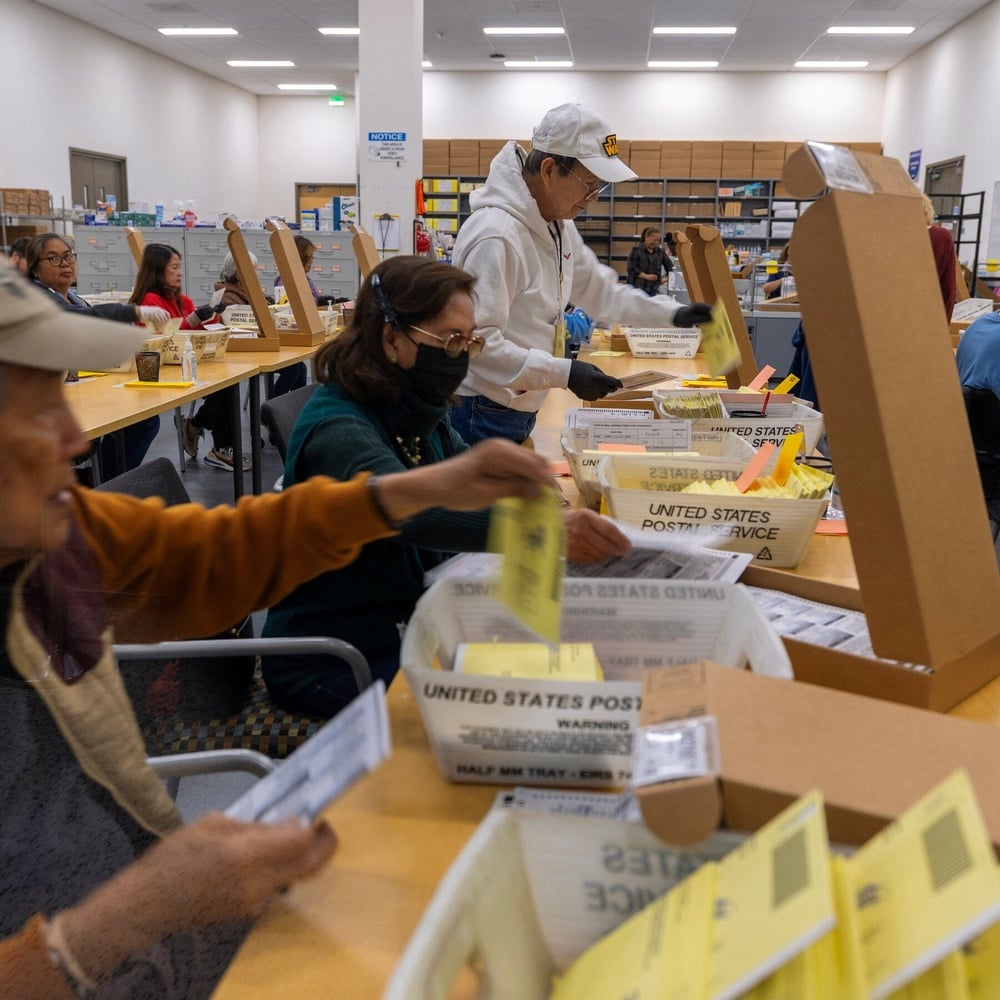
2026 © Helium Trades
Privacy Policy & Disclosure
* Disclaimer: Nothing on this website constitutes investment advice, performance data or any recommendation that any particular security, portfolio of securities, transaction or investment strategy is suitable for any specific person. Helium Trades is not responsible in any way for the accuracy
of any model predictions or price data. Any mention of a particular security and related prediction data is not a recommendation to buy or sell that security. Investments in securities involve the risk of loss. Past performance is no guarantee of future results. Helium Trades is not responsible for any of your investment decisions,
you should consult a financial expert before engaging in any transaction.
Helium Research Assistant

How can I help you today?
Ask any question about this page.


