See whether Helium helps you make better-informed decisions. Try every Pro Trader feature for 30 days. No credit card required.
Try every Pro Trader feature for 30 days. No credit card required.
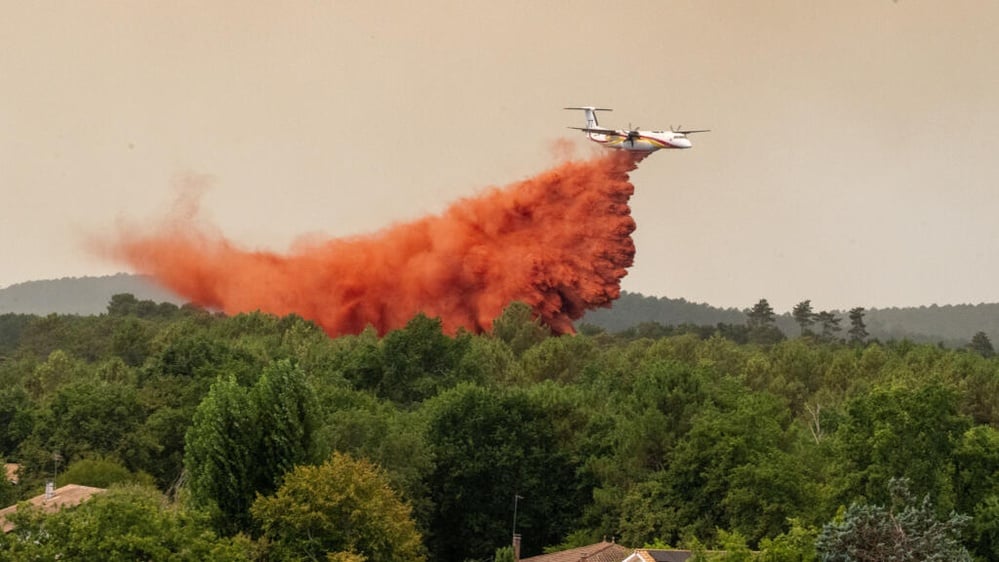
Publisher frames wildfires as an urgent pan-European crisis, foregrounding evacuation orders, cross-border emergencies, and EU aid to signal scale and governance.
Cap Ferret is a tourism hotspot in western France; the piece frames wildfires as a regional crisis prompting evacuations and cross-border emergency responses.
Automated analysis; not human reviewed. Limitations: Concise, case-specific limitations and plausible alternative interpretations.
France's Cap Ferret evacuation is framed as an urgent, government-led crisis managed with EU support, foregrounding official statements and quantified impacts to justify rapid measures.
Wildfires across southwestern Europe amid heatwaves trigger evacuations in France and Spain.
Automated analysis; not human reviewed.
Limitations: This analysis relies on the delimited article text; peripheral wrapper content is ignored, and some quotes may reflect editing artifacts rather than full context.
·
6 of 52 available dimensions scored; omitted dimensions are not treated as neutral.
·
Verified supporting quotes for 0 of 6 scored dimensions.
July 24, 2026 · 0 shares
Publisher framing foregrounds scale and urgency through dramatic wording ('massive blaze', 'fast-moving wildfire') and concrete figures (700 firefighters, thousands evacuated), while offering limited causal or contextual information.
Context: The report describes a wildfire in Cap Ferret prompting evacuation and firefighting, with no causality or casualty details.
Automated analysis; not human reviewed. Limitations: Analysis limited to the provided text; lacks date, cause, casualty details, and broader context.
July 24, 2026 · 0 shares
Publisher framing emphasizes a Europe-wide wildfire emergency, foregrounding official authorities, cross-border cooperation, and evacuation narratives to illustrate climate-driven risk requiring EU support.
A report on concurrent wildfires in southwest France and near Madrid, detailing evacuations, emergency declarations, cross-border firefighting assistance, and climate-change context.
Automated analysis; not human reviewed. Limitations: Concise, case-specific limitations and plausible alternative interpretations.
Publisher frames wildfires as a cross-border European emergency, foregrounding official figures and government actions while citing eyewitness accounts to convey scale and urgency and linking climate risk to policy action.
France and Spain declare national emergencies to fight wildfires amid a heat wave, with cross-border cooperation and multiple official evacuations and measures described.
Automated analysis; not human reviewed.
Limitations: Case-specific; relies on quoted officials and reported figures; wrapper text ignored.
·
47 of 52 available dimensions scored; omitted dimensions are not treated as neutral.
·
Verified supporting quotes for 0 of 47 scored dimensions.
Neutral; case-specific evidence-based analysis; text-only; wrapper text ignored.
July 24, 2026 · 0 shares
Publisher framing emphasizes an unprecedented, climate-driven regional disaster, foregrounding mass evacuations, cross-border emergency responses, and scientific attribution to climate breakdown.
Ongoing wildfires in Cap Ferret and across southwest France, plus fires near Madrid and Ávila, prompting mass evacuations and EU emergency responses.
Automated analysis; not human reviewed. Limitations: Concise, case-specific limitations and plausible alternative interpretations.
July 24, 2026 · 0 shares
Publisher framing emphasizes a Europe-wide wildfire emergency, foregrounding official authorities, cross-border cooperation, and evacuation narratives to illustrate climate-driven risk requiring EU support.
A report on concurrent wildfires in southwest France and near Madrid, detailing evacuations, emergency declarations, cross-border firefighting assistance, and climate-change context.
Automated analysis; not human reviewed. Limitations: Concise, case-specific limitations and plausible alternative interpretations.
July 24, 2026 · 0 shares
Publisher framing emphasizes an unprecedented, climate-driven regional disaster, foregrounding mass evacuations, cross-border emergency responses, and scientific attribution to climate breakdown.
Ongoing wildfires in Cap Ferret and across southwest France, plus fires near Madrid and Ávila, prompting mass evacuations and EU emergency responses.
Automated analysis; not human reviewed. Limitations: Concise, case-specific limitations and plausible alternative interpretations.
France's Cap Ferret evacuation is framed as an urgent, government-led crisis managed with EU support, foregrounding official statements and quantified impacts to justify rapid measures.
Wildfires across southwestern Europe amid heatwaves trigger evacuations in France and Spain.
Automated analysis; not human reviewed.
Limitations: This analysis relies on the delimited article text; peripheral wrapper content is ignored, and some quotes may reflect editing artifacts rather than full context.
·
6 of 52 available dimensions scored; omitted dimensions are not treated as neutral.
·
Verified supporting quotes for 0 of 6 scored dimensions.
July 24, 2026 · 0 shares
Publisher framing emphasizes a Europe-wide wildfire emergency, foregrounding official authorities, cross-border cooperation, and evacuation narratives to illustrate climate-driven risk requiring EU support.
A report on concurrent wildfires in southwest France and near Madrid, detailing evacuations, emergency declarations, cross-border firefighting assistance, and climate-change context.
Automated analysis; not human reviewed. Limitations: Concise, case-specific limitations and plausible alternative interpretations.
Publisher frames wildfires as a cross-border European emergency, foregrounding official figures and government actions while citing eyewitness accounts to convey scale and urgency and linking climate risk to policy action.
France and Spain declare national emergencies to fight wildfires amid a heat wave, with cross-border cooperation and multiple official evacuations and measures described.
Automated analysis; not human reviewed.
Limitations: Case-specific; relies on quoted officials and reported figures; wrapper text ignored.
·
47 of 52 available dimensions scored; omitted dimensions are not treated as neutral.
·
Verified supporting quotes for 0 of 47 scored dimensions.
Neutral; case-specific evidence-based analysis; text-only; wrapper text ignored.
Publisher frames wildfires as an urgent pan-European crisis, foregrounding evacuation orders, cross-border emergencies, and EU aid to signal scale and governance.
Cap Ferret is a tourism hotspot in western France; the piece frames wildfires as a regional crisis prompting evacuations and cross-border emergency responses.
Automated analysis; not human reviewed. Limitations: Concise, case-specific limitations and plausible alternative interpretations.
Publisher frames wildfires as an urgent pan-European crisis, foregrounding evacuation orders, cross-border emergencies, and EU aid to signal scale and governance.
Cap Ferret is a tourism hotspot in western France; the piece frames wildfires as a regional crisis prompting evacuations and cross-border emergency responses.
Automated analysis; not human reviewed. Limitations: Concise, case-specific limitations and plausible alternative interpretations.
Publisher frames wildfires as a cross-border European emergency, foregrounding official figures and government actions while citing eyewitness accounts to convey scale and urgency and linking climate risk to policy action.
France and Spain declare national emergencies to fight wildfires amid a heat wave, with cross-border cooperation and multiple official evacuations and measures described.
Automated analysis; not human reviewed.
Limitations: Case-specific; relies on quoted officials and reported figures; wrapper text ignored.
·
47 of 52 available dimensions scored; omitted dimensions are not treated as neutral.
·
Verified supporting quotes for 0 of 47 scored dimensions.
Neutral; case-specific evidence-based analysis; text-only; wrapper text ignored.
July 24, 2026 · 0 shares
Publisher framing uses dramatic language ('apocalyptic scenes') and foregrounds evacuation totals and government responses to cast the wildfires as a Europe-wide crisis.
European-wide wildfire crisis described with cross-border government responses in France and Spain.
Automated analysis; not human reviewed.
Limitations: The article is brief; framing inferences rely on phrasing and emphasis rather than independent sourcing.
·
2 of 52 available dimensions scored; omitted dimensions are not treated as neutral.
·
Verified supporting quotes for 2 of 2 scored dimensions.
Claim: Reporting uses subjective framing through dramatic language ('apocalyptic scenes').
“Apocalyptic scenes across Europe as nearly 200,000 flee massive wildfires.” · exact text match
Counterevidence:
“Authorities evacuated France’s Cap Ferret peninsula and districts as winds and temperatures up to 37°C fueled its largest wildfire this year” · exact text match
“Spain declared its first national wildfire emergency, displacing 60,000 people” · exact text match
Why: The presence of dramatic descriptors alongside concrete actions suggests subjective framing, but the article also cites official responses and figures.
Claim: The text employs sensational framing through catastrophe-oriented language.
“Apocalyptic scenes across Europe as nearly 200,000 flee massive wildfires.” · exact text match
Counterevidence:
“Authorities evacuated France’s Cap Ferret peninsula and districts as winds and temperatures up to 37°C fueled its largest wildfire this year” · exact text match
“Spain declared its first national wildfire emergency, displacing 60,000 people” · exact text match
Why: Dramatic wording paired with numeric data indicates sensational framing, though factual details are present.
Ambiguity in timeline; numbers lack a date; no explicit sources cited.
Coverage frames the Cap Ferret wildfire as an urgent disaster by foregrounding official guidance, authorities’ statements, and dramatic language to justify swift evacuations.
Cap Ferret wildfire coverage centers on emergency evacuations, official advisories, and high-profile statements from UK and French authorities.
Automated analysis; not human reviewed. Limitations: Concise, case-specific limitations and plausible alternative interpretations.
Ambiguities in hectare totals; framing leans on official voices.
France's Cap Ferret evacuation is framed as an urgent, government-led crisis managed with EU support, foregrounding official statements and quantified impacts to justify rapid measures.
Wildfires across southwestern Europe amid heatwaves trigger evacuations in France and Spain.
Automated analysis; not human reviewed. Limitations: This analysis relies on the delimited article text; peripheral wrapper content is ignored, and some quotes may reflect editing artifacts rather than full context. · 6 of 52 available dimensions scored; omitted dimensions are not treated as neutral. · Verified supporting quotes for 0 of 6 scored dimensions.
Publisher frames wildfires as a cross-border European emergency, foregrounding official figures and government actions while citing eyewitness accounts to convey scale and urgency and linking climate risk to policy action.
France and Spain declare national emergencies to fight wildfires amid a heat wave, with cross-border cooperation and multiple official evacuations and measures described.
Automated analysis; not human reviewed. Limitations: Case-specific; relies on quoted officials and reported figures; wrapper text ignored. · 47 of 52 available dimensions scored; omitted dimensions are not treated as neutral. · Verified supporting quotes for 0 of 47 scored dimensions.
Neutral; case-specific evidence-based analysis; text-only; wrapper text ignored.
July 24, 2026 · 0 shares
Publisher framing emphasizes an unprecedented, climate-driven regional disaster, foregrounding mass evacuations, cross-border emergency responses, and scientific attribution to climate breakdown.
Ongoing wildfires in Cap Ferret and across southwest France, plus fires near Madrid and Ávila, prompting mass evacuations and EU emergency responses.
Automated analysis; not human reviewed. Limitations: Concise, case-specific limitations and plausible alternative interpretations.
July 24, 2026 · 0 shares
By foregrounding large evacuation totals, dramatic official quotes, and EU assistance while citing a climate attribution study, the publisher frames the wildfires as a climate-driven crisis anchored in authority to establish credibility and urgency.
Cross-border wildfires in France and Spain amid drought and heatwaves prompt mass evacuations, firefighting mobilization, and EU assistance, with climate-change attribution noted by researchers.
Automated analysis; not human reviewed. Limitations: Concise, case-specific limitations and plausible alternative interpretations. · 2 of 52 available dimensions scored; omitted dimensions are not treated as neutral. · Verified supporting quotes for 0 of 2 scored dimensions.
Claim: The framing uses vivid fear-inducing descriptions and eyewitness distress to portray the crisis as dangerous.
“The smoke was incredibly thick.” · not found in supplied text
“You couldn't breathe.” · exact text match
Counterevidence:
“Drought attribution by climate researchers notes the role of climate change in heightening wildfire threats, signaling a more systemic framing.” · not found in supplied text
Why: Dramatic phrases and eyewitness distress contribute to fear-based framing, but quantitative data and official actions temper it.
Claim: The publisher relies on multiple credible sources to ground the report.
“We are living through a dramatic situation, not only in various Spanish provinces but also in regions of neighboring countries, said Pedro Sanchez.” · not found in supplied text
“Following appeals for assistance, the European Commission said it was sending four water-bombing planes to Spain and three to France.” · exact text match
Counterevidence:
“The article relies on official statements; independent verification is not shown in the text.” · not found in supplied text
Why: Diverse official sources anchor claims, supporting credibility, but lack of independent corroboration within the text is a limitation.
No evident publisher bias; minor dramatic framing.
July 24, 2026 · 0 shares
Cross-border emergency framing with emphasis on government response and EU assistance is augmented by embedded subscription pitches and sponsorship notes, signaling a frame that blends urgent public-interest reporting with monetization.
Cross-border wildfires triggered mass evacuations in France and Spain, with Macron mobilizing the army and EU aid sought, while the text embeds subscription prompts and sponsorship notes.
Automated analysis; not human reviewed. Limitations: Limitations: analysis limited to the provided text; cannot assess broader editorial practices, corrections, or non-textual cues. · 2 of 52 available dimensions scored; omitted dimensions are not treated as neutral. · Verified supporting quotes for 2 of 2 scored dimensions.
Claim: The numbers and descriptors used (evacuations, 'unprecedented,' 'worst wildfire') suggest fear-inducing framing.
“166,000 evacuated as wildfires spin out of control in France and Spain.” · exact text match
“Over 166,000 people were evacuated in France and Spain as unprecedented forest fires raged near Madrid and Bordeaux, a French city flanked by tourist havens and world-renowned vineyards.” · exact text match
“the worst wildfire the country has ever seen” · exact text match
Why: Large numbers and superlatives amplify danger, though common in disaster reporting.
Claim: The article contains subscription prompts and sponsorship notes embedded in the text, indicating promotional framing.
“In a time of both misinformation and too much information, quality journalism is more crucial than ever.By subscribing, you can help us get the story right.” · exact text match
“With your current subscription plan you can comment on stories. However, before writing your first comment, please create a display name in the Profile section of your subscriber account page.” · verified after text normalization
“Your subscription plan doesn't allow commenting. To learn more see our FAQ” · exact text match
Why: Direct CTAs and sponsorship labeling signal promotional framing alongside reporting.
Publisher framing foregrounds official responses, cross-border cooperation, and climate-context to portray the wildfires as an expansive, governance-driven emergency requiring coordinated action.
Cross-border wildfires in Spain and France during a heatwave with international aid and climate-change context.
Automated analysis; not human reviewed. Limitations: Based on a single text; alternative framings might emphasize climate policy, human-interest angles, or critical perspectives not present here.
July 24, 2026 · 0 shares
Publisher framing emphasizes a Europe-wide wildfire emergency, foregrounding official authorities, cross-border cooperation, and evacuation narratives to illustrate climate-driven risk requiring EU support.
A report on concurrent wildfires in southwest France and near Madrid, detailing evacuations, emergency declarations, cross-border firefighting assistance, and climate-change context.
Automated analysis; not human reviewed. Limitations: Concise, case-specific limitations and plausible alternative interpretations.
July 24, 2026 · 0 shares
Publisher framing emphasizes an unprecedented, climate-driven regional disaster, foregrounding mass evacuations, cross-border emergency responses, and scientific attribution to climate breakdown.
Ongoing wildfires in Cap Ferret and across southwest France, plus fires near Madrid and Ávila, prompting mass evacuations and EU emergency responses.
Automated analysis; not human reviewed. Limitations: Concise, case-specific limitations and plausible alternative interpretations.
July 24, 2026 · 0 shares
By foregrounding large evacuation totals, dramatic official quotes, and EU assistance while citing a climate attribution study, the publisher frames the wildfires as a climate-driven crisis anchored in authority to establish credibility and urgency.
Cross-border wildfires in France and Spain amid drought and heatwaves prompt mass evacuations, firefighting mobilization, and EU assistance, with climate-change attribution noted by researchers.
Automated analysis; not human reviewed. Limitations: Concise, case-specific limitations and plausible alternative interpretations. · 2 of 52 available dimensions scored; omitted dimensions are not treated as neutral. · Verified supporting quotes for 0 of 2 scored dimensions.
Claim: The framing uses vivid fear-inducing descriptions and eyewitness distress to portray the crisis as dangerous.
“The smoke was incredibly thick.” · not found in supplied text
“You couldn't breathe.” · exact text match
Counterevidence:
“Drought attribution by climate researchers notes the role of climate change in heightening wildfire threats, signaling a more systemic framing.” · not found in supplied text
Why: Dramatic phrases and eyewitness distress contribute to fear-based framing, but quantitative data and official actions temper it.
Claim: The publisher relies on multiple credible sources to ground the report.
“We are living through a dramatic situation, not only in various Spanish provinces but also in regions of neighboring countries, said Pedro Sanchez.” · not found in supplied text
“Following appeals for assistance, the European Commission said it was sending four water-bombing planes to Spain and three to France.” · exact text match
Counterevidence:
“The article relies on official statements; independent verification is not shown in the text.” · not found in supplied text
Why: Diverse official sources anchor claims, supporting credibility, but lack of independent corroboration within the text is a limitation.
No evident publisher bias; minor dramatic framing.
France's Cap Ferret evacuation is framed as an urgent, government-led crisis managed with EU support, foregrounding official statements and quantified impacts to justify rapid measures.
Wildfires across southwestern Europe amid heatwaves trigger evacuations in France and Spain.
Automated analysis; not human reviewed. Limitations: This analysis relies on the delimited article text; peripheral wrapper content is ignored, and some quotes may reflect editing artifacts rather than full context. · 6 of 52 available dimensions scored; omitted dimensions are not treated as neutral. · Verified supporting quotes for 0 of 6 scored dimensions.
July 24, 2026 · 0 shares
Publisher framing emphasizes a Europe-wide wildfire emergency, foregrounding official authorities, cross-border cooperation, and evacuation narratives to illustrate climate-driven risk requiring EU support.
A report on concurrent wildfires in southwest France and near Madrid, detailing evacuations, emergency declarations, cross-border firefighting assistance, and climate-change context.
Automated analysis; not human reviewed. Limitations: Concise, case-specific limitations and plausible alternative interpretations.
Publisher frames wildfires as a cross-border European emergency, foregrounding official figures and government actions while citing eyewitness accounts to convey scale and urgency and linking climate risk to policy action.
France and Spain declare national emergencies to fight wildfires amid a heat wave, with cross-border cooperation and multiple official evacuations and measures described.
Automated analysis; not human reviewed. Limitations: Case-specific; relies on quoted officials and reported figures; wrapper text ignored. · 47 of 52 available dimensions scored; omitted dimensions are not treated as neutral. · Verified supporting quotes for 0 of 47 scored dimensions.
Neutral; case-specific evidence-based analysis; text-only; wrapper text ignored.
Publisher frames wildfires as a cross-border European emergency, foregrounding official figures and government actions while citing eyewitness accounts to convey scale and urgency and linking climate risk to policy action.
France and Spain declare national emergencies to fight wildfires amid a heat wave, with cross-border cooperation and multiple official evacuations and measures described.
Automated analysis; not human reviewed. Limitations: Case-specific; relies on quoted officials and reported figures; wrapper text ignored. · 47 of 52 available dimensions scored; omitted dimensions are not treated as neutral. · Verified supporting quotes for 0 of 47 scored dimensions.
Neutral; case-specific evidence-based analysis; text-only; wrapper text ignored.
July 24, 2026 · 0 shares
By foregrounding large evacuation totals, dramatic official quotes, and EU assistance while citing a climate attribution study, the publisher frames the wildfires as a climate-driven crisis anchored in authority to establish credibility and urgency.
Cross-border wildfires in France and Spain amid drought and heatwaves prompt mass evacuations, firefighting mobilization, and EU assistance, with climate-change attribution noted by researchers.
Automated analysis; not human reviewed. Limitations: Concise, case-specific limitations and plausible alternative interpretations. · 2 of 52 available dimensions scored; omitted dimensions are not treated as neutral. · Verified supporting quotes for 0 of 2 scored dimensions.
Claim: The framing uses vivid fear-inducing descriptions and eyewitness distress to portray the crisis as dangerous.
“The smoke was incredibly thick.” · not found in supplied text
“You couldn't breathe.” · exact text match
Counterevidence:
“Drought attribution by climate researchers notes the role of climate change in heightening wildfire threats, signaling a more systemic framing.” · not found in supplied text
Why: Dramatic phrases and eyewitness distress contribute to fear-based framing, but quantitative data and official actions temper it.
Claim: The publisher relies on multiple credible sources to ground the report.
“We are living through a dramatic situation, not only in various Spanish provinces but also in regions of neighboring countries, said Pedro Sanchez.” · not found in supplied text
“Following appeals for assistance, the European Commission said it was sending four water-bombing planes to Spain and three to France.” · exact text match
Counterevidence:
“The article relies on official statements; independent verification is not shown in the text.” · not found in supplied text
Why: Diverse official sources anchor claims, supporting credibility, but lack of independent corroboration within the text is a limitation.
No evident publisher bias; minor dramatic framing.
Helium Bias
France's Cap Ferret evacuation is framed as an urgent, government-led crisis managed with EU support, foregrounding official statements and quantified impacts to justify rapid measures.
Wildfires across southwestern Europe amid heatwaves trigger evacuations in France and Spain.
Automated analysis; not human reviewed. Limitations: This analysis relies on the delimited article text; peripheral wrapper content is ignored, and some quotes may reflect editing artifacts rather than full context. · 6 of 52 available dimensions scored; omitted dimensions are not treated as neutral. · Verified supporting quotes for 0 of 6 scored dimensions.
July 24, 2026 · 0 shares
Publisher framing emphasizes a Europe-wide wildfire emergency, foregrounding official authorities, cross-border cooperation, and evacuation narratives to illustrate climate-driven risk requiring EU support.
A report on concurrent wildfires in southwest France and near Madrid, detailing evacuations, emergency declarations, cross-border firefighting assistance, and climate-change context.
Automated analysis; not human reviewed. Limitations: Concise, case-specific limitations and plausible alternative interpretations.
July 24, 2026 · 0 shares
Publisher framing emphasizes an unprecedented, climate-driven regional disaster, foregrounding mass evacuations, cross-border emergency responses, and scientific attribution to climate breakdown.
Ongoing wildfires in Cap Ferret and across southwest France, plus fires near Madrid and Ávila, prompting mass evacuations and EU emergency responses.
Automated analysis; not human reviewed. Limitations: Concise, case-specific limitations and plausible alternative interpretations.
Coverage frames the Cap Ferret wildfire as an urgent disaster by foregrounding official guidance, authorities’ statements, and dramatic language to justify swift evacuations.
Cap Ferret wildfire coverage centers on emergency evacuations, official advisories, and high-profile statements from UK and French authorities.
Automated analysis; not human reviewed. Limitations: Concise, case-specific limitations and plausible alternative interpretations.
Ambiguities in hectare totals; framing leans on official voices.
July 24, 2026 · 0 shares
The publisher frames cross-border wildfires as a public-safety crisis by foregrounding mass evacuations and the status of a popular holiday destination, signaling urgency through location-specific detail.
The report frames a cross-border wildfire situation in Western Europe, highlighting evacuations and threats to coastal tourism sites and inland population centers.
Automated analysis; not human reviewed. Limitations: Concise, case-specific limitations and plausible alternative interpretations.
Story Blindspots
July 24, 2026 · 0 shares
Publisher framing emphasizes a Europe-wide wildfire emergency, foregrounding official authorities, cross-border cooperation, and evacuation narratives to illustrate climate-driven risk requiring EU support.
A report on concurrent wildfires in southwest France and near Madrid, detailing evacuations, emergency declarations, cross-border firefighting assistance, and climate-change context.
Automated analysis; not human reviewed. Limitations: Concise, case-specific limitations and plausible alternative interpretations.
Publisher frames wildfires as a cross-border European emergency, foregrounding official figures and government actions while citing eyewitness accounts to convey scale and urgency and linking climate risk to policy action.
France and Spain declare national emergencies to fight wildfires amid a heat wave, with cross-border cooperation and multiple official evacuations and measures described.
Automated analysis; not human reviewed. Limitations: Case-specific; relies on quoted officials and reported figures; wrapper text ignored. · 47 of 52 available dimensions scored; omitted dimensions are not treated as neutral. · Verified supporting quotes for 0 of 47 scored dimensions.
Neutral; case-specific evidence-based analysis; text-only; wrapper text ignored.
July 24, 2026 · 0 shares
Publisher framing emphasizes an unprecedented, climate-driven regional disaster, foregrounding mass evacuations, cross-border emergency responses, and scientific attribution to climate breakdown.
Ongoing wildfires in Cap Ferret and across southwest France, plus fires near Madrid and Ávila, prompting mass evacuations and EU emergency responses.
Automated analysis; not human reviewed. Limitations: Concise, case-specific limitations and plausible alternative interpretations.
Publisher frames wildfires as a cross-border European emergency, foregrounding official figures and government actions while citing eyewitness accounts to convey scale and urgency and linking climate risk to policy action.
France and Spain declare national emergencies to fight wildfires amid a heat wave, with cross-border cooperation and multiple official evacuations and measures described.
Automated analysis; not human reviewed. Limitations: Case-specific; relies on quoted officials and reported figures; wrapper text ignored. · 47 of 52 available dimensions scored; omitted dimensions are not treated as neutral. · Verified supporting quotes for 0 of 47 scored dimensions.
Neutral; case-specific evidence-based analysis; text-only; wrapper text ignored.
July 24, 2026 · 0 shares
Publisher framing uses dramatic language ('apocalyptic scenes') and foregrounds evacuation totals and government responses to cast the wildfires as a Europe-wide crisis.
European-wide wildfire crisis described with cross-border government responses in France and Spain.
Automated analysis; not human reviewed. Limitations: The article is brief; framing inferences rely on phrasing and emphasis rather than independent sourcing. · 2 of 52 available dimensions scored; omitted dimensions are not treated as neutral. · Verified supporting quotes for 2 of 2 scored dimensions.
Claim: Reporting uses subjective framing through dramatic language ('apocalyptic scenes').
“Apocalyptic scenes across Europe as nearly 200,000 flee massive wildfires.” · exact text match
Counterevidence:
“Authorities evacuated France’s Cap Ferret peninsula and districts as winds and temperatures up to 37°C fueled its largest wildfire this year” · exact text match
“Spain declared its first national wildfire emergency, displacing 60,000 people” · exact text match
Why: The presence of dramatic descriptors alongside concrete actions suggests subjective framing, but the article also cites official responses and figures.
Claim: The text employs sensational framing through catastrophe-oriented language.
“Apocalyptic scenes across Europe as nearly 200,000 flee massive wildfires.” · exact text match
Counterevidence:
“Authorities evacuated France’s Cap Ferret peninsula and districts as winds and temperatures up to 37°C fueled its largest wildfire this year” · exact text match
“Spain declared its first national wildfire emergency, displacing 60,000 people” · exact text match
Why: Dramatic wording paired with numeric data indicates sensational framing, though factual details are present.
Ambiguity in timeline; numbers lack a date; no explicit sources cited.
July 24, 2026 · 0 shares
By foregrounding large evacuation totals, dramatic official quotes, and EU assistance while citing a climate attribution study, the publisher frames the wildfires as a climate-driven crisis anchored in authority to establish credibility and urgency.
Cross-border wildfires in France and Spain amid drought and heatwaves prompt mass evacuations, firefighting mobilization, and EU assistance, with climate-change attribution noted by researchers.
Automated analysis; not human reviewed. Limitations: Concise, case-specific limitations and plausible alternative interpretations. · 2 of 52 available dimensions scored; omitted dimensions are not treated as neutral. · Verified supporting quotes for 0 of 2 scored dimensions.
Claim: The framing uses vivid fear-inducing descriptions and eyewitness distress to portray the crisis as dangerous.
“The smoke was incredibly thick.” · not found in supplied text
“You couldn't breathe.” · exact text match
Counterevidence:
“Drought attribution by climate researchers notes the role of climate change in heightening wildfire threats, signaling a more systemic framing.” · not found in supplied text
Why: Dramatic phrases and eyewitness distress contribute to fear-based framing, but quantitative data and official actions temper it.
Claim: The publisher relies on multiple credible sources to ground the report.
“We are living through a dramatic situation, not only in various Spanish provinces but also in regions of neighboring countries, said Pedro Sanchez.” · not found in supplied text
“Following appeals for assistance, the European Commission said it was sending four water-bombing planes to Spain and three to France.” · exact text match
Counterevidence:
“The article relies on official statements; independent verification is not shown in the text.” · not found in supplied text
Why: Diverse official sources anchor claims, supporting credibility, but lack of independent corroboration within the text is a limitation.
No evident publisher bias; minor dramatic framing.
Publisher frames wildfires as an urgent pan-European crisis, foregrounding evacuation orders, cross-border emergencies, and EU aid to signal scale and governance.
Cap Ferret is a tourism hotspot in western France; the piece frames wildfires as a regional crisis prompting evacuations and cross-border emergency responses.
Automated analysis; not human reviewed. Limitations: Concise, case-specific limitations and plausible alternative interpretations.
Coverage frames the Cap Ferret wildfire as an urgent disaster by foregrounding official guidance, authorities’ statements, and dramatic language to justify swift evacuations.
Cap Ferret wildfire coverage centers on emergency evacuations, official advisories, and high-profile statements from UK and French authorities.
Automated analysis; not human reviewed. Limitations: Concise, case-specific limitations and plausible alternative interpretations.
Ambiguities in hectare totals; framing leans on official voices.
France's Cap Ferret evacuation is framed as an urgent, government-led crisis managed with EU support, foregrounding official statements and quantified impacts to justify rapid measures.
Wildfires across southwestern Europe amid heatwaves trigger evacuations in France and Spain.
Automated analysis; not human reviewed. Limitations: This analysis relies on the delimited article text; peripheral wrapper content is ignored, and some quotes may reflect editing artifacts rather than full context. · 6 of 52 available dimensions scored; omitted dimensions are not treated as neutral. · Verified supporting quotes for 0 of 6 scored dimensions.
July 24, 2026 · 0 shares
Publisher framing emphasizes a Europe-wide wildfire emergency, foregrounding official authorities, cross-border cooperation, and evacuation narratives to illustrate climate-driven risk requiring EU support.
A report on concurrent wildfires in southwest France and near Madrid, detailing evacuations, emergency declarations, cross-border firefighting assistance, and climate-change context.
Automated analysis; not human reviewed. Limitations: Concise, case-specific limitations and plausible alternative interpretations.
July 24, 2026 · 0 shares
By foregrounding large evacuation totals, dramatic official quotes, and EU assistance while citing a climate attribution study, the publisher frames the wildfires as a climate-driven crisis anchored in authority to establish credibility and urgency.
Cross-border wildfires in France and Spain amid drought and heatwaves prompt mass evacuations, firefighting mobilization, and EU assistance, with climate-change attribution noted by researchers.
Automated analysis; not human reviewed. Limitations: Concise, case-specific limitations and plausible alternative interpretations. · 2 of 52 available dimensions scored; omitted dimensions are not treated as neutral. · Verified supporting quotes for 0 of 2 scored dimensions.
Claim: The framing uses vivid fear-inducing descriptions and eyewitness distress to portray the crisis as dangerous.
“The smoke was incredibly thick.” · not found in supplied text
“You couldn't breathe.” · exact text match
Counterevidence:
“Drought attribution by climate researchers notes the role of climate change in heightening wildfire threats, signaling a more systemic framing.” · not found in supplied text
Why: Dramatic phrases and eyewitness distress contribute to fear-based framing, but quantitative data and official actions temper it.
Claim: The publisher relies on multiple credible sources to ground the report.
“We are living through a dramatic situation, not only in various Spanish provinces but also in regions of neighboring countries, said Pedro Sanchez.” · not found in supplied text
“Following appeals for assistance, the European Commission said it was sending four water-bombing planes to Spain and three to France.” · exact text match
Counterevidence:
“The article relies on official statements; independent verification is not shown in the text.” · not found in supplied text
Why: Diverse official sources anchor claims, supporting credibility, but lack of independent corroboration within the text is a limitation.
No evident publisher bias; minor dramatic framing.
July 24, 2026 · 0 shares
Publisher framing emphasizes a Europe-wide wildfire emergency, foregrounding official authorities, cross-border cooperation, and evacuation narratives to illustrate climate-driven risk requiring EU support.
A report on concurrent wildfires in southwest France and near Madrid, detailing evacuations, emergency declarations, cross-border firefighting assistance, and climate-change context.
Automated analysis; not human reviewed. Limitations: Concise, case-specific limitations and plausible alternative interpretations.
July 24, 2026 · 0 shares
Publisher framing emphasizes an unprecedented, climate-driven regional disaster, foregrounding mass evacuations, cross-border emergency responses, and scientific attribution to climate breakdown.
Ongoing wildfires in Cap Ferret and across southwest France, plus fires near Madrid and Ávila, prompting mass evacuations and EU emergency responses.
Automated analysis; not human reviewed. Limitations: Concise, case-specific limitations and plausible alternative interpretations.
Publisher frames wildfires as a cross-border European emergency, foregrounding official figures and government actions while citing eyewitness accounts to convey scale and urgency and linking climate risk to policy action.
France and Spain declare national emergencies to fight wildfires amid a heat wave, with cross-border cooperation and multiple official evacuations and measures described.
Automated analysis; not human reviewed. Limitations: Case-specific; relies on quoted officials and reported figures; wrapper text ignored. · 47 of 52 available dimensions scored; omitted dimensions are not treated as neutral. · Verified supporting quotes for 0 of 47 scored dimensions.
Neutral; case-specific evidence-based analysis; text-only; wrapper text ignored.
July 24, 2026 · 0 shares
Publisher framing uses dramatic language ('apocalyptic scenes') and foregrounds evacuation totals and government responses to cast the wildfires as a Europe-wide crisis.
European-wide wildfire crisis described with cross-border government responses in France and Spain.
Automated analysis; not human reviewed. Limitations: The article is brief; framing inferences rely on phrasing and emphasis rather than independent sourcing. · 2 of 52 available dimensions scored; omitted dimensions are not treated as neutral. · Verified supporting quotes for 2 of 2 scored dimensions.
Claim: Reporting uses subjective framing through dramatic language ('apocalyptic scenes').
“Apocalyptic scenes across Europe as nearly 200,000 flee massive wildfires.” · exact text match
Counterevidence:
“Authorities evacuated France’s Cap Ferret peninsula and districts as winds and temperatures up to 37°C fueled its largest wildfire this year” · exact text match
“Spain declared its first national wildfire emergency, displacing 60,000 people” · exact text match
Why: The presence of dramatic descriptors alongside concrete actions suggests subjective framing, but the article also cites official responses and figures.
Claim: The text employs sensational framing through catastrophe-oriented language.
“Apocalyptic scenes across Europe as nearly 200,000 flee massive wildfires.” · exact text match
Counterevidence:
“Authorities evacuated France’s Cap Ferret peninsula and districts as winds and temperatures up to 37°C fueled its largest wildfire this year” · exact text match
“Spain declared its first national wildfire emergency, displacing 60,000 people” · exact text match
Why: Dramatic wording paired with numeric data indicates sensational framing, though factual details are present.
Ambiguity in timeline; numbers lack a date; no explicit sources cited.
July 24, 2026 · 0 shares
By foregrounding large evacuation totals, dramatic official quotes, and EU assistance while citing a climate attribution study, the publisher frames the wildfires as a climate-driven crisis anchored in authority to establish credibility and urgency.
Cross-border wildfires in France and Spain amid drought and heatwaves prompt mass evacuations, firefighting mobilization, and EU assistance, with climate-change attribution noted by researchers.
Automated analysis; not human reviewed. Limitations: Concise, case-specific limitations and plausible alternative interpretations. · 2 of 52 available dimensions scored; omitted dimensions are not treated as neutral. · Verified supporting quotes for 0 of 2 scored dimensions.
Claim: The framing uses vivid fear-inducing descriptions and eyewitness distress to portray the crisis as dangerous.
“The smoke was incredibly thick.” · not found in supplied text
“You couldn't breathe.” · exact text match
Counterevidence:
“Drought attribution by climate researchers notes the role of climate change in heightening wildfire threats, signaling a more systemic framing.” · not found in supplied text
Why: Dramatic phrases and eyewitness distress contribute to fear-based framing, but quantitative data and official actions temper it.
Claim: The publisher relies on multiple credible sources to ground the report.
“We are living through a dramatic situation, not only in various Spanish provinces but also in regions of neighboring countries, said Pedro Sanchez.” · not found in supplied text
“Following appeals for assistance, the European Commission said it was sending four water-bombing planes to Spain and three to France.” · exact text match
Counterevidence:
“The article relies on official statements; independent verification is not shown in the text.” · not found in supplied text
Why: Diverse official sources anchor claims, supporting credibility, but lack of independent corroboration within the text is a limitation.
No evident publisher bias; minor dramatic framing.
July 24, 2026 · 0 shares
Cross-border emergency framing with emphasis on government response and EU assistance is augmented by embedded subscription pitches and sponsorship notes, signaling a frame that blends urgent public-interest reporting with monetization.
Cross-border wildfires triggered mass evacuations in France and Spain, with Macron mobilizing the army and EU aid sought, while the text embeds subscription prompts and sponsorship notes.
Automated analysis; not human reviewed. Limitations: Limitations: analysis limited to the provided text; cannot assess broader editorial practices, corrections, or non-textual cues. · 2 of 52 available dimensions scored; omitted dimensions are not treated as neutral. · Verified supporting quotes for 2 of 2 scored dimensions.
Claim: The numbers and descriptors used (evacuations, 'unprecedented,' 'worst wildfire') suggest fear-inducing framing.
“166,000 evacuated as wildfires spin out of control in France and Spain.” · exact text match
“Over 166,000 people were evacuated in France and Spain as unprecedented forest fires raged near Madrid and Bordeaux, a French city flanked by tourist havens and world-renowned vineyards.” · exact text match
“the worst wildfire the country has ever seen” · exact text match
Why: Large numbers and superlatives amplify danger, though common in disaster reporting.
Claim: The article contains subscription prompts and sponsorship notes embedded in the text, indicating promotional framing.
“In a time of both misinformation and too much information, quality journalism is more crucial than ever.By subscribing, you can help us get the story right.” · exact text match
“With your current subscription plan you can comment on stories. However, before writing your first comment, please create a display name in the Profile section of your subscriber account page.” · verified after text normalization
“Your subscription plan doesn't allow commenting. To learn more see our FAQ” · exact text match
Why: Direct CTAs and sponsorship labeling signal promotional framing alongside reporting.
Publisher framing foregrounds official responses, cross-border cooperation, and climate-context to portray the wildfires as an expansive, governance-driven emergency requiring coordinated action.
Cross-border wildfires in Spain and France during a heatwave with international aid and climate-change context.
Automated analysis; not human reviewed. Limitations: Based on a single text; alternative framings might emphasize climate policy, human-interest angles, or critical perspectives not present here.
Publisher frames wildfires as a cross-border European emergency, foregrounding official figures and government actions while citing eyewitness accounts to convey scale and urgency and linking climate risk to policy action.
France and Spain declare national emergencies to fight wildfires amid a heat wave, with cross-border cooperation and multiple official evacuations and measures described.
Automated analysis; not human reviewed. Limitations: Case-specific; relies on quoted officials and reported figures; wrapper text ignored. · 47 of 52 available dimensions scored; omitted dimensions are not treated as neutral. · Verified supporting quotes for 0 of 47 scored dimensions.
Neutral; case-specific evidence-based analysis; text-only; wrapper text ignored.
July 24, 2026 · 0 shares
By foregrounding large evacuation totals, dramatic official quotes, and EU assistance while citing a climate attribution study, the publisher frames the wildfires as a climate-driven crisis anchored in authority to establish credibility and urgency.
Cross-border wildfires in France and Spain amid drought and heatwaves prompt mass evacuations, firefighting mobilization, and EU assistance, with climate-change attribution noted by researchers.
Automated analysis; not human reviewed. Limitations: Concise, case-specific limitations and plausible alternative interpretations. · 2 of 52 available dimensions scored; omitted dimensions are not treated as neutral. · Verified supporting quotes for 0 of 2 scored dimensions.
Claim: The framing uses vivid fear-inducing descriptions and eyewitness distress to portray the crisis as dangerous.
“The smoke was incredibly thick.” · not found in supplied text
“You couldn't breathe.” · exact text match
Counterevidence:
“Drought attribution by climate researchers notes the role of climate change in heightening wildfire threats, signaling a more systemic framing.” · not found in supplied text
Why: Dramatic phrases and eyewitness distress contribute to fear-based framing, but quantitative data and official actions temper it.
Claim: The publisher relies on multiple credible sources to ground the report.
“We are living through a dramatic situation, not only in various Spanish provinces but also in regions of neighboring countries, said Pedro Sanchez.” · not found in supplied text
“Following appeals for assistance, the European Commission said it was sending four water-bombing planes to Spain and three to France.” · exact text match
Counterevidence:
“The article relies on official statements; independent verification is not shown in the text.” · not found in supplied text
Why: Diverse official sources anchor claims, supporting credibility, but lack of independent corroboration within the text is a limitation.
No evident publisher bias; minor dramatic framing.
Publisher frames wildfires as an urgent pan-European crisis, foregrounding evacuation orders, cross-border emergencies, and EU aid to signal scale and governance.
Cap Ferret is a tourism hotspot in western France; the piece frames wildfires as a regional crisis prompting evacuations and cross-border emergency responses.
Automated analysis; not human reviewed. Limitations: Concise, case-specific limitations and plausible alternative interpretations.
Publisher frames wildfires as an urgent pan-European crisis, foregrounding evacuation orders, cross-border emergencies, and EU aid to signal scale and governance.
Cap Ferret is a tourism hotspot in western France; the piece frames wildfires as a regional crisis prompting evacuations and cross-border emergency responses.
Automated analysis; not human reviewed. Limitations: Concise, case-specific limitations and plausible alternative interpretations.
Publisher frames wildfires as a cross-border European emergency, foregrounding official figures and government actions while citing eyewitness accounts to convey scale and urgency and linking climate risk to policy action.
France and Spain declare national emergencies to fight wildfires amid a heat wave, with cross-border cooperation and multiple official evacuations and measures described.
Automated analysis; not human reviewed. Limitations: Case-specific; relies on quoted officials and reported figures; wrapper text ignored. · 47 of 52 available dimensions scored; omitted dimensions are not treated as neutral. · Verified supporting quotes for 0 of 47 scored dimensions.
Neutral; case-specific evidence-based analysis; text-only; wrapper text ignored.
July 24, 2026 · 0 shares
Publisher framing emphasizes an unprecedented, climate-driven regional disaster, foregrounding mass evacuations, cross-border emergency responses, and scientific attribution to climate breakdown.
Ongoing wildfires in Cap Ferret and across southwest France, plus fires near Madrid and Ávila, prompting mass evacuations and EU emergency responses.
Automated analysis; not human reviewed. Limitations: Concise, case-specific limitations and plausible alternative interpretations.
Publisher frames wildfires as a cross-border European emergency, foregrounding official figures and government actions while citing eyewitness accounts to convey scale and urgency and linking climate risk to policy action.
France and Spain declare national emergencies to fight wildfires amid a heat wave, with cross-border cooperation and multiple official evacuations and measures described.
Automated analysis; not human reviewed. Limitations: Case-specific; relies on quoted officials and reported figures; wrapper text ignored. · 47 of 52 available dimensions scored; omitted dimensions are not treated as neutral. · Verified supporting quotes for 0 of 47 scored dimensions.
Neutral; case-specific evidence-based analysis; text-only; wrapper text ignored.
July 24, 2026 · 0 shares
Publisher framing emphasizes an unprecedented, climate-driven regional disaster, foregrounding mass evacuations, cross-border emergency responses, and scientific attribution to climate breakdown.
Ongoing wildfires in Cap Ferret and across southwest France, plus fires near Madrid and Ávila, prompting mass evacuations and EU emergency responses.
Automated analysis; not human reviewed. Limitations: Concise, case-specific limitations and plausible alternative interpretations.
France's Cap Ferret evacuation is framed as an urgent, government-led crisis managed with EU support, foregrounding official statements and quantified impacts to justify rapid measures.
Wildfires across southwestern Europe amid heatwaves trigger evacuations in France and Spain.
Automated analysis; not human reviewed. Limitations: This analysis relies on the delimited article text; peripheral wrapper content is ignored, and some quotes may reflect editing artifacts rather than full context. · 6 of 52 available dimensions scored; omitted dimensions are not treated as neutral. · Verified supporting quotes for 0 of 6 scored dimensions.
July 24, 2026 · 0 shares
Publisher framing emphasizes a Europe-wide wildfire emergency, foregrounding official authorities, cross-border cooperation, and evacuation narratives to illustrate climate-driven risk requiring EU support.
A report on concurrent wildfires in southwest France and near Madrid, detailing evacuations, emergency declarations, cross-border firefighting assistance, and climate-change context.
Automated analysis; not human reviewed. Limitations: Concise, case-specific limitations and plausible alternative interpretations.
Publisher frames wildfires as a cross-border European emergency, foregrounding official figures and government actions while citing eyewitness accounts to convey scale and urgency and linking climate risk to policy action.
France and Spain declare national emergencies to fight wildfires amid a heat wave, with cross-border cooperation and multiple official evacuations and measures described.
Automated analysis; not human reviewed. Limitations: Case-specific; relies on quoted officials and reported figures; wrapper text ignored. · 47 of 52 available dimensions scored; omitted dimensions are not treated as neutral. · Verified supporting quotes for 0 of 47 scored dimensions.
Neutral; case-specific evidence-based analysis; text-only; wrapper text ignored.
France's Cap Ferret evacuation is framed as an urgent, government-led crisis managed with EU support, foregrounding official statements and quantified impacts to justify rapid measures.
Wildfires across southwestern Europe amid heatwaves trigger evacuations in France and Spain.
Automated analysis; not human reviewed. Limitations: This analysis relies on the delimited article text; peripheral wrapper content is ignored, and some quotes may reflect editing artifacts rather than full context. · 6 of 52 available dimensions scored; omitted dimensions are not treated as neutral. · Verified supporting quotes for 0 of 6 scored dimensions.
Publisher frames wildfires as a cross-border European emergency, foregrounding official figures and government actions while citing eyewitness accounts to convey scale and urgency and linking climate risk to policy action.
France and Spain declare national emergencies to fight wildfires amid a heat wave, with cross-border cooperation and multiple official evacuations and measures described.
Automated analysis; not human reviewed. Limitations: Case-specific; relies on quoted officials and reported figures; wrapper text ignored. · 47 of 52 available dimensions scored; omitted dimensions are not treated as neutral. · Verified supporting quotes for 0 of 47 scored dimensions.
Neutral; case-specific evidence-based analysis; text-only; wrapper text ignored.
Publisher frames wildfires as an urgent pan-European crisis, foregrounding evacuation orders, cross-border emergencies, and EU aid to signal scale and governance.
Cap Ferret is a tourism hotspot in western France; the piece frames wildfires as a regional crisis prompting evacuations and cross-border emergency responses.
Automated analysis; not human reviewed. Limitations: Concise, case-specific limitations and plausible alternative interpretations.
Publisher frames wildfires as an urgent pan-European crisis, foregrounding evacuation orders, cross-border emergencies, and EU aid to signal scale and governance.
Cap Ferret is a tourism hotspot in western France; the piece frames wildfires as a regional crisis prompting evacuations and cross-border emergency responses.
Automated analysis; not human reviewed. Limitations: Concise, case-specific limitations and plausible alternative interpretations.
July 24, 2026 · 0 shares
Publisher framing foregrounds scale and urgency through dramatic wording ('massive blaze', 'fast-moving wildfire') and concrete figures (700 firefighters, thousands evacuated), while offering limited causal or contextual information.
Context: The report describes a wildfire in Cap Ferret prompting evacuation and firefighting, with no causality or casualty details.
Automated analysis; not human reviewed. Limitations: Analysis limited to the provided text; lacks date, cause, casualty details, and broader context.
July 24, 2026 · 0 shares
Publisher framing emphasizes a Europe-wide wildfire emergency, foregrounding official authorities, cross-border cooperation, and evacuation narratives to illustrate climate-driven risk requiring EU support.
A report on concurrent wildfires in southwest France and near Madrid, detailing evacuations, emergency declarations, cross-border firefighting assistance, and climate-change context.
Automated analysis; not human reviewed. Limitations: Concise, case-specific limitations and plausible alternative interpretations.
July 24, 2026 · 0 shares
Publisher framing emphasizes an unprecedented, climate-driven regional disaster, foregrounding mass evacuations, cross-border emergency responses, and scientific attribution to climate breakdown.
Ongoing wildfires in Cap Ferret and across southwest France, plus fires near Madrid and Ávila, prompting mass evacuations and EU emergency responses.
Automated analysis; not human reviewed. Limitations: Concise, case-specific limitations and plausible alternative interpretations.
July 24, 2026 · 0 shares
By foregrounding large evacuation totals, dramatic official quotes, and EU assistance while citing a climate attribution study, the publisher frames the wildfires as a climate-driven crisis anchored in authority to establish credibility and urgency.
Cross-border wildfires in France and Spain amid drought and heatwaves prompt mass evacuations, firefighting mobilization, and EU assistance, with climate-change attribution noted by researchers.
Automated analysis; not human reviewed.
Limitations: Concise, case-specific limitations and plausible alternative interpretations.
·
2 of 52 available dimensions scored; omitted dimensions are not treated as neutral.
·
Verified supporting quotes for 0 of 2 scored dimensions.
Claim: The framing uses vivid fear-inducing descriptions and eyewitness distress to portray the crisis as dangerous.
“The smoke was incredibly thick.” · not found in supplied text
“You couldn't breathe.” · exact text match
Counterevidence:
“Drought attribution by climate researchers notes the role of climate change in heightening wildfire threats, signaling a more systemic framing.” · not found in supplied text
Why: Dramatic phrases and eyewitness distress contribute to fear-based framing, but quantitative data and official actions temper it.
Claim: The publisher relies on multiple credible sources to ground the report.
“We are living through a dramatic situation, not only in various Spanish provinces but also in regions of neighboring countries, said Pedro Sanchez.” · not found in supplied text
“Following appeals for assistance, the European Commission said it was sending four water-bombing planes to Spain and three to France.” · exact text match
Counterevidence:
“The article relies on official statements; independent verification is not shown in the text.” · not found in supplied text
Why: Diverse official sources anchor claims, supporting credibility, but lack of independent corroboration within the text is a limitation.
No evident publisher bias; minor dramatic framing.
July 24, 2026 · 0 shares
Publisher framing emphasizes an unprecedented, climate-driven regional disaster, foregrounding mass evacuations, cross-border emergency responses, and scientific attribution to climate breakdown.
Ongoing wildfires in Cap Ferret and across southwest France, plus fires near Madrid and Ávila, prompting mass evacuations and EU emergency responses.
Automated analysis; not human reviewed. Limitations: Concise, case-specific limitations and plausible alternative interpretations.
Coverage frames the Cap Ferret wildfire as an urgent disaster by foregrounding official guidance, authorities’ statements, and dramatic language to justify swift evacuations.
Cap Ferret wildfire coverage centers on emergency evacuations, official advisories, and high-profile statements from UK and French authorities.
Automated analysis; not human reviewed. Limitations: Concise, case-specific limitations and plausible alternative interpretations.
Ambiguities in hectare totals; framing leans on official voices.
July 24, 2026 · 0 shares
Publisher framing foregrounds scale and urgency through dramatic wording ('massive blaze', 'fast-moving wildfire') and concrete figures (700 firefighters, thousands evacuated), while offering limited causal or contextual information.
Context: The report describes a wildfire in Cap Ferret prompting evacuation and firefighting, with no causality or casualty details.
Automated analysis; not human reviewed. Limitations: Analysis limited to the provided text; lacks date, cause, casualty details, and broader context.
Publisher frames wildfires as a cross-border European emergency, foregrounding official figures and government actions while citing eyewitness accounts to convey scale and urgency and linking climate risk to policy action.
France and Spain declare national emergencies to fight wildfires amid a heat wave, with cross-border cooperation and multiple official evacuations and measures described.
Automated analysis; not human reviewed.
Limitations: Case-specific; relies on quoted officials and reported figures; wrapper text ignored.
·
47 of 52 available dimensions scored; omitted dimensions are not treated as neutral.
·
Verified supporting quotes for 0 of 47 scored dimensions.
Neutral; case-specific evidence-based analysis; text-only; wrapper text ignored.
July 24, 2026 · 0 shares
Publisher framing uses dramatic language ('apocalyptic scenes') and foregrounds evacuation totals and government responses to cast the wildfires as a Europe-wide crisis.
European-wide wildfire crisis described with cross-border government responses in France and Spain.
Automated analysis; not human reviewed.
Limitations: The article is brief; framing inferences rely on phrasing and emphasis rather than independent sourcing.
·
2 of 52 available dimensions scored; omitted dimensions are not treated as neutral.
·
Verified supporting quotes for 2 of 2 scored dimensions.
Claim: Reporting uses subjective framing through dramatic language ('apocalyptic scenes').
“Apocalyptic scenes across Europe as nearly 200,000 flee massive wildfires.” · exact text match
Counterevidence:
“Authorities evacuated France’s Cap Ferret peninsula and districts as winds and temperatures up to 37°C fueled its largest wildfire this year” · exact text match
“Spain declared its first national wildfire emergency, displacing 60,000 people” · exact text match
Why: The presence of dramatic descriptors alongside concrete actions suggests subjective framing, but the article also cites official responses and figures.
Claim: The text employs sensational framing through catastrophe-oriented language.
“Apocalyptic scenes across Europe as nearly 200,000 flee massive wildfires.” · exact text match
Counterevidence:
“Authorities evacuated France’s Cap Ferret peninsula and districts as winds and temperatures up to 37°C fueled its largest wildfire this year” · exact text match
“Spain declared its first national wildfire emergency, displacing 60,000 people” · exact text match
Why: Dramatic wording paired with numeric data indicates sensational framing, though factual details are present.
Ambiguity in timeline; numbers lack a date; no explicit sources cited.
July 23, 2026 · 0 shares
FRANCE 24 frames the wildfire as an urgent, disaster-laden crisis through a sensational headline, evocative regional labels like 'the Hamptons of France', and on-site reporting to foreground immediacy and danger.
Southwestern France wildfire on a tourist peninsula near dune du Pila and Cap Ferret prompts evacuations.
Automated analysis; not human reviewed.
Limitations: Limited excerpt; lacks full article; quotes provide partial view of framing.
·
5 of 52 available dimensions scored; omitted dimensions are not treated as neutral.
·
Verified supporting quotes for 4 of 5 scored dimensions.
Claim: The report uses subjective framing via sensational wording to influence perception of risk.
“'A recipe for disaster'” · exact text match
Why: The sensational phrase signals subjective framing, but the article also presents factual detail.
Claim: The publisher frames the wildfire with sensational language and metaphor to heighten drama.
“'A recipe for disaster'” · exact text match
“'the Hamptons of France'” · exact text match
Why: Headlines and metaphors emphasize drama alongside reportage.
Claim: Framing uses normative language implying disaster beyond neutral description.
“'A recipe for disaster'” · exact text match
Why: Normative language coexists with factual details.
Claim: The text signals danger and urgency through evacuations and rapid spread language.
“A recipe for disaster” · exact text match
“A wildfire is moving extremely fast through a touristy peninsula close to the dune du Pila and Cap Ferret” · exact text match
“Thousands of people have been forced to evacuate as firefighters struggle to contain the blaze” · exact text match
Why: Dramatic language is balanced by explanatory reporting.
Claim: On-site reporting supports credibility.
“'FRANCE 24's Christopher Bockman is in Toulouse'” · not found in supplied text
Why: Named reporter and location enhance credibility.
Short excerpt; lacks full article context; potential framing not verifiable.
Publisher frames wildfires as an urgent pan-European crisis, foregrounding evacuation orders, cross-border emergencies, and EU aid to signal scale and governance.
Cap Ferret is a tourism hotspot in western France; the piece frames wildfires as a regional crisis prompting evacuations and cross-border emergency responses.
Automated analysis; not human reviewed. Limitations: Concise, case-specific limitations and plausible alternative interpretations.
Publisher framing foregrounds official responses, cross-border cooperation, and climate-context to portray the wildfires as an expansive, governance-driven emergency requiring coordinated action.
Cross-border wildfires in Spain and France during a heatwave with international aid and climate-change context.
Automated analysis; not human reviewed. Limitations: Based on a single text; alternative framings might emphasize climate policy, human-interest angles, or critical perspectives not present here.
July 24, 2026 · 0 shares
Publisher framing emphasizes a Europe-wide wildfire emergency, foregrounding official authorities, cross-border cooperation, and evacuation narratives to illustrate climate-driven risk requiring EU support.
A report on concurrent wildfires in southwest France and near Madrid, detailing evacuations, emergency declarations, cross-border firefighting assistance, and climate-change context.
Automated analysis; not human reviewed. Limitations: Concise, case-specific limitations and plausible alternative interpretations.
July 24, 2026 · 0 shares
Cross-border emergency framing with emphasis on government response and EU assistance is augmented by embedded subscription pitches and sponsorship notes, signaling a frame that blends urgent public-interest reporting with monetization.
Cross-border wildfires triggered mass evacuations in France and Spain, with Macron mobilizing the army and EU aid sought, while the text embeds subscription prompts and sponsorship notes.
Automated analysis; not human reviewed.
Limitations: Limitations: analysis limited to the provided text; cannot assess broader editorial practices, corrections, or non-textual cues.
·
2 of 52 available dimensions scored; omitted dimensions are not treated as neutral.
·
Verified supporting quotes for 2 of 2 scored dimensions.
Claim: The numbers and descriptors used (evacuations, 'unprecedented,' 'worst wildfire') suggest fear-inducing framing.
“166,000 evacuated as wildfires spin out of control in France and Spain.” · exact text match
“Over 166,000 people were evacuated in France and Spain as unprecedented forest fires raged near Madrid and Bordeaux, a French city flanked by tourist havens and world-renowned vineyards.” · exact text match
“the worst wildfire the country has ever seen” · exact text match
Why: Large numbers and superlatives amplify danger, though common in disaster reporting.
Claim: The article contains subscription prompts and sponsorship notes embedded in the text, indicating promotional framing.
“In a time of both misinformation and too much information, quality journalism is more crucial than ever.By subscribing, you can help us get the story right.” · exact text match
“With your current subscription plan you can comment on stories.
However, before writing your first comment, please create a display name in the Profile section of your subscriber account page.”
· verified after text normalization
“Your subscription plan doesn't allow commenting.
To learn more see our FAQ”
· exact text match
Why: Direct CTAs and sponsorship labeling signal promotional framing alongside reporting.
Publisher frames wildfires as a cross-border European emergency, foregrounding official figures and government actions while citing eyewitness accounts to convey scale and urgency and linking climate risk to policy action.
France and Spain declare national emergencies to fight wildfires amid a heat wave, with cross-border cooperation and multiple official evacuations and measures described.
Automated analysis; not human reviewed.
Limitations: Case-specific; relies on quoted officials and reported figures; wrapper text ignored.
·
47 of 52 available dimensions scored; omitted dimensions are not treated as neutral.
·
Verified supporting quotes for 0 of 47 scored dimensions.
Neutral; case-specific evidence-based analysis; text-only; wrapper text ignored.
July 24, 2026 · 0 shares
Publisher framing uses dramatic language ('apocalyptic scenes') and foregrounds evacuation totals and government responses to cast the wildfires as a Europe-wide crisis.
European-wide wildfire crisis described with cross-border government responses in France and Spain.
Automated analysis; not human reviewed.
Limitations: The article is brief; framing inferences rely on phrasing and emphasis rather than independent sourcing.
·
2 of 52 available dimensions scored; omitted dimensions are not treated as neutral.
·
Verified supporting quotes for 2 of 2 scored dimensions.
Claim: Reporting uses subjective framing through dramatic language ('apocalyptic scenes').
“Apocalyptic scenes across Europe as nearly 200,000 flee massive wildfires.” · exact text match
Counterevidence:
“Authorities evacuated France’s Cap Ferret peninsula and districts as winds and temperatures up to 37°C fueled its largest wildfire this year” · exact text match
“Spain declared its first national wildfire emergency, displacing 60,000 people” · exact text match
Why: The presence of dramatic descriptors alongside concrete actions suggests subjective framing, but the article also cites official responses and figures.
Claim: The text employs sensational framing through catastrophe-oriented language.
“Apocalyptic scenes across Europe as nearly 200,000 flee massive wildfires.” · exact text match
Counterevidence:
“Authorities evacuated France’s Cap Ferret peninsula and districts as winds and temperatures up to 37°C fueled its largest wildfire this year” · exact text match
“Spain declared its first national wildfire emergency, displacing 60,000 people” · exact text match
Why: Dramatic wording paired with numeric data indicates sensational framing, though factual details are present.
Ambiguity in timeline; numbers lack a date; no explicit sources cited.
July 24, 2026 · 0 shares
By foregrounding large evacuation totals, dramatic official quotes, and EU assistance while citing a climate attribution study, the publisher frames the wildfires as a climate-driven crisis anchored in authority to establish credibility and urgency.
Cross-border wildfires in France and Spain amid drought and heatwaves prompt mass evacuations, firefighting mobilization, and EU assistance, with climate-change attribution noted by researchers.
Automated analysis; not human reviewed.
Limitations: Concise, case-specific limitations and plausible alternative interpretations.
·
2 of 52 available dimensions scored; omitted dimensions are not treated as neutral.
·
Verified supporting quotes for 0 of 2 scored dimensions.
Claim: The framing uses vivid fear-inducing descriptions and eyewitness distress to portray the crisis as dangerous.
“The smoke was incredibly thick.” · not found in supplied text
“You couldn't breathe.” · exact text match
Counterevidence:
“Drought attribution by climate researchers notes the role of climate change in heightening wildfire threats, signaling a more systemic framing.” · not found in supplied text
Why: Dramatic phrases and eyewitness distress contribute to fear-based framing, but quantitative data and official actions temper it.
Claim: The publisher relies on multiple credible sources to ground the report.
“We are living through a dramatic situation, not only in various Spanish provinces but also in regions of neighboring countries, said Pedro Sanchez.” · not found in supplied text
“Following appeals for assistance, the European Commission said it was sending four water-bombing planes to Spain and three to France.” · exact text match
Counterevidence:
“The article relies on official statements; independent verification is not shown in the text.” · not found in supplied text
Why: Diverse official sources anchor claims, supporting credibility, but lack of independent corroboration within the text is a limitation.
No evident publisher bias; minor dramatic framing.
July 24, 2026 · 0 shares
Cross-border emergency framing with emphasis on government response and EU assistance is augmented by embedded subscription pitches and sponsorship notes, signaling a frame that blends urgent public-interest reporting with monetization.
Cross-border wildfires triggered mass evacuations in France and Spain, with Macron mobilizing the army and EU aid sought, while the text embeds subscription prompts and sponsorship notes.
Automated analysis; not human reviewed.
Limitations: Limitations: analysis limited to the provided text; cannot assess broader editorial practices, corrections, or non-textual cues.
·
2 of 52 available dimensions scored; omitted dimensions are not treated as neutral.
·
Verified supporting quotes for 2 of 2 scored dimensions.
Claim: The numbers and descriptors used (evacuations, 'unprecedented,' 'worst wildfire') suggest fear-inducing framing.
“166,000 evacuated as wildfires spin out of control in France and Spain.” · exact text match
“Over 166,000 people were evacuated in France and Spain as unprecedented forest fires raged near Madrid and Bordeaux, a French city flanked by tourist havens and world-renowned vineyards.” · exact text match
“the worst wildfire the country has ever seen” · exact text match
Why: Large numbers and superlatives amplify danger, though common in disaster reporting.
Claim: The article contains subscription prompts and sponsorship notes embedded in the text, indicating promotional framing.
“In a time of both misinformation and too much information, quality journalism is more crucial than ever.By subscribing, you can help us get the story right.” · exact text match
“With your current subscription plan you can comment on stories.
However, before writing your first comment, please create a display name in the Profile section of your subscriber account page.”
· verified after text normalization
“Your subscription plan doesn't allow commenting.
To learn more see our FAQ”
· exact text match
Why: Direct CTAs and sponsorship labeling signal promotional framing alongside reporting.
Publisher framing foregrounds official responses, cross-border cooperation, and climate-context to portray the wildfires as an expansive, governance-driven emergency requiring coordinated action.
Cross-border wildfires in Spain and France during a heatwave with international aid and climate-change context.
Automated analysis; not human reviewed. Limitations: Based on a single text; alternative framings might emphasize climate policy, human-interest angles, or critical perspectives not present here.
July 24, 2026 · 0 shares
Publisher framing emphasizes a Europe-wide wildfire emergency, foregrounding official authorities, cross-border cooperation, and evacuation narratives to illustrate climate-driven risk requiring EU support.
A report on concurrent wildfires in southwest France and near Madrid, detailing evacuations, emergency declarations, cross-border firefighting assistance, and climate-change context.
Automated analysis; not human reviewed. Limitations: Concise, case-specific limitations and plausible alternative interpretations.
Publisher frames wildfires as a cross-border European emergency, foregrounding official figures and government actions while citing eyewitness accounts to convey scale and urgency and linking climate risk to policy action.
France and Spain declare national emergencies to fight wildfires amid a heat wave, with cross-border cooperation and multiple official evacuations and measures described.
Automated analysis; not human reviewed.
Limitations: Case-specific; relies on quoted officials and reported figures; wrapper text ignored.
·
47 of 52 available dimensions scored; omitted dimensions are not treated as neutral.
·
Verified supporting quotes for 0 of 47 scored dimensions.
Neutral; case-specific evidence-based analysis; text-only; wrapper text ignored.
July 24, 2026 · 0 shares
Publisher framing emphasizes an unprecedented, climate-driven regional disaster, foregrounding mass evacuations, cross-border emergency responses, and scientific attribution to climate breakdown.
Ongoing wildfires in Cap Ferret and across southwest France, plus fires near Madrid and Ávila, prompting mass evacuations and EU emergency responses.
Automated analysis; not human reviewed. Limitations: Concise, case-specific limitations and plausible alternative interpretations.
France's Cap Ferret evacuation is framed as an urgent, government-led crisis managed with EU support, foregrounding official statements and quantified impacts to justify rapid measures.
Wildfires across southwestern Europe amid heatwaves trigger evacuations in France and Spain.
Automated analysis; not human reviewed. Limitations: This analysis relies on the delimited article text; peripheral wrapper content is ignored, and some quotes may reflect editing artifacts rather than full context. · 6 of 52 available dimensions scored; omitted dimensions are not treated as neutral. · Verified supporting quotes for 0 of 6 scored dimensions.
July 24, 2026 · 0 shares
Publisher framing emphasizes a Europe-wide wildfire emergency, foregrounding official authorities, cross-border cooperation, and evacuation narratives to illustrate climate-driven risk requiring EU support.
A report on concurrent wildfires in southwest France and near Madrid, detailing evacuations, emergency declarations, cross-border firefighting assistance, and climate-change context.
Automated analysis; not human reviewed. Limitations: Concise, case-specific limitations and plausible alternative interpretations.
Publisher frames wildfires as a cross-border European emergency, foregrounding official figures and government actions while citing eyewitness accounts to convey scale and urgency and linking climate risk to policy action.
France and Spain declare national emergencies to fight wildfires amid a heat wave, with cross-border cooperation and multiple official evacuations and measures described.
Automated analysis; not human reviewed. Limitations: Case-specific; relies on quoted officials and reported figures; wrapper text ignored. · 47 of 52 available dimensions scored; omitted dimensions are not treated as neutral. · Verified supporting quotes for 0 of 47 scored dimensions.
Neutral; case-specific evidence-based analysis; text-only; wrapper text ignored.
July 24, 2026 · 0 shares
Publisher framing emphasizes an unprecedented, climate-driven regional disaster, foregrounding mass evacuations, cross-border emergency responses, and scientific attribution to climate breakdown.
Ongoing wildfires in Cap Ferret and across southwest France, plus fires near Madrid and Ávila, prompting mass evacuations and EU emergency responses.
Automated analysis; not human reviewed. Limitations: Concise, case-specific limitations and plausible alternative interpretations.



2026 © Helium Trades
Privacy Policy & Disclosure
* Disclaimer: Nothing on this website constitutes investment advice, performance data or any recommendation that any particular security, portfolio of securities, transaction or investment strategy is suitable for any specific person. Helium Trades is not responsible in any way for the accuracy
of any model predictions or price data. Any mention of a particular security and related prediction data is not a recommendation to buy or sell that security. Investments in securities involve the risk of loss. Past performance is no guarantee of future results. Helium Trades is not responsible for any of your investment decisions,
you should consult a financial expert before engaging in any transaction.
Helium Research Assistant

How can I help you today?
Ask any question about this page.