See whether Helium helps you make better-informed decisions. Try every Pro Trader feature for 30 days. No credit card required.
Try every Pro Trader feature for 30 days. No credit card required.
September 19, 2026 · 0 shares
Framing treats the season as a faceplant and the club's future as newly uncertain, while hedging that the competitive window is probably not closed.
Automated analysis; not human reviewed. Limitations: Only the supplied article text was available; contract terms, front-office plans, and season chronology could not be independently verified. · 9 of 55 available dimensions scored; omitted dimensions are not treated as neutral. · Verified supporting quotes for 9 of 9 scored dimensions.
Claim: The analysis uses evaluative language and judgments about what the season was supposed to be, rather than confining itself to neutral reporting.
“This was supposed to be a golden era of Mariners baseball. Maybe even the golden era.” · exact text match
Why: The phrase 'supposed to be' and 'golden era' expresses a value-laden assessment of the team's expectations.
Claim: The framing uses dramatic, emotionally loaded metaphors to describe the team's late-season decline.
“As they limp toward the void of an empty October, the mood around the club is suddenly as sober as it’s been in recent memory.” · exact text match
Why: 'Limp toward the void' is more dramatic than a neutral description of a failed season.
Claim: The overall outlook is pessimistic about the season and the club's near-term direction, while acknowledging some remaining hope.
“Instead, here we are, counting down the final days of a season that has gone sideways at every turn. It can’t end soon enough.” · exact text match
Counterevidence:
“Even with all that, the Mariners would tell you that there is reason for optimism in 2027.” · exact text match
Why: 'Gone sideways at every turn' and 'It can't end soon enough' express a strongly negative assessment.
Claim: The analysis prescribes offseason roster moves rather than merely describing the situation.
“Among the various roster priorities this offseason: The M’s will need to bolster their lineup with at least one proven right-handed hitter, and it’s likely they’ll want to bring in a veteran shortstop to help shore up one of baseball’s worst defenses.” · exact text match
Why: 'Will need' and 'it's likely they'll want' direct the team toward specific priorities.
Claim: The piece is substantially opinionated, offering judgments about players and the organization.
“It’s hard to imagine the organization wanting to move on from Raleigh or Rodríguez, their two franchise cornerstones.” · exact text match
Why: The phrase 'hard to imagine' signals the author's judgment rather than a reported fact.
Claim: The emotional tone is negative, emphasizing disappointment and an unpleasant end to the season.
“As they limp toward the void of an empty October, the mood around the club is suddenly as sober as it’s been in recent memory.” · exact text match
“It can’t end soon enough.” · exact text match
Why: The imagery of limping toward a void and the wish for the season to end communicate a negative emotional valence.
Claim: The supplied text shows sourcing and named attribution for sensitive claims.
“sources with knowledge of the club’s plans told The Times” · exact text match
“Logan Gilbert said this past week” · exact text match
Why: Attribution to sources and a named player quote provides visible sourcing that supports credibility.
Claim: The piece forecasts free-agent decisions and possible trades that have not occurred.
“The Mariners are expected to make him a qualifying offer, but his asking price will almost certainly exceed Seattle’s comfort zone.” · exact text match
“Would they revisit the idea of trading a starter this offseason?” · exact text match
Why: Expected actions and an open hypothetical about trading a starter are forecasts, not observed events.
Claim: The supplied text presents the organization's optimistic case alongside skeptical analysis.
“Even with all that, the Mariners would tell you that there is reason for optimism in 2027.” · exact text match
Why: Including the organization's own optimistic framing alongside the negative assessment signals balance.
Only the supplied article text was available; contract terms, front-office plans, and season chronology could not be independently verified.
The coverage spotlights salacious, unverified details of Sean Combs' prison lifestyle and repeated release-date updates while balancing them with official statements.
Automated analysis; not human reviewed. Limitations: The supplied text is truncated and contains malformed placeholders, so scoring relies on visible fragments and may miss context. · 4 of 55 available dimensions scored; omitted dimensions are not treated as neutral. · Verified supporting quotes for 4 of 4 scored dimensions.
Claim: The publisher uses loaded, dramatic language to frame Combs' prison conditions as pampered and scandalous.
“new report details pampered prison lifestyle” · exact text match
“he keeps a secret stash of liquor that was smuggled into the prison by guards” · exact text match
Why: Terms like 'pampered,' 'secret stash,' and 'smuggled' emphasize sensational allegations over neutral reporting.
Claim: The coverage foregrounds rumor-level details about a celebrity inmate's personal indulgences.
““Hell yeah, I drank with him,”” · exact text match
“depositing thousands of dollars into the commissary accounts of those performing services” · exact text match
Why: The article dwells on drinks, massages, drugs, and commissary payments, characteristic of gossip reporting.
Claim: The report mixes attributed official statements with anonymous allegations, giving it limited but visible sourcing.
“In an emailed statement to The Times, a FCI Fort Dix spokesperson said” · exact text match
“Sources also allege” · exact text match
Why: Named sources and direct quotes increase credibility, while anonymous allegations reduce it.
Claim: The article presents unverified allegations and claims as part of the report without confirming their accuracy.
“There are also claims that” · exact text match
“Sources also allege” · exact text match
Why: Repeated use of 'claims' and 'allege' signals unconfirmed assertions, yet they form the article's focus.
The supplied text is truncated and contains malformed placeholders, so scoring relies on visible fragments and may miss context.
September 21, 2026 · 0 shares
A Seahawks-positive player-grades framing treats the win as validating the team’s identity, using coach quotes and selected stats to present the outcome as convincing and earned.
Automated analysis; not human reviewed. Limitations: The supplied text is a set of truncated excerpts with ellipses and no final score or headline, so classifications rely on the available selective details. · 3 of 55 available dimensions scored; omitted dimensions are not treated as neutral. · Verified supporting quotes for 3 of 3 scored dimensions.
Claim: The coverage strikes a positive, pro-Seahawks tone by framing the game as a clean bounce-back and dismissing the main concern.
“Through two games, there is zero evidence of a Super Bowl hangover.” · exact text match
“Lock was everything the Seahawks hoped he’d be” · exact text match
Why: The text uses absolute reassurance and frames Lock’s performance through team hope rather than neutral evaluation.
Claim: The text is heavily opinionated, mixing factual statistics with explicit grades, qualitative praise, and confident judgments about the team’s performance.
“which will be reflected in another pretty good sheet of grades for the Seahawks.” · exact text match
“The rest was typically solid.” · exact text match
Why: The author refers to their own grades and uses evaluative language like 'typically solid' as a verdict rather than neutral reporting.
Claim: The factual portions of the text are anchored by specific statistics and attributed coach comments.
“completing 19 of 26 passes for 235 yards — two of which were dropped and another could have been credited as one — for three touchdowns and no interceptions.” · exact text match
“Macdonald indicated later that was more of a play-call issue than anything else.” · exact text match
Why: The game account provides concrete statistical detail and coach attribution, giving the factual claims a visible basis even though the framing is opinionated.
The supplied text is a set of truncated excerpts with ellipses and no final score or headline, so classifications rely on the available selective details.
September 21, 2026 · 0 shares
The framing celebrates backup Drew Lock’s statistics-beating play and emotional growth, treats Seattle’s quarterback depth as a luxury, and dismisses any quarterback controversy.
Automated analysis; not human reviewed. Limitations: The supplied text is truncated with ellipses, so some sentences and quotes are incomplete and some context is missing. · 6 of 55 available dimensions scored; omitted dimensions are not treated as neutral. · Verified supporting quotes for 5 of 6 scored dimensions.
Claim: The publisher presents an interpretive, unquantified judgment of Lock’s performance rather than a purely factual game account.
“This ballplayer and playmaker’s performance was even better than the statistics make it seem.” · exact text match
Why: This asserts a conclusion beyond the box score and identifies the publisher’s subjective reading as decisive.
Claim: The framing is favorable to Lock and to Seattle’s quarterback depth.
“They won, in part, because of their “backup quarterback.”” · exact text match
“That’s not something many teams in the NFL can say.” · exact text match
Why: The article emphasizes a positive contribution and presents the backup situation as an advantage.
Claim: The overall tone is upbeat about Lock’s development and the team’s roster.
“He’s smart, and he has a swagger to him that’s fun to see.” · exact text match
“That’s not something many teams in the NFL can say.” · exact text match
Why: The selected coach quote and closing assertion project confidence and positivity.
Claim: The piece uses value-laden, sports-column language to argue that Lock is underrated by statistics.
“The stats don’t capture degree of difficulty.” · exact text match
“That’s not something many teams in the NFL can say.” · exact text match
Why: These statements are evaluative and argumentative rather than neutral reporting.
Claim: The text shows visible sourcing and attribution for most core claims.
“Seahawks coach Mike Macdonald said” · exact text match
“which could be as soon as next Sunday at Washington” · exact text match
Why: It names a source and includes a hedge on a return date, supporting visible reporting discipline.
Claim: The article ventures a forward-looking estimate about Darnold’s return.
“When Darnold is ready to return, which could be as soon as next Sunday at Washington, he’ll be the […]” · not found in supplied text
Why: This is a future-tense schedule forecast rather than a confirmed fact.
The supplied text is truncated with ellipses, so some sentences and quotes are incomplete and some context is missing.
October 05, 2026 · 0 shares
Uses a position-by-position grading frame that balances praise for playmaking and resilience with criticism of Seattle's penalty-heavy sloppiness and a cautious eye toward the 49ers.
Automated analysis; not human reviewed. Limitations: No external context or fact-checking beyond the supplied article text. · 3 of 55 available dimensions scored; omitted dimensions are not treated as neutral. · Verified supporting quotes for 3 of 3 scored dimensions.
Claim: The piece uses first-person evaluative language and a grading frame rather than neutral reporting.
“You wished they could have run out the clock on that final drive.” · exact text match
Why: The author makes personal wishes and evaluations explicit, marking the framing as subjective analysis.
Claim: The report renders direct praise and criticism of players and coaches throughout.
“Give the Seahawks coaches credit for a good week of preparation coming off the tough loss to Washington and long trip back.” · exact text match
Why: Direct commendation of the coaching staff is an opinionated judgment embedded in the game recap.
Claim: The article grounds its account in concrete statistics, named players, and a direct coach quote.
““We’re really grateful for where we’re at right now and excited to move forward,” coach Mike Macdonald said.” · exact text match
Why: Named attribution and specific game data support the report's credibility, though it remains an analysis column.
No external context or fact-checking beyond the supplied article text.
September 20, 2026 · 0 shares
Celebrates the Seahawks' second-half comeback as a momentum-driven statement, leaning on heroic player and coach quotes and framing the next two games as an 'ample opportunity' to keep winning.
The Seattle Seahawks hosted the Arizona Cardinals in a regular-season NFL game, Seattle's first home contest of the season, one week after rallying from a 10-0 third-quarter deficit to beat the New England Patriots in the opener.
Automated analysis; not human reviewed. Limitations: The supplied text is truncated at several points (marked '[...]'), including fragments of player quotes and play descriptions, which limits full verification of context and may affect interpretation of the missing portions. · 1 of 55 available dimensions scored; omitted dimensions are not treated as neutral. · Verified supporting quotes for 1 of 1 scored dimensions.
Claim: The report grounds its narrative in specific game statistics and attributes quotes to named players and the head coach.
“Arizona had just 43 yards on 14 plays in the second half — 18 on a run with 1:11 remaining and the game long over” · exact text match
“Seahawks coach Mike Macdonald saw the ball pop loose and reflexively began thinking about getting the defense ready to send on the field.” · exact text match
Why: Concrete statistics (43 yards, 14 plays, 1:11) and named attributions (Drew Lock, Mike Macdonald, Chazz) give the reporting a verifiable, sourced basis typical of credible sports journalism.
The supplied text is truncated at several points (marked '[...]'), including fragments of player quotes and play descriptions, which limits full verification of context and may affect interpretation of the missing portions.
September 21, 2026 · 0 shares
Curated roundup that frames Seattle’s 31-7 win over Arizona as a dominant statement and elevates Jaxon Smith-Njigba as the NFL’s best receiver despite starter Sam Darnold’s absence.
Automated analysis; not human reviewed. Limitations: The supplied text begins mid-sentence and contains JSON scrape artifacts (curly quotes, bracketed ellipses, and a truncated lede), so the analysis is based on the recoverable fragment; the original headline, byline, and any preceding paragraphs are unavailable. · 7 of 55 available dimensions scored; omitted dimensions are not treated as neutral. · Verified supporting quotes for 7 of 7 scored dimensions.
Claim: The report's substance is composed largely of subjective praise from named commentators rather than neutral factual prose.
“So for them to be able to scheme JSN open when everybody in the stadium, and their grandmother, knows the ball is going to Jaxon Smith-Njigba and he continues to be productive.” · exact text match
“With the exception of Arizona’s one good drive that led them to a touchdown in the first half, the Seahawks’ defense “dominated.”” · exact text match
Why: The core content is made up of evaluative judgments presented as supporting facts.
Claim: The selection of reactions is uniformly bullish on Seattle and on Jaxon Smith-Njigba, treating the win and his performance as elite evidence of team quality.
“He’s the best receiver in the National Football League.” · exact text match
“JSN showed once again he’s always open, generating 155 yards on nine catches with three scores” · exact text match
Counterevidence:
“At times, it appeared the Seahawks were protecting the offense from Lock — including a slew of goal-line runs — but the QB did well to lean on his playmaking WR when he needed a play.” · exact text match
Why: All evaluative selections are superlative praise, with the only mitigating detail immediately turned favorable, leaving no negative take on Seattle's ceiling.
Claim: The only forward-looking passage frames continued winning as a plausible, positive goal for the Seahawks.
“she’s already wondering if the Seahawks can go 3-0 without Darnold” · exact text match
Why: The question treats a 3-0 record as an open and desirable possibility rather than a remote or doubtful one.
Claim: The article's substantive claims are opinion-laden player and team assessments delivered through quoted voices.
“He’s the best receiver in the National Football League.” · exact text match
“JSN showed once again he’s always open” · exact text match
Why: Verifiable facts (score, stats) are supplemented by, and framed around, subjective evaluations of how the team and players performed.
Claim: The story announces its purpose as relaying other media figures' reactions rather than reporting the game independently.
“Here’s what the national media had to say about Smith-Njigba, the Seahawks’ defense and the team after the second game of the season.” · exact text match
Why: The lede makes the media reaction itself the news, filtering the game through third-party commentary.
Claim: Performance statistics and quotes are attributed to specific named outlets and reporters, giving the text visible sourcing.
“NFL.com’s Kevin Patra:” · exact text match
“The Athletic’s Austin Green:” · exact text match
Why: Receiving stats, the interception detail, and the defensive summary are attributed to identifiable sources, and direct quotes are set off within those attributions.
Claim: The piece introduces an unsupported forecast about the next game's result.
“indicated she’s already wondering if the Seahawks can go 3-0 without Darnold” · exact text match
Why: The future-looking comment about beating Washington and reaching 3-0 is offered with no support beyond a tweet.
The supplied text begins mid-sentence and contains JSON scrape artifacts (curly quotes, bracketed ellipses, and a truncated lede), so the analysis is based on the recoverable fragment; the original headline, byline, and any preceding paragraphs are unavailable.
September 20, 2026 · 0 shares
Framing emphasizes a familiar, dispiriting pattern of defeat as Seattle nears elimination, while still delivering fact-rich game details.
Automated analysis; not human reviewed. Limitations: No dateline, byline, or publication date was supplied, and only this single recap was available for analysis. · 5 of 55 available dimensions scored; omitted dimensions are not treated as neutral. · Verified supporting quotes for 5 of 5 scored dimensions.
Claim: The report is mostly factual but adds subjective emotional descriptors to the loss and key plays.
“Mariners on brink of elimination following another dispiriting loss” · exact text match
“The bullpen imploded in a four-run seventh inning.” · exact text match
Why: Concrete game statistics and attributed quotes dominate, but 'dispiriting' and 'imploded' are evaluative or emotional characterizations rather than neutral descriptions.
Claim: Publisher framing emphasizes the Mariners' repeated failure and imminent playoff elimination.
“Seattle’s second-half quest to win just three games in a row for the first time since mid-July ended a game short again.” · exact text match
“The outline to the Mariners’ 5-3 loss to the Rockies felt familiar because it followed an outline to defeat that’s been far too common this season.” · exact text match
Why: The central narrative is a lost opportunity and a familiar pattern of defeat, with no offsetting positive framing about playoff chances.
Claim: The account mixes news-style game reporting with evaluative judgments about performances.
“The Rockies did make two outstanding defensive plays to prevent runs.” · exact text match
“The bullpen imploded in a four-run seventh inning.” · exact text match
Why: Words such as 'outstanding' and 'imploded' express judgment, but the article otherwise stays with play-by-play facts and direct quotes.
Claim: The tone is negatively emotionally charged, centering frustration and disappointment.
“Mariners on brink of elimination following another dispiriting loss” · exact text match
“That’s really all you can do. It’s frustrating, but we made our bed, and we’ve got to lay in it.” · exact text match
Why: The headline and player quote both carry negative emotional weight, yet the surrounding report is measured and factual.
Claim: The report is transparently sourced and verifiable through concrete statistics and named quotes.
“With the loss, the Mariners fell to 72-83 on the season and six games behind the first-place Rangers in the AL West with just seven games left to play.” · exact text match
““We got the three (runs) early but just not able to add on, which is always tough in this ballpark,” manager Dan Wilson said.” · exact text match
Why: Specific countable details and attributed quotes from named players and the manager provide visible sourcing for the reported events.
No dateline, byline, or publication date was supplied, and only this single recap was available for analysis.
September 19, 2026 · 0 shares
Framing treats the season as a faceplant and the club's future as newly uncertain, while hedging that the competitive window is probably not closed.
Automated analysis; not human reviewed. Limitations: Only the supplied article text was available; contract terms, front-office plans, and season chronology could not be independently verified. · 9 of 55 available dimensions scored; omitted dimensions are not treated as neutral. · Verified supporting quotes for 9 of 9 scored dimensions.
Claim: The analysis uses evaluative language and judgments about what the season was supposed to be, rather than confining itself to neutral reporting.
“This was supposed to be a golden era of Mariners baseball. Maybe even the golden era.” · exact text match
Why: The phrase 'supposed to be' and 'golden era' expresses a value-laden assessment of the team's expectations.
Claim: The framing uses dramatic, emotionally loaded metaphors to describe the team's late-season decline.
“As they limp toward the void of an empty October, the mood around the club is suddenly as sober as it’s been in recent memory.” · exact text match
Why: 'Limp toward the void' is more dramatic than a neutral description of a failed season.
Claim: The overall outlook is pessimistic about the season and the club's near-term direction, while acknowledging some remaining hope.
“Instead, here we are, counting down the final days of a season that has gone sideways at every turn. It can’t end soon enough.” · exact text match
Counterevidence:
“Even with all that, the Mariners would tell you that there is reason for optimism in 2027.” · exact text match
Why: 'Gone sideways at every turn' and 'It can't end soon enough' express a strongly negative assessment.
Claim: The analysis prescribes offseason roster moves rather than merely describing the situation.
“Among the various roster priorities this offseason: The M’s will need to bolster their lineup with at least one proven right-handed hitter, and it’s likely they’ll want to bring in a veteran shortstop to help shore up one of baseball’s worst defenses.” · exact text match
Why: 'Will need' and 'it's likely they'll want' direct the team toward specific priorities.
Claim: The piece is substantially opinionated, offering judgments about players and the organization.
“It’s hard to imagine the organization wanting to move on from Raleigh or Rodríguez, their two franchise cornerstones.” · exact text match
Why: The phrase 'hard to imagine' signals the author's judgment rather than a reported fact.
Claim: The emotional tone is negative, emphasizing disappointment and an unpleasant end to the season.
“As they limp toward the void of an empty October, the mood around the club is suddenly as sober as it’s been in recent memory.” · exact text match
“It can’t end soon enough.” · exact text match
Why: The imagery of limping toward a void and the wish for the season to end communicate a negative emotional valence.
Claim: The supplied text shows sourcing and named attribution for sensitive claims.
“sources with knowledge of the club’s plans told The Times” · exact text match
“Logan Gilbert said this past week” · exact text match
Why: Attribution to sources and a named player quote provides visible sourcing that supports credibility.
Claim: The piece forecasts free-agent decisions and possible trades that have not occurred.
“The Mariners are expected to make him a qualifying offer, but his asking price will almost certainly exceed Seattle’s comfort zone.” · exact text match
“Would they revisit the idea of trading a starter this offseason?” · exact text match
Why: Expected actions and an open hypothetical about trading a starter are forecasts, not observed events.
Claim: The supplied text presents the organization's optimistic case alongside skeptical analysis.
“Even with all that, the Mariners would tell you that there is reason for optimism in 2027.” · exact text match
Why: Including the organization's own optimistic framing alongside the negative assessment signals balance.
Only the supplied article text was available; contract terms, front-office plans, and season chronology could not be independently verified.
October 04, 2026 · 0 shares
A sports-grades recap that grounds its assessments in box-score data while using subjective superlatives and explicit credit/blame assignments for the coach.
Automated analysis; not human reviewed. Limitations: The supplied text is an excerpt from a grading feature with no byline or explicit grade key, so the full evaluative framework and author identity are unavailable. · 5 of 55 available dimensions scored; omitted dimensions are not treated as neutral. · Verified supporting quotes for 5 of 5 scored dimensions.
Claim: The article mixes factual game reporting with evaluative judgments.
“an atrocious 1-for-12 on third-down conversions was too much to overcome” · exact text match
“Fifth-year punter Hunter Green is the player of the game — if not the season.” · exact text match
Why: The text uses qualitative superlatives and grades the performance rather than confining itself to neutral description.
Claim: The article is openly opinionated in assigning blame and praise.
“Also, give Fisch credit for reconfiguring the offensive line.” · exact text match
“However, Fisch gets the blame for UW’s 10 penalties and 74 yards.” · exact text match
Why: The 'grading' format and direct credit/blame sentences make the author's judgments explicit.
Claim: The report is credible in visible sourcing, with specific statistics and named players.
“Williams had 198 yards on 15-of-26 passing. He was sacked four times and lost a fumble that Trojans defensive tackle Jahkeem Stewart recovered for the go-ahead touchdown.” · exact text match
“Green averaged 51.7 yards per punt on six attempts.” · exact text match
Why: Concrete game data and named participants support the narrative; no anonymous claims appear.
Claim: The analysis is reasoned, using statistical context to support its conclusions.
“The Huskies held USC to 19 points, which is a stellar performance considering the Trojans were averaging 39.8 points per game.” · exact text match
Why: The judgment is tied to a comparative statistic rather than asserted without support.
Claim: The analysis shows internal balance by crediting and blaming the same coach.
“Also, give Fisch credit for reconfiguring the offensive line.” · exact text match
“However, Fisch gets the blame for UW’s 10 penalties and 74 yards.” · exact text match
Why: The piece pairs a positive evaluation of a coaching adjustment with a negative evaluation of penalties, suggesting balanced treatment.
The supplied text is an excerpt from a grading feature with no byline or explicit grade key, so the full evaluative framework and author identity are unavailable.
October 07, 2026 · 0 shares
Framing centers on a high-paid college quarterback's struggles through sympathetic expert commentary and metrics, while largely omitting substantive scrutiny of coaching, roster, or program responsibility.
College football's name, image and likeness (NIL) era allows players to sign lucrative deals; performance expectations increasingly track compensation. Washington's football program competes in the Big Ten Conference.
Automated analysis; not human reviewed. Limitations: The supplied text appears truncated with a broken sentence at the end and an empty publication name, limiting full verification of framing and attribution. · 55 of 55 available dimensions scored; omitted dimensions are not treated as neutral. · Verified supporting quotes for 3 of 55 scored dimensions.
Claim: The publisher frames the report through subjective fan sentiment and expert gut reactions rather than neutral team analysis.
“the incredibly talented and beleaguered quarterback being booed at Husky Stadium” · exact text match
Why: The loaded framing of Williams as 'beleaguered' and reliance on fan sentiment signals subjectivity.
Claim: The article grounds its assessment largely in the authority of Hugh Millen and Total QBR.
“is a self-described football nerd who is a big fan of ESPN’s Total Quarterback Rating” · exact text match
Why: Millen's NFL and UW background and QBR are invoked as decisive frames.
Claim: Williams is framed as the chief cause of the team's struggles, with little weight given to roster and coaching factors.
“something is amiss and the critics are crowing” · exact text match
Why: The quarterback is singled out as the focal problem while other factors are mentioned only in passing.
The supplied text appears truncated with a broken sentence at the end and an empty publication name, limiting full verification of framing and attribution.
October 04, 2026 · 0 shares
Framing places the defeat chiefly on quarterback Demond Williams Jr.'s failures and future, using emotive collapse language and closing with an editorial judgment that the team's direction depends on him.
Automated analysis; not human reviewed. Limitations: The supplied text is truncated at the end and includes no byline or publication name, so outlet-level context and editorial history are unavailable. · 6 of 55 available dimensions scored; omitted dimensions are not treated as neutral. · Verified supporting quotes for 6 of 6 scored dimensions.
Claim: The article blends factual reporting with subjective editorial judgment about Williams and the team's direction.
“This team will go as far as Williams can take it. The direction is up to him.” · exact text match
“To an extent, Manu is right. Washington’s problems this season are beyond the scope of any single player’s responsibility.” · exact text match
Why: The closing assertion is an editorial judgment, and the assessment of Manu's comment is interpretive rather than purely factual.
Claim: The article uses emotionally loaded sports language to dramatize the game's turning points.
“Williams’ fumble during Washington’s next drive started the tailspin.” · exact text match
“His prayer thrown toward Roebuck in double coverage on the next play sealed the result.” · exact text match
Why: Terms like 'tailspin' and 'prayer' dramatize ordinary football events, though the story still contains substantial statistical and chronological detail.
Claim: The article frames Williams's performance trend and Washington's outlook in a pessimistic way.
“only highlighted worries about his progression during his third year as UW’s starting quarterback.” · exact text match
“The frequency between tough showings only seems to be decreasing.” · exact text match
Why: The article emphasizes worsening quarterback performance and limited alternatives, despite acknowledging some positive moments.
Claim: The article includes analytical and prescriptive judgments about Williams, not just neutral reporting.
“only highlighted worries about his progression during his third year as UW’s starting quarterback.” · exact text match
“This team will go as far as Williams can take it. The direction is up to him.” · exact text match
Why: The reporting is mixed with analysis and an editorial conclusion about the team's dependence on Williams.
Claim: The article shows visible sourcing through named speakers and specific game statistics.
“Williams finished Saturday 15-for-26 passing for 198 yards and a touchdown.” · exact text match
““We’ve got to reset,” coach Jedd Fisch said.” · exact text match
Why: Specific statistics and attributed quotes support verification, while no correction or external-source apparatus is visible in the supplied text.
Claim: The article makes forward-looking predictions about Williams's playing time and the team's future direction.
“This team will go as far as Williams can take it. The direction is up to him.” · exact text match
“There are no backup plans. No other quarterback on UW’s roster has his pedigree, experience or ceiling. He will play unless he physically can’t.” · exact text match
Why: These statements forecast future outcomes and playing status rather than reporting already established facts.
The supplied text is truncated at the end and includes no byline or publication name, so outlet-level context and editorial history are unavailable.
October 04, 2026 · 0 shares
Subjective, strongly worded sports analysis frames the playoff race through team and coaching evaluations while defending the current CFP structure against expansion.
Automated analysis; not human reviewed. Limitations: The supplied text is an array-style paragraph dump with a truncated Heisman list; the final item cuts off mid-sentence, and the article appears to be a partial extraction, so the complete article was unavailable. · 11 of 55 available dimensions scored; omitted dimensions are not treated as neutral. · Verified supporting quotes for 10 of 11 scored dimensions.
Claim: The article relies heavily on subjective evaluation rather than objective reporting.
“Actually, check that, they look worse than the previous eras.” · exact text match
“the Lupoi era has been an unmitigated bust” · exact text match
Why: Evaluative and informal language characterizes teams and coaches without hedging.
Claim: The article uses dramatic language and strong assertions typical of sports commentary.
“Carr made mincemeat of North Carolina’s defense Saturday” · exact text match
“He carved up Mississippi State on Saturday with three touchdown passes while completing 73 percent of his throws.” · exact text match
Why: Figurative and exaggerated descriptions of athletic performances are common.
Claim: The article prescribes how teams should be viewed and what should happen in the playoff race.
“Teams with fewer than two losses should feel invigorated.” · exact text match
“We prefer the situation as it stands, with two-loss Washington and Michigan on the brink.” · exact text match
Why: The article uses 'should' and 'prefer' to state normative judgments.
Claim: The article is explicitly opinion-driven, using first-person preferences and editorial judgments.
“The Hotline views that tension as beneficial to the sport.” · exact text match
“We prefer the situation as it stands, with two-loss Washington and Michigan on the brink.” · exact text match
Why: The text uses first-person editorial voice and explicit preferences, characteristic of opinion journalism.
Claim: The article invokes its own Heisman vote as an institutional authority.
“The Hotline maintains a working list of Heisman Trophy contenders that is updated each weekend. (Yes, we have a vote.)” · exact text match
Why: The parenthetical note asserts institutional standing as support for the Heisman commentary.
Claim: The article states predictive and evaluative claims with more certainty than the evidence supports.
“At this rate, the Bears will fall several victories short of the 2025 total produced by Justin Wilcox, who was fired after a 7-5 regular season.” · exact text match
Why: The phrase 'At this rate' asserts a future outcome as near-certain based on a small sample.
Claim: The article favors the current CFP structure and is skeptical of expansion.
“We prefer the situation as it stands, with two-loss Washington and Michigan on the brink.” · exact text match
Why: The article explicitly states a preference for the existing playoff format.
Claim: The article uses emotionally charged negative language toward underperforming teams.
“the Lupoi era has been an unmitigated bust” · exact text match
“the move could severely undermine the cherished regular season” · exact text match
Why: Emotionally charged descriptors are used without hedging.
Claim: The article is transparently opinionated and cites specific statistics, but includes hyperbolic assertions.
“At 2-3, the Cardinal stands little chance of becoming bowl-eligible or improving on the four-win season that interim coach Frank Reich generated last year.” · exact text match
“the best player in the country, and the best college receiver in decades” · not found in supplied text
Why: Specific records and stats are paired with absolute, unverifiable superlatives.
Claim: The article engages in speculative forecasting about playoff expansion and team outcomes.
“That would be tantamount to an official acknowledgment of expansion even though fans are opposed and the move could severely undermine the cherished regular season.” · exact text match
Why: The article predicts consequences of expansion and characterizes future events as inevitable.
Claim: The article uses loaded framing and sarcasm to shape reader perception.
“That’s right, USC’s defense contributed to the victory.” · exact text match
“Carr made mincemeat of North Carolina’s defense Saturday” · exact text match
Why: Sarcastic and figurative language is used to characterize teams and performances.
The supplied text is an array-style paragraph dump with a truncated Heisman list; the final item cuts off mid-sentence, and the article appears to be a partial extraction, so the complete article was unavailable.
The AP report presents the administration's fraud allegations and 'indentured servants' framing alongside company and expert rebuttals, achieving broadly balanced but predominantly institution-sourced coverage.
The H-1B program allows U.S. employers to hire foreign workers in specialty occupations; green card sponsorship can free workers from employer-dependent immigration status. J-1 visas cover exchange visitors for work and study.
Automated analysis; not human reviewed. Limitations: The article is a brief news roundup with limited sourcing detail; bias scores rely on a single snapshot of AP wire framing. · 55 of 55 available dimensions scored; omitted dimensions are not treated as neutral. · Verified supporting quotes for 16 of 55 scored dimensions.
Claim: The report leans slightly liberal by foregrounding affected companies, universities, and international workers and giving them rebuttal space.
“The company added that it only files H-1B petitions for “those who meet the rigorous standards of this visa category.”” · exact text match
Why: Prominent inclusion of corporate and university defenses against an immigration enforcement action suggests a mild pro-immigrant, pro-institution tilt.
Claim: Coverage mildly tilts libertarian by framing the program as employer-dependent and highlighting a critic's point that green cards reduce state-tied worker dependence.
“Once you have a green card, you’re no longer dependent on your employer for your immigration status — you’re a permanent resident who can change jobs and negotiate higher wages without fear.” · exact text match
Why: Emphasis on reducing employer and state control over workers aligns with a libertarian frame.
Claim: Framing is largely objective, relying on quoted officials, company statements, and named experts rather than narrative color.
“Doug Rand, a former senior adviser at USCIS during the Biden administration, called Vance’s announcement “incoherent.”” · exact text match
Why: The piece attributes claims to specific speakers rather than adopting an overt editorial voice.
Claim: Tone is measured rather than sensational, presenting the announcement and responses in straightforward wire style.
“The announcement by Vice President JD Vance marks the latest swing from the Trump administration at employers and universities that welcome foreign students and workers into the country.” · exact text match
Why: Language reports events without hyperbolic adjectives or alarmist framing.
Claim: The article is mainly descriptive, reporting the announcement and reactions rather than prescribing policy.
“Such programs have frequently been targeted by some Trump supporters who argue they undercut American students and workers.” · exact text match
Why: Both sides' arguments are presented descriptively without an explicit policy recommendation.
Claim: The piece is mostly factual, with only a small amount of quoted opinion from critics.
“Doug Rand, a former senior adviser at USCIS during the Biden administration, called Vance’s announcement “incoherent.”” · exact text match
Why: Opinions appear as attributed quotes rather than the publisher's own commentary.
Claim: The article is highly political, centered on a Trump administration immigration enforcement action and its political implications.
“President Donald Trump’s administration announced Thursday it was suspending Microsoft and several other firms from a program allowing foreign workers to apply for green cards” · exact text match
Why: The entire subject is a government immigration policy action with political actors.
Claim: The article repeatedly cites officials and experts, giving some weight to authority-based claims.
“Ron Hira, a Howard University political science professor and longtime critic of the H-1B program, called the move against Microsoft “very significant.’’” · exact text match
Why: Sourcing leans on named authorities, though this is standard news practice.
Claim: The article carries a mild ideological tilt by foregrounding a restrictive immigration enforcement frame while presenting it as the administration's action.
“Vance said H-1B workers are effectively foreign indentured servants because if they lose their jobs, they have to leave the country, and they earn less than Americans in the same position.” · exact text match
Why: The restrictive-immigration framing is prominent, though balanced with opposing voices.
Claim: The report appears credible, attributing claims, naming sources, and including company and expert rebuttals.
“Microsoft, which is based in Redmond, Washington, said of the approximately 6,000 H-1B visa applications it submitted in the last fiscal year, 80% were “to extend or change the status of existing Microsoft employees.”” · exact text match
Why: Direct attribution and balanced inclusion of responses support trustworthiness.
Claim: The article is broadly empirical, relying on USCIS data and documented policy actions.
“Microsoft is No. 5 among U.S. employers when it comes to using H-1B visas, according data from U.S. Citizenship and Immigration Services. Amazon is No. 1.” · exact text match
Why: Use of government data and specific figures supports an empirical orientation.
Claim: Slight individualist tilt through focus on worker mobility and employer-employee relations rather than collective programs.
“Once you have a green card, you’re no longer dependent on your employer for your immigration status — you’re a permanent resident who can change jobs and negotiate higher wages without fear.” · exact text match
Why: Framing around individual worker freedom mildly favors individualist over collectivist framing.
Claim: The article includes some forward-looking speculation about a pending legal challenge to the proposed fee.
“The rule isn’t yet final and is expected to face a legal challenge, like the one before it.” · exact text match
Why: Projecting future litigation is speculative but grounded in a prior analogous case.
Claim: The report shows fair balance by including Microsoft's rebuttal and a critical expert alongside the administration's allegations.
“Microsoft is No. 5 among U.S. employers when it comes to using H-1B visas, according data from U.S. Citizenship and Immigration Services. Amazon is No. 1.” · exact text match
Why: Providing contextual rankings and opposing statements indicates an honest, sourced account.
Claim: The article is competently reported, with contextual data, expert quotes, and opposing viewpoints.
“H-1B visas are meant for high-skilled jobs that are difficult to find American workers to fill. Technology companies are the biggest users, with nearly three-quarters of approvals going to workers from India.” · exact text match
Why: Inclusion of program context and data indicates above-average informational quality.
Claim: The article appears truth-seeking, quoting verifiable statements and providing context on both sides.
“The universities were Harvard; Yale; Stanford; Brown; the University of Pittsburgh; the University of California, Davis; the California Institute of Technology; Arizona State; and the Massachusetts Institute of Technology.” · exact text match
Why: Specific, checkable details rather than vague assertions suggest a truth-seeking approach.
The article is a brief news roundup with limited sourcing detail; bias scores rely on a single snapshot of AP wire framing.
The framing emphasizes Republican electoral vulnerability in Texas through repeated references to Trump's poor standing, protester interruptions, and Democratic momentum.
Texas is the nation's most populous reliably Republican state; Trump won it in 2024 by almost 14 percentage points, and it has not elected a Democratic senator since 1988.
Automated analysis; not human reviewed. Limitations: The supplied text is a syndicated AP wire story via a Google News aggregation; publisher-specific framing beyond AP style is not directly visible. · 5 of 55 available dimensions scored; omitted dimensions are not treated as neutral. · Verified supporting quotes for 5 of 5 scored dimensions.
Claim: The article's framing tilts slightly against Republicans by emphasizing Trump's poor political standing and Democratic momentum in Texas.
“Trump, facing protesters and a poor political climate, fought to rally Texas voters behind Senate candidate Ken Paxton on Wednesday night in a bid to stave off sweeping Democratic victories in the nation’s most populous red state.” · exact text match
“Trump’s poor approval ratings, the Iran war and soaring gas prices have threatened Republicans in virtually every state.” · exact text match
Why: Repeated negative descriptors about Trump and Republicans and the Democratic-victory frame suggest a slight liberal/anti-GOP tilt, though the article also reports Trump's remarks and quotes.
Claim: The article uses some subjective evaluative language rather than strictly neutral description.
“facing protesters and a poor political climate” · exact text match
“even Abbott has been caught in the turbulent national currents” · exact text match
Why: Phrases like 'poor political climate' and 'turbulent national currents' are interpretive characterizations that go beyond raw facts.
Claim: The article is entirely focused on political campaign and electoral conflict.
“President Donald Trump, facing protesters and a poor political climate, fought to rally Texas voters behind Senate candidate Ken Paxton on Wednesday night in a bid to stave off sweeping Democratic victories in the nation’s most populous red state.” · exact text match
“The Republican Party did not plan to devote so much money and manpower to Texas this midterm season.” · exact text match
Why: The subject matter and language are explicitly political throughout.
Claim: The article shows credible sourcing and fairness signals, including named reporters and noting a campaign's non-response.
“Peoples reported from New York and Beaumont reported from Des Moines, Iowa. Associated Press writer Will Weissert in Washington contributed.” · exact text match
“The Talarico campaign did not immediately respond when asked about the candidate’s position on Hasan’s scheduled execution.” · exact text match
Why: Named bylines, wire attribution, and acknowledgment of non-response indicate standard journalistic transparency and fairness.
Claim: The text appears to be human-written based on named reporters and AP wire attribution.
“Peoples reported from New York and Beaumont reported from Des Moines, Iowa. Associated Press writer Will Weissert in Washington contributed.” · exact text match
Why: The presence of specific human bylines and standard wire-service attribution is a strong indicator of human authorship.
The supplied text is a syndicated AP wire story via a Google News aggregation; publisher-specific framing beyond AP style is not directly visible.
October 07, 2026 · 0 shares
The article reports corporate DEI rollbacks descriptively, quoting company and union voices symmetrically but presenting the shift largely through critics' framing without endorsing it.
The Financial Times first reported Starbucks' softened environmental goals on Sept. 28; the Trump administration opposes corporate DEI initiatives, and Starbucks settled a Florida lawsuit over its corporate diversity efforts last month without admitting wrongdoing.
Automated analysis; not human reviewed. Limitations: The supplied text is truncated and contains duplicated fragments, but the substantive article content is sufficient for analysis. · 55 of 55 available dimensions scored; omitted dimensions are not treated as neutral. · Verified supporting quotes for 29 of 55 scored dimensions.
Claim: Framing corporate DEI and environmental retreats as losses in social equity and environmental commitment.
“The newest edition is missing terms like BIPOC (Black, Indigenous and people of color), LGBTQIA2+ and pay equity” · exact text match
Why: Emphasizes DEI terminology loss and environmental rollback through a socially progressive lens.
Claim: Union and academic voices represented.
““Nobody’s making Starbucks scrap all these things.”” · exact text match
Why: Elite academic commentary present but balanced.
Claim: No regulatory advocacy detected.
Why: Neutral on government intervention.
Claim: Mixes factual reporting with interpretive characterizations of corporate intent.
“Rather than getting ‘Back to Starbucks,’ the company under Brian Niccol is turning its back on the very values and commitments” · exact text match
Why: Includes subjective union framing about the company's values.
Claim: Presents substantive facts without hyperbolic or sensationalized language.
“Starbucks has downplayed references to social justice and sustainability in its latest global impact report.” · exact text match
Why: Tone remains measured and factual in describing the report changes.
Claim: Corporate DEI reversal tied to political context is newsworthy.
“Starbucks has downplayed references to social justice and sustainability” · exact text match
Why: Timely business-politics intersection.
Claim: Describes the report changes without prescribing corporate behavior.
“Starbucks told The that it launched ambitious sustainability goals in 2020, and, while some have been achieved, others have changed.” · verified after text normalization
Why: Primarily documents what happened without urging action.
Claim: Not applicable to corporate governance story.
“President Donald Trump’s administration has opposed diversity, equity and inclusion initiatives” · exact text match
Why: Political context noted but not foreign policy.
Claim: No fear-inducing language.
Why: Measured tone.
Claim: Premises stated with evidenced documentation.
Why: No circular argument.
Claim: Corporate policy focus.
Why: Not gossip.
Claim: Includes significant quoted opinion content alongside factual reporting.
““Nobody’s making Starbucks scrap all these things.”” · exact text match
Why: Expert and union opinions occupy substantial portions of the text.
Claim: Explicitly situates the corporate shift within Trump administration DEI opposition.
“President Donald Trump’s administration has opposed diversity, equity and inclusion initiatives across corporate America.” · exact text match
Why: Directly connects the business story to political context.
Claim: Notes complexity of DEI decline timing.
“the decline of corporate commitment to DEI started long before Donald Trump’s return to the White House” · exact text match
Why: Adds nuance.
Claim: Uses expert commentary.
“said Shaun Harper, professor of business, public policy and education at the University of Southern California” · exact text match
Why: Academic voice cited.
Claim: Professional reporting.
Why: Mature tone.
Claim: No circular logic.
Why: Attribution-based.
Claim: Company responses included.
“Starbucks said it continues to stand by its values.” · exact text match
Why: Provides company perspective.
Claim: Union frames workers as betrayed.
“turning its back on the very values” · exact text match
Why: Victim narrative from union voice.
Claim: Attribution qualifies claims.
Why: Low overconfidence.
Claim: Not spam.
Why: Substantive news.
Claim: Reports through a workplace equity and environmental commitment lens.
“Starbucks has downplayed references to social justice and sustainability” · exact text match
Why: Frames corporate change primarily as a retreat from equity and sustainability.
Claim: Cites mainstream sources.
“The Financial Times first reported” · exact text match
Why: Establishment media cited.
Claim: Slightly negative valence toward corporate changes.
“turning its back on the very values” · exact text match
Why: Union voice provides emotional framing.
Claim: Acknowledges Starbucks is not alone in reducing DEI language.
““They are like hundreds — perhaps, thousands — of other companies that, in recent years, have done the exact same things that Starbucks has done”” · not found in supplied text
Why: Notes broader industry pattern rather than singling out one company.
Claim: Strong sourcing and attribution.
“The Financial Times first reported” · exact text match
Why: Multiple sourced attributions.
Claim: Uses data and documentation from company reports and expert commentary.
“Its waste diversion efforts have only hit 40% thus far, according to appendix data” · exact text match
Why: Relies on documented figures rather than emotional or speculative reasoning.
Claim: Not promotional.
Why: No marketing content.
Claim: Critical framing of corporate changes.
“The company isn’t alone in scrubbing certain language” · exact text match
Why: Negative framing of corporate behavior.
Claim: References science-aligned goals.
“We expect to announce a new science-aligned goal” · exact text match
Why: Scientific framing present.
Claim: Emphasizes group-based workforce statistics and community impact.
“the Starbucks employee base was determined to be 69% female and 47% people of color” · exact text match
Why: Framing around demographic groups suggests collectivist orientation.
Claim: Includes forward-looking statements about future goals without current evidence.
““We expect to announce a new science-aligned goal and our strategy to achieve that goal in early 2027.”” · exact text match
Why: Reports a company forecast for future action.
Claim: Selective emphasis on corporate retreat.
““Then, it fizzled in most places.”” · exact text match
Why: Source selection emphasizes failed commitments.
Claim: Duplicated paragraph structure.
“Starbucks changes social justice terms, sustainability goals in report” · exact text match
Why: Repetition in supplied text suggests possible automated assembly.
Claim: Quotes multiple stakeholders including company spokespersons, union, and academics.
““Starbucks continues to have ambitious goals for people, communities and the planet, and we regularly report on our progress,” spokesperson Betsy McManus said Thursday.” · exact text match
Why: Includes company responses and third-party voices for balance.
Claim: Well-organized with context.
““They are like hundreds — perhaps, thousands — of other companies” · exact text match
Why: Expert context provided.
Claim: Grounded in documented report content and attributed statements.
“according to appendix data” · exact text match
Why: Relies on verifiable documentation.
Claim: Not applicable.
Why: Not applicable.
Claim: Not applicable.
Why: Not applicable.
Claim: Not applicable.
Why: Not applicable.
Claim: Not applicable.
Why: Not applicable.
Claim: Not applicable.
Why: Not applicable.
Claim: Neutral reporting.
Why: No negative generalization.
Claim: Neutral reporting.
Why: No negative generalization.
Claim: Emphasizes identity terms lost.
“The newest edition is missing terms like BIPOC” · exact text match
Why: Identity-focused framing.
Claim: Not applicable.
Why: Not applicable.
Claim: Critics emphasize corporate virtue as a lost value.
““Then, it fizzled in most places.”” · exact text match
Why: Frames DEI commitments as virtuous actions that failed.
Claim: Not applicable.
Why: Not applicable.
Claim: Not applicable.
Why: Not applicable.
Claim: Not applicable.
Why: Not applicable.
Claim: Not applicable.
Why: Not applicable.
The supplied text is truncated and contains duplicated fragments, but the substantive article content is sufficient for analysis.
October 04, 2026 · 0 shares
Frames Alito’s retirement decision chiefly through partisan succession politics, emphasizing Senate control, Trump’s appointment power, and the conservative supermajority.
Automated analysis; not human reviewed. Limitations: Byline and publication date are absent from the supplied text; temporal references are interpreted from internal clues such as “midterms,” “term begins Monday,” and references to President Trump. · 5 of 55 available dimensions scored; omitted dimensions are not treated as neutral. · Verified supporting quotes for 5 of 5 scored dimensions.
Claim: The reporting does not endorse either the conservative goal of preserving the supermajority or the Democratic/liberal interest in changing Senate control.
“People who know Alito say that he may not want to jeopardize the chance to have a successor who aligns with his ideology, and that he is mindful of what unfolded when Justice Ruth Bader Ginsburg died in September 2020.” · exact text match
“His age and political alignment with President Donald Trump have spurred rounds of speculation that he might soon retire, particularly with Democrats’ surge in the polls and control of the Senate after the November elections in question.” · exact text match
Why: Both ideological camps appear as strategic actors whose positions are described without approval, condemnation, or value-laden labels.
Claim: The report relies on attributed statements and attributed speculation, with no first-person opinion or editorializing.
“Speaking to CBS News, Alito described the calculation as a natural one that comes with age.” · exact text match
“People close to Alito said at the time that he planned to return to the court for the term that begins Monday, noting that as one of the court’s senior justices, he was in a position to wield expansive influence on long-sought conservative goals.” · exact text match
Why: The piece consistently identifies who said or speculated what rather than presenting those views as the reporter’s own conclusions.
Claim: The article frames Alito’s retirement decision chiefly through partisan advantage, Senate control, and presidential appointment power.
“But should Democrats gain control of the Senate in November’s midterm elections, Alito would most likely come under pressure to retire before the new Congress was seated in January, to give Trump more leeway in picking a conservative successor who could win Senate confirmation.” · exact text match
“The comments were a reminder that Trump, who remade the court, building a six-member conservative supermajority in his first term, may have the opportunity to appoint another justice or more before he leaves office.” · exact text match
Why: The retirement is analyzed as a variable in election and confirmation strategy rather than primarily as a judicial or administrative matter.
Claim: The article’s credibility practices are visible through direct attribution to Alito, named institutions, and acknowledgment of a retracted report.
“Justice Samuel Alito said in an interview this past week that he “thought about” retiring during the Supreme Court term that concluded in July but decided to continue serving out of a belief that he was making “a valuable contribution.”” · exact text match
“NPR quickly retracted the story and apologized.” · exact text match
Why: It provides checkable quotes and notes a correction by another outlet, though it also relies on unnamed people close to Alito, which tempers the credibility rating.
Claim: The story spends substantial space forecasting retirement timing and appointment chances rather than only reporting settled facts.
“But should Democrats gain control of the Senate in November’s midterm elections, Alito would most likely come under pressure to retire before the new Congress was seated in January, to give Trump more leeway in picking a conservative successor who could win Senate confirmation.” · exact text match
“The comments were a reminder that Trump, who remade the court, building a six-member conservative supermajority in his first term, may have the opportunity to appoint another justice or more before he leaves office.” · exact text match
Why: The central analysis is a conditional forecast about what Alito might do and what political conditions could follow.
Byline and publication date are absent from the supplied text; temporal references are interpreted from internal clues such as “midterms,” “term begins Monday,” and references to President Trump.
October 10, 2026 · 0 shares
Framing is adversarial toward Ken Paxton, using loaded descriptors such as 'questionable investing history' and emphasizing a 'decadelong pattern' of corruption accusations while still reporting some exculpatory outcomes and a denial.
Automated analysis; not human reviewed. Limitations: The supplied article text is duplicated and lacks a byline, limiting author attribution and some continuity checks. · 11 of 55 available dimensions scored; omitted dimensions are not treated as neutral. · Verified supporting quotes for 11 of 11 scored dimensions.
Claim: The report frames a Republican officeholder critically while noting a Democratic challenger.
“fast-rising Republican star” · exact text match
Why: The critical focus on a Republican figure during an election campaign gives a mild left-leaning appearance, though the story is primarily investigative rather than ideological.
Claim: The report is mostly objective but includes subjective evaluative framing.
“questionable investing history” · exact text match
Why: This descriptor evaluates Paxton's conduct rather than stating neutral facts, though most content remains documentary.
Claim: The report has mild sensational framing through charged descriptors.
“decadelong pattern” · exact text match
Why: Phrasing like 'decadelong pattern' dramatizes repeated accusations, though the article remains largely factual.
Claim: The report is primarily descriptive rather than prescriptive.
“Under oath in 2014, Paxton told the federal lawyers that he had invested more than $400,000 in various companies.” · exact text match
Why: It recounts testimony and investigations without advocating a policy remedy.
Claim: The publisher injects opinionated characterization.
“questionable investing history” · exact text match
Why: The term 'questionable' is an evaluative label, not a neutral report of a legal finding.
Claim: The report is intensely political in subject and framing.
“Now, as Paxton is locked in a fierce Senate race in Texas” · exact text match
Why: The central subject is a Republican attorney general's Senate campaign and his political vulnerability.
Claim: The report's tone is negative toward Paxton.
“questionable investing history” · exact text match
Why: The evaluative descriptor casts Paxton's conduct unfavorably, giving a negative emotional valence.
Claim: The report shows strong credibility practices.
“The Times independently confirmed its authenticity.” · exact text match
Why: It authenticates a central document and includes the subject's denial, supporting trustworthiness.
Claim: The report relies on sworn deposition testimony and documentary details rather than speculation.
“Under oath in 2014, Paxton told the federal lawyers that he had invested more than $400,000 in various companies.” · exact text match
Why: Substantive claims are anchored in the deposition and legal records, supporting a rational and evidence-based presentation.
Claim: The report includes fairness signals such as authentication and right of reply.
“The Times independently confirmed its authenticity.” · exact text match
Why: Independent confirmation and inclusion of Paxton's adviser response indicate high integrity practices.
Claim: The report handles complex legal and financial material intelligently.
“A federal judge dismissed the SEC’s fraud case against Ken Paxton in 2017, ruling that he was under no obligation to tell investors that he had received something of value from Mapp.” · exact text match
Why: It accurately distinguishes federal dismissal, state indictment, and later settlement, indicating high article intelligence.
The supplied article text is duplicated and lacks a byline, limiting author attribution and some continuity checks.
September 29, 2026 · 0 shares
The premium-expansion plan is reported as a corporate growth narrative, with executive quotes and promotional product specifications presented without independent scrutiny.
Automated analysis; not human reviewed. Limitations: The supplied text is truncated and duplicated, and the publisher name appears as 'The ' in one quote, making full attribution context unavailable. · 4 of 55 available dimensions scored; omitted dimensions are not treated as neutral. · Verified supporting quotes for 3 of 4 scored dimensions.
Claim: The article presents Alaska Air Group's premium-expansion strategy in an uncritically positive, bullish light.
“We feel very confident that we will have a natural advantage over any other carrier” · exact text match
“Harrison continued, pointing to the new suites, premium reserving seating and debit card, “to move us to the next generation of growth.”” · exact text match
Counterevidence:
“Alaska Air Group reported a loss of $0.68 per share in its most recent quarterly earnings, partly due to rising fuel costs.” · not found in supplied text
Why: The article leads with the company's expansion ambitions and prominently carries executive confidence, mentioning the quarterly loss only as context rather than as a challenge to the strategy.
Claim: The article shows visible sourcing and attribution for its key claims.
“Alaska’s Chief Operating Officer Jason Berry said the company increased that goal to 15 new destinations.” · exact text match
“For Alaska Air Group, premium revenue now makes up 35% of the company’s total revenue, Harrison told analysts in July.” · exact text match
Why: The report attributes statements to named executives and provides specific figures, making the underlying claims traceable.
Claim: The article reproduces company product specifications and promotional descriptions in a way that resembles marketing material.
“Alaska’s new premium reserve seats will offer passengers 38 inches of pitch, a wider seat than traditional economy and a 16-inch entertainment seat.” · exact text match
“The new suites rolling out in 2028 will feature fully lie-flat seating, direct aisle access and a 19-inch entertainment screen.” · not found in supplied text
Why: Detailed product specs and positive feature descriptions are presented as straightforward news without critical or comparative evaluation.
Claim: The article's framing is aligned with Alaska Air Group's corporate interests and investor-day messaging.
“In a news release Tuesday, Alaska introduced a new “premium reserve” class that will be between first class and premium seating.” · exact text match
“The new class of seats and the lie-flat suites represent Alaska’s “most significant investment in premium travel,” the company wrote in its release.” · exact text match
Why: The article follows the company's news-release framing and quotes executives extensively, without introducing labor, consumer, or competitive counterpoints.
The supplied text is truncated and duplicated, and the publisher name appears as 'The ' in one quote, making full attribution context unavailable.
October 07, 2026 · 0 shares
The article reports corporate DEI rollbacks descriptively, quoting company and union voices symmetrically but presenting the shift largely through critics' framing without endorsing it.
The Financial Times first reported Starbucks' softened environmental goals on Sept. 28; the Trump administration opposes corporate DEI initiatives, and Starbucks settled a Florida lawsuit over its corporate diversity efforts last month without admitting wrongdoing.
Automated analysis; not human reviewed. Limitations: The supplied text is truncated and contains duplicated fragments, but the substantive article content is sufficient for analysis. · 55 of 55 available dimensions scored; omitted dimensions are not treated as neutral. · Verified supporting quotes for 29 of 55 scored dimensions.
Claim: Framing corporate DEI and environmental retreats as losses in social equity and environmental commitment.
“The newest edition is missing terms like BIPOC (Black, Indigenous and people of color), LGBTQIA2+ and pay equity” · exact text match
Why: Emphasizes DEI terminology loss and environmental rollback through a socially progressive lens.
Claim: Union and academic voices represented.
““Nobody’s making Starbucks scrap all these things.”” · exact text match
Why: Elite academic commentary present but balanced.
Claim: No regulatory advocacy detected.
Why: Neutral on government intervention.
Claim: Mixes factual reporting with interpretive characterizations of corporate intent.
“Rather than getting ‘Back to Starbucks,’ the company under Brian Niccol is turning its back on the very values and commitments” · exact text match
Why: Includes subjective union framing about the company's values.
Claim: Presents substantive facts without hyperbolic or sensationalized language.
“Starbucks has downplayed references to social justice and sustainability in its latest global impact report.” · exact text match
Why: Tone remains measured and factual in describing the report changes.
Claim: Corporate DEI reversal tied to political context is newsworthy.
“Starbucks has downplayed references to social justice and sustainability” · exact text match
Why: Timely business-politics intersection.
Claim: Describes the report changes without prescribing corporate behavior.
“Starbucks told The that it launched ambitious sustainability goals in 2020, and, while some have been achieved, others have changed.” · verified after text normalization
Why: Primarily documents what happened without urging action.
Claim: Not applicable to corporate governance story.
“President Donald Trump’s administration has opposed diversity, equity and inclusion initiatives” · exact text match
Why: Political context noted but not foreign policy.
Claim: No fear-inducing language.
Why: Measured tone.
Claim: Premises stated with evidenced documentation.
Why: No circular argument.
Claim: Corporate policy focus.
Why: Not gossip.
Claim: Includes significant quoted opinion content alongside factual reporting.
““Nobody’s making Starbucks scrap all these things.”” · exact text match
Why: Expert and union opinions occupy substantial portions of the text.
Claim: Explicitly situates the corporate shift within Trump administration DEI opposition.
“President Donald Trump’s administration has opposed diversity, equity and inclusion initiatives across corporate America.” · exact text match
Why: Directly connects the business story to political context.
Claim: Notes complexity of DEI decline timing.
“the decline of corporate commitment to DEI started long before Donald Trump’s return to the White House” · exact text match
Why: Adds nuance.
Claim: Uses expert commentary.
“said Shaun Harper, professor of business, public policy and education at the University of Southern California” · exact text match
Why: Academic voice cited.
Claim: Professional reporting.
Why: Mature tone.
Claim: No circular logic.
Why: Attribution-based.
Claim: Company responses included.
“Starbucks said it continues to stand by its values.” · exact text match
Why: Provides company perspective.
Claim: Union frames workers as betrayed.
“turning its back on the very values” · exact text match
Why: Victim narrative from union voice.
Claim: Attribution qualifies claims.
Why: Low overconfidence.
Claim: Not spam.
Why: Substantive news.
Claim: Reports through a workplace equity and environmental commitment lens.
“Starbucks has downplayed references to social justice and sustainability” · exact text match
Why: Frames corporate change primarily as a retreat from equity and sustainability.
Claim: Cites mainstream sources.
“The Financial Times first reported” · exact text match
Why: Establishment media cited.
Claim: Slightly negative valence toward corporate changes.
“turning its back on the very values” · exact text match
Why: Union voice provides emotional framing.
Claim: Acknowledges Starbucks is not alone in reducing DEI language.
““They are like hundreds — perhaps, thousands — of other companies that, in recent years, have done the exact same things that Starbucks has done”” · not found in supplied text
Why: Notes broader industry pattern rather than singling out one company.
Claim: Strong sourcing and attribution.
“The Financial Times first reported” · exact text match
Why: Multiple sourced attributions.
Claim: Uses data and documentation from company reports and expert commentary.
“Its waste diversion efforts have only hit 40% thus far, according to appendix data” · exact text match
Why: Relies on documented figures rather than emotional or speculative reasoning.
Claim: Not promotional.
Why: No marketing content.
Claim: Critical framing of corporate changes.
“The company isn’t alone in scrubbing certain language” · exact text match
Why: Negative framing of corporate behavior.
Claim: References science-aligned goals.
“We expect to announce a new science-aligned goal” · exact text match
Why: Scientific framing present.
Claim: Emphasizes group-based workforce statistics and community impact.
“the Starbucks employee base was determined to be 69% female and 47% people of color” · exact text match
Why: Framing around demographic groups suggests collectivist orientation.
Claim: Includes forward-looking statements about future goals without current evidence.
““We expect to announce a new science-aligned goal and our strategy to achieve that goal in early 2027.”” · exact text match
Why: Reports a company forecast for future action.
Claim: Selective emphasis on corporate retreat.
““Then, it fizzled in most places.”” · exact text match
Why: Source selection emphasizes failed commitments.
Claim: Duplicated paragraph structure.
“Starbucks changes social justice terms, sustainability goals in report” · exact text match
Why: Repetition in supplied text suggests possible automated assembly.
Claim: Quotes multiple stakeholders including company spokespersons, union, and academics.
““Starbucks continues to have ambitious goals for people, communities and the planet, and we regularly report on our progress,” spokesperson Betsy McManus said Thursday.” · exact text match
Why: Includes company responses and third-party voices for balance.
Claim: Well-organized with context.
““They are like hundreds — perhaps, thousands — of other companies” · exact text match
Why: Expert context provided.
Claim: Grounded in documented report content and attributed statements.
“according to appendix data” · exact text match
Why: Relies on verifiable documentation.
Claim: Not applicable.
Why: Not applicable.
Claim: Not applicable.
Why: Not applicable.
Claim: Not applicable.
Why: Not applicable.
Claim: Not applicable.
Why: Not applicable.
Claim: Not applicable.
Why: Not applicable.
Claim: Neutral reporting.
Why: No negative generalization.
Claim: Neutral reporting.
Why: No negative generalization.
Claim: Emphasizes identity terms lost.
“The newest edition is missing terms like BIPOC” · exact text match
Why: Identity-focused framing.
Claim: Not applicable.
Why: Not applicable.
Claim: Critics emphasize corporate virtue as a lost value.
““Then, it fizzled in most places.”” · exact text match
Why: Frames DEI commitments as virtuous actions that failed.
Claim: Not applicable.
Why: Not applicable.
Claim: Not applicable.
Why: Not applicable.
Claim: Not applicable.
Why: Not applicable.
Claim: Not applicable.
Why: Not applicable.
The supplied text is truncated and contains duplicated fragments, but the substantive article content is sufficient for analysis.
October 09, 2026 · 0 shares
Framing is neutral and descriptive, anchored to a property flyer and basic chain background while explicitly noting that the opening timeline is unconfirmed.
Automated analysis; not human reviewed. Limitations: Short local business brief with limited sourcing beyond a property flyer; no named author or publication details are supplied. · 9 of 55 available dimensions scored; omitted dimensions are not treated as neutral. · Verified supporting quotes for 9 of 9 scored dimensions.
Claim: Framing remains objective and factual, with no subjective evaluation.
“Merlone Geier Partners, the West Coast retail real estate investor that owns the Aurora Shopping Center at 13025 Aurora Ave. N., recently released a flyer listing Hashi Market as its main tenant in the nearly 36,000-square-foot space anchoring the strip mall.” · exact text match
Why: Attributes the leasing information to a flyer and provides concrete address and size details rather than opinion.
Claim: Coverage is factual and non-sensational.
“The Amazon Fresh store at the location closed in February, after Amazon shuttered its grocery stores where technology tracked items and automatically charged customers as they walked out.” · exact text match
Why: Presents the closure as background fact without dramatic language or hype.
Claim: The report is descriptive rather than prescriptive.
“Hashi Market primarily operates stores in New York and California. Known for occasionally hosting live tuna cutting shows, the chain offers sushi, bento boxes and fresh sashimi cuts in addition to Japanese goods, such as imported snacks and beauty products.” · exact text match
Why: Provides descriptive background about the chain without advocating action or policy.
Claim: Emotional tone is neutral.
“It’s not yet clear when Hashi Market will move in.” · exact text match
Why: No positive or negative emotional coloring appears in the central update.
Claim: Credibility is supported by named entities, address, size, and explicit uncertainty.
“Merlone Geier Partners, the West Coast retail real estate investor that owns the Aurora Shopping Center at 13025 Aurora Ave. N., recently released a flyer listing Hashi Market as its main tenant in the nearly 36,000-square-foot space anchoring the strip mall.” · exact text match
Why: Specific sourcing and details increase trustworthiness within the supplied text.
Claim: The report handles uncertainty and sourcing rationally rather than emotionally or irrationally.
“It’s not yet clear when Hashi Market will move in. Neither company immediately responded to requests for comment.” · exact text match
Why: Explicitly notes an unknown timeline and lack of comment, avoiding overstated conclusions.
Claim: The report shows transparency by noting unanswered requests for comment and attributing information to a flyer.
“Neither company immediately responded to requests for comment.” · exact text match
Why: Discloses lack of direct confirmation and avoids presenting the opening as fully confirmed.
Claim: The report is clear and factually organized but brief.
“It’s not yet clear when Hashi Market will move in. Neither company immediately responded to requests for comment.” · exact text match
Why: Concise structure with attribution and uncertainty, though limited analysis.
Short local business brief with limited sourcing beyond a property flyer; no named author or publication details are supplied.
September 20, 2026 · 0 shares
Frames a new caregiving device through founders' personal struggles and product benefits, yielding a promotional rather than investigative treatment.
Automated analysis; not human reviewed. Limitations: Article text is truncated at the beginning, missing the headline and opening passage that might contain additional framing signals. · 4 of 55 available dimensions scored; omitted dimensions are not treated as neutral. · Verified supporting quotes for 4 of 4 scored dimensions.
Claim: Founder credentials are used to strengthen the product's credibility.
“Park and Luffu co-founder Eric Friedman, another member of the Fitbit founding team” · exact text match
“Luffu was built on many of the same key principles from their Fitbit days” · exact text match
Why: Fitbit founding pedigree and prior success are repeatedly invoked as implicit validation of the new venture.
Claim: The report mixes concrete attributed details with promotional framing, yielding moderate trustworthiness.
“It works with a $19 per month subscription, which includes access for four family members.” · exact text match
“"The background for me is deeply personal," Park said.” · verified after text normalization
Why: Specific product facts and identified speakers support verifiability, while reliance exclusively on company sources and the absence of critical perspectives limit full credibility.
Claim: The piece functions as product promotion, presenting only favorable product features and founder testimonials without independent evaluation.
“We view this as an entire ecosystem that can seem alive and care for you and your family” · exact text match
“It offers up to five days of battery life and connects to cellular networks to allow for the sending of voice messages or health data to trusted contacts without a phone nearby.” · exact text match
Why: Visionary language and benefit-forward feature summaries consistently position the product as a necessary solution to emotionally framed caregiving problems, a pattern characteristic of promotional coverage.
Claim: Corporate success and strategic business outcomes are framed affirmatively.
“sold their prior company for $2.1 billion” · exact text match
“Google used the deal to update its wearables and health device strategy” · exact text match
Why: The startup exit is cited as a positive credential, and Google's integration is described without critical inquiry, producing a mildly pro-corporate stance.
Article text is truncated at the beginning, missing the headline and opening passage that might contain additional framing signals.
September 29, 2026 · 0 shares
Framing treats flat test scores after large post-McCleary spending increases as a pressing accountability question, while granting prominent, attributed space to officials defending the investments.
Automated analysis; not human reviewed. Limitations: No external verification of cited figures and quotes is possible; analysis is based only on the supplied article text. · 7 of 55 available dimensions scored; omitted dimensions are not treated as neutral. · Verified supporting quotes for 7 of 7 scored dimensions.
Claim: The report keeps the publisher's own conclusions minimal and attributes judgments to named sources.
“But Marguerite Roza, a research professor and director of the Edunomics Lab at Georgetown University who studies school finance, said Washington should have seen more academic growth in the years since the ruling.” · exact text match
““If you invest more money you tend to get more results, which is great,” State Superintendent Chris Reykdal said.” · exact text match
Why: Direct quotations and attributed analysis dominate; the publisher only frames the question.
Claim: The tone is sober and data-driven, with no alarmist or dramatic language.
“As spending increased, test scores in reading and math — the most visible measure of student performance — inched up then largely flatlined, according to the National Assessment of Educational Progress” · exact text match
Why: The strongest framing words, 'uncomfortable question' and 'flatlined,' are restrained and tied to data.
Claim: Recommendations are attributed to named officials rather than asserted by the publisher.
“He outlined a hypothetical process to monitor reading progress, for example: Districts would submit test scores to the state frequently, instead of only at the end of the year, to spot warning signs early.” · exact text match
Why: The only explicit policy prescription is presented as a named superintendent's hypothetical.
Claim: Factual claims are consistently attributed to named institutions, reports, and officials.
“according to the National Center for Education Statistics” · exact text match
“according to the National Education Association’s 2026 teacher pay report” · exact text match
Why: Most data points identify their source, and direct quotes are used for contested interpretations.
Claim: Reporting evaluates outcomes using quantitative data and named expert sources rather than emotional or anecdotal framing.
“As spending increased, test scores in reading and math — the most visible measure of student performance — inched up then largely flatlined, according to the National Assessment of Educational Progress, which tests students nationwide.” · exact text match
Why: The piece grounds its central question in state revenue figures, test data, and expert analysis.
Claim: Balanced presentation includes government defenders, independent researchers, and critics, with transparent attribution.
““If you invest more money you tend to get more results, which is great,” State Superintendent Chris Reykdal said.” · exact text match
“But Marguerite Roza, a research professor and director of the Edunomics Lab at Georgetown University who studies school finance, said Washington should have seen more academic growth in the years since the ruling.” · exact text match
Why: Contrasting interpretations are quoted directly and their institutional positions are identified.
Claim: The text synthesizes multiple data sources, named research, and competing explanations.
“A May report from the Educational Opportunity Project at Stanford University that looked at how states rebounded from the pandemic ranked Washington 27th out of the 38 states analyzed in math and 23rd of 35 in reading, with students performing below prepandemic levels in both subjects.” · exact text match
Why: It connects state revenue, national test data, academic research, and policy debate without reducing them to slogans.
No external verification of cited figures and quotes is possible; analysis is based only on the supplied article text.
October 04, 2026 · 0 shares
The geographic analysis uses census and income data to highlight the uneven financial burden of phasing out gas, without endorsing either side.
Automated analysis; not human reviewed. Limitations: The supplied article text is partially duplicated and truncated, and no byline is provided; scoring is based on the repeated substantive body text. · 9 of 55 available dimensions scored; omitted dimensions are not treated as neutral. · Verified supporting quotes for 9 of 9 scored dimensions.
Claim: The report is politically neutral about natural-gas policy.
“Converting to a heat pump can cost tens of thousands of dollars, which may be one reason Initiative 2066 drew broad support.” · exact text match
Why: The sentence acknowledges voter support for the anti-decarbonization initiative as a cost response without endorsing or opposing the policy.
Claim: The report relies on quantitative census data rather than subjective impression.
“Statewide, a third of households heat with utility gas, according to the most recent 2024 census data.” · exact text match
Why: The core analysis is built from census statistics with explicit attribution.
Claim: The report avoids sensational language and presents the ruling's impact as data.
“Census data on heating fuels shows the ruling’s impact will be felt unevenly across the state.” · exact text match
Why: Impact is framed through census data rather than alarmist or dramatic terms.
Claim: The report describes patterns without telling readers what should be done.
“The heaviest gas reliance is farther out, in two kinds of suburbs.” · exact text match
Why: It classifies places descriptively and offers no policy prescription.
Claim: The report is unemotional and does not use affect-laden language.
“Statewide, electricity is the most common heating fuel for homeowners, at 49%, but gas is close behind at 42%.” · exact text match
Why: Purely quantitative factual statement with no emotional valence.
Claim: The report is credible because it specifies dates, sources, and numerical data with attribution.
“On Sept. 17, the Washington Supreme Court struck down Initiative 2066, the measure voters passed in 2024 to guarantee access to natural gas and block state decarbonization laws.” · exact text match
“according to the most recent 2024 census data” · exact text match
Why: It names the court, date, initiative, and data source, and qualifies an inference with 'may be one reason.'
Claim: The report reasons from evidence and infrastructure economics rather than ideology.
“In general, rural communities don’t use gas heat because the infrastructure needs a certain population density to make economic sense.” · exact text match
Why: The explanation is causal and economic, grounded in observable conditions rather than assertion.
Claim: The report shows internal honesty by hedging causal inference and not overstating certainty.
“which may be one reason Initiative 2066 drew broad support” · exact text match
Why: The phrase 'may be one reason' avoids presenting an unsupported claim as fact.
Claim: The article synthesizes census data with income and infrastructure context.
“Census data on heating fuels shows the ruling’s impact will be felt unevenly across the state.” · exact text match
Why: It integrates multiple quantitative dimensions to derive a nuanced geographic conclusion.
The supplied article text is partially duplicated and truncated, and no byline is provided; scoring is based on the repeated substantive body text.
October 04, 2026 · 0 shares
Framing underscores regulatory gaps and presents data-center opposition as a community-driven response to big-tech power.
Automated analysis; not human reviewed. Limitations: The supplied article text is truncated and contains duplicated fragments; exact publication date and outlet name are unavailable. · 7 of 55 available dimensions scored; omitted dimensions are not treated as neutral. · Verified supporting quotes for 7 of 7 scored dimensions.
Claim: The framing is sympathetic to environmental regulation and critical of corporate power.
“State and federal lawmakers — who have yet to pass basic technology laws this century, such as comprehensive consumer privacy rights — have also yet to put meaningful AI regulations in place.” · exact text match
Why: The publisher's only direct editorial assertion faults lawmakers for lacking AI regulation, and the article amplifies protesters' environmental and privacy concerns.
Claim: The framing contrasts ordinary residents and protesters with big tech oligarchs and lobbyists.
““I really think that we need some regulations in place before the tech oligarchs basically just bulldoze and do whatever they want,” she said, “because they have the power.”” · exact text match
Why: Inclusion of the 'tech oligarchs' quote as the opening protester voice, plus emphasis on corporate lobbyists, creates a populist us-versus-them frame.
Claim: The framing favors state intervention through moratoriums and regulatory requirements.
“State and federal lawmakers — who have yet to pass basic technology laws this century, such as comprehensive consumer privacy rights — have also yet to put meaningful AI regulations in place.” · exact text match
Why: The publisher's own sentence implies a need for more government regulation, and the article gives prominence to moratorium demands.
Claim: The article mixes attributed reporting with an unguarded editorial assertion.
“State and federal lawmakers — who have yet to pass basic technology laws this century, such as comprehensive consumer privacy rights — have also yet to put meaningful AI regulations in place.” · exact text match
Counterevidence:
“In an interview Sunday, Democratic Senate Majority Leader Jamie Pedersen of Seattle said he hasn’t committed to a state-level moratorium.” · exact text match
Why: Most of the piece is attributed and includes a corporate no-comment disclosure, but the unsupported 'have yet to pass basic technology laws' sentence is a subjective judgment.
Claim: The article emphasizes risks, resource depletion, and political failure rather than benefits or progress.
“State and federal lawmakers — who have yet to pass basic technology laws this century, such as comprehensive consumer privacy rights — have also yet to put meaningful AI regulations in place.” · exact text match
Why: The editorial sentence highlights regulatory failure, and the article's selected voices focus on harms and concerns.
Claim: The article's direct commentary prescribes that lawmakers should enact AI regulations.
“State and federal lawmakers — who have yet to pass basic technology laws this century, such as comprehensive consumer privacy rights — have also yet to put meaningful AI regulations in place.” · exact text match
Why: This sentence goes beyond describing the situation; it evaluates inaction as a failure that should be remedied.
Claim: The report is centered on a contested legislative fight and uses a policy-advocacy frame.
“They’re seeking to pressure Washington lawmakers after a bill to regulate AI data centers stalled this spring amid opposition by lobbyists for Microsoft, Amazon and others.” · exact text match
Why: The article is structured around a legislative campaign, lobbying, and elected officials' positions, making it inherently political.
The supplied article text is truncated and contains duplicated fragments; exact publication date and outlet name are unavailable.
September 20, 2026 · 0 shares
Rare fossil discovery is framed as an inspiring, expert-validated scientific breakthrough through human-interest narrative and cautious attribution.
Automated analysis; not human reviewed. Limitations: The supplied text is partially truncated with bracketed ellipses, so some passages are incomplete; analysis uses only full, verbatim sentences. · 4 of 55 available dimensions scored; omitted dimensions are not treated as neutral. · Verified supporting quotes for 3 of 4 scored dimensions.
Claim: Reporting attributes interpretations to named researchers and avoids subjective conclusions.
“Researchers estimate that the footprints were made 66.5 million years ago near a riverbank.” · exact text match
“Hutchinson said that it would be hard to generalize, or be more specific, beyond that.” · exact text match
Why: The repeated attribution to researchers and explicit limits on generalization keep the reporting descriptive rather than subjective or opinion-driven.
Claim: Framing is evocative but restrained by factual attribution.
“A T. Rex walked here: Teacher finds rare footprints in North Dakota” · exact text match
““The best fossils, Lyson said, are still in the ground, waiting to be discovered.”” · verified after text normalization
Why: The headline signals rarity and wonder, while the body uses attributed estimates and expert statements rather than exaggerated claims.
Claim: The report includes named sources, journal publication, and explicit uncertainty, supporting credibility.
“the findings were published last week in the Journal of Vertebrate Paleontology.” · exact text match
“said Thomas Carr, a paleontologist at Carthage College in Wisconsin who was not involved in the discovery.” · exact text match
“Hutchinson said that it would be hard to generalize, or be more specific, beyond that.” · exact text match
Why: The article names institutions and roles, attributes statements to sources, and includes cautionary comments, supporting trustworthiness.
Claim: The text foregrounds expert skepticism and conditional reasoning.
““Initially, I was pretty skeptical because rocks can weather into all different shapes and sizes,” Lyson said.” · not found in supplied text
““Such a trackway might, with further due caution, be used with other evidence such as a computer simulation of locomotion” · exact text match
Why: Skepticism and qualifications are reported as part of the evidentiary process, indicating empirically grounded framing.
The supplied text is partially truncated with bracketed ellipses, so some passages are incomplete; analysis uses only full, verbatim sentences.
October 03, 2026 · 0 shares
A nostalgic and elegiac framing presents the removal of aging fiberglass sculptures as a second extinction, foregrounding childhood memory and public loss.
Automated analysis; not human reviewed. Limitations: The supplied article text is truncated and contains repeated fragments, so some ending content was unavailable for analysis. · 4 of 55 available dimensions scored; omitted dimensions are not treated as neutral. · Verified supporting quotes for 3 of 4 scored dimensions.
Claim: Publisher framing is partly subjective, emphasizing personal memories and emotional reactions in a news feature.
““That really breaks my heart,” said R.B. Wick, 40, of Bellingham, who grew up visiting the dinosaurs at PacSci.” · exact text match
““They are not outdated. They are timeless creatures of the past, and if we’re not careful, we’re gonna watch other giant creatures from today go extinct,” he said.” · exact text match
Why: The article includes factual sourcing but spends substantial space on an emotional quote and a nostalgic assertion, shifting from neutral reporting toward a subjective feature.
Claim: The publisher uses dramatic extinction metaphors to present the sculptures’ removal as momentous and sad.
“But the museum confirmed Friday that even these dinosaurs have gone extinct.” · exact text match
“The pair survived the first mass extinction last September, when the museum closed its main dinosaur exhibit...” · not found in supplied text
Why: Calling the removal “gone extinct” and the exhibit closure a “mass extinction” dramatizes a routine museum decision, though the facts and sourcing remain intact.
Claim: The article includes a mild editorializing remark about the lack of fanfare for the final removal.
“but this time around, there was no fanfare to bid the last two goodbye before they left the world for good.” · exact text match
Why: This line is the publisher’s own value-laden commentary rather than an attributed fact, supporting a low opinion-bias score.
Claim: The report is visibly well-sourced, with named officials and detailed, attributed facts.
“according to Julie O’Mara, director of marketing and membership at the center” · exact text match
“he purchased the triceratops head at auction for $3,350” · exact text match
“Caleb Riston, 31, of Clearview is working on a virtual tour of the main exhibit.” · exact text match
Why: It attributes the core explanation to a named museum official and provides specific names, ages, locations, and prices for the human-interest elements.
The supplied article text is truncated and contains repeated fragments, so some ending content was unavailable for analysis.
September 20, 2026 · 0 shares
Urban bird decline is framed as a worrying but methodologically complicated signal, with the volunteer effort itself cast as something possibly endangered.
Automated analysis; not human reviewed. Limitations: The supplied text is truncated with bracketed omissions and includes a line reporting relatively stable bird numbers, creating ambiguity about the central trend. · 4 of 55 available dimensions scored; omitted dimensions are not treated as neutral. · Verified supporting quotes for 4 of 4 scored dimensions.
Claim: Uses first-person, scene-based narration and personal asides rather than strictly neutral exposition.
“We move into a valley for another count and then an open forest before stopping at the park’s oldest” · exact text match
“It’s also hard to be too upset on a warm summer morning when both Witter and another longtime volunteer, Jon Woodard, are wearing shorts.” · exact text match
Counterevidence:
“do these standardized and systematic surveys” · exact text match
Why: The use of a first-person plural narrator and an emotional aside is a subjective feature-writing technique, though the countervailing methodological language keeps the subjectivity mild.
Claim: Displays epistemic caution and statistical reasoning rather than overclaiming certainty.
“With any citizen science effort, it’s possible the data has been distorted.” · exact text match
“Or it’s possible that counts have been exaggerated or underreported — an easy possibility when birding by ear.” · exact text match
Why: Repeatedly hedges data claims and includes alternative explanations, indicating measured reasoning.
Claim: Relies on empirical survey methods and statistical language, with no supernatural or non-empirical explanations.
“standardized and systematic surveys” · exact text match
“weren’t found to be statistically significant at Seward Park” · exact text match
Why: The article grounds its reporting in systematic counting methods and statistical significance language.
Claim: The reporting acknowledges possible sources of error and a null statistical result, showing internal fairness.
“With any citizen science effort, it’s possible the data has been distorted. Volunteers could have gotten better or worse at identifying birds over the years, or it may be that more birds are identified when there are more volunteers, Morris said.” · exact text match
“While the bird diversity and count declines weren’t found to be statistically significant at Seward Park, it’s possible there is another thing endangered here.” · exact text match
Why: Presents countervailing evidence and the non-significant result rather than stating the decline as an uncontested fact.
The supplied text is truncated with bracketed omissions and includes a line reporting relatively stable bird numbers, creating ambiguity about the central trend.
October 09, 2026 · 0 shares
Framing is neutral and descriptive, anchored to a property flyer and basic chain background while explicitly noting that the opening timeline is unconfirmed.
Automated analysis; not human reviewed. Limitations: Short local business brief with limited sourcing beyond a property flyer; no named author or publication details are supplied. · 9 of 55 available dimensions scored; omitted dimensions are not treated as neutral. · Verified supporting quotes for 9 of 9 scored dimensions.
Claim: Framing remains objective and factual, with no subjective evaluation.
“Merlone Geier Partners, the West Coast retail real estate investor that owns the Aurora Shopping Center at 13025 Aurora Ave. N., recently released a flyer listing Hashi Market as its main tenant in the nearly 36,000-square-foot space anchoring the strip mall.” · exact text match
Why: Attributes the leasing information to a flyer and provides concrete address and size details rather than opinion.
Claim: Coverage is factual and non-sensational.
“The Amazon Fresh store at the location closed in February, after Amazon shuttered its grocery stores where technology tracked items and automatically charged customers as they walked out.” · exact text match
Why: Presents the closure as background fact without dramatic language or hype.
Claim: The report is descriptive rather than prescriptive.
“Hashi Market primarily operates stores in New York and California. Known for occasionally hosting live tuna cutting shows, the chain offers sushi, bento boxes and fresh sashimi cuts in addition to Japanese goods, such as imported snacks and beauty products.” · exact text match
Why: Provides descriptive background about the chain without advocating action or policy.
Claim: Emotional tone is neutral.
“It’s not yet clear when Hashi Market will move in.” · exact text match
Why: No positive or negative emotional coloring appears in the central update.
Claim: Credibility is supported by named entities, address, size, and explicit uncertainty.
“Merlone Geier Partners, the West Coast retail real estate investor that owns the Aurora Shopping Center at 13025 Aurora Ave. N., recently released a flyer listing Hashi Market as its main tenant in the nearly 36,000-square-foot space anchoring the strip mall.” · exact text match
Why: Specific sourcing and details increase trustworthiness within the supplied text.
Claim: The report handles uncertainty and sourcing rationally rather than emotionally or irrationally.
“It’s not yet clear when Hashi Market will move in. Neither company immediately responded to requests for comment.” · exact text match
Why: Explicitly notes an unknown timeline and lack of comment, avoiding overstated conclusions.
Claim: The report shows transparency by noting unanswered requests for comment and attributing information to a flyer.
“Neither company immediately responded to requests for comment.” · exact text match
Why: Discloses lack of direct confirmation and avoids presenting the opening as fully confirmed.
Claim: The report is clear and factually organized but brief.
“It’s not yet clear when Hashi Market will move in. Neither company immediately responded to requests for comment.” · exact text match
Why: Concise structure with attribution and uncertainty, though limited analysis.
Short local business brief with limited sourcing beyond a property flyer; no named author or publication details are supplied.
September 29, 2026 · 0 shares
Framing treats flat test scores after large post-McCleary spending increases as a pressing accountability question, while granting prominent, attributed space to officials defending the investments.
Automated analysis; not human reviewed. Limitations: No external verification of cited figures and quotes is possible; analysis is based only on the supplied article text. · 7 of 55 available dimensions scored; omitted dimensions are not treated as neutral. · Verified supporting quotes for 7 of 7 scored dimensions.
Claim: The report keeps the publisher's own conclusions minimal and attributes judgments to named sources.
“But Marguerite Roza, a research professor and director of the Edunomics Lab at Georgetown University who studies school finance, said Washington should have seen more academic growth in the years since the ruling.” · exact text match
““If you invest more money you tend to get more results, which is great,” State Superintendent Chris Reykdal said.” · exact text match
Why: Direct quotations and attributed analysis dominate; the publisher only frames the question.
Claim: The tone is sober and data-driven, with no alarmist or dramatic language.
“As spending increased, test scores in reading and math — the most visible measure of student performance — inched up then largely flatlined, according to the National Assessment of Educational Progress” · exact text match
Why: The strongest framing words, 'uncomfortable question' and 'flatlined,' are restrained and tied to data.
Claim: Recommendations are attributed to named officials rather than asserted by the publisher.
“He outlined a hypothetical process to monitor reading progress, for example: Districts would submit test scores to the state frequently, instead of only at the end of the year, to spot warning signs early.” · exact text match
Why: The only explicit policy prescription is presented as a named superintendent's hypothetical.
Claim: Factual claims are consistently attributed to named institutions, reports, and officials.
“according to the National Center for Education Statistics” · exact text match
“according to the National Education Association’s 2026 teacher pay report” · exact text match
Why: Most data points identify their source, and direct quotes are used for contested interpretations.
Claim: Reporting evaluates outcomes using quantitative data and named expert sources rather than emotional or anecdotal framing.
“As spending increased, test scores in reading and math — the most visible measure of student performance — inched up then largely flatlined, according to the National Assessment of Educational Progress, which tests students nationwide.” · exact text match
Why: The piece grounds its central question in state revenue figures, test data, and expert analysis.
Claim: Balanced presentation includes government defenders, independent researchers, and critics, with transparent attribution.
““If you invest more money you tend to get more results, which is great,” State Superintendent Chris Reykdal said.” · exact text match
“But Marguerite Roza, a research professor and director of the Edunomics Lab at Georgetown University who studies school finance, said Washington should have seen more academic growth in the years since the ruling.” · exact text match
Why: Contrasting interpretations are quoted directly and their institutional positions are identified.
Claim: The text synthesizes multiple data sources, named research, and competing explanations.
“A May report from the Educational Opportunity Project at Stanford University that looked at how states rebounded from the pandemic ranked Washington 27th out of the 38 states analyzed in math and 23rd of 35 in reading, with students performing below prepandemic levels in both subjects.” · exact text match
Why: It connects state revenue, national test data, academic research, and policy debate without reducing them to slogans.
No external verification of cited figures and quotes is possible; analysis is based only on the supplied article text.
September 20, 2026 · 0 shares
Rare fossil discovery is framed as an inspiring, expert-validated scientific breakthrough through human-interest narrative and cautious attribution.
Automated analysis; not human reviewed. Limitations: The supplied text is partially truncated with bracketed ellipses, so some passages are incomplete; analysis uses only full, verbatim sentences. · 4 of 55 available dimensions scored; omitted dimensions are not treated as neutral. · Verified supporting quotes for 3 of 4 scored dimensions.
Claim: Reporting attributes interpretations to named researchers and avoids subjective conclusions.
“Researchers estimate that the footprints were made 66.5 million years ago near a riverbank.” · exact text match
“Hutchinson said that it would be hard to generalize, or be more specific, beyond that.” · exact text match
Why: The repeated attribution to researchers and explicit limits on generalization keep the reporting descriptive rather than subjective or opinion-driven.
Claim: Framing is evocative but restrained by factual attribution.
“A T. Rex walked here: Teacher finds rare footprints in North Dakota” · exact text match
““The best fossils, Lyson said, are still in the ground, waiting to be discovered.”” · verified after text normalization
Why: The headline signals rarity and wonder, while the body uses attributed estimates and expert statements rather than exaggerated claims.
Claim: The report includes named sources, journal publication, and explicit uncertainty, supporting credibility.
“the findings were published last week in the Journal of Vertebrate Paleontology.” · exact text match
“said Thomas Carr, a paleontologist at Carthage College in Wisconsin who was not involved in the discovery.” · exact text match
“Hutchinson said that it would be hard to generalize, or be more specific, beyond that.” · exact text match
Why: The article names institutions and roles, attributes statements to sources, and includes cautionary comments, supporting trustworthiness.
Claim: The text foregrounds expert skepticism and conditional reasoning.
““Initially, I was pretty skeptical because rocks can weather into all different shapes and sizes,” Lyson said.” · not found in supplied text
““Such a trackway might, with further due caution, be used with other evidence such as a computer simulation of locomotion” · exact text match
Why: Skepticism and qualifications are reported as part of the evidentiary process, indicating empirically grounded framing.
The supplied text is partially truncated with bracketed ellipses, so some passages are incomplete; analysis uses only full, verbatim sentences.
The AP report presents the administration's fraud allegations and 'indentured servants' framing alongside company and expert rebuttals, achieving broadly balanced but predominantly institution-sourced coverage.
The H-1B program allows U.S. employers to hire foreign workers in specialty occupations; green card sponsorship can free workers from employer-dependent immigration status. J-1 visas cover exchange visitors for work and study.
Automated analysis; not human reviewed. Limitations: The article is a brief news roundup with limited sourcing detail; bias scores rely on a single snapshot of AP wire framing. · 55 of 55 available dimensions scored; omitted dimensions are not treated as neutral. · Verified supporting quotes for 16 of 55 scored dimensions.
Claim: The report leans slightly liberal by foregrounding affected companies, universities, and international workers and giving them rebuttal space.
“The company added that it only files H-1B petitions for “those who meet the rigorous standards of this visa category.”” · exact text match
Why: Prominent inclusion of corporate and university defenses against an immigration enforcement action suggests a mild pro-immigrant, pro-institution tilt.
Claim: Coverage mildly tilts libertarian by framing the program as employer-dependent and highlighting a critic's point that green cards reduce state-tied worker dependence.
“Once you have a green card, you’re no longer dependent on your employer for your immigration status — you’re a permanent resident who can change jobs and negotiate higher wages without fear.” · exact text match
Why: Emphasis on reducing employer and state control over workers aligns with a libertarian frame.
Claim: Framing is largely objective, relying on quoted officials, company statements, and named experts rather than narrative color.
“Doug Rand, a former senior adviser at USCIS during the Biden administration, called Vance’s announcement “incoherent.”” · exact text match
Why: The piece attributes claims to specific speakers rather than adopting an overt editorial voice.
Claim: Tone is measured rather than sensational, presenting the announcement and responses in straightforward wire style.
“The announcement by Vice President JD Vance marks the latest swing from the Trump administration at employers and universities that welcome foreign students and workers into the country.” · exact text match
Why: Language reports events without hyperbolic adjectives or alarmist framing.
Claim: The article is mainly descriptive, reporting the announcement and reactions rather than prescribing policy.
“Such programs have frequently been targeted by some Trump supporters who argue they undercut American students and workers.” · exact text match
Why: Both sides' arguments are presented descriptively without an explicit policy recommendation.
Claim: The piece is mostly factual, with only a small amount of quoted opinion from critics.
“Doug Rand, a former senior adviser at USCIS during the Biden administration, called Vance’s announcement “incoherent.”” · exact text match
Why: Opinions appear as attributed quotes rather than the publisher's own commentary.
Claim: The article is highly political, centered on a Trump administration immigration enforcement action and its political implications.
“President Donald Trump’s administration announced Thursday it was suspending Microsoft and several other firms from a program allowing foreign workers to apply for green cards” · exact text match
Why: The entire subject is a government immigration policy action with political actors.
Claim: The article repeatedly cites officials and experts, giving some weight to authority-based claims.
“Ron Hira, a Howard University political science professor and longtime critic of the H-1B program, called the move against Microsoft “very significant.’’” · exact text match
Why: Sourcing leans on named authorities, though this is standard news practice.
Claim: The article carries a mild ideological tilt by foregrounding a restrictive immigration enforcement frame while presenting it as the administration's action.
“Vance said H-1B workers are effectively foreign indentured servants because if they lose their jobs, they have to leave the country, and they earn less than Americans in the same position.” · exact text match
Why: The restrictive-immigration framing is prominent, though balanced with opposing voices.
Claim: The report appears credible, attributing claims, naming sources, and including company and expert rebuttals.
“Microsoft, which is based in Redmond, Washington, said of the approximately 6,000 H-1B visa applications it submitted in the last fiscal year, 80% were “to extend or change the status of existing Microsoft employees.”” · exact text match
Why: Direct attribution and balanced inclusion of responses support trustworthiness.
Claim: The article is broadly empirical, relying on USCIS data and documented policy actions.
“Microsoft is No. 5 among U.S. employers when it comes to using H-1B visas, according data from U.S. Citizenship and Immigration Services. Amazon is No. 1.” · exact text match
Why: Use of government data and specific figures supports an empirical orientation.
Claim: Slight individualist tilt through focus on worker mobility and employer-employee relations rather than collective programs.
“Once you have a green card, you’re no longer dependent on your employer for your immigration status — you’re a permanent resident who can change jobs and negotiate higher wages without fear.” · exact text match
Why: Framing around individual worker freedom mildly favors individualist over collectivist framing.
Claim: The article includes some forward-looking speculation about a pending legal challenge to the proposed fee.
“The rule isn’t yet final and is expected to face a legal challenge, like the one before it.” · exact text match
Why: Projecting future litigation is speculative but grounded in a prior analogous case.
Claim: The report shows fair balance by including Microsoft's rebuttal and a critical expert alongside the administration's allegations.
“Microsoft is No. 5 among U.S. employers when it comes to using H-1B visas, according data from U.S. Citizenship and Immigration Services. Amazon is No. 1.” · exact text match
Why: Providing contextual rankings and opposing statements indicates an honest, sourced account.
Claim: The article is competently reported, with contextual data, expert quotes, and opposing viewpoints.
“H-1B visas are meant for high-skilled jobs that are difficult to find American workers to fill. Technology companies are the biggest users, with nearly three-quarters of approvals going to workers from India.” · exact text match
Why: Inclusion of program context and data indicates above-average informational quality.
Claim: The article appears truth-seeking, quoting verifiable statements and providing context on both sides.
“The universities were Harvard; Yale; Stanford; Brown; the University of Pittsburgh; the University of California, Davis; the California Institute of Technology; Arizona State; and the Massachusetts Institute of Technology.” · exact text match
Why: Specific, checkable details rather than vague assertions suggest a truth-seeking approach.
The article is a brief news roundup with limited sourcing detail; bias scores rely on a single snapshot of AP wire framing.
The coverage spotlights salacious, unverified details of Sean Combs' prison lifestyle and repeated release-date updates while balancing them with official statements.
Automated analysis; not human reviewed. Limitations: The supplied text is truncated and contains malformed placeholders, so scoring relies on visible fragments and may miss context. · 4 of 55 available dimensions scored; omitted dimensions are not treated as neutral. · Verified supporting quotes for 4 of 4 scored dimensions.
Claim: The publisher uses loaded, dramatic language to frame Combs' prison conditions as pampered and scandalous.
“new report details pampered prison lifestyle” · exact text match
“he keeps a secret stash of liquor that was smuggled into the prison by guards” · exact text match
Why: Terms like 'pampered,' 'secret stash,' and 'smuggled' emphasize sensational allegations over neutral reporting.
Claim: The coverage foregrounds rumor-level details about a celebrity inmate's personal indulgences.
““Hell yeah, I drank with him,”” · exact text match
“depositing thousands of dollars into the commissary accounts of those performing services” · exact text match
Why: The article dwells on drinks, massages, drugs, and commissary payments, characteristic of gossip reporting.
Claim: The report mixes attributed official statements with anonymous allegations, giving it limited but visible sourcing.
“In an emailed statement to The Times, a FCI Fort Dix spokesperson said” · exact text match
“Sources also allege” · exact text match
Why: Named sources and direct quotes increase credibility, while anonymous allegations reduce it.
Claim: The article presents unverified allegations and claims as part of the report without confirming their accuracy.
“There are also claims that” · exact text match
“Sources also allege” · exact text match
Why: Repeated use of 'claims' and 'allege' signals unconfirmed assertions, yet they form the article's focus.
The supplied text is truncated and contains malformed placeholders, so scoring relies on visible fragments and may miss context.
The framing emphasizes Republican electoral vulnerability in Texas through repeated references to Trump's poor standing, protester interruptions, and Democratic momentum.
Texas is the nation's most populous reliably Republican state; Trump won it in 2024 by almost 14 percentage points, and it has not elected a Democratic senator since 1988.
Automated analysis; not human reviewed. Limitations: The supplied text is a syndicated AP wire story via a Google News aggregation; publisher-specific framing beyond AP style is not directly visible. · 5 of 55 available dimensions scored; omitted dimensions are not treated as neutral. · Verified supporting quotes for 5 of 5 scored dimensions.
Claim: The article's framing tilts slightly against Republicans by emphasizing Trump's poor political standing and Democratic momentum in Texas.
“Trump, facing protesters and a poor political climate, fought to rally Texas voters behind Senate candidate Ken Paxton on Wednesday night in a bid to stave off sweeping Democratic victories in the nation’s most populous red state.” · exact text match
“Trump’s poor approval ratings, the Iran war and soaring gas prices have threatened Republicans in virtually every state.” · exact text match
Why: Repeated negative descriptors about Trump and Republicans and the Democratic-victory frame suggest a slight liberal/anti-GOP tilt, though the article also reports Trump's remarks and quotes.
Claim: The article uses some subjective evaluative language rather than strictly neutral description.
“facing protesters and a poor political climate” · exact text match
“even Abbott has been caught in the turbulent national currents” · exact text match
Why: Phrases like 'poor political climate' and 'turbulent national currents' are interpretive characterizations that go beyond raw facts.
Claim: The article is entirely focused on political campaign and electoral conflict.
“President Donald Trump, facing protesters and a poor political climate, fought to rally Texas voters behind Senate candidate Ken Paxton on Wednesday night in a bid to stave off sweeping Democratic victories in the nation’s most populous red state.” · exact text match
“The Republican Party did not plan to devote so much money and manpower to Texas this midterm season.” · exact text match
Why: The subject matter and language are explicitly political throughout.
Claim: The article shows credible sourcing and fairness signals, including named reporters and noting a campaign's non-response.
“Peoples reported from New York and Beaumont reported from Des Moines, Iowa. Associated Press writer Will Weissert in Washington contributed.” · exact text match
“The Talarico campaign did not immediately respond when asked about the candidate’s position on Hasan’s scheduled execution.” · exact text match
Why: Named bylines, wire attribution, and acknowledgment of non-response indicate standard journalistic transparency and fairness.
Claim: The text appears to be human-written based on named reporters and AP wire attribution.
“Peoples reported from New York and Beaumont reported from Des Moines, Iowa. Associated Press writer Will Weissert in Washington contributed.” · exact text match
Why: The presence of specific human bylines and standard wire-service attribution is a strong indicator of human authorship.
The supplied text is a syndicated AP wire story via a Google News aggregation; publisher-specific framing beyond AP style is not directly visible.
The coverage spotlights salacious, unverified details of Sean Combs' prison lifestyle and repeated release-date updates while balancing them with official statements.
Automated analysis; not human reviewed. Limitations: The supplied text is truncated and contains malformed placeholders, so scoring relies on visible fragments and may miss context. · 4 of 55 available dimensions scored; omitted dimensions are not treated as neutral. · Verified supporting quotes for 4 of 4 scored dimensions.
Claim: The publisher uses loaded, dramatic language to frame Combs' prison conditions as pampered and scandalous.
“new report details pampered prison lifestyle” · exact text match
“he keeps a secret stash of liquor that was smuggled into the prison by guards” · exact text match
Why: Terms like 'pampered,' 'secret stash,' and 'smuggled' emphasize sensational allegations over neutral reporting.
Claim: The coverage foregrounds rumor-level details about a celebrity inmate's personal indulgences.
““Hell yeah, I drank with him,”” · exact text match
“depositing thousands of dollars into the commissary accounts of those performing services” · exact text match
Why: The article dwells on drinks, massages, drugs, and commissary payments, characteristic of gossip reporting.
Claim: The report mixes attributed official statements with anonymous allegations, giving it limited but visible sourcing.
“In an emailed statement to The Times, a FCI Fort Dix spokesperson said” · exact text match
“Sources also allege” · exact text match
Why: Named sources and direct quotes increase credibility, while anonymous allegations reduce it.
Claim: The article presents unverified allegations and claims as part of the report without confirming their accuracy.
“There are also claims that” · exact text match
“Sources also allege” · exact text match
Why: Repeated use of 'claims' and 'allege' signals unconfirmed assertions, yet they form the article's focus.
The supplied text is truncated and contains malformed placeholders, so scoring relies on visible fragments and may miss context.
September 21, 2026 · 0 shares
A Seahawks-positive player-grades framing treats the win as validating the team’s identity, using coach quotes and selected stats to present the outcome as convincing and earned.
Automated analysis; not human reviewed. Limitations: The supplied text is a set of truncated excerpts with ellipses and no final score or headline, so classifications rely on the available selective details. · 3 of 55 available dimensions scored; omitted dimensions are not treated as neutral. · Verified supporting quotes for 3 of 3 scored dimensions.
Claim: The coverage strikes a positive, pro-Seahawks tone by framing the game as a clean bounce-back and dismissing the main concern.
“Through two games, there is zero evidence of a Super Bowl hangover.” · exact text match
“Lock was everything the Seahawks hoped he’d be” · exact text match
Why: The text uses absolute reassurance and frames Lock’s performance through team hope rather than neutral evaluation.
Claim: The text is heavily opinionated, mixing factual statistics with explicit grades, qualitative praise, and confident judgments about the team’s performance.
“which will be reflected in another pretty good sheet of grades for the Seahawks.” · exact text match
“The rest was typically solid.” · exact text match
Why: The author refers to their own grades and uses evaluative language like 'typically solid' as a verdict rather than neutral reporting.
Claim: The factual portions of the text are anchored by specific statistics and attributed coach comments.
“completing 19 of 26 passes for 235 yards — two of which were dropped and another could have been credited as one — for three touchdowns and no interceptions.” · exact text match
“Macdonald indicated later that was more of a play-call issue than anything else.” · exact text match
Why: The game account provides concrete statistical detail and coach attribution, giving the factual claims a visible basis even though the framing is opinionated.
The supplied text is a set of truncated excerpts with ellipses and no final score or headline, so classifications rely on the available selective details.
September 21, 2026 · 0 shares
Curated roundup that frames Seattle’s 31-7 win over Arizona as a dominant statement and elevates Jaxon Smith-Njigba as the NFL’s best receiver despite starter Sam Darnold’s absence.
Automated analysis; not human reviewed. Limitations: The supplied text begins mid-sentence and contains JSON scrape artifacts (curly quotes, bracketed ellipses, and a truncated lede), so the analysis is based on the recoverable fragment; the original headline, byline, and any preceding paragraphs are unavailable. · 7 of 55 available dimensions scored; omitted dimensions are not treated as neutral. · Verified supporting quotes for 7 of 7 scored dimensions.
Claim: The report's substance is composed largely of subjective praise from named commentators rather than neutral factual prose.
“So for them to be able to scheme JSN open when everybody in the stadium, and their grandmother, knows the ball is going to Jaxon Smith-Njigba and he continues to be productive.” · exact text match
“With the exception of Arizona’s one good drive that led them to a touchdown in the first half, the Seahawks’ defense “dominated.”” · exact text match
Why: The core content is made up of evaluative judgments presented as supporting facts.
Claim: The selection of reactions is uniformly bullish on Seattle and on Jaxon Smith-Njigba, treating the win and his performance as elite evidence of team quality.
“He’s the best receiver in the National Football League.” · exact text match
“JSN showed once again he’s always open, generating 155 yards on nine catches with three scores” · exact text match
Counterevidence:
“At times, it appeared the Seahawks were protecting the offense from Lock — including a slew of goal-line runs — but the QB did well to lean on his playmaking WR when he needed a play.” · exact text match
Why: All evaluative selections are superlative praise, with the only mitigating detail immediately turned favorable, leaving no negative take on Seattle's ceiling.
Claim: The only forward-looking passage frames continued winning as a plausible, positive goal for the Seahawks.
“she’s already wondering if the Seahawks can go 3-0 without Darnold” · exact text match
Why: The question treats a 3-0 record as an open and desirable possibility rather than a remote or doubtful one.
Claim: The article's substantive claims are opinion-laden player and team assessments delivered through quoted voices.
“He’s the best receiver in the National Football League.” · exact text match
“JSN showed once again he’s always open” · exact text match
Why: Verifiable facts (score, stats) are supplemented by, and framed around, subjective evaluations of how the team and players performed.
Claim: The story announces its purpose as relaying other media figures' reactions rather than reporting the game independently.
“Here’s what the national media had to say about Smith-Njigba, the Seahawks’ defense and the team after the second game of the season.” · exact text match
Why: The lede makes the media reaction itself the news, filtering the game through third-party commentary.
Claim: Performance statistics and quotes are attributed to specific named outlets and reporters, giving the text visible sourcing.
“NFL.com’s Kevin Patra:” · exact text match
“The Athletic’s Austin Green:” · exact text match
Why: Receiving stats, the interception detail, and the defensive summary are attributed to identifiable sources, and direct quotes are set off within those attributions.
Claim: The piece introduces an unsupported forecast about the next game's result.
“indicated she’s already wondering if the Seahawks can go 3-0 without Darnold” · exact text match
Why: The future-looking comment about beating Washington and reaching 3-0 is offered with no support beyond a tweet.
The supplied text begins mid-sentence and contains JSON scrape artifacts (curly quotes, bracketed ellipses, and a truncated lede), so the analysis is based on the recoverable fragment; the original headline, byline, and any preceding paragraphs are unavailable.
September 21, 2026 · 0 shares
The framing celebrates backup Drew Lock’s statistics-beating play and emotional growth, treats Seattle’s quarterback depth as a luxury, and dismisses any quarterback controversy.
Automated analysis; not human reviewed. Limitations: The supplied text is truncated with ellipses, so some sentences and quotes are incomplete and some context is missing. · 6 of 55 available dimensions scored; omitted dimensions are not treated as neutral. · Verified supporting quotes for 5 of 6 scored dimensions.
Claim: The publisher presents an interpretive, unquantified judgment of Lock’s performance rather than a purely factual game account.
“This ballplayer and playmaker’s performance was even better than the statistics make it seem.” · exact text match
Why: This asserts a conclusion beyond the box score and identifies the publisher’s subjective reading as decisive.
Claim: The framing is favorable to Lock and to Seattle’s quarterback depth.
“They won, in part, because of their “backup quarterback.”” · exact text match
“That’s not something many teams in the NFL can say.” · exact text match
Why: The article emphasizes a positive contribution and presents the backup situation as an advantage.
Claim: The overall tone is upbeat about Lock’s development and the team’s roster.
“He’s smart, and he has a swagger to him that’s fun to see.” · exact text match
“That’s not something many teams in the NFL can say.” · exact text match
Why: The selected coach quote and closing assertion project confidence and positivity.
Claim: The piece uses value-laden, sports-column language to argue that Lock is underrated by statistics.
“The stats don’t capture degree of difficulty.” · exact text match
“That’s not something many teams in the NFL can say.” · exact text match
Why: These statements are evaluative and argumentative rather than neutral reporting.
Claim: The text shows visible sourcing and attribution for most core claims.
“Seahawks coach Mike Macdonald said” · exact text match
“which could be as soon as next Sunday at Washington” · exact text match
Why: It names a source and includes a hedge on a return date, supporting visible reporting discipline.
Claim: The article ventures a forward-looking estimate about Darnold’s return.
“When Darnold is ready to return, which could be as soon as next Sunday at Washington, he’ll be the […]” · not found in supplied text
Why: This is a future-tense schedule forecast rather than a confirmed fact.
The supplied text is truncated with ellipses, so some sentences and quotes are incomplete and some context is missing.
October 01, 2026 · 0 shares
Framing celebrates the White Sox as a scrappy, against-the-odds underdog team while treating the Astros' postseason exit as a letdown.
The AL Wild Card Series is a best-of-three opening round in Major League Baseball's postseason; the winner advances to the Division Series.
Automated analysis; not human reviewed. Limitations: The supplied text includes truncation markers and possible interpolations, limiting certainty about some contextual details. · 3 of 55 available dimensions scored; omitted dimensions are not treated as neutral. · Verified supporting quotes for 3 of 3 scored dimensions.
Claim: The report mixes factual play-by-play with subjective underdog language.
“these scrappy Chicago White Sox just keep outdoing themselves” · exact text match
“extremely proud of our team” · exact text match
Why: The words 'scrappy' and 'outdoing themselves' characterize the team in a favorable, subjective way rather than neutrally reporting only outcomes.
Claim: The overall tone is mildly optimistic about the White Sox and respectful of the Astros' effort.
“these scrappy Chicago White Sox just keep outdoing themselves” · exact text match
“extremely proud of our team” · exact text match
Why: The article frames the White Sox's achievement as uplifting and celebrates their resilience.
Claim: The reporting includes emotional language and emotionally charged quotes.
“really blessed that we get to do that” · exact text match
“extremely proud of our team” · exact text match
Why: Quotes and adjectives inject positive emotion into an otherwise straightforward game report.
The supplied text includes truncation markers and possible interpolations, limiting certainty about some contextual details.
October 03, 2026 · 0 shares
A nostalgic and elegiac framing presents the removal of aging fiberglass sculptures as a second extinction, foregrounding childhood memory and public loss.
Automated analysis; not human reviewed. Limitations: The supplied article text is truncated and contains repeated fragments, so some ending content was unavailable for analysis. · 4 of 55 available dimensions scored; omitted dimensions are not treated as neutral. · Verified supporting quotes for 3 of 4 scored dimensions.
Claim: Publisher framing is partly subjective, emphasizing personal memories and emotional reactions in a news feature.
““That really breaks my heart,” said R.B. Wick, 40, of Bellingham, who grew up visiting the dinosaurs at PacSci.” · exact text match
““They are not outdated. They are timeless creatures of the past, and if we’re not careful, we’re gonna watch other giant creatures from today go extinct,” he said.” · exact text match
Why: The article includes factual sourcing but spends substantial space on an emotional quote and a nostalgic assertion, shifting from neutral reporting toward a subjective feature.
Claim: The publisher uses dramatic extinction metaphors to present the sculptures’ removal as momentous and sad.
“But the museum confirmed Friday that even these dinosaurs have gone extinct.” · exact text match
“The pair survived the first mass extinction last September, when the museum closed its main dinosaur exhibit...” · not found in supplied text
Why: Calling the removal “gone extinct” and the exhibit closure a “mass extinction” dramatizes a routine museum decision, though the facts and sourcing remain intact.
Claim: The article includes a mild editorializing remark about the lack of fanfare for the final removal.
“but this time around, there was no fanfare to bid the last two goodbye before they left the world for good.” · exact text match
Why: This line is the publisher’s own value-laden commentary rather than an attributed fact, supporting a low opinion-bias score.
Claim: The report is visibly well-sourced, with named officials and detailed, attributed facts.
“according to Julie O’Mara, director of marketing and membership at the center” · exact text match
“he purchased the triceratops head at auction for $3,350” · exact text match
“Caleb Riston, 31, of Clearview is working on a virtual tour of the main exhibit.” · exact text match
Why: It attributes the core explanation to a named museum official and provides specific names, ages, locations, and prices for the human-interest elements.
The supplied article text is truncated and contains repeated fragments, so some ending content was unavailable for analysis.
September 21, 2026 · 0 shares
The framing celebrates backup Drew Lock’s statistics-beating play and emotional growth, treats Seattle’s quarterback depth as a luxury, and dismisses any quarterback controversy.
Automated analysis; not human reviewed. Limitations: The supplied text is truncated with ellipses, so some sentences and quotes are incomplete and some context is missing. · 6 of 55 available dimensions scored; omitted dimensions are not treated as neutral. · Verified supporting quotes for 5 of 6 scored dimensions.
Claim: The publisher presents an interpretive, unquantified judgment of Lock’s performance rather than a purely factual game account.
“This ballplayer and playmaker’s performance was even better than the statistics make it seem.” · exact text match
Why: This asserts a conclusion beyond the box score and identifies the publisher’s subjective reading as decisive.
Claim: The framing is favorable to Lock and to Seattle’s quarterback depth.
“They won, in part, because of their “backup quarterback.”” · exact text match
“That’s not something many teams in the NFL can say.” · exact text match
Why: The article emphasizes a positive contribution and presents the backup situation as an advantage.
Claim: The overall tone is upbeat about Lock’s development and the team’s roster.
“He’s smart, and he has a swagger to him that’s fun to see.” · exact text match
“That’s not something many teams in the NFL can say.” · exact text match
Why: The selected coach quote and closing assertion project confidence and positivity.
Claim: The piece uses value-laden, sports-column language to argue that Lock is underrated by statistics.
“The stats don’t capture degree of difficulty.” · exact text match
“That’s not something many teams in the NFL can say.” · exact text match
Why: These statements are evaluative and argumentative rather than neutral reporting.
Claim: The text shows visible sourcing and attribution for most core claims.
“Seahawks coach Mike Macdonald said” · exact text match
“which could be as soon as next Sunday at Washington” · exact text match
Why: It names a source and includes a hedge on a return date, supporting visible reporting discipline.
Claim: The article ventures a forward-looking estimate about Darnold’s return.
“When Darnold is ready to return, which could be as soon as next Sunday at Washington, he’ll be the […]” · not found in supplied text
Why: This is a future-tense schedule forecast rather than a confirmed fact.
The supplied text is truncated with ellipses, so some sentences and quotes are incomplete and some context is missing.
October 08, 2026 · 0 shares
The report amplifies health-authority vaccination messaging while providing only bare, unsourced state death totals and no independent scrutiny of the early-season anomaly.
Seasonal influenza in the U.S. typically begins in the South and Southeast and spreads north and west, with the West Coast usually affected last.
Automated analysis; not human reviewed. Limitations: The article text is truncated/repeated and appears as a scraped wire-service encapsulation, so some original framing may be lost. · 22 of 55 available dimensions scored; omitted dimensions are not treated as neutral. · Verified supporting quotes for 12 of 22 scored dimensions.
Claim: Framing centers on credentialed public-health experts and officials as the authoritative voices on flu trends and behavior.
“Dr. Dawn Terashita is associate director of the Los Angeles County Department of Public Health’s Acute Communicable Disease Control Program” · exact text match
Why: The reporting consistently defers to institutional experts rather than lay or dissenting perspectives.
Claim: Reporting is largely factual and attributed, with limited evaluative language.
“Flu hospital admission rates remain low across California.” · exact text match
Why: Facts are stated plainly with sourcing.
Claim: Tone is measured, avoiding alarmist language about the early season.
“But the early start alone isn’t an indicator that the season will be more severe, she said.” · exact text match
Why: The article explicitly tempers concern rather than sensationalizing.
Claim: The article simplifies flu transmission and mitigation to vaccination messaging, omitting broader context.
““The ball is in our court because vaccination behavior drives how we tackle the flu,” he said.” · exact text match
Why: It concentrates on vaccination without discussing other factors in depth.
Claim: The piece leans on named medical authorities for nearly all claims.
“Health officials say vaccination is the best form of protection against the flu and are urging people to get their shots soon.” · exact text match
Why: Most assertions come from experts and agencies without independent verification.
Claim: Certainty is generally modest, though a few forwarded claims are stated without hedging.
“The current variant, H3N2 subclade K, appears similar to last year’s strain and is included in this year’s vaccine” · exact text match
Why: Most claims are attributed to experts; some are reported confidently.
Claim: The article relies on expert guidance and standard epidemiological reasoning, with no irrational claims.
“Terashita said it’s too soon to know the reason behind this phenomenon.” · exact text match
Why: Officials acknowledge uncertainty and avoid causal overreach.
Claim: The article notes the early start but leaves the cause unknown, with limited speculation.
“Terashita said it’s too soon to know the reason behind this phenomenon.” · exact text match
Why: It avoids forecasting the season's severity but includes expert guidance about future vaccination timing.
Claim: No strong manipulative techniques are evident beyond reliance on expert urging.
“Health officials say vaccination is the best form of protection against the flu and are urging people to get their shots soon.” · exact text match
Why: The framing is conventional rather than deceptive.
Claim: Very weak indicators of AI authorship; the text is wire-service style but lacks strong independent AI signals.
“Times staff writer Rong-Gong Lin contributed to this report, which originally appeared in Los Angeles Times.” · exact text match
Why: The byline and publication metadata suggest human origin, with no clear AI-pattern evidence.
Claim: Sources are clearly attributed and uncertainty is acknowledged, indicating fair reporting.
“Terashita said it’s too soon to know the reason behind this phenomenon.” · exact text match
Why: Attribution and acknowledgement of unknowns indicate reasonable integrity.
Claim: The article reflexively promotes vaccination as the best protection per health authorities.
“Health officials say vaccination is the best form of protection against the flu and are urging people to get their shots soon.” · exact text match
Why: It relays public-health authority messaging favorably, though this is standard health reporting.
The article text is truncated/repeated and appears as a scraped wire-service encapsulation, so some original framing may be lost.
September 29, 2026 · 0 shares
The premium-expansion plan is reported as a corporate growth narrative, with executive quotes and promotional product specifications presented without independent scrutiny.
Automated analysis; not human reviewed. Limitations: The supplied text is truncated and duplicated, and the publisher name appears as 'The ' in one quote, making full attribution context unavailable. · 4 of 55 available dimensions scored; omitted dimensions are not treated as neutral. · Verified supporting quotes for 3 of 4 scored dimensions.
Claim: The article presents Alaska Air Group's premium-expansion strategy in an uncritically positive, bullish light.
“We feel very confident that we will have a natural advantage over any other carrier” · exact text match
“Harrison continued, pointing to the new suites, premium reserving seating and debit card, “to move us to the next generation of growth.”” · exact text match
Counterevidence:
“Alaska Air Group reported a loss of $0.68 per share in its most recent quarterly earnings, partly due to rising fuel costs.” · not found in supplied text
Why: The article leads with the company's expansion ambitions and prominently carries executive confidence, mentioning the quarterly loss only as context rather than as a challenge to the strategy.
Claim: The article shows visible sourcing and attribution for its key claims.
“Alaska’s Chief Operating Officer Jason Berry said the company increased that goal to 15 new destinations.” · exact text match
“For Alaska Air Group, premium revenue now makes up 35% of the company’s total revenue, Harrison told analysts in July.” · exact text match
Why: The report attributes statements to named executives and provides specific figures, making the underlying claims traceable.
Claim: The article reproduces company product specifications and promotional descriptions in a way that resembles marketing material.
“Alaska’s new premium reserve seats will offer passengers 38 inches of pitch, a wider seat than traditional economy and a 16-inch entertainment seat.” · exact text match
“The new suites rolling out in 2028 will feature fully lie-flat seating, direct aisle access and a 19-inch entertainment screen.” · not found in supplied text
Why: Detailed product specs and positive feature descriptions are presented as straightforward news without critical or comparative evaluation.
Claim: The article's framing is aligned with Alaska Air Group's corporate interests and investor-day messaging.
“In a news release Tuesday, Alaska introduced a new “premium reserve” class that will be between first class and premium seating.” · exact text match
“The new class of seats and the lie-flat suites represent Alaska’s “most significant investment in premium travel,” the company wrote in its release.” · exact text match
Why: The article follows the company's news-release framing and quotes executives extensively, without introducing labor, consumer, or competitive counterpoints.
The supplied text is truncated and duplicated, and the publisher name appears as 'The ' in one quote, making full attribution context unavailable.
September 20, 2026 · 0 shares
Frames a new caregiving device through founders' personal struggles and product benefits, yielding a promotional rather than investigative treatment.
Automated analysis; not human reviewed. Limitations: Article text is truncated at the beginning, missing the headline and opening passage that might contain additional framing signals. · 4 of 55 available dimensions scored; omitted dimensions are not treated as neutral. · Verified supporting quotes for 4 of 4 scored dimensions.
Claim: Founder credentials are used to strengthen the product's credibility.
“Park and Luffu co-founder Eric Friedman, another member of the Fitbit founding team” · exact text match
“Luffu was built on many of the same key principles from their Fitbit days” · exact text match
Why: Fitbit founding pedigree and prior success are repeatedly invoked as implicit validation of the new venture.
Claim: The report mixes concrete attributed details with promotional framing, yielding moderate trustworthiness.
“It works with a $19 per month subscription, which includes access for four family members.” · exact text match
“"The background for me is deeply personal," Park said.” · verified after text normalization
Why: Specific product facts and identified speakers support verifiability, while reliance exclusively on company sources and the absence of critical perspectives limit full credibility.
Claim: The piece functions as product promotion, presenting only favorable product features and founder testimonials without independent evaluation.
“We view this as an entire ecosystem that can seem alive and care for you and your family” · exact text match
“It offers up to five days of battery life and connects to cellular networks to allow for the sending of voice messages or health data to trusted contacts without a phone nearby.” · exact text match
Why: Visionary language and benefit-forward feature summaries consistently position the product as a necessary solution to emotionally framed caregiving problems, a pattern characteristic of promotional coverage.
Claim: Corporate success and strategic business outcomes are framed affirmatively.
“sold their prior company for $2.1 billion” · exact text match
“Google used the deal to update its wearables and health device strategy” · exact text match
Why: The startup exit is cited as a positive credential, and Google's integration is described without critical inquiry, producing a mildly pro-corporate stance.
Article text is truncated at the beginning, missing the headline and opening passage that might contain additional framing signals.
September 21, 2026 · 0 shares
A Seahawks-positive player-grades framing treats the win as validating the team’s identity, using coach quotes and selected stats to present the outcome as convincing and earned.
Automated analysis; not human reviewed. Limitations: The supplied text is a set of truncated excerpts with ellipses and no final score or headline, so classifications rely on the available selective details. · 3 of 55 available dimensions scored; omitted dimensions are not treated as neutral. · Verified supporting quotes for 3 of 3 scored dimensions.
Claim: The coverage strikes a positive, pro-Seahawks tone by framing the game as a clean bounce-back and dismissing the main concern.
“Through two games, there is zero evidence of a Super Bowl hangover.” · exact text match
“Lock was everything the Seahawks hoped he’d be” · exact text match
Why: The text uses absolute reassurance and frames Lock’s performance through team hope rather than neutral evaluation.
Claim: The text is heavily opinionated, mixing factual statistics with explicit grades, qualitative praise, and confident judgments about the team’s performance.
“which will be reflected in another pretty good sheet of grades for the Seahawks.” · exact text match
“The rest was typically solid.” · exact text match
Why: The author refers to their own grades and uses evaluative language like 'typically solid' as a verdict rather than neutral reporting.
Claim: The factual portions of the text are anchored by specific statistics and attributed coach comments.
“completing 19 of 26 passes for 235 yards — two of which were dropped and another could have been credited as one — for three touchdowns and no interceptions.” · exact text match
“Macdonald indicated later that was more of a play-call issue than anything else.” · exact text match
Why: The game account provides concrete statistical detail and coach attribution, giving the factual claims a visible basis even though the framing is opinionated.
The supplied text is a set of truncated excerpts with ellipses and no final score or headline, so classifications rely on the available selective details.
October 04, 2026 · 0 shares
Framing underscores regulatory gaps and presents data-center opposition as a community-driven response to big-tech power.
Automated analysis; not human reviewed. Limitations: The supplied article text is truncated and contains duplicated fragments; exact publication date and outlet name are unavailable. · 7 of 55 available dimensions scored; omitted dimensions are not treated as neutral. · Verified supporting quotes for 7 of 7 scored dimensions.
Claim: The framing is sympathetic to environmental regulation and critical of corporate power.
“State and federal lawmakers — who have yet to pass basic technology laws this century, such as comprehensive consumer privacy rights — have also yet to put meaningful AI regulations in place.” · exact text match
Why: The publisher's only direct editorial assertion faults lawmakers for lacking AI regulation, and the article amplifies protesters' environmental and privacy concerns.
Claim: The framing contrasts ordinary residents and protesters with big tech oligarchs and lobbyists.
““I really think that we need some regulations in place before the tech oligarchs basically just bulldoze and do whatever they want,” she said, “because they have the power.”” · exact text match
Why: Inclusion of the 'tech oligarchs' quote as the opening protester voice, plus emphasis on corporate lobbyists, creates a populist us-versus-them frame.
Claim: The framing favors state intervention through moratoriums and regulatory requirements.
“State and federal lawmakers — who have yet to pass basic technology laws this century, such as comprehensive consumer privacy rights — have also yet to put meaningful AI regulations in place.” · exact text match
Why: The publisher's own sentence implies a need for more government regulation, and the article gives prominence to moratorium demands.
Claim: The article mixes attributed reporting with an unguarded editorial assertion.
“State and federal lawmakers — who have yet to pass basic technology laws this century, such as comprehensive consumer privacy rights — have also yet to put meaningful AI regulations in place.” · exact text match
Counterevidence:
“In an interview Sunday, Democratic Senate Majority Leader Jamie Pedersen of Seattle said he hasn’t committed to a state-level moratorium.” · exact text match
Why: Most of the piece is attributed and includes a corporate no-comment disclosure, but the unsupported 'have yet to pass basic technology laws' sentence is a subjective judgment.
Claim: The article emphasizes risks, resource depletion, and political failure rather than benefits or progress.
“State and federal lawmakers — who have yet to pass basic technology laws this century, such as comprehensive consumer privacy rights — have also yet to put meaningful AI regulations in place.” · exact text match
Why: The editorial sentence highlights regulatory failure, and the article's selected voices focus on harms and concerns.
Claim: The article's direct commentary prescribes that lawmakers should enact AI regulations.
“State and federal lawmakers — who have yet to pass basic technology laws this century, such as comprehensive consumer privacy rights — have also yet to put meaningful AI regulations in place.” · exact text match
Why: This sentence goes beyond describing the situation; it evaluates inaction as a failure that should be remedied.
Claim: The report is centered on a contested legislative fight and uses a policy-advocacy frame.
“They’re seeking to pressure Washington lawmakers after a bill to regulate AI data centers stalled this spring amid opposition by lobbyists for Microsoft, Amazon and others.” · exact text match
Why: The article is structured around a legislative campaign, lobbying, and elected officials' positions, making it inherently political.
The supplied article text is truncated and contains duplicated fragments; exact publication date and outlet name are unavailable.
Framing treats Trump's firing as an unlawful overreach and the judge's reinstatement as the corrective result, with secondary space for the administration's legal defense.
Automated analysis; not human reviewed. Limitations: The supplied article text is duplicated and truncated mid-sentence, so the analysis may not reflect the complete original article. · 3 of 55 available dimensions scored; omitted dimensions are not treated as neutral. · Verified supporting quotes for 3 of 3 scored dimensions.
Claim: The report frames Trump's actions as improper and treats the judge's ruling as corrective, giving more sympathetic space to the ruling's supporters.
“Trump had failed to formally nominate his own pick for U.S. attorney” · exact text match
“in an apparent attempt to circumvent Rogoff’s attempt to obtain an injunction” · exact text match
Counterevidence:
“The article also includes the administration attorney's argument that 'The president’s termination authority is unfettered.'” · not found in supplied text
Why: These publisher-authored phrases characterize the president's conduct as failure and circumvention rather than reporting it neutrally, while supportive expert and senator quotes are featured.
Claim: The article is mostly factual but includes speculative, evaluative wording about the president's motives.
“in an apparent attempt to circumvent Rogoff’s attempt to obtain an injunction” · exact text match
Why: The 'apparent attempt' phrasing attributes purpose to Trump's nomination without direct evidence, introducing a subjective inference into otherwise factual court reporting.
Claim: The report shows high visible sourcing through named parties, exact quotes, and court details.
“U.S. District Judge Stanley Bastian granted a preliminary injunction” · exact text match
“Following nearly an hour of arguments and several hundred pages of briefs” · exact text match
Why: The article names the judge, attorneys, litigants, and professor, includes verbatim quotes, and cites specific procedural details, supporting credibility.
The supplied article text is duplicated and truncated mid-sentence, so the analysis may not reflect the complete original article.
October 10, 2026 · 0 shares
Framing is adversarial toward Ken Paxton, using loaded descriptors such as 'questionable investing history' and emphasizing a 'decadelong pattern' of corruption accusations while still reporting some exculpatory outcomes and a denial.
Automated analysis; not human reviewed. Limitations: The supplied article text is duplicated and lacks a byline, limiting author attribution and some continuity checks. · 11 of 55 available dimensions scored; omitted dimensions are not treated as neutral. · Verified supporting quotes for 11 of 11 scored dimensions.
Claim: The report frames a Republican officeholder critically while noting a Democratic challenger.
“fast-rising Republican star” · exact text match
Why: The critical focus on a Republican figure during an election campaign gives a mild left-leaning appearance, though the story is primarily investigative rather than ideological.
Claim: The report is mostly objective but includes subjective evaluative framing.
“questionable investing history” · exact text match
Why: This descriptor evaluates Paxton's conduct rather than stating neutral facts, though most content remains documentary.
Claim: The report has mild sensational framing through charged descriptors.
“decadelong pattern” · exact text match
Why: Phrasing like 'decadelong pattern' dramatizes repeated accusations, though the article remains largely factual.
Claim: The report is primarily descriptive rather than prescriptive.
“Under oath in 2014, Paxton told the federal lawyers that he had invested more than $400,000 in various companies.” · exact text match
Why: It recounts testimony and investigations without advocating a policy remedy.
Claim: The publisher injects opinionated characterization.
“questionable investing history” · exact text match
Why: The term 'questionable' is an evaluative label, not a neutral report of a legal finding.
Claim: The report is intensely political in subject and framing.
“Now, as Paxton is locked in a fierce Senate race in Texas” · exact text match
Why: The central subject is a Republican attorney general's Senate campaign and his political vulnerability.
Claim: The report's tone is negative toward Paxton.
“questionable investing history” · exact text match
Why: The evaluative descriptor casts Paxton's conduct unfavorably, giving a negative emotional valence.
Claim: The report shows strong credibility practices.
“The Times independently confirmed its authenticity.” · exact text match
Why: It authenticates a central document and includes the subject's denial, supporting trustworthiness.
Claim: The report relies on sworn deposition testimony and documentary details rather than speculation.
“Under oath in 2014, Paxton told the federal lawyers that he had invested more than $400,000 in various companies.” · exact text match
Why: Substantive claims are anchored in the deposition and legal records, supporting a rational and evidence-based presentation.
Claim: The report includes fairness signals such as authentication and right of reply.
“The Times independently confirmed its authenticity.” · exact text match
Why: Independent confirmation and inclusion of Paxton's adviser response indicate high integrity practices.
Claim: The report handles complex legal and financial material intelligently.
“A federal judge dismissed the SEC’s fraud case against Ken Paxton in 2017, ruling that he was under no obligation to tell investors that he had received something of value from Mapp.” · exact text match
Why: It accurately distinguishes federal dismissal, state indictment, and later settlement, indicating high article intelligence.
The supplied article text is duplicated and lacks a byline, limiting author attribution and some continuity checks.
The framing emphasizes Republican electoral vulnerability in Texas through repeated references to Trump's poor standing, protester interruptions, and Democratic momentum.
Texas is the nation's most populous reliably Republican state; Trump won it in 2024 by almost 14 percentage points, and it has not elected a Democratic senator since 1988.
Automated analysis; not human reviewed. Limitations: The supplied text is a syndicated AP wire story via a Google News aggregation; publisher-specific framing beyond AP style is not directly visible. · 5 of 55 available dimensions scored; omitted dimensions are not treated as neutral. · Verified supporting quotes for 5 of 5 scored dimensions.
Claim: The article's framing tilts slightly against Republicans by emphasizing Trump's poor political standing and Democratic momentum in Texas.
“Trump, facing protesters and a poor political climate, fought to rally Texas voters behind Senate candidate Ken Paxton on Wednesday night in a bid to stave off sweeping Democratic victories in the nation’s most populous red state.” · exact text match
“Trump’s poor approval ratings, the Iran war and soaring gas prices have threatened Republicans in virtually every state.” · exact text match
Why: Repeated negative descriptors about Trump and Republicans and the Democratic-victory frame suggest a slight liberal/anti-GOP tilt, though the article also reports Trump's remarks and quotes.
Claim: The article uses some subjective evaluative language rather than strictly neutral description.
“facing protesters and a poor political climate” · exact text match
“even Abbott has been caught in the turbulent national currents” · exact text match
Why: Phrases like 'poor political climate' and 'turbulent national currents' are interpretive characterizations that go beyond raw facts.
Claim: The article is entirely focused on political campaign and electoral conflict.
“President Donald Trump, facing protesters and a poor political climate, fought to rally Texas voters behind Senate candidate Ken Paxton on Wednesday night in a bid to stave off sweeping Democratic victories in the nation’s most populous red state.” · exact text match
“The Republican Party did not plan to devote so much money and manpower to Texas this midterm season.” · exact text match
Why: The subject matter and language are explicitly political throughout.
Claim: The article shows credible sourcing and fairness signals, including named reporters and noting a campaign's non-response.
“Peoples reported from New York and Beaumont reported from Des Moines, Iowa. Associated Press writer Will Weissert in Washington contributed.” · exact text match
“The Talarico campaign did not immediately respond when asked about the candidate’s position on Hasan’s scheduled execution.” · exact text match
Why: Named bylines, wire attribution, and acknowledgment of non-response indicate standard journalistic transparency and fairness.
Claim: The text appears to be human-written based on named reporters and AP wire attribution.
“Peoples reported from New York and Beaumont reported from Des Moines, Iowa. Associated Press writer Will Weissert in Washington contributed.” · exact text match
Why: The presence of specific human bylines and standard wire-service attribution is a strong indicator of human authorship.
The supplied text is a syndicated AP wire story via a Google News aggregation; publisher-specific framing beyond AP style is not directly visible.
The AP report presents the administration's fraud allegations and 'indentured servants' framing alongside company and expert rebuttals, achieving broadly balanced but predominantly institution-sourced coverage.
The H-1B program allows U.S. employers to hire foreign workers in specialty occupations; green card sponsorship can free workers from employer-dependent immigration status. J-1 visas cover exchange visitors for work and study.
Automated analysis; not human reviewed. Limitations: The article is a brief news roundup with limited sourcing detail; bias scores rely on a single snapshot of AP wire framing. · 55 of 55 available dimensions scored; omitted dimensions are not treated as neutral. · Verified supporting quotes for 16 of 55 scored dimensions.
Claim: The report leans slightly liberal by foregrounding affected companies, universities, and international workers and giving them rebuttal space.
“The company added that it only files H-1B petitions for “those who meet the rigorous standards of this visa category.”” · exact text match
Why: Prominent inclusion of corporate and university defenses against an immigration enforcement action suggests a mild pro-immigrant, pro-institution tilt.
Claim: Coverage mildly tilts libertarian by framing the program as employer-dependent and highlighting a critic's point that green cards reduce state-tied worker dependence.
“Once you have a green card, you’re no longer dependent on your employer for your immigration status — you’re a permanent resident who can change jobs and negotiate higher wages without fear.” · exact text match
Why: Emphasis on reducing employer and state control over workers aligns with a libertarian frame.
Claim: Framing is largely objective, relying on quoted officials, company statements, and named experts rather than narrative color.
“Doug Rand, a former senior adviser at USCIS during the Biden administration, called Vance’s announcement “incoherent.”” · exact text match
Why: The piece attributes claims to specific speakers rather than adopting an overt editorial voice.
Claim: Tone is measured rather than sensational, presenting the announcement and responses in straightforward wire style.
“The announcement by Vice President JD Vance marks the latest swing from the Trump administration at employers and universities that welcome foreign students and workers into the country.” · exact text match
Why: Language reports events without hyperbolic adjectives or alarmist framing.
Claim: The article is mainly descriptive, reporting the announcement and reactions rather than prescribing policy.
“Such programs have frequently been targeted by some Trump supporters who argue they undercut American students and workers.” · exact text match
Why: Both sides' arguments are presented descriptively without an explicit policy recommendation.
Claim: The piece is mostly factual, with only a small amount of quoted opinion from critics.
“Doug Rand, a former senior adviser at USCIS during the Biden administration, called Vance’s announcement “incoherent.”” · exact text match
Why: Opinions appear as attributed quotes rather than the publisher's own commentary.
Claim: The article is highly political, centered on a Trump administration immigration enforcement action and its political implications.
“President Donald Trump’s administration announced Thursday it was suspending Microsoft and several other firms from a program allowing foreign workers to apply for green cards” · exact text match
Why: The entire subject is a government immigration policy action with political actors.
Claim: The article repeatedly cites officials and experts, giving some weight to authority-based claims.
“Ron Hira, a Howard University political science professor and longtime critic of the H-1B program, called the move against Microsoft “very significant.’’” · exact text match
Why: Sourcing leans on named authorities, though this is standard news practice.
Claim: The article carries a mild ideological tilt by foregrounding a restrictive immigration enforcement frame while presenting it as the administration's action.
“Vance said H-1B workers are effectively foreign indentured servants because if they lose their jobs, they have to leave the country, and they earn less than Americans in the same position.” · exact text match
Why: The restrictive-immigration framing is prominent, though balanced with opposing voices.
Claim: The report appears credible, attributing claims, naming sources, and including company and expert rebuttals.
“Microsoft, which is based in Redmond, Washington, said of the approximately 6,000 H-1B visa applications it submitted in the last fiscal year, 80% were “to extend or change the status of existing Microsoft employees.”” · exact text match
Why: Direct attribution and balanced inclusion of responses support trustworthiness.
Claim: The article is broadly empirical, relying on USCIS data and documented policy actions.
“Microsoft is No. 5 among U.S. employers when it comes to using H-1B visas, according data from U.S. Citizenship and Immigration Services. Amazon is No. 1.” · exact text match
Why: Use of government data and specific figures supports an empirical orientation.
Claim: Slight individualist tilt through focus on worker mobility and employer-employee relations rather than collective programs.
“Once you have a green card, you’re no longer dependent on your employer for your immigration status — you’re a permanent resident who can change jobs and negotiate higher wages without fear.” · exact text match
Why: Framing around individual worker freedom mildly favors individualist over collectivist framing.
Claim: The article includes some forward-looking speculation about a pending legal challenge to the proposed fee.
“The rule isn’t yet final and is expected to face a legal challenge, like the one before it.” · exact text match
Why: Projecting future litigation is speculative but grounded in a prior analogous case.
Claim: The report shows fair balance by including Microsoft's rebuttal and a critical expert alongside the administration's allegations.
“Microsoft is No. 5 among U.S. employers when it comes to using H-1B visas, according data from U.S. Citizenship and Immigration Services. Amazon is No. 1.” · exact text match
Why: Providing contextual rankings and opposing statements indicates an honest, sourced account.
Claim: The article is competently reported, with contextual data, expert quotes, and opposing viewpoints.
“H-1B visas are meant for high-skilled jobs that are difficult to find American workers to fill. Technology companies are the biggest users, with nearly three-quarters of approvals going to workers from India.” · exact text match
Why: Inclusion of program context and data indicates above-average informational quality.
Claim: The article appears truth-seeking, quoting verifiable statements and providing context on both sides.
“The universities were Harvard; Yale; Stanford; Brown; the University of Pittsburgh; the University of California, Davis; the California Institute of Technology; Arizona State; and the Massachusetts Institute of Technology.” · exact text match
Why: Specific, checkable details rather than vague assertions suggest a truth-seeking approach.
The article is a brief news roundup with limited sourcing detail; bias scores rely on a single snapshot of AP wire framing.
October 07, 2026 · 0 shares
The article reports corporate DEI rollbacks descriptively, quoting company and union voices symmetrically but presenting the shift largely through critics' framing without endorsing it.
The Financial Times first reported Starbucks' softened environmental goals on Sept. 28; the Trump administration opposes corporate DEI initiatives, and Starbucks settled a Florida lawsuit over its corporate diversity efforts last month without admitting wrongdoing.
Automated analysis; not human reviewed. Limitations: The supplied text is truncated and contains duplicated fragments, but the substantive article content is sufficient for analysis. · 55 of 55 available dimensions scored; omitted dimensions are not treated as neutral. · Verified supporting quotes for 29 of 55 scored dimensions.
Claim: Framing corporate DEI and environmental retreats as losses in social equity and environmental commitment.
“The newest edition is missing terms like BIPOC (Black, Indigenous and people of color), LGBTQIA2+ and pay equity” · exact text match
Why: Emphasizes DEI terminology loss and environmental rollback through a socially progressive lens.
Claim: Union and academic voices represented.
““Nobody’s making Starbucks scrap all these things.”” · exact text match
Why: Elite academic commentary present but balanced.
Claim: No regulatory advocacy detected.
Why: Neutral on government intervention.
Claim: Mixes factual reporting with interpretive characterizations of corporate intent.
“Rather than getting ‘Back to Starbucks,’ the company under Brian Niccol is turning its back on the very values and commitments” · exact text match
Why: Includes subjective union framing about the company's values.
Claim: Presents substantive facts without hyperbolic or sensationalized language.
“Starbucks has downplayed references to social justice and sustainability in its latest global impact report.” · exact text match
Why: Tone remains measured and factual in describing the report changes.
Claim: Corporate DEI reversal tied to political context is newsworthy.
“Starbucks has downplayed references to social justice and sustainability” · exact text match
Why: Timely business-politics intersection.
Claim: Describes the report changes without prescribing corporate behavior.
“Starbucks told The that it launched ambitious sustainability goals in 2020, and, while some have been achieved, others have changed.” · verified after text normalization
Why: Primarily documents what happened without urging action.
Claim: Not applicable to corporate governance story.
“President Donald Trump’s administration has opposed diversity, equity and inclusion initiatives” · exact text match
Why: Political context noted but not foreign policy.
Claim: No fear-inducing language.
Why: Measured tone.
Claim: Premises stated with evidenced documentation.
Why: No circular argument.
Claim: Corporate policy focus.
Why: Not gossip.
Claim: Includes significant quoted opinion content alongside factual reporting.
““Nobody’s making Starbucks scrap all these things.”” · exact text match
Why: Expert and union opinions occupy substantial portions of the text.
Claim: Explicitly situates the corporate shift within Trump administration DEI opposition.
“President Donald Trump’s administration has opposed diversity, equity and inclusion initiatives across corporate America.” · exact text match
Why: Directly connects the business story to political context.
Claim: Notes complexity of DEI decline timing.
“the decline of corporate commitment to DEI started long before Donald Trump’s return to the White House” · exact text match
Why: Adds nuance.
Claim: Uses expert commentary.
“said Shaun Harper, professor of business, public policy and education at the University of Southern California” · exact text match
Why: Academic voice cited.
Claim: Professional reporting.
Why: Mature tone.
Claim: No circular logic.
Why: Attribution-based.
Claim: Company responses included.
“Starbucks said it continues to stand by its values.” · exact text match
Why: Provides company perspective.
Claim: Union frames workers as betrayed.
“turning its back on the very values” · exact text match
Why: Victim narrative from union voice.
Claim: Attribution qualifies claims.
Why: Low overconfidence.
Claim: Not spam.
Why: Substantive news.
Claim: Reports through a workplace equity and environmental commitment lens.
“Starbucks has downplayed references to social justice and sustainability” · exact text match
Why: Frames corporate change primarily as a retreat from equity and sustainability.
Claim: Cites mainstream sources.
“The Financial Times first reported” · exact text match
Why: Establishment media cited.
Claim: Slightly negative valence toward corporate changes.
“turning its back on the very values” · exact text match
Why: Union voice provides emotional framing.
Claim: Acknowledges Starbucks is not alone in reducing DEI language.
““They are like hundreds — perhaps, thousands — of other companies that, in recent years, have done the exact same things that Starbucks has done”” · not found in supplied text
Why: Notes broader industry pattern rather than singling out one company.
Claim: Strong sourcing and attribution.
“The Financial Times first reported” · exact text match
Why: Multiple sourced attributions.
Claim: Uses data and documentation from company reports and expert commentary.
“Its waste diversion efforts have only hit 40% thus far, according to appendix data” · exact text match
Why: Relies on documented figures rather than emotional or speculative reasoning.
Claim: Not promotional.
Why: No marketing content.
Claim: Critical framing of corporate changes.
“The company isn’t alone in scrubbing certain language” · exact text match
Why: Negative framing of corporate behavior.
Claim: References science-aligned goals.
“We expect to announce a new science-aligned goal” · exact text match
Why: Scientific framing present.
Claim: Emphasizes group-based workforce statistics and community impact.
“the Starbucks employee base was determined to be 69% female and 47% people of color” · exact text match
Why: Framing around demographic groups suggests collectivist orientation.
Claim: Includes forward-looking statements about future goals without current evidence.
““We expect to announce a new science-aligned goal and our strategy to achieve that goal in early 2027.”” · exact text match
Why: Reports a company forecast for future action.
Claim: Selective emphasis on corporate retreat.
““Then, it fizzled in most places.”” · exact text match
Why: Source selection emphasizes failed commitments.
Claim: Duplicated paragraph structure.
“Starbucks changes social justice terms, sustainability goals in report” · exact text match
Why: Repetition in supplied text suggests possible automated assembly.
Claim: Quotes multiple stakeholders including company spokespersons, union, and academics.
““Starbucks continues to have ambitious goals for people, communities and the planet, and we regularly report on our progress,” spokesperson Betsy McManus said Thursday.” · exact text match
Why: Includes company responses and third-party voices for balance.
Claim: Well-organized with context.
““They are like hundreds — perhaps, thousands — of other companies” · exact text match
Why: Expert context provided.
Claim: Grounded in documented report content and attributed statements.
“according to appendix data” · exact text match
Why: Relies on verifiable documentation.
Claim: Not applicable.
Why: Not applicable.
Claim: Not applicable.
Why: Not applicable.
Claim: Not applicable.
Why: Not applicable.
Claim: Not applicable.
Why: Not applicable.
Claim: Not applicable.
Why: Not applicable.
Claim: Neutral reporting.
Why: No negative generalization.
Claim: Neutral reporting.
Why: No negative generalization.
Claim: Emphasizes identity terms lost.
“The newest edition is missing terms like BIPOC” · exact text match
Why: Identity-focused framing.
Claim: Not applicable.
Why: Not applicable.
Claim: Critics emphasize corporate virtue as a lost value.
““Then, it fizzled in most places.”” · exact text match
Why: Frames DEI commitments as virtuous actions that failed.
Claim: Not applicable.
Why: Not applicable.
Claim: Not applicable.
Why: Not applicable.
Claim: Not applicable.
Why: Not applicable.
Claim: Not applicable.
Why: Not applicable.
The supplied text is truncated and contains duplicated fragments, but the substantive article content is sufficient for analysis.
October 04, 2026 · 0 shares
Frames Alito’s retirement decision chiefly through partisan succession politics, emphasizing Senate control, Trump’s appointment power, and the conservative supermajority.
Automated analysis; not human reviewed. Limitations: Byline and publication date are absent from the supplied text; temporal references are interpreted from internal clues such as “midterms,” “term begins Monday,” and references to President Trump. · 5 of 55 available dimensions scored; omitted dimensions are not treated as neutral. · Verified supporting quotes for 5 of 5 scored dimensions.
Claim: The reporting does not endorse either the conservative goal of preserving the supermajority or the Democratic/liberal interest in changing Senate control.
“People who know Alito say that he may not want to jeopardize the chance to have a successor who aligns with his ideology, and that he is mindful of what unfolded when Justice Ruth Bader Ginsburg died in September 2020.” · exact text match
“His age and political alignment with President Donald Trump have spurred rounds of speculation that he might soon retire, particularly with Democrats’ surge in the polls and control of the Senate after the November elections in question.” · exact text match
Why: Both ideological camps appear as strategic actors whose positions are described without approval, condemnation, or value-laden labels.
Claim: The report relies on attributed statements and attributed speculation, with no first-person opinion or editorializing.
“Speaking to CBS News, Alito described the calculation as a natural one that comes with age.” · exact text match
“People close to Alito said at the time that he planned to return to the court for the term that begins Monday, noting that as one of the court’s senior justices, he was in a position to wield expansive influence on long-sought conservative goals.” · exact text match
Why: The piece consistently identifies who said or speculated what rather than presenting those views as the reporter’s own conclusions.
Claim: The article frames Alito’s retirement decision chiefly through partisan advantage, Senate control, and presidential appointment power.
“But should Democrats gain control of the Senate in November’s midterm elections, Alito would most likely come under pressure to retire before the new Congress was seated in January, to give Trump more leeway in picking a conservative successor who could win Senate confirmation.” · exact text match
“The comments were a reminder that Trump, who remade the court, building a six-member conservative supermajority in his first term, may have the opportunity to appoint another justice or more before he leaves office.” · exact text match
Why: The retirement is analyzed as a variable in election and confirmation strategy rather than primarily as a judicial or administrative matter.
Claim: The article’s credibility practices are visible through direct attribution to Alito, named institutions, and acknowledgment of a retracted report.
“Justice Samuel Alito said in an interview this past week that he “thought about” retiring during the Supreme Court term that concluded in July but decided to continue serving out of a belief that he was making “a valuable contribution.”” · exact text match
“NPR quickly retracted the story and apologized.” · exact text match
Why: It provides checkable quotes and notes a correction by another outlet, though it also relies on unnamed people close to Alito, which tempers the credibility rating.
Claim: The story spends substantial space forecasting retirement timing and appointment chances rather than only reporting settled facts.
“But should Democrats gain control of the Senate in November’s midterm elections, Alito would most likely come under pressure to retire before the new Congress was seated in January, to give Trump more leeway in picking a conservative successor who could win Senate confirmation.” · exact text match
“The comments were a reminder that Trump, who remade the court, building a six-member conservative supermajority in his first term, may have the opportunity to appoint another justice or more before he leaves office.” · exact text match
Why: The central analysis is a conditional forecast about what Alito might do and what political conditions could follow.
Byline and publication date are absent from the supplied text; temporal references are interpreted from internal clues such as “midterms,” “term begins Monday,” and references to President Trump.
Frames France's overlapping protests and bond-market pressure as one interconnected crisis heading toward a fiscal reckoning, using expert voices to soften but sustain the alarm.
Automated analysis; not human reviewed. Limitations: The supplied text is a single edited analysis with no byline, so scoring relies on visible wording and attribution rather than external verification. · 10 of 55 available dimensions scored; omitted dimensions are not treated as neutral. · Verified supporting quotes for 7 of 10 scored dimensions.
Claim: Article mixes factual reporting with interpretive crisis framing.
“France suddenly finds itself engulfed by crisis — not a single spasm of unrest, but a cascade of disruption that is roiling city streets, trading floors and public offices across the country.” · exact text match
Why: The dramatic metaphors and sweeping characterization are interpretive rather than neutral reporting.
Claim: Article's overall tone is pessimistic about France's ability to resolve the crisis.
“Whoever prevails after this autumn of discontent, the crisis may force a more basic reckoning: France can no longer afford its social-welfare state.” · exact text match
Counterevidence:
“These deepening anxieties do not mean France is destined to suffer a Greece-style debt crisis” · exact text match
Why: The conclusion frames France's situation as an unaffordable welfare model producing unavoidable reckoning.
Claim: Article amplifies anxiety through crisis and takeover language.
“Fears of a far-right takeover.” · exact text match
“fanning fears in financial markets that France could be the next European country to tumble into a full-blown financial crisis.” · exact text match
Why: Recurring 'fears', 'engulfed', and 'crisis' language frames the story as alarming.
Claim: Article is explicitly analysis-driven and renders judgment on causes and consequences.
“While the causes of the chaos may appear disparate, they can be traced to a common root: France’s two-decade-long struggle to fund its state.” · not found in supplied text
Why: The synthesis of disparate events into one root cause is an analytical judgment, consistent with the 'Analysis' label.
Claim: Article centers on presidential politics and frames the crisis through election and far-right risk.
“Fears of a far-right takeover.” · exact text match
“jockeying underway to replace President Emmanuel Macron next spring” · exact text match
Why: The opening narrative and repeated election references establish a heavily political frame.
Claim: Article compresses multiple distinct disruptions into one fiscal root cause.
“While the causes of the chaos may appear disparate, they can be traced to a common root: France’s two-decade-long struggle to fund its state.” · not found in supplied text
Why: This unifying explanation downplays independent political, social, and external factors.
Claim: Article leans heavily on named experts and institutional analysts to validate its interpretations.
“Kenneth Rogoff, a professor of economics at Harvard University and a scholar of financial crises” · exact text match
“Mujtaba Rahman, an analyst who specializes in Europe at Eurasia Group” · exact text match
Why: The analysis delegates substantial credibility to expert titles, academic affiliations, and consultancies.
Claim: Article treats EU institutions and mainstream analysts as stabilizing reference points and frames Le Pen's rise as alarming.
“France’s anchor role in the European Union, they said, means that the bloc’s other members would bail it out, should it ever come to that.” · exact text match
“This is France’s 2016 moment.” · not found in supplied text
Why: Reliance on EU bailout assurances and the Brexit analogy positions the article within pro-EU, mainstream assumptions.
Claim: Article demonstrates strong sourcing, attribution, and balance in the supplied text.
“said Jean-Yves Camus, a political scientist at the Jean Jaurès Foundation” · exact text match
“said Kenneth Rogoff, a professor of economics at Harvard University” · exact text match
Why: Named expert attributions, specific economic data, and stated denials support visible credibility.
Claim: Article includes qualifications, counterpoints, and denials that show balanced handling.
“These deepening anxieties do not mean France is destined to suffer a Greece-style debt crisis” · exact text match
“A victory by Le Pen is far from preordained.” · exact text match
Why: Explicit counterpoints and uncertainty markers indicate an effort to avoid overstatement.
The supplied text is a single edited analysis with no byline, so scoring relies on visible wording and attribution rather than external verification.
September 29, 2026 · 0 shares
Framing treats flat test scores after large post-McCleary spending increases as a pressing accountability question, while granting prominent, attributed space to officials defending the investments.
Automated analysis; not human reviewed. Limitations: No external verification of cited figures and quotes is possible; analysis is based only on the supplied article text. · 7 of 55 available dimensions scored; omitted dimensions are not treated as neutral. · Verified supporting quotes for 7 of 7 scored dimensions.
Claim: The report keeps the publisher's own conclusions minimal and attributes judgments to named sources.
“But Marguerite Roza, a research professor and director of the Edunomics Lab at Georgetown University who studies school finance, said Washington should have seen more academic growth in the years since the ruling.” · exact text match
““If you invest more money you tend to get more results, which is great,” State Superintendent Chris Reykdal said.” · exact text match
Why: Direct quotations and attributed analysis dominate; the publisher only frames the question.
Claim: The tone is sober and data-driven, with no alarmist or dramatic language.
“As spending increased, test scores in reading and math — the most visible measure of student performance — inched up then largely flatlined, according to the National Assessment of Educational Progress” · exact text match
Why: The strongest framing words, 'uncomfortable question' and 'flatlined,' are restrained and tied to data.
Claim: Recommendations are attributed to named officials rather than asserted by the publisher.
“He outlined a hypothetical process to monitor reading progress, for example: Districts would submit test scores to the state frequently, instead of only at the end of the year, to spot warning signs early.” · exact text match
Why: The only explicit policy prescription is presented as a named superintendent's hypothetical.
Claim: Factual claims are consistently attributed to named institutions, reports, and officials.
“according to the National Center for Education Statistics” · exact text match
“according to the National Education Association’s 2026 teacher pay report” · exact text match
Why: Most data points identify their source, and direct quotes are used for contested interpretations.
Claim: Reporting evaluates outcomes using quantitative data and named expert sources rather than emotional or anecdotal framing.
“As spending increased, test scores in reading and math — the most visible measure of student performance — inched up then largely flatlined, according to the National Assessment of Educational Progress, which tests students nationwide.” · exact text match
Why: The piece grounds its central question in state revenue figures, test data, and expert analysis.
Claim: Balanced presentation includes government defenders, independent researchers, and critics, with transparent attribution.
““If you invest more money you tend to get more results, which is great,” State Superintendent Chris Reykdal said.” · exact text match
“But Marguerite Roza, a research professor and director of the Edunomics Lab at Georgetown University who studies school finance, said Washington should have seen more academic growth in the years since the ruling.” · exact text match
Why: Contrasting interpretations are quoted directly and their institutional positions are identified.
Claim: The text synthesizes multiple data sources, named research, and competing explanations.
“A May report from the Educational Opportunity Project at Stanford University that looked at how states rebounded from the pandemic ranked Washington 27th out of the 38 states analyzed in math and 23rd of 35 in reading, with students performing below prepandemic levels in both subjects.” · exact text match
Why: It connects state revenue, national test data, academic research, and policy debate without reducing them to slogans.
No external verification of cited figures and quotes is possible; analysis is based only on the supplied article text.
The framing emphasizes Republican electoral vulnerability in Texas through repeated references to Trump's poor standing, protester interruptions, and Democratic momentum.
Texas is the nation's most populous reliably Republican state; Trump won it in 2024 by almost 14 percentage points, and it has not elected a Democratic senator since 1988.
Automated analysis; not human reviewed. Limitations: The supplied text is a syndicated AP wire story via a Google News aggregation; publisher-specific framing beyond AP style is not directly visible. · 5 of 55 available dimensions scored; omitted dimensions are not treated as neutral. · Verified supporting quotes for 5 of 5 scored dimensions.
Claim: The article's framing tilts slightly against Republicans by emphasizing Trump's poor political standing and Democratic momentum in Texas.
“Trump, facing protesters and a poor political climate, fought to rally Texas voters behind Senate candidate Ken Paxton on Wednesday night in a bid to stave off sweeping Democratic victories in the nation’s most populous red state.” · exact text match
“Trump’s poor approval ratings, the Iran war and soaring gas prices have threatened Republicans in virtually every state.” · exact text match
Why: Repeated negative descriptors about Trump and Republicans and the Democratic-victory frame suggest a slight liberal/anti-GOP tilt, though the article also reports Trump's remarks and quotes.
Claim: The article uses some subjective evaluative language rather than strictly neutral description.
“facing protesters and a poor political climate” · exact text match
“even Abbott has been caught in the turbulent national currents” · exact text match
Why: Phrases like 'poor political climate' and 'turbulent national currents' are interpretive characterizations that go beyond raw facts.
Claim: The article is entirely focused on political campaign and electoral conflict.
“President Donald Trump, facing protesters and a poor political climate, fought to rally Texas voters behind Senate candidate Ken Paxton on Wednesday night in a bid to stave off sweeping Democratic victories in the nation’s most populous red state.” · exact text match
“The Republican Party did not plan to devote so much money and manpower to Texas this midterm season.” · exact text match
Why: The subject matter and language are explicitly political throughout.
Claim: The article shows credible sourcing and fairness signals, including named reporters and noting a campaign's non-response.
“Peoples reported from New York and Beaumont reported from Des Moines, Iowa. Associated Press writer Will Weissert in Washington contributed.” · exact text match
“The Talarico campaign did not immediately respond when asked about the candidate’s position on Hasan’s scheduled execution.” · exact text match
Why: Named bylines, wire attribution, and acknowledgment of non-response indicate standard journalistic transparency and fairness.
Claim: The text appears to be human-written based on named reporters and AP wire attribution.
“Peoples reported from New York and Beaumont reported from Des Moines, Iowa. Associated Press writer Will Weissert in Washington contributed.” · exact text match
Why: The presence of specific human bylines and standard wire-service attribution is a strong indicator of human authorship.
The supplied text is a syndicated AP wire story via a Google News aggregation; publisher-specific framing beyond AP style is not directly visible.
September 19, 2026 · 0 shares
Framing treats the season as a faceplant and the club's future as newly uncertain, while hedging that the competitive window is probably not closed.
Automated analysis; not human reviewed. Limitations: Only the supplied article text was available; contract terms, front-office plans, and season chronology could not be independently verified. · 9 of 55 available dimensions scored; omitted dimensions are not treated as neutral. · Verified supporting quotes for 9 of 9 scored dimensions.
Claim: The analysis uses evaluative language and judgments about what the season was supposed to be, rather than confining itself to neutral reporting.
“This was supposed to be a golden era of Mariners baseball. Maybe even the golden era.” · exact text match
Why: The phrase 'supposed to be' and 'golden era' expresses a value-laden assessment of the team's expectations.
Claim: The framing uses dramatic, emotionally loaded metaphors to describe the team's late-season decline.
“As they limp toward the void of an empty October, the mood around the club is suddenly as sober as it’s been in recent memory.” · exact text match
Why: 'Limp toward the void' is more dramatic than a neutral description of a failed season.
Claim: The overall outlook is pessimistic about the season and the club's near-term direction, while acknowledging some remaining hope.
“Instead, here we are, counting down the final days of a season that has gone sideways at every turn. It can’t end soon enough.” · exact text match
Counterevidence:
“Even with all that, the Mariners would tell you that there is reason for optimism in 2027.” · exact text match
Why: 'Gone sideways at every turn' and 'It can't end soon enough' express a strongly negative assessment.
Claim: The analysis prescribes offseason roster moves rather than merely describing the situation.
“Among the various roster priorities this offseason: The M’s will need to bolster their lineup with at least one proven right-handed hitter, and it’s likely they’ll want to bring in a veteran shortstop to help shore up one of baseball’s worst defenses.” · exact text match
Why: 'Will need' and 'it's likely they'll want' direct the team toward specific priorities.
Claim: The piece is substantially opinionated, offering judgments about players and the organization.
“It’s hard to imagine the organization wanting to move on from Raleigh or Rodríguez, their two franchise cornerstones.” · exact text match
Why: The phrase 'hard to imagine' signals the author's judgment rather than a reported fact.
Claim: The emotional tone is negative, emphasizing disappointment and an unpleasant end to the season.
“As they limp toward the void of an empty October, the mood around the club is suddenly as sober as it’s been in recent memory.” · exact text match
“It can’t end soon enough.” · exact text match
Why: The imagery of limping toward a void and the wish for the season to end communicate a negative emotional valence.
Claim: The supplied text shows sourcing and named attribution for sensitive claims.
“sources with knowledge of the club’s plans told The Times” · exact text match
“Logan Gilbert said this past week” · exact text match
Why: Attribution to sources and a named player quote provides visible sourcing that supports credibility.
Claim: The piece forecasts free-agent decisions and possible trades that have not occurred.
“The Mariners are expected to make him a qualifying offer, but his asking price will almost certainly exceed Seattle’s comfort zone.” · exact text match
“Would they revisit the idea of trading a starter this offseason?” · exact text match
Why: Expected actions and an open hypothetical about trading a starter are forecasts, not observed events.
Claim: The supplied text presents the organization's optimistic case alongside skeptical analysis.
“Even with all that, the Mariners would tell you that there is reason for optimism in 2027.” · exact text match
Why: Including the organization's own optimistic framing alongside the negative assessment signals balance.
Only the supplied article text was available; contract terms, front-office plans, and season chronology could not be independently verified.
October 04, 2026 · 0 shares
Subjective, strongly worded sports analysis frames the playoff race through team and coaching evaluations while defending the current CFP structure against expansion.
Automated analysis; not human reviewed. Limitations: The supplied text is an array-style paragraph dump with a truncated Heisman list; the final item cuts off mid-sentence, and the article appears to be a partial extraction, so the complete article was unavailable. · 11 of 55 available dimensions scored; omitted dimensions are not treated as neutral. · Verified supporting quotes for 10 of 11 scored dimensions.
Claim: The article relies heavily on subjective evaluation rather than objective reporting.
“Actually, check that, they look worse than the previous eras.” · exact text match
“the Lupoi era has been an unmitigated bust” · exact text match
Why: Evaluative and informal language characterizes teams and coaches without hedging.
Claim: The article uses dramatic language and strong assertions typical of sports commentary.
“Carr made mincemeat of North Carolina’s defense Saturday” · exact text match
“He carved up Mississippi State on Saturday with three touchdown passes while completing 73 percent of his throws.” · exact text match
Why: Figurative and exaggerated descriptions of athletic performances are common.
Claim: The article prescribes how teams should be viewed and what should happen in the playoff race.
“Teams with fewer than two losses should feel invigorated.” · exact text match
“We prefer the situation as it stands, with two-loss Washington and Michigan on the brink.” · exact text match
Why: The article uses 'should' and 'prefer' to state normative judgments.
Claim: The article is explicitly opinion-driven, using first-person preferences and editorial judgments.
“The Hotline views that tension as beneficial to the sport.” · exact text match
“We prefer the situation as it stands, with two-loss Washington and Michigan on the brink.” · exact text match
Why: The text uses first-person editorial voice and explicit preferences, characteristic of opinion journalism.
Claim: The article invokes its own Heisman vote as an institutional authority.
“The Hotline maintains a working list of Heisman Trophy contenders that is updated each weekend. (Yes, we have a vote.)” · exact text match
Why: The parenthetical note asserts institutional standing as support for the Heisman commentary.
Claim: The article states predictive and evaluative claims with more certainty than the evidence supports.
“At this rate, the Bears will fall several victories short of the 2025 total produced by Justin Wilcox, who was fired after a 7-5 regular season.” · exact text match
Why: The phrase 'At this rate' asserts a future outcome as near-certain based on a small sample.
Claim: The article favors the current CFP structure and is skeptical of expansion.
“We prefer the situation as it stands, with two-loss Washington and Michigan on the brink.” · exact text match
Why: The article explicitly states a preference for the existing playoff format.
Claim: The article uses emotionally charged negative language toward underperforming teams.
“the Lupoi era has been an unmitigated bust” · exact text match
“the move could severely undermine the cherished regular season” · exact text match
Why: Emotionally charged descriptors are used without hedging.
Claim: The article is transparently opinionated and cites specific statistics, but includes hyperbolic assertions.
“At 2-3, the Cardinal stands little chance of becoming bowl-eligible or improving on the four-win season that interim coach Frank Reich generated last year.” · exact text match
“the best player in the country, and the best college receiver in decades” · not found in supplied text
Why: Specific records and stats are paired with absolute, unverifiable superlatives.
Claim: The article engages in speculative forecasting about playoff expansion and team outcomes.
“That would be tantamount to an official acknowledgment of expansion even though fans are opposed and the move could severely undermine the cherished regular season.” · exact text match
Why: The article predicts consequences of expansion and characterizes future events as inevitable.
Claim: The article uses loaded framing and sarcasm to shape reader perception.
“That’s right, USC’s defense contributed to the victory.” · exact text match
“Carr made mincemeat of North Carolina’s defense Saturday” · exact text match
Why: Sarcastic and figurative language is used to characterize teams and performances.
The supplied text is an array-style paragraph dump with a truncated Heisman list; the final item cuts off mid-sentence, and the article appears to be a partial extraction, so the complete article was unavailable.
October 07, 2026 · 0 shares
The article reports corporate DEI rollbacks descriptively, quoting company and union voices symmetrically but presenting the shift largely through critics' framing without endorsing it.
The Financial Times first reported Starbucks' softened environmental goals on Sept. 28; the Trump administration opposes corporate DEI initiatives, and Starbucks settled a Florida lawsuit over its corporate diversity efforts last month without admitting wrongdoing.
Automated analysis; not human reviewed. Limitations: The supplied text is truncated and contains duplicated fragments, but the substantive article content is sufficient for analysis. · 55 of 55 available dimensions scored; omitted dimensions are not treated as neutral. · Verified supporting quotes for 29 of 55 scored dimensions.
Claim: Framing corporate DEI and environmental retreats as losses in social equity and environmental commitment.
“The newest edition is missing terms like BIPOC (Black, Indigenous and people of color), LGBTQIA2+ and pay equity” · exact text match
Why: Emphasizes DEI terminology loss and environmental rollback through a socially progressive lens.
Claim: Union and academic voices represented.
““Nobody’s making Starbucks scrap all these things.”” · exact text match
Why: Elite academic commentary present but balanced.
Claim: No regulatory advocacy detected.
Why: Neutral on government intervention.
Claim: Mixes factual reporting with interpretive characterizations of corporate intent.
“Rather than getting ‘Back to Starbucks,’ the company under Brian Niccol is turning its back on the very values and commitments” · exact text match
Why: Includes subjective union framing about the company's values.
Claim: Presents substantive facts without hyperbolic or sensationalized language.
“Starbucks has downplayed references to social justice and sustainability in its latest global impact report.” · exact text match
Why: Tone remains measured and factual in describing the report changes.
Claim: Corporate DEI reversal tied to political context is newsworthy.
“Starbucks has downplayed references to social justice and sustainability” · exact text match
Why: Timely business-politics intersection.
Claim: Describes the report changes without prescribing corporate behavior.
“Starbucks told The that it launched ambitious sustainability goals in 2020, and, while some have been achieved, others have changed.” · verified after text normalization
Why: Primarily documents what happened without urging action.
Claim: Not applicable to corporate governance story.
“President Donald Trump’s administration has opposed diversity, equity and inclusion initiatives” · exact text match
Why: Political context noted but not foreign policy.
Claim: No fear-inducing language.
Why: Measured tone.
Claim: Premises stated with evidenced documentation.
Why: No circular argument.
Claim: Corporate policy focus.
Why: Not gossip.
Claim: Includes significant quoted opinion content alongside factual reporting.
““Nobody’s making Starbucks scrap all these things.”” · exact text match
Why: Expert and union opinions occupy substantial portions of the text.
Claim: Explicitly situates the corporate shift within Trump administration DEI opposition.
“President Donald Trump’s administration has opposed diversity, equity and inclusion initiatives across corporate America.” · exact text match
Why: Directly connects the business story to political context.
Claim: Notes complexity of DEI decline timing.
“the decline of corporate commitment to DEI started long before Donald Trump’s return to the White House” · exact text match
Why: Adds nuance.
Claim: Uses expert commentary.
“said Shaun Harper, professor of business, public policy and education at the University of Southern California” · exact text match
Why: Academic voice cited.
Claim: Professional reporting.
Why: Mature tone.
Claim: No circular logic.
Why: Attribution-based.
Claim: Company responses included.
“Starbucks said it continues to stand by its values.” · exact text match
Why: Provides company perspective.
Claim: Union frames workers as betrayed.
“turning its back on the very values” · exact text match
Why: Victim narrative from union voice.
Claim: Attribution qualifies claims.
Why: Low overconfidence.
Claim: Not spam.
Why: Substantive news.
Claim: Reports through a workplace equity and environmental commitment lens.
“Starbucks has downplayed references to social justice and sustainability” · exact text match
Why: Frames corporate change primarily as a retreat from equity and sustainability.
Claim: Cites mainstream sources.
“The Financial Times first reported” · exact text match
Why: Establishment media cited.
Claim: Slightly negative valence toward corporate changes.
“turning its back on the very values” · exact text match
Why: Union voice provides emotional framing.
Claim: Acknowledges Starbucks is not alone in reducing DEI language.
““They are like hundreds — perhaps, thousands — of other companies that, in recent years, have done the exact same things that Starbucks has done”” · not found in supplied text
Why: Notes broader industry pattern rather than singling out one company.
Claim: Strong sourcing and attribution.
“The Financial Times first reported” · exact text match
Why: Multiple sourced attributions.
Claim: Uses data and documentation from company reports and expert commentary.
“Its waste diversion efforts have only hit 40% thus far, according to appendix data” · exact text match
Why: Relies on documented figures rather than emotional or speculative reasoning.
Claim: Not promotional.
Why: No marketing content.
Claim: Critical framing of corporate changes.
“The company isn’t alone in scrubbing certain language” · exact text match
Why: Negative framing of corporate behavior.
Claim: References science-aligned goals.
“We expect to announce a new science-aligned goal” · exact text match
Why: Scientific framing present.
Claim: Emphasizes group-based workforce statistics and community impact.
“the Starbucks employee base was determined to be 69% female and 47% people of color” · exact text match
Why: Framing around demographic groups suggests collectivist orientation.
Claim: Includes forward-looking statements about future goals without current evidence.
““We expect to announce a new science-aligned goal and our strategy to achieve that goal in early 2027.”” · exact text match
Why: Reports a company forecast for future action.
Claim: Selective emphasis on corporate retreat.
““Then, it fizzled in most places.”” · exact text match
Why: Source selection emphasizes failed commitments.
Claim: Duplicated paragraph structure.
“Starbucks changes social justice terms, sustainability goals in report” · exact text match
Why: Repetition in supplied text suggests possible automated assembly.
Claim: Quotes multiple stakeholders including company spokespersons, union, and academics.
““Starbucks continues to have ambitious goals for people, communities and the planet, and we regularly report on our progress,” spokesperson Betsy McManus said Thursday.” · exact text match
Why: Includes company responses and third-party voices for balance.
Claim: Well-organized with context.
““They are like hundreds — perhaps, thousands — of other companies” · exact text match
Why: Expert context provided.
Claim: Grounded in documented report content and attributed statements.
“according to appendix data” · exact text match
Why: Relies on verifiable documentation.
Claim: Not applicable.
Why: Not applicable.
Claim: Not applicable.
Why: Not applicable.
Claim: Not applicable.
Why: Not applicable.
Claim: Not applicable.
Why: Not applicable.
Claim: Not applicable.
Why: Not applicable.
Claim: Neutral reporting.
Why: No negative generalization.
Claim: Neutral reporting.
Why: No negative generalization.
Claim: Emphasizes identity terms lost.
“The newest edition is missing terms like BIPOC” · exact text match
Why: Identity-focused framing.
Claim: Not applicable.
Why: Not applicable.
Claim: Critics emphasize corporate virtue as a lost value.
““Then, it fizzled in most places.”” · exact text match
Why: Frames DEI commitments as virtuous actions that failed.
Claim: Not applicable.
Why: Not applicable.
Claim: Not applicable.
Why: Not applicable.
Claim: Not applicable.
Why: Not applicable.
Claim: Not applicable.
Why: Not applicable.
The supplied text is truncated and contains duplicated fragments, but the substantive article content is sufficient for analysis.
October 08, 2026 · 0 shares
The report amplifies health-authority vaccination messaging while providing only bare, unsourced state death totals and no independent scrutiny of the early-season anomaly.
Seasonal influenza in the U.S. typically begins in the South and Southeast and spreads north and west, with the West Coast usually affected last.
Automated analysis; not human reviewed. Limitations: The article text is truncated/repeated and appears as a scraped wire-service encapsulation, so some original framing may be lost. · 22 of 55 available dimensions scored; omitted dimensions are not treated as neutral. · Verified supporting quotes for 12 of 22 scored dimensions.
Claim: Framing centers on credentialed public-health experts and officials as the authoritative voices on flu trends and behavior.
“Dr. Dawn Terashita is associate director of the Los Angeles County Department of Public Health’s Acute Communicable Disease Control Program” · exact text match
Why: The reporting consistently defers to institutional experts rather than lay or dissenting perspectives.
Claim: Reporting is largely factual and attributed, with limited evaluative language.
“Flu hospital admission rates remain low across California.” · exact text match
Why: Facts are stated plainly with sourcing.
Claim: Tone is measured, avoiding alarmist language about the early season.
“But the early start alone isn’t an indicator that the season will be more severe, she said.” · exact text match
Why: The article explicitly tempers concern rather than sensationalizing.
Claim: The article simplifies flu transmission and mitigation to vaccination messaging, omitting broader context.
““The ball is in our court because vaccination behavior drives how we tackle the flu,” he said.” · exact text match
Why: It concentrates on vaccination without discussing other factors in depth.
Claim: The piece leans on named medical authorities for nearly all claims.
“Health officials say vaccination is the best form of protection against the flu and are urging people to get their shots soon.” · exact text match
Why: Most assertions come from experts and agencies without independent verification.
Claim: Certainty is generally modest, though a few forwarded claims are stated without hedging.
“The current variant, H3N2 subclade K, appears similar to last year’s strain and is included in this year’s vaccine” · exact text match
Why: Most claims are attributed to experts; some are reported confidently.
Claim: The article relies on expert guidance and standard epidemiological reasoning, with no irrational claims.
“Terashita said it’s too soon to know the reason behind this phenomenon.” · exact text match
Why: Officials acknowledge uncertainty and avoid causal overreach.
Claim: The article notes the early start but leaves the cause unknown, with limited speculation.
“Terashita said it’s too soon to know the reason behind this phenomenon.” · exact text match
Why: It avoids forecasting the season's severity but includes expert guidance about future vaccination timing.
Claim: No strong manipulative techniques are evident beyond reliance on expert urging.
“Health officials say vaccination is the best form of protection against the flu and are urging people to get their shots soon.” · exact text match
Why: The framing is conventional rather than deceptive.
Claim: Very weak indicators of AI authorship; the text is wire-service style but lacks strong independent AI signals.
“Times staff writer Rong-Gong Lin contributed to this report, which originally appeared in Los Angeles Times.” · exact text match
Why: The byline and publication metadata suggest human origin, with no clear AI-pattern evidence.
Claim: Sources are clearly attributed and uncertainty is acknowledged, indicating fair reporting.
“Terashita said it’s too soon to know the reason behind this phenomenon.” · exact text match
Why: Attribution and acknowledgement of unknowns indicate reasonable integrity.
Claim: The article reflexively promotes vaccination as the best protection per health authorities.
“Health officials say vaccination is the best form of protection against the flu and are urging people to get their shots soon.” · exact text match
Why: It relays public-health authority messaging favorably, though this is standard health reporting.
The article text is truncated/repeated and appears as a scraped wire-service encapsulation, so some original framing may be lost.
October 07, 2026 · 0 shares
Framing centers on a high-paid college quarterback's struggles through sympathetic expert commentary and metrics, while largely omitting substantive scrutiny of coaching, roster, or program responsibility.
College football's name, image and likeness (NIL) era allows players to sign lucrative deals; performance expectations increasingly track compensation. Washington's football program competes in the Big Ten Conference.
Automated analysis; not human reviewed. Limitations: The supplied text appears truncated with a broken sentence at the end and an empty publication name, limiting full verification of framing and attribution. · 55 of 55 available dimensions scored; omitted dimensions are not treated as neutral. · Verified supporting quotes for 3 of 55 scored dimensions.
Claim: The publisher frames the report through subjective fan sentiment and expert gut reactions rather than neutral team analysis.
“the incredibly talented and beleaguered quarterback being booed at Husky Stadium” · exact text match
Why: The loaded framing of Williams as 'beleaguered' and reliance on fan sentiment signals subjectivity.
Claim: The article grounds its assessment largely in the authority of Hugh Millen and Total QBR.
“is a self-described football nerd who is a big fan of ESPN’s Total Quarterback Rating” · exact text match
Why: Millen's NFL and UW background and QBR are invoked as decisive frames.
Claim: Williams is framed as the chief cause of the team's struggles, with little weight given to roster and coaching factors.
“something is amiss and the critics are crowing” · exact text match
Why: The quarterback is singled out as the focal problem while other factors are mentioned only in passing.
The supplied text appears truncated with a broken sentence at the end and an empty publication name, limiting full verification of framing and attribution.
October 03, 2026 · 0 shares
A nostalgic and elegiac framing presents the removal of aging fiberglass sculptures as a second extinction, foregrounding childhood memory and public loss.
Automated analysis; not human reviewed. Limitations: The supplied article text is truncated and contains repeated fragments, so some ending content was unavailable for analysis. · 4 of 55 available dimensions scored; omitted dimensions are not treated as neutral. · Verified supporting quotes for 3 of 4 scored dimensions.
Claim: Publisher framing is partly subjective, emphasizing personal memories and emotional reactions in a news feature.
““That really breaks my heart,” said R.B. Wick, 40, of Bellingham, who grew up visiting the dinosaurs at PacSci.” · exact text match
““They are not outdated. They are timeless creatures of the past, and if we’re not careful, we’re gonna watch other giant creatures from today go extinct,” he said.” · exact text match
Why: The article includes factual sourcing but spends substantial space on an emotional quote and a nostalgic assertion, shifting from neutral reporting toward a subjective feature.
Claim: The publisher uses dramatic extinction metaphors to present the sculptures’ removal as momentous and sad.
“But the museum confirmed Friday that even these dinosaurs have gone extinct.” · exact text match
“The pair survived the first mass extinction last September, when the museum closed its main dinosaur exhibit...” · not found in supplied text
Why: Calling the removal “gone extinct” and the exhibit closure a “mass extinction” dramatizes a routine museum decision, though the facts and sourcing remain intact.
Claim: The article includes a mild editorializing remark about the lack of fanfare for the final removal.
“but this time around, there was no fanfare to bid the last two goodbye before they left the world for good.” · exact text match
Why: This line is the publisher’s own value-laden commentary rather than an attributed fact, supporting a low opinion-bias score.
Claim: The report is visibly well-sourced, with named officials and detailed, attributed facts.
“according to Julie O’Mara, director of marketing and membership at the center” · exact text match
“he purchased the triceratops head at auction for $3,350” · exact text match
“Caleb Riston, 31, of Clearview is working on a virtual tour of the main exhibit.” · exact text match
Why: It attributes the core explanation to a named museum official and provides specific names, ages, locations, and prices for the human-interest elements.
The supplied article text is truncated and contains repeated fragments, so some ending content was unavailable for analysis.
September 20, 2026 · 0 shares
Framing emphasizes a familiar, dispiriting pattern of defeat as Seattle nears elimination, while still delivering fact-rich game details.
Automated analysis; not human reviewed. Limitations: No dateline, byline, or publication date was supplied, and only this single recap was available for analysis. · 5 of 55 available dimensions scored; omitted dimensions are not treated as neutral. · Verified supporting quotes for 5 of 5 scored dimensions.
Claim: The report is mostly factual but adds subjective emotional descriptors to the loss and key plays.
“Mariners on brink of elimination following another dispiriting loss” · exact text match
“The bullpen imploded in a four-run seventh inning.” · exact text match
Why: Concrete game statistics and attributed quotes dominate, but 'dispiriting' and 'imploded' are evaluative or emotional characterizations rather than neutral descriptions.
Claim: Publisher framing emphasizes the Mariners' repeated failure and imminent playoff elimination.
“Seattle’s second-half quest to win just three games in a row for the first time since mid-July ended a game short again.” · exact text match
“The outline to the Mariners’ 5-3 loss to the Rockies felt familiar because it followed an outline to defeat that’s been far too common this season.” · exact text match
Why: The central narrative is a lost opportunity and a familiar pattern of defeat, with no offsetting positive framing about playoff chances.
Claim: The account mixes news-style game reporting with evaluative judgments about performances.
“The Rockies did make two outstanding defensive plays to prevent runs.” · exact text match
“The bullpen imploded in a four-run seventh inning.” · exact text match
Why: Words such as 'outstanding' and 'imploded' express judgment, but the article otherwise stays with play-by-play facts and direct quotes.
Claim: The tone is negatively emotionally charged, centering frustration and disappointment.
“Mariners on brink of elimination following another dispiriting loss” · exact text match
“That’s really all you can do. It’s frustrating, but we made our bed, and we’ve got to lay in it.” · exact text match
Why: The headline and player quote both carry negative emotional weight, yet the surrounding report is measured and factual.
Claim: The report is transparently sourced and verifiable through concrete statistics and named quotes.
“With the loss, the Mariners fell to 72-83 on the season and six games behind the first-place Rangers in the AL West with just seven games left to play.” · exact text match
““We got the three (runs) early but just not able to add on, which is always tough in this ballpark,” manager Dan Wilson said.” · exact text match
Why: Specific countable details and attributed quotes from named players and the manager provide visible sourcing for the reported events.
No dateline, byline, or publication date was supplied, and only this single recap was available for analysis.
October 07, 2026 · 0 shares
Framing centers on a high-paid college quarterback's struggles through sympathetic expert commentary and metrics, while largely omitting substantive scrutiny of coaching, roster, or program responsibility.
College football's name, image and likeness (NIL) era allows players to sign lucrative deals; performance expectations increasingly track compensation. Washington's football program competes in the Big Ten Conference.
Automated analysis; not human reviewed. Limitations: The supplied text appears truncated with a broken sentence at the end and an empty publication name, limiting full verification of framing and attribution. · 55 of 55 available dimensions scored; omitted dimensions are not treated as neutral. · Verified supporting quotes for 3 of 55 scored dimensions.
Claim: The publisher frames the report through subjective fan sentiment and expert gut reactions rather than neutral team analysis.
“the incredibly talented and beleaguered quarterback being booed at Husky Stadium” · exact text match
Why: The loaded framing of Williams as 'beleaguered' and reliance on fan sentiment signals subjectivity.
Claim: The article grounds its assessment largely in the authority of Hugh Millen and Total QBR.
“is a self-described football nerd who is a big fan of ESPN’s Total Quarterback Rating” · exact text match
Why: Millen's NFL and UW background and QBR are invoked as decisive frames.
Claim: Williams is framed as the chief cause of the team's struggles, with little weight given to roster and coaching factors.
“something is amiss and the critics are crowing” · exact text match
Why: The quarterback is singled out as the focal problem while other factors are mentioned only in passing.
The supplied text appears truncated with a broken sentence at the end and an empty publication name, limiting full verification of framing and attribution.
October 04, 2026 · 0 shares
Framing places the defeat chiefly on quarterback Demond Williams Jr.'s failures and future, using emotive collapse language and closing with an editorial judgment that the team's direction depends on him.
Automated analysis; not human reviewed. Limitations: The supplied text is truncated at the end and includes no byline or publication name, so outlet-level context and editorial history are unavailable. · 6 of 55 available dimensions scored; omitted dimensions are not treated as neutral. · Verified supporting quotes for 6 of 6 scored dimensions.
Claim: The article blends factual reporting with subjective editorial judgment about Williams and the team's direction.
“This team will go as far as Williams can take it. The direction is up to him.” · exact text match
“To an extent, Manu is right. Washington’s problems this season are beyond the scope of any single player’s responsibility.” · exact text match
Why: The closing assertion is an editorial judgment, and the assessment of Manu's comment is interpretive rather than purely factual.
Claim: The article uses emotionally loaded sports language to dramatize the game's turning points.
“Williams’ fumble during Washington’s next drive started the tailspin.” · exact text match
“His prayer thrown toward Roebuck in double coverage on the next play sealed the result.” · exact text match
Why: Terms like 'tailspin' and 'prayer' dramatize ordinary football events, though the story still contains substantial statistical and chronological detail.
Claim: The article frames Williams's performance trend and Washington's outlook in a pessimistic way.
“only highlighted worries about his progression during his third year as UW’s starting quarterback.” · exact text match
“The frequency between tough showings only seems to be decreasing.” · exact text match
Why: The article emphasizes worsening quarterback performance and limited alternatives, despite acknowledging some positive moments.
Claim: The article includes analytical and prescriptive judgments about Williams, not just neutral reporting.
“only highlighted worries about his progression during his third year as UW’s starting quarterback.” · exact text match
“This team will go as far as Williams can take it. The direction is up to him.” · exact text match
Why: The reporting is mixed with analysis and an editorial conclusion about the team's dependence on Williams.
Claim: The article shows visible sourcing through named speakers and specific game statistics.
“Williams finished Saturday 15-for-26 passing for 198 yards and a touchdown.” · exact text match
““We’ve got to reset,” coach Jedd Fisch said.” · exact text match
Why: Specific statistics and attributed quotes support verification, while no correction or external-source apparatus is visible in the supplied text.
Claim: The article makes forward-looking predictions about Williams's playing time and the team's future direction.
“This team will go as far as Williams can take it. The direction is up to him.” · exact text match
“There are no backup plans. No other quarterback on UW’s roster has his pedigree, experience or ceiling. He will play unless he physically can’t.” · exact text match
Why: These statements forecast future outcomes and playing status rather than reporting already established facts.
The supplied text is truncated at the end and includes no byline or publication name, so outlet-level context and editorial history are unavailable.
September 29, 2026 · 0 shares
The premium-expansion plan is reported as a corporate growth narrative, with executive quotes and promotional product specifications presented without independent scrutiny.
Automated analysis; not human reviewed. Limitations: The supplied text is truncated and duplicated, and the publisher name appears as 'The ' in one quote, making full attribution context unavailable. · 4 of 55 available dimensions scored; omitted dimensions are not treated as neutral. · Verified supporting quotes for 3 of 4 scored dimensions.
Claim: The article presents Alaska Air Group's premium-expansion strategy in an uncritically positive, bullish light.
“We feel very confident that we will have a natural advantage over any other carrier” · exact text match
“Harrison continued, pointing to the new suites, premium reserving seating and debit card, “to move us to the next generation of growth.”” · exact text match
Counterevidence:
“Alaska Air Group reported a loss of $0.68 per share in its most recent quarterly earnings, partly due to rising fuel costs.” · not found in supplied text
Why: The article leads with the company's expansion ambitions and prominently carries executive confidence, mentioning the quarterly loss only as context rather than as a challenge to the strategy.
Claim: The article shows visible sourcing and attribution for its key claims.
“Alaska’s Chief Operating Officer Jason Berry said the company increased that goal to 15 new destinations.” · exact text match
“For Alaska Air Group, premium revenue now makes up 35% of the company’s total revenue, Harrison told analysts in July.” · exact text match
Why: The report attributes statements to named executives and provides specific figures, making the underlying claims traceable.
Claim: The article reproduces company product specifications and promotional descriptions in a way that resembles marketing material.
“Alaska’s new premium reserve seats will offer passengers 38 inches of pitch, a wider seat than traditional economy and a 16-inch entertainment seat.” · exact text match
“The new suites rolling out in 2028 will feature fully lie-flat seating, direct aisle access and a 19-inch entertainment screen.” · not found in supplied text
Why: Detailed product specs and positive feature descriptions are presented as straightforward news without critical or comparative evaluation.
Claim: The article's framing is aligned with Alaska Air Group's corporate interests and investor-day messaging.
“In a news release Tuesday, Alaska introduced a new “premium reserve” class that will be between first class and premium seating.” · exact text match
“The new class of seats and the lie-flat suites represent Alaska’s “most significant investment in premium travel,” the company wrote in its release.” · exact text match
Why: The article follows the company's news-release framing and quotes executives extensively, without introducing labor, consumer, or competitive counterpoints.
The supplied text is truncated and duplicated, and the publisher name appears as 'The ' in one quote, making full attribution context unavailable.
September 20, 2026 · 0 shares
Frames a new caregiving device through founders' personal struggles and product benefits, yielding a promotional rather than investigative treatment.
Automated analysis; not human reviewed. Limitations: Article text is truncated at the beginning, missing the headline and opening passage that might contain additional framing signals. · 4 of 55 available dimensions scored; omitted dimensions are not treated as neutral. · Verified supporting quotes for 4 of 4 scored dimensions.
Claim: Founder credentials are used to strengthen the product's credibility.
“Park and Luffu co-founder Eric Friedman, another member of the Fitbit founding team” · exact text match
“Luffu was built on many of the same key principles from their Fitbit days” · exact text match
Why: Fitbit founding pedigree and prior success are repeatedly invoked as implicit validation of the new venture.
Claim: The report mixes concrete attributed details with promotional framing, yielding moderate trustworthiness.
“It works with a $19 per month subscription, which includes access for four family members.” · exact text match
“"The background for me is deeply personal," Park said.” · verified after text normalization
Why: Specific product facts and identified speakers support verifiability, while reliance exclusively on company sources and the absence of critical perspectives limit full credibility.
Claim: The piece functions as product promotion, presenting only favorable product features and founder testimonials without independent evaluation.
“We view this as an entire ecosystem that can seem alive and care for you and your family” · exact text match
“It offers up to five days of battery life and connects to cellular networks to allow for the sending of voice messages or health data to trusted contacts without a phone nearby.” · exact text match
Why: Visionary language and benefit-forward feature summaries consistently position the product as a necessary solution to emotionally framed caregiving problems, a pattern characteristic of promotional coverage.
Claim: Corporate success and strategic business outcomes are framed affirmatively.
“sold their prior company for $2.1 billion” · exact text match
“Google used the deal to update its wearables and health device strategy” · exact text match
Why: The startup exit is cited as a positive credential, and Google's integration is described without critical inquiry, producing a mildly pro-corporate stance.
Article text is truncated at the beginning, missing the headline and opening passage that might contain additional framing signals.
September 29, 2026 · 0 shares
Framing treats flat test scores after large post-McCleary spending increases as a pressing accountability question, while granting prominent, attributed space to officials defending the investments.
Automated analysis; not human reviewed. Limitations: No external verification of cited figures and quotes is possible; analysis is based only on the supplied article text. · 7 of 55 available dimensions scored; omitted dimensions are not treated as neutral. · Verified supporting quotes for 7 of 7 scored dimensions.
Claim: The report keeps the publisher's own conclusions minimal and attributes judgments to named sources.
“But Marguerite Roza, a research professor and director of the Edunomics Lab at Georgetown University who studies school finance, said Washington should have seen more academic growth in the years since the ruling.” · exact text match
““If you invest more money you tend to get more results, which is great,” State Superintendent Chris Reykdal said.” · exact text match
Why: Direct quotations and attributed analysis dominate; the publisher only frames the question.
Claim: The tone is sober and data-driven, with no alarmist or dramatic language.
“As spending increased, test scores in reading and math — the most visible measure of student performance — inched up then largely flatlined, according to the National Assessment of Educational Progress” · exact text match
Why: The strongest framing words, 'uncomfortable question' and 'flatlined,' are restrained and tied to data.
Claim: Recommendations are attributed to named officials rather than asserted by the publisher.
“He outlined a hypothetical process to monitor reading progress, for example: Districts would submit test scores to the state frequently, instead of only at the end of the year, to spot warning signs early.” · exact text match
Why: The only explicit policy prescription is presented as a named superintendent's hypothetical.
Claim: Factual claims are consistently attributed to named institutions, reports, and officials.
“according to the National Center for Education Statistics” · exact text match
“according to the National Education Association’s 2026 teacher pay report” · exact text match
Why: Most data points identify their source, and direct quotes are used for contested interpretations.
Claim: Reporting evaluates outcomes using quantitative data and named expert sources rather than emotional or anecdotal framing.
“As spending increased, test scores in reading and math — the most visible measure of student performance — inched up then largely flatlined, according to the National Assessment of Educational Progress, which tests students nationwide.” · exact text match
Why: The piece grounds its central question in state revenue figures, test data, and expert analysis.
Claim: Balanced presentation includes government defenders, independent researchers, and critics, with transparent attribution.
““If you invest more money you tend to get more results, which is great,” State Superintendent Chris Reykdal said.” · exact text match
“But Marguerite Roza, a research professor and director of the Edunomics Lab at Georgetown University who studies school finance, said Washington should have seen more academic growth in the years since the ruling.” · exact text match
Why: Contrasting interpretations are quoted directly and their institutional positions are identified.
Claim: The text synthesizes multiple data sources, named research, and competing explanations.
“A May report from the Educational Opportunity Project at Stanford University that looked at how states rebounded from the pandemic ranked Washington 27th out of the 38 states analyzed in math and 23rd of 35 in reading, with students performing below prepandemic levels in both subjects.” · exact text match
Why: It connects state revenue, national test data, academic research, and policy debate without reducing them to slogans.
No external verification of cited figures and quotes is possible; analysis is based only on the supplied article text.
The AP report presents the administration's fraud allegations and 'indentured servants' framing alongside company and expert rebuttals, achieving broadly balanced but predominantly institution-sourced coverage.
The H-1B program allows U.S. employers to hire foreign workers in specialty occupations; green card sponsorship can free workers from employer-dependent immigration status. J-1 visas cover exchange visitors for work and study.
Automated analysis; not human reviewed. Limitations: The article is a brief news roundup with limited sourcing detail; bias scores rely on a single snapshot of AP wire framing. · 55 of 55 available dimensions scored; omitted dimensions are not treated as neutral. · Verified supporting quotes for 16 of 55 scored dimensions.
Claim: The report leans slightly liberal by foregrounding affected companies, universities, and international workers and giving them rebuttal space.
“The company added that it only files H-1B petitions for “those who meet the rigorous standards of this visa category.”” · exact text match
Why: Prominent inclusion of corporate and university defenses against an immigration enforcement action suggests a mild pro-immigrant, pro-institution tilt.
Claim: Coverage mildly tilts libertarian by framing the program as employer-dependent and highlighting a critic's point that green cards reduce state-tied worker dependence.
“Once you have a green card, you’re no longer dependent on your employer for your immigration status — you’re a permanent resident who can change jobs and negotiate higher wages without fear.” · exact text match
Why: Emphasis on reducing employer and state control over workers aligns with a libertarian frame.
Claim: Framing is largely objective, relying on quoted officials, company statements, and named experts rather than narrative color.
“Doug Rand, a former senior adviser at USCIS during the Biden administration, called Vance’s announcement “incoherent.”” · exact text match
Why: The piece attributes claims to specific speakers rather than adopting an overt editorial voice.
Claim: Tone is measured rather than sensational, presenting the announcement and responses in straightforward wire style.
“The announcement by Vice President JD Vance marks the latest swing from the Trump administration at employers and universities that welcome foreign students and workers into the country.” · exact text match
Why: Language reports events without hyperbolic adjectives or alarmist framing.
Claim: The article is mainly descriptive, reporting the announcement and reactions rather than prescribing policy.
“Such programs have frequently been targeted by some Trump supporters who argue they undercut American students and workers.” · exact text match
Why: Both sides' arguments are presented descriptively without an explicit policy recommendation.
Claim: The piece is mostly factual, with only a small amount of quoted opinion from critics.
“Doug Rand, a former senior adviser at USCIS during the Biden administration, called Vance’s announcement “incoherent.”” · exact text match
Why: Opinions appear as attributed quotes rather than the publisher's own commentary.
Claim: The article is highly political, centered on a Trump administration immigration enforcement action and its political implications.
“President Donald Trump’s administration announced Thursday it was suspending Microsoft and several other firms from a program allowing foreign workers to apply for green cards” · exact text match
Why: The entire subject is a government immigration policy action with political actors.
Claim: The article repeatedly cites officials and experts, giving some weight to authority-based claims.
“Ron Hira, a Howard University political science professor and longtime critic of the H-1B program, called the move against Microsoft “very significant.’’” · exact text match
Why: Sourcing leans on named authorities, though this is standard news practice.
Claim: The article carries a mild ideological tilt by foregrounding a restrictive immigration enforcement frame while presenting it as the administration's action.
“Vance said H-1B workers are effectively foreign indentured servants because if they lose their jobs, they have to leave the country, and they earn less than Americans in the same position.” · exact text match
Why: The restrictive-immigration framing is prominent, though balanced with opposing voices.
Claim: The report appears credible, attributing claims, naming sources, and including company and expert rebuttals.
“Microsoft, which is based in Redmond, Washington, said of the approximately 6,000 H-1B visa applications it submitted in the last fiscal year, 80% were “to extend or change the status of existing Microsoft employees.”” · exact text match
Why: Direct attribution and balanced inclusion of responses support trustworthiness.
Claim: The article is broadly empirical, relying on USCIS data and documented policy actions.
“Microsoft is No. 5 among U.S. employers when it comes to using H-1B visas, according data from U.S. Citizenship and Immigration Services. Amazon is No. 1.” · exact text match
Why: Use of government data and specific figures supports an empirical orientation.
Claim: Slight individualist tilt through focus on worker mobility and employer-employee relations rather than collective programs.
“Once you have a green card, you’re no longer dependent on your employer for your immigration status — you’re a permanent resident who can change jobs and negotiate higher wages without fear.” · exact text match
Why: Framing around individual worker freedom mildly favors individualist over collectivist framing.
Claim: The article includes some forward-looking speculation about a pending legal challenge to the proposed fee.
“The rule isn’t yet final and is expected to face a legal challenge, like the one before it.” · exact text match
Why: Projecting future litigation is speculative but grounded in a prior analogous case.
Claim: The report shows fair balance by including Microsoft's rebuttal and a critical expert alongside the administration's allegations.
“Microsoft is No. 5 among U.S. employers when it comes to using H-1B visas, according data from U.S. Citizenship and Immigration Services. Amazon is No. 1.” · exact text match
Why: Providing contextual rankings and opposing statements indicates an honest, sourced account.
Claim: The article is competently reported, with contextual data, expert quotes, and opposing viewpoints.
“H-1B visas are meant for high-skilled jobs that are difficult to find American workers to fill. Technology companies are the biggest users, with nearly three-quarters of approvals going to workers from India.” · exact text match
Why: Inclusion of program context and data indicates above-average informational quality.
Claim: The article appears truth-seeking, quoting verifiable statements and providing context on both sides.
“The universities were Harvard; Yale; Stanford; Brown; the University of Pittsburgh; the University of California, Davis; the California Institute of Technology; Arizona State; and the Massachusetts Institute of Technology.” · exact text match
Why: Specific, checkable details rather than vague assertions suggest a truth-seeking approach.
The article is a brief news roundup with limited sourcing detail; bias scores rely on a single snapshot of AP wire framing.
September 20, 2026 · 0 shares
Rare fossil discovery is framed as an inspiring, expert-validated scientific breakthrough through human-interest narrative and cautious attribution.
Automated analysis; not human reviewed. Limitations: The supplied text is partially truncated with bracketed ellipses, so some passages are incomplete; analysis uses only full, verbatim sentences. · 4 of 55 available dimensions scored; omitted dimensions are not treated as neutral. · Verified supporting quotes for 3 of 4 scored dimensions.
Claim: Reporting attributes interpretations to named researchers and avoids subjective conclusions.
“Researchers estimate that the footprints were made 66.5 million years ago near a riverbank.” · exact text match
“Hutchinson said that it would be hard to generalize, or be more specific, beyond that.” · exact text match
Why: The repeated attribution to researchers and explicit limits on generalization keep the reporting descriptive rather than subjective or opinion-driven.
Claim: Framing is evocative but restrained by factual attribution.
“A T. Rex walked here: Teacher finds rare footprints in North Dakota” · exact text match
““The best fossils, Lyson said, are still in the ground, waiting to be discovered.”” · verified after text normalization
Why: The headline signals rarity and wonder, while the body uses attributed estimates and expert statements rather than exaggerated claims.
Claim: The report includes named sources, journal publication, and explicit uncertainty, supporting credibility.
“the findings were published last week in the Journal of Vertebrate Paleontology.” · exact text match
“said Thomas Carr, a paleontologist at Carthage College in Wisconsin who was not involved in the discovery.” · exact text match
“Hutchinson said that it would be hard to generalize, or be more specific, beyond that.” · exact text match
Why: The article names institutions and roles, attributes statements to sources, and includes cautionary comments, supporting trustworthiness.
Claim: The text foregrounds expert skepticism and conditional reasoning.
““Initially, I was pretty skeptical because rocks can weather into all different shapes and sizes,” Lyson said.” · not found in supplied text
““Such a trackway might, with further due caution, be used with other evidence such as a computer simulation of locomotion” · exact text match
Why: Skepticism and qualifications are reported as part of the evidentiary process, indicating empirically grounded framing.
The supplied text is partially truncated with bracketed ellipses, so some passages are incomplete; analysis uses only full, verbatim sentences.
October 03, 2026 · 0 shares
A nostalgic and elegiac framing presents the removal of aging fiberglass sculptures as a second extinction, foregrounding childhood memory and public loss.
Automated analysis; not human reviewed. Limitations: The supplied article text is truncated and contains repeated fragments, so some ending content was unavailable for analysis. · 4 of 55 available dimensions scored; omitted dimensions are not treated as neutral. · Verified supporting quotes for 3 of 4 scored dimensions.
Claim: Publisher framing is partly subjective, emphasizing personal memories and emotional reactions in a news feature.
““That really breaks my heart,” said R.B. Wick, 40, of Bellingham, who grew up visiting the dinosaurs at PacSci.” · exact text match
““They are not outdated. They are timeless creatures of the past, and if we’re not careful, we’re gonna watch other giant creatures from today go extinct,” he said.” · exact text match
Why: The article includes factual sourcing but spends substantial space on an emotional quote and a nostalgic assertion, shifting from neutral reporting toward a subjective feature.
Claim: The publisher uses dramatic extinction metaphors to present the sculptures’ removal as momentous and sad.
“But the museum confirmed Friday that even these dinosaurs have gone extinct.” · exact text match
“The pair survived the first mass extinction last September, when the museum closed its main dinosaur exhibit...” · not found in supplied text
Why: Calling the removal “gone extinct” and the exhibit closure a “mass extinction” dramatizes a routine museum decision, though the facts and sourcing remain intact.
Claim: The article includes a mild editorializing remark about the lack of fanfare for the final removal.
“but this time around, there was no fanfare to bid the last two goodbye before they left the world for good.” · exact text match
Why: This line is the publisher’s own value-laden commentary rather than an attributed fact, supporting a low opinion-bias score.
Claim: The report is visibly well-sourced, with named officials and detailed, attributed facts.
“according to Julie O’Mara, director of marketing and membership at the center” · exact text match
“he purchased the triceratops head at auction for $3,350” · exact text match
“Caleb Riston, 31, of Clearview is working on a virtual tour of the main exhibit.” · exact text match
Why: It attributes the core explanation to a named museum official and provides specific names, ages, locations, and prices for the human-interest elements.
The supplied article text is truncated and contains repeated fragments, so some ending content was unavailable for analysis.
October 09, 2026 · 0 shares
Framing is neutral and descriptive, anchored to a property flyer and basic chain background while explicitly noting that the opening timeline is unconfirmed.
Automated analysis; not human reviewed. Limitations: Short local business brief with limited sourcing beyond a property flyer; no named author or publication details are supplied. · 9 of 55 available dimensions scored; omitted dimensions are not treated as neutral. · Verified supporting quotes for 9 of 9 scored dimensions.
Claim: Framing remains objective and factual, with no subjective evaluation.
“Merlone Geier Partners, the West Coast retail real estate investor that owns the Aurora Shopping Center at 13025 Aurora Ave. N., recently released a flyer listing Hashi Market as its main tenant in the nearly 36,000-square-foot space anchoring the strip mall.” · exact text match
Why: Attributes the leasing information to a flyer and provides concrete address and size details rather than opinion.
Claim: Coverage is factual and non-sensational.
“The Amazon Fresh store at the location closed in February, after Amazon shuttered its grocery stores where technology tracked items and automatically charged customers as they walked out.” · exact text match
Why: Presents the closure as background fact without dramatic language or hype.
Claim: The report is descriptive rather than prescriptive.
“Hashi Market primarily operates stores in New York and California. Known for occasionally hosting live tuna cutting shows, the chain offers sushi, bento boxes and fresh sashimi cuts in addition to Japanese goods, such as imported snacks and beauty products.” · exact text match
Why: Provides descriptive background about the chain without advocating action or policy.
Claim: Emotional tone is neutral.
“It’s not yet clear when Hashi Market will move in.” · exact text match
Why: No positive or negative emotional coloring appears in the central update.
Claim: Credibility is supported by named entities, address, size, and explicit uncertainty.
“Merlone Geier Partners, the West Coast retail real estate investor that owns the Aurora Shopping Center at 13025 Aurora Ave. N., recently released a flyer listing Hashi Market as its main tenant in the nearly 36,000-square-foot space anchoring the strip mall.” · exact text match
Why: Specific sourcing and details increase trustworthiness within the supplied text.
Claim: The report handles uncertainty and sourcing rationally rather than emotionally or irrationally.
“It’s not yet clear when Hashi Market will move in. Neither company immediately responded to requests for comment.” · exact text match
Why: Explicitly notes an unknown timeline and lack of comment, avoiding overstated conclusions.
Claim: The report shows transparency by noting unanswered requests for comment and attributing information to a flyer.
“Neither company immediately responded to requests for comment.” · exact text match
Why: Discloses lack of direct confirmation and avoids presenting the opening as fully confirmed.
Claim: The report is clear and factually organized but brief.
“It’s not yet clear when Hashi Market will move in. Neither company immediately responded to requests for comment.” · exact text match
Why: Concise structure with attribution and uncertainty, though limited analysis.
Short local business brief with limited sourcing beyond a property flyer; no named author or publication details are supplied.
October 04, 2026 · 0 shares
Framing underscores regulatory gaps and presents data-center opposition as a community-driven response to big-tech power.
Automated analysis; not human reviewed. Limitations: The supplied article text is truncated and contains duplicated fragments; exact publication date and outlet name are unavailable. · 7 of 55 available dimensions scored; omitted dimensions are not treated as neutral. · Verified supporting quotes for 7 of 7 scored dimensions.
Claim: The framing is sympathetic to environmental regulation and critical of corporate power.
“State and federal lawmakers — who have yet to pass basic technology laws this century, such as comprehensive consumer privacy rights — have also yet to put meaningful AI regulations in place.” · exact text match
Why: The publisher's only direct editorial assertion faults lawmakers for lacking AI regulation, and the article amplifies protesters' environmental and privacy concerns.
Claim: The framing contrasts ordinary residents and protesters with big tech oligarchs and lobbyists.
““I really think that we need some regulations in place before the tech oligarchs basically just bulldoze and do whatever they want,” she said, “because they have the power.”” · exact text match
Why: Inclusion of the 'tech oligarchs' quote as the opening protester voice, plus emphasis on corporate lobbyists, creates a populist us-versus-them frame.
Claim: The framing favors state intervention through moratoriums and regulatory requirements.
“State and federal lawmakers — who have yet to pass basic technology laws this century, such as comprehensive consumer privacy rights — have also yet to put meaningful AI regulations in place.” · exact text match
Why: The publisher's own sentence implies a need for more government regulation, and the article gives prominence to moratorium demands.
Claim: The article mixes attributed reporting with an unguarded editorial assertion.
“State and federal lawmakers — who have yet to pass basic technology laws this century, such as comprehensive consumer privacy rights — have also yet to put meaningful AI regulations in place.” · exact text match
Counterevidence:
“In an interview Sunday, Democratic Senate Majority Leader Jamie Pedersen of Seattle said he hasn’t committed to a state-level moratorium.” · exact text match
Why: Most of the piece is attributed and includes a corporate no-comment disclosure, but the unsupported 'have yet to pass basic technology laws' sentence is a subjective judgment.
Claim: The article emphasizes risks, resource depletion, and political failure rather than benefits or progress.
“State and federal lawmakers — who have yet to pass basic technology laws this century, such as comprehensive consumer privacy rights — have also yet to put meaningful AI regulations in place.” · exact text match
Why: The editorial sentence highlights regulatory failure, and the article's selected voices focus on harms and concerns.
Claim: The article's direct commentary prescribes that lawmakers should enact AI regulations.
“State and federal lawmakers — who have yet to pass basic technology laws this century, such as comprehensive consumer privacy rights — have also yet to put meaningful AI regulations in place.” · exact text match
Why: This sentence goes beyond describing the situation; it evaluates inaction as a failure that should be remedied.
Claim: The report is centered on a contested legislative fight and uses a policy-advocacy frame.
“They’re seeking to pressure Washington lawmakers after a bill to regulate AI data centers stalled this spring amid opposition by lobbyists for Microsoft, Amazon and others.” · exact text match
Why: The article is structured around a legislative campaign, lobbying, and elected officials' positions, making it inherently political.
The supplied article text is truncated and contains duplicated fragments; exact publication date and outlet name are unavailable.
September 20, 2026 · 0 shares
Urban bird decline is framed as a worrying but methodologically complicated signal, with the volunteer effort itself cast as something possibly endangered.
Automated analysis; not human reviewed. Limitations: The supplied text is truncated with bracketed omissions and includes a line reporting relatively stable bird numbers, creating ambiguity about the central trend. · 4 of 55 available dimensions scored; omitted dimensions are not treated as neutral. · Verified supporting quotes for 4 of 4 scored dimensions.
Claim: Uses first-person, scene-based narration and personal asides rather than strictly neutral exposition.
“We move into a valley for another count and then an open forest before stopping at the park’s oldest” · exact text match
“It’s also hard to be too upset on a warm summer morning when both Witter and another longtime volunteer, Jon Woodard, are wearing shorts.” · exact text match
Counterevidence:
“do these standardized and systematic surveys” · exact text match
Why: The use of a first-person plural narrator and an emotional aside is a subjective feature-writing technique, though the countervailing methodological language keeps the subjectivity mild.
Claim: Displays epistemic caution and statistical reasoning rather than overclaiming certainty.
“With any citizen science effort, it’s possible the data has been distorted.” · exact text match
“Or it’s possible that counts have been exaggerated or underreported — an easy possibility when birding by ear.” · exact text match
Why: Repeatedly hedges data claims and includes alternative explanations, indicating measured reasoning.
Claim: Relies on empirical survey methods and statistical language, with no supernatural or non-empirical explanations.
“standardized and systematic surveys” · exact text match
“weren’t found to be statistically significant at Seward Park” · exact text match
Why: The article grounds its reporting in systematic counting methods and statistical significance language.
Claim: The reporting acknowledges possible sources of error and a null statistical result, showing internal fairness.
“With any citizen science effort, it’s possible the data has been distorted. Volunteers could have gotten better or worse at identifying birds over the years, or it may be that more birds are identified when there are more volunteers, Morris said.” · exact text match
“While the bird diversity and count declines weren’t found to be statistically significant at Seward Park, it’s possible there is another thing endangered here.” · exact text match
Why: Presents countervailing evidence and the non-significant result rather than stating the decline as an uncontested fact.
The supplied text is truncated with bracketed omissions and includes a line reporting relatively stable bird numbers, creating ambiguity about the central trend.
Frames France's overlapping protests and bond-market pressure as one interconnected crisis heading toward a fiscal reckoning, using expert voices to soften but sustain the alarm.
Automated analysis; not human reviewed. Limitations: The supplied text is a single edited analysis with no byline, so scoring relies on visible wording and attribution rather than external verification. · 10 of 55 available dimensions scored; omitted dimensions are not treated as neutral. · Verified supporting quotes for 7 of 10 scored dimensions.
Claim: Article mixes factual reporting with interpretive crisis framing.
“France suddenly finds itself engulfed by crisis — not a single spasm of unrest, but a cascade of disruption that is roiling city streets, trading floors and public offices across the country.” · exact text match
Why: The dramatic metaphors and sweeping characterization are interpretive rather than neutral reporting.
Claim: Article's overall tone is pessimistic about France's ability to resolve the crisis.
“Whoever prevails after this autumn of discontent, the crisis may force a more basic reckoning: France can no longer afford its social-welfare state.” · exact text match
Counterevidence:
“These deepening anxieties do not mean France is destined to suffer a Greece-style debt crisis” · exact text match
Why: The conclusion frames France's situation as an unaffordable welfare model producing unavoidable reckoning.
Claim: Article amplifies anxiety through crisis and takeover language.
“Fears of a far-right takeover.” · exact text match
“fanning fears in financial markets that France could be the next European country to tumble into a full-blown financial crisis.” · exact text match
Why: Recurring 'fears', 'engulfed', and 'crisis' language frames the story as alarming.
Claim: Article is explicitly analysis-driven and renders judgment on causes and consequences.
“While the causes of the chaos may appear disparate, they can be traced to a common root: France’s two-decade-long struggle to fund its state.” · not found in supplied text
Why: The synthesis of disparate events into one root cause is an analytical judgment, consistent with the 'Analysis' label.
Claim: Article centers on presidential politics and frames the crisis through election and far-right risk.
“Fears of a far-right takeover.” · exact text match
“jockeying underway to replace President Emmanuel Macron next spring” · exact text match
Why: The opening narrative and repeated election references establish a heavily political frame.
Claim: Article compresses multiple distinct disruptions into one fiscal root cause.
“While the causes of the chaos may appear disparate, they can be traced to a common root: France’s two-decade-long struggle to fund its state.” · not found in supplied text
Why: This unifying explanation downplays independent political, social, and external factors.
Claim: Article leans heavily on named experts and institutional analysts to validate its interpretations.
“Kenneth Rogoff, a professor of economics at Harvard University and a scholar of financial crises” · exact text match
“Mujtaba Rahman, an analyst who specializes in Europe at Eurasia Group” · exact text match
Why: The analysis delegates substantial credibility to expert titles, academic affiliations, and consultancies.
Claim: Article treats EU institutions and mainstream analysts as stabilizing reference points and frames Le Pen's rise as alarming.
“France’s anchor role in the European Union, they said, means that the bloc’s other members would bail it out, should it ever come to that.” · exact text match
“This is France’s 2016 moment.” · not found in supplied text
Why: Reliance on EU bailout assurances and the Brexit analogy positions the article within pro-EU, mainstream assumptions.
Claim: Article demonstrates strong sourcing, attribution, and balance in the supplied text.
“said Jean-Yves Camus, a political scientist at the Jean Jaurès Foundation” · exact text match
“said Kenneth Rogoff, a professor of economics at Harvard University” · exact text match
Why: Named expert attributions, specific economic data, and stated denials support visible credibility.
Claim: Article includes qualifications, counterpoints, and denials that show balanced handling.
“These deepening anxieties do not mean France is destined to suffer a Greece-style debt crisis” · exact text match
“A victory by Le Pen is far from preordained.” · exact text match
Why: Explicit counterpoints and uncertainty markers indicate an effort to avoid overstatement.
The supplied text is a single edited analysis with no byline, so scoring relies on visible wording and attribution rather than external verification.
September 29, 2026 · 0 shares
The premium-expansion plan is reported as a corporate growth narrative, with executive quotes and promotional product specifications presented without independent scrutiny.
Automated analysis; not human reviewed. Limitations: The supplied text is truncated and duplicated, and the publisher name appears as 'The ' in one quote, making full attribution context unavailable. · 4 of 55 available dimensions scored; omitted dimensions are not treated as neutral. · Verified supporting quotes for 3 of 4 scored dimensions.
Claim: The article presents Alaska Air Group's premium-expansion strategy in an uncritically positive, bullish light.
“We feel very confident that we will have a natural advantage over any other carrier” · exact text match
“Harrison continued, pointing to the new suites, premium reserving seating and debit card, “to move us to the next generation of growth.”” · exact text match
Counterevidence:
“Alaska Air Group reported a loss of $0.68 per share in its most recent quarterly earnings, partly due to rising fuel costs.” · not found in supplied text
Why: The article leads with the company's expansion ambitions and prominently carries executive confidence, mentioning the quarterly loss only as context rather than as a challenge to the strategy.
Claim: The article shows visible sourcing and attribution for its key claims.
“Alaska’s Chief Operating Officer Jason Berry said the company increased that goal to 15 new destinations.” · exact text match
“For Alaska Air Group, premium revenue now makes up 35% of the company’s total revenue, Harrison told analysts in July.” · exact text match
Why: The report attributes statements to named executives and provides specific figures, making the underlying claims traceable.
Claim: The article reproduces company product specifications and promotional descriptions in a way that resembles marketing material.
“Alaska’s new premium reserve seats will offer passengers 38 inches of pitch, a wider seat than traditional economy and a 16-inch entertainment seat.” · exact text match
“The new suites rolling out in 2028 will feature fully lie-flat seating, direct aisle access and a 19-inch entertainment screen.” · not found in supplied text
Why: Detailed product specs and positive feature descriptions are presented as straightforward news without critical or comparative evaluation.
Claim: The article's framing is aligned with Alaska Air Group's corporate interests and investor-day messaging.
“In a news release Tuesday, Alaska introduced a new “premium reserve” class that will be between first class and premium seating.” · exact text match
“The new class of seats and the lie-flat suites represent Alaska’s “most significant investment in premium travel,” the company wrote in its release.” · exact text match
Why: The article follows the company's news-release framing and quotes executives extensively, without introducing labor, consumer, or competitive counterpoints.
The supplied text is truncated and duplicated, and the publisher name appears as 'The ' in one quote, making full attribution context unavailable.
September 20, 2026 · 0 shares
Frames a new caregiving device through founders' personal struggles and product benefits, yielding a promotional rather than investigative treatment.
Automated analysis; not human reviewed. Limitations: Article text is truncated at the beginning, missing the headline and opening passage that might contain additional framing signals. · 4 of 55 available dimensions scored; omitted dimensions are not treated as neutral. · Verified supporting quotes for 4 of 4 scored dimensions.
Claim: Founder credentials are used to strengthen the product's credibility.
“Park and Luffu co-founder Eric Friedman, another member of the Fitbit founding team” · exact text match
“Luffu was built on many of the same key principles from their Fitbit days” · exact text match
Why: Fitbit founding pedigree and prior success are repeatedly invoked as implicit validation of the new venture.
Claim: The report mixes concrete attributed details with promotional framing, yielding moderate trustworthiness.
“It works with a $19 per month subscription, which includes access for four family members.” · exact text match
“"The background for me is deeply personal," Park said.” · verified after text normalization
Why: Specific product facts and identified speakers support verifiability, while reliance exclusively on company sources and the absence of critical perspectives limit full credibility.
Claim: The piece functions as product promotion, presenting only favorable product features and founder testimonials without independent evaluation.
“We view this as an entire ecosystem that can seem alive and care for you and your family” · exact text match
“It offers up to five days of battery life and connects to cellular networks to allow for the sending of voice messages or health data to trusted contacts without a phone nearby.” · exact text match
Why: Visionary language and benefit-forward feature summaries consistently position the product as a necessary solution to emotionally framed caregiving problems, a pattern characteristic of promotional coverage.
Claim: Corporate success and strategic business outcomes are framed affirmatively.
“sold their prior company for $2.1 billion” · exact text match
“Google used the deal to update its wearables and health device strategy” · exact text match
Why: The startup exit is cited as a positive credential, and Google's integration is described without critical inquiry, producing a mildly pro-corporate stance.
Article text is truncated at the beginning, missing the headline and opening passage that might contain additional framing signals.
Framing treats Trump's firing as an unlawful overreach and the judge's reinstatement as the corrective result, with secondary space for the administration's legal defense.
Automated analysis; not human reviewed. Limitations: The supplied article text is duplicated and truncated mid-sentence, so the analysis may not reflect the complete original article. · 3 of 55 available dimensions scored; omitted dimensions are not treated as neutral. · Verified supporting quotes for 3 of 3 scored dimensions.
Claim: The report frames Trump's actions as improper and treats the judge's ruling as corrective, giving more sympathetic space to the ruling's supporters.
“Trump had failed to formally nominate his own pick for U.S. attorney” · exact text match
“in an apparent attempt to circumvent Rogoff’s attempt to obtain an injunction” · exact text match
Counterevidence:
“The article also includes the administration attorney's argument that 'The president’s termination authority is unfettered.'” · not found in supplied text
Why: These publisher-authored phrases characterize the president's conduct as failure and circumvention rather than reporting it neutrally, while supportive expert and senator quotes are featured.
Claim: The article is mostly factual but includes speculative, evaluative wording about the president's motives.
“in an apparent attempt to circumvent Rogoff’s attempt to obtain an injunction” · exact text match
Why: The 'apparent attempt' phrasing attributes purpose to Trump's nomination without direct evidence, introducing a subjective inference into otherwise factual court reporting.
Claim: The report shows high visible sourcing through named parties, exact quotes, and court details.
“U.S. District Judge Stanley Bastian granted a preliminary injunction” · exact text match
“Following nearly an hour of arguments and several hundred pages of briefs” · exact text match
Why: The article names the judge, attorneys, litigants, and professor, includes verbatim quotes, and cites specific procedural details, supporting credibility.
The supplied article text is duplicated and truncated mid-sentence, so the analysis may not reflect the complete original article.
The framing emphasizes Republican electoral vulnerability in Texas through repeated references to Trump's poor standing, protester interruptions, and Democratic momentum.
Texas is the nation's most populous reliably Republican state; Trump won it in 2024 by almost 14 percentage points, and it has not elected a Democratic senator since 1988.
Automated analysis; not human reviewed. Limitations: The supplied text is a syndicated AP wire story via a Google News aggregation; publisher-specific framing beyond AP style is not directly visible. · 5 of 55 available dimensions scored; omitted dimensions are not treated as neutral. · Verified supporting quotes for 5 of 5 scored dimensions.
Claim: The article's framing tilts slightly against Republicans by emphasizing Trump's poor political standing and Democratic momentum in Texas.
“Trump, facing protesters and a poor political climate, fought to rally Texas voters behind Senate candidate Ken Paxton on Wednesday night in a bid to stave off sweeping Democratic victories in the nation’s most populous red state.” · exact text match
“Trump’s poor approval ratings, the Iran war and soaring gas prices have threatened Republicans in virtually every state.” · exact text match
Why: Repeated negative descriptors about Trump and Republicans and the Democratic-victory frame suggest a slight liberal/anti-GOP tilt, though the article also reports Trump's remarks and quotes.
Claim: The article uses some subjective evaluative language rather than strictly neutral description.
“facing protesters and a poor political climate” · exact text match
“even Abbott has been caught in the turbulent national currents” · exact text match
Why: Phrases like 'poor political climate' and 'turbulent national currents' are interpretive characterizations that go beyond raw facts.
Claim: The article is entirely focused on political campaign and electoral conflict.
“President Donald Trump, facing protesters and a poor political climate, fought to rally Texas voters behind Senate candidate Ken Paxton on Wednesday night in a bid to stave off sweeping Democratic victories in the nation’s most populous red state.” · exact text match
“The Republican Party did not plan to devote so much money and manpower to Texas this midterm season.” · exact text match
Why: The subject matter and language are explicitly political throughout.
Claim: The article shows credible sourcing and fairness signals, including named reporters and noting a campaign's non-response.
“Peoples reported from New York and Beaumont reported from Des Moines, Iowa. Associated Press writer Will Weissert in Washington contributed.” · exact text match
“The Talarico campaign did not immediately respond when asked about the candidate’s position on Hasan’s scheduled execution.” · exact text match
Why: Named bylines, wire attribution, and acknowledgment of non-response indicate standard journalistic transparency and fairness.
Claim: The text appears to be human-written based on named reporters and AP wire attribution.
“Peoples reported from New York and Beaumont reported from Des Moines, Iowa. Associated Press writer Will Weissert in Washington contributed.” · exact text match
Why: The presence of specific human bylines and standard wire-service attribution is a strong indicator of human authorship.
The supplied text is a syndicated AP wire story via a Google News aggregation; publisher-specific framing beyond AP style is not directly visible.
September 20, 2026 · 0 shares
Framing emphasizes a familiar, dispiriting pattern of defeat as Seattle nears elimination, while still delivering fact-rich game details.
Automated analysis; not human reviewed. Limitations: No dateline, byline, or publication date was supplied, and only this single recap was available for analysis. · 5 of 55 available dimensions scored; omitted dimensions are not treated as neutral. · Verified supporting quotes for 5 of 5 scored dimensions.
Claim: The report is mostly factual but adds subjective emotional descriptors to the loss and key plays.
“Mariners on brink of elimination following another dispiriting loss” · exact text match
“The bullpen imploded in a four-run seventh inning.” · exact text match
Why: Concrete game statistics and attributed quotes dominate, but 'dispiriting' and 'imploded' are evaluative or emotional characterizations rather than neutral descriptions.
Claim: Publisher framing emphasizes the Mariners' repeated failure and imminent playoff elimination.
“Seattle’s second-half quest to win just three games in a row for the first time since mid-July ended a game short again.” · exact text match
“The outline to the Mariners’ 5-3 loss to the Rockies felt familiar because it followed an outline to defeat that’s been far too common this season.” · exact text match
Why: The central narrative is a lost opportunity and a familiar pattern of defeat, with no offsetting positive framing about playoff chances.
Claim: The account mixes news-style game reporting with evaluative judgments about performances.
“The Rockies did make two outstanding defensive plays to prevent runs.” · exact text match
“The bullpen imploded in a four-run seventh inning.” · exact text match
Why: Words such as 'outstanding' and 'imploded' express judgment, but the article otherwise stays with play-by-play facts and direct quotes.
Claim: The tone is negatively emotionally charged, centering frustration and disappointment.
“Mariners on brink of elimination following another dispiriting loss” · exact text match
“That’s really all you can do. It’s frustrating, but we made our bed, and we’ve got to lay in it.” · exact text match
Why: The headline and player quote both carry negative emotional weight, yet the surrounding report is measured and factual.
Claim: The report is transparently sourced and verifiable through concrete statistics and named quotes.
“With the loss, the Mariners fell to 72-83 on the season and six games behind the first-place Rangers in the AL West with just seven games left to play.” · exact text match
““We got the three (runs) early but just not able to add on, which is always tough in this ballpark,” manager Dan Wilson said.” · exact text match
Why: Specific countable details and attributed quotes from named players and the manager provide visible sourcing for the reported events.
No dateline, byline, or publication date was supplied, and only this single recap was available for analysis.
October 04, 2026 · 0 shares
Framing places the defeat chiefly on quarterback Demond Williams Jr.'s failures and future, using emotive collapse language and closing with an editorial judgment that the team's direction depends on him.
Automated analysis; not human reviewed. Limitations: The supplied text is truncated at the end and includes no byline or publication name, so outlet-level context and editorial history are unavailable. · 6 of 55 available dimensions scored; omitted dimensions are not treated as neutral. · Verified supporting quotes for 6 of 6 scored dimensions.
Claim: The article blends factual reporting with subjective editorial judgment about Williams and the team's direction.
“This team will go as far as Williams can take it. The direction is up to him.” · exact text match
“To an extent, Manu is right. Washington’s problems this season are beyond the scope of any single player’s responsibility.” · exact text match
Why: The closing assertion is an editorial judgment, and the assessment of Manu's comment is interpretive rather than purely factual.
Claim: The article uses emotionally loaded sports language to dramatize the game's turning points.
“Williams’ fumble during Washington’s next drive started the tailspin.” · exact text match
“His prayer thrown toward Roebuck in double coverage on the next play sealed the result.” · exact text match
Why: Terms like 'tailspin' and 'prayer' dramatize ordinary football events, though the story still contains substantial statistical and chronological detail.
Claim: The article frames Williams's performance trend and Washington's outlook in a pessimistic way.
“only highlighted worries about his progression during his third year as UW’s starting quarterback.” · exact text match
“The frequency between tough showings only seems to be decreasing.” · exact text match
Why: The article emphasizes worsening quarterback performance and limited alternatives, despite acknowledging some positive moments.
Claim: The article includes analytical and prescriptive judgments about Williams, not just neutral reporting.
“only highlighted worries about his progression during his third year as UW’s starting quarterback.” · exact text match
“This team will go as far as Williams can take it. The direction is up to him.” · exact text match
Why: The reporting is mixed with analysis and an editorial conclusion about the team's dependence on Williams.
Claim: The article shows visible sourcing through named speakers and specific game statistics.
“Williams finished Saturday 15-for-26 passing for 198 yards and a touchdown.” · exact text match
““We’ve got to reset,” coach Jedd Fisch said.” · exact text match
Why: Specific statistics and attributed quotes support verification, while no correction or external-source apparatus is visible in the supplied text.
Claim: The article makes forward-looking predictions about Williams's playing time and the team's future direction.
“This team will go as far as Williams can take it. The direction is up to him.” · exact text match
“There are no backup plans. No other quarterback on UW’s roster has his pedigree, experience or ceiling. He will play unless he physically can’t.” · exact text match
Why: These statements forecast future outcomes and playing status rather than reporting already established facts.
The supplied text is truncated at the end and includes no byline or publication name, so outlet-level context and editorial history are unavailable.
Automated source summary · Updated October 12, 2026 · Not human reviewed. Check recent article panels for claim-level evidence when available.
Weighted source-level patterns from recent analyzed coverage. Open recent articles below to inspect score-specific evidence and limitations when available.
💡 Boring <—> Interesting12
😨 Fearful10
💭 Opinion50
🗳 Political10
Oversimplification8
🏛️ Appeal to Authority14
👀 Covering Responses14
😤 Overconfidence16
🔒 Ideological8
❌ Low Credibility <—> High Credibility ✅30
🧠 Rational <—> Irrational 🤪-7
💔 Low Integrity <—> High Integrity ❤️20
🪨 Low Intelligence <—> High Intelligence 🦉46
🎭 Virtue Signaling12
🎲 Speculation19
🐍 Manipulative10
💊 Big Pharma12
🔵 Liberal <—> Conservative 🔴-3
🧢 Populist <—> Elitist 🎩0
🗞️ Objective <—> Subjective 👁️ -3
🚨 Sensational0
📉 Bearish <—> Bullish 📈3
😩 Pessimistic <—> Optimistic 🌞-2
📝 Prescriptive0
🕊️ Dovish <—> Hawkish 🦁0
📞 Begging the Question0
🗣️ Gossip2
🍼 Immature1
🔄 Circular Reasoning0
😢 Victimization4
🏴 Anti-establishment <—> Pro-establishment 📺4
📏📏 Double Standard0
🤑 Advertising2
🤖 Written by AI0
✊ Woke0
🔪 Cruel0
🔍 Truth-seeking <—> Delusion 🌀0
🔺 Conspiracy0
🐐 Scapegoating2
🤡 Hypocrisy0
🦊 Anti-Corporate <—> Pro-Corporate 👔1
🔬 Scientific <—> Superstitious 🔮-2
👤 Individualist <—> Collectivist 👥1


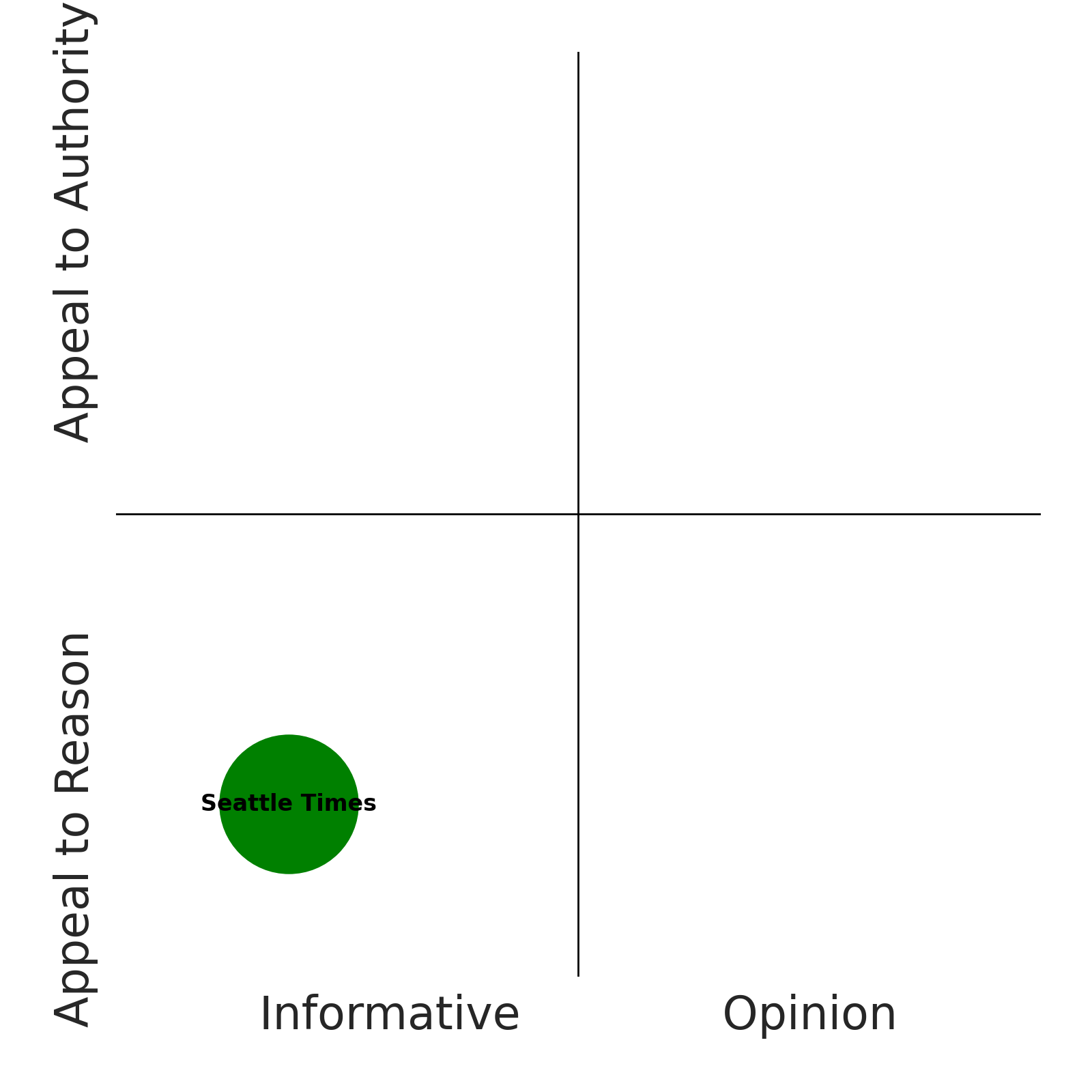
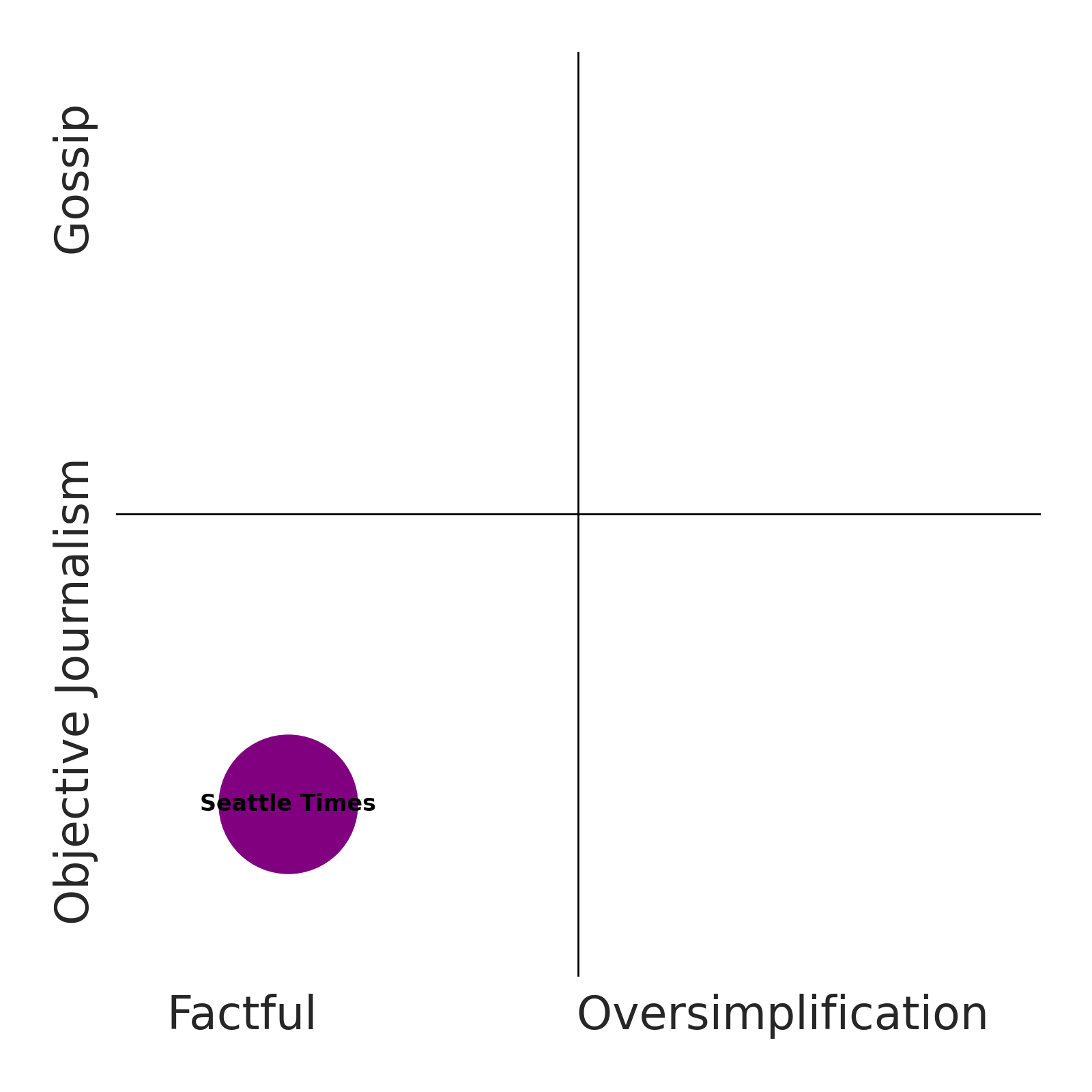
Click points to explore news by date. News sentiment ranges from -10 (very negative) to +10 (very positive) where 0 is neutral.
2026 © Helium Trades
Privacy Policy & Disclosure
* Disclaimer: Nothing on this website constitutes investment advice, performance data or any recommendation that any particular security, portfolio of securities, transaction or investment strategy is suitable for any specific person. Helium Trades is not responsible in any way for the accuracy
of any model predictions or price data. Any mention of a particular security and related prediction data is not a recommendation to buy or sell that security. Investments in securities involve the risk of loss. Past performance is no guarantee of future results. Helium Trades is not responsible for any of your investment decisions,
you should consult a financial expert before engaging in any transaction.


