See whether Helium helps you make better-informed decisions. Try every Pro Trader feature for 30 days. No credit card required.
Try every Pro Trader feature for 30 days. No credit card required.
October 08, 2026 · 0 shares
Measured, attribution-heavy framing centers WHO's low-risk assessment and official calls for Russian transparency while clearly labeling unconfirmed media speculation.
Automated analysis; not human reviewed.
Limitations: The supplied article text is truncated after 'Russian', so later details and full attribution may be missing.
·
8 of 55 available dimensions scored; omitted dimensions are not treated as neutral.
·
Verified supporting quotes for 8 of 8 scored dimensions.
Claim: Publisher framing is objective, relying on attributed statements and named facts rather than subjective commentary.
“The risk of a plague epidemic is low after the death of a laboratory technician who worked at a plague research institute in Russia, the World Health Organization (WHO) has said.” · exact text match
Why: The report attributes claims to WHO and media reports and avoids authorial emotional evaluation.
Claim: The article avoids sensationalism, emphasizing the low epidemic risk and using measured language.
“Epidemic risk is low, says WHO.” · exact text match
“The risk of a plague epidemic is low after the death of a laboratory technician who worked at a plague research institute in Russia, the World Health Organization (WHO) has said.” · exact text match
Why: The headline and lede foreground a low-risk assessment and official sourcing rather than alarmist phrasing.
Claim: The report is moderately interesting due to an unusual fatal laboratory-linked plague case.
“Russia plague outbreak: Epidemic risk is low, says WHO.” · exact text match
Why: A plague research institute technician's death and quarantine response are unusual and newsworthy.
Claim: Publisher framing is descriptive, reporting events and official measures without issuing its own recommendations.
“Quarantine measures have been put in place at the research centre and at several hospitals in the region.” · exact text match
Why: The article states what happened and what authorities did; the only urging is attributed to WHO.
Claim: The article contains a modest political element by reporting WHO's call for Russian government transparency.
“urged Russian authorities to be “transparent” about the death.” · exact text match
Why: The transparency demand concerns government conduct, though the article's main subject is health risk.
Claim: The supplied text shows credible attribution to WHO, named individuals, Russian authorities, and media reports.
“the World Health Organization (WHO) has said.” · exact text match
“However, media reports suggested that she died of pneumonic plague and that she may have become infected after an accident in the laboratory.” · exact text match
Why: Sources and uncertainty are identified; no unsupported assertions are presented as established fact.
Claim: The article contains limited speculation by relaying unconfirmed media reports about the cause and route of infection.
“media reports suggested that she died of pneumonic plague and that she may have become infected after an accident in the laboratory.” · exact text match
Why: Speculative content is present but explicitly attributed and hedged, keeping the score low.
Claim: The article shows fairness and honesty signals by including both official Russian statements and unconfirmed media reports while noting WHO monitoring.
“Russian authorities have downplayed the incident and said that Shipilova died of “pneumonia of an unknown aetiology.”” · exact text match
“However, media reports suggested that she died of pneumonic plague and that she may have become infected after an accident in the laboratory.” · exact text match
Why: It presents competing accounts with attribution rather than suppressing one side.
The supplied article text is truncated after 'Russian', so later details and full attribution may be missing.
October 07, 2026 · 0 shares
The explainer adopts a measured, evidence-calibrated stance, repeatedly flagging unconfirmed claims and uncertainty rather than amplifying plague fears.
Plague is caused by Yersinia pestis and generally lives in ground-dwelling rodents; it can cause bubonic, septicemic, or pneumonic forms, and is treatable with a 10–14-day course of antibiotics if taken soon after infection.
Automated analysis; not human reviewed.
Limitations: The article's scare quotes around 'pneumonia of unknown etiology' and 'had died from the plague' introduce mild interpretive framing, though overall sourcing and uncertainty handling remain strong.
·
55 of 55 available dimensions scored; omitted dimensions are not treated as neutral.
·
Verified supporting quotes for 15 of 55 scored dimensions.
Claim: The article presents plague facts and the Shipilova case using attributed, verifiable information rather than opinion.
“In a statement, the World Health Organization (WHO) said it was aware of reports a laboratory worker in Irkutsk had “died of severe pneumonia” but no cause of death had been officially confirmed.” · exact text match
Why: Attribution to the WHO and reliance on official statements keep framing objective.
Claim: The article resists sensationalizing plague fears despite alarming fatality figures.
“But at this stage, there’s little evidence to cause concern about potential for an epidemic (which is localised) or a pandemic (which involves multiple countries).” · exact text match
Why: Directly tempering concern over a potentially sensational topic indicates low sensationalism.
Claim: The article primarily explains rather than prescribing action.
“So, what is plague, and how does it spread? Should we be worried?” · exact text match
Why: Framed as an explainer with informational questions, though it leans slightly prescriptive in urging transparency.
Claim: The article touches on Russian government information handling but primarily as a health story.
“A senior Russian official posted on social media last week that Shipilova “had died from the plague” – before editing the post to add “possibly”.” · exact text match
Why: Political element present via official miscommunication but not central to framing.
Claim: The article relies on the WHO and Russian health authorities as key sources.
“In a statement, the World Health Organization (WHO) said it was aware of reports a laboratory worker in Irkutsk had “died of severe pneumonia” but no cause of death had been officially confirmed.” · exact text match
Why: Authority citation is present but standard for health reporting; not excessive.
Claim: The article carefully avoids overstating certainty about the cause of death.
“Pneumonic plague – the suspected but unconfirmed cause of Shipilova’s death in Siberia” · exact text match
Why: Explicit 'unconfirmed' qualifier shows calibrated confidence.
Claim: The article gives weight to WHO and official Russian statements over local media reports.
“In a statement, the World Health Organization (WHO) said it was aware of reports a laboratory worker in Irkutsk had “died of severe pneumonia” but no cause of death had been officially confirmed.” · exact text match
Why: Mild establishment leaning from reliance on official sources, though balanced by noting unconfirmed reports.
Claim: The article attributes claims to named institutions and clearly marks unconfirmed reports.
“Local media reports suggested she was infected following an accident at the lab where she worked, the Irkutsk Anti-Plague Research Institute of Siberia and the Far East.
But these have not been confirmed.”
· exact text match
Why: Attribution and uncertainty labeling indicate high credibility.
Claim: The article consistently distinguishes confirmed facts from unconfirmed reports and avoids alarmism.
“But these have not been confirmed.” · exact text match
“However, there is no evidence the strain alleged to have killed Shipilova could not be treated by antibiotics or that the lab is researching biological weapons.” · exact text match
Why: Explicit uncertainty labeling and evidence-bound statements support a rational classification.
Claim: The article grounds plague discussion in microbiology and epidemiology.
“Plague is caused by the bacterium Yersinia pestis.
The bacteria generally live in ground-dwelling rodents such as rats and prairie dogs, but can also infect humans.”
· exact text match
Why: Bacteriological and epidemiological explanation indicates scientific framing.
Claim: The article contains limited speculation, mostly about lab origins and biological warfare history.
“In the 1980s, Soviet Union scientists also engineered resistant strains – this history forms the basis of hypothetical scenarios involving biological warfare.” · exact text match
Why: Speculative scenarios are mentioned but explicitly labeled hypothetical and not endorsed.
Claim: Text has cohesive explainer structure with varied sentence lengths and specific historical references, but some phrasing is generic.
“Between 30–60% of people who contract this form of plague will die.” · exact text match
Why: Mild AI-indicative features but insufficient for strong classification.
Claim: The article transparently flags gaps in information and conflicting accounts.
“The exact circumstances of her death are unknown.” · exact text match
“To assess this risk, access to transparent information about how Shipilova fell ill and died will be essential.” · exact text match
Why: Acknowledging unknowns and calling for transparency signals high integrity.
Claim: The article provides structured, accurate background on plague types, history, and treatment.
“A 10–14-day course of antibiotics (either oral or intravenous) treats the plague – as long as they are taken soon after infection.” · exact text match
Why: Detailed, technically correct disease information supports high intelligence.
Claim: The article mentions bioweapons history but explicitly notes no evidence for such claims in this case.
“However, there is no evidence the strain alleged to have killed Shipilova could not be treated by antibiotics or that the lab is researching biological weapons.” · exact text match
Why: Low conspiratorial framing because the article debunks without endorsing.
The article's scare quotes around 'pneumonia of unknown etiology' and 'had died from the plague' introduce mild interpretive framing, though overall sourcing and uncertainty handling remain strong.
The framing is cautious and expert-led: conflicting official reports are catalogued, the cause remains unconfirmed, and the risk is judged low while the WHO awaits more information.
Automated analysis; not human reviewed.
Limitations: The supplied article text is truncated and contains duplicated passages; analysis relies on the repeated complete portions and cannot externally verify the original official posts or WHO statement.
·
9 of 55 available dimensions scored; omitted dimensions are not treated as neutral.
·
Verified supporting quotes for 8 of 9 scored dimensions.
Claim: The article is objective rather than subjective in its presentation.
“The exact circumstances of her death are unknown.” · exact text match
“At this stage, there’s little evidence to cause concern about potential for an epidemic (which is localised) or a pandemic (which involves multiple countries).” · not found in supplied text
Why: It separates confirmed from unconfirmed information and grounds its risk assessment in WHO statements and microbiological facts.
Claim: The article is non-sensational and avoids panic-driven coverage.
“We still don’t know much about the case in Siberia.” · exact text match
Why: The body repeatedly asserts unknowns and low evidence rather than amplifying alarm.
Claim: The piece is overwhelmingly explanatory, with only a closing call for transparency.
“Plague is caused by the bacterium Yersinia pestis.” · exact text match
“To assess this risk, access to transparent information about how Shipilova fell ill and died will be essential.” · exact text match
Why: Most content is background science and reporting; the sole normative demand appears in the final sentence.
Claim: The article contains a moderate amount of expert opinion and judgment within an otherwise factual explainer.
“But at this stage, there’s little evidence to cause concern about potential for an epidemic (which is localised) or a pandemic (which involves multiple countries).” · exact text match
Why: This risk assessment is an evaluative expert conclusion, not a bare fact, but it is hedged and evidence-based.
Claim: The article is credible as measured by visible sourcing, named institutional statements, and explicit unconfirmed status.
“In a statement on Monday, the World Health Organization (WHO) said it was aware of reports a laboratory worker in Irkutsk had “died of severe pneumonia” but no cause of death had been officially confirmed.” · exact text match
Why: It names the WHO, quotes its risk statement, and separates confirmed facts from unconfirmed local media reports.
Claim: The article reasons from evidence and uncertainty rather than fear or alarm.
“However, there is no evidence the strain alleged to have killed Shipilova could not be treated by antibiotics or that the lab is researching biological weapons.” · exact text match
Why: It explicitly refuses to infer biological warfare or untreatable plague from unconfirmed reports.
Claim: The article is scientific and empirical, explaining plague through bacteriology and epidemiology.
“Plague is caused by the bacterium Yersinia pestis.” · exact text match
Why: Causal explanation is bacterial and evidence-based, with no supernatural or unscientific framing.
Claim: The article demonstrates internally observable honesty by attributing claims, flagging uncertainty, and disclosing the author’s interests.
“The exact circumstances of her death are unknown.” · exact text match
“Thomas Jeffries does not work for, consult, own shares in or receive funding from any company or organization that would benefit from this article, and has disclosed no relevant affiliations beyond their academic appointment.” · exact text match
Why: Uncertainty is explicit and the author’s conflicts are disclosed, signaling fair practice.
Claim: The article is intellectually sophisticated, integrating clinical distinctions, historical pandemics, resistance, and current uncertainty.
“Pneumonic plague is the rarest but most severe form.
The fatality rate is up to 100% if left untreated.”
· exact text match
“However, since 1995, several antibiotic-resistant strains have been detected in the wild.” · exact text match
Why: It synthesizes multiple relevant domains without oversimplifying and carefully qualifies conclusions.
The supplied article text is truncated and contains duplicated passages; analysis relies on the repeated complete portions and cannot externally verify the original official posts or WHO statement.
Headline and lede sensationalize an unconfirmed Siberian lab-worker death as a looming Russian plague outbreak with Black Death parallels and lockdown imagery.
Pneumonic plague, caused by the bacterium Yersinia pestis, is the most severe form of plague and the only form that spreads directly from person to person through respiratory particles, so suspected cases typically trigger quarantine and contact tracing.
Automated analysis; not human reviewed.
Limitations: Only the supplied article text was available, with no byline or publication date; framing is judged from this single text, which mixes reported facts with attributed quotes.
·
3 of 55 available dimensions scored; omitted dimensions are not treated as neutral.
·
Verified supporting quotes for 1 of 3 scored dimensions.
Claim: The report sensationalizes an unconfirmed illness by leading with a 'Russian plague' headline and invoking the Black Death.
“Russian plague: Lab worker dies from pneumonic illness as 200 people put into observation” · exact text match
“Almost 200 Russians remain under medical observation after the death of a lab worker has sparked fears of an outbreak of a plague closely resembling the 'Black Death' that wiped out swathes of Europe almost 700 years ago.” · not found in supplied text
Why: The headline and lede tie an unconfirmed death to 'Russian plague' and 'Black Death', escalating alarm beyond confirmed facts.
Claim: The article uses fear-oriented language and images of lockdown and dangerous infection.
“sparked fears of an outbreak of a plague closely resembling the 'Black Death'” · not found in supplied text
“five hospitals and a college have been reportedly put into lockdown with patients unable to leave.” · exact text match
Why: Word choice emphasizes fear, lethal plague history, and confinement of patients.
Claim: The report speculates about exposure and outbreak despite an unconfirmed official cause of death.
“Russian authorities have yet to confirm the cause of death of the 28-year-old lab worker, but local media are reporting that Daria Shipilova, a researcher at an anti-plague institute in the Siberia region, may have been exposed to pneumonic plague.” · exact text match
“There have been conflicting reports on the source of Shipilova’s infection and the restricted amount of information coming out of the area.” · exact text match
Why: It prominently presents hypothetical scenarios and conflicting reports without a confirmed plague diagnosis.
Only the supplied article text was available, with no byline or publication date; framing is judged from this single text, which mixes reported facts with attributed quotes.
October 07, 2026 · 0 shares
A press-review roundup frames suspected plague in Siberia mainly as a Russian transparency problem, foregrounding Western critical commentary while including a reassuring epidemiological assessment.
Automated analysis; not human reviewed.
Limitations: The supplied text is a press-review compilation; the publisher's own voice is limited to the introduction and selection, so framing scores rest on that selection.
·
2 of 55 available dimensions scored; omitted dimensions are not treated as neutral.
·
Verified supporting quotes for 2 of 2 scored dimensions.
Claim: The article displays strong internal credibility signals through named attribution and hedged uncertainty.
“According to official sources, no further cases of infection have been recorded” · exact text match
“has died from a suspected case of pneumonic plague” · exact text match
Why: The report names quoted outlets, attributes official statements, and repeatedly uses 'suspected' and 'according to official sources,' which are credibility-strengthening signals.
Claim: The article is moderately rational because it includes an expert epidemiological risk assessment and monitoring information, while also reproducing an alarming comparison.
“Epidemiologists assure us that while pneumonic plague is a deadly disease, it is not easily transmitted from person to person, and for infection to occur, contact with a high concentration of the pathogen is required.” · exact text match
“the risk of a widescale epidemic seems low at present, because those who have been in contact with the infected person are being monitored and no further cases have been identified so far.” · exact text match
Counterevidence:
“During the time that China attempted to keep Covid secret, the disease spread to every corner of the world.” · exact text match
Why: The article includes a scientific transmission and risk assessment, tempering alarm, but the Covid-secrecy comparison pulls the framing toward fear.
The supplied text is a press-review compilation; the publisher's own voice is limited to the introduction and selection, so framing scores rest on that selection.
Elevates an unconfirmed pneumonia death into a fearful possible plague event, pairing alarming headline language with anxieties and unverified reports while giving official reassurances a secondary role.
Automated analysis; not human reviewed.
Limitations: The supplied text is a condensed auto-generated agency article relying heavily on CNN and TASS; I cannot independently verify the Russian-language primary sources or the local publication reports.
·
8 of 55 available dimensions scored; omitted dimensions are not treated as neutral.
·
Verified supporting quotes for 8 of 8 scored dimensions.
Claim: The reporting mixes factual attribution with emotionally charged interpretation.
“fatality has sparked anxieties surrounding a potential instance of pneumonic plague” · exact text match
“Such lockdown claims have heightened apprehension about the event” · exact text match
Why: These phrases present emotional reactions and interpretive framing as news content while the cause remains officially 'unknown aetiology.'
Claim: The headline and repeated alarm wording sensationalize an unconfirmed case.
“Sparks Fears Of Deadly Pneumonic Plague” · exact text match
“triggering fears of pneumonic plague” · exact text match
Counterevidence:
“Gennady Onishchenko, previously leading Rospotrebnadzor, expressed his assessment that the Siberian pathogen was “most likely not the plague”” · exact text match
Why: An unknown-origin pneumonia is framed in the headline as a feared deadly plague, even though no plague diagnosis has been confirmed.
Claim: The article's emphasis is pessimistic, foregrounding worst-case fears over reassurances.
“Such lockdown claims have heightened apprehension about the event, even as Russian officials insist the public health climate stays steady.” · exact text match
Why: The sentence gives final weight to public apprehension and 'lockdown claims' rather than to the official statement of stability.
Claim: The article is fear-baiting, repeatedly invoking plague fears and anxiety.
“Sparks Fears Of Deadly Pneumonic Plague” · exact text match
“fatality has sparked anxieties surrounding a potential instance of pneumonic plague” · exact text match
Why: Fear and anxiety are central framing devices, while the confirmed facts are limited to an unknown-origin pneumonia death.
Claim: The tone is heavily negative, centered on death, fear, and apprehension.
“fatality has sparked anxieties” · exact text match
“Such lockdown claims have heightened apprehension” · exact text match
Why: Words such as 'anxieties' and 'apprehension' give the report a distinctly negative emotional charge.
Claim: Visible sourcing is careful: claims are attributed to named outlets and officials, and unverified material is labeled.
“CNN additionally noted that unverified accounts from the independent local publication Liudi Baikala suggested nearly 200 individuals faced monitoring procedures at the Shelekhov medical facility where the lab worker received treatment.” · exact text match
“Uncertainty persists regarding the specific pathogen involved” · exact text match
Why: The article repeatedly attributes information to CNN, TASS, Rospotrebnadzor, and CDC, explicitly labels local reports as 'unverified,' and acknowledges unresolved diagnostic uncertainty.
Claim: The piece prominently surfaces speculation about plague despite official uncertainty.
“fatality has sparked anxieties surrounding a potential instance of pneumonic plague” · exact text match
“the deceased 28-year-old female worker perished “possibly from the plague”” · exact text match
Why: A plague possibility is introduced through both the publisher's framing and a quoted official, even though Rospotrebnadzor lists the diagnosis only as 'unknown aetiology.'
Claim: The article is transparent about uncertainty and source status.
“Uncertainty persists regarding the specific pathogen involved” · exact text match
“unverified accounts from the independent local publication Liudi Baikala” · exact text match
Why: It explicitly states uncertainty and marks unverified claims, showing observable fairness rather than presenting speculation as established fact.
The supplied text is a condensed auto-generated agency article relying heavily on CNN and TASS; I cannot independently verify the Russian-language primary sources or the local publication reports.
October 05, 2026 · 0 shares
Headline and lead foreground an alarming official warning that plague could 'quickly spread' from an unconfirmed Russian lab case, while Russian non-confirmation and reassurances are acknowledged but subordinated.
Automated analysis; not human reviewed.
Limitations: The supplied article text is truncated and partially garbled, mixing Newsweek's prose with attributed wire reports and a partial AI-disclosure footer, making attribution boundaries partly ambiguous.
·
8 of 55 available dimensions scored; omitted dimensions are not treated as neutral.
·
Verified supporting quotes for 8 of 8 scored dimensions.
Claim: The headline and lead foreground the dramatic 'quickly spread' warning, increasing alarm value beyond the body's hedged reporting.
“Marco Rubio Says Russia Plague Could ‘Quickly Spread’” · exact text match
“warning that an infection could “quickly spread” if it “gets out.”” · exact text match
Why: The quoted warning appears in the headline and is echoed in the lead, a selection that emphasizes the threat.
Claim: The headline's 'Plague' and 'Quickly Spread' wording activates contagion fear, though the body includes reassurances.
“Marco Rubio Says Russia Plague Could ‘Quickly Spread’” · exact text match
Counterevidence:
“I don't think it's cause for alarm, but it is cause for focus” · exact text match
Why: The fear-arousing term 'plague' is in the headline, but Rubio's own 'not cause for alarm' caveat is included and tempers the fear framing.
Claim: The story relies on U.S. and Russian official statements rather than independent verification of the infection.
“The White House referred to the State Department when reached for comment by email Monday.” · verified after text normalization
Why: Institutional sources supply the article's main claims, with no independent confirmation of the infection.
Claim: The article's perspective is anchored in U.S. and Russian government statements, treating both governments' monitoring as appropriate.
“Secretary of State Marco Rubio said the United States is closely monitoring reports surrounding the death of a worker at a Russian anti-plague laboratory” · exact text match
“Russian officials have said the regional health situation remains stable” · exact text match
Why: Both sides are represented through official channels, with no non-official or dissenting sources.
Claim: The article consistently attributes claims and flags uncertainty, supporting higher credibility.
“Russian authorities have not confirmed that pneumonic plague caused the woman’s death.” · exact text match
Why: Attribution and explicit uncertainty markers appear throughout, including distinguishing confirmed facts from reports.
Claim: Rubio's conditional speculation about possible spread is given prominent placement despite the lack of confirmation.
“and there's concern that that you know that could have spread at least internally.” · exact text match
Why: The article reports a conditional concern as a headline warning while including the official's hedging in the body.
Claim: The publisher's own footer states that an AI assistant was used to produce the story.
“’s reporters and editors used Martyn, our AI assistant, to produce this story.” · exact text match
Why: This is an explicit, observable disclosure of AI involvement in the article's production.
Claim: The reporting presents the unconfirmed nature of the diagnosis and the official denial without burying them.
“Russian authorities have not confirmed that pneumonic plague caused the woman’s death.” · exact text match
Why: The article includes both the alarming claim and the official non-confirmation in close proximity, showing internal fairness.
The supplied article text is truncated and partially garbled, mixing Newsweek's prose with attributed wire reports and a partial AI-disclosure footer, making attribution boundaries partly ambiguous.
October 06, 2026 · 0 shares
The report is tightly attributed to named officials and agencies, with no editorializing or speculation.
Pneumonic plague is a severe bacterial lung infection caused by Yersinia pestis that can spread through respiratory droplets; Russia's anti-plague institutes research dangerous pathogens, which is why a single case can attract international attention.
Automated analysis; not human reviewed.
Limitations: The substantive article is short and interleaved with promotional 'FOR SUBSCRIBERS' headlines, which were excluded as page chrome; this limits the amount of text available for framing analysis.
·
4 of 55 available dimensions scored; omitted dimensions are not treated as neutral.
·
Verified supporting quotes for 4 of 4 scored dimensions.
Claim: The article is nonpartisan in selection and wording, relaying official statements without endorsing a side.
“The watchdog concluded that plague was not found among the staffer’s contacts, saying only that they found two cases of Covid and one of rhinovirus.” · exact text match
“The Russian Embassy in Washington did not immediately respond to a request for comment on Trump’s remarks.” · exact text match
Why: Including the Russian watchdog's risk-minimizing finding and the lack of an embassy response balances U.S. officials' statements and indicates even-handed, nonpartisan presentation.
Claim: The article uses attributed, fact-based reporting rather than subjective commentary.
“President Donald Trump said Tuesday that he has a call scheduled with Russian President Vladimir Putin to discuss the pneumonic plague” · exact text match
Why: Key claims are attributed to named officials and agencies, with direct quotes and no editorializing.
Claim: The article avoids sensational framing despite the alarming disease subject.
“At this time, there is no indication of a broader threat to the United States, but CDC and our interagency partners are prepared and will continue to monitor the situation closely” · exact text match
Why: The subject matter has sensational potential, but the article stays with officials' measured language and does not amplify alarm beyond the sources.
Claim: The article demonstrates visible sourcing and preserves uncertainty in its reporting.
“A Russian health watchdog said last week that Darya Shipilova, 28, a staffer at the Irkutsk Anti-Plague Institute of Siberia and the Far East, had died from a “pneumonia of undetermined” origin.” · exact text match
Why: The report names agencies and officials, quotes them directly, and retains the Russian watchdog's uncertain diagnosis rather than asserting plague as fact.
The substantive article is short and interleaved with promotional 'FOR SUBSCRIBERS' headlines, which were excluded as page chrome; this limits the amount of text available for framing analysis.
October 08, 2026 · 0 shares
Measured, attribution-heavy framing centers WHO's low-risk assessment and official calls for Russian transparency while clearly labeling unconfirmed media speculation.
Automated analysis; not human reviewed.
Limitations: The supplied article text is truncated after 'Russian', so later details and full attribution may be missing.
·
8 of 55 available dimensions scored; omitted dimensions are not treated as neutral.
·
Verified supporting quotes for 8 of 8 scored dimensions.
Claim: Publisher framing is objective, relying on attributed statements and named facts rather than subjective commentary.
“The risk of a plague epidemic is low after the death of a laboratory technician who worked at a plague research institute in Russia, the World Health Organization (WHO) has said.” · exact text match
Why: The report attributes claims to WHO and media reports and avoids authorial emotional evaluation.
Claim: The article avoids sensationalism, emphasizing the low epidemic risk and using measured language.
“Epidemic risk is low, says WHO.” · exact text match
“The risk of a plague epidemic is low after the death of a laboratory technician who worked at a plague research institute in Russia, the World Health Organization (WHO) has said.” · exact text match
Why: The headline and lede foreground a low-risk assessment and official sourcing rather than alarmist phrasing.
Claim: The report is moderately interesting due to an unusual fatal laboratory-linked plague case.
“Russia plague outbreak: Epidemic risk is low, says WHO.” · exact text match
Why: A plague research institute technician's death and quarantine response are unusual and newsworthy.
Claim: Publisher framing is descriptive, reporting events and official measures without issuing its own recommendations.
“Quarantine measures have been put in place at the research centre and at several hospitals in the region.” · exact text match
Why: The article states what happened and what authorities did; the only urging is attributed to WHO.
Claim: The article contains a modest political element by reporting WHO's call for Russian government transparency.
“urged Russian authorities to be “transparent” about the death.” · exact text match
Why: The transparency demand concerns government conduct, though the article's main subject is health risk.
Claim: The supplied text shows credible attribution to WHO, named individuals, Russian authorities, and media reports.
“the World Health Organization (WHO) has said.” · exact text match
“However, media reports suggested that she died of pneumonic plague and that she may have become infected after an accident in the laboratory.” · exact text match
Why: Sources and uncertainty are identified; no unsupported assertions are presented as established fact.
Claim: The article contains limited speculation by relaying unconfirmed media reports about the cause and route of infection.
“media reports suggested that she died of pneumonic plague and that she may have become infected after an accident in the laboratory.” · exact text match
Why: Speculative content is present but explicitly attributed and hedged, keeping the score low.
Claim: The article shows fairness and honesty signals by including both official Russian statements and unconfirmed media reports while noting WHO monitoring.
“Russian authorities have downplayed the incident and said that Shipilova died of “pneumonia of an unknown aetiology.”” · exact text match
“However, media reports suggested that she died of pneumonic plague and that she may have become infected after an accident in the laboratory.” · exact text match
Why: It presents competing accounts with attribution rather than suppressing one side.
The supplied article text is truncated after 'Russian', so later details and full attribution may be missing.
October 06, 2026 · 0 shares
The report's framing is dominated by calm, official-source risk assessment, presenting the suspected plague death as a contained public-health event rather than an imminent threat.
Automated analysis; not human reviewed.
Limitations: The publisher name and publication date are not stated in the supplied excerpt; the analysis is limited to the visible article text.
·
6 of 55 available dimensions scored; omitted dimensions are not treated as neutral.
·
Verified supporting quotes for 5 of 6 scored dimensions.
Claim: The report is source-attributed and avoids subjective editorializing.
““A woman who worked at a laboratory in Irkutsk oblast has died, and the authorities are looking into whether pneumonic plague caused her death,” WHO spokesperson Christian Lindmeier said.” · exact text match
Why: Key claims are attributed to a named official and are framed as an open investigation rather than established fact.
Claim: The article uses calibrated risk-assessment language and no alarmist dramatic framing.
““The WHO initial risk assessment from the information available estimates the risk to be moderate to low for Irkutsk, a low risk for the Russian Federation as a whole, and very low for the WHO European region.”” · exact text match
Why: The report leads with a nuanced multi-level risk estimate and official monitoring details instead of sensationalized threat language.
Claim: The report describes events and official statements without issuing recommendations or calls to action.
““The epidemiological situation is stable and remains under monitoring.”” · not found in supplied text
Why: The final status line is a descriptive report of Russia's assessment; no imperative or normative judgment is added.
Claim: The article's credibility is supported by named sourcing and explicit caveats.
““The WHO initial risk assessment from the information available estimates the risk to be moderate to low for Irkutsk, a low risk for the Russian Federation as a whole, and very low for the WHO European region.”” · exact text match
Why: The article attributes risk estimates to a named WHO spokesman and distinguishes between information available and confirmed fact.
Claim: The article applies reasoned epidemiological context to a potentially frightening event.
““However, there has not been a case of plague in the EU for decades, and the disease can be effectively treated with antibiotics readily available in the European Union.
Transmission also generally requires close and prolonged contact with an infected person who is already showing symptoms.””
· exact text match
Why: The ECDC statement included by the report supplies calm, factual context that supports a measured risk appraisal.
Claim: The article displays honesty by flagging the unconfirmed cause of death and reporting official uncertainty.
““To date, no cause of death has been officially confirmed, and laboratory testing is reportedly under way,” he told a press briefing.” · exact text match
Why: It does not present the suspected plague death as confirmed and includes the investigation status, an internal honesty signal.
The publisher name and publication date are not stated in the supplied excerpt; the analysis is limited to the visible article text.
October 08, 2026 · 0 shares
The report's strongest observable framing is a critical emphasis on Russian secrecy and lack of candor, while remaining heavily attributed to named officials and experts and avoiding asserting the suspected plague diagnosis as confirmed.
Automated analysis; not human reviewed.
Limitations: The supplied text includes Medical Xpress site chrome and related links; bias scoring is based only on the AP wire article within the delimiters.
·
55 of 55 available dimensions scored; omitted dimensions are not treated as neutral.
·
Verified supporting quotes for 13 of 55 scored dimensions.
Claim: The report privileges institutional and academic expert voices over ordinary or populist perspectives.
“Maria Van Kerkhove, WHO director of Epidemic and Pandemic Management, said the U.N. health agency doesn't know what the "causative agent" was behind the woman's Oct. 2 death” · not found in supplied text
Why: The article centers official and academic experts, a pro-elite sourcing pattern.
Claim: The report is primarily objective, attributing claims to named officials and avoiding the author's own conclusions.
“Rospotrebnadzor, does not link the case to pneumonic plague, saying only that the lab worker had contracted pneumonia of "unknown" origin” · exact text match
Why: The text sticks to attributed statements and observable facts.
Claim: The article's coverage is measured rather than sensational, emphasizing that pneumonic plague is treatable and not easily spread.
“The bacterium, called Yersinia pestis, has not been eliminated, but it is not spread very easily and it is treatable with antibiotics.” · exact text match
Why: It provides calming scientific context and avoids alarmist language.
Claim: The article is interesting because it covers a rare disease scare at a Siberian plague institute with global and geopolitical implications.
“Russia reports a worker at a Siberian plague institute got pneumonia from an unknown cause and died” · exact text match
Why: The subject matter is unusual and consequential.
Claim: The article is descriptive, reporting official statements and expert assessments without prescribing policy.
“Rospotrebnadzor said Sunday the lab worker was diagnosed with "pneumonia of unknown etiology," meaning its origin was not known.” · exact text match
Why: The text reports what officials said rather than recommending actions.
Claim: The article uses mildly alarming language about a suspected plague case but balances it with official assessments of low threat.
“prompted global concerns about suspected pneumonic plague” · exact text match
Why: The phrase signals concern but the article also reports the U.S. threat is extremely low.
Claim: The article includes some evaluative framing in its own voice about Russian secrecy.
“Russian authorities have kept a tight lid on information about the case, which has been surrounded by secrecy.” · exact text match
Why: This wording goes beyond neutral reporting to characterize Russian conduct.
Claim: The article incorporates political reactions and diplomatic context alongside the health case.
“U.S. President Donald Trump said he would discuss the issue during a call with Russian President Vladimir Putin because Wednesday is the Kremlin leader's 74th birthday.” · exact text match
Why: The inclusion of Trump-Putin call and political framing gives the story a moderate political dimension.
Claim: The article relies heavily on institutional and expert authorities to establish facts and concerns.
“Maria Van Kerkhove, WHO director of Epidemic and Pandemic Management, said the U.N. health agency doesn't know what the "causative agent" was behind the woman's Oct. 2 death” · not found in supplied text
“Dr. Erica Schwartz, director of the U.S. Centers for Disease Control and Prevention, said the threat to the U.S. "is extremely low."” · exact text match
Why: Named officials from WHO and CDC are primary sources for key claims.
Claim: The article gives significant space to official institutional voices from WHO and CDC while treating Russian authorities more critically.
“Maria Van Kerkhove, WHO director of Epidemic and Pandemic Management, said the U.N. health agency doesn't know what the "causative agent" was behind the woman's Oct. 2 death” · not found in supplied text
Why: Institutional voices are presented as authoritative, though the article also reports Russian official statements.
Claim: The article's tone is slightly negative toward Russian secrecy but remains restrained and factual.
“Russian authorities have kept a tight lid on information about the case, which has been surrounded by secrecy.” · exact text match
Why: The wording conveys suspicion but is not highly emotional.
Claim: The article demonstrates high credibility through named sourcing, attribution of uncertainty, and inclusion of multiple official and expert perspectives.
“Maria Van Kerkhove, WHO director of Epidemic and Pandemic Management, said the U.N. health agency doesn't know what the "causative agent" was behind the woman's Oct. 2 death” · not found in supplied text
“Vasily Vlassov, professor at the department of healthcare administration and economics at Russia's Higher School of Economics, said the measures taken appeared "sensible"” · not found in supplied text
Why: The text sources claims to identifiable officials and experts and notes disagreements and unknowns.
Claim: The article carefully distinguishes confirmed facts from unconfirmed reports and statements of uncertainty.
“unconfirmed reports in Russia blamed on pneumonic plague” · exact text match
“Rospotrebnadzor, does not link the case to pneumonic plague” · exact text match
Why: It labels unconfirmed reports and avoids asserting causation without official confirmation.
Claim: The article adopts a scientific, evidence-based approach, explaining the disease and relying on medical experts.
“The bacterium, called Yersinia pestis, has not been eliminated, but it is not spread very easily and it is treatable with antibiotics.” · exact text match
Why: It presents empirical medical information rather than superstition or rumor.
Claim: The article includes some speculative content about bioweapon development, but attributes it to a political figure rather than the publisher.
“Asked if the incident was a sign that plague might be developed as a bioweapon, Trump said, "We don't think so. We're going to find out soon enough, but we don't think so."” · not found in supplied text
Why: Speculation is present but clearly attributed and not adopted by the article.
Claim: The article shows high integrity through named sourcing, inclusion of Russian responses, and explicit noting of unanswered questions.
“Rospotrebnadzor, which does not mention suspected plague in its reports and has not responded to a request for comment.” · exact text match
Why: It fairly represents official positions and notes non-response.
Claim: The article provides clear, accurate scientific and contextual information about pneumonic plague and the investigation.
“Pneumonic plague and the more well-known bubonic plague—also called the Black Death—are caused by the same bacteria, said Simon Clarke of the University of Reading in the U.K.” · exact text match
“The bacterium, called Yersinia pestis, has not been eliminated, but it is not spread very easily and it is treatable with antibiotics.” · exact text match
Why: It explains the disease and uncertainty in an informed manner.
Claim: The article is truth-seeking, reporting uncertainty and conflicting claims without asserting a conspiratorial narrative.
“unconfirmed reports in Russia blamed on pneumonic plague” · exact text match
Why: It labels reports as unconfirmed and avoids endorsing a hidden-cause narrative.
The supplied text includes Medical Xpress site chrome and related links; bias scoring is based only on the AP wire article within the delimiters.
October 07, 2026 · 0 shares
The publisher frames a low-risk, unconfirmed Russian health report with alarming headline language and emphasizes dramatic details while including later expert reassurance and WHO risk assessment.
The State Department's existing "Do Not Travel" warning for Russia was issued in December 2025 due to wrongful detention and security concerns, and remains in place.
Automated analysis; not human reviewed.
·
54 of 55 available dimensions scored; omitted dimensions are not treated as neutral.
·
Verified supporting quotes for 28 of 54 scored dimensions.
Claim: The framing leans conservative by emphasizing a disease threat in Russia and official U.S. precautions under a Trump administration.
“Trump Admin Drops Urgent Plague Warning” · exact text match
Why: The headline foregrounds the Trump administration and an urgent warning, a framing that aligns with national-security and travel-advisory emphases often favored by conservative outlets.
Claim: The article relies heavily on elite institutional sources, including the State Department, WHO, and academic experts.
“The World Health Organization said in a statement to PBS that the possible case presents a “very low” risk outside of Russia.” · exact text match
Why: The report centers institutional and expert authority rather than grassroots or populist perspectives.
Claim: The article emphasizes state travel warnings and restrictions without criticizing them, showing a mild authoritarian tilt.
“U.S. government personnel may face additional restrictions for personal and official travel to specific regions due to health and security concerns.” · exact text match
Why: The framing presents government restrictions as a normal protective measure without questioning them.
Claim: The article mixes factual reporting with some dramatic framing, such as the headline's "Urgent Plague Warning."
“Trump Admin Drops Urgent Plague Warning” · exact text match
Why: The headline adds an urgent and dramatic tone beyond a neutral statement of the embassy alert.
Claim: The headline and photo illustration use sensational plague framing.
“Trump Admin Drops Urgent Plague Warning.
Photo Illustration by Eric Faison//Getty/Reuters”
· exact text match
Why: The phrase "Urgent Plague Warning" and the illustrative imagery amplify the seriousness of unconfirmed reports.
Claim: The article has a mildly pessimistic tone due to plague and death reporting, though it includes reassurance.
“The embassy’s statement follows the death of a lab technician at an infectious disease institute in Siberia last week.” · exact text match
Why: Focusing on a death and quarantine measures creates a more pessimistic than optimistic cast.
Claim: The article is likely interesting due to the rare plague angle and geopolitical context.
“suspected pneumonic plague” · exact text match
Why: Plague is a rarely reported and high-salience topic.
Claim: The article mostly describes events and official guidance rather than prescribing policy.
“The State Department’s existing “Do Not Travel” warning for Russia, issued in December 2025 due to wrongful detention and security concerns, remains in place.” · exact text match
Why: It reports warnings and measures without advocating for further action.
Claim: The article uses some fear-inducing framing around plague, although it includes reassurance.
“Trump Admin Drops Urgent Plague Warning” · exact text match
Why: The word "Urgent" and "Plague" in the headline may evoke fear, but the body includes risk-reducing information.
Claim: The article includes some human-interest and unverified personal details, such as the name and age of the deceased.
“Russian officials have not confirmed the researcher’s name, but local and international media outlets identify her as Darya Shipilova, 28.” · exact text match
Why: Naming the victim adds a personal, slightly gossip-like detail to an otherwise official story.
Claim: The article is largely factual with minimal opinion.
“In a statement on Tuesday, the State Department said it is monitoring press reports of quarantine measures and hospital closures.” · exact text match
Why: The bulk of the text attributes information to official sources rather than offering opinion.
Claim: The article is political, focusing on U.S.-Russia diplomacy and Trump administration actions.
“Trump said on Tuesday that he has a call scheduled with Russian President Vladimir Putin to discuss the possible plague case, the AP reported.” · exact text match
Why: The frame includes heads of state and official government reactions, making it political.
Claim: The article somewhat oversimplifies the plague risk, though it includes expert nuance.
“Infectious disease experts told The Atlantic that a large outbreak is unlikely.” · exact text match
Why: The headline's urgent plague framing may oversimplify, but the text provides qualifying expert opinion.
Claim: The article relies on institutional authorities such as the WHO and State Department.
“The World Health Organization said in a statement to PBS that the possible case presents a “very low” risk outside of Russia.” · exact text match
Why: Official statements are cited as key sources for risk assessment.
Claim: The headline's urgent plague language may appeal to sensationalism, but the body is relatively measured.
“Trump Admin Drops Urgent Plague Warning” · exact text match
Why: Some sensational framing exists, but the article includes sobering expert assessments.
Claim: The article has a mild ideological tilt toward national-security framing.
“Trump Admin Drops Urgent Plague Warning” · exact text match
Why: The headline and structure emphasize an official U.S. security response.
Claim: The framing is pro-establishment, centering U.S. government warnings and official expert sources.
“The U.S. Embassy in Russia is re-upping its “Do Not Travel” warning” · exact text match
Why: The article privileges official government actions and guidance as the main frame.
Claim: The article has a slightly negative emotional tone due to death and disease concern.
“The embassy’s statement follows the death of a lab technician at an infectious disease institute in Siberia last week.” · exact text match
Why: Death and quarantine details create a negative emotional cast.
Claim: The article is moderately credible, citing multiple named and unnamed sources and flagging unconfirmed reports.
“The reports are unconfirmed.” · exact text match
Why: It distinguishes confirmed from unconfirmed information and includes official denials.
Claim: The article is largely rational, presenting official statements, expert assessments, and uncertainty qualifiers like "unconfirmed reports."
“The reports are unconfirmed.” · exact text match
Why: The article repeatedly labels reports as unconfirmed and includes expert risk assessments, reflecting measured reasoning.
Claim: The article is scientific in its reliance on medical and public health expertise.
“Infectious disease experts told The Atlantic that a large outbreak is unlikely.” · exact text match
Why: It uses expert scientific opinion to assess risk.
Claim: The article contains some speculation about the cause and spread of the illness.
“Unconfirmed reports suggest she contracted the illness after a lab leak or mishap.” · exact text match
Why: It includes hypothetical explanations for the death.
Claim: The article uses some loaded framing in the headline but avoids strong manipulation in the body.
“Trump Admin Drops Urgent Plague Warning” · exact text match
Why: The headline's urgency may influence perception, but the body is more balanced.
Claim: The article has some signs of AI authorship, such as a list-like structure and repetitive phrasing.
“['', 'American travelers in Russia were reminded to “depart immediately.”'” · exact text match
Why: The presence of list-formatted snippets and slightly disjointed structure may indicate AI assistance, but it is not conclusive.
Claim: The article shows moderate integrity by noting unconfirmed reports and including official denials.
“The reports are unconfirmed.” · exact text match
Why: Explicitly flagging unconfirmed reports and contrary official statements is a fairness signal.
Claim: The article is moderately intelligent, synthesizing official warnings and expert perspectives.
““Once you have an accurate diagnosis, it’s readily treated with multiple types of antibiotics,” David Wagner, executive director of Northern Arizona University’s Pathogen and Microbiome Institute, told the magazine.” · exact text match
Why: It includes technical expert commentary and multiple sources.
Claim: The article is mostly truth-seeking, though it includes some speculative elements.
“Unconfirmed reports suggest she contracted the illness after a lab leak or mishap.” · exact text match
Why: It presents unconfirmed reports with clear caveats rather than asserting them as fact.
Claim: The article briefly raises an unconfirmed lab leak theory without endorsing it.
“Unconfirmed reports suggest she contracted the illness after a lab leak or mishap.” · exact text match
Why: It mentions a conspiratorial possibility but labels it unconfirmed.
October 06, 2026 · 0 shares
Framing is cautious and institutionally anchored, relaying the State Department's travel warning while repeatedly marking the plague report as 'suspected'.
Automated analysis; not human reviewed.
Limitations: The supplied text is truncated mid-sentence and lacks a dateline and prior travel-warning context, limiting assessment.
·
4 of 55 available dimensions scored; omitted dimensions are not treated as neutral.
·
Verified supporting quotes for 4 of 4 scored dimensions.
Claim: The article frames the event neutrally, using cautious attribution rather than assertion.
“suspected pneumonic plague” · exact text match
“the State Department said” · exact text match
Why: The publisher repeatedly marks the medical report as suspected and attributes the warning to the State Department instead of stating it as established fact.
Claim: The article avoids alarmist or sensational language.
“The U.S. is refreshing its call for Americans not to travel to Russia” · exact text match
Why: The wording is administrative and understated, with no exaggerated descriptors for the suspected case.
Claim: The article describes an official action rather than advocating for or against it.
“The U.S. is refreshing its call for Americans not to travel to Russia” · exact text match
Why: The sentence reports the State Department's action without endorsing, opposing, or adding a prescribed response.
Claim: The article shows clear sourcing and explicit hedging about the plague report.
“The U.S. Embassy is aware of press reports from the Irkutsk region of suspected pneumonic plague” · exact text match
Why: It directly quotes the State Department and explicitly identifies the plague case as suspected and press-reported, making its epistemic status clear.
The supplied text is truncated mid-sentence and lacks a dateline and prior travel-warning context, limiting assessment.
Framing is neutral, official-source-driven, and reassuring, emphasizing US government preparedness and response over medical detail or alarm.
The pneumonic form of plague is caused by Yersinia pestis and is the only form that spreads person-to-person via respiratory droplets; early antibiotic treatment is critical.
Automated analysis; not human reviewed.
Limitations: The supplied text is a short article with some details attributed only to 'reports' (e.g., Rubio's remark), and the original publication date and full article structure are not available.
·
9 of 55 available dimensions scored; omitted dimensions are not treated as neutral.
·
Verified supporting quotes for 9 of 9 scored dimensions.
Claim: The article shows no partisan or ideological positioning.
“The Centers for Disease Control and Prevention (CDC) issued a statement amid reports of a suspected pneumonic plague case in Russia.” · exact text match
“Russian authorities have said testing has not linked her death to plague or any pathogens she handled while at work.” · exact text match
Why: Both US and Russian official statements are reported without approval or criticism, so no liberal or conservative tilt is observable.
Claim: The article sticks to attributed official statements and factual context without subjective commentary.
“The Centers for Disease Control and Prevention (CDC) issued a statement amid reports of a suspected pneumonic plague case in Russia.” · exact text match
“Russian authorities have said testing has not linked her death to plague or any pathogens she handled while at work.” · exact text match
Why: Reporting is consistently sourced to agencies and officials; no evaluative or speculative language appears.
Claim: The article uses hedged, official-reassurance framing rather than sensationalizing the outbreak.
“'No indication of broader threat to US': CDC monitors suspected plague case in Russia, says it is 'prepared'.” · exact text match
Why: The headline emphasizes official reassurance and the word 'suspected', avoiding alarmist or dramatic presentation despite the potentially frightening topic.
Claim: The article is purely descriptive, prescribing no course of action beyond reporting officials' calls.
“The State Department, meanwhile, has issued a 'do not travel' alert for Russia.” · verified after text normalization
Why: Official actions are reported as facts, not advocated; no recommendations or editorial imperatives are given.
Claim: The article contains no overt opinion or first-person editorializing.
“Trump also said he had a call scheduled with Putin to discuss the suspected plague case, and said they'd speak 'very soon'.” · verified after text normalization
Why: All statements are attributed to named officials or official actions; no judgment words or editorial conclusions appear.
Claim: The article remains emotionally neutral even when reporting a death and quarantine measures.
“nearly 200 people who had contact with Shipilova were placed under medical observation as a precaution.” · verified after text normalization
Why: Potentially alarming facts are reported as plain data without fear- or sympathy-eliciting modifiers.
Claim: Visible sourcing, attribution, and uncertainty markers support high but not perfect credibility.
“The statement shared on its social media profiles on October 6 came even as President Donald Trump said he'd speak to counterpart Vladimir Putin over the issue.” · exact text match
“Russian authorities have said testing has not linked her death to plague or any pathogens she handled while at work.” · exact text match
Why: Named institutions, a specific date, and explicit uncertainty markers such as 'reports' and 'Russian authorities have said' appear, though some details are attributed only to 'reports'.
Claim: The article treats the event as a scientific and medical matter, citing CDC and plague bacteriology.
“pneumonic plague is one of the most dangerous forms of plague and can be almost always fatal if untreated.” · exact text match
“Darya Shipilova, who worked at an anti-plague institute in Russia, died after reports of her possible exposure to plague bacteria.” · exact text match
Why: The framing relies on disease biology, public health institutions, and laboratory testing rather than supernatural or unscientific explanations.
Claim: The article distinguishes suspicion from confirmation and reports contradictory claims truthfully.
“reports of a suspected pneumonic plague case in Russia” · exact text match
“testing has not linked her death to plague or any pathogens she handled while at work” · exact text match
Why: The article preserves uncertainty with 'suspected' and includes Russian authorities' denial that testing linked the death to plague, showing truth-seeking rather than delusional framing.
The supplied text is a short article with some details attributed only to 'reports' (e.g., Rubio's remark), and the original publication date and full article structure are not available.
October 06, 2026 · 0 shares
The report is tightly attributed to named officials and agencies, with no editorializing or speculation.
Pneumonic plague is a severe bacterial lung infection caused by Yersinia pestis that can spread through respiratory droplets; Russia's anti-plague institutes research dangerous pathogens, which is why a single case can attract international attention.
Automated analysis; not human reviewed.
Limitations: The substantive article is short and interleaved with promotional 'FOR SUBSCRIBERS' headlines, which were excluded as page chrome; this limits the amount of text available for framing analysis.
·
4 of 55 available dimensions scored; omitted dimensions are not treated as neutral.
·
Verified supporting quotes for 4 of 4 scored dimensions.
Claim: The article is nonpartisan in selection and wording, relaying official statements without endorsing a side.
“The watchdog concluded that plague was not found among the staffer’s contacts, saying only that they found two cases of Covid and one of rhinovirus.” · exact text match
“The Russian Embassy in Washington did not immediately respond to a request for comment on Trump’s remarks.” · exact text match
Why: Including the Russian watchdog's risk-minimizing finding and the lack of an embassy response balances U.S. officials' statements and indicates even-handed, nonpartisan presentation.
Claim: The article uses attributed, fact-based reporting rather than subjective commentary.
“President Donald Trump said Tuesday that he has a call scheduled with Russian President Vladimir Putin to discuss the pneumonic plague” · exact text match
Why: Key claims are attributed to named officials and agencies, with direct quotes and no editorializing.
Claim: The article avoids sensational framing despite the alarming disease subject.
“At this time, there is no indication of a broader threat to the United States, but CDC and our interagency partners are prepared and will continue to monitor the situation closely” · exact text match
Why: The subject matter has sensational potential, but the article stays with officials' measured language and does not amplify alarm beyond the sources.
Claim: The article demonstrates visible sourcing and preserves uncertainty in its reporting.
“A Russian health watchdog said last week that Darya Shipilova, 28, a staffer at the Irkutsk Anti-Plague Institute of Siberia and the Far East, had died from a “pneumonia of undetermined” origin.” · exact text match
Why: The report names agencies and officials, quotes them directly, and retains the Russian watchdog's uncertain diagnosis rather than asserting plague as fact.
The substantive article is short and interleaved with promotional 'FOR SUBSCRIBERS' headlines, which were excluded as page chrome; this limits the amount of text available for framing analysis.
October 05, 2026 · 0 shares
Headline and lead foreground an alarming official warning that plague could 'quickly spread' from an unconfirmed Russian lab case, while Russian non-confirmation and reassurances are acknowledged but subordinated.
Automated analysis; not human reviewed. Limitations: The supplied article text is truncated and partially garbled, mixing Newsweek's prose with attributed wire reports and a partial AI-disclosure footer, making attribution boundaries partly ambiguous. · 8 of 55 available dimensions scored; omitted dimensions are not treated as neutral. · Verified supporting quotes for 8 of 8 scored dimensions.
Claim: The headline and lead foreground the dramatic 'quickly spread' warning, increasing alarm value beyond the body's hedged reporting.
“Marco Rubio Says Russia Plague Could ‘Quickly Spread’” · exact text match
“warning that an infection could “quickly spread” if it “gets out.”” · exact text match
Why: The quoted warning appears in the headline and is echoed in the lead, a selection that emphasizes the threat.
Claim: The headline's 'Plague' and 'Quickly Spread' wording activates contagion fear, though the body includes reassurances.
“Marco Rubio Says Russia Plague Could ‘Quickly Spread’” · exact text match
Counterevidence:
“I don't think it's cause for alarm, but it is cause for focus” · exact text match
Why: The fear-arousing term 'plague' is in the headline, but Rubio's own 'not cause for alarm' caveat is included and tempers the fear framing.
Claim: The story relies on U.S. and Russian official statements rather than independent verification of the infection.
“The White House referred to the State Department when reached for comment by email Monday.” · verified after text normalization
Why: Institutional sources supply the article's main claims, with no independent confirmation of the infection.
Claim: The article's perspective is anchored in U.S. and Russian government statements, treating both governments' monitoring as appropriate.
“Secretary of State Marco Rubio said the United States is closely monitoring reports surrounding the death of a worker at a Russian anti-plague laboratory” · exact text match
“Russian officials have said the regional health situation remains stable” · exact text match
Why: Both sides are represented through official channels, with no non-official or dissenting sources.
Claim: The article consistently attributes claims and flags uncertainty, supporting higher credibility.
“Russian authorities have not confirmed that pneumonic plague caused the woman’s death.” · exact text match
Why: Attribution and explicit uncertainty markers appear throughout, including distinguishing confirmed facts from reports.
Claim: Rubio's conditional speculation about possible spread is given prominent placement despite the lack of confirmation.
“and there's concern that that you know that could have spread at least internally.” · exact text match
Why: The article reports a conditional concern as a headline warning while including the official's hedging in the body.
Claim: The publisher's own footer states that an AI assistant was used to produce the story.
“’s reporters and editors used Martyn, our AI assistant, to produce this story.” · exact text match
Why: This is an explicit, observable disclosure of AI involvement in the article's production.
Claim: The reporting presents the unconfirmed nature of the diagnosis and the official denial without burying them.
“Russian authorities have not confirmed that pneumonic plague caused the woman’s death.” · exact text match
Why: The article includes both the alarming claim and the official non-confirmation in close proximity, showing internal fairness.
The supplied article text is truncated and partially garbled, mixing Newsweek's prose with attributed wire reports and a partial AI-disclosure footer, making attribution boundaries partly ambiguous.
October 06, 2026 · 0 shares
The report is tightly attributed to named officials and agencies, with no editorializing or speculation.
Pneumonic plague is a severe bacterial lung infection caused by Yersinia pestis that can spread through respiratory droplets; Russia's anti-plague institutes research dangerous pathogens, which is why a single case can attract international attention.
Automated analysis; not human reviewed. Limitations: The substantive article is short and interleaved with promotional 'FOR SUBSCRIBERS' headlines, which were excluded as page chrome; this limits the amount of text available for framing analysis. · 4 of 55 available dimensions scored; omitted dimensions are not treated as neutral. · Verified supporting quotes for 4 of 4 scored dimensions.
Claim: The article is nonpartisan in selection and wording, relaying official statements without endorsing a side.
“The watchdog concluded that plague was not found among the staffer’s contacts, saying only that they found two cases of Covid and one of rhinovirus.” · exact text match
“The Russian Embassy in Washington did not immediately respond to a request for comment on Trump’s remarks.” · exact text match
Why: Including the Russian watchdog's risk-minimizing finding and the lack of an embassy response balances U.S. officials' statements and indicates even-handed, nonpartisan presentation.
Claim: The article uses attributed, fact-based reporting rather than subjective commentary.
“President Donald Trump said Tuesday that he has a call scheduled with Russian President Vladimir Putin to discuss the pneumonic plague” · exact text match
Why: Key claims are attributed to named officials and agencies, with direct quotes and no editorializing.
Claim: The article avoids sensational framing despite the alarming disease subject.
“At this time, there is no indication of a broader threat to the United States, but CDC and our interagency partners are prepared and will continue to monitor the situation closely” · exact text match
Why: The subject matter has sensational potential, but the article stays with officials' measured language and does not amplify alarm beyond the sources.
Claim: The article demonstrates visible sourcing and preserves uncertainty in its reporting.
“A Russian health watchdog said last week that Darya Shipilova, 28, a staffer at the Irkutsk Anti-Plague Institute of Siberia and the Far East, had died from a “pneumonia of undetermined” origin.” · exact text match
Why: The report names agencies and officials, quotes them directly, and retains the Russian watchdog's uncertain diagnosis rather than asserting plague as fact.
The substantive article is short and interleaved with promotional 'FOR SUBSCRIBERS' headlines, which were excluded as page chrome; this limits the amount of text available for framing analysis.
October 06, 2026 · 0 shares
The report's framing is dominated by calm, official-source risk assessment, presenting the suspected plague death as a contained public-health event rather than an imminent threat.
Automated analysis; not human reviewed. Limitations: The publisher name and publication date are not stated in the supplied excerpt; the analysis is limited to the visible article text. · 6 of 55 available dimensions scored; omitted dimensions are not treated as neutral. · Verified supporting quotes for 5 of 6 scored dimensions.
Claim: The report is source-attributed and avoids subjective editorializing.
““A woman who worked at a laboratory in Irkutsk oblast has died, and the authorities are looking into whether pneumonic plague caused her death,” WHO spokesperson Christian Lindmeier said.” · exact text match
Why: Key claims are attributed to a named official and are framed as an open investigation rather than established fact.
Claim: The article uses calibrated risk-assessment language and no alarmist dramatic framing.
““The WHO initial risk assessment from the information available estimates the risk to be moderate to low for Irkutsk, a low risk for the Russian Federation as a whole, and very low for the WHO European region.”” · exact text match
Why: The report leads with a nuanced multi-level risk estimate and official monitoring details instead of sensationalized threat language.
Claim: The report describes events and official statements without issuing recommendations or calls to action.
““The epidemiological situation is stable and remains under monitoring.”” · not found in supplied text
Why: The final status line is a descriptive report of Russia's assessment; no imperative or normative judgment is added.
Claim: The article's credibility is supported by named sourcing and explicit caveats.
““The WHO initial risk assessment from the information available estimates the risk to be moderate to low for Irkutsk, a low risk for the Russian Federation as a whole, and very low for the WHO European region.”” · exact text match
Why: The article attributes risk estimates to a named WHO spokesman and distinguishes between information available and confirmed fact.
Claim: The article applies reasoned epidemiological context to a potentially frightening event.
““However, there has not been a case of plague in the EU for decades, and the disease can be effectively treated with antibiotics readily available in the European Union. Transmission also generally requires close and prolonged contact with an infected person who is already showing symptoms.”” · exact text match
Why: The ECDC statement included by the report supplies calm, factual context that supports a measured risk appraisal.
Claim: The article displays honesty by flagging the unconfirmed cause of death and reporting official uncertainty.
““To date, no cause of death has been officially confirmed, and laboratory testing is reportedly under way,” he told a press briefing.” · exact text match
Why: It does not present the suspected plague death as confirmed and includes the investigation status, an internal honesty signal.
The publisher name and publication date are not stated in the supplied excerpt; the analysis is limited to the visible article text.
October 08, 2026 · 0 shares
Measured, attribution-heavy framing centers WHO's low-risk assessment and official calls for Russian transparency while clearly labeling unconfirmed media speculation.
Automated analysis; not human reviewed. Limitations: The supplied article text is truncated after 'Russian', so later details and full attribution may be missing. · 8 of 55 available dimensions scored; omitted dimensions are not treated as neutral. · Verified supporting quotes for 8 of 8 scored dimensions.
Claim: Publisher framing is objective, relying on attributed statements and named facts rather than subjective commentary.
“The risk of a plague epidemic is low after the death of a laboratory technician who worked at a plague research institute in Russia, the World Health Organization (WHO) has said.” · exact text match
Why: The report attributes claims to WHO and media reports and avoids authorial emotional evaluation.
Claim: The article avoids sensationalism, emphasizing the low epidemic risk and using measured language.
“Epidemic risk is low, says WHO.” · exact text match
“The risk of a plague epidemic is low after the death of a laboratory technician who worked at a plague research institute in Russia, the World Health Organization (WHO) has said.” · exact text match
Why: The headline and lede foreground a low-risk assessment and official sourcing rather than alarmist phrasing.
Claim: The report is moderately interesting due to an unusual fatal laboratory-linked plague case.
“Russia plague outbreak: Epidemic risk is low, says WHO.” · exact text match
Why: A plague research institute technician's death and quarantine response are unusual and newsworthy.
Claim: Publisher framing is descriptive, reporting events and official measures without issuing its own recommendations.
“Quarantine measures have been put in place at the research centre and at several hospitals in the region.” · exact text match
Why: The article states what happened and what authorities did; the only urging is attributed to WHO.
Claim: The article contains a modest political element by reporting WHO's call for Russian government transparency.
“urged Russian authorities to be “transparent” about the death.” · exact text match
Why: The transparency demand concerns government conduct, though the article's main subject is health risk.
Claim: The supplied text shows credible attribution to WHO, named individuals, Russian authorities, and media reports.
“the World Health Organization (WHO) has said.” · exact text match
“However, media reports suggested that she died of pneumonic plague and that she may have become infected after an accident in the laboratory.” · exact text match
Why: Sources and uncertainty are identified; no unsupported assertions are presented as established fact.
Claim: The article contains limited speculation by relaying unconfirmed media reports about the cause and route of infection.
“media reports suggested that she died of pneumonic plague and that she may have become infected after an accident in the laboratory.” · exact text match
Why: Speculative content is present but explicitly attributed and hedged, keeping the score low.
Claim: The article shows fairness and honesty signals by including both official Russian statements and unconfirmed media reports while noting WHO monitoring.
“Russian authorities have downplayed the incident and said that Shipilova died of “pneumonia of an unknown aetiology.”” · exact text match
“However, media reports suggested that she died of pneumonic plague and that she may have become infected after an accident in the laboratory.” · exact text match
Why: It presents competing accounts with attribution rather than suppressing one side.
The supplied article text is truncated after 'Russian', so later details and full attribution may be missing.
October 06, 2026 · 0 shares
Framing emphasizes containment and reassurance by leading with the WHO's no-further-signs assurance and quoting Russian authorities' denial of recorded cases.
Pneumonic plague is the form of plague most capable of person-to-person spread, which makes reports of a case at a research institute a public health concern.
Automated analysis; not human reviewed. Limitations: Only a truncated two-sentence excerpt was provided, so publisher identity and full article context are unavailable. · 2 of 55 available dimensions scored; omitted dimensions are not treated as neutral. · Verified supporting quotes for 0 of 2 scored dimensions.
Claim: The report relays official assurances without subjective commentary or emotional language.
“WHO said Monday there were no further signs of infections at the Irkutsk Research Anti-Plague Institute of Siberia” · not found in supplied text
“No case of this dangerous disease has been recorded in the city of Irkutsk, Russian Federation” · not found in supplied text
Why: The article attributes claims to the WHO and Russian authorities and uses 'reportedly' for the researcher's death, indicating factual rather than subjective framing.
Claim: The report names its sources and marks the researcher's cause of death as reported rather than confirmed.
“WHO said Monday there were no further signs of infections at the Irkutsk Research Anti-Plague Institute of Siberia” · not found in supplied text
“following one researcher at the facility reportedly dying from the pneumonic plague” · exact text match
Why: Attribution to named institutions and the explicit 'reportedly' hedge support credibility, though the excerpt is too brief for deeper verification.
Only a truncated two-sentence excerpt was provided, so publisher identity and full article context are unavailable.
Headline and lede sensationalize an unconfirmed Siberian lab-worker death as a looming Russian plague outbreak with Black Death parallels and lockdown imagery.
Pneumonic plague, caused by the bacterium Yersinia pestis, is the most severe form of plague and the only form that spreads directly from person to person through respiratory particles, so suspected cases typically trigger quarantine and contact tracing.
Automated analysis; not human reviewed. Limitations: Only the supplied article text was available, with no byline or publication date; framing is judged from this single text, which mixes reported facts with attributed quotes. · 3 of 55 available dimensions scored; omitted dimensions are not treated as neutral. · Verified supporting quotes for 1 of 3 scored dimensions.
Claim: The report sensationalizes an unconfirmed illness by leading with a 'Russian plague' headline and invoking the Black Death.
“Russian plague: Lab worker dies from pneumonic illness as 200 people put into observation” · exact text match
“Almost 200 Russians remain under medical observation after the death of a lab worker has sparked fears of an outbreak of a plague closely resembling the 'Black Death' that wiped out swathes of Europe almost 700 years ago.” · not found in supplied text
Why: The headline and lede tie an unconfirmed death to 'Russian plague' and 'Black Death', escalating alarm beyond confirmed facts.
Claim: The article uses fear-oriented language and images of lockdown and dangerous infection.
“sparked fears of an outbreak of a plague closely resembling the 'Black Death'” · not found in supplied text
“five hospitals and a college have been reportedly put into lockdown with patients unable to leave.” · exact text match
Why: Word choice emphasizes fear, lethal plague history, and confinement of patients.
Claim: The report speculates about exposure and outbreak despite an unconfirmed official cause of death.
“Russian authorities have yet to confirm the cause of death of the 28-year-old lab worker, but local media are reporting that Daria Shipilova, a researcher at an anti-plague institute in the Siberia region, may have been exposed to pneumonic plague.” · exact text match
“There have been conflicting reports on the source of Shipilova’s infection and the restricted amount of information coming out of the area.” · exact text match
Why: It prominently presents hypothetical scenarios and conflicting reports without a confirmed plague diagnosis.
Only the supplied article text was available, with no byline or publication date; framing is judged from this single text, which mixes reported facts with attributed quotes.
October 07, 2026 · 0 shares
A press-review roundup frames suspected plague in Siberia mainly as a Russian transparency problem, foregrounding Western critical commentary while including a reassuring epidemiological assessment.
Automated analysis; not human reviewed. Limitations: The supplied text is a press-review compilation; the publisher's own voice is limited to the introduction and selection, so framing scores rest on that selection. · 2 of 55 available dimensions scored; omitted dimensions are not treated as neutral. · Verified supporting quotes for 2 of 2 scored dimensions.
Claim: The article displays strong internal credibility signals through named attribution and hedged uncertainty.
“According to official sources, no further cases of infection have been recorded” · exact text match
“has died from a suspected case of pneumonic plague” · exact text match
Why: The report names quoted outlets, attributes official statements, and repeatedly uses 'suspected' and 'according to official sources,' which are credibility-strengthening signals.
Claim: The article is moderately rational because it includes an expert epidemiological risk assessment and monitoring information, while also reproducing an alarming comparison.
“Epidemiologists assure us that while pneumonic plague is a deadly disease, it is not easily transmitted from person to person, and for infection to occur, contact with a high concentration of the pathogen is required.” · exact text match
“the risk of a widescale epidemic seems low at present, because those who have been in contact with the infected person are being monitored and no further cases have been identified so far.” · exact text match
Counterevidence:
“During the time that China attempted to keep Covid secret, the disease spread to every corner of the world.” · exact text match
Why: The article includes a scientific transmission and risk assessment, tempering alarm, but the Covid-secrecy comparison pulls the framing toward fear.
The supplied text is a press-review compilation; the publisher's own voice is limited to the introduction and selection, so framing scores rest on that selection.
Elevates an unconfirmed pneumonia death into a fearful possible plague event, pairing alarming headline language with anxieties and unverified reports while giving official reassurances a secondary role.
Automated analysis; not human reviewed. Limitations: The supplied text is a condensed auto-generated agency article relying heavily on CNN and TASS; I cannot independently verify the Russian-language primary sources or the local publication reports. · 8 of 55 available dimensions scored; omitted dimensions are not treated as neutral. · Verified supporting quotes for 8 of 8 scored dimensions.
Claim: The reporting mixes factual attribution with emotionally charged interpretation.
“fatality has sparked anxieties surrounding a potential instance of pneumonic plague” · exact text match
“Such lockdown claims have heightened apprehension about the event” · exact text match
Why: These phrases present emotional reactions and interpretive framing as news content while the cause remains officially 'unknown aetiology.'
Claim: The headline and repeated alarm wording sensationalize an unconfirmed case.
“Sparks Fears Of Deadly Pneumonic Plague” · exact text match
“triggering fears of pneumonic plague” · exact text match
Counterevidence:
“Gennady Onishchenko, previously leading Rospotrebnadzor, expressed his assessment that the Siberian pathogen was “most likely not the plague”” · exact text match
Why: An unknown-origin pneumonia is framed in the headline as a feared deadly plague, even though no plague diagnosis has been confirmed.
Claim: The article's emphasis is pessimistic, foregrounding worst-case fears over reassurances.
“Such lockdown claims have heightened apprehension about the event, even as Russian officials insist the public health climate stays steady.” · exact text match
Why: The sentence gives final weight to public apprehension and 'lockdown claims' rather than to the official statement of stability.
Claim: The article is fear-baiting, repeatedly invoking plague fears and anxiety.
“Sparks Fears Of Deadly Pneumonic Plague” · exact text match
“fatality has sparked anxieties surrounding a potential instance of pneumonic plague” · exact text match
Why: Fear and anxiety are central framing devices, while the confirmed facts are limited to an unknown-origin pneumonia death.
Claim: The tone is heavily negative, centered on death, fear, and apprehension.
“fatality has sparked anxieties” · exact text match
“Such lockdown claims have heightened apprehension” · exact text match
Why: Words such as 'anxieties' and 'apprehension' give the report a distinctly negative emotional charge.
Claim: Visible sourcing is careful: claims are attributed to named outlets and officials, and unverified material is labeled.
“CNN additionally noted that unverified accounts from the independent local publication Liudi Baikala suggested nearly 200 individuals faced monitoring procedures at the Shelekhov medical facility where the lab worker received treatment.” · exact text match
“Uncertainty persists regarding the specific pathogen involved” · exact text match
Why: The article repeatedly attributes information to CNN, TASS, Rospotrebnadzor, and CDC, explicitly labels local reports as 'unverified,' and acknowledges unresolved diagnostic uncertainty.
Claim: The piece prominently surfaces speculation about plague despite official uncertainty.
“fatality has sparked anxieties surrounding a potential instance of pneumonic plague” · exact text match
“the deceased 28-year-old female worker perished “possibly from the plague”” · exact text match
Why: A plague possibility is introduced through both the publisher's framing and a quoted official, even though Rospotrebnadzor lists the diagnosis only as 'unknown aetiology.'
Claim: The article is transparent about uncertainty and source status.
“Uncertainty persists regarding the specific pathogen involved” · exact text match
“unverified accounts from the independent local publication Liudi Baikala” · exact text match
Why: It explicitly states uncertainty and marks unverified claims, showing observable fairness rather than presenting speculation as established fact.
The supplied text is a condensed auto-generated agency article relying heavily on CNN and TASS; I cannot independently verify the Russian-language primary sources or the local publication reports.
October 03, 2026 · 0 shares
Framing is sensational and adversarial toward the Kremlin, presenting a disputed lab-accident death as a deliberate cover-up.
Automated analysis; not human reviewed. Limitations: The supplied text is a short, heavily framed excerpt with no byline, so independent verification of local reports and deletion claims is not possible. · 11 of 55 available dimensions scored; omitted dimensions are not treated as neutral. · Verified supporting quotes for 11 of 11 scored dimensions.
Claim: The framing depicts Russian state and security services as secretive and oppressive.
“Kremlin-controlled media and local authorities began quickly wiping all traces of the news.” · exact text match
“FSB units were subsequently spotted accompanying ambulances with those under quarantine.” · exact text match
Why: Selection and wording emphasize state censorship and security-force presence, not just the health event.
Claim: The article uses subjective, mocking language rather than neutral reporting.
“Putin's Goons Scramble to Cover Up Freak Biolab Accident” · exact text match
“Nothing to see here, just a little old pneumonic plague.” · exact text match
Why: The headline and subheading are unmistakably editorial and sarcastic.
Claim: The article dramatizes the event with alarm words.
“Putin's Goons Scramble to Cover Up Freak Biolab Accident” · exact text match
“a frantic campaign to cover it up” · exact text match
Why: 'Goons,' 'freak,' and 'frantic' elevate drama over neutral description.
Claim: The article emphasizes the deadliness of the disease and public alarm.
“Pneumonic plague is the most virulent form of plague, spreading from person to person through respiratory droplets in the air.” · exact text match
“Residents have reportedly begun buying up all the antibiotics in local pharmacies to prepare for a potential outbreak.” · exact text match
Why: It highlights maximum transmissibility and panic-buying rather than containment measures.
Claim: The article presupposes that a cover-up occurred.
“a freak lab accident involving pneumonic plague and a frantic campaign to cover it up” · exact text match
Why: The cover-up is asserted as background before evidence is presented, and conflicting reports are not resolved.
Claim: The article is heavily opinionated in wording and structure.
“Putin's Goons Scramble to Cover Up Freak Biolab Accident” · exact text match
“Nothing to see here, just a little old pneumonic plague.” · exact text match
Why: Both the headline and subheading are direct editorial commentary.
Claim: The article frames a health incident as a political crisis for Putin.
“Vladimir Putin is facing a fresh crisis at home while he ramps up his war against Ukraine” · exact text match
Why: It explicitly links the outbreak to the war and Putin's leadership, making the event political.
Claim: The tone is snarky and schoolyard-like.
“Putin's Goons” · exact text match
“Nothing to see here, just a little old pneumonic plague.” · exact text match
Why: Name-calling and mockery replace neutral description.
Claim: The article expresses certainty beyond the sourcing it provides.
“a frantic campaign to cover it up” · exact text match
“Several local reports say she worked as a lab technician at a research institute and accidentally broke a vial containing the plague pathogen; other reports say she had just returned from a work trip and may have contracted it elsewhere.” · exact text match
Why: It states a cover-up definitively despite presenting only conflicting local reports.
Claim: The article carries a negative emotional charge against Russian authorities.
“Putin's Goons Scramble to Cover Up Freak Biolab Accident” · exact text match
“a frantic campaign to cover it up” · exact text match
Why: Words like 'goons' and 'frantic' convey outrage rather than detached reporting.
Claim: The article asserts a cover-up as fact while the body presents conflicting accounts.
“a freak lab accident involving pneumonic plague and a frantic campaign to cover it up” · exact text match
“Several local reports say she worked as a lab technician at a research institute and accidentally broke a vial containing the plague pathogen; other reports say she had just returned from a work trip and may have contracted it elsewhere.” · exact text match
Why: The lede's certainty is not matched by the hedged sourcing later in the text.
The supplied text is a short, heavily framed excerpt with no byline, so independent verification of local reports and deletion claims is not possible.
October 06, 2026 · 0 shares
Framing is cautious and institutionally anchored, relaying the State Department's travel warning while repeatedly marking the plague report as 'suspected'.
Automated analysis; not human reviewed. Limitations: The supplied text is truncated mid-sentence and lacks a dateline and prior travel-warning context, limiting assessment. · 4 of 55 available dimensions scored; omitted dimensions are not treated as neutral. · Verified supporting quotes for 4 of 4 scored dimensions.
Claim: The article frames the event neutrally, using cautious attribution rather than assertion.
“suspected pneumonic plague” · exact text match
“the State Department said” · exact text match
Why: The publisher repeatedly marks the medical report as suspected and attributes the warning to the State Department instead of stating it as established fact.
Claim: The article avoids alarmist or sensational language.
“The U.S. is refreshing its call for Americans not to travel to Russia” · exact text match
Why: The wording is administrative and understated, with no exaggerated descriptors for the suspected case.
Claim: The article describes an official action rather than advocating for or against it.
“The U.S. is refreshing its call for Americans not to travel to Russia” · exact text match
Why: The sentence reports the State Department's action without endorsing, opposing, or adding a prescribed response.
Claim: The article shows clear sourcing and explicit hedging about the plague report.
“The U.S. Embassy is aware of press reports from the Irkutsk region of suspected pneumonic plague” · exact text match
Why: It directly quotes the State Department and explicitly identifies the plague case as suspected and press-reported, making its epistemic status clear.
The supplied text is truncated mid-sentence and lacks a dateline and prior travel-warning context, limiting assessment.
October 07, 2026 · 0 shares
The publisher frames a low-risk, unconfirmed Russian health report with alarming headline language and emphasizes dramatic details while including later expert reassurance and WHO risk assessment.
The State Department's existing "Do Not Travel" warning for Russia was issued in December 2025 due to wrongful detention and security concerns, and remains in place.
Automated analysis; not human reviewed. · 54 of 55 available dimensions scored; omitted dimensions are not treated as neutral. · Verified supporting quotes for 28 of 54 scored dimensions.
Claim: The framing leans conservative by emphasizing a disease threat in Russia and official U.S. precautions under a Trump administration.
“Trump Admin Drops Urgent Plague Warning” · exact text match
Why: The headline foregrounds the Trump administration and an urgent warning, a framing that aligns with national-security and travel-advisory emphases often favored by conservative outlets.
Claim: The article relies heavily on elite institutional sources, including the State Department, WHO, and academic experts.
“The World Health Organization said in a statement to PBS that the possible case presents a “very low” risk outside of Russia.” · exact text match
Why: The report centers institutional and expert authority rather than grassroots or populist perspectives.
Claim: The article emphasizes state travel warnings and restrictions without criticizing them, showing a mild authoritarian tilt.
“U.S. government personnel may face additional restrictions for personal and official travel to specific regions due to health and security concerns.” · exact text match
Why: The framing presents government restrictions as a normal protective measure without questioning them.
Claim: The article mixes factual reporting with some dramatic framing, such as the headline's "Urgent Plague Warning."
“Trump Admin Drops Urgent Plague Warning” · exact text match
Why: The headline adds an urgent and dramatic tone beyond a neutral statement of the embassy alert.
Claim: The headline and photo illustration use sensational plague framing.
“Trump Admin Drops Urgent Plague Warning. Photo Illustration by Eric Faison//Getty/Reuters” · exact text match
Why: The phrase "Urgent Plague Warning" and the illustrative imagery amplify the seriousness of unconfirmed reports.
Claim: The article has a mildly pessimistic tone due to plague and death reporting, though it includes reassurance.
“The embassy’s statement follows the death of a lab technician at an infectious disease institute in Siberia last week.” · exact text match
Why: Focusing on a death and quarantine measures creates a more pessimistic than optimistic cast.
Claim: The article is likely interesting due to the rare plague angle and geopolitical context.
“suspected pneumonic plague” · exact text match
Why: Plague is a rarely reported and high-salience topic.
Claim: The article mostly describes events and official guidance rather than prescribing policy.
“The State Department’s existing “Do Not Travel” warning for Russia, issued in December 2025 due to wrongful detention and security concerns, remains in place.” · exact text match
Why: It reports warnings and measures without advocating for further action.
Claim: The article uses some fear-inducing framing around plague, although it includes reassurance.
“Trump Admin Drops Urgent Plague Warning” · exact text match
Why: The word "Urgent" and "Plague" in the headline may evoke fear, but the body includes risk-reducing information.
Claim: The article includes some human-interest and unverified personal details, such as the name and age of the deceased.
“Russian officials have not confirmed the researcher’s name, but local and international media outlets identify her as Darya Shipilova, 28.” · exact text match
Why: Naming the victim adds a personal, slightly gossip-like detail to an otherwise official story.
Claim: The article is largely factual with minimal opinion.
“In a statement on Tuesday, the State Department said it is monitoring press reports of quarantine measures and hospital closures.” · exact text match
Why: The bulk of the text attributes information to official sources rather than offering opinion.
Claim: The article is political, focusing on U.S.-Russia diplomacy and Trump administration actions.
“Trump said on Tuesday that he has a call scheduled with Russian President Vladimir Putin to discuss the possible plague case, the AP reported.” · exact text match
Why: The frame includes heads of state and official government reactions, making it political.
Claim: The article somewhat oversimplifies the plague risk, though it includes expert nuance.
“Infectious disease experts told The Atlantic that a large outbreak is unlikely.” · exact text match
Why: The headline's urgent plague framing may oversimplify, but the text provides qualifying expert opinion.
Claim: The article relies on institutional authorities such as the WHO and State Department.
“The World Health Organization said in a statement to PBS that the possible case presents a “very low” risk outside of Russia.” · exact text match
Why: Official statements are cited as key sources for risk assessment.
Claim: The headline's urgent plague language may appeal to sensationalism, but the body is relatively measured.
“Trump Admin Drops Urgent Plague Warning” · exact text match
Why: Some sensational framing exists, but the article includes sobering expert assessments.
Claim: The article has a mild ideological tilt toward national-security framing.
“Trump Admin Drops Urgent Plague Warning” · exact text match
Why: The headline and structure emphasize an official U.S. security response.
Claim: The framing is pro-establishment, centering U.S. government warnings and official expert sources.
“The U.S. Embassy in Russia is re-upping its “Do Not Travel” warning” · exact text match
Why: The article privileges official government actions and guidance as the main frame.
Claim: The article has a slightly negative emotional tone due to death and disease concern.
“The embassy’s statement follows the death of a lab technician at an infectious disease institute in Siberia last week.” · exact text match
Why: Death and quarantine details create a negative emotional cast.
Claim: The article is moderately credible, citing multiple named and unnamed sources and flagging unconfirmed reports.
“The reports are unconfirmed.” · exact text match
Why: It distinguishes confirmed from unconfirmed information and includes official denials.
Claim: The article is largely rational, presenting official statements, expert assessments, and uncertainty qualifiers like "unconfirmed reports."
“The reports are unconfirmed.” · exact text match
Why: The article repeatedly labels reports as unconfirmed and includes expert risk assessments, reflecting measured reasoning.
Claim: The article is scientific in its reliance on medical and public health expertise.
“Infectious disease experts told The Atlantic that a large outbreak is unlikely.” · exact text match
Why: It uses expert scientific opinion to assess risk.
Claim: The article contains some speculation about the cause and spread of the illness.
“Unconfirmed reports suggest she contracted the illness after a lab leak or mishap.” · exact text match
Why: It includes hypothetical explanations for the death.
Claim: The article uses some loaded framing in the headline but avoids strong manipulation in the body.
“Trump Admin Drops Urgent Plague Warning” · exact text match
Why: The headline's urgency may influence perception, but the body is more balanced.
Claim: The article has some signs of AI authorship, such as a list-like structure and repetitive phrasing.
“['', 'American travelers in Russia were reminded to “depart immediately.”'” · exact text match
Why: The presence of list-formatted snippets and slightly disjointed structure may indicate AI assistance, but it is not conclusive.
Claim: The article shows moderate integrity by noting unconfirmed reports and including official denials.
“The reports are unconfirmed.” · exact text match
Why: Explicitly flagging unconfirmed reports and contrary official statements is a fairness signal.
Claim: The article is moderately intelligent, synthesizing official warnings and expert perspectives.
““Once you have an accurate diagnosis, it’s readily treated with multiple types of antibiotics,” David Wagner, executive director of Northern Arizona University’s Pathogen and Microbiome Institute, told the magazine.” · exact text match
Why: It includes technical expert commentary and multiple sources.
Claim: The article is mostly truth-seeking, though it includes some speculative elements.
“Unconfirmed reports suggest she contracted the illness after a lab leak or mishap.” · exact text match
Why: It presents unconfirmed reports with clear caveats rather than asserting them as fact.
Claim: The article briefly raises an unconfirmed lab leak theory without endorsing it.
“Unconfirmed reports suggest she contracted the illness after a lab leak or mishap.” · exact text match
Why: It mentions a conspiratorial possibility but labels it unconfirmed.
October 06, 2026 · 0 shares
Framing is cautious and institutionally anchored: the suspected Russian pneumonic plague case is presented through CDC statements as unconfirmed, treatable, and of no current threat to the US.
Automated analysis; not human reviewed. Limitations: No byline or publisher metadata is supplied; the analysis is limited to the short CDC-focused article text. · 6 of 55 available dimensions scored; omitted dimensions are not treated as neutral. · Verified supporting quotes for 5 of 6 scored dimensions.
Claim: The report sticks to attributed CDC statements and avoids subjective interpretation.
“The Atlanta-based agency said the circumstances of the reported case remain "unconfirmed."” · exact text match
Why: The only substantive claims are attributed to CDC and the key status is explicitly marked as unconfirmed.
Claim: The report is non-alarmist and explicitly tempers the suspected-death report with reassurance about treatability and no broader threat.
“The CDC said there is currently no indication of a broader threat to the US” · exact text match
“The CDC described the plague as a "serious bacterial disease that is treatable with antibiotics,"” · exact text match
Why: The death report is balanced by 'unconfirmed' and 'no indication of broader threat', so the framing is not sensational.
Claim: The brief relays CDC's explanatory statements without instructing readers to take action.
“According to the agency, pneumonic plague can spread from person to person through respiratory droplets during close contact.” · exact text match
Why: Even the public-health measures are reported as CDC's statements, not as instructions to the reader.
Claim: The report is built around the CDC's monitoring and public statements rather than around the Russian case's own details.
“The US Centers for Disease Control and Prevention (CDC) said Tuesday that it is closely monitoring reports of a suspected case of pneumonic plague in Russia that has resulted in one person’s death.” · exact text match
“The CDC said there is currently no indication of a broader threat to the US.” · not found in supplied text
Why: The first and last substantive paragraphs both center CDC monitoring and preparedness, with no independent details from Russian authorities.
Claim: The report attributes statements to a named agency, quotes it exactly, and marks the case as unconfirmed.
“CDC is aware of and closely monitoring reports of a suspected case of pneumonic plague in the Irkutsk region of Russia that resulted in a death.” · exact text match
“The Atlanta-based agency said the circumstances of the reported case remain "unconfirmed."” · exact text match
Why: Visible sourcing, direct quotation, and explicit uncertainty markers support high credibility; the brief does not overstate certainty.
Claim: The report uses medical and microbiological description rather than non-empirical explanations.
“The CDC described the plague as a "serious bacterial disease that is treatable with antibiotics,"” · exact text match
Why: Plague is described as a bacterial disease with known treatment and transmission, which is empirical and scientific framing.
No byline or publisher metadata is supplied; the analysis is limited to the short CDC-focused article text.
Framing is neutral, official-source-driven, and reassuring, emphasizing US government preparedness and response over medical detail or alarm.
The pneumonic form of plague is caused by Yersinia pestis and is the only form that spreads person-to-person via respiratory droplets; early antibiotic treatment is critical.
Automated analysis; not human reviewed. Limitations: The supplied text is a short article with some details attributed only to 'reports' (e.g., Rubio's remark), and the original publication date and full article structure are not available. · 9 of 55 available dimensions scored; omitted dimensions are not treated as neutral. · Verified supporting quotes for 9 of 9 scored dimensions.
Claim: The article shows no partisan or ideological positioning.
“The Centers for Disease Control and Prevention (CDC) issued a statement amid reports of a suspected pneumonic plague case in Russia.” · exact text match
“Russian authorities have said testing has not linked her death to plague or any pathogens she handled while at work.” · exact text match
Why: Both US and Russian official statements are reported without approval or criticism, so no liberal or conservative tilt is observable.
Claim: The article sticks to attributed official statements and factual context without subjective commentary.
“The Centers for Disease Control and Prevention (CDC) issued a statement amid reports of a suspected pneumonic plague case in Russia.” · exact text match
“Russian authorities have said testing has not linked her death to plague or any pathogens she handled while at work.” · exact text match
Why: Reporting is consistently sourced to agencies and officials; no evaluative or speculative language appears.
Claim: The article uses hedged, official-reassurance framing rather than sensationalizing the outbreak.
“'No indication of broader threat to US': CDC monitors suspected plague case in Russia, says it is 'prepared'.” · exact text match
Why: The headline emphasizes official reassurance and the word 'suspected', avoiding alarmist or dramatic presentation despite the potentially frightening topic.
Claim: The article is purely descriptive, prescribing no course of action beyond reporting officials' calls.
“The State Department, meanwhile, has issued a 'do not travel' alert for Russia.” · verified after text normalization
Why: Official actions are reported as facts, not advocated; no recommendations or editorial imperatives are given.
Claim: The article contains no overt opinion or first-person editorializing.
“Trump also said he had a call scheduled with Putin to discuss the suspected plague case, and said they'd speak 'very soon'.” · verified after text normalization
Why: All statements are attributed to named officials or official actions; no judgment words or editorial conclusions appear.
Claim: The article remains emotionally neutral even when reporting a death and quarantine measures.
“nearly 200 people who had contact with Shipilova were placed under medical observation as a precaution.” · verified after text normalization
Why: Potentially alarming facts are reported as plain data without fear- or sympathy-eliciting modifiers.
Claim: Visible sourcing, attribution, and uncertainty markers support high but not perfect credibility.
“The statement shared on its social media profiles on October 6 came even as President Donald Trump said he'd speak to counterpart Vladimir Putin over the issue.” · exact text match
“Russian authorities have said testing has not linked her death to plague or any pathogens she handled while at work.” · exact text match
Why: Named institutions, a specific date, and explicit uncertainty markers such as 'reports' and 'Russian authorities have said' appear, though some details are attributed only to 'reports'.
Claim: The article treats the event as a scientific and medical matter, citing CDC and plague bacteriology.
“pneumonic plague is one of the most dangerous forms of plague and can be almost always fatal if untreated.” · exact text match
“Darya Shipilova, who worked at an anti-plague institute in Russia, died after reports of her possible exposure to plague bacteria.” · exact text match
Why: The framing relies on disease biology, public health institutions, and laboratory testing rather than supernatural or unscientific explanations.
Claim: The article distinguishes suspicion from confirmation and reports contradictory claims truthfully.
“reports of a suspected pneumonic plague case in Russia” · exact text match
“testing has not linked her death to plague or any pathogens she handled while at work” · exact text match
Why: The article preserves uncertainty with 'suspected' and includes Russian authorities' denial that testing linked the death to plague, showing truth-seeking rather than delusional framing.
The supplied text is a short article with some details attributed only to 'reports' (e.g., Rubio's remark), and the original publication date and full article structure are not available.
October 06, 2026 · 0 shares
The report is tightly attributed to named officials and agencies, with no editorializing or speculation.
Pneumonic plague is a severe bacterial lung infection caused by Yersinia pestis that can spread through respiratory droplets; Russia's anti-plague institutes research dangerous pathogens, which is why a single case can attract international attention.
Automated analysis; not human reviewed. Limitations: The substantive article is short and interleaved with promotional 'FOR SUBSCRIBERS' headlines, which were excluded as page chrome; this limits the amount of text available for framing analysis. · 4 of 55 available dimensions scored; omitted dimensions are not treated as neutral. · Verified supporting quotes for 4 of 4 scored dimensions.
Claim: The article is nonpartisan in selection and wording, relaying official statements without endorsing a side.
“The watchdog concluded that plague was not found among the staffer’s contacts, saying only that they found two cases of Covid and one of rhinovirus.” · exact text match
“The Russian Embassy in Washington did not immediately respond to a request for comment on Trump’s remarks.” · exact text match
Why: Including the Russian watchdog's risk-minimizing finding and the lack of an embassy response balances U.S. officials' statements and indicates even-handed, nonpartisan presentation.
Claim: The article uses attributed, fact-based reporting rather than subjective commentary.
“President Donald Trump said Tuesday that he has a call scheduled with Russian President Vladimir Putin to discuss the pneumonic plague” · exact text match
Why: Key claims are attributed to named officials and agencies, with direct quotes and no editorializing.
Claim: The article avoids sensational framing despite the alarming disease subject.
“At this time, there is no indication of a broader threat to the United States, but CDC and our interagency partners are prepared and will continue to monitor the situation closely” · exact text match
Why: The subject matter has sensational potential, but the article stays with officials' measured language and does not amplify alarm beyond the sources.
Claim: The article demonstrates visible sourcing and preserves uncertainty in its reporting.
“A Russian health watchdog said last week that Darya Shipilova, 28, a staffer at the Irkutsk Anti-Plague Institute of Siberia and the Far East, had died from a “pneumonia of undetermined” origin.” · exact text match
Why: The report names agencies and officials, quotes them directly, and retains the Russian watchdog's uncertain diagnosis rather than asserting plague as fact.
The substantive article is short and interleaved with promotional 'FOR SUBSCRIBERS' headlines, which were excluded as page chrome; this limits the amount of text available for framing analysis.
The framing is officially sourced and measured, treating the Siberian death as a possible plague case while emphasizing the US-Russia response, Russia's instruction to trust official information, and WHO's very low risk assessment.
Automated analysis; not human reviewed. Limitations: The supplied text appears to be a scraped, concatenated version of a news article with repeated blocks and no byline, dateline, or publication timestamp, limiting context assessment. · 9 of 55 available dimensions scored; omitted dimensions are not treated as neutral. · Verified supporting quotes for 8 of 9 scored dimensions.
Claim: The article is objectively framed and avoids subjective judgments.
“Rospotrebnadzor, the state agency that handles infectious diseases, said that it remained unclear what caused the lab researcher's death.” · exact text match
Why: Key claims about cause and risk are attributed to named agencies and officials, with no publisher opinion in the body of the report.
Claim: The article reports the incident in a measured way, including a WHO low-risk assessment.
“WHO says the possible pneumonic plague case poses a “very low” risk outside Russia.” · exact text match
Why: Although the headline uses 'plague scare,' the article immediately includes WHO's low-risk assessment and avoids amplifying alarm.
Claim: The article uses measured, reassuring framing rather than fear-baiting.
“The World Health Organisation (WHO) on Tuesday said the possible case of pneumonic plague in Russia presented a “very low” risk outside the country.” · exact text match
Why: The article foregrounds WHO's low-risk assessment and notes the absence of pandemic indication, undercutting fear-based framing.
Claim: The article is factful, with statements attributed to officials and agencies.
“A 28-year-old laboratory worker died after developing pneumonia of unknown cause, with some reports suggesting she may have contracted pneumonic plague due to a laboratory incident.” · exact text match
Why: The core event is stated as fact and the speculative element is explicitly attributed to 'some reports,' distinguishing fact from inference.
Claim: The article focuses predominantly on official and political responses to the possible plague case.
“Speaking to reporters at the White House, Trump said that he would speak with his Russian counterpart about the case "very soon," AP reported.” · exact text match
“US Secretary of State Marco Rubio asked Moscow to share more information about the death of the researcher, adding that the incident was being watched by Washington "very closely."” · exact text match
Why: Most of the reported detail is devoted to Trump, Putin, Rubio, Kremlin, and WHO reaction rather than to the medical investigation itself.
Claim: The article avoids certainty beyond its sources.
“Rospotrebnadzor, the state agency that handles infectious diseases, said that it remained unclear what caused the lab researcher's death.” · exact text match
“There is currently no indication that we are dealing with anything similar to the pandemic.” · exact text match
Why: The publisher presents explicit uncertainty and a denial of pandemic-level concern rather than overstating the available evidence.
Claim: The article has strong visible sourcing and attribution.
“According to a CBS News report, the Russian government on Monday downplayed concerns stoked by media reports linking the researcher's death to plague following a lab accident.” · not found in supplied text
“WHO spokesman Christian Lindmeier told AP, "There is currently no indication that we are dealing with anything similar to the pandemic."” · exact text match
Why: Named outlets and spokespeople are cited for key claims, and the article acknowledges uncertainty about the cause of death.
Claim: The article is epistemically cautious and non-alarmist.
“There is currently no indication that we are dealing with anything similar to the pandemic.” · exact text match
“Rospotrebnadzor, the state agency that handles infectious diseases, said that it remained unclear what caused the lab researcher's death.” · exact text match
Why: The article transmits official uncertainty and WHO's denial of pandemic-level concern rather than asserting the plague case as confirmed.
The supplied text appears to be a scraped, concatenated version of a news article with repeated blocks and no byline, dateline, or publication timestamp, limiting context assessment.
Helium Bias
Story Blindspots
October 08, 2026 · 0 shares
The report's strongest observable framing is a critical emphasis on Russian secrecy and lack of candor, while remaining heavily attributed to named officials and experts and avoiding asserting the suspected plague diagnosis as confirmed.
Automated analysis; not human reviewed. Limitations: The supplied text includes Medical Xpress site chrome and related links; bias scoring is based only on the AP wire article within the delimiters. · 55 of 55 available dimensions scored; omitted dimensions are not treated as neutral. · Verified supporting quotes for 13 of 55 scored dimensions.
Claim: The report privileges institutional and academic expert voices over ordinary or populist perspectives.
“Maria Van Kerkhove, WHO director of Epidemic and Pandemic Management, said the U.N. health agency doesn't know what the "causative agent" was behind the woman's Oct. 2 death” · not found in supplied text
Why: The article centers official and academic experts, a pro-elite sourcing pattern.
Claim: The report is primarily objective, attributing claims to named officials and avoiding the author's own conclusions.
“Rospotrebnadzor, does not link the case to pneumonic plague, saying only that the lab worker had contracted pneumonia of "unknown" origin” · exact text match
Why: The text sticks to attributed statements and observable facts.
Claim: The article's coverage is measured rather than sensational, emphasizing that pneumonic plague is treatable and not easily spread.
“The bacterium, called Yersinia pestis, has not been eliminated, but it is not spread very easily and it is treatable with antibiotics.” · exact text match
Why: It provides calming scientific context and avoids alarmist language.
Claim: The article is interesting because it covers a rare disease scare at a Siberian plague institute with global and geopolitical implications.
“Russia reports a worker at a Siberian plague institute got pneumonia from an unknown cause and died” · exact text match
Why: The subject matter is unusual and consequential.
Claim: The article is descriptive, reporting official statements and expert assessments without prescribing policy.
“Rospotrebnadzor said Sunday the lab worker was diagnosed with "pneumonia of unknown etiology," meaning its origin was not known.” · exact text match
Why: The text reports what officials said rather than recommending actions.
Claim: The article uses mildly alarming language about a suspected plague case but balances it with official assessments of low threat.
“prompted global concerns about suspected pneumonic plague” · exact text match
Why: The phrase signals concern but the article also reports the U.S. threat is extremely low.
Claim: The article includes some evaluative framing in its own voice about Russian secrecy.
“Russian authorities have kept a tight lid on information about the case, which has been surrounded by secrecy.” · exact text match
Why: This wording goes beyond neutral reporting to characterize Russian conduct.
Claim: The article incorporates political reactions and diplomatic context alongside the health case.
“U.S. President Donald Trump said he would discuss the issue during a call with Russian President Vladimir Putin because Wednesday is the Kremlin leader's 74th birthday.” · exact text match
Why: The inclusion of Trump-Putin call and political framing gives the story a moderate political dimension.
Claim: The article relies heavily on institutional and expert authorities to establish facts and concerns.
“Maria Van Kerkhove, WHO director of Epidemic and Pandemic Management, said the U.N. health agency doesn't know what the "causative agent" was behind the woman's Oct. 2 death” · not found in supplied text
“Dr. Erica Schwartz, director of the U.S. Centers for Disease Control and Prevention, said the threat to the U.S. "is extremely low."” · exact text match
Why: Named officials from WHO and CDC are primary sources for key claims.
Claim: The article gives significant space to official institutional voices from WHO and CDC while treating Russian authorities more critically.
“Maria Van Kerkhove, WHO director of Epidemic and Pandemic Management, said the U.N. health agency doesn't know what the "causative agent" was behind the woman's Oct. 2 death” · not found in supplied text
Why: Institutional voices are presented as authoritative, though the article also reports Russian official statements.
Claim: The article's tone is slightly negative toward Russian secrecy but remains restrained and factual.
“Russian authorities have kept a tight lid on information about the case, which has been surrounded by secrecy.” · exact text match
Why: The wording conveys suspicion but is not highly emotional.
Claim: The article demonstrates high credibility through named sourcing, attribution of uncertainty, and inclusion of multiple official and expert perspectives.
“Maria Van Kerkhove, WHO director of Epidemic and Pandemic Management, said the U.N. health agency doesn't know what the "causative agent" was behind the woman's Oct. 2 death” · not found in supplied text
“Vasily Vlassov, professor at the department of healthcare administration and economics at Russia's Higher School of Economics, said the measures taken appeared "sensible"” · not found in supplied text
Why: The text sources claims to identifiable officials and experts and notes disagreements and unknowns.
Claim: The article carefully distinguishes confirmed facts from unconfirmed reports and statements of uncertainty.
“unconfirmed reports in Russia blamed on pneumonic plague” · exact text match
“Rospotrebnadzor, does not link the case to pneumonic plague” · exact text match
Why: It labels unconfirmed reports and avoids asserting causation without official confirmation.
Claim: The article adopts a scientific, evidence-based approach, explaining the disease and relying on medical experts.
“The bacterium, called Yersinia pestis, has not been eliminated, but it is not spread very easily and it is treatable with antibiotics.” · exact text match
Why: It presents empirical medical information rather than superstition or rumor.
Claim: The article includes some speculative content about bioweapon development, but attributes it to a political figure rather than the publisher.
“Asked if the incident was a sign that plague might be developed as a bioweapon, Trump said, "We don't think so. We're going to find out soon enough, but we don't think so."” · not found in supplied text
Why: Speculation is present but clearly attributed and not adopted by the article.
Claim: The article shows high integrity through named sourcing, inclusion of Russian responses, and explicit noting of unanswered questions.
“Rospotrebnadzor, which does not mention suspected plague in its reports and has not responded to a request for comment.” · exact text match
Why: It fairly represents official positions and notes non-response.
Claim: The article provides clear, accurate scientific and contextual information about pneumonic plague and the investigation.
“Pneumonic plague and the more well-known bubonic plague—also called the Black Death—are caused by the same bacteria, said Simon Clarke of the University of Reading in the U.K.” · exact text match
“The bacterium, called Yersinia pestis, has not been eliminated, but it is not spread very easily and it is treatable with antibiotics.” · exact text match
Why: It explains the disease and uncertainty in an informed manner.
Claim: The article is truth-seeking, reporting uncertainty and conflicting claims without asserting a conspiratorial narrative.
“unconfirmed reports in Russia blamed on pneumonic plague” · exact text match
Why: It labels reports as unconfirmed and avoids endorsing a hidden-cause narrative.
The supplied text includes Medical Xpress site chrome and related links; bias scoring is based only on the AP wire article within the delimiters.
Elevates an unconfirmed pneumonia death into a fearful possible plague event, pairing alarming headline language with anxieties and unverified reports while giving official reassurances a secondary role.
Automated analysis; not human reviewed. Limitations: The supplied text is a condensed auto-generated agency article relying heavily on CNN and TASS; I cannot independently verify the Russian-language primary sources or the local publication reports. · 8 of 55 available dimensions scored; omitted dimensions are not treated as neutral. · Verified supporting quotes for 8 of 8 scored dimensions.
Claim: The reporting mixes factual attribution with emotionally charged interpretation.
“fatality has sparked anxieties surrounding a potential instance of pneumonic plague” · exact text match
“Such lockdown claims have heightened apprehension about the event” · exact text match
Why: These phrases present emotional reactions and interpretive framing as news content while the cause remains officially 'unknown aetiology.'
Claim: The headline and repeated alarm wording sensationalize an unconfirmed case.
“Sparks Fears Of Deadly Pneumonic Plague” · exact text match
“triggering fears of pneumonic plague” · exact text match
Counterevidence:
“Gennady Onishchenko, previously leading Rospotrebnadzor, expressed his assessment that the Siberian pathogen was “most likely not the plague”” · exact text match
Why: An unknown-origin pneumonia is framed in the headline as a feared deadly plague, even though no plague diagnosis has been confirmed.
Claim: The article's emphasis is pessimistic, foregrounding worst-case fears over reassurances.
“Such lockdown claims have heightened apprehension about the event, even as Russian officials insist the public health climate stays steady.” · exact text match
Why: The sentence gives final weight to public apprehension and 'lockdown claims' rather than to the official statement of stability.
Claim: The article is fear-baiting, repeatedly invoking plague fears and anxiety.
“Sparks Fears Of Deadly Pneumonic Plague” · exact text match
“fatality has sparked anxieties surrounding a potential instance of pneumonic plague” · exact text match
Why: Fear and anxiety are central framing devices, while the confirmed facts are limited to an unknown-origin pneumonia death.
Claim: The tone is heavily negative, centered on death, fear, and apprehension.
“fatality has sparked anxieties” · exact text match
“Such lockdown claims have heightened apprehension” · exact text match
Why: Words such as 'anxieties' and 'apprehension' give the report a distinctly negative emotional charge.
Claim: Visible sourcing is careful: claims are attributed to named outlets and officials, and unverified material is labeled.
“CNN additionally noted that unverified accounts from the independent local publication Liudi Baikala suggested nearly 200 individuals faced monitoring procedures at the Shelekhov medical facility where the lab worker received treatment.” · exact text match
“Uncertainty persists regarding the specific pathogen involved” · exact text match
Why: The article repeatedly attributes information to CNN, TASS, Rospotrebnadzor, and CDC, explicitly labels local reports as 'unverified,' and acknowledges unresolved diagnostic uncertainty.
Claim: The piece prominently surfaces speculation about plague despite official uncertainty.
“fatality has sparked anxieties surrounding a potential instance of pneumonic plague” · exact text match
“the deceased 28-year-old female worker perished “possibly from the plague”” · exact text match
Why: A plague possibility is introduced through both the publisher's framing and a quoted official, even though Rospotrebnadzor lists the diagnosis only as 'unknown aetiology.'
Claim: The article is transparent about uncertainty and source status.
“Uncertainty persists regarding the specific pathogen involved” · exact text match
“unverified accounts from the independent local publication Liudi Baikala” · exact text match
Why: It explicitly states uncertainty and marks unverified claims, showing observable fairness rather than presenting speculation as established fact.
The supplied text is a condensed auto-generated agency article relying heavily on CNN and TASS; I cannot independently verify the Russian-language primary sources or the local publication reports.
October 08, 2026 · 0 shares
The report's strongest observable framing is a critical emphasis on Russian secrecy and lack of candor, while remaining heavily attributed to named officials and experts and avoiding asserting the suspected plague diagnosis as confirmed.
Automated analysis; not human reviewed. Limitations: The supplied text includes Medical Xpress site chrome and related links; bias scoring is based only on the AP wire article within the delimiters. · 55 of 55 available dimensions scored; omitted dimensions are not treated as neutral. · Verified supporting quotes for 13 of 55 scored dimensions.
Claim: The report privileges institutional and academic expert voices over ordinary or populist perspectives.
“Maria Van Kerkhove, WHO director of Epidemic and Pandemic Management, said the U.N. health agency doesn't know what the "causative agent" was behind the woman's Oct. 2 death” · not found in supplied text
Why: The article centers official and academic experts, a pro-elite sourcing pattern.
Claim: The report is primarily objective, attributing claims to named officials and avoiding the author's own conclusions.
“Rospotrebnadzor, does not link the case to pneumonic plague, saying only that the lab worker had contracted pneumonia of "unknown" origin” · exact text match
Why: The text sticks to attributed statements and observable facts.
Claim: The article's coverage is measured rather than sensational, emphasizing that pneumonic plague is treatable and not easily spread.
“The bacterium, called Yersinia pestis, has not been eliminated, but it is not spread very easily and it is treatable with antibiotics.” · exact text match
Why: It provides calming scientific context and avoids alarmist language.
Claim: The article is interesting because it covers a rare disease scare at a Siberian plague institute with global and geopolitical implications.
“Russia reports a worker at a Siberian plague institute got pneumonia from an unknown cause and died” · exact text match
Why: The subject matter is unusual and consequential.
Claim: The article is descriptive, reporting official statements and expert assessments without prescribing policy.
“Rospotrebnadzor said Sunday the lab worker was diagnosed with "pneumonia of unknown etiology," meaning its origin was not known.” · exact text match
Why: The text reports what officials said rather than recommending actions.
Claim: The article uses mildly alarming language about a suspected plague case but balances it with official assessments of low threat.
“prompted global concerns about suspected pneumonic plague” · exact text match
Why: The phrase signals concern but the article also reports the U.S. threat is extremely low.
Claim: The article includes some evaluative framing in its own voice about Russian secrecy.
“Russian authorities have kept a tight lid on information about the case, which has been surrounded by secrecy.” · exact text match
Why: This wording goes beyond neutral reporting to characterize Russian conduct.
Claim: The article incorporates political reactions and diplomatic context alongside the health case.
“U.S. President Donald Trump said he would discuss the issue during a call with Russian President Vladimir Putin because Wednesday is the Kremlin leader's 74th birthday.” · exact text match
Why: The inclusion of Trump-Putin call and political framing gives the story a moderate political dimension.
Claim: The article relies heavily on institutional and expert authorities to establish facts and concerns.
“Maria Van Kerkhove, WHO director of Epidemic and Pandemic Management, said the U.N. health agency doesn't know what the "causative agent" was behind the woman's Oct. 2 death” · not found in supplied text
“Dr. Erica Schwartz, director of the U.S. Centers for Disease Control and Prevention, said the threat to the U.S. "is extremely low."” · exact text match
Why: Named officials from WHO and CDC are primary sources for key claims.
Claim: The article gives significant space to official institutional voices from WHO and CDC while treating Russian authorities more critically.
“Maria Van Kerkhove, WHO director of Epidemic and Pandemic Management, said the U.N. health agency doesn't know what the "causative agent" was behind the woman's Oct. 2 death” · not found in supplied text
Why: Institutional voices are presented as authoritative, though the article also reports Russian official statements.
Claim: The article's tone is slightly negative toward Russian secrecy but remains restrained and factual.
“Russian authorities have kept a tight lid on information about the case, which has been surrounded by secrecy.” · exact text match
Why: The wording conveys suspicion but is not highly emotional.
Claim: The article demonstrates high credibility through named sourcing, attribution of uncertainty, and inclusion of multiple official and expert perspectives.
“Maria Van Kerkhove, WHO director of Epidemic and Pandemic Management, said the U.N. health agency doesn't know what the "causative agent" was behind the woman's Oct. 2 death” · not found in supplied text
“Vasily Vlassov, professor at the department of healthcare administration and economics at Russia's Higher School of Economics, said the measures taken appeared "sensible"” · not found in supplied text
Why: The text sources claims to identifiable officials and experts and notes disagreements and unknowns.
Claim: The article carefully distinguishes confirmed facts from unconfirmed reports and statements of uncertainty.
“unconfirmed reports in Russia blamed on pneumonic plague” · exact text match
“Rospotrebnadzor, does not link the case to pneumonic plague” · exact text match
Why: It labels unconfirmed reports and avoids asserting causation without official confirmation.
Claim: The article adopts a scientific, evidence-based approach, explaining the disease and relying on medical experts.
“The bacterium, called Yersinia pestis, has not been eliminated, but it is not spread very easily and it is treatable with antibiotics.” · exact text match
Why: It presents empirical medical information rather than superstition or rumor.
Claim: The article includes some speculative content about bioweapon development, but attributes it to a political figure rather than the publisher.
“Asked if the incident was a sign that plague might be developed as a bioweapon, Trump said, "We don't think so. We're going to find out soon enough, but we don't think so."” · not found in supplied text
Why: Speculation is present but clearly attributed and not adopted by the article.
Claim: The article shows high integrity through named sourcing, inclusion of Russian responses, and explicit noting of unanswered questions.
“Rospotrebnadzor, which does not mention suspected plague in its reports and has not responded to a request for comment.” · exact text match
Why: It fairly represents official positions and notes non-response.
Claim: The article provides clear, accurate scientific and contextual information about pneumonic plague and the investigation.
“Pneumonic plague and the more well-known bubonic plague—also called the Black Death—are caused by the same bacteria, said Simon Clarke of the University of Reading in the U.K.” · exact text match
“The bacterium, called Yersinia pestis, has not been eliminated, but it is not spread very easily and it is treatable with antibiotics.” · exact text match
Why: It explains the disease and uncertainty in an informed manner.
Claim: The article is truth-seeking, reporting uncertainty and conflicting claims without asserting a conspiratorial narrative.
“unconfirmed reports in Russia blamed on pneumonic plague” · exact text match
Why: It labels reports as unconfirmed and avoids endorsing a hidden-cause narrative.
The supplied text includes Medical Xpress site chrome and related links; bias scoring is based only on the AP wire article within the delimiters.
October 07, 2026 · 0 shares
The coverage is measured and de-dramatizing, foregrounding official uncertainty and a low-risk WHO assessment while explaining plague science.
Automated analysis; not human reviewed. Limitations: The supplied text contains duplicated and truncated passages, so the exact full article and source publication are uncertain. · 9 of 55 available dimensions scored; omitted dimensions are not treated as neutral. · Verified supporting quotes for 4 of 9 scored dimensions.
Claim: The report consistently attributes statements and marks unconfirmed details as unconfirmed.
“The exact circumstances of her death are unknown.” · exact text match
“Local media reports suggested she was infected following an accident at the lab where she worked ... But these have not been confirmed.” · not found in supplied text
Why: Frequent attribution and explicit acknowledgment of unknown facts keep the report factual rather than subjective.
Claim: The article directly counters fear and avoids alarmist framing despite a potentially scary topic.
“So, what is plague, and how does it spread? Should we be worried?” · exact text match
“At this stage, there's little evidence to cause concern about potential for an epidemic or a pandemic.” · not found in supplied text
Why: Rather than amplifying the quarantine and death, it answers the worry question with a measured, evidence-based reassurance.
Claim: The article conveys that the public health risk appears low.
“Based on unofficial information available, the public health risk to the general population appears to be low.” · exact text match
Why: The WHO quote and the article's own conclusion present a cautious but reassuring outlook.
Claim: The article is primarily explanatory, with a single mild recommendation at the end.
“So, what is plague, and how does it spread? Should we be worried?” · exact text match
“To assess this risk, access to transparent information about how Shipilova fell ill and died will be essential.” · exact text match
Why: Nearly all content describes plague biology and case details; only the final sentence prescribes transparency.
Claim: The report attributes its key claims to named institutions and explicitly labels unverified reports.
“In a statement on Monday, the World Health Organisation said it was aware of reports a laboratory worker in Irkutsk had 'died of severe pneumonia' but no cause of death had been officially confirmed.” · not found in supplied text
“Local media reports suggested she was infected following an accident at the lab where she worked ... But these have not been confirmed.” · not found in supplied text
Why: Visible sourcing to WHO and Russian authorities, plus caveats about unconfirmed reports, supports credibility within the text.
Claim: The article bases its assessment on evidence and explicitly minimizes alarm.
“But at this stage, there's little evidence to cause concern about potential for an epidemic or a pandemic.” · not found in supplied text
“However, there is no evidence the strain alleged to have killed Shipilova could not be treated by antibiotics or that the lab is researching biological weapons.” · exact text match
Why: The conclusion is tied to the absence of evidence, the hallmark of rational/evidence-based reasoning rather than speculation.
Claim: The article uses microbiological explanation and explicitly dismisses unsupported bioweapon speculation.
“Plague is caused by the bacterium Yersinia pestis.” · exact text match
“However, there is no evidence the strain alleged to have killed Shipilova could not be treated by antibiotics or that the lab is researching biological weapons.” · exact text match
Why: Mechanistic disease explanation and rejection of unfounded speculation show a scientific/empirical orientation.
Claim: The article openly reports conflicting information and unconfirmed causes of death.
“A senior Russian official posted on social media last week that Shipilova 'had died from the plague' before editing the post to add 'possibly'.” · not found in supplied text
“Russia's health watchdog has since stated she died from 'pneumonia of unknown etiology'.” · not found in supplied text
Why: Including both the official's revision and the watchdog's competing explanation shows transparency about incomplete facts rather than a settled narrative.
Claim: The article supplies nuanced medical and historical context beyond the headline event.
“Pneumonic plague is the rarest but most severe form. The fatality rate is up to 100 per cent if left untreated.” · exact text match
“However, since 1995, several antibiotic-resistant strains have been detected in the wild.” · exact text match
Why: It distinguishes plague forms, includes mortality rates, treatment, resistance, and historical pandemics, indicating substantive explanatory content.
The supplied text contains duplicated and truncated passages, so the exact full article and source publication are uncertain.
October 08, 2026 · 0 shares
Measured, attribution-heavy framing centers WHO's low-risk assessment and official calls for Russian transparency while clearly labeling unconfirmed media speculation.
Automated analysis; not human reviewed. Limitations: The supplied article text is truncated after 'Russian', so later details and full attribution may be missing. · 8 of 55 available dimensions scored; omitted dimensions are not treated as neutral. · Verified supporting quotes for 8 of 8 scored dimensions.
Claim: Publisher framing is objective, relying on attributed statements and named facts rather than subjective commentary.
“The risk of a plague epidemic is low after the death of a laboratory technician who worked at a plague research institute in Russia, the World Health Organization (WHO) has said.” · exact text match
Why: The report attributes claims to WHO and media reports and avoids authorial emotional evaluation.
Claim: The article avoids sensationalism, emphasizing the low epidemic risk and using measured language.
“Epidemic risk is low, says WHO.” · exact text match
“The risk of a plague epidemic is low after the death of a laboratory technician who worked at a plague research institute in Russia, the World Health Organization (WHO) has said.” · exact text match
Why: The headline and lede foreground a low-risk assessment and official sourcing rather than alarmist phrasing.
Claim: The report is moderately interesting due to an unusual fatal laboratory-linked plague case.
“Russia plague outbreak: Epidemic risk is low, says WHO.” · exact text match
Why: A plague research institute technician's death and quarantine response are unusual and newsworthy.
Claim: Publisher framing is descriptive, reporting events and official measures without issuing its own recommendations.
“Quarantine measures have been put in place at the research centre and at several hospitals in the region.” · exact text match
Why: The article states what happened and what authorities did; the only urging is attributed to WHO.
Claim: The article contains a modest political element by reporting WHO's call for Russian government transparency.
“urged Russian authorities to be “transparent” about the death.” · exact text match
Why: The transparency demand concerns government conduct, though the article's main subject is health risk.
Claim: The supplied text shows credible attribution to WHO, named individuals, Russian authorities, and media reports.
“the World Health Organization (WHO) has said.” · exact text match
“However, media reports suggested that she died of pneumonic plague and that she may have become infected after an accident in the laboratory.” · exact text match
Why: Sources and uncertainty are identified; no unsupported assertions are presented as established fact.
Claim: The article contains limited speculation by relaying unconfirmed media reports about the cause and route of infection.
“media reports suggested that she died of pneumonic plague and that she may have become infected after an accident in the laboratory.” · exact text match
Why: Speculative content is present but explicitly attributed and hedged, keeping the score low.
Claim: The article shows fairness and honesty signals by including both official Russian statements and unconfirmed media reports while noting WHO monitoring.
“Russian authorities have downplayed the incident and said that Shipilova died of “pneumonia of an unknown aetiology.”” · exact text match
“However, media reports suggested that she died of pneumonic plague and that she may have become infected after an accident in the laboratory.” · exact text match
Why: It presents competing accounts with attribution rather than suppressing one side.
The supplied article text is truncated after 'Russian', so later details and full attribution may be missing.
The framing is cautious and expert-led: conflicting official reports are catalogued, the cause remains unconfirmed, and the risk is judged low while the WHO awaits more information.
Automated analysis; not human reviewed. Limitations: The supplied article text is truncated and contains duplicated passages; analysis relies on the repeated complete portions and cannot externally verify the original official posts or WHO statement. · 9 of 55 available dimensions scored; omitted dimensions are not treated as neutral. · Verified supporting quotes for 8 of 9 scored dimensions.
Claim: The article is objective rather than subjective in its presentation.
“The exact circumstances of her death are unknown.” · exact text match
“At this stage, there’s little evidence to cause concern about potential for an epidemic (which is localised) or a pandemic (which involves multiple countries).” · not found in supplied text
Why: It separates confirmed from unconfirmed information and grounds its risk assessment in WHO statements and microbiological facts.
Claim: The article is non-sensational and avoids panic-driven coverage.
“We still don’t know much about the case in Siberia.” · exact text match
Why: The body repeatedly asserts unknowns and low evidence rather than amplifying alarm.
Claim: The piece is overwhelmingly explanatory, with only a closing call for transparency.
“Plague is caused by the bacterium Yersinia pestis.” · exact text match
“To assess this risk, access to transparent information about how Shipilova fell ill and died will be essential.” · exact text match
Why: Most content is background science and reporting; the sole normative demand appears in the final sentence.
Claim: The article contains a moderate amount of expert opinion and judgment within an otherwise factual explainer.
“But at this stage, there’s little evidence to cause concern about potential for an epidemic (which is localised) or a pandemic (which involves multiple countries).” · exact text match
Why: This risk assessment is an evaluative expert conclusion, not a bare fact, but it is hedged and evidence-based.
Claim: The article is credible as measured by visible sourcing, named institutional statements, and explicit unconfirmed status.
“In a statement on Monday, the World Health Organization (WHO) said it was aware of reports a laboratory worker in Irkutsk had “died of severe pneumonia” but no cause of death had been officially confirmed.” · exact text match
Why: It names the WHO, quotes its risk statement, and separates confirmed facts from unconfirmed local media reports.
Claim: The article reasons from evidence and uncertainty rather than fear or alarm.
“However, there is no evidence the strain alleged to have killed Shipilova could not be treated by antibiotics or that the lab is researching biological weapons.” · exact text match
Why: It explicitly refuses to infer biological warfare or untreatable plague from unconfirmed reports.
Claim: The article is scientific and empirical, explaining plague through bacteriology and epidemiology.
“Plague is caused by the bacterium Yersinia pestis.” · exact text match
Why: Causal explanation is bacterial and evidence-based, with no supernatural or unscientific framing.
Claim: The article demonstrates internally observable honesty by attributing claims, flagging uncertainty, and disclosing the author’s interests.
“The exact circumstances of her death are unknown.” · exact text match
“Thomas Jeffries does not work for, consult, own shares in or receive funding from any company or organization that would benefit from this article, and has disclosed no relevant affiliations beyond their academic appointment.” · exact text match
Why: Uncertainty is explicit and the author’s conflicts are disclosed, signaling fair practice.
Claim: The article is intellectually sophisticated, integrating clinical distinctions, historical pandemics, resistance, and current uncertainty.
“Pneumonic plague is the rarest but most severe form. The fatality rate is up to 100% if left untreated.” · exact text match
“However, since 1995, several antibiotic-resistant strains have been detected in the wild.” · exact text match
Why: It synthesizes multiple relevant domains without oversimplifying and carefully qualifies conclusions.
The supplied article text is truncated and contains duplicated passages; analysis relies on the repeated complete portions and cannot externally verify the original official posts or WHO statement.
October 08, 2026 · 0 shares
The report's strongest observable framing is a critical emphasis on Russian secrecy and lack of candor, while remaining heavily attributed to named officials and experts and avoiding asserting the suspected plague diagnosis as confirmed.
Automated analysis; not human reviewed. Limitations: The supplied text includes Medical Xpress site chrome and related links; bias scoring is based only on the AP wire article within the delimiters. · 55 of 55 available dimensions scored; omitted dimensions are not treated as neutral. · Verified supporting quotes for 13 of 55 scored dimensions.
Claim: The report privileges institutional and academic expert voices over ordinary or populist perspectives.
“Maria Van Kerkhove, WHO director of Epidemic and Pandemic Management, said the U.N. health agency doesn't know what the "causative agent" was behind the woman's Oct. 2 death” · not found in supplied text
Why: The article centers official and academic experts, a pro-elite sourcing pattern.
Claim: The report is primarily objective, attributing claims to named officials and avoiding the author's own conclusions.
“Rospotrebnadzor, does not link the case to pneumonic plague, saying only that the lab worker had contracted pneumonia of "unknown" origin” · exact text match
Why: The text sticks to attributed statements and observable facts.
Claim: The article's coverage is measured rather than sensational, emphasizing that pneumonic plague is treatable and not easily spread.
“The bacterium, called Yersinia pestis, has not been eliminated, but it is not spread very easily and it is treatable with antibiotics.” · exact text match
Why: It provides calming scientific context and avoids alarmist language.
Claim: The article is interesting because it covers a rare disease scare at a Siberian plague institute with global and geopolitical implications.
“Russia reports a worker at a Siberian plague institute got pneumonia from an unknown cause and died” · exact text match
Why: The subject matter is unusual and consequential.
Claim: The article is descriptive, reporting official statements and expert assessments without prescribing policy.
“Rospotrebnadzor said Sunday the lab worker was diagnosed with "pneumonia of unknown etiology," meaning its origin was not known.” · exact text match
Why: The text reports what officials said rather than recommending actions.
Claim: The article uses mildly alarming language about a suspected plague case but balances it with official assessments of low threat.
“prompted global concerns about suspected pneumonic plague” · exact text match
Why: The phrase signals concern but the article also reports the U.S. threat is extremely low.
Claim: The article includes some evaluative framing in its own voice about Russian secrecy.
“Russian authorities have kept a tight lid on information about the case, which has been surrounded by secrecy.” · exact text match
Why: This wording goes beyond neutral reporting to characterize Russian conduct.
Claim: The article incorporates political reactions and diplomatic context alongside the health case.
“U.S. President Donald Trump said he would discuss the issue during a call with Russian President Vladimir Putin because Wednesday is the Kremlin leader's 74th birthday.” · exact text match
Why: The inclusion of Trump-Putin call and political framing gives the story a moderate political dimension.
Claim: The article relies heavily on institutional and expert authorities to establish facts and concerns.
“Maria Van Kerkhove, WHO director of Epidemic and Pandemic Management, said the U.N. health agency doesn't know what the "causative agent" was behind the woman's Oct. 2 death” · not found in supplied text
“Dr. Erica Schwartz, director of the U.S. Centers for Disease Control and Prevention, said the threat to the U.S. "is extremely low."” · exact text match
Why: Named officials from WHO and CDC are primary sources for key claims.
Claim: The article gives significant space to official institutional voices from WHO and CDC while treating Russian authorities more critically.
“Maria Van Kerkhove, WHO director of Epidemic and Pandemic Management, said the U.N. health agency doesn't know what the "causative agent" was behind the woman's Oct. 2 death” · not found in supplied text
Why: Institutional voices are presented as authoritative, though the article also reports Russian official statements.
Claim: The article's tone is slightly negative toward Russian secrecy but remains restrained and factual.
“Russian authorities have kept a tight lid on information about the case, which has been surrounded by secrecy.” · exact text match
Why: The wording conveys suspicion but is not highly emotional.
Claim: The article demonstrates high credibility through named sourcing, attribution of uncertainty, and inclusion of multiple official and expert perspectives.
“Maria Van Kerkhove, WHO director of Epidemic and Pandemic Management, said the U.N. health agency doesn't know what the "causative agent" was behind the woman's Oct. 2 death” · not found in supplied text
“Vasily Vlassov, professor at the department of healthcare administration and economics at Russia's Higher School of Economics, said the measures taken appeared "sensible"” · not found in supplied text
Why: The text sources claims to identifiable officials and experts and notes disagreements and unknowns.
Claim: The article carefully distinguishes confirmed facts from unconfirmed reports and statements of uncertainty.
“unconfirmed reports in Russia blamed on pneumonic plague” · exact text match
“Rospotrebnadzor, does not link the case to pneumonic plague” · exact text match
Why: It labels unconfirmed reports and avoids asserting causation without official confirmation.
Claim: The article adopts a scientific, evidence-based approach, explaining the disease and relying on medical experts.
“The bacterium, called Yersinia pestis, has not been eliminated, but it is not spread very easily and it is treatable with antibiotics.” · exact text match
Why: It presents empirical medical information rather than superstition or rumor.
Claim: The article includes some speculative content about bioweapon development, but attributes it to a political figure rather than the publisher.
“Asked if the incident was a sign that plague might be developed as a bioweapon, Trump said, "We don't think so. We're going to find out soon enough, but we don't think so."” · not found in supplied text
Why: Speculation is present but clearly attributed and not adopted by the article.
Claim: The article shows high integrity through named sourcing, inclusion of Russian responses, and explicit noting of unanswered questions.
“Rospotrebnadzor, which does not mention suspected plague in its reports and has not responded to a request for comment.” · exact text match
Why: It fairly represents official positions and notes non-response.
Claim: The article provides clear, accurate scientific and contextual information about pneumonic plague and the investigation.
“Pneumonic plague and the more well-known bubonic plague—also called the Black Death—are caused by the same bacteria, said Simon Clarke of the University of Reading in the U.K.” · exact text match
“The bacterium, called Yersinia pestis, has not been eliminated, but it is not spread very easily and it is treatable with antibiotics.” · exact text match
Why: It explains the disease and uncertainty in an informed manner.
Claim: The article is truth-seeking, reporting uncertainty and conflicting claims without asserting a conspiratorial narrative.
“unconfirmed reports in Russia blamed on pneumonic plague” · exact text match
Why: It labels reports as unconfirmed and avoids endorsing a hidden-cause narrative.
The supplied text includes Medical Xpress site chrome and related links; bias scoring is based only on the AP wire article within the delimiters.
October 06, 2026 · 0 shares
The report is tightly attributed to named officials and agencies, with no editorializing or speculation.
Pneumonic plague is a severe bacterial lung infection caused by Yersinia pestis that can spread through respiratory droplets; Russia's anti-plague institutes research dangerous pathogens, which is why a single case can attract international attention.
Automated analysis; not human reviewed. Limitations: The substantive article is short and interleaved with promotional 'FOR SUBSCRIBERS' headlines, which were excluded as page chrome; this limits the amount of text available for framing analysis. · 4 of 55 available dimensions scored; omitted dimensions are not treated as neutral. · Verified supporting quotes for 4 of 4 scored dimensions.
Claim: The article is nonpartisan in selection and wording, relaying official statements without endorsing a side.
“The watchdog concluded that plague was not found among the staffer’s contacts, saying only that they found two cases of Covid and one of rhinovirus.” · exact text match
“The Russian Embassy in Washington did not immediately respond to a request for comment on Trump’s remarks.” · exact text match
Why: Including the Russian watchdog's risk-minimizing finding and the lack of an embassy response balances U.S. officials' statements and indicates even-handed, nonpartisan presentation.
Claim: The article uses attributed, fact-based reporting rather than subjective commentary.
“President Donald Trump said Tuesday that he has a call scheduled with Russian President Vladimir Putin to discuss the pneumonic plague” · exact text match
Why: Key claims are attributed to named officials and agencies, with direct quotes and no editorializing.
Claim: The article avoids sensational framing despite the alarming disease subject.
“At this time, there is no indication of a broader threat to the United States, but CDC and our interagency partners are prepared and will continue to monitor the situation closely” · exact text match
Why: The subject matter has sensational potential, but the article stays with officials' measured language and does not amplify alarm beyond the sources.
Claim: The article demonstrates visible sourcing and preserves uncertainty in its reporting.
“A Russian health watchdog said last week that Darya Shipilova, 28, a staffer at the Irkutsk Anti-Plague Institute of Siberia and the Far East, had died from a “pneumonia of undetermined” origin.” · exact text match
Why: The report names agencies and officials, quotes them directly, and retains the Russian watchdog's uncertain diagnosis rather than asserting plague as fact.
The substantive article is short and interleaved with promotional 'FOR SUBSCRIBERS' headlines, which were excluded as page chrome; this limits the amount of text available for framing analysis.
October 05, 2026 · 0 shares
Headline and lead foreground an alarming official warning that plague could 'quickly spread' from an unconfirmed Russian lab case, while Russian non-confirmation and reassurances are acknowledged but subordinated.
Automated analysis; not human reviewed. Limitations: The supplied article text is truncated and partially garbled, mixing Newsweek's prose with attributed wire reports and a partial AI-disclosure footer, making attribution boundaries partly ambiguous. · 8 of 55 available dimensions scored; omitted dimensions are not treated as neutral. · Verified supporting quotes for 8 of 8 scored dimensions.
Claim: The headline and lead foreground the dramatic 'quickly spread' warning, increasing alarm value beyond the body's hedged reporting.
“Marco Rubio Says Russia Plague Could ‘Quickly Spread’” · exact text match
“warning that an infection could “quickly spread” if it “gets out.”” · exact text match
Why: The quoted warning appears in the headline and is echoed in the lead, a selection that emphasizes the threat.
Claim: The headline's 'Plague' and 'Quickly Spread' wording activates contagion fear, though the body includes reassurances.
“Marco Rubio Says Russia Plague Could ‘Quickly Spread’” · exact text match
Counterevidence:
“I don't think it's cause for alarm, but it is cause for focus” · exact text match
Why: The fear-arousing term 'plague' is in the headline, but Rubio's own 'not cause for alarm' caveat is included and tempers the fear framing.
Claim: The story relies on U.S. and Russian official statements rather than independent verification of the infection.
“The White House referred to the State Department when reached for comment by email Monday.” · verified after text normalization
Why: Institutional sources supply the article's main claims, with no independent confirmation of the infection.
Claim: The article's perspective is anchored in U.S. and Russian government statements, treating both governments' monitoring as appropriate.
“Secretary of State Marco Rubio said the United States is closely monitoring reports surrounding the death of a worker at a Russian anti-plague laboratory” · exact text match
“Russian officials have said the regional health situation remains stable” · exact text match
Why: Both sides are represented through official channels, with no non-official or dissenting sources.
Claim: The article consistently attributes claims and flags uncertainty, supporting higher credibility.
“Russian authorities have not confirmed that pneumonic plague caused the woman’s death.” · exact text match
Why: Attribution and explicit uncertainty markers appear throughout, including distinguishing confirmed facts from reports.
Claim: Rubio's conditional speculation about possible spread is given prominent placement despite the lack of confirmation.
“and there's concern that that you know that could have spread at least internally.” · exact text match
Why: The article reports a conditional concern as a headline warning while including the official's hedging in the body.
Claim: The publisher's own footer states that an AI assistant was used to produce the story.
“’s reporters and editors used Martyn, our AI assistant, to produce this story.” · exact text match
Why: This is an explicit, observable disclosure of AI involvement in the article's production.
Claim: The reporting presents the unconfirmed nature of the diagnosis and the official denial without burying them.
“Russian authorities have not confirmed that pneumonic plague caused the woman’s death.” · exact text match
Why: The article includes both the alarming claim and the official non-confirmation in close proximity, showing internal fairness.
The supplied article text is truncated and partially garbled, mixing Newsweek's prose with attributed wire reports and a partial AI-disclosure footer, making attribution boundaries partly ambiguous.
Elevates an unconfirmed pneumonia death into a fearful possible plague event, pairing alarming headline language with anxieties and unverified reports while giving official reassurances a secondary role.
Automated analysis; not human reviewed. Limitations: The supplied text is a condensed auto-generated agency article relying heavily on CNN and TASS; I cannot independently verify the Russian-language primary sources or the local publication reports. · 8 of 55 available dimensions scored; omitted dimensions are not treated as neutral. · Verified supporting quotes for 8 of 8 scored dimensions.
Claim: The reporting mixes factual attribution with emotionally charged interpretation.
“fatality has sparked anxieties surrounding a potential instance of pneumonic plague” · exact text match
“Such lockdown claims have heightened apprehension about the event” · exact text match
Why: These phrases present emotional reactions and interpretive framing as news content while the cause remains officially 'unknown aetiology.'
Claim: The headline and repeated alarm wording sensationalize an unconfirmed case.
“Sparks Fears Of Deadly Pneumonic Plague” · exact text match
“triggering fears of pneumonic plague” · exact text match
Counterevidence:
“Gennady Onishchenko, previously leading Rospotrebnadzor, expressed his assessment that the Siberian pathogen was “most likely not the plague”” · exact text match
Why: An unknown-origin pneumonia is framed in the headline as a feared deadly plague, even though no plague diagnosis has been confirmed.
Claim: The article's emphasis is pessimistic, foregrounding worst-case fears over reassurances.
“Such lockdown claims have heightened apprehension about the event, even as Russian officials insist the public health climate stays steady.” · exact text match
Why: The sentence gives final weight to public apprehension and 'lockdown claims' rather than to the official statement of stability.
Claim: The article is fear-baiting, repeatedly invoking plague fears and anxiety.
“Sparks Fears Of Deadly Pneumonic Plague” · exact text match
“fatality has sparked anxieties surrounding a potential instance of pneumonic plague” · exact text match
Why: Fear and anxiety are central framing devices, while the confirmed facts are limited to an unknown-origin pneumonia death.
Claim: The tone is heavily negative, centered on death, fear, and apprehension.
“fatality has sparked anxieties” · exact text match
“Such lockdown claims have heightened apprehension” · exact text match
Why: Words such as 'anxieties' and 'apprehension' give the report a distinctly negative emotional charge.
Claim: Visible sourcing is careful: claims are attributed to named outlets and officials, and unverified material is labeled.
“CNN additionally noted that unverified accounts from the independent local publication Liudi Baikala suggested nearly 200 individuals faced monitoring procedures at the Shelekhov medical facility where the lab worker received treatment.” · exact text match
“Uncertainty persists regarding the specific pathogen involved” · exact text match
Why: The article repeatedly attributes information to CNN, TASS, Rospotrebnadzor, and CDC, explicitly labels local reports as 'unverified,' and acknowledges unresolved diagnostic uncertainty.
Claim: The piece prominently surfaces speculation about plague despite official uncertainty.
“fatality has sparked anxieties surrounding a potential instance of pneumonic plague” · exact text match
“the deceased 28-year-old female worker perished “possibly from the plague”” · exact text match
Why: A plague possibility is introduced through both the publisher's framing and a quoted official, even though Rospotrebnadzor lists the diagnosis only as 'unknown aetiology.'
Claim: The article is transparent about uncertainty and source status.
“Uncertainty persists regarding the specific pathogen involved” · exact text match
“unverified accounts from the independent local publication Liudi Baikala” · exact text match
Why: It explicitly states uncertainty and marks unverified claims, showing observable fairness rather than presenting speculation as established fact.
The supplied text is a condensed auto-generated agency article relying heavily on CNN and TASS; I cannot independently verify the Russian-language primary sources or the local publication reports.
October 06, 2026 · 0 shares
Framing centers on Russia's obligation to disclose information about a suspected plague-lab death and gives prominence to an unconfirmed media account.
Pneumonic plague, caused by Yersinia pestis, can be severe and transmissible; the Irkutsk Anti-Plague Research Institute is a Russian facility that studies plague pathogens.
Automated analysis; not human reviewed. Limitations: The supplied text mixes the substantive report with repeated promotional lines, duplicate passages, and unrelated headlines; analysis was based only on the Rubio/plague report. · 6 of 55 available dimensions scored; omitted dimensions are not treated as neutral. · Verified supporting quotes for 5 of 6 scored dimensions.
Claim: The report is largely factual and explicitly hedges unconfirmed information, though it includes one editorialized characterization.
“Russian authorities have not publicly confirmed that account.” · exact text match
Counterevidence:
“Russian officials have been evasive about the cause of Shipilova's death and have sought to reassure the public.” · exact text match
Why: It attributes the test-tube account to independent media and flags the lack of official confirmation, but its own phrase 'evasive' is a subjective judgment.
Claim: The article mostly describes events and quotes officials without prescribing a course of action in its own voice.
“Irkutsk Oblast Governor Igor Kobzev said on Oct. 5 that the sanitary and epidemiological situation in the region was stable.” · exact text match
Why: The main prescriptive demand appears only inside Rubio's quotation, while the surrounding text reports what he and others said.
Claim: The article contains an editorialized characterization of Russian official responses as evasive.
“Russian officials have been evasive about the cause of Shipilova's death and have sought to reassure the public.” · exact text match
Why: That sentence blends a factual description ('sought to reassure') with an unproven evaluative label ('evasive'), moving beyond strictly neutral reporting.
Claim: The framing is oriented around U.S./Western pressure on Russia rather than a purely neutral public-health account.
“"I think it's incumbent upon Russia to obviously share more information with the world"” · not found in supplied text
“"We're watching it very closely, hour by hour."” · not found in supplied text
Why: The story is structured around Rubio's demand, which presumes Russian accountability, and it characterizes Russian officials as evasive.
Claim: The article demonstrates credible sourcing by naming officials, attributing claims, and flagging lack of confirmation.
“Rubio told reporters in Iceland.” · exact text match
“Independent Russian media reported that she may have accidentally broken a test tube” · exact text match
“Russian authorities have not publicly confirmed that account.” · exact text match
Why: It identifies sources, dates, and places, and clearly separates reported allegations from official confirmation.
Claim: The reporting is epistemically careful: it distinguishes an unconfirmed media report from official statements.
“Independent Russian media reported that she may have accidentally broken a test tube containing bacteria that cause pneumonic plague while working at the institute on Sept. 25.” · exact text match
“Russian authorities have not publicly confirmed that account.” · exact text match
Why: The article repeatedly marks uncertainty ('may have', 'not publicly confirmed') rather than presenting the suspected cause as established fact.
The supplied text mixes the substantive report with repeated promotional lines, duplicate passages, and unrelated headlines; analysis was based only on the Rubio/plague report.
The framing is officially sourced and measured, treating the Siberian death as a possible plague case while emphasizing the US-Russia response, Russia's instruction to trust official information, and WHO's very low risk assessment.
Automated analysis; not human reviewed. Limitations: The supplied text appears to be a scraped, concatenated version of a news article with repeated blocks and no byline, dateline, or publication timestamp, limiting context assessment. · 9 of 55 available dimensions scored; omitted dimensions are not treated as neutral. · Verified supporting quotes for 8 of 9 scored dimensions.
Claim: The article is objectively framed and avoids subjective judgments.
“Rospotrebnadzor, the state agency that handles infectious diseases, said that it remained unclear what caused the lab researcher's death.” · exact text match
Why: Key claims about cause and risk are attributed to named agencies and officials, with no publisher opinion in the body of the report.
Claim: The article reports the incident in a measured way, including a WHO low-risk assessment.
“WHO says the possible pneumonic plague case poses a “very low” risk outside Russia.” · exact text match
Why: Although the headline uses 'plague scare,' the article immediately includes WHO's low-risk assessment and avoids amplifying alarm.
Claim: The article uses measured, reassuring framing rather than fear-baiting.
“The World Health Organisation (WHO) on Tuesday said the possible case of pneumonic plague in Russia presented a “very low” risk outside the country.” · exact text match
Why: The article foregrounds WHO's low-risk assessment and notes the absence of pandemic indication, undercutting fear-based framing.
Claim: The article is factful, with statements attributed to officials and agencies.
“A 28-year-old laboratory worker died after developing pneumonia of unknown cause, with some reports suggesting she may have contracted pneumonic plague due to a laboratory incident.” · exact text match
Why: The core event is stated as fact and the speculative element is explicitly attributed to 'some reports,' distinguishing fact from inference.
Claim: The article focuses predominantly on official and political responses to the possible plague case.
“Speaking to reporters at the White House, Trump said that he would speak with his Russian counterpart about the case "very soon," AP reported.” · exact text match
“US Secretary of State Marco Rubio asked Moscow to share more information about the death of the researcher, adding that the incident was being watched by Washington "very closely."” · exact text match
Why: Most of the reported detail is devoted to Trump, Putin, Rubio, Kremlin, and WHO reaction rather than to the medical investigation itself.
Claim: The article avoids certainty beyond its sources.
“Rospotrebnadzor, the state agency that handles infectious diseases, said that it remained unclear what caused the lab researcher's death.” · exact text match
“There is currently no indication that we are dealing with anything similar to the pandemic.” · exact text match
Why: The publisher presents explicit uncertainty and a denial of pandemic-level concern rather than overstating the available evidence.
Claim: The article has strong visible sourcing and attribution.
“According to a CBS News report, the Russian government on Monday downplayed concerns stoked by media reports linking the researcher's death to plague following a lab accident.” · not found in supplied text
“WHO spokesman Christian Lindmeier told AP, "There is currently no indication that we are dealing with anything similar to the pandemic."” · exact text match
Why: Named outlets and spokespeople are cited for key claims, and the article acknowledges uncertainty about the cause of death.
Claim: The article is epistemically cautious and non-alarmist.
“There is currently no indication that we are dealing with anything similar to the pandemic.” · exact text match
“Rospotrebnadzor, the state agency that handles infectious diseases, said that it remained unclear what caused the lab researcher's death.” · exact text match
Why: The article transmits official uncertainty and WHO's denial of pandemic-level concern rather than asserting the plague case as confirmed.
The supplied text appears to be a scraped, concatenated version of a news article with repeated blocks and no byline, dateline, or publication timestamp, limiting context assessment.
October 06, 2026 · 0 shares
Conservative talk-radio framing dominates the rundown, blending Republican-favorable midterm assertions, sensational Russia-outbreak material, and prescriptive takeaways such as 'do not panic.'
The supplied text is the program's segment rundown/show notes for one hour of a podcast/radio episode, not a full article; each line summarizes a planned segment and names guests/topics.
Automated analysis; not human reviewed. Limitations: The supplied text is only the episode's segment rundown, not the full audio or transcript, so bias scores reflect the show notes' selection and wording rather than the host's complete arguments. · 9 of 55 available dimensions scored; omitted dimensions are not treated as neutral. · Verified supporting quotes for 9 of 9 scored dimensions.
Claim: The rundown frames the 2026 midterms in Republican-favorable terms and is built around conservative talk-radio topics.
“polling overstating Democrats by about 3 points” · exact text match
“House lost but Senate saved” · exact text match
Why: It asserts that Democratic polling is inflated and characterizes the Senate outcome as 'saved,' signaling a conservative/Republican framing.
Claim: The show notes are opinion-forward summaries rather than neutral reporting.
“why Erick says do not panic” · exact text match
“why a US diesel export ban would backfire” · exact text match
Why: Both phrases present personal conclusions and recommendations as the point of the segments.
Claim: The rundown selects mystery and bioweapon imagery to frame the Russia outbreak segment.
“Russia's mysterious pneumonic plague outbreak” · exact text match
“MIT bioweapon theory” · exact text match
Counterevidence:
“why Erick says do not panic” · exact text match
Why: Words like 'mysterious' and 'bioweapon theory' heighten drama; the later 'do not panic' line tempers but does not remove the sensational framing.
Claim: The rundown includes reassuring and upward-mobility framing.
“foster care to 7-Eleven to postseason story of Atlanta Braves pitcher Ray Kerr” · exact text match
“why Erick says do not panic” · exact text match
Why: Ray Kerr's story is framed as a triumph, and the host explicitly counsels against panic.
Claim: The segments are framed around prescriptive takeaways, not just descriptions of events.
“why Erick says do not panic” · exact text match
“why a US diesel export ban would backfire” · exact text match
Why: The repeated 'why' phrasing signals advice and conclusions for the listener.
Claim: The rundown advertises opinion-driven content.
“why Erick says do not panic” · exact text match
“why a US diesel export ban would backfire” · exact text match
Why: The host's personal stance and policy conclusion are presented as segment highlights.
Claim: The rundown centers on partisan political contests and political actors.
“Midterm elections 2026: polling overstating Democrats by about 3 points, House lost but Senate saved, Ken Paxton versus James Talarico in Texas, and Mike Collins in Georgia” · exact text match
“Cornell Seven fraternity case: Michelle Cottle at the New York Times, Letitia James reopening the investigation” · exact text match
Why: Most segments involve elections, party actors, and political/legal controversies; the topics are selected for political salience.
Claim: The rundown states precise or decisive claims without supplied support.
“polling overstating Democrats by about 3 points” · exact text match
“why a US diesel export ban would backfire” · exact text match
Why: A specific polling error and a firm policy prediction are asserted in summary form, with no evidence or hedging in the text.
Claim: The rundown includes theoretical and forward-looking claims as segment content.
“MIT bioweapon theory” · exact text match
“House lost but Senate saved” · exact text match
Why: A 'theory' and a forecast about future election outcomes are presented without evidence or hedging.
The supplied text is only the episode's segment rundown, not the full audio or transcript, so bias scores reflect the show notes' selection and wording rather than the host's complete arguments.
October 06, 2026 · 0 shares
The report's framing is dominated by calm, official-source risk assessment, presenting the suspected plague death as a contained public-health event rather than an imminent threat.
Automated analysis; not human reviewed. Limitations: The publisher name and publication date are not stated in the supplied excerpt; the analysis is limited to the visible article text. · 6 of 55 available dimensions scored; omitted dimensions are not treated as neutral. · Verified supporting quotes for 5 of 6 scored dimensions.
Claim: The report is source-attributed and avoids subjective editorializing.
““A woman who worked at a laboratory in Irkutsk oblast has died, and the authorities are looking into whether pneumonic plague caused her death,” WHO spokesperson Christian Lindmeier said.” · exact text match
Why: Key claims are attributed to a named official and are framed as an open investigation rather than established fact.
Claim: The article uses calibrated risk-assessment language and no alarmist dramatic framing.
““The WHO initial risk assessment from the information available estimates the risk to be moderate to low for Irkutsk, a low risk for the Russian Federation as a whole, and very low for the WHO European region.”” · exact text match
Why: The report leads with a nuanced multi-level risk estimate and official monitoring details instead of sensationalized threat language.
Claim: The report describes events and official statements without issuing recommendations or calls to action.
““The epidemiological situation is stable and remains under monitoring.”” · not found in supplied text
Why: The final status line is a descriptive report of Russia's assessment; no imperative or normative judgment is added.
Claim: The article's credibility is supported by named sourcing and explicit caveats.
““The WHO initial risk assessment from the information available estimates the risk to be moderate to low for Irkutsk, a low risk for the Russian Federation as a whole, and very low for the WHO European region.”” · exact text match
Why: The article attributes risk estimates to a named WHO spokesman and distinguishes between information available and confirmed fact.
Claim: The article applies reasoned epidemiological context to a potentially frightening event.
““However, there has not been a case of plague in the EU for decades, and the disease can be effectively treated with antibiotics readily available in the European Union. Transmission also generally requires close and prolonged contact with an infected person who is already showing symptoms.”” · exact text match
Why: The ECDC statement included by the report supplies calm, factual context that supports a measured risk appraisal.
Claim: The article displays honesty by flagging the unconfirmed cause of death and reporting official uncertainty.
““To date, no cause of death has been officially confirmed, and laboratory testing is reportedly under way,” he told a press briefing.” · exact text match
Why: It does not present the suspected plague death as confirmed and includes the investigation status, an internal honesty signal.
The publisher name and publication date are not stated in the supplied excerpt; the analysis is limited to the visible article text.
October 06, 2026 · 0 shares
Framing emphasizes containment and reassurance by leading with the WHO's no-further-signs assurance and quoting Russian authorities' denial of recorded cases.
Pneumonic plague is the form of plague most capable of person-to-person spread, which makes reports of a case at a research institute a public health concern.
Automated analysis; not human reviewed. Limitations: Only a truncated two-sentence excerpt was provided, so publisher identity and full article context are unavailable. · 2 of 55 available dimensions scored; omitted dimensions are not treated as neutral. · Verified supporting quotes for 0 of 2 scored dimensions.
Claim: The report relays official assurances without subjective commentary or emotional language.
“WHO said Monday there were no further signs of infections at the Irkutsk Research Anti-Plague Institute of Siberia” · not found in supplied text
“No case of this dangerous disease has been recorded in the city of Irkutsk, Russian Federation” · not found in supplied text
Why: The article attributes claims to the WHO and Russian authorities and uses 'reportedly' for the researcher's death, indicating factual rather than subjective framing.
Claim: The report names its sources and marks the researcher's cause of death as reported rather than confirmed.
“WHO said Monday there were no further signs of infections at the Irkutsk Research Anti-Plague Institute of Siberia” · not found in supplied text
“following one researcher at the facility reportedly dying from the pneumonic plague” · exact text match
Why: Attribution to named institutions and the explicit 'reportedly' hedge support credibility, though the excerpt is too brief for deeper verification.
Only a truncated two-sentence excerpt was provided, so publisher identity and full article context are unavailable.
October 06, 2026 · 0 shares
The report is tightly attributed to named officials and agencies, with no editorializing or speculation.
Pneumonic plague is a severe bacterial lung infection caused by Yersinia pestis that can spread through respiratory droplets; Russia's anti-plague institutes research dangerous pathogens, which is why a single case can attract international attention.
Automated analysis; not human reviewed. Limitations: The substantive article is short and interleaved with promotional 'FOR SUBSCRIBERS' headlines, which were excluded as page chrome; this limits the amount of text available for framing analysis. · 4 of 55 available dimensions scored; omitted dimensions are not treated as neutral. · Verified supporting quotes for 4 of 4 scored dimensions.
Claim: The article is nonpartisan in selection and wording, relaying official statements without endorsing a side.
“The watchdog concluded that plague was not found among the staffer’s contacts, saying only that they found two cases of Covid and one of rhinovirus.” · exact text match
“The Russian Embassy in Washington did not immediately respond to a request for comment on Trump’s remarks.” · exact text match
Why: Including the Russian watchdog's risk-minimizing finding and the lack of an embassy response balances U.S. officials' statements and indicates even-handed, nonpartisan presentation.
Claim: The article uses attributed, fact-based reporting rather than subjective commentary.
“President Donald Trump said Tuesday that he has a call scheduled with Russian President Vladimir Putin to discuss the pneumonic plague” · exact text match
Why: Key claims are attributed to named officials and agencies, with direct quotes and no editorializing.
Claim: The article avoids sensational framing despite the alarming disease subject.
“At this time, there is no indication of a broader threat to the United States, but CDC and our interagency partners are prepared and will continue to monitor the situation closely” · exact text match
Why: The subject matter has sensational potential, but the article stays with officials' measured language and does not amplify alarm beyond the sources.
Claim: The article demonstrates visible sourcing and preserves uncertainty in its reporting.
“A Russian health watchdog said last week that Darya Shipilova, 28, a staffer at the Irkutsk Anti-Plague Institute of Siberia and the Far East, had died from a “pneumonia of undetermined” origin.” · exact text match
Why: The report names agencies and officials, quotes them directly, and retains the Russian watchdog's uncertain diagnosis rather than asserting plague as fact.
The substantive article is short and interleaved with promotional 'FOR SUBSCRIBERS' headlines, which were excluded as page chrome; this limits the amount of text available for framing analysis.
October 05, 2026 · 0 shares
Headline and lead foreground an alarming official warning that plague could 'quickly spread' from an unconfirmed Russian lab case, while Russian non-confirmation and reassurances are acknowledged but subordinated.
Automated analysis; not human reviewed. Limitations: The supplied article text is truncated and partially garbled, mixing Newsweek's prose with attributed wire reports and a partial AI-disclosure footer, making attribution boundaries partly ambiguous. · 8 of 55 available dimensions scored; omitted dimensions are not treated as neutral. · Verified supporting quotes for 8 of 8 scored dimensions.
Claim: The headline and lead foreground the dramatic 'quickly spread' warning, increasing alarm value beyond the body's hedged reporting.
“Marco Rubio Says Russia Plague Could ‘Quickly Spread’” · exact text match
“warning that an infection could “quickly spread” if it “gets out.”” · exact text match
Why: The quoted warning appears in the headline and is echoed in the lead, a selection that emphasizes the threat.
Claim: The headline's 'Plague' and 'Quickly Spread' wording activates contagion fear, though the body includes reassurances.
“Marco Rubio Says Russia Plague Could ‘Quickly Spread’” · exact text match
Counterevidence:
“I don't think it's cause for alarm, but it is cause for focus” · exact text match
Why: The fear-arousing term 'plague' is in the headline, but Rubio's own 'not cause for alarm' caveat is included and tempers the fear framing.
Claim: The story relies on U.S. and Russian official statements rather than independent verification of the infection.
“The White House referred to the State Department when reached for comment by email Monday.” · verified after text normalization
Why: Institutional sources supply the article's main claims, with no independent confirmation of the infection.
Claim: The article's perspective is anchored in U.S. and Russian government statements, treating both governments' monitoring as appropriate.
“Secretary of State Marco Rubio said the United States is closely monitoring reports surrounding the death of a worker at a Russian anti-plague laboratory” · exact text match
“Russian officials have said the regional health situation remains stable” · exact text match
Why: Both sides are represented through official channels, with no non-official or dissenting sources.
Claim: The article consistently attributes claims and flags uncertainty, supporting higher credibility.
“Russian authorities have not confirmed that pneumonic plague caused the woman’s death.” · exact text match
Why: Attribution and explicit uncertainty markers appear throughout, including distinguishing confirmed facts from reports.
Claim: Rubio's conditional speculation about possible spread is given prominent placement despite the lack of confirmation.
“and there's concern that that you know that could have spread at least internally.” · exact text match
Why: The article reports a conditional concern as a headline warning while including the official's hedging in the body.
Claim: The publisher's own footer states that an AI assistant was used to produce the story.
“’s reporters and editors used Martyn, our AI assistant, to produce this story.” · exact text match
Why: This is an explicit, observable disclosure of AI involvement in the article's production.
Claim: The reporting presents the unconfirmed nature of the diagnosis and the official denial without burying them.
“Russian authorities have not confirmed that pneumonic plague caused the woman’s death.” · exact text match
Why: The article includes both the alarming claim and the official non-confirmation in close proximity, showing internal fairness.
The supplied article text is truncated and partially garbled, mixing Newsweek's prose with attributed wire reports and a partial AI-disclosure footer, making attribution boundaries partly ambiguous.
October 07, 2026 · 0 shares
The publisher frames a low-risk, unconfirmed Russian health report with alarming headline language and emphasizes dramatic details while including later expert reassurance and WHO risk assessment.
The State Department's existing "Do Not Travel" warning for Russia was issued in December 2025 due to wrongful detention and security concerns, and remains in place.
Automated analysis; not human reviewed. · 54 of 55 available dimensions scored; omitted dimensions are not treated as neutral. · Verified supporting quotes for 28 of 54 scored dimensions.
Claim: The framing leans conservative by emphasizing a disease threat in Russia and official U.S. precautions under a Trump administration.
“Trump Admin Drops Urgent Plague Warning” · exact text match
Why: The headline foregrounds the Trump administration and an urgent warning, a framing that aligns with national-security and travel-advisory emphases often favored by conservative outlets.
Claim: The article relies heavily on elite institutional sources, including the State Department, WHO, and academic experts.
“The World Health Organization said in a statement to PBS that the possible case presents a “very low” risk outside of Russia.” · exact text match
Why: The report centers institutional and expert authority rather than grassroots or populist perspectives.
Claim: The article emphasizes state travel warnings and restrictions without criticizing them, showing a mild authoritarian tilt.
“U.S. government personnel may face additional restrictions for personal and official travel to specific regions due to health and security concerns.” · exact text match
Why: The framing presents government restrictions as a normal protective measure without questioning them.
Claim: The article mixes factual reporting with some dramatic framing, such as the headline's "Urgent Plague Warning."
“Trump Admin Drops Urgent Plague Warning” · exact text match
Why: The headline adds an urgent and dramatic tone beyond a neutral statement of the embassy alert.
Claim: The headline and photo illustration use sensational plague framing.
“Trump Admin Drops Urgent Plague Warning. Photo Illustration by Eric Faison//Getty/Reuters” · exact text match
Why: The phrase "Urgent Plague Warning" and the illustrative imagery amplify the seriousness of unconfirmed reports.
Claim: The article has a mildly pessimistic tone due to plague and death reporting, though it includes reassurance.
“The embassy’s statement follows the death of a lab technician at an infectious disease institute in Siberia last week.” · exact text match
Why: Focusing on a death and quarantine measures creates a more pessimistic than optimistic cast.
Claim: The article is likely interesting due to the rare plague angle and geopolitical context.
“suspected pneumonic plague” · exact text match
Why: Plague is a rarely reported and high-salience topic.
Claim: The article mostly describes events and official guidance rather than prescribing policy.
“The State Department’s existing “Do Not Travel” warning for Russia, issued in December 2025 due to wrongful detention and security concerns, remains in place.” · exact text match
Why: It reports warnings and measures without advocating for further action.
Claim: The article uses some fear-inducing framing around plague, although it includes reassurance.
“Trump Admin Drops Urgent Plague Warning” · exact text match
Why: The word "Urgent" and "Plague" in the headline may evoke fear, but the body includes risk-reducing information.
Claim: The article includes some human-interest and unverified personal details, such as the name and age of the deceased.
“Russian officials have not confirmed the researcher’s name, but local and international media outlets identify her as Darya Shipilova, 28.” · exact text match
Why: Naming the victim adds a personal, slightly gossip-like detail to an otherwise official story.
Claim: The article is largely factual with minimal opinion.
“In a statement on Tuesday, the State Department said it is monitoring press reports of quarantine measures and hospital closures.” · exact text match
Why: The bulk of the text attributes information to official sources rather than offering opinion.
Claim: The article is political, focusing on U.S.-Russia diplomacy and Trump administration actions.
“Trump said on Tuesday that he has a call scheduled with Russian President Vladimir Putin to discuss the possible plague case, the AP reported.” · exact text match
Why: The frame includes heads of state and official government reactions, making it political.
Claim: The article somewhat oversimplifies the plague risk, though it includes expert nuance.
“Infectious disease experts told The Atlantic that a large outbreak is unlikely.” · exact text match
Why: The headline's urgent plague framing may oversimplify, but the text provides qualifying expert opinion.
Claim: The article relies on institutional authorities such as the WHO and State Department.
“The World Health Organization said in a statement to PBS that the possible case presents a “very low” risk outside of Russia.” · exact text match
Why: Official statements are cited as key sources for risk assessment.
Claim: The headline's urgent plague language may appeal to sensationalism, but the body is relatively measured.
“Trump Admin Drops Urgent Plague Warning” · exact text match
Why: Some sensational framing exists, but the article includes sobering expert assessments.
Claim: The article has a mild ideological tilt toward national-security framing.
“Trump Admin Drops Urgent Plague Warning” · exact text match
Why: The headline and structure emphasize an official U.S. security response.
Claim: The framing is pro-establishment, centering U.S. government warnings and official expert sources.
“The U.S. Embassy in Russia is re-upping its “Do Not Travel” warning” · exact text match
Why: The article privileges official government actions and guidance as the main frame.
Claim: The article has a slightly negative emotional tone due to death and disease concern.
“The embassy’s statement follows the death of a lab technician at an infectious disease institute in Siberia last week.” · exact text match
Why: Death and quarantine details create a negative emotional cast.
Claim: The article is moderately credible, citing multiple named and unnamed sources and flagging unconfirmed reports.
“The reports are unconfirmed.” · exact text match
Why: It distinguishes confirmed from unconfirmed information and includes official denials.
Claim: The article is largely rational, presenting official statements, expert assessments, and uncertainty qualifiers like "unconfirmed reports."
“The reports are unconfirmed.” · exact text match
Why: The article repeatedly labels reports as unconfirmed and includes expert risk assessments, reflecting measured reasoning.
Claim: The article is scientific in its reliance on medical and public health expertise.
“Infectious disease experts told The Atlantic that a large outbreak is unlikely.” · exact text match
Why: It uses expert scientific opinion to assess risk.
Claim: The article contains some speculation about the cause and spread of the illness.
“Unconfirmed reports suggest she contracted the illness after a lab leak or mishap.” · exact text match
Why: It includes hypothetical explanations for the death.
Claim: The article uses some loaded framing in the headline but avoids strong manipulation in the body.
“Trump Admin Drops Urgent Plague Warning” · exact text match
Why: The headline's urgency may influence perception, but the body is more balanced.
Claim: The article has some signs of AI authorship, such as a list-like structure and repetitive phrasing.
“['', 'American travelers in Russia were reminded to “depart immediately.”'” · exact text match
Why: The presence of list-formatted snippets and slightly disjointed structure may indicate AI assistance, but it is not conclusive.
Claim: The article shows moderate integrity by noting unconfirmed reports and including official denials.
“The reports are unconfirmed.” · exact text match
Why: Explicitly flagging unconfirmed reports and contrary official statements is a fairness signal.
Claim: The article is moderately intelligent, synthesizing official warnings and expert perspectives.
““Once you have an accurate diagnosis, it’s readily treated with multiple types of antibiotics,” David Wagner, executive director of Northern Arizona University’s Pathogen and Microbiome Institute, told the magazine.” · exact text match
Why: It includes technical expert commentary and multiple sources.
Claim: The article is mostly truth-seeking, though it includes some speculative elements.
“Unconfirmed reports suggest she contracted the illness after a lab leak or mishap.” · exact text match
Why: It presents unconfirmed reports with clear caveats rather than asserting them as fact.
Claim: The article briefly raises an unconfirmed lab leak theory without endorsing it.
“Unconfirmed reports suggest she contracted the illness after a lab leak or mishap.” · exact text match
Why: It mentions a conspiratorial possibility but labels it unconfirmed.
October 05, 2026 · 0 shares
Frames the lab worker's death as a contained, low-risk event by foregrounding an expert's dismissal of spread fears and reassuring statements about containment.
Pneumonic plague is a bacterial respiratory infection caused by Yersinia pestis and can spread via respiratory droplets; this underlies the quarantine and antibiotic-treatment measures.
Automated analysis; not human reviewed. Limitations: The supplied text is a short aggregated news brief without original investigative documents or direct Russian official statements beyond paraphrases; most substantive assessment rests on one expert's attributed quotes. · 8 of 55 available dimensions scored; omitted dimensions are not treated as neutral. · Verified supporting quotes for 5 of 8 scored dimensions.
Claim: The report is mostly attributed reporting, but its headline adds a reassuring interpretive frame.
“Infectious disease expert dismisses spread fears after death of Russian plague lab worker.” · exact text match
“There are conflicting reports about how and where the 28-year-old had fallen ill, but authorities said she had died of pneumonia of as-yet unestablished origin.” · exact text match
Why: The body attributes facts to authorities, local media, and an expert, while the headline editorializes by declaring spread fears dismissed.
Claim: The article presents the situation as unlikely to spread and manageable.
““This isn’t really something that we have a concern of spreading.”” · exact text match
Why: The expert's reassurance is featured prominently and is reinforced by statements about easy containment and antibiotic treatment.
Claim: The headline editorializes by declaring that spread fears have been dismissed.
“Infectious disease expert dismisses spread fears after death of Russian plague lab worker.” · exact text match
Why: The headline is a judgment about the expert's comments rather than a neutral description, though the body is heavily attributed.
Claim: The article's central reassurance is built on the authority of a single infectious disease expert.
“Professor Paul Griffin, Infectious Diseases Director of Mater Health Services, told Sunrise on Tuesday...” · not found in supplied text
Why: The article relies on Griffin's judgment to dismiss spread fears rather than presenting independent epidemiological evidence or multiple expert perspectives.
Claim: The expert's forecast that no further cases should have appeared is stated more firmly than the unresolved facts allow.
““We haven’t seen any other suspected cases, and because of its short incubation period and that person unfortunately died on the 2nd, we should have seen cases by now if there were any that were likely to arise.”” · not found in supplied text
Why: The claim is a probabilistic inference based on the absence of cases, while the cause of death and a reported lab incident remain unconfirmed.
Claim: The report is credible because it attributes claims and explicitly flags unresolved details.
“There are conflicting reports about how and where the 28-year-old had fallen ill, but authorities said she had died of pneumonia of as-yet unestablished origin.” · exact text match
“Griffin said these reports have not been confirmed, nor has it been confirmed that it was this specific organism that caused the rapidly progressing pneumonia that led to her death.” · exact text match
Why: It distinguishes attributed facts from unconfirmed reports and names sources, although it lacks original investigative detail.
Claim: The report's reasoning is grounded in biological facts about bacterial infection, incubation, testing, and treatment.
““The good thing about this organism is, because it’s bacterial, antibiotics work, and if you give them early, you can prevent infection in contacts.”” · not found in supplied text
Why: The article presents expert reasoning based on scientific mechanisms rather than ideological or supernatural explanations.
Claim: The report includes expert forecasting about whether further cases should have appeared.
“if the infection was a case of pneumonic plague and more cases were likely to emerge, they would be known by now.” · exact text match
Why: This is a conditional prediction, not an established fact, and it is used to frame the situation as safe.
The supplied text is a short aggregated news brief without original investigative documents or direct Russian official statements beyond paraphrases; most substantive assessment rests on one expert's attributed quotes.
October 08, 2026 · 0 shares
Measured, attribution-heavy framing centers WHO's low-risk assessment and official calls for Russian transparency while clearly labeling unconfirmed media speculation.
Automated analysis; not human reviewed. Limitations: The supplied article text is truncated after 'Russian', so later details and full attribution may be missing. · 8 of 55 available dimensions scored; omitted dimensions are not treated as neutral. · Verified supporting quotes for 8 of 8 scored dimensions.
Claim: Publisher framing is objective, relying on attributed statements and named facts rather than subjective commentary.
“The risk of a plague epidemic is low after the death of a laboratory technician who worked at a plague research institute in Russia, the World Health Organization (WHO) has said.” · exact text match
Why: The report attributes claims to WHO and media reports and avoids authorial emotional evaluation.
Claim: The article avoids sensationalism, emphasizing the low epidemic risk and using measured language.
“Epidemic risk is low, says WHO.” · exact text match
“The risk of a plague epidemic is low after the death of a laboratory technician who worked at a plague research institute in Russia, the World Health Organization (WHO) has said.” · exact text match
Why: The headline and lede foreground a low-risk assessment and official sourcing rather than alarmist phrasing.
Claim: The report is moderately interesting due to an unusual fatal laboratory-linked plague case.
“Russia plague outbreak: Epidemic risk is low, says WHO.” · exact text match
Why: A plague research institute technician's death and quarantine response are unusual and newsworthy.
Claim: Publisher framing is descriptive, reporting events and official measures without issuing its own recommendations.
“Quarantine measures have been put in place at the research centre and at several hospitals in the region.” · exact text match
Why: The article states what happened and what authorities did; the only urging is attributed to WHO.
Claim: The article contains a modest political element by reporting WHO's call for Russian government transparency.
“urged Russian authorities to be “transparent” about the death.” · exact text match
Why: The transparency demand concerns government conduct, though the article's main subject is health risk.
Claim: The supplied text shows credible attribution to WHO, named individuals, Russian authorities, and media reports.
“the World Health Organization (WHO) has said.” · exact text match
“However, media reports suggested that she died of pneumonic plague and that she may have become infected after an accident in the laboratory.” · exact text match
Why: Sources and uncertainty are identified; no unsupported assertions are presented as established fact.
Claim: The article contains limited speculation by relaying unconfirmed media reports about the cause and route of infection.
“media reports suggested that she died of pneumonic plague and that she may have become infected after an accident in the laboratory.” · exact text match
Why: Speculative content is present but explicitly attributed and hedged, keeping the score low.
Claim: The article shows fairness and honesty signals by including both official Russian statements and unconfirmed media reports while noting WHO monitoring.
“Russian authorities have downplayed the incident and said that Shipilova died of “pneumonia of an unknown aetiology.”” · exact text match
“However, media reports suggested that she died of pneumonic plague and that she may have become infected after an accident in the laboratory.” · exact text match
Why: It presents competing accounts with attribution rather than suppressing one side.
The supplied article text is truncated after 'Russian', so later details and full attribution may be missing.
October 06, 2026 · 0 shares
The report is tightly attributed to named officials and agencies, with no editorializing or speculation.
Pneumonic plague is a severe bacterial lung infection caused by Yersinia pestis that can spread through respiratory droplets; Russia's anti-plague institutes research dangerous pathogens, which is why a single case can attract international attention.
Automated analysis; not human reviewed. Limitations: The substantive article is short and interleaved with promotional 'FOR SUBSCRIBERS' headlines, which were excluded as page chrome; this limits the amount of text available for framing analysis. · 4 of 55 available dimensions scored; omitted dimensions are not treated as neutral. · Verified supporting quotes for 4 of 4 scored dimensions.
Claim: The article is nonpartisan in selection and wording, relaying official statements without endorsing a side.
“The watchdog concluded that plague was not found among the staffer’s contacts, saying only that they found two cases of Covid and one of rhinovirus.” · exact text match
“The Russian Embassy in Washington did not immediately respond to a request for comment on Trump’s remarks.” · exact text match
Why: Including the Russian watchdog's risk-minimizing finding and the lack of an embassy response balances U.S. officials' statements and indicates even-handed, nonpartisan presentation.
Claim: The article uses attributed, fact-based reporting rather than subjective commentary.
“President Donald Trump said Tuesday that he has a call scheduled with Russian President Vladimir Putin to discuss the pneumonic plague” · exact text match
Why: Key claims are attributed to named officials and agencies, with direct quotes and no editorializing.
Claim: The article avoids sensational framing despite the alarming disease subject.
“At this time, there is no indication of a broader threat to the United States, but CDC and our interagency partners are prepared and will continue to monitor the situation closely” · exact text match
Why: The subject matter has sensational potential, but the article stays with officials' measured language and does not amplify alarm beyond the sources.
Claim: The article demonstrates visible sourcing and preserves uncertainty in its reporting.
“A Russian health watchdog said last week that Darya Shipilova, 28, a staffer at the Irkutsk Anti-Plague Institute of Siberia and the Far East, had died from a “pneumonia of undetermined” origin.” · exact text match
Why: The report names agencies and officials, quotes them directly, and retains the Russian watchdog's uncertain diagnosis rather than asserting plague as fact.
The substantive article is short and interleaved with promotional 'FOR SUBSCRIBERS' headlines, which were excluded as page chrome; this limits the amount of text available for framing analysis.
The framing is officially sourced and measured, treating the Siberian death as a possible plague case while emphasizing the US-Russia response, Russia's instruction to trust official information, and WHO's very low risk assessment.
Automated analysis; not human reviewed. Limitations: The supplied text appears to be a scraped, concatenated version of a news article with repeated blocks and no byline, dateline, or publication timestamp, limiting context assessment. · 9 of 55 available dimensions scored; omitted dimensions are not treated as neutral. · Verified supporting quotes for 8 of 9 scored dimensions.
Claim: The article is objectively framed and avoids subjective judgments.
“Rospotrebnadzor, the state agency that handles infectious diseases, said that it remained unclear what caused the lab researcher's death.” · exact text match
Why: Key claims about cause and risk are attributed to named agencies and officials, with no publisher opinion in the body of the report.
Claim: The article reports the incident in a measured way, including a WHO low-risk assessment.
“WHO says the possible pneumonic plague case poses a “very low” risk outside Russia.” · exact text match
Why: Although the headline uses 'plague scare,' the article immediately includes WHO's low-risk assessment and avoids amplifying alarm.
Claim: The article uses measured, reassuring framing rather than fear-baiting.
“The World Health Organisation (WHO) on Tuesday said the possible case of pneumonic plague in Russia presented a “very low” risk outside the country.” · exact text match
Why: The article foregrounds WHO's low-risk assessment and notes the absence of pandemic indication, undercutting fear-based framing.
Claim: The article is factful, with statements attributed to officials and agencies.
“A 28-year-old laboratory worker died after developing pneumonia of unknown cause, with some reports suggesting she may have contracted pneumonic plague due to a laboratory incident.” · exact text match
Why: The core event is stated as fact and the speculative element is explicitly attributed to 'some reports,' distinguishing fact from inference.
Claim: The article focuses predominantly on official and political responses to the possible plague case.
“Speaking to reporters at the White House, Trump said that he would speak with his Russian counterpart about the case "very soon," AP reported.” · exact text match
“US Secretary of State Marco Rubio asked Moscow to share more information about the death of the researcher, adding that the incident was being watched by Washington "very closely."” · exact text match
Why: Most of the reported detail is devoted to Trump, Putin, Rubio, Kremlin, and WHO reaction rather than to the medical investigation itself.
Claim: The article avoids certainty beyond its sources.
“Rospotrebnadzor, the state agency that handles infectious diseases, said that it remained unclear what caused the lab researcher's death.” · exact text match
“There is currently no indication that we are dealing with anything similar to the pandemic.” · exact text match
Why: The publisher presents explicit uncertainty and a denial of pandemic-level concern rather than overstating the available evidence.
Claim: The article has strong visible sourcing and attribution.
“According to a CBS News report, the Russian government on Monday downplayed concerns stoked by media reports linking the researcher's death to plague following a lab accident.” · not found in supplied text
“WHO spokesman Christian Lindmeier told AP, "There is currently no indication that we are dealing with anything similar to the pandemic."” · exact text match
Why: Named outlets and spokespeople are cited for key claims, and the article acknowledges uncertainty about the cause of death.
Claim: The article is epistemically cautious and non-alarmist.
“There is currently no indication that we are dealing with anything similar to the pandemic.” · exact text match
“Rospotrebnadzor, the state agency that handles infectious diseases, said that it remained unclear what caused the lab researcher's death.” · exact text match
Why: The article transmits official uncertainty and WHO's denial of pandemic-level concern rather than asserting the plague case as confirmed.
The supplied text appears to be a scraped, concatenated version of a news article with repeated blocks and no byline, dateline, or publication timestamp, limiting context assessment.
October 06, 2026 · 0 shares
Framing centers on Russia's obligation to disclose information about a suspected plague-lab death and gives prominence to an unconfirmed media account.
Pneumonic plague, caused by Yersinia pestis, can be severe and transmissible; the Irkutsk Anti-Plague Research Institute is a Russian facility that studies plague pathogens.
Automated analysis; not human reviewed. Limitations: The supplied text mixes the substantive report with repeated promotional lines, duplicate passages, and unrelated headlines; analysis was based only on the Rubio/plague report. · 6 of 55 available dimensions scored; omitted dimensions are not treated as neutral. · Verified supporting quotes for 5 of 6 scored dimensions.
Claim: The report is largely factual and explicitly hedges unconfirmed information, though it includes one editorialized characterization.
“Russian authorities have not publicly confirmed that account.” · exact text match
Counterevidence:
“Russian officials have been evasive about the cause of Shipilova's death and have sought to reassure the public.” · exact text match
Why: It attributes the test-tube account to independent media and flags the lack of official confirmation, but its own phrase 'evasive' is a subjective judgment.
Claim: The article mostly describes events and quotes officials without prescribing a course of action in its own voice.
“Irkutsk Oblast Governor Igor Kobzev said on Oct. 5 that the sanitary and epidemiological situation in the region was stable.” · exact text match
Why: The main prescriptive demand appears only inside Rubio's quotation, while the surrounding text reports what he and others said.
Claim: The article contains an editorialized characterization of Russian official responses as evasive.
“Russian officials have been evasive about the cause of Shipilova's death and have sought to reassure the public.” · exact text match
Why: That sentence blends a factual description ('sought to reassure') with an unproven evaluative label ('evasive'), moving beyond strictly neutral reporting.
Claim: The framing is oriented around U.S./Western pressure on Russia rather than a purely neutral public-health account.
“"I think it's incumbent upon Russia to obviously share more information with the world"” · not found in supplied text
“"We're watching it very closely, hour by hour."” · not found in supplied text
Why: The story is structured around Rubio's demand, which presumes Russian accountability, and it characterizes Russian officials as evasive.
Claim: The article demonstrates credible sourcing by naming officials, attributing claims, and flagging lack of confirmation.
“Rubio told reporters in Iceland.” · exact text match
“Independent Russian media reported that she may have accidentally broken a test tube” · exact text match
“Russian authorities have not publicly confirmed that account.” · exact text match
Why: It identifies sources, dates, and places, and clearly separates reported allegations from official confirmation.
Claim: The reporting is epistemically careful: it distinguishes an unconfirmed media report from official statements.
“Independent Russian media reported that she may have accidentally broken a test tube containing bacteria that cause pneumonic plague while working at the institute on Sept. 25.” · exact text match
“Russian authorities have not publicly confirmed that account.” · exact text match
Why: The article repeatedly marks uncertainty ('may have', 'not publicly confirmed') rather than presenting the suspected cause as established fact.
The supplied text mixes the substantive report with repeated promotional lines, duplicate passages, and unrelated headlines; analysis was based only on the Rubio/plague report.
October 06, 2026 · 0 shares
Framing is cautious and institutionally anchored, relaying the State Department's travel warning while repeatedly marking the plague report as 'suspected'.
Automated analysis; not human reviewed. Limitations: The supplied text is truncated mid-sentence and lacks a dateline and prior travel-warning context, limiting assessment. · 4 of 55 available dimensions scored; omitted dimensions are not treated as neutral. · Verified supporting quotes for 4 of 4 scored dimensions.
Claim: The article frames the event neutrally, using cautious attribution rather than assertion.
“suspected pneumonic plague” · exact text match
“the State Department said” · exact text match
Why: The publisher repeatedly marks the medical report as suspected and attributes the warning to the State Department instead of stating it as established fact.
Claim: The article avoids alarmist or sensational language.
“The U.S. is refreshing its call for Americans not to travel to Russia” · exact text match
Why: The wording is administrative and understated, with no exaggerated descriptors for the suspected case.
Claim: The article describes an official action rather than advocating for or against it.
“The U.S. is refreshing its call for Americans not to travel to Russia” · exact text match
Why: The sentence reports the State Department's action without endorsing, opposing, or adding a prescribed response.
Claim: The article shows clear sourcing and explicit hedging about the plague report.
“The U.S. Embassy is aware of press reports from the Irkutsk region of suspected pneumonic plague” · exact text match
Why: It directly quotes the State Department and explicitly identifies the plague case as suspected and press-reported, making its epistemic status clear.
The supplied text is truncated mid-sentence and lacks a dateline and prior travel-warning context, limiting assessment.
October 06, 2026 · 0 shares
Framing is cautious and institutionally anchored: the suspected Russian pneumonic plague case is presented through CDC statements as unconfirmed, treatable, and of no current threat to the US.
Automated analysis; not human reviewed. Limitations: No byline or publisher metadata is supplied; the analysis is limited to the short CDC-focused article text. · 6 of 55 available dimensions scored; omitted dimensions are not treated as neutral. · Verified supporting quotes for 5 of 6 scored dimensions.
Claim: The report sticks to attributed CDC statements and avoids subjective interpretation.
“The Atlanta-based agency said the circumstances of the reported case remain "unconfirmed."” · exact text match
Why: The only substantive claims are attributed to CDC and the key status is explicitly marked as unconfirmed.
Claim: The report is non-alarmist and explicitly tempers the suspected-death report with reassurance about treatability and no broader threat.
“The CDC said there is currently no indication of a broader threat to the US” · exact text match
“The CDC described the plague as a "serious bacterial disease that is treatable with antibiotics,"” · exact text match
Why: The death report is balanced by 'unconfirmed' and 'no indication of broader threat', so the framing is not sensational.
Claim: The brief relays CDC's explanatory statements without instructing readers to take action.
“According to the agency, pneumonic plague can spread from person to person through respiratory droplets during close contact.” · exact text match
Why: Even the public-health measures are reported as CDC's statements, not as instructions to the reader.
Claim: The report is built around the CDC's monitoring and public statements rather than around the Russian case's own details.
“The US Centers for Disease Control and Prevention (CDC) said Tuesday that it is closely monitoring reports of a suspected case of pneumonic plague in Russia that has resulted in one person’s death.” · exact text match
“The CDC said there is currently no indication of a broader threat to the US.” · not found in supplied text
Why: The first and last substantive paragraphs both center CDC monitoring and preparedness, with no independent details from Russian authorities.
Claim: The report attributes statements to a named agency, quotes it exactly, and marks the case as unconfirmed.
“CDC is aware of and closely monitoring reports of a suspected case of pneumonic plague in the Irkutsk region of Russia that resulted in a death.” · exact text match
“The Atlanta-based agency said the circumstances of the reported case remain "unconfirmed."” · exact text match
Why: Visible sourcing, direct quotation, and explicit uncertainty markers support high credibility; the brief does not overstate certainty.
Claim: The report uses medical and microbiological description rather than non-empirical explanations.
“The CDC described the plague as a "serious bacterial disease that is treatable with antibiotics,"” · exact text match
Why: Plague is described as a bacterial disease with known treatment and transmission, which is empirical and scientific framing.
No byline or publisher metadata is supplied; the analysis is limited to the short CDC-focused article text.
October 07, 2026 · 0 shares
The publisher frames a low-risk, unconfirmed Russian health report with alarming headline language and emphasizes dramatic details while including later expert reassurance and WHO risk assessment.
The State Department's existing "Do Not Travel" warning for Russia was issued in December 2025 due to wrongful detention and security concerns, and remains in place.
Automated analysis; not human reviewed. · 54 of 55 available dimensions scored; omitted dimensions are not treated as neutral. · Verified supporting quotes for 28 of 54 scored dimensions.
Claim: The framing leans conservative by emphasizing a disease threat in Russia and official U.S. precautions under a Trump administration.
“Trump Admin Drops Urgent Plague Warning” · exact text match
Why: The headline foregrounds the Trump administration and an urgent warning, a framing that aligns with national-security and travel-advisory emphases often favored by conservative outlets.
Claim: The article relies heavily on elite institutional sources, including the State Department, WHO, and academic experts.
“The World Health Organization said in a statement to PBS that the possible case presents a “very low” risk outside of Russia.” · exact text match
Why: The report centers institutional and expert authority rather than grassroots or populist perspectives.
Claim: The article emphasizes state travel warnings and restrictions without criticizing them, showing a mild authoritarian tilt.
“U.S. government personnel may face additional restrictions for personal and official travel to specific regions due to health and security concerns.” · exact text match
Why: The framing presents government restrictions as a normal protective measure without questioning them.
Claim: The article mixes factual reporting with some dramatic framing, such as the headline's "Urgent Plague Warning."
“Trump Admin Drops Urgent Plague Warning” · exact text match
Why: The headline adds an urgent and dramatic tone beyond a neutral statement of the embassy alert.
Claim: The headline and photo illustration use sensational plague framing.
“Trump Admin Drops Urgent Plague Warning. Photo Illustration by Eric Faison//Getty/Reuters” · exact text match
Why: The phrase "Urgent Plague Warning" and the illustrative imagery amplify the seriousness of unconfirmed reports.
Claim: The article has a mildly pessimistic tone due to plague and death reporting, though it includes reassurance.
“The embassy’s statement follows the death of a lab technician at an infectious disease institute in Siberia last week.” · exact text match
Why: Focusing on a death and quarantine measures creates a more pessimistic than optimistic cast.
Claim: The article is likely interesting due to the rare plague angle and geopolitical context.
“suspected pneumonic plague” · exact text match
Why: Plague is a rarely reported and high-salience topic.
Claim: The article mostly describes events and official guidance rather than prescribing policy.
“The State Department’s existing “Do Not Travel” warning for Russia, issued in December 2025 due to wrongful detention and security concerns, remains in place.” · exact text match
Why: It reports warnings and measures without advocating for further action.
Claim: The article uses some fear-inducing framing around plague, although it includes reassurance.
“Trump Admin Drops Urgent Plague Warning” · exact text match
Why: The word "Urgent" and "Plague" in the headline may evoke fear, but the body includes risk-reducing information.
Claim: The article includes some human-interest and unverified personal details, such as the name and age of the deceased.
“Russian officials have not confirmed the researcher’s name, but local and international media outlets identify her as Darya Shipilova, 28.” · exact text match
Why: Naming the victim adds a personal, slightly gossip-like detail to an otherwise official story.
Claim: The article is largely factual with minimal opinion.
“In a statement on Tuesday, the State Department said it is monitoring press reports of quarantine measures and hospital closures.” · exact text match
Why: The bulk of the text attributes information to official sources rather than offering opinion.
Claim: The article is political, focusing on U.S.-Russia diplomacy and Trump administration actions.
“Trump said on Tuesday that he has a call scheduled with Russian President Vladimir Putin to discuss the possible plague case, the AP reported.” · exact text match
Why: The frame includes heads of state and official government reactions, making it political.
Claim: The article somewhat oversimplifies the plague risk, though it includes expert nuance.
“Infectious disease experts told The Atlantic that a large outbreak is unlikely.” · exact text match
Why: The headline's urgent plague framing may oversimplify, but the text provides qualifying expert opinion.
Claim: The article relies on institutional authorities such as the WHO and State Department.
“The World Health Organization said in a statement to PBS that the possible case presents a “very low” risk outside of Russia.” · exact text match
Why: Official statements are cited as key sources for risk assessment.
Claim: The headline's urgent plague language may appeal to sensationalism, but the body is relatively measured.
“Trump Admin Drops Urgent Plague Warning” · exact text match
Why: Some sensational framing exists, but the article includes sobering expert assessments.
Claim: The article has a mild ideological tilt toward national-security framing.
“Trump Admin Drops Urgent Plague Warning” · exact text match
Why: The headline and structure emphasize an official U.S. security response.
Claim: The framing is pro-establishment, centering U.S. government warnings and official expert sources.
“The U.S. Embassy in Russia is re-upping its “Do Not Travel” warning” · exact text match
Why: The article privileges official government actions and guidance as the main frame.
Claim: The article has a slightly negative emotional tone due to death and disease concern.
“The embassy’s statement follows the death of a lab technician at an infectious disease institute in Siberia last week.” · exact text match
Why: Death and quarantine details create a negative emotional cast.
Claim: The article is moderately credible, citing multiple named and unnamed sources and flagging unconfirmed reports.
“The reports are unconfirmed.” · exact text match
Why: It distinguishes confirmed from unconfirmed information and includes official denials.
Claim: The article is largely rational, presenting official statements, expert assessments, and uncertainty qualifiers like "unconfirmed reports."
“The reports are unconfirmed.” · exact text match
Why: The article repeatedly labels reports as unconfirmed and includes expert risk assessments, reflecting measured reasoning.
Claim: The article is scientific in its reliance on medical and public health expertise.
“Infectious disease experts told The Atlantic that a large outbreak is unlikely.” · exact text match
Why: It uses expert scientific opinion to assess risk.
Claim: The article contains some speculation about the cause and spread of the illness.
“Unconfirmed reports suggest she contracted the illness after a lab leak or mishap.” · exact text match
Why: It includes hypothetical explanations for the death.
Claim: The article uses some loaded framing in the headline but avoids strong manipulation in the body.
“Trump Admin Drops Urgent Plague Warning” · exact text match
Why: The headline's urgency may influence perception, but the body is more balanced.
Claim: The article has some signs of AI authorship, such as a list-like structure and repetitive phrasing.
“['', 'American travelers in Russia were reminded to “depart immediately.”'” · exact text match
Why: The presence of list-formatted snippets and slightly disjointed structure may indicate AI assistance, but it is not conclusive.
Claim: The article shows moderate integrity by noting unconfirmed reports and including official denials.
“The reports are unconfirmed.” · exact text match
Why: Explicitly flagging unconfirmed reports and contrary official statements is a fairness signal.
Claim: The article is moderately intelligent, synthesizing official warnings and expert perspectives.
““Once you have an accurate diagnosis, it’s readily treated with multiple types of antibiotics,” David Wagner, executive director of Northern Arizona University’s Pathogen and Microbiome Institute, told the magazine.” · exact text match
Why: It includes technical expert commentary and multiple sources.
Claim: The article is mostly truth-seeking, though it includes some speculative elements.
“Unconfirmed reports suggest she contracted the illness after a lab leak or mishap.” · exact text match
Why: It presents unconfirmed reports with clear caveats rather than asserting them as fact.
Claim: The article briefly raises an unconfirmed lab leak theory without endorsing it.
“Unconfirmed reports suggest she contracted the illness after a lab leak or mishap.” · exact text match
Why: It mentions a conspiratorial possibility but labels it unconfirmed.
October 03, 2026 · 0 shares
Framing is sensational and adversarial toward the Kremlin, presenting a disputed lab-accident death as a deliberate cover-up.
Automated analysis; not human reviewed.
Limitations: The supplied text is a short, heavily framed excerpt with no byline, so independent verification of local reports and deletion claims is not possible.
·
11 of 55 available dimensions scored; omitted dimensions are not treated as neutral.
·
Verified supporting quotes for 11 of 11 scored dimensions.
Claim: The framing depicts Russian state and security services as secretive and oppressive.
“Kremlin-controlled media and local authorities began quickly wiping all traces of the news.” · exact text match
“FSB units were subsequently spotted accompanying ambulances with those under quarantine.” · exact text match
Why: Selection and wording emphasize state censorship and security-force presence, not just the health event.
Claim: The article uses subjective, mocking language rather than neutral reporting.
“Putin's Goons Scramble to Cover Up Freak Biolab Accident” · exact text match
“Nothing to see here, just a little old pneumonic plague.” · exact text match
Why: The headline and subheading are unmistakably editorial and sarcastic.
Claim: The article dramatizes the event with alarm words.
“Putin's Goons Scramble to Cover Up Freak Biolab Accident” · exact text match
“a frantic campaign to cover it up” · exact text match
Why: 'Goons,' 'freak,' and 'frantic' elevate drama over neutral description.
Claim: The article emphasizes the deadliness of the disease and public alarm.
“Pneumonic plague is the most virulent form of plague, spreading from person to person through respiratory droplets in the air.” · exact text match
“Residents have reportedly begun buying up all the antibiotics in local pharmacies to prepare for a potential outbreak.” · exact text match
Why: It highlights maximum transmissibility and panic-buying rather than containment measures.
Claim: The article presupposes that a cover-up occurred.
“a freak lab accident involving pneumonic plague and a frantic campaign to cover it up” · exact text match
Why: The cover-up is asserted as background before evidence is presented, and conflicting reports are not resolved.
Claim: The article is heavily opinionated in wording and structure.
“Putin's Goons Scramble to Cover Up Freak Biolab Accident” · exact text match
“Nothing to see here, just a little old pneumonic plague.” · exact text match
Why: Both the headline and subheading are direct editorial commentary.
Claim: The article frames a health incident as a political crisis for Putin.
“Vladimir Putin is facing a fresh crisis at home while he ramps up his war against Ukraine” · exact text match
Why: It explicitly links the outbreak to the war and Putin's leadership, making the event political.
Claim: The tone is snarky and schoolyard-like.
“Putin's Goons” · exact text match
“Nothing to see here, just a little old pneumonic plague.” · exact text match
Why: Name-calling and mockery replace neutral description.
Claim: The article expresses certainty beyond the sourcing it provides.
“a frantic campaign to cover it up” · exact text match
“Several local reports say she worked as a lab technician at a research institute and accidentally broke a vial containing the plague pathogen; other reports say she had just returned from a work trip and may have contracted it elsewhere.” · exact text match
Why: It states a cover-up definitively despite presenting only conflicting local reports.
Claim: The article carries a negative emotional charge against Russian authorities.
“Putin's Goons Scramble to Cover Up Freak Biolab Accident” · exact text match
“a frantic campaign to cover it up” · exact text match
Why: Words like 'goons' and 'frantic' convey outrage rather than detached reporting.
Claim: The article asserts a cover-up as fact while the body presents conflicting accounts.
“a freak lab accident involving pneumonic plague and a frantic campaign to cover it up” · exact text match
“Several local reports say she worked as a lab technician at a research institute and accidentally broke a vial containing the plague pathogen; other reports say she had just returned from a work trip and may have contracted it elsewhere.” · exact text match
Why: The lede's certainty is not matched by the hedged sourcing later in the text.
The supplied text is a short, heavily framed excerpt with no byline, so independent verification of local reports and deletion claims is not possible.
October 04, 2026 · 0 shares
Framing emphasizes pneumonic plague's severity by repeatedly contrasting it with COVID, asserting 'This isn't COVID' and 'It has nothing on COVID' while reporting the Siberian outbreak.
Automated analysis; not human reviewed.
Limitations: The supplied text interleaves article text with reader comments and sidebar boilerplate, so some statements may be misattributed to the publisher.
·
9 of 55 available dimensions scored; omitted dimensions are not treated as neutral.
·
Verified supporting quotes for 9 of 9 scored dimensions.
Claim: The article uses repeated contrasts with COVID that minimize COVID-19's threat relative to pneumonic plague, a conservative-coded framing.
“This isn’t COVID.” · exact text match
“The pneumonic plague is no joke.
It has nothing on COVID [emphasis mine):”
· exact text match
Why: The repeated 'not COVID' and 'has nothing on COVID' framing aligns with a conservative tendency to downplay COVID-19.
Claim: The article interleaves reported facts with first-person editorial judgments.
“The pneumonic plague is no joke.
It has nothing on COVID [emphasis mine):”
· exact text match
“This one is worth paying attention to, it is real deal dangerous unlike Rona.” · exact text match
Why: Opinionated and informal wording appears alongside outbreak reporting, making the piece partly subjective.
Claim: The article amplifies drama through headline phrasing and exaggerated comparative language.
“One Dead, Nearly 200 Hospitalized in Siberian Pneumonic Plague Outbreak.” · exact text match
“The pneumonic plague is no joke.
It has nothing on COVID [emphasis mine):”
· exact text match
Why: The headline foregrounds death and hospitalization counts while commentary calls the disease 'no joke' and says it 'has nothing on COVID.'
Claim: The article emphasizes worst-case outcomes and alarming comparisons.
“far more deadly, killing 100% of those who do not receive the appropriate antibiotics soon after exposure.” · exact text match
“The pneumonic plague is no joke.
It has nothing on COVID [emphasis mine):”
· exact text match
Why: Selecting and emphasizing 100% fatality without treatment and calling the disease 'no joke' creates fear-arousing framing.
Claim: The article states evaluative opinions rather than confining itself to factual reporting.
“The pneumonic plague is no joke.” · exact text match
“This one is worth paying attention to, it is real deal dangerous unlike Rona.” · exact text match
Why: These statements are subjective judgments about the outbreak and COVID comparison.
Claim: The article inserts a political comparison to COVID-19 into a health-outbreak report.
“This isn’t COVID.” · exact text match
“The pneumonic plague is no joke.
It has nothing on COVID [emphasis mine):”
· exact text match
Why: Repeated COVID comparisons invoke a politically charged public-health debate, though they are not party-specific.
Claim: The article reduces a complex comparison between diseases to a simple 'has nothing on' claim.
“It has nothing on COVID [emphasis mine):” · exact text match
“This isn’t COVID.” · exact text match
Why: It asserts a broad comparative judgment without discussing transmissibility, burden, or pandemic context.
Claim: The article states comparative certainty beyond the evidence it supplies.
“This isn’t COVID.” · exact text match
“The pneumonic plague is no joke.
It has nothing on COVID [emphasis mine):”
· exact text match
Why: The categorical 'isn't' and 'has nothing on' statements overstate certainty about relative risk.
Claim: The article uses negative emotional language about death and danger.
“One Dead, Nearly 200 Hospitalized in Siberian Pneumonic Plague Outbreak.” · exact text match
“The pneumonic plague is no joke.” · exact text match
Why: Death and hospitalization counts plus dismissive 'no joke' wording generate a negative emotional tone.
The supplied text interleaves article text with reader comments and sidebar boilerplate, so some statements may be misattributed to the publisher.
October 08, 2026 · 0 shares
Measured, attribution-heavy framing centers WHO's low-risk assessment and official calls for Russian transparency while clearly labeling unconfirmed media speculation.
Automated analysis; not human reviewed.
Limitations: The supplied article text is truncated after 'Russian', so later details and full attribution may be missing.
·
8 of 55 available dimensions scored; omitted dimensions are not treated as neutral.
·
Verified supporting quotes for 8 of 8 scored dimensions.
Claim: Publisher framing is objective, relying on attributed statements and named facts rather than subjective commentary.
“The risk of a plague epidemic is low after the death of a laboratory technician who worked at a plague research institute in Russia, the World Health Organization (WHO) has said.” · exact text match
Why: The report attributes claims to WHO and media reports and avoids authorial emotional evaluation.
Claim: The article avoids sensationalism, emphasizing the low epidemic risk and using measured language.
“Epidemic risk is low, says WHO.” · exact text match
“The risk of a plague epidemic is low after the death of a laboratory technician who worked at a plague research institute in Russia, the World Health Organization (WHO) has said.” · exact text match
Why: The headline and lede foreground a low-risk assessment and official sourcing rather than alarmist phrasing.
Claim: The report is moderately interesting due to an unusual fatal laboratory-linked plague case.
“Russia plague outbreak: Epidemic risk is low, says WHO.” · exact text match
Why: A plague research institute technician's death and quarantine response are unusual and newsworthy.
Claim: Publisher framing is descriptive, reporting events and official measures without issuing its own recommendations.
“Quarantine measures have been put in place at the research centre and at several hospitals in the region.” · exact text match
Why: The article states what happened and what authorities did; the only urging is attributed to WHO.
Claim: The article contains a modest political element by reporting WHO's call for Russian government transparency.
“urged Russian authorities to be “transparent” about the death.” · exact text match
Why: The transparency demand concerns government conduct, though the article's main subject is health risk.
Claim: The supplied text shows credible attribution to WHO, named individuals, Russian authorities, and media reports.
“the World Health Organization (WHO) has said.” · exact text match
“However, media reports suggested that she died of pneumonic plague and that she may have become infected after an accident in the laboratory.” · exact text match
Why: Sources and uncertainty are identified; no unsupported assertions are presented as established fact.
Claim: The article contains limited speculation by relaying unconfirmed media reports about the cause and route of infection.
“media reports suggested that she died of pneumonic plague and that she may have become infected after an accident in the laboratory.” · exact text match
Why: Speculative content is present but explicitly attributed and hedged, keeping the score low.
Claim: The article shows fairness and honesty signals by including both official Russian statements and unconfirmed media reports while noting WHO monitoring.
“Russian authorities have downplayed the incident and said that Shipilova died of “pneumonia of an unknown aetiology.”” · exact text match
“However, media reports suggested that she died of pneumonic plague and that she may have become infected after an accident in the laboratory.” · exact text match
Why: It presents competing accounts with attribution rather than suppressing one side.
The supplied article text is truncated after 'Russian', so later details and full attribution may be missing.
October 06, 2026 · 0 shares
Framing emphasizes containment and reassurance by leading with the WHO's no-further-signs assurance and quoting Russian authorities' denial of recorded cases.
Pneumonic plague is the form of plague most capable of person-to-person spread, which makes reports of a case at a research institute a public health concern.
Automated analysis; not human reviewed.
Limitations: Only a truncated two-sentence excerpt was provided, so publisher identity and full article context are unavailable.
·
2 of 55 available dimensions scored; omitted dimensions are not treated as neutral.
·
Verified supporting quotes for 0 of 2 scored dimensions.
Claim: The report relays official assurances without subjective commentary or emotional language.
“WHO said Monday there were no further signs of infections at the Irkutsk Research Anti-Plague Institute of Siberia” · not found in supplied text
“No case of this dangerous disease has been recorded in the city of Irkutsk, Russian Federation” · not found in supplied text
Why: The article attributes claims to the WHO and Russian authorities and uses 'reportedly' for the researcher's death, indicating factual rather than subjective framing.
Claim: The report names its sources and marks the researcher's cause of death as reported rather than confirmed.
“WHO said Monday there were no further signs of infections at the Irkutsk Research Anti-Plague Institute of Siberia” · not found in supplied text
“following one researcher at the facility reportedly dying from the pneumonic plague” · exact text match
Why: Attribution to named institutions and the explicit 'reportedly' hedge support credibility, though the excerpt is too brief for deeper verification.
Only a truncated two-sentence excerpt was provided, so publisher identity and full article context are unavailable.
October 06, 2026 · 0 shares
The report's framing is dominated by calm, official-source risk assessment, presenting the suspected plague death as a contained public-health event rather than an imminent threat.
Automated analysis; not human reviewed.
Limitations: The publisher name and publication date are not stated in the supplied excerpt; the analysis is limited to the visible article text.
·
6 of 55 available dimensions scored; omitted dimensions are not treated as neutral.
·
Verified supporting quotes for 5 of 6 scored dimensions.
Claim: The report is source-attributed and avoids subjective editorializing.
““A woman who worked at a laboratory in Irkutsk oblast has died, and the authorities are looking into whether pneumonic plague caused her death,” WHO spokesperson Christian Lindmeier said.” · exact text match
Why: Key claims are attributed to a named official and are framed as an open investigation rather than established fact.
Claim: The article uses calibrated risk-assessment language and no alarmist dramatic framing.
““The WHO initial risk assessment from the information available estimates the risk to be moderate to low for Irkutsk, a low risk for the Russian Federation as a whole, and very low for the WHO European region.”” · exact text match
Why: The report leads with a nuanced multi-level risk estimate and official monitoring details instead of sensationalized threat language.
Claim: The report describes events and official statements without issuing recommendations or calls to action.
““The epidemiological situation is stable and remains under monitoring.”” · not found in supplied text
Why: The final status line is a descriptive report of Russia's assessment; no imperative or normative judgment is added.
Claim: The article's credibility is supported by named sourcing and explicit caveats.
““The WHO initial risk assessment from the information available estimates the risk to be moderate to low for Irkutsk, a low risk for the Russian Federation as a whole, and very low for the WHO European region.”” · exact text match
Why: The article attributes risk estimates to a named WHO spokesman and distinguishes between information available and confirmed fact.
Claim: The article applies reasoned epidemiological context to a potentially frightening event.
““However, there has not been a case of plague in the EU for decades, and the disease can be effectively treated with antibiotics readily available in the European Union.
Transmission also generally requires close and prolonged contact with an infected person who is already showing symptoms.””
· exact text match
Why: The ECDC statement included by the report supplies calm, factual context that supports a measured risk appraisal.
Claim: The article displays honesty by flagging the unconfirmed cause of death and reporting official uncertainty.
““To date, no cause of death has been officially confirmed, and laboratory testing is reportedly under way,” he told a press briefing.” · exact text match
Why: It does not present the suspected plague death as confirmed and includes the investigation status, an internal honesty signal.
The publisher name and publication date are not stated in the supplied excerpt; the analysis is limited to the visible article text.
October 06, 2026 · 0 shares
Framing is cautious and institutionally anchored: the suspected Russian pneumonic plague case is presented through CDC statements as unconfirmed, treatable, and of no current threat to the US.
Automated analysis; not human reviewed.
Limitations: No byline or publisher metadata is supplied; the analysis is limited to the short CDC-focused article text.
·
6 of 55 available dimensions scored; omitted dimensions are not treated as neutral.
·
Verified supporting quotes for 5 of 6 scored dimensions.
Claim: The report sticks to attributed CDC statements and avoids subjective interpretation.
“The Atlanta-based agency said the circumstances of the reported case remain "unconfirmed."” · exact text match
Why: The only substantive claims are attributed to CDC and the key status is explicitly marked as unconfirmed.
Claim: The report is non-alarmist and explicitly tempers the suspected-death report with reassurance about treatability and no broader threat.
“The CDC said there is currently no indication of a broader threat to the US” · exact text match
“The CDC described the plague as a "serious bacterial disease that is treatable with antibiotics,"” · exact text match
Why: The death report is balanced by 'unconfirmed' and 'no indication of broader threat', so the framing is not sensational.
Claim: The brief relays CDC's explanatory statements without instructing readers to take action.
“According to the agency, pneumonic plague can spread from person to person through respiratory droplets during close contact.” · exact text match
Why: Even the public-health measures are reported as CDC's statements, not as instructions to the reader.
Claim: The report is built around the CDC's monitoring and public statements rather than around the Russian case's own details.
“The US Centers for Disease Control and Prevention (CDC) said Tuesday that it is closely monitoring reports of a suspected case of pneumonic plague in Russia that has resulted in one person’s death.” · exact text match
“The CDC said there is currently no indication of a broader threat to the US.” · not found in supplied text
Why: The first and last substantive paragraphs both center CDC monitoring and preparedness, with no independent details from Russian authorities.
Claim: The report attributes statements to a named agency, quotes it exactly, and marks the case as unconfirmed.
“CDC is aware of and closely monitoring reports of a suspected case of pneumonic plague in the Irkutsk region of Russia that resulted in a death.” · exact text match
“The Atlanta-based agency said the circumstances of the reported case remain "unconfirmed."” · exact text match
Why: Visible sourcing, direct quotation, and explicit uncertainty markers support high credibility; the brief does not overstate certainty.
Claim: The report uses medical and microbiological description rather than non-empirical explanations.
“The CDC described the plague as a "serious bacterial disease that is treatable with antibiotics,"” · exact text match
Why: Plague is described as a bacterial disease with known treatment and transmission, which is empirical and scientific framing.
No byline or publisher metadata is supplied; the analysis is limited to the short CDC-focused article text.
October 05, 2026 · 0 shares
Headline and lead foreground an alarming official warning that plague could 'quickly spread' from an unconfirmed Russian lab case, while Russian non-confirmation and reassurances are acknowledged but subordinated.
Automated analysis; not human reviewed.
Limitations: The supplied article text is truncated and partially garbled, mixing Newsweek's prose with attributed wire reports and a partial AI-disclosure footer, making attribution boundaries partly ambiguous.
·
8 of 55 available dimensions scored; omitted dimensions are not treated as neutral.
·
Verified supporting quotes for 8 of 8 scored dimensions.
Claim: The headline and lead foreground the dramatic 'quickly spread' warning, increasing alarm value beyond the body's hedged reporting.
“Marco Rubio Says Russia Plague Could ‘Quickly Spread’” · exact text match
“warning that an infection could “quickly spread” if it “gets out.”” · exact text match
Why: The quoted warning appears in the headline and is echoed in the lead, a selection that emphasizes the threat.
Claim: The headline's 'Plague' and 'Quickly Spread' wording activates contagion fear, though the body includes reassurances.
“Marco Rubio Says Russia Plague Could ‘Quickly Spread’” · exact text match
Counterevidence:
“I don't think it's cause for alarm, but it is cause for focus” · exact text match
Why: The fear-arousing term 'plague' is in the headline, but Rubio's own 'not cause for alarm' caveat is included and tempers the fear framing.
Claim: The story relies on U.S. and Russian official statements rather than independent verification of the infection.
“The White House referred to the State Department when reached for comment by email Monday.” · verified after text normalization
Why: Institutional sources supply the article's main claims, with no independent confirmation of the infection.
Claim: The article's perspective is anchored in U.S. and Russian government statements, treating both governments' monitoring as appropriate.
“Secretary of State Marco Rubio said the United States is closely monitoring reports surrounding the death of a worker at a Russian anti-plague laboratory” · exact text match
“Russian officials have said the regional health situation remains stable” · exact text match
Why: Both sides are represented through official channels, with no non-official or dissenting sources.
Claim: The article consistently attributes claims and flags uncertainty, supporting higher credibility.
“Russian authorities have not confirmed that pneumonic plague caused the woman’s death.” · exact text match
Why: Attribution and explicit uncertainty markers appear throughout, including distinguishing confirmed facts from reports.
Claim: Rubio's conditional speculation about possible spread is given prominent placement despite the lack of confirmation.
“and there's concern that that you know that could have spread at least internally.” · exact text match
Why: The article reports a conditional concern as a headline warning while including the official's hedging in the body.
Claim: The publisher's own footer states that an AI assistant was used to produce the story.
“’s reporters and editors used Martyn, our AI assistant, to produce this story.” · exact text match
Why: This is an explicit, observable disclosure of AI involvement in the article's production.
Claim: The reporting presents the unconfirmed nature of the diagnosis and the official denial without burying them.
“Russian authorities have not confirmed that pneumonic plague caused the woman’s death.” · exact text match
Why: The article includes both the alarming claim and the official non-confirmation in close proximity, showing internal fairness.
The supplied article text is truncated and partially garbled, mixing Newsweek's prose with attributed wire reports and a partial AI-disclosure footer, making attribution boundaries partly ambiguous.
October 06, 2026 · 0 shares
Framing centers on Russia's obligation to disclose information about a suspected plague-lab death and gives prominence to an unconfirmed media account.
Pneumonic plague, caused by Yersinia pestis, can be severe and transmissible; the Irkutsk Anti-Plague Research Institute is a Russian facility that studies plague pathogens.
Automated analysis; not human reviewed.
Limitations: The supplied text mixes the substantive report with repeated promotional lines, duplicate passages, and unrelated headlines; analysis was based only on the Rubio/plague report.
·
6 of 55 available dimensions scored; omitted dimensions are not treated as neutral.
·
Verified supporting quotes for 5 of 6 scored dimensions.
Claim: The report is largely factual and explicitly hedges unconfirmed information, though it includes one editorialized characterization.
“Russian authorities have not publicly confirmed that account.” · exact text match
Counterevidence:
“Russian officials have been evasive about the cause of Shipilova's death and have sought to reassure the public.” · exact text match
Why: It attributes the test-tube account to independent media and flags the lack of official confirmation, but its own phrase 'evasive' is a subjective judgment.
Claim: The article mostly describes events and quotes officials without prescribing a course of action in its own voice.
“Irkutsk Oblast Governor Igor Kobzev said on Oct. 5 that the sanitary and epidemiological situation in the region was stable.” · exact text match
Why: The main prescriptive demand appears only inside Rubio's quotation, while the surrounding text reports what he and others said.
Claim: The article contains an editorialized characterization of Russian official responses as evasive.
“Russian officials have been evasive about the cause of Shipilova's death and have sought to reassure the public.” · exact text match
Why: That sentence blends a factual description ('sought to reassure') with an unproven evaluative label ('evasive'), moving beyond strictly neutral reporting.
Claim: The framing is oriented around U.S./Western pressure on Russia rather than a purely neutral public-health account.
“"I think it's incumbent upon Russia to obviously share more information with the world"” · not found in supplied text
“"We're watching it very closely, hour by hour."” · not found in supplied text
Why: The story is structured around Rubio's demand, which presumes Russian accountability, and it characterizes Russian officials as evasive.
Claim: The article demonstrates credible sourcing by naming officials, attributing claims, and flagging lack of confirmation.
“Rubio told reporters in Iceland.” · exact text match
“Independent Russian media reported that she may have accidentally broken a test tube” · exact text match
“Russian authorities have not publicly confirmed that account.” · exact text match
Why: It identifies sources, dates, and places, and clearly separates reported allegations from official confirmation.
Claim: The reporting is epistemically careful: it distinguishes an unconfirmed media report from official statements.
“Independent Russian media reported that she may have accidentally broken a test tube containing bacteria that cause pneumonic plague while working at the institute on Sept.
25.”
· exact text match
“Russian authorities have not publicly confirmed that account.” · exact text match
Why: The article repeatedly marks uncertainty ('may have', 'not publicly confirmed') rather than presenting the suspected cause as established fact.
The supplied text mixes the substantive report with repeated promotional lines, duplicate passages, and unrelated headlines; analysis was based only on the Rubio/plague report.
October 06, 2026 · 0 shares
Framing centers on Russia's obligation to disclose information about a suspected plague-lab death and gives prominence to an unconfirmed media account.
Pneumonic plague, caused by Yersinia pestis, can be severe and transmissible; the Irkutsk Anti-Plague Research Institute is a Russian facility that studies plague pathogens.
Automated analysis; not human reviewed.
Limitations: The supplied text mixes the substantive report with repeated promotional lines, duplicate passages, and unrelated headlines; analysis was based only on the Rubio/plague report.
·
6 of 55 available dimensions scored; omitted dimensions are not treated as neutral.
·
Verified supporting quotes for 5 of 6 scored dimensions.
Claim: The report is largely factual and explicitly hedges unconfirmed information, though it includes one editorialized characterization.
“Russian authorities have not publicly confirmed that account.” · exact text match
Counterevidence:
“Russian officials have been evasive about the cause of Shipilova's death and have sought to reassure the public.” · exact text match
Why: It attributes the test-tube account to independent media and flags the lack of official confirmation, but its own phrase 'evasive' is a subjective judgment.
Claim: The article mostly describes events and quotes officials without prescribing a course of action in its own voice.
“Irkutsk Oblast Governor Igor Kobzev said on Oct. 5 that the sanitary and epidemiological situation in the region was stable.” · exact text match
Why: The main prescriptive demand appears only inside Rubio's quotation, while the surrounding text reports what he and others said.
Claim: The article contains an editorialized characterization of Russian official responses as evasive.
“Russian officials have been evasive about the cause of Shipilova's death and have sought to reassure the public.” · exact text match
Why: That sentence blends a factual description ('sought to reassure') with an unproven evaluative label ('evasive'), moving beyond strictly neutral reporting.
Claim: The framing is oriented around U.S./Western pressure on Russia rather than a purely neutral public-health account.
“"I think it's incumbent upon Russia to obviously share more information with the world"” · not found in supplied text
“"We're watching it very closely, hour by hour."” · not found in supplied text
Why: The story is structured around Rubio's demand, which presumes Russian accountability, and it characterizes Russian officials as evasive.
Claim: The article demonstrates credible sourcing by naming officials, attributing claims, and flagging lack of confirmation.
“Rubio told reporters in Iceland.” · exact text match
“Independent Russian media reported that she may have accidentally broken a test tube” · exact text match
“Russian authorities have not publicly confirmed that account.” · exact text match
Why: It identifies sources, dates, and places, and clearly separates reported allegations from official confirmation.
Claim: The reporting is epistemically careful: it distinguishes an unconfirmed media report from official statements.
“Independent Russian media reported that she may have accidentally broken a test tube containing bacteria that cause pneumonic plague while working at the institute on Sept.
25.”
· exact text match
“Russian authorities have not publicly confirmed that account.” · exact text match
Why: The article repeatedly marks uncertainty ('may have', 'not publicly confirmed') rather than presenting the suspected cause as established fact.
The supplied text mixes the substantive report with repeated promotional lines, duplicate passages, and unrelated headlines; analysis was based only on the Rubio/plague report.
The framing is officially sourced and measured, treating the Siberian death as a possible plague case while emphasizing the US-Russia response, Russia's instruction to trust official information, and WHO's very low risk assessment.
Automated analysis; not human reviewed.
Limitations: The supplied text appears to be a scraped, concatenated version of a news article with repeated blocks and no byline, dateline, or publication timestamp, limiting context assessment.
·
9 of 55 available dimensions scored; omitted dimensions are not treated as neutral.
·
Verified supporting quotes for 8 of 9 scored dimensions.
Claim: The article is objectively framed and avoids subjective judgments.
“Rospotrebnadzor, the state agency that handles infectious diseases, said that it remained unclear what caused the lab researcher's death.” · exact text match
Why: Key claims about cause and risk are attributed to named agencies and officials, with no publisher opinion in the body of the report.
Claim: The article reports the incident in a measured way, including a WHO low-risk assessment.
“WHO says the possible pneumonic plague case poses a “very low” risk outside Russia.” · exact text match
Why: Although the headline uses 'plague scare,' the article immediately includes WHO's low-risk assessment and avoids amplifying alarm.
Claim: The article uses measured, reassuring framing rather than fear-baiting.
“The World Health Organisation (WHO) on Tuesday said the possible case of pneumonic plague in Russia presented a “very low” risk outside the country.” · exact text match
Why: The article foregrounds WHO's low-risk assessment and notes the absence of pandemic indication, undercutting fear-based framing.
Claim: The article is factful, with statements attributed to officials and agencies.
“A 28-year-old laboratory worker died after developing pneumonia of unknown cause, with some reports suggesting she may have contracted pneumonic plague due to a laboratory incident.” · exact text match
Why: The core event is stated as fact and the speculative element is explicitly attributed to 'some reports,' distinguishing fact from inference.
Claim: The article focuses predominantly on official and political responses to the possible plague case.
“Speaking to reporters at the White House, Trump said that he would speak with his Russian counterpart about the case "very soon," AP reported.” · exact text match
“US Secretary of State Marco Rubio asked Moscow to share more information about the death of the researcher, adding that the incident was being watched by Washington "very closely."” · exact text match
Why: Most of the reported detail is devoted to Trump, Putin, Rubio, Kremlin, and WHO reaction rather than to the medical investigation itself.
Claim: The article avoids certainty beyond its sources.
“Rospotrebnadzor, the state agency that handles infectious diseases, said that it remained unclear what caused the lab researcher's death.” · exact text match
“There is currently no indication that we are dealing with anything similar to the pandemic.” · exact text match
Why: The publisher presents explicit uncertainty and a denial of pandemic-level concern rather than overstating the available evidence.
Claim: The article has strong visible sourcing and attribution.
“According to a CBS News report, the Russian government on Monday downplayed concerns stoked by media reports linking the researcher's death to plague following a lab accident.” · not found in supplied text
“WHO spokesman Christian Lindmeier told AP, "There is currently no indication that we are dealing with anything similar to the pandemic."” · exact text match
Why: Named outlets and spokespeople are cited for key claims, and the article acknowledges uncertainty about the cause of death.
Claim: The article is epistemically cautious and non-alarmist.
“There is currently no indication that we are dealing with anything similar to the pandemic.” · exact text match
“Rospotrebnadzor, the state agency that handles infectious diseases, said that it remained unclear what caused the lab researcher's death.” · exact text match
Why: The article transmits official uncertainty and WHO's denial of pandemic-level concern rather than asserting the plague case as confirmed.
The supplied text appears to be a scraped, concatenated version of a news article with repeated blocks and no byline, dateline, or publication timestamp, limiting context assessment.
The framing is cautious and expert-led: conflicting official reports are catalogued, the cause remains unconfirmed, and the risk is judged low while the WHO awaits more information.
Automated analysis; not human reviewed.
Limitations: The supplied article text is truncated and contains duplicated passages; analysis relies on the repeated complete portions and cannot externally verify the original official posts or WHO statement.
·
9 of 55 available dimensions scored; omitted dimensions are not treated as neutral.
·
Verified supporting quotes for 8 of 9 scored dimensions.
Claim: The article is objective rather than subjective in its presentation.
“The exact circumstances of her death are unknown.” · exact text match
“At this stage, there’s little evidence to cause concern about potential for an epidemic (which is localised) or a pandemic (which involves multiple countries).” · not found in supplied text
Why: It separates confirmed from unconfirmed information and grounds its risk assessment in WHO statements and microbiological facts.
Claim: The article is non-sensational and avoids panic-driven coverage.
“We still don’t know much about the case in Siberia.” · exact text match
Why: The body repeatedly asserts unknowns and low evidence rather than amplifying alarm.
Claim: The piece is overwhelmingly explanatory, with only a closing call for transparency.
“Plague is caused by the bacterium Yersinia pestis.” · exact text match
“To assess this risk, access to transparent information about how Shipilova fell ill and died will be essential.” · exact text match
Why: Most content is background science and reporting; the sole normative demand appears in the final sentence.
Claim: The article contains a moderate amount of expert opinion and judgment within an otherwise factual explainer.
“But at this stage, there’s little evidence to cause concern about potential for an epidemic (which is localised) or a pandemic (which involves multiple countries).” · exact text match
Why: This risk assessment is an evaluative expert conclusion, not a bare fact, but it is hedged and evidence-based.
Claim: The article is credible as measured by visible sourcing, named institutional statements, and explicit unconfirmed status.
“In a statement on Monday, the World Health Organization (WHO) said it was aware of reports a laboratory worker in Irkutsk had “died of severe pneumonia” but no cause of death had been officially confirmed.” · exact text match
Why: It names the WHO, quotes its risk statement, and separates confirmed facts from unconfirmed local media reports.
Claim: The article reasons from evidence and uncertainty rather than fear or alarm.
“However, there is no evidence the strain alleged to have killed Shipilova could not be treated by antibiotics or that the lab is researching biological weapons.” · exact text match
Why: It explicitly refuses to infer biological warfare or untreatable plague from unconfirmed reports.
Claim: The article is scientific and empirical, explaining plague through bacteriology and epidemiology.
“Plague is caused by the bacterium Yersinia pestis.” · exact text match
Why: Causal explanation is bacterial and evidence-based, with no supernatural or unscientific framing.
Claim: The article demonstrates internally observable honesty by attributing claims, flagging uncertainty, and disclosing the author’s interests.
“The exact circumstances of her death are unknown.” · exact text match
“Thomas Jeffries does not work for, consult, own shares in or receive funding from any company or organization that would benefit from this article, and has disclosed no relevant affiliations beyond their academic appointment.” · exact text match
Why: Uncertainty is explicit and the author’s conflicts are disclosed, signaling fair practice.
Claim: The article is intellectually sophisticated, integrating clinical distinctions, historical pandemics, resistance, and current uncertainty.
“Pneumonic plague is the rarest but most severe form.
The fatality rate is up to 100% if left untreated.”
· exact text match
“However, since 1995, several antibiotic-resistant strains have been detected in the wild.” · exact text match
Why: It synthesizes multiple relevant domains without oversimplifying and carefully qualifies conclusions.
The supplied article text is truncated and contains duplicated passages; analysis relies on the repeated complete portions and cannot externally verify the original official posts or WHO statement.
The framing is officially sourced and measured, treating the Siberian death as a possible plague case while emphasizing the US-Russia response, Russia's instruction to trust official information, and WHO's very low risk assessment.
Automated analysis; not human reviewed.
Limitations: The supplied text appears to be a scraped, concatenated version of a news article with repeated blocks and no byline, dateline, or publication timestamp, limiting context assessment.
·
9 of 55 available dimensions scored; omitted dimensions are not treated as neutral.
·
Verified supporting quotes for 8 of 9 scored dimensions.
Claim: The article is objectively framed and avoids subjective judgments.
“Rospotrebnadzor, the state agency that handles infectious diseases, said that it remained unclear what caused the lab researcher's death.” · exact text match
Why: Key claims about cause and risk are attributed to named agencies and officials, with no publisher opinion in the body of the report.
Claim: The article reports the incident in a measured way, including a WHO low-risk assessment.
“WHO says the possible pneumonic plague case poses a “very low” risk outside Russia.” · exact text match
Why: Although the headline uses 'plague scare,' the article immediately includes WHO's low-risk assessment and avoids amplifying alarm.
Claim: The article uses measured, reassuring framing rather than fear-baiting.
“The World Health Organisation (WHO) on Tuesday said the possible case of pneumonic plague in Russia presented a “very low” risk outside the country.” · exact text match
Why: The article foregrounds WHO's low-risk assessment and notes the absence of pandemic indication, undercutting fear-based framing.
Claim: The article is factful, with statements attributed to officials and agencies.
“A 28-year-old laboratory worker died after developing pneumonia of unknown cause, with some reports suggesting she may have contracted pneumonic plague due to a laboratory incident.” · exact text match
Why: The core event is stated as fact and the speculative element is explicitly attributed to 'some reports,' distinguishing fact from inference.
Claim: The article focuses predominantly on official and political responses to the possible plague case.
“Speaking to reporters at the White House, Trump said that he would speak with his Russian counterpart about the case "very soon," AP reported.” · exact text match
“US Secretary of State Marco Rubio asked Moscow to share more information about the death of the researcher, adding that the incident was being watched by Washington "very closely."” · exact text match
Why: Most of the reported detail is devoted to Trump, Putin, Rubio, Kremlin, and WHO reaction rather than to the medical investigation itself.
Claim: The article avoids certainty beyond its sources.
“Rospotrebnadzor, the state agency that handles infectious diseases, said that it remained unclear what caused the lab researcher's death.” · exact text match
“There is currently no indication that we are dealing with anything similar to the pandemic.” · exact text match
Why: The publisher presents explicit uncertainty and a denial of pandemic-level concern rather than overstating the available evidence.
Claim: The article has strong visible sourcing and attribution.
“According to a CBS News report, the Russian government on Monday downplayed concerns stoked by media reports linking the researcher's death to plague following a lab accident.” · not found in supplied text
“WHO spokesman Christian Lindmeier told AP, "There is currently no indication that we are dealing with anything similar to the pandemic."” · exact text match
Why: Named outlets and spokespeople are cited for key claims, and the article acknowledges uncertainty about the cause of death.
Claim: The article is epistemically cautious and non-alarmist.
“There is currently no indication that we are dealing with anything similar to the pandemic.” · exact text match
“Rospotrebnadzor, the state agency that handles infectious diseases, said that it remained unclear what caused the lab researcher's death.” · exact text match
Why: The article transmits official uncertainty and WHO's denial of pandemic-level concern rather than asserting the plague case as confirmed.
The supplied text appears to be a scraped, concatenated version of a news article with repeated blocks and no byline, dateline, or publication timestamp, limiting context assessment.
October 06, 2026 · 0 shares
Conservative talk-radio framing dominates the rundown, blending Republican-favorable midterm assertions, sensational Russia-outbreak material, and prescriptive takeaways such as 'do not panic.'
The supplied text is the program's segment rundown/show notes for one hour of a podcast/radio episode, not a full article; each line summarizes a planned segment and names guests/topics.
Automated analysis; not human reviewed.
Limitations: The supplied text is only the episode's segment rundown, not the full audio or transcript, so bias scores reflect the show notes' selection and wording rather than the host's complete arguments.
·
9 of 55 available dimensions scored; omitted dimensions are not treated as neutral.
·
Verified supporting quotes for 9 of 9 scored dimensions.
Claim: The rundown frames the 2026 midterms in Republican-favorable terms and is built around conservative talk-radio topics.
“polling overstating Democrats by about 3 points” · exact text match
“House lost but Senate saved” · exact text match
Why: It asserts that Democratic polling is inflated and characterizes the Senate outcome as 'saved,' signaling a conservative/Republican framing.
Claim: The show notes are opinion-forward summaries rather than neutral reporting.
“why Erick says do not panic” · exact text match
“why a US diesel export ban would backfire” · exact text match
Why: Both phrases present personal conclusions and recommendations as the point of the segments.
Claim: The rundown selects mystery and bioweapon imagery to frame the Russia outbreak segment.
“Russia's mysterious pneumonic plague outbreak” · exact text match
“MIT bioweapon theory” · exact text match
Counterevidence:
“why Erick says do not panic” · exact text match
Why: Words like 'mysterious' and 'bioweapon theory' heighten drama; the later 'do not panic' line tempers but does not remove the sensational framing.
Claim: The rundown includes reassuring and upward-mobility framing.
“foster care to 7-Eleven to postseason story of Atlanta Braves pitcher Ray Kerr” · exact text match
“why Erick says do not panic” · exact text match
Why: Ray Kerr's story is framed as a triumph, and the host explicitly counsels against panic.
Claim: The segments are framed around prescriptive takeaways, not just descriptions of events.
“why Erick says do not panic” · exact text match
“why a US diesel export ban would backfire” · exact text match
Why: The repeated 'why' phrasing signals advice and conclusions for the listener.
Claim: The rundown advertises opinion-driven content.
“why Erick says do not panic” · exact text match
“why a US diesel export ban would backfire” · exact text match
Why: The host's personal stance and policy conclusion are presented as segment highlights.
Claim: The rundown centers on partisan political contests and political actors.
“Midterm elections 2026: polling overstating Democrats by about 3 points, House lost but Senate saved, Ken Paxton versus James Talarico in Texas, and Mike Collins in Georgia” · exact text match
“Cornell Seven fraternity case: Michelle Cottle at the New York Times, Letitia James reopening the investigation” · exact text match
Why: Most segments involve elections, party actors, and political/legal controversies; the topics are selected for political salience.
Claim: The rundown states precise or decisive claims without supplied support.
“polling overstating Democrats by about 3 points” · exact text match
“why a US diesel export ban would backfire” · exact text match
Why: A specific polling error and a firm policy prediction are asserted in summary form, with no evidence or hedging in the text.
Claim: The rundown includes theoretical and forward-looking claims as segment content.
“MIT bioweapon theory” · exact text match
“House lost but Senate saved” · exact text match
Why: A 'theory' and a forecast about future election outcomes are presented without evidence or hedging.
The supplied text is only the episode's segment rundown, not the full audio or transcript, so bias scores reflect the show notes' selection and wording rather than the host's complete arguments.
October 03, 2026 · 0 shares
Framing is sensational and adversarial toward the Kremlin, presenting a disputed lab-accident death as a deliberate cover-up.
Automated analysis; not human reviewed. Limitations: The supplied text is a short, heavily framed excerpt with no byline, so independent verification of local reports and deletion claims is not possible. · 11 of 55 available dimensions scored; omitted dimensions are not treated as neutral. · Verified supporting quotes for 11 of 11 scored dimensions.
Claim: The framing depicts Russian state and security services as secretive and oppressive.
“Kremlin-controlled media and local authorities began quickly wiping all traces of the news.” · exact text match
“FSB units were subsequently spotted accompanying ambulances with those under quarantine.” · exact text match
Why: Selection and wording emphasize state censorship and security-force presence, not just the health event.
Claim: The article uses subjective, mocking language rather than neutral reporting.
“Putin's Goons Scramble to Cover Up Freak Biolab Accident” · exact text match
“Nothing to see here, just a little old pneumonic plague.” · exact text match
Why: The headline and subheading are unmistakably editorial and sarcastic.
Claim: The article dramatizes the event with alarm words.
“Putin's Goons Scramble to Cover Up Freak Biolab Accident” · exact text match
“a frantic campaign to cover it up” · exact text match
Why: 'Goons,' 'freak,' and 'frantic' elevate drama over neutral description.
Claim: The article emphasizes the deadliness of the disease and public alarm.
“Pneumonic plague is the most virulent form of plague, spreading from person to person through respiratory droplets in the air.” · exact text match
“Residents have reportedly begun buying up all the antibiotics in local pharmacies to prepare for a potential outbreak.” · exact text match
Why: It highlights maximum transmissibility and panic-buying rather than containment measures.
Claim: The article presupposes that a cover-up occurred.
“a freak lab accident involving pneumonic plague and a frantic campaign to cover it up” · exact text match
Why: The cover-up is asserted as background before evidence is presented, and conflicting reports are not resolved.
Claim: The article is heavily opinionated in wording and structure.
“Putin's Goons Scramble to Cover Up Freak Biolab Accident” · exact text match
“Nothing to see here, just a little old pneumonic plague.” · exact text match
Why: Both the headline and subheading are direct editorial commentary.
Claim: The article frames a health incident as a political crisis for Putin.
“Vladimir Putin is facing a fresh crisis at home while he ramps up his war against Ukraine” · exact text match
Why: It explicitly links the outbreak to the war and Putin's leadership, making the event political.
Claim: The tone is snarky and schoolyard-like.
“Putin's Goons” · exact text match
“Nothing to see here, just a little old pneumonic plague.” · exact text match
Why: Name-calling and mockery replace neutral description.
Claim: The article expresses certainty beyond the sourcing it provides.
“a frantic campaign to cover it up” · exact text match
“Several local reports say she worked as a lab technician at a research institute and accidentally broke a vial containing the plague pathogen; other reports say she had just returned from a work trip and may have contracted it elsewhere.” · exact text match
Why: It states a cover-up definitively despite presenting only conflicting local reports.
Claim: The article carries a negative emotional charge against Russian authorities.
“Putin's Goons Scramble to Cover Up Freak Biolab Accident” · exact text match
“a frantic campaign to cover it up” · exact text match
Why: Words like 'goons' and 'frantic' convey outrage rather than detached reporting.
Claim: The article asserts a cover-up as fact while the body presents conflicting accounts.
“a freak lab accident involving pneumonic plague and a frantic campaign to cover it up” · exact text match
“Several local reports say she worked as a lab technician at a research institute and accidentally broke a vial containing the plague pathogen; other reports say she had just returned from a work trip and may have contracted it elsewhere.” · exact text match
Why: The lede's certainty is not matched by the hedged sourcing later in the text.
The supplied text is a short, heavily framed excerpt with no byline, so independent verification of local reports and deletion claims is not possible.
October 06, 2026 · 0 shares
Framing emphasizes containment and reassurance by leading with the WHO's no-further-signs assurance and quoting Russian authorities' denial of recorded cases.
Pneumonic plague is the form of plague most capable of person-to-person spread, which makes reports of a case at a research institute a public health concern.
Automated analysis; not human reviewed. Limitations: Only a truncated two-sentence excerpt was provided, so publisher identity and full article context are unavailable. · 2 of 55 available dimensions scored; omitted dimensions are not treated as neutral. · Verified supporting quotes for 0 of 2 scored dimensions.
Claim: The report relays official assurances without subjective commentary or emotional language.
“WHO said Monday there were no further signs of infections at the Irkutsk Research Anti-Plague Institute of Siberia” · not found in supplied text
“No case of this dangerous disease has been recorded in the city of Irkutsk, Russian Federation” · not found in supplied text
Why: The article attributes claims to the WHO and Russian authorities and uses 'reportedly' for the researcher's death, indicating factual rather than subjective framing.
Claim: The report names its sources and marks the researcher's cause of death as reported rather than confirmed.
“WHO said Monday there were no further signs of infections at the Irkutsk Research Anti-Plague Institute of Siberia” · not found in supplied text
“following one researcher at the facility reportedly dying from the pneumonic plague” · exact text match
Why: Attribution to named institutions and the explicit 'reportedly' hedge support credibility, though the excerpt is too brief for deeper verification.
Only a truncated two-sentence excerpt was provided, so publisher identity and full article context are unavailable.
October 06, 2026 · 0 shares
The report is tightly attributed to named officials and agencies, with no editorializing or speculation.
Pneumonic plague is a severe bacterial lung infection caused by Yersinia pestis that can spread through respiratory droplets; Russia's anti-plague institutes research dangerous pathogens, which is why a single case can attract international attention.
Automated analysis; not human reviewed. Limitations: The substantive article is short and interleaved with promotional 'FOR SUBSCRIBERS' headlines, which were excluded as page chrome; this limits the amount of text available for framing analysis. · 4 of 55 available dimensions scored; omitted dimensions are not treated as neutral. · Verified supporting quotes for 4 of 4 scored dimensions.
Claim: The article is nonpartisan in selection and wording, relaying official statements without endorsing a side.
“The watchdog concluded that plague was not found among the staffer’s contacts, saying only that they found two cases of Covid and one of rhinovirus.” · exact text match
“The Russian Embassy in Washington did not immediately respond to a request for comment on Trump’s remarks.” · exact text match
Why: Including the Russian watchdog's risk-minimizing finding and the lack of an embassy response balances U.S. officials' statements and indicates even-handed, nonpartisan presentation.
Claim: The article uses attributed, fact-based reporting rather than subjective commentary.
“President Donald Trump said Tuesday that he has a call scheduled with Russian President Vladimir Putin to discuss the pneumonic plague” · exact text match
Why: Key claims are attributed to named officials and agencies, with direct quotes and no editorializing.
Claim: The article avoids sensational framing despite the alarming disease subject.
“At this time, there is no indication of a broader threat to the United States, but CDC and our interagency partners are prepared and will continue to monitor the situation closely” · exact text match
Why: The subject matter has sensational potential, but the article stays with officials' measured language and does not amplify alarm beyond the sources.
Claim: The article demonstrates visible sourcing and preserves uncertainty in its reporting.
“A Russian health watchdog said last week that Darya Shipilova, 28, a staffer at the Irkutsk Anti-Plague Institute of Siberia and the Far East, had died from a “pneumonia of undetermined” origin.” · exact text match
Why: The report names agencies and officials, quotes them directly, and retains the Russian watchdog's uncertain diagnosis rather than asserting plague as fact.
The substantive article is short and interleaved with promotional 'FOR SUBSCRIBERS' headlines, which were excluded as page chrome; this limits the amount of text available for framing analysis.
October 06, 2026 · 0 shares
The report's framing is dominated by calm, official-source risk assessment, presenting the suspected plague death as a contained public-health event rather than an imminent threat.
Automated analysis; not human reviewed. Limitations: The publisher name and publication date are not stated in the supplied excerpt; the analysis is limited to the visible article text. · 6 of 55 available dimensions scored; omitted dimensions are not treated as neutral. · Verified supporting quotes for 5 of 6 scored dimensions.
Claim: The report is source-attributed and avoids subjective editorializing.
““A woman who worked at a laboratory in Irkutsk oblast has died, and the authorities are looking into whether pneumonic plague caused her death,” WHO spokesperson Christian Lindmeier said.” · exact text match
Why: Key claims are attributed to a named official and are framed as an open investigation rather than established fact.
Claim: The article uses calibrated risk-assessment language and no alarmist dramatic framing.
““The WHO initial risk assessment from the information available estimates the risk to be moderate to low for Irkutsk, a low risk for the Russian Federation as a whole, and very low for the WHO European region.”” · exact text match
Why: The report leads with a nuanced multi-level risk estimate and official monitoring details instead of sensationalized threat language.
Claim: The report describes events and official statements without issuing recommendations or calls to action.
““The epidemiological situation is stable and remains under monitoring.”” · not found in supplied text
Why: The final status line is a descriptive report of Russia's assessment; no imperative or normative judgment is added.
Claim: The article's credibility is supported by named sourcing and explicit caveats.
““The WHO initial risk assessment from the information available estimates the risk to be moderate to low for Irkutsk, a low risk for the Russian Federation as a whole, and very low for the WHO European region.”” · exact text match
Why: The article attributes risk estimates to a named WHO spokesman and distinguishes between information available and confirmed fact.
Claim: The article applies reasoned epidemiological context to a potentially frightening event.
““However, there has not been a case of plague in the EU for decades, and the disease can be effectively treated with antibiotics readily available in the European Union. Transmission also generally requires close and prolonged contact with an infected person who is already showing symptoms.”” · exact text match
Why: The ECDC statement included by the report supplies calm, factual context that supports a measured risk appraisal.
Claim: The article displays honesty by flagging the unconfirmed cause of death and reporting official uncertainty.
““To date, no cause of death has been officially confirmed, and laboratory testing is reportedly under way,” he told a press briefing.” · exact text match
Why: It does not present the suspected plague death as confirmed and includes the investigation status, an internal honesty signal.
The publisher name and publication date are not stated in the supplied excerpt; the analysis is limited to the visible article text.
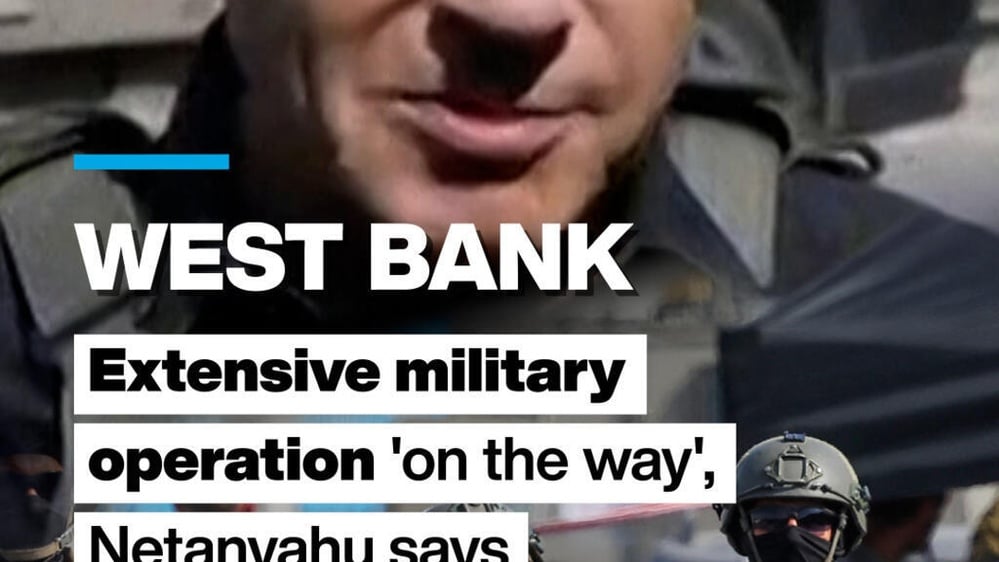

2026 © Helium Trades
Privacy Policy & Disclosure
* Disclaimer: Nothing on this website constitutes investment advice, performance data or any recommendation that any particular security, portfolio of securities, transaction or investment strategy is suitable for any specific person. Helium Trades is not responsible in any way for the accuracy
of any model predictions or price data. Any mention of a particular security and related prediction data is not a recommendation to buy or sell that security. Investments in securities involve the risk of loss. Past performance is no guarantee of future results. Helium Trades is not responsible for any of your investment decisions,
you should consult a financial expert before engaging in any transaction.
Helium Research Assistant

How can I help you today?
Ask any question about this page.


