See whether Helium helps you make better-informed decisions. Try every Pro Trader feature for 30 days. No credit card required.
Try every Pro Trader feature for 30 days. No credit card required.
August 01, 2026 · 0 shares
Reporting of the Ceuta migration crisis is fact-based and balanced, attributing claims to officials and including both supportive and critical views on the policy change.
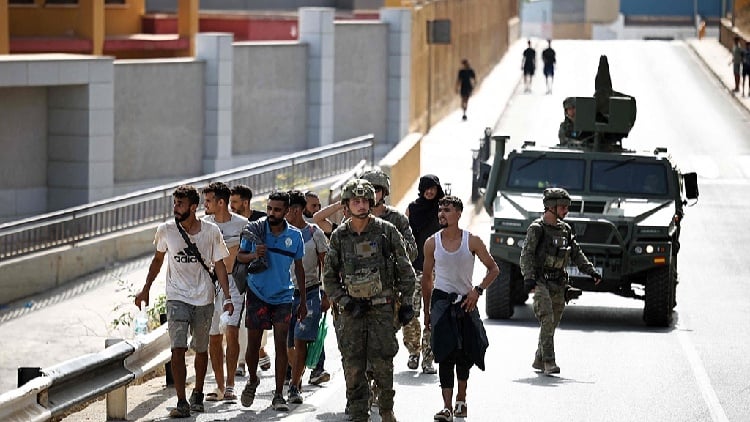
Ceuta is a Spanish autonomous city on Morocco's coast and the EU's only land border with Africa.
A recent Spanish Supreme Court ruling restricted immediate returns of migrants intercepted at sea, a policy known as 'hot returns'.
Automated analysis; not human reviewed.
·
7 of 52 available dimensions scored; omitted dimensions are not treated as neutral.
·
Verified supporting quotes for 4 of 7 scored dimensions.
Claim: The article presents a balanced view of the migration crisis without favoring liberal or conservative ideologies.
“Supporters of the ruling argue that the former policy of 'hot returns' lacked proper legal safeguards and risked collective expulsion, violating human rights, while right-wing voices warn that the new legal precedent effectively creates an open border loophole, incentivizing migrant smuggling and overwhelming Ceuta's limited reception capacity.” · not found in supplied text
Why: Both sides of the political spectrum are included, indicating neutrality.
Claim: The article reports facts and official statements without inserting subjective opinion.
“Spain's Interior Ministry said around 50,000 people had crossed into Ceuta by land and sea since Thursday morning, estimating that 48,300 had returned by 6 p.m. local time on Friday.” · exact text match
Why: The claim is directly attributed and factual.
Claim: The article does not use sensational language.
“The influx was triggered in part by a recent ruling by Spain's Supreme Court that restricted the use of so-called 'hot returns' for migrants intercepted at sea – stripping authorities of the power to immediately send sea-borne irregular migrants back to Morocco without full individual legal procedures.” · not found in supplied text
Why: No exaggerated claims; uses attributed numbers and neutral wording.
Claim: The article describes events without prescribing a course of action.
“Spain said Friday that it had brought a massive influx of migrants into the Spanish enclave of Ceuta under control, with the vast majority of those who crossed the border in recent days voluntarily returning to Morocco.” · exact text match
Why: It is descriptive of what happened and what officials said.
Claim: The tone is emotionally neutral.
“The Spanish government's representative in Ceuta said 57 bodies had been recovered on the Spanish side of the border, while additional casualties could be found on the Moroccan side.” · exact text match
Why: Reporting factual casualties without emotional language.
Claim: The article is credible because it attributes all substantive claims to named officials and sources.
“Spain's Interior Ministry said around 50,000 people had crossed into Ceuta by land and sea since Thursday morning, estimating that 48,300 had returned by 6 p.m. local time on Friday.” · exact text match
Why: Multiple attributed quotes from government and EU officials.
Claim: The article demonstrates fairness by including both supporting and critical views on the Supreme Court ruling.
“Supporters of the ruling argue that the former policy of 'hot returns' lacked proper legal safeguards and risked collective expulsion, violating human rights, while right-wing voices warn that the new legal precedent effectively creates an open border loophole, incentivizing migrant smuggling and overwhelming Ceuta's limited reception capacity.” · not found in supplied text
Why: Presents opposing perspectives without judgment.
Factual reporting with attributed quotes and balanced presentation of EU member state positions.
Automated analysis; not human reviewed.
·
3 of 53 available dimensions scored; omitted dimensions are not treated as neutral.
·
Verified supporting quotes for 2 of 3 scored dimensions.
Claim: The article presents views from both Spanish and Italian officials without favoring one side, indicating political neutrality.
“Spanish interior minister Fernando Grande-Marlaska told reporters...The talks were 'constructive'... member states recognised Madrid's 'immediate and efficient' response.” · not found in supplied text
“Italian interior minister Matteo Piantedosi told his EU colleagues... 'Now the time has come to put into practice new hub models...'” · not found in supplied text
Why: Both Spanish and Italian positions are reported in a balanced manner with direct quotes.
Claim: The article maintains an emotionally neutral tone, using factual language and avoiding emotional appeals.
“More than 80 people died during the surge, which began on Thursday.” · exact text match
Why: The statement is purely factual with no emotional embellishment.
Claim: The article attributes claims to multiple named sources and provides specific numbers, enhancing credibility.
“Madrid says 70,000 of the 72,000 that crossed into Ceuta have returned home” · exact text match
“Local official Alberto Gaitan said that the city is currently processing 862 migrant minors” · exact text match
Why: Direct attribution to government officials and local authorities with precise figures.
August 04, 2026 · 0 shares
Frames the migrant surge as a consequence of misinformation and trafficking, and positions the publisher as a corrective to negative Muslim media coverage.
Ceuta and Melilla are Spanish enclaves in North Africa bordering Morocco, often used as entry points for migrants attempting to reach Europe.
The EU's Schengen Area allows passport-free travel among member states, but temporary suspensions are possible.
Automated analysis; not human reviewed.
Limitations: The article text includes repeated sidebar headlines that were excluded from analysis; only the main story and call to action were used.
·
5 of 53 available dimensions scored; omitted dimensions are not treated as neutral.
·
Verified supporting quotes for 5 of 5 scored dimensions.
Claim: The article mixes factual reporting with an opinionated call to action.
“Help us change that.” · exact text match
Why: The call to action is a clear opinion expression within the article.
Claim: The article's subject and call to action are political in nature.
“Morocco blames misinformation for Ceuta migrant surge” · exact text match
“We must take charge of our narrative.” · exact text match
Why: The migration event is political, and the call to action is a political stance on media coverage.
Claim: Publisher frames itself as a counter to negative Muslim media coverage, suggesting a pro-Muslim advocacy ideology.
“We must take charge of our narrative.
Research indicates that 92% of their Muslim coverage is negative.
Help us change that.”
· exact text match
Why: The call to action explicitly positions the publisher as correcting a perceived bias, indicating an ideological stance.
Claim: Article includes a promotional appeal to support the publisher's mission.
“Help us change that.” · exact text match
“Subscribe to our newsletter and be the first to find out about new shows, episodes, apps and more.” · exact text match
Why: The article ends with a subscription and donation-like appeal.
Claim: Publisher signals moral virtue by claiming to counter negative Muslim coverage.
“We must take charge of our narrative.
Research indicates that 92% of their Muslim coverage is negative.
Help us change that.”
· exact text match
Why: The phrasing 'Help us change that' signals a virtuous mission.
The article text includes repeated sidebar headlines that were excluded from analysis; only the main story and call to action were used.
August 01, 2026 · 0 shares
Reports migrant crisis with balanced inclusion of official and migrant perspectives, emphasizing death toll and government response.
Automated analysis; not human reviewed.
·
1 of 52 available dimensions scored; omitted dimensions are not treated as neutral.
·
Verified supporting quotes for 0 of 1 scored dimensions.
Claim: Topic of mass migration crisis with deaths and EU political fallout is inherently interesting.
“Story covers a sudden mass influx of 60,000 people, 67 deaths, and high-level EU responses.” · not found in supplied text
Why: The event is newsworthy and unusual, but article itself is straightforward reporting.
August 04, 2026 · 0 shares
Presents the EU's commendation of Spain's response to the Ceuta migrant crisis while including critical reactions from some member states, maintaining a factual and balanced tone.
Ceuta is a Spanish exclave in North Africa bordering Morocco.
The Schengen area allows free movement among most EU countries.
Automated analysis; not human reviewed.
·
6 of 53 available dimensions scored; omitted dimensions are not treated as neutral.
·
Verified supporting quotes for 2 of 6 scored dimensions.
Claim: The article presents both supportive and critical viewpoints without favoring one ideological side.
“The European Union has praised Spain's "swift response" to the migrant crisis” · not found in supplied text
“Italy described images from Ceuta as "shocking" and suspended its Schengen agreement with Spain” · not found in supplied text
Why: Inclusion of EU praise and Italian criticism, plus quotes from both Spain and other nations, shows balanced coverage.
Claim: The article uses factual reporting language and attributes all claims to named sources.
“Spain's Interior Minister Fernando Grande-Marlaska said.
He added that an estimated 70,000 have since been returned to Morocco.”
· exact text match
“EU commissioner Magnus Brunner said the incident had been a "test" of European resilience and border security” · not found in supplied text
Why: No opinionated language; all significant statements are attributed to officials or eyewitnesses.
Claim: The article does not use hyperbolic language or emotional imagery beyond direct quotes.
“At least 75 people died on the Spanish side of the border, while 11 deaths were reported in Morocco.” · exact text match
“Concerns have been raised over the treatment of the remaining migrants, in particular of unaccompanied minors” · exact text match
Why: Death tolls are reported factually; concerns are attributed to unspecified sources.
No sensational phrasing.
Claim: The entire article focuses on political reactions, EU meetings, and intergovernmental tensions over migration policy.
“Tuesday's meeting was called after several EU members expressed concern over Spain's handling of the crisis” · exact text match
“Italy's right-wing Prime Minister Giorgia Meloni said such "uncontrolled immigration" was a security threat to Europe.” · not found in supplied text
Why: All content revolves around political statements, diplomatic moves, and policy responses.
Claim: The story relies heavily on statements from EU officials, national ministers, and government spokespeople for its primary information.
“EU has praised Spain's 'swift response'... following a meeting of the bloc's interior ministers on Tuesday.” · not found in supplied text
“Spanish Prime Minister Pedro Sánchez said he had 'serious concerns' about some European governments” · not found in supplied text
Why: Most information comes from official sources; but this is standard for political reporting and the article also includes migrant testimonies.
Claim: The article consistently attributes information to named officials, provides specific numbers, and includes multiple perspectives.
“Around 72,000 migrants crossed into the Spanish territory in North Africa between 30 and 31 July, Spain's Interior Minister Fernando Grande-Marlaska said.” · exact text match
“Finland and Denmark backed Italy's move, while Czech Prime Minister Andrej Babiš urged a temporary suspension of Spain's Schengen membership.” · exact text match
Why: All key facts are sourced; the article includes corrections (e.g., Italy's suspension only applies to flights) and distinguishes between official statements and local media reports.
Frames the migrant rush as primarily driven by social media misinformation and a Spanish court ruling, while contrasting casualty figures from Morocco and Spain.
Automated analysis; not human reviewed.
Limitations: Article text contains interleaved unrelated news items; analysis restricted to the Morocco-Ceuta story.
·
1 of 52 available dimensions scored; omitted dimensions are not treated as neutral.
·
Verified supporting quotes for 1 of 1 scored dimensions.
Claim: The article demonstrates high credibility through consistent attribution of all figures and claims to specific sources.
“Morocco's interior ministry on Sunday issued its first toll for those who died trying to reach Spain's North African enclave of Ceuta last week, saying 11 people had died.” · exact text match
Why: All key numbers are attributed to official bodies (Morocco ministry, Spain, AMDH).
Article text contains interleaved unrelated news items; analysis restricted to the Morocco-Ceuta story.
August 01, 2026 · 0 shares
Reporting of the Ceuta migration crisis is fact-based and balanced, attributing claims to officials and including both supportive and critical views on the policy change.
Ceuta is a Spanish autonomous city on Morocco's coast and the EU's only land border with Africa.
A recent Spanish Supreme Court ruling restricted immediate returns of migrants intercepted at sea, a policy known as 'hot returns'.
Automated analysis; not human reviewed.
·
7 of 52 available dimensions scored; omitted dimensions are not treated as neutral.
·
Verified supporting quotes for 4 of 7 scored dimensions.
Claim: The article presents a balanced view of the migration crisis without favoring liberal or conservative ideologies.
“Supporters of the ruling argue that the former policy of 'hot returns' lacked proper legal safeguards and risked collective expulsion, violating human rights, while right-wing voices warn that the new legal precedent effectively creates an open border loophole, incentivizing migrant smuggling and overwhelming Ceuta's limited reception capacity.” · not found in supplied text
Why: Both sides of the political spectrum are included, indicating neutrality.
Claim: The article reports facts and official statements without inserting subjective opinion.
“Spain's Interior Ministry said around 50,000 people had crossed into Ceuta by land and sea since Thursday morning, estimating that 48,300 had returned by 6 p.m. local time on Friday.” · exact text match
Why: The claim is directly attributed and factual.
Claim: The article does not use sensational language.
“The influx was triggered in part by a recent ruling by Spain's Supreme Court that restricted the use of so-called 'hot returns' for migrants intercepted at sea – stripping authorities of the power to immediately send sea-borne irregular migrants back to Morocco without full individual legal procedures.” · not found in supplied text
Why: No exaggerated claims; uses attributed numbers and neutral wording.
Claim: The article describes events without prescribing a course of action.
“Spain said Friday that it had brought a massive influx of migrants into the Spanish enclave of Ceuta under control, with the vast majority of those who crossed the border in recent days voluntarily returning to Morocco.” · exact text match
Why: It is descriptive of what happened and what officials said.
Claim: The tone is emotionally neutral.
“The Spanish government's representative in Ceuta said 57 bodies had been recovered on the Spanish side of the border, while additional casualties could be found on the Moroccan side.” · exact text match
Why: Reporting factual casualties without emotional language.
Claim: The article is credible because it attributes all substantive claims to named officials and sources.
“Spain's Interior Ministry said around 50,000 people had crossed into Ceuta by land and sea since Thursday morning, estimating that 48,300 had returned by 6 p.m. local time on Friday.” · exact text match
Why: Multiple attributed quotes from government and EU officials.
Claim: The article demonstrates fairness by including both supporting and critical views on the Supreme Court ruling.
“Supporters of the ruling argue that the former policy of 'hot returns' lacked proper legal safeguards and risked collective expulsion, violating human rights, while right-wing voices warn that the new legal precedent effectively creates an open border loophole, incentivizing migrant smuggling and overwhelming Ceuta's limited reception capacity.” · not found in supplied text
Why: Presents opposing perspectives without judgment.
August 03, 2026 · 0 shares
Neutral reporting that conveys EU and Spanish government perspectives with factual language and attributed quotes.
Automated analysis; not human reviewed.
·
3 of 52 available dimensions scored; omitted dimensions are not treated as neutral.
·
Verified supporting quotes for 1 of 3 scored dimensions.
Claim: Reporting is primarily factual and balanced, presenting attributed statements from multiple involved parties without editorial slant.
“Spain estimates that about 69,500 migrants have now returned to Morocco, exceeding initial estimates of 50,000.” · not found in supplied text
“In response, Sánchez said he had 'serious concerns' about some European governments and pointed out that Ceuta was not part of the Schengen area.” · not found in supplied text
Why: The article provides specific numbers and direct quotations from both EU and Spanish representatives, with no evaluative language from the publisher.
Claim: Reporting shows high credibility through the use of specific data, named officials, and direct quotations.
“Spain estimates that about 69,500 migrants have now returned to Morocco, exceeding initial estimates of 50,000.” · exact text match
“In a letter to Spanish Prime Minister Pedro Sánchez, von der Leyen praised his 'swift handling' of the crisis.” · not found in supplied text
Why: The article includes precise figures and attributes key statements to named individuals, enhancing verifiability.
Claim: Reporting exhibits rational, evidence-based reasoning without emotional or fallacious framing.
“The scenes in Ceuta have strained relations among some of the EU's 27 member states.” · exact text match
Why: Statements are descriptive and grounded in observable events; no hyperbole or irrational claims are present.
August 04, 2026 · 0 shares
Presents the EU's commendation of Spain's response to the Ceuta migrant crisis while including critical reactions from some member states, maintaining a factual and balanced tone.
Ceuta is a Spanish exclave in North Africa bordering Morocco.
The Schengen area allows free movement among most EU countries.
Automated analysis; not human reviewed.
·
6 of 53 available dimensions scored; omitted dimensions are not treated as neutral.
·
Verified supporting quotes for 2 of 6 scored dimensions.
Claim: The article presents both supportive and critical viewpoints without favoring one ideological side.
“The European Union has praised Spain's "swift response" to the migrant crisis” · not found in supplied text
“Italy described images from Ceuta as "shocking" and suspended its Schengen agreement with Spain” · not found in supplied text
Why: Inclusion of EU praise and Italian criticism, plus quotes from both Spain and other nations, shows balanced coverage.
Claim: The article uses factual reporting language and attributes all claims to named sources.
“Spain's Interior Minister Fernando Grande-Marlaska said.
He added that an estimated 70,000 have since been returned to Morocco.”
· exact text match
“EU commissioner Magnus Brunner said the incident had been a "test" of European resilience and border security” · not found in supplied text
Why: No opinionated language; all significant statements are attributed to officials or eyewitnesses.
Claim: The article does not use hyperbolic language or emotional imagery beyond direct quotes.
“At least 75 people died on the Spanish side of the border, while 11 deaths were reported in Morocco.” · exact text match
“Concerns have been raised over the treatment of the remaining migrants, in particular of unaccompanied minors” · exact text match
Why: Death tolls are reported factually; concerns are attributed to unspecified sources.
No sensational phrasing.
Claim: The entire article focuses on political reactions, EU meetings, and intergovernmental tensions over migration policy.
“Tuesday's meeting was called after several EU members expressed concern over Spain's handling of the crisis” · exact text match
“Italy's right-wing Prime Minister Giorgia Meloni said such "uncontrolled immigration" was a security threat to Europe.” · not found in supplied text
Why: All content revolves around political statements, diplomatic moves, and policy responses.
Claim: The story relies heavily on statements from EU officials, national ministers, and government spokespeople for its primary information.
“EU has praised Spain's 'swift response'... following a meeting of the bloc's interior ministers on Tuesday.” · not found in supplied text
“Spanish Prime Minister Pedro Sánchez said he had 'serious concerns' about some European governments” · not found in supplied text
Why: Most information comes from official sources; but this is standard for political reporting and the article also includes migrant testimonies.
Claim: The article consistently attributes information to named officials, provides specific numbers, and includes multiple perspectives.
“Around 72,000 migrants crossed into the Spanish territory in North Africa between 30 and 31 July, Spain's Interior Minister Fernando Grande-Marlaska said.” · exact text match
“Finland and Denmark backed Italy's move, while Czech Prime Minister Andrej Babiš urged a temporary suspension of Spain's Schengen membership.” · exact text match
Why: All key facts are sourced; the article includes corrections (e.g., Italy's suspension only applies to flights) and distinguishes between official statements and local media reports.
August 01, 2026 · 0 shares
Frames the diplomatic dispute through Spain's condemnation of other EU countries as selfish and unlawful, while attributing their reactions to prejudice and political interest.
Automated analysis; not human reviewed.
Limitations: Limited to single article text; no external verification of claims.
·
10 of 52 available dimensions scored; omitted dimensions are not treated as neutral.
·
Verified supporting quotes for 1 of 10 scored dimensions.
Claim: The article gives more weight to Spain's criticism of right-wing governments.
“Spain attacks 'selfish' response of some EU countries to Ceuta migrant crossings.” · exact text match
“He said other European governments had chosen to attack Spain, 'driven by prejudice, fake news, ignorance, or political interest'.” · not found in supplied text
Why: Headline and quotes emphasize Spain's position and criticize other EU countries, including right-wing leaders.
Claim: The article is mostly factual reporting with minimal editorializing.
“On Saturday, Grande-Marlaska told reporters the situation in Ceuta had almost returned to normal.” · not found in supplied text
Why: Most content is reported statements and events, with only the headline showing slight subjective framing.
Claim: The article avoids sensational language.
“Spain has condemned the 'selfish, polarising and unlawful' reaction of some EU countries” · not found in supplied text
Why: Uses strong words only in attributed quotes, not in the publisher's own voice.
Claim: The article primarily describes events and statements.
“Spain has defended its handling of the migrant surge.
Madrid has sent troops, more police, drones, divers and boats to Ceuta.”
· exact text match
Why: Reporting of actions and statements without prescriptive language, except for Spain's own calls for solidarity.
Claim: The article is heavily focused on political reactions and diplomatic tensions.
“It comes after Italy temporarily suspended the EU's border-free Schengen arrangement with Spain, as Prime Minister Giorgia Meloni called the scenes 'shocking'.” · not found in supplied text
Why: The entire article is about political responses and government positions.
Claim: The article frames Spain's government as acting within EU norms and criticizes populist reactions.
“In a letter to European Commission President Ursula von der Leyen, Spanish Prime Minister Pedro Sánchez said he had 'serious concerns' about some European governments.” · not found in supplied text
Why: Spain's position is aligned with EU institutions, while populist leaders like Meloni are criticized in quotes.
Claim: The article uses named sources and direct quotes.
“Officials say almost all those who reached the enclave on 30 July have returned.” · not found in supplied text
Why: Attribution to 'officials' is somewhat vague, but many other quotes are from named individuals.
Claim: The article presents reasoned arguments from multiple sides without endorsing irrationality.
“Spain's PM Sánchez said he had 'serious concerns' about some European governments.” · not found in supplied text
“'The European Union cannot afford this kind of selfish, polarising and unlawful reaction,' he said.” · not found in supplied text
Why: Quotes are attributed and show logical reasoning, no irrational framing by publisher.
Claim: The article attributes claims to named officials and includes multiple perspectives.
“In a news conference on Saturday, Grande-Marlaska told reporters...” · not found in supplied text
“Spanish Prime Minister Pedro Sánchez blamed trafficking gangs for the migrant surge in Ceuta” · exact text match
Why: Direct quotes from various officials and governments are included, showing balanced sourcing.
Claim: The article provides a balanced overview with relevant context.
“In 2021, about 8,000 people entered Ceuta over a matter of days, exacerbating Spain's diplomatic tensions with Morocco.” · exact text match
“In June the European Parliament approved tougher migration rules...” · not found in supplied text
Why: Includes historical context and policy developments, showing depth.
Limited to single article text; no external verification of claims.
Attribution-heavy reporting reproduces the Moroccan ministry's account without independent commentary.
Automated analysis; not human reviewed. Limitations: The article text is a short Reuters wire that provides only the Moroccan ministry's statement; no independent verification or counter-framing is available.
The article text is a short Reuters wire that provides only the Moroccan ministry's statement; no independent verification or counter-framing is available.
August 03, 2026 · 0 shares
Humanitarian framing emphasizing the plight of unaccompanied migrant minors in Ceuta, with factual reporting from Associated Press.
Automated analysis; not human reviewed.
·
8 of 53 available dimensions scored; omitted dimensions are not treated as neutral.
·
Verified supporting quotes for 8 of 8 scored dimensions.
Claim: The subject matter is somewhat interesting due to human interest and scale.
“Hundreds of migrant children are stranded in Spain’s Ceuta after mass crossing” · exact text match
Why: Headline and lead highlight a dramatic humanitarian situation.
Claim: The article is factful and neutral, lacking opinionated content.
“Most of the Moroccan adults have either voluntarily gone home or were pushed back by Spanish police.” · exact text match
Why: Statements are factual and attributed; no subjective claims by the publisher.
Claim: The article covers a political topic (immigration policy) but does not take a partisan stance.
“Spanish law says that adult migrants can apply for asylum.
If rejected, they will face expulsion procedures.”
· exact text match
Why: Discussion of government policies and legal procedures indicates political content.
Claim: The article highlights the victimization of migrant minors, portraying them as vulnerable.
“Now we are children begging on the street.” · exact text match
Why: Direct quote from a minor emphasizes helplessness, but publisher does not exaggerate.
Claim: The article has a negative emotional tone due to the tragic events reported.
“She described how she saw Spanish police pull the body of her 8-year-old brother from the water.” · exact text match
Why: Reports of death and separation evoke sadness, but tone remains restrained.
Claim: The article is highly credible due to reputable source and thorough attribution.
“Spanish authorities confirmed 72 people died, mostly in the water, during the crossing.
Morocco reported 11 deaths which are not included in the Spanish total, the Spanish interior ministry said.”
· exact text match
Why: Multiple official sources cited, with clear attribution.
Claim: The article was written by a human journalist.
“She told an Associated Press photojournalist how she and her family joined the massive crowd” · exact text match
Why: Presence of named human-reporter interaction and typical AP style indicate human authorship.
Claim: The article demonstrates high integrity through transparent sourcing and attribution.
“Spanish authorities confirmed 72 people died” · exact text match
“according to local officials” · exact text match
“said local migration activist Ramsés Mohamed Azumik of Asociación Elín.” · exact text match
Why: Multiple attributed sources are used; no deceptive framing.
Frames Italy's Schengen suspension as a politically motivated response to domestic pressure from far-right while acknowledging the stated border security rationale.
Automated analysis; not human reviewed.
·
1 of 52 available dimensions scored; omitted dimensions are not treated as neutral.
·
Verified supporting quotes for 0 of 1 scored dimensions.
Claim: The article attributes claims to named sources and provides specific details.
“Italy’s interior ministry said in a statement it had also agreed with Paris to strengthen controls...” · not found in supplied text
“Critics of Prime Minister Giorgia Meloni’s right-wing government dismissed the move...” · not found in supplied text
“Spain said it had reversed the rush of migrants...” · not found in supplied text
Why: Attributions to official sources and critics; no anonymous sourcing; specific numbers (50,000, one month).
August 01, 2026 · 0 shares
Frames the diplomatic dispute through Spain's condemnation of other EU countries as selfish and unlawful, while attributing their reactions to prejudice and political interest.
Automated analysis; not human reviewed.
Limitations: Limited to single article text; no external verification of claims.
·
10 of 52 available dimensions scored; omitted dimensions are not treated as neutral.
·
Verified supporting quotes for 1 of 10 scored dimensions.
Claim: The article gives more weight to Spain's criticism of right-wing governments.
“Spain attacks 'selfish' response of some EU countries to Ceuta migrant crossings.” · exact text match
“He said other European governments had chosen to attack Spain, 'driven by prejudice, fake news, ignorance, or political interest'.” · not found in supplied text
Why: Headline and quotes emphasize Spain's position and criticize other EU countries, including right-wing leaders.
Claim: The article is mostly factual reporting with minimal editorializing.
“On Saturday, Grande-Marlaska told reporters the situation in Ceuta had almost returned to normal.” · not found in supplied text
Why: Most content is reported statements and events, with only the headline showing slight subjective framing.
Claim: The article avoids sensational language.
“Spain has condemned the 'selfish, polarising and unlawful' reaction of some EU countries” · not found in supplied text
Why: Uses strong words only in attributed quotes, not in the publisher's own voice.
Claim: The article primarily describes events and statements.
“Spain has defended its handling of the migrant surge.
Madrid has sent troops, more police, drones, divers and boats to Ceuta.”
· exact text match
Why: Reporting of actions and statements without prescriptive language, except for Spain's own calls for solidarity.
Claim: The article is heavily focused on political reactions and diplomatic tensions.
“It comes after Italy temporarily suspended the EU's border-free Schengen arrangement with Spain, as Prime Minister Giorgia Meloni called the scenes 'shocking'.” · not found in supplied text
Why: The entire article is about political responses and government positions.
Claim: The article frames Spain's government as acting within EU norms and criticizes populist reactions.
“In a letter to European Commission President Ursula von der Leyen, Spanish Prime Minister Pedro Sánchez said he had 'serious concerns' about some European governments.” · not found in supplied text
Why: Spain's position is aligned with EU institutions, while populist leaders like Meloni are criticized in quotes.
Claim: The article uses named sources and direct quotes.
“Officials say almost all those who reached the enclave on 30 July have returned.” · not found in supplied text
Why: Attribution to 'officials' is somewhat vague, but many other quotes are from named individuals.
Claim: The article presents reasoned arguments from multiple sides without endorsing irrationality.
“Spain's PM Sánchez said he had 'serious concerns' about some European governments.” · not found in supplied text
“'The European Union cannot afford this kind of selfish, polarising and unlawful reaction,' he said.” · not found in supplied text
Why: Quotes are attributed and show logical reasoning, no irrational framing by publisher.
Claim: The article attributes claims to named officials and includes multiple perspectives.
“In a news conference on Saturday, Grande-Marlaska told reporters...” · not found in supplied text
“Spanish Prime Minister Pedro Sánchez blamed trafficking gangs for the migrant surge in Ceuta” · exact text match
Why: Direct quotes from various officials and governments are included, showing balanced sourcing.
Claim: The article provides a balanced overview with relevant context.
“In 2021, about 8,000 people entered Ceuta over a matter of days, exacerbating Spain's diplomatic tensions with Morocco.” · exact text match
“In June the European Parliament approved tougher migration rules...” · not found in supplied text
Why: Includes historical context and policy developments, showing depth.
Limited to single article text; no external verification of claims.
August 01, 2026 · 0 shares
Reporting of the Ceuta migration crisis is fact-based and balanced, attributing claims to officials and including both supportive and critical views on the policy change.
Ceuta is a Spanish autonomous city on Morocco's coast and the EU's only land border with Africa. A recent Spanish Supreme Court ruling restricted immediate returns of migrants intercepted at sea, a policy known as 'hot returns'.
Automated analysis; not human reviewed. · 7 of 52 available dimensions scored; omitted dimensions are not treated as neutral. · Verified supporting quotes for 4 of 7 scored dimensions.
Claim: The article presents a balanced view of the migration crisis without favoring liberal or conservative ideologies.
“Supporters of the ruling argue that the former policy of 'hot returns' lacked proper legal safeguards and risked collective expulsion, violating human rights, while right-wing voices warn that the new legal precedent effectively creates an open border loophole, incentivizing migrant smuggling and overwhelming Ceuta's limited reception capacity.” · not found in supplied text
Why: Both sides of the political spectrum are included, indicating neutrality.
Claim: The article reports facts and official statements without inserting subjective opinion.
“Spain's Interior Ministry said around 50,000 people had crossed into Ceuta by land and sea since Thursday morning, estimating that 48,300 had returned by 6 p.m. local time on Friday.” · exact text match
Why: The claim is directly attributed and factual.
Claim: The article does not use sensational language.
“The influx was triggered in part by a recent ruling by Spain's Supreme Court that restricted the use of so-called 'hot returns' for migrants intercepted at sea – stripping authorities of the power to immediately send sea-borne irregular migrants back to Morocco without full individual legal procedures.” · not found in supplied text
Why: No exaggerated claims; uses attributed numbers and neutral wording.
Claim: The article describes events without prescribing a course of action.
“Spain said Friday that it had brought a massive influx of migrants into the Spanish enclave of Ceuta under control, with the vast majority of those who crossed the border in recent days voluntarily returning to Morocco.” · exact text match
Why: It is descriptive of what happened and what officials said.
Claim: The tone is emotionally neutral.
“The Spanish government's representative in Ceuta said 57 bodies had been recovered on the Spanish side of the border, while additional casualties could be found on the Moroccan side.” · exact text match
Why: Reporting factual casualties without emotional language.
Claim: The article is credible because it attributes all substantive claims to named officials and sources.
“Spain's Interior Ministry said around 50,000 people had crossed into Ceuta by land and sea since Thursday morning, estimating that 48,300 had returned by 6 p.m. local time on Friday.” · exact text match
Why: Multiple attributed quotes from government and EU officials.
Claim: The article demonstrates fairness by including both supporting and critical views on the Supreme Court ruling.
“Supporters of the ruling argue that the former policy of 'hot returns' lacked proper legal safeguards and risked collective expulsion, violating human rights, while right-wing voices warn that the new legal precedent effectively creates an open border loophole, incentivizing migrant smuggling and overwhelming Ceuta's limited reception capacity.” · not found in supplied text
Why: Presents opposing perspectives without judgment.
Factual reporting with attributed quotes and balanced presentation of EU member state positions.
Automated analysis; not human reviewed. · 3 of 53 available dimensions scored; omitted dimensions are not treated as neutral. · Verified supporting quotes for 2 of 3 scored dimensions.
Claim: The article presents views from both Spanish and Italian officials without favoring one side, indicating political neutrality.
“Spanish interior minister Fernando Grande-Marlaska told reporters...The talks were 'constructive'... member states recognised Madrid's 'immediate and efficient' response.” · not found in supplied text
“Italian interior minister Matteo Piantedosi told his EU colleagues... 'Now the time has come to put into practice new hub models...'” · not found in supplied text
Why: Both Spanish and Italian positions are reported in a balanced manner with direct quotes.
Claim: The article maintains an emotionally neutral tone, using factual language and avoiding emotional appeals.
“More than 80 people died during the surge, which began on Thursday.” · exact text match
Why: The statement is purely factual with no emotional embellishment.
Claim: The article attributes claims to multiple named sources and provides specific numbers, enhancing credibility.
“Madrid says 70,000 of the 72,000 that crossed into Ceuta have returned home” · exact text match
“Local official Alberto Gaitan said that the city is currently processing 862 migrant minors” · exact text match
Why: Direct attribution to government officials and local authorities with precise figures.
August 04, 2026 · 0 shares
Presents the EU's commendation of Spain's response to the Ceuta migrant crisis while including critical reactions from some member states, maintaining a factual and balanced tone.
Ceuta is a Spanish exclave in North Africa bordering Morocco. The Schengen area allows free movement among most EU countries.
Automated analysis; not human reviewed. · 6 of 53 available dimensions scored; omitted dimensions are not treated as neutral. · Verified supporting quotes for 2 of 6 scored dimensions.
Claim: The article presents both supportive and critical viewpoints without favoring one ideological side.
“The European Union has praised Spain's "swift response" to the migrant crisis” · not found in supplied text
“Italy described images from Ceuta as "shocking" and suspended its Schengen agreement with Spain” · not found in supplied text
Why: Inclusion of EU praise and Italian criticism, plus quotes from both Spain and other nations, shows balanced coverage.
Claim: The article uses factual reporting language and attributes all claims to named sources.
“Spain's Interior Minister Fernando Grande-Marlaska said. He added that an estimated 70,000 have since been returned to Morocco.” · exact text match
“EU commissioner Magnus Brunner said the incident had been a "test" of European resilience and border security” · not found in supplied text
Why: No opinionated language; all significant statements are attributed to officials or eyewitnesses.
Claim: The article does not use hyperbolic language or emotional imagery beyond direct quotes.
“At least 75 people died on the Spanish side of the border, while 11 deaths were reported in Morocco.” · exact text match
“Concerns have been raised over the treatment of the remaining migrants, in particular of unaccompanied minors” · exact text match
Why: Death tolls are reported factually; concerns are attributed to unspecified sources. No sensational phrasing.
Claim: The entire article focuses on political reactions, EU meetings, and intergovernmental tensions over migration policy.
“Tuesday's meeting was called after several EU members expressed concern over Spain's handling of the crisis” · exact text match
“Italy's right-wing Prime Minister Giorgia Meloni said such "uncontrolled immigration" was a security threat to Europe.” · not found in supplied text
Why: All content revolves around political statements, diplomatic moves, and policy responses.
Claim: The story relies heavily on statements from EU officials, national ministers, and government spokespeople for its primary information.
“EU has praised Spain's 'swift response'... following a meeting of the bloc's interior ministers on Tuesday.” · not found in supplied text
“Spanish Prime Minister Pedro Sánchez said he had 'serious concerns' about some European governments” · not found in supplied text
Why: Most information comes from official sources; but this is standard for political reporting and the article also includes migrant testimonies.
Claim: The article consistently attributes information to named officials, provides specific numbers, and includes multiple perspectives.
“Around 72,000 migrants crossed into the Spanish territory in North Africa between 30 and 31 July, Spain's Interior Minister Fernando Grande-Marlaska said.” · exact text match
“Finland and Denmark backed Italy's move, while Czech Prime Minister Andrej Babiš urged a temporary suspension of Spain's Schengen membership.” · exact text match
Why: All key facts are sourced; the article includes corrections (e.g., Italy's suspension only applies to flights) and distinguishes between official statements and local media reports.
August 01, 2026 · 0 shares
Reports migrant crisis with balanced inclusion of official and migrant perspectives, emphasizing death toll and government response.
Automated analysis; not human reviewed. · 1 of 52 available dimensions scored; omitted dimensions are not treated as neutral. · Verified supporting quotes for 0 of 1 scored dimensions.
Claim: Topic of mass migration crisis with deaths and EU political fallout is inherently interesting.
“Story covers a sudden mass influx of 60,000 people, 67 deaths, and high-level EU responses.” · not found in supplied text
Why: The event is newsworthy and unusual, but article itself is straightforward reporting.
August 04, 2026 · 0 shares
Presents the EU's commendation of Spain's response to the Ceuta migrant crisis while including critical reactions from some member states, maintaining a factual and balanced tone.
Ceuta is a Spanish exclave in North Africa bordering Morocco. The Schengen area allows free movement among most EU countries.
Automated analysis; not human reviewed. · 6 of 53 available dimensions scored; omitted dimensions are not treated as neutral. · Verified supporting quotes for 2 of 6 scored dimensions.
Claim: The article presents both supportive and critical viewpoints without favoring one ideological side.
“The European Union has praised Spain's "swift response" to the migrant crisis” · not found in supplied text
“Italy described images from Ceuta as "shocking" and suspended its Schengen agreement with Spain” · not found in supplied text
Why: Inclusion of EU praise and Italian criticism, plus quotes from both Spain and other nations, shows balanced coverage.
Claim: The article uses factual reporting language and attributes all claims to named sources.
“Spain's Interior Minister Fernando Grande-Marlaska said. He added that an estimated 70,000 have since been returned to Morocco.” · exact text match
“EU commissioner Magnus Brunner said the incident had been a "test" of European resilience and border security” · not found in supplied text
Why: No opinionated language; all significant statements are attributed to officials or eyewitnesses.
Claim: The article does not use hyperbolic language or emotional imagery beyond direct quotes.
“At least 75 people died on the Spanish side of the border, while 11 deaths were reported in Morocco.” · exact text match
“Concerns have been raised over the treatment of the remaining migrants, in particular of unaccompanied minors” · exact text match
Why: Death tolls are reported factually; concerns are attributed to unspecified sources. No sensational phrasing.
Claim: The entire article focuses on political reactions, EU meetings, and intergovernmental tensions over migration policy.
“Tuesday's meeting was called after several EU members expressed concern over Spain's handling of the crisis” · exact text match
“Italy's right-wing Prime Minister Giorgia Meloni said such "uncontrolled immigration" was a security threat to Europe.” · not found in supplied text
Why: All content revolves around political statements, diplomatic moves, and policy responses.
Claim: The story relies heavily on statements from EU officials, national ministers, and government spokespeople for its primary information.
“EU has praised Spain's 'swift response'... following a meeting of the bloc's interior ministers on Tuesday.” · not found in supplied text
“Spanish Prime Minister Pedro Sánchez said he had 'serious concerns' about some European governments” · not found in supplied text
Why: Most information comes from official sources; but this is standard for political reporting and the article also includes migrant testimonies.
Claim: The article consistently attributes information to named officials, provides specific numbers, and includes multiple perspectives.
“Around 72,000 migrants crossed into the Spanish territory in North Africa between 30 and 31 July, Spain's Interior Minister Fernando Grande-Marlaska said.” · exact text match
“Finland and Denmark backed Italy's move, while Czech Prime Minister Andrej Babiš urged a temporary suspension of Spain's Schengen membership.” · exact text match
Why: All key facts are sourced; the article includes corrections (e.g., Italy's suspension only applies to flights) and distinguishes between official statements and local media reports.
Frames the migrant rush as primarily driven by social media misinformation and a Spanish court ruling, while contrasting casualty figures from Morocco and Spain.
Automated analysis; not human reviewed. Limitations: Article text contains interleaved unrelated news items; analysis restricted to the Morocco-Ceuta story. · 1 of 52 available dimensions scored; omitted dimensions are not treated as neutral. · Verified supporting quotes for 1 of 1 scored dimensions.
Claim: The article demonstrates high credibility through consistent attribution of all figures and claims to specific sources.
“Morocco's interior ministry on Sunday issued its first toll for those who died trying to reach Spain's North African enclave of Ceuta last week, saying 11 people had died.” · exact text match
Why: All key numbers are attributed to official bodies (Morocco ministry, Spain, AMDH).
Article text contains interleaved unrelated news items; analysis restricted to the Morocco-Ceuta story.
August 01, 2026 · 0 shares
Frames the diplomatic dispute through Spain's condemnation of other EU countries as selfish and unlawful, while attributing their reactions to prejudice and political interest.
Automated analysis; not human reviewed. Limitations: Limited to single article text; no external verification of claims. · 10 of 52 available dimensions scored; omitted dimensions are not treated as neutral. · Verified supporting quotes for 1 of 10 scored dimensions.
Claim: The article gives more weight to Spain's criticism of right-wing governments.
“Spain attacks 'selfish' response of some EU countries to Ceuta migrant crossings.” · exact text match
“He said other European governments had chosen to attack Spain, 'driven by prejudice, fake news, ignorance, or political interest'.” · not found in supplied text
Why: Headline and quotes emphasize Spain's position and criticize other EU countries, including right-wing leaders.
Claim: The article is mostly factual reporting with minimal editorializing.
“On Saturday, Grande-Marlaska told reporters the situation in Ceuta had almost returned to normal.” · not found in supplied text
Why: Most content is reported statements and events, with only the headline showing slight subjective framing.
Claim: The article avoids sensational language.
“Spain has condemned the 'selfish, polarising and unlawful' reaction of some EU countries” · not found in supplied text
Why: Uses strong words only in attributed quotes, not in the publisher's own voice.
Claim: The article primarily describes events and statements.
“Spain has defended its handling of the migrant surge. Madrid has sent troops, more police, drones, divers and boats to Ceuta.” · exact text match
Why: Reporting of actions and statements without prescriptive language, except for Spain's own calls for solidarity.
Claim: The article is heavily focused on political reactions and diplomatic tensions.
“It comes after Italy temporarily suspended the EU's border-free Schengen arrangement with Spain, as Prime Minister Giorgia Meloni called the scenes 'shocking'.” · not found in supplied text
Why: The entire article is about political responses and government positions.
Claim: The article frames Spain's government as acting within EU norms and criticizes populist reactions.
“In a letter to European Commission President Ursula von der Leyen, Spanish Prime Minister Pedro Sánchez said he had 'serious concerns' about some European governments.” · not found in supplied text
Why: Spain's position is aligned with EU institutions, while populist leaders like Meloni are criticized in quotes.
Claim: The article uses named sources and direct quotes.
“Officials say almost all those who reached the enclave on 30 July have returned.” · not found in supplied text
Why: Attribution to 'officials' is somewhat vague, but many other quotes are from named individuals.
Claim: The article presents reasoned arguments from multiple sides without endorsing irrationality.
“Spain's PM Sánchez said he had 'serious concerns' about some European governments.” · not found in supplied text
“'The European Union cannot afford this kind of selfish, polarising and unlawful reaction,' he said.” · not found in supplied text
Why: Quotes are attributed and show logical reasoning, no irrational framing by publisher.
Claim: The article attributes claims to named officials and includes multiple perspectives.
“In a news conference on Saturday, Grande-Marlaska told reporters...” · not found in supplied text
“Spanish Prime Minister Pedro Sánchez blamed trafficking gangs for the migrant surge in Ceuta” · exact text match
Why: Direct quotes from various officials and governments are included, showing balanced sourcing.
Claim: The article provides a balanced overview with relevant context.
“In 2021, about 8,000 people entered Ceuta over a matter of days, exacerbating Spain's diplomatic tensions with Morocco.” · exact text match
“In June the European Parliament approved tougher migration rules...” · not found in supplied text
Why: Includes historical context and policy developments, showing depth.
Limited to single article text; no external verification of claims.
Attribution-heavy reporting reproduces the Moroccan ministry's account without independent commentary.
Automated analysis; not human reviewed. Limitations: The article text is a short Reuters wire that provides only the Moroccan ministry's statement; no independent verification or counter-framing is available.
The article text is a short Reuters wire that provides only the Moroccan ministry's statement; no independent verification or counter-framing is available.
August 04, 2026 · 0 shares
Frames the migrant surge as a consequence of misinformation and trafficking, and positions the publisher as a corrective to negative Muslim media coverage.
Ceuta and Melilla are Spanish enclaves in North Africa bordering Morocco, often used as entry points for migrants attempting to reach Europe. The EU's Schengen Area allows passport-free travel among member states, but temporary suspensions are possible.
Automated analysis; not human reviewed. Limitations: The article text includes repeated sidebar headlines that were excluded from analysis; only the main story and call to action were used. · 5 of 53 available dimensions scored; omitted dimensions are not treated as neutral. · Verified supporting quotes for 5 of 5 scored dimensions.
Claim: The article mixes factual reporting with an opinionated call to action.
“Help us change that.” · exact text match
Why: The call to action is a clear opinion expression within the article.
Claim: The article's subject and call to action are political in nature.
“Morocco blames misinformation for Ceuta migrant surge” · exact text match
“We must take charge of our narrative.” · exact text match
Why: The migration event is political, and the call to action is a political stance on media coverage.
Claim: Publisher frames itself as a counter to negative Muslim media coverage, suggesting a pro-Muslim advocacy ideology.
“We must take charge of our narrative. Research indicates that 92% of their Muslim coverage is negative. Help us change that.” · exact text match
Why: The call to action explicitly positions the publisher as correcting a perceived bias, indicating an ideological stance.
Claim: Article includes a promotional appeal to support the publisher's mission.
“Help us change that.” · exact text match
“Subscribe to our newsletter and be the first to find out about new shows, episodes, apps and more.” · exact text match
Why: The article ends with a subscription and donation-like appeal.
Claim: Publisher signals moral virtue by claiming to counter negative Muslim coverage.
“We must take charge of our narrative. Research indicates that 92% of their Muslim coverage is negative. Help us change that.” · exact text match
Why: The phrasing 'Help us change that' signals a virtuous mission.
The article text includes repeated sidebar headlines that were excluded from analysis; only the main story and call to action were used.
August 02, 2026 · 0 shares
Frames the Ceuta migrant crisis as a matter for coordinated EU action, presenting official statements without editorializing.
Ceuta is a Spanish enclave in North Africa, a common entry point for migrants from Africa. The rotating presidency of the Council of the European Union is held by Ireland at the time of this report.
Automated analysis; not human reviewed. · 6 of 52 available dimensions scored; omitted dimensions are not treated as neutral. · Verified supporting quotes for 1 of 6 scored dimensions.
Claim: The article maintains objective tone without subjective language.
“The letter, signed by the leaders of 22 European countries, was sent to top EU officials. It expressed 'serious concern' over the situation in Ceuta and stressed the need to prevent uncontrolled irregular crossings...” · not found in supplied text
Why: All value judgments are attributed to sources; no editorializing.
Claim: The article primarily describes events and statements rather than prescribing actions.
“On the same day, Spanish Prime Minister Pedro Sanchez also called on the EU to convene an extraordinary meeting to coordinate a common response...” · not found in supplied text
Why: Calls for action are reported as quotes, not advocated by the publisher.
Claim: The article reports on a political event without partisan slant.
“The letter expressed 'serious concern' over the situation in Ceuta and stressed the need to prevent uncontrolled irregular crossings, combat migrant trafficking networks...” · not found in supplied text
Why: Both the EU initiative and criticism from Sanchez are presented without favoring one side.
Claim: The article cites multiple named sources and uses attributed quotes.
“according to Italy's ANSA news agency” · exact text match
“according to a statement released by the Italian government” · exact text match
Why: Sources are specific and verifiable; facts are not presented as the publisher's own.
Claim: The article presents factual reporting with logical structure.
“The announcement was made by Micheal Martin... following calls from Spain and a 22-country initiative led by Italy and Denmark for a coordinated European response to the migrant crisis.” · not found in supplied text
Why: No emotional or irrational appeals; event–response sequence is clear.
Claim: The article demonstrates high integrity through clear attribution and multiple sources.
“According to Italy's ANSA news agency on Saturday.” · not found in supplied text
“Sanchez said around 50,000 migrants had entered Ceuta irregularly...” · not found in supplied text
Why: Claims are attributed to named officials and agencies; no anonymous or unverified assertions.
Frames Italy's Schengen suspension as a politically motivated response to domestic pressure from far-right while acknowledging the stated border security rationale.
Automated analysis; not human reviewed. · 1 of 52 available dimensions scored; omitted dimensions are not treated as neutral. · Verified supporting quotes for 0 of 1 scored dimensions.
Claim: The article attributes claims to named sources and provides specific details.
“Italy’s interior ministry said in a statement it had also agreed with Paris to strengthen controls...” · not found in supplied text
“Critics of Prime Minister Giorgia Meloni’s right-wing government dismissed the move...” · not found in supplied text
“Spain said it had reversed the rush of migrants...” · not found in supplied text
Why: Attributions to official sources and critics; no anonymous sourcing; specific numbers (50,000, one month).
Helium Bias
Story Blindspots
August 05, 2026 · 0 shares
Frames the Ceuta migrant surge as a geopolitical weaponization dismissed by Western media.
Ceuta is a Spanish enclave in North Africa that has experienced periodic migrant surges, often linked to diplomatic disputes between Spain and Morocco.
Automated analysis; not human reviewed. · 11 of 53 available dimensions scored; omitted dimensions are not treated as neutral. · Verified supporting quotes for 11 of 11 scored dimensions.
Claim: The article frames Western media as dismissive and presents its own geopolitical explanation, appealing to a populist distrust of elite narratives.
“dismissed by some Western media as a social media-driven phenomenon rather than a case of migration being weaponized” · exact text match
Why: Directly criticizes Western media for misrepresenting the event, a common populist trope.
Claim: The article presents its interpretation as the correct one against a dismissed alternative, showing subjective stance.
“How geopolitical tensions drove the Ceuta migrant invasion” · exact text match
Why: Headline asserts a specific causal explanation, implying a subjective judgment.
Claim: The language uses dramatic numbers and terms to heighten emotional impact.
“unprecedented arrival of around 70,000 Moroccans” · exact text match
“chaos that left more than 70 people dead” · exact text match
Why: Use of 'unprecedented', 'chaos', and exact fatality count is sensationalist.
Claim: The article emphasizes chaos and death to evoke fear.
“chaos that left more than 70 people dead” · exact text match
Why: Mention of death toll and chaos directly triggers fear.
Claim: The article presents an analytical interpretation rather than straight facts, crossing into opinion.
“How geopolitical tensions drove the Ceuta migrant invasion” · exact text match
Why: Headline frames the event as driven by a specific cause, a thesis statement.
Claim: The subject matter is highly political - migration, geopolitics, and energy ties.
“geopolitical tensions” · exact text match
“migration policy and energy ties with Morocco and Algeria” · exact text match
Why: Core topic is international relations and domestic politics.
Claim: The headline asserts a definitive cause without hedging.
“How geopolitical tensions drove the Ceuta migrant invasion” · exact text match
Why: Uses 'drove' suggesting certainty, though limited evidence in snippet.
Claim: The article positions itself against Western media, a perceived establishment, earning an anti-establishment score.
“dismissed by some Western media” · exact text match
Why: Challenges mainstream media narrative, a classic anti-establishment move.
Claim: The tone is negative, focusing on chaos and death.
“chaos that left more than 70 people dead” · exact text match
Why: Negative emotional valence from death and chaos.
Claim: The article speculates about underlying motivations (weaponization by Morocco).
“migration being weaponized by the North African monarchy” · exact text match
Why: Attribution of weaponization is an unverified interpretation.
Claim: The article uses loaded language and omits alternative explanations to steer reader.
“dismissed by some Western media as a social media-driven phenomenon” · exact text match
Why: Frames the Western media account as dismissive, which may manipulate perception.
August 03, 2026 · 0 shares
Neutral reporting that conveys EU and Spanish government perspectives with factual language and attributed quotes.
Automated analysis; not human reviewed. · 3 of 52 available dimensions scored; omitted dimensions are not treated as neutral. · Verified supporting quotes for 1 of 3 scored dimensions.
Claim: Reporting is primarily factual and balanced, presenting attributed statements from multiple involved parties without editorial slant.
“Spain estimates that about 69,500 migrants have now returned to Morocco, exceeding initial estimates of 50,000.” · not found in supplied text
“In response, Sánchez said he had 'serious concerns' about some European governments and pointed out that Ceuta was not part of the Schengen area.” · not found in supplied text
Why: The article provides specific numbers and direct quotations from both EU and Spanish representatives, with no evaluative language from the publisher.
Claim: Reporting shows high credibility through the use of specific data, named officials, and direct quotations.
“Spain estimates that about 69,500 migrants have now returned to Morocco, exceeding initial estimates of 50,000.” · exact text match
“In a letter to Spanish Prime Minister Pedro Sánchez, von der Leyen praised his 'swift handling' of the crisis.” · not found in supplied text
Why: The article includes precise figures and attributes key statements to named individuals, enhancing verifiability.
Claim: Reporting exhibits rational, evidence-based reasoning without emotional or fallacious framing.
“The scenes in Ceuta have strained relations among some of the EU's 27 member states.” · exact text match
Why: Statements are descriptive and grounded in observable events; no hyperbole or irrational claims are present.
Frames the migrant rush as primarily driven by social media misinformation and a Spanish court ruling, while contrasting casualty figures from Morocco and Spain.
Automated analysis; not human reviewed. Limitations: Article text contains interleaved unrelated news items; analysis restricted to the Morocco-Ceuta story. · 1 of 52 available dimensions scored; omitted dimensions are not treated as neutral. · Verified supporting quotes for 1 of 1 scored dimensions.
Claim: The article demonstrates high credibility through consistent attribution of all figures and claims to specific sources.
“Morocco's interior ministry on Sunday issued its first toll for those who died trying to reach Spain's North African enclave of Ceuta last week, saying 11 people had died.” · exact text match
Why: All key numbers are attributed to official bodies (Morocco ministry, Spain, AMDH).
Article text contains interleaved unrelated news items; analysis restricted to the Morocco-Ceuta story.
August 05, 2026 · 0 shares
Reports a sharp increase in illegal migrant arrivals to Ceuta with attributed statistics, maintaining a detached, source-based tone.
Automated analysis; not human reviewed. · 4 of 53 available dimensions scored; omitted dimensions are not treated as neutral. · Verified supporting quotes for 3 of 4 scored dimensions.
Claim: The article shows no partisan slant in its reporting of migration statistics.
“According to the Spanish authorities, in late July, about 72,000 illegal migrants managed to swim or walk into Ceuta” · exact text match
“the Spanish Interior Ministry reported on Wednesday” · exact text match
Why: Both numbers and attributions are presented without evaluative language.
Claim: The article presents purely factual, attributed information without subjective commentary.
“3,835 illegal immigrants entered Ceuta this year versus 1,452 in the same period last year” · exact text match
“the Spanish Interior Ministry reported” · exact text match
Why: All statements are attributed or statistical. No editorialization.
Claim: The article describes events and data without prescribing policy or action.
“the Spanish government says that at least 75 people died while attempting to reach Ceuta” · not found in supplied text
“the ministry noted that this data does not include July 30-31 figures” · exact text match
Why: No imperative, no recommendation, no value judgment.
Claim: The article uses multiple official sources and attributes all key numbers.
“the Spanish Interior Ministry reported” · exact text match
“The Spanish government says” · exact text match
“the Moroccan authorities have reported” · exact text match
Why: Sourcing is explicit and relevant for the reported facts.
Frames Italy's Schengen suspension as a politically motivated response to domestic pressure from far-right while acknowledging the stated border security rationale.
Automated analysis; not human reviewed. · 1 of 52 available dimensions scored; omitted dimensions are not treated as neutral. · Verified supporting quotes for 0 of 1 scored dimensions.
Claim: The article attributes claims to named sources and provides specific details.
“Italy’s interior ministry said in a statement it had also agreed with Paris to strengthen controls...” · not found in supplied text
“Critics of Prime Minister Giorgia Meloni’s right-wing government dismissed the move...” · not found in supplied text
“Spain said it had reversed the rush of migrants...” · not found in supplied text
Why: Attributions to official sources and critics; no anonymous sourcing; specific numbers (50,000, one month).
August 01, 2026 · 0 shares
Reporting of the Ceuta migration crisis is fact-based and balanced, attributing claims to officials and including both supportive and critical views on the policy change.
Ceuta is a Spanish autonomous city on Morocco's coast and the EU's only land border with Africa. A recent Spanish Supreme Court ruling restricted immediate returns of migrants intercepted at sea, a policy known as 'hot returns'.
Automated analysis; not human reviewed. · 7 of 52 available dimensions scored; omitted dimensions are not treated as neutral. · Verified supporting quotes for 4 of 7 scored dimensions.
Claim: The article presents a balanced view of the migration crisis without favoring liberal or conservative ideologies.
“Supporters of the ruling argue that the former policy of 'hot returns' lacked proper legal safeguards and risked collective expulsion, violating human rights, while right-wing voices warn that the new legal precedent effectively creates an open border loophole, incentivizing migrant smuggling and overwhelming Ceuta's limited reception capacity.” · not found in supplied text
Why: Both sides of the political spectrum are included, indicating neutrality.
Claim: The article reports facts and official statements without inserting subjective opinion.
“Spain's Interior Ministry said around 50,000 people had crossed into Ceuta by land and sea since Thursday morning, estimating that 48,300 had returned by 6 p.m. local time on Friday.” · exact text match
Why: The claim is directly attributed and factual.
Claim: The article does not use sensational language.
“The influx was triggered in part by a recent ruling by Spain's Supreme Court that restricted the use of so-called 'hot returns' for migrants intercepted at sea – stripping authorities of the power to immediately send sea-borne irregular migrants back to Morocco without full individual legal procedures.” · not found in supplied text
Why: No exaggerated claims; uses attributed numbers and neutral wording.
Claim: The article describes events without prescribing a course of action.
“Spain said Friday that it had brought a massive influx of migrants into the Spanish enclave of Ceuta under control, with the vast majority of those who crossed the border in recent days voluntarily returning to Morocco.” · exact text match
Why: It is descriptive of what happened and what officials said.
Claim: The tone is emotionally neutral.
“The Spanish government's representative in Ceuta said 57 bodies had been recovered on the Spanish side of the border, while additional casualties could be found on the Moroccan side.” · exact text match
Why: Reporting factual casualties without emotional language.
Claim: The article is credible because it attributes all substantive claims to named officials and sources.
“Spain's Interior Ministry said around 50,000 people had crossed into Ceuta by land and sea since Thursday morning, estimating that 48,300 had returned by 6 p.m. local time on Friday.” · exact text match
Why: Multiple attributed quotes from government and EU officials.
Claim: The article demonstrates fairness by including both supporting and critical views on the Supreme Court ruling.
“Supporters of the ruling argue that the former policy of 'hot returns' lacked proper legal safeguards and risked collective expulsion, violating human rights, while right-wing voices warn that the new legal precedent effectively creates an open border loophole, incentivizing migrant smuggling and overwhelming Ceuta's limited reception capacity.” · not found in supplied text
Why: Presents opposing perspectives without judgment.
Factual reporting with attributed quotes and balanced presentation of EU member state positions.
Automated analysis; not human reviewed. · 3 of 53 available dimensions scored; omitted dimensions are not treated as neutral. · Verified supporting quotes for 2 of 3 scored dimensions.
Claim: The article presents views from both Spanish and Italian officials without favoring one side, indicating political neutrality.
“Spanish interior minister Fernando Grande-Marlaska told reporters...The talks were 'constructive'... member states recognised Madrid's 'immediate and efficient' response.” · not found in supplied text
“Italian interior minister Matteo Piantedosi told his EU colleagues... 'Now the time has come to put into practice new hub models...'” · not found in supplied text
Why: Both Spanish and Italian positions are reported in a balanced manner with direct quotes.
Claim: The article maintains an emotionally neutral tone, using factual language and avoiding emotional appeals.
“More than 80 people died during the surge, which began on Thursday.” · exact text match
Why: The statement is purely factual with no emotional embellishment.
Claim: The article attributes claims to multiple named sources and provides specific numbers, enhancing credibility.
“Madrid says 70,000 of the 72,000 that crossed into Ceuta have returned home” · exact text match
“Local official Alberto Gaitan said that the city is currently processing 862 migrant minors” · exact text match
Why: Direct attribution to government officials and local authorities with precise figures.
August 04, 2026 · 0 shares
Frames the migrant surge as a consequence of misinformation and trafficking, and positions the publisher as a corrective to negative Muslim media coverage.
Ceuta and Melilla are Spanish enclaves in North Africa bordering Morocco, often used as entry points for migrants attempting to reach Europe. The EU's Schengen Area allows passport-free travel among member states, but temporary suspensions are possible.
Automated analysis; not human reviewed. Limitations: The article text includes repeated sidebar headlines that were excluded from analysis; only the main story and call to action were used. · 5 of 53 available dimensions scored; omitted dimensions are not treated as neutral. · Verified supporting quotes for 5 of 5 scored dimensions.
Claim: The article mixes factual reporting with an opinionated call to action.
“Help us change that.” · exact text match
Why: The call to action is a clear opinion expression within the article.
Claim: The article's subject and call to action are political in nature.
“Morocco blames misinformation for Ceuta migrant surge” · exact text match
“We must take charge of our narrative.” · exact text match
Why: The migration event is political, and the call to action is a political stance on media coverage.
Claim: Publisher frames itself as a counter to negative Muslim media coverage, suggesting a pro-Muslim advocacy ideology.
“We must take charge of our narrative. Research indicates that 92% of their Muslim coverage is negative. Help us change that.” · exact text match
Why: The call to action explicitly positions the publisher as correcting a perceived bias, indicating an ideological stance.
Claim: Article includes a promotional appeal to support the publisher's mission.
“Help us change that.” · exact text match
“Subscribe to our newsletter and be the first to find out about new shows, episodes, apps and more.” · exact text match
Why: The article ends with a subscription and donation-like appeal.
Claim: Publisher signals moral virtue by claiming to counter negative Muslim coverage.
“We must take charge of our narrative. Research indicates that 92% of their Muslim coverage is negative. Help us change that.” · exact text match
Why: The phrasing 'Help us change that' signals a virtuous mission.
The article text includes repeated sidebar headlines that were excluded from analysis; only the main story and call to action were used.
August 01, 2026 · 0 shares
Reports migrant crisis with balanced inclusion of official and migrant perspectives, emphasizing death toll and government response.
Automated analysis; not human reviewed. · 1 of 52 available dimensions scored; omitted dimensions are not treated as neutral. · Verified supporting quotes for 0 of 1 scored dimensions.
Claim: Topic of mass migration crisis with deaths and EU political fallout is inherently interesting.
“Story covers a sudden mass influx of 60,000 people, 67 deaths, and high-level EU responses.” · not found in supplied text
Why: The event is newsworthy and unusual, but article itself is straightforward reporting.
August 04, 2026 · 0 shares
Presents the EU's commendation of Spain's response to the Ceuta migrant crisis while including critical reactions from some member states, maintaining a factual and balanced tone.
Ceuta is a Spanish exclave in North Africa bordering Morocco. The Schengen area allows free movement among most EU countries.
Automated analysis; not human reviewed. · 6 of 53 available dimensions scored; omitted dimensions are not treated as neutral. · Verified supporting quotes for 2 of 6 scored dimensions.
Claim: The article presents both supportive and critical viewpoints without favoring one ideological side.
“The European Union has praised Spain's "swift response" to the migrant crisis” · not found in supplied text
“Italy described images from Ceuta as "shocking" and suspended its Schengen agreement with Spain” · not found in supplied text
Why: Inclusion of EU praise and Italian criticism, plus quotes from both Spain and other nations, shows balanced coverage.
Claim: The article uses factual reporting language and attributes all claims to named sources.
“Spain's Interior Minister Fernando Grande-Marlaska said. He added that an estimated 70,000 have since been returned to Morocco.” · exact text match
“EU commissioner Magnus Brunner said the incident had been a "test" of European resilience and border security” · not found in supplied text
Why: No opinionated language; all significant statements are attributed to officials or eyewitnesses.
Claim: The article does not use hyperbolic language or emotional imagery beyond direct quotes.
“At least 75 people died on the Spanish side of the border, while 11 deaths were reported in Morocco.” · exact text match
“Concerns have been raised over the treatment of the remaining migrants, in particular of unaccompanied minors” · exact text match
Why: Death tolls are reported factually; concerns are attributed to unspecified sources. No sensational phrasing.
Claim: The entire article focuses on political reactions, EU meetings, and intergovernmental tensions over migration policy.
“Tuesday's meeting was called after several EU members expressed concern over Spain's handling of the crisis” · exact text match
“Italy's right-wing Prime Minister Giorgia Meloni said such "uncontrolled immigration" was a security threat to Europe.” · not found in supplied text
Why: All content revolves around political statements, diplomatic moves, and policy responses.
Claim: The story relies heavily on statements from EU officials, national ministers, and government spokespeople for its primary information.
“EU has praised Spain's 'swift response'... following a meeting of the bloc's interior ministers on Tuesday.” · not found in supplied text
“Spanish Prime Minister Pedro Sánchez said he had 'serious concerns' about some European governments” · not found in supplied text
Why: Most information comes from official sources; but this is standard for political reporting and the article also includes migrant testimonies.
Claim: The article consistently attributes information to named officials, provides specific numbers, and includes multiple perspectives.
“Around 72,000 migrants crossed into the Spanish territory in North Africa between 30 and 31 July, Spain's Interior Minister Fernando Grande-Marlaska said.” · exact text match
“Finland and Denmark backed Italy's move, while Czech Prime Minister Andrej Babiš urged a temporary suspension of Spain's Schengen membership.” · exact text match
Why: All key facts are sourced; the article includes corrections (e.g., Italy's suspension only applies to flights) and distinguishes between official statements and local media reports.
Frames the migrant rush as primarily driven by social media misinformation and a Spanish court ruling, while contrasting casualty figures from Morocco and Spain.
Automated analysis; not human reviewed. Limitations: Article text contains interleaved unrelated news items; analysis restricted to the Morocco-Ceuta story. · 1 of 52 available dimensions scored; omitted dimensions are not treated as neutral. · Verified supporting quotes for 1 of 1 scored dimensions.
Claim: The article demonstrates high credibility through consistent attribution of all figures and claims to specific sources.
“Morocco's interior ministry on Sunday issued its first toll for those who died trying to reach Spain's North African enclave of Ceuta last week, saying 11 people had died.” · exact text match
Why: All key numbers are attributed to official bodies (Morocco ministry, Spain, AMDH).
Article text contains interleaved unrelated news items; analysis restricted to the Morocco-Ceuta story.
August 01, 2026 · 0 shares
Reporting of the Ceuta migration crisis is fact-based and balanced, attributing claims to officials and including both supportive and critical views on the policy change.
Ceuta is a Spanish autonomous city on Morocco's coast and the EU's only land border with Africa. A recent Spanish Supreme Court ruling restricted immediate returns of migrants intercepted at sea, a policy known as 'hot returns'.
Automated analysis; not human reviewed. · 7 of 52 available dimensions scored; omitted dimensions are not treated as neutral. · Verified supporting quotes for 4 of 7 scored dimensions.
Claim: The article presents a balanced view of the migration crisis without favoring liberal or conservative ideologies.
“Supporters of the ruling argue that the former policy of 'hot returns' lacked proper legal safeguards and risked collective expulsion, violating human rights, while right-wing voices warn that the new legal precedent effectively creates an open border loophole, incentivizing migrant smuggling and overwhelming Ceuta's limited reception capacity.” · not found in supplied text
Why: Both sides of the political spectrum are included, indicating neutrality.
Claim: The article reports facts and official statements without inserting subjective opinion.
“Spain's Interior Ministry said around 50,000 people had crossed into Ceuta by land and sea since Thursday morning, estimating that 48,300 had returned by 6 p.m. local time on Friday.” · exact text match
Why: The claim is directly attributed and factual.
Claim: The article does not use sensational language.
“The influx was triggered in part by a recent ruling by Spain's Supreme Court that restricted the use of so-called 'hot returns' for migrants intercepted at sea – stripping authorities of the power to immediately send sea-borne irregular migrants back to Morocco without full individual legal procedures.” · not found in supplied text
Why: No exaggerated claims; uses attributed numbers and neutral wording.
Claim: The article describes events without prescribing a course of action.
“Spain said Friday that it had brought a massive influx of migrants into the Spanish enclave of Ceuta under control, with the vast majority of those who crossed the border in recent days voluntarily returning to Morocco.” · exact text match
Why: It is descriptive of what happened and what officials said.
Claim: The tone is emotionally neutral.
“The Spanish government's representative in Ceuta said 57 bodies had been recovered on the Spanish side of the border, while additional casualties could be found on the Moroccan side.” · exact text match
Why: Reporting factual casualties without emotional language.
Claim: The article is credible because it attributes all substantive claims to named officials and sources.
“Spain's Interior Ministry said around 50,000 people had crossed into Ceuta by land and sea since Thursday morning, estimating that 48,300 had returned by 6 p.m. local time on Friday.” · exact text match
Why: Multiple attributed quotes from government and EU officials.
Claim: The article demonstrates fairness by including both supporting and critical views on the Supreme Court ruling.
“Supporters of the ruling argue that the former policy of 'hot returns' lacked proper legal safeguards and risked collective expulsion, violating human rights, while right-wing voices warn that the new legal precedent effectively creates an open border loophole, incentivizing migrant smuggling and overwhelming Ceuta's limited reception capacity.” · not found in supplied text
Why: Presents opposing perspectives without judgment.
August 03, 2026 · 0 shares
Neutral reporting that conveys EU and Spanish government perspectives with factual language and attributed quotes.
Automated analysis; not human reviewed. · 3 of 52 available dimensions scored; omitted dimensions are not treated as neutral. · Verified supporting quotes for 1 of 3 scored dimensions.
Claim: Reporting is primarily factual and balanced, presenting attributed statements from multiple involved parties without editorial slant.
“Spain estimates that about 69,500 migrants have now returned to Morocco, exceeding initial estimates of 50,000.” · not found in supplied text
“In response, Sánchez said he had 'serious concerns' about some European governments and pointed out that Ceuta was not part of the Schengen area.” · not found in supplied text
Why: The article provides specific numbers and direct quotations from both EU and Spanish representatives, with no evaluative language from the publisher.
Claim: Reporting shows high credibility through the use of specific data, named officials, and direct quotations.
“Spain estimates that about 69,500 migrants have now returned to Morocco, exceeding initial estimates of 50,000.” · exact text match
“In a letter to Spanish Prime Minister Pedro Sánchez, von der Leyen praised his 'swift handling' of the crisis.” · not found in supplied text
Why: The article includes precise figures and attributes key statements to named individuals, enhancing verifiability.
Claim: Reporting exhibits rational, evidence-based reasoning without emotional or fallacious framing.
“The scenes in Ceuta have strained relations among some of the EU's 27 member states.” · exact text match
Why: Statements are descriptive and grounded in observable events; no hyperbole or irrational claims are present.
August 04, 2026 · 0 shares
Presents the EU's commendation of Spain's response to the Ceuta migrant crisis while including critical reactions from some member states, maintaining a factual and balanced tone.
Ceuta is a Spanish exclave in North Africa bordering Morocco. The Schengen area allows free movement among most EU countries.
Automated analysis; not human reviewed. · 6 of 53 available dimensions scored; omitted dimensions are not treated as neutral. · Verified supporting quotes for 2 of 6 scored dimensions.
Claim: The article presents both supportive and critical viewpoints without favoring one ideological side.
“The European Union has praised Spain's "swift response" to the migrant crisis” · not found in supplied text
“Italy described images from Ceuta as "shocking" and suspended its Schengen agreement with Spain” · not found in supplied text
Why: Inclusion of EU praise and Italian criticism, plus quotes from both Spain and other nations, shows balanced coverage.
Claim: The article uses factual reporting language and attributes all claims to named sources.
“Spain's Interior Minister Fernando Grande-Marlaska said. He added that an estimated 70,000 have since been returned to Morocco.” · exact text match
“EU commissioner Magnus Brunner said the incident had been a "test" of European resilience and border security” · not found in supplied text
Why: No opinionated language; all significant statements are attributed to officials or eyewitnesses.
Claim: The article does not use hyperbolic language or emotional imagery beyond direct quotes.
“At least 75 people died on the Spanish side of the border, while 11 deaths were reported in Morocco.” · exact text match
“Concerns have been raised over the treatment of the remaining migrants, in particular of unaccompanied minors” · exact text match
Why: Death tolls are reported factually; concerns are attributed to unspecified sources. No sensational phrasing.
Claim: The entire article focuses on political reactions, EU meetings, and intergovernmental tensions over migration policy.
“Tuesday's meeting was called after several EU members expressed concern over Spain's handling of the crisis” · exact text match
“Italy's right-wing Prime Minister Giorgia Meloni said such "uncontrolled immigration" was a security threat to Europe.” · not found in supplied text
Why: All content revolves around political statements, diplomatic moves, and policy responses.
Claim: The story relies heavily on statements from EU officials, national ministers, and government spokespeople for its primary information.
“EU has praised Spain's 'swift response'... following a meeting of the bloc's interior ministers on Tuesday.” · not found in supplied text
“Spanish Prime Minister Pedro Sánchez said he had 'serious concerns' about some European governments” · not found in supplied text
Why: Most information comes from official sources; but this is standard for political reporting and the article also includes migrant testimonies.
Claim: The article consistently attributes information to named officials, provides specific numbers, and includes multiple perspectives.
“Around 72,000 migrants crossed into the Spanish territory in North Africa between 30 and 31 July, Spain's Interior Minister Fernando Grande-Marlaska said.” · exact text match
“Finland and Denmark backed Italy's move, while Czech Prime Minister Andrej Babiš urged a temporary suspension of Spain's Schengen membership.” · exact text match
Why: All key facts are sourced; the article includes corrections (e.g., Italy's suspension only applies to flights) and distinguishes between official statements and local media reports.
Frames Italy's Schengen suspension as a politically motivated response to domestic pressure from far-right while acknowledging the stated border security rationale.
Automated analysis; not human reviewed. · 1 of 52 available dimensions scored; omitted dimensions are not treated as neutral. · Verified supporting quotes for 0 of 1 scored dimensions.
Claim: The article attributes claims to named sources and provides specific details.
“Italy’s interior ministry said in a statement it had also agreed with Paris to strengthen controls...” · not found in supplied text
“Critics of Prime Minister Giorgia Meloni’s right-wing government dismissed the move...” · not found in supplied text
“Spain said it had reversed the rush of migrants...” · not found in supplied text
Why: Attributions to official sources and critics; no anonymous sourcing; specific numbers (50,000, one month).
August 03, 2026 · 0 shares
Neutral reporting that conveys EU and Spanish government perspectives with factual language and attributed quotes.
Automated analysis; not human reviewed. · 3 of 52 available dimensions scored; omitted dimensions are not treated as neutral. · Verified supporting quotes for 1 of 3 scored dimensions.
Claim: Reporting is primarily factual and balanced, presenting attributed statements from multiple involved parties without editorial slant.
“Spain estimates that about 69,500 migrants have now returned to Morocco, exceeding initial estimates of 50,000.” · not found in supplied text
“In response, Sánchez said he had 'serious concerns' about some European governments and pointed out that Ceuta was not part of the Schengen area.” · not found in supplied text
Why: The article provides specific numbers and direct quotations from both EU and Spanish representatives, with no evaluative language from the publisher.
Claim: Reporting shows high credibility through the use of specific data, named officials, and direct quotations.
“Spain estimates that about 69,500 migrants have now returned to Morocco, exceeding initial estimates of 50,000.” · exact text match
“In a letter to Spanish Prime Minister Pedro Sánchez, von der Leyen praised his 'swift handling' of the crisis.” · not found in supplied text
Why: The article includes precise figures and attributes key statements to named individuals, enhancing verifiability.
Claim: Reporting exhibits rational, evidence-based reasoning without emotional or fallacious framing.
“The scenes in Ceuta have strained relations among some of the EU's 27 member states.” · exact text match
Why: Statements are descriptive and grounded in observable events; no hyperbole or irrational claims are present.
August 03, 2026 · 0 shares
Humanitarian framing emphasizing the plight of unaccompanied migrant minors in Ceuta, with factual reporting from Associated Press.
Automated analysis; not human reviewed. · 8 of 53 available dimensions scored; omitted dimensions are not treated as neutral. · Verified supporting quotes for 8 of 8 scored dimensions.
Claim: The subject matter is somewhat interesting due to human interest and scale.
“Hundreds of migrant children are stranded in Spain’s Ceuta after mass crossing” · exact text match
Why: Headline and lead highlight a dramatic humanitarian situation.
Claim: The article is factful and neutral, lacking opinionated content.
“Most of the Moroccan adults have either voluntarily gone home or were pushed back by Spanish police.” · exact text match
Why: Statements are factual and attributed; no subjective claims by the publisher.
Claim: The article covers a political topic (immigration policy) but does not take a partisan stance.
“Spanish law says that adult migrants can apply for asylum. If rejected, they will face expulsion procedures.” · exact text match
Why: Discussion of government policies and legal procedures indicates political content.
Claim: The article highlights the victimization of migrant minors, portraying them as vulnerable.
“Now we are children begging on the street.” · exact text match
Why: Direct quote from a minor emphasizes helplessness, but publisher does not exaggerate.
Claim: The article has a negative emotional tone due to the tragic events reported.
“She described how she saw Spanish police pull the body of her 8-year-old brother from the water.” · exact text match
Why: Reports of death and separation evoke sadness, but tone remains restrained.
Claim: The article is highly credible due to reputable source and thorough attribution.
“Spanish authorities confirmed 72 people died, mostly in the water, during the crossing. Morocco reported 11 deaths which are not included in the Spanish total, the Spanish interior ministry said.” · exact text match
Why: Multiple official sources cited, with clear attribution.
Claim: The article was written by a human journalist.
“She told an Associated Press photojournalist how she and her family joined the massive crowd” · exact text match
Why: Presence of named human-reporter interaction and typical AP style indicate human authorship.
Claim: The article demonstrates high integrity through transparent sourcing and attribution.
“Spanish authorities confirmed 72 people died” · exact text match
“according to local officials” · exact text match
“said local migration activist Ramsés Mohamed Azumik of Asociación Elín.” · exact text match
Why: Multiple attributed sources are used; no deceptive framing.
August 02, 2026 · 0 shares
Frames the Ceuta migrant crisis as a matter for coordinated EU action, presenting official statements without editorializing.
Ceuta is a Spanish enclave in North Africa, a common entry point for migrants from Africa. The rotating presidency of the Council of the European Union is held by Ireland at the time of this report.
Automated analysis; not human reviewed. · 6 of 52 available dimensions scored; omitted dimensions are not treated as neutral. · Verified supporting quotes for 1 of 6 scored dimensions.
Claim: The article maintains objective tone without subjective language.
“The letter, signed by the leaders of 22 European countries, was sent to top EU officials. It expressed 'serious concern' over the situation in Ceuta and stressed the need to prevent uncontrolled irregular crossings...” · not found in supplied text
Why: All value judgments are attributed to sources; no editorializing.
Claim: The article primarily describes events and statements rather than prescribing actions.
“On the same day, Spanish Prime Minister Pedro Sanchez also called on the EU to convene an extraordinary meeting to coordinate a common response...” · not found in supplied text
Why: Calls for action are reported as quotes, not advocated by the publisher.
Claim: The article reports on a political event without partisan slant.
“The letter expressed 'serious concern' over the situation in Ceuta and stressed the need to prevent uncontrolled irregular crossings, combat migrant trafficking networks...” · not found in supplied text
Why: Both the EU initiative and criticism from Sanchez are presented without favoring one side.
Claim: The article cites multiple named sources and uses attributed quotes.
“according to Italy's ANSA news agency” · exact text match
“according to a statement released by the Italian government” · exact text match
Why: Sources are specific and verifiable; facts are not presented as the publisher's own.
Claim: The article presents factual reporting with logical structure.
“The announcement was made by Micheal Martin... following calls from Spain and a 22-country initiative led by Italy and Denmark for a coordinated European response to the migrant crisis.” · not found in supplied text
Why: No emotional or irrational appeals; event–response sequence is clear.
Claim: The article demonstrates high integrity through clear attribution and multiple sources.
“According to Italy's ANSA news agency on Saturday.” · not found in supplied text
“Sanchez said around 50,000 migrants had entered Ceuta irregularly...” · not found in supplied text
Why: Claims are attributed to named officials and agencies; no anonymous or unverified assertions.
August 04, 2026 · 0 shares
Frames EU migration response as a crisis driven by smuggler disinformation, using alarmist language and oversimplifying a complex issue.
Automated analysis; not human reviewed. Limitations: The article is very short, limiting the ability to assess many bias dimensions reliably. Only mild sensationalism and political framing are evident. · 3 of 53 available dimensions scored; omitted dimensions are not treated as neutral. · Verified supporting quotes for 3 of 3 scored dimensions.
Claim: The article uses sensational language to heighten drama.
“triggers alarm” · exact text match
“unprecedented migration surge” · exact text match
Why: The words 'alarm' and 'unprecedented' amplify the emotional impact beyond neutral reporting.
Claim: The article introduces fear by stating the surge 'triggers alarm'.
“triggers alarm” · exact text match
Why: The phrase 'triggers alarm' frames the event as a cause for fear.
Claim: The article focuses on a political issue, EU migration policy.
“EU eyes tougher border controls” · exact text match
“migration management” · exact text match
Why: The content is entirely about EU political decisions and divisions on migration.
The article is very short, limiting the ability to assess many bias dimensions reliably. Only mild sensationalism and political framing are evident.
Frames Italy's Schengen suspension as a politically motivated response to domestic pressure from far-right while acknowledging the stated border security rationale.
Automated analysis; not human reviewed. · 1 of 52 available dimensions scored; omitted dimensions are not treated as neutral. · Verified supporting quotes for 0 of 1 scored dimensions.
Claim: The article attributes claims to named sources and provides specific details.
“Italy’s interior ministry said in a statement it had also agreed with Paris to strengthen controls...” · not found in supplied text
“Critics of Prime Minister Giorgia Meloni’s right-wing government dismissed the move...” · not found in supplied text
“Spain said it had reversed the rush of migrants...” · not found in supplied text
Why: Attributions to official sources and critics; no anonymous sourcing; specific numbers (50,000, one month).
August 01, 2026 · 0 shares
Reporting of the Ceuta migration crisis is fact-based and balanced, attributing claims to officials and including both supportive and critical views on the policy change.
Ceuta is a Spanish autonomous city on Morocco's coast and the EU's only land border with Africa. A recent Spanish Supreme Court ruling restricted immediate returns of migrants intercepted at sea, a policy known as 'hot returns'.
Automated analysis; not human reviewed. · 7 of 52 available dimensions scored; omitted dimensions are not treated as neutral. · Verified supporting quotes for 4 of 7 scored dimensions.
Claim: The article presents a balanced view of the migration crisis without favoring liberal or conservative ideologies.
“Supporters of the ruling argue that the former policy of 'hot returns' lacked proper legal safeguards and risked collective expulsion, violating human rights, while right-wing voices warn that the new legal precedent effectively creates an open border loophole, incentivizing migrant smuggling and overwhelming Ceuta's limited reception capacity.” · not found in supplied text
Why: Both sides of the political spectrum are included, indicating neutrality.
Claim: The article reports facts and official statements without inserting subjective opinion.
“Spain's Interior Ministry said around 50,000 people had crossed into Ceuta by land and sea since Thursday morning, estimating that 48,300 had returned by 6 p.m. local time on Friday.” · exact text match
Why: The claim is directly attributed and factual.
Claim: The article does not use sensational language.
“The influx was triggered in part by a recent ruling by Spain's Supreme Court that restricted the use of so-called 'hot returns' for migrants intercepted at sea – stripping authorities of the power to immediately send sea-borne irregular migrants back to Morocco without full individual legal procedures.” · not found in supplied text
Why: No exaggerated claims; uses attributed numbers and neutral wording.
Claim: The article describes events without prescribing a course of action.
“Spain said Friday that it had brought a massive influx of migrants into the Spanish enclave of Ceuta under control, with the vast majority of those who crossed the border in recent days voluntarily returning to Morocco.” · exact text match
Why: It is descriptive of what happened and what officials said.
Claim: The tone is emotionally neutral.
“The Spanish government's representative in Ceuta said 57 bodies had been recovered on the Spanish side of the border, while additional casualties could be found on the Moroccan side.” · exact text match
Why: Reporting factual casualties without emotional language.
Claim: The article is credible because it attributes all substantive claims to named officials and sources.
“Spain's Interior Ministry said around 50,000 people had crossed into Ceuta by land and sea since Thursday morning, estimating that 48,300 had returned by 6 p.m. local time on Friday.” · exact text match
Why: Multiple attributed quotes from government and EU officials.
Claim: The article demonstrates fairness by including both supporting and critical views on the Supreme Court ruling.
“Supporters of the ruling argue that the former policy of 'hot returns' lacked proper legal safeguards and risked collective expulsion, violating human rights, while right-wing voices warn that the new legal precedent effectively creates an open border loophole, incentivizing migrant smuggling and overwhelming Ceuta's limited reception capacity.” · not found in supplied text
Why: Presents opposing perspectives without judgment.
August 01, 2026 · 0 shares
Frames the diplomatic dispute through Spain's condemnation of other EU countries as selfish and unlawful, while attributing their reactions to prejudice and political interest.
Automated analysis; not human reviewed. Limitations: Limited to single article text; no external verification of claims. · 10 of 52 available dimensions scored; omitted dimensions are not treated as neutral. · Verified supporting quotes for 1 of 10 scored dimensions.
Claim: The article gives more weight to Spain's criticism of right-wing governments.
“Spain attacks 'selfish' response of some EU countries to Ceuta migrant crossings.” · exact text match
“He said other European governments had chosen to attack Spain, 'driven by prejudice, fake news, ignorance, or political interest'.” · not found in supplied text
Why: Headline and quotes emphasize Spain's position and criticize other EU countries, including right-wing leaders.
Claim: The article is mostly factual reporting with minimal editorializing.
“On Saturday, Grande-Marlaska told reporters the situation in Ceuta had almost returned to normal.” · not found in supplied text
Why: Most content is reported statements and events, with only the headline showing slight subjective framing.
Claim: The article avoids sensational language.
“Spain has condemned the 'selfish, polarising and unlawful' reaction of some EU countries” · not found in supplied text
Why: Uses strong words only in attributed quotes, not in the publisher's own voice.
Claim: The article primarily describes events and statements.
“Spain has defended its handling of the migrant surge. Madrid has sent troops, more police, drones, divers and boats to Ceuta.” · exact text match
Why: Reporting of actions and statements without prescriptive language, except for Spain's own calls for solidarity.
Claim: The article is heavily focused on political reactions and diplomatic tensions.
“It comes after Italy temporarily suspended the EU's border-free Schengen arrangement with Spain, as Prime Minister Giorgia Meloni called the scenes 'shocking'.” · not found in supplied text
Why: The entire article is about political responses and government positions.
Claim: The article frames Spain's government as acting within EU norms and criticizes populist reactions.
“In a letter to European Commission President Ursula von der Leyen, Spanish Prime Minister Pedro Sánchez said he had 'serious concerns' about some European governments.” · not found in supplied text
Why: Spain's position is aligned with EU institutions, while populist leaders like Meloni are criticized in quotes.
Claim: The article uses named sources and direct quotes.
“Officials say almost all those who reached the enclave on 30 July have returned.” · not found in supplied text
Why: Attribution to 'officials' is somewhat vague, but many other quotes are from named individuals.
Claim: The article presents reasoned arguments from multiple sides without endorsing irrationality.
“Spain's PM Sánchez said he had 'serious concerns' about some European governments.” · not found in supplied text
“'The European Union cannot afford this kind of selfish, polarising and unlawful reaction,' he said.” · not found in supplied text
Why: Quotes are attributed and show logical reasoning, no irrational framing by publisher.
Claim: The article attributes claims to named officials and includes multiple perspectives.
“In a news conference on Saturday, Grande-Marlaska told reporters...” · not found in supplied text
“Spanish Prime Minister Pedro Sánchez blamed trafficking gangs for the migrant surge in Ceuta” · exact text match
Why: Direct quotes from various officials and governments are included, showing balanced sourcing.
Claim: The article provides a balanced overview with relevant context.
“In 2021, about 8,000 people entered Ceuta over a matter of days, exacerbating Spain's diplomatic tensions with Morocco.” · exact text match
“In June the European Parliament approved tougher migration rules...” · not found in supplied text
Why: Includes historical context and policy developments, showing depth.
Limited to single article text; no external verification of claims.
August 03, 2026 · 0 shares
Neutral reporting that conveys EU and Spanish government perspectives with factual language and attributed quotes.
Automated analysis; not human reviewed.
·
3 of 52 available dimensions scored; omitted dimensions are not treated as neutral.
·
Verified supporting quotes for 1 of 3 scored dimensions.
Claim: Reporting is primarily factual and balanced, presenting attributed statements from multiple involved parties without editorial slant.
“Spain estimates that about 69,500 migrants have now returned to Morocco, exceeding initial estimates of 50,000.” · not found in supplied text
“In response, Sánchez said he had 'serious concerns' about some European governments and pointed out that Ceuta was not part of the Schengen area.” · not found in supplied text
Why: The article provides specific numbers and direct quotations from both EU and Spanish representatives, with no evaluative language from the publisher.
Claim: Reporting shows high credibility through the use of specific data, named officials, and direct quotations.
“Spain estimates that about 69,500 migrants have now returned to Morocco, exceeding initial estimates of 50,000.” · exact text match
“In a letter to Spanish Prime Minister Pedro Sánchez, von der Leyen praised his 'swift handling' of the crisis.” · not found in supplied text
Why: The article includes precise figures and attributes key statements to named individuals, enhancing verifiability.
Claim: Reporting exhibits rational, evidence-based reasoning without emotional or fallacious framing.
“The scenes in Ceuta have strained relations among some of the EU's 27 member states.” · exact text match
Why: Statements are descriptive and grounded in observable events; no hyperbole or irrational claims are present.
August 04, 2026 · 0 shares
Presents the EU's commendation of Spain's response to the Ceuta migrant crisis while including critical reactions from some member states, maintaining a factual and balanced tone.
Ceuta is a Spanish exclave in North Africa bordering Morocco.
The Schengen area allows free movement among most EU countries.
Automated analysis; not human reviewed.
·
6 of 53 available dimensions scored; omitted dimensions are not treated as neutral.
·
Verified supporting quotes for 2 of 6 scored dimensions.
Claim: The article presents both supportive and critical viewpoints without favoring one ideological side.
“The European Union has praised Spain's "swift response" to the migrant crisis” · not found in supplied text
“Italy described images from Ceuta as "shocking" and suspended its Schengen agreement with Spain” · not found in supplied text
Why: Inclusion of EU praise and Italian criticism, plus quotes from both Spain and other nations, shows balanced coverage.
Claim: The article uses factual reporting language and attributes all claims to named sources.
“Spain's Interior Minister Fernando Grande-Marlaska said.
He added that an estimated 70,000 have since been returned to Morocco.”
· exact text match
“EU commissioner Magnus Brunner said the incident had been a "test" of European resilience and border security” · not found in supplied text
Why: No opinionated language; all significant statements are attributed to officials or eyewitnesses.
Claim: The article does not use hyperbolic language or emotional imagery beyond direct quotes.
“At least 75 people died on the Spanish side of the border, while 11 deaths were reported in Morocco.” · exact text match
“Concerns have been raised over the treatment of the remaining migrants, in particular of unaccompanied minors” · exact text match
Why: Death tolls are reported factually; concerns are attributed to unspecified sources.
No sensational phrasing.
Claim: The entire article focuses on political reactions, EU meetings, and intergovernmental tensions over migration policy.
“Tuesday's meeting was called after several EU members expressed concern over Spain's handling of the crisis” · exact text match
“Italy's right-wing Prime Minister Giorgia Meloni said such "uncontrolled immigration" was a security threat to Europe.” · not found in supplied text
Why: All content revolves around political statements, diplomatic moves, and policy responses.
Claim: The story relies heavily on statements from EU officials, national ministers, and government spokespeople for its primary information.
“EU has praised Spain's 'swift response'... following a meeting of the bloc's interior ministers on Tuesday.” · not found in supplied text
“Spanish Prime Minister Pedro Sánchez said he had 'serious concerns' about some European governments” · not found in supplied text
Why: Most information comes from official sources; but this is standard for political reporting and the article also includes migrant testimonies.
Claim: The article consistently attributes information to named officials, provides specific numbers, and includes multiple perspectives.
“Around 72,000 migrants crossed into the Spanish territory in North Africa between 30 and 31 July, Spain's Interior Minister Fernando Grande-Marlaska said.” · exact text match
“Finland and Denmark backed Italy's move, while Czech Prime Minister Andrej Babiš urged a temporary suspension of Spain's Schengen membership.” · exact text match
Why: All key facts are sourced; the article includes corrections (e.g., Italy's suspension only applies to flights) and distinguishes between official statements and local media reports.
August 04, 2026 · 0 shares
Frames EU migration response as a crisis driven by smuggler disinformation, using alarmist language and oversimplifying a complex issue.
Automated analysis; not human reviewed.
Limitations: The article is very short, limiting the ability to assess many bias dimensions reliably.
Only mild sensationalism and political framing are evident.
·
3 of 53 available dimensions scored; omitted dimensions are not treated as neutral.
·
Verified supporting quotes for 3 of 3 scored dimensions.
Claim: The article uses sensational language to heighten drama.
“triggers alarm” · exact text match
“unprecedented migration surge” · exact text match
Why: The words 'alarm' and 'unprecedented' amplify the emotional impact beyond neutral reporting.
Claim: The article introduces fear by stating the surge 'triggers alarm'.
“triggers alarm” · exact text match
Why: The phrase 'triggers alarm' frames the event as a cause for fear.
Claim: The article focuses on a political issue, EU migration policy.
“EU eyes tougher border controls” · exact text match
“migration management” · exact text match
Why: The content is entirely about EU political decisions and divisions on migration.
The article is very short, limiting the ability to assess many bias dimensions reliably.
Only mild sensationalism and political framing are evident.
Attribution-heavy reporting reproduces the Moroccan ministry's account without independent commentary.
Automated analysis; not human reviewed. Limitations: The article text is a short Reuters wire that provides only the Moroccan ministry's statement; no independent verification or counter-framing is available.
The article text is a short Reuters wire that provides only the Moroccan ministry's statement; no independent verification or counter-framing is available.
August 03, 2026 · 0 shares
Framing reflects the Moroccan government's account of a crisis driven by misinformation and trafficking, with a brief inclusion of conflicting death toll figures.
Ceuta is a Spanish exclave on the African continent, a common entry point for migrants seeking to enter Europe.
Automated analysis; not human reviewed.
Limitations: Input contains multiple unrelated article snippets; analysis limited to the first coherent segment about Ceuta migrants.
·
7 of 52 available dimensions scored; omitted dimensions are not treated as neutral.
·
Verified supporting quotes for 2 of 7 scored dimensions.
Claim: The article reports statements and figures from both Moroccan and Spanish authorities without editorial commentary.
“Morocco put the death toll at 11, while Spanish authorities said at least 72 people had died attempting the crossing to Ceuta.” · exact text match
Why: The publisher includes conflicting official figures side by side, showing balance.
Claim: The article describes the Moroccan government's statements and estimates without prescribing actions or judgments.
“The Moroccan government has said social media misinformation and human traffickers are behind the mass crossing of migrants into the Spanish exclave of Ceuta.” · exact text match
Why: The language is reportorial, not advocating any policy.
Claim: The article covers a politically charged migration issue, but the framing is largely factual and not partisan.
“The Interior Ministry said the crossings were driven by misinformation on social media, human trafficking and a misinterpretation of a Spanish court ruling.” · not found in supplied text
Why: The topic is inherently political, but the reporting does not take sides.
Claim: The article relies heavily on statements from the Moroccan Interior Ministry and official estimates.
“The Interior Ministry said the crossings were driven by misinformation on social media, human trafficking and a misinterpretation of a Spanish court ruling.” · not found in supplied text
Why: Most claims are attributed to government sources, but this is standard for reporting government statements.
Claim: The article primarily presents the Moroccan government's explanation without criticism or alternative viewpoints.
“The Moroccan government has said social media misinformation and human traffickers are behind the mass crossing.” · not found in supplied text
Why: The framing centers on the government's account, though it includes the Spanish death toll figure.
Claim: The article appears credible due to specific sourcing, inclusion of conflicting figures, and attribution.
“Official estimates suggest a total of 50,000 to 60,000 migrants had entered Ceuta by Friday.” · not found in supplied text
“The Moroccan ministry put the figure at about 40,000 people.” · not found in supplied text
Why: Multiple attributed figures and recognition of discrepancies enhance credibility.
Claim: The article presents the Moroccan government's explanation with quantitative estimates, showing rational reporting.
“Official estimates suggest a total of 50,000 to 60,000 migrants had entered Ceuta by Friday.” · not found in supplied text
Why: The article provides specific numbers and attributes them to official sources, indicating a fact-based approach.
Input contains multiple unrelated article snippets; analysis limited to the first coherent segment about Ceuta migrants.
August 03, 2026 · 0 shares
Humanitarian framing emphasizing the plight of unaccompanied migrant minors in Ceuta, with factual reporting from Associated Press.
Automated analysis; not human reviewed.
·
8 of 53 available dimensions scored; omitted dimensions are not treated as neutral.
·
Verified supporting quotes for 8 of 8 scored dimensions.
Claim: The subject matter is somewhat interesting due to human interest and scale.
“Hundreds of migrant children are stranded in Spain’s Ceuta after mass crossing” · exact text match
Why: Headline and lead highlight a dramatic humanitarian situation.
Claim: The article is factful and neutral, lacking opinionated content.
“Most of the Moroccan adults have either voluntarily gone home or were pushed back by Spanish police.” · exact text match
Why: Statements are factual and attributed; no subjective claims by the publisher.
Claim: The article covers a political topic (immigration policy) but does not take a partisan stance.
“Spanish law says that adult migrants can apply for asylum.
If rejected, they will face expulsion procedures.”
· exact text match
Why: Discussion of government policies and legal procedures indicates political content.
Claim: The article highlights the victimization of migrant minors, portraying them as vulnerable.
“Now we are children begging on the street.” · exact text match
Why: Direct quote from a minor emphasizes helplessness, but publisher does not exaggerate.
Claim: The article has a negative emotional tone due to the tragic events reported.
“She described how she saw Spanish police pull the body of her 8-year-old brother from the water.” · exact text match
Why: Reports of death and separation evoke sadness, but tone remains restrained.
Claim: The article is highly credible due to reputable source and thorough attribution.
“Spanish authorities confirmed 72 people died, mostly in the water, during the crossing.
Morocco reported 11 deaths which are not included in the Spanish total, the Spanish interior ministry said.”
· exact text match
Why: Multiple official sources cited, with clear attribution.
Claim: The article was written by a human journalist.
“She told an Associated Press photojournalist how she and her family joined the massive crowd” · exact text match
Why: Presence of named human-reporter interaction and typical AP style indicate human authorship.
Claim: The article demonstrates high integrity through transparent sourcing and attribution.
“Spanish authorities confirmed 72 people died” · exact text match
“according to local officials” · exact text match
“said local migration activist Ramsés Mohamed Azumik of Asociación Elín.” · exact text match
Why: Multiple attributed sources are used; no deceptive framing.
August 02, 2026 · 0 shares
Framing emphasizes individual migrant stories and hardships, portraying a humanitarian perspective without explicitly advocating for policy change.
Ceuta is a Spanish territory on the North African coast, bordering Morocco, and is a common entry point for migrants attempting to reach mainland Europe.
Automated analysis; not human reviewed.
Limitations: The supplied text includes promotional inserts that were excluded from analysis; this may introduce ambiguity in framing assessment.
·
8 of 52 available dimensions scored; omitted dimensions are not treated as neutral.
·
Verified supporting quotes for 6 of 8 scored dimensions.
Claim: The article frames migration sympathetically by focusing on migrants' personal hardships and hopes, without including countervailing perspectives.
“Dikra said she worked as a cleaner, but decided to leave alongside her sister and cousin, in part to escape her alcoholic father.
She hopes to make use of a hairdressing diploma in continental Spain”
· exact text match
““In Morocco, I'm seen as a deportee,” Karim said.
“Those who are deported know what it means — stress, depression, anguish.””
· exact text match
Why: The selection of individual migrant stories with sympathetic details suggests a liberal-leaning narrative, but the article also notes the humanitarian crisis and deaths without explicit advocacy.
Claim: The article amplifies the voices of ordinary migrants, a populist framing device.
““I want to stay.
I want to go to Spain,” Dikra said”
· exact text match
“Karim said he saw posts on social media about those making the crossing and took advantage of the chaos.” · exact text match
Why: Giving direct quotes to migrants rather than experts or officials supports a populist angle, but the tone remains reportorial.
Claim: The article is primarily objective but the choice to profile specific individuals introduces a subjective element.
“Dikra, a 20-year-old migrant from Morocco, had spent five days in Ceuta by Sunday after swimming to the Spanish territory with her younger sister and cousin.” · exact text match
Why: Factual reporting of individuals' stories is objective in execution, but the selection of these particular stories over others reflects subjective editorial judgment.
Claim: The article presents migrants in a sympathetic light, aligning with a dovish stance on immigration.
“In Morocco, Aliou said he earned 279 euros ($322) a month at a call center, but the work wasn't stable.
So he boarded a train in Casablanca to Tangier and then to Tetouan, where he said he swam to Ceuta.”
· not found in supplied text
Why: Portraying migrants as victims of unstable work and family hardship encourages empathy, a dovish framing.
Claim: The article covers a politically charged topic (immigration) but does not adopt a partisan stance.
“the humanitarian crisis the sudden rush of people caused reignited a debate around immigration in Europe and beyond.” · exact text match
Why: The article acknowledges the political debate but does not take sides, only reporting the event and migrants' statements.
Claim: The article emphasizes migrants' vulnerabilities and hardships, potentially framing them as victims.
“Dikra said she worked as a cleaner, but decided to leave alongside her sister and cousin, in part to escape her alcoholic father.” · exact text match
““We are very tired.
To eat, to sleep, it's very difficult here," said Aliou”
· not found in supplied text
Why: The repeated references to personal struggles and difficult conditions frame migrants as victims of circumstance.
Claim: The article elicits mild positive emotion toward migrants through hopeful quotes and perseverance.
“Yet Dikra is certain she does not want to go back.” · exact text match
“In Spain, Karim said he wants to do whatever work he can find, and remained unfazed about how he would get there.” · exact text match
Why: The tone is mostly neutral, but the inclusion of hopeful statements adds a slight positive emotional tilt.
Claim: The article demonstrates credible reporting by attributing quotes, providing specific numbers, and naming sources.
“At least 72 people died in the crossing” · exact text match
“Dikra, a 20-year-old migrant from Morocco, had spent five days in Ceuta by Sunday after swimming to the Spanish territory with her younger sister and cousin.” · exact text match
Why: The article uses named individuals (with partial anonymity for safety), precise figures, and direct quotes, which are markers of credible journalism.
The supplied text includes promotional inserts that were excluded from analysis; this may introduce ambiguity in framing assessment.
August 02, 2026 · 0 shares
Descriptive and factual reporting of the aftermath of a migrant surge, with no evaluative or opinionated language.
Automated analysis; not human reviewed.
Limitations: The article is a very short snippet, limiting the amount of framing to analyze.
·
8 of 52 available dimensions scored; omitted dimensions are not treated as neutral.
·
Verified supporting quotes for 7 of 8 scored dimensions.
Claim: The publisher's framing shows no liberal or conservative leaning.
“Most of the people who surged into Spain on Thursday have since returned to Morocco.” · exact text match
Why: The statement is purely factual, without any evaluative terms or partisan cues.
Claim: The publisher's framing is objective, not subjective.
“Most of the people who surged into Spain on Thursday have since returned to Morocco.” · exact text match
Why: The statement is a plain report of an event, lacking opinion or personal perspective.
Claim: The publisher's framing is objective, not sensational.
“Most of the people who surged into Spain on Thursday have since returned to Morocco.” · exact text match
Why: No hyperbolic or dramatic language is used; the tone is calm and factual.
Claim: The publisher's framing is descriptive, not prescriptive.
“A small minority are holed up on a seafront, tired, hungry and vowing to stay.” · exact text match
Why: The text describes the situation without recommending any action or policy.
Claim: The publisher's framing avoids overconfidence by qualifying claims.
“Most of the people ... have since returned” · not found in supplied text
“A small minority are holed up” · exact text match
Why: The use of 'most' and 'a small minority' acknowledges uncertainty rather than asserting absolute numbers.
Claim: The publisher's framing is emotionally neutral.
“tired, hungry and vowing to stay” · exact text match
Why: While the words 'tired', 'hungry' convey a mild state, they are descriptors of observable condition, not emotional manipulation.
Overall tone remains factual.
Claim: The publisher's framing is rational and based on reported facts.
“Most of the people who surged into Spain on Thursday have since returned to Morocco.” · exact text match
Why: The text presents a straightforward observation without emotional or illogical reasoning.
The article is a very short snippet, limiting the amount of framing to analyze.
August 02, 2026 · 0 shares
Neutral reporting of far-right leaders' calls for expelling migrants and arrival of politician fueling tensions.
Automated analysis; not human reviewed. Limitations: Extremely short article text limits bias analysis.
Extremely short article text limits bias analysis.
Frames the Ceuta migrant crisis as politically instrumentalized, shifting focus from emotional imagery to structural drivers.
Ceuta is a Spanish exclave on the North African coast that has experienced periodic migrant influxes.
The article reports on an expert commentary challenging dominant political narratives about a recent crisis.
Automated analysis; not human reviewed.
Limitations: The snippet is short and may not reflect the full article's framing or breadth of analysis.
·
6 of 52 available dimensions scored; omitted dimensions are not treated as neutral.
·
Verified supporting quotes for 0 of 6 scored dimensions.
The snippet is short and may not reflect the full article's framing or breadth of analysis.
August 04, 2026 · 0 shares
Reporting primarily frames the EU's handling of the Ceuta migrant rush as a successful test of border security and resilience to disinformation, as stated by the EU migration chief.
Automated analysis; not human reviewed. Limitations: Very short article snippet limits bias assessment; no independent context.
Very short article snippet limits bias assessment; no independent context.
August 05, 2026 · 0 shares
Frames the Ceuta migrant surge as a geopolitical weaponization dismissed by Western media.
Ceuta is a Spanish enclave in North Africa that has experienced periodic migrant surges, often linked to diplomatic disputes between Spain and Morocco.
Automated analysis; not human reviewed.
·
11 of 53 available dimensions scored; omitted dimensions are not treated as neutral.
·
Verified supporting quotes for 11 of 11 scored dimensions.
Claim: The article frames Western media as dismissive and presents its own geopolitical explanation, appealing to a populist distrust of elite narratives.
“dismissed by some Western media as a social media-driven phenomenon rather than a case of migration being weaponized” · exact text match
Why: Directly criticizes Western media for misrepresenting the event, a common populist trope.
Claim: The article presents its interpretation as the correct one against a dismissed alternative, showing subjective stance.
“How geopolitical tensions drove the Ceuta migrant invasion” · exact text match
Why: Headline asserts a specific causal explanation, implying a subjective judgment.
Claim: The language uses dramatic numbers and terms to heighten emotional impact.
“unprecedented arrival of around 70,000 Moroccans” · exact text match
“chaos that left more than 70 people dead” · exact text match
Why: Use of 'unprecedented', 'chaos', and exact fatality count is sensationalist.
Claim: The article emphasizes chaos and death to evoke fear.
“chaos that left more than 70 people dead” · exact text match
Why: Mention of death toll and chaos directly triggers fear.
Claim: The article presents an analytical interpretation rather than straight facts, crossing into opinion.
“How geopolitical tensions drove the Ceuta migrant invasion” · exact text match
Why: Headline frames the event as driven by a specific cause, a thesis statement.
Claim: The subject matter is highly political - migration, geopolitics, and energy ties.
“geopolitical tensions” · exact text match
“migration policy and energy ties with Morocco and Algeria” · exact text match
Why: Core topic is international relations and domestic politics.
Claim: The headline asserts a definitive cause without hedging.
“How geopolitical tensions drove the Ceuta migrant invasion” · exact text match
Why: Uses 'drove' suggesting certainty, though limited evidence in snippet.
Claim: The article positions itself against Western media, a perceived establishment, earning an anti-establishment score.
“dismissed by some Western media” · exact text match
Why: Challenges mainstream media narrative, a classic anti-establishment move.
Claim: The tone is negative, focusing on chaos and death.
“chaos that left more than 70 people dead” · exact text match
Why: Negative emotional valence from death and chaos.
Claim: The article speculates about underlying motivations (weaponization by Morocco).
“migration being weaponized by the North African monarchy” · exact text match
Why: Attribution of weaponization is an unverified interpretation.
Claim: The article uses loaded language and omits alternative explanations to steer reader.
“dismissed by some Western media as a social media-driven phenomenon” · exact text match
Why: Frames the Western media account as dismissive, which may manipulate perception.
August 01, 2026 · 0 shares
Reports migrant crisis with balanced inclusion of official and migrant perspectives, emphasizing death toll and government response.
Automated analysis; not human reviewed. · 1 of 52 available dimensions scored; omitted dimensions are not treated as neutral. · Verified supporting quotes for 0 of 1 scored dimensions.
Claim: Topic of mass migration crisis with deaths and EU political fallout is inherently interesting.
“Story covers a sudden mass influx of 60,000 people, 67 deaths, and high-level EU responses.” · not found in supplied text
Why: The event is newsworthy and unusual, but article itself is straightforward reporting.
Frames the migrant rush as primarily driven by social media misinformation and a Spanish court ruling, while contrasting casualty figures from Morocco and Spain.
Automated analysis; not human reviewed. Limitations: Article text contains interleaved unrelated news items; analysis restricted to the Morocco-Ceuta story. · 1 of 52 available dimensions scored; omitted dimensions are not treated as neutral. · Verified supporting quotes for 1 of 1 scored dimensions.
Claim: The article demonstrates high credibility through consistent attribution of all figures and claims to specific sources.
“Morocco's interior ministry on Sunday issued its first toll for those who died trying to reach Spain's North African enclave of Ceuta last week, saying 11 people had died.” · exact text match
Why: All key numbers are attributed to official bodies (Morocco ministry, Spain, AMDH).
Article text contains interleaved unrelated news items; analysis restricted to the Morocco-Ceuta story.
August 03, 2026 · 0 shares
Neutral reporting that conveys EU and Spanish government perspectives with factual language and attributed quotes.
Automated analysis; not human reviewed. · 3 of 52 available dimensions scored; omitted dimensions are not treated as neutral. · Verified supporting quotes for 1 of 3 scored dimensions.
Claim: Reporting is primarily factual and balanced, presenting attributed statements from multiple involved parties without editorial slant.
“Spain estimates that about 69,500 migrants have now returned to Morocco, exceeding initial estimates of 50,000.” · not found in supplied text
“In response, Sánchez said he had 'serious concerns' about some European governments and pointed out that Ceuta was not part of the Schengen area.” · not found in supplied text
Why: The article provides specific numbers and direct quotations from both EU and Spanish representatives, with no evaluative language from the publisher.
Claim: Reporting shows high credibility through the use of specific data, named officials, and direct quotations.
“Spain estimates that about 69,500 migrants have now returned to Morocco, exceeding initial estimates of 50,000.” · exact text match
“In a letter to Spanish Prime Minister Pedro Sánchez, von der Leyen praised his 'swift handling' of the crisis.” · not found in supplied text
Why: The article includes precise figures and attributes key statements to named individuals, enhancing verifiability.
Claim: Reporting exhibits rational, evidence-based reasoning without emotional or fallacious framing.
“The scenes in Ceuta have strained relations among some of the EU's 27 member states.” · exact text match
Why: Statements are descriptive and grounded in observable events; no hyperbole or irrational claims are present.
2026 © Helium Trades
Privacy Policy & Disclosure
* Disclaimer: Nothing on this website constitutes investment advice, performance data or any recommendation that any particular security, portfolio of securities, transaction or investment strategy is suitable for any specific person. Helium Trades is not responsible in any way for the accuracy
of any model predictions or price data. Any mention of a particular security and related prediction data is not a recommendation to buy or sell that security. Investments in securities involve the risk of loss. Past performance is no guarantee of future results. Helium Trades is not responsible for any of your investment decisions,
you should consult a financial expert before engaging in any transaction.
Helium Research Assistant

How can I help you today?
Ask any question about this page.