See whether Helium helps you make better-informed decisions. Try every Pro Trader feature for 30 days. No credit card required.
Try every Pro Trader feature for 30 days. No credit card required.
November 14, 2026 · 0 shares
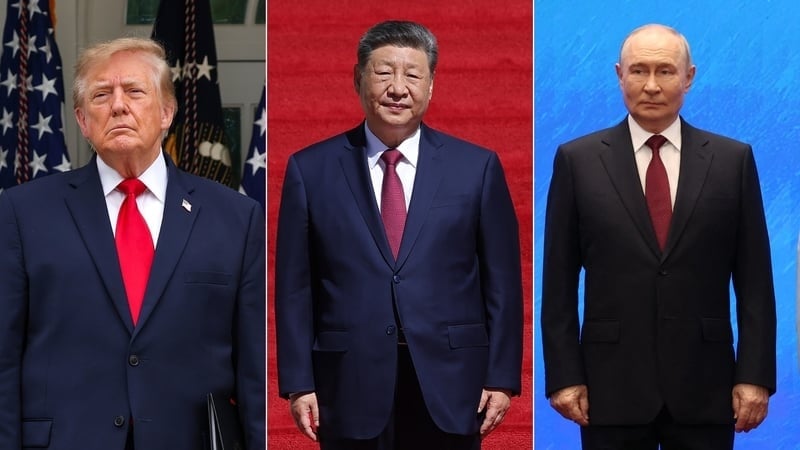
Framing is largely neutral and attribution-driven, relying on White House and unnamed US officials to describe planned summit topics and expected omissions.
Helium Analysis
Limitations: The supplied text is short and relies on anonymous US officials; some specific details are not independently corroborated within the text.
·
16 of 55 available dimensions scored; omitted dimensions are not treated as neutral.
·
Verified supporting quotes for 16 of 16 scored dimensions.
Claim: The report does not frame the summit in left-right ideological terms.
“the White House has said” · exact text match
Why: Attribution to the White House rather than partisan characterization supports measured neutrality on the liberal-conservative dimension.
Claim: No populist or elitist appeal is present; the report attributes plans to official spokespeople.
“White House spokeswoman Olivia Wales told reporters” · exact text match
Why: Institutional sourcing is used descriptively, not to champion elites or mobilize populist sentiment.
Claim: The report describes a diplomatic meeting without advocating more or less state authority.
“The three leaders will meet on the sidelines of the Asia-Pacific Economic Cooperation summit” · exact text match
Why: No libertarian or authoritarian policy advocacy is visible.
Claim: The report is predominantly objective, relying on attributed statements and official expectations.
“the White House has said” · exact text match
“US officials said” · exact text match
Why: Sourcing and attribution keep the framing descriptive rather than subjective.
Claim: The presentation is measured and non-sensational.
“However, he is not expected to discuss Russia's war with Ukraine, US officials said.” · exact text match
Why: Cautious wording and absence of dramatic language indicate an objective rather than sensational style.
Claim: The article is descriptive, reporting planned meetings and topics without prescribing policy.
“will hold the first ever three-way meeting” · exact text match
“is not expected to discuss” · exact text match
Why: The text describes announced plans and expectations rather than recommending action.
Claim: The report is fact-based and avoids explicit editorial opinion.
“the officials said” · exact text match
Why: Claims are attributed rather than presented as the publisher's opinion.
Claim: The subject is explicitly political and diplomatic.
“Donald Trump, Vladimir Putin and Xi Jinping will hold the first ever three-way meeting” · exact text match
Why: The report centers on heads of state and a geopolitical summit.
Claim: The report is largely straightforward but does not substantially oversimplify.
“Washington has a "whole other track" of negotiations with Kyiv and Moscow aimed at ending the war in Ukraine” · exact text match
Why: It notes a separate Ukraine negotiation track, adding some nuance.
Claim: The article's claims rest almost entirely on White House and anonymous official authority.
“the White House has said” · exact text match
“a senior US official, speaking on condition of anonymity, told reporters” · exact text match
Why: The sourcing pattern is authority-based, though typical for diplomatic reporting.
Claim: The report uses attributed expectations rather than unsupported certainty.
“is not expected to discuss” · exact text match
“officials said” · exact text match
Why: Hedged, attributed forecasts indicate low overconfidence.
Claim: The report relies heavily on White House and unnamed US officials without competing independent voices.
“the White House has said” · exact text match
“a senior US official, speaking on condition of anonymity, told reporters” · exact text match
Why: Official-source reliance gives a slight pro-establishment tilt, though it is standard diplomatic reporting.
Claim: The article shows conventional credible sourcing and attribution.
“White House spokeswoman Olivia Wales told reporters” · exact text match
“the officials said” · exact text match
Why: Named and unnamed official attribution plus direct quotes support credibility, while anonymous sourcing limits it.
Claim: The report is factually structured and uses cautious attribution rather than emotional or irrational appeals.
“However, he is not expected to discuss Russia's war with Ukraine, US officials said.” · exact text match
Why: The use of expected and not expected language with official attribution supports a mildly rational presentation.
Claim: The report forecasts meeting topics and non-topics based on official expectations.
“is not expected to discuss” · exact text match
“will hold the first ever three-way meeting” · exact text match
Why: Future plans and expected omissions make the report partly speculative, though grounded in official statements.
Claim: The report attributes claims and distinguishes expectations from confirmed events.
“is not expected to discuss” · exact text match
“officials said” · exact text match
Why: Clear attribution and hedging support an above-neutral integrity signal.
The supplied text is short and relies on anonymous US officials; some specific details are not independently corroborated within the text.
November 14, 2026 · 0 shares
Framing is largely neutral and source-attributed, with a 'historic' label for the planned trilateral meeting balanced by caveats that Moscow and Beijing have not commented and no agreement is expected.
Helium Analysis
Limitations: The supplied text includes unrelated teaser links and formatting artifacts, and one attribution has a missing outlet name; analysis is limited to the main report.
·
10 of 55 available dimensions scored; omitted dimensions are not treated as neutral.
·
Verified supporting quotes for 10 of 10 scored dimensions.
Claim: Framing mostly reports attributed plans and official statements rather than publisher opinion.
“the White House has said” · exact text match
“an unnamed, senior American official said, according to news agencies AP and Reuters” · exact text match
Why: Attribution to officials and wire agencies keeps the account reportorial.
Claim: The report uses a 'historic' characterization but is otherwise measured and caveated.
“The historic meeting between the leaders of the US, Russia and China will take place” · exact text match
“No agreement was expected to follow the talks” · exact text match
Why: A single significance label is balanced by explicit low expectations, so the overall tone is not strongly sensational.
Claim: The planned trilateral meeting is presented as a major, unusual geopolitical event.
“The historic meeting between the leaders of the US, Russia and China” · exact text match
Why: The subject and 'historic' label signal high newsworthiness.
Claim: The report describes planned events and official statements without advocating a policy.
“the White House has said” · exact text match
“No agreement was expected to follow the talks” · exact text match
Why: No prescriptive recommendation appears; the content is descriptive.
Claim: The report is explicitly about a planned meeting of national political leaders and a summit.
“Donald Trump, Vladimir Putin and Xi Jinping are planning to meet on the sidelines of a summit in China next week” · exact text match
Why: The subject is high-level politics and statecraft, making the coverage political.
Claim: Sourcing is visible through a named White House spokeswoman, wire agencies, state media, and caveats.
“spokeswoman Olivia Wales told reporters” · exact text match
“according to news agencies AP and Reuters” · exact text match
Why: Multiple attributed sources and acknowledged gaps support credibility.
Claim: The report relies on attributed statements and explicitly notes unresolved confirmation and expected outcomes.
“Moscow and Beijing are yet to comment.” · exact text match
“No agreement was expected to follow the talks, an unnamed, senior American official said, according to news agencies AP and Reuters.” · exact text match
Why: Caveats and sourcing indicate evidence-bounded reporting rather than emotional or irrational reasoning.
Claim: The report includes forward-looking expectations about topics and outcomes.
“It is understood Iran may also be discussed during the meeting” · exact text match
“No agreement was expected to follow the talks” · exact text match
Why: Future agenda and expected outcome are forecasts, though attributed and hedged.
Claim: The report discloses key limits: no comment from Moscow or Beijing and no expected agreement.
“Moscow and Beijing are yet to comment.” · exact text match
“No agreement was expected to follow the talks” · exact text match
Why: Explicitly flagging unconfirmed parties and low expected outcomes shows fairness and honesty.
Claim: The report is structured with attribution, context, and caveats rather than simplistic assertion.
“A nuclear weapons control treaty between the US and Russia expired in February” · exact text match
“Moscow and Beijing are yet to comment.” · exact text match
Why: Contextualizing arms control and confirmation status shows analytical coherence.
The supplied text includes unrelated teaser links and formatting artifacts, and one attribution has a missing outlet name; analysis is limited to the main report.
November 14, 2026 · 0 shares
Framing is largely neutral and attribution-driven, relying on White House and unnamed US officials to describe planned summit topics and expected omissions.
Helium Analysis
Limitations: The supplied text is short and relies on anonymous US officials; some specific details are not independently corroborated within the text.
·
16 of 55 available dimensions scored; omitted dimensions are not treated as neutral.
·
Verified supporting quotes for 16 of 16 scored dimensions.
Claim: The report does not frame the summit in left-right ideological terms.
“the White House has said” · exact text match
Why: Attribution to the White House rather than partisan characterization supports measured neutrality on the liberal-conservative dimension.
Claim: No populist or elitist appeal is present; the report attributes plans to official spokespeople.
“White House spokeswoman Olivia Wales told reporters” · exact text match
Why: Institutional sourcing is used descriptively, not to champion elites or mobilize populist sentiment.
Claim: The report describes a diplomatic meeting without advocating more or less state authority.
“The three leaders will meet on the sidelines of the Asia-Pacific Economic Cooperation summit” · exact text match
Why: No libertarian or authoritarian policy advocacy is visible.
Claim: The report is predominantly objective, relying on attributed statements and official expectations.
“the White House has said” · exact text match
“US officials said” · exact text match
Why: Sourcing and attribution keep the framing descriptive rather than subjective.
Claim: The presentation is measured and non-sensational.
“However, he is not expected to discuss Russia's war with Ukraine, US officials said.” · exact text match
Why: Cautious wording and absence of dramatic language indicate an objective rather than sensational style.
Claim: The article is descriptive, reporting planned meetings and topics without prescribing policy.
“will hold the first ever three-way meeting” · exact text match
“is not expected to discuss” · exact text match
Why: The text describes announced plans and expectations rather than recommending action.
Claim: The report is fact-based and avoids explicit editorial opinion.
“the officials said” · exact text match
Why: Claims are attributed rather than presented as the publisher's opinion.
Claim: The subject is explicitly political and diplomatic.
“Donald Trump, Vladimir Putin and Xi Jinping will hold the first ever three-way meeting” · exact text match
Why: The report centers on heads of state and a geopolitical summit.
Claim: The report is largely straightforward but does not substantially oversimplify.
“Washington has a "whole other track" of negotiations with Kyiv and Moscow aimed at ending the war in Ukraine” · exact text match
Why: It notes a separate Ukraine negotiation track, adding some nuance.
Claim: The article's claims rest almost entirely on White House and anonymous official authority.
“the White House has said” · exact text match
“a senior US official, speaking on condition of anonymity, told reporters” · exact text match
Why: The sourcing pattern is authority-based, though typical for diplomatic reporting.
Claim: The report uses attributed expectations rather than unsupported certainty.
“is not expected to discuss” · exact text match
“officials said” · exact text match
Why: Hedged, attributed forecasts indicate low overconfidence.
Claim: The report relies heavily on White House and unnamed US officials without competing independent voices.
“the White House has said” · exact text match
“a senior US official, speaking on condition of anonymity, told reporters” · exact text match
Why: Official-source reliance gives a slight pro-establishment tilt, though it is standard diplomatic reporting.
Claim: The article shows conventional credible sourcing and attribution.
“White House spokeswoman Olivia Wales told reporters” · exact text match
“the officials said” · exact text match
Why: Named and unnamed official attribution plus direct quotes support credibility, while anonymous sourcing limits it.
Claim: The report is factually structured and uses cautious attribution rather than emotional or irrational appeals.
“However, he is not expected to discuss Russia's war with Ukraine, US officials said.” · exact text match
Why: The use of expected and not expected language with official attribution supports a mildly rational presentation.
Claim: The report forecasts meeting topics and non-topics based on official expectations.
“is not expected to discuss” · exact text match
“will hold the first ever three-way meeting” · exact text match
Why: Future plans and expected omissions make the report partly speculative, though grounded in official statements.
Claim: The report attributes claims and distinguishes expectations from confirmed events.
“is not expected to discuss” · exact text match
“officials said” · exact text match
Why: Clear attribution and hedging support an above-neutral integrity signal.
The supplied text is short and relies on anonymous US officials; some specific details are not independently corroborated within the text.
November 14, 2026 · 0 shares
Framing is largely neutral and source-attributed, with a 'historic' label for the planned trilateral meeting balanced by caveats that Moscow and Beijing have not commented and no agreement is expected.
Helium Analysis
Limitations: The supplied text includes unrelated teaser links and formatting artifacts, and one attribution has a missing outlet name; analysis is limited to the main report.
·
10 of 55 available dimensions scored; omitted dimensions are not treated as neutral.
·
Verified supporting quotes for 10 of 10 scored dimensions.
Claim: Framing mostly reports attributed plans and official statements rather than publisher opinion.
“the White House has said” · exact text match
“an unnamed, senior American official said, according to news agencies AP and Reuters” · exact text match
Why: Attribution to officials and wire agencies keeps the account reportorial.
Claim: The report uses a 'historic' characterization but is otherwise measured and caveated.
“The historic meeting between the leaders of the US, Russia and China will take place” · exact text match
“No agreement was expected to follow the talks” · exact text match
Why: A single significance label is balanced by explicit low expectations, so the overall tone is not strongly sensational.
Claim: The planned trilateral meeting is presented as a major, unusual geopolitical event.
“The historic meeting between the leaders of the US, Russia and China” · exact text match
Why: The subject and 'historic' label signal high newsworthiness.
Claim: The report describes planned events and official statements without advocating a policy.
“the White House has said” · exact text match
“No agreement was expected to follow the talks” · exact text match
Why: No prescriptive recommendation appears; the content is descriptive.
Claim: The report is explicitly about a planned meeting of national political leaders and a summit.
“Donald Trump, Vladimir Putin and Xi Jinping are planning to meet on the sidelines of a summit in China next week” · exact text match
Why: The subject is high-level politics and statecraft, making the coverage political.
Claim: Sourcing is visible through a named White House spokeswoman, wire agencies, state media, and caveats.
“spokeswoman Olivia Wales told reporters” · exact text match
“according to news agencies AP and Reuters” · exact text match
Why: Multiple attributed sources and acknowledged gaps support credibility.
Claim: The report relies on attributed statements and explicitly notes unresolved confirmation and expected outcomes.
“Moscow and Beijing are yet to comment.” · exact text match
“No agreement was expected to follow the talks, an unnamed, senior American official said, according to news agencies AP and Reuters.” · exact text match
Why: Caveats and sourcing indicate evidence-bounded reporting rather than emotional or irrational reasoning.
Claim: The report includes forward-looking expectations about topics and outcomes.
“It is understood Iran may also be discussed during the meeting” · exact text match
“No agreement was expected to follow the talks” · exact text match
Why: Future agenda and expected outcome are forecasts, though attributed and hedged.
Claim: The report discloses key limits: no comment from Moscow or Beijing and no expected agreement.
“Moscow and Beijing are yet to comment.” · exact text match
“No agreement was expected to follow the talks” · exact text match
Why: Explicitly flagging unconfirmed parties and low expected outcomes shows fairness and honesty.
Claim: The report is structured with attribution, context, and caveats rather than simplistic assertion.
“A nuclear weapons control treaty between the US and Russia expired in February” · exact text match
“Moscow and Beijing are yet to comment.” · exact text match
Why: Contextualizing arms control and confirmation status shows analytical coherence.
The supplied text includes unrelated teaser links and formatting artifacts, and one attribution has a missing outlet name; analysis is limited to the main report.
The report is largely rational and descriptive but frames the summit through an establishment, Western security lens that stresses great-power risk and Ukraine’s fear of appeasement.
Helium Analysis
Limitations: The supplied text includes login/subscription boilerplate and apparent typographical or consistency issues; bias scoring is limited to the remaining substantive article content.
·
12 of 56 available dimensions scored; omitted dimensions are not treated as neutral.
·
Verified supporting quotes for 12 of 12 scored dimensions.
Claim: The report mixes factual reporting with evaluative descriptors that subtly shape interpretation.
“a rare honour for a visiting foreign leader” · exact text match
“Putin’s prized Crimea Bridge” · exact text match
Why: These are evaluative, non-neutral descriptors, but the bulk remains event-focused.
Claim: The framing uses mild dramatic color but remains largely sober.
“greeted with a hug from his usually-reserved Chinese counterpart” · exact text match
“the high-stakes trilateral” · exact text match
Why: The colorful entrance details and 'high-stakes' phrasing add mild sensational color without tabloid excess.
Claim: The article is overwhelmingly descriptive, reporting events and statements without prescribing policy.
“The three men will meet on the sidelines on Thursday and potentially discuss Russia's war with Ukraine and the US war in Iran, as well as other flashpoints such as trade, AI and nuclear weapons.” · exact text match
Why: The central content recounts an impending meeting and quoted positions rather than recommending action.
Claim: The report frames the summit partly through security concerns and pressure on Russia, giving it a slightly hawkish tilt.
“with Kyiv urging Trump to pressure Putin to end the near five year war rather than trying to appease him” · exact text match
“It is the latest attack by the Kremlin, which has repeatedly sought to test the Nato alliance in recent months.” · exact text match
Why: Selection of Ukraine's pressure request and Kremlin/NATO tension supports a mild hawkish framing, though no military advocacy is made.
Claim: Mostly factual reporting includes some loaded evaluative phrasing.
“a rare honour for a visiting foreign leader” · exact text match
“rather than trying to appease him” · exact text match
Why: These phrases carry evaluative judgment, though the report mostly presents attributed facts and quotes.
Claim: The article is centrally about heads of state, summit diplomacy, war, sanctions, and trade policy.
“US president Donald Trump has met with Vladimir Putin and Xi Jinping in China ahead of their unprecedented three-way summit on Thursday.” · exact text match
Why: The content is overwhelmingly geopolitical and policy-focused.
Claim: The report centers great-power statecraft and institutional/elite concerns rather than ordinary or anti-establishment perspectives.
“But it has also unnerved leaders of smaller and medium economies, especially in Asia and Europe, who fear the three world powers will disregard or undermine their interests.” · exact text match
“Xi told an audience of business executives.” · exact text match
Why: Focus on leaders, business executives, and established international order concerns supports a mild pro-establishment orientation.
Claim: The report shows some attribution and multiple perspectives but also unsourced characterizations and no named sourcing for several claims.
“The Kremlin this week dismissed comparisons with the Yalta Conference as “games of political scientists”, but said the meeting will have a major impact on global affairs.” · exact text match
“Beijing said the trilateral will promote world peace.” · exact text match
Counterevidence:
“It is the latest attack by the Kremlin, which has repeatedly sought to test the Nato alliance in recent months.” · exact text match
Why: Attributed official statements support credibility, but the lack of named sourcing and presence of loaded characterizations keep it moderate-low.
Claim: The report largely relies on attributed statements and contextual comparison rather than unsupported assertion, though some interpretive framing is present.
“The Kremlin this week dismissed comparisons with the Yalta Conference as “games of political scientists”, but said the meeting will have a major impact on global affairs.” · exact text match
“Beijing said the trilateral will promote world peace.” · exact text match
Counterevidence:
“It is the latest attack by the Kremlin, which has repeatedly sought to test the Nato alliance in recent months.” · exact text match
Why: Attributed official statements and acknowledged uncertainty support a rational classification, while loaded framing elsewhere limits it to moderate.
Claim: The report includes future-oriented forecasts and potential consequences beyond confirmed events.
“The three men will meet on the sidelines on Thursday and potentially discuss Russia's war with Ukraine and the US war in Iran, as well as other flashpoints such as trade, AI and nuclear weapons.” · exact text match
“who fear the three world powers will disregard or undermine their interests” · exact text match
Why: The agenda is stated with 'potentially' and the consequences are framed as fears, making a moderate share of the content speculative.
Claim: The report includes attributed statements from multiple sides, though some framing is loaded.
“The Kremlin this week dismissed comparisons with the Yalta Conference as “games of political scientists”, but said the meeting will have a major impact on global affairs.” · exact text match
“Beijing said the trilateral will promote world peace.” · exact text match
Why: Attribution of Kremlin and Beijing positions signals fairness, but loaded descriptors reduce the score.
Claim: The report provides historical analogy and multiple actor perspectives to contextualize the summit.
“The gathering has drawn comparisons with the 1945 Yalta Conference between the US, Britain and the Soviet Union that formalised spheres of influence, set the stage for the post-World War Two order and became shorthand for great-power deals imposed on smaller countries.” · exact text match
Why: Historical context and multi-actor framing indicate above-average article intelligence.
The supplied text includes login/subscription boilerplate and apparent typographical or consistency issues; bias scoring is limited to the remaining substantive article content.
November 18, 2026 · 0 shares
The framing is largely wire-service-neutral and attribution-driven, but it foregrounds Kyiv and European concerns that a Xi–Putin–Trump summit could settle Ukraine’s future without them.
Helium Analysis
Limitations: The supplied text mixes substantive reporting with extensive boilerplate and related-link content; scores are based only on the article passages about the Xi–Putin talks and planned Trump summit.
·
8 of 56 available dimensions scored; omitted dimensions are not treated as neutral.
·
Verified supporting quotes for 8 of 8 scored dimensions.
Claim: Contested and forward-looking claims are generally attributed to news agencies, governments, or officials rather than presented as the publisher’s opinion.
“Chinese and Russian news agencies reported that the two leaders began talks around midday on Wednesday.” · exact text match
“Beijing has said only that the leaders will hold “in-depth exchanges on safeguarding world peace and promoting strategic stability in major-power relations”” · exact text match
Why: The wording repeatedly credits sources and official statements, though the selection of Western-capital concerns adds a mild subjective frame.
Claim: The prose is largely factual and non-sensational, with routine diplomatic reporting language.
“Chinese and Russian news agencies reported that the two leaders began talks around midday on Wednesday.” · exact text match
“Beijing has said only that the leaders will hold “in-depth exchanges on safeguarding world peace and promoting strategic stability in major-power relations”” · exact text match
Why: It avoids dramatic or alarmist phrasing, though “first-of-its-kind” adds some emphasis.
Claim: The article is predominantly descriptive, reporting talks, agendas, and statements rather than advocating a policy.
“Beijing has said only that the leaders will hold “in-depth exchanges on safeguarding world peace and promoting strategic stability in major-power relations” on the sidelines of the Asia-Pacific Economic Cooperation (APEC) meeting.” · exact text match
Why: It describes official positions and meeting plans without prescribing what should be done.
Claim: The report is centrally about high-level geopolitical summitry involving Xi, Putin, and Trump.
“Chinese President Xi Jinping and Russian President Vladimir Putin are holding talks in Shenzhen, a day before a first-of-its-kind trilateral summit with US President Donald Trump in the southern Chinese city.” · exact text match
Why: The lead and body focus on state leaders, diplomacy, and security agendas, making the content highly political.
Claim: The report primarily relays official government positions and Western-capital concerns rather than anti-establishment perspectives.
“Thursday’s meeting has raised concern in Kyiv and European capitals that the three leaders could settle Ukraine’s future without them and divide the world into modern spheres of influence.” · exact text match
“According to Washington, the Iran war and nuclear disarmament are also on the table after the US-Russia bilateral nuclear weapons treaty expired in February.” · exact text match
Why: Official sources and allied-capital anxieties are prominent, though the article does not explicitly endorse them.
Claim: The report attributes key claims to named institutions and officials and notes unresolved or changing details.
“Secretary of State Marco Rubio, speaking in Manila, stopped short of confirming a Kim meeting but said engagement was the only way to resolve problems with North Korea.” · exact text match
“Washington initially said Ukraine was not expected to be on the agenda, but Trump later said it would be.” · exact text match
Why: Attribution and explicit hedging about agenda and meetings support credibility, despite limited sourcing in a short wire-style report.
Claim: The report highlights a speculative consequence of the summit—that it could settle Ukraine’s future without Kyiv and Europe—while attributing the concern to others.
“Thursday’s meeting has raised concern in Kyiv and European capitals that the three leaders could settle Ukraine’s future without them and divide the world into modern spheres of influence.” · exact text match
Why: Forward-looking “could” framing about geopolitical consequences is present, though it is attributed rather than asserted as fact.
Claim: The report generally distinguishes between official positions, news agency reports, and unconfirmed possibilities.
“Washington initially said Ukraine was not expected to be on the agenda, but Trump later said it would be.” · exact text match
“Beijing has said only that the leaders will hold “in-depth exchanges on safeguarding world peace and promoting strategic stability in major-power relations”” · exact text match
Why: It notes changes and limits in official statements, indicating fair handling rather than suppressing ambiguity.
The supplied text mixes substantive reporting with extensive boilerplate and related-link content; scores are based only on the article passages about the Xi–Putin talks and planned Trump summit.
November 18, 2026 · 0 shares
The report frames the Xi-Putin-Trump summit with dramatic, speculative language about great-power spheres of influence while relying on attributed official statements.
Helium Analysis
Limitations: The supplied text includes duplicated paragraphs and an embedded list, so the analysis relies on the main narrative and may miss omitted context.
·
8 of 56 available dimensions scored; omitted dimensions are not treated as neutral.
·
Verified supporting quotes for 7 of 8 scored dimensions.
Claim: The article uses evaluative, dramatic language to characterize the summit's stakes.
“Thursday's trilateral has triggered fears that the three powerful men could decide the fate of Ukraine over the heads of Kyiv and Europe, and seek to carve up the world into 21st-century spheres of influence.” · exact text match
Why: The 'fate' and 'carve up' phrasing is interpretive and dramatic rather than strictly factual.
Claim: The article heightens drama with terms such as 'historic' and 'carve up'.
“a historic three-way summit with Donald Trump” · exact text match
“seek to carve up the world into 21st-century spheres of influence” · exact text match
Why: Such language adds sensational emphasis to a diplomatic meeting.
Claim: The article reports events and quotations without prescribing policy.
“Xi urged closer ties with Moscow, saying the nations should "leverage the mechanisms for exchanges between the two countries' governments, legislative bodies, militaries and political parties".” · not found in supplied text
Why: The text describes diplomatic developments rather than advancing a recommendation.
Claim: The report foregrounds fear about the summit's consequences.
“Thursday's trilateral has triggered fears that the three powerful men could decide the fate of Ukraine over the heads of Kyiv and Europe” · exact text match
Why: Explicit 'fears' language is central in the lead, though attributed to unspecified concerns.
Claim: The article is centrally focused on high-level geopolitics and statecraft.
“Chinese leader Xi Jinping and Russian counterpart Vladimir Putin began talks in Shenzhen on Wednesday, a day ahead of a historic three-way summit with Donald Trump in the southern Chinese city.” · exact text match
Why: The entire report concerns heads of state, diplomacy, war, sanctions, and summit agendas, making it highly political.
Claim: The report carries a negative, threat-oriented tone.
“Thursday's trilateral has triggered fears that the three powerful men could decide the fate of Ukraine over the heads of Kyiv and Europe” · exact text match
“a combative Trump showed no let-up in his trade war with Beijing” · exact text match
Why: Fear and combat metaphors color the coverage negatively.
Claim: Key claims are attributed to official sources and reported with some hedging.
“according to Washington” · exact text match
“Russian officials said” · exact text match
Why: Attribution and uncertainty markers support moderate credibility.
Claim: The lead speculates about possible outcomes of the trilateral summit.
“could decide the fate of Ukraine over the heads of Kyiv and Europe, and seek to carve up the world into 21st-century spheres of influence” · exact text match
Why: The article forecasts geopolitical consequences rather than reporting decisions that have occurred.
The supplied text includes duplicated paragraphs and an embedded list, so the analysis relies on the main narrative and may miss omitted context.
November 18, 2026 · 0 shares
Attribution-heavy and measured reporting presents Putin's economic claims as quoted assertions while adding an analyst's skeptical forecast about the summit's concrete value.
APEC is a regional economic forum whose CEO Summit convenes business and government leaders.
Helium Analysis
Limitations: The supplied text is brief and includes subscription/legal boilerplate; no byline is present.
·
7 of 56 available dimensions scored; omitted dimensions are not treated as neutral.
·
Verified supporting quotes for 7 of 7 scored dimensions.
Claim: Reporting is predominantly objective and attribution-based rather than subjective commentary.
“Putin said, according to an official English translation” · exact text match
Counterevidence:
“in a historic meeting” · exact text match
Why: Most claims are attributed to Putin or other sources, though 'historic' adds a mild subjective descriptor.
Claim: The report is measured and avoids sensational language.
“Putin said, according to an official English translation” · exact text match
Why: Attribution and restrained wording indicate low sensationalism, though the topic involves war and leaders.
Claim: The report describes events and attributed claims without prescribing policy.
“Putin used the speech to emphasize Russia's economic resilience despite U.S. sanctions” · exact text match
Why: The wording reports what happened rather than recommending action.
Claim: The report centers on geopolitical leaders, sanctions, and potential war discussions.
“The Russian leader is set to hold talks on Thursday with Xi and U.S. President Donald Trump in a historic meeting” · exact text match
Why: The subject matter is explicitly political and geopolitical, supporting a high political-content score.
Claim: The report provides clear sourcing and attribution for its key claims.
“according to an official English translation” · exact text match
“David Roche, strategist at Quantum Strategy, told” · exact text match
Why: Visible attribution to official and expert sources supports credibility within the supplied text.
Claim: The report includes some forecasting about the summit's agenda and likely outcome.
“could see a wide range of issues being discussed” · exact text match
“The summit will likely yield little concrete result” · exact text match
Why: Both phrases forecast possibilities, though one is attributed to an analyst.
Claim: The report identifies source status and official translation, indicating transparent attribution.
“according to an official English translation” · exact text match
“according to state-controlled local media Russia Today” · exact text match
Why: Labeling an official translation and a state-controlled outlet supports high internal integrity.
The supplied text is brief and includes subscription/legal boilerplate; no byline is present.
The report pairs Ukrainian and Russian bridge attacks with attributed official claims, while adopting the internationally aligned term 'occupied Crimean Peninsula' for Crimea.
The Kerch Bridge is a vital supply route for Russian troops and carries symbolic importance for Putin; it has been repeatedly attacked since February 2022 after Russia annexed Crimea in 2014.
Helium Analysis
Limitations: The supplied text includes an array-format artifact and trailing subscription/navigation boilerplate; analysis excludes those and relies on the visible article content.
·
7 of 56 available dimensions scored; omitted dimensions are not treated as neutral.
·
Verified supporting quotes for 7 of 7 scored dimensions.
Claim: The report is largely descriptive and attributes contested claims.
“CNN reported the development” · exact text match
“According to Russian state media” · exact text match
Counterevidence:
“occupied Crimean Peninsula” · exact text match
Why: Attribution reduces subjectivity, though the loaded territorial term is a countervailing frame.
Claim: Coverage is measured and avoids sensational language, relying on official damage assessments.
“experts are assessing the damage” · exact text match
“there were no casualties” · exact text match
Why: Measured language and official assessments support an objective rather than sensational framing.
Claim: The content is centrally about war, state attacks, and leaders' diplomacy.
“Russia-Ukraine war” · exact text match
“Putin's scheduled meeting with his US and Chinese counterparts, Donald Trump and Xi Jinping” · exact text match
Why: The report is explicitly framed around interstate war and high-level political meetings.
Claim: Credibility is supported by named attribution and acknowledgment of unresolved details, though it relies on secondary and state media.
“CNN reported the development” · exact text match
“According to Russian state media” · exact text match
“the extent of the damage and whether there were any casualties were still being clarified on Tuesday” · exact text match
Why: Attribution and uncertainty language support moderate credibility, while reliance on secondary and state media limits the score.
Claim: The report acknowledges uncertainty and attributes official assessments.
“the extent of the damage and whether there were any casualties were still being clarified on Tuesday” · exact text match
“experts are assessing the damage” · exact text match
Why: Qualifying unresolved details and attributing assessments to officials supports a rational, evidence-bounded presentation.
Claim: The report attributes contested claims and includes both Ukrainian and Russian actions.
“CNN reported the development” · exact text match
“Moscow said its forces had struck Ukrainian military, transport, energy and port facilities” · exact text match
Why: Including sourced claims from both sides indicates moderate internal fairness and honesty signals.
Claim: The report supplies quantitative context and official statements from both sides.
“built for $3.7 billion” · exact text match
“designed to accommodate 40,000 vehicles daily” · exact text match
Why: Specific figures and multi-source official statements indicate moderate informational depth.
The supplied text includes an array-format artifact and trailing subscription/navigation boilerplate; analysis excludes those and relies on the visible article content.
November 17, 2026 · 0 shares
Attribution-heavy and neutral reporting presents Ukrainian and Russian bridge strikes through official claims and hedged damage assessments.
Helium Analysis
Limitations: The report is short and has no byline; assessment is limited to visible sourcing and wording, with no independent verification of battlefield claims.
·
6 of 56 available dimensions scored; omitted dimensions are not treated as neutral.
·
Verified supporting quotes for 6 of 6 scored dimensions.
Claim: Reports both sides' actions with attributed official statements rather than subjective evaluation.
“Ukraine struck Russia's Crimean bridge for the second night in a row on Tuesday, shutting it down, while Russia hit two major bridges in Kyiv” · exact text match
Why: The passage presents competing actions in a factual, evenly attributed manner.
Claim: Uses hedged language for unverified damage rather than dramatizing it.
“appeared to inflict significant damage” · exact text match
Why: The cautious wording indicates restraint in describing the bridge damage.
Claim: Reports events and official statements without prescribing action or making value judgments.
“"The Southern Bridge was damaged.
Traffic across the bridge has been closed," the city administration said”
· exact text match
Why: The article supplies descriptive details and avoids recommendations.
Claim: Centers on geopolitical conflict and a meeting of national leaders.
“ahead of a historic meeting between U.S. President Donald Trump” · exact text match
Why: The framing ties bridge attacks directly to high-level international politics.
Claim: Visible sourcing and hedged language support credibility, though key claims lack independent verification.
“state media reported Tuesday” · exact text match
“appeared to inflict significant damage” · exact text match
“Kyiv authorities said on social media” · exact text match
Why: The report attributes claims and signals uncertainty, but depends on official statements without independent confirmation.
Claim: Balances competing accounts and attributes official claims.
“Russia's defense ministry said air defense forces downed 1,441 Ukrainian drones overnight.” · exact text match
“Kyiv authorities said on social media” · exact text match
Why: Including both Russian and Ukrainian official accounts supports fair handling of the reported events.
The report is short and has no byline; assessment is limited to visible sourcing and wording, with no independent verification of battlefield claims.
The headline foregrounds Ukraine's normative appeal to Trump and Xi to confront Putin, attributing the prescription only at the end and supplying no further sourcing or context.
The report refers to Russia's ongoing war in Ukraine.
Helium Analysis
Limitations: Supplied text is only a headline and image caption, with no article body or sourcing detail.
·
1 of 56 available dimensions scored; omitted dimensions are not treated as neutral.
·
Verified supporting quotes for 1 of 1 scored dimensions.
Claim: The headline is explicitly political, concerning heads of state and a war-diplomacy demand.
“Donald Trump and Xi Jinping should press Vladimir Putin to end war, not appease him, Ukraine says.” · exact text match
Why: The content centers on international political leaders and a call to pressure Russia, making political framing dominant.
Supplied text is only a headline and image caption, with no article body or sourcing detail.
November 18, 2026 · 0 shares
Predominantly neutral, attributed diplomatic reporting that frames Russia's invasion as illegal and presents Australia's preference for dialogue and Ukraine's terms without overt partisan or sensational language.
Helium Analysis
Limitations: The supplied text includes unrelated sidebar headlines and boilerplate; scores reflect only the main APEC/Albanese report.
·
7 of 56 available dimensions scored; omitted dimensions are not treated as neutral.
·
Verified supporting quotes for 6 of 7 scored dimensions.
Claim: The report is largely objective, attributing contested diplomatic positions to named speakers rather than asserting them subjectively.
“Asked if it was appropriate for Ukraine to be discussed at the meeting between the US, China and Russia, Mr Albanese said it was "not up to Australia to determine who people have met with".” · exact text match
Why: Attribution of the disputed point to Mr Albanese supports low subjectivity.
Claim: The report uses measured language about diplomacy rather than sensational framing.
“But Mr Albanese said "in general" it was a "good thing that dialogue happens" between countries.” · exact text match
Why: The selected quote and surrounding reporting are restrained, not sensational.
Claim: The article is predominantly descriptive, reporting events and attributed statements rather than prescribing policy in its own voice.
“The prime minister arrived in Shenzhen on Tuesday afternoon ahead of the Asia-Pacific Economic Cooperation (APEC) summit where he reiterated Australia's opposition to Russia's invasion of Ukraine.” · exact text match
Why: Factual narration of the prime minister's arrival and statements supports descriptive framing.
Claim: The report is centrally political, focused on leaders, diplomacy, war, and trade policy.
“Anthony Albanese says Moscow's illegal war must end on "Ukraine's terms" as he calls for a de-escalation of global conflicts ahead of landmark talks between the US, China and Russia.” · not found in supplied text
Why: The headline and lede concern high-level political and diplomatic negotiations.
Claim: Credibility is supported by named attribution, direct quotes, and inclusion of competing perspectives.
“Asked whether he would follow Tony Abbott's confrontational approach to Mr Putin, Mr Albanese said he would not take lessons in diplomacy from the former prime minister.” · exact text match
“Ukrainian President Volodymyr Zelenskyy has warned against the three leaders deciding his country's future without Kyiv at the table, likening the trilateral to a modern-day Yalta conference where in 1945, allies negotiated post-war settlements in Europe.” · exact text match
Why: Named sources, direct quotations, and an alternative warning support visible credibility.
Claim: The report relies on attributed, qualified statements rather than emotive or fallacious reasoning.
“Asked if it was appropriate for Ukraine to be discussed at the meeting between the US, China and Russia, Mr Albanese said it was "not up to Australia to determine who people have met with".” · exact text match
Why: Direct attribution and cautious wording indicate rational rather than irrational presentation.
Claim: The report includes direct attribution and a critical perspective from Zelenskyy, supporting high internal fairness.
“Ukrainian President Volodymyr Zelenskyy has warned against the three leaders deciding his country's future without Kyiv at the table, likening the trilateral to a modern-day Yalta conference where in 1945, allies negotiated post-war settlements in Europe.” · exact text match
“Asked whether he would follow Tony Abbott's confrontational approach to Mr Putin, Mr Albanese said he would not take lessons in diplomacy from the former prime minister.” · exact text match
Why: Inclusion of multiple named perspectives and direct quotes is a visible fairness signal.
The supplied text includes unrelated sidebar headlines and boilerplate; scores reflect only the main APEC/Albanese report.
November 14, 2026 · 0 shares
Framing is largely neutral and attribution-driven, relying on White House and unnamed US officials to describe planned summit topics and expected omissions.
Helium Analysis Limitations: The supplied text is short and relies on anonymous US officials; some specific details are not independently corroborated within the text. · 16 of 55 available dimensions scored; omitted dimensions are not treated as neutral. · Verified supporting quotes for 16 of 16 scored dimensions.
Claim: The report does not frame the summit in left-right ideological terms.
“the White House has said” · exact text match
Why: Attribution to the White House rather than partisan characterization supports measured neutrality on the liberal-conservative dimension.
Claim: No populist or elitist appeal is present; the report attributes plans to official spokespeople.
“White House spokeswoman Olivia Wales told reporters” · exact text match
Why: Institutional sourcing is used descriptively, not to champion elites or mobilize populist sentiment.
Claim: The report describes a diplomatic meeting without advocating more or less state authority.
“The three leaders will meet on the sidelines of the Asia-Pacific Economic Cooperation summit” · exact text match
Why: No libertarian or authoritarian policy advocacy is visible.
Claim: The report is predominantly objective, relying on attributed statements and official expectations.
“the White House has said” · exact text match
“US officials said” · exact text match
Why: Sourcing and attribution keep the framing descriptive rather than subjective.
Claim: The presentation is measured and non-sensational.
“However, he is not expected to discuss Russia's war with Ukraine, US officials said.” · exact text match
Why: Cautious wording and absence of dramatic language indicate an objective rather than sensational style.
Claim: The article is descriptive, reporting planned meetings and topics without prescribing policy.
“will hold the first ever three-way meeting” · exact text match
“is not expected to discuss” · exact text match
Why: The text describes announced plans and expectations rather than recommending action.
Claim: The report is fact-based and avoids explicit editorial opinion.
“the officials said” · exact text match
Why: Claims are attributed rather than presented as the publisher's opinion.
Claim: The subject is explicitly political and diplomatic.
“Donald Trump, Vladimir Putin and Xi Jinping will hold the first ever three-way meeting” · exact text match
Why: The report centers on heads of state and a geopolitical summit.
Claim: The report is largely straightforward but does not substantially oversimplify.
“Washington has a "whole other track" of negotiations with Kyiv and Moscow aimed at ending the war in Ukraine” · exact text match
Why: It notes a separate Ukraine negotiation track, adding some nuance.
Claim: The article's claims rest almost entirely on White House and anonymous official authority.
“the White House has said” · exact text match
“a senior US official, speaking on condition of anonymity, told reporters” · exact text match
Why: The sourcing pattern is authority-based, though typical for diplomatic reporting.
Claim: The report uses attributed expectations rather than unsupported certainty.
“is not expected to discuss” · exact text match
“officials said” · exact text match
Why: Hedged, attributed forecasts indicate low overconfidence.
Claim: The report relies heavily on White House and unnamed US officials without competing independent voices.
“the White House has said” · exact text match
“a senior US official, speaking on condition of anonymity, told reporters” · exact text match
Why: Official-source reliance gives a slight pro-establishment tilt, though it is standard diplomatic reporting.
Claim: The article shows conventional credible sourcing and attribution.
“White House spokeswoman Olivia Wales told reporters” · exact text match
“the officials said” · exact text match
Why: Named and unnamed official attribution plus direct quotes support credibility, while anonymous sourcing limits it.
Claim: The report is factually structured and uses cautious attribution rather than emotional or irrational appeals.
“However, he is not expected to discuss Russia's war with Ukraine, US officials said.” · exact text match
Why: The use of expected and not expected language with official attribution supports a mildly rational presentation.
Claim: The report forecasts meeting topics and non-topics based on official expectations.
“is not expected to discuss” · exact text match
“will hold the first ever three-way meeting” · exact text match
Why: Future plans and expected omissions make the report partly speculative, though grounded in official statements.
Claim: The report attributes claims and distinguishes expectations from confirmed events.
“is not expected to discuss” · exact text match
“officials said” · exact text match
Why: Clear attribution and hedging support an above-neutral integrity signal.
The supplied text is short and relies on anonymous US officials; some specific details are not independently corroborated within the text.
November 14, 2026 · 0 shares
Framing is largely neutral and source-attributed, with a 'historic' label for the planned trilateral meeting balanced by caveats that Moscow and Beijing have not commented and no agreement is expected.
Helium Analysis Limitations: The supplied text includes unrelated teaser links and formatting artifacts, and one attribution has a missing outlet name; analysis is limited to the main report. · 10 of 55 available dimensions scored; omitted dimensions are not treated as neutral. · Verified supporting quotes for 10 of 10 scored dimensions.
Claim: Framing mostly reports attributed plans and official statements rather than publisher opinion.
“the White House has said” · exact text match
“an unnamed, senior American official said, according to news agencies AP and Reuters” · exact text match
Why: Attribution to officials and wire agencies keeps the account reportorial.
Claim: The report uses a 'historic' characterization but is otherwise measured and caveated.
“The historic meeting between the leaders of the US, Russia and China will take place” · exact text match
“No agreement was expected to follow the talks” · exact text match
Why: A single significance label is balanced by explicit low expectations, so the overall tone is not strongly sensational.
Claim: The planned trilateral meeting is presented as a major, unusual geopolitical event.
“The historic meeting between the leaders of the US, Russia and China” · exact text match
Why: The subject and 'historic' label signal high newsworthiness.
Claim: The report describes planned events and official statements without advocating a policy.
“the White House has said” · exact text match
“No agreement was expected to follow the talks” · exact text match
Why: No prescriptive recommendation appears; the content is descriptive.
Claim: The report is explicitly about a planned meeting of national political leaders and a summit.
“Donald Trump, Vladimir Putin and Xi Jinping are planning to meet on the sidelines of a summit in China next week” · exact text match
Why: The subject is high-level politics and statecraft, making the coverage political.
Claim: Sourcing is visible through a named White House spokeswoman, wire agencies, state media, and caveats.
“spokeswoman Olivia Wales told reporters” · exact text match
“according to news agencies AP and Reuters” · exact text match
Why: Multiple attributed sources and acknowledged gaps support credibility.
Claim: The report relies on attributed statements and explicitly notes unresolved confirmation and expected outcomes.
“Moscow and Beijing are yet to comment.” · exact text match
“No agreement was expected to follow the talks, an unnamed, senior American official said, according to news agencies AP and Reuters.” · exact text match
Why: Caveats and sourcing indicate evidence-bounded reporting rather than emotional or irrational reasoning.
Claim: The report includes forward-looking expectations about topics and outcomes.
“It is understood Iran may also be discussed during the meeting” · exact text match
“No agreement was expected to follow the talks” · exact text match
Why: Future agenda and expected outcome are forecasts, though attributed and hedged.
Claim: The report discloses key limits: no comment from Moscow or Beijing and no expected agreement.
“Moscow and Beijing are yet to comment.” · exact text match
“No agreement was expected to follow the talks” · exact text match
Why: Explicitly flagging unconfirmed parties and low expected outcomes shows fairness and honesty.
Claim: The report is structured with attribution, context, and caveats rather than simplistic assertion.
“A nuclear weapons control treaty between the US and Russia expired in February” · exact text match
“Moscow and Beijing are yet to comment.” · exact text match
Why: Contextualizing arms control and confirmation status shows analytical coherence.
The supplied text includes unrelated teaser links and formatting artifacts, and one attribution has a missing outlet name; analysis is limited to the main report.
The report pairs Ukrainian and Russian bridge attacks with attributed official claims, while adopting the internationally aligned term 'occupied Crimean Peninsula' for Crimea.
The Kerch Bridge is a vital supply route for Russian troops and carries symbolic importance for Putin; it has been repeatedly attacked since February 2022 after Russia annexed Crimea in 2014.
Helium Analysis Limitations: The supplied text includes an array-format artifact and trailing subscription/navigation boilerplate; analysis excludes those and relies on the visible article content. · 7 of 56 available dimensions scored; omitted dimensions are not treated as neutral. · Verified supporting quotes for 7 of 7 scored dimensions.
Claim: The report is largely descriptive and attributes contested claims.
“CNN reported the development” · exact text match
“According to Russian state media” · exact text match
Counterevidence:
“occupied Crimean Peninsula” · exact text match
Why: Attribution reduces subjectivity, though the loaded territorial term is a countervailing frame.
Claim: Coverage is measured and avoids sensational language, relying on official damage assessments.
“experts are assessing the damage” · exact text match
“there were no casualties” · exact text match
Why: Measured language and official assessments support an objective rather than sensational framing.
Claim: The content is centrally about war, state attacks, and leaders' diplomacy.
“Russia-Ukraine war” · exact text match
“Putin's scheduled meeting with his US and Chinese counterparts, Donald Trump and Xi Jinping” · exact text match
Why: The report is explicitly framed around interstate war and high-level political meetings.
Claim: Credibility is supported by named attribution and acknowledgment of unresolved details, though it relies on secondary and state media.
“CNN reported the development” · exact text match
“According to Russian state media” · exact text match
“the extent of the damage and whether there were any casualties were still being clarified on Tuesday” · exact text match
Why: Attribution and uncertainty language support moderate credibility, while reliance on secondary and state media limits the score.
Claim: The report acknowledges uncertainty and attributes official assessments.
“the extent of the damage and whether there were any casualties were still being clarified on Tuesday” · exact text match
“experts are assessing the damage” · exact text match
Why: Qualifying unresolved details and attributing assessments to officials supports a rational, evidence-bounded presentation.
Claim: The report attributes contested claims and includes both Ukrainian and Russian actions.
“CNN reported the development” · exact text match
“Moscow said its forces had struck Ukrainian military, transport, energy and port facilities” · exact text match
Why: Including sourced claims from both sides indicates moderate internal fairness and honesty signals.
Claim: The report supplies quantitative context and official statements from both sides.
“built for $3.7 billion” · exact text match
“designed to accommodate 40,000 vehicles daily” · exact text match
Why: Specific figures and multi-source official statements indicate moderate informational depth.
The supplied text includes an array-format artifact and trailing subscription/navigation boilerplate; analysis excludes those and relies on the visible article content.
November 17, 2026 · 0 shares
Attribution-heavy and neutral reporting presents Ukrainian and Russian bridge strikes through official claims and hedged damage assessments.
Helium Analysis Limitations: The report is short and has no byline; assessment is limited to visible sourcing and wording, with no independent verification of battlefield claims. · 6 of 56 available dimensions scored; omitted dimensions are not treated as neutral. · Verified supporting quotes for 6 of 6 scored dimensions.
Claim: Reports both sides' actions with attributed official statements rather than subjective evaluation.
“Ukraine struck Russia's Crimean bridge for the second night in a row on Tuesday, shutting it down, while Russia hit two major bridges in Kyiv” · exact text match
Why: The passage presents competing actions in a factual, evenly attributed manner.
Claim: Uses hedged language for unverified damage rather than dramatizing it.
“appeared to inflict significant damage” · exact text match
Why: The cautious wording indicates restraint in describing the bridge damage.
Claim: Reports events and official statements without prescribing action or making value judgments.
“"The Southern Bridge was damaged. Traffic across the bridge has been closed," the city administration said” · exact text match
Why: The article supplies descriptive details and avoids recommendations.
Claim: Centers on geopolitical conflict and a meeting of national leaders.
“ahead of a historic meeting between U.S. President Donald Trump” · exact text match
Why: The framing ties bridge attacks directly to high-level international politics.
Claim: Visible sourcing and hedged language support credibility, though key claims lack independent verification.
“state media reported Tuesday” · exact text match
“appeared to inflict significant damage” · exact text match
“Kyiv authorities said on social media” · exact text match
Why: The report attributes claims and signals uncertainty, but depends on official statements without independent confirmation.
Claim: Balances competing accounts and attributes official claims.
“Russia's defense ministry said air defense forces downed 1,441 Ukrainian drones overnight.” · exact text match
“Kyiv authorities said on social media” · exact text match
Why: Including both Russian and Ukrainian official accounts supports fair handling of the reported events.
The report is short and has no byline; assessment is limited to visible sourcing and wording, with no independent verification of battlefield claims.
The report is largely rational and descriptive but frames the summit through an establishment, Western security lens that stresses great-power risk and Ukraine’s fear of appeasement.
Helium Analysis Limitations: The supplied text includes login/subscription boilerplate and apparent typographical or consistency issues; bias scoring is limited to the remaining substantive article content. · 12 of 56 available dimensions scored; omitted dimensions are not treated as neutral. · Verified supporting quotes for 12 of 12 scored dimensions.
Claim: The report mixes factual reporting with evaluative descriptors that subtly shape interpretation.
“a rare honour for a visiting foreign leader” · exact text match
“Putin’s prized Crimea Bridge” · exact text match
Why: These are evaluative, non-neutral descriptors, but the bulk remains event-focused.
Claim: The framing uses mild dramatic color but remains largely sober.
“greeted with a hug from his usually-reserved Chinese counterpart” · exact text match
“the high-stakes trilateral” · exact text match
Why: The colorful entrance details and 'high-stakes' phrasing add mild sensational color without tabloid excess.
Claim: The article is overwhelmingly descriptive, reporting events and statements without prescribing policy.
“The three men will meet on the sidelines on Thursday and potentially discuss Russia's war with Ukraine and the US war in Iran, as well as other flashpoints such as trade, AI and nuclear weapons.” · exact text match
Why: The central content recounts an impending meeting and quoted positions rather than recommending action.
Claim: The report frames the summit partly through security concerns and pressure on Russia, giving it a slightly hawkish tilt.
“with Kyiv urging Trump to pressure Putin to end the near five year war rather than trying to appease him” · exact text match
“It is the latest attack by the Kremlin, which has repeatedly sought to test the Nato alliance in recent months.” · exact text match
Why: Selection of Ukraine's pressure request and Kremlin/NATO tension supports a mild hawkish framing, though no military advocacy is made.
Claim: Mostly factual reporting includes some loaded evaluative phrasing.
“a rare honour for a visiting foreign leader” · exact text match
“rather than trying to appease him” · exact text match
Why: These phrases carry evaluative judgment, though the report mostly presents attributed facts and quotes.
Claim: The article is centrally about heads of state, summit diplomacy, war, sanctions, and trade policy.
“US president Donald Trump has met with Vladimir Putin and Xi Jinping in China ahead of their unprecedented three-way summit on Thursday.” · exact text match
Why: The content is overwhelmingly geopolitical and policy-focused.
Claim: The report centers great-power statecraft and institutional/elite concerns rather than ordinary or anti-establishment perspectives.
“But it has also unnerved leaders of smaller and medium economies, especially in Asia and Europe, who fear the three world powers will disregard or undermine their interests.” · exact text match
“Xi told an audience of business executives.” · exact text match
Why: Focus on leaders, business executives, and established international order concerns supports a mild pro-establishment orientation.
Claim: The report shows some attribution and multiple perspectives but also unsourced characterizations and no named sourcing for several claims.
“The Kremlin this week dismissed comparisons with the Yalta Conference as “games of political scientists”, but said the meeting will have a major impact on global affairs.” · exact text match
“Beijing said the trilateral will promote world peace.” · exact text match
Counterevidence:
“It is the latest attack by the Kremlin, which has repeatedly sought to test the Nato alliance in recent months.” · exact text match
Why: Attributed official statements support credibility, but the lack of named sourcing and presence of loaded characterizations keep it moderate-low.
Claim: The report largely relies on attributed statements and contextual comparison rather than unsupported assertion, though some interpretive framing is present.
“The Kremlin this week dismissed comparisons with the Yalta Conference as “games of political scientists”, but said the meeting will have a major impact on global affairs.” · exact text match
“Beijing said the trilateral will promote world peace.” · exact text match
Counterevidence:
“It is the latest attack by the Kremlin, which has repeatedly sought to test the Nato alliance in recent months.” · exact text match
Why: Attributed official statements and acknowledged uncertainty support a rational classification, while loaded framing elsewhere limits it to moderate.
Claim: The report includes future-oriented forecasts and potential consequences beyond confirmed events.
“The three men will meet on the sidelines on Thursday and potentially discuss Russia's war with Ukraine and the US war in Iran, as well as other flashpoints such as trade, AI and nuclear weapons.” · exact text match
“who fear the three world powers will disregard or undermine their interests” · exact text match
Why: The agenda is stated with 'potentially' and the consequences are framed as fears, making a moderate share of the content speculative.
Claim: The report includes attributed statements from multiple sides, though some framing is loaded.
“The Kremlin this week dismissed comparisons with the Yalta Conference as “games of political scientists”, but said the meeting will have a major impact on global affairs.” · exact text match
“Beijing said the trilateral will promote world peace.” · exact text match
Why: Attribution of Kremlin and Beijing positions signals fairness, but loaded descriptors reduce the score.
Claim: The report provides historical analogy and multiple actor perspectives to contextualize the summit.
“The gathering has drawn comparisons with the 1945 Yalta Conference between the US, Britain and the Soviet Union that formalised spheres of influence, set the stage for the post-World War Two order and became shorthand for great-power deals imposed on smaller countries.” · exact text match
Why: Historical context and multi-actor framing indicate above-average article intelligence.
The supplied text includes login/subscription boilerplate and apparent typographical or consistency issues; bias scoring is limited to the remaining substantive article content.
November 18, 2026 · 0 shares
The framing is largely wire-service-neutral and attribution-driven, but it foregrounds Kyiv and European concerns that a Xi–Putin–Trump summit could settle Ukraine’s future without them.
Helium Analysis Limitations: The supplied text mixes substantive reporting with extensive boilerplate and related-link content; scores are based only on the article passages about the Xi–Putin talks and planned Trump summit. · 8 of 56 available dimensions scored; omitted dimensions are not treated as neutral. · Verified supporting quotes for 8 of 8 scored dimensions.
Claim: Contested and forward-looking claims are generally attributed to news agencies, governments, or officials rather than presented as the publisher’s opinion.
“Chinese and Russian news agencies reported that the two leaders began talks around midday on Wednesday.” · exact text match
“Beijing has said only that the leaders will hold “in-depth exchanges on safeguarding world peace and promoting strategic stability in major-power relations”” · exact text match
Why: The wording repeatedly credits sources and official statements, though the selection of Western-capital concerns adds a mild subjective frame.
Claim: The prose is largely factual and non-sensational, with routine diplomatic reporting language.
“Chinese and Russian news agencies reported that the two leaders began talks around midday on Wednesday.” · exact text match
“Beijing has said only that the leaders will hold “in-depth exchanges on safeguarding world peace and promoting strategic stability in major-power relations”” · exact text match
Why: It avoids dramatic or alarmist phrasing, though “first-of-its-kind” adds some emphasis.
Claim: The article is predominantly descriptive, reporting talks, agendas, and statements rather than advocating a policy.
“Beijing has said only that the leaders will hold “in-depth exchanges on safeguarding world peace and promoting strategic stability in major-power relations” on the sidelines of the Asia-Pacific Economic Cooperation (APEC) meeting.” · exact text match
Why: It describes official positions and meeting plans without prescribing what should be done.
Claim: The report is centrally about high-level geopolitical summitry involving Xi, Putin, and Trump.
“Chinese President Xi Jinping and Russian President Vladimir Putin are holding talks in Shenzhen, a day before a first-of-its-kind trilateral summit with US President Donald Trump in the southern Chinese city.” · exact text match
Why: The lead and body focus on state leaders, diplomacy, and security agendas, making the content highly political.
Claim: The report primarily relays official government positions and Western-capital concerns rather than anti-establishment perspectives.
“Thursday’s meeting has raised concern in Kyiv and European capitals that the three leaders could settle Ukraine’s future without them and divide the world into modern spheres of influence.” · exact text match
“According to Washington, the Iran war and nuclear disarmament are also on the table after the US-Russia bilateral nuclear weapons treaty expired in February.” · exact text match
Why: Official sources and allied-capital anxieties are prominent, though the article does not explicitly endorse them.
Claim: The report attributes key claims to named institutions and officials and notes unresolved or changing details.
“Secretary of State Marco Rubio, speaking in Manila, stopped short of confirming a Kim meeting but said engagement was the only way to resolve problems with North Korea.” · exact text match
“Washington initially said Ukraine was not expected to be on the agenda, but Trump later said it would be.” · exact text match
Why: Attribution and explicit hedging about agenda and meetings support credibility, despite limited sourcing in a short wire-style report.
Claim: The report highlights a speculative consequence of the summit—that it could settle Ukraine’s future without Kyiv and Europe—while attributing the concern to others.
“Thursday’s meeting has raised concern in Kyiv and European capitals that the three leaders could settle Ukraine’s future without them and divide the world into modern spheres of influence.” · exact text match
Why: Forward-looking “could” framing about geopolitical consequences is present, though it is attributed rather than asserted as fact.
Claim: The report generally distinguishes between official positions, news agency reports, and unconfirmed possibilities.
“Washington initially said Ukraine was not expected to be on the agenda, but Trump later said it would be.” · exact text match
“Beijing has said only that the leaders will hold “in-depth exchanges on safeguarding world peace and promoting strategic stability in major-power relations”” · exact text match
Why: It notes changes and limits in official statements, indicating fair handling rather than suppressing ambiguity.
The supplied text mixes substantive reporting with extensive boilerplate and related-link content; scores are based only on the article passages about the Xi–Putin talks and planned Trump summit.
November 18, 2026 · 0 shares
Attribution-heavy and measured reporting presents Putin's economic claims as quoted assertions while adding an analyst's skeptical forecast about the summit's concrete value.
APEC is a regional economic forum whose CEO Summit convenes business and government leaders.
Helium Analysis Limitations: The supplied text is brief and includes subscription/legal boilerplate; no byline is present. · 7 of 56 available dimensions scored; omitted dimensions are not treated as neutral. · Verified supporting quotes for 7 of 7 scored dimensions.
Claim: Reporting is predominantly objective and attribution-based rather than subjective commentary.
“Putin said, according to an official English translation” · exact text match
Counterevidence:
“in a historic meeting” · exact text match
Why: Most claims are attributed to Putin or other sources, though 'historic' adds a mild subjective descriptor.
Claim: The report is measured and avoids sensational language.
“Putin said, according to an official English translation” · exact text match
Why: Attribution and restrained wording indicate low sensationalism, though the topic involves war and leaders.
Claim: The report describes events and attributed claims without prescribing policy.
“Putin used the speech to emphasize Russia's economic resilience despite U.S. sanctions” · exact text match
Why: The wording reports what happened rather than recommending action.
Claim: The report centers on geopolitical leaders, sanctions, and potential war discussions.
“The Russian leader is set to hold talks on Thursday with Xi and U.S. President Donald Trump in a historic meeting” · exact text match
Why: The subject matter is explicitly political and geopolitical, supporting a high political-content score.
Claim: The report provides clear sourcing and attribution for its key claims.
“according to an official English translation” · exact text match
“David Roche, strategist at Quantum Strategy, told” · exact text match
Why: Visible attribution to official and expert sources supports credibility within the supplied text.
Claim: The report includes some forecasting about the summit's agenda and likely outcome.
“could see a wide range of issues being discussed” · exact text match
“The summit will likely yield little concrete result” · exact text match
Why: Both phrases forecast possibilities, though one is attributed to an analyst.
Claim: The report identifies source status and official translation, indicating transparent attribution.
“according to an official English translation” · exact text match
“according to state-controlled local media Russia Today” · exact text match
Why: Labeling an official translation and a state-controlled outlet supports high internal integrity.
The supplied text is brief and includes subscription/legal boilerplate; no byline is present.
November 18, 2026 · 0 shares
Predominantly neutral, attributed diplomatic reporting that frames Russia's invasion as illegal and presents Australia's preference for dialogue and Ukraine's terms without overt partisan or sensational language.
Helium Analysis Limitations: The supplied text includes unrelated sidebar headlines and boilerplate; scores reflect only the main APEC/Albanese report. · 7 of 56 available dimensions scored; omitted dimensions are not treated as neutral. · Verified supporting quotes for 6 of 7 scored dimensions.
Claim: The report is largely objective, attributing contested diplomatic positions to named speakers rather than asserting them subjectively.
“Asked if it was appropriate for Ukraine to be discussed at the meeting between the US, China and Russia, Mr Albanese said it was "not up to Australia to determine who people have met with".” · exact text match
Why: Attribution of the disputed point to Mr Albanese supports low subjectivity.
Claim: The report uses measured language about diplomacy rather than sensational framing.
“But Mr Albanese said "in general" it was a "good thing that dialogue happens" between countries.” · exact text match
Why: The selected quote and surrounding reporting are restrained, not sensational.
Claim: The article is predominantly descriptive, reporting events and attributed statements rather than prescribing policy in its own voice.
“The prime minister arrived in Shenzhen on Tuesday afternoon ahead of the Asia-Pacific Economic Cooperation (APEC) summit where he reiterated Australia's opposition to Russia's invasion of Ukraine.” · exact text match
Why: Factual narration of the prime minister's arrival and statements supports descriptive framing.
Claim: The report is centrally political, focused on leaders, diplomacy, war, and trade policy.
“Anthony Albanese says Moscow's illegal war must end on "Ukraine's terms" as he calls for a de-escalation of global conflicts ahead of landmark talks between the US, China and Russia.” · not found in supplied text
Why: The headline and lede concern high-level political and diplomatic negotiations.
Claim: Credibility is supported by named attribution, direct quotes, and inclusion of competing perspectives.
“Asked whether he would follow Tony Abbott's confrontational approach to Mr Putin, Mr Albanese said he would not take lessons in diplomacy from the former prime minister.” · exact text match
“Ukrainian President Volodymyr Zelenskyy has warned against the three leaders deciding his country's future without Kyiv at the table, likening the trilateral to a modern-day Yalta conference where in 1945, allies negotiated post-war settlements in Europe.” · exact text match
Why: Named sources, direct quotations, and an alternative warning support visible credibility.
Claim: The report relies on attributed, qualified statements rather than emotive or fallacious reasoning.
“Asked if it was appropriate for Ukraine to be discussed at the meeting between the US, China and Russia, Mr Albanese said it was "not up to Australia to determine who people have met with".” · exact text match
Why: Direct attribution and cautious wording indicate rational rather than irrational presentation.
Claim: The report includes direct attribution and a critical perspective from Zelenskyy, supporting high internal fairness.
“Ukrainian President Volodymyr Zelenskyy has warned against the three leaders deciding his country's future without Kyiv at the table, likening the trilateral to a modern-day Yalta conference where in 1945, allies negotiated post-war settlements in Europe.” · exact text match
“Asked whether he would follow Tony Abbott's confrontational approach to Mr Putin, Mr Albanese said he would not take lessons in diplomacy from the former prime minister.” · exact text match
Why: Inclusion of multiple named perspectives and direct quotes is a visible fairness signal.
The supplied text includes unrelated sidebar headlines and boilerplate; scores reflect only the main APEC/Albanese report.
The headline foregrounds Ukraine's normative appeal to Trump and Xi to confront Putin, attributing the prescription only at the end and supplying no further sourcing or context.
The report refers to Russia's ongoing war in Ukraine.
Helium Analysis Limitations: Supplied text is only a headline and image caption, with no article body or sourcing detail. · 1 of 56 available dimensions scored; omitted dimensions are not treated as neutral. · Verified supporting quotes for 1 of 1 scored dimensions.
Claim: The headline is explicitly political, concerning heads of state and a war-diplomacy demand.
“Donald Trump and Xi Jinping should press Vladimir Putin to end war, not appease him, Ukraine says.” · exact text match
Why: The content centers on international political leaders and a call to pressure Russia, making political framing dominant.
Supplied text is only a headline and image caption, with no article body or sourcing detail.
November 18, 2026 · 0 shares
Frames the summit as a high-stakes great-power spectacle through wary European and Taiwanese anxiety and establishment think-tank analysis, while repeatedly qualifying likely outcomes.
Helium Analysis Limitations: The supplied text includes unrelated Nigerian headlines and subscription boilerplate after the substantive AFP article; these were excluded from the analysis. · 13 of 56 available dimensions scored; omitted dimensions are not treated as neutral. · Verified supporting quotes for 13 of 13 scored dimensions.
Claim: The article makes interpretive forecasts about how the summit will be perceived in Europe.
“An unprecedented trilateral summit of the leaders of China, Russia and the US will provide startling images and unsettle Europe this week” · exact text match
Why: The wording asserts anticipated emotional and political reactions rather than reporting an observed fact.
Claim: The article uses dramatic, emotive language to describe geopolitical consequences.
“The smiles and friendly handshakes may also cause chills in Ukraine, after almost half a decade of war with Russia, and Taiwan” · exact text match
Why: 'Cause chills' is an emotive image that heightens the stakes, though it is qualified by 'may'.
Claim: The article leans toward a pessimistic assessment of the summit's likely results.
“But analysts say it is unlikely that the meeting will result in a landmark breakthrough on key issues such as Ukraine, nuclear disarmament and AI” · exact text match
Why: Forecasting no landmark breakthrough supports a mildly pessimistic framing.
Claim: The article is primarily descriptive analysis rather than policy prescription.
“Here AFP looks at what the three men will want from the meeting.” · exact text match
Why: The stated purpose is to examine preferences, not to advocate a policy.
Claim: The article uses wary, anxious framing about Europe's reaction.
“Europe, which will not have a representative at Thursday’s talks, will be eyeing them warily.” · exact text match
Why: 'Eyeing them warily' projects apprehension, supporting a mild fearful framing.
Claim: The article presents analytical forecasts and interpretations alongside reported facts.
“An unprecedented trilateral summit of the leaders of China, Russia and the US will provide startling images and unsettle Europe this week” · exact text match
Why: The sentence is an interpretive forecast about impact, not a neutral fact.
Claim: The article is centrally concerned with geopolitical power and summit politics.
“Putin will be buoyed by being able to set out his conditions for ending the war without Kyiv’s chief allies, the Europeans, or Ukraine being at the table.” · exact text match
Why: The focus on war diplomacy, leader leverage, and great-power agendas is explicitly political.
Claim: Some future reactions are stated with more certainty than the evidence supports.
“will provide startling images and unsettle Europe this week” · exact text match
Why: A categorical 'will' forecasts reactions that are not established, though surrounding wording supplies some context.
Claim: The article relies on establishment think-tank analysts to frame the summit.
“said Fredrik Wesslau, senior policy fellow at the European Council on Foreign Relations (ECFR).” · exact text match
Why: The named ECFR fellow is an establishment foreign-policy source used to interpret events.
Claim: Visible sourcing and caveats support overall credibility.
“analysts say it is unlikely that the meeting will result in a landmark breakthrough” · exact text match
Why: Attribution to analysts and explicit uncertainty are internal credibility signals.
Claim: The summit's prospects are framed through caveated expert analysis rather than emotive assertion.
“But analysts say it is unlikely that the meeting will result in a landmark breakthrough on key issues such as Ukraine, nuclear disarmament and AI” · exact text match
Why: The quote explicitly attributes uncertainty to analysts and limits expected outcomes, supporting a rational/analytical score.
Claim: The article is built around forecasting leaders' motives and likely outcomes.
“Here AFP looks at what the three men will want from the meeting.” · exact text match
Why: The stated structure is to infer each leader's goals ahead of the summit, which is speculative analysis.
Claim: The article uses named sources and explicit uncertainty markers.
“said Fredrik Wesslau, senior policy fellow at the European Council on Foreign Relations (ECFR)” · exact text match
Why: Named, attributable expert sourcing is an internal fairness/honesty signal.
The supplied text includes unrelated Nigerian headlines and subscription boilerplate after the substantive AFP article; these were excluded from the analysis.
White House / US Administration
November 14, 2026 · 0 shares
Framing is largely neutral and source-attributed, with a 'historic' label for the planned trilateral meeting balanced by caveats that Moscow and Beijing have not commented and no agreement is expected.
Helium Analysis Limitations: The supplied text includes unrelated teaser links and formatting artifacts, and one attribution has a missing outlet name; analysis is limited to the main report. · 10 of 55 available dimensions scored; omitted dimensions are not treated as neutral. · Verified supporting quotes for 10 of 10 scored dimensions.
Claim: Framing mostly reports attributed plans and official statements rather than publisher opinion.
“the White House has said” · exact text match
“an unnamed, senior American official said, according to news agencies AP and Reuters” · exact text match
Why: Attribution to officials and wire agencies keeps the account reportorial.
Claim: The report uses a 'historic' characterization but is otherwise measured and caveated.
“The historic meeting between the leaders of the US, Russia and China will take place” · exact text match
“No agreement was expected to follow the talks” · exact text match
Why: A single significance label is balanced by explicit low expectations, so the overall tone is not strongly sensational.
Claim: The planned trilateral meeting is presented as a major, unusual geopolitical event.
“The historic meeting between the leaders of the US, Russia and China” · exact text match
Why: The subject and 'historic' label signal high newsworthiness.
Claim: The report describes planned events and official statements without advocating a policy.
“the White House has said” · exact text match
“No agreement was expected to follow the talks” · exact text match
Why: No prescriptive recommendation appears; the content is descriptive.
Claim: The report is explicitly about a planned meeting of national political leaders and a summit.
“Donald Trump, Vladimir Putin and Xi Jinping are planning to meet on the sidelines of a summit in China next week” · exact text match
Why: The subject is high-level politics and statecraft, making the coverage political.
Claim: Sourcing is visible through a named White House spokeswoman, wire agencies, state media, and caveats.
“spokeswoman Olivia Wales told reporters” · exact text match
“according to news agencies AP and Reuters” · exact text match
Why: Multiple attributed sources and acknowledged gaps support credibility.
Claim: The report relies on attributed statements and explicitly notes unresolved confirmation and expected outcomes.
“Moscow and Beijing are yet to comment.” · exact text match
“No agreement was expected to follow the talks, an unnamed, senior American official said, according to news agencies AP and Reuters.” · exact text match
Why: Caveats and sourcing indicate evidence-bounded reporting rather than emotional or irrational reasoning.
Claim: The report includes forward-looking expectations about topics and outcomes.
“It is understood Iran may also be discussed during the meeting” · exact text match
“No agreement was expected to follow the talks” · exact text match
Why: Future agenda and expected outcome are forecasts, though attributed and hedged.
Claim: The report discloses key limits: no comment from Moscow or Beijing and no expected agreement.
“Moscow and Beijing are yet to comment.” · exact text match
“No agreement was expected to follow the talks” · exact text match
Why: Explicitly flagging unconfirmed parties and low expected outcomes shows fairness and honesty.
Claim: The report is structured with attribution, context, and caveats rather than simplistic assertion.
“A nuclear weapons control treaty between the US and Russia expired in February” · exact text match
“Moscow and Beijing are yet to comment.” · exact text match
Why: Contextualizing arms control and confirmation status shows analytical coherence.
The supplied text includes unrelated teaser links and formatting artifacts, and one attribution has a missing outlet name; analysis is limited to the main report.
November 14, 2026 · 0 shares
Framing is largely neutral and attribution-driven, relying on White House and unnamed US officials to describe planned summit topics and expected omissions.
Helium Analysis Limitations: The supplied text is short and relies on anonymous US officials; some specific details are not independently corroborated within the text. · 16 of 55 available dimensions scored; omitted dimensions are not treated as neutral. · Verified supporting quotes for 16 of 16 scored dimensions.
Claim: The report does not frame the summit in left-right ideological terms.
“the White House has said” · exact text match
Why: Attribution to the White House rather than partisan characterization supports measured neutrality on the liberal-conservative dimension.
Claim: No populist or elitist appeal is present; the report attributes plans to official spokespeople.
“White House spokeswoman Olivia Wales told reporters” · exact text match
Why: Institutional sourcing is used descriptively, not to champion elites or mobilize populist sentiment.
Claim: The report describes a diplomatic meeting without advocating more or less state authority.
“The three leaders will meet on the sidelines of the Asia-Pacific Economic Cooperation summit” · exact text match
Why: No libertarian or authoritarian policy advocacy is visible.
Claim: The report is predominantly objective, relying on attributed statements and official expectations.
“the White House has said” · exact text match
“US officials said” · exact text match
Why: Sourcing and attribution keep the framing descriptive rather than subjective.
Claim: The presentation is measured and non-sensational.
“However, he is not expected to discuss Russia's war with Ukraine, US officials said.” · exact text match
Why: Cautious wording and absence of dramatic language indicate an objective rather than sensational style.
Claim: The article is descriptive, reporting planned meetings and topics without prescribing policy.
“will hold the first ever three-way meeting” · exact text match
“is not expected to discuss” · exact text match
Why: The text describes announced plans and expectations rather than recommending action.
Claim: The report is fact-based and avoids explicit editorial opinion.
“the officials said” · exact text match
Why: Claims are attributed rather than presented as the publisher's opinion.
Claim: The subject is explicitly political and diplomatic.
“Donald Trump, Vladimir Putin and Xi Jinping will hold the first ever three-way meeting” · exact text match
Why: The report centers on heads of state and a geopolitical summit.
Claim: The report is largely straightforward but does not substantially oversimplify.
“Washington has a "whole other track" of negotiations with Kyiv and Moscow aimed at ending the war in Ukraine” · exact text match
Why: It notes a separate Ukraine negotiation track, adding some nuance.
Claim: The article's claims rest almost entirely on White House and anonymous official authority.
“the White House has said” · exact text match
“a senior US official, speaking on condition of anonymity, told reporters” · exact text match
Why: The sourcing pattern is authority-based, though typical for diplomatic reporting.
Claim: The report uses attributed expectations rather than unsupported certainty.
“is not expected to discuss” · exact text match
“officials said” · exact text match
Why: Hedged, attributed forecasts indicate low overconfidence.
Claim: The report relies heavily on White House and unnamed US officials without competing independent voices.
“the White House has said” · exact text match
“a senior US official, speaking on condition of anonymity, told reporters” · exact text match
Why: Official-source reliance gives a slight pro-establishment tilt, though it is standard diplomatic reporting.
Claim: The article shows conventional credible sourcing and attribution.
“White House spokeswoman Olivia Wales told reporters” · exact text match
“the officials said” · exact text match
Why: Named and unnamed official attribution plus direct quotes support credibility, while anonymous sourcing limits it.
Claim: The report is factually structured and uses cautious attribution rather than emotional or irrational appeals.
“However, he is not expected to discuss Russia's war with Ukraine, US officials said.” · exact text match
Why: The use of expected and not expected language with official attribution supports a mildly rational presentation.
Claim: The report forecasts meeting topics and non-topics based on official expectations.
“is not expected to discuss” · exact text match
“will hold the first ever three-way meeting” · exact text match
Why: Future plans and expected omissions make the report partly speculative, though grounded in official statements.
Claim: The report attributes claims and distinguishes expectations from confirmed events.
“is not expected to discuss” · exact text match
“officials said” · exact text match
Why: Clear attribution and hedging support an above-neutral integrity signal.
The supplied text is short and relies on anonymous US officials; some specific details are not independently corroborated within the text.
November 14, 2026 · 0 shares
Framing is largely neutral and attribution-driven, relying on White House and unnamed US officials to describe planned summit topics and expected omissions.
Helium Analysis Limitations: The supplied text is short and relies on anonymous US officials; some specific details are not independently corroborated within the text. · 16 of 55 available dimensions scored; omitted dimensions are not treated as neutral. · Verified supporting quotes for 16 of 16 scored dimensions.
Claim: The report does not frame the summit in left-right ideological terms.
“the White House has said” · exact text match
Why: Attribution to the White House rather than partisan characterization supports measured neutrality on the liberal-conservative dimension.
Claim: No populist or elitist appeal is present; the report attributes plans to official spokespeople.
“White House spokeswoman Olivia Wales told reporters” · exact text match
Why: Institutional sourcing is used descriptively, not to champion elites or mobilize populist sentiment.
Claim: The report describes a diplomatic meeting without advocating more or less state authority.
“The three leaders will meet on the sidelines of the Asia-Pacific Economic Cooperation summit” · exact text match
Why: No libertarian or authoritarian policy advocacy is visible.
Claim: The report is predominantly objective, relying on attributed statements and official expectations.
“the White House has said” · exact text match
“US officials said” · exact text match
Why: Sourcing and attribution keep the framing descriptive rather than subjective.
Claim: The presentation is measured and non-sensational.
“However, he is not expected to discuss Russia's war with Ukraine, US officials said.” · exact text match
Why: Cautious wording and absence of dramatic language indicate an objective rather than sensational style.
Claim: The article is descriptive, reporting planned meetings and topics without prescribing policy.
“will hold the first ever three-way meeting” · exact text match
“is not expected to discuss” · exact text match
Why: The text describes announced plans and expectations rather than recommending action.
Claim: The report is fact-based and avoids explicit editorial opinion.
“the officials said” · exact text match
Why: Claims are attributed rather than presented as the publisher's opinion.
Claim: The subject is explicitly political and diplomatic.
“Donald Trump, Vladimir Putin and Xi Jinping will hold the first ever three-way meeting” · exact text match
Why: The report centers on heads of state and a geopolitical summit.
Claim: The report is largely straightforward but does not substantially oversimplify.
“Washington has a "whole other track" of negotiations with Kyiv and Moscow aimed at ending the war in Ukraine” · exact text match
Why: It notes a separate Ukraine negotiation track, adding some nuance.
Claim: The article's claims rest almost entirely on White House and anonymous official authority.
“the White House has said” · exact text match
“a senior US official, speaking on condition of anonymity, told reporters” · exact text match
Why: The sourcing pattern is authority-based, though typical for diplomatic reporting.
Claim: The report uses attributed expectations rather than unsupported certainty.
“is not expected to discuss” · exact text match
“officials said” · exact text match
Why: Hedged, attributed forecasts indicate low overconfidence.
Claim: The report relies heavily on White House and unnamed US officials without competing independent voices.
“the White House has said” · exact text match
“a senior US official, speaking on condition of anonymity, told reporters” · exact text match
Why: Official-source reliance gives a slight pro-establishment tilt, though it is standard diplomatic reporting.
Claim: The article shows conventional credible sourcing and attribution.
“White House spokeswoman Olivia Wales told reporters” · exact text match
“the officials said” · exact text match
Why: Named and unnamed official attribution plus direct quotes support credibility, while anonymous sourcing limits it.
Claim: The report is factually structured and uses cautious attribution rather than emotional or irrational appeals.
“However, he is not expected to discuss Russia's war with Ukraine, US officials said.” · exact text match
Why: The use of expected and not expected language with official attribution supports a mildly rational presentation.
Claim: The report forecasts meeting topics and non-topics based on official expectations.
“is not expected to discuss” · exact text match
“will hold the first ever three-way meeting” · exact text match
Why: Future plans and expected omissions make the report partly speculative, though grounded in official statements.
Claim: The report attributes claims and distinguishes expectations from confirmed events.
“is not expected to discuss” · exact text match
“officials said” · exact text match
Why: Clear attribution and hedging support an above-neutral integrity signal.
The supplied text is short and relies on anonymous US officials; some specific details are not independently corroborated within the text.
The report uses a balanced, expert-sourced explanatory frame that attributes contested forecasts and critical assessments to named analysts rather than adopting an explicit partisan line.
Helium Analysis Limitations: The supplied text includes unrelated video and link boilerplate; analysis is based only on the substantive summit-reporting paragraphs. · 12 of 56 available dimensions scored; omitted dimensions are not treated as neutral. · Verified supporting quotes for 10 of 12 scored dimensions.
Claim: The report attributes expectations to named experts rather than asserting them as publisher conclusions.
“Several experts interviewed by DW do not expect any breakthroughs on US-China trade, technology or other issues.” · exact text match
“Patricia M. Kim, a senior fellow at the Brookings Institution, believes neither leader is looking to significantly expand the bilateral agenda, as both have an incentive in maintaining the existing trade truce.” · exact text match
Why: Forecasts and assessments are clearly attributed to named specialists, supporting an objective rather than subjective frame.
Claim: The article uses measured, hedged language about likely outcomes.
“Maintaining the existing trade truce and preventing bilateral relations from deteriorating further may be the more realistic shared objectives.” · exact text match
Why: The modal 'may be' and analytical framing indicate low sensationalism.
Claim: The article summarizes actors' goals rather than recommending policy.
“Russia wants recognition, the US wants arms control, and China wants status without strings attached.” · not found in supplied text
Why: This is a descriptive attribution of purported goals, not a prescriptive recommendation.
Claim: The article centers on a trilateral meeting of heads of state.
“The leaders of China, the United States and Russia are due to hold their first trilateral meeting on the sidelines of the Asia-Pacific Economic Cooperation (APEC) summit this week.” · exact text match
Why: This is explicitly high-level political content.
Claim: The report relies on named institutional experts to support assessments.
“Michael Kimmage, director of the Kennan Institute in the United States, told DW last month that China may be more concerned with the survival of Russian President Vladimir Putin's regime than with actively bringing the war in Ukraine to an end.” · exact text match
Why: The claim is advanced through an expert's institutional authority, though with hedging.
Claim: The report hedges forecasts and avoids asserting certain outcomes.
“Maintaining the existing trade truce and preventing bilateral relations from deteriorating further may be the more realistic shared objectives.” · exact text match
Why: The use of 'may be' and expert attribution indicates low overconfidence.
Claim: Analysis is sourced mainly from established think tanks and policy institutions.
“Patricia M. Kim, a senior fellow at the Brookings Institution, believes neither leader is looking to significantly expand the bilateral agenda, as both have an incentive in maintaining the existing trade truce.” · exact text match
“Alicja Bachulska, a policy fellow at the European Council on Foreign Relations, believes Beijing wants to use the meeting to demonstrate its ability to bring major powers together and facilitate international dialogue.” · exact text match
Why: All named analysts are affiliated with mainstream policy institutions, indicating a mild pro-establishment sourcing pattern.
Claim: The report uses multiple named experts and hedged forecasts.
“W.A. Figueroa, an assistant professor of history and international relations at the University of Groningen in the Netherlands, told DW that there is little indication of any real cooperation between China and the US on Iran.” · exact text match
Why: Named attribution and cautious 'little indication' language support high internal credibility.
Claim: Positions are explained through bargaining incentives and leverage.
“She also points out that neither side would want to cede their bargaining chips easily, including rare earth exports and technology export controls.” · exact text match
Why: The analysis is framed as strategic bargaining rather than emotional or irrational claims.
Claim: The report is largely forward-looking and based on expert expectations.
“Several experts interviewed by DW do not expect any breakthroughs on US-China trade, technology or other issues.” · exact text match
Why: The central content is a forecast about summit outcomes and intentions.
Claim: Contested claims are attributed rather than asserted as publisher fact.
“Zhang Lun, a professor at CY Cergy Paris University, believes Trump is under pressure both at home and abroad.” · exact text match
Why: The critical assessment is clearly framed as Zhang's belief.
Claim: The article synthesizes distinct national priorities into a structured explanatory frame.
“Russia wants recognition, the US wants arms control, and China wants status without strings attached.” · not found in supplied text
Why: It concisely distinguishes the three leaders' purported goals.
The supplied text includes unrelated video and link boilerplate; analysis is based only on the substantive summit-reporting paragraphs.
Kremlin / Russian State Media
November 17, 2026 · 0 shares
Framing a planned Putin–Xi–Trump trilateral as 'historic' and amplifying its significance through TASS and Kremlin spokesman Peskov yields a mildly sensational, official-source-driven presentation.
Helium Analysis Limitations: The supplied text is a short, source-dependent report with unrelated page items; the trilateral meeting claim is not independently corroborated within the text. · 6 of 56 available dimensions scored; omitted dimensions are not treated as neutral. · Verified supporting quotes for 6 of 6 scored dimensions.
Claim: The publisher uses dramatic, historicizing language for a scheduled diplomatic meeting.
“Little time left until the historic meeting.” · exact text match
Why: The headline-style phrase adds urgency and historical importance beyond the factual body.
Claim: The report's substance is entirely about heads-of-state diplomacy and a geopolitical summit.
“The main event of the visit will be the first-ever trilateral meeting between Putin, Xi Jinping, and US President Donald Trump.” · exact text match
Why: The central reported development concerns international political leaders and summitry.
Claim: Factual and interpretive authority rests on TASS and Kremlin spokesman Peskov.
“Modern.az reports with reference to TASS” · exact text match
“Dmitry Peskov, the press secretary of the Russian President, stated” · exact text match
Why: The report conveys facts and significance through a state news agency and a named official, without other sources.
Claim: The report asserts the trilateral meeting will occur without visible hedging in the headline.
“a trilateral meeting with Trump and Xi Jinping will be held” · exact text match
Why: The definite future phrasing presents the meeting as settled, though sourcing is limited to TASS and unspecified notes.
Claim: The framing gives prominence to Kremlin-provided significance of a top-leaders' summit.
“Dmitry Peskov, the press secretary of the Russian President, stated that the participation of the leaders of the three largest states in the world in this summit is an important message to the international community.” · exact text match
Why: Prominence is given to official authority and elite summitry, with no non-official perspectives.
Claim: Credibility is modest: the report names sources but relies on a single state outlet and vague attribution for preparations.
“Modern.az reports with reference to TASS” · exact text match
“It is noted that the parties are seriously preparing for this meeting.” · exact text match
Why: Named attribution supports basic traceability, but the lack of independent corroboration and vague noting limit trustworthiness.
The supplied text is a short, source-dependent report with unrelated page items; the trilateral meeting claim is not independently corroborated within the text.
November 18, 2026 · 0 shares
Attribution-heavy and measured reporting presents Putin's economic claims as quoted assertions while adding an analyst's skeptical forecast about the summit's concrete value.
APEC is a regional economic forum whose CEO Summit convenes business and government leaders.
Helium Analysis Limitations: The supplied text is brief and includes subscription/legal boilerplate; no byline is present. · 7 of 56 available dimensions scored; omitted dimensions are not treated as neutral. · Verified supporting quotes for 7 of 7 scored dimensions.
Claim: Reporting is predominantly objective and attribution-based rather than subjective commentary.
“Putin said, according to an official English translation” · exact text match
Counterevidence:
“in a historic meeting” · exact text match
Why: Most claims are attributed to Putin or other sources, though 'historic' adds a mild subjective descriptor.
Claim: The report is measured and avoids sensational language.
“Putin said, according to an official English translation” · exact text match
Why: Attribution and restrained wording indicate low sensationalism, though the topic involves war and leaders.
Claim: The report describes events and attributed claims without prescribing policy.
“Putin used the speech to emphasize Russia's economic resilience despite U.S. sanctions” · exact text match
Why: The wording reports what happened rather than recommending action.
Claim: The report centers on geopolitical leaders, sanctions, and potential war discussions.
“The Russian leader is set to hold talks on Thursday with Xi and U.S. President Donald Trump in a historic meeting” · exact text match
Why: The subject matter is explicitly political and geopolitical, supporting a high political-content score.
Claim: The report provides clear sourcing and attribution for its key claims.
“according to an official English translation” · exact text match
“David Roche, strategist at Quantum Strategy, told” · exact text match
Why: Visible attribution to official and expert sources supports credibility within the supplied text.
Claim: The report includes some forecasting about the summit's agenda and likely outcome.
“could see a wide range of issues being discussed” · exact text match
“The summit will likely yield little concrete result” · exact text match
Why: Both phrases forecast possibilities, though one is attributed to an analyst.
Claim: The report identifies source status and official translation, indicating transparent attribution.
“according to an official English translation” · exact text match
“according to state-controlled local media Russia Today” · exact text match
Why: Labeling an official translation and a state-controlled outlet supports high internal integrity.
The supplied text is brief and includes subscription/legal boilerplate; no byline is present.
The report is largely rational and descriptive but frames the summit through an establishment, Western security lens that stresses great-power risk and Ukraine’s fear of appeasement.
Helium Analysis Limitations: The supplied text includes login/subscription boilerplate and apparent typographical or consistency issues; bias scoring is limited to the remaining substantive article content. · 12 of 56 available dimensions scored; omitted dimensions are not treated as neutral. · Verified supporting quotes for 12 of 12 scored dimensions.
Claim: The report mixes factual reporting with evaluative descriptors that subtly shape interpretation.
“a rare honour for a visiting foreign leader” · exact text match
“Putin’s prized Crimea Bridge” · exact text match
Why: These are evaluative, non-neutral descriptors, but the bulk remains event-focused.
Claim: The framing uses mild dramatic color but remains largely sober.
“greeted with a hug from his usually-reserved Chinese counterpart” · exact text match
“the high-stakes trilateral” · exact text match
Why: The colorful entrance details and 'high-stakes' phrasing add mild sensational color without tabloid excess.
Claim: The article is overwhelmingly descriptive, reporting events and statements without prescribing policy.
“The three men will meet on the sidelines on Thursday and potentially discuss Russia's war with Ukraine and the US war in Iran, as well as other flashpoints such as trade, AI and nuclear weapons.” · exact text match
Why: The central content recounts an impending meeting and quoted positions rather than recommending action.
Claim: The report frames the summit partly through security concerns and pressure on Russia, giving it a slightly hawkish tilt.
“with Kyiv urging Trump to pressure Putin to end the near five year war rather than trying to appease him” · exact text match
“It is the latest attack by the Kremlin, which has repeatedly sought to test the Nato alliance in recent months.” · exact text match
Why: Selection of Ukraine's pressure request and Kremlin/NATO tension supports a mild hawkish framing, though no military advocacy is made.
Claim: Mostly factual reporting includes some loaded evaluative phrasing.
“a rare honour for a visiting foreign leader” · exact text match
“rather than trying to appease him” · exact text match
Why: These phrases carry evaluative judgment, though the report mostly presents attributed facts and quotes.
Claim: The article is centrally about heads of state, summit diplomacy, war, sanctions, and trade policy.
“US president Donald Trump has met with Vladimir Putin and Xi Jinping in China ahead of their unprecedented three-way summit on Thursday.” · exact text match
Why: The content is overwhelmingly geopolitical and policy-focused.
Claim: The report centers great-power statecraft and institutional/elite concerns rather than ordinary or anti-establishment perspectives.
“But it has also unnerved leaders of smaller and medium economies, especially in Asia and Europe, who fear the three world powers will disregard or undermine their interests.” · exact text match
“Xi told an audience of business executives.” · exact text match
Why: Focus on leaders, business executives, and established international order concerns supports a mild pro-establishment orientation.
Claim: The report shows some attribution and multiple perspectives but also unsourced characterizations and no named sourcing for several claims.
“The Kremlin this week dismissed comparisons with the Yalta Conference as “games of political scientists”, but said the meeting will have a major impact on global affairs.” · exact text match
“Beijing said the trilateral will promote world peace.” · exact text match
Counterevidence:
“It is the latest attack by the Kremlin, which has repeatedly sought to test the Nato alliance in recent months.” · exact text match
Why: Attributed official statements support credibility, but the lack of named sourcing and presence of loaded characterizations keep it moderate-low.
Claim: The report largely relies on attributed statements and contextual comparison rather than unsupported assertion, though some interpretive framing is present.
“The Kremlin this week dismissed comparisons with the Yalta Conference as “games of political scientists”, but said the meeting will have a major impact on global affairs.” · exact text match
“Beijing said the trilateral will promote world peace.” · exact text match
Counterevidence:
“It is the latest attack by the Kremlin, which has repeatedly sought to test the Nato alliance in recent months.” · exact text match
Why: Attributed official statements and acknowledged uncertainty support a rational classification, while loaded framing elsewhere limits it to moderate.
Claim: The report includes future-oriented forecasts and potential consequences beyond confirmed events.
“The three men will meet on the sidelines on Thursday and potentially discuss Russia's war with Ukraine and the US war in Iran, as well as other flashpoints such as trade, AI and nuclear weapons.” · exact text match
“who fear the three world powers will disregard or undermine their interests” · exact text match
Why: The agenda is stated with 'potentially' and the consequences are framed as fears, making a moderate share of the content speculative.
Claim: The report includes attributed statements from multiple sides, though some framing is loaded.
“The Kremlin this week dismissed comparisons with the Yalta Conference as “games of political scientists”, but said the meeting will have a major impact on global affairs.” · exact text match
“Beijing said the trilateral will promote world peace.” · exact text match
Why: Attribution of Kremlin and Beijing positions signals fairness, but loaded descriptors reduce the score.
Claim: The report provides historical analogy and multiple actor perspectives to contextualize the summit.
“The gathering has drawn comparisons with the 1945 Yalta Conference between the US, Britain and the Soviet Union that formalised spheres of influence, set the stage for the post-World War Two order and became shorthand for great-power deals imposed on smaller countries.” · exact text match
Why: Historical context and multi-actor framing indicate above-average article intelligence.
The supplied text includes login/subscription boilerplate and apparent typographical or consistency issues; bias scoring is limited to the remaining substantive article content.
November 18, 2026 · 0 shares
Attribution-heavy and measured reporting presents Putin's economic claims as quoted assertions while adding an analyst's skeptical forecast about the summit's concrete value.
APEC is a regional economic forum whose CEO Summit convenes business and government leaders.
Helium Analysis Limitations: The supplied text is brief and includes subscription/legal boilerplate; no byline is present. · 7 of 56 available dimensions scored; omitted dimensions are not treated as neutral. · Verified supporting quotes for 7 of 7 scored dimensions.
Claim: Reporting is predominantly objective and attribution-based rather than subjective commentary.
“Putin said, according to an official English translation” · exact text match
Counterevidence:
“in a historic meeting” · exact text match
Why: Most claims are attributed to Putin or other sources, though 'historic' adds a mild subjective descriptor.
Claim: The report is measured and avoids sensational language.
“Putin said, according to an official English translation” · exact text match
Why: Attribution and restrained wording indicate low sensationalism, though the topic involves war and leaders.
Claim: The report describes events and attributed claims without prescribing policy.
“Putin used the speech to emphasize Russia's economic resilience despite U.S. sanctions” · exact text match
Why: The wording reports what happened rather than recommending action.
Claim: The report centers on geopolitical leaders, sanctions, and potential war discussions.
“The Russian leader is set to hold talks on Thursday with Xi and U.S. President Donald Trump in a historic meeting” · exact text match
Why: The subject matter is explicitly political and geopolitical, supporting a high political-content score.
Claim: The report provides clear sourcing and attribution for its key claims.
“according to an official English translation” · exact text match
“David Roche, strategist at Quantum Strategy, told” · exact text match
Why: Visible attribution to official and expert sources supports credibility within the supplied text.
Claim: The report includes some forecasting about the summit's agenda and likely outcome.
“could see a wide range of issues being discussed” · exact text match
“The summit will likely yield little concrete result” · exact text match
Why: Both phrases forecast possibilities, though one is attributed to an analyst.
Claim: The report identifies source status and official translation, indicating transparent attribution.
“according to an official English translation” · exact text match
“according to state-controlled local media Russia Today” · exact text match
Why: Labeling an official translation and a state-controlled outlet supports high internal integrity.
The supplied text is brief and includes subscription/legal boilerplate; no byline is present.
November 17, 2026 · 0 shares
Framing a planned Putin–Xi–Trump trilateral as 'historic' and amplifying its significance through TASS and Kremlin spokesman Peskov yields a mildly sensational, official-source-driven presentation.
Helium Analysis Limitations: The supplied text is a short, source-dependent report with unrelated page items; the trilateral meeting claim is not independently corroborated within the text. · 6 of 56 available dimensions scored; omitted dimensions are not treated as neutral. · Verified supporting quotes for 6 of 6 scored dimensions.
Claim: The publisher uses dramatic, historicizing language for a scheduled diplomatic meeting.
“Little time left until the historic meeting.” · exact text match
Why: The headline-style phrase adds urgency and historical importance beyond the factual body.
Claim: The report's substance is entirely about heads-of-state diplomacy and a geopolitical summit.
“The main event of the visit will be the first-ever trilateral meeting between Putin, Xi Jinping, and US President Donald Trump.” · exact text match
Why: The central reported development concerns international political leaders and summitry.
Claim: Factual and interpretive authority rests on TASS and Kremlin spokesman Peskov.
“Modern.az reports with reference to TASS” · exact text match
“Dmitry Peskov, the press secretary of the Russian President, stated” · exact text match
Why: The report conveys facts and significance through a state news agency and a named official, without other sources.
Claim: The report asserts the trilateral meeting will occur without visible hedging in the headline.
“a trilateral meeting with Trump and Xi Jinping will be held” · exact text match
Why: The definite future phrasing presents the meeting as settled, though sourcing is limited to TASS and unspecified notes.
Claim: The framing gives prominence to Kremlin-provided significance of a top-leaders' summit.
“Dmitry Peskov, the press secretary of the Russian President, stated that the participation of the leaders of the three largest states in the world in this summit is an important message to the international community.” · exact text match
Why: Prominence is given to official authority and elite summitry, with no non-official perspectives.
Claim: Credibility is modest: the report names sources but relies on a single state outlet and vague attribution for preparations.
“Modern.az reports with reference to TASS” · exact text match
“It is noted that the parties are seriously preparing for this meeting.” · exact text match
Why: Named attribution supports basic traceability, but the lack of independent corroboration and vague noting limit trustworthiness.
The supplied text is a short, source-dependent report with unrelated page items; the trilateral meeting claim is not independently corroborated within the text.
November 18, 2026 · 0 shares
Attribution-heavy and measured reporting presents Putin's economic claims as quoted assertions while adding an analyst's skeptical forecast about the summit's concrete value.
APEC is a regional economic forum whose CEO Summit convenes business and government leaders.
Helium Analysis Limitations: The supplied text is brief and includes subscription/legal boilerplate; no byline is present. · 7 of 56 available dimensions scored; omitted dimensions are not treated as neutral. · Verified supporting quotes for 7 of 7 scored dimensions.
Claim: Reporting is predominantly objective and attribution-based rather than subjective commentary.
“Putin said, according to an official English translation” · exact text match
Counterevidence:
“in a historic meeting” · exact text match
Why: Most claims are attributed to Putin or other sources, though 'historic' adds a mild subjective descriptor.
Claim: The report is measured and avoids sensational language.
“Putin said, according to an official English translation” · exact text match
Why: Attribution and restrained wording indicate low sensationalism, though the topic involves war and leaders.
Claim: The report describes events and attributed claims without prescribing policy.
“Putin used the speech to emphasize Russia's economic resilience despite U.S. sanctions” · exact text match
Why: The wording reports what happened rather than recommending action.
Claim: The report centers on geopolitical leaders, sanctions, and potential war discussions.
“The Russian leader is set to hold talks on Thursday with Xi and U.S. President Donald Trump in a historic meeting” · exact text match
Why: The subject matter is explicitly political and geopolitical, supporting a high political-content score.
Claim: The report provides clear sourcing and attribution for its key claims.
“according to an official English translation” · exact text match
“David Roche, strategist at Quantum Strategy, told” · exact text match
Why: Visible attribution to official and expert sources supports credibility within the supplied text.
Claim: The report includes some forecasting about the summit's agenda and likely outcome.
“could see a wide range of issues being discussed” · exact text match
“The summit will likely yield little concrete result” · exact text match
Why: Both phrases forecast possibilities, though one is attributed to an analyst.
Claim: The report identifies source status and official translation, indicating transparent attribution.
“according to an official English translation” · exact text match
“according to state-controlled local media Russia Today” · exact text match
Why: Labeling an official translation and a state-controlled outlet supports high internal integrity.
The supplied text is brief and includes subscription/legal boilerplate; no byline is present.
Beijing / Chinese State Media
November 17, 2026 · 0 shares
Atlantic Council experts frame the Trump-Putin-Xi trilateral as a risky elite great-power exercise, expressing sharp skepticism of Trump's dealmaking and Putin's aims while defending Ukraine and US alliance commitments.
Helium Analysis Limitations: The article is a multi-author expert symposium, so scores reflect the composite editorial framing rather than a single bylined voice. · 19 of 56 available dimensions scored; omitted dimensions are not treated as neutral. · Verified supporting quotes for 19 of 19 scored dimensions.
Claim: The composite framing is mildly anti-Trump and pro-Ukraine but not clearly aligned with domestic liberal or conservative ideology.
“Trump seems attracted to various dictators and especially impressed with the power of Xi and Putin.” · exact text match
Why: The anti-Trump and pro-Ukraine framing leans modestly away from Trump-aligned conservatism, but the article also cites conservative critics, making the ideological direction ambiguous.
Claim: The article frames the summit through the judgments of Atlantic Council experts and former officials rather than ordinary public perspectives.
“Below, Atlantic Council experts break down what each of the participants wants out of the meeting and what US allies and partners on the outside should be looking for.” · exact text match
Why: Expert-panel framing and credentialed contributors structure the analysis in an elite policy-insider mode.
Claim: The article presents interpretive judgments about leaders' motives and likely behavior as expert analysis.
“Putin has every reason to smile heading to the trilateral meeting.” · exact text match
Why: Interpretive framing about Putin's attitude signals subjective analysis rather than neutral description.
Claim: The article is predominantly pessimistic about the summit's implications, especially for Ukraine and Europe.
“For Ukrainians, this meeting is a troubling reminder that the old system of great-power politics, in which powerful nations decide the fate of smaller ones, is far from dead.” · exact text match
Why: The 'troubling reminder' and warnings of revived great-power politics support a pessimistic lean.
Claim: The article includes explicit policy prescriptions about how to manage alliance reassurance and Ukraine talks.
“the request should thus be made in a group context, with Europeans there as well” · exact text match
Why: The phrase 'should thus be made' is a direct prescription, not merely description.
Claim: The article treats deterrence and collective defense as essential, reflecting a hawkish security orientation.
“All desire stability in the US-China relationship, but not at the price of deterrence.” · exact text match
Why: Prioritizing deterrence over conciliatory stability indicates a hawkish lean.
Claim: The article uses alarmist language about great-power dealmaking and its consequences.
“Europeans with an understanding of where such thinking led in the twentieth century look at Trump’s version of great power “realism” with dismay and alarm.” · exact text match
Why: Dismay and alarm framing raises the fearful or alarmist dimension modestly.
Claim: The article is largely composed of expert opinion and evaluative judgments about leaders' aims.
“Trump is focused on striking deals between major powers no matter the price.” · exact text match
Why: A sweeping evaluative claim about Trump's priorities is opinionated analysis.
Claim: The article is centrally concerned with international politics, leadership, and security policy.
“What Trump, Putin, and Xi want from their meeting in Shenzhen.” · exact text match
Why: The subject is explicitly political and geopolitical.
Claim: The article relies heavily on expert and former-official credentials to support its claims.
“—Daniel Fried is the Weiser family distinguished fellow at the Atlantic Council and a former US assistant secretary of state for European and Eurasian affairs.” · exact text match
Why: Expert and former-official credentials are used to lend authority to the analysis.
Claim: The article frames Ukraine as a potential victim of great-power bargaining.
“Today, the concern is that Ukraine could once again become a bargaining chip in negotiations over a new global balance of power.” · exact text match
Why: Bargaining-chip framing casts Ukraine as a victim of larger powers.
Claim: The article evaluates the summit through a liberal-internationalist lens skeptical of great-power spheres of influence.
“the old system of great-power politics, in which powerful nations decide the fate of smaller ones, is far from dead.” · exact text match
Why: This framing presupposes a normative preference for sovereign equality over great-power deals.
Claim: The article defends established US alliance structures and frames policy through former officials and think-tank expertise.
“Perhaps even more important than the summit are the follow-on conversations with Indo-Pacific allies to ensure strategic coherence and reassure them of US commitments to collective defense.” · exact text match
Why: Emphasis on reassuring allies and collective defense supports a pro-establishment orientation.
Claim: The article uses negative emotional language about Trump's great-power realism and its implications.
“Europeans with an understanding of where such thinking led in the twentieth century look at Trump’s version of great power “realism” with dismay and alarm.” · exact text match
Why: Dismay and alarm are negative emotional descriptors, supporting a negative emotional bias.
Claim: The article cites named experts, affiliations, and external sources, and distinguishes analysis from attributed fact.
“—John E. Herbst is senior director of the Atlantic Council’s Eurasia Center. He previously served as US ambassador to Ukraine.” · exact text match
Why: Named credentials and affiliations provide visible sourcing and attribution.
Claim: The analysis relies on strategic reasoning, named officials, and empirical estimates rather than emotive assertion alone.
“China is currently in the midst of the most rapid nuclear expansion in its history and is projected to field more than a thousand warheads by 2030.” · exact text match
Why: Quantitative estimate and historical context support a rational and analytical classification.
Claim: Much of the article consists of forecasts and motive attribution about a meeting that has not yet occurred.
“Putin’s aim in proposing the trilateral is to create a Yalta-like environment where great powers determine the fate of “lesser” nations.” · exact text match
Why: Directly attributes a future-oriented motive to Putin, indicating substantial speculation.
Claim: The article is transparent in attributing claims to named experts, think-tank affiliations, and external editorials.
“The Wall Street Journal editorial board, which often supports Trump, urged him, when the trilateral was first raised publicly, to avoid it.” · exact text match
Why: It cites even a critical external source and names affiliations, supporting a high-integrity classification.
Claim: The article offers a multilayered analysis of competing strategic interests and historical analogies.
“there are simply too many competing worldviews and strategic interests that divide the three powers.” · exact text match
Why: Synthesizes multiple strategic perspectives, supporting an intelligent classification.
The article is a multi-author expert symposium, so scores reflect the composite editorial framing rather than a single bylined voice.
The report is largely rational and descriptive but frames the summit through an establishment, Western security lens that stresses great-power risk and Ukraine’s fear of appeasement.
Helium Analysis Limitations: The supplied text includes login/subscription boilerplate and apparent typographical or consistency issues; bias scoring is limited to the remaining substantive article content. · 12 of 56 available dimensions scored; omitted dimensions are not treated as neutral. · Verified supporting quotes for 12 of 12 scored dimensions.
Claim: The report mixes factual reporting with evaluative descriptors that subtly shape interpretation.
“a rare honour for a visiting foreign leader” · exact text match
“Putin’s prized Crimea Bridge” · exact text match
Why: These are evaluative, non-neutral descriptors, but the bulk remains event-focused.
Claim: The framing uses mild dramatic color but remains largely sober.
“greeted with a hug from his usually-reserved Chinese counterpart” · exact text match
“the high-stakes trilateral” · exact text match
Why: The colorful entrance details and 'high-stakes' phrasing add mild sensational color without tabloid excess.
Claim: The article is overwhelmingly descriptive, reporting events and statements without prescribing policy.
“The three men will meet on the sidelines on Thursday and potentially discuss Russia's war with Ukraine and the US war in Iran, as well as other flashpoints such as trade, AI and nuclear weapons.” · exact text match
Why: The central content recounts an impending meeting and quoted positions rather than recommending action.
Claim: The report frames the summit partly through security concerns and pressure on Russia, giving it a slightly hawkish tilt.
“with Kyiv urging Trump to pressure Putin to end the near five year war rather than trying to appease him” · exact text match
“It is the latest attack by the Kremlin, which has repeatedly sought to test the Nato alliance in recent months.” · exact text match
Why: Selection of Ukraine's pressure request and Kremlin/NATO tension supports a mild hawkish framing, though no military advocacy is made.
Claim: Mostly factual reporting includes some loaded evaluative phrasing.
“a rare honour for a visiting foreign leader” · exact text match
“rather than trying to appease him” · exact text match
Why: These phrases carry evaluative judgment, though the report mostly presents attributed facts and quotes.
Claim: The article is centrally about heads of state, summit diplomacy, war, sanctions, and trade policy.
“US president Donald Trump has met with Vladimir Putin and Xi Jinping in China ahead of their unprecedented three-way summit on Thursday.” · exact text match
Why: The content is overwhelmingly geopolitical and policy-focused.
Claim: The report centers great-power statecraft and institutional/elite concerns rather than ordinary or anti-establishment perspectives.
“But it has also unnerved leaders of smaller and medium economies, especially in Asia and Europe, who fear the three world powers will disregard or undermine their interests.” · exact text match
“Xi told an audience of business executives.” · exact text match
Why: Focus on leaders, business executives, and established international order concerns supports a mild pro-establishment orientation.
Claim: The report shows some attribution and multiple perspectives but also unsourced characterizations and no named sourcing for several claims.
“The Kremlin this week dismissed comparisons with the Yalta Conference as “games of political scientists”, but said the meeting will have a major impact on global affairs.” · exact text match
“Beijing said the trilateral will promote world peace.” · exact text match
Counterevidence:
“It is the latest attack by the Kremlin, which has repeatedly sought to test the Nato alliance in recent months.” · exact text match
Why: Attributed official statements support credibility, but the lack of named sourcing and presence of loaded characterizations keep it moderate-low.
Claim: The report largely relies on attributed statements and contextual comparison rather than unsupported assertion, though some interpretive framing is present.
“The Kremlin this week dismissed comparisons with the Yalta Conference as “games of political scientists”, but said the meeting will have a major impact on global affairs.” · exact text match
“Beijing said the trilateral will promote world peace.” · exact text match
Counterevidence:
“It is the latest attack by the Kremlin, which has repeatedly sought to test the Nato alliance in recent months.” · exact text match
Why: Attributed official statements and acknowledged uncertainty support a rational classification, while loaded framing elsewhere limits it to moderate.
Claim: The report includes future-oriented forecasts and potential consequences beyond confirmed events.
“The three men will meet on the sidelines on Thursday and potentially discuss Russia's war with Ukraine and the US war in Iran, as well as other flashpoints such as trade, AI and nuclear weapons.” · exact text match
“who fear the three world powers will disregard or undermine their interests” · exact text match
Why: The agenda is stated with 'potentially' and the consequences are framed as fears, making a moderate share of the content speculative.
Claim: The report includes attributed statements from multiple sides, though some framing is loaded.
“The Kremlin this week dismissed comparisons with the Yalta Conference as “games of political scientists”, but said the meeting will have a major impact on global affairs.” · exact text match
“Beijing said the trilateral will promote world peace.” · exact text match
Why: Attribution of Kremlin and Beijing positions signals fairness, but loaded descriptors reduce the score.
Claim: The report provides historical analogy and multiple actor perspectives to contextualize the summit.
“The gathering has drawn comparisons with the 1945 Yalta Conference between the US, Britain and the Soviet Union that formalised spheres of influence, set the stage for the post-World War Two order and became shorthand for great-power deals imposed on smaller countries.” · exact text match
Why: Historical context and multi-actor framing indicate above-average article intelligence.
The supplied text includes login/subscription boilerplate and apparent typographical or consistency issues; bias scoring is limited to the remaining substantive article content.
November 18, 2026 · 0 shares
The report frames the Xi-Putin-Trump summit with dramatic, speculative language about great-power spheres of influence while relying on attributed official statements.
Helium Analysis Limitations: The supplied text includes duplicated paragraphs and an embedded list, so the analysis relies on the main narrative and may miss omitted context. · 8 of 56 available dimensions scored; omitted dimensions are not treated as neutral. · Verified supporting quotes for 7 of 8 scored dimensions.
Claim: The article uses evaluative, dramatic language to characterize the summit's stakes.
“Thursday's trilateral has triggered fears that the three powerful men could decide the fate of Ukraine over the heads of Kyiv and Europe, and seek to carve up the world into 21st-century spheres of influence.” · exact text match
Why: The 'fate' and 'carve up' phrasing is interpretive and dramatic rather than strictly factual.
Claim: The article heightens drama with terms such as 'historic' and 'carve up'.
“a historic three-way summit with Donald Trump” · exact text match
“seek to carve up the world into 21st-century spheres of influence” · exact text match
Why: Such language adds sensational emphasis to a diplomatic meeting.
Claim: The article reports events and quotations without prescribing policy.
“Xi urged closer ties with Moscow, saying the nations should "leverage the mechanisms for exchanges between the two countries' governments, legislative bodies, militaries and political parties".” · not found in supplied text
Why: The text describes diplomatic developments rather than advancing a recommendation.
Claim: The report foregrounds fear about the summit's consequences.
“Thursday's trilateral has triggered fears that the three powerful men could decide the fate of Ukraine over the heads of Kyiv and Europe” · exact text match
Why: Explicit 'fears' language is central in the lead, though attributed to unspecified concerns.
Claim: The article is centrally focused on high-level geopolitics and statecraft.
“Chinese leader Xi Jinping and Russian counterpart Vladimir Putin began talks in Shenzhen on Wednesday, a day ahead of a historic three-way summit with Donald Trump in the southern Chinese city.” · exact text match
Why: The entire report concerns heads of state, diplomacy, war, sanctions, and summit agendas, making it highly political.
Claim: The report carries a negative, threat-oriented tone.
“Thursday's trilateral has triggered fears that the three powerful men could decide the fate of Ukraine over the heads of Kyiv and Europe” · exact text match
“a combative Trump showed no let-up in his trade war with Beijing” · exact text match
Why: Fear and combat metaphors color the coverage negatively.
Claim: Key claims are attributed to official sources and reported with some hedging.
“according to Washington” · exact text match
“Russian officials said” · exact text match
Why: Attribution and uncertainty markers support moderate credibility.
Claim: The lead speculates about possible outcomes of the trilateral summit.
“could decide the fate of Ukraine over the heads of Kyiv and Europe, and seek to carve up the world into 21st-century spheres of influence” · exact text match
Why: The article forecasts geopolitical consequences rather than reporting decisions that have occurred.
The supplied text includes duplicated paragraphs and an embedded list, so the analysis relies on the main narrative and may miss omitted context.
The report is largely rational and descriptive but frames the summit through an establishment, Western security lens that stresses great-power risk and Ukraine’s fear of appeasement.
Helium Analysis Limitations: The supplied text includes login/subscription boilerplate and apparent typographical or consistency issues; bias scoring is limited to the remaining substantive article content. · 12 of 56 available dimensions scored; omitted dimensions are not treated as neutral. · Verified supporting quotes for 12 of 12 scored dimensions.
Claim: The report mixes factual reporting with evaluative descriptors that subtly shape interpretation.
“a rare honour for a visiting foreign leader” · exact text match
“Putin’s prized Crimea Bridge” · exact text match
Why: These are evaluative, non-neutral descriptors, but the bulk remains event-focused.
Claim: The framing uses mild dramatic color but remains largely sober.
“greeted with a hug from his usually-reserved Chinese counterpart” · exact text match
“the high-stakes trilateral” · exact text match
Why: The colorful entrance details and 'high-stakes' phrasing add mild sensational color without tabloid excess.
Claim: The article is overwhelmingly descriptive, reporting events and statements without prescribing policy.
“The three men will meet on the sidelines on Thursday and potentially discuss Russia's war with Ukraine and the US war in Iran, as well as other flashpoints such as trade, AI and nuclear weapons.” · exact text match
Why: The central content recounts an impending meeting and quoted positions rather than recommending action.
Claim: The report frames the summit partly through security concerns and pressure on Russia, giving it a slightly hawkish tilt.
“with Kyiv urging Trump to pressure Putin to end the near five year war rather than trying to appease him” · exact text match
“It is the latest attack by the Kremlin, which has repeatedly sought to test the Nato alliance in recent months.” · exact text match
Why: Selection of Ukraine's pressure request and Kremlin/NATO tension supports a mild hawkish framing, though no military advocacy is made.
Claim: Mostly factual reporting includes some loaded evaluative phrasing.
“a rare honour for a visiting foreign leader” · exact text match
“rather than trying to appease him” · exact text match
Why: These phrases carry evaluative judgment, though the report mostly presents attributed facts and quotes.
Claim: The article is centrally about heads of state, summit diplomacy, war, sanctions, and trade policy.
“US president Donald Trump has met with Vladimir Putin and Xi Jinping in China ahead of their unprecedented three-way summit on Thursday.” · exact text match
Why: The content is overwhelmingly geopolitical and policy-focused.
Claim: The report centers great-power statecraft and institutional/elite concerns rather than ordinary or anti-establishment perspectives.
“But it has also unnerved leaders of smaller and medium economies, especially in Asia and Europe, who fear the three world powers will disregard or undermine their interests.” · exact text match
“Xi told an audience of business executives.” · exact text match
Why: Focus on leaders, business executives, and established international order concerns supports a mild pro-establishment orientation.
Claim: The report shows some attribution and multiple perspectives but also unsourced characterizations and no named sourcing for several claims.
“The Kremlin this week dismissed comparisons with the Yalta Conference as “games of political scientists”, but said the meeting will have a major impact on global affairs.” · exact text match
“Beijing said the trilateral will promote world peace.” · exact text match
Counterevidence:
“It is the latest attack by the Kremlin, which has repeatedly sought to test the Nato alliance in recent months.” · exact text match
Why: Attributed official statements support credibility, but the lack of named sourcing and presence of loaded characterizations keep it moderate-low.
Claim: The report largely relies on attributed statements and contextual comparison rather than unsupported assertion, though some interpretive framing is present.
“The Kremlin this week dismissed comparisons with the Yalta Conference as “games of political scientists”, but said the meeting will have a major impact on global affairs.” · exact text match
“Beijing said the trilateral will promote world peace.” · exact text match
Counterevidence:
“It is the latest attack by the Kremlin, which has repeatedly sought to test the Nato alliance in recent months.” · exact text match
Why: Attributed official statements and acknowledged uncertainty support a rational classification, while loaded framing elsewhere limits it to moderate.
Claim: The report includes future-oriented forecasts and potential consequences beyond confirmed events.
“The three men will meet on the sidelines on Thursday and potentially discuss Russia's war with Ukraine and the US war in Iran, as well as other flashpoints such as trade, AI and nuclear weapons.” · exact text match
“who fear the three world powers will disregard or undermine their interests” · exact text match
Why: The agenda is stated with 'potentially' and the consequences are framed as fears, making a moderate share of the content speculative.
Claim: The report includes attributed statements from multiple sides, though some framing is loaded.
“The Kremlin this week dismissed comparisons with the Yalta Conference as “games of political scientists”, but said the meeting will have a major impact on global affairs.” · exact text match
“Beijing said the trilateral will promote world peace.” · exact text match
Why: Attribution of Kremlin and Beijing positions signals fairness, but loaded descriptors reduce the score.
Claim: The report provides historical analogy and multiple actor perspectives to contextualize the summit.
“The gathering has drawn comparisons with the 1945 Yalta Conference between the US, Britain and the Soviet Union that formalised spheres of influence, set the stage for the post-World War Two order and became shorthand for great-power deals imposed on smaller countries.” · exact text match
Why: Historical context and multi-actor framing indicate above-average article intelligence.
The supplied text includes login/subscription boilerplate and apparent typographical or consistency issues; bias scoring is limited to the remaining substantive article content.
November 17, 2026 · 0 shares
Atlantic Council experts frame the Trump-Putin-Xi trilateral as a risky elite great-power exercise, expressing sharp skepticism of Trump's dealmaking and Putin's aims while defending Ukraine and US alliance commitments.
Helium Analysis Limitations: The article is a multi-author expert symposium, so scores reflect the composite editorial framing rather than a single bylined voice. · 19 of 56 available dimensions scored; omitted dimensions are not treated as neutral. · Verified supporting quotes for 19 of 19 scored dimensions.
Claim: The composite framing is mildly anti-Trump and pro-Ukraine but not clearly aligned with domestic liberal or conservative ideology.
“Trump seems attracted to various dictators and especially impressed with the power of Xi and Putin.” · exact text match
Why: The anti-Trump and pro-Ukraine framing leans modestly away from Trump-aligned conservatism, but the article also cites conservative critics, making the ideological direction ambiguous.
Claim: The article frames the summit through the judgments of Atlantic Council experts and former officials rather than ordinary public perspectives.
“Below, Atlantic Council experts break down what each of the participants wants out of the meeting and what US allies and partners on the outside should be looking for.” · exact text match
Why: Expert-panel framing and credentialed contributors structure the analysis in an elite policy-insider mode.
Claim: The article presents interpretive judgments about leaders' motives and likely behavior as expert analysis.
“Putin has every reason to smile heading to the trilateral meeting.” · exact text match
Why: Interpretive framing about Putin's attitude signals subjective analysis rather than neutral description.
Claim: The article is predominantly pessimistic about the summit's implications, especially for Ukraine and Europe.
“For Ukrainians, this meeting is a troubling reminder that the old system of great-power politics, in which powerful nations decide the fate of smaller ones, is far from dead.” · exact text match
Why: The 'troubling reminder' and warnings of revived great-power politics support a pessimistic lean.
Claim: The article includes explicit policy prescriptions about how to manage alliance reassurance and Ukraine talks.
“the request should thus be made in a group context, with Europeans there as well” · exact text match
Why: The phrase 'should thus be made' is a direct prescription, not merely description.
Claim: The article treats deterrence and collective defense as essential, reflecting a hawkish security orientation.
“All desire stability in the US-China relationship, but not at the price of deterrence.” · exact text match
Why: Prioritizing deterrence over conciliatory stability indicates a hawkish lean.
Claim: The article uses alarmist language about great-power dealmaking and its consequences.
“Europeans with an understanding of where such thinking led in the twentieth century look at Trump’s version of great power “realism” with dismay and alarm.” · exact text match
Why: Dismay and alarm framing raises the fearful or alarmist dimension modestly.
Claim: The article is largely composed of expert opinion and evaluative judgments about leaders' aims.
“Trump is focused on striking deals between major powers no matter the price.” · exact text match
Why: A sweeping evaluative claim about Trump's priorities is opinionated analysis.
Claim: The article is centrally concerned with international politics, leadership, and security policy.
“What Trump, Putin, and Xi want from their meeting in Shenzhen.” · exact text match
Why: The subject is explicitly political and geopolitical.
Claim: The article relies heavily on expert and former-official credentials to support its claims.
“—Daniel Fried is the Weiser family distinguished fellow at the Atlantic Council and a former US assistant secretary of state for European and Eurasian affairs.” · exact text match
Why: Expert and former-official credentials are used to lend authority to the analysis.
Claim: The article frames Ukraine as a potential victim of great-power bargaining.
“Today, the concern is that Ukraine could once again become a bargaining chip in negotiations over a new global balance of power.” · exact text match
Why: Bargaining-chip framing casts Ukraine as a victim of larger powers.
Claim: The article evaluates the summit through a liberal-internationalist lens skeptical of great-power spheres of influence.
“the old system of great-power politics, in which powerful nations decide the fate of smaller ones, is far from dead.” · exact text match
Why: This framing presupposes a normative preference for sovereign equality over great-power deals.
Claim: The article defends established US alliance structures and frames policy through former officials and think-tank expertise.
“Perhaps even more important than the summit are the follow-on conversations with Indo-Pacific allies to ensure strategic coherence and reassure them of US commitments to collective defense.” · exact text match
Why: Emphasis on reassuring allies and collective defense supports a pro-establishment orientation.
Claim: The article uses negative emotional language about Trump's great-power realism and its implications.
“Europeans with an understanding of where such thinking led in the twentieth century look at Trump’s version of great power “realism” with dismay and alarm.” · exact text match
Why: Dismay and alarm are negative emotional descriptors, supporting a negative emotional bias.
Claim: The article cites named experts, affiliations, and external sources, and distinguishes analysis from attributed fact.
“—John E. Herbst is senior director of the Atlantic Council’s Eurasia Center. He previously served as US ambassador to Ukraine.” · exact text match
Why: Named credentials and affiliations provide visible sourcing and attribution.
Claim: The analysis relies on strategic reasoning, named officials, and empirical estimates rather than emotive assertion alone.
“China is currently in the midst of the most rapid nuclear expansion in its history and is projected to field more than a thousand warheads by 2030.” · exact text match
Why: Quantitative estimate and historical context support a rational and analytical classification.
Claim: Much of the article consists of forecasts and motive attribution about a meeting that has not yet occurred.
“Putin’s aim in proposing the trilateral is to create a Yalta-like environment where great powers determine the fate of “lesser” nations.” · exact text match
Why: Directly attributes a future-oriented motive to Putin, indicating substantial speculation.
Claim: The article is transparent in attributing claims to named experts, think-tank affiliations, and external editorials.
“The Wall Street Journal editorial board, which often supports Trump, urged him, when the trilateral was first raised publicly, to avoid it.” · exact text match
Why: It cites even a critical external source and names affiliations, supporting a high-integrity classification.
Claim: The article offers a multilayered analysis of competing strategic interests and historical analogies.
“there are simply too many competing worldviews and strategic interests that divide the three powers.” · exact text match
Why: Synthesizes multiple strategic perspectives, supporting an intelligent classification.
The article is a multi-author expert symposium, so scores reflect the composite editorial framing rather than a single bylined voice.
Ukraine and Eastern Europe
November 18, 2026 · 0 shares
Predominantly neutral, attributed diplomatic reporting that frames Russia's invasion as illegal and presents Australia's preference for dialogue and Ukraine's terms without overt partisan or sensational language.
Helium Analysis Limitations: The supplied text includes unrelated sidebar headlines and boilerplate; scores reflect only the main APEC/Albanese report. · 7 of 56 available dimensions scored; omitted dimensions are not treated as neutral. · Verified supporting quotes for 6 of 7 scored dimensions.
Claim: The report is largely objective, attributing contested diplomatic positions to named speakers rather than asserting them subjectively.
“Asked if it was appropriate for Ukraine to be discussed at the meeting between the US, China and Russia, Mr Albanese said it was "not up to Australia to determine who people have met with".” · exact text match
Why: Attribution of the disputed point to Mr Albanese supports low subjectivity.
Claim: The report uses measured language about diplomacy rather than sensational framing.
“But Mr Albanese said "in general" it was a "good thing that dialogue happens" between countries.” · exact text match
Why: The selected quote and surrounding reporting are restrained, not sensational.
Claim: The article is predominantly descriptive, reporting events and attributed statements rather than prescribing policy in its own voice.
“The prime minister arrived in Shenzhen on Tuesday afternoon ahead of the Asia-Pacific Economic Cooperation (APEC) summit where he reiterated Australia's opposition to Russia's invasion of Ukraine.” · exact text match
Why: Factual narration of the prime minister's arrival and statements supports descriptive framing.
Claim: The report is centrally political, focused on leaders, diplomacy, war, and trade policy.
“Anthony Albanese says Moscow's illegal war must end on "Ukraine's terms" as he calls for a de-escalation of global conflicts ahead of landmark talks between the US, China and Russia.” · not found in supplied text
Why: The headline and lede concern high-level political and diplomatic negotiations.
Claim: Credibility is supported by named attribution, direct quotes, and inclusion of competing perspectives.
“Asked whether he would follow Tony Abbott's confrontational approach to Mr Putin, Mr Albanese said he would not take lessons in diplomacy from the former prime minister.” · exact text match
“Ukrainian President Volodymyr Zelenskyy has warned against the three leaders deciding his country's future without Kyiv at the table, likening the trilateral to a modern-day Yalta conference where in 1945, allies negotiated post-war settlements in Europe.” · exact text match
Why: Named sources, direct quotations, and an alternative warning support visible credibility.
Claim: The report relies on attributed, qualified statements rather than emotive or fallacious reasoning.
“Asked if it was appropriate for Ukraine to be discussed at the meeting between the US, China and Russia, Mr Albanese said it was "not up to Australia to determine who people have met with".” · exact text match
Why: Direct attribution and cautious wording indicate rational rather than irrational presentation.
Claim: The report includes direct attribution and a critical perspective from Zelenskyy, supporting high internal fairness.
“Ukrainian President Volodymyr Zelenskyy has warned against the three leaders deciding his country's future without Kyiv at the table, likening the trilateral to a modern-day Yalta conference where in 1945, allies negotiated post-war settlements in Europe.” · exact text match
“Asked whether he would follow Tony Abbott's confrontational approach to Mr Putin, Mr Albanese said he would not take lessons in diplomacy from the former prime minister.” · exact text match
Why: Inclusion of multiple named perspectives and direct quotes is a visible fairness signal.
The supplied text includes unrelated sidebar headlines and boilerplate; scores reflect only the main APEC/Albanese report.
The headline foregrounds Ukraine's normative appeal to Trump and Xi to confront Putin, attributing the prescription only at the end and supplying no further sourcing or context.
The report refers to Russia's ongoing war in Ukraine.
Helium Analysis Limitations: Supplied text is only a headline and image caption, with no article body or sourcing detail. · 1 of 56 available dimensions scored; omitted dimensions are not treated as neutral. · Verified supporting quotes for 1 of 1 scored dimensions.
Claim: The headline is explicitly political, concerning heads of state and a war-diplomacy demand.
“Donald Trump and Xi Jinping should press Vladimir Putin to end war, not appease him, Ukraine says.” · exact text match
Why: The content centers on international political leaders and a call to pressure Russia, making political framing dominant.
Supplied text is only a headline and image caption, with no article body or sourcing detail.
November 18, 2026 · 0 shares
The framing is largely descriptive and attribution-based, but mildly sensational and subjective language colors the “history-making” summit and feared “carve-up” into spheres of influence.
Helium Analysis Limitations: The supplied text mixes substantive article content with scraped related-link fragments, and the reported future summit cannot be externally verified from the text alone. · 56 of 56 available dimensions scored; omitted dimensions are not treated as neutral. · Verified supporting quotes for 7 of 56 scored dimensions.
Claim: Subjective framing appears in phrase choices about the summit’s risks and Putin’s demeanor.
“which has raised fears of a carve-up into new “spheres of influence”” · exact text match
“Putin struck a defiant tone on his war in Ukraine” · exact text match
Why: Evaluative and interpretive descriptors subtly color otherwise factual reporting.
Claim: The report uses mildly sensational and dramatic phrasing.
“history-making first formal trilateral summit” · exact text match
“combative Trump doubled down” · exact text match
Why: Dramatic adjectives and conflict language elevate the tone beyond neutral description.
Claim: The report describes diplomatic events and attributed positions without prescribing policy.
“The summit is expected to include discussions of the Iran war and nuclear disarmament, according to Washington” · exact text match
“Ukraine’s Foreign Minister Andriy Sybiga, speaking to reporters in Kyiv, said he hoped Xi and Trump would put “pressure on Russia to end the war.”” · exact text match
Why: The article is primarily descriptive, with prescriptions confined to quoted actors.
Claim: The content is overwhelmingly political, focused on heads of state and geopolitics.
“The leaders of China, the United States and Russia exchanged greetings as they met in Shenzhen on Wednesday” · exact text match
“The agenda for Thursday’s meeting between presidents Xi Jinping, Donald Trump and Vladimir Putin” · exact text match
Why: The subject matter is explicitly high-level international politics.
Claim: The report shows moderate sourcing through direct observation and named state-media attribution, while some concerns are vaguely attributed.
“an AFP reporter observed” · exact text match
“Moscow said, according to Russian state media” · exact text match
Counterevidence:
“which has raised fears of a carve-up into new “spheres of influence”” · exact text match
Why: Attribution supports credibility, but an unnamed fear claim tempers it.
Claim: The report frames several outcomes as expected or floated rather than confirmed.
“The summit is expected to include discussions of the Iran war and nuclear disarmament, according to Washington” · exact text match
“Trump has also floated the possibility of meeting Kim Jong Un in China” · exact text match
Why: Expected and floated scenarios are prominent but attributed.
Claim: The report attributes claims to named state agencies and direct observation rather than presenting them as the outlet’s own assertions.
“according to Chinese state news agency Xinhua” · exact text match
“an AFP reporter observed” · exact text match
Why: Visible attribution supports fairness and honesty signals.
The supplied text mixes substantive article content with scraped related-link fragments, and the reported future summit cannot be externally verified from the text alone.
The report pairs Ukrainian and Russian bridge attacks with attributed official claims, while adopting the internationally aligned term 'occupied Crimean Peninsula' for Crimea.
The Kerch Bridge is a vital supply route for Russian troops and carries symbolic importance for Putin; it has been repeatedly attacked since February 2022 after Russia annexed Crimea in 2014.
Helium Analysis Limitations: The supplied text includes an array-format artifact and trailing subscription/navigation boilerplate; analysis excludes those and relies on the visible article content. · 7 of 56 available dimensions scored; omitted dimensions are not treated as neutral. · Verified supporting quotes for 7 of 7 scored dimensions.
Claim: The report is largely descriptive and attributes contested claims.
“CNN reported the development” · exact text match
“According to Russian state media” · exact text match
Counterevidence:
“occupied Crimean Peninsula” · exact text match
Why: Attribution reduces subjectivity, though the loaded territorial term is a countervailing frame.
Claim: Coverage is measured and avoids sensational language, relying on official damage assessments.
“experts are assessing the damage” · exact text match
“there were no casualties” · exact text match
Why: Measured language and official assessments support an objective rather than sensational framing.
Claim: The content is centrally about war, state attacks, and leaders' diplomacy.
“Russia-Ukraine war” · exact text match
“Putin's scheduled meeting with his US and Chinese counterparts, Donald Trump and Xi Jinping” · exact text match
Why: The report is explicitly framed around interstate war and high-level political meetings.
Claim: Credibility is supported by named attribution and acknowledgment of unresolved details, though it relies on secondary and state media.
“CNN reported the development” · exact text match
“According to Russian state media” · exact text match
“the extent of the damage and whether there were any casualties were still being clarified on Tuesday” · exact text match
Why: Attribution and uncertainty language support moderate credibility, while reliance on secondary and state media limits the score.
Claim: The report acknowledges uncertainty and attributes official assessments.
“the extent of the damage and whether there were any casualties were still being clarified on Tuesday” · exact text match
“experts are assessing the damage” · exact text match
Why: Qualifying unresolved details and attributing assessments to officials supports a rational, evidence-bounded presentation.
Claim: The report attributes contested claims and includes both Ukrainian and Russian actions.
“CNN reported the development” · exact text match
“Moscow said its forces had struck Ukrainian military, transport, energy and port facilities” · exact text match
Why: Including sourced claims from both sides indicates moderate internal fairness and honesty signals.
Claim: The report supplies quantitative context and official statements from both sides.
“built for $3.7 billion” · exact text match
“designed to accommodate 40,000 vehicles daily” · exact text match
Why: Specific figures and multi-source official statements indicate moderate informational depth.
The supplied text includes an array-format artifact and trailing subscription/navigation boilerplate; analysis excludes those and relies on the visible article content.
November 17, 2026 · 0 shares
Attribution-heavy and neutral reporting presents Ukrainian and Russian bridge strikes through official claims and hedged damage assessments.
Helium Analysis Limitations: The report is short and has no byline; assessment is limited to visible sourcing and wording, with no independent verification of battlefield claims. · 6 of 56 available dimensions scored; omitted dimensions are not treated as neutral. · Verified supporting quotes for 6 of 6 scored dimensions.
Claim: Reports both sides' actions with attributed official statements rather than subjective evaluation.
“Ukraine struck Russia's Crimean bridge for the second night in a row on Tuesday, shutting it down, while Russia hit two major bridges in Kyiv” · exact text match
Why: The passage presents competing actions in a factual, evenly attributed manner.
Claim: Uses hedged language for unverified damage rather than dramatizing it.
“appeared to inflict significant damage” · exact text match
Why: The cautious wording indicates restraint in describing the bridge damage.
Claim: Reports events and official statements without prescribing action or making value judgments.
“"The Southern Bridge was damaged. Traffic across the bridge has been closed," the city administration said” · exact text match
Why: The article supplies descriptive details and avoids recommendations.
Claim: Centers on geopolitical conflict and a meeting of national leaders.
“ahead of a historic meeting between U.S. President Donald Trump” · exact text match
Why: The framing ties bridge attacks directly to high-level international politics.
Claim: Visible sourcing and hedged language support credibility, though key claims lack independent verification.
“state media reported Tuesday” · exact text match
“appeared to inflict significant damage” · exact text match
“Kyiv authorities said on social media” · exact text match
Why: The report attributes claims and signals uncertainty, but depends on official statements without independent confirmation.
Claim: Balances competing accounts and attributes official claims.
“Russia's defense ministry said air defense forces downed 1,441 Ukrainian drones overnight.” · exact text match
“Kyiv authorities said on social media” · exact text match
Why: Including both Russian and Ukrainian official accounts supports fair handling of the reported events.
The report is short and has no byline; assessment is limited to visible sourcing and wording, with no independent verification of battlefield claims.
European and Allied Concerns
November 18, 2026 · 0 shares
Frames the summit as a high-stakes great-power spectacle through wary European and Taiwanese anxiety and establishment think-tank analysis, while repeatedly qualifying likely outcomes.
Helium Analysis Limitations: The supplied text includes unrelated Nigerian headlines and subscription boilerplate after the substantive AFP article; these were excluded from the analysis. · 13 of 56 available dimensions scored; omitted dimensions are not treated as neutral. · Verified supporting quotes for 13 of 13 scored dimensions.
Claim: The article makes interpretive forecasts about how the summit will be perceived in Europe.
“An unprecedented trilateral summit of the leaders of China, Russia and the US will provide startling images and unsettle Europe this week” · exact text match
Why: The wording asserts anticipated emotional and political reactions rather than reporting an observed fact.
Claim: The article uses dramatic, emotive language to describe geopolitical consequences.
“The smiles and friendly handshakes may also cause chills in Ukraine, after almost half a decade of war with Russia, and Taiwan” · exact text match
Why: 'Cause chills' is an emotive image that heightens the stakes, though it is qualified by 'may'.
Claim: The article leans toward a pessimistic assessment of the summit's likely results.
“But analysts say it is unlikely that the meeting will result in a landmark breakthrough on key issues such as Ukraine, nuclear disarmament and AI” · exact text match
Why: Forecasting no landmark breakthrough supports a mildly pessimistic framing.
Claim: The article is primarily descriptive analysis rather than policy prescription.
“Here AFP looks at what the three men will want from the meeting.” · exact text match
Why: The stated purpose is to examine preferences, not to advocate a policy.
Claim: The article uses wary, anxious framing about Europe's reaction.
“Europe, which will not have a representative at Thursday’s talks, will be eyeing them warily.” · exact text match
Why: 'Eyeing them warily' projects apprehension, supporting a mild fearful framing.
Claim: The article presents analytical forecasts and interpretations alongside reported facts.
“An unprecedented trilateral summit of the leaders of China, Russia and the US will provide startling images and unsettle Europe this week” · exact text match
Why: The sentence is an interpretive forecast about impact, not a neutral fact.
Claim: The article is centrally concerned with geopolitical power and summit politics.
“Putin will be buoyed by being able to set out his conditions for ending the war without Kyiv’s chief allies, the Europeans, or Ukraine being at the table.” · exact text match
Why: The focus on war diplomacy, leader leverage, and great-power agendas is explicitly political.
Claim: Some future reactions are stated with more certainty than the evidence supports.
“will provide startling images and unsettle Europe this week” · exact text match
Why: A categorical 'will' forecasts reactions that are not established, though surrounding wording supplies some context.
Claim: The article relies on establishment think-tank analysts to frame the summit.
“said Fredrik Wesslau, senior policy fellow at the European Council on Foreign Relations (ECFR).” · exact text match
Why: The named ECFR fellow is an establishment foreign-policy source used to interpret events.
Claim: Visible sourcing and caveats support overall credibility.
“analysts say it is unlikely that the meeting will result in a landmark breakthrough” · exact text match
Why: Attribution to analysts and explicit uncertainty are internal credibility signals.
Claim: The summit's prospects are framed through caveated expert analysis rather than emotive assertion.
“But analysts say it is unlikely that the meeting will result in a landmark breakthrough on key issues such as Ukraine, nuclear disarmament and AI” · exact text match
Why: The quote explicitly attributes uncertainty to analysts and limits expected outcomes, supporting a rational/analytical score.
Claim: The article is built around forecasting leaders' motives and likely outcomes.
“Here AFP looks at what the three men will want from the meeting.” · exact text match
Why: The stated structure is to infer each leader's goals ahead of the summit, which is speculative analysis.
Claim: The article uses named sources and explicit uncertainty markers.
“said Fredrik Wesslau, senior policy fellow at the European Council on Foreign Relations (ECFR)” · exact text match
Why: Named, attributable expert sourcing is an internal fairness/honesty signal.
The supplied text includes unrelated Nigerian headlines and subscription boilerplate after the substantive AFP article; these were excluded from the analysis.
November 18, 2026 · 0 shares
The report frames the Trump-Xi-Putin meeting through Tokyo and Seoul's anxious, excluded perspective, emphasizing regional security uncertainty.
Helium Analysis Limitations: The supplied article text is brief and includes subscription boilerplate, limiting assessment of sourcing and full context. · 7 of 56 available dimensions scored; omitted dimensions are not treated as neutral. · Verified supporting quotes for 7 of 7 scored dimensions.
Claim: The report frames the meeting through the anxious perspective of excluded regional powers rather than only recounting logistics.
“with mounting angst” · exact text match
“talks that could tilt the diplomatic balance in Northeast Asia” · exact text match
Why: Subjective emotional characterization and interpretive impact language shape the account.
Claim: The language dramatizes the meeting as a looming, anxiety-producing event.
“The looming prospect hung over” · exact text match
“with mounting angst” · exact text match
Why: Dramatic phrasing heightens the story's emotional stakes beyond neutral event reporting.
Claim: The report emphasizes regional anxiety about the meeting.
“with mounting angst” · exact text match
Why: The explicit reference to mounting angst signals a fear/anxiety frame.
Claim: The report includes evaluative language about the meeting's geopolitical significance.
“talks that could tilt the diplomatic balance in Northeast Asia” · exact text match
Why: The phrase is an interpretive judgment about consequences rather than a purely factual detail.
Claim: The report is centrally about high-level geopolitical leadership and security diplomacy.
“are due to hold a three-way meeting on Thursday” · exact text match
Why: The named heads of state and security-summit setting make the content overwhelmingly political.
Claim: The dominant emotional valence of the framing is anxious and negative.
“The looming prospect hung over” · exact text match
“with mounting angst” · exact text match
Why: The prose centers concern and foreboding rather than neutral affect.
Claim: The report forecasts possible regional consequences of the meeting.
“talks that could tilt the diplomatic balance in Northeast Asia” · exact text match
Why: The word 'could' and the balance-tilting frame explicitly project an uncertain outcome.
The supplied article text is brief and includes subscription boilerplate, limiting assessment of sourcing and full context.
November 18, 2026 · 0 shares
The report frames the Xi-Putin-Trump summit with dramatic, speculative language about great-power spheres of influence while relying on attributed official statements.
Helium Analysis Limitations: The supplied text includes duplicated paragraphs and an embedded list, so the analysis relies on the main narrative and may miss omitted context. · 8 of 56 available dimensions scored; omitted dimensions are not treated as neutral. · Verified supporting quotes for 7 of 8 scored dimensions.
Claim: The article uses evaluative, dramatic language to characterize the summit's stakes.
“Thursday's trilateral has triggered fears that the three powerful men could decide the fate of Ukraine over the heads of Kyiv and Europe, and seek to carve up the world into 21st-century spheres of influence.” · exact text match
Why: The 'fate' and 'carve up' phrasing is interpretive and dramatic rather than strictly factual.
Claim: The article heightens drama with terms such as 'historic' and 'carve up'.
“a historic three-way summit with Donald Trump” · exact text match
“seek to carve up the world into 21st-century spheres of influence” · exact text match
Why: Such language adds sensational emphasis to a diplomatic meeting.
Claim: The article reports events and quotations without prescribing policy.
“Xi urged closer ties with Moscow, saying the nations should "leverage the mechanisms for exchanges between the two countries' governments, legislative bodies, militaries and political parties".” · not found in supplied text
Why: The text describes diplomatic developments rather than advancing a recommendation.
Claim: The report foregrounds fear about the summit's consequences.
“Thursday's trilateral has triggered fears that the three powerful men could decide the fate of Ukraine over the heads of Kyiv and Europe” · exact text match
Why: Explicit 'fears' language is central in the lead, though attributed to unspecified concerns.
Claim: The article is centrally focused on high-level geopolitics and statecraft.
“Chinese leader Xi Jinping and Russian counterpart Vladimir Putin began talks in Shenzhen on Wednesday, a day ahead of a historic three-way summit with Donald Trump in the southern Chinese city.” · exact text match
Why: The entire report concerns heads of state, diplomacy, war, sanctions, and summit agendas, making it highly political.
Claim: The report carries a negative, threat-oriented tone.
“Thursday's trilateral has triggered fears that the three powerful men could decide the fate of Ukraine over the heads of Kyiv and Europe” · exact text match
“a combative Trump showed no let-up in his trade war with Beijing” · exact text match
Why: Fear and combat metaphors color the coverage negatively.
Claim: Key claims are attributed to official sources and reported with some hedging.
“according to Washington” · exact text match
“Russian officials said” · exact text match
Why: Attribution and uncertainty markers support moderate credibility.
Claim: The lead speculates about possible outcomes of the trilateral summit.
“could decide the fate of Ukraine over the heads of Kyiv and Europe, and seek to carve up the world into 21st-century spheres of influence” · exact text match
Why: The article forecasts geopolitical consequences rather than reporting decisions that have occurred.
The supplied text includes duplicated paragraphs and an embedded list, so the analysis relies on the main narrative and may miss omitted context.
November 17, 2026 · 0 shares
Atlantic Council experts frame the Trump-Putin-Xi trilateral as a risky elite great-power exercise, expressing sharp skepticism of Trump's dealmaking and Putin's aims while defending Ukraine and US alliance commitments.
Helium Analysis Limitations: The article is a multi-author expert symposium, so scores reflect the composite editorial framing rather than a single bylined voice. · 19 of 56 available dimensions scored; omitted dimensions are not treated as neutral. · Verified supporting quotes for 19 of 19 scored dimensions.
Claim: The composite framing is mildly anti-Trump and pro-Ukraine but not clearly aligned with domestic liberal or conservative ideology.
“Trump seems attracted to various dictators and especially impressed with the power of Xi and Putin.” · exact text match
Why: The anti-Trump and pro-Ukraine framing leans modestly away from Trump-aligned conservatism, but the article also cites conservative critics, making the ideological direction ambiguous.
Claim: The article frames the summit through the judgments of Atlantic Council experts and former officials rather than ordinary public perspectives.
“Below, Atlantic Council experts break down what each of the participants wants out of the meeting and what US allies and partners on the outside should be looking for.” · exact text match
Why: Expert-panel framing and credentialed contributors structure the analysis in an elite policy-insider mode.
Claim: The article presents interpretive judgments about leaders' motives and likely behavior as expert analysis.
“Putin has every reason to smile heading to the trilateral meeting.” · exact text match
Why: Interpretive framing about Putin's attitude signals subjective analysis rather than neutral description.
Claim: The article is predominantly pessimistic about the summit's implications, especially for Ukraine and Europe.
“For Ukrainians, this meeting is a troubling reminder that the old system of great-power politics, in which powerful nations decide the fate of smaller ones, is far from dead.” · exact text match
Why: The 'troubling reminder' and warnings of revived great-power politics support a pessimistic lean.
Claim: The article includes explicit policy prescriptions about how to manage alliance reassurance and Ukraine talks.
“the request should thus be made in a group context, with Europeans there as well” · exact text match
Why: The phrase 'should thus be made' is a direct prescription, not merely description.
Claim: The article treats deterrence and collective defense as essential, reflecting a hawkish security orientation.
“All desire stability in the US-China relationship, but not at the price of deterrence.” · exact text match
Why: Prioritizing deterrence over conciliatory stability indicates a hawkish lean.
Claim: The article uses alarmist language about great-power dealmaking and its consequences.
“Europeans with an understanding of where such thinking led in the twentieth century look at Trump’s version of great power “realism” with dismay and alarm.” · exact text match
Why: Dismay and alarm framing raises the fearful or alarmist dimension modestly.
Claim: The article is largely composed of expert opinion and evaluative judgments about leaders' aims.
“Trump is focused on striking deals between major powers no matter the price.” · exact text match
Why: A sweeping evaluative claim about Trump's priorities is opinionated analysis.
Claim: The article is centrally concerned with international politics, leadership, and security policy.
“What Trump, Putin, and Xi want from their meeting in Shenzhen.” · exact text match
Why: The subject is explicitly political and geopolitical.
Claim: The article relies heavily on expert and former-official credentials to support its claims.
“—Daniel Fried is the Weiser family distinguished fellow at the Atlantic Council and a former US assistant secretary of state for European and Eurasian affairs.” · exact text match
Why: Expert and former-official credentials are used to lend authority to the analysis.
Claim: The article frames Ukraine as a potential victim of great-power bargaining.
“Today, the concern is that Ukraine could once again become a bargaining chip in negotiations over a new global balance of power.” · exact text match
Why: Bargaining-chip framing casts Ukraine as a victim of larger powers.
Claim: The article evaluates the summit through a liberal-internationalist lens skeptical of great-power spheres of influence.
“the old system of great-power politics, in which powerful nations decide the fate of smaller ones, is far from dead.” · exact text match
Why: This framing presupposes a normative preference for sovereign equality over great-power deals.
Claim: The article defends established US alliance structures and frames policy through former officials and think-tank expertise.
“Perhaps even more important than the summit are the follow-on conversations with Indo-Pacific allies to ensure strategic coherence and reassure them of US commitments to collective defense.” · exact text match
Why: Emphasis on reassuring allies and collective defense supports a pro-establishment orientation.
Claim: The article uses negative emotional language about Trump's great-power realism and its implications.
“Europeans with an understanding of where such thinking led in the twentieth century look at Trump’s version of great power “realism” with dismay and alarm.” · exact text match
Why: Dismay and alarm are negative emotional descriptors, supporting a negative emotional bias.
Claim: The article cites named experts, affiliations, and external sources, and distinguishes analysis from attributed fact.
“—John E. Herbst is senior director of the Atlantic Council’s Eurasia Center. He previously served as US ambassador to Ukraine.” · exact text match
Why: Named credentials and affiliations provide visible sourcing and attribution.
Claim: The analysis relies on strategic reasoning, named officials, and empirical estimates rather than emotive assertion alone.
“China is currently in the midst of the most rapid nuclear expansion in its history and is projected to field more than a thousand warheads by 2030.” · exact text match
Why: Quantitative estimate and historical context support a rational and analytical classification.
Claim: Much of the article consists of forecasts and motive attribution about a meeting that has not yet occurred.
“Putin’s aim in proposing the trilateral is to create a Yalta-like environment where great powers determine the fate of “lesser” nations.” · exact text match
Why: Directly attributes a future-oriented motive to Putin, indicating substantial speculation.
Claim: The article is transparent in attributing claims to named experts, think-tank affiliations, and external editorials.
“The Wall Street Journal editorial board, which often supports Trump, urged him, when the trilateral was first raised publicly, to avoid it.” · exact text match
Why: It cites even a critical external source and names affiliations, supporting a high-integrity classification.
Claim: The article offers a multilayered analysis of competing strategic interests and historical analogies.
“there are simply too many competing worldviews and strategic interests that divide the three powers.” · exact text match
Why: Synthesizes multiple strategic perspectives, supporting an intelligent classification.
The article is a multi-author expert symposium, so scores reflect the composite editorial framing rather than a single bylined voice.
November 18, 2026 · 0 shares
Frames the summit as a high-stakes great-power spectacle through wary European and Taiwanese anxiety and establishment think-tank analysis, while repeatedly qualifying likely outcomes.
Helium Analysis Limitations: The supplied text includes unrelated Nigerian headlines and subscription boilerplate after the substantive AFP article; these were excluded from the analysis. · 13 of 56 available dimensions scored; omitted dimensions are not treated as neutral. · Verified supporting quotes for 13 of 13 scored dimensions.
Claim: The article makes interpretive forecasts about how the summit will be perceived in Europe.
“An unprecedented trilateral summit of the leaders of China, Russia and the US will provide startling images and unsettle Europe this week” · exact text match
Why: The wording asserts anticipated emotional and political reactions rather than reporting an observed fact.
Claim: The article uses dramatic, emotive language to describe geopolitical consequences.
“The smiles and friendly handshakes may also cause chills in Ukraine, after almost half a decade of war with Russia, and Taiwan” · exact text match
Why: 'Cause chills' is an emotive image that heightens the stakes, though it is qualified by 'may'.
Claim: The article leans toward a pessimistic assessment of the summit's likely results.
“But analysts say it is unlikely that the meeting will result in a landmark breakthrough on key issues such as Ukraine, nuclear disarmament and AI” · exact text match
Why: Forecasting no landmark breakthrough supports a mildly pessimistic framing.
Claim: The article is primarily descriptive analysis rather than policy prescription.
“Here AFP looks at what the three men will want from the meeting.” · exact text match
Why: The stated purpose is to examine preferences, not to advocate a policy.
Claim: The article uses wary, anxious framing about Europe's reaction.
“Europe, which will not have a representative at Thursday’s talks, will be eyeing them warily.” · exact text match
Why: 'Eyeing them warily' projects apprehension, supporting a mild fearful framing.
Claim: The article presents analytical forecasts and interpretations alongside reported facts.
“An unprecedented trilateral summit of the leaders of China, Russia and the US will provide startling images and unsettle Europe this week” · exact text match
Why: The sentence is an interpretive forecast about impact, not a neutral fact.
Claim: The article is centrally concerned with geopolitical power and summit politics.
“Putin will be buoyed by being able to set out his conditions for ending the war without Kyiv’s chief allies, the Europeans, or Ukraine being at the table.” · exact text match
Why: The focus on war diplomacy, leader leverage, and great-power agendas is explicitly political.
Claim: Some future reactions are stated with more certainty than the evidence supports.
“will provide startling images and unsettle Europe this week” · exact text match
Why: A categorical 'will' forecasts reactions that are not established, though surrounding wording supplies some context.
Claim: The article relies on establishment think-tank analysts to frame the summit.
“said Fredrik Wesslau, senior policy fellow at the European Council on Foreign Relations (ECFR).” · exact text match
Why: The named ECFR fellow is an establishment foreign-policy source used to interpret events.
Claim: Visible sourcing and caveats support overall credibility.
“analysts say it is unlikely that the meeting will result in a landmark breakthrough” · exact text match
Why: Attribution to analysts and explicit uncertainty are internal credibility signals.
Claim: The summit's prospects are framed through caveated expert analysis rather than emotive assertion.
“But analysts say it is unlikely that the meeting will result in a landmark breakthrough on key issues such as Ukraine, nuclear disarmament and AI” · exact text match
Why: The quote explicitly attributes uncertainty to analysts and limits expected outcomes, supporting a rational/analytical score.
Claim: The article is built around forecasting leaders' motives and likely outcomes.
“Here AFP looks at what the three men will want from the meeting.” · exact text match
Why: The stated structure is to infer each leader's goals ahead of the summit, which is speculative analysis.
Claim: The article uses named sources and explicit uncertainty markers.
“said Fredrik Wesslau, senior policy fellow at the European Council on Foreign Relations (ECFR)” · exact text match
Why: Named, attributable expert sourcing is an internal fairness/honesty signal.
The supplied text includes unrelated Nigerian headlines and subscription boilerplate after the substantive AFP article; these were excluded from the analysis.
Skeptical Analysts
The report uses a balanced, expert-sourced explanatory frame that attributes contested forecasts and critical assessments to named analysts rather than adopting an explicit partisan line.
Helium Analysis Limitations: The supplied text includes unrelated video and link boilerplate; analysis is based only on the substantive summit-reporting paragraphs. · 12 of 56 available dimensions scored; omitted dimensions are not treated as neutral. · Verified supporting quotes for 10 of 12 scored dimensions.
Claim: The report attributes expectations to named experts rather than asserting them as publisher conclusions.
“Several experts interviewed by DW do not expect any breakthroughs on US-China trade, technology or other issues.” · exact text match
“Patricia M. Kim, a senior fellow at the Brookings Institution, believes neither leader is looking to significantly expand the bilateral agenda, as both have an incentive in maintaining the existing trade truce.” · exact text match
Why: Forecasts and assessments are clearly attributed to named specialists, supporting an objective rather than subjective frame.
Claim: The article uses measured, hedged language about likely outcomes.
“Maintaining the existing trade truce and preventing bilateral relations from deteriorating further may be the more realistic shared objectives.” · exact text match
Why: The modal 'may be' and analytical framing indicate low sensationalism.
Claim: The article summarizes actors' goals rather than recommending policy.
“Russia wants recognition, the US wants arms control, and China wants status without strings attached.” · not found in supplied text
Why: This is a descriptive attribution of purported goals, not a prescriptive recommendation.
Claim: The article centers on a trilateral meeting of heads of state.
“The leaders of China, the United States and Russia are due to hold their first trilateral meeting on the sidelines of the Asia-Pacific Economic Cooperation (APEC) summit this week.” · exact text match
Why: This is explicitly high-level political content.
Claim: The report relies on named institutional experts to support assessments.
“Michael Kimmage, director of the Kennan Institute in the United States, told DW last month that China may be more concerned with the survival of Russian President Vladimir Putin's regime than with actively bringing the war in Ukraine to an end.” · exact text match
Why: The claim is advanced through an expert's institutional authority, though with hedging.
Claim: The report hedges forecasts and avoids asserting certain outcomes.
“Maintaining the existing trade truce and preventing bilateral relations from deteriorating further may be the more realistic shared objectives.” · exact text match
Why: The use of 'may be' and expert attribution indicates low overconfidence.
Claim: Analysis is sourced mainly from established think tanks and policy institutions.
“Patricia M. Kim, a senior fellow at the Brookings Institution, believes neither leader is looking to significantly expand the bilateral agenda, as both have an incentive in maintaining the existing trade truce.” · exact text match
“Alicja Bachulska, a policy fellow at the European Council on Foreign Relations, believes Beijing wants to use the meeting to demonstrate its ability to bring major powers together and facilitate international dialogue.” · exact text match
Why: All named analysts are affiliated with mainstream policy institutions, indicating a mild pro-establishment sourcing pattern.
Claim: The report uses multiple named experts and hedged forecasts.
“W.A. Figueroa, an assistant professor of history and international relations at the University of Groningen in the Netherlands, told DW that there is little indication of any real cooperation between China and the US on Iran.” · exact text match
Why: Named attribution and cautious 'little indication' language support high internal credibility.
Claim: Positions are explained through bargaining incentives and leverage.
“She also points out that neither side would want to cede their bargaining chips easily, including rare earth exports and technology export controls.” · exact text match
Why: The analysis is framed as strategic bargaining rather than emotional or irrational claims.
Claim: The report is largely forward-looking and based on expert expectations.
“Several experts interviewed by DW do not expect any breakthroughs on US-China trade, technology or other issues.” · exact text match
Why: The central content is a forecast about summit outcomes and intentions.
Claim: Contested claims are attributed rather than asserted as publisher fact.
“Zhang Lun, a professor at CY Cergy Paris University, believes Trump is under pressure both at home and abroad.” · exact text match
Why: The critical assessment is clearly framed as Zhang's belief.
Claim: The article synthesizes distinct national priorities into a structured explanatory frame.
“Russia wants recognition, the US wants arms control, and China wants status without strings attached.” · not found in supplied text
Why: It concisely distinguishes the three leaders' purported goals.
The supplied text includes unrelated video and link boilerplate; analysis is based only on the substantive summit-reporting paragraphs.
November 18, 2026 · 0 shares
Attribution-heavy and measured reporting presents Putin's economic claims as quoted assertions while adding an analyst's skeptical forecast about the summit's concrete value.
APEC is a regional economic forum whose CEO Summit convenes business and government leaders.
Helium Analysis Limitations: The supplied text is brief and includes subscription/legal boilerplate; no byline is present. · 7 of 56 available dimensions scored; omitted dimensions are not treated as neutral. · Verified supporting quotes for 7 of 7 scored dimensions.
Claim: Reporting is predominantly objective and attribution-based rather than subjective commentary.
“Putin said, according to an official English translation” · exact text match
Counterevidence:
“in a historic meeting” · exact text match
Why: Most claims are attributed to Putin or other sources, though 'historic' adds a mild subjective descriptor.
Claim: The report is measured and avoids sensational language.
“Putin said, according to an official English translation” · exact text match
Why: Attribution and restrained wording indicate low sensationalism, though the topic involves war and leaders.
Claim: The report describes events and attributed claims without prescribing policy.
“Putin used the speech to emphasize Russia's economic resilience despite U.S. sanctions” · exact text match
Why: The wording reports what happened rather than recommending action.
Claim: The report centers on geopolitical leaders, sanctions, and potential war discussions.
“The Russian leader is set to hold talks on Thursday with Xi and U.S. President Donald Trump in a historic meeting” · exact text match
Why: The subject matter is explicitly political and geopolitical, supporting a high political-content score.
Claim: The report provides clear sourcing and attribution for its key claims.
“according to an official English translation” · exact text match
“David Roche, strategist at Quantum Strategy, told” · exact text match
Why: Visible attribution to official and expert sources supports credibility within the supplied text.
Claim: The report includes some forecasting about the summit's agenda and likely outcome.
“could see a wide range of issues being discussed” · exact text match
“The summit will likely yield little concrete result” · exact text match
Why: Both phrases forecast possibilities, though one is attributed to an analyst.
Claim: The report identifies source status and official translation, indicating transparent attribution.
“according to an official English translation” · exact text match
“according to state-controlled local media Russia Today” · exact text match
Why: Labeling an official translation and a state-controlled outlet supports high internal integrity.
The supplied text is brief and includes subscription/legal boilerplate; no byline is present.
November 17, 2026 · 0 shares
Atlantic Council experts frame the Trump-Putin-Xi trilateral as a risky elite great-power exercise, expressing sharp skepticism of Trump's dealmaking and Putin's aims while defending Ukraine and US alliance commitments.
Helium Analysis Limitations: The article is a multi-author expert symposium, so scores reflect the composite editorial framing rather than a single bylined voice. · 19 of 56 available dimensions scored; omitted dimensions are not treated as neutral. · Verified supporting quotes for 19 of 19 scored dimensions.
Claim: The composite framing is mildly anti-Trump and pro-Ukraine but not clearly aligned with domestic liberal or conservative ideology.
“Trump seems attracted to various dictators and especially impressed with the power of Xi and Putin.” · exact text match
Why: The anti-Trump and pro-Ukraine framing leans modestly away from Trump-aligned conservatism, but the article also cites conservative critics, making the ideological direction ambiguous.
Claim: The article frames the summit through the judgments of Atlantic Council experts and former officials rather than ordinary public perspectives.
“Below, Atlantic Council experts break down what each of the participants wants out of the meeting and what US allies and partners on the outside should be looking for.” · exact text match
Why: Expert-panel framing and credentialed contributors structure the analysis in an elite policy-insider mode.
Claim: The article presents interpretive judgments about leaders' motives and likely behavior as expert analysis.
“Putin has every reason to smile heading to the trilateral meeting.” · exact text match
Why: Interpretive framing about Putin's attitude signals subjective analysis rather than neutral description.
Claim: The article is predominantly pessimistic about the summit's implications, especially for Ukraine and Europe.
“For Ukrainians, this meeting is a troubling reminder that the old system of great-power politics, in which powerful nations decide the fate of smaller ones, is far from dead.” · exact text match
Why: The 'troubling reminder' and warnings of revived great-power politics support a pessimistic lean.
Claim: The article includes explicit policy prescriptions about how to manage alliance reassurance and Ukraine talks.
“the request should thus be made in a group context, with Europeans there as well” · exact text match
Why: The phrase 'should thus be made' is a direct prescription, not merely description.
Claim: The article treats deterrence and collective defense as essential, reflecting a hawkish security orientation.
“All desire stability in the US-China relationship, but not at the price of deterrence.” · exact text match
Why: Prioritizing deterrence over conciliatory stability indicates a hawkish lean.
Claim: The article uses alarmist language about great-power dealmaking and its consequences.
“Europeans with an understanding of where such thinking led in the twentieth century look at Trump’s version of great power “realism” with dismay and alarm.” · exact text match
Why: Dismay and alarm framing raises the fearful or alarmist dimension modestly.
Claim: The article is largely composed of expert opinion and evaluative judgments about leaders' aims.
“Trump is focused on striking deals between major powers no matter the price.” · exact text match
Why: A sweeping evaluative claim about Trump's priorities is opinionated analysis.
Claim: The article is centrally concerned with international politics, leadership, and security policy.
“What Trump, Putin, and Xi want from their meeting in Shenzhen.” · exact text match
Why: The subject is explicitly political and geopolitical.
Claim: The article relies heavily on expert and former-official credentials to support its claims.
“—Daniel Fried is the Weiser family distinguished fellow at the Atlantic Council and a former US assistant secretary of state for European and Eurasian affairs.” · exact text match
Why: Expert and former-official credentials are used to lend authority to the analysis.
Claim: The article frames Ukraine as a potential victim of great-power bargaining.
“Today, the concern is that Ukraine could once again become a bargaining chip in negotiations over a new global balance of power.” · exact text match
Why: Bargaining-chip framing casts Ukraine as a victim of larger powers.
Claim: The article evaluates the summit through a liberal-internationalist lens skeptical of great-power spheres of influence.
“the old system of great-power politics, in which powerful nations decide the fate of smaller ones, is far from dead.” · exact text match
Why: This framing presupposes a normative preference for sovereign equality over great-power deals.
Claim: The article defends established US alliance structures and frames policy through former officials and think-tank expertise.
“Perhaps even more important than the summit are the follow-on conversations with Indo-Pacific allies to ensure strategic coherence and reassure them of US commitments to collective defense.” · exact text match
Why: Emphasis on reassuring allies and collective defense supports a pro-establishment orientation.
Claim: The article uses negative emotional language about Trump's great-power realism and its implications.
“Europeans with an understanding of where such thinking led in the twentieth century look at Trump’s version of great power “realism” with dismay and alarm.” · exact text match
Why: Dismay and alarm are negative emotional descriptors, supporting a negative emotional bias.
Claim: The article cites named experts, affiliations, and external sources, and distinguishes analysis from attributed fact.
“—John E. Herbst is senior director of the Atlantic Council’s Eurasia Center. He previously served as US ambassador to Ukraine.” · exact text match
Why: Named credentials and affiliations provide visible sourcing and attribution.
Claim: The analysis relies on strategic reasoning, named officials, and empirical estimates rather than emotive assertion alone.
“China is currently in the midst of the most rapid nuclear expansion in its history and is projected to field more than a thousand warheads by 2030.” · exact text match
Why: Quantitative estimate and historical context support a rational and analytical classification.
Claim: Much of the article consists of forecasts and motive attribution about a meeting that has not yet occurred.
“Putin’s aim in proposing the trilateral is to create a Yalta-like environment where great powers determine the fate of “lesser” nations.” · exact text match
Why: Directly attributes a future-oriented motive to Putin, indicating substantial speculation.
Claim: The article is transparent in attributing claims to named experts, think-tank affiliations, and external editorials.
“The Wall Street Journal editorial board, which often supports Trump, urged him, when the trilateral was first raised publicly, to avoid it.” · exact text match
Why: It cites even a critical external source and names affiliations, supporting a high-integrity classification.
Claim: The article offers a multilayered analysis of competing strategic interests and historical analogies.
“there are simply too many competing worldviews and strategic interests that divide the three powers.” · exact text match
Why: Synthesizes multiple strategic perspectives, supporting an intelligent classification.
The article is a multi-author expert symposium, so scores reflect the composite editorial framing rather than a single bylined voice.
November 18, 2026 · 0 shares
Frames the summit as a high-stakes great-power spectacle through wary European and Taiwanese anxiety and establishment think-tank analysis, while repeatedly qualifying likely outcomes.
Helium Analysis Limitations: The supplied text includes unrelated Nigerian headlines and subscription boilerplate after the substantive AFP article; these were excluded from the analysis. · 13 of 56 available dimensions scored; omitted dimensions are not treated as neutral. · Verified supporting quotes for 13 of 13 scored dimensions.
Claim: The article makes interpretive forecasts about how the summit will be perceived in Europe.
“An unprecedented trilateral summit of the leaders of China, Russia and the US will provide startling images and unsettle Europe this week” · exact text match
Why: The wording asserts anticipated emotional and political reactions rather than reporting an observed fact.
Claim: The article uses dramatic, emotive language to describe geopolitical consequences.
“The smiles and friendly handshakes may also cause chills in Ukraine, after almost half a decade of war with Russia, and Taiwan” · exact text match
Why: 'Cause chills' is an emotive image that heightens the stakes, though it is qualified by 'may'.
Claim: The article leans toward a pessimistic assessment of the summit's likely results.
“But analysts say it is unlikely that the meeting will result in a landmark breakthrough on key issues such as Ukraine, nuclear disarmament and AI” · exact text match
Why: Forecasting no landmark breakthrough supports a mildly pessimistic framing.
Claim: The article is primarily descriptive analysis rather than policy prescription.
“Here AFP looks at what the three men will want from the meeting.” · exact text match
Why: The stated purpose is to examine preferences, not to advocate a policy.
Claim: The article uses wary, anxious framing about Europe's reaction.
“Europe, which will not have a representative at Thursday’s talks, will be eyeing them warily.” · exact text match
Why: 'Eyeing them warily' projects apprehension, supporting a mild fearful framing.
Claim: The article presents analytical forecasts and interpretations alongside reported facts.
“An unprecedented trilateral summit of the leaders of China, Russia and the US will provide startling images and unsettle Europe this week” · exact text match
Why: The sentence is an interpretive forecast about impact, not a neutral fact.
Claim: The article is centrally concerned with geopolitical power and summit politics.
“Putin will be buoyed by being able to set out his conditions for ending the war without Kyiv’s chief allies, the Europeans, or Ukraine being at the table.” · exact text match
Why: The focus on war diplomacy, leader leverage, and great-power agendas is explicitly political.
Claim: Some future reactions are stated with more certainty than the evidence supports.
“will provide startling images and unsettle Europe this week” · exact text match
Why: A categorical 'will' forecasts reactions that are not established, though surrounding wording supplies some context.
Claim: The article relies on establishment think-tank analysts to frame the summit.
“said Fredrik Wesslau, senior policy fellow at the European Council on Foreign Relations (ECFR).” · exact text match
Why: The named ECFR fellow is an establishment foreign-policy source used to interpret events.
Claim: Visible sourcing and caveats support overall credibility.
“analysts say it is unlikely that the meeting will result in a landmark breakthrough” · exact text match
Why: Attribution to analysts and explicit uncertainty are internal credibility signals.
Claim: The summit's prospects are framed through caveated expert analysis rather than emotive assertion.
“But analysts say it is unlikely that the meeting will result in a landmark breakthrough on key issues such as Ukraine, nuclear disarmament and AI” · exact text match
Why: The quote explicitly attributes uncertainty to analysts and limits expected outcomes, supporting a rational/analytical score.
Claim: The article is built around forecasting leaders' motives and likely outcomes.
“Here AFP looks at what the three men will want from the meeting.” · exact text match
Why: The stated structure is to infer each leader's goals ahead of the summit, which is speculative analysis.
Claim: The article uses named sources and explicit uncertainty markers.
“said Fredrik Wesslau, senior policy fellow at the European Council on Foreign Relations (ECFR)” · exact text match
Why: Named, attributable expert sourcing is an internal fairness/honesty signal.
The supplied text includes unrelated Nigerian headlines and subscription boilerplate after the substantive AFP article; these were excluded from the analysis.
Helium Bias
Story Blindspots
The report pairs Ukrainian and Russian bridge attacks with attributed official claims, while adopting the internationally aligned term 'occupied Crimean Peninsula' for Crimea.
The Kerch Bridge is a vital supply route for Russian troops and carries symbolic importance for Putin; it has been repeatedly attacked since February 2022 after Russia annexed Crimea in 2014.
Helium Analysis Limitations: The supplied text includes an array-format artifact and trailing subscription/navigation boilerplate; analysis excludes those and relies on the visible article content. · 7 of 56 available dimensions scored; omitted dimensions are not treated as neutral. · Verified supporting quotes for 7 of 7 scored dimensions.
Claim: The report is largely descriptive and attributes contested claims.
“CNN reported the development” · exact text match
“According to Russian state media” · exact text match
Counterevidence:
“occupied Crimean Peninsula” · exact text match
Why: Attribution reduces subjectivity, though the loaded territorial term is a countervailing frame.
Claim: Coverage is measured and avoids sensational language, relying on official damage assessments.
“experts are assessing the damage” · exact text match
“there were no casualties” · exact text match
Why: Measured language and official assessments support an objective rather than sensational framing.
Claim: The content is centrally about war, state attacks, and leaders' diplomacy.
“Russia-Ukraine war” · exact text match
“Putin's scheduled meeting with his US and Chinese counterparts, Donald Trump and Xi Jinping” · exact text match
Why: The report is explicitly framed around interstate war and high-level political meetings.
Claim: Credibility is supported by named attribution and acknowledgment of unresolved details, though it relies on secondary and state media.
“CNN reported the development” · exact text match
“According to Russian state media” · exact text match
“the extent of the damage and whether there were any casualties were still being clarified on Tuesday” · exact text match
Why: Attribution and uncertainty language support moderate credibility, while reliance on secondary and state media limits the score.
Claim: The report acknowledges uncertainty and attributes official assessments.
“the extent of the damage and whether there were any casualties were still being clarified on Tuesday” · exact text match
“experts are assessing the damage” · exact text match
Why: Qualifying unresolved details and attributing assessments to officials supports a rational, evidence-bounded presentation.
Claim: The report attributes contested claims and includes both Ukrainian and Russian actions.
“CNN reported the development” · exact text match
“Moscow said its forces had struck Ukrainian military, transport, energy and port facilities” · exact text match
Why: Including sourced claims from both sides indicates moderate internal fairness and honesty signals.
Claim: The report supplies quantitative context and official statements from both sides.
“built for $3.7 billion” · exact text match
“designed to accommodate 40,000 vehicles daily” · exact text match
Why: Specific figures and multi-source official statements indicate moderate informational depth.
The supplied text includes an array-format artifact and trailing subscription/navigation boilerplate; analysis excludes those and relies on the visible article content.
November 17, 2026 · 0 shares
Attribution-heavy and neutral reporting presents Ukrainian and Russian bridge strikes through official claims and hedged damage assessments.
Helium Analysis Limitations: The report is short and has no byline; assessment is limited to visible sourcing and wording, with no independent verification of battlefield claims. · 6 of 56 available dimensions scored; omitted dimensions are not treated as neutral. · Verified supporting quotes for 6 of 6 scored dimensions.
Claim: Reports both sides' actions with attributed official statements rather than subjective evaluation.
“Ukraine struck Russia's Crimean bridge for the second night in a row on Tuesday, shutting it down, while Russia hit two major bridges in Kyiv” · exact text match
Why: The passage presents competing actions in a factual, evenly attributed manner.
Claim: Uses hedged language for unverified damage rather than dramatizing it.
“appeared to inflict significant damage” · exact text match
Why: The cautious wording indicates restraint in describing the bridge damage.
Claim: Reports events and official statements without prescribing action or making value judgments.
“"The Southern Bridge was damaged. Traffic across the bridge has been closed," the city administration said” · exact text match
Why: The article supplies descriptive details and avoids recommendations.
Claim: Centers on geopolitical conflict and a meeting of national leaders.
“ahead of a historic meeting between U.S. President Donald Trump” · exact text match
Why: The framing ties bridge attacks directly to high-level international politics.
Claim: Visible sourcing and hedged language support credibility, though key claims lack independent verification.
“state media reported Tuesday” · exact text match
“appeared to inflict significant damage” · exact text match
“Kyiv authorities said on social media” · exact text match
Why: The report attributes claims and signals uncertainty, but depends on official statements without independent confirmation.
Claim: Balances competing accounts and attributes official claims.
“Russia's defense ministry said air defense forces downed 1,441 Ukrainian drones overnight.” · exact text match
“Kyiv authorities said on social media” · exact text match
Why: Including both Russian and Ukrainian official accounts supports fair handling of the reported events.
The report is short and has no byline; assessment is limited to visible sourcing and wording, with no independent verification of battlefield claims.
November 18, 2026 · 0 shares
The report frames the Xi-Putin-Trump summit with dramatic, speculative language about great-power spheres of influence while relying on attributed official statements.
Helium Analysis Limitations: The supplied text includes duplicated paragraphs and an embedded list, so the analysis relies on the main narrative and may miss omitted context. · 8 of 56 available dimensions scored; omitted dimensions are not treated as neutral. · Verified supporting quotes for 7 of 8 scored dimensions.
Claim: The article uses evaluative, dramatic language to characterize the summit's stakes.
“Thursday's trilateral has triggered fears that the three powerful men could decide the fate of Ukraine over the heads of Kyiv and Europe, and seek to carve up the world into 21st-century spheres of influence.” · exact text match
Why: The 'fate' and 'carve up' phrasing is interpretive and dramatic rather than strictly factual.
Claim: The article heightens drama with terms such as 'historic' and 'carve up'.
“a historic three-way summit with Donald Trump” · exact text match
“seek to carve up the world into 21st-century spheres of influence” · exact text match
Why: Such language adds sensational emphasis to a diplomatic meeting.
Claim: The article reports events and quotations without prescribing policy.
“Xi urged closer ties with Moscow, saying the nations should "leverage the mechanisms for exchanges between the two countries' governments, legislative bodies, militaries and political parties".” · not found in supplied text
Why: The text describes diplomatic developments rather than advancing a recommendation.
Claim: The report foregrounds fear about the summit's consequences.
“Thursday's trilateral has triggered fears that the three powerful men could decide the fate of Ukraine over the heads of Kyiv and Europe” · exact text match
Why: Explicit 'fears' language is central in the lead, though attributed to unspecified concerns.
Claim: The article is centrally focused on high-level geopolitics and statecraft.
“Chinese leader Xi Jinping and Russian counterpart Vladimir Putin began talks in Shenzhen on Wednesday, a day ahead of a historic three-way summit with Donald Trump in the southern Chinese city.” · exact text match
Why: The entire report concerns heads of state, diplomacy, war, sanctions, and summit agendas, making it highly political.
Claim: The report carries a negative, threat-oriented tone.
“Thursday's trilateral has triggered fears that the three powerful men could decide the fate of Ukraine over the heads of Kyiv and Europe” · exact text match
“a combative Trump showed no let-up in his trade war with Beijing” · exact text match
Why: Fear and combat metaphors color the coverage negatively.
Claim: Key claims are attributed to official sources and reported with some hedging.
“according to Washington” · exact text match
“Russian officials said” · exact text match
Why: Attribution and uncertainty markers support moderate credibility.
Claim: The lead speculates about possible outcomes of the trilateral summit.
“could decide the fate of Ukraine over the heads of Kyiv and Europe, and seek to carve up the world into 21st-century spheres of influence” · exact text match
Why: The article forecasts geopolitical consequences rather than reporting decisions that have occurred.
The supplied text includes duplicated paragraphs and an embedded list, so the analysis relies on the main narrative and may miss omitted context.
November 14, 2026 · 0 shares
Framing is largely neutral and attribution-driven, relying on White House and unnamed US officials to describe planned summit topics and expected omissions.
Helium Analysis Limitations: The supplied text is short and relies on anonymous US officials; some specific details are not independently corroborated within the text. · 16 of 55 available dimensions scored; omitted dimensions are not treated as neutral. · Verified supporting quotes for 16 of 16 scored dimensions.
Claim: The report does not frame the summit in left-right ideological terms.
“the White House has said” · exact text match
Why: Attribution to the White House rather than partisan characterization supports measured neutrality on the liberal-conservative dimension.
Claim: No populist or elitist appeal is present; the report attributes plans to official spokespeople.
“White House spokeswoman Olivia Wales told reporters” · exact text match
Why: Institutional sourcing is used descriptively, not to champion elites or mobilize populist sentiment.
Claim: The report describes a diplomatic meeting without advocating more or less state authority.
“The three leaders will meet on the sidelines of the Asia-Pacific Economic Cooperation summit” · exact text match
Why: No libertarian or authoritarian policy advocacy is visible.
Claim: The report is predominantly objective, relying on attributed statements and official expectations.
“the White House has said” · exact text match
“US officials said” · exact text match
Why: Sourcing and attribution keep the framing descriptive rather than subjective.
Claim: The presentation is measured and non-sensational.
“However, he is not expected to discuss Russia's war with Ukraine, US officials said.” · exact text match
Why: Cautious wording and absence of dramatic language indicate an objective rather than sensational style.
Claim: The article is descriptive, reporting planned meetings and topics without prescribing policy.
“will hold the first ever three-way meeting” · exact text match
“is not expected to discuss” · exact text match
Why: The text describes announced plans and expectations rather than recommending action.
Claim: The report is fact-based and avoids explicit editorial opinion.
“the officials said” · exact text match
Why: Claims are attributed rather than presented as the publisher's opinion.
Claim: The subject is explicitly political and diplomatic.
“Donald Trump, Vladimir Putin and Xi Jinping will hold the first ever three-way meeting” · exact text match
Why: The report centers on heads of state and a geopolitical summit.
Claim: The report is largely straightforward but does not substantially oversimplify.
“Washington has a "whole other track" of negotiations with Kyiv and Moscow aimed at ending the war in Ukraine” · exact text match
Why: It notes a separate Ukraine negotiation track, adding some nuance.
Claim: The article's claims rest almost entirely on White House and anonymous official authority.
“the White House has said” · exact text match
“a senior US official, speaking on condition of anonymity, told reporters” · exact text match
Why: The sourcing pattern is authority-based, though typical for diplomatic reporting.
Claim: The report uses attributed expectations rather than unsupported certainty.
“is not expected to discuss” · exact text match
“officials said” · exact text match
Why: Hedged, attributed forecasts indicate low overconfidence.
Claim: The report relies heavily on White House and unnamed US officials without competing independent voices.
“the White House has said” · exact text match
“a senior US official, speaking on condition of anonymity, told reporters” · exact text match
Why: Official-source reliance gives a slight pro-establishment tilt, though it is standard diplomatic reporting.
Claim: The article shows conventional credible sourcing and attribution.
“White House spokeswoman Olivia Wales told reporters” · exact text match
“the officials said” · exact text match
Why: Named and unnamed official attribution plus direct quotes support credibility, while anonymous sourcing limits it.
Claim: The report is factually structured and uses cautious attribution rather than emotional or irrational appeals.
“However, he is not expected to discuss Russia's war with Ukraine, US officials said.” · exact text match
Why: The use of expected and not expected language with official attribution supports a mildly rational presentation.
Claim: The report forecasts meeting topics and non-topics based on official expectations.
“is not expected to discuss” · exact text match
“will hold the first ever three-way meeting” · exact text match
Why: Future plans and expected omissions make the report partly speculative, though grounded in official statements.
Claim: The report attributes claims and distinguishes expectations from confirmed events.
“is not expected to discuss” · exact text match
“officials said” · exact text match
Why: Clear attribution and hedging support an above-neutral integrity signal.
The supplied text is short and relies on anonymous US officials; some specific details are not independently corroborated within the text.
November 18, 2026 · 0 shares
The framing is largely wire-service-neutral and attribution-driven, but it foregrounds Kyiv and European concerns that a Xi–Putin–Trump summit could settle Ukraine’s future without them.
Helium Analysis Limitations: The supplied text mixes substantive reporting with extensive boilerplate and related-link content; scores are based only on the article passages about the Xi–Putin talks and planned Trump summit. · 8 of 56 available dimensions scored; omitted dimensions are not treated as neutral. · Verified supporting quotes for 8 of 8 scored dimensions.
Claim: Contested and forward-looking claims are generally attributed to news agencies, governments, or officials rather than presented as the publisher’s opinion.
“Chinese and Russian news agencies reported that the two leaders began talks around midday on Wednesday.” · exact text match
“Beijing has said only that the leaders will hold “in-depth exchanges on safeguarding world peace and promoting strategic stability in major-power relations”” · exact text match
Why: The wording repeatedly credits sources and official statements, though the selection of Western-capital concerns adds a mild subjective frame.
Claim: The prose is largely factual and non-sensational, with routine diplomatic reporting language.
“Chinese and Russian news agencies reported that the two leaders began talks around midday on Wednesday.” · exact text match
“Beijing has said only that the leaders will hold “in-depth exchanges on safeguarding world peace and promoting strategic stability in major-power relations”” · exact text match
Why: It avoids dramatic or alarmist phrasing, though “first-of-its-kind” adds some emphasis.
Claim: The article is predominantly descriptive, reporting talks, agendas, and statements rather than advocating a policy.
“Beijing has said only that the leaders will hold “in-depth exchanges on safeguarding world peace and promoting strategic stability in major-power relations” on the sidelines of the Asia-Pacific Economic Cooperation (APEC) meeting.” · exact text match
Why: It describes official positions and meeting plans without prescribing what should be done.
Claim: The report is centrally about high-level geopolitical summitry involving Xi, Putin, and Trump.
“Chinese President Xi Jinping and Russian President Vladimir Putin are holding talks in Shenzhen, a day before a first-of-its-kind trilateral summit with US President Donald Trump in the southern Chinese city.” · exact text match
Why: The lead and body focus on state leaders, diplomacy, and security agendas, making the content highly political.
Claim: The report primarily relays official government positions and Western-capital concerns rather than anti-establishment perspectives.
“Thursday’s meeting has raised concern in Kyiv and European capitals that the three leaders could settle Ukraine’s future without them and divide the world into modern spheres of influence.” · exact text match
“According to Washington, the Iran war and nuclear disarmament are also on the table after the US-Russia bilateral nuclear weapons treaty expired in February.” · exact text match
Why: Official sources and allied-capital anxieties are prominent, though the article does not explicitly endorse them.
Claim: The report attributes key claims to named institutions and officials and notes unresolved or changing details.
“Secretary of State Marco Rubio, speaking in Manila, stopped short of confirming a Kim meeting but said engagement was the only way to resolve problems with North Korea.” · exact text match
“Washington initially said Ukraine was not expected to be on the agenda, but Trump later said it would be.” · exact text match
Why: Attribution and explicit hedging about agenda and meetings support credibility, despite limited sourcing in a short wire-style report.
Claim: The report highlights a speculative consequence of the summit—that it could settle Ukraine’s future without Kyiv and Europe—while attributing the concern to others.
“Thursday’s meeting has raised concern in Kyiv and European capitals that the three leaders could settle Ukraine’s future without them and divide the world into modern spheres of influence.” · exact text match
Why: Forward-looking “could” framing about geopolitical consequences is present, though it is attributed rather than asserted as fact.
Claim: The report generally distinguishes between official positions, news agency reports, and unconfirmed possibilities.
“Washington initially said Ukraine was not expected to be on the agenda, but Trump later said it would be.” · exact text match
“Beijing has said only that the leaders will hold “in-depth exchanges on safeguarding world peace and promoting strategic stability in major-power relations”” · exact text match
Why: It notes changes and limits in official statements, indicating fair handling rather than suppressing ambiguity.
The supplied text mixes substantive reporting with extensive boilerplate and related-link content; scores are based only on the article passages about the Xi–Putin talks and planned Trump summit.
November 18, 2026 · 0 shares
The report frames the Xi-Putin-Trump summit with dramatic, speculative language about great-power spheres of influence while relying on attributed official statements.
Helium Analysis Limitations: The supplied text includes duplicated paragraphs and an embedded list, so the analysis relies on the main narrative and may miss omitted context. · 8 of 56 available dimensions scored; omitted dimensions are not treated as neutral. · Verified supporting quotes for 7 of 8 scored dimensions.
Claim: The article uses evaluative, dramatic language to characterize the summit's stakes.
“Thursday's trilateral has triggered fears that the three powerful men could decide the fate of Ukraine over the heads of Kyiv and Europe, and seek to carve up the world into 21st-century spheres of influence.” · exact text match
Why: The 'fate' and 'carve up' phrasing is interpretive and dramatic rather than strictly factual.
Claim: The article heightens drama with terms such as 'historic' and 'carve up'.
“a historic three-way summit with Donald Trump” · exact text match
“seek to carve up the world into 21st-century spheres of influence” · exact text match
Why: Such language adds sensational emphasis to a diplomatic meeting.
Claim: The article reports events and quotations without prescribing policy.
“Xi urged closer ties with Moscow, saying the nations should "leverage the mechanisms for exchanges between the two countries' governments, legislative bodies, militaries and political parties".” · not found in supplied text
Why: The text describes diplomatic developments rather than advancing a recommendation.
Claim: The report foregrounds fear about the summit's consequences.
“Thursday's trilateral has triggered fears that the three powerful men could decide the fate of Ukraine over the heads of Kyiv and Europe” · exact text match
Why: Explicit 'fears' language is central in the lead, though attributed to unspecified concerns.
Claim: The article is centrally focused on high-level geopolitics and statecraft.
“Chinese leader Xi Jinping and Russian counterpart Vladimir Putin began talks in Shenzhen on Wednesday, a day ahead of a historic three-way summit with Donald Trump in the southern Chinese city.” · exact text match
Why: The entire report concerns heads of state, diplomacy, war, sanctions, and summit agendas, making it highly political.
Claim: The report carries a negative, threat-oriented tone.
“Thursday's trilateral has triggered fears that the three powerful men could decide the fate of Ukraine over the heads of Kyiv and Europe” · exact text match
“a combative Trump showed no let-up in his trade war with Beijing” · exact text match
Why: Fear and combat metaphors color the coverage negatively.
Claim: Key claims are attributed to official sources and reported with some hedging.
“according to Washington” · exact text match
“Russian officials said” · exact text match
Why: Attribution and uncertainty markers support moderate credibility.
Claim: The lead speculates about possible outcomes of the trilateral summit.
“could decide the fate of Ukraine over the heads of Kyiv and Europe, and seek to carve up the world into 21st-century spheres of influence” · exact text match
Why: The article forecasts geopolitical consequences rather than reporting decisions that have occurred.
The supplied text includes duplicated paragraphs and an embedded list, so the analysis relies on the main narrative and may miss omitted context.
November 18, 2026 · 0 shares
The framing is largely wire-service-neutral and attribution-driven, but it foregrounds Kyiv and European concerns that a Xi–Putin–Trump summit could settle Ukraine’s future without them.
Helium Analysis Limitations: The supplied text mixes substantive reporting with extensive boilerplate and related-link content; scores are based only on the article passages about the Xi–Putin talks and planned Trump summit. · 8 of 56 available dimensions scored; omitted dimensions are not treated as neutral. · Verified supporting quotes for 8 of 8 scored dimensions.
Claim: Contested and forward-looking claims are generally attributed to news agencies, governments, or officials rather than presented as the publisher’s opinion.
“Chinese and Russian news agencies reported that the two leaders began talks around midday on Wednesday.” · exact text match
“Beijing has said only that the leaders will hold “in-depth exchanges on safeguarding world peace and promoting strategic stability in major-power relations”” · exact text match
Why: The wording repeatedly credits sources and official statements, though the selection of Western-capital concerns adds a mild subjective frame.
Claim: The prose is largely factual and non-sensational, with routine diplomatic reporting language.
“Chinese and Russian news agencies reported that the two leaders began talks around midday on Wednesday.” · exact text match
“Beijing has said only that the leaders will hold “in-depth exchanges on safeguarding world peace and promoting strategic stability in major-power relations”” · exact text match
Why: It avoids dramatic or alarmist phrasing, though “first-of-its-kind” adds some emphasis.
Claim: The article is predominantly descriptive, reporting talks, agendas, and statements rather than advocating a policy.
“Beijing has said only that the leaders will hold “in-depth exchanges on safeguarding world peace and promoting strategic stability in major-power relations” on the sidelines of the Asia-Pacific Economic Cooperation (APEC) meeting.” · exact text match
Why: It describes official positions and meeting plans without prescribing what should be done.
Claim: The report is centrally about high-level geopolitical summitry involving Xi, Putin, and Trump.
“Chinese President Xi Jinping and Russian President Vladimir Putin are holding talks in Shenzhen, a day before a first-of-its-kind trilateral summit with US President Donald Trump in the southern Chinese city.” · exact text match
Why: The lead and body focus on state leaders, diplomacy, and security agendas, making the content highly political.
Claim: The report primarily relays official government positions and Western-capital concerns rather than anti-establishment perspectives.
“Thursday’s meeting has raised concern in Kyiv and European capitals that the three leaders could settle Ukraine’s future without them and divide the world into modern spheres of influence.” · exact text match
“According to Washington, the Iran war and nuclear disarmament are also on the table after the US-Russia bilateral nuclear weapons treaty expired in February.” · exact text match
Why: Official sources and allied-capital anxieties are prominent, though the article does not explicitly endorse them.
Claim: The report attributes key claims to named institutions and officials and notes unresolved or changing details.
“Secretary of State Marco Rubio, speaking in Manila, stopped short of confirming a Kim meeting but said engagement was the only way to resolve problems with North Korea.” · exact text match
“Washington initially said Ukraine was not expected to be on the agenda, but Trump later said it would be.” · exact text match
Why: Attribution and explicit hedging about agenda and meetings support credibility, despite limited sourcing in a short wire-style report.
Claim: The report highlights a speculative consequence of the summit—that it could settle Ukraine’s future without Kyiv and Europe—while attributing the concern to others.
“Thursday’s meeting has raised concern in Kyiv and European capitals that the three leaders could settle Ukraine’s future without them and divide the world into modern spheres of influence.” · exact text match
Why: Forward-looking “could” framing about geopolitical consequences is present, though it is attributed rather than asserted as fact.
Claim: The report generally distinguishes between official positions, news agency reports, and unconfirmed possibilities.
“Washington initially said Ukraine was not expected to be on the agenda, but Trump later said it would be.” · exact text match
“Beijing has said only that the leaders will hold “in-depth exchanges on safeguarding world peace and promoting strategic stability in major-power relations”” · exact text match
Why: It notes changes and limits in official statements, indicating fair handling rather than suppressing ambiguity.
The supplied text mixes substantive reporting with extensive boilerplate and related-link content; scores are based only on the article passages about the Xi–Putin talks and planned Trump summit.
November 18, 2026 · 0 shares
The framing is largely descriptive and attribution-based, but mildly sensational and subjective language colors the “history-making” summit and feared “carve-up” into spheres of influence.
Helium Analysis Limitations: The supplied text mixes substantive article content with scraped related-link fragments, and the reported future summit cannot be externally verified from the text alone. · 56 of 56 available dimensions scored; omitted dimensions are not treated as neutral. · Verified supporting quotes for 7 of 56 scored dimensions.
Claim: Subjective framing appears in phrase choices about the summit’s risks and Putin’s demeanor.
“which has raised fears of a carve-up into new “spheres of influence”” · exact text match
“Putin struck a defiant tone on his war in Ukraine” · exact text match
Why: Evaluative and interpretive descriptors subtly color otherwise factual reporting.
Claim: The report uses mildly sensational and dramatic phrasing.
“history-making first formal trilateral summit” · exact text match
“combative Trump doubled down” · exact text match
Why: Dramatic adjectives and conflict language elevate the tone beyond neutral description.
Claim: The report describes diplomatic events and attributed positions without prescribing policy.
“The summit is expected to include discussions of the Iran war and nuclear disarmament, according to Washington” · exact text match
“Ukraine’s Foreign Minister Andriy Sybiga, speaking to reporters in Kyiv, said he hoped Xi and Trump would put “pressure on Russia to end the war.”” · exact text match
Why: The article is primarily descriptive, with prescriptions confined to quoted actors.
Claim: The content is overwhelmingly political, focused on heads of state and geopolitics.
“The leaders of China, the United States and Russia exchanged greetings as they met in Shenzhen on Wednesday” · exact text match
“The agenda for Thursday’s meeting between presidents Xi Jinping, Donald Trump and Vladimir Putin” · exact text match
Why: The subject matter is explicitly high-level international politics.
Claim: The report shows moderate sourcing through direct observation and named state-media attribution, while some concerns are vaguely attributed.
“an AFP reporter observed” · exact text match
“Moscow said, according to Russian state media” · exact text match
Counterevidence:
“which has raised fears of a carve-up into new “spheres of influence”” · exact text match
Why: Attribution supports credibility, but an unnamed fear claim tempers it.
Claim: The report frames several outcomes as expected or floated rather than confirmed.
“The summit is expected to include discussions of the Iran war and nuclear disarmament, according to Washington” · exact text match
“Trump has also floated the possibility of meeting Kim Jong Un in China” · exact text match
Why: Expected and floated scenarios are prominent but attributed.
Claim: The report attributes claims to named state agencies and direct observation rather than presenting them as the outlet’s own assertions.
“according to Chinese state news agency Xinhua” · exact text match
“an AFP reporter observed” · exact text match
Why: Visible attribution supports fairness and honesty signals.
The supplied text mixes substantive article content with scraped related-link fragments, and the reported future summit cannot be externally verified from the text alone.
November 18, 2026 · 0 shares
Predominantly neutral, attributed diplomatic reporting that frames Russia's invasion as illegal and presents Australia's preference for dialogue and Ukraine's terms without overt partisan or sensational language.
Helium Analysis Limitations: The supplied text includes unrelated sidebar headlines and boilerplate; scores reflect only the main APEC/Albanese report. · 7 of 56 available dimensions scored; omitted dimensions are not treated as neutral. · Verified supporting quotes for 6 of 7 scored dimensions.
Claim: The report is largely objective, attributing contested diplomatic positions to named speakers rather than asserting them subjectively.
“Asked if it was appropriate for Ukraine to be discussed at the meeting between the US, China and Russia, Mr Albanese said it was "not up to Australia to determine who people have met with".” · exact text match
Why: Attribution of the disputed point to Mr Albanese supports low subjectivity.
Claim: The report uses measured language about diplomacy rather than sensational framing.
“But Mr Albanese said "in general" it was a "good thing that dialogue happens" between countries.” · exact text match
Why: The selected quote and surrounding reporting are restrained, not sensational.
Claim: The article is predominantly descriptive, reporting events and attributed statements rather than prescribing policy in its own voice.
“The prime minister arrived in Shenzhen on Tuesday afternoon ahead of the Asia-Pacific Economic Cooperation (APEC) summit where he reiterated Australia's opposition to Russia's invasion of Ukraine.” · exact text match
Why: Factual narration of the prime minister's arrival and statements supports descriptive framing.
Claim: The report is centrally political, focused on leaders, diplomacy, war, and trade policy.
“Anthony Albanese says Moscow's illegal war must end on "Ukraine's terms" as he calls for a de-escalation of global conflicts ahead of landmark talks between the US, China and Russia.” · not found in supplied text
Why: The headline and lede concern high-level political and diplomatic negotiations.
Claim: Credibility is supported by named attribution, direct quotes, and inclusion of competing perspectives.
“Asked whether he would follow Tony Abbott's confrontational approach to Mr Putin, Mr Albanese said he would not take lessons in diplomacy from the former prime minister.” · exact text match
“Ukrainian President Volodymyr Zelenskyy has warned against the three leaders deciding his country's future without Kyiv at the table, likening the trilateral to a modern-day Yalta conference where in 1945, allies negotiated post-war settlements in Europe.” · exact text match
Why: Named sources, direct quotations, and an alternative warning support visible credibility.
Claim: The report relies on attributed, qualified statements rather than emotive or fallacious reasoning.
“Asked if it was appropriate for Ukraine to be discussed at the meeting between the US, China and Russia, Mr Albanese said it was "not up to Australia to determine who people have met with".” · exact text match
Why: Direct attribution and cautious wording indicate rational rather than irrational presentation.
Claim: The report includes direct attribution and a critical perspective from Zelenskyy, supporting high internal fairness.
“Ukrainian President Volodymyr Zelenskyy has warned against the three leaders deciding his country's future without Kyiv at the table, likening the trilateral to a modern-day Yalta conference where in 1945, allies negotiated post-war settlements in Europe.” · exact text match
“Asked whether he would follow Tony Abbott's confrontational approach to Mr Putin, Mr Albanese said he would not take lessons in diplomacy from the former prime minister.” · exact text match
Why: Inclusion of multiple named perspectives and direct quotes is a visible fairness signal.
The supplied text includes unrelated sidebar headlines and boilerplate; scores reflect only the main APEC/Albanese report.
The headline foregrounds Ukraine's normative appeal to Trump and Xi to confront Putin, attributing the prescription only at the end and supplying no further sourcing or context.
The report refers to Russia's ongoing war in Ukraine.
Helium Analysis Limitations: Supplied text is only a headline and image caption, with no article body or sourcing detail. · 1 of 56 available dimensions scored; omitted dimensions are not treated as neutral. · Verified supporting quotes for 1 of 1 scored dimensions.
Claim: The headline is explicitly political, concerning heads of state and a war-diplomacy demand.
“Donald Trump and Xi Jinping should press Vladimir Putin to end war, not appease him, Ukraine says.” · exact text match
Why: The content centers on international political leaders and a call to pressure Russia, making political framing dominant.
Supplied text is only a headline and image caption, with no article body or sourcing detail.
November 18, 2026 · 0 shares
Frames the summit as a high-stakes great-power spectacle through wary European and Taiwanese anxiety and establishment think-tank analysis, while repeatedly qualifying likely outcomes.
Helium Analysis Limitations: The supplied text includes unrelated Nigerian headlines and subscription boilerplate after the substantive AFP article; these were excluded from the analysis. · 13 of 56 available dimensions scored; omitted dimensions are not treated as neutral. · Verified supporting quotes for 13 of 13 scored dimensions.
Claim: The article makes interpretive forecasts about how the summit will be perceived in Europe.
“An unprecedented trilateral summit of the leaders of China, Russia and the US will provide startling images and unsettle Europe this week” · exact text match
Why: The wording asserts anticipated emotional and political reactions rather than reporting an observed fact.
Claim: The article uses dramatic, emotive language to describe geopolitical consequences.
“The smiles and friendly handshakes may also cause chills in Ukraine, after almost half a decade of war with Russia, and Taiwan” · exact text match
Why: 'Cause chills' is an emotive image that heightens the stakes, though it is qualified by 'may'.
Claim: The article leans toward a pessimistic assessment of the summit's likely results.
“But analysts say it is unlikely that the meeting will result in a landmark breakthrough on key issues such as Ukraine, nuclear disarmament and AI” · exact text match
Why: Forecasting no landmark breakthrough supports a mildly pessimistic framing.
Claim: The article is primarily descriptive analysis rather than policy prescription.
“Here AFP looks at what the three men will want from the meeting.” · exact text match
Why: The stated purpose is to examine preferences, not to advocate a policy.
Claim: The article uses wary, anxious framing about Europe's reaction.
“Europe, which will not have a representative at Thursday’s talks, will be eyeing them warily.” · exact text match
Why: 'Eyeing them warily' projects apprehension, supporting a mild fearful framing.
Claim: The article presents analytical forecasts and interpretations alongside reported facts.
“An unprecedented trilateral summit of the leaders of China, Russia and the US will provide startling images and unsettle Europe this week” · exact text match
Why: The sentence is an interpretive forecast about impact, not a neutral fact.
Claim: The article is centrally concerned with geopolitical power and summit politics.
“Putin will be buoyed by being able to set out his conditions for ending the war without Kyiv’s chief allies, the Europeans, or Ukraine being at the table.” · exact text match
Why: The focus on war diplomacy, leader leverage, and great-power agendas is explicitly political.
Claim: Some future reactions are stated with more certainty than the evidence supports.
“will provide startling images and unsettle Europe this week” · exact text match
Why: A categorical 'will' forecasts reactions that are not established, though surrounding wording supplies some context.
Claim: The article relies on establishment think-tank analysts to frame the summit.
“said Fredrik Wesslau, senior policy fellow at the European Council on Foreign Relations (ECFR).” · exact text match
Why: The named ECFR fellow is an establishment foreign-policy source used to interpret events.
Claim: Visible sourcing and caveats support overall credibility.
“analysts say it is unlikely that the meeting will result in a landmark breakthrough” · exact text match
Why: Attribution to analysts and explicit uncertainty are internal credibility signals.
Claim: The summit's prospects are framed through caveated expert analysis rather than emotive assertion.
“But analysts say it is unlikely that the meeting will result in a landmark breakthrough on key issues such as Ukraine, nuclear disarmament and AI” · exact text match
Why: The quote explicitly attributes uncertainty to analysts and limits expected outcomes, supporting a rational/analytical score.
Claim: The article is built around forecasting leaders' motives and likely outcomes.
“Here AFP looks at what the three men will want from the meeting.” · exact text match
Why: The stated structure is to infer each leader's goals ahead of the summit, which is speculative analysis.
Claim: The article uses named sources and explicit uncertainty markers.
“said Fredrik Wesslau, senior policy fellow at the European Council on Foreign Relations (ECFR)” · exact text match
Why: Named, attributable expert sourcing is an internal fairness/honesty signal.
The supplied text includes unrelated Nigerian headlines and subscription boilerplate after the substantive AFP article; these were excluded from the analysis.
November 18, 2026 · 0 shares
The report frames the Trump-Xi-Putin meeting through Tokyo and Seoul's anxious, excluded perspective, emphasizing regional security uncertainty.
Helium Analysis Limitations: The supplied article text is brief and includes subscription boilerplate, limiting assessment of sourcing and full context. · 7 of 56 available dimensions scored; omitted dimensions are not treated as neutral. · Verified supporting quotes for 7 of 7 scored dimensions.
Claim: The report frames the meeting through the anxious perspective of excluded regional powers rather than only recounting logistics.
“with mounting angst” · exact text match
“talks that could tilt the diplomatic balance in Northeast Asia” · exact text match
Why: Subjective emotional characterization and interpretive impact language shape the account.
Claim: The language dramatizes the meeting as a looming, anxiety-producing event.
“The looming prospect hung over” · exact text match
“with mounting angst” · exact text match
Why: Dramatic phrasing heightens the story's emotional stakes beyond neutral event reporting.
Claim: The report emphasizes regional anxiety about the meeting.
“with mounting angst” · exact text match
Why: The explicit reference to mounting angst signals a fear/anxiety frame.
Claim: The report includes evaluative language about the meeting's geopolitical significance.
“talks that could tilt the diplomatic balance in Northeast Asia” · exact text match
Why: The phrase is an interpretive judgment about consequences rather than a purely factual detail.
Claim: The report is centrally about high-level geopolitical leadership and security diplomacy.
“are due to hold a three-way meeting on Thursday” · exact text match
Why: The named heads of state and security-summit setting make the content overwhelmingly political.
Claim: The dominant emotional valence of the framing is anxious and negative.
“The looming prospect hung over” · exact text match
“with mounting angst” · exact text match
Why: The prose centers concern and foreboding rather than neutral affect.
Claim: The report forecasts possible regional consequences of the meeting.
“talks that could tilt the diplomatic balance in Northeast Asia” · exact text match
Why: The word 'could' and the balance-tilting frame explicitly project an uncertain outcome.
The supplied article text is brief and includes subscription boilerplate, limiting assessment of sourcing and full context.
The report pairs Ukrainian and Russian bridge attacks with attributed official claims, while adopting the internationally aligned term 'occupied Crimean Peninsula' for Crimea.
The Kerch Bridge is a vital supply route for Russian troops and carries symbolic importance for Putin; it has been repeatedly attacked since February 2022 after Russia annexed Crimea in 2014.
Helium Analysis Limitations: The supplied text includes an array-format artifact and trailing subscription/navigation boilerplate; analysis excludes those and relies on the visible article content. · 7 of 56 available dimensions scored; omitted dimensions are not treated as neutral. · Verified supporting quotes for 7 of 7 scored dimensions.
Claim: The report is largely descriptive and attributes contested claims.
“CNN reported the development” · exact text match
“According to Russian state media” · exact text match
Counterevidence:
“occupied Crimean Peninsula” · exact text match
Why: Attribution reduces subjectivity, though the loaded territorial term is a countervailing frame.
Claim: Coverage is measured and avoids sensational language, relying on official damage assessments.
“experts are assessing the damage” · exact text match
“there were no casualties” · exact text match
Why: Measured language and official assessments support an objective rather than sensational framing.
Claim: The content is centrally about war, state attacks, and leaders' diplomacy.
“Russia-Ukraine war” · exact text match
“Putin's scheduled meeting with his US and Chinese counterparts, Donald Trump and Xi Jinping” · exact text match
Why: The report is explicitly framed around interstate war and high-level political meetings.
Claim: Credibility is supported by named attribution and acknowledgment of unresolved details, though it relies on secondary and state media.
“CNN reported the development” · exact text match
“According to Russian state media” · exact text match
“the extent of the damage and whether there were any casualties were still being clarified on Tuesday” · exact text match
Why: Attribution and uncertainty language support moderate credibility, while reliance on secondary and state media limits the score.
Claim: The report acknowledges uncertainty and attributes official assessments.
“the extent of the damage and whether there were any casualties were still being clarified on Tuesday” · exact text match
“experts are assessing the damage” · exact text match
Why: Qualifying unresolved details and attributing assessments to officials supports a rational, evidence-bounded presentation.
Claim: The report attributes contested claims and includes both Ukrainian and Russian actions.
“CNN reported the development” · exact text match
“Moscow said its forces had struck Ukrainian military, transport, energy and port facilities” · exact text match
Why: Including sourced claims from both sides indicates moderate internal fairness and honesty signals.
Claim: The report supplies quantitative context and official statements from both sides.
“built for $3.7 billion” · exact text match
“designed to accommodate 40,000 vehicles daily” · exact text match
Why: Specific figures and multi-source official statements indicate moderate informational depth.
The supplied text includes an array-format artifact and trailing subscription/navigation boilerplate; analysis excludes those and relies on the visible article content.
November 17, 2026 · 0 shares
Attribution-heavy and neutral reporting presents Ukrainian and Russian bridge strikes through official claims and hedged damage assessments.
Helium Analysis Limitations: The report is short and has no byline; assessment is limited to visible sourcing and wording, with no independent verification of battlefield claims. · 6 of 56 available dimensions scored; omitted dimensions are not treated as neutral. · Verified supporting quotes for 6 of 6 scored dimensions.
Claim: Reports both sides' actions with attributed official statements rather than subjective evaluation.
“Ukraine struck Russia's Crimean bridge for the second night in a row on Tuesday, shutting it down, while Russia hit two major bridges in Kyiv” · exact text match
Why: The passage presents competing actions in a factual, evenly attributed manner.
Claim: Uses hedged language for unverified damage rather than dramatizing it.
“appeared to inflict significant damage” · exact text match
Why: The cautious wording indicates restraint in describing the bridge damage.
Claim: Reports events and official statements without prescribing action or making value judgments.
“"The Southern Bridge was damaged. Traffic across the bridge has been closed," the city administration said” · exact text match
Why: The article supplies descriptive details and avoids recommendations.
Claim: Centers on geopolitical conflict and a meeting of national leaders.
“ahead of a historic meeting between U.S. President Donald Trump” · exact text match
Why: The framing ties bridge attacks directly to high-level international politics.
Claim: Visible sourcing and hedged language support credibility, though key claims lack independent verification.
“state media reported Tuesday” · exact text match
“appeared to inflict significant damage” · exact text match
“Kyiv authorities said on social media” · exact text match
Why: The report attributes claims and signals uncertainty, but depends on official statements without independent confirmation.
Claim: Balances competing accounts and attributes official claims.
“Russia's defense ministry said air defense forces downed 1,441 Ukrainian drones overnight.” · exact text match
“Kyiv authorities said on social media” · exact text match
Why: Including both Russian and Ukrainian official accounts supports fair handling of the reported events.
The report is short and has no byline; assessment is limited to visible sourcing and wording, with no independent verification of battlefield claims.
November 14, 2026 · 0 shares
Framing is largely neutral and source-attributed, with a 'historic' label for the planned trilateral meeting balanced by caveats that Moscow and Beijing have not commented and no agreement is expected.
Helium Analysis
Limitations: The supplied text includes unrelated teaser links and formatting artifacts, and one attribution has a missing outlet name; analysis is limited to the main report.
·
10 of 55 available dimensions scored; omitted dimensions are not treated as neutral.
·
Verified supporting quotes for 10 of 10 scored dimensions.
Claim: Framing mostly reports attributed plans and official statements rather than publisher opinion.
“the White House has said” · exact text match
“an unnamed, senior American official said, according to news agencies AP and Reuters” · exact text match
Why: Attribution to officials and wire agencies keeps the account reportorial.
Claim: The report uses a 'historic' characterization but is otherwise measured and caveated.
“The historic meeting between the leaders of the US, Russia and China will take place” · exact text match
“No agreement was expected to follow the talks” · exact text match
Why: A single significance label is balanced by explicit low expectations, so the overall tone is not strongly sensational.
Claim: The planned trilateral meeting is presented as a major, unusual geopolitical event.
“The historic meeting between the leaders of the US, Russia and China” · exact text match
Why: The subject and 'historic' label signal high newsworthiness.
Claim: The report describes planned events and official statements without advocating a policy.
“the White House has said” · exact text match
“No agreement was expected to follow the talks” · exact text match
Why: No prescriptive recommendation appears; the content is descriptive.
Claim: The report is explicitly about a planned meeting of national political leaders and a summit.
“Donald Trump, Vladimir Putin and Xi Jinping are planning to meet on the sidelines of a summit in China next week” · exact text match
Why: The subject is high-level politics and statecraft, making the coverage political.
Claim: Sourcing is visible through a named White House spokeswoman, wire agencies, state media, and caveats.
“spokeswoman Olivia Wales told reporters” · exact text match
“according to news agencies AP and Reuters” · exact text match
Why: Multiple attributed sources and acknowledged gaps support credibility.
Claim: The report relies on attributed statements and explicitly notes unresolved confirmation and expected outcomes.
“Moscow and Beijing are yet to comment.” · exact text match
“No agreement was expected to follow the talks, an unnamed, senior American official said, according to news agencies AP and Reuters.” · exact text match
Why: Caveats and sourcing indicate evidence-bounded reporting rather than emotional or irrational reasoning.
Claim: The report includes forward-looking expectations about topics and outcomes.
“It is understood Iran may also be discussed during the meeting” · exact text match
“No agreement was expected to follow the talks” · exact text match
Why: Future agenda and expected outcome are forecasts, though attributed and hedged.
Claim: The report discloses key limits: no comment from Moscow or Beijing and no expected agreement.
“Moscow and Beijing are yet to comment.” · exact text match
“No agreement was expected to follow the talks” · exact text match
Why: Explicitly flagging unconfirmed parties and low expected outcomes shows fairness and honesty.
Claim: The report is structured with attribution, context, and caveats rather than simplistic assertion.
“A nuclear weapons control treaty between the US and Russia expired in February” · exact text match
“Moscow and Beijing are yet to comment.” · exact text match
Why: Contextualizing arms control and confirmation status shows analytical coherence.
The supplied text includes unrelated teaser links and formatting artifacts, and one attribution has a missing outlet name; analysis is limited to the main report.
November 14, 2026 · 0 shares
Framing is largely neutral and attribution-driven, relying on White House and unnamed US officials to describe planned summit topics and expected omissions.
Helium Analysis
Limitations: The supplied text is short and relies on anonymous US officials; some specific details are not independently corroborated within the text.
·
16 of 55 available dimensions scored; omitted dimensions are not treated as neutral.
·
Verified supporting quotes for 16 of 16 scored dimensions.
Claim: The report does not frame the summit in left-right ideological terms.
“the White House has said” · exact text match
Why: Attribution to the White House rather than partisan characterization supports measured neutrality on the liberal-conservative dimension.
Claim: No populist or elitist appeal is present; the report attributes plans to official spokespeople.
“White House spokeswoman Olivia Wales told reporters” · exact text match
Why: Institutional sourcing is used descriptively, not to champion elites or mobilize populist sentiment.
Claim: The report describes a diplomatic meeting without advocating more or less state authority.
“The three leaders will meet on the sidelines of the Asia-Pacific Economic Cooperation summit” · exact text match
Why: No libertarian or authoritarian policy advocacy is visible.
Claim: The report is predominantly objective, relying on attributed statements and official expectations.
“the White House has said” · exact text match
“US officials said” · exact text match
Why: Sourcing and attribution keep the framing descriptive rather than subjective.
Claim: The presentation is measured and non-sensational.
“However, he is not expected to discuss Russia's war with Ukraine, US officials said.” · exact text match
Why: Cautious wording and absence of dramatic language indicate an objective rather than sensational style.
Claim: The article is descriptive, reporting planned meetings and topics without prescribing policy.
“will hold the first ever three-way meeting” · exact text match
“is not expected to discuss” · exact text match
Why: The text describes announced plans and expectations rather than recommending action.
Claim: The report is fact-based and avoids explicit editorial opinion.
“the officials said” · exact text match
Why: Claims are attributed rather than presented as the publisher's opinion.
Claim: The subject is explicitly political and diplomatic.
“Donald Trump, Vladimir Putin and Xi Jinping will hold the first ever three-way meeting” · exact text match
Why: The report centers on heads of state and a geopolitical summit.
Claim: The report is largely straightforward but does not substantially oversimplify.
“Washington has a "whole other track" of negotiations with Kyiv and Moscow aimed at ending the war in Ukraine” · exact text match
Why: It notes a separate Ukraine negotiation track, adding some nuance.
Claim: The article's claims rest almost entirely on White House and anonymous official authority.
“the White House has said” · exact text match
“a senior US official, speaking on condition of anonymity, told reporters” · exact text match
Why: The sourcing pattern is authority-based, though typical for diplomatic reporting.
Claim: The report uses attributed expectations rather than unsupported certainty.
“is not expected to discuss” · exact text match
“officials said” · exact text match
Why: Hedged, attributed forecasts indicate low overconfidence.
Claim: The report relies heavily on White House and unnamed US officials without competing independent voices.
“the White House has said” · exact text match
“a senior US official, speaking on condition of anonymity, told reporters” · exact text match
Why: Official-source reliance gives a slight pro-establishment tilt, though it is standard diplomatic reporting.
Claim: The article shows conventional credible sourcing and attribution.
“White House spokeswoman Olivia Wales told reporters” · exact text match
“the officials said” · exact text match
Why: Named and unnamed official attribution plus direct quotes support credibility, while anonymous sourcing limits it.
Claim: The report is factually structured and uses cautious attribution rather than emotional or irrational appeals.
“However, he is not expected to discuss Russia's war with Ukraine, US officials said.” · exact text match
Why: The use of expected and not expected language with official attribution supports a mildly rational presentation.
Claim: The report forecasts meeting topics and non-topics based on official expectations.
“is not expected to discuss” · exact text match
“will hold the first ever three-way meeting” · exact text match
Why: Future plans and expected omissions make the report partly speculative, though grounded in official statements.
Claim: The report attributes claims and distinguishes expectations from confirmed events.
“is not expected to discuss” · exact text match
“officials said” · exact text match
Why: Clear attribution and hedging support an above-neutral integrity signal.
The supplied text is short and relies on anonymous US officials; some specific details are not independently corroborated within the text.
November 14, 2026 · 0 shares
Framing is largely neutral and attribution-driven, relying on White House and unnamed US officials to describe planned summit topics and expected omissions.
Helium Analysis
Limitations: The supplied text is short and relies on anonymous US officials; some specific details are not independently corroborated within the text.
·
16 of 55 available dimensions scored; omitted dimensions are not treated as neutral.
·
Verified supporting quotes for 16 of 16 scored dimensions.
Claim: The report does not frame the summit in left-right ideological terms.
“the White House has said” · exact text match
Why: Attribution to the White House rather than partisan characterization supports measured neutrality on the liberal-conservative dimension.
Claim: No populist or elitist appeal is present; the report attributes plans to official spokespeople.
“White House spokeswoman Olivia Wales told reporters” · exact text match
Why: Institutional sourcing is used descriptively, not to champion elites or mobilize populist sentiment.
Claim: The report describes a diplomatic meeting without advocating more or less state authority.
“The three leaders will meet on the sidelines of the Asia-Pacific Economic Cooperation summit” · exact text match
Why: No libertarian or authoritarian policy advocacy is visible.
Claim: The report is predominantly objective, relying on attributed statements and official expectations.
“the White House has said” · exact text match
“US officials said” · exact text match
Why: Sourcing and attribution keep the framing descriptive rather than subjective.
Claim: The presentation is measured and non-sensational.
“However, he is not expected to discuss Russia's war with Ukraine, US officials said.” · exact text match
Why: Cautious wording and absence of dramatic language indicate an objective rather than sensational style.
Claim: The article is descriptive, reporting planned meetings and topics without prescribing policy.
“will hold the first ever three-way meeting” · exact text match
“is not expected to discuss” · exact text match
Why: The text describes announced plans and expectations rather than recommending action.
Claim: The report is fact-based and avoids explicit editorial opinion.
“the officials said” · exact text match
Why: Claims are attributed rather than presented as the publisher's opinion.
Claim: The subject is explicitly political and diplomatic.
“Donald Trump, Vladimir Putin and Xi Jinping will hold the first ever three-way meeting” · exact text match
Why: The report centers on heads of state and a geopolitical summit.
Claim: The report is largely straightforward but does not substantially oversimplify.
“Washington has a "whole other track" of negotiations with Kyiv and Moscow aimed at ending the war in Ukraine” · exact text match
Why: It notes a separate Ukraine negotiation track, adding some nuance.
Claim: The article's claims rest almost entirely on White House and anonymous official authority.
“the White House has said” · exact text match
“a senior US official, speaking on condition of anonymity, told reporters” · exact text match
Why: The sourcing pattern is authority-based, though typical for diplomatic reporting.
Claim: The report uses attributed expectations rather than unsupported certainty.
“is not expected to discuss” · exact text match
“officials said” · exact text match
Why: Hedged, attributed forecasts indicate low overconfidence.
Claim: The report relies heavily on White House and unnamed US officials without competing independent voices.
“the White House has said” · exact text match
“a senior US official, speaking on condition of anonymity, told reporters” · exact text match
Why: Official-source reliance gives a slight pro-establishment tilt, though it is standard diplomatic reporting.
Claim: The article shows conventional credible sourcing and attribution.
“White House spokeswoman Olivia Wales told reporters” · exact text match
“the officials said” · exact text match
Why: Named and unnamed official attribution plus direct quotes support credibility, while anonymous sourcing limits it.
Claim: The report is factually structured and uses cautious attribution rather than emotional or irrational appeals.
“However, he is not expected to discuss Russia's war with Ukraine, US officials said.” · exact text match
Why: The use of expected and not expected language with official attribution supports a mildly rational presentation.
Claim: The report forecasts meeting topics and non-topics based on official expectations.
“is not expected to discuss” · exact text match
“will hold the first ever three-way meeting” · exact text match
Why: Future plans and expected omissions make the report partly speculative, though grounded in official statements.
Claim: The report attributes claims and distinguishes expectations from confirmed events.
“is not expected to discuss” · exact text match
“officials said” · exact text match
Why: Clear attribution and hedging support an above-neutral integrity signal.
The supplied text is short and relies on anonymous US officials; some specific details are not independently corroborated within the text.
November 18, 2026 · 0 shares
The framing is largely wire-service-neutral and attribution-driven, but it foregrounds Kyiv and European concerns that a Xi–Putin–Trump summit could settle Ukraine’s future without them.
Helium Analysis
Limitations: The supplied text mixes substantive reporting with extensive boilerplate and related-link content; scores are based only on the article passages about the Xi–Putin talks and planned Trump summit.
·
8 of 56 available dimensions scored; omitted dimensions are not treated as neutral.
·
Verified supporting quotes for 8 of 8 scored dimensions.
Claim: Contested and forward-looking claims are generally attributed to news agencies, governments, or officials rather than presented as the publisher’s opinion.
“Chinese and Russian news agencies reported that the two leaders began talks around midday on Wednesday.” · exact text match
“Beijing has said only that the leaders will hold “in-depth exchanges on safeguarding world peace and promoting strategic stability in major-power relations”” · exact text match
Why: The wording repeatedly credits sources and official statements, though the selection of Western-capital concerns adds a mild subjective frame.
Claim: The prose is largely factual and non-sensational, with routine diplomatic reporting language.
“Chinese and Russian news agencies reported that the two leaders began talks around midday on Wednesday.” · exact text match
“Beijing has said only that the leaders will hold “in-depth exchanges on safeguarding world peace and promoting strategic stability in major-power relations”” · exact text match
Why: It avoids dramatic or alarmist phrasing, though “first-of-its-kind” adds some emphasis.
Claim: The article is predominantly descriptive, reporting talks, agendas, and statements rather than advocating a policy.
“Beijing has said only that the leaders will hold “in-depth exchanges on safeguarding world peace and promoting strategic stability in major-power relations” on the sidelines of the Asia-Pacific Economic Cooperation (APEC) meeting.” · exact text match
Why: It describes official positions and meeting plans without prescribing what should be done.
Claim: The report is centrally about high-level geopolitical summitry involving Xi, Putin, and Trump.
“Chinese President Xi Jinping and Russian President Vladimir Putin are holding talks in Shenzhen, a day before a first-of-its-kind trilateral summit with US President Donald Trump in the southern Chinese city.” · exact text match
Why: The lead and body focus on state leaders, diplomacy, and security agendas, making the content highly political.
Claim: The report primarily relays official government positions and Western-capital concerns rather than anti-establishment perspectives.
“Thursday’s meeting has raised concern in Kyiv and European capitals that the three leaders could settle Ukraine’s future without them and divide the world into modern spheres of influence.” · exact text match
“According to Washington, the Iran war and nuclear disarmament are also on the table after the US-Russia bilateral nuclear weapons treaty expired in February.” · exact text match
Why: Official sources and allied-capital anxieties are prominent, though the article does not explicitly endorse them.
Claim: The report attributes key claims to named institutions and officials and notes unresolved or changing details.
“Secretary of State Marco Rubio, speaking in Manila, stopped short of confirming a Kim meeting but said engagement was the only way to resolve problems with North Korea.” · exact text match
“Washington initially said Ukraine was not expected to be on the agenda, but Trump later said it would be.” · exact text match
Why: Attribution and explicit hedging about agenda and meetings support credibility, despite limited sourcing in a short wire-style report.
Claim: The report highlights a speculative consequence of the summit—that it could settle Ukraine’s future without Kyiv and Europe—while attributing the concern to others.
“Thursday’s meeting has raised concern in Kyiv and European capitals that the three leaders could settle Ukraine’s future without them and divide the world into modern spheres of influence.” · exact text match
Why: Forward-looking “could” framing about geopolitical consequences is present, though it is attributed rather than asserted as fact.
Claim: The report generally distinguishes between official positions, news agency reports, and unconfirmed possibilities.
“Washington initially said Ukraine was not expected to be on the agenda, but Trump later said it would be.” · exact text match
“Beijing has said only that the leaders will hold “in-depth exchanges on safeguarding world peace and promoting strategic stability in major-power relations”” · exact text match
Why: It notes changes and limits in official statements, indicating fair handling rather than suppressing ambiguity.
The supplied text mixes substantive reporting with extensive boilerplate and related-link content; scores are based only on the article passages about the Xi–Putin talks and planned Trump summit.
November 17, 2026 · 0 shares
Framing a planned Putin–Xi–Trump trilateral as 'historic' and amplifying its significance through TASS and Kremlin spokesman Peskov yields a mildly sensational, official-source-driven presentation.
Helium Analysis
Limitations: The supplied text is a short, source-dependent report with unrelated page items; the trilateral meeting claim is not independently corroborated within the text.
·
6 of 56 available dimensions scored; omitted dimensions are not treated as neutral.
·
Verified supporting quotes for 6 of 6 scored dimensions.
Claim: The publisher uses dramatic, historicizing language for a scheduled diplomatic meeting.
“Little time left until the historic meeting.” · exact text match
Why: The headline-style phrase adds urgency and historical importance beyond the factual body.
Claim: The report's substance is entirely about heads-of-state diplomacy and a geopolitical summit.
“The main event of the visit will be the first-ever trilateral meeting between Putin, Xi Jinping, and US President Donald Trump.” · exact text match
Why: The central reported development concerns international political leaders and summitry.
Claim: Factual and interpretive authority rests on TASS and Kremlin spokesman Peskov.
“Modern.az reports with reference to TASS” · exact text match
“Dmitry Peskov, the press secretary of the Russian President, stated” · exact text match
Why: The report conveys facts and significance through a state news agency and a named official, without other sources.
Claim: The report asserts the trilateral meeting will occur without visible hedging in the headline.
“a trilateral meeting with Trump and Xi Jinping will be held” · exact text match
Why: The definite future phrasing presents the meeting as settled, though sourcing is limited to TASS and unspecified notes.
Claim: The framing gives prominence to Kremlin-provided significance of a top-leaders' summit.
“Dmitry Peskov, the press secretary of the Russian President, stated that the participation of the leaders of the three largest states in the world in this summit is an important message to the international community.” · exact text match
Why: Prominence is given to official authority and elite summitry, with no non-official perspectives.
Claim: Credibility is modest: the report names sources but relies on a single state outlet and vague attribution for preparations.
“Modern.az reports with reference to TASS” · exact text match
“It is noted that the parties are seriously preparing for this meeting.” · exact text match
Why: Named attribution supports basic traceability, but the lack of independent corroboration and vague noting limit trustworthiness.
The supplied text is a short, source-dependent report with unrelated page items; the trilateral meeting claim is not independently corroborated within the text.
November 18, 2026 · 0 shares
Attribution-heavy and measured reporting presents Putin's economic claims as quoted assertions while adding an analyst's skeptical forecast about the summit's concrete value.
APEC is a regional economic forum whose CEO Summit convenes business and government leaders.
Helium Analysis
Limitations: The supplied text is brief and includes subscription/legal boilerplate; no byline is present.
·
7 of 56 available dimensions scored; omitted dimensions are not treated as neutral.
·
Verified supporting quotes for 7 of 7 scored dimensions.
Claim: Reporting is predominantly objective and attribution-based rather than subjective commentary.
“Putin said, according to an official English translation” · exact text match
Counterevidence:
“in a historic meeting” · exact text match
Why: Most claims are attributed to Putin or other sources, though 'historic' adds a mild subjective descriptor.
Claim: The report is measured and avoids sensational language.
“Putin said, according to an official English translation” · exact text match
Why: Attribution and restrained wording indicate low sensationalism, though the topic involves war and leaders.
Claim: The report describes events and attributed claims without prescribing policy.
“Putin used the speech to emphasize Russia's economic resilience despite U.S. sanctions” · exact text match
Why: The wording reports what happened rather than recommending action.
Claim: The report centers on geopolitical leaders, sanctions, and potential war discussions.
“The Russian leader is set to hold talks on Thursday with Xi and U.S. President Donald Trump in a historic meeting” · exact text match
Why: The subject matter is explicitly political and geopolitical, supporting a high political-content score.
Claim: The report provides clear sourcing and attribution for its key claims.
“according to an official English translation” · exact text match
“David Roche, strategist at Quantum Strategy, told” · exact text match
Why: Visible attribution to official and expert sources supports credibility within the supplied text.
Claim: The report includes some forecasting about the summit's agenda and likely outcome.
“could see a wide range of issues being discussed” · exact text match
“The summit will likely yield little concrete result” · exact text match
Why: Both phrases forecast possibilities, though one is attributed to an analyst.
Claim: The report identifies source status and official translation, indicating transparent attribution.
“according to an official English translation” · exact text match
“according to state-controlled local media Russia Today” · exact text match
Why: Labeling an official translation and a state-controlled outlet supports high internal integrity.
The supplied text is brief and includes subscription/legal boilerplate; no byline is present.
November 17, 2026 · 0 shares
Atlantic Council experts frame the Trump-Putin-Xi trilateral as a risky elite great-power exercise, expressing sharp skepticism of Trump's dealmaking and Putin's aims while defending Ukraine and US alliance commitments.
Helium Analysis
Limitations: The article is a multi-author expert symposium, so scores reflect the composite editorial framing rather than a single bylined voice.
·
19 of 56 available dimensions scored; omitted dimensions are not treated as neutral.
·
Verified supporting quotes for 19 of 19 scored dimensions.
Claim: The composite framing is mildly anti-Trump and pro-Ukraine but not clearly aligned with domestic liberal or conservative ideology.
“Trump seems attracted to various dictators and especially impressed with the power of Xi and Putin.” · exact text match
Why: The anti-Trump and pro-Ukraine framing leans modestly away from Trump-aligned conservatism, but the article also cites conservative critics, making the ideological direction ambiguous.
Claim: The article frames the summit through the judgments of Atlantic Council experts and former officials rather than ordinary public perspectives.
“Below, Atlantic Council experts break down what each of the participants wants out of the meeting and what US allies and partners on the outside should be looking for.” · exact text match
Why: Expert-panel framing and credentialed contributors structure the analysis in an elite policy-insider mode.
Claim: The article presents interpretive judgments about leaders' motives and likely behavior as expert analysis.
“Putin has every reason to smile heading to the trilateral meeting.” · exact text match
Why: Interpretive framing about Putin's attitude signals subjective analysis rather than neutral description.
Claim: The article is predominantly pessimistic about the summit's implications, especially for Ukraine and Europe.
“For Ukrainians, this meeting is a troubling reminder that the old system of great-power politics, in which powerful nations decide the fate of smaller ones, is far from dead.” · exact text match
Why: The 'troubling reminder' and warnings of revived great-power politics support a pessimistic lean.
Claim: The article includes explicit policy prescriptions about how to manage alliance reassurance and Ukraine talks.
“the request should thus be made in a group context, with Europeans there as well” · exact text match
Why: The phrase 'should thus be made' is a direct prescription, not merely description.
Claim: The article treats deterrence and collective defense as essential, reflecting a hawkish security orientation.
“All desire stability in the US-China relationship, but not at the price of deterrence.” · exact text match
Why: Prioritizing deterrence over conciliatory stability indicates a hawkish lean.
Claim: The article uses alarmist language about great-power dealmaking and its consequences.
“Europeans with an understanding of where such thinking led in the twentieth century look at Trump’s version of great power “realism” with dismay and alarm.” · exact text match
Why: Dismay and alarm framing raises the fearful or alarmist dimension modestly.
Claim: The article is largely composed of expert opinion and evaluative judgments about leaders' aims.
“Trump is focused on striking deals between major powers no matter the price.” · exact text match
Why: A sweeping evaluative claim about Trump's priorities is opinionated analysis.
Claim: The article is centrally concerned with international politics, leadership, and security policy.
“What Trump, Putin, and Xi want from their meeting in Shenzhen.” · exact text match
Why: The subject is explicitly political and geopolitical.
Claim: The article relies heavily on expert and former-official credentials to support its claims.
“—Daniel Fried is the Weiser family distinguished fellow at the Atlantic Council and a former US assistant secretary of state for European and Eurasian affairs.” · exact text match
Why: Expert and former-official credentials are used to lend authority to the analysis.
Claim: The article frames Ukraine as a potential victim of great-power bargaining.
“Today, the concern is that Ukraine could once again become a bargaining chip in negotiations over a new global balance of power.” · exact text match
Why: Bargaining-chip framing casts Ukraine as a victim of larger powers.
Claim: The article evaluates the summit through a liberal-internationalist lens skeptical of great-power spheres of influence.
“the old system of great-power politics, in which powerful nations decide the fate of smaller ones, is far from dead.” · exact text match
Why: This framing presupposes a normative preference for sovereign equality over great-power deals.
Claim: The article defends established US alliance structures and frames policy through former officials and think-tank expertise.
“Perhaps even more important than the summit are the follow-on conversations with Indo-Pacific allies to ensure strategic coherence and reassure them of US commitments to collective defense.” · exact text match
Why: Emphasis on reassuring allies and collective defense supports a pro-establishment orientation.
Claim: The article uses negative emotional language about Trump's great-power realism and its implications.
“Europeans with an understanding of where such thinking led in the twentieth century look at Trump’s version of great power “realism” with dismay and alarm.” · exact text match
Why: Dismay and alarm are negative emotional descriptors, supporting a negative emotional bias.
Claim: The article cites named experts, affiliations, and external sources, and distinguishes analysis from attributed fact.
“—John E. Herbst is senior director of the Atlantic Council’s Eurasia Center.
He previously served as US ambassador to Ukraine.”
· exact text match
Why: Named credentials and affiliations provide visible sourcing and attribution.
Claim: The analysis relies on strategic reasoning, named officials, and empirical estimates rather than emotive assertion alone.
“China is currently in the midst of the most rapid nuclear expansion in its history and is projected to field more than a thousand warheads by 2030.” · exact text match
Why: Quantitative estimate and historical context support a rational and analytical classification.
Claim: Much of the article consists of forecasts and motive attribution about a meeting that has not yet occurred.
“Putin’s aim in proposing the trilateral is to create a Yalta-like environment where great powers determine the fate of “lesser” nations.” · exact text match
Why: Directly attributes a future-oriented motive to Putin, indicating substantial speculation.
Claim: The article is transparent in attributing claims to named experts, think-tank affiliations, and external editorials.
“The Wall Street Journal editorial board, which often supports Trump, urged him, when the trilateral was first raised publicly, to avoid it.” · exact text match
Why: It cites even a critical external source and names affiliations, supporting a high-integrity classification.
Claim: The article offers a multilayered analysis of competing strategic interests and historical analogies.
“there are simply too many competing worldviews and strategic interests that divide the three powers.” · exact text match
Why: Synthesizes multiple strategic perspectives, supporting an intelligent classification.
The article is a multi-author expert symposium, so scores reflect the composite editorial framing rather than a single bylined voice.
The report uses a balanced, expert-sourced explanatory frame that attributes contested forecasts and critical assessments to named analysts rather than adopting an explicit partisan line.
Helium Analysis
Limitations: The supplied text includes unrelated video and link boilerplate; analysis is based only on the substantive summit-reporting paragraphs.
·
12 of 56 available dimensions scored; omitted dimensions are not treated as neutral.
·
Verified supporting quotes for 10 of 12 scored dimensions.
Claim: The report attributes expectations to named experts rather than asserting them as publisher conclusions.
“Several experts interviewed by DW do not expect any breakthroughs on US-China trade, technology or other issues.” · exact text match
“Patricia M. Kim, a senior fellow at the Brookings Institution, believes neither leader is looking to significantly expand the bilateral agenda, as both have an incentive in maintaining the existing trade truce.” · exact text match
Why: Forecasts and assessments are clearly attributed to named specialists, supporting an objective rather than subjective frame.
Claim: The article uses measured, hedged language about likely outcomes.
“Maintaining the existing trade truce and preventing bilateral relations from deteriorating further may be the more realistic shared objectives.” · exact text match
Why: The modal 'may be' and analytical framing indicate low sensationalism.
Claim: The article summarizes actors' goals rather than recommending policy.
“Russia wants recognition, the US wants arms control, and China wants status without strings attached.” · not found in supplied text
Why: This is a descriptive attribution of purported goals, not a prescriptive recommendation.
Claim: The article centers on a trilateral meeting of heads of state.
“The leaders of China, the United States and Russia are due to hold their first trilateral meeting on the sidelines of the Asia-Pacific Economic Cooperation (APEC) summit this week.” · exact text match
Why: This is explicitly high-level political content.
Claim: The report relies on named institutional experts to support assessments.
“Michael Kimmage, director of the Kennan Institute in the United States, told DW last month that China may be more concerned with the survival of Russian President Vladimir Putin's regime than with actively bringing the war in Ukraine to an end.” · exact text match
Why: The claim is advanced through an expert's institutional authority, though with hedging.
Claim: The report hedges forecasts and avoids asserting certain outcomes.
“Maintaining the existing trade truce and preventing bilateral relations from deteriorating further may be the more realistic shared objectives.” · exact text match
Why: The use of 'may be' and expert attribution indicates low overconfidence.
Claim: Analysis is sourced mainly from established think tanks and policy institutions.
“Patricia M. Kim, a senior fellow at the Brookings Institution, believes neither leader is looking to significantly expand the bilateral agenda, as both have an incentive in maintaining the existing trade truce.” · exact text match
“Alicja Bachulska, a policy fellow at the European Council on Foreign Relations, believes Beijing wants to use the meeting to demonstrate its ability to bring major powers together and facilitate international dialogue.” · exact text match
Why: All named analysts are affiliated with mainstream policy institutions, indicating a mild pro-establishment sourcing pattern.
Claim: The report uses multiple named experts and hedged forecasts.
“W.A. Figueroa, an assistant professor of history and international relations at the University of Groningen in the Netherlands, told DW that there is little indication of any real cooperation between China and the US on Iran.” · exact text match
Why: Named attribution and cautious 'little indication' language support high internal credibility.
Claim: Positions are explained through bargaining incentives and leverage.
“She also points out that neither side would want to cede their bargaining chips easily, including rare earth exports and technology export controls.” · exact text match
Why: The analysis is framed as strategic bargaining rather than emotional or irrational claims.
Claim: The report is largely forward-looking and based on expert expectations.
“Several experts interviewed by DW do not expect any breakthroughs on US-China trade, technology or other issues.” · exact text match
Why: The central content is a forecast about summit outcomes and intentions.
Claim: Contested claims are attributed rather than asserted as publisher fact.
“Zhang Lun, a professor at CY Cergy Paris University, believes Trump is under pressure both at home and abroad.” · exact text match
Why: The critical assessment is clearly framed as Zhang's belief.
Claim: The article synthesizes distinct national priorities into a structured explanatory frame.
“Russia wants recognition, the US wants arms control, and China wants status without strings attached.” · not found in supplied text
Why: It concisely distinguishes the three leaders' purported goals.
The supplied text includes unrelated video and link boilerplate; analysis is based only on the substantive summit-reporting paragraphs.
November 17, 2026 · 0 shares
The brief is a neutral, attributed summary of a televised discussion, with no substantive evidence of ideological or sensational framing beyond its political subject matter.
Helium Analysis
Limitations: The supplied text is extremely sparse—only a headline and one sentence summarizing a TV segment—so most bias dimensions cannot be reliably assessed.
·
4 of 56 available dimensions scored; omitted dimensions are not treated as neutral.
·
Verified supporting quotes for 4 of 4 scored dimensions.
Claim: The brief attributes the discussed topic to a named journalist and broadcaster rather than asserting its own evaluation.
“On ABC News, Ken Moriyasu discussed the upcoming summit” · exact text match
Why: The publisher reports who discussed the topic, an objective attributional framing.
Claim: The substantive sentence uses neutral verbs and naming rather than emotive or dramatic language.
“Ken Moriyasu discussed the upcoming summit between Presidents Donald Trump, Vladimir Putin, and Xi Jinping” · exact text match
Why: The sentence presents the topic via a neutral discussion verb and names, not dramatic language.
Claim: The substantive sentence reports a discussion rather than recommending a policy or action.
“Ken Moriyasu discussed the upcoming summit between Presidents Donald Trump, Vladimir Putin, and Xi Jinping and how it could change global power dynamics.” · exact text match
Why: The only substantive sentence reports that a discussion occurred rather than advocating a course of action.
Claim: The item's central subject is a summit among three major-power presidents and global power dynamics.
“Presidents Donald Trump, Vladimir Putin, and Xi Jinping and how it could change global power dynamics.” · exact text match
Why: The text is entirely about political leaders and global power, so it is highly political in subject matter.
The supplied text is extremely sparse—only a headline and one sentence summarizing a TV segment—so most bias dimensions cannot be reliably assessed.
November 18, 2026 · 0 shares
Attribution-heavy and measured reporting presents Putin's economic claims as quoted assertions while adding an analyst's skeptical forecast about the summit's concrete value.
APEC is a regional economic forum whose CEO Summit convenes business and government leaders.
Helium Analysis
Limitations: The supplied text is brief and includes subscription/legal boilerplate; no byline is present.
·
7 of 56 available dimensions scored; omitted dimensions are not treated as neutral.
·
Verified supporting quotes for 7 of 7 scored dimensions.
Claim: Reporting is predominantly objective and attribution-based rather than subjective commentary.
“Putin said, according to an official English translation” · exact text match
Counterevidence:
“in a historic meeting” · exact text match
Why: Most claims are attributed to Putin or other sources, though 'historic' adds a mild subjective descriptor.
Claim: The report is measured and avoids sensational language.
“Putin said, according to an official English translation” · exact text match
Why: Attribution and restrained wording indicate low sensationalism, though the topic involves war and leaders.
Claim: The report describes events and attributed claims without prescribing policy.
“Putin used the speech to emphasize Russia's economic resilience despite U.S. sanctions” · exact text match
Why: The wording reports what happened rather than recommending action.
Claim: The report centers on geopolitical leaders, sanctions, and potential war discussions.
“The Russian leader is set to hold talks on Thursday with Xi and U.S. President Donald Trump in a historic meeting” · exact text match
Why: The subject matter is explicitly political and geopolitical, supporting a high political-content score.
Claim: The report provides clear sourcing and attribution for its key claims.
“according to an official English translation” · exact text match
“David Roche, strategist at Quantum Strategy, told” · exact text match
Why: Visible attribution to official and expert sources supports credibility within the supplied text.
Claim: The report includes some forecasting about the summit's agenda and likely outcome.
“could see a wide range of issues being discussed” · exact text match
“The summit will likely yield little concrete result” · exact text match
Why: Both phrases forecast possibilities, though one is attributed to an analyst.
Claim: The report identifies source status and official translation, indicating transparent attribution.
“according to an official English translation” · exact text match
“according to state-controlled local media Russia Today” · exact text match
Why: Labeling an official translation and a state-controlled outlet supports high internal integrity.
The supplied text is brief and includes subscription/legal boilerplate; no byline is present.
November 18, 2026 · 0 shares
Predominantly neutral, attributed diplomatic reporting that frames Russia's invasion as illegal and presents Australia's preference for dialogue and Ukraine's terms without overt partisan or sensational language.
Helium Analysis
Limitations: The supplied text includes unrelated sidebar headlines and boilerplate; scores reflect only the main APEC/Albanese report.
·
7 of 56 available dimensions scored; omitted dimensions are not treated as neutral.
·
Verified supporting quotes for 6 of 7 scored dimensions.
Claim: The report is largely objective, attributing contested diplomatic positions to named speakers rather than asserting them subjectively.
“Asked if it was appropriate for Ukraine to be discussed at the meeting between the US, China and Russia, Mr Albanese said it was "not up to Australia to determine who people have met with".” · exact text match
Why: Attribution of the disputed point to Mr Albanese supports low subjectivity.
Claim: The report uses measured language about diplomacy rather than sensational framing.
“But Mr Albanese said "in general" it was a "good thing that dialogue happens" between countries.” · exact text match
Why: The selected quote and surrounding reporting are restrained, not sensational.
Claim: The article is predominantly descriptive, reporting events and attributed statements rather than prescribing policy in its own voice.
“The prime minister arrived in Shenzhen on Tuesday afternoon ahead of the Asia-Pacific Economic Cooperation (APEC) summit where he reiterated Australia's opposition to Russia's invasion of Ukraine.” · exact text match
Why: Factual narration of the prime minister's arrival and statements supports descriptive framing.
Claim: The report is centrally political, focused on leaders, diplomacy, war, and trade policy.
“Anthony Albanese says Moscow's illegal war must end on "Ukraine's terms" as he calls for a de-escalation of global conflicts ahead of landmark talks between the US, China and Russia.” · not found in supplied text
Why: The headline and lede concern high-level political and diplomatic negotiations.
Claim: Credibility is supported by named attribution, direct quotes, and inclusion of competing perspectives.
“Asked whether he would follow Tony Abbott's confrontational approach to Mr Putin, Mr Albanese said he would not take lessons in diplomacy from the former prime minister.” · exact text match
“Ukrainian President Volodymyr Zelenskyy has warned against the three leaders deciding his country's future without Kyiv at the table, likening the trilateral to a modern-day Yalta conference where in 1945, allies negotiated post-war settlements in Europe.” · exact text match
Why: Named sources, direct quotations, and an alternative warning support visible credibility.
Claim: The report relies on attributed, qualified statements rather than emotive or fallacious reasoning.
“Asked if it was appropriate for Ukraine to be discussed at the meeting between the US, China and Russia, Mr Albanese said it was "not up to Australia to determine who people have met with".” · exact text match
Why: Direct attribution and cautious wording indicate rational rather than irrational presentation.
Claim: The report includes direct attribution and a critical perspective from Zelenskyy, supporting high internal fairness.
“Ukrainian President Volodymyr Zelenskyy has warned against the three leaders deciding his country's future without Kyiv at the table, likening the trilateral to a modern-day Yalta conference where in 1945, allies negotiated post-war settlements in Europe.” · exact text match
“Asked whether he would follow Tony Abbott's confrontational approach to Mr Putin, Mr Albanese said he would not take lessons in diplomacy from the former prime minister.” · exact text match
Why: Inclusion of multiple named perspectives and direct quotes is a visible fairness signal.
The supplied text includes unrelated sidebar headlines and boilerplate; scores reflect only the main APEC/Albanese report.
The headline foregrounds Ukraine's normative appeal to Trump and Xi to confront Putin, attributing the prescription only at the end and supplying no further sourcing or context.
The report refers to Russia's ongoing war in Ukraine.
Helium Analysis
Limitations: Supplied text is only a headline and image caption, with no article body or sourcing detail.
·
1 of 56 available dimensions scored; omitted dimensions are not treated as neutral.
·
Verified supporting quotes for 1 of 1 scored dimensions.
Claim: The headline is explicitly political, concerning heads of state and a war-diplomacy demand.
“Donald Trump and Xi Jinping should press Vladimir Putin to end war, not appease him, Ukraine says.” · exact text match
Why: The content centers on international political leaders and a call to pressure Russia, making political framing dominant.
Supplied text is only a headline and image caption, with no article body or sourcing detail.
November 18, 2026 · 0 shares
A moralizing liberal-internationalist opinion essay frames Trump’s Shenzhen summit through FDR and the Atlantic Charter as a test of whether America will defend sovereignty against authoritarian great-power predation.
Helium Analysis
Limitations: The supplied article text contains duplicated and truncated sections; the analysis is based on the available substantive prose.
·
23 of 56 available dimensions scored; omitted dimensions are not treated as neutral.
·
Verified supporting quotes for 23 of 23 scored dimensions.
Claim: Frames FDR-style collective security and the UN order as the standard against Trump.
“His vision was a world in which overwhelming American military, economic and scientific power would help sustain a system of collective security.” · exact text match
Why: Presents liberal-internationalist institution-building as the ideal.
Claim: Treats established alliance-based diplomacy as superior to Trump's transactional dealmaking.
“He sees alliances as transactions.
He treats longstanding partners with contempt.”
· exact text match
Why: Critiques transactional politics from an establishment foreign-policy perspective.
Claim: The core moral contrast favors self-determination and freedom against coercive great-power rule.
“It was a repudiation of the idea that the strong could dispose of the weak.” · exact text match
Why: Aligns with anti-authoritarian, pro-liberty framing.
Claim: The piece is heavily evaluative and makes direct judgments about Trump’s understanding and motives.
“That is the distinction Donald Trump seems incapable of understanding.” · exact text match
Why: Direct subjective characterization of a political figure.
Claim: Dramatic historical contrast heightens the stakes of the meeting.
“It is much closer to the world he fought to defeat.” · exact text match
Why: Uses stark civilizational framing.
Claim: Warns that the postwar order is under threat.
“The principles they defended are being challenged by men who believe power is its own justification.” · exact text match
Why: Frames current politics in pessimistic, alarm-laden terms.
Claim: Ends with an explicit prescription for presidential conduct.
“the President should never compromise the right of self-determination for the people, in this nation or any other.” · exact text match
Why: Direct normative recommendation.
Claim: Favors firm defense of Taiwan and Ukraine against coercion while allowing nuclear diplomacy.
“Will he make clear that Taiwan’s future cannot be determined through coercion or military aggression?” · exact text match
Why: Supports confrontational defense of sovereignty.
Claim: Uses stark warnings of great-power domination.
“A world in which the strong dictate, and the weak submit.” · exact text match
Why: Fear-oriented framing of the summit's stakes.
Claim: The text is predominantly opinion and moral evaluation.
“He measures relationships through personal advantage, grievance and immediate reward.” · exact text match
Why: Direct evaluative claim about Trump.
Claim: Focuses on U.S. presidential diplomacy and global political order.
“The question is what America stands for when its president enters the room.” · exact text match
Why: Central political framing.
Claim: Reduces the summit to a binary of principled leadership versus great-power predation.
“A world in which the strong dictate, and the weak submit.” · exact text match
Why: Simplifies complex diplomacy into stark moral opposites.
Claim: Invokes FDR as the decisive moral authority.
“Franklin Roosevelt answered that question eighty-five years ago.” · exact text match
Why: Uses historical authority to resolve a current policy question.
Claim: Asserts Trump’s incapacity with little evidentiary support.
“That is the distinction Donald Trump seems incapable of understanding.” · exact text match
Why: Confident character judgment beyond supplied evidence.
Claim: Organized around a liberal-internationalist ideological defense of the postwar order.
“Its imperfections are not an argument for destroying it.” · exact text match
Why: Defends the order as an ideological commitment.
Claim: Defends the bipartisan postwar U.S.-led order.
“For generations, Republican and Democratic presidents accepted the fundamental proposition that another world war could mean the destruction of civilization.” · exact text match
Why: Aligns with establishment internationalism.
Claim: Includes specific historical detail and acknowledged uncertainty, but remains an unsourced opinion essay.
“There is uncertainty about whether Ukraine will be discussed.” · exact text match
“They were also imperfect commitments.” · exact text match
Why: Some epistemic caution and factual specificity, limited by opinion format.
Claim: The essay largely reasons through historical analogy and acknowledges negotiation is legitimate, though it is morally charged.
“The meeting itself is not the offense.
American presidents have always negotiated with adversaries.”
· exact text match
Why: Shows a reasoned concession that negotiation itself is not objectionable.
Claim: Stresses self-determination and peoples' right to choose governments.
“They recognized the right of peoples to choose their own governments.” · exact text match
Why: Favors self-determination over great-power collectivism.
Claim: Forecasts dangers of what the meeting may legitimize.
“The danger is not simply that Trump will make a bad deal.” · exact text match
Why: Speculative warning about future consequences.
Claim: Uses loaded rhetorical questions to steer judgment.
“Or will the meeting become a celebration of great-power privilege, in which three men presume their strength entitles them to determine the future of everyone else?” · exact text match
Why: Rhetorical framing presents a pejorative alternative.
Claim: The essay includes modest self-qualification and acknowledges uncertainty.
“They were also imperfect commitments.” · exact text match
“There is uncertainty about whether Ukraine will be discussed.” · exact text match
Why: Shows some fairness and epistemic caution, though the overall piece is opinionated.
Claim: Sustains a detailed historical analogy and specific chronology.
“To understand what is at stake in Shenzhen, we must return to another meeting between world leaders, held eighty-five years ago in a quiet bay off Newfoundland.” · exact text match
Why: Reflects a sophisticated historical framing.
The supplied article text contains duplicated and truncated sections; the analysis is based on the available substantive prose.
The headline frames Xi's Shenzhen summit choice as an intentional display of tech ambitions, using evaluative language without direct evidence of motive.
Helium Analysis
Limitations: Only a headline and brief excerpt from a Wall Street Journal article were available; the rest of the supplied text is a memeorandum wrapper.
·
5 of 56 available dimensions scored; omitted dimensions are not treated as neutral.
·
Verified supporting quotes for 5 of 5 scored dimensions.
Claim: The headline's use of 'Shows Off' presents an interpretive framing of Xi's venue choice.
“In Choosing Shenzhen for Trump-Putin Summit, Xi Shows Off His Tech Ambitions.” · exact text match
Why: The phrase 'Shows Off' adds subjective interpretation beyond the stated venue choice.
Claim: The headline conveys an evaluative interpretation of the summit site choice.
“Xi Shows Off His Tech Ambitions” · exact text match
Why: 'Shows Off His Tech Ambitions' is an opinion-like characterization rather than a neutral factual statement.
Claim: The report centers on a Trump-Putin summit and Xi's role in choosing its venue.
“In Choosing Shenzhen for Trump-Putin Summit, Xi Shows Off His Tech Ambitions.” · exact text match
Why: The headline is centrally about international leaders and summit politics.
Claim: The headline asserts Xi's intent as fact despite the excerpt providing no direct evidence of his motive.
“Xi Shows Off His Tech Ambitions” · exact text match
Why: The inferred motive is stated with headline certainty without stated supporting evidence.
Claim: The headline attributes a motive—showing off tech ambitions—to Xi's selection of Shenzhen.
“Xi Shows Off His Tech Ambitions” · exact text match
Why: The venue choice is used to infer an unstated intent behind the decision.
Only a headline and brief excerpt from a Wall Street Journal article were available; the rest of the supplied text is a memeorandum wrapper.


Click points to explore news by date. News sentiment ranges from -10 (very negative) to +10 (very positive) where 0 is neutral.
2026 © Helium Trades
Privacy Policy & Disclosure
* Disclaimer: Nothing on this website constitutes investment advice, performance data or any recommendation that any particular security, portfolio of securities, transaction or investment strategy is suitable for any specific person. Helium Trades is not responsible in any way for the accuracy
of any model predictions or price data. Any mention of a particular security and related prediction data is not a recommendation to buy or sell that security. Investments in securities involve the risk of loss. Past performance is no guarantee of future results. Helium Trades is not responsible for any of your investment decisions,
you should consult a financial expert before engaging in any transaction.
Helium Research Assistant

How can I help you today?
Ask any question about this page.