See whether Helium helps you make better-informed decisions. Try every Pro Trader feature for 30 days. No credit card required.
Try every Pro Trader feature for 30 days. No credit card required.

The report foregrounds developing-country equity objections to a uniform 35x35 electrification target through a factual, expert-sourced policy frame that gives limited space to the pledge’s defenders.
Helium Analysis
Limitations: The main input limitation is that left-right ideological bias is not clearly discernible; the text is a policy report with a developing-country equity lens.
·
56 of 56 available dimensions scored; omitted dimensions are not treated as neutral.
·
Verified supporting quotes for 9 of 56 scored dimensions.
Claim: The report presents the COP31 dispute mainly through attributed data, expert statements, and institutional analyses.
“According to an analysis by the Council on Energy, Environment and Water (CEEW), India’s share of electricity in final energy could reach 27 per cent by 2035 on current trends, with a rapid build-out of clean power.” · exact text match
Why: The use of named analysis and quantified projection supports an objective, evidence-based presentation.
Claim: The report uses measured, technical detail rather than sensational or alarmist language.
“At present, electricity accounts for around 18 per cent of India’s final energy consumption.” · exact text match
Why: The factual statistic is presented plainly without emotive amplification.
Claim: The report largely describes negotiations and quoted positions rather than prescribing an outcome.
“It remains to be seen how the electrification pledge develops during negotiations in the second week of COP31.” · exact text match
Why: The sentence frames the issue as an unresolved process, consistent with descriptive reporting.
Claim: The report is centered on international climate negotiations and national policy positions.
“The 31st climate talks (COP31) are under way in Antalya, Türkiye, where the joint Türkiye-Australia presidencies have touted a flagship global electrification pledge that seeks to increase the share of electricity in final energy consumption to 35 per cent by 2035 (35x35).” · exact text match
Why: The subject matter is explicitly a multilateral political negotiation over a policy target.
Claim: The article distinguishes current data, expert views, and projections with named institutional sources.
“According to an analysis by the Council on Energy, Environment and Water (CEEW), India’s share of electricity in final energy could reach 27 per cent by 2035 on current trends, with a rapid build-out of clean power.” · exact text match
Why: The presence of named analysis and conditional projection language supports credibility.
Claim: The report grounds the electrification debate in institutional analysis and technical comparisons.
“The target draws on analyses by the International Renewable Energy Agency and the International Energy Agency (IEA).” · exact text match
Why: Reliance on agency analysis and quantified scenarios indicates rational, evidence-based framing.
Claim: The report relies on empirical energy data and institutional analysis rather than superstitious or non-scientific claims.
“According to the IEA, the cost of capital for utility-scale solar photovoltaic projects in emerging markets and developing economies is more than twice as high as in advanced economies.” · exact text match
Why: A quantified financial comparison from a named energy agency supports scientific/empirical framing.
Claim: The report attributes contested claims and projections to named experts and institutions.
“Ankita Ranjan, a research associate at the National Institute of Advanced Studies, Bengaluru, told Frontline:” · exact text match
Why: Named attribution and direct quotation support an observable high-integrity practice.
Claim: The report incorporates multiple data points, institutional analyses, and expert perspectives on a complex policy dispute.
“The study analysed 21 submissions to the COP30 presidency’s fossil fuel roadmap.” · exact text match
Why: Methodological detail and multi-source synthesis evidence above-average analytical depth.
The main input limitation is that left-right ideological bias is not clearly discernible; the text is a policy report with a developing-country equity lens.
November 16, 2026 · 0 shares
Advocates rapid electrification and fossil-fuel phaseout as necessary and beneficial, using an urgent 'electric or shock' frame while giving little space to oil-producer or cost-skeptical perspectives.
Helium Analysis
Limitations: The supplied text is duplicated and contains AI-generated page notices, so extraction may include page artifacts; analysis is limited to the substantive climate-policy content.
·
15 of 56 available dimensions scored; omitted dimensions are not treated as neutral.
·
Verified supporting quotes for 15 of 15 scored dimensions.
Claim: The publisher's own prose presents clean-energy transition and total fossil-fuel phaseout as the beneficial response to energy costs.
“Surging energy costs due to the conflict in the Middle East have created momentum for clean energy transition and total phaseout of fossil fuels.” · exact text match
Why: This is an evaluative environmental-policy framing aligned with liberal climate-action priorities.
Claim: The agenda is framed as something set by UN and COP leadership rather than grassroots or market actors.
“The presidency of the UN Climate Change Conference (COP31) in Antalya, Turkey, wants to set the global objective: the 35×35 Global Electrification Pledge” · exact text match
Why: Institutional elites are the central agenda-setters.
Claim: The article promotes a collective global target and coordinated phaseout rather than voluntary or market-led change.
“a collective ambition to increase electricity’s share of total final energy consumption needs from 23% in 2026 to 35% by 2035” · exact text match
Why: Collective target-setting and phaseout coordination indicate a modest authoritarian/coordination tilt.
Claim: The headline and framing use interpretive, evaluative language.
“Electric or shock: COP31 is having an electric moment.” · exact text match
Why: The headline is subjective and dramatic rather than neutral.
Claim: The article employs a dramatic binary and crisis language.
“Nations now face a choice: electric or shock” · exact text match
Why: Loaded contrast heightens drama about energy policy.
Claim: The publisher frames the energy-cost crisis as momentum for a beneficial transition.
“Surging energy costs due to the conflict in the Middle East have created momentum for clean energy transition and total phaseout of fossil fuels.” · exact text match
Why: The sentence is hopeful about a clean-energy transition.
Claim: The article prominently relays calls for governments to raise ambitions and phase out fossil fuels.
“Meanwhile, civil society groups continue their call on governments and world leaders to phase out fossil fuels.” · exact text match
Why: The report gives prescriptive advocacy a central place.
Claim: The core subject is an intergovernmental climate policy pledge and political pressure around it.
“The presidency of the UN Climate Change Conference (COP31) in Antalya, Turkey, wants to set the global objective: the 35×35 Global Electrification Pledge” · exact text match
Why: The report centers on UN policy negotiations and governmental advocacy.
Claim: The argument relies heavily on named authorities and institutional estimates.
“The International Renewable Energy Agency has estimated that renewable energy sources in the Philippines, Indonesia, and Thailand enabled savings of “around $5.7 billion in coal and gas purchases.”” · exact text match
Why: Authority-based estimates carry the case for transition benefits.
Claim: Climate-action ideology shapes the selection and framing of facts.
“Surging energy costs due to the conflict in the Middle East have created momentum for clean energy transition and total phaseout of fossil fuels.” · exact text match
Why: The publisher's own sentence treats total phaseout as the desired transition.
Claim: The article treats major international financial institutions as legitimate co-leaders of the transition.
“The World Bank Group and the African Development Bank co-chair the coalition.” · exact text match
Why: Prominence of establishment institutions without critique supports a pro-establishment tilt.
Claim: The report uses named sources and quantified estimates but remains largely one-sided.
“The International Renewable Energy Agency has estimated that renewable energy sources in the Philippines, Indonesia, and Thailand enabled savings of “around $5.7 billion in coal and gas purchases.”” · exact text match
“At the COP30 in Brazil, there was strong opposition from oil-producing countries to include a fossil fuel phaseout roadmap in its final decision.” · exact text match
Why: Attribution and acknowledged opposition support credibility, though the framing omits substantial opposing analysis.
Claim: The article relies on quantified energy-share and renewable-savings data rather than superstitious claims.
“increase electricity’s share of total final energy consumption needs from 23% in 2026 to 35% by 2035” · exact text match
Why: Quantified energy-transition metrics indicate a scientific/empirical orientation.
Claim: The solution is framed as a collective global ambition and coordinated finance coalition.
“a collective ambition to increase electricity’s share of total final energy consumption needs from 23% in 2026 to 35% by 2035” · exact text match
Why: Collective ambition is explicitly central.
Claim: The article advances future targets and forecasts about the end of fossil-fuel dominance.
“increase electricity’s share of total final energy consumption needs from 23% in 2026 to 35% by 2035” · exact text match
Why: A future 2035 target is a central forecast-like commitment.
The supplied text is duplicated and contains AI-generated page notices, so extraction may include page artifacts; analysis is limited to the substantive climate-policy content.
November 16, 2026 · 0 shares
Publisher framing is largely descriptive and attributional, pairing the COP31 electrification pledge with environmental and human-rights cautions about mining.
Helium Analysis
Limitations: The supplied article is truncated mid-sentence and ends with copyright boilerplate, limiting assessment of the full article.
·
56 of 56 available dimensions scored; omitted dimensions are not treated as neutral.
·
Verified supporting quotes for 56 of 56 scored dimensions.
Claim: The framing leans slightly toward environmental-transition priorities by presenting climate-driven electrification and renewable energy as the preferred path.
“The “35-by-35” global electrification pledge aims to increase the use of electricity from 21% to 35% by 2035 to reduce planet-warming greenhouse gas emissions, preferably from renewable energy such as solar and wind.” · exact text match
Why: The article reports a climate-policy goal with a renewable preference, but attribution language and neutral presentation limit confidence.
Claim: The article is not framed around populist versus elite conflict; it reports an institutional summit without explicitly elevating or denigrating popular versus elite actors.
“Those are a few of the things the president of the U.N. climate talks — known as COP31 — asked global leaders, delegates and climate activists to pledge as part of the global electrification plan laid out during the world's largest annual climate summit.” · exact text match
Why: The focus is institutional and policy-based, with no clear populist or elitist framing beyond the summit setting.
Claim: The article describes a voluntary international pledge rather than coercive state mandates, so it does not strongly signal libertarian or authoritarian framing.
“asked global leaders, delegates and climate activists to pledge as part of the global electrification plan” · exact text match
Why: The language of a pledge and summit request is not inherently coercive, leaving this dimension without a strong directional signal.
Claim: The report relies on attributed statements and concrete targets rather than first-person opinion.
““This transition brings together renewable energy, strong grids, storage capacity, energy efficiency, clean transport and green industry.
Each supports the others,” said COP31 President Murat Kurum, who is also Turkey’s environment minister.”
· exact text match
Why: Direct attribution and quoted official language support an objective classification.
Claim: The prose is measured and quantitative rather than sensational.
“The “35-by-35” global electrification pledge aims to increase the use of electricity from 21% to 35% by 2035” · exact text match
Why: Specific percentages and target years indicate a non-sensational, factual presentation.
Claim: The article does not frame the subject primarily in market bullish or bearish terms.
“The “35-by-35” global electrification pledge aims to increase the use of electricity from 21% to 35% by 2035” · exact text match
Why: The report is about climate and energy policy, not investment sentiment, so market-direction bias is not materially evident.
Claim: The article presents both an ambitious goal and serious cautions, without a clear optimistic or pessimistic slant.
“But environmental and human rights organizations caution that without strong safeguards, the mining boom for the minerals and metals needed to make the power lines, batteries, wind turbines and other energy infrastructure that can make the pledge a reality could have serious environmental and human rights impacts across the globe.” · exact text match
Why: The combination of an electrification target and mining-risk warnings produces a mixed rather than clearly optimistic or pessimistic tone.
Claim: The article presents a notable policy target and mining-risk debate with moderate reader interest.
“The “35-by-35” global electrification pledge aims to increase the use of electricity from 21% to 35% by 2035 to reduce planet-warming greenhouse gas emissions, preferably from renewable energy such as solar and wind.” · exact text match
Why: Specific climate targets and a safeguards controversy provide moderate interest, though the report is straightforward.
Claim: The article mainly reports proposals and calls rather than issuing its own prescriptions.
“Rights groups have urged COP31 officials to focus on how to fairly source the materials needed for the transition.” · exact text match
Why: Advocacy is attributed to rights groups, while the publisher describes the pledge and concerns.
Claim: The article does not address military or security conflict in dovish or hawkish terms.
“UN climate summit pushes electrification goal as groups call for mining safeguards.” · exact text match
Why: The subject is climate and energy policy, making dovish-hawkish framing largely inapplicable.
Claim: The article does not use fear-baiting or alarmist language despite noting environmental risks.
“could have serious environmental and human rights impacts across the globe” · exact text match
Why: The risk language is attributed and measured rather than sensational or fear-driven.
Claim: The article does not appear to rely on circular argumentation.
“Turkey announced that electrification would be one of the main priorities during its copresidency of COP31 with Australia.” · exact text match
Why: The report presents assertions and attributions without a visible circular reasoning pattern.
Claim: The article is policy-focused rather than gossip-oriented.
“The pledge builds on commitments made at previous U.N. climate summits” · exact text match
Why: Content centers on summit commitments and energy policy, not personal or celebrity gossip.
Claim: The article contains limited explicit opinion and mostly reports claims from officials and groups.
“Rights groups have urged COP31 officials to focus on how to fairly source the materials needed for the transition.” · exact text match
Why: Opinion is largely attributed to advocacy groups rather than asserted by the publisher.
Claim: The article is centrally about a UN political summit and government pledges.
“the president of the U.N. climate talks — known as COP31 — asked global leaders, delegates and climate activists to pledge as part of the global electrification plan laid out during the world's largest annual climate summit.” · exact text match
Why: The subject is explicitly political and institutional, involving global leaders and summit commitments.
Claim: The article provides some specific targets and context, though it compresses complex mining and energy issues.
“Clean public transport.
Energy-efficient buildings.
Affordable energy.”
· exact text match
Why: The brief list format simplifies policy areas, but the article also includes quantitative details and stakeholder cautions.
Claim: The article quotes authorities but primarily as reporting rather than as a standalone argument for their conclusions.
“said COP31 President Murat Kurum, who is also Turkey’s environment minister.” · exact text match
Why: Official quotations are present, but the article does not visibly rely on authority alone to establish truth.
Claim: The article is not written in an immature or rage-baiting style.
“At COP28, countries agreed to work toward tripling renewable energy capacity and transitioning away from fossil fuels.” · exact text match
Why: Formal diplomatic and policy language indicates mature presentation.
Claim: No circular reasoning is evident in the supplied text.
“COP29 focused on energy storage, grid modernization and climate finance.” · exact text match
Why: The article lists factual summit priorities rather than arguing in a circle.
Claim: The article includes both official COP31 framing and environmental/human-rights responses, so it does not appear one-sided in covering responses.
“But environmental and human rights organizations caution that without strong safeguards” · exact text match
Why: Inclusion of a critical response alongside official framing suggests balanced response coverage.
Claim: The article mentions affected communities and Indigenous peoples but does not build a strong victimization narrative.
“Mining has come at a cost to communities and habitats around the globe: Forests have been felled, water supplies poisoned and Indigenous peoples have lost access to land.” · exact text match
Why: Harm is noted as a concern, but the article does not amplify a victim identity as its central frame.
Claim: The article avoids excessive certainty by attributing the goal and cautions.
“environmental and human rights organizations caution that without strong safeguards” · exact text match
Why: Use of attribution and caution language limits overconfidence.
Claim: The substantive text is not spam or promotional fluff.
“The “35-by-35” global electrification pledge aims to increase the use of electricity from 21% to 35% by 2035” · exact text match
Why: The content is policy reporting rather than spam.
Claim: The article is only mildly ideological in its environmental-transition emphasis.
“The “35-by-35” global electrification pledge aims to increase the use of electricity from 21% to 35% by 2035 to reduce planet-warming greenhouse gas emissions” · exact text match
Why: Climate-policy vocabulary is present, but the article mainly reports official goals and stakeholder cautions.
Claim: The article centers a UN summit and official COP presidency priorities while also carrying NGO cautions, yielding a very mild establishment orientation.
“The COP31 presidency said electrification is the next logical step, translating earlier pledges into changes in how energy is consumed.” · exact text match
Why: Official summit framing is prominent, but attributed NGO concerns qualify any strong pro-establishment reading.
Claim: The article is not strongly emotional in either positive or negative direction.
“environmental and human rights organizations caution that without strong safeguards” · exact text match
Why: The tone is measured, with risk concerns presented in attributed language.
Claim: No strong double standard is evident in the supplied text.
“The pledge builds on commitments made at previous U.N. climate summits” · exact text match
Why: The article reports both official ambitions and group concerns without obviously uneven treatment.
Claim: Visible attribution, specific targets, and acknowledgement of risks support moderate-to-high credibility.
“The pledge builds on commitments made at previous U.N. climate summits: At COP28, countries agreed to work toward tripling renewable energy capacity and transitioning away from fossil fuels.” · exact text match
Why: The text cites concrete commitments and named stakeholders, though the supplied excerpt is truncated.
Claim: The article is largely rational and report-based, relying on policy goals and attributed cautions rather than emotional or illogical claims.
“But environmental and human rights organizations caution that without strong safeguards, the mining boom for the minerals and metals needed to make the power lines, batteries, wind turbines and other energy infrastructure that can make the pledge a reality could have serious environmental and human rights impacts across the globe.” · exact text match
Why: The content is structured around policy aims and attributed risk concerns, supporting a rational rather than irrational classification.
Claim: The article is not advertorial or promotional for a commercial product.
“At COP28, countries agreed to work toward tripling renewable energy capacity and transitioning away from fossil fuels.” · exact text match
Why: The report covers climate summit commitments, not marketing.
Claim: The article reports mining harms without a clear pro- or anti-corporate framing.
“Mining has come at a cost to communities and habitats around the globe” · exact text match
Why: Mining impacts are noted, but no corporation is named or defended, limiting the corporate-bias inference.
Claim: The article uses scientific/emissions framing rather than superstition.
“to reduce planet-warming greenhouse gas emissions, preferably from renewable energy such as solar and wind.” · exact text match
Why: Reference to greenhouse gases and renewable energy supports a scientific/empirical orientation.
Claim: The article is mostly non-speculative, though it relays future targets and risk cautions.
“could have serious environmental and human rights impacts across the globe” · exact text match
Why: Future-oriented risk language is present but attributed and tied to policy planning.
Claim: The supplied text lacks multiple strong independent indicators of AI authorship.
“UN climate summit pushes electrification goal as groups call for mining safeguards.” · exact text match
Why: The article reads as conventional news copy, though the truncated text limits confidence.
Claim: The article attributes key claims and includes named official and organizational cautions.
“said COP31 President Murat Kurum, who is also Turkey’s environment minister.” · exact text match
Why: Named attribution and inclusion of stakeholder cautions support a positive integrity signal.
Claim: The article provides context and specific policy details.
“Turkey announced that electrification would be one of the main priorities during its copresidency of COP31 with Australia.” · exact text match
Why: Inclusion of prior COP context and concrete targets supports a moderately high intelligence assessment.
Claim: The article does not rely on delusional or reality-detached claims.
“Turkey announced that electrification would be one of the main priorities during its copresidency of COP31 with Australia.” · exact text match
Why: The content is grounded in summit announcements and policy targets.
Claim: The article does not discuss or endorse terrorism.
“UN climate summit pushes electrification goal as groups call for mining safeguards.” · exact text match
Why: No terrorist actors or justifications appear in the text.
Claim: The article does not normalize or justify fraud.
“The “35-by-35” global electrification pledge aims to increase the use of electricity from 21% to 35% by 2035” · exact text match
Why: The content concerns energy policy and mining safeguards, not deceptive gain.
Claim: The article does not use Marxist class-conflict or worker-ownership framing.
“This transition brings together renewable energy, strong grids, storage capacity, energy efficiency, clean transport and green industry.” · exact text match
Why: The framing is climate-policy and infrastructure-focused rather than Marxist.
Claim: The article does not advocate Islamist political governance or movement goals.
“Turkey announced that electrification would be one of the main priorities during its copresidency of COP31 with Australia.” · exact text match
Why: References to Turkey concern climate summit priorities, not Islamist ideology.
Claim: The article contains no anti-Jewish generalization or conspiracy content.
“The pledge builds on commitments made at previous U.N. climate summits” · exact text match
Why: The text is about climate and energy policy with no anti-Semitic framing.
Claim: The article contains no negative LGBT generalization or denial of rights.
“COP29 focused on energy storage, grid modernization and climate finance.” · exact text match
Why: No LGBT-related content or framing appears.
Claim: The article does not make negative racial generalizations or collective racial blame.
“Rights groups have urged COP31 officials to focus on how to fairly source the materials needed for the transition.” · exact text match
Why: Indigenous land impacts are reported as a mining concern, not as racial generalization.
Claim: The article does not use identity-group power framing with prescriptive institutional remedies.
“Indigenous peoples have lost access to land” · exact text match
Why: Indigenous impacts are reported as a factual mining concern, not as a woke ideological frame.
Claim: The article does not display cruel or immoral framing.
“Rights groups have urged COP31 officials to focus on how to fairly source the materials needed for the transition.” · exact text match
Why: The report raises safeguards and fair sourcing rather than endorsing cruelty.
Claim: The article does not appear to use faux virtue signaling as a primary frame.
“The COP31 presidency said electrification is the next logical step, translating earlier pledges into changes in how energy is consumed.” · exact text match
Why: Policy language dominates over self-congratulatory moral signaling.
Claim: The article does not promote conspiracy theories.
“COP29 focused on energy storage, grid modernization and climate finance.” · exact text match
Why: The content is institutional policy reporting without conspiratorial claims.
Claim: The article does not advocate compassion that ignores severe foreseeable self-harm.
“But environmental and human rights organizations caution that without strong safeguards” · exact text match
Why: The compassion framing is tied to calls for safeguards rather than ignoring harm.
Claim: The article does not single out a group as a scapegoat for complex problems.
“Mining has come at a cost to communities and habitats around the globe” · exact text match
Why: Mining is discussed as an activity with impacts, not as a group-based scapegoat.
Claim: No incompatible double standard is visible in the publisher's own framing.
“The pledge builds on commitments made at previous U.N. climate summits” · exact text match
Why: The article reports different summit priorities without applying obviously inconsistent standards.
Claim: The article does not reject reason, evidence, or universal rights.
“to reduce planet-warming greenhouse gas emissions, preferably from renewable energy such as solar and wind.” · exact text match
Why: The argument relies on emissions reduction and policy evidence rather than anti-enlightenment framing.
The supplied article is truncated mid-sentence and ends with copyright boilerplate, limiting assessment of the full article.
November 17, 2026 · 0 shares
The bulletin’s strongest observable framing is procedural, heavily attributed COP reporting that foregrounds fossil-fuel transition and climate-finance implementation while treating Saudi, Russian, and large emerging-economy objections as obstacles.
Helium Analysis
Limitations: The supplied text includes subscription prompts and related-link fragments; the analysis excludes those and uses only the substantive COP31 bulletin.
·
10 of 56 available dimensions scored; omitted dimensions are not treated as neutral.
·
Verified supporting quotes for 6 of 10 scored dimensions.
Claim: The publisher frames fossil-fuel transition and electrification expansion as forward progress.
“The EU endorses the 35x35 electrification goal, while the tally of countries preparing plans to exit fossil fuels grows” · exact text match
Why: The wording treats transition planning as positive momentum, aligning with environmental-left priorities without overt partisan language.
Claim: Contested national positions are presented through attribution rather than as the publisher’s own judgments.
“Saudi Arabia’s COP31 delegation issued a statement saying its position on this issue “focuses on safeguarding scientific credibility, quality and inclusivity, rather than resisting scientific findings”.” · exact text match
Why: The article reports statements and positions with clear attribution, supporting an objective presentation.
Claim: The prose is largely measured and procedural rather than sensational.
“Ministers are in the building and embarking on the tricky task of refining the mammoth draft cover text down to something that can be agreed upon by the end of the week.” · exact text match
Why: Even colorful words such as 'mammoth' sit within a procedural, non-sensational description of negotiations.
Claim: The article mainly describes announced plans and negotiating positions rather than prescribing outcomes in its own voice.
“Denmark on Tuesday became the fifth country to unveil a national fossil fuel transition roadmap, while Spain, Portugal, Ireland, Luxembourg and the Pacific islands as a region have also committed to producing their own.” · exact text match
Why: The narration is largely factual and descriptive, with prescriptions appearing in quoted source statements.
Claim: The report is centrally about political negotiations and government positions at COP31.
“The headline political decision for COP31 should focus “on the gap that the world has in terms of delivery and in terms of implementation” to reach already agreed goals rather than straying into new territory, Wopke Hoekstra told reporters.” · exact text match
Why: The subject matter and language are explicitly political, focused on ministerial decisions and country positions.
Claim: The report is evidence-bound and attributes contested claims to specific negotiation sources.
“According to the Earth Negotiations Bulletin, which unlike the media is allowed into the room, at a heads of delegation meeting on Monday evening, Like-Minded Developing Countries (LMDC) - a group that includes China, India and Saudi Arabia - said the draft crosses their red lines.” · exact text match
Why: Detailed sourcing and attributed positions indicate rational, evidence-based reporting rather than emotive or unsupported reasoning.
The supplied text includes subscription prompts and related-link fragments; the analysis excludes those and uses only the substantive COP31 bulletin.
November 18, 2026 · 0 shares
Coverage is attribution-heavy and measured, relaying Hoekstra's climate-policy urgings through direct quotation without adversarial or sensational framing.
COP31 is a UN climate summit where countries negotiate climate commitments and financing.
Helium Analysis
Limitations: Short single-source report based mainly on one EU official's quoted remarks; broader publisher framing is not fully testable from the supplied text.
·
8 of 56 available dimensions scored; omitted dimensions are not treated as neutral.
·
Verified supporting quotes for 7 of 8 scored dimensions.
Claim: The report is attribution-heavy and presents the commissioner's statements as attributed claims rather than publisher opinion.
“he said in response to Anadolu question during press conference in Antalya.” · exact text match
“Hoekstra said it was too early to determine the outcome of COP31 negotiations.” · exact text match
Why: Direct attribution and quoted statements keep the framing objective.
Claim: The tone is measured and procedural, with no sensational or dramatic language.
“Hoekstra said it was too early to determine the outcome of COP31 negotiations.” · exact text match
“it is impossible to say where exactly we will be in another 48 hours” · exact text match
Why: The report emphasizes uncertainty and process rather than alarm.
Claim: The item is primarily descriptive, reporting the commissioner's urgings rather than issuing its own prescriptions.
“Hoekstra said it was too early to determine the outcome of COP31 negotiations.” · exact text match
“called on countries to maintain momentum and deliver on previous agreements” · not found in supplied text
Why: The prescriptive language is attributed to Hoekstra and framed as a report of his remarks.
Claim: The report is centrally focused on political negotiation and official climate policy.
“COP31 negotiations” · exact text match
“EU Commissioner for Climate Net Zero and Clean Growth” · exact text match
Why: The subject and sourcing are governmental and policy-focused.
Claim: The tone remains neutral and unemotional in reporting the commissioner's remarks.
“Hoekstra said it was too early to determine the outcome of COP31 negotiations.” · exact text match
“He also stressed the importance of maintaining global unity” · exact text match
Why: Language is procedural and attributive rather than emotionally charged.
Claim: The article provides identifiable sourcing, direct quotation, and venue/date context for its main claims.
“EU Commissioner for Climate Net Zero and Clean Growth Wopke Hoekstra on Wednesday said” · exact text match
“he said in response to Anadolu question during press conference in Antalya.” · exact text match
Why: Named official, date, venue, and direct quotations support credibility within the supplied text.
Claim: The report's framing is factual and evidence-oriented, citing concrete policy commitments and financing figures rather than emotive appeals.
“including transitioning away from fossil fuels, tripling renewable energy capacity, strengthening governance and improving energy efficiency.” · exact text match
“€32.3 billion ($35.45 billion)” · exact text match
Why: Concrete policy details and figures indicate rational rather than irrational framing.
Claim: The report identifies the speaker, venue, and uncertainty transparently and avoids hiding the source of claims.
“during press conference in Antalya” · exact text match
“Hoekstra said it was too early to determine the outcome of COP31 negotiations.” · exact text match
Why: Named attribution and explicit uncertainty indicate fair, honest reporting in the supplied text.
Short single-source report based mainly on one EU official's quoted remarks; broader publisher framing is not fully testable from the supplied text.
November 17, 2026 · 0 shares
The bulletin’s strongest observable framing is procedural, heavily attributed COP reporting that foregrounds fossil-fuel transition and climate-finance implementation while treating Saudi, Russian, and large emerging-economy objections as obstacles.
Helium Analysis
Limitations: The supplied text includes subscription prompts and related-link fragments; the analysis excludes those and uses only the substantive COP31 bulletin.
·
10 of 56 available dimensions scored; omitted dimensions are not treated as neutral.
·
Verified supporting quotes for 6 of 10 scored dimensions.
Claim: The publisher frames fossil-fuel transition and electrification expansion as forward progress.
“The EU endorses the 35x35 electrification goal, while the tally of countries preparing plans to exit fossil fuels grows” · exact text match
Why: The wording treats transition planning as positive momentum, aligning with environmental-left priorities without overt partisan language.
Claim: Contested national positions are presented through attribution rather than as the publisher’s own judgments.
“Saudi Arabia’s COP31 delegation issued a statement saying its position on this issue “focuses on safeguarding scientific credibility, quality and inclusivity, rather than resisting scientific findings”.” · exact text match
Why: The article reports statements and positions with clear attribution, supporting an objective presentation.
Claim: The prose is largely measured and procedural rather than sensational.
“Ministers are in the building and embarking on the tricky task of refining the mammoth draft cover text down to something that can be agreed upon by the end of the week.” · exact text match
Why: Even colorful words such as 'mammoth' sit within a procedural, non-sensational description of negotiations.
Claim: The article mainly describes announced plans and negotiating positions rather than prescribing outcomes in its own voice.
“Denmark on Tuesday became the fifth country to unveil a national fossil fuel transition roadmap, while Spain, Portugal, Ireland, Luxembourg and the Pacific islands as a region have also committed to producing their own.” · exact text match
Why: The narration is largely factual and descriptive, with prescriptions appearing in quoted source statements.
Claim: The report is centrally about political negotiations and government positions at COP31.
“The headline political decision for COP31 should focus “on the gap that the world has in terms of delivery and in terms of implementation” to reach already agreed goals rather than straying into new territory, Wopke Hoekstra told reporters.” · exact text match
Why: The subject matter and language are explicitly political, focused on ministerial decisions and country positions.
Claim: The report is evidence-bound and attributes contested claims to specific negotiation sources.
“According to the Earth Negotiations Bulletin, which unlike the media is allowed into the room, at a heads of delegation meeting on Monday evening, Like-Minded Developing Countries (LMDC) - a group that includes China, India and Saudi Arabia - said the draft crosses their red lines.” · exact text match
Why: Detailed sourcing and attributed positions indicate rational, evidence-based reporting rather than emotive or unsupported reasoning.
The supplied text includes subscription prompts and related-link fragments; the analysis excludes those and uses only the substantive COP31 bulletin.
The report foregrounds developing-country equity objections to a uniform 35x35 electrification target through a factual, expert-sourced policy frame that gives limited space to the pledge’s defenders.
Helium Analysis
Limitations: The main input limitation is that left-right ideological bias is not clearly discernible; the text is a policy report with a developing-country equity lens.
·
56 of 56 available dimensions scored; omitted dimensions are not treated as neutral.
·
Verified supporting quotes for 9 of 56 scored dimensions.
Claim: The report presents the COP31 dispute mainly through attributed data, expert statements, and institutional analyses.
“According to an analysis by the Council on Energy, Environment and Water (CEEW), India’s share of electricity in final energy could reach 27 per cent by 2035 on current trends, with a rapid build-out of clean power.” · exact text match
Why: The use of named analysis and quantified projection supports an objective, evidence-based presentation.
Claim: The report uses measured, technical detail rather than sensational or alarmist language.
“At present, electricity accounts for around 18 per cent of India’s final energy consumption.” · exact text match
Why: The factual statistic is presented plainly without emotive amplification.
Claim: The report largely describes negotiations and quoted positions rather than prescribing an outcome.
“It remains to be seen how the electrification pledge develops during negotiations in the second week of COP31.” · exact text match
Why: The sentence frames the issue as an unresolved process, consistent with descriptive reporting.
Claim: The report is centered on international climate negotiations and national policy positions.
“The 31st climate talks (COP31) are under way in Antalya, Türkiye, where the joint Türkiye-Australia presidencies have touted a flagship global electrification pledge that seeks to increase the share of electricity in final energy consumption to 35 per cent by 2035 (35x35).” · exact text match
Why: The subject matter is explicitly a multilateral political negotiation over a policy target.
Claim: The article distinguishes current data, expert views, and projections with named institutional sources.
“According to an analysis by the Council on Energy, Environment and Water (CEEW), India’s share of electricity in final energy could reach 27 per cent by 2035 on current trends, with a rapid build-out of clean power.” · exact text match
Why: The presence of named analysis and conditional projection language supports credibility.
Claim: The report grounds the electrification debate in institutional analysis and technical comparisons.
“The target draws on analyses by the International Renewable Energy Agency and the International Energy Agency (IEA).” · exact text match
Why: Reliance on agency analysis and quantified scenarios indicates rational, evidence-based framing.
Claim: The report relies on empirical energy data and institutional analysis rather than superstitious or non-scientific claims.
“According to the IEA, the cost of capital for utility-scale solar photovoltaic projects in emerging markets and developing economies is more than twice as high as in advanced economies.” · exact text match
Why: A quantified financial comparison from a named energy agency supports scientific/empirical framing.
Claim: The report attributes contested claims and projections to named experts and institutions.
“Ankita Ranjan, a research associate at the National Institute of Advanced Studies, Bengaluru, told Frontline:” · exact text match
Why: Named attribution and direct quotation support an observable high-integrity practice.
Claim: The report incorporates multiple data points, institutional analyses, and expert perspectives on a complex policy dispute.
“The study analysed 21 submissions to the COP30 presidency’s fossil fuel roadmap.” · exact text match
Why: Methodological detail and multi-source synthesis evidence above-average analytical depth.
The main input limitation is that left-right ideological bias is not clearly discernible; the text is a policy report with a developing-country equity lens.
November 17, 2026 · 0 shares
The bulletin’s strongest observable framing is procedural, heavily attributed COP reporting that foregrounds fossil-fuel transition and climate-finance implementation while treating Saudi, Russian, and large emerging-economy objections as obstacles.
Helium Analysis
Limitations: The supplied text includes subscription prompts and related-link fragments; the analysis excludes those and uses only the substantive COP31 bulletin.
·
10 of 56 available dimensions scored; omitted dimensions are not treated as neutral.
·
Verified supporting quotes for 6 of 10 scored dimensions.
Claim: The publisher frames fossil-fuel transition and electrification expansion as forward progress.
“The EU endorses the 35x35 electrification goal, while the tally of countries preparing plans to exit fossil fuels grows” · exact text match
Why: The wording treats transition planning as positive momentum, aligning with environmental-left priorities without overt partisan language.
Claim: Contested national positions are presented through attribution rather than as the publisher’s own judgments.
“Saudi Arabia’s COP31 delegation issued a statement saying its position on this issue “focuses on safeguarding scientific credibility, quality and inclusivity, rather than resisting scientific findings”.” · exact text match
Why: The article reports statements and positions with clear attribution, supporting an objective presentation.
Claim: The prose is largely measured and procedural rather than sensational.
“Ministers are in the building and embarking on the tricky task of refining the mammoth draft cover text down to something that can be agreed upon by the end of the week.” · exact text match
Why: Even colorful words such as 'mammoth' sit within a procedural, non-sensational description of negotiations.
Claim: The article mainly describes announced plans and negotiating positions rather than prescribing outcomes in its own voice.
“Denmark on Tuesday became the fifth country to unveil a national fossil fuel transition roadmap, while Spain, Portugal, Ireland, Luxembourg and the Pacific islands as a region have also committed to producing their own.” · exact text match
Why: The narration is largely factual and descriptive, with prescriptions appearing in quoted source statements.
Claim: The report is centrally about political negotiations and government positions at COP31.
“The headline political decision for COP31 should focus “on the gap that the world has in terms of delivery and in terms of implementation” to reach already agreed goals rather than straying into new territory, Wopke Hoekstra told reporters.” · exact text match
Why: The subject matter and language are explicitly political, focused on ministerial decisions and country positions.
Claim: The report is evidence-bound and attributes contested claims to specific negotiation sources.
“According to the Earth Negotiations Bulletin, which unlike the media is allowed into the room, at a heads of delegation meeting on Monday evening, Like-Minded Developing Countries (LMDC) - a group that includes China, India and Saudi Arabia - said the draft crosses their red lines.” · exact text match
Why: Detailed sourcing and attributed positions indicate rational, evidence-based reporting rather than emotive or unsupported reasoning.
The supplied text includes subscription prompts and related-link fragments; the analysis excludes those and uses only the substantive COP31 bulletin.
November 15, 2026 · 0 shares
Frames EU electrification and renewable-energy targets as ambitious but impractical, emphasizing cost and reliability risks while prescribing more domestic fossil-fuel development.
Helium Analysis
Limitations: The supplied text is truncated and includes repeated fragments plus unrelated headline links, limiting context and completeness.
·
21 of 55 available dimensions scored; omitted dimensions are not treated as neutral.
·
Verified supporting quotes for 21 of 21 scored dimensions.
Claim: The article favors fossil-fuel development and criticizes special support for wind and solar as the core of EU energy policy.
“Electrification with a special clause for wind and solar, not so much.” · exact text match
Counterevidence:
“Electrification to reduce dependence on imported energy makes sense.” · exact text match
Why: Fossil-fuel-friendly skepticism of green-energy preferences aligns modestly with conservative energy-policy framing, while endorsement of electrification in principle limits the score.
Claim: The article frames EU leaders and politicians as out of touch with the costs borne by ordinary Europeans.
“Those who would be paying for that aspect, however, may feel otherwise.” · exact text match
Why: The payer-versus-politician contrast mildly supports a populist framing against elite policy choices.
Claim: The article is explicitly evaluative and prescriptive rather than a neutral report.
“Electrification with a special clause for wind and solar, not so much.” · exact text match
“Europeans could do with a little more of this kind of common sense when it comes to energy security.” · exact text match
Why: The quoted language directly evaluates policy preferences and prescribes a common-sense approach.
Claim: The article takes a bearish view of the EU's renewable-heavy electrification path, stressing price spikes and unreliable supply.
“The energy transition is frequently being advertised as a way to make energy cheaper without compromising reliability, but last week’s incident—which is far from a rarity—shows otherwise.” · exact text match
Why: The article directly disputes claims that the transition will deliver cheaper, reliable energy.
Claim: The article is pessimistic about the EU's ability to deliver cheap, reliable electrified energy on current plans.
“We are still nowhere near cheap and reliable, and clean in this combination may not be the top priority that politicians think it is.” · exact text match
Why: The statement explicitly expresses a negative assessment of current energy outcomes.
Claim: The article moves from description to a clear policy prescription favoring domestic fossil-fuel development.
“Europeans could do with a little more of this kind of common sense when it comes to energy security.” · exact text match
Why: The sentence is a direct recommendation about what Europeans should do.
Claim: The article uses warning language about record-low gas stocks and possible critical winter shortages to heighten concern.
“The European Union is this year entering winter with the lowest natural gas stockpile on record.” · exact text match
“Analyst John Kemp has warned that the EU could see this stockpile drop to a critical low before winter is over” · exact text match
Why: Record-low stockpiles and warnings of a critical low create a moderate sense of risk and urgency.
Claim: The article is strongly opinionated, using evaluative conclusions about which energy policies are sensible.
“Electrification with a special clause for wind and solar, not so much.” · exact text match
“Europeans could do with a little more of this kind of common sense when it comes to energy security.” · exact text match
Why: The quoted passages are clear policy judgments rather than neutral descriptions.
Claim: The article centers on EU policy decisions, targets, and political choices about energy.
“A lot of EU policy pursues precisely that.” · exact text match
“In July this year, the European Commission released a plan to turn Europe into the first “electro continent” by boosting the share of electricity in final energy consumption from 23% currently to 46%, and doing that by 2040.” · exact text match
Why: The article's main subject is a government policy plan and its political implementation.
Claim: The article attributes a major price spike solely to a wind drought without discussing other market factors.
“the only reason for that was that the wind powering turbines in Northwestern Europe died down.” · exact text match
Why: The phrase 'the only reason' reduces a complex electricity-price event to a single cause.
Claim: The article uses categorical causal language and a confident forecast about winter gas stocks.
“the only reason for that was that the wind powering turbines in Northwestern Europe died down.” · exact text match
“Analyst John Kemp has warned that the EU could see this stockpile drop to a critical low before winter is over—and it probably will, even if the weather is milder than feared.” · exact text match
Why: The categorical 'only reason' and the added 'probably will' forecast assert more certainty than the supplied evidence establishes.
Claim: The article advances a clear pro-hydrocarbon, anti-renewable-preference policy stance.
“Developing domestic energy resources wherever these are available is something that is not being talked about a lot, yet even Germany signaled its readiness to develop its natural gas resources in the North Sea.” · exact text match
“Electrification with a special clause for wind and solar, not so much.” · exact text match
Why: The article consistently privileges domestic fossil-fuel development and criticizes wind/solar preferences.
Claim: The article is skeptical of the EU policy establishment, presenting leaders as overly enthusiastic about electrification.
“European Union leaders are among the most enthusiastic proponents of maximum electrification to reduce dependence on imported energy commodities.” · exact text match
Why: The framing characterizes EU leaders as promoters of an ambitious policy rather than as neutral stewards.
Claim: The article's tone is negative and critical toward the EU's energy transition.
“We are still nowhere near cheap and reliable” · exact text match
“Electrification is much easier said than done.” · exact text match
Why: The repeated critical formulations convey a negative emotional valence toward the transition.
Claim: The article cites named sources and market data and acknowledges some counterpoint, though it remains opinionated.
“As Bloomberg put it, “Wind and solar generation are set to remain low across northwest and central Europe through Wednesday, as a slow-moving weather front brings still, cloudy conditions across some of the region’s biggest power markets.”” · exact text match
“Some believe the financial aspect of the problem is “daunting but manageable”, as described by Reuters’ Ron Bousso.” · exact text match
Why: Attribution to Bloomberg, Reuters, and named analysts provides visible sourcing, supporting moderate credibility.
Claim: The article presents a cost-reliability critique using market data and acknowledges the plan's theoretical rationale.
“Theoretically, the plan is sound.” · exact text match
Why: Acknowledging the plan's theoretical soundness before critiquing implementation indicates a rationally framed argument rather than an irrational one.
Claim: The article favors developing domestic oil and gas resources, aligning with hydrocarbon-industry interests.
“even Germany signaled its readiness to develop its natural gas resources in the North Sea. Europeans could do with a little more of this kind of common sense when it comes to energy security.” · exact text match
Why: Advocacy for natural gas development is favorable to hydrocarbon producers and industry interests.
Claim: The article includes a forward-looking warning that EU gas storage will probably hit a critical low this winter.
“Analyst John Kemp has warned that the EU could see this stockpile drop to a critical low before winter is over—and it probably will, even if the weather is milder than feared.” · exact text match
Why: The article adopts a probabilistic forecast about future winter gas stock levels.
Claim: The article uses loaded contrasts and a common-sense framing to steer interpretation against wind/solar preferences.
“Electrification with a special clause for wind and solar, not so much.” · exact text match
“Europeans could do with a little more of this kind of common sense when it comes to energy security.” · exact text match
Why: The loaded phrasing and appeal to 'common sense' are observable framing techniques, though used moderately.
Claim: The article acknowledges counterarguments and attributes market observations to named outlets and analysts.
“Theoretically, the plan is sound.” · exact text match
“Some believe the financial aspect of the problem is “daunting but manageable”, as described by Reuters’ Ron Bousso.” · exact text match
Why: Including the plan's theoretical rationale and a contrasting financial view supports an observable fairness signal.
Claim: The article builds a structured cost-reliability argument with data, attribution, and acknowledgment of the plan's theoretical merits.
“Theoretically, the plan is sound.” · exact text match
“EU electricity prices last week surged to over 600 euros per MWh on a wind drought, and the bloc still gets over 70% of its final energy consumption from hydrocarbons.” · exact text match
Why: The combination of a stated theoretical rationale, market data, and policy critique indicates a relatively intelligent argument.
The supplied text is truncated and includes repeated fragments plus unrelated headline links, limiting context and completeness.
November 17, 2026 · 0 shares
The bulletin’s strongest observable framing is procedural, heavily attributed COP reporting that foregrounds fossil-fuel transition and climate-finance implementation while treating Saudi, Russian, and large emerging-economy objections as obstacles.
Helium Analysis Limitations: The supplied text includes subscription prompts and related-link fragments; the analysis excludes those and uses only the substantive COP31 bulletin. · 10 of 56 available dimensions scored; omitted dimensions are not treated as neutral. · Verified supporting quotes for 6 of 10 scored dimensions.
Claim: The publisher frames fossil-fuel transition and electrification expansion as forward progress.
“The EU endorses the 35x35 electrification goal, while the tally of countries preparing plans to exit fossil fuels grows” · exact text match
Why: The wording treats transition planning as positive momentum, aligning with environmental-left priorities without overt partisan language.
Claim: Contested national positions are presented through attribution rather than as the publisher’s own judgments.
“Saudi Arabia’s COP31 delegation issued a statement saying its position on this issue “focuses on safeguarding scientific credibility, quality and inclusivity, rather than resisting scientific findings”.” · exact text match
Why: The article reports statements and positions with clear attribution, supporting an objective presentation.
Claim: The prose is largely measured and procedural rather than sensational.
“Ministers are in the building and embarking on the tricky task of refining the mammoth draft cover text down to something that can be agreed upon by the end of the week.” · exact text match
Why: Even colorful words such as 'mammoth' sit within a procedural, non-sensational description of negotiations.
Claim: The article mainly describes announced plans and negotiating positions rather than prescribing outcomes in its own voice.
“Denmark on Tuesday became the fifth country to unveil a national fossil fuel transition roadmap, while Spain, Portugal, Ireland, Luxembourg and the Pacific islands as a region have also committed to producing their own.” · exact text match
Why: The narration is largely factual and descriptive, with prescriptions appearing in quoted source statements.
Claim: The report is centrally about political negotiations and government positions at COP31.
“The headline political decision for COP31 should focus “on the gap that the world has in terms of delivery and in terms of implementation” to reach already agreed goals rather than straying into new territory, Wopke Hoekstra told reporters.” · exact text match
Why: The subject matter and language are explicitly political, focused on ministerial decisions and country positions.
Claim: The report is evidence-bound and attributes contested claims to specific negotiation sources.
“According to the Earth Negotiations Bulletin, which unlike the media is allowed into the room, at a heads of delegation meeting on Monday evening, Like-Minded Developing Countries (LMDC) - a group that includes China, India and Saudi Arabia - said the draft crosses their red lines.” · exact text match
Why: Detailed sourcing and attributed positions indicate rational, evidence-based reporting rather than emotive or unsupported reasoning.
The supplied text includes subscription prompts and related-link fragments; the analysis excludes those and uses only the substantive COP31 bulletin.
November 18, 2026 · 0 shares
Coverage is attribution-heavy and measured, relaying Hoekstra's climate-policy urgings through direct quotation without adversarial or sensational framing.
COP31 is a UN climate summit where countries negotiate climate commitments and financing.
Helium Analysis Limitations: Short single-source report based mainly on one EU official's quoted remarks; broader publisher framing is not fully testable from the supplied text. · 8 of 56 available dimensions scored; omitted dimensions are not treated as neutral. · Verified supporting quotes for 7 of 8 scored dimensions.
Claim: The report is attribution-heavy and presents the commissioner's statements as attributed claims rather than publisher opinion.
“he said in response to Anadolu question during press conference in Antalya.” · exact text match
“Hoekstra said it was too early to determine the outcome of COP31 negotiations.” · exact text match
Why: Direct attribution and quoted statements keep the framing objective.
Claim: The tone is measured and procedural, with no sensational or dramatic language.
“Hoekstra said it was too early to determine the outcome of COP31 negotiations.” · exact text match
“it is impossible to say where exactly we will be in another 48 hours” · exact text match
Why: The report emphasizes uncertainty and process rather than alarm.
Claim: The item is primarily descriptive, reporting the commissioner's urgings rather than issuing its own prescriptions.
“Hoekstra said it was too early to determine the outcome of COP31 negotiations.” · exact text match
“called on countries to maintain momentum and deliver on previous agreements” · not found in supplied text
Why: The prescriptive language is attributed to Hoekstra and framed as a report of his remarks.
Claim: The report is centrally focused on political negotiation and official climate policy.
“COP31 negotiations” · exact text match
“EU Commissioner for Climate Net Zero and Clean Growth” · exact text match
Why: The subject and sourcing are governmental and policy-focused.
Claim: The tone remains neutral and unemotional in reporting the commissioner's remarks.
“Hoekstra said it was too early to determine the outcome of COP31 negotiations.” · exact text match
“He also stressed the importance of maintaining global unity” · exact text match
Why: Language is procedural and attributive rather than emotionally charged.
Claim: The article provides identifiable sourcing, direct quotation, and venue/date context for its main claims.
“EU Commissioner for Climate Net Zero and Clean Growth Wopke Hoekstra on Wednesday said” · exact text match
“he said in response to Anadolu question during press conference in Antalya.” · exact text match
Why: Named official, date, venue, and direct quotations support credibility within the supplied text.
Claim: The report's framing is factual and evidence-oriented, citing concrete policy commitments and financing figures rather than emotive appeals.
“including transitioning away from fossil fuels, tripling renewable energy capacity, strengthening governance and improving energy efficiency.” · exact text match
“€32.3 billion ($35.45 billion)” · exact text match
Why: Concrete policy details and figures indicate rational rather than irrational framing.
Claim: The report identifies the speaker, venue, and uncertainty transparently and avoids hiding the source of claims.
“during press conference in Antalya” · exact text match
“Hoekstra said it was too early to determine the outcome of COP31 negotiations.” · exact text match
Why: Named attribution and explicit uncertainty indicate fair, honest reporting in the supplied text.
Short single-source report based mainly on one EU official's quoted remarks; broader publisher framing is not fully testable from the supplied text.
The report foregrounds developing-country equity objections to a uniform 35x35 electrification target through a factual, expert-sourced policy frame that gives limited space to the pledge’s defenders.
Helium Analysis Limitations: The main input limitation is that left-right ideological bias is not clearly discernible; the text is a policy report with a developing-country equity lens. · 56 of 56 available dimensions scored; omitted dimensions are not treated as neutral. · Verified supporting quotes for 9 of 56 scored dimensions.
Claim: The report presents the COP31 dispute mainly through attributed data, expert statements, and institutional analyses.
“According to an analysis by the Council on Energy, Environment and Water (CEEW), India’s share of electricity in final energy could reach 27 per cent by 2035 on current trends, with a rapid build-out of clean power.” · exact text match
Why: The use of named analysis and quantified projection supports an objective, evidence-based presentation.
Claim: The report uses measured, technical detail rather than sensational or alarmist language.
“At present, electricity accounts for around 18 per cent of India’s final energy consumption.” · exact text match
Why: The factual statistic is presented plainly without emotive amplification.
Claim: The report largely describes negotiations and quoted positions rather than prescribing an outcome.
“It remains to be seen how the electrification pledge develops during negotiations in the second week of COP31.” · exact text match
Why: The sentence frames the issue as an unresolved process, consistent with descriptive reporting.
Claim: The report is centered on international climate negotiations and national policy positions.
“The 31st climate talks (COP31) are under way in Antalya, Türkiye, where the joint Türkiye-Australia presidencies have touted a flagship global electrification pledge that seeks to increase the share of electricity in final energy consumption to 35 per cent by 2035 (35x35).” · exact text match
Why: The subject matter is explicitly a multilateral political negotiation over a policy target.
Claim: The article distinguishes current data, expert views, and projections with named institutional sources.
“According to an analysis by the Council on Energy, Environment and Water (CEEW), India’s share of electricity in final energy could reach 27 per cent by 2035 on current trends, with a rapid build-out of clean power.” · exact text match
Why: The presence of named analysis and conditional projection language supports credibility.
Claim: The report grounds the electrification debate in institutional analysis and technical comparisons.
“The target draws on analyses by the International Renewable Energy Agency and the International Energy Agency (IEA).” · exact text match
Why: Reliance on agency analysis and quantified scenarios indicates rational, evidence-based framing.
Claim: The report relies on empirical energy data and institutional analysis rather than superstitious or non-scientific claims.
“According to the IEA, the cost of capital for utility-scale solar photovoltaic projects in emerging markets and developing economies is more than twice as high as in advanced economies.” · exact text match
Why: A quantified financial comparison from a named energy agency supports scientific/empirical framing.
Claim: The report attributes contested claims and projections to named experts and institutions.
“Ankita Ranjan, a research associate at the National Institute of Advanced Studies, Bengaluru, told Frontline:” · exact text match
Why: Named attribution and direct quotation support an observable high-integrity practice.
Claim: The report incorporates multiple data points, institutional analyses, and expert perspectives on a complex policy dispute.
“The study analysed 21 submissions to the COP30 presidency’s fossil fuel roadmap.” · exact text match
Why: Methodological detail and multi-source synthesis evidence above-average analytical depth.
The main input limitation is that left-right ideological bias is not clearly discernible; the text is a policy report with a developing-country equity lens.
November 16, 2026 · 0 shares
Publisher framing is largely descriptive and attributional, pairing the COP31 electrification pledge with environmental and human-rights cautions about mining.
Helium Analysis Limitations: The supplied article is truncated mid-sentence and ends with copyright boilerplate, limiting assessment of the full article. · 56 of 56 available dimensions scored; omitted dimensions are not treated as neutral. · Verified supporting quotes for 56 of 56 scored dimensions.
Claim: The framing leans slightly toward environmental-transition priorities by presenting climate-driven electrification and renewable energy as the preferred path.
“The “35-by-35” global electrification pledge aims to increase the use of electricity from 21% to 35% by 2035 to reduce planet-warming greenhouse gas emissions, preferably from renewable energy such as solar and wind.” · exact text match
Why: The article reports a climate-policy goal with a renewable preference, but attribution language and neutral presentation limit confidence.
Claim: The article is not framed around populist versus elite conflict; it reports an institutional summit without explicitly elevating or denigrating popular versus elite actors.
“Those are a few of the things the president of the U.N. climate talks — known as COP31 — asked global leaders, delegates and climate activists to pledge as part of the global electrification plan laid out during the world's largest annual climate summit.” · exact text match
Why: The focus is institutional and policy-based, with no clear populist or elitist framing beyond the summit setting.
Claim: The article describes a voluntary international pledge rather than coercive state mandates, so it does not strongly signal libertarian or authoritarian framing.
“asked global leaders, delegates and climate activists to pledge as part of the global electrification plan” · exact text match
Why: The language of a pledge and summit request is not inherently coercive, leaving this dimension without a strong directional signal.
Claim: The report relies on attributed statements and concrete targets rather than first-person opinion.
““This transition brings together renewable energy, strong grids, storage capacity, energy efficiency, clean transport and green industry. Each supports the others,” said COP31 President Murat Kurum, who is also Turkey’s environment minister.” · exact text match
Why: Direct attribution and quoted official language support an objective classification.
Claim: The prose is measured and quantitative rather than sensational.
“The “35-by-35” global electrification pledge aims to increase the use of electricity from 21% to 35% by 2035” · exact text match
Why: Specific percentages and target years indicate a non-sensational, factual presentation.
Claim: The article does not frame the subject primarily in market bullish or bearish terms.
“The “35-by-35” global electrification pledge aims to increase the use of electricity from 21% to 35% by 2035” · exact text match
Why: The report is about climate and energy policy, not investment sentiment, so market-direction bias is not materially evident.
Claim: The article presents both an ambitious goal and serious cautions, without a clear optimistic or pessimistic slant.
“But environmental and human rights organizations caution that without strong safeguards, the mining boom for the minerals and metals needed to make the power lines, batteries, wind turbines and other energy infrastructure that can make the pledge a reality could have serious environmental and human rights impacts across the globe.” · exact text match
Why: The combination of an electrification target and mining-risk warnings produces a mixed rather than clearly optimistic or pessimistic tone.
Claim: The article presents a notable policy target and mining-risk debate with moderate reader interest.
“The “35-by-35” global electrification pledge aims to increase the use of electricity from 21% to 35% by 2035 to reduce planet-warming greenhouse gas emissions, preferably from renewable energy such as solar and wind.” · exact text match
Why: Specific climate targets and a safeguards controversy provide moderate interest, though the report is straightforward.
Claim: The article mainly reports proposals and calls rather than issuing its own prescriptions.
“Rights groups have urged COP31 officials to focus on how to fairly source the materials needed for the transition.” · exact text match
Why: Advocacy is attributed to rights groups, while the publisher describes the pledge and concerns.
Claim: The article does not address military or security conflict in dovish or hawkish terms.
“UN climate summit pushes electrification goal as groups call for mining safeguards.” · exact text match
Why: The subject is climate and energy policy, making dovish-hawkish framing largely inapplicable.
Claim: The article does not use fear-baiting or alarmist language despite noting environmental risks.
“could have serious environmental and human rights impacts across the globe” · exact text match
Why: The risk language is attributed and measured rather than sensational or fear-driven.
Claim: The article does not appear to rely on circular argumentation.
“Turkey announced that electrification would be one of the main priorities during its copresidency of COP31 with Australia.” · exact text match
Why: The report presents assertions and attributions without a visible circular reasoning pattern.
Claim: The article is policy-focused rather than gossip-oriented.
“The pledge builds on commitments made at previous U.N. climate summits” · exact text match
Why: Content centers on summit commitments and energy policy, not personal or celebrity gossip.
Claim: The article contains limited explicit opinion and mostly reports claims from officials and groups.
“Rights groups have urged COP31 officials to focus on how to fairly source the materials needed for the transition.” · exact text match
Why: Opinion is largely attributed to advocacy groups rather than asserted by the publisher.
Claim: The article is centrally about a UN political summit and government pledges.
“the president of the U.N. climate talks — known as COP31 — asked global leaders, delegates and climate activists to pledge as part of the global electrification plan laid out during the world's largest annual climate summit.” · exact text match
Why: The subject is explicitly political and institutional, involving global leaders and summit commitments.
Claim: The article provides some specific targets and context, though it compresses complex mining and energy issues.
“Clean public transport. Energy-efficient buildings. Affordable energy.” · exact text match
Why: The brief list format simplifies policy areas, but the article also includes quantitative details and stakeholder cautions.
Claim: The article quotes authorities but primarily as reporting rather than as a standalone argument for their conclusions.
“said COP31 President Murat Kurum, who is also Turkey’s environment minister.” · exact text match
Why: Official quotations are present, but the article does not visibly rely on authority alone to establish truth.
Claim: The article is not written in an immature or rage-baiting style.
“At COP28, countries agreed to work toward tripling renewable energy capacity and transitioning away from fossil fuels.” · exact text match
Why: Formal diplomatic and policy language indicates mature presentation.
Claim: No circular reasoning is evident in the supplied text.
“COP29 focused on energy storage, grid modernization and climate finance.” · exact text match
Why: The article lists factual summit priorities rather than arguing in a circle.
Claim: The article includes both official COP31 framing and environmental/human-rights responses, so it does not appear one-sided in covering responses.
“But environmental and human rights organizations caution that without strong safeguards” · exact text match
Why: Inclusion of a critical response alongside official framing suggests balanced response coverage.
Claim: The article mentions affected communities and Indigenous peoples but does not build a strong victimization narrative.
“Mining has come at a cost to communities and habitats around the globe: Forests have been felled, water supplies poisoned and Indigenous peoples have lost access to land.” · exact text match
Why: Harm is noted as a concern, but the article does not amplify a victim identity as its central frame.
Claim: The article avoids excessive certainty by attributing the goal and cautions.
“environmental and human rights organizations caution that without strong safeguards” · exact text match
Why: Use of attribution and caution language limits overconfidence.
Claim: The substantive text is not spam or promotional fluff.
“The “35-by-35” global electrification pledge aims to increase the use of electricity from 21% to 35% by 2035” · exact text match
Why: The content is policy reporting rather than spam.
Claim: The article is only mildly ideological in its environmental-transition emphasis.
“The “35-by-35” global electrification pledge aims to increase the use of electricity from 21% to 35% by 2035 to reduce planet-warming greenhouse gas emissions” · exact text match
Why: Climate-policy vocabulary is present, but the article mainly reports official goals and stakeholder cautions.
Claim: The article centers a UN summit and official COP presidency priorities while also carrying NGO cautions, yielding a very mild establishment orientation.
“The COP31 presidency said electrification is the next logical step, translating earlier pledges into changes in how energy is consumed.” · exact text match
Why: Official summit framing is prominent, but attributed NGO concerns qualify any strong pro-establishment reading.
Claim: The article is not strongly emotional in either positive or negative direction.
“environmental and human rights organizations caution that without strong safeguards” · exact text match
Why: The tone is measured, with risk concerns presented in attributed language.
Claim: No strong double standard is evident in the supplied text.
“The pledge builds on commitments made at previous U.N. climate summits” · exact text match
Why: The article reports both official ambitions and group concerns without obviously uneven treatment.
Claim: Visible attribution, specific targets, and acknowledgement of risks support moderate-to-high credibility.
“The pledge builds on commitments made at previous U.N. climate summits: At COP28, countries agreed to work toward tripling renewable energy capacity and transitioning away from fossil fuels.” · exact text match
Why: The text cites concrete commitments and named stakeholders, though the supplied excerpt is truncated.
Claim: The article is largely rational and report-based, relying on policy goals and attributed cautions rather than emotional or illogical claims.
“But environmental and human rights organizations caution that without strong safeguards, the mining boom for the minerals and metals needed to make the power lines, batteries, wind turbines and other energy infrastructure that can make the pledge a reality could have serious environmental and human rights impacts across the globe.” · exact text match
Why: The content is structured around policy aims and attributed risk concerns, supporting a rational rather than irrational classification.
Claim: The article is not advertorial or promotional for a commercial product.
“At COP28, countries agreed to work toward tripling renewable energy capacity and transitioning away from fossil fuels.” · exact text match
Why: The report covers climate summit commitments, not marketing.
Claim: The article reports mining harms without a clear pro- or anti-corporate framing.
“Mining has come at a cost to communities and habitats around the globe” · exact text match
Why: Mining impacts are noted, but no corporation is named or defended, limiting the corporate-bias inference.
Claim: The article uses scientific/emissions framing rather than superstition.
“to reduce planet-warming greenhouse gas emissions, preferably from renewable energy such as solar and wind.” · exact text match
Why: Reference to greenhouse gases and renewable energy supports a scientific/empirical orientation.
Claim: The article is mostly non-speculative, though it relays future targets and risk cautions.
“could have serious environmental and human rights impacts across the globe” · exact text match
Why: Future-oriented risk language is present but attributed and tied to policy planning.
Claim: The supplied text lacks multiple strong independent indicators of AI authorship.
“UN climate summit pushes electrification goal as groups call for mining safeguards.” · exact text match
Why: The article reads as conventional news copy, though the truncated text limits confidence.
Claim: The article attributes key claims and includes named official and organizational cautions.
“said COP31 President Murat Kurum, who is also Turkey’s environment minister.” · exact text match
Why: Named attribution and inclusion of stakeholder cautions support a positive integrity signal.
Claim: The article provides context and specific policy details.
“Turkey announced that electrification would be one of the main priorities during its copresidency of COP31 with Australia.” · exact text match
Why: Inclusion of prior COP context and concrete targets supports a moderately high intelligence assessment.
Claim: The article does not rely on delusional or reality-detached claims.
“Turkey announced that electrification would be one of the main priorities during its copresidency of COP31 with Australia.” · exact text match
Why: The content is grounded in summit announcements and policy targets.
Claim: The article does not discuss or endorse terrorism.
“UN climate summit pushes electrification goal as groups call for mining safeguards.” · exact text match
Why: No terrorist actors or justifications appear in the text.
Claim: The article does not normalize or justify fraud.
“The “35-by-35” global electrification pledge aims to increase the use of electricity from 21% to 35% by 2035” · exact text match
Why: The content concerns energy policy and mining safeguards, not deceptive gain.
Claim: The article does not use Marxist class-conflict or worker-ownership framing.
“This transition brings together renewable energy, strong grids, storage capacity, energy efficiency, clean transport and green industry.” · exact text match
Why: The framing is climate-policy and infrastructure-focused rather than Marxist.
Claim: The article does not advocate Islamist political governance or movement goals.
“Turkey announced that electrification would be one of the main priorities during its copresidency of COP31 with Australia.” · exact text match
Why: References to Turkey concern climate summit priorities, not Islamist ideology.
Claim: The article contains no anti-Jewish generalization or conspiracy content.
“The pledge builds on commitments made at previous U.N. climate summits” · exact text match
Why: The text is about climate and energy policy with no anti-Semitic framing.
Claim: The article contains no negative LGBT generalization or denial of rights.
“COP29 focused on energy storage, grid modernization and climate finance.” · exact text match
Why: No LGBT-related content or framing appears.
Claim: The article does not make negative racial generalizations or collective racial blame.
“Rights groups have urged COP31 officials to focus on how to fairly source the materials needed for the transition.” · exact text match
Why: Indigenous land impacts are reported as a mining concern, not as racial generalization.
Claim: The article does not use identity-group power framing with prescriptive institutional remedies.
“Indigenous peoples have lost access to land” · exact text match
Why: Indigenous impacts are reported as a factual mining concern, not as a woke ideological frame.
Claim: The article does not display cruel or immoral framing.
“Rights groups have urged COP31 officials to focus on how to fairly source the materials needed for the transition.” · exact text match
Why: The report raises safeguards and fair sourcing rather than endorsing cruelty.
Claim: The article does not appear to use faux virtue signaling as a primary frame.
“The COP31 presidency said electrification is the next logical step, translating earlier pledges into changes in how energy is consumed.” · exact text match
Why: Policy language dominates over self-congratulatory moral signaling.
Claim: The article does not promote conspiracy theories.
“COP29 focused on energy storage, grid modernization and climate finance.” · exact text match
Why: The content is institutional policy reporting without conspiratorial claims.
Claim: The article does not advocate compassion that ignores severe foreseeable self-harm.
“But environmental and human rights organizations caution that without strong safeguards” · exact text match
Why: The compassion framing is tied to calls for safeguards rather than ignoring harm.
Claim: The article does not single out a group as a scapegoat for complex problems.
“Mining has come at a cost to communities and habitats around the globe” · exact text match
Why: Mining is discussed as an activity with impacts, not as a group-based scapegoat.
Claim: No incompatible double standard is visible in the publisher's own framing.
“The pledge builds on commitments made at previous U.N. climate summits” · exact text match
Why: The article reports different summit priorities without applying obviously inconsistent standards.
Claim: The article does not reject reason, evidence, or universal rights.
“to reduce planet-warming greenhouse gas emissions, preferably from renewable energy such as solar and wind.” · exact text match
Why: The argument relies on emissions reduction and policy evidence rather than anti-enlightenment framing.
The supplied article is truncated mid-sentence and ends with copyright boilerplate, limiting assessment of the full article.
EU and developed-country advocates
November 18, 2026 · 0 shares
Coverage is attribution-heavy and measured, relaying Hoekstra's climate-policy urgings through direct quotation without adversarial or sensational framing.
COP31 is a UN climate summit where countries negotiate climate commitments and financing.
Helium Analysis Limitations: Short single-source report based mainly on one EU official's quoted remarks; broader publisher framing is not fully testable from the supplied text. · 8 of 56 available dimensions scored; omitted dimensions are not treated as neutral. · Verified supporting quotes for 7 of 8 scored dimensions.
Claim: The report is attribution-heavy and presents the commissioner's statements as attributed claims rather than publisher opinion.
“he said in response to Anadolu question during press conference in Antalya.” · exact text match
“Hoekstra said it was too early to determine the outcome of COP31 negotiations.” · exact text match
Why: Direct attribution and quoted statements keep the framing objective.
Claim: The tone is measured and procedural, with no sensational or dramatic language.
“Hoekstra said it was too early to determine the outcome of COP31 negotiations.” · exact text match
“it is impossible to say where exactly we will be in another 48 hours” · exact text match
Why: The report emphasizes uncertainty and process rather than alarm.
Claim: The item is primarily descriptive, reporting the commissioner's urgings rather than issuing its own prescriptions.
“Hoekstra said it was too early to determine the outcome of COP31 negotiations.” · exact text match
“called on countries to maintain momentum and deliver on previous agreements” · not found in supplied text
Why: The prescriptive language is attributed to Hoekstra and framed as a report of his remarks.
Claim: The report is centrally focused on political negotiation and official climate policy.
“COP31 negotiations” · exact text match
“EU Commissioner for Climate Net Zero and Clean Growth” · exact text match
Why: The subject and sourcing are governmental and policy-focused.
Claim: The tone remains neutral and unemotional in reporting the commissioner's remarks.
“Hoekstra said it was too early to determine the outcome of COP31 negotiations.” · exact text match
“He also stressed the importance of maintaining global unity” · exact text match
Why: Language is procedural and attributive rather than emotionally charged.
Claim: The article provides identifiable sourcing, direct quotation, and venue/date context for its main claims.
“EU Commissioner for Climate Net Zero and Clean Growth Wopke Hoekstra on Wednesday said” · exact text match
“he said in response to Anadolu question during press conference in Antalya.” · exact text match
Why: Named official, date, venue, and direct quotations support credibility within the supplied text.
Claim: The report's framing is factual and evidence-oriented, citing concrete policy commitments and financing figures rather than emotive appeals.
“including transitioning away from fossil fuels, tripling renewable energy capacity, strengthening governance and improving energy efficiency.” · exact text match
“€32.3 billion ($35.45 billion)” · exact text match
Why: Concrete policy details and figures indicate rational rather than irrational framing.
Claim: The report identifies the speaker, venue, and uncertainty transparently and avoids hiding the source of claims.
“during press conference in Antalya” · exact text match
“Hoekstra said it was too early to determine the outcome of COP31 negotiations.” · exact text match
Why: Named attribution and explicit uncertainty indicate fair, honest reporting in the supplied text.
Short single-source report based mainly on one EU official's quoted remarks; broader publisher framing is not fully testable from the supplied text.
November 17, 2026 · 0 shares
The bulletin’s strongest observable framing is procedural, heavily attributed COP reporting that foregrounds fossil-fuel transition and climate-finance implementation while treating Saudi, Russian, and large emerging-economy objections as obstacles.
Helium Analysis Limitations: The supplied text includes subscription prompts and related-link fragments; the analysis excludes those and uses only the substantive COP31 bulletin. · 10 of 56 available dimensions scored; omitted dimensions are not treated as neutral. · Verified supporting quotes for 6 of 10 scored dimensions.
Claim: The publisher frames fossil-fuel transition and electrification expansion as forward progress.
“The EU endorses the 35x35 electrification goal, while the tally of countries preparing plans to exit fossil fuels grows” · exact text match
Why: The wording treats transition planning as positive momentum, aligning with environmental-left priorities without overt partisan language.
Claim: Contested national positions are presented through attribution rather than as the publisher’s own judgments.
“Saudi Arabia’s COP31 delegation issued a statement saying its position on this issue “focuses on safeguarding scientific credibility, quality and inclusivity, rather than resisting scientific findings”.” · exact text match
Why: The article reports statements and positions with clear attribution, supporting an objective presentation.
Claim: The prose is largely measured and procedural rather than sensational.
“Ministers are in the building and embarking on the tricky task of refining the mammoth draft cover text down to something that can be agreed upon by the end of the week.” · exact text match
Why: Even colorful words such as 'mammoth' sit within a procedural, non-sensational description of negotiations.
Claim: The article mainly describes announced plans and negotiating positions rather than prescribing outcomes in its own voice.
“Denmark on Tuesday became the fifth country to unveil a national fossil fuel transition roadmap, while Spain, Portugal, Ireland, Luxembourg and the Pacific islands as a region have also committed to producing their own.” · exact text match
Why: The narration is largely factual and descriptive, with prescriptions appearing in quoted source statements.
Claim: The report is centrally about political negotiations and government positions at COP31.
“The headline political decision for COP31 should focus “on the gap that the world has in terms of delivery and in terms of implementation” to reach already agreed goals rather than straying into new territory, Wopke Hoekstra told reporters.” · exact text match
Why: The subject matter and language are explicitly political, focused on ministerial decisions and country positions.
Claim: The report is evidence-bound and attributes contested claims to specific negotiation sources.
“According to the Earth Negotiations Bulletin, which unlike the media is allowed into the room, at a heads of delegation meeting on Monday evening, Like-Minded Developing Countries (LMDC) - a group that includes China, India and Saudi Arabia - said the draft crosses their red lines.” · exact text match
Why: Detailed sourcing and attributed positions indicate rational, evidence-based reporting rather than emotive or unsupported reasoning.
The supplied text includes subscription prompts and related-link fragments; the analysis excludes those and uses only the substantive COP31 bulletin.
November 18, 2026 · 0 shares
Official-source framing presents the government roadmap and ministerial claims about electrification and fossil-fuel dependence as central imperatives without independent scrutiny or opposing perspectives.
Helium Analysis Limitations: The supplied text includes duplicated related-content headlines and metadata-like fragments; analysis focuses only on the substantive roadmap report. · 6 of 56 available dimensions scored; omitted dimensions are not treated as neutral. · Verified supporting quotes for 6 of 6 scored dimensions.
Claim: The report is primarily factual and attributed rather than subjective in its own voice.
“The TAFF roadmap brings together existing and emerging national and European Union-level commitments into one place.” · exact text match
“The approach to transport includes investment in electric vehicle charging infrastructure” · exact text match
Why: The report describes policy commitments and measures with attribution rather than personal commentary.
Claim: The report uses a measured policy-news register rather than sensational or alarmist language.
“In homes, the transition towards renewable energy will involve the sustained reduction in use of oil, natural gas, coal and peat for heating, and an increase in heat pumps and rooftop solar panels.” · exact text match
Why: The quoted passage is neutral technical detail with no sensational language.
Claim: The report mainly describes the roadmap’s measures rather than advocating or prescribing them in its own voice.
“There will be a continuation of the National Residential Retrofit Plan to support people in improving the energy efficiency of homes.” · exact text match
Why: The sentence describes a planned policy measure rather than offering publisher advocacy.
Claim: The report is framed around a government policy launch and budget allocation, making it a political-policy story.
“The document was released by Minister for Climate, Environment and Energy (DCEE) Darragh O’Brien at the COP31 climate change conference in Antalya, Turkey.” · exact text match
“in Budget 2027, the DCEE was allocated €1.28 billion for climate, energy and environmental measures.” · exact text match
Why: Government ministers, a COP conference, and budget allocations make the report substantively political.
Claim: The report presents the government/EU electrification agenda as central and forward-looking, using official framing without opposing perspectives.
“Electrification central to fossil fuel transition plans.” · exact text match
“Europe wants to be the first electro-continent and Ireland will play its part in that” · exact text match
Why: The headline and ministerial quote align the report with official government and EU transition framing.
Claim: The report provides identifiable official attribution and acknowledges unavailable cost information.
“An overall cost of the roadmap is not available, but in Budget 2027, the DCEE was allocated €1.28 billion for climate, energy and environmental measures.” · exact text match
“The document was released by Minister for Climate, Environment and Energy (DCEE) Darragh O’Brien at the COP31 climate change conference in Antalya, Turkey.” · exact text match
Why: Named official sourcing and disclosure that overall cost is unavailable support credibility.
The supplied text includes duplicated related-content headlines and metadata-like fragments; analysis focuses only on the substantive roadmap report.
November 17, 2026 · 0 shares
The bulletin’s strongest observable framing is procedural, heavily attributed COP reporting that foregrounds fossil-fuel transition and climate-finance implementation while treating Saudi, Russian, and large emerging-economy objections as obstacles.
Helium Analysis Limitations: The supplied text includes subscription prompts and related-link fragments; the analysis excludes those and uses only the substantive COP31 bulletin. · 10 of 56 available dimensions scored; omitted dimensions are not treated as neutral. · Verified supporting quotes for 6 of 10 scored dimensions.
Claim: The publisher frames fossil-fuel transition and electrification expansion as forward progress.
“The EU endorses the 35x35 electrification goal, while the tally of countries preparing plans to exit fossil fuels grows” · exact text match
Why: The wording treats transition planning as positive momentum, aligning with environmental-left priorities without overt partisan language.
Claim: Contested national positions are presented through attribution rather than as the publisher’s own judgments.
“Saudi Arabia’s COP31 delegation issued a statement saying its position on this issue “focuses on safeguarding scientific credibility, quality and inclusivity, rather than resisting scientific findings”.” · exact text match
Why: The article reports statements and positions with clear attribution, supporting an objective presentation.
Claim: The prose is largely measured and procedural rather than sensational.
“Ministers are in the building and embarking on the tricky task of refining the mammoth draft cover text down to something that can be agreed upon by the end of the week.” · exact text match
Why: Even colorful words such as 'mammoth' sit within a procedural, non-sensational description of negotiations.
Claim: The article mainly describes announced plans and negotiating positions rather than prescribing outcomes in its own voice.
“Denmark on Tuesday became the fifth country to unveil a national fossil fuel transition roadmap, while Spain, Portugal, Ireland, Luxembourg and the Pacific islands as a region have also committed to producing their own.” · exact text match
Why: The narration is largely factual and descriptive, with prescriptions appearing in quoted source statements.
Claim: The report is centrally about political negotiations and government positions at COP31.
“The headline political decision for COP31 should focus “on the gap that the world has in terms of delivery and in terms of implementation” to reach already agreed goals rather than straying into new territory, Wopke Hoekstra told reporters.” · exact text match
Why: The subject matter and language are explicitly political, focused on ministerial decisions and country positions.
Claim: The report is evidence-bound and attributes contested claims to specific negotiation sources.
“According to the Earth Negotiations Bulletin, which unlike the media is allowed into the room, at a heads of delegation meeting on Monday evening, Like-Minded Developing Countries (LMDC) - a group that includes China, India and Saudi Arabia - said the draft crosses their red lines.” · exact text match
Why: Detailed sourcing and attributed positions indicate rational, evidence-based reporting rather than emotive or unsupported reasoning.
The supplied text includes subscription prompts and related-link fragments; the analysis excludes those and uses only the substantive COP31 bulletin.
Developing-country equity skeptics (India, Africa, LMDCs)
The report foregrounds developing-country equity objections to a uniform 35x35 electrification target through a factual, expert-sourced policy frame that gives limited space to the pledge’s defenders.
Helium Analysis Limitations: The main input limitation is that left-right ideological bias is not clearly discernible; the text is a policy report with a developing-country equity lens. · 56 of 56 available dimensions scored; omitted dimensions are not treated as neutral. · Verified supporting quotes for 9 of 56 scored dimensions.
Claim: The report presents the COP31 dispute mainly through attributed data, expert statements, and institutional analyses.
“According to an analysis by the Council on Energy, Environment and Water (CEEW), India’s share of electricity in final energy could reach 27 per cent by 2035 on current trends, with a rapid build-out of clean power.” · exact text match
Why: The use of named analysis and quantified projection supports an objective, evidence-based presentation.
Claim: The report uses measured, technical detail rather than sensational or alarmist language.
“At present, electricity accounts for around 18 per cent of India’s final energy consumption.” · exact text match
Why: The factual statistic is presented plainly without emotive amplification.
Claim: The report largely describes negotiations and quoted positions rather than prescribing an outcome.
“It remains to be seen how the electrification pledge develops during negotiations in the second week of COP31.” · exact text match
Why: The sentence frames the issue as an unresolved process, consistent with descriptive reporting.
Claim: The report is centered on international climate negotiations and national policy positions.
“The 31st climate talks (COP31) are under way in Antalya, Türkiye, where the joint Türkiye-Australia presidencies have touted a flagship global electrification pledge that seeks to increase the share of electricity in final energy consumption to 35 per cent by 2035 (35x35).” · exact text match
Why: The subject matter is explicitly a multilateral political negotiation over a policy target.
Claim: The article distinguishes current data, expert views, and projections with named institutional sources.
“According to an analysis by the Council on Energy, Environment and Water (CEEW), India’s share of electricity in final energy could reach 27 per cent by 2035 on current trends, with a rapid build-out of clean power.” · exact text match
Why: The presence of named analysis and conditional projection language supports credibility.
Claim: The report grounds the electrification debate in institutional analysis and technical comparisons.
“The target draws on analyses by the International Renewable Energy Agency and the International Energy Agency (IEA).” · exact text match
Why: Reliance on agency analysis and quantified scenarios indicates rational, evidence-based framing.
Claim: The report relies on empirical energy data and institutional analysis rather than superstitious or non-scientific claims.
“According to the IEA, the cost of capital for utility-scale solar photovoltaic projects in emerging markets and developing economies is more than twice as high as in advanced economies.” · exact text match
Why: A quantified financial comparison from a named energy agency supports scientific/empirical framing.
Claim: The report attributes contested claims and projections to named experts and institutions.
“Ankita Ranjan, a research associate at the National Institute of Advanced Studies, Bengaluru, told Frontline:” · exact text match
Why: Named attribution and direct quotation support an observable high-integrity practice.
Claim: The report incorporates multiple data points, institutional analyses, and expert perspectives on a complex policy dispute.
“The study analysed 21 submissions to the COP30 presidency’s fossil fuel roadmap.” · exact text match
Why: Methodological detail and multi-source synthesis evidence above-average analytical depth.
The main input limitation is that left-right ideological bias is not clearly discernible; the text is a policy report with a developing-country equity lens.
November 17, 2026 · 0 shares
The bulletin’s strongest observable framing is procedural, heavily attributed COP reporting that foregrounds fossil-fuel transition and climate-finance implementation while treating Saudi, Russian, and large emerging-economy objections as obstacles.
Helium Analysis Limitations: The supplied text includes subscription prompts and related-link fragments; the analysis excludes those and uses only the substantive COP31 bulletin. · 10 of 56 available dimensions scored; omitted dimensions are not treated as neutral. · Verified supporting quotes for 6 of 10 scored dimensions.
Claim: The publisher frames fossil-fuel transition and electrification expansion as forward progress.
“The EU endorses the 35x35 electrification goal, while the tally of countries preparing plans to exit fossil fuels grows” · exact text match
Why: The wording treats transition planning as positive momentum, aligning with environmental-left priorities without overt partisan language.
Claim: Contested national positions are presented through attribution rather than as the publisher’s own judgments.
“Saudi Arabia’s COP31 delegation issued a statement saying its position on this issue “focuses on safeguarding scientific credibility, quality and inclusivity, rather than resisting scientific findings”.” · exact text match
Why: The article reports statements and positions with clear attribution, supporting an objective presentation.
Claim: The prose is largely measured and procedural rather than sensational.
“Ministers are in the building and embarking on the tricky task of refining the mammoth draft cover text down to something that can be agreed upon by the end of the week.” · exact text match
Why: Even colorful words such as 'mammoth' sit within a procedural, non-sensational description of negotiations.
Claim: The article mainly describes announced plans and negotiating positions rather than prescribing outcomes in its own voice.
“Denmark on Tuesday became the fifth country to unveil a national fossil fuel transition roadmap, while Spain, Portugal, Ireland, Luxembourg and the Pacific islands as a region have also committed to producing their own.” · exact text match
Why: The narration is largely factual and descriptive, with prescriptions appearing in quoted source statements.
Claim: The report is centrally about political negotiations and government positions at COP31.
“The headline political decision for COP31 should focus “on the gap that the world has in terms of delivery and in terms of implementation” to reach already agreed goals rather than straying into new territory, Wopke Hoekstra told reporters.” · exact text match
Why: The subject matter and language are explicitly political, focused on ministerial decisions and country positions.
Claim: The report is evidence-bound and attributes contested claims to specific negotiation sources.
“According to the Earth Negotiations Bulletin, which unlike the media is allowed into the room, at a heads of delegation meeting on Monday evening, Like-Minded Developing Countries (LMDC) - a group that includes China, India and Saudi Arabia - said the draft crosses their red lines.” · exact text match
Why: Detailed sourcing and attributed positions indicate rational, evidence-based reporting rather than emotive or unsupported reasoning.
The supplied text includes subscription prompts and related-link fragments; the analysis excludes those and uses only the substantive COP31 bulletin.
The report foregrounds developing-country equity objections to a uniform 35x35 electrification target through a factual, expert-sourced policy frame that gives limited space to the pledge’s defenders.
Helium Analysis Limitations: The main input limitation is that left-right ideological bias is not clearly discernible; the text is a policy report with a developing-country equity lens. · 56 of 56 available dimensions scored; omitted dimensions are not treated as neutral. · Verified supporting quotes for 9 of 56 scored dimensions.
Claim: The report presents the COP31 dispute mainly through attributed data, expert statements, and institutional analyses.
“According to an analysis by the Council on Energy, Environment and Water (CEEW), India’s share of electricity in final energy could reach 27 per cent by 2035 on current trends, with a rapid build-out of clean power.” · exact text match
Why: The use of named analysis and quantified projection supports an objective, evidence-based presentation.
Claim: The report uses measured, technical detail rather than sensational or alarmist language.
“At present, electricity accounts for around 18 per cent of India’s final energy consumption.” · exact text match
Why: The factual statistic is presented plainly without emotive amplification.
Claim: The report largely describes negotiations and quoted positions rather than prescribing an outcome.
“It remains to be seen how the electrification pledge develops during negotiations in the second week of COP31.” · exact text match
Why: The sentence frames the issue as an unresolved process, consistent with descriptive reporting.
Claim: The report is centered on international climate negotiations and national policy positions.
“The 31st climate talks (COP31) are under way in Antalya, Türkiye, where the joint Türkiye-Australia presidencies have touted a flagship global electrification pledge that seeks to increase the share of electricity in final energy consumption to 35 per cent by 2035 (35x35).” · exact text match
Why: The subject matter is explicitly a multilateral political negotiation over a policy target.
Claim: The article distinguishes current data, expert views, and projections with named institutional sources.
“According to an analysis by the Council on Energy, Environment and Water (CEEW), India’s share of electricity in final energy could reach 27 per cent by 2035 on current trends, with a rapid build-out of clean power.” · exact text match
Why: The presence of named analysis and conditional projection language supports credibility.
Claim: The report grounds the electrification debate in institutional analysis and technical comparisons.
“The target draws on analyses by the International Renewable Energy Agency and the International Energy Agency (IEA).” · exact text match
Why: Reliance on agency analysis and quantified scenarios indicates rational, evidence-based framing.
Claim: The report relies on empirical energy data and institutional analysis rather than superstitious or non-scientific claims.
“According to the IEA, the cost of capital for utility-scale solar photovoltaic projects in emerging markets and developing economies is more than twice as high as in advanced economies.” · exact text match
Why: A quantified financial comparison from a named energy agency supports scientific/empirical framing.
Claim: The report attributes contested claims and projections to named experts and institutions.
“Ankita Ranjan, a research associate at the National Institute of Advanced Studies, Bengaluru, told Frontline:” · exact text match
Why: Named attribution and direct quotation support an observable high-integrity practice.
Claim: The report incorporates multiple data points, institutional analyses, and expert perspectives on a complex policy dispute.
“The study analysed 21 submissions to the COP30 presidency’s fossil fuel roadmap.” · exact text match
Why: Methodological detail and multi-source synthesis evidence above-average analytical depth.
The main input limitation is that left-right ideological bias is not clearly discernible; the text is a policy report with a developing-country equity lens.
Host Türkiye and presidency
November 16, 2026 · 0 shares
Publisher framing is largely descriptive and attributional, pairing the COP31 electrification pledge with environmental and human-rights cautions about mining.
Helium Analysis Limitations: The supplied article is truncated mid-sentence and ends with copyright boilerplate, limiting assessment of the full article. · 56 of 56 available dimensions scored; omitted dimensions are not treated as neutral. · Verified supporting quotes for 56 of 56 scored dimensions.
Claim: The framing leans slightly toward environmental-transition priorities by presenting climate-driven electrification and renewable energy as the preferred path.
“The “35-by-35” global electrification pledge aims to increase the use of electricity from 21% to 35% by 2035 to reduce planet-warming greenhouse gas emissions, preferably from renewable energy such as solar and wind.” · exact text match
Why: The article reports a climate-policy goal with a renewable preference, but attribution language and neutral presentation limit confidence.
Claim: The article is not framed around populist versus elite conflict; it reports an institutional summit without explicitly elevating or denigrating popular versus elite actors.
“Those are a few of the things the president of the U.N. climate talks — known as COP31 — asked global leaders, delegates and climate activists to pledge as part of the global electrification plan laid out during the world's largest annual climate summit.” · exact text match
Why: The focus is institutional and policy-based, with no clear populist or elitist framing beyond the summit setting.
Claim: The article describes a voluntary international pledge rather than coercive state mandates, so it does not strongly signal libertarian or authoritarian framing.
“asked global leaders, delegates and climate activists to pledge as part of the global electrification plan” · exact text match
Why: The language of a pledge and summit request is not inherently coercive, leaving this dimension without a strong directional signal.
Claim: The report relies on attributed statements and concrete targets rather than first-person opinion.
““This transition brings together renewable energy, strong grids, storage capacity, energy efficiency, clean transport and green industry. Each supports the others,” said COP31 President Murat Kurum, who is also Turkey’s environment minister.” · exact text match
Why: Direct attribution and quoted official language support an objective classification.
Claim: The prose is measured and quantitative rather than sensational.
“The “35-by-35” global electrification pledge aims to increase the use of electricity from 21% to 35% by 2035” · exact text match
Why: Specific percentages and target years indicate a non-sensational, factual presentation.
Claim: The article does not frame the subject primarily in market bullish or bearish terms.
“The “35-by-35” global electrification pledge aims to increase the use of electricity from 21% to 35% by 2035” · exact text match
Why: The report is about climate and energy policy, not investment sentiment, so market-direction bias is not materially evident.
Claim: The article presents both an ambitious goal and serious cautions, without a clear optimistic or pessimistic slant.
“But environmental and human rights organizations caution that without strong safeguards, the mining boom for the minerals and metals needed to make the power lines, batteries, wind turbines and other energy infrastructure that can make the pledge a reality could have serious environmental and human rights impacts across the globe.” · exact text match
Why: The combination of an electrification target and mining-risk warnings produces a mixed rather than clearly optimistic or pessimistic tone.
Claim: The article presents a notable policy target and mining-risk debate with moderate reader interest.
“The “35-by-35” global electrification pledge aims to increase the use of electricity from 21% to 35% by 2035 to reduce planet-warming greenhouse gas emissions, preferably from renewable energy such as solar and wind.” · exact text match
Why: Specific climate targets and a safeguards controversy provide moderate interest, though the report is straightforward.
Claim: The article mainly reports proposals and calls rather than issuing its own prescriptions.
“Rights groups have urged COP31 officials to focus on how to fairly source the materials needed for the transition.” · exact text match
Why: Advocacy is attributed to rights groups, while the publisher describes the pledge and concerns.
Claim: The article does not address military or security conflict in dovish or hawkish terms.
“UN climate summit pushes electrification goal as groups call for mining safeguards.” · exact text match
Why: The subject is climate and energy policy, making dovish-hawkish framing largely inapplicable.
Claim: The article does not use fear-baiting or alarmist language despite noting environmental risks.
“could have serious environmental and human rights impacts across the globe” · exact text match
Why: The risk language is attributed and measured rather than sensational or fear-driven.
Claim: The article does not appear to rely on circular argumentation.
“Turkey announced that electrification would be one of the main priorities during its copresidency of COP31 with Australia.” · exact text match
Why: The report presents assertions and attributions without a visible circular reasoning pattern.
Claim: The article is policy-focused rather than gossip-oriented.
“The pledge builds on commitments made at previous U.N. climate summits” · exact text match
Why: Content centers on summit commitments and energy policy, not personal or celebrity gossip.
Claim: The article contains limited explicit opinion and mostly reports claims from officials and groups.
“Rights groups have urged COP31 officials to focus on how to fairly source the materials needed for the transition.” · exact text match
Why: Opinion is largely attributed to advocacy groups rather than asserted by the publisher.
Claim: The article is centrally about a UN political summit and government pledges.
“the president of the U.N. climate talks — known as COP31 — asked global leaders, delegates and climate activists to pledge as part of the global electrification plan laid out during the world's largest annual climate summit.” · exact text match
Why: The subject is explicitly political and institutional, involving global leaders and summit commitments.
Claim: The article provides some specific targets and context, though it compresses complex mining and energy issues.
“Clean public transport. Energy-efficient buildings. Affordable energy.” · exact text match
Why: The brief list format simplifies policy areas, but the article also includes quantitative details and stakeholder cautions.
Claim: The article quotes authorities but primarily as reporting rather than as a standalone argument for their conclusions.
“said COP31 President Murat Kurum, who is also Turkey’s environment minister.” · exact text match
Why: Official quotations are present, but the article does not visibly rely on authority alone to establish truth.
Claim: The article is not written in an immature or rage-baiting style.
“At COP28, countries agreed to work toward tripling renewable energy capacity and transitioning away from fossil fuels.” · exact text match
Why: Formal diplomatic and policy language indicates mature presentation.
Claim: No circular reasoning is evident in the supplied text.
“COP29 focused on energy storage, grid modernization and climate finance.” · exact text match
Why: The article lists factual summit priorities rather than arguing in a circle.
Claim: The article includes both official COP31 framing and environmental/human-rights responses, so it does not appear one-sided in covering responses.
“But environmental and human rights organizations caution that without strong safeguards” · exact text match
Why: Inclusion of a critical response alongside official framing suggests balanced response coverage.
Claim: The article mentions affected communities and Indigenous peoples but does not build a strong victimization narrative.
“Mining has come at a cost to communities and habitats around the globe: Forests have been felled, water supplies poisoned and Indigenous peoples have lost access to land.” · exact text match
Why: Harm is noted as a concern, but the article does not amplify a victim identity as its central frame.
Claim: The article avoids excessive certainty by attributing the goal and cautions.
“environmental and human rights organizations caution that without strong safeguards” · exact text match
Why: Use of attribution and caution language limits overconfidence.
Claim: The substantive text is not spam or promotional fluff.
“The “35-by-35” global electrification pledge aims to increase the use of electricity from 21% to 35% by 2035” · exact text match
Why: The content is policy reporting rather than spam.
Claim: The article is only mildly ideological in its environmental-transition emphasis.
“The “35-by-35” global electrification pledge aims to increase the use of electricity from 21% to 35% by 2035 to reduce planet-warming greenhouse gas emissions” · exact text match
Why: Climate-policy vocabulary is present, but the article mainly reports official goals and stakeholder cautions.
Claim: The article centers a UN summit and official COP presidency priorities while also carrying NGO cautions, yielding a very mild establishment orientation.
“The COP31 presidency said electrification is the next logical step, translating earlier pledges into changes in how energy is consumed.” · exact text match
Why: Official summit framing is prominent, but attributed NGO concerns qualify any strong pro-establishment reading.
Claim: The article is not strongly emotional in either positive or negative direction.
“environmental and human rights organizations caution that without strong safeguards” · exact text match
Why: The tone is measured, with risk concerns presented in attributed language.
Claim: No strong double standard is evident in the supplied text.
“The pledge builds on commitments made at previous U.N. climate summits” · exact text match
Why: The article reports both official ambitions and group concerns without obviously uneven treatment.
Claim: Visible attribution, specific targets, and acknowledgement of risks support moderate-to-high credibility.
“The pledge builds on commitments made at previous U.N. climate summits: At COP28, countries agreed to work toward tripling renewable energy capacity and transitioning away from fossil fuels.” · exact text match
Why: The text cites concrete commitments and named stakeholders, though the supplied excerpt is truncated.
Claim: The article is largely rational and report-based, relying on policy goals and attributed cautions rather than emotional or illogical claims.
“But environmental and human rights organizations caution that without strong safeguards, the mining boom for the minerals and metals needed to make the power lines, batteries, wind turbines and other energy infrastructure that can make the pledge a reality could have serious environmental and human rights impacts across the globe.” · exact text match
Why: The content is structured around policy aims and attributed risk concerns, supporting a rational rather than irrational classification.
Claim: The article is not advertorial or promotional for a commercial product.
“At COP28, countries agreed to work toward tripling renewable energy capacity and transitioning away from fossil fuels.” · exact text match
Why: The report covers climate summit commitments, not marketing.
Claim: The article reports mining harms without a clear pro- or anti-corporate framing.
“Mining has come at a cost to communities and habitats around the globe” · exact text match
Why: Mining impacts are noted, but no corporation is named or defended, limiting the corporate-bias inference.
Claim: The article uses scientific/emissions framing rather than superstition.
“to reduce planet-warming greenhouse gas emissions, preferably from renewable energy such as solar and wind.” · exact text match
Why: Reference to greenhouse gases and renewable energy supports a scientific/empirical orientation.
Claim: The article is mostly non-speculative, though it relays future targets and risk cautions.
“could have serious environmental and human rights impacts across the globe” · exact text match
Why: Future-oriented risk language is present but attributed and tied to policy planning.
Claim: The supplied text lacks multiple strong independent indicators of AI authorship.
“UN climate summit pushes electrification goal as groups call for mining safeguards.” · exact text match
Why: The article reads as conventional news copy, though the truncated text limits confidence.
Claim: The article attributes key claims and includes named official and organizational cautions.
“said COP31 President Murat Kurum, who is also Turkey’s environment minister.” · exact text match
Why: Named attribution and inclusion of stakeholder cautions support a positive integrity signal.
Claim: The article provides context and specific policy details.
“Turkey announced that electrification would be one of the main priorities during its copresidency of COP31 with Australia.” · exact text match
Why: Inclusion of prior COP context and concrete targets supports a moderately high intelligence assessment.
Claim: The article does not rely on delusional or reality-detached claims.
“Turkey announced that electrification would be one of the main priorities during its copresidency of COP31 with Australia.” · exact text match
Why: The content is grounded in summit announcements and policy targets.
Claim: The article does not discuss or endorse terrorism.
“UN climate summit pushes electrification goal as groups call for mining safeguards.” · exact text match
Why: No terrorist actors or justifications appear in the text.
Claim: The article does not normalize or justify fraud.
“The “35-by-35” global electrification pledge aims to increase the use of electricity from 21% to 35% by 2035” · exact text match
Why: The content concerns energy policy and mining safeguards, not deceptive gain.
Claim: The article does not use Marxist class-conflict or worker-ownership framing.
“This transition brings together renewable energy, strong grids, storage capacity, energy efficiency, clean transport and green industry.” · exact text match
Why: The framing is climate-policy and infrastructure-focused rather than Marxist.
Claim: The article does not advocate Islamist political governance or movement goals.
“Turkey announced that electrification would be one of the main priorities during its copresidency of COP31 with Australia.” · exact text match
Why: References to Turkey concern climate summit priorities, not Islamist ideology.
Claim: The article contains no anti-Jewish generalization or conspiracy content.
“The pledge builds on commitments made at previous U.N. climate summits” · exact text match
Why: The text is about climate and energy policy with no anti-Semitic framing.
Claim: The article contains no negative LGBT generalization or denial of rights.
“COP29 focused on energy storage, grid modernization and climate finance.” · exact text match
Why: No LGBT-related content or framing appears.
Claim: The article does not make negative racial generalizations or collective racial blame.
“Rights groups have urged COP31 officials to focus on how to fairly source the materials needed for the transition.” · exact text match
Why: Indigenous land impacts are reported as a mining concern, not as racial generalization.
Claim: The article does not use identity-group power framing with prescriptive institutional remedies.
“Indigenous peoples have lost access to land” · exact text match
Why: Indigenous impacts are reported as a factual mining concern, not as a woke ideological frame.
Claim: The article does not display cruel or immoral framing.
“Rights groups have urged COP31 officials to focus on how to fairly source the materials needed for the transition.” · exact text match
Why: The report raises safeguards and fair sourcing rather than endorsing cruelty.
Claim: The article does not appear to use faux virtue signaling as a primary frame.
“The COP31 presidency said electrification is the next logical step, translating earlier pledges into changes in how energy is consumed.” · exact text match
Why: Policy language dominates over self-congratulatory moral signaling.
Claim: The article does not promote conspiracy theories.
“COP29 focused on energy storage, grid modernization and climate finance.” · exact text match
Why: The content is institutional policy reporting without conspiratorial claims.
Claim: The article does not advocate compassion that ignores severe foreseeable self-harm.
“But environmental and human rights organizations caution that without strong safeguards” · exact text match
Why: The compassion framing is tied to calls for safeguards rather than ignoring harm.
Claim: The article does not single out a group as a scapegoat for complex problems.
“Mining has come at a cost to communities and habitats around the globe” · exact text match
Why: Mining is discussed as an activity with impacts, not as a group-based scapegoat.
Claim: No incompatible double standard is visible in the publisher's own framing.
“The pledge builds on commitments made at previous U.N. climate summits” · exact text match
Why: The article reports different summit priorities without applying obviously inconsistent standards.
Claim: The article does not reject reason, evidence, or universal rights.
“to reduce planet-warming greenhouse gas emissions, preferably from renewable energy such as solar and wind.” · exact text match
Why: The argument relies on emissions reduction and policy evidence rather than anti-enlightenment framing.
The supplied article is truncated mid-sentence and ends with copyright boilerplate, limiting assessment of the full article.
November 17, 2026 · 0 shares
Framing is measured and attribution-heavy, presenting COP31 electrification negotiations through a named industry expert rather than an explicit editorial voice.
Helium Analysis Limitations: Unrelated headline links at the end of the supplied text were treated as navigation and excluded from analysis. · 8 of 56 available dimensions scored; omitted dimensions are not treated as neutral. · Verified supporting quotes for 8 of 8 scored dimensions.
Claim: The main reported development is stated factually and attributed rather than filtered through the narrator's opinion.
“Delegates representing some 198 nations at the 31st Conference of the Parties (COP31) are working on reaching a consensus to raise the share of electricity in global energy consumption to 35% by 2035, alongside grid modernization and companion goals.” · exact text match
Why: The sentence presents the target and process as attributed reporting, indicating objective framing.
Claim: The tone is measured and non-sensational, with no alarmist or hyperbolic language in the reported developments.
“Onur Unlu, chair of the Istanbul-based non-profit Energy Efficiency and Management Association (EYODER), told Anadolu that economic disparities and varying development priorities among participating nations continue to set back efforts to reach a unanimous agreement.” · exact text match
Why: The language is clinical and explanatory, supporting a low-sensationalism score.
Claim: The report primarily describes negotiations and attributed recommendations rather than issuing its own prescriptions.
“Onur Unlu, chair of the Istanbul-based non-profit Energy Efficiency and Management Association (EYODER), told Anadolu that economic disparities and varying development priorities among participating nations continue to set back efforts to reach a unanimous agreement.” · exact text match
Why: The article reports an expert's account rather than urging a policy outcome.
Claim: Evaluative and forward-looking statements are attributed to a named expert rather than voiced by the publisher.
““The adoption of this target may not change our lives overnight, but I believe obstacles in the way of financial support for investments will ease and ministries will be able to work in coordination to accelerate the implementation of these initiatives; combating climate change is no easy task for a single ministry to handle,” he noted.” · exact text match
Why: The opinion is clearly marked as Unlu's, keeping the publisher's own opinion bias low.
Claim: The article is centrally focused on international climate-policy negotiations and government energy targets.
“At the UN climate conference in Antalya, talks are being dominated by electrification goals, as well as targets to improve global building energy efficiency by 25%.” · exact text match
Why: The content concerns UN negotiations and policy targets, making political relevance high.
Claim: Credibility is supported by a named source and clear attribution, though the report relies on one expert's account.
“Onur Unlu, chair of the Istanbul-based non-profit Energy Efficiency and Management Association (EYODER), told Anadolu that economic disparities and varying development priorities among participating nations continue to set back efforts to reach a unanimous agreement.” · exact text match
Why: Named sourcing and direct attribution are visible, but single-source reliance limits confidence.
Claim: The report explains the negotiation process in a reasoned, procedural way rather than through emotional or irrational appeals.
““Waiting on 198 countries to reach an agreement is not easy; it’s a bargaining process – countries try defending their own demands until the last minute, but as the talks wrap up, consensus is indeed reached on certain issues and the results are announced,” he added.” · exact text match
Why: The passage describes bargaining and consensus mechanisms as procedural facts, supporting a rational/analytical framing.
Claim: Forward-looking expectations appear, but they are explicitly attributed to an industry representative rather than stated as the publisher's forecast.
““The adoption of this target may not change our lives overnight, but I believe obstacles in the way of financial support for investments will ease and ministries will be able to work in coordination to accelerate the implementation of these initiatives; combating climate change is no easy task for a single ministry to handle,” he noted.” · exact text match
Why: The article contains forecasts, but attribution and hedging ('may not', 'I believe') keep speculation bias low.
Unrelated headline links at the end of the supplied text were treated as navigation and excluded from analysis.
Frames COP31 around official evasiveness and transparency failures, counterposing official denials with Human Rights Watch documentation and pro-climate-activist perspectives.
Helium Analysis Limitations: The supplied article text is duplicated and truncated, so the analysis is based on the recoverable substantive content. · 15 of 56 available dimensions scored; omitted dimensions are not treated as neutral. · Verified supporting quotes for 15 of 15 scored dimensions.
Claim: The report gives space to pro-climate-action Democratic framing and criticizes Trump’s climate withdrawal.
“California Governor Gavin Newsom responded by emphasizing that the US remained engaged in the fight against climate change and criticizing Trump.” · exact text match
Why: Selection and framing favor pro-climate-action and anti-Trump voices, consistent with a modest liberal lean.
Claim: The report adopts a skeptical stance toward official COP31 management by highlighting unanswered questions and transparency concerns.
“So far, COP31 has raised serious questions about transparency.” · exact text match
Why: This anti-official framing is mildly populist, though the report also relies on elite institutions.
Claim: Characterizations such as “The question was straightforward” and reports that Birol “avoided answering” add evaluative framing beyond raw facts.
“The question was straightforward” · exact text match
“he avoided answering a question afterward” · exact text match
Why: These phrases interpret officials’ conduct rather than merely describe it.
Claim: The headline and wording emphasize unresolved questions and transparency problems but do not use extreme sensational language.
“Unanswered questions at COP31.” · exact text match
“So far, COP31 has raised serious questions about transparency.” · exact text match
Why: The framing is critical and pointed but restrained relative to high-sensationalism markers.
Claim: The report uses evaluative language about officials’ responsiveness and transparency.
“So far, COP31 has raised serious questions about transparency.” · exact text match
“he avoided answering a question afterward” · exact text match
Why: These are interpretive judgments rather than purely factual descriptions.
Claim: The report is centrally about climate negotiations, US partisan climate policy, and politically contested arrests.
“The US has had limited representation at COP31 following the Trump administration's decisions to withdraw from both the Paris Agreement and the UNFCCC.” · exact text match
Why: The subject matter and framing are explicitly political.
Claim: The report is skeptical of COP31 management and Turkish official denials, countering them with independent rights documentation.
“So far, COP31 has raised serious questions about transparency.” · exact text match
Why: The framing is mildly anti-establishment in its scrutiny of official conduct.
Claim: The framing is mildly negative toward official conduct but not highly emotional.
“So far, COP31 has raised serious questions about transparency.” · exact text match
Why: The tone is critical but controlled, supporting a slightly negative emotional classification.
Claim: Specific named sources, direct quotes, and disclosed translation support trustworthiness.
“a Human Rights Watch report published on Oct 13 documented interviews with 23 people who had participated in environmental protests, including cases in which participants received prison sentences.” · exact text match
Why: Visible sourcing and attribution support a credible classification.
Claim: Claims are largely grounded in direct quotes, named sources, and a documented human-rights report rather than unsupported assertion.
“a Human Rights Watch report published on Oct 13 documented interviews with 23 people who had participated in environmental protests, including cases in which participants received prison sentences.” · exact text match
Why: Specific sourcing and attribution support a rational/evidence-oriented classification.
Claim: The report treats climate science and documented evidence as reference points rather than superstition.
“Guterres highlighted the gap between what climate science demands and what current policies deliver.” · exact text match
Why: Treating climate science as an authoritative benchmark supports a scientific orientation.
Claim: The report includes a forecast about negotiation revisions, though framed as likely rather than certain.
“many of the proposals are likely to be removed or substantially revised during negotiations.” · exact text match
Why: This is a modest speculative element about future negotiation outcomes.
Claim: The English text explicitly discloses AI-assisted translation, indicating some AI involvement in the published wording.
“This article was translated into English using an AI tool.” · exact text match
Why: Disclosed AI translation supports modest AI involvement, but not original AI authorship.
Claim: The report balances official statements with independent documentation and discloses AI translation.
“However, a Human Rights Watch report published on Oct 13 documented interviews with 23 people who had participated in environmental protests, including cases in which participants received prison sentences.” · exact text match
“This article was translated into English using an AI tool.” · exact text match
Why: Use of named documentation and translation disclosure supports a high-integrity signal.
Claim: The report integrates conference logistics, policy details, and human-rights documentation with concrete figures.
“The document included almost all the proposals submitted by the parties. Among them were a target to meet 35 percent of final energy consumption through electricity by 2035, the establishment of early warning systems for extreme weather events, and financial support for developing countries.” · exact text match
Why: Detailed synthesis of multiple policy and rights strands supports an intelligent classification.
The supplied article text is duplicated and truncated, so the analysis is based on the recoverable substantive content.
Fossil-fuel and cost critics
November 15, 2026 · 0 shares
Frames EU electrification and renewable-energy targets as ambitious but impractical, emphasizing cost and reliability risks while prescribing more domestic fossil-fuel development.
Helium Analysis Limitations: The supplied text is truncated and includes repeated fragments plus unrelated headline links, limiting context and completeness. · 21 of 55 available dimensions scored; omitted dimensions are not treated as neutral. · Verified supporting quotes for 21 of 21 scored dimensions.
Claim: The article favors fossil-fuel development and criticizes special support for wind and solar as the core of EU energy policy.
“Electrification with a special clause for wind and solar, not so much.” · exact text match
Counterevidence:
“Electrification to reduce dependence on imported energy makes sense.” · exact text match
Why: Fossil-fuel-friendly skepticism of green-energy preferences aligns modestly with conservative energy-policy framing, while endorsement of electrification in principle limits the score.
Claim: The article frames EU leaders and politicians as out of touch with the costs borne by ordinary Europeans.
“Those who would be paying for that aspect, however, may feel otherwise.” · exact text match
Why: The payer-versus-politician contrast mildly supports a populist framing against elite policy choices.
Claim: The article is explicitly evaluative and prescriptive rather than a neutral report.
“Electrification with a special clause for wind and solar, not so much.” · exact text match
“Europeans could do with a little more of this kind of common sense when it comes to energy security.” · exact text match
Why: The quoted language directly evaluates policy preferences and prescribes a common-sense approach.
Claim: The article takes a bearish view of the EU's renewable-heavy electrification path, stressing price spikes and unreliable supply.
“The energy transition is frequently being advertised as a way to make energy cheaper without compromising reliability, but last week’s incident—which is far from a rarity—shows otherwise.” · exact text match
Why: The article directly disputes claims that the transition will deliver cheaper, reliable energy.
Claim: The article is pessimistic about the EU's ability to deliver cheap, reliable electrified energy on current plans.
“We are still nowhere near cheap and reliable, and clean in this combination may not be the top priority that politicians think it is.” · exact text match
Why: The statement explicitly expresses a negative assessment of current energy outcomes.
Claim: The article moves from description to a clear policy prescription favoring domestic fossil-fuel development.
“Europeans could do with a little more of this kind of common sense when it comes to energy security.” · exact text match
Why: The sentence is a direct recommendation about what Europeans should do.
Claim: The article uses warning language about record-low gas stocks and possible critical winter shortages to heighten concern.
“The European Union is this year entering winter with the lowest natural gas stockpile on record.” · exact text match
“Analyst John Kemp has warned that the EU could see this stockpile drop to a critical low before winter is over” · exact text match
Why: Record-low stockpiles and warnings of a critical low create a moderate sense of risk and urgency.
Claim: The article is strongly opinionated, using evaluative conclusions about which energy policies are sensible.
“Electrification with a special clause for wind and solar, not so much.” · exact text match
“Europeans could do with a little more of this kind of common sense when it comes to energy security.” · exact text match
Why: The quoted passages are clear policy judgments rather than neutral descriptions.
Claim: The article centers on EU policy decisions, targets, and political choices about energy.
“A lot of EU policy pursues precisely that.” · exact text match
“In July this year, the European Commission released a plan to turn Europe into the first “electro continent” by boosting the share of electricity in final energy consumption from 23% currently to 46%, and doing that by 2040.” · exact text match
Why: The article's main subject is a government policy plan and its political implementation.
Claim: The article attributes a major price spike solely to a wind drought without discussing other market factors.
“the only reason for that was that the wind powering turbines in Northwestern Europe died down.” · exact text match
Why: The phrase 'the only reason' reduces a complex electricity-price event to a single cause.
Claim: The article uses categorical causal language and a confident forecast about winter gas stocks.
“the only reason for that was that the wind powering turbines in Northwestern Europe died down.” · exact text match
“Analyst John Kemp has warned that the EU could see this stockpile drop to a critical low before winter is over—and it probably will, even if the weather is milder than feared.” · exact text match
Why: The categorical 'only reason' and the added 'probably will' forecast assert more certainty than the supplied evidence establishes.
Claim: The article advances a clear pro-hydrocarbon, anti-renewable-preference policy stance.
“Developing domestic energy resources wherever these are available is something that is not being talked about a lot, yet even Germany signaled its readiness to develop its natural gas resources in the North Sea.” · exact text match
“Electrification with a special clause for wind and solar, not so much.” · exact text match
Why: The article consistently privileges domestic fossil-fuel development and criticizes wind/solar preferences.
Claim: The article is skeptical of the EU policy establishment, presenting leaders as overly enthusiastic about electrification.
“European Union leaders are among the most enthusiastic proponents of maximum electrification to reduce dependence on imported energy commodities.” · exact text match
Why: The framing characterizes EU leaders as promoters of an ambitious policy rather than as neutral stewards.
Claim: The article's tone is negative and critical toward the EU's energy transition.
“We are still nowhere near cheap and reliable” · exact text match
“Electrification is much easier said than done.” · exact text match
Why: The repeated critical formulations convey a negative emotional valence toward the transition.
Claim: The article cites named sources and market data and acknowledges some counterpoint, though it remains opinionated.
“As Bloomberg put it, “Wind and solar generation are set to remain low across northwest and central Europe through Wednesday, as a slow-moving weather front brings still, cloudy conditions across some of the region’s biggest power markets.”” · exact text match
“Some believe the financial aspect of the problem is “daunting but manageable”, as described by Reuters’ Ron Bousso.” · exact text match
Why: Attribution to Bloomberg, Reuters, and named analysts provides visible sourcing, supporting moderate credibility.
Claim: The article presents a cost-reliability critique using market data and acknowledges the plan's theoretical rationale.
“Theoretically, the plan is sound.” · exact text match
Why: Acknowledging the plan's theoretical soundness before critiquing implementation indicates a rationally framed argument rather than an irrational one.
Claim: The article favors developing domestic oil and gas resources, aligning with hydrocarbon-industry interests.
“even Germany signaled its readiness to develop its natural gas resources in the North Sea. Europeans could do with a little more of this kind of common sense when it comes to energy security.” · exact text match
Why: Advocacy for natural gas development is favorable to hydrocarbon producers and industry interests.
Claim: The article includes a forward-looking warning that EU gas storage will probably hit a critical low this winter.
“Analyst John Kemp has warned that the EU could see this stockpile drop to a critical low before winter is over—and it probably will, even if the weather is milder than feared.” · exact text match
Why: The article adopts a probabilistic forecast about future winter gas stock levels.
Claim: The article uses loaded contrasts and a common-sense framing to steer interpretation against wind/solar preferences.
“Electrification with a special clause for wind and solar, not so much.” · exact text match
“Europeans could do with a little more of this kind of common sense when it comes to energy security.” · exact text match
Why: The loaded phrasing and appeal to 'common sense' are observable framing techniques, though used moderately.
Claim: The article acknowledges counterarguments and attributes market observations to named outlets and analysts.
“Theoretically, the plan is sound.” · exact text match
“Some believe the financial aspect of the problem is “daunting but manageable”, as described by Reuters’ Ron Bousso.” · exact text match
Why: Including the plan's theoretical rationale and a contrasting financial view supports an observable fairness signal.
Claim: The article builds a structured cost-reliability argument with data, attribution, and acknowledgment of the plan's theoretical merits.
“Theoretically, the plan is sound.” · exact text match
“EU electricity prices last week surged to over 600 euros per MWh on a wind drought, and the bloc still gets over 70% of its final energy consumption from hydrocarbons.” · exact text match
Why: The combination of a stated theoretical rationale, market data, and policy critique indicates a relatively intelligent argument.
The supplied text is truncated and includes repeated fragments plus unrelated headline links, limiting context and completeness.
November 14, 2026 · 0 shares
The report is a brief, neutral policy update that describes a COP31 electrification proposal and fossil-fuel-producing countries' resistance without advocacy or sensational language.
COP31 is a climate conference where countries negotiate global energy and climate commitments.
Helium Analysis Limitations: The supplied text is a very short excerpt; the headline's 'over mandate' claim is not elaborated in the body. · 6 of 55 available dimensions scored; omitted dimensions are not treated as neutral. · Verified supporting quotes for 6 of 6 scored dimensions.
Claim: The report presents the proposal and opposition in neutral, attributed terms rather than a subjective narrative.
“The pushback comes from some fossil-fuel-producing countries.” · exact text match
Why: It states the source of resistance without evaluative adjectives or narrative color.
Claim: No sensational language or dramatic framing is used in the body; the item reads as a straight policy update.
“After a week of talks at COP31, a push to include a global electrification target is facing resistance.” · exact text match
Why: The sentence states the negotiation status plainly without emotional intensifiers.
Claim: The excerpt is descriptive, explaining the proposal and resistance rather than prescribing policy.
“The proposal aims to raise electricity's share of global energy consumption to 35 per cent by 2035” · exact text match
Why: It reports the target as a proposal, not as an endorsed recommendation.
Claim: The item is explicitly about international climate policy negotiations and state resistance.
“The pushback comes from some fossil-fuel-producing countries.” · exact text match
Why: It centers on a COP31 policy proposal and opposition from countries, a core political process.
Claim: The report is concise but provides attributed reporting, specific figures, and acknowledgment of opposition.
“Eugene Chow reports.” · exact text match
“The proposal aims to raise electricity's share of global energy consumption to 35 per cent by 2035, up from around 23 per cent today.” · exact text match
Why: Named reporting and quantified proposal details support credibility, though the excerpt is too short for full assessment.
Claim: The excerpt appears fair in briefly noting both a proposal and resistance from affected countries.
“a push to include a global electrification target is facing resistance” · exact text match
“The pushback comes from some fossil-fuel-producing countries.” · exact text match
Why: It includes the opposing side's existence and source without derogatory framing.
The supplied text is a very short excerpt; the headline's 'over mandate' claim is not elaborated in the body.
November 15, 2026 · 0 shares
Frames EU electrification and renewable-energy targets as ambitious but impractical, emphasizing cost and reliability risks while prescribing more domestic fossil-fuel development.
Helium Analysis Limitations: The supplied text is truncated and includes repeated fragments plus unrelated headline links, limiting context and completeness. · 21 of 55 available dimensions scored; omitted dimensions are not treated as neutral. · Verified supporting quotes for 21 of 21 scored dimensions.
Claim: The article favors fossil-fuel development and criticizes special support for wind and solar as the core of EU energy policy.
“Electrification with a special clause for wind and solar, not so much.” · exact text match
Counterevidence:
“Electrification to reduce dependence on imported energy makes sense.” · exact text match
Why: Fossil-fuel-friendly skepticism of green-energy preferences aligns modestly with conservative energy-policy framing, while endorsement of electrification in principle limits the score.
Claim: The article frames EU leaders and politicians as out of touch with the costs borne by ordinary Europeans.
“Those who would be paying for that aspect, however, may feel otherwise.” · exact text match
Why: The payer-versus-politician contrast mildly supports a populist framing against elite policy choices.
Claim: The article is explicitly evaluative and prescriptive rather than a neutral report.
“Electrification with a special clause for wind and solar, not so much.” · exact text match
“Europeans could do with a little more of this kind of common sense when it comes to energy security.” · exact text match
Why: The quoted language directly evaluates policy preferences and prescribes a common-sense approach.
Claim: The article takes a bearish view of the EU's renewable-heavy electrification path, stressing price spikes and unreliable supply.
“The energy transition is frequently being advertised as a way to make energy cheaper without compromising reliability, but last week’s incident—which is far from a rarity—shows otherwise.” · exact text match
Why: The article directly disputes claims that the transition will deliver cheaper, reliable energy.
Claim: The article is pessimistic about the EU's ability to deliver cheap, reliable electrified energy on current plans.
“We are still nowhere near cheap and reliable, and clean in this combination may not be the top priority that politicians think it is.” · exact text match
Why: The statement explicitly expresses a negative assessment of current energy outcomes.
Claim: The article moves from description to a clear policy prescription favoring domestic fossil-fuel development.
“Europeans could do with a little more of this kind of common sense when it comes to energy security.” · exact text match
Why: The sentence is a direct recommendation about what Europeans should do.
Claim: The article uses warning language about record-low gas stocks and possible critical winter shortages to heighten concern.
“The European Union is this year entering winter with the lowest natural gas stockpile on record.” · exact text match
“Analyst John Kemp has warned that the EU could see this stockpile drop to a critical low before winter is over” · exact text match
Why: Record-low stockpiles and warnings of a critical low create a moderate sense of risk and urgency.
Claim: The article is strongly opinionated, using evaluative conclusions about which energy policies are sensible.
“Electrification with a special clause for wind and solar, not so much.” · exact text match
“Europeans could do with a little more of this kind of common sense when it comes to energy security.” · exact text match
Why: The quoted passages are clear policy judgments rather than neutral descriptions.
Claim: The article centers on EU policy decisions, targets, and political choices about energy.
“A lot of EU policy pursues precisely that.” · exact text match
“In July this year, the European Commission released a plan to turn Europe into the first “electro continent” by boosting the share of electricity in final energy consumption from 23% currently to 46%, and doing that by 2040.” · exact text match
Why: The article's main subject is a government policy plan and its political implementation.
Claim: The article attributes a major price spike solely to a wind drought without discussing other market factors.
“the only reason for that was that the wind powering turbines in Northwestern Europe died down.” · exact text match
Why: The phrase 'the only reason' reduces a complex electricity-price event to a single cause.
Claim: The article uses categorical causal language and a confident forecast about winter gas stocks.
“the only reason for that was that the wind powering turbines in Northwestern Europe died down.” · exact text match
“Analyst John Kemp has warned that the EU could see this stockpile drop to a critical low before winter is over—and it probably will, even if the weather is milder than feared.” · exact text match
Why: The categorical 'only reason' and the added 'probably will' forecast assert more certainty than the supplied evidence establishes.
Claim: The article advances a clear pro-hydrocarbon, anti-renewable-preference policy stance.
“Developing domestic energy resources wherever these are available is something that is not being talked about a lot, yet even Germany signaled its readiness to develop its natural gas resources in the North Sea.” · exact text match
“Electrification with a special clause for wind and solar, not so much.” · exact text match
Why: The article consistently privileges domestic fossil-fuel development and criticizes wind/solar preferences.
Claim: The article is skeptical of the EU policy establishment, presenting leaders as overly enthusiastic about electrification.
“European Union leaders are among the most enthusiastic proponents of maximum electrification to reduce dependence on imported energy commodities.” · exact text match
Why: The framing characterizes EU leaders as promoters of an ambitious policy rather than as neutral stewards.
Claim: The article's tone is negative and critical toward the EU's energy transition.
“We are still nowhere near cheap and reliable” · exact text match
“Electrification is much easier said than done.” · exact text match
Why: The repeated critical formulations convey a negative emotional valence toward the transition.
Claim: The article cites named sources and market data and acknowledges some counterpoint, though it remains opinionated.
“As Bloomberg put it, “Wind and solar generation are set to remain low across northwest and central Europe through Wednesday, as a slow-moving weather front brings still, cloudy conditions across some of the region’s biggest power markets.”” · exact text match
“Some believe the financial aspect of the problem is “daunting but manageable”, as described by Reuters’ Ron Bousso.” · exact text match
Why: Attribution to Bloomberg, Reuters, and named analysts provides visible sourcing, supporting moderate credibility.
Claim: The article presents a cost-reliability critique using market data and acknowledges the plan's theoretical rationale.
“Theoretically, the plan is sound.” · exact text match
Why: Acknowledging the plan's theoretical soundness before critiquing implementation indicates a rationally framed argument rather than an irrational one.
Claim: The article favors developing domestic oil and gas resources, aligning with hydrocarbon-industry interests.
“even Germany signaled its readiness to develop its natural gas resources in the North Sea. Europeans could do with a little more of this kind of common sense when it comes to energy security.” · exact text match
Why: Advocacy for natural gas development is favorable to hydrocarbon producers and industry interests.
Claim: The article includes a forward-looking warning that EU gas storage will probably hit a critical low this winter.
“Analyst John Kemp has warned that the EU could see this stockpile drop to a critical low before winter is over—and it probably will, even if the weather is milder than feared.” · exact text match
Why: The article adopts a probabilistic forecast about future winter gas stock levels.
Claim: The article uses loaded contrasts and a common-sense framing to steer interpretation against wind/solar preferences.
“Electrification with a special clause for wind and solar, not so much.” · exact text match
“Europeans could do with a little more of this kind of common sense when it comes to energy security.” · exact text match
Why: The loaded phrasing and appeal to 'common sense' are observable framing techniques, though used moderately.
Claim: The article acknowledges counterarguments and attributes market observations to named outlets and analysts.
“Theoretically, the plan is sound.” · exact text match
“Some believe the financial aspect of the problem is “daunting but manageable”, as described by Reuters’ Ron Bousso.” · exact text match
Why: Including the plan's theoretical rationale and a contrasting financial view supports an observable fairness signal.
Claim: The article builds a structured cost-reliability argument with data, attribution, and acknowledgment of the plan's theoretical merits.
“Theoretically, the plan is sound.” · exact text match
“EU electricity prices last week surged to over 600 euros per MWh on a wind drought, and the bloc still gets over 70% of its final energy consumption from hydrocarbons.” · exact text match
Why: The combination of a stated theoretical rationale, market data, and policy critique indicates a relatively intelligent argument.
The supplied text is truncated and includes repeated fragments plus unrelated headline links, limiting context and completeness.
Rights and mining-safeguards critics
November 16, 2026 · 0 shares
Publisher framing is largely descriptive and attributional, pairing the COP31 electrification pledge with environmental and human-rights cautions about mining.
Helium Analysis Limitations: The supplied article is truncated mid-sentence and ends with copyright boilerplate, limiting assessment of the full article. · 56 of 56 available dimensions scored; omitted dimensions are not treated as neutral. · Verified supporting quotes for 56 of 56 scored dimensions.
Claim: The framing leans slightly toward environmental-transition priorities by presenting climate-driven electrification and renewable energy as the preferred path.
“The “35-by-35” global electrification pledge aims to increase the use of electricity from 21% to 35% by 2035 to reduce planet-warming greenhouse gas emissions, preferably from renewable energy such as solar and wind.” · exact text match
Why: The article reports a climate-policy goal with a renewable preference, but attribution language and neutral presentation limit confidence.
Claim: The article is not framed around populist versus elite conflict; it reports an institutional summit without explicitly elevating or denigrating popular versus elite actors.
“Those are a few of the things the president of the U.N. climate talks — known as COP31 — asked global leaders, delegates and climate activists to pledge as part of the global electrification plan laid out during the world's largest annual climate summit.” · exact text match
Why: The focus is institutional and policy-based, with no clear populist or elitist framing beyond the summit setting.
Claim: The article describes a voluntary international pledge rather than coercive state mandates, so it does not strongly signal libertarian or authoritarian framing.
“asked global leaders, delegates and climate activists to pledge as part of the global electrification plan” · exact text match
Why: The language of a pledge and summit request is not inherently coercive, leaving this dimension without a strong directional signal.
Claim: The report relies on attributed statements and concrete targets rather than first-person opinion.
““This transition brings together renewable energy, strong grids, storage capacity, energy efficiency, clean transport and green industry. Each supports the others,” said COP31 President Murat Kurum, who is also Turkey’s environment minister.” · exact text match
Why: Direct attribution and quoted official language support an objective classification.
Claim: The prose is measured and quantitative rather than sensational.
“The “35-by-35” global electrification pledge aims to increase the use of electricity from 21% to 35% by 2035” · exact text match
Why: Specific percentages and target years indicate a non-sensational, factual presentation.
Claim: The article does not frame the subject primarily in market bullish or bearish terms.
“The “35-by-35” global electrification pledge aims to increase the use of electricity from 21% to 35% by 2035” · exact text match
Why: The report is about climate and energy policy, not investment sentiment, so market-direction bias is not materially evident.
Claim: The article presents both an ambitious goal and serious cautions, without a clear optimistic or pessimistic slant.
“But environmental and human rights organizations caution that without strong safeguards, the mining boom for the minerals and metals needed to make the power lines, batteries, wind turbines and other energy infrastructure that can make the pledge a reality could have serious environmental and human rights impacts across the globe.” · exact text match
Why: The combination of an electrification target and mining-risk warnings produces a mixed rather than clearly optimistic or pessimistic tone.
Claim: The article presents a notable policy target and mining-risk debate with moderate reader interest.
“The “35-by-35” global electrification pledge aims to increase the use of electricity from 21% to 35% by 2035 to reduce planet-warming greenhouse gas emissions, preferably from renewable energy such as solar and wind.” · exact text match
Why: Specific climate targets and a safeguards controversy provide moderate interest, though the report is straightforward.
Claim: The article mainly reports proposals and calls rather than issuing its own prescriptions.
“Rights groups have urged COP31 officials to focus on how to fairly source the materials needed for the transition.” · exact text match
Why: Advocacy is attributed to rights groups, while the publisher describes the pledge and concerns.
Claim: The article does not address military or security conflict in dovish or hawkish terms.
“UN climate summit pushes electrification goal as groups call for mining safeguards.” · exact text match
Why: The subject is climate and energy policy, making dovish-hawkish framing largely inapplicable.
Claim: The article does not use fear-baiting or alarmist language despite noting environmental risks.
“could have serious environmental and human rights impacts across the globe” · exact text match
Why: The risk language is attributed and measured rather than sensational or fear-driven.
Claim: The article does not appear to rely on circular argumentation.
“Turkey announced that electrification would be one of the main priorities during its copresidency of COP31 with Australia.” · exact text match
Why: The report presents assertions and attributions without a visible circular reasoning pattern.
Claim: The article is policy-focused rather than gossip-oriented.
“The pledge builds on commitments made at previous U.N. climate summits” · exact text match
Why: Content centers on summit commitments and energy policy, not personal or celebrity gossip.
Claim: The article contains limited explicit opinion and mostly reports claims from officials and groups.
“Rights groups have urged COP31 officials to focus on how to fairly source the materials needed for the transition.” · exact text match
Why: Opinion is largely attributed to advocacy groups rather than asserted by the publisher.
Claim: The article is centrally about a UN political summit and government pledges.
“the president of the U.N. climate talks — known as COP31 — asked global leaders, delegates and climate activists to pledge as part of the global electrification plan laid out during the world's largest annual climate summit.” · exact text match
Why: The subject is explicitly political and institutional, involving global leaders and summit commitments.
Claim: The article provides some specific targets and context, though it compresses complex mining and energy issues.
“Clean public transport. Energy-efficient buildings. Affordable energy.” · exact text match
Why: The brief list format simplifies policy areas, but the article also includes quantitative details and stakeholder cautions.
Claim: The article quotes authorities but primarily as reporting rather than as a standalone argument for their conclusions.
“said COP31 President Murat Kurum, who is also Turkey’s environment minister.” · exact text match
Why: Official quotations are present, but the article does not visibly rely on authority alone to establish truth.
Claim: The article is not written in an immature or rage-baiting style.
“At COP28, countries agreed to work toward tripling renewable energy capacity and transitioning away from fossil fuels.” · exact text match
Why: Formal diplomatic and policy language indicates mature presentation.
Claim: No circular reasoning is evident in the supplied text.
“COP29 focused on energy storage, grid modernization and climate finance.” · exact text match
Why: The article lists factual summit priorities rather than arguing in a circle.
Claim: The article includes both official COP31 framing and environmental/human-rights responses, so it does not appear one-sided in covering responses.
“But environmental and human rights organizations caution that without strong safeguards” · exact text match
Why: Inclusion of a critical response alongside official framing suggests balanced response coverage.
Claim: The article mentions affected communities and Indigenous peoples but does not build a strong victimization narrative.
“Mining has come at a cost to communities and habitats around the globe: Forests have been felled, water supplies poisoned and Indigenous peoples have lost access to land.” · exact text match
Why: Harm is noted as a concern, but the article does not amplify a victim identity as its central frame.
Claim: The article avoids excessive certainty by attributing the goal and cautions.
“environmental and human rights organizations caution that without strong safeguards” · exact text match
Why: Use of attribution and caution language limits overconfidence.
Claim: The substantive text is not spam or promotional fluff.
“The “35-by-35” global electrification pledge aims to increase the use of electricity from 21% to 35% by 2035” · exact text match
Why: The content is policy reporting rather than spam.
Claim: The article is only mildly ideological in its environmental-transition emphasis.
“The “35-by-35” global electrification pledge aims to increase the use of electricity from 21% to 35% by 2035 to reduce planet-warming greenhouse gas emissions” · exact text match
Why: Climate-policy vocabulary is present, but the article mainly reports official goals and stakeholder cautions.
Claim: The article centers a UN summit and official COP presidency priorities while also carrying NGO cautions, yielding a very mild establishment orientation.
“The COP31 presidency said electrification is the next logical step, translating earlier pledges into changes in how energy is consumed.” · exact text match
Why: Official summit framing is prominent, but attributed NGO concerns qualify any strong pro-establishment reading.
Claim: The article is not strongly emotional in either positive or negative direction.
“environmental and human rights organizations caution that without strong safeguards” · exact text match
Why: The tone is measured, with risk concerns presented in attributed language.
Claim: No strong double standard is evident in the supplied text.
“The pledge builds on commitments made at previous U.N. climate summits” · exact text match
Why: The article reports both official ambitions and group concerns without obviously uneven treatment.
Claim: Visible attribution, specific targets, and acknowledgement of risks support moderate-to-high credibility.
“The pledge builds on commitments made at previous U.N. climate summits: At COP28, countries agreed to work toward tripling renewable energy capacity and transitioning away from fossil fuels.” · exact text match
Why: The text cites concrete commitments and named stakeholders, though the supplied excerpt is truncated.
Claim: The article is largely rational and report-based, relying on policy goals and attributed cautions rather than emotional or illogical claims.
“But environmental and human rights organizations caution that without strong safeguards, the mining boom for the minerals and metals needed to make the power lines, batteries, wind turbines and other energy infrastructure that can make the pledge a reality could have serious environmental and human rights impacts across the globe.” · exact text match
Why: The content is structured around policy aims and attributed risk concerns, supporting a rational rather than irrational classification.
Claim: The article is not advertorial or promotional for a commercial product.
“At COP28, countries agreed to work toward tripling renewable energy capacity and transitioning away from fossil fuels.” · exact text match
Why: The report covers climate summit commitments, not marketing.
Claim: The article reports mining harms without a clear pro- or anti-corporate framing.
“Mining has come at a cost to communities and habitats around the globe” · exact text match
Why: Mining impacts are noted, but no corporation is named or defended, limiting the corporate-bias inference.
Claim: The article uses scientific/emissions framing rather than superstition.
“to reduce planet-warming greenhouse gas emissions, preferably from renewable energy such as solar and wind.” · exact text match
Why: Reference to greenhouse gases and renewable energy supports a scientific/empirical orientation.
Claim: The article is mostly non-speculative, though it relays future targets and risk cautions.
“could have serious environmental and human rights impacts across the globe” · exact text match
Why: Future-oriented risk language is present but attributed and tied to policy planning.
Claim: The supplied text lacks multiple strong independent indicators of AI authorship.
“UN climate summit pushes electrification goal as groups call for mining safeguards.” · exact text match
Why: The article reads as conventional news copy, though the truncated text limits confidence.
Claim: The article attributes key claims and includes named official and organizational cautions.
“said COP31 President Murat Kurum, who is also Turkey’s environment minister.” · exact text match
Why: Named attribution and inclusion of stakeholder cautions support a positive integrity signal.
Claim: The article provides context and specific policy details.
“Turkey announced that electrification would be one of the main priorities during its copresidency of COP31 with Australia.” · exact text match
Why: Inclusion of prior COP context and concrete targets supports a moderately high intelligence assessment.
Claim: The article does not rely on delusional or reality-detached claims.
“Turkey announced that electrification would be one of the main priorities during its copresidency of COP31 with Australia.” · exact text match
Why: The content is grounded in summit announcements and policy targets.
Claim: The article does not discuss or endorse terrorism.
“UN climate summit pushes electrification goal as groups call for mining safeguards.” · exact text match
Why: No terrorist actors or justifications appear in the text.
Claim: The article does not normalize or justify fraud.
“The “35-by-35” global electrification pledge aims to increase the use of electricity from 21% to 35% by 2035” · exact text match
Why: The content concerns energy policy and mining safeguards, not deceptive gain.
Claim: The article does not use Marxist class-conflict or worker-ownership framing.
“This transition brings together renewable energy, strong grids, storage capacity, energy efficiency, clean transport and green industry.” · exact text match
Why: The framing is climate-policy and infrastructure-focused rather than Marxist.
Claim: The article does not advocate Islamist political governance or movement goals.
“Turkey announced that electrification would be one of the main priorities during its copresidency of COP31 with Australia.” · exact text match
Why: References to Turkey concern climate summit priorities, not Islamist ideology.
Claim: The article contains no anti-Jewish generalization or conspiracy content.
“The pledge builds on commitments made at previous U.N. climate summits” · exact text match
Why: The text is about climate and energy policy with no anti-Semitic framing.
Claim: The article contains no negative LGBT generalization or denial of rights.
“COP29 focused on energy storage, grid modernization and climate finance.” · exact text match
Why: No LGBT-related content or framing appears.
Claim: The article does not make negative racial generalizations or collective racial blame.
“Rights groups have urged COP31 officials to focus on how to fairly source the materials needed for the transition.” · exact text match
Why: Indigenous land impacts are reported as a mining concern, not as racial generalization.
Claim: The article does not use identity-group power framing with prescriptive institutional remedies.
“Indigenous peoples have lost access to land” · exact text match
Why: Indigenous impacts are reported as a factual mining concern, not as a woke ideological frame.
Claim: The article does not display cruel or immoral framing.
“Rights groups have urged COP31 officials to focus on how to fairly source the materials needed for the transition.” · exact text match
Why: The report raises safeguards and fair sourcing rather than endorsing cruelty.
Claim: The article does not appear to use faux virtue signaling as a primary frame.
“The COP31 presidency said electrification is the next logical step, translating earlier pledges into changes in how energy is consumed.” · exact text match
Why: Policy language dominates over self-congratulatory moral signaling.
Claim: The article does not promote conspiracy theories.
“COP29 focused on energy storage, grid modernization and climate finance.” · exact text match
Why: The content is institutional policy reporting without conspiratorial claims.
Claim: The article does not advocate compassion that ignores severe foreseeable self-harm.
“But environmental and human rights organizations caution that without strong safeguards” · exact text match
Why: The compassion framing is tied to calls for safeguards rather than ignoring harm.
Claim: The article does not single out a group as a scapegoat for complex problems.
“Mining has come at a cost to communities and habitats around the globe” · exact text match
Why: Mining is discussed as an activity with impacts, not as a group-based scapegoat.
Claim: No incompatible double standard is visible in the publisher's own framing.
“The pledge builds on commitments made at previous U.N. climate summits” · exact text match
Why: The article reports different summit priorities without applying obviously inconsistent standards.
Claim: The article does not reject reason, evidence, or universal rights.
“to reduce planet-warming greenhouse gas emissions, preferably from renewable energy such as solar and wind.” · exact text match
Why: The argument relies on emissions reduction and policy evidence rather than anti-enlightenment framing.
The supplied article is truncated mid-sentence and ends with copyright boilerplate, limiting assessment of the full article.
Helium Bias
November 17, 2026 · 0 shares
The report is a sober, company-sourced contract-award brief with technical precision and mild promotional framing from Smulders.
Jacket foundations are steel support structures used for offshore platforms, and HVDC grid connections transmit offshore wind electricity to shore.
Helium Analysis Limitations: The article text includes repeated navigation/headline fragments and a truncated executive quote, limiting full contextual assessment. · 8 of 56 available dimensions scored; omitted dimensions are not treated as neutral. · Verified supporting quotes for 8 of 8 scored dimensions.
Claim: The report is predominantly factual and attributed, not subjective commentary.
“Eiffage subsidiary Smulders has secured a subcontract from Dragados Offshore to fabricate the jacket foundation for the LanWin beta offshore converter platform in the German North Sea.” · exact text match
Why: Specific contract facts and named actors dominate the report.
Claim: The language is sober and technical, with no sensational or alarmist framing.
“Construction activities are scheduled to begin in early 2027, with load-out planned for 2030.” · exact text match
Why: Scheduling language and absence of dramatic wording indicate a strongly objective, non-sensational presentation.
Claim: The report presents contract facts and schedules without recommendations or advocacy.
“Construction activities are scheduled to begin in early 2027, with load-out planned for 2030.” · exact text match
Why: Descriptive scheduling and technical detail indicate a strongly descriptive rather than prescriptive stance.
Claim: The report uses named sourcing and hedged schedule language, but lacks independent corroboration.
“Eiffage said” · exact text match
“Construction activities are scheduled to begin in early 2027, with load-out planned for 2030.” · exact text match
Why: Specific, attributed details and planned/scheduled wording support moderate credibility.
Claim: The report is structured around technical specifications, project scope, and attributed statements rather than emotive or fallacious reasoning.
“LanWin beta forms part of TenneT’s offshore grid infrastructure expansion, which connects North Sea wind farms to onshore electricity systems in Germany and the Netherlands.” · exact text match
Why: Logical project context and technical detail support a rational classification.
Claim: The report includes mild company-positive framing and a promotional quote from Smulders.
“The award further expands Smulders’ portfolio of offshore transmission infrastructure projects.” · exact text match
““We look forward to contributing our expertise in complex offshore steel structures and to working closely with our partners to deliver this project successfully.”” · exact text match
Why: Positive portfolio-expansion language and a promotional executive quote give a mild advertorial tone.
Claim: The report attributes contract details and the executive quote to named companies and an executive.
“The contract covers the foundation structure for the LanWin2 high-voltage direct current grid connection project, which will transmit 2GW of offshore wind power to the German mainland, Eiffage said.” · exact text match
“Smulders business unit director for offshore platforms Wim Vaes said” · exact text match
Why: Attribution to Eiffage and a named Smulders executive provides transparency, though the report relies on company-provided details.
Claim: The report supplies comparative technical context and precise schedule details.
“The 2GW transmission capacity is more than double that of previous 900MW projects.” · exact text match
Why: Clear technical comparison and specificity indicate above-average article intelligence.
The article text includes repeated navigation/headline fragments and a truncated executive quote, limiting full contextual assessment.
November 17, 2026 · 0 shares
Industry-positive, largely factual framing foregrounds the project’s capacity, financing record and local supply-chain benefits, with developer-sourced claims presented without independent scrutiny.
Helium Analysis Limitations: The supplied text contains duplicated navigation/headline material and one truncated sentence, and the core item is largely a developer-sourced project announcement; independent editorial scrutiny cannot be fully assessed. · 7 of 56 available dimensions scored; omitted dimensions are not treated as neutral. · Verified supporting quotes for 7 of 7 scored dimensions.
Claim: The report is predominantly factual and attribution-based rather than subjective commentary.
“with all 73 turbines connected to the Taiwan Power Company grid” · exact text match
“the developers said” · exact text match
Why: Concrete operational details and explicit attribution to developers support an objective framing.
Claim: The report uses measured, non-sensational language to describe the project milestone.
“The project secured NT$117 billion in financing in 2023, setting an offshore wind financing record for the Asia-Pacific region” · exact text match
Why: The strongest evaluative element is a financing record stated as a factual figure, without emotive or hyperbolic language.
Claim: The report is descriptive, reporting project facts and attributed plans without prescribing policy or action.
“The development combines three offshore wind farms into a single project exceeding 1GW, following a decade of development, planning and construction.” · exact text match
Why: The sentence supplies factual project history and scope rather than advocacy or recommendations.
Claim: Credibility is strengthened by specific figures, named entities and attributed statements, though the item is largely developer-sourced.
“A total of 35 domestic and international financial institutions have participated in the financing, alongside support from export credit agencies across multiple countries.” · exact text match
Counterevidence:
“the developers said” · exact text match
Why: Concrete, checkable financial and institutional details support credibility, with the caveat of single-source project claims.
Claim: The report has a mildly promotional cast, detailing corporate supply-chain achievements and executive praise in a project-announcement format.
“Beyond its original localisation commitment of 21 nacelles, Hai Long procured another 52 locally assembled nacelles, supporting Siemens Gamesa’s expansion of its Taichung assembly facility.” · exact text match
Counterevidence:
“the developers said” · exact text match
Why: Extensive favorable project details and no independent scrutiny make the item somewhat advertorial, though it remains a news report.
Claim: The framing is mildly favorable to corporate developers, emphasizing project achievements, financing records and supply-chain expansion with little countervailing scrutiny.
“Beyond its original localisation commitment of 21 nacelles, Hai Long procured another 52 locally assembled nacelles, supporting Siemens Gamesa’s expansion of its Taichung assembly facility.” · exact text match
Counterevidence:
“the developers said” · exact text match
Why: Corporate procurement and expansion are presented as positive achievements, indicating a mild pro-corporate framing.
Claim: The report shows strong internal fairness and honesty signals through named sourcing, attribution and specific figures.
“Hai Long chief executive and project director Tim Kittelhake said” · exact text match
“The project secured NT$117 billion in financing in 2023” · exact text match
Why: Named executive attribution and specific financing figures support high integrity, though claims remain developer-sourced.
The supplied text contains duplicated navigation/headline material and one truncated sentence, and the core item is largely a developer-sourced project announcement; independent editorial scrutiny cannot be fully assessed.
Story Blindspots
The report foregrounds developing-country equity objections to a uniform 35x35 electrification target through a factual, expert-sourced policy frame that gives limited space to the pledge’s defenders.
Helium Analysis Limitations: The main input limitation is that left-right ideological bias is not clearly discernible; the text is a policy report with a developing-country equity lens. · 56 of 56 available dimensions scored; omitted dimensions are not treated as neutral. · Verified supporting quotes for 9 of 56 scored dimensions.
Claim: The report presents the COP31 dispute mainly through attributed data, expert statements, and institutional analyses.
“According to an analysis by the Council on Energy, Environment and Water (CEEW), India’s share of electricity in final energy could reach 27 per cent by 2035 on current trends, with a rapid build-out of clean power.” · exact text match
Why: The use of named analysis and quantified projection supports an objective, evidence-based presentation.
Claim: The report uses measured, technical detail rather than sensational or alarmist language.
“At present, electricity accounts for around 18 per cent of India’s final energy consumption.” · exact text match
Why: The factual statistic is presented plainly without emotive amplification.
Claim: The report largely describes negotiations and quoted positions rather than prescribing an outcome.
“It remains to be seen how the electrification pledge develops during negotiations in the second week of COP31.” · exact text match
Why: The sentence frames the issue as an unresolved process, consistent with descriptive reporting.
Claim: The report is centered on international climate negotiations and national policy positions.
“The 31st climate talks (COP31) are under way in Antalya, Türkiye, where the joint Türkiye-Australia presidencies have touted a flagship global electrification pledge that seeks to increase the share of electricity in final energy consumption to 35 per cent by 2035 (35x35).” · exact text match
Why: The subject matter is explicitly a multilateral political negotiation over a policy target.
Claim: The article distinguishes current data, expert views, and projections with named institutional sources.
“According to an analysis by the Council on Energy, Environment and Water (CEEW), India’s share of electricity in final energy could reach 27 per cent by 2035 on current trends, with a rapid build-out of clean power.” · exact text match
Why: The presence of named analysis and conditional projection language supports credibility.
Claim: The report grounds the electrification debate in institutional analysis and technical comparisons.
“The target draws on analyses by the International Renewable Energy Agency and the International Energy Agency (IEA).” · exact text match
Why: Reliance on agency analysis and quantified scenarios indicates rational, evidence-based framing.
Claim: The report relies on empirical energy data and institutional analysis rather than superstitious or non-scientific claims.
“According to the IEA, the cost of capital for utility-scale solar photovoltaic projects in emerging markets and developing economies is more than twice as high as in advanced economies.” · exact text match
Why: A quantified financial comparison from a named energy agency supports scientific/empirical framing.
Claim: The report attributes contested claims and projections to named experts and institutions.
“Ankita Ranjan, a research associate at the National Institute of Advanced Studies, Bengaluru, told Frontline:” · exact text match
Why: Named attribution and direct quotation support an observable high-integrity practice.
Claim: The report incorporates multiple data points, institutional analyses, and expert perspectives on a complex policy dispute.
“The study analysed 21 submissions to the COP30 presidency’s fossil fuel roadmap.” · exact text match
Why: Methodological detail and multi-source synthesis evidence above-average analytical depth.
The main input limitation is that left-right ideological bias is not clearly discernible; the text is a policy report with a developing-country equity lens.
Frames COP31 around official evasiveness and transparency failures, counterposing official denials with Human Rights Watch documentation and pro-climate-activist perspectives.
Helium Analysis Limitations: The supplied article text is duplicated and truncated, so the analysis is based on the recoverable substantive content. · 15 of 56 available dimensions scored; omitted dimensions are not treated as neutral. · Verified supporting quotes for 15 of 15 scored dimensions.
Claim: The report gives space to pro-climate-action Democratic framing and criticizes Trump’s climate withdrawal.
“California Governor Gavin Newsom responded by emphasizing that the US remained engaged in the fight against climate change and criticizing Trump.” · exact text match
Why: Selection and framing favor pro-climate-action and anti-Trump voices, consistent with a modest liberal lean.
Claim: The report adopts a skeptical stance toward official COP31 management by highlighting unanswered questions and transparency concerns.
“So far, COP31 has raised serious questions about transparency.” · exact text match
Why: This anti-official framing is mildly populist, though the report also relies on elite institutions.
Claim: Characterizations such as “The question was straightforward” and reports that Birol “avoided answering” add evaluative framing beyond raw facts.
“The question was straightforward” · exact text match
“he avoided answering a question afterward” · exact text match
Why: These phrases interpret officials’ conduct rather than merely describe it.
Claim: The headline and wording emphasize unresolved questions and transparency problems but do not use extreme sensational language.
“Unanswered questions at COP31.” · exact text match
“So far, COP31 has raised serious questions about transparency.” · exact text match
Why: The framing is critical and pointed but restrained relative to high-sensationalism markers.
Claim: The report uses evaluative language about officials’ responsiveness and transparency.
“So far, COP31 has raised serious questions about transparency.” · exact text match
“he avoided answering a question afterward” · exact text match
Why: These are interpretive judgments rather than purely factual descriptions.
Claim: The report is centrally about climate negotiations, US partisan climate policy, and politically contested arrests.
“The US has had limited representation at COP31 following the Trump administration's decisions to withdraw from both the Paris Agreement and the UNFCCC.” · exact text match
Why: The subject matter and framing are explicitly political.
Claim: The report is skeptical of COP31 management and Turkish official denials, countering them with independent rights documentation.
“So far, COP31 has raised serious questions about transparency.” · exact text match
Why: The framing is mildly anti-establishment in its scrutiny of official conduct.
Claim: The framing is mildly negative toward official conduct but not highly emotional.
“So far, COP31 has raised serious questions about transparency.” · exact text match
Why: The tone is critical but controlled, supporting a slightly negative emotional classification.
Claim: Specific named sources, direct quotes, and disclosed translation support trustworthiness.
“a Human Rights Watch report published on Oct 13 documented interviews with 23 people who had participated in environmental protests, including cases in which participants received prison sentences.” · exact text match
Why: Visible sourcing and attribution support a credible classification.
Claim: Claims are largely grounded in direct quotes, named sources, and a documented human-rights report rather than unsupported assertion.
“a Human Rights Watch report published on Oct 13 documented interviews with 23 people who had participated in environmental protests, including cases in which participants received prison sentences.” · exact text match
Why: Specific sourcing and attribution support a rational/evidence-oriented classification.
Claim: The report treats climate science and documented evidence as reference points rather than superstition.
“Guterres highlighted the gap between what climate science demands and what current policies deliver.” · exact text match
Why: Treating climate science as an authoritative benchmark supports a scientific orientation.
Claim: The report includes a forecast about negotiation revisions, though framed as likely rather than certain.
“many of the proposals are likely to be removed or substantially revised during negotiations.” · exact text match
Why: This is a modest speculative element about future negotiation outcomes.
Claim: The English text explicitly discloses AI-assisted translation, indicating some AI involvement in the published wording.
“This article was translated into English using an AI tool.” · exact text match
Why: Disclosed AI translation supports modest AI involvement, but not original AI authorship.
Claim: The report balances official statements with independent documentation and discloses AI translation.
“However, a Human Rights Watch report published on Oct 13 documented interviews with 23 people who had participated in environmental protests, including cases in which participants received prison sentences.” · exact text match
“This article was translated into English using an AI tool.” · exact text match
Why: Use of named documentation and translation disclosure supports a high-integrity signal.
Claim: The report integrates conference logistics, policy details, and human-rights documentation with concrete figures.
“The document included almost all the proposals submitted by the parties. Among them were a target to meet 35 percent of final energy consumption through electricity by 2035, the establishment of early warning systems for extreme weather events, and financial support for developing countries.” · exact text match
Why: Detailed synthesis of multiple policy and rights strands supports an intelligent classification.
The supplied article text is duplicated and truncated, so the analysis is based on the recoverable substantive content.
The report foregrounds developing-country equity objections to a uniform 35x35 electrification target through a factual, expert-sourced policy frame that gives limited space to the pledge’s defenders.
Helium Analysis Limitations: The main input limitation is that left-right ideological bias is not clearly discernible; the text is a policy report with a developing-country equity lens. · 56 of 56 available dimensions scored; omitted dimensions are not treated as neutral. · Verified supporting quotes for 9 of 56 scored dimensions.
Claim: The report presents the COP31 dispute mainly through attributed data, expert statements, and institutional analyses.
“According to an analysis by the Council on Energy, Environment and Water (CEEW), India’s share of electricity in final energy could reach 27 per cent by 2035 on current trends, with a rapid build-out of clean power.” · exact text match
Why: The use of named analysis and quantified projection supports an objective, evidence-based presentation.
Claim: The report uses measured, technical detail rather than sensational or alarmist language.
“At present, electricity accounts for around 18 per cent of India’s final energy consumption.” · exact text match
Why: The factual statistic is presented plainly without emotive amplification.
Claim: The report largely describes negotiations and quoted positions rather than prescribing an outcome.
“It remains to be seen how the electrification pledge develops during negotiations in the second week of COP31.” · exact text match
Why: The sentence frames the issue as an unresolved process, consistent with descriptive reporting.
Claim: The report is centered on international climate negotiations and national policy positions.
“The 31st climate talks (COP31) are under way in Antalya, Türkiye, where the joint Türkiye-Australia presidencies have touted a flagship global electrification pledge that seeks to increase the share of electricity in final energy consumption to 35 per cent by 2035 (35x35).” · exact text match
Why: The subject matter is explicitly a multilateral political negotiation over a policy target.
Claim: The article distinguishes current data, expert views, and projections with named institutional sources.
“According to an analysis by the Council on Energy, Environment and Water (CEEW), India’s share of electricity in final energy could reach 27 per cent by 2035 on current trends, with a rapid build-out of clean power.” · exact text match
Why: The presence of named analysis and conditional projection language supports credibility.
Claim: The report grounds the electrification debate in institutional analysis and technical comparisons.
“The target draws on analyses by the International Renewable Energy Agency and the International Energy Agency (IEA).” · exact text match
Why: Reliance on agency analysis and quantified scenarios indicates rational, evidence-based framing.
Claim: The report relies on empirical energy data and institutional analysis rather than superstitious or non-scientific claims.
“According to the IEA, the cost of capital for utility-scale solar photovoltaic projects in emerging markets and developing economies is more than twice as high as in advanced economies.” · exact text match
Why: A quantified financial comparison from a named energy agency supports scientific/empirical framing.
Claim: The report attributes contested claims and projections to named experts and institutions.
“Ankita Ranjan, a research associate at the National Institute of Advanced Studies, Bengaluru, told Frontline:” · exact text match
Why: Named attribution and direct quotation support an observable high-integrity practice.
Claim: The report incorporates multiple data points, institutional analyses, and expert perspectives on a complex policy dispute.
“The study analysed 21 submissions to the COP30 presidency’s fossil fuel roadmap.” · exact text match
Why: Methodological detail and multi-source synthesis evidence above-average analytical depth.
The main input limitation is that left-right ideological bias is not clearly discernible; the text is a policy report with a developing-country equity lens.
November 16, 2026 · 0 shares
Publisher framing is largely descriptive and attributional, pairing the COP31 electrification pledge with environmental and human-rights cautions about mining.
Helium Analysis Limitations: The supplied article is truncated mid-sentence and ends with copyright boilerplate, limiting assessment of the full article. · 56 of 56 available dimensions scored; omitted dimensions are not treated as neutral. · Verified supporting quotes for 56 of 56 scored dimensions.
Claim: The framing leans slightly toward environmental-transition priorities by presenting climate-driven electrification and renewable energy as the preferred path.
“The “35-by-35” global electrification pledge aims to increase the use of electricity from 21% to 35% by 2035 to reduce planet-warming greenhouse gas emissions, preferably from renewable energy such as solar and wind.” · exact text match
Why: The article reports a climate-policy goal with a renewable preference, but attribution language and neutral presentation limit confidence.
Claim: The article is not framed around populist versus elite conflict; it reports an institutional summit without explicitly elevating or denigrating popular versus elite actors.
“Those are a few of the things the president of the U.N. climate talks — known as COP31 — asked global leaders, delegates and climate activists to pledge as part of the global electrification plan laid out during the world's largest annual climate summit.” · exact text match
Why: The focus is institutional and policy-based, with no clear populist or elitist framing beyond the summit setting.
Claim: The article describes a voluntary international pledge rather than coercive state mandates, so it does not strongly signal libertarian or authoritarian framing.
“asked global leaders, delegates and climate activists to pledge as part of the global electrification plan” · exact text match
Why: The language of a pledge and summit request is not inherently coercive, leaving this dimension without a strong directional signal.
Claim: The report relies on attributed statements and concrete targets rather than first-person opinion.
““This transition brings together renewable energy, strong grids, storage capacity, energy efficiency, clean transport and green industry. Each supports the others,” said COP31 President Murat Kurum, who is also Turkey’s environment minister.” · exact text match
Why: Direct attribution and quoted official language support an objective classification.
Claim: The prose is measured and quantitative rather than sensational.
“The “35-by-35” global electrification pledge aims to increase the use of electricity from 21% to 35% by 2035” · exact text match
Why: Specific percentages and target years indicate a non-sensational, factual presentation.
Claim: The article does not frame the subject primarily in market bullish or bearish terms.
“The “35-by-35” global electrification pledge aims to increase the use of electricity from 21% to 35% by 2035” · exact text match
Why: The report is about climate and energy policy, not investment sentiment, so market-direction bias is not materially evident.
Claim: The article presents both an ambitious goal and serious cautions, without a clear optimistic or pessimistic slant.
“But environmental and human rights organizations caution that without strong safeguards, the mining boom for the minerals and metals needed to make the power lines, batteries, wind turbines and other energy infrastructure that can make the pledge a reality could have serious environmental and human rights impacts across the globe.” · exact text match
Why: The combination of an electrification target and mining-risk warnings produces a mixed rather than clearly optimistic or pessimistic tone.
Claim: The article presents a notable policy target and mining-risk debate with moderate reader interest.
“The “35-by-35” global electrification pledge aims to increase the use of electricity from 21% to 35% by 2035 to reduce planet-warming greenhouse gas emissions, preferably from renewable energy such as solar and wind.” · exact text match
Why: Specific climate targets and a safeguards controversy provide moderate interest, though the report is straightforward.
Claim: The article mainly reports proposals and calls rather than issuing its own prescriptions.
“Rights groups have urged COP31 officials to focus on how to fairly source the materials needed for the transition.” · exact text match
Why: Advocacy is attributed to rights groups, while the publisher describes the pledge and concerns.
Claim: The article does not address military or security conflict in dovish or hawkish terms.
“UN climate summit pushes electrification goal as groups call for mining safeguards.” · exact text match
Why: The subject is climate and energy policy, making dovish-hawkish framing largely inapplicable.
Claim: The article does not use fear-baiting or alarmist language despite noting environmental risks.
“could have serious environmental and human rights impacts across the globe” · exact text match
Why: The risk language is attributed and measured rather than sensational or fear-driven.
Claim: The article does not appear to rely on circular argumentation.
“Turkey announced that electrification would be one of the main priorities during its copresidency of COP31 with Australia.” · exact text match
Why: The report presents assertions and attributions without a visible circular reasoning pattern.
Claim: The article is policy-focused rather than gossip-oriented.
“The pledge builds on commitments made at previous U.N. climate summits” · exact text match
Why: Content centers on summit commitments and energy policy, not personal or celebrity gossip.
Claim: The article contains limited explicit opinion and mostly reports claims from officials and groups.
“Rights groups have urged COP31 officials to focus on how to fairly source the materials needed for the transition.” · exact text match
Why: Opinion is largely attributed to advocacy groups rather than asserted by the publisher.
Claim: The article is centrally about a UN political summit and government pledges.
“the president of the U.N. climate talks — known as COP31 — asked global leaders, delegates and climate activists to pledge as part of the global electrification plan laid out during the world's largest annual climate summit.” · exact text match
Why: The subject is explicitly political and institutional, involving global leaders and summit commitments.
Claim: The article provides some specific targets and context, though it compresses complex mining and energy issues.
“Clean public transport. Energy-efficient buildings. Affordable energy.” · exact text match
Why: The brief list format simplifies policy areas, but the article also includes quantitative details and stakeholder cautions.
Claim: The article quotes authorities but primarily as reporting rather than as a standalone argument for their conclusions.
“said COP31 President Murat Kurum, who is also Turkey’s environment minister.” · exact text match
Why: Official quotations are present, but the article does not visibly rely on authority alone to establish truth.
Claim: The article is not written in an immature or rage-baiting style.
“At COP28, countries agreed to work toward tripling renewable energy capacity and transitioning away from fossil fuels.” · exact text match
Why: Formal diplomatic and policy language indicates mature presentation.
Claim: No circular reasoning is evident in the supplied text.
“COP29 focused on energy storage, grid modernization and climate finance.” · exact text match
Why: The article lists factual summit priorities rather than arguing in a circle.
Claim: The article includes both official COP31 framing and environmental/human-rights responses, so it does not appear one-sided in covering responses.
“But environmental and human rights organizations caution that without strong safeguards” · exact text match
Why: Inclusion of a critical response alongside official framing suggests balanced response coverage.
Claim: The article mentions affected communities and Indigenous peoples but does not build a strong victimization narrative.
“Mining has come at a cost to communities and habitats around the globe: Forests have been felled, water supplies poisoned and Indigenous peoples have lost access to land.” · exact text match
Why: Harm is noted as a concern, but the article does not amplify a victim identity as its central frame.
Claim: The article avoids excessive certainty by attributing the goal and cautions.
“environmental and human rights organizations caution that without strong safeguards” · exact text match
Why: Use of attribution and caution language limits overconfidence.
Claim: The substantive text is not spam or promotional fluff.
“The “35-by-35” global electrification pledge aims to increase the use of electricity from 21% to 35% by 2035” · exact text match
Why: The content is policy reporting rather than spam.
Claim: The article is only mildly ideological in its environmental-transition emphasis.
“The “35-by-35” global electrification pledge aims to increase the use of electricity from 21% to 35% by 2035 to reduce planet-warming greenhouse gas emissions” · exact text match
Why: Climate-policy vocabulary is present, but the article mainly reports official goals and stakeholder cautions.
Claim: The article centers a UN summit and official COP presidency priorities while also carrying NGO cautions, yielding a very mild establishment orientation.
“The COP31 presidency said electrification is the next logical step, translating earlier pledges into changes in how energy is consumed.” · exact text match
Why: Official summit framing is prominent, but attributed NGO concerns qualify any strong pro-establishment reading.
Claim: The article is not strongly emotional in either positive or negative direction.
“environmental and human rights organizations caution that without strong safeguards” · exact text match
Why: The tone is measured, with risk concerns presented in attributed language.
Claim: No strong double standard is evident in the supplied text.
“The pledge builds on commitments made at previous U.N. climate summits” · exact text match
Why: The article reports both official ambitions and group concerns without obviously uneven treatment.
Claim: Visible attribution, specific targets, and acknowledgement of risks support moderate-to-high credibility.
“The pledge builds on commitments made at previous U.N. climate summits: At COP28, countries agreed to work toward tripling renewable energy capacity and transitioning away from fossil fuels.” · exact text match
Why: The text cites concrete commitments and named stakeholders, though the supplied excerpt is truncated.
Claim: The article is largely rational and report-based, relying on policy goals and attributed cautions rather than emotional or illogical claims.
“But environmental and human rights organizations caution that without strong safeguards, the mining boom for the minerals and metals needed to make the power lines, batteries, wind turbines and other energy infrastructure that can make the pledge a reality could have serious environmental and human rights impacts across the globe.” · exact text match
Why: The content is structured around policy aims and attributed risk concerns, supporting a rational rather than irrational classification.
Claim: The article is not advertorial or promotional for a commercial product.
“At COP28, countries agreed to work toward tripling renewable energy capacity and transitioning away from fossil fuels.” · exact text match
Why: The report covers climate summit commitments, not marketing.
Claim: The article reports mining harms without a clear pro- or anti-corporate framing.
“Mining has come at a cost to communities and habitats around the globe” · exact text match
Why: Mining impacts are noted, but no corporation is named or defended, limiting the corporate-bias inference.
Claim: The article uses scientific/emissions framing rather than superstition.
“to reduce planet-warming greenhouse gas emissions, preferably from renewable energy such as solar and wind.” · exact text match
Why: Reference to greenhouse gases and renewable energy supports a scientific/empirical orientation.
Claim: The article is mostly non-speculative, though it relays future targets and risk cautions.
“could have serious environmental and human rights impacts across the globe” · exact text match
Why: Future-oriented risk language is present but attributed and tied to policy planning.
Claim: The supplied text lacks multiple strong independent indicators of AI authorship.
“UN climate summit pushes electrification goal as groups call for mining safeguards.” · exact text match
Why: The article reads as conventional news copy, though the truncated text limits confidence.
Claim: The article attributes key claims and includes named official and organizational cautions.
“said COP31 President Murat Kurum, who is also Turkey’s environment minister.” · exact text match
Why: Named attribution and inclusion of stakeholder cautions support a positive integrity signal.
Claim: The article provides context and specific policy details.
“Turkey announced that electrification would be one of the main priorities during its copresidency of COP31 with Australia.” · exact text match
Why: Inclusion of prior COP context and concrete targets supports a moderately high intelligence assessment.
Claim: The article does not rely on delusional or reality-detached claims.
“Turkey announced that electrification would be one of the main priorities during its copresidency of COP31 with Australia.” · exact text match
Why: The content is grounded in summit announcements and policy targets.
Claim: The article does not discuss or endorse terrorism.
“UN climate summit pushes electrification goal as groups call for mining safeguards.” · exact text match
Why: No terrorist actors or justifications appear in the text.
Claim: The article does not normalize or justify fraud.
“The “35-by-35” global electrification pledge aims to increase the use of electricity from 21% to 35% by 2035” · exact text match
Why: The content concerns energy policy and mining safeguards, not deceptive gain.
Claim: The article does not use Marxist class-conflict or worker-ownership framing.
“This transition brings together renewable energy, strong grids, storage capacity, energy efficiency, clean transport and green industry.” · exact text match
Why: The framing is climate-policy and infrastructure-focused rather than Marxist.
Claim: The article does not advocate Islamist political governance or movement goals.
“Turkey announced that electrification would be one of the main priorities during its copresidency of COP31 with Australia.” · exact text match
Why: References to Turkey concern climate summit priorities, not Islamist ideology.
Claim: The article contains no anti-Jewish generalization or conspiracy content.
“The pledge builds on commitments made at previous U.N. climate summits” · exact text match
Why: The text is about climate and energy policy with no anti-Semitic framing.
Claim: The article contains no negative LGBT generalization or denial of rights.
“COP29 focused on energy storage, grid modernization and climate finance.” · exact text match
Why: No LGBT-related content or framing appears.
Claim: The article does not make negative racial generalizations or collective racial blame.
“Rights groups have urged COP31 officials to focus on how to fairly source the materials needed for the transition.” · exact text match
Why: Indigenous land impacts are reported as a mining concern, not as racial generalization.
Claim: The article does not use identity-group power framing with prescriptive institutional remedies.
“Indigenous peoples have lost access to land” · exact text match
Why: Indigenous impacts are reported as a factual mining concern, not as a woke ideological frame.
Claim: The article does not display cruel or immoral framing.
“Rights groups have urged COP31 officials to focus on how to fairly source the materials needed for the transition.” · exact text match
Why: The report raises safeguards and fair sourcing rather than endorsing cruelty.
Claim: The article does not appear to use faux virtue signaling as a primary frame.
“The COP31 presidency said electrification is the next logical step, translating earlier pledges into changes in how energy is consumed.” · exact text match
Why: Policy language dominates over self-congratulatory moral signaling.
Claim: The article does not promote conspiracy theories.
“COP29 focused on energy storage, grid modernization and climate finance.” · exact text match
Why: The content is institutional policy reporting without conspiratorial claims.
Claim: The article does not advocate compassion that ignores severe foreseeable self-harm.
“But environmental and human rights organizations caution that without strong safeguards” · exact text match
Why: The compassion framing is tied to calls for safeguards rather than ignoring harm.
Claim: The article does not single out a group as a scapegoat for complex problems.
“Mining has come at a cost to communities and habitats around the globe” · exact text match
Why: Mining is discussed as an activity with impacts, not as a group-based scapegoat.
Claim: No incompatible double standard is visible in the publisher's own framing.
“The pledge builds on commitments made at previous U.N. climate summits” · exact text match
Why: The article reports different summit priorities without applying obviously inconsistent standards.
Claim: The article does not reject reason, evidence, or universal rights.
“to reduce planet-warming greenhouse gas emissions, preferably from renewable energy such as solar and wind.” · exact text match
Why: The argument relies on emissions reduction and policy evidence rather than anti-enlightenment framing.
The supplied article is truncated mid-sentence and ends with copyright boilerplate, limiting assessment of the full article.
November 17, 2026 · 0 shares
The bulletin’s strongest observable framing is procedural, heavily attributed COP reporting that foregrounds fossil-fuel transition and climate-finance implementation while treating Saudi, Russian, and large emerging-economy objections as obstacles.
Helium Analysis Limitations: The supplied text includes subscription prompts and related-link fragments; the analysis excludes those and uses only the substantive COP31 bulletin. · 10 of 56 available dimensions scored; omitted dimensions are not treated as neutral. · Verified supporting quotes for 6 of 10 scored dimensions.
Claim: The publisher frames fossil-fuel transition and electrification expansion as forward progress.
“The EU endorses the 35x35 electrification goal, while the tally of countries preparing plans to exit fossil fuels grows” · exact text match
Why: The wording treats transition planning as positive momentum, aligning with environmental-left priorities without overt partisan language.
Claim: Contested national positions are presented through attribution rather than as the publisher’s own judgments.
“Saudi Arabia’s COP31 delegation issued a statement saying its position on this issue “focuses on safeguarding scientific credibility, quality and inclusivity, rather than resisting scientific findings”.” · exact text match
Why: The article reports statements and positions with clear attribution, supporting an objective presentation.
Claim: The prose is largely measured and procedural rather than sensational.
“Ministers are in the building and embarking on the tricky task of refining the mammoth draft cover text down to something that can be agreed upon by the end of the week.” · exact text match
Why: Even colorful words such as 'mammoth' sit within a procedural, non-sensational description of negotiations.
Claim: The article mainly describes announced plans and negotiating positions rather than prescribing outcomes in its own voice.
“Denmark on Tuesday became the fifth country to unveil a national fossil fuel transition roadmap, while Spain, Portugal, Ireland, Luxembourg and the Pacific islands as a region have also committed to producing their own.” · exact text match
Why: The narration is largely factual and descriptive, with prescriptions appearing in quoted source statements.
Claim: The report is centrally about political negotiations and government positions at COP31.
“The headline political decision for COP31 should focus “on the gap that the world has in terms of delivery and in terms of implementation” to reach already agreed goals rather than straying into new territory, Wopke Hoekstra told reporters.” · exact text match
Why: The subject matter and language are explicitly political, focused on ministerial decisions and country positions.
Claim: The report is evidence-bound and attributes contested claims to specific negotiation sources.
“According to the Earth Negotiations Bulletin, which unlike the media is allowed into the room, at a heads of delegation meeting on Monday evening, Like-Minded Developing Countries (LMDC) - a group that includes China, India and Saudi Arabia - said the draft crosses their red lines.” · exact text match
Why: Detailed sourcing and attributed positions indicate rational, evidence-based reporting rather than emotive or unsupported reasoning.
The supplied text includes subscription prompts and related-link fragments; the analysis excludes those and uses only the substantive COP31 bulletin.
November 18, 2026 · 0 shares
Coverage is attribution-heavy and measured, relaying Hoekstra's climate-policy urgings through direct quotation without adversarial or sensational framing.
COP31 is a UN climate summit where countries negotiate climate commitments and financing.
Helium Analysis Limitations: Short single-source report based mainly on one EU official's quoted remarks; broader publisher framing is not fully testable from the supplied text. · 8 of 56 available dimensions scored; omitted dimensions are not treated as neutral. · Verified supporting quotes for 7 of 8 scored dimensions.
Claim: The report is attribution-heavy and presents the commissioner's statements as attributed claims rather than publisher opinion.
“he said in response to Anadolu question during press conference in Antalya.” · exact text match
“Hoekstra said it was too early to determine the outcome of COP31 negotiations.” · exact text match
Why: Direct attribution and quoted statements keep the framing objective.
Claim: The tone is measured and procedural, with no sensational or dramatic language.
“Hoekstra said it was too early to determine the outcome of COP31 negotiations.” · exact text match
“it is impossible to say where exactly we will be in another 48 hours” · exact text match
Why: The report emphasizes uncertainty and process rather than alarm.
Claim: The item is primarily descriptive, reporting the commissioner's urgings rather than issuing its own prescriptions.
“Hoekstra said it was too early to determine the outcome of COP31 negotiations.” · exact text match
“called on countries to maintain momentum and deliver on previous agreements” · not found in supplied text
Why: The prescriptive language is attributed to Hoekstra and framed as a report of his remarks.
Claim: The report is centrally focused on political negotiation and official climate policy.
“COP31 negotiations” · exact text match
“EU Commissioner for Climate Net Zero and Clean Growth” · exact text match
Why: The subject and sourcing are governmental and policy-focused.
Claim: The tone remains neutral and unemotional in reporting the commissioner's remarks.
“Hoekstra said it was too early to determine the outcome of COP31 negotiations.” · exact text match
“He also stressed the importance of maintaining global unity” · exact text match
Why: Language is procedural and attributive rather than emotionally charged.
Claim: The article provides identifiable sourcing, direct quotation, and venue/date context for its main claims.
“EU Commissioner for Climate Net Zero and Clean Growth Wopke Hoekstra on Wednesday said” · exact text match
“he said in response to Anadolu question during press conference in Antalya.” · exact text match
Why: Named official, date, venue, and direct quotations support credibility within the supplied text.
Claim: The report's framing is factual and evidence-oriented, citing concrete policy commitments and financing figures rather than emotive appeals.
“including transitioning away from fossil fuels, tripling renewable energy capacity, strengthening governance and improving energy efficiency.” · exact text match
“€32.3 billion ($35.45 billion)” · exact text match
Why: Concrete policy details and figures indicate rational rather than irrational framing.
Claim: The report identifies the speaker, venue, and uncertainty transparently and avoids hiding the source of claims.
“during press conference in Antalya” · exact text match
“Hoekstra said it was too early to determine the outcome of COP31 negotiations.” · exact text match
Why: Named attribution and explicit uncertainty indicate fair, honest reporting in the supplied text.
Short single-source report based mainly on one EU official's quoted remarks; broader publisher framing is not fully testable from the supplied text.
November 15, 2026 · 0 shares
Frames EU electrification and renewable-energy targets as ambitious but impractical, emphasizing cost and reliability risks while prescribing more domestic fossil-fuel development.
Helium Analysis Limitations: The supplied text is truncated and includes repeated fragments plus unrelated headline links, limiting context and completeness. · 21 of 55 available dimensions scored; omitted dimensions are not treated as neutral. · Verified supporting quotes for 21 of 21 scored dimensions.
Claim: The article favors fossil-fuel development and criticizes special support for wind and solar as the core of EU energy policy.
“Electrification with a special clause for wind and solar, not so much.” · exact text match
Counterevidence:
“Electrification to reduce dependence on imported energy makes sense.” · exact text match
Why: Fossil-fuel-friendly skepticism of green-energy preferences aligns modestly with conservative energy-policy framing, while endorsement of electrification in principle limits the score.
Claim: The article frames EU leaders and politicians as out of touch with the costs borne by ordinary Europeans.
“Those who would be paying for that aspect, however, may feel otherwise.” · exact text match
Why: The payer-versus-politician contrast mildly supports a populist framing against elite policy choices.
Claim: The article is explicitly evaluative and prescriptive rather than a neutral report.
“Electrification with a special clause for wind and solar, not so much.” · exact text match
“Europeans could do with a little more of this kind of common sense when it comes to energy security.” · exact text match
Why: The quoted language directly evaluates policy preferences and prescribes a common-sense approach.
Claim: The article takes a bearish view of the EU's renewable-heavy electrification path, stressing price spikes and unreliable supply.
“The energy transition is frequently being advertised as a way to make energy cheaper without compromising reliability, but last week’s incident—which is far from a rarity—shows otherwise.” · exact text match
Why: The article directly disputes claims that the transition will deliver cheaper, reliable energy.
Claim: The article is pessimistic about the EU's ability to deliver cheap, reliable electrified energy on current plans.
“We are still nowhere near cheap and reliable, and clean in this combination may not be the top priority that politicians think it is.” · exact text match
Why: The statement explicitly expresses a negative assessment of current energy outcomes.
Claim: The article moves from description to a clear policy prescription favoring domestic fossil-fuel development.
“Europeans could do with a little more of this kind of common sense when it comes to energy security.” · exact text match
Why: The sentence is a direct recommendation about what Europeans should do.
Claim: The article uses warning language about record-low gas stocks and possible critical winter shortages to heighten concern.
“The European Union is this year entering winter with the lowest natural gas stockpile on record.” · exact text match
“Analyst John Kemp has warned that the EU could see this stockpile drop to a critical low before winter is over” · exact text match
Why: Record-low stockpiles and warnings of a critical low create a moderate sense of risk and urgency.
Claim: The article is strongly opinionated, using evaluative conclusions about which energy policies are sensible.
“Electrification with a special clause for wind and solar, not so much.” · exact text match
“Europeans could do with a little more of this kind of common sense when it comes to energy security.” · exact text match
Why: The quoted passages are clear policy judgments rather than neutral descriptions.
Claim: The article centers on EU policy decisions, targets, and political choices about energy.
“A lot of EU policy pursues precisely that.” · exact text match
“In July this year, the European Commission released a plan to turn Europe into the first “electro continent” by boosting the share of electricity in final energy consumption from 23% currently to 46%, and doing that by 2040.” · exact text match
Why: The article's main subject is a government policy plan and its political implementation.
Claim: The article attributes a major price spike solely to a wind drought without discussing other market factors.
“the only reason for that was that the wind powering turbines in Northwestern Europe died down.” · exact text match
Why: The phrase 'the only reason' reduces a complex electricity-price event to a single cause.
Claim: The article uses categorical causal language and a confident forecast about winter gas stocks.
“the only reason for that was that the wind powering turbines in Northwestern Europe died down.” · exact text match
“Analyst John Kemp has warned that the EU could see this stockpile drop to a critical low before winter is over—and it probably will, even if the weather is milder than feared.” · exact text match
Why: The categorical 'only reason' and the added 'probably will' forecast assert more certainty than the supplied evidence establishes.
Claim: The article advances a clear pro-hydrocarbon, anti-renewable-preference policy stance.
“Developing domestic energy resources wherever these are available is something that is not being talked about a lot, yet even Germany signaled its readiness to develop its natural gas resources in the North Sea.” · exact text match
“Electrification with a special clause for wind and solar, not so much.” · exact text match
Why: The article consistently privileges domestic fossil-fuel development and criticizes wind/solar preferences.
Claim: The article is skeptical of the EU policy establishment, presenting leaders as overly enthusiastic about electrification.
“European Union leaders are among the most enthusiastic proponents of maximum electrification to reduce dependence on imported energy commodities.” · exact text match
Why: The framing characterizes EU leaders as promoters of an ambitious policy rather than as neutral stewards.
Claim: The article's tone is negative and critical toward the EU's energy transition.
“We are still nowhere near cheap and reliable” · exact text match
“Electrification is much easier said than done.” · exact text match
Why: The repeated critical formulations convey a negative emotional valence toward the transition.
Claim: The article cites named sources and market data and acknowledges some counterpoint, though it remains opinionated.
“As Bloomberg put it, “Wind and solar generation are set to remain low across northwest and central Europe through Wednesday, as a slow-moving weather front brings still, cloudy conditions across some of the region’s biggest power markets.”” · exact text match
“Some believe the financial aspect of the problem is “daunting but manageable”, as described by Reuters’ Ron Bousso.” · exact text match
Why: Attribution to Bloomberg, Reuters, and named analysts provides visible sourcing, supporting moderate credibility.
Claim: The article presents a cost-reliability critique using market data and acknowledges the plan's theoretical rationale.
“Theoretically, the plan is sound.” · exact text match
Why: Acknowledging the plan's theoretical soundness before critiquing implementation indicates a rationally framed argument rather than an irrational one.
Claim: The article favors developing domestic oil and gas resources, aligning with hydrocarbon-industry interests.
“even Germany signaled its readiness to develop its natural gas resources in the North Sea. Europeans could do with a little more of this kind of common sense when it comes to energy security.” · exact text match
Why: Advocacy for natural gas development is favorable to hydrocarbon producers and industry interests.
Claim: The article includes a forward-looking warning that EU gas storage will probably hit a critical low this winter.
“Analyst John Kemp has warned that the EU could see this stockpile drop to a critical low before winter is over—and it probably will, even if the weather is milder than feared.” · exact text match
Why: The article adopts a probabilistic forecast about future winter gas stock levels.
Claim: The article uses loaded contrasts and a common-sense framing to steer interpretation against wind/solar preferences.
“Electrification with a special clause for wind and solar, not so much.” · exact text match
“Europeans could do with a little more of this kind of common sense when it comes to energy security.” · exact text match
Why: The loaded phrasing and appeal to 'common sense' are observable framing techniques, though used moderately.
Claim: The article acknowledges counterarguments and attributes market observations to named outlets and analysts.
“Theoretically, the plan is sound.” · exact text match
“Some believe the financial aspect of the problem is “daunting but manageable”, as described by Reuters’ Ron Bousso.” · exact text match
Why: Including the plan's theoretical rationale and a contrasting financial view supports an observable fairness signal.
Claim: The article builds a structured cost-reliability argument with data, attribution, and acknowledgment of the plan's theoretical merits.
“Theoretically, the plan is sound.” · exact text match
“EU electricity prices last week surged to over 600 euros per MWh on a wind drought, and the bloc still gets over 70% of its final energy consumption from hydrocarbons.” · exact text match
Why: The combination of a stated theoretical rationale, market data, and policy critique indicates a relatively intelligent argument.
The supplied text is truncated and includes repeated fragments plus unrelated headline links, limiting context and completeness.
November 17, 2026 · 0 shares
The bulletin’s strongest observable framing is procedural, heavily attributed COP reporting that foregrounds fossil-fuel transition and climate-finance implementation while treating Saudi, Russian, and large emerging-economy objections as obstacles.
Helium Analysis Limitations: The supplied text includes subscription prompts and related-link fragments; the analysis excludes those and uses only the substantive COP31 bulletin. · 10 of 56 available dimensions scored; omitted dimensions are not treated as neutral. · Verified supporting quotes for 6 of 10 scored dimensions.
Claim: The publisher frames fossil-fuel transition and electrification expansion as forward progress.
“The EU endorses the 35x35 electrification goal, while the tally of countries preparing plans to exit fossil fuels grows” · exact text match
Why: The wording treats transition planning as positive momentum, aligning with environmental-left priorities without overt partisan language.
Claim: Contested national positions are presented through attribution rather than as the publisher’s own judgments.
“Saudi Arabia’s COP31 delegation issued a statement saying its position on this issue “focuses on safeguarding scientific credibility, quality and inclusivity, rather than resisting scientific findings”.” · exact text match
Why: The article reports statements and positions with clear attribution, supporting an objective presentation.
Claim: The prose is largely measured and procedural rather than sensational.
“Ministers are in the building and embarking on the tricky task of refining the mammoth draft cover text down to something that can be agreed upon by the end of the week.” · exact text match
Why: Even colorful words such as 'mammoth' sit within a procedural, non-sensational description of negotiations.
Claim: The article mainly describes announced plans and negotiating positions rather than prescribing outcomes in its own voice.
“Denmark on Tuesday became the fifth country to unveil a national fossil fuel transition roadmap, while Spain, Portugal, Ireland, Luxembourg and the Pacific islands as a region have also committed to producing their own.” · exact text match
Why: The narration is largely factual and descriptive, with prescriptions appearing in quoted source statements.
Claim: The report is centrally about political negotiations and government positions at COP31.
“The headline political decision for COP31 should focus “on the gap that the world has in terms of delivery and in terms of implementation” to reach already agreed goals rather than straying into new territory, Wopke Hoekstra told reporters.” · exact text match
Why: The subject matter and language are explicitly political, focused on ministerial decisions and country positions.
Claim: The report is evidence-bound and attributes contested claims to specific negotiation sources.
“According to the Earth Negotiations Bulletin, which unlike the media is allowed into the room, at a heads of delegation meeting on Monday evening, Like-Minded Developing Countries (LMDC) - a group that includes China, India and Saudi Arabia - said the draft crosses their red lines.” · exact text match
Why: Detailed sourcing and attributed positions indicate rational, evidence-based reporting rather than emotive or unsupported reasoning.
The supplied text includes subscription prompts and related-link fragments; the analysis excludes those and uses only the substantive COP31 bulletin.
November 18, 2026 · 0 shares
Official-source framing presents the government roadmap and ministerial claims about electrification and fossil-fuel dependence as central imperatives without independent scrutiny or opposing perspectives.
Helium Analysis Limitations: The supplied text includes duplicated related-content headlines and metadata-like fragments; analysis focuses only on the substantive roadmap report. · 6 of 56 available dimensions scored; omitted dimensions are not treated as neutral. · Verified supporting quotes for 6 of 6 scored dimensions.
Claim: The report is primarily factual and attributed rather than subjective in its own voice.
“The TAFF roadmap brings together existing and emerging national and European Union-level commitments into one place.” · exact text match
“The approach to transport includes investment in electric vehicle charging infrastructure” · exact text match
Why: The report describes policy commitments and measures with attribution rather than personal commentary.
Claim: The report uses a measured policy-news register rather than sensational or alarmist language.
“In homes, the transition towards renewable energy will involve the sustained reduction in use of oil, natural gas, coal and peat for heating, and an increase in heat pumps and rooftop solar panels.” · exact text match
Why: The quoted passage is neutral technical detail with no sensational language.
Claim: The report mainly describes the roadmap’s measures rather than advocating or prescribing them in its own voice.
“There will be a continuation of the National Residential Retrofit Plan to support people in improving the energy efficiency of homes.” · exact text match
Why: The sentence describes a planned policy measure rather than offering publisher advocacy.
Claim: The report is framed around a government policy launch and budget allocation, making it a political-policy story.
“The document was released by Minister for Climate, Environment and Energy (DCEE) Darragh O’Brien at the COP31 climate change conference in Antalya, Turkey.” · exact text match
“in Budget 2027, the DCEE was allocated €1.28 billion for climate, energy and environmental measures.” · exact text match
Why: Government ministers, a COP conference, and budget allocations make the report substantively political.
Claim: The report presents the government/EU electrification agenda as central and forward-looking, using official framing without opposing perspectives.
“Electrification central to fossil fuel transition plans.” · exact text match
“Europe wants to be the first electro-continent and Ireland will play its part in that” · exact text match
Why: The headline and ministerial quote align the report with official government and EU transition framing.
Claim: The report provides identifiable official attribution and acknowledges unavailable cost information.
“An overall cost of the roadmap is not available, but in Budget 2027, the DCEE was allocated €1.28 billion for climate, energy and environmental measures.” · exact text match
“The document was released by Minister for Climate, Environment and Energy (DCEE) Darragh O’Brien at the COP31 climate change conference in Antalya, Turkey.” · exact text match
Why: Named official sourcing and disclosure that overall cost is unavailable support credibility.
The supplied text includes duplicated related-content headlines and metadata-like fragments; analysis focuses only on the substantive roadmap report.
Frames COP31 around official evasiveness and transparency failures, counterposing official denials with Human Rights Watch documentation and pro-climate-activist perspectives.
Helium Analysis Limitations: The supplied article text is duplicated and truncated, so the analysis is based on the recoverable substantive content. · 15 of 56 available dimensions scored; omitted dimensions are not treated as neutral. · Verified supporting quotes for 15 of 15 scored dimensions.
Claim: The report gives space to pro-climate-action Democratic framing and criticizes Trump’s climate withdrawal.
“California Governor Gavin Newsom responded by emphasizing that the US remained engaged in the fight against climate change and criticizing Trump.” · exact text match
Why: Selection and framing favor pro-climate-action and anti-Trump voices, consistent with a modest liberal lean.
Claim: The report adopts a skeptical stance toward official COP31 management by highlighting unanswered questions and transparency concerns.
“So far, COP31 has raised serious questions about transparency.” · exact text match
Why: This anti-official framing is mildly populist, though the report also relies on elite institutions.
Claim: Characterizations such as “The question was straightforward” and reports that Birol “avoided answering” add evaluative framing beyond raw facts.
“The question was straightforward” · exact text match
“he avoided answering a question afterward” · exact text match
Why: These phrases interpret officials’ conduct rather than merely describe it.
Claim: The headline and wording emphasize unresolved questions and transparency problems but do not use extreme sensational language.
“Unanswered questions at COP31.” · exact text match
“So far, COP31 has raised serious questions about transparency.” · exact text match
Why: The framing is critical and pointed but restrained relative to high-sensationalism markers.
Claim: The report uses evaluative language about officials’ responsiveness and transparency.
“So far, COP31 has raised serious questions about transparency.” · exact text match
“he avoided answering a question afterward” · exact text match
Why: These are interpretive judgments rather than purely factual descriptions.
Claim: The report is centrally about climate negotiations, US partisan climate policy, and politically contested arrests.
“The US has had limited representation at COP31 following the Trump administration's decisions to withdraw from both the Paris Agreement and the UNFCCC.” · exact text match
Why: The subject matter and framing are explicitly political.
Claim: The report is skeptical of COP31 management and Turkish official denials, countering them with independent rights documentation.
“So far, COP31 has raised serious questions about transparency.” · exact text match
Why: The framing is mildly anti-establishment in its scrutiny of official conduct.
Claim: The framing is mildly negative toward official conduct but not highly emotional.
“So far, COP31 has raised serious questions about transparency.” · exact text match
Why: The tone is critical but controlled, supporting a slightly negative emotional classification.
Claim: Specific named sources, direct quotes, and disclosed translation support trustworthiness.
“a Human Rights Watch report published on Oct 13 documented interviews with 23 people who had participated in environmental protests, including cases in which participants received prison sentences.” · exact text match
Why: Visible sourcing and attribution support a credible classification.
Claim: Claims are largely grounded in direct quotes, named sources, and a documented human-rights report rather than unsupported assertion.
“a Human Rights Watch report published on Oct 13 documented interviews with 23 people who had participated in environmental protests, including cases in which participants received prison sentences.” · exact text match
Why: Specific sourcing and attribution support a rational/evidence-oriented classification.
Claim: The report treats climate science and documented evidence as reference points rather than superstition.
“Guterres highlighted the gap between what climate science demands and what current policies deliver.” · exact text match
Why: Treating climate science as an authoritative benchmark supports a scientific orientation.
Claim: The report includes a forecast about negotiation revisions, though framed as likely rather than certain.
“many of the proposals are likely to be removed or substantially revised during negotiations.” · exact text match
Why: This is a modest speculative element about future negotiation outcomes.
Claim: The English text explicitly discloses AI-assisted translation, indicating some AI involvement in the published wording.
“This article was translated into English using an AI tool.” · exact text match
Why: Disclosed AI translation supports modest AI involvement, but not original AI authorship.
Claim: The report balances official statements with independent documentation and discloses AI translation.
“However, a Human Rights Watch report published on Oct 13 documented interviews with 23 people who had participated in environmental protests, including cases in which participants received prison sentences.” · exact text match
“This article was translated into English using an AI tool.” · exact text match
Why: Use of named documentation and translation disclosure supports a high-integrity signal.
Claim: The report integrates conference logistics, policy details, and human-rights documentation with concrete figures.
“The document included almost all the proposals submitted by the parties. Among them were a target to meet 35 percent of final energy consumption through electricity by 2035, the establishment of early warning systems for extreme weather events, and financial support for developing countries.” · exact text match
Why: Detailed synthesis of multiple policy and rights strands supports an intelligent classification.
The supplied article text is duplicated and truncated, so the analysis is based on the recoverable substantive content.
November 17, 2026 · 0 shares
The bulletin’s strongest observable framing is procedural, heavily attributed COP reporting that foregrounds fossil-fuel transition and climate-finance implementation while treating Saudi, Russian, and large emerging-economy objections as obstacles.
Helium Analysis Limitations: The supplied text includes subscription prompts and related-link fragments; the analysis excludes those and uses only the substantive COP31 bulletin. · 10 of 56 available dimensions scored; omitted dimensions are not treated as neutral. · Verified supporting quotes for 6 of 10 scored dimensions.
Claim: The publisher frames fossil-fuel transition and electrification expansion as forward progress.
“The EU endorses the 35x35 electrification goal, while the tally of countries preparing plans to exit fossil fuels grows” · exact text match
Why: The wording treats transition planning as positive momentum, aligning with environmental-left priorities without overt partisan language.
Claim: Contested national positions are presented through attribution rather than as the publisher’s own judgments.
“Saudi Arabia’s COP31 delegation issued a statement saying its position on this issue “focuses on safeguarding scientific credibility, quality and inclusivity, rather than resisting scientific findings”.” · exact text match
Why: The article reports statements and positions with clear attribution, supporting an objective presentation.
Claim: The prose is largely measured and procedural rather than sensational.
“Ministers are in the building and embarking on the tricky task of refining the mammoth draft cover text down to something that can be agreed upon by the end of the week.” · exact text match
Why: Even colorful words such as 'mammoth' sit within a procedural, non-sensational description of negotiations.
Claim: The article mainly describes announced plans and negotiating positions rather than prescribing outcomes in its own voice.
“Denmark on Tuesday became the fifth country to unveil a national fossil fuel transition roadmap, while Spain, Portugal, Ireland, Luxembourg and the Pacific islands as a region have also committed to producing their own.” · exact text match
Why: The narration is largely factual and descriptive, with prescriptions appearing in quoted source statements.
Claim: The report is centrally about political negotiations and government positions at COP31.
“The headline political decision for COP31 should focus “on the gap that the world has in terms of delivery and in terms of implementation” to reach already agreed goals rather than straying into new territory, Wopke Hoekstra told reporters.” · exact text match
Why: The subject matter and language are explicitly political, focused on ministerial decisions and country positions.
Claim: The report is evidence-bound and attributes contested claims to specific negotiation sources.
“According to the Earth Negotiations Bulletin, which unlike the media is allowed into the room, at a heads of delegation meeting on Monday evening, Like-Minded Developing Countries (LMDC) - a group that includes China, India and Saudi Arabia - said the draft crosses their red lines.” · exact text match
Why: Detailed sourcing and attributed positions indicate rational, evidence-based reporting rather than emotive or unsupported reasoning.
The supplied text includes subscription prompts and related-link fragments; the analysis excludes those and uses only the substantive COP31 bulletin.
November 17, 2026 · 0 shares
Framing is measured and attribution-heavy, presenting COP31 electrification negotiations through a named industry expert rather than an explicit editorial voice.
Helium Analysis
Limitations: Unrelated headline links at the end of the supplied text were treated as navigation and excluded from analysis.
·
8 of 56 available dimensions scored; omitted dimensions are not treated as neutral.
·
Verified supporting quotes for 8 of 8 scored dimensions.
Claim: The main reported development is stated factually and attributed rather than filtered through the narrator's opinion.
“Delegates representing some 198 nations at the 31st Conference of the Parties (COP31) are working on reaching a consensus to raise the share of electricity in global energy consumption to 35% by 2035, alongside grid modernization and companion goals.” · exact text match
Why: The sentence presents the target and process as attributed reporting, indicating objective framing.
Claim: The tone is measured and non-sensational, with no alarmist or hyperbolic language in the reported developments.
“Onur Unlu, chair of the Istanbul-based non-profit Energy Efficiency and Management Association (EYODER), told Anadolu that economic disparities and varying development priorities among participating nations continue to set back efforts to reach a unanimous agreement.” · exact text match
Why: The language is clinical and explanatory, supporting a low-sensationalism score.
Claim: The report primarily describes negotiations and attributed recommendations rather than issuing its own prescriptions.
“Onur Unlu, chair of the Istanbul-based non-profit Energy Efficiency and Management Association (EYODER), told Anadolu that economic disparities and varying development priorities among participating nations continue to set back efforts to reach a unanimous agreement.” · exact text match
Why: The article reports an expert's account rather than urging a policy outcome.
Claim: Evaluative and forward-looking statements are attributed to a named expert rather than voiced by the publisher.
““The adoption of this target may not change our lives overnight, but I believe obstacles in the way of financial support for investments will ease and ministries will be able to work in coordination to accelerate the implementation of these initiatives; combating climate change is no easy task for a single ministry to handle,” he noted.” · exact text match
Why: The opinion is clearly marked as Unlu's, keeping the publisher's own opinion bias low.
Claim: The article is centrally focused on international climate-policy negotiations and government energy targets.
“At the UN climate conference in Antalya, talks are being dominated by electrification goals, as well as targets to improve global building energy efficiency by 25%.” · exact text match
Why: The content concerns UN negotiations and policy targets, making political relevance high.
Claim: Credibility is supported by a named source and clear attribution, though the report relies on one expert's account.
“Onur Unlu, chair of the Istanbul-based non-profit Energy Efficiency and Management Association (EYODER), told Anadolu that economic disparities and varying development priorities among participating nations continue to set back efforts to reach a unanimous agreement.” · exact text match
Why: Named sourcing and direct attribution are visible, but single-source reliance limits confidence.
Claim: The report explains the negotiation process in a reasoned, procedural way rather than through emotional or irrational appeals.
““Waiting on 198 countries to reach an agreement is not easy; it’s a bargaining process – countries try defending their own demands until the last minute, but as the talks wrap up, consensus is indeed reached on certain issues and the results are announced,” he added.” · exact text match
Why: The passage describes bargaining and consensus mechanisms as procedural facts, supporting a rational/analytical framing.
Claim: Forward-looking expectations appear, but they are explicitly attributed to an industry representative rather than stated as the publisher's forecast.
““The adoption of this target may not change our lives overnight, but I believe obstacles in the way of financial support for investments will ease and ministries will be able to work in coordination to accelerate the implementation of these initiatives; combating climate change is no easy task for a single ministry to handle,” he noted.” · exact text match
Why: The article contains forecasts, but attribution and hedging ('may not', 'I believe') keep speculation bias low.
Unrelated headline links at the end of the supplied text were treated as navigation and excluded from analysis.
November 16, 2026 · 0 shares
Publisher framing is largely descriptive and attributional, pairing the COP31 electrification pledge with environmental and human-rights cautions about mining.
Helium Analysis
Limitations: The supplied article is truncated mid-sentence and ends with copyright boilerplate, limiting assessment of the full article.
·
56 of 56 available dimensions scored; omitted dimensions are not treated as neutral.
·
Verified supporting quotes for 56 of 56 scored dimensions.
Claim: The framing leans slightly toward environmental-transition priorities by presenting climate-driven electrification and renewable energy as the preferred path.
“The “35-by-35” global electrification pledge aims to increase the use of electricity from 21% to 35% by 2035 to reduce planet-warming greenhouse gas emissions, preferably from renewable energy such as solar and wind.” · exact text match
Why: The article reports a climate-policy goal with a renewable preference, but attribution language and neutral presentation limit confidence.
Claim: The article is not framed around populist versus elite conflict; it reports an institutional summit without explicitly elevating or denigrating popular versus elite actors.
“Those are a few of the things the president of the U.N. climate talks — known as COP31 — asked global leaders, delegates and climate activists to pledge as part of the global electrification plan laid out during the world's largest annual climate summit.” · exact text match
Why: The focus is institutional and policy-based, with no clear populist or elitist framing beyond the summit setting.
Claim: The article describes a voluntary international pledge rather than coercive state mandates, so it does not strongly signal libertarian or authoritarian framing.
“asked global leaders, delegates and climate activists to pledge as part of the global electrification plan” · exact text match
Why: The language of a pledge and summit request is not inherently coercive, leaving this dimension without a strong directional signal.
Claim: The report relies on attributed statements and concrete targets rather than first-person opinion.
““This transition brings together renewable energy, strong grids, storage capacity, energy efficiency, clean transport and green industry.
Each supports the others,” said COP31 President Murat Kurum, who is also Turkey’s environment minister.”
· exact text match
Why: Direct attribution and quoted official language support an objective classification.
Claim: The prose is measured and quantitative rather than sensational.
“The “35-by-35” global electrification pledge aims to increase the use of electricity from 21% to 35% by 2035” · exact text match
Why: Specific percentages and target years indicate a non-sensational, factual presentation.
Claim: The article does not frame the subject primarily in market bullish or bearish terms.
“The “35-by-35” global electrification pledge aims to increase the use of electricity from 21% to 35% by 2035” · exact text match
Why: The report is about climate and energy policy, not investment sentiment, so market-direction bias is not materially evident.
Claim: The article presents both an ambitious goal and serious cautions, without a clear optimistic or pessimistic slant.
“But environmental and human rights organizations caution that without strong safeguards, the mining boom for the minerals and metals needed to make the power lines, batteries, wind turbines and other energy infrastructure that can make the pledge a reality could have serious environmental and human rights impacts across the globe.” · exact text match
Why: The combination of an electrification target and mining-risk warnings produces a mixed rather than clearly optimistic or pessimistic tone.
Claim: The article presents a notable policy target and mining-risk debate with moderate reader interest.
“The “35-by-35” global electrification pledge aims to increase the use of electricity from 21% to 35% by 2035 to reduce planet-warming greenhouse gas emissions, preferably from renewable energy such as solar and wind.” · exact text match
Why: Specific climate targets and a safeguards controversy provide moderate interest, though the report is straightforward.
Claim: The article mainly reports proposals and calls rather than issuing its own prescriptions.
“Rights groups have urged COP31 officials to focus on how to fairly source the materials needed for the transition.” · exact text match
Why: Advocacy is attributed to rights groups, while the publisher describes the pledge and concerns.
Claim: The article does not address military or security conflict in dovish or hawkish terms.
“UN climate summit pushes electrification goal as groups call for mining safeguards.” · exact text match
Why: The subject is climate and energy policy, making dovish-hawkish framing largely inapplicable.
Claim: The article does not use fear-baiting or alarmist language despite noting environmental risks.
“could have serious environmental and human rights impacts across the globe” · exact text match
Why: The risk language is attributed and measured rather than sensational or fear-driven.
Claim: The article does not appear to rely on circular argumentation.
“Turkey announced that electrification would be one of the main priorities during its copresidency of COP31 with Australia.” · exact text match
Why: The report presents assertions and attributions without a visible circular reasoning pattern.
Claim: The article is policy-focused rather than gossip-oriented.
“The pledge builds on commitments made at previous U.N. climate summits” · exact text match
Why: Content centers on summit commitments and energy policy, not personal or celebrity gossip.
Claim: The article contains limited explicit opinion and mostly reports claims from officials and groups.
“Rights groups have urged COP31 officials to focus on how to fairly source the materials needed for the transition.” · exact text match
Why: Opinion is largely attributed to advocacy groups rather than asserted by the publisher.
Claim: The article is centrally about a UN political summit and government pledges.
“the president of the U.N. climate talks — known as COP31 — asked global leaders, delegates and climate activists to pledge as part of the global electrification plan laid out during the world's largest annual climate summit.” · exact text match
Why: The subject is explicitly political and institutional, involving global leaders and summit commitments.
Claim: The article provides some specific targets and context, though it compresses complex mining and energy issues.
“Clean public transport.
Energy-efficient buildings.
Affordable energy.”
· exact text match
Why: The brief list format simplifies policy areas, but the article also includes quantitative details and stakeholder cautions.
Claim: The article quotes authorities but primarily as reporting rather than as a standalone argument for their conclusions.
“said COP31 President Murat Kurum, who is also Turkey’s environment minister.” · exact text match
Why: Official quotations are present, but the article does not visibly rely on authority alone to establish truth.
Claim: The article is not written in an immature or rage-baiting style.
“At COP28, countries agreed to work toward tripling renewable energy capacity and transitioning away from fossil fuels.” · exact text match
Why: Formal diplomatic and policy language indicates mature presentation.
Claim: No circular reasoning is evident in the supplied text.
“COP29 focused on energy storage, grid modernization and climate finance.” · exact text match
Why: The article lists factual summit priorities rather than arguing in a circle.
Claim: The article includes both official COP31 framing and environmental/human-rights responses, so it does not appear one-sided in covering responses.
“But environmental and human rights organizations caution that without strong safeguards” · exact text match
Why: Inclusion of a critical response alongside official framing suggests balanced response coverage.
Claim: The article mentions affected communities and Indigenous peoples but does not build a strong victimization narrative.
“Mining has come at a cost to communities and habitats around the globe: Forests have been felled, water supplies poisoned and Indigenous peoples have lost access to land.” · exact text match
Why: Harm is noted as a concern, but the article does not amplify a victim identity as its central frame.
Claim: The article avoids excessive certainty by attributing the goal and cautions.
“environmental and human rights organizations caution that without strong safeguards” · exact text match
Why: Use of attribution and caution language limits overconfidence.
Claim: The substantive text is not spam or promotional fluff.
“The “35-by-35” global electrification pledge aims to increase the use of electricity from 21% to 35% by 2035” · exact text match
Why: The content is policy reporting rather than spam.
Claim: The article is only mildly ideological in its environmental-transition emphasis.
“The “35-by-35” global electrification pledge aims to increase the use of electricity from 21% to 35% by 2035 to reduce planet-warming greenhouse gas emissions” · exact text match
Why: Climate-policy vocabulary is present, but the article mainly reports official goals and stakeholder cautions.
Claim: The article centers a UN summit and official COP presidency priorities while also carrying NGO cautions, yielding a very mild establishment orientation.
“The COP31 presidency said electrification is the next logical step, translating earlier pledges into changes in how energy is consumed.” · exact text match
Why: Official summit framing is prominent, but attributed NGO concerns qualify any strong pro-establishment reading.
Claim: The article is not strongly emotional in either positive or negative direction.
“environmental and human rights organizations caution that without strong safeguards” · exact text match
Why: The tone is measured, with risk concerns presented in attributed language.
Claim: No strong double standard is evident in the supplied text.
“The pledge builds on commitments made at previous U.N. climate summits” · exact text match
Why: The article reports both official ambitions and group concerns without obviously uneven treatment.
Claim: Visible attribution, specific targets, and acknowledgement of risks support moderate-to-high credibility.
“The pledge builds on commitments made at previous U.N. climate summits: At COP28, countries agreed to work toward tripling renewable energy capacity and transitioning away from fossil fuels.” · exact text match
Why: The text cites concrete commitments and named stakeholders, though the supplied excerpt is truncated.
Claim: The article is largely rational and report-based, relying on policy goals and attributed cautions rather than emotional or illogical claims.
“But environmental and human rights organizations caution that without strong safeguards, the mining boom for the minerals and metals needed to make the power lines, batteries, wind turbines and other energy infrastructure that can make the pledge a reality could have serious environmental and human rights impacts across the globe.” · exact text match
Why: The content is structured around policy aims and attributed risk concerns, supporting a rational rather than irrational classification.
Claim: The article is not advertorial or promotional for a commercial product.
“At COP28, countries agreed to work toward tripling renewable energy capacity and transitioning away from fossil fuels.” · exact text match
Why: The report covers climate summit commitments, not marketing.
Claim: The article reports mining harms without a clear pro- or anti-corporate framing.
“Mining has come at a cost to communities and habitats around the globe” · exact text match
Why: Mining impacts are noted, but no corporation is named or defended, limiting the corporate-bias inference.
Claim: The article uses scientific/emissions framing rather than superstition.
“to reduce planet-warming greenhouse gas emissions, preferably from renewable energy such as solar and wind.” · exact text match
Why: Reference to greenhouse gases and renewable energy supports a scientific/empirical orientation.
Claim: The article is mostly non-speculative, though it relays future targets and risk cautions.
“could have serious environmental and human rights impacts across the globe” · exact text match
Why: Future-oriented risk language is present but attributed and tied to policy planning.
Claim: The supplied text lacks multiple strong independent indicators of AI authorship.
“UN climate summit pushes electrification goal as groups call for mining safeguards.” · exact text match
Why: The article reads as conventional news copy, though the truncated text limits confidence.
Claim: The article attributes key claims and includes named official and organizational cautions.
“said COP31 President Murat Kurum, who is also Turkey’s environment minister.” · exact text match
Why: Named attribution and inclusion of stakeholder cautions support a positive integrity signal.
Claim: The article provides context and specific policy details.
“Turkey announced that electrification would be one of the main priorities during its copresidency of COP31 with Australia.” · exact text match
Why: Inclusion of prior COP context and concrete targets supports a moderately high intelligence assessment.
Claim: The article does not rely on delusional or reality-detached claims.
“Turkey announced that electrification would be one of the main priorities during its copresidency of COP31 with Australia.” · exact text match
Why: The content is grounded in summit announcements and policy targets.
Claim: The article does not discuss or endorse terrorism.
“UN climate summit pushes electrification goal as groups call for mining safeguards.” · exact text match
Why: No terrorist actors or justifications appear in the text.
Claim: The article does not normalize or justify fraud.
“The “35-by-35” global electrification pledge aims to increase the use of electricity from 21% to 35% by 2035” · exact text match
Why: The content concerns energy policy and mining safeguards, not deceptive gain.
Claim: The article does not use Marxist class-conflict or worker-ownership framing.
“This transition brings together renewable energy, strong grids, storage capacity, energy efficiency, clean transport and green industry.” · exact text match
Why: The framing is climate-policy and infrastructure-focused rather than Marxist.
Claim: The article does not advocate Islamist political governance or movement goals.
“Turkey announced that electrification would be one of the main priorities during its copresidency of COP31 with Australia.” · exact text match
Why: References to Turkey concern climate summit priorities, not Islamist ideology.
Claim: The article contains no anti-Jewish generalization or conspiracy content.
“The pledge builds on commitments made at previous U.N. climate summits” · exact text match
Why: The text is about climate and energy policy with no anti-Semitic framing.
Claim: The article contains no negative LGBT generalization or denial of rights.
“COP29 focused on energy storage, grid modernization and climate finance.” · exact text match
Why: No LGBT-related content or framing appears.
Claim: The article does not make negative racial generalizations or collective racial blame.
“Rights groups have urged COP31 officials to focus on how to fairly source the materials needed for the transition.” · exact text match
Why: Indigenous land impacts are reported as a mining concern, not as racial generalization.
Claim: The article does not use identity-group power framing with prescriptive institutional remedies.
“Indigenous peoples have lost access to land” · exact text match
Why: Indigenous impacts are reported as a factual mining concern, not as a woke ideological frame.
Claim: The article does not display cruel or immoral framing.
“Rights groups have urged COP31 officials to focus on how to fairly source the materials needed for the transition.” · exact text match
Why: The report raises safeguards and fair sourcing rather than endorsing cruelty.
Claim: The article does not appear to use faux virtue signaling as a primary frame.
“The COP31 presidency said electrification is the next logical step, translating earlier pledges into changes in how energy is consumed.” · exact text match
Why: Policy language dominates over self-congratulatory moral signaling.
Claim: The article does not promote conspiracy theories.
“COP29 focused on energy storage, grid modernization and climate finance.” · exact text match
Why: The content is institutional policy reporting without conspiratorial claims.
Claim: The article does not advocate compassion that ignores severe foreseeable self-harm.
“But environmental and human rights organizations caution that without strong safeguards” · exact text match
Why: The compassion framing is tied to calls for safeguards rather than ignoring harm.
Claim: The article does not single out a group as a scapegoat for complex problems.
“Mining has come at a cost to communities and habitats around the globe” · exact text match
Why: Mining is discussed as an activity with impacts, not as a group-based scapegoat.
Claim: No incompatible double standard is visible in the publisher's own framing.
“The pledge builds on commitments made at previous U.N. climate summits” · exact text match
Why: The article reports different summit priorities without applying obviously inconsistent standards.
Claim: The article does not reject reason, evidence, or universal rights.
“to reduce planet-warming greenhouse gas emissions, preferably from renewable energy such as solar and wind.” · exact text match
Why: The argument relies on emissions reduction and policy evidence rather than anti-enlightenment framing.
The supplied article is truncated mid-sentence and ends with copyright boilerplate, limiting assessment of the full article.
November 17, 2026 · 0 shares
Framing is measured and attribution-heavy, presenting COP31 electrification negotiations through a named industry expert rather than an explicit editorial voice.
Helium Analysis
Limitations: Unrelated headline links at the end of the supplied text were treated as navigation and excluded from analysis.
·
8 of 56 available dimensions scored; omitted dimensions are not treated as neutral.
·
Verified supporting quotes for 8 of 8 scored dimensions.
Claim: The main reported development is stated factually and attributed rather than filtered through the narrator's opinion.
“Delegates representing some 198 nations at the 31st Conference of the Parties (COP31) are working on reaching a consensus to raise the share of electricity in global energy consumption to 35% by 2035, alongside grid modernization and companion goals.” · exact text match
Why: The sentence presents the target and process as attributed reporting, indicating objective framing.
Claim: The tone is measured and non-sensational, with no alarmist or hyperbolic language in the reported developments.
“Onur Unlu, chair of the Istanbul-based non-profit Energy Efficiency and Management Association (EYODER), told Anadolu that economic disparities and varying development priorities among participating nations continue to set back efforts to reach a unanimous agreement.” · exact text match
Why: The language is clinical and explanatory, supporting a low-sensationalism score.
Claim: The report primarily describes negotiations and attributed recommendations rather than issuing its own prescriptions.
“Onur Unlu, chair of the Istanbul-based non-profit Energy Efficiency and Management Association (EYODER), told Anadolu that economic disparities and varying development priorities among participating nations continue to set back efforts to reach a unanimous agreement.” · exact text match
Why: The article reports an expert's account rather than urging a policy outcome.
Claim: Evaluative and forward-looking statements are attributed to a named expert rather than voiced by the publisher.
““The adoption of this target may not change our lives overnight, but I believe obstacles in the way of financial support for investments will ease and ministries will be able to work in coordination to accelerate the implementation of these initiatives; combating climate change is no easy task for a single ministry to handle,” he noted.” · exact text match
Why: The opinion is clearly marked as Unlu's, keeping the publisher's own opinion bias low.
Claim: The article is centrally focused on international climate-policy negotiations and government energy targets.
“At the UN climate conference in Antalya, talks are being dominated by electrification goals, as well as targets to improve global building energy efficiency by 25%.” · exact text match
Why: The content concerns UN negotiations and policy targets, making political relevance high.
Claim: Credibility is supported by a named source and clear attribution, though the report relies on one expert's account.
“Onur Unlu, chair of the Istanbul-based non-profit Energy Efficiency and Management Association (EYODER), told Anadolu that economic disparities and varying development priorities among participating nations continue to set back efforts to reach a unanimous agreement.” · exact text match
Why: Named sourcing and direct attribution are visible, but single-source reliance limits confidence.
Claim: The report explains the negotiation process in a reasoned, procedural way rather than through emotional or irrational appeals.
““Waiting on 198 countries to reach an agreement is not easy; it’s a bargaining process – countries try defending their own demands until the last minute, but as the talks wrap up, consensus is indeed reached on certain issues and the results are announced,” he added.” · exact text match
Why: The passage describes bargaining and consensus mechanisms as procedural facts, supporting a rational/analytical framing.
Claim: Forward-looking expectations appear, but they are explicitly attributed to an industry representative rather than stated as the publisher's forecast.
““The adoption of this target may not change our lives overnight, but I believe obstacles in the way of financial support for investments will ease and ministries will be able to work in coordination to accelerate the implementation of these initiatives; combating climate change is no easy task for a single ministry to handle,” he noted.” · exact text match
Why: The article contains forecasts, but attribution and hedging ('may not', 'I believe') keep speculation bias low.
Unrelated headline links at the end of the supplied text were treated as navigation and excluded from analysis.
Frames COP31 around official evasiveness and transparency failures, counterposing official denials with Human Rights Watch documentation and pro-climate-activist perspectives.
Helium Analysis
Limitations: The supplied article text is duplicated and truncated, so the analysis is based on the recoverable substantive content.
·
15 of 56 available dimensions scored; omitted dimensions are not treated as neutral.
·
Verified supporting quotes for 15 of 15 scored dimensions.
Claim: The report gives space to pro-climate-action Democratic framing and criticizes Trump’s climate withdrawal.
“California Governor Gavin Newsom responded by emphasizing that the US remained engaged in the fight against climate change and criticizing Trump.” · exact text match
Why: Selection and framing favor pro-climate-action and anti-Trump voices, consistent with a modest liberal lean.
Claim: The report adopts a skeptical stance toward official COP31 management by highlighting unanswered questions and transparency concerns.
“So far, COP31 has raised serious questions about transparency.” · exact text match
Why: This anti-official framing is mildly populist, though the report also relies on elite institutions.
Claim: Characterizations such as “The question was straightforward” and reports that Birol “avoided answering” add evaluative framing beyond raw facts.
“The question was straightforward” · exact text match
“he avoided answering a question afterward” · exact text match
Why: These phrases interpret officials’ conduct rather than merely describe it.
Claim: The headline and wording emphasize unresolved questions and transparency problems but do not use extreme sensational language.
“Unanswered questions at COP31.” · exact text match
“So far, COP31 has raised serious questions about transparency.” · exact text match
Why: The framing is critical and pointed but restrained relative to high-sensationalism markers.
Claim: The report uses evaluative language about officials’ responsiveness and transparency.
“So far, COP31 has raised serious questions about transparency.” · exact text match
“he avoided answering a question afterward” · exact text match
Why: These are interpretive judgments rather than purely factual descriptions.
Claim: The report is centrally about climate negotiations, US partisan climate policy, and politically contested arrests.
“The US has had limited representation at COP31 following the Trump administration's decisions to withdraw from both the Paris Agreement and the UNFCCC.” · exact text match
Why: The subject matter and framing are explicitly political.
Claim: The report is skeptical of COP31 management and Turkish official denials, countering them with independent rights documentation.
“So far, COP31 has raised serious questions about transparency.” · exact text match
Why: The framing is mildly anti-establishment in its scrutiny of official conduct.
Claim: The framing is mildly negative toward official conduct but not highly emotional.
“So far, COP31 has raised serious questions about transparency.” · exact text match
Why: The tone is critical but controlled, supporting a slightly negative emotional classification.
Claim: Specific named sources, direct quotes, and disclosed translation support trustworthiness.
“a Human Rights Watch report published on Oct 13 documented interviews with 23 people who had participated in environmental protests, including cases in which participants received prison sentences.” · exact text match
Why: Visible sourcing and attribution support a credible classification.
Claim: Claims are largely grounded in direct quotes, named sources, and a documented human-rights report rather than unsupported assertion.
“a Human Rights Watch report published on Oct 13 documented interviews with 23 people who had participated in environmental protests, including cases in which participants received prison sentences.” · exact text match
Why: Specific sourcing and attribution support a rational/evidence-oriented classification.
Claim: The report treats climate science and documented evidence as reference points rather than superstition.
“Guterres highlighted the gap between what climate science demands and what current policies deliver.” · exact text match
Why: Treating climate science as an authoritative benchmark supports a scientific orientation.
Claim: The report includes a forecast about negotiation revisions, though framed as likely rather than certain.
“many of the proposals are likely to be removed or substantially revised during negotiations.” · exact text match
Why: This is a modest speculative element about future negotiation outcomes.
Claim: The English text explicitly discloses AI-assisted translation, indicating some AI involvement in the published wording.
“This article was translated into English using an AI tool.” · exact text match
Why: Disclosed AI translation supports modest AI involvement, but not original AI authorship.
Claim: The report balances official statements with independent documentation and discloses AI translation.
“However, a Human Rights Watch report published on Oct 13 documented interviews with 23 people who had participated in environmental protests, including cases in which participants received prison sentences.” · exact text match
“This article was translated into English using an AI tool.” · exact text match
Why: Use of named documentation and translation disclosure supports a high-integrity signal.
Claim: The report integrates conference logistics, policy details, and human-rights documentation with concrete figures.
“The document included almost all the proposals submitted by the parties.
Among them were a target to meet 35 percent of final energy consumption through electricity by 2035, the establishment of early warning systems for extreme weather events, and financial support for developing countries.”
· exact text match
Why: Detailed synthesis of multiple policy and rights strands supports an intelligent classification.
The supplied article text is duplicated and truncated, so the analysis is based on the recoverable substantive content.
November 16, 2026 · 0 shares
Advocates rapid electrification and fossil-fuel phaseout as necessary and beneficial, using an urgent 'electric or shock' frame while giving little space to oil-producer or cost-skeptical perspectives.
Helium Analysis
Limitations: The supplied text is duplicated and contains AI-generated page notices, so extraction may include page artifacts; analysis is limited to the substantive climate-policy content.
·
15 of 56 available dimensions scored; omitted dimensions are not treated as neutral.
·
Verified supporting quotes for 15 of 15 scored dimensions.
Claim: The publisher's own prose presents clean-energy transition and total fossil-fuel phaseout as the beneficial response to energy costs.
“Surging energy costs due to the conflict in the Middle East have created momentum for clean energy transition and total phaseout of fossil fuels.” · exact text match
Why: This is an evaluative environmental-policy framing aligned with liberal climate-action priorities.
Claim: The agenda is framed as something set by UN and COP leadership rather than grassroots or market actors.
“The presidency of the UN Climate Change Conference (COP31) in Antalya, Turkey, wants to set the global objective: the 35×35 Global Electrification Pledge” · exact text match
Why: Institutional elites are the central agenda-setters.
Claim: The article promotes a collective global target and coordinated phaseout rather than voluntary or market-led change.
“a collective ambition to increase electricity’s share of total final energy consumption needs from 23% in 2026 to 35% by 2035” · exact text match
Why: Collective target-setting and phaseout coordination indicate a modest authoritarian/coordination tilt.
Claim: The headline and framing use interpretive, evaluative language.
“Electric or shock: COP31 is having an electric moment.” · exact text match
Why: The headline is subjective and dramatic rather than neutral.
Claim: The article employs a dramatic binary and crisis language.
“Nations now face a choice: electric or shock” · exact text match
Why: Loaded contrast heightens drama about energy policy.
Claim: The publisher frames the energy-cost crisis as momentum for a beneficial transition.
“Surging energy costs due to the conflict in the Middle East have created momentum for clean energy transition and total phaseout of fossil fuels.” · exact text match
Why: The sentence is hopeful about a clean-energy transition.
Claim: The article prominently relays calls for governments to raise ambitions and phase out fossil fuels.
“Meanwhile, civil society groups continue their call on governments and world leaders to phase out fossil fuels.” · exact text match
Why: The report gives prescriptive advocacy a central place.
Claim: The core subject is an intergovernmental climate policy pledge and political pressure around it.
“The presidency of the UN Climate Change Conference (COP31) in Antalya, Turkey, wants to set the global objective: the 35×35 Global Electrification Pledge” · exact text match
Why: The report centers on UN policy negotiations and governmental advocacy.
Claim: The argument relies heavily on named authorities and institutional estimates.
“The International Renewable Energy Agency has estimated that renewable energy sources in the Philippines, Indonesia, and Thailand enabled savings of “around $5.7 billion in coal and gas purchases.”” · exact text match
Why: Authority-based estimates carry the case for transition benefits.
Claim: Climate-action ideology shapes the selection and framing of facts.
“Surging energy costs due to the conflict in the Middle East have created momentum for clean energy transition and total phaseout of fossil fuels.” · exact text match
Why: The publisher's own sentence treats total phaseout as the desired transition.
Claim: The article treats major international financial institutions as legitimate co-leaders of the transition.
“The World Bank Group and the African Development Bank co-chair the coalition.” · exact text match
Why: Prominence of establishment institutions without critique supports a pro-establishment tilt.
Claim: The report uses named sources and quantified estimates but remains largely one-sided.
“The International Renewable Energy Agency has estimated that renewable energy sources in the Philippines, Indonesia, and Thailand enabled savings of “around $5.7 billion in coal and gas purchases.”” · exact text match
“At the COP30 in Brazil, there was strong opposition from oil-producing countries to include a fossil fuel phaseout roadmap in its final decision.” · exact text match
Why: Attribution and acknowledged opposition support credibility, though the framing omits substantial opposing analysis.
Claim: The article relies on quantified energy-share and renewable-savings data rather than superstitious claims.
“increase electricity’s share of total final energy consumption needs from 23% in 2026 to 35% by 2035” · exact text match
Why: Quantified energy-transition metrics indicate a scientific/empirical orientation.
Claim: The solution is framed as a collective global ambition and coordinated finance coalition.
“a collective ambition to increase electricity’s share of total final energy consumption needs from 23% in 2026 to 35% by 2035” · exact text match
Why: Collective ambition is explicitly central.
Claim: The article advances future targets and forecasts about the end of fossil-fuel dominance.
“increase electricity’s share of total final energy consumption needs from 23% in 2026 to 35% by 2035” · exact text match
Why: A future 2035 target is a central forecast-like commitment.
The supplied text is duplicated and contains AI-generated page notices, so extraction may include page artifacts; analysis is limited to the substantive climate-policy content.
November 17, 2026 · 0 shares
The bulletin’s strongest observable framing is procedural, heavily attributed COP reporting that foregrounds fossil-fuel transition and climate-finance implementation while treating Saudi, Russian, and large emerging-economy objections as obstacles.
Helium Analysis
Limitations: The supplied text includes subscription prompts and related-link fragments; the analysis excludes those and uses only the substantive COP31 bulletin.
·
10 of 56 available dimensions scored; omitted dimensions are not treated as neutral.
·
Verified supporting quotes for 6 of 10 scored dimensions.
Claim: The publisher frames fossil-fuel transition and electrification expansion as forward progress.
“The EU endorses the 35x35 electrification goal, while the tally of countries preparing plans to exit fossil fuels grows” · exact text match
Why: The wording treats transition planning as positive momentum, aligning with environmental-left priorities without overt partisan language.
Claim: Contested national positions are presented through attribution rather than as the publisher’s own judgments.
“Saudi Arabia’s COP31 delegation issued a statement saying its position on this issue “focuses on safeguarding scientific credibility, quality and inclusivity, rather than resisting scientific findings”.” · exact text match
Why: The article reports statements and positions with clear attribution, supporting an objective presentation.
Claim: The prose is largely measured and procedural rather than sensational.
“Ministers are in the building and embarking on the tricky task of refining the mammoth draft cover text down to something that can be agreed upon by the end of the week.” · exact text match
Why: Even colorful words such as 'mammoth' sit within a procedural, non-sensational description of negotiations.
Claim: The article mainly describes announced plans and negotiating positions rather than prescribing outcomes in its own voice.
“Denmark on Tuesday became the fifth country to unveil a national fossil fuel transition roadmap, while Spain, Portugal, Ireland, Luxembourg and the Pacific islands as a region have also committed to producing their own.” · exact text match
Why: The narration is largely factual and descriptive, with prescriptions appearing in quoted source statements.
Claim: The report is centrally about political negotiations and government positions at COP31.
“The headline political decision for COP31 should focus “on the gap that the world has in terms of delivery and in terms of implementation” to reach already agreed goals rather than straying into new territory, Wopke Hoekstra told reporters.” · exact text match
Why: The subject matter and language are explicitly political, focused on ministerial decisions and country positions.
Claim: The report is evidence-bound and attributes contested claims to specific negotiation sources.
“According to the Earth Negotiations Bulletin, which unlike the media is allowed into the room, at a heads of delegation meeting on Monday evening, Like-Minded Developing Countries (LMDC) - a group that includes China, India and Saudi Arabia - said the draft crosses their red lines.” · exact text match
Why: Detailed sourcing and attributed positions indicate rational, evidence-based reporting rather than emotive or unsupported reasoning.
The supplied text includes subscription prompts and related-link fragments; the analysis excludes those and uses only the substantive COP31 bulletin.
November 15, 2026 · 0 shares
Frames EU electrification and renewable-energy targets as ambitious but impractical, emphasizing cost and reliability risks while prescribing more domestic fossil-fuel development.
Helium Analysis
Limitations: The supplied text is truncated and includes repeated fragments plus unrelated headline links, limiting context and completeness.
·
21 of 55 available dimensions scored; omitted dimensions are not treated as neutral.
·
Verified supporting quotes for 21 of 21 scored dimensions.
Claim: The article favors fossil-fuel development and criticizes special support for wind and solar as the core of EU energy policy.
“Electrification with a special clause for wind and solar, not so much.” · exact text match
Counterevidence:
“Electrification to reduce dependence on imported energy makes sense.” · exact text match
Why: Fossil-fuel-friendly skepticism of green-energy preferences aligns modestly with conservative energy-policy framing, while endorsement of electrification in principle limits the score.
Claim: The article frames EU leaders and politicians as out of touch with the costs borne by ordinary Europeans.
“Those who would be paying for that aspect, however, may feel otherwise.” · exact text match
Why: The payer-versus-politician contrast mildly supports a populist framing against elite policy choices.
Claim: The article is explicitly evaluative and prescriptive rather than a neutral report.
“Electrification with a special clause for wind and solar, not so much.” · exact text match
“Europeans could do with a little more of this kind of common sense when it comes to energy security.” · exact text match
Why: The quoted language directly evaluates policy preferences and prescribes a common-sense approach.
Claim: The article takes a bearish view of the EU's renewable-heavy electrification path, stressing price spikes and unreliable supply.
“The energy transition is frequently being advertised as a way to make energy cheaper without compromising reliability, but last week’s incident—which is far from a rarity—shows otherwise.” · exact text match
Why: The article directly disputes claims that the transition will deliver cheaper, reliable energy.
Claim: The article is pessimistic about the EU's ability to deliver cheap, reliable electrified energy on current plans.
“We are still nowhere near cheap and reliable, and clean in this combination may not be the top priority that politicians think it is.” · exact text match
Why: The statement explicitly expresses a negative assessment of current energy outcomes.
Claim: The article moves from description to a clear policy prescription favoring domestic fossil-fuel development.
“Europeans could do with a little more of this kind of common sense when it comes to energy security.” · exact text match
Why: The sentence is a direct recommendation about what Europeans should do.
Claim: The article uses warning language about record-low gas stocks and possible critical winter shortages to heighten concern.
“The European Union is this year entering winter with the lowest natural gas stockpile on record.” · exact text match
“Analyst John Kemp has warned that the EU could see this stockpile drop to a critical low before winter is over” · exact text match
Why: Record-low stockpiles and warnings of a critical low create a moderate sense of risk and urgency.
Claim: The article is strongly opinionated, using evaluative conclusions about which energy policies are sensible.
“Electrification with a special clause for wind and solar, not so much.” · exact text match
“Europeans could do with a little more of this kind of common sense when it comes to energy security.” · exact text match
Why: The quoted passages are clear policy judgments rather than neutral descriptions.
Claim: The article centers on EU policy decisions, targets, and political choices about energy.
“A lot of EU policy pursues precisely that.” · exact text match
“In July this year, the European Commission released a plan to turn Europe into the first “electro continent” by boosting the share of electricity in final energy consumption from 23% currently to 46%, and doing that by 2040.” · exact text match
Why: The article's main subject is a government policy plan and its political implementation.
Claim: The article attributes a major price spike solely to a wind drought without discussing other market factors.
“the only reason for that was that the wind powering turbines in Northwestern Europe died down.” · exact text match
Why: The phrase 'the only reason' reduces a complex electricity-price event to a single cause.
Claim: The article uses categorical causal language and a confident forecast about winter gas stocks.
“the only reason for that was that the wind powering turbines in Northwestern Europe died down.” · exact text match
“Analyst John Kemp has warned that the EU could see this stockpile drop to a critical low before winter is over—and it probably will, even if the weather is milder than feared.” · exact text match
Why: The categorical 'only reason' and the added 'probably will' forecast assert more certainty than the supplied evidence establishes.
Claim: The article advances a clear pro-hydrocarbon, anti-renewable-preference policy stance.
“Developing domestic energy resources wherever these are available is something that is not being talked about a lot, yet even Germany signaled its readiness to develop its natural gas resources in the North Sea.” · exact text match
“Electrification with a special clause for wind and solar, not so much.” · exact text match
Why: The article consistently privileges domestic fossil-fuel development and criticizes wind/solar preferences.
Claim: The article is skeptical of the EU policy establishment, presenting leaders as overly enthusiastic about electrification.
“European Union leaders are among the most enthusiastic proponents of maximum electrification to reduce dependence on imported energy commodities.” · exact text match
Why: The framing characterizes EU leaders as promoters of an ambitious policy rather than as neutral stewards.
Claim: The article's tone is negative and critical toward the EU's energy transition.
“We are still nowhere near cheap and reliable” · exact text match
“Electrification is much easier said than done.” · exact text match
Why: The repeated critical formulations convey a negative emotional valence toward the transition.
Claim: The article cites named sources and market data and acknowledges some counterpoint, though it remains opinionated.
“As Bloomberg put it, “Wind and solar generation are set to remain low across northwest and central Europe through Wednesday, as a slow-moving weather front brings still, cloudy conditions across some of the region’s biggest power markets.”” · exact text match
“Some believe the financial aspect of the problem is “daunting but manageable”, as described by Reuters’ Ron Bousso.” · exact text match
Why: Attribution to Bloomberg, Reuters, and named analysts provides visible sourcing, supporting moderate credibility.
Claim: The article presents a cost-reliability critique using market data and acknowledges the plan's theoretical rationale.
“Theoretically, the plan is sound.” · exact text match
Why: Acknowledging the plan's theoretical soundness before critiquing implementation indicates a rationally framed argument rather than an irrational one.
Claim: The article favors developing domestic oil and gas resources, aligning with hydrocarbon-industry interests.
“even Germany signaled its readiness to develop its natural gas resources in the North Sea. Europeans could do with a little more of this kind of common sense when it comes to energy security.” · exact text match
Why: Advocacy for natural gas development is favorable to hydrocarbon producers and industry interests.
Claim: The article includes a forward-looking warning that EU gas storage will probably hit a critical low this winter.
“Analyst John Kemp has warned that the EU could see this stockpile drop to a critical low before winter is over—and it probably will, even if the weather is milder than feared.” · exact text match
Why: The article adopts a probabilistic forecast about future winter gas stock levels.
Claim: The article uses loaded contrasts and a common-sense framing to steer interpretation against wind/solar preferences.
“Electrification with a special clause for wind and solar, not so much.” · exact text match
“Europeans could do with a little more of this kind of common sense when it comes to energy security.” · exact text match
Why: The loaded phrasing and appeal to 'common sense' are observable framing techniques, though used moderately.
Claim: The article acknowledges counterarguments and attributes market observations to named outlets and analysts.
“Theoretically, the plan is sound.” · exact text match
“Some believe the financial aspect of the problem is “daunting but manageable”, as described by Reuters’ Ron Bousso.” · exact text match
Why: Including the plan's theoretical rationale and a contrasting financial view supports an observable fairness signal.
Claim: The article builds a structured cost-reliability argument with data, attribution, and acknowledgment of the plan's theoretical merits.
“Theoretically, the plan is sound.” · exact text match
“EU electricity prices last week surged to over 600 euros per MWh on a wind drought, and the bloc still gets over 70% of its final energy consumption from hydrocarbons.” · exact text match
Why: The combination of a stated theoretical rationale, market data, and policy critique indicates a relatively intelligent argument.
The supplied text is truncated and includes repeated fragments plus unrelated headline links, limiting context and completeness.
November 16, 2026 · 0 shares
The framing asserts an unsupported superlative ('most important EV') and balances it with broad, unattributed trend statements about consumer wariness and electrification.
Helium Analysis
Limitations: Only a headline and brief deck are supplied; no sourcing, data, or full article is available to verify the EV importance claim.
·
3 of 56 available dimensions scored; omitted dimensions are not treated as neutral.
·
Verified supporting quotes for 3 of 3 scored dimensions.
Claim: The headline ranks the delivery van as America's most important EV without stating the metric used.
“America's Most Important EV Is a Delivery Van.” · exact text match
Why: The phrase 'most important' is an evaluative ranking whose criteria are not supplied, making the framing partly subjective.
Claim: The headline presents an evaluative judgment about EV importance rather than a neutral description.
“America's Most Important EV Is a Delivery Van.” · exact text match
Why: The superlative 'most important' expresses an opinion-laden ranking with no supporting criteria in the supplied text.
Claim: The article asserts a superlative EV ranking with no supporting evidence in the supplied text.
“America's Most Important EV Is a Delivery Van.” · exact text match
Why: The definitive 'Is' and 'Most Important' phrasing conveys certainty beyond what the brief text substantiates.
Only a headline and brief deck are supplied; no sourcing, data, or full article is available to verify the EV importance claim.
Urgent pro-electrification advocacy dominates, blending cost, security, and health claims with confident forecasts and only bracketed, unnamed citations.
Helium Analysis
Limitations: The supplied article text is fragmentary, repeats its title, and uses bracketed citations without naming sources, limiting assessment of sourcing and full context.
·
55 of 55 available dimensions scored; omitted dimensions are not treated as neutral.
·
Verified supporting quotes for 14 of 55 scored dimensions.
Claim: The article advances a climate-and-clean-energy electrification agenda.
“Australia needs to electrify its ground transport ASAP” · exact text match
“Australia will save even more money if we keep rolling out clean energy, fast.” · exact text match
Why: The recommendation centers environmental clean-energy transition, a left-of-center policy priority in Australian politics.
Claim: The article is explicitly advocacy-oriented rather than detached reporting.
“Australia needs to electrify its ground transport ASAP” · exact text match
“we urgently need to solve” · exact text match
Why: Its central claim is a prescriptive recommendation presented in the publisher's voice.
Claim: The article heightens urgency with hyperbolic scale and rationing warnings.
“The energy cost gap in late 2026 is massive.” · exact text match
“we still have the very real prospect of rationing in the future.” · exact text match
Why: 'Massive' and rationing risk are emotive escalations beyond neutral cost reporting.
Claim: The article forecasts continued savings and cost advantages from electrification.
“Australia will save even more money if we keep rolling out clean energy, fast.” · exact text match
“As batteries get better EVs will only increase their margin over ICEVs.” · exact text match
Why: The dominant outlook is that electrification will become cheaper and more advantageous.
Claim: The article is strongly prescriptive about what Australia should do.
“Australia needs to electrify its ground transport ASAP” · exact text match
“we urgently need to solve” · exact text match
Why: The language moves from describing milestones to demanding urgent national action.
Claim: The article is built around the author's recommendation for rapid electrification.
“Australia needs to electrify its ground transport ASAP” · exact text match
Why: Normative claims and recommended actions dominate the text.
Claim: The article makes a national policy recommendation about transport and energy.
“Australia needs to electrify its ground transport ASAP” · exact text match
“we urgently need to solve” · exact text match
Why: It calls for national action on an energy-transition policy issue.
Claim: The argument reduces a complex transition to a simple cost advantage.
“Electrification means China can move people and goods around the country for a fraction of the cost of Australia.” · exact text match
“As batteries get better EVs will only increase their margin over ICEVs.” · exact text match
Why: It presents broad cost comparisons and future margins without detailing offsetting infrastructure or supply-chain costs.
Claim: The article states future cost trends with little hedging.
“we can expect prices to keep on falling” · exact text match
“As batteries get better EVs will only increase their margin over ICEVs.” · exact text match
Why: Strong predictions about falling prices and widening margins are asserted without uncertainty.
Claim: The article argues chiefly from cost, efficiency, and energy-security considerations.
“On pure energy costs per kilometre, China’s electric advantage is significant” · exact text match
Why: It frames electrification as an economic productivity and efficiency problem rather than a purely moral one.
Claim: The article grounds its case in quantitative electrification and health-cost figures.
“over 76% of railways now electrified, 67.5% of new cars sold are electric” · exact text match
“The economic burden of health impacts from transport-related air pollution in Australia is estimated at $6.2 billion annually.” · exact text match
Why: It relies on empirical shares and cost estimates rather than superstition.
Claim: The argument relies on forecasts about future fuel and EV prices.
“Where as petrol and diesel prices are predicted to remain volatile for years to come” · exact text match
“we can expect prices to keep on falling” · exact text match
Why: Both sides of the comparison depend on predictions rather than observed future outcomes.
Claim: The article invokes rationing risk and urgency to pressure its recommendation.
“we still have the very real prospect of rationing in the future.” · exact text match
“Australia needs to electrify its ground transport ASAP” · exact text match
Why: Urgency and rationing fear are used as persuasive levers rather than neutral context.
Claim: The article synthesizes cost, trade, health, and energy-security arguments.
“Plus electrification helps with Australia’s balance of trade where we are spending $36 billion a year importing oil” · exact text match
“The economic burden of health impacts from transport-related air pollution in Australia is estimated at $6.2 billion annually.” · exact text match
Why: It brings multiple quantitative policy dimensions into one argument.
The supplied article text is fragmentary, repeats its title, and uses bracketed citations without naming sources, limiting assessment of sourcing and full context.
Frames COP31 around official evasiveness and transparency failures, counterposing official denials with Human Rights Watch documentation and pro-climate-activist perspectives.
Helium Analysis
Limitations: The supplied article text is duplicated and truncated, so the analysis is based on the recoverable substantive content.
·
15 of 56 available dimensions scored; omitted dimensions are not treated as neutral.
·
Verified supporting quotes for 15 of 15 scored dimensions.
Claim: The report gives space to pro-climate-action Democratic framing and criticizes Trump’s climate withdrawal.
“California Governor Gavin Newsom responded by emphasizing that the US remained engaged in the fight against climate change and criticizing Trump.” · exact text match
Why: Selection and framing favor pro-climate-action and anti-Trump voices, consistent with a modest liberal lean.
Claim: The report adopts a skeptical stance toward official COP31 management by highlighting unanswered questions and transparency concerns.
“So far, COP31 has raised serious questions about transparency.” · exact text match
Why: This anti-official framing is mildly populist, though the report also relies on elite institutions.
Claim: Characterizations such as “The question was straightforward” and reports that Birol “avoided answering” add evaluative framing beyond raw facts.
“The question was straightforward” · exact text match
“he avoided answering a question afterward” · exact text match
Why: These phrases interpret officials’ conduct rather than merely describe it.
Claim: The headline and wording emphasize unresolved questions and transparency problems but do not use extreme sensational language.
“Unanswered questions at COP31.” · exact text match
“So far, COP31 has raised serious questions about transparency.” · exact text match
Why: The framing is critical and pointed but restrained relative to high-sensationalism markers.
Claim: The report uses evaluative language about officials’ responsiveness and transparency.
“So far, COP31 has raised serious questions about transparency.” · exact text match
“he avoided answering a question afterward” · exact text match
Why: These are interpretive judgments rather than purely factual descriptions.
Claim: The report is centrally about climate negotiations, US partisan climate policy, and politically contested arrests.
“The US has had limited representation at COP31 following the Trump administration's decisions to withdraw from both the Paris Agreement and the UNFCCC.” · exact text match
Why: The subject matter and framing are explicitly political.
Claim: The report is skeptical of COP31 management and Turkish official denials, countering them with independent rights documentation.
“So far, COP31 has raised serious questions about transparency.” · exact text match
Why: The framing is mildly anti-establishment in its scrutiny of official conduct.
Claim: The framing is mildly negative toward official conduct but not highly emotional.
“So far, COP31 has raised serious questions about transparency.” · exact text match
Why: The tone is critical but controlled, supporting a slightly negative emotional classification.
Claim: Specific named sources, direct quotes, and disclosed translation support trustworthiness.
“a Human Rights Watch report published on Oct 13 documented interviews with 23 people who had participated in environmental protests, including cases in which participants received prison sentences.” · exact text match
Why: Visible sourcing and attribution support a credible classification.
Claim: Claims are largely grounded in direct quotes, named sources, and a documented human-rights report rather than unsupported assertion.
“a Human Rights Watch report published on Oct 13 documented interviews with 23 people who had participated in environmental protests, including cases in which participants received prison sentences.” · exact text match
Why: Specific sourcing and attribution support a rational/evidence-oriented classification.
Claim: The report treats climate science and documented evidence as reference points rather than superstition.
“Guterres highlighted the gap between what climate science demands and what current policies deliver.” · exact text match
Why: Treating climate science as an authoritative benchmark supports a scientific orientation.
Claim: The report includes a forecast about negotiation revisions, though framed as likely rather than certain.
“many of the proposals are likely to be removed or substantially revised during negotiations.” · exact text match
Why: This is a modest speculative element about future negotiation outcomes.
Claim: The English text explicitly discloses AI-assisted translation, indicating some AI involvement in the published wording.
“This article was translated into English using an AI tool.” · exact text match
Why: Disclosed AI translation supports modest AI involvement, but not original AI authorship.
Claim: The report balances official statements with independent documentation and discloses AI translation.
“However, a Human Rights Watch report published on Oct 13 documented interviews with 23 people who had participated in environmental protests, including cases in which participants received prison sentences.” · exact text match
“This article was translated into English using an AI tool.” · exact text match
Why: Use of named documentation and translation disclosure supports a high-integrity signal.
Claim: The report integrates conference logistics, policy details, and human-rights documentation with concrete figures.
“The document included almost all the proposals submitted by the parties.
Among them were a target to meet 35 percent of final energy consumption through electricity by 2035, the establishment of early warning systems for extreme weather events, and financial support for developing countries.”
· exact text match
Why: Detailed synthesis of multiple policy and rights strands supports an intelligent classification.
The supplied article text is duplicated and truncated, so the analysis is based on the recoverable substantive content.
November 16, 2026 · 0 shares
Publisher framing is largely descriptive and attributional, pairing the COP31 electrification pledge with environmental and human-rights cautions about mining.
Helium Analysis
Limitations: The supplied article is truncated mid-sentence and ends with copyright boilerplate, limiting assessment of the full article.
·
56 of 56 available dimensions scored; omitted dimensions are not treated as neutral.
·
Verified supporting quotes for 56 of 56 scored dimensions.
Claim: The framing leans slightly toward environmental-transition priorities by presenting climate-driven electrification and renewable energy as the preferred path.
“The “35-by-35” global electrification pledge aims to increase the use of electricity from 21% to 35% by 2035 to reduce planet-warming greenhouse gas emissions, preferably from renewable energy such as solar and wind.” · exact text match
Why: The article reports a climate-policy goal with a renewable preference, but attribution language and neutral presentation limit confidence.
Claim: The article is not framed around populist versus elite conflict; it reports an institutional summit without explicitly elevating or denigrating popular versus elite actors.
“Those are a few of the things the president of the U.N. climate talks — known as COP31 — asked global leaders, delegates and climate activists to pledge as part of the global electrification plan laid out during the world's largest annual climate summit.” · exact text match
Why: The focus is institutional and policy-based, with no clear populist or elitist framing beyond the summit setting.
Claim: The article describes a voluntary international pledge rather than coercive state mandates, so it does not strongly signal libertarian or authoritarian framing.
“asked global leaders, delegates and climate activists to pledge as part of the global electrification plan” · exact text match
Why: The language of a pledge and summit request is not inherently coercive, leaving this dimension without a strong directional signal.
Claim: The report relies on attributed statements and concrete targets rather than first-person opinion.
““This transition brings together renewable energy, strong grids, storage capacity, energy efficiency, clean transport and green industry.
Each supports the others,” said COP31 President Murat Kurum, who is also Turkey’s environment minister.”
· exact text match
Why: Direct attribution and quoted official language support an objective classification.
Claim: The prose is measured and quantitative rather than sensational.
“The “35-by-35” global electrification pledge aims to increase the use of electricity from 21% to 35% by 2035” · exact text match
Why: Specific percentages and target years indicate a non-sensational, factual presentation.
Claim: The article does not frame the subject primarily in market bullish or bearish terms.
“The “35-by-35” global electrification pledge aims to increase the use of electricity from 21% to 35% by 2035” · exact text match
Why: The report is about climate and energy policy, not investment sentiment, so market-direction bias is not materially evident.
Claim: The article presents both an ambitious goal and serious cautions, without a clear optimistic or pessimistic slant.
“But environmental and human rights organizations caution that without strong safeguards, the mining boom for the minerals and metals needed to make the power lines, batteries, wind turbines and other energy infrastructure that can make the pledge a reality could have serious environmental and human rights impacts across the globe.” · exact text match
Why: The combination of an electrification target and mining-risk warnings produces a mixed rather than clearly optimistic or pessimistic tone.
Claim: The article presents a notable policy target and mining-risk debate with moderate reader interest.
“The “35-by-35” global electrification pledge aims to increase the use of electricity from 21% to 35% by 2035 to reduce planet-warming greenhouse gas emissions, preferably from renewable energy such as solar and wind.” · exact text match
Why: Specific climate targets and a safeguards controversy provide moderate interest, though the report is straightforward.
Claim: The article mainly reports proposals and calls rather than issuing its own prescriptions.
“Rights groups have urged COP31 officials to focus on how to fairly source the materials needed for the transition.” · exact text match
Why: Advocacy is attributed to rights groups, while the publisher describes the pledge and concerns.
Claim: The article does not address military or security conflict in dovish or hawkish terms.
“UN climate summit pushes electrification goal as groups call for mining safeguards.” · exact text match
Why: The subject is climate and energy policy, making dovish-hawkish framing largely inapplicable.
Claim: The article does not use fear-baiting or alarmist language despite noting environmental risks.
“could have serious environmental and human rights impacts across the globe” · exact text match
Why: The risk language is attributed and measured rather than sensational or fear-driven.
Claim: The article does not appear to rely on circular argumentation.
“Turkey announced that electrification would be one of the main priorities during its copresidency of COP31 with Australia.” · exact text match
Why: The report presents assertions and attributions without a visible circular reasoning pattern.
Claim: The article is policy-focused rather than gossip-oriented.
“The pledge builds on commitments made at previous U.N. climate summits” · exact text match
Why: Content centers on summit commitments and energy policy, not personal or celebrity gossip.
Claim: The article contains limited explicit opinion and mostly reports claims from officials and groups.
“Rights groups have urged COP31 officials to focus on how to fairly source the materials needed for the transition.” · exact text match
Why: Opinion is largely attributed to advocacy groups rather than asserted by the publisher.
Claim: The article is centrally about a UN political summit and government pledges.
“the president of the U.N. climate talks — known as COP31 — asked global leaders, delegates and climate activists to pledge as part of the global electrification plan laid out during the world's largest annual climate summit.” · exact text match
Why: The subject is explicitly political and institutional, involving global leaders and summit commitments.
Claim: The article provides some specific targets and context, though it compresses complex mining and energy issues.
“Clean public transport.
Energy-efficient buildings.
Affordable energy.”
· exact text match
Why: The brief list format simplifies policy areas, but the article also includes quantitative details and stakeholder cautions.
Claim: The article quotes authorities but primarily as reporting rather than as a standalone argument for their conclusions.
“said COP31 President Murat Kurum, who is also Turkey’s environment minister.” · exact text match
Why: Official quotations are present, but the article does not visibly rely on authority alone to establish truth.
Claim: The article is not written in an immature or rage-baiting style.
“At COP28, countries agreed to work toward tripling renewable energy capacity and transitioning away from fossil fuels.” · exact text match
Why: Formal diplomatic and policy language indicates mature presentation.
Claim: No circular reasoning is evident in the supplied text.
“COP29 focused on energy storage, grid modernization and climate finance.” · exact text match
Why: The article lists factual summit priorities rather than arguing in a circle.
Claim: The article includes both official COP31 framing and environmental/human-rights responses, so it does not appear one-sided in covering responses.
“But environmental and human rights organizations caution that without strong safeguards” · exact text match
Why: Inclusion of a critical response alongside official framing suggests balanced response coverage.
Claim: The article mentions affected communities and Indigenous peoples but does not build a strong victimization narrative.
“Mining has come at a cost to communities and habitats around the globe: Forests have been felled, water supplies poisoned and Indigenous peoples have lost access to land.” · exact text match
Why: Harm is noted as a concern, but the article does not amplify a victim identity as its central frame.
Claim: The article avoids excessive certainty by attributing the goal and cautions.
“environmental and human rights organizations caution that without strong safeguards” · exact text match
Why: Use of attribution and caution language limits overconfidence.
Claim: The substantive text is not spam or promotional fluff.
“The “35-by-35” global electrification pledge aims to increase the use of electricity from 21% to 35% by 2035” · exact text match
Why: The content is policy reporting rather than spam.
Claim: The article is only mildly ideological in its environmental-transition emphasis.
“The “35-by-35” global electrification pledge aims to increase the use of electricity from 21% to 35% by 2035 to reduce planet-warming greenhouse gas emissions” · exact text match
Why: Climate-policy vocabulary is present, but the article mainly reports official goals and stakeholder cautions.
Claim: The article centers a UN summit and official COP presidency priorities while also carrying NGO cautions, yielding a very mild establishment orientation.
“The COP31 presidency said electrification is the next logical step, translating earlier pledges into changes in how energy is consumed.” · exact text match
Why: Official summit framing is prominent, but attributed NGO concerns qualify any strong pro-establishment reading.
Claim: The article is not strongly emotional in either positive or negative direction.
“environmental and human rights organizations caution that without strong safeguards” · exact text match
Why: The tone is measured, with risk concerns presented in attributed language.
Claim: No strong double standard is evident in the supplied text.
“The pledge builds on commitments made at previous U.N. climate summits” · exact text match
Why: The article reports both official ambitions and group concerns without obviously uneven treatment.
Claim: Visible attribution, specific targets, and acknowledgement of risks support moderate-to-high credibility.
“The pledge builds on commitments made at previous U.N. climate summits: At COP28, countries agreed to work toward tripling renewable energy capacity and transitioning away from fossil fuels.” · exact text match
Why: The text cites concrete commitments and named stakeholders, though the supplied excerpt is truncated.
Claim: The article is largely rational and report-based, relying on policy goals and attributed cautions rather than emotional or illogical claims.
“But environmental and human rights organizations caution that without strong safeguards, the mining boom for the minerals and metals needed to make the power lines, batteries, wind turbines and other energy infrastructure that can make the pledge a reality could have serious environmental and human rights impacts across the globe.” · exact text match
Why: The content is structured around policy aims and attributed risk concerns, supporting a rational rather than irrational classification.
Claim: The article is not advertorial or promotional for a commercial product.
“At COP28, countries agreed to work toward tripling renewable energy capacity and transitioning away from fossil fuels.” · exact text match
Why: The report covers climate summit commitments, not marketing.
Claim: The article reports mining harms without a clear pro- or anti-corporate framing.
“Mining has come at a cost to communities and habitats around the globe” · exact text match
Why: Mining impacts are noted, but no corporation is named or defended, limiting the corporate-bias inference.
Claim: The article uses scientific/emissions framing rather than superstition.
“to reduce planet-warming greenhouse gas emissions, preferably from renewable energy such as solar and wind.” · exact text match
Why: Reference to greenhouse gases and renewable energy supports a scientific/empirical orientation.
Claim: The article is mostly non-speculative, though it relays future targets and risk cautions.
“could have serious environmental and human rights impacts across the globe” · exact text match
Why: Future-oriented risk language is present but attributed and tied to policy planning.
Claim: The supplied text lacks multiple strong independent indicators of AI authorship.
“UN climate summit pushes electrification goal as groups call for mining safeguards.” · exact text match
Why: The article reads as conventional news copy, though the truncated text limits confidence.
Claim: The article attributes key claims and includes named official and organizational cautions.
“said COP31 President Murat Kurum, who is also Turkey’s environment minister.” · exact text match
Why: Named attribution and inclusion of stakeholder cautions support a positive integrity signal.
Claim: The article provides context and specific policy details.
“Turkey announced that electrification would be one of the main priorities during its copresidency of COP31 with Australia.” · exact text match
Why: Inclusion of prior COP context and concrete targets supports a moderately high intelligence assessment.
Claim: The article does not rely on delusional or reality-detached claims.
“Turkey announced that electrification would be one of the main priorities during its copresidency of COP31 with Australia.” · exact text match
Why: The content is grounded in summit announcements and policy targets.
Claim: The article does not discuss or endorse terrorism.
“UN climate summit pushes electrification goal as groups call for mining safeguards.” · exact text match
Why: No terrorist actors or justifications appear in the text.
Claim: The article does not normalize or justify fraud.
“The “35-by-35” global electrification pledge aims to increase the use of electricity from 21% to 35% by 2035” · exact text match
Why: The content concerns energy policy and mining safeguards, not deceptive gain.
Claim: The article does not use Marxist class-conflict or worker-ownership framing.
“This transition brings together renewable energy, strong grids, storage capacity, energy efficiency, clean transport and green industry.” · exact text match
Why: The framing is climate-policy and infrastructure-focused rather than Marxist.
Claim: The article does not advocate Islamist political governance or movement goals.
“Turkey announced that electrification would be one of the main priorities during its copresidency of COP31 with Australia.” · exact text match
Why: References to Turkey concern climate summit priorities, not Islamist ideology.
Claim: The article contains no anti-Jewish generalization or conspiracy content.
“The pledge builds on commitments made at previous U.N. climate summits” · exact text match
Why: The text is about climate and energy policy with no anti-Semitic framing.
Claim: The article contains no negative LGBT generalization or denial of rights.
“COP29 focused on energy storage, grid modernization and climate finance.” · exact text match
Why: No LGBT-related content or framing appears.
Claim: The article does not make negative racial generalizations or collective racial blame.
“Rights groups have urged COP31 officials to focus on how to fairly source the materials needed for the transition.” · exact text match
Why: Indigenous land impacts are reported as a mining concern, not as racial generalization.
Claim: The article does not use identity-group power framing with prescriptive institutional remedies.
“Indigenous peoples have lost access to land” · exact text match
Why: Indigenous impacts are reported as a factual mining concern, not as a woke ideological frame.
Claim: The article does not display cruel or immoral framing.
“Rights groups have urged COP31 officials to focus on how to fairly source the materials needed for the transition.” · exact text match
Why: The report raises safeguards and fair sourcing rather than endorsing cruelty.
Claim: The article does not appear to use faux virtue signaling as a primary frame.
“The COP31 presidency said electrification is the next logical step, translating earlier pledges into changes in how energy is consumed.” · exact text match
Why: Policy language dominates over self-congratulatory moral signaling.
Claim: The article does not promote conspiracy theories.
“COP29 focused on energy storage, grid modernization and climate finance.” · exact text match
Why: The content is institutional policy reporting without conspiratorial claims.
Claim: The article does not advocate compassion that ignores severe foreseeable self-harm.
“But environmental and human rights organizations caution that without strong safeguards” · exact text match
Why: The compassion framing is tied to calls for safeguards rather than ignoring harm.
Claim: The article does not single out a group as a scapegoat for complex problems.
“Mining has come at a cost to communities and habitats around the globe” · exact text match
Why: Mining is discussed as an activity with impacts, not as a group-based scapegoat.
Claim: No incompatible double standard is visible in the publisher's own framing.
“The pledge builds on commitments made at previous U.N. climate summits” · exact text match
Why: The article reports different summit priorities without applying obviously inconsistent standards.
Claim: The article does not reject reason, evidence, or universal rights.
“to reduce planet-warming greenhouse gas emissions, preferably from renewable energy such as solar and wind.” · exact text match
Why: The argument relies on emissions reduction and policy evidence rather than anti-enlightenment framing.
The supplied article is truncated mid-sentence and ends with copyright boilerplate, limiting assessment of the full article.
The report foregrounds developing-country equity objections to a uniform 35x35 electrification target through a factual, expert-sourced policy frame that gives limited space to the pledge’s defenders.
Helium Analysis Limitations: The main input limitation is that left-right ideological bias is not clearly discernible; the text is a policy report with a developing-country equity lens. · 56 of 56 available dimensions scored; omitted dimensions are not treated as neutral. · Verified supporting quotes for 9 of 56 scored dimensions.
Claim: The report presents the COP31 dispute mainly through attributed data, expert statements, and institutional analyses.
“According to an analysis by the Council on Energy, Environment and Water (CEEW), India’s share of electricity in final energy could reach 27 per cent by 2035 on current trends, with a rapid build-out of clean power.” · exact text match
Why: The use of named analysis and quantified projection supports an objective, evidence-based presentation.
Claim: The report uses measured, technical detail rather than sensational or alarmist language.
“At present, electricity accounts for around 18 per cent of India’s final energy consumption.” · exact text match
Why: The factual statistic is presented plainly without emotive amplification.
Claim: The report largely describes negotiations and quoted positions rather than prescribing an outcome.
“It remains to be seen how the electrification pledge develops during negotiations in the second week of COP31.” · exact text match
Why: The sentence frames the issue as an unresolved process, consistent with descriptive reporting.
Claim: The report is centered on international climate negotiations and national policy positions.
“The 31st climate talks (COP31) are under way in Antalya, Türkiye, where the joint Türkiye-Australia presidencies have touted a flagship global electrification pledge that seeks to increase the share of electricity in final energy consumption to 35 per cent by 2035 (35x35).” · exact text match
Why: The subject matter is explicitly a multilateral political negotiation over a policy target.
Claim: The article distinguishes current data, expert views, and projections with named institutional sources.
“According to an analysis by the Council on Energy, Environment and Water (CEEW), India’s share of electricity in final energy could reach 27 per cent by 2035 on current trends, with a rapid build-out of clean power.” · exact text match
Why: The presence of named analysis and conditional projection language supports credibility.
Claim: The report grounds the electrification debate in institutional analysis and technical comparisons.
“The target draws on analyses by the International Renewable Energy Agency and the International Energy Agency (IEA).” · exact text match
Why: Reliance on agency analysis and quantified scenarios indicates rational, evidence-based framing.
Claim: The report relies on empirical energy data and institutional analysis rather than superstitious or non-scientific claims.
“According to the IEA, the cost of capital for utility-scale solar photovoltaic projects in emerging markets and developing economies is more than twice as high as in advanced economies.” · exact text match
Why: A quantified financial comparison from a named energy agency supports scientific/empirical framing.
Claim: The report attributes contested claims and projections to named experts and institutions.
“Ankita Ranjan, a research associate at the National Institute of Advanced Studies, Bengaluru, told Frontline:” · exact text match
Why: Named attribution and direct quotation support an observable high-integrity practice.
Claim: The report incorporates multiple data points, institutional analyses, and expert perspectives on a complex policy dispute.
“The study analysed 21 submissions to the COP30 presidency’s fossil fuel roadmap.” · exact text match
Why: Methodological detail and multi-source synthesis evidence above-average analytical depth.
The main input limitation is that left-right ideological bias is not clearly discernible; the text is a policy report with a developing-country equity lens.
November 17, 2026 · 0 shares
The bulletin’s strongest observable framing is procedural, heavily attributed COP reporting that foregrounds fossil-fuel transition and climate-finance implementation while treating Saudi, Russian, and large emerging-economy objections as obstacles.
Helium Analysis Limitations: The supplied text includes subscription prompts and related-link fragments; the analysis excludes those and uses only the substantive COP31 bulletin. · 10 of 56 available dimensions scored; omitted dimensions are not treated as neutral. · Verified supporting quotes for 6 of 10 scored dimensions.
Claim: The publisher frames fossil-fuel transition and electrification expansion as forward progress.
“The EU endorses the 35x35 electrification goal, while the tally of countries preparing plans to exit fossil fuels grows” · exact text match
Why: The wording treats transition planning as positive momentum, aligning with environmental-left priorities without overt partisan language.
Claim: Contested national positions are presented through attribution rather than as the publisher’s own judgments.
“Saudi Arabia’s COP31 delegation issued a statement saying its position on this issue “focuses on safeguarding scientific credibility, quality and inclusivity, rather than resisting scientific findings”.” · exact text match
Why: The article reports statements and positions with clear attribution, supporting an objective presentation.
Claim: The prose is largely measured and procedural rather than sensational.
“Ministers are in the building and embarking on the tricky task of refining the mammoth draft cover text down to something that can be agreed upon by the end of the week.” · exact text match
Why: Even colorful words such as 'mammoth' sit within a procedural, non-sensational description of negotiations.
Claim: The article mainly describes announced plans and negotiating positions rather than prescribing outcomes in its own voice.
“Denmark on Tuesday became the fifth country to unveil a national fossil fuel transition roadmap, while Spain, Portugal, Ireland, Luxembourg and the Pacific islands as a region have also committed to producing their own.” · exact text match
Why: The narration is largely factual and descriptive, with prescriptions appearing in quoted source statements.
Claim: The report is centrally about political negotiations and government positions at COP31.
“The headline political decision for COP31 should focus “on the gap that the world has in terms of delivery and in terms of implementation” to reach already agreed goals rather than straying into new territory, Wopke Hoekstra told reporters.” · exact text match
Why: The subject matter and language are explicitly political, focused on ministerial decisions and country positions.
Claim: The report is evidence-bound and attributes contested claims to specific negotiation sources.
“According to the Earth Negotiations Bulletin, which unlike the media is allowed into the room, at a heads of delegation meeting on Monday evening, Like-Minded Developing Countries (LMDC) - a group that includes China, India and Saudi Arabia - said the draft crosses their red lines.” · exact text match
Why: Detailed sourcing and attributed positions indicate rational, evidence-based reporting rather than emotive or unsupported reasoning.
The supplied text includes subscription prompts and related-link fragments; the analysis excludes those and uses only the substantive COP31 bulletin.
November 15, 2026 · 0 shares
Frames EU electrification and renewable-energy targets as ambitious but impractical, emphasizing cost and reliability risks while prescribing more domestic fossil-fuel development.
Helium Analysis Limitations: The supplied text is truncated and includes repeated fragments plus unrelated headline links, limiting context and completeness. · 21 of 55 available dimensions scored; omitted dimensions are not treated as neutral. · Verified supporting quotes for 21 of 21 scored dimensions.
Claim: The article favors fossil-fuel development and criticizes special support for wind and solar as the core of EU energy policy.
“Electrification with a special clause for wind and solar, not so much.” · exact text match
Counterevidence:
“Electrification to reduce dependence on imported energy makes sense.” · exact text match
Why: Fossil-fuel-friendly skepticism of green-energy preferences aligns modestly with conservative energy-policy framing, while endorsement of electrification in principle limits the score.
Claim: The article frames EU leaders and politicians as out of touch with the costs borne by ordinary Europeans.
“Those who would be paying for that aspect, however, may feel otherwise.” · exact text match
Why: The payer-versus-politician contrast mildly supports a populist framing against elite policy choices.
Claim: The article is explicitly evaluative and prescriptive rather than a neutral report.
“Electrification with a special clause for wind and solar, not so much.” · exact text match
“Europeans could do with a little more of this kind of common sense when it comes to energy security.” · exact text match
Why: The quoted language directly evaluates policy preferences and prescribes a common-sense approach.
Claim: The article takes a bearish view of the EU's renewable-heavy electrification path, stressing price spikes and unreliable supply.
“The energy transition is frequently being advertised as a way to make energy cheaper without compromising reliability, but last week’s incident—which is far from a rarity—shows otherwise.” · exact text match
Why: The article directly disputes claims that the transition will deliver cheaper, reliable energy.
Claim: The article is pessimistic about the EU's ability to deliver cheap, reliable electrified energy on current plans.
“We are still nowhere near cheap and reliable, and clean in this combination may not be the top priority that politicians think it is.” · exact text match
Why: The statement explicitly expresses a negative assessment of current energy outcomes.
Claim: The article moves from description to a clear policy prescription favoring domestic fossil-fuel development.
“Europeans could do with a little more of this kind of common sense when it comes to energy security.” · exact text match
Why: The sentence is a direct recommendation about what Europeans should do.
Claim: The article uses warning language about record-low gas stocks and possible critical winter shortages to heighten concern.
“The European Union is this year entering winter with the lowest natural gas stockpile on record.” · exact text match
“Analyst John Kemp has warned that the EU could see this stockpile drop to a critical low before winter is over” · exact text match
Why: Record-low stockpiles and warnings of a critical low create a moderate sense of risk and urgency.
Claim: The article is strongly opinionated, using evaluative conclusions about which energy policies are sensible.
“Electrification with a special clause for wind and solar, not so much.” · exact text match
“Europeans could do with a little more of this kind of common sense when it comes to energy security.” · exact text match
Why: The quoted passages are clear policy judgments rather than neutral descriptions.
Claim: The article centers on EU policy decisions, targets, and political choices about energy.
“A lot of EU policy pursues precisely that.” · exact text match
“In July this year, the European Commission released a plan to turn Europe into the first “electro continent” by boosting the share of electricity in final energy consumption from 23% currently to 46%, and doing that by 2040.” · exact text match
Why: The article's main subject is a government policy plan and its political implementation.
Claim: The article attributes a major price spike solely to a wind drought without discussing other market factors.
“the only reason for that was that the wind powering turbines in Northwestern Europe died down.” · exact text match
Why: The phrase 'the only reason' reduces a complex electricity-price event to a single cause.
Claim: The article uses categorical causal language and a confident forecast about winter gas stocks.
“the only reason for that was that the wind powering turbines in Northwestern Europe died down.” · exact text match
“Analyst John Kemp has warned that the EU could see this stockpile drop to a critical low before winter is over—and it probably will, even if the weather is milder than feared.” · exact text match
Why: The categorical 'only reason' and the added 'probably will' forecast assert more certainty than the supplied evidence establishes.
Claim: The article advances a clear pro-hydrocarbon, anti-renewable-preference policy stance.
“Developing domestic energy resources wherever these are available is something that is not being talked about a lot, yet even Germany signaled its readiness to develop its natural gas resources in the North Sea.” · exact text match
“Electrification with a special clause for wind and solar, not so much.” · exact text match
Why: The article consistently privileges domestic fossil-fuel development and criticizes wind/solar preferences.
Claim: The article is skeptical of the EU policy establishment, presenting leaders as overly enthusiastic about electrification.
“European Union leaders are among the most enthusiastic proponents of maximum electrification to reduce dependence on imported energy commodities.” · exact text match
Why: The framing characterizes EU leaders as promoters of an ambitious policy rather than as neutral stewards.
Claim: The article's tone is negative and critical toward the EU's energy transition.
“We are still nowhere near cheap and reliable” · exact text match
“Electrification is much easier said than done.” · exact text match
Why: The repeated critical formulations convey a negative emotional valence toward the transition.
Claim: The article cites named sources and market data and acknowledges some counterpoint, though it remains opinionated.
“As Bloomberg put it, “Wind and solar generation are set to remain low across northwest and central Europe through Wednesday, as a slow-moving weather front brings still, cloudy conditions across some of the region’s biggest power markets.”” · exact text match
“Some believe the financial aspect of the problem is “daunting but manageable”, as described by Reuters’ Ron Bousso.” · exact text match
Why: Attribution to Bloomberg, Reuters, and named analysts provides visible sourcing, supporting moderate credibility.
Claim: The article presents a cost-reliability critique using market data and acknowledges the plan's theoretical rationale.
“Theoretically, the plan is sound.” · exact text match
Why: Acknowledging the plan's theoretical soundness before critiquing implementation indicates a rationally framed argument rather than an irrational one.
Claim: The article favors developing domestic oil and gas resources, aligning with hydrocarbon-industry interests.
“even Germany signaled its readiness to develop its natural gas resources in the North Sea. Europeans could do with a little more of this kind of common sense when it comes to energy security.” · exact text match
Why: Advocacy for natural gas development is favorable to hydrocarbon producers and industry interests.
Claim: The article includes a forward-looking warning that EU gas storage will probably hit a critical low this winter.
“Analyst John Kemp has warned that the EU could see this stockpile drop to a critical low before winter is over—and it probably will, even if the weather is milder than feared.” · exact text match
Why: The article adopts a probabilistic forecast about future winter gas stock levels.
Claim: The article uses loaded contrasts and a common-sense framing to steer interpretation against wind/solar preferences.
“Electrification with a special clause for wind and solar, not so much.” · exact text match
“Europeans could do with a little more of this kind of common sense when it comes to energy security.” · exact text match
Why: The loaded phrasing and appeal to 'common sense' are observable framing techniques, though used moderately.
Claim: The article acknowledges counterarguments and attributes market observations to named outlets and analysts.
“Theoretically, the plan is sound.” · exact text match
“Some believe the financial aspect of the problem is “daunting but manageable”, as described by Reuters’ Ron Bousso.” · exact text match
Why: Including the plan's theoretical rationale and a contrasting financial view supports an observable fairness signal.
Claim: The article builds a structured cost-reliability argument with data, attribution, and acknowledgment of the plan's theoretical merits.
“Theoretically, the plan is sound.” · exact text match
“EU electricity prices last week surged to over 600 euros per MWh on a wind drought, and the bloc still gets over 70% of its final energy consumption from hydrocarbons.” · exact text match
Why: The combination of a stated theoretical rationale, market data, and policy critique indicates a relatively intelligent argument.
The supplied text is truncated and includes repeated fragments plus unrelated headline links, limiting context and completeness.
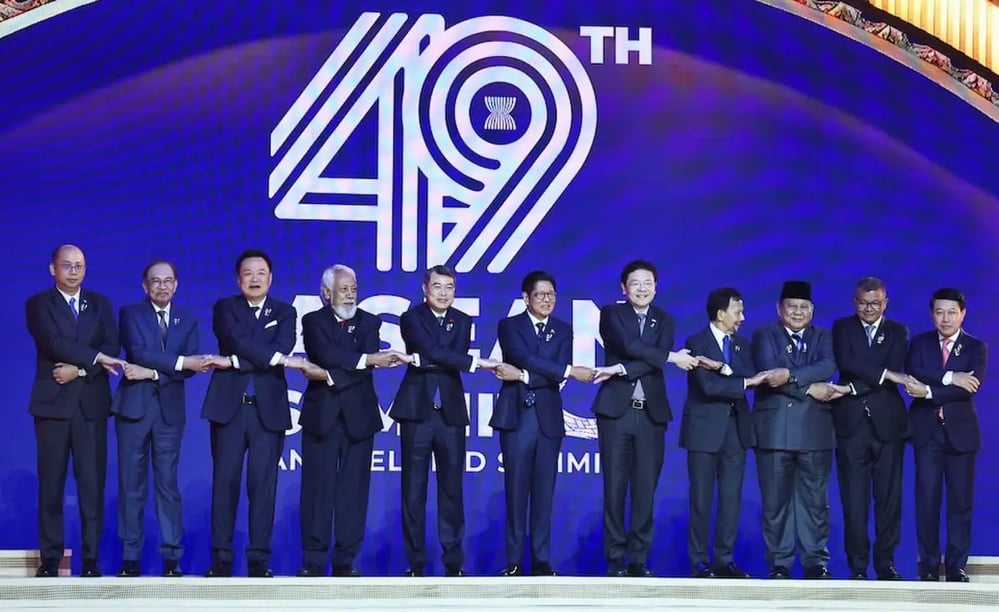


Click points to explore news by date. News sentiment ranges from -10 (very negative) to +10 (very positive) where 0 is neutral.
2026 © Helium Trades
Privacy Policy & Disclosure
* Disclaimer: Nothing on this website constitutes investment advice, performance data or any recommendation that any particular security, portfolio of securities, transaction or investment strategy is suitable for any specific person. Helium Trades is not responsible in any way for the accuracy
of any model predictions or price data. Any mention of a particular security and related prediction data is not a recommendation to buy or sell that security. Investments in securities involve the risk of loss. Past performance is no guarantee of future results. Helium Trades is not responsible for any of your investment decisions,
you should consult a financial expert before engaging in any transaction.
Helium Research Assistant

How can I help you today?
Ask any question about this page.


