See whether Helium helps you make better-informed decisions. Try every Pro Trader feature for 30 days. No credit card required.
Try every Pro Trader feature for 30 days. No credit card required.
November 24, 2026 · 0 shares
The report is a measured, official-source announcement that presents crew and launch details in a factual, non-sensational manner.
Helium Analysis
Limitations: The supplied text includes cookie-consent boilerplate and repeated fragments; the substantive article is a short official announcement.
·
6 of 56 available dimensions scored; omitted dimensions are not treated as neutral.
·
Verified supporting quotes for 6 of 6 scored dimensions.
Claim: The report presents the crew announcement and mission details through attributed factual statements rather than subjective commentary.
“the China Manned Space Agency announced at a press conference on Tuesday.” · exact text match
Why: Attribution to an official agency and absence of evaluative language indicate objective framing.
Claim: The mission is described in measured, technical terms rather than sensational language.
“China's Shenzhou-24 crewed spaceship is scheduled to be launched at 8:18 a.m. (Beijing Time) on Wednesday from the Jiuquan Satellite Launch Center in northwest China” · exact text match
Why: Specific scheduling and technical details are factual and non-sensational.
Claim: The text is descriptive, reporting planned roles and mission facts without prescribing actions or policies.
“He will serve as commander and pilot of the Shenzhou-24 crew.” · exact text match
Why: Future-tense role descriptions are descriptive reporting, not advocacy.
Claim: The report is fact-based and contains no explicit editorial opinion.
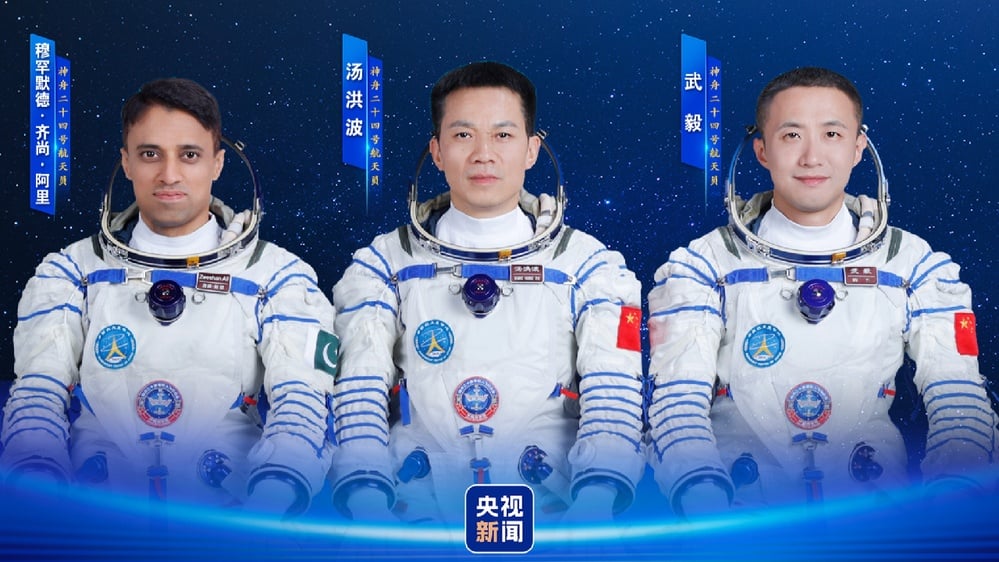
“Muhammad Zeeshan Ali, a Pakistani astronaut born in August 1986, was selected in April 2026 as one of the first group of foreign astronauts in China's manned space program.” · exact text match
Why: The article consists of attributed biographical and mission details rather than opinion statements.
Claim: The report provides specific attribution to the China Manned Space Agency and a named spokesperson, with concrete mission details.
“the China Manned Space Agency announced at a press conference on Tuesday.” · exact text match
“Zhang Jingbo, spokesperson for the agency, said at the press conference.” · exact text match
Why: Official attribution and precise dates and roles support credibility, though it relies on a single official source.
Claim: The report is organized and informative, with clear crew biographies and mission details.
“Tang Hongbo, born in October 1975, was selected as a member of China's second group of astronauts in May 2010.” · exact text match
Why: Structured biographical and scheduling details show clear, factual reporting.
The supplied text includes cookie-consent boilerplate and repeated fragments; the substantive article is a short official announcement.
November 24, 2026 · 0 shares
The explainer is fact-dense and technically specific while framing China’s space program through strategic competition with U.S. leadership and Western-controlled infrastructure.
Helium Analysis
Limitations: No byline or publication date is present, and the article mixes scientific mission details with geopolitical framing, which limits attribution of publisher-specific intent.
·
56 of 56 available dimensions scored; omitted dimensions are not treated as neutral.
·
Verified supporting quotes for 9 of 56 scored dimensions.
Claim: The report is largely factual but incorporates interpretive geopolitical framing about China's challenge to U.S. leadership.
“China’s space program has become inseparable from its broader ambition to challenge US technological leadership and reduce reliance on Western-controlled infrastructure.” · exact text match
Why: The quoted sentence is an interpretive geopolitical characterization, though the article otherwise relies on factual reporting.
Claim: The article uses a measured, explanatory tone rather than sensational language.
“The spacecraft is scheduled to lift off at 8.18 a.m. Beijing time (0018GMT) from the Jiuquan Satellite Launch Center in northwestern China's Gansu province aboard a Long March-2F rocket.” · exact text match
Why: Specific technical and scheduling details are presented plainly without alarmist or dramatic wording.
Claim: The article primarily describes the mission and its context without prescribing policy or action.
“The Shenzhou-24 spacecraft will travel to Tiangong, China's independently developed space station orbiting approximately 400 kilometers (248 miles) above Earth.” · exact text match
Why: The content explains mission and station facts rather than advocating a course of action.
Claim: The article embeds the space mission in U.S.-China geopolitical and security competition.
“Once dominated by the US and Russia, space exploration has increasingly become central to Asia’s technological development, security planning and geopolitical positioning.” · exact text match
“China’s space program has become inseparable from its broader ambition to challenge US technological leadership and reduce reliance on Western-controlled infrastructure.” · exact text match
Why: These passages explicitly frame the mission through geopolitics and strategic rivalry, making the article strongly political.
Claim: The report provides specific mission details, named officials/crew, and attributed statements, supporting a generally credible explanatory account.
“The Shenzhou-24 flight is the 41st mission of China's crewed space program and the eighth crewed mission during the development and operational phase of its space station, according to Chinese authorities.” · exact text match
Why: Attribution to the relevant space agency and official authorities, alongside precise schedule and technical details, supports credibility.
Claim: The report is structured around verifiable mission details, dates, and attributed official announcements rather than emotional or irrational claims.
“The China Manned Space Agency (CMSA) officially announced the three-member crew on Tuesday, naming Pakistani astronaut Muhammad Zeeshan Ali alongside Chinese astronauts Tang Hongbo and Wu Yi.” · exact text match
Why: Official attribution and concrete mission details indicate evidence-based, rational framing.
Claim: The report is grounded in scientific and technological detail about spaceflight and station research rather than superstition.
“The station consists of three main modules: Tianhe, its central living and control module; Wentian, which supports scientific experiments and astronaut activities; and Mengtian, designed primarily for research and technological testing.” · exact text match
Why: Technical descriptions of station modules and research functions reflect scientific/empirical framing.
Claim: The article shows fair/honest signals by attributing official claims and including the U.S. restriction on NASA cooperation.
“In 2011, Beijing was barred from participating in the International Space Station program after the US Congress restricted NASA's cooperation with Chinese space agencies, citing national security concerns.” · exact text match
Why: Including context unfavorable to China's partnership narrative and attributing it to U.S. national-security concerns indicates internal fairness.
Claim: The article demonstrates above-average explanatory intelligence by integrating mission specifics, technical background, and geopolitical context.
“Through cooperation with the UN Office for Outer Space Affairs (UNOOSA), China has created opportunities for international institutions to conduct scientific experiments aboard its space station.” · exact text match
Why: The report explains technical and international-cooperation details alongside broader strategic context, indicating a high level of informational sophistication.
No byline or publication date is present, and the article mixes scientific mission details with geopolitical framing, which limits attribution of publisher-specific intent.
November 25, 2026 · 0 shares
A terse, milestone-focused factual update with a rocket emoji and hashtags gives the launch a mildly promotional but largely objective tone.
Helium Analysis
Limitations: The source text is a brief social-media post with minimal sourcing, limiting confidence on broader bias dimensions.
·
2 of 56 available dimensions scored; omitted dimensions are not treated as neutral.
·
Verified supporting quotes for 2 of 2 scored dimensions.
Claim: The post reports the launch through concrete mission details rather than subjective commentary.
“China’s Shenzhou-24 spacecraft blasted off on Wednesday (Nov 25), heading for the Tiangong space station.” · exact text match
Why: The sentence supplies entities, date, and destination without evaluative or opinionated language.
Claim: The mission is described in a measured, factual register rather than sensational terms.
“The mission will also see the crew carry out more than 90 scientific experiments and technology tests.” · exact text match
Why: This is a factual mission detail with no dramatic, alarming, or hyperbolic wording.
The source text is a brief social-media post with minimal sourcing, limiting confidence on broader bias dimensions.
November 24, 2026 · 0 shares
The report is a measured, official-source announcement that presents crew and launch details in a factual, non-sensational manner.
Helium Analysis
Limitations: The supplied text includes cookie-consent boilerplate and repeated fragments; the substantive article is a short official announcement.
·
6 of 56 available dimensions scored; omitted dimensions are not treated as neutral.
·
Verified supporting quotes for 6 of 6 scored dimensions.
Claim: The report presents the crew announcement and mission details through attributed factual statements rather than subjective commentary.
“the China Manned Space Agency announced at a press conference on Tuesday.” · exact text match
Why: Attribution to an official agency and absence of evaluative language indicate objective framing.
Claim: The mission is described in measured, technical terms rather than sensational language.
“China's Shenzhou-24 crewed spaceship is scheduled to be launched at 8:18 a.m. (Beijing Time) on Wednesday from the Jiuquan Satellite Launch Center in northwest China” · exact text match
Why: Specific scheduling and technical details are factual and non-sensational.
Claim: The text is descriptive, reporting planned roles and mission facts without prescribing actions or policies.
“He will serve as commander and pilot of the Shenzhou-24 crew.” · exact text match
Why: Future-tense role descriptions are descriptive reporting, not advocacy.
Claim: The report is fact-based and contains no explicit editorial opinion.
“Muhammad Zeeshan Ali, a Pakistani astronaut born in August 1986, was selected in April 2026 as one of the first group of foreign astronauts in China's manned space program.” · exact text match
Why: The article consists of attributed biographical and mission details rather than opinion statements.
Claim: The report provides specific attribution to the China Manned Space Agency and a named spokesperson, with concrete mission details.
“the China Manned Space Agency announced at a press conference on Tuesday.” · exact text match
“Zhang Jingbo, spokesperson for the agency, said at the press conference.” · exact text match
Why: Official attribution and precise dates and roles support credibility, though it relies on a single official source.
Claim: The report is organized and informative, with clear crew biographies and mission details.
“Tang Hongbo, born in October 1975, was selected as a member of China's second group of astronauts in May 2010.” · exact text match
Why: Structured biographical and scheduling details show clear, factual reporting.
The supplied text includes cookie-consent boilerplate and repeated fragments; the substantive article is a short official announcement.
Largely neutral, source-attributed space reporting, with a mild official-source and U.S.-China rivalry framing.
Tiangong is China’s modular space station, and Shenzhou is China’s crewed spacecraft program used for missions to it.
Helium Analysis
Limitations: The supplied text duplicates the main article and appends unrelated headlines, so extraction and scores are based only on the main Shenzhou 24 report.
·
10 of 56 available dimensions scored; omitted dimensions are not treated as neutral.
·
Verified supporting quotes for 10 of 10 scored dimensions.
Claim: The article presents official announcements and mission details as attributed facts rather than subjective commentary.
“According to official Chinese news agency Xinhua, the China Manned Space Agency announced that Pakistani astronaut Muhammad Zeeshan Ali, 40, will carry out the mission with his Chinese colleagues Tang Hongbo, 51, and Wu Yi, 39.” · exact text match
“State broadcaster CCTV said the Pakistani astronaut would carry out a short-term mission as a payload specialist.” · exact text match
Why: Both quotes show factual attribution to named official sources, with little evaluative language.
Claim: The report uses straightforward launch and crew details without sensational language.
“China on Tuesday unveiled the crew for its Shenzhou 24 spacecraft ahead of this week’s launch, with a Pakistani set to become the first foreign astronaut to board its space station.” · exact text match
Why: The sentence is a plain factual summary; it emphasizes the milestone without emotive or dramatic adjectives.
Claim: The report describes scheduled events and mission roles without prescribing policy or action.
“The agency said the spacecraft was scheduled to launch from the Jiuquan Satellite Launch Center in northwest China on Wednesday morning.” · exact text match
Why: The language is descriptive and attributed, with no recommendation or advocacy.
Claim: A brief U.S.-China space-rivalry comparison introduces a geopolitical frame.
“The U.S. is seen as China’s top space rival, with NASA aiming to land astronauts on the lunar surface in 2028.” · exact text match
Why: This is a strategic comparison but limited to one sentence, so political framing is mild.
Claim: The report repeatedly relies on official Chinese agencies and state broadcaster as sources.
“According to official Chinese news agency Xinhua, the China Manned Space Agency announced that Pakistani astronaut Muhammad Zeeshan Ali, 40, will carry out the mission with his Chinese colleagues Tang Hongbo, 51, and Wu Yi, 39.” · exact text match
“State broadcaster CCTV said the Pakistani astronaut would carry out a short-term mission as a payload specialist.” · exact text match
Why: Authority citations are frequent and central, though they are normal attribution in a short news report.
Claim: The report maintains a neutral, unemotional tone.
“The agency said the spacecraft was scheduled to launch from the Jiuquan Satellite Launch Center in northwest China on Wednesday morning.” · exact text match
Why: The language is procedural and factual, without positive or negative emotional loading.
Claim: Credibility is supported by named official sources and specific mission details, but independent verification is absent.
“According to official Chinese news agency Xinhua, the China Manned Space Agency announced that Pakistani astronaut Muhammad Zeeshan Ali, 40, will carry out the mission with his Chinese colleagues Tang Hongbo, 51, and Wu Yi, 39.” · exact text match
“State broadcaster CCTV said the Pakistani astronaut would carry out a short-term mission as a payload specialist.” · exact text match
Why: Named attribution and operational details raise credibility; reliance on state sources only limits it.
Claim: The report relies on attributed statements from official Chinese agencies and state media rather than unsupported assertion.
“According to official Chinese news agency Xinhua, the China Manned Space Agency announced that Pakistani astronaut Muhammad Zeeshan Ali, 40, will carry out the mission with his Chinese colleagues Tang Hongbo, 51, and Wu Yi, 39.” · exact text match
Why: Attribution to named agencies and state media indicates a rational, source-based account rather than unsupported speculation.
Claim: The article frames the mission through scientific experiments and space technology.
“His mission will be to carry out four scientific projects in the fields of biotechnology and materials, and he is set to conduct an in-orbit experiment on photosynthetic microorganisms, CCTV said.” · exact text match
Why: Specific scientific projects and materials research are central, supporting an empirical/technological rather than superstitious framing.
Claim: The report includes contextual details about prior missions and lunar plans beyond the immediate crew announcement.
“China is preparing for its first crewed lunar landing by 2030. The U.S. is seen as China’s top space rival, with NASA aiming to land astronauts on the lunar surface in 2028.” · exact text match
Why: Contextual comparisons and program plans show above-average informational coherence for a short news report.
The supplied text duplicates the main article and appends unrelated headlines, so extraction and scores are based only on the main Shenzhou 24 report.
November 24, 2026 · 0 shares
Official-source-dependent milestone framing dominates: the report recounts a Chinese space announcement in neutral, attributed terms while emphasizing historic firsts and relying on Xinhua and CCTV.
Helium Analysis
Limitations: The supplied text includes duplicated content and related-link snippets after the main report; only the substantive Shenzhou 24 report was assessed.
·
5 of 56 available dimensions scored; omitted dimensions are not treated as neutral.
·
Verified supporting quotes for 5 of 5 scored dimensions.
Claim: The report is predominantly attributed and factual rather than subjective commentary.
“According to official Chinese news agency Xinhua” · exact text match
“State broadcaster CCTV said” · exact text match
Why: Mission details and milestones are repeatedly tied to named official sources rather than the author’s opinions.
Claim: Reporting is mostly procedural and technical, with only mild milestone framing in the headline.
“The agency said the spacecraft was scheduled to launch from the Jiuquan Satellite Launch Center in northwest China on Wednesday morning.” · exact text match
Counterevidence:
“Pakistan astronaut to make history with China space mission.” · exact text match
Why: Neutral procedural details dominate, though 'make history' adds mild dramatic framing.
Claim: The report shows visible sourcing to named official Chinese outlets but relies on a narrow, state-linked source base.
“According to official Chinese news agency Xinhua” · exact text match
“State broadcaster CCTV said” · exact text match
Counterevidence:
“The U.S. is seen as China’s top space rival” · exact text match
Why: Attribution to Xinhua and CCTV is clear, but the report offers little independent corroboration and one geopolitical characterization lacks explicit sourcing.
Claim: The account emphasizes specific mission roles, experiments, dates, and attributed official statements.
“His mission will be to carry out four scientific projects in the fields of biotechnology and materials” · exact text match
“It is part of an agreement signed by China and Pakistan in February 2025.” · exact text match
Why: Concrete technical and scheduling details support a rational, factual presentation rather than emotive argument.
Claim: The report frames the mission around scientific research and space technology without superstitious content.
“four scientific projects in the fields of biotechnology and materials” · exact text match
“in-orbit experiment on photosynthetic microorganisms” · exact text match
Why: The article specifies empirical experiments and technology, placing it toward the scientific end of the dimension.
The supplied text includes duplicated content and related-link snippets after the main report; only the substantive Shenzhou 24 report was assessed.
November 24, 2026 · 0 shares
The framing is a straightforward, institutionally sourced endorsement of China-Pakistan space cooperation, presenting planned experiments and the station's global openness without independent scrutiny or critical context.
Helium Analysis
Limitations: The article text is duplicated and interleaved with cookie boilerplate; analysis is based on the short substantive announcement, which is single-sourced to Chinese Academy of Sciences officials.
·
7 of 56 available dimensions scored; omitted dimensions are not treated as neutral.
·
Verified supporting quotes for 7 of 7 scored dimensions.
Claim: The report is primarily factual and attributed rather than evaluative or first-person.
“according to Chen Mengyun, International Cooperation Project Manager at the Technology and Engineering Center for Space Utilization of Chinese Academy of Sciences.” · exact text match
Why: The text relies on named sourcing and factual descriptions, with no visible opinion or first-person evaluation.
Claim: The article uses measured, technical language without sensational or emotional emphasis.
“Cyanobacteria are tiny organisms that use sunlight to grow and release oxygen.” · exact text match
Why: Neutral explanatory detail and technical descriptions dominate.
Claim: The article relays an official Chinese institutional claim about the space station's global openness without independent qualification.
“China Space Station, also the national space laboratory, is open to scientists worldwide.” · exact text match
Why: This favorable official framing is presented through the Chinese Academy of Sciences source without counterbalance.
Claim: The report provides named institutional attribution and specific details, though it relies on a single official source.
“according to Chen Mengyun, International Cooperation Project Manager at the Technology and Engineering Center for Space Utilization of Chinese Academy of Sciences.” · exact text match
Why: Specific names, institutions, and experiment details are present, but independent confirmation is absent.
Claim: The content is organized around empirical experiments and technical objectives.
“Two materials experiments will test the protective performance of graphene-based composites and the repair efficiency of self-healing carbon fiber composites.” · exact text match
Why: The reporting focuses on testable material properties and experimental aims.
Claim: The story is framed around scientific experiments, data collection, and material testing.
“will examine how cyanobacteria grow and absorb carbon dioxide in space, providing data for future oxygen regeneration and biological production.” · exact text match
Why: The article presents empirical research objectives and data generation as the central content.
Claim: The text transparently attributes plans and claims to named officials and institutions.
“Chinese and Pakistani scientific teams will also jointly publish papers and share the results of the experiments, said Chen.” · exact text match
Why: Attribution is explicit and the prose avoids evident deceptive or manipulative framing.
The article text is duplicated and interleaved with cookie boilerplate; analysis is based on the short substantive announcement, which is single-sourced to Chinese Academy of Sciences officials.
Largely neutral, source-attributed space reporting, with a mild official-source and U.S.-China rivalry framing.
Tiangong is China’s modular space station, and Shenzhou is China’s crewed spacecraft program used for missions to it.
Helium Analysis
Limitations: The supplied text duplicates the main article and appends unrelated headlines, so extraction and scores are based only on the main Shenzhou 24 report.
·
10 of 56 available dimensions scored; omitted dimensions are not treated as neutral.
·
Verified supporting quotes for 10 of 10 scored dimensions.
Claim: The article presents official announcements and mission details as attributed facts rather than subjective commentary.
“According to official Chinese news agency Xinhua, the China Manned Space Agency announced that Pakistani astronaut Muhammad Zeeshan Ali, 40, will carry out the mission with his Chinese colleagues Tang Hongbo, 51, and Wu Yi, 39.” · exact text match
“State broadcaster CCTV said the Pakistani astronaut would carry out a short-term mission as a payload specialist.” · exact text match
Why: Both quotes show factual attribution to named official sources, with little evaluative language.
Claim: The report uses straightforward launch and crew details without sensational language.
“China on Tuesday unveiled the crew for its Shenzhou 24 spacecraft ahead of this week’s launch, with a Pakistani set to become the first foreign astronaut to board its space station.” · exact text match
Why: The sentence is a plain factual summary; it emphasizes the milestone without emotive or dramatic adjectives.
Claim: The report describes scheduled events and mission roles without prescribing policy or action.
“The agency said the spacecraft was scheduled to launch from the Jiuquan Satellite Launch Center in northwest China on Wednesday morning.” · exact text match
Why: The language is descriptive and attributed, with no recommendation or advocacy.
Claim: A brief U.S.-China space-rivalry comparison introduces a geopolitical frame.
“The U.S. is seen as China’s top space rival, with NASA aiming to land astronauts on the lunar surface in 2028.” · exact text match
Why: This is a strategic comparison but limited to one sentence, so political framing is mild.
Claim: The report repeatedly relies on official Chinese agencies and state broadcaster as sources.
“According to official Chinese news agency Xinhua, the China Manned Space Agency announced that Pakistani astronaut Muhammad Zeeshan Ali, 40, will carry out the mission with his Chinese colleagues Tang Hongbo, 51, and Wu Yi, 39.” · exact text match
“State broadcaster CCTV said the Pakistani astronaut would carry out a short-term mission as a payload specialist.” · exact text match
Why: Authority citations are frequent and central, though they are normal attribution in a short news report.
Claim: The report maintains a neutral, unemotional tone.
“The agency said the spacecraft was scheduled to launch from the Jiuquan Satellite Launch Center in northwest China on Wednesday morning.” · exact text match
Why: The language is procedural and factual, without positive or negative emotional loading.
Claim: Credibility is supported by named official sources and specific mission details, but independent verification is absent.
“According to official Chinese news agency Xinhua, the China Manned Space Agency announced that Pakistani astronaut Muhammad Zeeshan Ali, 40, will carry out the mission with his Chinese colleagues Tang Hongbo, 51, and Wu Yi, 39.” · exact text match
“State broadcaster CCTV said the Pakistani astronaut would carry out a short-term mission as a payload specialist.” · exact text match
Why: Named attribution and operational details raise credibility; reliance on state sources only limits it.
Claim: The report relies on attributed statements from official Chinese agencies and state media rather than unsupported assertion.
“According to official Chinese news agency Xinhua, the China Manned Space Agency announced that Pakistani astronaut Muhammad Zeeshan Ali, 40, will carry out the mission with his Chinese colleagues Tang Hongbo, 51, and Wu Yi, 39.” · exact text match
Why: Attribution to named agencies and state media indicates a rational, source-based account rather than unsupported speculation.
Claim: The article frames the mission through scientific experiments and space technology.
“His mission will be to carry out four scientific projects in the fields of biotechnology and materials, and he is set to conduct an in-orbit experiment on photosynthetic microorganisms, CCTV said.” · exact text match
Why: Specific scientific projects and materials research are central, supporting an empirical/technological rather than superstitious framing.
Claim: The report includes contextual details about prior missions and lunar plans beyond the immediate crew announcement.
“China is preparing for its first crewed lunar landing by 2030. The U.S. is seen as China’s top space rival, with NASA aiming to land astronauts on the lunar surface in 2028.” · exact text match
Why: Contextual comparisons and program plans show above-average informational coherence for a short news report.
The supplied text duplicates the main article and appends unrelated headlines, so extraction and scores are based only on the main Shenzhou 24 report.
November 25, 2026 · 0 shares
A terse, milestone-focused factual update with a rocket emoji and hashtags gives the launch a mildly promotional but largely objective tone.
Helium Analysis
Limitations: The source text is a brief social-media post with minimal sourcing, limiting confidence on broader bias dimensions.
·
2 of 56 available dimensions scored; omitted dimensions are not treated as neutral.
·
Verified supporting quotes for 2 of 2 scored dimensions.
Claim: The post reports the launch through concrete mission details rather than subjective commentary.
“China’s Shenzhou-24 spacecraft blasted off on Wednesday (Nov 25), heading for the Tiangong space station.” · exact text match
Why: The sentence supplies entities, date, and destination without evaluative or opinionated language.
Claim: The mission is described in a measured, factual register rather than sensational terms.
“The mission will also see the crew carry out more than 90 scientific experiments and technology tests.” · exact text match
Why: This is a factual mission detail with no dramatic, alarming, or hyperbolic wording.
The source text is a brief social-media post with minimal sourcing, limiting confidence on broader bias dimensions.
November 24, 2026 · 0 shares
Official-source-dependent milestone framing dominates: the report recounts a Chinese space announcement in neutral, attributed terms while emphasizing historic firsts and relying on Xinhua and CCTV.
Helium Analysis
Limitations: The supplied text includes duplicated content and related-link snippets after the main report; only the substantive Shenzhou 24 report was assessed.
·
5 of 56 available dimensions scored; omitted dimensions are not treated as neutral.
·
Verified supporting quotes for 5 of 5 scored dimensions.
Claim: The report is predominantly attributed and factual rather than subjective commentary.
“According to official Chinese news agency Xinhua” · exact text match
“State broadcaster CCTV said” · exact text match
Why: Mission details and milestones are repeatedly tied to named official sources rather than the author’s opinions.
Claim: Reporting is mostly procedural and technical, with only mild milestone framing in the headline.
“The agency said the spacecraft was scheduled to launch from the Jiuquan Satellite Launch Center in northwest China on Wednesday morning.” · exact text match
Counterevidence:
“Pakistan astronaut to make history with China space mission.” · exact text match
Why: Neutral procedural details dominate, though 'make history' adds mild dramatic framing.
Claim: The report shows visible sourcing to named official Chinese outlets but relies on a narrow, state-linked source base.
“According to official Chinese news agency Xinhua” · exact text match
“State broadcaster CCTV said” · exact text match
Counterevidence:
“The U.S. is seen as China’s top space rival” · exact text match
Why: Attribution to Xinhua and CCTV is clear, but the report offers little independent corroboration and one geopolitical characterization lacks explicit sourcing.
Claim: The account emphasizes specific mission roles, experiments, dates, and attributed official statements.
“His mission will be to carry out four scientific projects in the fields of biotechnology and materials” · exact text match
“It is part of an agreement signed by China and Pakistan in February 2025.” · exact text match
Why: Concrete technical and scheduling details support a rational, factual presentation rather than emotive argument.
Claim: The report frames the mission around scientific research and space technology without superstitious content.
“four scientific projects in the fields of biotechnology and materials” · exact text match
“in-orbit experiment on photosynthetic microorganisms” · exact text match
Why: The article specifies empirical experiments and technology, placing it toward the scientific end of the dimension.
The supplied text includes duplicated content and related-link snippets after the main report; only the substantive Shenzhou 24 report was assessed.
November 24, 2026 · 0 shares
The explainer is fact-dense and technically specific while framing China’s space program through strategic competition with U.S. leadership and Western-controlled infrastructure.
Helium Analysis
Limitations: No byline or publication date is present, and the article mixes scientific mission details with geopolitical framing, which limits attribution of publisher-specific intent.
·
56 of 56 available dimensions scored; omitted dimensions are not treated as neutral.
·
Verified supporting quotes for 9 of 56 scored dimensions.
Claim: The report is largely factual but incorporates interpretive geopolitical framing about China's challenge to U.S. leadership.
“China’s space program has become inseparable from its broader ambition to challenge US technological leadership and reduce reliance on Western-controlled infrastructure.” · exact text match
Why: The quoted sentence is an interpretive geopolitical characterization, though the article otherwise relies on factual reporting.
Claim: The article uses a measured, explanatory tone rather than sensational language.
“The spacecraft is scheduled to lift off at 8.18 a.m. Beijing time (0018GMT) from the Jiuquan Satellite Launch Center in northwestern China's Gansu province aboard a Long March-2F rocket.” · exact text match
Why: Specific technical and scheduling details are presented plainly without alarmist or dramatic wording.
Claim: The article primarily describes the mission and its context without prescribing policy or action.
“The Shenzhou-24 spacecraft will travel to Tiangong, China's independently developed space station orbiting approximately 400 kilometers (248 miles) above Earth.” · exact text match
Why: The content explains mission and station facts rather than advocating a course of action.
Claim: The article embeds the space mission in U.S.-China geopolitical and security competition.
“Once dominated by the US and Russia, space exploration has increasingly become central to Asia’s technological development, security planning and geopolitical positioning.” · exact text match
“China’s space program has become inseparable from its broader ambition to challenge US technological leadership and reduce reliance on Western-controlled infrastructure.” · exact text match
Why: These passages explicitly frame the mission through geopolitics and strategic rivalry, making the article strongly political.
Claim: The report provides specific mission details, named officials/crew, and attributed statements, supporting a generally credible explanatory account.
“The Shenzhou-24 flight is the 41st mission of China's crewed space program and the eighth crewed mission during the development and operational phase of its space station, according to Chinese authorities.” · exact text match
Why: Attribution to the relevant space agency and official authorities, alongside precise schedule and technical details, supports credibility.
Claim: The report is structured around verifiable mission details, dates, and attributed official announcements rather than emotional or irrational claims.
“The China Manned Space Agency (CMSA) officially announced the three-member crew on Tuesday, naming Pakistani astronaut Muhammad Zeeshan Ali alongside Chinese astronauts Tang Hongbo and Wu Yi.” · exact text match
Why: Official attribution and concrete mission details indicate evidence-based, rational framing.
Claim: The report is grounded in scientific and technological detail about spaceflight and station research rather than superstition.
“The station consists of three main modules: Tianhe, its central living and control module; Wentian, which supports scientific experiments and astronaut activities; and Mengtian, designed primarily for research and technological testing.” · exact text match
Why: Technical descriptions of station modules and research functions reflect scientific/empirical framing.
Claim: The article shows fair/honest signals by attributing official claims and including the U.S. restriction on NASA cooperation.
“In 2011, Beijing was barred from participating in the International Space Station program after the US Congress restricted NASA's cooperation with Chinese space agencies, citing national security concerns.” · exact text match
Why: Including context unfavorable to China's partnership narrative and attributing it to U.S. national-security concerns indicates internal fairness.
Claim: The article demonstrates above-average explanatory intelligence by integrating mission specifics, technical background, and geopolitical context.
“Through cooperation with the UN Office for Outer Space Affairs (UNOOSA), China has created opportunities for international institutions to conduct scientific experiments aboard its space station.” · exact text match
Why: The report explains technical and international-cooperation details alongside broader strategic context, indicating a high level of informational sophistication.
No byline or publication date is present, and the article mixes scientific mission details with geopolitical framing, which limits attribution of publisher-specific intent.
November 24, 2026 · 0 shares
The report is a measured, official-source announcement that presents crew and launch details in a factual, non-sensational manner.
Helium Analysis Limitations: The supplied text includes cookie-consent boilerplate and repeated fragments; the substantive article is a short official announcement. · 6 of 56 available dimensions scored; omitted dimensions are not treated as neutral. · Verified supporting quotes for 6 of 6 scored dimensions.
Claim: The report presents the crew announcement and mission details through attributed factual statements rather than subjective commentary.
“the China Manned Space Agency announced at a press conference on Tuesday.” · exact text match
Why: Attribution to an official agency and absence of evaluative language indicate objective framing.
Claim: The mission is described in measured, technical terms rather than sensational language.
“China's Shenzhou-24 crewed spaceship is scheduled to be launched at 8:18 a.m. (Beijing Time) on Wednesday from the Jiuquan Satellite Launch Center in northwest China” · exact text match
Why: Specific scheduling and technical details are factual and non-sensational.
Claim: The text is descriptive, reporting planned roles and mission facts without prescribing actions or policies.
“He will serve as commander and pilot of the Shenzhou-24 crew.” · exact text match
Why: Future-tense role descriptions are descriptive reporting, not advocacy.
Claim: The report is fact-based and contains no explicit editorial opinion.
“Muhammad Zeeshan Ali, a Pakistani astronaut born in August 1986, was selected in April 2026 as one of the first group of foreign astronauts in China's manned space program.” · exact text match
Why: The article consists of attributed biographical and mission details rather than opinion statements.
Claim: The report provides specific attribution to the China Manned Space Agency and a named spokesperson, with concrete mission details.
“the China Manned Space Agency announced at a press conference on Tuesday.” · exact text match
“Zhang Jingbo, spokesperson for the agency, said at the press conference.” · exact text match
Why: Official attribution and precise dates and roles support credibility, though it relies on a single official source.
Claim: The report is organized and informative, with clear crew biographies and mission details.
“Tang Hongbo, born in October 1975, was selected as a member of China's second group of astronauts in May 2010.” · exact text match
Why: Structured biographical and scheduling details show clear, factual reporting.
The supplied text includes cookie-consent boilerplate and repeated fragments; the substantive article is a short official announcement.
November 24, 2026 · 0 shares
The explainer is fact-dense and technically specific while framing China’s space program through strategic competition with U.S. leadership and Western-controlled infrastructure.
Helium Analysis Limitations: No byline or publication date is present, and the article mixes scientific mission details with geopolitical framing, which limits attribution of publisher-specific intent. · 56 of 56 available dimensions scored; omitted dimensions are not treated as neutral. · Verified supporting quotes for 9 of 56 scored dimensions.
Claim: The report is largely factual but incorporates interpretive geopolitical framing about China's challenge to U.S. leadership.
“China’s space program has become inseparable from its broader ambition to challenge US technological leadership and reduce reliance on Western-controlled infrastructure.” · exact text match
Why: The quoted sentence is an interpretive geopolitical characterization, though the article otherwise relies on factual reporting.
Claim: The article uses a measured, explanatory tone rather than sensational language.
“The spacecraft is scheduled to lift off at 8.18 a.m. Beijing time (0018GMT) from the Jiuquan Satellite Launch Center in northwestern China's Gansu province aboard a Long March-2F rocket.” · exact text match
Why: Specific technical and scheduling details are presented plainly without alarmist or dramatic wording.
Claim: The article primarily describes the mission and its context without prescribing policy or action.
“The Shenzhou-24 spacecraft will travel to Tiangong, China's independently developed space station orbiting approximately 400 kilometers (248 miles) above Earth.” · exact text match
Why: The content explains mission and station facts rather than advocating a course of action.
Claim: The article embeds the space mission in U.S.-China geopolitical and security competition.
“Once dominated by the US and Russia, space exploration has increasingly become central to Asia’s technological development, security planning and geopolitical positioning.” · exact text match
“China’s space program has become inseparable from its broader ambition to challenge US technological leadership and reduce reliance on Western-controlled infrastructure.” · exact text match
Why: These passages explicitly frame the mission through geopolitics and strategic rivalry, making the article strongly political.
Claim: The report provides specific mission details, named officials/crew, and attributed statements, supporting a generally credible explanatory account.
“The Shenzhou-24 flight is the 41st mission of China's crewed space program and the eighth crewed mission during the development and operational phase of its space station, according to Chinese authorities.” · exact text match
Why: Attribution to the relevant space agency and official authorities, alongside precise schedule and technical details, supports credibility.
Claim: The report is structured around verifiable mission details, dates, and attributed official announcements rather than emotional or irrational claims.
“The China Manned Space Agency (CMSA) officially announced the three-member crew on Tuesday, naming Pakistani astronaut Muhammad Zeeshan Ali alongside Chinese astronauts Tang Hongbo and Wu Yi.” · exact text match
Why: Official attribution and concrete mission details indicate evidence-based, rational framing.
Claim: The report is grounded in scientific and technological detail about spaceflight and station research rather than superstition.
“The station consists of three main modules: Tianhe, its central living and control module; Wentian, which supports scientific experiments and astronaut activities; and Mengtian, designed primarily for research and technological testing.” · exact text match
Why: Technical descriptions of station modules and research functions reflect scientific/empirical framing.
Claim: The article shows fair/honest signals by attributing official claims and including the U.S. restriction on NASA cooperation.
“In 2011, Beijing was barred from participating in the International Space Station program after the US Congress restricted NASA's cooperation with Chinese space agencies, citing national security concerns.” · exact text match
Why: Including context unfavorable to China's partnership narrative and attributing it to U.S. national-security concerns indicates internal fairness.
Claim: The article demonstrates above-average explanatory intelligence by integrating mission specifics, technical background, and geopolitical context.
“Through cooperation with the UN Office for Outer Space Affairs (UNOOSA), China has created opportunities for international institutions to conduct scientific experiments aboard its space station.” · exact text match
Why: The report explains technical and international-cooperation details alongside broader strategic context, indicating a high level of informational sophistication.
No byline or publication date is present, and the article mixes scientific mission details with geopolitical framing, which limits attribution of publisher-specific intent.
November 24, 2026 · 0 shares
The report is a measured, official-source announcement that presents crew and launch details in a factual, non-sensational manner.
Helium Analysis Limitations: The supplied text includes cookie-consent boilerplate and repeated fragments; the substantive article is a short official announcement. · 6 of 56 available dimensions scored; omitted dimensions are not treated as neutral. · Verified supporting quotes for 6 of 6 scored dimensions.
Claim: The report presents the crew announcement and mission details through attributed factual statements rather than subjective commentary.
“the China Manned Space Agency announced at a press conference on Tuesday.” · exact text match
Why: Attribution to an official agency and absence of evaluative language indicate objective framing.
Claim: The mission is described in measured, technical terms rather than sensational language.
“China's Shenzhou-24 crewed spaceship is scheduled to be launched at 8:18 a.m. (Beijing Time) on Wednesday from the Jiuquan Satellite Launch Center in northwest China” · exact text match
Why: Specific scheduling and technical details are factual and non-sensational.
Claim: The text is descriptive, reporting planned roles and mission facts without prescribing actions or policies.
“He will serve as commander and pilot of the Shenzhou-24 crew.” · exact text match
Why: Future-tense role descriptions are descriptive reporting, not advocacy.
Claim: The report is fact-based and contains no explicit editorial opinion.
“Muhammad Zeeshan Ali, a Pakistani astronaut born in August 1986, was selected in April 2026 as one of the first group of foreign astronauts in China's manned space program.” · exact text match
Why: The article consists of attributed biographical and mission details rather than opinion statements.
Claim: The report provides specific attribution to the China Manned Space Agency and a named spokesperson, with concrete mission details.
“the China Manned Space Agency announced at a press conference on Tuesday.” · exact text match
“Zhang Jingbo, spokesperson for the agency, said at the press conference.” · exact text match
Why: Official attribution and precise dates and roles support credibility, though it relies on a single official source.
Claim: The report is organized and informative, with clear crew biographies and mission details.
“Tang Hongbo, born in October 1975, was selected as a member of China's second group of astronauts in May 2010.” · exact text match
Why: Structured biographical and scheduling details show clear, factual reporting.
The supplied text includes cookie-consent boilerplate and repeated fragments; the substantive article is a short official announcement.
Largely neutral, source-attributed space reporting, with a mild official-source and U.S.-China rivalry framing.
Tiangong is China’s modular space station, and Shenzhou is China’s crewed spacecraft program used for missions to it.
Helium Analysis Limitations: The supplied text duplicates the main article and appends unrelated headlines, so extraction and scores are based only on the main Shenzhou 24 report. · 10 of 56 available dimensions scored; omitted dimensions are not treated as neutral. · Verified supporting quotes for 10 of 10 scored dimensions.
Claim: The article presents official announcements and mission details as attributed facts rather than subjective commentary.
“According to official Chinese news agency Xinhua, the China Manned Space Agency announced that Pakistani astronaut Muhammad Zeeshan Ali, 40, will carry out the mission with his Chinese colleagues Tang Hongbo, 51, and Wu Yi, 39.” · exact text match
“State broadcaster CCTV said the Pakistani astronaut would carry out a short-term mission as a payload specialist.” · exact text match
Why: Both quotes show factual attribution to named official sources, with little evaluative language.
Claim: The report uses straightforward launch and crew details without sensational language.
“China on Tuesday unveiled the crew for its Shenzhou 24 spacecraft ahead of this week’s launch, with a Pakistani set to become the first foreign astronaut to board its space station.” · exact text match
Why: The sentence is a plain factual summary; it emphasizes the milestone without emotive or dramatic adjectives.
Claim: The report describes scheduled events and mission roles without prescribing policy or action.
“The agency said the spacecraft was scheduled to launch from the Jiuquan Satellite Launch Center in northwest China on Wednesday morning.” · exact text match
Why: The language is descriptive and attributed, with no recommendation or advocacy.
Claim: A brief U.S.-China space-rivalry comparison introduces a geopolitical frame.
“The U.S. is seen as China’s top space rival, with NASA aiming to land astronauts on the lunar surface in 2028.” · exact text match
Why: This is a strategic comparison but limited to one sentence, so political framing is mild.
Claim: The report repeatedly relies on official Chinese agencies and state broadcaster as sources.
“According to official Chinese news agency Xinhua, the China Manned Space Agency announced that Pakistani astronaut Muhammad Zeeshan Ali, 40, will carry out the mission with his Chinese colleagues Tang Hongbo, 51, and Wu Yi, 39.” · exact text match
“State broadcaster CCTV said the Pakistani astronaut would carry out a short-term mission as a payload specialist.” · exact text match
Why: Authority citations are frequent and central, though they are normal attribution in a short news report.
Claim: The report maintains a neutral, unemotional tone.
“The agency said the spacecraft was scheduled to launch from the Jiuquan Satellite Launch Center in northwest China on Wednesday morning.” · exact text match
Why: The language is procedural and factual, without positive or negative emotional loading.
Claim: Credibility is supported by named official sources and specific mission details, but independent verification is absent.
“According to official Chinese news agency Xinhua, the China Manned Space Agency announced that Pakistani astronaut Muhammad Zeeshan Ali, 40, will carry out the mission with his Chinese colleagues Tang Hongbo, 51, and Wu Yi, 39.” · exact text match
“State broadcaster CCTV said the Pakistani astronaut would carry out a short-term mission as a payload specialist.” · exact text match
Why: Named attribution and operational details raise credibility; reliance on state sources only limits it.
Claim: The report relies on attributed statements from official Chinese agencies and state media rather than unsupported assertion.
“According to official Chinese news agency Xinhua, the China Manned Space Agency announced that Pakistani astronaut Muhammad Zeeshan Ali, 40, will carry out the mission with his Chinese colleagues Tang Hongbo, 51, and Wu Yi, 39.” · exact text match
Why: Attribution to named agencies and state media indicates a rational, source-based account rather than unsupported speculation.
Claim: The article frames the mission through scientific experiments and space technology.
“His mission will be to carry out four scientific projects in the fields of biotechnology and materials, and he is set to conduct an in-orbit experiment on photosynthetic microorganisms, CCTV said.” · exact text match
Why: Specific scientific projects and materials research are central, supporting an empirical/technological rather than superstitious framing.
Claim: The report includes contextual details about prior missions and lunar plans beyond the immediate crew announcement.
“China is preparing for its first crewed lunar landing by 2030. The U.S. is seen as China’s top space rival, with NASA aiming to land astronauts on the lunar surface in 2028.” · exact text match
Why: Contextual comparisons and program plans show above-average informational coherence for a short news report.
The supplied text duplicates the main article and appends unrelated headlines, so extraction and scores are based only on the main Shenzhou 24 report.
November 24, 2026 · 0 shares
Official-source-dependent milestone framing dominates: the report recounts a Chinese space announcement in neutral, attributed terms while emphasizing historic firsts and relying on Xinhua and CCTV.
Helium Analysis Limitations: The supplied text includes duplicated content and related-link snippets after the main report; only the substantive Shenzhou 24 report was assessed. · 5 of 56 available dimensions scored; omitted dimensions are not treated as neutral. · Verified supporting quotes for 5 of 5 scored dimensions.
Claim: The report is predominantly attributed and factual rather than subjective commentary.
“According to official Chinese news agency Xinhua” · exact text match
“State broadcaster CCTV said” · exact text match
Why: Mission details and milestones are repeatedly tied to named official sources rather than the author’s opinions.
Claim: Reporting is mostly procedural and technical, with only mild milestone framing in the headline.
“The agency said the spacecraft was scheduled to launch from the Jiuquan Satellite Launch Center in northwest China on Wednesday morning.” · exact text match
Counterevidence:
“Pakistan astronaut to make history with China space mission.” · exact text match
Why: Neutral procedural details dominate, though 'make history' adds mild dramatic framing.
Claim: The report shows visible sourcing to named official Chinese outlets but relies on a narrow, state-linked source base.
“According to official Chinese news agency Xinhua” · exact text match
“State broadcaster CCTV said” · exact text match
Counterevidence:
“The U.S. is seen as China’s top space rival” · exact text match
Why: Attribution to Xinhua and CCTV is clear, but the report offers little independent corroboration and one geopolitical characterization lacks explicit sourcing.
Claim: The account emphasizes specific mission roles, experiments, dates, and attributed official statements.
“His mission will be to carry out four scientific projects in the fields of biotechnology and materials” · exact text match
“It is part of an agreement signed by China and Pakistan in February 2025.” · exact text match
Why: Concrete technical and scheduling details support a rational, factual presentation rather than emotive argument.
Claim: The report frames the mission around scientific research and space technology without superstitious content.
“four scientific projects in the fields of biotechnology and materials” · exact text match
“in-orbit experiment on photosynthetic microorganisms” · exact text match
Why: The article specifies empirical experiments and technology, placing it toward the scientific end of the dimension.
The supplied text includes duplicated content and related-link snippets after the main report; only the substantive Shenzhou 24 report was assessed.
November 24, 2026 · 0 shares
The framing is a straightforward, institutionally sourced endorsement of China-Pakistan space cooperation, presenting planned experiments and the station's global openness without independent scrutiny or critical context.
Helium Analysis Limitations: The article text is duplicated and interleaved with cookie boilerplate; analysis is based on the short substantive announcement, which is single-sourced to Chinese Academy of Sciences officials. · 7 of 56 available dimensions scored; omitted dimensions are not treated as neutral. · Verified supporting quotes for 7 of 7 scored dimensions.
Claim: The report is primarily factual and attributed rather than evaluative or first-person.
“according to Chen Mengyun, International Cooperation Project Manager at the Technology and Engineering Center for Space Utilization of Chinese Academy of Sciences.” · exact text match
Why: The text relies on named sourcing and factual descriptions, with no visible opinion or first-person evaluation.
Claim: The article uses measured, technical language without sensational or emotional emphasis.
“Cyanobacteria are tiny organisms that use sunlight to grow and release oxygen.” · exact text match
Why: Neutral explanatory detail and technical descriptions dominate.
Claim: The article relays an official Chinese institutional claim about the space station's global openness without independent qualification.
“China Space Station, also the national space laboratory, is open to scientists worldwide.” · exact text match
Why: This favorable official framing is presented through the Chinese Academy of Sciences source without counterbalance.
Claim: The report provides named institutional attribution and specific details, though it relies on a single official source.
“according to Chen Mengyun, International Cooperation Project Manager at the Technology and Engineering Center for Space Utilization of Chinese Academy of Sciences.” · exact text match
Why: Specific names, institutions, and experiment details are present, but independent confirmation is absent.
Claim: The content is organized around empirical experiments and technical objectives.
“Two materials experiments will test the protective performance of graphene-based composites and the repair efficiency of self-healing carbon fiber composites.” · exact text match
Why: The reporting focuses on testable material properties and experimental aims.
Claim: The story is framed around scientific experiments, data collection, and material testing.
“will examine how cyanobacteria grow and absorb carbon dioxide in space, providing data for future oxygen regeneration and biological production.” · exact text match
Why: The article presents empirical research objectives and data generation as the central content.
Claim: The text transparently attributes plans and claims to named officials and institutions.
“Chinese and Pakistani scientific teams will also jointly publish papers and share the results of the experiments, said Chen.” · exact text match
Why: Attribution is explicit and the prose avoids evident deceptive or manipulative framing.
The article text is duplicated and interleaved with cookie boilerplate; analysis is based on the short substantive announcement, which is single-sourced to Chinese Academy of Sciences officials.
November 24, 2026 · 0 shares
Official-source-dependent milestone framing dominates: the report recounts a Chinese space announcement in neutral, attributed terms while emphasizing historic firsts and relying on Xinhua and CCTV.
Helium Analysis Limitations: The supplied text includes duplicated content and related-link snippets after the main report; only the substantive Shenzhou 24 report was assessed. · 5 of 56 available dimensions scored; omitted dimensions are not treated as neutral. · Verified supporting quotes for 5 of 5 scored dimensions.
Claim: The report is predominantly attributed and factual rather than subjective commentary.
“According to official Chinese news agency Xinhua” · exact text match
“State broadcaster CCTV said” · exact text match
Why: Mission details and milestones are repeatedly tied to named official sources rather than the author’s opinions.
Claim: Reporting is mostly procedural and technical, with only mild milestone framing in the headline.
“The agency said the spacecraft was scheduled to launch from the Jiuquan Satellite Launch Center in northwest China on Wednesday morning.” · exact text match
Counterevidence:
“Pakistan astronaut to make history with China space mission.” · exact text match
Why: Neutral procedural details dominate, though 'make history' adds mild dramatic framing.
Claim: The report shows visible sourcing to named official Chinese outlets but relies on a narrow, state-linked source base.
“According to official Chinese news agency Xinhua” · exact text match
“State broadcaster CCTV said” · exact text match
Counterevidence:
“The U.S. is seen as China’s top space rival” · exact text match
Why: Attribution to Xinhua and CCTV is clear, but the report offers little independent corroboration and one geopolitical characterization lacks explicit sourcing.
Claim: The account emphasizes specific mission roles, experiments, dates, and attributed official statements.
“His mission will be to carry out four scientific projects in the fields of biotechnology and materials” · exact text match
“It is part of an agreement signed by China and Pakistan in February 2025.” · exact text match
Why: Concrete technical and scheduling details support a rational, factual presentation rather than emotive argument.
Claim: The report frames the mission around scientific research and space technology without superstitious content.
“four scientific projects in the fields of biotechnology and materials” · exact text match
“in-orbit experiment on photosynthetic microorganisms” · exact text match
Why: The article specifies empirical experiments and technology, placing it toward the scientific end of the dimension.
The supplied text includes duplicated content and related-link snippets after the main report; only the substantive Shenzhou 24 report was assessed.
November 24, 2026 · 0 shares
The explainer is fact-dense and technically specific while framing China’s space program through strategic competition with U.S. leadership and Western-controlled infrastructure.
Helium Analysis Limitations: No byline or publication date is present, and the article mixes scientific mission details with geopolitical framing, which limits attribution of publisher-specific intent. · 56 of 56 available dimensions scored; omitted dimensions are not treated as neutral. · Verified supporting quotes for 9 of 56 scored dimensions.
Claim: The report is largely factual but incorporates interpretive geopolitical framing about China's challenge to U.S. leadership.
“China’s space program has become inseparable from its broader ambition to challenge US technological leadership and reduce reliance on Western-controlled infrastructure.” · exact text match
Why: The quoted sentence is an interpretive geopolitical characterization, though the article otherwise relies on factual reporting.
Claim: The article uses a measured, explanatory tone rather than sensational language.
“The spacecraft is scheduled to lift off at 8.18 a.m. Beijing time (0018GMT) from the Jiuquan Satellite Launch Center in northwestern China's Gansu province aboard a Long March-2F rocket.” · exact text match
Why: Specific technical and scheduling details are presented plainly without alarmist or dramatic wording.
Claim: The article primarily describes the mission and its context without prescribing policy or action.
“The Shenzhou-24 spacecraft will travel to Tiangong, China's independently developed space station orbiting approximately 400 kilometers (248 miles) above Earth.” · exact text match
Why: The content explains mission and station facts rather than advocating a course of action.
Claim: The article embeds the space mission in U.S.-China geopolitical and security competition.
“Once dominated by the US and Russia, space exploration has increasingly become central to Asia’s technological development, security planning and geopolitical positioning.” · exact text match
“China’s space program has become inseparable from its broader ambition to challenge US technological leadership and reduce reliance on Western-controlled infrastructure.” · exact text match
Why: These passages explicitly frame the mission through geopolitics and strategic rivalry, making the article strongly political.
Claim: The report provides specific mission details, named officials/crew, and attributed statements, supporting a generally credible explanatory account.
“The Shenzhou-24 flight is the 41st mission of China's crewed space program and the eighth crewed mission during the development and operational phase of its space station, according to Chinese authorities.” · exact text match
Why: Attribution to the relevant space agency and official authorities, alongside precise schedule and technical details, supports credibility.
Claim: The report is structured around verifiable mission details, dates, and attributed official announcements rather than emotional or irrational claims.
“The China Manned Space Agency (CMSA) officially announced the three-member crew on Tuesday, naming Pakistani astronaut Muhammad Zeeshan Ali alongside Chinese astronauts Tang Hongbo and Wu Yi.” · exact text match
Why: Official attribution and concrete mission details indicate evidence-based, rational framing.
Claim: The report is grounded in scientific and technological detail about spaceflight and station research rather than superstition.
“The station consists of three main modules: Tianhe, its central living and control module; Wentian, which supports scientific experiments and astronaut activities; and Mengtian, designed primarily for research and technological testing.” · exact text match
Why: Technical descriptions of station modules and research functions reflect scientific/empirical framing.
Claim: The article shows fair/honest signals by attributing official claims and including the U.S. restriction on NASA cooperation.
“In 2011, Beijing was barred from participating in the International Space Station program after the US Congress restricted NASA's cooperation with Chinese space agencies, citing national security concerns.” · exact text match
Why: Including context unfavorable to China's partnership narrative and attributing it to U.S. national-security concerns indicates internal fairness.
Claim: The article demonstrates above-average explanatory intelligence by integrating mission specifics, technical background, and geopolitical context.
“Through cooperation with the UN Office for Outer Space Affairs (UNOOSA), China has created opportunities for international institutions to conduct scientific experiments aboard its space station.” · exact text match
Why: The report explains technical and international-cooperation details alongside broader strategic context, indicating a high level of informational sophistication.
No byline or publication date is present, and the article mixes scientific mission details with geopolitical framing, which limits attribution of publisher-specific intent.
Chinese state media / CMSA official framing
November 24, 2026 · 0 shares
The report is a measured, official-source announcement that presents crew and launch details in a factual, non-sensational manner.
Helium Analysis Limitations: The supplied text includes cookie-consent boilerplate and repeated fragments; the substantive article is a short official announcement. · 6 of 56 available dimensions scored; omitted dimensions are not treated as neutral. · Verified supporting quotes for 6 of 6 scored dimensions.
Claim: The report presents the crew announcement and mission details through attributed factual statements rather than subjective commentary.
“the China Manned Space Agency announced at a press conference on Tuesday.” · exact text match
Why: Attribution to an official agency and absence of evaluative language indicate objective framing.
Claim: The mission is described in measured, technical terms rather than sensational language.
“China's Shenzhou-24 crewed spaceship is scheduled to be launched at 8:18 a.m. (Beijing Time) on Wednesday from the Jiuquan Satellite Launch Center in northwest China” · exact text match
Why: Specific scheduling and technical details are factual and non-sensational.
Claim: The text is descriptive, reporting planned roles and mission facts without prescribing actions or policies.
“He will serve as commander and pilot of the Shenzhou-24 crew.” · exact text match
Why: Future-tense role descriptions are descriptive reporting, not advocacy.
Claim: The report is fact-based and contains no explicit editorial opinion.
“Muhammad Zeeshan Ali, a Pakistani astronaut born in August 1986, was selected in April 2026 as one of the first group of foreign astronauts in China's manned space program.” · exact text match
Why: The article consists of attributed biographical and mission details rather than opinion statements.
Claim: The report provides specific attribution to the China Manned Space Agency and a named spokesperson, with concrete mission details.
“the China Manned Space Agency announced at a press conference on Tuesday.” · exact text match
“Zhang Jingbo, spokesperson for the agency, said at the press conference.” · exact text match
Why: Official attribution and precise dates and roles support credibility, though it relies on a single official source.
Claim: The report is organized and informative, with clear crew biographies and mission details.
“Tang Hongbo, born in October 1975, was selected as a member of China's second group of astronauts in May 2010.” · exact text match
Why: Structured biographical and scheduling details show clear, factual reporting.
The supplied text includes cookie-consent boilerplate and repeated fragments; the substantive article is a short official announcement.
November 24, 2026 · 0 shares
The framing is a straightforward, institutionally sourced endorsement of China-Pakistan space cooperation, presenting planned experiments and the station's global openness without independent scrutiny or critical context.
Helium Analysis Limitations: The article text is duplicated and interleaved with cookie boilerplate; analysis is based on the short substantive announcement, which is single-sourced to Chinese Academy of Sciences officials. · 7 of 56 available dimensions scored; omitted dimensions are not treated as neutral. · Verified supporting quotes for 7 of 7 scored dimensions.
Claim: The report is primarily factual and attributed rather than evaluative or first-person.
“according to Chen Mengyun, International Cooperation Project Manager at the Technology and Engineering Center for Space Utilization of Chinese Academy of Sciences.” · exact text match
Why: The text relies on named sourcing and factual descriptions, with no visible opinion or first-person evaluation.
Claim: The article uses measured, technical language without sensational or emotional emphasis.
“Cyanobacteria are tiny organisms that use sunlight to grow and release oxygen.” · exact text match
Why: Neutral explanatory detail and technical descriptions dominate.
Claim: The article relays an official Chinese institutional claim about the space station's global openness without independent qualification.
“China Space Station, also the national space laboratory, is open to scientists worldwide.” · exact text match
Why: This favorable official framing is presented through the Chinese Academy of Sciences source without counterbalance.
Claim: The report provides named institutional attribution and specific details, though it relies on a single official source.
“according to Chen Mengyun, International Cooperation Project Manager at the Technology and Engineering Center for Space Utilization of Chinese Academy of Sciences.” · exact text match
Why: Specific names, institutions, and experiment details are present, but independent confirmation is absent.
Claim: The content is organized around empirical experiments and technical objectives.
“Two materials experiments will test the protective performance of graphene-based composites and the repair efficiency of self-healing carbon fiber composites.” · exact text match
Why: The reporting focuses on testable material properties and experimental aims.
Claim: The story is framed around scientific experiments, data collection, and material testing.
“will examine how cyanobacteria grow and absorb carbon dioxide in space, providing data for future oxygen regeneration and biological production.” · exact text match
Why: The article presents empirical research objectives and data generation as the central content.
Claim: The text transparently attributes plans and claims to named officials and institutions.
“Chinese and Pakistani scientific teams will also jointly publish papers and share the results of the experiments, said Chen.” · exact text match
Why: Attribution is explicit and the prose avoids evident deceptive or manipulative framing.
The article text is duplicated and interleaved with cookie boilerplate; analysis is based on the short substantive announcement, which is single-sourced to Chinese Academy of Sciences officials.
November 24, 2026 · 0 shares
The framing is a straightforward, institutionally sourced endorsement of China-Pakistan space cooperation, presenting planned experiments and the station's global openness without independent scrutiny or critical context.
Helium Analysis Limitations: The article text is duplicated and interleaved with cookie boilerplate; analysis is based on the short substantive announcement, which is single-sourced to Chinese Academy of Sciences officials. · 7 of 56 available dimensions scored; omitted dimensions are not treated as neutral. · Verified supporting quotes for 7 of 7 scored dimensions.
Claim: The report is primarily factual and attributed rather than evaluative or first-person.
“according to Chen Mengyun, International Cooperation Project Manager at the Technology and Engineering Center for Space Utilization of Chinese Academy of Sciences.” · exact text match
Why: The text relies on named sourcing and factual descriptions, with no visible opinion or first-person evaluation.
Claim: The article uses measured, technical language without sensational or emotional emphasis.
“Cyanobacteria are tiny organisms that use sunlight to grow and release oxygen.” · exact text match
Why: Neutral explanatory detail and technical descriptions dominate.
Claim: The article relays an official Chinese institutional claim about the space station's global openness without independent qualification.
“China Space Station, also the national space laboratory, is open to scientists worldwide.” · exact text match
Why: This favorable official framing is presented through the Chinese Academy of Sciences source without counterbalance.
Claim: The report provides named institutional attribution and specific details, though it relies on a single official source.
“according to Chen Mengyun, International Cooperation Project Manager at the Technology and Engineering Center for Space Utilization of Chinese Academy of Sciences.” · exact text match
Why: Specific names, institutions, and experiment details are present, but independent confirmation is absent.
Claim: The content is organized around empirical experiments and technical objectives.
“Two materials experiments will test the protective performance of graphene-based composites and the repair efficiency of self-healing carbon fiber composites.” · exact text match
Why: The reporting focuses on testable material properties and experimental aims.
Claim: The story is framed around scientific experiments, data collection, and material testing.
“will examine how cyanobacteria grow and absorb carbon dioxide in space, providing data for future oxygen regeneration and biological production.” · exact text match
Why: The article presents empirical research objectives and data generation as the central content.
Claim: The text transparently attributes plans and claims to named officials and institutions.
“Chinese and Pakistani scientific teams will also jointly publish papers and share the results of the experiments, said Chen.” · exact text match
Why: Attribution is explicit and the prose avoids evident deceptive or manipulative framing.
The article text is duplicated and interleaved with cookie boilerplate; analysis is based on the short substantive announcement, which is single-sourced to Chinese Academy of Sciences officials.
Largely neutral, source-attributed space reporting, with a mild official-source and U.S.-China rivalry framing.
Tiangong is China’s modular space station, and Shenzhou is China’s crewed spacecraft program used for missions to it.
Helium Analysis Limitations: The supplied text duplicates the main article and appends unrelated headlines, so extraction and scores are based only on the main Shenzhou 24 report. · 10 of 56 available dimensions scored; omitted dimensions are not treated as neutral. · Verified supporting quotes for 10 of 10 scored dimensions.
Claim: The article presents official announcements and mission details as attributed facts rather than subjective commentary.
“According to official Chinese news agency Xinhua, the China Manned Space Agency announced that Pakistani astronaut Muhammad Zeeshan Ali, 40, will carry out the mission with his Chinese colleagues Tang Hongbo, 51, and Wu Yi, 39.” · exact text match
“State broadcaster CCTV said the Pakistani astronaut would carry out a short-term mission as a payload specialist.” · exact text match
Why: Both quotes show factual attribution to named official sources, with little evaluative language.
Claim: The report uses straightforward launch and crew details without sensational language.
“China on Tuesday unveiled the crew for its Shenzhou 24 spacecraft ahead of this week’s launch, with a Pakistani set to become the first foreign astronaut to board its space station.” · exact text match
Why: The sentence is a plain factual summary; it emphasizes the milestone without emotive or dramatic adjectives.
Claim: The report describes scheduled events and mission roles without prescribing policy or action.
“The agency said the spacecraft was scheduled to launch from the Jiuquan Satellite Launch Center in northwest China on Wednesday morning.” · exact text match
Why: The language is descriptive and attributed, with no recommendation or advocacy.
Claim: A brief U.S.-China space-rivalry comparison introduces a geopolitical frame.
“The U.S. is seen as China’s top space rival, with NASA aiming to land astronauts on the lunar surface in 2028.” · exact text match
Why: This is a strategic comparison but limited to one sentence, so political framing is mild.
Claim: The report repeatedly relies on official Chinese agencies and state broadcaster as sources.
“According to official Chinese news agency Xinhua, the China Manned Space Agency announced that Pakistani astronaut Muhammad Zeeshan Ali, 40, will carry out the mission with his Chinese colleagues Tang Hongbo, 51, and Wu Yi, 39.” · exact text match
“State broadcaster CCTV said the Pakistani astronaut would carry out a short-term mission as a payload specialist.” · exact text match
Why: Authority citations are frequent and central, though they are normal attribution in a short news report.
Claim: The report maintains a neutral, unemotional tone.
“The agency said the spacecraft was scheduled to launch from the Jiuquan Satellite Launch Center in northwest China on Wednesday morning.” · exact text match
Why: The language is procedural and factual, without positive or negative emotional loading.
Claim: Credibility is supported by named official sources and specific mission details, but independent verification is absent.
“According to official Chinese news agency Xinhua, the China Manned Space Agency announced that Pakistani astronaut Muhammad Zeeshan Ali, 40, will carry out the mission with his Chinese colleagues Tang Hongbo, 51, and Wu Yi, 39.” · exact text match
“State broadcaster CCTV said the Pakistani astronaut would carry out a short-term mission as a payload specialist.” · exact text match
Why: Named attribution and operational details raise credibility; reliance on state sources only limits it.
Claim: The report relies on attributed statements from official Chinese agencies and state media rather than unsupported assertion.
“According to official Chinese news agency Xinhua, the China Manned Space Agency announced that Pakistani astronaut Muhammad Zeeshan Ali, 40, will carry out the mission with his Chinese colleagues Tang Hongbo, 51, and Wu Yi, 39.” · exact text match
Why: Attribution to named agencies and state media indicates a rational, source-based account rather than unsupported speculation.
Claim: The article frames the mission through scientific experiments and space technology.
“His mission will be to carry out four scientific projects in the fields of biotechnology and materials, and he is set to conduct an in-orbit experiment on photosynthetic microorganisms, CCTV said.” · exact text match
Why: Specific scientific projects and materials research are central, supporting an empirical/technological rather than superstitious framing.
Claim: The report includes contextual details about prior missions and lunar plans beyond the immediate crew announcement.
“China is preparing for its first crewed lunar landing by 2030. The U.S. is seen as China’s top space rival, with NASA aiming to land astronauts on the lunar surface in 2028.” · exact text match
Why: Contextual comparisons and program plans show above-average informational coherence for a short news report.
The supplied text duplicates the main article and appends unrelated headlines, so extraction and scores are based only on the main Shenzhou 24 report.
November 24, 2026 · 0 shares
Official-source-dependent milestone framing dominates: the report recounts a Chinese space announcement in neutral, attributed terms while emphasizing historic firsts and relying on Xinhua and CCTV.
Helium Analysis Limitations: The supplied text includes duplicated content and related-link snippets after the main report; only the substantive Shenzhou 24 report was assessed. · 5 of 56 available dimensions scored; omitted dimensions are not treated as neutral. · Verified supporting quotes for 5 of 5 scored dimensions.
Claim: The report is predominantly attributed and factual rather than subjective commentary.
“According to official Chinese news agency Xinhua” · exact text match
“State broadcaster CCTV said” · exact text match
Why: Mission details and milestones are repeatedly tied to named official sources rather than the author’s opinions.
Claim: Reporting is mostly procedural and technical, with only mild milestone framing in the headline.
“The agency said the spacecraft was scheduled to launch from the Jiuquan Satellite Launch Center in northwest China on Wednesday morning.” · exact text match
Counterevidence:
“Pakistan astronaut to make history with China space mission.” · exact text match
Why: Neutral procedural details dominate, though 'make history' adds mild dramatic framing.
Claim: The report shows visible sourcing to named official Chinese outlets but relies on a narrow, state-linked source base.
“According to official Chinese news agency Xinhua” · exact text match
“State broadcaster CCTV said” · exact text match
Counterevidence:
“The U.S. is seen as China’s top space rival” · exact text match
Why: Attribution to Xinhua and CCTV is clear, but the report offers little independent corroboration and one geopolitical characterization lacks explicit sourcing.
Claim: The account emphasizes specific mission roles, experiments, dates, and attributed official statements.
“His mission will be to carry out four scientific projects in the fields of biotechnology and materials” · exact text match
“It is part of an agreement signed by China and Pakistan in February 2025.” · exact text match
Why: Concrete technical and scheduling details support a rational, factual presentation rather than emotive argument.
Claim: The report frames the mission around scientific research and space technology without superstitious content.
“four scientific projects in the fields of biotechnology and materials” · exact text match
“in-orbit experiment on photosynthetic microorganisms” · exact text match
Why: The article specifies empirical experiments and technology, placing it toward the scientific end of the dimension.
The supplied text includes duplicated content and related-link snippets after the main report; only the substantive Shenzhou 24 report was assessed.
The dispatch is largely neutral and attribution-driven, with an upbeat human-interest tone drawn from astronaut quotes and heavy reliance on official Chinese state media.
Helium Analysis Limitations: The supplied text includes scrape/array artifacts and no byline; sourcing is almost entirely official Chinese state media, limiting independent verification. · 8 of 56 available dimensions scored; omitted dimensions are not treated as neutral. · Verified supporting quotes for 8 of 8 scored dimensions.
Claim: The report presents mission details through attributed official announcements and direct quotes rather than publisher opinion.
“According to official Chinese news agency Xinhua, the China Manned Space Agency announced that Pakistani astronaut Muhammad Zeeshan Ali, 40, will carry out the mission with his Chinese colleagues Tang Hongbo, 51, and Wu Yi, 39.” · verified after text normalization
Counterevidence:
“Look up at the sky and remember that I am up there with your dreams.” · verified after text normalization
Why: Specific attributed facts dominate, but selected human-interest quotes add a subjective element.
Claim: The article reports scheduled events and mission specifications without sensational language.
“The agency said the spacecraft was scheduled to launch from the Jiuquan Satellite Launch Center in northwest China on Wednesday morning.” · verified after text normalization
Why: The language is procedural and factual, with no hyperbolic or fear-based framing.
Claim: The article describes the crew, schedule, and mission roles without recommending policies or actions.
“The agency said the spacecraft was scheduled to launch from the Jiuquan Satellite Launch Center in northwest China on Wednesday morning.” · verified after text normalization
Why: The content is reportorial and descriptive, not prescriptive.
Claim: The report relies on official Chinese state media and agency accounts without presenting independent or critical perspectives.
“According to official Chinese news agency Xinhua, the China Manned Space Agency announced that Pakistani astronaut Muhammad Zeeshan Ali, 40, will carry out the mission with his Chinese colleagues Tang Hongbo, 51, and Wu Yi, 39.” · verified after text normalization
“State broadcaster CCTV said the Pakistani astronaut would carry out a short-term mission as a payload specialist.” · verified after text normalization
Why: Official sources structure the report, producing a mildly pro-establishment framing rather than an adversarial one.
Claim: The report selects uplifting, dream-oriented astronaut quotes that give it a mildly positive emotional tone.
“Ali, who served as an air force pilot, thanked the Chinese government for helping him make his dream come true.” · verified after text normalization
“Look up at the sky and remember that I am up there with your dreams.” · verified after text normalization
Why: These quotes are positive and inspirational, but they are attributed rather than publisher commentary.
Claim: The dispatch provides specific names, ages, agencies, schedules, and attributed quotes from multiple official sources.
“JIUQUAN, China, Nov 24, (AP): China on Tuesday unveiled the crew for its Shenzhou 24 spacecraft ahead of this week’s launch” · verified after text normalization
“State broadcaster CCTV said the Pakistani astronaut would carry out a short-term mission as a payload specialist.” · verified after text normalization
Why: AP attribution plus specific detail and direct sourcing raise credibility, while reliance on official Chinese media limits independent verification.
Claim: The article frames the mission around scientific experiments and technical work.
“His mission will be to carry out four scientific projects in the fields of biotechnology and materials, and he is set to conduct an in-orbit experiment on photosynthetic microorganisms, CCTV said.” · verified after text normalization
Why: Scientific and technical details dominate the mission description, with no superstitious framing.
Claim: Key claims are attributed to named outlets and agencies and direct quotations are included.
“According to official Chinese news agency Xinhua, the China Manned Space Agency announced that Pakistani astronaut Muhammad Zeeshan Ali, 40, will carry out the mission with his Chinese colleagues Tang Hongbo, 51, and Wu Yi, 39.” · verified after text normalization
“State broadcaster CCTV said the Pakistani astronaut would carry out a short-term mission as a payload specialist.” · verified after text normalization
Why: Transparent sourcing and direct quotes support fairness/honesty signals, though official sources are not independently checked.
The supplied text includes scrape/array artifacts and no byline; sourcing is almost entirely official Chinese state media, limiting independent verification.
November 24, 2026 · 0 shares
The explainer is fact-dense and technically specific while framing China’s space program through strategic competition with U.S. leadership and Western-controlled infrastructure.
Helium Analysis Limitations: No byline or publication date is present, and the article mixes scientific mission details with geopolitical framing, which limits attribution of publisher-specific intent. · 56 of 56 available dimensions scored; omitted dimensions are not treated as neutral. · Verified supporting quotes for 9 of 56 scored dimensions.
Claim: The report is largely factual but incorporates interpretive geopolitical framing about China's challenge to U.S. leadership.
“China’s space program has become inseparable from its broader ambition to challenge US technological leadership and reduce reliance on Western-controlled infrastructure.” · exact text match
Why: The quoted sentence is an interpretive geopolitical characterization, though the article otherwise relies on factual reporting.
Claim: The article uses a measured, explanatory tone rather than sensational language.
“The spacecraft is scheduled to lift off at 8.18 a.m. Beijing time (0018GMT) from the Jiuquan Satellite Launch Center in northwestern China's Gansu province aboard a Long March-2F rocket.” · exact text match
Why: Specific technical and scheduling details are presented plainly without alarmist or dramatic wording.
Claim: The article primarily describes the mission and its context without prescribing policy or action.
“The Shenzhou-24 spacecraft will travel to Tiangong, China's independently developed space station orbiting approximately 400 kilometers (248 miles) above Earth.” · exact text match
Why: The content explains mission and station facts rather than advocating a course of action.
Claim: The article embeds the space mission in U.S.-China geopolitical and security competition.
“Once dominated by the US and Russia, space exploration has increasingly become central to Asia’s technological development, security planning and geopolitical positioning.” · exact text match
“China’s space program has become inseparable from its broader ambition to challenge US technological leadership and reduce reliance on Western-controlled infrastructure.” · exact text match
Why: These passages explicitly frame the mission through geopolitics and strategic rivalry, making the article strongly political.
Claim: The report provides specific mission details, named officials/crew, and attributed statements, supporting a generally credible explanatory account.
“The Shenzhou-24 flight is the 41st mission of China's crewed space program and the eighth crewed mission during the development and operational phase of its space station, according to Chinese authorities.” · exact text match
Why: Attribution to the relevant space agency and official authorities, alongside precise schedule and technical details, supports credibility.
Claim: The report is structured around verifiable mission details, dates, and attributed official announcements rather than emotional or irrational claims.
“The China Manned Space Agency (CMSA) officially announced the three-member crew on Tuesday, naming Pakistani astronaut Muhammad Zeeshan Ali alongside Chinese astronauts Tang Hongbo and Wu Yi.” · exact text match
Why: Official attribution and concrete mission details indicate evidence-based, rational framing.
Claim: The report is grounded in scientific and technological detail about spaceflight and station research rather than superstition.
“The station consists of three main modules: Tianhe, its central living and control module; Wentian, which supports scientific experiments and astronaut activities; and Mengtian, designed primarily for research and technological testing.” · exact text match
Why: Technical descriptions of station modules and research functions reflect scientific/empirical framing.
Claim: The article shows fair/honest signals by attributing official claims and including the U.S. restriction on NASA cooperation.
“In 2011, Beijing was barred from participating in the International Space Station program after the US Congress restricted NASA's cooperation with Chinese space agencies, citing national security concerns.” · exact text match
Why: Including context unfavorable to China's partnership narrative and attributing it to U.S. national-security concerns indicates internal fairness.
Claim: The article demonstrates above-average explanatory intelligence by integrating mission specifics, technical background, and geopolitical context.
“Through cooperation with the UN Office for Outer Space Affairs (UNOOSA), China has created opportunities for international institutions to conduct scientific experiments aboard its space station.” · exact text match
Why: The report explains technical and international-cooperation details alongside broader strategic context, indicating a high level of informational sophistication.
No byline or publication date is present, and the article mixes scientific mission details with geopolitical framing, which limits attribution of publisher-specific intent.
Pakistani government and national pride framing
November 24, 2026 · 0 shares
The brief adopts a celebratory, state-aligned frame, using a metaphorical headline and a federal minister’s praise to cast the space departure as a historic national achievement.
Helium Analysis Limitations: The supplied text is truncated mid-sentence and consists mainly of a headline and lead, limiting assessment of sourcing and full framing. · 5 of 56 available dimensions scored; omitted dimensions are not treated as neutral. · Verified supporting quotes for 5 of 5 scored dimensions.
Claim: The publisher’s own headline uses a celebratory metaphor rather than neutral wording.
“Pakistan's space dreams take flight” · exact text match
Why: The metaphor 'space dreams take flight' is evaluative and subjective.
Claim: The report frames the mission as the realization of national space ambitions.
“Pakistan's space dreams take flight” · exact text match
Why: The 'dreams take flight' metaphor conveys optimism about Pakistan’s space program.
Claim: The significance of the mission is established through a federal minister’s endorsement.
“Federal Minister for Planning, Development and Special Initiatives Professor Ahsan Iqbal has hailed it as a historic and proud moment for the entire nation.” · exact text match
Why: The report relies on an official authority’s praise to signal the event’s importance.
Claim: The report amplifies a federal minister’s celebratory framing of the space departure without critical or alternative voices.
“has hailed it as a historic and proud moment for the entire nation.” · exact text match
Why: The lead gives prominence to official government praise, producing a pro-establishment tone.
Claim: The article uses positive pride-laden language to frame the event.
“historic and proud moment for the entire nation” · exact text match
Why: The phrase evokes national pride and positive sentiment.
The supplied text is truncated mid-sentence and consists mainly of a headline and lead, limiting assessment of sourcing and full framing.
November 25, 2026 · 0 shares
Official and celebratory pro-establishment framing amplifies a federal minister’s praise of the astronaut’s arrival while providing little independent context.
Helium Analysis Limitations: The supplied text is short, truncated, and includes duplicated boilerplate, limiting assessment to the visible congratulatory content. · 7 of 56 available dimensions scored; omitted dimensions are not treated as neutral. · Verified supporting quotes for 7 of 7 scored dimensions.
Claim: The report’s central framing is evaluative and subjective, relaying praise rather than independently verified mission details.
“calling it a landmark moment for Pakistan’s scientific ambitions” · exact text match
Counterevidence:
“In a message on his social media account, Dr Tariq Fazal said” · exact text match
Why: The evaluation is attributed to the minister, but it dominates the short report.
Claim: The report is framed in a measured, non-sensational tone.
“Federal Minister for Parliamentary Affairs Dr Tariq Fazal Chaudhry on Wednesday congratulated Pakistani astronaut Muhammad Zeeshan Ali on reaching China’s Tiangong space station” · exact text match
Counterevidence:
“calling it a landmark moment for Pakistan’s scientific ambitions” · exact text match
Why: The factual sentence is straightforward, though the quoted “landmark” language adds boosterism.
Claim: The framing is optimistic, presenting the arrival as a landmark with limitless potential.
“calling it a landmark moment for Pakistan’s scientific ambitions” · exact text match
“a testament to the spirit of scientific exploration, international cooperation and the limitless potential of human ambition.” · exact text match
Why: Positive, future-oriented language frames the event as uplifting and expansive.
Claim: The article’s substance is largely an official’s evaluative praise rather than independent factual reporting.
“calling it a landmark moment for Pakistan’s scientific ambitions” · exact text match
“a testament to the spirit of scientific exploration, international cooperation and the limitless potential of human ambition.” · exact text match
Why: The central content is valorizing opinion, albeit clearly attributed.
Claim: The report is politically framed through a federal minister’s official statement.
“Federal Minister for Parliamentary Affairs Dr Tariq Fazal Chaudhry on Wednesday congratulated Pakistani astronaut Muhammad Zeeshan Ali” · exact text match
Why: The news hook and main actor are a political officeholder.
Claim: A federal minister’s official congratulation is amplified as the central news event.
“Federal Minister for Parliamentary Affairs Dr Tariq Fazal Chaudhry on Wednesday congratulated Pakistani astronaut Muhammad Zeeshan Ali on reaching China’s Tiangong space station” · exact text match
Why: Official government voice drives the report, indicating pro-establishment framing.
Claim: The selected language is positive and celebratory.
“a testament to the spirit of scientific exploration, international cooperation and the limitless potential of human ambition.” · exact text match
Why: Emotive, uplifting phrasing frames the event positively.
The supplied text is short, truncated, and includes duplicated boilerplate, limiting assessment to the visible congratulatory content.
Largely neutral, source-attributed space reporting, with a mild official-source and U.S.-China rivalry framing.
Tiangong is China’s modular space station, and Shenzhou is China’s crewed spacecraft program used for missions to it.
Helium Analysis Limitations: The supplied text duplicates the main article and appends unrelated headlines, so extraction and scores are based only on the main Shenzhou 24 report. · 10 of 56 available dimensions scored; omitted dimensions are not treated as neutral. · Verified supporting quotes for 10 of 10 scored dimensions.
Claim: The article presents official announcements and mission details as attributed facts rather than subjective commentary.
“According to official Chinese news agency Xinhua, the China Manned Space Agency announced that Pakistani astronaut Muhammad Zeeshan Ali, 40, will carry out the mission with his Chinese colleagues Tang Hongbo, 51, and Wu Yi, 39.” · exact text match
“State broadcaster CCTV said the Pakistani astronaut would carry out a short-term mission as a payload specialist.” · exact text match
Why: Both quotes show factual attribution to named official sources, with little evaluative language.
Claim: The report uses straightforward launch and crew details without sensational language.
“China on Tuesday unveiled the crew for its Shenzhou 24 spacecraft ahead of this week’s launch, with a Pakistani set to become the first foreign astronaut to board its space station.” · exact text match
Why: The sentence is a plain factual summary; it emphasizes the milestone without emotive or dramatic adjectives.
Claim: The report describes scheduled events and mission roles without prescribing policy or action.
“The agency said the spacecraft was scheduled to launch from the Jiuquan Satellite Launch Center in northwest China on Wednesday morning.” · exact text match
Why: The language is descriptive and attributed, with no recommendation or advocacy.
Claim: A brief U.S.-China space-rivalry comparison introduces a geopolitical frame.
“The U.S. is seen as China’s top space rival, with NASA aiming to land astronauts on the lunar surface in 2028.” · exact text match
Why: This is a strategic comparison but limited to one sentence, so political framing is mild.
Claim: The report repeatedly relies on official Chinese agencies and state broadcaster as sources.
“According to official Chinese news agency Xinhua, the China Manned Space Agency announced that Pakistani astronaut Muhammad Zeeshan Ali, 40, will carry out the mission with his Chinese colleagues Tang Hongbo, 51, and Wu Yi, 39.” · exact text match
“State broadcaster CCTV said the Pakistani astronaut would carry out a short-term mission as a payload specialist.” · exact text match
Why: Authority citations are frequent and central, though they are normal attribution in a short news report.
Claim: The report maintains a neutral, unemotional tone.
“The agency said the spacecraft was scheduled to launch from the Jiuquan Satellite Launch Center in northwest China on Wednesday morning.” · exact text match
Why: The language is procedural and factual, without positive or negative emotional loading.
Claim: Credibility is supported by named official sources and specific mission details, but independent verification is absent.
“According to official Chinese news agency Xinhua, the China Manned Space Agency announced that Pakistani astronaut Muhammad Zeeshan Ali, 40, will carry out the mission with his Chinese colleagues Tang Hongbo, 51, and Wu Yi, 39.” · exact text match
“State broadcaster CCTV said the Pakistani astronaut would carry out a short-term mission as a payload specialist.” · exact text match
Why: Named attribution and operational details raise credibility; reliance on state sources only limits it.
Claim: The report relies on attributed statements from official Chinese agencies and state media rather than unsupported assertion.
“According to official Chinese news agency Xinhua, the China Manned Space Agency announced that Pakistani astronaut Muhammad Zeeshan Ali, 40, will carry out the mission with his Chinese colleagues Tang Hongbo, 51, and Wu Yi, 39.” · exact text match
Why: Attribution to named agencies and state media indicates a rational, source-based account rather than unsupported speculation.
Claim: The article frames the mission through scientific experiments and space technology.
“His mission will be to carry out four scientific projects in the fields of biotechnology and materials, and he is set to conduct an in-orbit experiment on photosynthetic microorganisms, CCTV said.” · exact text match
Why: Specific scientific projects and materials research are central, supporting an empirical/technological rather than superstitious framing.
Claim: The report includes contextual details about prior missions and lunar plans beyond the immediate crew announcement.
“China is preparing for its first crewed lunar landing by 2030. The U.S. is seen as China’s top space rival, with NASA aiming to land astronauts on the lunar surface in 2028.” · exact text match
Why: Contextual comparisons and program plans show above-average informational coherence for a short news report.
The supplied text duplicates the main article and appends unrelated headlines, so extraction and scores are based only on the main Shenzhou 24 report.
November 24, 2026 · 0 shares
Official-source-dependent milestone framing dominates: the report recounts a Chinese space announcement in neutral, attributed terms while emphasizing historic firsts and relying on Xinhua and CCTV.
Helium Analysis Limitations: The supplied text includes duplicated content and related-link snippets after the main report; only the substantive Shenzhou 24 report was assessed. · 5 of 56 available dimensions scored; omitted dimensions are not treated as neutral. · Verified supporting quotes for 5 of 5 scored dimensions.
Claim: The report is predominantly attributed and factual rather than subjective commentary.
“According to official Chinese news agency Xinhua” · exact text match
“State broadcaster CCTV said” · exact text match
Why: Mission details and milestones are repeatedly tied to named official sources rather than the author’s opinions.
Claim: Reporting is mostly procedural and technical, with only mild milestone framing in the headline.
“The agency said the spacecraft was scheduled to launch from the Jiuquan Satellite Launch Center in northwest China on Wednesday morning.” · exact text match
Counterevidence:
“Pakistan astronaut to make history with China space mission.” · exact text match
Why: Neutral procedural details dominate, though 'make history' adds mild dramatic framing.
Claim: The report shows visible sourcing to named official Chinese outlets but relies on a narrow, state-linked source base.
“According to official Chinese news agency Xinhua” · exact text match
“State broadcaster CCTV said” · exact text match
Counterevidence:
“The U.S. is seen as China’s top space rival” · exact text match
Why: Attribution to Xinhua and CCTV is clear, but the report offers little independent corroboration and one geopolitical characterization lacks explicit sourcing.
Claim: The account emphasizes specific mission roles, experiments, dates, and attributed official statements.
“His mission will be to carry out four scientific projects in the fields of biotechnology and materials” · exact text match
“It is part of an agreement signed by China and Pakistan in February 2025.” · exact text match
Why: Concrete technical and scheduling details support a rational, factual presentation rather than emotive argument.
Claim: The report frames the mission around scientific research and space technology without superstitious content.
“four scientific projects in the fields of biotechnology and materials” · exact text match
“in-orbit experiment on photosynthetic microorganisms” · exact text match
Why: The article specifies empirical experiments and technology, placing it toward the scientific end of the dimension.
The supplied text includes duplicated content and related-link snippets after the main report; only the substantive Shenzhou 24 report was assessed.
U.S.-China strategic competition framing
November 24, 2026 · 0 shares
The explainer is fact-dense and technically specific while framing China’s space program through strategic competition with U.S. leadership and Western-controlled infrastructure.
Helium Analysis Limitations: No byline or publication date is present, and the article mixes scientific mission details with geopolitical framing, which limits attribution of publisher-specific intent. · 56 of 56 available dimensions scored; omitted dimensions are not treated as neutral. · Verified supporting quotes for 9 of 56 scored dimensions.
Claim: The report is largely factual but incorporates interpretive geopolitical framing about China's challenge to U.S. leadership.
“China’s space program has become inseparable from its broader ambition to challenge US technological leadership and reduce reliance on Western-controlled infrastructure.” · exact text match
Why: The quoted sentence is an interpretive geopolitical characterization, though the article otherwise relies on factual reporting.
Claim: The article uses a measured, explanatory tone rather than sensational language.
“The spacecraft is scheduled to lift off at 8.18 a.m. Beijing time (0018GMT) from the Jiuquan Satellite Launch Center in northwestern China's Gansu province aboard a Long March-2F rocket.” · exact text match
Why: Specific technical and scheduling details are presented plainly without alarmist or dramatic wording.
Claim: The article primarily describes the mission and its context without prescribing policy or action.
“The Shenzhou-24 spacecraft will travel to Tiangong, China's independently developed space station orbiting approximately 400 kilometers (248 miles) above Earth.” · exact text match
Why: The content explains mission and station facts rather than advocating a course of action.
Claim: The article embeds the space mission in U.S.-China geopolitical and security competition.
“Once dominated by the US and Russia, space exploration has increasingly become central to Asia’s technological development, security planning and geopolitical positioning.” · exact text match
“China’s space program has become inseparable from its broader ambition to challenge US technological leadership and reduce reliance on Western-controlled infrastructure.” · exact text match
Why: These passages explicitly frame the mission through geopolitics and strategic rivalry, making the article strongly political.
Claim: The report provides specific mission details, named officials/crew, and attributed statements, supporting a generally credible explanatory account.
“The Shenzhou-24 flight is the 41st mission of China's crewed space program and the eighth crewed mission during the development and operational phase of its space station, according to Chinese authorities.” · exact text match
Why: Attribution to the relevant space agency and official authorities, alongside precise schedule and technical details, supports credibility.
Claim: The report is structured around verifiable mission details, dates, and attributed official announcements rather than emotional or irrational claims.
“The China Manned Space Agency (CMSA) officially announced the three-member crew on Tuesday, naming Pakistani astronaut Muhammad Zeeshan Ali alongside Chinese astronauts Tang Hongbo and Wu Yi.” · exact text match
Why: Official attribution and concrete mission details indicate evidence-based, rational framing.
Claim: The report is grounded in scientific and technological detail about spaceflight and station research rather than superstition.
“The station consists of three main modules: Tianhe, its central living and control module; Wentian, which supports scientific experiments and astronaut activities; and Mengtian, designed primarily for research and technological testing.” · exact text match
Why: Technical descriptions of station modules and research functions reflect scientific/empirical framing.
Claim: The article shows fair/honest signals by attributing official claims and including the U.S. restriction on NASA cooperation.
“In 2011, Beijing was barred from participating in the International Space Station program after the US Congress restricted NASA's cooperation with Chinese space agencies, citing national security concerns.” · exact text match
Why: Including context unfavorable to China's partnership narrative and attributing it to U.S. national-security concerns indicates internal fairness.
Claim: The article demonstrates above-average explanatory intelligence by integrating mission specifics, technical background, and geopolitical context.
“Through cooperation with the UN Office for Outer Space Affairs (UNOOSA), China has created opportunities for international institutions to conduct scientific experiments aboard its space station.” · exact text match
Why: The report explains technical and international-cooperation details alongside broader strategic context, indicating a high level of informational sophistication.
No byline or publication date is present, and the article mixes scientific mission details with geopolitical framing, which limits attribution of publisher-specific intent.
November 24, 2026 · 0 shares
Official-source-dependent milestone framing dominates: the report recounts a Chinese space announcement in neutral, attributed terms while emphasizing historic firsts and relying on Xinhua and CCTV.
Helium Analysis Limitations: The supplied text includes duplicated content and related-link snippets after the main report; only the substantive Shenzhou 24 report was assessed. · 5 of 56 available dimensions scored; omitted dimensions are not treated as neutral. · Verified supporting quotes for 5 of 5 scored dimensions.
Claim: The report is predominantly attributed and factual rather than subjective commentary.
“According to official Chinese news agency Xinhua” · exact text match
“State broadcaster CCTV said” · exact text match
Why: Mission details and milestones are repeatedly tied to named official sources rather than the author’s opinions.
Claim: Reporting is mostly procedural and technical, with only mild milestone framing in the headline.
“The agency said the spacecraft was scheduled to launch from the Jiuquan Satellite Launch Center in northwest China on Wednesday morning.” · exact text match
Counterevidence:
“Pakistan astronaut to make history with China space mission.” · exact text match
Why: Neutral procedural details dominate, though 'make history' adds mild dramatic framing.
Claim: The report shows visible sourcing to named official Chinese outlets but relies on a narrow, state-linked source base.
“According to official Chinese news agency Xinhua” · exact text match
“State broadcaster CCTV said” · exact text match
Counterevidence:
“The U.S. is seen as China’s top space rival” · exact text match
Why: Attribution to Xinhua and CCTV is clear, but the report offers little independent corroboration and one geopolitical characterization lacks explicit sourcing.
Claim: The account emphasizes specific mission roles, experiments, dates, and attributed official statements.
“His mission will be to carry out four scientific projects in the fields of biotechnology and materials” · exact text match
“It is part of an agreement signed by China and Pakistan in February 2025.” · exact text match
Why: Concrete technical and scheduling details support a rational, factual presentation rather than emotive argument.
Claim: The report frames the mission around scientific research and space technology without superstitious content.
“four scientific projects in the fields of biotechnology and materials” · exact text match
“in-orbit experiment on photosynthetic microorganisms” · exact text match
Why: The article specifies empirical experiments and technology, placing it toward the scientific end of the dimension.
The supplied text includes duplicated content and related-link snippets after the main report; only the substantive Shenzhou 24 report was assessed.
The dispatch is largely neutral and attribution-driven, with an upbeat human-interest tone drawn from astronaut quotes and heavy reliance on official Chinese state media.
Helium Analysis Limitations: The supplied text includes scrape/array artifacts and no byline; sourcing is almost entirely official Chinese state media, limiting independent verification. · 8 of 56 available dimensions scored; omitted dimensions are not treated as neutral. · Verified supporting quotes for 8 of 8 scored dimensions.
Claim: The report presents mission details through attributed official announcements and direct quotes rather than publisher opinion.
“According to official Chinese news agency Xinhua, the China Manned Space Agency announced that Pakistani astronaut Muhammad Zeeshan Ali, 40, will carry out the mission with his Chinese colleagues Tang Hongbo, 51, and Wu Yi, 39.” · verified after text normalization
Counterevidence:
“Look up at the sky and remember that I am up there with your dreams.” · verified after text normalization
Why: Specific attributed facts dominate, but selected human-interest quotes add a subjective element.
Claim: The article reports scheduled events and mission specifications without sensational language.
“The agency said the spacecraft was scheduled to launch from the Jiuquan Satellite Launch Center in northwest China on Wednesday morning.” · verified after text normalization
Why: The language is procedural and factual, with no hyperbolic or fear-based framing.
Claim: The article describes the crew, schedule, and mission roles without recommending policies or actions.
“The agency said the spacecraft was scheduled to launch from the Jiuquan Satellite Launch Center in northwest China on Wednesday morning.” · verified after text normalization
Why: The content is reportorial and descriptive, not prescriptive.
Claim: The report relies on official Chinese state media and agency accounts without presenting independent or critical perspectives.
“According to official Chinese news agency Xinhua, the China Manned Space Agency announced that Pakistani astronaut Muhammad Zeeshan Ali, 40, will carry out the mission with his Chinese colleagues Tang Hongbo, 51, and Wu Yi, 39.” · verified after text normalization
“State broadcaster CCTV said the Pakistani astronaut would carry out a short-term mission as a payload specialist.” · verified after text normalization
Why: Official sources structure the report, producing a mildly pro-establishment framing rather than an adversarial one.
Claim: The report selects uplifting, dream-oriented astronaut quotes that give it a mildly positive emotional tone.
“Ali, who served as an air force pilot, thanked the Chinese government for helping him make his dream come true.” · verified after text normalization
“Look up at the sky and remember that I am up there with your dreams.” · verified after text normalization
Why: These quotes are positive and inspirational, but they are attributed rather than publisher commentary.
Claim: The dispatch provides specific names, ages, agencies, schedules, and attributed quotes from multiple official sources.
“JIUQUAN, China, Nov 24, (AP): China on Tuesday unveiled the crew for its Shenzhou 24 spacecraft ahead of this week’s launch” · verified after text normalization
“State broadcaster CCTV said the Pakistani astronaut would carry out a short-term mission as a payload specialist.” · verified after text normalization
Why: AP attribution plus specific detail and direct sourcing raise credibility, while reliance on official Chinese media limits independent verification.
Claim: The article frames the mission around scientific experiments and technical work.
“His mission will be to carry out four scientific projects in the fields of biotechnology and materials, and he is set to conduct an in-orbit experiment on photosynthetic microorganisms, CCTV said.” · verified after text normalization
Why: Scientific and technical details dominate the mission description, with no superstitious framing.
Claim: Key claims are attributed to named outlets and agencies and direct quotations are included.
“According to official Chinese news agency Xinhua, the China Manned Space Agency announced that Pakistani astronaut Muhammad Zeeshan Ali, 40, will carry out the mission with his Chinese colleagues Tang Hongbo, 51, and Wu Yi, 39.” · verified after text normalization
“State broadcaster CCTV said the Pakistani astronaut would carry out a short-term mission as a payload specialist.” · verified after text normalization
Why: Transparent sourcing and direct quotes support fairness/honesty signals, though official sources are not independently checked.
The supplied text includes scrape/array artifacts and no byline; sourcing is almost entirely official Chinese state media, limiting independent verification.
November 24, 2026 · 0 shares
Official-source-dependent milestone framing dominates: the report recounts a Chinese space announcement in neutral, attributed terms while emphasizing historic firsts and relying on Xinhua and CCTV.
Helium Analysis Limitations: The supplied text includes duplicated content and related-link snippets after the main report; only the substantive Shenzhou 24 report was assessed. · 5 of 56 available dimensions scored; omitted dimensions are not treated as neutral. · Verified supporting quotes for 5 of 5 scored dimensions.
Claim: The report is predominantly attributed and factual rather than subjective commentary.
“According to official Chinese news agency Xinhua” · exact text match
“State broadcaster CCTV said” · exact text match
Why: Mission details and milestones are repeatedly tied to named official sources rather than the author’s opinions.
Claim: Reporting is mostly procedural and technical, with only mild milestone framing in the headline.
“The agency said the spacecraft was scheduled to launch from the Jiuquan Satellite Launch Center in northwest China on Wednesday morning.” · exact text match
Counterevidence:
“Pakistan astronaut to make history with China space mission.” · exact text match
Why: Neutral procedural details dominate, though 'make history' adds mild dramatic framing.
Claim: The report shows visible sourcing to named official Chinese outlets but relies on a narrow, state-linked source base.
“According to official Chinese news agency Xinhua” · exact text match
“State broadcaster CCTV said” · exact text match
Counterevidence:
“The U.S. is seen as China’s top space rival” · exact text match
Why: Attribution to Xinhua and CCTV is clear, but the report offers little independent corroboration and one geopolitical characterization lacks explicit sourcing.
Claim: The account emphasizes specific mission roles, experiments, dates, and attributed official statements.
“His mission will be to carry out four scientific projects in the fields of biotechnology and materials” · exact text match
“It is part of an agreement signed by China and Pakistan in February 2025.” · exact text match
Why: Concrete technical and scheduling details support a rational, factual presentation rather than emotive argument.
Claim: The report frames the mission around scientific research and space technology without superstitious content.
“four scientific projects in the fields of biotechnology and materials” · exact text match
“in-orbit experiment on photosynthetic microorganisms” · exact text match
Why: The article specifies empirical experiments and technology, placing it toward the scientific end of the dimension.
The supplied text includes duplicated content and related-link snippets after the main report; only the substantive Shenzhou 24 report was assessed.
November 24, 2026 · 0 shares
The explainer is fact-dense and technically specific while framing China’s space program through strategic competition with U.S. leadership and Western-controlled infrastructure.
Helium Analysis Limitations: No byline or publication date is present, and the article mixes scientific mission details with geopolitical framing, which limits attribution of publisher-specific intent. · 56 of 56 available dimensions scored; omitted dimensions are not treated as neutral. · Verified supporting quotes for 9 of 56 scored dimensions.
Claim: The report is largely factual but incorporates interpretive geopolitical framing about China's challenge to U.S. leadership.
“China’s space program has become inseparable from its broader ambition to challenge US technological leadership and reduce reliance on Western-controlled infrastructure.” · exact text match
Why: The quoted sentence is an interpretive geopolitical characterization, though the article otherwise relies on factual reporting.
Claim: The article uses a measured, explanatory tone rather than sensational language.
“The spacecraft is scheduled to lift off at 8.18 a.m. Beijing time (0018GMT) from the Jiuquan Satellite Launch Center in northwestern China's Gansu province aboard a Long March-2F rocket.” · exact text match
Why: Specific technical and scheduling details are presented plainly without alarmist or dramatic wording.
Claim: The article primarily describes the mission and its context without prescribing policy or action.
“The Shenzhou-24 spacecraft will travel to Tiangong, China's independently developed space station orbiting approximately 400 kilometers (248 miles) above Earth.” · exact text match
Why: The content explains mission and station facts rather than advocating a course of action.
Claim: The article embeds the space mission in U.S.-China geopolitical and security competition.
“Once dominated by the US and Russia, space exploration has increasingly become central to Asia’s technological development, security planning and geopolitical positioning.” · exact text match
“China’s space program has become inseparable from its broader ambition to challenge US technological leadership and reduce reliance on Western-controlled infrastructure.” · exact text match
Why: These passages explicitly frame the mission through geopolitics and strategic rivalry, making the article strongly political.
Claim: The report provides specific mission details, named officials/crew, and attributed statements, supporting a generally credible explanatory account.
“The Shenzhou-24 flight is the 41st mission of China's crewed space program and the eighth crewed mission during the development and operational phase of its space station, according to Chinese authorities.” · exact text match
Why: Attribution to the relevant space agency and official authorities, alongside precise schedule and technical details, supports credibility.
Claim: The report is structured around verifiable mission details, dates, and attributed official announcements rather than emotional or irrational claims.
“The China Manned Space Agency (CMSA) officially announced the three-member crew on Tuesday, naming Pakistani astronaut Muhammad Zeeshan Ali alongside Chinese astronauts Tang Hongbo and Wu Yi.” · exact text match
Why: Official attribution and concrete mission details indicate evidence-based, rational framing.
Claim: The report is grounded in scientific and technological detail about spaceflight and station research rather than superstition.
“The station consists of three main modules: Tianhe, its central living and control module; Wentian, which supports scientific experiments and astronaut activities; and Mengtian, designed primarily for research and technological testing.” · exact text match
Why: Technical descriptions of station modules and research functions reflect scientific/empirical framing.
Claim: The article shows fair/honest signals by attributing official claims and including the U.S. restriction on NASA cooperation.
“In 2011, Beijing was barred from participating in the International Space Station program after the US Congress restricted NASA's cooperation with Chinese space agencies, citing national security concerns.” · exact text match
Why: Including context unfavorable to China's partnership narrative and attributing it to U.S. national-security concerns indicates internal fairness.
Claim: The article demonstrates above-average explanatory intelligence by integrating mission specifics, technical background, and geopolitical context.
“Through cooperation with the UN Office for Outer Space Affairs (UNOOSA), China has created opportunities for international institutions to conduct scientific experiments aboard its space station.” · exact text match
Why: The report explains technical and international-cooperation details alongside broader strategic context, indicating a high level of informational sophistication.
No byline or publication date is present, and the article mixes scientific mission details with geopolitical framing, which limits attribution of publisher-specific intent.
November 24, 2026 · 0 shares
The explainer is fact-dense and technically specific while framing China’s space program through strategic competition with U.S. leadership and Western-controlled infrastructure.
Helium Analysis Limitations: No byline or publication date is present, and the article mixes scientific mission details with geopolitical framing, which limits attribution of publisher-specific intent. · 56 of 56 available dimensions scored; omitted dimensions are not treated as neutral. · Verified supporting quotes for 9 of 56 scored dimensions.
Claim: The report is largely factual but incorporates interpretive geopolitical framing about China's challenge to U.S. leadership.
“China’s space program has become inseparable from its broader ambition to challenge US technological leadership and reduce reliance on Western-controlled infrastructure.” · exact text match
Why: The quoted sentence is an interpretive geopolitical characterization, though the article otherwise relies on factual reporting.
Claim: The article uses a measured, explanatory tone rather than sensational language.
“The spacecraft is scheduled to lift off at 8.18 a.m. Beijing time (0018GMT) from the Jiuquan Satellite Launch Center in northwestern China's Gansu province aboard a Long March-2F rocket.” · exact text match
Why: Specific technical and scheduling details are presented plainly without alarmist or dramatic wording.
Claim: The article primarily describes the mission and its context without prescribing policy or action.
“The Shenzhou-24 spacecraft will travel to Tiangong, China's independently developed space station orbiting approximately 400 kilometers (248 miles) above Earth.” · exact text match
Why: The content explains mission and station facts rather than advocating a course of action.
Claim: The article embeds the space mission in U.S.-China geopolitical and security competition.
“Once dominated by the US and Russia, space exploration has increasingly become central to Asia’s technological development, security planning and geopolitical positioning.” · exact text match
“China’s space program has become inseparable from its broader ambition to challenge US technological leadership and reduce reliance on Western-controlled infrastructure.” · exact text match
Why: These passages explicitly frame the mission through geopolitics and strategic rivalry, making the article strongly political.
Claim: The report provides specific mission details, named officials/crew, and attributed statements, supporting a generally credible explanatory account.
“The Shenzhou-24 flight is the 41st mission of China's crewed space program and the eighth crewed mission during the development and operational phase of its space station, according to Chinese authorities.” · exact text match
Why: Attribution to the relevant space agency and official authorities, alongside precise schedule and technical details, supports credibility.
Claim: The report is structured around verifiable mission details, dates, and attributed official announcements rather than emotional or irrational claims.
“The China Manned Space Agency (CMSA) officially announced the three-member crew on Tuesday, naming Pakistani astronaut Muhammad Zeeshan Ali alongside Chinese astronauts Tang Hongbo and Wu Yi.” · exact text match
Why: Official attribution and concrete mission details indicate evidence-based, rational framing.
Claim: The report is grounded in scientific and technological detail about spaceflight and station research rather than superstition.
“The station consists of three main modules: Tianhe, its central living and control module; Wentian, which supports scientific experiments and astronaut activities; and Mengtian, designed primarily for research and technological testing.” · exact text match
Why: Technical descriptions of station modules and research functions reflect scientific/empirical framing.
Claim: The article shows fair/honest signals by attributing official claims and including the U.S. restriction on NASA cooperation.
“In 2011, Beijing was barred from participating in the International Space Station program after the US Congress restricted NASA's cooperation with Chinese space agencies, citing national security concerns.” · exact text match
Why: Including context unfavorable to China's partnership narrative and attributing it to U.S. national-security concerns indicates internal fairness.
Claim: The article demonstrates above-average explanatory intelligence by integrating mission specifics, technical background, and geopolitical context.
“Through cooperation with the UN Office for Outer Space Affairs (UNOOSA), China has created opportunities for international institutions to conduct scientific experiments aboard its space station.” · exact text match
Why: The report explains technical and international-cooperation details alongside broader strategic context, indicating a high level of informational sophistication.
No byline or publication date is present, and the article mixes scientific mission details with geopolitical framing, which limits attribution of publisher-specific intent.
Skeptical/independent analyst view
Largely neutral, source-attributed space reporting, with a mild official-source and U.S.-China rivalry framing.
Tiangong is China’s modular space station, and Shenzhou is China’s crewed spacecraft program used for missions to it.
Helium Analysis Limitations: The supplied text duplicates the main article and appends unrelated headlines, so extraction and scores are based only on the main Shenzhou 24 report. · 10 of 56 available dimensions scored; omitted dimensions are not treated as neutral. · Verified supporting quotes for 10 of 10 scored dimensions.
Claim: The article presents official announcements and mission details as attributed facts rather than subjective commentary.
“According to official Chinese news agency Xinhua, the China Manned Space Agency announced that Pakistani astronaut Muhammad Zeeshan Ali, 40, will carry out the mission with his Chinese colleagues Tang Hongbo, 51, and Wu Yi, 39.” · exact text match
“State broadcaster CCTV said the Pakistani astronaut would carry out a short-term mission as a payload specialist.” · exact text match
Why: Both quotes show factual attribution to named official sources, with little evaluative language.
Claim: The report uses straightforward launch and crew details without sensational language.
“China on Tuesday unveiled the crew for its Shenzhou 24 spacecraft ahead of this week’s launch, with a Pakistani set to become the first foreign astronaut to board its space station.” · exact text match
Why: The sentence is a plain factual summary; it emphasizes the milestone without emotive or dramatic adjectives.
Claim: The report describes scheduled events and mission roles without prescribing policy or action.
“The agency said the spacecraft was scheduled to launch from the Jiuquan Satellite Launch Center in northwest China on Wednesday morning.” · exact text match
Why: The language is descriptive and attributed, with no recommendation or advocacy.
Claim: A brief U.S.-China space-rivalry comparison introduces a geopolitical frame.
“The U.S. is seen as China’s top space rival, with NASA aiming to land astronauts on the lunar surface in 2028.” · exact text match
Why: This is a strategic comparison but limited to one sentence, so political framing is mild.
Claim: The report repeatedly relies on official Chinese agencies and state broadcaster as sources.
“According to official Chinese news agency Xinhua, the China Manned Space Agency announced that Pakistani astronaut Muhammad Zeeshan Ali, 40, will carry out the mission with his Chinese colleagues Tang Hongbo, 51, and Wu Yi, 39.” · exact text match
“State broadcaster CCTV said the Pakistani astronaut would carry out a short-term mission as a payload specialist.” · exact text match
Why: Authority citations are frequent and central, though they are normal attribution in a short news report.
Claim: The report maintains a neutral, unemotional tone.
“The agency said the spacecraft was scheduled to launch from the Jiuquan Satellite Launch Center in northwest China on Wednesday morning.” · exact text match
Why: The language is procedural and factual, without positive or negative emotional loading.
Claim: Credibility is supported by named official sources and specific mission details, but independent verification is absent.
“According to official Chinese news agency Xinhua, the China Manned Space Agency announced that Pakistani astronaut Muhammad Zeeshan Ali, 40, will carry out the mission with his Chinese colleagues Tang Hongbo, 51, and Wu Yi, 39.” · exact text match
“State broadcaster CCTV said the Pakistani astronaut would carry out a short-term mission as a payload specialist.” · exact text match
Why: Named attribution and operational details raise credibility; reliance on state sources only limits it.
Claim: The report relies on attributed statements from official Chinese agencies and state media rather than unsupported assertion.
“According to official Chinese news agency Xinhua, the China Manned Space Agency announced that Pakistani astronaut Muhammad Zeeshan Ali, 40, will carry out the mission with his Chinese colleagues Tang Hongbo, 51, and Wu Yi, 39.” · exact text match
Why: Attribution to named agencies and state media indicates a rational, source-based account rather than unsupported speculation.
Claim: The article frames the mission through scientific experiments and space technology.
“His mission will be to carry out four scientific projects in the fields of biotechnology and materials, and he is set to conduct an in-orbit experiment on photosynthetic microorganisms, CCTV said.” · exact text match
Why: Specific scientific projects and materials research are central, supporting an empirical/technological rather than superstitious framing.
Claim: The report includes contextual details about prior missions and lunar plans beyond the immediate crew announcement.
“China is preparing for its first crewed lunar landing by 2030. The U.S. is seen as China’s top space rival, with NASA aiming to land astronauts on the lunar surface in 2028.” · exact text match
Why: Contextual comparisons and program plans show above-average informational coherence for a short news report.
The supplied text duplicates the main article and appends unrelated headlines, so extraction and scores are based only on the main Shenzhou 24 report.
November 24, 2026 · 0 shares
Official-source-dependent milestone framing dominates: the report recounts a Chinese space announcement in neutral, attributed terms while emphasizing historic firsts and relying on Xinhua and CCTV.
Helium Analysis Limitations: The supplied text includes duplicated content and related-link snippets after the main report; only the substantive Shenzhou 24 report was assessed. · 5 of 56 available dimensions scored; omitted dimensions are not treated as neutral. · Verified supporting quotes for 5 of 5 scored dimensions.
Claim: The report is predominantly attributed and factual rather than subjective commentary.
“According to official Chinese news agency Xinhua” · exact text match
“State broadcaster CCTV said” · exact text match
Why: Mission details and milestones are repeatedly tied to named official sources rather than the author’s opinions.
Claim: Reporting is mostly procedural and technical, with only mild milestone framing in the headline.
“The agency said the spacecraft was scheduled to launch from the Jiuquan Satellite Launch Center in northwest China on Wednesday morning.” · exact text match
Counterevidence:
“Pakistan astronaut to make history with China space mission.” · exact text match
Why: Neutral procedural details dominate, though 'make history' adds mild dramatic framing.
Claim: The report shows visible sourcing to named official Chinese outlets but relies on a narrow, state-linked source base.
“According to official Chinese news agency Xinhua” · exact text match
“State broadcaster CCTV said” · exact text match
Counterevidence:
“The U.S. is seen as China’s top space rival” · exact text match
Why: Attribution to Xinhua and CCTV is clear, but the report offers little independent corroboration and one geopolitical characterization lacks explicit sourcing.
Claim: The account emphasizes specific mission roles, experiments, dates, and attributed official statements.
“His mission will be to carry out four scientific projects in the fields of biotechnology and materials” · exact text match
“It is part of an agreement signed by China and Pakistan in February 2025.” · exact text match
Why: Concrete technical and scheduling details support a rational, factual presentation rather than emotive argument.
Claim: The report frames the mission around scientific research and space technology without superstitious content.
“four scientific projects in the fields of biotechnology and materials” · exact text match
“in-orbit experiment on photosynthetic microorganisms” · exact text match
Why: The article specifies empirical experiments and technology, placing it toward the scientific end of the dimension.
The supplied text includes duplicated content and related-link snippets after the main report; only the substantive Shenzhou 24 report was assessed.
The dispatch is largely neutral and attribution-driven, with an upbeat human-interest tone drawn from astronaut quotes and heavy reliance on official Chinese state media.
Helium Analysis Limitations: The supplied text includes scrape/array artifacts and no byline; sourcing is almost entirely official Chinese state media, limiting independent verification. · 8 of 56 available dimensions scored; omitted dimensions are not treated as neutral. · Verified supporting quotes for 8 of 8 scored dimensions.
Claim: The report presents mission details through attributed official announcements and direct quotes rather than publisher opinion.
“According to official Chinese news agency Xinhua, the China Manned Space Agency announced that Pakistani astronaut Muhammad Zeeshan Ali, 40, will carry out the mission with his Chinese colleagues Tang Hongbo, 51, and Wu Yi, 39.” · verified after text normalization
Counterevidence:
“Look up at the sky and remember that I am up there with your dreams.” · verified after text normalization
Why: Specific attributed facts dominate, but selected human-interest quotes add a subjective element.
Claim: The article reports scheduled events and mission specifications without sensational language.
“The agency said the spacecraft was scheduled to launch from the Jiuquan Satellite Launch Center in northwest China on Wednesday morning.” · verified after text normalization
Why: The language is procedural and factual, with no hyperbolic or fear-based framing.
Claim: The article describes the crew, schedule, and mission roles without recommending policies or actions.
“The agency said the spacecraft was scheduled to launch from the Jiuquan Satellite Launch Center in northwest China on Wednesday morning.” · verified after text normalization
Why: The content is reportorial and descriptive, not prescriptive.
Claim: The report relies on official Chinese state media and agency accounts without presenting independent or critical perspectives.
“According to official Chinese news agency Xinhua, the China Manned Space Agency announced that Pakistani astronaut Muhammad Zeeshan Ali, 40, will carry out the mission with his Chinese colleagues Tang Hongbo, 51, and Wu Yi, 39.” · verified after text normalization
“State broadcaster CCTV said the Pakistani astronaut would carry out a short-term mission as a payload specialist.” · verified after text normalization
Why: Official sources structure the report, producing a mildly pro-establishment framing rather than an adversarial one.
Claim: The report selects uplifting, dream-oriented astronaut quotes that give it a mildly positive emotional tone.
“Ali, who served as an air force pilot, thanked the Chinese government for helping him make his dream come true.” · verified after text normalization
“Look up at the sky and remember that I am up there with your dreams.” · verified after text normalization
Why: These quotes are positive and inspirational, but they are attributed rather than publisher commentary.
Claim: The dispatch provides specific names, ages, agencies, schedules, and attributed quotes from multiple official sources.
“JIUQUAN, China, Nov 24, (AP): China on Tuesday unveiled the crew for its Shenzhou 24 spacecraft ahead of this week’s launch” · verified after text normalization
“State broadcaster CCTV said the Pakistani astronaut would carry out a short-term mission as a payload specialist.” · verified after text normalization
Why: AP attribution plus specific detail and direct sourcing raise credibility, while reliance on official Chinese media limits independent verification.
Claim: The article frames the mission around scientific experiments and technical work.
“His mission will be to carry out four scientific projects in the fields of biotechnology and materials, and he is set to conduct an in-orbit experiment on photosynthetic microorganisms, CCTV said.” · verified after text normalization
Why: Scientific and technical details dominate the mission description, with no superstitious framing.
Claim: Key claims are attributed to named outlets and agencies and direct quotations are included.
“According to official Chinese news agency Xinhua, the China Manned Space Agency announced that Pakistani astronaut Muhammad Zeeshan Ali, 40, will carry out the mission with his Chinese colleagues Tang Hongbo, 51, and Wu Yi, 39.” · verified after text normalization
“State broadcaster CCTV said the Pakistani astronaut would carry out a short-term mission as a payload specialist.” · verified after text normalization
Why: Transparent sourcing and direct quotes support fairness/honesty signals, though official sources are not independently checked.
The supplied text includes scrape/array artifacts and no byline; sourcing is almost entirely official Chinese state media, limiting independent verification.
November 24, 2026 · 0 shares
The framing is a straightforward, institutionally sourced endorsement of China-Pakistan space cooperation, presenting planned experiments and the station's global openness without independent scrutiny or critical context.
Helium Analysis Limitations: The article text is duplicated and interleaved with cookie boilerplate; analysis is based on the short substantive announcement, which is single-sourced to Chinese Academy of Sciences officials. · 7 of 56 available dimensions scored; omitted dimensions are not treated as neutral. · Verified supporting quotes for 7 of 7 scored dimensions.
Claim: The report is primarily factual and attributed rather than evaluative or first-person.
“according to Chen Mengyun, International Cooperation Project Manager at the Technology and Engineering Center for Space Utilization of Chinese Academy of Sciences.” · exact text match
Why: The text relies on named sourcing and factual descriptions, with no visible opinion or first-person evaluation.
Claim: The article uses measured, technical language without sensational or emotional emphasis.
“Cyanobacteria are tiny organisms that use sunlight to grow and release oxygen.” · exact text match
Why: Neutral explanatory detail and technical descriptions dominate.
Claim: The article relays an official Chinese institutional claim about the space station's global openness without independent qualification.
“China Space Station, also the national space laboratory, is open to scientists worldwide.” · exact text match
Why: This favorable official framing is presented through the Chinese Academy of Sciences source without counterbalance.
Claim: The report provides named institutional attribution and specific details, though it relies on a single official source.
“according to Chen Mengyun, International Cooperation Project Manager at the Technology and Engineering Center for Space Utilization of Chinese Academy of Sciences.” · exact text match
Why: Specific names, institutions, and experiment details are present, but independent confirmation is absent.
Claim: The content is organized around empirical experiments and technical objectives.
“Two materials experiments will test the protective performance of graphene-based composites and the repair efficiency of self-healing carbon fiber composites.” · exact text match
Why: The reporting focuses on testable material properties and experimental aims.
Claim: The story is framed around scientific experiments, data collection, and material testing.
“will examine how cyanobacteria grow and absorb carbon dioxide in space, providing data for future oxygen regeneration and biological production.” · exact text match
Why: The article presents empirical research objectives and data generation as the central content.
Claim: The text transparently attributes plans and claims to named officials and institutions.
“Chinese and Pakistani scientific teams will also jointly publish papers and share the results of the experiments, said Chen.” · exact text match
Why: Attribution is explicit and the prose avoids evident deceptive or manipulative framing.
The article text is duplicated and interleaved with cookie boilerplate; analysis is based on the short substantive announcement, which is single-sourced to Chinese Academy of Sciences officials.
November 25, 2026 · 0 shares
Neutral, attributional reporting presents the launch as a factual China-Pakistan scientific cooperation event.
Helium Analysis Limitations: Only a short two-sentence news brief is supplied; the remaining lines are unrelated headlines, so most bias dimensions lack sufficient text. · 6 of 56 available dimensions scored; omitted dimensions are not treated as neutral. · Verified supporting quotes for 6 of 6 scored dimensions.
Claim: The report is presented as an objective factual account of a space launch rather than a subjective assessment.
“Pakistani astronaut Muhammad Zeeshan Ali has launched into space aboard a Chinese rocket on his way to the Tiangong space station.” · exact text match
Why: The sentence states a verifiable event without evaluative or first-person language.
Claim: The launch is described in plain, non-sensational terms.
“Pakistani astronaut Muhammad Zeeshan Ali has launched into space aboard a Chinese rocket on his way to the Tiangong space station.” · exact text match
Why: No dramatic adjectives, urgency cues, or emotive emphasis appear in the report.
Claim: The brief is descriptive, reporting planned activity rather than prescribing policy or conduct.
“Under an agreement between China and Pakistan, Ali will carry out scientific projects in biotechnology and materials science.” · exact text match
Why: It states what Ali will do under an agreement without advocating action.
Claim: The content is fact-based and contains no evaluative opinion.
“Under an agreement between China and Pakistan, Ali will carry out scientific projects in biotechnology and materials science.” · exact text match
Why: The sentence reports an arrangement and planned work without personal or editorial judgment.
Claim: The brief provides limited but internally consistent attribution to an agreement and states specific details.
“Under an agreement between China and Pakistan, Ali will carry out scientific projects in biotechnology and materials science.” · exact text match
Why: It cites a bilateral agreement as context, though it does not name sources or include independent verification; credibility is therefore moderate rather than high.
Claim: The report is aligned with scientific subject matter rather than superstition.
“scientific projects in biotechnology and materials science” · exact text match
Why: It specifically identifies empirical scientific fields as the mission's purpose.
Only a short two-sentence news brief is supplied; the remaining lines are unrelated headlines, so most bias dimensions lack sufficient text.
November 24, 2026 · 0 shares
Official-source-dependent milestone framing dominates: the report recounts a Chinese space announcement in neutral, attributed terms while emphasizing historic firsts and relying on Xinhua and CCTV.
Helium Analysis Limitations: The supplied text includes duplicated content and related-link snippets after the main report; only the substantive Shenzhou 24 report was assessed. · 5 of 56 available dimensions scored; omitted dimensions are not treated as neutral. · Verified supporting quotes for 5 of 5 scored dimensions.
Claim: The report is predominantly attributed and factual rather than subjective commentary.
“According to official Chinese news agency Xinhua” · exact text match
“State broadcaster CCTV said” · exact text match
Why: Mission details and milestones are repeatedly tied to named official sources rather than the author’s opinions.
Claim: Reporting is mostly procedural and technical, with only mild milestone framing in the headline.
“The agency said the spacecraft was scheduled to launch from the Jiuquan Satellite Launch Center in northwest China on Wednesday morning.” · exact text match
Counterevidence:
“Pakistan astronaut to make history with China space mission.” · exact text match
Why: Neutral procedural details dominate, though 'make history' adds mild dramatic framing.
Claim: The report shows visible sourcing to named official Chinese outlets but relies on a narrow, state-linked source base.
“According to official Chinese news agency Xinhua” · exact text match
“State broadcaster CCTV said” · exact text match
Counterevidence:
“The U.S. is seen as China’s top space rival” · exact text match
Why: Attribution to Xinhua and CCTV is clear, but the report offers little independent corroboration and one geopolitical characterization lacks explicit sourcing.
Claim: The account emphasizes specific mission roles, experiments, dates, and attributed official statements.
“His mission will be to carry out four scientific projects in the fields of biotechnology and materials” · exact text match
“It is part of an agreement signed by China and Pakistan in February 2025.” · exact text match
Why: Concrete technical and scheduling details support a rational, factual presentation rather than emotive argument.
Claim: The report frames the mission around scientific research and space technology without superstitious content.
“four scientific projects in the fields of biotechnology and materials” · exact text match
“in-orbit experiment on photosynthetic microorganisms” · exact text match
Why: The article specifies empirical experiments and technology, placing it toward the scientific end of the dimension.
The supplied text includes duplicated content and related-link snippets after the main report; only the substantive Shenzhou 24 report was assessed.
Helium Bias
Story Blindspots
November 24, 2026 · 0 shares
The framing is a straightforward, institutionally sourced endorsement of China-Pakistan space cooperation, presenting planned experiments and the station's global openness without independent scrutiny or critical context.
Helium Analysis Limitations: The article text is duplicated and interleaved with cookie boilerplate; analysis is based on the short substantive announcement, which is single-sourced to Chinese Academy of Sciences officials. · 7 of 56 available dimensions scored; omitted dimensions are not treated as neutral. · Verified supporting quotes for 7 of 7 scored dimensions.
Claim: The report is primarily factual and attributed rather than evaluative or first-person.
“according to Chen Mengyun, International Cooperation Project Manager at the Technology and Engineering Center for Space Utilization of Chinese Academy of Sciences.” · exact text match
Why: The text relies on named sourcing and factual descriptions, with no visible opinion or first-person evaluation.
Claim: The article uses measured, technical language without sensational or emotional emphasis.
“Cyanobacteria are tiny organisms that use sunlight to grow and release oxygen.” · exact text match
Why: Neutral explanatory detail and technical descriptions dominate.
Claim: The article relays an official Chinese institutional claim about the space station's global openness without independent qualification.
“China Space Station, also the national space laboratory, is open to scientists worldwide.” · exact text match
Why: This favorable official framing is presented through the Chinese Academy of Sciences source without counterbalance.
Claim: The report provides named institutional attribution and specific details, though it relies on a single official source.
“according to Chen Mengyun, International Cooperation Project Manager at the Technology and Engineering Center for Space Utilization of Chinese Academy of Sciences.” · exact text match
Why: Specific names, institutions, and experiment details are present, but independent confirmation is absent.
Claim: The content is organized around empirical experiments and technical objectives.
“Two materials experiments will test the protective performance of graphene-based composites and the repair efficiency of self-healing carbon fiber composites.” · exact text match
Why: The reporting focuses on testable material properties and experimental aims.
Claim: The story is framed around scientific experiments, data collection, and material testing.
“will examine how cyanobacteria grow and absorb carbon dioxide in space, providing data for future oxygen regeneration and biological production.” · exact text match
Why: The article presents empirical research objectives and data generation as the central content.
Claim: The text transparently attributes plans and claims to named officials and institutions.
“Chinese and Pakistani scientific teams will also jointly publish papers and share the results of the experiments, said Chen.” · exact text match
Why: Attribution is explicit and the prose avoids evident deceptive or manipulative framing.
The article text is duplicated and interleaved with cookie boilerplate; analysis is based on the short substantive announcement, which is single-sourced to Chinese Academy of Sciences officials.
November 24, 2026 · 0 shares
The explainer is fact-dense and technically specific while framing China’s space program through strategic competition with U.S. leadership and Western-controlled infrastructure.
Helium Analysis Limitations: No byline or publication date is present, and the article mixes scientific mission details with geopolitical framing, which limits attribution of publisher-specific intent. · 56 of 56 available dimensions scored; omitted dimensions are not treated as neutral. · Verified supporting quotes for 9 of 56 scored dimensions.
Claim: The report is largely factual but incorporates interpretive geopolitical framing about China's challenge to U.S. leadership.
“China’s space program has become inseparable from its broader ambition to challenge US technological leadership and reduce reliance on Western-controlled infrastructure.” · exact text match
Why: The quoted sentence is an interpretive geopolitical characterization, though the article otherwise relies on factual reporting.
Claim: The article uses a measured, explanatory tone rather than sensational language.
“The spacecraft is scheduled to lift off at 8.18 a.m. Beijing time (0018GMT) from the Jiuquan Satellite Launch Center in northwestern China's Gansu province aboard a Long March-2F rocket.” · exact text match
Why: Specific technical and scheduling details are presented plainly without alarmist or dramatic wording.
Claim: The article primarily describes the mission and its context without prescribing policy or action.
“The Shenzhou-24 spacecraft will travel to Tiangong, China's independently developed space station orbiting approximately 400 kilometers (248 miles) above Earth.” · exact text match
Why: The content explains mission and station facts rather than advocating a course of action.
Claim: The article embeds the space mission in U.S.-China geopolitical and security competition.
“Once dominated by the US and Russia, space exploration has increasingly become central to Asia’s technological development, security planning and geopolitical positioning.” · exact text match
“China’s space program has become inseparable from its broader ambition to challenge US technological leadership and reduce reliance on Western-controlled infrastructure.” · exact text match
Why: These passages explicitly frame the mission through geopolitics and strategic rivalry, making the article strongly political.
Claim: The report provides specific mission details, named officials/crew, and attributed statements, supporting a generally credible explanatory account.
“The Shenzhou-24 flight is the 41st mission of China's crewed space program and the eighth crewed mission during the development and operational phase of its space station, according to Chinese authorities.” · exact text match
Why: Attribution to the relevant space agency and official authorities, alongside precise schedule and technical details, supports credibility.
Claim: The report is structured around verifiable mission details, dates, and attributed official announcements rather than emotional or irrational claims.
“The China Manned Space Agency (CMSA) officially announced the three-member crew on Tuesday, naming Pakistani astronaut Muhammad Zeeshan Ali alongside Chinese astronauts Tang Hongbo and Wu Yi.” · exact text match
Why: Official attribution and concrete mission details indicate evidence-based, rational framing.
Claim: The report is grounded in scientific and technological detail about spaceflight and station research rather than superstition.
“The station consists of three main modules: Tianhe, its central living and control module; Wentian, which supports scientific experiments and astronaut activities; and Mengtian, designed primarily for research and technological testing.” · exact text match
Why: Technical descriptions of station modules and research functions reflect scientific/empirical framing.
Claim: The article shows fair/honest signals by attributing official claims and including the U.S. restriction on NASA cooperation.
“In 2011, Beijing was barred from participating in the International Space Station program after the US Congress restricted NASA's cooperation with Chinese space agencies, citing national security concerns.” · exact text match
Why: Including context unfavorable to China's partnership narrative and attributing it to U.S. national-security concerns indicates internal fairness.
Claim: The article demonstrates above-average explanatory intelligence by integrating mission specifics, technical background, and geopolitical context.
“Through cooperation with the UN Office for Outer Space Affairs (UNOOSA), China has created opportunities for international institutions to conduct scientific experiments aboard its space station.” · exact text match
Why: The report explains technical and international-cooperation details alongside broader strategic context, indicating a high level of informational sophistication.
No byline or publication date is present, and the article mixes scientific mission details with geopolitical framing, which limits attribution of publisher-specific intent.
November 24, 2026 · 0 shares
The report is a measured, official-source announcement that presents crew and launch details in a factual, non-sensational manner.
Helium Analysis Limitations: The supplied text includes cookie-consent boilerplate and repeated fragments; the substantive article is a short official announcement. · 6 of 56 available dimensions scored; omitted dimensions are not treated as neutral. · Verified supporting quotes for 6 of 6 scored dimensions.
Claim: The report presents the crew announcement and mission details through attributed factual statements rather than subjective commentary.
“the China Manned Space Agency announced at a press conference on Tuesday.” · exact text match
Why: Attribution to an official agency and absence of evaluative language indicate objective framing.
Claim: The mission is described in measured, technical terms rather than sensational language.
“China's Shenzhou-24 crewed spaceship is scheduled to be launched at 8:18 a.m. (Beijing Time) on Wednesday from the Jiuquan Satellite Launch Center in northwest China” · exact text match
Why: Specific scheduling and technical details are factual and non-sensational.
Claim: The text is descriptive, reporting planned roles and mission facts without prescribing actions or policies.
“He will serve as commander and pilot of the Shenzhou-24 crew.” · exact text match
Why: Future-tense role descriptions are descriptive reporting, not advocacy.
Claim: The report is fact-based and contains no explicit editorial opinion.
“Muhammad Zeeshan Ali, a Pakistani astronaut born in August 1986, was selected in April 2026 as one of the first group of foreign astronauts in China's manned space program.” · exact text match
Why: The article consists of attributed biographical and mission details rather than opinion statements.
Claim: The report provides specific attribution to the China Manned Space Agency and a named spokesperson, with concrete mission details.
“the China Manned Space Agency announced at a press conference on Tuesday.” · exact text match
“Zhang Jingbo, spokesperson for the agency, said at the press conference.” · exact text match
Why: Official attribution and precise dates and roles support credibility, though it relies on a single official source.
Claim: The report is organized and informative, with clear crew biographies and mission details.
“Tang Hongbo, born in October 1975, was selected as a member of China's second group of astronauts in May 2010.” · exact text match
Why: Structured biographical and scheduling details show clear, factual reporting.
The supplied text includes cookie-consent boilerplate and repeated fragments; the substantive article is a short official announcement.
November 24, 2026 · 0 shares
The explainer is fact-dense and technically specific while framing China’s space program through strategic competition with U.S. leadership and Western-controlled infrastructure.
Helium Analysis Limitations: No byline or publication date is present, and the article mixes scientific mission details with geopolitical framing, which limits attribution of publisher-specific intent. · 56 of 56 available dimensions scored; omitted dimensions are not treated as neutral. · Verified supporting quotes for 9 of 56 scored dimensions.
Claim: The report is largely factual but incorporates interpretive geopolitical framing about China's challenge to U.S. leadership.
“China’s space program has become inseparable from its broader ambition to challenge US technological leadership and reduce reliance on Western-controlled infrastructure.” · exact text match
Why: The quoted sentence is an interpretive geopolitical characterization, though the article otherwise relies on factual reporting.
Claim: The article uses a measured, explanatory tone rather than sensational language.
“The spacecraft is scheduled to lift off at 8.18 a.m. Beijing time (0018GMT) from the Jiuquan Satellite Launch Center in northwestern China's Gansu province aboard a Long March-2F rocket.” · exact text match
Why: Specific technical and scheduling details are presented plainly without alarmist or dramatic wording.
Claim: The article primarily describes the mission and its context without prescribing policy or action.
“The Shenzhou-24 spacecraft will travel to Tiangong, China's independently developed space station orbiting approximately 400 kilometers (248 miles) above Earth.” · exact text match
Why: The content explains mission and station facts rather than advocating a course of action.
Claim: The article embeds the space mission in U.S.-China geopolitical and security competition.
“Once dominated by the US and Russia, space exploration has increasingly become central to Asia’s technological development, security planning and geopolitical positioning.” · exact text match
“China’s space program has become inseparable from its broader ambition to challenge US technological leadership and reduce reliance on Western-controlled infrastructure.” · exact text match
Why: These passages explicitly frame the mission through geopolitics and strategic rivalry, making the article strongly political.
Claim: The report provides specific mission details, named officials/crew, and attributed statements, supporting a generally credible explanatory account.
“The Shenzhou-24 flight is the 41st mission of China's crewed space program and the eighth crewed mission during the development and operational phase of its space station, according to Chinese authorities.” · exact text match
Why: Attribution to the relevant space agency and official authorities, alongside precise schedule and technical details, supports credibility.
Claim: The report is structured around verifiable mission details, dates, and attributed official announcements rather than emotional or irrational claims.
“The China Manned Space Agency (CMSA) officially announced the three-member crew on Tuesday, naming Pakistani astronaut Muhammad Zeeshan Ali alongside Chinese astronauts Tang Hongbo and Wu Yi.” · exact text match
Why: Official attribution and concrete mission details indicate evidence-based, rational framing.
Claim: The report is grounded in scientific and technological detail about spaceflight and station research rather than superstition.
“The station consists of three main modules: Tianhe, its central living and control module; Wentian, which supports scientific experiments and astronaut activities; and Mengtian, designed primarily for research and technological testing.” · exact text match
Why: Technical descriptions of station modules and research functions reflect scientific/empirical framing.
Claim: The article shows fair/honest signals by attributing official claims and including the U.S. restriction on NASA cooperation.
“In 2011, Beijing was barred from participating in the International Space Station program after the US Congress restricted NASA's cooperation with Chinese space agencies, citing national security concerns.” · exact text match
Why: Including context unfavorable to China's partnership narrative and attributing it to U.S. national-security concerns indicates internal fairness.
Claim: The article demonstrates above-average explanatory intelligence by integrating mission specifics, technical background, and geopolitical context.
“Through cooperation with the UN Office for Outer Space Affairs (UNOOSA), China has created opportunities for international institutions to conduct scientific experiments aboard its space station.” · exact text match
Why: The report explains technical and international-cooperation details alongside broader strategic context, indicating a high level of informational sophistication.
No byline or publication date is present, and the article mixes scientific mission details with geopolitical framing, which limits attribution of publisher-specific intent.
Largely neutral, source-attributed space reporting, with a mild official-source and U.S.-China rivalry framing.
Tiangong is China’s modular space station, and Shenzhou is China’s crewed spacecraft program used for missions to it.
Helium Analysis Limitations: The supplied text duplicates the main article and appends unrelated headlines, so extraction and scores are based only on the main Shenzhou 24 report. · 10 of 56 available dimensions scored; omitted dimensions are not treated as neutral. · Verified supporting quotes for 10 of 10 scored dimensions.
Claim: The article presents official announcements and mission details as attributed facts rather than subjective commentary.
“According to official Chinese news agency Xinhua, the China Manned Space Agency announced that Pakistani astronaut Muhammad Zeeshan Ali, 40, will carry out the mission with his Chinese colleagues Tang Hongbo, 51, and Wu Yi, 39.” · exact text match
“State broadcaster CCTV said the Pakistani astronaut would carry out a short-term mission as a payload specialist.” · exact text match
Why: Both quotes show factual attribution to named official sources, with little evaluative language.
Claim: The report uses straightforward launch and crew details without sensational language.
“China on Tuesday unveiled the crew for its Shenzhou 24 spacecraft ahead of this week’s launch, with a Pakistani set to become the first foreign astronaut to board its space station.” · exact text match
Why: The sentence is a plain factual summary; it emphasizes the milestone without emotive or dramatic adjectives.
Claim: The report describes scheduled events and mission roles without prescribing policy or action.
“The agency said the spacecraft was scheduled to launch from the Jiuquan Satellite Launch Center in northwest China on Wednesday morning.” · exact text match
Why: The language is descriptive and attributed, with no recommendation or advocacy.
Claim: A brief U.S.-China space-rivalry comparison introduces a geopolitical frame.
“The U.S. is seen as China’s top space rival, with NASA aiming to land astronauts on the lunar surface in 2028.” · exact text match
Why: This is a strategic comparison but limited to one sentence, so political framing is mild.
Claim: The report repeatedly relies on official Chinese agencies and state broadcaster as sources.
“According to official Chinese news agency Xinhua, the China Manned Space Agency announced that Pakistani astronaut Muhammad Zeeshan Ali, 40, will carry out the mission with his Chinese colleagues Tang Hongbo, 51, and Wu Yi, 39.” · exact text match
“State broadcaster CCTV said the Pakistani astronaut would carry out a short-term mission as a payload specialist.” · exact text match
Why: Authority citations are frequent and central, though they are normal attribution in a short news report.
Claim: The report maintains a neutral, unemotional tone.
“The agency said the spacecraft was scheduled to launch from the Jiuquan Satellite Launch Center in northwest China on Wednesday morning.” · exact text match
Why: The language is procedural and factual, without positive or negative emotional loading.
Claim: Credibility is supported by named official sources and specific mission details, but independent verification is absent.
“According to official Chinese news agency Xinhua, the China Manned Space Agency announced that Pakistani astronaut Muhammad Zeeshan Ali, 40, will carry out the mission with his Chinese colleagues Tang Hongbo, 51, and Wu Yi, 39.” · exact text match
“State broadcaster CCTV said the Pakistani astronaut would carry out a short-term mission as a payload specialist.” · exact text match
Why: Named attribution and operational details raise credibility; reliance on state sources only limits it.
Claim: The report relies on attributed statements from official Chinese agencies and state media rather than unsupported assertion.
“According to official Chinese news agency Xinhua, the China Manned Space Agency announced that Pakistani astronaut Muhammad Zeeshan Ali, 40, will carry out the mission with his Chinese colleagues Tang Hongbo, 51, and Wu Yi, 39.” · exact text match
Why: Attribution to named agencies and state media indicates a rational, source-based account rather than unsupported speculation.
Claim: The article frames the mission through scientific experiments and space technology.
“His mission will be to carry out four scientific projects in the fields of biotechnology and materials, and he is set to conduct an in-orbit experiment on photosynthetic microorganisms, CCTV said.” · exact text match
Why: Specific scientific projects and materials research are central, supporting an empirical/technological rather than superstitious framing.
Claim: The report includes contextual details about prior missions and lunar plans beyond the immediate crew announcement.
“China is preparing for its first crewed lunar landing by 2030. The U.S. is seen as China’s top space rival, with NASA aiming to land astronauts on the lunar surface in 2028.” · exact text match
Why: Contextual comparisons and program plans show above-average informational coherence for a short news report.
The supplied text duplicates the main article and appends unrelated headlines, so extraction and scores are based only on the main Shenzhou 24 report.
November 24, 2026 · 0 shares
Official-source-dependent milestone framing dominates: the report recounts a Chinese space announcement in neutral, attributed terms while emphasizing historic firsts and relying on Xinhua and CCTV.
Helium Analysis Limitations: The supplied text includes duplicated content and related-link snippets after the main report; only the substantive Shenzhou 24 report was assessed. · 5 of 56 available dimensions scored; omitted dimensions are not treated as neutral. · Verified supporting quotes for 5 of 5 scored dimensions.
Claim: The report is predominantly attributed and factual rather than subjective commentary.
“According to official Chinese news agency Xinhua” · exact text match
“State broadcaster CCTV said” · exact text match
Why: Mission details and milestones are repeatedly tied to named official sources rather than the author’s opinions.
Claim: Reporting is mostly procedural and technical, with only mild milestone framing in the headline.
“The agency said the spacecraft was scheduled to launch from the Jiuquan Satellite Launch Center in northwest China on Wednesday morning.” · exact text match
Counterevidence:
“Pakistan astronaut to make history with China space mission.” · exact text match
Why: Neutral procedural details dominate, though 'make history' adds mild dramatic framing.
Claim: The report shows visible sourcing to named official Chinese outlets but relies on a narrow, state-linked source base.
“According to official Chinese news agency Xinhua” · exact text match
“State broadcaster CCTV said” · exact text match
Counterevidence:
“The U.S. is seen as China’s top space rival” · exact text match
Why: Attribution to Xinhua and CCTV is clear, but the report offers little independent corroboration and one geopolitical characterization lacks explicit sourcing.
Claim: The account emphasizes specific mission roles, experiments, dates, and attributed official statements.
“His mission will be to carry out four scientific projects in the fields of biotechnology and materials” · exact text match
“It is part of an agreement signed by China and Pakistan in February 2025.” · exact text match
Why: Concrete technical and scheduling details support a rational, factual presentation rather than emotive argument.
Claim: The report frames the mission around scientific research and space technology without superstitious content.
“four scientific projects in the fields of biotechnology and materials” · exact text match
“in-orbit experiment on photosynthetic microorganisms” · exact text match
Why: The article specifies empirical experiments and technology, placing it toward the scientific end of the dimension.
The supplied text includes duplicated content and related-link snippets after the main report; only the substantive Shenzhou 24 report was assessed.
November 24, 2026 · 0 shares
The framing is a straightforward, institutionally sourced endorsement of China-Pakistan space cooperation, presenting planned experiments and the station's global openness without independent scrutiny or critical context.
Helium Analysis Limitations: The article text is duplicated and interleaved with cookie boilerplate; analysis is based on the short substantive announcement, which is single-sourced to Chinese Academy of Sciences officials. · 7 of 56 available dimensions scored; omitted dimensions are not treated as neutral. · Verified supporting quotes for 7 of 7 scored dimensions.
Claim: The report is primarily factual and attributed rather than evaluative or first-person.
“according to Chen Mengyun, International Cooperation Project Manager at the Technology and Engineering Center for Space Utilization of Chinese Academy of Sciences.” · exact text match
Why: The text relies on named sourcing and factual descriptions, with no visible opinion or first-person evaluation.
Claim: The article uses measured, technical language without sensational or emotional emphasis.
“Cyanobacteria are tiny organisms that use sunlight to grow and release oxygen.” · exact text match
Why: Neutral explanatory detail and technical descriptions dominate.
Claim: The article relays an official Chinese institutional claim about the space station's global openness without independent qualification.
“China Space Station, also the national space laboratory, is open to scientists worldwide.” · exact text match
Why: This favorable official framing is presented through the Chinese Academy of Sciences source without counterbalance.
Claim: The report provides named institutional attribution and specific details, though it relies on a single official source.
“according to Chen Mengyun, International Cooperation Project Manager at the Technology and Engineering Center for Space Utilization of Chinese Academy of Sciences.” · exact text match
Why: Specific names, institutions, and experiment details are present, but independent confirmation is absent.
Claim: The content is organized around empirical experiments and technical objectives.
“Two materials experiments will test the protective performance of graphene-based composites and the repair efficiency of self-healing carbon fiber composites.” · exact text match
Why: The reporting focuses on testable material properties and experimental aims.
Claim: The story is framed around scientific experiments, data collection, and material testing.
“will examine how cyanobacteria grow and absorb carbon dioxide in space, providing data for future oxygen regeneration and biological production.” · exact text match
Why: The article presents empirical research objectives and data generation as the central content.
Claim: The text transparently attributes plans and claims to named officials and institutions.
“Chinese and Pakistani scientific teams will also jointly publish papers and share the results of the experiments, said Chen.” · exact text match
Why: Attribution is explicit and the prose avoids evident deceptive or manipulative framing.
The article text is duplicated and interleaved with cookie boilerplate; analysis is based on the short substantive announcement, which is single-sourced to Chinese Academy of Sciences officials.
November 25, 2026 · 0 shares
A terse, milestone-focused factual update with a rocket emoji and hashtags gives the launch a mildly promotional but largely objective tone.
Helium Analysis Limitations: The source text is a brief social-media post with minimal sourcing, limiting confidence on broader bias dimensions. · 2 of 56 available dimensions scored; omitted dimensions are not treated as neutral. · Verified supporting quotes for 2 of 2 scored dimensions.
Claim: The post reports the launch through concrete mission details rather than subjective commentary.
“China’s Shenzhou-24 spacecraft blasted off on Wednesday (Nov 25), heading for the Tiangong space station.” · exact text match
Why: The sentence supplies entities, date, and destination without evaluative or opinionated language.
Claim: The mission is described in a measured, factual register rather than sensational terms.
“The mission will also see the crew carry out more than 90 scientific experiments and technology tests.” · exact text match
Why: This is a factual mission detail with no dramatic, alarming, or hyperbolic wording.
The source text is a brief social-media post with minimal sourcing, limiting confidence on broader bias dimensions.
November 24, 2026 · 0 shares
Official-source-dependent milestone framing dominates: the report recounts a Chinese space announcement in neutral, attributed terms while emphasizing historic firsts and relying on Xinhua and CCTV.
Helium Analysis Limitations: The supplied text includes duplicated content and related-link snippets after the main report; only the substantive Shenzhou 24 report was assessed. · 5 of 56 available dimensions scored; omitted dimensions are not treated as neutral. · Verified supporting quotes for 5 of 5 scored dimensions.
Claim: The report is predominantly attributed and factual rather than subjective commentary.
“According to official Chinese news agency Xinhua” · exact text match
“State broadcaster CCTV said” · exact text match
Why: Mission details and milestones are repeatedly tied to named official sources rather than the author’s opinions.
Claim: Reporting is mostly procedural and technical, with only mild milestone framing in the headline.
“The agency said the spacecraft was scheduled to launch from the Jiuquan Satellite Launch Center in northwest China on Wednesday morning.” · exact text match
Counterevidence:
“Pakistan astronaut to make history with China space mission.” · exact text match
Why: Neutral procedural details dominate, though 'make history' adds mild dramatic framing.
Claim: The report shows visible sourcing to named official Chinese outlets but relies on a narrow, state-linked source base.
“According to official Chinese news agency Xinhua” · exact text match
“State broadcaster CCTV said” · exact text match
Counterevidence:
“The U.S. is seen as China’s top space rival” · exact text match
Why: Attribution to Xinhua and CCTV is clear, but the report offers little independent corroboration and one geopolitical characterization lacks explicit sourcing.
Claim: The account emphasizes specific mission roles, experiments, dates, and attributed official statements.
“His mission will be to carry out four scientific projects in the fields of biotechnology and materials” · exact text match
“It is part of an agreement signed by China and Pakistan in February 2025.” · exact text match
Why: Concrete technical and scheduling details support a rational, factual presentation rather than emotive argument.
Claim: The report frames the mission around scientific research and space technology without superstitious content.
“four scientific projects in the fields of biotechnology and materials” · exact text match
“in-orbit experiment on photosynthetic microorganisms” · exact text match
Why: The article specifies empirical experiments and technology, placing it toward the scientific end of the dimension.
The supplied text includes duplicated content and related-link snippets after the main report; only the substantive Shenzhou 24 report was assessed.
November 24, 2026 · 0 shares
The explainer is fact-dense and technically specific while framing China’s space program through strategic competition with U.S. leadership and Western-controlled infrastructure.
Helium Analysis Limitations: No byline or publication date is present, and the article mixes scientific mission details with geopolitical framing, which limits attribution of publisher-specific intent. · 56 of 56 available dimensions scored; omitted dimensions are not treated as neutral. · Verified supporting quotes for 9 of 56 scored dimensions.
Claim: The report is largely factual but incorporates interpretive geopolitical framing about China's challenge to U.S. leadership.
“China’s space program has become inseparable from its broader ambition to challenge US technological leadership and reduce reliance on Western-controlled infrastructure.” · exact text match
Why: The quoted sentence is an interpretive geopolitical characterization, though the article otherwise relies on factual reporting.
Claim: The article uses a measured, explanatory tone rather than sensational language.
“The spacecraft is scheduled to lift off at 8.18 a.m. Beijing time (0018GMT) from the Jiuquan Satellite Launch Center in northwestern China's Gansu province aboard a Long March-2F rocket.” · exact text match
Why: Specific technical and scheduling details are presented plainly without alarmist or dramatic wording.
Claim: The article primarily describes the mission and its context without prescribing policy or action.
“The Shenzhou-24 spacecraft will travel to Tiangong, China's independently developed space station orbiting approximately 400 kilometers (248 miles) above Earth.” · exact text match
Why: The content explains mission and station facts rather than advocating a course of action.
Claim: The article embeds the space mission in U.S.-China geopolitical and security competition.
“Once dominated by the US and Russia, space exploration has increasingly become central to Asia’s technological development, security planning and geopolitical positioning.” · exact text match
“China’s space program has become inseparable from its broader ambition to challenge US technological leadership and reduce reliance on Western-controlled infrastructure.” · exact text match
Why: These passages explicitly frame the mission through geopolitics and strategic rivalry, making the article strongly political.
Claim: The report provides specific mission details, named officials/crew, and attributed statements, supporting a generally credible explanatory account.
“The Shenzhou-24 flight is the 41st mission of China's crewed space program and the eighth crewed mission during the development and operational phase of its space station, according to Chinese authorities.” · exact text match
Why: Attribution to the relevant space agency and official authorities, alongside precise schedule and technical details, supports credibility.
Claim: The report is structured around verifiable mission details, dates, and attributed official announcements rather than emotional or irrational claims.
“The China Manned Space Agency (CMSA) officially announced the three-member crew on Tuesday, naming Pakistani astronaut Muhammad Zeeshan Ali alongside Chinese astronauts Tang Hongbo and Wu Yi.” · exact text match
Why: Official attribution and concrete mission details indicate evidence-based, rational framing.
Claim: The report is grounded in scientific and technological detail about spaceflight and station research rather than superstition.
“The station consists of three main modules: Tianhe, its central living and control module; Wentian, which supports scientific experiments and astronaut activities; and Mengtian, designed primarily for research and technological testing.” · exact text match
Why: Technical descriptions of station modules and research functions reflect scientific/empirical framing.
Claim: The article shows fair/honest signals by attributing official claims and including the U.S. restriction on NASA cooperation.
“In 2011, Beijing was barred from participating in the International Space Station program after the US Congress restricted NASA's cooperation with Chinese space agencies, citing national security concerns.” · exact text match
Why: Including context unfavorable to China's partnership narrative and attributing it to U.S. national-security concerns indicates internal fairness.
Claim: The article demonstrates above-average explanatory intelligence by integrating mission specifics, technical background, and geopolitical context.
“Through cooperation with the UN Office for Outer Space Affairs (UNOOSA), China has created opportunities for international institutions to conduct scientific experiments aboard its space station.” · exact text match
Why: The report explains technical and international-cooperation details alongside broader strategic context, indicating a high level of informational sophistication.
No byline or publication date is present, and the article mixes scientific mission details with geopolitical framing, which limits attribution of publisher-specific intent.
November 24, 2026 · 0 shares
The report is a measured, official-source announcement that presents crew and launch details in a factual, non-sensational manner.
Helium Analysis
Limitations: The supplied text includes cookie-consent boilerplate and repeated fragments; the substantive article is a short official announcement.
·
6 of 56 available dimensions scored; omitted dimensions are not treated as neutral.
·
Verified supporting quotes for 6 of 6 scored dimensions.
Claim: The report presents the crew announcement and mission details through attributed factual statements rather than subjective commentary.
“the China Manned Space Agency announced at a press conference on Tuesday.” · exact text match
Why: Attribution to an official agency and absence of evaluative language indicate objective framing.
Claim: The mission is described in measured, technical terms rather than sensational language.
“China's Shenzhou-24 crewed spaceship is scheduled to be launched at 8:18 a.m. (Beijing Time) on Wednesday from the Jiuquan Satellite Launch Center in northwest China” · exact text match
Why: Specific scheduling and technical details are factual and non-sensational.
Claim: The text is descriptive, reporting planned roles and mission facts without prescribing actions or policies.
“He will serve as commander and pilot of the Shenzhou-24 crew.” · exact text match
Why: Future-tense role descriptions are descriptive reporting, not advocacy.
Claim: The report is fact-based and contains no explicit editorial opinion.
“Muhammad Zeeshan Ali, a Pakistani astronaut born in August 1986, was selected in April 2026 as one of the first group of foreign astronauts in China's manned space program.” · exact text match
Why: The article consists of attributed biographical and mission details rather than opinion statements.
Claim: The report provides specific attribution to the China Manned Space Agency and a named spokesperson, with concrete mission details.
“the China Manned Space Agency announced at a press conference on Tuesday.” · exact text match
“Zhang Jingbo, spokesperson for the agency, said at the press conference.” · exact text match
Why: Official attribution and precise dates and roles support credibility, though it relies on a single official source.
Claim: The report is organized and informative, with clear crew biographies and mission details.
“Tang Hongbo, born in October 1975, was selected as a member of China's second group of astronauts in May 2010.” · exact text match
Why: Structured biographical and scheduling details show clear, factual reporting.
The supplied text includes cookie-consent boilerplate and repeated fragments; the substantive article is a short official announcement.
Largely neutral, source-attributed space reporting, with a mild official-source and U.S.-China rivalry framing.
Tiangong is China’s modular space station, and Shenzhou is China’s crewed spacecraft program used for missions to it.
Helium Analysis
Limitations: The supplied text duplicates the main article and appends unrelated headlines, so extraction and scores are based only on the main Shenzhou 24 report.
·
10 of 56 available dimensions scored; omitted dimensions are not treated as neutral.
·
Verified supporting quotes for 10 of 10 scored dimensions.
Claim: The article presents official announcements and mission details as attributed facts rather than subjective commentary.
“According to official Chinese news agency Xinhua, the China Manned Space Agency announced that Pakistani astronaut Muhammad Zeeshan Ali, 40, will carry out the mission with his Chinese colleagues Tang Hongbo, 51, and Wu Yi, 39.” · exact text match
“State broadcaster CCTV said the Pakistani astronaut would carry out a short-term mission as a payload specialist.” · exact text match
Why: Both quotes show factual attribution to named official sources, with little evaluative language.
Claim: The report uses straightforward launch and crew details without sensational language.
“China on Tuesday unveiled the crew for its Shenzhou 24 spacecraft ahead of this week’s launch, with a Pakistani set to become the first foreign astronaut to board its space station.” · exact text match
Why: The sentence is a plain factual summary; it emphasizes the milestone without emotive or dramatic adjectives.
Claim: The report describes scheduled events and mission roles without prescribing policy or action.
“The agency said the spacecraft was scheduled to launch from the Jiuquan Satellite Launch Center in northwest China on Wednesday morning.” · exact text match
Why: The language is descriptive and attributed, with no recommendation or advocacy.
Claim: A brief U.S.-China space-rivalry comparison introduces a geopolitical frame.
“The U.S. is seen as China’s top space rival, with NASA aiming to land astronauts on the lunar surface in 2028.” · exact text match
Why: This is a strategic comparison but limited to one sentence, so political framing is mild.
Claim: The report repeatedly relies on official Chinese agencies and state broadcaster as sources.
“According to official Chinese news agency Xinhua, the China Manned Space Agency announced that Pakistani astronaut Muhammad Zeeshan Ali, 40, will carry out the mission with his Chinese colleagues Tang Hongbo, 51, and Wu Yi, 39.” · exact text match
“State broadcaster CCTV said the Pakistani astronaut would carry out a short-term mission as a payload specialist.” · exact text match
Why: Authority citations are frequent and central, though they are normal attribution in a short news report.
Claim: The report maintains a neutral, unemotional tone.
“The agency said the spacecraft was scheduled to launch from the Jiuquan Satellite Launch Center in northwest China on Wednesday morning.” · exact text match
Why: The language is procedural and factual, without positive or negative emotional loading.
Claim: Credibility is supported by named official sources and specific mission details, but independent verification is absent.
“According to official Chinese news agency Xinhua, the China Manned Space Agency announced that Pakistani astronaut Muhammad Zeeshan Ali, 40, will carry out the mission with his Chinese colleagues Tang Hongbo, 51, and Wu Yi, 39.” · exact text match
“State broadcaster CCTV said the Pakistani astronaut would carry out a short-term mission as a payload specialist.” · exact text match
Why: Named attribution and operational details raise credibility; reliance on state sources only limits it.
Claim: The report relies on attributed statements from official Chinese agencies and state media rather than unsupported assertion.
“According to official Chinese news agency Xinhua, the China Manned Space Agency announced that Pakistani astronaut Muhammad Zeeshan Ali, 40, will carry out the mission with his Chinese colleagues Tang Hongbo, 51, and Wu Yi, 39.” · exact text match
Why: Attribution to named agencies and state media indicates a rational, source-based account rather than unsupported speculation.
Claim: The article frames the mission through scientific experiments and space technology.
“His mission will be to carry out four scientific projects in the fields of biotechnology and materials, and he is set to conduct an in-orbit experiment on photosynthetic microorganisms, CCTV said.” · exact text match
Why: Specific scientific projects and materials research are central, supporting an empirical/technological rather than superstitious framing.
Claim: The report includes contextual details about prior missions and lunar plans beyond the immediate crew announcement.
“China is preparing for its first crewed lunar landing by 2030. The U.S. is seen as China’s top space rival, with NASA aiming to land astronauts on the lunar surface in 2028.” · exact text match
Why: Contextual comparisons and program plans show above-average informational coherence for a short news report.
The supplied text duplicates the main article and appends unrelated headlines, so extraction and scores are based only on the main Shenzhou 24 report.
November 24, 2026 · 0 shares
Official-source-dependent milestone framing dominates: the report recounts a Chinese space announcement in neutral, attributed terms while emphasizing historic firsts and relying on Xinhua and CCTV.
Helium Analysis
Limitations: The supplied text includes duplicated content and related-link snippets after the main report; only the substantive Shenzhou 24 report was assessed.
·
5 of 56 available dimensions scored; omitted dimensions are not treated as neutral.
·
Verified supporting quotes for 5 of 5 scored dimensions.
Claim: The report is predominantly attributed and factual rather than subjective commentary.
“According to official Chinese news agency Xinhua” · exact text match
“State broadcaster CCTV said” · exact text match
Why: Mission details and milestones are repeatedly tied to named official sources rather than the author’s opinions.
Claim: Reporting is mostly procedural and technical, with only mild milestone framing in the headline.
“The agency said the spacecraft was scheduled to launch from the Jiuquan Satellite Launch Center in northwest China on Wednesday morning.” · exact text match
Counterevidence:
“Pakistan astronaut to make history with China space mission.” · exact text match
Why: Neutral procedural details dominate, though 'make history' adds mild dramatic framing.
Claim: The report shows visible sourcing to named official Chinese outlets but relies on a narrow, state-linked source base.
“According to official Chinese news agency Xinhua” · exact text match
“State broadcaster CCTV said” · exact text match
Counterevidence:
“The U.S. is seen as China’s top space rival” · exact text match
Why: Attribution to Xinhua and CCTV is clear, but the report offers little independent corroboration and one geopolitical characterization lacks explicit sourcing.
Claim: The account emphasizes specific mission roles, experiments, dates, and attributed official statements.
“His mission will be to carry out four scientific projects in the fields of biotechnology and materials” · exact text match
“It is part of an agreement signed by China and Pakistan in February 2025.” · exact text match
Why: Concrete technical and scheduling details support a rational, factual presentation rather than emotive argument.
Claim: The report frames the mission around scientific research and space technology without superstitious content.
“four scientific projects in the fields of biotechnology and materials” · exact text match
“in-orbit experiment on photosynthetic microorganisms” · exact text match
Why: The article specifies empirical experiments and technology, placing it toward the scientific end of the dimension.
The supplied text includes duplicated content and related-link snippets after the main report; only the substantive Shenzhou 24 report was assessed.
The dispatch is largely neutral and attribution-driven, with an upbeat human-interest tone drawn from astronaut quotes and heavy reliance on official Chinese state media.
Helium Analysis
Limitations: The supplied text includes scrape/array artifacts and no byline; sourcing is almost entirely official Chinese state media, limiting independent verification.
·
8 of 56 available dimensions scored; omitted dimensions are not treated as neutral.
·
Verified supporting quotes for 8 of 8 scored dimensions.
Claim: The report presents mission details through attributed official announcements and direct quotes rather than publisher opinion.
“According to official Chinese news agency Xinhua, the China Manned Space Agency announced that Pakistani astronaut Muhammad Zeeshan Ali, 40, will carry out the mission with his Chinese colleagues Tang Hongbo, 51, and Wu Yi, 39.” · verified after text normalization
Counterevidence:
“Look up at the sky and remember that I am up there with your dreams.” · verified after text normalization
Why: Specific attributed facts dominate, but selected human-interest quotes add a subjective element.
Claim: The article reports scheduled events and mission specifications without sensational language.
“The agency said the spacecraft was scheduled to launch from the Jiuquan Satellite Launch Center in northwest China on Wednesday morning.” · verified after text normalization
Why: The language is procedural and factual, with no hyperbolic or fear-based framing.
Claim: The article describes the crew, schedule, and mission roles without recommending policies or actions.
“The agency said the spacecraft was scheduled to launch from the Jiuquan Satellite Launch Center in northwest China on Wednesday morning.” · verified after text normalization
Why: The content is reportorial and descriptive, not prescriptive.
Claim: The report relies on official Chinese state media and agency accounts without presenting independent or critical perspectives.
“According to official Chinese news agency Xinhua, the China Manned Space Agency announced that Pakistani astronaut Muhammad Zeeshan Ali, 40, will carry out the mission with his Chinese colleagues Tang Hongbo, 51, and Wu Yi, 39.” · verified after text normalization
“State broadcaster CCTV said the Pakistani astronaut would carry out a short-term mission as a payload specialist.” · verified after text normalization
Why: Official sources structure the report, producing a mildly pro-establishment framing rather than an adversarial one.
Claim: The report selects uplifting, dream-oriented astronaut quotes that give it a mildly positive emotional tone.
“Ali, who served as an air force pilot, thanked the Chinese government for helping him make his dream come true.” · verified after text normalization
“Look up at the sky and remember that I am up there with your dreams.” · verified after text normalization
Why: These quotes are positive and inspirational, but they are attributed rather than publisher commentary.
Claim: The dispatch provides specific names, ages, agencies, schedules, and attributed quotes from multiple official sources.
“JIUQUAN, China, Nov 24, (AP): China on Tuesday unveiled the crew for its Shenzhou 24 spacecraft ahead of this week’s launch” · verified after text normalization
“State broadcaster CCTV said the Pakistani astronaut would carry out a short-term mission as a payload specialist.” · verified after text normalization
Why: AP attribution plus specific detail and direct sourcing raise credibility, while reliance on official Chinese media limits independent verification.
Claim: The article frames the mission around scientific experiments and technical work.
“His mission will be to carry out four scientific projects in the fields of biotechnology and materials, and he is set to conduct an in-orbit experiment on photosynthetic microorganisms, CCTV said.” · verified after text normalization
Why: Scientific and technical details dominate the mission description, with no superstitious framing.
Claim: Key claims are attributed to named outlets and agencies and direct quotations are included.
“According to official Chinese news agency Xinhua, the China Manned Space Agency announced that Pakistani astronaut Muhammad Zeeshan Ali, 40, will carry out the mission with his Chinese colleagues Tang Hongbo, 51, and Wu Yi, 39.” · verified after text normalization
“State broadcaster CCTV said the Pakistani astronaut would carry out a short-term mission as a payload specialist.” · verified after text normalization
Why: Transparent sourcing and direct quotes support fairness/honesty signals, though official sources are not independently checked.
The supplied text includes scrape/array artifacts and no byline; sourcing is almost entirely official Chinese state media, limiting independent verification.
November 24, 2026 · 0 shares
The framing is a straightforward, institutionally sourced endorsement of China-Pakistan space cooperation, presenting planned experiments and the station's global openness without independent scrutiny or critical context.
Helium Analysis
Limitations: The article text is duplicated and interleaved with cookie boilerplate; analysis is based on the short substantive announcement, which is single-sourced to Chinese Academy of Sciences officials.
·
7 of 56 available dimensions scored; omitted dimensions are not treated as neutral.
·
Verified supporting quotes for 7 of 7 scored dimensions.
Claim: The report is primarily factual and attributed rather than evaluative or first-person.
“according to Chen Mengyun, International Cooperation Project Manager at the Technology and Engineering Center for Space Utilization of Chinese Academy of Sciences.” · exact text match
Why: The text relies on named sourcing and factual descriptions, with no visible opinion or first-person evaluation.
Claim: The article uses measured, technical language without sensational or emotional emphasis.
“Cyanobacteria are tiny organisms that use sunlight to grow and release oxygen.” · exact text match
Why: Neutral explanatory detail and technical descriptions dominate.
Claim: The article relays an official Chinese institutional claim about the space station's global openness without independent qualification.
“China Space Station, also the national space laboratory, is open to scientists worldwide.” · exact text match
Why: This favorable official framing is presented through the Chinese Academy of Sciences source without counterbalance.
Claim: The report provides named institutional attribution and specific details, though it relies on a single official source.
“according to Chen Mengyun, International Cooperation Project Manager at the Technology and Engineering Center for Space Utilization of Chinese Academy of Sciences.” · exact text match
Why: Specific names, institutions, and experiment details are present, but independent confirmation is absent.
Claim: The content is organized around empirical experiments and technical objectives.
“Two materials experiments will test the protective performance of graphene-based composites and the repair efficiency of self-healing carbon fiber composites.” · exact text match
Why: The reporting focuses on testable material properties and experimental aims.
Claim: The story is framed around scientific experiments, data collection, and material testing.
“will examine how cyanobacteria grow and absorb carbon dioxide in space, providing data for future oxygen regeneration and biological production.” · exact text match
Why: The article presents empirical research objectives and data generation as the central content.
Claim: The text transparently attributes plans and claims to named officials and institutions.
“Chinese and Pakistani scientific teams will also jointly publish papers and share the results of the experiments, said Chen.” · exact text match
Why: Attribution is explicit and the prose avoids evident deceptive or manipulative framing.
The article text is duplicated and interleaved with cookie boilerplate; analysis is based on the short substantive announcement, which is single-sourced to Chinese Academy of Sciences officials.
November 24, 2026 · 0 shares
The brief adopts a celebratory, state-aligned frame, using a metaphorical headline and a federal minister’s praise to cast the space departure as a historic national achievement.
Helium Analysis
Limitations: The supplied text is truncated mid-sentence and consists mainly of a headline and lead, limiting assessment of sourcing and full framing.
·
5 of 56 available dimensions scored; omitted dimensions are not treated as neutral.
·
Verified supporting quotes for 5 of 5 scored dimensions.
Claim: The publisher’s own headline uses a celebratory metaphor rather than neutral wording.
“Pakistan's space dreams take flight” · exact text match
Why: The metaphor 'space dreams take flight' is evaluative and subjective.
Claim: The report frames the mission as the realization of national space ambitions.
“Pakistan's space dreams take flight” · exact text match
Why: The 'dreams take flight' metaphor conveys optimism about Pakistan’s space program.
Claim: The significance of the mission is established through a federal minister’s endorsement.
“Federal Minister for Planning, Development and Special Initiatives Professor Ahsan Iqbal has hailed it as a historic and proud moment for the entire nation.” · exact text match
Why: The report relies on an official authority’s praise to signal the event’s importance.
Claim: The report amplifies a federal minister’s celebratory framing of the space departure without critical or alternative voices.
“has hailed it as a historic and proud moment for the entire nation.” · exact text match
Why: The lead gives prominence to official government praise, producing a pro-establishment tone.
Claim: The article uses positive pride-laden language to frame the event.
“historic and proud moment for the entire nation” · exact text match
Why: The phrase evokes national pride and positive sentiment.
The supplied text is truncated mid-sentence and consists mainly of a headline and lead, limiting assessment of sourcing and full framing.
November 25, 2026 · 0 shares
Official and celebratory pro-establishment framing amplifies a federal minister’s praise of the astronaut’s arrival while providing little independent context.
Helium Analysis
Limitations: The supplied text is short, truncated, and includes duplicated boilerplate, limiting assessment to the visible congratulatory content.
·
7 of 56 available dimensions scored; omitted dimensions are not treated as neutral.
·
Verified supporting quotes for 7 of 7 scored dimensions.
Claim: The report’s central framing is evaluative and subjective, relaying praise rather than independently verified mission details.
“calling it a landmark moment for Pakistan’s scientific ambitions” · exact text match
Counterevidence:
“In a message on his social media account, Dr Tariq Fazal said” · exact text match
Why: The evaluation is attributed to the minister, but it dominates the short report.
Claim: The report is framed in a measured, non-sensational tone.
“Federal Minister for Parliamentary Affairs Dr Tariq Fazal Chaudhry on Wednesday congratulated Pakistani astronaut Muhammad Zeeshan Ali on reaching China’s Tiangong space station” · exact text match
Counterevidence:
“calling it a landmark moment for Pakistan’s scientific ambitions” · exact text match
Why: The factual sentence is straightforward, though the quoted “landmark” language adds boosterism.
Claim: The framing is optimistic, presenting the arrival as a landmark with limitless potential.
“calling it a landmark moment for Pakistan’s scientific ambitions” · exact text match
“a testament to the spirit of scientific exploration, international cooperation and the limitless potential of human ambition.” · exact text match
Why: Positive, future-oriented language frames the event as uplifting and expansive.
Claim: The article’s substance is largely an official’s evaluative praise rather than independent factual reporting.
“calling it a landmark moment for Pakistan’s scientific ambitions” · exact text match
“a testament to the spirit of scientific exploration, international cooperation and the limitless potential of human ambition.” · exact text match
Why: The central content is valorizing opinion, albeit clearly attributed.
Claim: The report is politically framed through a federal minister’s official statement.
“Federal Minister for Parliamentary Affairs Dr Tariq Fazal Chaudhry on Wednesday congratulated Pakistani astronaut Muhammad Zeeshan Ali” · exact text match
Why: The news hook and main actor are a political officeholder.
Claim: A federal minister’s official congratulation is amplified as the central news event.
“Federal Minister for Parliamentary Affairs Dr Tariq Fazal Chaudhry on Wednesday congratulated Pakistani astronaut Muhammad Zeeshan Ali on reaching China’s Tiangong space station” · exact text match
Why: Official government voice drives the report, indicating pro-establishment framing.
Claim: The selected language is positive and celebratory.
“a testament to the spirit of scientific exploration, international cooperation and the limitless potential of human ambition.” · exact text match
Why: Emotive, uplifting phrasing frames the event positively.
The supplied text is short, truncated, and includes duplicated boilerplate, limiting assessment to the visible congratulatory content.
The dispatch is largely neutral and attribution-driven, with an upbeat human-interest tone drawn from astronaut quotes and heavy reliance on official Chinese state media.
Helium Analysis
Limitations: The supplied text includes scrape/array artifacts and no byline; sourcing is almost entirely official Chinese state media, limiting independent verification.
·
8 of 56 available dimensions scored; omitted dimensions are not treated as neutral.
·
Verified supporting quotes for 8 of 8 scored dimensions.
Claim: The report presents mission details through attributed official announcements and direct quotes rather than publisher opinion.
“According to official Chinese news agency Xinhua, the China Manned Space Agency announced that Pakistani astronaut Muhammad Zeeshan Ali, 40, will carry out the mission with his Chinese colleagues Tang Hongbo, 51, and Wu Yi, 39.” · verified after text normalization
Counterevidence:
“Look up at the sky and remember that I am up there with your dreams.” · verified after text normalization
Why: Specific attributed facts dominate, but selected human-interest quotes add a subjective element.
Claim: The article reports scheduled events and mission specifications without sensational language.
“The agency said the spacecraft was scheduled to launch from the Jiuquan Satellite Launch Center in northwest China on Wednesday morning.” · verified after text normalization
Why: The language is procedural and factual, with no hyperbolic or fear-based framing.
Claim: The article describes the crew, schedule, and mission roles without recommending policies or actions.
“The agency said the spacecraft was scheduled to launch from the Jiuquan Satellite Launch Center in northwest China on Wednesday morning.” · verified after text normalization
Why: The content is reportorial and descriptive, not prescriptive.
Claim: The report relies on official Chinese state media and agency accounts without presenting independent or critical perspectives.
“According to official Chinese news agency Xinhua, the China Manned Space Agency announced that Pakistani astronaut Muhammad Zeeshan Ali, 40, will carry out the mission with his Chinese colleagues Tang Hongbo, 51, and Wu Yi, 39.” · verified after text normalization
“State broadcaster CCTV said the Pakistani astronaut would carry out a short-term mission as a payload specialist.” · verified after text normalization
Why: Official sources structure the report, producing a mildly pro-establishment framing rather than an adversarial one.
Claim: The report selects uplifting, dream-oriented astronaut quotes that give it a mildly positive emotional tone.
“Ali, who served as an air force pilot, thanked the Chinese government for helping him make his dream come true.” · verified after text normalization
“Look up at the sky and remember that I am up there with your dreams.” · verified after text normalization
Why: These quotes are positive and inspirational, but they are attributed rather than publisher commentary.
Claim: The dispatch provides specific names, ages, agencies, schedules, and attributed quotes from multiple official sources.
“JIUQUAN, China, Nov 24, (AP): China on Tuesday unveiled the crew for its Shenzhou 24 spacecraft ahead of this week’s launch” · verified after text normalization
“State broadcaster CCTV said the Pakistani astronaut would carry out a short-term mission as a payload specialist.” · verified after text normalization
Why: AP attribution plus specific detail and direct sourcing raise credibility, while reliance on official Chinese media limits independent verification.
Claim: The article frames the mission around scientific experiments and technical work.
“His mission will be to carry out four scientific projects in the fields of biotechnology and materials, and he is set to conduct an in-orbit experiment on photosynthetic microorganisms, CCTV said.” · verified after text normalization
Why: Scientific and technical details dominate the mission description, with no superstitious framing.
Claim: Key claims are attributed to named outlets and agencies and direct quotations are included.
“According to official Chinese news agency Xinhua, the China Manned Space Agency announced that Pakistani astronaut Muhammad Zeeshan Ali, 40, will carry out the mission with his Chinese colleagues Tang Hongbo, 51, and Wu Yi, 39.” · verified after text normalization
“State broadcaster CCTV said the Pakistani astronaut would carry out a short-term mission as a payload specialist.” · verified after text normalization
Why: Transparent sourcing and direct quotes support fairness/honesty signals, though official sources are not independently checked.
The supplied text includes scrape/array artifacts and no byline; sourcing is almost entirely official Chinese state media, limiting independent verification.
November 24, 2026 · 0 shares
Official-source-dependent milestone framing dominates: the report recounts a Chinese space announcement in neutral, attributed terms while emphasizing historic firsts and relying on Xinhua and CCTV.
Helium Analysis
Limitations: The supplied text includes duplicated content and related-link snippets after the main report; only the substantive Shenzhou 24 report was assessed.
·
5 of 56 available dimensions scored; omitted dimensions are not treated as neutral.
·
Verified supporting quotes for 5 of 5 scored dimensions.
Claim: The report is predominantly attributed and factual rather than subjective commentary.
“According to official Chinese news agency Xinhua” · exact text match
“State broadcaster CCTV said” · exact text match
Why: Mission details and milestones are repeatedly tied to named official sources rather than the author’s opinions.
Claim: Reporting is mostly procedural and technical, with only mild milestone framing in the headline.
“The agency said the spacecraft was scheduled to launch from the Jiuquan Satellite Launch Center in northwest China on Wednesday morning.” · exact text match
Counterevidence:
“Pakistan astronaut to make history with China space mission.” · exact text match
Why: Neutral procedural details dominate, though 'make history' adds mild dramatic framing.
Claim: The report shows visible sourcing to named official Chinese outlets but relies on a narrow, state-linked source base.
“According to official Chinese news agency Xinhua” · exact text match
“State broadcaster CCTV said” · exact text match
Counterevidence:
“The U.S. is seen as China’s top space rival” · exact text match
Why: Attribution to Xinhua and CCTV is clear, but the report offers little independent corroboration and one geopolitical characterization lacks explicit sourcing.
Claim: The account emphasizes specific mission roles, experiments, dates, and attributed official statements.
“His mission will be to carry out four scientific projects in the fields of biotechnology and materials” · exact text match
“It is part of an agreement signed by China and Pakistan in February 2025.” · exact text match
Why: Concrete technical and scheduling details support a rational, factual presentation rather than emotive argument.
Claim: The report frames the mission around scientific research and space technology without superstitious content.
“four scientific projects in the fields of biotechnology and materials” · exact text match
“in-orbit experiment on photosynthetic microorganisms” · exact text match
Why: The article specifies empirical experiments and technology, placing it toward the scientific end of the dimension.
The supplied text includes duplicated content and related-link snippets after the main report; only the substantive Shenzhou 24 report was assessed.
Largely neutral, source-attributed space reporting, with a mild official-source and U.S.-China rivalry framing.
Tiangong is China’s modular space station, and Shenzhou is China’s crewed spacecraft program used for missions to it.
Helium Analysis
Limitations: The supplied text duplicates the main article and appends unrelated headlines, so extraction and scores are based only on the main Shenzhou 24 report.
·
10 of 56 available dimensions scored; omitted dimensions are not treated as neutral.
·
Verified supporting quotes for 10 of 10 scored dimensions.
Claim: The article presents official announcements and mission details as attributed facts rather than subjective commentary.
“According to official Chinese news agency Xinhua, the China Manned Space Agency announced that Pakistani astronaut Muhammad Zeeshan Ali, 40, will carry out the mission with his Chinese colleagues Tang Hongbo, 51, and Wu Yi, 39.” · exact text match
“State broadcaster CCTV said the Pakistani astronaut would carry out a short-term mission as a payload specialist.” · exact text match
Why: Both quotes show factual attribution to named official sources, with little evaluative language.
Claim: The report uses straightforward launch and crew details without sensational language.
“China on Tuesday unveiled the crew for its Shenzhou 24 spacecraft ahead of this week’s launch, with a Pakistani set to become the first foreign astronaut to board its space station.” · exact text match
Why: The sentence is a plain factual summary; it emphasizes the milestone without emotive or dramatic adjectives.
Claim: The report describes scheduled events and mission roles without prescribing policy or action.
“The agency said the spacecraft was scheduled to launch from the Jiuquan Satellite Launch Center in northwest China on Wednesday morning.” · exact text match
Why: The language is descriptive and attributed, with no recommendation or advocacy.
Claim: A brief U.S.-China space-rivalry comparison introduces a geopolitical frame.
“The U.S. is seen as China’s top space rival, with NASA aiming to land astronauts on the lunar surface in 2028.” · exact text match
Why: This is a strategic comparison but limited to one sentence, so political framing is mild.
Claim: The report repeatedly relies on official Chinese agencies and state broadcaster as sources.
“According to official Chinese news agency Xinhua, the China Manned Space Agency announced that Pakistani astronaut Muhammad Zeeshan Ali, 40, will carry out the mission with his Chinese colleagues Tang Hongbo, 51, and Wu Yi, 39.” · exact text match
“State broadcaster CCTV said the Pakistani astronaut would carry out a short-term mission as a payload specialist.” · exact text match
Why: Authority citations are frequent and central, though they are normal attribution in a short news report.
Claim: The report maintains a neutral, unemotional tone.
“The agency said the spacecraft was scheduled to launch from the Jiuquan Satellite Launch Center in northwest China on Wednesday morning.” · exact text match
Why: The language is procedural and factual, without positive or negative emotional loading.
Claim: Credibility is supported by named official sources and specific mission details, but independent verification is absent.
“According to official Chinese news agency Xinhua, the China Manned Space Agency announced that Pakistani astronaut Muhammad Zeeshan Ali, 40, will carry out the mission with his Chinese colleagues Tang Hongbo, 51, and Wu Yi, 39.” · exact text match
“State broadcaster CCTV said the Pakistani astronaut would carry out a short-term mission as a payload specialist.” · exact text match
Why: Named attribution and operational details raise credibility; reliance on state sources only limits it.
Claim: The report relies on attributed statements from official Chinese agencies and state media rather than unsupported assertion.
“According to official Chinese news agency Xinhua, the China Manned Space Agency announced that Pakistani astronaut Muhammad Zeeshan Ali, 40, will carry out the mission with his Chinese colleagues Tang Hongbo, 51, and Wu Yi, 39.” · exact text match
Why: Attribution to named agencies and state media indicates a rational, source-based account rather than unsupported speculation.
Claim: The article frames the mission through scientific experiments and space technology.
“His mission will be to carry out four scientific projects in the fields of biotechnology and materials, and he is set to conduct an in-orbit experiment on photosynthetic microorganisms, CCTV said.” · exact text match
Why: Specific scientific projects and materials research are central, supporting an empirical/technological rather than superstitious framing.
Claim: The report includes contextual details about prior missions and lunar plans beyond the immediate crew announcement.
“China is preparing for its first crewed lunar landing by 2030. The U.S. is seen as China’s top space rival, with NASA aiming to land astronauts on the lunar surface in 2028.” · exact text match
Why: Contextual comparisons and program plans show above-average informational coherence for a short news report.
The supplied text duplicates the main article and appends unrelated headlines, so extraction and scores are based only on the main Shenzhou 24 report.
November 24, 2026 · 0 shares
Official-source-dependent milestone framing dominates: the report recounts a Chinese space announcement in neutral, attributed terms while emphasizing historic firsts and relying on Xinhua and CCTV.
Helium Analysis
Limitations: The supplied text includes duplicated content and related-link snippets after the main report; only the substantive Shenzhou 24 report was assessed.
·
5 of 56 available dimensions scored; omitted dimensions are not treated as neutral.
·
Verified supporting quotes for 5 of 5 scored dimensions.
Claim: The report is predominantly attributed and factual rather than subjective commentary.
“According to official Chinese news agency Xinhua” · exact text match
“State broadcaster CCTV said” · exact text match
Why: Mission details and milestones are repeatedly tied to named official sources rather than the author’s opinions.
Claim: Reporting is mostly procedural and technical, with only mild milestone framing in the headline.
“The agency said the spacecraft was scheduled to launch from the Jiuquan Satellite Launch Center in northwest China on Wednesday morning.” · exact text match
Counterevidence:
“Pakistan astronaut to make history with China space mission.” · exact text match
Why: Neutral procedural details dominate, though 'make history' adds mild dramatic framing.
Claim: The report shows visible sourcing to named official Chinese outlets but relies on a narrow, state-linked source base.
“According to official Chinese news agency Xinhua” · exact text match
“State broadcaster CCTV said” · exact text match
Counterevidence:
“The U.S. is seen as China’s top space rival” · exact text match
Why: Attribution to Xinhua and CCTV is clear, but the report offers little independent corroboration and one geopolitical characterization lacks explicit sourcing.
Claim: The account emphasizes specific mission roles, experiments, dates, and attributed official statements.
“His mission will be to carry out four scientific projects in the fields of biotechnology and materials” · exact text match
“It is part of an agreement signed by China and Pakistan in February 2025.” · exact text match
Why: Concrete technical and scheduling details support a rational, factual presentation rather than emotive argument.
Claim: The report frames the mission around scientific research and space technology without superstitious content.
“four scientific projects in the fields of biotechnology and materials” · exact text match
“in-orbit experiment on photosynthetic microorganisms” · exact text match
Why: The article specifies empirical experiments and technology, placing it toward the scientific end of the dimension.
The supplied text includes duplicated content and related-link snippets after the main report; only the substantive Shenzhou 24 report was assessed.
November 24, 2026 · 0 shares
The explainer is fact-dense and technically specific while framing China’s space program through strategic competition with U.S. leadership and Western-controlled infrastructure.
Helium Analysis
Limitations: No byline or publication date is present, and the article mixes scientific mission details with geopolitical framing, which limits attribution of publisher-specific intent.
·
56 of 56 available dimensions scored; omitted dimensions are not treated as neutral.
·
Verified supporting quotes for 9 of 56 scored dimensions.
Claim: The report is largely factual but incorporates interpretive geopolitical framing about China's challenge to U.S. leadership.
“China’s space program has become inseparable from its broader ambition to challenge US technological leadership and reduce reliance on Western-controlled infrastructure.” · exact text match
Why: The quoted sentence is an interpretive geopolitical characterization, though the article otherwise relies on factual reporting.
Claim: The article uses a measured, explanatory tone rather than sensational language.
“The spacecraft is scheduled to lift off at 8.18 a.m. Beijing time (0018GMT) from the Jiuquan Satellite Launch Center in northwestern China's Gansu province aboard a Long March-2F rocket.” · exact text match
Why: Specific technical and scheduling details are presented plainly without alarmist or dramatic wording.
Claim: The article primarily describes the mission and its context without prescribing policy or action.
“The Shenzhou-24 spacecraft will travel to Tiangong, China's independently developed space station orbiting approximately 400 kilometers (248 miles) above Earth.” · exact text match
Why: The content explains mission and station facts rather than advocating a course of action.
Claim: The article embeds the space mission in U.S.-China geopolitical and security competition.
“Once dominated by the US and Russia, space exploration has increasingly become central to Asia’s technological development, security planning and geopolitical positioning.” · exact text match
“China’s space program has become inseparable from its broader ambition to challenge US technological leadership and reduce reliance on Western-controlled infrastructure.” · exact text match
Why: These passages explicitly frame the mission through geopolitics and strategic rivalry, making the article strongly political.
Claim: The report provides specific mission details, named officials/crew, and attributed statements, supporting a generally credible explanatory account.
“The Shenzhou-24 flight is the 41st mission of China's crewed space program and the eighth crewed mission during the development and operational phase of its space station, according to Chinese authorities.” · exact text match
Why: Attribution to the relevant space agency and official authorities, alongside precise schedule and technical details, supports credibility.
Claim: The report is structured around verifiable mission details, dates, and attributed official announcements rather than emotional or irrational claims.
“The China Manned Space Agency (CMSA) officially announced the three-member crew on Tuesday, naming Pakistani astronaut Muhammad Zeeshan Ali alongside Chinese astronauts Tang Hongbo and Wu Yi.” · exact text match
Why: Official attribution and concrete mission details indicate evidence-based, rational framing.
Claim: The report is grounded in scientific and technological detail about spaceflight and station research rather than superstition.
“The station consists of three main modules: Tianhe, its central living and control module; Wentian, which supports scientific experiments and astronaut activities; and Mengtian, designed primarily for research and technological testing.” · exact text match
Why: Technical descriptions of station modules and research functions reflect scientific/empirical framing.
Claim: The article shows fair/honest signals by attributing official claims and including the U.S. restriction on NASA cooperation.
“In 2011, Beijing was barred from participating in the International Space Station program after the US Congress restricted NASA's cooperation with Chinese space agencies, citing national security concerns.” · exact text match
Why: Including context unfavorable to China's partnership narrative and attributing it to U.S. national-security concerns indicates internal fairness.
Claim: The article demonstrates above-average explanatory intelligence by integrating mission specifics, technical background, and geopolitical context.
“Through cooperation with the UN Office for Outer Space Affairs (UNOOSA), China has created opportunities for international institutions to conduct scientific experiments aboard its space station.” · exact text match
Why: The report explains technical and international-cooperation details alongside broader strategic context, indicating a high level of informational sophistication.
No byline or publication date is present, and the article mixes scientific mission details with geopolitical framing, which limits attribution of publisher-specific intent.
Largely neutral, source-attributed space reporting, with a mild official-source and U.S.-China rivalry framing.
Tiangong is China’s modular space station, and Shenzhou is China’s crewed spacecraft program used for missions to it.
Helium Analysis
Limitations: The supplied text duplicates the main article and appends unrelated headlines, so extraction and scores are based only on the main Shenzhou 24 report.
·
10 of 56 available dimensions scored; omitted dimensions are not treated as neutral.
·
Verified supporting quotes for 10 of 10 scored dimensions.
Claim: The article presents official announcements and mission details as attributed facts rather than subjective commentary.
“According to official Chinese news agency Xinhua, the China Manned Space Agency announced that Pakistani astronaut Muhammad Zeeshan Ali, 40, will carry out the mission with his Chinese colleagues Tang Hongbo, 51, and Wu Yi, 39.” · exact text match
“State broadcaster CCTV said the Pakistani astronaut would carry out a short-term mission as a payload specialist.” · exact text match
Why: Both quotes show factual attribution to named official sources, with little evaluative language.
Claim: The report uses straightforward launch and crew details without sensational language.
“China on Tuesday unveiled the crew for its Shenzhou 24 spacecraft ahead of this week’s launch, with a Pakistani set to become the first foreign astronaut to board its space station.” · exact text match
Why: The sentence is a plain factual summary; it emphasizes the milestone without emotive or dramatic adjectives.
Claim: The report describes scheduled events and mission roles without prescribing policy or action.
“The agency said the spacecraft was scheduled to launch from the Jiuquan Satellite Launch Center in northwest China on Wednesday morning.” · exact text match
Why: The language is descriptive and attributed, with no recommendation or advocacy.
Claim: A brief U.S.-China space-rivalry comparison introduces a geopolitical frame.
“The U.S. is seen as China’s top space rival, with NASA aiming to land astronauts on the lunar surface in 2028.” · exact text match
Why: This is a strategic comparison but limited to one sentence, so political framing is mild.
Claim: The report repeatedly relies on official Chinese agencies and state broadcaster as sources.
“According to official Chinese news agency Xinhua, the China Manned Space Agency announced that Pakistani astronaut Muhammad Zeeshan Ali, 40, will carry out the mission with his Chinese colleagues Tang Hongbo, 51, and Wu Yi, 39.” · exact text match
“State broadcaster CCTV said the Pakistani astronaut would carry out a short-term mission as a payload specialist.” · exact text match
Why: Authority citations are frequent and central, though they are normal attribution in a short news report.
Claim: The report maintains a neutral, unemotional tone.
“The agency said the spacecraft was scheduled to launch from the Jiuquan Satellite Launch Center in northwest China on Wednesday morning.” · exact text match
Why: The language is procedural and factual, without positive or negative emotional loading.
Claim: Credibility is supported by named official sources and specific mission details, but independent verification is absent.
“According to official Chinese news agency Xinhua, the China Manned Space Agency announced that Pakistani astronaut Muhammad Zeeshan Ali, 40, will carry out the mission with his Chinese colleagues Tang Hongbo, 51, and Wu Yi, 39.” · exact text match
“State broadcaster CCTV said the Pakistani astronaut would carry out a short-term mission as a payload specialist.” · exact text match
Why: Named attribution and operational details raise credibility; reliance on state sources only limits it.
Claim: The report relies on attributed statements from official Chinese agencies and state media rather than unsupported assertion.
“According to official Chinese news agency Xinhua, the China Manned Space Agency announced that Pakistani astronaut Muhammad Zeeshan Ali, 40, will carry out the mission with his Chinese colleagues Tang Hongbo, 51, and Wu Yi, 39.” · exact text match
Why: Attribution to named agencies and state media indicates a rational, source-based account rather than unsupported speculation.
Claim: The article frames the mission through scientific experiments and space technology.
“His mission will be to carry out four scientific projects in the fields of biotechnology and materials, and he is set to conduct an in-orbit experiment on photosynthetic microorganisms, CCTV said.” · exact text match
Why: Specific scientific projects and materials research are central, supporting an empirical/technological rather than superstitious framing.
Claim: The report includes contextual details about prior missions and lunar plans beyond the immediate crew announcement.
“China is preparing for its first crewed lunar landing by 2030. The U.S. is seen as China’s top space rival, with NASA aiming to land astronauts on the lunar surface in 2028.” · exact text match
Why: Contextual comparisons and program plans show above-average informational coherence for a short news report.
The supplied text duplicates the main article and appends unrelated headlines, so extraction and scores are based only on the main Shenzhou 24 report.
November 24, 2026 · 0 shares
The explainer is fact-dense and technically specific while framing China’s space program through strategic competition with U.S. leadership and Western-controlled infrastructure.
Helium Analysis Limitations: No byline or publication date is present, and the article mixes scientific mission details with geopolitical framing, which limits attribution of publisher-specific intent. · 56 of 56 available dimensions scored; omitted dimensions are not treated as neutral. · Verified supporting quotes for 9 of 56 scored dimensions.
Claim: The report is largely factual but incorporates interpretive geopolitical framing about China's challenge to U.S. leadership.
“China’s space program has become inseparable from its broader ambition to challenge US technological leadership and reduce reliance on Western-controlled infrastructure.” · exact text match
Why: The quoted sentence is an interpretive geopolitical characterization, though the article otherwise relies on factual reporting.
Claim: The article uses a measured, explanatory tone rather than sensational language.
“The spacecraft is scheduled to lift off at 8.18 a.m. Beijing time (0018GMT) from the Jiuquan Satellite Launch Center in northwestern China's Gansu province aboard a Long March-2F rocket.” · exact text match
Why: Specific technical and scheduling details are presented plainly without alarmist or dramatic wording.
Claim: The article primarily describes the mission and its context without prescribing policy or action.
“The Shenzhou-24 spacecraft will travel to Tiangong, China's independently developed space station orbiting approximately 400 kilometers (248 miles) above Earth.” · exact text match
Why: The content explains mission and station facts rather than advocating a course of action.
Claim: The article embeds the space mission in U.S.-China geopolitical and security competition.
“Once dominated by the US and Russia, space exploration has increasingly become central to Asia’s technological development, security planning and geopolitical positioning.” · exact text match
“China’s space program has become inseparable from its broader ambition to challenge US technological leadership and reduce reliance on Western-controlled infrastructure.” · exact text match
Why: These passages explicitly frame the mission through geopolitics and strategic rivalry, making the article strongly political.
Claim: The report provides specific mission details, named officials/crew, and attributed statements, supporting a generally credible explanatory account.
“The Shenzhou-24 flight is the 41st mission of China's crewed space program and the eighth crewed mission during the development and operational phase of its space station, according to Chinese authorities.” · exact text match
Why: Attribution to the relevant space agency and official authorities, alongside precise schedule and technical details, supports credibility.
Claim: The report is structured around verifiable mission details, dates, and attributed official announcements rather than emotional or irrational claims.
“The China Manned Space Agency (CMSA) officially announced the three-member crew on Tuesday, naming Pakistani astronaut Muhammad Zeeshan Ali alongside Chinese astronauts Tang Hongbo and Wu Yi.” · exact text match
Why: Official attribution and concrete mission details indicate evidence-based, rational framing.
Claim: The report is grounded in scientific and technological detail about spaceflight and station research rather than superstition.
“The station consists of three main modules: Tianhe, its central living and control module; Wentian, which supports scientific experiments and astronaut activities; and Mengtian, designed primarily for research and technological testing.” · exact text match
Why: Technical descriptions of station modules and research functions reflect scientific/empirical framing.
Claim: The article shows fair/honest signals by attributing official claims and including the U.S. restriction on NASA cooperation.
“In 2011, Beijing was barred from participating in the International Space Station program after the US Congress restricted NASA's cooperation with Chinese space agencies, citing national security concerns.” · exact text match
Why: Including context unfavorable to China's partnership narrative and attributing it to U.S. national-security concerns indicates internal fairness.
Claim: The article demonstrates above-average explanatory intelligence by integrating mission specifics, technical background, and geopolitical context.
“Through cooperation with the UN Office for Outer Space Affairs (UNOOSA), China has created opportunities for international institutions to conduct scientific experiments aboard its space station.” · exact text match
Why: The report explains technical and international-cooperation details alongside broader strategic context, indicating a high level of informational sophistication.
No byline or publication date is present, and the article mixes scientific mission details with geopolitical framing, which limits attribution of publisher-specific intent.
Largely neutral, source-attributed space reporting, with a mild official-source and U.S.-China rivalry framing.
Tiangong is China’s modular space station, and Shenzhou is China’s crewed spacecraft program used for missions to it.
Helium Analysis Limitations: The supplied text duplicates the main article and appends unrelated headlines, so extraction and scores are based only on the main Shenzhou 24 report. · 10 of 56 available dimensions scored; omitted dimensions are not treated as neutral. · Verified supporting quotes for 10 of 10 scored dimensions.
Claim: The article presents official announcements and mission details as attributed facts rather than subjective commentary.
“According to official Chinese news agency Xinhua, the China Manned Space Agency announced that Pakistani astronaut Muhammad Zeeshan Ali, 40, will carry out the mission with his Chinese colleagues Tang Hongbo, 51, and Wu Yi, 39.” · exact text match
“State broadcaster CCTV said the Pakistani astronaut would carry out a short-term mission as a payload specialist.” · exact text match
Why: Both quotes show factual attribution to named official sources, with little evaluative language.
Claim: The report uses straightforward launch and crew details without sensational language.
“China on Tuesday unveiled the crew for its Shenzhou 24 spacecraft ahead of this week’s launch, with a Pakistani set to become the first foreign astronaut to board its space station.” · exact text match
Why: The sentence is a plain factual summary; it emphasizes the milestone without emotive or dramatic adjectives.
Claim: The report describes scheduled events and mission roles without prescribing policy or action.
“The agency said the spacecraft was scheduled to launch from the Jiuquan Satellite Launch Center in northwest China on Wednesday morning.” · exact text match
Why: The language is descriptive and attributed, with no recommendation or advocacy.
Claim: A brief U.S.-China space-rivalry comparison introduces a geopolitical frame.
“The U.S. is seen as China’s top space rival, with NASA aiming to land astronauts on the lunar surface in 2028.” · exact text match
Why: This is a strategic comparison but limited to one sentence, so political framing is mild.
Claim: The report repeatedly relies on official Chinese agencies and state broadcaster as sources.
“According to official Chinese news agency Xinhua, the China Manned Space Agency announced that Pakistani astronaut Muhammad Zeeshan Ali, 40, will carry out the mission with his Chinese colleagues Tang Hongbo, 51, and Wu Yi, 39.” · exact text match
“State broadcaster CCTV said the Pakistani astronaut would carry out a short-term mission as a payload specialist.” · exact text match
Why: Authority citations are frequent and central, though they are normal attribution in a short news report.
Claim: The report maintains a neutral, unemotional tone.
“The agency said the spacecraft was scheduled to launch from the Jiuquan Satellite Launch Center in northwest China on Wednesday morning.” · exact text match
Why: The language is procedural and factual, without positive or negative emotional loading.
Claim: Credibility is supported by named official sources and specific mission details, but independent verification is absent.
“According to official Chinese news agency Xinhua, the China Manned Space Agency announced that Pakistani astronaut Muhammad Zeeshan Ali, 40, will carry out the mission with his Chinese colleagues Tang Hongbo, 51, and Wu Yi, 39.” · exact text match
“State broadcaster CCTV said the Pakistani astronaut would carry out a short-term mission as a payload specialist.” · exact text match
Why: Named attribution and operational details raise credibility; reliance on state sources only limits it.
Claim: The report relies on attributed statements from official Chinese agencies and state media rather than unsupported assertion.
“According to official Chinese news agency Xinhua, the China Manned Space Agency announced that Pakistani astronaut Muhammad Zeeshan Ali, 40, will carry out the mission with his Chinese colleagues Tang Hongbo, 51, and Wu Yi, 39.” · exact text match
Why: Attribution to named agencies and state media indicates a rational, source-based account rather than unsupported speculation.
Claim: The article frames the mission through scientific experiments and space technology.
“His mission will be to carry out four scientific projects in the fields of biotechnology and materials, and he is set to conduct an in-orbit experiment on photosynthetic microorganisms, CCTV said.” · exact text match
Why: Specific scientific projects and materials research are central, supporting an empirical/technological rather than superstitious framing.
Claim: The report includes contextual details about prior missions and lunar plans beyond the immediate crew announcement.
“China is preparing for its first crewed lunar landing by 2030. The U.S. is seen as China’s top space rival, with NASA aiming to land astronauts on the lunar surface in 2028.” · exact text match
Why: Contextual comparisons and program plans show above-average informational coherence for a short news report.
The supplied text duplicates the main article and appends unrelated headlines, so extraction and scores are based only on the main Shenzhou 24 report.
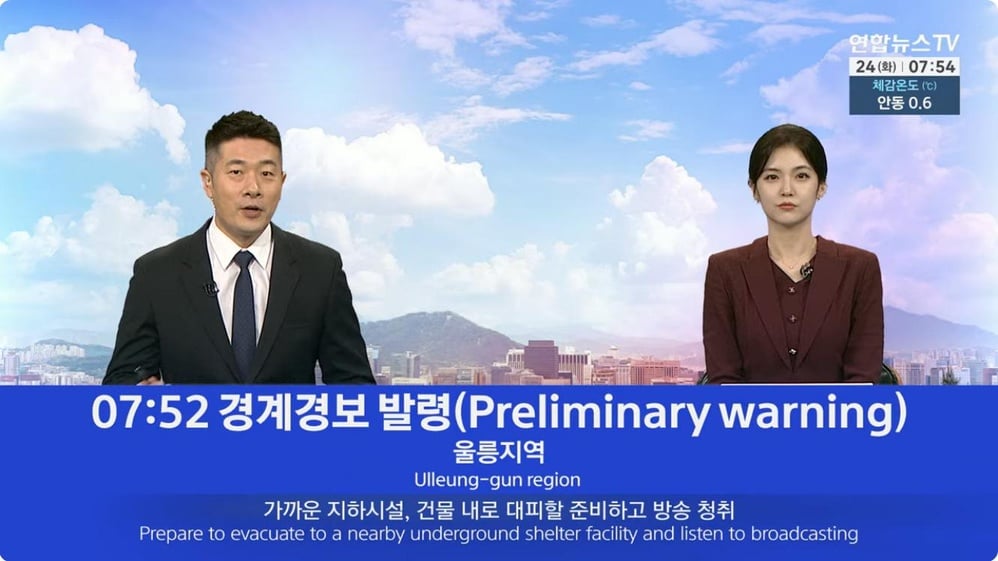
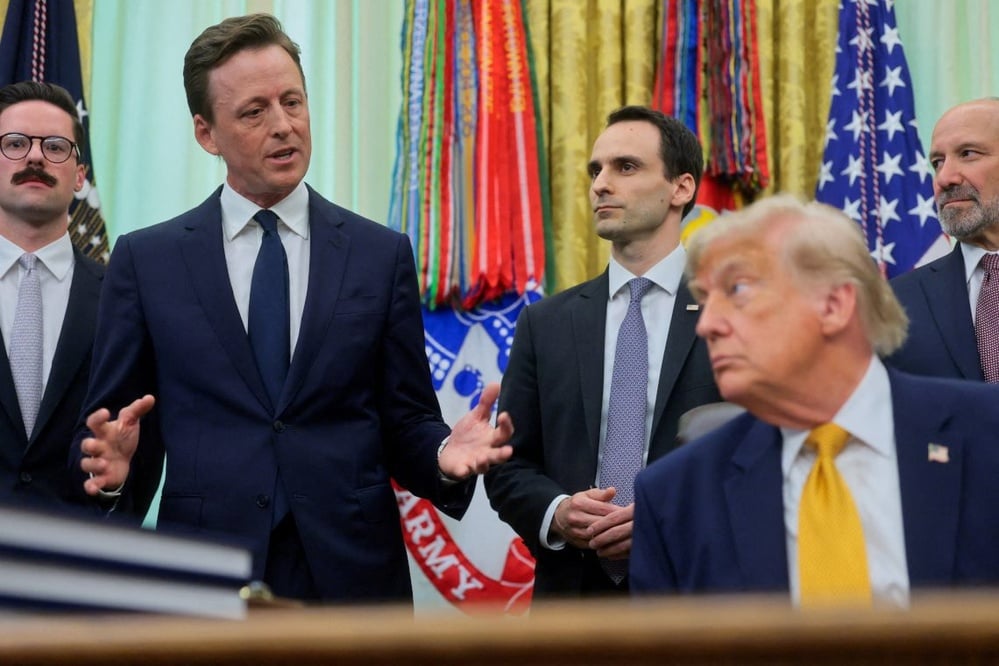

2026 © Helium Trades
Privacy Policy & Disclosure
* Disclaimer: Nothing on this website constitutes investment advice, performance data or any recommendation that any particular security, portfolio of securities, transaction or investment strategy is suitable for any specific person. Helium Trades is not responsible in any way for the accuracy
of any model predictions or price data. Any mention of a particular security and related prediction data is not a recommendation to buy or sell that security. Investments in securities involve the risk of loss. Past performance is no guarantee of future results. Helium Trades is not responsible for any of your investment decisions,
you should consult a financial expert before engaging in any transaction.
Helium Research Assistant

How can I help you today?
Ask any question about this page.


