See whether Helium helps you make better-informed decisions. Try every Pro Trader feature for 30 days. No credit card required.
Try every Pro Trader feature for 30 days. No credit card required.

November 10, 2026 · 0 shares
The strongest observable framing is reliance on named French prosecutors and ANSSI to support the Iran attribution, with official condemnations and technical indicators presented without an Iranian response.
Automated analysis; not human reviewed.
Limitations: The supplied text contains extensive duplicated blocks and page chrome; analysis is limited to the identifiable substantive article content.
·
7 of 55 available dimensions scored; omitted dimensions are not treated as neutral.
·
Verified supporting quotes for 7 of 7 scored dimensions.
Claim: The central attribution is presented through named prosecutors and a formal investigation rather than as the publisher’s own unsourced conclusion.
“In a statement Monday, prosecutors in Paris said they found that Iran’s paramilitary Revolutionary Guard was behind the large-scale cyberattack.” · exact text match
Why: The claim is explicitly attributed to Paris prosecutors, supporting an objective rather than subjective framing.
Claim: The report conveys the attack’s impact with quantified facts and avoids hyperbolic publisher language.
“Temperatures reached 50 Celsius (122 Fahrenheit) for about six hours, forcing stores to discard fresh and frozen goods.” · exact text match
Why: The vivid impact is described through specific measurements and consequences, not sensational rhetoric.
Claim: The report recounts official actions and statements rather than issuing its own policy prescription.
“France on Monday blamed Iran for last month’s cyberattack on supermarket refrigerators, summoned the Iranian ambassador and said it would seek European sanctions against those responsible for the attack.” · exact text match
Why: The sentence describes French government actions; the publisher does not add an independent call to act.
Claim: The central event is an interstate cyberattack attribution followed by diplomatic summons and sanctions.
“France on Monday blamed Iran for last month’s cyberattack on supermarket refrigerators, summoned the Iranian ambassador and said it would seek European sanctions against those responsible for the attack.” · exact text match
Why: State attribution, diplomatic protest, and sanctions are political and security matters.
Claim: The attribution relies substantially on French prosecutors and ANSSI as authoritative sources.
“France’s national cybersecurity agency, ANSSI, attributed the attack to the Shahid Kaveh group, described as a “cyber unit” affiliated with Iran’s Islamic Revolutionary Guard Corps.” · exact text match
Why: The article uses official agency attribution as a key basis, though it also cites technical indicators, so the appeal-to-authority signal is moderate.
Claim: The report names responsible officials and agencies and distinguishes attributed claims from narration.
“Paris prosecutor Laure Beccuau said in a statement that a formal judicial investigation was opened Monday into suspected organized cybercrime with the aggravating circumstance of “having been committed to serve the interests of a foreign power — in this case, Iran.”” · exact text match
Why: Specific named sources, direct attribution, and documented legal steps support high visible credibility.
Claim: Attribution is supported by reported investigative indicators rather than speculation.
“Investigators found that the attackers had used Farsi and IP addresses linked to devices located in Iran, Beccuau said.” · exact text match
Why: The article grounds the attribution in stated technical evidence and named investigative sources.
The supplied text contains extensive duplicated blocks and page chrome; analysis is limited to the identifiable substantive article content.
Official-source cybersecurity reporting that attributes the attack and response to French authorities and presents technical details without evaluative or emotive language.
Automated analysis; not human reviewed.
Limitations: The supplied text relies on French official accounts and lacks an Iranian government response; no author byline is present.
·
14 of 55 available dimensions scored; omitted dimensions are not treated as neutral.
·
Verified supporting quotes for 14 of 14 scored dimensions.
Claim: No left-right ideological framing is present; responsibility and response are attributed to official French sources.
“the French government said yesterday” · exact text match
“according to a joint report by France's cyber crisis coordination center, known as C4” · exact text match
Why: Official security and legal framing does not map onto left-right ideological advocacy.
Claim: The article is framed around state security agencies and corporate victims rather than a populist-versus-elite narrative.
“The C4 brings together France's national cybersecurity agency (ANSSI), the DGSE and DGSI security services, the armament directorate and the cyber defense command.” · exact text match
“Most of the organizations hit were large retailers” · exact text match
Why: The absence of populist rhetoric and the focus on institutional agencies support a neutral-to-slightly-elite framing.
Claim: The article reports state sanctions and criminal enforcement without advocating expanded state authority beyond the described response.
“France's Foreign Ministry plans to summon Iran's ambassador and to ask its European partners to adopt new sanctions against Iranian organizations and individuals involved in the attack.” · exact text match
“The Paris prosecutor's office opened a judicial investigation yesterday against the unit's head, the head's two deputies and anyone else identified.” · exact text match
Why: Reporting official enforcement actions is compatible with a neutral position on the libertarian-authoritarian dimension.
Claim: Central claims are reported through attributed official statements and technical facts rather than the reporter's subjective interpretation.
“the prosecutor's office said in a press release” · exact text match
“France's CERT-FR said in an incident alert” · exact text match
Why: Repeated attribution to named official sources indicates objective, non-subjective framing.
Claim: The account uses measured, technical language even when reporting fires and sabotage.
“That caused food losses and, in at least 15 cases, fires.” · exact text match
“The effects on that equipment were moderate.” · exact text match
Why: Harms are stated factually without sensational adjectives or emotive escalation.
Claim: The report is primarily descriptive, with any prescriptive security advice attributed to CERT-FR.
“The alert, last updated on October 16, warned that attack campaigns against this equipment were probably still underway, and that exposing a management interface to the internet goes against good practice.” · exact text match
Why: The article mostly recounts events and official findings; prescriptive content is limited and quoted.
Claim: The report is heavily political, focused on state attribution, diplomatic sanctions, and criminal prosecution.
“France's Foreign Ministry plans to summon Iran's ambassador and to ask its European partners to adopt new sanctions against Iranian organizations and individuals involved in the attack.” · exact text match
“The Paris prosecutor's office opened a judicial investigation yesterday against the unit's head, the head's two deputies and anyone else identified.” · exact text match
Why: Diplomatic and prosecutorial responses are central, making political content high though reported neutrally.
Claim: The central attribution and technical warnings rest on official authority rather than independent verification.
“It says four indicators point to the IRGC as the sponsor of the attack and to Shahid Kaveh as the unit that carried it out.” · exact text match
“France's CERT-FR said in an incident alert” · exact text match
Why: Official agency statements carry the key claims, supporting moderate appeal-to-authority framing.
Claim: The article's attribution and threat information are sourced to French official bodies without an Iranian response.
“the French government said yesterday” · exact text match
“according to a joint report by France's cyber crisis coordination center, known as C4” · exact text match
Why: Reliance on official French institutions supports a mild pro-establishment framing.
Claim: The tone is neutral, reporting harm factually without emotional language.
“That caused food losses and, in at least 15 cases, fires.” · exact text match
“The effects on that equipment were moderate.” · exact text match
Why: Factual harm statements without emotive adjectives support measured neutrality.
Claim: Credible sourcing and specific attribution are visible throughout the report.
“according to a joint report by France's cyber crisis coordination center, known as C4” · exact text match
“the prosecutor's office said in a press release” · exact text match
Why: Multiple named official sources and concrete details support high credibility within the supplied text.
Claim: The report presents a technical, evidence-based account using named agencies, dates, and specific attack methods.
“It says four indicators point to the IRGC as the sponsor of the attack and to Shahid Kaveh as the unit that carried it out.” · exact text match
“In the October attack, the attackers took remote control of Danfoss and Dixell refrigeration controllers through web interfaces” · exact text match
Why: Specific indicator-based and technical description supports a strongly rational classification.
Claim: The article shows high integrity by naming official sources and preserving different official fire counts.
“That caused food losses and, in at least 15 cases, fires.” · exact text match
“The attack caused about 20 fires.” · exact text match
Why: Attribution and inclusion of separate official figures indicate fair, transparent reporting.
Claim: The article is highly informative, specifying actors, dates, mechanisms, victims, legal charges, and technical indicators.
“In the October attack, the attackers took remote control of Danfoss and Dixell refrigeration controllers through web interfaces, the prosecutor's office said in a press release.” · exact text match
“The infrastructure used in the attack was also used during the same period for reconnaissance of Schneider Electric equipment.” · exact text match
Why: Detailed technical and institutional specificity supports high article intelligence.
The supplied text relies on French official accounts and lacks an Iranian government response; no author byline is present.
November 09, 2026 · 0 shares
A flippant refrigerator-prank opening softens a serious state-linked cyberattack story that otherwise relies on official French attributions and repeatedly flags unestablished links.
Automated analysis; not human reviewed.
Limitations: The supplied text includes duplicated paragraphs and unrelated Gizmodo promotional/headline snippets; substantive article content was analyzed separately.
·
10 of 55 available dimensions scored; omitted dimensions are not treated as neutral.
·
Verified supporting quotes for 10 of 10 scored dimensions.
Claim: The report opens with a subjective, humorous analogy rather than a neutral description.
“France has fallen victim to the most elaborate “Is your refrigerator running? Then you better go get it” prank of all time, and it says Iran is to blame.” · exact text match
Why: The prank analogy frames a serious cyberattack subjectively, though most of the body is factual.
Claim: The opening uses an attention-grabbing prank framing for a state-linked cyberattack.
“France has fallen victim to the most elaborate “Is your refrigerator running? Then you better go get it” prank of all time, and it says Iran is to blame.” · exact text match
Why: The flippant superlative heightens interest, but the story does not sustain sensational language.
Claim: The article primarily reports events and official actions without prescribing a response.
“The Paris prosecutor’s office has opened a criminal investigation into suspected offenses including “fraudulent interference with an automated data-processing system and causing damage by means dangerous to persons.”” · exact text match
“Prosecutors have also requested international arrest warrants targeting the leadership of Shahid Kaveh.” · exact text match
Why: These are descriptive statements of legal actions, not publisher recommendations.
Claim: The opening uses an evaluative superlative to characterize the cyberattack.
“France has fallen victim to the most elaborate “Is your refrigerator running? Then you better go get it” prank of all time, and it says Iran is to blame.” · exact text match
Why: The 'most elaborate ... prank of all time' is the publisher's judgment, not a quoted official finding.
Claim: The story centers on state attribution, foreign policy, and criminal prosecution.
“French officials, including the foreign minister and the Paris prosecutor’s office, say an Iranian hacking group was responsible for cyberattacks that disrupted refrigeration systems at hundreds of supermarkets last month.” · exact text match
Why: The core event is a foreign-state cyberattack allegation handled by national officials, making the content substantially political.
Claim: Attribution and impact claims rest heavily on French official and agency statements.
“In a translated statement provided to Gizmodo, France’s Public Prosecutor’s Office stated that the attacks across the country’s infrastructure were executed by “an organized group” and “were carried out to serve a foreign power, in this case, Iran.”” · exact text match
“Hackers remotely manipulated defrost settings to raise temperatures, causing food to spoil and starting at least 15 fires, according to French cybersecurity officials.” · exact text match
Why: The article repeatedly sources central claims to prosecutors and cybersecurity officials; this is expected for attribution but still authority-centered.
Claim: The opening employs a juvenile prank joke about a serious incident.
“France has fallen victim to the most elaborate “Is your refrigerator running? Then you better go get it” prank of all time, and it says Iran is to blame.” · exact text match
Why: The refrigerator-prank framing is a mild, immature tonal choice.
Claim: The article uses multiple named outlets, official documents, and explicit caveats to support its account.
“Per the BBC, millions of euros worth of frozen food and fresh produce were destroyed.” · exact text match
“Reuters reported that Iran has yet to acknowledge whether or not it was behind the attack.” · exact text match
Why: Attribution to BBC and Reuters, plus caveats about unlinked incidents, supports visible sourcing and uncertainty handling.
Claim: The report explicitly notes official limits on linking related incidents.
“Similar attacks subsequently spread to other European countries and even targeted French blood-storage facilities, though officials have not established whether those incidents were connected.” · exact text match
“Similarly, refrigeration systems at three French blood-storage facilities were targeted on November 2, though authorities have not linked those attacks to the Iranian operation.” · exact text match
Why: The caveats distinguish confirmed attribution from unestablished links, showing fairness and epistemic caution.
Claim: The report conveys the attack's mechanism and scope with specific, attributed detail.
“Hackers remotely manipulated defrost settings to raise temperatures, causing food to spoil and starting at least 15 fires, according to French cybersecurity officials.” · exact text match
Why: Precise method, attributed causality, and quantified damage indicate above-average informational intelligence despite the flippant opening.
The supplied text includes duplicated paragraphs and unrelated Gizmodo promotional/headline snippets; substantive article content was analyzed separately.
November 10, 2026 · 0 shares
The strongest observable framing is reliance on named French prosecutors and ANSSI to support the Iran attribution, with official condemnations and technical indicators presented without an Iranian response.
Automated analysis; not human reviewed.
Limitations: The supplied text contains extensive duplicated blocks and page chrome; analysis is limited to the identifiable substantive article content.
·
7 of 55 available dimensions scored; omitted dimensions are not treated as neutral.
·
Verified supporting quotes for 7 of 7 scored dimensions.
Claim: The central attribution is presented through named prosecutors and a formal investigation rather than as the publisher’s own unsourced conclusion.
“In a statement Monday, prosecutors in Paris said they found that Iran’s paramilitary Revolutionary Guard was behind the large-scale cyberattack.” · exact text match
Why: The claim is explicitly attributed to Paris prosecutors, supporting an objective rather than subjective framing.
Claim: The report conveys the attack’s impact with quantified facts and avoids hyperbolic publisher language.
“Temperatures reached 50 Celsius (122 Fahrenheit) for about six hours, forcing stores to discard fresh and frozen goods.” · exact text match
Why: The vivid impact is described through specific measurements and consequences, not sensational rhetoric.
Claim: The report recounts official actions and statements rather than issuing its own policy prescription.
“France on Monday blamed Iran for last month’s cyberattack on supermarket refrigerators, summoned the Iranian ambassador and said it would seek European sanctions against those responsible for the attack.” · exact text match
Why: The sentence describes French government actions; the publisher does not add an independent call to act.
Claim: The central event is an interstate cyberattack attribution followed by diplomatic summons and sanctions.
“France on Monday blamed Iran for last month’s cyberattack on supermarket refrigerators, summoned the Iranian ambassador and said it would seek European sanctions against those responsible for the attack.” · exact text match
Why: State attribution, diplomatic protest, and sanctions are political and security matters.
Claim: The attribution relies substantially on French prosecutors and ANSSI as authoritative sources.
“France’s national cybersecurity agency, ANSSI, attributed the attack to the Shahid Kaveh group, described as a “cyber unit” affiliated with Iran’s Islamic Revolutionary Guard Corps.” · exact text match
Why: The article uses official agency attribution as a key basis, though it also cites technical indicators, so the appeal-to-authority signal is moderate.
Claim: The report names responsible officials and agencies and distinguishes attributed claims from narration.
“Paris prosecutor Laure Beccuau said in a statement that a formal judicial investigation was opened Monday into suspected organized cybercrime with the aggravating circumstance of “having been committed to serve the interests of a foreign power — in this case, Iran.”” · exact text match
Why: Specific named sources, direct attribution, and documented legal steps support high visible credibility.
Claim: Attribution is supported by reported investigative indicators rather than speculation.
“Investigators found that the attackers had used Farsi and IP addresses linked to devices located in Iran, Beccuau said.” · exact text match
Why: The article grounds the attribution in stated technical evidence and named investigative sources.
The supplied text contains extensive duplicated blocks and page chrome; analysis is limited to the identifiable substantive article content.
Official-source cybersecurity reporting that attributes the attack and response to French authorities and presents technical details without evaluative or emotive language.
Automated analysis; not human reviewed.
Limitations: The supplied text relies on French official accounts and lacks an Iranian government response; no author byline is present.
·
14 of 55 available dimensions scored; omitted dimensions are not treated as neutral.
·
Verified supporting quotes for 14 of 14 scored dimensions.
Claim: No left-right ideological framing is present; responsibility and response are attributed to official French sources.
“the French government said yesterday” · exact text match
“according to a joint report by France's cyber crisis coordination center, known as C4” · exact text match
Why: Official security and legal framing does not map onto left-right ideological advocacy.
Claim: The article is framed around state security agencies and corporate victims rather than a populist-versus-elite narrative.
“The C4 brings together France's national cybersecurity agency (ANSSI), the DGSE and DGSI security services, the armament directorate and the cyber defense command.” · exact text match
“Most of the organizations hit were large retailers” · exact text match
Why: The absence of populist rhetoric and the focus on institutional agencies support a neutral-to-slightly-elite framing.
Claim: The article reports state sanctions and criminal enforcement without advocating expanded state authority beyond the described response.
“France's Foreign Ministry plans to summon Iran's ambassador and to ask its European partners to adopt new sanctions against Iranian organizations and individuals involved in the attack.” · exact text match
“The Paris prosecutor's office opened a judicial investigation yesterday against the unit's head, the head's two deputies and anyone else identified.” · exact text match
Why: Reporting official enforcement actions is compatible with a neutral position on the libertarian-authoritarian dimension.
Claim: Central claims are reported through attributed official statements and technical facts rather than the reporter's subjective interpretation.
“the prosecutor's office said in a press release” · exact text match
“France's CERT-FR said in an incident alert” · exact text match
Why: Repeated attribution to named official sources indicates objective, non-subjective framing.
Claim: The account uses measured, technical language even when reporting fires and sabotage.
“That caused food losses and, in at least 15 cases, fires.” · exact text match
“The effects on that equipment were moderate.” · exact text match
Why: Harms are stated factually without sensational adjectives or emotive escalation.
Claim: The report is primarily descriptive, with any prescriptive security advice attributed to CERT-FR.
“The alert, last updated on October 16, warned that attack campaigns against this equipment were probably still underway, and that exposing a management interface to the internet goes against good practice.” · exact text match
Why: The article mostly recounts events and official findings; prescriptive content is limited and quoted.
Claim: The report is heavily political, focused on state attribution, diplomatic sanctions, and criminal prosecution.
“France's Foreign Ministry plans to summon Iran's ambassador and to ask its European partners to adopt new sanctions against Iranian organizations and individuals involved in the attack.” · exact text match
“The Paris prosecutor's office opened a judicial investigation yesterday against the unit's head, the head's two deputies and anyone else identified.” · exact text match
Why: Diplomatic and prosecutorial responses are central, making political content high though reported neutrally.
Claim: The central attribution and technical warnings rest on official authority rather than independent verification.
“It says four indicators point to the IRGC as the sponsor of the attack and to Shahid Kaveh as the unit that carried it out.” · exact text match
“France's CERT-FR said in an incident alert” · exact text match
Why: Official agency statements carry the key claims, supporting moderate appeal-to-authority framing.
Claim: The article's attribution and threat information are sourced to French official bodies without an Iranian response.
“the French government said yesterday” · exact text match
“according to a joint report by France's cyber crisis coordination center, known as C4” · exact text match
Why: Reliance on official French institutions supports a mild pro-establishment framing.
Claim: The tone is neutral, reporting harm factually without emotional language.
“That caused food losses and, in at least 15 cases, fires.” · exact text match
“The effects on that equipment were moderate.” · exact text match
Why: Factual harm statements without emotive adjectives support measured neutrality.
Claim: Credible sourcing and specific attribution are visible throughout the report.
“according to a joint report by France's cyber crisis coordination center, known as C4” · exact text match
“the prosecutor's office said in a press release” · exact text match
Why: Multiple named official sources and concrete details support high credibility within the supplied text.
Claim: The report presents a technical, evidence-based account using named agencies, dates, and specific attack methods.
“It says four indicators point to the IRGC as the sponsor of the attack and to Shahid Kaveh as the unit that carried it out.” · exact text match
“In the October attack, the attackers took remote control of Danfoss and Dixell refrigeration controllers through web interfaces” · exact text match
Why: Specific indicator-based and technical description supports a strongly rational classification.
Claim: The article shows high integrity by naming official sources and preserving different official fire counts.
“That caused food losses and, in at least 15 cases, fires.” · exact text match
“The attack caused about 20 fires.” · exact text match
Why: Attribution and inclusion of separate official figures indicate fair, transparent reporting.
Claim: The article is highly informative, specifying actors, dates, mechanisms, victims, legal charges, and technical indicators.
“In the October attack, the attackers took remote control of Danfoss and Dixell refrigeration controllers through web interfaces, the prosecutor's office said in a press release.” · exact text match
“The infrastructure used in the attack was also used during the same period for reconnaissance of Schneider Electric equipment.” · exact text match
Why: Detailed technical and institutional specificity supports high article intelligence.
The supplied text relies on French official accounts and lacks an Iranian government response; no author byline is present.
November 09, 2026 · 0 shares
The report is mostly attributed and caveated but leans on vivid impact details and an official national-security frame to present the alleged Iranian refrigerator-hacking campaign.
Automated analysis; not human reviewed.
Limitations: The supplied text includes duplicated passages and login boilerplate; the Iranian side is represented only by a non-response and a general denial, and some U.S. findings rely on anonymous sources.
·
8 of 55 available dimensions scored; omitted dimensions are not treated as neutral.
·
Verified supporting quotes for 8 of 8 scored dimensions.
Claim: The report mostly uses attributed, factual language but occasionally employs evaluative or vivid framing.
“The effects of the October 11 hacks were dramatic.” · exact text match
Why: The evaluative adjective “dramatic” is not attributed to a source, showing a small subjective lean in an otherwise factual report.
Claim: Vivid descriptions of damage and danger add mild sensational coloring to a mostly factual account.
“Some refrigerators had the temperature turned up so high they caught fire.” · exact text match
“supermarket employees carted boxes full of perished meat and melted ice cream into giant trash containers.” · exact text match
Why: The selected concrete images emphasize dramatic physical consequences, supporting a mild sensational framing.
Claim: The story centers on government attribution of a cyberattack, diplomatic retaliation, and sanctions.
“French officials on Monday accused Iran's Revolutionary Guards of responsibility for the cyberattacks” · exact text match
“Barrot also threatened further EU sanctions against Iran.” · exact text match
Why: The reported development is explicitly about state accusation, diplomatic measures, and sanctions policy.
Claim: The report shows strong sourcing, attribution, and explicit acknowledgment of unresolved details.
“Reuters could not establish how the military made its determination or whether it was also looking into other suspects.” · exact text match
“Iran's mission to the United Nations did not return messages seeking comment.” · exact text match
Why: Attribution to named officials and reports, plus stated limits on what Reuters could verify, supports high credibility.
Claim: The report presents a concrete evidentiary basis for its attribution claims rather than relying on assertion alone.
“The French said they were able to link Shahid Kaveh to the hacks by tying the incidents to the digital infrastructure used to sabotage the fridges, by matching the pattern of the intrusion to other hacks carried out by Shahid Kaveh and by recovering traces of Farsi in the attack infrastructure.” · exact text match
Why: The article specifies the methods and evidence that officials cite, supporting a rational rather than emotive or arbitrary presentation.
Claim: The report includes attributed estimates and warnings about future or possible developments.
“The attack's total costs could add up to tens of millions of euros nationwide, one French supermarket owner estimated.” · exact text match
“warnings from US officials that more could be coming.” · exact text match
Why: These are explicitly framed as estimates or warnings, but they introduce forecasted and possible outcomes into the report.
Claim: The report distinguishes accusations from confirmed facts and includes denials and unresolved investigation status.
“Iran routinely denies carrying out malicious cyber operations.” · exact text match
“A person familiar with the matter said that the Pentagon considers Iran a suspect in the August commissary hacks but that the investigation is still in progress.” · exact text match
Why: Including denials and ongoing-investigation caveats indicates fairness and honesty signals in the supplied text.
Claim: The report supplies detailed quantities, entities, methods, and multiple incidents rather than a simplistic account.
“The report said that a total of 700 commercial sites had been targeted across France and that at least 15 fires had broken out as the hackers cranked up the heat.” · exact text match
Why: Specific figures and contextual details indicate a relatively informed and detailed presentation.
The supplied text includes duplicated passages and login boilerplate; the Iranian side is represented only by a non-response and a general denial, and some U.S. findings rely on anonymous sources.
The strongest framing feature is attribution-driven neutrality: official French and German claims are presented with hedges such as 'attributed by France' and 'allegedly involved' rather than as independently verified fact.
Automated analysis; not human reviewed.
Limitations: No Iranian response or independent technical evidence for the attribution is included in the supplied text.
·
8 of 55 available dimensions scored; omitted dimensions are not treated as neutral.
·
Verified supporting quotes for 8 of 8 scored dimensions.
Claim: The framing is predominantly objective and event-focused, with official claims clearly attributed.
“which French authorities have attributed to Iran’s Islamic Revolutionary Guard Corps (IRGC).” · exact text match
“France described the operation as an unprecedented large-scale cyber campaign aimed at sabotage on its national territory.” · exact text match
Why: The text uses attributive language for contested claims rather than presenting them as the publisher's own conclusions.
Claim: The report uses plain, measured wording to describe the cyberattacks and their costs rather than sensational or alarmist phrasing.
“France summoned Iran’s ambassador on Tuesday to protest cyberattacks targeting refrigeration systems at hundreds of supermarkets” · exact text match
“The losses were estimated at tens of millions of euros.” · exact text match
Why: The language is factual and restrained, with no vivid or alarmist embellishment.
Claim: The article is descriptive, reporting actions and accusations without prescribing policy.
“Paris prosecutors have opened a judicial investigation and requested international arrest warrants for the unit's leader and two deputies.” · exact text match
“France has also announced plans to propose European Union sanctions against Iranian individuals and entities allegedly involved in the attacks.” · exact text match
Why: The text reports official actions and plans rather than advocating a course of action.
Claim: The report is highly political, centered on diplomatic conflict and state security.
“France summoned Iran’s ambassador on Tuesday to protest cyberattacks targeting refrigeration systems at hundreds of supermarkets” · exact text match
“Germany has also condemned the attacks, expressing solidarity with France and warning Tehran against what it described as destabilizing activities.” · exact text match
Why: The core subject is an international diplomatic and security dispute involving government authorities.
Claim: The article is credible because it relies on named authorities, specific dates and quantities, and clear attribution.
“The French Foreign Ministry confirmed that the ambassador was received earlier Tuesday by the ministry’s secretary-general at the Quai d’Orsay” · exact text match
“The country's cybersecurity authorities attributed the attacks to Shahid Kaveh, an offensive cyber unit affiliated with the IRGC's Electronic and Cyber Centre.” · exact text match
Why: Multiple official sources and specific details support visible credibility in the supplied text.
Claim: The report is fact-based and structured around attributed official findings and specific quantities rather than emotive or illogical reasoning.
“According to French authorities, hackers remotely manipulated refrigeration systems, causing temperatures to rise and resulting in extensive food spoilage, material damage and fires.” · exact text match
“The losses were estimated at tens of millions of euros.” · exact text match
Why: Specific attributed details and quantified losses support a rational, evidence-oriented presentation.
Claim: The article shows high internal fairness and honesty through attribution and hedging of contested allegations.
“France has also announced plans to propose European Union sanctions against Iranian individuals and entities allegedly involved in the attacks.” · exact text match
““We strongly condemn the cyberattacks by Iran’s Revolutionary Guards, as attributed by France.”” · exact text match
Why: The use of 'allegedly' and 'as attributed by France' signals visible epistemic caution.
Claim: The article is informative and detailed, supplying chronology, scale, actors, and institutional responses.
“a series of cyberattacks carried out on October 11 and 12, which affected refrigeration control systems at more than 700 supermarket locations across France.” · exact text match
Why: The report provides precise dates, scale, attribution, and follow-up actions.
No Iranian response or independent technical evidence for the attribution is included in the supplied text.
November 10, 2026 · 0 shares
Attribution-heavy reporting of French government accusations against Iran, relying on official and expert sources while giving no Iranian official response.
Automated analysis; not human reviewed.
Limitations: The supplied text contains duplicated passages and unrelated related-link headlines; analysis is limited to the main France-Iran cyberattack report.
·
11 of 55 available dimensions scored; omitted dimensions are not treated as neutral.
·
Verified supporting quotes for 11 of 11 scored dimensions.
Claim: The report structures its account around attributed official and investigator statements rather than publisher commentary.
“French authorities said on Monday that they are probing a cyber unit affiliated with the Islamic Revolutionary Guard Corps (IRGC) over the attacks” · exact text match
“Investigators say the attackers used Farsi and IP addresses linked to devices in Iran” · exact text match
Why: Attribution to named authorities and investigators supports objective reporting.
Claim: The report is largely factual, though it includes official language about an unprecedented and major attack.
“unprecedented in its level of aggression” · exact text match
Why: Sensational terms appear mostly in direct official quotes, not publisher narration.
Claim: The report primarily describes the investigation, accusation, and announced responses rather than prescribing policy.
“France has opened an investigation and accused Iran of being behind recent cyberattacks targeting refrigeration units in supermarkets.” · exact text match
Why: It reports actions and statements without editorial advocacy.
Claim: The report includes official language about an unprecedented attack and national security threat, but keeps it in attributed quotes.
““It represents a major attack on the nation’s interests and on the security of the French people.
That is why it will not go unanswered.””
· exact text match
Why: Threatening language is present but attributed, yielding mild fear framing.
Claim: The story is framed around a state-to-state accusation, diplomatic summons, sanctions, and national security.
“Foreign Minister Jean-Noel Barrot said that the Iranian ambassador had been summoned and that sanctions would be sought against those responsible at a “European level”.” · exact text match
Why: State diplomatic and security actions make the content highly political.
Claim: The report leans on French officials, prosecutors, investigators, and an expert to establish the account.
“French authorities said on Monday that they are probing a cyber unit affiliated with the Islamic Revolutionary Guard Corps (IRGC) over the attacks” · exact text match
“Jody Westby, chief executive of Global Cyber Risk LLC, said tracking down the group directly responsible for the attacks is “very difficult” because of poor cooperation on international cybercrime investigations.” · exact text match
Why: Authority statements carry most factual claims.
Claim: The report relies heavily on French state authorities and presents their response without an Iranian official response.
“French authorities said on Monday that they are probing a cyber unit affiliated with the Islamic Revolutionary Guard Corps (IRGC) over the attacks” · exact text match
“Foreign Minister Jean-Noel Barrot said that the Iranian ambassador had been summoned and that sanctions would be sought against those responsible at a “European level”.” · exact text match
Why: Official state framing dominates the sourcing, indicating mild pro-establishment lean.
Claim: The report uses named officials, a prosecutor’s office, investigators, and an independent expert with direct quotes.
“The Paris prosecutor’s office said it has requested international arrest warrants against the leader of Shahid Kaveh, an offensive cyber unit affiliated with the IRGC, and his two deputies.” · exact text match
“Jody Westby, chief executive of Global Cyber Risk LLC, said tracking down the group directly responsible for the attacks is “very difficult” because of poor cooperation on international cybercrime investigations.” · exact text match
Why: Sourcing and attribution are visible and specific.
Claim: The report presents evidence and caveats in a logical, fact-based manner.
“Investigators say the attackers used Farsi and IP addresses linked to devices in Iran” · exact text match
“because of the nature of packet switching” · exact text match
Why: Specific indicators and an expert caveat support rational reporting.
Claim: The report attributes accusations and technical claims to named authorities and includes an expert caveat about attribution difficulties.
“French authorities said on Monday that they are probing a cyber unit affiliated with the Islamic Revolutionary Guard Corps (IRGC) over the attacks” · exact text match
“Jody Westby, chief executive of Global Cyber Risk LLC, said tracking down the group directly responsible for the attacks is “very difficult” because of poor cooperation on international cybercrime investigations.” · exact text match
Why: Clear attribution and a caveat signal high integrity.
Claim: The report provides technical and institutional detail and includes a caveat on attribution limits.
“Investigators say the attackers used Farsi and IP addresses linked to devices in Iran” · exact text match
“because of the nature of packet switching” · exact text match
Why: Specific technical detail and expert caveat indicate above-average article intelligence.
The supplied text contains duplicated passages and unrelated related-link headlines; analysis is limited to the main France-Iran cyberattack report.
Official-source cybersecurity reporting that attributes the attack and response to French authorities and presents technical details without evaluative or emotive language.
Automated analysis; not human reviewed.
Limitations: The supplied text relies on French official accounts and lacks an Iranian government response; no author byline is present.
·
14 of 55 available dimensions scored; omitted dimensions are not treated as neutral.
·
Verified supporting quotes for 14 of 14 scored dimensions.
Claim: No left-right ideological framing is present; responsibility and response are attributed to official French sources.
“the French government said yesterday” · exact text match
“according to a joint report by France's cyber crisis coordination center, known as C4” · exact text match
Why: Official security and legal framing does not map onto left-right ideological advocacy.
Claim: The article is framed around state security agencies and corporate victims rather than a populist-versus-elite narrative.
“The C4 brings together France's national cybersecurity agency (ANSSI), the DGSE and DGSI security services, the armament directorate and the cyber defense command.” · exact text match
“Most of the organizations hit were large retailers” · exact text match
Why: The absence of populist rhetoric and the focus on institutional agencies support a neutral-to-slightly-elite framing.
Claim: The article reports state sanctions and criminal enforcement without advocating expanded state authority beyond the described response.
“France's Foreign Ministry plans to summon Iran's ambassador and to ask its European partners to adopt new sanctions against Iranian organizations and individuals involved in the attack.” · exact text match
“The Paris prosecutor's office opened a judicial investigation yesterday against the unit's head, the head's two deputies and anyone else identified.” · exact text match
Why: Reporting official enforcement actions is compatible with a neutral position on the libertarian-authoritarian dimension.
Claim: Central claims are reported through attributed official statements and technical facts rather than the reporter's subjective interpretation.
“the prosecutor's office said in a press release” · exact text match
“France's CERT-FR said in an incident alert” · exact text match
Why: Repeated attribution to named official sources indicates objective, non-subjective framing.
Claim: The account uses measured, technical language even when reporting fires and sabotage.
“That caused food losses and, in at least 15 cases, fires.” · exact text match
“The effects on that equipment were moderate.” · exact text match
Why: Harms are stated factually without sensational adjectives or emotive escalation.
Claim: The report is primarily descriptive, with any prescriptive security advice attributed to CERT-FR.
“The alert, last updated on October 16, warned that attack campaigns against this equipment were probably still underway, and that exposing a management interface to the internet goes against good practice.” · exact text match
Why: The article mostly recounts events and official findings; prescriptive content is limited and quoted.
Claim: The report is heavily political, focused on state attribution, diplomatic sanctions, and criminal prosecution.
“France's Foreign Ministry plans to summon Iran's ambassador and to ask its European partners to adopt new sanctions against Iranian organizations and individuals involved in the attack.” · exact text match
“The Paris prosecutor's office opened a judicial investigation yesterday against the unit's head, the head's two deputies and anyone else identified.” · exact text match
Why: Diplomatic and prosecutorial responses are central, making political content high though reported neutrally.
Claim: The central attribution and technical warnings rest on official authority rather than independent verification.
“It says four indicators point to the IRGC as the sponsor of the attack and to Shahid Kaveh as the unit that carried it out.” · exact text match
“France's CERT-FR said in an incident alert” · exact text match
Why: Official agency statements carry the key claims, supporting moderate appeal-to-authority framing.
Claim: The article's attribution and threat information are sourced to French official bodies without an Iranian response.
“the French government said yesterday” · exact text match
“according to a joint report by France's cyber crisis coordination center, known as C4” · exact text match
Why: Reliance on official French institutions supports a mild pro-establishment framing.
Claim: The tone is neutral, reporting harm factually without emotional language.
“That caused food losses and, in at least 15 cases, fires.” · exact text match
“The effects on that equipment were moderate.” · exact text match
Why: Factual harm statements without emotive adjectives support measured neutrality.
Claim: Credible sourcing and specific attribution are visible throughout the report.
“according to a joint report by France's cyber crisis coordination center, known as C4” · exact text match
“the prosecutor's office said in a press release” · exact text match
Why: Multiple named official sources and concrete details support high credibility within the supplied text.
Claim: The report presents a technical, evidence-based account using named agencies, dates, and specific attack methods.
“It says four indicators point to the IRGC as the sponsor of the attack and to Shahid Kaveh as the unit that carried it out.” · exact text match
“In the October attack, the attackers took remote control of Danfoss and Dixell refrigeration controllers through web interfaces” · exact text match
Why: Specific indicator-based and technical description supports a strongly rational classification.
Claim: The article shows high integrity by naming official sources and preserving different official fire counts.
“That caused food losses and, in at least 15 cases, fires.” · exact text match
“The attack caused about 20 fires.” · exact text match
Why: Attribution and inclusion of separate official figures indicate fair, transparent reporting.
Claim: The article is highly informative, specifying actors, dates, mechanisms, victims, legal charges, and technical indicators.
“In the October attack, the attackers took remote control of Danfoss and Dixell refrigeration controllers through web interfaces, the prosecutor's office said in a press release.” · exact text match
“The infrastructure used in the attack was also used during the same period for reconnaissance of Schneider Electric equipment.” · exact text match
Why: Detailed technical and institutional specificity supports high article intelligence.
The supplied text relies on French official accounts and lacks an Iranian government response; no author byline is present.
November 10, 2026 · 0 shares
Attribution-heavy and restrained in wording, though the headline foregrounds France's willingness not to rule out escalatory responses.
Automated analysis; not human reviewed.
Limitations: Brief report; it does not detail the intelligence evidence behind the attribution to the IRGC cyber unit.
·
8 of 55 available dimensions scored; omitted dimensions are not treated as neutral.
·
Verified supporting quotes for 8 of 8 scored dimensions.
Claim: The report grounds contested claims in named officials, intelligence attribution, and prosecutor actions rather than authorial opinion.
“Foreign Minister Jean-Noel Barrot said on Tuesday.” · exact text match
“French daily Le Figaro reported on Monday.” · exact text match
Why: Official attribution and named sourcing support an objective, non-subjective presentation.
Claim: The prose is measured and procedural, avoiding sensational adjectives or graphic escalation language.
“He said France would examine all possible measures to deter further attacks” · exact text match
“Paris prosecutors have opened an investigation” · exact text match
Why: Procedural reporting and restrained wording indicate low sensationalism.
Claim: The report describes official statements and legal actions without prescribing policy or moral conclusions.
“France is considering all possible responses to a cyberattack targeting refrigeration facilities in the country” · exact text match
“Paris prosecutors have opened an investigation” · exact text match
Why: The account is action-focused and descriptive rather than advocacy-oriented.
Claim: The headline foregrounds France's willingness to use measures beyond diplomacy and sanctions.
“France vows nothing is off the table in response to suspected Iran-linked cyberattack.” · exact text match
Why: The framing emphasizes a deterrent, escalatory posture, though the body remains attributional.
Claim: The report concerns foreign policy, state security, and prosecution of an Iran-linked cyberattack.
“suspected Iran-linked cyberattack” · exact text match
“Foreign Minister Jean-Noel Barrot said on Tuesday” · exact text match
Why: The central actors and issue are governmental and geopolitical, making the coverage highly political.
Claim: Specific named outlets, officials, agencies, and legal actions give the report verifiable attribution.
“French daily Le Figaro reported on Monday” · exact text match
“has also requested international arrest warrants in the case” · exact text match
Why: Concrete sourcing and legal details support high credibility in the supplied text.
Claim: The report separates suspicion from established fact and tracks concrete legal steps, indicating rational sourcing rather than irrational assertion.
“suspected of being behind the cyberattack” · exact text match
“Paris prosecutors have opened an investigation” · exact text match
Why: Explicit hedging and procedural details support a rational classification.
Claim: Contested links are hedged as suspected or reportedly, showing fair and cautious handling.
“suspected of being behind the cyberattack” · exact text match
“reportedly affiliated with the IRGC” · exact text match
Why: The qualifiers avoid asserting unproven links as fact.
Brief report; it does not detail the intelligence evidence behind the attribution to the IRGC cyber unit.
November 10, 2026 · 0 shares
Measured, attribution-heavy wire framing foregrounds French official accusations and warnings while noting Iran's routine denial and lack of direct comment.
Automated analysis; not human reviewed.
Limitations: Attribution to Iran rests on French official claims; Iran supplied no direct comment in the supplied text.
·
13 of 55 available dimensions scored; omitted dimensions are not treated as neutral.
·
Verified supporting quotes for 13 of 13 scored dimensions.
Claim: No left-right ideological framing is applied to the diplomatic and cyber dispute.
“France summoned Iran's ambassador on Tuesday after accusing Tehran of a cyberattack that disabled refrigerators in hundreds of supermarkets” · exact text match
“Iran routinely denies carrying out malicious cyber operations.” · exact text match
Why: The report presents an official accusation and an Iranian denial without left-right ideological labels or domestic partisan cues.
Claim: The report is structured around attributed statements and factual chronology rather than subjective commentary.
“Barrot, speaking on France Info television, said France would push for EU sanctions in response” · exact text match
“Iran's mission to the United Nations did not return messages seeking comment on Monday.” · exact text match
Why: Direct attribution and acknowledgment of the non-response support an objective classification.
Claim: The article uses restrained wire-service framing and avoids sensational narration beyond quoted official characterizations.
“France summoned Iran's ambassador on Tuesday after accusing Tehran of a cyberattack that disabled refrigerators in hundreds of supermarkets” · exact text match
“He said there could be further action that would not be disclosed.” · exact text match
Why: The language reports events and attributed warnings without sensational embellishment.
Claim: The reported refrigeration-system hack and threatened cyber retaliation are unusual and consequential.
“France summoned Iran's ambassador on Tuesday after accusing Tehran of a cyberattack that disabled refrigerators in hundreds of supermarkets” · exact text match
“what he called an "attack of unprecedented scale and aggression in our country"” · exact text match
Why: The subject combines unusual infrastructure disruption with high-level diplomatic escalation.
Claim: The report is predominantly descriptive of French diplomatic actions and official statements, not prescriptive advocacy.
“France summoned Iran's ambassador on Tuesday” · exact text match
“Barrot, speaking on France Info television, said France would push for EU sanctions in response” · exact text match
Why: It describes actions and quoted intentions without issuing editorial recommendations.
Claim: The report centers on international diplomacy, sanctions, and state cyber response.
“France summoned Iran's ambassador on Tuesday” · exact text match
“Barrot, speaking on France Info television, said France would push for EU sanctions in response” · exact text match
Why: The events are governmental and geopolitical rather than non-political.
Claim: The central attribution and response are sourced to French officials and the foreign minister rather than independent technical evidence.
“French officials said on Monday that Iran's Revolutionary Guards were behind the attacks” · exact text match
“Barrot, speaking on France Info television, said France would push for EU sanctions in response” · exact text match
Counterevidence:
“Iran routinely denies carrying out malicious cyber operations.” · exact text match
Why: The report depends on official authority for key claims while noting Iran's denial.
Claim: French government and ministerial claims are prominent and largely structure the account.
“French officials said on Monday that Iran's Revolutionary Guards were behind the attacks” · exact text match
“Barrot, speaking on France Info television, said France would push for EU sanctions in response” · exact text match
Counterevidence:
“Iran routinely denies carrying out malicious cyber operations.” · exact text match
Why: Official French sources frame the central allegation and response, though the report also notes Iran's routine denial.
Claim: Visible sourcing, attribution, and acknowledgment of the accused party's non-response support credibility.
“French officials said on Monday that Iran's Revolutionary Guards were behind the attacks” · exact text match
“Iran's mission to the United Nations did not return messages seeking comment on Monday.” · exact text match
Why: Attribution and inclusion of the non-response are credibility signals in the supplied text.
Claim: The report uses attributed official claims and includes the accused party's denial/non-response, supporting a rational rather than irrational framing.
“French officials said on Monday that Iran's Revolutionary Guards were behind the attacks” · exact text match
“Iran's mission to the United Nations did not return messages seeking comment on Monday.” · exact text match
Why: Attribution and inclusion of the accused party's position indicate evidence-aware, non-irrational reporting.
Claim: Future French cyber measures are reported conditionally and attributed to the foreign minister.
“He said there could be further action that would not be disclosed.” · exact text match
“"We will take whatever measures are necessary, including some that we will not discuss publicly, if we judge them proportionate and necessary to deter any new attacks and punish those responsible for this unacceptable aggression," Barrot said.” · exact text match
Why: Only limited future-oriented possibilities appear, and they are explicitly attributed and conditional.
Claim: The report attributes the central accusation, includes Iran's denial/non-response, and provides relevant context.
“French officials said on Monday that Iran's Revolutionary Guards were behind the attacks” · exact text match
“Iran routinely denies carrying out malicious cyber operations.” · exact text match
Why: Clear attribution and inclusion of the accused side's denial are visible integrity signals.
Claim: The report situates the incident in a clear timeline and broader bilateral context.
“The supermarket hacks, which struck hundreds of stores in early October, were among the most disruptive cyberattacks since the Iran war began in February” · exact text match
“Relations between Paris and Tehran have been strained for years over Iran's nuclear and ballistic missile programmes, its regional activities and the detention of several French nationals.” · exact text match
Why: Chronology and contextual background support an intelligent presentation.
Attribution to Iran rests on French official claims; Iran supplied no direct comment in the supplied text.
November 07, 2026 · 0 shares
Measured attribution and explicit uncertainty about linkage dominate a factual cyberattack report.
Automated analysis; not human reviewed.
Limitations: The supplied article text ends mid-sentence, limiting full verification of the final Le Canard enchaîné report detail.
·
6 of 55 available dimensions scored; omitted dimensions are not treated as neutral.
·
Verified supporting quotes for 6 of 6 scored dimensions.
Claim: The report relies on attributed statements and acknowledges unresolved facts rather than asserting subjective views.
“the blood stocks came out unscathed, the blood service Établissement français du sang (EFS) said.” · exact text match
“Investigators have yet to establish whether the attacks were linked.” · exact text match
Why: Attribution to EFS and explicit uncertainty support objective reporting rather than subjective assertion.
Claim: The framing is restrained and avoids alarmist language despite cyberattack and spoilage.
“the blood stocks came out unscathed, the blood service Établissement français du sang (EFS) said.” · exact text match
“Investigators have yet to establish whether the attacks were linked.” · exact text match
Why: The report states outcomes and uncertainty plainly, without fear-based or hyperbolic embellishment.
Claim: The report maintains a neutral, unemotional tone despite covering cyberattacks and food spoilage.
“the blood stocks came out unscathed, the blood service Établissement français du sang (EFS) said.” · exact text match
Why: The phrasing is matter-of-fact and attributional rather than emotionally charged.
Claim: Sourcing, attribution, and explicit uncertainty make the report credible.
“France’s national blood service said one of its refrigeration monitoring and control suppliers was hacked on Monday” · exact text match
“Investigators have yet to establish whether the attacks were linked.” · exact text match
Why: Named-source attribution and acknowledged uncertainty support high visible credibility.
Claim: The report proceeds by attributed facts and acknowledged uncertainty rather than fallacious or emotive reasoning.
“Investigators have yet to establish whether the attacks were linked.” · exact text match
“but would not confirm a report in the French newspaper Le Canard enchaîné” · exact text match
Why: Explicit uncertainty and non-confirmation indicate rational, evidence-bound framing.
Claim: The report acknowledges uncertainty and non-confirmation rather than asserting unverified linkage or claims.
“Investigators have yet to establish whether the attacks were linked.” · exact text match
“but would not confirm a report in the French newspaper Le Canard enchaîné” · exact text match
Why: Including unresolved linkage and non-confirmation signals fairness and honesty.
The supplied article text ends mid-sentence, limiting full verification of the final Le Canard enchaîné report detail.
November 06, 2026 · 0 shares
Attribute-cautious, technical reporting that foregrounds official guidance and quantified exposure data while explicitly flagging unconfirmed attribution.
Automated analysis; not human reviewed.
Limitations: The supplied article text contains duplicated passages and page boilerplate; the analysis uses the coherent article portion and ignores repeated or navigational material.
·
7 of 55 available dimensions scored; omitted dimensions are not treated as neutral.
·
Verified supporting quotes for 7 of 7 scored dimensions.
Claim: The framing is factual and attributed, with little subjective commentary.
“CISA, the FBI, HHS, USDA, and DoT say they “are aware of malicious cyber actors targeting electronic temperature controllers and commercial refrigeration controllers in retail grocery and cold storage facilities.”” · exact text match
“According to internet intelligence firm Censys, out of 6,695 internet-exposed refrigeration controllers identified on October 9, only 3,124 (or 47%) remain accessible from the web as of November 5.” · exact text match
Why: Official statements and quantified data dominate over subjective evaluation.
Claim: The account is measured rather than sensational despite describing disruptive attacks.
“Over the past weeks, threat actors have been hacking monitoring systems to tamper with fridges and freezers in supermarkets and blood banks across Europe, causing millions in losses.” · exact text match
“Quick action from staff prevented the compromise of blood products and samples, the French Blood Establishment (EFS) said.” · exact text match
Why: Concrete outcomes and prevention are reported in factual language without alarmist rhetoric.
Claim: Visible sourcing, concrete figures, and explicit uncertainty support high credibility.
“However, nothing has been confirmed, and Iranian hacktivists or state-sponsored hackers may also be responsible, BBC notes.” · exact text match
“According to internet intelligence firm Censys, out of 6,695 internet-exposed refrigeration controllers identified on October 9, only 3,124 (or 47%) remain accessible from the web as of November 5.” · exact text match
Why: Attributed claims, quantified data, and caveats indicate trustworthy reporting within the supplied text.
Claim: The report is grounded in attributed technical data and explicit uncertainty rather than speculation.
“According to internet intelligence firm Censys, out of 6,695 internet-exposed refrigeration controllers identified on October 9, only 3,124 (or 47%) remain accessible from the web as of November 5.” · exact text match
“However, nothing has been confirmed, and Iranian hacktivists or state-sponsored hackers may also be responsible, BBC notes.” · exact text match
Why: Quantified third-party data and caveated attribution indicate rational/evidence-based framing.
Claim: Attribution speculation is included but explicitly flagged as unconfirmed.
“Russian hacktivist groups such as Noname057(16) and Z-Pentest Alliance reportedly claimed hacking Danfoss, leading to speculation that they mounted the supermarket attacks.” · exact text match
“However, nothing has been confirmed, and Iranian hacktivists or state-sponsored hackers may also be responsible, BBC notes.” · exact text match
Why: The speculation is attributed and caveated, keeping the speculation level low.
Claim: The report distinguishes reported claims from confirmed facts and attributes sourced data.
“However, nothing has been confirmed, and Iranian hacktivists or state-sponsored hackers may also be responsible, BBC notes.” · exact text match
Why: Explicit uncertainty and attribution to BBC signal fair, honest reporting.
Claim: The report provides specific technical and quantitative detail.
“The company’s analysis covers the widely used Copeland/Dixell XWEB and Danfoss StoreView controllers: XWEB exposure dropped 35% (3,708 to 2,420), while StoreView dropped 76% (3,004 to 708).” · exact text match
Why: Detailed controller types and exposure percentages indicate high article intelligence.
The supplied article text contains duplicated passages and page boilerplate; the analysis uses the coherent article portion and ignores repeated or navigational material.
November 10, 2026 · 0 shares
The framing is security-focused and attribution-heavy, centering French official allegations against an Iran-linked cyber unit while noting Iran’s non-response and prior denial.
Automated analysis; not human reviewed.
Limitations: The supplied text is a brief social-media-style report with unnamed French officials and investigators and no linked evidence, limiting certain bias assessment.
·
6 of 55 available dimensions scored; omitted dimensions are not treated as neutral.
·
Verified supporting quotes for 6 of 6 scored dimensions.
Claim: The report remains largely factual and attributed, presenting the French accusation and Iran’s denial without adopting an opinionated stance.
“French officials say hackers targeted 700 commercial sites in October” · exact text match
“Iran has not officially responded to the latest allegations and has previously denied carrying out malicious cyber operations.” · exact text match
Why: Both the official allegation and the Iranian denial are reported as attributed statements rather than the publisher’s conclusion.
Claim: The language is measured and factual rather than sensationalized, despite reporting fires and potential damage.
“remotely raising refrigeration temperatures, with at least 15 fires reported” · exact text match
Why: The phrasing states the alleged action and reported fires without emotive adjectives or alarmist rhetoric.
Claim: The report describes an accusation, damage, and diplomatic response without advancing a policy prescription.
“France has summoned the Iranian ambassador and threatened further EU sanctions.” · exact text match
Why: It reports government actions rather than recommending a course of action.
Claim: The central event is a state-to-state accusation and diplomatic response involving France, Iran, and possible EU sanctions.
“France accuses IRGC of cyberattack on supermarket fridges, summons Iran ambassador.” · exact text match
“France has summoned the Iranian ambassador and threatened further EU sanctions.” · exact text match
Why: The report centers on international cyber attribution, diplomatic summons, and sanctions rather than non-political subject matter.
Claim: The report shows moderate credibility through official attribution, specific figures, and inclusion of Iran’s denial, but relies on unnamed officials and offers no linked evidence.
“French officials say hackers targeted 700 commercial sites in October” · exact text match
“Iran has not officially responded to the latest allegations and has previously denied carrying out malicious cyber operations.” · exact text match
Why: Attribution and balance are present, but sourcing remains unnamed and the format is a brief social-media-style report.
Claim: The report maintains visible fairness by attributing the allegation to French investigators and noting Iran’s lack of response and prior denial.
“French investigators linked the attacks to Shahid Kaveh” · exact text match
“Iran has not officially responded to the latest allegations and has previously denied carrying out malicious cyber operations.” · exact text match
Why: It includes attribution and a denial caveat, though the sourcing is not named.
The supplied text is a brief social-media-style report with unnamed French officials and investigators and no linked evidence, limiting certain bias assessment.
November 06, 2026 · 0 shares
The report is predominantly factual and attributable, relaying official warnings and concrete incidents without partisan or emotional editorializing.
Automated analysis; not human reviewed.
Limitations: The supplied text includes related links, advertisements, and reader comments; these were excluded from publisher-framing analysis.
·
9 of 55 available dimensions scored; omitted dimensions are not treated as neutral.
·
Verified supporting quotes for 6 of 9 scored dimensions.
Claim: Threat claims are attributed to official advisories and specific incidents rather than conveyed as subjective commentary.
“According to a joint advisory published Thursday, attackers are exploiting weaknesses in unpatched or internet-accessible electronic temperature controllers and commercial refrigeration management systems.” · exact text match
Why: The sentence attributes the technical claim to a joint advisory, showing objective reporting.
Claim: Potential harms are stated through agency warnings and incident details rather than sensationalized language.
“Successful attacks can cause inventory losses, reduce equipment lifespan, create fire hazards, and create unsafe storage conditions.” · exact text match
Why: The harm list is consequential but attributed to agency findings and presented factually.
Claim: Credibility is supported by named agencies, dates, specific incidents, and attributed statements.
“On November 3, the French Blood Establishment (EFS) confirmed that a cybersecurity incident affecting a refrigeration equipment provider had altered temperature and defrost settings at three facilities used to store blood products.” · exact text match
Why: A named organization, date, and specific confirmed incident provide concrete sourcing.
Claim: The report explains vulnerabilities and mitigations in technical, evidence-based terms.
“The agencies say attackers may exploit authentication bypass vulnerabilities, arbitrary code injection flaws, or weak configurations to modify temperature settings and force refrigeration equipment into continuous heating or defrost cycles.” · exact text match
Why: Specific vulnerability classes and causal mechanisms show rational/technical framing.
Claim: The report names official sources and attributes claims, showing high internal fairness and honesty signals.
“The warning was issued jointly with the U.S. Departments of Health and Human Services (HHS), Agriculture (USDA), and Transportation (DOT), urging critical infrastructure operators to secure vulnerable refrigeration controllers used in healthcare, food production, chemical facilities, and transportation.” · exact text match
Why: Broad named attribution supports high integrity in the supplied text.
Claim: The report demonstrates technical specificity and structured explanation of attack paths and consequences.
“These devices allow operators to monitor temperatures remotely, manage defrost cycles, and control cooling equipment.” · exact text match
Why: Explaining device functions and their security relevance supports an intelligent, informative article.
The supplied text includes related links, advertisements, and reader comments; these were excluded from publisher-framing analysis.
November 05, 2026 · 0 shares
Official-source security framing is sober and attribution-heavy, with limited alarm but little independent verification.
Automated analysis; not human reviewed.
Limitations: The supplied text includes duplicated paragraphs and site chrome; the substantive report is brief and relies on a short government statement with limited attribution.
·
7 of 55 available dimensions scored; omitted dimensions are not treated as neutral.
·
Verified supporting quotes for 7 of 7 scored dimensions.
Claim: Threat claims are attributed to government statements and unidentified actors, not to the publisher's subjective viewpoint.
“said that unidentified "malicious cyber actors" were targeting vulnerabilities” · exact text match
Why: Attribution to official statements and actors indicates objective framing.
Claim: Potential harms are presented conditionally and with hedged language rather than as confirmed sensational events.
“possibly cause physical impacts such as fire hazards, loss of inventory and changes to the service life of the system” · exact text match
Why: Conditional wording tempers the impact language.
Claim: The headline and impact language emphasize an ongoing cyber threat and physical hazards.
“US warns of 'ongoing cyber threat' to industrial refrigeration systems.” · exact text match
“possibly cause physical impacts such as fire hazards, loss of inventory” · exact text match
Why: Threat and hazard wording creates mild alarm, though it remains an official warning.
Claim: The report names the issuing agencies, quotes named officials, and acknowledges limited detail.
“said the statement, which was jointly issued by the FBI, the Cybersecurity and Infrastructure Security Agency and the departments of health, transport and agriculture.” · exact text match
“Although short on detail about the hackers involved, the statement suggested that the threat to commercial cold storage was ongoing.” · exact text match
Why: Named institutions, direct attribution, and acknowledged uncertainty support high credibility.
Claim: The report uses qualified, attributed language and acknowledges missing details rather than making emotional or illogical assertions.
“Although short on detail about the hackers involved, the statement suggested that the threat to commercial cold storage was ongoing.” · exact text match
Why: Explicit uncertainty and attribution support a rational classification.
Claim: The report discloses limits in the official statement and credits a prior Reuters report.
“Although short on detail about the hackers involved, the statement suggested that the threat to commercial cold storage was ongoing.” · exact text match
“Reuters first reported last week.” · exact text match
Why: Transparency about missing detail and source attribution are integrity signals.
Claim: The report is structured, concise, and distinguishes confirmed reporting from potential impacts.
“The statement, which follows a spate of hacks against commercial freezers in the United States and Europe, said that unidentified "malicious cyber actors" were targeting vulnerabilities” · exact text match
Why: Clear synthesis and attribution indicate above-average article intelligence.
The supplied text includes duplicated paragraphs and site chrome; the substantive report is brief and relies on a short government statement with limited attribution.
November 09, 2026 · 0 shares
Attributed agency warnings and incident reports frame the refrigeration cyber threat as a practical security risk, using conditional language and avoiding partisan or sensational cues.
Automated analysis; not human reviewed.
Limitations: The supplied text contains a duplicated block and an incomplete sentence before the European supermarket passage, so the analysis uses only recoverable substantive content and ignores trailing Zero Hedge boilerplate.
·
6 of 55 available dimensions scored; omitted dimensions are not treated as neutral.
·
Verified supporting quotes for 6 of 6 scored dimensions.
Claim: The report attributes risk statements to officials and uses conditional language rather than asserting them in the publisher's voice.
“officials said successful attacks could allow hackers to alter temperatures, force units into continuous heating or defrost cycles, and create risks including inventory loss, equipment damage, and potential fire hazards.” · exact text match
Why: The key threat description is reported through officials and framed as a possibility, supporting an objective classification.
Claim: The incident reporting uses measured attribution and avoids inflated or emotive language.
“Officials said monitoring and alarm systems allowed rapid response, and no blood products were compromised.” · exact text match
Why: Even a potentially alarming incident is reported with a balanced outcome and no sensational cues.
Claim: The article relies on named agencies, named officials, specific incident reports, and caveats.
“The Cybersecurity and Infrastructure Security Agency (CISA), the FBI, and the departments of Health and Human Services and Agriculture and Transportation described the ongoing malicious activity as targeting unpatched or internet-accessible temperature and commercial refrigeration controllers.” · exact text match
Why: Named institutional sources and specific technical detail support credibility.
Claim: The article presents specific vulnerabilities and mitigations in a cause-and-effect security framework rather than emotional or illogical reasoning.
“The agencies recommended that operators remove control systems from the public internet, change default and weak passwords, apply available patches, replace unsupported legacy devices, and limit or secure any necessary remote access.” · exact text match
Why: Concrete, actionable controls and attributed risk assessment support a rational classification.
Claim: The report includes uncertainty and attribution limits rather than implying a confirmed culprit or U.S. compromise.
“U.S. officials did not attribute the European incidents to any specific group or confirm whether they have detected similar attacks inside the United States.” · exact text match
Why: Explicitly flagging non-attribution and unconfirmed U.S. detection is a strong observable integrity signal.
Claim: The report supplies specific entities, quantities, dates, and caveats that make the warning verifiable and contextualized.
“French Finance Minister Roland Lescure said roughly 700 of the country's 10,000 supermarkets were affected and described the incident as a wake-up call for food security.” · exact text match
Why: Precise figures and attributed context indicate above-average article intelligence.
The supplied text contains a duplicated block and an incomplete sentence before the European supermarket passage, so the analysis uses only recoverable substantive content and ignores trailing Zero Hedge boilerplate.
November 10, 2026 · 0 shares
The framing is security-focused and attribution-heavy, centering French official allegations against an Iran-linked cyber unit while noting Iran’s non-response and prior denial.
Automated analysis; not human reviewed.
Limitations: The supplied text is a brief social-media-style report with unnamed French officials and investigators and no linked evidence, limiting certain bias assessment.
·
6 of 55 available dimensions scored; omitted dimensions are not treated as neutral.
·
Verified supporting quotes for 6 of 6 scored dimensions.
Claim: The report remains largely factual and attributed, presenting the French accusation and Iran’s denial without adopting an opinionated stance.
“French officials say hackers targeted 700 commercial sites in October” · exact text match
“Iran has not officially responded to the latest allegations and has previously denied carrying out malicious cyber operations.” · exact text match
Why: Both the official allegation and the Iranian denial are reported as attributed statements rather than the publisher’s conclusion.
Claim: The language is measured and factual rather than sensationalized, despite reporting fires and potential damage.
“remotely raising refrigeration temperatures, with at least 15 fires reported” · exact text match
Why: The phrasing states the alleged action and reported fires without emotive adjectives or alarmist rhetoric.
Claim: The report describes an accusation, damage, and diplomatic response without advancing a policy prescription.
“France has summoned the Iranian ambassador and threatened further EU sanctions.” · exact text match
Why: It reports government actions rather than recommending a course of action.
Claim: The central event is a state-to-state accusation and diplomatic response involving France, Iran, and possible EU sanctions.
“France accuses IRGC of cyberattack on supermarket fridges, summons Iran ambassador.” · exact text match
“France has summoned the Iranian ambassador and threatened further EU sanctions.” · exact text match
Why: The report centers on international cyber attribution, diplomatic summons, and sanctions rather than non-political subject matter.
Claim: The report shows moderate credibility through official attribution, specific figures, and inclusion of Iran’s denial, but relies on unnamed officials and offers no linked evidence.
“French officials say hackers targeted 700 commercial sites in October” · exact text match
“Iran has not officially responded to the latest allegations and has previously denied carrying out malicious cyber operations.” · exact text match
Why: Attribution and balance are present, but sourcing remains unnamed and the format is a brief social-media-style report.
Claim: The report maintains visible fairness by attributing the allegation to French investigators and noting Iran’s lack of response and prior denial.
“French investigators linked the attacks to Shahid Kaveh” · exact text match
“Iran has not officially responded to the latest allegations and has previously denied carrying out malicious cyber operations.” · exact text match
Why: It includes attribution and a denial caveat, though the sourcing is not named.
The supplied text is a brief social-media-style report with unnamed French officials and investigators and no linked evidence, limiting certain bias assessment.
November 10, 2026 · 0 shares
Measured, attribution-heavy wire framing foregrounds French official accusations and warnings while noting Iran's routine denial and lack of direct comment.
Automated analysis; not human reviewed.
Limitations: Attribution to Iran rests on French official claims; Iran supplied no direct comment in the supplied text.
·
13 of 55 available dimensions scored; omitted dimensions are not treated as neutral.
·
Verified supporting quotes for 13 of 13 scored dimensions.
Claim: No left-right ideological framing is applied to the diplomatic and cyber dispute.
“France summoned Iran's ambassador on Tuesday after accusing Tehran of a cyberattack that disabled refrigerators in hundreds of supermarkets” · exact text match
“Iran routinely denies carrying out malicious cyber operations.” · exact text match
Why: The report presents an official accusation and an Iranian denial without left-right ideological labels or domestic partisan cues.
Claim: The report is structured around attributed statements and factual chronology rather than subjective commentary.
“Barrot, speaking on France Info television, said France would push for EU sanctions in response” · exact text match
“Iran's mission to the United Nations did not return messages seeking comment on Monday.” · exact text match
Why: Direct attribution and acknowledgment of the non-response support an objective classification.
Claim: The article uses restrained wire-service framing and avoids sensational narration beyond quoted official characterizations.
“France summoned Iran's ambassador on Tuesday after accusing Tehran of a cyberattack that disabled refrigerators in hundreds of supermarkets” · exact text match
“He said there could be further action that would not be disclosed.” · exact text match
Why: The language reports events and attributed warnings without sensational embellishment.
Claim: The reported refrigeration-system hack and threatened cyber retaliation are unusual and consequential.
“France summoned Iran's ambassador on Tuesday after accusing Tehran of a cyberattack that disabled refrigerators in hundreds of supermarkets” · exact text match
“what he called an "attack of unprecedented scale and aggression in our country"” · exact text match
Why: The subject combines unusual infrastructure disruption with high-level diplomatic escalation.
Claim: The report is predominantly descriptive of French diplomatic actions and official statements, not prescriptive advocacy.
“France summoned Iran's ambassador on Tuesday” · exact text match
“Barrot, speaking on France Info television, said France would push for EU sanctions in response” · exact text match
Why: It describes actions and quoted intentions without issuing editorial recommendations.
Claim: The report centers on international diplomacy, sanctions, and state cyber response.
“France summoned Iran's ambassador on Tuesday” · exact text match
“Barrot, speaking on France Info television, said France would push for EU sanctions in response” · exact text match
Why: The events are governmental and geopolitical rather than non-political.
Claim: The central attribution and response are sourced to French officials and the foreign minister rather than independent technical evidence.
“French officials said on Monday that Iran's Revolutionary Guards were behind the attacks” · exact text match
“Barrot, speaking on France Info television, said France would push for EU sanctions in response” · exact text match
Counterevidence:
“Iran routinely denies carrying out malicious cyber operations.” · exact text match
Why: The report depends on official authority for key claims while noting Iran's denial.
Claim: French government and ministerial claims are prominent and largely structure the account.
“French officials said on Monday that Iran's Revolutionary Guards were behind the attacks” · exact text match
“Barrot, speaking on France Info television, said France would push for EU sanctions in response” · exact text match
Counterevidence:
“Iran routinely denies carrying out malicious cyber operations.” · exact text match
Why: Official French sources frame the central allegation and response, though the report also notes Iran's routine denial.
Claim: Visible sourcing, attribution, and acknowledgment of the accused party's non-response support credibility.
“French officials said on Monday that Iran's Revolutionary Guards were behind the attacks” · exact text match
“Iran's mission to the United Nations did not return messages seeking comment on Monday.” · exact text match
Why: Attribution and inclusion of the non-response are credibility signals in the supplied text.
Claim: The report uses attributed official claims and includes the accused party's denial/non-response, supporting a rational rather than irrational framing.
“French officials said on Monday that Iran's Revolutionary Guards were behind the attacks” · exact text match
“Iran's mission to the United Nations did not return messages seeking comment on Monday.” · exact text match
Why: Attribution and inclusion of the accused party's position indicate evidence-aware, non-irrational reporting.
Claim: Future French cyber measures are reported conditionally and attributed to the foreign minister.
“He said there could be further action that would not be disclosed.” · exact text match
“"We will take whatever measures are necessary, including some that we will not discuss publicly, if we judge them proportionate and necessary to deter any new attacks and punish those responsible for this unacceptable aggression," Barrot said.” · exact text match
Why: Only limited future-oriented possibilities appear, and they are explicitly attributed and conditional.
Claim: The report attributes the central accusation, includes Iran's denial/non-response, and provides relevant context.
“French officials said on Monday that Iran's Revolutionary Guards were behind the attacks” · exact text match
“Iran routinely denies carrying out malicious cyber operations.” · exact text match
Why: Clear attribution and inclusion of the accused side's denial are visible integrity signals.
Claim: The report situates the incident in a clear timeline and broader bilateral context.
“The supermarket hacks, which struck hundreds of stores in early October, were among the most disruptive cyberattacks since the Iran war began in February” · exact text match
“Relations between Paris and Tehran have been strained for years over Iran's nuclear and ballistic missile programmes, its regional activities and the detention of several French nationals.” · exact text match
Why: Chronology and contextual background support an intelligent presentation.
Attribution to Iran rests on French official claims; Iran supplied no direct comment in the supplied text.
November 10, 2026 · 0 shares
Attribution-heavy and restrained in wording, though the headline foregrounds France's willingness not to rule out escalatory responses.
Automated analysis; not human reviewed. Limitations: Brief report; it does not detail the intelligence evidence behind the attribution to the IRGC cyber unit. · 8 of 55 available dimensions scored; omitted dimensions are not treated as neutral. · Verified supporting quotes for 8 of 8 scored dimensions.
Claim: The report grounds contested claims in named officials, intelligence attribution, and prosecutor actions rather than authorial opinion.
“Foreign Minister Jean-Noel Barrot said on Tuesday.” · exact text match
“French daily Le Figaro reported on Monday.” · exact text match
Why: Official attribution and named sourcing support an objective, non-subjective presentation.
Claim: The prose is measured and procedural, avoiding sensational adjectives or graphic escalation language.
“He said France would examine all possible measures to deter further attacks” · exact text match
“Paris prosecutors have opened an investigation” · exact text match
Why: Procedural reporting and restrained wording indicate low sensationalism.
Claim: The report describes official statements and legal actions without prescribing policy or moral conclusions.
“France is considering all possible responses to a cyberattack targeting refrigeration facilities in the country” · exact text match
“Paris prosecutors have opened an investigation” · exact text match
Why: The account is action-focused and descriptive rather than advocacy-oriented.
Claim: The headline foregrounds France's willingness to use measures beyond diplomacy and sanctions.
“France vows nothing is off the table in response to suspected Iran-linked cyberattack.” · exact text match
Why: The framing emphasizes a deterrent, escalatory posture, though the body remains attributional.
Claim: The report concerns foreign policy, state security, and prosecution of an Iran-linked cyberattack.
“suspected Iran-linked cyberattack” · exact text match
“Foreign Minister Jean-Noel Barrot said on Tuesday” · exact text match
Why: The central actors and issue are governmental and geopolitical, making the coverage highly political.
Claim: Specific named outlets, officials, agencies, and legal actions give the report verifiable attribution.
“French daily Le Figaro reported on Monday” · exact text match
“has also requested international arrest warrants in the case” · exact text match
Why: Concrete sourcing and legal details support high credibility in the supplied text.
Claim: The report separates suspicion from established fact and tracks concrete legal steps, indicating rational sourcing rather than irrational assertion.
“suspected of being behind the cyberattack” · exact text match
“Paris prosecutors have opened an investigation” · exact text match
Why: Explicit hedging and procedural details support a rational classification.
Claim: Contested links are hedged as suspected or reportedly, showing fair and cautious handling.
“suspected of being behind the cyberattack” · exact text match
“reportedly affiliated with the IRGC” · exact text match
Why: The qualifiers avoid asserting unproven links as fact.
Brief report; it does not detail the intelligence evidence behind the attribution to the IRGC cyber unit.
November 10, 2026 · 0 shares
Attribution-heavy reporting of French government accusations against Iran, relying on official and expert sources while giving no Iranian official response.
Automated analysis; not human reviewed. Limitations: The supplied text contains duplicated passages and unrelated related-link headlines; analysis is limited to the main France-Iran cyberattack report. · 11 of 55 available dimensions scored; omitted dimensions are not treated as neutral. · Verified supporting quotes for 11 of 11 scored dimensions.
Claim: The report structures its account around attributed official and investigator statements rather than publisher commentary.
“French authorities said on Monday that they are probing a cyber unit affiliated with the Islamic Revolutionary Guard Corps (IRGC) over the attacks” · exact text match
“Investigators say the attackers used Farsi and IP addresses linked to devices in Iran” · exact text match
Why: Attribution to named authorities and investigators supports objective reporting.
Claim: The report is largely factual, though it includes official language about an unprecedented and major attack.
“unprecedented in its level of aggression” · exact text match
Why: Sensational terms appear mostly in direct official quotes, not publisher narration.
Claim: The report primarily describes the investigation, accusation, and announced responses rather than prescribing policy.
“France has opened an investigation and accused Iran of being behind recent cyberattacks targeting refrigeration units in supermarkets.” · exact text match
Why: It reports actions and statements without editorial advocacy.
Claim: The report includes official language about an unprecedented attack and national security threat, but keeps it in attributed quotes.
““It represents a major attack on the nation’s interests and on the security of the French people. That is why it will not go unanswered.”” · exact text match
Why: Threatening language is present but attributed, yielding mild fear framing.
Claim: The story is framed around a state-to-state accusation, diplomatic summons, sanctions, and national security.
“Foreign Minister Jean-Noel Barrot said that the Iranian ambassador had been summoned and that sanctions would be sought against those responsible at a “European level”.” · exact text match
Why: State diplomatic and security actions make the content highly political.
Claim: The report leans on French officials, prosecutors, investigators, and an expert to establish the account.
“French authorities said on Monday that they are probing a cyber unit affiliated with the Islamic Revolutionary Guard Corps (IRGC) over the attacks” · exact text match
“Jody Westby, chief executive of Global Cyber Risk LLC, said tracking down the group directly responsible for the attacks is “very difficult” because of poor cooperation on international cybercrime investigations.” · exact text match
Why: Authority statements carry most factual claims.
Claim: The report relies heavily on French state authorities and presents their response without an Iranian official response.
“French authorities said on Monday that they are probing a cyber unit affiliated with the Islamic Revolutionary Guard Corps (IRGC) over the attacks” · exact text match
“Foreign Minister Jean-Noel Barrot said that the Iranian ambassador had been summoned and that sanctions would be sought against those responsible at a “European level”.” · exact text match
Why: Official state framing dominates the sourcing, indicating mild pro-establishment lean.
Claim: The report uses named officials, a prosecutor’s office, investigators, and an independent expert with direct quotes.
“The Paris prosecutor’s office said it has requested international arrest warrants against the leader of Shahid Kaveh, an offensive cyber unit affiliated with the IRGC, and his two deputies.” · exact text match
“Jody Westby, chief executive of Global Cyber Risk LLC, said tracking down the group directly responsible for the attacks is “very difficult” because of poor cooperation on international cybercrime investigations.” · exact text match
Why: Sourcing and attribution are visible and specific.
Claim: The report presents evidence and caveats in a logical, fact-based manner.
“Investigators say the attackers used Farsi and IP addresses linked to devices in Iran” · exact text match
“because of the nature of packet switching” · exact text match
Why: Specific indicators and an expert caveat support rational reporting.
Claim: The report attributes accusations and technical claims to named authorities and includes an expert caveat about attribution difficulties.
“French authorities said on Monday that they are probing a cyber unit affiliated with the Islamic Revolutionary Guard Corps (IRGC) over the attacks” · exact text match
“Jody Westby, chief executive of Global Cyber Risk LLC, said tracking down the group directly responsible for the attacks is “very difficult” because of poor cooperation on international cybercrime investigations.” · exact text match
Why: Clear attribution and a caveat signal high integrity.
Claim: The report provides technical and institutional detail and includes a caveat on attribution limits.
“Investigators say the attackers used Farsi and IP addresses linked to devices in Iran” · exact text match
“because of the nature of packet switching” · exact text match
Why: Specific technical detail and expert caveat indicate above-average article intelligence.
The supplied text contains duplicated passages and unrelated related-link headlines; analysis is limited to the main France-Iran cyberattack report.
Official-source cybersecurity reporting that attributes the attack and response to French authorities and presents technical details without evaluative or emotive language.
Automated analysis; not human reviewed. Limitations: The supplied text relies on French official accounts and lacks an Iranian government response; no author byline is present. · 14 of 55 available dimensions scored; omitted dimensions are not treated as neutral. · Verified supporting quotes for 14 of 14 scored dimensions.
Claim: No left-right ideological framing is present; responsibility and response are attributed to official French sources.
“the French government said yesterday” · exact text match
“according to a joint report by France's cyber crisis coordination center, known as C4” · exact text match
Why: Official security and legal framing does not map onto left-right ideological advocacy.
Claim: The article is framed around state security agencies and corporate victims rather than a populist-versus-elite narrative.
“The C4 brings together France's national cybersecurity agency (ANSSI), the DGSE and DGSI security services, the armament directorate and the cyber defense command.” · exact text match
“Most of the organizations hit were large retailers” · exact text match
Why: The absence of populist rhetoric and the focus on institutional agencies support a neutral-to-slightly-elite framing.
Claim: The article reports state sanctions and criminal enforcement without advocating expanded state authority beyond the described response.
“France's Foreign Ministry plans to summon Iran's ambassador and to ask its European partners to adopt new sanctions against Iranian organizations and individuals involved in the attack.” · exact text match
“The Paris prosecutor's office opened a judicial investigation yesterday against the unit's head, the head's two deputies and anyone else identified.” · exact text match
Why: Reporting official enforcement actions is compatible with a neutral position on the libertarian-authoritarian dimension.
Claim: Central claims are reported through attributed official statements and technical facts rather than the reporter's subjective interpretation.
“the prosecutor's office said in a press release” · exact text match
“France's CERT-FR said in an incident alert” · exact text match
Why: Repeated attribution to named official sources indicates objective, non-subjective framing.
Claim: The account uses measured, technical language even when reporting fires and sabotage.
“That caused food losses and, in at least 15 cases, fires.” · exact text match
“The effects on that equipment were moderate.” · exact text match
Why: Harms are stated factually without sensational adjectives or emotive escalation.
Claim: The report is primarily descriptive, with any prescriptive security advice attributed to CERT-FR.
“The alert, last updated on October 16, warned that attack campaigns against this equipment were probably still underway, and that exposing a management interface to the internet goes against good practice.” · exact text match
Why: The article mostly recounts events and official findings; prescriptive content is limited and quoted.
Claim: The report is heavily political, focused on state attribution, diplomatic sanctions, and criminal prosecution.
“France's Foreign Ministry plans to summon Iran's ambassador and to ask its European partners to adopt new sanctions against Iranian organizations and individuals involved in the attack.” · exact text match
“The Paris prosecutor's office opened a judicial investigation yesterday against the unit's head, the head's two deputies and anyone else identified.” · exact text match
Why: Diplomatic and prosecutorial responses are central, making political content high though reported neutrally.
Claim: The central attribution and technical warnings rest on official authority rather than independent verification.
“It says four indicators point to the IRGC as the sponsor of the attack and to Shahid Kaveh as the unit that carried it out.” · exact text match
“France's CERT-FR said in an incident alert” · exact text match
Why: Official agency statements carry the key claims, supporting moderate appeal-to-authority framing.
Claim: The article's attribution and threat information are sourced to French official bodies without an Iranian response.
“the French government said yesterday” · exact text match
“according to a joint report by France's cyber crisis coordination center, known as C4” · exact text match
Why: Reliance on official French institutions supports a mild pro-establishment framing.
Claim: The tone is neutral, reporting harm factually without emotional language.
“That caused food losses and, in at least 15 cases, fires.” · exact text match
“The effects on that equipment were moderate.” · exact text match
Why: Factual harm statements without emotive adjectives support measured neutrality.
Claim: Credible sourcing and specific attribution are visible throughout the report.
“according to a joint report by France's cyber crisis coordination center, known as C4” · exact text match
“the prosecutor's office said in a press release” · exact text match
Why: Multiple named official sources and concrete details support high credibility within the supplied text.
Claim: The report presents a technical, evidence-based account using named agencies, dates, and specific attack methods.
“It says four indicators point to the IRGC as the sponsor of the attack and to Shahid Kaveh as the unit that carried it out.” · exact text match
“In the October attack, the attackers took remote control of Danfoss and Dixell refrigeration controllers through web interfaces” · exact text match
Why: Specific indicator-based and technical description supports a strongly rational classification.
Claim: The article shows high integrity by naming official sources and preserving different official fire counts.
“That caused food losses and, in at least 15 cases, fires.” · exact text match
“The attack caused about 20 fires.” · exact text match
Why: Attribution and inclusion of separate official figures indicate fair, transparent reporting.
Claim: The article is highly informative, specifying actors, dates, mechanisms, victims, legal charges, and technical indicators.
“In the October attack, the attackers took remote control of Danfoss and Dixell refrigeration controllers through web interfaces, the prosecutor's office said in a press release.” · exact text match
“The infrastructure used in the attack was also used during the same period for reconnaissance of Schneider Electric equipment.” · exact text match
Why: Detailed technical and institutional specificity supports high article intelligence.
The supplied text relies on French official accounts and lacks an Iranian government response; no author byline is present.
The strongest framing feature is attribution-driven neutrality: official French and German claims are presented with hedges such as 'attributed by France' and 'allegedly involved' rather than as independently verified fact.
Automated analysis; not human reviewed. Limitations: No Iranian response or independent technical evidence for the attribution is included in the supplied text. · 8 of 55 available dimensions scored; omitted dimensions are not treated as neutral. · Verified supporting quotes for 8 of 8 scored dimensions.
Claim: The framing is predominantly objective and event-focused, with official claims clearly attributed.
“which French authorities have attributed to Iran’s Islamic Revolutionary Guard Corps (IRGC).” · exact text match
“France described the operation as an unprecedented large-scale cyber campaign aimed at sabotage on its national territory.” · exact text match
Why: The text uses attributive language for contested claims rather than presenting them as the publisher's own conclusions.
Claim: The report uses plain, measured wording to describe the cyberattacks and their costs rather than sensational or alarmist phrasing.
“France summoned Iran’s ambassador on Tuesday to protest cyberattacks targeting refrigeration systems at hundreds of supermarkets” · exact text match
“The losses were estimated at tens of millions of euros.” · exact text match
Why: The language is factual and restrained, with no vivid or alarmist embellishment.
Claim: The article is descriptive, reporting actions and accusations without prescribing policy.
“Paris prosecutors have opened a judicial investigation and requested international arrest warrants for the unit's leader and two deputies.” · exact text match
“France has also announced plans to propose European Union sanctions against Iranian individuals and entities allegedly involved in the attacks.” · exact text match
Why: The text reports official actions and plans rather than advocating a course of action.
Claim: The report is highly political, centered on diplomatic conflict and state security.
“France summoned Iran’s ambassador on Tuesday to protest cyberattacks targeting refrigeration systems at hundreds of supermarkets” · exact text match
“Germany has also condemned the attacks, expressing solidarity with France and warning Tehran against what it described as destabilizing activities.” · exact text match
Why: The core subject is an international diplomatic and security dispute involving government authorities.
Claim: The article is credible because it relies on named authorities, specific dates and quantities, and clear attribution.
“The French Foreign Ministry confirmed that the ambassador was received earlier Tuesday by the ministry’s secretary-general at the Quai d’Orsay” · exact text match
“The country's cybersecurity authorities attributed the attacks to Shahid Kaveh, an offensive cyber unit affiliated with the IRGC's Electronic and Cyber Centre.” · exact text match
Why: Multiple official sources and specific details support visible credibility in the supplied text.
Claim: The report is fact-based and structured around attributed official findings and specific quantities rather than emotive or illogical reasoning.
“According to French authorities, hackers remotely manipulated refrigeration systems, causing temperatures to rise and resulting in extensive food spoilage, material damage and fires.” · exact text match
“The losses were estimated at tens of millions of euros.” · exact text match
Why: Specific attributed details and quantified losses support a rational, evidence-oriented presentation.
Claim: The article shows high internal fairness and honesty through attribution and hedging of contested allegations.
“France has also announced plans to propose European Union sanctions against Iranian individuals and entities allegedly involved in the attacks.” · exact text match
““We strongly condemn the cyberattacks by Iran’s Revolutionary Guards, as attributed by France.”” · exact text match
Why: The use of 'allegedly' and 'as attributed by France' signals visible epistemic caution.
Claim: The article is informative and detailed, supplying chronology, scale, actors, and institutional responses.
“a series of cyberattacks carried out on October 11 and 12, which affected refrigeration control systems at more than 700 supermarket locations across France.” · exact text match
Why: The report provides precise dates, scale, attribution, and follow-up actions.
No Iranian response or independent technical evidence for the attribution is included in the supplied text.
November 10, 2026 · 0 shares
The strongest observable framing is reliance on named French prosecutors and ANSSI to support the Iran attribution, with official condemnations and technical indicators presented without an Iranian response.
Automated analysis; not human reviewed. Limitations: The supplied text contains extensive duplicated blocks and page chrome; analysis is limited to the identifiable substantive article content. · 7 of 55 available dimensions scored; omitted dimensions are not treated as neutral. · Verified supporting quotes for 7 of 7 scored dimensions.
Claim: The central attribution is presented through named prosecutors and a formal investigation rather than as the publisher’s own unsourced conclusion.
“In a statement Monday, prosecutors in Paris said they found that Iran’s paramilitary Revolutionary Guard was behind the large-scale cyberattack.” · exact text match
Why: The claim is explicitly attributed to Paris prosecutors, supporting an objective rather than subjective framing.
Claim: The report conveys the attack’s impact with quantified facts and avoids hyperbolic publisher language.
“Temperatures reached 50 Celsius (122 Fahrenheit) for about six hours, forcing stores to discard fresh and frozen goods.” · exact text match
Why: The vivid impact is described through specific measurements and consequences, not sensational rhetoric.
Claim: The report recounts official actions and statements rather than issuing its own policy prescription.
“France on Monday blamed Iran for last month’s cyberattack on supermarket refrigerators, summoned the Iranian ambassador and said it would seek European sanctions against those responsible for the attack.” · exact text match
Why: The sentence describes French government actions; the publisher does not add an independent call to act.
Claim: The central event is an interstate cyberattack attribution followed by diplomatic summons and sanctions.
“France on Monday blamed Iran for last month’s cyberattack on supermarket refrigerators, summoned the Iranian ambassador and said it would seek European sanctions against those responsible for the attack.” · exact text match
Why: State attribution, diplomatic protest, and sanctions are political and security matters.
Claim: The attribution relies substantially on French prosecutors and ANSSI as authoritative sources.
“France’s national cybersecurity agency, ANSSI, attributed the attack to the Shahid Kaveh group, described as a “cyber unit” affiliated with Iran’s Islamic Revolutionary Guard Corps.” · exact text match
Why: The article uses official agency attribution as a key basis, though it also cites technical indicators, so the appeal-to-authority signal is moderate.
Claim: The report names responsible officials and agencies and distinguishes attributed claims from narration.
“Paris prosecutor Laure Beccuau said in a statement that a formal judicial investigation was opened Monday into suspected organized cybercrime with the aggravating circumstance of “having been committed to serve the interests of a foreign power — in this case, Iran.”” · exact text match
Why: Specific named sources, direct attribution, and documented legal steps support high visible credibility.
Claim: Attribution is supported by reported investigative indicators rather than speculation.
“Investigators found that the attackers had used Farsi and IP addresses linked to devices located in Iran, Beccuau said.” · exact text match
Why: The article grounds the attribution in stated technical evidence and named investigative sources.
The supplied text contains extensive duplicated blocks and page chrome; analysis is limited to the identifiable substantive article content.
November 09, 2026 · 0 shares
A flippant refrigerator-prank opening softens a serious state-linked cyberattack story that otherwise relies on official French attributions and repeatedly flags unestablished links.
Automated analysis; not human reviewed. Limitations: The supplied text includes duplicated paragraphs and unrelated Gizmodo promotional/headline snippets; substantive article content was analyzed separately. · 10 of 55 available dimensions scored; omitted dimensions are not treated as neutral. · Verified supporting quotes for 10 of 10 scored dimensions.
Claim: The report opens with a subjective, humorous analogy rather than a neutral description.
“France has fallen victim to the most elaborate “Is your refrigerator running? Then you better go get it” prank of all time, and it says Iran is to blame.” · exact text match
Why: The prank analogy frames a serious cyberattack subjectively, though most of the body is factual.
Claim: The opening uses an attention-grabbing prank framing for a state-linked cyberattack.
“France has fallen victim to the most elaborate “Is your refrigerator running? Then you better go get it” prank of all time, and it says Iran is to blame.” · exact text match
Why: The flippant superlative heightens interest, but the story does not sustain sensational language.
Claim: The article primarily reports events and official actions without prescribing a response.
“The Paris prosecutor’s office has opened a criminal investigation into suspected offenses including “fraudulent interference with an automated data-processing system and causing damage by means dangerous to persons.”” · exact text match
“Prosecutors have also requested international arrest warrants targeting the leadership of Shahid Kaveh.” · exact text match
Why: These are descriptive statements of legal actions, not publisher recommendations.
Claim: The opening uses an evaluative superlative to characterize the cyberattack.
“France has fallen victim to the most elaborate “Is your refrigerator running? Then you better go get it” prank of all time, and it says Iran is to blame.” · exact text match
Why: The 'most elaborate ... prank of all time' is the publisher's judgment, not a quoted official finding.
Claim: The story centers on state attribution, foreign policy, and criminal prosecution.
“French officials, including the foreign minister and the Paris prosecutor’s office, say an Iranian hacking group was responsible for cyberattacks that disrupted refrigeration systems at hundreds of supermarkets last month.” · exact text match
Why: The core event is a foreign-state cyberattack allegation handled by national officials, making the content substantially political.
Claim: Attribution and impact claims rest heavily on French official and agency statements.
“In a translated statement provided to Gizmodo, France’s Public Prosecutor’s Office stated that the attacks across the country’s infrastructure were executed by “an organized group” and “were carried out to serve a foreign power, in this case, Iran.”” · exact text match
“Hackers remotely manipulated defrost settings to raise temperatures, causing food to spoil and starting at least 15 fires, according to French cybersecurity officials.” · exact text match
Why: The article repeatedly sources central claims to prosecutors and cybersecurity officials; this is expected for attribution but still authority-centered.
Claim: The opening employs a juvenile prank joke about a serious incident.
“France has fallen victim to the most elaborate “Is your refrigerator running? Then you better go get it” prank of all time, and it says Iran is to blame.” · exact text match
Why: The refrigerator-prank framing is a mild, immature tonal choice.
Claim: The article uses multiple named outlets, official documents, and explicit caveats to support its account.
“Per the BBC, millions of euros worth of frozen food and fresh produce were destroyed.” · exact text match
“Reuters reported that Iran has yet to acknowledge whether or not it was behind the attack.” · exact text match
Why: Attribution to BBC and Reuters, plus caveats about unlinked incidents, supports visible sourcing and uncertainty handling.
Claim: The report explicitly notes official limits on linking related incidents.
“Similar attacks subsequently spread to other European countries and even targeted French blood-storage facilities, though officials have not established whether those incidents were connected.” · exact text match
“Similarly, refrigeration systems at three French blood-storage facilities were targeted on November 2, though authorities have not linked those attacks to the Iranian operation.” · exact text match
Why: The caveats distinguish confirmed attribution from unestablished links, showing fairness and epistemic caution.
Claim: The report conveys the attack's mechanism and scope with specific, attributed detail.
“Hackers remotely manipulated defrost settings to raise temperatures, causing food to spoil and starting at least 15 fires, according to French cybersecurity officials.” · exact text match
Why: Precise method, attributed causality, and quantified damage indicate above-average informational intelligence despite the flippant opening.
The supplied text includes duplicated paragraphs and unrelated Gizmodo promotional/headline snippets; substantive article content was analyzed separately.
November 09, 2026 · 0 shares
The report is mostly attributed and caveated but leans on vivid impact details and an official national-security frame to present the alleged Iranian refrigerator-hacking campaign.
Automated analysis; not human reviewed. Limitations: The supplied text includes duplicated passages and login boilerplate; the Iranian side is represented only by a non-response and a general denial, and some U.S. findings rely on anonymous sources. · 8 of 55 available dimensions scored; omitted dimensions are not treated as neutral. · Verified supporting quotes for 8 of 8 scored dimensions.
Claim: The report mostly uses attributed, factual language but occasionally employs evaluative or vivid framing.
“The effects of the October 11 hacks were dramatic.” · exact text match
Why: The evaluative adjective “dramatic” is not attributed to a source, showing a small subjective lean in an otherwise factual report.
Claim: Vivid descriptions of damage and danger add mild sensational coloring to a mostly factual account.
“Some refrigerators had the temperature turned up so high they caught fire.” · exact text match
“supermarket employees carted boxes full of perished meat and melted ice cream into giant trash containers.” · exact text match
Why: The selected concrete images emphasize dramatic physical consequences, supporting a mild sensational framing.
Claim: The story centers on government attribution of a cyberattack, diplomatic retaliation, and sanctions.
“French officials on Monday accused Iran's Revolutionary Guards of responsibility for the cyberattacks” · exact text match
“Barrot also threatened further EU sanctions against Iran.” · exact text match
Why: The reported development is explicitly about state accusation, diplomatic measures, and sanctions policy.
Claim: The report shows strong sourcing, attribution, and explicit acknowledgment of unresolved details.
“Reuters could not establish how the military made its determination or whether it was also looking into other suspects.” · exact text match
“Iran's mission to the United Nations did not return messages seeking comment.” · exact text match
Why: Attribution to named officials and reports, plus stated limits on what Reuters could verify, supports high credibility.
Claim: The report presents a concrete evidentiary basis for its attribution claims rather than relying on assertion alone.
“The French said they were able to link Shahid Kaveh to the hacks by tying the incidents to the digital infrastructure used to sabotage the fridges, by matching the pattern of the intrusion to other hacks carried out by Shahid Kaveh and by recovering traces of Farsi in the attack infrastructure.” · exact text match
Why: The article specifies the methods and evidence that officials cite, supporting a rational rather than emotive or arbitrary presentation.
Claim: The report includes attributed estimates and warnings about future or possible developments.
“The attack's total costs could add up to tens of millions of euros nationwide, one French supermarket owner estimated.” · exact text match
“warnings from US officials that more could be coming.” · exact text match
Why: These are explicitly framed as estimates or warnings, but they introduce forecasted and possible outcomes into the report.
Claim: The report distinguishes accusations from confirmed facts and includes denials and unresolved investigation status.
“Iran routinely denies carrying out malicious cyber operations.” · exact text match
“A person familiar with the matter said that the Pentagon considers Iran a suspect in the August commissary hacks but that the investigation is still in progress.” · exact text match
Why: Including denials and ongoing-investigation caveats indicates fairness and honesty signals in the supplied text.
Claim: The report supplies detailed quantities, entities, methods, and multiple incidents rather than a simplistic account.
“The report said that a total of 700 commercial sites had been targeted across France and that at least 15 fires had broken out as the hackers cranked up the heat.” · exact text match
Why: Specific figures and contextual details indicate a relatively informed and detailed presentation.
The supplied text includes duplicated passages and login boilerplate; the Iranian side is represented only by a non-response and a general denial, and some U.S. findings rely on anonymous sources.
November 07, 2026 · 0 shares
Measured attribution and explicit uncertainty about linkage dominate a factual cyberattack report.
Automated analysis; not human reviewed. Limitations: The supplied article text ends mid-sentence, limiting full verification of the final Le Canard enchaîné report detail. · 6 of 55 available dimensions scored; omitted dimensions are not treated as neutral. · Verified supporting quotes for 6 of 6 scored dimensions.
Claim: The report relies on attributed statements and acknowledges unresolved facts rather than asserting subjective views.
“the blood stocks came out unscathed, the blood service Établissement français du sang (EFS) said.” · exact text match
“Investigators have yet to establish whether the attacks were linked.” · exact text match
Why: Attribution to EFS and explicit uncertainty support objective reporting rather than subjective assertion.
Claim: The framing is restrained and avoids alarmist language despite cyberattack and spoilage.
“the blood stocks came out unscathed, the blood service Établissement français du sang (EFS) said.” · exact text match
“Investigators have yet to establish whether the attacks were linked.” · exact text match
Why: The report states outcomes and uncertainty plainly, without fear-based or hyperbolic embellishment.
Claim: The report maintains a neutral, unemotional tone despite covering cyberattacks and food spoilage.
“the blood stocks came out unscathed, the blood service Établissement français du sang (EFS) said.” · exact text match
Why: The phrasing is matter-of-fact and attributional rather than emotionally charged.
Claim: Sourcing, attribution, and explicit uncertainty make the report credible.
“France’s national blood service said one of its refrigeration monitoring and control suppliers was hacked on Monday” · exact text match
“Investigators have yet to establish whether the attacks were linked.” · exact text match
Why: Named-source attribution and acknowledged uncertainty support high visible credibility.
Claim: The report proceeds by attributed facts and acknowledged uncertainty rather than fallacious or emotive reasoning.
“Investigators have yet to establish whether the attacks were linked.” · exact text match
“but would not confirm a report in the French newspaper Le Canard enchaîné” · exact text match
Why: Explicit uncertainty and non-confirmation indicate rational, evidence-bound framing.
Claim: The report acknowledges uncertainty and non-confirmation rather than asserting unverified linkage or claims.
“Investigators have yet to establish whether the attacks were linked.” · exact text match
“but would not confirm a report in the French newspaper Le Canard enchaîné” · exact text match
Why: Including unresolved linkage and non-confirmation signals fairness and honesty.
The supplied article text ends mid-sentence, limiting full verification of the final Le Canard enchaîné report detail.
November 06, 2026 · 0 shares
Attribute-cautious, technical reporting that foregrounds official guidance and quantified exposure data while explicitly flagging unconfirmed attribution.
Automated analysis; not human reviewed. Limitations: The supplied article text contains duplicated passages and page boilerplate; the analysis uses the coherent article portion and ignores repeated or navigational material. · 7 of 55 available dimensions scored; omitted dimensions are not treated as neutral. · Verified supporting quotes for 7 of 7 scored dimensions.
Claim: The framing is factual and attributed, with little subjective commentary.
“CISA, the FBI, HHS, USDA, and DoT say they “are aware of malicious cyber actors targeting electronic temperature controllers and commercial refrigeration controllers in retail grocery and cold storage facilities.”” · exact text match
“According to internet intelligence firm Censys, out of 6,695 internet-exposed refrigeration controllers identified on October 9, only 3,124 (or 47%) remain accessible from the web as of November 5.” · exact text match
Why: Official statements and quantified data dominate over subjective evaluation.
Claim: The account is measured rather than sensational despite describing disruptive attacks.
“Over the past weeks, threat actors have been hacking monitoring systems to tamper with fridges and freezers in supermarkets and blood banks across Europe, causing millions in losses.” · exact text match
“Quick action from staff prevented the compromise of blood products and samples, the French Blood Establishment (EFS) said.” · exact text match
Why: Concrete outcomes and prevention are reported in factual language without alarmist rhetoric.
Claim: Visible sourcing, concrete figures, and explicit uncertainty support high credibility.
“However, nothing has been confirmed, and Iranian hacktivists or state-sponsored hackers may also be responsible, BBC notes.” · exact text match
“According to internet intelligence firm Censys, out of 6,695 internet-exposed refrigeration controllers identified on October 9, only 3,124 (or 47%) remain accessible from the web as of November 5.” · exact text match
Why: Attributed claims, quantified data, and caveats indicate trustworthy reporting within the supplied text.
Claim: The report is grounded in attributed technical data and explicit uncertainty rather than speculation.
“According to internet intelligence firm Censys, out of 6,695 internet-exposed refrigeration controllers identified on October 9, only 3,124 (or 47%) remain accessible from the web as of November 5.” · exact text match
“However, nothing has been confirmed, and Iranian hacktivists or state-sponsored hackers may also be responsible, BBC notes.” · exact text match
Why: Quantified third-party data and caveated attribution indicate rational/evidence-based framing.
Claim: Attribution speculation is included but explicitly flagged as unconfirmed.
“Russian hacktivist groups such as Noname057(16) and Z-Pentest Alliance reportedly claimed hacking Danfoss, leading to speculation that they mounted the supermarket attacks.” · exact text match
“However, nothing has been confirmed, and Iranian hacktivists or state-sponsored hackers may also be responsible, BBC notes.” · exact text match
Why: The speculation is attributed and caveated, keeping the speculation level low.
Claim: The report distinguishes reported claims from confirmed facts and attributes sourced data.
“However, nothing has been confirmed, and Iranian hacktivists or state-sponsored hackers may also be responsible, BBC notes.” · exact text match
Why: Explicit uncertainty and attribution to BBC signal fair, honest reporting.
Claim: The report provides specific technical and quantitative detail.
“The company’s analysis covers the widely used Copeland/Dixell XWEB and Danfoss StoreView controllers: XWEB exposure dropped 35% (3,708 to 2,420), while StoreView dropped 76% (3,004 to 708).” · exact text match
Why: Detailed controller types and exposure percentages indicate high article intelligence.
The supplied article text contains duplicated passages and page boilerplate; the analysis uses the coherent article portion and ignores repeated or navigational material.
November 06, 2026 · 0 shares
The report is predominantly factual and attributable, relaying official warnings and concrete incidents without partisan or emotional editorializing.
Automated analysis; not human reviewed. Limitations: The supplied text includes related links, advertisements, and reader comments; these were excluded from publisher-framing analysis. · 9 of 55 available dimensions scored; omitted dimensions are not treated as neutral. · Verified supporting quotes for 6 of 9 scored dimensions.
Claim: Threat claims are attributed to official advisories and specific incidents rather than conveyed as subjective commentary.
“According to a joint advisory published Thursday, attackers are exploiting weaknesses in unpatched or internet-accessible electronic temperature controllers and commercial refrigeration management systems.” · exact text match
Why: The sentence attributes the technical claim to a joint advisory, showing objective reporting.
Claim: Potential harms are stated through agency warnings and incident details rather than sensationalized language.
“Successful attacks can cause inventory losses, reduce equipment lifespan, create fire hazards, and create unsafe storage conditions.” · exact text match
Why: The harm list is consequential but attributed to agency findings and presented factually.
Claim: Credibility is supported by named agencies, dates, specific incidents, and attributed statements.
“On November 3, the French Blood Establishment (EFS) confirmed that a cybersecurity incident affecting a refrigeration equipment provider had altered temperature and defrost settings at three facilities used to store blood products.” · exact text match
Why: A named organization, date, and specific confirmed incident provide concrete sourcing.
Claim: The report explains vulnerabilities and mitigations in technical, evidence-based terms.
“The agencies say attackers may exploit authentication bypass vulnerabilities, arbitrary code injection flaws, or weak configurations to modify temperature settings and force refrigeration equipment into continuous heating or defrost cycles.” · exact text match
Why: Specific vulnerability classes and causal mechanisms show rational/technical framing.
Claim: The report names official sources and attributes claims, showing high internal fairness and honesty signals.
“The warning was issued jointly with the U.S. Departments of Health and Human Services (HHS), Agriculture (USDA), and Transportation (DOT), urging critical infrastructure operators to secure vulnerable refrigeration controllers used in healthcare, food production, chemical facilities, and transportation.” · exact text match
Why: Broad named attribution supports high integrity in the supplied text.
Claim: The report demonstrates technical specificity and structured explanation of attack paths and consequences.
“These devices allow operators to monitor temperatures remotely, manage defrost cycles, and control cooling equipment.” · exact text match
Why: Explaining device functions and their security relevance supports an intelligent, informative article.
The supplied text includes related links, advertisements, and reader comments; these were excluded from publisher-framing analysis.
French Government / Security Establishment
November 10, 2026 · 0 shares
Measured, attribution-heavy wire framing foregrounds French official accusations and warnings while noting Iran's routine denial and lack of direct comment.
Automated analysis; not human reviewed. Limitations: Attribution to Iran rests on French official claims; Iran supplied no direct comment in the supplied text. · 13 of 55 available dimensions scored; omitted dimensions are not treated as neutral. · Verified supporting quotes for 13 of 13 scored dimensions.
Claim: No left-right ideological framing is applied to the diplomatic and cyber dispute.
“France summoned Iran's ambassador on Tuesday after accusing Tehran of a cyberattack that disabled refrigerators in hundreds of supermarkets” · exact text match
“Iran routinely denies carrying out malicious cyber operations.” · exact text match
Why: The report presents an official accusation and an Iranian denial without left-right ideological labels or domestic partisan cues.
Claim: The report is structured around attributed statements and factual chronology rather than subjective commentary.
“Barrot, speaking on France Info television, said France would push for EU sanctions in response” · exact text match
“Iran's mission to the United Nations did not return messages seeking comment on Monday.” · exact text match
Why: Direct attribution and acknowledgment of the non-response support an objective classification.
Claim: The article uses restrained wire-service framing and avoids sensational narration beyond quoted official characterizations.
“France summoned Iran's ambassador on Tuesday after accusing Tehran of a cyberattack that disabled refrigerators in hundreds of supermarkets” · exact text match
“He said there could be further action that would not be disclosed.” · exact text match
Why: The language reports events and attributed warnings without sensational embellishment.
Claim: The reported refrigeration-system hack and threatened cyber retaliation are unusual and consequential.
“France summoned Iran's ambassador on Tuesday after accusing Tehran of a cyberattack that disabled refrigerators in hundreds of supermarkets” · exact text match
“what he called an "attack of unprecedented scale and aggression in our country"” · exact text match
Why: The subject combines unusual infrastructure disruption with high-level diplomatic escalation.
Claim: The report is predominantly descriptive of French diplomatic actions and official statements, not prescriptive advocacy.
“France summoned Iran's ambassador on Tuesday” · exact text match
“Barrot, speaking on France Info television, said France would push for EU sanctions in response” · exact text match
Why: It describes actions and quoted intentions without issuing editorial recommendations.
Claim: The report centers on international diplomacy, sanctions, and state cyber response.
“France summoned Iran's ambassador on Tuesday” · exact text match
“Barrot, speaking on France Info television, said France would push for EU sanctions in response” · exact text match
Why: The events are governmental and geopolitical rather than non-political.
Claim: The central attribution and response are sourced to French officials and the foreign minister rather than independent technical evidence.
“French officials said on Monday that Iran's Revolutionary Guards were behind the attacks” · exact text match
“Barrot, speaking on France Info television, said France would push for EU sanctions in response” · exact text match
Counterevidence:
“Iran routinely denies carrying out malicious cyber operations.” · exact text match
Why: The report depends on official authority for key claims while noting Iran's denial.
Claim: French government and ministerial claims are prominent and largely structure the account.
“French officials said on Monday that Iran's Revolutionary Guards were behind the attacks” · exact text match
“Barrot, speaking on France Info television, said France would push for EU sanctions in response” · exact text match
Counterevidence:
“Iran routinely denies carrying out malicious cyber operations.” · exact text match
Why: Official French sources frame the central allegation and response, though the report also notes Iran's routine denial.
Claim: Visible sourcing, attribution, and acknowledgment of the accused party's non-response support credibility.
“French officials said on Monday that Iran's Revolutionary Guards were behind the attacks” · exact text match
“Iran's mission to the United Nations did not return messages seeking comment on Monday.” · exact text match
Why: Attribution and inclusion of the non-response are credibility signals in the supplied text.
Claim: The report uses attributed official claims and includes the accused party's denial/non-response, supporting a rational rather than irrational framing.
“French officials said on Monday that Iran's Revolutionary Guards were behind the attacks” · exact text match
“Iran's mission to the United Nations did not return messages seeking comment on Monday.” · exact text match
Why: Attribution and inclusion of the accused party's position indicate evidence-aware, non-irrational reporting.
Claim: Future French cyber measures are reported conditionally and attributed to the foreign minister.
“He said there could be further action that would not be disclosed.” · exact text match
“"We will take whatever measures are necessary, including some that we will not discuss publicly, if we judge them proportionate and necessary to deter any new attacks and punish those responsible for this unacceptable aggression," Barrot said.” · exact text match
Why: Only limited future-oriented possibilities appear, and they are explicitly attributed and conditional.
Claim: The report attributes the central accusation, includes Iran's denial/non-response, and provides relevant context.
“French officials said on Monday that Iran's Revolutionary Guards were behind the attacks” · exact text match
“Iran routinely denies carrying out malicious cyber operations.” · exact text match
Why: Clear attribution and inclusion of the accused side's denial are visible integrity signals.
Claim: The report situates the incident in a clear timeline and broader bilateral context.
“The supermarket hacks, which struck hundreds of stores in early October, were among the most disruptive cyberattacks since the Iran war began in February” · exact text match
“Relations between Paris and Tehran have been strained for years over Iran's nuclear and ballistic missile programmes, its regional activities and the detention of several French nationals.” · exact text match
Why: Chronology and contextual background support an intelligent presentation.
Attribution to Iran rests on French official claims; Iran supplied no direct comment in the supplied text.
Official-source cybersecurity reporting that attributes the attack and response to French authorities and presents technical details without evaluative or emotive language.
Automated analysis; not human reviewed. Limitations: The supplied text relies on French official accounts and lacks an Iranian government response; no author byline is present. · 14 of 55 available dimensions scored; omitted dimensions are not treated as neutral. · Verified supporting quotes for 14 of 14 scored dimensions.
Claim: No left-right ideological framing is present; responsibility and response are attributed to official French sources.
“the French government said yesterday” · exact text match
“according to a joint report by France's cyber crisis coordination center, known as C4” · exact text match
Why: Official security and legal framing does not map onto left-right ideological advocacy.
Claim: The article is framed around state security agencies and corporate victims rather than a populist-versus-elite narrative.
“The C4 brings together France's national cybersecurity agency (ANSSI), the DGSE and DGSI security services, the armament directorate and the cyber defense command.” · exact text match
“Most of the organizations hit were large retailers” · exact text match
Why: The absence of populist rhetoric and the focus on institutional agencies support a neutral-to-slightly-elite framing.
Claim: The article reports state sanctions and criminal enforcement without advocating expanded state authority beyond the described response.
“France's Foreign Ministry plans to summon Iran's ambassador and to ask its European partners to adopt new sanctions against Iranian organizations and individuals involved in the attack.” · exact text match
“The Paris prosecutor's office opened a judicial investigation yesterday against the unit's head, the head's two deputies and anyone else identified.” · exact text match
Why: Reporting official enforcement actions is compatible with a neutral position on the libertarian-authoritarian dimension.
Claim: Central claims are reported through attributed official statements and technical facts rather than the reporter's subjective interpretation.
“the prosecutor's office said in a press release” · exact text match
“France's CERT-FR said in an incident alert” · exact text match
Why: Repeated attribution to named official sources indicates objective, non-subjective framing.
Claim: The account uses measured, technical language even when reporting fires and sabotage.
“That caused food losses and, in at least 15 cases, fires.” · exact text match
“The effects on that equipment were moderate.” · exact text match
Why: Harms are stated factually without sensational adjectives or emotive escalation.
Claim: The report is primarily descriptive, with any prescriptive security advice attributed to CERT-FR.
“The alert, last updated on October 16, warned that attack campaigns against this equipment were probably still underway, and that exposing a management interface to the internet goes against good practice.” · exact text match
Why: The article mostly recounts events and official findings; prescriptive content is limited and quoted.
Claim: The report is heavily political, focused on state attribution, diplomatic sanctions, and criminal prosecution.
“France's Foreign Ministry plans to summon Iran's ambassador and to ask its European partners to adopt new sanctions against Iranian organizations and individuals involved in the attack.” · exact text match
“The Paris prosecutor's office opened a judicial investigation yesterday against the unit's head, the head's two deputies and anyone else identified.” · exact text match
Why: Diplomatic and prosecutorial responses are central, making political content high though reported neutrally.
Claim: The central attribution and technical warnings rest on official authority rather than independent verification.
“It says four indicators point to the IRGC as the sponsor of the attack and to Shahid Kaveh as the unit that carried it out.” · exact text match
“France's CERT-FR said in an incident alert” · exact text match
Why: Official agency statements carry the key claims, supporting moderate appeal-to-authority framing.
Claim: The article's attribution and threat information are sourced to French official bodies without an Iranian response.
“the French government said yesterday” · exact text match
“according to a joint report by France's cyber crisis coordination center, known as C4” · exact text match
Why: Reliance on official French institutions supports a mild pro-establishment framing.
Claim: The tone is neutral, reporting harm factually without emotional language.
“That caused food losses and, in at least 15 cases, fires.” · exact text match
“The effects on that equipment were moderate.” · exact text match
Why: Factual harm statements without emotive adjectives support measured neutrality.
Claim: Credible sourcing and specific attribution are visible throughout the report.
“according to a joint report by France's cyber crisis coordination center, known as C4” · exact text match
“the prosecutor's office said in a press release” · exact text match
Why: Multiple named official sources and concrete details support high credibility within the supplied text.
Claim: The report presents a technical, evidence-based account using named agencies, dates, and specific attack methods.
“It says four indicators point to the IRGC as the sponsor of the attack and to Shahid Kaveh as the unit that carried it out.” · exact text match
“In the October attack, the attackers took remote control of Danfoss and Dixell refrigeration controllers through web interfaces” · exact text match
Why: Specific indicator-based and technical description supports a strongly rational classification.
Claim: The article shows high integrity by naming official sources and preserving different official fire counts.
“That caused food losses and, in at least 15 cases, fires.” · exact text match
“The attack caused about 20 fires.” · exact text match
Why: Attribution and inclusion of separate official figures indicate fair, transparent reporting.
Claim: The article is highly informative, specifying actors, dates, mechanisms, victims, legal charges, and technical indicators.
“In the October attack, the attackers took remote control of Danfoss and Dixell refrigeration controllers through web interfaces, the prosecutor's office said in a press release.” · exact text match
“The infrastructure used in the attack was also used during the same period for reconnaissance of Schneider Electric equipment.” · exact text match
Why: Detailed technical and institutional specificity supports high article intelligence.
The supplied text relies on French official accounts and lacks an Iranian government response; no author byline is present.
November 10, 2026 · 0 shares
Attribution-heavy and restrained in wording, though the headline foregrounds France's willingness not to rule out escalatory responses.
Automated analysis; not human reviewed. Limitations: Brief report; it does not detail the intelligence evidence behind the attribution to the IRGC cyber unit. · 8 of 55 available dimensions scored; omitted dimensions are not treated as neutral. · Verified supporting quotes for 8 of 8 scored dimensions.
Claim: The report grounds contested claims in named officials, intelligence attribution, and prosecutor actions rather than authorial opinion.
“Foreign Minister Jean-Noel Barrot said on Tuesday.” · exact text match
“French daily Le Figaro reported on Monday.” · exact text match
Why: Official attribution and named sourcing support an objective, non-subjective presentation.
Claim: The prose is measured and procedural, avoiding sensational adjectives or graphic escalation language.
“He said France would examine all possible measures to deter further attacks” · exact text match
“Paris prosecutors have opened an investigation” · exact text match
Why: Procedural reporting and restrained wording indicate low sensationalism.
Claim: The report describes official statements and legal actions without prescribing policy or moral conclusions.
“France is considering all possible responses to a cyberattack targeting refrigeration facilities in the country” · exact text match
“Paris prosecutors have opened an investigation” · exact text match
Why: The account is action-focused and descriptive rather than advocacy-oriented.
Claim: The headline foregrounds France's willingness to use measures beyond diplomacy and sanctions.
“France vows nothing is off the table in response to suspected Iran-linked cyberattack.” · exact text match
Why: The framing emphasizes a deterrent, escalatory posture, though the body remains attributional.
Claim: The report concerns foreign policy, state security, and prosecution of an Iran-linked cyberattack.
“suspected Iran-linked cyberattack” · exact text match
“Foreign Minister Jean-Noel Barrot said on Tuesday” · exact text match
Why: The central actors and issue are governmental and geopolitical, making the coverage highly political.
Claim: Specific named outlets, officials, agencies, and legal actions give the report verifiable attribution.
“French daily Le Figaro reported on Monday” · exact text match
“has also requested international arrest warrants in the case” · exact text match
Why: Concrete sourcing and legal details support high credibility in the supplied text.
Claim: The report separates suspicion from established fact and tracks concrete legal steps, indicating rational sourcing rather than irrational assertion.
“suspected of being behind the cyberattack” · exact text match
“Paris prosecutors have opened an investigation” · exact text match
Why: Explicit hedging and procedural details support a rational classification.
Claim: Contested links are hedged as suspected or reportedly, showing fair and cautious handling.
“suspected of being behind the cyberattack” · exact text match
“reportedly affiliated with the IRGC” · exact text match
Why: The qualifiers avoid asserting unproven links as fact.
Brief report; it does not detail the intelligence evidence behind the attribution to the IRGC cyber unit.
November 10, 2026 · 0 shares
Attribution-heavy reporting of French government accusations against Iran, relying on official and expert sources while giving no Iranian official response.
Automated analysis; not human reviewed. Limitations: The supplied text contains duplicated passages and unrelated related-link headlines; analysis is limited to the main France-Iran cyberattack report. · 11 of 55 available dimensions scored; omitted dimensions are not treated as neutral. · Verified supporting quotes for 11 of 11 scored dimensions.
Claim: The report structures its account around attributed official and investigator statements rather than publisher commentary.
“French authorities said on Monday that they are probing a cyber unit affiliated with the Islamic Revolutionary Guard Corps (IRGC) over the attacks” · exact text match
“Investigators say the attackers used Farsi and IP addresses linked to devices in Iran” · exact text match
Why: Attribution to named authorities and investigators supports objective reporting.
Claim: The report is largely factual, though it includes official language about an unprecedented and major attack.
“unprecedented in its level of aggression” · exact text match
Why: Sensational terms appear mostly in direct official quotes, not publisher narration.
Claim: The report primarily describes the investigation, accusation, and announced responses rather than prescribing policy.
“France has opened an investigation and accused Iran of being behind recent cyberattacks targeting refrigeration units in supermarkets.” · exact text match
Why: It reports actions and statements without editorial advocacy.
Claim: The report includes official language about an unprecedented attack and national security threat, but keeps it in attributed quotes.
““It represents a major attack on the nation’s interests and on the security of the French people. That is why it will not go unanswered.”” · exact text match
Why: Threatening language is present but attributed, yielding mild fear framing.
Claim: The story is framed around a state-to-state accusation, diplomatic summons, sanctions, and national security.
“Foreign Minister Jean-Noel Barrot said that the Iranian ambassador had been summoned and that sanctions would be sought against those responsible at a “European level”.” · exact text match
Why: State diplomatic and security actions make the content highly political.
Claim: The report leans on French officials, prosecutors, investigators, and an expert to establish the account.
“French authorities said on Monday that they are probing a cyber unit affiliated with the Islamic Revolutionary Guard Corps (IRGC) over the attacks” · exact text match
“Jody Westby, chief executive of Global Cyber Risk LLC, said tracking down the group directly responsible for the attacks is “very difficult” because of poor cooperation on international cybercrime investigations.” · exact text match
Why: Authority statements carry most factual claims.
Claim: The report relies heavily on French state authorities and presents their response without an Iranian official response.
“French authorities said on Monday that they are probing a cyber unit affiliated with the Islamic Revolutionary Guard Corps (IRGC) over the attacks” · exact text match
“Foreign Minister Jean-Noel Barrot said that the Iranian ambassador had been summoned and that sanctions would be sought against those responsible at a “European level”.” · exact text match
Why: Official state framing dominates the sourcing, indicating mild pro-establishment lean.
Claim: The report uses named officials, a prosecutor’s office, investigators, and an independent expert with direct quotes.
“The Paris prosecutor’s office said it has requested international arrest warrants against the leader of Shahid Kaveh, an offensive cyber unit affiliated with the IRGC, and his two deputies.” · exact text match
“Jody Westby, chief executive of Global Cyber Risk LLC, said tracking down the group directly responsible for the attacks is “very difficult” because of poor cooperation on international cybercrime investigations.” · exact text match
Why: Sourcing and attribution are visible and specific.
Claim: The report presents evidence and caveats in a logical, fact-based manner.
“Investigators say the attackers used Farsi and IP addresses linked to devices in Iran” · exact text match
“because of the nature of packet switching” · exact text match
Why: Specific indicators and an expert caveat support rational reporting.
Claim: The report attributes accusations and technical claims to named authorities and includes an expert caveat about attribution difficulties.
“French authorities said on Monday that they are probing a cyber unit affiliated with the Islamic Revolutionary Guard Corps (IRGC) over the attacks” · exact text match
“Jody Westby, chief executive of Global Cyber Risk LLC, said tracking down the group directly responsible for the attacks is “very difficult” because of poor cooperation on international cybercrime investigations.” · exact text match
Why: Clear attribution and a caveat signal high integrity.
Claim: The report provides technical and institutional detail and includes a caveat on attribution limits.
“Investigators say the attackers used Farsi and IP addresses linked to devices in Iran” · exact text match
“because of the nature of packet switching” · exact text match
Why: Specific technical detail and expert caveat indicate above-average article intelligence.
The supplied text contains duplicated passages and unrelated related-link headlines; analysis is limited to the main France-Iran cyberattack report.
Official-source cybersecurity reporting that attributes the attack and response to French authorities and presents technical details without evaluative or emotive language.
Automated analysis; not human reviewed. Limitations: The supplied text relies on French official accounts and lacks an Iranian government response; no author byline is present. · 14 of 55 available dimensions scored; omitted dimensions are not treated as neutral. · Verified supporting quotes for 14 of 14 scored dimensions.
Claim: No left-right ideological framing is present; responsibility and response are attributed to official French sources.
“the French government said yesterday” · exact text match
“according to a joint report by France's cyber crisis coordination center, known as C4” · exact text match
Why: Official security and legal framing does not map onto left-right ideological advocacy.
Claim: The article is framed around state security agencies and corporate victims rather than a populist-versus-elite narrative.
“The C4 brings together France's national cybersecurity agency (ANSSI), the DGSE and DGSI security services, the armament directorate and the cyber defense command.” · exact text match
“Most of the organizations hit were large retailers” · exact text match
Why: The absence of populist rhetoric and the focus on institutional agencies support a neutral-to-slightly-elite framing.
Claim: The article reports state sanctions and criminal enforcement without advocating expanded state authority beyond the described response.
“France's Foreign Ministry plans to summon Iran's ambassador and to ask its European partners to adopt new sanctions against Iranian organizations and individuals involved in the attack.” · exact text match
“The Paris prosecutor's office opened a judicial investigation yesterday against the unit's head, the head's two deputies and anyone else identified.” · exact text match
Why: Reporting official enforcement actions is compatible with a neutral position on the libertarian-authoritarian dimension.
Claim: Central claims are reported through attributed official statements and technical facts rather than the reporter's subjective interpretation.
“the prosecutor's office said in a press release” · exact text match
“France's CERT-FR said in an incident alert” · exact text match
Why: Repeated attribution to named official sources indicates objective, non-subjective framing.
Claim: The account uses measured, technical language even when reporting fires and sabotage.
“That caused food losses and, in at least 15 cases, fires.” · exact text match
“The effects on that equipment were moderate.” · exact text match
Why: Harms are stated factually without sensational adjectives or emotive escalation.
Claim: The report is primarily descriptive, with any prescriptive security advice attributed to CERT-FR.
“The alert, last updated on October 16, warned that attack campaigns against this equipment were probably still underway, and that exposing a management interface to the internet goes against good practice.” · exact text match
Why: The article mostly recounts events and official findings; prescriptive content is limited and quoted.
Claim: The report is heavily political, focused on state attribution, diplomatic sanctions, and criminal prosecution.
“France's Foreign Ministry plans to summon Iran's ambassador and to ask its European partners to adopt new sanctions against Iranian organizations and individuals involved in the attack.” · exact text match
“The Paris prosecutor's office opened a judicial investigation yesterday against the unit's head, the head's two deputies and anyone else identified.” · exact text match
Why: Diplomatic and prosecutorial responses are central, making political content high though reported neutrally.
Claim: The central attribution and technical warnings rest on official authority rather than independent verification.
“It says four indicators point to the IRGC as the sponsor of the attack and to Shahid Kaveh as the unit that carried it out.” · exact text match
“France's CERT-FR said in an incident alert” · exact text match
Why: Official agency statements carry the key claims, supporting moderate appeal-to-authority framing.
Claim: The article's attribution and threat information are sourced to French official bodies without an Iranian response.
“the French government said yesterday” · exact text match
“according to a joint report by France's cyber crisis coordination center, known as C4” · exact text match
Why: Reliance on official French institutions supports a mild pro-establishment framing.
Claim: The tone is neutral, reporting harm factually without emotional language.
“That caused food losses and, in at least 15 cases, fires.” · exact text match
“The effects on that equipment were moderate.” · exact text match
Why: Factual harm statements without emotive adjectives support measured neutrality.
Claim: Credible sourcing and specific attribution are visible throughout the report.
“according to a joint report by France's cyber crisis coordination center, known as C4” · exact text match
“the prosecutor's office said in a press release” · exact text match
Why: Multiple named official sources and concrete details support high credibility within the supplied text.
Claim: The report presents a technical, evidence-based account using named agencies, dates, and specific attack methods.
“It says four indicators point to the IRGC as the sponsor of the attack and to Shahid Kaveh as the unit that carried it out.” · exact text match
“In the October attack, the attackers took remote control of Danfoss and Dixell refrigeration controllers through web interfaces” · exact text match
Why: Specific indicator-based and technical description supports a strongly rational classification.
Claim: The article shows high integrity by naming official sources and preserving different official fire counts.
“That caused food losses and, in at least 15 cases, fires.” · exact text match
“The attack caused about 20 fires.” · exact text match
Why: Attribution and inclusion of separate official figures indicate fair, transparent reporting.
Claim: The article is highly informative, specifying actors, dates, mechanisms, victims, legal charges, and technical indicators.
“In the October attack, the attackers took remote control of Danfoss and Dixell refrigeration controllers through web interfaces, the prosecutor's office said in a press release.” · exact text match
“The infrastructure used in the attack was also used during the same period for reconnaissance of Schneider Electric equipment.” · exact text match
Why: Detailed technical and institutional specificity supports high article intelligence.
The supplied text relies on French official accounts and lacks an Iranian government response; no author byline is present.
November 09, 2026 · 0 shares
The report is mostly attributed and caveated but leans on vivid impact details and an official national-security frame to present the alleged Iranian refrigerator-hacking campaign.
Automated analysis; not human reviewed. Limitations: The supplied text includes duplicated passages and login boilerplate; the Iranian side is represented only by a non-response and a general denial, and some U.S. findings rely on anonymous sources. · 8 of 55 available dimensions scored; omitted dimensions are not treated as neutral. · Verified supporting quotes for 8 of 8 scored dimensions.
Claim: The report mostly uses attributed, factual language but occasionally employs evaluative or vivid framing.
“The effects of the October 11 hacks were dramatic.” · exact text match
Why: The evaluative adjective “dramatic” is not attributed to a source, showing a small subjective lean in an otherwise factual report.
Claim: Vivid descriptions of damage and danger add mild sensational coloring to a mostly factual account.
“Some refrigerators had the temperature turned up so high they caught fire.” · exact text match
“supermarket employees carted boxes full of perished meat and melted ice cream into giant trash containers.” · exact text match
Why: The selected concrete images emphasize dramatic physical consequences, supporting a mild sensational framing.
Claim: The story centers on government attribution of a cyberattack, diplomatic retaliation, and sanctions.
“French officials on Monday accused Iran's Revolutionary Guards of responsibility for the cyberattacks” · exact text match
“Barrot also threatened further EU sanctions against Iran.” · exact text match
Why: The reported development is explicitly about state accusation, diplomatic measures, and sanctions policy.
Claim: The report shows strong sourcing, attribution, and explicit acknowledgment of unresolved details.
“Reuters could not establish how the military made its determination or whether it was also looking into other suspects.” · exact text match
“Iran's mission to the United Nations did not return messages seeking comment.” · exact text match
Why: Attribution to named officials and reports, plus stated limits on what Reuters could verify, supports high credibility.
Claim: The report presents a concrete evidentiary basis for its attribution claims rather than relying on assertion alone.
“The French said they were able to link Shahid Kaveh to the hacks by tying the incidents to the digital infrastructure used to sabotage the fridges, by matching the pattern of the intrusion to other hacks carried out by Shahid Kaveh and by recovering traces of Farsi in the attack infrastructure.” · exact text match
Why: The article specifies the methods and evidence that officials cite, supporting a rational rather than emotive or arbitrary presentation.
Claim: The report includes attributed estimates and warnings about future or possible developments.
“The attack's total costs could add up to tens of millions of euros nationwide, one French supermarket owner estimated.” · exact text match
“warnings from US officials that more could be coming.” · exact text match
Why: These are explicitly framed as estimates or warnings, but they introduce forecasted and possible outcomes into the report.
Claim: The report distinguishes accusations from confirmed facts and includes denials and unresolved investigation status.
“Iran routinely denies carrying out malicious cyber operations.” · exact text match
“A person familiar with the matter said that the Pentagon considers Iran a suspect in the August commissary hacks but that the investigation is still in progress.” · exact text match
Why: Including denials and ongoing-investigation caveats indicates fairness and honesty signals in the supplied text.
Claim: The report supplies detailed quantities, entities, methods, and multiple incidents rather than a simplistic account.
“The report said that a total of 700 commercial sites had been targeted across France and that at least 15 fires had broken out as the hackers cranked up the heat.” · exact text match
Why: Specific figures and contextual details indicate a relatively informed and detailed presentation.
The supplied text includes duplicated passages and login boilerplate; the Iranian side is represented only by a non-response and a general denial, and some U.S. findings rely on anonymous sources.
November 11, 2026 · 0 shares
Framing casts the refrigerator hacks as an Iranian asymmetric war on Europe, leaning on French and Western security attributions and expert commentary while noting Iran’s denial.
Automated analysis; not human reviewed. Limitations: Unrelated headline links surrounding the AFP text were excluded; the analysis is limited to the substantive cyberattack report. · 7 of 55 available dimensions scored; omitted dimensions are not treated as neutral. · Verified supporting quotes for 7 of 7 scored dimensions.
Claim: The report balances attribution with the accused party’s denial.
“France said Iran’s Revolutionary Guards were behind the “unprecedented” cyberattacks, a charge Iran rejected.” · exact text match
Why: Attribution and denial are both stated, indicating an objective rather than subjective posture.
Claim: Attack details are presented factually without emotive embellishment.
“Scores of French supermarkets were hit in the October 11 and 12 cyberattacks, which raised the temperatures in their refrigerators, in some cases forcing them to throw away entire inventories of perishable food.” · exact text match
Why: The consequences are described in measured factual terms rather than sensational language.
Claim: The hack is framed as geopolitical conflict.
“marks a new phase in the asymmetric campaign Tehran is waging against the United States” · exact text match
Why: The report explicitly places the cyberattack within a state-level shadow war.
Claim: The account relies on French government attribution and Western security sources.
“France said Iran’s Revolutionary Guards were behind the “unprecedented” cyberattacks” · exact text match
“security sources and experts said” · exact text match
Counterevidence:
“a charge Iran rejected” · exact text match
Why: Official and security-source framing dominates, though Iran’s denial is included as a qualifier.
Claim: Sourcing is explicit and includes denial and named experts.
“France said Iran’s Revolutionary Guards were behind the “unprecedented” cyberattacks, a charge Iran rejected.” · exact text match
“Clement Therme, Iran specialist at the University of Montpellier Paul-Valery, told AFP.” · exact text match
Why: Clear attribution to governments, security sources, and named experts supports credibility.
Claim: The report relies on named expert analysis to interpret the campaign.
““We are now seeing a horizontal escalation, a geographical widening of the conflict and a shift in the nature of the targets towards civilian infrastructure such as refrigeration systems,” he added.” · exact text match
Why: Named expert analysis supports a rational rather than irrational framing.
Claim: Future retaliation warnings are included as source-based forecasts.
“Iran has sent very clear signals to a number of countries, warning that if there is another major US-Israeli bombing campaign, there will be consequences in Europe” · exact text match
Why: The warning is attributed speculation about future consequences rather than established fact.
Unrelated headline links surrounding the AFP text were excluded; the analysis is limited to the substantive cyberattack report.
Skeptical Cyber-Attribution Analysts
The framing is neutral and institutional, attributing the cyber-threat warning and recommended actions to named U.S. agencies without partisan, sensational, or prescriptive publisher language.
Automated analysis; not human reviewed. Limitations: The supplied text includes substantial subscription, newsletter, and comment boilerplate plus a duplicated headline; the substantive news report is short, limiting assessment of deeper framing. · 11 of 55 available dimensions scored; omitted dimensions are not treated as neutral. · Verified supporting quotes for 11 of 11 scored dimensions.
Claim: The report attributes the warning to multiple U.S. agencies without partisan or ideological framing.
“The U.S. Cybersecurity and Infrastructure Security Agency (CISA), Federal Bureau of Investigation (FBI), Health and Human Services (HHS), U.S. Department of Agriculture (USDA), and the Department of Transportation (DOT) warned organisations about “ongoing cyber threat activity targeting industrial refrigeration and cold chain monitoring systems.”” · exact text match
Why: It presents the warning as a cross-agency security notice, with no left-right political language or advocacy.
Claim: The framing is institutional but does not elevate elites against ordinary people or vice versa.
“The U.S. Federal Bureau of Investigation (FBI) and government regulators on Thursday (November 5, 2026) issued a warning about cyber-attacks targeting industrial coolers and fridges.” · exact text match
Why: It neutrally reports an official warning; official sourcing alone is not populist or elitist advocacy.
Claim: Official guidance is framed as recommendations, not coercive mandates.
“The U.S. FBI-issued factsheet recommended that organisations with cold storage facilities de-link control system devices from the internet, enhance password security, apply patches to keep systems updated, and replace legacy devices that no longer receive security updates.” · exact text match
Why: The report conveys voluntary recommendations from agencies, without advocacy for state coercion or mandates.
Claim: The article relies on attributed agency statements and technical details rather than subjective commentary.
“The warning acknowledged that hackers were targeting vulnerabilities in unpatched or internet-linked refrigeration controllers in retail grocery and cold storage facilities.” · exact text match
Why: Attributed warning language and factual description indicate objective reporting.
Claim: Potentially alarming details are presented in measured, technical terms.
“The perpetrators behind the attacks have not yet been identified or apprehended.” · exact text match
Why: The report explicitly notes unresolved facts and avoids sensational language or exclamation.
Claim: The publisher reports official prescriptions rather than issuing its own policy demands.
“The U.S. FBI-issued factsheet recommended that organisations with cold storage facilities de-link control system devices from the internet, enhance password security, apply patches to keep systems updated, and replace legacy devices that no longer receive security updates.” · exact text match
Why: The recommendations are clearly attributed to an FBI factsheet, making the article primarily descriptive of official guidance.
Claim: The report uses official agencies as sources without overtly promoting or attacking establishment authority.
“The U.S. regulators warned organisations about “ongoing cyber threat activity targeting industrial refrigeration and cold chain monitoring systems,” shortly after these hacks led to huge amounts of food waste across European supermarkets” · exact text match
Why: It neutrally reports an official warning rather than advocating for or against establishment institutions.
Claim: The report is sourced to named agencies and an identified official, and it flags unresolved facts.
“The U.S. Cybersecurity and Infrastructure Security Agency (CISA), Federal Bureau of Investigation (FBI), Health and Human Services (HHS), U.S. Department of Agriculture (USDA), and the Department of Transportation (DOT) warned organisations about “ongoing cyber threat activity targeting industrial refrigeration and cold chain monitoring systems.”” · exact text match
“The perpetrators behind the attacks have not yet been identified or apprehended.” · exact text match
Why: Multiple named sources and an explicit unresolved detail support high visible credibility.
Claim: The report emphasizes technical vulnerabilities, concrete risks, and attributed remediation steps.
“The U.S. FBI-issued factsheet recommended that organisations with cold storage facilities de-link control system devices from the internet, enhance password security, apply patches to keep systems updated, and replace legacy devices that no longer receive security updates.” · exact text match
Why: Concrete technical recommendations and risk mechanisms indicate rational, evidence-oriented framing rather than irrationality.
Claim: The report attributes claims to named agencies, quotes an official, and acknowledges unresolved perpetrator identity.
“The perpetrators behind the attacks have not yet been identified or apprehended.” · exact text match
““Industrial refrigeration and cold-chain monitoring systems protect food, medicine, and other temperature-sensitive products, making them attractive targets for malicious cyber actors. We are seeing these systems targeted across critical infrastructure sectors globally, putting inventory and equipment at risk,” said FBI Cyber Branch Operations Director Brett Leatherman.” · exact text match
Why: Acknowledging unknowns and sourcing claims to named agencies are visible integrity signals.
Claim: The report is concise, organized, and technically coherent.
“Gaining control of these systems would enable hackers to adjust temperatures to dangerous extremes or run unauthorised defrost cycles, leading to the spoilage of inventory or even fire hazards.” · exact text match
Why: It explains the mechanism, consequences, and mitigations clearly.
The supplied text includes substantial subscription, newsletter, and comment boilerplate plus a duplicated headline; the substantive news report is short, limiting assessment of deeper framing.
November 06, 2026 · 0 shares
Attribute-cautious, technical reporting that foregrounds official guidance and quantified exposure data while explicitly flagging unconfirmed attribution.
Automated analysis; not human reviewed. Limitations: The supplied article text contains duplicated passages and page boilerplate; the analysis uses the coherent article portion and ignores repeated or navigational material. · 7 of 55 available dimensions scored; omitted dimensions are not treated as neutral. · Verified supporting quotes for 7 of 7 scored dimensions.
Claim: The framing is factual and attributed, with little subjective commentary.
“CISA, the FBI, HHS, USDA, and DoT say they “are aware of malicious cyber actors targeting electronic temperature controllers and commercial refrigeration controllers in retail grocery and cold storage facilities.”” · exact text match
“According to internet intelligence firm Censys, out of 6,695 internet-exposed refrigeration controllers identified on October 9, only 3,124 (or 47%) remain accessible from the web as of November 5.” · exact text match
Why: Official statements and quantified data dominate over subjective evaluation.
Claim: The account is measured rather than sensational despite describing disruptive attacks.
“Over the past weeks, threat actors have been hacking monitoring systems to tamper with fridges and freezers in supermarkets and blood banks across Europe, causing millions in losses.” · exact text match
“Quick action from staff prevented the compromise of blood products and samples, the French Blood Establishment (EFS) said.” · exact text match
Why: Concrete outcomes and prevention are reported in factual language without alarmist rhetoric.
Claim: Visible sourcing, concrete figures, and explicit uncertainty support high credibility.
“However, nothing has been confirmed, and Iranian hacktivists or state-sponsored hackers may also be responsible, BBC notes.” · exact text match
“According to internet intelligence firm Censys, out of 6,695 internet-exposed refrigeration controllers identified on October 9, only 3,124 (or 47%) remain accessible from the web as of November 5.” · exact text match
Why: Attributed claims, quantified data, and caveats indicate trustworthy reporting within the supplied text.
Claim: The report is grounded in attributed technical data and explicit uncertainty rather than speculation.
“According to internet intelligence firm Censys, out of 6,695 internet-exposed refrigeration controllers identified on October 9, only 3,124 (or 47%) remain accessible from the web as of November 5.” · exact text match
“However, nothing has been confirmed, and Iranian hacktivists or state-sponsored hackers may also be responsible, BBC notes.” · exact text match
Why: Quantified third-party data and caveated attribution indicate rational/evidence-based framing.
Claim: Attribution speculation is included but explicitly flagged as unconfirmed.
“Russian hacktivist groups such as Noname057(16) and Z-Pentest Alliance reportedly claimed hacking Danfoss, leading to speculation that they mounted the supermarket attacks.” · exact text match
“However, nothing has been confirmed, and Iranian hacktivists or state-sponsored hackers may also be responsible, BBC notes.” · exact text match
Why: The speculation is attributed and caveated, keeping the speculation level low.
Claim: The report distinguishes reported claims from confirmed facts and attributes sourced data.
“However, nothing has been confirmed, and Iranian hacktivists or state-sponsored hackers may also be responsible, BBC notes.” · exact text match
Why: Explicit uncertainty and attribution to BBC signal fair, honest reporting.
Claim: The report provides specific technical and quantitative detail.
“The company’s analysis covers the widely used Copeland/Dixell XWEB and Danfoss StoreView controllers: XWEB exposure dropped 35% (3,708 to 2,420), while StoreView dropped 76% (3,004 to 708).” · exact text match
Why: Detailed controller types and exposure percentages indicate high article intelligence.
The supplied article text contains duplicated passages and page boilerplate; the analysis uses the coherent article portion and ignores repeated or navigational material.
November 09, 2026 · 0 shares
Technical detail and explicit low-to-medium confidence caveats frame the findings as attributed threat intelligence rather than a confirmed campaign.
Automated analysis; not human reviewed. Limitations: Analysis is limited to the supplied news summary; the underlying SecurityScorecard and Ransom-ISAC reports were not supplied. · 55 of 55 available dimensions scored; omitted dimensions are not treated as neutral. · Verified supporting quotes for 18 of 55 scored dimensions.
Claim: No liberal or conservative ideological framing is evident in the cybersecurity reporting.
“SecurityScorecard has not linked its botnet findings to the attacks in France or elsewhere in Europe.” · exact text match
Why: The source-bound, non-ideological caveat supports measured neutrality on this dimension.
Claim: No populist or elitist framing is evident in the technical incident report.
“SecurityScorecard’s STRIKE threat intelligence team started with internet scan data, filtered it down to genuine XWEB controllers, and then looked at network traffic coming from the exposed panels.” · exact text match
Why: The text is method-focused rather than oriented around populist or elite conflict.
Claim: No libertarian or authoritarian political stance is evident in the technical reporting.
“Ransom-ISAC says it has no evidence connecting its incident to those groups or to the French attacks.” · exact text match
Why: The quoted caveat is evidentiary and does not advance a state-control or liberty framing.
Claim: The publisher distinguishes reported findings from unresolved attribution and avoids adopting accusatory conclusions as fact.
“SecurityScorecard has not linked its botnet findings to the attacks in France or elsewhere in Europe.” · exact text match
“Ransom-ISAC says it has no evidence connecting its incident to those groups or to the French attacks.” · exact text match
Why: Those caveats show the account is source-bound and separates evidence from unsupported linkage.
Claim: The account uses sober, technical language and caveats rather than sensational escalation.
“STRIKE’s overall confidence is low to medium.” · exact text match
Why: Direct reporting of uncertainty and technical detail indicates low sensationalism.
Claim: The report does not frame the relevant technology or security developments in market bullish or bearish terms.
“SecurityScorecard has not linked its botnet findings to the attacks in France or elsewhere in Europe.” · exact text match
Why: The focus is operational security, not investment sentiment.
Claim: The report is neither optimistic nor pessimistic about outcomes; it focuses on documented incidents and uncertainty.
“Device behavior and the SMTP coordination are well supported, but full device attribution and the C2 picture are still under investigation.” · exact text match
Why: The explicit unresolved-investigation language supports a neutral rather than optimistic or pessimistic tone.
Claim: The article mainly describes incidents and source findings rather than prescribing a course of action in the publisher's voice.
“SecurityScorecard has not linked its botnet findings to the attacks in France or elsewhere in Europe.” · exact text match
Why: The sentence is descriptive and cautious, consistent with low prescriptiveness.
Claim: No dovish or hawkish foreign-policy framing is evident in the technical incident report.
“Ransom-ISAC says it has no evidence connecting its incident to those groups or to the French attacks.” · exact text match
Why: The cited caveat concerns attribution, not military or diplomatic posture.
Claim: The report does not claim more certainty than the sources support.
“STRIKE’s overall confidence is low to medium.” · exact text match
Why: An explicit low-to-medium confidence statement directly supports absence of overconfidence.
Claim: The reporting shows strong sourcing, attribution, and uncertainty handling.
“SecurityScorecard has not linked its botnet findings to the attacks in France or elsewhere in Europe.” · exact text match
“Ransom-ISAC says it has no evidence connecting its incident to those groups or to the French attacks.” · exact text match
Why: Careful non-linkage and source-specific caveats are visible credibility signals.
Claim: The reporting is evidence-calibrated and explicitly marks uncertainty instead of overstating attribution.
“STRIKE’s overall confidence is low to medium.” · exact text match
Why: The explicit confidence range shows calibrated reasoning rather than irrational certainty.
Claim: The report relies on empirical scanning, technical identifiers, and network traffic rather than superstition.
“Nine IP addresses, first spotted on November 2, stood out because they sent outgoing email while receiving none” · exact text match
“Three of the nine turned out to be XWEB controllers, confirmed through their TLS certificates or the title of their web interface.” · exact text match
Why: Scan data and certificate-based confirmation are empirical methods.
Claim: The report includes attributions and likely-entry assessments that are explicitly framed as beliefs or suspicions.
“SecurityScorecard believes the attackers most likely got in through CVE-2026-25085” · exact text match
Why: The phrase 'believes' and 'most likely' signal an attributed inference rather than an observed fact.
Claim: The report transparently attributes findings and flags limits on attribution.
“STRIKE’s overall confidence is low to medium.” · exact text match
“SecurityScorecard has not linked its botnet findings to the attacks in France or elsewhere in Europe.” · exact text match
Why: Named sourcing plus explicit non-linkage and confidence limits indicate high internal fairness and honesty.
Claim: The article is technically detailed and methodologically specific.
“SecurityScorecard’s STRIKE threat intelligence team started with internet scan data, filtered it down to genuine XWEB controllers, and then looked at network traffic coming from the exposed panels.” · exact text match
Why: Specific methodology and technical distinctions support a high intelligence score.
Claim: The report is truth-seeking and qualifies its claims with unresolved-investigation language.
“Device behavior and the SMTP coordination are well supported, but full device attribution and the C2 picture are still under investigation.” · exact text match
Why: Explicit separation of supported behavior from unresolved attribution indicates low delusion-seeking.
Analysis is limited to the supplied news summary; the underlying SecurityScorecard and Ransom-ISAC reports were not supplied.
November 10, 2026 · 0 shares
Attribution-heavy reporting of French government accusations against Iran, relying on official and expert sources while giving no Iranian official response.
Automated analysis; not human reviewed. Limitations: The supplied text contains duplicated passages and unrelated related-link headlines; analysis is limited to the main France-Iran cyberattack report. · 11 of 55 available dimensions scored; omitted dimensions are not treated as neutral. · Verified supporting quotes for 11 of 11 scored dimensions.
Claim: The report structures its account around attributed official and investigator statements rather than publisher commentary.
“French authorities said on Monday that they are probing a cyber unit affiliated with the Islamic Revolutionary Guard Corps (IRGC) over the attacks” · exact text match
“Investigators say the attackers used Farsi and IP addresses linked to devices in Iran” · exact text match
Why: Attribution to named authorities and investigators supports objective reporting.
Claim: The report is largely factual, though it includes official language about an unprecedented and major attack.
“unprecedented in its level of aggression” · exact text match
Why: Sensational terms appear mostly in direct official quotes, not publisher narration.
Claim: The report primarily describes the investigation, accusation, and announced responses rather than prescribing policy.
“France has opened an investigation and accused Iran of being behind recent cyberattacks targeting refrigeration units in supermarkets.” · exact text match
Why: It reports actions and statements without editorial advocacy.
Claim: The report includes official language about an unprecedented attack and national security threat, but keeps it in attributed quotes.
““It represents a major attack on the nation’s interests and on the security of the French people. That is why it will not go unanswered.”” · exact text match
Why: Threatening language is present but attributed, yielding mild fear framing.
Claim: The story is framed around a state-to-state accusation, diplomatic summons, sanctions, and national security.
“Foreign Minister Jean-Noel Barrot said that the Iranian ambassador had been summoned and that sanctions would be sought against those responsible at a “European level”.” · exact text match
Why: State diplomatic and security actions make the content highly political.
Claim: The report leans on French officials, prosecutors, investigators, and an expert to establish the account.
“French authorities said on Monday that they are probing a cyber unit affiliated with the Islamic Revolutionary Guard Corps (IRGC) over the attacks” · exact text match
“Jody Westby, chief executive of Global Cyber Risk LLC, said tracking down the group directly responsible for the attacks is “very difficult” because of poor cooperation on international cybercrime investigations.” · exact text match
Why: Authority statements carry most factual claims.
Claim: The report relies heavily on French state authorities and presents their response without an Iranian official response.
“French authorities said on Monday that they are probing a cyber unit affiliated with the Islamic Revolutionary Guard Corps (IRGC) over the attacks” · exact text match
“Foreign Minister Jean-Noel Barrot said that the Iranian ambassador had been summoned and that sanctions would be sought against those responsible at a “European level”.” · exact text match
Why: Official state framing dominates the sourcing, indicating mild pro-establishment lean.
Claim: The report uses named officials, a prosecutor’s office, investigators, and an independent expert with direct quotes.
“The Paris prosecutor’s office said it has requested international arrest warrants against the leader of Shahid Kaveh, an offensive cyber unit affiliated with the IRGC, and his two deputies.” · exact text match
“Jody Westby, chief executive of Global Cyber Risk LLC, said tracking down the group directly responsible for the attacks is “very difficult” because of poor cooperation on international cybercrime investigations.” · exact text match
Why: Sourcing and attribution are visible and specific.
Claim: The report presents evidence and caveats in a logical, fact-based manner.
“Investigators say the attackers used Farsi and IP addresses linked to devices in Iran” · exact text match
“because of the nature of packet switching” · exact text match
Why: Specific indicators and an expert caveat support rational reporting.
Claim: The report attributes accusations and technical claims to named authorities and includes an expert caveat about attribution difficulties.
“French authorities said on Monday that they are probing a cyber unit affiliated with the Islamic Revolutionary Guard Corps (IRGC) over the attacks” · exact text match
“Jody Westby, chief executive of Global Cyber Risk LLC, said tracking down the group directly responsible for the attacks is “very difficult” because of poor cooperation on international cybercrime investigations.” · exact text match
Why: Clear attribution and a caveat signal high integrity.
Claim: The report provides technical and institutional detail and includes a caveat on attribution limits.
“Investigators say the attackers used Farsi and IP addresses linked to devices in Iran” · exact text match
“because of the nature of packet switching” · exact text match
Why: Specific technical detail and expert caveat indicate above-average article intelligence.
The supplied text contains duplicated passages and unrelated related-link headlines; analysis is limited to the main France-Iran cyberattack report.
November 09, 2026 · 0 shares
The report is mostly attributed and caveated but leans on vivid impact details and an official national-security frame to present the alleged Iranian refrigerator-hacking campaign.
Automated analysis; not human reviewed. Limitations: The supplied text includes duplicated passages and login boilerplate; the Iranian side is represented only by a non-response and a general denial, and some U.S. findings rely on anonymous sources. · 8 of 55 available dimensions scored; omitted dimensions are not treated as neutral. · Verified supporting quotes for 8 of 8 scored dimensions.
Claim: The report mostly uses attributed, factual language but occasionally employs evaluative or vivid framing.
“The effects of the October 11 hacks were dramatic.” · exact text match
Why: The evaluative adjective “dramatic” is not attributed to a source, showing a small subjective lean in an otherwise factual report.
Claim: Vivid descriptions of damage and danger add mild sensational coloring to a mostly factual account.
“Some refrigerators had the temperature turned up so high they caught fire.” · exact text match
“supermarket employees carted boxes full of perished meat and melted ice cream into giant trash containers.” · exact text match
Why: The selected concrete images emphasize dramatic physical consequences, supporting a mild sensational framing.
Claim: The story centers on government attribution of a cyberattack, diplomatic retaliation, and sanctions.
“French officials on Monday accused Iran's Revolutionary Guards of responsibility for the cyberattacks” · exact text match
“Barrot also threatened further EU sanctions against Iran.” · exact text match
Why: The reported development is explicitly about state accusation, diplomatic measures, and sanctions policy.
Claim: The report shows strong sourcing, attribution, and explicit acknowledgment of unresolved details.
“Reuters could not establish how the military made its determination or whether it was also looking into other suspects.” · exact text match
“Iran's mission to the United Nations did not return messages seeking comment.” · exact text match
Why: Attribution to named officials and reports, plus stated limits on what Reuters could verify, supports high credibility.
Claim: The report presents a concrete evidentiary basis for its attribution claims rather than relying on assertion alone.
“The French said they were able to link Shahid Kaveh to the hacks by tying the incidents to the digital infrastructure used to sabotage the fridges, by matching the pattern of the intrusion to other hacks carried out by Shahid Kaveh and by recovering traces of Farsi in the attack infrastructure.” · exact text match
Why: The article specifies the methods and evidence that officials cite, supporting a rational rather than emotive or arbitrary presentation.
Claim: The report includes attributed estimates and warnings about future or possible developments.
“The attack's total costs could add up to tens of millions of euros nationwide, one French supermarket owner estimated.” · exact text match
“warnings from US officials that more could be coming.” · exact text match
Why: These are explicitly framed as estimates or warnings, but they introduce forecasted and possible outcomes into the report.
Claim: The report distinguishes accusations from confirmed facts and includes denials and unresolved investigation status.
“Iran routinely denies carrying out malicious cyber operations.” · exact text match
“A person familiar with the matter said that the Pentagon considers Iran a suspect in the August commissary hacks but that the investigation is still in progress.” · exact text match
Why: Including denials and ongoing-investigation caveats indicates fairness and honesty signals in the supplied text.
Claim: The report supplies detailed quantities, entities, methods, and multiple incidents rather than a simplistic account.
“The report said that a total of 700 commercial sites had been targeted across France and that at least 15 fires had broken out as the hackers cranked up the heat.” · exact text match
Why: Specific figures and contextual details indicate a relatively informed and detailed presentation.
The supplied text includes duplicated passages and login boilerplate; the Iranian side is represented only by a non-response and a general denial, and some U.S. findings rely on anonymous sources.
Official-source cybersecurity reporting that attributes the attack and response to French authorities and presents technical details without evaluative or emotive language.
Automated analysis; not human reviewed. Limitations: The supplied text relies on French official accounts and lacks an Iranian government response; no author byline is present. · 14 of 55 available dimensions scored; omitted dimensions are not treated as neutral. · Verified supporting quotes for 14 of 14 scored dimensions.
Claim: No left-right ideological framing is present; responsibility and response are attributed to official French sources.
“the French government said yesterday” · exact text match
“according to a joint report by France's cyber crisis coordination center, known as C4” · exact text match
Why: Official security and legal framing does not map onto left-right ideological advocacy.
Claim: The article is framed around state security agencies and corporate victims rather than a populist-versus-elite narrative.
“The C4 brings together France's national cybersecurity agency (ANSSI), the DGSE and DGSI security services, the armament directorate and the cyber defense command.” · exact text match
“Most of the organizations hit were large retailers” · exact text match
Why: The absence of populist rhetoric and the focus on institutional agencies support a neutral-to-slightly-elite framing.
Claim: The article reports state sanctions and criminal enforcement without advocating expanded state authority beyond the described response.
“France's Foreign Ministry plans to summon Iran's ambassador and to ask its European partners to adopt new sanctions against Iranian organizations and individuals involved in the attack.” · exact text match
“The Paris prosecutor's office opened a judicial investigation yesterday against the unit's head, the head's two deputies and anyone else identified.” · exact text match
Why: Reporting official enforcement actions is compatible with a neutral position on the libertarian-authoritarian dimension.
Claim: Central claims are reported through attributed official statements and technical facts rather than the reporter's subjective interpretation.
“the prosecutor's office said in a press release” · exact text match
“France's CERT-FR said in an incident alert” · exact text match
Why: Repeated attribution to named official sources indicates objective, non-subjective framing.
Claim: The account uses measured, technical language even when reporting fires and sabotage.
“That caused food losses and, in at least 15 cases, fires.” · exact text match
“The effects on that equipment were moderate.” · exact text match
Why: Harms are stated factually without sensational adjectives or emotive escalation.
Claim: The report is primarily descriptive, with any prescriptive security advice attributed to CERT-FR.
“The alert, last updated on October 16, warned that attack campaigns against this equipment were probably still underway, and that exposing a management interface to the internet goes against good practice.” · exact text match
Why: The article mostly recounts events and official findings; prescriptive content is limited and quoted.
Claim: The report is heavily political, focused on state attribution, diplomatic sanctions, and criminal prosecution.
“France's Foreign Ministry plans to summon Iran's ambassador and to ask its European partners to adopt new sanctions against Iranian organizations and individuals involved in the attack.” · exact text match
“The Paris prosecutor's office opened a judicial investigation yesterday against the unit's head, the head's two deputies and anyone else identified.” · exact text match
Why: Diplomatic and prosecutorial responses are central, making political content high though reported neutrally.
Claim: The central attribution and technical warnings rest on official authority rather than independent verification.
“It says four indicators point to the IRGC as the sponsor of the attack and to Shahid Kaveh as the unit that carried it out.” · exact text match
“France's CERT-FR said in an incident alert” · exact text match
Why: Official agency statements carry the key claims, supporting moderate appeal-to-authority framing.
Claim: The article's attribution and threat information are sourced to French official bodies without an Iranian response.
“the French government said yesterday” · exact text match
“according to a joint report by France's cyber crisis coordination center, known as C4” · exact text match
Why: Reliance on official French institutions supports a mild pro-establishment framing.
Claim: The tone is neutral, reporting harm factually without emotional language.
“That caused food losses and, in at least 15 cases, fires.” · exact text match
“The effects on that equipment were moderate.” · exact text match
Why: Factual harm statements without emotive adjectives support measured neutrality.
Claim: Credible sourcing and specific attribution are visible throughout the report.
“according to a joint report by France's cyber crisis coordination center, known as C4” · exact text match
“the prosecutor's office said in a press release” · exact text match
Why: Multiple named official sources and concrete details support high credibility within the supplied text.
Claim: The report presents a technical, evidence-based account using named agencies, dates, and specific attack methods.
“It says four indicators point to the IRGC as the sponsor of the attack and to Shahid Kaveh as the unit that carried it out.” · exact text match
“In the October attack, the attackers took remote control of Danfoss and Dixell refrigeration controllers through web interfaces” · exact text match
Why: Specific indicator-based and technical description supports a strongly rational classification.
Claim: The article shows high integrity by naming official sources and preserving different official fire counts.
“That caused food losses and, in at least 15 cases, fires.” · exact text match
“The attack caused about 20 fires.” · exact text match
Why: Attribution and inclusion of separate official figures indicate fair, transparent reporting.
Claim: The article is highly informative, specifying actors, dates, mechanisms, victims, legal charges, and technical indicators.
“In the October attack, the attackers took remote control of Danfoss and Dixell refrigeration controllers through web interfaces, the prosecutor's office said in a press release.” · exact text match
“The infrastructure used in the attack was also used during the same period for reconnaissance of Schneider Electric equipment.” · exact text match
Why: Detailed technical and institutional specificity supports high article intelligence.
The supplied text relies on French official accounts and lacks an Iranian government response; no author byline is present.
Helium Bias
November 09, 2026 · 0 shares
Technical detail and explicit low-to-medium confidence caveats frame the findings as attributed threat intelligence rather than a confirmed campaign.
Automated analysis; not human reviewed. Limitations: Analysis is limited to the supplied news summary; the underlying SecurityScorecard and Ransom-ISAC reports were not supplied. · 55 of 55 available dimensions scored; omitted dimensions are not treated as neutral. · Verified supporting quotes for 18 of 55 scored dimensions.
Claim: No liberal or conservative ideological framing is evident in the cybersecurity reporting.
“SecurityScorecard has not linked its botnet findings to the attacks in France or elsewhere in Europe.” · exact text match
Why: The source-bound, non-ideological caveat supports measured neutrality on this dimension.
Claim: No populist or elitist framing is evident in the technical incident report.
“SecurityScorecard’s STRIKE threat intelligence team started with internet scan data, filtered it down to genuine XWEB controllers, and then looked at network traffic coming from the exposed panels.” · exact text match
Why: The text is method-focused rather than oriented around populist or elite conflict.
Claim: No libertarian or authoritarian political stance is evident in the technical reporting.
“Ransom-ISAC says it has no evidence connecting its incident to those groups or to the French attacks.” · exact text match
Why: The quoted caveat is evidentiary and does not advance a state-control or liberty framing.
Claim: The publisher distinguishes reported findings from unresolved attribution and avoids adopting accusatory conclusions as fact.
“SecurityScorecard has not linked its botnet findings to the attacks in France or elsewhere in Europe.” · exact text match
“Ransom-ISAC says it has no evidence connecting its incident to those groups or to the French attacks.” · exact text match
Why: Those caveats show the account is source-bound and separates evidence from unsupported linkage.
Claim: The account uses sober, technical language and caveats rather than sensational escalation.
“STRIKE’s overall confidence is low to medium.” · exact text match
Why: Direct reporting of uncertainty and technical detail indicates low sensationalism.
Claim: The report does not frame the relevant technology or security developments in market bullish or bearish terms.
“SecurityScorecard has not linked its botnet findings to the attacks in France or elsewhere in Europe.” · exact text match
Why: The focus is operational security, not investment sentiment.
Claim: The report is neither optimistic nor pessimistic about outcomes; it focuses on documented incidents and uncertainty.
“Device behavior and the SMTP coordination are well supported, but full device attribution and the C2 picture are still under investigation.” · exact text match
Why: The explicit unresolved-investigation language supports a neutral rather than optimistic or pessimistic tone.
Claim: The article mainly describes incidents and source findings rather than prescribing a course of action in the publisher's voice.
“SecurityScorecard has not linked its botnet findings to the attacks in France or elsewhere in Europe.” · exact text match
Why: The sentence is descriptive and cautious, consistent with low prescriptiveness.
Claim: No dovish or hawkish foreign-policy framing is evident in the technical incident report.
“Ransom-ISAC says it has no evidence connecting its incident to those groups or to the French attacks.” · exact text match
Why: The cited caveat concerns attribution, not military or diplomatic posture.
Claim: The report does not claim more certainty than the sources support.
“STRIKE’s overall confidence is low to medium.” · exact text match
Why: An explicit low-to-medium confidence statement directly supports absence of overconfidence.
Claim: The reporting shows strong sourcing, attribution, and uncertainty handling.
“SecurityScorecard has not linked its botnet findings to the attacks in France or elsewhere in Europe.” · exact text match
“Ransom-ISAC says it has no evidence connecting its incident to those groups or to the French attacks.” · exact text match
Why: Careful non-linkage and source-specific caveats are visible credibility signals.
Claim: The reporting is evidence-calibrated and explicitly marks uncertainty instead of overstating attribution.
“STRIKE’s overall confidence is low to medium.” · exact text match
Why: The explicit confidence range shows calibrated reasoning rather than irrational certainty.
Claim: The report relies on empirical scanning, technical identifiers, and network traffic rather than superstition.
“Nine IP addresses, first spotted on November 2, stood out because they sent outgoing email while receiving none” · exact text match
“Three of the nine turned out to be XWEB controllers, confirmed through their TLS certificates or the title of their web interface.” · exact text match
Why: Scan data and certificate-based confirmation are empirical methods.
Claim: The report includes attributions and likely-entry assessments that are explicitly framed as beliefs or suspicions.
“SecurityScorecard believes the attackers most likely got in through CVE-2026-25085” · exact text match
Why: The phrase 'believes' and 'most likely' signal an attributed inference rather than an observed fact.
Claim: The report transparently attributes findings and flags limits on attribution.
“STRIKE’s overall confidence is low to medium.” · exact text match
“SecurityScorecard has not linked its botnet findings to the attacks in France or elsewhere in Europe.” · exact text match
Why: Named sourcing plus explicit non-linkage and confidence limits indicate high internal fairness and honesty.
Claim: The article is technically detailed and methodologically specific.
“SecurityScorecard’s STRIKE threat intelligence team started with internet scan data, filtered it down to genuine XWEB controllers, and then looked at network traffic coming from the exposed panels.” · exact text match
Why: Specific methodology and technical distinctions support a high intelligence score.
Claim: The report is truth-seeking and qualifies its claims with unresolved-investigation language.
“Device behavior and the SMTP coordination are well supported, but full device attribution and the C2 picture are still under investigation.” · exact text match
Why: Explicit separation of supported behavior from unresolved attribution indicates low delusion-seeking.
Analysis is limited to the supplied news summary; the underlying SecurityScorecard and Ransom-ISAC reports were not supplied.
Story Blindspots
Official-source cybersecurity reporting that attributes the attack and response to French authorities and presents technical details without evaluative or emotive language.
Automated analysis; not human reviewed. Limitations: The supplied text relies on French official accounts and lacks an Iranian government response; no author byline is present. · 14 of 55 available dimensions scored; omitted dimensions are not treated as neutral. · Verified supporting quotes for 14 of 14 scored dimensions.
Claim: No left-right ideological framing is present; responsibility and response are attributed to official French sources.
“the French government said yesterday” · exact text match
“according to a joint report by France's cyber crisis coordination center, known as C4” · exact text match
Why: Official security and legal framing does not map onto left-right ideological advocacy.
Claim: The article is framed around state security agencies and corporate victims rather than a populist-versus-elite narrative.
“The C4 brings together France's national cybersecurity agency (ANSSI), the DGSE and DGSI security services, the armament directorate and the cyber defense command.” · exact text match
“Most of the organizations hit were large retailers” · exact text match
Why: The absence of populist rhetoric and the focus on institutional agencies support a neutral-to-slightly-elite framing.
Claim: The article reports state sanctions and criminal enforcement without advocating expanded state authority beyond the described response.
“France's Foreign Ministry plans to summon Iran's ambassador and to ask its European partners to adopt new sanctions against Iranian organizations and individuals involved in the attack.” · exact text match
“The Paris prosecutor's office opened a judicial investigation yesterday against the unit's head, the head's two deputies and anyone else identified.” · exact text match
Why: Reporting official enforcement actions is compatible with a neutral position on the libertarian-authoritarian dimension.
Claim: Central claims are reported through attributed official statements and technical facts rather than the reporter's subjective interpretation.
“the prosecutor's office said in a press release” · exact text match
“France's CERT-FR said in an incident alert” · exact text match
Why: Repeated attribution to named official sources indicates objective, non-subjective framing.
Claim: The account uses measured, technical language even when reporting fires and sabotage.
“That caused food losses and, in at least 15 cases, fires.” · exact text match
“The effects on that equipment were moderate.” · exact text match
Why: Harms are stated factually without sensational adjectives or emotive escalation.
Claim: The report is primarily descriptive, with any prescriptive security advice attributed to CERT-FR.
“The alert, last updated on October 16, warned that attack campaigns against this equipment were probably still underway, and that exposing a management interface to the internet goes against good practice.” · exact text match
Why: The article mostly recounts events and official findings; prescriptive content is limited and quoted.
Claim: The report is heavily political, focused on state attribution, diplomatic sanctions, and criminal prosecution.
“France's Foreign Ministry plans to summon Iran's ambassador and to ask its European partners to adopt new sanctions against Iranian organizations and individuals involved in the attack.” · exact text match
“The Paris prosecutor's office opened a judicial investigation yesterday against the unit's head, the head's two deputies and anyone else identified.” · exact text match
Why: Diplomatic and prosecutorial responses are central, making political content high though reported neutrally.
Claim: The central attribution and technical warnings rest on official authority rather than independent verification.
“It says four indicators point to the IRGC as the sponsor of the attack and to Shahid Kaveh as the unit that carried it out.” · exact text match
“France's CERT-FR said in an incident alert” · exact text match
Why: Official agency statements carry the key claims, supporting moderate appeal-to-authority framing.
Claim: The article's attribution and threat information are sourced to French official bodies without an Iranian response.
“the French government said yesterday” · exact text match
“according to a joint report by France's cyber crisis coordination center, known as C4” · exact text match
Why: Reliance on official French institutions supports a mild pro-establishment framing.
Claim: The tone is neutral, reporting harm factually without emotional language.
“That caused food losses and, in at least 15 cases, fires.” · exact text match
“The effects on that equipment were moderate.” · exact text match
Why: Factual harm statements without emotive adjectives support measured neutrality.
Claim: Credible sourcing and specific attribution are visible throughout the report.
“according to a joint report by France's cyber crisis coordination center, known as C4” · exact text match
“the prosecutor's office said in a press release” · exact text match
Why: Multiple named official sources and concrete details support high credibility within the supplied text.
Claim: The report presents a technical, evidence-based account using named agencies, dates, and specific attack methods.
“It says four indicators point to the IRGC as the sponsor of the attack and to Shahid Kaveh as the unit that carried it out.” · exact text match
“In the October attack, the attackers took remote control of Danfoss and Dixell refrigeration controllers through web interfaces” · exact text match
Why: Specific indicator-based and technical description supports a strongly rational classification.
Claim: The article shows high integrity by naming official sources and preserving different official fire counts.
“That caused food losses and, in at least 15 cases, fires.” · exact text match
“The attack caused about 20 fires.” · exact text match
Why: Attribution and inclusion of separate official figures indicate fair, transparent reporting.
Claim: The article is highly informative, specifying actors, dates, mechanisms, victims, legal charges, and technical indicators.
“In the October attack, the attackers took remote control of Danfoss and Dixell refrigeration controllers through web interfaces, the prosecutor's office said in a press release.” · exact text match
“The infrastructure used in the attack was also used during the same period for reconnaissance of Schneider Electric equipment.” · exact text match
Why: Detailed technical and institutional specificity supports high article intelligence.
The supplied text relies on French official accounts and lacks an Iranian government response; no author byline is present.
November 09, 2026 · 0 shares
The report is mostly attributed and caveated but leans on vivid impact details and an official national-security frame to present the alleged Iranian refrigerator-hacking campaign.
Automated analysis; not human reviewed. Limitations: The supplied text includes duplicated passages and login boilerplate; the Iranian side is represented only by a non-response and a general denial, and some U.S. findings rely on anonymous sources. · 8 of 55 available dimensions scored; omitted dimensions are not treated as neutral. · Verified supporting quotes for 8 of 8 scored dimensions.
Claim: The report mostly uses attributed, factual language but occasionally employs evaluative or vivid framing.
“The effects of the October 11 hacks were dramatic.” · exact text match
Why: The evaluative adjective “dramatic” is not attributed to a source, showing a small subjective lean in an otherwise factual report.
Claim: Vivid descriptions of damage and danger add mild sensational coloring to a mostly factual account.
“Some refrigerators had the temperature turned up so high they caught fire.” · exact text match
“supermarket employees carted boxes full of perished meat and melted ice cream into giant trash containers.” · exact text match
Why: The selected concrete images emphasize dramatic physical consequences, supporting a mild sensational framing.
Claim: The story centers on government attribution of a cyberattack, diplomatic retaliation, and sanctions.
“French officials on Monday accused Iran's Revolutionary Guards of responsibility for the cyberattacks” · exact text match
“Barrot also threatened further EU sanctions against Iran.” · exact text match
Why: The reported development is explicitly about state accusation, diplomatic measures, and sanctions policy.
Claim: The report shows strong sourcing, attribution, and explicit acknowledgment of unresolved details.
“Reuters could not establish how the military made its determination or whether it was also looking into other suspects.” · exact text match
“Iran's mission to the United Nations did not return messages seeking comment.” · exact text match
Why: Attribution to named officials and reports, plus stated limits on what Reuters could verify, supports high credibility.
Claim: The report presents a concrete evidentiary basis for its attribution claims rather than relying on assertion alone.
“The French said they were able to link Shahid Kaveh to the hacks by tying the incidents to the digital infrastructure used to sabotage the fridges, by matching the pattern of the intrusion to other hacks carried out by Shahid Kaveh and by recovering traces of Farsi in the attack infrastructure.” · exact text match
Why: The article specifies the methods and evidence that officials cite, supporting a rational rather than emotive or arbitrary presentation.
Claim: The report includes attributed estimates and warnings about future or possible developments.
“The attack's total costs could add up to tens of millions of euros nationwide, one French supermarket owner estimated.” · exact text match
“warnings from US officials that more could be coming.” · exact text match
Why: These are explicitly framed as estimates or warnings, but they introduce forecasted and possible outcomes into the report.
Claim: The report distinguishes accusations from confirmed facts and includes denials and unresolved investigation status.
“Iran routinely denies carrying out malicious cyber operations.” · exact text match
“A person familiar with the matter said that the Pentagon considers Iran a suspect in the August commissary hacks but that the investigation is still in progress.” · exact text match
Why: Including denials and ongoing-investigation caveats indicates fairness and honesty signals in the supplied text.
Claim: The report supplies detailed quantities, entities, methods, and multiple incidents rather than a simplistic account.
“The report said that a total of 700 commercial sites had been targeted across France and that at least 15 fires had broken out as the hackers cranked up the heat.” · exact text match
Why: Specific figures and contextual details indicate a relatively informed and detailed presentation.
The supplied text includes duplicated passages and login boilerplate; the Iranian side is represented only by a non-response and a general denial, and some U.S. findings rely on anonymous sources.
November 05, 2026 · 0 shares
Official-source security framing is sober and attribution-heavy, with limited alarm but little independent verification.
Automated analysis; not human reviewed. Limitations: The supplied text includes duplicated paragraphs and site chrome; the substantive report is brief and relies on a short government statement with limited attribution. · 7 of 55 available dimensions scored; omitted dimensions are not treated as neutral. · Verified supporting quotes for 7 of 7 scored dimensions.
Claim: Threat claims are attributed to government statements and unidentified actors, not to the publisher's subjective viewpoint.
“said that unidentified "malicious cyber actors" were targeting vulnerabilities” · exact text match
Why: Attribution to official statements and actors indicates objective framing.
Claim: Potential harms are presented conditionally and with hedged language rather than as confirmed sensational events.
“possibly cause physical impacts such as fire hazards, loss of inventory and changes to the service life of the system” · exact text match
Why: Conditional wording tempers the impact language.
Claim: The headline and impact language emphasize an ongoing cyber threat and physical hazards.
“US warns of 'ongoing cyber threat' to industrial refrigeration systems.” · exact text match
“possibly cause physical impacts such as fire hazards, loss of inventory” · exact text match
Why: Threat and hazard wording creates mild alarm, though it remains an official warning.
Claim: The report names the issuing agencies, quotes named officials, and acknowledges limited detail.
“said the statement, which was jointly issued by the FBI, the Cybersecurity and Infrastructure Security Agency and the departments of health, transport and agriculture.” · exact text match
“Although short on detail about the hackers involved, the statement suggested that the threat to commercial cold storage was ongoing.” · exact text match
Why: Named institutions, direct attribution, and acknowledged uncertainty support high credibility.
Claim: The report uses qualified, attributed language and acknowledges missing details rather than making emotional or illogical assertions.
“Although short on detail about the hackers involved, the statement suggested that the threat to commercial cold storage was ongoing.” · exact text match
Why: Explicit uncertainty and attribution support a rational classification.
Claim: The report discloses limits in the official statement and credits a prior Reuters report.
“Although short on detail about the hackers involved, the statement suggested that the threat to commercial cold storage was ongoing.” · exact text match
“Reuters first reported last week.” · exact text match
Why: Transparency about missing detail and source attribution are integrity signals.
Claim: The report is structured, concise, and distinguishes confirmed reporting from potential impacts.
“The statement, which follows a spate of hacks against commercial freezers in the United States and Europe, said that unidentified "malicious cyber actors" were targeting vulnerabilities” · exact text match
Why: Clear synthesis and attribution indicate above-average article intelligence.
The supplied text includes duplicated paragraphs and site chrome; the substantive report is brief and relies on a short government statement with limited attribution.
November 09, 2026 · 0 shares
The report is mostly attributed and caveated but leans on vivid impact details and an official national-security frame to present the alleged Iranian refrigerator-hacking campaign.
Automated analysis; not human reviewed. Limitations: The supplied text includes duplicated passages and login boilerplate; the Iranian side is represented only by a non-response and a general denial, and some U.S. findings rely on anonymous sources. · 8 of 55 available dimensions scored; omitted dimensions are not treated as neutral. · Verified supporting quotes for 8 of 8 scored dimensions.
Claim: The report mostly uses attributed, factual language but occasionally employs evaluative or vivid framing.
“The effects of the October 11 hacks were dramatic.” · exact text match
Why: The evaluative adjective “dramatic” is not attributed to a source, showing a small subjective lean in an otherwise factual report.
Claim: Vivid descriptions of damage and danger add mild sensational coloring to a mostly factual account.
“Some refrigerators had the temperature turned up so high they caught fire.” · exact text match
“supermarket employees carted boxes full of perished meat and melted ice cream into giant trash containers.” · exact text match
Why: The selected concrete images emphasize dramatic physical consequences, supporting a mild sensational framing.
Claim: The story centers on government attribution of a cyberattack, diplomatic retaliation, and sanctions.
“French officials on Monday accused Iran's Revolutionary Guards of responsibility for the cyberattacks” · exact text match
“Barrot also threatened further EU sanctions against Iran.” · exact text match
Why: The reported development is explicitly about state accusation, diplomatic measures, and sanctions policy.
Claim: The report shows strong sourcing, attribution, and explicit acknowledgment of unresolved details.
“Reuters could not establish how the military made its determination or whether it was also looking into other suspects.” · exact text match
“Iran's mission to the United Nations did not return messages seeking comment.” · exact text match
Why: Attribution to named officials and reports, plus stated limits on what Reuters could verify, supports high credibility.
Claim: The report presents a concrete evidentiary basis for its attribution claims rather than relying on assertion alone.
“The French said they were able to link Shahid Kaveh to the hacks by tying the incidents to the digital infrastructure used to sabotage the fridges, by matching the pattern of the intrusion to other hacks carried out by Shahid Kaveh and by recovering traces of Farsi in the attack infrastructure.” · exact text match
Why: The article specifies the methods and evidence that officials cite, supporting a rational rather than emotive or arbitrary presentation.
Claim: The report includes attributed estimates and warnings about future or possible developments.
“The attack's total costs could add up to tens of millions of euros nationwide, one French supermarket owner estimated.” · exact text match
“warnings from US officials that more could be coming.” · exact text match
Why: These are explicitly framed as estimates or warnings, but they introduce forecasted and possible outcomes into the report.
Claim: The report distinguishes accusations from confirmed facts and includes denials and unresolved investigation status.
“Iran routinely denies carrying out malicious cyber operations.” · exact text match
“A person familiar with the matter said that the Pentagon considers Iran a suspect in the August commissary hacks but that the investigation is still in progress.” · exact text match
Why: Including denials and ongoing-investigation caveats indicates fairness and honesty signals in the supplied text.
Claim: The report supplies detailed quantities, entities, methods, and multiple incidents rather than a simplistic account.
“The report said that a total of 700 commercial sites had been targeted across France and that at least 15 fires had broken out as the hackers cranked up the heat.” · exact text match
Why: Specific figures and contextual details indicate a relatively informed and detailed presentation.
The supplied text includes duplicated passages and login boilerplate; the Iranian side is represented only by a non-response and a general denial, and some U.S. findings rely on anonymous sources.
November 07, 2026 · 0 shares
Measured attribution and explicit uncertainty about linkage dominate a factual cyberattack report.
Automated analysis; not human reviewed. Limitations: The supplied article text ends mid-sentence, limiting full verification of the final Le Canard enchaîné report detail. · 6 of 55 available dimensions scored; omitted dimensions are not treated as neutral. · Verified supporting quotes for 6 of 6 scored dimensions.
Claim: The report relies on attributed statements and acknowledges unresolved facts rather than asserting subjective views.
“the blood stocks came out unscathed, the blood service Établissement français du sang (EFS) said.” · exact text match
“Investigators have yet to establish whether the attacks were linked.” · exact text match
Why: Attribution to EFS and explicit uncertainty support objective reporting rather than subjective assertion.
Claim: The framing is restrained and avoids alarmist language despite cyberattack and spoilage.
“the blood stocks came out unscathed, the blood service Établissement français du sang (EFS) said.” · exact text match
“Investigators have yet to establish whether the attacks were linked.” · exact text match
Why: The report states outcomes and uncertainty plainly, without fear-based or hyperbolic embellishment.
Claim: The report maintains a neutral, unemotional tone despite covering cyberattacks and food spoilage.
“the blood stocks came out unscathed, the blood service Établissement français du sang (EFS) said.” · exact text match
Why: The phrasing is matter-of-fact and attributional rather than emotionally charged.
Claim: Sourcing, attribution, and explicit uncertainty make the report credible.
“France’s national blood service said one of its refrigeration monitoring and control suppliers was hacked on Monday” · exact text match
“Investigators have yet to establish whether the attacks were linked.” · exact text match
Why: Named-source attribution and acknowledged uncertainty support high visible credibility.
Claim: The report proceeds by attributed facts and acknowledged uncertainty rather than fallacious or emotive reasoning.
“Investigators have yet to establish whether the attacks were linked.” · exact text match
“but would not confirm a report in the French newspaper Le Canard enchaîné” · exact text match
Why: Explicit uncertainty and non-confirmation indicate rational, evidence-bound framing.
Claim: The report acknowledges uncertainty and non-confirmation rather than asserting unverified linkage or claims.
“Investigators have yet to establish whether the attacks were linked.” · exact text match
“but would not confirm a report in the French newspaper Le Canard enchaîné” · exact text match
Why: Including unresolved linkage and non-confirmation signals fairness and honesty.
The supplied article text ends mid-sentence, limiting full verification of the final Le Canard enchaîné report detail.
November 09, 2026 · 0 shares
A flippant refrigerator-prank opening softens a serious state-linked cyberattack story that otherwise relies on official French attributions and repeatedly flags unestablished links.
Automated analysis; not human reviewed. Limitations: The supplied text includes duplicated paragraphs and unrelated Gizmodo promotional/headline snippets; substantive article content was analyzed separately. · 10 of 55 available dimensions scored; omitted dimensions are not treated as neutral. · Verified supporting quotes for 10 of 10 scored dimensions.
Claim: The report opens with a subjective, humorous analogy rather than a neutral description.
“France has fallen victim to the most elaborate “Is your refrigerator running? Then you better go get it” prank of all time, and it says Iran is to blame.” · exact text match
Why: The prank analogy frames a serious cyberattack subjectively, though most of the body is factual.
Claim: The opening uses an attention-grabbing prank framing for a state-linked cyberattack.
“France has fallen victim to the most elaborate “Is your refrigerator running? Then you better go get it” prank of all time, and it says Iran is to blame.” · exact text match
Why: The flippant superlative heightens interest, but the story does not sustain sensational language.
Claim: The article primarily reports events and official actions without prescribing a response.
“The Paris prosecutor’s office has opened a criminal investigation into suspected offenses including “fraudulent interference with an automated data-processing system and causing damage by means dangerous to persons.”” · exact text match
“Prosecutors have also requested international arrest warrants targeting the leadership of Shahid Kaveh.” · exact text match
Why: These are descriptive statements of legal actions, not publisher recommendations.
Claim: The opening uses an evaluative superlative to characterize the cyberattack.
“France has fallen victim to the most elaborate “Is your refrigerator running? Then you better go get it” prank of all time, and it says Iran is to blame.” · exact text match
Why: The 'most elaborate ... prank of all time' is the publisher's judgment, not a quoted official finding.
Claim: The story centers on state attribution, foreign policy, and criminal prosecution.
“French officials, including the foreign minister and the Paris prosecutor’s office, say an Iranian hacking group was responsible for cyberattacks that disrupted refrigeration systems at hundreds of supermarkets last month.” · exact text match
Why: The core event is a foreign-state cyberattack allegation handled by national officials, making the content substantially political.
Claim: Attribution and impact claims rest heavily on French official and agency statements.
“In a translated statement provided to Gizmodo, France’s Public Prosecutor’s Office stated that the attacks across the country’s infrastructure were executed by “an organized group” and “were carried out to serve a foreign power, in this case, Iran.”” · exact text match
“Hackers remotely manipulated defrost settings to raise temperatures, causing food to spoil and starting at least 15 fires, according to French cybersecurity officials.” · exact text match
Why: The article repeatedly sources central claims to prosecutors and cybersecurity officials; this is expected for attribution but still authority-centered.
Claim: The opening employs a juvenile prank joke about a serious incident.
“France has fallen victim to the most elaborate “Is your refrigerator running? Then you better go get it” prank of all time, and it says Iran is to blame.” · exact text match
Why: The refrigerator-prank framing is a mild, immature tonal choice.
Claim: The article uses multiple named outlets, official documents, and explicit caveats to support its account.
“Per the BBC, millions of euros worth of frozen food and fresh produce were destroyed.” · exact text match
“Reuters reported that Iran has yet to acknowledge whether or not it was behind the attack.” · exact text match
Why: Attribution to BBC and Reuters, plus caveats about unlinked incidents, supports visible sourcing and uncertainty handling.
Claim: The report explicitly notes official limits on linking related incidents.
“Similar attacks subsequently spread to other European countries and even targeted French blood-storage facilities, though officials have not established whether those incidents were connected.” · exact text match
“Similarly, refrigeration systems at three French blood-storage facilities were targeted on November 2, though authorities have not linked those attacks to the Iranian operation.” · exact text match
Why: The caveats distinguish confirmed attribution from unestablished links, showing fairness and epistemic caution.
Claim: The report conveys the attack's mechanism and scope with specific, attributed detail.
“Hackers remotely manipulated defrost settings to raise temperatures, causing food to spoil and starting at least 15 fires, according to French cybersecurity officials.” · exact text match
Why: Precise method, attributed causality, and quantified damage indicate above-average informational intelligence despite the flippant opening.
The supplied text includes duplicated paragraphs and unrelated Gizmodo promotional/headline snippets; substantive article content was analyzed separately.
Official-source cybersecurity reporting that attributes the attack and response to French authorities and presents technical details without evaluative or emotive language.
Automated analysis; not human reviewed. Limitations: The supplied text relies on French official accounts and lacks an Iranian government response; no author byline is present. · 14 of 55 available dimensions scored; omitted dimensions are not treated as neutral. · Verified supporting quotes for 14 of 14 scored dimensions.
Claim: No left-right ideological framing is present; responsibility and response are attributed to official French sources.
“the French government said yesterday” · exact text match
“according to a joint report by France's cyber crisis coordination center, known as C4” · exact text match
Why: Official security and legal framing does not map onto left-right ideological advocacy.
Claim: The article is framed around state security agencies and corporate victims rather than a populist-versus-elite narrative.
“The C4 brings together France's national cybersecurity agency (ANSSI), the DGSE and DGSI security services, the armament directorate and the cyber defense command.” · exact text match
“Most of the organizations hit were large retailers” · exact text match
Why: The absence of populist rhetoric and the focus on institutional agencies support a neutral-to-slightly-elite framing.
Claim: The article reports state sanctions and criminal enforcement without advocating expanded state authority beyond the described response.
“France's Foreign Ministry plans to summon Iran's ambassador and to ask its European partners to adopt new sanctions against Iranian organizations and individuals involved in the attack.” · exact text match
“The Paris prosecutor's office opened a judicial investigation yesterday against the unit's head, the head's two deputies and anyone else identified.” · exact text match
Why: Reporting official enforcement actions is compatible with a neutral position on the libertarian-authoritarian dimension.
Claim: Central claims are reported through attributed official statements and technical facts rather than the reporter's subjective interpretation.
“the prosecutor's office said in a press release” · exact text match
“France's CERT-FR said in an incident alert” · exact text match
Why: Repeated attribution to named official sources indicates objective, non-subjective framing.
Claim: The account uses measured, technical language even when reporting fires and sabotage.
“That caused food losses and, in at least 15 cases, fires.” · exact text match
“The effects on that equipment were moderate.” · exact text match
Why: Harms are stated factually without sensational adjectives or emotive escalation.
Claim: The report is primarily descriptive, with any prescriptive security advice attributed to CERT-FR.
“The alert, last updated on October 16, warned that attack campaigns against this equipment were probably still underway, and that exposing a management interface to the internet goes against good practice.” · exact text match
Why: The article mostly recounts events and official findings; prescriptive content is limited and quoted.
Claim: The report is heavily political, focused on state attribution, diplomatic sanctions, and criminal prosecution.
“France's Foreign Ministry plans to summon Iran's ambassador and to ask its European partners to adopt new sanctions against Iranian organizations and individuals involved in the attack.” · exact text match
“The Paris prosecutor's office opened a judicial investigation yesterday against the unit's head, the head's two deputies and anyone else identified.” · exact text match
Why: Diplomatic and prosecutorial responses are central, making political content high though reported neutrally.
Claim: The central attribution and technical warnings rest on official authority rather than independent verification.
“It says four indicators point to the IRGC as the sponsor of the attack and to Shahid Kaveh as the unit that carried it out.” · exact text match
“France's CERT-FR said in an incident alert” · exact text match
Why: Official agency statements carry the key claims, supporting moderate appeal-to-authority framing.
Claim: The article's attribution and threat information are sourced to French official bodies without an Iranian response.
“the French government said yesterday” · exact text match
“according to a joint report by France's cyber crisis coordination center, known as C4” · exact text match
Why: Reliance on official French institutions supports a mild pro-establishment framing.
Claim: The tone is neutral, reporting harm factually without emotional language.
“That caused food losses and, in at least 15 cases, fires.” · exact text match
“The effects on that equipment were moderate.” · exact text match
Why: Factual harm statements without emotive adjectives support measured neutrality.
Claim: Credible sourcing and specific attribution are visible throughout the report.
“according to a joint report by France's cyber crisis coordination center, known as C4” · exact text match
“the prosecutor's office said in a press release” · exact text match
Why: Multiple named official sources and concrete details support high credibility within the supplied text.
Claim: The report presents a technical, evidence-based account using named agencies, dates, and specific attack methods.
“It says four indicators point to the IRGC as the sponsor of the attack and to Shahid Kaveh as the unit that carried it out.” · exact text match
“In the October attack, the attackers took remote control of Danfoss and Dixell refrigeration controllers through web interfaces” · exact text match
Why: Specific indicator-based and technical description supports a strongly rational classification.
Claim: The article shows high integrity by naming official sources and preserving different official fire counts.
“That caused food losses and, in at least 15 cases, fires.” · exact text match
“The attack caused about 20 fires.” · exact text match
Why: Attribution and inclusion of separate official figures indicate fair, transparent reporting.
Claim: The article is highly informative, specifying actors, dates, mechanisms, victims, legal charges, and technical indicators.
“In the October attack, the attackers took remote control of Danfoss and Dixell refrigeration controllers through web interfaces, the prosecutor's office said in a press release.” · exact text match
“The infrastructure used in the attack was also used during the same period for reconnaissance of Schneider Electric equipment.” · exact text match
Why: Detailed technical and institutional specificity supports high article intelligence.
The supplied text relies on French official accounts and lacks an Iranian government response; no author byline is present.
November 09, 2026 · 0 shares
A flippant refrigerator-prank opening softens a serious state-linked cyberattack story that otherwise relies on official French attributions and repeatedly flags unestablished links.
Automated analysis; not human reviewed. Limitations: The supplied text includes duplicated paragraphs and unrelated Gizmodo promotional/headline snippets; substantive article content was analyzed separately. · 10 of 55 available dimensions scored; omitted dimensions are not treated as neutral. · Verified supporting quotes for 10 of 10 scored dimensions.
Claim: The report opens with a subjective, humorous analogy rather than a neutral description.
“France has fallen victim to the most elaborate “Is your refrigerator running? Then you better go get it” prank of all time, and it says Iran is to blame.” · exact text match
Why: The prank analogy frames a serious cyberattack subjectively, though most of the body is factual.
Claim: The opening uses an attention-grabbing prank framing for a state-linked cyberattack.
“France has fallen victim to the most elaborate “Is your refrigerator running? Then you better go get it” prank of all time, and it says Iran is to blame.” · exact text match
Why: The flippant superlative heightens interest, but the story does not sustain sensational language.
Claim: The article primarily reports events and official actions without prescribing a response.
“The Paris prosecutor’s office has opened a criminal investigation into suspected offenses including “fraudulent interference with an automated data-processing system and causing damage by means dangerous to persons.”” · exact text match
“Prosecutors have also requested international arrest warrants targeting the leadership of Shahid Kaveh.” · exact text match
Why: These are descriptive statements of legal actions, not publisher recommendations.
Claim: The opening uses an evaluative superlative to characterize the cyberattack.
“France has fallen victim to the most elaborate “Is your refrigerator running? Then you better go get it” prank of all time, and it says Iran is to blame.” · exact text match
Why: The 'most elaborate ... prank of all time' is the publisher's judgment, not a quoted official finding.
Claim: The story centers on state attribution, foreign policy, and criminal prosecution.
“French officials, including the foreign minister and the Paris prosecutor’s office, say an Iranian hacking group was responsible for cyberattacks that disrupted refrigeration systems at hundreds of supermarkets last month.” · exact text match
Why: The core event is a foreign-state cyberattack allegation handled by national officials, making the content substantially political.
Claim: Attribution and impact claims rest heavily on French official and agency statements.
“In a translated statement provided to Gizmodo, France’s Public Prosecutor’s Office stated that the attacks across the country’s infrastructure were executed by “an organized group” and “were carried out to serve a foreign power, in this case, Iran.”” · exact text match
“Hackers remotely manipulated defrost settings to raise temperatures, causing food to spoil and starting at least 15 fires, according to French cybersecurity officials.” · exact text match
Why: The article repeatedly sources central claims to prosecutors and cybersecurity officials; this is expected for attribution but still authority-centered.
Claim: The opening employs a juvenile prank joke about a serious incident.
“France has fallen victim to the most elaborate “Is your refrigerator running? Then you better go get it” prank of all time, and it says Iran is to blame.” · exact text match
Why: The refrigerator-prank framing is a mild, immature tonal choice.
Claim: The article uses multiple named outlets, official documents, and explicit caveats to support its account.
“Per the BBC, millions of euros worth of frozen food and fresh produce were destroyed.” · exact text match
“Reuters reported that Iran has yet to acknowledge whether or not it was behind the attack.” · exact text match
Why: Attribution to BBC and Reuters, plus caveats about unlinked incidents, supports visible sourcing and uncertainty handling.
Claim: The report explicitly notes official limits on linking related incidents.
“Similar attacks subsequently spread to other European countries and even targeted French blood-storage facilities, though officials have not established whether those incidents were connected.” · exact text match
“Similarly, refrigeration systems at three French blood-storage facilities were targeted on November 2, though authorities have not linked those attacks to the Iranian operation.” · exact text match
Why: The caveats distinguish confirmed attribution from unestablished links, showing fairness and epistemic caution.
Claim: The report conveys the attack's mechanism and scope with specific, attributed detail.
“Hackers remotely manipulated defrost settings to raise temperatures, causing food to spoil and starting at least 15 fires, according to French cybersecurity officials.” · exact text match
Why: Precise method, attributed causality, and quantified damage indicate above-average informational intelligence despite the flippant opening.
The supplied text includes duplicated paragraphs and unrelated Gizmodo promotional/headline snippets; substantive article content was analyzed separately.
November 09, 2026 · 0 shares
Technical detail and explicit low-to-medium confidence caveats frame the findings as attributed threat intelligence rather than a confirmed campaign.
Automated analysis; not human reviewed. Limitations: Analysis is limited to the supplied news summary; the underlying SecurityScorecard and Ransom-ISAC reports were not supplied. · 55 of 55 available dimensions scored; omitted dimensions are not treated as neutral. · Verified supporting quotes for 18 of 55 scored dimensions.
Claim: No liberal or conservative ideological framing is evident in the cybersecurity reporting.
“SecurityScorecard has not linked its botnet findings to the attacks in France or elsewhere in Europe.” · exact text match
Why: The source-bound, non-ideological caveat supports measured neutrality on this dimension.
Claim: No populist or elitist framing is evident in the technical incident report.
“SecurityScorecard’s STRIKE threat intelligence team started with internet scan data, filtered it down to genuine XWEB controllers, and then looked at network traffic coming from the exposed panels.” · exact text match
Why: The text is method-focused rather than oriented around populist or elite conflict.
Claim: No libertarian or authoritarian political stance is evident in the technical reporting.
“Ransom-ISAC says it has no evidence connecting its incident to those groups or to the French attacks.” · exact text match
Why: The quoted caveat is evidentiary and does not advance a state-control or liberty framing.
Claim: The publisher distinguishes reported findings from unresolved attribution and avoids adopting accusatory conclusions as fact.
“SecurityScorecard has not linked its botnet findings to the attacks in France or elsewhere in Europe.” · exact text match
“Ransom-ISAC says it has no evidence connecting its incident to those groups or to the French attacks.” · exact text match
Why: Those caveats show the account is source-bound and separates evidence from unsupported linkage.
Claim: The account uses sober, technical language and caveats rather than sensational escalation.
“STRIKE’s overall confidence is low to medium.” · exact text match
Why: Direct reporting of uncertainty and technical detail indicates low sensationalism.
Claim: The report does not frame the relevant technology or security developments in market bullish or bearish terms.
“SecurityScorecard has not linked its botnet findings to the attacks in France or elsewhere in Europe.” · exact text match
Why: The focus is operational security, not investment sentiment.
Claim: The report is neither optimistic nor pessimistic about outcomes; it focuses on documented incidents and uncertainty.
“Device behavior and the SMTP coordination are well supported, but full device attribution and the C2 picture are still under investigation.” · exact text match
Why: The explicit unresolved-investigation language supports a neutral rather than optimistic or pessimistic tone.
Claim: The article mainly describes incidents and source findings rather than prescribing a course of action in the publisher's voice.
“SecurityScorecard has not linked its botnet findings to the attacks in France or elsewhere in Europe.” · exact text match
Why: The sentence is descriptive and cautious, consistent with low prescriptiveness.
Claim: No dovish or hawkish foreign-policy framing is evident in the technical incident report.
“Ransom-ISAC says it has no evidence connecting its incident to those groups or to the French attacks.” · exact text match
Why: The cited caveat concerns attribution, not military or diplomatic posture.
Claim: The report does not claim more certainty than the sources support.
“STRIKE’s overall confidence is low to medium.” · exact text match
Why: An explicit low-to-medium confidence statement directly supports absence of overconfidence.
Claim: The reporting shows strong sourcing, attribution, and uncertainty handling.
“SecurityScorecard has not linked its botnet findings to the attacks in France or elsewhere in Europe.” · exact text match
“Ransom-ISAC says it has no evidence connecting its incident to those groups or to the French attacks.” · exact text match
Why: Careful non-linkage and source-specific caveats are visible credibility signals.
Claim: The reporting is evidence-calibrated and explicitly marks uncertainty instead of overstating attribution.
“STRIKE’s overall confidence is low to medium.” · exact text match
Why: The explicit confidence range shows calibrated reasoning rather than irrational certainty.
Claim: The report relies on empirical scanning, technical identifiers, and network traffic rather than superstition.
“Nine IP addresses, first spotted on November 2, stood out because they sent outgoing email while receiving none” · exact text match
“Three of the nine turned out to be XWEB controllers, confirmed through their TLS certificates or the title of their web interface.” · exact text match
Why: Scan data and certificate-based confirmation are empirical methods.
Claim: The report includes attributions and likely-entry assessments that are explicitly framed as beliefs or suspicions.
“SecurityScorecard believes the attackers most likely got in through CVE-2026-25085” · exact text match
Why: The phrase 'believes' and 'most likely' signal an attributed inference rather than an observed fact.
Claim: The report transparently attributes findings and flags limits on attribution.
“STRIKE’s overall confidence is low to medium.” · exact text match
“SecurityScorecard has not linked its botnet findings to the attacks in France or elsewhere in Europe.” · exact text match
Why: Named sourcing plus explicit non-linkage and confidence limits indicate high internal fairness and honesty.
Claim: The article is technically detailed and methodologically specific.
“SecurityScorecard’s STRIKE threat intelligence team started with internet scan data, filtered it down to genuine XWEB controllers, and then looked at network traffic coming from the exposed panels.” · exact text match
Why: Specific methodology and technical distinctions support a high intelligence score.
Claim: The report is truth-seeking and qualifies its claims with unresolved-investigation language.
“Device behavior and the SMTP coordination are well supported, but full device attribution and the C2 picture are still under investigation.” · exact text match
Why: Explicit separation of supported behavior from unresolved attribution indicates low delusion-seeking.
Analysis is limited to the supplied news summary; the underlying SecurityScorecard and Ransom-ISAC reports were not supplied.
Official-source cybersecurity reporting that attributes the attack and response to French authorities and presents technical details without evaluative or emotive language.
Automated analysis; not human reviewed. Limitations: The supplied text relies on French official accounts and lacks an Iranian government response; no author byline is present. · 14 of 55 available dimensions scored; omitted dimensions are not treated as neutral. · Verified supporting quotes for 14 of 14 scored dimensions.
Claim: No left-right ideological framing is present; responsibility and response are attributed to official French sources.
“the French government said yesterday” · exact text match
“according to a joint report by France's cyber crisis coordination center, known as C4” · exact text match
Why: Official security and legal framing does not map onto left-right ideological advocacy.
Claim: The article is framed around state security agencies and corporate victims rather than a populist-versus-elite narrative.
“The C4 brings together France's national cybersecurity agency (ANSSI), the DGSE and DGSI security services, the armament directorate and the cyber defense command.” · exact text match
“Most of the organizations hit were large retailers” · exact text match
Why: The absence of populist rhetoric and the focus on institutional agencies support a neutral-to-slightly-elite framing.
Claim: The article reports state sanctions and criminal enforcement without advocating expanded state authority beyond the described response.
“France's Foreign Ministry plans to summon Iran's ambassador and to ask its European partners to adopt new sanctions against Iranian organizations and individuals involved in the attack.” · exact text match
“The Paris prosecutor's office opened a judicial investigation yesterday against the unit's head, the head's two deputies and anyone else identified.” · exact text match
Why: Reporting official enforcement actions is compatible with a neutral position on the libertarian-authoritarian dimension.
Claim: Central claims are reported through attributed official statements and technical facts rather than the reporter's subjective interpretation.
“the prosecutor's office said in a press release” · exact text match
“France's CERT-FR said in an incident alert” · exact text match
Why: Repeated attribution to named official sources indicates objective, non-subjective framing.
Claim: The account uses measured, technical language even when reporting fires and sabotage.
“That caused food losses and, in at least 15 cases, fires.” · exact text match
“The effects on that equipment were moderate.” · exact text match
Why: Harms are stated factually without sensational adjectives or emotive escalation.
Claim: The report is primarily descriptive, with any prescriptive security advice attributed to CERT-FR.
“The alert, last updated on October 16, warned that attack campaigns against this equipment were probably still underway, and that exposing a management interface to the internet goes against good practice.” · exact text match
Why: The article mostly recounts events and official findings; prescriptive content is limited and quoted.
Claim: The report is heavily political, focused on state attribution, diplomatic sanctions, and criminal prosecution.
“France's Foreign Ministry plans to summon Iran's ambassador and to ask its European partners to adopt new sanctions against Iranian organizations and individuals involved in the attack.” · exact text match
“The Paris prosecutor's office opened a judicial investigation yesterday against the unit's head, the head's two deputies and anyone else identified.” · exact text match
Why: Diplomatic and prosecutorial responses are central, making political content high though reported neutrally.
Claim: The central attribution and technical warnings rest on official authority rather than independent verification.
“It says four indicators point to the IRGC as the sponsor of the attack and to Shahid Kaveh as the unit that carried it out.” · exact text match
“France's CERT-FR said in an incident alert” · exact text match
Why: Official agency statements carry the key claims, supporting moderate appeal-to-authority framing.
Claim: The article's attribution and threat information are sourced to French official bodies without an Iranian response.
“the French government said yesterday” · exact text match
“according to a joint report by France's cyber crisis coordination center, known as C4” · exact text match
Why: Reliance on official French institutions supports a mild pro-establishment framing.
Claim: The tone is neutral, reporting harm factually without emotional language.
“That caused food losses and, in at least 15 cases, fires.” · exact text match
“The effects on that equipment were moderate.” · exact text match
Why: Factual harm statements without emotive adjectives support measured neutrality.
Claim: Credible sourcing and specific attribution are visible throughout the report.
“according to a joint report by France's cyber crisis coordination center, known as C4” · exact text match
“the prosecutor's office said in a press release” · exact text match
Why: Multiple named official sources and concrete details support high credibility within the supplied text.
Claim: The report presents a technical, evidence-based account using named agencies, dates, and specific attack methods.
“It says four indicators point to the IRGC as the sponsor of the attack and to Shahid Kaveh as the unit that carried it out.” · exact text match
“In the October attack, the attackers took remote control of Danfoss and Dixell refrigeration controllers through web interfaces” · exact text match
Why: Specific indicator-based and technical description supports a strongly rational classification.
Claim: The article shows high integrity by naming official sources and preserving different official fire counts.
“That caused food losses and, in at least 15 cases, fires.” · exact text match
“The attack caused about 20 fires.” · exact text match
Why: Attribution and inclusion of separate official figures indicate fair, transparent reporting.
Claim: The article is highly informative, specifying actors, dates, mechanisms, victims, legal charges, and technical indicators.
“In the October attack, the attackers took remote control of Danfoss and Dixell refrigeration controllers through web interfaces, the prosecutor's office said in a press release.” · exact text match
“The infrastructure used in the attack was also used during the same period for reconnaissance of Schneider Electric equipment.” · exact text match
Why: Detailed technical and institutional specificity supports high article intelligence.
The supplied text relies on French official accounts and lacks an Iranian government response; no author byline is present.
The framing is neutral and institutional, attributing the cyber-threat warning and recommended actions to named U.S. agencies without partisan, sensational, or prescriptive publisher language.
Automated analysis; not human reviewed. Limitations: The supplied text includes substantial subscription, newsletter, and comment boilerplate plus a duplicated headline; the substantive news report is short, limiting assessment of deeper framing. · 11 of 55 available dimensions scored; omitted dimensions are not treated as neutral. · Verified supporting quotes for 11 of 11 scored dimensions.
Claim: The report attributes the warning to multiple U.S. agencies without partisan or ideological framing.
“The U.S. Cybersecurity and Infrastructure Security Agency (CISA), Federal Bureau of Investigation (FBI), Health and Human Services (HHS), U.S. Department of Agriculture (USDA), and the Department of Transportation (DOT) warned organisations about “ongoing cyber threat activity targeting industrial refrigeration and cold chain monitoring systems.”” · exact text match
Why: It presents the warning as a cross-agency security notice, with no left-right political language or advocacy.
Claim: The framing is institutional but does not elevate elites against ordinary people or vice versa.
“The U.S. Federal Bureau of Investigation (FBI) and government regulators on Thursday (November 5, 2026) issued a warning about cyber-attacks targeting industrial coolers and fridges.” · exact text match
Why: It neutrally reports an official warning; official sourcing alone is not populist or elitist advocacy.
Claim: Official guidance is framed as recommendations, not coercive mandates.
“The U.S. FBI-issued factsheet recommended that organisations with cold storage facilities de-link control system devices from the internet, enhance password security, apply patches to keep systems updated, and replace legacy devices that no longer receive security updates.” · exact text match
Why: The report conveys voluntary recommendations from agencies, without advocacy for state coercion or mandates.
Claim: The article relies on attributed agency statements and technical details rather than subjective commentary.
“The warning acknowledged that hackers were targeting vulnerabilities in unpatched or internet-linked refrigeration controllers in retail grocery and cold storage facilities.” · exact text match
Why: Attributed warning language and factual description indicate objective reporting.
Claim: Potentially alarming details are presented in measured, technical terms.
“The perpetrators behind the attacks have not yet been identified or apprehended.” · exact text match
Why: The report explicitly notes unresolved facts and avoids sensational language or exclamation.
Claim: The publisher reports official prescriptions rather than issuing its own policy demands.
“The U.S. FBI-issued factsheet recommended that organisations with cold storage facilities de-link control system devices from the internet, enhance password security, apply patches to keep systems updated, and replace legacy devices that no longer receive security updates.” · exact text match
Why: The recommendations are clearly attributed to an FBI factsheet, making the article primarily descriptive of official guidance.
Claim: The report uses official agencies as sources without overtly promoting or attacking establishment authority.
“The U.S. regulators warned organisations about “ongoing cyber threat activity targeting industrial refrigeration and cold chain monitoring systems,” shortly after these hacks led to huge amounts of food waste across European supermarkets” · exact text match
Why: It neutrally reports an official warning rather than advocating for or against establishment institutions.
Claim: The report is sourced to named agencies and an identified official, and it flags unresolved facts.
“The U.S. Cybersecurity and Infrastructure Security Agency (CISA), Federal Bureau of Investigation (FBI), Health and Human Services (HHS), U.S. Department of Agriculture (USDA), and the Department of Transportation (DOT) warned organisations about “ongoing cyber threat activity targeting industrial refrigeration and cold chain monitoring systems.”” · exact text match
“The perpetrators behind the attacks have not yet been identified or apprehended.” · exact text match
Why: Multiple named sources and an explicit unresolved detail support high visible credibility.
Claim: The report emphasizes technical vulnerabilities, concrete risks, and attributed remediation steps.
“The U.S. FBI-issued factsheet recommended that organisations with cold storage facilities de-link control system devices from the internet, enhance password security, apply patches to keep systems updated, and replace legacy devices that no longer receive security updates.” · exact text match
Why: Concrete technical recommendations and risk mechanisms indicate rational, evidence-oriented framing rather than irrationality.
Claim: The report attributes claims to named agencies, quotes an official, and acknowledges unresolved perpetrator identity.
“The perpetrators behind the attacks have not yet been identified or apprehended.” · exact text match
““Industrial refrigeration and cold-chain monitoring systems protect food, medicine, and other temperature-sensitive products, making them attractive targets for malicious cyber actors. We are seeing these systems targeted across critical infrastructure sectors globally, putting inventory and equipment at risk,” said FBI Cyber Branch Operations Director Brett Leatherman.” · exact text match
Why: Acknowledging unknowns and sourcing claims to named agencies are visible integrity signals.
Claim: The report is concise, organized, and technically coherent.
“Gaining control of these systems would enable hackers to adjust temperatures to dangerous extremes or run unauthorised defrost cycles, leading to the spoilage of inventory or even fire hazards.” · exact text match
Why: It explains the mechanism, consequences, and mitigations clearly.
The supplied text includes substantial subscription, newsletter, and comment boilerplate plus a duplicated headline; the substantive news report is short, limiting assessment of deeper framing.
November 06, 2026 · 0 shares
Attribute-cautious, technical reporting that foregrounds official guidance and quantified exposure data while explicitly flagging unconfirmed attribution.
Automated analysis; not human reviewed. Limitations: The supplied article text contains duplicated passages and page boilerplate; the analysis uses the coherent article portion and ignores repeated or navigational material. · 7 of 55 available dimensions scored; omitted dimensions are not treated as neutral. · Verified supporting quotes for 7 of 7 scored dimensions.
Claim: The framing is factual and attributed, with little subjective commentary.
“CISA, the FBI, HHS, USDA, and DoT say they “are aware of malicious cyber actors targeting electronic temperature controllers and commercial refrigeration controllers in retail grocery and cold storage facilities.”” · exact text match
“According to internet intelligence firm Censys, out of 6,695 internet-exposed refrigeration controllers identified on October 9, only 3,124 (or 47%) remain accessible from the web as of November 5.” · exact text match
Why: Official statements and quantified data dominate over subjective evaluation.
Claim: The account is measured rather than sensational despite describing disruptive attacks.
“Over the past weeks, threat actors have been hacking monitoring systems to tamper with fridges and freezers in supermarkets and blood banks across Europe, causing millions in losses.” · exact text match
“Quick action from staff prevented the compromise of blood products and samples, the French Blood Establishment (EFS) said.” · exact text match
Why: Concrete outcomes and prevention are reported in factual language without alarmist rhetoric.
Claim: Visible sourcing, concrete figures, and explicit uncertainty support high credibility.
“However, nothing has been confirmed, and Iranian hacktivists or state-sponsored hackers may also be responsible, BBC notes.” · exact text match
“According to internet intelligence firm Censys, out of 6,695 internet-exposed refrigeration controllers identified on October 9, only 3,124 (or 47%) remain accessible from the web as of November 5.” · exact text match
Why: Attributed claims, quantified data, and caveats indicate trustworthy reporting within the supplied text.
Claim: The report is grounded in attributed technical data and explicit uncertainty rather than speculation.
“According to internet intelligence firm Censys, out of 6,695 internet-exposed refrigeration controllers identified on October 9, only 3,124 (or 47%) remain accessible from the web as of November 5.” · exact text match
“However, nothing has been confirmed, and Iranian hacktivists or state-sponsored hackers may also be responsible, BBC notes.” · exact text match
Why: Quantified third-party data and caveated attribution indicate rational/evidence-based framing.
Claim: Attribution speculation is included but explicitly flagged as unconfirmed.
“Russian hacktivist groups such as Noname057(16) and Z-Pentest Alliance reportedly claimed hacking Danfoss, leading to speculation that they mounted the supermarket attacks.” · exact text match
“However, nothing has been confirmed, and Iranian hacktivists or state-sponsored hackers may also be responsible, BBC notes.” · exact text match
Why: The speculation is attributed and caveated, keeping the speculation level low.
Claim: The report distinguishes reported claims from confirmed facts and attributes sourced data.
“However, nothing has been confirmed, and Iranian hacktivists or state-sponsored hackers may also be responsible, BBC notes.” · exact text match
Why: Explicit uncertainty and attribution to BBC signal fair, honest reporting.
Claim: The report provides specific technical and quantitative detail.
“The company’s analysis covers the widely used Copeland/Dixell XWEB and Danfoss StoreView controllers: XWEB exposure dropped 35% (3,708 to 2,420), while StoreView dropped 76% (3,004 to 708).” · exact text match
Why: Detailed controller types and exposure percentages indicate high article intelligence.
The supplied article text contains duplicated passages and page boilerplate; the analysis uses the coherent article portion and ignores repeated or navigational material.
November 09, 2026 · 0 shares
Technical detail and explicit low-to-medium confidence caveats frame the findings as attributed threat intelligence rather than a confirmed campaign.
Automated analysis; not human reviewed. Limitations: Analysis is limited to the supplied news summary; the underlying SecurityScorecard and Ransom-ISAC reports were not supplied. · 55 of 55 available dimensions scored; omitted dimensions are not treated as neutral. · Verified supporting quotes for 18 of 55 scored dimensions.
Claim: No liberal or conservative ideological framing is evident in the cybersecurity reporting.
“SecurityScorecard has not linked its botnet findings to the attacks in France or elsewhere in Europe.” · exact text match
Why: The source-bound, non-ideological caveat supports measured neutrality on this dimension.
Claim: No populist or elitist framing is evident in the technical incident report.
“SecurityScorecard’s STRIKE threat intelligence team started with internet scan data, filtered it down to genuine XWEB controllers, and then looked at network traffic coming from the exposed panels.” · exact text match
Why: The text is method-focused rather than oriented around populist or elite conflict.
Claim: No libertarian or authoritarian political stance is evident in the technical reporting.
“Ransom-ISAC says it has no evidence connecting its incident to those groups or to the French attacks.” · exact text match
Why: The quoted caveat is evidentiary and does not advance a state-control or liberty framing.
Claim: The publisher distinguishes reported findings from unresolved attribution and avoids adopting accusatory conclusions as fact.
“SecurityScorecard has not linked its botnet findings to the attacks in France or elsewhere in Europe.” · exact text match
“Ransom-ISAC says it has no evidence connecting its incident to those groups or to the French attacks.” · exact text match
Why: Those caveats show the account is source-bound and separates evidence from unsupported linkage.
Claim: The account uses sober, technical language and caveats rather than sensational escalation.
“STRIKE’s overall confidence is low to medium.” · exact text match
Why: Direct reporting of uncertainty and technical detail indicates low sensationalism.
Claim: The report does not frame the relevant technology or security developments in market bullish or bearish terms.
“SecurityScorecard has not linked its botnet findings to the attacks in France or elsewhere in Europe.” · exact text match
Why: The focus is operational security, not investment sentiment.
Claim: The report is neither optimistic nor pessimistic about outcomes; it focuses on documented incidents and uncertainty.
“Device behavior and the SMTP coordination are well supported, but full device attribution and the C2 picture are still under investigation.” · exact text match
Why: The explicit unresolved-investigation language supports a neutral rather than optimistic or pessimistic tone.
Claim: The article mainly describes incidents and source findings rather than prescribing a course of action in the publisher's voice.
“SecurityScorecard has not linked its botnet findings to the attacks in France or elsewhere in Europe.” · exact text match
Why: The sentence is descriptive and cautious, consistent with low prescriptiveness.
Claim: No dovish or hawkish foreign-policy framing is evident in the technical incident report.
“Ransom-ISAC says it has no evidence connecting its incident to those groups or to the French attacks.” · exact text match
Why: The cited caveat concerns attribution, not military or diplomatic posture.
Claim: The report does not claim more certainty than the sources support.
“STRIKE’s overall confidence is low to medium.” · exact text match
Why: An explicit low-to-medium confidence statement directly supports absence of overconfidence.
Claim: The reporting shows strong sourcing, attribution, and uncertainty handling.
“SecurityScorecard has not linked its botnet findings to the attacks in France or elsewhere in Europe.” · exact text match
“Ransom-ISAC says it has no evidence connecting its incident to those groups or to the French attacks.” · exact text match
Why: Careful non-linkage and source-specific caveats are visible credibility signals.
Claim: The reporting is evidence-calibrated and explicitly marks uncertainty instead of overstating attribution.
“STRIKE’s overall confidence is low to medium.” · exact text match
Why: The explicit confidence range shows calibrated reasoning rather than irrational certainty.
Claim: The report relies on empirical scanning, technical identifiers, and network traffic rather than superstition.
“Nine IP addresses, first spotted on November 2, stood out because they sent outgoing email while receiving none” · exact text match
“Three of the nine turned out to be XWEB controllers, confirmed through their TLS certificates or the title of their web interface.” · exact text match
Why: Scan data and certificate-based confirmation are empirical methods.
Claim: The report includes attributions and likely-entry assessments that are explicitly framed as beliefs or suspicions.
“SecurityScorecard believes the attackers most likely got in through CVE-2026-25085” · exact text match
Why: The phrase 'believes' and 'most likely' signal an attributed inference rather than an observed fact.
Claim: The report transparently attributes findings and flags limits on attribution.
“STRIKE’s overall confidence is low to medium.” · exact text match
“SecurityScorecard has not linked its botnet findings to the attacks in France or elsewhere in Europe.” · exact text match
Why: Named sourcing plus explicit non-linkage and confidence limits indicate high internal fairness and honesty.
Claim: The article is technically detailed and methodologically specific.
“SecurityScorecard’s STRIKE threat intelligence team started with internet scan data, filtered it down to genuine XWEB controllers, and then looked at network traffic coming from the exposed panels.” · exact text match
Why: Specific methodology and technical distinctions support a high intelligence score.
Claim: The report is truth-seeking and qualifies its claims with unresolved-investigation language.
“Device behavior and the SMTP coordination are well supported, but full device attribution and the C2 picture are still under investigation.” · exact text match
Why: Explicit separation of supported behavior from unresolved attribution indicates low delusion-seeking.
Analysis is limited to the supplied news summary; the underlying SecurityScorecard and Ransom-ISAC reports were not supplied.
November 09, 2026 · 0 shares
The report is mostly attributed and caveated but leans on vivid impact details and an official national-security frame to present the alleged Iranian refrigerator-hacking campaign.
Automated analysis; not human reviewed. Limitations: The supplied text includes duplicated passages and login boilerplate; the Iranian side is represented only by a non-response and a general denial, and some U.S. findings rely on anonymous sources. · 8 of 55 available dimensions scored; omitted dimensions are not treated as neutral. · Verified supporting quotes for 8 of 8 scored dimensions.
Claim: The report mostly uses attributed, factual language but occasionally employs evaluative or vivid framing.
“The effects of the October 11 hacks were dramatic.” · exact text match
Why: The evaluative adjective “dramatic” is not attributed to a source, showing a small subjective lean in an otherwise factual report.
Claim: Vivid descriptions of damage and danger add mild sensational coloring to a mostly factual account.
“Some refrigerators had the temperature turned up so high they caught fire.” · exact text match
“supermarket employees carted boxes full of perished meat and melted ice cream into giant trash containers.” · exact text match
Why: The selected concrete images emphasize dramatic physical consequences, supporting a mild sensational framing.
Claim: The story centers on government attribution of a cyberattack, diplomatic retaliation, and sanctions.
“French officials on Monday accused Iran's Revolutionary Guards of responsibility for the cyberattacks” · exact text match
“Barrot also threatened further EU sanctions against Iran.” · exact text match
Why: The reported development is explicitly about state accusation, diplomatic measures, and sanctions policy.
Claim: The report shows strong sourcing, attribution, and explicit acknowledgment of unresolved details.
“Reuters could not establish how the military made its determination or whether it was also looking into other suspects.” · exact text match
“Iran's mission to the United Nations did not return messages seeking comment.” · exact text match
Why: Attribution to named officials and reports, plus stated limits on what Reuters could verify, supports high credibility.
Claim: The report presents a concrete evidentiary basis for its attribution claims rather than relying on assertion alone.
“The French said they were able to link Shahid Kaveh to the hacks by tying the incidents to the digital infrastructure used to sabotage the fridges, by matching the pattern of the intrusion to other hacks carried out by Shahid Kaveh and by recovering traces of Farsi in the attack infrastructure.” · exact text match
Why: The article specifies the methods and evidence that officials cite, supporting a rational rather than emotive or arbitrary presentation.
Claim: The report includes attributed estimates and warnings about future or possible developments.
“The attack's total costs could add up to tens of millions of euros nationwide, one French supermarket owner estimated.” · exact text match
“warnings from US officials that more could be coming.” · exact text match
Why: These are explicitly framed as estimates or warnings, but they introduce forecasted and possible outcomes into the report.
Claim: The report distinguishes accusations from confirmed facts and includes denials and unresolved investigation status.
“Iran routinely denies carrying out malicious cyber operations.” · exact text match
“A person familiar with the matter said that the Pentagon considers Iran a suspect in the August commissary hacks but that the investigation is still in progress.” · exact text match
Why: Including denials and ongoing-investigation caveats indicates fairness and honesty signals in the supplied text.
Claim: The report supplies detailed quantities, entities, methods, and multiple incidents rather than a simplistic account.
“The report said that a total of 700 commercial sites had been targeted across France and that at least 15 fires had broken out as the hackers cranked up the heat.” · exact text match
Why: Specific figures and contextual details indicate a relatively informed and detailed presentation.
The supplied text includes duplicated passages and login boilerplate; the Iranian side is represented only by a non-response and a general denial, and some U.S. findings rely on anonymous sources.
November 10, 2026 · 0 shares
The strongest observable framing is reliance on named French prosecutors and ANSSI to support the Iran attribution, with official condemnations and technical indicators presented without an Iranian response.
Automated analysis; not human reviewed. Limitations: The supplied text contains extensive duplicated blocks and page chrome; analysis is limited to the identifiable substantive article content. · 7 of 55 available dimensions scored; omitted dimensions are not treated as neutral. · Verified supporting quotes for 7 of 7 scored dimensions.
Claim: The central attribution is presented through named prosecutors and a formal investigation rather than as the publisher’s own unsourced conclusion.
“In a statement Monday, prosecutors in Paris said they found that Iran’s paramilitary Revolutionary Guard was behind the large-scale cyberattack.” · exact text match
Why: The claim is explicitly attributed to Paris prosecutors, supporting an objective rather than subjective framing.
Claim: The report conveys the attack’s impact with quantified facts and avoids hyperbolic publisher language.
“Temperatures reached 50 Celsius (122 Fahrenheit) for about six hours, forcing stores to discard fresh and frozen goods.” · exact text match
Why: The vivid impact is described through specific measurements and consequences, not sensational rhetoric.
Claim: The report recounts official actions and statements rather than issuing its own policy prescription.
“France on Monday blamed Iran for last month’s cyberattack on supermarket refrigerators, summoned the Iranian ambassador and said it would seek European sanctions against those responsible for the attack.” · exact text match
Why: The sentence describes French government actions; the publisher does not add an independent call to act.
Claim: The central event is an interstate cyberattack attribution followed by diplomatic summons and sanctions.
“France on Monday blamed Iran for last month’s cyberattack on supermarket refrigerators, summoned the Iranian ambassador and said it would seek European sanctions against those responsible for the attack.” · exact text match
Why: State attribution, diplomatic protest, and sanctions are political and security matters.
Claim: The attribution relies substantially on French prosecutors and ANSSI as authoritative sources.
“France’s national cybersecurity agency, ANSSI, attributed the attack to the Shahid Kaveh group, described as a “cyber unit” affiliated with Iran’s Islamic Revolutionary Guard Corps.” · exact text match
Why: The article uses official agency attribution as a key basis, though it also cites technical indicators, so the appeal-to-authority signal is moderate.
Claim: The report names responsible officials and agencies and distinguishes attributed claims from narration.
“Paris prosecutor Laure Beccuau said in a statement that a formal judicial investigation was opened Monday into suspected organized cybercrime with the aggravating circumstance of “having been committed to serve the interests of a foreign power — in this case, Iran.”” · exact text match
Why: Specific named sources, direct attribution, and documented legal steps support high visible credibility.
Claim: Attribution is supported by reported investigative indicators rather than speculation.
“Investigators found that the attackers had used Farsi and IP addresses linked to devices located in Iran, Beccuau said.” · exact text match
Why: The article grounds the attribution in stated technical evidence and named investigative sources.
The supplied text contains extensive duplicated blocks and page chrome; analysis is limited to the identifiable substantive article content.
November 10, 2026 · 0 shares
Attribution-heavy reporting of French government accusations against Iran, relying on official and expert sources while giving no Iranian official response.
Automated analysis; not human reviewed. Limitations: The supplied text contains duplicated passages and unrelated related-link headlines; analysis is limited to the main France-Iran cyberattack report. · 11 of 55 available dimensions scored; omitted dimensions are not treated as neutral. · Verified supporting quotes for 11 of 11 scored dimensions.
Claim: The report structures its account around attributed official and investigator statements rather than publisher commentary.
“French authorities said on Monday that they are probing a cyber unit affiliated with the Islamic Revolutionary Guard Corps (IRGC) over the attacks” · exact text match
“Investigators say the attackers used Farsi and IP addresses linked to devices in Iran” · exact text match
Why: Attribution to named authorities and investigators supports objective reporting.
Claim: The report is largely factual, though it includes official language about an unprecedented and major attack.
“unprecedented in its level of aggression” · exact text match
Why: Sensational terms appear mostly in direct official quotes, not publisher narration.
Claim: The report primarily describes the investigation, accusation, and announced responses rather than prescribing policy.
“France has opened an investigation and accused Iran of being behind recent cyberattacks targeting refrigeration units in supermarkets.” · exact text match
Why: It reports actions and statements without editorial advocacy.
Claim: The report includes official language about an unprecedented attack and national security threat, but keeps it in attributed quotes.
““It represents a major attack on the nation’s interests and on the security of the French people. That is why it will not go unanswered.”” · exact text match
Why: Threatening language is present but attributed, yielding mild fear framing.
Claim: The story is framed around a state-to-state accusation, diplomatic summons, sanctions, and national security.
“Foreign Minister Jean-Noel Barrot said that the Iranian ambassador had been summoned and that sanctions would be sought against those responsible at a “European level”.” · exact text match
Why: State diplomatic and security actions make the content highly political.
Claim: The report leans on French officials, prosecutors, investigators, and an expert to establish the account.
“French authorities said on Monday that they are probing a cyber unit affiliated with the Islamic Revolutionary Guard Corps (IRGC) over the attacks” · exact text match
“Jody Westby, chief executive of Global Cyber Risk LLC, said tracking down the group directly responsible for the attacks is “very difficult” because of poor cooperation on international cybercrime investigations.” · exact text match
Why: Authority statements carry most factual claims.
Claim: The report relies heavily on French state authorities and presents their response without an Iranian official response.
“French authorities said on Monday that they are probing a cyber unit affiliated with the Islamic Revolutionary Guard Corps (IRGC) over the attacks” · exact text match
“Foreign Minister Jean-Noel Barrot said that the Iranian ambassador had been summoned and that sanctions would be sought against those responsible at a “European level”.” · exact text match
Why: Official state framing dominates the sourcing, indicating mild pro-establishment lean.
Claim: The report uses named officials, a prosecutor’s office, investigators, and an independent expert with direct quotes.
“The Paris prosecutor’s office said it has requested international arrest warrants against the leader of Shahid Kaveh, an offensive cyber unit affiliated with the IRGC, and his two deputies.” · exact text match
“Jody Westby, chief executive of Global Cyber Risk LLC, said tracking down the group directly responsible for the attacks is “very difficult” because of poor cooperation on international cybercrime investigations.” · exact text match
Why: Sourcing and attribution are visible and specific.
Claim: The report presents evidence and caveats in a logical, fact-based manner.
“Investigators say the attackers used Farsi and IP addresses linked to devices in Iran” · exact text match
“because of the nature of packet switching” · exact text match
Why: Specific indicators and an expert caveat support rational reporting.
Claim: The report attributes accusations and technical claims to named authorities and includes an expert caveat about attribution difficulties.
“French authorities said on Monday that they are probing a cyber unit affiliated with the Islamic Revolutionary Guard Corps (IRGC) over the attacks” · exact text match
“Jody Westby, chief executive of Global Cyber Risk LLC, said tracking down the group directly responsible for the attacks is “very difficult” because of poor cooperation on international cybercrime investigations.” · exact text match
Why: Clear attribution and a caveat signal high integrity.
Claim: The report provides technical and institutional detail and includes a caveat on attribution limits.
“Investigators say the attackers used Farsi and IP addresses linked to devices in Iran” · exact text match
“because of the nature of packet switching” · exact text match
Why: Specific technical detail and expert caveat indicate above-average article intelligence.
The supplied text contains duplicated passages and unrelated related-link headlines; analysis is limited to the main France-Iran cyberattack report.
November 10, 2026 · 0 shares
The strongest observable framing is reliance on named French prosecutors and ANSSI to support the Iran attribution, with official condemnations and technical indicators presented without an Iranian response.
Automated analysis; not human reviewed. Limitations: The supplied text contains extensive duplicated blocks and page chrome; analysis is limited to the identifiable substantive article content. · 7 of 55 available dimensions scored; omitted dimensions are not treated as neutral. · Verified supporting quotes for 7 of 7 scored dimensions.
Claim: The central attribution is presented through named prosecutors and a formal investigation rather than as the publisher’s own unsourced conclusion.
“In a statement Monday, prosecutors in Paris said they found that Iran’s paramilitary Revolutionary Guard was behind the large-scale cyberattack.” · exact text match
Why: The claim is explicitly attributed to Paris prosecutors, supporting an objective rather than subjective framing.
Claim: The report conveys the attack’s impact with quantified facts and avoids hyperbolic publisher language.
“Temperatures reached 50 Celsius (122 Fahrenheit) for about six hours, forcing stores to discard fresh and frozen goods.” · exact text match
Why: The vivid impact is described through specific measurements and consequences, not sensational rhetoric.
Claim: The report recounts official actions and statements rather than issuing its own policy prescription.
“France on Monday blamed Iran for last month’s cyberattack on supermarket refrigerators, summoned the Iranian ambassador and said it would seek European sanctions against those responsible for the attack.” · exact text match
Why: The sentence describes French government actions; the publisher does not add an independent call to act.
Claim: The central event is an interstate cyberattack attribution followed by diplomatic summons and sanctions.
“France on Monday blamed Iran for last month’s cyberattack on supermarket refrigerators, summoned the Iranian ambassador and said it would seek European sanctions against those responsible for the attack.” · exact text match
Why: State attribution, diplomatic protest, and sanctions are political and security matters.
Claim: The attribution relies substantially on French prosecutors and ANSSI as authoritative sources.
“France’s national cybersecurity agency, ANSSI, attributed the attack to the Shahid Kaveh group, described as a “cyber unit” affiliated with Iran’s Islamic Revolutionary Guard Corps.” · exact text match
Why: The article uses official agency attribution as a key basis, though it also cites technical indicators, so the appeal-to-authority signal is moderate.
Claim: The report names responsible officials and agencies and distinguishes attributed claims from narration.
“Paris prosecutor Laure Beccuau said in a statement that a formal judicial investigation was opened Monday into suspected organized cybercrime with the aggravating circumstance of “having been committed to serve the interests of a foreign power — in this case, Iran.”” · exact text match
Why: Specific named sources, direct attribution, and documented legal steps support high visible credibility.
Claim: Attribution is supported by reported investigative indicators rather than speculation.
“Investigators found that the attackers had used Farsi and IP addresses linked to devices located in Iran, Beccuau said.” · exact text match
Why: The article grounds the attribution in stated technical evidence and named investigative sources.
The supplied text contains extensive duplicated blocks and page chrome; analysis is limited to the identifiable substantive article content.
Official-source cybersecurity reporting that attributes the attack and response to French authorities and presents technical details without evaluative or emotive language.
Automated analysis; not human reviewed. Limitations: The supplied text relies on French official accounts and lacks an Iranian government response; no author byline is present. · 14 of 55 available dimensions scored; omitted dimensions are not treated as neutral. · Verified supporting quotes for 14 of 14 scored dimensions.
Claim: No left-right ideological framing is present; responsibility and response are attributed to official French sources.
“the French government said yesterday” · exact text match
“according to a joint report by France's cyber crisis coordination center, known as C4” · exact text match
Why: Official security and legal framing does not map onto left-right ideological advocacy.
Claim: The article is framed around state security agencies and corporate victims rather than a populist-versus-elite narrative.
“The C4 brings together France's national cybersecurity agency (ANSSI), the DGSE and DGSI security services, the armament directorate and the cyber defense command.” · exact text match
“Most of the organizations hit were large retailers” · exact text match
Why: The absence of populist rhetoric and the focus on institutional agencies support a neutral-to-slightly-elite framing.
Claim: The article reports state sanctions and criminal enforcement without advocating expanded state authority beyond the described response.
“France's Foreign Ministry plans to summon Iran's ambassador and to ask its European partners to adopt new sanctions against Iranian organizations and individuals involved in the attack.” · exact text match
“The Paris prosecutor's office opened a judicial investigation yesterday against the unit's head, the head's two deputies and anyone else identified.” · exact text match
Why: Reporting official enforcement actions is compatible with a neutral position on the libertarian-authoritarian dimension.
Claim: Central claims are reported through attributed official statements and technical facts rather than the reporter's subjective interpretation.
“the prosecutor's office said in a press release” · exact text match
“France's CERT-FR said in an incident alert” · exact text match
Why: Repeated attribution to named official sources indicates objective, non-subjective framing.
Claim: The account uses measured, technical language even when reporting fires and sabotage.
“That caused food losses and, in at least 15 cases, fires.” · exact text match
“The effects on that equipment were moderate.” · exact text match
Why: Harms are stated factually without sensational adjectives or emotive escalation.
Claim: The report is primarily descriptive, with any prescriptive security advice attributed to CERT-FR.
“The alert, last updated on October 16, warned that attack campaigns against this equipment were probably still underway, and that exposing a management interface to the internet goes against good practice.” · exact text match
Why: The article mostly recounts events and official findings; prescriptive content is limited and quoted.
Claim: The report is heavily political, focused on state attribution, diplomatic sanctions, and criminal prosecution.
“France's Foreign Ministry plans to summon Iran's ambassador and to ask its European partners to adopt new sanctions against Iranian organizations and individuals involved in the attack.” · exact text match
“The Paris prosecutor's office opened a judicial investigation yesterday against the unit's head, the head's two deputies and anyone else identified.” · exact text match
Why: Diplomatic and prosecutorial responses are central, making political content high though reported neutrally.
Claim: The central attribution and technical warnings rest on official authority rather than independent verification.
“It says four indicators point to the IRGC as the sponsor of the attack and to Shahid Kaveh as the unit that carried it out.” · exact text match
“France's CERT-FR said in an incident alert” · exact text match
Why: Official agency statements carry the key claims, supporting moderate appeal-to-authority framing.
Claim: The article's attribution and threat information are sourced to French official bodies without an Iranian response.
“the French government said yesterday” · exact text match
“according to a joint report by France's cyber crisis coordination center, known as C4” · exact text match
Why: Reliance on official French institutions supports a mild pro-establishment framing.
Claim: The tone is neutral, reporting harm factually without emotional language.
“That caused food losses and, in at least 15 cases, fires.” · exact text match
“The effects on that equipment were moderate.” · exact text match
Why: Factual harm statements without emotive adjectives support measured neutrality.
Claim: Credible sourcing and specific attribution are visible throughout the report.
“according to a joint report by France's cyber crisis coordination center, known as C4” · exact text match
“the prosecutor's office said in a press release” · exact text match
Why: Multiple named official sources and concrete details support high credibility within the supplied text.
Claim: The report presents a technical, evidence-based account using named agencies, dates, and specific attack methods.
“It says four indicators point to the IRGC as the sponsor of the attack and to Shahid Kaveh as the unit that carried it out.” · exact text match
“In the October attack, the attackers took remote control of Danfoss and Dixell refrigeration controllers through web interfaces” · exact text match
Why: Specific indicator-based and technical description supports a strongly rational classification.
Claim: The article shows high integrity by naming official sources and preserving different official fire counts.
“That caused food losses and, in at least 15 cases, fires.” · exact text match
“The attack caused about 20 fires.” · exact text match
Why: Attribution and inclusion of separate official figures indicate fair, transparent reporting.
Claim: The article is highly informative, specifying actors, dates, mechanisms, victims, legal charges, and technical indicators.
“In the October attack, the attackers took remote control of Danfoss and Dixell refrigeration controllers through web interfaces, the prosecutor's office said in a press release.” · exact text match
“The infrastructure used in the attack was also used during the same period for reconnaissance of Schneider Electric equipment.” · exact text match
Why: Detailed technical and institutional specificity supports high article intelligence.
The supplied text relies on French official accounts and lacks an Iranian government response; no author byline is present.
November 09, 2026 · 0 shares
A flippant refrigerator-prank opening softens a serious state-linked cyberattack story that otherwise relies on official French attributions and repeatedly flags unestablished links.
Automated analysis; not human reviewed. Limitations: The supplied text includes duplicated paragraphs and unrelated Gizmodo promotional/headline snippets; substantive article content was analyzed separately. · 10 of 55 available dimensions scored; omitted dimensions are not treated as neutral. · Verified supporting quotes for 10 of 10 scored dimensions.
Claim: The report opens with a subjective, humorous analogy rather than a neutral description.
“France has fallen victim to the most elaborate “Is your refrigerator running? Then you better go get it” prank of all time, and it says Iran is to blame.” · exact text match
Why: The prank analogy frames a serious cyberattack subjectively, though most of the body is factual.
Claim: The opening uses an attention-grabbing prank framing for a state-linked cyberattack.
“France has fallen victim to the most elaborate “Is your refrigerator running? Then you better go get it” prank of all time, and it says Iran is to blame.” · exact text match
Why: The flippant superlative heightens interest, but the story does not sustain sensational language.
Claim: The article primarily reports events and official actions without prescribing a response.
“The Paris prosecutor’s office has opened a criminal investigation into suspected offenses including “fraudulent interference with an automated data-processing system and causing damage by means dangerous to persons.”” · exact text match
“Prosecutors have also requested international arrest warrants targeting the leadership of Shahid Kaveh.” · exact text match
Why: These are descriptive statements of legal actions, not publisher recommendations.
Claim: The opening uses an evaluative superlative to characterize the cyberattack.
“France has fallen victim to the most elaborate “Is your refrigerator running? Then you better go get it” prank of all time, and it says Iran is to blame.” · exact text match
Why: The 'most elaborate ... prank of all time' is the publisher's judgment, not a quoted official finding.
Claim: The story centers on state attribution, foreign policy, and criminal prosecution.
“French officials, including the foreign minister and the Paris prosecutor’s office, say an Iranian hacking group was responsible for cyberattacks that disrupted refrigeration systems at hundreds of supermarkets last month.” · exact text match
Why: The core event is a foreign-state cyberattack allegation handled by national officials, making the content substantially political.
Claim: Attribution and impact claims rest heavily on French official and agency statements.
“In a translated statement provided to Gizmodo, France’s Public Prosecutor’s Office stated that the attacks across the country’s infrastructure were executed by “an organized group” and “were carried out to serve a foreign power, in this case, Iran.”” · exact text match
“Hackers remotely manipulated defrost settings to raise temperatures, causing food to spoil and starting at least 15 fires, according to French cybersecurity officials.” · exact text match
Why: The article repeatedly sources central claims to prosecutors and cybersecurity officials; this is expected for attribution but still authority-centered.
Claim: The opening employs a juvenile prank joke about a serious incident.
“France has fallen victim to the most elaborate “Is your refrigerator running? Then you better go get it” prank of all time, and it says Iran is to blame.” · exact text match
Why: The refrigerator-prank framing is a mild, immature tonal choice.
Claim: The article uses multiple named outlets, official documents, and explicit caveats to support its account.
“Per the BBC, millions of euros worth of frozen food and fresh produce were destroyed.” · exact text match
“Reuters reported that Iran has yet to acknowledge whether or not it was behind the attack.” · exact text match
Why: Attribution to BBC and Reuters, plus caveats about unlinked incidents, supports visible sourcing and uncertainty handling.
Claim: The report explicitly notes official limits on linking related incidents.
“Similar attacks subsequently spread to other European countries and even targeted French blood-storage facilities, though officials have not established whether those incidents were connected.” · exact text match
“Similarly, refrigeration systems at three French blood-storage facilities were targeted on November 2, though authorities have not linked those attacks to the Iranian operation.” · exact text match
Why: The caveats distinguish confirmed attribution from unestablished links, showing fairness and epistemic caution.
Claim: The report conveys the attack's mechanism and scope with specific, attributed detail.
“Hackers remotely manipulated defrost settings to raise temperatures, causing food to spoil and starting at least 15 fires, according to French cybersecurity officials.” · exact text match
Why: Precise method, attributed causality, and quantified damage indicate above-average informational intelligence despite the flippant opening.
The supplied text includes duplicated paragraphs and unrelated Gizmodo promotional/headline snippets; substantive article content was analyzed separately.
November 09, 2026 · 0 shares
The report is mostly attributed and caveated but leans on vivid impact details and an official national-security frame to present the alleged Iranian refrigerator-hacking campaign.
Automated analysis; not human reviewed. Limitations: The supplied text includes duplicated passages and login boilerplate; the Iranian side is represented only by a non-response and a general denial, and some U.S. findings rely on anonymous sources. · 8 of 55 available dimensions scored; omitted dimensions are not treated as neutral. · Verified supporting quotes for 8 of 8 scored dimensions.
Claim: The report mostly uses attributed, factual language but occasionally employs evaluative or vivid framing.
“The effects of the October 11 hacks were dramatic.” · exact text match
Why: The evaluative adjective “dramatic” is not attributed to a source, showing a small subjective lean in an otherwise factual report.
Claim: Vivid descriptions of damage and danger add mild sensational coloring to a mostly factual account.
“Some refrigerators had the temperature turned up so high they caught fire.” · exact text match
“supermarket employees carted boxes full of perished meat and melted ice cream into giant trash containers.” · exact text match
Why: The selected concrete images emphasize dramatic physical consequences, supporting a mild sensational framing.
Claim: The story centers on government attribution of a cyberattack, diplomatic retaliation, and sanctions.
“French officials on Monday accused Iran's Revolutionary Guards of responsibility for the cyberattacks” · exact text match
“Barrot also threatened further EU sanctions against Iran.” · exact text match
Why: The reported development is explicitly about state accusation, diplomatic measures, and sanctions policy.
Claim: The report shows strong sourcing, attribution, and explicit acknowledgment of unresolved details.
“Reuters could not establish how the military made its determination or whether it was also looking into other suspects.” · exact text match
“Iran's mission to the United Nations did not return messages seeking comment.” · exact text match
Why: Attribution to named officials and reports, plus stated limits on what Reuters could verify, supports high credibility.
Claim: The report presents a concrete evidentiary basis for its attribution claims rather than relying on assertion alone.
“The French said they were able to link Shahid Kaveh to the hacks by tying the incidents to the digital infrastructure used to sabotage the fridges, by matching the pattern of the intrusion to other hacks carried out by Shahid Kaveh and by recovering traces of Farsi in the attack infrastructure.” · exact text match
Why: The article specifies the methods and evidence that officials cite, supporting a rational rather than emotive or arbitrary presentation.
Claim: The report includes attributed estimates and warnings about future or possible developments.
“The attack's total costs could add up to tens of millions of euros nationwide, one French supermarket owner estimated.” · exact text match
“warnings from US officials that more could be coming.” · exact text match
Why: These are explicitly framed as estimates or warnings, but they introduce forecasted and possible outcomes into the report.
Claim: The report distinguishes accusations from confirmed facts and includes denials and unresolved investigation status.
“Iran routinely denies carrying out malicious cyber operations.” · exact text match
“A person familiar with the matter said that the Pentagon considers Iran a suspect in the August commissary hacks but that the investigation is still in progress.” · exact text match
Why: Including denials and ongoing-investigation caveats indicates fairness and honesty signals in the supplied text.
Claim: The report supplies detailed quantities, entities, methods, and multiple incidents rather than a simplistic account.
“The report said that a total of 700 commercial sites had been targeted across France and that at least 15 fires had broken out as the hackers cranked up the heat.” · exact text match
Why: Specific figures and contextual details indicate a relatively informed and detailed presentation.
The supplied text includes duplicated passages and login boilerplate; the Iranian side is represented only by a non-response and a general denial, and some U.S. findings rely on anonymous sources.
November 10, 2026 · 0 shares
Attribution-heavy reporting of French government accusations against Iran, relying on official and expert sources while giving no Iranian official response.
Automated analysis; not human reviewed. Limitations: The supplied text contains duplicated passages and unrelated related-link headlines; analysis is limited to the main France-Iran cyberattack report. · 11 of 55 available dimensions scored; omitted dimensions are not treated as neutral. · Verified supporting quotes for 11 of 11 scored dimensions.
Claim: The report structures its account around attributed official and investigator statements rather than publisher commentary.
“French authorities said on Monday that they are probing a cyber unit affiliated with the Islamic Revolutionary Guard Corps (IRGC) over the attacks” · exact text match
“Investigators say the attackers used Farsi and IP addresses linked to devices in Iran” · exact text match
Why: Attribution to named authorities and investigators supports objective reporting.
Claim: The report is largely factual, though it includes official language about an unprecedented and major attack.
“unprecedented in its level of aggression” · exact text match
Why: Sensational terms appear mostly in direct official quotes, not publisher narration.
Claim: The report primarily describes the investigation, accusation, and announced responses rather than prescribing policy.
“France has opened an investigation and accused Iran of being behind recent cyberattacks targeting refrigeration units in supermarkets.” · exact text match
Why: It reports actions and statements without editorial advocacy.
Claim: The report includes official language about an unprecedented attack and national security threat, but keeps it in attributed quotes.
““It represents a major attack on the nation’s interests and on the security of the French people. That is why it will not go unanswered.”” · exact text match
Why: Threatening language is present but attributed, yielding mild fear framing.
Claim: The story is framed around a state-to-state accusation, diplomatic summons, sanctions, and national security.
“Foreign Minister Jean-Noel Barrot said that the Iranian ambassador had been summoned and that sanctions would be sought against those responsible at a “European level”.” · exact text match
Why: State diplomatic and security actions make the content highly political.
Claim: The report leans on French officials, prosecutors, investigators, and an expert to establish the account.
“French authorities said on Monday that they are probing a cyber unit affiliated with the Islamic Revolutionary Guard Corps (IRGC) over the attacks” · exact text match
“Jody Westby, chief executive of Global Cyber Risk LLC, said tracking down the group directly responsible for the attacks is “very difficult” because of poor cooperation on international cybercrime investigations.” · exact text match
Why: Authority statements carry most factual claims.
Claim: The report relies heavily on French state authorities and presents their response without an Iranian official response.
“French authorities said on Monday that they are probing a cyber unit affiliated with the Islamic Revolutionary Guard Corps (IRGC) over the attacks” · exact text match
“Foreign Minister Jean-Noel Barrot said that the Iranian ambassador had been summoned and that sanctions would be sought against those responsible at a “European level”.” · exact text match
Why: Official state framing dominates the sourcing, indicating mild pro-establishment lean.
Claim: The report uses named officials, a prosecutor’s office, investigators, and an independent expert with direct quotes.
“The Paris prosecutor’s office said it has requested international arrest warrants against the leader of Shahid Kaveh, an offensive cyber unit affiliated with the IRGC, and his two deputies.” · exact text match
“Jody Westby, chief executive of Global Cyber Risk LLC, said tracking down the group directly responsible for the attacks is “very difficult” because of poor cooperation on international cybercrime investigations.” · exact text match
Why: Sourcing and attribution are visible and specific.
Claim: The report presents evidence and caveats in a logical, fact-based manner.
“Investigators say the attackers used Farsi and IP addresses linked to devices in Iran” · exact text match
“because of the nature of packet switching” · exact text match
Why: Specific indicators and an expert caveat support rational reporting.
Claim: The report attributes accusations and technical claims to named authorities and includes an expert caveat about attribution difficulties.
“French authorities said on Monday that they are probing a cyber unit affiliated with the Islamic Revolutionary Guard Corps (IRGC) over the attacks” · exact text match
“Jody Westby, chief executive of Global Cyber Risk LLC, said tracking down the group directly responsible for the attacks is “very difficult” because of poor cooperation on international cybercrime investigations.” · exact text match
Why: Clear attribution and a caveat signal high integrity.
Claim: The report provides technical and institutional detail and includes a caveat on attribution limits.
“Investigators say the attackers used Farsi and IP addresses linked to devices in Iran” · exact text match
“because of the nature of packet switching” · exact text match
Why: Specific technical detail and expert caveat indicate above-average article intelligence.
The supplied text contains duplicated passages and unrelated related-link headlines; analysis is limited to the main France-Iran cyberattack report.
The framing is neutral and institutional, attributing the cyber-threat warning and recommended actions to named U.S. agencies without partisan, sensational, or prescriptive publisher language.
Automated analysis; not human reviewed. Limitations: The supplied text includes substantial subscription, newsletter, and comment boilerplate plus a duplicated headline; the substantive news report is short, limiting assessment of deeper framing. · 11 of 55 available dimensions scored; omitted dimensions are not treated as neutral. · Verified supporting quotes for 11 of 11 scored dimensions.
Claim: The report attributes the warning to multiple U.S. agencies without partisan or ideological framing.
“The U.S. Cybersecurity and Infrastructure Security Agency (CISA), Federal Bureau of Investigation (FBI), Health and Human Services (HHS), U.S. Department of Agriculture (USDA), and the Department of Transportation (DOT) warned organisations about “ongoing cyber threat activity targeting industrial refrigeration and cold chain monitoring systems.”” · exact text match
Why: It presents the warning as a cross-agency security notice, with no left-right political language or advocacy.
Claim: The framing is institutional but does not elevate elites against ordinary people or vice versa.
“The U.S. Federal Bureau of Investigation (FBI) and government regulators on Thursday (November 5, 2026) issued a warning about cyber-attacks targeting industrial coolers and fridges.” · exact text match
Why: It neutrally reports an official warning; official sourcing alone is not populist or elitist advocacy.
Claim: Official guidance is framed as recommendations, not coercive mandates.
“The U.S. FBI-issued factsheet recommended that organisations with cold storage facilities de-link control system devices from the internet, enhance password security, apply patches to keep systems updated, and replace legacy devices that no longer receive security updates.” · exact text match
Why: The report conveys voluntary recommendations from agencies, without advocacy for state coercion or mandates.
Claim: The article relies on attributed agency statements and technical details rather than subjective commentary.
“The warning acknowledged that hackers were targeting vulnerabilities in unpatched or internet-linked refrigeration controllers in retail grocery and cold storage facilities.” · exact text match
Why: Attributed warning language and factual description indicate objective reporting.
Claim: Potentially alarming details are presented in measured, technical terms.
“The perpetrators behind the attacks have not yet been identified or apprehended.” · exact text match
Why: The report explicitly notes unresolved facts and avoids sensational language or exclamation.
Claim: The publisher reports official prescriptions rather than issuing its own policy demands.
“The U.S. FBI-issued factsheet recommended that organisations with cold storage facilities de-link control system devices from the internet, enhance password security, apply patches to keep systems updated, and replace legacy devices that no longer receive security updates.” · exact text match
Why: The recommendations are clearly attributed to an FBI factsheet, making the article primarily descriptive of official guidance.
Claim: The report uses official agencies as sources without overtly promoting or attacking establishment authority.
“The U.S. regulators warned organisations about “ongoing cyber threat activity targeting industrial refrigeration and cold chain monitoring systems,” shortly after these hacks led to huge amounts of food waste across European supermarkets” · exact text match
Why: It neutrally reports an official warning rather than advocating for or against establishment institutions.
Claim: The report is sourced to named agencies and an identified official, and it flags unresolved facts.
“The U.S. Cybersecurity and Infrastructure Security Agency (CISA), Federal Bureau of Investigation (FBI), Health and Human Services (HHS), U.S. Department of Agriculture (USDA), and the Department of Transportation (DOT) warned organisations about “ongoing cyber threat activity targeting industrial refrigeration and cold chain monitoring systems.”” · exact text match
“The perpetrators behind the attacks have not yet been identified or apprehended.” · exact text match
Why: Multiple named sources and an explicit unresolved detail support high visible credibility.
Claim: The report emphasizes technical vulnerabilities, concrete risks, and attributed remediation steps.
“The U.S. FBI-issued factsheet recommended that organisations with cold storage facilities de-link control system devices from the internet, enhance password security, apply patches to keep systems updated, and replace legacy devices that no longer receive security updates.” · exact text match
Why: Concrete technical recommendations and risk mechanisms indicate rational, evidence-oriented framing rather than irrationality.
Claim: The report attributes claims to named agencies, quotes an official, and acknowledges unresolved perpetrator identity.
“The perpetrators behind the attacks have not yet been identified or apprehended.” · exact text match
““Industrial refrigeration and cold-chain monitoring systems protect food, medicine, and other temperature-sensitive products, making them attractive targets for malicious cyber actors. We are seeing these systems targeted across critical infrastructure sectors globally, putting inventory and equipment at risk,” said FBI Cyber Branch Operations Director Brett Leatherman.” · exact text match
Why: Acknowledging unknowns and sourcing claims to named agencies are visible integrity signals.
Claim: The report is concise, organized, and technically coherent.
“Gaining control of these systems would enable hackers to adjust temperatures to dangerous extremes or run unauthorised defrost cycles, leading to the spoilage of inventory or even fire hazards.” · exact text match
Why: It explains the mechanism, consequences, and mitigations clearly.
The supplied text includes substantial subscription, newsletter, and comment boilerplate plus a duplicated headline; the substantive news report is short, limiting assessment of deeper framing.
November 05, 2026 · 0 shares
Official-source security framing is sober and attribution-heavy, with limited alarm but little independent verification.
Automated analysis; not human reviewed. Limitations: The supplied text includes duplicated paragraphs and site chrome; the substantive report is brief and relies on a short government statement with limited attribution. · 7 of 55 available dimensions scored; omitted dimensions are not treated as neutral. · Verified supporting quotes for 7 of 7 scored dimensions.
Claim: Threat claims are attributed to government statements and unidentified actors, not to the publisher's subjective viewpoint.
“said that unidentified "malicious cyber actors" were targeting vulnerabilities” · exact text match
Why: Attribution to official statements and actors indicates objective framing.
Claim: Potential harms are presented conditionally and with hedged language rather than as confirmed sensational events.
“possibly cause physical impacts such as fire hazards, loss of inventory and changes to the service life of the system” · exact text match
Why: Conditional wording tempers the impact language.
Claim: The headline and impact language emphasize an ongoing cyber threat and physical hazards.
“US warns of 'ongoing cyber threat' to industrial refrigeration systems.” · exact text match
“possibly cause physical impacts such as fire hazards, loss of inventory” · exact text match
Why: Threat and hazard wording creates mild alarm, though it remains an official warning.
Claim: The report names the issuing agencies, quotes named officials, and acknowledges limited detail.
“said the statement, which was jointly issued by the FBI, the Cybersecurity and Infrastructure Security Agency and the departments of health, transport and agriculture.” · exact text match
“Although short on detail about the hackers involved, the statement suggested that the threat to commercial cold storage was ongoing.” · exact text match
Why: Named institutions, direct attribution, and acknowledged uncertainty support high credibility.
Claim: The report uses qualified, attributed language and acknowledges missing details rather than making emotional or illogical assertions.
“Although short on detail about the hackers involved, the statement suggested that the threat to commercial cold storage was ongoing.” · exact text match
Why: Explicit uncertainty and attribution support a rational classification.
Claim: The report discloses limits in the official statement and credits a prior Reuters report.
“Although short on detail about the hackers involved, the statement suggested that the threat to commercial cold storage was ongoing.” · exact text match
“Reuters first reported last week.” · exact text match
Why: Transparency about missing detail and source attribution are integrity signals.
Claim: The report is structured, concise, and distinguishes confirmed reporting from potential impacts.
“The statement, which follows a spate of hacks against commercial freezers in the United States and Europe, said that unidentified "malicious cyber actors" were targeting vulnerabilities” · exact text match
Why: Clear synthesis and attribution indicate above-average article intelligence.
The supplied text includes duplicated paragraphs and site chrome; the substantive report is brief and relies on a short government statement with limited attribution.
November 06, 2026 · 0 shares
The report is predominantly factual and attributable, relaying official warnings and concrete incidents without partisan or emotional editorializing.
Automated analysis; not human reviewed. Limitations: The supplied text includes related links, advertisements, and reader comments; these were excluded from publisher-framing analysis. · 9 of 55 available dimensions scored; omitted dimensions are not treated as neutral. · Verified supporting quotes for 6 of 9 scored dimensions.
Claim: Threat claims are attributed to official advisories and specific incidents rather than conveyed as subjective commentary.
“According to a joint advisory published Thursday, attackers are exploiting weaknesses in unpatched or internet-accessible electronic temperature controllers and commercial refrigeration management systems.” · exact text match
Why: The sentence attributes the technical claim to a joint advisory, showing objective reporting.
Claim: Potential harms are stated through agency warnings and incident details rather than sensationalized language.
“Successful attacks can cause inventory losses, reduce equipment lifespan, create fire hazards, and create unsafe storage conditions.” · exact text match
Why: The harm list is consequential but attributed to agency findings and presented factually.
Claim: Credibility is supported by named agencies, dates, specific incidents, and attributed statements.
“On November 3, the French Blood Establishment (EFS) confirmed that a cybersecurity incident affecting a refrigeration equipment provider had altered temperature and defrost settings at three facilities used to store blood products.” · exact text match
Why: A named organization, date, and specific confirmed incident provide concrete sourcing.
Claim: The report explains vulnerabilities and mitigations in technical, evidence-based terms.
“The agencies say attackers may exploit authentication bypass vulnerabilities, arbitrary code injection flaws, or weak configurations to modify temperature settings and force refrigeration equipment into continuous heating or defrost cycles.” · exact text match
Why: Specific vulnerability classes and causal mechanisms show rational/technical framing.
Claim: The report names official sources and attributes claims, showing high internal fairness and honesty signals.
“The warning was issued jointly with the U.S. Departments of Health and Human Services (HHS), Agriculture (USDA), and Transportation (DOT), urging critical infrastructure operators to secure vulnerable refrigeration controllers used in healthcare, food production, chemical facilities, and transportation.” · exact text match
Why: Broad named attribution supports high integrity in the supplied text.
Claim: The report demonstrates technical specificity and structured explanation of attack paths and consequences.
“These devices allow operators to monitor temperatures remotely, manage defrost cycles, and control cooling equipment.” · exact text match
Why: Explaining device functions and their security relevance supports an intelligent, informative article.
The supplied text includes related links, advertisements, and reader comments; these were excluded from publisher-framing analysis.
Framing is source-attributed and technically operational, with urgency conveyed through official agency warnings and specific consequences rather than partisan or sensational rhetoric.
Automated analysis; not human reviewed. Limitations: The supplied text includes a duplicated list of paragraphs and a newsletter promo; the analysis excludes those page artifacts and uses the substantive article paragraphs. · 9 of 55 available dimensions scored; omitted dimensions are not treated as neutral. · Verified supporting quotes for 8 of 9 scored dimensions.
Claim: Threat claims and recommendations are attributed to named agencies and officials.
“According to the agencies, hackers target electronic temperature controllers and commercial refrigeration controllers” · exact text match
Why: Attribution to agencies and officials supports objective rather than subjective framing.
Claim: Risk descriptions use qualified language and official attribution rather than sensational intensification.
“may push those units into continuous heating and defrost cycles” · exact text match
“suggests they could be the work of a nation-state threat actor” · exact text match
Why: Qualified modal verbs and explicit uncertainty indicate an objective, non-sensational presentation.
Claim: A substantial portion of the report relays prescriptive mitigation steps from the agencies.
“The agencies want owners and operators to act “immediately,” and the first item on their list is to stop exposing controller panels and other control system devices to the internet.” · exact text match
Why: The extensive recommendations make the framing somewhat prescriptive while remaining anchored in an advisory.
Claim: The report conveys urgency through an official call to act immediately and references to fire and public-health risks.
“The agencies want owners and operators to act “immediately”” · not found in supplied text
“The consequences range from a shorter service life for the equipment to a fire hazard.” · exact text match
Why: The warning content has mild fear-inducing elements but remains tied to official advisories rather than rage-baiting.
Claim: The report identifies the issuing agencies and quotes named officials, enabling verification.
“CISA, the FBI, the Department of Health and Human Services (HHS), the US Department of Agriculture (USDA) and the Department of Transportation (DOT) issued the warning” · exact text match
“said Chris Butera, CISA’s acting executive assistant director for cybersecurity” · exact text match
Why: Named agencies, named officials, and direct quotes are visible credibility signals.
Claim: The report explains attack routes, consequences, and mitigations in technical, causal terms.
“Possible routes in include authentication bypass and arbitrary code injection, along with weak configurations.” · exact text match
Why: Specific exploit mechanisms and operational recommendations indicate rational, evidence-based framing.
Claim: The report includes a qualified suggestion that the European attacks may be linked to a nation-state actor.
“suggests they could be the work of a nation-state threat actor” · exact text match
Why: This is a limited, explicitly tentative attribution rather than a factual assertion.
Claim: The report explicitly notes uncertainty about attribution instead of asserting a nation-state actor.
“While the attackers remain unidentified, the synchronized timing of the attacks in several European countries suggests they could be the work of a nation-state threat actor.” · exact text match
Why: Acknowledging unidentified attackers and framing nation-state involvement as a suggestion signals fairness and honesty.
Claim: The report integrates technical attack routes, operational consequences, public-health implications, and concrete mitigations.
“Possible routes in include authentication bypass and arbitrary code injection, along with weak configurations.” · exact text match
Why: The structured technical and operational detail supports high article intelligence.
The supplied text includes a duplicated list of paragraphs and a newsletter promo; the analysis excludes those page artifacts and uses the substantive article paragraphs.
November 05, 2026 · 0 shares
Official-source security framing is sober and attribution-heavy, with limited alarm but little independent verification.
Automated analysis; not human reviewed. Limitations: The supplied text includes duplicated paragraphs and site chrome; the substantive report is brief and relies on a short government statement with limited attribution. · 7 of 55 available dimensions scored; omitted dimensions are not treated as neutral. · Verified supporting quotes for 7 of 7 scored dimensions.
Claim: Threat claims are attributed to government statements and unidentified actors, not to the publisher's subjective viewpoint.
“said that unidentified "malicious cyber actors" were targeting vulnerabilities” · exact text match
Why: Attribution to official statements and actors indicates objective framing.
Claim: Potential harms are presented conditionally and with hedged language rather than as confirmed sensational events.
“possibly cause physical impacts such as fire hazards, loss of inventory and changes to the service life of the system” · exact text match
Why: Conditional wording tempers the impact language.
Claim: The headline and impact language emphasize an ongoing cyber threat and physical hazards.
“US warns of 'ongoing cyber threat' to industrial refrigeration systems.” · exact text match
“possibly cause physical impacts such as fire hazards, loss of inventory” · exact text match
Why: Threat and hazard wording creates mild alarm, though it remains an official warning.
Claim: The report names the issuing agencies, quotes named officials, and acknowledges limited detail.
“said the statement, which was jointly issued by the FBI, the Cybersecurity and Infrastructure Security Agency and the departments of health, transport and agriculture.” · exact text match
“Although short on detail about the hackers involved, the statement suggested that the threat to commercial cold storage was ongoing.” · exact text match
Why: Named institutions, direct attribution, and acknowledged uncertainty support high credibility.
Claim: The report uses qualified, attributed language and acknowledges missing details rather than making emotional or illogical assertions.
“Although short on detail about the hackers involved, the statement suggested that the threat to commercial cold storage was ongoing.” · exact text match
Why: Explicit uncertainty and attribution support a rational classification.
Claim: The report discloses limits in the official statement and credits a prior Reuters report.
“Although short on detail about the hackers involved, the statement suggested that the threat to commercial cold storage was ongoing.” · exact text match
“Reuters first reported last week.” · exact text match
Why: Transparency about missing detail and source attribution are integrity signals.
Claim: The report is structured, concise, and distinguishes confirmed reporting from potential impacts.
“The statement, which follows a spate of hacks against commercial freezers in the United States and Europe, said that unidentified "malicious cyber actors" were targeting vulnerabilities” · exact text match
Why: Clear synthesis and attribution indicate above-average article intelligence.
The supplied text includes duplicated paragraphs and site chrome; the substantive report is brief and relies on a short government statement with limited attribution.
November 09, 2026 · 0 shares
The report is mostly attributed and caveated but leans on vivid impact details and an official national-security frame to present the alleged Iranian refrigerator-hacking campaign.
Automated analysis; not human reviewed. Limitations: The supplied text includes duplicated passages and login boilerplate; the Iranian side is represented only by a non-response and a general denial, and some U.S. findings rely on anonymous sources. · 8 of 55 available dimensions scored; omitted dimensions are not treated as neutral. · Verified supporting quotes for 8 of 8 scored dimensions.
Claim: The report mostly uses attributed, factual language but occasionally employs evaluative or vivid framing.
“The effects of the October 11 hacks were dramatic.” · exact text match
Why: The evaluative adjective “dramatic” is not attributed to a source, showing a small subjective lean in an otherwise factual report.
Claim: Vivid descriptions of damage and danger add mild sensational coloring to a mostly factual account.
“Some refrigerators had the temperature turned up so high they caught fire.” · exact text match
“supermarket employees carted boxes full of perished meat and melted ice cream into giant trash containers.” · exact text match
Why: The selected concrete images emphasize dramatic physical consequences, supporting a mild sensational framing.
Claim: The story centers on government attribution of a cyberattack, diplomatic retaliation, and sanctions.
“French officials on Monday accused Iran's Revolutionary Guards of responsibility for the cyberattacks” · exact text match
“Barrot also threatened further EU sanctions against Iran.” · exact text match
Why: The reported development is explicitly about state accusation, diplomatic measures, and sanctions policy.
Claim: The report shows strong sourcing, attribution, and explicit acknowledgment of unresolved details.
“Reuters could not establish how the military made its determination or whether it was also looking into other suspects.” · exact text match
“Iran's mission to the United Nations did not return messages seeking comment.” · exact text match
Why: Attribution to named officials and reports, plus stated limits on what Reuters could verify, supports high credibility.
Claim: The report presents a concrete evidentiary basis for its attribution claims rather than relying on assertion alone.
“The French said they were able to link Shahid Kaveh to the hacks by tying the incidents to the digital infrastructure used to sabotage the fridges, by matching the pattern of the intrusion to other hacks carried out by Shahid Kaveh and by recovering traces of Farsi in the attack infrastructure.” · exact text match
Why: The article specifies the methods and evidence that officials cite, supporting a rational rather than emotive or arbitrary presentation.
Claim: The report includes attributed estimates and warnings about future or possible developments.
“The attack's total costs could add up to tens of millions of euros nationwide, one French supermarket owner estimated.” · exact text match
“warnings from US officials that more could be coming.” · exact text match
Why: These are explicitly framed as estimates or warnings, but they introduce forecasted and possible outcomes into the report.
Claim: The report distinguishes accusations from confirmed facts and includes denials and unresolved investigation status.
“Iran routinely denies carrying out malicious cyber operations.” · exact text match
“A person familiar with the matter said that the Pentagon considers Iran a suspect in the August commissary hacks but that the investigation is still in progress.” · exact text match
Why: Including denials and ongoing-investigation caveats indicates fairness and honesty signals in the supplied text.
Claim: The report supplies detailed quantities, entities, methods, and multiple incidents rather than a simplistic account.
“The report said that a total of 700 commercial sites had been targeted across France and that at least 15 fires had broken out as the hackers cranked up the heat.” · exact text match
Why: Specific figures and contextual details indicate a relatively informed and detailed presentation.
The supplied text includes duplicated passages and login boilerplate; the Iranian side is represented only by a non-response and a general denial, and some U.S. findings rely on anonymous sources.
November 07, 2026 · 0 shares
Measured attribution and explicit uncertainty about linkage dominate a factual cyberattack report.
Automated analysis; not human reviewed. Limitations: The supplied article text ends mid-sentence, limiting full verification of the final Le Canard enchaîné report detail. · 6 of 55 available dimensions scored; omitted dimensions are not treated as neutral. · Verified supporting quotes for 6 of 6 scored dimensions.
Claim: The report relies on attributed statements and acknowledges unresolved facts rather than asserting subjective views.
“the blood stocks came out unscathed, the blood service Établissement français du sang (EFS) said.” · exact text match
“Investigators have yet to establish whether the attacks were linked.” · exact text match
Why: Attribution to EFS and explicit uncertainty support objective reporting rather than subjective assertion.
Claim: The framing is restrained and avoids alarmist language despite cyberattack and spoilage.
“the blood stocks came out unscathed, the blood service Établissement français du sang (EFS) said.” · exact text match
“Investigators have yet to establish whether the attacks were linked.” · exact text match
Why: The report states outcomes and uncertainty plainly, without fear-based or hyperbolic embellishment.
Claim: The report maintains a neutral, unemotional tone despite covering cyberattacks and food spoilage.
“the blood stocks came out unscathed, the blood service Établissement français du sang (EFS) said.” · exact text match
Why: The phrasing is matter-of-fact and attributional rather than emotionally charged.
Claim: Sourcing, attribution, and explicit uncertainty make the report credible.
“France’s national blood service said one of its refrigeration monitoring and control suppliers was hacked on Monday” · exact text match
“Investigators have yet to establish whether the attacks were linked.” · exact text match
Why: Named-source attribution and acknowledged uncertainty support high visible credibility.
Claim: The report proceeds by attributed facts and acknowledged uncertainty rather than fallacious or emotive reasoning.
“Investigators have yet to establish whether the attacks were linked.” · exact text match
“but would not confirm a report in the French newspaper Le Canard enchaîné” · exact text match
Why: Explicit uncertainty and non-confirmation indicate rational, evidence-bound framing.
Claim: The report acknowledges uncertainty and non-confirmation rather than asserting unverified linkage or claims.
“Investigators have yet to establish whether the attacks were linked.” · exact text match
“but would not confirm a report in the French newspaper Le Canard enchaîné” · exact text match
Why: Including unresolved linkage and non-confirmation signals fairness and honesty.
The supplied article text ends mid-sentence, limiting full verification of the final Le Canard enchaîné report detail.
November 06, 2026 · 0 shares
Attribute-cautious, technical reporting that foregrounds official guidance and quantified exposure data while explicitly flagging unconfirmed attribution.
Automated analysis; not human reviewed. Limitations: The supplied article text contains duplicated passages and page boilerplate; the analysis uses the coherent article portion and ignores repeated or navigational material. · 7 of 55 available dimensions scored; omitted dimensions are not treated as neutral. · Verified supporting quotes for 7 of 7 scored dimensions.
Claim: The framing is factual and attributed, with little subjective commentary.
“CISA, the FBI, HHS, USDA, and DoT say they “are aware of malicious cyber actors targeting electronic temperature controllers and commercial refrigeration controllers in retail grocery and cold storage facilities.”” · exact text match
“According to internet intelligence firm Censys, out of 6,695 internet-exposed refrigeration controllers identified on October 9, only 3,124 (or 47%) remain accessible from the web as of November 5.” · exact text match
Why: Official statements and quantified data dominate over subjective evaluation.
Claim: The account is measured rather than sensational despite describing disruptive attacks.
“Over the past weeks, threat actors have been hacking monitoring systems to tamper with fridges and freezers in supermarkets and blood banks across Europe, causing millions in losses.” · exact text match
“Quick action from staff prevented the compromise of blood products and samples, the French Blood Establishment (EFS) said.” · exact text match
Why: Concrete outcomes and prevention are reported in factual language without alarmist rhetoric.
Claim: Visible sourcing, concrete figures, and explicit uncertainty support high credibility.
“However, nothing has been confirmed, and Iranian hacktivists or state-sponsored hackers may also be responsible, BBC notes.” · exact text match
“According to internet intelligence firm Censys, out of 6,695 internet-exposed refrigeration controllers identified on October 9, only 3,124 (or 47%) remain accessible from the web as of November 5.” · exact text match
Why: Attributed claims, quantified data, and caveats indicate trustworthy reporting within the supplied text.
Claim: The report is grounded in attributed technical data and explicit uncertainty rather than speculation.
“According to internet intelligence firm Censys, out of 6,695 internet-exposed refrigeration controllers identified on October 9, only 3,124 (or 47%) remain accessible from the web as of November 5.” · exact text match
“However, nothing has been confirmed, and Iranian hacktivists or state-sponsored hackers may also be responsible, BBC notes.” · exact text match
Why: Quantified third-party data and caveated attribution indicate rational/evidence-based framing.
Claim: Attribution speculation is included but explicitly flagged as unconfirmed.
“Russian hacktivist groups such as Noname057(16) and Z-Pentest Alliance reportedly claimed hacking Danfoss, leading to speculation that they mounted the supermarket attacks.” · exact text match
“However, nothing has been confirmed, and Iranian hacktivists or state-sponsored hackers may also be responsible, BBC notes.” · exact text match
Why: The speculation is attributed and caveated, keeping the speculation level low.
Claim: The report distinguishes reported claims from confirmed facts and attributes sourced data.
“However, nothing has been confirmed, and Iranian hacktivists or state-sponsored hackers may also be responsible, BBC notes.” · exact text match
Why: Explicit uncertainty and attribution to BBC signal fair, honest reporting.
Claim: The report provides specific technical and quantitative detail.
“The company’s analysis covers the widely used Copeland/Dixell XWEB and Danfoss StoreView controllers: XWEB exposure dropped 35% (3,708 to 2,420), while StoreView dropped 76% (3,004 to 708).” · exact text match
Why: Detailed controller types and exposure percentages indicate high article intelligence.
The supplied article text contains duplicated passages and page boilerplate; the analysis uses the coherent article portion and ignores repeated or navigational material.
November 10, 2026 · 0 shares
The framing is security-focused and attribution-heavy, centering French official allegations against an Iran-linked cyber unit while noting Iran’s non-response and prior denial.
Automated analysis; not human reviewed. Limitations: The supplied text is a brief social-media-style report with unnamed French officials and investigators and no linked evidence, limiting certain bias assessment. · 6 of 55 available dimensions scored; omitted dimensions are not treated as neutral. · Verified supporting quotes for 6 of 6 scored dimensions.
Claim: The report remains largely factual and attributed, presenting the French accusation and Iran’s denial without adopting an opinionated stance.
“French officials say hackers targeted 700 commercial sites in October” · exact text match
“Iran has not officially responded to the latest allegations and has previously denied carrying out malicious cyber operations.” · exact text match
Why: Both the official allegation and the Iranian denial are reported as attributed statements rather than the publisher’s conclusion.
Claim: The language is measured and factual rather than sensationalized, despite reporting fires and potential damage.
“remotely raising refrigeration temperatures, with at least 15 fires reported” · exact text match
Why: The phrasing states the alleged action and reported fires without emotive adjectives or alarmist rhetoric.
Claim: The report describes an accusation, damage, and diplomatic response without advancing a policy prescription.
“France has summoned the Iranian ambassador and threatened further EU sanctions.” · exact text match
Why: It reports government actions rather than recommending a course of action.
Claim: The central event is a state-to-state accusation and diplomatic response involving France, Iran, and possible EU sanctions.
“France accuses IRGC of cyberattack on supermarket fridges, summons Iran ambassador.” · exact text match
“France has summoned the Iranian ambassador and threatened further EU sanctions.” · exact text match
Why: The report centers on international cyber attribution, diplomatic summons, and sanctions rather than non-political subject matter.
Claim: The report shows moderate credibility through official attribution, specific figures, and inclusion of Iran’s denial, but relies on unnamed officials and offers no linked evidence.
“French officials say hackers targeted 700 commercial sites in October” · exact text match
“Iran has not officially responded to the latest allegations and has previously denied carrying out malicious cyber operations.” · exact text match
Why: Attribution and balance are present, but sourcing remains unnamed and the format is a brief social-media-style report.
Claim: The report maintains visible fairness by attributing the allegation to French investigators and noting Iran’s lack of response and prior denial.
“French investigators linked the attacks to Shahid Kaveh” · exact text match
“Iran has not officially responded to the latest allegations and has previously denied carrying out malicious cyber operations.” · exact text match
Why: It includes attribution and a denial caveat, though the sourcing is not named.
The supplied text is a brief social-media-style report with unnamed French officials and investigators and no linked evidence, limiting certain bias assessment.
November 11, 2026 · 0 shares
Framing casts the refrigerator hacks as an Iranian asymmetric war on Europe, leaning on French and Western security attributions and expert commentary while noting Iran’s denial.
Automated analysis; not human reviewed. Limitations: Unrelated headline links surrounding the AFP text were excluded; the analysis is limited to the substantive cyberattack report. · 7 of 55 available dimensions scored; omitted dimensions are not treated as neutral. · Verified supporting quotes for 7 of 7 scored dimensions.
Claim: The report balances attribution with the accused party’s denial.
“France said Iran’s Revolutionary Guards were behind the “unprecedented” cyberattacks, a charge Iran rejected.” · exact text match
Why: Attribution and denial are both stated, indicating an objective rather than subjective posture.
Claim: Attack details are presented factually without emotive embellishment.
“Scores of French supermarkets were hit in the October 11 and 12 cyberattacks, which raised the temperatures in their refrigerators, in some cases forcing them to throw away entire inventories of perishable food.” · exact text match
Why: The consequences are described in measured factual terms rather than sensational language.
Claim: The hack is framed as geopolitical conflict.
“marks a new phase in the asymmetric campaign Tehran is waging against the United States” · exact text match
Why: The report explicitly places the cyberattack within a state-level shadow war.
Claim: The account relies on French government attribution and Western security sources.
“France said Iran’s Revolutionary Guards were behind the “unprecedented” cyberattacks” · exact text match
“security sources and experts said” · exact text match
Counterevidence:
“a charge Iran rejected” · exact text match
Why: Official and security-source framing dominates, though Iran’s denial is included as a qualifier.
Claim: Sourcing is explicit and includes denial and named experts.
“France said Iran’s Revolutionary Guards were behind the “unprecedented” cyberattacks, a charge Iran rejected.” · exact text match
“Clement Therme, Iran specialist at the University of Montpellier Paul-Valery, told AFP.” · exact text match
Why: Clear attribution to governments, security sources, and named experts supports credibility.
Claim: The report relies on named expert analysis to interpret the campaign.
““We are now seeing a horizontal escalation, a geographical widening of the conflict and a shift in the nature of the targets towards civilian infrastructure such as refrigeration systems,” he added.” · exact text match
Why: Named expert analysis supports a rational rather than irrational framing.
Claim: Future retaliation warnings are included as source-based forecasts.
“Iran has sent very clear signals to a number of countries, warning that if there is another major US-Israeli bombing campaign, there will be consequences in Europe” · exact text match
Why: The warning is attributed speculation about future consequences rather than established fact.
Unrelated headline links surrounding the AFP text were excluded; the analysis is limited to the substantive cyberattack report.
November 09, 2026 · 0 shares
Attributed agency warnings and incident reports frame the refrigeration cyber threat as a practical security risk, using conditional language and avoiding partisan or sensational cues.
Automated analysis; not human reviewed. Limitations: The supplied text contains a duplicated block and an incomplete sentence before the European supermarket passage, so the analysis uses only recoverable substantive content and ignores trailing Zero Hedge boilerplate. · 6 of 55 available dimensions scored; omitted dimensions are not treated as neutral. · Verified supporting quotes for 6 of 6 scored dimensions.
Claim: The report attributes risk statements to officials and uses conditional language rather than asserting them in the publisher's voice.
“officials said successful attacks could allow hackers to alter temperatures, force units into continuous heating or defrost cycles, and create risks including inventory loss, equipment damage, and potential fire hazards.” · exact text match
Why: The key threat description is reported through officials and framed as a possibility, supporting an objective classification.
Claim: The incident reporting uses measured attribution and avoids inflated or emotive language.
“Officials said monitoring and alarm systems allowed rapid response, and no blood products were compromised.” · exact text match
Why: Even a potentially alarming incident is reported with a balanced outcome and no sensational cues.
Claim: The article relies on named agencies, named officials, specific incident reports, and caveats.
“The Cybersecurity and Infrastructure Security Agency (CISA), the FBI, and the departments of Health and Human Services and Agriculture and Transportation described the ongoing malicious activity as targeting unpatched or internet-accessible temperature and commercial refrigeration controllers.” · exact text match
Why: Named institutional sources and specific technical detail support credibility.
Claim: The article presents specific vulnerabilities and mitigations in a cause-and-effect security framework rather than emotional or illogical reasoning.
“The agencies recommended that operators remove control systems from the public internet, change default and weak passwords, apply available patches, replace unsupported legacy devices, and limit or secure any necessary remote access.” · exact text match
Why: Concrete, actionable controls and attributed risk assessment support a rational classification.
Claim: The report includes uncertainty and attribution limits rather than implying a confirmed culprit or U.S. compromise.
“U.S. officials did not attribute the European incidents to any specific group or confirm whether they have detected similar attacks inside the United States.” · exact text match
Why: Explicitly flagging non-attribution and unconfirmed U.S. detection is a strong observable integrity signal.
Claim: The report supplies specific entities, quantities, dates, and caveats that make the warning verifiable and contextualized.
“French Finance Minister Roland Lescure said roughly 700 of the country's 10,000 supermarkets were affected and described the incident as a wake-up call for food security.” · exact text match
Why: Precise figures and attributed context indicate above-average article intelligence.
The supplied text contains a duplicated block and an incomplete sentence before the European supermarket passage, so the analysis uses only recoverable substantive content and ignores trailing Zero Hedge boilerplate.
November 09, 2026 · 0 shares
Straight, official-source-based news report that attributes the investigation to the Paris prosecutor without editorial language.
Automated analysis; not human reviewed. Limitations: Article text is truncated and includes unrelated site content; analysis is limited to the lead and prosecutor quote. · 9 of 55 available dimensions scored; omitted dimensions are not treated as neutral. · Verified supporting quotes for 9 of 9 scored dimensions.
Claim: The report avoids partisan or ideological language in describing the investigation.
“France said on Monday it has opened an investigation into an Iranian cyber unit” · exact text match
Why: The central statement is attributed to French authorities without left-right framing or ideological labels.
Claim: The central development is presented as an attributed factual statement rather than subjective commentary.
“France said on Monday it has opened an investigation into an Iranian cyber unit affiliated with the Islamic Revolutionary Guard Corps” · exact text match
Why: The report uses attribution and factual wording instead of personal opinion or evaluative commentary.
Claim: The wording is plain and specific rather than alarmist or dramatic.
“over cyberattacks that targeted supermarket refrigerators last month” · exact text match
Why: The phrasing gives specific targets and timing without sensational phrasing or emotive escalation.
Claim: The report describes an investigation rather than advocating a policy response.
“A judicial investigation has been opened against the head of the Iranian group Shahid Kaveh” · exact text match
Why: The article states what authorities did; it does not prescribe action or urge a viewpoint.
Claim: The article concerns a state-affiliated cyber unit and a judicial probe, giving it a political/security dimension.
“France said on Monday it has opened an investigation into an Iranian cyber unit affiliated with the Islamic Revolutionary Guard Corps” · exact text match
Why: The subject involves a foreign state-linked security unit and official French legal action.
Claim: The tone is neutral and unemotional.
“France said on Monday it has opened an investigation into an Iranian cyber unit” · exact text match
Why: The wording reports an official action without emotional valence or dramatic language.
Claim: The report gives a named source, direct statement, and specific investigation targets, supporting credibility.
“Paris prosecutor Laure Beccuau said in a statement.” · exact text match
“against his two deputies, and against any other individuals who may be identified” · exact text match
Why: Named attribution and specific detail make the supplied account internally credible, without assessing external verification.
Claim: The report relies on a direct official statement and avoids speculative or fallacious reasoning.
“Paris prosecutor Laure Beccuau said in a statement.” · exact text match
Why: Attribution to a named official and direct quotation indicate evidence-based, non-irrational reporting.
Claim: The report names the prosecutor and ties the central claim to a statement.
“Paris prosecutor Laure Beccuau said in a statement.” · exact text match
“against his two deputies, and against any other individuals who may be identified” · exact text match
Why: Transparent sourcing to a named official and precise description of the investigation targets support high integrity.
Article text is truncated and includes unrelated site content; analysis is limited to the lead and prosecutor quote.
November 10, 2026 · 0 shares
Measured, attribution-heavy wire framing foregrounds French official accusations and warnings while noting Iran's routine denial and lack of direct comment.
Automated analysis; not human reviewed.
Limitations: Attribution to Iran rests on French official claims; Iran supplied no direct comment in the supplied text.
·
13 of 55 available dimensions scored; omitted dimensions are not treated as neutral.
·
Verified supporting quotes for 13 of 13 scored dimensions.
Claim: No left-right ideological framing is applied to the diplomatic and cyber dispute.
“France summoned Iran's ambassador on Tuesday after accusing Tehran of a cyberattack that disabled refrigerators in hundreds of supermarkets” · exact text match
“Iran routinely denies carrying out malicious cyber operations.” · exact text match
Why: The report presents an official accusation and an Iranian denial without left-right ideological labels or domestic partisan cues.
Claim: The report is structured around attributed statements and factual chronology rather than subjective commentary.
“Barrot, speaking on France Info television, said France would push for EU sanctions in response” · exact text match
“Iran's mission to the United Nations did not return messages seeking comment on Monday.” · exact text match
Why: Direct attribution and acknowledgment of the non-response support an objective classification.
Claim: The article uses restrained wire-service framing and avoids sensational narration beyond quoted official characterizations.
“France summoned Iran's ambassador on Tuesday after accusing Tehran of a cyberattack that disabled refrigerators in hundreds of supermarkets” · exact text match
“He said there could be further action that would not be disclosed.” · exact text match
Why: The language reports events and attributed warnings without sensational embellishment.
Claim: The reported refrigeration-system hack and threatened cyber retaliation are unusual and consequential.
“France summoned Iran's ambassador on Tuesday after accusing Tehran of a cyberattack that disabled refrigerators in hundreds of supermarkets” · exact text match
“what he called an "attack of unprecedented scale and aggression in our country"” · exact text match
Why: The subject combines unusual infrastructure disruption with high-level diplomatic escalation.
Claim: The report is predominantly descriptive of French diplomatic actions and official statements, not prescriptive advocacy.
“France summoned Iran's ambassador on Tuesday” · exact text match
“Barrot, speaking on France Info television, said France would push for EU sanctions in response” · exact text match
Why: It describes actions and quoted intentions without issuing editorial recommendations.
Claim: The report centers on international diplomacy, sanctions, and state cyber response.
“France summoned Iran's ambassador on Tuesday” · exact text match
“Barrot, speaking on France Info television, said France would push for EU sanctions in response” · exact text match
Why: The events are governmental and geopolitical rather than non-political.
Claim: The central attribution and response are sourced to French officials and the foreign minister rather than independent technical evidence.
“French officials said on Monday that Iran's Revolutionary Guards were behind the attacks” · exact text match
“Barrot, speaking on France Info television, said France would push for EU sanctions in response” · exact text match
Counterevidence:
“Iran routinely denies carrying out malicious cyber operations.” · exact text match
Why: The report depends on official authority for key claims while noting Iran's denial.
Claim: French government and ministerial claims are prominent and largely structure the account.
“French officials said on Monday that Iran's Revolutionary Guards were behind the attacks” · exact text match
“Barrot, speaking on France Info television, said France would push for EU sanctions in response” · exact text match
Counterevidence:
“Iran routinely denies carrying out malicious cyber operations.” · exact text match
Why: Official French sources frame the central allegation and response, though the report also notes Iran's routine denial.
Claim: Visible sourcing, attribution, and acknowledgment of the accused party's non-response support credibility.
“French officials said on Monday that Iran's Revolutionary Guards were behind the attacks” · exact text match
“Iran's mission to the United Nations did not return messages seeking comment on Monday.” · exact text match
Why: Attribution and inclusion of the non-response are credibility signals in the supplied text.
Claim: The report uses attributed official claims and includes the accused party's denial/non-response, supporting a rational rather than irrational framing.
“French officials said on Monday that Iran's Revolutionary Guards were behind the attacks” · exact text match
“Iran's mission to the United Nations did not return messages seeking comment on Monday.” · exact text match
Why: Attribution and inclusion of the accused party's position indicate evidence-aware, non-irrational reporting.
Claim: Future French cyber measures are reported conditionally and attributed to the foreign minister.
“He said there could be further action that would not be disclosed.” · exact text match
“"We will take whatever measures are necessary, including some that we will not discuss publicly, if we judge them proportionate and necessary to deter any new attacks and punish those responsible for this unacceptable aggression," Barrot said.” · exact text match
Why: Only limited future-oriented possibilities appear, and they are explicitly attributed and conditional.
Claim: The report attributes the central accusation, includes Iran's denial/non-response, and provides relevant context.
“French officials said on Monday that Iran's Revolutionary Guards were behind the attacks” · exact text match
“Iran routinely denies carrying out malicious cyber operations.” · exact text match
Why: Clear attribution and inclusion of the accused side's denial are visible integrity signals.
Claim: The report situates the incident in a clear timeline and broader bilateral context.
“The supermarket hacks, which struck hundreds of stores in early October, were among the most disruptive cyberattacks since the Iran war began in February” · exact text match
“Relations between Paris and Tehran have been strained for years over Iran's nuclear and ballistic missile programmes, its regional activities and the detention of several French nationals.” · exact text match
Why: Chronology and contextual background support an intelligent presentation.
Attribution to Iran rests on French official claims; Iran supplied no direct comment in the supplied text.
November 09, 2026 · 0 shares
The report is mostly attributed and caveated but leans on vivid impact details and an official national-security frame to present the alleged Iranian refrigerator-hacking campaign.
Automated analysis; not human reviewed.
Limitations: The supplied text includes duplicated passages and login boilerplate; the Iranian side is represented only by a non-response and a general denial, and some U.S. findings rely on anonymous sources.
·
8 of 55 available dimensions scored; omitted dimensions are not treated as neutral.
·
Verified supporting quotes for 8 of 8 scored dimensions.
Claim: The report mostly uses attributed, factual language but occasionally employs evaluative or vivid framing.
“The effects of the October 11 hacks were dramatic.” · exact text match
Why: The evaluative adjective “dramatic” is not attributed to a source, showing a small subjective lean in an otherwise factual report.
Claim: Vivid descriptions of damage and danger add mild sensational coloring to a mostly factual account.
“Some refrigerators had the temperature turned up so high they caught fire.” · exact text match
“supermarket employees carted boxes full of perished meat and melted ice cream into giant trash containers.” · exact text match
Why: The selected concrete images emphasize dramatic physical consequences, supporting a mild sensational framing.
Claim: The story centers on government attribution of a cyberattack, diplomatic retaliation, and sanctions.
“French officials on Monday accused Iran's Revolutionary Guards of responsibility for the cyberattacks” · exact text match
“Barrot also threatened further EU sanctions against Iran.” · exact text match
Why: The reported development is explicitly about state accusation, diplomatic measures, and sanctions policy.
Claim: The report shows strong sourcing, attribution, and explicit acknowledgment of unresolved details.
“Reuters could not establish how the military made its determination or whether it was also looking into other suspects.” · exact text match
“Iran's mission to the United Nations did not return messages seeking comment.” · exact text match
Why: Attribution to named officials and reports, plus stated limits on what Reuters could verify, supports high credibility.
Claim: The report presents a concrete evidentiary basis for its attribution claims rather than relying on assertion alone.
“The French said they were able to link Shahid Kaveh to the hacks by tying the incidents to the digital infrastructure used to sabotage the fridges, by matching the pattern of the intrusion to other hacks carried out by Shahid Kaveh and by recovering traces of Farsi in the attack infrastructure.” · exact text match
Why: The article specifies the methods and evidence that officials cite, supporting a rational rather than emotive or arbitrary presentation.
Claim: The report includes attributed estimates and warnings about future or possible developments.
“The attack's total costs could add up to tens of millions of euros nationwide, one French supermarket owner estimated.” · exact text match
“warnings from US officials that more could be coming.” · exact text match
Why: These are explicitly framed as estimates or warnings, but they introduce forecasted and possible outcomes into the report.
Claim: The report distinguishes accusations from confirmed facts and includes denials and unresolved investigation status.
“Iran routinely denies carrying out malicious cyber operations.” · exact text match
“A person familiar with the matter said that the Pentagon considers Iran a suspect in the August commissary hacks but that the investigation is still in progress.” · exact text match
Why: Including denials and ongoing-investigation caveats indicates fairness and honesty signals in the supplied text.
Claim: The report supplies detailed quantities, entities, methods, and multiple incidents rather than a simplistic account.
“The report said that a total of 700 commercial sites had been targeted across France and that at least 15 fires had broken out as the hackers cranked up the heat.” · exact text match
Why: Specific figures and contextual details indicate a relatively informed and detailed presentation.
The supplied text includes duplicated passages and login boilerplate; the Iranian side is represented only by a non-response and a general denial, and some U.S. findings rely on anonymous sources.
November 09, 2026 · 0 shares
Attribution-heavy security reporting foregrounds French official accusations while repeatedly flagging Reuters's inability to independently verify the blame or cross-incident links.
Automated analysis; not human reviewed.
Limitations: The supplied text includes CBC page boilerplate and no author byline; analysis is confined to the article body.
·
12 of 55 available dimensions scored; omitted dimensions are not treated as neutral.
·
Verified supporting quotes for 12 of 12 scored dimensions.
Claim: The article is predominantly factual and attribution-based, with only limited evaluative coloring.
“The French report said the hackers worked through numerous front groups masquerading as vigilante hackers” · exact text match
Counterevidence:
“The effects were still dramatic.” · exact text match
Why: Official report attribution dominates; one mild evaluative sentence qualifies but does not overturn the factual frame.
Claim: Vivid consequences are reported, but they are concrete and tied to the event rather than broadly sensationalized.
“Some refrigerators had the temperature turned up so high they caught fire.” · exact text match
Counterevidence:
“This is an attack of unprecedented scale and aggressiveness” · exact text match
Why: Specific dramatic details are factual; quoted alarm language mildly tempers the objective presentation.
Claim: The unusual cyber-sabotage details make the account notably engaging.
“Some refrigerators had the temperature turned up so high they caught fire.” · exact text match
Why: Concrete, unexpected consequences of hacked refrigeration units raise interest beyond routine incident reporting.
Claim: The article mostly describes allegations, official actions, and stated consequences rather than prescribing policy itself.
“He said sanctions would be imposed at the European level against all those responsible for the attack” · exact text match
Why: Sanctions and responses are reported as official statements and actions, not as the publisher's prescription.
Claim: There is minimal evaluative language in an otherwise factual report.
“The effects were still dramatic.” · exact text match
Why: A single mild characterization shows limited opinion, not pervasive commentary.
Claim: The story is framed around an international security accusation and governmental response.
“France blames Iran for cyberattack that hacked supermarket refrigerators across the country.” · exact text match
Why: The headline and body center on state attribution, diplomatic protest, prosecution, and sanctions.
Claim: Specific sourcing, technical detail, and explicit caveats make the report highly credible within the supplied text.
“The French said they were able to link Shahid Kaveh to the hacks by matching the pattern of the intrusion to other hacks carried out by the group and by recovering traces of Farsi in the attack infrastructure.” · exact text match
“Reuters could not independently establish whether there was any link” · exact text match
Why: The article names actors, methods, legal steps, and verification limits, supporting trustworthiness.
Claim: The report is epistemically cautious: it distinguishes official attributions from independently verified facts and flags unresolved links.
“Reuters could not independently establish whether there was any link” · exact text match
“Reuters could not immediately locate contact details for the men” · exact text match
Why: Explicit caveats about unverified links and unlocated contacts show rational, evidence-bounded handling.
Claim: The account uses empirical and technical explanation rather than supernatural or superstitious framing.
“matching the pattern of the intrusion to other hacks carried out by the group” · exact text match
“recovering traces of Farsi in the attack infrastructure” · exact text match
Why: Technical intrusion evidence and firmware vulnerability are central to the explanation.
Claim: Speculation and estimates are included but usually explicitly attributed or qualified.
“prompted speculation about who might be responsible” · exact text match
“The attack's total costs could add up to tens of millions of euros countrywide, one French supermarket owner estimated.” · exact text match
Why: The text notes speculation and an estimate, but attributes them and elsewhere states uncertainty.
Claim: The report openly marks evidentiary limits and avoids presenting unverified attribution as independently confirmed.
“Reuters could not independently establish whether there was any link” · exact text match
“Reuters could not immediately locate contact details for the men” · exact text match
Why: Repeated disclosure of what Reuters could not verify is a strong fairness/honesty signal.
Claim: The article supplies legal, technical, and contextual specifics with attributed sourcing.
“The French said they were able to link Shahid Kaveh to the hacks by matching the pattern of the intrusion to other hacks carried out by the group and by recovering traces of Farsi in the attack infrastructure.” · exact text match
Why: Detailed attribution methods and multi-country context indicate above-average article intelligence.
The supplied text includes CBC page boilerplate and no author byline; analysis is confined to the article body.
Official-source cybersecurity reporting that attributes the attack and response to French authorities and presents technical details without evaluative or emotive language.
Automated analysis; not human reviewed.
Limitations: The supplied text relies on French official accounts and lacks an Iranian government response; no author byline is present.
·
14 of 55 available dimensions scored; omitted dimensions are not treated as neutral.
·
Verified supporting quotes for 14 of 14 scored dimensions.
Claim: No left-right ideological framing is present; responsibility and response are attributed to official French sources.
“the French government said yesterday” · exact text match
“according to a joint report by France's cyber crisis coordination center, known as C4” · exact text match
Why: Official security and legal framing does not map onto left-right ideological advocacy.
Claim: The article is framed around state security agencies and corporate victims rather than a populist-versus-elite narrative.
“The C4 brings together France's national cybersecurity agency (ANSSI), the DGSE and DGSI security services, the armament directorate and the cyber defense command.” · exact text match
“Most of the organizations hit were large retailers” · exact text match
Why: The absence of populist rhetoric and the focus on institutional agencies support a neutral-to-slightly-elite framing.
Claim: The article reports state sanctions and criminal enforcement without advocating expanded state authority beyond the described response.
“France's Foreign Ministry plans to summon Iran's ambassador and to ask its European partners to adopt new sanctions against Iranian organizations and individuals involved in the attack.” · exact text match
“The Paris prosecutor's office opened a judicial investigation yesterday against the unit's head, the head's two deputies and anyone else identified.” · exact text match
Why: Reporting official enforcement actions is compatible with a neutral position on the libertarian-authoritarian dimension.
Claim: Central claims are reported through attributed official statements and technical facts rather than the reporter's subjective interpretation.
“the prosecutor's office said in a press release” · exact text match
“France's CERT-FR said in an incident alert” · exact text match
Why: Repeated attribution to named official sources indicates objective, non-subjective framing.
Claim: The account uses measured, technical language even when reporting fires and sabotage.
“That caused food losses and, in at least 15 cases, fires.” · exact text match
“The effects on that equipment were moderate.” · exact text match
Why: Harms are stated factually without sensational adjectives or emotive escalation.
Claim: The report is primarily descriptive, with any prescriptive security advice attributed to CERT-FR.
“The alert, last updated on October 16, warned that attack campaigns against this equipment were probably still underway, and that exposing a management interface to the internet goes against good practice.” · exact text match
Why: The article mostly recounts events and official findings; prescriptive content is limited and quoted.
Claim: The report is heavily political, focused on state attribution, diplomatic sanctions, and criminal prosecution.
“France's Foreign Ministry plans to summon Iran's ambassador and to ask its European partners to adopt new sanctions against Iranian organizations and individuals involved in the attack.” · exact text match
“The Paris prosecutor's office opened a judicial investigation yesterday against the unit's head, the head's two deputies and anyone else identified.” · exact text match
Why: Diplomatic and prosecutorial responses are central, making political content high though reported neutrally.
Claim: The central attribution and technical warnings rest on official authority rather than independent verification.
“It says four indicators point to the IRGC as the sponsor of the attack and to Shahid Kaveh as the unit that carried it out.” · exact text match
“France's CERT-FR said in an incident alert” · exact text match
Why: Official agency statements carry the key claims, supporting moderate appeal-to-authority framing.
Claim: The article's attribution and threat information are sourced to French official bodies without an Iranian response.
“the French government said yesterday” · exact text match
“according to a joint report by France's cyber crisis coordination center, known as C4” · exact text match
Why: Reliance on official French institutions supports a mild pro-establishment framing.
Claim: The tone is neutral, reporting harm factually without emotional language.
“That caused food losses and, in at least 15 cases, fires.” · exact text match
“The effects on that equipment were moderate.” · exact text match
Why: Factual harm statements without emotive adjectives support measured neutrality.
Claim: Credible sourcing and specific attribution are visible throughout the report.
“according to a joint report by France's cyber crisis coordination center, known as C4” · exact text match
“the prosecutor's office said in a press release” · exact text match
Why: Multiple named official sources and concrete details support high credibility within the supplied text.
Claim: The report presents a technical, evidence-based account using named agencies, dates, and specific attack methods.
“It says four indicators point to the IRGC as the sponsor of the attack and to Shahid Kaveh as the unit that carried it out.” · exact text match
“In the October attack, the attackers took remote control of Danfoss and Dixell refrigeration controllers through web interfaces” · exact text match
Why: Specific indicator-based and technical description supports a strongly rational classification.
Claim: The article shows high integrity by naming official sources and preserving different official fire counts.
“That caused food losses and, in at least 15 cases, fires.” · exact text match
“The attack caused about 20 fires.” · exact text match
Why: Attribution and inclusion of separate official figures indicate fair, transparent reporting.
Claim: The article is highly informative, specifying actors, dates, mechanisms, victims, legal charges, and technical indicators.
“In the October attack, the attackers took remote control of Danfoss and Dixell refrigeration controllers through web interfaces, the prosecutor's office said in a press release.” · exact text match
“The infrastructure used in the attack was also used during the same period for reconnaissance of Schneider Electric equipment.” · exact text match
Why: Detailed technical and institutional specificity supports high article intelligence.
The supplied text relies on French official accounts and lacks an Iranian government response; no author byline is present.
November 06, 2026 · 0 shares
Attribute-cautious, technical reporting that foregrounds official guidance and quantified exposure data while explicitly flagging unconfirmed attribution.
Automated analysis; not human reviewed.
Limitations: The supplied article text contains duplicated passages and page boilerplate; the analysis uses the coherent article portion and ignores repeated or navigational material.
·
7 of 55 available dimensions scored; omitted dimensions are not treated as neutral.
·
Verified supporting quotes for 7 of 7 scored dimensions.
Claim: The framing is factual and attributed, with little subjective commentary.
“CISA, the FBI, HHS, USDA, and DoT say they “are aware of malicious cyber actors targeting electronic temperature controllers and commercial refrigeration controllers in retail grocery and cold storage facilities.”” · exact text match
“According to internet intelligence firm Censys, out of 6,695 internet-exposed refrigeration controllers identified on October 9, only 3,124 (or 47%) remain accessible from the web as of November 5.” · exact text match
Why: Official statements and quantified data dominate over subjective evaluation.
Claim: The account is measured rather than sensational despite describing disruptive attacks.
“Over the past weeks, threat actors have been hacking monitoring systems to tamper with fridges and freezers in supermarkets and blood banks across Europe, causing millions in losses.” · exact text match
“Quick action from staff prevented the compromise of blood products and samples, the French Blood Establishment (EFS) said.” · exact text match
Why: Concrete outcomes and prevention are reported in factual language without alarmist rhetoric.
Claim: Visible sourcing, concrete figures, and explicit uncertainty support high credibility.
“However, nothing has been confirmed, and Iranian hacktivists or state-sponsored hackers may also be responsible, BBC notes.” · exact text match
“According to internet intelligence firm Censys, out of 6,695 internet-exposed refrigeration controllers identified on October 9, only 3,124 (or 47%) remain accessible from the web as of November 5.” · exact text match
Why: Attributed claims, quantified data, and caveats indicate trustworthy reporting within the supplied text.
Claim: The report is grounded in attributed technical data and explicit uncertainty rather than speculation.
“According to internet intelligence firm Censys, out of 6,695 internet-exposed refrigeration controllers identified on October 9, only 3,124 (or 47%) remain accessible from the web as of November 5.” · exact text match
“However, nothing has been confirmed, and Iranian hacktivists or state-sponsored hackers may also be responsible, BBC notes.” · exact text match
Why: Quantified third-party data and caveated attribution indicate rational/evidence-based framing.
Claim: Attribution speculation is included but explicitly flagged as unconfirmed.
“Russian hacktivist groups such as Noname057(16) and Z-Pentest Alliance reportedly claimed hacking Danfoss, leading to speculation that they mounted the supermarket attacks.” · exact text match
“However, nothing has been confirmed, and Iranian hacktivists or state-sponsored hackers may also be responsible, BBC notes.” · exact text match
Why: The speculation is attributed and caveated, keeping the speculation level low.
Claim: The report distinguishes reported claims from confirmed facts and attributes sourced data.
“However, nothing has been confirmed, and Iranian hacktivists or state-sponsored hackers may also be responsible, BBC notes.” · exact text match
Why: Explicit uncertainty and attribution to BBC signal fair, honest reporting.
Claim: The report provides specific technical and quantitative detail.
“The company’s analysis covers the widely used Copeland/Dixell XWEB and Danfoss StoreView controllers: XWEB exposure dropped 35% (3,708 to 2,420), while StoreView dropped 76% (3,004 to 708).” · exact text match
Why: Detailed controller types and exposure percentages indicate high article intelligence.
The supplied article text contains duplicated passages and page boilerplate; the analysis uses the coherent article portion and ignores repeated or navigational material.
November 10, 2026 · 0 shares
The strongest observable framing is reliance on named French prosecutors and ANSSI to support the Iran attribution, with official condemnations and technical indicators presented without an Iranian response.
Automated analysis; not human reviewed.
Limitations: The supplied text contains extensive duplicated blocks and page chrome; analysis is limited to the identifiable substantive article content.
·
7 of 55 available dimensions scored; omitted dimensions are not treated as neutral.
·
Verified supporting quotes for 7 of 7 scored dimensions.
Claim: The central attribution is presented through named prosecutors and a formal investigation rather than as the publisher’s own unsourced conclusion.
“In a statement Monday, prosecutors in Paris said they found that Iran’s paramilitary Revolutionary Guard was behind the large-scale cyberattack.” · exact text match
Why: The claim is explicitly attributed to Paris prosecutors, supporting an objective rather than subjective framing.
Claim: The report conveys the attack’s impact with quantified facts and avoids hyperbolic publisher language.
“Temperatures reached 50 Celsius (122 Fahrenheit) for about six hours, forcing stores to discard fresh and frozen goods.” · exact text match
Why: The vivid impact is described through specific measurements and consequences, not sensational rhetoric.
Claim: The report recounts official actions and statements rather than issuing its own policy prescription.
“France on Monday blamed Iran for last month’s cyberattack on supermarket refrigerators, summoned the Iranian ambassador and said it would seek European sanctions against those responsible for the attack.” · exact text match
Why: The sentence describes French government actions; the publisher does not add an independent call to act.
Claim: The central event is an interstate cyberattack attribution followed by diplomatic summons and sanctions.
“France on Monday blamed Iran for last month’s cyberattack on supermarket refrigerators, summoned the Iranian ambassador and said it would seek European sanctions against those responsible for the attack.” · exact text match
Why: State attribution, diplomatic protest, and sanctions are political and security matters.
Claim: The attribution relies substantially on French prosecutors and ANSSI as authoritative sources.
“France’s national cybersecurity agency, ANSSI, attributed the attack to the Shahid Kaveh group, described as a “cyber unit” affiliated with Iran’s Islamic Revolutionary Guard Corps.” · exact text match
Why: The article uses official agency attribution as a key basis, though it also cites technical indicators, so the appeal-to-authority signal is moderate.
Claim: The report names responsible officials and agencies and distinguishes attributed claims from narration.
“Paris prosecutor Laure Beccuau said in a statement that a formal judicial investigation was opened Monday into suspected organized cybercrime with the aggravating circumstance of “having been committed to serve the interests of a foreign power — in this case, Iran.”” · exact text match
Why: Specific named sources, direct attribution, and documented legal steps support high visible credibility.
Claim: Attribution is supported by reported investigative indicators rather than speculation.
“Investigators found that the attackers had used Farsi and IP addresses linked to devices located in Iran, Beccuau said.” · exact text match
Why: The article grounds the attribution in stated technical evidence and named investigative sources.
The supplied text contains extensive duplicated blocks and page chrome; analysis is limited to the identifiable substantive article content.
November 06, 2026 · 0 shares
Neutral, source-attributed security reporting frames the attacks through official EU advisories and compliance guidance, with limited prescriptive emphasis.
Automated analysis; not human reviewed.
Limitations: The supplied text includes unrelated aggregated headlines and duplicated snippets; analysis is limited to the identifiable ENISA refrigeration article.
·
7 of 55 available dimensions scored; omitted dimensions are not treated as neutral.
·
Verified supporting quotes for 7 of 7 scored dimensions.
Claim: The report attributes contested figures and avoids first-person judgment.
“According to reports, around 300 Intermarché and Netto stores and fewer than 100 Coopérative U outlets were affected.” · exact text match
Why: The use of attributed reporting for store counts supports an objective, non-subjective framing.
Claim: The report notes uncertainty about the technical cause rather than hyping it.
“However, authorities haven’t confirmed whether those specific flaws were exploited in the attacks.” · exact text match
Why: Explicitly flagging an unconfirmed link supports a restrained, non-sensational presentation.
Claim: The article includes a prescriptive recommendation for organizations.
“Organisations must therefore treat the security of operational technology as a core part of their risk management strategy, rather than an issue to address only after an incident.” · exact text match
Why: The explicit 'must therefore treat' conclusion is prescriptive, though the article is mostly descriptive.
Claim: The report relies on named official sources and dated statements.
“In a joint statement published on November 4, ENISA, the European Commission, Europol and European cybersecurity coordination bodies urged organisations to take immediate steps to protect vulnerable systems.” · exact text match
Why: Naming institutions and a publication date supports high visible credibility.
Claim: The article gives a technical explanation while qualifying the unconfirmed causal link.
“Researchers had previously identified vulnerabilities in some Danfoss controllers, including weaknesses that could allow attackers to bypass authentication.
However, authorities haven’t confirmed whether those specific flaws were exploited in the attacks.”
· exact text match
Why: Offering a plausible mechanism with a caveat is evidence of rational, evidence-bound reporting.
Claim: The article acknowledges an unresolved factual question rather than asserting a causal claim.
“However, authorities haven’t confirmed whether those specific flaws were exploited in the attacks.” · exact text match
Why: Disclosing unconfirmed details is an internally observable honesty signal.
Claim: The article connects the incidents to the broader problem of industrial control system security.
“The French incidents also exposed a broader problem: the security of industrial control systems that manage physical processes.” · exact text match
Why: Contextualizing the event within OT security demonstrates analytical sophistication.
The supplied text includes unrelated aggregated headlines and duplicated snippets; analysis is limited to the identifiable ENISA refrigeration article.
Framing is source-attributed and technically operational, with urgency conveyed through official agency warnings and specific consequences rather than partisan or sensational rhetoric.
Automated analysis; not human reviewed.
Limitations: The supplied text includes a duplicated list of paragraphs and a newsletter promo; the analysis excludes those page artifacts and uses the substantive article paragraphs.
·
9 of 55 available dimensions scored; omitted dimensions are not treated as neutral.
·
Verified supporting quotes for 8 of 9 scored dimensions.
Claim: Threat claims and recommendations are attributed to named agencies and officials.
“According to the agencies, hackers target electronic temperature controllers and commercial refrigeration controllers” · exact text match
Why: Attribution to agencies and officials supports objective rather than subjective framing.
Claim: Risk descriptions use qualified language and official attribution rather than sensational intensification.
“may push those units into continuous heating and defrost cycles” · exact text match
“suggests they could be the work of a nation-state threat actor” · exact text match
Why: Qualified modal verbs and explicit uncertainty indicate an objective, non-sensational presentation.
Claim: A substantial portion of the report relays prescriptive mitigation steps from the agencies.
“The agencies want owners and operators to act “immediately,” and the first item on their list is to stop exposing controller panels and other control system devices to the internet.” · exact text match
Why: The extensive recommendations make the framing somewhat prescriptive while remaining anchored in an advisory.
Claim: The report conveys urgency through an official call to act immediately and references to fire and public-health risks.
“The agencies want owners and operators to act “immediately”” · not found in supplied text
“The consequences range from a shorter service life for the equipment to a fire hazard.” · exact text match
Why: The warning content has mild fear-inducing elements but remains tied to official advisories rather than rage-baiting.
Claim: The report identifies the issuing agencies and quotes named officials, enabling verification.
“CISA, the FBI, the Department of Health and Human Services (HHS), the US Department of Agriculture (USDA) and the Department of Transportation (DOT) issued the warning” · exact text match
“said Chris Butera, CISA’s acting executive assistant director for cybersecurity” · exact text match
Why: Named agencies, named officials, and direct quotes are visible credibility signals.
Claim: The report explains attack routes, consequences, and mitigations in technical, causal terms.
“Possible routes in include authentication bypass and arbitrary code injection, along with weak configurations.” · exact text match
Why: Specific exploit mechanisms and operational recommendations indicate rational, evidence-based framing.
Claim: The report includes a qualified suggestion that the European attacks may be linked to a nation-state actor.
“suggests they could be the work of a nation-state threat actor” · exact text match
Why: This is a limited, explicitly tentative attribution rather than a factual assertion.
Claim: The report explicitly notes uncertainty about attribution instead of asserting a nation-state actor.
“While the attackers remain unidentified, the synchronized timing of the attacks in several European countries suggests they could be the work of a nation-state threat actor.” · exact text match
Why: Acknowledging unidentified attackers and framing nation-state involvement as a suggestion signals fairness and honesty.
Claim: The report integrates technical attack routes, operational consequences, public-health implications, and concrete mitigations.
“Possible routes in include authentication bypass and arbitrary code injection, along with weak configurations.” · exact text match
Why: The structured technical and operational detail supports high article intelligence.
The supplied text includes a duplicated list of paragraphs and a newsletter promo; the analysis excludes those page artifacts and uses the substantive article paragraphs.
November 09, 2026 · 0 shares
Technical detail and explicit low-to-medium confidence caveats frame the findings as attributed threat intelligence rather than a confirmed campaign.
Automated analysis; not human reviewed.
Limitations: Analysis is limited to the supplied news summary; the underlying SecurityScorecard and Ransom-ISAC reports were not supplied.
·
55 of 55 available dimensions scored; omitted dimensions are not treated as neutral.
·
Verified supporting quotes for 18 of 55 scored dimensions.
Claim: No liberal or conservative ideological framing is evident in the cybersecurity reporting.
“SecurityScorecard has not linked its botnet findings to the attacks in France or elsewhere in Europe.” · exact text match
Why: The source-bound, non-ideological caveat supports measured neutrality on this dimension.
Claim: No populist or elitist framing is evident in the technical incident report.
“SecurityScorecard’s STRIKE threat intelligence team started with internet scan data, filtered it down to genuine XWEB controllers, and then looked at network traffic coming from the exposed panels.” · exact text match
Why: The text is method-focused rather than oriented around populist or elite conflict.
Claim: No libertarian or authoritarian political stance is evident in the technical reporting.
“Ransom-ISAC says it has no evidence connecting its incident to those groups or to the French attacks.” · exact text match
Why: The quoted caveat is evidentiary and does not advance a state-control or liberty framing.
Claim: The publisher distinguishes reported findings from unresolved attribution and avoids adopting accusatory conclusions as fact.
“SecurityScorecard has not linked its botnet findings to the attacks in France or elsewhere in Europe.” · exact text match
“Ransom-ISAC says it has no evidence connecting its incident to those groups or to the French attacks.” · exact text match
Why: Those caveats show the account is source-bound and separates evidence from unsupported linkage.
Claim: The account uses sober, technical language and caveats rather than sensational escalation.
“STRIKE’s overall confidence is low to medium.” · exact text match
Why: Direct reporting of uncertainty and technical detail indicates low sensationalism.
Claim: The report does not frame the relevant technology or security developments in market bullish or bearish terms.
“SecurityScorecard has not linked its botnet findings to the attacks in France or elsewhere in Europe.” · exact text match
Why: The focus is operational security, not investment sentiment.
Claim: The report is neither optimistic nor pessimistic about outcomes; it focuses on documented incidents and uncertainty.
“Device behavior and the SMTP coordination are well supported, but full device attribution and the C2 picture are still under investigation.” · exact text match
Why: The explicit unresolved-investigation language supports a neutral rather than optimistic or pessimistic tone.
Claim: The article mainly describes incidents and source findings rather than prescribing a course of action in the publisher's voice.
“SecurityScorecard has not linked its botnet findings to the attacks in France or elsewhere in Europe.” · exact text match
Why: The sentence is descriptive and cautious, consistent with low prescriptiveness.
Claim: No dovish or hawkish foreign-policy framing is evident in the technical incident report.
“Ransom-ISAC says it has no evidence connecting its incident to those groups or to the French attacks.” · exact text match
Why: The cited caveat concerns attribution, not military or diplomatic posture.
Claim: The report does not claim more certainty than the sources support.
“STRIKE’s overall confidence is low to medium.” · exact text match
Why: An explicit low-to-medium confidence statement directly supports absence of overconfidence.
Claim: The reporting shows strong sourcing, attribution, and uncertainty handling.
“SecurityScorecard has not linked its botnet findings to the attacks in France or elsewhere in Europe.” · exact text match
“Ransom-ISAC says it has no evidence connecting its incident to those groups or to the French attacks.” · exact text match
Why: Careful non-linkage and source-specific caveats are visible credibility signals.
Claim: The reporting is evidence-calibrated and explicitly marks uncertainty instead of overstating attribution.
“STRIKE’s overall confidence is low to medium.” · exact text match
Why: The explicit confidence range shows calibrated reasoning rather than irrational certainty.
Claim: The report relies on empirical scanning, technical identifiers, and network traffic rather than superstition.
“Nine IP addresses, first spotted on November 2, stood out because they sent outgoing email while receiving none” · exact text match
“Three of the nine turned out to be XWEB controllers, confirmed through their TLS certificates or the title of their web interface.” · exact text match
Why: Scan data and certificate-based confirmation are empirical methods.
Claim: The report includes attributions and likely-entry assessments that are explicitly framed as beliefs or suspicions.
“SecurityScorecard believes the attackers most likely got in through CVE-2026-25085” · exact text match
Why: The phrase 'believes' and 'most likely' signal an attributed inference rather than an observed fact.
Claim: The report transparently attributes findings and flags limits on attribution.
“STRIKE’s overall confidence is low to medium.” · exact text match
“SecurityScorecard has not linked its botnet findings to the attacks in France or elsewhere in Europe.” · exact text match
Why: Named sourcing plus explicit non-linkage and confidence limits indicate high internal fairness and honesty.
Claim: The article is technically detailed and methodologically specific.
“SecurityScorecard’s STRIKE threat intelligence team started with internet scan data, filtered it down to genuine XWEB controllers, and then looked at network traffic coming from the exposed panels.” · exact text match
Why: Specific methodology and technical distinctions support a high intelligence score.
Claim: The report is truth-seeking and qualifies its claims with unresolved-investigation language.
“Device behavior and the SMTP coordination are well supported, but full device attribution and the C2 picture are still under investigation.” · exact text match
Why: Explicit separation of supported behavior from unresolved attribution indicates low delusion-seeking.
Analysis is limited to the supplied news summary; the underlying SecurityScorecard and Ransom-ISAC reports were not supplied.
November 06, 2026 · 0 shares
The report is predominantly factual and attributable, relaying official warnings and concrete incidents without partisan or emotional editorializing.
Automated analysis; not human reviewed.
Limitations: The supplied text includes related links, advertisements, and reader comments; these were excluded from publisher-framing analysis.
·
9 of 55 available dimensions scored; omitted dimensions are not treated as neutral.
·
Verified supporting quotes for 6 of 9 scored dimensions.
Claim: Threat claims are attributed to official advisories and specific incidents rather than conveyed as subjective commentary.
“According to a joint advisory published Thursday, attackers are exploiting weaknesses in unpatched or internet-accessible electronic temperature controllers and commercial refrigeration management systems.” · exact text match
Why: The sentence attributes the technical claim to a joint advisory, showing objective reporting.
Claim: Potential harms are stated through agency warnings and incident details rather than sensationalized language.
“Successful attacks can cause inventory losses, reduce equipment lifespan, create fire hazards, and create unsafe storage conditions.” · exact text match
Why: The harm list is consequential but attributed to agency findings and presented factually.
Claim: Credibility is supported by named agencies, dates, specific incidents, and attributed statements.
“On November 3, the French Blood Establishment (EFS) confirmed that a cybersecurity incident affecting a refrigeration equipment provider had altered temperature and defrost settings at three facilities used to store blood products.” · exact text match
Why: A named organization, date, and specific confirmed incident provide concrete sourcing.
Claim: The report explains vulnerabilities and mitigations in technical, evidence-based terms.
“The agencies say attackers may exploit authentication bypass vulnerabilities, arbitrary code injection flaws, or weak configurations to modify temperature settings and force refrigeration equipment into continuous heating or defrost cycles.” · exact text match
Why: Specific vulnerability classes and causal mechanisms show rational/technical framing.
Claim: The report names official sources and attributes claims, showing high internal fairness and honesty signals.
“The warning was issued jointly with the U.S. Departments of Health and Human Services (HHS), Agriculture (USDA), and Transportation (DOT), urging critical infrastructure operators to secure vulnerable refrigeration controllers used in healthcare, food production, chemical facilities, and transportation.” · exact text match
Why: Broad named attribution supports high integrity in the supplied text.
Claim: The report demonstrates technical specificity and structured explanation of attack paths and consequences.
“These devices allow operators to monitor temperatures remotely, manage defrost cycles, and control cooling equipment.” · exact text match
Why: Explaining device functions and their security relevance supports an intelligent, informative article.
The supplied text includes related links, advertisements, and reader comments; these were excluded from publisher-framing analysis.
November 09, 2026 · 0 shares
A flippant refrigerator-prank opening softens a serious state-linked cyberattack story that otherwise relies on official French attributions and repeatedly flags unestablished links.
Automated analysis; not human reviewed.
Limitations: The supplied text includes duplicated paragraphs and unrelated Gizmodo promotional/headline snippets; substantive article content was analyzed separately.
·
10 of 55 available dimensions scored; omitted dimensions are not treated as neutral.
·
Verified supporting quotes for 10 of 10 scored dimensions.
Claim: The report opens with a subjective, humorous analogy rather than a neutral description.
“France has fallen victim to the most elaborate “Is your refrigerator running? Then you better go get it” prank of all time, and it says Iran is to blame.” · exact text match
Why: The prank analogy frames a serious cyberattack subjectively, though most of the body is factual.
Claim: The opening uses an attention-grabbing prank framing for a state-linked cyberattack.
“France has fallen victim to the most elaborate “Is your refrigerator running? Then you better go get it” prank of all time, and it says Iran is to blame.” · exact text match
Why: The flippant superlative heightens interest, but the story does not sustain sensational language.
Claim: The article primarily reports events and official actions without prescribing a response.
“The Paris prosecutor’s office has opened a criminal investigation into suspected offenses including “fraudulent interference with an automated data-processing system and causing damage by means dangerous to persons.”” · exact text match
“Prosecutors have also requested international arrest warrants targeting the leadership of Shahid Kaveh.” · exact text match
Why: These are descriptive statements of legal actions, not publisher recommendations.
Claim: The opening uses an evaluative superlative to characterize the cyberattack.
“France has fallen victim to the most elaborate “Is your refrigerator running? Then you better go get it” prank of all time, and it says Iran is to blame.” · exact text match
Why: The 'most elaborate ... prank of all time' is the publisher's judgment, not a quoted official finding.
Claim: The story centers on state attribution, foreign policy, and criminal prosecution.
“French officials, including the foreign minister and the Paris prosecutor’s office, say an Iranian hacking group was responsible for cyberattacks that disrupted refrigeration systems at hundreds of supermarkets last month.” · exact text match
Why: The core event is a foreign-state cyberattack allegation handled by national officials, making the content substantially political.
Claim: Attribution and impact claims rest heavily on French official and agency statements.
“In a translated statement provided to Gizmodo, France’s Public Prosecutor’s Office stated that the attacks across the country’s infrastructure were executed by “an organized group” and “were carried out to serve a foreign power, in this case, Iran.”” · exact text match
“Hackers remotely manipulated defrost settings to raise temperatures, causing food to spoil and starting at least 15 fires, according to French cybersecurity officials.” · exact text match
Why: The article repeatedly sources central claims to prosecutors and cybersecurity officials; this is expected for attribution but still authority-centered.
Claim: The opening employs a juvenile prank joke about a serious incident.
“France has fallen victim to the most elaborate “Is your refrigerator running? Then you better go get it” prank of all time, and it says Iran is to blame.” · exact text match
Why: The refrigerator-prank framing is a mild, immature tonal choice.
Claim: The article uses multiple named outlets, official documents, and explicit caveats to support its account.
“Per the BBC, millions of euros worth of frozen food and fresh produce were destroyed.” · exact text match
“Reuters reported that Iran has yet to acknowledge whether or not it was behind the attack.” · exact text match
Why: Attribution to BBC and Reuters, plus caveats about unlinked incidents, supports visible sourcing and uncertainty handling.
Claim: The report explicitly notes official limits on linking related incidents.
“Similar attacks subsequently spread to other European countries and even targeted French blood-storage facilities, though officials have not established whether those incidents were connected.” · exact text match
“Similarly, refrigeration systems at three French blood-storage facilities were targeted on November 2, though authorities have not linked those attacks to the Iranian operation.” · exact text match
Why: The caveats distinguish confirmed attribution from unestablished links, showing fairness and epistemic caution.
Claim: The report conveys the attack's mechanism and scope with specific, attributed detail.
“Hackers remotely manipulated defrost settings to raise temperatures, causing food to spoil and starting at least 15 fires, according to French cybersecurity officials.” · exact text match
Why: Precise method, attributed causality, and quantified damage indicate above-average informational intelligence despite the flippant opening.
The supplied text includes duplicated paragraphs and unrelated Gizmodo promotional/headline snippets; substantive article content was analyzed separately.
November 09, 2026 · 0 shares
Attributed agency warnings and incident reports frame the refrigeration cyber threat as a practical security risk, using conditional language and avoiding partisan or sensational cues.
Automated analysis; not human reviewed.
Limitations: The supplied text contains a duplicated block and an incomplete sentence before the European supermarket passage, so the analysis uses only recoverable substantive content and ignores trailing Zero Hedge boilerplate.
·
6 of 55 available dimensions scored; omitted dimensions are not treated as neutral.
·
Verified supporting quotes for 6 of 6 scored dimensions.
Claim: The report attributes risk statements to officials and uses conditional language rather than asserting them in the publisher's voice.
“officials said successful attacks could allow hackers to alter temperatures, force units into continuous heating or defrost cycles, and create risks including inventory loss, equipment damage, and potential fire hazards.” · exact text match
Why: The key threat description is reported through officials and framed as a possibility, supporting an objective classification.
Claim: The incident reporting uses measured attribution and avoids inflated or emotive language.
“Officials said monitoring and alarm systems allowed rapid response, and no blood products were compromised.” · exact text match
Why: Even a potentially alarming incident is reported with a balanced outcome and no sensational cues.
Claim: The article relies on named agencies, named officials, specific incident reports, and caveats.
“The Cybersecurity and Infrastructure Security Agency (CISA), the FBI, and the departments of Health and Human Services and Agriculture and Transportation described the ongoing malicious activity as targeting unpatched or internet-accessible temperature and commercial refrigeration controllers.” · exact text match
Why: Named institutional sources and specific technical detail support credibility.
Claim: The article presents specific vulnerabilities and mitigations in a cause-and-effect security framework rather than emotional or illogical reasoning.
“The agencies recommended that operators remove control systems from the public internet, change default and weak passwords, apply available patches, replace unsupported legacy devices, and limit or secure any necessary remote access.” · exact text match
Why: Concrete, actionable controls and attributed risk assessment support a rational classification.
Claim: The report includes uncertainty and attribution limits rather than implying a confirmed culprit or U.S. compromise.
“U.S. officials did not attribute the European incidents to any specific group or confirm whether they have detected similar attacks inside the United States.” · exact text match
Why: Explicitly flagging non-attribution and unconfirmed U.S. detection is a strong observable integrity signal.
Claim: The report supplies specific entities, quantities, dates, and caveats that make the warning verifiable and contextualized.
“French Finance Minister Roland Lescure said roughly 700 of the country's 10,000 supermarkets were affected and described the incident as a wake-up call for food security.” · exact text match
Why: Precise figures and attributed context indicate above-average article intelligence.
The supplied text contains a duplicated block and an incomplete sentence before the European supermarket passage, so the analysis uses only recoverable substantive content and ignores trailing Zero Hedge boilerplate.
November 10, 2026 · 0 shares
Attribution-heavy and restrained in wording, though the headline foregrounds France's willingness not to rule out escalatory responses.
Automated analysis; not human reviewed.
Limitations: Brief report; it does not detail the intelligence evidence behind the attribution to the IRGC cyber unit.
·
8 of 55 available dimensions scored; omitted dimensions are not treated as neutral.
·
Verified supporting quotes for 8 of 8 scored dimensions.
Claim: The report grounds contested claims in named officials, intelligence attribution, and prosecutor actions rather than authorial opinion.
“Foreign Minister Jean-Noel Barrot said on Tuesday.” · exact text match
“French daily Le Figaro reported on Monday.” · exact text match
Why: Official attribution and named sourcing support an objective, non-subjective presentation.
Claim: The prose is measured and procedural, avoiding sensational adjectives or graphic escalation language.
“He said France would examine all possible measures to deter further attacks” · exact text match
“Paris prosecutors have opened an investigation” · exact text match
Why: Procedural reporting and restrained wording indicate low sensationalism.
Claim: The report describes official statements and legal actions without prescribing policy or moral conclusions.
“France is considering all possible responses to a cyberattack targeting refrigeration facilities in the country” · exact text match
“Paris prosecutors have opened an investigation” · exact text match
Why: The account is action-focused and descriptive rather than advocacy-oriented.
Claim: The headline foregrounds France's willingness to use measures beyond diplomacy and sanctions.
“France vows nothing is off the table in response to suspected Iran-linked cyberattack.” · exact text match
Why: The framing emphasizes a deterrent, escalatory posture, though the body remains attributional.
Claim: The report concerns foreign policy, state security, and prosecution of an Iran-linked cyberattack.
“suspected Iran-linked cyberattack” · exact text match
“Foreign Minister Jean-Noel Barrot said on Tuesday” · exact text match
Why: The central actors and issue are governmental and geopolitical, making the coverage highly political.
Claim: Specific named outlets, officials, agencies, and legal actions give the report verifiable attribution.
“French daily Le Figaro reported on Monday” · exact text match
“has also requested international arrest warrants in the case” · exact text match
Why: Concrete sourcing and legal details support high credibility in the supplied text.
Claim: The report separates suspicion from established fact and tracks concrete legal steps, indicating rational sourcing rather than irrational assertion.
“suspected of being behind the cyberattack” · exact text match
“Paris prosecutors have opened an investigation” · exact text match
Why: Explicit hedging and procedural details support a rational classification.
Claim: Contested links are hedged as suspected or reportedly, showing fair and cautious handling.
“suspected of being behind the cyberattack” · exact text match
“reportedly affiliated with the IRGC” · exact text match
Why: The qualifiers avoid asserting unproven links as fact.
Brief report; it does not detail the intelligence evidence behind the attribution to the IRGC cyber unit.
Coverage pairs an urgent government cybersecurity warning with a substantial Tenable product pitch, using fear-laden language about fires and food spoilage to frame the vendor’s exposure-management tool as the solution.
Automated analysis; not human reviewed.
Limitations: The supplied text duplicates passages and includes extensive product/CTA boilerplate, making the boundary between editorial content and advertising ambiguous.
·
6 of 55 available dimensions scored; omitted dimensions are not treated as neutral.
·
Verified supporting quotes for 6 of 6 scored dimensions.
Claim: The framing uses alarm-oriented language around cyber breaches and physical hazards.
“following a series of alarming breaches” · exact text match
“The temperature changes could also trigger fire hazards.” · exact text match
Why: Alarm words and hazard emphasis raise the sensational presentation beyond neutral technical description.
Claim: The article is heavily prescriptive, directing organizations to take immediate security actions.
“Critical infrastructure organizations in the healthcare, chemicals, transportation, and food and agriculture sectors must urgently harden their industrial refrigeration and cold-chain monitoring systems” · exact text match
“the agencies recommend organizations immediately take the following steps:” · exact text match
Why: It issues explicit must/recommend immediately directives rather than only describing events.
Claim: The piece amplifies fear by stressing potential fire, food spoilage, and ubiquitous targeting risks.
“Every organization that depends on refrigeration and monitoring systems should assume it could be a target” · exact text match
“Attackers hit hundreds of grocery stores in France several weeks ago that caused food to spoil and triggered fires.” · exact text match
Why: The selected official warning and attack consequences emphasize danger and urgency.
Claim: The report leans on official agencies and named officials to establish credibility and urgency.
“That’s the call from the U.S. Cybersecurity and Infrastructure Security Agency (CISA) and other U.S. government agencies” · exact text match
“said Brett Leatherman, cyber branch operations director at the U.S. Federal Bureau of Investigation (FBI), one of the authoring agencies.” · exact text match
Why: It repeatedly invokes U.S. agencies and officials as the basis for the warning.
Claim: The framing aligns with and amplifies official U.S. and French government cybersecurity agencies.
“U.S. federal agencies are urging critical infrastructure organizations to immediately secure industrial refrigeration systems” · exact text match
“The National Cybersecurity Agency of France (ANSSI) recently told Cybersecurity Dive it has been investigating the attacks since they started in mid-October” · exact text match
Why: Official agencies are the central authorities and no opposing perspective is presented.
Claim: A substantial portion of the content promotes Tenable products as the solution to the reported threat.
“How Tenable can help defend against recent cold-chain cyber attacks” · exact text match
“The Tenable One Exposure Management Platform provides comprehensive visibility and actionable intelligence to heed CISA’s warnings and secure converged IT/OT environments.” · exact text match
Why: The article transitions from cybersecurity news to explicit vendor product promotion.
The supplied text duplicates passages and includes extensive product/CTA boilerplate, making the boundary between editorial content and advertising ambiguous.
November 06, 2026 · 0 shares
A human-interest/viral-news frame mildly celebrates the presidential gesture and relies on social-media attribution while briefly noting criticism.
Automated analysis; not human reviewed.
Limitations: The supplied text mixes the main report with unrelated related-link snippets and promotional lines, and the author email is incomplete; scoring was limited to the substantive report about the elderly woman and presidential delegation.
·
7 of 55 available dimensions scored; omitted dimensions are not treated as neutral.
·
Verified supporting quotes for 7 of 7 scored dimensions.
Claim: The article uses subjective human-interest language rather than strictly neutral description.
“captured hearts online” · exact text match
“Her candid appeal resonated with many Ghanaians online” · exact text match
Why: These are evaluative, emotional characterizations beyond bare factual reporting.
Claim: The headline and phrasing add mild sensational or viral-story emphasis.
“"Her wish came true": Prez Mahama surprises elderly woman after viral video.” · exact text match
“has received more than she bargained for” · exact text match
Why: The dramatic headline and phrasing emphasize surprise and the viral angle.
Claim: The report is mostly factual but includes some evaluative framing.
“Her candid appeal resonated with many Ghanaians online” · exact text match
“has received more than she bargained for” · exact text match
Why: Evaluative descriptions are present but limited relative to the factual account.
Claim: The story centers a presidential act and the presidency's response, giving it political relevance.
“President Mahama dispatched a delegation led by the Eastern Regional Minister” · exact text match
“prompting the presidency to act” · exact text match
Why: Political actors and institutions are central, though the coverage is human-interest rather than ideological.
Claim: The framing gives mild positive prominence to a sitting president's responsive gesture.
“many celebrated the President's willingness to respond personally to the needs of an ordinary citizen” · exact text match
Counterevidence:
“others raised practical questions, including who would cover the elderly woman's electricity bills now that she had a television and a refrigerator to power.” · exact text match
Why: The president is portrayed as responsive and generous, but the article also includes criticism, limiting the pro-establishment tilt.
Claim: The story frames the gesture with positive emotional emphasis, though it includes some criticism.
“captured hearts online” · exact text match
“many celebrated the President's willingness to respond personally to the needs of an ordinary citizen” · exact text match
Why: Positive emotional language centers the generosity and public admiration.
Claim: The report relies on a social-media post and attributed reactions with limited independent verification.
“according to a post shared by sikaofficial on X on 6th November 2026” · exact text match
“The woman had reportedly expressed a simple wish” · exact text match
Why: Attribution is present, but sourcing is largely secondhand and social-media based.
The supplied text mixes the main report with unrelated related-link snippets and promotional lines, and the author email is incomplete; scoring was limited to the substantive report about the elderly woman and presidential delegation.
November 06, 2026 · 0 shares
The strongest framing is press-release-style promotion of the HKUST cooling advance, emphasizing cost, durability, patents, and commercialization while relying on attributed lab claims and a Science publication.
Automated analysis; not human reviewed.
Limitations: The supplied text is a university press release, so promotional source framing is embedded, and no article author is named.
·
9 of 55 available dimensions scored; omitted dimensions are not treated as neutral.
·
Verified supporting quotes for 9 of 9 scored dimensions.
Claim: The text mixes factual reporting with evaluative language about the technology.
“highly promising solid-state alternative” · exact text match
“potentially transformative technology” · exact text match
Why: Evaluative phrases indicate mild subjectivity alongside technical description.
Claim: The text uses breakthrough and 'world's first' phrasing that heightens the novelty of the research.
“This latest achievement marks the research team's third breakthrough within a year.” · exact text match
“world's first sub-zero celsius elastocaloric green freezer” · exact text match
Why: Promotional novelty language gives a mildly sensational tone.
Claim: The text frames the technology's future deployment and impact in strongly positive terms.
“paving the way for the large-scale deployment of elastocaloric cooling technology.” · exact text match
“potentially transformative technology” · exact text match
Why: Future-oriented positive claims support an optimistic framing.
Claim: The text provides identifiable publication and author attribution for its central claims.
“The findings have recently been published in the journal Science under the title” · exact text match
“Sun Qingping, chair professor in the Department of Mechanical and Aerospace Engineering at HKUST and corresponding author of the study, stated” · exact text match
Why: Named journal, study author, and direct quotes support credibility.
Claim: The text grounds claims in a peer-reviewed publication and a technical mechanism.
“The findings have recently been published in the journal Science under the title” · exact text match
“Elastocaloric cooling absorbs and releases heat through the reversible phase transformation of shape memory alloys (SMAs)” · exact text match
Why: Empirical and technical support indicates rational framing.
Claim: The text promotes the HKUST technology's cost, deployment, and commercialization prospects.
“This manufacturing approach substantially increases production efficiency and reduces costs, paving the way for the practical deployment of elastocaloric cooling.” · exact text match
“The team has filed multiple international patents for the technology to accelerate its commercialization.” · exact text match
Why: Promotional claims and commercialization focus are consistent with press-release marketing.
Claim: The text is empirically oriented, citing a Science publication and materials-science mechanism.
“Elastocaloric cooling absorbs and releases heat through the reversible phase transformation of shape memory alloys (SMAs)” · exact text match
“The findings have recently been published in the journal Science under the title” · exact text match
Why: Scientific evidence and technical description indicate low superstition.
Claim: The text forecasts future deployment and research directions beyond demonstrated results.
“paving the way for the large-scale deployment of elastocaloric cooling technology.” · exact text match
“Moving forward, the team will focus on enhancing heat-transfer performance, developing more energy-efficient actuation systems and engineering higher-performance SMAs” · exact text match
Why: Future-oriented claims indicate moderate speculation.
Claim: The text explains the technical problem and existing manufacturing limitations in a coherent, detailed way.
“Conventional vapor-compression systems remain energy-intensive, while the refrigerants can contribute to the greenhouse effect.” · exact text match
“Most existing structural forms rely on commercial tubes, plates and wires, or thin-walled structures produced by wire-cut electrical discharge machining.” · exact text match
Why: Technical specificity and causal explanation indicate high article intelligence.
The supplied text is a university press release, so promotional source framing is embedded, and no article author is named.
Promotional science framing appears in the label 'breakthrough' and the 'could help save' promise, while the sole efficacy evidence is an uncaveated 70% result in 24 dogs.
Platelets are blood components involved in clotting; platelet transfusions are used to prevent or control bleeding.
Automated analysis; not human reviewed.
Limitations: The supplied text is only a two-sentence excerpt without a named study, author, publication date, or methods, limiting assessment of sourcing and context.
·
11 of 55 available dimensions scored; omitted dimensions are not treated as neutral.
·
Verified supporting quotes for 11 of 11 scored dimensions.
Claim: Promotional wording ('breakthrough,' 'could help save') gives the brief a mildly subjective, advocacy-like cast.
“A new blood-storage breakthrough could help save dogs from life-threatening bleeding.” · exact text match
Why: The evaluative label and promissory benefit language go beyond neutral description.
Claim: The term 'breakthrough' and life-saving promise add mild sensational framing to an otherwise factual report.
“A new blood-storage breakthrough could help save dogs from life-threatening bleeding.” · exact text match
Why: 'Breakthrough' is a strong novelty label and 'could help save' heightens impact, though the rest is measured.
Claim: The article frames the development as a potential advance that could save dogs, with no cautionary framing.
“A new blood-storage breakthrough could help save dogs from life-threatening bleeding.” · exact text match
Why: The language emphasizes potential benefit and does not include limitations, supporting an optimistic tilt.
Claim: The reported platelet-storage advance and dog transfusion outcome are a novel, concrete science story.
“A new blood-storage breakthrough could help save dogs from life-threatening bleeding.” · exact text match
Why: A new medical storage method with a quantified animal outcome is moderately interesting.
Claim: The brief reports a development and outcome without recommending policies, actions, or norms.
“Refrigerated platelets can remain usable for up to three weeks, with transfusions helping control or prevent bleeding in 70% of 24 dogs treated..” · exact text match
Why: It is almost entirely descriptive of storage and transfusion results, so it is strongly descriptive rather than prescriptive.
Claim: A single 24-dog result is reported without caveats about sample size or generalizability, simplifying the evidentiary picture.
“with transfusions helping control or prevent bleeding in 70% of 24 dogs treated” · exact text match
Why: The specific small-sample result is presented without methodological qualification, making the brief somewhat oversimplified.
Claim: The framing is mildly positive/optimistic because it highlights a breakthrough that could save dogs from life-threatening bleeding.
“could help save dogs from life-threatening bleeding” · exact text match
Why: The benefit language and animal-saving outcome give a positive emotional valence, though it is restrained.
Claim: The report is grounded in a concrete storage duration and a quantified treatment outcome rather than emotive assertion.
“Refrigerated platelets can remain usable for up to three weeks, with transfusions helping control or prevent bleeding in 70% of 24 dogs treated..” · exact text match
Why: The central claims are presented through measurable durations and a treatment percentage, supporting a rational/empirical classification.
Claim: The report relies on empirical, measurable claims about platelet storage and transfusion outcomes.
“Refrigerated platelets can remain usable for up to three weeks, with transfusions helping control or prevent bleeding in 70% of 24 dogs treated..” · exact text match
Why: Specific duration and success-rate data support a scientific/empirical classification.
Claim: The central benefit is stated as a future possibility ('could help save') rather than an established outcome.
“could help save dogs from life-threatening bleeding” · exact text match
Why: The article extrapolates from a treatment result to a broader life-saving potential, which is speculative.
Claim: The brief communicates a technical veterinary finding with concise quantitative detail but omits study context.
“70% of 24 dogs treated” · exact text match
Why: Quantified outcome reporting indicates moderate informational intelligence, while brevity limits depth.
The supplied text is only a two-sentence excerpt without a named study, author, publication date, or methods, limiting assessment of sourcing and context.
The letter is explicitly opinionated and prescriptive, using alarmist language about an 'unprecedented' food-safety context to call for a One Health response.
The text is a rapid-response letter commenting on a report titled 'French blood service is targeted in wave of refrigeration cyberattacks across Europe'.
Automated analysis; not human reviewed.
Limitations: The supplied text is a rapid-response opinion letter rather than a standard publisher article, and its duplicated/form-field formatting limits framing analysis.
·
10 of 55 available dimensions scored; omitted dimensions are not treated as neutral.
·
Verified supporting quotes for 10 of 10 scored dimensions.
Claim: The letter is explicitly framed as a personal opinion and a broad recommendation rather than neutral reporting.
“at least in Italy in my opinion” · exact text match
“would be needed for efficiently counteracting” · exact text match
Why: First-person opinion language and prescriptive recommendations make the framing highly subjective.
Claim: The letter uses dramatic language to characterize the food-safety situation and pandemic precedent.
“alarming and totally unprecedented context” · exact text match
“catastrophic CoViD-19 pandemic” · exact text match
Why: Words such as 'alarming', 'totally unprecedented', and 'catastrophic' heighten the framing beyond neutral description.
Claim: The letter moves from describing hazards to prescribing a One Health and risk-analysis response.
“a One Health approach” · exact text match
“would be needed” · exact text match
Why: Explicit calls for a particular approach and public information strategy make the text prescriptive.
Claim: The letter emphasizes alarming public-health danger and a catastrophic pandemic precedent.
“alarming and totally unprecedented context” · exact text match
“catastrophic CoViD-19 pandemic” · exact text match
Why: The framing stresses severe risk and catastrophe, supporting a moderate fearful/alarmist classification.
Claim: The text is an opinion letter advocating a public-health response.
“at least in Italy in my opinion” · exact text match
“a One Health approach, coupled with a scientific evidence- and risk analysis-based information to the general public, would be needed” · exact text match
Why: The author states a personal view and recommends a course of action.
Claim: The letter provides a cited scientific reference and a no-competing-interests disclosure.
“Pathogens 2023, 12, 888” · exact text match
“No competing Interests:Yes” · exact text match
Why: Visible sourcing and conflict-of-interest disclosure are positive credibility signals, though the text remains an opinion letter.
Claim: The letter argues from scientific evidence and risk analysis rather than purely anecdotal reasoning.
“scientific evidence- and risk analysis-based information” · exact text match
“horizontal gene transfer” · exact text match
Why: Explicit evidence-based and mechanistic reasoning supports a rational classification, despite alarmist rhetoric.
Claim: The letter explicitly grounds its argument in scientific evidence and mechanistic microbiology.
“scientific evidence- and risk analysis-based information” · exact text match
“horizontal gene transfer” · exact text match
Why: References to scientific evidence, risk analysis, and gene transfer support a scientific rather than superstitious framing.
Claim: The letter relies on possible future pathways and risk projections about microbial growth and MNP pathogen transfer.
“may easily occur” · exact text match
“may also carry a variety of microbial pathogens” · exact text match
Why: The argument uses modal 'may' constructions to project hazards rather than report observed outcomes from the incident.
Claim: The letter uses technical public-health and microbiology concepts and a cited reference.
“horizontal gene transfer” · exact text match
“Pathogens 2023, 12, 888” · exact text match
Why: Technical terminology and citation support an above-average intelligence classification.
The supplied text is a rapid-response opinion letter rather than a standard publisher article, and its duplicated/form-field formatting limits framing analysis.
November 10, 2026 · 0 shares
Attribution-heavy and restrained in wording, though the headline foregrounds France's willingness not to rule out escalatory responses.
Automated analysis; not human reviewed.
Limitations: Brief report; it does not detail the intelligence evidence behind the attribution to the IRGC cyber unit.
·
8 of 55 available dimensions scored; omitted dimensions are not treated as neutral.
·
Verified supporting quotes for 8 of 8 scored dimensions.
Claim: The report grounds contested claims in named officials, intelligence attribution, and prosecutor actions rather than authorial opinion.
“Foreign Minister Jean-Noel Barrot said on Tuesday.” · exact text match
“French daily Le Figaro reported on Monday.” · exact text match
Why: Official attribution and named sourcing support an objective, non-subjective presentation.
Claim: The prose is measured and procedural, avoiding sensational adjectives or graphic escalation language.
“He said France would examine all possible measures to deter further attacks” · exact text match
“Paris prosecutors have opened an investigation” · exact text match
Why: Procedural reporting and restrained wording indicate low sensationalism.
Claim: The report describes official statements and legal actions without prescribing policy or moral conclusions.
“France is considering all possible responses to a cyberattack targeting refrigeration facilities in the country” · exact text match
“Paris prosecutors have opened an investigation” · exact text match
Why: The account is action-focused and descriptive rather than advocacy-oriented.
Claim: The headline foregrounds France's willingness to use measures beyond diplomacy and sanctions.
“France vows nothing is off the table in response to suspected Iran-linked cyberattack.” · exact text match
Why: The framing emphasizes a deterrent, escalatory posture, though the body remains attributional.
Claim: The report concerns foreign policy, state security, and prosecution of an Iran-linked cyberattack.
“suspected Iran-linked cyberattack” · exact text match
“Foreign Minister Jean-Noel Barrot said on Tuesday” · exact text match
Why: The central actors and issue are governmental and geopolitical, making the coverage highly political.
Claim: Specific named outlets, officials, agencies, and legal actions give the report verifiable attribution.
“French daily Le Figaro reported on Monday” · exact text match
“has also requested international arrest warrants in the case” · exact text match
Why: Concrete sourcing and legal details support high credibility in the supplied text.
Claim: The report separates suspicion from established fact and tracks concrete legal steps, indicating rational sourcing rather than irrational assertion.
“suspected of being behind the cyberattack” · exact text match
“Paris prosecutors have opened an investigation” · exact text match
Why: Explicit hedging and procedural details support a rational classification.
Claim: Contested links are hedged as suspected or reportedly, showing fair and cautious handling.
“suspected of being behind the cyberattack” · exact text match
“reportedly affiliated with the IRGC” · exact text match
Why: The qualifiers avoid asserting unproven links as fact.
Brief report; it does not detail the intelligence evidence behind the attribution to the IRGC cyber unit.
Official-source cybersecurity reporting that attributes the attack and response to French authorities and presents technical details without evaluative or emotive language.
Automated analysis; not human reviewed.
Limitations: The supplied text relies on French official accounts and lacks an Iranian government response; no author byline is present.
·
14 of 55 available dimensions scored; omitted dimensions are not treated as neutral.
·
Verified supporting quotes for 14 of 14 scored dimensions.
Claim: No left-right ideological framing is present; responsibility and response are attributed to official French sources.
“the French government said yesterday” · exact text match
“according to a joint report by France's cyber crisis coordination center, known as C4” · exact text match
Why: Official security and legal framing does not map onto left-right ideological advocacy.
Claim: The article is framed around state security agencies and corporate victims rather than a populist-versus-elite narrative.
“The C4 brings together France's national cybersecurity agency (ANSSI), the DGSE and DGSI security services, the armament directorate and the cyber defense command.” · exact text match
“Most of the organizations hit were large retailers” · exact text match
Why: The absence of populist rhetoric and the focus on institutional agencies support a neutral-to-slightly-elite framing.
Claim: The article reports state sanctions and criminal enforcement without advocating expanded state authority beyond the described response.
“France's Foreign Ministry plans to summon Iran's ambassador and to ask its European partners to adopt new sanctions against Iranian organizations and individuals involved in the attack.” · exact text match
“The Paris prosecutor's office opened a judicial investigation yesterday against the unit's head, the head's two deputies and anyone else identified.” · exact text match
Why: Reporting official enforcement actions is compatible with a neutral position on the libertarian-authoritarian dimension.
Claim: Central claims are reported through attributed official statements and technical facts rather than the reporter's subjective interpretation.
“the prosecutor's office said in a press release” · exact text match
“France's CERT-FR said in an incident alert” · exact text match
Why: Repeated attribution to named official sources indicates objective, non-subjective framing.
Claim: The account uses measured, technical language even when reporting fires and sabotage.
“That caused food losses and, in at least 15 cases, fires.” · exact text match
“The effects on that equipment were moderate.” · exact text match
Why: Harms are stated factually without sensational adjectives or emotive escalation.
Claim: The report is primarily descriptive, with any prescriptive security advice attributed to CERT-FR.
“The alert, last updated on October 16, warned that attack campaigns against this equipment were probably still underway, and that exposing a management interface to the internet goes against good practice.” · exact text match
Why: The article mostly recounts events and official findings; prescriptive content is limited and quoted.
Claim: The report is heavily political, focused on state attribution, diplomatic sanctions, and criminal prosecution.
“France's Foreign Ministry plans to summon Iran's ambassador and to ask its European partners to adopt new sanctions against Iranian organizations and individuals involved in the attack.” · exact text match
“The Paris prosecutor's office opened a judicial investigation yesterday against the unit's head, the head's two deputies and anyone else identified.” · exact text match
Why: Diplomatic and prosecutorial responses are central, making political content high though reported neutrally.
Claim: The central attribution and technical warnings rest on official authority rather than independent verification.
“It says four indicators point to the IRGC as the sponsor of the attack and to Shahid Kaveh as the unit that carried it out.” · exact text match
“France's CERT-FR said in an incident alert” · exact text match
Why: Official agency statements carry the key claims, supporting moderate appeal-to-authority framing.
Claim: The article's attribution and threat information are sourced to French official bodies without an Iranian response.
“the French government said yesterday” · exact text match
“according to a joint report by France's cyber crisis coordination center, known as C4” · exact text match
Why: Reliance on official French institutions supports a mild pro-establishment framing.
Claim: The tone is neutral, reporting harm factually without emotional language.
“That caused food losses and, in at least 15 cases, fires.” · exact text match
“The effects on that equipment were moderate.” · exact text match
Why: Factual harm statements without emotive adjectives support measured neutrality.
Claim: Credible sourcing and specific attribution are visible throughout the report.
“according to a joint report by France's cyber crisis coordination center, known as C4” · exact text match
“the prosecutor's office said in a press release” · exact text match
Why: Multiple named official sources and concrete details support high credibility within the supplied text.
Claim: The report presents a technical, evidence-based account using named agencies, dates, and specific attack methods.
“It says four indicators point to the IRGC as the sponsor of the attack and to Shahid Kaveh as the unit that carried it out.” · exact text match
“In the October attack, the attackers took remote control of Danfoss and Dixell refrigeration controllers through web interfaces” · exact text match
Why: Specific indicator-based and technical description supports a strongly rational classification.
Claim: The article shows high integrity by naming official sources and preserving different official fire counts.
“That caused food losses and, in at least 15 cases, fires.” · exact text match
“The attack caused about 20 fires.” · exact text match
Why: Attribution and inclusion of separate official figures indicate fair, transparent reporting.
Claim: The article is highly informative, specifying actors, dates, mechanisms, victims, legal charges, and technical indicators.
“In the October attack, the attackers took remote control of Danfoss and Dixell refrigeration controllers through web interfaces, the prosecutor's office said in a press release.” · exact text match
“The infrastructure used in the attack was also used during the same period for reconnaissance of Schneider Electric equipment.” · exact text match
Why: Detailed technical and institutional specificity supports high article intelligence.
The supplied text relies on French official accounts and lacks an Iranian government response; no author byline is present.
November 06, 2026 · 0 shares
Neutral, source-attributed security reporting frames the attacks through official EU advisories and compliance guidance, with limited prescriptive emphasis.
Automated analysis; not human reviewed. Limitations: The supplied text includes unrelated aggregated headlines and duplicated snippets; analysis is limited to the identifiable ENISA refrigeration article. · 7 of 55 available dimensions scored; omitted dimensions are not treated as neutral. · Verified supporting quotes for 7 of 7 scored dimensions.
Claim: The report attributes contested figures and avoids first-person judgment.
“According to reports, around 300 Intermarché and Netto stores and fewer than 100 Coopérative U outlets were affected.” · exact text match
Why: The use of attributed reporting for store counts supports an objective, non-subjective framing.
Claim: The report notes uncertainty about the technical cause rather than hyping it.
“However, authorities haven’t confirmed whether those specific flaws were exploited in the attacks.” · exact text match
Why: Explicitly flagging an unconfirmed link supports a restrained, non-sensational presentation.
Claim: The article includes a prescriptive recommendation for organizations.
“Organisations must therefore treat the security of operational technology as a core part of their risk management strategy, rather than an issue to address only after an incident.” · exact text match
Why: The explicit 'must therefore treat' conclusion is prescriptive, though the article is mostly descriptive.
Claim: The report relies on named official sources and dated statements.
“In a joint statement published on November 4, ENISA, the European Commission, Europol and European cybersecurity coordination bodies urged organisations to take immediate steps to protect vulnerable systems.” · exact text match
Why: Naming institutions and a publication date supports high visible credibility.
Claim: The article gives a technical explanation while qualifying the unconfirmed causal link.
“Researchers had previously identified vulnerabilities in some Danfoss controllers, including weaknesses that could allow attackers to bypass authentication. However, authorities haven’t confirmed whether those specific flaws were exploited in the attacks.” · exact text match
Why: Offering a plausible mechanism with a caveat is evidence of rational, evidence-bound reporting.
Claim: The article acknowledges an unresolved factual question rather than asserting a causal claim.
“However, authorities haven’t confirmed whether those specific flaws were exploited in the attacks.” · exact text match
Why: Disclosing unconfirmed details is an internally observable honesty signal.
Claim: The article connects the incidents to the broader problem of industrial control system security.
“The French incidents also exposed a broader problem: the security of industrial control systems that manage physical processes.” · exact text match
Why: Contextualizing the event within OT security demonstrates analytical sophistication.
The supplied text includes unrelated aggregated headlines and duplicated snippets; analysis is limited to the identifiable ENISA refrigeration article.
November 06, 2026 · 0 shares
Attribute-cautious, technical reporting that foregrounds official guidance and quantified exposure data while explicitly flagging unconfirmed attribution.
Automated analysis; not human reviewed. Limitations: The supplied article text contains duplicated passages and page boilerplate; the analysis uses the coherent article portion and ignores repeated or navigational material. · 7 of 55 available dimensions scored; omitted dimensions are not treated as neutral. · Verified supporting quotes for 7 of 7 scored dimensions.
Claim: The framing is factual and attributed, with little subjective commentary.
“CISA, the FBI, HHS, USDA, and DoT say they “are aware of malicious cyber actors targeting electronic temperature controllers and commercial refrigeration controllers in retail grocery and cold storage facilities.”” · exact text match
“According to internet intelligence firm Censys, out of 6,695 internet-exposed refrigeration controllers identified on October 9, only 3,124 (or 47%) remain accessible from the web as of November 5.” · exact text match
Why: Official statements and quantified data dominate over subjective evaluation.
Claim: The account is measured rather than sensational despite describing disruptive attacks.
“Over the past weeks, threat actors have been hacking monitoring systems to tamper with fridges and freezers in supermarkets and blood banks across Europe, causing millions in losses.” · exact text match
“Quick action from staff prevented the compromise of blood products and samples, the French Blood Establishment (EFS) said.” · exact text match
Why: Concrete outcomes and prevention are reported in factual language without alarmist rhetoric.
Claim: Visible sourcing, concrete figures, and explicit uncertainty support high credibility.
“However, nothing has been confirmed, and Iranian hacktivists or state-sponsored hackers may also be responsible, BBC notes.” · exact text match
“According to internet intelligence firm Censys, out of 6,695 internet-exposed refrigeration controllers identified on October 9, only 3,124 (or 47%) remain accessible from the web as of November 5.” · exact text match
Why: Attributed claims, quantified data, and caveats indicate trustworthy reporting within the supplied text.
Claim: The report is grounded in attributed technical data and explicit uncertainty rather than speculation.
“According to internet intelligence firm Censys, out of 6,695 internet-exposed refrigeration controllers identified on October 9, only 3,124 (or 47%) remain accessible from the web as of November 5.” · exact text match
“However, nothing has been confirmed, and Iranian hacktivists or state-sponsored hackers may also be responsible, BBC notes.” · exact text match
Why: Quantified third-party data and caveated attribution indicate rational/evidence-based framing.
Claim: Attribution speculation is included but explicitly flagged as unconfirmed.
“Russian hacktivist groups such as Noname057(16) and Z-Pentest Alliance reportedly claimed hacking Danfoss, leading to speculation that they mounted the supermarket attacks.” · exact text match
“However, nothing has been confirmed, and Iranian hacktivists or state-sponsored hackers may also be responsible, BBC notes.” · exact text match
Why: The speculation is attributed and caveated, keeping the speculation level low.
Claim: The report distinguishes reported claims from confirmed facts and attributes sourced data.
“However, nothing has been confirmed, and Iranian hacktivists or state-sponsored hackers may also be responsible, BBC notes.” · exact text match
Why: Explicit uncertainty and attribution to BBC signal fair, honest reporting.
Claim: The report provides specific technical and quantitative detail.
“The company’s analysis covers the widely used Copeland/Dixell XWEB and Danfoss StoreView controllers: XWEB exposure dropped 35% (3,708 to 2,420), while StoreView dropped 76% (3,004 to 708).” · exact text match
Why: Detailed controller types and exposure percentages indicate high article intelligence.
The supplied article text contains duplicated passages and page boilerplate; the analysis uses the coherent article portion and ignores repeated or navigational material.
The framing is neutral and institutional, attributing the cyber-threat warning and recommended actions to named U.S. agencies without partisan, sensational, or prescriptive publisher language.
Automated analysis; not human reviewed. Limitations: The supplied text includes substantial subscription, newsletter, and comment boilerplate plus a duplicated headline; the substantive news report is short, limiting assessment of deeper framing. · 11 of 55 available dimensions scored; omitted dimensions are not treated as neutral. · Verified supporting quotes for 11 of 11 scored dimensions.
Claim: The report attributes the warning to multiple U.S. agencies without partisan or ideological framing.
“The U.S. Cybersecurity and Infrastructure Security Agency (CISA), Federal Bureau of Investigation (FBI), Health and Human Services (HHS), U.S. Department of Agriculture (USDA), and the Department of Transportation (DOT) warned organisations about “ongoing cyber threat activity targeting industrial refrigeration and cold chain monitoring systems.”” · exact text match
Why: It presents the warning as a cross-agency security notice, with no left-right political language or advocacy.
Claim: The framing is institutional but does not elevate elites against ordinary people or vice versa.
“The U.S. Federal Bureau of Investigation (FBI) and government regulators on Thursday (November 5, 2026) issued a warning about cyber-attacks targeting industrial coolers and fridges.” · exact text match
Why: It neutrally reports an official warning; official sourcing alone is not populist or elitist advocacy.
Claim: Official guidance is framed as recommendations, not coercive mandates.
“The U.S. FBI-issued factsheet recommended that organisations with cold storage facilities de-link control system devices from the internet, enhance password security, apply patches to keep systems updated, and replace legacy devices that no longer receive security updates.” · exact text match
Why: The report conveys voluntary recommendations from agencies, without advocacy for state coercion or mandates.
Claim: The article relies on attributed agency statements and technical details rather than subjective commentary.
“The warning acknowledged that hackers were targeting vulnerabilities in unpatched or internet-linked refrigeration controllers in retail grocery and cold storage facilities.” · exact text match
Why: Attributed warning language and factual description indicate objective reporting.
Claim: Potentially alarming details are presented in measured, technical terms.
“The perpetrators behind the attacks have not yet been identified or apprehended.” · exact text match
Why: The report explicitly notes unresolved facts and avoids sensational language or exclamation.
Claim: The publisher reports official prescriptions rather than issuing its own policy demands.
“The U.S. FBI-issued factsheet recommended that organisations with cold storage facilities de-link control system devices from the internet, enhance password security, apply patches to keep systems updated, and replace legacy devices that no longer receive security updates.” · exact text match
Why: The recommendations are clearly attributed to an FBI factsheet, making the article primarily descriptive of official guidance.
Claim: The report uses official agencies as sources without overtly promoting or attacking establishment authority.
“The U.S. regulators warned organisations about “ongoing cyber threat activity targeting industrial refrigeration and cold chain monitoring systems,” shortly after these hacks led to huge amounts of food waste across European supermarkets” · exact text match
Why: It neutrally reports an official warning rather than advocating for or against establishment institutions.
Claim: The report is sourced to named agencies and an identified official, and it flags unresolved facts.
“The U.S. Cybersecurity and Infrastructure Security Agency (CISA), Federal Bureau of Investigation (FBI), Health and Human Services (HHS), U.S. Department of Agriculture (USDA), and the Department of Transportation (DOT) warned organisations about “ongoing cyber threat activity targeting industrial refrigeration and cold chain monitoring systems.”” · exact text match
“The perpetrators behind the attacks have not yet been identified or apprehended.” · exact text match
Why: Multiple named sources and an explicit unresolved detail support high visible credibility.
Claim: The report emphasizes technical vulnerabilities, concrete risks, and attributed remediation steps.
“The U.S. FBI-issued factsheet recommended that organisations with cold storage facilities de-link control system devices from the internet, enhance password security, apply patches to keep systems updated, and replace legacy devices that no longer receive security updates.” · exact text match
Why: Concrete technical recommendations and risk mechanisms indicate rational, evidence-oriented framing rather than irrationality.
Claim: The report attributes claims to named agencies, quotes an official, and acknowledges unresolved perpetrator identity.
“The perpetrators behind the attacks have not yet been identified or apprehended.” · exact text match
““Industrial refrigeration and cold-chain monitoring systems protect food, medicine, and other temperature-sensitive products, making them attractive targets for malicious cyber actors. We are seeing these systems targeted across critical infrastructure sectors globally, putting inventory and equipment at risk,” said FBI Cyber Branch Operations Director Brett Leatherman.” · exact text match
Why: Acknowledging unknowns and sourcing claims to named agencies are visible integrity signals.
Claim: The report is concise, organized, and technically coherent.
“Gaining control of these systems would enable hackers to adjust temperatures to dangerous extremes or run unauthorised defrost cycles, leading to the spoilage of inventory or even fire hazards.” · exact text match
Why: It explains the mechanism, consequences, and mitigations clearly.
The supplied text includes substantial subscription, newsletter, and comment boilerplate plus a duplicated headline; the substantive news report is short, limiting assessment of deeper framing.
Official-source cybersecurity reporting that attributes the attack and response to French authorities and presents technical details without evaluative or emotive language.
Automated analysis; not human reviewed. Limitations: The supplied text relies on French official accounts and lacks an Iranian government response; no author byline is present. · 14 of 55 available dimensions scored; omitted dimensions are not treated as neutral. · Verified supporting quotes for 14 of 14 scored dimensions.
Claim: No left-right ideological framing is present; responsibility and response are attributed to official French sources.
“the French government said yesterday” · exact text match
“according to a joint report by France's cyber crisis coordination center, known as C4” · exact text match
Why: Official security and legal framing does not map onto left-right ideological advocacy.
Claim: The article is framed around state security agencies and corporate victims rather than a populist-versus-elite narrative.
“The C4 brings together France's national cybersecurity agency (ANSSI), the DGSE and DGSI security services, the armament directorate and the cyber defense command.” · exact text match
“Most of the organizations hit were large retailers” · exact text match
Why: The absence of populist rhetoric and the focus on institutional agencies support a neutral-to-slightly-elite framing.
Claim: The article reports state sanctions and criminal enforcement without advocating expanded state authority beyond the described response.
“France's Foreign Ministry plans to summon Iran's ambassador and to ask its European partners to adopt new sanctions against Iranian organizations and individuals involved in the attack.” · exact text match
“The Paris prosecutor's office opened a judicial investigation yesterday against the unit's head, the head's two deputies and anyone else identified.” · exact text match
Why: Reporting official enforcement actions is compatible with a neutral position on the libertarian-authoritarian dimension.
Claim: Central claims are reported through attributed official statements and technical facts rather than the reporter's subjective interpretation.
“the prosecutor's office said in a press release” · exact text match
“France's CERT-FR said in an incident alert” · exact text match
Why: Repeated attribution to named official sources indicates objective, non-subjective framing.
Claim: The account uses measured, technical language even when reporting fires and sabotage.
“That caused food losses and, in at least 15 cases, fires.” · exact text match
“The effects on that equipment were moderate.” · exact text match
Why: Harms are stated factually without sensational adjectives or emotive escalation.
Claim: The report is primarily descriptive, with any prescriptive security advice attributed to CERT-FR.
“The alert, last updated on October 16, warned that attack campaigns against this equipment were probably still underway, and that exposing a management interface to the internet goes against good practice.” · exact text match
Why: The article mostly recounts events and official findings; prescriptive content is limited and quoted.
Claim: The report is heavily political, focused on state attribution, diplomatic sanctions, and criminal prosecution.
“France's Foreign Ministry plans to summon Iran's ambassador and to ask its European partners to adopt new sanctions against Iranian organizations and individuals involved in the attack.” · exact text match
“The Paris prosecutor's office opened a judicial investigation yesterday against the unit's head, the head's two deputies and anyone else identified.” · exact text match
Why: Diplomatic and prosecutorial responses are central, making political content high though reported neutrally.
Claim: The central attribution and technical warnings rest on official authority rather than independent verification.
“It says four indicators point to the IRGC as the sponsor of the attack and to Shahid Kaveh as the unit that carried it out.” · exact text match
“France's CERT-FR said in an incident alert” · exact text match
Why: Official agency statements carry the key claims, supporting moderate appeal-to-authority framing.
Claim: The article's attribution and threat information are sourced to French official bodies without an Iranian response.
“the French government said yesterday” · exact text match
“according to a joint report by France's cyber crisis coordination center, known as C4” · exact text match
Why: Reliance on official French institutions supports a mild pro-establishment framing.
Claim: The tone is neutral, reporting harm factually without emotional language.
“That caused food losses and, in at least 15 cases, fires.” · exact text match
“The effects on that equipment were moderate.” · exact text match
Why: Factual harm statements without emotive adjectives support measured neutrality.
Claim: Credible sourcing and specific attribution are visible throughout the report.
“according to a joint report by France's cyber crisis coordination center, known as C4” · exact text match
“the prosecutor's office said in a press release” · exact text match
Why: Multiple named official sources and concrete details support high credibility within the supplied text.
Claim: The report presents a technical, evidence-based account using named agencies, dates, and specific attack methods.
“It says four indicators point to the IRGC as the sponsor of the attack and to Shahid Kaveh as the unit that carried it out.” · exact text match
“In the October attack, the attackers took remote control of Danfoss and Dixell refrigeration controllers through web interfaces” · exact text match
Why: Specific indicator-based and technical description supports a strongly rational classification.
Claim: The article shows high integrity by naming official sources and preserving different official fire counts.
“That caused food losses and, in at least 15 cases, fires.” · exact text match
“The attack caused about 20 fires.” · exact text match
Why: Attribution and inclusion of separate official figures indicate fair, transparent reporting.
Claim: The article is highly informative, specifying actors, dates, mechanisms, victims, legal charges, and technical indicators.
“In the October attack, the attackers took remote control of Danfoss and Dixell refrigeration controllers through web interfaces, the prosecutor's office said in a press release.” · exact text match
“The infrastructure used in the attack was also used during the same period for reconnaissance of Schneider Electric equipment.” · exact text match
Why: Detailed technical and institutional specificity supports high article intelligence.
The supplied text relies on French official accounts and lacks an Iranian government response; no author byline is present.
November 09, 2026 · 0 shares
Technical detail and explicit low-to-medium confidence caveats frame the findings as attributed threat intelligence rather than a confirmed campaign.
Automated analysis; not human reviewed. Limitations: Analysis is limited to the supplied news summary; the underlying SecurityScorecard and Ransom-ISAC reports were not supplied. · 55 of 55 available dimensions scored; omitted dimensions are not treated as neutral. · Verified supporting quotes for 18 of 55 scored dimensions.
Claim: No liberal or conservative ideological framing is evident in the cybersecurity reporting.
“SecurityScorecard has not linked its botnet findings to the attacks in France or elsewhere in Europe.” · exact text match
Why: The source-bound, non-ideological caveat supports measured neutrality on this dimension.
Claim: No populist or elitist framing is evident in the technical incident report.
“SecurityScorecard’s STRIKE threat intelligence team started with internet scan data, filtered it down to genuine XWEB controllers, and then looked at network traffic coming from the exposed panels.” · exact text match
Why: The text is method-focused rather than oriented around populist or elite conflict.
Claim: No libertarian or authoritarian political stance is evident in the technical reporting.
“Ransom-ISAC says it has no evidence connecting its incident to those groups or to the French attacks.” · exact text match
Why: The quoted caveat is evidentiary and does not advance a state-control or liberty framing.
Claim: The publisher distinguishes reported findings from unresolved attribution and avoids adopting accusatory conclusions as fact.
“SecurityScorecard has not linked its botnet findings to the attacks in France or elsewhere in Europe.” · exact text match
“Ransom-ISAC says it has no evidence connecting its incident to those groups or to the French attacks.” · exact text match
Why: Those caveats show the account is source-bound and separates evidence from unsupported linkage.
Claim: The account uses sober, technical language and caveats rather than sensational escalation.
“STRIKE’s overall confidence is low to medium.” · exact text match
Why: Direct reporting of uncertainty and technical detail indicates low sensationalism.
Claim: The report does not frame the relevant technology or security developments in market bullish or bearish terms.
“SecurityScorecard has not linked its botnet findings to the attacks in France or elsewhere in Europe.” · exact text match
Why: The focus is operational security, not investment sentiment.
Claim: The report is neither optimistic nor pessimistic about outcomes; it focuses on documented incidents and uncertainty.
“Device behavior and the SMTP coordination are well supported, but full device attribution and the C2 picture are still under investigation.” · exact text match
Why: The explicit unresolved-investigation language supports a neutral rather than optimistic or pessimistic tone.
Claim: The article mainly describes incidents and source findings rather than prescribing a course of action in the publisher's voice.
“SecurityScorecard has not linked its botnet findings to the attacks in France or elsewhere in Europe.” · exact text match
Why: The sentence is descriptive and cautious, consistent with low prescriptiveness.
Claim: No dovish or hawkish foreign-policy framing is evident in the technical incident report.
“Ransom-ISAC says it has no evidence connecting its incident to those groups or to the French attacks.” · exact text match
Why: The cited caveat concerns attribution, not military or diplomatic posture.
Claim: The report does not claim more certainty than the sources support.
“STRIKE’s overall confidence is low to medium.” · exact text match
Why: An explicit low-to-medium confidence statement directly supports absence of overconfidence.
Claim: The reporting shows strong sourcing, attribution, and uncertainty handling.
“SecurityScorecard has not linked its botnet findings to the attacks in France or elsewhere in Europe.” · exact text match
“Ransom-ISAC says it has no evidence connecting its incident to those groups or to the French attacks.” · exact text match
Why: Careful non-linkage and source-specific caveats are visible credibility signals.
Claim: The reporting is evidence-calibrated and explicitly marks uncertainty instead of overstating attribution.
“STRIKE’s overall confidence is low to medium.” · exact text match
Why: The explicit confidence range shows calibrated reasoning rather than irrational certainty.
Claim: The report relies on empirical scanning, technical identifiers, and network traffic rather than superstition.
“Nine IP addresses, first spotted on November 2, stood out because they sent outgoing email while receiving none” · exact text match
“Three of the nine turned out to be XWEB controllers, confirmed through their TLS certificates or the title of their web interface.” · exact text match
Why: Scan data and certificate-based confirmation are empirical methods.
Claim: The report includes attributions and likely-entry assessments that are explicitly framed as beliefs or suspicions.
“SecurityScorecard believes the attackers most likely got in through CVE-2026-25085” · exact text match
Why: The phrase 'believes' and 'most likely' signal an attributed inference rather than an observed fact.
Claim: The report transparently attributes findings and flags limits on attribution.
“STRIKE’s overall confidence is low to medium.” · exact text match
“SecurityScorecard has not linked its botnet findings to the attacks in France or elsewhere in Europe.” · exact text match
Why: Named sourcing plus explicit non-linkage and confidence limits indicate high internal fairness and honesty.
Claim: The article is technically detailed and methodologically specific.
“SecurityScorecard’s STRIKE threat intelligence team started with internet scan data, filtered it down to genuine XWEB controllers, and then looked at network traffic coming from the exposed panels.” · exact text match
Why: Specific methodology and technical distinctions support a high intelligence score.
Claim: The report is truth-seeking and qualifies its claims with unresolved-investigation language.
“Device behavior and the SMTP coordination are well supported, but full device attribution and the C2 picture are still under investigation.” · exact text match
Why: Explicit separation of supported behavior from unresolved attribution indicates low delusion-seeking.
Analysis is limited to the supplied news summary; the underlying SecurityScorecard and Ransom-ISAC reports were not supplied.
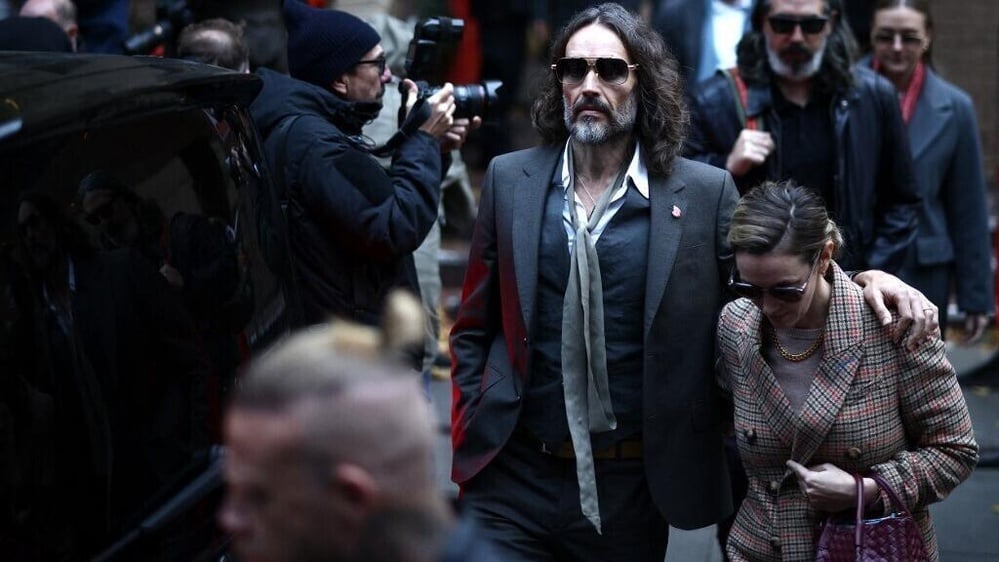


2026 © Helium Trades
Privacy Policy & Disclosure
* Disclaimer: Nothing on this website constitutes investment advice, performance data or any recommendation that any particular security, portfolio of securities, transaction or investment strategy is suitable for any specific person. Helium Trades is not responsible in any way for the accuracy
of any model predictions or price data. Any mention of a particular security and related prediction data is not a recommendation to buy or sell that security. Investments in securities involve the risk of loss. Past performance is no guarantee of future results. Helium Trades is not responsible for any of your investment decisions,
you should consult a financial expert before engaging in any transaction.
Helium Research Assistant

How can I help you today?
Ask any question about this page.


