See whether Helium helps you make better-informed decisions. Try every Pro Trader feature for 30 days. No credit card required.
Try every Pro Trader feature for 30 days. No credit card required.
Publisher framing: The report casts Khan's dismissal as a geopolitically charged development, foregrounding U.S. sovereignty concerns, sanctions, and a contested ICC governance while presenting both sides' procedural and evidentiary claims.
The piece situates Khan's dismissal within broader U.S.–ICC tensions and sovereignty concerns, noting Venezuela's withdrawal and the court's role in international justice.
Automated analysis; not human reviewed.
Limitations: Concise, case-specific limitations and plausible alternative interpretations.
·
2 of 52 available dimensions scored; omitted dimensions are not treated as neutral.
·
Verified supporting quotes for 0 of 2 scored dimensions.
Wrapper context caution; context heavy on US sovereignty framing.
Frames Karim Khan's firing as a sensational, politically charged controversy, foregrounding victim testimony and sovereignty concerns while casting mainstream media as biased and presenting itself as a corrective, pro-Western voice.
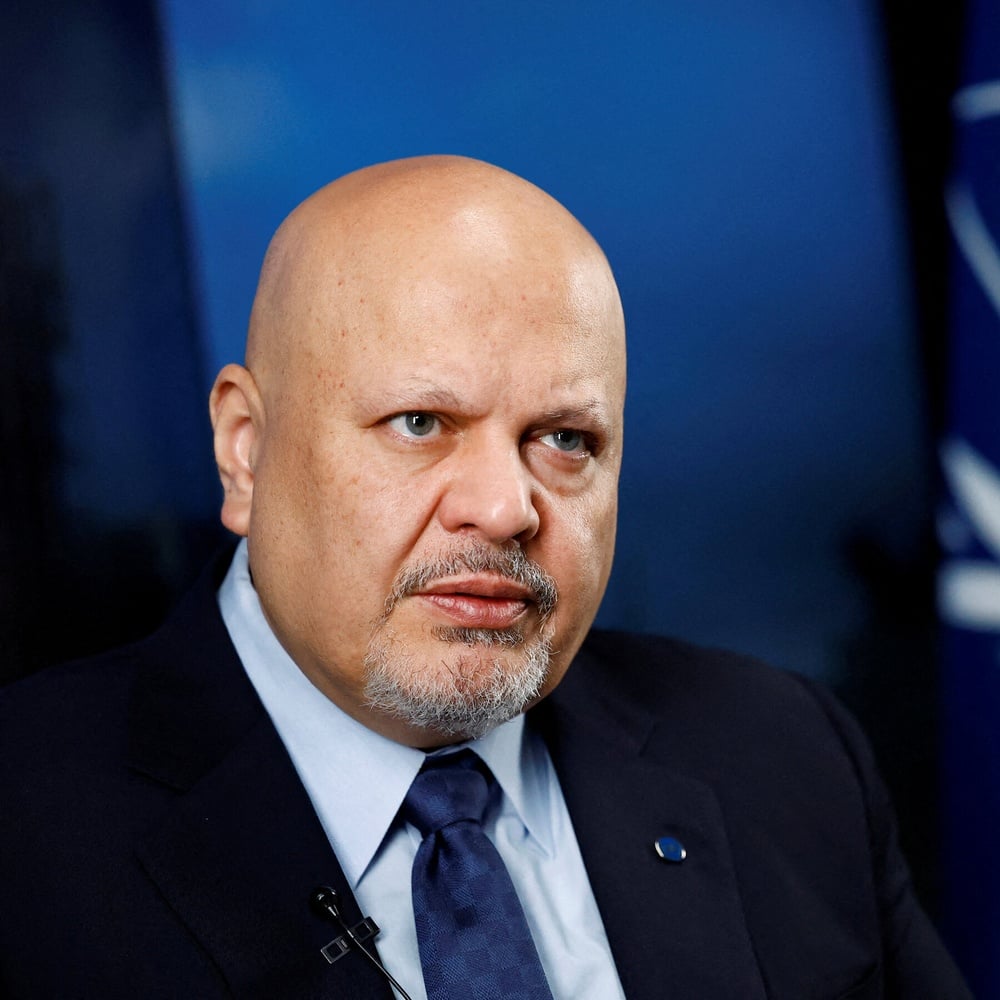
Article reports Karim Khan's removal as ICC chief prosecutor amid sexual misconduct allegations and situates it within ICC arrest warrants against Netanyahu and related U.S. political reactions.
Automated analysis; not human reviewed.
Limitations: Concise, case-specific limitations and plausible alternative interpretations.
·
3 of 52 available dimensions scored; omitted dimensions are not treated as neutral.
·
Verified supporting quotes for 0 of 3 scored dimensions.
Claim: The publisher demonstrates conservative framing by challenging mainstream media and emphasizing sovereignty arguments around international institutions.
“As the mainstream media repeatedly fails and loses public trust, TGP has continued to offer accurate and timely reporting for almost two decades.” · exact text match
“Marco Rubio launched a U.S. campaign to dismantle the ICC, accusing the court of threatening American sovereignty.” · not found in supplied text
“The warrants also became a flashpoint in New York politics after Mamdani repeatedly invoked the ICC case against Netanyahu.” · exact text match
Counterevidence:
“"The decision is unsupported by any lawful or properly reasoned finding that Mr. Khan KC committed misconduct or breached his duties as Prosecutor." Khan's head attorney Tayab Ali said.” · not found in supplied text
“"He has denied the allegations from the outset and continues to do so," Ali said.” · verified after text normalization
Why: Anti-mainstream framing and pro-sovereignty stances align with common conservative media patterns; defense quotes show pushback but do not overturn framing.
Claim: The article relies on sensational headlines and victim testimony, signaling subjective framing.
“"There is no way for something to be consensual when you have such a power disparity," Sarah told CNN.” · verified after text normalization
“JUST IN: Karim Khan, Chief Prosecutor of International Criminal Court Fired Over Sexual Misconduct.” · exact text match
“you need to hear the victim’s harrowing testimony: pic.twitter.com/QqaRaQQ1Za” · not found in supplied text
Counterevidence:
“"The decision is unsupported by any lawful or properly reasoned finding that Mr. Khan KC committed misconduct or breached his duties as Prosecutor." Khan's head attorney Tayab Ali said.” · not found in supplied text
“"Khan has denied the allegations from the outset and continues to do so," Ali said.” · not found in supplied text
Why: Loaded phrases and emphasis on victim testimony indicate subjective framing; inclusion of defense quotes mitigates but does not erase bias.
Claim: The piece frames the event as a political controversy involving U.S. figures and policy toward international institutions.
“JUST IN: Karim Khan, Chief Prosecutor of International Criminal Court Fired Over Sexual Misconduct.” · exact text match
“The decision marked the first time in the ICC’s history that a sitting chief prosecutor has been removed from office.” · exact text match
“Khan became one of the world’s most controversial prosecutors after pursuing ICC arrest warrants for Netanyahu and former Israeli Defense Minister Yoav Gallant over Israel’s war against Hamas.” · not found in supplied text
Counterevidence:
“"The decision is unsupported by any lawful or properly reasoned finding that Mr. Khan KC committed misconduct or breached his duties as Prosecutor." Khan's head attorney Tayab Ali said.” · not found in supplied text
“"Khan has denied the allegations from the outset and continues to do so," Ali said.” · not found in supplied text
Why: Selective emphasis on political figures and ICC actions signals political framing; defenses cited but not fully neutralized.
Ambiguities in article reliability; extraneous content; limited context year.
July 24, 2026 · 0 shares
Framing the ICC leadership crisis as a developing political confrontation, the report foregrounds a US pressure campaign and a looming vote to oust Karim Khan.
The ICC is facing a leadership crisis as member states prepare a vote on removing Chief Prosecutor Karim Khan amid sexual misconduct allegations, with a US-led pressure campaign noted in reporting.
Automated analysis; not human reviewed. Limitations: Concise, case-specific limitations and plausible alternative interpretations.
Limited text; lacks context to judge bias.
July 24, 2026 · 0 shares
Framing emphasizes a procedural/political contest around ICC Chief Prosecutor Karim Khan, foregrounding his denial, the accuser's allegations, and Western criticisms to portray the ICC as operating under geopolitical pressure.
ICC member states are voting on the possible dismissal of Karim Khan amid allegations of sexual misconduct; the report highlights procedural disputes and international reactions, including U.S. sanctions and comments.
Automated analysis; not human reviewed. Limitations: Case-specific: relies on public statements and reported interactions; does not verify allegations; framing may reflect geopolitical tensions and Western perspectives toward the ICC.
July 24, 2026 · 0 shares
Publisher framing casts the event as a consequential, rule-of-law moment at the ICC, foregrounding its historic first dismissal and linking it to sexual misconduct allegations and Netanyahu context.
The report concerns the International Criminal Court (ICC) and the dismissal of its Chief Prosecutor amid sexual misconduct allegations.
Automated analysis; not human reviewed.
Limitations: Concise, case-specific limitations and plausible alternative interpretations.
·
2 of 52 available dimensions scored; omitted dimensions are not treated as neutral.
·
Verified supporting quotes for 2 of 2 scored dimensions.
Claim: Neutral framing with no tilt toward liberal or conservative bias.
“ICC removes prosecutor who sought Netanyahu arrest warrant.” · exact text match
Why: Event-based reporting with neutral wording.
Claim: Neutral framing; maintains institutional legitimacy without critique.
“ICC member states voted to remove Chief Prosecutor Karim Khan over sexual misconduct allegations, marking the first dismissal of an ICC chief prosecutor” · exact text match
Why: Described as procedural and historic fact, not normative judgment.
Ambiguity: no dates or full context; names beyond 'Khan'.
Frames Karim Khan's firing as a sensational, politically charged controversy, foregrounding victim testimony and sovereignty concerns while casting mainstream media as biased and presenting itself as a corrective, pro-Western voice.
Article reports Karim Khan's removal as ICC chief prosecutor amid sexual misconduct allegations and situates it within ICC arrest warrants against Netanyahu and related U.S. political reactions.
Automated analysis; not human reviewed.
Limitations: Concise, case-specific limitations and plausible alternative interpretations.
·
3 of 52 available dimensions scored; omitted dimensions are not treated as neutral.
·
Verified supporting quotes for 0 of 3 scored dimensions.
Claim: The publisher demonstrates conservative framing by challenging mainstream media and emphasizing sovereignty arguments around international institutions.
“As the mainstream media repeatedly fails and loses public trust, TGP has continued to offer accurate and timely reporting for almost two decades.” · exact text match
“Marco Rubio launched a U.S. campaign to dismantle the ICC, accusing the court of threatening American sovereignty.” · not found in supplied text
“The warrants also became a flashpoint in New York politics after Mamdani repeatedly invoked the ICC case against Netanyahu.” · exact text match
Counterevidence:
“"The decision is unsupported by any lawful or properly reasoned finding that Mr. Khan KC committed misconduct or breached his duties as Prosecutor." Khan's head attorney Tayab Ali said.” · not found in supplied text
“"He has denied the allegations from the outset and continues to do so," Ali said.” · verified after text normalization
Why: Anti-mainstream framing and pro-sovereignty stances align with common conservative media patterns; defense quotes show pushback but do not overturn framing.
Claim: The article relies on sensational headlines and victim testimony, signaling subjective framing.
“"There is no way for something to be consensual when you have such a power disparity," Sarah told CNN.” · verified after text normalization
“JUST IN: Karim Khan, Chief Prosecutor of International Criminal Court Fired Over Sexual Misconduct.” · exact text match
“you need to hear the victim’s harrowing testimony: pic.twitter.com/QqaRaQQ1Za” · not found in supplied text
Counterevidence:
“"The decision is unsupported by any lawful or properly reasoned finding that Mr. Khan KC committed misconduct or breached his duties as Prosecutor." Khan's head attorney Tayab Ali said.” · not found in supplied text
“"Khan has denied the allegations from the outset and continues to do so," Ali said.” · not found in supplied text
Why: Loaded phrases and emphasis on victim testimony indicate subjective framing; inclusion of defense quotes mitigates but does not erase bias.
Claim: The piece frames the event as a political controversy involving U.S. figures and policy toward international institutions.
“JUST IN: Karim Khan, Chief Prosecutor of International Criminal Court Fired Over Sexual Misconduct.” · exact text match
“The decision marked the first time in the ICC’s history that a sitting chief prosecutor has been removed from office.” · exact text match
“Khan became one of the world’s most controversial prosecutors after pursuing ICC arrest warrants for Netanyahu and former Israeli Defense Minister Yoav Gallant over Israel’s war against Hamas.” · not found in supplied text
Counterevidence:
“"The decision is unsupported by any lawful or properly reasoned finding that Mr. Khan KC committed misconduct or breached his duties as Prosecutor." Khan's head attorney Tayab Ali said.” · not found in supplied text
“"Khan has denied the allegations from the outset and continues to do so," Ali said.” · not found in supplied text
Why: Selective emphasis on political figures and ICC actions signals political framing; defenses cited but not fully neutralized.
Ambiguities in article reliability; extraneous content; limited context year.
July 24, 2026 · 0 shares
Publisher framing casts the event as a consequential, rule-of-law moment at the ICC, foregrounding its historic first dismissal and linking it to sexual misconduct allegations and Netanyahu context.
The report concerns the International Criminal Court (ICC) and the dismissal of its Chief Prosecutor amid sexual misconduct allegations.
Automated analysis; not human reviewed.
Limitations: Concise, case-specific limitations and plausible alternative interpretations.
·
2 of 52 available dimensions scored; omitted dimensions are not treated as neutral.
·
Verified supporting quotes for 2 of 2 scored dimensions.
Claim: Neutral framing with no tilt toward liberal or conservative bias.
“ICC removes prosecutor who sought Netanyahu arrest warrant.” · exact text match
Why: Event-based reporting with neutral wording.
Claim: Neutral framing; maintains institutional legitimacy without critique.
“ICC member states voted to remove Chief Prosecutor Karim Khan over sexual misconduct allegations, marking the first dismissal of an ICC chief prosecutor” · exact text match
Why: Described as procedural and historic fact, not normative judgment.
Ambiguity: no dates or full context; names beyond 'Khan'.
Frames Karim Khan's firing as a sensational, politically charged controversy, foregrounding victim testimony and sovereignty concerns while casting mainstream media as biased and presenting itself as a corrective, pro-Western voice.
Article reports Karim Khan's removal as ICC chief prosecutor amid sexual misconduct allegations and situates it within ICC arrest warrants against Netanyahu and related U.S. political reactions.
Automated analysis; not human reviewed.
Limitations: Concise, case-specific limitations and plausible alternative interpretations.
·
3 of 52 available dimensions scored; omitted dimensions are not treated as neutral.
·
Verified supporting quotes for 0 of 3 scored dimensions.
Claim: The publisher demonstrates conservative framing by challenging mainstream media and emphasizing sovereignty arguments around international institutions.
“As the mainstream media repeatedly fails and loses public trust, TGP has continued to offer accurate and timely reporting for almost two decades.” · exact text match
“Marco Rubio launched a U.S. campaign to dismantle the ICC, accusing the court of threatening American sovereignty.” · not found in supplied text
“The warrants also became a flashpoint in New York politics after Mamdani repeatedly invoked the ICC case against Netanyahu.” · exact text match
Counterevidence:
“"The decision is unsupported by any lawful or properly reasoned finding that Mr. Khan KC committed misconduct or breached his duties as Prosecutor." Khan's head attorney Tayab Ali said.” · not found in supplied text
“"He has denied the allegations from the outset and continues to do so," Ali said.” · verified after text normalization
Why: Anti-mainstream framing and pro-sovereignty stances align with common conservative media patterns; defense quotes show pushback but do not overturn framing.
Claim: The article relies on sensational headlines and victim testimony, signaling subjective framing.
“"There is no way for something to be consensual when you have such a power disparity," Sarah told CNN.” · verified after text normalization
“JUST IN: Karim Khan, Chief Prosecutor of International Criminal Court Fired Over Sexual Misconduct.” · exact text match
“you need to hear the victim’s harrowing testimony: pic.twitter.com/QqaRaQQ1Za” · not found in supplied text
Counterevidence:
“"The decision is unsupported by any lawful or properly reasoned finding that Mr. Khan KC committed misconduct or breached his duties as Prosecutor." Khan's head attorney Tayab Ali said.” · not found in supplied text
“"Khan has denied the allegations from the outset and continues to do so," Ali said.” · not found in supplied text
Why: Loaded phrases and emphasis on victim testimony indicate subjective framing; inclusion of defense quotes mitigates but does not erase bias.
Claim: The piece frames the event as a political controversy involving U.S. figures and policy toward international institutions.
“JUST IN: Karim Khan, Chief Prosecutor of International Criminal Court Fired Over Sexual Misconduct.” · exact text match
“The decision marked the first time in the ICC’s history that a sitting chief prosecutor has been removed from office.” · exact text match
“Khan became one of the world’s most controversial prosecutors after pursuing ICC arrest warrants for Netanyahu and former Israeli Defense Minister Yoav Gallant over Israel’s war against Hamas.” · not found in supplied text
Counterevidence:
“"The decision is unsupported by any lawful or properly reasoned finding that Mr. Khan KC committed misconduct or breached his duties as Prosecutor." Khan's head attorney Tayab Ali said.” · not found in supplied text
“"Khan has denied the allegations from the outset and continues to do so," Ali said.” · not found in supplied text
Why: Selective emphasis on political figures and ICC actions signals political framing; defenses cited but not fully neutralized.
Ambiguities in article reliability; extraneous content; limited context year.
Publisher framing: The report casts Khan's dismissal as a geopolitically charged development, foregrounding U.S. sovereignty concerns, sanctions, and a contested ICC governance while presenting both sides' procedural and evidentiary claims.
The piece situates Khan's dismissal within broader U.S.–ICC tensions and sovereignty concerns, noting Venezuela's withdrawal and the court's role in international justice.
Automated analysis; not human reviewed. Limitations: Concise, case-specific limitations and plausible alternative interpretations. · 2 of 52 available dimensions scored; omitted dimensions are not treated as neutral. · Verified supporting quotes for 0 of 2 scored dimensions.
Wrapper context caution; context heavy on US sovereignty framing.
Frames Karim Khan's firing as a sensational, politically charged controversy, foregrounding victim testimony and sovereignty concerns while casting mainstream media as biased and presenting itself as a corrective, pro-Western voice.
Article reports Karim Khan's removal as ICC chief prosecutor amid sexual misconduct allegations and situates it within ICC arrest warrants against Netanyahu and related U.S. political reactions.
Automated analysis; not human reviewed. Limitations: Concise, case-specific limitations and plausible alternative interpretations. · 3 of 52 available dimensions scored; omitted dimensions are not treated as neutral. · Verified supporting quotes for 0 of 3 scored dimensions.
Claim: The publisher demonstrates conservative framing by challenging mainstream media and emphasizing sovereignty arguments around international institutions.
“As the mainstream media repeatedly fails and loses public trust, TGP has continued to offer accurate and timely reporting for almost two decades.” · exact text match
“Marco Rubio launched a U.S. campaign to dismantle the ICC, accusing the court of threatening American sovereignty.” · not found in supplied text
“The warrants also became a flashpoint in New York politics after Mamdani repeatedly invoked the ICC case against Netanyahu.” · exact text match
Counterevidence:
“"The decision is unsupported by any lawful or properly reasoned finding that Mr. Khan KC committed misconduct or breached his duties as Prosecutor." Khan's head attorney Tayab Ali said.” · not found in supplied text
“"He has denied the allegations from the outset and continues to do so," Ali said.” · verified after text normalization
Why: Anti-mainstream framing and pro-sovereignty stances align with common conservative media patterns; defense quotes show pushback but do not overturn framing.
Claim: The article relies on sensational headlines and victim testimony, signaling subjective framing.
“"There is no way for something to be consensual when you have such a power disparity," Sarah told CNN.” · verified after text normalization
“JUST IN: Karim Khan, Chief Prosecutor of International Criminal Court Fired Over Sexual Misconduct.” · exact text match
“you need to hear the victim’s harrowing testimony: pic.twitter.com/QqaRaQQ1Za” · not found in supplied text
Counterevidence:
“"The decision is unsupported by any lawful or properly reasoned finding that Mr. Khan KC committed misconduct or breached his duties as Prosecutor." Khan's head attorney Tayab Ali said.” · not found in supplied text
“"Khan has denied the allegations from the outset and continues to do so," Ali said.” · not found in supplied text
Why: Loaded phrases and emphasis on victim testimony indicate subjective framing; inclusion of defense quotes mitigates but does not erase bias.
Claim: The piece frames the event as a political controversy involving U.S. figures and policy toward international institutions.
“JUST IN: Karim Khan, Chief Prosecutor of International Criminal Court Fired Over Sexual Misconduct.” · exact text match
“The decision marked the first time in the ICC’s history that a sitting chief prosecutor has been removed from office.” · exact text match
“Khan became one of the world’s most controversial prosecutors after pursuing ICC arrest warrants for Netanyahu and former Israeli Defense Minister Yoav Gallant over Israel’s war against Hamas.” · not found in supplied text
Counterevidence:
“"The decision is unsupported by any lawful or properly reasoned finding that Mr. Khan KC committed misconduct or breached his duties as Prosecutor." Khan's head attorney Tayab Ali said.” · not found in supplied text
“"Khan has denied the allegations from the outset and continues to do so," Ali said.” · not found in supplied text
Why: Selective emphasis on political figures and ICC actions signals political framing; defenses cited but not fully neutralized.
Ambiguities in article reliability; extraneous content; limited context year.
Frames Karim Khan's firing as a sensational, politically charged controversy, foregrounding victim testimony and sovereignty concerns while casting mainstream media as biased and presenting itself as a corrective, pro-Western voice.
Article reports Karim Khan's removal as ICC chief prosecutor amid sexual misconduct allegations and situates it within ICC arrest warrants against Netanyahu and related U.S. political reactions.
Automated analysis; not human reviewed. Limitations: Concise, case-specific limitations and plausible alternative interpretations. · 3 of 52 available dimensions scored; omitted dimensions are not treated as neutral. · Verified supporting quotes for 0 of 3 scored dimensions.
Claim: The publisher demonstrates conservative framing by challenging mainstream media and emphasizing sovereignty arguments around international institutions.
“As the mainstream media repeatedly fails and loses public trust, TGP has continued to offer accurate and timely reporting for almost two decades.” · exact text match
“Marco Rubio launched a U.S. campaign to dismantle the ICC, accusing the court of threatening American sovereignty.” · not found in supplied text
“The warrants also became a flashpoint in New York politics after Mamdani repeatedly invoked the ICC case against Netanyahu.” · exact text match
Counterevidence:
“"The decision is unsupported by any lawful or properly reasoned finding that Mr. Khan KC committed misconduct or breached his duties as Prosecutor." Khan's head attorney Tayab Ali said.” · not found in supplied text
“"He has denied the allegations from the outset and continues to do so," Ali said.” · verified after text normalization
Why: Anti-mainstream framing and pro-sovereignty stances align with common conservative media patterns; defense quotes show pushback but do not overturn framing.
Claim: The article relies on sensational headlines and victim testimony, signaling subjective framing.
“"There is no way for something to be consensual when you have such a power disparity," Sarah told CNN.” · verified after text normalization
“JUST IN: Karim Khan, Chief Prosecutor of International Criminal Court Fired Over Sexual Misconduct.” · exact text match
“you need to hear the victim’s harrowing testimony: pic.twitter.com/QqaRaQQ1Za” · not found in supplied text
Counterevidence:
“"The decision is unsupported by any lawful or properly reasoned finding that Mr. Khan KC committed misconduct or breached his duties as Prosecutor." Khan's head attorney Tayab Ali said.” · not found in supplied text
“"Khan has denied the allegations from the outset and continues to do so," Ali said.” · not found in supplied text
Why: Loaded phrases and emphasis on victim testimony indicate subjective framing; inclusion of defense quotes mitigates but does not erase bias.
Claim: The piece frames the event as a political controversy involving U.S. figures and policy toward international institutions.
“JUST IN: Karim Khan, Chief Prosecutor of International Criminal Court Fired Over Sexual Misconduct.” · exact text match
“The decision marked the first time in the ICC’s history that a sitting chief prosecutor has been removed from office.” · exact text match
“Khan became one of the world’s most controversial prosecutors after pursuing ICC arrest warrants for Netanyahu and former Israeli Defense Minister Yoav Gallant over Israel’s war against Hamas.” · not found in supplied text
Counterevidence:
“"The decision is unsupported by any lawful or properly reasoned finding that Mr. Khan KC committed misconduct or breached his duties as Prosecutor." Khan's head attorney Tayab Ali said.” · not found in supplied text
“"Khan has denied the allegations from the outset and continues to do so," Ali said.” · not found in supplied text
Why: Selective emphasis on political figures and ICC actions signals political framing; defenses cited but not fully neutralized.
Ambiguities in article reliability; extraneous content; limited context year.
July 24, 2026 · 0 shares
Framing the ICC leadership crisis as a developing political confrontation, the report foregrounds a US pressure campaign and a looming vote to oust Karim Khan.
The ICC is facing a leadership crisis as member states prepare a vote on removing Chief Prosecutor Karim Khan amid sexual misconduct allegations, with a US-led pressure campaign noted in reporting.
Automated analysis; not human reviewed. Limitations: Concise, case-specific limitations and plausible alternative interpretations.
Limited text; lacks context to judge bias.
July 24, 2026 · 0 shares
Framing emphasizes a procedural/political contest around ICC Chief Prosecutor Karim Khan, foregrounding his denial, the accuser's allegations, and Western criticisms to portray the ICC as operating under geopolitical pressure.
ICC member states are voting on the possible dismissal of Karim Khan amid allegations of sexual misconduct; the report highlights procedural disputes and international reactions, including U.S. sanctions and comments.
Automated analysis; not human reviewed. Limitations: Case-specific: relies on public statements and reported interactions; does not verify allegations; framing may reflect geopolitical tensions and Western perspectives toward the ICC.
July 24, 2026 · 0 shares
Publisher framing casts the event as a consequential, rule-of-law moment at the ICC, foregrounding its historic first dismissal and linking it to sexual misconduct allegations and Netanyahu context.
The report concerns the International Criminal Court (ICC) and the dismissal of its Chief Prosecutor amid sexual misconduct allegations.
Automated analysis; not human reviewed. Limitations: Concise, case-specific limitations and plausible alternative interpretations. · 2 of 52 available dimensions scored; omitted dimensions are not treated as neutral. · Verified supporting quotes for 2 of 2 scored dimensions.
Claim: Neutral framing with no tilt toward liberal or conservative bias.
“ICC removes prosecutor who sought Netanyahu arrest warrant.” · exact text match
Why: Event-based reporting with neutral wording.
Claim: Neutral framing; maintains institutional legitimacy without critique.
“ICC member states voted to remove Chief Prosecutor Karim Khan over sexual misconduct allegations, marking the first dismissal of an ICC chief prosecutor” · exact text match
Why: Described as procedural and historic fact, not normative judgment.
Ambiguity: no dates or full context; names beyond 'Khan'.
July 24, 2026 · 0 shares
Framing emphasizes an unprecedented, damaging leadership crisis at the ICC by foregrounding misconduct allegations and presenting a formal member-state vote as the catalyst for Karim Khan's removal.
The ICC leadership removal centers on serious misconduct allegations against Karim Khan, with a member-state vote describing the action as unprecedented and damaging to the court.
Automated analysis; not human reviewed. · 3 of 52 available dimensions scored; omitted dimensions are not treated as neutral. · Verified supporting quotes for 0 of 3 scored dimensions.
July 24, 2026 · 0 shares
Publisher framing casts the event as a consequential, rule-of-law moment at the ICC, foregrounding its historic first dismissal and linking it to sexual misconduct allegations and Netanyahu context.
The report concerns the International Criminal Court (ICC) and the dismissal of its Chief Prosecutor amid sexual misconduct allegations.
Automated analysis; not human reviewed. Limitations: Concise, case-specific limitations and plausible alternative interpretations. · 2 of 52 available dimensions scored; omitted dimensions are not treated as neutral. · Verified supporting quotes for 2 of 2 scored dimensions.
Claim: Neutral framing with no tilt toward liberal or conservative bias.
“ICC removes prosecutor who sought Netanyahu arrest warrant.” · exact text match
Why: Event-based reporting with neutral wording.
Claim: Neutral framing; maintains institutional legitimacy without critique.
“ICC member states voted to remove Chief Prosecutor Karim Khan over sexual misconduct allegations, marking the first dismissal of an ICC chief prosecutor” · exact text match
Why: Described as procedural and historic fact, not normative judgment.
Ambiguity: no dates or full context; names beyond 'Khan'.
Frames Karim Khan's firing as a sensational, politically charged controversy, foregrounding victim testimony and sovereignty concerns while casting mainstream media as biased and presenting itself as a corrective, pro-Western voice.
Article reports Karim Khan's removal as ICC chief prosecutor amid sexual misconduct allegations and situates it within ICC arrest warrants against Netanyahu and related U.S. political reactions.
Automated analysis; not human reviewed. Limitations: Concise, case-specific limitations and plausible alternative interpretations. · 3 of 52 available dimensions scored; omitted dimensions are not treated as neutral. · Verified supporting quotes for 0 of 3 scored dimensions.
Claim: The publisher demonstrates conservative framing by challenging mainstream media and emphasizing sovereignty arguments around international institutions.
“As the mainstream media repeatedly fails and loses public trust, TGP has continued to offer accurate and timely reporting for almost two decades.” · exact text match
“Marco Rubio launched a U.S. campaign to dismantle the ICC, accusing the court of threatening American sovereignty.” · not found in supplied text
“The warrants also became a flashpoint in New York politics after Mamdani repeatedly invoked the ICC case against Netanyahu.” · exact text match
Counterevidence:
“"The decision is unsupported by any lawful or properly reasoned finding that Mr. Khan KC committed misconduct or breached his duties as Prosecutor." Khan's head attorney Tayab Ali said.” · not found in supplied text
“"He has denied the allegations from the outset and continues to do so," Ali said.” · verified after text normalization
Why: Anti-mainstream framing and pro-sovereignty stances align with common conservative media patterns; defense quotes show pushback but do not overturn framing.
Claim: The article relies on sensational headlines and victim testimony, signaling subjective framing.
“"There is no way for something to be consensual when you have such a power disparity," Sarah told CNN.” · verified after text normalization
“JUST IN: Karim Khan, Chief Prosecutor of International Criminal Court Fired Over Sexual Misconduct.” · exact text match
“you need to hear the victim’s harrowing testimony: pic.twitter.com/QqaRaQQ1Za” · not found in supplied text
Counterevidence:
“"The decision is unsupported by any lawful or properly reasoned finding that Mr. Khan KC committed misconduct or breached his duties as Prosecutor." Khan's head attorney Tayab Ali said.” · not found in supplied text
“"Khan has denied the allegations from the outset and continues to do so," Ali said.” · not found in supplied text
Why: Loaded phrases and emphasis on victim testimony indicate subjective framing; inclusion of defense quotes mitigates but does not erase bias.
Claim: The piece frames the event as a political controversy involving U.S. figures and policy toward international institutions.
“JUST IN: Karim Khan, Chief Prosecutor of International Criminal Court Fired Over Sexual Misconduct.” · exact text match
“The decision marked the first time in the ICC’s history that a sitting chief prosecutor has been removed from office.” · exact text match
“Khan became one of the world’s most controversial prosecutors after pursuing ICC arrest warrants for Netanyahu and former Israeli Defense Minister Yoav Gallant over Israel’s war against Hamas.” · not found in supplied text
Counterevidence:
“"The decision is unsupported by any lawful or properly reasoned finding that Mr. Khan KC committed misconduct or breached his duties as Prosecutor." Khan's head attorney Tayab Ali said.” · not found in supplied text
“"Khan has denied the allegations from the outset and continues to do so," Ali said.” · not found in supplied text
Why: Selective emphasis on political figures and ICC actions signals political framing; defenses cited but not fully neutralized.
Ambiguities in article reliability; extraneous content; limited context year.
July 24, 2026 · 0 shares
Framing emphasizes a procedural/political contest around ICC Chief Prosecutor Karim Khan, foregrounding his denial, the accuser's allegations, and Western criticisms to portray the ICC as operating under geopolitical pressure.
ICC member states are voting on the possible dismissal of Karim Khan amid allegations of sexual misconduct; the report highlights procedural disputes and international reactions, including U.S. sanctions and comments.
Automated analysis; not human reviewed. Limitations: Case-specific: relies on public statements and reported interactions; does not verify allegations; framing may reflect geopolitical tensions and Western perspectives toward the ICC.
Helium Bias
Story Blindspots
July 24, 2026 · 0 shares
Publisher frames the ICC scandal as a bruising, politically charged crisis, foregrounding competing expert and official voices while highlighting external political pressure and internal leadership turmoil.
ICC leadership crisis: Karim Khan's misconduct allegations, removal vote, and international reactions.
Automated analysis; not human reviewed. Limitations: Analysis limited to the provided text; quotes show a mix of criticism and defense with external political context; no access to full article beyond excerpt. · 47 of 52 available dimensions scored; omitted dimensions are not treated as neutral. · Verified supporting quotes for 0 of 47 scored dimensions.
Excerpt-limited; potential ambiguities in full context.
Publisher frames the dismissal as a straightforward, source-based report citing diplomatic sources, with minimal interpretation or commentary.
Automated analysis; not human reviewed. Limitations: The analysis is constrained by a short report relying on unnamed diplomatic sources; lacks ICC's official statement and broader context.
Ambiguity: relies on unnamed sources; no official ICC comment; date not specified.
July 24, 2026 · 0 shares
Framing emphasizes an unprecedented, damaging leadership crisis at the ICC by foregrounding misconduct allegations and presenting a formal member-state vote as the catalyst for Karim Khan's removal.
The ICC leadership removal centers on serious misconduct allegations against Karim Khan, with a member-state vote describing the action as unprecedented and damaging to the court.
Automated analysis; not human reviewed. · 3 of 52 available dimensions scored; omitted dimensions are not treated as neutral. · Verified supporting quotes for 0 of 3 scored dimensions.
Publisher frames the ICC leadership removal as a straightforward, evidence-based outcome of a misconduct probe, foregrounding allegations and Karim Khan's denial to minimize interpretive framing.
The International Criminal Court is a permanent international tribunal that appoints a chief prosecutor to lead investigations and prosecutions.
Automated analysis; not human reviewed. Limitations: Concise, case-specific limitations and plausible alternative interpretations. · 27 of 52 available dimensions scored; omitted dimensions are not treated as neutral. · Verified supporting quotes for 0 of 27 scored dimensions.
Limited excerpt; lacking context.
Publisher frames the dismissal as a straightforward, source-based report citing diplomatic sources, with minimal interpretation or commentary.
Automated analysis; not human reviewed. Limitations: The analysis is constrained by a short report relying on unnamed diplomatic sources; lacks ICC's official statement and broader context.
Ambiguity: relies on unnamed sources; no official ICC comment; date not specified.
July 24, 2026 · 0 shares
Framing emphasizes an unprecedented, damaging leadership crisis at the ICC by foregrounding misconduct allegations and presenting a formal member-state vote as the catalyst for Karim Khan's removal.
The ICC leadership removal centers on serious misconduct allegations against Karim Khan, with a member-state vote describing the action as unprecedented and damaging to the court.
Automated analysis; not human reviewed. · 3 of 52 available dimensions scored; omitted dimensions are not treated as neutral. · Verified supporting quotes for 0 of 3 scored dimensions.
Publisher frames the ICC leadership removal as a straightforward, evidence-based outcome of a misconduct probe, foregrounding allegations and Karim Khan's denial to minimize interpretive framing.
The International Criminal Court is a permanent international tribunal that appoints a chief prosecutor to lead investigations and prosecutions.
Automated analysis; not human reviewed. Limitations: Concise, case-specific limitations and plausible alternative interpretations. · 27 of 52 available dimensions scored; omitted dimensions are not treated as neutral. · Verified supporting quotes for 0 of 27 scored dimensions.
Limited excerpt; lacking context.
July 24, 2026 · 0 shares
Publisher framing emphasizes a concise, event-focused, procedural depiction of leadership removal by ICC member nations, foregrounding the allegations and the subject's denial with minimal contextual analysis.
The report concerns an international legal institution's leadership change triggered by misconduct allegations.
Automated analysis; not human reviewed. Limitations: The analysis relies on a brief excerpt; broader context or editorial framing may not be captured. · 1 of 52 available dimensions scored; omitted dimensions are not treated as neutral. · Verified supporting quotes for 0 of 1 scored dimensions.
Publisher framing: The report casts Khan's dismissal as a geopolitically charged development, foregrounding U.S. sovereignty concerns, sanctions, and a contested ICC governance while presenting both sides' procedural and evidentiary claims.
The piece situates Khan's dismissal within broader U.S.–ICC tensions and sovereignty concerns, noting Venezuela's withdrawal and the court's role in international justice.
Automated analysis; not human reviewed. Limitations: Concise, case-specific limitations and plausible alternative interpretations. · 2 of 52 available dimensions scored; omitted dimensions are not treated as neutral. · Verified supporting quotes for 0 of 2 scored dimensions.
Wrapper context caution; context heavy on US sovereignty framing.
Publisher framing: The report casts Khan's dismissal as a geopolitically charged development, foregrounding U.S. sovereignty concerns, sanctions, and a contested ICC governance while presenting both sides' procedural and evidentiary claims.
The piece situates Khan's dismissal within broader U.S.–ICC tensions and sovereignty concerns, noting Venezuela's withdrawal and the court's role in international justice.
Automated analysis; not human reviewed. Limitations: Concise, case-specific limitations and plausible alternative interpretations. · 2 of 52 available dimensions scored; omitted dimensions are not treated as neutral. · Verified supporting quotes for 0 of 2 scored dimensions.
Wrapper context caution; context heavy on US sovereignty framing.
Frames Karim Khan's firing as a sensational, politically charged controversy, foregrounding victim testimony and sovereignty concerns while casting mainstream media as biased and presenting itself as a corrective, pro-Western voice.
Article reports Karim Khan's removal as ICC chief prosecutor amid sexual misconduct allegations and situates it within ICC arrest warrants against Netanyahu and related U.S. political reactions.
Automated analysis; not human reviewed. Limitations: Concise, case-specific limitations and plausible alternative interpretations. · 3 of 52 available dimensions scored; omitted dimensions are not treated as neutral. · Verified supporting quotes for 0 of 3 scored dimensions.
Claim: The publisher demonstrates conservative framing by challenging mainstream media and emphasizing sovereignty arguments around international institutions.
“As the mainstream media repeatedly fails and loses public trust, TGP has continued to offer accurate and timely reporting for almost two decades.” · exact text match
“Marco Rubio launched a U.S. campaign to dismantle the ICC, accusing the court of threatening American sovereignty.” · not found in supplied text
“The warrants also became a flashpoint in New York politics after Mamdani repeatedly invoked the ICC case against Netanyahu.” · exact text match
Counterevidence:
“"The decision is unsupported by any lawful or properly reasoned finding that Mr. Khan KC committed misconduct or breached his duties as Prosecutor." Khan's head attorney Tayab Ali said.” · not found in supplied text
“"He has denied the allegations from the outset and continues to do so," Ali said.” · verified after text normalization
Why: Anti-mainstream framing and pro-sovereignty stances align with common conservative media patterns; defense quotes show pushback but do not overturn framing.
Claim: The article relies on sensational headlines and victim testimony, signaling subjective framing.
“"There is no way for something to be consensual when you have such a power disparity," Sarah told CNN.” · verified after text normalization
“JUST IN: Karim Khan, Chief Prosecutor of International Criminal Court Fired Over Sexual Misconduct.” · exact text match
“you need to hear the victim’s harrowing testimony: pic.twitter.com/QqaRaQQ1Za” · not found in supplied text
Counterevidence:
“"The decision is unsupported by any lawful or properly reasoned finding that Mr. Khan KC committed misconduct or breached his duties as Prosecutor." Khan's head attorney Tayab Ali said.” · not found in supplied text
“"Khan has denied the allegations from the outset and continues to do so," Ali said.” · not found in supplied text
Why: Loaded phrases and emphasis on victim testimony indicate subjective framing; inclusion of defense quotes mitigates but does not erase bias.
Claim: The piece frames the event as a political controversy involving U.S. figures and policy toward international institutions.
“JUST IN: Karim Khan, Chief Prosecutor of International Criminal Court Fired Over Sexual Misconduct.” · exact text match
“The decision marked the first time in the ICC’s history that a sitting chief prosecutor has been removed from office.” · exact text match
“Khan became one of the world’s most controversial prosecutors after pursuing ICC arrest warrants for Netanyahu and former Israeli Defense Minister Yoav Gallant over Israel’s war against Hamas.” · not found in supplied text
Counterevidence:
“"The decision is unsupported by any lawful or properly reasoned finding that Mr. Khan KC committed misconduct or breached his duties as Prosecutor." Khan's head attorney Tayab Ali said.” · not found in supplied text
“"Khan has denied the allegations from the outset and continues to do so," Ali said.” · not found in supplied text
Why: Selective emphasis on political figures and ICC actions signals political framing; defenses cited but not fully neutralized.
Ambiguities in article reliability; extraneous content; limited context year.
Reuters frames Karim Khan's dismissal as a majority-driven, procedural decision reported by anonymous diplomatic sources, foregrounding geopolitical contestation through quotes and positions from France, the Netherlands, the United States, Israel, and Venezuela to illustrate competing narratives about the ICC.
The ICC prosecutor removal requires an absolute majority in a secret ballot, triggering a new prosecutor election, amid international reactions including US sanctions and Venezuela's withdrawal.
Automated analysis; not human reviewed. Limitations: Concise, case-specific limitations and plausible alternative interpretations.
July 24, 2026 · 0 shares
Framing emphasizes a procedural/political contest around ICC Chief Prosecutor Karim Khan, foregrounding his denial, the accuser's allegations, and Western criticisms to portray the ICC as operating under geopolitical pressure.
ICC member states are voting on the possible dismissal of Karim Khan amid allegations of sexual misconduct; the report highlights procedural disputes and international reactions, including U.S. sanctions and comments.
Automated analysis; not human reviewed. Limitations: Case-specific: relies on public statements and reported interactions; does not verify allegations; framing may reflect geopolitical tensions and Western perspectives toward the ICC.
Publisher framing: The report casts Khan's dismissal as a geopolitically charged development, foregrounding U.S. sovereignty concerns, sanctions, and a contested ICC governance while presenting both sides' procedural and evidentiary claims.
The piece situates Khan's dismissal within broader U.S.–ICC tensions and sovereignty concerns, noting Venezuela's withdrawal and the court's role in international justice.
Automated analysis; not human reviewed. Limitations: Concise, case-specific limitations and plausible alternative interpretations. · 2 of 52 available dimensions scored; omitted dimensions are not treated as neutral. · Verified supporting quotes for 0 of 2 scored dimensions.
Wrapper context caution; context heavy on US sovereignty framing.
July 24, 2026 · 0 shares
Framing emphasizes an unprecedented, damaging leadership crisis at the ICC by foregrounding misconduct allegations and presenting a formal member-state vote as the catalyst for Karim Khan's removal.
The ICC leadership removal centers on serious misconduct allegations against Karim Khan, with a member-state vote describing the action as unprecedented and damaging to the court.
Automated analysis; not human reviewed. · 3 of 52 available dimensions scored; omitted dimensions are not treated as neutral. · Verified supporting quotes for 0 of 3 scored dimensions.
Frames Karim Khan's firing as a sensational, politically charged controversy, foregrounding victim testimony and sovereignty concerns while casting mainstream media as biased and presenting itself as a corrective, pro-Western voice.
Article reports Karim Khan's removal as ICC chief prosecutor amid sexual misconduct allegations and situates it within ICC arrest warrants against Netanyahu and related U.S. political reactions.
Automated analysis; not human reviewed. Limitations: Concise, case-specific limitations and plausible alternative interpretations. · 3 of 52 available dimensions scored; omitted dimensions are not treated as neutral. · Verified supporting quotes for 0 of 3 scored dimensions.
Claim: The publisher demonstrates conservative framing by challenging mainstream media and emphasizing sovereignty arguments around international institutions.
“As the mainstream media repeatedly fails and loses public trust, TGP has continued to offer accurate and timely reporting for almost two decades.” · exact text match
“Marco Rubio launched a U.S. campaign to dismantle the ICC, accusing the court of threatening American sovereignty.” · not found in supplied text
“The warrants also became a flashpoint in New York politics after Mamdani repeatedly invoked the ICC case against Netanyahu.” · exact text match
Counterevidence:
“"The decision is unsupported by any lawful or properly reasoned finding that Mr. Khan KC committed misconduct or breached his duties as Prosecutor." Khan's head attorney Tayab Ali said.” · not found in supplied text
“"He has denied the allegations from the outset and continues to do so," Ali said.” · verified after text normalization
Why: Anti-mainstream framing and pro-sovereignty stances align with common conservative media patterns; defense quotes show pushback but do not overturn framing.
Claim: The article relies on sensational headlines and victim testimony, signaling subjective framing.
“"There is no way for something to be consensual when you have such a power disparity," Sarah told CNN.” · verified after text normalization
“JUST IN: Karim Khan, Chief Prosecutor of International Criminal Court Fired Over Sexual Misconduct.” · exact text match
“you need to hear the victim’s harrowing testimony: pic.twitter.com/QqaRaQQ1Za” · not found in supplied text
Counterevidence:
“"The decision is unsupported by any lawful or properly reasoned finding that Mr. Khan KC committed misconduct or breached his duties as Prosecutor." Khan's head attorney Tayab Ali said.” · not found in supplied text
“"Khan has denied the allegations from the outset and continues to do so," Ali said.” · not found in supplied text
Why: Loaded phrases and emphasis on victim testimony indicate subjective framing; inclusion of defense quotes mitigates but does not erase bias.
Claim: The piece frames the event as a political controversy involving U.S. figures and policy toward international institutions.
“JUST IN: Karim Khan, Chief Prosecutor of International Criminal Court Fired Over Sexual Misconduct.” · exact text match
“The decision marked the first time in the ICC’s history that a sitting chief prosecutor has been removed from office.” · exact text match
“Khan became one of the world’s most controversial prosecutors after pursuing ICC arrest warrants for Netanyahu and former Israeli Defense Minister Yoav Gallant over Israel’s war against Hamas.” · not found in supplied text
Counterevidence:
“"The decision is unsupported by any lawful or properly reasoned finding that Mr. Khan KC committed misconduct or breached his duties as Prosecutor." Khan's head attorney Tayab Ali said.” · not found in supplied text
“"Khan has denied the allegations from the outset and continues to do so," Ali said.” · not found in supplied text
Why: Selective emphasis on political figures and ICC actions signals political framing; defenses cited but not fully neutralized.
Ambiguities in article reliability; extraneous content; limited context year.
July 24, 2026 · 0 shares
Publisher framing casts the event as a consequential, rule-of-law moment at the ICC, foregrounding its historic first dismissal and linking it to sexual misconduct allegations and Netanyahu context.
The report concerns the International Criminal Court (ICC) and the dismissal of its Chief Prosecutor amid sexual misconduct allegations.
Automated analysis; not human reviewed. Limitations: Concise, case-specific limitations and plausible alternative interpretations. · 2 of 52 available dimensions scored; omitted dimensions are not treated as neutral. · Verified supporting quotes for 2 of 2 scored dimensions.
Claim: Neutral framing with no tilt toward liberal or conservative bias.
“ICC removes prosecutor who sought Netanyahu arrest warrant.” · exact text match
Why: Event-based reporting with neutral wording.
Claim: Neutral framing; maintains institutional legitimacy without critique.
“ICC member states voted to remove Chief Prosecutor Karim Khan over sexual misconduct allegations, marking the first dismissal of an ICC chief prosecutor” · exact text match
Why: Described as procedural and historic fact, not normative judgment.
Ambiguity: no dates or full context; names beyond 'Khan'.
Frames Karim Khan's firing as a sensational, politically charged controversy, foregrounding victim testimony and sovereignty concerns while casting mainstream media as biased and presenting itself as a corrective, pro-Western voice.
Article reports Karim Khan's removal as ICC chief prosecutor amid sexual misconduct allegations and situates it within ICC arrest warrants against Netanyahu and related U.S. political reactions.
Automated analysis; not human reviewed. Limitations: Concise, case-specific limitations and plausible alternative interpretations. · 3 of 52 available dimensions scored; omitted dimensions are not treated as neutral. · Verified supporting quotes for 0 of 3 scored dimensions.
Claim: The publisher demonstrates conservative framing by challenging mainstream media and emphasizing sovereignty arguments around international institutions.
“As the mainstream media repeatedly fails and loses public trust, TGP has continued to offer accurate and timely reporting for almost two decades.” · exact text match
“Marco Rubio launched a U.S. campaign to dismantle the ICC, accusing the court of threatening American sovereignty.” · not found in supplied text
“The warrants also became a flashpoint in New York politics after Mamdani repeatedly invoked the ICC case against Netanyahu.” · exact text match
Counterevidence:
“"The decision is unsupported by any lawful or properly reasoned finding that Mr. Khan KC committed misconduct or breached his duties as Prosecutor." Khan's head attorney Tayab Ali said.” · not found in supplied text
“"He has denied the allegations from the outset and continues to do so," Ali said.” · verified after text normalization
Why: Anti-mainstream framing and pro-sovereignty stances align with common conservative media patterns; defense quotes show pushback but do not overturn framing.
Claim: The article relies on sensational headlines and victim testimony, signaling subjective framing.
“"There is no way for something to be consensual when you have such a power disparity," Sarah told CNN.” · verified after text normalization
“JUST IN: Karim Khan, Chief Prosecutor of International Criminal Court Fired Over Sexual Misconduct.” · exact text match
“you need to hear the victim’s harrowing testimony: pic.twitter.com/QqaRaQQ1Za” · not found in supplied text
Counterevidence:
“"The decision is unsupported by any lawful or properly reasoned finding that Mr. Khan KC committed misconduct or breached his duties as Prosecutor." Khan's head attorney Tayab Ali said.” · not found in supplied text
“"Khan has denied the allegations from the outset and continues to do so," Ali said.” · not found in supplied text
Why: Loaded phrases and emphasis on victim testimony indicate subjective framing; inclusion of defense quotes mitigates but does not erase bias.
Claim: The piece frames the event as a political controversy involving U.S. figures and policy toward international institutions.
“JUST IN: Karim Khan, Chief Prosecutor of International Criminal Court Fired Over Sexual Misconduct.” · exact text match
“The decision marked the first time in the ICC’s history that a sitting chief prosecutor has been removed from office.” · exact text match
“Khan became one of the world’s most controversial prosecutors after pursuing ICC arrest warrants for Netanyahu and former Israeli Defense Minister Yoav Gallant over Israel’s war against Hamas.” · not found in supplied text
Counterevidence:
“"The decision is unsupported by any lawful or properly reasoned finding that Mr. Khan KC committed misconduct or breached his duties as Prosecutor." Khan's head attorney Tayab Ali said.” · not found in supplied text
“"Khan has denied the allegations from the outset and continues to do so," Ali said.” · not found in supplied text
Why: Selective emphasis on political figures and ICC actions signals political framing; defenses cited but not fully neutralized.
Ambiguities in article reliability; extraneous content; limited context year.
July 24, 2026 · 0 shares
Framing emphasizes a procedural/political contest around ICC Chief Prosecutor Karim Khan, foregrounding his denial, the accuser's allegations, and Western criticisms to portray the ICC as operating under geopolitical pressure.
ICC member states are voting on the possible dismissal of Karim Khan amid allegations of sexual misconduct; the report highlights procedural disputes and international reactions, including U.S. sanctions and comments.
Automated analysis; not human reviewed. Limitations: Case-specific: relies on public statements and reported interactions; does not verify allegations; framing may reflect geopolitical tensions and Western perspectives toward the ICC.
Reuters frames Karim Khan's dismissal as a majority-driven, procedural decision reported by anonymous diplomatic sources, foregrounding geopolitical contestation through quotes and positions from France, the Netherlands, the United States, Israel, and Venezuela to illustrate competing narratives about the ICC.
The ICC prosecutor removal requires an absolute majority in a secret ballot, triggering a new prosecutor election, amid international reactions including US sanctions and Venezuela's withdrawal.
Automated analysis; not human reviewed. Limitations: Concise, case-specific limitations and plausible alternative interpretations.
Publisher framing: The report casts Khan's dismissal as a geopolitically charged development, foregrounding U.S. sovereignty concerns, sanctions, and a contested ICC governance while presenting both sides' procedural and evidentiary claims.
The piece situates Khan's dismissal within broader U.S.–ICC tensions and sovereignty concerns, noting Venezuela's withdrawal and the court's role in international justice.
Automated analysis; not human reviewed. Limitations: Concise, case-specific limitations and plausible alternative interpretations. · 2 of 52 available dimensions scored; omitted dimensions are not treated as neutral. · Verified supporting quotes for 0 of 2 scored dimensions.
Wrapper context caution; context heavy on US sovereignty framing.
Publisher framing: The report casts Khan's dismissal as a geopolitically charged development, foregrounding U.S. sovereignty concerns, sanctions, and a contested ICC governance while presenting both sides' procedural and evidentiary claims.
The piece situates Khan's dismissal within broader U.S.–ICC tensions and sovereignty concerns, noting Venezuela's withdrawal and the court's role in international justice.
Automated analysis; not human reviewed. Limitations: Concise, case-specific limitations and plausible alternative interpretations. · 2 of 52 available dimensions scored; omitted dimensions are not treated as neutral. · Verified supporting quotes for 0 of 2 scored dimensions.
Wrapper context caution; context heavy on US sovereignty framing.
July 25, 2026 · 0 shares
Framing centers on an ICC leadership crisis, foregrounding sexual misconduct allegations against Karim Khan and describing the court as 'in limbo' for years, thereby signaling accountability concerns.
Context: Leadership upheaval at the ICC amid sexual misconduct allegations against its chief prosecutor.
Automated analysis; not human reviewed. Limitations: Concise, case-specific limitations and plausible alternative interpretations.
Ambiguity: article lacks dates/sources; content is minimal.
July 25, 2026 · 0 shares
Framing centers on an ICC leadership crisis, foregrounding sexual misconduct allegations against Karim Khan and describing the court as 'in limbo' for years, thereby signaling accountability concerns.
Context: Leadership upheaval at the ICC amid sexual misconduct allegations against its chief prosecutor.
Automated analysis; not human reviewed. Limitations: Concise, case-specific limitations and plausible alternative interpretations.
Ambiguity: article lacks dates/sources; content is minimal.
July 24, 2026 · 0 shares
Framing emphasizes an unprecedented, damaging leadership crisis at the ICC by foregrounding misconduct allegations and presenting a formal member-state vote as the catalyst for Karim Khan's removal.
The ICC leadership removal centers on serious misconduct allegations against Karim Khan, with a member-state vote describing the action as unprecedented and damaging to the court.
Automated analysis; not human reviewed.
·
3 of 52 available dimensions scored; omitted dimensions are not treated as neutral.
·
Verified supporting quotes for 0 of 3 scored dimensions.
Publisher frames the dismissal as a straightforward, source-based report citing diplomatic sources, with minimal interpretation or commentary.
Automated analysis; not human reviewed. Limitations: The analysis is constrained by a short report relying on unnamed diplomatic sources; lacks ICC's official statement and broader context.
Ambiguity: relies on unnamed sources; no official ICC comment; date not specified.
Publisher frames the ICC leadership removal as a straightforward, evidence-based outcome of a misconduct probe, foregrounding allegations and Karim Khan's denial to minimize interpretive framing.
The International Criminal Court is a permanent international tribunal that appoints a chief prosecutor to lead investigations and prosecutions.
Automated analysis; not human reviewed.
Limitations: Concise, case-specific limitations and plausible alternative interpretations.
·
27 of 52 available dimensions scored; omitted dimensions are not treated as neutral.
·
Verified supporting quotes for 0 of 27 scored dimensions.
Limited excerpt; lacking context.
Publisher framing: The report casts Khan's dismissal as a geopolitically charged development, foregrounding U.S. sovereignty concerns, sanctions, and a contested ICC governance while presenting both sides' procedural and evidentiary claims.
The piece situates Khan's dismissal within broader U.S.–ICC tensions and sovereignty concerns, noting Venezuela's withdrawal and the court's role in international justice.
Automated analysis; not human reviewed.
Limitations: Concise, case-specific limitations and plausible alternative interpretations.
·
2 of 52 available dimensions scored; omitted dimensions are not treated as neutral.
·
Verified supporting quotes for 0 of 2 scored dimensions.
Wrapper context caution; context heavy on US sovereignty framing.
July 24, 2026 · 0 shares
Publisher framing casts the event as a consequential, rule-of-law moment at the ICC, foregrounding its historic first dismissal and linking it to sexual misconduct allegations and Netanyahu context.
The report concerns the International Criminal Court (ICC) and the dismissal of its Chief Prosecutor amid sexual misconduct allegations.
Automated analysis; not human reviewed.
Limitations: Concise, case-specific limitations and plausible alternative interpretations.
·
2 of 52 available dimensions scored; omitted dimensions are not treated as neutral.
·
Verified supporting quotes for 2 of 2 scored dimensions.
Claim: Neutral framing with no tilt toward liberal or conservative bias.
“ICC removes prosecutor who sought Netanyahu arrest warrant.” · exact text match
Why: Event-based reporting with neutral wording.
Claim: Neutral framing; maintains institutional legitimacy without critique.
“ICC member states voted to remove Chief Prosecutor Karim Khan over sexual misconduct allegations, marking the first dismissal of an ICC chief prosecutor” · exact text match
Why: Described as procedural and historic fact, not normative judgment.
Ambiguity: no dates or full context; names beyond 'Khan'.
Frames Karim Khan's firing as a sensational, politically charged controversy, foregrounding victim testimony and sovereignty concerns while casting mainstream media as biased and presenting itself as a corrective, pro-Western voice.
Article reports Karim Khan's removal as ICC chief prosecutor amid sexual misconduct allegations and situates it within ICC arrest warrants against Netanyahu and related U.S. political reactions.
Automated analysis; not human reviewed.
Limitations: Concise, case-specific limitations and plausible alternative interpretations.
·
3 of 52 available dimensions scored; omitted dimensions are not treated as neutral.
·
Verified supporting quotes for 0 of 3 scored dimensions.
Claim: The publisher demonstrates conservative framing by challenging mainstream media and emphasizing sovereignty arguments around international institutions.
“As the mainstream media repeatedly fails and loses public trust, TGP has continued to offer accurate and timely reporting for almost two decades.” · exact text match
“Marco Rubio launched a U.S. campaign to dismantle the ICC, accusing the court of threatening American sovereignty.” · not found in supplied text
“The warrants also became a flashpoint in New York politics after Mamdani repeatedly invoked the ICC case against Netanyahu.” · exact text match
Counterevidence:
“"The decision is unsupported by any lawful or properly reasoned finding that Mr. Khan KC committed misconduct or breached his duties as Prosecutor." Khan's head attorney Tayab Ali said.” · not found in supplied text
“"He has denied the allegations from the outset and continues to do so," Ali said.” · verified after text normalization
Why: Anti-mainstream framing and pro-sovereignty stances align with common conservative media patterns; defense quotes show pushback but do not overturn framing.
Claim: The article relies on sensational headlines and victim testimony, signaling subjective framing.
“"There is no way for something to be consensual when you have such a power disparity," Sarah told CNN.” · verified after text normalization
“JUST IN: Karim Khan, Chief Prosecutor of International Criminal Court Fired Over Sexual Misconduct.” · exact text match
“you need to hear the victim’s harrowing testimony: pic.twitter.com/QqaRaQQ1Za” · not found in supplied text
Counterevidence:
“"The decision is unsupported by any lawful or properly reasoned finding that Mr. Khan KC committed misconduct or breached his duties as Prosecutor." Khan's head attorney Tayab Ali said.” · not found in supplied text
“"Khan has denied the allegations from the outset and continues to do so," Ali said.” · not found in supplied text
Why: Loaded phrases and emphasis on victim testimony indicate subjective framing; inclusion of defense quotes mitigates but does not erase bias.
Claim: The piece frames the event as a political controversy involving U.S. figures and policy toward international institutions.
“JUST IN: Karim Khan, Chief Prosecutor of International Criminal Court Fired Over Sexual Misconduct.” · exact text match
“The decision marked the first time in the ICC’s history that a sitting chief prosecutor has been removed from office.” · exact text match
“Khan became one of the world’s most controversial prosecutors after pursuing ICC arrest warrants for Netanyahu and former Israeli Defense Minister Yoav Gallant over Israel’s war against Hamas.” · not found in supplied text
Counterevidence:
“"The decision is unsupported by any lawful or properly reasoned finding that Mr. Khan KC committed misconduct or breached his duties as Prosecutor." Khan's head attorney Tayab Ali said.” · not found in supplied text
“"Khan has denied the allegations from the outset and continues to do so," Ali said.” · not found in supplied text
Why: Selective emphasis on political figures and ICC actions signals political framing; defenses cited but not fully neutralized.
Ambiguities in article reliability; extraneous content; limited context year.
July 24, 2026 · 0 shares
Framing the ICC leadership crisis as a developing political confrontation, the report foregrounds a US pressure campaign and a looming vote to oust Karim Khan.
The ICC is facing a leadership crisis as member states prepare a vote on removing Chief Prosecutor Karim Khan amid sexual misconduct allegations, with a US-led pressure campaign noted in reporting.
Automated analysis; not human reviewed. Limitations: Concise, case-specific limitations and plausible alternative interpretations.
Limited text; lacks context to judge bias.
July 24, 2026 · 0 shares
Framing emphasizes a procedural/political contest around ICC Chief Prosecutor Karim Khan, foregrounding his denial, the accuser's allegations, and Western criticisms to portray the ICC as operating under geopolitical pressure.
ICC member states are voting on the possible dismissal of Karim Khan amid allegations of sexual misconduct; the report highlights procedural disputes and international reactions, including U.S. sanctions and comments.
Automated analysis; not human reviewed. Limitations: Case-specific: relies on public statements and reported interactions; does not verify allegations; framing may reflect geopolitical tensions and Western perspectives toward the ICC.
July 24, 2026 · 0 shares
Publisher frames the ICC scandal as a bruising, politically charged crisis, foregrounding competing expert and official voices while highlighting external political pressure and internal leadership turmoil.
ICC leadership crisis: Karim Khan's misconduct allegations, removal vote, and international reactions.
Automated analysis; not human reviewed.
Limitations: Analysis limited to the provided text; quotes show a mix of criticism and defense with external political context; no access to full article beyond excerpt.
·
47 of 52 available dimensions scored; omitted dimensions are not treated as neutral.
·
Verified supporting quotes for 0 of 47 scored dimensions.
Excerpt-limited; potential ambiguities in full context.

2026 © Helium Trades
Privacy Policy & Disclosure
* Disclaimer: Nothing on this website constitutes investment advice, performance data or any recommendation that any particular security, portfolio of securities, transaction or investment strategy is suitable for any specific person. Helium Trades is not responsible in any way for the accuracy
of any model predictions or price data. Any mention of a particular security and related prediction data is not a recommendation to buy or sell that security. Investments in securities involve the risk of loss. Past performance is no guarantee of future results. Helium Trades is not responsible for any of your investment decisions,
you should consult a financial expert before engaging in any transaction.
Helium Research Assistant

How can I help you today?
Ask any question about this page.