See whether Helium helps you make better-informed decisions. Try every Pro Trader feature for 30 days. No credit card required.
Try every Pro Trader feature for 30 days. No credit card required.
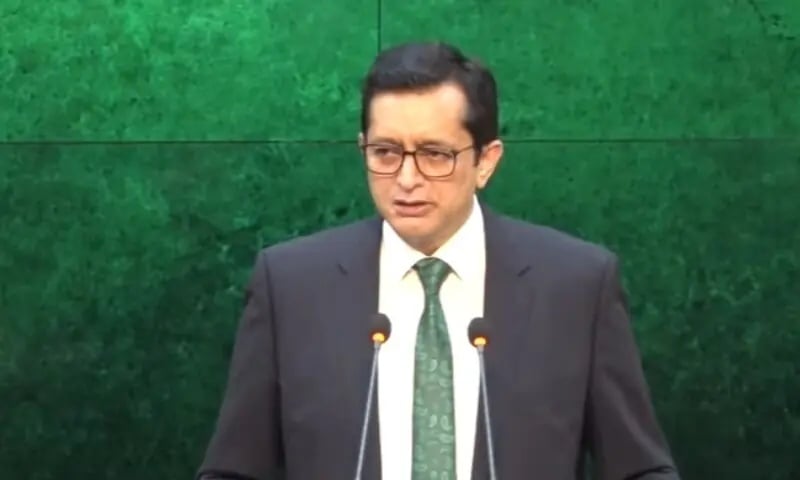
October 23, 2026 · 0 shares
Official Foreign Office and military statements dominate the account, which relays the pact’s defensive framing without independent scrutiny.
Automated analysis; not human reviewed.
Limitations: The source text includes duplicated paragraphs, a truncated sentence (“The spokesperso”), and unrelated related-link headlines; analysis uses only the substantive defense-pact content.
·
7 of 55 available dimensions scored; omitted dimensions are not treated as neutral.
·
Verified supporting quotes for 7 of 7 scored dimensions.
Claim: The report is predominantly factual and attributive, presenting official statements as quotations rather than the publisher’s own subjective commentary.
“Answering questions after the weekly press briefing, the FO spokesperson said that “matters related to the agreement, its ratification and operationalisation remain under discussion by the three parties”.” · exact text match
Why: Direct attribution and quoted statements dominate the text, reducing subjective narration.
Claim: The report uses procedural and diplomatic language rather than sensational or emotive framing.
“He further noted that each country followed its own constitutional and legal procedures to approve and ratify international agreements.” · exact text match
Why: The quoted sentence is procedural and contains no emotive or dramatic language.
Claim: The article mostly describes official actions and stated positions instead of prescribing policy.
“Pakistan and [the] Kingdom of Saudi Arabia have already completed their ratification processes, while Turkiye is undertaking the requisite procedures in accordance with its domestic legal framework” · exact text match
Why: This is a descriptive account of ratification status, not advocacy for a policy.
Claim: The report is centrally about foreign policy, national security, and a defense pact among states.
“Pakistan and Saudi Arabia have completed the ratification processes for the Makkah defence pact while Turkiye was in the process of doing so” · exact text match
Why: The subject matter is highly political and concerns state-level security commitments.
Claim: Key claims about the pact’s nature and ratification are supported by citing Foreign Office and military authorities rather than independent documentation.
“Foreign Office (FO) spokesperson Sajjad Haider Khan said on Friday.” · exact text match
“Inter-Services Public Relations Director General Lt Gen Ahmed Sharif Chaudhry said earlier this week” · exact text match
Why: Official sources are the primary basis for the reported claims.
Claim: The account frames the pact through official Pakistani state and military statements, with no independent or critical perspective.
“The Makkah Joint Defence Agreement reflects the shared commitment of Pakistan, Saudi Arabia and Turkiye to strengthening collective defence and cooperation for regional security and stability” · exact text match
“There are no hidden provisions; the agreement is explicit and clear in its provisions and articles” · exact text match
Why: Uncritical repetition of official assurances and official framing indicates pro-establishment selection.
Claim: The article names official sources and attributes specific claims and dates to them.
“Foreign Office (FO) spokesperson Sajjad Haider Khan said on Friday.” · exact text match
“This included discussions during the Strategic Political and Defence Committee, which recently met on Oct 5, he added.” · exact text match
Why: Named attribution and concrete dates support credibility.
The source text includes duplicated paragraphs, a truncated sentence (“The spokesperso”), and unrelated related-link headlines; analysis uses only the substantive defense-pact content.
October 26, 2026 · 0 shares
Concise attribution-conscious framing centers official diplomacy and explicitly flags that Saudi authorities have not confirmed reported Houthi attacks.
Automated analysis; not human reviewed.
Limitations: The supplied text is a brief news excerpt with limited sourcing and no independent verification of the reported attacks.
·
55 of 55 available dimensions scored; omitted dimensions are not treated as neutral.
·
Verified supporting quotes for 7 of 55 scored dimensions.
Claim: The report attributes the strike claim to the Houthis and notes the absence of Saudi confirmation.
“Saudi authorities have not confirmed the attacks.” · exact text match
Why: Explicitly flags unconfirmed claims instead of presenting them as established fact.
Claim: The wording is measured and avoids sensational escalation language.
“in a fresh diplomatic push for peace in the region” · exact text match
Why: Frames the meeting as diplomacy rather than using alarmist language.
Claim: The report describes official movements and plans without prescribing policy.
“Top officials from Saudi Arabia, Pakistan and Turkiye are in Tehran” · exact text match
Why: It reports who is meeting and why as stated by officials, without advocacy.
Claim: The content centrally concerns state diplomacy, parliamentary action, and military deployments.
“Egypt's parliament is voting on whether to send its forces to Saudi Arabia.” · exact text match
Why: Institutional political and military decisions are the focus.
Claim: The report uses attribution and a confirmation caveat, though sourcing is brief.
“The Houthis have kept up their attacks on the Kingdom, reporting a new strike on Riyadh's international airport on Sunday, as well as key oil facilities.” · exact text match
Why: Claims are attributed to the Houthis and the lack of Saudi confirmation is noted.
Claim: The report mostly states planned meetings and official aims rather than forecasting outcomes.
“are set to have their first high level engagement with Iranian officials” · exact text match
Why: Uses planned and aim language but does not forecast results.
Claim: The report discloses that Saudi authorities have not confirmed reported attacks.
“Saudi authorities have not confirmed the attacks.” · exact text match
Why: Transparency about confirmation status is an observable honesty and fairness signal.
The supplied text is a brief news excerpt with limited sourcing and no independent verification of the reported attacks.
October 24, 2026 · 0 shares
The publisher adopts a strictly factual and descriptive tone, reporting the outcomes of a high-level diplomatic summit without interpretive framing or political advocacy.
Automated analysis; not human reviewed.
·
55 of 55 available dimensions scored; omitted dimensions are not treated as neutral.
·
Verified supporting quotes for 0 of 55 scored dimensions.
October 22, 2026 · 0 shares
The report employs neutral, official-diplomatic framing, presenting scheduled ministerial meetings and agendas through hedged, non-evaluative language.
Automated analysis; not human reviewed.
Limitations: The supplied text contains scraped unrelated headlines, repeated snippets, and boilerplate, so the original article's full context and sourcing may be incomplete.
·
5 of 55 available dimensions scored; omitted dimensions are not treated as neutral.
·
Verified supporting quotes for 5 of 5 scored dimensions.
Claim: The report presents the meetings through attributed expectations and neutral scheduling language rather than evaluative commentary.
“The meetings are expected to address the latest regional developments and explore ways to strengthen diplomatic coordination amid ongoing regional and international challenges.” · exact text match
Why: The sentence hedges with 'expected' and describes diplomatic aims without subjective adjectives or personal judgment.
Claim: The report describes the minister's travel and meeting participation in dry, factual terms without sensational language.
“Badr Abdelatty travelled to Istanbul, Türkiye, on Thursday to participate in a meeting of the Quadrilateral Ministerial Mechanism (R4)” · exact text match
Why: The quoted passage is a plain diplomatic travel report with no alarmist, dramatic, or emotive wording.
Claim: The report mainly describes planned meetings and talks rather than prescribing actions or advocating outcomes.
“On the sidelines of the meetings, Minister Abdelatty is scheduled to hold bilateral talks with a number of senior officials” · exact text match
Why: It states what is scheduled to happen rather than recommending what should happen.
Claim: The report is substantively political, focused on foreign ministers, diplomatic coordination, and regional security.
“bringing together the foreign ministers of Egypt, Saudi Arabia, Pakistan and Türkiye” · exact text match
Why: The quoted mention of foreign ministers and the surrounding diplomatic agenda make the subject clearly political/diplomatic.
Claim: The report uses hedged language for the meeting agenda rather than asserting it as fact.
“The meetings are expected to address the latest regional developments” · exact text match
Why: The 'expected' qualifier is a cautious attribution signal, though the excerpt gives no explicit source for the agenda.
The supplied text contains scraped unrelated headlines, repeated snippets, and boilerplate, so the original article's full context and sourcing may be incomplete.
October 24, 2026 · 0 shares
The report's strongest observable feature is attributed, statement-driven coverage of a four-government diplomatic intervention, with no independent analysis or opposing perspectives.
Automated analysis; not human reviewed.
Limitations: The supplied text contains duplicated/scraped headline material and a search-prompt artifact; the analysis relies on the substantive statement coverage, and no author byline is provided.
·
5 of 55 available dimensions scored; omitted dimensions are not treated as neutral.
·
Verified supporting quotes for 5 of 5 scored dimensions.
Claim: The report presents contentious claims as attributed statements from the ministers rather than as the publisher's own analysis.
“In a joint statement issued after a meeting of the four-country group in Istanbul on Friday, the ministers said Israeli policies had reinforced a deep sense of injustice among public opinion worldwide.” · exact text match
Why: Attribution to the ministers frames the claims as their statement, supporting an objective/descriptive presentation.
Claim: The report is written in measured, procedural news language rather than sensational or emotive prose.
“The four ministers agreed to continue close consultations and coordination on the issues addressed in the joint statement.” · exact text match
Why: The closing sentence is procedural and neutral, consistent with non-sensational reporting.
Claim: The article reports the ministers' prescriptions descriptively, without the publisher issuing its own recommendations.
“The ministers called for an immediate end to ongoing Israeli violence, efforts to alter the historical and legal status of Jerusalem, and the destruction and humanitarian suffering in Palestine.” · exact text match
Why: The sentence attributes the calls to the ministers, making the publisher's mode descriptive of their prescriptions.
Claim: The report is centrally about a joint political statement by four governments addressing the Palestinian-Israeli conflict, Yemen, Iran and maritime security.
“Foreign ministers from Turkiye, Egypt, Pakistan and Saudi Arabia have called for the urgent implementation of a two-state solution to the Palestinian-Israeli conflict” · exact text match
Why: The entire substantive article reports government ministers' political positions and diplomatic calls.
Claim: The report attributes its factual claims to the joint statement rather than presenting them as independently verified.
“The statement stressed the urgent need to ensure the uninterrupted delivery of humanitarian aid to the Gaza Strip and support its reconstruction.” · exact text match
Why: Consistent attribution to the joint statement supports visible sourcing and credibility.
The supplied text contains duplicated/scraped headline material and a search-prompt artifact; the analysis relies on the substantive statement coverage, and no author byline is provided.
Presents a diplomatic de-escalation meeting in neutral, attribution-based prose, with only limited forward-looking risk framing tied to named officials.
Automated analysis; not human reviewed.
Limitations: The supplied text is short and contains duplicated/truncated formatting, limiting assessment of full publisher framing.
·
8 of 55 available dimensions scored; omitted dimensions are not treated as neutral.
·
Verified supporting quotes for 8 of 8 scored dimensions.
Claim: Framing is factual and attributive rather than evaluative.
“The four agreed to keep talking about regional security, with no date or place for a next meeting.” · exact text match
Why: Reports a concrete outcome and limitation without subjective commentary.
Claim: No sensational language or dramatic embellishment is used.
“Saudi Arabia, Pakistan and Turkey sent senior delegations to Tehran on Monday” · exact text match
Why: States the development in plain, measured terms.
Claim: Describes diplomatic activity without prescribing a policy course.
“The four agreed to keep talking about regional security” · exact text match
Why: The sentence reports an agreed action rather than advocating a prescription.
Claim: Frames the meeting as de-escalatory diplomacy.
“to try to stop the Iran war from flaring up again” · exact text match
Why: The stated purpose is diplomatic prevention of renewed conflict.
Claim: The report is centered on political and diplomatic developments.
“before Israel votes” · exact text match
Why: The meeting is explicitly tied to election timing and regional security politics.
Claim: Named officials and attributed warnings support credible reporting.
“Turkey's Erdogan warned that new attacks on Iran would destabilise the region” · exact text match
Why: Key claims are tied to named actors and direct attributions.
Claim: Forward-looking risk framing is limited and attributed to named officials.
“Netanyahu repeated that Iran or its proxies could strike before the vote.” · exact text match
Why: The speculative risk is presented as a stated warning, not the publisher's forecast.
Claim: The report is concise but coherent on a geopolitical development.
“Saudi Defence Minister Khalid bin Salman, Pakistani army chief Field Marshal Asim Munir and Turkish intelligence head Ibrahim Kalin met Iran's security council secretary, Mohsen Rezaei.” · exact text match
Why: Identifies relevant officials and the core meeting clearly.
The supplied text is short and contains duplicated/truncated formatting, limiting assessment of full publisher framing.
October 26, 2026 · 0 shares
Frames the development through mounting war fears and high-level regional diplomacy while keeping the body largely factual and attribution-light.
Automated analysis; not human reviewed.
Limitations: Only a headline and a two-sentence snippet were supplied, so sourcing, named officials, and fuller publisher framing cannot be assessed.
·
3 of 55 available dimensions scored; omitted dimensions are not treated as neutral.
·
Verified supporting quotes for 3 of 3 scored dimensions.
Claim: The item reports the delegations’ arrival and stated diplomatic aim without evaluative adjectives or opinion.
“High-profile delegates from Saudi Arabia, Pakistan and Turkey arrived Monday in Tehran” · exact text match
“talks aimed at avoiding another escalation” · exact text match
Why: The wording sticks to observed movement and attributed purpose rather than commentary.
Claim: The body is restrained and factual, with only the headline invoking mounting war fears.
“High-profile delegates from Saudi Arabia, Pakistan and Turkey arrived Monday in Tehran” · exact text match
Counterevidence:
“as fears of war escalation mount” · exact text match
Why: The body avoids dramatic language, though the headline uses mild fear framing.
Claim: The item is framed around interstate conflict and diplomacy involving Iran, the U.S., and Israel.
“talks aimed at avoiding another escalation in Iran's war with the U.S. and Israel.” · exact text match
Why: The central subject is geopolitical conflict and diplomatic talks among states.
Only a headline and a two-sentence snippet were supplied, so sourcing, named officials, and fuller publisher framing cannot be assessed.
Presents a diplomatic de-escalation meeting in neutral, attribution-based prose, with only limited forward-looking risk framing tied to named officials.
Automated analysis; not human reviewed.
Limitations: The supplied text is short and contains duplicated/truncated formatting, limiting assessment of full publisher framing.
·
8 of 55 available dimensions scored; omitted dimensions are not treated as neutral.
·
Verified supporting quotes for 8 of 8 scored dimensions.
Claim: Framing is factual and attributive rather than evaluative.
“The four agreed to keep talking about regional security, with no date or place for a next meeting.” · exact text match
Why: Reports a concrete outcome and limitation without subjective commentary.
Claim: No sensational language or dramatic embellishment is used.
“Saudi Arabia, Pakistan and Turkey sent senior delegations to Tehran on Monday” · exact text match
Why: States the development in plain, measured terms.
Claim: Describes diplomatic activity without prescribing a policy course.
“The four agreed to keep talking about regional security” · exact text match
Why: The sentence reports an agreed action rather than advocating a prescription.
Claim: Frames the meeting as de-escalatory diplomacy.
“to try to stop the Iran war from flaring up again” · exact text match
Why: The stated purpose is diplomatic prevention of renewed conflict.
Claim: The report is centered on political and diplomatic developments.
“before Israel votes” · exact text match
Why: The meeting is explicitly tied to election timing and regional security politics.
Claim: Named officials and attributed warnings support credible reporting.
“Turkey's Erdogan warned that new attacks on Iran would destabilise the region” · exact text match
Why: Key claims are tied to named actors and direct attributions.
Claim: Forward-looking risk framing is limited and attributed to named officials.
“Netanyahu repeated that Iran or its proxies could strike before the vote.” · exact text match
Why: The speculative risk is presented as a stated warning, not the publisher's forecast.
Claim: The report is concise but coherent on a geopolitical development.
“Saudi Defence Minister Khalid bin Salman, Pakistani army chief Field Marshal Asim Munir and Turkish intelligence head Ibrahim Kalin met Iran's security council secretary, Mohsen Rezaei.” · exact text match
Why: Identifies relevant officials and the core meeting clearly.
The supplied text is short and contains duplicated/truncated formatting, limiting assessment of full publisher framing.
October 23, 2026 · 0 shares
Official Foreign Office and military statements dominate the account, which relays the pact’s defensive framing without independent scrutiny.
Automated analysis; not human reviewed. Limitations: The source text includes duplicated paragraphs, a truncated sentence (“The spokesperso”), and unrelated related-link headlines; analysis uses only the substantive defense-pact content. · 7 of 55 available dimensions scored; omitted dimensions are not treated as neutral. · Verified supporting quotes for 7 of 7 scored dimensions.
Claim: The report is predominantly factual and attributive, presenting official statements as quotations rather than the publisher’s own subjective commentary.
“Answering questions after the weekly press briefing, the FO spokesperson said that “matters related to the agreement, its ratification and operationalisation remain under discussion by the three parties”.” · exact text match
Why: Direct attribution and quoted statements dominate the text, reducing subjective narration.
Claim: The report uses procedural and diplomatic language rather than sensational or emotive framing.
“He further noted that each country followed its own constitutional and legal procedures to approve and ratify international agreements.” · exact text match
Why: The quoted sentence is procedural and contains no emotive or dramatic language.
Claim: The article mostly describes official actions and stated positions instead of prescribing policy.
“Pakistan and [the] Kingdom of Saudi Arabia have already completed their ratification processes, while Turkiye is undertaking the requisite procedures in accordance with its domestic legal framework” · exact text match
Why: This is a descriptive account of ratification status, not advocacy for a policy.
Claim: The report is centrally about foreign policy, national security, and a defense pact among states.
“Pakistan and Saudi Arabia have completed the ratification processes for the Makkah defence pact while Turkiye was in the process of doing so” · exact text match
Why: The subject matter is highly political and concerns state-level security commitments.
Claim: Key claims about the pact’s nature and ratification are supported by citing Foreign Office and military authorities rather than independent documentation.
“Foreign Office (FO) spokesperson Sajjad Haider Khan said on Friday.” · exact text match
“Inter-Services Public Relations Director General Lt Gen Ahmed Sharif Chaudhry said earlier this week” · exact text match
Why: Official sources are the primary basis for the reported claims.
Claim: The account frames the pact through official Pakistani state and military statements, with no independent or critical perspective.
“The Makkah Joint Defence Agreement reflects the shared commitment of Pakistan, Saudi Arabia and Turkiye to strengthening collective defence and cooperation for regional security and stability” · exact text match
“There are no hidden provisions; the agreement is explicit and clear in its provisions and articles” · exact text match
Why: Uncritical repetition of official assurances and official framing indicates pro-establishment selection.
Claim: The article names official sources and attributes specific claims and dates to them.
“Foreign Office (FO) spokesperson Sajjad Haider Khan said on Friday.” · exact text match
“This included discussions during the Strategic Political and Defence Committee, which recently met on Oct 5, he added.” · exact text match
Why: Named attribution and concrete dates support credibility.
The source text includes duplicated paragraphs, a truncated sentence (“The spokesperso”), and unrelated related-link headlines; analysis uses only the substantive defense-pact content.
Presents a diplomatic de-escalation meeting in neutral, attribution-based prose, with only limited forward-looking risk framing tied to named officials.
Automated analysis; not human reviewed. Limitations: The supplied text is short and contains duplicated/truncated formatting, limiting assessment of full publisher framing. · 8 of 55 available dimensions scored; omitted dimensions are not treated as neutral. · Verified supporting quotes for 8 of 8 scored dimensions.
Claim: Framing is factual and attributive rather than evaluative.
“The four agreed to keep talking about regional security, with no date or place for a next meeting.” · exact text match
Why: Reports a concrete outcome and limitation without subjective commentary.
Claim: No sensational language or dramatic embellishment is used.
“Saudi Arabia, Pakistan and Turkey sent senior delegations to Tehran on Monday” · exact text match
Why: States the development in plain, measured terms.
Claim: Describes diplomatic activity without prescribing a policy course.
“The four agreed to keep talking about regional security” · exact text match
Why: The sentence reports an agreed action rather than advocating a prescription.
Claim: Frames the meeting as de-escalatory diplomacy.
“to try to stop the Iran war from flaring up again” · exact text match
Why: The stated purpose is diplomatic prevention of renewed conflict.
Claim: The report is centered on political and diplomatic developments.
“before Israel votes” · exact text match
Why: The meeting is explicitly tied to election timing and regional security politics.
Claim: Named officials and attributed warnings support credible reporting.
“Turkey's Erdogan warned that new attacks on Iran would destabilise the region” · exact text match
Why: Key claims are tied to named actors and direct attributions.
Claim: Forward-looking risk framing is limited and attributed to named officials.
“Netanyahu repeated that Iran or its proxies could strike before the vote.” · exact text match
Why: The speculative risk is presented as a stated warning, not the publisher's forecast.
Claim: The report is concise but coherent on a geopolitical development.
“Saudi Defence Minister Khalid bin Salman, Pakistani army chief Field Marshal Asim Munir and Turkish intelligence head Ibrahim Kalin met Iran's security council secretary, Mohsen Rezaei.” · exact text match
Why: Identifies relevant officials and the core meeting clearly.
The supplied text is short and contains duplicated/truncated formatting, limiting assessment of full publisher framing.
October 26, 2026 · 0 shares
Concise attribution-conscious framing centers official diplomacy and explicitly flags that Saudi authorities have not confirmed reported Houthi attacks.
Automated analysis; not human reviewed. Limitations: The supplied text is a brief news excerpt with limited sourcing and no independent verification of the reported attacks. · 55 of 55 available dimensions scored; omitted dimensions are not treated as neutral. · Verified supporting quotes for 7 of 55 scored dimensions.
Claim: The report attributes the strike claim to the Houthis and notes the absence of Saudi confirmation.
“Saudi authorities have not confirmed the attacks.” · exact text match
Why: Explicitly flags unconfirmed claims instead of presenting them as established fact.
Claim: The wording is measured and avoids sensational escalation language.
“in a fresh diplomatic push for peace in the region” · exact text match
Why: Frames the meeting as diplomacy rather than using alarmist language.
Claim: The report describes official movements and plans without prescribing policy.
“Top officials from Saudi Arabia, Pakistan and Turkiye are in Tehran” · exact text match
Why: It reports who is meeting and why as stated by officials, without advocacy.
Claim: The content centrally concerns state diplomacy, parliamentary action, and military deployments.
“Egypt's parliament is voting on whether to send its forces to Saudi Arabia.” · exact text match
Why: Institutional political and military decisions are the focus.
Claim: The report uses attribution and a confirmation caveat, though sourcing is brief.
“The Houthis have kept up their attacks on the Kingdom, reporting a new strike on Riyadh's international airport on Sunday, as well as key oil facilities.” · exact text match
Why: Claims are attributed to the Houthis and the lack of Saudi confirmation is noted.
Claim: The report mostly states planned meetings and official aims rather than forecasting outcomes.
“are set to have their first high level engagement with Iranian officials” · exact text match
Why: Uses planned and aim language but does not forecast results.
Claim: The report discloses that Saudi authorities have not confirmed reported attacks.
“Saudi authorities have not confirmed the attacks.” · exact text match
Why: Transparency about confirmation status is an observable honesty and fairness signal.
The supplied text is a brief news excerpt with limited sourcing and no independent verification of the reported attacks.
October 24, 2026 · 0 shares
The publisher adopts a strictly factual and descriptive tone, reporting the outcomes of a high-level diplomatic summit without interpretive framing or political advocacy.
Automated analysis; not human reviewed. · 55 of 55 available dimensions scored; omitted dimensions are not treated as neutral. · Verified supporting quotes for 0 of 55 scored dimensions.
October 24, 2026 · 0 shares
The report's strongest observable feature is attributed, statement-driven coverage of a four-government diplomatic intervention, with no independent analysis or opposing perspectives.
Automated analysis; not human reviewed. Limitations: The supplied text contains duplicated/scraped headline material and a search-prompt artifact; the analysis relies on the substantive statement coverage, and no author byline is provided. · 5 of 55 available dimensions scored; omitted dimensions are not treated as neutral. · Verified supporting quotes for 5 of 5 scored dimensions.
Claim: The report presents contentious claims as attributed statements from the ministers rather than as the publisher's own analysis.
“In a joint statement issued after a meeting of the four-country group in Istanbul on Friday, the ministers said Israeli policies had reinforced a deep sense of injustice among public opinion worldwide.” · exact text match
Why: Attribution to the ministers frames the claims as their statement, supporting an objective/descriptive presentation.
Claim: The report is written in measured, procedural news language rather than sensational or emotive prose.
“The four ministers agreed to continue close consultations and coordination on the issues addressed in the joint statement.” · exact text match
Why: The closing sentence is procedural and neutral, consistent with non-sensational reporting.
Claim: The article reports the ministers' prescriptions descriptively, without the publisher issuing its own recommendations.
“The ministers called for an immediate end to ongoing Israeli violence, efforts to alter the historical and legal status of Jerusalem, and the destruction and humanitarian suffering in Palestine.” · exact text match
Why: The sentence attributes the calls to the ministers, making the publisher's mode descriptive of their prescriptions.
Claim: The report is centrally about a joint political statement by four governments addressing the Palestinian-Israeli conflict, Yemen, Iran and maritime security.
“Foreign ministers from Turkiye, Egypt, Pakistan and Saudi Arabia have called for the urgent implementation of a two-state solution to the Palestinian-Israeli conflict” · exact text match
Why: The entire substantive article reports government ministers' political positions and diplomatic calls.
Claim: The report attributes its factual claims to the joint statement rather than presenting them as independently verified.
“The statement stressed the urgent need to ensure the uninterrupted delivery of humanitarian aid to the Gaza Strip and support its reconstruction.” · exact text match
Why: Consistent attribution to the joint statement supports visible sourcing and credibility.
The supplied text contains duplicated/scraped headline material and a search-prompt artifact; the analysis relies on the substantive statement coverage, and no author byline is provided.
Helium Bias
October 24, 2026 · 0 shares
The report's strongest observable feature is attributed, statement-driven coverage of a four-government diplomatic intervention, with no independent analysis or opposing perspectives.
Automated analysis; not human reviewed. Limitations: The supplied text contains duplicated/scraped headline material and a search-prompt artifact; the analysis relies on the substantive statement coverage, and no author byline is provided. · 5 of 55 available dimensions scored; omitted dimensions are not treated as neutral. · Verified supporting quotes for 5 of 5 scored dimensions.
Claim: The report presents contentious claims as attributed statements from the ministers rather than as the publisher's own analysis.
“In a joint statement issued after a meeting of the four-country group in Istanbul on Friday, the ministers said Israeli policies had reinforced a deep sense of injustice among public opinion worldwide.” · exact text match
Why: Attribution to the ministers frames the claims as their statement, supporting an objective/descriptive presentation.
Claim: The report is written in measured, procedural news language rather than sensational or emotive prose.
“The four ministers agreed to continue close consultations and coordination on the issues addressed in the joint statement.” · exact text match
Why: The closing sentence is procedural and neutral, consistent with non-sensational reporting.
Claim: The article reports the ministers' prescriptions descriptively, without the publisher issuing its own recommendations.
“The ministers called for an immediate end to ongoing Israeli violence, efforts to alter the historical and legal status of Jerusalem, and the destruction and humanitarian suffering in Palestine.” · exact text match
Why: The sentence attributes the calls to the ministers, making the publisher's mode descriptive of their prescriptions.
Claim: The report is centrally about a joint political statement by four governments addressing the Palestinian-Israeli conflict, Yemen, Iran and maritime security.
“Foreign ministers from Turkiye, Egypt, Pakistan and Saudi Arabia have called for the urgent implementation of a two-state solution to the Palestinian-Israeli conflict” · exact text match
Why: The entire substantive article reports government ministers' political positions and diplomatic calls.
Claim: The report attributes its factual claims to the joint statement rather than presenting them as independently verified.
“The statement stressed the urgent need to ensure the uninterrupted delivery of humanitarian aid to the Gaza Strip and support its reconstruction.” · exact text match
Why: Consistent attribution to the joint statement supports visible sourcing and credibility.
The supplied text contains duplicated/scraped headline material and a search-prompt artifact; the analysis relies on the substantive statement coverage, and no author byline is provided.
October 23, 2026 · 0 shares
Official Foreign Office and military statements dominate the account, which relays the pact’s defensive framing without independent scrutiny.
Automated analysis; not human reviewed. Limitations: The source text includes duplicated paragraphs, a truncated sentence (“The spokesperso”), and unrelated related-link headlines; analysis uses only the substantive defense-pact content. · 7 of 55 available dimensions scored; omitted dimensions are not treated as neutral. · Verified supporting quotes for 7 of 7 scored dimensions.
Claim: The report is predominantly factual and attributive, presenting official statements as quotations rather than the publisher’s own subjective commentary.
“Answering questions after the weekly press briefing, the FO spokesperson said that “matters related to the agreement, its ratification and operationalisation remain under discussion by the three parties”.” · exact text match
Why: Direct attribution and quoted statements dominate the text, reducing subjective narration.
Claim: The report uses procedural and diplomatic language rather than sensational or emotive framing.
“He further noted that each country followed its own constitutional and legal procedures to approve and ratify international agreements.” · exact text match
Why: The quoted sentence is procedural and contains no emotive or dramatic language.
Claim: The article mostly describes official actions and stated positions instead of prescribing policy.
“Pakistan and [the] Kingdom of Saudi Arabia have already completed their ratification processes, while Turkiye is undertaking the requisite procedures in accordance with its domestic legal framework” · exact text match
Why: This is a descriptive account of ratification status, not advocacy for a policy.
Claim: The report is centrally about foreign policy, national security, and a defense pact among states.
“Pakistan and Saudi Arabia have completed the ratification processes for the Makkah defence pact while Turkiye was in the process of doing so” · exact text match
Why: The subject matter is highly political and concerns state-level security commitments.
Claim: Key claims about the pact’s nature and ratification are supported by citing Foreign Office and military authorities rather than independent documentation.
“Foreign Office (FO) spokesperson Sajjad Haider Khan said on Friday.” · exact text match
“Inter-Services Public Relations Director General Lt Gen Ahmed Sharif Chaudhry said earlier this week” · exact text match
Why: Official sources are the primary basis for the reported claims.
Claim: The account frames the pact through official Pakistani state and military statements, with no independent or critical perspective.
“The Makkah Joint Defence Agreement reflects the shared commitment of Pakistan, Saudi Arabia and Turkiye to strengthening collective defence and cooperation for regional security and stability” · exact text match
“There are no hidden provisions; the agreement is explicit and clear in its provisions and articles” · exact text match
Why: Uncritical repetition of official assurances and official framing indicates pro-establishment selection.
Claim: The article names official sources and attributes specific claims and dates to them.
“Foreign Office (FO) spokesperson Sajjad Haider Khan said on Friday.” · exact text match
“This included discussions during the Strategic Political and Defence Committee, which recently met on Oct 5, he added.” · exact text match
Why: Named attribution and concrete dates support credibility.
The source text includes duplicated paragraphs, a truncated sentence (“The spokesperso”), and unrelated related-link headlines; analysis uses only the substantive defense-pact content.
Story Blindspots
The reporting maintains a highly descriptive and neutral journalistic tone, focusing on documenting strategic geopolitical maneuvers and regional security alliances.
The agreement was signed in Mecca by Turkish President Recep Tayyip Erdogan, Pakistani Prime Minister Shehbaz Sharif, and Saudi Arabia's Crown Prince Mohammed bin Salman.
Automated analysis; not human reviewed. · 55 of 55 available dimensions scored; omitted dimensions are not treated as neutral. · Verified supporting quotes for 0 of 55 scored dimensions.
October 26, 2026 · 0 shares
Concise attribution-conscious framing centers official diplomacy and explicitly flags that Saudi authorities have not confirmed reported Houthi attacks.
Automated analysis; not human reviewed. Limitations: The supplied text is a brief news excerpt with limited sourcing and no independent verification of the reported attacks. · 55 of 55 available dimensions scored; omitted dimensions are not treated as neutral. · Verified supporting quotes for 7 of 55 scored dimensions.
Claim: The report attributes the strike claim to the Houthis and notes the absence of Saudi confirmation.
“Saudi authorities have not confirmed the attacks.” · exact text match
Why: Explicitly flags unconfirmed claims instead of presenting them as established fact.
Claim: The wording is measured and avoids sensational escalation language.
“in a fresh diplomatic push for peace in the region” · exact text match
Why: Frames the meeting as diplomacy rather than using alarmist language.
Claim: The report describes official movements and plans without prescribing policy.
“Top officials from Saudi Arabia, Pakistan and Turkiye are in Tehran” · exact text match
Why: It reports who is meeting and why as stated by officials, without advocacy.
Claim: The content centrally concerns state diplomacy, parliamentary action, and military deployments.
“Egypt's parliament is voting on whether to send its forces to Saudi Arabia.” · exact text match
Why: Institutional political and military decisions are the focus.
Claim: The report uses attribution and a confirmation caveat, though sourcing is brief.
“The Houthis have kept up their attacks on the Kingdom, reporting a new strike on Riyadh's international airport on Sunday, as well as key oil facilities.” · exact text match
Why: Claims are attributed to the Houthis and the lack of Saudi confirmation is noted.
Claim: The report mostly states planned meetings and official aims rather than forecasting outcomes.
“are set to have their first high level engagement with Iranian officials” · exact text match
Why: Uses planned and aim language but does not forecast results.
Claim: The report discloses that Saudi authorities have not confirmed reported attacks.
“Saudi authorities have not confirmed the attacks.” · exact text match
Why: Transparency about confirmation status is an observable honesty and fairness signal.
The supplied text is a brief news excerpt with limited sourcing and no independent verification of the reported attacks.
October 23, 2026 · 0 shares
Official Foreign Office and military statements dominate the account, which relays the pact’s defensive framing without independent scrutiny.
Automated analysis; not human reviewed. Limitations: The source text includes duplicated paragraphs, a truncated sentence (“The spokesperso”), and unrelated related-link headlines; analysis uses only the substantive defense-pact content. · 7 of 55 available dimensions scored; omitted dimensions are not treated as neutral. · Verified supporting quotes for 7 of 7 scored dimensions.
Claim: The report is predominantly factual and attributive, presenting official statements as quotations rather than the publisher’s own subjective commentary.
“Answering questions after the weekly press briefing, the FO spokesperson said that “matters related to the agreement, its ratification and operationalisation remain under discussion by the three parties”.” · exact text match
Why: Direct attribution and quoted statements dominate the text, reducing subjective narration.
Claim: The report uses procedural and diplomatic language rather than sensational or emotive framing.
“He further noted that each country followed its own constitutional and legal procedures to approve and ratify international agreements.” · exact text match
Why: The quoted sentence is procedural and contains no emotive or dramatic language.
Claim: The article mostly describes official actions and stated positions instead of prescribing policy.
“Pakistan and [the] Kingdom of Saudi Arabia have already completed their ratification processes, while Turkiye is undertaking the requisite procedures in accordance with its domestic legal framework” · exact text match
Why: This is a descriptive account of ratification status, not advocacy for a policy.
Claim: The report is centrally about foreign policy, national security, and a defense pact among states.
“Pakistan and Saudi Arabia have completed the ratification processes for the Makkah defence pact while Turkiye was in the process of doing so” · exact text match
Why: The subject matter is highly political and concerns state-level security commitments.
Claim: Key claims about the pact’s nature and ratification are supported by citing Foreign Office and military authorities rather than independent documentation.
“Foreign Office (FO) spokesperson Sajjad Haider Khan said on Friday.” · exact text match
“Inter-Services Public Relations Director General Lt Gen Ahmed Sharif Chaudhry said earlier this week” · exact text match
Why: Official sources are the primary basis for the reported claims.
Claim: The account frames the pact through official Pakistani state and military statements, with no independent or critical perspective.
“The Makkah Joint Defence Agreement reflects the shared commitment of Pakistan, Saudi Arabia and Turkiye to strengthening collective defence and cooperation for regional security and stability” · exact text match
“There are no hidden provisions; the agreement is explicit and clear in its provisions and articles” · exact text match
Why: Uncritical repetition of official assurances and official framing indicates pro-establishment selection.
Claim: The article names official sources and attributes specific claims and dates to them.
“Foreign Office (FO) spokesperson Sajjad Haider Khan said on Friday.” · exact text match
“This included discussions during the Strategic Political and Defence Committee, which recently met on Oct 5, he added.” · exact text match
Why: Named attribution and concrete dates support credibility.
The source text includes duplicated paragraphs, a truncated sentence (“The spokesperso”), and unrelated related-link headlines; analysis uses only the substantive defense-pact content.
Presents a diplomatic de-escalation meeting in neutral, attribution-based prose, with only limited forward-looking risk framing tied to named officials.
Automated analysis; not human reviewed. Limitations: The supplied text is short and contains duplicated/truncated formatting, limiting assessment of full publisher framing. · 8 of 55 available dimensions scored; omitted dimensions are not treated as neutral. · Verified supporting quotes for 8 of 8 scored dimensions.
Claim: Framing is factual and attributive rather than evaluative.
“The four agreed to keep talking about regional security, with no date or place for a next meeting.” · exact text match
Why: Reports a concrete outcome and limitation without subjective commentary.
Claim: No sensational language or dramatic embellishment is used.
“Saudi Arabia, Pakistan and Turkey sent senior delegations to Tehran on Monday” · exact text match
Why: States the development in plain, measured terms.
Claim: Describes diplomatic activity without prescribing a policy course.
“The four agreed to keep talking about regional security” · exact text match
Why: The sentence reports an agreed action rather than advocating a prescription.
Claim: Frames the meeting as de-escalatory diplomacy.
“to try to stop the Iran war from flaring up again” · exact text match
Why: The stated purpose is diplomatic prevention of renewed conflict.
Claim: The report is centered on political and diplomatic developments.
“before Israel votes” · exact text match
Why: The meeting is explicitly tied to election timing and regional security politics.
Claim: Named officials and attributed warnings support credible reporting.
“Turkey's Erdogan warned that new attacks on Iran would destabilise the region” · exact text match
Why: Key claims are tied to named actors and direct attributions.
Claim: Forward-looking risk framing is limited and attributed to named officials.
“Netanyahu repeated that Iran or its proxies could strike before the vote.” · exact text match
Why: The speculative risk is presented as a stated warning, not the publisher's forecast.
Claim: The report is concise but coherent on a geopolitical development.
“Saudi Defence Minister Khalid bin Salman, Pakistani army chief Field Marshal Asim Munir and Turkish intelligence head Ibrahim Kalin met Iran's security council secretary, Mohsen Rezaei.” · exact text match
Why: Identifies relevant officials and the core meeting clearly.
The supplied text is short and contains duplicated/truncated formatting, limiting assessment of full publisher framing.
October 26, 2026 · 0 shares
Concise attribution-conscious framing centers official diplomacy and explicitly flags that Saudi authorities have not confirmed reported Houthi attacks.
Automated analysis; not human reviewed. Limitations: The supplied text is a brief news excerpt with limited sourcing and no independent verification of the reported attacks. · 55 of 55 available dimensions scored; omitted dimensions are not treated as neutral. · Verified supporting quotes for 7 of 55 scored dimensions.
Claim: The report attributes the strike claim to the Houthis and notes the absence of Saudi confirmation.
“Saudi authorities have not confirmed the attacks.” · exact text match
Why: Explicitly flags unconfirmed claims instead of presenting them as established fact.
Claim: The wording is measured and avoids sensational escalation language.
“in a fresh diplomatic push for peace in the region” · exact text match
Why: Frames the meeting as diplomacy rather than using alarmist language.
Claim: The report describes official movements and plans without prescribing policy.
“Top officials from Saudi Arabia, Pakistan and Turkiye are in Tehran” · exact text match
Why: It reports who is meeting and why as stated by officials, without advocacy.
Claim: The content centrally concerns state diplomacy, parliamentary action, and military deployments.
“Egypt's parliament is voting on whether to send its forces to Saudi Arabia.” · exact text match
Why: Institutional political and military decisions are the focus.
Claim: The report uses attribution and a confirmation caveat, though sourcing is brief.
“The Houthis have kept up their attacks on the Kingdom, reporting a new strike on Riyadh's international airport on Sunday, as well as key oil facilities.” · exact text match
Why: Claims are attributed to the Houthis and the lack of Saudi confirmation is noted.
Claim: The report mostly states planned meetings and official aims rather than forecasting outcomes.
“are set to have their first high level engagement with Iranian officials” · exact text match
Why: Uses planned and aim language but does not forecast results.
Claim: The report discloses that Saudi authorities have not confirmed reported attacks.
“Saudi authorities have not confirmed the attacks.” · exact text match
Why: Transparency about confirmation status is an observable honesty and fairness signal.
The supplied text is a brief news excerpt with limited sourcing and no independent verification of the reported attacks.
October 26, 2026 · 0 shares
Frames the development through mounting war fears and high-level regional diplomacy while keeping the body largely factual and attribution-light.
Automated analysis; not human reviewed. Limitations: Only a headline and a two-sentence snippet were supplied, so sourcing, named officials, and fuller publisher framing cannot be assessed. · 3 of 55 available dimensions scored; omitted dimensions are not treated as neutral. · Verified supporting quotes for 3 of 3 scored dimensions.
Claim: The item reports the delegations’ arrival and stated diplomatic aim without evaluative adjectives or opinion.
“High-profile delegates from Saudi Arabia, Pakistan and Turkey arrived Monday in Tehran” · exact text match
“talks aimed at avoiding another escalation” · exact text match
Why: The wording sticks to observed movement and attributed purpose rather than commentary.
Claim: The body is restrained and factual, with only the headline invoking mounting war fears.
“High-profile delegates from Saudi Arabia, Pakistan and Turkey arrived Monday in Tehran” · exact text match
Counterevidence:
“as fears of war escalation mount” · exact text match
Why: The body avoids dramatic language, though the headline uses mild fear framing.
Claim: The item is framed around interstate conflict and diplomacy involving Iran, the U.S., and Israel.
“talks aimed at avoiding another escalation in Iran's war with the U.S. and Israel.” · exact text match
Why: The central subject is geopolitical conflict and diplomatic talks among states.
Only a headline and a two-sentence snippet were supplied, so sourcing, named officials, and fuller publisher framing cannot be assessed.
Presents a diplomatic de-escalation meeting in neutral, attribution-based prose, with only limited forward-looking risk framing tied to named officials.
Automated analysis; not human reviewed. Limitations: The supplied text is short and contains duplicated/truncated formatting, limiting assessment of full publisher framing. · 8 of 55 available dimensions scored; omitted dimensions are not treated as neutral. · Verified supporting quotes for 8 of 8 scored dimensions.
Claim: Framing is factual and attributive rather than evaluative.
“The four agreed to keep talking about regional security, with no date or place for a next meeting.” · exact text match
Why: Reports a concrete outcome and limitation without subjective commentary.
Claim: No sensational language or dramatic embellishment is used.
“Saudi Arabia, Pakistan and Turkey sent senior delegations to Tehran on Monday” · exact text match
Why: States the development in plain, measured terms.
Claim: Describes diplomatic activity without prescribing a policy course.
“The four agreed to keep talking about regional security” · exact text match
Why: The sentence reports an agreed action rather than advocating a prescription.
Claim: Frames the meeting as de-escalatory diplomacy.
“to try to stop the Iran war from flaring up again” · exact text match
Why: The stated purpose is diplomatic prevention of renewed conflict.
Claim: The report is centered on political and diplomatic developments.
“before Israel votes” · exact text match
Why: The meeting is explicitly tied to election timing and regional security politics.
Claim: Named officials and attributed warnings support credible reporting.
“Turkey's Erdogan warned that new attacks on Iran would destabilise the region” · exact text match
Why: Key claims are tied to named actors and direct attributions.
Claim: Forward-looking risk framing is limited and attributed to named officials.
“Netanyahu repeated that Iran or its proxies could strike before the vote.” · exact text match
Why: The speculative risk is presented as a stated warning, not the publisher's forecast.
Claim: The report is concise but coherent on a geopolitical development.
“Saudi Defence Minister Khalid bin Salman, Pakistani army chief Field Marshal Asim Munir and Turkish intelligence head Ibrahim Kalin met Iran's security council secretary, Mohsen Rezaei.” · exact text match
Why: Identifies relevant officials and the core meeting clearly.
The supplied text is short and contains duplicated/truncated formatting, limiting assessment of full publisher framing.
October 26, 2026 · 0 shares
Concise attribution-conscious framing centers official diplomacy and explicitly flags that Saudi authorities have not confirmed reported Houthi attacks.
Automated analysis; not human reviewed. Limitations: The supplied text is a brief news excerpt with limited sourcing and no independent verification of the reported attacks. · 55 of 55 available dimensions scored; omitted dimensions are not treated as neutral. · Verified supporting quotes for 7 of 55 scored dimensions.
Claim: The report attributes the strike claim to the Houthis and notes the absence of Saudi confirmation.
“Saudi authorities have not confirmed the attacks.” · exact text match
Why: Explicitly flags unconfirmed claims instead of presenting them as established fact.
Claim: The wording is measured and avoids sensational escalation language.
“in a fresh diplomatic push for peace in the region” · exact text match
Why: Frames the meeting as diplomacy rather than using alarmist language.
Claim: The report describes official movements and plans without prescribing policy.
“Top officials from Saudi Arabia, Pakistan and Turkiye are in Tehran” · exact text match
Why: It reports who is meeting and why as stated by officials, without advocacy.
Claim: The content centrally concerns state diplomacy, parliamentary action, and military deployments.
“Egypt's parliament is voting on whether to send its forces to Saudi Arabia.” · exact text match
Why: Institutional political and military decisions are the focus.
Claim: The report uses attribution and a confirmation caveat, though sourcing is brief.
“The Houthis have kept up their attacks on the Kingdom, reporting a new strike on Riyadh's international airport on Sunday, as well as key oil facilities.” · exact text match
Why: Claims are attributed to the Houthis and the lack of Saudi confirmation is noted.
Claim: The report mostly states planned meetings and official aims rather than forecasting outcomes.
“are set to have their first high level engagement with Iranian officials” · exact text match
Why: Uses planned and aim language but does not forecast results.
Claim: The report discloses that Saudi authorities have not confirmed reported attacks.
“Saudi authorities have not confirmed the attacks.” · exact text match
Why: Transparency about confirmation status is an observable honesty and fairness signal.
The supplied text is a brief news excerpt with limited sourcing and no independent verification of the reported attacks.
October 26, 2026 · 0 shares
Concise attribution-conscious framing centers official diplomacy and explicitly flags that Saudi authorities have not confirmed reported Houthi attacks.
Automated analysis; not human reviewed. Limitations: The supplied text is a brief news excerpt with limited sourcing and no independent verification of the reported attacks. · 55 of 55 available dimensions scored; omitted dimensions are not treated as neutral. · Verified supporting quotes for 7 of 55 scored dimensions.
Claim: The report attributes the strike claim to the Houthis and notes the absence of Saudi confirmation.
“Saudi authorities have not confirmed the attacks.” · exact text match
Why: Explicitly flags unconfirmed claims instead of presenting them as established fact.
Claim: The wording is measured and avoids sensational escalation language.
“in a fresh diplomatic push for peace in the region” · exact text match
Why: Frames the meeting as diplomacy rather than using alarmist language.
Claim: The report describes official movements and plans without prescribing policy.
“Top officials from Saudi Arabia, Pakistan and Turkiye are in Tehran” · exact text match
Why: It reports who is meeting and why as stated by officials, without advocacy.
Claim: The content centrally concerns state diplomacy, parliamentary action, and military deployments.
“Egypt's parliament is voting on whether to send its forces to Saudi Arabia.” · exact text match
Why: Institutional political and military decisions are the focus.
Claim: The report uses attribution and a confirmation caveat, though sourcing is brief.
“The Houthis have kept up their attacks on the Kingdom, reporting a new strike on Riyadh's international airport on Sunday, as well as key oil facilities.” · exact text match
Why: Claims are attributed to the Houthis and the lack of Saudi confirmation is noted.
Claim: The report mostly states planned meetings and official aims rather than forecasting outcomes.
“are set to have their first high level engagement with Iranian officials” · exact text match
Why: Uses planned and aim language but does not forecast results.
Claim: The report discloses that Saudi authorities have not confirmed reported attacks.
“Saudi authorities have not confirmed the attacks.” · exact text match
Why: Transparency about confirmation status is an observable honesty and fairness signal.
The supplied text is a brief news excerpt with limited sourcing and no independent verification of the reported attacks.
October 23, 2026 · 0 shares
Official Foreign Office and military statements dominate the account, which relays the pact’s defensive framing without independent scrutiny.
Automated analysis; not human reviewed.
Limitations: The source text includes duplicated paragraphs, a truncated sentence (“The spokesperso”), and unrelated related-link headlines; analysis uses only the substantive defense-pact content.
·
7 of 55 available dimensions scored; omitted dimensions are not treated as neutral.
·
Verified supporting quotes for 7 of 7 scored dimensions.
Claim: The report is predominantly factual and attributive, presenting official statements as quotations rather than the publisher’s own subjective commentary.
“Answering questions after the weekly press briefing, the FO spokesperson said that “matters related to the agreement, its ratification and operationalisation remain under discussion by the three parties”.” · exact text match
Why: Direct attribution and quoted statements dominate the text, reducing subjective narration.
Claim: The report uses procedural and diplomatic language rather than sensational or emotive framing.
“He further noted that each country followed its own constitutional and legal procedures to approve and ratify international agreements.” · exact text match
Why: The quoted sentence is procedural and contains no emotive or dramatic language.
Claim: The article mostly describes official actions and stated positions instead of prescribing policy.
“Pakistan and [the] Kingdom of Saudi Arabia have already completed their ratification processes, while Turkiye is undertaking the requisite procedures in accordance with its domestic legal framework” · exact text match
Why: This is a descriptive account of ratification status, not advocacy for a policy.
Claim: The report is centrally about foreign policy, national security, and a defense pact among states.
“Pakistan and Saudi Arabia have completed the ratification processes for the Makkah defence pact while Turkiye was in the process of doing so” · exact text match
Why: The subject matter is highly political and concerns state-level security commitments.
Claim: Key claims about the pact’s nature and ratification are supported by citing Foreign Office and military authorities rather than independent documentation.
“Foreign Office (FO) spokesperson Sajjad Haider Khan said on Friday.” · exact text match
“Inter-Services Public Relations Director General Lt Gen Ahmed Sharif Chaudhry said earlier this week” · exact text match
Why: Official sources are the primary basis for the reported claims.
Claim: The account frames the pact through official Pakistani state and military statements, with no independent or critical perspective.
“The Makkah Joint Defence Agreement reflects the shared commitment of Pakistan, Saudi Arabia and Turkiye to strengthening collective defence and cooperation for regional security and stability” · exact text match
“There are no hidden provisions; the agreement is explicit and clear in its provisions and articles” · exact text match
Why: Uncritical repetition of official assurances and official framing indicates pro-establishment selection.
Claim: The article names official sources and attributes specific claims and dates to them.
“Foreign Office (FO) spokesperson Sajjad Haider Khan said on Friday.” · exact text match
“This included discussions during the Strategic Political and Defence Committee, which recently met on Oct 5, he added.” · exact text match
Why: Named attribution and concrete dates support credibility.
The source text includes duplicated paragraphs, a truncated sentence (“The spokesperso”), and unrelated related-link headlines; analysis uses only the substantive defense-pact content.
October 24, 2026 · 0 shares
The publisher adopts a strictly factual and descriptive tone, reporting the outcomes of a high-level diplomatic summit without interpretive framing or political advocacy.
Automated analysis; not human reviewed.
·
55 of 55 available dimensions scored; omitted dimensions are not treated as neutral.
·
Verified supporting quotes for 0 of 55 scored dimensions.
October 24, 2026 · 0 shares
The report's strongest observable feature is attributed, statement-driven coverage of a four-government diplomatic intervention, with no independent analysis or opposing perspectives.
Automated analysis; not human reviewed.
Limitations: The supplied text contains duplicated/scraped headline material and a search-prompt artifact; the analysis relies on the substantive statement coverage, and no author byline is provided.
·
5 of 55 available dimensions scored; omitted dimensions are not treated as neutral.
·
Verified supporting quotes for 5 of 5 scored dimensions.
Claim: The report presents contentious claims as attributed statements from the ministers rather than as the publisher's own analysis.
“In a joint statement issued after a meeting of the four-country group in Istanbul on Friday, the ministers said Israeli policies had reinforced a deep sense of injustice among public opinion worldwide.” · exact text match
Why: Attribution to the ministers frames the claims as their statement, supporting an objective/descriptive presentation.
Claim: The report is written in measured, procedural news language rather than sensational or emotive prose.
“The four ministers agreed to continue close consultations and coordination on the issues addressed in the joint statement.” · exact text match
Why: The closing sentence is procedural and neutral, consistent with non-sensational reporting.
Claim: The article reports the ministers' prescriptions descriptively, without the publisher issuing its own recommendations.
“The ministers called for an immediate end to ongoing Israeli violence, efforts to alter the historical and legal status of Jerusalem, and the destruction and humanitarian suffering in Palestine.” · exact text match
Why: The sentence attributes the calls to the ministers, making the publisher's mode descriptive of their prescriptions.
Claim: The report is centrally about a joint political statement by four governments addressing the Palestinian-Israeli conflict, Yemen, Iran and maritime security.
“Foreign ministers from Turkiye, Egypt, Pakistan and Saudi Arabia have called for the urgent implementation of a two-state solution to the Palestinian-Israeli conflict” · exact text match
Why: The entire substantive article reports government ministers' political positions and diplomatic calls.
Claim: The report attributes its factual claims to the joint statement rather than presenting them as independently verified.
“The statement stressed the urgent need to ensure the uninterrupted delivery of humanitarian aid to the Gaza Strip and support its reconstruction.” · exact text match
Why: Consistent attribution to the joint statement supports visible sourcing and credibility.
The supplied text contains duplicated/scraped headline material and a search-prompt artifact; the analysis relies on the substantive statement coverage, and no author byline is provided.
The reporting maintains a highly descriptive and neutral journalistic tone, focusing on documenting strategic geopolitical maneuvers and regional security alliances.
The agreement was signed in Mecca by Turkish President Recep Tayyip Erdogan, Pakistani Prime Minister Shehbaz Sharif, and Saudi Arabia's Crown Prince Mohammed bin Salman.
Automated analysis; not human reviewed.
·
55 of 55 available dimensions scored; omitted dimensions are not treated as neutral.
·
Verified supporting quotes for 0 of 55 scored dimensions.
October 26, 2026 · 0 shares
Frames the development through mounting war fears and high-level regional diplomacy while keeping the body largely factual and attribution-light.
Automated analysis; not human reviewed.
Limitations: Only a headline and a two-sentence snippet were supplied, so sourcing, named officials, and fuller publisher framing cannot be assessed.
·
3 of 55 available dimensions scored; omitted dimensions are not treated as neutral.
·
Verified supporting quotes for 3 of 3 scored dimensions.
Claim: The item reports the delegations’ arrival and stated diplomatic aim without evaluative adjectives or opinion.
“High-profile delegates from Saudi Arabia, Pakistan and Turkey arrived Monday in Tehran” · exact text match
“talks aimed at avoiding another escalation” · exact text match
Why: The wording sticks to observed movement and attributed purpose rather than commentary.
Claim: The body is restrained and factual, with only the headline invoking mounting war fears.
“High-profile delegates from Saudi Arabia, Pakistan and Turkey arrived Monday in Tehran” · exact text match
Counterevidence:
“as fears of war escalation mount” · exact text match
Why: The body avoids dramatic language, though the headline uses mild fear framing.
Claim: The item is framed around interstate conflict and diplomacy involving Iran, the U.S., and Israel.
“talks aimed at avoiding another escalation in Iran's war with the U.S. and Israel.” · exact text match
Why: The central subject is geopolitical conflict and diplomatic talks among states.
Only a headline and a two-sentence snippet were supplied, so sourcing, named officials, and fuller publisher framing cannot be assessed.
October 26, 2026 · 0 shares
Concise attribution-conscious framing centers official diplomacy and explicitly flags that Saudi authorities have not confirmed reported Houthi attacks.
Automated analysis; not human reviewed.
Limitations: The supplied text is a brief news excerpt with limited sourcing and no independent verification of the reported attacks.
·
55 of 55 available dimensions scored; omitted dimensions are not treated as neutral.
·
Verified supporting quotes for 7 of 55 scored dimensions.
Claim: The report attributes the strike claim to the Houthis and notes the absence of Saudi confirmation.
“Saudi authorities have not confirmed the attacks.” · exact text match
Why: Explicitly flags unconfirmed claims instead of presenting them as established fact.
Claim: The wording is measured and avoids sensational escalation language.
“in a fresh diplomatic push for peace in the region” · exact text match
Why: Frames the meeting as diplomacy rather than using alarmist language.
Claim: The report describes official movements and plans without prescribing policy.
“Top officials from Saudi Arabia, Pakistan and Turkiye are in Tehran” · exact text match
Why: It reports who is meeting and why as stated by officials, without advocacy.
Claim: The content centrally concerns state diplomacy, parliamentary action, and military deployments.
“Egypt's parliament is voting on whether to send its forces to Saudi Arabia.” · exact text match
Why: Institutional political and military decisions are the focus.
Claim: The report uses attribution and a confirmation caveat, though sourcing is brief.
“The Houthis have kept up their attacks on the Kingdom, reporting a new strike on Riyadh's international airport on Sunday, as well as key oil facilities.” · exact text match
Why: Claims are attributed to the Houthis and the lack of Saudi confirmation is noted.
Claim: The report mostly states planned meetings and official aims rather than forecasting outcomes.
“are set to have their first high level engagement with Iranian officials” · exact text match
Why: Uses planned and aim language but does not forecast results.
Claim: The report discloses that Saudi authorities have not confirmed reported attacks.
“Saudi authorities have not confirmed the attacks.” · exact text match
Why: Transparency about confirmation status is an observable honesty and fairness signal.
The supplied text is a brief news excerpt with limited sourcing and no independent verification of the reported attacks.
The reporting maintains a highly descriptive and neutral journalistic tone, focusing on documenting strategic geopolitical maneuvers and regional security alliances.
The agreement was signed in Mecca by Turkish President Recep Tayyip Erdogan, Pakistani Prime Minister Shehbaz Sharif, and Saudi Arabia's Crown Prince Mohammed bin Salman.
Automated analysis; not human reviewed.
·
55 of 55 available dimensions scored; omitted dimensions are not treated as neutral.
·
Verified supporting quotes for 0 of 55 scored dimensions.
Presents a diplomatic de-escalation meeting in neutral, attribution-based prose, with only limited forward-looking risk framing tied to named officials.
Automated analysis; not human reviewed.
Limitations: The supplied text is short and contains duplicated/truncated formatting, limiting assessment of full publisher framing.
·
8 of 55 available dimensions scored; omitted dimensions are not treated as neutral.
·
Verified supporting quotes for 8 of 8 scored dimensions.
Claim: Framing is factual and attributive rather than evaluative.
“The four agreed to keep talking about regional security, with no date or place for a next meeting.” · exact text match
Why: Reports a concrete outcome and limitation without subjective commentary.
Claim: No sensational language or dramatic embellishment is used.
“Saudi Arabia, Pakistan and Turkey sent senior delegations to Tehran on Monday” · exact text match
Why: States the development in plain, measured terms.
Claim: Describes diplomatic activity without prescribing a policy course.
“The four agreed to keep talking about regional security” · exact text match
Why: The sentence reports an agreed action rather than advocating a prescription.
Claim: Frames the meeting as de-escalatory diplomacy.
“to try to stop the Iran war from flaring up again” · exact text match
Why: The stated purpose is diplomatic prevention of renewed conflict.
Claim: The report is centered on political and diplomatic developments.
“before Israel votes” · exact text match
Why: The meeting is explicitly tied to election timing and regional security politics.
Claim: Named officials and attributed warnings support credible reporting.
“Turkey's Erdogan warned that new attacks on Iran would destabilise the region” · exact text match
Why: Key claims are tied to named actors and direct attributions.
Claim: Forward-looking risk framing is limited and attributed to named officials.
“Netanyahu repeated that Iran or its proxies could strike before the vote.” · exact text match
Why: The speculative risk is presented as a stated warning, not the publisher's forecast.
Claim: The report is concise but coherent on a geopolitical development.
“Saudi Defence Minister Khalid bin Salman, Pakistani army chief Field Marshal Asim Munir and Turkish intelligence head Ibrahim Kalin met Iran's security council secretary, Mohsen Rezaei.” · exact text match
Why: Identifies relevant officials and the core meeting clearly.
The supplied text is short and contains duplicated/truncated formatting, limiting assessment of full publisher framing.
October 23, 2026 · 0 shares
Official Foreign Office and military statements dominate the account, which relays the pact’s defensive framing without independent scrutiny.
Automated analysis; not human reviewed. Limitations: The source text includes duplicated paragraphs, a truncated sentence (“The spokesperso”), and unrelated related-link headlines; analysis uses only the substantive defense-pact content. · 7 of 55 available dimensions scored; omitted dimensions are not treated as neutral. · Verified supporting quotes for 7 of 7 scored dimensions.
Claim: The report is predominantly factual and attributive, presenting official statements as quotations rather than the publisher’s own subjective commentary.
“Answering questions after the weekly press briefing, the FO spokesperson said that “matters related to the agreement, its ratification and operationalisation remain under discussion by the three parties”.” · exact text match
Why: Direct attribution and quoted statements dominate the text, reducing subjective narration.
Claim: The report uses procedural and diplomatic language rather than sensational or emotive framing.
“He further noted that each country followed its own constitutional and legal procedures to approve and ratify international agreements.” · exact text match
Why: The quoted sentence is procedural and contains no emotive or dramatic language.
Claim: The article mostly describes official actions and stated positions instead of prescribing policy.
“Pakistan and [the] Kingdom of Saudi Arabia have already completed their ratification processes, while Turkiye is undertaking the requisite procedures in accordance with its domestic legal framework” · exact text match
Why: This is a descriptive account of ratification status, not advocacy for a policy.
Claim: The report is centrally about foreign policy, national security, and a defense pact among states.
“Pakistan and Saudi Arabia have completed the ratification processes for the Makkah defence pact while Turkiye was in the process of doing so” · exact text match
Why: The subject matter is highly political and concerns state-level security commitments.
Claim: Key claims about the pact’s nature and ratification are supported by citing Foreign Office and military authorities rather than independent documentation.
“Foreign Office (FO) spokesperson Sajjad Haider Khan said on Friday.” · exact text match
“Inter-Services Public Relations Director General Lt Gen Ahmed Sharif Chaudhry said earlier this week” · exact text match
Why: Official sources are the primary basis for the reported claims.
Claim: The account frames the pact through official Pakistani state and military statements, with no independent or critical perspective.
“The Makkah Joint Defence Agreement reflects the shared commitment of Pakistan, Saudi Arabia and Turkiye to strengthening collective defence and cooperation for regional security and stability” · exact text match
“There are no hidden provisions; the agreement is explicit and clear in its provisions and articles” · exact text match
Why: Uncritical repetition of official assurances and official framing indicates pro-establishment selection.
Claim: The article names official sources and attributes specific claims and dates to them.
“Foreign Office (FO) spokesperson Sajjad Haider Khan said on Friday.” · exact text match
“This included discussions during the Strategic Political and Defence Committee, which recently met on Oct 5, he added.” · exact text match
Why: Named attribution and concrete dates support credibility.
The source text includes duplicated paragraphs, a truncated sentence (“The spokesperso”), and unrelated related-link headlines; analysis uses only the substantive defense-pact content.
October 23, 2026 · 0 shares
Official Foreign Office and military statements dominate the account, which relays the pact’s defensive framing without independent scrutiny.
Automated analysis; not human reviewed. Limitations: The source text includes duplicated paragraphs, a truncated sentence (“The spokesperso”), and unrelated related-link headlines; analysis uses only the substantive defense-pact content. · 7 of 55 available dimensions scored; omitted dimensions are not treated as neutral. · Verified supporting quotes for 7 of 7 scored dimensions.
Claim: The report is predominantly factual and attributive, presenting official statements as quotations rather than the publisher’s own subjective commentary.
“Answering questions after the weekly press briefing, the FO spokesperson said that “matters related to the agreement, its ratification and operationalisation remain under discussion by the three parties”.” · exact text match
Why: Direct attribution and quoted statements dominate the text, reducing subjective narration.
Claim: The report uses procedural and diplomatic language rather than sensational or emotive framing.
“He further noted that each country followed its own constitutional and legal procedures to approve and ratify international agreements.” · exact text match
Why: The quoted sentence is procedural and contains no emotive or dramatic language.
Claim: The article mostly describes official actions and stated positions instead of prescribing policy.
“Pakistan and [the] Kingdom of Saudi Arabia have already completed their ratification processes, while Turkiye is undertaking the requisite procedures in accordance with its domestic legal framework” · exact text match
Why: This is a descriptive account of ratification status, not advocacy for a policy.
Claim: The report is centrally about foreign policy, national security, and a defense pact among states.
“Pakistan and Saudi Arabia have completed the ratification processes for the Makkah defence pact while Turkiye was in the process of doing so” · exact text match
Why: The subject matter is highly political and concerns state-level security commitments.
Claim: Key claims about the pact’s nature and ratification are supported by citing Foreign Office and military authorities rather than independent documentation.
“Foreign Office (FO) spokesperson Sajjad Haider Khan said on Friday.” · exact text match
“Inter-Services Public Relations Director General Lt Gen Ahmed Sharif Chaudhry said earlier this week” · exact text match
Why: Official sources are the primary basis for the reported claims.
Claim: The account frames the pact through official Pakistani state and military statements, with no independent or critical perspective.
“The Makkah Joint Defence Agreement reflects the shared commitment of Pakistan, Saudi Arabia and Turkiye to strengthening collective defence and cooperation for regional security and stability” · exact text match
“There are no hidden provisions; the agreement is explicit and clear in its provisions and articles” · exact text match
Why: Uncritical repetition of official assurances and official framing indicates pro-establishment selection.
Claim: The article names official sources and attributes specific claims and dates to them.
“Foreign Office (FO) spokesperson Sajjad Haider Khan said on Friday.” · exact text match
“This included discussions during the Strategic Political and Defence Committee, which recently met on Oct 5, he added.” · exact text match
Why: Named attribution and concrete dates support credibility.
The source text includes duplicated paragraphs, a truncated sentence (“The spokesperso”), and unrelated related-link headlines; analysis uses only the substantive defense-pact content.
Presents a diplomatic de-escalation meeting in neutral, attribution-based prose, with only limited forward-looking risk framing tied to named officials.
Automated analysis; not human reviewed. Limitations: The supplied text is short and contains duplicated/truncated formatting, limiting assessment of full publisher framing. · 8 of 55 available dimensions scored; omitted dimensions are not treated as neutral. · Verified supporting quotes for 8 of 8 scored dimensions.
Claim: Framing is factual and attributive rather than evaluative.
“The four agreed to keep talking about regional security, with no date or place for a next meeting.” · exact text match
Why: Reports a concrete outcome and limitation without subjective commentary.
Claim: No sensational language or dramatic embellishment is used.
“Saudi Arabia, Pakistan and Turkey sent senior delegations to Tehran on Monday” · exact text match
Why: States the development in plain, measured terms.
Claim: Describes diplomatic activity without prescribing a policy course.
“The four agreed to keep talking about regional security” · exact text match
Why: The sentence reports an agreed action rather than advocating a prescription.
Claim: Frames the meeting as de-escalatory diplomacy.
“to try to stop the Iran war from flaring up again” · exact text match
Why: The stated purpose is diplomatic prevention of renewed conflict.
Claim: The report is centered on political and diplomatic developments.
“before Israel votes” · exact text match
Why: The meeting is explicitly tied to election timing and regional security politics.
Claim: Named officials and attributed warnings support credible reporting.
“Turkey's Erdogan warned that new attacks on Iran would destabilise the region” · exact text match
Why: Key claims are tied to named actors and direct attributions.
Claim: Forward-looking risk framing is limited and attributed to named officials.
“Netanyahu repeated that Iran or its proxies could strike before the vote.” · exact text match
Why: The speculative risk is presented as a stated warning, not the publisher's forecast.
Claim: The report is concise but coherent on a geopolitical development.
“Saudi Defence Minister Khalid bin Salman, Pakistani army chief Field Marshal Asim Munir and Turkish intelligence head Ibrahim Kalin met Iran's security council secretary, Mohsen Rezaei.” · exact text match
Why: Identifies relevant officials and the core meeting clearly.
The supplied text is short and contains duplicated/truncated formatting, limiting assessment of full publisher framing.
October 26, 2026 · 0 shares
Frames the development through mounting war fears and high-level regional diplomacy while keeping the body largely factual and attribution-light.
Automated analysis; not human reviewed. Limitations: Only a headline and a two-sentence snippet were supplied, so sourcing, named officials, and fuller publisher framing cannot be assessed. · 3 of 55 available dimensions scored; omitted dimensions are not treated as neutral. · Verified supporting quotes for 3 of 3 scored dimensions.
Claim: The item reports the delegations’ arrival and stated diplomatic aim without evaluative adjectives or opinion.
“High-profile delegates from Saudi Arabia, Pakistan and Turkey arrived Monday in Tehran” · exact text match
“talks aimed at avoiding another escalation” · exact text match
Why: The wording sticks to observed movement and attributed purpose rather than commentary.
Claim: The body is restrained and factual, with only the headline invoking mounting war fears.
“High-profile delegates from Saudi Arabia, Pakistan and Turkey arrived Monday in Tehran” · exact text match
Counterevidence:
“as fears of war escalation mount” · exact text match
Why: The body avoids dramatic language, though the headline uses mild fear framing.
Claim: The item is framed around interstate conflict and diplomacy involving Iran, the U.S., and Israel.
“talks aimed at avoiding another escalation in Iran's war with the U.S. and Israel.” · exact text match
Why: The central subject is geopolitical conflict and diplomatic talks among states.
Only a headline and a two-sentence snippet were supplied, so sourcing, named officials, and fuller publisher framing cannot be assessed.
Presents a diplomatic de-escalation meeting in neutral, attribution-based prose, with only limited forward-looking risk framing tied to named officials.
Automated analysis; not human reviewed. Limitations: The supplied text is short and contains duplicated/truncated formatting, limiting assessment of full publisher framing. · 8 of 55 available dimensions scored; omitted dimensions are not treated as neutral. · Verified supporting quotes for 8 of 8 scored dimensions.
Claim: Framing is factual and attributive rather than evaluative.
“The four agreed to keep talking about regional security, with no date or place for a next meeting.” · exact text match
Why: Reports a concrete outcome and limitation without subjective commentary.
Claim: No sensational language or dramatic embellishment is used.
“Saudi Arabia, Pakistan and Turkey sent senior delegations to Tehran on Monday” · exact text match
Why: States the development in plain, measured terms.
Claim: Describes diplomatic activity without prescribing a policy course.
“The four agreed to keep talking about regional security” · exact text match
Why: The sentence reports an agreed action rather than advocating a prescription.
Claim: Frames the meeting as de-escalatory diplomacy.
“to try to stop the Iran war from flaring up again” · exact text match
Why: The stated purpose is diplomatic prevention of renewed conflict.
Claim: The report is centered on political and diplomatic developments.
“before Israel votes” · exact text match
Why: The meeting is explicitly tied to election timing and regional security politics.
Claim: Named officials and attributed warnings support credible reporting.
“Turkey's Erdogan warned that new attacks on Iran would destabilise the region” · exact text match
Why: Key claims are tied to named actors and direct attributions.
Claim: Forward-looking risk framing is limited and attributed to named officials.
“Netanyahu repeated that Iran or its proxies could strike before the vote.” · exact text match
Why: The speculative risk is presented as a stated warning, not the publisher's forecast.
Claim: The report is concise but coherent on a geopolitical development.
“Saudi Defence Minister Khalid bin Salman, Pakistani army chief Field Marshal Asim Munir and Turkish intelligence head Ibrahim Kalin met Iran's security council secretary, Mohsen Rezaei.” · exact text match
Why: Identifies relevant officials and the core meeting clearly.
The supplied text is short and contains duplicated/truncated formatting, limiting assessment of full publisher framing.
The reporting maintains a highly descriptive and neutral journalistic tone, focusing on documenting strategic geopolitical maneuvers and regional security alliances.
The agreement was signed in Mecca by Turkish President Recep Tayyip Erdogan, Pakistani Prime Minister Shehbaz Sharif, and Saudi Arabia's Crown Prince Mohammed bin Salman.
Automated analysis; not human reviewed. · 55 of 55 available dimensions scored; omitted dimensions are not treated as neutral. · Verified supporting quotes for 0 of 55 scored dimensions.
2026 © Helium Trades
Privacy Policy & Disclosure
* Disclaimer: Nothing on this website constitutes investment advice, performance data or any recommendation that any particular security, portfolio of securities, transaction or investment strategy is suitable for any specific person. Helium Trades is not responsible in any way for the accuracy
of any model predictions or price data. Any mention of a particular security and related prediction data is not a recommendation to buy or sell that security. Investments in securities involve the risk of loss. Past performance is no guarantee of future results. Helium Trades is not responsible for any of your investment decisions,
you should consult a financial expert before engaging in any transaction.
Helium Research Assistant

How can I help you today?
Ask any question about this page.