See whether Helium helps you make better-informed decisions. Try every Pro Trader feature for 30 days. No credit card required.
Try every Pro Trader feature for 30 days. No credit card required.
September 25, 2026 · 0 shares
Framing leans on Ukrainian officials’ accounts and Zelensky’s emotive characterization of the strikes as terror targeting ordinary life, while the publisher’s own narration remains fact-led and attributed.
The attacks occurred during Russia’s ongoing invasion of Ukraine; Kyiv is Ukraine’s capital, and McDonald’s is a U.S.-based fast-food company operating there.
Automated analysis; not human reviewed.
Limitations: The supplied text is a single Kyiv Post report whose casualty figures and strike attributions come entirely from Ukrainian officials; there is no Russian response or independent verification in the article.
·
3 of 55 available dimensions scored; omitted dimensions are not treated as neutral.
·
Verified supporting quotes for 3 of 3 scored dimensions.
Claim: The story is framed around wartime politics and Ukraine's presidential appeal for international action.
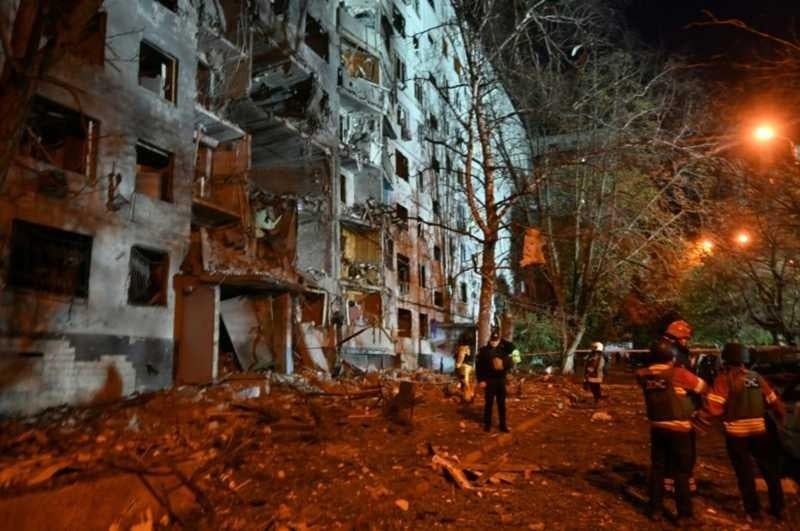
“He said the attack formed part of Russia’s expanding campaign against civilian infrastructure and foreign businesses operating in Ukraine.” · exact text match
“The president called for Ukraine’s long-range strike capabilities and international sanctions to work together to impose “concrete consequences” on Moscow.” · exact text match
Why: The central subject is a military-political attack, and the report foregrounds Zelensky's political response.
Claim: Sourcing is transparent, with named officials and attributed casualty figures.
“The president did not report casualties specifically at the warehouse.” · exact text match
“according to the latest figures provided by city authorities.” · exact text match
Why: Figures are tied to officials, and the text notes the limits of the warehouse reporting.
Claim: The reporting is careful not to overstate casualties or assign blame without attribution.
“The president did not report casualties specifically at the warehouse.” · exact text match
“according to the latest figures provided by city authorities.” · exact text match
Why: The article flags what was not reported and attributes citywide totals to authorities, signaling restraint.
The supplied text is a single Kyiv Post report whose casualty figures and strike attributions come entirely from Ukrainian officials; there is no Russian response or independent verification in the article.
September 25, 2026 · 0 shares
The framing remains tightly sourced to local officials and avoids editorializing, presenting the attack as a factual event with attributed casualty figures.
Automated analysis; not human reviewed.
Limitations: Analysis is limited to a single short article; no editorial history or independent verification was available.
·
7 of 55 available dimensions scored; omitted dimensions are not treated as neutral.
·
Verified supporting quotes for 7 of 7 scored dimensions.
Claim: The report shows no left-right political positioning and relays official statements without partisan framing.
“At least five people were killed and 43 others injured in Russian attacks on Kyiv on Sept.
25 as of 5 p.m. local time, local authorities said.”
· exact text match
Why: The sentence is factual, attributed, and contains no ideological language or policy advocacy.
Claim: The report is objective, describing events factually with no subjective adjectives or editorial commentary.
“During the daytime attack, a drone hit an office building in the Solomianskyi district, killing four people and injuring seven others, including a child, in the building's parking lot.” · exact text match
Why: The sentence is a straightforward factual description of location, action, and casualty counts.
Claim: The report is non-sensational and restrained, presenting casualty figures without dramatic or fear-inducing language.
“At least five people were killed and 43 others injured in Russian attacks on Kyiv on Sept.
25 as of 5 p.m. local time, local authorities said.”
· exact text match
Why: The wording is calm and numeric; there is no exaggeration or emotional appeal.
Claim: The report is descriptive, recounting attacks, damage, and official reactions without recommending any action or policy.
“President Volodymyr Zelensky expressed his condolences to the families of those killed and injured in the attacks.” · exact text match
Why: It reports an official statement as an event rather than urging a response.
Claim: The reporting is emotionally neutral, with no positive or negative emotional coloring beyond the factual content.
“A medical facility was also damaged in the Solomianskyi district.” · exact text match
Why: Damage is stated plainly, without words like 'tragic,' 'outrage,' or 'terror.'
Claim: The report is credible for what it is, consistently attributing casualty figures and damage reports to named or local authorities.
“local authorities said” · exact text match
“Mayor Vitali Klitschko said” · exact text match
Why: Attribution is explicit and repeated, and the casualty figures include a time qualifier ('as of 5 p.m. local time'), indicating care.
Claim: The report is evidence-based and rational, relying on numerical casualty data, time qualifiers, and attributed official statements.
“At least five people were killed and 43 others injured in Russian attacks on Kyiv on Sept.
25 as of 5 p.m. local time, local authorities said.”
· exact text match
Why: It uses specific numbers, a cutoff time, and an attributed source rather than speculation.
Analysis is limited to a single short article; no editorial history or independent verification was available.
September 26, 2026 · 0 shares
A terse, attribution-heavy brief reports a Russian drone strike on Kyiv with neutral, incident-focused language and no commentary.
Automated analysis; not human reviewed.
Limitations: The supplied text is a short brief with related headlines; full article body and any additional framing are not available.
·
5 of 55 available dimensions scored; omitted dimensions are not treated as neutral.
·
Verified supporting quotes for 5 of 5 scored dimensions.
Claim: The report is presented objectively, with attributed information and no subjective evaluation.
“A Russian drone attack on Kyiv continued into Saturday, with an unmanned aerial vehicle (UAV) striking an office building in the capital’s Solomianskyi district and sparking a fire, according to the Kyiv City Military Administration (KMCA).” · exact text match
“KCMA said drone debris also fell at another location in the same district, apparently on open ground.” · exact text match
Why: The wording attributes the central claim to KMCA and uses 'apparently' to mark uncertainty, showing an objective reporting stance.
Claim: The report uses restrained, factual language rather than sensational or alarmist phrasing.
“In the Obolonskyi district, debris fell in an open area, with no damage or casualties initially reported.” · exact text match
Why: The inclusion of a low-impact detail and the qualifier 'initially reported' indicate measured, non-sensational reporting.
Claim: The brief describes events without recommending or prescribing any action.
“A Russian drone attack on Kyiv continued into Saturday, with an unmanned aerial vehicle (UAV) striking an office building in the capital’s Solomianskyi district and sparking a fire, according to the Kyiv City Military Administration (KMCA).” · exact text match
Why: The sentence is purely descriptive, attributing the event and its location without any call to action or policy judgment.
Claim: The tone is emotionally neutral, avoiding positive or negative emotional appeals.
“In the Obolonskyi district, debris fell in an open area, with no damage or casualties initially reported.” · exact text match
Why: The factual, understated phrasing reports an incident without emotional coloring, despite the inherently negative subject matter.
Claim: Visible sourcing, attribution, and uncertainty markers make the report credible.
“according to the Kyiv City Military Administration (KMCA)” · exact text match
“apparently on open ground” · exact text match
Why: The article names its source for the main claim and flags uncertainty with 'apparently' and 'initially reported,' supporting credibility.
The supplied text is a short brief with related headlines; full article body and any additional framing are not available.
September 28, 2026 · 0 shares
Terse, wire-style factual reporting states the strike and casualties without commentary, emotion, or attribution of motive.
The event is part of Russia's ongoing full-scale invasion of Ukraine, during which Russian forces have repeatedly struck Ukrainian cities and institutions.
Automated analysis; not human reviewed.
Limitations: The supplied article text contains only one substantive sentence; the rest is browser-upgrade boilerplate, so the analysis rests on minimal material.
·
4 of 55 available dimensions scored; omitted dimensions are not treated as neutral.
·
Verified supporting quotes for 4 of 4 scored dimensions.
Claim: The only substantive sentence is a plain factual account with no subjective or evaluative wording.
“Russian drones struck Ukraine's National Academy of Sciences in Kyiv, killing one person and wounding others.” · exact text match
Why: No evaluative adjectives, emotional language, or judgment of the actors appears in the sentence.
Claim: The report is terse and unembellished, lacking dramatic or hyperbolized language.
“Russian drones struck Ukraine's National Academy of Sciences in Kyiv, killing one person and wounding others.” · exact text match
Why: The sentence states the event and casualties directly, with no intensifiers, vivid imagery, or fear-appeal.
Claim: The sentence describes an event without prescribing any response or policy.
“Russian drones struck Ukraine's National Academy of Sciences in Kyiv, killing one person and wounding others.” · exact text match
Why: It reports what happened and the casualty toll, offering no recommendation or moral instruction.
Claim: The tone is emotionally neutral, with no positive or negative valence.
“Russian drones struck Ukraine's National Academy of Sciences in Kyiv, killing one person and wounding others.” · exact text match
Why: The words chosen are concrete and unemotional; even the casualties are reported in plain terms.
The supplied article text contains only one substantive sentence; the rest is browser-upgrade boilerplate, so the analysis rests on minimal material.
September 29, 2026 · 0 shares
Framing identifies Russia as responsible for deadly violence while presenting Ukraine's underground laboratory construction as a wartime adaptation.
Russia launched a full-scale invasion of Ukraine in February 2022, and the war has continued with repeated aerial attacks.
Automated analysis; not human reviewed.
Limitations: Input consists only of a headline and subheading, so sourcing, context, and full framing cannot be assessed.
·
1 of 55 available dimensions scored; omitted dimensions are not treated as neutral.
·
Verified supporting quotes for 1 of 1 scored dimensions.
Claim: The headline concerns an interstate war and Russia's military action, making it political.
“Russian drone kills at least two in Ukraine science academy attack” · exact text match
Why: It turns on state-on-state violence and war.
Input consists only of a headline and subheading, so sourcing, context, and full framing cannot be assessed.
September 29, 2026 · 0 shares
Framing is event-led and restrained, but the headline treats the Ukrainian casualty account as established fact and the body relies almost exclusively on Ukrainian official sources.
Russia has been waging a full-scale invasion of Ukraine since February 2022, and Ukraine has faced repeated drone and missile attacks while relying on Western-supplied and domestic air defenses.
Automated analysis; not human reviewed.
Limitations: This assessment is based only on a short, attributed wire item from one side of the conflict; no independent or Russian account is included for comparison.
·
6 of 55 available dimensions scored; omitted dimensions are not treated as neutral.
·
Verified supporting quotes for 6 of 6 scored dimensions.
Claim: The report is largely objective, attributing facts to named officials, but the headline states the death toll as fact.
“Zelenskyy stated that Russian forces launched more than 120 attack drones throughout the day, targeting civilian institutions and urban infrastructure.” · exact text match
Counterevidence:
“Russian drone attacks kill at least nine across Ukraine.” · exact text match
Why: The body uses attributed reporting, but the headline presents the casualties as established fact rather than as Ukraine's claim.
Claim: The report is descriptive, recounting reported events without advocacy or calls to action.
“Impacts were confirmed at the Academy of Sciences building and a hospital in Kiev, a commercial business centre in Dnipro, and an apartment block in Odesa.” · exact text match
Why: Language is limited to reporting locations, tolls, and official statements; no remedy or policy prescription is offered.
Claim: The report leans on official authority, with the president and foreign minister serving as the sole sources for facts.
“Zelenskyy stated that Russian forces launched more than 120 attack drones throughout the day, targeting civilian institutions and urban infrastructure.” · exact text match
Why: Findings are grounded almost entirely in statements by Ukrainian officials rather than independent or documentary evidence.
Claim: The report's tone is emotionally restrained, with factual wording despite the violent subject.
“Foreign Minister Andrii Sybiha confirmed that a Russian drone struck an oil terminal on the Ukrainian side of the Yahodyn–Dorohusk border crossing with Poland, reporting no casualties at the installation.” · exact text match
Why: The neutral verb 'confirmed' and the detail that there were no casualties at the terminal indicate measured, non-inflammatory delivery.
Claim: The report is credible within its scope because it names sources and gives specific, checkable details.
“Foreign Minister Andrii Sybiha confirmed that a Russian drone struck an oil terminal on the Ukrainian side of the Yahodyn–Dorohusk border crossing with Poland, reporting no casualties at the installation.” · exact text match
“Zelenskyy maintained that Ukraine's overall drone interception rate stood at 70 percent, whilst the success rate against advanced jet-powered Shahed drones reached 57 percent.” · exact text match
Why: Named officials, specific locations, and precise figures provide a basis for verification, although the report presents only one side's account.
Claim: The report signals integrity by consistently attributing claims to named officials and quoting them directly.
“Zelenskyy stated that Russian forces launched more than 120 attack drones throughout the day, targeting civilian institutions and urban infrastructure.” · exact text match
Why: Attribution to the president and foreign minister, with direct quotes, demonstrates transparent sourcing even though independent verification is absent.
This assessment is based only on a short, attributed wire item from one side of the conflict; no independent or Russian account is included for comparison.
September 29, 2026 · 0 shares
Framing is event-led and restrained, but the headline treats the Ukrainian casualty account as established fact and the body relies almost exclusively on Ukrainian official sources.
Russia has been waging a full-scale invasion of Ukraine since February 2022, and Ukraine has faced repeated drone and missile attacks while relying on Western-supplied and domestic air defenses.
Automated analysis; not human reviewed.
Limitations: This assessment is based only on a short, attributed wire item from one side of the conflict; no independent or Russian account is included for comparison.
·
6 of 55 available dimensions scored; omitted dimensions are not treated as neutral.
·
Verified supporting quotes for 6 of 6 scored dimensions.
Claim: The report is largely objective, attributing facts to named officials, but the headline states the death toll as fact.
“Zelenskyy stated that Russian forces launched more than 120 attack drones throughout the day, targeting civilian institutions and urban infrastructure.” · exact text match
Counterevidence:
“Russian drone attacks kill at least nine across Ukraine.” · exact text match
Why: The body uses attributed reporting, but the headline presents the casualties as established fact rather than as Ukraine's claim.
Claim: The report is descriptive, recounting reported events without advocacy or calls to action.
“Impacts were confirmed at the Academy of Sciences building and a hospital in Kiev, a commercial business centre in Dnipro, and an apartment block in Odesa.” · exact text match
Why: Language is limited to reporting locations, tolls, and official statements; no remedy or policy prescription is offered.
Claim: The report leans on official authority, with the president and foreign minister serving as the sole sources for facts.
“Zelenskyy stated that Russian forces launched more than 120 attack drones throughout the day, targeting civilian institutions and urban infrastructure.” · exact text match
Why: Findings are grounded almost entirely in statements by Ukrainian officials rather than independent or documentary evidence.
Claim: The report's tone is emotionally restrained, with factual wording despite the violent subject.
“Foreign Minister Andrii Sybiha confirmed that a Russian drone struck an oil terminal on the Ukrainian side of the Yahodyn–Dorohusk border crossing with Poland, reporting no casualties at the installation.” · exact text match
Why: The neutral verb 'confirmed' and the detail that there were no casualties at the terminal indicate measured, non-inflammatory delivery.
Claim: The report is credible within its scope because it names sources and gives specific, checkable details.
“Foreign Minister Andrii Sybiha confirmed that a Russian drone struck an oil terminal on the Ukrainian side of the Yahodyn–Dorohusk border crossing with Poland, reporting no casualties at the installation.” · exact text match
“Zelenskyy maintained that Ukraine's overall drone interception rate stood at 70 percent, whilst the success rate against advanced jet-powered Shahed drones reached 57 percent.” · exact text match
Why: Named officials, specific locations, and precise figures provide a basis for verification, although the report presents only one side's account.
Claim: The report signals integrity by consistently attributing claims to named officials and quoting them directly.
“Zelenskyy stated that Russian forces launched more than 120 attack drones throughout the day, targeting civilian institutions and urban infrastructure.” · exact text match
Why: Attribution to the president and foreign minister, with direct quotes, demonstrates transparent sourcing even though independent verification is absent.
This assessment is based only on a short, attributed wire item from one side of the conflict; no independent or Russian account is included for comparison.
September 28, 2026 · 0 shares
Framing relies on Ukrainian officials' confirmations and quantitative interception claims, producing an authoritative account whose facts are not independently verified.
The Yahodyn–Dorohusk border crossing connects Ukraine and Poland, and Poland is a NATO member.
The reported attacks are part of Russia's ongoing war against Ukraine.
Automated analysis; not human reviewed.
Limitations: The supplied text is limited to Ukrainian official statements; no independent or Russian source data is available.
·
5 of 55 available dimensions scored; omitted dimensions are not treated as neutral.
·
Verified supporting quotes for 5 of 5 scored dimensions.
Claim: The reporting is descriptive and attributed, with no explicit editorial judgment.
“Zelenskyy stated that Russian forces launched more than 120 attack drones throughout the day, targeting civilian institutions and urban infrastructure.” · exact text match
Why: The main factual assertions are tied to named officials and presented as event descriptions rather than commentary.
Claim: The text describes events and official statements without recommending a course of action.
“He noted that Ukrainian forces are actively operationalising and testing newly developed domestic interceptor drones, with certain frontline units already deploying them in combat.” · exact text match
Why: Statements are framed as reports of ongoing activity, not as calls to action or policy prescriptions.
Claim: The text relies on named Ukrainian officials' confirmations as the basis for factual outcomes.
“Zelenskyy confirmed that the strike on the National Academy of Sciences in the capital killed one person, with another individual remaining trapped under the rubble after several floors of the facility were completely destroyed.” · exact text match
“Foreign Minister Andrii Sybiha confirmed that a Russian drone struck an oil terminal on the Ukrainian side of the Yahodyn–Dorohusk border crossing with Poland, reporting no casualties at the installation.” · exact text match
Why: Casualty and impact details are validated by official 'confirmed' statements rather than by independent evidence.
Claim: The text is credible because it names sources, gives locations and figures, and avoids speculative commentary.
“Foreign Minister Andrii Sybiha confirmed that a Russian drone struck an oil terminal on the Ukrainian side of the Yahodyn–Dorohusk border crossing with Poland, reporting no casualties at the installation.” · exact text match
“Zelenskyy stated that Russian forces launched more than 120 attack drones throughout the day, targeting civilian institutions and urban infrastructure.” · exact text match
Why: Named officials, direct quotes, geographic specificity, and no speculative commentary support trustworthiness, though no independent verification is available.
Claim: The text provides clear attribution for its central casualty, location, and interception claims.
“Ukrainian President Volodymyr Zelenskyy has said that Russian aerial strikes have killed at least nine people and wounded more than 80 across Ukraine during a massive nationwide drone assault.” · exact text match
“Zelenskyy maintained that Ukraine's overall drone interception rate stood at 70 percent, whilst the success rate against advanced jet-powered Shahed drones reached 57 percent.” · exact text match
Why: The text consistently attributes claims to named officials and does not appear to distort their statements.
The supplied text is limited to Ukrainian official statements; no independent or Russian source data is available.
September 29, 2026 · 0 shares
Framing is event-led and restrained, but the headline treats the Ukrainian casualty account as established fact and the body relies almost exclusively on Ukrainian official sources.
Russia has been waging a full-scale invasion of Ukraine since February 2022, and Ukraine has faced repeated drone and missile attacks while relying on Western-supplied and domestic air defenses.
Automated analysis; not human reviewed.
Limitations: This assessment is based only on a short, attributed wire item from one side of the conflict; no independent or Russian account is included for comparison.
·
6 of 55 available dimensions scored; omitted dimensions are not treated as neutral.
·
Verified supporting quotes for 6 of 6 scored dimensions.
Claim: The report is largely objective, attributing facts to named officials, but the headline states the death toll as fact.
“Zelenskyy stated that Russian forces launched more than 120 attack drones throughout the day, targeting civilian institutions and urban infrastructure.” · exact text match
Counterevidence:
“Russian drone attacks kill at least nine across Ukraine.” · exact text match
Why: The body uses attributed reporting, but the headline presents the casualties as established fact rather than as Ukraine's claim.
Claim: The report is descriptive, recounting reported events without advocacy or calls to action.
“Impacts were confirmed at the Academy of Sciences building and a hospital in Kiev, a commercial business centre in Dnipro, and an apartment block in Odesa.” · exact text match
Why: Language is limited to reporting locations, tolls, and official statements; no remedy or policy prescription is offered.
Claim: The report leans on official authority, with the president and foreign minister serving as the sole sources for facts.
“Zelenskyy stated that Russian forces launched more than 120 attack drones throughout the day, targeting civilian institutions and urban infrastructure.” · exact text match
Why: Findings are grounded almost entirely in statements by Ukrainian officials rather than independent or documentary evidence.
Claim: The report's tone is emotionally restrained, with factual wording despite the violent subject.
“Foreign Minister Andrii Sybiha confirmed that a Russian drone struck an oil terminal on the Ukrainian side of the Yahodyn–Dorohusk border crossing with Poland, reporting no casualties at the installation.” · exact text match
Why: The neutral verb 'confirmed' and the detail that there were no casualties at the terminal indicate measured, non-inflammatory delivery.
Claim: The report is credible within its scope because it names sources and gives specific, checkable details.
“Foreign Minister Andrii Sybiha confirmed that a Russian drone struck an oil terminal on the Ukrainian side of the Yahodyn–Dorohusk border crossing with Poland, reporting no casualties at the installation.” · exact text match
“Zelenskyy maintained that Ukraine's overall drone interception rate stood at 70 percent, whilst the success rate against advanced jet-powered Shahed drones reached 57 percent.” · exact text match
Why: Named officials, specific locations, and precise figures provide a basis for verification, although the report presents only one side's account.
Claim: The report signals integrity by consistently attributing claims to named officials and quoting them directly.
“Zelenskyy stated that Russian forces launched more than 120 attack drones throughout the day, targeting civilian institutions and urban infrastructure.” · exact text match
Why: Attribution to the president and foreign minister, with direct quotes, demonstrates transparent sourcing even though independent verification is absent.
This assessment is based only on a short, attributed wire item from one side of the conflict; no independent or Russian account is included for comparison.
September 28, 2026 · 0 shares
Framing relies on Ukrainian officials' confirmations and quantitative interception claims, producing an authoritative account whose facts are not independently verified.
The Yahodyn–Dorohusk border crossing connects Ukraine and Poland, and Poland is a NATO member.
The reported attacks are part of Russia's ongoing war against Ukraine.
Automated analysis; not human reviewed.
Limitations: The supplied text is limited to Ukrainian official statements; no independent or Russian source data is available.
·
5 of 55 available dimensions scored; omitted dimensions are not treated as neutral.
·
Verified supporting quotes for 5 of 5 scored dimensions.
Claim: The reporting is descriptive and attributed, with no explicit editorial judgment.
“Zelenskyy stated that Russian forces launched more than 120 attack drones throughout the day, targeting civilian institutions and urban infrastructure.” · exact text match
Why: The main factual assertions are tied to named officials and presented as event descriptions rather than commentary.
Claim: The text describes events and official statements without recommending a course of action.
“He noted that Ukrainian forces are actively operationalising and testing newly developed domestic interceptor drones, with certain frontline units already deploying them in combat.” · exact text match
Why: Statements are framed as reports of ongoing activity, not as calls to action or policy prescriptions.
Claim: The text relies on named Ukrainian officials' confirmations as the basis for factual outcomes.
“Zelenskyy confirmed that the strike on the National Academy of Sciences in the capital killed one person, with another individual remaining trapped under the rubble after several floors of the facility were completely destroyed.” · exact text match
“Foreign Minister Andrii Sybiha confirmed that a Russian drone struck an oil terminal on the Ukrainian side of the Yahodyn–Dorohusk border crossing with Poland, reporting no casualties at the installation.” · exact text match
Why: Casualty and impact details are validated by official 'confirmed' statements rather than by independent evidence.
Claim: The text is credible because it names sources, gives locations and figures, and avoids speculative commentary.
“Foreign Minister Andrii Sybiha confirmed that a Russian drone struck an oil terminal on the Ukrainian side of the Yahodyn–Dorohusk border crossing with Poland, reporting no casualties at the installation.” · exact text match
“Zelenskyy stated that Russian forces launched more than 120 attack drones throughout the day, targeting civilian institutions and urban infrastructure.” · exact text match
Why: Named officials, direct quotes, geographic specificity, and no speculative commentary support trustworthiness, though no independent verification is available.
Claim: The text provides clear attribution for its central casualty, location, and interception claims.
“Ukrainian President Volodymyr Zelenskyy has said that Russian aerial strikes have killed at least nine people and wounded more than 80 across Ukraine during a massive nationwide drone assault.” · exact text match
“Zelenskyy maintained that Ukraine's overall drone interception rate stood at 70 percent, whilst the success rate against advanced jet-powered Shahed drones reached 57 percent.” · exact text match
Why: The text consistently attributes claims to named officials and does not appear to distort their statements.
The supplied text is limited to Ukrainian official statements; no independent or Russian source data is available.
September 29, 2026 · 0 shares
Framing is event-led and restrained, but the headline treats the Ukrainian casualty account as established fact and the body relies almost exclusively on Ukrainian official sources.
Russia has been waging a full-scale invasion of Ukraine since February 2022, and Ukraine has faced repeated drone and missile attacks while relying on Western-supplied and domestic air defenses.
Automated analysis; not human reviewed.
Limitations: This assessment is based only on a short, attributed wire item from one side of the conflict; no independent or Russian account is included for comparison.
·
6 of 55 available dimensions scored; omitted dimensions are not treated as neutral.
·
Verified supporting quotes for 6 of 6 scored dimensions.
Claim: The report is largely objective, attributing facts to named officials, but the headline states the death toll as fact.
“Zelenskyy stated that Russian forces launched more than 120 attack drones throughout the day, targeting civilian institutions and urban infrastructure.” · exact text match
Counterevidence:
“Russian drone attacks kill at least nine across Ukraine.” · exact text match
Why: The body uses attributed reporting, but the headline presents the casualties as established fact rather than as Ukraine's claim.
Claim: The report is descriptive, recounting reported events without advocacy or calls to action.
“Impacts were confirmed at the Academy of Sciences building and a hospital in Kiev, a commercial business centre in Dnipro, and an apartment block in Odesa.” · exact text match
Why: Language is limited to reporting locations, tolls, and official statements; no remedy or policy prescription is offered.
Claim: The report leans on official authority, with the president and foreign minister serving as the sole sources for facts.
“Zelenskyy stated that Russian forces launched more than 120 attack drones throughout the day, targeting civilian institutions and urban infrastructure.” · exact text match
Why: Findings are grounded almost entirely in statements by Ukrainian officials rather than independent or documentary evidence.
Claim: The report's tone is emotionally restrained, with factual wording despite the violent subject.
“Foreign Minister Andrii Sybiha confirmed that a Russian drone struck an oil terminal on the Ukrainian side of the Yahodyn–Dorohusk border crossing with Poland, reporting no casualties at the installation.” · exact text match
Why: The neutral verb 'confirmed' and the detail that there were no casualties at the terminal indicate measured, non-inflammatory delivery.
Claim: The report is credible within its scope because it names sources and gives specific, checkable details.
“Foreign Minister Andrii Sybiha confirmed that a Russian drone struck an oil terminal on the Ukrainian side of the Yahodyn–Dorohusk border crossing with Poland, reporting no casualties at the installation.” · exact text match
“Zelenskyy maintained that Ukraine's overall drone interception rate stood at 70 percent, whilst the success rate against advanced jet-powered Shahed drones reached 57 percent.” · exact text match
Why: Named officials, specific locations, and precise figures provide a basis for verification, although the report presents only one side's account.
Claim: The report signals integrity by consistently attributing claims to named officials and quoting them directly.
“Zelenskyy stated that Russian forces launched more than 120 attack drones throughout the day, targeting civilian institutions and urban infrastructure.” · exact text match
Why: Attribution to the president and foreign minister, with direct quotes, demonstrates transparent sourcing even though independent verification is absent.
This assessment is based only on a short, attributed wire item from one side of the conflict; no independent or Russian account is included for comparison.
September 25, 2026 · 0 shares
Framing leans on Ukrainian officials’ accounts and Zelensky’s emotive characterization of the strikes as terror targeting ordinary life, while the publisher’s own narration remains fact-led and attributed.
The attacks occurred during Russia’s ongoing invasion of Ukraine; Kyiv is Ukraine’s capital, and McDonald’s is a U.S.-based fast-food company operating there.
Automated analysis; not human reviewed.
Limitations: The supplied text is a single Kyiv Post report whose casualty figures and strike attributions come entirely from Ukrainian officials; there is no Russian response or independent verification in the article.
·
3 of 55 available dimensions scored; omitted dimensions are not treated as neutral.
·
Verified supporting quotes for 3 of 3 scored dimensions.
Claim: The story is framed around wartime politics and Ukraine's presidential appeal for international action.
“He said the attack formed part of Russia’s expanding campaign against civilian infrastructure and foreign businesses operating in Ukraine.” · exact text match
“The president called for Ukraine’s long-range strike capabilities and international sanctions to work together to impose “concrete consequences” on Moscow.” · exact text match
Why: The central subject is a military-political attack, and the report foregrounds Zelensky's political response.
Claim: Sourcing is transparent, with named officials and attributed casualty figures.
“The president did not report casualties specifically at the warehouse.” · exact text match
“according to the latest figures provided by city authorities.” · exact text match
Why: Figures are tied to officials, and the text notes the limits of the warehouse reporting.
Claim: The reporting is careful not to overstate casualties or assign blame without attribution.
“The president did not report casualties specifically at the warehouse.” · exact text match
“according to the latest figures provided by city authorities.” · exact text match
Why: The article flags what was not reported and attributes citywide totals to authorities, signaling restraint.
The supplied text is a single Kyiv Post report whose casualty figures and strike attributions come entirely from Ukrainian officials; there is no Russian response or independent verification in the article.
September 25, 2026 · 0 shares
A neutral, attributed framing of Macron's denial that presupposes a prior CIA-warning claim without endorsing or rebutting it.
Automated analysis; not human reviewed. Limitations: Only a headline and Reddit submission metadata were supplied, so publisher framing beyond the headline cannot be assessed.
Only a headline and Reddit submission metadata were supplied, so publisher framing beyond the headline cannot be assessed.
September 28, 2026 · 0 shares
Terse, wire-style factual reporting states the strike and casualties without commentary, emotion, or attribution of motive.
The event is part of Russia's ongoing full-scale invasion of Ukraine, during which Russian forces have repeatedly struck Ukrainian cities and institutions.
Automated analysis; not human reviewed. Limitations: The supplied article text contains only one substantive sentence; the rest is browser-upgrade boilerplate, so the analysis rests on minimal material. · 4 of 55 available dimensions scored; omitted dimensions are not treated as neutral. · Verified supporting quotes for 4 of 4 scored dimensions.
Claim: The only substantive sentence is a plain factual account with no subjective or evaluative wording.
“Russian drones struck Ukraine's National Academy of Sciences in Kyiv, killing one person and wounding others.” · exact text match
Why: No evaluative adjectives, emotional language, or judgment of the actors appears in the sentence.
Claim: The report is terse and unembellished, lacking dramatic or hyperbolized language.
“Russian drones struck Ukraine's National Academy of Sciences in Kyiv, killing one person and wounding others.” · exact text match
Why: The sentence states the event and casualties directly, with no intensifiers, vivid imagery, or fear-appeal.
Claim: The sentence describes an event without prescribing any response or policy.
“Russian drones struck Ukraine's National Academy of Sciences in Kyiv, killing one person and wounding others.” · exact text match
Why: It reports what happened and the casualty toll, offering no recommendation or moral instruction.
Claim: The tone is emotionally neutral, with no positive or negative valence.
“Russian drones struck Ukraine's National Academy of Sciences in Kyiv, killing one person and wounding others.” · exact text match
Why: The words chosen are concrete and unemotional; even the casualties are reported in plain terms.
The supplied article text contains only one substantive sentence; the rest is browser-upgrade boilerplate, so the analysis rests on minimal material.
September 29, 2026 · 0 shares
Framing identifies Russia as responsible for deadly violence while presenting Ukraine's underground laboratory construction as a wartime adaptation.
Russia launched a full-scale invasion of Ukraine in February 2022, and the war has continued with repeated aerial attacks.
Automated analysis; not human reviewed. Limitations: Input consists only of a headline and subheading, so sourcing, context, and full framing cannot be assessed. · 1 of 55 available dimensions scored; omitted dimensions are not treated as neutral. · Verified supporting quotes for 1 of 1 scored dimensions.
Claim: The headline concerns an interstate war and Russia's military action, making it political.
“Russian drone kills at least two in Ukraine science academy attack” · exact text match
Why: It turns on state-on-state violence and war.
Input consists only of a headline and subheading, so sourcing, context, and full framing cannot be assessed.
September 29, 2026 · 0 shares
Framing is event-led and restrained, but the headline treats the Ukrainian casualty account as established fact and the body relies almost exclusively on Ukrainian official sources.
Russia has been waging a full-scale invasion of Ukraine since February 2022, and Ukraine has faced repeated drone and missile attacks while relying on Western-supplied and domestic air defenses.
Automated analysis; not human reviewed. Limitations: This assessment is based only on a short, attributed wire item from one side of the conflict; no independent or Russian account is included for comparison. · 6 of 55 available dimensions scored; omitted dimensions are not treated as neutral. · Verified supporting quotes for 6 of 6 scored dimensions.
Claim: The report is largely objective, attributing facts to named officials, but the headline states the death toll as fact.
“Zelenskyy stated that Russian forces launched more than 120 attack drones throughout the day, targeting civilian institutions and urban infrastructure.” · exact text match
Counterevidence:
“Russian drone attacks kill at least nine across Ukraine.” · exact text match
Why: The body uses attributed reporting, but the headline presents the casualties as established fact rather than as Ukraine's claim.
Claim: The report is descriptive, recounting reported events without advocacy or calls to action.
“Impacts were confirmed at the Academy of Sciences building and a hospital in Kiev, a commercial business centre in Dnipro, and an apartment block in Odesa.” · exact text match
Why: Language is limited to reporting locations, tolls, and official statements; no remedy or policy prescription is offered.
Claim: The report leans on official authority, with the president and foreign minister serving as the sole sources for facts.
“Zelenskyy stated that Russian forces launched more than 120 attack drones throughout the day, targeting civilian institutions and urban infrastructure.” · exact text match
Why: Findings are grounded almost entirely in statements by Ukrainian officials rather than independent or documentary evidence.
Claim: The report's tone is emotionally restrained, with factual wording despite the violent subject.
“Foreign Minister Andrii Sybiha confirmed that a Russian drone struck an oil terminal on the Ukrainian side of the Yahodyn–Dorohusk border crossing with Poland, reporting no casualties at the installation.” · exact text match
Why: The neutral verb 'confirmed' and the detail that there were no casualties at the terminal indicate measured, non-inflammatory delivery.
Claim: The report is credible within its scope because it names sources and gives specific, checkable details.
“Foreign Minister Andrii Sybiha confirmed that a Russian drone struck an oil terminal on the Ukrainian side of the Yahodyn–Dorohusk border crossing with Poland, reporting no casualties at the installation.” · exact text match
“Zelenskyy maintained that Ukraine's overall drone interception rate stood at 70 percent, whilst the success rate against advanced jet-powered Shahed drones reached 57 percent.” · exact text match
Why: Named officials, specific locations, and precise figures provide a basis for verification, although the report presents only one side's account.
Claim: The report signals integrity by consistently attributing claims to named officials and quoting them directly.
“Zelenskyy stated that Russian forces launched more than 120 attack drones throughout the day, targeting civilian institutions and urban infrastructure.” · exact text match
Why: Attribution to the president and foreign minister, with direct quotes, demonstrates transparent sourcing even though independent verification is absent.
This assessment is based only on a short, attributed wire item from one side of the conflict; no independent or Russian account is included for comparison.
September 28, 2026 · 0 shares
Framing relies on Ukrainian officials' confirmations and quantitative interception claims, producing an authoritative account whose facts are not independently verified.
The Yahodyn–Dorohusk border crossing connects Ukraine and Poland, and Poland is a NATO member. The reported attacks are part of Russia's ongoing war against Ukraine.
Automated analysis; not human reviewed. Limitations: The supplied text is limited to Ukrainian official statements; no independent or Russian source data is available. · 5 of 55 available dimensions scored; omitted dimensions are not treated as neutral. · Verified supporting quotes for 5 of 5 scored dimensions.
Claim: The reporting is descriptive and attributed, with no explicit editorial judgment.
“Zelenskyy stated that Russian forces launched more than 120 attack drones throughout the day, targeting civilian institutions and urban infrastructure.” · exact text match
Why: The main factual assertions are tied to named officials and presented as event descriptions rather than commentary.
Claim: The text describes events and official statements without recommending a course of action.
“He noted that Ukrainian forces are actively operationalising and testing newly developed domestic interceptor drones, with certain frontline units already deploying them in combat.” · exact text match
Why: Statements are framed as reports of ongoing activity, not as calls to action or policy prescriptions.
Claim: The text relies on named Ukrainian officials' confirmations as the basis for factual outcomes.
“Zelenskyy confirmed that the strike on the National Academy of Sciences in the capital killed one person, with another individual remaining trapped under the rubble after several floors of the facility were completely destroyed.” · exact text match
“Foreign Minister Andrii Sybiha confirmed that a Russian drone struck an oil terminal on the Ukrainian side of the Yahodyn–Dorohusk border crossing with Poland, reporting no casualties at the installation.” · exact text match
Why: Casualty and impact details are validated by official 'confirmed' statements rather than by independent evidence.
Claim: The text is credible because it names sources, gives locations and figures, and avoids speculative commentary.
“Foreign Minister Andrii Sybiha confirmed that a Russian drone struck an oil terminal on the Ukrainian side of the Yahodyn–Dorohusk border crossing with Poland, reporting no casualties at the installation.” · exact text match
“Zelenskyy stated that Russian forces launched more than 120 attack drones throughout the day, targeting civilian institutions and urban infrastructure.” · exact text match
Why: Named officials, direct quotes, geographic specificity, and no speculative commentary support trustworthiness, though no independent verification is available.
Claim: The text provides clear attribution for its central casualty, location, and interception claims.
“Ukrainian President Volodymyr Zelenskyy has said that Russian aerial strikes have killed at least nine people and wounded more than 80 across Ukraine during a massive nationwide drone assault.” · exact text match
“Zelenskyy maintained that Ukraine's overall drone interception rate stood at 70 percent, whilst the success rate against advanced jet-powered Shahed drones reached 57 percent.” · exact text match
Why: The text consistently attributes claims to named officials and does not appear to distort their statements.
The supplied text is limited to Ukrainian official statements; no independent or Russian source data is available.
September 25, 2026 · 0 shares
The framing remains tightly sourced to local officials and avoids editorializing, presenting the attack as a factual event with attributed casualty figures.
Automated analysis; not human reviewed. Limitations: Analysis is limited to a single short article; no editorial history or independent verification was available. · 7 of 55 available dimensions scored; omitted dimensions are not treated as neutral. · Verified supporting quotes for 7 of 7 scored dimensions.
Claim: The report shows no left-right political positioning and relays official statements without partisan framing.
“At least five people were killed and 43 others injured in Russian attacks on Kyiv on Sept. 25 as of 5 p.m. local time, local authorities said.” · exact text match
Why: The sentence is factual, attributed, and contains no ideological language or policy advocacy.
Claim: The report is objective, describing events factually with no subjective adjectives or editorial commentary.
“During the daytime attack, a drone hit an office building in the Solomianskyi district, killing four people and injuring seven others, including a child, in the building's parking lot.” · exact text match
Why: The sentence is a straightforward factual description of location, action, and casualty counts.
Claim: The report is non-sensational and restrained, presenting casualty figures without dramatic or fear-inducing language.
“At least five people were killed and 43 others injured in Russian attacks on Kyiv on Sept. 25 as of 5 p.m. local time, local authorities said.” · exact text match
Why: The wording is calm and numeric; there is no exaggeration or emotional appeal.
Claim: The report is descriptive, recounting attacks, damage, and official reactions without recommending any action or policy.
“President Volodymyr Zelensky expressed his condolences to the families of those killed and injured in the attacks.” · exact text match
Why: It reports an official statement as an event rather than urging a response.
Claim: The reporting is emotionally neutral, with no positive or negative emotional coloring beyond the factual content.
“A medical facility was also damaged in the Solomianskyi district.” · exact text match
Why: Damage is stated plainly, without words like 'tragic,' 'outrage,' or 'terror.'
Claim: The report is credible for what it is, consistently attributing casualty figures and damage reports to named or local authorities.
“local authorities said” · exact text match
“Mayor Vitali Klitschko said” · exact text match
Why: Attribution is explicit and repeated, and the casualty figures include a time qualifier ('as of 5 p.m. local time'), indicating care.
Claim: The report is evidence-based and rational, relying on numerical casualty data, time qualifiers, and attributed official statements.
“At least five people were killed and 43 others injured in Russian attacks on Kyiv on Sept. 25 as of 5 p.m. local time, local authorities said.” · exact text match
Why: It uses specific numbers, a cutoff time, and an attributed source rather than speculation.
Analysis is limited to a single short article; no editorial history or independent verification was available.
September 25, 2026 · 0 shares
Framing leans on Ukrainian officials’ accounts and Zelensky’s emotive characterization of the strikes as terror targeting ordinary life, while the publisher’s own narration remains fact-led and attributed.
The attacks occurred during Russia’s ongoing invasion of Ukraine; Kyiv is Ukraine’s capital, and McDonald’s is a U.S.-based fast-food company operating there.
Automated analysis; not human reviewed. Limitations: The supplied text is a single Kyiv Post report whose casualty figures and strike attributions come entirely from Ukrainian officials; there is no Russian response or independent verification in the article. · 3 of 55 available dimensions scored; omitted dimensions are not treated as neutral. · Verified supporting quotes for 3 of 3 scored dimensions.
Claim: The story is framed around wartime politics and Ukraine's presidential appeal for international action.
“He said the attack formed part of Russia’s expanding campaign against civilian infrastructure and foreign businesses operating in Ukraine.” · exact text match
“The president called for Ukraine’s long-range strike capabilities and international sanctions to work together to impose “concrete consequences” on Moscow.” · exact text match
Why: The central subject is a military-political attack, and the report foregrounds Zelensky's political response.
Claim: Sourcing is transparent, with named officials and attributed casualty figures.
“The president did not report casualties specifically at the warehouse.” · exact text match
“according to the latest figures provided by city authorities.” · exact text match
Why: Figures are tied to officials, and the text notes the limits of the warehouse reporting.
Claim: The reporting is careful not to overstate casualties or assign blame without attribution.
“The president did not report casualties specifically at the warehouse.” · exact text match
“according to the latest figures provided by city authorities.” · exact text match
Why: The article flags what was not reported and attributes citywide totals to authorities, signaling restraint.
The supplied text is a single Kyiv Post report whose casualty figures and strike attributions come entirely from Ukrainian officials; there is no Russian response or independent verification in the article.
September 26, 2026 · 0 shares
A terse, attribution-heavy brief reports a Russian drone strike on Kyiv with neutral, incident-focused language and no commentary.
Automated analysis; not human reviewed. Limitations: The supplied text is a short brief with related headlines; full article body and any additional framing are not available. · 5 of 55 available dimensions scored; omitted dimensions are not treated as neutral. · Verified supporting quotes for 5 of 5 scored dimensions.
Claim: The report is presented objectively, with attributed information and no subjective evaluation.
“A Russian drone attack on Kyiv continued into Saturday, with an unmanned aerial vehicle (UAV) striking an office building in the capital’s Solomianskyi district and sparking a fire, according to the Kyiv City Military Administration (KMCA).” · exact text match
“KCMA said drone debris also fell at another location in the same district, apparently on open ground.” · exact text match
Why: The wording attributes the central claim to KMCA and uses 'apparently' to mark uncertainty, showing an objective reporting stance.
Claim: The report uses restrained, factual language rather than sensational or alarmist phrasing.
“In the Obolonskyi district, debris fell in an open area, with no damage or casualties initially reported.” · exact text match
Why: The inclusion of a low-impact detail and the qualifier 'initially reported' indicate measured, non-sensational reporting.
Claim: The brief describes events without recommending or prescribing any action.
“A Russian drone attack on Kyiv continued into Saturday, with an unmanned aerial vehicle (UAV) striking an office building in the capital’s Solomianskyi district and sparking a fire, according to the Kyiv City Military Administration (KMCA).” · exact text match
Why: The sentence is purely descriptive, attributing the event and its location without any call to action or policy judgment.
Claim: The tone is emotionally neutral, avoiding positive or negative emotional appeals.
“In the Obolonskyi district, debris fell in an open area, with no damage or casualties initially reported.” · exact text match
Why: The factual, understated phrasing reports an incident without emotional coloring, despite the inherently negative subject matter.
Claim: Visible sourcing, attribution, and uncertainty markers make the report credible.
“according to the Kyiv City Military Administration (KMCA)” · exact text match
“apparently on open ground” · exact text match
Why: The article names its source for the main claim and flags uncertainty with 'apparently' and 'initially reported,' supporting credibility.
The supplied text is a short brief with related headlines; full article body and any additional framing are not available.
September 29, 2026 · 0 shares
Framing is event-led and restrained, but the headline treats the Ukrainian casualty account as established fact and the body relies almost exclusively on Ukrainian official sources.
Russia has been waging a full-scale invasion of Ukraine since February 2022, and Ukraine has faced repeated drone and missile attacks while relying on Western-supplied and domestic air defenses.
Automated analysis; not human reviewed. Limitations: This assessment is based only on a short, attributed wire item from one side of the conflict; no independent or Russian account is included for comparison. · 6 of 55 available dimensions scored; omitted dimensions are not treated as neutral. · Verified supporting quotes for 6 of 6 scored dimensions.
Claim: The report is largely objective, attributing facts to named officials, but the headline states the death toll as fact.
“Zelenskyy stated that Russian forces launched more than 120 attack drones throughout the day, targeting civilian institutions and urban infrastructure.” · exact text match
Counterevidence:
“Russian drone attacks kill at least nine across Ukraine.” · exact text match
Why: The body uses attributed reporting, but the headline presents the casualties as established fact rather than as Ukraine's claim.
Claim: The report is descriptive, recounting reported events without advocacy or calls to action.
“Impacts were confirmed at the Academy of Sciences building and a hospital in Kiev, a commercial business centre in Dnipro, and an apartment block in Odesa.” · exact text match
Why: Language is limited to reporting locations, tolls, and official statements; no remedy or policy prescription is offered.
Claim: The report leans on official authority, with the president and foreign minister serving as the sole sources for facts.
“Zelenskyy stated that Russian forces launched more than 120 attack drones throughout the day, targeting civilian institutions and urban infrastructure.” · exact text match
Why: Findings are grounded almost entirely in statements by Ukrainian officials rather than independent or documentary evidence.
Claim: The report's tone is emotionally restrained, with factual wording despite the violent subject.
“Foreign Minister Andrii Sybiha confirmed that a Russian drone struck an oil terminal on the Ukrainian side of the Yahodyn–Dorohusk border crossing with Poland, reporting no casualties at the installation.” · exact text match
Why: The neutral verb 'confirmed' and the detail that there were no casualties at the terminal indicate measured, non-inflammatory delivery.
Claim: The report is credible within its scope because it names sources and gives specific, checkable details.
“Foreign Minister Andrii Sybiha confirmed that a Russian drone struck an oil terminal on the Ukrainian side of the Yahodyn–Dorohusk border crossing with Poland, reporting no casualties at the installation.” · exact text match
“Zelenskyy maintained that Ukraine's overall drone interception rate stood at 70 percent, whilst the success rate against advanced jet-powered Shahed drones reached 57 percent.” · exact text match
Why: Named officials, specific locations, and precise figures provide a basis for verification, although the report presents only one side's account.
Claim: The report signals integrity by consistently attributing claims to named officials and quoting them directly.
“Zelenskyy stated that Russian forces launched more than 120 attack drones throughout the day, targeting civilian institutions and urban infrastructure.” · exact text match
Why: Attribution to the president and foreign minister, with direct quotes, demonstrates transparent sourcing even though independent verification is absent.
This assessment is based only on a short, attributed wire item from one side of the conflict; no independent or Russian account is included for comparison.
September 28, 2026 · 0 shares
Framing relies on Ukrainian officials' confirmations and quantitative interception claims, producing an authoritative account whose facts are not independently verified.
The Yahodyn–Dorohusk border crossing connects Ukraine and Poland, and Poland is a NATO member. The reported attacks are part of Russia's ongoing war against Ukraine.
Automated analysis; not human reviewed. Limitations: The supplied text is limited to Ukrainian official statements; no independent or Russian source data is available. · 5 of 55 available dimensions scored; omitted dimensions are not treated as neutral. · Verified supporting quotes for 5 of 5 scored dimensions.
Claim: The reporting is descriptive and attributed, with no explicit editorial judgment.
“Zelenskyy stated that Russian forces launched more than 120 attack drones throughout the day, targeting civilian institutions and urban infrastructure.” · exact text match
Why: The main factual assertions are tied to named officials and presented as event descriptions rather than commentary.
Claim: The text describes events and official statements without recommending a course of action.
“He noted that Ukrainian forces are actively operationalising and testing newly developed domestic interceptor drones, with certain frontline units already deploying them in combat.” · exact text match
Why: Statements are framed as reports of ongoing activity, not as calls to action or policy prescriptions.
Claim: The text relies on named Ukrainian officials' confirmations as the basis for factual outcomes.
“Zelenskyy confirmed that the strike on the National Academy of Sciences in the capital killed one person, with another individual remaining trapped under the rubble after several floors of the facility were completely destroyed.” · exact text match
“Foreign Minister Andrii Sybiha confirmed that a Russian drone struck an oil terminal on the Ukrainian side of the Yahodyn–Dorohusk border crossing with Poland, reporting no casualties at the installation.” · exact text match
Why: Casualty and impact details are validated by official 'confirmed' statements rather than by independent evidence.
Claim: The text is credible because it names sources, gives locations and figures, and avoids speculative commentary.
“Foreign Minister Andrii Sybiha confirmed that a Russian drone struck an oil terminal on the Ukrainian side of the Yahodyn–Dorohusk border crossing with Poland, reporting no casualties at the installation.” · exact text match
“Zelenskyy stated that Russian forces launched more than 120 attack drones throughout the day, targeting civilian institutions and urban infrastructure.” · exact text match
Why: Named officials, direct quotes, geographic specificity, and no speculative commentary support trustworthiness, though no independent verification is available.
Claim: The text provides clear attribution for its central casualty, location, and interception claims.
“Ukrainian President Volodymyr Zelenskyy has said that Russian aerial strikes have killed at least nine people and wounded more than 80 across Ukraine during a massive nationwide drone assault.” · exact text match
“Zelenskyy maintained that Ukraine's overall drone interception rate stood at 70 percent, whilst the success rate against advanced jet-powered Shahed drones reached 57 percent.” · exact text match
Why: The text consistently attributes claims to named officials and does not appear to distort their statements.
The supplied text is limited to Ukrainian official statements; no independent or Russian source data is available.
Helium Bias
Story Blindspots
September 25, 2026 · 0 shares
The framing remains tightly sourced to local officials and avoids editorializing, presenting the attack as a factual event with attributed casualty figures.
Automated analysis; not human reviewed. Limitations: Analysis is limited to a single short article; no editorial history or independent verification was available. · 7 of 55 available dimensions scored; omitted dimensions are not treated as neutral. · Verified supporting quotes for 7 of 7 scored dimensions.
Claim: The report shows no left-right political positioning and relays official statements without partisan framing.
“At least five people were killed and 43 others injured in Russian attacks on Kyiv on Sept. 25 as of 5 p.m. local time, local authorities said.” · exact text match
Why: The sentence is factual, attributed, and contains no ideological language or policy advocacy.
Claim: The report is objective, describing events factually with no subjective adjectives or editorial commentary.
“During the daytime attack, a drone hit an office building in the Solomianskyi district, killing four people and injuring seven others, including a child, in the building's parking lot.” · exact text match
Why: The sentence is a straightforward factual description of location, action, and casualty counts.
Claim: The report is non-sensational and restrained, presenting casualty figures without dramatic or fear-inducing language.
“At least five people were killed and 43 others injured in Russian attacks on Kyiv on Sept. 25 as of 5 p.m. local time, local authorities said.” · exact text match
Why: The wording is calm and numeric; there is no exaggeration or emotional appeal.
Claim: The report is descriptive, recounting attacks, damage, and official reactions without recommending any action or policy.
“President Volodymyr Zelensky expressed his condolences to the families of those killed and injured in the attacks.” · exact text match
Why: It reports an official statement as an event rather than urging a response.
Claim: The reporting is emotionally neutral, with no positive or negative emotional coloring beyond the factual content.
“A medical facility was also damaged in the Solomianskyi district.” · exact text match
Why: Damage is stated plainly, without words like 'tragic,' 'outrage,' or 'terror.'
Claim: The report is credible for what it is, consistently attributing casualty figures and damage reports to named or local authorities.
“local authorities said” · exact text match
“Mayor Vitali Klitschko said” · exact text match
Why: Attribution is explicit and repeated, and the casualty figures include a time qualifier ('as of 5 p.m. local time'), indicating care.
Claim: The report is evidence-based and rational, relying on numerical casualty data, time qualifiers, and attributed official statements.
“At least five people were killed and 43 others injured in Russian attacks on Kyiv on Sept. 25 as of 5 p.m. local time, local authorities said.” · exact text match
Why: It uses specific numbers, a cutoff time, and an attributed source rather than speculation.
Analysis is limited to a single short article; no editorial history or independent verification was available.
September 26, 2026 · 0 shares
A terse, attribution-heavy brief reports a Russian drone strike on Kyiv with neutral, incident-focused language and no commentary.
Automated analysis; not human reviewed. Limitations: The supplied text is a short brief with related headlines; full article body and any additional framing are not available. · 5 of 55 available dimensions scored; omitted dimensions are not treated as neutral. · Verified supporting quotes for 5 of 5 scored dimensions.
Claim: The report is presented objectively, with attributed information and no subjective evaluation.
“A Russian drone attack on Kyiv continued into Saturday, with an unmanned aerial vehicle (UAV) striking an office building in the capital’s Solomianskyi district and sparking a fire, according to the Kyiv City Military Administration (KMCA).” · exact text match
“KCMA said drone debris also fell at another location in the same district, apparently on open ground.” · exact text match
Why: The wording attributes the central claim to KMCA and uses 'apparently' to mark uncertainty, showing an objective reporting stance.
Claim: The report uses restrained, factual language rather than sensational or alarmist phrasing.
“In the Obolonskyi district, debris fell in an open area, with no damage or casualties initially reported.” · exact text match
Why: The inclusion of a low-impact detail and the qualifier 'initially reported' indicate measured, non-sensational reporting.
Claim: The brief describes events without recommending or prescribing any action.
“A Russian drone attack on Kyiv continued into Saturday, with an unmanned aerial vehicle (UAV) striking an office building in the capital’s Solomianskyi district and sparking a fire, according to the Kyiv City Military Administration (KMCA).” · exact text match
Why: The sentence is purely descriptive, attributing the event and its location without any call to action or policy judgment.
Claim: The tone is emotionally neutral, avoiding positive or negative emotional appeals.
“In the Obolonskyi district, debris fell in an open area, with no damage or casualties initially reported.” · exact text match
Why: The factual, understated phrasing reports an incident without emotional coloring, despite the inherently negative subject matter.
Claim: Visible sourcing, attribution, and uncertainty markers make the report credible.
“according to the Kyiv City Military Administration (KMCA)” · exact text match
“apparently on open ground” · exact text match
Why: The article names its source for the main claim and flags uncertainty with 'apparently' and 'initially reported,' supporting credibility.
The supplied text is a short brief with related headlines; full article body and any additional framing are not available.
September 25, 2026 · 0 shares
Framing leans on Ukrainian officials’ accounts and Zelensky’s emotive characterization of the strikes as terror targeting ordinary life, while the publisher’s own narration remains fact-led and attributed.
The attacks occurred during Russia’s ongoing invasion of Ukraine; Kyiv is Ukraine’s capital, and McDonald’s is a U.S.-based fast-food company operating there.
Automated analysis; not human reviewed. Limitations: The supplied text is a single Kyiv Post report whose casualty figures and strike attributions come entirely from Ukrainian officials; there is no Russian response or independent verification in the article. · 3 of 55 available dimensions scored; omitted dimensions are not treated as neutral. · Verified supporting quotes for 3 of 3 scored dimensions.
Claim: The story is framed around wartime politics and Ukraine's presidential appeal for international action.
“He said the attack formed part of Russia’s expanding campaign against civilian infrastructure and foreign businesses operating in Ukraine.” · exact text match
“The president called for Ukraine’s long-range strike capabilities and international sanctions to work together to impose “concrete consequences” on Moscow.” · exact text match
Why: The central subject is a military-political attack, and the report foregrounds Zelensky's political response.
Claim: Sourcing is transparent, with named officials and attributed casualty figures.
“The president did not report casualties specifically at the warehouse.” · exact text match
“according to the latest figures provided by city authorities.” · exact text match
Why: Figures are tied to officials, and the text notes the limits of the warehouse reporting.
Claim: The reporting is careful not to overstate casualties or assign blame without attribution.
“The president did not report casualties specifically at the warehouse.” · exact text match
“according to the latest figures provided by city authorities.” · exact text match
Why: The article flags what was not reported and attributes citywide totals to authorities, signaling restraint.
The supplied text is a single Kyiv Post report whose casualty figures and strike attributions come entirely from Ukrainian officials; there is no Russian response or independent verification in the article.
September 25, 2026 · 0 shares
Framing leans on Ukrainian officials’ accounts and Zelensky’s emotive characterization of the strikes as terror targeting ordinary life, while the publisher’s own narration remains fact-led and attributed.
The attacks occurred during Russia’s ongoing invasion of Ukraine; Kyiv is Ukraine’s capital, and McDonald’s is a U.S.-based fast-food company operating there.
Automated analysis; not human reviewed. Limitations: The supplied text is a single Kyiv Post report whose casualty figures and strike attributions come entirely from Ukrainian officials; there is no Russian response or independent verification in the article. · 3 of 55 available dimensions scored; omitted dimensions are not treated as neutral. · Verified supporting quotes for 3 of 3 scored dimensions.
Claim: The story is framed around wartime politics and Ukraine's presidential appeal for international action.
“He said the attack formed part of Russia’s expanding campaign against civilian infrastructure and foreign businesses operating in Ukraine.” · exact text match
“The president called for Ukraine’s long-range strike capabilities and international sanctions to work together to impose “concrete consequences” on Moscow.” · exact text match
Why: The central subject is a military-political attack, and the report foregrounds Zelensky's political response.
Claim: Sourcing is transparent, with named officials and attributed casualty figures.
“The president did not report casualties specifically at the warehouse.” · exact text match
“according to the latest figures provided by city authorities.” · exact text match
Why: Figures are tied to officials, and the text notes the limits of the warehouse reporting.
Claim: The reporting is careful not to overstate casualties or assign blame without attribution.
“The president did not report casualties specifically at the warehouse.” · exact text match
“according to the latest figures provided by city authorities.” · exact text match
Why: The article flags what was not reported and attributes citywide totals to authorities, signaling restraint.
The supplied text is a single Kyiv Post report whose casualty figures and strike attributions come entirely from Ukrainian officials; there is no Russian response or independent verification in the article.
September 25, 2026 · 0 shares
A neutral, attributed framing of Macron's denial that presupposes a prior CIA-warning claim without endorsing or rebutting it.
Automated analysis; not human reviewed. Limitations: Only a headline and Reddit submission metadata were supplied, so publisher framing beyond the headline cannot be assessed.
Only a headline and Reddit submission metadata were supplied, so publisher framing beyond the headline cannot be assessed.
September 25, 2026 · 0 shares
Framing leans on Ukrainian officials’ accounts and Zelensky’s emotive characterization of the strikes as terror targeting ordinary life, while the publisher’s own narration remains fact-led and attributed.
The attacks occurred during Russia’s ongoing invasion of Ukraine; Kyiv is Ukraine’s capital, and McDonald’s is a U.S.-based fast-food company operating there.
Automated analysis; not human reviewed. Limitations: The supplied text is a single Kyiv Post report whose casualty figures and strike attributions come entirely from Ukrainian officials; there is no Russian response or independent verification in the article. · 3 of 55 available dimensions scored; omitted dimensions are not treated as neutral. · Verified supporting quotes for 3 of 3 scored dimensions.
Claim: The story is framed around wartime politics and Ukraine's presidential appeal for international action.
“He said the attack formed part of Russia’s expanding campaign against civilian infrastructure and foreign businesses operating in Ukraine.” · exact text match
“The president called for Ukraine’s long-range strike capabilities and international sanctions to work together to impose “concrete consequences” on Moscow.” · exact text match
Why: The central subject is a military-political attack, and the report foregrounds Zelensky's political response.
Claim: Sourcing is transparent, with named officials and attributed casualty figures.
“The president did not report casualties specifically at the warehouse.” · exact text match
“according to the latest figures provided by city authorities.” · exact text match
Why: Figures are tied to officials, and the text notes the limits of the warehouse reporting.
Claim: The reporting is careful not to overstate casualties or assign blame without attribution.
“The president did not report casualties specifically at the warehouse.” · exact text match
“according to the latest figures provided by city authorities.” · exact text match
Why: The article flags what was not reported and attributes citywide totals to authorities, signaling restraint.
The supplied text is a single Kyiv Post report whose casualty figures and strike attributions come entirely from Ukrainian officials; there is no Russian response or independent verification in the article.
September 25, 2026 · 0 shares
The framing remains tightly sourced to local officials and avoids editorializing, presenting the attack as a factual event with attributed casualty figures.
Automated analysis; not human reviewed. Limitations: Analysis is limited to a single short article; no editorial history or independent verification was available. · 7 of 55 available dimensions scored; omitted dimensions are not treated as neutral. · Verified supporting quotes for 7 of 7 scored dimensions.
Claim: The report shows no left-right political positioning and relays official statements without partisan framing.
“At least five people were killed and 43 others injured in Russian attacks on Kyiv on Sept. 25 as of 5 p.m. local time, local authorities said.” · exact text match
Why: The sentence is factual, attributed, and contains no ideological language or policy advocacy.
Claim: The report is objective, describing events factually with no subjective adjectives or editorial commentary.
“During the daytime attack, a drone hit an office building in the Solomianskyi district, killing four people and injuring seven others, including a child, in the building's parking lot.” · exact text match
Why: The sentence is a straightforward factual description of location, action, and casualty counts.
Claim: The report is non-sensational and restrained, presenting casualty figures without dramatic or fear-inducing language.
“At least five people were killed and 43 others injured in Russian attacks on Kyiv on Sept. 25 as of 5 p.m. local time, local authorities said.” · exact text match
Why: The wording is calm and numeric; there is no exaggeration or emotional appeal.
Claim: The report is descriptive, recounting attacks, damage, and official reactions without recommending any action or policy.
“President Volodymyr Zelensky expressed his condolences to the families of those killed and injured in the attacks.” · exact text match
Why: It reports an official statement as an event rather than urging a response.
Claim: The reporting is emotionally neutral, with no positive or negative emotional coloring beyond the factual content.
“A medical facility was also damaged in the Solomianskyi district.” · exact text match
Why: Damage is stated plainly, without words like 'tragic,' 'outrage,' or 'terror.'
Claim: The report is credible for what it is, consistently attributing casualty figures and damage reports to named or local authorities.
“local authorities said” · exact text match
“Mayor Vitali Klitschko said” · exact text match
Why: Attribution is explicit and repeated, and the casualty figures include a time qualifier ('as of 5 p.m. local time'), indicating care.
Claim: The report is evidence-based and rational, relying on numerical casualty data, time qualifiers, and attributed official statements.
“At least five people were killed and 43 others injured in Russian attacks on Kyiv on Sept. 25 as of 5 p.m. local time, local authorities said.” · exact text match
Why: It uses specific numbers, a cutoff time, and an attributed source rather than speculation.
Analysis is limited to a single short article; no editorial history or independent verification was available.
September 26, 2026 · 0 shares
A terse, attribution-heavy brief reports a Russian drone strike on Kyiv with neutral, incident-focused language and no commentary.
Automated analysis; not human reviewed. Limitations: The supplied text is a short brief with related headlines; full article body and any additional framing are not available. · 5 of 55 available dimensions scored; omitted dimensions are not treated as neutral. · Verified supporting quotes for 5 of 5 scored dimensions.
Claim: The report is presented objectively, with attributed information and no subjective evaluation.
“A Russian drone attack on Kyiv continued into Saturday, with an unmanned aerial vehicle (UAV) striking an office building in the capital’s Solomianskyi district and sparking a fire, according to the Kyiv City Military Administration (KMCA).” · exact text match
“KCMA said drone debris also fell at another location in the same district, apparently on open ground.” · exact text match
Why: The wording attributes the central claim to KMCA and uses 'apparently' to mark uncertainty, showing an objective reporting stance.
Claim: The report uses restrained, factual language rather than sensational or alarmist phrasing.
“In the Obolonskyi district, debris fell in an open area, with no damage or casualties initially reported.” · exact text match
Why: The inclusion of a low-impact detail and the qualifier 'initially reported' indicate measured, non-sensational reporting.
Claim: The brief describes events without recommending or prescribing any action.
“A Russian drone attack on Kyiv continued into Saturday, with an unmanned aerial vehicle (UAV) striking an office building in the capital’s Solomianskyi district and sparking a fire, according to the Kyiv City Military Administration (KMCA).” · exact text match
Why: The sentence is purely descriptive, attributing the event and its location without any call to action or policy judgment.
Claim: The tone is emotionally neutral, avoiding positive or negative emotional appeals.
“In the Obolonskyi district, debris fell in an open area, with no damage or casualties initially reported.” · exact text match
Why: The factual, understated phrasing reports an incident without emotional coloring, despite the inherently negative subject matter.
Claim: Visible sourcing, attribution, and uncertainty markers make the report credible.
“according to the Kyiv City Military Administration (KMCA)” · exact text match
“apparently on open ground” · exact text match
Why: The article names its source for the main claim and flags uncertainty with 'apparently' and 'initially reported,' supporting credibility.
The supplied text is a short brief with related headlines; full article body and any additional framing are not available.
September 28, 2026 · 0 shares
Terse, wire-style factual reporting states the strike and casualties without commentary, emotion, or attribution of motive.
The event is part of Russia's ongoing full-scale invasion of Ukraine, during which Russian forces have repeatedly struck Ukrainian cities and institutions.
Automated analysis; not human reviewed. Limitations: The supplied article text contains only one substantive sentence; the rest is browser-upgrade boilerplate, so the analysis rests on minimal material. · 4 of 55 available dimensions scored; omitted dimensions are not treated as neutral. · Verified supporting quotes for 4 of 4 scored dimensions.
Claim: The only substantive sentence is a plain factual account with no subjective or evaluative wording.
“Russian drones struck Ukraine's National Academy of Sciences in Kyiv, killing one person and wounding others.” · exact text match
Why: No evaluative adjectives, emotional language, or judgment of the actors appears in the sentence.
Claim: The report is terse and unembellished, lacking dramatic or hyperbolized language.
“Russian drones struck Ukraine's National Academy of Sciences in Kyiv, killing one person and wounding others.” · exact text match
Why: The sentence states the event and casualties directly, with no intensifiers, vivid imagery, or fear-appeal.
Claim: The sentence describes an event without prescribing any response or policy.
“Russian drones struck Ukraine's National Academy of Sciences in Kyiv, killing one person and wounding others.” · exact text match
Why: It reports what happened and the casualty toll, offering no recommendation or moral instruction.
Claim: The tone is emotionally neutral, with no positive or negative valence.
“Russian drones struck Ukraine's National Academy of Sciences in Kyiv, killing one person and wounding others.” · exact text match
Why: The words chosen are concrete and unemotional; even the casualties are reported in plain terms.
The supplied article text contains only one substantive sentence; the rest is browser-upgrade boilerplate, so the analysis rests on minimal material.
September 29, 2026 · 0 shares
Framing identifies Russia as responsible for deadly violence while presenting Ukraine's underground laboratory construction as a wartime adaptation.
Russia launched a full-scale invasion of Ukraine in February 2022, and the war has continued with repeated aerial attacks.
Automated analysis; not human reviewed. Limitations: Input consists only of a headline and subheading, so sourcing, context, and full framing cannot be assessed. · 1 of 55 available dimensions scored; omitted dimensions are not treated as neutral. · Verified supporting quotes for 1 of 1 scored dimensions.
Claim: The headline concerns an interstate war and Russia's military action, making it political.
“Russian drone kills at least two in Ukraine science academy attack” · exact text match
Why: It turns on state-on-state violence and war.
Input consists only of a headline and subheading, so sourcing, context, and full framing cannot be assessed.
September 29, 2026 · 0 shares
The coverage relays official Kyiv military administration statements in plain, attributed language without commentary or emotional framing.
Automated analysis; not human reviewed. Limitations: The supplied text is a short wire brief with a single attributed source, limiting the basis for broader bias assessments. · 5 of 55 available dimensions scored; omitted dimensions are not treated as neutral. · Verified supporting quotes for 5 of 5 scored dimensions.
Claim: The report is factual and attributed, with no subjective evaluation.
“The Kyiv City Military Administration reported this on Telegram, according to Ukrinform.” · exact text match
Why: The text relays official statements with direct quotation and attribution rather than interpretation or opinion.
Claim: The report uses plain, restrained language rather than sensational phrasing.
“a fire broke out on the roof of a 5-story residential building after debris fell on it” · exact text match
Why: The language is concrete and unembellished, quoting the administration directly.
Claim: The report is purely descriptive and offers no recommendations or instructions.
“debris fell on the grounds of a private residential building in the Solomyanskyi district” · exact text match
Why: All statements describe events or official reports; no prescriptive language appears.
Claim: The tone is emotionally neutral.
“the number of casualties in Kyiv resulting from the attacks on September 28 has risen to 26, with two people killed” · exact text match
Why: Even the casualty figure is reported without emotional adjectives or commentary.
Claim: Sourcing and attribution are visible throughout, though some figures are only marked as previously reported.
“The Kyiv City Military Administration reported this on Telegram, according to Ukrinform.” · exact text match
Counterevidence:
“As previously reported, the number of casualties in Kyiv resulting from the attacks on September 28 has risen to 26” · exact text match
Why: Clear attribution to a named administration and direct quotation support verifiability; the casualty count is marked only as previously reported.
The supplied text is a short wire brief with a single attributed source, limiting the basis for broader bias assessments.
September 29, 2026 · 0 shares
Framing is event-led and restrained, but the headline treats the Ukrainian casualty account as established fact and the body relies almost exclusively on Ukrainian official sources.
Russia has been waging a full-scale invasion of Ukraine since February 2022, and Ukraine has faced repeated drone and missile attacks while relying on Western-supplied and domestic air defenses.
Automated analysis; not human reviewed. Limitations: This assessment is based only on a short, attributed wire item from one side of the conflict; no independent or Russian account is included for comparison. · 6 of 55 available dimensions scored; omitted dimensions are not treated as neutral. · Verified supporting quotes for 6 of 6 scored dimensions.
Claim: The report is largely objective, attributing facts to named officials, but the headline states the death toll as fact.
“Zelenskyy stated that Russian forces launched more than 120 attack drones throughout the day, targeting civilian institutions and urban infrastructure.” · exact text match
Counterevidence:
“Russian drone attacks kill at least nine across Ukraine.” · exact text match
Why: The body uses attributed reporting, but the headline presents the casualties as established fact rather than as Ukraine's claim.
Claim: The report is descriptive, recounting reported events without advocacy or calls to action.
“Impacts were confirmed at the Academy of Sciences building and a hospital in Kiev, a commercial business centre in Dnipro, and an apartment block in Odesa.” · exact text match
Why: Language is limited to reporting locations, tolls, and official statements; no remedy or policy prescription is offered.
Claim: The report leans on official authority, with the president and foreign minister serving as the sole sources for facts.
“Zelenskyy stated that Russian forces launched more than 120 attack drones throughout the day, targeting civilian institutions and urban infrastructure.” · exact text match
Why: Findings are grounded almost entirely in statements by Ukrainian officials rather than independent or documentary evidence.
Claim: The report's tone is emotionally restrained, with factual wording despite the violent subject.
“Foreign Minister Andrii Sybiha confirmed that a Russian drone struck an oil terminal on the Ukrainian side of the Yahodyn–Dorohusk border crossing with Poland, reporting no casualties at the installation.” · exact text match
Why: The neutral verb 'confirmed' and the detail that there were no casualties at the terminal indicate measured, non-inflammatory delivery.
Claim: The report is credible within its scope because it names sources and gives specific, checkable details.
“Foreign Minister Andrii Sybiha confirmed that a Russian drone struck an oil terminal on the Ukrainian side of the Yahodyn–Dorohusk border crossing with Poland, reporting no casualties at the installation.” · exact text match
“Zelenskyy maintained that Ukraine's overall drone interception rate stood at 70 percent, whilst the success rate against advanced jet-powered Shahed drones reached 57 percent.” · exact text match
Why: Named officials, specific locations, and precise figures provide a basis for verification, although the report presents only one side's account.
Claim: The report signals integrity by consistently attributing claims to named officials and quoting them directly.
“Zelenskyy stated that Russian forces launched more than 120 attack drones throughout the day, targeting civilian institutions and urban infrastructure.” · exact text match
Why: Attribution to the president and foreign minister, with direct quotes, demonstrates transparent sourcing even though independent verification is absent.
This assessment is based only on a short, attributed wire item from one side of the conflict; no independent or Russian account is included for comparison.
September 28, 2026 · 0 shares
Framing relies on Ukrainian officials' confirmations and quantitative interception claims, producing an authoritative account whose facts are not independently verified.
The Yahodyn–Dorohusk border crossing connects Ukraine and Poland, and Poland is a NATO member. The reported attacks are part of Russia's ongoing war against Ukraine.
Automated analysis; not human reviewed. Limitations: The supplied text is limited to Ukrainian official statements; no independent or Russian source data is available. · 5 of 55 available dimensions scored; omitted dimensions are not treated as neutral. · Verified supporting quotes for 5 of 5 scored dimensions.
Claim: The reporting is descriptive and attributed, with no explicit editorial judgment.
“Zelenskyy stated that Russian forces launched more than 120 attack drones throughout the day, targeting civilian institutions and urban infrastructure.” · exact text match
Why: The main factual assertions are tied to named officials and presented as event descriptions rather than commentary.
Claim: The text describes events and official statements without recommending a course of action.
“He noted that Ukrainian forces are actively operationalising and testing newly developed domestic interceptor drones, with certain frontline units already deploying them in combat.” · exact text match
Why: Statements are framed as reports of ongoing activity, not as calls to action or policy prescriptions.
Claim: The text relies on named Ukrainian officials' confirmations as the basis for factual outcomes.
“Zelenskyy confirmed that the strike on the National Academy of Sciences in the capital killed one person, with another individual remaining trapped under the rubble after several floors of the facility were completely destroyed.” · exact text match
“Foreign Minister Andrii Sybiha confirmed that a Russian drone struck an oil terminal on the Ukrainian side of the Yahodyn–Dorohusk border crossing with Poland, reporting no casualties at the installation.” · exact text match
Why: Casualty and impact details are validated by official 'confirmed' statements rather than by independent evidence.
Claim: The text is credible because it names sources, gives locations and figures, and avoids speculative commentary.
“Foreign Minister Andrii Sybiha confirmed that a Russian drone struck an oil terminal on the Ukrainian side of the Yahodyn–Dorohusk border crossing with Poland, reporting no casualties at the installation.” · exact text match
“Zelenskyy stated that Russian forces launched more than 120 attack drones throughout the day, targeting civilian institutions and urban infrastructure.” · exact text match
Why: Named officials, direct quotes, geographic specificity, and no speculative commentary support trustworthiness, though no independent verification is available.
Claim: The text provides clear attribution for its central casualty, location, and interception claims.
“Ukrainian President Volodymyr Zelenskyy has said that Russian aerial strikes have killed at least nine people and wounded more than 80 across Ukraine during a massive nationwide drone assault.” · exact text match
“Zelenskyy maintained that Ukraine's overall drone interception rate stood at 70 percent, whilst the success rate against advanced jet-powered Shahed drones reached 57 percent.” · exact text match
Why: The text consistently attributes claims to named officials and does not appear to distort their statements.
The supplied text is limited to Ukrainian official statements; no independent or Russian source data is available.
September 29, 2026 · 0 shares
Framing is event-led and restrained, but the headline treats the Ukrainian casualty account as established fact and the body relies almost exclusively on Ukrainian official sources.
Russia has been waging a full-scale invasion of Ukraine since February 2022, and Ukraine has faced repeated drone and missile attacks while relying on Western-supplied and domestic air defenses.
Automated analysis; not human reviewed. Limitations: This assessment is based only on a short, attributed wire item from one side of the conflict; no independent or Russian account is included for comparison. · 6 of 55 available dimensions scored; omitted dimensions are not treated as neutral. · Verified supporting quotes for 6 of 6 scored dimensions.
Claim: The report is largely objective, attributing facts to named officials, but the headline states the death toll as fact.
“Zelenskyy stated that Russian forces launched more than 120 attack drones throughout the day, targeting civilian institutions and urban infrastructure.” · exact text match
Counterevidence:
“Russian drone attacks kill at least nine across Ukraine.” · exact text match
Why: The body uses attributed reporting, but the headline presents the casualties as established fact rather than as Ukraine's claim.
Claim: The report is descriptive, recounting reported events without advocacy or calls to action.
“Impacts were confirmed at the Academy of Sciences building and a hospital in Kiev, a commercial business centre in Dnipro, and an apartment block in Odesa.” · exact text match
Why: Language is limited to reporting locations, tolls, and official statements; no remedy or policy prescription is offered.
Claim: The report leans on official authority, with the president and foreign minister serving as the sole sources for facts.
“Zelenskyy stated that Russian forces launched more than 120 attack drones throughout the day, targeting civilian institutions and urban infrastructure.” · exact text match
Why: Findings are grounded almost entirely in statements by Ukrainian officials rather than independent or documentary evidence.
Claim: The report's tone is emotionally restrained, with factual wording despite the violent subject.
“Foreign Minister Andrii Sybiha confirmed that a Russian drone struck an oil terminal on the Ukrainian side of the Yahodyn–Dorohusk border crossing with Poland, reporting no casualties at the installation.” · exact text match
Why: The neutral verb 'confirmed' and the detail that there were no casualties at the terminal indicate measured, non-inflammatory delivery.
Claim: The report is credible within its scope because it names sources and gives specific, checkable details.
“Foreign Minister Andrii Sybiha confirmed that a Russian drone struck an oil terminal on the Ukrainian side of the Yahodyn–Dorohusk border crossing with Poland, reporting no casualties at the installation.” · exact text match
“Zelenskyy maintained that Ukraine's overall drone interception rate stood at 70 percent, whilst the success rate against advanced jet-powered Shahed drones reached 57 percent.” · exact text match
Why: Named officials, specific locations, and precise figures provide a basis for verification, although the report presents only one side's account.
Claim: The report signals integrity by consistently attributing claims to named officials and quoting them directly.
“Zelenskyy stated that Russian forces launched more than 120 attack drones throughout the day, targeting civilian institutions and urban infrastructure.” · exact text match
Why: Attribution to the president and foreign minister, with direct quotes, demonstrates transparent sourcing even though independent verification is absent.
This assessment is based only on a short, attributed wire item from one side of the conflict; no independent or Russian account is included for comparison.
September 28, 2026 · 0 shares
Framing relies on Ukrainian officials' confirmations and quantitative interception claims, producing an authoritative account whose facts are not independently verified.
The Yahodyn–Dorohusk border crossing connects Ukraine and Poland, and Poland is a NATO member. The reported attacks are part of Russia's ongoing war against Ukraine.
Automated analysis; not human reviewed. Limitations: The supplied text is limited to Ukrainian official statements; no independent or Russian source data is available. · 5 of 55 available dimensions scored; omitted dimensions are not treated as neutral. · Verified supporting quotes for 5 of 5 scored dimensions.
Claim: The reporting is descriptive and attributed, with no explicit editorial judgment.
“Zelenskyy stated that Russian forces launched more than 120 attack drones throughout the day, targeting civilian institutions and urban infrastructure.” · exact text match
Why: The main factual assertions are tied to named officials and presented as event descriptions rather than commentary.
Claim: The text describes events and official statements without recommending a course of action.
“He noted that Ukrainian forces are actively operationalising and testing newly developed domestic interceptor drones, with certain frontline units already deploying them in combat.” · exact text match
Why: Statements are framed as reports of ongoing activity, not as calls to action or policy prescriptions.
Claim: The text relies on named Ukrainian officials' confirmations as the basis for factual outcomes.
“Zelenskyy confirmed that the strike on the National Academy of Sciences in the capital killed one person, with another individual remaining trapped under the rubble after several floors of the facility were completely destroyed.” · exact text match
“Foreign Minister Andrii Sybiha confirmed that a Russian drone struck an oil terminal on the Ukrainian side of the Yahodyn–Dorohusk border crossing with Poland, reporting no casualties at the installation.” · exact text match
Why: Casualty and impact details are validated by official 'confirmed' statements rather than by independent evidence.
Claim: The text is credible because it names sources, gives locations and figures, and avoids speculative commentary.
“Foreign Minister Andrii Sybiha confirmed that a Russian drone struck an oil terminal on the Ukrainian side of the Yahodyn–Dorohusk border crossing with Poland, reporting no casualties at the installation.” · exact text match
“Zelenskyy stated that Russian forces launched more than 120 attack drones throughout the day, targeting civilian institutions and urban infrastructure.” · exact text match
Why: Named officials, direct quotes, geographic specificity, and no speculative commentary support trustworthiness, though no independent verification is available.
Claim: The text provides clear attribution for its central casualty, location, and interception claims.
“Ukrainian President Volodymyr Zelenskyy has said that Russian aerial strikes have killed at least nine people and wounded more than 80 across Ukraine during a massive nationwide drone assault.” · exact text match
“Zelenskyy maintained that Ukraine's overall drone interception rate stood at 70 percent, whilst the success rate against advanced jet-powered Shahed drones reached 57 percent.” · exact text match
Why: The text consistently attributes claims to named officials and does not appear to distort their statements.
The supplied text is limited to Ukrainian official statements; no independent or Russian source data is available.
September 25, 2026 · 0 shares
The framing remains tightly sourced to local officials and avoids editorializing, presenting the attack as a factual event with attributed casualty figures.
Automated analysis; not human reviewed. Limitations: Analysis is limited to a single short article; no editorial history or independent verification was available. · 7 of 55 available dimensions scored; omitted dimensions are not treated as neutral. · Verified supporting quotes for 7 of 7 scored dimensions.
Claim: The report shows no left-right political positioning and relays official statements without partisan framing.
“At least five people were killed and 43 others injured in Russian attacks on Kyiv on Sept. 25 as of 5 p.m. local time, local authorities said.” · exact text match
Why: The sentence is factual, attributed, and contains no ideological language or policy advocacy.
Claim: The report is objective, describing events factually with no subjective adjectives or editorial commentary.
“During the daytime attack, a drone hit an office building in the Solomianskyi district, killing four people and injuring seven others, including a child, in the building's parking lot.” · exact text match
Why: The sentence is a straightforward factual description of location, action, and casualty counts.
Claim: The report is non-sensational and restrained, presenting casualty figures without dramatic or fear-inducing language.
“At least five people were killed and 43 others injured in Russian attacks on Kyiv on Sept. 25 as of 5 p.m. local time, local authorities said.” · exact text match
Why: The wording is calm and numeric; there is no exaggeration or emotional appeal.
Claim: The report is descriptive, recounting attacks, damage, and official reactions without recommending any action or policy.
“President Volodymyr Zelensky expressed his condolences to the families of those killed and injured in the attacks.” · exact text match
Why: It reports an official statement as an event rather than urging a response.
Claim: The reporting is emotionally neutral, with no positive or negative emotional coloring beyond the factual content.
“A medical facility was also damaged in the Solomianskyi district.” · exact text match
Why: Damage is stated plainly, without words like 'tragic,' 'outrage,' or 'terror.'
Claim: The report is credible for what it is, consistently attributing casualty figures and damage reports to named or local authorities.
“local authorities said” · exact text match
“Mayor Vitali Klitschko said” · exact text match
Why: Attribution is explicit and repeated, and the casualty figures include a time qualifier ('as of 5 p.m. local time'), indicating care.
Claim: The report is evidence-based and rational, relying on numerical casualty data, time qualifiers, and attributed official statements.
“At least five people were killed and 43 others injured in Russian attacks on Kyiv on Sept. 25 as of 5 p.m. local time, local authorities said.” · exact text match
Why: It uses specific numbers, a cutoff time, and an attributed source rather than speculation.
Analysis is limited to a single short article; no editorial history or independent verification was available.
September 29, 2026 · 0 shares
The coverage relays official Kyiv military administration statements in plain, attributed language without commentary or emotional framing.
Automated analysis; not human reviewed. Limitations: The supplied text is a short wire brief with a single attributed source, limiting the basis for broader bias assessments. · 5 of 55 available dimensions scored; omitted dimensions are not treated as neutral. · Verified supporting quotes for 5 of 5 scored dimensions.
Claim: The report is factual and attributed, with no subjective evaluation.
“The Kyiv City Military Administration reported this on Telegram, according to Ukrinform.” · exact text match
Why: The text relays official statements with direct quotation and attribution rather than interpretation or opinion.
Claim: The report uses plain, restrained language rather than sensational phrasing.
“a fire broke out on the roof of a 5-story residential building after debris fell on it” · exact text match
Why: The language is concrete and unembellished, quoting the administration directly.
Claim: The report is purely descriptive and offers no recommendations or instructions.
“debris fell on the grounds of a private residential building in the Solomyanskyi district” · exact text match
Why: All statements describe events or official reports; no prescriptive language appears.
Claim: The tone is emotionally neutral.
“the number of casualties in Kyiv resulting from the attacks on September 28 has risen to 26, with two people killed” · exact text match
Why: Even the casualty figure is reported without emotional adjectives or commentary.
Claim: Sourcing and attribution are visible throughout, though some figures are only marked as previously reported.
“The Kyiv City Military Administration reported this on Telegram, according to Ukrinform.” · exact text match
Counterevidence:
“As previously reported, the number of casualties in Kyiv resulting from the attacks on September 28 has risen to 26” · exact text match
Why: Clear attribution to a named administration and direct quotation support verifiability; the casualty count is marked only as previously reported.
The supplied text is a short wire brief with a single attributed source, limiting the basis for broader bias assessments.
September 25, 2026 · 0 shares
The framing remains tightly sourced to local officials and avoids editorializing, presenting the attack as a factual event with attributed casualty figures.
Automated analysis; not human reviewed. Limitations: Analysis is limited to a single short article; no editorial history or independent verification was available. · 7 of 55 available dimensions scored; omitted dimensions are not treated as neutral. · Verified supporting quotes for 7 of 7 scored dimensions.
Claim: The report shows no left-right political positioning and relays official statements without partisan framing.
“At least five people were killed and 43 others injured in Russian attacks on Kyiv on Sept. 25 as of 5 p.m. local time, local authorities said.” · exact text match
Why: The sentence is factual, attributed, and contains no ideological language or policy advocacy.
Claim: The report is objective, describing events factually with no subjective adjectives or editorial commentary.
“During the daytime attack, a drone hit an office building in the Solomianskyi district, killing four people and injuring seven others, including a child, in the building's parking lot.” · exact text match
Why: The sentence is a straightforward factual description of location, action, and casualty counts.
Claim: The report is non-sensational and restrained, presenting casualty figures without dramatic or fear-inducing language.
“At least five people were killed and 43 others injured in Russian attacks on Kyiv on Sept. 25 as of 5 p.m. local time, local authorities said.” · exact text match
Why: The wording is calm and numeric; there is no exaggeration or emotional appeal.
Claim: The report is descriptive, recounting attacks, damage, and official reactions without recommending any action or policy.
“President Volodymyr Zelensky expressed his condolences to the families of those killed and injured in the attacks.” · exact text match
Why: It reports an official statement as an event rather than urging a response.
Claim: The reporting is emotionally neutral, with no positive or negative emotional coloring beyond the factual content.
“A medical facility was also damaged in the Solomianskyi district.” · exact text match
Why: Damage is stated plainly, without words like 'tragic,' 'outrage,' or 'terror.'
Claim: The report is credible for what it is, consistently attributing casualty figures and damage reports to named or local authorities.
“local authorities said” · exact text match
“Mayor Vitali Klitschko said” · exact text match
Why: Attribution is explicit and repeated, and the casualty figures include a time qualifier ('as of 5 p.m. local time'), indicating care.
Claim: The report is evidence-based and rational, relying on numerical casualty data, time qualifiers, and attributed official statements.
“At least five people were killed and 43 others injured in Russian attacks on Kyiv on Sept. 25 as of 5 p.m. local time, local authorities said.” · exact text match
Why: It uses specific numbers, a cutoff time, and an attributed source rather than speculation.
Analysis is limited to a single short article; no editorial history or independent verification was available.
September 26, 2026 · 0 shares
A terse, attribution-heavy brief reports a Russian drone strike on Kyiv with neutral, incident-focused language and no commentary.
Automated analysis; not human reviewed. Limitations: The supplied text is a short brief with related headlines; full article body and any additional framing are not available. · 5 of 55 available dimensions scored; omitted dimensions are not treated as neutral. · Verified supporting quotes for 5 of 5 scored dimensions.
Claim: The report is presented objectively, with attributed information and no subjective evaluation.
“A Russian drone attack on Kyiv continued into Saturday, with an unmanned aerial vehicle (UAV) striking an office building in the capital’s Solomianskyi district and sparking a fire, according to the Kyiv City Military Administration (KMCA).” · exact text match
“KCMA said drone debris also fell at another location in the same district, apparently on open ground.” · exact text match
Why: The wording attributes the central claim to KMCA and uses 'apparently' to mark uncertainty, showing an objective reporting stance.
Claim: The report uses restrained, factual language rather than sensational or alarmist phrasing.
“In the Obolonskyi district, debris fell in an open area, with no damage or casualties initially reported.” · exact text match
Why: The inclusion of a low-impact detail and the qualifier 'initially reported' indicate measured, non-sensational reporting.
Claim: The brief describes events without recommending or prescribing any action.
“A Russian drone attack on Kyiv continued into Saturday, with an unmanned aerial vehicle (UAV) striking an office building in the capital’s Solomianskyi district and sparking a fire, according to the Kyiv City Military Administration (KMCA).” · exact text match
Why: The sentence is purely descriptive, attributing the event and its location without any call to action or policy judgment.
Claim: The tone is emotionally neutral, avoiding positive or negative emotional appeals.
“In the Obolonskyi district, debris fell in an open area, with no damage or casualties initially reported.” · exact text match
Why: The factual, understated phrasing reports an incident without emotional coloring, despite the inherently negative subject matter.
Claim: Visible sourcing, attribution, and uncertainty markers make the report credible.
“according to the Kyiv City Military Administration (KMCA)” · exact text match
“apparently on open ground” · exact text match
Why: The article names its source for the main claim and flags uncertainty with 'apparently' and 'initially reported,' supporting credibility.
The supplied text is a short brief with related headlines; full article body and any additional framing are not available.
September 29, 2026 · 0 shares
Framing identifies Russia as responsible for deadly violence while presenting Ukraine's underground laboratory construction as a wartime adaptation.
Russia launched a full-scale invasion of Ukraine in February 2022, and the war has continued with repeated aerial attacks.
Automated analysis; not human reviewed. Limitations: Input consists only of a headline and subheading, so sourcing, context, and full framing cannot be assessed. · 1 of 55 available dimensions scored; omitted dimensions are not treated as neutral. · Verified supporting quotes for 1 of 1 scored dimensions.
Claim: The headline concerns an interstate war and Russia's military action, making it political.
“Russian drone kills at least two in Ukraine science academy attack” · exact text match
Why: It turns on state-on-state violence and war.
Input consists only of a headline and subheading, so sourcing, context, and full framing cannot be assessed.
September 25, 2026 · 0 shares
Framing leans on Ukrainian officials’ accounts and Zelensky’s emotive characterization of the strikes as terror targeting ordinary life, while the publisher’s own narration remains fact-led and attributed.
The attacks occurred during Russia’s ongoing invasion of Ukraine; Kyiv is Ukraine’s capital, and McDonald’s is a U.S.-based fast-food company operating there.
Automated analysis; not human reviewed.
Limitations: The supplied text is a single Kyiv Post report whose casualty figures and strike attributions come entirely from Ukrainian officials; there is no Russian response or independent verification in the article.
·
3 of 55 available dimensions scored; omitted dimensions are not treated as neutral.
·
Verified supporting quotes for 3 of 3 scored dimensions.
Claim: The story is framed around wartime politics and Ukraine's presidential appeal for international action.
“He said the attack formed part of Russia’s expanding campaign against civilian infrastructure and foreign businesses operating in Ukraine.” · exact text match
“The president called for Ukraine’s long-range strike capabilities and international sanctions to work together to impose “concrete consequences” on Moscow.” · exact text match
Why: The central subject is a military-political attack, and the report foregrounds Zelensky's political response.
Claim: Sourcing is transparent, with named officials and attributed casualty figures.
“The president did not report casualties specifically at the warehouse.” · exact text match
“according to the latest figures provided by city authorities.” · exact text match
Why: Figures are tied to officials, and the text notes the limits of the warehouse reporting.
Claim: The reporting is careful not to overstate casualties or assign blame without attribution.
“The president did not report casualties specifically at the warehouse.” · exact text match
“according to the latest figures provided by city authorities.” · exact text match
Why: The article flags what was not reported and attributes citywide totals to authorities, signaling restraint.
The supplied text is a single Kyiv Post report whose casualty figures and strike attributions come entirely from Ukrainian officials; there is no Russian response or independent verification in the article.
September 26, 2026 · 0 shares
A terse, attribution-heavy brief reports a Russian drone strike on Kyiv with neutral, incident-focused language and no commentary.
Automated analysis; not human reviewed.
Limitations: The supplied text is a short brief with related headlines; full article body and any additional framing are not available.
·
5 of 55 available dimensions scored; omitted dimensions are not treated as neutral.
·
Verified supporting quotes for 5 of 5 scored dimensions.
Claim: The report is presented objectively, with attributed information and no subjective evaluation.
“A Russian drone attack on Kyiv continued into Saturday, with an unmanned aerial vehicle (UAV) striking an office building in the capital’s Solomianskyi district and sparking a fire, according to the Kyiv City Military Administration (KMCA).” · exact text match
“KCMA said drone debris also fell at another location in the same district, apparently on open ground.” · exact text match
Why: The wording attributes the central claim to KMCA and uses 'apparently' to mark uncertainty, showing an objective reporting stance.
Claim: The report uses restrained, factual language rather than sensational or alarmist phrasing.
“In the Obolonskyi district, debris fell in an open area, with no damage or casualties initially reported.” · exact text match
Why: The inclusion of a low-impact detail and the qualifier 'initially reported' indicate measured, non-sensational reporting.
Claim: The brief describes events without recommending or prescribing any action.
“A Russian drone attack on Kyiv continued into Saturday, with an unmanned aerial vehicle (UAV) striking an office building in the capital’s Solomianskyi district and sparking a fire, according to the Kyiv City Military Administration (KMCA).” · exact text match
Why: The sentence is purely descriptive, attributing the event and its location without any call to action or policy judgment.
Claim: The tone is emotionally neutral, avoiding positive or negative emotional appeals.
“In the Obolonskyi district, debris fell in an open area, with no damage or casualties initially reported.” · exact text match
Why: The factual, understated phrasing reports an incident without emotional coloring, despite the inherently negative subject matter.
Claim: Visible sourcing, attribution, and uncertainty markers make the report credible.
“according to the Kyiv City Military Administration (KMCA)” · exact text match
“apparently on open ground” · exact text match
Why: The article names its source for the main claim and flags uncertainty with 'apparently' and 'initially reported,' supporting credibility.
The supplied text is a short brief with related headlines; full article body and any additional framing are not available.
September 29, 2026 · 0 shares
The coverage relays official Kyiv military administration statements in plain, attributed language without commentary or emotional framing.
Automated analysis; not human reviewed.
Limitations: The supplied text is a short wire brief with a single attributed source, limiting the basis for broader bias assessments.
·
5 of 55 available dimensions scored; omitted dimensions are not treated as neutral.
·
Verified supporting quotes for 5 of 5 scored dimensions.
Claim: The report is factual and attributed, with no subjective evaluation.
“The Kyiv City Military Administration reported this on Telegram, according to Ukrinform.” · exact text match
Why: The text relays official statements with direct quotation and attribution rather than interpretation or opinion.
Claim: The report uses plain, restrained language rather than sensational phrasing.
“a fire broke out on the roof of a 5-story residential building after debris fell on it” · exact text match
Why: The language is concrete and unembellished, quoting the administration directly.
Claim: The report is purely descriptive and offers no recommendations or instructions.
“debris fell on the grounds of a private residential building in the Solomyanskyi district” · exact text match
Why: All statements describe events or official reports; no prescriptive language appears.
Claim: The tone is emotionally neutral.
“the number of casualties in Kyiv resulting from the attacks on September 28 has risen to 26, with two people killed” · exact text match
Why: Even the casualty figure is reported without emotional adjectives or commentary.
Claim: Sourcing and attribution are visible throughout, though some figures are only marked as previously reported.
“The Kyiv City Military Administration reported this on Telegram, according to Ukrinform.” · exact text match
Counterevidence:
“As previously reported, the number of casualties in Kyiv resulting from the attacks on September 28 has risen to 26” · exact text match
Why: Clear attribution to a named administration and direct quotation support verifiability; the casualty count is marked only as previously reported.
The supplied text is a short wire brief with a single attributed source, limiting the basis for broader bias assessments.
September 25, 2026 · 0 shares
Framing leans on Ukrainian officials’ accounts and Zelensky’s emotive characterization of the strikes as terror targeting ordinary life, while the publisher’s own narration remains fact-led and attributed.
The attacks occurred during Russia’s ongoing invasion of Ukraine; Kyiv is Ukraine’s capital, and McDonald’s is a U.S.-based fast-food company operating there.
Automated analysis; not human reviewed.
Limitations: The supplied text is a single Kyiv Post report whose casualty figures and strike attributions come entirely from Ukrainian officials; there is no Russian response or independent verification in the article.
·
3 of 55 available dimensions scored; omitted dimensions are not treated as neutral.
·
Verified supporting quotes for 3 of 3 scored dimensions.
Claim: The story is framed around wartime politics and Ukraine's presidential appeal for international action.
“He said the attack formed part of Russia’s expanding campaign against civilian infrastructure and foreign businesses operating in Ukraine.” · exact text match
“The president called for Ukraine’s long-range strike capabilities and international sanctions to work together to impose “concrete consequences” on Moscow.” · exact text match
Why: The central subject is a military-political attack, and the report foregrounds Zelensky's political response.
Claim: Sourcing is transparent, with named officials and attributed casualty figures.
“The president did not report casualties specifically at the warehouse.” · exact text match
“according to the latest figures provided by city authorities.” · exact text match
Why: Figures are tied to officials, and the text notes the limits of the warehouse reporting.
Claim: The reporting is careful not to overstate casualties or assign blame without attribution.
“The president did not report casualties specifically at the warehouse.” · exact text match
“according to the latest figures provided by city authorities.” · exact text match
Why: The article flags what was not reported and attributes citywide totals to authorities, signaling restraint.
The supplied text is a single Kyiv Post report whose casualty figures and strike attributions come entirely from Ukrainian officials; there is no Russian response or independent verification in the article.
September 28, 2026 · 0 shares
Framing relies on Ukrainian officials' confirmations and quantitative interception claims, producing an authoritative account whose facts are not independently verified.
The Yahodyn–Dorohusk border crossing connects Ukraine and Poland, and Poland is a NATO member.
The reported attacks are part of Russia's ongoing war against Ukraine.
Automated analysis; not human reviewed.
Limitations: The supplied text is limited to Ukrainian official statements; no independent or Russian source data is available.
·
5 of 55 available dimensions scored; omitted dimensions are not treated as neutral.
·
Verified supporting quotes for 5 of 5 scored dimensions.
Claim: The reporting is descriptive and attributed, with no explicit editorial judgment.
“Zelenskyy stated that Russian forces launched more than 120 attack drones throughout the day, targeting civilian institutions and urban infrastructure.” · exact text match
Why: The main factual assertions are tied to named officials and presented as event descriptions rather than commentary.
Claim: The text describes events and official statements without recommending a course of action.
“He noted that Ukrainian forces are actively operationalising and testing newly developed domestic interceptor drones, with certain frontline units already deploying them in combat.” · exact text match
Why: Statements are framed as reports of ongoing activity, not as calls to action or policy prescriptions.
Claim: The text relies on named Ukrainian officials' confirmations as the basis for factual outcomes.
“Zelenskyy confirmed that the strike on the National Academy of Sciences in the capital killed one person, with another individual remaining trapped under the rubble after several floors of the facility were completely destroyed.” · exact text match
“Foreign Minister Andrii Sybiha confirmed that a Russian drone struck an oil terminal on the Ukrainian side of the Yahodyn–Dorohusk border crossing with Poland, reporting no casualties at the installation.” · exact text match
Why: Casualty and impact details are validated by official 'confirmed' statements rather than by independent evidence.
Claim: The text is credible because it names sources, gives locations and figures, and avoids speculative commentary.
“Foreign Minister Andrii Sybiha confirmed that a Russian drone struck an oil terminal on the Ukrainian side of the Yahodyn–Dorohusk border crossing with Poland, reporting no casualties at the installation.” · exact text match
“Zelenskyy stated that Russian forces launched more than 120 attack drones throughout the day, targeting civilian institutions and urban infrastructure.” · exact text match
Why: Named officials, direct quotes, geographic specificity, and no speculative commentary support trustworthiness, though no independent verification is available.
Claim: The text provides clear attribution for its central casualty, location, and interception claims.
“Ukrainian President Volodymyr Zelenskyy has said that Russian aerial strikes have killed at least nine people and wounded more than 80 across Ukraine during a massive nationwide drone assault.” · exact text match
“Zelenskyy maintained that Ukraine's overall drone interception rate stood at 70 percent, whilst the success rate against advanced jet-powered Shahed drones reached 57 percent.” · exact text match
Why: The text consistently attributes claims to named officials and does not appear to distort their statements.
The supplied text is limited to Ukrainian official statements; no independent or Russian source data is available.
September 28, 2026 · 0 shares
Terse, wire-style factual reporting states the strike and casualties without commentary, emotion, or attribution of motive.
The event is part of Russia's ongoing full-scale invasion of Ukraine, during which Russian forces have repeatedly struck Ukrainian cities and institutions.
Automated analysis; not human reviewed.
Limitations: The supplied article text contains only one substantive sentence; the rest is browser-upgrade boilerplate, so the analysis rests on minimal material.
·
4 of 55 available dimensions scored; omitted dimensions are not treated as neutral.
·
Verified supporting quotes for 4 of 4 scored dimensions.
Claim: The only substantive sentence is a plain factual account with no subjective or evaluative wording.
“Russian drones struck Ukraine's National Academy of Sciences in Kyiv, killing one person and wounding others.” · exact text match
Why: No evaluative adjectives, emotional language, or judgment of the actors appears in the sentence.
Claim: The report is terse and unembellished, lacking dramatic or hyperbolized language.
“Russian drones struck Ukraine's National Academy of Sciences in Kyiv, killing one person and wounding others.” · exact text match
Why: The sentence states the event and casualties directly, with no intensifiers, vivid imagery, or fear-appeal.
Claim: The sentence describes an event without prescribing any response or policy.
“Russian drones struck Ukraine's National Academy of Sciences in Kyiv, killing one person and wounding others.” · exact text match
Why: It reports what happened and the casualty toll, offering no recommendation or moral instruction.
Claim: The tone is emotionally neutral, with no positive or negative valence.
“Russian drones struck Ukraine's National Academy of Sciences in Kyiv, killing one person and wounding others.” · exact text match
Why: The words chosen are concrete and unemotional; even the casualties are reported in plain terms.
The supplied article text contains only one substantive sentence; the rest is browser-upgrade boilerplate, so the analysis rests on minimal material.
Emotive and dramatic language ('pummels,' 'deadly,' 'historic heart') presents Russia's strike as a destructive assault on a culturally significant Kyiv landmark.
Automated analysis; not human reviewed.
Limitations: The supplied text is a truncated headline/snippet; no body, date, or casualty details were available.
·
2 of 55 available dimensions scored; omitted dimensions are not treated as neutral.
·
Verified supporting quotes for 2 of 2 scored dimensions.
Claim: The headline uses subjective, emotive language rather than neutral terminology to describe the strike.
“Russia pummels Kyiv” · exact text match
Counterevidence:
“Russian drones struck Ukraine's National Academy of Sciences” · exact text match
Why: 'Pummels' is a metaphorical and value-laden verb; a neutral equivalent would be 'strikes' or 'hits.'
Claim: The presentation sensationalizes the attack with dramatic modifiers and a vivid, aggressive verb.
“Russia pummels Kyiv in latest deadly daytime attack” · exact text match
Counterevidence:
“Russian drones struck Ukraine's National Academy of Sciences” · exact text match
Why: The phrase pairs an aggressive metaphor with 'deadly daytime attack,' emphasizing drama and alarm rather than only conveying the event.
The supplied text is a truncated headline/snippet; no body, date, or casualty details were available.
Emotive and dramatic language ('pummels,' 'deadly,' 'historic heart') presents Russia's strike as a destructive assault on a culturally significant Kyiv landmark.
Automated analysis; not human reviewed.
Limitations: The supplied text is a truncated headline/snippet; no body, date, or casualty details were available.
·
2 of 55 available dimensions scored; omitted dimensions are not treated as neutral.
·
Verified supporting quotes for 2 of 2 scored dimensions.
Claim: The headline uses subjective, emotive language rather than neutral terminology to describe the strike.
“Russia pummels Kyiv” · exact text match
Counterevidence:
“Russian drones struck Ukraine's National Academy of Sciences” · exact text match
Why: 'Pummels' is a metaphorical and value-laden verb; a neutral equivalent would be 'strikes' or 'hits.'
Claim: The presentation sensationalizes the attack with dramatic modifiers and a vivid, aggressive verb.
“Russia pummels Kyiv in latest deadly daytime attack” · exact text match
Counterevidence:
“Russian drones struck Ukraine's National Academy of Sciences” · exact text match
Why: The phrase pairs an aggressive metaphor with 'deadly daytime attack,' emphasizing drama and alarm rather than only conveying the event.
The supplied text is a truncated headline/snippet; no body, date, or casualty details were available.
September 29, 2026 · 0 shares
Framing identifies Russia as responsible for deadly violence while presenting Ukraine's underground laboratory construction as a wartime adaptation.
Russia launched a full-scale invasion of Ukraine in February 2022, and the war has continued with repeated aerial attacks.
Automated analysis; not human reviewed.
Limitations: Input consists only of a headline and subheading, so sourcing, context, and full framing cannot be assessed.
·
1 of 55 available dimensions scored; omitted dimensions are not treated as neutral.
·
Verified supporting quotes for 1 of 1 scored dimensions.
Claim: The headline concerns an interstate war and Russia's military action, making it political.
“Russian drone kills at least two in Ukraine science academy attack” · exact text match
Why: It turns on state-on-state violence and war.
Input consists only of a headline and subheading, so sourcing, context, and full framing cannot be assessed.
September 25, 2026 · 0 shares
A neutral, attributed framing of Macron's denial that presupposes a prior CIA-warning claim without endorsing or rebutting it.
Automated analysis; not human reviewed. Limitations: Only a headline and Reddit submission metadata were supplied, so publisher framing beyond the headline cannot be assessed.
Only a headline and Reddit submission metadata were supplied, so publisher framing beyond the headline cannot be assessed.
September 25, 2026 · 0 shares
The framing remains tightly sourced to local officials and avoids editorializing, presenting the attack as a factual event with attributed casualty figures.
Automated analysis; not human reviewed.
Limitations: Analysis is limited to a single short article; no editorial history or independent verification was available.
·
7 of 55 available dimensions scored; omitted dimensions are not treated as neutral.
·
Verified supporting quotes for 7 of 7 scored dimensions.
Claim: The report shows no left-right political positioning and relays official statements without partisan framing.
“At least five people were killed and 43 others injured in Russian attacks on Kyiv on Sept.
25 as of 5 p.m. local time, local authorities said.”
· exact text match
Why: The sentence is factual, attributed, and contains no ideological language or policy advocacy.
Claim: The report is objective, describing events factually with no subjective adjectives or editorial commentary.
“During the daytime attack, a drone hit an office building in the Solomianskyi district, killing four people and injuring seven others, including a child, in the building's parking lot.” · exact text match
Why: The sentence is a straightforward factual description of location, action, and casualty counts.
Claim: The report is non-sensational and restrained, presenting casualty figures without dramatic or fear-inducing language.
“At least five people were killed and 43 others injured in Russian attacks on Kyiv on Sept.
25 as of 5 p.m. local time, local authorities said.”
· exact text match
Why: The wording is calm and numeric; there is no exaggeration or emotional appeal.
Claim: The report is descriptive, recounting attacks, damage, and official reactions without recommending any action or policy.
“President Volodymyr Zelensky expressed his condolences to the families of those killed and injured in the attacks.” · exact text match
Why: It reports an official statement as an event rather than urging a response.
Claim: The reporting is emotionally neutral, with no positive or negative emotional coloring beyond the factual content.
“A medical facility was also damaged in the Solomianskyi district.” · exact text match
Why: Damage is stated plainly, without words like 'tragic,' 'outrage,' or 'terror.'
Claim: The report is credible for what it is, consistently attributing casualty figures and damage reports to named or local authorities.
“local authorities said” · exact text match
“Mayor Vitali Klitschko said” · exact text match
Why: Attribution is explicit and repeated, and the casualty figures include a time qualifier ('as of 5 p.m. local time'), indicating care.
Claim: The report is evidence-based and rational, relying on numerical casualty data, time qualifiers, and attributed official statements.
“At least five people were killed and 43 others injured in Russian attacks on Kyiv on Sept.
25 as of 5 p.m. local time, local authorities said.”
· exact text match
Why: It uses specific numbers, a cutoff time, and an attributed source rather than speculation.
Analysis is limited to a single short article; no editorial history or independent verification was available.
September 26, 2026 · 0 shares
A terse, attribution-heavy brief reports a Russian drone strike on Kyiv with neutral, incident-focused language and no commentary.
Automated analysis; not human reviewed.
Limitations: The supplied text is a short brief with related headlines; full article body and any additional framing are not available.
·
5 of 55 available dimensions scored; omitted dimensions are not treated as neutral.
·
Verified supporting quotes for 5 of 5 scored dimensions.
Claim: The report is presented objectively, with attributed information and no subjective evaluation.
“A Russian drone attack on Kyiv continued into Saturday, with an unmanned aerial vehicle (UAV) striking an office building in the capital’s Solomianskyi district and sparking a fire, according to the Kyiv City Military Administration (KMCA).” · exact text match
“KCMA said drone debris also fell at another location in the same district, apparently on open ground.” · exact text match
Why: The wording attributes the central claim to KMCA and uses 'apparently' to mark uncertainty, showing an objective reporting stance.
Claim: The report uses restrained, factual language rather than sensational or alarmist phrasing.
“In the Obolonskyi district, debris fell in an open area, with no damage or casualties initially reported.” · exact text match
Why: The inclusion of a low-impact detail and the qualifier 'initially reported' indicate measured, non-sensational reporting.
Claim: The brief describes events without recommending or prescribing any action.
“A Russian drone attack on Kyiv continued into Saturday, with an unmanned aerial vehicle (UAV) striking an office building in the capital’s Solomianskyi district and sparking a fire, according to the Kyiv City Military Administration (KMCA).” · exact text match
Why: The sentence is purely descriptive, attributing the event and its location without any call to action or policy judgment.
Claim: The tone is emotionally neutral, avoiding positive or negative emotional appeals.
“In the Obolonskyi district, debris fell in an open area, with no damage or casualties initially reported.” · exact text match
Why: The factual, understated phrasing reports an incident without emotional coloring, despite the inherently negative subject matter.
Claim: Visible sourcing, attribution, and uncertainty markers make the report credible.
“according to the Kyiv City Military Administration (KMCA)” · exact text match
“apparently on open ground” · exact text match
Why: The article names its source for the main claim and flags uncertainty with 'apparently' and 'initially reported,' supporting credibility.
The supplied text is a short brief with related headlines; full article body and any additional framing are not available.
September 25, 2026 · 0 shares
Framing leans on Ukrainian officials’ accounts and Zelensky’s emotive characterization of the strikes as terror targeting ordinary life, while the publisher’s own narration remains fact-led and attributed.
The attacks occurred during Russia’s ongoing invasion of Ukraine; Kyiv is Ukraine’s capital, and McDonald’s is a U.S.-based fast-food company operating there.
Automated analysis; not human reviewed.
Limitations: The supplied text is a single Kyiv Post report whose casualty figures and strike attributions come entirely from Ukrainian officials; there is no Russian response or independent verification in the article.
·
3 of 55 available dimensions scored; omitted dimensions are not treated as neutral.
·
Verified supporting quotes for 3 of 3 scored dimensions.
Claim: The story is framed around wartime politics and Ukraine's presidential appeal for international action.
“He said the attack formed part of Russia’s expanding campaign against civilian infrastructure and foreign businesses operating in Ukraine.” · exact text match
“The president called for Ukraine’s long-range strike capabilities and international sanctions to work together to impose “concrete consequences” on Moscow.” · exact text match
Why: The central subject is a military-political attack, and the report foregrounds Zelensky's political response.
Claim: Sourcing is transparent, with named officials and attributed casualty figures.
“The president did not report casualties specifically at the warehouse.” · exact text match
“according to the latest figures provided by city authorities.” · exact text match
Why: Figures are tied to officials, and the text notes the limits of the warehouse reporting.
Claim: The reporting is careful not to overstate casualties or assign blame without attribution.
“The president did not report casualties specifically at the warehouse.” · exact text match
“according to the latest figures provided by city authorities.” · exact text match
Why: The article flags what was not reported and attributes citywide totals to authorities, signaling restraint.
The supplied text is a single Kyiv Post report whose casualty figures and strike attributions come entirely from Ukrainian officials; there is no Russian response or independent verification in the article.
September 29, 2026 · 0 shares
Framing is event-led and restrained, but the headline treats the Ukrainian casualty account as established fact and the body relies almost exclusively on Ukrainian official sources.
Russia has been waging a full-scale invasion of Ukraine since February 2022, and Ukraine has faced repeated drone and missile attacks while relying on Western-supplied and domestic air defenses.
Automated analysis; not human reviewed. Limitations: This assessment is based only on a short, attributed wire item from one side of the conflict; no independent or Russian account is included for comparison. · 6 of 55 available dimensions scored; omitted dimensions are not treated as neutral. · Verified supporting quotes for 6 of 6 scored dimensions.
Claim: The report is largely objective, attributing facts to named officials, but the headline states the death toll as fact.
“Zelenskyy stated that Russian forces launched more than 120 attack drones throughout the day, targeting civilian institutions and urban infrastructure.” · exact text match
Counterevidence:
“Russian drone attacks kill at least nine across Ukraine.” · exact text match
Why: The body uses attributed reporting, but the headline presents the casualties as established fact rather than as Ukraine's claim.
Claim: The report is descriptive, recounting reported events without advocacy or calls to action.
“Impacts were confirmed at the Academy of Sciences building and a hospital in Kiev, a commercial business centre in Dnipro, and an apartment block in Odesa.” · exact text match
Why: Language is limited to reporting locations, tolls, and official statements; no remedy or policy prescription is offered.
Claim: The report leans on official authority, with the president and foreign minister serving as the sole sources for facts.
“Zelenskyy stated that Russian forces launched more than 120 attack drones throughout the day, targeting civilian institutions and urban infrastructure.” · exact text match
Why: Findings are grounded almost entirely in statements by Ukrainian officials rather than independent or documentary evidence.
Claim: The report's tone is emotionally restrained, with factual wording despite the violent subject.
“Foreign Minister Andrii Sybiha confirmed that a Russian drone struck an oil terminal on the Ukrainian side of the Yahodyn–Dorohusk border crossing with Poland, reporting no casualties at the installation.” · exact text match
Why: The neutral verb 'confirmed' and the detail that there were no casualties at the terminal indicate measured, non-inflammatory delivery.
Claim: The report is credible within its scope because it names sources and gives specific, checkable details.
“Foreign Minister Andrii Sybiha confirmed that a Russian drone struck an oil terminal on the Ukrainian side of the Yahodyn–Dorohusk border crossing with Poland, reporting no casualties at the installation.” · exact text match
“Zelenskyy maintained that Ukraine's overall drone interception rate stood at 70 percent, whilst the success rate against advanced jet-powered Shahed drones reached 57 percent.” · exact text match
Why: Named officials, specific locations, and precise figures provide a basis for verification, although the report presents only one side's account.
Claim: The report signals integrity by consistently attributing claims to named officials and quoting them directly.
“Zelenskyy stated that Russian forces launched more than 120 attack drones throughout the day, targeting civilian institutions and urban infrastructure.” · exact text match
Why: Attribution to the president and foreign minister, with direct quotes, demonstrates transparent sourcing even though independent verification is absent.
This assessment is based only on a short, attributed wire item from one side of the conflict; no independent or Russian account is included for comparison.
September 29, 2026 · 0 shares
Framing identifies Russia as responsible for deadly violence while presenting Ukraine's underground laboratory construction as a wartime adaptation.
Russia launched a full-scale invasion of Ukraine in February 2022, and the war has continued with repeated aerial attacks.
Automated analysis; not human reviewed. Limitations: Input consists only of a headline and subheading, so sourcing, context, and full framing cannot be assessed. · 1 of 55 available dimensions scored; omitted dimensions are not treated as neutral. · Verified supporting quotes for 1 of 1 scored dimensions.
Claim: The headline concerns an interstate war and Russia's military action, making it political.
“Russian drone kills at least two in Ukraine science academy attack” · exact text match
Why: It turns on state-on-state violence and war.
Input consists only of a headline and subheading, so sourcing, context, and full framing cannot be assessed.


2026 © Helium Trades
Privacy Policy & Disclosure
* Disclaimer: Nothing on this website constitutes investment advice, performance data or any recommendation that any particular security, portfolio of securities, transaction or investment strategy is suitable for any specific person. Helium Trades is not responsible in any way for the accuracy
of any model predictions or price data. Any mention of a particular security and related prediction data is not a recommendation to buy or sell that security. Investments in securities involve the risk of loss. Past performance is no guarantee of future results. Helium Trades is not responsible for any of your investment decisions,
you should consult a financial expert before engaging in any transaction.
Helium Research Assistant

How can I help you today?
Ask any question about this page.


